The Netherlands acts as a gateway for imported oilseeds, oils and fats into Europe, with a strong infrastructure for storage, refining and exports
22 Argentina’s strategic rise
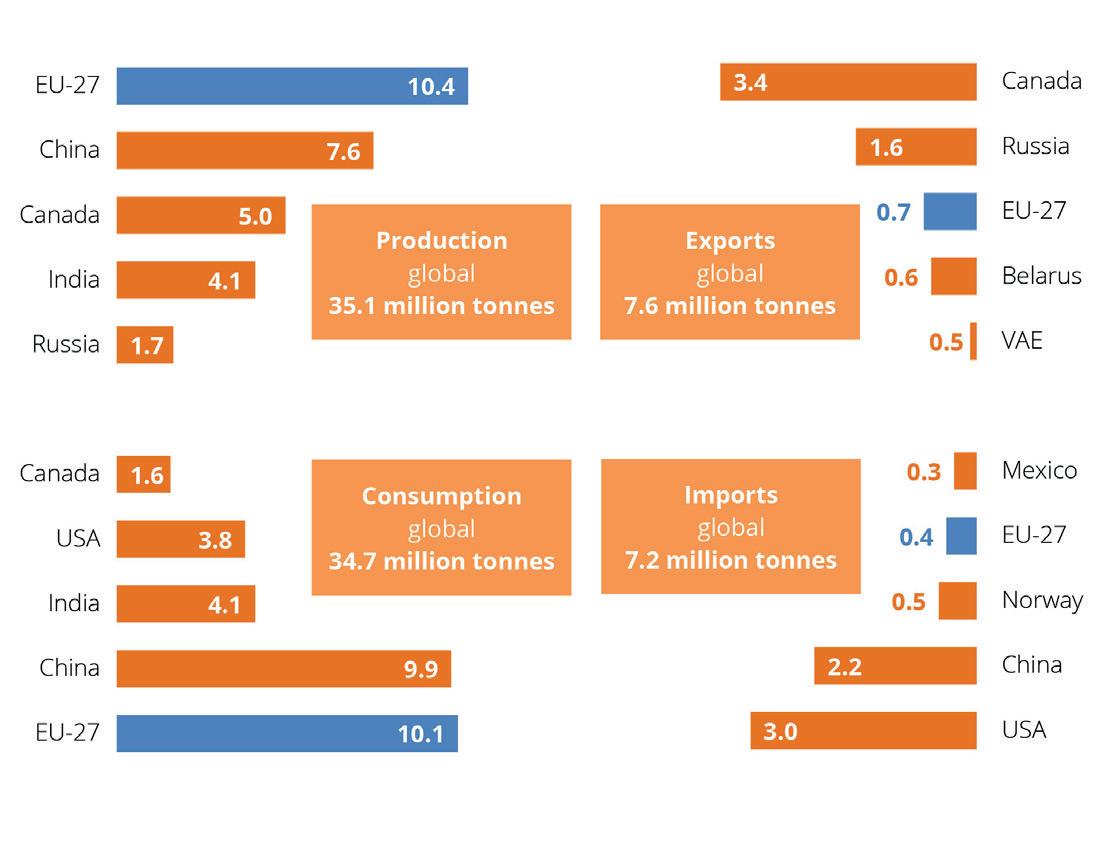
A favourable tax regime, the RussiaUkraine war and a rise in planted area and high oleic varieties has positioned Argentina as the alternative global supplier of sunflowerseed and oils
ISSUE – FEBRUARY 2026
24 Delay of B50
As the leading global palm oil producer, Indonesia’s move to delay plans to increase its palm-oil based biodiesel blend to 50% (B50) this year is expected to ease pressure on worldwide supplies of the commodity
Deep Frying
Update on acrylamide
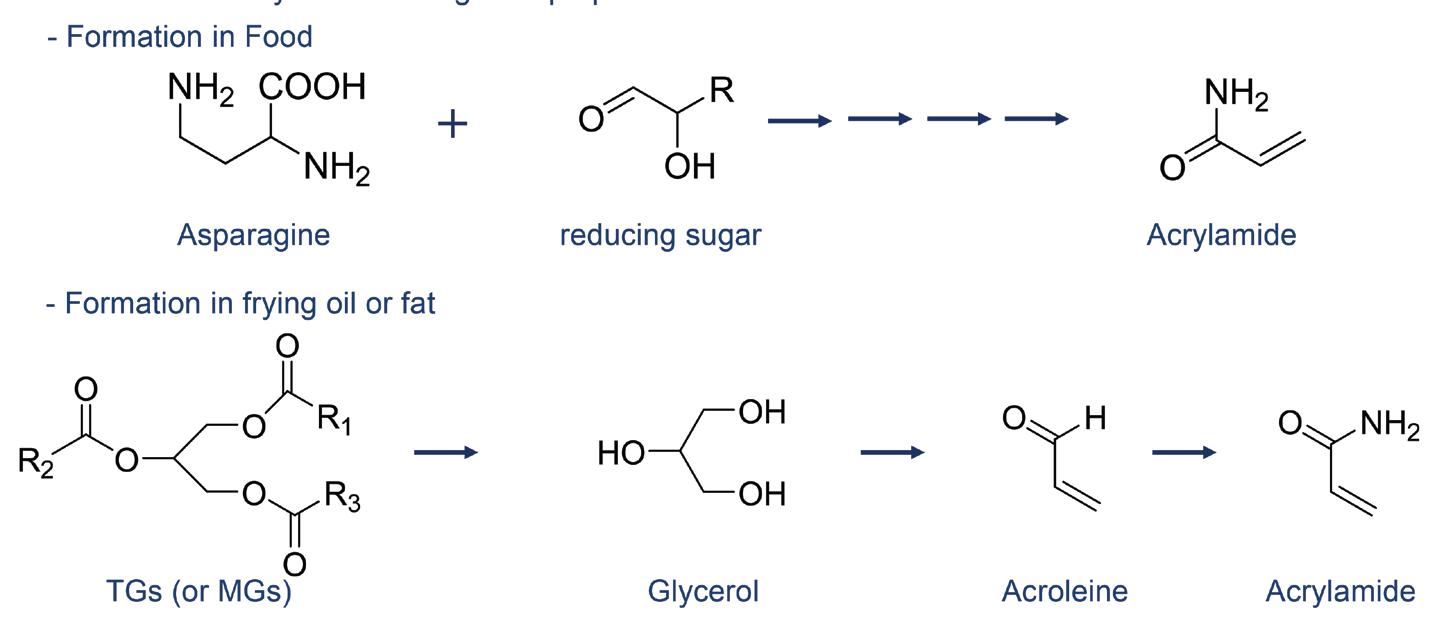
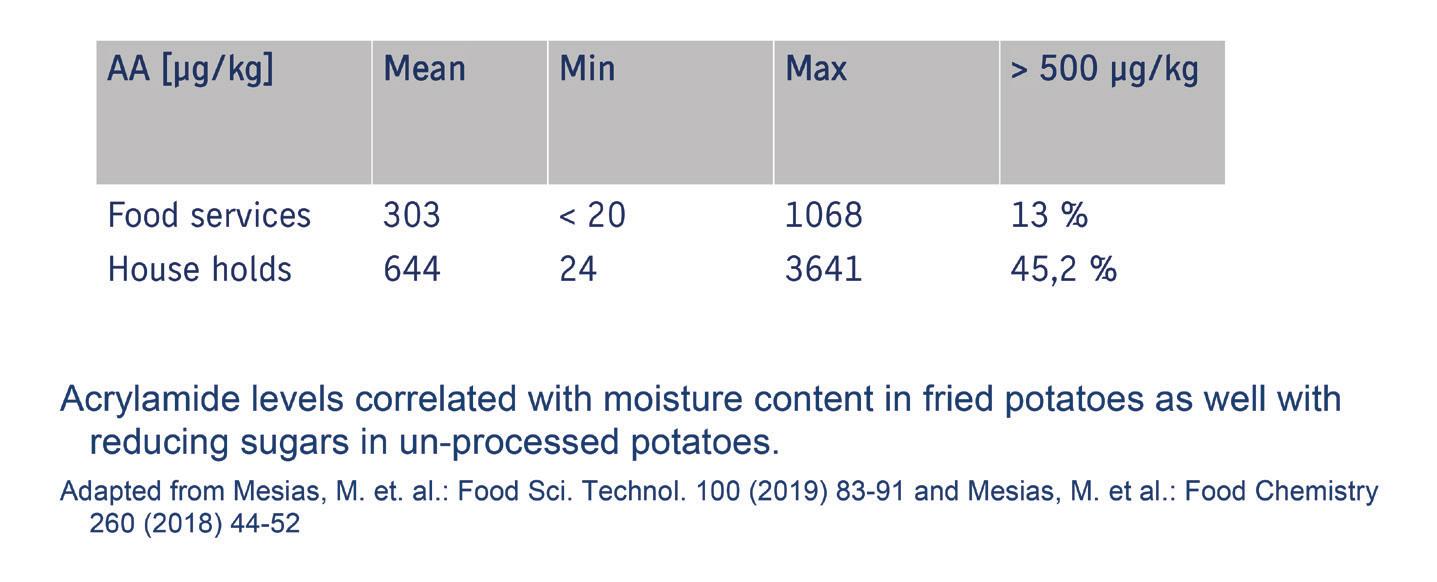
Acrylamide is mostly found in French fries and other fried potato products, with recent studies shedding light on the role of free fatty acids, raw potato selection and internal body production in acrylamide formation and their implications for risk assessment
Oils & Fats International (USPS No: 020747) is published eight times/year by Quartz Business Media Ltd and distributed in the USA by DSW, 75 Aberdeen Road, Emigsville PA 17318-0437. Periodicals postage paid at Emigsville, PA. POSTMASTER: Send address changes to Oils & Fats c/o PO Box 437, Emigsville, PA 17318-0437
Published by Quartz Business Media Ltd Quartz House, 20 Clarendon Road, Redhill, Surrey RH1 1QX, UK oilsandfats@quartzltd.com +44 1737 855000
Printed by Stephens & George Print Group, Merthyr Tydfil, Wales
Making Americans healthy again?
The 7 January release of the new US Dietary Guidelines for Americans, 2025-2030, has been labelled by the US administration as “the most significant reset of federal nutrition policy in decades” (see p8).
With a stark warning that the country is facing a national health emergency, the US Department of Agriculture (USDA) said that more than 70% of American adults are overweight or obese and that nearly 90% of health care spending goes towards treating chronic disease, much of it linked to diet and lifestyle.
“These guidelines return us to the basics,” US Department of Health and Human Services Secretary Robert F Kennedy Jr says. “American households must prioritise whole, nutrient-dense foods – protein, dairy, vegetables, fruits, healthy fats, and whole grains – and dramatically reduce highly processed foods. This is how we Make America Healthy Again.”
The new guidance reaffirms several core principles widely supported by nutritionists and included in previous guidelines. These include eating more vegetables and fruits; choosing whole grains over refined grains; limiting added sugars; and reducing intake of highly processed foods. It continues to advise limiting saturated fat to less than 10% of total calories but also promote foods such as red meat, full-fat dairy, butter and beef tallow.
However, “following these food-based recommendations would make it difficult, if not impossible, for many Americans to remain below the recommended upper limit for saturated fat,” the Stanford Medicine Nutrition Studies Research Group says.
The guidelines also advise prioritising oils with essential fatty acids (omega-3s and 6s) when cooking or adding fats to meals but provide examples – olive oil, butter and beef tallow – which contain negligible amounts of these.
As for seeds oils like soyabean, canola, corn or sunflower oils – which Kenndy himself has described as unhealthy – these are not mentioned specifically, in contrast to previous guidelines which explicitly encouraged replacing animal fats with vegetable and seed oils.
Highly processed foods are explicitly named and discouraged in the new guidelines. However, the Stanford research group says the vague terminology about them “effectively gives the food industry a pass” and does not offer enough practical advice for the policy makers who spend billions of dollars using the guidelines as the federal mandate to implement nutrition programmes like school meals and military rations.
Overall, no one can argue with the broad goals of the new guidelines and its emphasis on whole foods, proteins and healthy fats; while limiting refined carbohydrates, sugar, highly processed foods and alcohol. Whether they will make America healthy again is another question.
Obesity, health and food choices are shaped by income and food prices; access to affordable food and cooking facilities, as well as to safe physical activties like walking or cycling; and time, labour and caregiving demands. These factors contribute to obesogenic environments which disproportionately affect poorer communities. And unless these physical, social and economic aspects are addressed, it will be hard to make a meaningful difference to the high rates of obesity, chronic disease and diabetes affecting the USA and other parts of the world.
Serena Lim, OFI Editor, serenalim@quartzltd.com
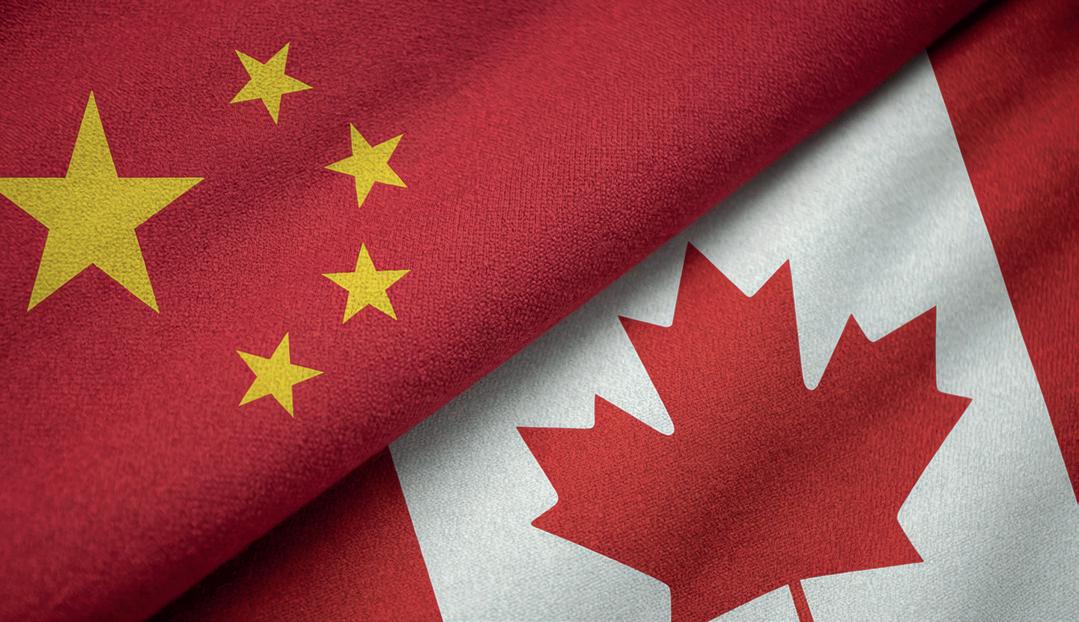
China expected to reduce tariffs on Canadian canola
The Chinese government is expected to lower tariffs on Canadian canola oil following a meeting between the leaders of the two countries, the BBC wrote on 16 January.
The Beijing meeting between Chinese leader Xi Jinping and Canadian Prime Minister Mark
Carney signalled a reset in the relationship between the two countries, the report said.
In 2024, Canada imposed 100% tariffs on Chinese electric vehicles following similar US curbs, and Beijing retaliated with tariffs last year on more than US$2bn of Canadian farm
and food products, including canola seed and oil. As a result, Chinese imports of Canadian goods fell by 10% in 2025.
Following the latest meeting, China was expected to lower levies on Canadian canola oil from 85% to 15% by 1 March, while Ottawa had agreed to tax Chinese electric vehicles at the ‘most-favoured-nation’ rate of 6.1%, Carney was quoted as telling reporters.
Carney had been trying to diversify Canadian trade away from the USA – his country’s biggest trading partner – following the uncertainty caused by Trump’s tariffs, the report said.
China is Canada’s second largest trading partner but is still a long way behind the USA in volume, according to the BBC
Chinese imports of US soyabeans increase
China is increasing its orders of US soyabeans following its late October trade truce between the two countries, Reuters wrote on 6 January.
State stockpiler Sinograin had placed orders for 10 US soyabean shipments at the start of January, three traders said. Totalling around 600,000 tonnes, the cargoes were for shipment between March and May, which is the peak shipping season for rival supplier Brazil.
China’s total purchases from the latest US crop were now estimated at 8.5M to almost 10M tonnes, according to traders and analysts.
This figure represented up to 80% of the 12M tonnes that US Treasury Secretary Scott Bessent said China had pledged to buy by the end of February.
“There were more US cargoes bought by Sinograin and total purchases are very close to 10M tonnes,” one of the traders with direct knowledge of the deals was quoted as saying. “We think China will buy a couple of million tonnes more to meet the target.”
According to a 6 January report by the US Department of Agriculture (USDA), private sales of soyabeans to China for shipment in the 2025/26 season ending on 31 August totalled 336,000 tonnes, bringing China’s total confirmed purchases since October to almost 6.9M tonnes. In addition, a sizeable share of the approximately 3M tonnes in sales confirmed by the USDA to undisclosed buyers were believed to be to China.
IN BRIEF
CHINA: China is expected to maintain its status as a net exporter of soyabean oil for the second consecutive year, according to a January report by the US Department of Agriculture (USDA).
Most of the country’s record soyabean oil exports were shipped to India in the form of crude soyabean oil, due to India’s tariffs on refined oil. Additionally, substantial volumes of refined soyabean oil were exported to South Korea.
As recently as 2012/13, China has been the world’s largest importer of soyabean oil. However, it had emerged as a leading global soyabean oil producer, due to significant investments in crushing capacity to meet growing demand for protein meal and vegetable oil, the USDA said.
China saw significant growth in consumption of vegetable oil at that time due to income growth and rapid economic development.
“China’s vegetable oil consumption is expected to grow at a slower rate this year, with the slight increase in consumption supplied by an ample increase in crush,” the USDA said.
According to the USDA, factors contributing to weaker soyabean oil demand include reduced consumer demand and demographic trends such as an ageing and declining population.
Trump considers ending US-Mexico-Canada Agreement
US President Donald Trump is considering ending the United States-Mexico-Canada Agreement (USMCA) and negotiating a new deal while major industry groups are pushing for it to be renewed for another full 16-year term, according to a FreightWaves report on 7 December.
In a 5 December podcast with Politico’s White House bureau chief Dasha Burns, US Trade Representative Jamieson Greer said “the reason why we built a review period into USMCA was in case we needed to
revise, review or exit it”.
Greer told Politico that Trump had also raised the idea of negotiating separately with Canada and Mexico and dividing the agreement into two parts.
This year marked the first six-year joint review of the USMCA, which replaced the North American Free Trade Agreement in 2020, FreightWaves wrote.
Several trade and business organisations said USMCA had become a cornerstone of North American economic integration, the
report said, with the National Grain and Feed Association (NGFA) voicing strong support for maintaining USMCA’s duty-free market access and existing rules of origin.
"Mexico and Canada are two of the most important export markets for US corn, soyabeans, wheat and other commodities,” NGFA president and CEO Mike Seyfert said. “Mexico, in particular, purchased more than US$12bn in US grain and oilseed products last year and is expected to surpass China as our largest export customer.”
Photo: Adobe Stock
IN BRIEF
CANADA: Global agribusiness Bunge announced on 23 January that it had successfully divested its grain elevator at Valparaiso, Saskatchewan province, to Cargill as part of its divestiture commitment to the Canadian government to receive regulatory approval for its merger with Viterra.
The elevator was the sixth and final facility to be divested under this commitment. Bunge announced the divestment of the other five facilities on 7 November.
The Bunge-Viterra merger was first announced in June 2023, creating a global crop trading and processing company closer in scale to ADM and Cargill while strengthening Bunge’s oilseed handling and processing businesses.
Indonesia planning to seize more 'illegal' land this year
The Indonesian government plans to reclaim millions more hectares of land that it believes are being used illegally in 2026, according to a 7 January report by The Edge Malaysia
To date, Indonesia had seized about 4M ha of oil palm plantations, mine concessions and processing facilities under a crackdown launched last year by Indonesian President Prabowo Subianto against malpractice in the commodities sector, the report said, citing a Bloomberg article.
“In 2026, we may seize another four or five million hectares,” Prabowo said.
Bringing such large areas of land under state control has sparked concerns about future palm oil production from the world’s biggest palm oil grower, according to the report. The move could also dampen investment in the palm sector due to uncertainty over ownership.
According to the Indonesian Palm Oil Association (GAPKI), the country has around 16M ha of oil palm plantations.
In an earlier Reuters report on 24 December, Indonesia’s Attorney General Sanitiar Burhanuddin said more than 240,500ha of plantations had been transferred to state-owned Agrinas Palma Nusantara – set up in early 2025 to manage the estates – bringing the Agrinas total land area to 1.7M ha and consolidating its position as the largest palm oil company in the world by area.
The Indonesian government has also identified potential fines totalling US$8.5bn for collection in 2026 from palm oil companies and miners it believed were operating illegally in forest areas, Reuters wrote.
Speaking on 24 December, Burhanuddin said the task force had collected over US$139.70M in fines from 20 palm oil companies and one nickel miner.
“For 2026, there is revenue potential from fines from palm oil plantations and mines within forest areas, amounting to US$6.54bn for palm oil and US$1.95bn for mining.”
Barry Callebaut may separate cocoa unit
Global chocolate and cocoa manufacturer Barry Callebaut is exploring the separation of its global cocoa unit to reduce its exposure to volatile cocoa prices and improve its financial profile, Reuters reported on 16 December.
Options under consideration included separating the division and selling a minority stake at a later stage; a joint venture; merger of the business; or a complete sale, sources said.
Separating the unit could allow the company to protect itself from commodity price swings and focus resources on its higher-margin chocolate business, which includes contract manufacturing for brands, such as Nestle’s KitKat and Unilever’s Magnum ice cream, the sources were quoted as saying.
Barry Callebaut’s ingredients were present in one out of four chocolate and cocoa products consumed world-
wide, making it the world’s largest chocolate maker, Reuters wrote.
The Swiss multinational's segments include global cocoa, which focuses on sourcing cocoa and related raw materials for chocolate production; food manufacturers, which involves producing and supplying chocolate products to international food companies; and gourmet and specialities, which provides premium chocolate products to artisans and professional culinary experts.
Cocoa prices spiked last
year after disease affected crops in the Ivory Coast and Ghana, causing a global shortage, Reuters wrote. However, a drop in demand and increased output elsewhere had eased supply concerns and driven prices lower in 2025.
▪ Airbus Defence and Space – the defence and space systems subsidiary of European aircraft manufacturer Airbus – announced on 11 December that Barry Callebaut had been using its Starling satellite-based deforestation monitoring system to monitor its cocoa supply chain.
India soyabean project extended
Global agribusiness giant ADM and German chemical Bayer have extended their programme supporting Indian farmers in Maharashtra by three years.
Launched in 2022 with the aim of strengthening sustainable soyabean farming practices in Maharashtra state, the initiative had reached 25,000 farmers by May 2025, ADM said on 5 January.
The extended programme would quadruple the number of supported farmers to 100,000 and increase the area covered from 35,000ha to 200,000ha. Via the the ProTerra Foundation, the project focus has been on five areas of supply chain sustainability: customised production management; tailored spray programmes; professional implementation guidance; detailed crop management documentation; and post-harvest pest management expertise.
Photo: Adobe Stock
The world is hungry for premium plant proteins.
Achieve growth targets and profitability by partnering with CPM|Crown.
Bring sustainable plant-based proteins to market with Crown’s technical expertise and Global Innovation Center. From feasibility, trials and toll processing to commercial-sized operations, Crown’s experience, R&D and Lifecycle360™ services provide guidance and support at every step. For dehulling, de-oiling, white flakes and protein concentrates, Crown’s plant protein technologies and custom-engineered solutions allow you to develop and produce consistent products with the highest protein quality. Partner with Crown to turn your plant-based protein ideas into profitable revenue streams.
Premium plant protein is in high demand. Deliver it with CPM|Crown.
Feeding, Fueling and Building a Better World. Human Food | Animal Feed | Aqua Feed
Major firms exit Brazil soya moratorium pact
Leading grain companies are planning to exit Brazil's soya moratorium, designed to protect the Amazon basin from deforestation resulting from soyabean farming expansion, Reuters wrote on 1 January.
The moratorium bars signatories from buying soyabeans grown on Amazonian farms deforested after July 2008.
In an announcement on 5 January, the governor of Mato Grosso state Mauro Mendes said lobby group Abiove had officially informed the state government that the association and major traders were leaving the pact, citing a tax law change on 1 January as a key factor.
Abiove, which represents grain trading and crushing companies in Brazil includ-
IN BRIEF
BRAZIL: Global agribusiness Bunge will supply 12,000 tonnes of sustainable soyabean meal to South American egg producer and distributor Mantiqueira Brasil.
The soyabeans would be sourced from farms that had adopted sustainable practices – such as improving soil quality and biodiversity, and increasing nutrient levels and carbon stocks in the soil – and traced using blockchain technology that consolidated information from the farm to the destination, Bunge said in December.
The meal would be used in the production of feed for poultry at Mantiqueira’s production units.
ing ADM, Bunge, Cargill, Cofco and Louis Dreyfus, confirmed in a subsequent statement that it had “initiated talks” to exit the moratorium, Reuters wrote.
On 5 January, the group and about twothirds of the companies that had previously participated in the soya pact no longer appeared on the moratorium’s website.
Commenting on the move, leading conservation association the World Wide Fund for Nature (WWF) said the decision was an environmental setback. Departure of the firms from the pact “weakens one of the most effective instruments for combating deforestation in the country”, it said.
The moratorium has been credited with slowing the destruction of the world’s
largest rainforest.
However, in a 29 December report, Reuters wrote that some of the leading global soyabean traders were preparing to withdraw from the deal to preserve tax benefits in Mato Grosso, where a new law eliminating the benefits for moratorium participants took force at the start of 2026.
The Association of Soybean and Corn Producers of Mato Grosso (Aprosoja-MT), an association representing farmers in Mato Grosso that had pressured companies for years to end the pact, welcomed Abiove’s announcement. The farmer group claimed the moratorium agreement was illegal and unfair to those who complied with the Brazilian Forest Code.
EU olive oil production to fall slightly
Olive oil production in the EU – the world’s leading producer of olive oil accounting for around 60% of global supply – is expected to fall slightly in 2025/26 due to heat, drought conditions and pest issues across key producing regions, according to a US Department of Agriculture (USDA) report.
However, production would remain above the average of the previous five years, the 6 January ‘EU Olive Oil Outlook 2025’ report said.
The USDA estimated that EU production would fall from 2.1M tonnes in 2024/25 to 2M tonnes in 2025/26, still well above the historic lows of
2022/23 and 2023/24 when extreme heat and drought had severely impacted harvests.
Spain – which accounts for around 45% of the global olive oil market and 65% of EU production – is forecast to produce 1.37M tonnes in 2025/26. Italian production was estimated at 280,000 tonnes. In Greece, a 15% decline in output was forecast to 210,000 tonnes, due to a hot, dry summer and widespread olive fruit fly infestation across major producing regions.
The USDA projected a slight rise in EU olive oil consumption to 1.425M tonnes. Exports were expected to increase to 765,000 tonnes, while imports were projected to total 200,000 tonnes.
India cancels South American soya oil orders as rupee slumps
India – the world’s largest vegetable oil buyer – has cancelled more soyabean oil shipments from South America after the rupee’s slump to a record low widened the price gap between local and imported oil, Bloomberg reported on 23 January.
Approximately 35,000-40,000 tonnes of the commodity from Brazil and Argentina – booked for delivery in February and the April-July period – had been scrapped, with total cancellations likely to exceed 50,000
tonnes, Aashish Acharya, vice president at Patanjali Foods, one of India’s top vegetable oil buyers, was quoted as saying.
In December, Indian buyers had cancelled more than 100,000 tonnes of soyabean oil shipments from Argentina, some 20% of the volume the country imported in a typical month, Bloomberg wrote.
A weaker rupee and higher global prices meant South American soyabean oil was trading US$25-30/tonne higher than local
supplies, Acharya. That price differential had made imports uneconomical, prompting buyers to look at cheaper tropical oil.
Bloomberg data showed soyabean oil’s premium over palm oil has doubled from the start of the year to around US$146/tonne.
With China ramping up soya purchases, South American supplies had tightened, the report said.
India relies on imports for almost 60% of its edible oil consumption.
Photo: Adobe Stock
IN BRIEF
MALAYSIA: The oil palm plantation sector in Malaysia is expected to face a more challenging operating environment this year, The Star wrote on 16 January.
Based on updates from the Malaysia Palm Oil Board (MPOB) at the Palm Oil Conference and Seminar (R&O 2026), MBSB Research expected CPO prices to average around US$1,061/tonne this year, with prices forecast to trade between US$1,011US$1,137/tonne as the year progressed.
High opening stocks and modest supply growth would put pressure on CPO prices in the first half of 2026, even as biodiesel mandates in Indonesia provided some downstream support, MPOB said.
The board said it was also expecting Malaysian palm oil production to soften this year, projecting an output of 19.5M-19.8M tonnes, down from a record 20.3M tonnes in 2025, as estates entered a biological treerest phase following last year’s yield rebound.
Despite this, MBSB Research said it was forecasting marginal production growth of 1%, reflecting natural yield limitations after two years of recovery.
Meanwhile, the research house said it was also projecting exports to remain soft, with shipments expected to hover around 15.8M-16M tonnes, as demand from key markets such as India, China and the EU remained subdued.
According to MBSB Research data, palm oil exports fell 9.7% year-on-year in 2025 to 15.3M tonnes, contributing to ending stocks surging to 3.05M tonnes, the highest level since February 2019.
USA unveils new dietary guidelines for 2025-2030
The US administration unveiled new dietary guidelines on 7 January that focus on the promotion of whole foods, proteins and healthy fats.
US Health Secretary Robert F Kennedy Jr described the US Dietary Guidelines for Americans 2025-2030 as the most significant reset of federal nutrition policy in decades.
The guidance recommends eating more vegetables and
fruits; choosing whole grains over refined grains; limiting added sugars; and dramatically reducing intake of highly processed foods "laden with refined carbohydrates, added sugars, excess sodium, unhealthy fats and chemical additives”.
It continues to advise limiting saturated fat to less than 10% of total calories but also promote foods such as red
meat, full-fat dairy, butter and beef tallow.
“Protein and healthy fats are essential and were wrongly discouraged in prior dietary guidelines,” Kennedy was quoted by National Public Radio (NRR) as saying. “We are ending the war on saturated fats.”
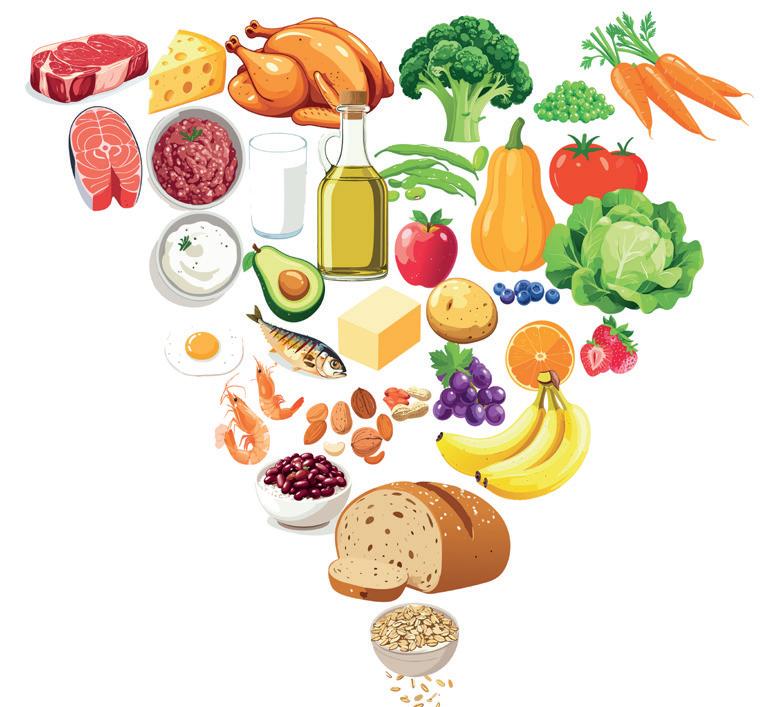
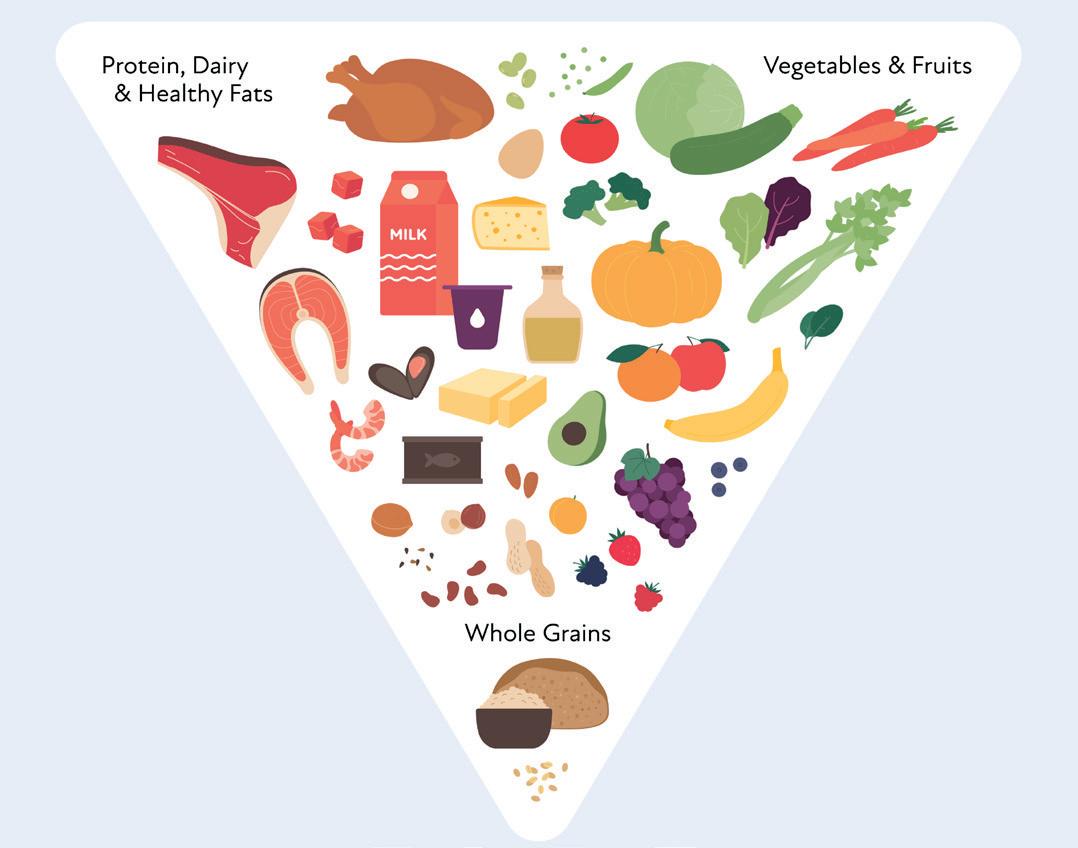
The new guidelines are now based around an inverted food pyramid with red meat, cheese, vegetables and fruits pictured at the top.
This contrasts with a food pyramid introduced in the early 1990s which was narrow at the top and wide at the bottom. Grains were at the bottom – a signal to eat plenty of them, and oils and fats were at the top to eat them sparingly.
The US Department of Agriculture withdrew the entire pyramid concept in June 2011, replacing it with the simpler ‘MyPlate’ visual.
The dietary guidelines are updated every five years by the USDA and the Department of Health and Human Services.
Ukranian crushing recovers after attacks
Despite an escalation of Russian attacks on Ukrainian ports and port infrastructure earlier this year, there had been no major damage to processing capacities, with losses mainly limited to finished products and storage infrastructure, UkrAgroConsult wrote on 29 January.
The attacks on Ukrainian ports were a major shock to the sunflower oil sector and the market had reacted with a sharp increase in oil and oilseed prices, accompanied by a temporary halt in trading, the report said. However, exporters had resumed contract fulfilment and sunflower oil exports remained relatively stable.
Port logistics still remained a key export driver and if access to ports deteriorated, there was an increased risk of the market switching to a raw material export model, UkrAgroConsult wrote.
▪ China became the leading importer of Ukrainian rapeseed meal for the first time in
the first half of the 2025/26 marketing year (July-December), with shipments of 155,000 tonnes, UkrAgroConsult wrote on 27 January. However, the bulk of China’s rapeseed meal imports still came from Russia and India, with some volumes from the United Arab Emirates.
From July-December, Ukrainian rapeseed meal exports increased by 70% compared to the same period in the previous season to 340,000 tonnes, the second largest export volume for the first half of the season since 2023/24, when 374,000 tonnes of meal were shipped.
The growth in export rates was due to increased rapeseed processing in the first half of the season to 800,000 tonnes, following the introduction of a 10% export duty on rapeseed and an improvement in processing margins, the report said.
Photo: Adobe Stock
Vegetables & Fruits
Protein, Dairy & Healthy Fats
Whole grains
IN BRIEF
WORLD: Global agribusiness giant ADM has agreed to pay the US Securities and Exchange Commission (SEC) US$40M to settle an investigation into its intersegment sales and the US Department of Justice had closed its probe with no further action.
In a press release on 27 January, the SEC said it had settled charges against ADM and its former executives, Vince Macciocchi and Ray Young, and a litigated action against its former executive Vikram Luthar, for inflating the performance of its Nutrition business segment.
ADM had accepted the settlement without admitting or denying the findings, the SEC said.
The SEC’s complaint against Luthar alleged that he directed “adjustments” to Nutrition’s transactions with other ADM business segments when the division was falling short of its operating profit targets for fiscal years 2021 and 2022.
In accepting the settlement offer, the SEC said it had considered ADM’s cooperation and “significant remedial measures”.
“Specifically, the company conducted an internal investigation, voluntarily reported its findings to the staff, and provided the staff with additional analyses from an outside accounting expert,” the SEC said.
EU-Mercosur deal signed but faces legality check
After being signed on 17 January following years of negotiations, the EU-Mercosur trade deal faced a setback after the European Parliament (EP) backed a proposal on 21 January to send the agreement to the EU’s top court for a legality check, Euractiv reported on the same date.
The EU’s Court of Justice was asked to verify that parts of the agreement complied with EU treaties, a process that could take over a year.
The dispute centred around a mechanism that would enable Brazil, Argentina, Paraguay and Uruguay to challenge EU legislation, which could impact market access granted under the agreement, Euractiv wrote.
Discussions on the free trade deal between the EU and the Mercosur bloc of South Ameri-
can countries started 25 years ago.
However, before taking effect, the deal had to be ratified by the EP and the Mercosur countries, including Argentina, Brazil, Paraguay and Uruguay – all major beef, corn and soyabean producers.
The agreement would eliminate more than 90% of tariffs on products from both countries, World Grain wrote on 20 January.
One of the biggest obstacles to finalising the deal had been the EU’s concern about how it could impact its farmers, particularly in its cattle sector as Brazil and Argentina were leading beef producers, World Grain wrote on 20 January.
The EU feed industry was also likely to see increased competition from the Mercosur’s cheaper raw materials, such as soyabeans.
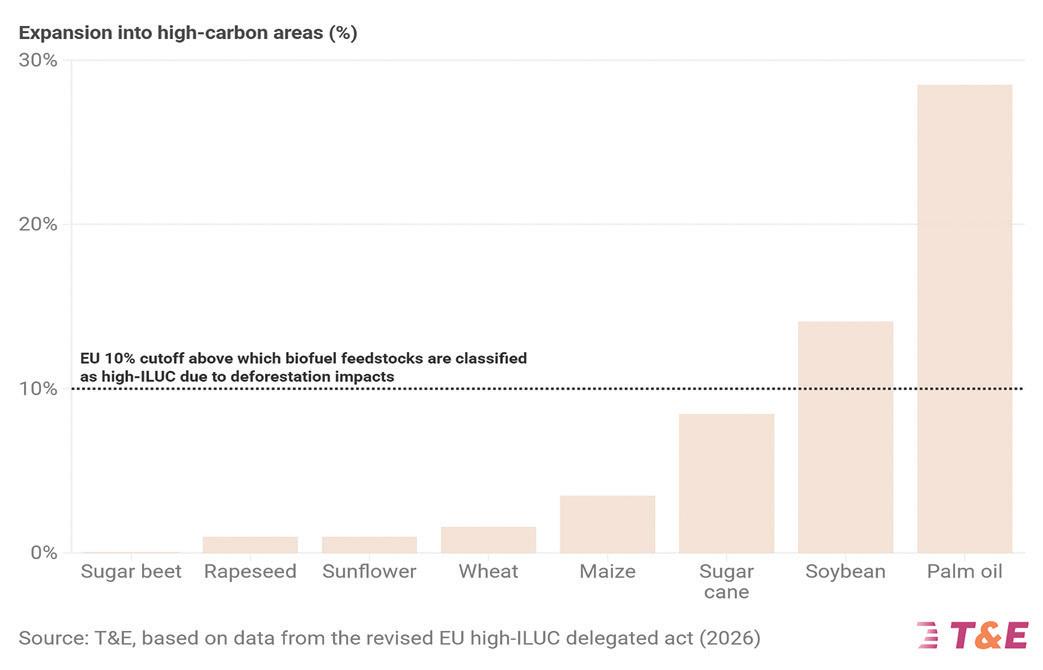
Soya above threshold as fuel feedstock
change (ILUC) due to deforestation impacts.
“Biofuels have been widely promoted across the EU since the adoption of the Renewable Energy Directive (RED) in 2009.
In 2019, the introduction of the high ILUC Delegated Act confirmed a phase-out of palm biofuels by 2030. Soya will now be subjected to the same fate,” T&E said.
Source: T&E, based on data from revised EU high-ILUC delegated act, 2026
Soya-derived biofuels should no longer count towards EU renewable targets, according to European Commission (EC) research confirming they contribute significantly to deforestation, clean transport
campaign group Transport & Environment (T&E) says.
The EC’s research showed that soya was over the 10% threshold above which biofuel feedstocks were classified as causing high-indirect land use
“Phasing them [soya biofuels] out is the right way to go and ensures that American, Argentinian and Brazilian soya does not end up in European tanks, especially now that the EU has signed the Mercosur trade deal,” said Cian Delaney, biofuels campaigner at T&E.
Soya cargoes stuck in Thai port due to import duty uncertainty
At least three soyabean shipments of 200,000 tonnes unloaded at the Thai port of Koh Sichang had been unable to clear customs due to uncertainty over import tariff rates and quota allocations, Platts reported on 26 January.
A spokesperson for the Thai Feed Mill Association confirmed that soyabean shipments had not been allowed into
Thailand since 1 January 2026, following the dissolution of the Thai parliament on 11 December.
Since then, the country had been under the stewardship of a caretaker government which did not have the authority to make policy decisions, including the 2026 quota for duty-free imports of soyabeans and tariffs on soyabean meal imports, Platts
wrote in an earlier report. Without a new government decree, default World Trade Organization-bound tariff rates automatically applied to soyabean imports.
Downstream operations had been affected, with soyabean crushers and feed millers suspending sales and deliveries, a Singapore-based trader was reported as saying,
The US Supreme Court has agreed to hear a bid by German chemicals giant Bayer to put an end to a series of lawsuits over the weedkiller Roundup, the Malay Mail wrote.
Bayer had faced a series of litigation alleging its glyphosate-based Roundup herbicide – which came with its US$63bn acquisition of US agrochemical group Monsanto in 2018 – caused cancer, the 17 January report said. Since the acquisition, Bayer has paid about US$10bn to settle lawsuits linked to its glyphosate-based Roundup.
Bayer’s appeal centred on a legal doctrine
known as federal pre-emption, with the company claiming that as the US Environmental Protection Agency had repeatedly approved Roundup labels without a cancer warning, it should be immune from state lawsuits alleging a “failure to warn”.
The Trump administration had backed Bayer’s stance that a federal statute on pesticide labels pre-empted state laws requiring warnings on products that could be carcinogenic, the Malay Mail wrote.
Although the Supreme Court’s review would focus on a specific case involving a
US$1.25M award made by a Missouri jury, the Wall Street Journal noted that a ruling in Bayer’s favour – expected by early July –could “help lead to the dismissal of thousands of cases against the company”.
Bayer had paid billions of dollars in settlements to date and had set aside US$7.6bn specifically for glyphosate litigation, Natural News wrote on 21 January. A favourable Supreme Court ruling would also cap the financial impact of the lawsuits and strengthen Bayer’s position in any future settlement negotiations, according to the report.
Ukraine aligning with EU biotech policies
The Ukrainian government is adjusting its domestic biotechnology policies to align with EU regulations, a 22 December US Department of Agriculture (USDA) report says.
The cultivation and import of genetically engineered (GE) crops was not permitted in the country and the government lacked a comprehensive
regulatory framework that established procedures for approving and registering GE events, the ‘Ukraine: Biotechnology and Other New Production Technologies’ report said.
However, a new GE regulation (Law #3339-IX), adopted in 2023, was set to replace the current Biosafety Law in September. The new legisla-
tion would bring government control over GE circulation in line with Ukraine’s obligations under the EU-Ukraine Association Agreement, the report said. At the end of 2026, the government was also set to establish comprehensive regulatory standards for the registration, cultivation, and import of GE products.
The report noted that there had been some positive test results for GE corn, rapeseed and soyabeans at export facilities although some shipments could return false positives due to inadequate cleaning of vehicles. It said large soyabean producers preferred to specialise in non-GE varieties to obtain better prices for their non-GE exported crops.
Policy uncertainties in India’s GE rules
The Indian government remains undecided on genetically engineered (GE) crops and products derived from biotechnology due to legal and political challenges, according to a 25 December US Department of Agriculture (USDA) report.
India had banned the import of all GE products, apart from soyabean and canola oils derived from GE soyabean and canola, the ‘India: Biotechnology and Other New Production Technologies’ report said.
Although the Genetic Engineering Appraisal Committee (GEAC) had received applications for the import of dried distillers grains with solubles, soyabean meal and processed food products with GE or GE derived components, approval of these products had stalled as the Food Safety and Standards Authority of India (FSSAI) was still working
on regulations and infrastructure, and there was confusion about the regulatory responsibilities of GEAC and FSSAI, the report said.
And despite the regulatory clearance for a locally developed GE mustard event in October 2022, a decision was pending clearance from the Supreme Court of India in an ongoing case challenging India’s Biotech Regulatory System.
On 23 July 2024, the Supreme Court bench directed the Indian government to evolve a national policy on genetically modified crops covering research, cultivation, trade and commerce in the country.
The policy uncertainties and delays in the regulatory approval system continued to constrain the advancement of GE crop research to the product development/release stage, the report said.
IN BRIEF
WORLD: The oilseed crop protection chemicals sector is expected to increase from US$5.2bn in 2024 to US$8.9bn by 2033 due to rising demand for high-yield crops to meet edible oil, protein-rich animal feed and biofuel applications, according to new research by DataM Intelligence reported by EIN Presswire on 6 December.
The ‘Oilseed Crop Protection Chemicals Market’ report said the crop protection chemicals had a projected compound annual growth rate (CAGR) of around 5.3% from 2022-2028.
Soyabeans – with a 60% market share worth US$3.12bn – are the world’s largest oilseed by area and production and consequently consume the majority of oilseed crop-protection chemicals, according to the report.
Canola/rapeseed was the second largest oilseed segment in many regions (Europe, Canada and China), with significant fungicide and herbicide use (20% market share worth US$1.04bn).
As the global sunflower planted area was smaller than for soyabeans and canola, its share of protection chemicals was smaller (10% worth US$0.52bn) but notable where it was grown intensively.
Photo: Adobe Stock
BIOFUEL NEWS
IN BRIEF
THAILAND: The country’s Department of Energy Business introduced a 1% sustainable aviation fuel (SAF) blending mandate on 1 January, The Nation Thailand wrote on 5 January.
The department also set specifications for SAF, requiring feedstocks and production to comply with ASTM D7566, with production limited at this stage to HEFA (hydro-processed esters and fatty acids).
Bangchak Corporation was building a SAF plant in Thailand using HEFA technology, with used cooking oil (UCO) as the main feedstock. The facility had a capacity of 1M litres/day and was expected to become operational in the second quarter of 2026, the report said. PTT Global Chemical was also producing SAF from UCO using co-processing HEFA technology, with an initial capacity of 16,438 litres/day.
EGYPT: Global petroleum giant Shell has signed a long-term deal to buy sustainable aviation fuel (SAF) from Green Sky Capital.
The agreement would help provide commercial certainty for investors to move forward with plans to build Egypt’s first commercial-scale SAF plant, Shell said in a 5 December LinkedIn post.
Located in Egypt’s Suez Canal Economic Zone, the facility was scheduled to become operational by the end of 2027 and would produce up to 145,000 tonnes/year of SAF, as well as bio-naphtha and bio-propane, the company said.
Green Sky Capital is developing renewable fuel projects across the Middle East and North Africa, starting with the facility in Egypt.
Indonesian B50 policy will not be introduced this year
The Indonesian government has confirmed that it will not implement a 50% palm oil-based biodiesel (B50) mandate this year, Palm Oil magazine reported on 14 January.
“This year, the president’s directive is to maintain B40,” Coordinating Minister for Economic Affairs Airlangga Hartarto said after a meeting on 13 January in South Jakarta. “For B50, studies must continue.”
Hartarto explained that policy decisions were being guided primarily by movements in global energy and palm oil prices, with the government closely monitoring the price gap between diesel fuel and crude palm oil (CPO).
Although B50 has not been rolled out, developments are ongoing, according to the report.
“Technical studies and automotive trials are still underway. Implementation will depend heav-
ily on price developments,” Hartarto was quoted as saying in the Palm Oil magazine report.
The government had previously indicated plans to introduce B50 in the latter half of 2026, the report said. The B50 plan represents the next stage of Indonesia’s biodiesel mandate, which has been in place since 2016, progressing from B10 and B20 to the current B40.
Since the introduction of B40, diesel imports had fallen sharply to around 4.9M barrels/year, equivalent to approximately 10% of national consumption, Palm Oil magazine wrote.
The government has said increasing the biodiesel blend would reduce import dependence, strengthen the energy trade balance, add value to the palm oil sector, and support national emissions reduction targets and the broader energy transition agenda.
Corteva and bp form feedstocks joint venture
Biotech seed producer Corteva Agriscience and global energy giant bp have launched a biofuel feedstock joint venture.
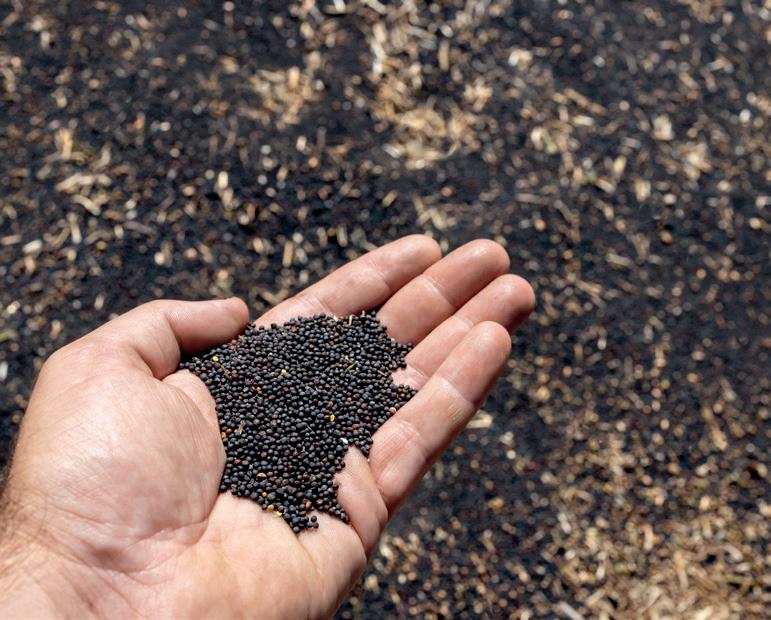
The Etlas 50:50 partnership would combine Corteva technology and bp integrated downstream capabilities to produce oil from crops –
including canola (pictured), mustard and sunflowerseed – for use as feedstocks in the production of sustainable aviation fuel (SAF) and renewable diesel, the companies said on 7 January.
Etlas aimed to produce 1M tonnes/year of feedstock by the mid-2030s, which could be used to produce over 800,000 tonnes of biofuel.
Initial supply was scheduled to begin in 2027 for use in co-processing at refineries as well as at dedicated biofuels plants, the firms said.
“As the aviation industry looks for reliable, sustainable and cost-competitive sources of SAF, it is clear farmers have a critical role to play,” said Etlas CEO Ignacio Conti.
According to industry estimates, global SAF demand is expected to increase from about 1M tonnes in 2024 to up to 10M tonnes by 2030, while global demand for renewable diesel could rise from some 17M tonnes in 2024 up to 35M tonnes by 2030.
Brazil sets new emission reduction targets
Brazil’s National Council for Energy Policy (CNPE) has set new emission reduction targets for fuels under the country’s National Biofuels Policy (RenovaBio) for the next decade.
According to a 30 December 2025 announcement by the Ministry of Mines and Energy (MME), the programme is expected to consolidate the use of biofuels in Brazil’s energy mix and lead to a 11.8% reduction against 2018 levels.
“By projecting a reduction of almost 12% in
carbon intensity by 2035, we are strengthening the role of biofuels in our energy matrix, stimulating investments and ensuring that the energy transition occurs competitively,” said Minister of Mines and Energy Alexandre Silveira.
Since its introduction, RenovaBio has contributed to the expansion of the use of ethanol, biodiesel and biomethane, in addition to significantly reducing emissions associated with the transport sector, the CNPE said.
Photo: Adobe Stock
EPA set to drop import penalties
The US Environmental Protection Agency (EPA) plans to finalise 2026 biofuel blending quotas by March, keeping them close to initial proposals, while dropping a plan to penalise imports of renewable fuels and feedstocks, Reuters wrote on 15 January, quoting two sources.
The EPA – which oversees US biofuel policy –had told industry stakeholders it aimed to send its final proposal to the White House budget office for review in February, with finalisation expected around 30 days after that, following industry interviews by the White House, the report said.
In June, the EPA proposed total biofuel blending volumes of 91bn litres in 2026 and 92.6bn litres in 2027, up from 84.4bn litres in 2025. The total included a target of 21bn litres for bio-based diesel, a significant jump from the 12.6bn litres in 2025. The EPA was now considering a range of 19.6bn- 21bn litres for biobased diesel in 2026, the sources told Reuters
The potential downward adjustment was partially related to the EPA’s plan to drop a proposal that would reduce the value of renewable fuel credits given by the US government for imported biofuels, an ‘America First’ policy that had been welcomed by the soyabean and
biodiesel industries, the report said.
The petroleum industry, led by the influential American Petroleum Institute group, had argued that limiting credits for foreign supply could constrain availability and push fuel prices higher – an outcome the White House was eager to avoid as affordability remained a central political concern heading into mid-term elections this year, Reuters wrote.
The EPA was also expected to decide if larger refiners would be required to make up for gallons exempted under the agency’s small refinery waiver programme, a determination that could significantly affect overall biofuel blending quotas, Reuters wrote.
In August, the EPA had cleared a backlog of more than 170 small refinery exemption requests dating back to 2016 and had also issued additional exemptions since then, the report said.
The biofuel industry had been urging the administration to require refiners to offset 100% of those exempted gallons, while the petroleum industry is resisting the obligations, according to the report.
In September, Reuters reported that the EPA was considering a plan for refiners to offset 50% of exempted gallons.
IN BRIEF
INDONESIA: The country has set out plans to introduce a 1% sustainable aviation fuel (SAF) mandate in 2027, rising to 5% in 2029, Indonesian Palm Oil Association (GAPKI) wrote on 19 January.
The 1% SAF mandate –which would take supply and prices into consideration – could be introduced for international flights in 2026, according to Effendi Manurung, the Energy Ministry’s head of the Bioenergy Engineering and Environment’s renewable energy and energy conservation sub-division.
In October 2023, SAF comprising 2.4% refined, bleached and deodorised palm kernel oil was successfully used in flight tests on a Garuda Indonesia Boeing 737-800 NG aircraft, GAPKI said.
Arkema starts polyamide plant operations
French speciality chemical company Arkema announced on 13 January that it had started producing castor oil-based polyamide (PA11) at its plant in Singapore.
The US$20M investment in the plant – the group’s largest to date – tripled its production capacity of Rilsan PA11, giving it the largest transparent polyamides production capacity in Asia, Arkema said.
Arkema said the new unit in Jurong Island would enable it to meet growing demand for sustainable high-performance transparent materials across key markets such as eyewear, consumer electronics,
IN BRIEF
FRANCE: Belgian bio-polymer manufacturer Futerro is moving forward with its plans for a lactic acid and polylactic acid (PLA) plant in Normandy.
The company said it had submitted environmental authorisation and building permit applications for the plant in the industrial and port area of Port-Jérôme on the Seine axis between Rouen and Le Havre.
Once operational, the facility would produce lactic acid, lactide and PLA, the company said on 9 December.
Derived from renewable resources such as sugar from corn or wheat, PLA is a bio-based, industrially compostable and recyclable biopolymer which can be used as an alternative to traditional fossil-based plastics in applications such as injection moulding and 3D printing.
When first announcing plans for the project in December 2022, the company said the plant would have a production capacity of 75,000 tonnes/year once operational.
Futerro said it aimed to obtain all necessary authorisations by mid-2026, with the aim of starting groundworks and construction.
industrial filtration, healthcare devices and home appliances. Previously, Arkema had been producing the chemical at its plant in Marseille, France.
Following the start of production at its Singapore factory, which had been built to serve the Asian market, the French facility would continue to operate and serve the European, North American and Chinese markets, the company said.
Arkema has had a footprint in Asia for over three decades, starting in China in 1984.
Its research centre in Changshu remains
its largest in Asia and it produces partially bio-based curable resins from a plant in Foshan, according to a World Market Bio Insights report.
One of Arkema’s aims is to increase its share of revenue from biobased products, with its expertise in castor oil derivatives playing a key role, according to the 21 January report.
Headquartered in Colombes, near Paris, France, the company sourced its castor oil from Indian farms and the Singapore plant was close to local markets for speciality chemicals, the report said.
Waste oil used to create super sticky glue
A research team has converted waste cooking oil (WCO) into recyclable plastics and super-sticky glue, Phys.org wrote on 10 December.
In the study, researchers used a palladium catalyst to convert WCO unsaturated fatty acids into a long-chain C19-diester, which was
then reduced to form a long-chain diol, the report said.
The resulting diol formed the main linear-chain structure required to mimic polyethylene (PE). Glycerol, another major component of WCO, was turned into branched 1,3-diols. By polymerising the branched and linear building blocks, the researchers designed a series of new polyesters (P1–P7) to mimic PE properties.
Tests showed that the polyesters matched or sometimes surpassed low-density PE in both flexibility and strength, Phys.org wrote.
The polymers made from branched diols displayed strong adhesive performance on a wide range of surfaces, the report said.
The researchers noted that the findings established the potential of WCO as an alternative feedstock for plastic production.
The results of the study were published on 28 November in the Journal of the American Chemical Society
Malaysia to introduce UCO reference price
The Malaysian Palm Oil Board (MPOB) will introduce an official used cooking oil (UCO) reference price in the first quarter of 2026, Eco-Business wrote on 20 January.
The benchmark would provide clearer price signals while protecting smaller market participants from price manipulation and misinformation, Malaysia’s Plantation and Commodities Minister Noraini Ahmad said.
“The initiative supports Malaysia’s push towards a circular
economy, where waste and by-products are converted into valuable industrial and energy resources,” Ahmad said in a 13 January New Straits Times article.
MPOB director general Dr Ahmad Parveez Ghulam Kadir added that the reference price would be based on the local delivered price, reflecting UCO sold within Malaysia and including local transport costs, rather than export-based free on board (FOB) pricing.
The price would ensure
21-23 September 2026, Amsterdam, the Netherlands www.ofimagazine.com/ofi-international-2026
greater transparency and that “people have a reference whenever they would like to sell whatever UCO they have collected. This will help ensure that they get a good price and that the market is more regulated,” Kadir said in a 13 January report by The Edge Malaysia
Last year, UCO prices in Asia hit a two-year high due to stronger demand in Chinese and European markets, S&P Global Commodity Insights reported in January 2025.
Photo: Adobe Stock
TRANSPORT NEWS
IN BRIEF
BRAZIL/EUROPE:
Bulk liquid transportation company Odfjell has established a green shipping corridor between Brazil and Europe.
The new corridor would enable Odfjell’s chemical tankers to complete the 5,000 nautical mile (9,260km) route with significantly reduced emissions via the use of certified B24 biodiesel – a 24% biodiesel blend derived from waste and 76% VLSFO (very low sulphur fuel oil), the company said on 17 December.
Odfjell said the corridor would operate 12-15 voyages/year, each lasting around 40 days.
To secure long-term fuel availability, the company said it had established an offtake of B24 biofuel blend with Brazil’s state-run oil company Petrobras.
The Ports of Antwerp-Bruges, Rotterdam and Rio Grande were working with Odfjell’s team to advance the green corridor through increased efficiency and optimised port-stay processes, Odfjell said.
The company had self-funded the project and moved ahead without subsidies, eliminating the financial element and moving directly into operational implementation, Odfjell CEO Harald Fotland said.
Panama Canal deal stalls over controlling interest
Negotiations over the sale of Panama Canal port facilities and other operations have stalled as China seeks a controlling interest as a condition of the deal, FreightWaves reported on 17 December.
Beijing is demanding that state-owned shipping line Cosco gets a controlling stake in the US$22.8bn sale of Hong Kong conglomerate
CK Hutchison Holdings, the 17 report said. In April last year, China had blocked the sale, which included terminals at the Panamanian ports of Cristobal and Balboa near the canal, saying it planned a formal review, FreightWaves wrote.
The Panama ports have been at the centre of a geopolitical tug of war after US President Donald Trump threatened to take back control of the Panama Canal, which he claimed was under China’s control, the report said.
Cosco had also been a target of the US administration, after a US probe found Beijing allegedly
used anti-competitive measures to build a dominant position in shipping and shipbuilding.
The latest development was reported by the Wall Street Journal, citing sources familiar with the negotiations. Although US investor BlackRock and Geneva-based Mediterranean Shipping Co had agreed to offer Cosco an equal share, negotiations had hit a roadblock following China’s latest demands, the report said.
The Hutchison sale agreement covers terminals at a network of 43 ports in 23 countries.
The 82km Panama Canal opened in 1914 and connects the Atlantic and Pacific oceans. Built and administered by the USA until 1999, when control was given to Panama. The canal connects 180 maritime routes reaching 1,920 ports in 170 countries around the world, through which around 3% of global maritime trade passes, according to the Panama Canal Authority.
Parrish & Heimbecker to buy GrainsConnect
(GCC) is expected to close early this year, World Grain wrote on 18 December.
The deal for an undisclosed sum included GCC’s four elevators in Saskatchewan and Alberta states, along with GCC’s 50% interest in Fraser Grain Terminal at the Port of Vancouver. The terminal exports up to 4M tonnes/year of wheat, barley, oilseeds, pulses and other commodities, and has 70,000 tonnes of storage.
GCC is a GrainCorp/Zen-Noh Grain Corp joint venture originates, stores, handles and exports Canadian grains and oilseeds.
P&H had more than 90 locations across Canada and handled commodities including canola, corn, grains and soyabeans, the report said.
EU-ETS compliance bunker costs rise by around 45%
Bunker costs for ships operating in the EU have almost doubled following the introduction of new EU Emissions Trading System (EU-ETS) rules, Ship&Bunker wrote on 1 January – the day the legislation took effect.
As part of a “phasing in” period for the new EU-ETS rules, owners had to pay for 40% of the applicable compliance costs for emissions produced in 2024, increasing to 70% in 2025, and 100% from 1 January, the report said.
At the end of 2025, owners were paying around €220 (US$257)/tonne in EU-ETS
compliance costs for very low sulphur oil (VLSFO) burned on intra-EU voyages.
On 1 January, that rose by some 45% to US$319/tonne, according to Ship&Bunker data. For context, the average price of VLSFO in the Europe, the Middle East and Africa (EMEA) region at the end of 2025 was US$464.50/tonne.
Other factors also needed to be considered when calculating the compliance cost, Ship&Bunker wrote. For example, the per-voyage compliance cost was halved if only one EU port was involved.
Emissions generated during a calendar year were ‘paid for’ by purchasing and surrendering EU allowances (EUAs), which must be done by the following September –ie calendar year 2025 emissions are paid in September 2026, which is a cause of confusion, according to the report. In September 2027, owners will have to pay 100% of the cost of the emissions produced in 2026.
Launched in 2005, the EU ETS requires companies to pay for their greenhouse gas (GHG) emissions on a yearly basis or face heavy fines.
Canadian grain company Parrish & Heimbecker (P&H)’s acquisition of GrainsConnect Canada
Photo: GrainCorp
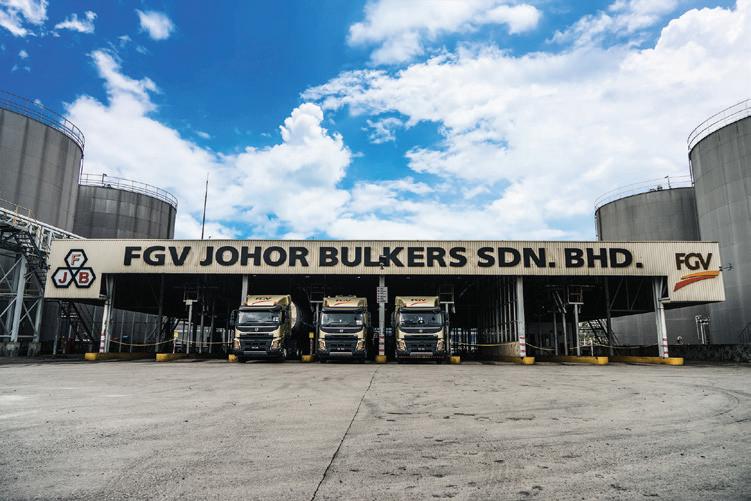
FGV JOHOR BULKERS GROUP
ONE OF THE WORLDʼS LARGEST VEGETABLE OIL TERMINALS
YOUR TRUSTED PARTNER
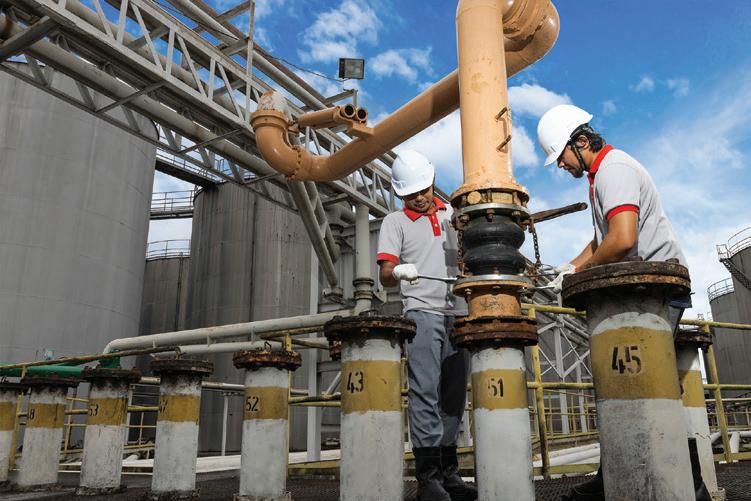
• Large-scale vegetable oil terminal network with a multi-location footprint across Malaysia and total storage capacity of over 1 million MT.
• Cater for products ranging from vegetable oils to renewable energy feedstocks (UCO, POME), including oleochemicals, biodiesel and biomass.
• Operational excellence more than 50 years supported by recognised certifications and standards accreditation.
• Trusted as a reliable partner by 100 over customers with average customer satisfaction index more than 90% annually.
• Customs-approved, bonded-licensed facilities supporting bonded storage and transshipment with streamlined clearance processes.
• BURSA Malaysia-approved Port Tank Installation (PTI) for future commodity (CPO/CPKO) trading.
• Real-time stock monitoring enabled by integrated systems and automation, supported by reliable documentation processes.
• Partnership-focused, long-term customer support with responsive coordination and reliable service delivery.
Port Klang, Selangor
Pasir Gudang, Johor
Tg. Langsat, Johor
Kuantan, Pahang
Lahad Datu, Sabah
Bdr. Sahabat, Sabah
THE NETHERLANDS
Europe's gateway
The Netherlands acts as a gateway for imported oilseeds, oils and fats into Europe, with a strong infrastructure for storage, refining and exports Gill Langham
As the gateway for oilseeds, oils, fats and related products to the European Union (EU), the Netherlands is also one of the region's largest crushers of oilseeds –soyabeans, rapeseed and sunflowerseed –alongside Germany, France and Spain.
The country imports high volumes of oilseeds and crude/tropical oils and is the bloc’s leading tropical vegetable oil refiner.
Major palm oil refining companies such as Cargill, Olenex, SD Guthrie, Bunge and, more recently, Verborg are active in the country.
The Netherlands has a strong infrastructure for storage, refining and exports, with the ports of Rotterdam and Amsterdam both playing key roles in importing, processing and onward distribution throughout Europe.
The ports also offer large storage capacity, with Chane and Vopak servicing both the vegetable oils markets and the biofuel market (for feedstocks and end products, such as methyl esters), according to the Netherlands Oils and
Fats Industry (MVO).
“In recent years we have seen several trends," says MVO managing director Frans Claassen. "New investments in refining and further processing and packaging like Bunge, Verborg, Olenex – but also modernisation of existing plants by companies such as Cargill, SD Guthrie, Royal Smilde, Vandemoortele en Remia and investments in the biofuel sector, both in processing and expansion of storage capacities pushed by a strong increase in imports for feedstocks and end products.”
“At the same time, we saw a decrease in imports and refining of palm oil into Europe and also in the Netherlands, although this trend seems to have stopped in 2024.”
According to a 11 July 2025 report by Germany’s Union for the Promotion of Plants and Protein (UFOP), ports such as Rotterdam or Amsterdam were central destinations for overseas imports and served as ports of entry into the EU, from where palm oil was shipped on to other EU member states.
“Next to trade, we have seen huge investments in the biofuel market by Neste but also by Shell and BP … although these latest investments are put on hold due to market circumstances and the changed economic challenges, including energy prices and infrastructure,” he says.
The MVO has also noticed an increase in companies active in organic vegetable oils.
“Of course, most of these activities
are relatively small but it is clearly a new and interesting development where you also see that larger companies like IOI are investing in organic palm oil," Claassen adds.
Margarine consumption in the Netherlands is also higher compared to other European countries. Major margarine, mayonnaise and sauces companies – like Flora Food Group, Vandemoortele, Royal Smilde and Remia –are active in the country.
Trade in oils and fats
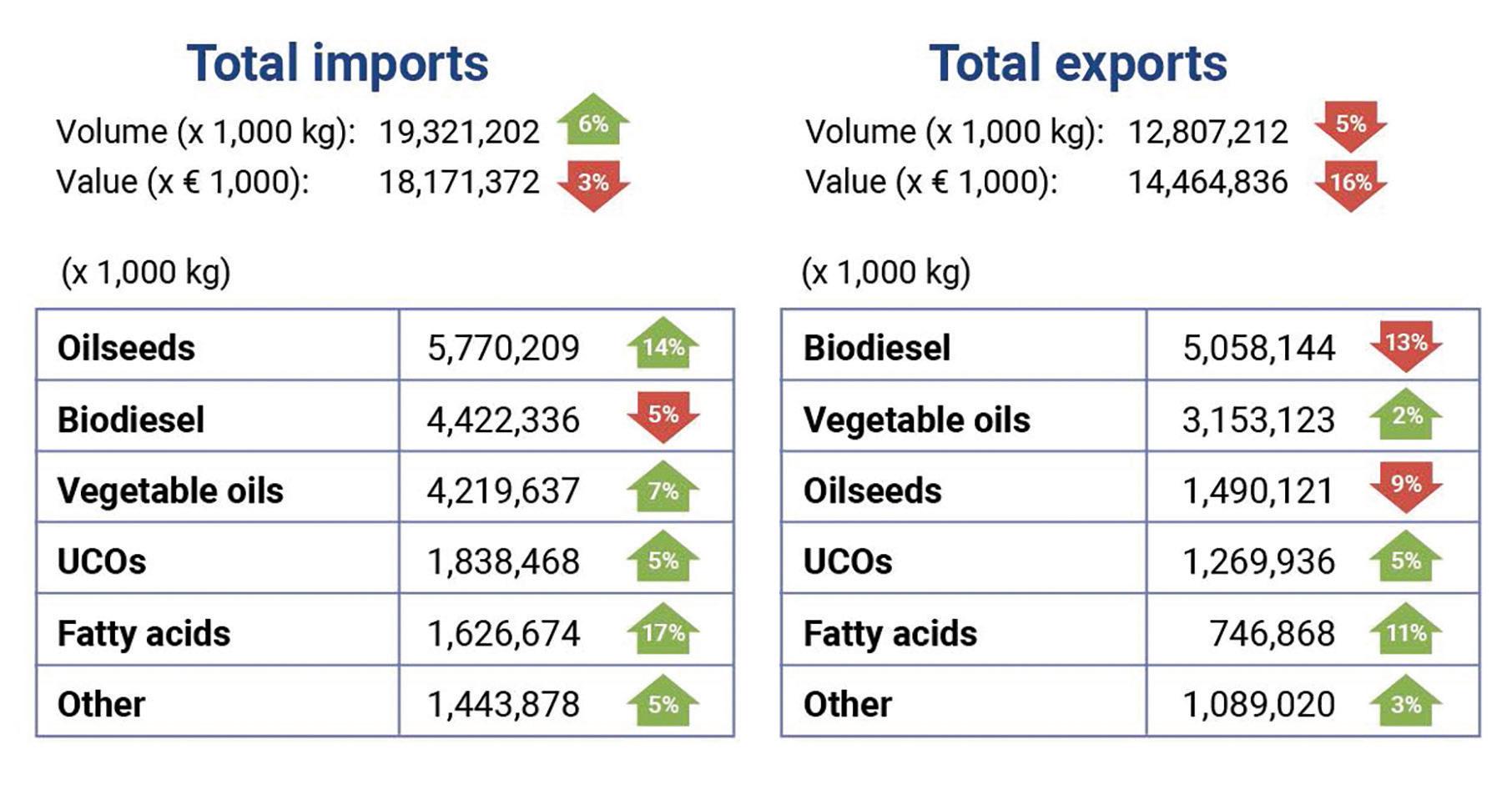
Following a decrease in 2023, total import volumes of oils, fats and related raw materials increased by 6% in 2024, the MVO says (see Figure 1, following page). However, export volumes declined by 5%.
“The price corrections seen in 2023 continued although more moderately, with the overall import value dropping by 3% and export value falling more sharply by 16%,” Claassen says.
“Despite this, the total import value remained robust at over €18bn (US$20.96bn), while exports amounted to €14.5bn (US$16.88bn). Notably, around 90% of Dutch exports in this sector were destined for EU markets.”
Dutch imports
In terms of oilseed imports, the country continues to be one of Europe’s key crushers of soyabeans, according to the MVO.
Photo: Adobe Stock
THE NETHERLANDS
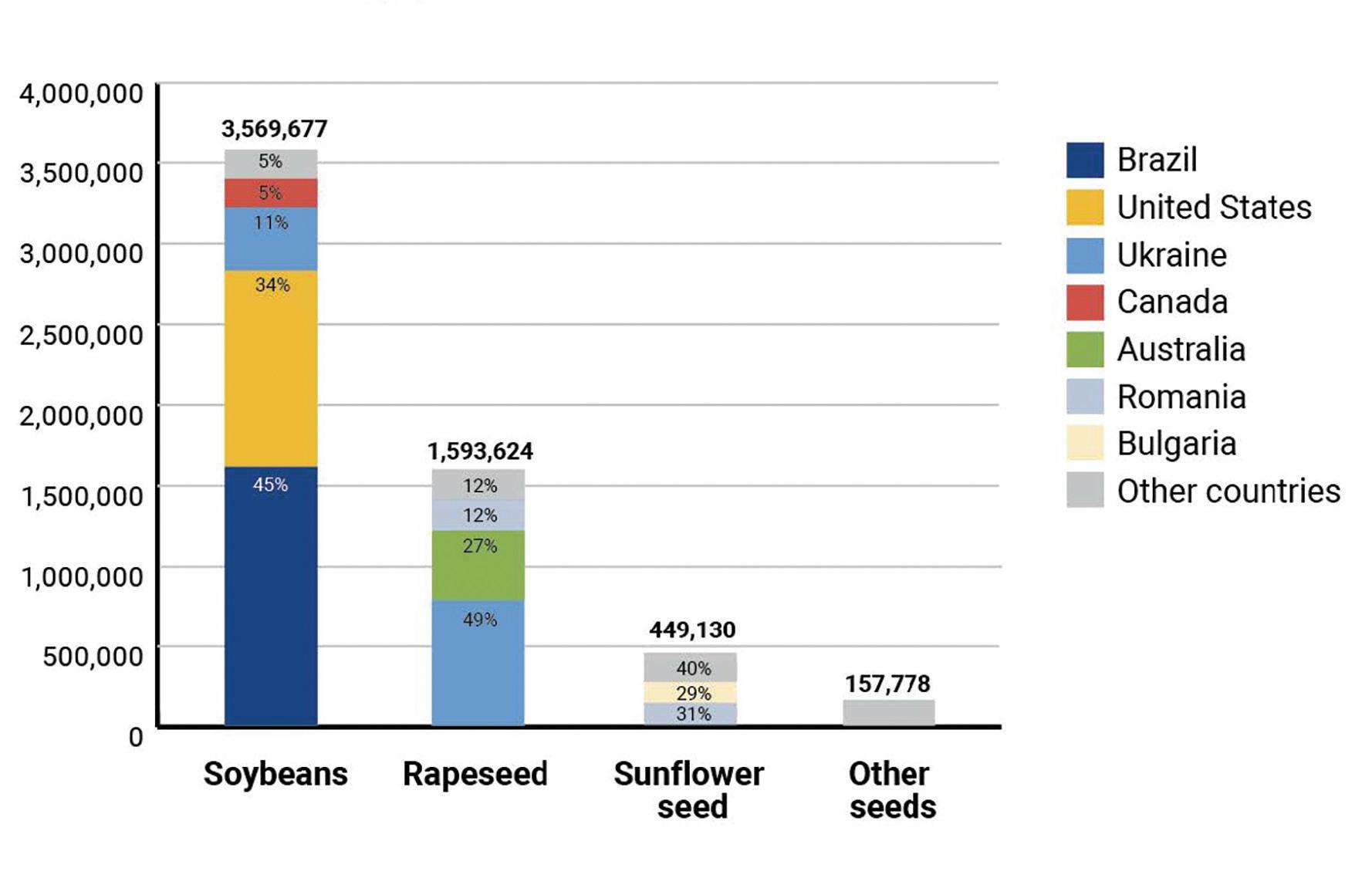
Brazil and the USA maintained their roles as main suppliers, but Ukraine’s presence grew significantly – rising from 7% of Dutch soyabean imports in 2023 to 11% in 2024 (see Figure 2, below).
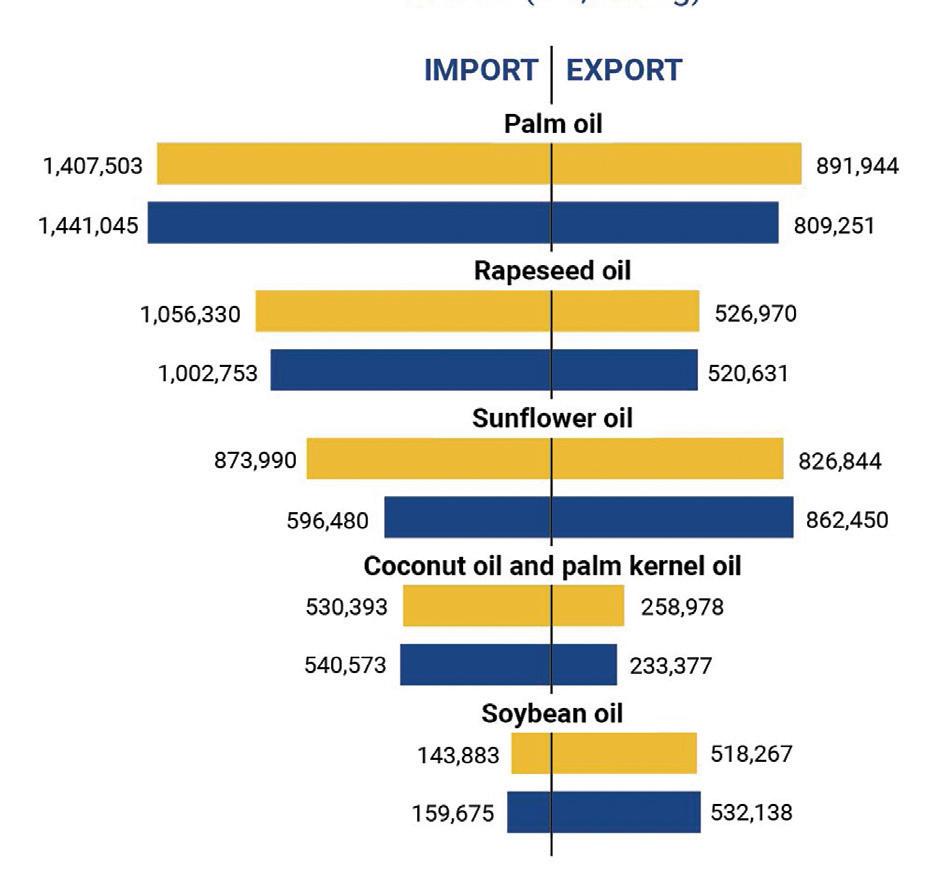
The Netherlands’ imports of rapeseed increased significantly in 2024 compared to the previous year, rising from virtually nonexistent levels to nearly 800,000 tonnes. Palm oil remains the largest imported vegetable oil by volume, although shipments have halved over the past six years, the MVO says (see Figure 3, below).
This decline is expected to stabilise with additional refining capacity becoming operational in the Netherlands in 2024.
In contrast, imports of rapeseed oil and sunflower oil increased, while trade in coconut oil, palm kernel oil (PKO) and soyabean oil remained stable.
Palm oil
Historically, the Netherlands has been the EU’s largest importer and processor of palm oil, with the bloc's total imports
of the oil falling. In the first half of 2025, palm oil shipments to the EU fell to 1.45M tonnes from 1.91M tonnes in the same period in 2024.
Meanwhile, Dutch imports of palm oil remained stable at around 650,000 tonnes in the January-June 2025 period, according to Eurostat data.
Due to a steep decline in palm oil imports to three other EU countries –Spain (-49%), Germany (-43%) and Italy (-40%) the Netherlands accounted for as much as 45% of total EU palm oil imports in the first six months of 2025.
Palm oil suppliers
In recent years, the Netherlands’ demand for crude palm oil (CPO) has been primarily met by Malaysia, Guatemala and Papua New Guinea. However, in the first half of 2025, Indonesia strengthened its position, particularly through supplying more processed palm oil to the country.
Total Dutch imports of Indonesian palm oil increased from 92,000 tonnes in
Source: MVO
2024 to 99,000 tonnes in 2025 despite Indonesia losing its leading export position on the European palm oil market in 2025 to Malaysia – for the first time since 2007.
The Netherlands also regained its position as the EU’s largest importer of Indonesian palm oil in 2025, due to a decline in Spanish and Italian imports of Indonesian palm oil mainly due to a reduction in processed palm oil for non-food applications, including biofuels production.
The proposed Comprehensive Economic Partnership Agreement (CEPA) trade agreement between the EU and Indonesia may also boost Indonesia’s exports of palm oil to the EU from 2027, the MVO says.
Biodiesel
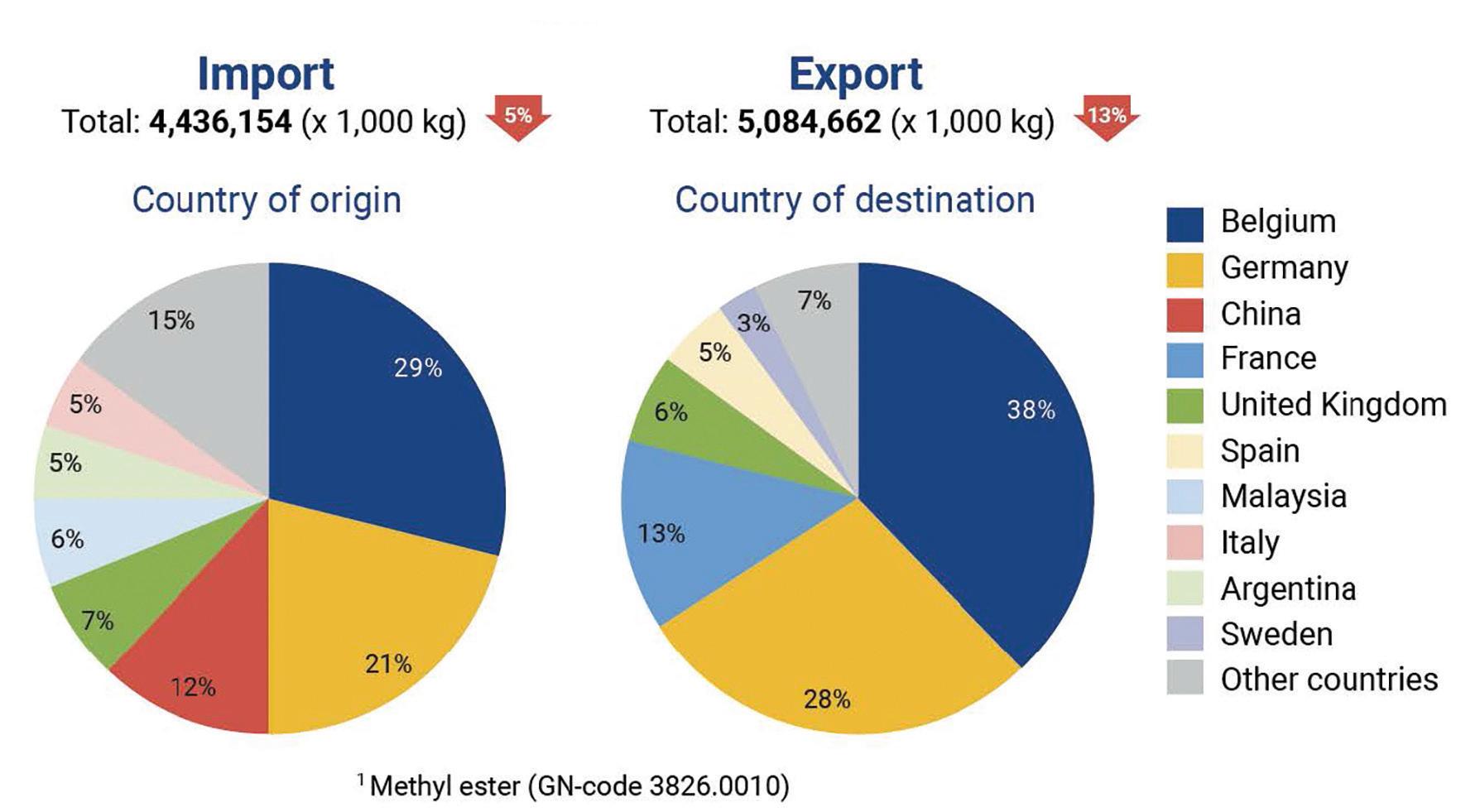
Biodiesel trade in the Netherlands has been marked by volatility, according to the MVO (see Figure 4, opposite page).
“The dumping of cheap Chinese biodiesel caused market disruption, prompting the European Commission to impose (provisional) anti-dumping measures on 17 August 2024," Claassen says. "Since then, imports from China have ceased, leading to an overall decline in imports of biodiesel.”
Meanwhile, the importance of intraEU biodiesel trade continues to grow, according to the MVO.
Trade
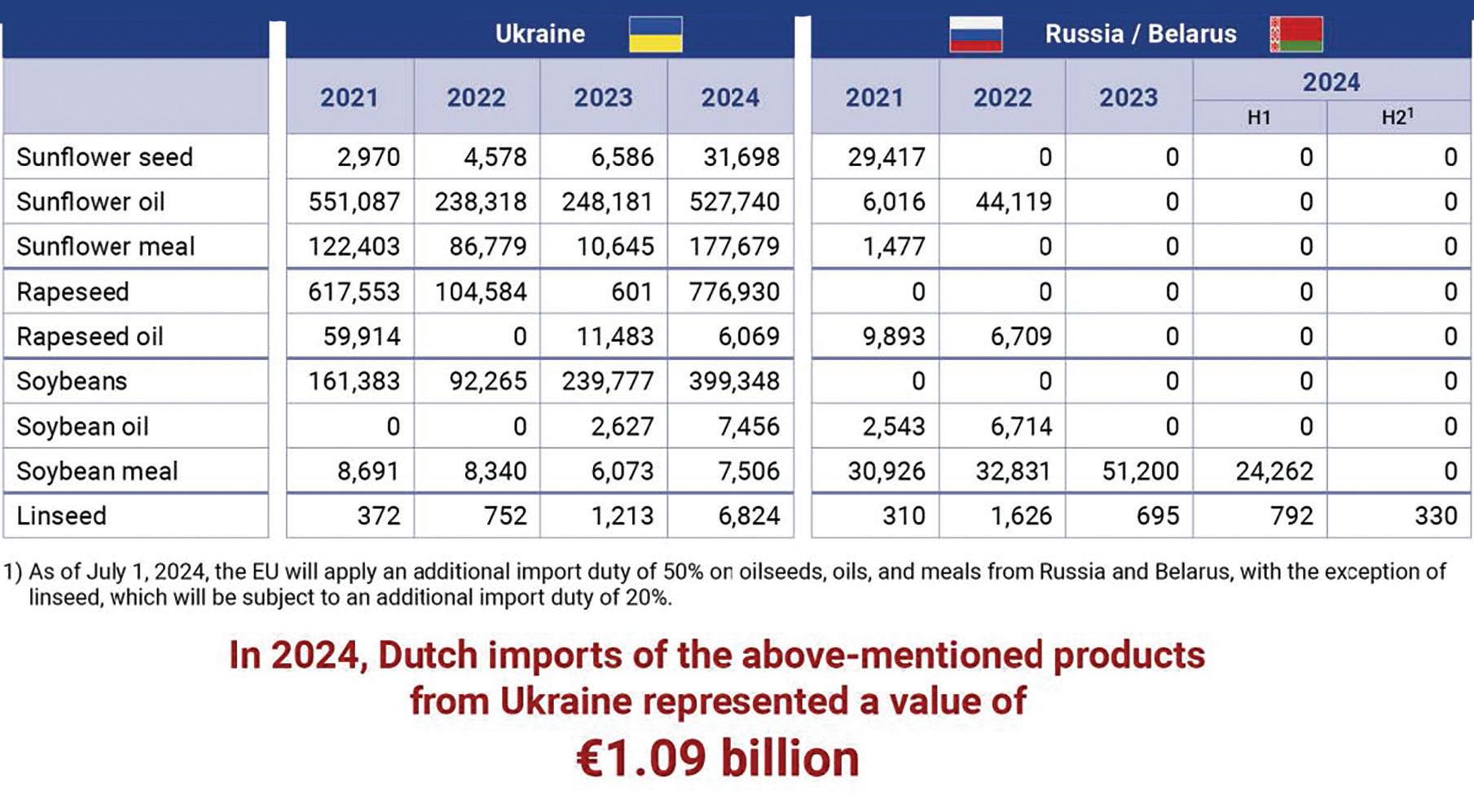
As in previous years, the MVO says geopolitical developments have influenced imports (see Figure 5, opposite page).
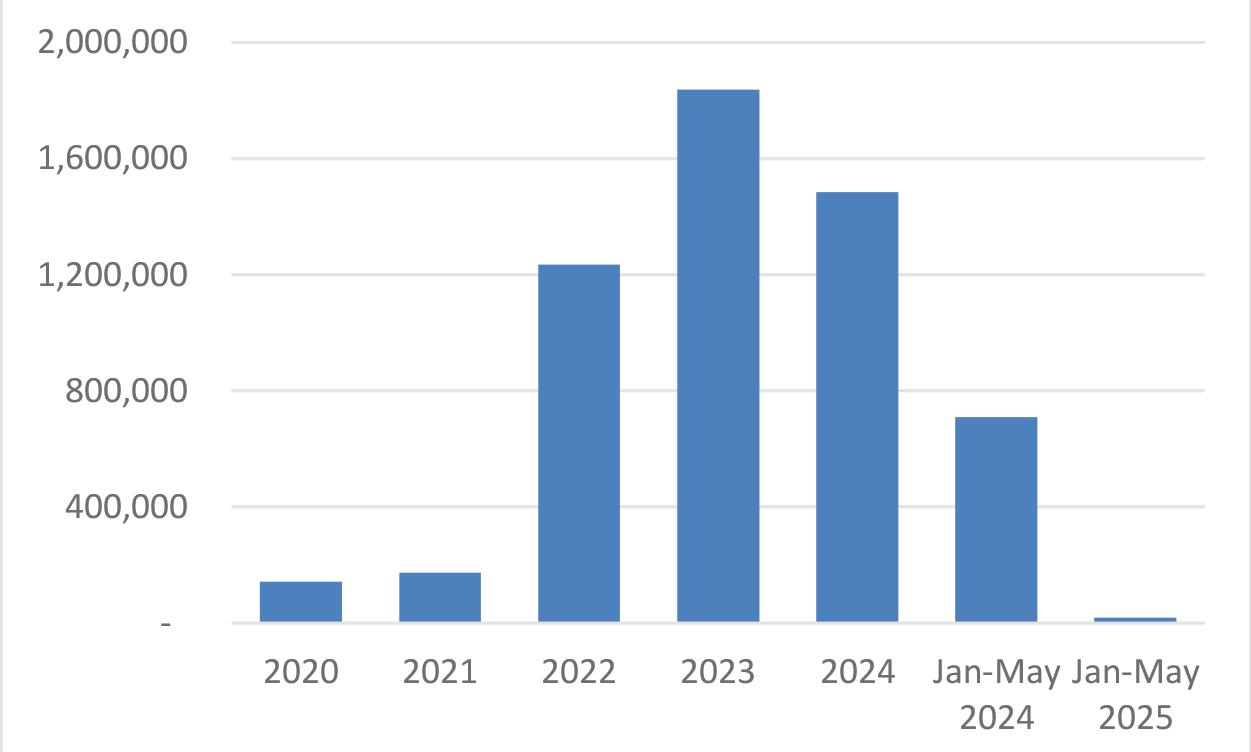
“The Netherlands imported virtually no oilseeds or vegetable oils from Russia or Belarus in 2023 and 2024, with only minor exceptions. New EU tariffs from 1
Source: MVO
Figure 1: Dutch trade in MVO products, 2024
Figure 2: Dutch import of oilseeds, 2024
Figure 3: Dutch trade in vegetable oils, 2023 and 2024
July 2024 – 50% on most products from these countries – have further limited these imports.” Claassen says.
“Conversely, imports from Ukraine grew substantially in 2024, especially for sunflower oil, rapeseed and soyabeans. The total value of these imports exceeded €1bn (US$1.16bn), surpassing pre-war levels and demonstrating Ukraine’s resilience and strategic role in our sector.”
According to Ron van Noord, secretary general of the Dutch trade association NOFOTA, geo-political developmentsalongside social trends and current as well as forthcoming EU legislation are having a significant impact on commodity trading.
“As a result, we have seen CIF Rotterdam markets disappear, or at least become far less volatile,” van Noord says.
“This may ultimately lead to higher raw material prices, which are likely to be passed on to the consumer.”
Bilateral trade with USA
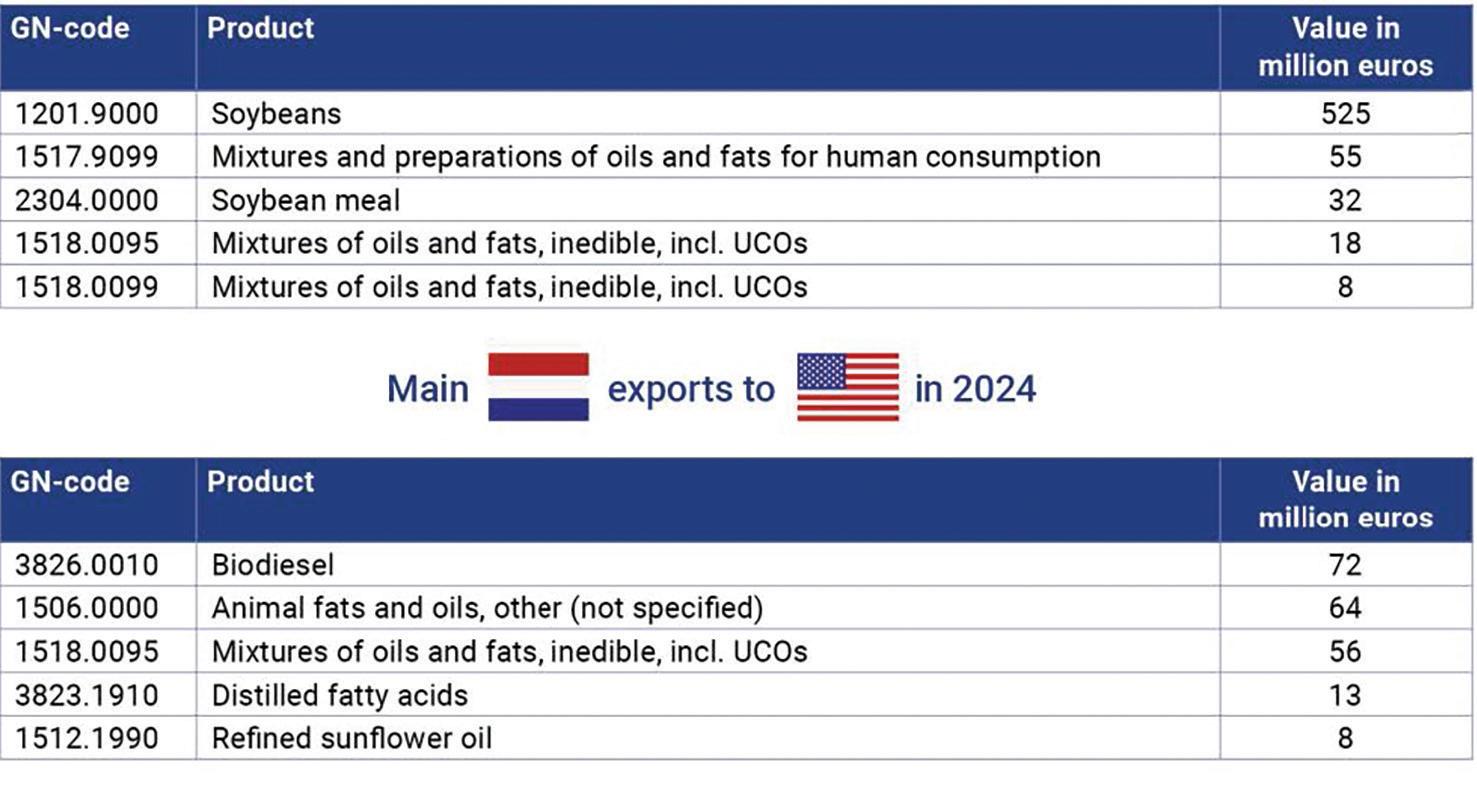
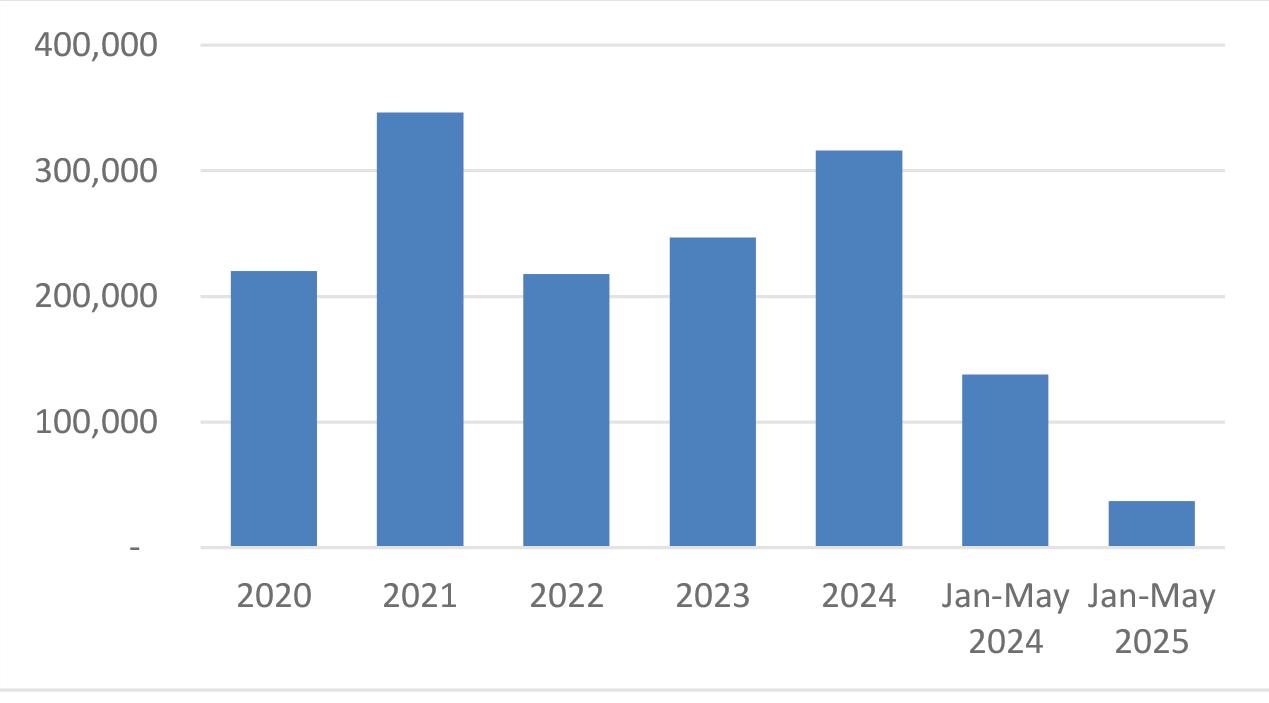
The USA is a key trading partner for the Netherlands and MVO data shows Dutch imports of MVO-related products from the USA were valued at approximately €650M (US$756.9M) in 2024, with soyabeans accounting for the largest share at €525M (US$611.3M) (see Figure 6, right).
US imports of edible oils also remained significant. However, the US share of total Dutch soyabeans imports dropped to 34%, compared to the 40-45% range in previous years.
On the export side, the Netherlands shipped goods worth around €300M (US$349.3M) to the USA, with biodiesel leading the way, followed by animal fats and inedible oil blends, primarily used for biofuel production.
“With the start of President Donald Trump’s second term, many in the sector are closely watching how American policy on biofuels will evolve,” the MVO says.
Looking ahead
The Dutch oils and fats market faces a number of challenges, including the unpredictability of government and the EU on issues such as the EU Deforestation Regulation (EUDR); energy infrastructure and taxes; stricter food and feed safety regulations; and volatile trade policies in the global oils and fats industry worldwide. Despite these, the MVO says the sector remains strong.
“Vegetable and animal oils and fats are important for a more sustainable future for food, feed, oleochemicals and biofuels/energy. We are ready to face the challenges ahead.” ●
Gill Langham is the assistant editor of OFI
Hear from global experts and learn more about the Dutch, EU and global oils and fats market at OFI International 2026 21-23 September 2026
Amsterdam, The Netherlands www.ofimagazine.com/ofi-international-2026
Figure 4: Dutch trade in biodiesel*, 2024
Figure 5: Dutch imports from Ukraine and Russia/Belarus (x1,000kg)
Figure 6: Dutch-US bilateral trade in oilseeds, oils and related products
SUNFLOWER
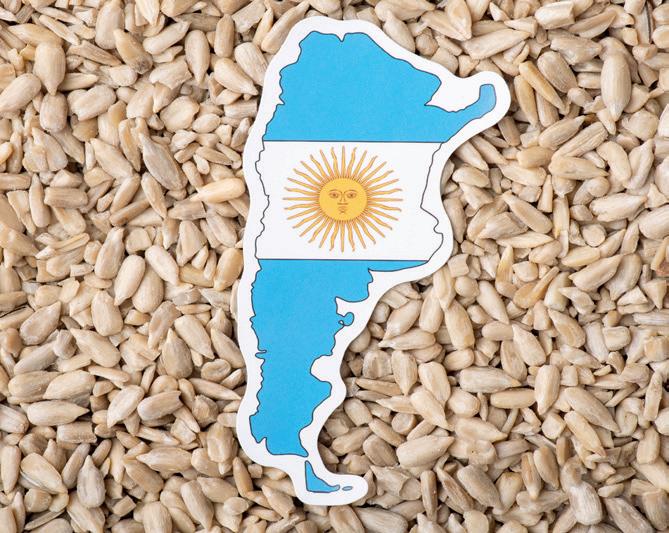
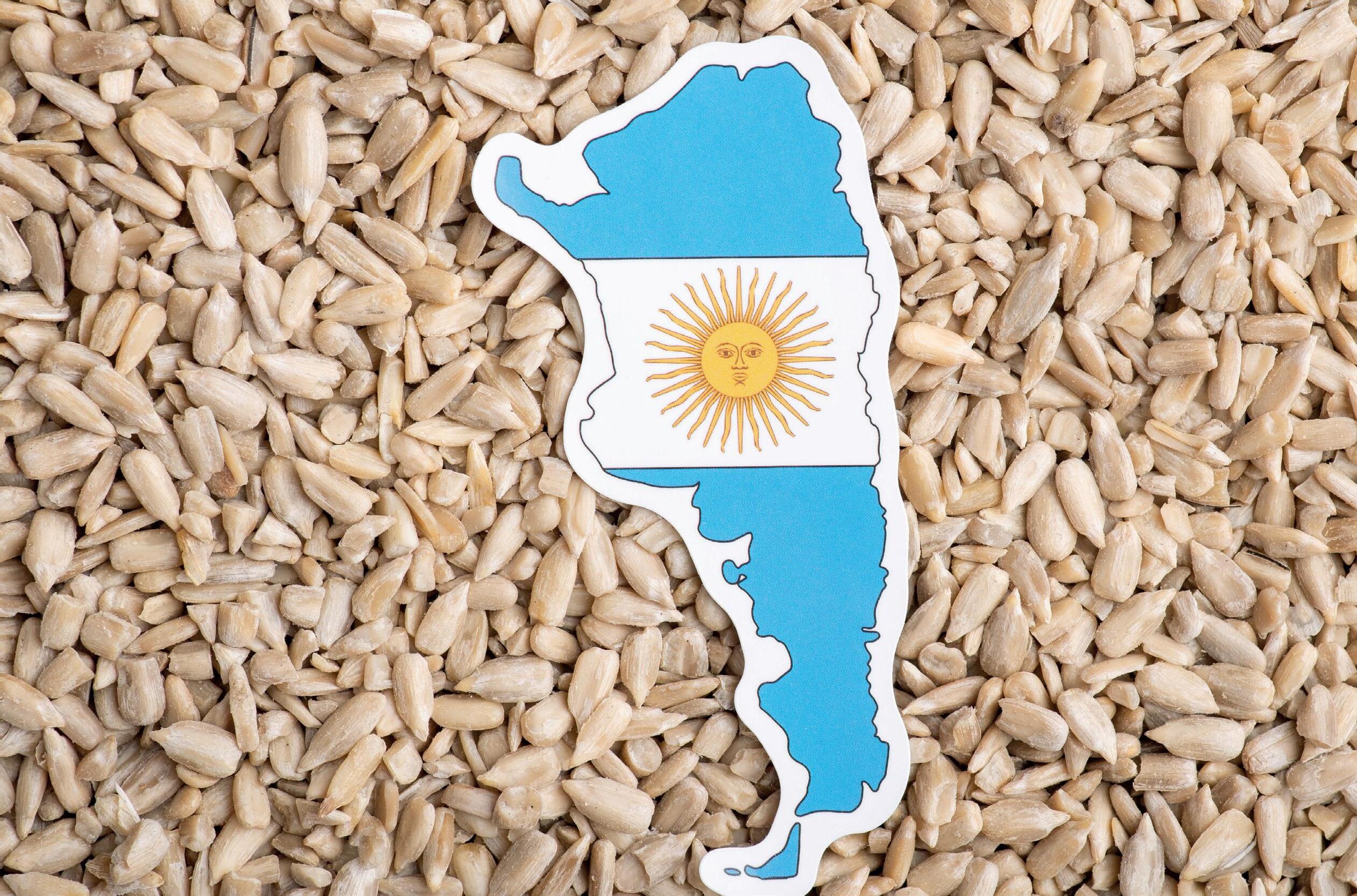
A favourable tax regime, the Russia-Ukraine war and a rise in planted area and high oleic varieties has positioned Argentina as the alternative global supplier of sunflowerseed and oils
Júlia Vilela
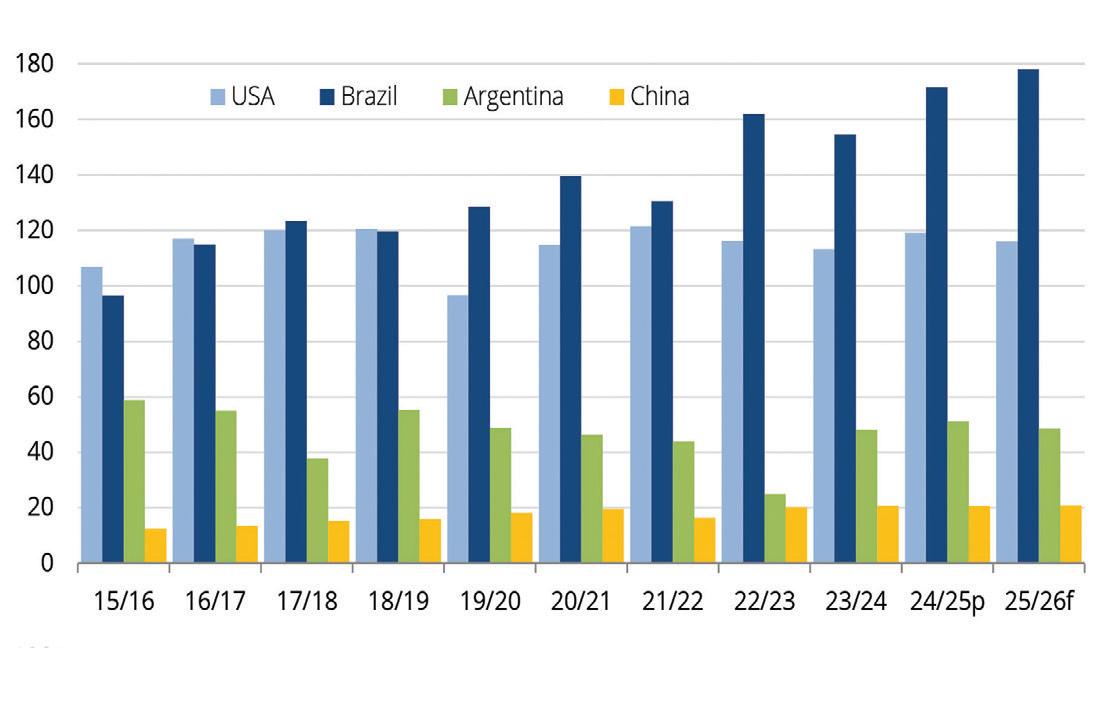
Argentina has historically established itself as the world’s third largest producer of sunflowerseed. In recent crop cycles, such as 2023/2024, the country posted strong figures, surpassing the 4M tonne mark and reaching a record production of 5.2M tonnes in 2025, with a forecast of 5.4M tonnes for 2026, driven by an expansion of planted area and high productivity levels.
Since the onset of the conflict between Russia and Ukraine in 2022, sunflowerseed has offered Argentine farmers a strategic dual advantage: lower water risk and high profitability in the international market, supported by competitive domestic tax policies.
Thanks to its resilience to water stress, sunflower tolerates drought periods and high temperatures more efficiently than corn. This factor is particularly decisive in the central and southern regions of Buenos Aires, where producers
Argentina's strategic rise
favour sunflowerseed during La Niña, a phenomenon that often brings severe drought to the Southern Cone region of South America comprising Paraguay, Uruguay, Argentina, Chile and southern Brazil.
In the Argentina’s northwest (Chaco and Santiago del Estero provinces), sunflower competes for acreage with cotton. Planting decisions are based on international cotton lint prices at the time of sowing.
Recently, sunflowerseed has been winning this competition not only due to its direct profitability, but also because of a technical challenge in the cotton sector: the high concentration of dark pigments in the seed, which causes significant losses during the semi-refining and refining processes of cottonseed oil, reducing its industrial appeal.
However, the most intense hectarage competition is with soyabeans. Between the 2000s and 2010s, soyabeans expanded aggressively into land previously allocated to sunflowerseed
due to its ease of management and immediate liquidity. While soyabeans remain dominant in the 'Core Zone' with high-quality soil, sunflower is strategically planted in lighter soils or those with lower water retention.
Favourable tax regime
Producers’ strategies shifted dramatically from 2024 onwards, driven by tax disparities and stronger international demand for sunflower. Under President Javier Milei’s administration, the export tax (DEX) rate for soyabeans is 24%, while the rate for sunflowerseed is only 4.5%.
In the industrial sector, the contrast is even more striking: soyabean meal and soyabean oil are taxed at 22.5%, while sunflower by-products benefit from a full exemption.
In addition to offering a higher valueadded product compared to soyabeans, Argentine sunflowerseed growers and the processing and crushing industry face a lower tax burden on the product.
Photo: Adobe Stock
Unlike soyabeans, which are still subject to higher taxation, sunflower is treated as a “regional economy” in many provinces. The zero-rate export tax strategy for sunflower oil aims to turn Argentina into the world’s leading sunflower refining hub, competing directly with Ukraine.
Impact of Russia-Ukraine war
With the outbreak of the Russia–Ukraine war in February 2022, the sunflower market experienced major supply concerns. The two largest producing countries were embroiled in a conflict that disrupted logistics. Countries highly dependent on this oil for food consumption shifted their attention towards Argentina.
The reduction in global sunflowerseed and oil supply in 2022 resulted in Argentine sunflower oil exports rising by nearly 35% in a single year. Countries such as India and China – the world’s largest consumers of vegetable oils –began to view Argentina as an even more relevant player, establishing commercial and logistical partnerships to secure regional supply.
Consolidation occurred in 2023. While La Niña devastated soyabean and corn crops, sunflower – especially the high oleic variety– reached record levels. Coinciding with crop losses in Ukraine and Bulgaria, Argentina began exporting high oleic (HO) sunflower oil beyond Latin America, serving global markets and temporarily creating a shortage of the product within its own region.
Although Europe is the world’s largest consumer market for HO sunflower oil, Argentina faces structural barriers in becoming a dominant supplier to the region: the high prices paid by Argentine crushers for sunflowerseed widen the spread between conventional and HO oil, and the cost of transatlantic maritime freight– compared with intraEuropean road freight – reduces the competitiveness of Argentine supply. As a result, demand for Argentine HO sunflower oil remains concentrated in the Americas, limiting production scale relative to its full potential.
In 2024, Argentina positioned itself as the main alternative competitor to the Black Sea region. European demand to diversify origins and the opening of strategic freight windows to India enabled the use of large bulk carriers, allowing Argentina to capture significant market shares previously held by Eastern European producers.
Against this backdrop of growth, farmers have been investing more heavily in sunflower hectarage over the past five
years. From the 2021/2022 season to the current 2025/2026 season, planted area increased by nearly 55%. Sunflower has proven to be both profitable and resilient for the country. In 2024, Argentina recorded a production peak of 5.2M tonnes of sunflowerseed, and the forecast for the 2025/2026 season is 5.4M tonnes, further consolidating Argentina as an important and strategic player for consumers of this crop.
Conclusion
The trajectory of Argentine sunflower between 2021 and 2026 reflects a structural reconfiguration of the country’s agribusiness sector. By positioning
sunflower as a “regional economy” protected by reduced export tax rates, Argentina has not only mitigated the climate risks imposed by La Niña, but filled the logistical and production gap left by the Russia-Ukraine conflict in the Black Sea.
The consolidation of new markets in Asia and Europe, combined with continued investment in higher valueadded varieties such as high oleic, positions Argentina as a leading rather than secondary supplier of sunflower products. ●
Júlia Vilela is a sunflower and olive oil specialist at Latin American commodity broker Aboissa
YOUR PARTNER IN PROCESSING
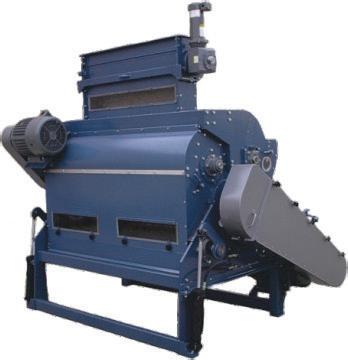
Oilseed preparation performance is driven by consistency, control, and how effectively equipment responds to variability in materials and operating conditions. French designs cracking, flaking, conditioning, and pressing systems with a focus on mechanical durability, stable and dependable operation, and long term serviceability, where uptime, maintenance access, and energy use directly influence plant performance.
Across food and industrial applications, French preparation equipment provides uniform material quality through each step of the preparation process, controlled thermal exposure, and reliable operation under changing seed or other oil bearing material conditions. This balanced approach helps protect oil and cake quality while supporting efficient and stable downstream processes.
At the French Innovation Center, processors evaluate preparation approaches using their own oilseeds. Working with experienced engineers, trials help refine operating conditions, manage variability, and reduce unnecessary heat and energy input before scale up, supporting informed preparation decisions as processes and expectations evolve.
French Oil Mill Machinery Company | Piqua, Ohio
INDONESIA BIODIESEL
Delay of B50
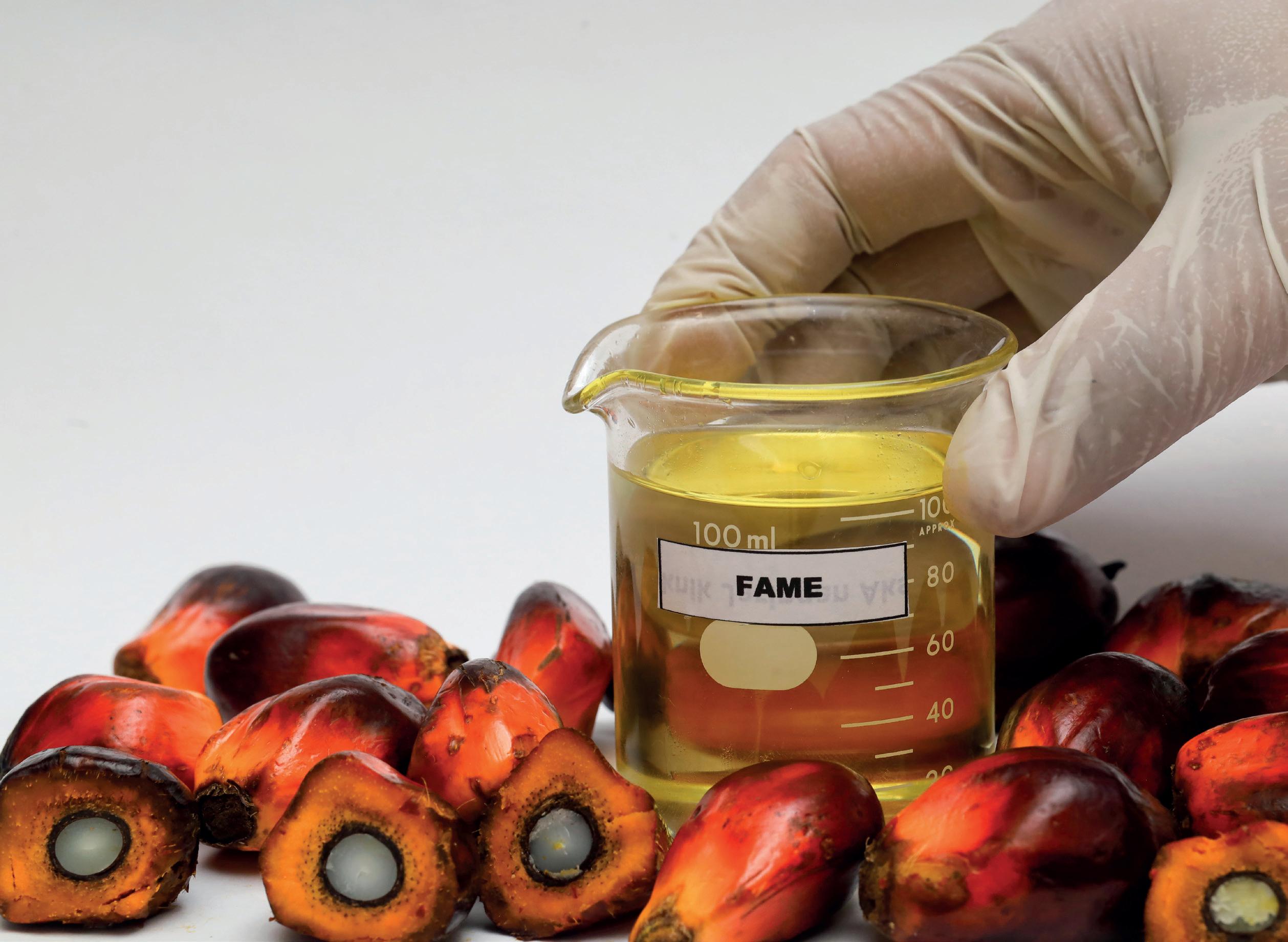
As the leading global palm oil producer, Indonesia's move to delay plans to increase its palm oil-based biodiesel blend to 50% (B50) this year is expected to ease pressure on worldwide supplies of the commodity Gill Langham
Indonesia has delayed the introduction of its B50 biodiesel blending mandate – part of the country’s bid to cut fuel imports while reducing greenhouse gas (GHG) emissions – and continue with B40 due to technical and funding concerns.
The government had planned to launch a 50% palm-oil based biodiesel blend (B50) in the second half of this year but after a meeting on 14 January, government officials announced that it would be delayed, Reuters reported on 15 January.
Meanwhile, the government was reviewing the timeline to complete B50 trials, particularly for trains, heavy equipment and machinery, Energy Ministry official Eniya Listiani Dewi told reporters after the meeting.
Asked if the B50 mandate would be implemented in 2027, chief economic minister Airlangga Hartarto said the decision would depend on the price gap between crude oil and crude palm oil (CPO).
Indonesia subsidises its biodiesel programme using proceeds from palm oil export taxes. The size of the subsidy depends on the price differential between crude oil and CPO.
“... under current price conditions, the president’s directive is (to maintain) B40 but be ready for B50,” Hartarto said.
Global impact of delay
Indonesia’s biodiesel mandate impacts global palm oil prices as increased domestic use reduces its export supply, Reuters quoted industry sources as saying.
“Indonesia scrapping its B50 plan for 2026 is bearish for palm oil prices as the market was expecting more absorption of crude palm oil for the additional blend,” Anilkumar Bagani, commodity research head at Mumbai-based brokerage Sunvin Group, was quoted as saying.
According to estimates by palm oil think tank Indonesia Palm Oil Strategic Studies, a B50 blend in the second half of this year would absorb an additional 2.2M tonnes of CPO to the approximate 13.6M tonnes used for Indonesia’s B40 biodiesel mandate last year.
“The price buffer due to B50-related hopes will start to ease now and palm oil will be seen at a discount against competing oils due to higher carryover, especially in Malaysia,” Bagani added.
Against this backdrop, Malaysia had reported a surge in its palm oil inventories in December to a near seven-year high, Reuters wrote, which could increase pressure on palm oil futures.
Levy increase
Indonesia subsidises its biodiesel programme by covering the price gap
Photo: Adobe Stock
INDONESIA BIODIESEL
between fuels made from crude oil and palm oil, using proceeds from palm oil export taxes collected by the Indonesian Estate Crop Fund Agency (BPDP).
In 2024, the subsidy reached US$1.8bn, while funds collected from the export levy were lower at US$1.6bn. The subsidy amount was 60% higher than provided in 2023 due to a wider differential between palm oil diesel and fossil diesel prices, according to the US Department of Agriculture (USDA)’s ‘Indonesian Biofuels Annual’ published on 13 August 2025.
Indonesia’s increasing biodiesel blend – from B15 for specific sectors in 2015 – to B40 for almost all diesel machinery to date – has put pressure on BPDP’s ability to subsidise the programme, according to the Reuters report.
Hartarto said the government would raise tax rates to support the agency.
BPDP chief Eddy Abdurrachman said Indonesia would increase CPO export taxes from the current 10% to 12.5% from 1 March while levies for refined products would increase by 2.5% from the current 4.75%-9.5% level.
The Indonesian Palm Oil Association (GAPKI) says the decision to continue with B40 was the right move as it would balance CPO production, domestic needs and export volume.
“The policy is expected to maintain CPO prices against competitive fossil fuel prices and sustain CPO export volumes for optimal revenues from the levy,” GAPKI secretary eneral Hadi Sugeng was quoted as saying.
According to the Indonesian Palm Oil Farmers Association (POPSI), introducing B50 and increased export taxes could affect Indonesian palm oil competitiveness in the global market, drive buyers to other suppliers such as Malaysia and reduce smallholder farmers’ incomes.
In a Palm Oil magazine report on 5 January, POPSI chairman Mansuetus Darto was quoted as saying additional levies would push up export prices – including cost, insurance and freight (CIF) – making Indonesian palm oil less competitive.
“The impact won’t just hit global markets – it will damage the palm oil ecosystem from upstream to downstream,” Darto said.
Although POPSI does not oppose biodiesel policies, it has urged policymakers to redesign the programme to be fairer, more realistic and grounded in comprehensive evaluation.
The association has proposed a flexi-blending scheme, setting B30 as the minimum while adjusting blending rates dynamically.
When CPO prices are high and subsidy burdens increase, blending levels could be reduced; when CPO prices soften and fossil fuel prices climb, blending could be raised gradually to B40 or higher to absorb more domestic CPO.
In addition, POPSI urged that any increase in biodiesel blending be tied directly to national production and productivity performance.
If CPO output rises – towards 50M-60M tonnes/year – higher blending could be considered as a policy option.
This would position biodiesel as both an energy transition instrument and a stabiliser for the palm oil sector, according to POPSI.
Indonesia’s Energy Ministry has allocated 15.65M kilolitres of palm oil-based biodiesel for this year’s mandate, of which 7.45M kilolitres will be subsidised, according to the Reuters report.
Development of mandate
Indonesia’s biodiesel mandate programme is a nationwide directive to blend palm oil-based biodiesel with diesel to reduce fuel imports, generate domestic palm oil demand and reduce emissions, the USDA report said.
The B50 plan is the next stage of Indonesia’s biodiesel mandate, which has been in place since 2016, progressing from
The best ice condensation of all time
THE NEW ICE GENERATION
• Enhanced flow design
• A system independent of refrigerants
• A turnkey system from one source
• A consistent vacuum 24 / 7
INDONESIA BIODIESEL
Source:
from 2024 following the implementation of B40.
As of June 2025, industry data showed biodiesel distribution for the programme reached 6.8bn litres, on track with 50.3% of total full year allocation. The USDA said it expected 2025 biodiesel consumption to reflect the previous year’s performance, reaching around 92% of the allocation.
On an annual basis, the Indonesian government assigns biodiesel producers to supply to the mandatory programme and gives each producer a biodiesel allocation.
Biodiesel production
With the implementation of B40 from March-December 2025 with some fuel pool growth, the USDA estimated Indonesian palm oil-based biodiesel production in 2025 at 14.5bn litres, up 1.2bn litres from the previous year.
In 2025, biodiesel production capacity is expected to reach 19.6bn litres; with an additional 4bn litres required to meet B50, according to the USDA report.
Despite the government officially referencing the use of feedstocks from waste products, Indonesia relies on palm oil to produce biodiesel. Waste stream palm oil mill effluent (POME) and coproduct palm fatty acid distallate (PFAD) from palm oil refineries, as well as used cooking oil (UCO) from food processing industries, restaurants and home cooking, were mainly exported before 2025. The government began to curb exports of waste stream feedstocks in January 2025.
Biodiesel exports
Indonesia’s biodiesel exports were expected to be virtually zero in 2025 as the government worked to secure the B40 programme and limit production growth, according to the USDA’s ‘Indonesian Biofuels Annual’.
In the last decade, Indonesia exported palm biodiesel to several key markets such as China, the European Union (EU) and the USA, with smaller volumes shipped to Peru, the Philippines and South Korea.
Exports surge during periods when demand from China for discretionary blending emerges and collapse as that demand disappears, according to the report. This demand is driven by the spread between the price of palm oil biodiesel and the price of diesel.
Exports tend to decrease in years when such discretionary demand disappears and after the enactment of high duties in key export markets. Indonesian palm biodiesel exports to the USA remain limited partially due to countervailing and anti-dumping duties, according to the report.
Feedstocks
A study in 2022 estimated potential collectable UCO in Indonesia at 715,000 tonnes/year, based on sources from urban restaurants, urban households and food processing facilities. The estimate excluded illicit 'gutter oil from sewers, drains and grease traps' as that data was not available.
Indonesia UCO exports showed growth up until 2021, peaking that year before being levied at US$35/tonne in 2022 (see Figure 1, left). The country's key export markets in 2024 for UCO were the USA (36%), Malaysia (35%), Singapore (13%) and Spain (10%).
Exports of POME from Indonesia also fell from a peak in 2023 (see Figure 2, left). The main destinations for Indonesian POME exports in 2024 were China (40%), Italy (20%) and Malaysia (15%).
In early 2025, Indonesia began to curb exports of UCO and palm residue, including POME, to ensure domestic supplies of cooking oil for industry and the biodiesel mandate programme.
In revisions to palm export palm taxes in May 2025, the Indonesian government added products related to palm waste and byproducts (glycerol) into the taxable list.
SAF progress
In 2024, Indonesia launched a new roadmap targeting a 1% sustainable aviation fuel (SAF) blend by 2027, 2.5% by 2030 and rising to 30% by 2050.
Government agencies and stateowned companies were collaborating to conduct research and tests for developing advanced biofuels, including SAF, the USDA said.
Although the roadmap mandated SAF for international flights, no specifics were given for domestic flights. It also identified potential feedstocks for domestic SAF production, specifically from waste products such as UCO and palm fatty acid distillate (PFAD).
In January 2025, Indonesian state energy company Pertamina produced
Figure 1: Indonesia UCO exports, 2020-2025 (million tonnes)
Figure 2: Indonesia POME exports, 2020-2025 (tonnes)
SAF from UCO after receiving ISCC EUCORSIA certification in December 2024.
In August, the company announced that its refinery unit Kilang Pertamina Internasional (KPI) had delivered its first shipment of SAF made partly from UCO.
Produced at the company’s Cilacap refinery, around 32 kilolitres of SAF were delivered to Pelita Air Services –Pertamina’s airline subsidiary – for use on flights from Jakarta to Denpasar in Bali.
In the initial stages of production, a composition of 2%-3% UCO was the aim.
KPI said it would also be delivering a 1.7M litres SAF shipment to Soekarno Hatta Airport, in Jakarta.
Pertamina SAF has also been made from refined, bleached and deodorised palm kernel oil (RBD PKO) and palm kernel oil (PKO).
According to a BioEnergy Times article, citing a Channel News India report, Pertamina is scaling up SAF production as part of the country’s wider to reduce carbon emissions in the aviation sector.
As part of its plans, the company would be expanding SAF output at its existing refineries and studying the development of new green refineries, the 26 November report said.
The company will also be developing
further facilities in South Sumatra, Riau, West Java and East Kalimantan.
Despite Indonesia’s advances in SAF production, the USDA said a domestic market for SAF could not develop without mandates, tax policies or other financial support to incentivise fuel switching away from lower-cost substitutes.
To date, no such mandates or other support had been implemented, it said.
Outlook for Indonesian exports
Indonesia’s CPO exports are projected to face pressure in 2026, according to GAPKI.
In a 30 December press release, GAPKI chairman Eddy Martono said that palm oil production from the world’s two main producing countries, Indonesia and Malaysia, had tended to stagnate in recent years, while global demand for vegetable oils continued to increase.
The imbalance between supply and demand will be the main challenge for the palm oil industry in 2026, Martono said.
Aside from the delay in the introduction of B50, GAPKI said that production stagnation and increased domestic consumption had the potential to limit the volume of national palm oil exports. This was set against increasing palm oil
demand for the food and energy sectors, both domestically and globally markets.
“Indonesia, as the world's largest palm oil producer, is facing structural challenges amid increasing global demand. This condition is considered to risk suppressing CPO export performance as well as triggering price pressure in the domestic market,” GAPKI says.
According to GAPKI, the challenges facing Indonesia’s palm oil industry in 2026 are becoming increasingly complex.
“With a combination of stagnant production, increasing global demand, rising domestic consumption and increasingly aggressive mandatory biodiesel policies, Indonesia’s palm oil industry is expected to face increasingly complex challenges in 2026,” the association said.
“Industry players consider that the future palm oil policy needs to be designed in a more balanced manner. In addition to supporting national energy security, the policy is also expected to be able to maintain the competitiveness of CPO exports, price stability, state foreign exchange revenues and the welfare of smallholder oil palm farmers.” ● Gill Langham is the assistant editor of OFI
DEEP FRYING
Acrylamide is mostly found in French fries and other fried potato products, with recent studies shedding light on the role of free fatty acids, raw potato selection and internal body production in acrylamide formation and their implications for risk assessment
Ludger Brühl
Acrylamide is a chemical compound that forms in starchy foods during high temperature cooking such as frying, baking, roasting and industrial processing at temperatures above 1200C and low moisture. The compound is formed through the Maillard reaction, the same reaction that gives ‘browned’ foods their flavour and colour.
Acrylamide has been shown to have neurotoxic, carcinogenic, genotoxic and mutagenic effects in animal studies and it is classified by the International Agency for Cancer Research as a potentially carcinogenic substance for humans.
The compound is found in products such as potato crisps, French fries (including deep fried potato products to be finished in the oven), potato products from potato dough, crackers, bread, breakfast cereals, fine bakery wares, cookies and coffee. However, French fries and other fried potato products are the food commodities that contribute the most towards dietary acrylamide exposure.
Chemical reaction
Acrylamide is formed from amino acids (especially asparagine) and reducing sugars (sugars that can participate in chemical reactions, such as glucose, fructose, lactose, maltose and galactose) which occur naturally in many foods.
The formation of acrylamide occurs when asparagine reacts with reducing sugars at high temperatures, undergoing a series of complex reactions (see Figure 1, p30).
The primary precursors (asparagine and reducing sugars) are not naturally found in oils and fats but acrylamide can still be associated with oils under certain conditions, particularly during deepfrying or heating processes.
When starchy foods (like potatoes)
Update on acrylamide
are fried in oil, acrylamide forms on their surface. Food particles, amino acids and sugars from previous batches can build up in the oil, making it more likely to produce acrylamide in subsequent frying. Frying oils also undergo oxidation, polymerisation and breakdown, and while these degraded products do not directly form acrylamide, they may accelerate or influence acrylamide formation in foods by increasing reactive carbonyls or changing surface interactions.
Acrylamide – latest regulations
In the EU, Regulation EU (VO) 2017/2158 has set out minimisation measures and accepted acrylamide concentrations in food since 11 April 2018.
The regulation applies to potato products (such as French fries and crisps), bread, breakfast cereals, cookies, waffles, crackers, crispbread, gingerbread and coffee, as well as to infant formula.
The minimisation measures relate to:
• Selection of raw materials.
• Production processes and preparation methods including storage, moisture and temperature.
• Implementation of minimisation measures – operators must be able to demonstrate to their relevant
authorities that they have implemented minimisation measures.
• Guideline values for each product category – these must be followed and, if exceeded, operators must initiate additional measures to clarify and eliminate the source of acrylamide.
• Review of guideline values, which should be carried out regularly.
Benchmark levels
Benchmark levels for acrylamide have been established by the EU for broad food categories.
Regulation EU (VO) 2017/2158 acknowledges that for particular foods within broad food categories, there may be specific production, geographic or seasonal conditions, or product characteristics, for which it is not possible to achieve the benchmark levels, despite the application of all relevant mitigation measures.
In such situations, the food business operator should show evidence that they applied the relevant mitigation measures. Examples of benchmark levels include:
• French fries (ready to eat): 500 micrograms (μg)/kg acrylamide.
• Potato crisps from fresh potatoes and from potato dough/potato-based crackers (including potato-based
acrylamide
snacks) /other potato products from potato dough: 750μg/kg acrylamide.
Minimisation concept
Europe has developed a minimisation concept in its approach to acrylamide, with scientists carrying out research on the formation mechanisms in various foods.
Food manufacturers and experts from food control and science have tested many new production processes and ingredients.
It has been shown that the acrylamide content of many foods can be significantly reduced by selecting the right raw materials or changing recipes and temperature profiles.
European operators have jointly developed a toolbox for minimising the acrylamide content in food (www. fooddrinkeurope.eu/resource/acrylamidetoolbox) and the acrylamide content of many foods has already been significantly reduced.
Household frying
While most acrylamide mitigation strategies are targeted towards the industrial sector, cooking practices in private settings have a substantial impact on human dietary acrylamide exposure. Two studies in Spain by Marta Mesias
DEEP FRYING
Arcrylamide is most commonly found in French fries and fried potatoes products and is formed during high temperature cooking
et al looked at the acrylamide content in French fries prepared by food service establishments and in households (see Figure 2, p30).
The mean acrylamide level in French fries prepared by food service establishments was 303μg/kg and below the EU benchmark of 500μg/ kg. However, in households, the mean acrylamide level was more than double at 644μg/kg.
The studies said that the wide variability in acrylamide content in domestic settings reinforced the importance of considering culinary practices to make reliable estimations of dietary acrylamide exposure.
Visual assessment during home cooking was usually more influential than abiding by intended timings for frying, according to the studies.
“Consumers have their own systems for finding the proper combination of temperature and time and, consequently, practices in a domestic setting vary greatly.”
The studies found that household decisions when setting the end point of frying significantly impacted the moisture and acrylamide content of French fries, and that washing potato strips before frying significantly reduced acrylamide content.
Latest studies
Several recent studies have looked further into acrylamide formation and the role of free fatty acids (FFAs), reducing sugars in raw potatoes, and the body’s internal production of acrylamide.
EFSA 2022 scientific report
A European Food Safety Authority (EFSA) report in 2022 said that new studies had found evidence that acrylamide (AA) and glycidamide (GA) – a breakdown product of acrylamide – may cause genetic mutations.
Experimental animals exposed to acrylamide converted the compound to glycidamide, forming DNA adducts (segments of DNA that have a chemical bonded to them, which can interfere with DNA replication or function, and potentially lead to mutations or cancer).
Similar DNA adducts of glycidamide
have been found in humans, which suggests that humans also metabolise acrylamide into glycidamide.
The recent studies found that in addition to the genotoxicity of acrylamide, there was also evidence that acrylamide could also cause indirect DNA damage by generating reactive oxygen species (ROS) – unstable molecules such as free radicals – that can oxidise DNA, proteins and lipids.
This oxidative stress could lead to DNA oxidation, another form of DNA damage and a known cancer risk.
Apart from DNA damage, acrylamide may also have non-genotoxic effects such as hormonal disruption, epigenetic changes and cell signalling alternations which can lead to cancer development even without direct DNA mutations.
However, the 2022 EFSA report concluded that the margin of exposure (MOE) approach towards acrylamide was still considered appropriate.
The role of FFAs
A study published in February 2023 in the European Journal of Lipid Science and Technology looked into how the chemical composition of frying oils affects acrylamide formation in fried foods, and examined the often incorrect assumption that all oil acidity comes from free fatty acids (FFAs) formed from the hydrolysis of triglycerides (TAG) during the frying process.
The study said that, in reality, acidic groups in oxidised compounds (MONOX) also affect acidity and are not captured if only FFA is measured.
The authors of ‘The Impact of Fat Deterioration on Formation of Acrylamide in Fried Foods’ report concluded that acrylamide formation does not depend on peroxide value (POV), total polar material (TPM) or polymerised TAGs.
Authors Christian Gertz et al came to the surprising conclusion that more FFAs are beneficial in reducing acrylamide formation as acrylamide forms more easily in less acidic conditions.
This FFA content should not to be confused with the acid value from peroxide degradation, the study said.
The authors noted that usage of adsorptive materials yielded a higher
Photo: Adobe Stock
DEEP FRYING
Source: Adapted from C Gertz et al EJLST 104 (2002) 762 771
Source: Dr L Brühl, OFI International 2024
and GAMA) in urine. These short-term biomarkers – reflecting recent acrylamide exposure in the diet in the last day or two – are not so reliable for long-term acrylamide exposure tracking.
Hemoglobin adducts (AA-Val, GAVal) – chemical bonds formed between acrylamide/glycidamide and hemoglobin in red blood cells – were found to be better indicators of chronic acrylamide exposure as they are stable for several months.
The study analysed omnivores, vegans and raw food eaters and found that vegans had the highest levels of biomarkers, followed by omnivores.
Adapted from M Mesias et al, Food Science Technology 100 (2019) 83-91 and M Mesias et al, Food Chemistry 260 (2018) 44-52
formation of acrylamide as removing too much acidity from the oil may actually increase acrylamide levels in fried foods.
Reducing sugars in raw potatoes
Another study published in Food Chemistry in January this year looked at the potential of near-infrared spectroscopy (NIRS) to predict acrylamide formation in French fries.
The study tested 194 French fry potato tubers and confirmed that reducing sugars, not amino acids, were the main precursors for acrylamide formation.
It found that NIRS could predict reducing sugar content with up to 76% accuracy and up to 80% of samples were correctly classified as above or below acrylamide thresholds, which holds promise for screening in potato breeding programmes.
Acrylamide in the human body
A new statement from the German Federal Institute for Risk Assessment (BfR) in July 2024 has important implications for understanding human exposure to acrylamide and how this should be considered in risk assessments. The statement was based on a study looking at internal exposure to heat-
induced food contaminants in omnivores, vegans and strict raw food eaters, published in September 2024 in the Archives of Toxicology. The study said that acrylamide and glycidamide can be detoxified by the human body and excreted as mercapturic acids (AAMA)
Source: Dr L Brühl, OFI International 2024
Raw food eaters showed the lowest biomarker levels (25-48% for AAMA and AA-Val), most likely because they strictly avoid cooked foods, the main dietary source of acrylamide.
The study said the presence of acrylamide biomarkers in raw food eaters – who consume no cooked foods – must mean that the body naturally forms acrylamide. This internal production is critical because if a portion of acrylamide exposure comes from natural processes inside the body, then zero exposure is not possible.
Toxicology and risk assessments would need to take this into account, and regulatory bodies may need to shift their focus from ‘eliminating acrylamide’ to reducing avoidable sources, such as certain cooking methods or foods, the study concluded. ●
Dr Ludger Brühl works at the Department of Safety and Quality of Cereals at Germany’s Max Rubner-Institut
Figure 1: Acrylamide formation during food preparation
Figure 2: Acrylamide content in French fries prepared in food services and households
2-4 March 2026
Sustainable Aviation Futures LATAM Congress
Grand Hyatt Hotel, São Paulo, Brazil www.safcongresslatam.com
27th International Symposium on Plant Lipids - ISPL Málaga 2026 Málaga, Spain www.neo.emma.events/ISPL2026
15-17 September 2026
Argus North American Biofuels, LCFS & Carbon Markets Summit Monterey, California, USA www.argusmedia.com/en/events/ conferences/north-american-biofuelslcfs-carbon-markets-summit
DIARY OF EVENTS
21-23 September 2026
OFI International 2026
Amsterdam Congress Centre @ Park Inn by Radisson, the Netherlands
Butter exports from EU and the USA are expected to drop by 15% and 21% respectively in 2025/26 compared to the previous year, according to the December ‘Dairy: World Markets and Trade’ report by the US Department of Agriculture (USDA). EU exports were forecast to decline from 265,000 tonnes to 225,000 tonnes in the period while US exports were expected to drop from 113,000 tonnes to 89,000 tonnes.
EU butter production was forecast to decline by 1% in 2026 due to reduced milk supplies and the prioritisation of higher-margin products like cheese by dairy processors, the report said. Lower supplies and lack of competitiveness against US butter was likely to dampen EU export opportunities in 2026.
New Zealand’s butter production was forecast at 535,000 tonnes in 2026 and its country’s exports were forecast unchanged at 515,000 tonnes due to stable supplies.
Rapeseed oil production, trade and consumption
The EU remains the world’s largest producer and consumer of rapeseed oil, according to US Department of Agriculture (USDA) estimates reported by Germany’s Union for the Promotion of Plants and Protein (UFOP).
Unable to meet its demand entirely from domestic production and therefore reliant on imports, China followed in second place, the 17 December report said.
According to USDA estimates, global rapeseed oil output in the 2025/26 crop year totalled approximately 35.1M tonnes, an increase of around 1.4M tonnes compared with the previous season.
The EU was the largest consumer at just under 10.1M tonnes, followed by China at 9.9M tonnes and India at 4.1M tonnes.
The USA was the largest rapeseed oil importer with orders totalling 3M tonnes, partly for biofuel production. EU member states were virtually self-sufficient, while China needed to import 2.2M tonnes.
Soyabean harvest of major producers
Brazil, the USA and Argentina are the world’s main soyabean producers, collectively accounting for 80% of global production, with China following a long way behind with a 5% market share, according to a report by Germany’s Union for the Promotion of Plants and Protein (UFOP) based on US Department of Agriculture (USDA) estimates. Based on a 1.7M ha expansion of soyabean area to 49.1M ha, Brazil was consolidating its position as the world’s leading soyabean producer ahead of the USA and was expected to harvest a record 178M tonnes of soyabeans in the current crop year compared to around 171.5M tonnes the previous year, the report said.
The US soyabean harvest was completed by the end of 2025, totalling around 116M tonnes, a year-on-year decline of around 3.1M tonnes.
Third-ranked Argentina was also projected to record a slightly smaller harvest of 48.5M tonnes, a decrease of around 2.6M tonnes compared with the previous year, the report said.
Soyabean harvest of major producers, million tonnes
Source:
Department
Butter
World market for rapeseed oil, million tonnes
For all sponsorship and exhibition enquiries, please contact Mark Winthrop-Wallace