
Table of Contents
Works from 2018-2025 School & Internships
Elementary School
University of Pennsylvania|Spring 2025
Instructor: Dorit Aviv, Jihun Kim
Culinary Art Institute
Clemson University|Spring 2021
Instructor: Douglas Hecker
Culture Lab
University of Pennsylvania|Fall 2024
Instructor: Simon Kim
Library Retrofit Project
University of Pennsylvania|Fall 2024
Instructor: Janki Vyas
Deployable Shelter
Clemson University|Fall 2021
Instructor: Joseph Choma
Transit Hub
Clemson University|Fall 2019
Instructor: Dustin Albright
NOAA Laboratory
University of Pennsylvania|Spring 2024
Instructor: Richard Garber
Revit Work Sample
Zhongji Xuanyuan Internship Work Sample
Trace Architecture Office Work Sample
Botanic Bridge
Performance-Driven Design
Thermal Ecology as Pedagogy
2715 W 11th Ave, Denver, CO 80204
Instructor: Dorit Aviv, Jihun Kim
Collaboration with Hong Wei, Hanzhong Luo
Project Length: 4 Months
Group Project
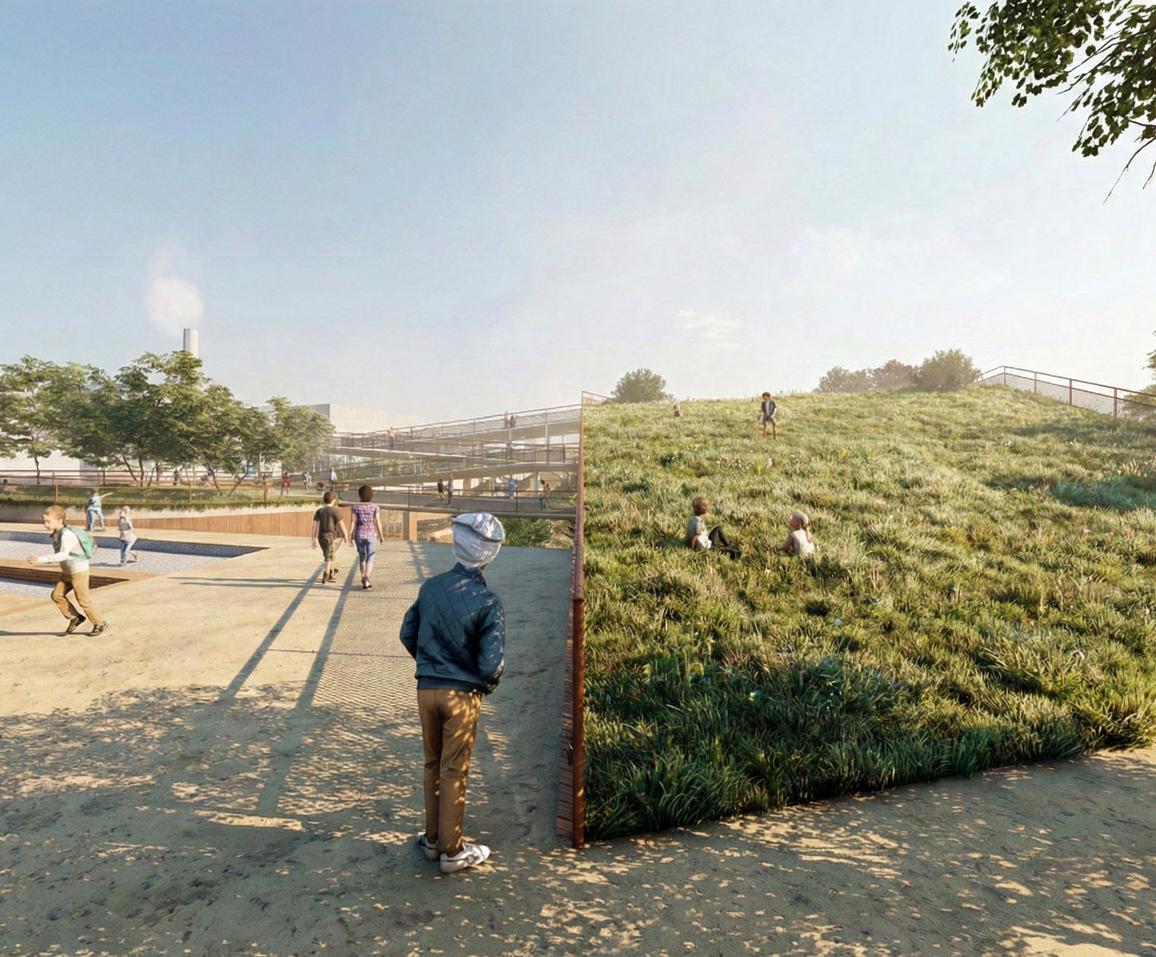
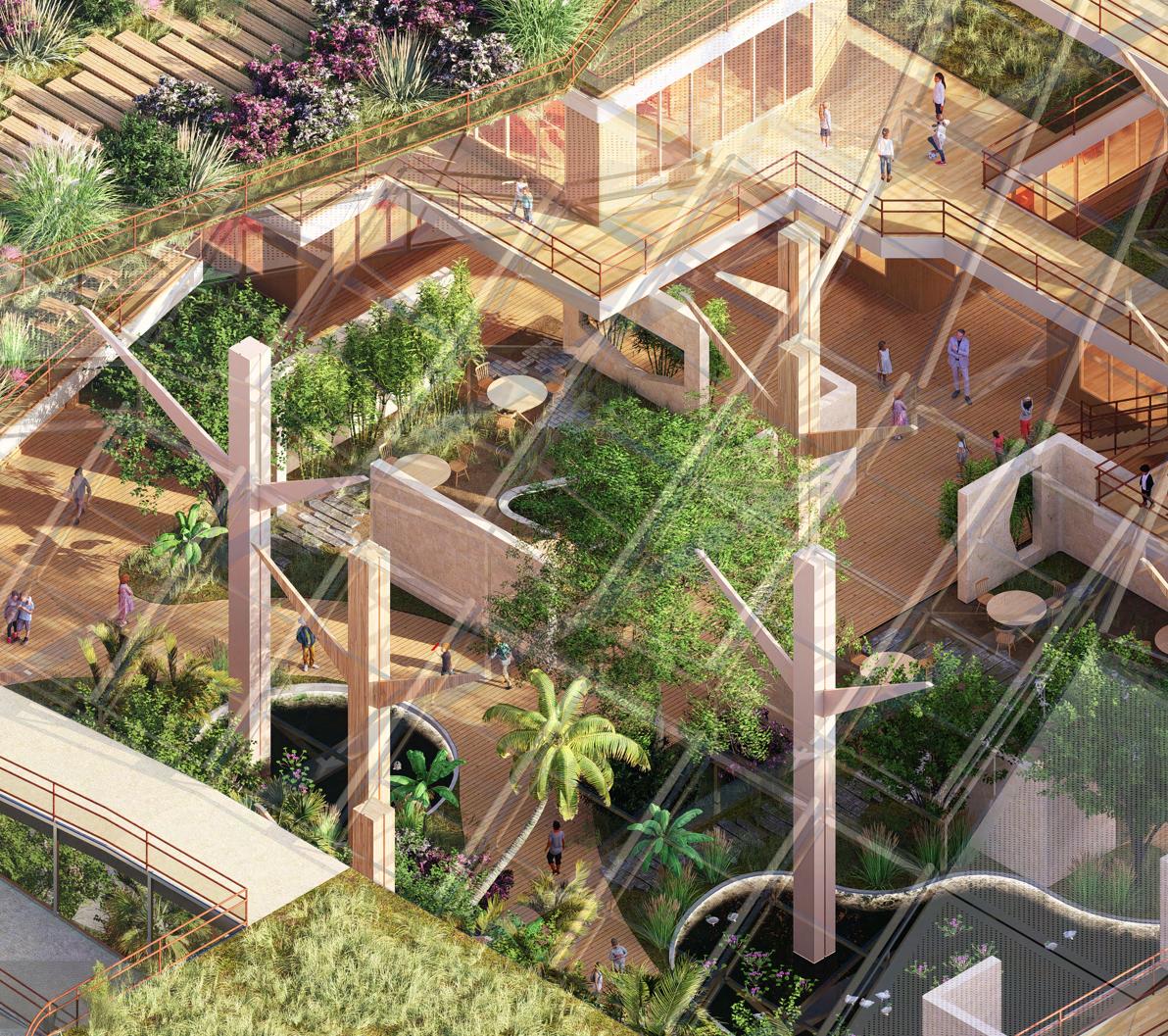
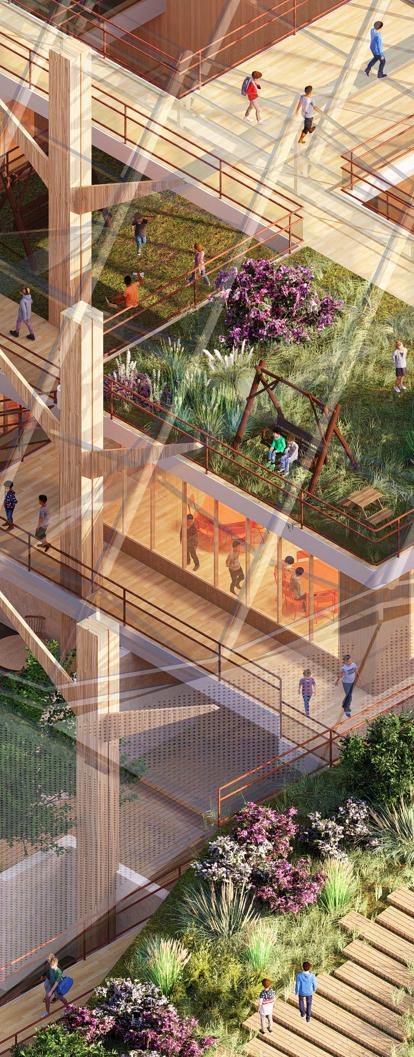
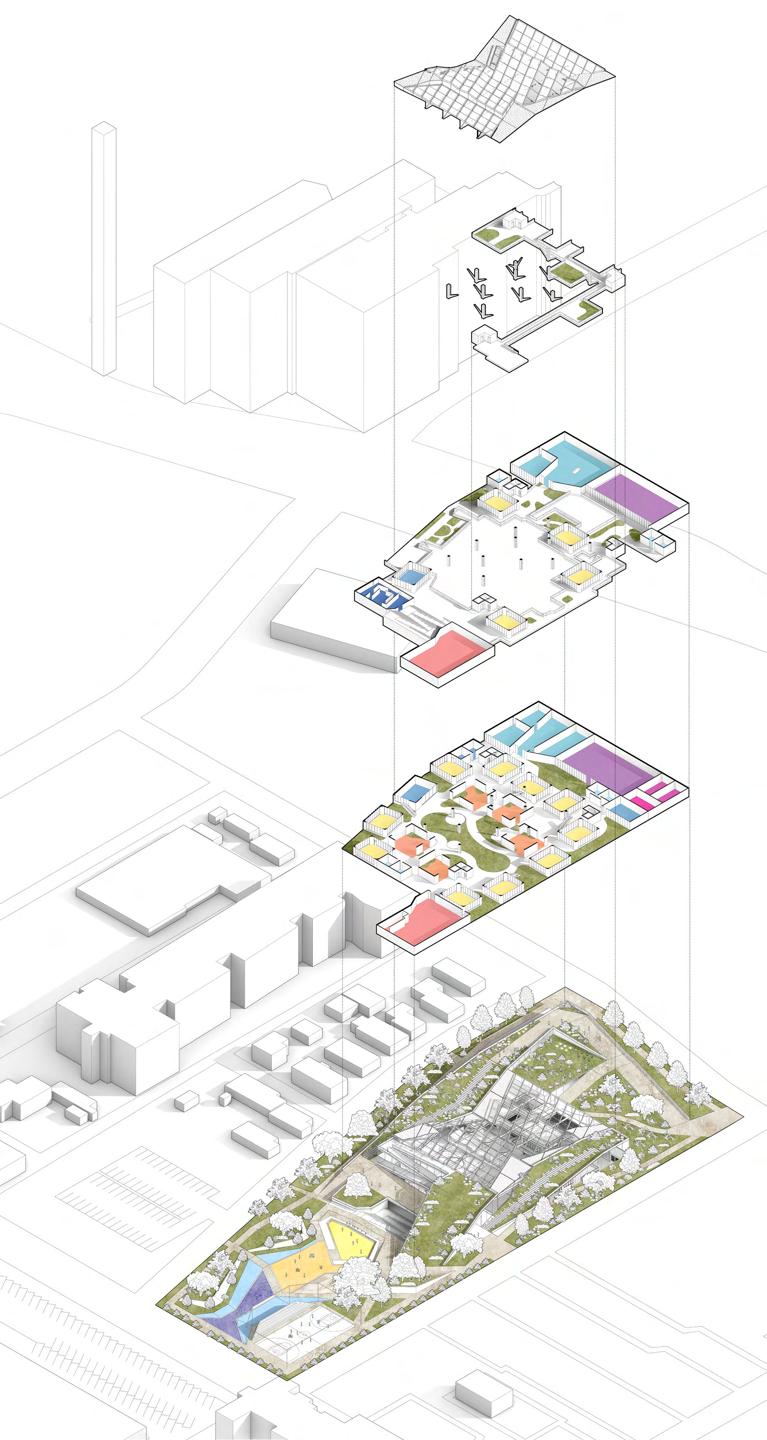
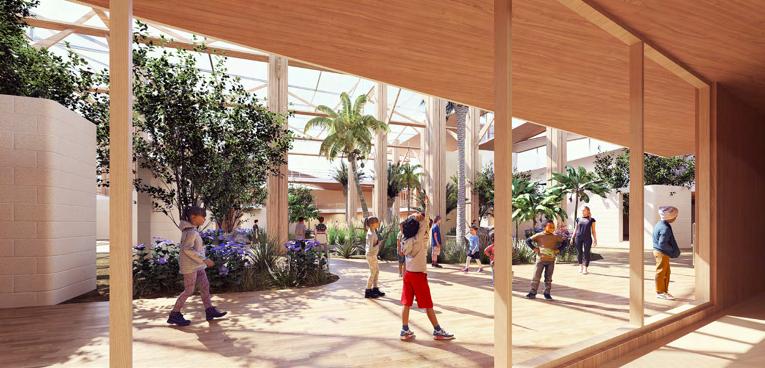
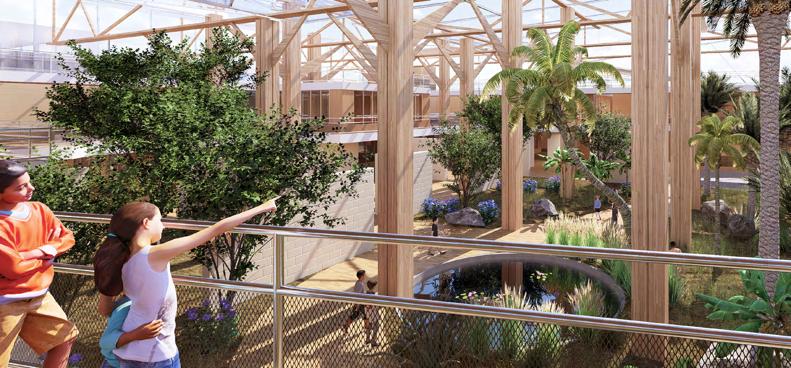
Located in Denver, Colorado, this elementary school project investigates how thermal ecology and natural systems can function as both environmental infrastructure and pedagogical tools. Classrooms are organized around a central botanical garden, where plants and living systems support experiential learning through observation, interaction, and seasonal change. Rather than serving as decorative elements, these natural components actively shape spatial experience and educational engagement.
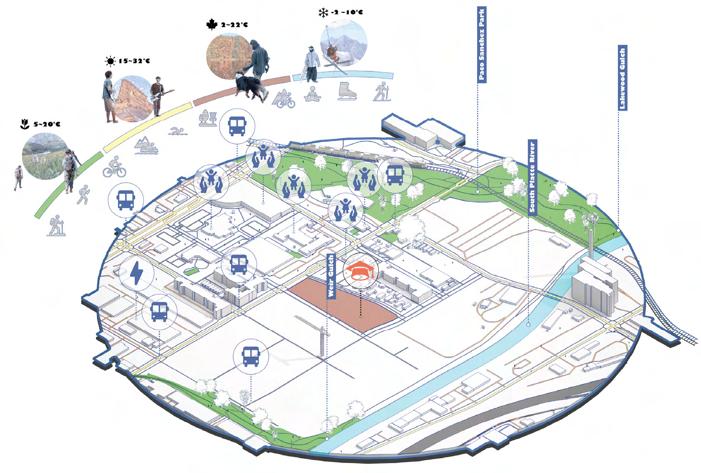
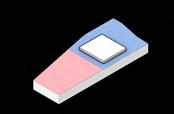
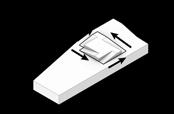
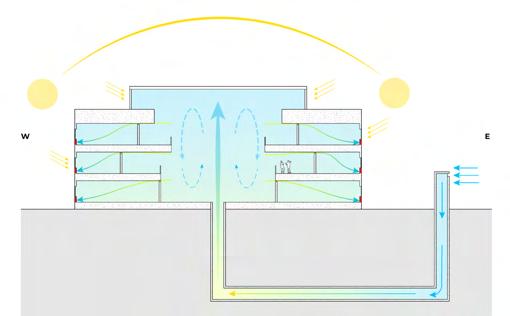
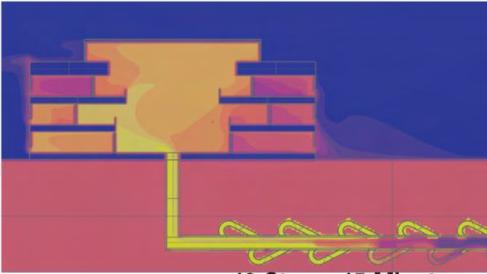
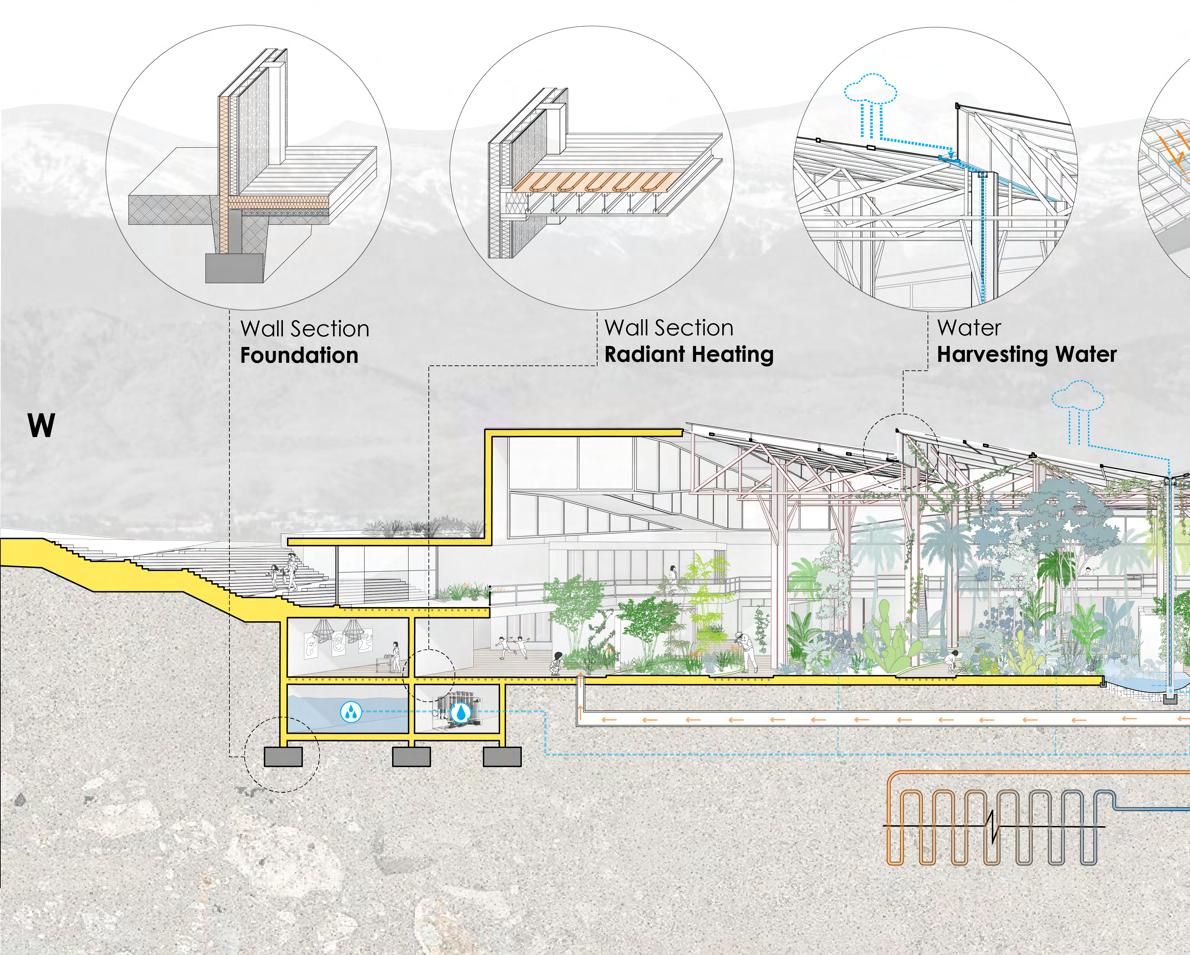
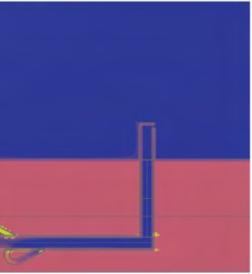
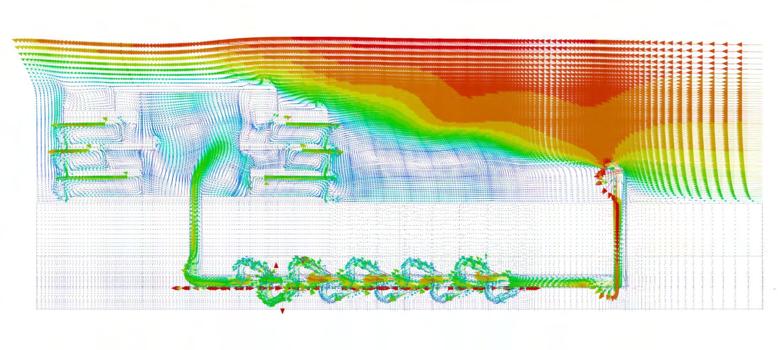
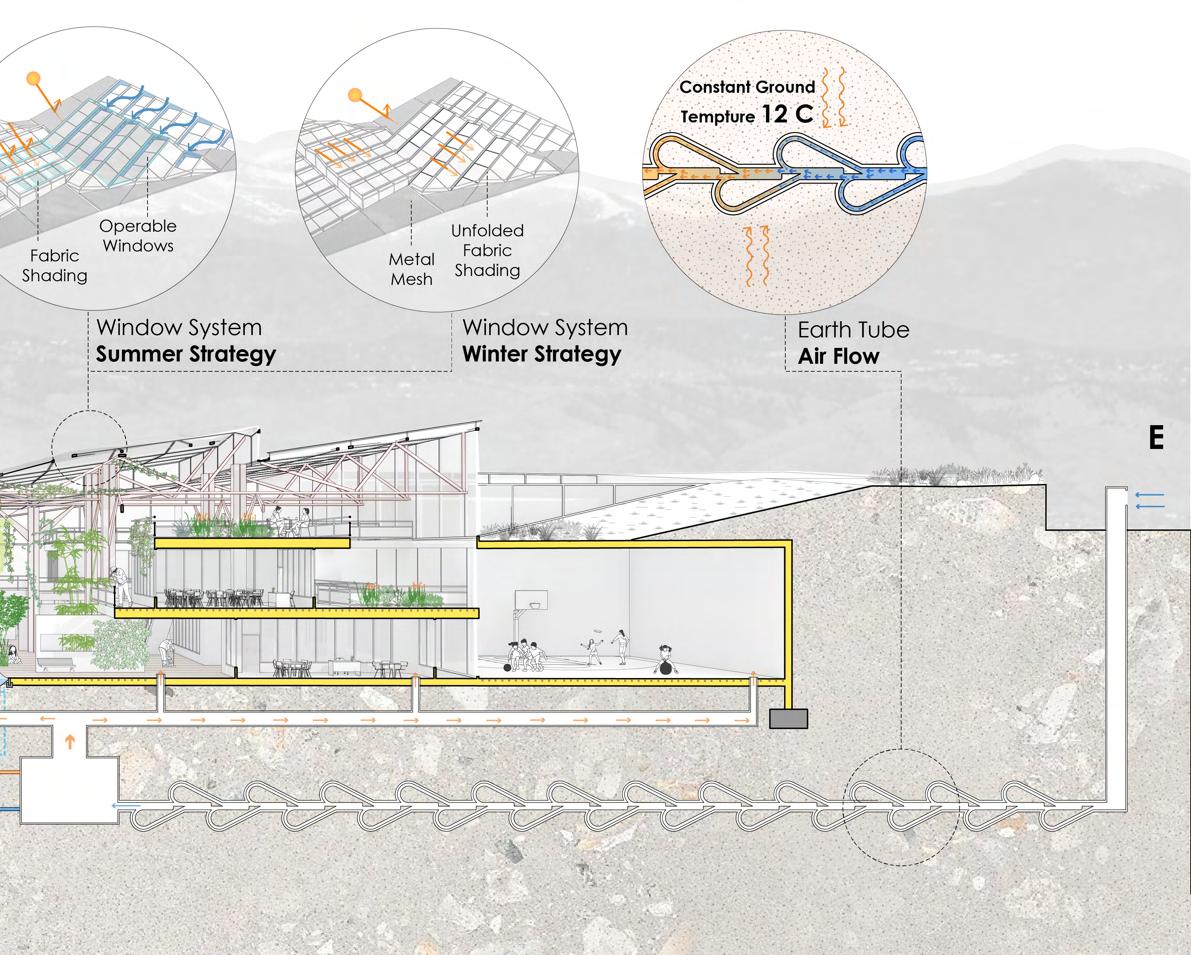
Denver’s long heating season presents a critical environmental challenge. To address this, the building is partially embedded in the ground, using soil thermal mass as a passive buffer to stabilize indoor temperatures. Earth tubes precondition incoming fresh air through stable underground temperatures, reducing ventilation-related energy demand, while geothermal systems further support renewable subsurface energy use.
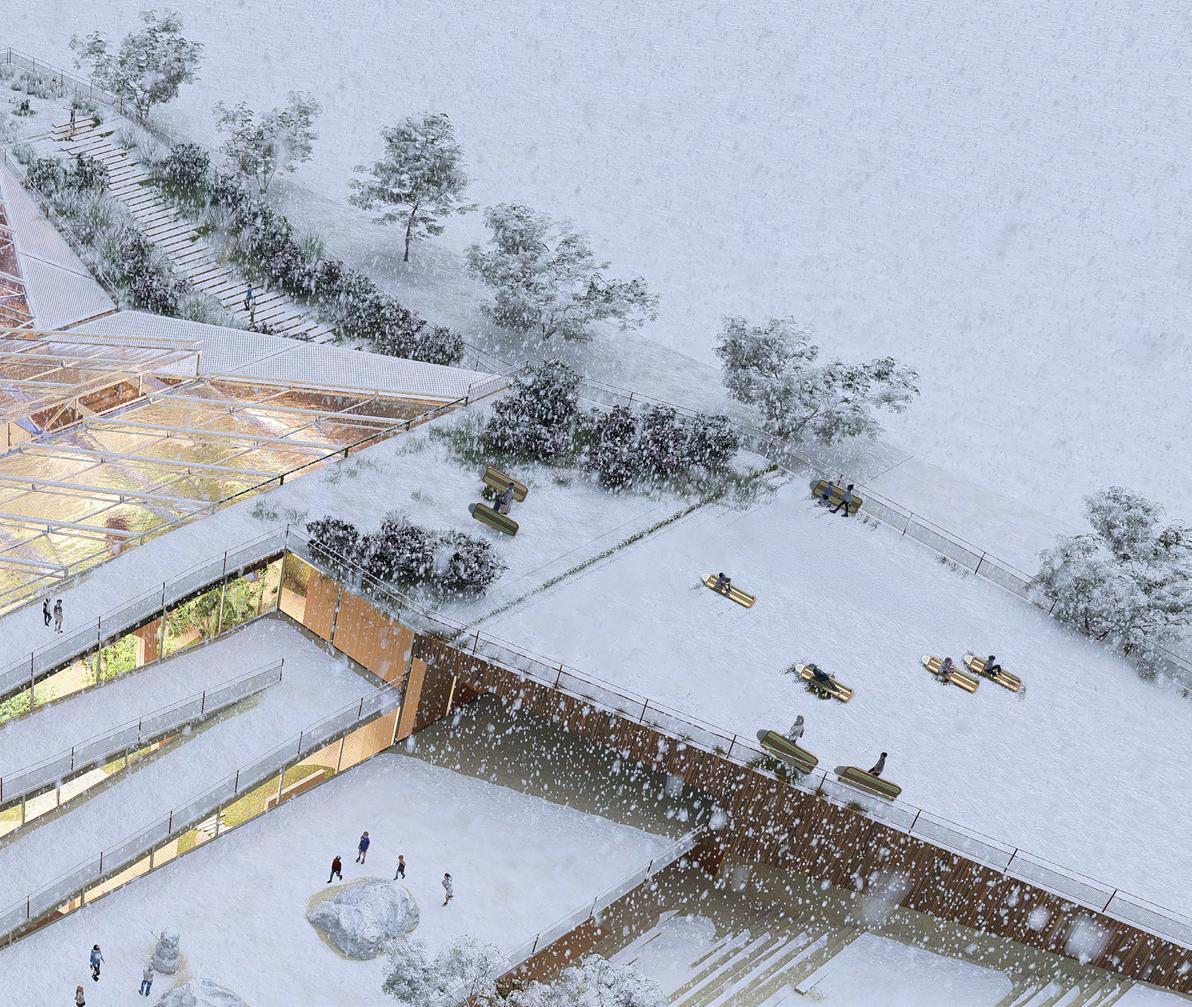
A glazed roof is introduced above the central garden to regulate daylight and solar heat gain. The operable glazing allows controlled solar penetration, enabling the atrium to function as a thermal core—absorbing heat and daylight during winter while moderating excess gain in warmer periods. Together, the sunken mass, earth tubes, and glazed roof establish a layered thermal strategy that integrates environmental performance with learning space design.
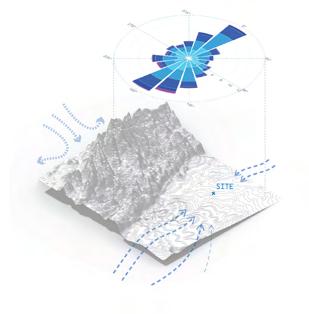
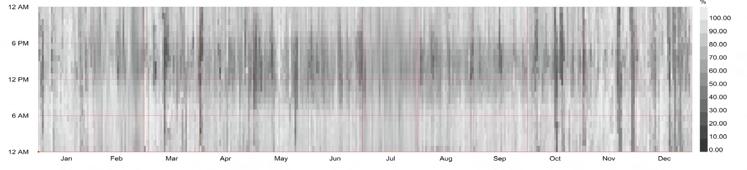
Site Analysis

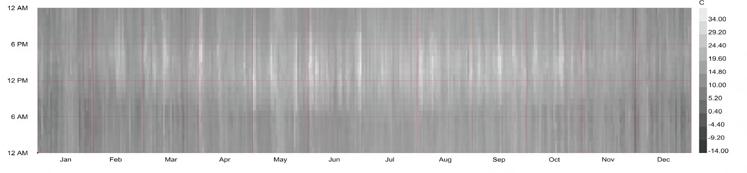
0.5~1.5 m/s
1.5~3.3m/s
m/s 10.7~13.8 m/s Wind Rose
3.3~5.5 m/s
5.5~7.9m/s





Design Concept
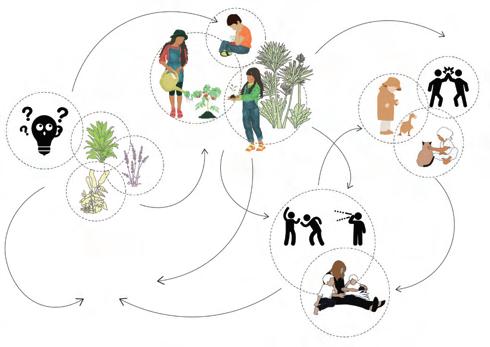
By integrating natural elements and multi-level, interlocking spaces, the architecture creates moments of observation and encounter that transform everyday experience into sustained learning interest.
Learning begins with curiosity, but curiosity emerges through encounter.
Outdoor Plants


The outdoor planting consists of a mix of native evergreen landscape that evolves with the changing seasons.
Indoor Plants


Strong Sunlight (6–10+ hours/day, >10,000 lux, 150–200+ μ mol/m²/s)
Thrive in direct, strong sunlight. Ideal for open gardens, streetscapes, or sunny balconies.


Moderate Sunlight (4–6 hours/day, lux, 60–150 μmol/m²/s) Do well in areas with or filtered afternoon


evergreen and deciduous species, creating a dynamic


~4,000–10,000 μmol/m²/s) with morning sun afternoon light.
Roof
Metal Mesh
Foldable Fabric Shading
Green Roof Glazing


hours/day, 1,000–3,000 lux, 15–45 μmol/m²/s)
Engagement Sink In

Connectivity
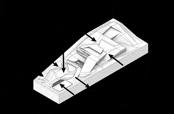
Morph
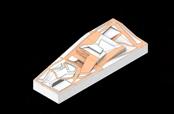
Circulation
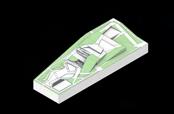
Green Space
School Farm
Ground Floor
Indoor Green Space
Mass Timber Column
Core
Basement Level 1
Gym (Double Height)
Bathroom
Office
Exhibition Room
Classroom
Dinning Hall
Basement Level 2
Library
Library Gym
Changing Room
Health Service
Office
Special Classroom
Classroom
Bathroom
Dinning Hall
Lower Level Entrance
Upper Level Entrance
Sliding Ramp
Basketball Court
Playground
Amphitheater
Shaded Area (2–4
Perfect for woodland gardens, shaded patios, or indoors with soft indirect light.
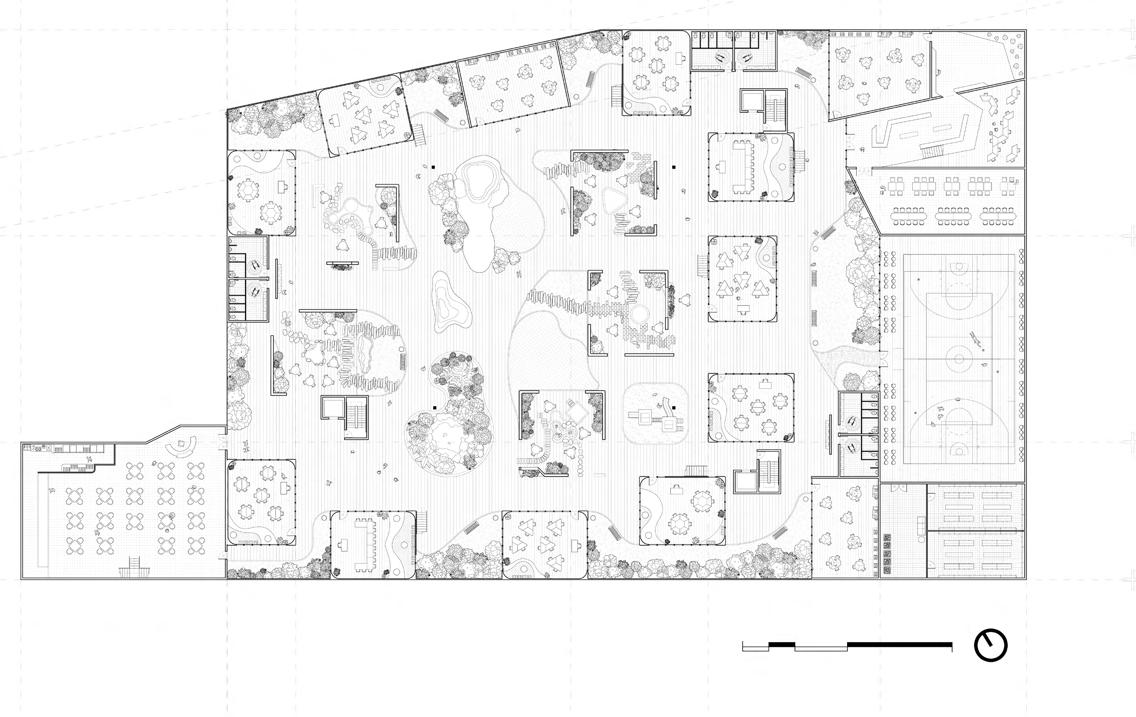
Basement Level 2
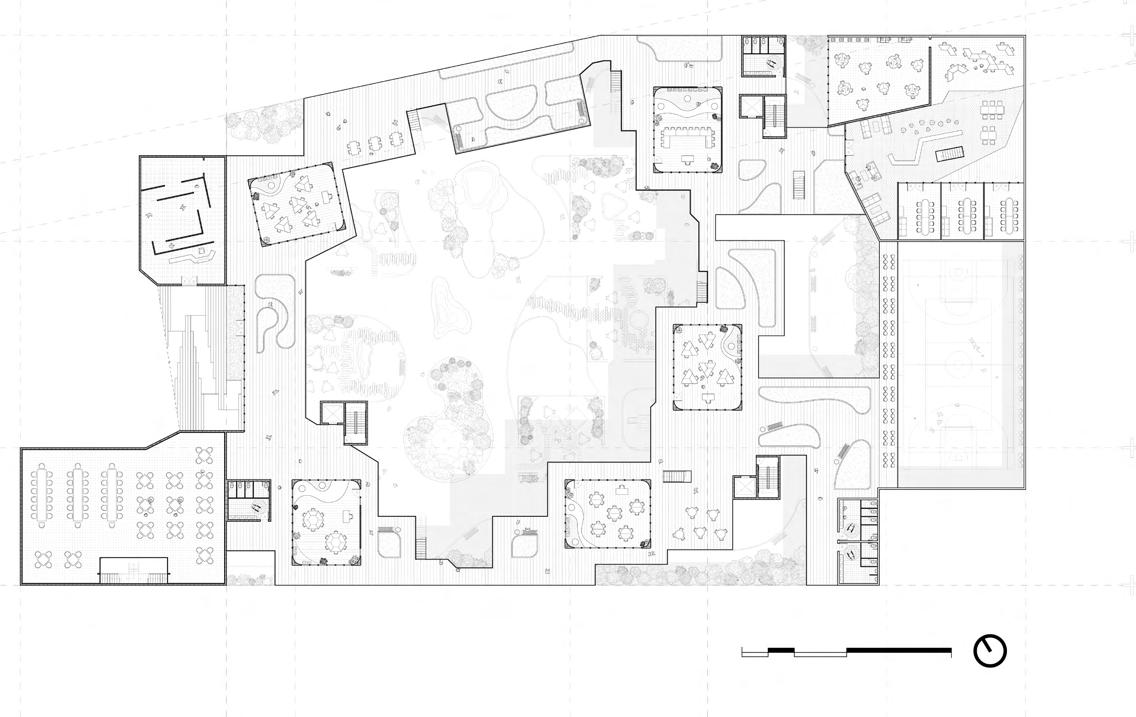
Basement Level 1
Daylight Analysis

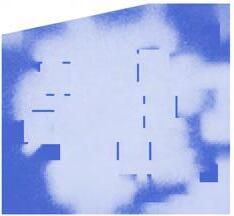

Low-Light Zones
Low-light areas are assigned to circulation, auxiliary spaces, and shade-tolerant planting, preserving high-quality daylight for primary learning spaces.
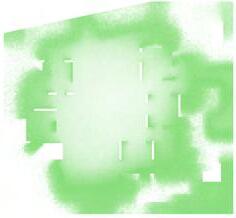

Moderate Daylight Range
This daylight range provides optimal lighting conditions for student activities and plant growth, supporting visual comfort while enabling healthy vegetation development.
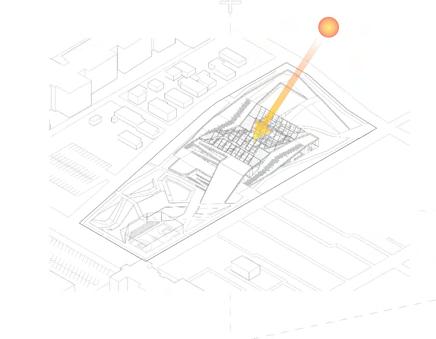
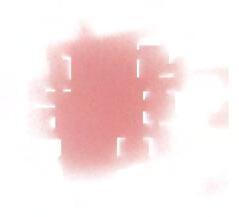
Thermal Onion Form Sunlight

High Daylight Zones
High daylight zones are reserved for sun-loving plants and short-term occupancy, mitigating glare and thermal discomfort within primary learning spaces
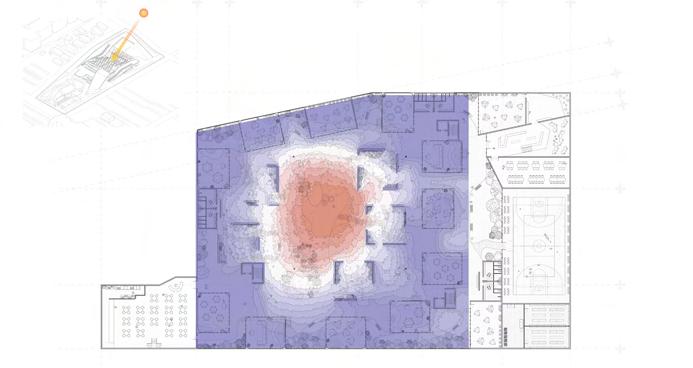
The atrium maximizes winter solar gain through a large operable skylight with high-transmittance double glazing. Sunlight is absorbed by the central atrium, allowing heat to gradually disperse into adjacent spaces. This establishes a “thermal onion” effect, where the atrium functions as a warm core, generating a passive heating gradient that enhances thermal comfort and energy efficiency.
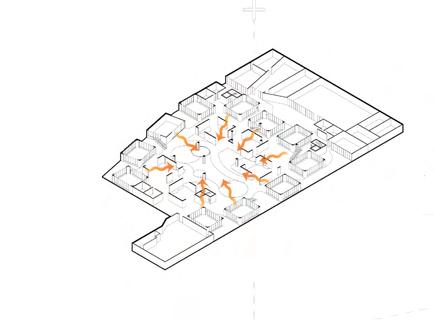
Thermal Onion Form Underfloor Heating
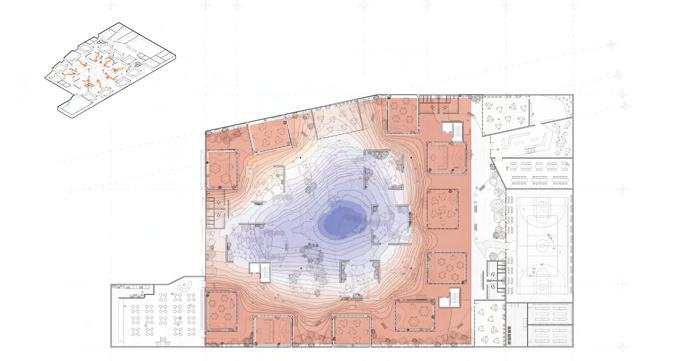
Under limited sunlight conditions, underfloor heating is activated within individual rooms to maintain indoor comfort Heated floors act as localized thermal sources, radiating heat outward into surrounding spaces. This produces a reversed “thermal onion” effect, in which each room becomes a thermal core, forming layered thermal gradients that improve thermal
ience while complementing the passive solar strategy

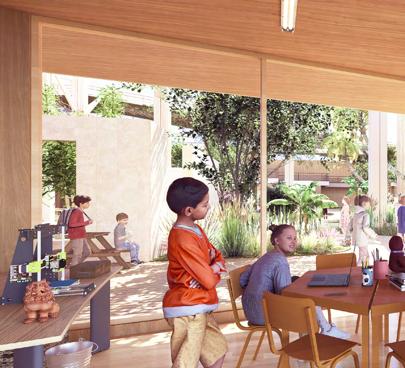
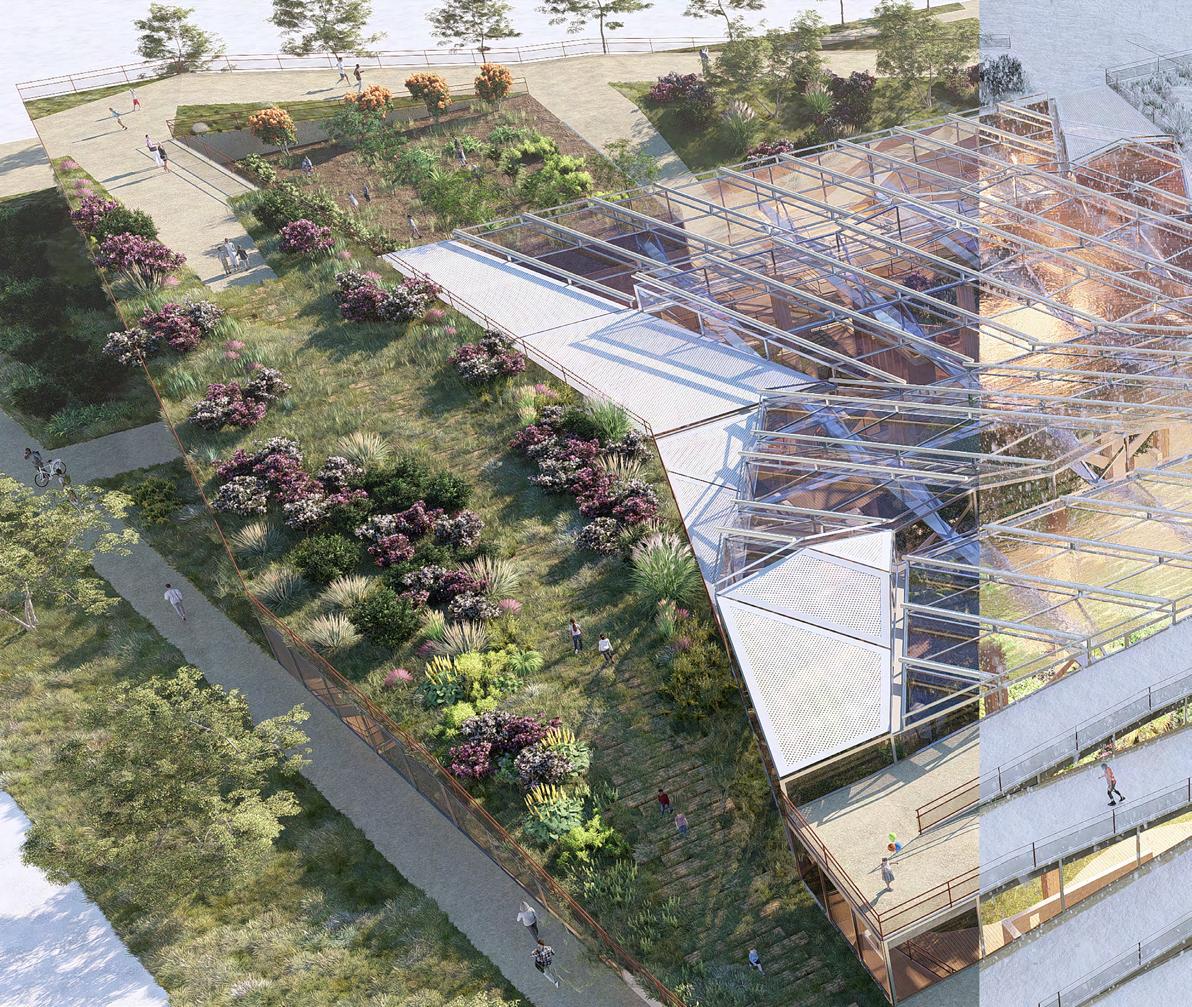
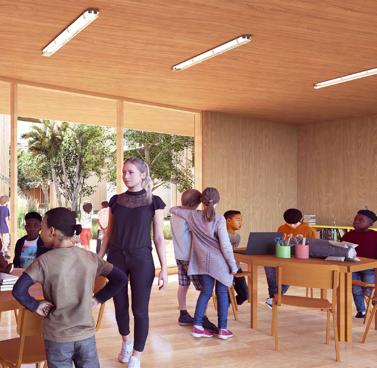
Indoor Garden View Classroom
Birdseye
Provenance
Culinary Art Institute
History, nature and food collide
38 Patton Ave, Asheville
Instructor: Douglas Hecker
Project Length: 4 Months
Individual Project
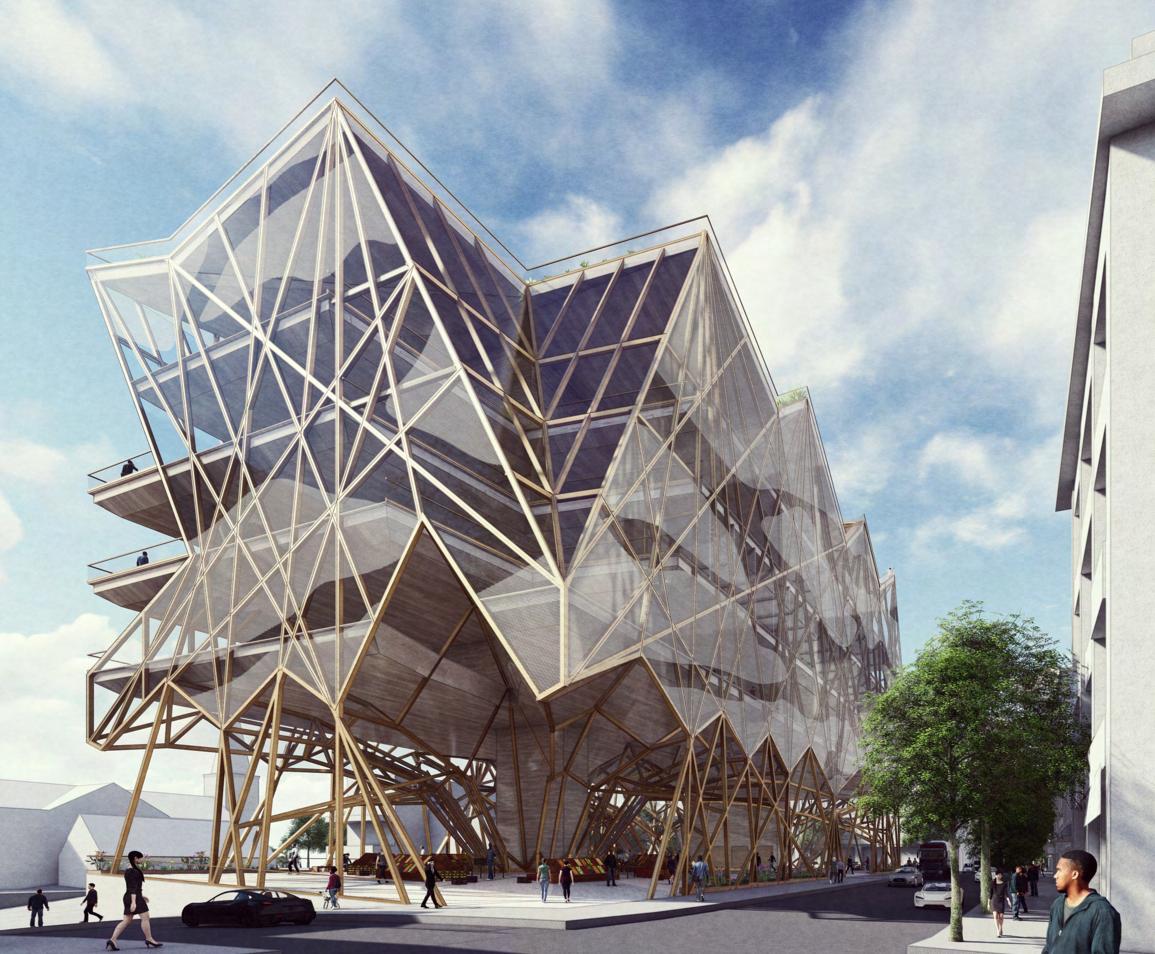
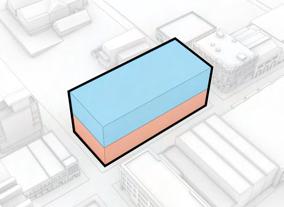
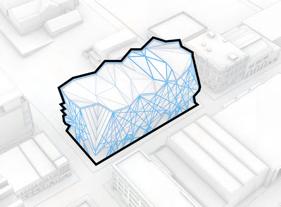
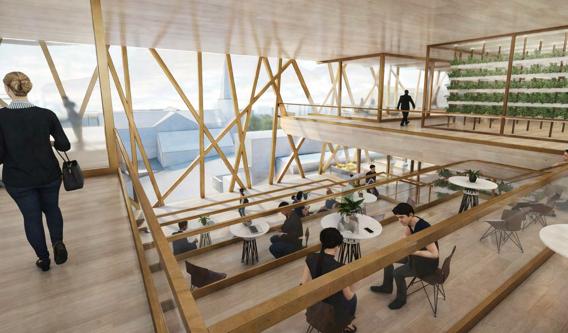
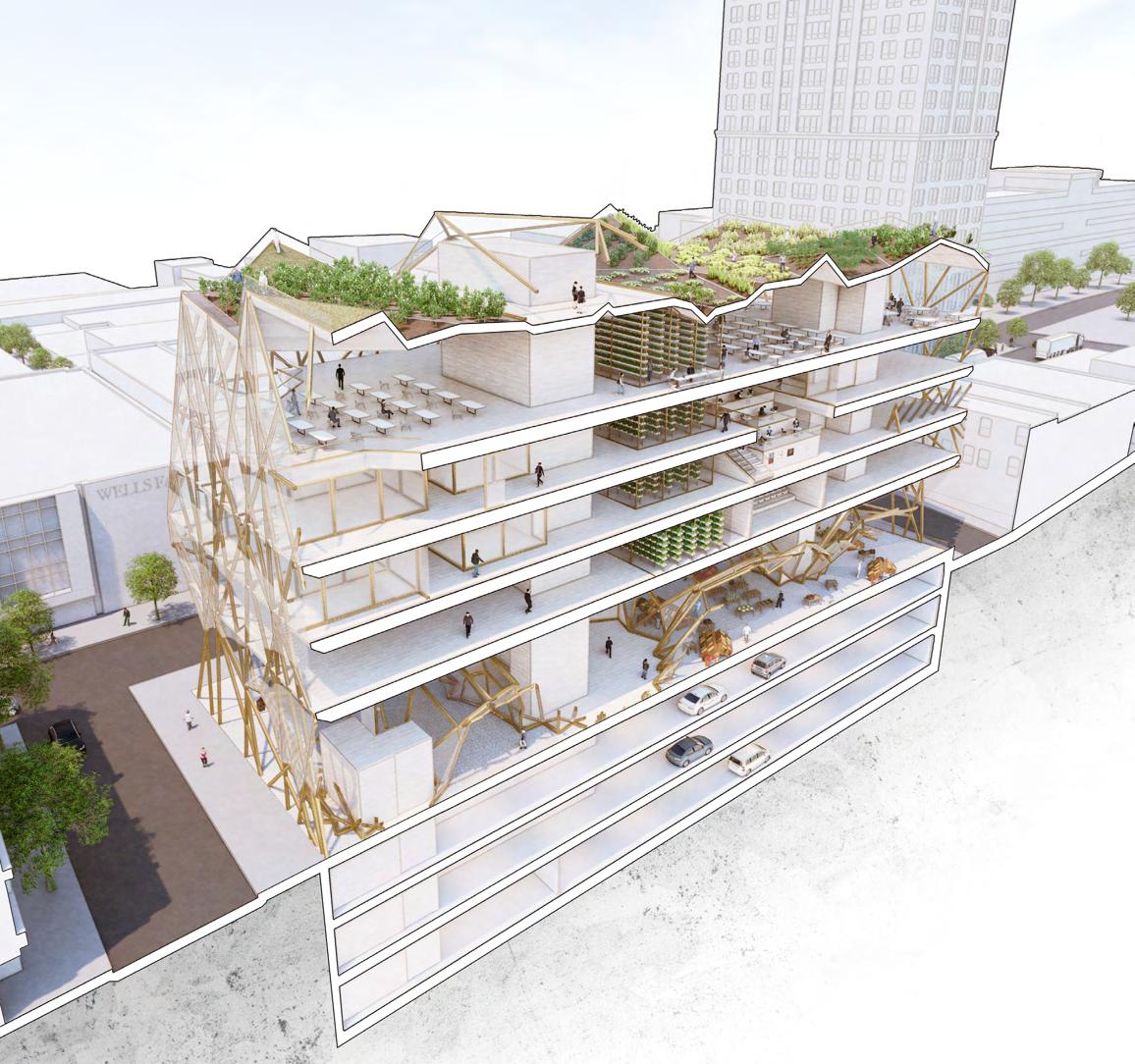
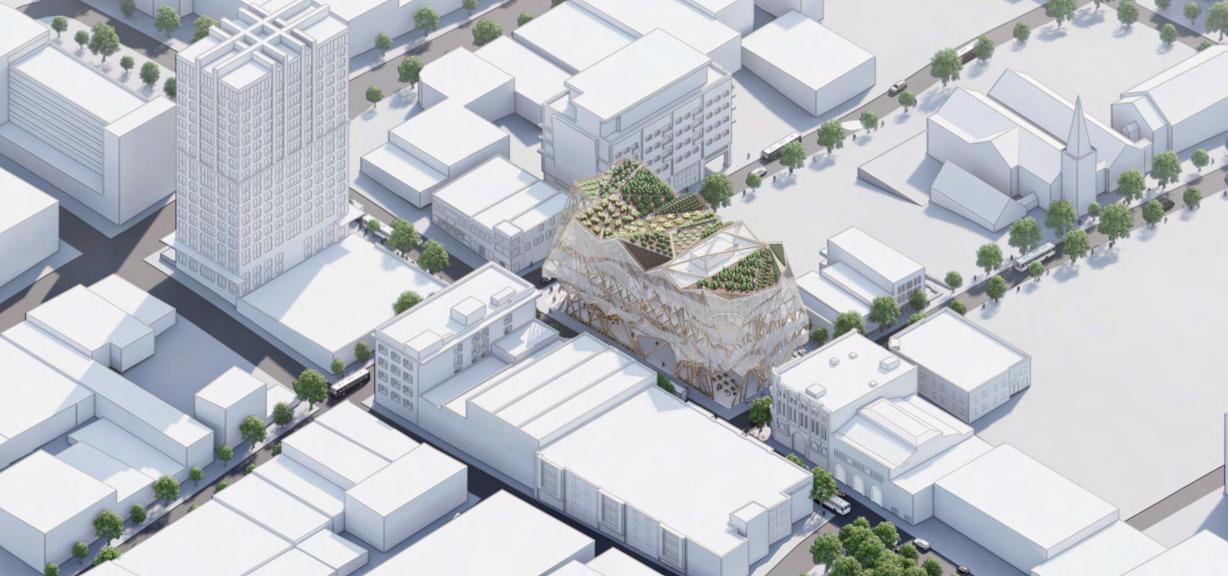
The primary objective is to establish a state-of-the-art Culinary Arts Institute in the heart of downtown Asheville, aimed at enriching the community, along with its students and educators. This institute is envisioned to be a beacon of local food culture’s origin and history, while seamlessly integrating with the scenic beauty of the Blue Ridge Mountains—Asheville’s culinary cradle. The architectural design draws inspiration from nature, with a foundation that branches out into mountainous forms, symbolizing the growth and spread of food culture from this nucleus.
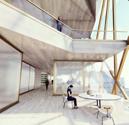
This structure is intended to be more than just a building; it’s conceived as a cultural hub and a vibrant conduit for engagement with the surrounding communities. It offers an unparalleled opportunity for students and faculty to delve into the food culture journey, from raw ingredients to sophisticated cuisines. By incorporating vertical and rooftop gardens, the design not only enhances the physical accessibility, views, and experiences for its occupants but also cultivates a deeper, spiritual connection between individuals and food. Through this fusion of architecture and local gastronomy, the institute is poised to foster a thriving food culture, positioning itself as a pivotal cultural and educational landmark in Asheville.
Conceptual Drivers

Site Analysis

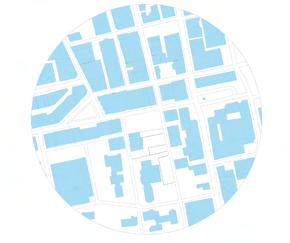









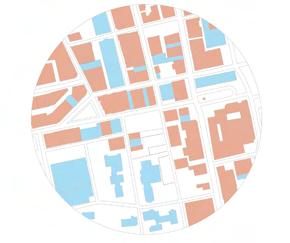
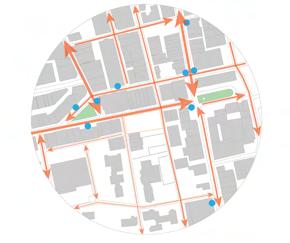
Conceived as a cultural nucleus rooted in Asheville’s local food heritage, the Culinary Arts Institute integrates architecture, landscape, and gastronomy to cultivate a living connection between community, education, and the Blue Ridge Mountains.
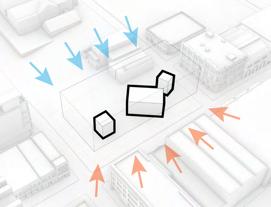
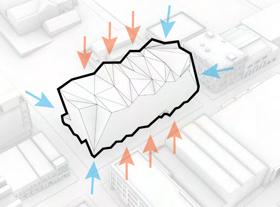
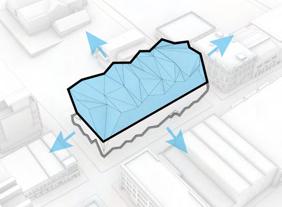
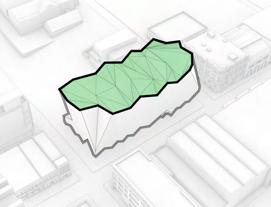
Form Strategy
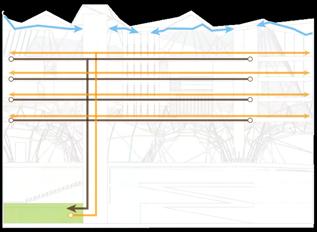
Jams
Corn Bread
Lively vs Quiet
Interior Rendering
Farmer's Market
Roof Farm
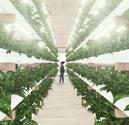
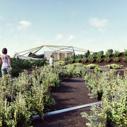
The roof is composed of triangular modules of varying sizes, dividing the surface into multiple planting zones. The undulating rooftop creates a field-like agricultural experience.
Fritted Glass
Fritted glass is integrated into the curtain wall to reduce direct sunlight, transforming harsh daylight into soft, diffused light while defining a distinctive façade expression.
Floor Slabs
Open-web steel joists enable column-free spaces between floors. Reduced slab edges contribute to a more unified and refined façade.
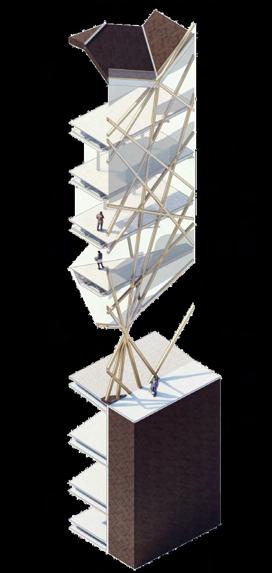
Steel Structure
Exposed steel defines the building’s primary architectural expression. Its intricate yet deliberate arrangement echoes the mountainous landscape of the Blue Ridge region.
Farmer's Market
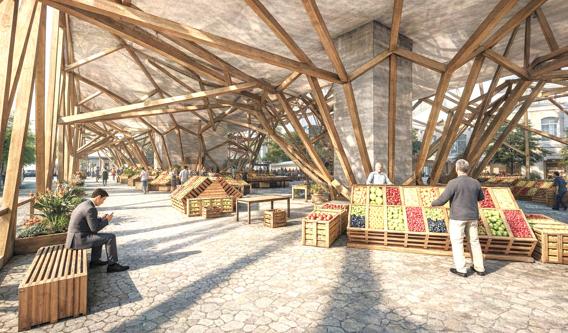
The ground floor accommodates a farmer’s market and lobby. The exposed steel structure shapes varied spatial experiences, dividing the market into quieter southern zones and more active northern areas in response to the surroundings.
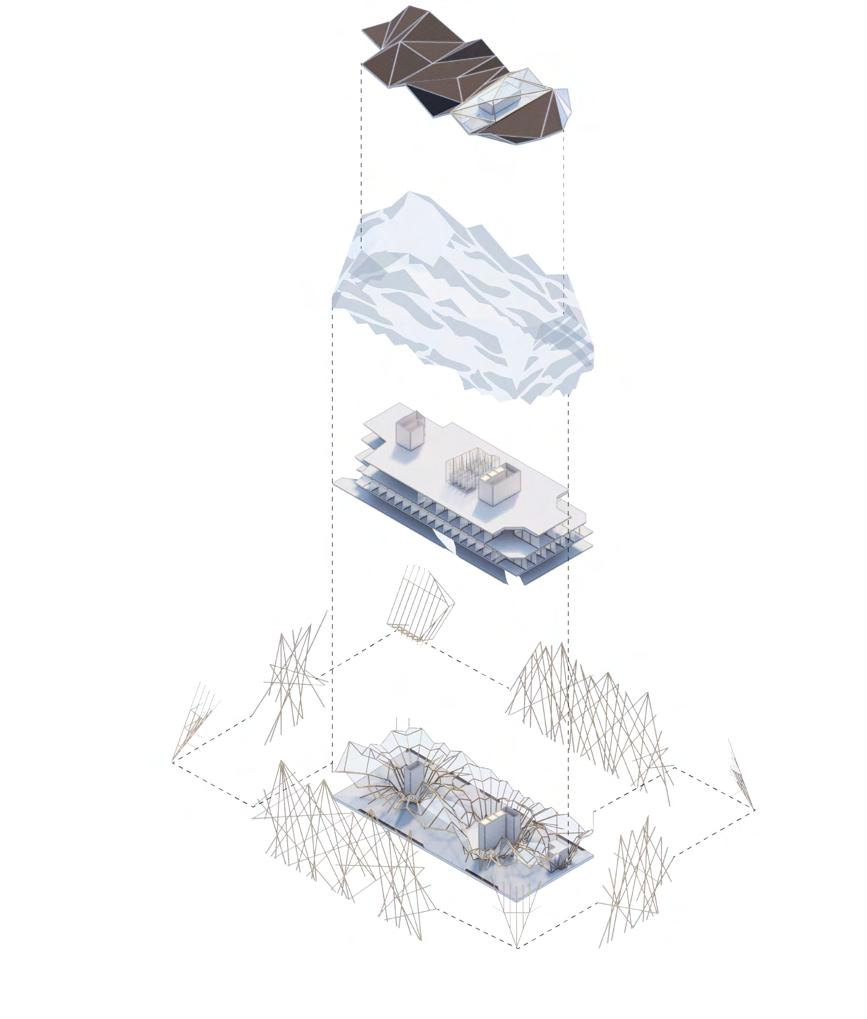
Soil
Steel Tube
CLT Floor Panel
Frosted Glass Interior
CLT Ceiling Panel
Fritted Glass
Open Web Steel Joist
Exterior Steel Tube
Stone
Concrete
Synergy Lab
Culture Lab
Tangible Resonance
5801 Wilshire Blvd, Los Angeles, CA 90036
Instructor: Simon Kim
Collaboration with Yu Chen, Zhangfan He
Project Length: 4 Months
Group Project
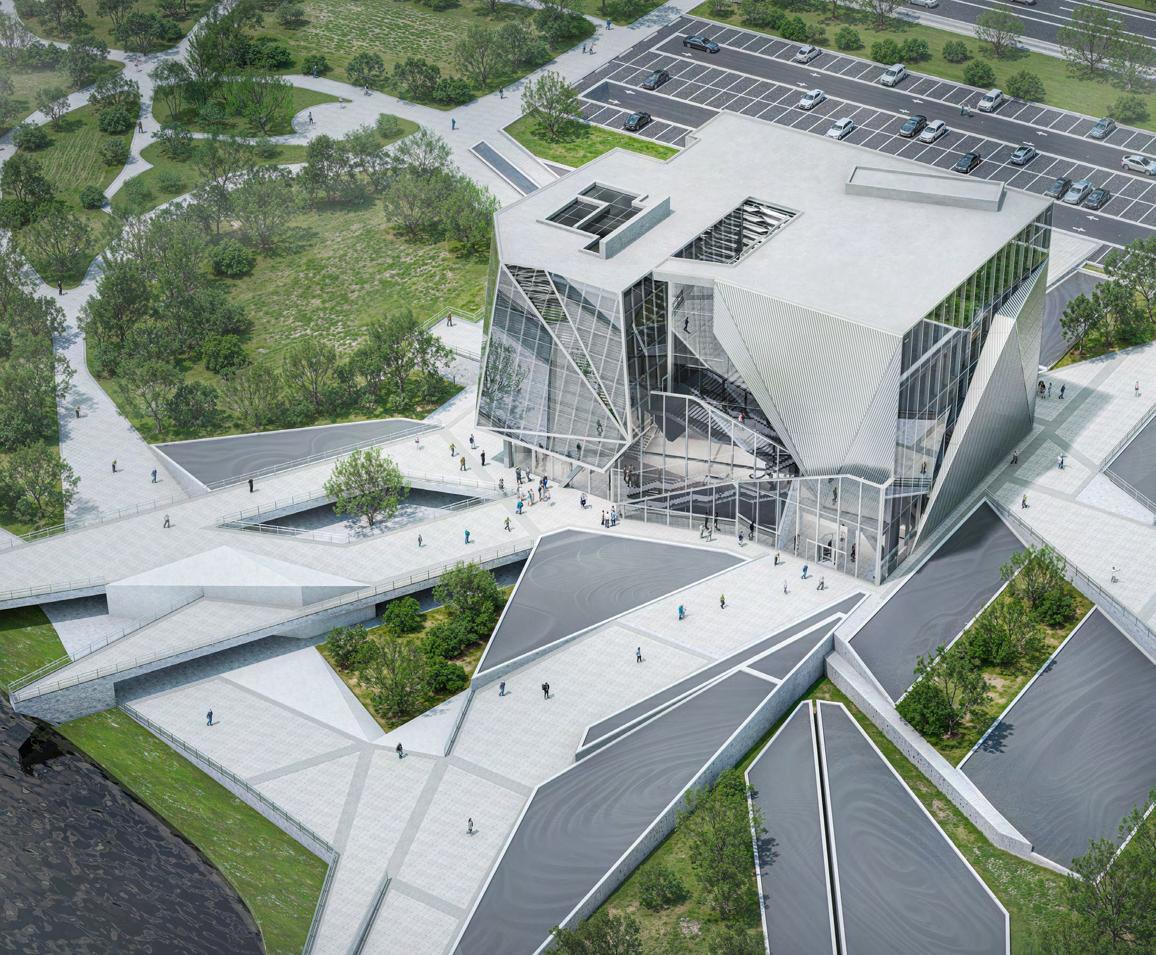
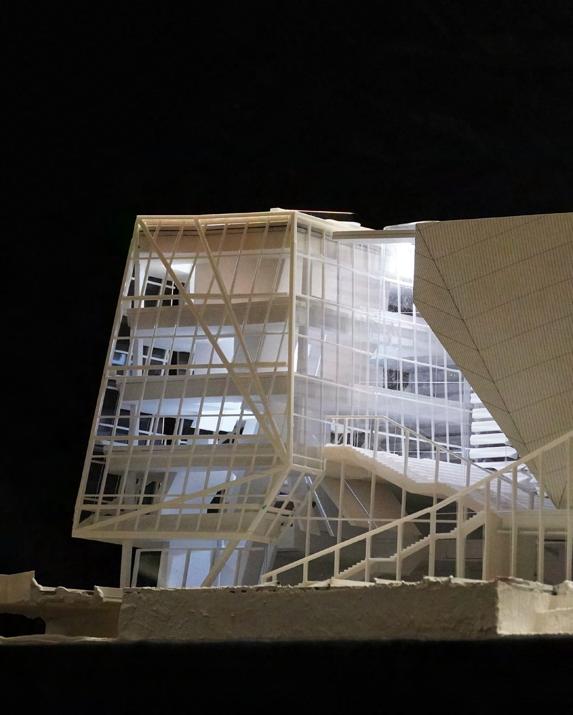
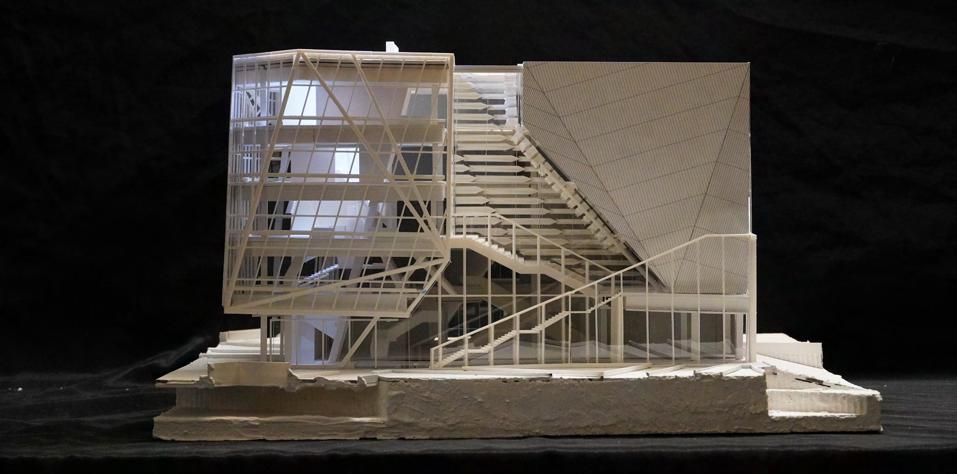
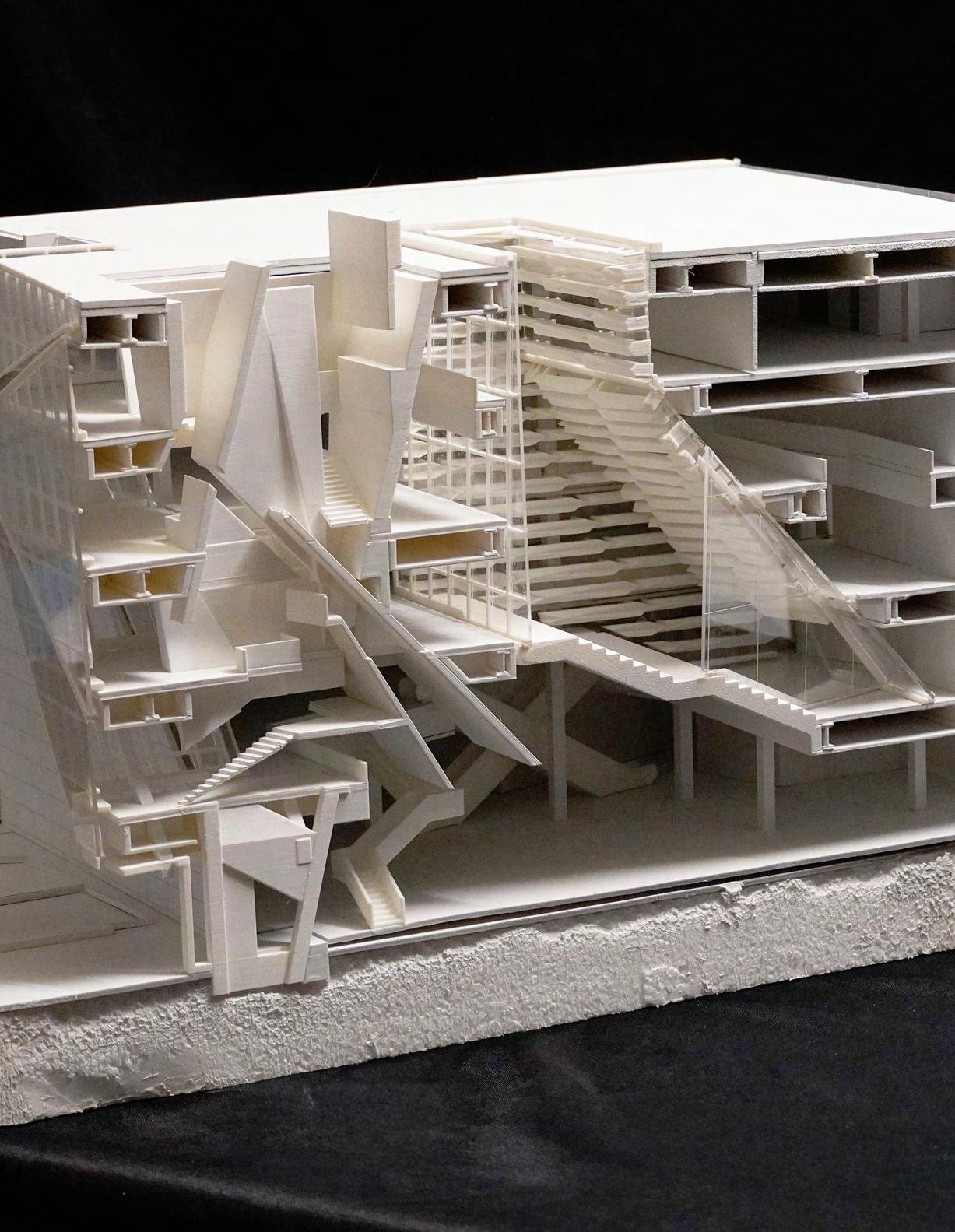
Synergy Lab is an interactive architectural project that explores how human actions can be transformed into energy, sound, and spatial experience.
Inspired by the Tangible Resonance installation and the La Brea Tar Pits, the project investigates synthetic nature by translating sound and movement into electromagnetic and visual effects. Within a Faraday cage, human-generated inputs such as voice and walking are converted into energy that activates resonant bells, magnetic soil ripples, and building systems. By integrating energy generation, sensory feedback, and contemplative spatial sequences, Synergy Lab creates an introspective environment where architecture mediates the relationship between technology, matter, and human presence.
Interactive Installation

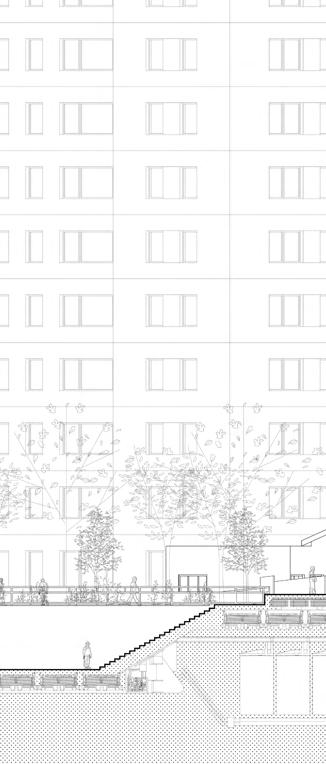
Elevation
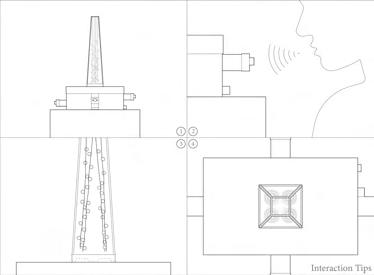
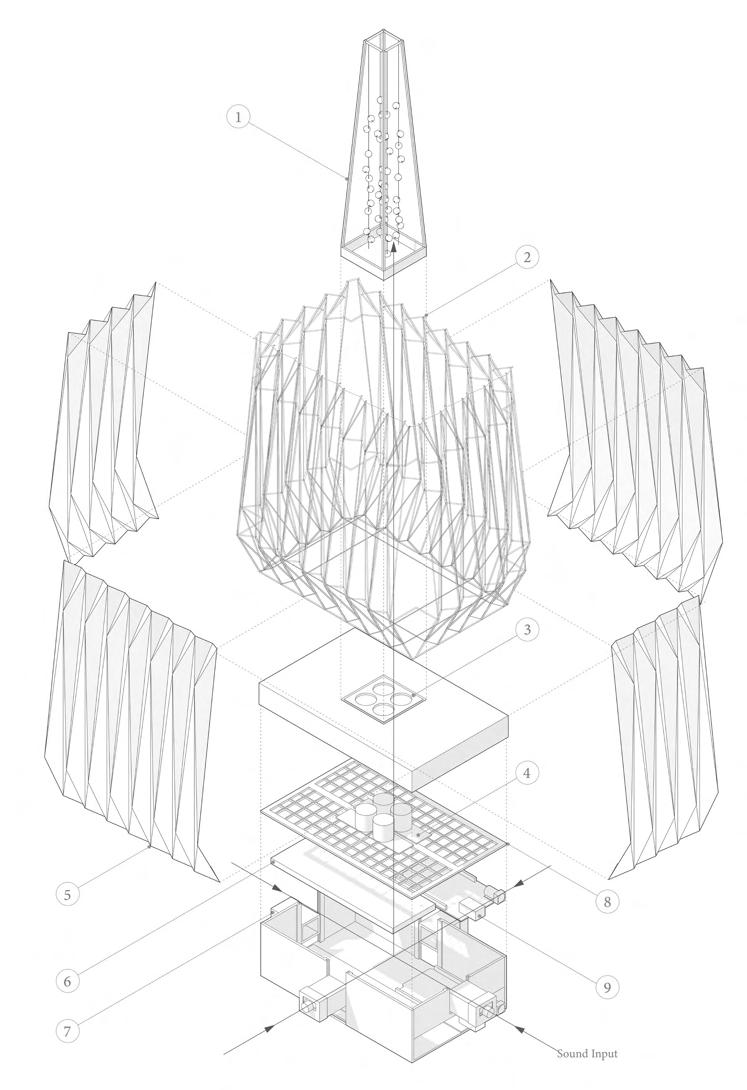
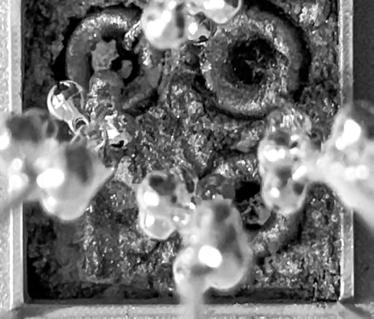
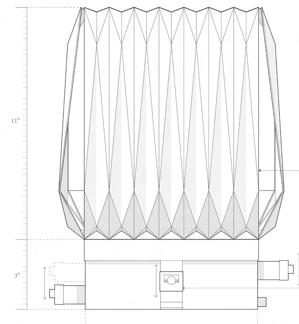
Speaking into microphones generates electrical signals that activate electromagnets, pulling suspended bells to create resonant soundscapes. These interactions visually and acoustically reveal how intangible sound energy can be translated into physical movement and vibration.W
Key Concepts
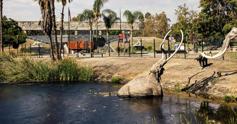
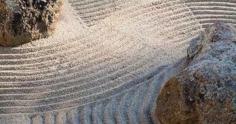
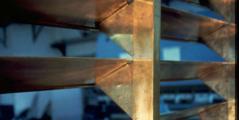
- Energy Transformation
- Perception
- Mediation
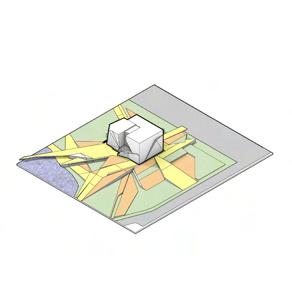
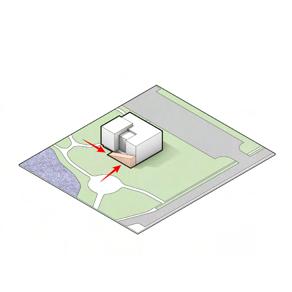
Massing Study Iterations
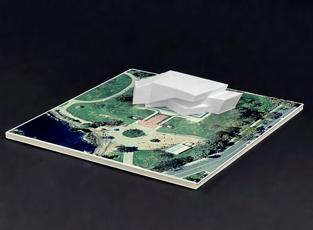
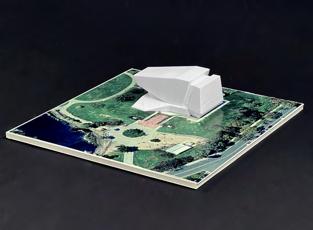
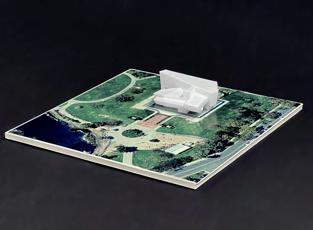
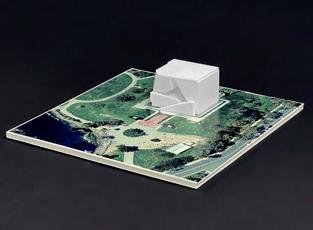
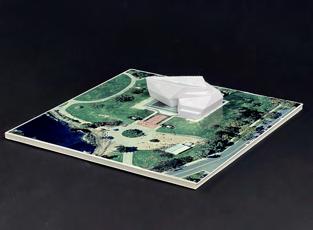
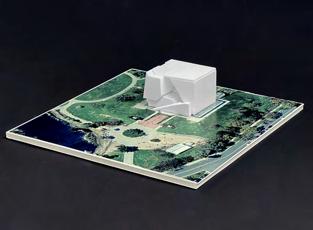
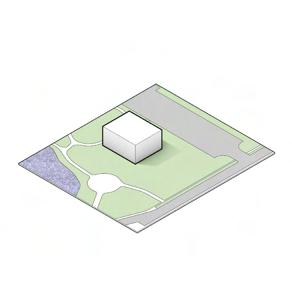
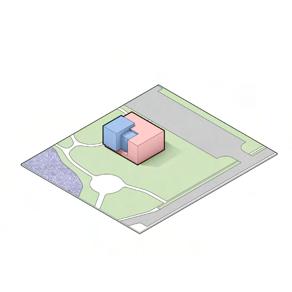
The studies elevate the base to draw visitors into the site and test relationships between the performance space and the Faraday cage. The last one, carved cubic massing, was chosen for its clarity, functional integration, and contextual response.
Faraday Cage Exhibition Area
Magnetic Soil Hardscape
Magnetic soil is embedded within selected surfaces to visually represent energy flow through ripple patterns. Human activity is made legible as physical traces, allowing energy transfer to be directly perceived rather than abstractly measured
Tar Pit
Magnetic Soil
Faraday Cage
Grid Shift
Auditorium Rendering
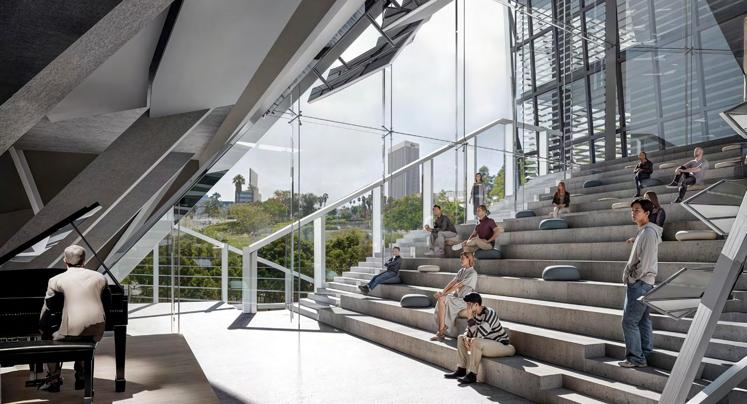
Auditorium Rendering
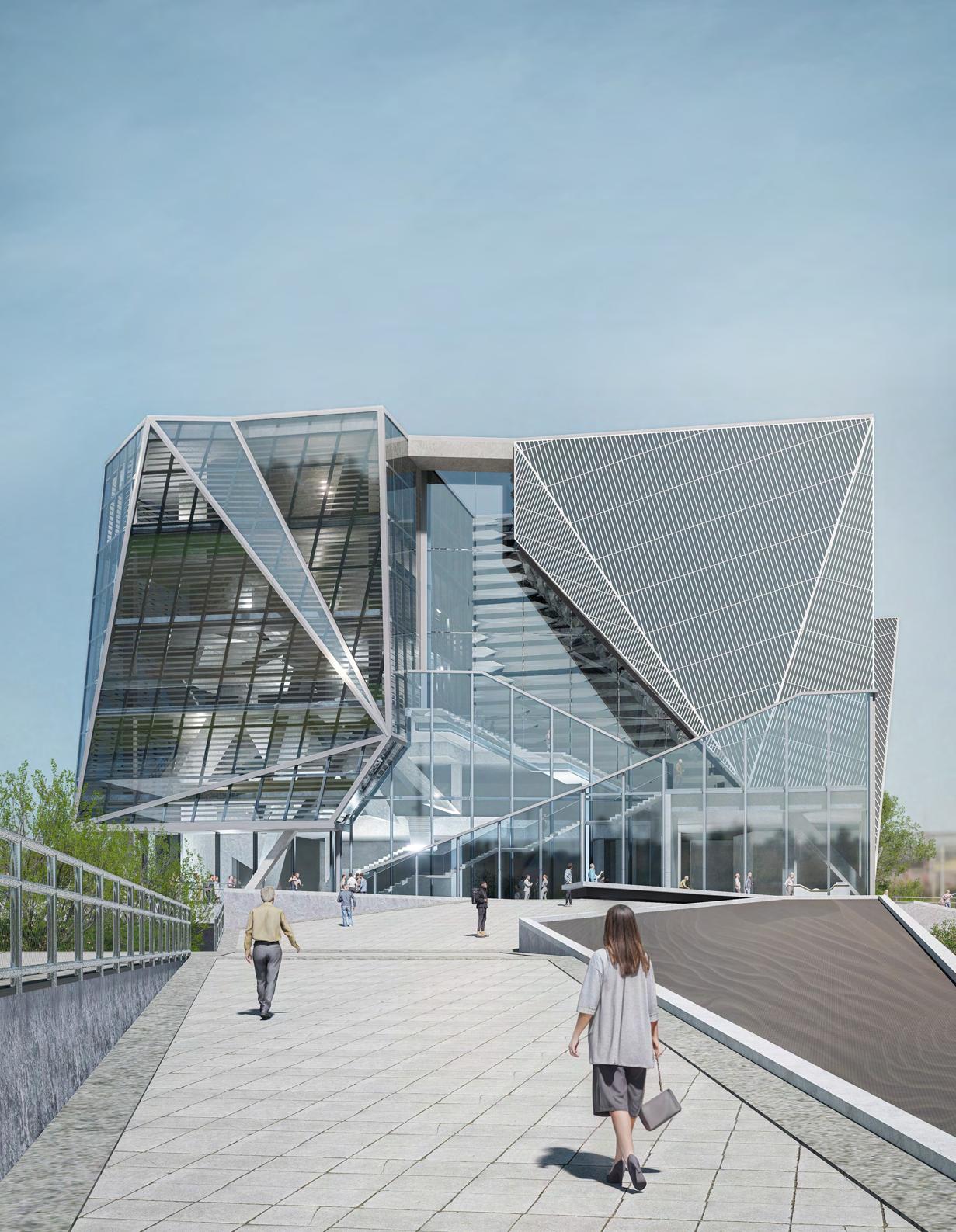
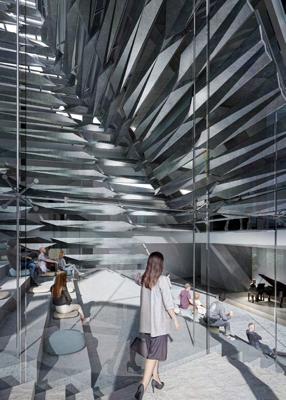
The auditorium is defined by a kinetic facade derived from studies of the folding envelope. Modular units transition between open and closed states to support different programs. When fully unfolded, the facade functions as a Faraday cage, blocking external signals and transforming the space into a signal-free environment. This adaptive boundary reinforces focused perception while accommodating diverse activities within a controlled energetic field.
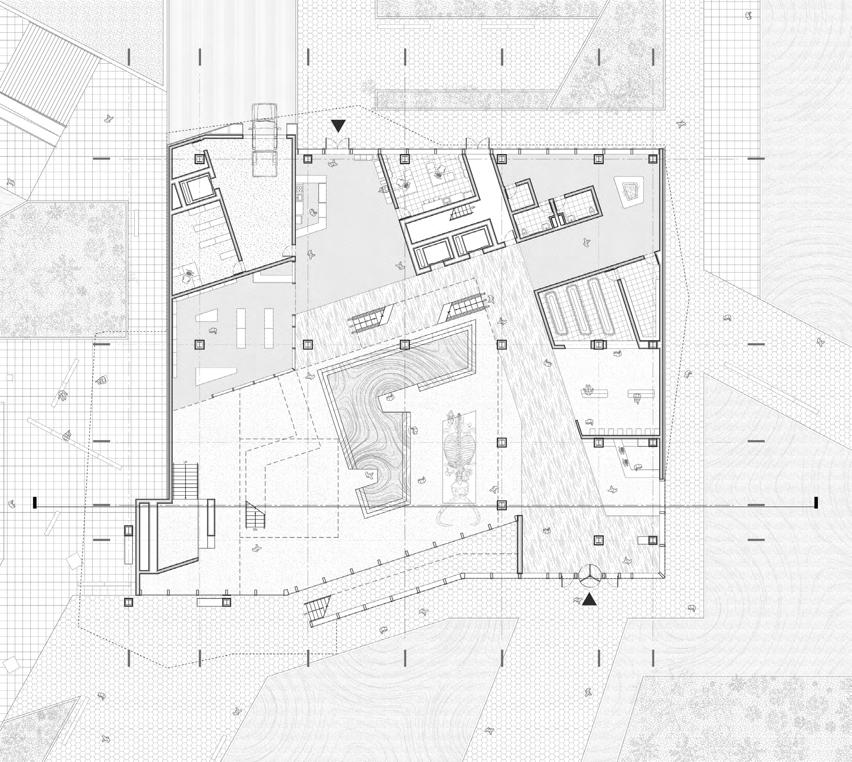
1. Exhibition Space
Reception
Electromagnetic Soil
Clothing Check
Office
Storage
Bathroom 8. Loading Space
Designed to foreground Faraday cage, the
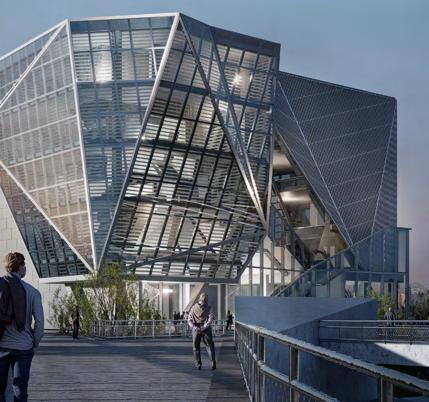
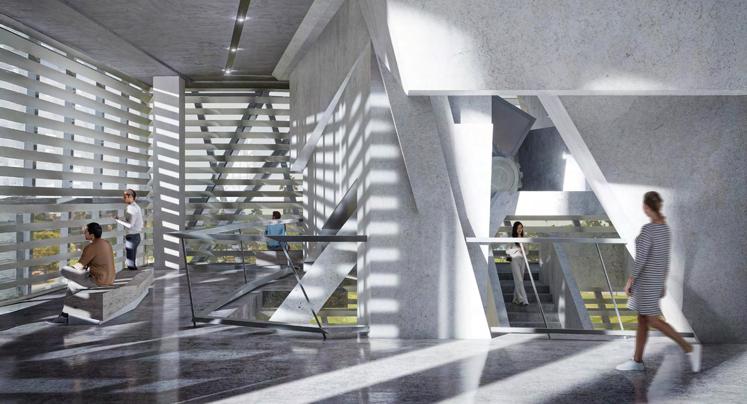
foreground meditation, a shifted grid and spiraling circulation guide inward movement while fragmented spatial axes enhance reflection. Enclosed within a the space creates a signal-free environment for meditation and reconnects occupants to the building’s energy cycle through wireless charging.
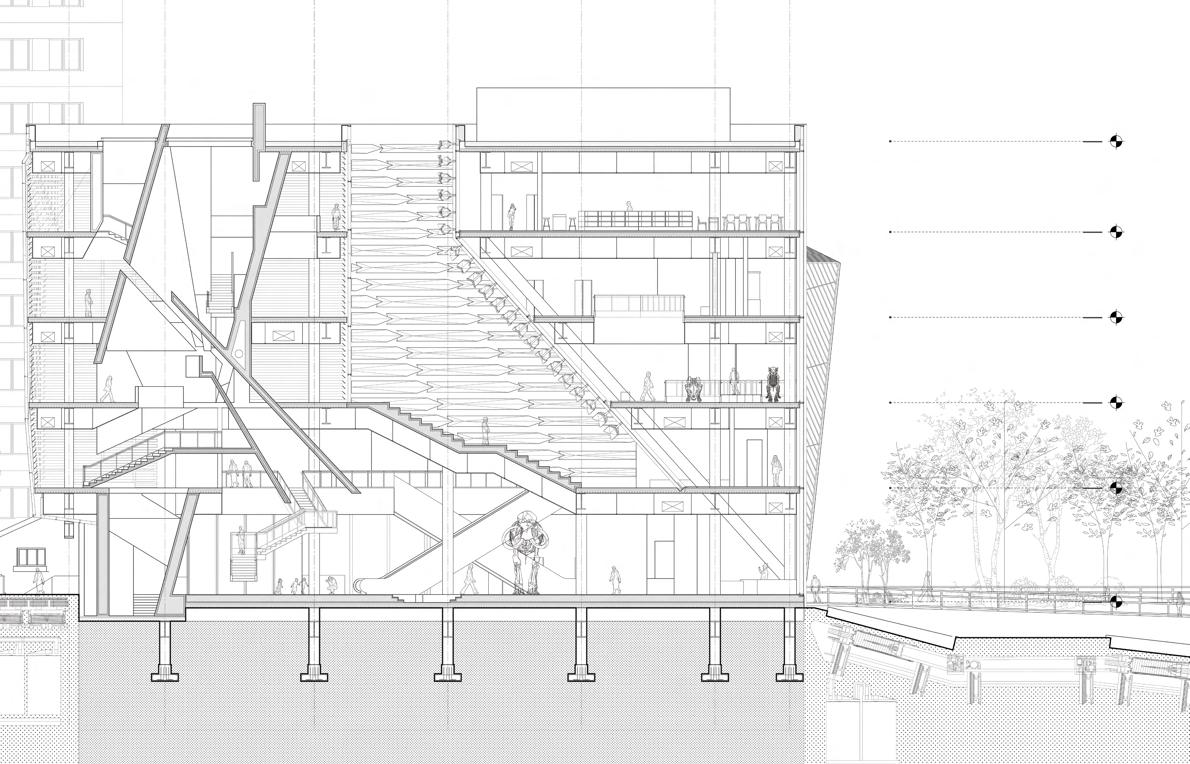
Meditation Tower Rendering
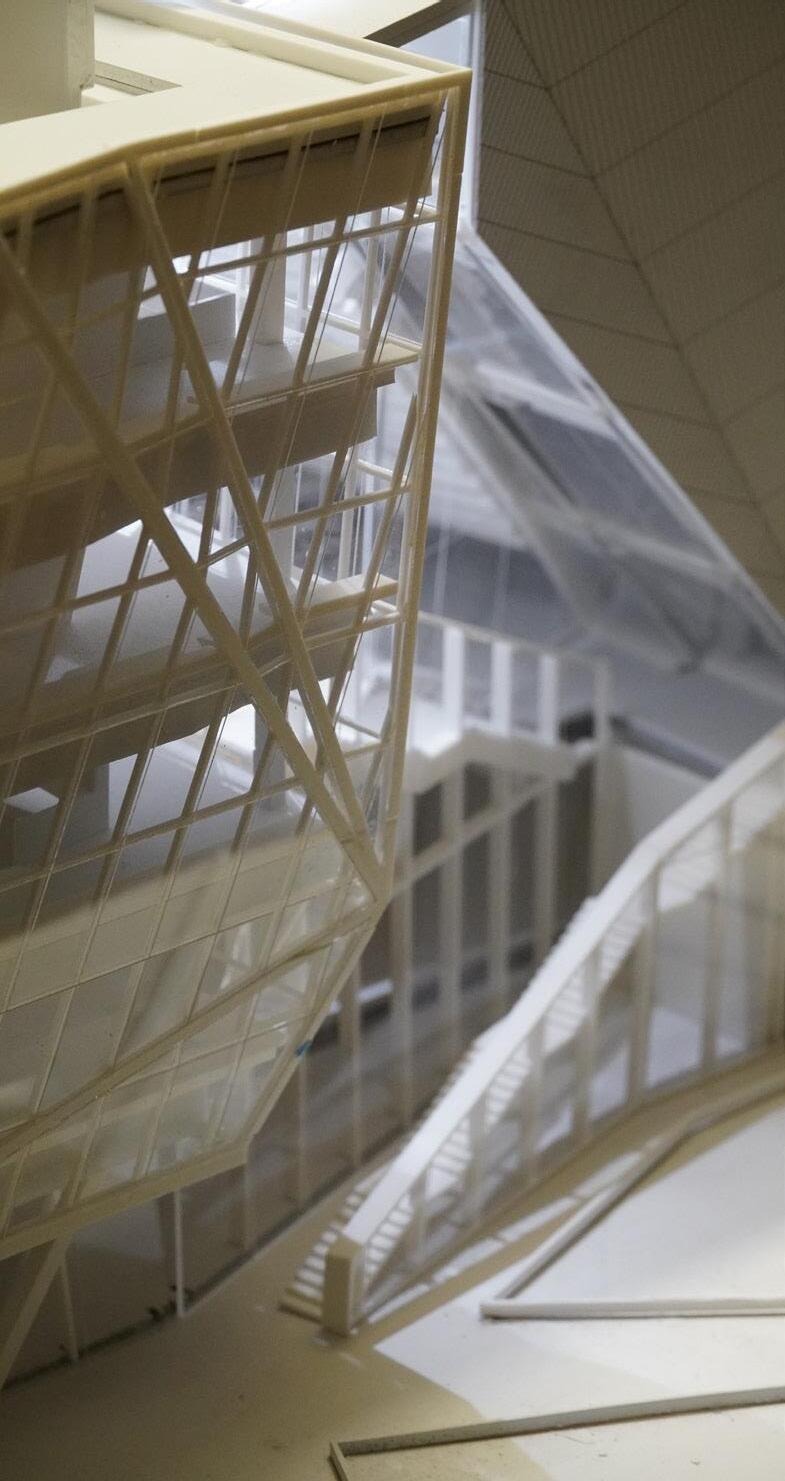
Meditation Tower Rendering
Kingsessing Library
Library Retrofit Project
Enhancing Performance
1201 S 51st St, Philadelphia, PA 19143
Instructor: Janki Vyas
Collaboration with Eliott Haddad, Ilyass Mousannif
Project Length: 1 Months
Group Project
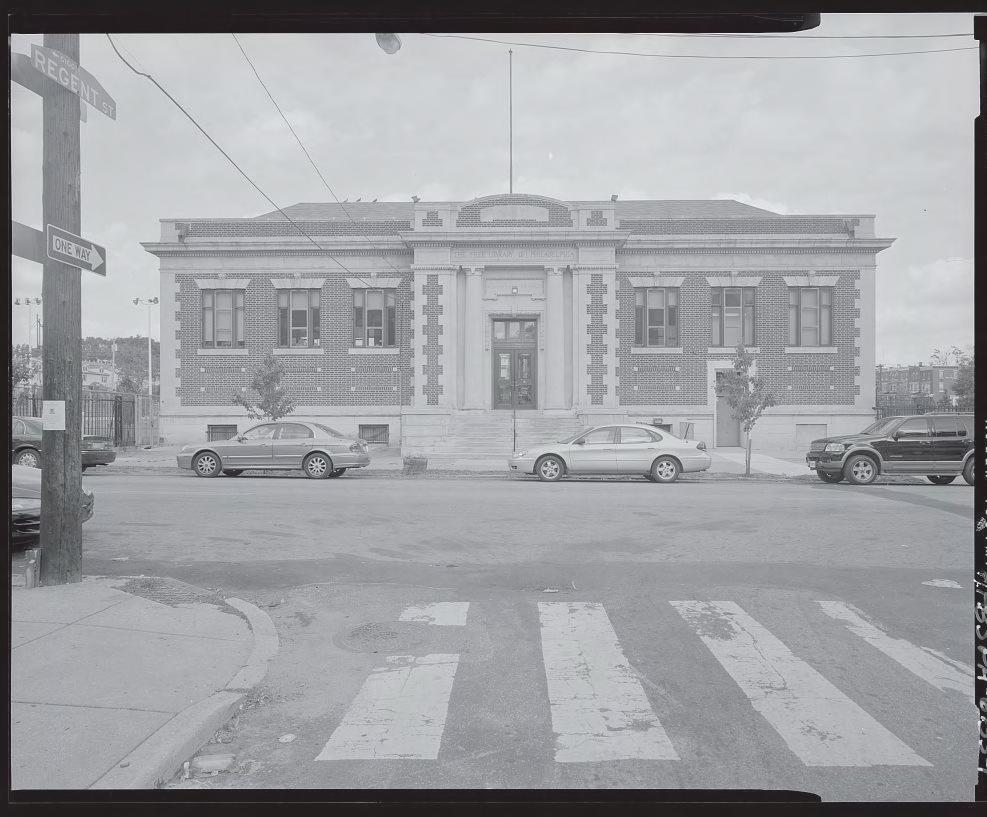
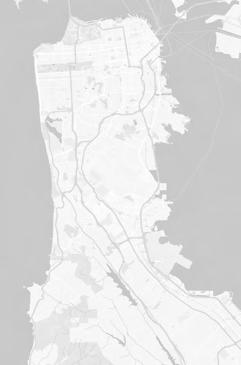
What if the Kingsessing Library were located in San Francisco?
The Kingsessing Library analysis showcases the power of combining passive and active strategies to optimize energy efficiency, thermal comfort, and daylight autonomy while meeting sustainability goals.
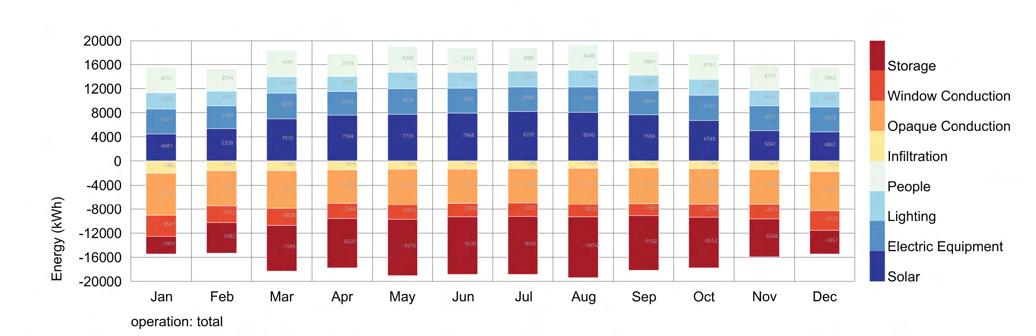
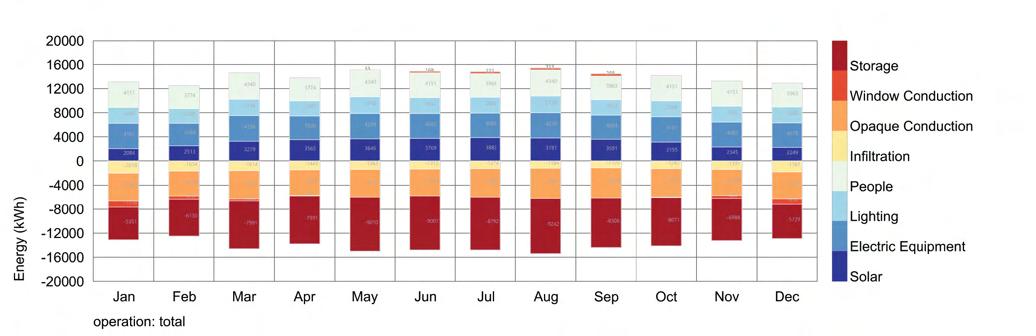
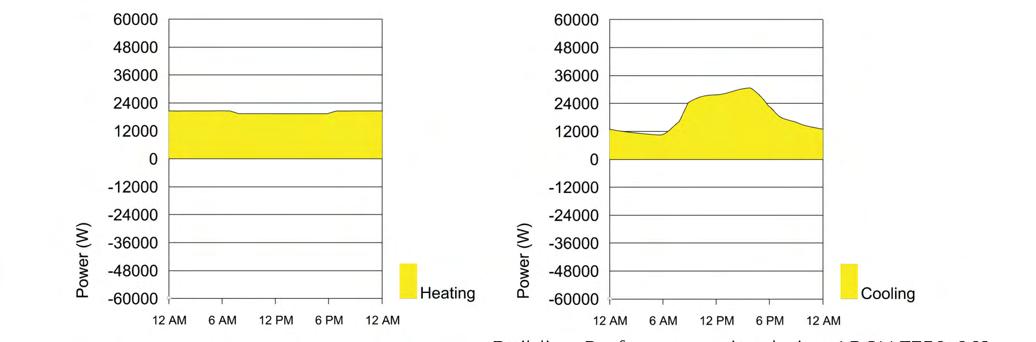
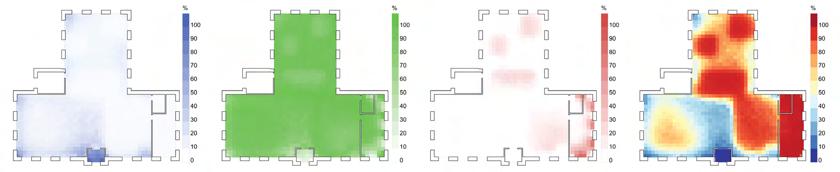
Solar gains ranged from 4,481 kWh in January to 8,203 kWh in July, with stable electric and lighting demands. Seasonal shifts in window conduction and storage output revealed opportunities for improvement. Thermal comfort was highest on the first floor, with some areas reaching 100%. Daylight autonomy peaked near windows but struggled in deeper zones, a challenge addressed by adding a skylight to the northern aisle. Four HVAC iterations slashed energy use (cooling/heating) from 12.65 kBtu/ft² to 2.229 kBtu/ft² with a VRF system—an 82% reduction without sacrificing comfort. Renewable strategies excelled: roof-mounted PV panels generated a 2,188 kWh surplus, while combining roof and ground arrays produced 127,637 kWh annually, exceeding demand by 38,862 kWh and ensuring year-round energy reliability.
This study underscores the impact of integrated design, achieving net-zero energy, enhanced comfort, and sustainability in one cohesive approach.
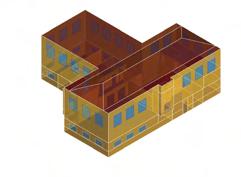
Baseline Performance Analysis
Area: 10 680 ft2
Volume: 331 080 ft3
Facades Area: 10 168 ft2
Window Area: 1450 ft2 (14%)
Second Floor
1. Library
3. Staff 102
4. Restroom 104
Ground Floor
5. Meeting Room 001
7. Corridor 006
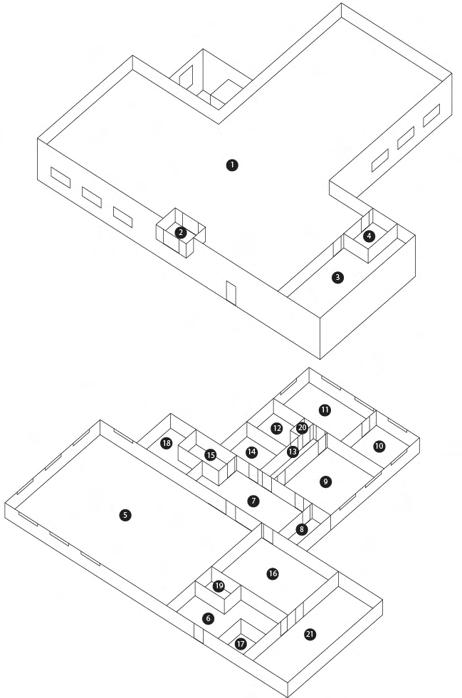

9. Conference Room 008
11. Staff 011
13. Corridor 014
Area: 10 680 ft2
Volume: 331 080 ft3
Facades Area: 10 168 ft2
Window Area: 1450 ft2 (14%)
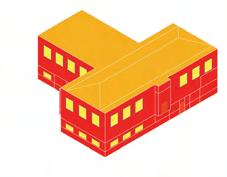
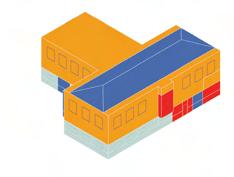
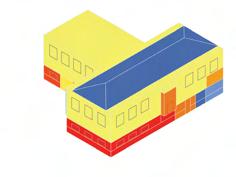
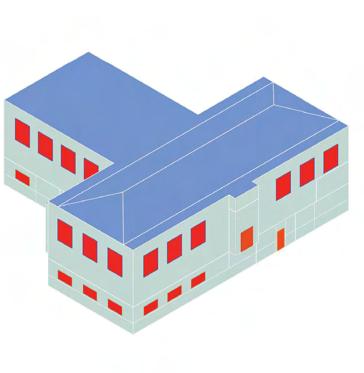
The as-built envelope features windows with a high U-factor, negatively impacting energy use intensity (EUI) and thermal comfort. Additionally, the building’s facade comprises a 4-inch stone veneer, a 16inch brick structure or fill, and a 1.5-inch plaster and lath layer on the interior. Adding insulation could significantly improve the EUI and thermal comfort, particularly in San Francisco’s climate, by increasing the total R-value of the opaque construction and enhancing the envelope’s thermal performance.

DA Daylight Autonomy LIBRARY
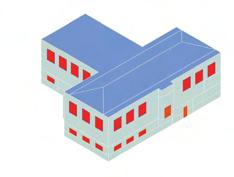
Noting that the Kingsessing Library is a heritage building, the facades cannot be altered, limiting opportunities to enhance daylight autonomy on prove daylight autonomy and reduce reliance on artifi cial lighting on the fi rst fl oor. To address this, we added a 6’ x 6’ skylight in the center of heatmaps.
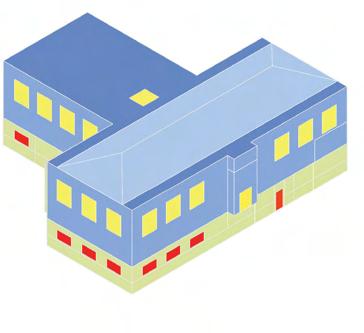
Area: 10 680 ft2
Volume: 331 080 ft3
Facades Area: 10 168 ft2
Window Area: 1450 ft2 (14%)+ Skylight (6’x6’)
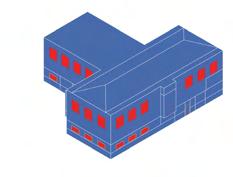
By upgrading the glazing to windows with a U-factor of 1.53 W/m²·K, compared to the original windows with a U-factor of 5.32 W/m²·K, and adding a 2-inch insulation panel to the interior of the opaque construction, we achieved a 6% reduction in overall EUI, lowering it from 42.572 to 40.116 kBtu/ft².
Ground Floor
AdaptiveMap
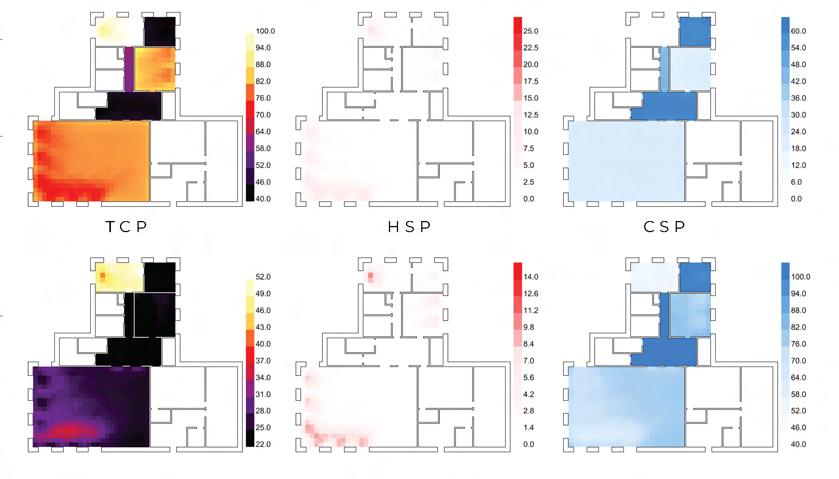
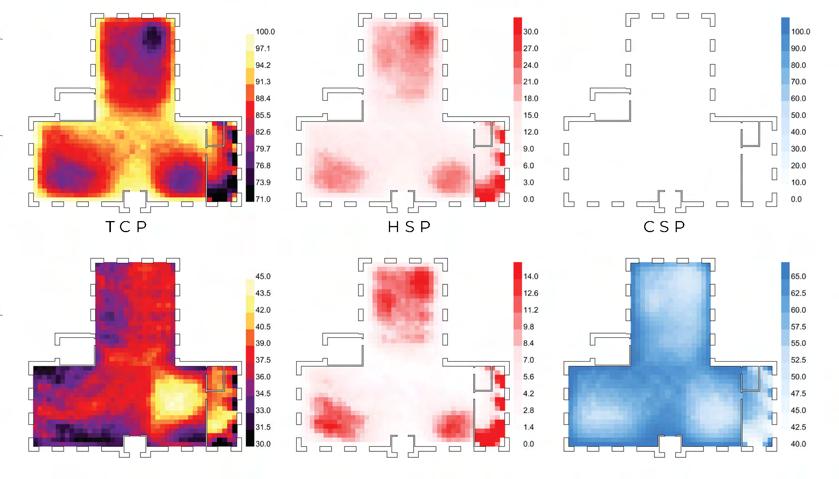
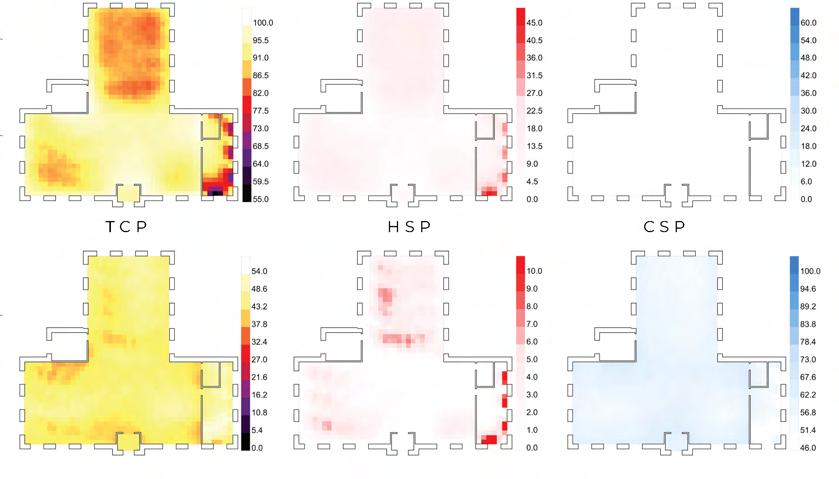
The adaptive comfort maps on the ground floor show that for the main spaces, e.g. the meeting room and the conference room, the thermal comfort in these spaces reach 80% overall, with some spots near the windows actually suffering from heat sensation. The other spaces, especially corridors, suffer from cold sensation.
Ground Floor PMVMap
The PMV maps show that 31% of people will feel comfortable in the meeting room and around 25% in the conference room. For heating sensation, it will only be felt in some spots near the windows in both rooms, while no heat sensation is felt in the corridors. On the other hand, the cold sensation is at 70% in both rooms and even reaches 100% in the corridors.
Second Floor
AdaptiveMap
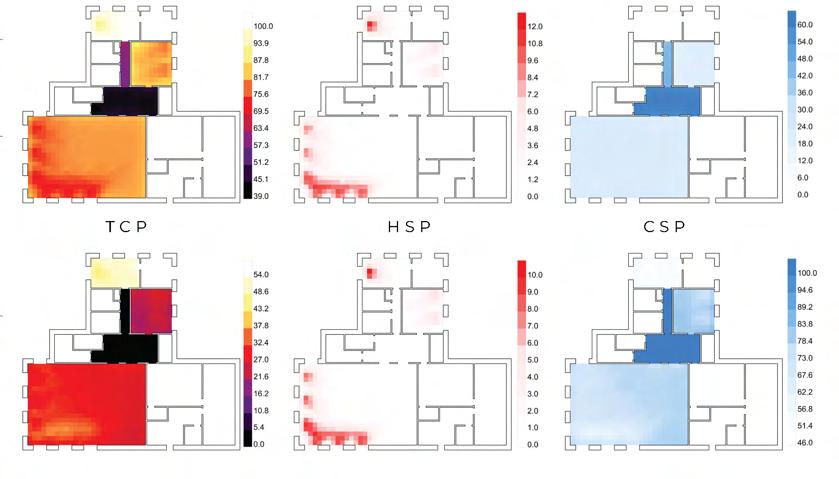
The new construction set was able to achieve high comfort conditions, with thermal comfort percentages reaching 100% in the majority of spaces, the cold sensation being completely eliminated. + 25% 100%
Second Floor
AdaptiveMap
The PMV has also reached high values reaching 50%.
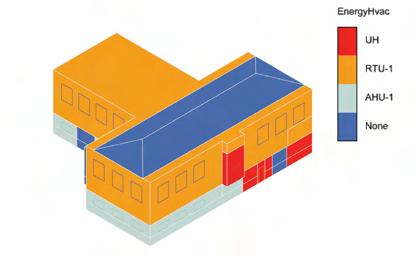
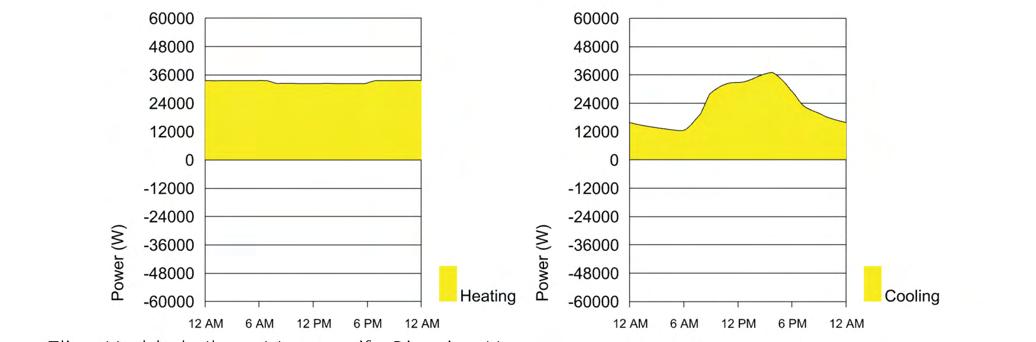
To evaluate the HVAC systems tested, we will analyze their energy intensity (EI HVAC).
For instance, the initial system has an EI of 12.651 kBtu/ ft², accounting for 30% of the library’s total energy use intensity.
Additionally, we examined the specifi c components driving HVAC energy consumption; heating, cooling, fans, pumps, and heat rejection; details of which are highlighted in the benchmarking analysis.
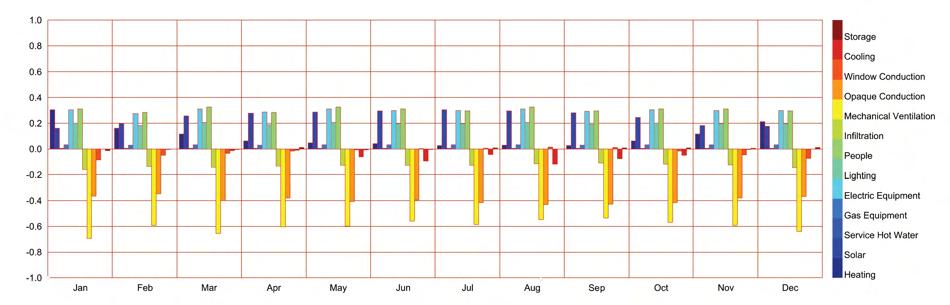
The energy intensity chart and benchmarking reveal that fans and heating are the largest energy consumers in the baseline HVAC system. Heating has an EI of 5.252 kBtu/ft², while fans account for 6.813 kBtu/ft². Additionally, the charts highlight that the fan operates year-round, consistently recording the highest energy consumption among all components.
PV Panels GROUND + ROOF
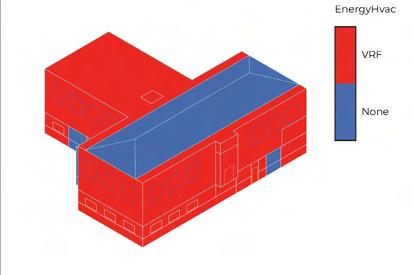
The most effective iteration, achieving a 30% reduction in total EUI to 29.72 kBtu/ft², was the Variable Refrigerant Flow (VRF) system. This solution allows individual rooms to adjust their temperatures, accommodating the building’s diverse programs with varying heating and cooling needs infl uenced by factors like solar exposure and volume.
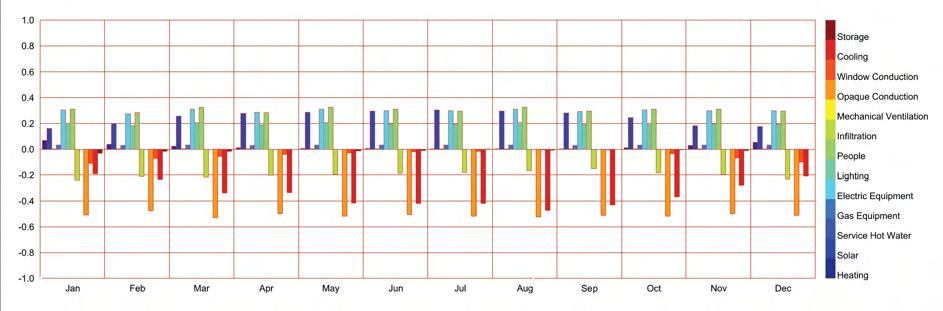
The VRF system signifi cantly reduced heating energy intensity from 5.252 kBtu/ft² to just 0.395 kBtu/ft². Additionally, fan energy intensity dropped drastically, from 6.813 kBtu/ft² in the baseline HVAC system to 0.488 kBtu/ft². This highlights the fan’s substantial contribution to energy intensity in HVAC systems and underscores the effi ciency gains achieved with the VRF system.
Fan 6.813 kBtu/ft2 Cooling 0.546 kBtu/ft2
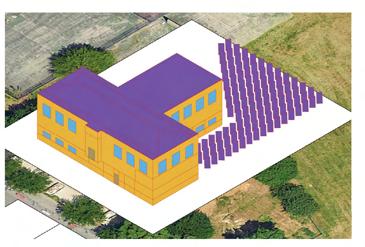
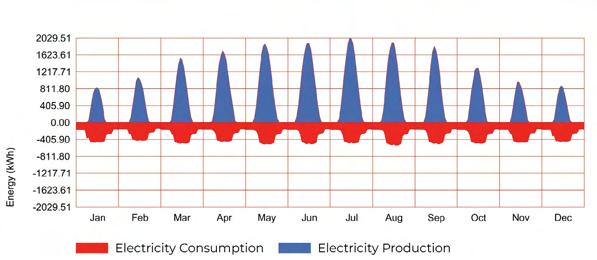
With PV panels on both the roof and ground, annual energy production reaches 127,637 kWh, surpassing the building’s 88,951 kWh consumption and creating a net surplus of 38,862 kWh. Production exceeds consumption year-round, peaking at 2,000–2,100 kWh in summer and remaining signifi cant in winter. The system achieves net-zero energy annually and, with battery storage, addresses seasonal and hourly shortages. Demand management can optimize self-consumption, sending surplus energy to the grid and drawing power when needed, ensuring a reliable year-round energy supply.
29.72 kBtu/ft²

Tube
Deployable Shelter
Fast, safe and comfortable
Emergency Residential Shelter Needs Areas
Instructor: Joseph Choma
Collaboration with Ria Naab, Ke Ning, Breland
Land
Project Length: 4 Months
Group Project
Folding is a systematic method of transforming flat materials into three-dimensional rigid structures. This research-based design studio explores the following questions. How can you design a light emergency shelter that will last longer than a tent? How do you design a deployable structure that can be flat packed, deployed, and flat packed again? How do you design a collapsible structure that remains stable without the use of resin stiffening hinges?
A temporary shelter is defined as a shelter that has an expiration date usually not to exceed a short given time frame. In our case, it is from one to three weeks. An emergency shelter is defined as a shelter designed for implementation in a scenario that is likely to be dangerous and requires immediate action. A deployable shelter is defined as a shelter designed to be easily moved to a location and set up when necessary. This usually also applies in the case of an emergency.
What and how could we design a more comfortable living situation so that people could stay while preparing for permanent housing? Or what we would design could become a more semi-permanent solution in reality.

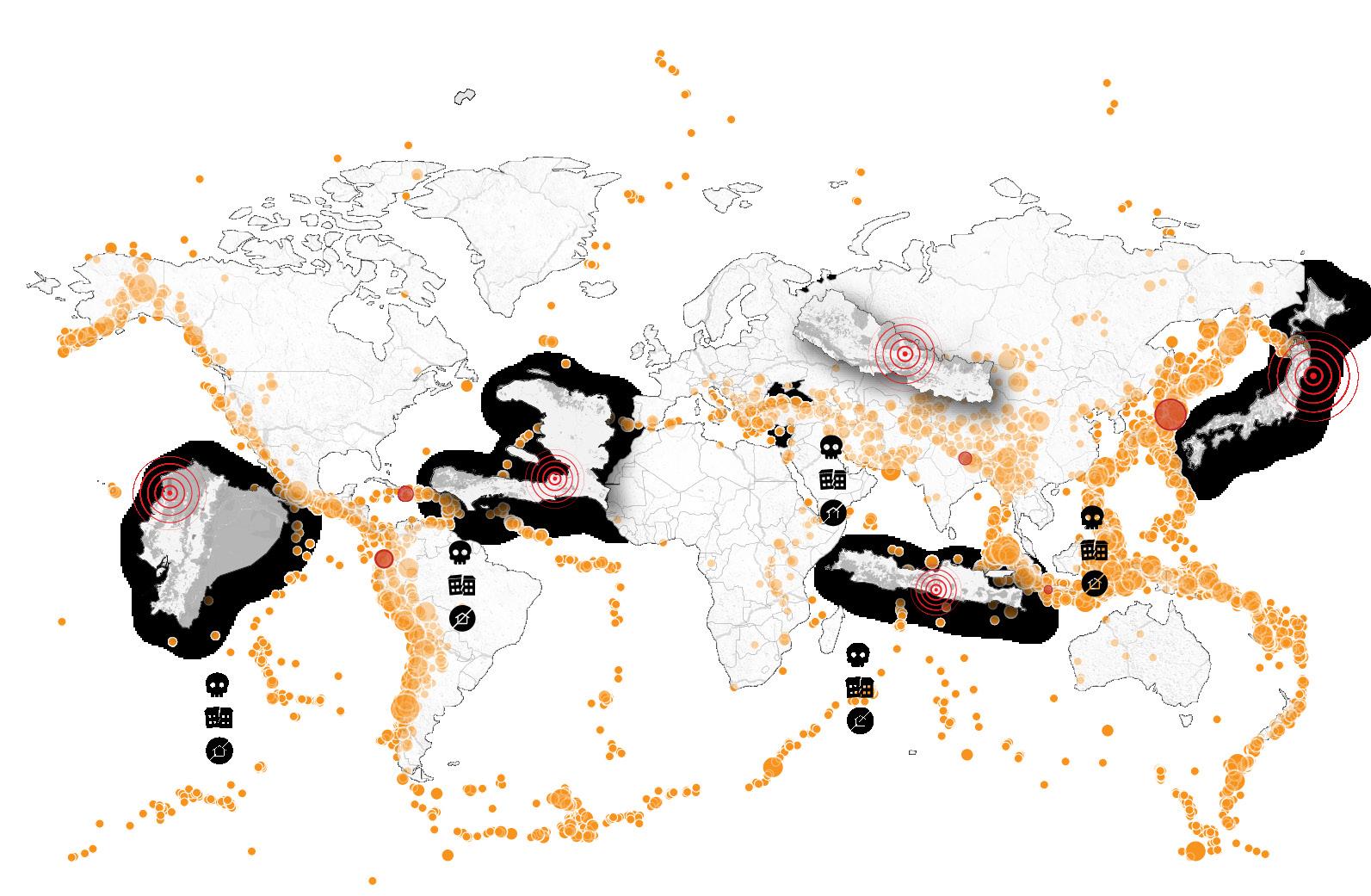
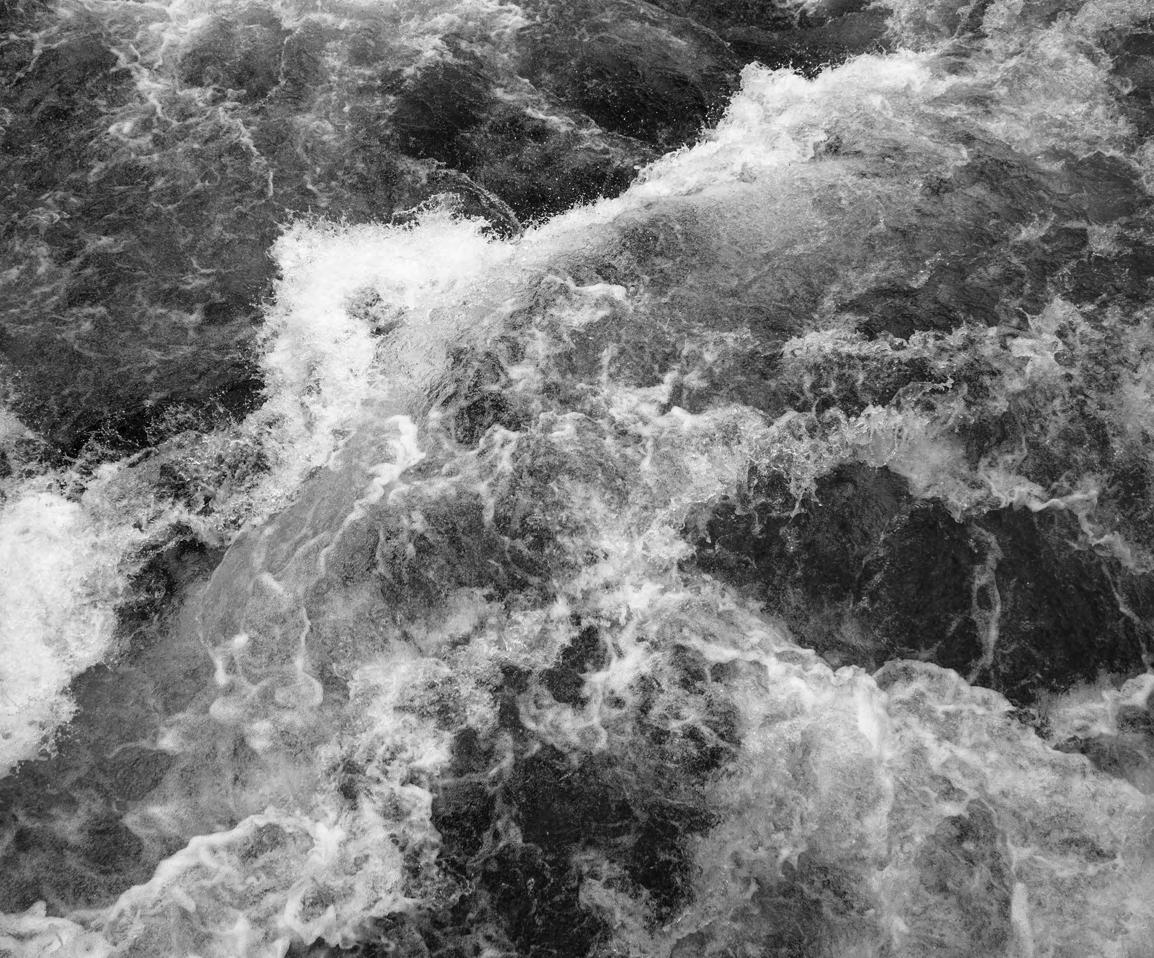


Post-earthquake recovery is often prolonged and uneven, leaving affected communities in extended periods of displacement. In this context, rapidly deployable and reliable transitional housing becomes critical—not as a permanent solution, but as a stable and dignified bridge between emergency response and long-term reconstruction.
2015 Nepal Earthquake Timeline
Conceptual Drivers

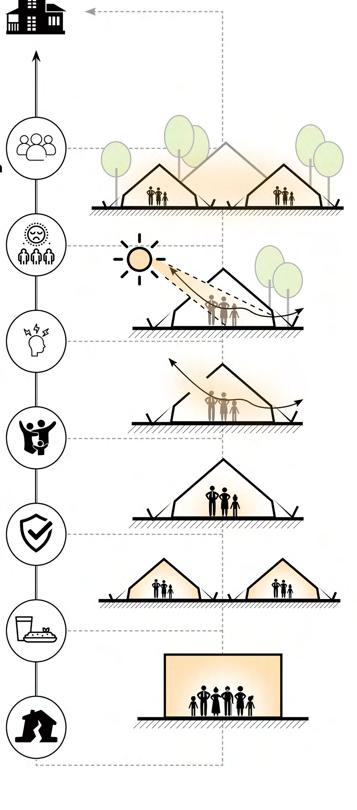
Post-Disaster Needs
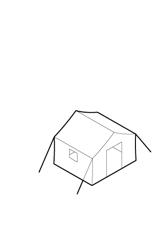
• Easy to assemble
• Easy to transfer
• Less parts
• Quick production
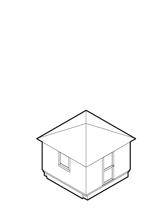
• Long lifespan
• High durability
• Safety Tent Transitional House
• Privacy
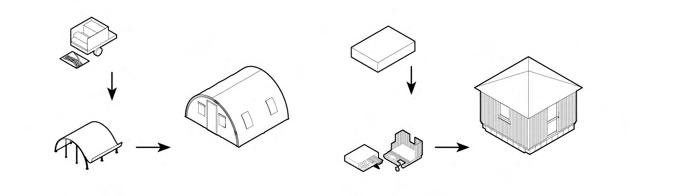
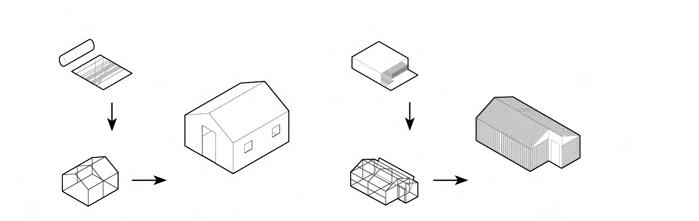

Alaska XP Shelter System Paper Log House
China Tarp
T-Shelter
Tube Deployable Shelter
Folding Pattern

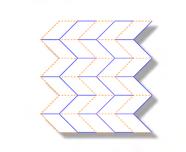
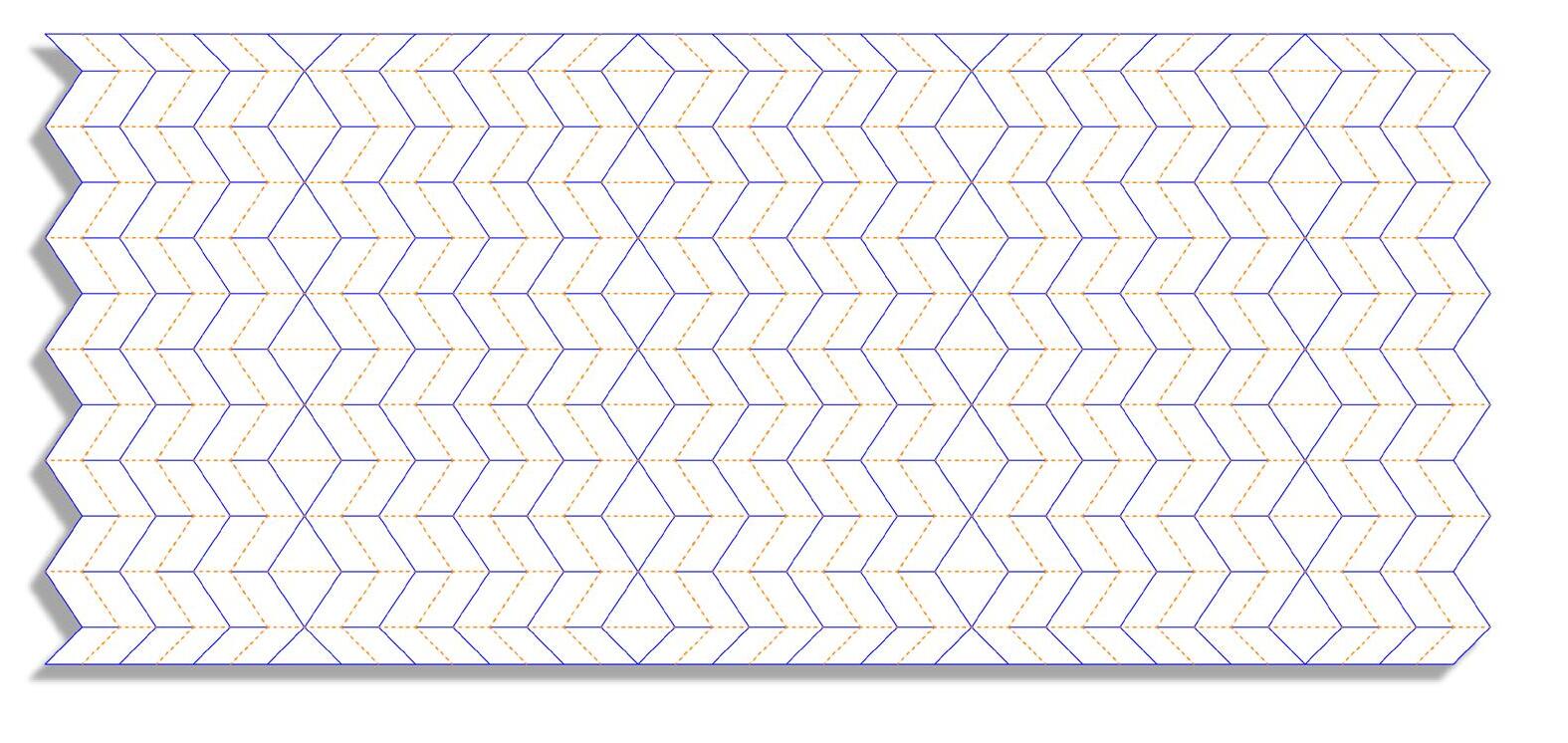
Create a foldable wall based on the principle that the crease extending outward from each vertex is usually the same as the two lines forming the vertex.
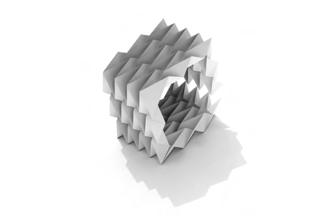
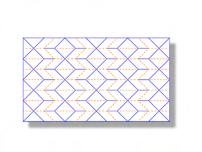
Repeat a foldable wall folding pattern and a foldable corner four times to form a closed tube when compressing it to a flat pack.

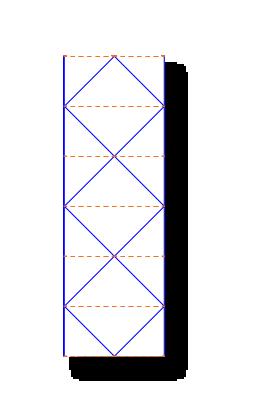
Create an extendable and foldable corner by assuming the diagonal lines are the mountain and a valley fold at the middle.
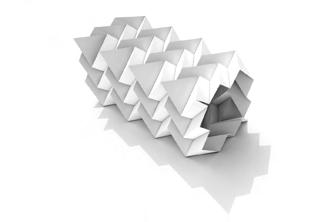
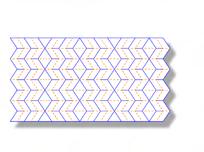
Extend the pattern in a vertical direction to allow it to form a closed tube before flat-pack but still foldable. And this extension improved its overall strength.

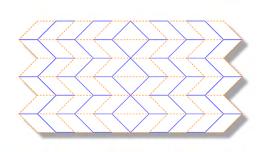
First, match the first folding pattern with the second one, then create 1/2 Tube by combining these two patterns together.
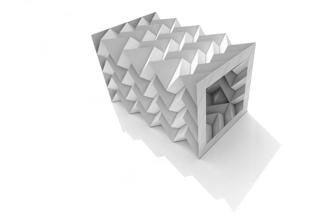
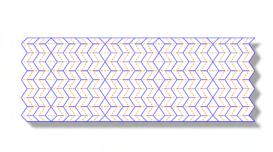
After combining these two folding patterns together, the tube forms the frames of the stronger tube to avoid the edges from deforming when exerting force to them.
1. Foldable Wall
2. Foldable Corner
3. 1/2 Tube
4. Tube
5. Stronger Tube
6. Stronger Tube with Frame
Fabrication
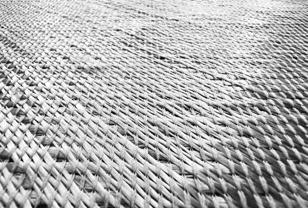
1. Unroll an 8-foot wide by 28-foot long fiberglass and flatten all the wrinkles on the fiberglass.
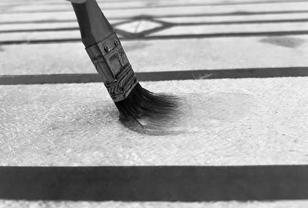
4. All the exposed fiberglass cells are painted with resin.
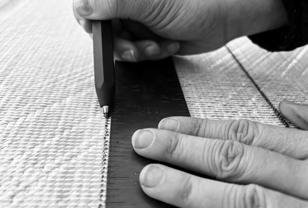
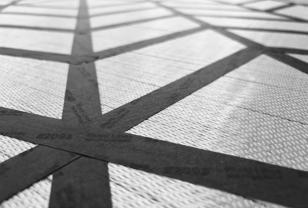
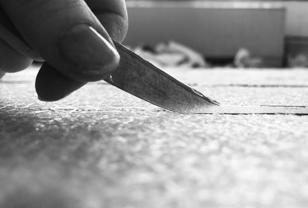
5. After twenty-four hours, remove all the tapes and fold it.
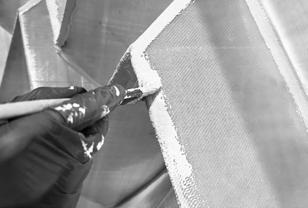
6. After the folding is completed, rubber is applied to each crease to enhance its stability.
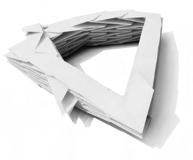
Two people lift one side of the frame together and then overlap the two ends together.
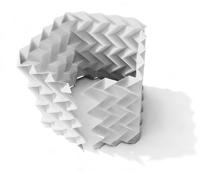
Fold the two frames at the two ends flat and hold them in place.
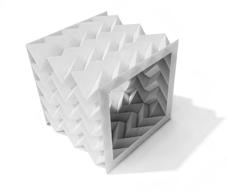
2. Draw the designed crease pattern on the fiberglass with a pencil.
3. Cover the previously drawn lines with painter’s masking tapes.
Mountain Valley
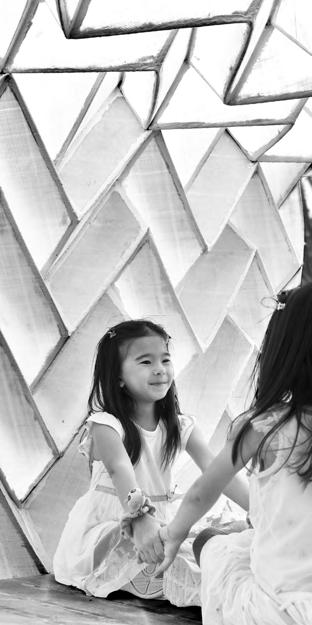


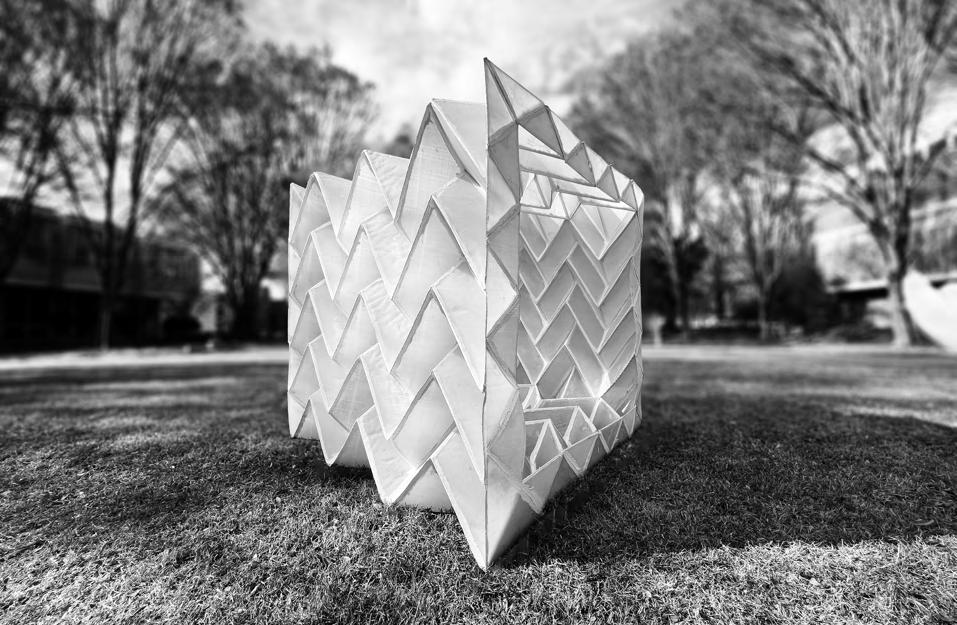
Physical Model Photos
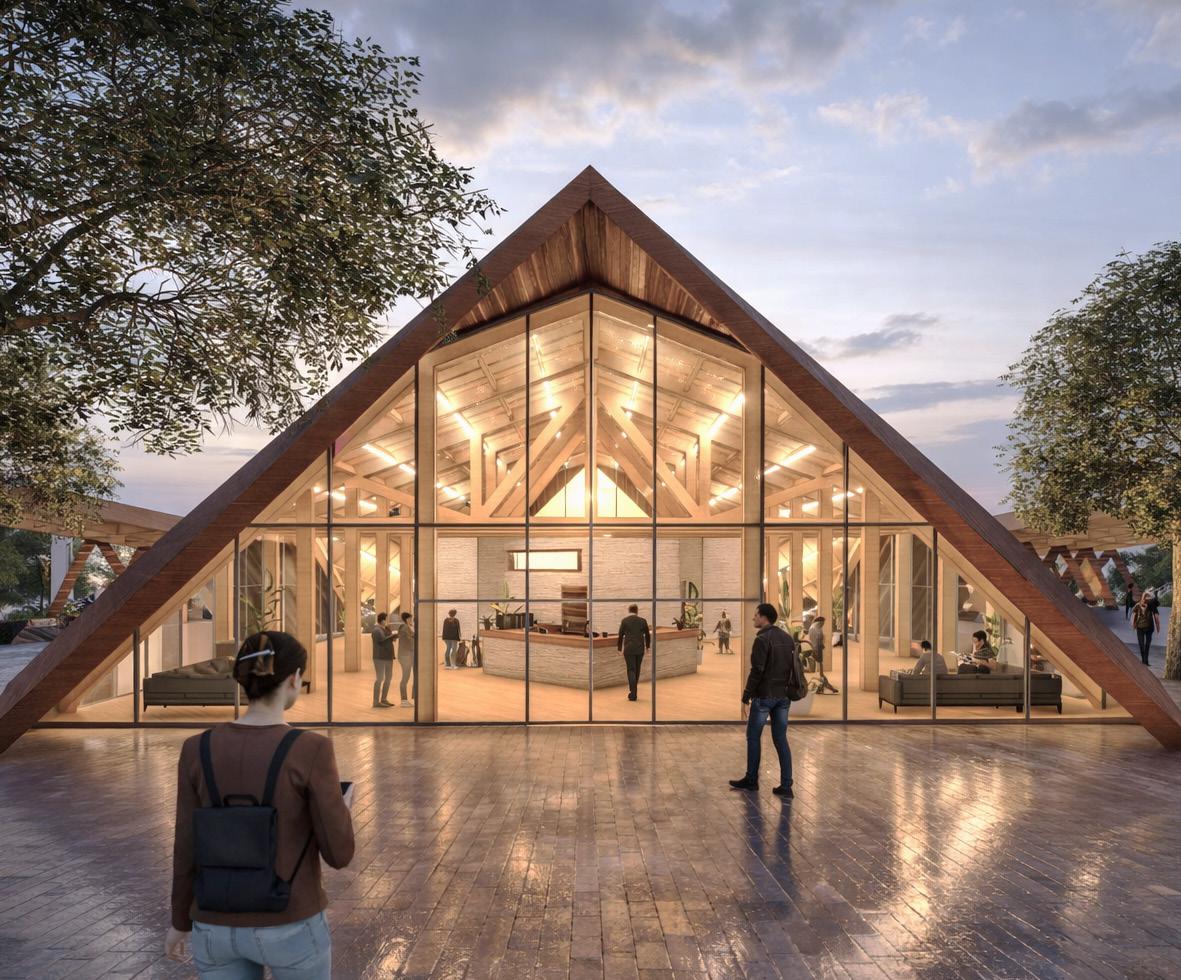
Mountain Transit
Transit Hub
Lonely mountain cohesion people
54 Gray Eagle Dr, Asheville
Instructor: Dustin Albright
Project Length: 1 Months
Individual Project
Far from the center of the city
A hill sits lonely
Located south from the city
I have seen people cry
Mourns of loss
Tears of separation
From what was once a celebration
Every day is the same
Nothing looks different
Cars follow the same trail back and forth
With their stubborn and consistent path
People gather at or away from the city
But this simple systematization allows it to connect
Connecting this city
Unifying the hearts of people
It may be a small place
At the city’s furthest corner
Away from the nightlights and hustles
From the time of sunrise
To past sunset
Temperature and Color are the only changes
Nothing else
Quiet and peaceful
Like a library
But not dead like a cemetery
But this quiet and peacefulness unifies order
Allowing me to feel
The beauty of the city
Site Analysis
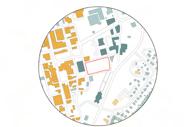
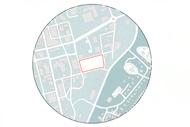
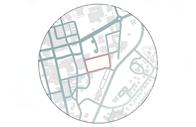
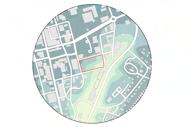
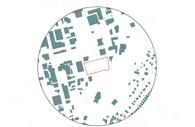
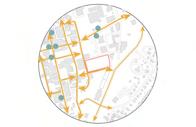
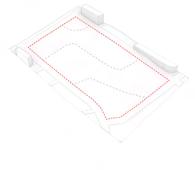
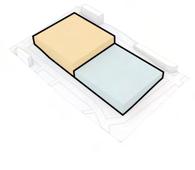
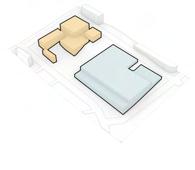
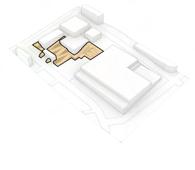
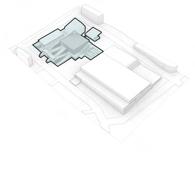
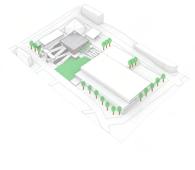
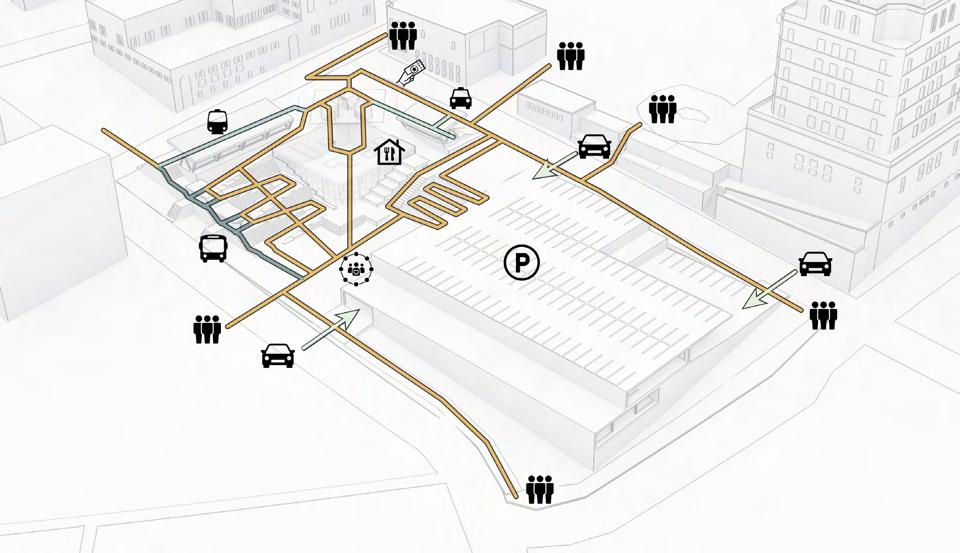
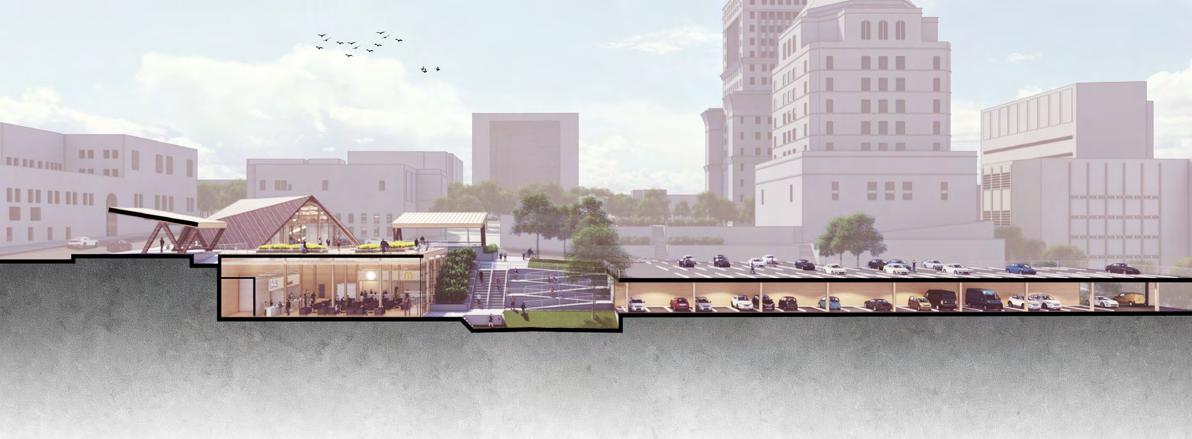
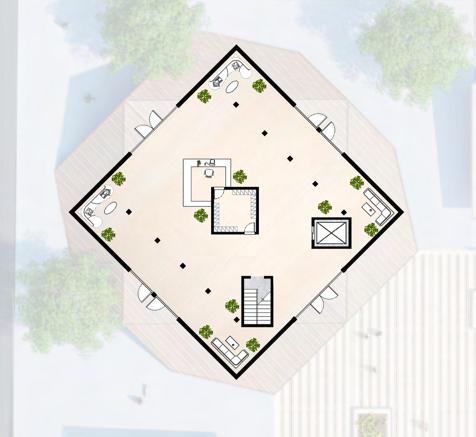
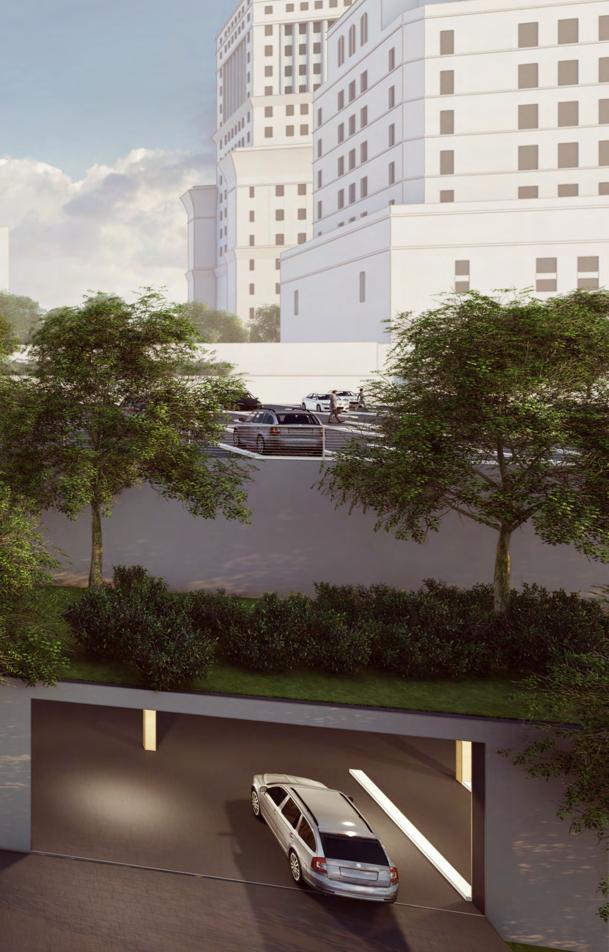
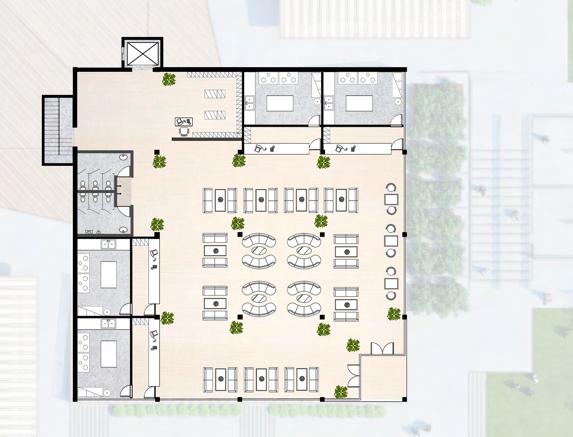
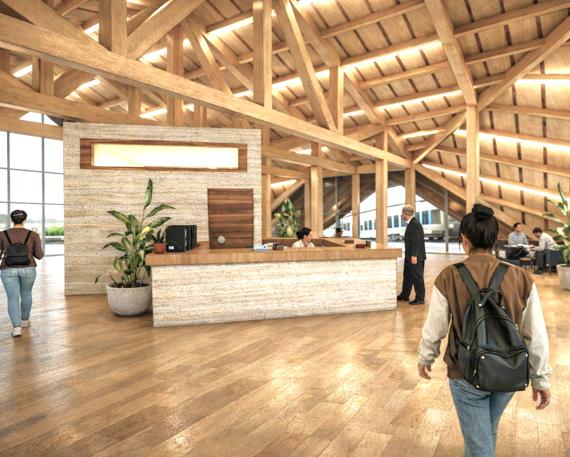
The project aims to transform an existing parking lot into a transit hub that maintains the same parking capacity while fully leveraging the site’s topography.
Circulation & Connectivity Strategy Form Strategy


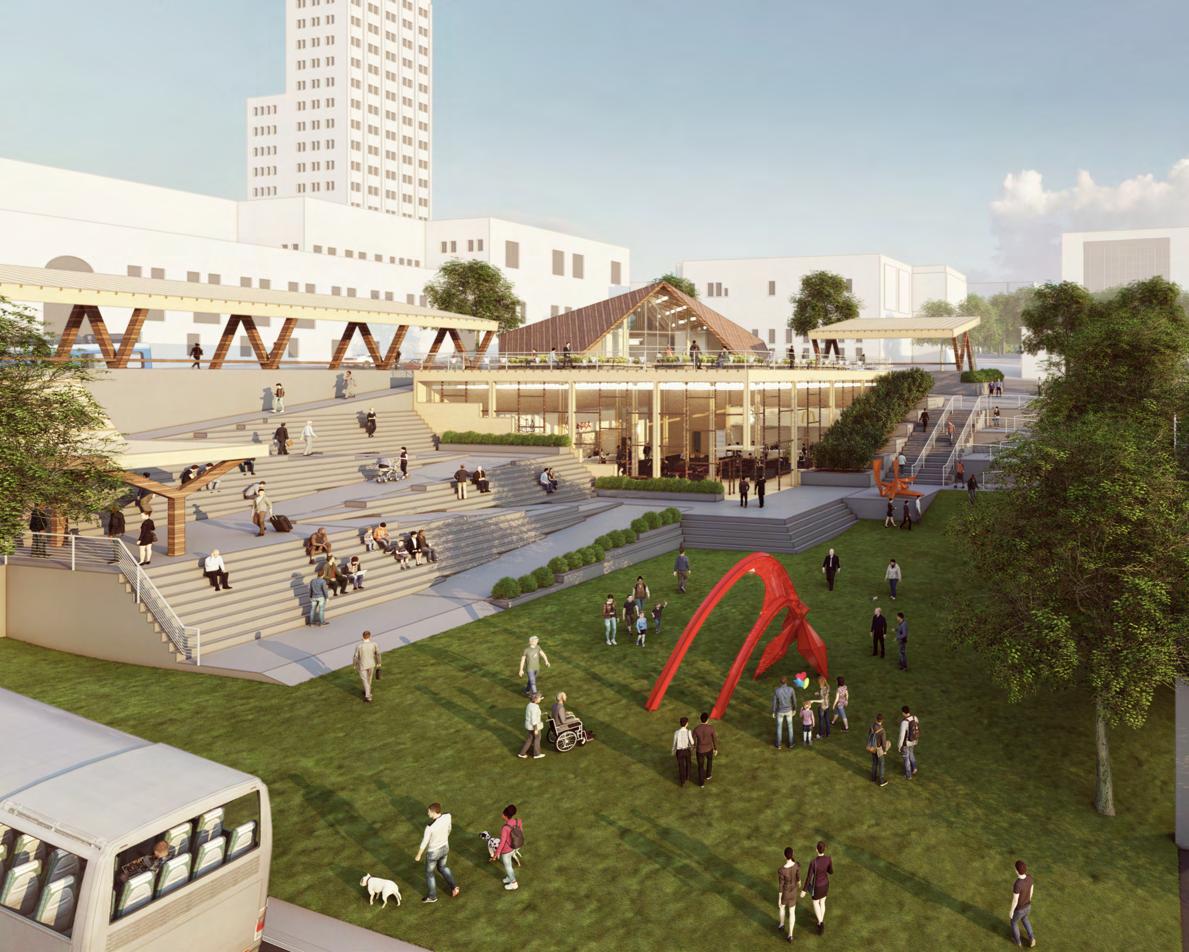
Birdseye View
Section
Monolithic Sandy Hook
NOAA Laboratory
The inevitable future
35 Hartshorne Dr, Sandy Hook, NJ
Instructor: Richard Garber
Collaboration with Tim Wu
Project Length: 4 Months
Group Project
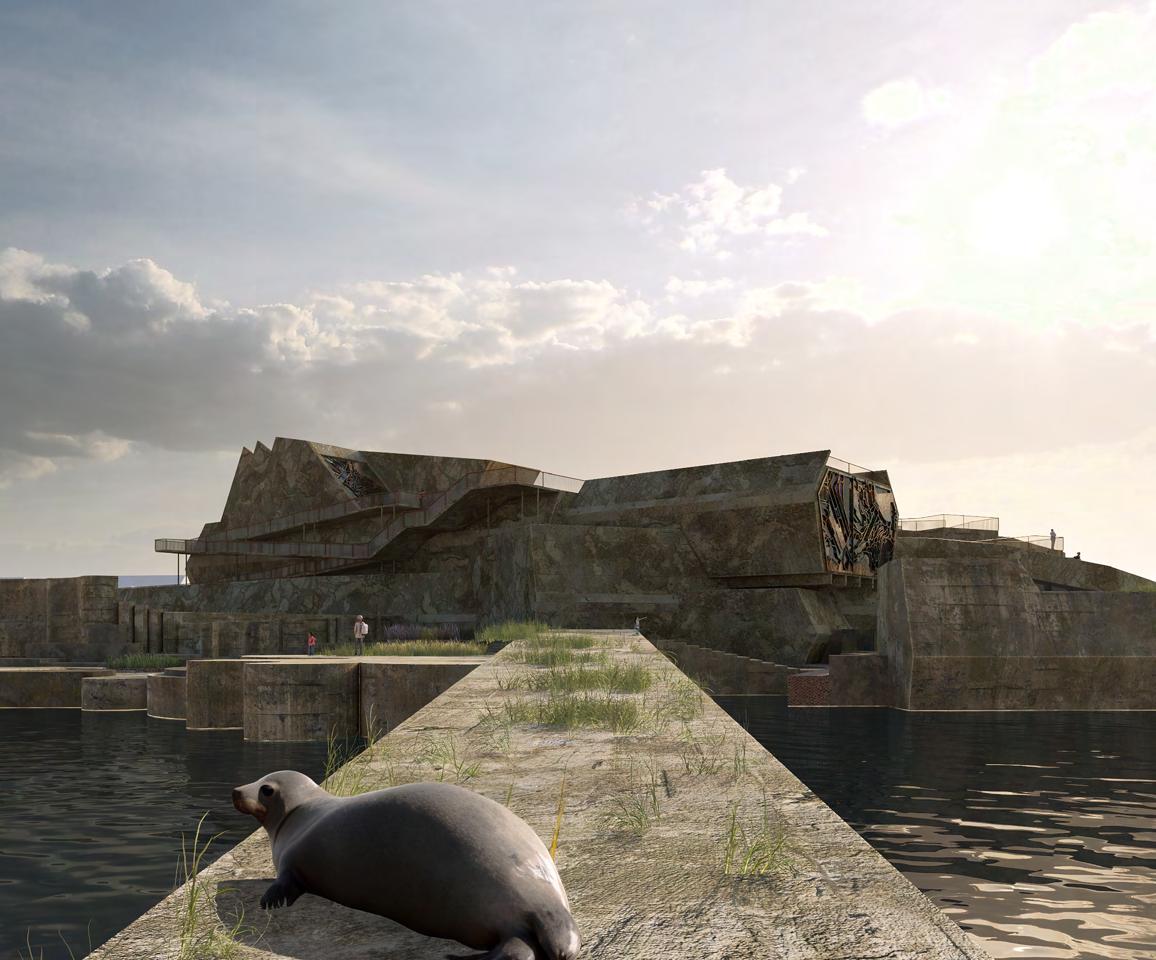
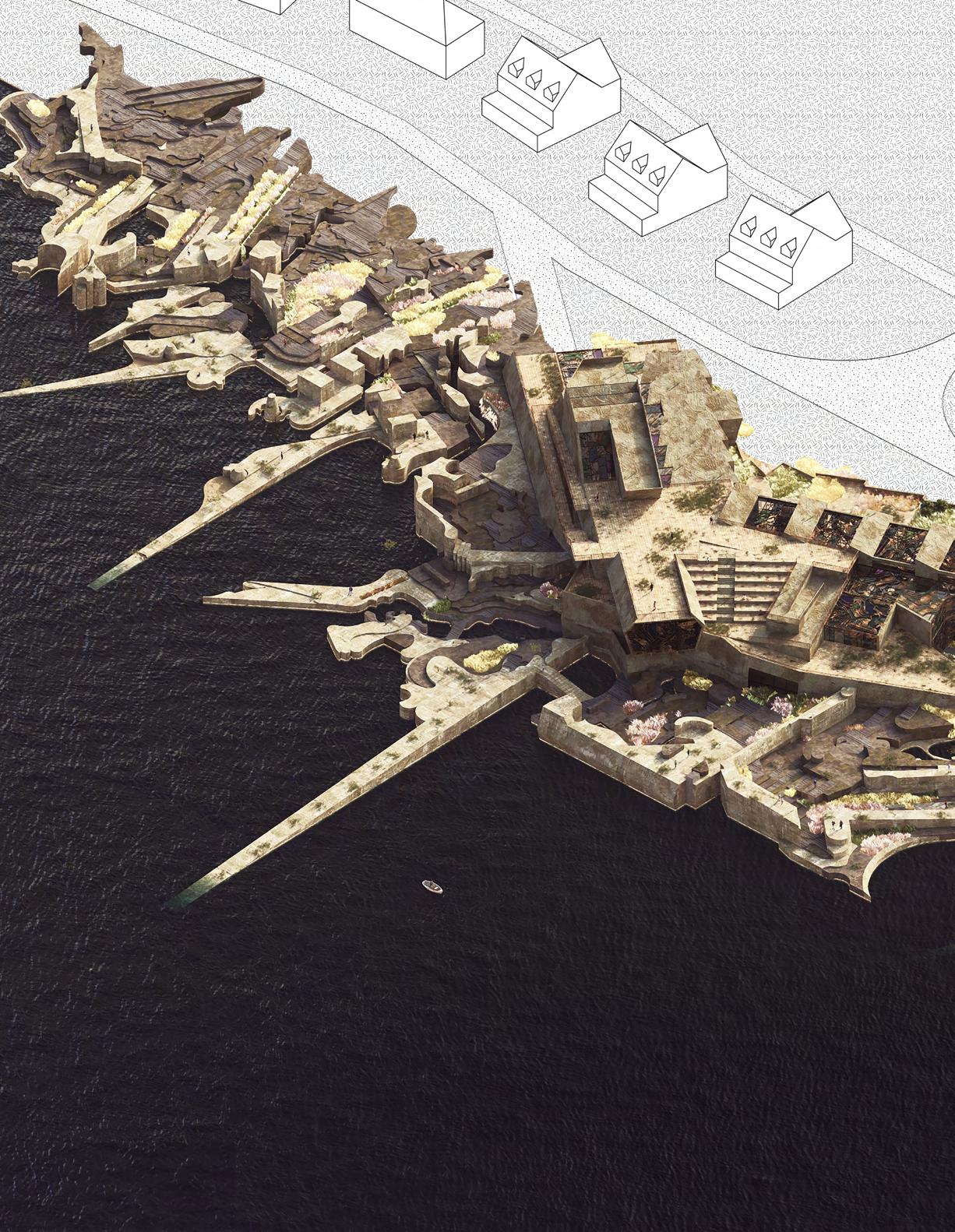
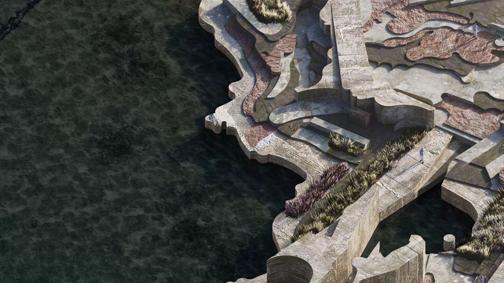
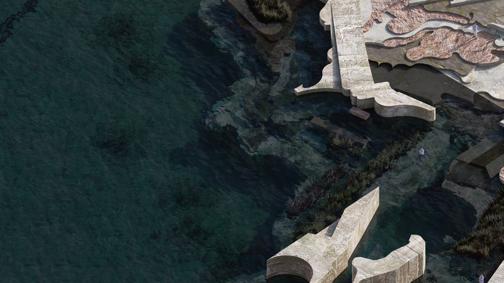
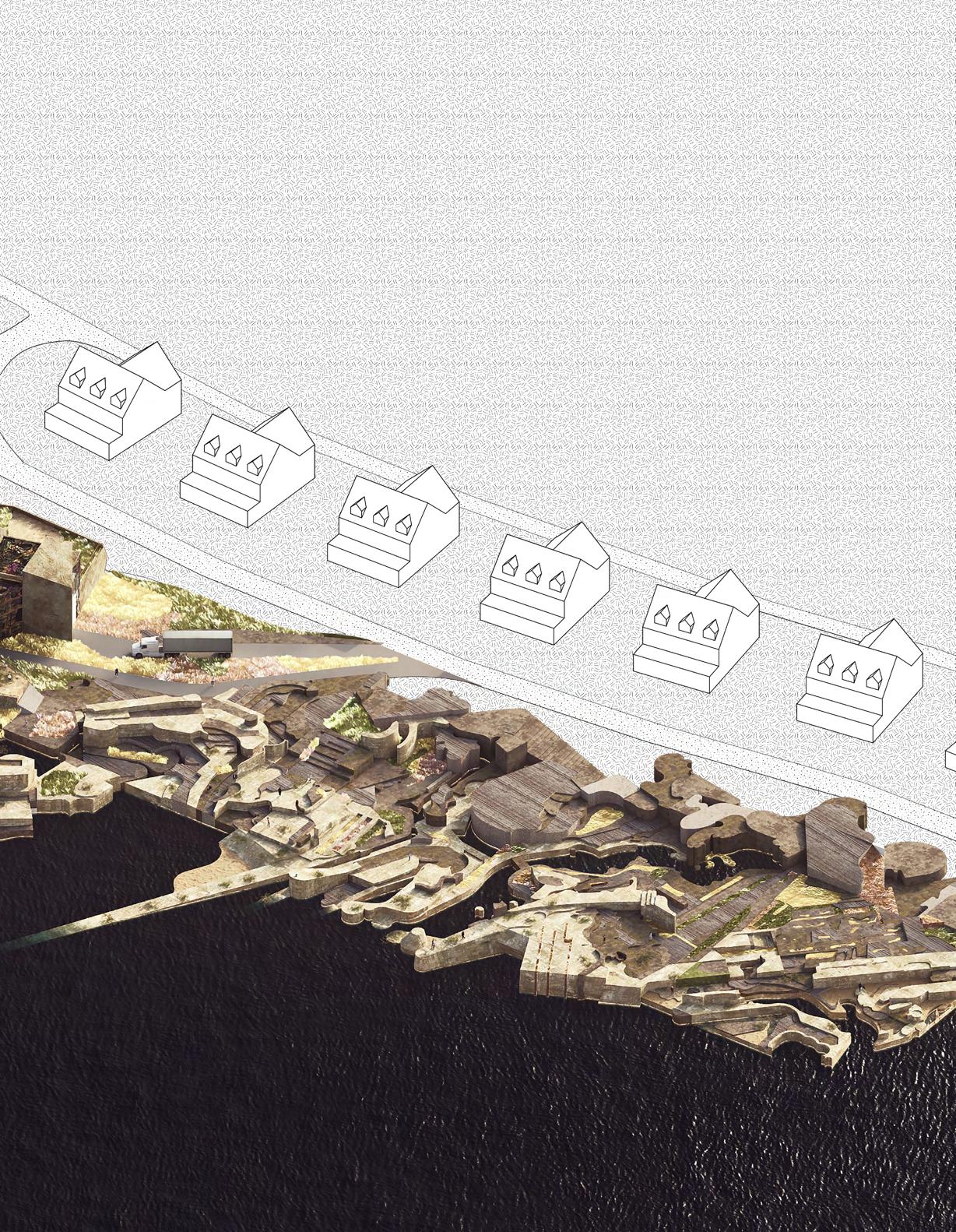
Our design for the NOAA marine laboratory at Sandy Hook, New Jersey, focuses on integrating ecological preservation, functionality, and local heritage. The chosen site, an existing developed area influenced by tidal changes, includes an aging seawall with structural instability that threatens nearby buildings. To resolve this, we redesigned the seawall with an extended cross-section and roughened surface, enhancing its ability to absorb wave impacts while creating habitats for marine species like rockweed, which thrives in tidal environments and adds ecological value.
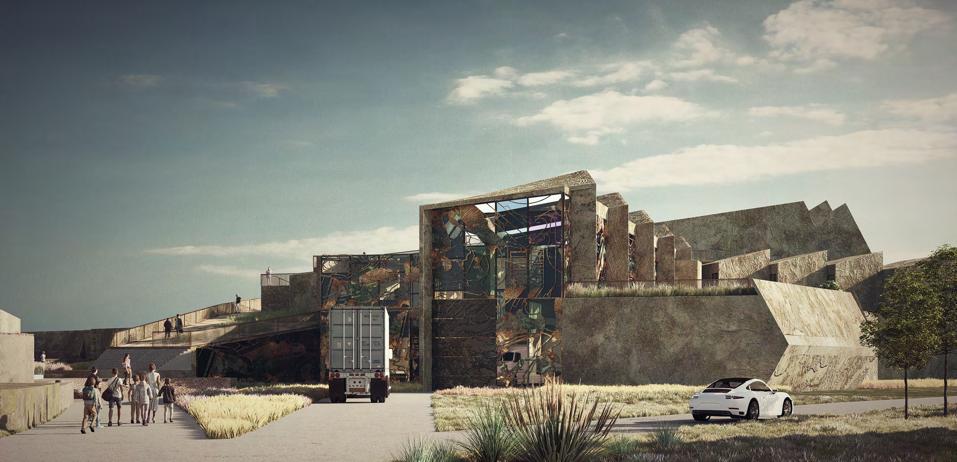
The laboratory’s architecture draws inspiration from local residential dormer forms, blending traditional design elements with modern functionality. The layout optimizes logistics by placing truck access at the building’s center, ensuring efficient deliveries while maintaining flexibility for other uses when not in operation. Beyond functionality, the design addresses the protection of local wildlife, particularly seals, by creating additional habitats through the natural accumulation of sand around groynes, which reduces human disturbances and supports biodiversity.
Monolithic Sandy Hook not only provides a state-of-the-art facility for marine research but also fosters ecological diversity and preserves the cultural and natural heritage of the site. The project demonstrates a thoughtful balance between supporting NOAA’s mission, enhancing the local environment, and respecting the unique characteristics of Sandy Hook.
Site Analysis
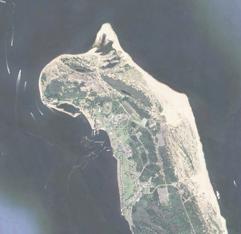


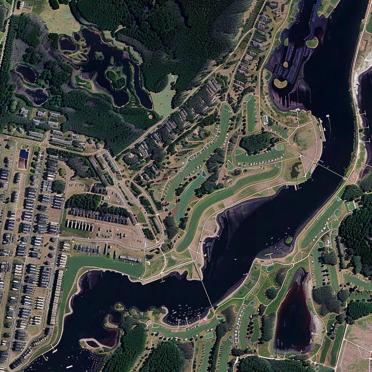
We selected a site within an already developed coastal residential area, where the existing seawall provides dual protection for both the building and the shoreline. The site also offers an ideal vantage point for seal observation, allowing the laboratory to coexist with local habitats while minimizing disturbance.
Seawall Diagram

The seawall is redesigned through an expanded cross-section and surface roughening to enhance its capacity for wave energy absorption. At the same time, this intervention creates ecological habitats for marine species such as seaweed, which thrive in tidal environments, adding both environmental resilience and ecological value to the coastline.
Conceptual Drivers
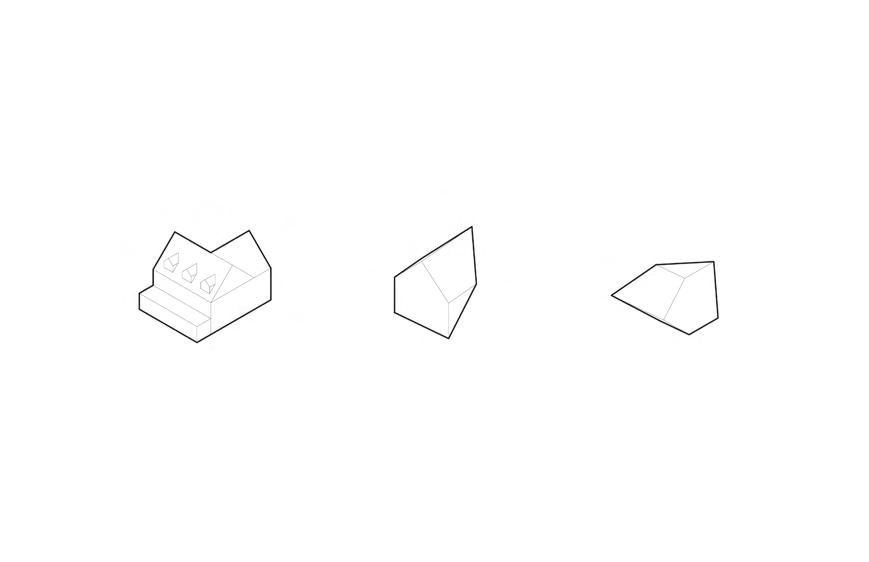
Pitched roofs and dormers are the two most common things in that area.
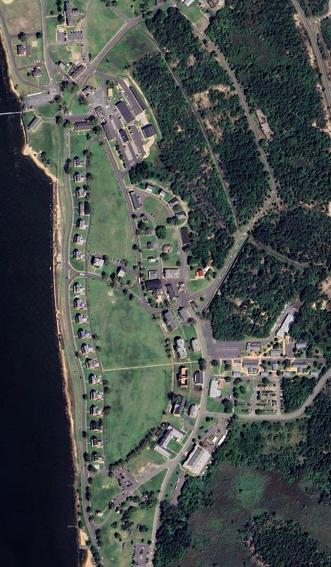
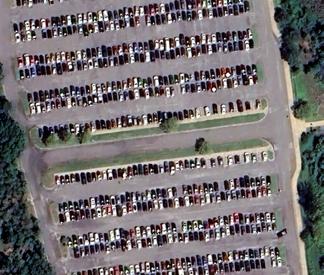
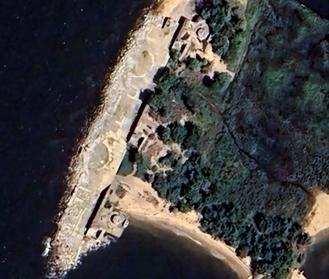
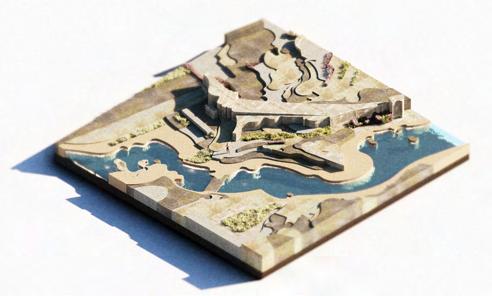
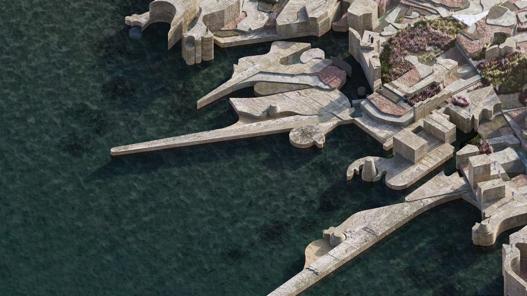
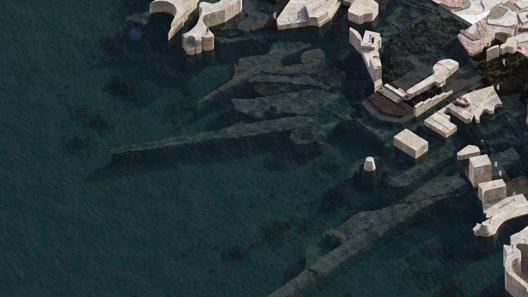
AI-assisted analysis reinterprets existing coastal site features and translates them into three-dimensional modules that form the building’s seawall system, integrating ecological function with coastal performance.
Surface Roughening
Stie Feature 01
Stie Feature 02
Stie Feature 03
Reinterpreted Landscape
Loacl Housing Groynes
NOAA Lab Building
Truck Lane
Low Tide
Low Tide
High Tide
High Tide
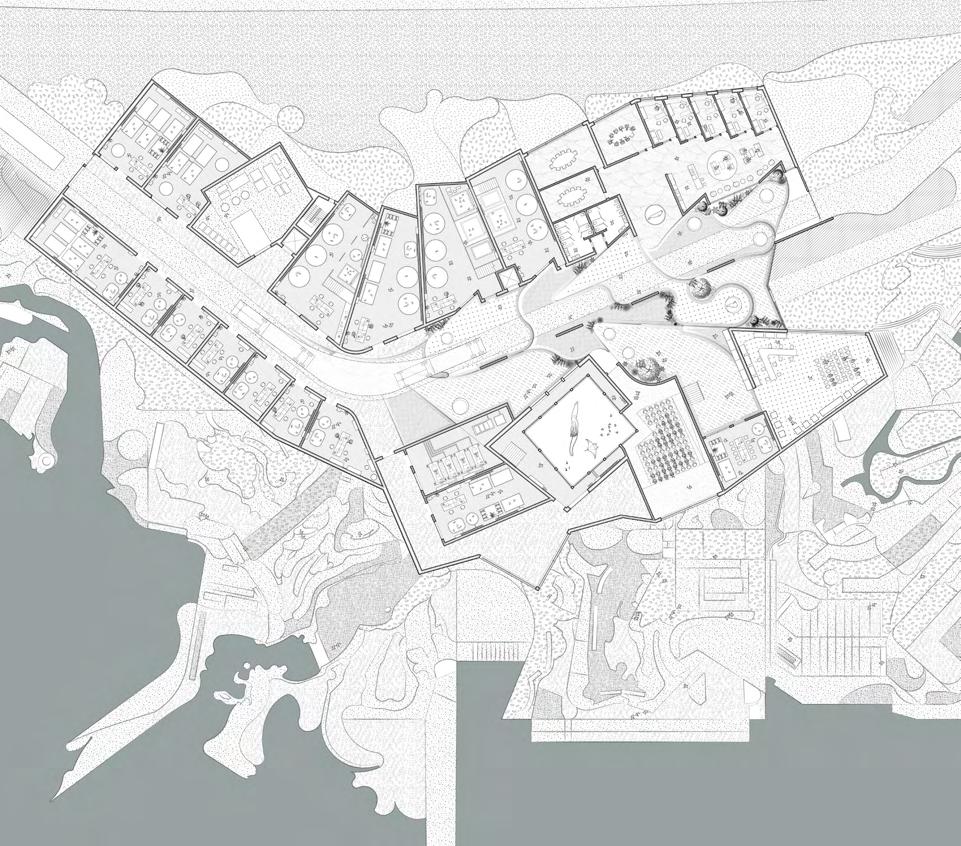
Office
Kitchen
Large-Wet Lab
Storage
Medium-Wet Lab 8. Small-Wet Lab
Aquarium 10. Lecture Hall
Class Room
Public Space
Truck Lane/Exhibition Space
Pump Room
Entrance Rendering
G600 STORM WINDOW
1“ CERAMIC TILE
6” RIGID INSULATION GRAVEL
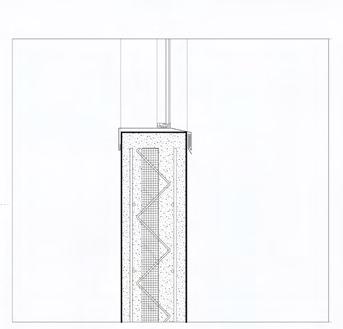
Section Detail - Curtain Wall
16” INSULATED PRECAST SANDWICH PANEL (4” EPS INSULTAION)
RRFCAST CONCRTT RAMF
10” HOLLOW CORESLAB
6” STFFL FRAME
10” INSULATED PRECAST SANDWICH PANEL (4” EPS INSULTAION)
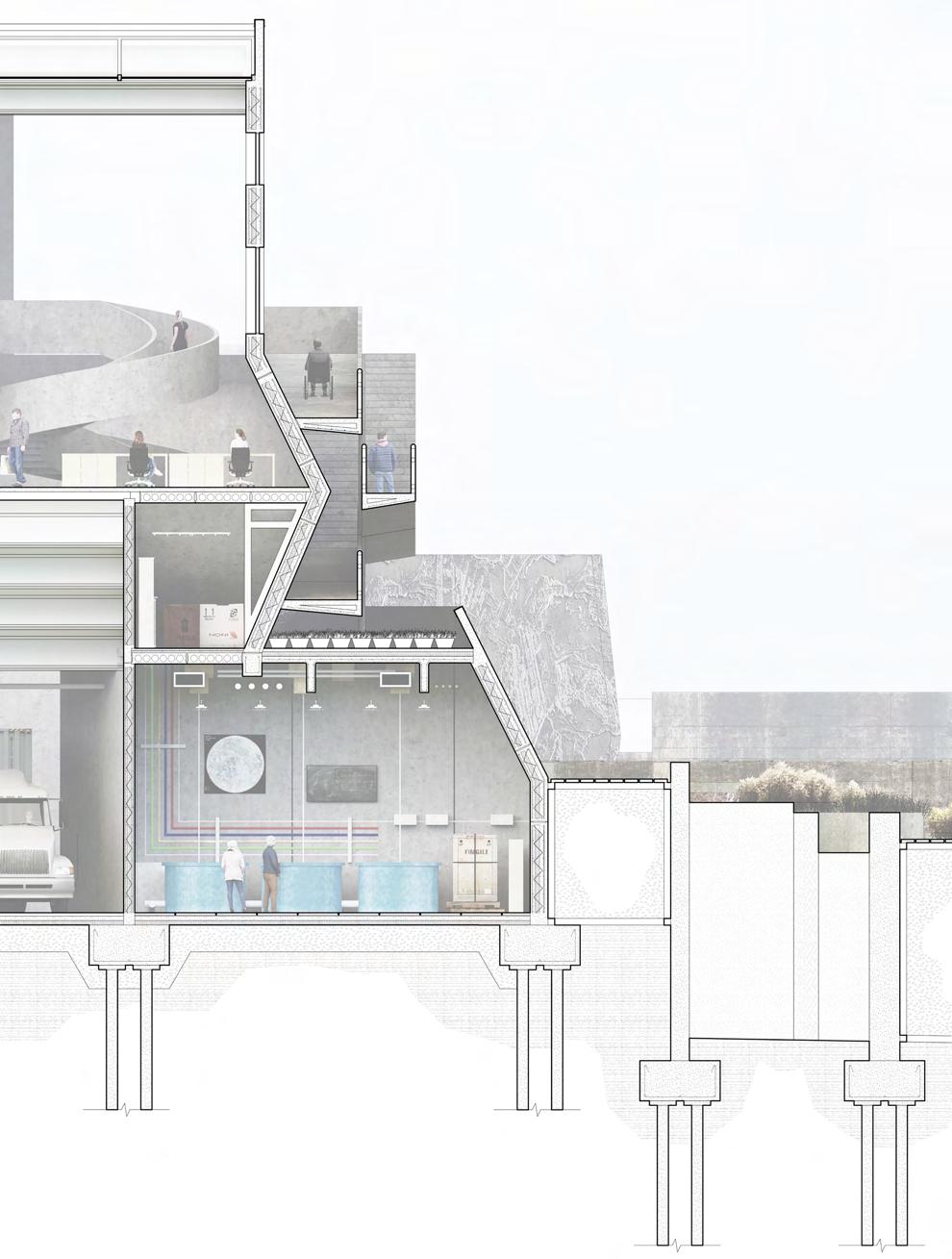
4” CAST-IN-PLACE CONCRETE SLAB
18” x 20” CONCRETE BEAM
16’ DOUBLE TEE
1” WOOD PLANK
6” STAINLESS STEEL CAGE
WALL ROCK
CAST-IN-PLACE CONCRETE
3’ CAST-IN-PLACE CONCRETE PILE CAP
10” CAST-IN-PLACE CONCRETE PILE
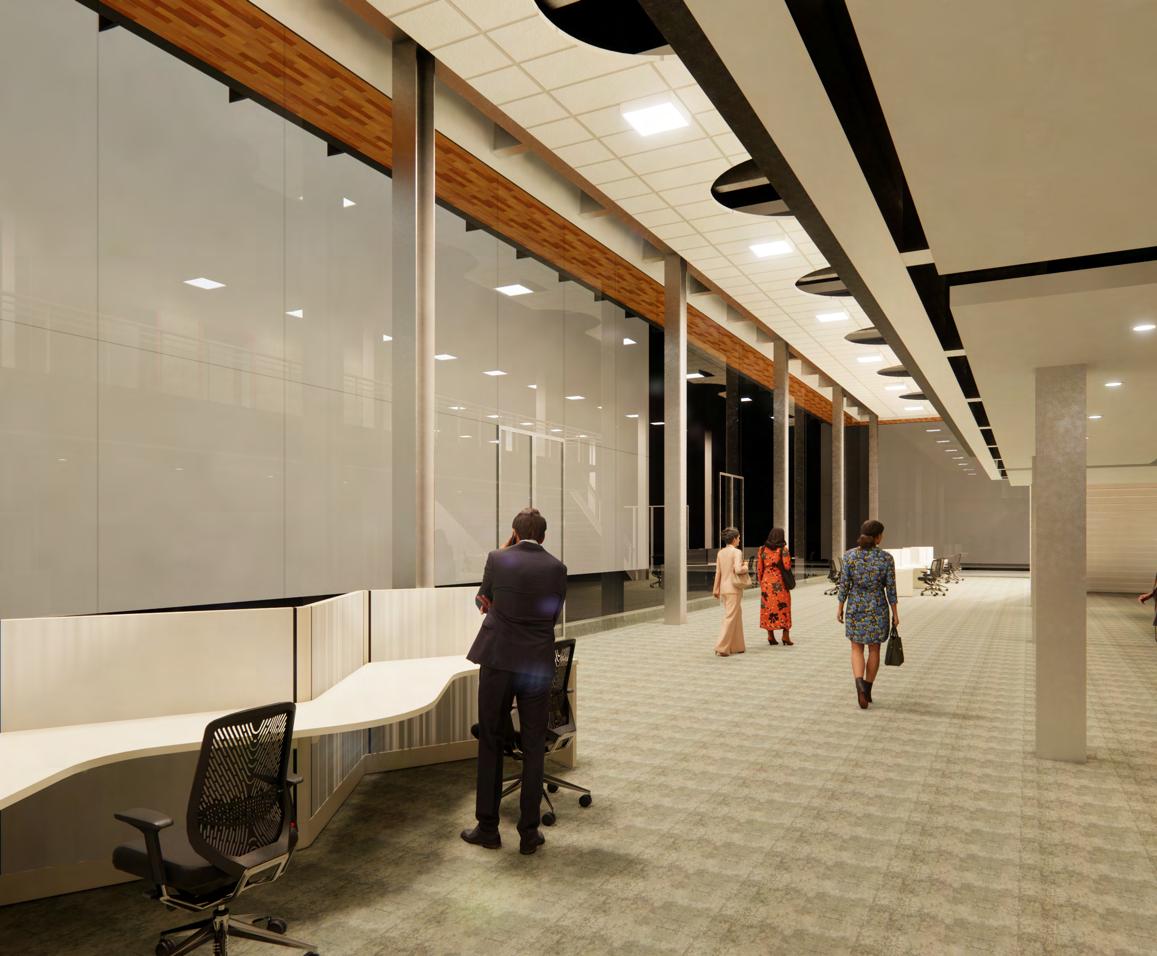
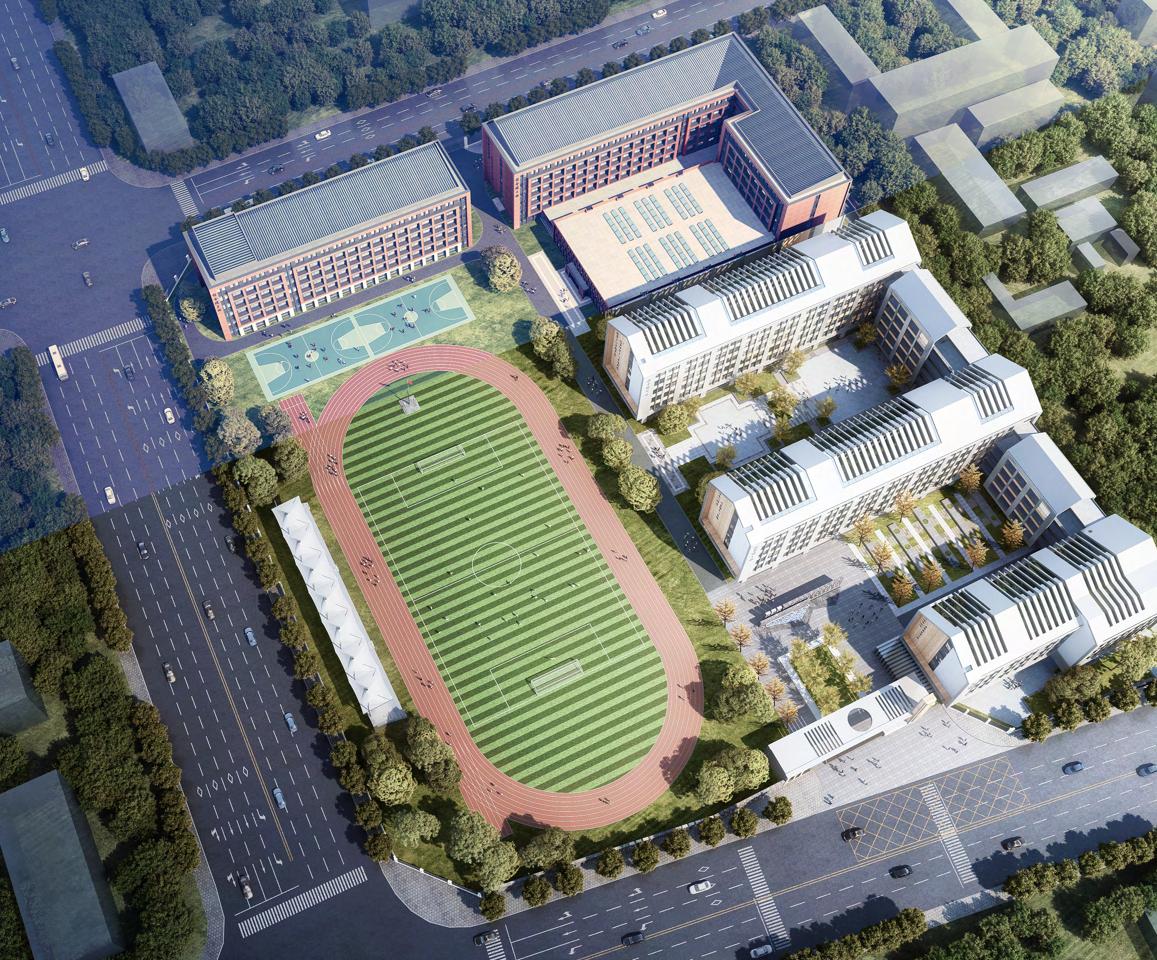
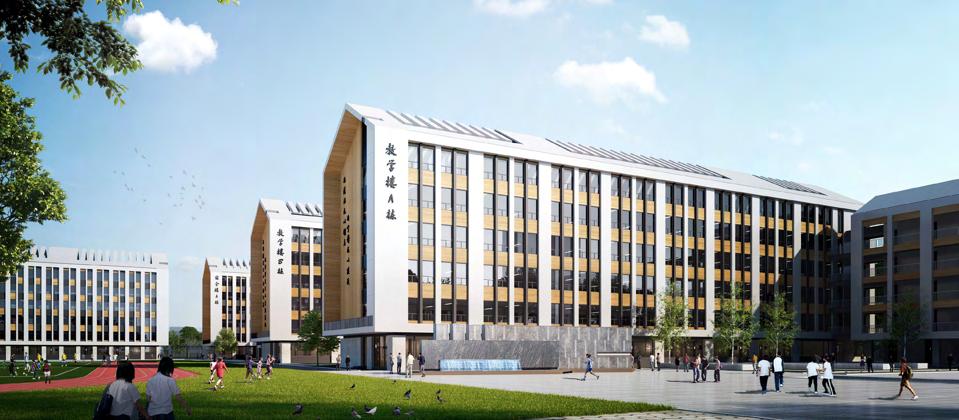
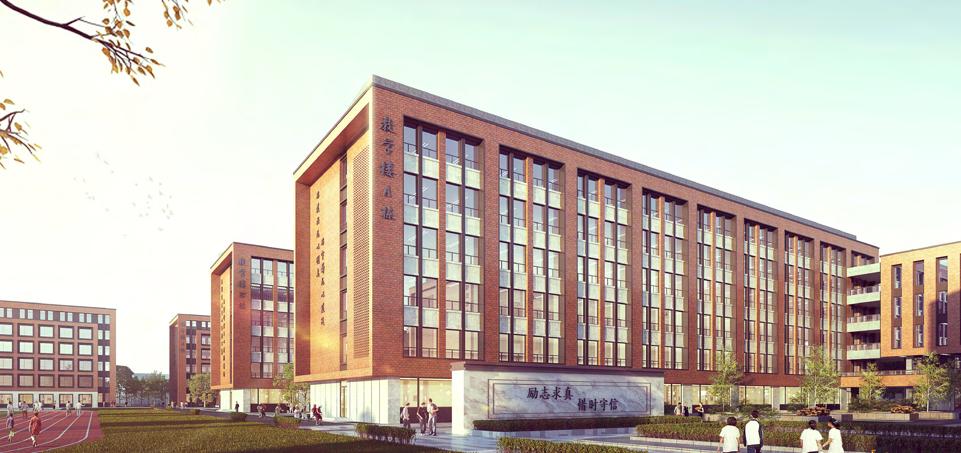
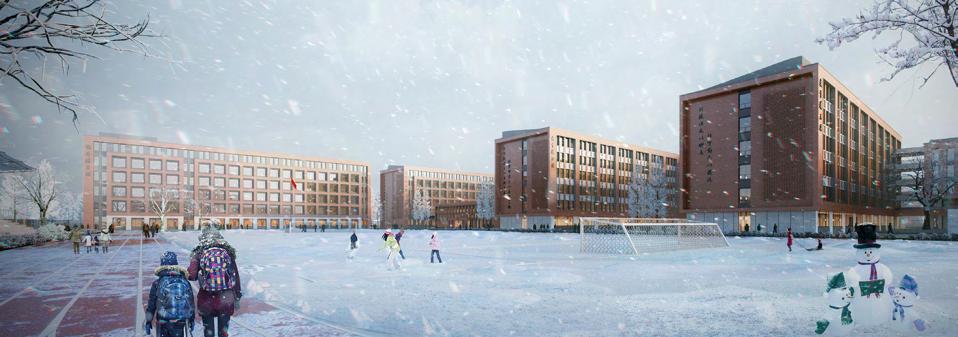
Jiying School
Hebei Baoding Jiying
Facade Design
Baoding, Hebei, China
Firm: Zhongji Xuanyuan
Project Length: 2 Months
Internship
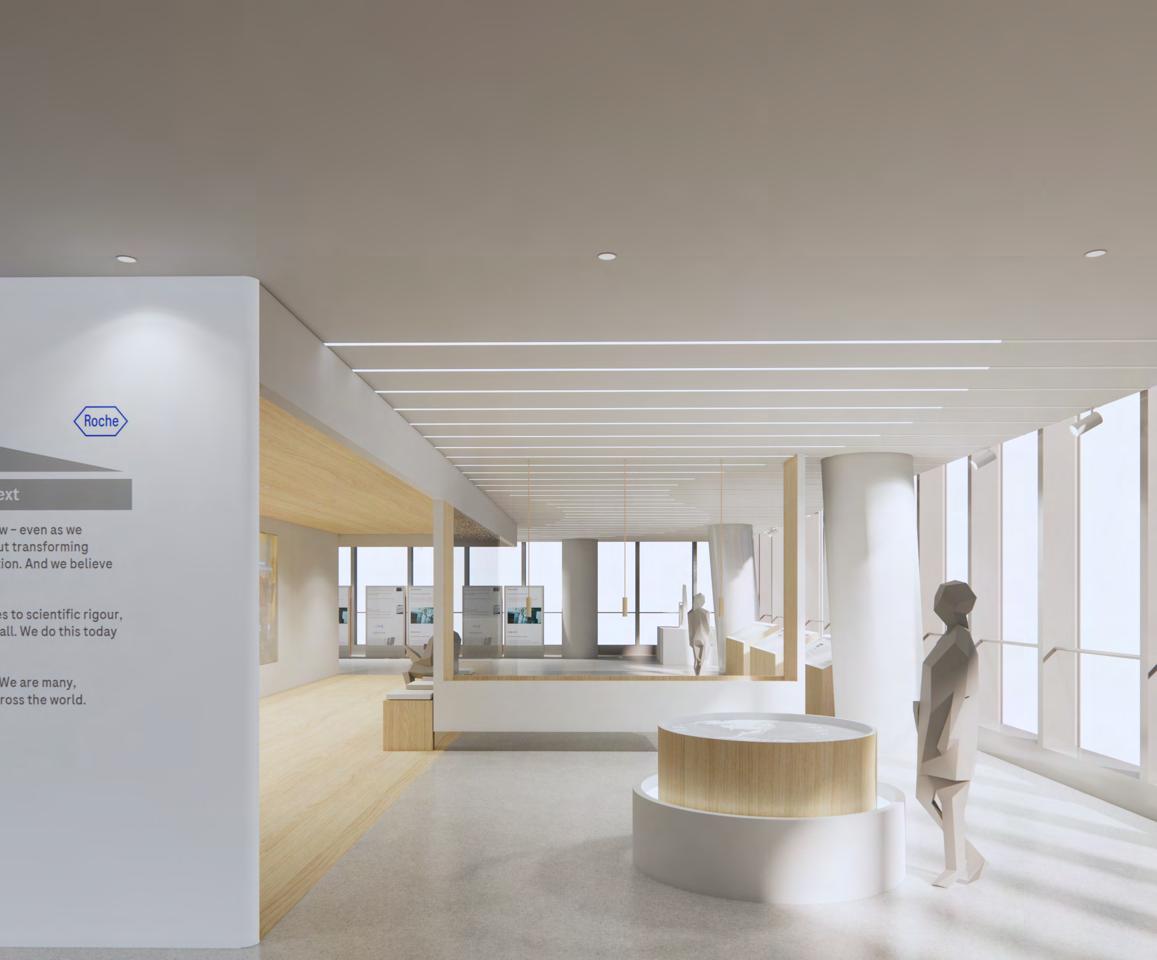
Roche Office
Roche Diagnostic
Interior Design
Shanghai, China
Firm: Trace Architecture Office
Project Length: 1 Months
Internship
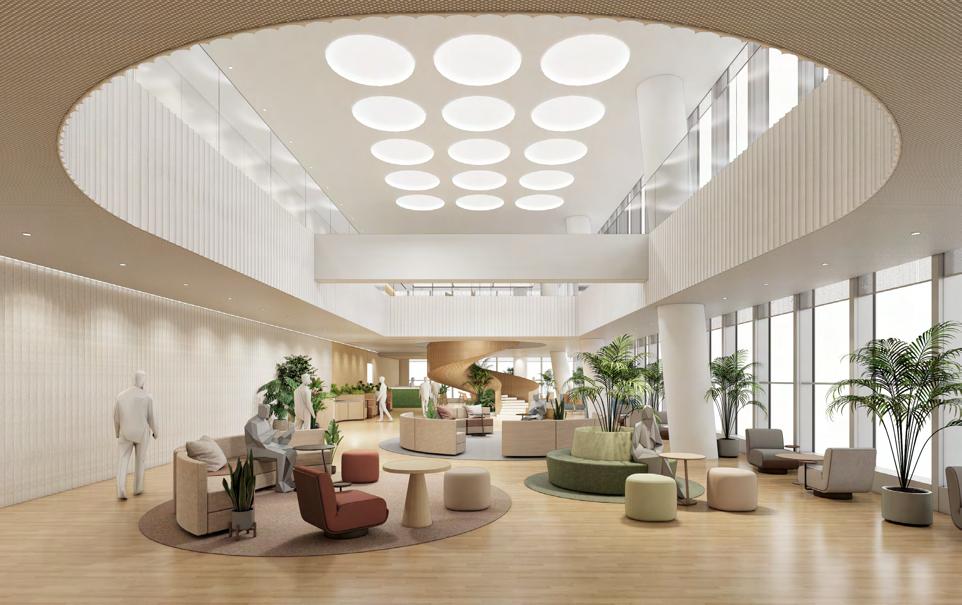
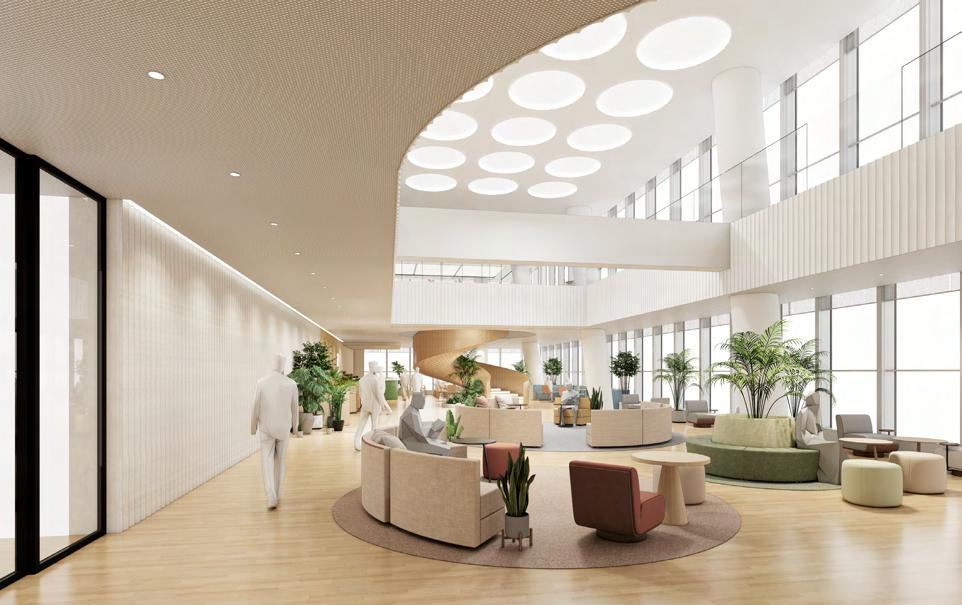
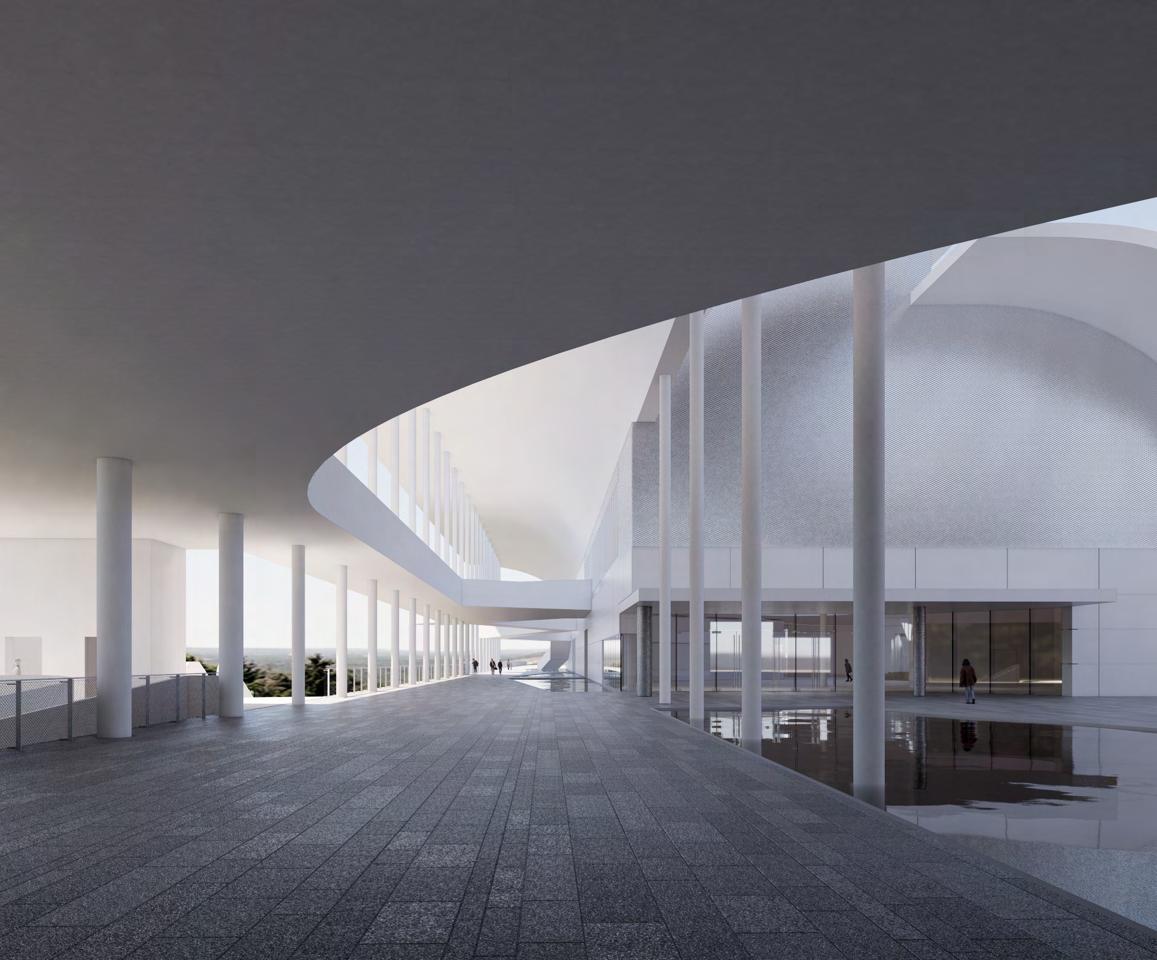
Wetland Museum
Shenzhen Mangrove Wetland
Interior Design & Exterior Design
Shenzhen, China
Firm: Trace Architecture Office
Project Length: 2 Months
Internship
INTERNSHIP