DOLES

THE NON NEPO BABY ZINE
Creative Director & Editor: ILLUSTRATOR: Qaylah Bell
Iliana Akore
PHOTOGRAPHER
QAYLAH BELL
THANK YOU:
Liz Miller, Stephen Spear and all of my lovely family and friends who put up with me during the creation of doles
D O L E S
CONTENTS 12. LOOK AT THE STATE OF IT 14. SPACE FOR CREATIVITY? 28. AUSTERITY’S WAR ON LOCAL ARTS AND CULTURE 9. DEFINING ‘WORKING CLASS’ 47.
CLASS 50.
DEER
HEADLIGHTS 35.
BETTER
31.
WE
THIS WHOLE TIME?
SUCCESSION? 34.
COSTUMING
LIKE A
IN
“THE POOR HAVE
TASTE THAN THE RICH”
HAVE
BEEN SEXIST
33. THE END OF
THE NEPO BABY NIGHTMARE BEFORE CHRISTMAS
FROM THE EDITORS DESK
Six years ago, I moved from Johannesburg to the UK, seduced by the promise of a "promised land"- that anything is possible with a little bit of hard graft.
What a load of shite.
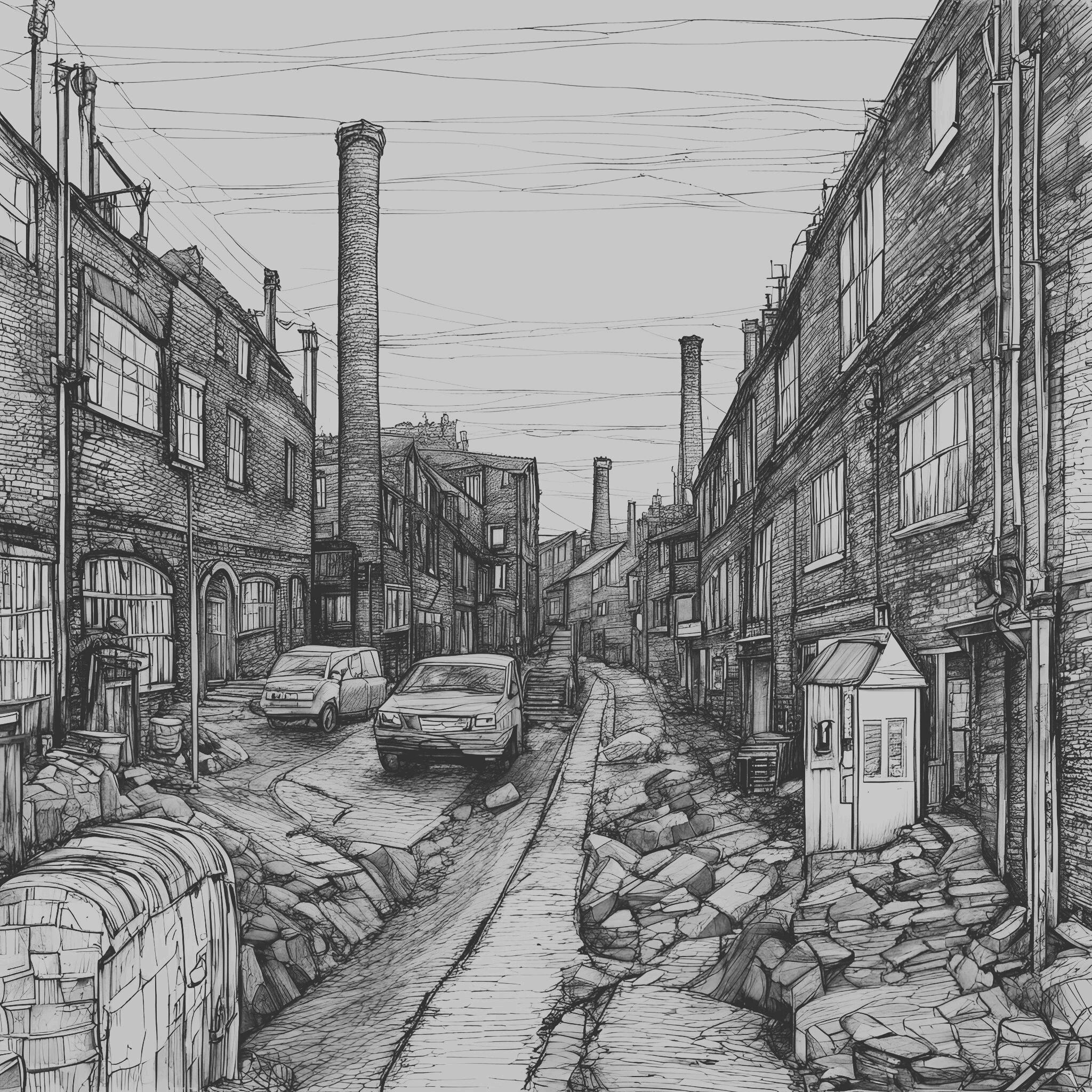
I ended up in the ex-industrial wasteland of Long Eaton, a dead-end town whose manufacturing backbone had been ripped out from under it. Sadly, it's just one of countless forgotten communities littered across this nation, former economic powerhouses now left to rot as their industrial utility expired. For the working-class creatives still clinging to life in these neglected pockets, any dreams of artistic expression or escaping generational poverty feel like cruel taunts.
With arts funding slashed to the bone and zero local infrastructure, their voices and stories are systematically silenced before they can even take form. It's a brutal reality that DOLES was created to confront head-on. We're done swallowing the lie that the UK's creative industries welcome all with open arms, judging solely on talent and hard graft.
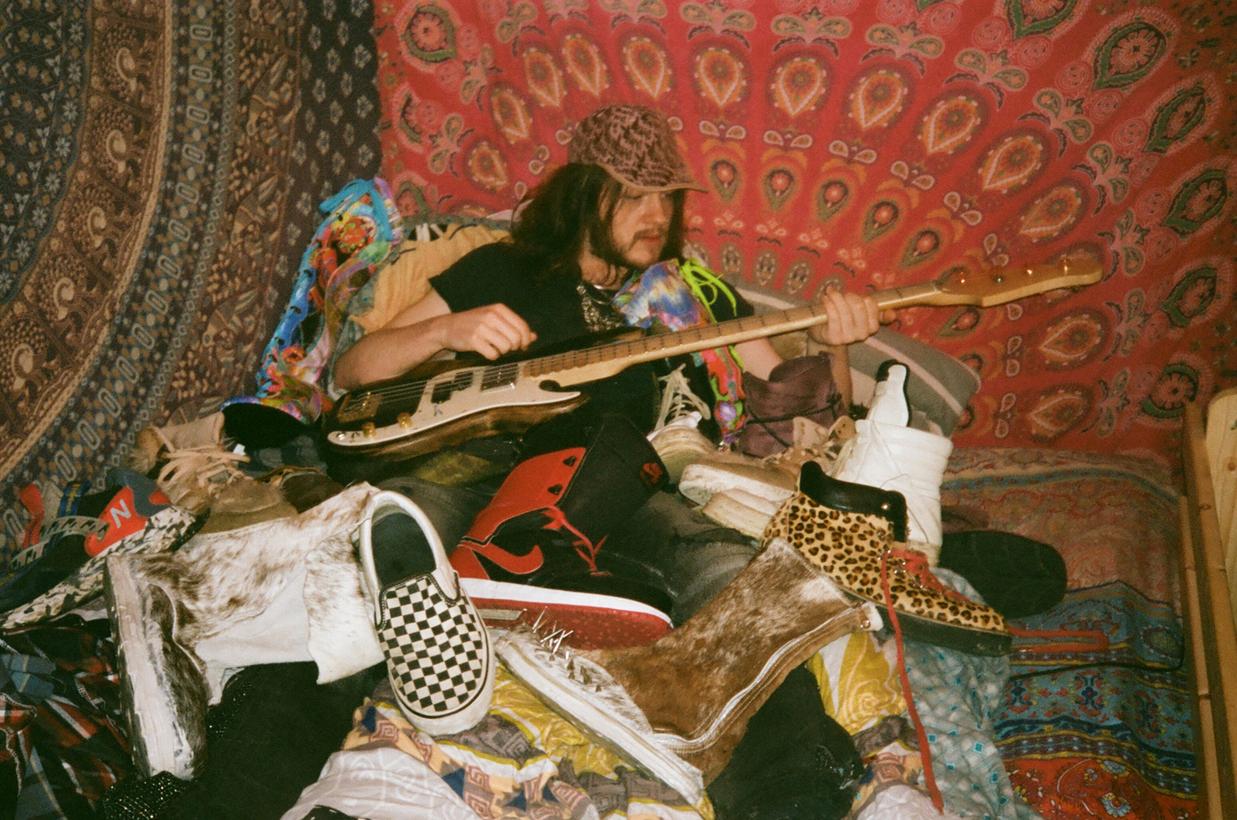
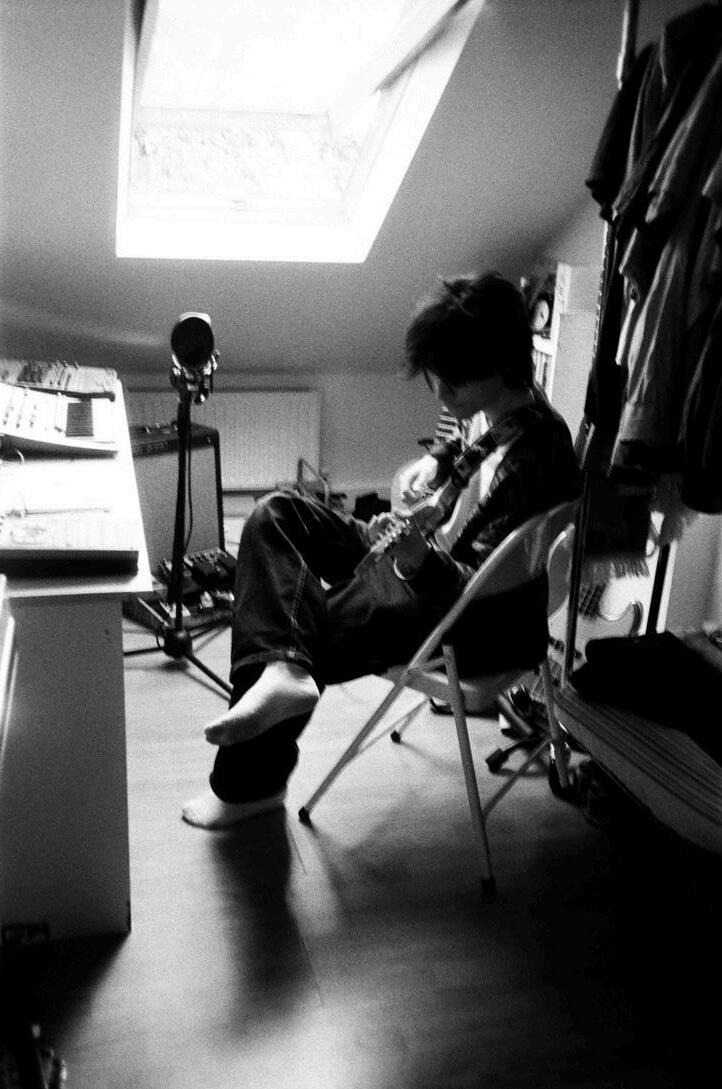
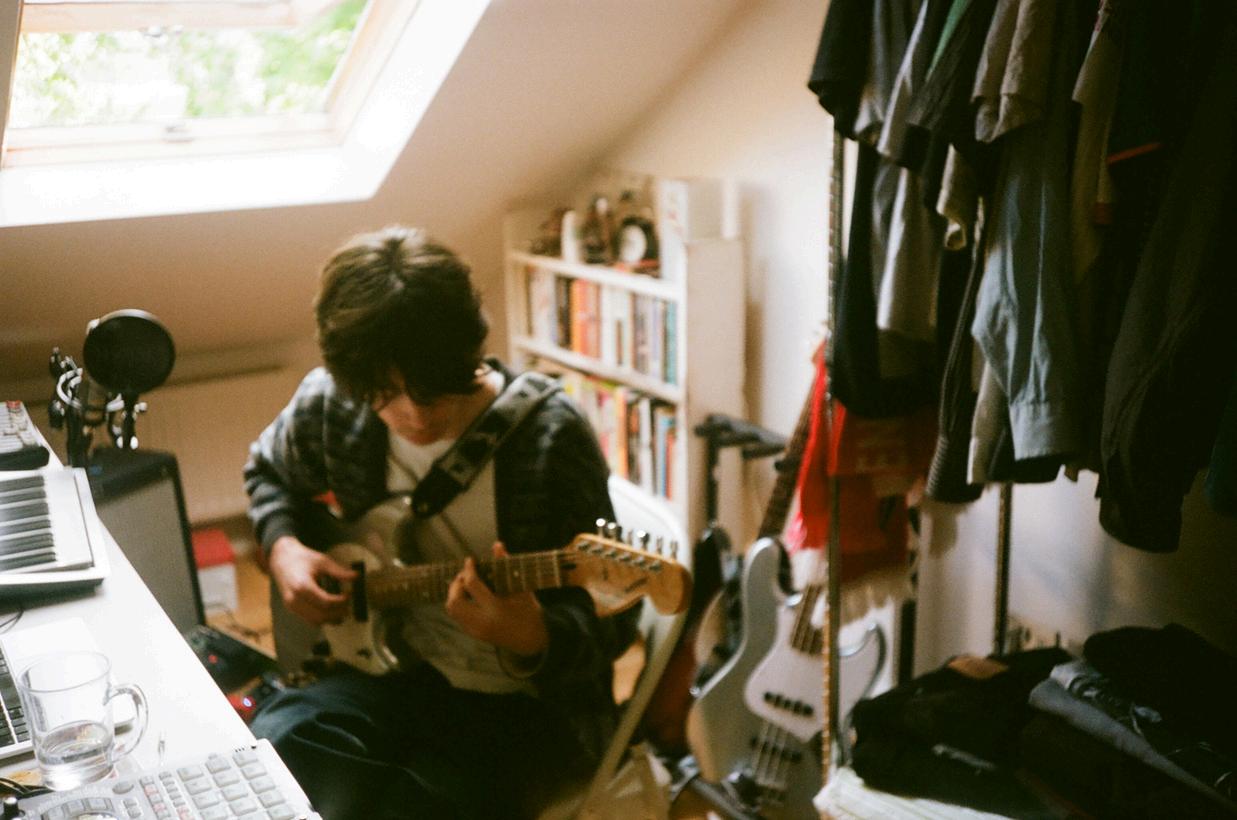
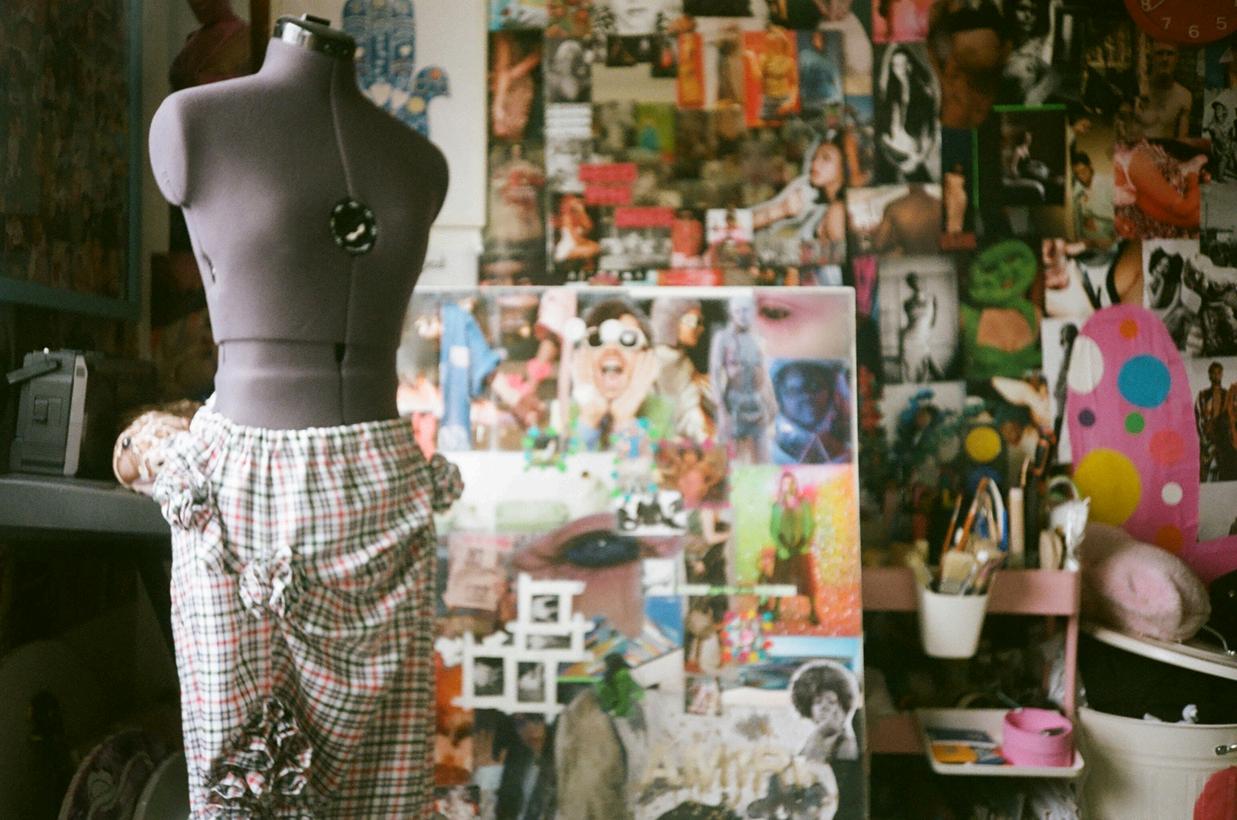
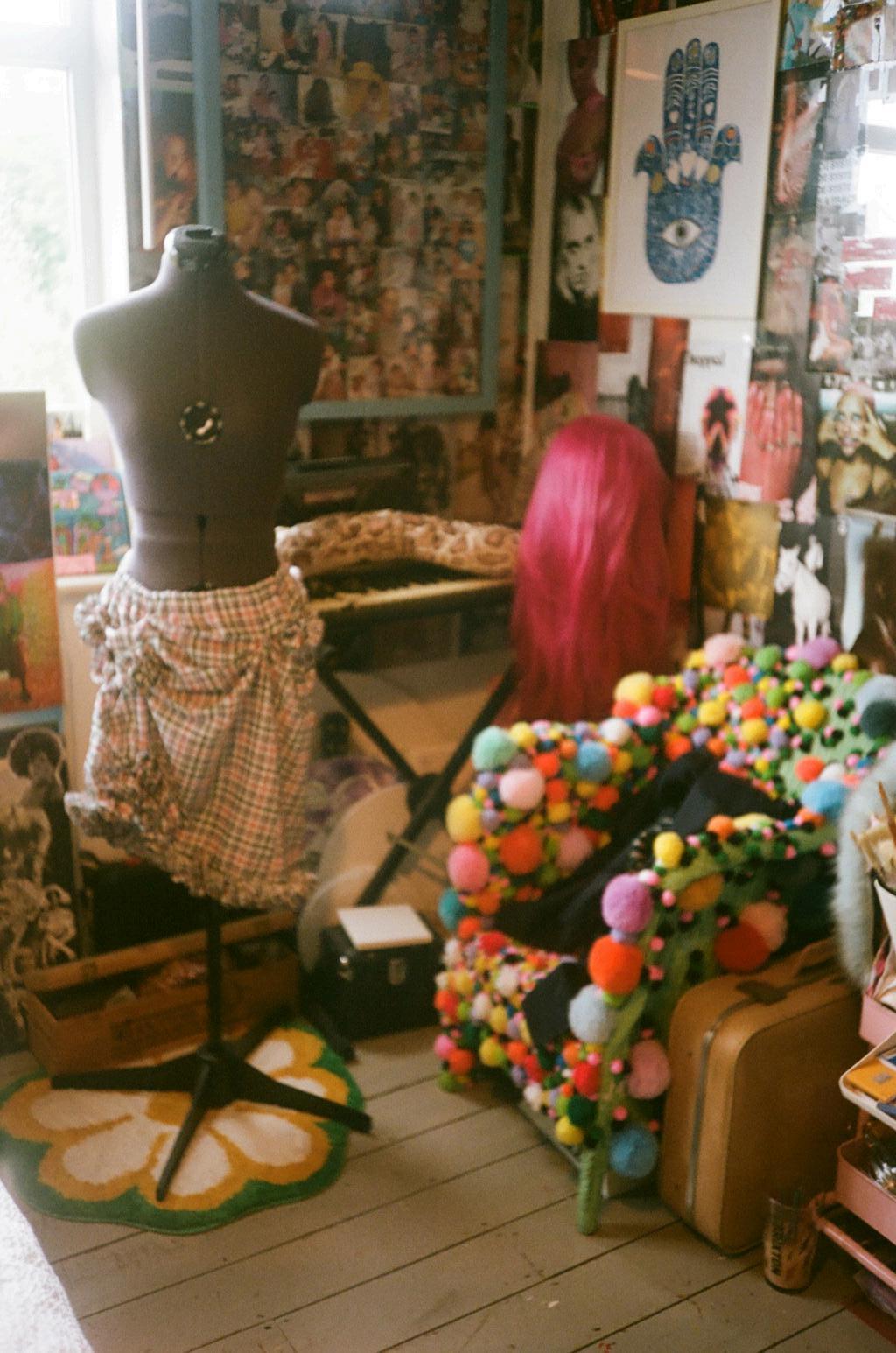
The facts speak for themselves - our comprehensive statistical analysis lays bare the overwhelming dominance of privileged backgrounds among working artists and creatives.From the photography exposing the cramped "bedroom studios" creatives are forced into due to the cost of living crisis, to the hard numbers on austerity's war against local arts and culture funding, this issue captures the harsh lived experiences of those shut out from institutional support.
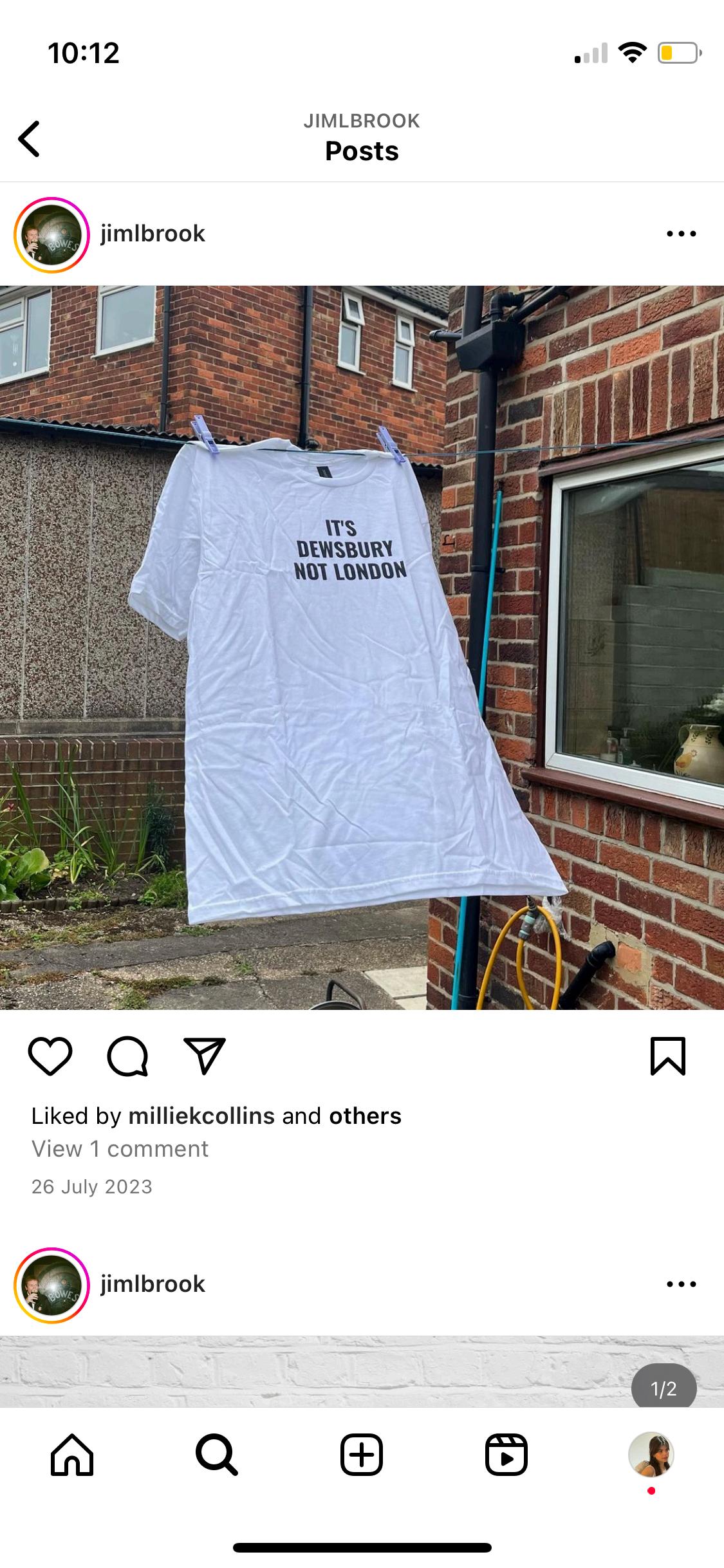
DOLES isn't some selfindulgent vanity projectit's about elevating the authentic working-class narratives that the elitist cultural gatekeepers have tried so hard to dismiss or gentrify. Voices like Dewsbury's own Jim Brook, an artist who embodies the raw defiance of rejecting the London-centric art world's self-mythologizing and middleclass pandering.
Ultimately, DOLES represents the opening salvo in our war to reclaim artistic expression from the clutches of cultural elitism. We're tired of being gaslit into believing the myth of equitable institutions.
No more asking for a seat at the high table - we’re building our own goddamn table, one defiantly workingclass voice at a time.
“This business of petty inconvenience and indignity, of being kept waiting about, of having to do everything at other people’s convenience, is inherent in working-class life. A thousand influences constantly press a working man down into a passive role. He does not act, he is acted upon. He feels himself the slave of mysterious authority and has a firm conviction that ‘they’ will never allow him to do this, that, and the other. Once when I was hop-picking I asked the sweated pickers (they earn something under sixpence an hour) why they did not form a union. I was told immediately that ‘they’ would never allow it. Who were ‘they’? I asked. Nobody seemed to know, but evidently ‘they’ were omnipotent.”
7
GEORGE ORWELL, THE ROAD TO WIGAN PIER
8
DEFINING
As we approach the second quartile of the fever dream that is the 21st century, we’ve borne witness to the horrors, joys and glorious confusion the first quartile laid out for us. Our perceptions of the world around us have been radically shaped by seismic technological and social advancements- from surviving a pandemic to the mindnumbing trance of doom scrolling that we have all unfortunately fallen victim to.
In the age of social media, the distinction between right and wrong, good and bad, funny and cringe is constantly shifting - and our perceptions of the world are in constant flux because of it. As a generation, we are constantly dismantling and rewriting traditional narratives of how we as a society are expected to behave, questioning everything we thought was once true In an age of ultra social awareness, barriers, classifications,the ‘how to’ guide to act as a society are in constant revision - and rightfully so.
‘WORKING CLASS’
Amid such dizzying change though, the notion of ‘class’ and what it means to be working class has become an increasingly complex and sensitive subject to unpack In an era of remote work, the gig economy and the blurring of the distinction between traditional blue and white-collar roles, the classic definitions rooted in industrial-era labour no longer seem to suffice. Is it simply a matter of household income? The type of job you have or where you got your education? Is it a collective state of mind? Or is it the shared experience of feeling guilty because you now realise how much of an ungrateful little shit you were to your struggling mother growing up?
9
The truth is, defining the working class and what makes a person a part of this group is a highly nuanced and personal exercise - one that intertwines a roster of factors like race, gender, disability status, sexual orientation, and so on. To be working class is to exist in a liminal space shaped by numerous barriers and disadvantages For some, it’s having no financial safety net, for others, it’s generations of systematic oppression. For most, it’s working their asses off for an unguaranteed shot at opportunities handed out so easily to the fortunate
We believe the best way to define ‘working class’ is laid out by The Working Class Creatives Database:
One can define class by asking the following questions: how much of a margin of error do you have? How much do you have to fall back on? The stakes are high for a working-class person who wants a career in the arts and doesn’t have a support system around them.
“We believe working classness is made from the intersection of various diversities, histories, places, and identities. Class-based inequalities are inextricably linked with gender, racial, disability and spatial disparities, and earlier research by the PEC has shown how these factors interact to compound disadvantage. What unites WCCD members is a culture formed from the difficulties of not having the same level of support to thrive in modern society as those from upper- or middle-class backgrounds.”
10
11
Illustration courtesy of Iliana Akore
LOOK AT THE STATE OF IT
WORKING-CLASS CREATIVES IN THE ELITIST UK ARTS SCENE
FFor those of us raised in traditional working-class households, the narrative of following the arts leading to ultimate failure is unfortunately all too prevalent. We’ve heard the stories from our mothers countless times - if you want to survive in this dog-eat-dog world, you have to sell yourself to the 9-5, more ‘proper’ roles.
Can we blame our mothers though? The UK sells a false narrative of social mobility and ‘anything can be achieved if you put your mind to it’. For those of us whose families have been generationally tied to being perpetually working-class, unable to grasp even a fraction of social mobility - the tale of NOT following your dreams was always told to us out of care and not because they wanted to crush our dreams.
Unfortunately, the systemic barriers facing working-class artists start from childhood. A 2021 survey by the Creative Industries Federation found that 64% of secondary schools in deprived areas across the UK have depleted or eliminated art, music and drama departments entirely due to funding constraints. In exclusive research from The Working Class Creatives Database 2024 report, data reveals that most survey respondents “described inadequate facilities and underfunded art departments, with some expressing the discouragement they faced from teachers and a lack of support for pursuing art as a career. Limited extracurricular opportunities and financial constraints caused many to drop out of art-related courses.” With draconian government cuts gutting arts education in state schools and community programs, along with the generational narrative of not pursuing the arts, working-class kids are being creatively stifled before they even begin.
12
Instead, those limited creative resources are funnelled into elite private schools - breeding grounds for the cultural elite's privileged offspring to be cultivated from a young age. With specialist arts tutors, residential summer camps, and admissions advantages, private schools become factories for churning out the next generation of nepo babies. Kyle Cumming, a Media Communications student at London College of Communication shared his insight on the subject: “I only found out that fine art was a course when I started university. Everyone who was anyone seemed to be studying it, and had their parents funnel pretentious art forms down their throats from birth” he adds “How are you meant to compete with the prestigious when you (by no fault of your own) have had no exposure to it yourself? They knew everything already and I was just starting.”
It’s an unfortunate reality, but the truth is that the dice are loaded from day one.
But why are we still shocked? The UK's creative industries have always been an exclusive playground for the posh and privileged. Data from the Creative Industries Policy and Evidence Centre (PEC) reveals that 92% of those working in the UK's creative industries were raised in families with above-average wealth and resources. As for nepotism? Over onethird (34%) of actors, musicians and visual artists admitted their success stemmed primarily from nepotismfamily connections, inherited wealth and privilege. Among exhibited visual artists in major UK galleries, only 8% identified as working-class. For published authors, only 16% identified as working-class according to Arts Council England figures.
It's an unbreakable cycle of privilege breeding more privilege in the arts While working-class creatives are forced to put their dreams on hold to make ends meet, the upper-class can pursue their artistic callings with reckless abandon, confident that daddy’s money will cover any stumbles. And even if working-class creatives somehow do beat the systemic odds to get a foot in the door, the elitist UK art world is hardly a welcoming place From informal class discrimination and microaggressions to exclusionary social circles and networking, the deeply ingrained cultural capital of the upper classes creates an alienating environment.
With the odds so stacked against them, is it any wonder so few working-class creatives persevere to forge sustainable careers? Without family safety nets or generational wealth, the risks of embracing the penurious artist's life are simply too great. While their privileged peers can treat creative pursuits as hobbies or vanity projects, working-class artists must constantly weigh their passions against putting food on the table.
So they're forced into soul-crushing cycles of temporary jobs, gig work and benefits claims just to scrape by - always one missed paycheck away from derailing their creative ambitions entirely. It’s a dynamic that leaves a trail of burnout and unfulfilled potential in its wake.
The UK's creative industries have deeply rooted rot when it comes to class exclusion. Until that systemic classism is confronted head-on, the cycle of privilege and gatekeeping will only continue unabated
“Working-class creatives deserve more than to just be exploited for gritty authenticity” Kyle Cumming
13
SPACE FOR CREATVITY?
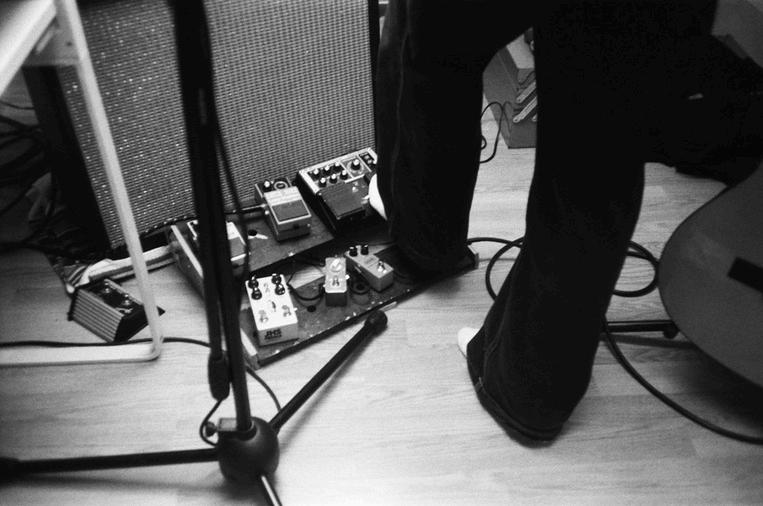
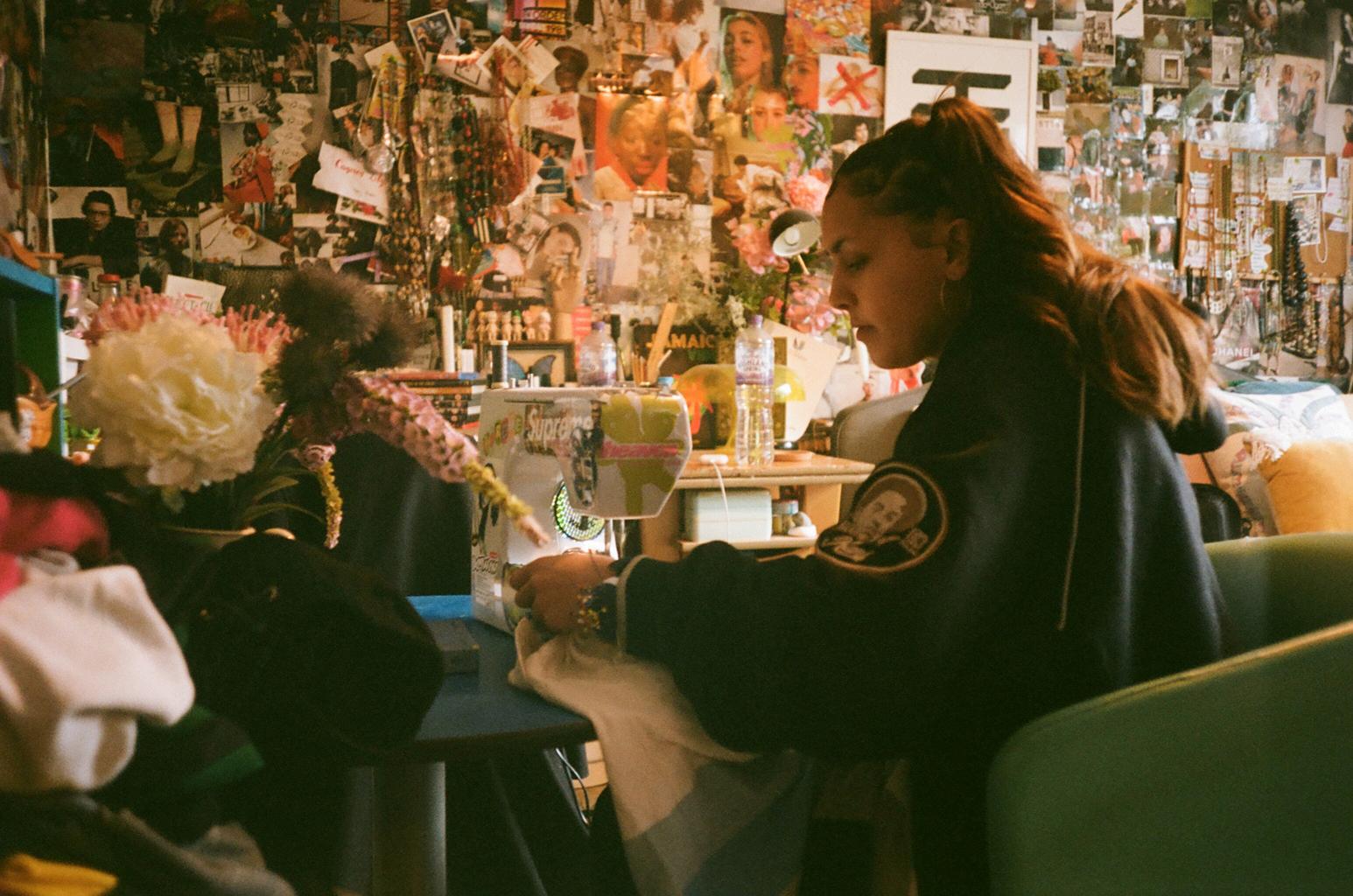
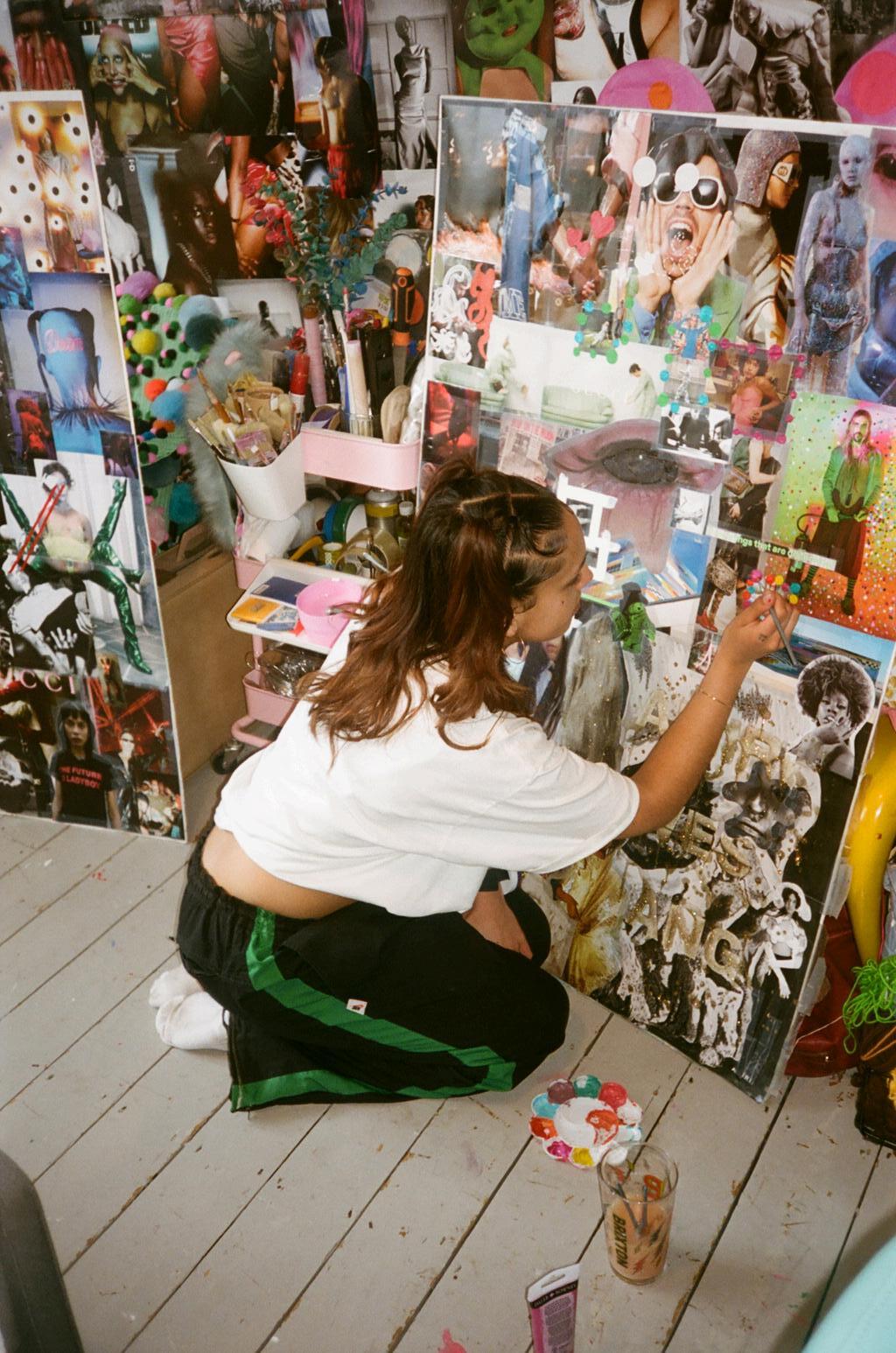
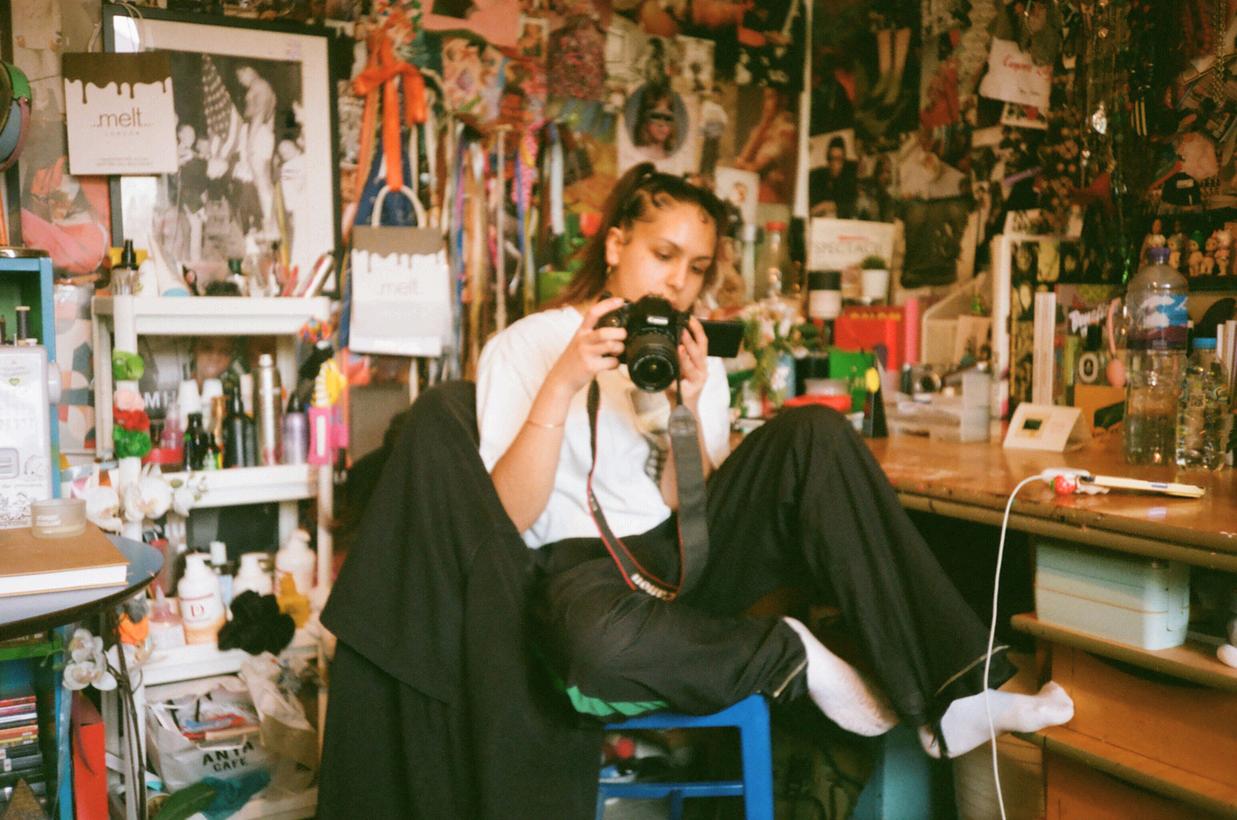
COST OF LIVING CRAMMING CREATIVES INTO BEDROOM ‘STUDIOS’
Currently in London, the average price of a creative studio rental ranges from £15 to £500+ per hour. For those of us on a tight budget, no need to fret!
Rentals at £15 give you access to a room filled with amenities to suit every budding creative’s needssix chairs, six cushions and a projector! It’s laughable, but at this point, comes as no shock - the cost of living crisis is a soul-sucking pit of despair that keeps chewing us up and spitting us out.
The Creative Mentor Network's "Cost of the Cost of Living" survey paints a sobering picture, with 93% of respondents expressing concern over the crisis's impact on securing entry-level jobs, and a staggering 67% forced to abandon their creative pursuits altogether.
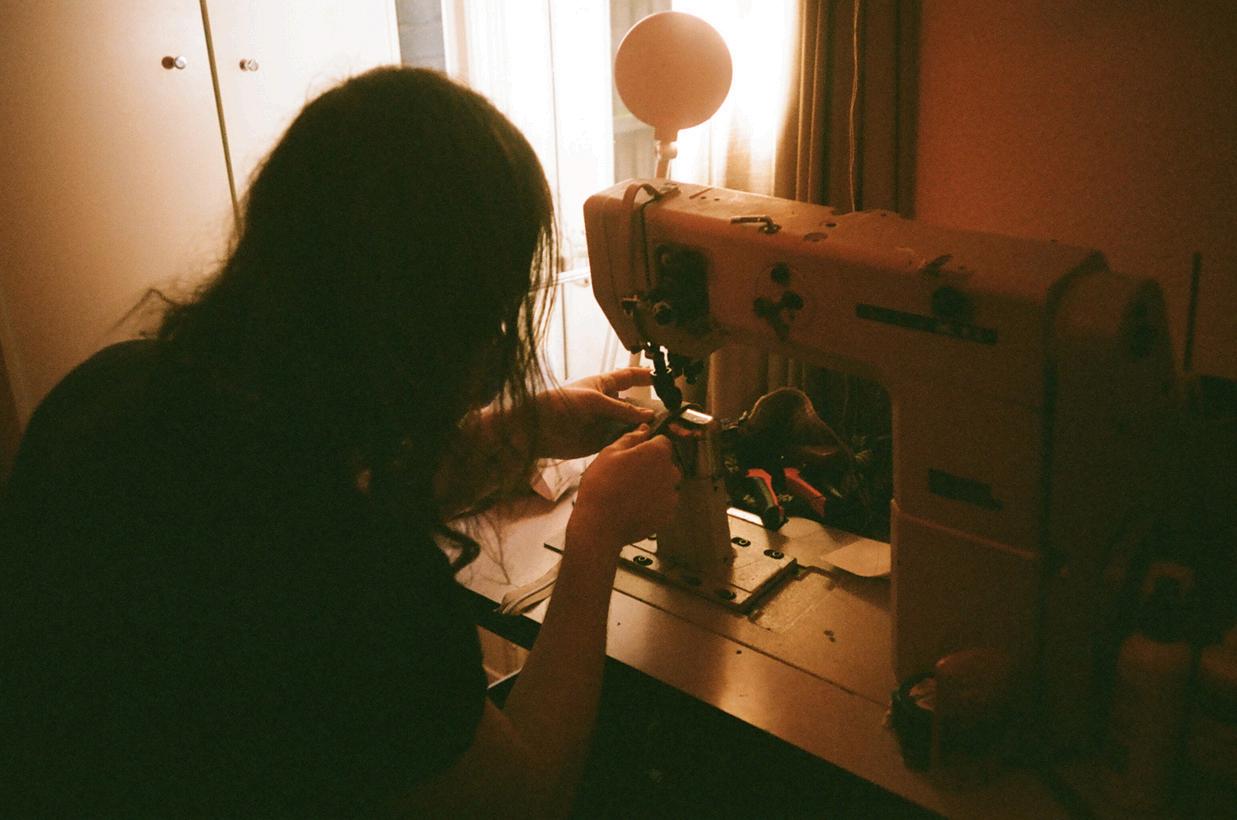
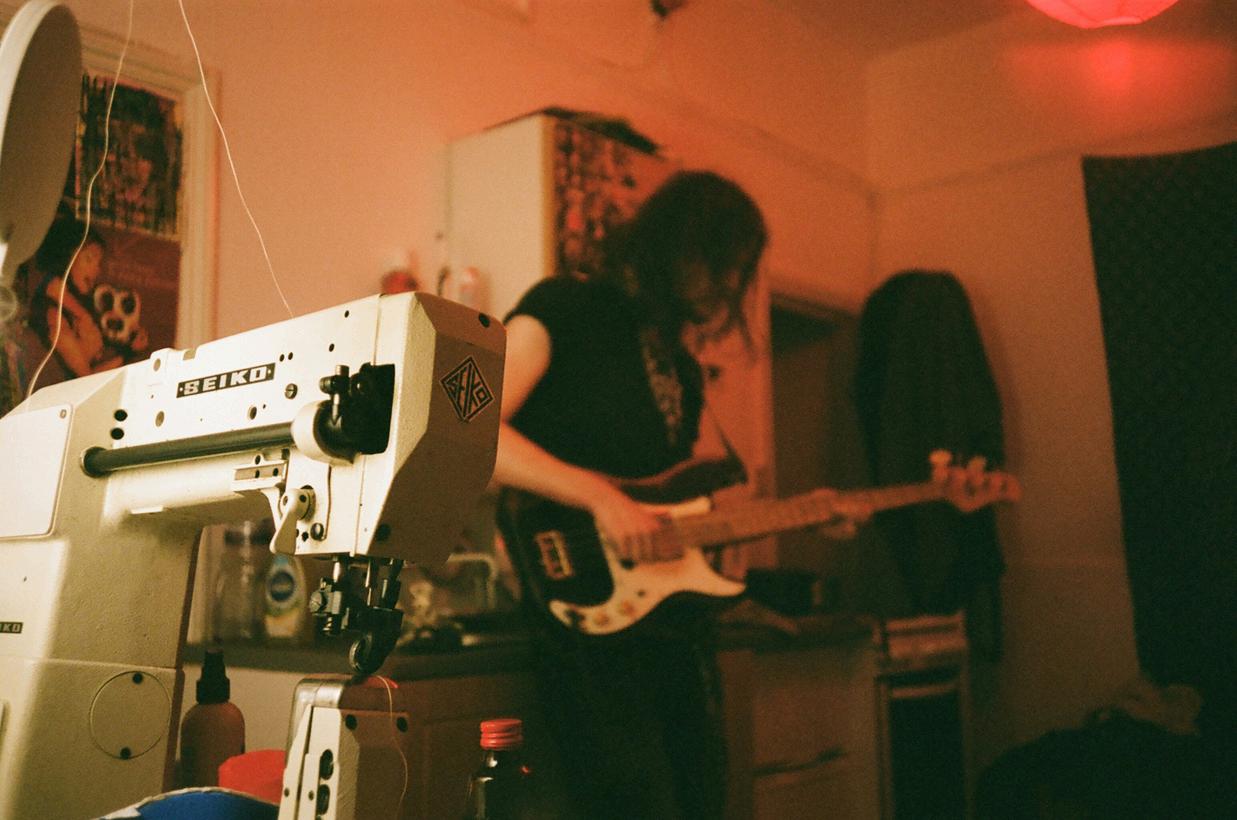
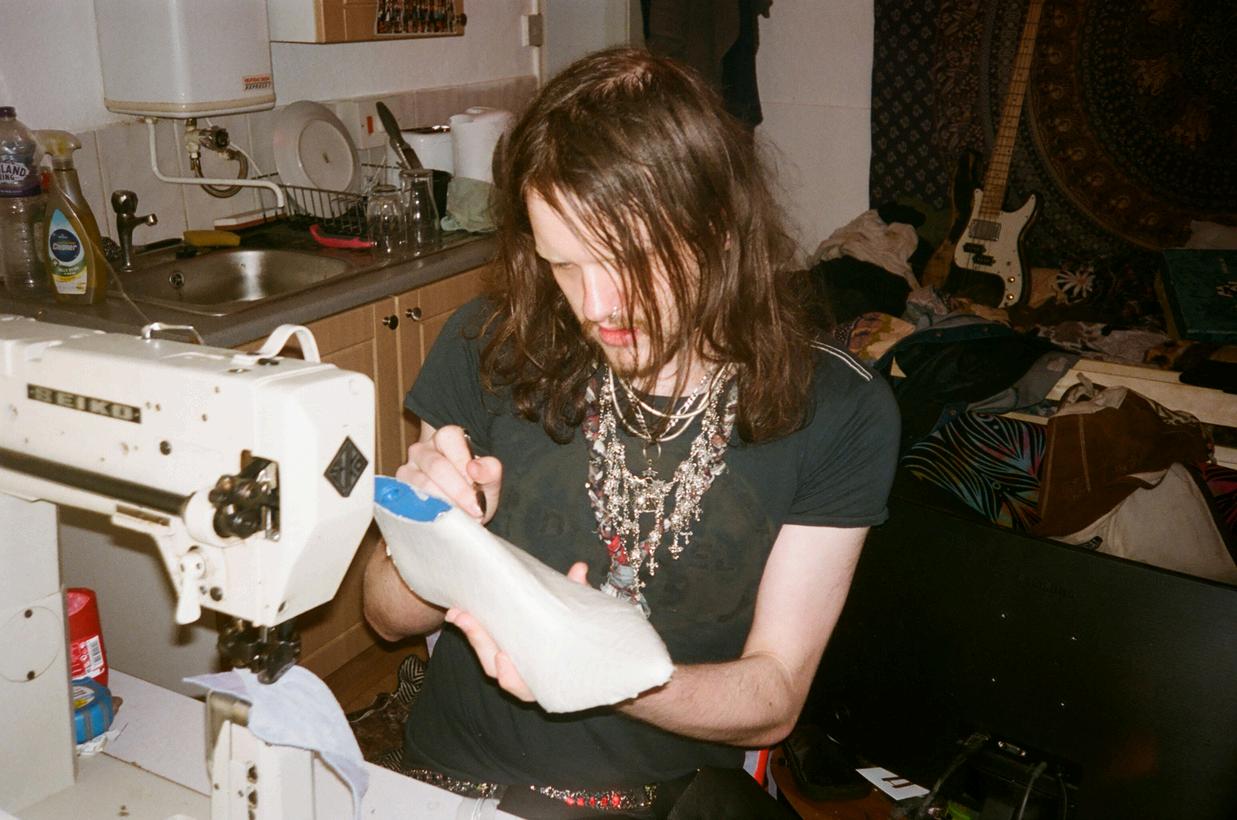
With rental costs and real estate prices spiralling out of control, bedroom corners and kitchen tables have become the new "studios" by default for those priced out of the market. Of course, it's frustrating that compromises are required just to create.
but fortunately for us, there is one thing that surviving the COVID-19 pandemic taught us - the art of hybridised living.
14
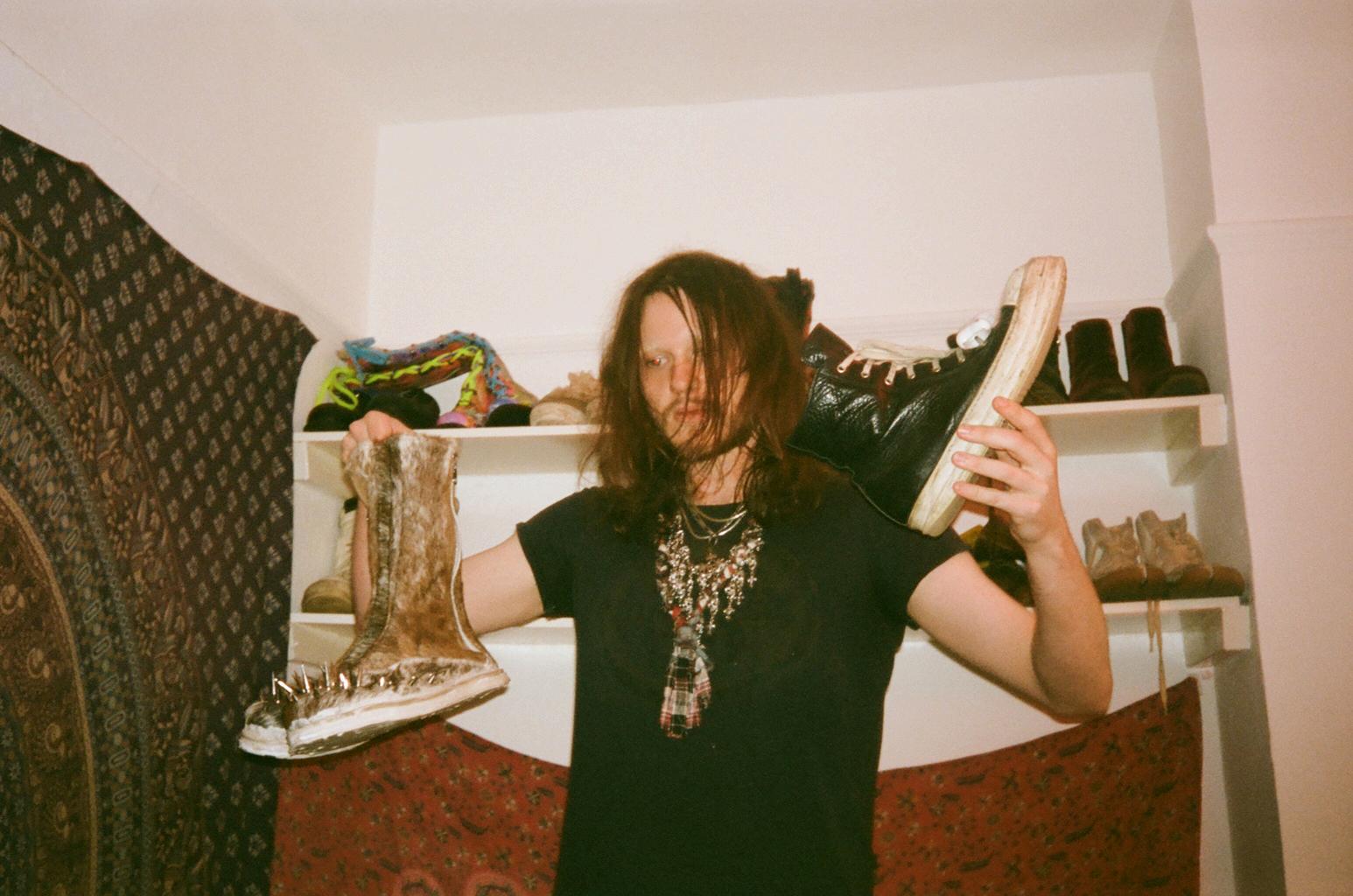
LEXX HOGG
15
GETT
23 years old
London College of Fashion
Footwear graduate
Multidisciplinary artist: designer & musician
Currently on the dole
16
17
18
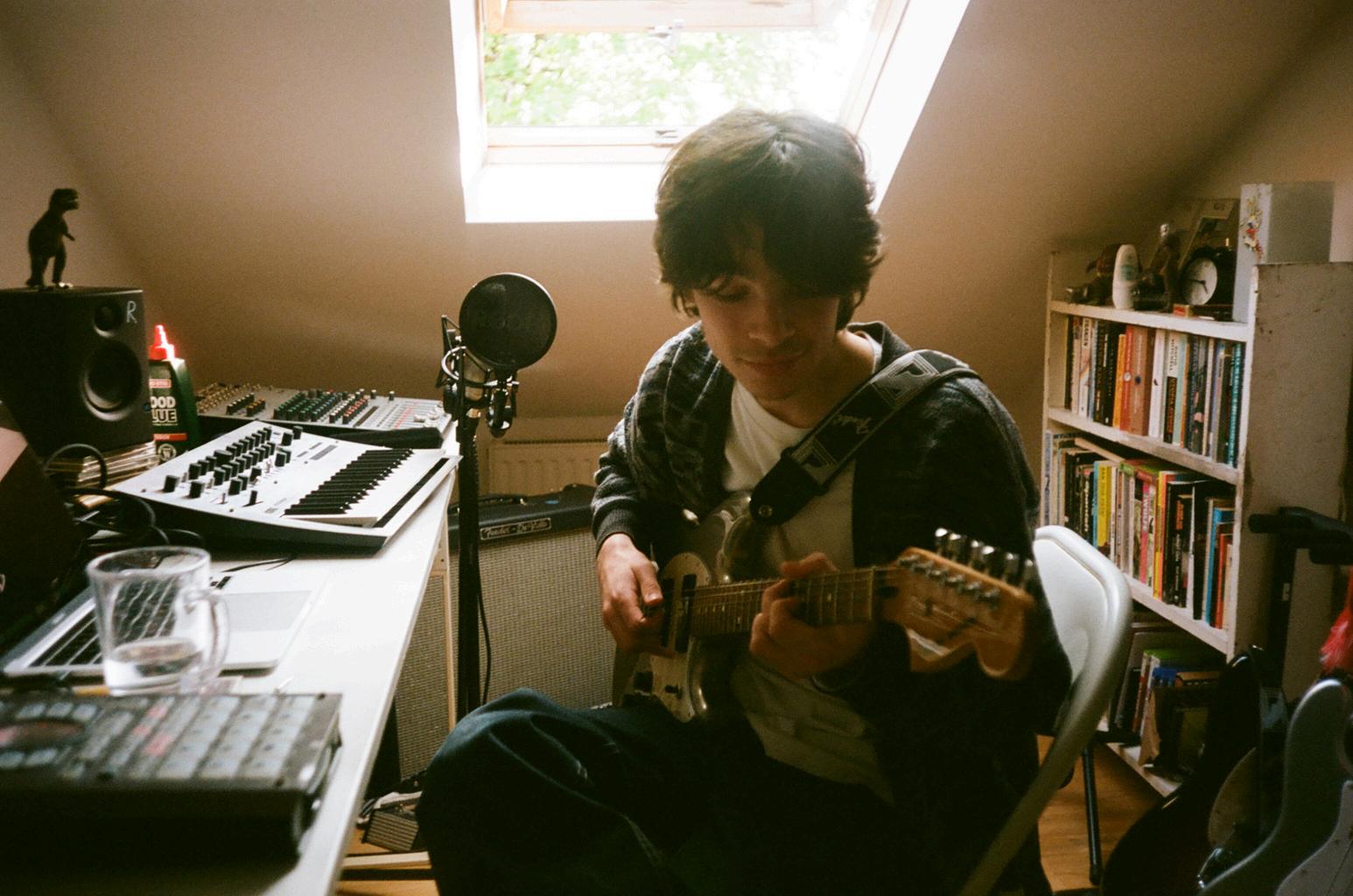
21 years old Psychology student at UCL Musician
Currently unemployed 19 ERIC
C HOWDEN
20
21
22
CAMERON
22 years old
Acting graduate
Multidisciplinary artist: designer, photographer, creative director & actress
Currently working as a waitress
LILY SIMAO
23
24
25
26
27
WAR ON LOCAL ARTS AND CULTURE AUSTERITY’S
In 2018, Northamptonshire County Council issued a 114 noticedeclaring themselves effectively bankrupt and being the first council to find itself in financial turmoil since 1998. Since then, six other councils including Slough, Croydon, Thurrock, Woking, Birmingham City and Nottingham City have issued the same notice.
So what is a 114 notice?
AN INCREASING NUMBER OF COUNCILS ACROSS THE UK ARE BECOMING BANKRUPT - WHAT IS THE IMPACT ON OUR ARTS AND CULTURE SECTORS?
As councils across Britain scramble to cope with brutal budget cuts by issuing an unprecedented wave of Section 114 notices, one sector facing the brutal front line is arts and culture. From grassroots creative programs to museums and galleries, vital community resources are at risk of being ruthlessly gutted as the Tory austerity regime tightens its chokehold on public services.
It’s a report issued by the council’s chief financial officer effectively freezing all non-statutory spending. To elaborate, statutory services refers to services that are legally required to be provided for the public: education services; social care; housing services and so on. Non-statutory services refer to services that do not receive any government funding, usually, grassroots initiatives and charities and surprise, surprise, arts and cultures sectors fall into this bracket.
As councils are forced to make drastic cuts to remain solvent, it's their arts and culture budgets that are unsurprisingly first on the chopping block, as Fashion Cultures and Histories lecturer Sophie Barr states: “We are in a kind of political culture at the moment in which the arts have been under attack.” - Because who needs creative niceties when basic services are at risk?
28
In Croydon, the council's entire arts program and partnerships have been axed - a brutal £1.5 million cut that will decimate the borough's cultural scene. In Slough, the borough's entire £3.2 million arts and leisure budget has been effectively eliminated. For Nottingham, a 100% reduction in grants to cultural institutions.
In terms of funding, grant-in-aid and lottery money to the arts fell in by £178 million etween 2010 and 2023. Arts Council England’s (ACE) budget was trimmed by around 30% over the same period.
The human cost of the cuts is staggering. Countless artists, creatives and cultural workers face unemployment and career stagnation, while working-class communities lose vital outlets for self-expression, education and simple joy. Study after study shows a direct link between access to arts education and improved life outcomes for underprivileged youth. Kids engaged in creative pursuits see increased self-esteem, better mental health, and higher academic achievement compared to their non-arts peers. Data from the 2018 report by the All-Party Parliamentary Group on Arts, Health and Wellbeing suggests that the arts can help keep us well, aid our recovery and support longer lives better lived.
A 2021 report by the Warwick Commission found students from lowincome families who take part in arts activities at school are three times more likely to get a degree, overall achieve better in school and even reduce reoffending rates among young defenders by 18%
The World Cities Culture Report found cities with thriving arts and cultural scenes enjoyed increased tourism revenue, higher civic engagement, a stronger talent pool to attract businesses, and a better overall quality of life for residents.
Yet despite the overwhelming evidence of arts and culture's transformative community impact, the Tories plough ahead with their austerity agenda. While billions are squandered on corrupt COVID contracts, morale-sapping military parades, and the PM's costly Downing Street home renovations, the crumbs left for local arts funding are snatched away. It's a destructive cycle of inequality which leaves generational consequences in its wake. “It’s horrible, you know, are we just going to have a load of upper middle-class people telling us what the arts should be? States Sophie Barr. As grassroots arts programs wither from lack of funding, working-class communities lose critical pipelines into higher education and creative career paths - leaving the privileged classes to hoard the nation's cultural capital for themselves. All to feed the Tories' ideological obsession with a hollow, self-defeating austerity that deprives communities of the very resources proven to uplift them out of poverty.
It's a laughable false economyand one that may cost Britain's cultural soul.
29

30
HAVE WE BEEN SEXIST THIS WHOLE TIME?
UNPACKING LILY ALLENS ‘NEPO-BABY’ CRITIQUE
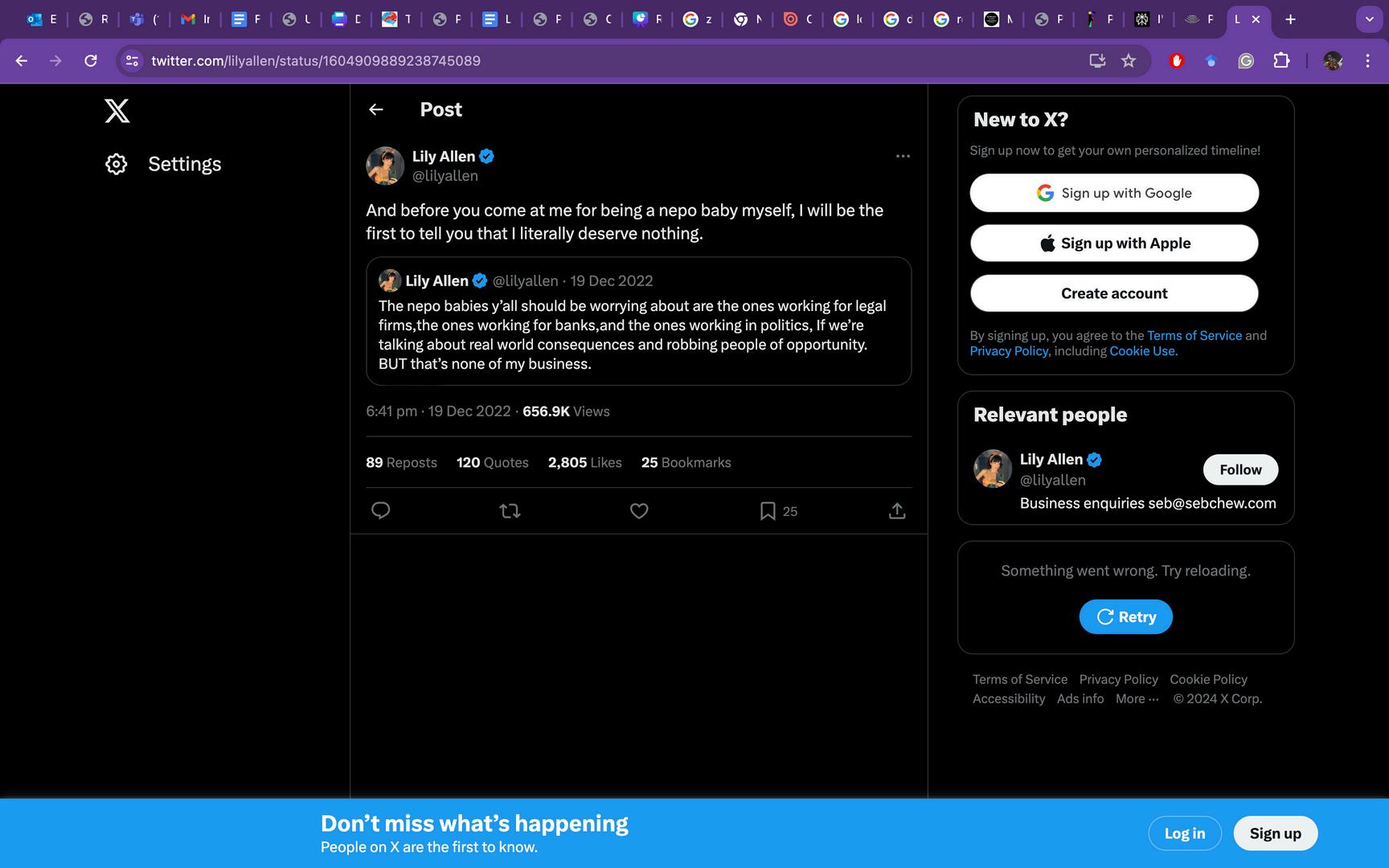
The British ‘Fuck You’ singer Lily Allen opened up room for debate surrounding the gendered undertones of the use of the ‘nepo-baby’ label following her insightful discourse on her ‘Miss Me’ podcast.
The core of her critique? The infantilising "baby" suffix seems to be disproportionately lobbed at successful women in a way that diminishes their accomplishments. As Allen elaborated, "I actually don't really mind the nepotism thing, it's the 'baby' that annoys me. It's like, I'm 40 years old nearly!" She doubled down on the inherent sexism: "The infantilising nature of the term 'baby' is something that is almost exclusively used for women. I don't think I can even really name any male nepo-babies." It's a fair point that cuts to the heart of how society still tends to attribute a woman's success to external factors like nepotism rather than her own talent and hard work. As Allen noted, "I feel like a lot of the time over the past 15, 20 years when I've been written about it will always say 'Lily Allen, daughter of Keith Allen' and I don't see that happening with boys as often as it does with girls."
She contrasted her experience with that of her brother, actor Alfie Allen, noting, "My brother, for instance, doesn't get called nepo-baby, and I do.”
Jenna Lawrence, an 18 year old aspiring creative and avid Game Of Thrones fan states: She makes a fair point. I’m a huge fan of GOT but never knew that fucking Theon (Alfie Allen's character) was a nepo baby? Yet I don’t listen to Lily Allen and knew that she is? Looking back I do feel like I’ve only ever seen coverage of female nepo babies, with the odd boy slipping through now and then but even then I feel like the boys never get shit talked about them whereas girls constantly do you know?
At its core, the "nepo-baby" critique highlights how nepotism and privilege are far too easily dismissed or even celebrated when it comes to men, while women face disproportionate scrutiny and diminishment of their achievements. While we don't want to give nepo-babies too much coverage, the point of this zine is to call them all out equally. So call all nepo-babies out, regardless of gender! The revolution will be equitable, or it won't be at all.
31
32
THE END OF SUCCESION ?
PUIG PULLS THE PLUG ON CENTURY LONG FAMILY DYNASTY
In an unconventional and unexpected move, Spanish fragrance and fashion conglomerate PUIG axes their century-long family dynasty following a successful initial public offering (IPO) of up to £3 billion - the largest IPO in Europe this year.
So what exactly is an IPO? It's when a previously private company goes public by offering shares that can be purchased by investors on the stock market. This capital raise allows the company to rapidly expand using the influx of funds, positioning them as an industry heavyweight with resources to compete against the luxury conglomerates that have historically dwarfed them, like LVMH and Kering.
So why is this important?
Instead of keeping it a total family affair, thirdgeneration CEO Marc Puig is deliberately limiting relatives' involvement at the top levels. Last month, he replaced three Puig family board members with independent outside directors for the first time since its founding as a modest perfume manufacturer in 1914.
Puig's stance? Having too many family members in charge can lead to insularity and companies losing their competitive edge over time."Sometimes family businesses can lose their position in the market...and nobody inside is aware of it.” To safeguard against that, Puig is emphasising strict meritocracy and accountability to outside investors. Even Puig's own next-of-kin will face "difficult filters" to qualify for leadership roles - and nepotism isn't a factor.
While the authenticity of the move remains under question, the ‘self disempowerment’ could act as a catalyst for change in an industry plagued by nepotism.
33
THE NEPOTISM NIGHTMARE BEFORE CHRISTMAS
SPIELBERG AND SCORCESE SET TO WORK TOGETHER - JUST NOT THE ONES YOU‘RE EXPECTING.
Tyla Taormina’s upcoming movie: "Christmas Eve in Miller's Point" is generating buzz, but not entirely for its festive premise
Christmas Eve in Miller's Point is an upcoming movie from Ham on Rye director, Tyler Taormina, which tells the story of four generations of the Balsano family, who gather at their ancestral home for a final Christmas together. Joining Michael Cera and Elsie Fisher as part of the main cast is Sawyer Spielberg, son of Steven Spielberg.To add to the nepotistic bonanza, Sawyer will be sharing the screen with Martin Scorsese's daughter, Francesca, who has also been cast in a main role -
The casting reignited the heated debate around nepotism in Hollywood, with 22 year old cinephile Tyrese lamenting “As a film enthusiast, I’m fucking gassed for the film - it looks promising. As a working class creative trying to get into the industry, seeing shit like this feels like a kick in the teeth”
23 year old multidisciplinary artist and ex-actress Cameron Lily Simao states ”I feel like I’ve had to give up on acting completely and just focus on other endeavours. Sometimes I regret it but seeing shit like this reminds me of why I did it. Every single day a new actor/ actress is revealed to be a nepo baby, or a new nepo baby is constantly entering the scene and its just really disheartening.
As conversations around nepotism in the entertainment industry intensify, "Christmas Eve in Miller's Point" finds itself at the center of the storm. Whether the film can transcend the controversy and let the young actors shine on their own merits remains to be seen when it premieres at the 2024 Cannes Film Festival.
34
“THE
POOR HAVE BETTER TASTE THAN THE RICH”
A DEEPDIVE INTO THE CREATIVE MIND OF WORKING-CLASS ARTIST JIM BROOK
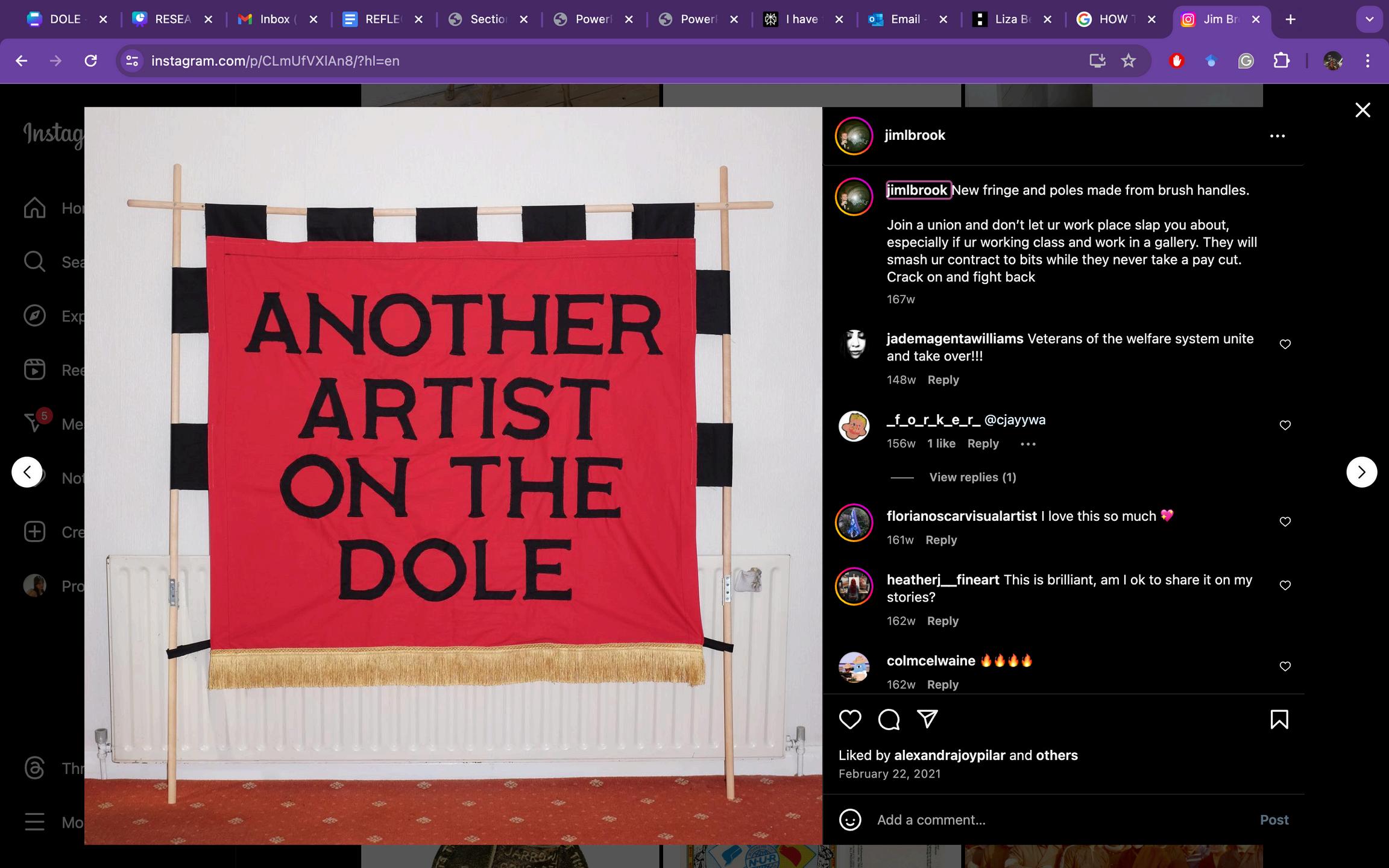
Offering an authentic working-class perspective, Jim Brooks' artistic practice elevates the narratives of northern England's industrial heartlands often overlooked by the mainstream art world. Hailing from the former mining town of Dewsbury, his multimedia works incorporating textiles, stained glass, and folk traditions unapologetically represent his lived experiences and family histories. Committed to staying rooted in his community rather than seeking validation from London's elite, Jim's voice provides a vital counterpoint to the classism and gatekeeping marginalising working-class creatives.
35
How has growing up in Dewsbury and your northern, working-class roots influenced your artistic practice?
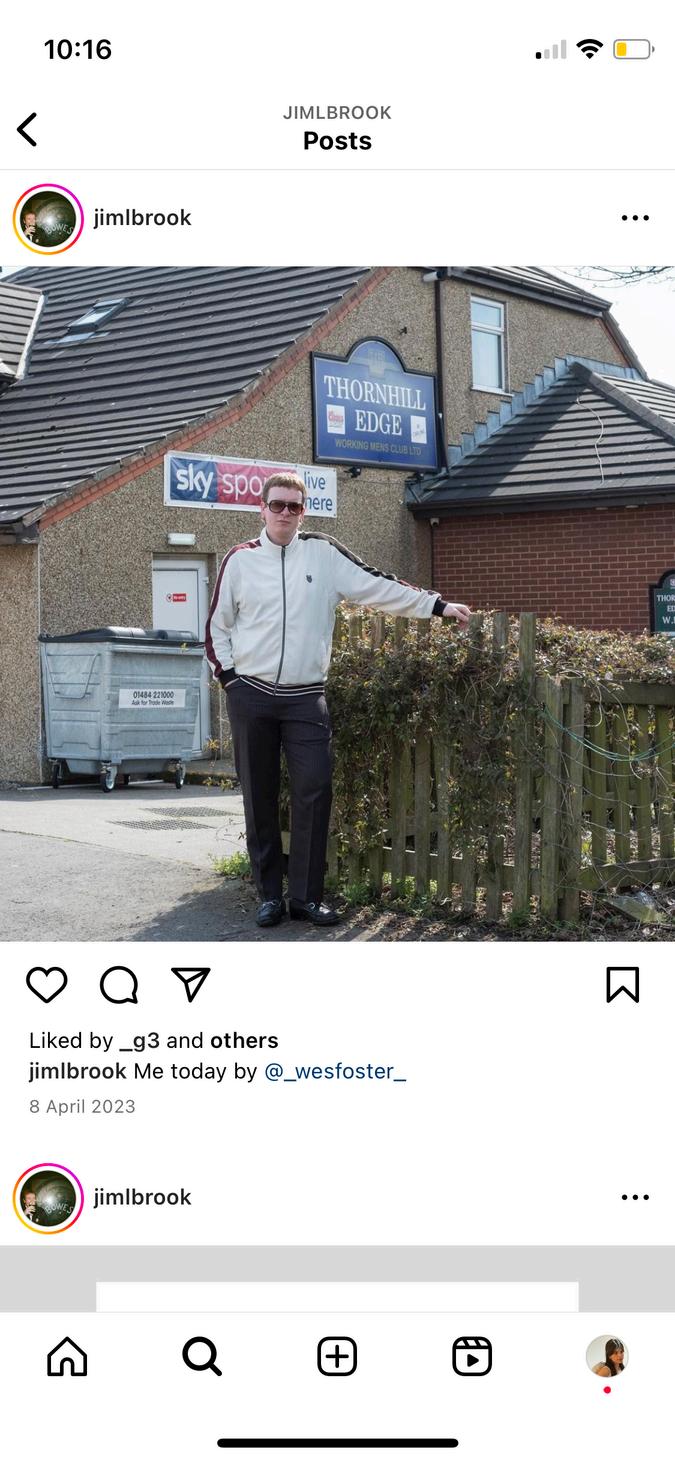
This is a hard one to pin down as I never wanted to be an artist and to this day don't really see myself as an artist in the same way as I see artists who I admire. I got into art by fault really, I left school with no maths and English GCSEs and was encouraged by my grandad to take up a trade because of the collapse of industry. I took up joinery at Building College in Wakefield for a year before I dropped out and started to work in an old mill in Dewsbury. I only lasted a little while as I hated the labour (as most do). This led me to my first visit to the job centre where I was encouraged to go back to college the only place that would take me was Batley School of Art, so this is where I went for 3 years.
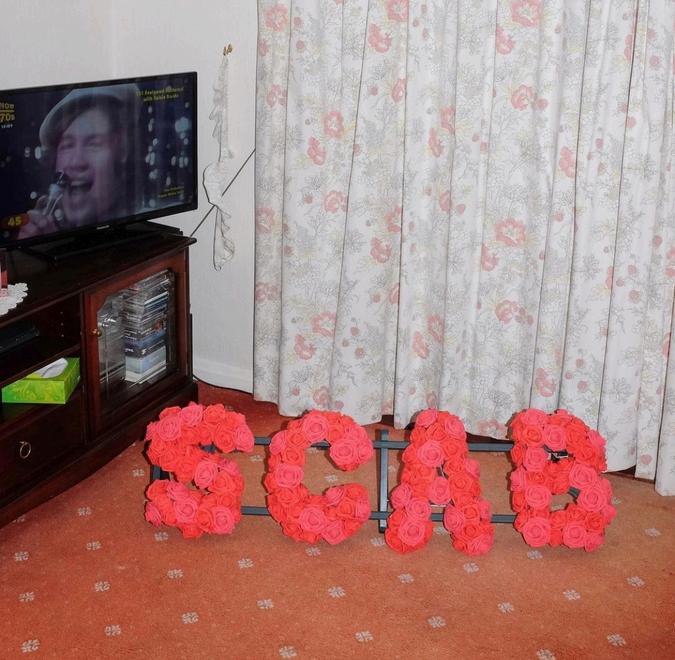
This is the basis of my work - normal life and my own experience as I never saw art as something I wanted to do, it is more of a tool I have used to explore my upbringing, culture and history. Over the years the medium used to do this has shifted because I have become more aware of working-class history and folk art which has allowed my practice to evolve as I don't feel the need to pander to the art world but to create work that elevates people like myself.
courtesy of
All Photos
36
Jim Brook
What experiences or narratives have you aimed to represent through your work?
I try not to represent anything other than myself, my family or my thoughts. I think many people look away from their own experiences because it is too hard to explore their view on life and culture and allow themselves to turn into tropes and caricatures of reality. After all, the upper classes can digest that rather than the reality of the working class experience.
Do you feel that being from a working-class background gives you a unique perspective as an artist?
The poor have better taste than the rich.
37
this but on a personal level. 38
39
Can you walk me through your typical creative process?
My process when working is manic, I tend to work at night as I work a full-time job and in my grans back room as I don't have a studio. I have a list of ideas and objects I want to use or reference along with some stories passed down and experiences I want to talk about - but a lot of my work just comes to me when seeing things or talking to the old fellas at the pub.
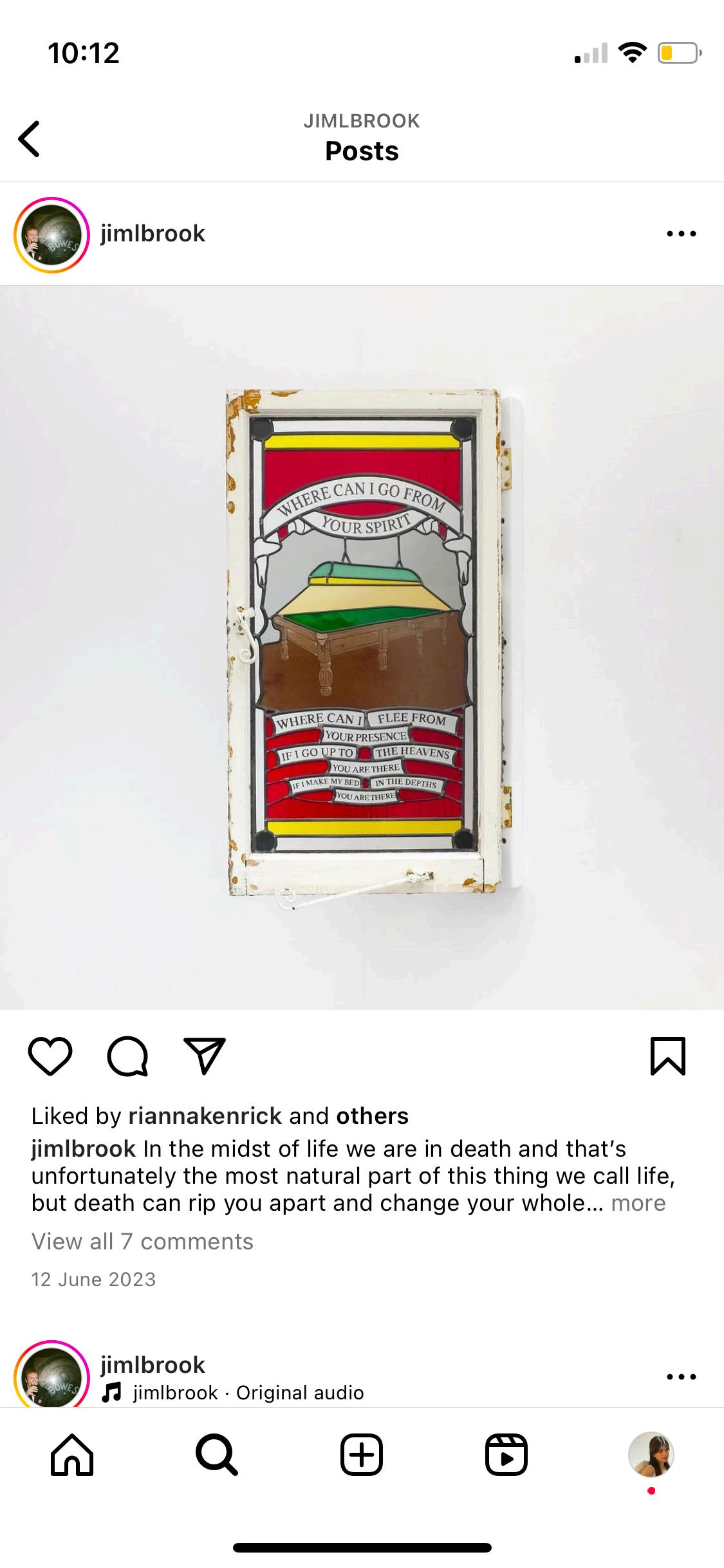
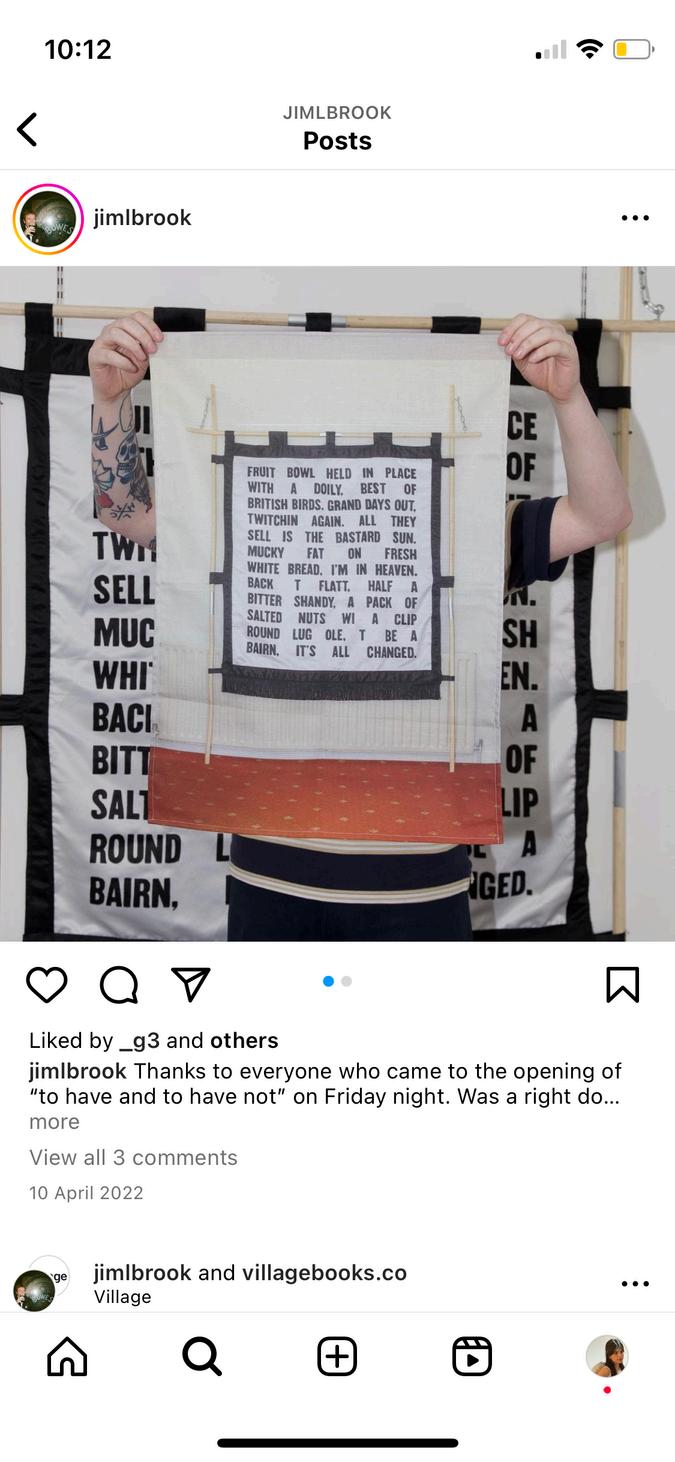
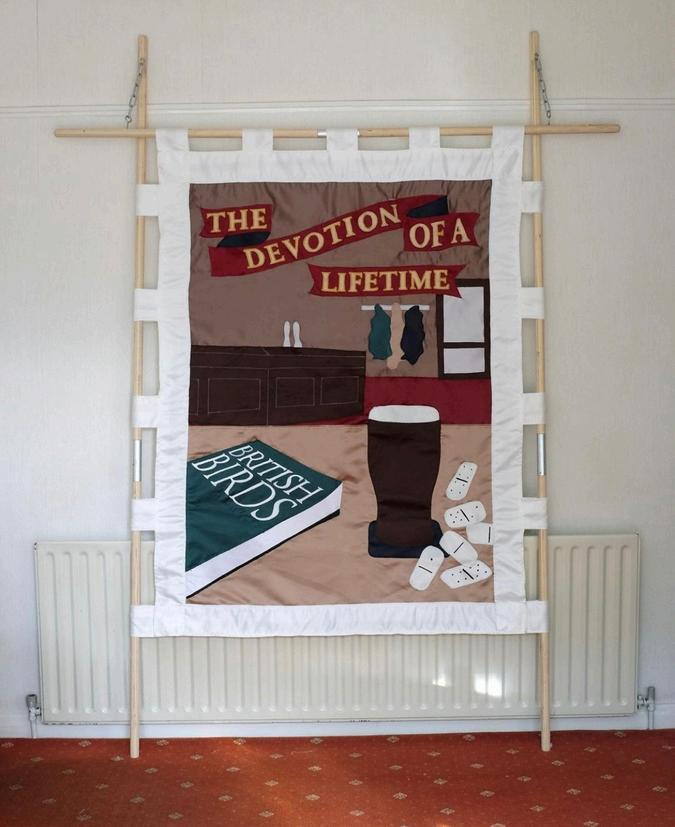
I am currently working on a longer body of work consisting of a series of stained glass windows based on folklore-like stories and images from my family and friends that have been passed down to me, as a way of remembering the dead and the people who made me who I am.
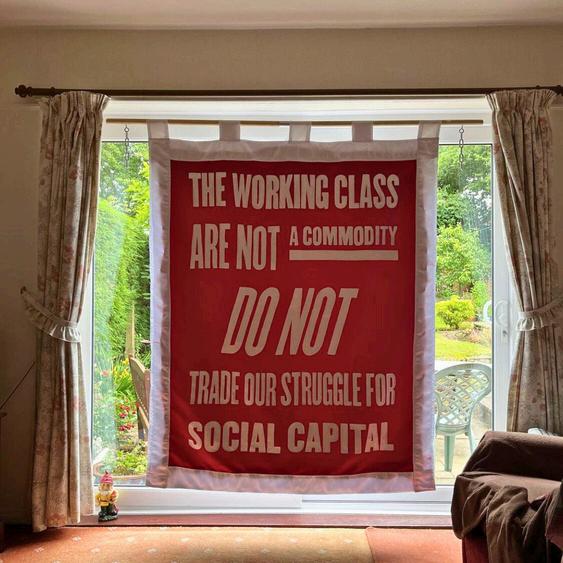
I really want to emulate the idea of glass used in churches to depict a story while also pulling together the relationship with the older trade union banners made by gG. Tutill.
Why is it important for you to create art that represents working-class perspectives?
Because I don't know any other perspective. Have you faced any barriers or challenges as a working-class artist trying to gain visibility?
Yeah, loads. But if you want to do something just do it. You don't need a space approved by the ‘cultural class’ to show work and the people viewing it don’t need to be of that class either.
40
41
In what ways have you encountered elitism or gatekeeping towards working-class perspectives in the art world?
Elitism will always be a thing in the art world as long as artwork is sold and can rise in value, the rich want to buy from the rich and use this thing called art as a way to make more money; it's almost on the same level as landlordism, It's vile. The English are too polite for anything to change, we cue up to raise our hands and have our say while taking anything said back as gospel. As long as the art world is run by the rich with institutions such as Soho House claiming to be the cultural elite I dread to see what the next best artist is going to be. So many people claim to be the ones to change these institutions that have suppressed the voices of the working classes from all over the world, but yet again, all they do is tick boxes and kick the ladder from below them.
People forget that all culture that is worth talking about comes from the working classes and is appropriated and sold back to the working classes in some bastardised form, without the working classes these institutions wouldn't exist because all the galleries would be empty as there would be no subject matter or culture.
42
What do you think needs to change in arts institutions to be more inclusive of diverse class backgrounds?
My call is for all the working classes to not associate with these institutions unless it is on their own terms. They wear the trousers and call the shots because before you know it they are being looked at as objects or something to glorify because “you have had a hard paper round”
Why have you chosen to stay rooted in Dewsbury rather than relocate to a major artistic hub like London?
I haven't left Dewsbury because I have spent a lot of time in education, on and off the dole and not had much stability to allow myself to move away. I also don't want to leave the north, unless it's to move to Ireland. I don't see any importance in London, it's drab. My work is about me and mainly based in the home that I share with my Gran, I feel that if I were to leave this and move to London and then continue to produce this artwork it would become voyeurism and would pander to the middle-class cultural viewer in Londo. I struggle with people who move to London to talk about the north of England, identity and class like where they were from wasn't good enough for them to stay, they don't want to stay and better the place they love so much. It's almost like they don't understand where they are from until they leave and then it becomes their only personality trait within their artwork.
43
In much of your work, you convey a disdain towards London. Could you elaborate on why?
I don't think the creative people of the north or anywhere should feel they have to move to London to have more opportunities, they should stay where they are and give back to the community and not pander to the acceptance of the elite in London. The success of moving to London to be an artist is a middle-class myth, it's full of private school kids pretending to be working class while having no care for the working classes they have just made homeless due to rent increases. Don’t get me wrong, it’s not just London, But the north is better anyway.
44
Have you ever felt torn between staying in a smaller town versus moving to a big city for more artistic opportunities and visibility?
I don’t see my art practice as a deciding factor as to where I move, work is the first thing I have to think about, and I believe that people who can move somewhere just to better their practice are very privileged. After being on the dole for a year and a half I got a remote job with the NHS for a couple of years. Then, when that job ended I spent another eight months on the dole until I got a job just outside my village at a museum for coal mining.
Before I got this job I was seriously looking at jobs in Leeds and Manchester. This meant I would have to travel about an hour on public transport to get to Leeds and an hour and a half to Manchester, meaning after I had saved enough I would have had to move closer to work. This really isn't something I want to do but due to the lack of industry and funding where I live, there are very few jobs around me. I do understand why people have to leave places like where I live because there are no jobs in line for the level of qualifications I have, as I have often applied for things and been told I am overqualified. But how can these places get better if we all just leave? Nothing will change they will just get worse.
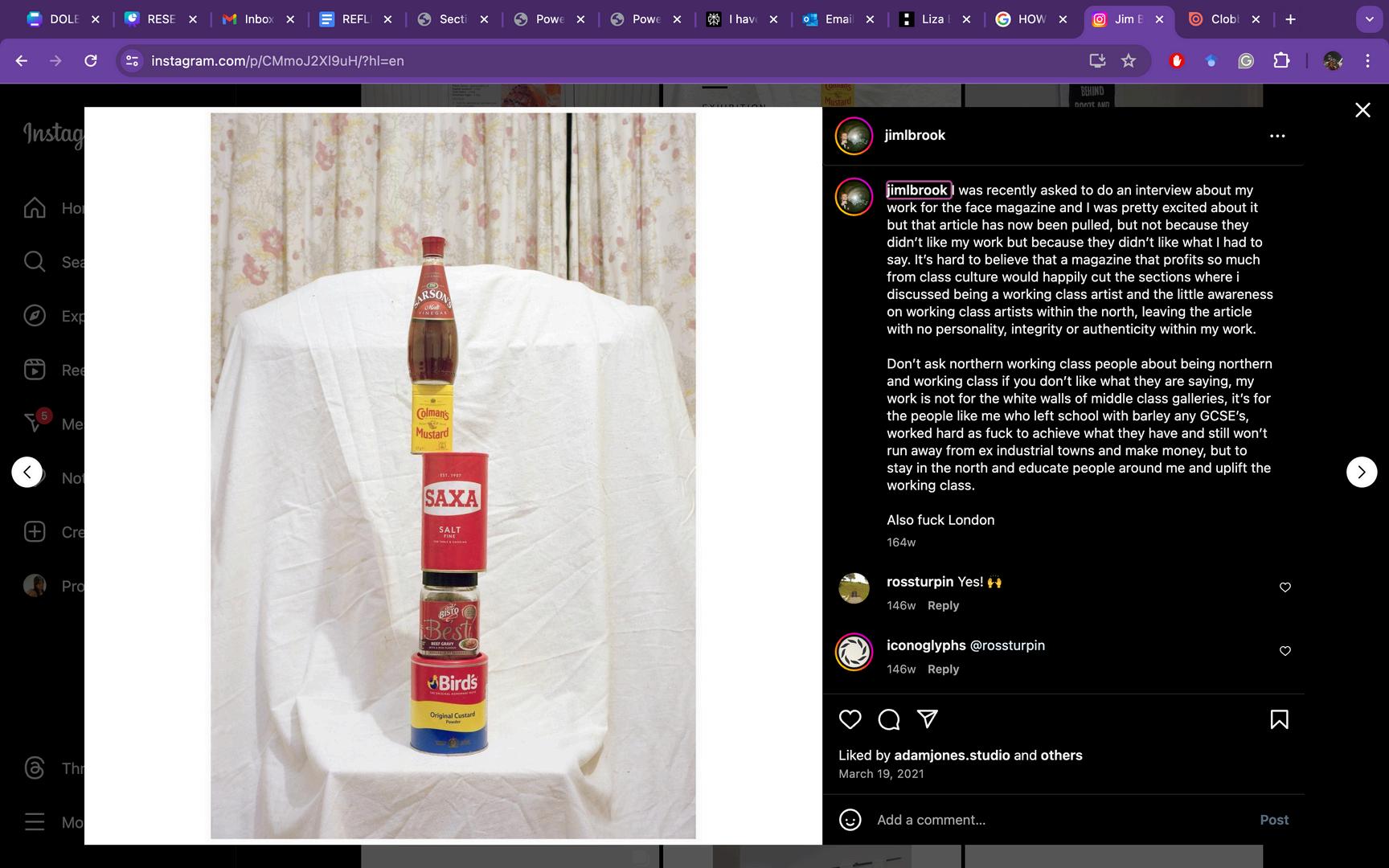
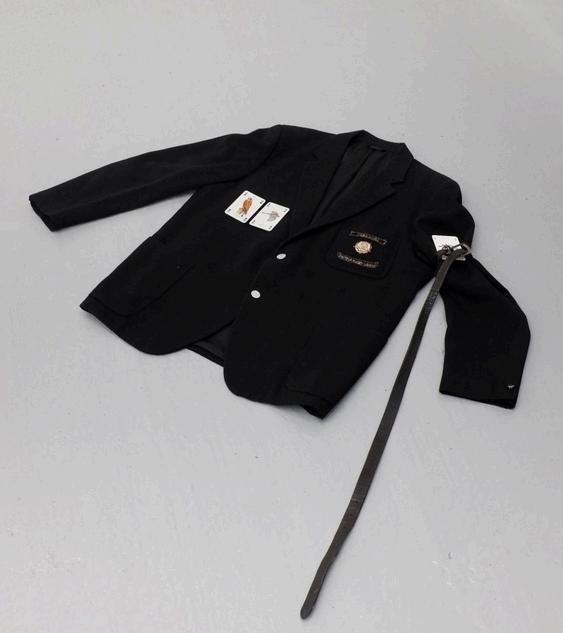
Finally, could you elaborate on the experience you had with The Face and them pulling your piece? Without asking you to rehash what was said, could you share your views on why they may have been uncomfortable publishing your authentic experiences and opinions around class and regional identity?
They didn't like what I had to say about class, real life and how the North is better than London and cut the writing to death until it was pulled because it said nothing I originally said. I don’t believe larger magazines like these really care about class-based issues and politics/culture unless they follow their narrative.
45
In your Varsity Column: Style and Social Class, you argue that what's deemed fashionable is dictated by high fashion houses, not working-class originators. Can you expand on how this topdown, trickle-down system perpetuates class divides?
“Of course. This top-down, trickle-down system perpetuates class divides by driving a wedge that is impossible to overcome between the high fashion houses who declare what’s in; their trusty middle-class consumers who consolidate those choices and reaffirm a fashion hierarchy; and the working-class consumer who, having finally obtained the fashion item through affordable means, causes its death. When the axis spins and those at the bottom find copies of themselves at the top, their own lived reality becomes a luxury good they can never own.
And to be clear, this issue can’t be resolved by the preexistence of an identical item in their wardrobe. When class is appropriated in fashion, it is difficult to locate because it needs to communicate two simultaneous messages for the appropriator, often in contradiction with each other.
1. That clothing must bear the appearance of authenticity and evoke something of the class experience it is trying to appropriate.
2. The wearer of that clothing must maintain their position of greater power relative to the class they’re borrowing the clothing from.
So, the clothing should signal something aesthetically lower-class, but the wearer must never be confused or read as poor. It is this performance of authenticity, one that assumes the appearance of being working-class while rejecting any direct relationship to the workingclass experience, that cuts the working-class out of the same trends they originated.
Again, I think fashion sources become a key player in this dynamic. For example, football shirts are popular right now, but they are only done ‘correctly’ if they bear the niche label of a fashion house that your average Joe would never have even heard of, or if it was picked up in a vintage market in an entirely blaze way. It must be worn in the ‘right’ way. The fashion choice must be attached to a so-called ‘correct’ lifestyle. If you picked up a similar item in Sports Direct, those appropriators would sniff you out in an instant.”
46

COSTUMING CLASS
THE TRUTH ABOUT FASHION'S APPROPRIATION PROBLEM
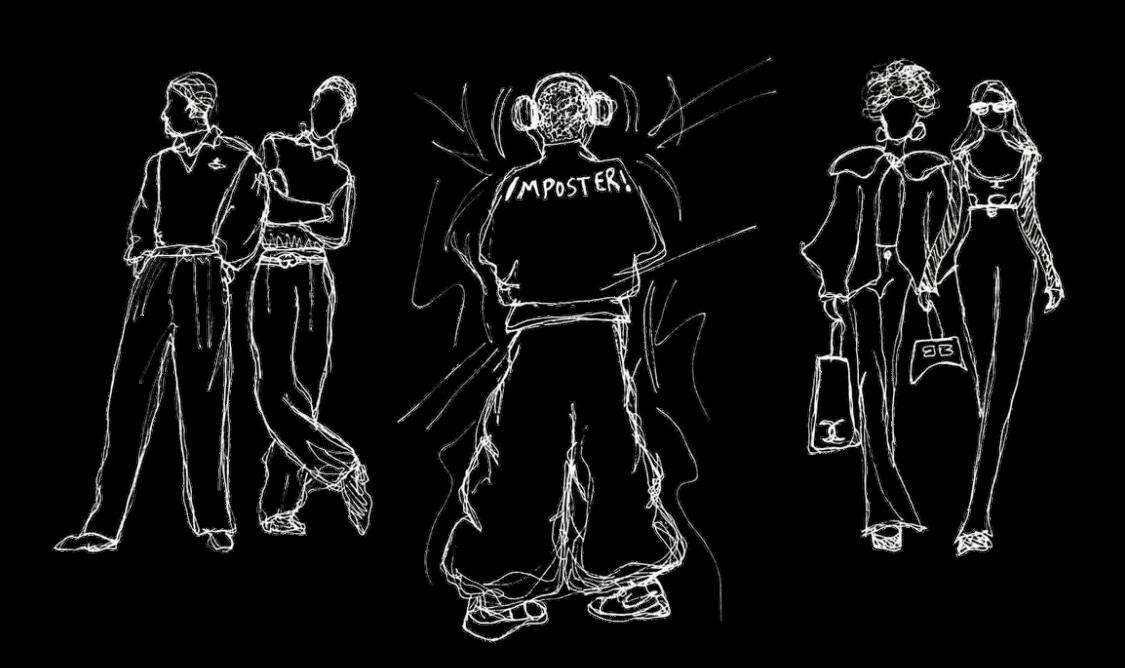
Illustration courtesy of Iliana Akore
A known fact to many is that the fashion world has a nasty habit of treating underprivileged aesthetics like a cool new trend to mine rather than living, breathing cultures attached to human experiences. From Burberry’s controversial reclamation of their Nova print to Gucci and Balenciaga selling luxury tracksuits at extortionate prices, the fashion industry has shown time and again its "voracious appetite" to "take from anywhere it needs to in order to sell its product," as critic Sophie Barr, Fashion Cultures and Histories lecturer at London College of fashion bluntly puts it.
Essentially, the fashion system is, has always been and always will be rigged to extract value from underrepresented aesthetics while preserving existing hierarchies. Alicia Powell, a 24year-old English Graduate from Cambridge explains why this is the case.
47
At its core, it's about the fundamental power differential and lack of reciprocity. "Using some elements of working-class style allows luxury consumers to dip into working-class expression without the debilitating experience of class," says Betts. "This alienates the consumption of the aesthetic from the realities of experience for those that are socioeconomically marginalised. Equally, those groups whose style/s are being appropriated gain no value from the exchange and still find themselves subject to judgement and discrimination."
Even something as seemingly innocuous as thrifting has become a class-coded minefield. "Thrift/charity shopping has been subject to gentrification," according to Betts. "For more privileged groups consuming in this way speaks to knowledgeable (and sustainable) consuming and demonstrates a form of fashion 'capital'. For other groups shopping this way has often been a necessity rather than a choice and has a form of judgement or condemnation attached to it."
The fashion elite's parasitic relationship to working-class culture is ultimately just symptomatic of larger societal power structures and inequities. As Betts argues, "The ethical concerns are around the notions of value and power relationships embedded in the exchange. If not all who adopt the aesthetic are equal, are not treated equally, or do not have access to the same symbolic use-value, the exchange isn't equal and therefore not ethical. The fact that this practice is not identified as extremely distasteful speaks to hierarchies that continue to exist within the fashion system and society more broadly."
Unfortunately, it is an unbreakable cycle where the fashion world's ‘arbiters of cool’ get to have their cultural tourism and consume working-class aesthetics as a novelty, while the communities they're borrowing from remain marginalised and excluded from any real equity or reciprocal exchange of value.
Until that fundamental power differential is dismantled, the appropriation will persist unabated under the guise of appreciating "authenticity."
48
49
LIKE A DEER IN HEADLIGHTS: IMPOSTER
SYNDROME AT UNI
My first day at fashion school felt eerily similar to an episode of Our Planet, but instead of sitting in the comfort of my own home, captivated by Sir Attenborough's soothing narrations of breathtaking natural spectacles, I was the gazelle - a vulnerable, underdressed outsider suddenly thrust into the midst of a pride of hungry Prada-clad lions.
I live with three boys, three boys who don’t attend an arts university. Do you realise how many times I've been questioned about my routine of stressing over outfits to simply go into the library for a few hours?
‘Why do you care?’
As frustrating as the remark always was in the moment, they did have a point - why did I give a shit? As much as I wanted to be the fictional cool girl who very nonchalantly ‘pops her hair into a messy bun and runs out of the house in her tattered Converse’ - the Katarina Stratford of UAL’s student body, the reality is that I came into uni in the second-hand docs that have faithfully carried me for five years, while surrounded by a sea of Thabis, Geobaskets and Miu Miu ballet flats. It was in these curated corridors where the unspoken class barriers became glaringly apparent. High fashion was the admission fee to fit in, and my lack of designer labels may as well have been a glaring ‘Working Class’ stamp on my forehead for all to see.
Again, my appearance, how much my outfit cost me or the lack of a designer's name etched into the tag of my apparel should NOT be something I fret so much over. It’s 2024, and following years of social advancements and Gen-Z rallying for a more inclusive and accepting social sphere, we are constantly pushing for an environment where individual expression has a safe space to be fostered without judgment.
BUT, it’s hard as fuck to do that at fashion school. After all, I am just a girl and breaking generations of being made to feel like shit for not having the best clothes is a tough thing to crack.
Alicia Powell, 22 year old digital marketer and English graduate from Cambridge weighs in on her own feelings of imposter syndrome at the elite university, and how she managed to combat her feelings of class inferiority with her ‘Style and Class’ column.
50
(In conversation with Alicia Powell)
51
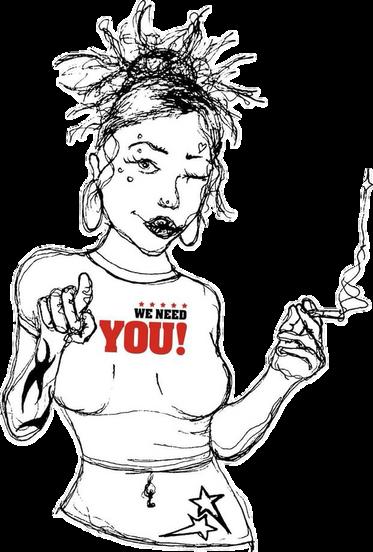
courtesy of Iliana Akore 52
Illustration
Did fashion and outward appearances play a role in exacerbating any class insecurities at university?
Definitely.In my first few weeks at Cambridge, the choices I made in front of the wardrobe every morning were the most visible indicators of my class. Those choices still cling to me. The zebra-print trousers I wore on move-in day are still referenced now by my friends as the item of clothing that made me most recognisable to them across campus.
Those trousers were well received, but what they represent to me now is my naivety about what exactly would expose my class in this new context It transpired that my aesthetic output would not be the cause of my insecurity, but rather the source of that output. I still recall the awkward responses elicited by my revelation that those trousers were from Boohoo, a sense of shock followed by a polite attempt to emphasise how very unBoohoo they looked. It was a response I’d never experienced before. I was startled by how much I didn’t know That confession felt like a misstep in those early interactions. Later, when asked where other fast-fashion pieces were from, my responses came bundled up in excuses and long-winded acknowledgements of how conscious I was of my own terribleness.
As weeks and months passed, new distinctly middle-class brands entered my fashion vocabulary: Ganni, Reformation, Peachy Den It wasn’t necessarily what I was wearing but what that specific choice indicated. Of course, criticisms of my fast fashion wardrobe were veiled by concerns for the environment, and it’s not that I ever disagreed with that sentiment But suddenly there was a whole new code to decipher about the clothes that hung in my wardrobe, about what they represented about me, and to who. A shame towards my cheap clothes that had nothing to do with saving the planet developed in me, and it has stuck with me three years later.
Why was it important for you to use the "Style and Class" column to explore issues of workingclass identity and representation?
The column was a useful way for me to confirm for myself what I’d been feeling for those first two years at university. And to be honest, I felt a little ashamed whilst writing it because I knew that I’d been participating in those issues. I’d let those insecurities morph my style and I wasn’t very proud of how malleable I’d been to those external pressures, especially since I’d arrived in Cambridge determined to prove to my peers that I deserved to be there as much as they did Then suddenly, I’m appearing in this context as a much less authentic version of myself. It was a self-confronting exercise, for sure
But it felt freeing in many ways. The column was the perfect channel to communicate this very complicated dynamic to everyone around me I don’t think I could have ever sat my friends down and told them that this is how they made me feel sometimes because it’s tiring being the odd one out in that way But I know they read it and I think they all learnt something from it. It’s comforting to think I disrupted certain habits relating to fashion and style, even if it was only on the very small scale of my social circle.
53


54
THE NON NEPO BABY ZINE