











Unpack the changes at CEF TechTalks this May - July Talk tech. Earn CPD credits.
Grab a bacon butty. AND it’s all free.








Register for free now cef.co.uk/TechTalks







The spotlight shines this month on lighting itself. Midway through this issue, you’ll find our annual pull-out supplement, Lighting 2026, which covers all things illumination.
Dan Griffiths from The Lighting Industry Association welcomes us to the supplement and, within 500 words, provides a perfect summary of the state of the lighting sector. It’s well worth the read.
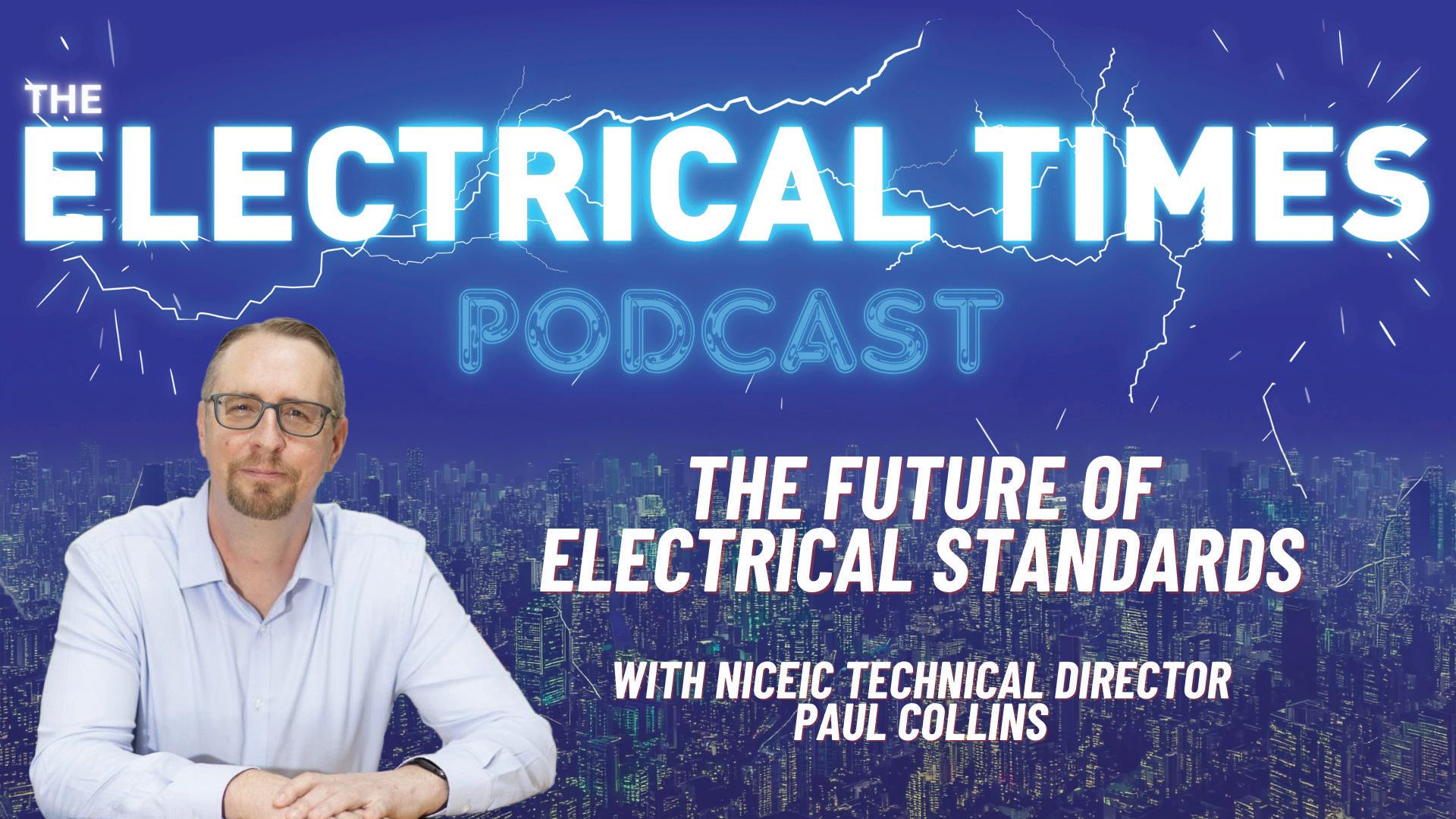
Elsewhere, it’s business as usual at Electrical Times, which now of course includes The Electrical Times Podcast. The reception to Episode 1 has been phenomenal (if you missed it, we kicked things off with the Electrical Contractors Association last month) and we’re excited to present you with Episode 2 in this issue. Turning to page 8, you’ll find a preview of our conversation with Paul Collins, Technical Director at NICEIC, about the future of electrical standards. For the full conversation, visit electricaltimes.co.uk/podcast or find us on YouTube and Spotify.
A final shoutout goes to this month’s Switching Off interviewee, former professional football manager and scout Nigel Birch, who many of you may know as Head of UK Sales and Key Accounts at Contactum. You’ll find that on page 44.
Enjoy the magazine!
BODY THE INSTITUTION of Engineering and Technology (IET) together with the British Standards Institution (BSI) have today released Amendment 4 (2026) to the standard Requirements for Electrical Installations (BS 7671:2018) (18th Edition of the IET Wiring Regulations), marking the latest update to the UK’s national standard for electrical installation safety. This new amendment reflects the fastpaced evolution of technologies across the sector and introduces substantial changes in areas including stationary secondary batteries, medical locations and Power over Ethernet (PoE). This essential update to the IET Wiring Regulations forms the UK national standard for:
• all new low voltage electrical installations
• additions and alterations to existing installations
• periodic inspection and testing of existing installations
Amendment 4 is now available to be purchased and the previous version, BS 7671:2018+A2:2022+A3:2024, will be withdrawn six months from today.
New chapter: Stationary Secondary Batteries
One of the most significant developments is the introduction of a new chapter covering stationary secondary batteries, responding to the rapid growth of energy storage technologies and their increasing deployment both with and without solar PV systems. The amendment sets out comprehensive requirements relating to system design, power conversion equipment, bidirectional or hybrid inverters and the suitability of protective devices for two way energy flow, an essential consideration as battery systems are increasingly used for vehicle to home and vehicle to grid applications. The chapter also places strong emphasis on safety critical matters such as appropriate battery location, ventilation, and fire risk mitigation.
New section: Power over Ethernet (PoE)
Section 716 introduces clear requirements for Power over Ethernet as Ethernet cabling is increasingly used to supply extra low voltage DC



to low wattage equipment such as LED lighting and small appliances. The section focuses on the correct selection of power supplies and cables using SELV and PELV systems. While SELV and PELV typically allow up to 50 V AC or 120 V DC, Section 716, part of the Special Locations section, modifies these limits to 60 V ripple free DC in dry locations and 15 V ripple free DC elsewhere. To ensure safe operation, all electrical connections for PoE must comply with BS ISO/IEC 11801 1 and be capable of supporting a continuous operating current of 750 mA per contact.
Major revision: Medical Locations
Section 710 has been significantly revised to improve safety in healthcare environments where patients are more vulnerable to the effects of electricity. Medical locations are now clearly classified into Groups 0, 1 and 2, with Group 2 areas, such as operating theatres, requiring medical IT systems that use a transformer and insulation
monitoring device to maintain supply during a first fault and alert staff before disconnection would occur on a second fault. To avoid dangerous loss of power, two independent supplies and a UPS must also be provided, positioned as close as possible to the equipment they support. These updates align the UK with IEC 60364 7 710:2021 and its CENELEC adoption, strengthening protection for patients and medical staff.
New section: Functional Earthing and Functional Equipotential Bonding for ICT Equipment and Systems
Section 716 is principally concerned with power supplies and cables using SELV (Safety Extra Low Voltage) and PELV (Protection Extra Low Voltage) as the method for protection against electric shock. Conventionally, SELV and PELV require a voltage limitation of 50 V AC and 120 V DC, however, Section 716 is in Part 7, Special Locations, of BS 7671 which supplements or modifies the general rules. In this case, Section 716
limits SELV and PELV to 60 V ripple-free DC in dry locations and 15 V ripple-free DC in all other locations.
The electrical connections for power over ethernet are to comply with BS ISO/ IEC 11801-1 capable of supporting a continuous operating current of 750 mA per contact.
The IET and BSI encourage all electrical professionals to ensure they become familiar with the changes now that they have been published.
Mark Coles, Head of Technical Regulations at the IET, said: “The IET is the UK’s authority for electrical installations, and Amendment 4 continues our commitment to ensuring the IET Wiring Regulations evolve in line with the technologies shaping modern and future electrical work. The inclusion of new requirements for stationary secondary batteries is a clear example of this progress, as advancing storage technologies increasingly support the integration of renewable energy in our daily lives. It is essential that the sector remains aligned with these developments to maintain safe and resilient electrical installations across the UK and that the industry is ready to work to this new amendment before BS 7671:2018+A2:2022+A3:2024 is withdrawn.”
Sebastiaan van Dort, Director of Energy and Sustainability at BSI said: “BSI is proud to jointly publish this vital standard with the IET at a time when the UK is accelerating towards its 2030 clean energy goals. BS 7671 underpins safe, modern electrical infrastructure— essential for delivering the electrification needed to meet net zero ambitions.”
Further changes are included throughout all parts of BS 7671:2018+A4:2026, including the incorporation of Amendment 3:2024 to BS 7671:2018 as part of the main document.
This Amendment sees the further adoption of CENELEC Harmonized Documents and IEC standards as the UK continues the inclusion of standards for new and developing technologies.
BS 7671:2018+A4:2026 is available for purchase via theiet.org/GetTheRegs - you can also learn more about the IET’s guidance and training packages here too.
HDM SOLAR IS set to launch a brandnew Livingston branch on 8th May. The Installer’s Wholesaler has experienced rapid growth over the past few years, expanding its presence in the UK with five sites located across England, Wales, and now Scotland. The new branch forms part of HDM Solar’s ambitious £10.2 million investment to establish a nationwide network of 60 sites, helping installers and their communities move towards a greener future.

HDM Solar is focused on putting installers first in every decision, combined with a commitment to same-day or nextday delivery, ensuring projects stay on track and customers are fully supported without any unnecessary delays.
Situated on Brucefield Park West, the 10,000 sq ft premises will include an internal sales office for customer support
and enquiries, alongside a sizeable warehouse that will supply installers throughout Scotland and the North of England with premium solar solutions.
The new location will also host one of HDM Solar’s Renewable Training Centres of Excellence, a purpose-built facility that provides installers with free, hands-on training directly from product manufacturers. Complete with a roofing rig for practical learning, the centre demonstrates HDM Solar’s ongoing commitment to the industry by investing in its customers’ continuous professional development.
The branch team has been operating since the start of the year, trading even before the building was complete. Branch Manager Stevie Paton has almost 40 years of experience within the electrical industry and has already been providing HDM Solar customers with incredible support and expertise. Stevie is accompanied by Assistant Branch Manager, Michael Robertson, who has 15 years of experience in solar distribution and has been collaborating with manufacturers to provide installer training opportunities for local installers in the coming months.
An open event will take place on Friday 8th May at 10am to 2pm, to celebrate

the official opening of the branch. Local dignitaries will be in attendance, including Gregor Poynton, MP for Livingston. Installers are encouraged to visit the new branch to network with the team, visit supplier exhibitions, get their hands on exclusive deals and free gifts, and enjoy refreshments. To register your interest in the attending or for more information email events@hdmsolar.co.uk.
Stevie Paton, Livingston’s Branch Manager, said: “We’re thrilled to have the keys to our new branch and can’t wait to welcome customers. Our team is excited to support local installers in providing clean energy solutions. We look forward to building strong
community relationships, offering exclusive training, and giving access to leading solar products.”
Adam Firth, Group CEO, said: “Livingston is the ideal platform for our first branch in Scotland. It is another important step in building a nationwide network that truly supports installers. Everything we do is built around putting the installer first, and that runs through every decision we make as a business. Our incredible team that we have assembled provides installers with the speed, reliability and confidence they need to keep projects moving and grow their businesses.”
For more information about HDM Solar visit hdmsolar.co.uk
TWO ORGANISATIONS BASED in Mansfield have joined forces to help students and employees wanting to take advantage of the opportunities available to electricians and installers of low-carbon energy across North Nottinghamshire and Derbyshire.
West Nottinghamshire College and leading certification body and training provider NAPIT have formed a collaborative partnership to create a stronger, more effective pathway into qualifications within the building services, renewable energy and low-carbon sectors.
NAPIT is based on the Pleasley Vale Business Park where it provides electrical courses, as well as training in technologies such as heat pump, battery storage, electric vehicle charging and solar PV installations. The college delivers air conditioning and refrigeration training at the same site, which also serves as an end-point assessment (EPA) centre for plumbing, heating and refrigeration apprentices and holds City & Guilds approved EPA provider status in ‘recognition of excellence in apprenticeship delivery.’
The agreement between the two organisations will provide access to appropriate work placements and
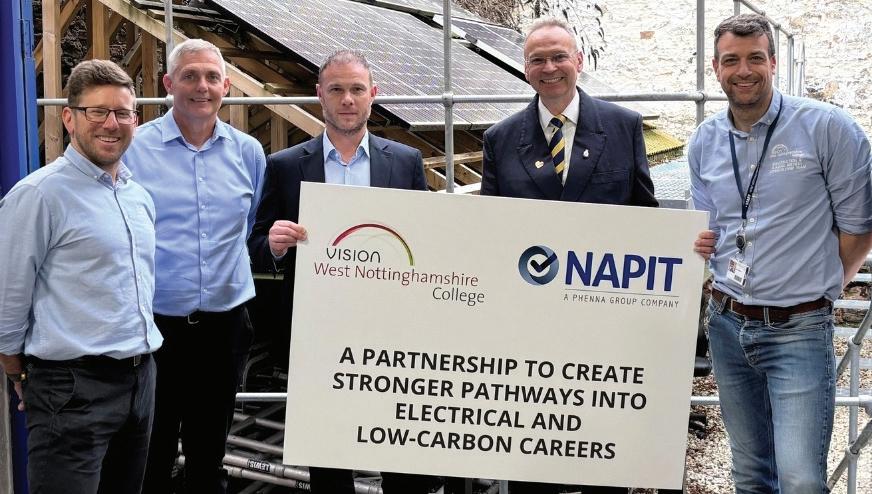
apprenticeships, a clear progression route for semi-qualified electricians and lowcarbon heating engineers, and a pathway into industry for full-time learners.
It will also create opportunities to upskill current electricians and local businesses, enabling them to enhance their skills, deepen their industry knowledge, and expand into emerging areas such as renewable energy and lowcarbon technologies.
Learners could gain access to the NAPIT CPD platform and the NAPIT Foundation, which aims to support students during their learning journey with technical helpline access and supporting articles to best practice guides and webinars.
Working with NAPIT, the college aims to strengthen its training in renewable energy systems, retrofit and energy efficiency, equipping learners with the knowledge and practical expertise
needed to meet evolving industry demands and contribute to the transition to low-carbon technologies.
West Nottinghamshire College principal and chief executive Andrew Cropley MBE said: “I’m delighted to celebrate yet another exciting partnership for our college. Working with NAPIT will help us engage with a number of local and regional businesses, many of them at the forefront of clean and low-carbon energy, and support them in recruiting and developing their workforce.
“It will also enable us to equip our students with the skills, knowledge and industry insight needed to become highly employable by NAPIT’s member businesses.
“Crucially, this collaboration strengthens the link between education and industry, helping to bridge the gap between training and employment while ensuring our courses remain up-to-date and relevant as the sector continues to evolve. I very much look forward to us working with, and learning from, our new partners at NAPIT.”
NAPIT commercial and compliance director Stephen Melton said: “NAPIT and West Nottinghamshire College both provide training in the same building
where we have our headquarters in Pleasley Vale, so it makes perfect sense for us to collaborate and work together to benefit learners and employers in the local area.
“We are keen to promote the benefits of employing apprentices and the opportunities available to electricians and installers of low-carbon technology, especially given the drive towards heat pumps and solar PV in recent Government announcements such as the Warm Homes Plan and the Future Homes Standard.
“The partnership agreement between NAPIT and the college will help to create a stronger, more effective pathway into qualifications within the building services, renewable energy and lowcarbon sectors.
“Combining the resource and expertise of both organisations will help to offer a wide range of enhanced opportunities for learners, employers and NAPIT members in the area. It will support employers and businesses in the East Midlands, strengthen employability and upskill the industry to make the most of the growth opportunities available to electricians, heating engineers and installers of heat pumps, solar panels and batteries.”
BODY SCHNEIDER ELECTRIC, a global energy technology leader, and Deloitte, a leading professional services organisation, have announced a collaboration to help customers and clients — from manufacturers and industrial operators to data center and infrastructure leaders — modernise end-toend processes across all of their business operations and unlock new opportunities. Today’s organisations are facing unprecedented pressure to scale enterprise-wide operations efficiently while maintaining cost control, yet many continue to rely on outdated practices that limit their ability to adapt, innovate, and compete in fast moving markets. This is especially acute in asset-intensive industries, where the convergence of AI, IT/OT conversion integration, and digital platforms is reshaping what’s possible. Facing these
challenges and capitalising on opportunities requires more than technology alone: enterprises need clear strategies, proven methodologies, and trusted ecosystems to drive lasting operational excellence.
To help organisations achieve enterprisewide transformation to compete in the digital era, Schneider Electric and Deloitte are teaming up to bring together Deloitte’s IndustryAdvantage™ experience, Ascend™ services delivery platform, strategy, people, process and technology transformation and Schneider Electric’s domain expertise and purpose-built, AI-enabled OT and software technology.
Together, the two organisations will help clients:
• Modernise industrial operations with tested IT/OT integration and end-to-end digital transformation
• Break free from siloed, legacy systems and better leverage open, softwaredefined automation platforms
• Integrate AI and advanced analytics to accelerate time to value and increase business impact
• Build adaptive, future-ready operations that drive efficiency and resilience
• Drive change throughout the organisation to encourage adoption and modernisation
“Organisations know they need to transform, but many lack a roadmap that unites business strategy with the right digital and OT foundation,” said Gwenaelle Huet, Executive Vice President, Industrial Automation at Schneider Electric. “By combining our technology leadership with Deloitte’s experience in driving operational excellence and
enterprise-wide change, we are giving customers the tools they need to move forward with speed and confidence.”
Ajai Vasudevan, Global Smart Operations Leader, Deloitte, said: “True digital transformation is about far more than deploying new tools; it demands a reinvention of how an organisation competes and grows. Deloitte brings the reach and rigor to lead that change endto-end, across every layer of the enterprise. Paired with Schneider Electric’s OT expertise and AI-enabled industrial technology, this collaboration offers clients new ways to transform and provides the operational precision needed to make it real.”
This collaboration marks a major step toward enabling organisations to innovate faster, operate more sustainably, and scale smarter — not years from now, but today.
THE LATEST METRICS from CEF shows sustainability is moving from long-term ambition into day-to-day reality across the electrical supply chain, with measurable progress already underway.
CEF’s FY25 Sustainability & Social Value (SSV) Impact Report sets out how that shift is playing out in practice, with an 82% reduction in scope 2 emissions, 71% of supplier spend aligned to EcoVadisrated partners, and continued investment in installer training, electrification and product efficiency.
Published as CEF celebrates its 75th anniversary, the report reflects how the company is applying its scale and industry position to drive practical, positive change across branches, sites and the wider trade.
This milestone underlines the company’s long-term commitment to customers, team members and communities as it accelerates sustainability & social value action.
Highlights from the FY25 report:
• Independent assurance: For the first time, selected SSV metrics have been independently assured by Jacobs U.K. in accordance with ISAE 3000 (see the report Appendix for the assurance statement and full scope).
• Net-zero pathway: The report sets out CEF’s near and long-term carbon reduction pathway (63% reduction in scopes 1, 2 & 3 by 2033; net-zero by 2040).
• Supplier engagement and product stewardship: 71% of supplier spend is with EcoVadis rated partners and over 220 suppliers are EcoVadis assessed. The report highlights targeted engagement including supplier events, onsite SSV audits and training to raise sustainability capability across the value chain.
• Energy, fleet and product impact: 74% of company cars are now electric or hybrid and CEF continues to scale
electrification and EV charging through its iCS business (with thousands of customer chargers installed). The report details energy efficiency, packaging and circularity actions across CEF’s In House brands and supplier partners.
• People, training and safety: CEF delivered City & Guilds approved solar PV and battery storage training, upskilling installers alongside broader learning programmes. The business supported 31 apprentices in FY25 and launched a new Health & Safety management system in July 2024 to strengthen workplace safety.
• Community and social value: CEF Cares activity and long-term partnerships are delivering local impact. In FY25 CEF raised £208,000 for Macmillan and continued support for the Electrical Industries Charity (EIC), plus dozens of local volunteering and social value projects with customers and communities.
“As we celebrate 75 years of serving our customers and communities, this report shows how we’re pairing decades of industry expertise with modern sustainability action,” says Connor Dalton, Director of Sustainability, Health & Safety. “The independent assurance brings welcome credibility to our data and targets, but the real story is the practical work happening in branches, on sites and in local communities. We’re proud of the progress documented here and focused on accelerating the changes that matter.”
The FY25 Impact Report is designed to be a practical resource for customers, supplier partners, team members and stakeholders showing where CEF is making measurable gains, where more effort is needed, and how the business will deliver on its SSV commitments in the coming years.
Read the full FY25 Sustainability & Social Value Impact Report and the Jacobs assurance statement, visit cef.co.uk
SCOLMORE GROUP IS reinforcing its long-standing commitment to the Tamworth area with the continued development of Scolmore Connect – the company’s dedicated platform designed to bring people, organisations and community-focused initiatives together. The programme reflects Scolmore Group’s broader commitment to social value within the electrical industry, highlighting how manufacturers can play an influential role in supporting local communities.
Headquartered in Tamworth, and with many employees living locally, Scolmore Group has built deep connections within the region. That local connection is a driving force behind Scolmore Connect, ensuring the initiative reflects the needs, strengths and ambitions of the community it serves.
Scolmore Connect provides a structured, visible and collaborative approach to community engagement and awareness. It offers a shared space where partnerships can grow, stories can
be told, and progress can be experienced collectively. It also provides employees with accessible opportunities to contribute their time, skills and support in ways that feel personal and impactful.
Scolmore Group has worked closely with Staffordshire County Council for several years to support families and individuals across Tamworth, particularly during the winter months. What began with Christmas hampers – assembled by volunteers from across the business – has evolved into a more flexible approach,
with vouchers now provided to ensure support reaches those who need it most, in the way that helps them best.
Following the success of these initiatives, Scolmore Connect is now expanding its support throughout the year. The company is exploring new community projects where its involvement can make a measurable difference, as well as potential collaborations with other local businesses that can bring complementary skills and resources to larger-scale initiatives.
LEADING MANUFACTURER OF cable glands, cleats and accessories, CMP Products has appointed a new chief operating officer to drive productivity and sustainable growth across the division.
Demos Hoursoglou brings extensive senior leadership experience across a range of engineering and manufacturing environments, with a strong track record of delivering operational transformation programmes.
Drawing on this experience, he will focus on aligning operational strategy with CMP’s long term business objectives to drive sustainable improvements in global performance. His priorities will include enhancing operational efficiency, strengthening safety standards and investing in people development across the organisation.
Commenting on his new role, Demos said: “I’m delighted to be joining CMP at such an important stage in its growth journey. Throughout my career, I’ve been passionate about improving operational performance, driving efficiency and building strong, engaged teams. CMP’s clear commitment
to sustainable growth and continuous improvement makes this an exciting opportunity. I look forward to working closely with colleagues across the business to strengthen operations, enhance collaboration and ensure we deliver consistently against our long term ambitions.”

Demos joins CMP from RLC Aerospace Limited, where he’d worked as director of operations for over a year. Prior to that he’d worked for Jaguar Land Rover and Honda UK.
Vince Patterson, chief executive officer at CMP, said: ““We are delighted to
welcome Demos at a pivotal time for CMP. As we continue driving our market leading position through sustainable investment in our people, new technologies and manufacturing capability, his appointment strongly supports that direction.
“Our commitment to innovation, safety, reliability and operational efficiency is central to how we evolve as a business and how we better understand and support our customers. Demos brings a clear, strategic focus on performance and continuous improvement, which aligns closely with our long term vision. I look forward to working with him as we continue to strengthen our operations and build for the future.”
Demos’ appointment follows the announcement that chief operating officer, Steve Holt, will retire at the end of May after nearly 38 years with the business. During his tenure, Steve has played a pivotal role in guiding the company through significant growth, transformation and investment, leaving a lasting legacy as he passes the reins to Demos.
OVIA STRENGTHENS UK Sales Team with Three Strategic Appointments
Ovia, a leading name in lighting solutions for the professional electrical market, and part of Scolmore Group, has announced three key appointments to its UK sales team as the business continues its strong growth trajectory.
Ben Swift – Regional Sales Manager, Southern Region
Ovia is pleased to welcome Ben Swift as Regional Sales Manager for the Southern Region. Ben brings over 20 years of experience within the electrical industry, predominantly in lighting and the wholesale market. His career includes senior roles with a number of leading players in this sector.
Ben’s extensive industry knowledge, combined with his passion for lighting and proven leadership, will be instrumental as he takes responsibility for managing and developing Ovia’s Southern team of Area Sales Managers.
Lee Hems – Area Sales Manager, East Anglia and Essex
Joining Ben’s Southern team is Lee Hems, appointed Area Sales Manager for East Anglia and Essex. Lee brings over six years of experience in the specification lighting market, having progressed through several technical and customer facing roles.
Lee’s strong technical background,

customer focused approach, and deep understanding of lighting solutions will support Ovia’s continued expansion across the region.
Samuel Ferriday – Area Sales Manager, West Midlands
Ovia also welcomes Samuel Ferriday as Area Sales Manager for the West Midlands. Samuel joins with a over a decade of experience in the electrical wholesale sector, having progressed through sales, account management, and branch management roles.
Samuel’s hands on experience in wholesale operations and customer
CU PHOSCO HAS announced that Keith Henry will add Head of Telecoms to his remit, effective from 20 April, reinforcing the company’s continued focus on the growth of its telecommunications and smart pole infrastructure offering both in the UK and internationally.

Keith joined in February 2023 as General Manager for CU Phosco Australia Pty Ltd, bringing more than 36 years of experience within the lighting and smart infrastructure sectors. His career spans roles across local authority, manufacturing and smart city technology, including positions with Bristol City Council, Signify and Telensa, where he delivered central management system solutions in partnership with CU Phosco for Stansted Airport.
In his role, Keith will lead CU Phosco’s international telecommunications strategy, supporting the continued development of its Connected Urban smart pole range and wider telecoms infrastructure portfolio. He will also retain his responsibility as General Manager for Australia, where he has played a key role in establishing CU Phosco’s presence in the market. Moving forward, CU Phosco will work in partnership with Pecan Lighting to support distribution across Australia, strengthening its ability to deliver locally while maintaining its global standards.
relationship management positions him well to support Ovia’s growing customer base in the West Midlands.
Commenting on the latest appointments, Mike Collins, Managing Director, Ovia said: “These appointments reflect Ovia’s commitment to strengthening its regional presence and enhancing support for electrical wholesalers, contractors, and specifiers across the UK.
“Ben, Lee, and Samuel each bring valuable experience and energy to the business. Their combined expertise will play a key role in driving Ovia’s continued growth and delivering exceptional service to our customers.”
The appointment reflects CU Phosco’s ambition to expand its telecommunications capabilities and international footprint, with a clear structure in place to support both domestic and global growth. Within this structure, National Accounts Manager Ben Hiscott will lead telecommunications in the UK, while Keith will focus on international markets.
Keith Henry, Head of Telecoms at CU Phosco, said, “This is an exciting opportunity to strengthen one of the fastest growing areas of the business. With more than 40 years of experience supporting mobile network operators through robust monopole infrastructure, we are now focused on expanding our role in delivering connectivity at street level. I look forward to working with our teams and partners to support this next phase of growth.”
In an era of rapid technological advancement and evolving safety regulations, the role of industry bodies like NICEIC has never been more critical. On the latest episode of The Electrical Times Podcast, James Cooke speaks with Paul Collins, Technical Director at NICEIC, to discuss the current landscape of electrical contracting, the challenges of new technology, and what the future holds for the trade
Electrical Times (ET): Paul, it’s great to have you. To start off, how would you describe the current state for electrical contractors in the UK today?
Paul Collins: It’s a busy time, no doubt about it. We’re seeing a real shift in the industry. It’s not just about traditional wiring anymore. The “prosumer” model is becoming a reality. People aren’t just consuming energy; they’re generating it, storing it, and managing it. For the contractor, this means a massive broadening of the skill set required. We’re moving into a space where electrical work is deeply integrated with data, renewables, and smart home technology. It’s exciting, but it brings a level of complexity we haven’t seen before.

Paul Collins
Technical Director at NICEIC
ET: With that complexity comes the need for robust standards. How is NICEIC helping contractors navigate the latest updates to the Wiring Regulations?
Paul Collins: Amendment 2 was a significant milestone. Our focus at NICEIC has been on making sure contractors don’t just see it as a set of rules to follow, but as a framework for safety and best practice. We’ve invested heavily in technical support, webinars, and our “Pocket Guides” to break down the changes – whether it’s the new requirements for Arc Fault Detection Devices (AFDDs) or the updated approach to risk assessments for overvoltage protection. The goal is to give contractors the confidence to explain these safety benefits to their customers. It’s about moving the conversation from “the regs say I have to” to “this is why your installation will be safer.”
ET: You mentioned renewables. Solar PV and Battery Storage are huge topics right now. What are the common pitfalls you’re seeing in these installations?
Paul Collins: The biggest issue is often integration. You can have a perfectly good solar array and a great battery system, but if they aren’t communicating correctly or if the earthing arrangements aren’t properly considered for when the system is running in island mode, you’ve got a problem. We’re seeing cases where installers aren’t fully grasping the specific DC requirements, which are very different from the AC side of things. At NICEIC, we’re pushing for more specific training in these areas. It’s about ensuring that as we “green” the grid, we aren’t compromising on the fundamental safety principles that the industry is built on.
ET: EV charging is another massive growth area. Is the industry keeping up with the demand for qualified installers?
Paul Collins: Demand is high, and the infrastructure needs to grow rapidly. The challenge isn’t just sticking a charger on a wall; it’s understanding the load characteristics of the property. Can the existing supply handle a 7kW charger running for eight hours? Does the consumer unit need upgrading? We’re seeing a lot of “non-traditional” players entering the EV space. Our message remains clear: EV charging is a significant electrical load and should only be installed by a competent certified business. Safety can’t be a secondary thought in the race to provide infrastructure.
ET: Looking ahead, what do you see as the “next big thing” that contractors need to have on their radar?
Paul Collins: I think the continued convergence of electrical and digital systems is inevitable. We’re looking at more sophisticated Energy Management Systems (EMS) that use AI to optimise energy use based on weather patterns and tariff pricing. Also, keep an eye on the “Circular Economy” in electrical products – how we install, maintain, and eventually recycle components. But ultimately, through all the change, competence will remain fundamental. As technology changes, the one constant is the need for the person doing the work to be properly trained, assessed, and held to a high standard. That’s what keeps the lights on and people safe. For more technical guidance and updates on industry standards, visit niceic.com.
This interview has been abridged for clarity and length. For the full conversation, visit the Electrical Times YouTube channel or subscribe to the ET Podcast on Spotify. Alternatively, scan the QR code to watch or listen at https://www.electricaltimes.co.uk/ the-future-of-electrical-standards/

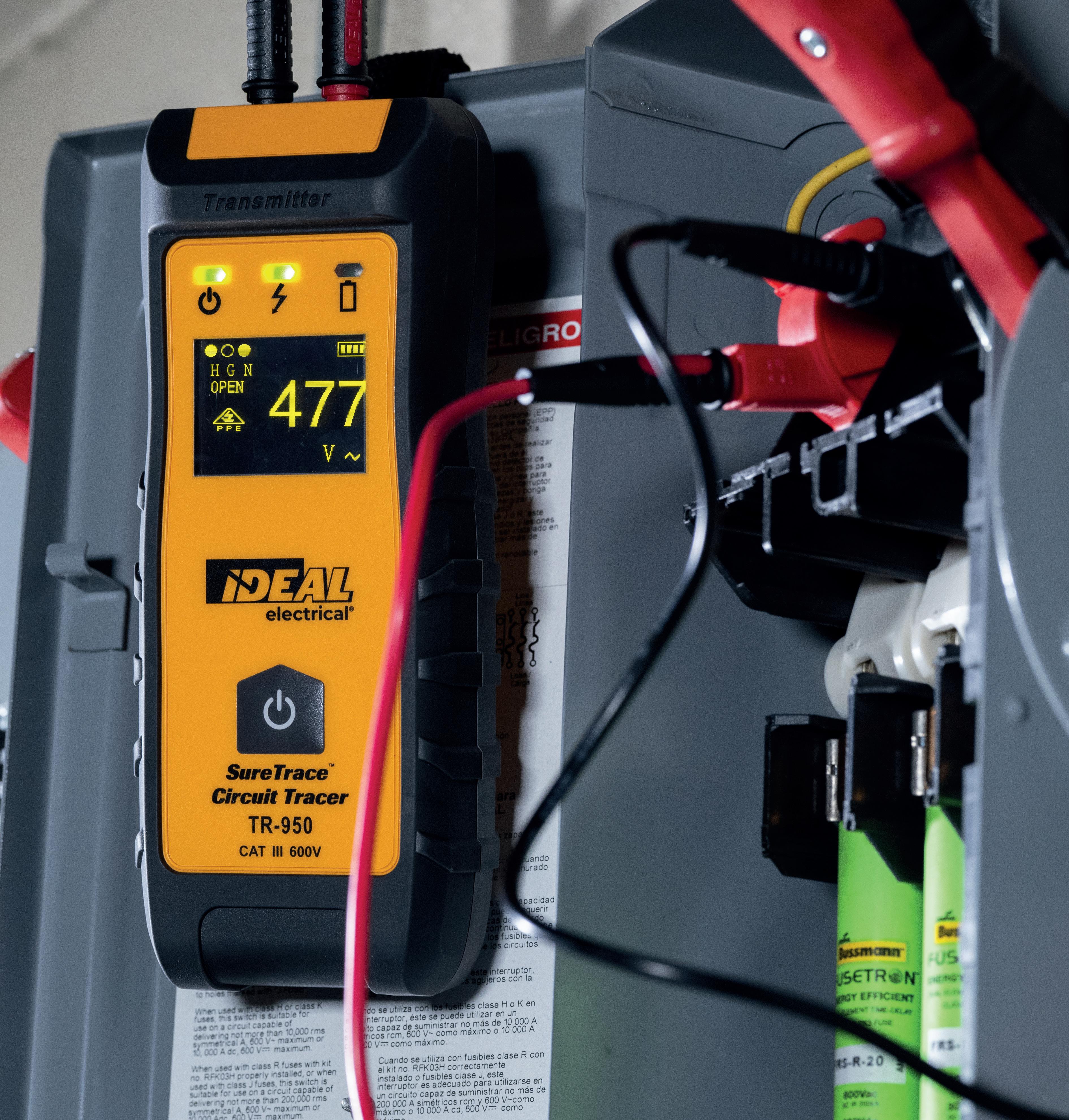
Today’s circuit tracers are more than circuit breaker-finding tools. IDEAL Electrical™ explains how electricians can use the latest models to troubleshoot easily and more efficiently
In modern electrical work, circuit tracers are essential tools for easier fault-finding. Circuit tracers consist of a transmitter that applies a signal to a cable and a receiver that detects it. Together, they allow electricians to identify which breaker or fuse controls a circuit, trace wiring concealed behind walls, ceilings, or floors, and pinpoint issues.
Advanced circuit tracers can also assist in contactless tracing, exact voltage and current measurements, continuity testing, and socket wiring verification. Capabilities that once required separate testing instruments are increasingly built directly into modern circuit tracers, consolidating multiple tools into one powerful solution. This article explores how modern circuit tracers help electricians perform their work more efficiently and with greater confidence.
Circuit tracers provide a fast, reliable way to identify a variety of electrical faults, such as electrical shorts, splice errors, and more. Locating such a fault manually can involve individually isolating and inspecting each device along the circuit. However, a circuit tracer simplifies this time-consuming process and permits electrical professionals to accurately locate faults such as dead shorts. Once repairs are completed, a continuity test can verify that resistance values have increased and confirm that current is now flowing along the intended path.
Continuity testing is a standard feature of electrical meters, but it has rarely been included in circuit tracers. Newer models—such as the SureTrace™ Plus and SureTrace™ Pro from IDEAL Electrical—now integrate continuity testing directly into the tracer. This reduces the need to carry additional instruments and simplifies troubleshooting on the site.
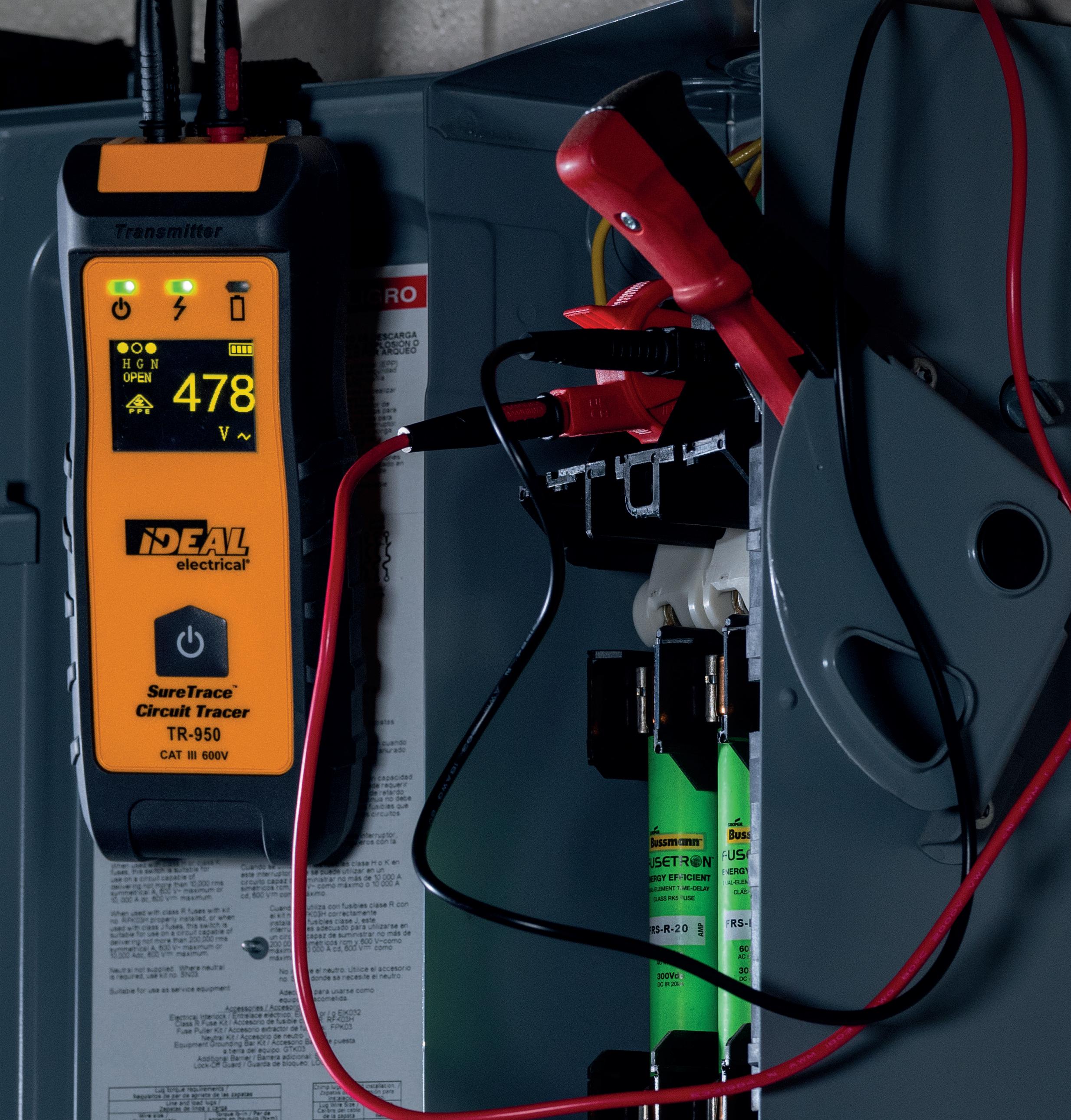
To further streamline electrical testing, some advanced circuit tracers now display exact voltage readings rather than using indicator lights to show approximate voltage levels. For example, the SureTrace Pro transmitter display includes the exact voltage, shows whether that voltage is AC or DC, and indicates DC polarity.
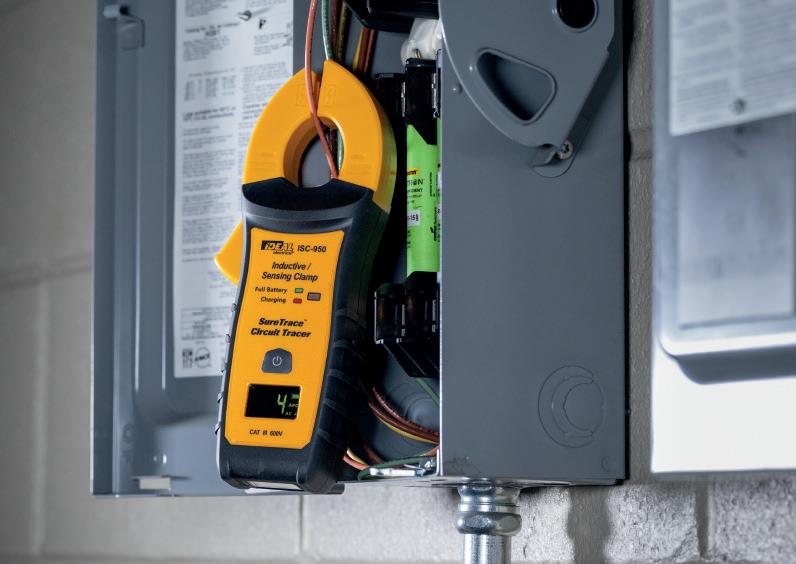

Socket wiring verification is another valuable feature. When the transmitter of an advanced tracer is plugged into a socket, the display shows both text and a simple dot-based indicator to indicate the wiring is “OK” (correct configuration), “REV” (reverse polarity), or “OPEN” (no earth). This allows electricians to either validate proper wiring or identify specific problems.
Inducing Tracing Signals with a Sensing Clamp
An additional capability offered by some circuit tracing kits is the inclusion of an Inductive Sensing Clamp (ISC). By clamping the ISC around a conductor, electricians can induce a traceable signal and continue tracing even when direct contact with cable termination points is not possible or not safe.
In addition to testing and tracing capabilities, electricians should also evaluate how user-friendly a circuit tracer is in day-to-day use. Design features that improve usability and efficiency can make a noticeable difference over time, including:
• Rotating OLED Dual Displays: A rotating display automatically adjusts the tracer’s on screen readings to match its orientation, making information easy to read regardless of how the tool is held. A secondary bottom display can further improve visibility, while OLED technology ensures crisp letters and numbers that remain clear in dark spaces. For situations such as tracing overhead or working deep within a panel, these capabilities ensure readings can be easily seen from all angles.

• Work Light: Another convenient feature is a built-in work light. Circuit tracers with a work light can illuminate the area in front of them, providing providing better visibility when working in dimly lit environments.
• Overmoulded Industrial Design: Circuit tracers are investments that need to last for years in demanding conditions. A rugged, overmoulded design can improve grip and help protect the tool from drops, extending service life and reliability.
The Future of Circuit Tracing Technology
Modern circuit tracers are multifunctional diagnostic tools designed to support a broad range of testing and troubleshooting tasks. With built-in voltage measurement, continuity testing, socket wiring verification, and more, the latest circuit tracers help electrical professionals work smarter, safer, and more efficiently.
For more information on IDEAL Electrical circuit tracers and to find a stockist, visit our website: https:// www.idealind.com/eu/en.html.
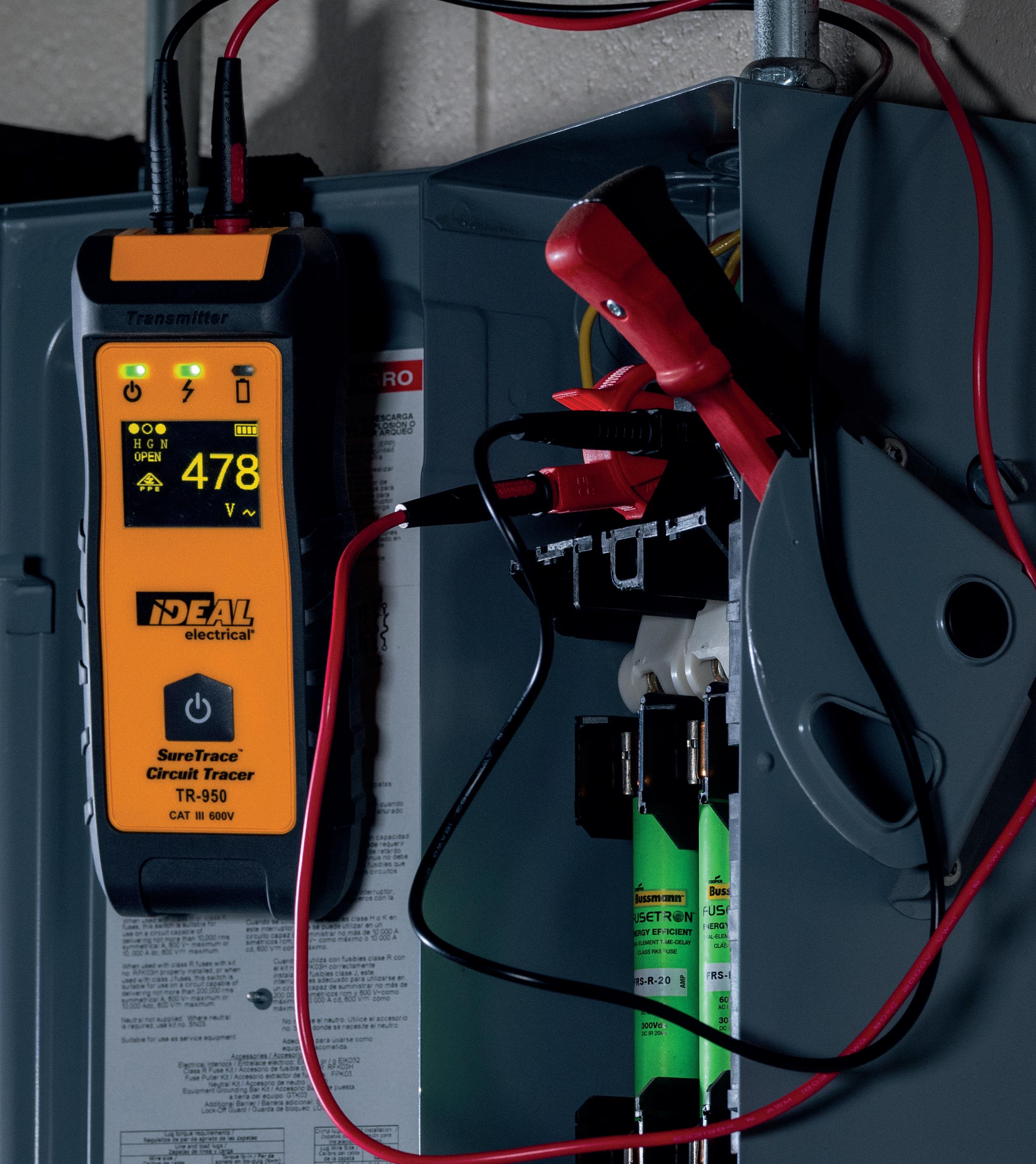
The SureTrace™ Circuit Tracer Pro redefines what a circuit tracer can do. With numerical voltage readings, continuity testing, AC amperage readings, contactless tracing, and socket testing, it’s clear why this troubleshooting device saves professional electricians time on the job.
The SureTrace™ Circuit Tracer Pro redefines what a circuit tracer can do.
With numerical voltage readings, continuity testing, AC amperage readings, contactless tracing, and socket testing, it’s clear why this troubleshooting device saves professional electricians time on the job.
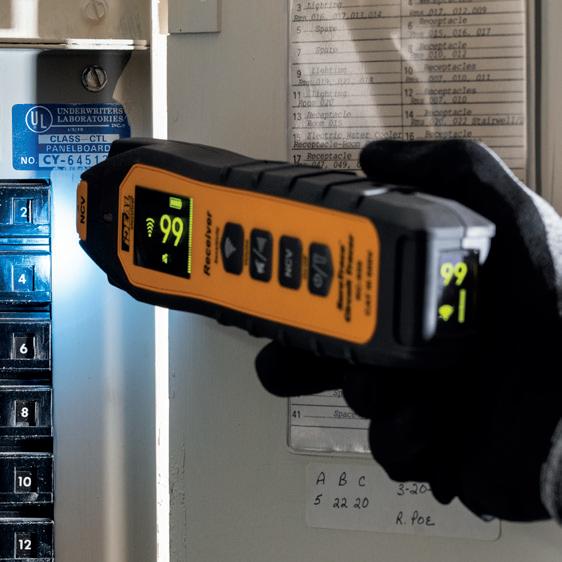
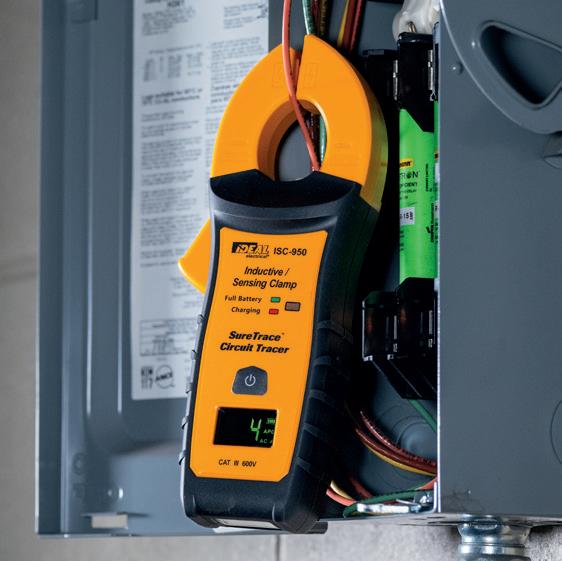
• Exact voltage & amperage measurements (24-600V AC and 12-600V DC)
• Confirm DC polarity
• Verify socket wiring
• Integrated continuity tests
• Premium Rotating Displays
• Inductive Sensing Clamp for Non-Contact Tracing

When you talk to electrical contractors about ecommerce, what misconceptions come up most often?
Paul Redman of Contractor Commerce discusses why Electrical Contractors should embrace ecommerce and the advantages that it yields
The biggest misconception is that ecommerce means “selling electrical work like shoes on Amazon.”
Contractors hear the word and assume it’s about commoditizing their expertise or racing to the bottom on price. In reality, ecommerce for electrical contractors is about guiding the buying process, not eliminating human interaction.
Another common misconception is that ecommerce replaces estimates, site visits, or relationships. What it actually does is remove friction at the very top of the funnel, helping customers understand options, pricing ranges, and next steps before they ever call. The contractors who adopt it usually realize pretty quickly that it makes conversations easier, not harder.
Are electrical contractors still underestimating how digitally informed today’s customers are?
Yes - and it’s one of the biggest gaps we see. Many contractors still assume the first call is where education begins. In reality, education is already happening online, often long before a contractor ever hears from the customer.
Today’s homeowners are researching panel upgrades, EV chargers, generators, and pricing ranges late at night, on weekends, and increasingly through AI tools. By the time they reach out, they often have a shortlist and a budget in mind. Contractors who don’t acknowledge that shift risk starting the conversation too far behind where the customer already is.
What are electrical customers doing online before they ever contact a contractor, and how does that change the first conversation?
Most customers are trying to answer three questions on their own:
• Is this project even feasible for my home?
• Roughly how much does it cost?
• Who should I trust to do it?
They’re reading FAQs, watching short videos, comparing reviews, searching phrases like “EV charger installation cost” or “200 amp panel upgrade price,” and asking AI tools to summarize their options.
When contractors provide online estimates or pricing ranges, the first conversation shifts from “How much is this going to cost?” to “How soon can we get this done?” That’s a much healthier place to start and it usually leads to higher-quality jobs.

Which ecommerce elements make the most sense for electrical contractors?
Electrical contractors don’t need full shopping carts for every service. The most effective ecommerce elements tend to be:
• Instant or guided online estimates for common projects like EV chargers, panel upgrades, generators, or surge protection and basic home electrical updates like lighting.
• Clear pricing ranges or starting prices that set expectations without locking contractors into fixed quotes
• Online scheduling or appointment requests tied to specific services
• Financing and monthly payment visibility, which is increasingly how customers think about affordability These tools work best when they support, not replace, site visits and professional judgment.
How can ecommerce help electrical contractors protect margins in a competitive market?
Margins get squeezed when contractors compete blindly on price. Ecommerce helps protect margins by qualifying demand earlier and anchoring value before a technician ever rolls a truck.
When customers can self-select services, see pricing ranges, and understand what’s included, contractors spend less time on unprofitable jobs and fewer hours quoting work that never converts. Ecommerce also reduces the pressure to discount, because transparency builds trust. Customers are far less likely to shop purely on price when they understand scope, safety, and long-term value.
Ecommerce also opens the door to recurring service memberships, which are a powerful margin stabilizer. Electrical maintenance plans, safety inspections, surge protection checks, or priority service memberships can be sold online without tying up staff time. These
programs create predictable revenue, keep contractors connected to customers between major projects, and often lead to higher-margin follow-on work when issues are identified early.
Instead of relying solely on one-time installs or emergency calls, contractors can build long-term customer relationships, which is one of the most effective ways to protect margins in a competitive market.
What are the biggest mistakes you see electrical contractors make when digitising their sales process?
The most common mistake is going halfway. Contractors add a form or a vague “request a quote” button but still hide pricing, services, and details. That doesn’t meet modern expectations.
Another mistake is overcomplicating things. Ecommerce doesn’t need to be perfect or exhaustive on day one. When contractors try to digitize everything at once, it often stalls. The goal is clarity, not complexity.
Finally, some contractors forget that ecommerce is a sales tool, not just a marketing one. If it’s not connected to how calls are handled, how estimates are delivered, and how jobs are scheduled, it won’t reach its full potential.
What is the most realistic first ecommerce step for a small-to-midsized electrical contractor?
The most realistic first step is adding online estimates or pricing ranges for a few high-demand services like EV chargers, panel upgrades or generator installs These are projects customers already research heavily, and even rough ranges can dramatically increase conversions. Pair that with clear service descriptions and a simple next step like scheduling a visit or requesting confirmation, and you’ve already moved ahead of most competitors.
Looking ahead, how do you see ecommerce changing how electrical contractors win and manage work over the next few years?
Ecommerce will increasingly act as the front door to the electrical business. Contractors who win will be the ones who educate, price transparently, and capture intent early, often before a phone call ever happens. We’ll also see ecommerce play a bigger role in repeat business: maintenance plans, add-on services, and upgrades sold digitally instead of only in the field. Also as AI becomes more involved in how customers choose contractors, visibility will matter just as much as reputation.
Across electrical and HVAC contractors, the challenge is not just delivering the work. It is keeping every job moving once customers, subcontractors, and internal teams are all trying to coordinate at once.
For many operators, that coordination already happens in WhatsApp groups. The problem is what happens next.
As install volume grows, updates get buried, confirmations get missed, and back-office teams end up chasing photos, paperwork, commissioning evidence, and job progress by hand. More installs start to mean more admin. Jely.chat, founded by Saul Truman and Wojtek Woznicki, is built for that exact problem.
The aim is simple: help teams scale installs without scaling the admin behind them.
Jely works inside WhatsApp groups, where customers, service providers, and internal teams are already coordinating live jobs. It creates groups linked to jobs, follows up automatically for missing information, and keeps key updates synced back into the business.
At the core are Jely’s WhatsApp agents, which handle the routine follow-up that usually slows teams down: chasing updates, collecting confirmations, gathering photos and paperwork, and keeping the workflow moving without someone in ops having to stay on top of every message.

Through conversations with installers and operations teams, Jely has seen the same pattern come up repeatedly: the work itself is manageable, but the communication around the work becomes harder to control as businesses grow.
To explore that challenge further, Jely is currently putting together a white paper: How to Improve Coordination Between Field Teams and Clients Without Adding More Ops Work.
The research draws on conversations with more than 15 companies so far, looking at where time is being lost, how teams are managing customerprovider communication today, and what it takes to keep jobs on track without adding complexity.
If you manage installs, field teams, or operations and would like to contribute, get in touch at founders@jely.chat.


Our bare wire technology means longer product life and better sustained performance even in hard water areas. With a range from 3-27kW we have every job covered.
Faster heat up time Can take pre-heated water
Resistant to limescale = better sustained performance and longer product life
Faster to react to changes in water pressure and voltage to maintain constant water temperatures
Highly compact and efficient
Example product video www.stiebel-eltron.co.uk/instant
sales@stiebel-eltron.co.uk | 0151 346 2300

FEve Gaut, Founder of Parrot PR and Marketing, explains why in today’s competitive market, great workmanship alone is no longer enough. However skilled, reliable, or qualified you may be – marketing ensures people know it
or electricians, electrical contractors and those in the industry, intentional marketing is not simply about visibility. It is about building credibility, attracting the right clients, and ultimately future-proofing your business in an industry that is evolving at pace.
Marketing is often misunderstood within the trades. It can feel like something reserved for large corporations or consumer brands with significant budgets. In reality, it is one of the most practical and powerful tools any trade professional can invest in. Every image you share, every testimonial you publish, and every update you post communicates who you are long before a conversation even begins. It shapes how potential customers perceive your reliability, your workmanship –even how approachable and professional you are.

As Eve Gaut, Founder and Director of Parrot PR and Marketing, puts it: “Your work might speak for itself on site, but off site, it’s your brand that does the talking. The businesses that win big are the ones that make that voice clear, consistent and impossible to ignore.”
Done well, marketing elevates a business from simply being available to being actively in demand. It allows you to move beyond competing solely on price and instead compete on value, trust, and reputation. In a sector where safety, compliance, and expertise are paramount, that distinction truly matters.

Many successful electricians are already embracing this shift. They are not only delivering high-quality work but also presenting their businesses in a way that reflects that standard. Consistent, polished communication reinforces professionalism at every touchpoint. A well-documented case study can demonstrate problem-solving ability. A clear, informative social post can position you as knowledgeable and up to date with the latest electrical technologies. A strong online presence ensures that when a recommendation is made, it is supported by visible proof of quality.
This approach also strengthens word-of-mouth, rather than replacing it. Recommendations remain one of the most powerful drivers of new business in the electrical industry, but today they are often followed by an online search. What potential clients find in that moment can either reinforce trust or create doubt. Marketing ensures that your reputation is not only heard but seen and validated.
There is also a longer-term advantage. As the industry faces skills shortages, increased regulation,
and growing customer expectations, businesses that invest in their brand now will be better positioned for the future. Marketing helps attract not only clients but also talent, partnerships, and opportunities. It builds recognition within both local communities and the wider professional network.
At Parrot, we see marketing as an essential extension of the electrician’s toolkit. It sits alongside technical expertise and quality equipment as a core component of a successful business. It fuels trust, drives repeat work, and builds a recognisable presence in a crowded marketplace. Most importantly, it helps turn skilled tradespeople into respected brands, ensuring clients see not just a service, but a standard they can rely on. Because in the electrical trade, your reputation is everything and marketing is what keeps it visible, relevant, and switched on.

The first EV infrastructure wave was all about speed. Governments pushed hard, investors hurried, and operators planted chargers anywhere they could find space. But if you walked through a city car park at night, you would see a line of units, a few working, others flashing fault codes or standing dark. The rush to build delivered visibility for the market, not reliability.
Keeping a charger running has now become more important than installing a new one. A charger that performs flawlessly is a technical success; one that does so for months is a business victory.
Only a few years ago, a technician went out when something failed. Today, every visit demands evidence, test reports, calibration records, and verification of energy transfer. In practice there are two distinct personas involved in the field. Maintenance contractors focus on installation, servicing, repairs and uptime management. Alongside them are legal-metrology inspectors, typically acting on behalf of government or regulatory bodies, whose sole priority is measurement integrity.
It’s the shift to make reliability visible that has put technicians in the spotlight. They no longer operate as background support; they are the connection between compliance and customer trust. Guided workflows, automatic data capture, and live cloud uploads turn a quick field check into a defensible record. A twenty-minute visit can now produce a complete audit trail.
The smartest operators are looking further ahead, using predictive data from fleets of chargers assessing

by Martijn Gerlag, Application Engineer at Fluke Corporation
temperature drift, connector wear, and power anomalies, to plan service before anything breaks.
Still, clever software means little if it is not practical on the ground. Engineers need tools that translate analysis into action, often immediately. A guided calibration or an automatic diagnostic can shave minutes off each job and remove guesswork. With a network of hundreds of chargers, those minutes matter.
Regulators are treating charging accuracy like public utilities. For many, this shift has meant building entirely new reporting systems – ones that operators are not always as familiar with. Every charger’s output, communication handshake, and payment record must be verifiable. Software logs are stored, firmware changes recorded, and calibration certificates time stamped.
It is rigid and time-consuming, not only in terms of data collection but learning the standards as a whole – yet it is driving maturity across the sector. Smaller networks unable to keep up with verification are falling away, leaving a core of stable, data-driven providers. As subsidies fade, the market will reward whoever can make reliability routine. For drivers, it’s a simple payoff: a charger that works every single time.
Interoperability used to be a selling point; now it is expected. The advantage lies in how efficiently companies can prove compliance. Instruments that run automatic plug-in checks or issue ready-made reports save hours in the field. For maintenance crews already stretched thin, that can make or break an SLA. And when results feed straight into regulatory dashboards, the line between compliance and competitiveness begins to blur.
Technology might be steadying, but the economics are changing faster than ever. Early investors paid for visibility, the biggest maps, the longest reach. That era is fading. Today, the money follows performance dataproof has become the new growth metric.
The strongest networks run connected ecosystems that link every charger, sensor, and technician. A fault appears; the system identifies it, dispatches a callout, and records the fix in minutes. Each repair adds to the database, sharpening predictive accuracy. Maintenance has shifted from overhead to the intelligence loop. It is the operator who is able to master that feedback cycle.
Every technology reaches a point where speed gives way to endurance. The EV industry has arrived there. The question is no longer how many chargers can be built but how many can stay running perfectly, hour after hour, day after day.
By 2026, uptime will be the product; the promise that makes every charge, every connection, every trip possible. Networks that understand this will build more than infrastructure. They will build trust, one verified charge at a time.












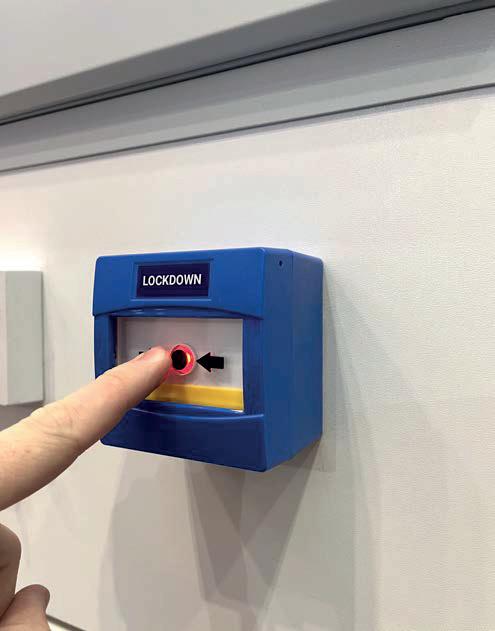
Martyn’s Law, also
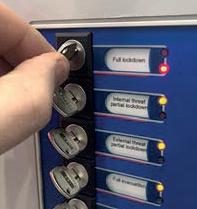
known as The Terrorism (Protection of Premises) Act 2025, means premises with a capacity of 200 or more must now prepare to have public protection measures in place, including lockdown plans, by April 2027.
If you carry out work in shops, schools, cinemas, restaurants, places of worship and other publicly accessible buildings you may get asked if you can help.























EVs and carbon: don’t forget the charge point
Electric Vehicle (EV) drivers choose electric mobility for a variety of reasons – not least the driving experience and the lower running costs. But it’s climate change and the environment which is at the forefront of many drivers’ minds when they choose EV.
The good news is that choosing a Battery Electric Vehicle (BEV) is a clear carbon win over fossil fuelled Internal Combustion Engine (ICE) cars.
The International Council on Clean Transportation (ICCT) published research last summer showing the lifecycle greenhouse gas emissions of a BEV is 73 per cent lower than a petrol-only car. A BEV’s life-cycle emissions are even lower – a 78 per cent reduction – if the BEV is powered using only renewable electricity.
Even plug-in hybrid vehicles (PHEVs) have 30 per cent less life-cycle greenhouse gas emissions than a petrolonly car. The ICCT’s analysis included the greenhouse gas emissions from vehicle and battery production and recycling, fuel and electricity production, fuel consumption and maintenance.
But what about the charging equipment? Whilst using electricity generated from renewable sources such as wind and solar boosts the overall carbon advantage of a BEV or PHEV, there is another aspect of driving an EV where there is an environmental cost: the charge points used the replenish the battery.
A key question affecting the carbon impact of a charge point is its longevity. How many years will it be capable of operating before it needs replacing?
The answer lies in the charge point’s robustness, its adaptability and its repairability. In other words, is it equipped for not only today’s charging needs but also tomorrow’s? Can it be repaired or updated without becoming redundant?

By Viktors Nikolajevs, National Account Manager EVSE at CTEK
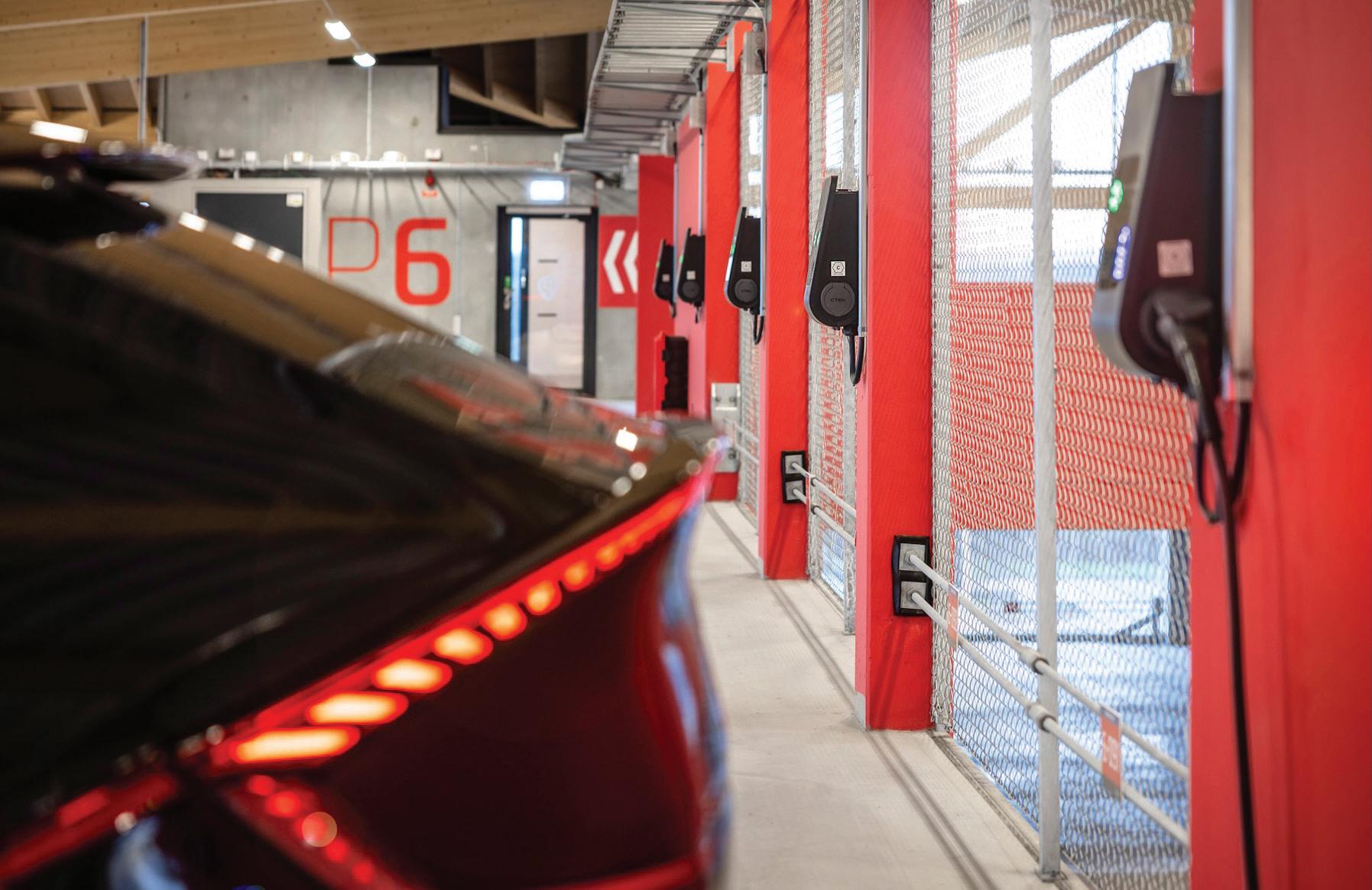
When we were designing our newest chargepoint at CTEK, we thought long and hard about how to make the Chargestorm Connected 3 (CC3) as futureproofed as possible, knowing that to do so would enhance the sustainability of our product and the installations where it is used.
We believe all installers and their clients – from homeowners to landlords, destinations to local authorities and chargepoint operators – should have longevity and flexibility in mind when specifying new EV charging.
They should be asking whether what they are going to install has the capabilities needed not just for today’s charging needs but for the opportunities coming tomorrow. Is the hardware futureproofed for the next wave of EV charging capabilities? Can it handle the software coming down the track?
Installers will want their clients to be confident that their new EV charging installation is going to function as well in three years’ time, or ideally better, as it will the day it is first plugged in. We recommend installers, specifiers and charging hosts ‘buy well and buy once’.
Roadsides and car parks already have too many obsolete and broken chargepoints that are
uneconomic to repair or terminally compromised for future use. Each CC3 has a free five year warranty for parts and labour, and the back-up of CTEK’s support to minimise any downtime. Maximising uptime is key; the Helsinki headquartered EV charging platform provider eMabler last year named CTEK the winner of its first Best Hardware Partner Award thanks a charging success rate of 98.6%, according to its own data.
CC3 was designed to have replaceable standardised components such as the contactor, RCD, fuse and socket. Unlike many conventional EV chargepoints that necessitate complete replacement when issues arise, CC3 enables the replacement or upgrading of individual parts. This modular design is in line with the EU’s increasing focus on repairability and reduced electronic waste.
This not only extends the lifespan of the device but also significantly reduces electronic waste and its associated environmental impact. It is a forwardthinking solution that supports sustainability, making it a greener and cost-effective, futureproofed and regulatory aligned choice for eco-conscious consumers and businesses alike.
Having dual outlet models of charge points is also a carbon saving in terms of materials and the energy cost of installation. Put two CC3s back to back on a pole mounting and you have four outlets to charge four EVs but just one installation with less groundwork, less cabling and fewer communication units – saving not just carbon but money too.
When it comes to carbon and the beneficial impact of e-mobility on the environment, from EV manufacture, power and maintenance, though to the charge points plugged into, it all adds up.
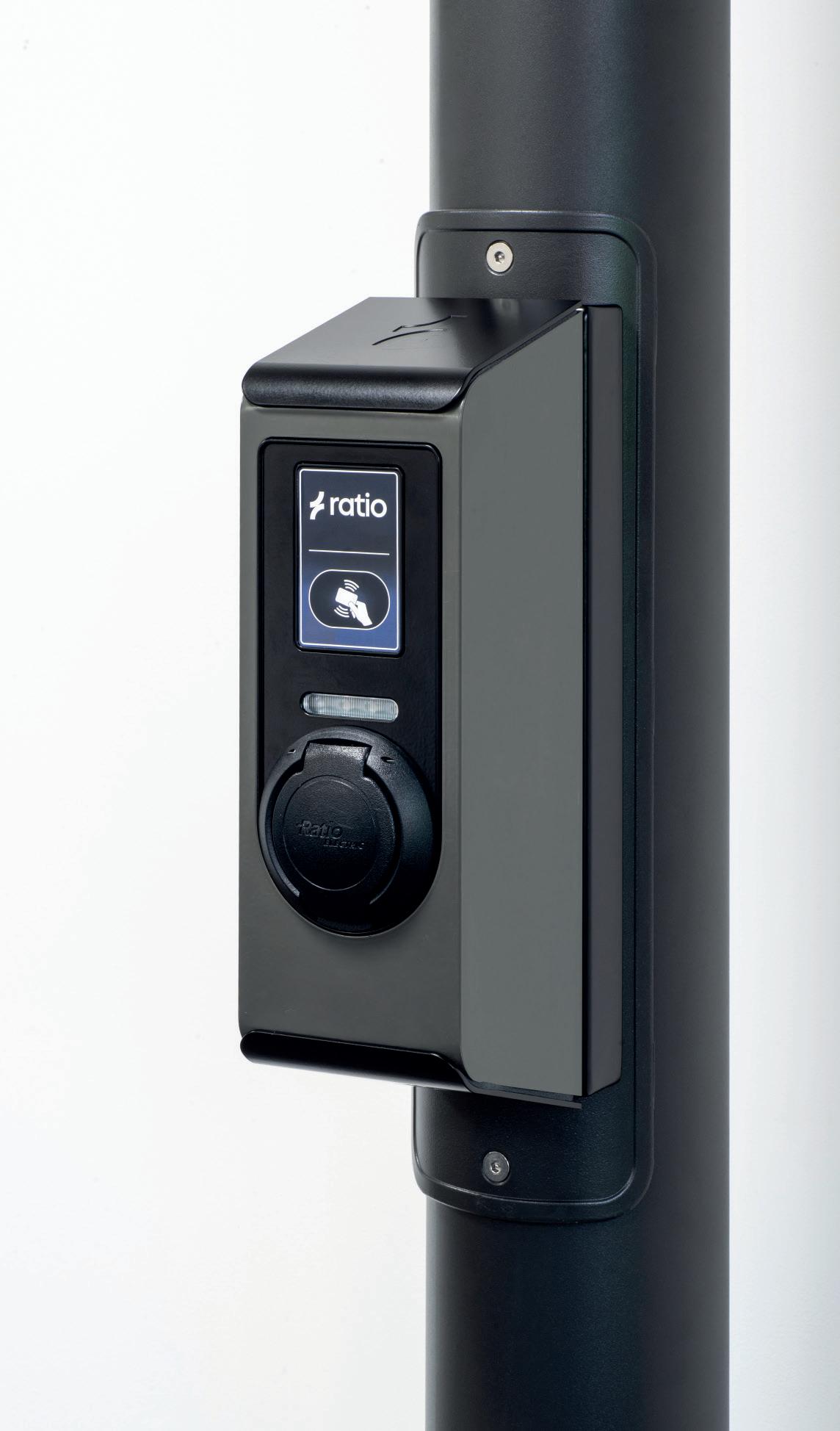
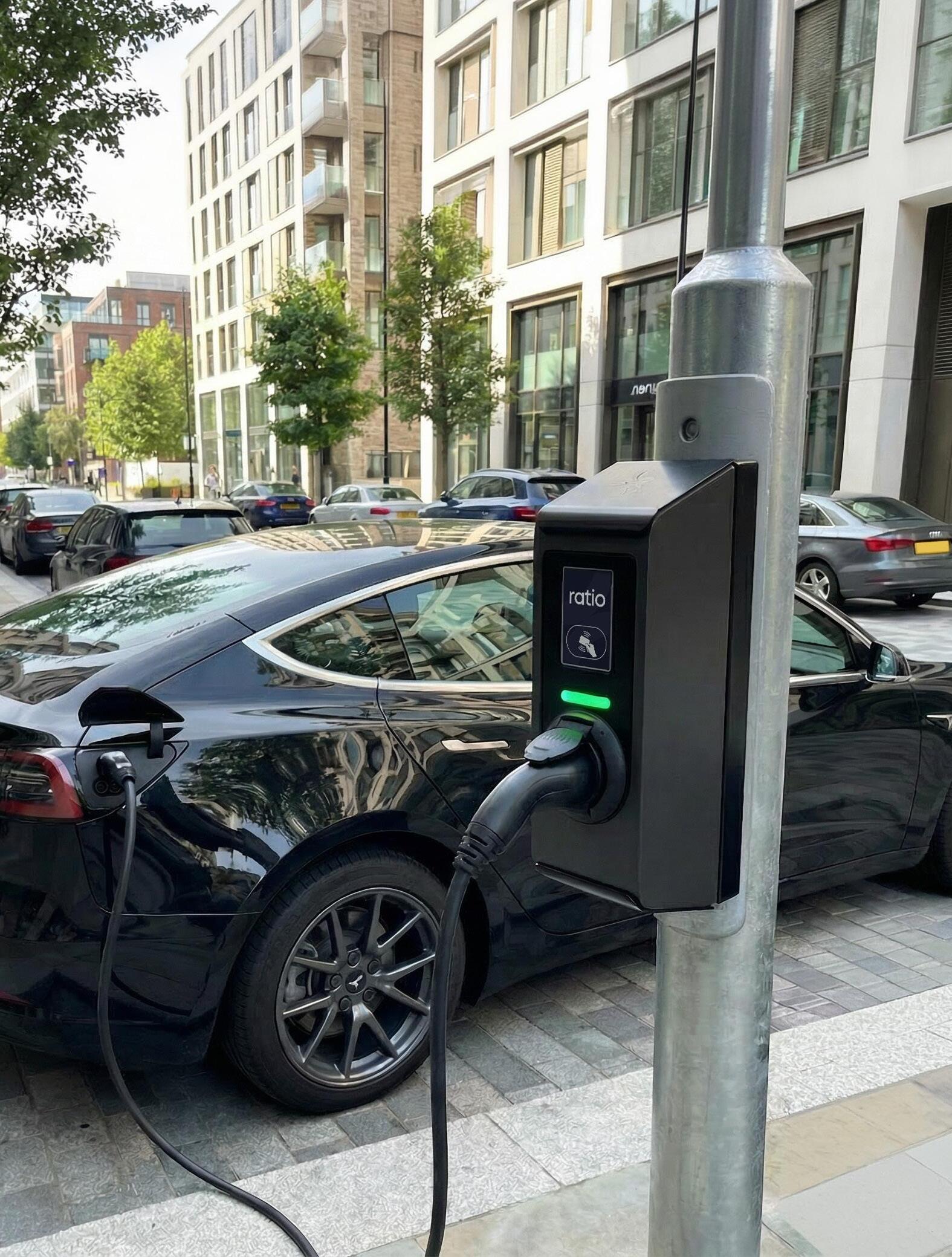
As the UK accelerates towards an electric future, the challenge of delivering accessible, reliable on-street charging has never been more pressing. For local authorities and charge point operators looking to expand EV infrastructure without the disruption and cost of civil works, the io6 Street by Ratio offers a compelling answer.
Purpose-built for residential streetscapes, the io6 Street transforms existing street furniture into smart charging hubs. Its lightweight, compact design enables retrofit installation onto lamp posts, columns and roadside pillars, significantly reducing both installation time and expense. This clever approach helps councils overcome two of the biggest barriers to widespread EV adoption — lack of off-street parking and the high cost of new groundwork.
Despite its discreet profile, the io6 Street packs serious performance. Delivering up to 7.4 kW AC charging, it’s ideal for overnight or destination charging where vehicles are parked for prolonged
periods. Designed and manufactured in the UK, each unit meets stringent UK and EU standards, and its robust aluminium housing is rated IK10 impact and IP54 ingress protection, ensuring resilience in public environments exposed to the elements.
But practicality doesn’t stop at hardware. The io6 Street is OCPP 1.6J compliant and OCPP 2.0.1 ready, meaning it can integrate seamlessly with modern back-office management systems. Operators retain full control over tariffs, session management and user access — including RFID and plug-and-charge authentication — all supported by built-in Ethernet, Wi-Fi and 4G connectivity (with 36 months of SIM data).
For communities looking to roll out public charging at scale, the io6 Street represents a thoughtful balance of performance, durability and urban design. It reflects Ratio’s commitment to future-ready infrastructure: charging that’s intelligent, dependable and tailored for the realities of everyday street environments.
https://eu1.hubs.ly/H0rVvQB0
Ian Rippin, CEO of MCS, discusses how the Scheme is set to transform the UK’s consumer protection landscape, outlining the new requirements and why they come at a crucial time for the industry
At MCS, we’re coming off the back of a record-breaking year, which saw an MCS certified installation completed every 90 seconds. In particular, rooftop solar surpassed the long-standing record set back in 2011 by a massive 31% and battery storage almost doubled the previous record. This momentum has continued into 2026, where we’ve had the best-performing start to the year in Scheme history as of March.

This isn’t the only reason that it’s such an exciting year for MCS. Over the coming months, MCS will roll out its redeveloped installer Scheme. We’ve made significant changes to how the Scheme is structured and implemented, changes designed to support this record-breaking demand for home-grown energy. A key part of giving everyone confidence to invest in these technologies is ensuring the overall experience of investing in home-grown energy is a positive one, as well as providing peace of mind if something were to go wrong. That’s why MCS has put consumer protection at the heart of the redeveloped Scheme.
Raising the bar
Installers will have to comply with a new MCS Customer Commitment, and we’ll hold them to account through enhanced monitoring and a new, direct relationship formalised in the MCS Installer Agreement. The Customer Commitment makes sure that consumers have the best possible experience when investing in home-grown energy, and sets out:
• Clear expectations for how customers are treated
• How information should be provided before installation
• How complaints are handled
• How compliance is monitored and assured The Customer Commitment also provides guidance for consumers, such as making sure they read all contracts and documents carefully, making the process as smooth as possible for both parties and providing installers with the tools they need to carry out installations to a high standard.
Financial protection is going to look different under the redeveloped Scheme, through a suite a newly released MCS approved financial protection products which raise the bar on the level of protection
afforded to consumers who use an MCS certified installer. This includes remediation, protection if their installer were to cease trading for any reason, and at least six years’ cover from the moment of installation (up from the current two-year cap).
This new level of protection will be provided by an approved financial protection product which certified installers will need to purchase for their customers. Through these products, they will be able to offer customers an effective safety net if something were to go wrong with their installation, strengthening their confidence in an installer’s business and positioning them as a reputable, quality installer that they can trust. These products will give installers a competitive advantage in a crowded market, as customers look for credible and transparent guarantees.
Under the redeveloped Scheme, MCS has centralised the complaints system. This is to provide clarity on where to turn if things do go wrong, meaning that installers and consumers will only need to raise their complaint with MCS and we will handle the process, ensuring the right organisations are involved. We know this will be a welcome move, as the complaints landscape has been too fragmented for too long, with no single point of contact and support.
To support this transition, MCS has invested in a dedicated Complaints team who provide a clear, accessible route for resolving issues. The team manages complaints through a structured, transparent process, ensuring concerns are addressed fairly, consistently, and in line with Scheme requirements. If a resolution
can’t be agreed on, complaints can be escalated to alternative dispute resolution (ADR), which is free for both installers and consumers.
As the government looks to scale deployment of renewables across the UK, taking ownership of complaints means that MCS can reinforce trust and accountability across the sector. It will give us much greater oversight of common and recurring issues in the industry.
Our ongoing overhaul of consumer protection will be supported by the MCS Quality team, who deliver compliance checks throughout the UK to ensure installations meet MCS Standards. This is further supported by our Outreach team, who will take a proactive approach to consumer protection through direct engagement with every single recipient of an MCS installation delivered under the redeveloped Scheme.
Following on from a record-breaking year, we’re committed to ensuring the redeveloped Scheme puts consumer protection at the heart of what we do, making sure that customers can rely on MCS, and on MCS certified installers, as a mark of quality when looking to invest in technologies that may be unfamiliar to them.
This commitment will be increasingly important to the sector, as it prepares to deliver the £15 billion Warm Homes Plan.
For the latest updates on the redeveloped Scheme, visit the MCS website: www.mcscertified. com/installers/getting-prepared-for-theredeveloped-installer-scheme.






by Dan Griffiths, Technical Operations Manager,
he UK lighting industry in 2026 feels different. There is still pressure on cost and performance, but the conversation is starting to shift in a more meaningful way. We are seeing a growing recognition that lighting is not just about hitting efficacy targets, but about delivering quality, usable light that works for people, spaces and the wider environment.
Over the past year, the rise of AI and digital tools has been impossible to ignore. We can now create impressive visuals and concepts in seconds. That has real value, particularly in early design thinking and communication. But it also creates a new challenge for the industry. When everything can look good, the question becomes much simpler and much harder at the same time: does it actually work? The ability to demonstrate competence, not just create imagery, is becoming increasingly important.
This is where training and development need to step forward. Understanding lighting properly, how it performs, how it is applied, and how it impacts people, is critical. The gap between appearance and performance is something the industry needs to be honest about, and education is key to closing it.
We are also seeing far greater scrutiny on performance and environmental claims. Lifetime, output and efficacy data are being questioned more closely, and rightly so. At the same time,
environmental positioning and sustainability claims are under increasing pressure to be clear, evidenced and honest. This is being driven not only by the market, but by rapidly developing European legislation. As regulation continues to evolve, particularly across Europe, there is a real possibility of further divergence from Great Britain. For companies operating across Ireland and Northern Ireland, this creates additional complexity and a higher bar for compliance.
There are positives in this. It is encouraging to see government engaging more openly with the industry and beginning to listen to the challenges being raised. We have seen real progress in ensuring that building regulations recognise the importance of quality lighting, not just minimum performance metrics. That work must continue, but it shows what can be achieved when the industry speaks clearly and consistently.
Alongside this, there is a much stronger focus emerging around the quality of light and the responsibility that comes with using it. Work around responsible lighting at night is gaining momentum, particularly in relation to obtrusive light, ecology and how lighting affects our surroundings. This is helping to shape a more balanced view of lighting, one that considers not just what we install, but the impact it has beyond the space it serves.

As expectations increase, so does the need for clarity and consistency. Standards, guidance and evidencebased approaches are becoming more important, not less. The industry is being asked to show not just what it can do, but that it is doing it properly.
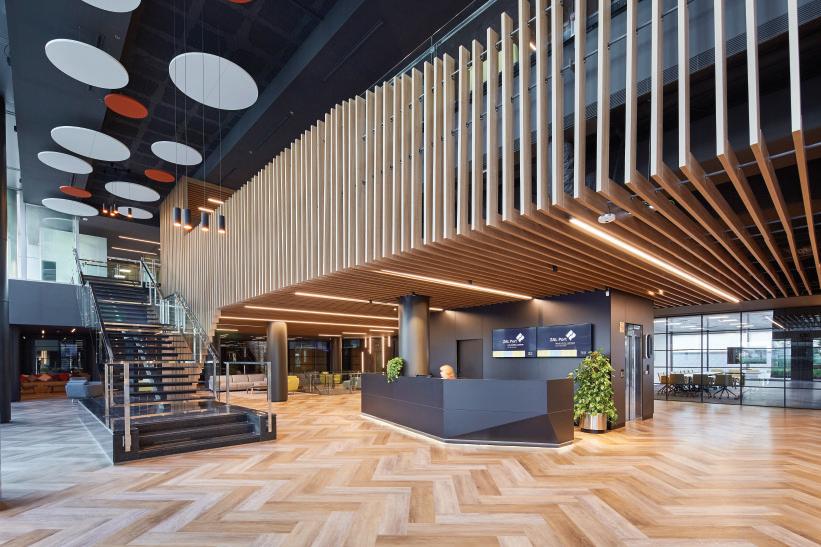
Working with Spanish real estate company CILSA and global property services firm CBRE, the lighting specialist’s system converted the existing building into a modern, flexible, and sustainable workspace that ‘enhances employee well-being, supports adaptable use of space, and maximises energy efficiency’.

CBRE required a lighting solution that could create distinct moods across a variety of open-plan offices, meeting rooms, and collaborative zones for the project at the ZAL Port Service Centre within an industrial area in Barcelona. The industrial-style ceilings posed challenges for detector placement, but close collaboration between B.E.G.’s technical team and installation specialists ensured that aesthetics did not compromise performance.


A central control platform allowed lighting to be adjusted without changing the electrical installation. The system automatically regulates output based on daylight and occupancy, ensuring optimal lighting conditions for every activity.
Human Centric Lighting (HCL) zones mimic natural light, enhancing comfort and supporting well-being throughout the day. Users can also configure different lighting scenarios through an intuitive app interface.
Dan Glynn, Sales Director UK & Ireland for B.E.G., said: “Lighting plays a fundamental role in the way people experience a space. It isn’t just about illumination. It enables flexible use of space, full utilisation of natural light, and automated control that responds to real-world working conditions. In a project of this scale, it was essential to create a system that improved quality of life for people working there while also being efficient and sustainable.
“The installation and electrical contracting team were very satisfied with the solutions we implemented. The integration of detectors and controls into challenging environments showed how adaptable modern lighting systems have become.
“These types of lighting systems act as a connection point between the building and its users. The aim is to deliver performance so seamless that people hardly notice it - they just benefit from comfortable, effective lighting tailored to their needs.”
Energy efficiency was also a key consideration for the project, so time-controlled programming was implemented to prevent lights from remaining on when rooms are unoccupied, while presence detectors ensure spaces are only illuminated when necessary.
Mr Glynn added: “By regulating lighting according to daylight levels, energy consumption is reduced, luminaire life is extended, maintenance costs are lowered, and the building’s carbon footprint is minimised. These measures also support sustainability certification objectives.
“The ZAL Port Service Centre demonstrates the growing role of intelligent lighting control systems in contemporary office design. By combining technical expertise, user comfort, and sustainability, B.E.G.’s state-of-the-art system has transformed the space into a flexible, efficient, and enjoyable environment for employees.”





nder the guidance of CEO Steve Blair, Dialight, the global pioneer in industrial LED lighting technology, is entering a new era of purpose-driven innovation. With a renewed focus on people, sustainability, and operational excellence, Steve is positioning the almost century-old company to strengthen its firstmover advantage in the industrial lighting market while advancing its mission of helping industries worldwide reduce carbon emissions and improve safety.
Founded in 1938, Dialight has long been synonymous with rugged, high-performance lighting solutions designed for demanding environments. The company’s journey from developing indicator lights for telecommunications and aerospace to leading the global shift toward LED illumination reflects a legacy of continuous reinvention. Today, that spirit of innovation continues under Steve’s leadership, which is grounded in empathy, strategic discipline, and an engineer’s eye for precision.
A self-described “accidental CEO,” Steve began his career as an electronic engineer before realising that his true strengths lay not in circuit design but in problemsolving and empowering people. His professional path led him through senior leadership roles across the industrial and technology sectors, where he led a transformation that resulted in the company’s acquisition by Teledyne at a premium.
Following executive and board positions at Oxford Instruments plc and the Ordnance Survey, Steve joined Dialight’s Board in 2023. When asked to take on the CEO role in 2024, he saw it as an opportunity to reignite a legacy business with untapped potential.
“Dialight reminded me of my earlier organisational turnaround experiences,” Steve explained. “It’s a great business with incredible potential. My goal is to align people, purpose, and process so that we move forward as one cohesive team.”
At the heart of Steve’s leadership philosophy is a simple but powerful principle: business is about people. He believes customers do business with people they trust, and employees thrive when they feel empowered, recognised, and aligned with company goals.
“Success happens when you give people the tools and opportunities to grow,” Steve firmly believes. “If you align their aspirations with the company’s objectives, performance naturally follows.”
That focus on people has shaped Dialight’s internal transformation. Since Steve’s appointment, the company has overhauled its performance and recognition systems, prioritised internal promotions, and invested in a coaching and feedback culture. He
is adamant that leadership should be about guidance, not control, a lesson he credits to an early mentor who taught him to lead by asking the right questions rather than dictating answers.
“I don’t want to be surrounded by people who always agree with me,” Steve says. “Coaching people toward solutions is about tapping into diverse perspectives, challenging assumptions and driving better outcomes. That’s how innovation happens.”
Sustainability as Strategy
Sustainability, for Steve, is not a checkbox but a catalyst for competitive advantage. He recognises that Environmental, Social, and Governance (ESG) principles are becoming central to business growth, particularly in Europe, where regulatory and customer pressures are accelerating change.
“ESG is both a moral obligation and a market opportunity,” he explains. “We should all be doing our part to improve the quality of the planet, but we also need to ensure it makes good business sense.”
Under Steve’s leadership, Dialight is advancing toward its 2040 net-zero goal, leveraging its engineering expertise to reduce emissions across the supply chain. The organisation is prioritising sustainable design principles and continuous product improvement to support safer, more efficient and environmentally responsible industrial operations.
The Power of Innovation and Timing
Innovation has long defined Dialight’s identity. As the first company to bring LED technology to industrial markets, Dialight set the benchmark for durability, safety, and energy efficiency. Steve’s challenge now is to reestablish that pioneering spirit in a rapidly evolving global market.
“Even the best technology fails if the timing isn’t right,” he says. “Each innovation must align with market readiness and customer needs. That’s how you build sustainable growth.”
To drive this forward, Steve established a Strategy & Innovation Committee, bringing together internal leaders and external specialists in automation, photonics, ESG, and LED technology. The committee’s goal is to accelerate new product development, explore smart lighting integration with AI, and strengthen Dialight’s position as a technology partner rather than a product supplier.
Global Transformation in Action
Nowhere is Dialight’s transformation more visible than in its new Penang, Malaysia facility. The state-of-the-art manufacturing hub was officially inaugurated in August 2025. The site consolidates Dialight’s Solid State Lighting and Optoelectronics divisions into one streamlined operation designed for scalability and efficiency.
The Penang expansion represents a cornerstone of Dialight’s five-pillar transformation plan, supporting efforts to streamline operations, reduce cost and complexity, and improve responsiveness to global customers. The facility also embodies the company’s environmental ambitions and is purpose-built for reduced carbon footprint and energy consumption. By strengthening its manufacturing footprint Dialight has also mitigated tariff exposure and improved supply chain resilience, building on insights gained during global market shifts. For Steve, it’s an example of pragmatic leadership under pressure.
“You can only control what’s within reach,” he says, reflecting on the volatility of global trade. “When uncertainty hits, we adapt. We plan our next move, stay composed, and keep moving forward.”
Steve is quick to acknowledge that Dialight’s transformation is a team effort. He credits milestones such as the Sanmina settlement and the appointment of COO Rizwan Ahmad as pivotal moments that have sharpened the company’s focus on accountability, efficiency, and talent development.
“Dialight has always been a great engineering company,” Steve says. “Now, it’s becoming an even stronger business, one where technical excellence meets commercial agility.”
The company’s 10-year product warranty, unrivalled in industrial LED lighting, remains a symbol of Dialight’s confidence in its quality and performance. Yet Steve’s ambitions go beyond maintaining standards; he wants to set new ones: simplifying operations, reducing product lines, and integrating intelligence into lighting systems that support smart manufacturing and safetydriven industries.
As global industries race toward decarbonisation and digital transformation, Dialight’s role is more relevant than ever. Its technologies help customers in the world’s most demanding industrial environments operate safely and sustainably, reducing energy use while improving visibility and reliability in mission-critical environments.
Steve sees Dialight’s future as an intersection of innovation and impact. “Our job is to help customers operate more efficiently, safely, and responsibly,” he says. “When we do that, we’re not just selling lights, we’re shaping the future of industrial sustainability.”
With nearly nine decades of engineering heritage and a revitalised leadership vision, Dialight stands poised to illuminate the next chapter of industrial progress, one defined by smarter technology, greener solutions, and a human-centred approach to leadership.
Forum Lighting Solutions has announced a significant expansion to its exterior lighting portfolio with the official launch of the Premium Outdoor range.
Designed by an in-house team in Manchester, this 17-piece collection represents a bold leap into ‘statement luxury,’ blending oversized architectural designs with the rugged durability required for the British climate.

The Premium Outdoor range moves beyond functionality, offering trend-setting designs that serve as striking focal points for any exterior space.
With styles ranging from classic traditional to sleek contemporary, the collection is curated to meet the growing demand for high-end, oversized aesthetic statements in both residential and commercial landscaping.
True to the Forum DNA, this premium range is built specifically for ease of installation – whether that is a DIY-er or a professional.
Features which make sure fitting is easy and simple include: -
• Fast-fit connectors: streamlining the electrical connection process
• Generous wiring space: ensuring that even the largest, most statement fittings remain easy and hasslefree to install
“We are constantly innovating and responding to the latest trends,” says Steve Kaye, Marketing and Sales Manager at Forum Lighting Solutions.
“Keeping our product range fresh and exciting is what we are all about and we believe there is something for every taste in this premium collection.”
The full Premium Outdoor range is now online and can be viewed in the Premium Outdoor Lighting supplement.

To view catalogue https://online.fliphtml5.com/Forumlighting/pmxw/#p=1 Product online https://forumlightingsolutions.com/product-category/ outdoor-lighting-and-heaters/premium-outdoor/
















Profit margins for electrical contractors are tighter than ever – with the difference between a lucrative lighting job and one that barely breaks even often proving to be wafer-thin.
Working with the right partners when navigating complex electrical installations and chasing tight deadlines can ensure a project runs smoothly and therefore helps to protect budgets.
As a reliable and responsible lighting manufacturer
Ansell Lighting strives to be more than just a supplier, and has now developed a comprehensive contractor service proposition, designed to provide proper, hands-on, practical help. Each element of the service addresses the common project pain points experienced by contractors, such as on-site issues, delivery logistics and post-installation support.

Amongst the most recent additions to the contractor service are streamlined pallet deliveries, which simplify on-site logistics. Instead of wasting valuable team hours sorting through mixed deliveries or chasing stock, pallets now arrive with clear, intelligent labelling that identifi es both the contents and exactly which room or location they are destined for – meaning contractor can spend time on installation rather than logistics and phone calls.
Ansell has also introduced an On-Site Survey service, where its own trained electricians are able to visit project sites to provide direct support and advice for installations. They work closely with on-site teams to address challenges, offer guidance, and ensure the optimal implementation of Ansell Lighting products, and can liaise directly with Ansell’s in-house Lighting Design service to bridge the gap between concept and reality.
Other services available to Ansell customers include:
• Quality tested products: Every product undergoes a rigorous testing process in Ansell’s own LIA-certified facility to ensure safety and performance.
• Expert lighting design: Access to LIA-certified designers who use tools like Dialux and Relux to ensure precision from concept to delivery.
• Comprehensive stockholding: A multi-million-pound stockholding in Warrington and Belfast ensures over 500,000 products are readily available, with an average of 99% stock availability.
• Training and development: Free online CPD training is offered to contractors
All of the contractor support is, of course, underlined by Ansell’s continuous investment in new product development and innovation of marketleading LED lighting products and technology.
Already in 2026 Ansell has launched a range of new luminaires, including two game-changer products designed to make life easier for contractors by making the products more adaptable.
The market-first Prism Pro XM modular downlight combines the trusted performance of Prism Pro downlighting with a smarter, more flexible design. Featuring a replaceable driver and light engine, the new product allows the individual components to be swapped quickly and easily in the event of a part failure or upgrade; extending product life, reducing waste and unnecessary whole-product replacement.
And the popular Tornado EVO linear range has been enhanced with XPRESS capability; a fast, clip-in system that enables emergency and microwave sensor functionality to be added quickly and easily to standard products – something which will be rolled out across other products in the coming months
Mark Abbott, Managing Director of Ansell Lighting, said: “We understand the challenges contractors face with project timelines and logistics, and have been continuously building out our dedicated contractor service to help address those pain points.
“The key to a profitable project is keeping the relationship between the manufacturer, the designer and the installer as close as possible and we believe the latest additions to our contractor support service do just that.
“Choosing a partner dedicated to providing market-leading, innovative products and a complete end-to-end service, means a contractor can streamline projects and deliver excellent results - and hopefully start focusing on the next job rather than worrying about the bottom line.”





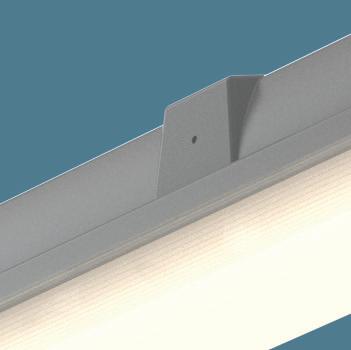
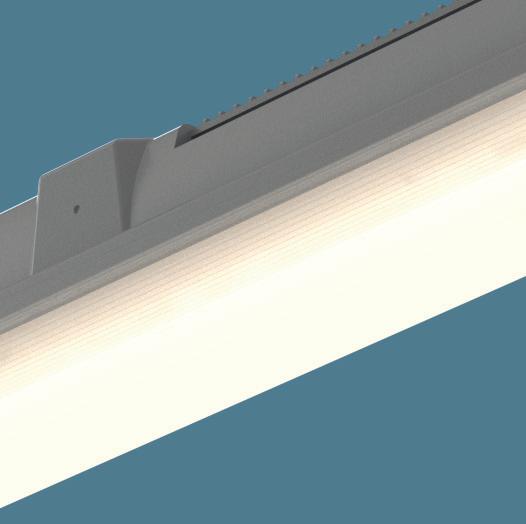


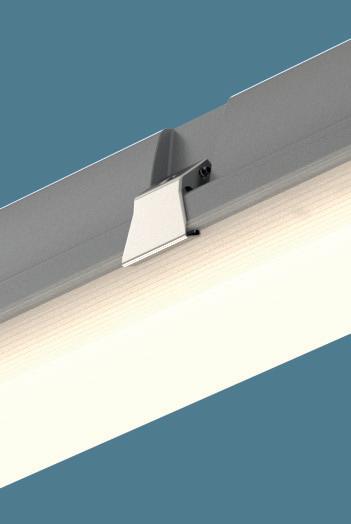
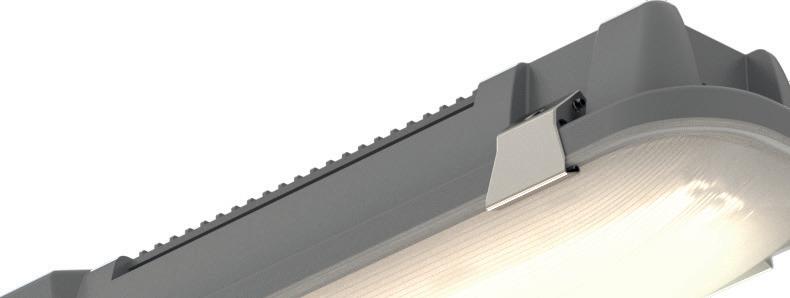

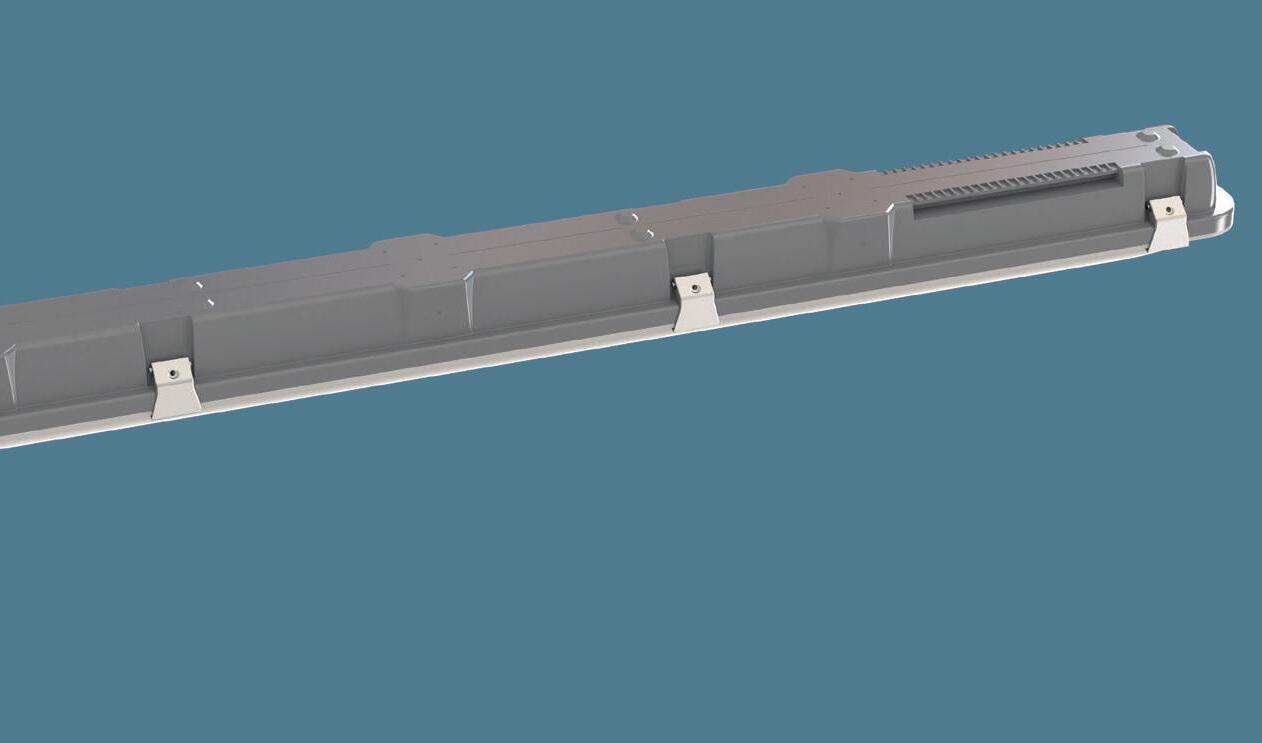
The Tornado EVO XPRESS represents the next evolution in weatherproof lighting.
Introducing XPRESS clip-in emergency and sensor capability, delivering greater flexibility and faster installation on site. Designed with contractors and industrial environments in mind, it prioritises ease of installation, durability and reliability.
7 YEAR WARRANTY
IP 66 IK 10
7-year warranty for long-lasting performance and total peace of mind.
IP66 and IK10, offering superior protection against water, dust, and impact.

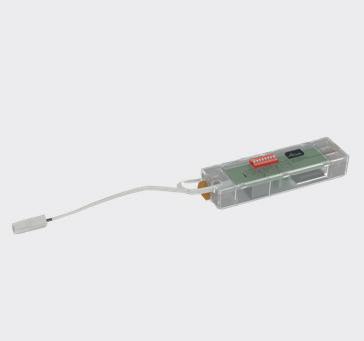
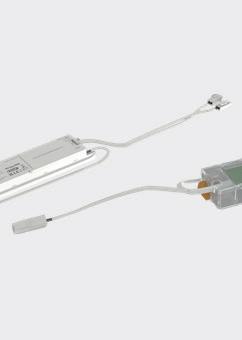
Easy Emergency and Sensor conversion with simple clip-in XPRESS modules.
Multiple conduit entry points offer enhanced installation flexibility.
Power selectable with 3000K/4000K/6500K colour temperature options for a varied range of installations.
Flexible placement of the terminal block, at either end or the middle.
The publication of the UK Net Zero Carbon Buildings Standard matters across the built environment. But it is particularly significant for the electrical sector. For years, net zero debate has focused on operational energy: how buildings are heated, cooled, lit and managed in use. That remains essential. But the conversation is widening to include the embodied carbon impact of the products going into those buildings.
For electrical manufacturers, specifiers and contractors, that changes the picture.

The built environment is responsible for around half of the UK’s emissions, making it central to the UK’s 2050 net zero target. Operational carbon emissions are still a major issue, and electrical systems play a direct role. Lighting, controls, building management systems, power distribution and infrastructure supporting lowcarbon technologies all influence how much energy a building consumes.
But energy efficiency is only part of the story. Embodied carbon is becoming ever more important, particularly as the UK electricity is progressively decarbonised. Embodied carbon includes the carbon emissions caused by raw material extraction; product manufacturing, transport, installation, maintenance; and end-of-life disposal.
The implication is clear: it is no longer enough for a product to be efficient in operation. Increasingly, it must also be backed by credible evidence of its environmental impact across its life cycle.
Although the UK Government is legally committed to net zero by 2050, regulation around measuring and limiting whole life carbon in buildings remains limited. Energy performance standards exist, but there is not yet any universal requirement to carry out whole life carbon assessments on all projects.
That gap has prompted an industry-led response. The UK Net Zero Carbon Buildings Standard has been developed to create a common framework for what a net zero-aligned building should look like in practice. It is not a government or BSI standard, but it is likely to carry weight because it gives clients, developers, designers and contractors a shared benchmark.

by Nigel Harvey, CEO of Recolight
The standard sets pass/fail requirements across several areas, including embodied carbon, operational energy, on-site renewable electricity generation, operational water use and fossil fuel-free operation. It also addresses offsetting, making clear that this should only be considered after emissions have been reduced as far as possible.
For the electrical sector, one of the biggest consequences is the growing need for robust product data.
The standard directs project teams towards recognised methodologies such as EN 15978 and the RICS Whole Life Carbon Assessment professional statement. In practice, that means specifiers and assessors will increasingly need reliable environmental information for the products they select.
This is where Environmental Product Declarations (EPDs) become critical. An EPD is a third-party verified summary of a product’s environmental impacts, based on life cycle assessment and prepared to recognised standards. It is important to note it does not make a product sustainable by itself, but it does provide the transparency the market increasingly demands.
For manufacturers, that is now a commercial issue as much as a technical one. If a product lacks verified environmental data, it may become harder to specify on projects aiming for net zero alignment. Efficiency claims alone are unlikely to be enough.

Lighting manufacturers should pay close attention. Lighting already plays a role in operational building performance, and the sector has made substantial progress in energy efficiency, smart controls and integrated systems. But as operational energy use falls, embodied carbon becomes more visible.

That raises expectations for manufacturers. They will need to demonstrate not only how efficiently a luminaire performs, but also how it is made, what materials it contains, how much carbon is associated with its production and supply, how easily it can be maintained or upgraded, and what happens at end of life.
In other words, circularity, repairability and material efficiency are becoming specification issues, not just sustainability talking points.
Another reason the Standard matters is that its targets tighten over time. Carbon limits reduce significantly year on year, sending a clear signal to the supply chain. Manufacturers that act now by measuring impacts, publishing EPDs and developing a credible carbon reduction pathway will be better placed to meet future demand.
The UK Net Zero Carbon Buildings Standard is more than another piece of industry guidance. It signals a broader shift towards measurable carbon accountability across the building supply chain.
For the electrical sector, the direction is clear. Products that reduce energy use will remain vital, but products that can also demonstrate lower embodied impact will increasingly stand out. For lighting and electrical manufacturers in particular, the question is no longer whether this information will be requested, but whether and when they are ready to provide it.




Recolight isn't just about recycling, we help the lighting industry take real steps toward a sustainable future. From our Reuse Hub and Circular Lighting Live Conference, to workshops, webinars, and Life Cycle Assessments, we support businesses in taking practical actions to embrace the Circular Economy. What’s more, we can provide carbon footprint data for every waste collection. Make your lighting more sustainable. Make it circular.








Lighting is one of the fastest ways to reduce energy use and carbon emissions, but only data-driven, connected solutions deliver longterm results. As the UK government announces a £1bn investment in NHS decarbonisation, it is clear that energy-efficient, connected lighting is no longer a “nice-to-have” feature; it has become a strategic, measurable part of net zero delivery.
Tridonic has been at the forefront of professional lighting innovation for over 60 years, from early electronic control gear to LED drivers and modules, and more recently to connected systems built on open, standardised protocols such as DALI-2 and D4i. This interoperability allows lighting to integrate seamlessly with building management systems, unlocking new operational value for building owners and operators.
The true potential of modern lighting lies in data. Today’s luminaires generate real-time insights on energy consumption, operating hours, faults, and component health. This transforms lighting from a passive system into an intelligent, data-generating asset, enabling predictive maintenance, operational optimisation, and long-term lifecycle management. Tridonic’s Building Asset360 methodology takes this

transformation further by aligning lighting system insights with the operational needs of each building.
Building Asset360 ensures that investments deliver measurable outcomes over the lifecycle, from energy savings and reduced maintenance to carbon reduction, rather than just short-term efficiency gains.
Building Asset360 transforms lighting from a passive system into an intelligent, fully managed building asset. Each luminaire generates a digital profile, providing real-time insight into performance, usage, and condition. This information enables predictive maintenance, automates emergency lighting compliance, and feeds occupancy and usage data into energy optimisation strategies, helping to reduce consumption, lower operational costs, and support net zero targets.
Because lighting is present in every space, it is increasingly central to smart building strategies, serving as a continuous source of actionable data. Connected systems allow operators to monitor energy use, performance, and maintenance needs
in real time, turning lighting into a tool for insight rather than simply illumination. Building Asset360 shows how this data can be leveraged to inform decisions, optimise efficiency, and support long-term sustainability, helping teams, companies and trusts ensure that decarbonisation investments are both effective and evidence-based.
By delivering continuous, lifecycle-wide value, Building Asset360 integrates lighting into the wider smart building ecosystem. Initiatives like the NHS decarbonisation framework show how connected lighting is central to public sector retrofits, where measurable energy savings, carbon reduction, and strategic investment are critical.
Richard Strode, Managing Director, Tridonic UK, said, “Lighting is providing new insight into how buildings operate. Building Asset360 captures data on performance, energy use, and maintenance, giving information needed to make informed, evidence-based decisions. In the context of the UK government’s £1bn NHS decarbonisation programme, connected, data-driven lighting will help hospitals and healthcare settings achieve measurable energy reductions and carbon savings, while ensuring investments are used efficiently and deliver long-term value.”


























































































Entries are now open for the Electrical Industry Awards 2026, celebrating the best in the electrical sector. Don’t miss the chance to gain industry recognition, boost your company’s profile, and unlock new business opportunities. Register by 29th May for the Early Bird Rate
Electrical Times magazine is excited to announce that entries for the Electrical Industry Awards 2026 are now officially open!
Now in its 34th year, the Electrical Industry Awards celebrate the exceptional achievements of individuals and organisations across the electrical industry. Being a finalist offers invaluable recognition for your hard work, boosts team morale, and highlights your business as an industry leader.
Entering the awards is more than just an accolade—it’s a chance to showcase your innovation, attract new clients, and strengthen your position in the market. But remember, you have to enter to win!
The awards feature a range of categories designed to showcase success across the electrical trade. The categories cover three areas: Products and Services; Projects and Installations; and Contractor and Wholesalers.
To submit your entry, simply visit www.electricaltimes.co.uk/ electrical-industry-awards/enter-awards. To take advantage of our Early Bird Rate, make sure you register by 29th May. Once


registered, you can upload your entry and any supporting materials at your convenience. You can save your progress at any time and return later if needed.
Whether you’re a seasoned player or a rising star in the industry, this is your chance to demonstrate your achievements and be recognised for the hard work and dedication your team puts into every project.
The awards are judged by a panel of experts, bringing industry knowledge and category-specific skill sets to assess every entry.
The panel is made up of representatives for each of the major industry organisations, including ECA, JIB, LIA, NAPIT and NICEIC.
Winning an award can significantly raise your company’s profile, making it an invaluable opportunity for businesses aiming to stay ahead in a competitive market.
For detailed information on categories and criteria, a step-bystep guide on how to enter, awards news and more, visit www.electricaltimes.co.uk/electrical-industry-awards. Stay connected and follow us on Instagram for all the latest updates.

The renewable energy landscape is shifting rapidly, and with it, the way projects are delivered is being redefined. Traditional installation-led models are being challenged by a new generation of contractors who are not just focused on completing work, but on delivering it more effectively, efficiently, and at scale.
At the centre of this transformation is a clear reality: the future of renewables won’t be won by who can install, but by who can control, prove, and scale delivery. Success will belong to those who can manage projects end to end, demonstrate compliance with confidence, and grow without introducing additional risk.
As this transition unfolds, a clear divide is emerging across the sector. On one side are contractors still reliant on fragmented, multi-party processes - coordinating third-party providers for isolation, compliance, and reporting, often across disconnected systems. On the other are businesses moving towards a more self-sufficient, integrated model - bringing critical capabilities in-house and using technology to unify operations from start to finish. This shift is being driven by a combination of commercial pressure and operational reality.
Renewable installations are inherently more complex than traditional electrical work. A single EV or solar project can involve installers, energy suppliers, Distribution Network Operators (DNOs), and compliance bodies. Every additional party introduces friction - delays, miscommunication, and increased risk. Historically, outsourcing key steps like power isolation and reconnection was workable. But at scale, it becomes a bottleneck. Delays in isolation can disrupt entire schedules, impacting profitability and customer experience.
At the same time, expectations have shifted. Clients now demand full transparency - not just confirmation that work is complete, but clear evidence of how, when, and to what standard it was delivered. Compliance is no longer a back-office function; it is central to project delivery.
Fragmented systems make this difficult to achieve. Data sits across multiple platforms, paperwork is duplicated, and audit trails are often incomplete. In an environment of increasing scrutiny, this is not just inefficient - it is a risk. As a result, more contractors are rethinking how they operate - starting with control.
Safe Isolation Provider (SIP) accreditation is becoming a key enabler. It allows contractors to carry out de-energisation and re-energisation themselves and notify suppliers and DNOs directly, removing reliance on third parties and bringing critical stages of delivery in-house.
The impact is immediate. Scheduling becomes more predictable, delays are reduced, and technicians can complete jobs end to end. Operations teams gain greater visibility, and projects move with fewer external dependencies.
However, achieving SIP accreditation is widely recognised as challenging. It requires completion of the limited-scope Code of Practice for Metering (CoMCoP) for SIPs, along with participation in industry systems such as the DTN and accession to DCUSA. While full Electricity Metering Operative (EMO) accreditation and BSC involvement are not required, the compliance and operational requirements can still present a significant barrier for many electrical contractors.
The real differentiator is not just achieving SIP - but operationalising it. Leading contractors are embedding compliance directly into their workflows using AI-driven platforms. Instead of treating compliance as an administrative burden, they are turning it into an operational advantage.
Unified platforms connect job creation, scheduling, field activity, and reporting in one system. Data is captured once, at source, and flows through the entire job lifecycle. technicians follow structured workflows on-site, ensuring every step is completed and every piece of evidence is recorded in real time.
Photos, signatures, test results, and compliance checks form a complete, auditable job history. For management
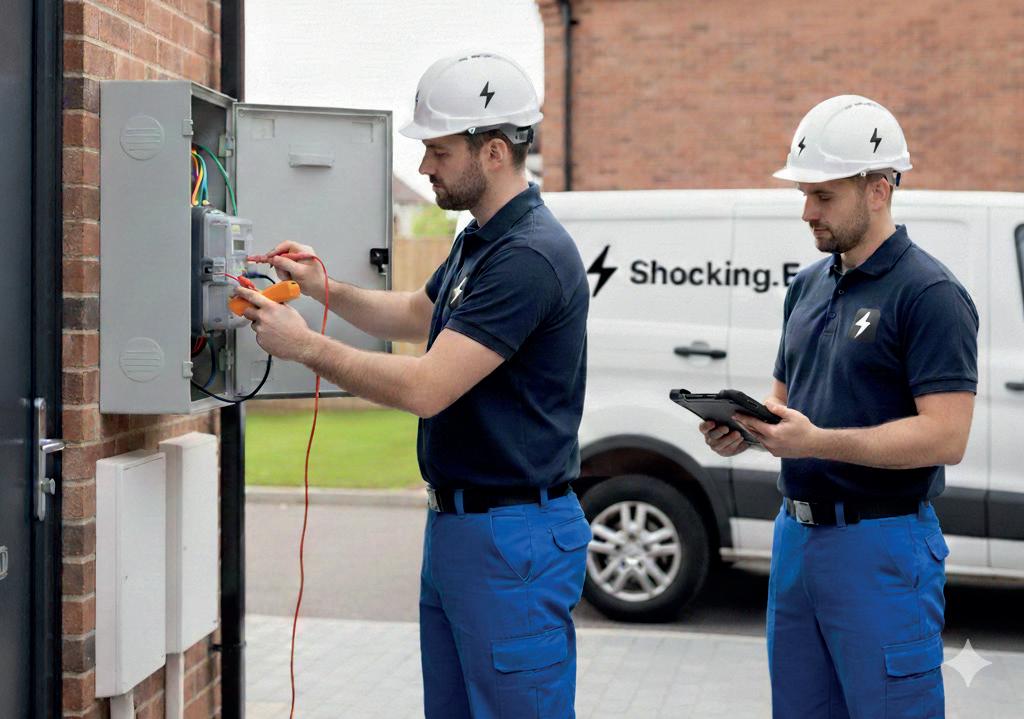

teams, this creates live visibility across operations, enabling faster decisions and early identification of risks.
The result is not just efficiency - it is confidence. Jobs are completed faster, errors are reduced, and compliance is built into delivery, not checked after the fact. This has a direct impact on scalability.
As demand grows, contractors are under pressure to deliver more work without significantly increasing headcount. Traditional models, reliant on manual processes and external coordination, struggle to keep up. In contrast, integrated, technology-enabled operations scale with control.
Organisations adopting this approach are embedding compliance directly into operational workflows, integrating processes from job assignment through to market messaging. By digitising evidence capture and standardising workflows, they improve auditability, increase transparency, and reduce administrative overheads.
This enables businesses to maintain delivery capacity while strengthening consistency across projects, supporting the delivery of fully compliant EV installations at scale.
This is the new benchmark for renewable delivery - not just completing work, but doing so in a way that is structured, evidenced, and repeatable at scale.
What is emerging is a new type of contractor: one that moves faster because it controls its operations, proves everything through real-time data, and scales confidently because its processes are standardised. These businesses are not just adapting to the energy transition - they are defining how it will be delivered.
Shocking Energy works with contractors across the UK to support this shift, helping them deliver EV, solar, and heat pump installations with greater speed, control, and compliance. Having supported around half of the UK’s SIPaccredited organisations, the company sees first-hand the operational challenges the sector faces - and the growing importance of visibility, coordination, and evidence.
The message is clear. Installation capability alone is no longer enough. Success in renewables will depend on control, proof, and the ability to scale delivery without compromising safety or compliance. In the race to deliver the UK’s renewable future, those who take control will lead it.
For more information about Shocking Energy, go to: https://shocking.energy/.
At a time when the UK’s electricity system is growing under pressure to decarbonise, improve resilience and accommodate rising demand, battery energy storage systems (BESS) are at the forefront of driving grid transformation. With solar and wind generation continuing to expand, one of the biggest ongoing challenges facing the energy sector is how to store surplus renewable energy and release it back to the grid when it is needed most

TNeil Brooks, managing director at leading BESS operator, Root-Power explains how the company’s new flagship battery energy storage system facility in Coryton, Essex, is the first stage of its wider BESS expansion programme, to help strengthen grid resilience, unlock greater use of renewable energy and support the UK’s Clean Power 2030 ambitions
he launch of our new £5.5 million BESS facility at Coryton and plans to build 13 BESS sites in the next five years are of great importance – not just for the business, but for the renewable energy sector as a whole. It’s our first flagship scheme in the UK, with the 11 MW site developed to store excess energy generated from low-carbon renewable sources before supplying it back into the National Grid during peak demand hours. Due to be unveiled in late Spring, it will safeguard the needs of thousands of local businesses and around 22,000 homes by reducing energy price volatility and preventing blackouts that can cause massive disruption.
As more renewable energy feeds into the grid, the role of BESS is critical. Energy sources such as solar are vital to the UK’s Net Zero ambitions, but their generation can be intermittent. The electricity they generate doesn’t always match the demand. Battery storage helps to solve that problem. By holding surplus energy and releasing it when needed, BESS facilities can reduce pressure on the grid, support energy security and help to create a more reliable low-carbon electricity network. BESS sites have evolved significantly since their introduction in 2014. Coryton illustrates how modern BESS facilities now optimise across multiple markets simultaneously to align with grid flexibility needs.
The location of the site was crucial. Coryton was chosen due to its close proximity to the old Coryton Substation operated by UK Power Networks, allowing for an efficient and cost-effective grid connection. The strategic position means the site is also well placed to respond to network demand and maximise the operational value of stored energy.
The site has since secured full UK regulatory approval and has now transitioned to Root-Power’s dedicated engineers, who led on the initial construction phase and will now oversee its long-term performance and sustainability.
The significance of the Coryton scheme also extends past the site itself. The project will support the Government’s Clean Power 2030 initiative by enabling more flexible use of renewable energy.

It is also the first scheme to launch after we secured a milestone infrastructure agreement with the National Grid to accelerate the development of 13 new UK renewable [CH1.1]projects, totalling 942 MWs, over the next five years. The Grid Offer Notifications (GONs) agreed with the National Energy System operator (NESO) will help us scale and build a portfolio of BESS facilities that will supply over 1.7GW of power to communities by 2031.
We’re also linking the scheme to a community energy fund with South Essex Wildlife Hospital, to have a positive impact on local conservation.
We designed the 0.66-acre site at Coryton with YLEM Energy as the principal contractor, supported by civil designer, Steve Morgan Associates and electrical designer, Utility Consultancy and Engineering. The site features nine Canadian Solar e-storage SolBank 3 batteries, with a total rated power of 11MW and a capacity of 22 MW per hour.
We encountered several technical and construction challenges. The ground had to be raised and strengthened with piles so it could support heavy plant equipment. Connection issues at the old Coryton Substation also resulted in some late design changes and retrofit requirements, whilst we handled the complexity of managing different voltage levels across the site. Early engagement with key stakeholders and the Distribution Network Operator was essential to de-risk technical interfaces and minimise late design changes. Space constraints also required efficient site layout design from the outset.
As the UK moves further into its energy transition, battery energy storage is likely to play a much bigger role in balancing the network and making renewable power work more effectively. Coryton is also likely to inform future BESS projects as we help the UK make giant strides towards a stable, low-carbon electricity grid.

by Kirsty Johnson MIET kirsty@surgedevices.co.uk
www.surgedevices.co.uk

When installing Electric Vehicle (EV) charging infrastructure, the conversation often centres on load balancing or earthing arrangements. However, a critical—and often overlooked—requirement involves the integration of Surge Protection Devices (SPDs), particularly when the installation features an external Lightning Protection System (LPS).
Understanding the intersection of BS 7671:2018 and BS EN 62305 is vital for ensuring both the safety of the user and the longevity of the equipment.
The Risk of External Exposure EV chargers are inherently vulnerable because they are frequently installed in exposed locations. This positioning makes them susceptible to the secondary
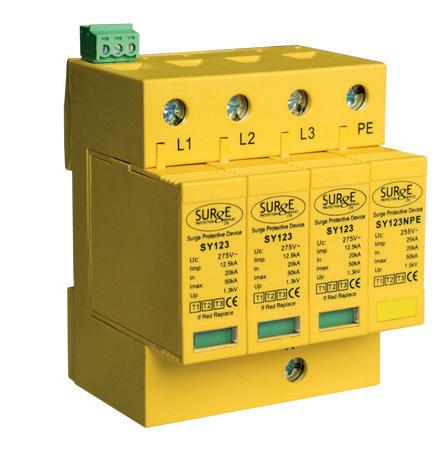
effects of nearby lightning strikes, which can induce massive overvoltages in the cabling. This risk is significantly amplified under two specific conditions:
• External Lightning Protection: If the building has an existing LPS, any cable crossing from Lightning Protection Zone 0 to Zone 1 must be protected.
• Overhead Supplies: If the EV unit is supplied directly from a main incomer fed by an overhead supply, the exposure to atmospheric surges increases.
Specific Requirements for LPS-Equipped Sites
If you are installing an EV charger—or a bank of chargers—on an installation that features an external LPS, the requirements become more stringent. According to BS EN 62305, a Type 1 SPD is a requirement to protect the installation from the high-energy overvoltages associated with direct or nearby strikes.
To ensure full protection for both the building and the chargers, a dual-layer approach is necessary:
1. At the Distribution Board (DB): A Type 1 SPD must be installed in the DB supplying the external circuit to protect the internal installation. This will protect the installation from any overvoltages caused by the raise in potential on the external cable during lightning activity.
2. At the Feeder Pillar: Another Type 1 device should be installed in the feeder pillar supplying the chargers. This protects the chargers themselves from lightning effects traveling along the external cabling.
Specific Requirements for Non LPSEquipped Sites
Just as a reminder, 443.4 states that:
Protection against overvoltages shall be provided where the consequences caused by over voltage could:
I. result in serious injury to, or loss of, human life II. result in significant financial or data loss
For all other cases an SPD shall be installed, unless the owner accepts the risk of damage.
The obvious starting place would be to consider the result in significant financial loss. EV technology is expensive to install, not just from a charger perspective but also for the car itself. We also have to consider the implications involved, if a charger was damaged and the user could not charge their vehicle, which could significantly impact their lives.
Beyond hardware damage, there is a profound safety implication regarding loss of neutral detection technology (PEN fault detectors). Many modern chargers rely on sensitive electronic components to disconnect the supply if a PEN conductor is broken—a fault that could otherwise make the vehicle’s chassis live.
If these sensitive components are damaged by a surge or lightning-induced overvoltage, this vital safety disconnection may fail. In such a scenario, a subsequent neutral fault could lead to a serious electric shock for anyone touching the vehicle.
While Section 710 of BS 7671 focuses on EV specifics, the general rules of section 443.4 dictate that protection against overvoltage must be provided where it could result in:
• Serious injury or loss of human life.
• Significant financial or data loss (considering the high cost of both the charger and the vehicle).
For external circuits and installations with lightning protection, an SPD is not just a recommendation; it is a fundamental requirement to prevent catastrophic failure of the charger’s safety systems and the vehicle’s electronics.
For further guidance on complying with BS 7671:2018 or to join one of our free CPD sessions, please reach out to our technical team.
Simple. Smart. Reliable. Protection for every home.
BLACK+DECKER alarms combine advanced safety with effortless installation. Our range includes battery and interlinked mains powered smoke, heat, and CO alarms, available as standalone units or wirelessly connected systems for whole home protection. With sleek designs and 3rd party trusted performance, you get complete coverage and peace of mind.
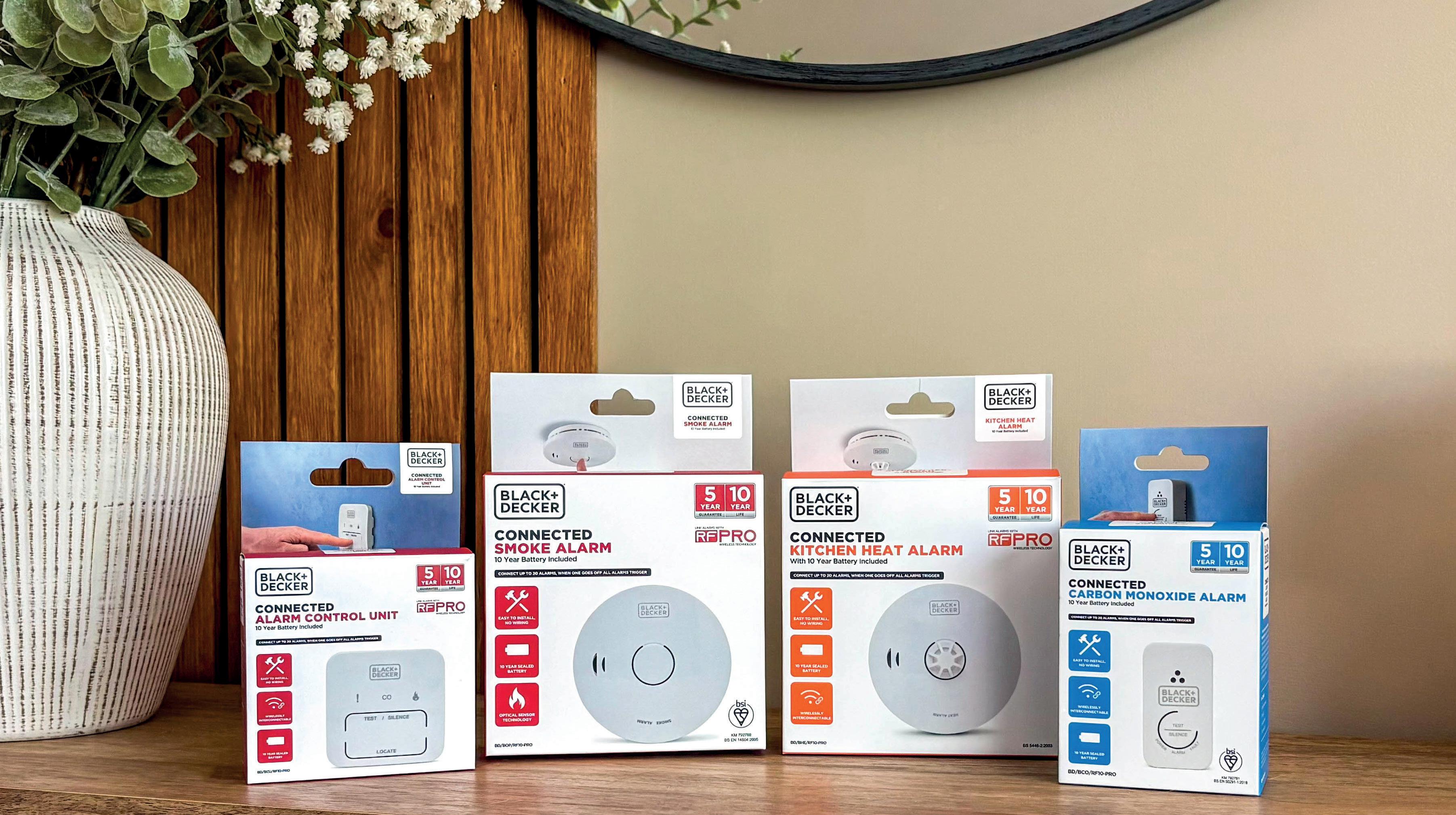
Link up to 20 alarms for whole home protection. When one alarm is activated, all CONNECTED alarms trigger.

When one alarm sounds, all alarms trigger, protecting every floor and room.

Reliable wireless connection with seamless interlink, no messy wiring.
EASY TO INSTALL
Pair and install within minutes with no wiring or additional modules required.



Now available at:

Tel: 020 8847 5544
Email: wholesale@attgb.co.uk
Web: www.attgb.co.uk

RConstruction projects across the UK continue to operate in a challenging and evolving environment. Infrastructure, housing and commercial developments are moving forward despite ongoing economic pressure. On many sites, reliable temporary power has become essential for maintaining safe, efficient operations and keeping projects on schedule. Here, Andrew Keith, division director at load bank manufacturer Power Prove, explains why proper generator testing plays a vital role in ensuring dependable power for construction sites
ecent figures suggest there have been modest improvements in housebuilding during parts of 2025. However, the sector still faces significant difficulties. The Government has set a target of delivering 1.5 million new homes by 2028/29, current forecasts indicate that around 840,000 homes will be completed over the same period, leaving a gap of about 42 per cent. According to Savills, “180,700 new homes were completed in 2024/25… completions over the next year or two will remain low,” which reflects the continuing pressure on the housing sector. In this environment, reliable temporary power has become increasingly important because generators help construction sites continue operating efficiently despite these constraints.
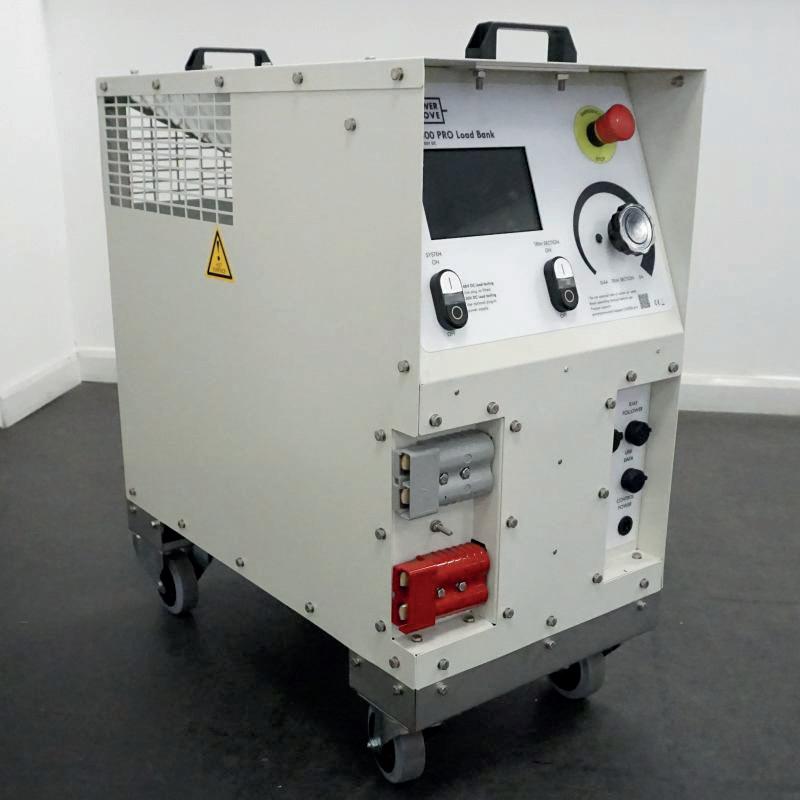
Electrical power is as fundamental to construction as bricks and mortar. Heavy equipment, hand tools, site offices, sales suites and welfare facilities all depend on a consistent supply of electricity. On many large new-build sites there is no direct connection to the grid, which means diesel generators provide the primary power source. However, simply having a generator on site does not guarantee reliable performance. The equipment must also be tested properly under realistic working conditions to ensure it will perform when required. The generators must also be properly sized for the site’s demand. A generator may be too large for a given demand and may run at low percentages, while a small generator may be unable to meet the peak
demand. A generator may also be run irregularly and in such a situation a fault may be hidden, especially if the generator is started quickly and run at no load. A well-maintained generator may also fail if it is not run under operating conditions.
Running a generator without a meaningful electrical load is not a proper test of its performance. A generator may be started successfully, but if it is run at no load, it may be hiding faults such as poor-quality fuel, weak alternator components, and cooling problems. These faults may be apparent when the generator is required to operate for a longer period.
Generators that are rarely used beyond a brief start-up can gradually develop problems. Carbon deposits can build up, fuel quality may deteriorate and batteries can weaken over time. When testing takes place under minimal load, the condition of these components often remains uncertain.
If a construction site depends on such a generator, the consequences can include unexpected shutdowns, damage to equipment or delays that affect the wider project schedule. Regular on-load testing helps prevent these issues by confirming that the engine and alternator can deliver sustained performance and that cooling systems function correctly when the generator is under pressure.
Load bank testing places a controlled electrical demand on a generator to simulate real operating conditions. By drawing power at typical operating levels and beyond,
this process helps reveal faults that might otherwise remain hidden. These may include issues with fuel delivery, voltage stability, frequency control or engine temperature management.
In construction environments, load bank testing can also provide valuable insight into how well a generator handles the types of loads typically found on site. This information can help teams make better decisions about generator sizing, fuel planning and maintenance schedules. It also allows faults to be identified and addressed during planned downtime rather than during critical operations.
Power Prove load banks can be configured to suit the specific needs of construction projects. Testing generators under realistic conditions helps ensure equipment performs when it matters most, reducing the risk of unexpected downtime and helping projects stay on track. For routine checks or occasional testing, using a load bank gives site teams greater confidence that their temporary power systems are reliable and ready for use.
When reliable power is planned rather than treated as an afterthought, load bank testing can reduce the risk of breakdowns and keep projects moving forward. A structured testing routine can also support longer equipment life, lower maintenance costs and greater confidence that power systems will perform when needed. In the demanding environment of modern construction, where time and safety are both critical, knowing that power systems have been thoroughly tested is a practical step in managing operational risk.

Repeatable results, time after time.
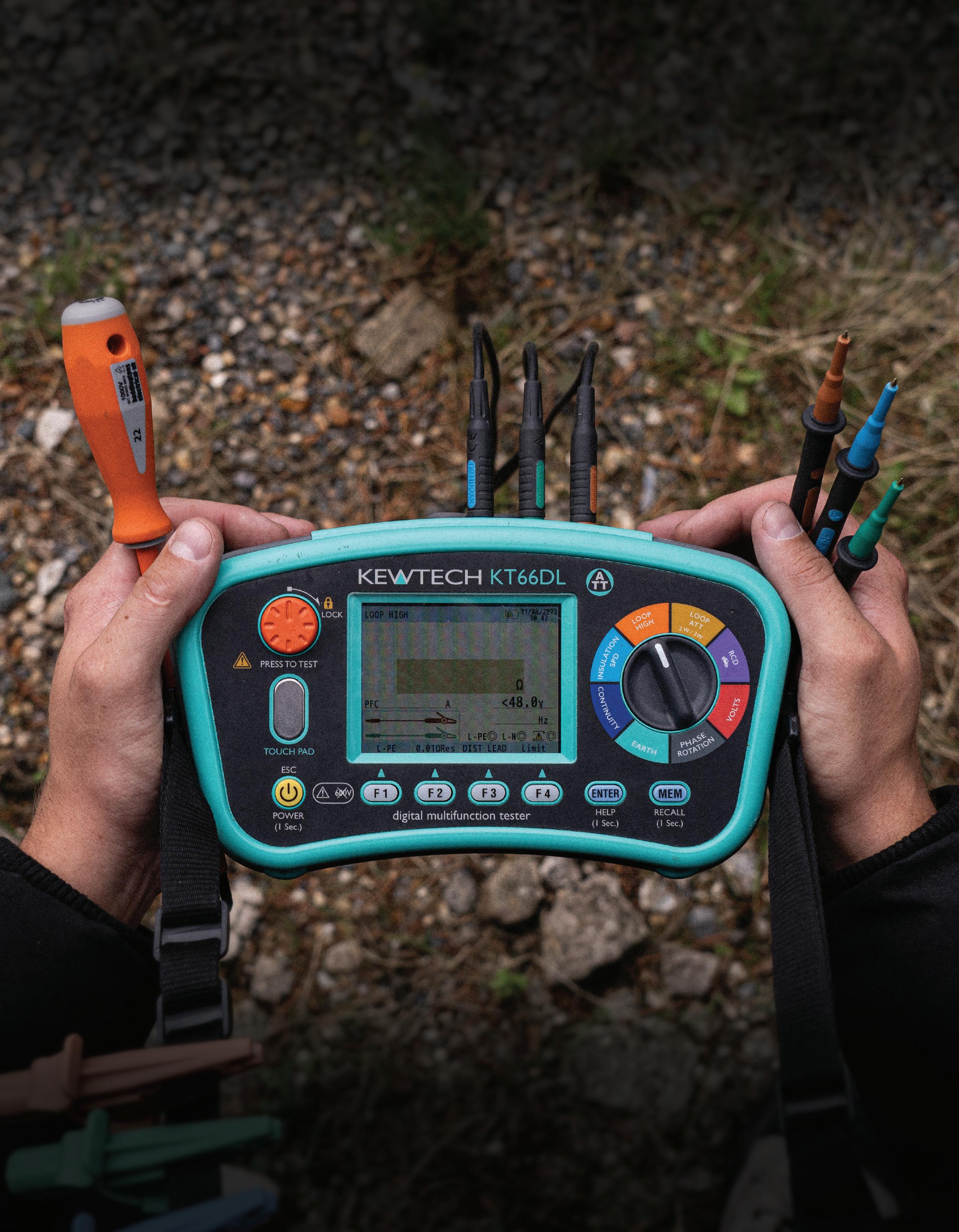

● Low current 2 wire loop testing
● Low current 2 wire loop testing
● High current 25A 0.001 ohm range
● High current 25A 0.001 ohm range
● Specialist EV RCD & loop testing features
● Specialist EV RCD & loop testing features
● Automatic electronic noise handling feature Scan for video
● Automatic electronic noise handling feature Scan for video
Using the correct tools and processes around electrical equipment safeguards workers and reduces potential liability. It’s essential circuits have been de-energised and properly isolated and checked with fully compliant test equipment before work commences - explains Steve Dunning, MD of Martindale Electric
When it comes to electrical testing and maintenance, safe isolation procedures are critical for preventing injuries. This starts by identifying the circuit to be worked on, finding the point of isolation, disconnecting and locking in the off position, and warning tags placed on all equipment - lock out /tag out (LOTO).
If equipment can be turned off but not isolated, then the person doing it should isolate at the point of connection, tracing the supply back to a point where it can be locked off. This is because if equipment is proven dead, only for someone else to restore power, the hazard has returned. An important point to remember when working on existing sites is that labelling can be misleading. Unqualified or untrained staff could have made alterations, so even where changes are safe, the labelling might be incorrect.
Proving Dead – Using the right equipment.
Once a circuit is locked off, the focus is on proving dead and two key pieces of equipment come into play - the Voltage Indicator (VI) and the associated Proving Device (PD). For voltage indicators there are three key safety requirements to check:
BS EN61243-3:
A VI should be designed to and be fully compliant with BS EN 61243-3. This regulation specifically covers devices designed to be used in a live working environment to determine the status, presence, or absence of operating voltage of lowvoltage installations.
GS38:
The Health & Safety Executive GS38 guidance note is aimed at electricians, tradespeople and other electrical workers using testers on low voltage electrical systems and equipment. GS38 provides advice and guidance on how to work safely and gives specific information regarding test equipment use and maintenance.
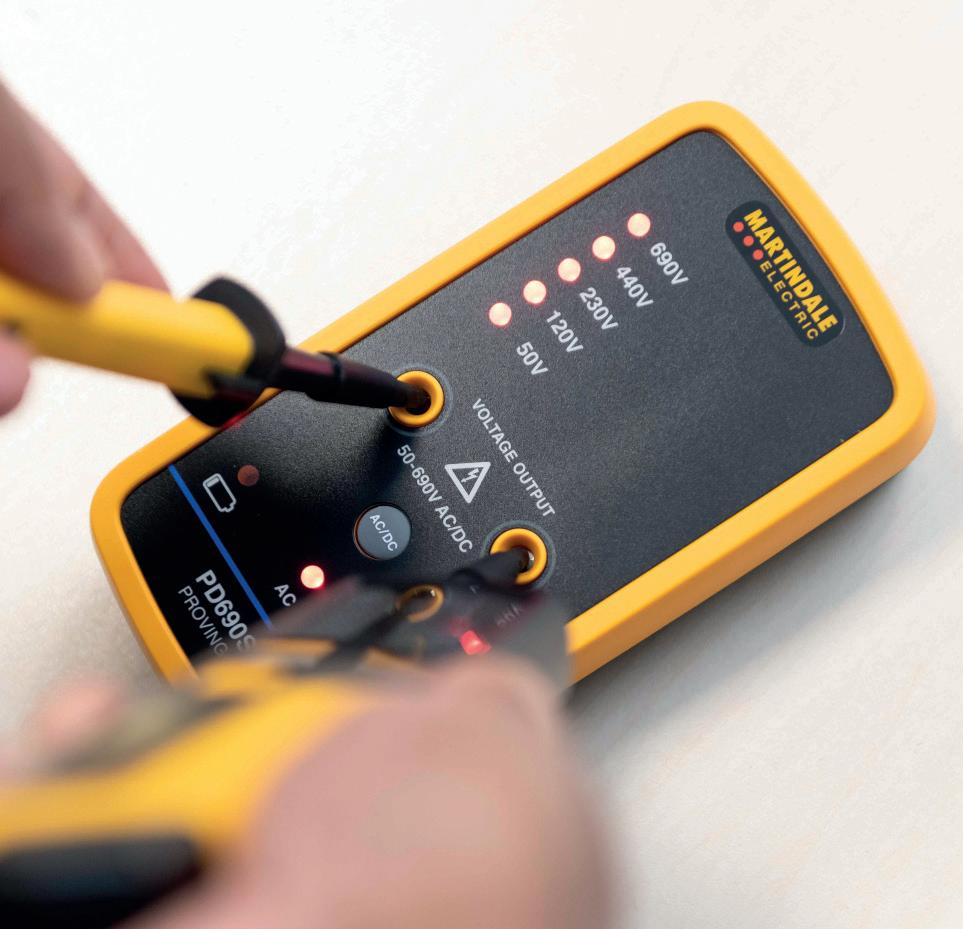
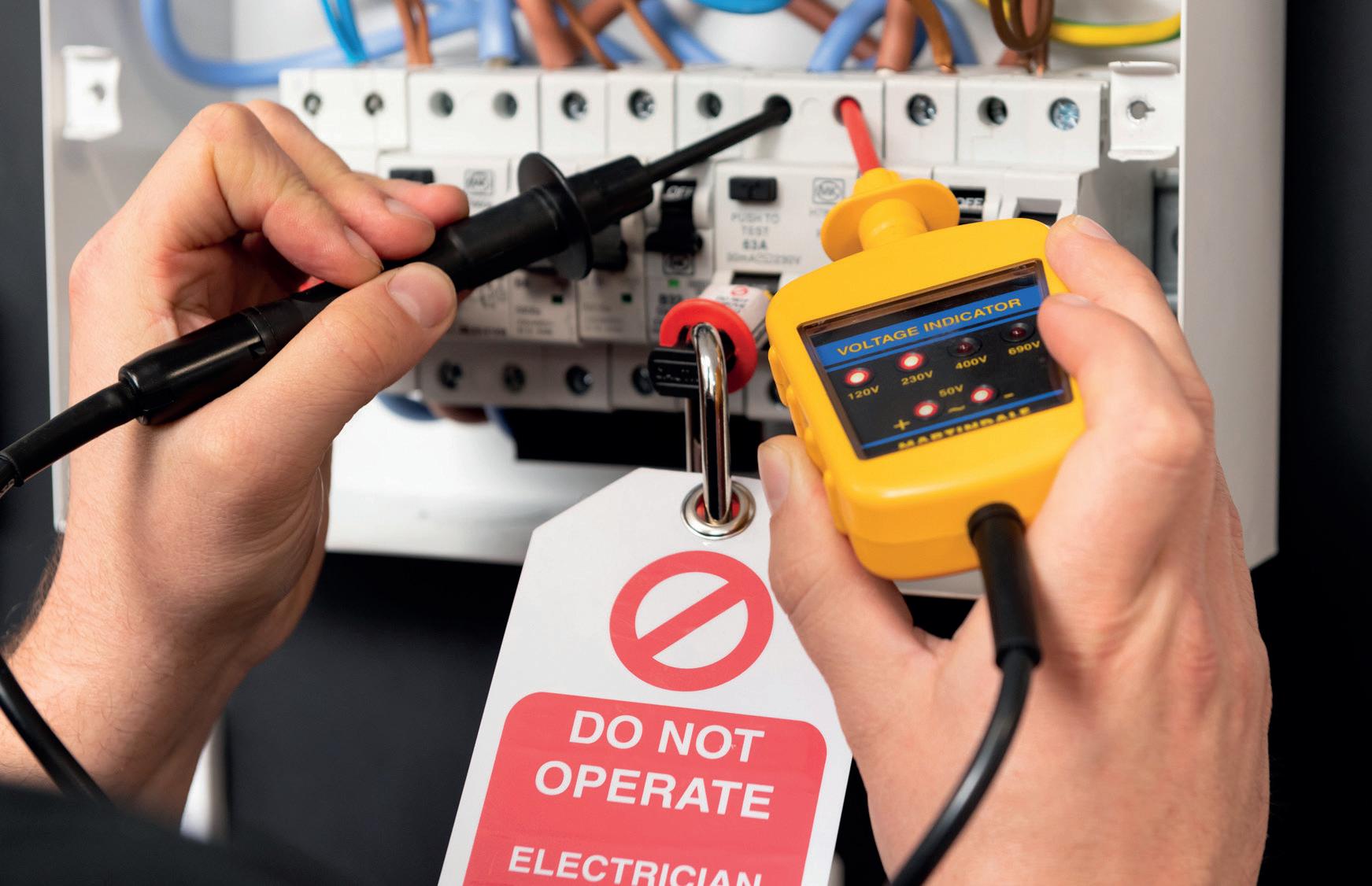
BS EN 61010:
The BS EN 61010 safety rating tells you that the unit can cope with the risks from hazardous transient impulses on the mains supply system. BS EN 61010 Installation Categories (CAT ratings) are based on where you are working. It is essential the test equipment used, including any accessories (leads, probes etc), are safe to use in the location and meet the maximum voltage rating:
Measurement Category I refers to measurements performed on circuits not directly connected to the mains supply, or specially protected secondary circuits such as those powered by regulated lowvoltage sources.
Measurement Category II refers to those performed on circuits directly connected to a lowvoltage mains installation and might include standard 13A socket outlets, household appliances, portable tools and equipment.
Measurement Category III refers to measurements performed within a building’s permanent installation: distribution wiring including mains bus, feeders and branch circuits or hard-wired loads.
Measurement Category IV refers to the supply side source of the building’s installation – for measurements performed at the source of the low-voltage installation such as electricity meters and measurements on primary overcurrent protection devices and ripple control units. It also includes devices and locations between the supply side of the building and the source, typically a substation.
Choosing the correct voltage indicator (VI) is critical. The best VI models do not use batteries, and have no ranges or switches, which makes them very user-friendly - making it virtually impossible to misinterpret the results.
Guidance advises against the use of both multimeters and non-contact devices for proving dead. Multimeters are not suitable for this process, as it is all too easy to select the wrong range and importantly, a multimeter relies on battery power to function fully, thus there is a high risk of making a false “dead” reading on a live circuit.
Non-contact voltage detectors also require a battery in order to work and are often sensitive to other signals, such as static electricity. It’s also not possible to prove they are working correctly with a standard proving unit. Whilst these units can be used to detect live cables, they cannot reliably be used to prove dead.
By incorporating a proving device into an electrical safety process, that process becomes inherently more robust and reliable. Although a relatively straightforward addition, when working with or near electrical systems and equipment, a proving device can significantly reduce the risk of electrical injury to you, your team, and others around you.
A proving device is always on hand to check the operation of the voltage indicator, to be reliant on other sources could be hazardous. A dedicated matched proving unit will test the full range (and light/ test all LED’s) on a VI.
Nothing is more important than preventing injuries and protecting lives, so to ensure the critical phases are memorable, Martindale has created the A.L.I.V.E: 5 fail-proof steps to safe isolation to shine a spotlight on what must be carried out for your own protection and to prevent injury.

The rapid expansion of AI infrastructure is often discussed in terms of power availability. Grid capacity, transformer sizing and electrical resilience dominate early design conversations. Yet for many data centre operators, the real implications are emerging further downstream, where electrical energy is converted into heat and must be managed safely, efficiently and predictably.
As AI workloads push power density higher and introduce increasingly volatile load profiles, thermal behaviour can no longer be treated as a secondary, mechanical concern. Heat is a direct consequence of electrical activity, and its management now feeds back into system stability, efficiency and long-term performance. As a result, heat is also an electrical engineering responsibility.
From electrical load to thermal impact
Every watt delivered to data centre equipment ultimately becomes heat. In traditional enterprise infrastructure, that relationship was relatively stable. Loads increased gradually, utilisation patterns were predictable and cooling systems could be designed around static assumptions.
AI changes that equation. Training and inference workloads introduce rapid, high-amplitude swings in power draw, often across heterogeneous hardware estates. These electrical transients translate immediately into thermal stress at the component, rack and room level. When cooling response cannot keep pace with electrical demand, IT equipment will be exposed to temperatures outside of the optimum range.
For electrical engineers and data centre operators, the challenge is no longer simply provisioning peak capacity. It is managing dynamic behaviour across tightly coupled electrical and thermal systems.
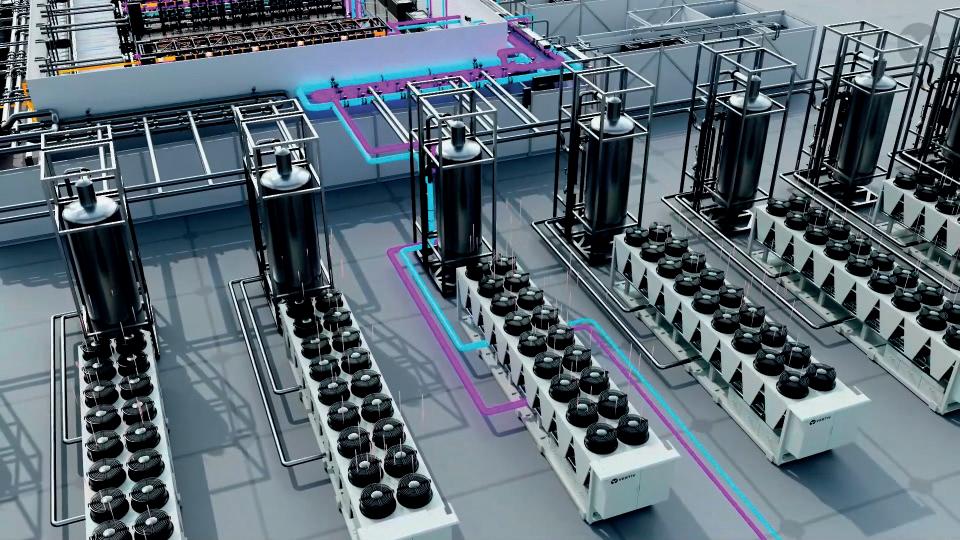
Power density and the limits of air-based assumptions
Rising rack densities expose the limits of conventional air-based cooling. As airflow requirements increase, fan power consumption rises non-linearly, adding to overall electrical load and reducing system efficiency. This creates a compounding effect. Additional electrical power is consumed to transfer air, which in turn generates more heat that must be removed. In high-density AI deployments, this feedback loop can erode the benefits of increased compute density unless alternative approaches are adopted.
Liquid-based cooling helps address this by removing heat closer to the electrical source. Direct-to-chip liquid cooling intercepts thermal energy at the processor level, reducing reliance on high-volume airflow and lowering the electrical overhead associated with fan power. For AI accelerators operating near their limits, this tighter coupling between electrical input and thermal removal supports more stable operation under fluctuating loads.
Coolant Distribution Units (CDUs) are essential to implementing this liquid-cooled architecture. Available in a broad spectrum of capacities, CDUs come in both in-rack and in-row configurations. They support both liquid-to-air and liquid-to-liquid heat exchange designs, offering flexibility to accommodate a wide variety of data centre layoutswhether retrofitting existing facilities or designing new ones.
Extreme density and immersion cooling
At the upper end of the density spectrum, immersion cooling presents a different electrical-thermal relationship. By submerging hardware in dielectric fluid, immersion systems remove heat uniformly and eliminate internal server fans entirely.
From an electrical standpoint, this simplifies power delivery within the server while shifting complexity to facility-level systems. Heat is extracted efficiently, but requires careful coordination with pumping, waste heat rejection and monitoring infrastructure.
Immersion cooling is therefore best suited for welldefined, high-density deployments such as AI training clusters. It is not a universal solution, but a specialised tool within a broader electrical and thermal strategy.
Managing heat at the room level
Most facilities will operate mixed-density infrastructure for the foreseeable future. Supporting this requires intermediate approaches that balance electrical constraints with thermal performance.
Rear-door heat exchangers remove heat directly from server exhaust before it re-enters the room, reducing thermal load on central systems without altering server electrical architecture. In-row cooling provides targeted capacity where electrical density is highest, stabilising local conditions without requiring wholesale redesign.
At the room scale, airflow definition becomes a key electrical consideration. Perimeter-based air-handling units and thermal wall technologies are increasingly used to shape airflow paths at the boundaries of the data hall. By enabling controlled heat collection across both raised and non-raised floor configurations, these architectural elements help maintain predictable thermal conditions as electrical density increases.
For electrical engineers and data centre operators, this room-level behaviour directly affects temperature stability upstream, influencing equipment reliability and power system resilience.
Rethinking waste heat rejection and electrical efficiency
Once waste heat is captured, it must be transported and rejected or reused efficiently. This stage of the thermal
by Michael Poto, Product ManagerGlobal Chilled Water Systems at Vertiv
chain has significant electrical implications, particularly as AI workloads drive greater variability in cooling demand.
As systems move towards higher operating temperatures, strategies to trim the cooling are gaining attention. By operating at elevated water or server/ chip temperatures, trimming the cooling enables extended use of free cooling and minimises compressor operation. This reduces electrical demand associated with mechanical cooling and aligns well with futureready architectures designed around higher temperature setpoints providing flexibility to address unpredictable conditions as needed.
In parallel, centrifugal chiller technologies remain important where continuous cooling capacity is required regardless of ambient conditions, or where lower supply temperatures are still necessary. Centrifugal systems allow electrical input to scale with cooling demand, supporting efficient operation under transient conditions rather than fixed design points.
Rather than representing opposing approaches, trimming the cooling and centrifugal technologies reflect different stages of a facility’s thermal journey and different electrical priorities.
Control as the integration layer
What ultimately enables electrical and thermal systems to operate as a coherent whole is control. Sensors, analytics and automation now act as the integration layer between electrical load, cooling response and mechanical plant behaviour.
At the equipment level, controls regulate flow rates, fan speeds and local temperatures. At the facility level, supervisory systems coordinate setpoints across electrical and mechanical domains, anticipating load changes and smoothing demand profiles.
From an electrical engineering perspective, this integration reduces unnecessary load, improves fault tolerance and provides the data needed to plan future capacity with greater confidence. When supported across the thermal chain by a comprehensive service team, continuous reliability can be achieved through expert deployment and proactive predictive maintenance.
Heat as an electrical design consideration
As AI continues to reshape critical digital infrastructure, heat management must be treated as a first-order electrical design consideration rather than a downstream afterthought. Electrical power, thermal capacity and control systems are now tightly coupled, and decisions in one domain directly affect outcomes in another.
Viewing cooling through the lens of the thermal chain helps engineers understand these interactions. It shifts the focus from individual components to system behaviour, enabling more resilient, efficient and scalable infrastructure.
In AI data centres, thermal management is no longer just about removing excess heat. It is about aligning electrical and thermal systems to support performance, reliability and growth under increasingly dynamic conditions.


Joshua Holland at EvoEnergy answers our questions about the first solar carport at a UK theme park
This is the first solar carport at a UK theme park. Given the heavy public use, what additional electrical or mechanical safety standards did you have to meet compared to a standard commercial rooftop installation?
The primary standards we had to meet for this project were to do with the mechanical load and structural load of the solar carport. Solar Carports must comply with Eurocode/BS EN 1991 to ensure that the foundation and structure design considers wind uplift, snow loads, vehicle impact loads.
The primary electrical safety feature we implemented was the use of SolarEdge inverters and optimisers, which in a fault event will shut down the inverters to a safe to touch level.

You custom-engineered a cable containment and mounting system that is hidden within the steel structure. From an O&M perspective, how did you ensure this remained easily accessible while staying completely out of public view?
The cable management system is less within the steel structure, and more an additional cable management system that we underhung from the canopy. This allows for the optimisers and cables to rest on the tray and are easily accessible with the use of a MEWP/scissor lift.
The installation generates 770,000kWh annually, with 82% consumed onsite. Were there specific challenges in synchronising this high level of immediate consumption with the park’s fluctuating daily power demands?
The site has a mixture of flat static electrical loads in the form of restaurants and offices, with more spikey loads from the rides. There are no real technical challenges due to the likes of synchronisation, however the use of a battery, to capture excess electricity generated by the solar, enables the peaky nature of the rides to be supplemented by power from the battery, increasing the consumption of the solar electricity and reducing reliance on the grid.
This was your first privately funded carport project. Does the success of the Paultons Park model suggest that the financial tipping point for bespoke solar carports has finally arrived for UK businesses?
Yes, there has been significant development in the UK solar carport space, bringing competition and innovation to the space which helps drive down costs, and we are seeing a lot more interest in solar carports. That being said, solar carports are often not a first choice for commercial clients, as costs can be two to three times that of a traditional rooftop plant. Generally solar provides an effective ROI, so where there is limited rooftop area, and you have a client with long-term sustainability goals and a lower investment return criteria, is often still a worthwhile investment. The typical key considerations for solar carport cost are 1) how big is the carparking area, and 2) are there many double bay spaces? The larger the number of spaces, and the more double bay parking areas, the lower £/kWp.

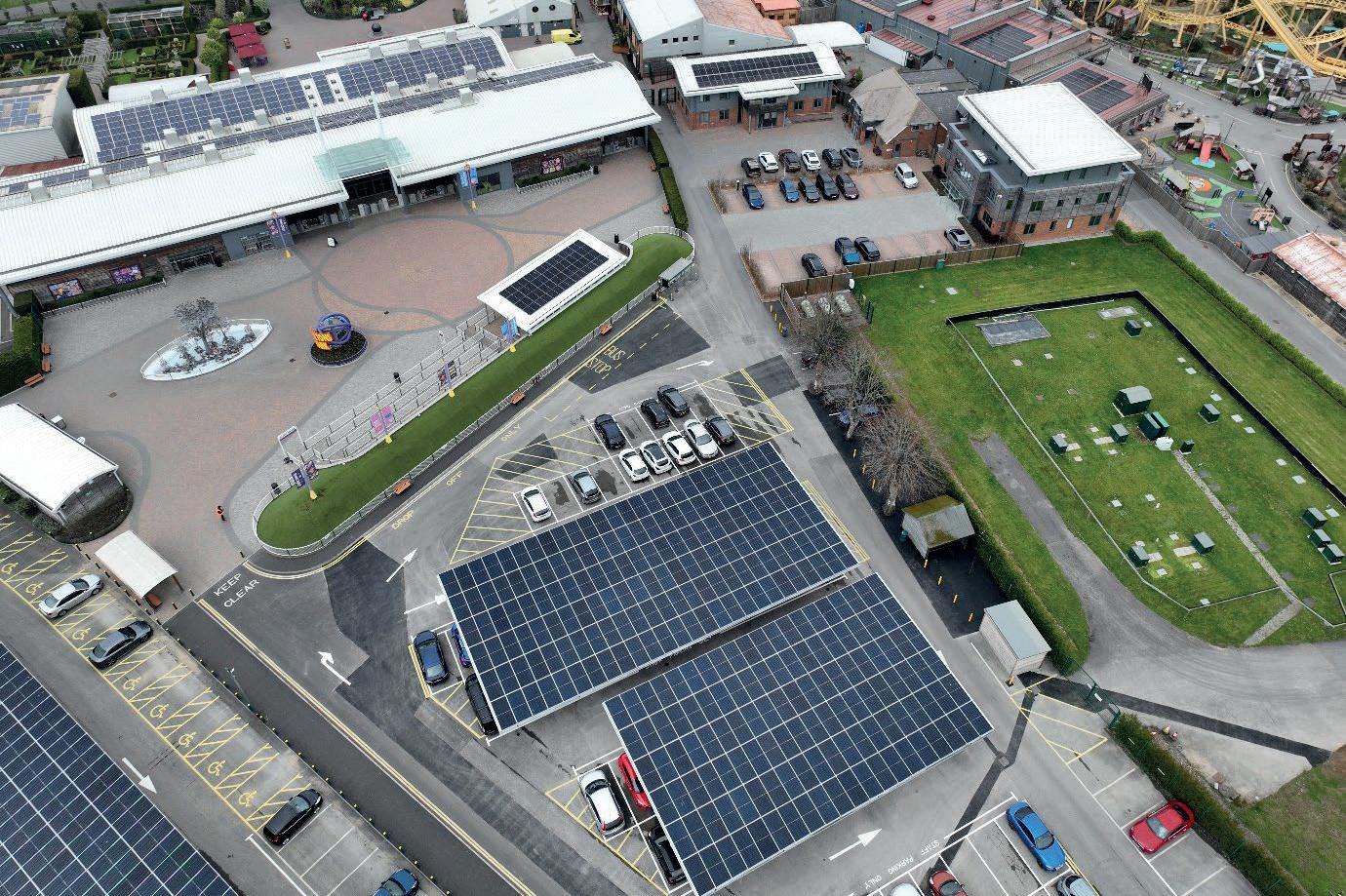
For a high-traffic environment like Paultons Park, you implemented the SolarEdge Firefighter Gateway. Can you explain the technical importance of the safe-touch voltage shutdown during a fire alarm and why it was a deal-breaker for this project?
Considering fire safety is responsibility of the installer and the client under CDM regulations, in a public space of a theme park with families being present, it was felt that the implementation of the SolarEdge system due to its benefits would be a no brainer. Should there be a fault, or a fire alarm be triggered on the respective building/ carport, the DC strings will be shut down to a safe-touch voltage. This means that should anyone become in contact with the system during this time, the risk of electric shock is reduced massively, meaning firefighters or the public are safe if they were to come into contact with them.
You mentioned that SolarEdge optimisers and Bluetop carport structures aren’t traditionally combined due to design and engineering conflicts. Could you talk us through the specific technical barriers your team faced when trying to integrate these two systems?
Traditional solar carport systems comprise of the carport structure, with a trapezoidal sheet roof on top, to attach solar modules to. In recent years, this has been developed to remove this roof sheet, and create a water-tight roof made of the solar modules and drainage channels. Using string inverters, these designs allow for cabling to be

“hid” within the structure to allow for a clean looking under carriage with no exposed cables. With the addition of optimisers which sit below every 2 modules, there was no way of hiding this easily. We therefore developed a simple but effective bespoke cable management solution to support these optimisers. Ultimately the addition of this allowed for better access for future O&M to the cables themselves, as well as providing a convenient solution for the optimisers.
The project is being called a blueprint for the leisure and tourism sector. Beyond carports, what other unconventional spaces in the leisure industry do you think are currently being underutilised for renewable generation?
I think a lot of the different spaces are coming around to solar in their respective industries with energy insecurity increasing. Anywhere where there is a high energy load or HVAC systems, warrants consideration of renewable generation from primarily a cost saving exercise. Golf courses, ice arenas, snowdomes, climbing gyms/Indoor leisure areas, leisure centres/spas, stadiums, museums, are all great considerations for this.
How did it feel for this project to be named a winner at the Electrical Industry Awards?
It is a great feeling to see the project we developed get the recognition it deserves, being the first of its kind in the UK. Due credit should go to the forward-thinking Paultons Park who began this journey on their own, demonstrating their commitment to providing a environmentally conscious solution that provides energy security to their business.




The industry’s largest and most respected event, the Electrical Industry Awards is back.
The industry’s largest and most respected event, the Electrical Industry Awards is back.
Brought to you by Electrical Times, the Awardscelebrating its 34th year - recognise outstanding product innovation as well as individual talents. The winner of each category receives a coveted Electrical Industry Award.
Brought to you by Electrical Times, the Awardscelebrating its 34th year - recognise outstanding product innovation as well as individual talents. The winner of each category receives a coveted Electrical Industry Award.
So if you, or your company have something to shout about, these awards will get you noticed.
So if you, or your company have something to shout about, these awards will get you noticed.
Some incentives for entry....
Some incentives for entry....
Gain independent industry recognition for the excellent work delivered by you, highlighted across the range of categories.
Gain independent industry recognition for the excellent work delivered by you, highlighted across the range of categories.
Promote your excellence, demonstrate a competitive edge and position your company alongside the best in the business.
Promote your excellence, demonstrate a competitive edge and position your company alongside the best in the business.
A winners reception in central London with food, drinks, entertainment and completely free of charge!
A winners reception in central London with food, drinks, entertainment and completely free of charge!
Being a finalist is proof of excellence in your business and proves to clients new and existing you are in industry innovator.
Being a finalist is proof of excellence in your business and proves to clients new and existing you are in industry innovator.
Commercial/ Industrial Product of the Year
Commercial/ Industrial Product of the Year
Residential/Domestic Product of the Year
Residential/Domestic Product of the Year
Lighting Product of the Year
Lighting Product of the Year
Trade Tool of the Year (Inc. Test & Measurement)
Trade Tool of the Year (Inc. Test & Measurement)
Training Resource/Provider of the Year
Training Resource/Provider of the Year
Safety Product of the Year
Safety Product of the Year
SUSTAINABILITY: PROJECTS AND INSTALLATIONS
SUSTAINABILITY: PROJECTS AND INSTALLATIONS
Renewable Installation of the Year
Renewable Installation of the Year
Fire/Safety/Security Installation of the Year
Fire/Safety/Security Installation of the Year
Electrical Project of the Year
Electrical Project of the Year
CONTRACTORS AND WHOLESALERS
CONTRACTORS AND WHOLESALERS
Contractor of the Year (Under £5m)
Contractor of the Year (Under £5m)
Contractor of the Year (Over £5m)
Contractor of the Year (Over £5m)
Contractor of the Year – Community involvement
Contractor of the Year – Community involvement
Contractor of the Year – Staff development (inc. apprenticeships)
Contractor of the Year – Staff development (inc. apprenticeships)
Electrical Wholesaler of the Year
Electrical Wholesaler of the Year
MAIN SPONSOR:
MAIN SPONSOR:

CATEGORY SPONSORS:
CATEGORY SPONSORS:


James Cooke talks to Nigel Birch , Head of UK Sales and Key Accounts at Contactum
Hi Nigel, could you begin by introducing yourself and what you do at Contactum?
Hi, I’m Nigel Birch and I am the Head of UK Sales for Contactum and have been with the company for 11 years.
You were manager for Walsall Wood FC. How did you get into coaching and what was the journey to becoming the top boss at Walsall Wood?
That’s correct. I managed several non-league teams while based in the Midlands. I moved to Walsall Wood to gain more experience managing open-age teams, following a successful spell at youth level with Hednesford Town. From there, I went on to manage a West Midlands Premier team, Black Country Rangers, where in my first season we won a regional cup final. A familiar face featured in the opposition team – prolific semi-pro striker Mark Bellingham, with both his young sons watching from the stands at Molineux, home of Wolverhampton Wanderers. I’ll let you guess who those two young boys were!
From 2007-2011, you served as a Professional Football Scout for Birmingham City FC. How does the role of a scout differ from that of a manager? I did, yes – and I was able to apply many of my business and managerial skills to scouting. Surprisingly, the skill sets overlap quite a lot. Both roles involve identifying how individuals fit within a team, assessing their personal attributes, communication skills, trustworthiness, and drive to succeed.

Does your scouting background give you an edge when it comes to recruiting? I wouldn’t necessarily call it an edge, but it certainly helps. At its core, recruitment – whether it be in business or football – is about understanding people and finding ways to bring out their best qualities.
Gaining a UEFA coaching license is no small feat. What’s more stressful: managing a squad through a high-stakes match under the lights, or overseeing a massive industrial supply contract with a looming deadline?
Great question! I’d say they’re very different types of pressure, each creating its own form of stress. In business, you can be more hands-on in managing a project. In football, once the players cross the white line, you rely on your preparation and hope they perform to expectation. Both require focus, planning, and trust in your team.

Most people go to a match to switch off from work. When you’re at a stadium, can you actually enjoy the game as a fan, or is your ‘scout brain’ constantly analysing the wing-back’s positioning and the manager’s substitutions?
When I’m watching a match live, I really enjoy the atmosphere, the facilities, and the standard of play in professional football. However, my friends will tell you that when I’m watching on TV, I can’t help myself – I automatically start analysing tactics and positioning. I suppose after so many years in the game, that analytical mindset has become second nature!


Are you still involved with football today?
Since relocating from the Midlands a few years ago, I’ve chosen not to be actively involved with a club, although I’ve had opportunities to return to coaching and scouting. That said, I can definitely see myself going back into grassroots football one day, perhaps by starting a coaching school to help young players improve and enjoy the game that’s always been such a big part of my life.

And finally, the big question: which club do you support?
For better or worse, my lifelong team is Leeds United. I had some fantastic memories in my younger days, though now it’s more a case of shouting at the TV –sometimes in celebration, sometimes in frustration!
Closing comments
For me, it’s always been about people, whether that’s building strong teams in business or helping players reach their potential on the pitch. Football has shaped a lot of how I approach leadership, and I’m sure it’ll continue to be part of my journey, especially as I look to give something back to the grassroots game in the future.
Click Scolmore makes full suite of laser etched Mode 20A
DP Switches and FCUs available from stock
Click Scolmore has reinforced its commitment to product availability and contractor convenience with the announcement that its expanded range of laser etched Mode 20A Double Pole switches and 13A Switched Fused Connection Units will now be offered entirely as stocked lines.
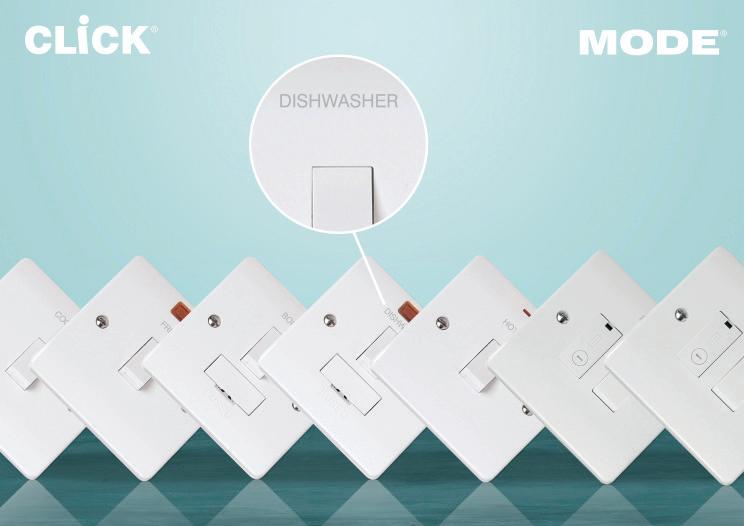
The move sees seven product types across the popular Mode wiring accessories range available off the shelf in a wide selection of clearly defined laser etched legends – removing the need for special orders and extended lead times.
Mode 20A Double Pole switches will be available with a comprehensive choice of 18 laser etched legends, while the Mode 13A Double Pole Switched Fused Connection Units will be stocked in 17 popular etched variations – ensuring fast, straightforward access to the most commonly specified applications. Each plate is precision laser etched for clarity and durability, with markings covering appliances such as Extractor Fan, Cooker Hood, Dishwasher, Fridge, Fridge Freezer, Boiler, Oven, Tumble Dryer, Microwave, Hob, Freezer and more. Laser etched plates of this type are widely specified by Local Councils and in Social Housing projects, where clear identification, consistency and compliance are essential. By committing to hold all variants as standard stock products, Click Scolmore is enabling wholesalers to support contractors with immediate availability, helping streamline installation schedules and maintain specification standards without delay.
For more information visit Click Scolmore’s website - https://scolmore.com/ - or download the Scolmore Group app. www.scolmore.com
Enhanced circuit protection with Elucian’s
Click Scolmore has announced the launch of Elucian’s new 10kA 3 Pole + Switched Neutral Bi-Directional RCBO, further expanding its comprehensive circuit protection portfolio.

Developed in response to growing market demand, the new 10kA 3 Pole + Switched Neutral Bi-Directional RCBOs are supplied with a one metre Neutral fly lead and are available in a wide range of current ratings from 6A to 63A. Products are offered in both B Curve and C Curve variants, each featuring Type A 30mA protection. This ensures suitability across a broad spectrum of commercial and industrial applications where additional protection may be required.
Designed with bi-directional functionality, the new RCBOs are suitable for a wide range of applications, including:
• Three-Phase Distribution Boards - Providing 4-pole protection (three phases plus neutral) for machinery, HVAC systems and commercial equipment.
• Renewable Energy & HVAC Systems - Ideal for air source and ground source heat pumps, solar PV systems and battery storage installations requiring dependable protection.
• EV Charging Stations - Suitable for 32A and 40A installations requiring 30mA earth leakage protection.
• Industrial Environments - Motor control centres, automation systems and robotics, where reliable protection is critical to prevent costly downtime.
• Commercial Buildings - Offices, retail units, data centres and hospitals, where continuous operation is essential.
For more information, visit the Elucian website or download the Scolmore Group app. www.elucianuk.com
Makita launches head-to-toe workwear range
Makita has built a global reputation for tools that perform day in, day out, on demanding work sites. That same practical, performance-first approach now defines the new Makita Workwear range - tough, considered and built for real working environments.
Developed by Castle Clothing

- the team behind TuffStuff Workwear - and drawing on over 50 years of industry experience, the head-to-toe collection covers everything from base layers to outerwear, trousers, shorts and safety footwear, including dedicated womenswear sizes. Every piece is designed around the realities of site life: kneeling, climbing, lifting, stretching and working through all conditions.
The difference is in the detail - durable fabrics, high-quality components and smart detailing that improve comfort, flexibility and long-term wearability.
Performance features are built in where they matter most:
• CORDURA® reinforcements in high-wear areas
• YKK® zips specified for durability
• Ripstop fabrics for strength without unnecessary bulk
• Durable PFC free water-repellent finishes for reliable weather protection
• Dedicated use of recycled fibres and responsibly sourced 100% BCI cotton
• Work-focused fits designed for movement and all-day comfort
Engineered to the same standards tradespeople expect from Makita tools, the range delivers durability, comfort and technical performance without compromise.
Makita Workwear launches in May 2026 through a network of dedicated trade stockists across the UK.
Explore the full range at the website below. www.makitaukworkwear.com
Leading fire and security solutions supplier, ESP, has invested significantly to introduce a new name to the fire and safety alarm sector with the launch of Espire. Espire is a comprehensive range of high performance fire and CO alarm products that has at its core quality, reliability and innovation. Sitting as a separate brand under ESP’s growing product portfolio, Espire is supported by Scolmore Group, distributed by ESP.
A Comprehensive offer

The Espire fire and safety alarms are suitable for Grade D1, Grade D2 and Grade F1 installations. The comprehensive range comprises five alarm types: Optical smoke alarms; Heat alarms; Smoke and heat alarms; Carbon Monoxide (CO) alarms; CO and heat alarms.
The range offers a number of pioneering features, some unique in the market:
• Auto-Dimming Power LED (patent pending)
• Stainless Steel Insect Mesh Barrier (patent pending)
• RF Link
• Lock-in base
• Responsive thermistor
• 24-hour memory function (patent pending)
The optical smoke alarms and heat alarms are available in three options - powered by mains with a sealed tamper-proof 10-year lithium battery: powered by mains with 9v replaceable battery: powered by a sealed tamper-proof 10-year lithium battery.
The smoke and Heat alarms, CO Alarms, and CO and heat alarms are available in two options - powered by mains with a sealed tamper-proof 10-year lithium battery: powered by a sealed tamper-proof 10 year lithium battery. www.espireuk.com
Picture a self-employed electrician based in South London. Two vans, a small team, a steady mix of domestic rewires and commercial fitouts, and a turnover nudging £180,000 a year. Exactly the kind of contractor the electrical industry depends on. And also, without anyone having explicitly decided this, paying a hidden tax that larger corporate competitors are not. It shows up in the insurance renewal, in the materials invoice, in the compliance deadlines expected to be tracked without a fleet manager to help. What began as scattered administrative friction - missed MOTs, forgotten tax renewals, misfiled service records - has grown into something structurally punishing. Running a small electrical business in Britain in 2026 is more expensive and more bureaucratically perilous than at any point in recent memory, and the people bearing that cost are sole traders and small contractors with no buffer.
The numbers are not small
Start with insurance. Premiums for tradespeople on ‘carriage of own goods’ averaged £889 per year in Q3 2025. 1 Despite a broader market correction since mid-2024, premiums for this category have risen 166% since April 2014 2 - and in London, van insurance averages £1,140, nearly double the national figure. 3 Then there is the materials gap. Large M&E contractors and national FM firms access group purchasing programmes and preferred supplier agreements that deliver discounts of 7-20% on parts and materials - advantages that are structurally unavailable to small electrical firms buying at standard trade rates. 4 For a business spending £150,000 a year on materials, that gap represents £10,500 to £30,000 in additional cost simply for not being large enough to negotiate. It is not a surcharge anyone levied. It is simply the price of being small. The skills pipeline sharpens the concern. The electrical sector already faces 227 vacancies for every apprenticeship role, 5 and across all trades, apprenticeship starts fell 4.3% year-on-year in 2025. When a newly qualified electrician weighing up self-employment must budget for £889-plus in annual insurance, a materials cost disadvantage of up to 20% against larger competitors, and a dozen compliance deadlines to track without support, the appeal of a salaried role becomes hard to argue with. The UK is forecast to be short of 250,000 skilled tradespeople by 2030, with £98 billion in missed GDP at stake. 6 A hostile operating environment for independent contractors makes that worse.
A two-tier market that nobody talks about
Behind all of this sits a structural inequality that rarely gets named: large M&E contractors and national FM firms access a fundamentally different market than the small electrical business. On insurance alone, five

by Hein Du Plessis, CEO, Fleethive.ai
vans on individual policies at around £889 each costs a small firm approximately £4,445 per year; the same five on a corporate fleet policy typically cost £3,000£3,500. 7 On materials, large contractors unlock group purchasing discounts of 7-20% that small firms simply cannot access at standard trade rates. On vehicle acquisition, large contractors pay 20–50% less in net leasing costs once VAT reclaim, tax relief, and manufacturer volume pricing are factored in. 8 For a small electrical firm, the cumulative effect is a permanent cost premium - on vans, on parts, on insurance - paid entirely because of size. Most are managing all of this - MOT dates, road tax, insurance renewals, service records - between jobs, on a spreadsheet, or not at all.
This is not a market failure in the conventional sense - volume reduces risk and buying power rewards scale. Insurers, leasing companies, and materials suppliers are not acting unfairly. But the cumulative effect of a policy and commercial environment that applies identical obligations to businesses of vastly different sizes has a predictable outcome: it systematically advantages the large and burdens the small. The independent electrical contractor and the national M&E firm face the same insurance requirements, the same compliance deadlines, the same van running costs. The resources available to meet them could not be more different. Equality of obligation becomes inequality of outcome.
What can actually be done
Government can and should act. The Plug-in Van Grant offers up to £5,000 off eligible electric models but remains poorly understood by small firms - it needs wider reach and better promotion. For electrical contractors specifically, often among the first called to install EV charging infrastructure for others, the irony of being priced out of EV adoption themselves is a policy failure hiding in plain sight. More broadly, any serious industrial strategy for the trades must grapple with the sizebased cost premium that small electrical businesses operate under. Buying groups and collective procurement schemes exist but are fragmented and under-promoted. Expanding access to them - through trade bodies, apprenticeship networks, or direct government support - would make a tangible difference.
But policy moves slowly. In the interim, the most powerful lever is information: knowing what is due, when, and what it will cost before it becomes a crisis. A missed MOT is not just a compliance issue - it becomes an uninsured vehicle and a lost day on site. The right tools can help: centralised compliance tracking, automated renewal reminders, and clear visibility of running costs are not luxuries for small electrical businesses. They are the difference between staying ahead and being caught out.
The van is the business
There are 4.6 million licensed vans on British roads. A significant proportion belong to electricians, heating engineers, and contractors in the building services sector - people whose work is essential to the net zero transition, to housebuilding, to the maintenance of the built environment. They are not an afterthought in the UK economy; in this industry, they are its engine. The cumulative weight of insurance costs, materials price disadvantages, compliance complexity, and a two-tier market that systematically favours large operators is a genuine structural problem - one that deserves the kind of attention usually reserved for more headline-friendly industrial challenges. Running a van should not require a compliance department. But in 2026, for a small electrical contractor without one, it increasingly demands the same vigilance. Reducing that burden - through fairer policy, better tools, and greater visibility - is not just good for individual businesses. It is good for an industry, and an economy, that cannot afford to keep quietly taxing the people who wire, maintain, and power it. FleetHive.Ai is a vehicle management platform for small businesses and multi-vehicle households. Learn more at www.fleethive.ai
References
1. The Van Insurer (Q3 2025). Van insurance purchase data, carriage of own goods. thevaninsurer.co.uk
2. Consumer Intelligence (2025). Van Insurance Price Index - long-term premium trends since April 2014.
3. Quotezone (2025). UK Van Insurance Price Index 2025. quotezone.co.uk/van-insurance
4. Electrical Contractor Network / industry purchasing data (2025). Group purchasing discounts for electrical contractors: 7–20% on parts and materials.
5. DART Tool Group (2025). Apprenticeship Gap Report. darttoolgroup.com
6. Kingfisher / Cebr. UK to lose out on £98bn of growth by 2030 due to shortage of tradespeople. kingfisher.com
7. MyMoneyComparison (2025). How much does fleet insurance cost in 2025? mymoneycomparison.com
8. The Electric Car Scheme (2025). Business lease vs personal lease: costs, VAT and tax relief. electriccarscheme.com
Ovia, part of the Scolmore Group, has announced the launch of Pitch Finder, a new high performance LED sports floodlighting system engineered specifically for professional outdoor sports environments.
Pitch Finder has been developed as a modular floodlighting system, allowing each installation to be tailored to the exact requirements of the project.

Available in 600W, 1200W and 1800W configurations, the platform enables lighting performance to be matched precisely to the scale and operational needs of the sports facility. This ensures consistent illumination, optimal coverage and improved energy efficiency across a wide range of applications.
Precision optics for professional sports lighting
To meet the diverse needs of outdoor sports environments, Pitch Finder offers three advanced optic solutions, each designed to deliver targeted illumination with excellent uniformity and visual comfort:
• Symmetrical wide lens – Provides broad, even light distribution across large areas, ideal for general field lighting and improving overall uniformity.
• Symmetrical narrow lens – Delivers concentrated, long distance beam projection, making it suitable for tall pole installations where focused, high intensity illumination is required.
• Asymmetrical wide lens – Directs light precisely onto the playing surface while minimising glare and spill light, enhancing visibility for players and spectators and reducing environmental light pollution.
For more information, a dedicated Pitch Finder brochure is available, providing detailed guidance on the product specification, light outputs and recommended lighting solutions for a variety of sports applications. You can also visit oviauk.com or download the Scolmore Group app for further resources. www.oviauk.com


Scolmore Group company, Unicrimp, a leading player in the cable accessories sector, continues to support professional electricians and installers with a comprehensive portfolio of Q-Crimp conduit accessories.
The Q-Crimp range now welcomes a completely new product typeThreaded Nipples - which are available in 20mm, 25mm and 32mm sizes.

This addition further strengthens the range’s position as a complete conduit accessory solution. Designed for secure conduit-to-enclosure connections and system extensions, threaded nipples provide reliable alignment and mechanical stability while maintaining electrical continuity. The introduction of this new category reflects Unicrimp’s continued commitment to evolving the range in line with installer needs.
Other key product categories to highlight include Conduit Boxes, Light Gauge Saddles, Inspection Tees, Inspection Bends, and Metal Hooks.
Key features and installer benefits
Unicrimp’s conduit accessories deliver a range of benefits valued by professional installers:
• Durable construction – Manufactured from galvanised steel to resist corrosion and environmental stress.
• Heat resistance – The high-quality materials used means conduit accessories can handle high temperatures, making them suitable for industrial and commercial applications.
• Flexibility – Available in multiple sizes to accommodate varying conduit diameters, with elbows, bends and junction boxes supporting adaptable system design and expansion.
• Versatility - Designed for use across a wide variety of installation environments, both indoors and outdoors.
For more information on Unicrimp’s Q-Crimp portfolio, visit the website or download the Scolmore Group app www.unicrimp.com