The Electrical Times has been bringing you electrifying content since 1891 and now, after 135 years, we usher in a new era for the magazine –and beyond.
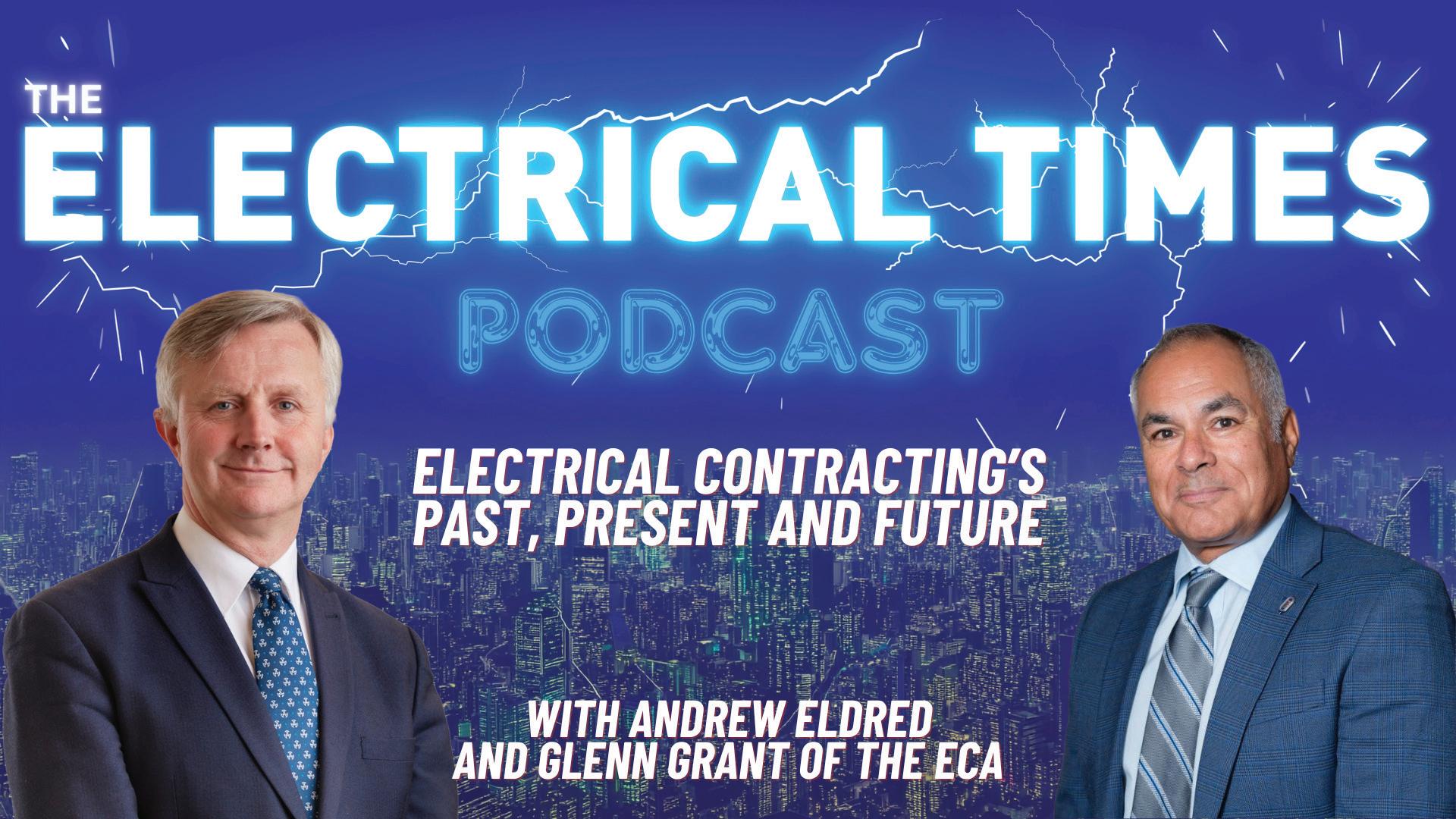
Not only do we have a brand new, eye-catching look, but launching alongside this issue is the inaugural episode of The Electrical Times Podcast. Kicking us off is an interview with soon-to-be President of the Electrical Contractors’ Association Glenn Grant, and ECA Managing Director Andrew Eldred.
In a conversation that encompassed the past, present and future of the electrical contracting sector, Andrew and Glenn discuss the Association’s own 125-year history and how the industry has evolved in that time, as well as current-day issues including the skills shortage – and what’s causing it when there is no lack of interest from young people in becoming a sparkie –and what the landscape may look like over the course of the next 10 years.
It’s a fantastic conversation, not to be missed. For a preview, head over to page 14, where you can read an abridged version of the conversation. To watch or listen to the full discussion, visit electricaltimes.co.uk/podcast or find us on Spotify and YouTube – youtube.com/@electricaltimes And don’t forget to look out for new episodes coming soon, including with the NICEIC and Draper Tools.
In the meantime, enjoy the magazine!
Energy consumption without control: one in four data centre operators fails to track energy usage
A LATE 2025 451 Research, part of S&P Global Market Intelligence, study commissioned by Janitza reveals that nearly one in four data centre operators does not monitor the power consumption of their primary sites, even as AI workloads drive unprecedented pressure on electrical and cooling infrastructure. Without precise, real time energy data, operators cannot safely scale AI ready capacity or protect their investments.
451 Research, the technology market intelligence unit of S&P Global, surveyed 208 data centre professionals to assess how efficiently business critical facilities operate today, using Power Usage Effectiveness (PUE) as a key metric. Just over half of respondents reported a PUE between 1.5 and 2.0, while 23 percent admitted they are not tracking this fundamental performance indicator at all.
The study highlights a structural business risk: power has become the limiting factor
in building, scaling and monetising AI capable infrastructure. Highly dynamic AI workloads drive power fluctuations of up to 40 to 70 percent within milliseconds, creating new challenges for power quality and increasing the risk of outages and equipment damage.
“In an environment where milliseconds matter, flexibility and data expertise are the critical differentiators.” the report notes.
Reliable, high resolution energy data now underpins predictive maintenance, capacity planning and revenue optimisation in modern data centres. Operators who capture and analyse detailed power and power quality data can detect emerging faults earlier, extend the lifetime of critical components and avoid unplanned downtime. As rack power densities rise towards 40–120 kW and AI models continue to grow, the study finds that comprehensive monitoring across the
entire power chain, from grid connection to individual racks, is becoming a decisive competitive factor.
Janitza focuses on providing the measurement technology and software required to transform this operational transparency into concrete business value for data centres. By combining advanced power quality analysers with GridVis ® power grid monitoring software, Janitza enables operators to visualise their electrical infrastructure in detail, document PUE and other KPIs, and implement targeted optimisation measures.
Enerveo announced as South Coast LED lighting upgrade project partner
ENERVEO, THE CURRENT street lighting provider for Southampton City Council, as well as Hampshire County Council and West Sussex County Council, has signed Deeds of Variation agreements with each of the local authorities to deliver the South Coast LED lighting upgrade project.
Enerveo is the incumbent street lighting provider for all three local authorities, having worked in partnership for the past 16 years.
Following an extensive design, consultation and approval process, the contract amendments will see Enerveo significantly expand the scope of its current PFI contracts, with the project leading to greener, more sustainable lighting on roads and significant carbon savings for the councils through improved energy efficiency. The project will also provide safer roads for both pedestrians and motorists through improved visibility. The LED upgrade project will reduce carbon dioxide emissions by 60% per year.
The South Coast LED upgrade project will involve upgrading a combined total of 83,000 lights to modern LEDs over the next four years and will see Enerveo roll out its innovative Mayflower Smart Control Central Management System (CMS) on behalf of West Sussex
County Council, installing over 65,000 Mayflower nodes across West Sussex.
Enerveo’s Mayflower CMS is a unique technology that provides full control and monitoring of each individual lighting unit. The system comprises ‘nodes’ installed on lights which send and receive data, enabling full and effective asset management.
By reducing carbon emissions through LED light replacements, which have a much longer lifespan than traditional lights and use less electricity, Enerveo will accelerate the transition to net zero for these local authorities.
The South Coast LED upgrade project will see 65,249 lights upgraded to LEDs for West Sussex County Council over a 48-month period, 9,395 lights upgraded on behalf of Hampshire County Council
WISKA achieves EcoVadis Gold Rating with outstanding sustainability score
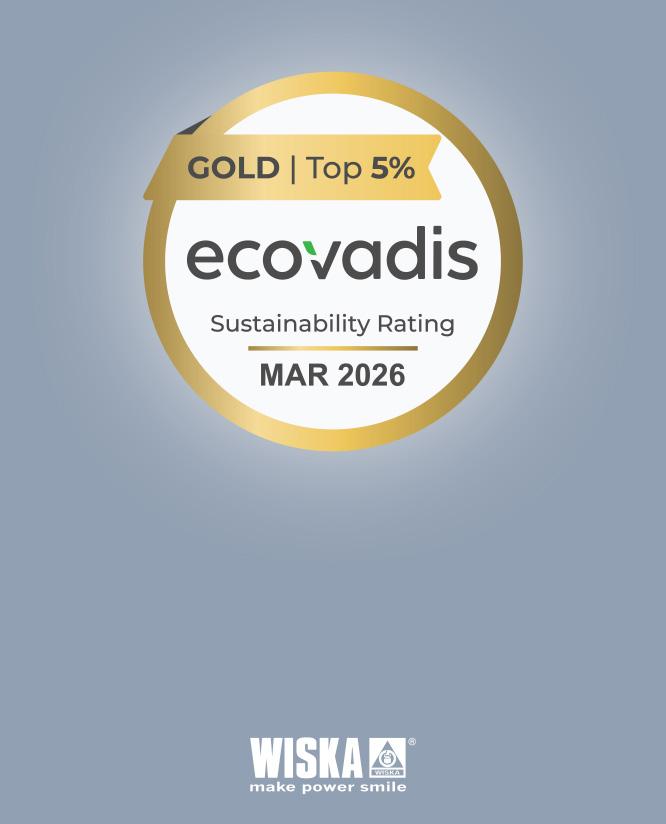
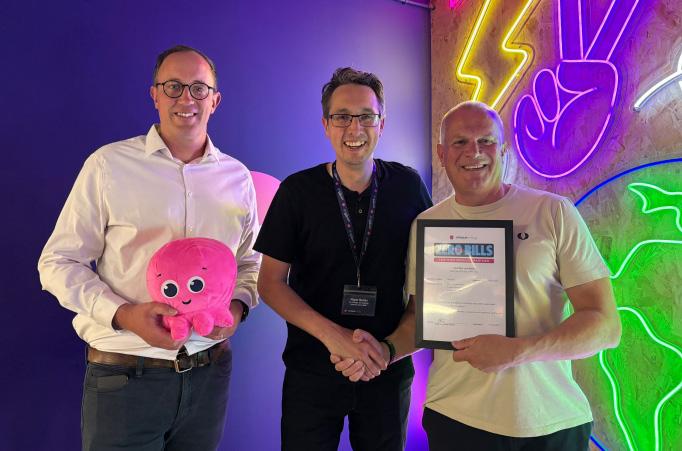
WISKA HAS ACHIEVED Gold status from EcoVadis, the world’s most recognised provider of business sustainability ratings, with an impressive score of 80/100.
over a 12-month period, and a further 8,366 lights replaced for Southampton City Council, also over a 12-month period.
Energy savings are estimated to be approximately 60% once the overall South Coast upgrade project has been concluded.
The on-site project works will commence in March 2026 in partnership with Equitix, one of the UK’s leading infrastructure investors, developer and fund managers. Equitix Management Services are providers of the Management Services Agreement (MSA) on all three projects.
Patrick Rooney, Director of Highways Electrical at Enerveo, commented: “We’re delighted to work in partnership with the councils to support their ambitious plans for a net zero future.
“The South Coast LED upgrade project has the capability to significantly reduce carbon output in the region and have a positive sustainability impact on local communities through the deployment of technological innovations such as Mayflower.
“We look forward to the opportunity to expand on our current responsibilities and respond to the increasing demand for greener, decarbonised public lighting.”
The achievement marks a major milestone for the company, which has progressed from its first EcoVadis assessment to Gold level in just three years. This rating places WISKA among the top 5% of companies assessed by EcoVadis worldwide at the time of rating. EcoVadis evaluates organisations across four key areas: environment, ethics, labour & human rights, and sustainable procurement, providing an independent benchmark of environmental and social impact across operations and supply chains.
For WISKA, sustainability is embedded within the company’s culture and long-term strategy. The organisation continues to focus on balancing economic performance, environmental responsibility and social impact, supported by strong environmental management practices and continuous improvement across the business.
Tanja Hoppmann, General Manager and Head of Sustainability at WISKA Hoppmann GmbH, said: “We are incredibly proud that our efforts to make WISKA more sustainable have been recognised with the EcoVadis Gold medal. This achievement means a great deal to us because it reflects the dedication and commitment of colleagues across the entire WISKA team around the world. Sustainability is something we work on every day, and we strongly believe that innovation plays a key role in creating better, more responsible solutions for our industry. This recognition motivates us to keep pushing forward, continuing to innovate and improving the way we operate.”
The EcoVadis Gold rating reinforces WISKA’s commitment to continuous improvement and responsible business practices.
AlphaESS UK and Octopus Energy announce integration across the entire residential range
ALPHAESS UK, NOW a Bloomberg Tier 1 for New Energy Finance, has announced a significant step forward for installers, distributors, and homeowners, with the company’s full range of residential battery storage systems now integrated with intelligent tariffs from Octopus Energy.
Aligning with its distributor and installer network, AlphaESS UK’s full range of residential systems is now compatible with Octopus Energy’s intelligent Flux tariff as well as having built-in functionality that can optimise other dynamic tariffs, including Intelligent Go, Octopus Go, and Cosy Octopus.
Recolight appoints Flavie Lowres as Environmental Metrics Manager
RECOLIGHT HAS ANNOUNCED the appointment of Flavie Lowres as Environmental Metrics Manager. Flavie will play a pivotal role in supporting the lighting industry in the adoption of Environmental Product Declarations (EPDs).
Flavie joins Recolight with a distinguished track record in Life Cycle Assessments (LCAs), EPDs, and the circular economy of construction products and buildings.
Flavie is a fellow of the Institute of Materials, Minerals and Mining (IOM3) and chairs their Construction Materials Group Board and is also Sustainability Champion at the Finishes and Interiors Sector (FIS).
Commenting on her new position Flavie said “I have had the pleasure of working closely with Recolight through my role at FIS, jointly delivering various sustainability initiatives and training on EPDs. I am looking forward to continuing this important work.”
Welcoming Flavie to the team, Nigel Harvey, Recolight CEO commented, “Flavie’s detailed knowledge of LCAs and EPDs, and her passion for sustainability mean she is ideally placed to deliver our one-off EPD service, and other sustainability services, to the lighting and wider construction industry. I am delighted that she has joined the team.”
This development has been achieved through close collaboration within the AlphaESS distributor and installer network. The partnership unlocks more value for homeowners and creates a standout opportunity for installers and distributors to strengthen their position in the rapidly growing UK energy storage market.
Together, AlphaESS UK and Octopus Energy are powering a smarter and stronger energy future. This integration combines AlphaESS technology, intelligent optimisation, and UK-based support with the proven benefits of Octopus Energy’s dynamic tariffs, creating a compelling solution for residential customers.
AlphaESS UK Managing Director Mark Hale Commented: “Our integration with Octopus Energy’s intelligent flux tariff and built-in functionality that can optimise other dynamic tariffs, including
Toolstation’s Fast Track delivery wins industry
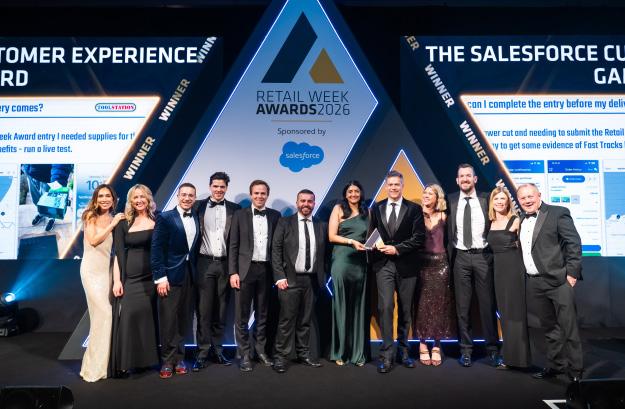
TOOLSTATION, ONE OF the UK’s largest suppliers of tools and building supplies, won at the Retail Week Awards, with its Fast Track delivery service officially being named a retail ‘gamechanger’ by industry experts.
The award win recognises the retailer that is leading the way in delivering an outstanding customer experience. Toolstation saw off stiff competition in the category from major household names, including John Lewis, Lidl, and Uber Eats, to take home the top prize.
The Fast Track delivery service was hailed as a transformative tool for the
UK’s tradespeople. The service allows customers to choose from over 10,000 products and have them delivered directly to a site or home address in as little as 30 minutes.
Unlike standard rapid delivery services that rely on bikes or cars for small items, Toolstation’s award-winning model supports deliveries of products that are up to three metres in length, and weigh up to 1000kg in weight. It uses a variety of transport types and sizes to ensure even the bulkiest building supplies reach the customer at record speed.
Chris Other, Toolstation’s Customer Director, said: “We always strive to make life as convenient as possible for tradespeople and so we are absolutely thrilled that Fast Track has been named a gamechanger by industry experts at the UK’s leading retailer awards.
“Time is money for our customers, and this award proves that Fast Track is making a real difference in their day-to-day work.
Intelligent Go, Octopus Go, and Cosy Octopus, marks a significant milestone for AlphaESS UK and for the wider residential energy storage market. This partnership brings real value to homeowners and creates new commercial opportunities for our installer and distributor network. By combining our technology with the smart capability of Octopus tariffs, we are helping households take greater control of their energy use, make meaningful savings, and adopt cleaner, smarter power. This is an important step in our commitment to support the transition to a more sustainable and more resilient UK energy system.”
Having access to over 10,000 products from 505 stores in as little as 30 minutes means they don’t have to sit in traffic to pick up an essential item—they can stay on the job and stay productive.”
Retail Week’s Editor-in-Chief, Charlotte Hardie said: “The Retail Week Awards 2026 have shown the true spirit of British retail. Against a backdrop of stubborn inflation, fragile consumer confidence and the unrelenting pressure of rising labour costs, our 2026 winners proved just how far this industry can go with resilience and imagination.
“From navigating supply chain volatility to embracing the transformative power of AI, they’ve turned another disruptive year into one of progress. What stood out most was the people behind these achievements; creative, determined teams who continue to deliver for customers in a marketplace that grows more complex by the day. Celebrating them this year has been an absolute privilege.”
Certsure announces Clair Mowbray as new Chief Executive Officer
CERTSURE, THE ORGANISATION
BEHIND NICEIC, the UK’s leading certification body for the building services industry, today announced the appointment of Clair Mowbray as Chief Executive Officer, effective 30 March 2026.
A proven CEO, Clair joins Certsure having led nationally significant, safety-critical organisations including The Fire Service College and the National College for High Speed Rail. She brings extensive experience in delivering technical excellence, operating within complex sectors, and working closely with industry and government to strengthen the development of skills and talent pipelines.
As CEO, Clair will be responsible for Certsure’s future strategic direction and will lead the organisation’s vital work to
safeguard public safety, raise standards, and uphold the highest levels of technical competence. She will focus on strengthening Certsure’s industry-leading position to deliver even greater value for its customers, and will work collaboratively with stakeholders and government to ensure NICEIC-certified businesses – and the wider sector – are well
positioned to meet the needs of today and the evolving demands of tomorrow.
Clair Mowbray, incoming Certsure CEO, commented: “It is an honour to join Certsure, a highly respected organisation, at such an important moment for the sector. As the industry undergoes rapid change, NICEIC-certified businesses will play a critical role in the nation’s transition to electrification and low-carbon technologies.
“Working closely with our customers and with partners across industry and government, we will continue to raise standards and set the benchmark for competence, safety, and trust.
This moment presents a significant opportunity for Certsure and for NICEICcertified businesses across the UK, and I am excited to get started.”
Power On signs multi-utility deal for five utilities including heat at Hartlepool Marina
UTILITIES CONNECTIONS EXPERT,
Power On, today announces it has been awarded the contract by regeneration specialist, Jomast, to provide all five vital utility connections at a transformational waterfront development in Hartlepool. Power On will be providing electricity, water, wastewater and fibre-to-thepremises connections, along with an ecologically-sound ground source heat pump network to the first of several phases on the development known as Hartlepool Marina.
What began as a proposal for the heat network only, quickly became a multi utility submission when Jomast was introduced to Power On’s further capabilities:
Power On’s networked ground source heat pumps (NGSHPs) provide an innovative low-carbon solution particularly beneficial for high-rise or high-density buildings, as is the case at Hartlepool Marina where apartment blocks are six and seven storeys high.
With 32 boreholes being drilled an average of 200 metres deep, vertically, throughout the development, the NGSHPs will meet the Future Homes Standard with carbon emissions reduced by 75-80% from day one. The energy efficiency will be up to five times that of gas and 30% more efficient compared to installing individual air source heat pumps. The heat network will be owned and operated by Power On and regulated by Ofgem, ensuring consumer protection.
The NGSHP system was instigated by Carbon Plan Engineering (MEP
Europa announced as latest EDATA data pool sponsor
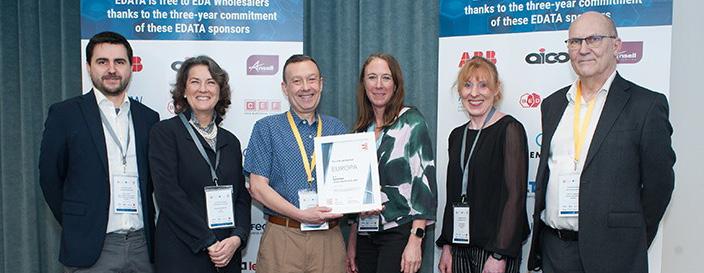
EDA AFFILIATE MEMBER, Europa PLC, has become the latest manufacturer to sponsor the award-winning EDATA data pool, managed by the Electrical Distributors’ Association (EDA). Europa becomes one of 27 businesses – a mix of leading wholesalers, manufacturers, and buying groups – to give their backing to the electrotechnical sector’s award-wining data pool.
For over 50 years, Europa PLC has delivered innovative electrical solutions to a diverse range of industries, from manufacturing and construction to events, utilities and beyond. Renowned for combining engineering expertise with a solutions-focused approach, they provide high-quality, reliable products that help customers work more efficiently, safely and sustainably, meeting the evolving demands of an ever-changing industry.
Europa’s Managing Director, Sonia Freed, said of their decision, “Europa joined the data pool in 2021, and the opportunity to upgrade
our support to sponsorship level reflects our commitment to the wholesale channel and EDATA’s strategic role in delivering the highestquality product information and images right to the heart of wholesaler businesses.
“As the electrotechnical supply chain becomes more digitised, trusted product data drives performance, scalability, and profitability. Europa is ready to get around the table with our co-sponsors on the Steering Group and contribute to the data pool’s longterm strategy.”
Margaret Fitzsimons, CEO at the EDA, added “We are delighted that Europa has joined the influential group of EDATA sponsors, who are key to the datapool’s future development. We look forward to their participation in our Steering Group where we will benefit from their vision, insight and practical experience. Thank you, Sonia Freed and the Europa team, for your support for this important industry initiative.”
Consultants), to meet with energy reduction targets and to minimise environmental impacts.
In addition, Power On is also providing its full multi-utility offering: electricity, water, wastewater and fibreto-the-premises. Originally, Jomast was planning on contacting local DNOs and incumbent providers individually, to get separate quotes for each utility. Once Power On had made the developer aware of its multi-utility capabilities, Jomast could immediately see the sense and efficiency in going to just one provider for all its utility connections.
Ian Williams, Director, Jomast, said:
“By using Power On’s multi-utility and NGSHP solution we are making savings on both time and cost. We will minimise the number of trenches dug, making a huge cost saving and limiting disruption on site. The economies of scale make so much sense but we will also benefit from just one point of contact with one Project Manager.”
Indeed, the only element missing from the current package is cooling. Although Power On is quick to point out that with networked ground source heat pumps, passive cooling can easily be retrofitted making use of the infrastructure already installed. This would make this a MUCH development – an acronym coined by Power On to cover its Multi Utility Cooling & Heating capabilities.
Alex Randall, Business Lead for Sustainable Heat at Power On, said: “We are delighted to have been awarded this contract by Jomast and look forward to working with them directly to provide an effective and efficient service installing effective and efficient utilities. The cost savings of choosing a multi utility provider are perhaps only surpassed by the environmental benefits of choosing a low-carbon solution like networked ground source heat pumps.”
Instantaneous water heaters
for hard water
Our bare wire technology means longer product life and better sustained performance even in hard water areas. With a range from 3-27kW
sales@stiebel-eltron.co.uk | 0151 346 2300
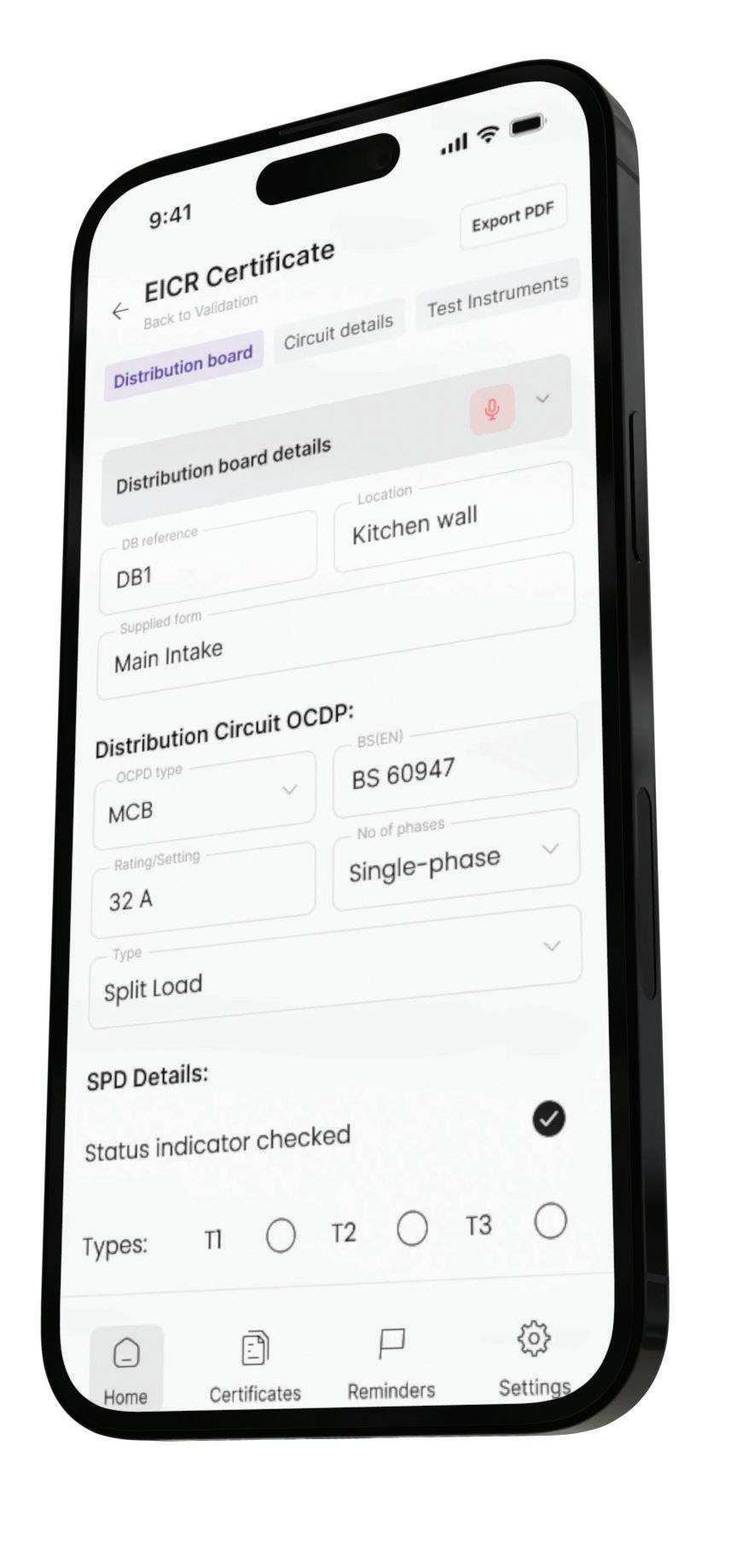
Reclaiming your time as an Electrician with AI-native tools
by Kevin McMahon, Co-Founder of Certy and Certified Electrician
I’ve been a sparky in London for coming on 25 years. Domestic, commercial, industrial, you name it, I’ve done it all. I’m also a heating engineer. And when you have been around as long as I have, you can’t help but remember what certification used to look like. It was all about carbon pads and handwritten forms.
Years sitting on stairs or plant-room floors, or in the van, trying to get the certs done without smudging ink everywhere. If you made a mistake near the end, you better believe you are starting again.
Now in 2026, the paperwork and admin burden is bigger than ever. A proper EICR can still take over an hour to complete. So, if you’re doing three or four inspections a day like I often do, that work follows you home. It ate into my evenings and my weekends.
The problem of doing the job twice
Even with modern tools, certification has never been truly real-time. You are doing the job twice and being honest, it’s tedious and takes time away from my family.
Over the years, I tried everything to fix this and get my time back after I leave a site. Voice recordings, and all the different apps and software solutions over the years.
Even as technology improved, the core problem never really went away. You were still doing the job twice. You did it once on-site: testing, inspecting, and gathering information. Then you did it all again later when you typed it up, switching between photos and scribbled notes and trying to reconstruct what actually needs to go into the cert.
So, because I’ve always been into tech, when AI started to emerge, I had a lightbulb moment: this was the technology that could finally fix the problem that had been following me all these years.
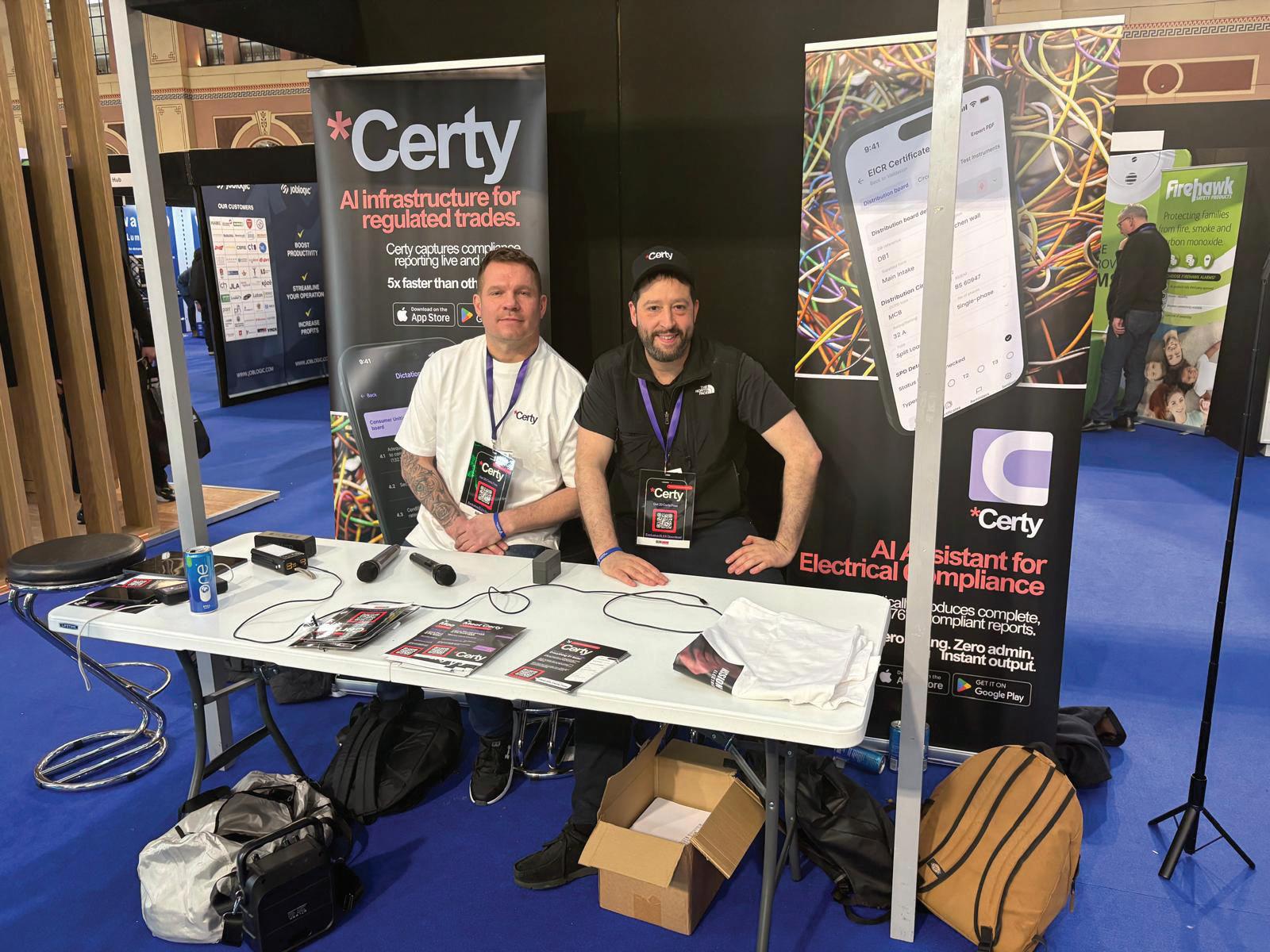
I’ve spent the last 18 months working with a few people to build Certy around one simple idea: capture everything once, on-site, hands-free, and let AI do the rest.
By integrating an intelligent observation builder into Certy, which can map a quick site note like “damaged insulation” or a photograph to a regulation and code, the system we’ve created is taking on the role of a second pair of eyes.
Right now the industry is moving in a shift that is potentially bigger than paper to digital. It’s no longer just about filling out a form; it’s about having an assistant that understands the regulations as you do, and can help you process what you are seeing and doing. The move toward “active certification” is finally making real-time, on-site completion a reality for the trade.
A great time to be a Sparky For a sparky on-site like me, it feels like we are finally getting the tools to handle the boring bits, so we can pack the van and actually go home when the job is done.
It means the app is doing the heavy lifting by taking your voice notes and photos and turning them into professional, compliant certs while you are actually working. It stops you from being an admin after work and lets you get back to being an engineer.
I built Certy for myself, and I love it. It saves me hours a week. It is about removing friction and reclaiming my time. What used to take an hour or more can now be done in around 20 minutes, and to a higher standard. In a market where compliance standards are rising, that matters to me.
A new model for the trade
If you can complete certification five times faster, the model changes for working electricians like me. You can finish earlier or take on more work without burning out. For business owners, it is even more powerful. Everyone in your firm can produce consistent, high-quality certificates from day one. Everything becomes more uniform, more professional, and easier to review.
Certy just launched, and we are incredibly proud of it. If you want to try it, we’re giving readers of Electrical Times their first 20 certs free, so you can really try this out and see how it works for your day-to-day.
Get the new
Compliance isn’t just a tick-box - it’s your launchpad for progress. The next BS 7671 amendment is coming, and with it, the tools you need to lead in a fast-changing market.
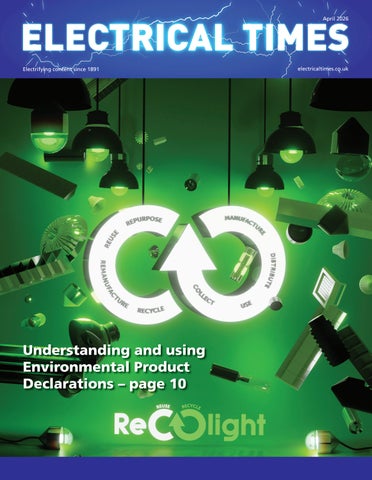
Understanding and using environmental product declarations
An Environmental Product Declaration (EPD) is considered to be the most representative metric for transparent environmental performance of a product. An EPD enables the specifier to make informed environmental decisions. While an EPD does not tell the reader that the product is “green”, it demonstrates that a manufacturer is on a “sustainability journey”. Getting an EPD is a long and costly process and manufacturers who get them should be credited for their efforts.
Flavie Lowres, Recolight Environmental Manager, discusses the value of EPDs, how to read an EPD and make the most of the information they provide to support environmental decisions.
What is a good EPD?
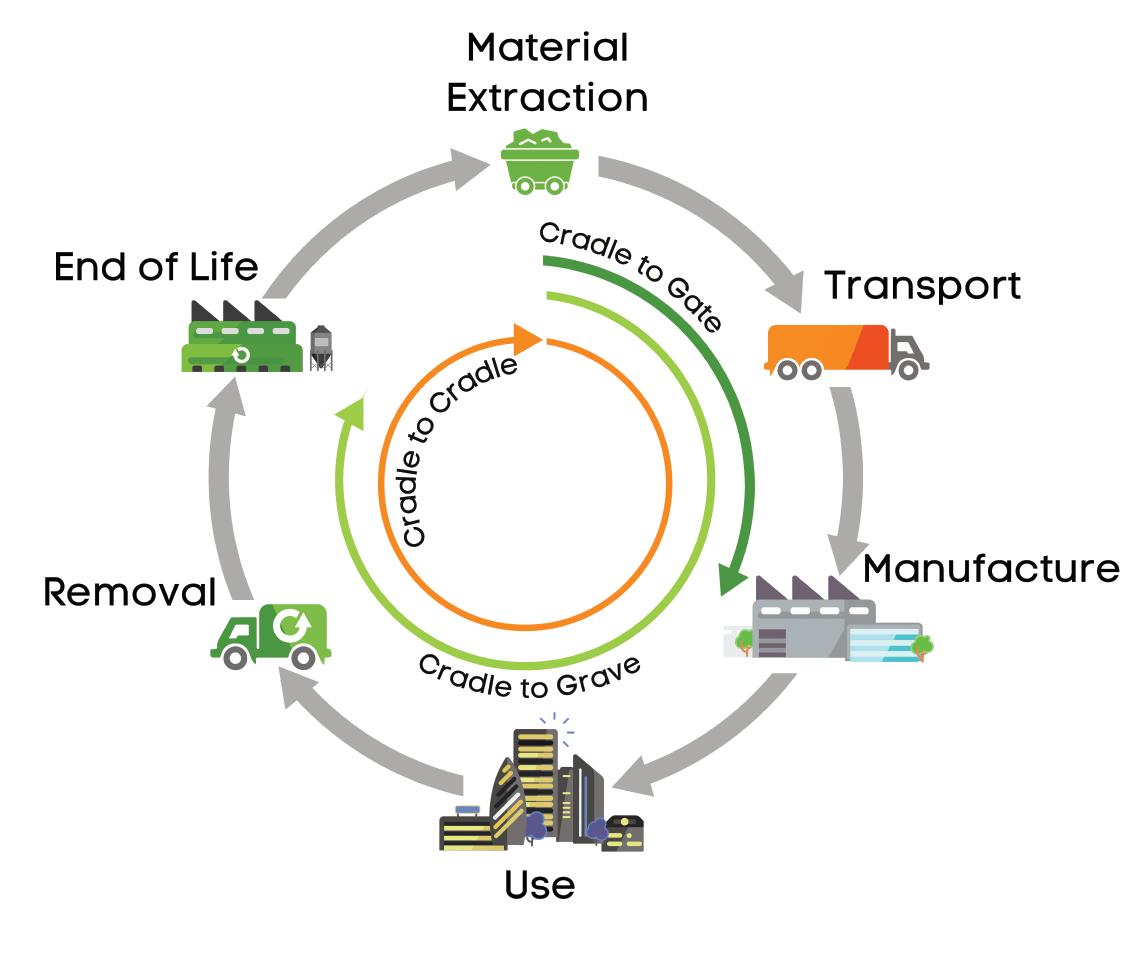
EPDs are independently verified and publicly available documents that reports the environmental performances of a luminaire. Results are provided against a broad range of environmental impact throughout the life cycle stages of a product, for example from cradle to gate or cradle to grave (see fig here). The environmental metrics that is the most used is the one representing carbon emissions In an EPD it is represented by the Global Warming Potential (GWP total).
At its core, an EPD is a document which communicates these impacts in a standardised way (specific standards include ISO14025 and EN15804). EN15804 provides a structured approach to the life cycle stages of a product:
• A1 to A3 (mandatory) is referred to as the cradle to gate stages. It includes the impact of the materials used and their transport to a factory. It also includes the manufacturing stage (energy, wastes, water)
• A4 and A5 are optional stages. They include the transport to site (A4) and installation (A5) phases
• B1-B5 and B7 are optional stages. They include the use phase such as maintenance, repair. B7 includes water use in operation (not relevant for luminaires)
• B6 is mandatory for luminaires and reports the energy in use of the product
• C1-C4 are mandatory and cover the end of life of products
• D is also mandatory and provides an overview of the future benefits or impact
An EPD doesn’t automatically allow the owner to make claims such as “This product is certifiably good for the environment”, nor would such a claim be written in the declaration.
A declaration is just a declaration. The environmental data presented give the user the opportunity to make more informed choices.
However, interpreting EPD can be complex. It is important to understand what has been modelled and to compare like for like. Some manufacturers decide to report the results of a single product, other report the results against specific performance of a product.
Understanding and using EPD results
Comparing Functional and Declared Unit
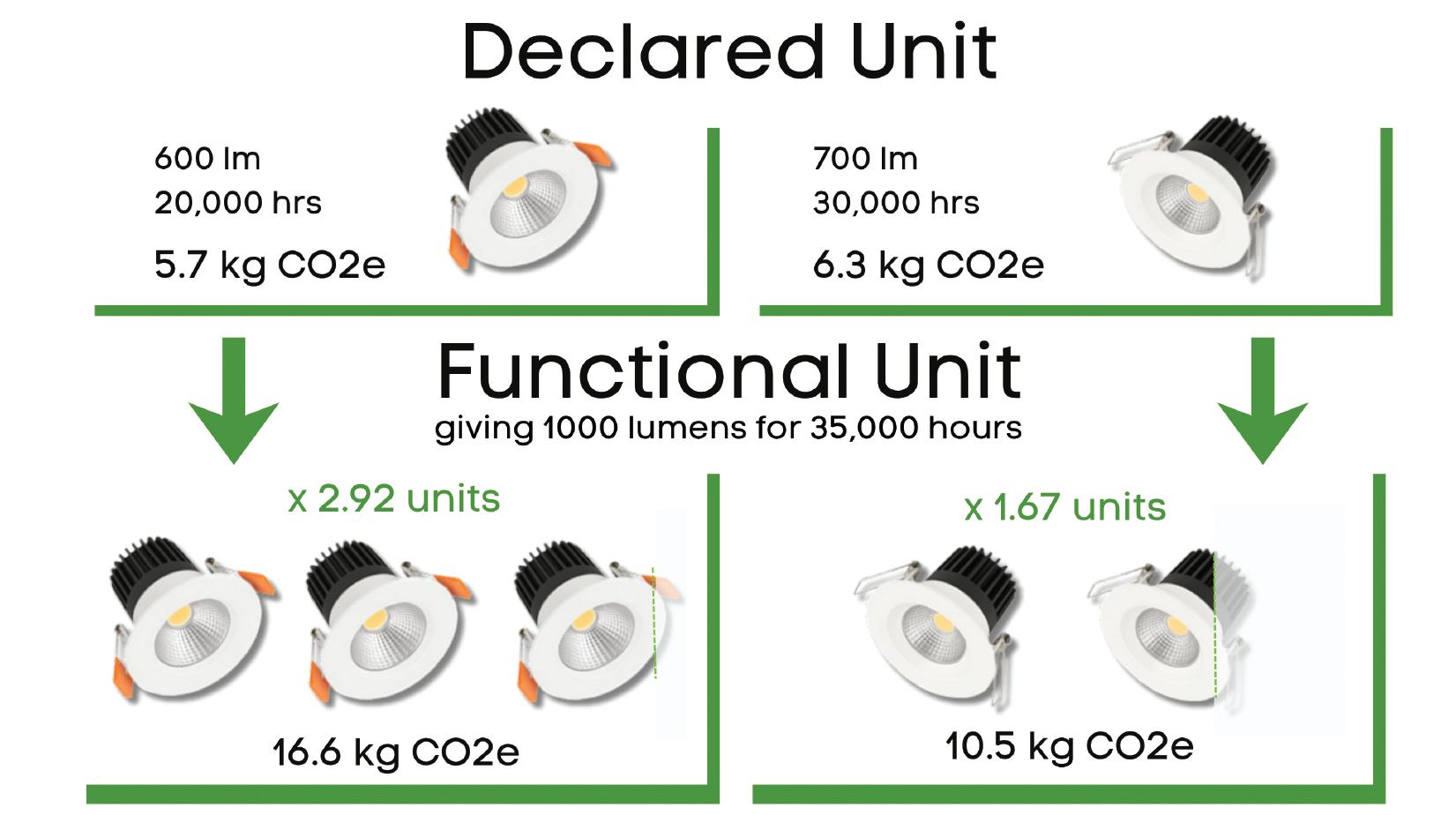
The functional unit is more comprehensive because it encompasses the luminaire’s intended use over time, while the declared unit gives a simpler measure of the luminaire’s environmental impact based on its production.
An EPD could only report the declared unit, while another may report the functional unit. It will say which, but the user should check before using the results. It is up to the manufacturer to decide what to declare. It is usually based on how the products is used or sold.
There is no universal standard for what a declared unit should be for any given product, but lighting has the benefit of a guide from the product specific
rulebook for lighting (PSR0014) which is complete set of rules which better allow for product comparison.
PSR0014 outlines the functional unit to be 1,000 lumens for 35,000 hours. There is also a simple relationship between the declared and functional unit, this is sometimes included at the end of an EPD too. If you use this relationship, you can see that what was a “similar” impact is more like a 50% difference.
What you cannot do is compare a luminaire EPD with a TM65.2 number. These are two different methodologies which are quite disparate in their assumptions, so their estimations for embodied carbon differ.
Understanding both the functional and the declared unit impacts will help when seeking the most sustainable solution.
Integrating EPDs into your workflow With environmental data comes the opportunity to make more informed decisions, whether that is to make manufacturing processes more efficient, or to influence specification.
In conclusion, contractors should focus on key life cycle stages: material extraction, transport, and manufacture, which rely on more “real” data. Whereas, modelling the product’s use and end of life processes rely heavily on assumptions. Ultimately, EPD data should be considered as part of a bigger picture and consolidated with other performance criteria.
Why the UK must rethink its energy strategy – and why electrical contractors must be alert to what comes next
Alan
Wilson, Head of Scotland’s largest trade association, SELECT, argues that high electricity prices are not inevitable and outlines a path to cheaper, cleaner power
The UK must urgently rethink its long-term energy strategy if it is to bring down electricity costs, protect consumers and unlock the full potential of electrification, the Managing Director of Scotland’s largest trade association has insisted.
Alan Wilson, Managing Director of campaigning electrotechnical trade body SELECT, says that a mix of renewables and nuclear are the key to cheaper power – and that electrical contractors who keep pace with technology can reap the rewards.
Mr Wilson said: “With electricity prices now more than triple what they were two decades ago, structural weaknesses in the UK’s energy system are placing sustained pressure on households, businesses and the electrical industry itself.
“In the early 2000s, electricity cost just a few pence per kilowatt hour. In 2023, that figure rose to around 27p per kWh, and even as markets stabilise, prices remain far above historic norms. These costs are not a short-term anomaly but the result of long-term policy and investment decisions.”
Mr Wilson – who will step down from the organisation later this year – added that while recent energy shocks have drawn attention to price volatility, the deeper issue is the UK’s continued dependence on gas-fired electricity generation.
He said: “Despite significant growth in renewables, gas still sets the price of electricity
much of the time. When global gas prices spike, electricity prices inevitably follow.
“Add to that the cost of upgrading ageing grid infrastructure, environmental levies and years of underinvestment in firm, low-carbon generation, and it becomes clear why prices have risen so sharply.”
Mr Wilson stressed that high electricity prices are not unavoidable – and that renewables offer a clear route to cheaper power over the long term.
Writing in the latest edition of SELECT’s cabletalk magazine, he said: “Wind and solar are among the lowest-cost forms of generation available. Once built, they require no fuel, are insulated from global commodity markets and continue to fall in cost as technology improves.
“Offshore wind, in particular, is already one of the UK’s greatest energy success stories, but the challenge lies in managing variability and ensuring security of supply – something renewables alone cannot deliver.
“This is where nuclear power becomes essential. Nuclear provides the stable, low-carbon baseload electricity that complements renewables. While the upfront costs are significant, nuclear plants operate for decades, offering predictable output and price stability that gas simply cannot match.”
With much of the UK’s existing nuclear fleet approaching the end of its operational life, Mr Wilson said new projects must be supported, alongside a clear strategy for the deployment
of small modular reactors (SMRs) – with positive implications for those electrotechnical professionals who are prepared to adapt.
He said: “For electrification to succeed, whether that’s electric vehicles, heat pumps or industrial processes, we need firm, reliable power as well as renewables.
“As the energy system evolves, electricity will become the dominant energy source across heating, transport and industry.
“That means increased demand for battery storage, EV charging, smart technologies, solar PV and grid reinforcement, with electrical contractors at the forefront of delivering this transition.”
Mr Wilson added that customers will increasingly expect contractors to provide informed advice on energy efficiency, system integration and long-term cost savings, saying: “This transition represents one of the biggest opportunities the electrotechnical sector has ever seen.
“Those who understand the direction of travel and invest in skills and expertise now will be best placed to lead the industry forward.”
Concluding, Mr Wilson said the UK still has a clear choice about its energy future, insisting: “A balanced mix of renewables and nuclear offers the most credible path to long-term affordability, energy security and decarbonisation.
“If we get the strategy right, electricity can be not just cleaner, but cheaper for everyone.”
IDEAL 4MM2 LEVER CONNECTORS
INTUITIVE TO USE. ENGINEERED FOR SAFETY.
Secure hold: Two stage locking mechanism ensures reliable retention of all conductor types
Convenient test ports: Located on both sides for quick continuity checks in any position.
No accidental release: Lever opens and closes in the opposite direction to the conductor entry point.
Fast installation:
Simply strip solid conductors and push them in - no need to open the lever.
Wide compatibility: Suitable for solid, stranded, and flexible conductors from 0.14 mm² to 4.0 mm² - rated up to 32 A.
Maximum visibility: Transparent housings and strip length guide for easy visual inspection.
At IDEAL Electrical, we build products with professionals, for professionals. For more than a century, our solutions have earned their place on job sites across the world - making everyday electrical work faster, safer, and more reliable.
Sign up for our newsletter and get a sample pack for free
Compact design
Perfect for installations in tight or crowded spaces.
SIGN UP HERE
Electrical Contractors’ Association –Past, Present and Future
In the inaugural episode of The Electrical Times Podcast, Andrew Eldred and Glenn Grant from the Electrical Contractors’ Association (ECA) discuss the vanguard of electrification, the apprenticeship bottleneck, and why the “sparky” of 2026 is becoming an energy consultant
Andrew Eldred is Managing Director of the Electrical Contractors’ Association (ECA).
Looking back at ECA’s 125-year history, how has the identity of the electrical contractor evolved from the past to where we are now?
Glenn Grant: In the past, we were a predominantly manual trade – skilled, yes, but predictable. You had a toolkit, a roll of cable, and a set of drawings. Today, that identity has shifted. We aren’t just “sparkies” anymore; we are at the heart of the UK’s infrastructure. ECA was founded to bring order to the “Wild West” era of early electrification. Nowadays, the complexity of a modern commercial site – designing and integrating multiple systems – means we’ve moved from being installers to technical consultants.
That technical shift requires a specific pipeline of talent. The present reality, however, seems to be a broken pipeline. What is the current state of the 2026 Skills Index?
Andrew Eldred: The present is a paradox. Demand for our services is at an all-time high, yet the skill-base is actually under threat. Our latest data shows a 5.5% drop in electrical apprenticeship starts last year. The bottleneck isn’t a lack of interest from young people; we have 26,000 learners in classrooms right now. The problem is that fewer than one in five are progressing into an actual apprenticeship. We are spending £80 million of public money annually on courses that don’t produce site-ready, qualified electricians.
Why is that progression failing? Is it a lack of willingness from firms to take on trainees?
Andrew Eldred: It’s an economic squeeze. SMEs – which do the heavy lifting on training – are facing a 100% increase in the apprentice minimum wage since COVID, alongside rising NI contributions and other costs. When you’re a small firm, the financial risks are substantial. We need the government to realise that you can’t have safe buildings, new homes and hospitals, clean energy, or AI infrastructure without a massive army of electricians, fire engineers, and other
Glenn Grant will be ECA President, serving his term from May 2026 – April 2027. He is Director of Drax UK Ltd, an ECA Member providing complete end-to-end fire alarm services and software compliance solutions to businesses across the UK.
skilled trades. That requires supporting the firms who pay the wages and provide the on-site experience.
From a contractor’s perspective, how is the present day-to-day work changing on-site?
Glenn Grant: It’s about the software-hardware merge. We’re no longer just pulling cables for power and lighting; we’re advising on software applications and commissioning specialist systems. The Building Safety Act has also changed the present landscape significantly, especially in my own area of fire safety systems. “Competence” is no longer a buzzword; it’s a legal requirement. You have to prove that our people have the right knowledge, skills for everything you’re installing, and keep yourself up to date. It’s professionalising the industry, which is a good thing, but there’s also a layer of administrative pressure that wasn’t there 10 years ago.
Looking to the future, what does the skills landscape look like for an ECA Member firm in five to 10 years?
Andrew Eldred: A big part of the future is regional and collaborative. We are moving away from a single,
centralised skills system. As promised in our Recharging Electrical Skills Charter, we and our Members are rolling out regional Electrotechnical Training and Careers Alliances (ETCAs) around the country. These allow employers in Greater Manchester, South Yorkshire, Kent and elsewhere to work with training providers and local decision makers to boost the quantity and quality of electrical skills outcomes in their own backyard. It’s about making the most of the resources and the system we have got.
And for the individual tradesperson on the tools? What is their future?
Glenn Grant: Good rewards and a great career. I truly believe the future electrician and fire engineer should have professional status. With electrification of everything, we are becoming the most important people in the building. We will be the ones managing “Smart Person Density” and using AI to optimise building loads. If you aren’t looking at renewables and smart integration now, you’re going to be left behind very quickly.
Finally, if you had one message for the Secretary of State regarding the sector’s future, what would it be?
Andrew Eldred: Listen to the industry. The Recharging Electrical Skills Charter isn’t just a wish list; it’s a blueprint for sustainability and economic growth. Cap classroom-only funding and start supporting the employers who turn learners into professionals. Glenn Grant: My message is simple: The future is electric, and our Members are the ones who will build it. Give us the pipeline of talent, and we’ll deliver.
This interview has been abridged for clarity and length. For the full conversation, visit the Electrical Times YouTube channel or subscribe to the ET Podcast on Spotify. Alternatively, scan the QR code to watch or listen at https://www.electricaltimes.co.uk/ electrical-contractings-past-present-and-future/
BUT WITH ECA ON YOUR SIDE, THE FUTURE LOOKS REFRESHINGLY SIMPLE.
As the UK’s leading membership body for electrical contractors, we help businesses like yours prepare for whatever’s next.
Become an ECA Member and unlock the tools you need to win contracts, grow stronger and get your voice heard.
Enjoy tailored support across your business for…
• Technical issues
• Safety, health and environment
• Employee relations
• Legal and business
• Education and skills
SECURE YOUR SUCCESS
LIGHTING
Glamox lights way for first night landing of a foreign partner helicopter on a Royal Navy Batch 2 Offshore Patrol Vessel
Glamox, a global leader in lighting, recently celebrated the first-ever night landing of a foreign partner helicopter on a UK Royal Navy Batch 2 Offshore Patrol Vessel. The landing of a US Coast Guard helicopter on HMS Trent was made possible by the Glamox Helicopter Visual Landing Aid System (HVLAS), installed last year to enhance HMS Trent’s ability to land helicopters in rough seas and at night from the UK and partner nations.
The landing of a US Coast Guard helicopter took place off the coast of Miami, Florida, providing valuable aviation training for day and night landings. This enhanced operational flexibility is important, particularly for disaster relief and aid operations in regions such as the Caribbean.
“It was a significant moment, demonstrating that our Helicopter Visual Landing Aid System works well with helicopters of coalition forces on unfamiliar flightdecks,” said Lou Lewis, a Business Development Manager at Glamox’s Defence and Security business in the UK. “We were contracted to supply systems for two Royal Navy vessels, HMS Trent and HMS Spey,
and aspire to enhance the aviation capabilities of the remaining Royal Navy Batch 2 Offshore Patrol Vessels.”
The Glamox HVLAS is a complete flight deck LED lighting system that provides pilots with visual cues and information during approach and landing. It includes a stabilised horizon bar that indicates the horizon’s position, regardless of the vessel’s roll and pitch. Also, a glide path indicator helps pilots judge approach angles by using a three-colour light beam to show the correct path or whether the helicopter is too high or too low.
Additional deck-edge lighting and focused LED beam lines provide precise positional cues for pilots operating in low-visibility conditions or using night vision goggles. Glamox also supplied both vessels with military-grade Night Vision Imaging System navigation lights.
The HVLAS was installed on HMS Trent in 2025 by Glamox’s customer du Pré Marine. Glamox also worked closely with the Defence Equipment & Support Organisation within the UK’s Ministry of Defence and with the vessel’s through-life support contractor, UK Docks Marine Services.
Acrospire Advances School Safety in Bath with Connected aGlow Wig Wags
Like many local authorities, Bath & North East Somerset Council operates a large network of school hazard warning signs, also known as “wig wags”, across the district. These familiar twin-amber flashing lights are a key part of the school safety toolkit, warning motorists to slow down and be alert during peak drop-off and pick-up times.
With 55 school crossing locations across Bath & North East Somerset, ensuring consistent performance across all locations is vital, especially in locations with limited connectivity. In recent years, the council had experienced issues with signal and control reliability at certain sites, prompting a search for a more flexible, future-proof solution.
Acrospire supplied its UK-manufactured aGlow hazard warning lights to improve road safety outside several schools in Bath & North East Somerset. Designed to meet TSRGD standards, the aGlow unit features twin-amber LED clusters housed in a vandal-resistant, weatherproof enclosure.
Each unit is pole-mounted and includes integrated IoT connectivity, supporting a range of communications options including Bluetooth, NB-IoT and 4/5G LTE. This variety of options helped overcome previous issues with site connectivity and allows the council to manage the system efficiently using app-based controls or other CMS-compatible platforms.
In addition to providing a clear visual warning during peak drop-off and collection times, the system supports the wider School Streets initiative by helping to reduce traffic speeds and improve pedestrian visibility.
The client commented: “We were looking for a solution that would be reliable, adaptable and able to handle the varied site conditions across our school network. The aGlow units provided the flexibility we needed in terms of connectivity, and they’re helping us deliver safer school streets for pupils and parents alike.”
To learn more about Acrospire’s road safety solutions, visit: https://acrospire.co/ranges/road-safety/
Speak to our specialists for more information on our latest products +44 (0)161 359 4949 | info@forumlightingsolutions.com forumlightingsolutions.com
•
•
•
•
•
•
•
•
• CCT &
The growing importance of aesthetics in wiring accessories
Once overlooked as purely practical items, wiring accessories are now stepping into the spotlight as an important part of interior design. Katie Plumstead, Group Marketing Manager with Scolmore Group, looks at the growing importance of aesthetics for this product category
For decades, wiring accessories such as switches, sockets, and outlets were seen purely as functional products - devices that simply needed to work reliably and safely. Today, however, the landscape is shifting. Increasingly, end users, designers, and electrical contractors are recognising that these everyday essentials are not just about performance, but also about appearance, feel, and how they integrate into the overall design of a space.
From utility to design feature
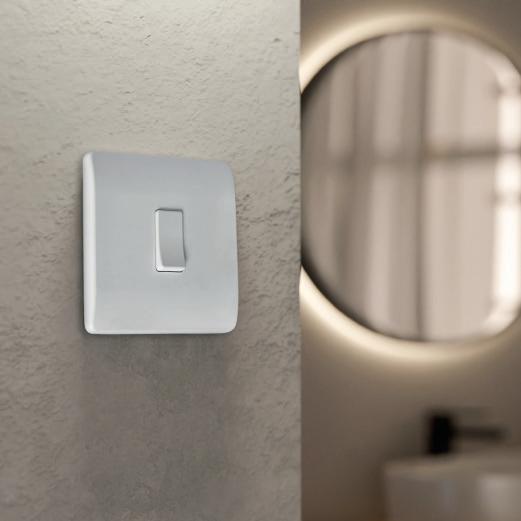
The traditional white plastic switch may still dominate the market in volume – Click Scolmore’s Mode range of white moulded wiring accessories remains the company’s best-selling range - but demand for stylish alternatives has grown rapidly. Interior designers, architects and homeowners now view wiring accessories as an integral part of the overall interior design scheme. Matte finishes, metallic tones, and screwless faceplates are trending as homeowners look for premium finishes that complement modern interiors.
Balancing aesthetics with performance
The shift is being driven not only by designers but also by a new generation of consumers who are highly attuned to detail. In an era when social media showcases every corner of a home, people are more aware of the small touches that elevate interior spaces. Wiring accessories, once ignored, now play a role in creating a premium, polished environment. While appearance is becoming increasingly important, performance remains paramount. Installers must continue to ensure compliance with safety standards, ease of installation, and reliability. The most successful products are those that deliver both - combining modern aesthetics with robust engineering.
A touch of bronze
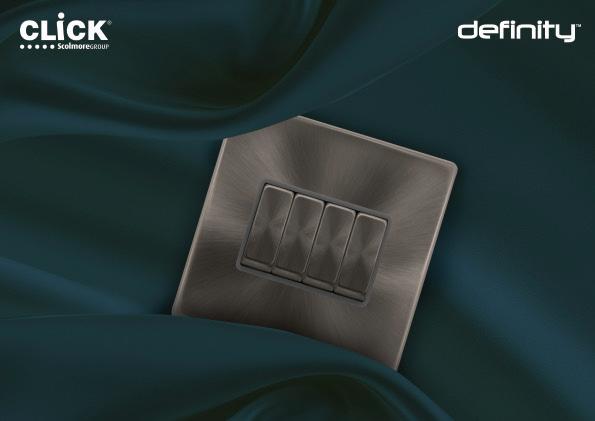
Click Scolmore continually innovates its wiring accessories ranges to reflect current trends. Last year the company introduced a new sleek Matt Bronze finish to its Definity Complete range of screwless, push-fit face plates. This finish offers a contemporary, stylish option that seamlessly blends with modern interiors while maintaining the high-quality performance the Click Scolmore brand is known for. Following the success of the Matt Bronze Definity Complete range, the finish has been extended to its popular Deco Plus and Deco ranges. Deco Plus is Click’s premium curved profile decorative wiring accessory range, while Deco offers a high-quality square profile alternative. The new Matt Bronze finish, available with black inserts, enhances the Deco Plus and Deco’s timeless appeal, ideal for both residential and commercial settings. The introduction of Matt Bronze is a reflection of the growing demand for elegant, design-led electrical accessories. Available across a wide selection of switches, sockets, and accessories, the Deco Plus and Deco ranges in Matt Bronze offer a versatile solution for designers, contractors, and homeowners looking to elevate their interiors.
Power in black
Matt Black wiring accessories continue to be a popular choice, with designers and homeowners alike opting for this bold, understated finish, proving that functionality and style can coexist seamlessly. Traditionally, wiring accessories such as switches, sockets, and plates were limited to standard colours such as white, beige, or metallic finishes. Adding a contemporary, sophisticated edge to any space, the matt black finish not only complements modern interior trends but also offers practical benefits, including reduced visibility of fingerprints and smudges.
Introduced to the Deco and Deco Plus ranges in 2023, the matt black finish has recently been extended to the New Media modules range. Designed to complement modern interiors, the matt texture offers a sleek, low-sheen appearance that blends effortlessly into contemporary environments –perfect for applications where elegance and performance are essential. The matt black finish is now available across a comprehensive selection of New Media modules.
Powering style and technology
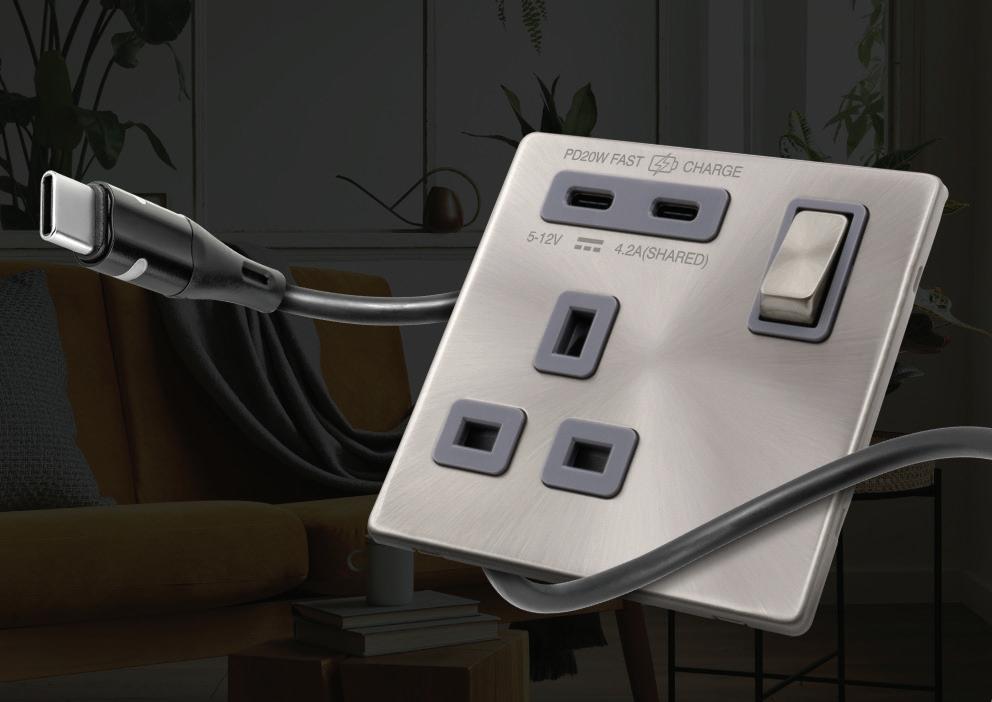
As wiring accessories have evolved from purely functional items to design-led features, the next frontier is integrating smart, future-ready technology without compromising aesthetics. Click Scolmore’s latest innovation – the 13A 1 and 2
Gang Safety Shutter Socket Outlets featuring twin USB Type-C Power Delivery (PD) ports – exemplifies this approach. These sockets combine cutting-edge fast-charging capability with the same high-quality finishes and design-led philosophy seen across Click Scolmore’s Deco, Deco Plus, and Definity ranges. By incorporating USB-C PD, the new outlets address the growing demand for connected, technology-driven spaces. Users can charge smartphones, tablets, and laptops quickly and safely, while designers and homeowners benefit from a sleek, integrated look that complements any interior. Investing in these modern sockets ensures a future-proof solution for the devices of today – and tomorrow – without sacrificing elegance, functionality, or safety.
Benefits of USB-C Power Delivery
USB Power Delivery (PD) is an advanced, fast charging technology supporting a wide range of devices. It can charge smartphones and tablets up to 70% faster than a standard 5W USB charger. With universal adoption of USB-C PD, users can connect multiple devices without compatibility concerns.
• Easy retro fit – replaces standard or USB sockets without the need for a deeper back box.
The new Twin Type C USB Sockets are available across Click Scolmore’s extensive portfolio, including Deco, Deco Plus, Define, Definity, Mode, Part M, Polar, Metal Clad, and Metal Clad Pro, providing a consistent solution for every installation style and environment.
Design meets performance
The evolution of wiring accessories demonstrates that function and style are no longer mutually exclusive. From sophisticated matt black and bronze finishes to the latest USB-C fast charging technology, modern wiring accessories combine performance, safety, and design in a single solution.
For homeowners and designers, these products elevate interiors, create a polished, connected environment, and future-proof spaces for the devices of today – and tomorrow. For contractors and wholesalers, they offer tangible benefits as well: simplified installation, universal compatibility, and a product range that meets the growing demand for stylish, high-performance solutions.
Wired for change
From high-end luxury to a household standard, smart home technology is redefining the UK domestic market. As automated systems move from “science fiction” to “professional necessity,” NAPIT explores the evolution of the connected home and why electricians are the vital link in delivering efficient, low-disruption installations
Asmart home can be defined as “a home equipped with lighting, heating and other electrical appliances that can be controlled remotely”, however, for the electrician and the customer, this definition is too simplistic. A smart home is one where routine manual tasks are automated through technology, enhancing convenience, efficiency and quality of life. Just like the autopilot function in a plane assists the pilot, smart home technologies are designed to assist occupants with minimal manual involvement.
Smart home technology has rapidly moved from the realm of science fiction into the mainstream of modern living. Once considered a luxury for the techsavvy or affluent homeowner, smart home technology is now an accessible, practical and in-demand solution in homes across the UK.
In this article, we’ll look at the evolution of smart home technology, how different systems and products work and why electricians are ideally positioned to integrate these technologies into both new and existing domestic installations.
For electricians, understanding and installing smart home systems is not just a good business opportunity, it’s fast becoming a professional necessity due to increasing customer demand.
Early smart home technology
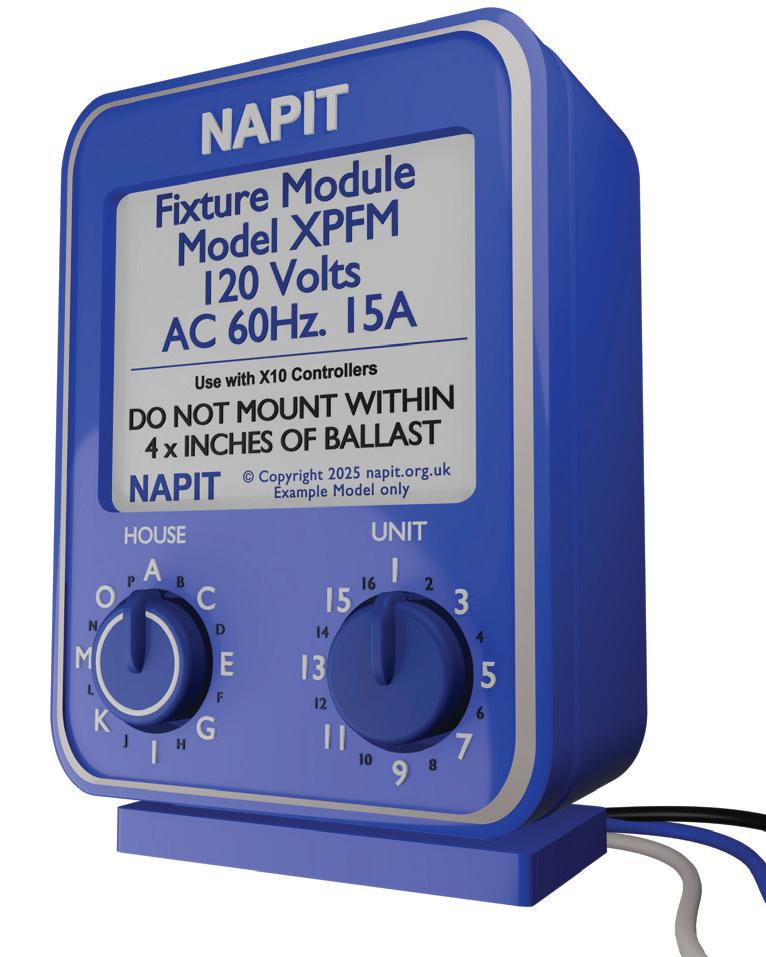
Smart home technology is nothing new. A Scottish company called Pico Electronics developed a domestic smart home system called X10, which was initially installed across North America and later in UK homes in the early 1980s.
X10 enabled remote control of appliances and lighting over existing wiring. It worked via small modules plugged into sockets or wired into lights, with a central control unit that could send signals to turn devices on or off.
What followed during the 1990s and early 2000s were various wired and wireless systems that used infrared, or radio frequencies controlled by wall panels. This advanced rapidly with the development of Wi-Fi enabled devices, such as the Hive, launched by British Gas in 2013.
It’s worth noting that smart technologies have been used in commercial and industrial settings for many decades, to control lighting, security, machinery, robotics, heating, ventilation and air conditioning (HVAC). Many of these applications are now easily integrated into domestic settings.
I remember, during my time as an electrician, fitting various commercial, industrial and smart home systems, such as a hard-wired Lutron system that controlled lighting in high-end domestic properties in London. These systems have now moved on leaps and bounds since my time on the tools.
Modern smart home technology
Early smart home systems like X10 were quite expensive and exclusive, largely due to the high costs of the equipment, such as controllers and other devices.
Today, smart home technology has advanced exponentially. It now includes AI-powered voice assistants, IoT (Internet of Things) integrations and mobile applications. Nearly everyone already has a powerful controller, a smartphone.
These allow occupants to control smart home systems through software applications.
Countless manufacturers now provide high-tech products to make homes smarter and more integrated.
This evolution allows smart home technology to reach a much wider market and to be integrated in a lot more areas of the home.
Smart home technologies can include:
• Smart lighting and switches
• Thermostats and radiator valves
• Security systems (locks, cameras, alarms)
• Connected appliances
• Energy management systems
• Voice-activated assistants (Alexa, Google Home, Siri)
• Renewable technology systems (solar PV, EV charging and battery storage)
A major advantage of smart solutions is that they can often offer a better alternative to traditional methods, with benefits such as:
• Greater cost-efficiency for the homeowner
• Improved time-efficiency for the installer
• Reduced disruption for the homeowner
• A neat and streamlined solution
Example 1: Lighting Control
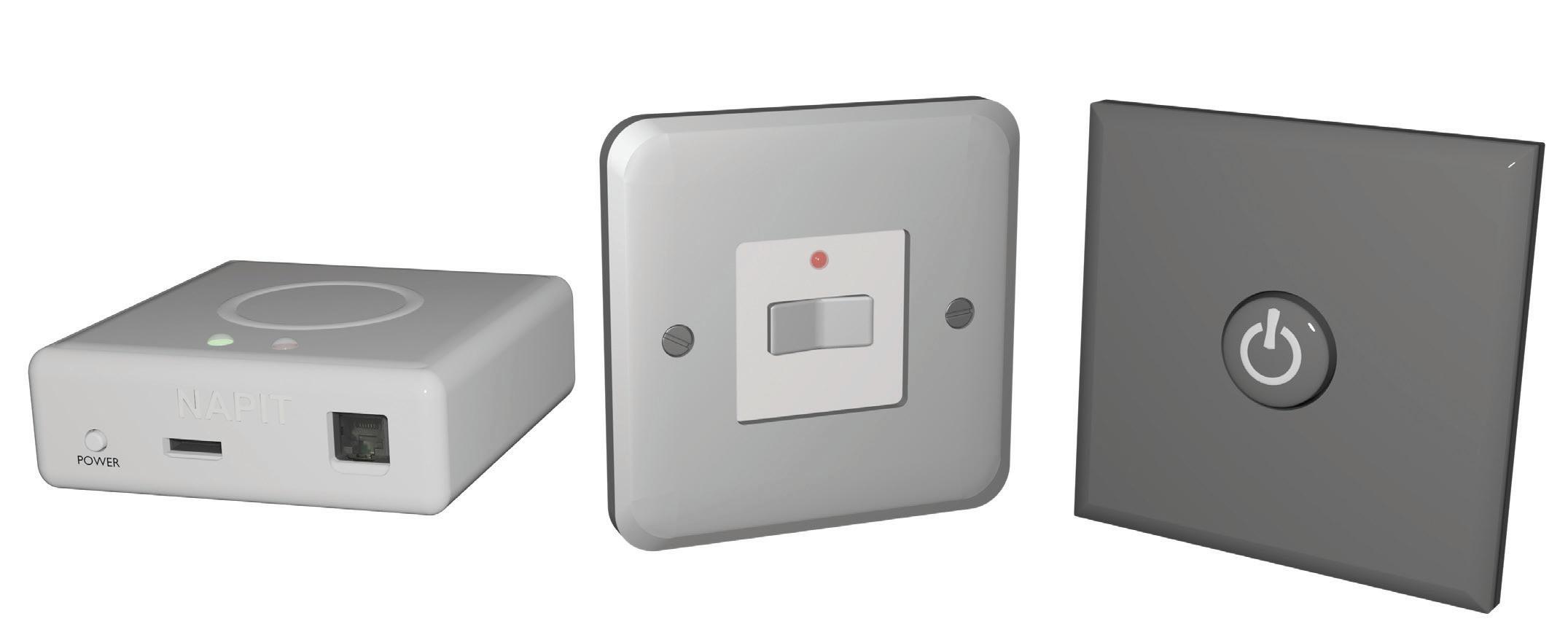
One example of using a smart home solution could be when adding an additional switch for lighting. The existing switch can be replaced with a smart retrofit switch and paired with a wireless switch.
This setup allows the lighting to be controlled from both the original and new switch locations, via a smart hub, smartphone or even via voice assistant.
Traditionally, adding a second switch would involve installing a cable from the light fitting
Fig.1
Fig.2
through floor joists, chasing out the wall, installing a new back box and switch.
While straightforward for an electrician, it can be disruptive for the homeowner, involving lifted carpets or floorboards, re-plastering and decorating.
Example 2: Heating Control
Another example is creating heating zones on an existing combi boiler system with several radiators. Traditionally, this involves draining the system, modifying pipework and wiring electrical control elements.
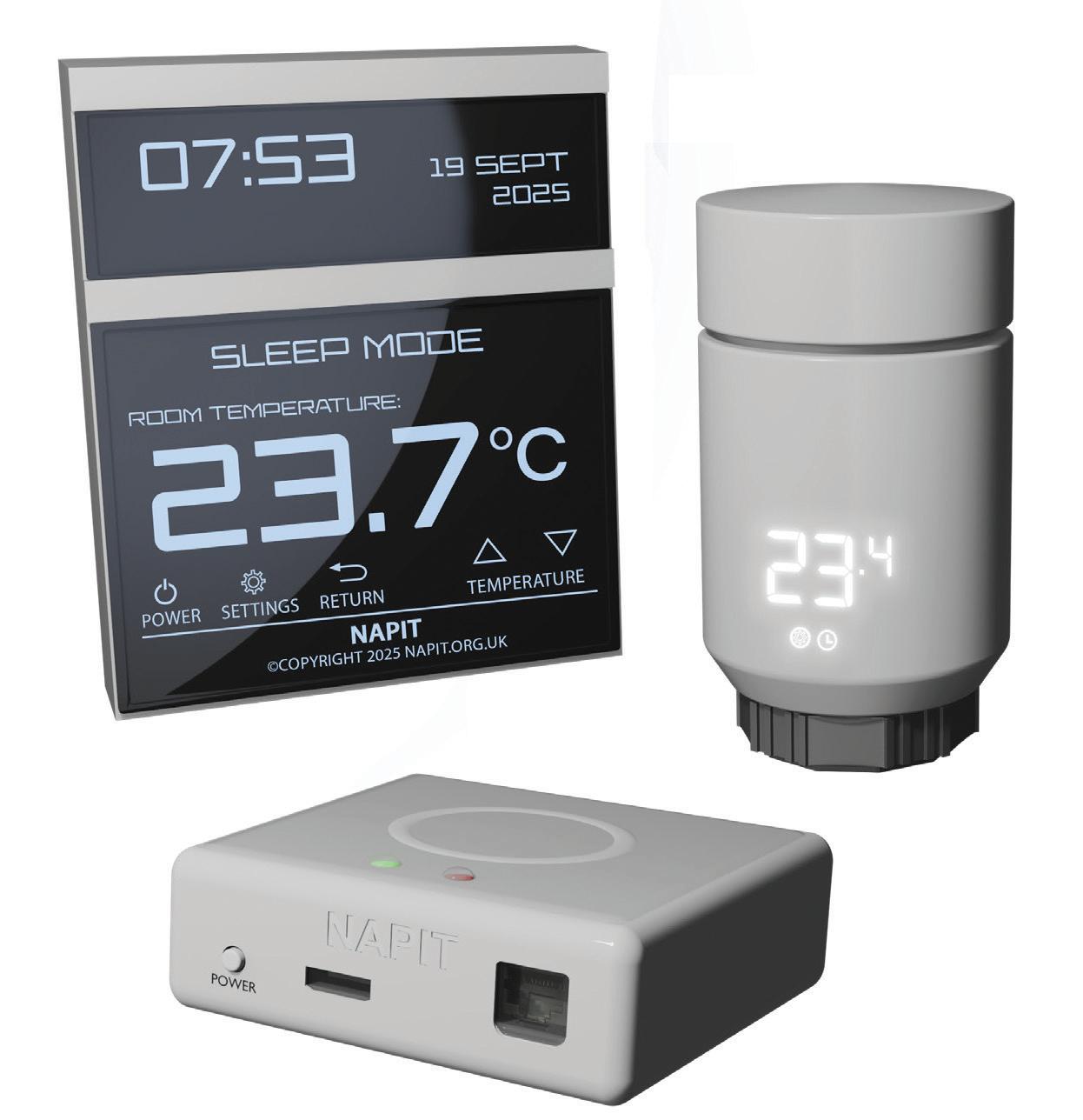
A smart technology solution could involve replacing the boiler’s existing programmer and thermostat with a smart relay unit and a smart thermostat.
Existing Thermostatic Radiator Valves (TRVs) can be reused, negating the need to drain the system. Only the TRV heads need be swapped with smart TRVs.
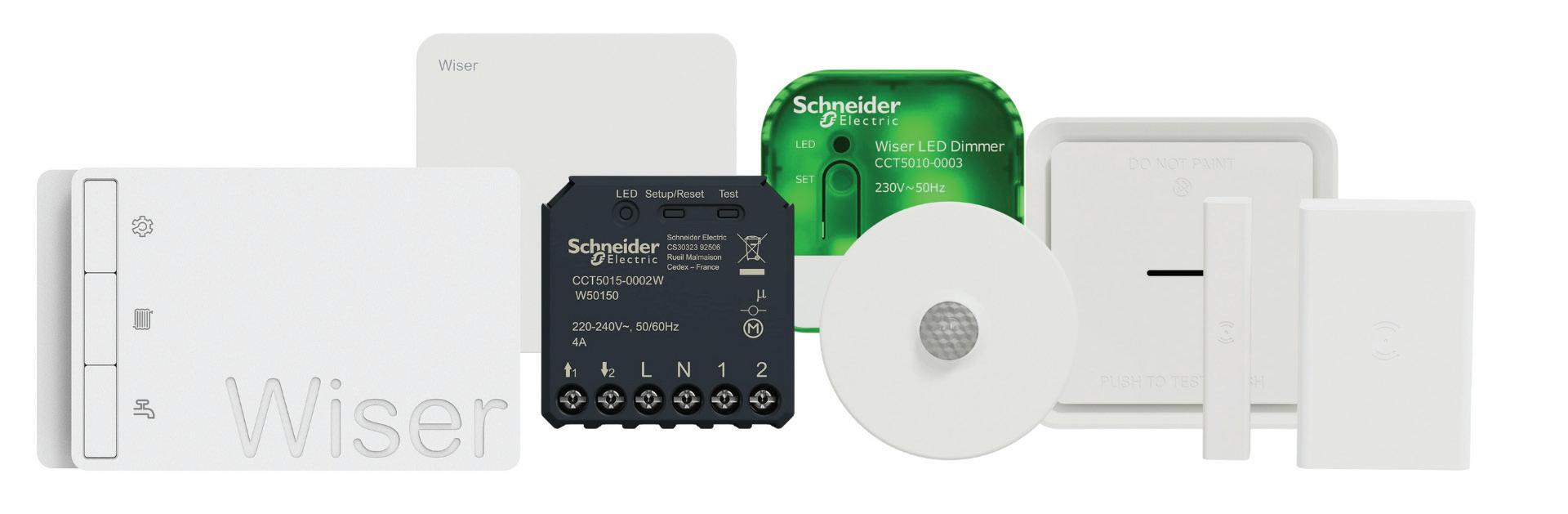
The internet gateway is then configured with the thermostat and TRVs via a software application. This setup allows zoning and control of upstairs and downstairs radiators. Typical hardware requirements are shown in Fig 1.
As we can see, the potential for system modification and operation through smart home devices is virtually limitless. By utilising the smart solutions, outlined in the examples, alterations and additions that typically involve damage and disruption can be avoided.
Who should be installing smart home technologies?
Integrating smart home technologies into homes requires varying levels of competence, from a plug and play system, suitable for a DIY enthusiast, to a more complex system needing trained installers or system integrator (see Table 1).
There is real opportunity for electricians and other technical trades to enter the smart home technology world. Research shows:
• 71% of homeowners would willingly sacrifice other home improvements in favour of smart home automation
• 66% prefer these systems to be professionally installed, despite the growth in DIY options
Mid-range and premium systems require deeper understanding of system design, compatibility and integration. Installation will involve more complex device configuration, software set up and commissioning. Testing also requires a good level of knowledge as smart devices will not tolerate certain high voltages, such as through insulation resistance testing.
A good starting point for electricians is to undertake product training or joining a manufacturer’s partner program. This helps develop an understanding of the various products, systems, platforms and protocols that are out there. Start with simple integrations, like lighting or heating, and build from there.
Conclusion
The smart home revolution is no longer on the horizon, it’s here, and it is moving fast. For electricians, this marks a shift in how we design, install and test domestic electrical systems.
Understanding and installing smart home technologies is not just a good business opportunity, it’s fast becoming a professional necessity.
By embracing this shift, you’ll not only enhance the services you offer, but also position yourself at the forefront of a growing market. Stay informed, get trained and approach each project with both technical insight and customer awareness, and you’ll secure your place in the smart homes of the future.
Fig.3
Fig.4
A new era for tax reporting: what electricians need to know about Making Tax Digital
Iby Benjamin Dyer, Founder and CEO of Powered Now
f you’re an electrician or run a small electrical business, here’s some news: from April 6th 2026, HMRC may require you to go digital with your tax records. Going forward, there’s no more hiding behind receipts in the van glove box or scribbling numbers on scraps of paper. Making Tax Digital for Income Tax (MTD IT) is coming, and it’s time to get ready.
Whilst it may sound daunting, the reality is much simpler - and it’s being introduced to help tradespeople and sole traders. With the correct tools, moving to digital record keeping can actually save time, minimise mistakes, and let you focus on the jobs at hand, rather than on paperwork.
What’s changing, and what isn’t?
MTD IT was first mentioned in 2015 as part of the government’s drive to bring the tax system into the digital age. From April 2026, affected tradespeople will need to keep records digitally and submit quarterly updates on income and expenses.
As of April 2026, if you are within this year’s threshold, you will need to:
• Keep digital records of your income and expenses, using an HMRC-recognised software
• Send updates to HMRC every three months
• Still make your annual tax return payment
It’s important to note that the single, annual tax return payment remains unchanged. This will still need to be paid as usual, as MTD IT is all about streamlining the tax return process from a year-round perspective to avoid the all too familiar scramble at year-end to submit receipts and records.
By 2028, over 2.9 million sole traders are expected to be impacted across the UK’s trades. Therefore, there’s never been a better time to get ahead of MTD IT, even if April’s changes don’t apply to you.
Who is impacted?
MTD IT will apply to self-employed individuals and sole traders who file self-assessment returns – including those already on MTD for VAT. VAT-registered tradespeople are already submitting digital returns through Making Tax Digital for VAT, so April’s changes are an extension of this existing process.
The rollout is set to follow a tiered schedule, based on income:
• From 6th April 2026: Businesses earning over £50,000 per year
• From 6th April 2027: Businesses earning over £30,000 per year
• From 6th April 2028: Businesses earning over £20,000 per year
Preparing for the shift from paper to platform
For those reliant on paper job sheets, receipts in envelopes or spreadsheets stored on laptops, MTD IT will require shifting habits.
• Digital record keeping: Income and expenses must be logged through an HMRC-recognised software. Paper records and standalone spreadsheets will no longer be enough, although spreadsheets may still be used if linked up to a recognised, MTDcompatible software.
• Quarterly updates: Summaries of expenditure and income must be submitted every three months. Annual tax returns are still required, but maintaining up-to-date records throughout the entire year will now be required.
• Software selection: The digital tools adopted by electricians don’t need to be complicated or expensive. Software like Powered Now has been designed specifically to support trade businesses and how they operate, with invoicing, job scheduling and MTD IT compliance features all in one platform. Even if your business isn’t affected immediately, starting to digitise records now will make the eventual transition much smoother. A “little and often”
approach works best by logging jobs, expenses and invoices ahead of time and as they occur, to avoid data being lost or overlooked.
Separating personal and business finance is another key step. Dedicated accounts, cards and statements which feed into the same system are ways to simplify record-keeping and, again, reduce the risk of errors further down the line.
Streamlining your business with the right tools
One of the biggest benefits of MTD IT for electricians is that it will encourage the trade to adopt systems which genuinely save time. Today’s trade-focused software, such as Powered Now, allows users to:
• Create quotes, invoices and job records from one interface
• Manage jobs and workflows within one app
• Keep track of compliance and certification digitally Essentially, this means that less time has to be spent behind a desk to ensure records are accurate and, instead, time can either be spent on-site or off the tools for well-deserved downtime.
Looking ahead
Making Tax Digital is a step towards a more efficient, transparent tax system. While the move to digital tax keeping may feel like an extra task or burden at first, it has the potential to reduce errors, provide real-time insights into business performance and make the annual tax returns far less stressful.
For electricians willing to embrace the change, MTD IT is not solely a compliance requirement - it’s an opportunity to modernise business management. Powered Now offers an all-in-one solution tailored for trade businesses, enabling electricians to quote, invoice, schedule jobs, and manage teams all from one platform.
Begin your free, 14-day trial at: https://www.powerednow.com
Repeatable results, time after time.
● Low current 2 wire loop testing
● Low current 2 wire loop testing
● High current 25A 0.001 ohm range
● High current 25A 0.001 ohm range
● Specialist EV RCD & loop testing features
● Specialist EV RCD & loop testing features
● Automatic electronic noise handling feature Scan for video
● Automatic electronic noise handling feature Scan for video
Janitza’s GridVis ® software addresses data centre energy management complexity
GridVis ® Power Grid Monitoring
Software from Janitza is designed to help datacentres transform fragmented energy data into unified, actionable intelligence. It enables users to optimise energy management, ensure compliance with ISO 50001, and proactively monitor power quality through a scalable, helping organisations reduce costs, improve efficiency, and simplify regulatory reporting.
The Integration Problem
Datacentre operators typically face measurement data scattered across multiple systems: building management platforms tracking HVAC loads, DCIM tools monitoring IT equipment, and standalone power quality analysers protecting critical circuits. Each system operates in isolation, using proprietary protocols and data formats. This fragmentation prevents holistic analysis, obscures efficiency opportunities, and complicates compliance reporting for standards including ISO 50001.
Unified Data Architecture
GridVis consolidates measurement data from Janitza devices and third-party equipment through native OPC UA client functionality and Modbus TCP/ RTU integration, for example to measure gas and water consumption. The software’s four-tier edition structure – Essentials, Standard, Expert and Cloud –allows organisations to deploy capabilities matched to operational requirements rather than purchasing unused functionality, and ensures compliance and visibility across diverse datacentre estates.
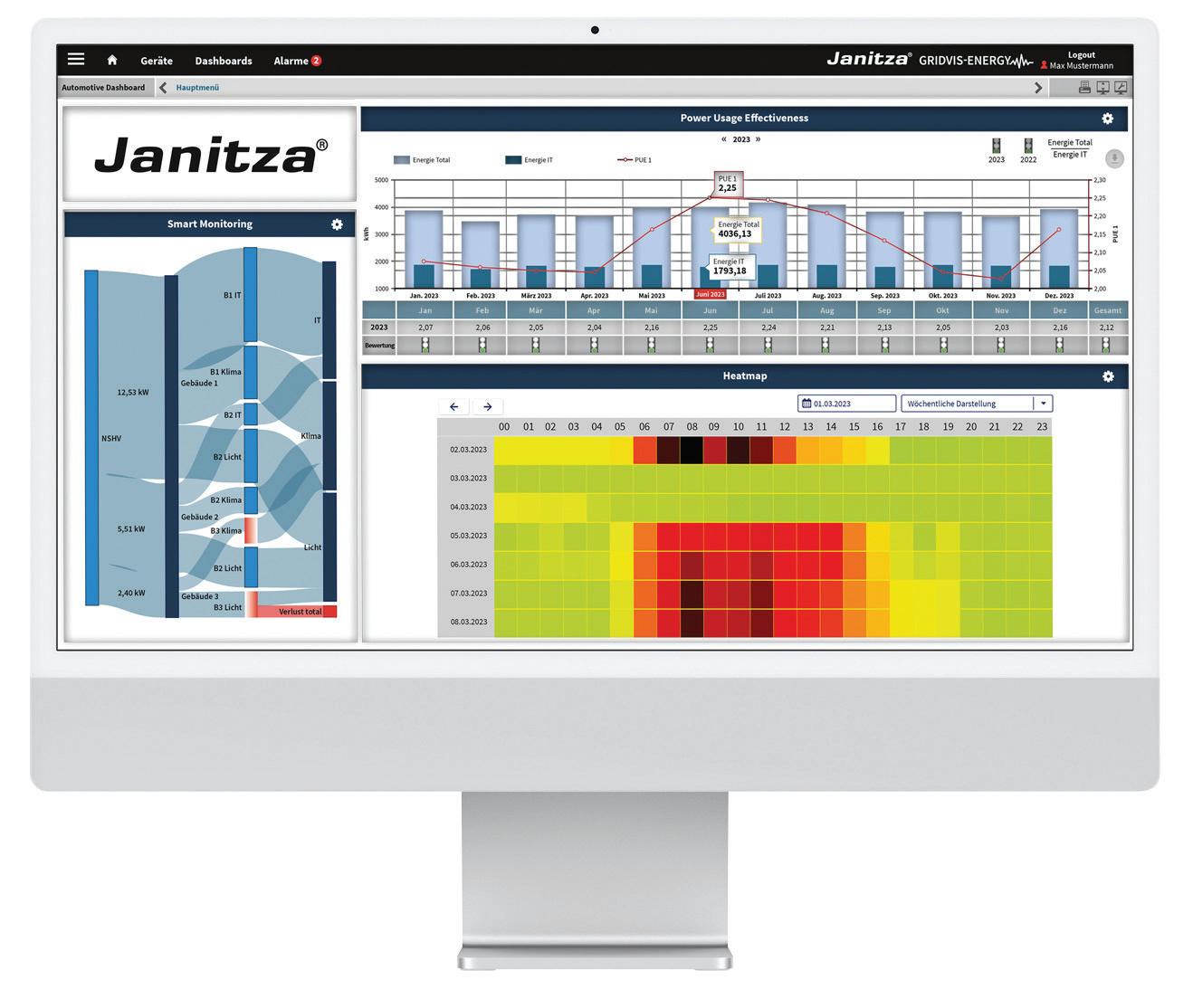
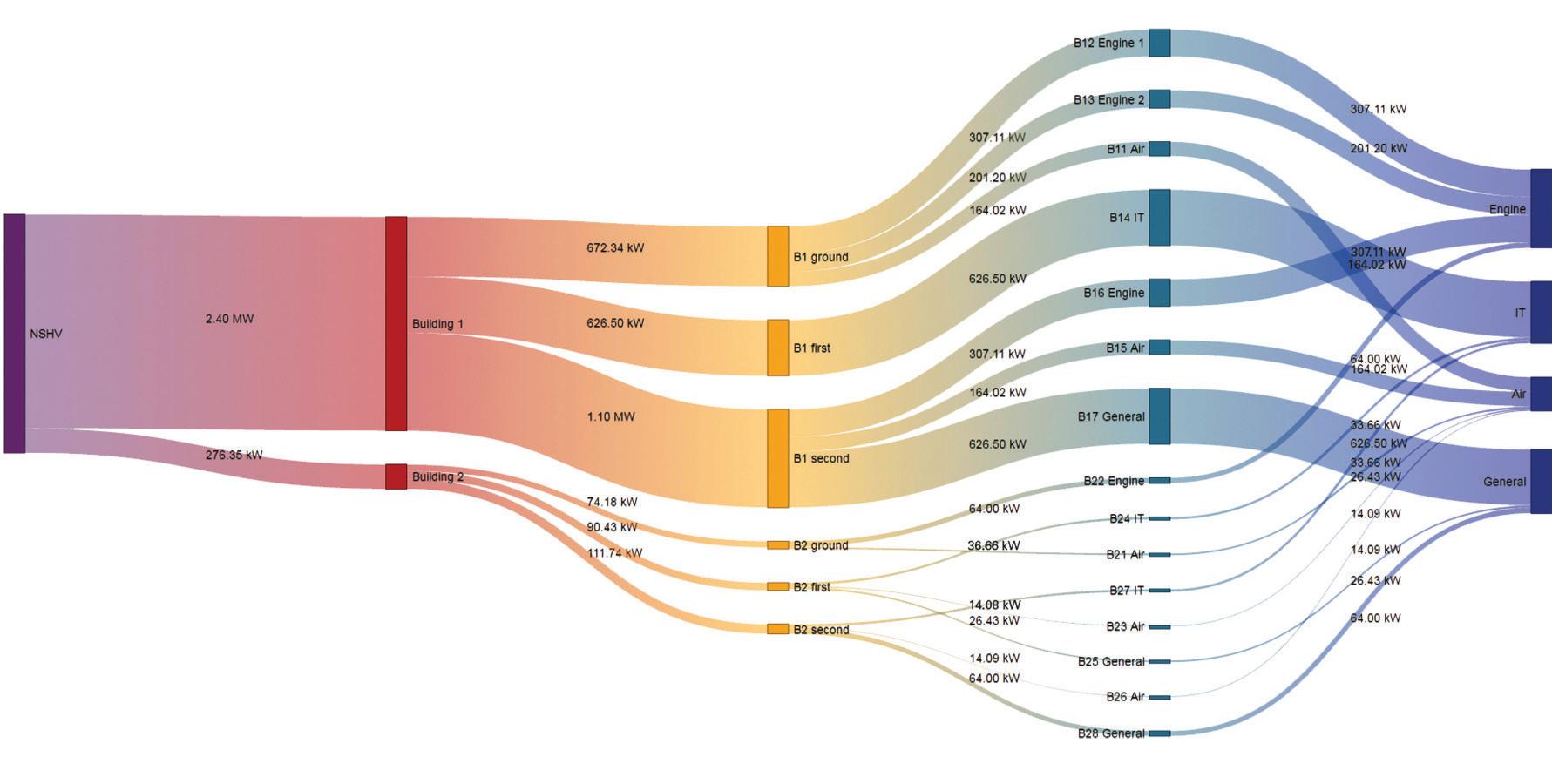
For example, the Expert edition supports key performance indicator (KPI) tracking, Sankey flow diagrams for visualising energy distribution, and customisable report generation that eliminates manual data compilation. Alarm management with escalation levels enables proactive response to power quality events before they impact operations, and software-based recording captures data from devices lacking onboard storage, extending monitoring coverage without hardware upgrades.
For multi-site operations, the Cloud edition provides centralised monitoring accessible via standard browsers without VPN requirements. Pre-configured dashboards display energy costs, consumption patterns and CO 2 emissions across electricity, gas and water utilities.
Standards Compliance & Flexibility
GridVis supports compliance with key UK and Ireland standards including ISO 50001, offering automated data collection, baseline tracking, and audit-ready reports for streamlined energy management and regulatory reporting. With flexible REST API and CSV support, it enables easy integration with enterprise and legacy systems commonly used in the British and Irish markets.
Its scalable licensing means organisations can manage single sites or expand to multi-site operations in line with Energy Savings Opportunity Scheme (ESOS) obligations in the UK or Sustainable Energy Authority of Ireland (SEAI) audits in Ireland.
Summary
Janitza’s GridVis ® power grid monitoring software integrates energy management, power quality analysis and residual current monitoring in a scalable platform supporting datacentres from single-facility operations to multi-site enterprises.
• Edition structure: Four software editions scaled from basic configuration to comprehensive enterprise energy management
• ISO 50001 compliance: ESOS- and SEAI-recognised energy management software with automated data collection and audit-ready documentation
• Universal connectivity: Native OPC UA client and Modbus TCP/RTU support for Janitza devices and third-party equipment integration
• Cloud deployment: Browser-accessible monitoring across distributed sites without VPN or local software installation
• Customisable dashboards: Drag-and-drop interface for personalised energy and power quality visualisation
• KPI tracking: Performance indicator monitoring with Sankey diagrams for energy flow visualisation.
• Alarm management: Proactive power quality event notification with escalation levels and email alerts
• REST API access: Developer interface for enterprise system integration and custom applications
GridVis. Advanced power grid monitoring software from Janitza
How one climate tech app is helping electrical contractors cut carbon emissions by 73%
For electrical contractors juggling multiple call-outs across a wide area, the daily reality of sitting in traffic isn’t just frustrating — it’s expensive. Fuel costs eat into margins, wasted hours reduce productivity, and the environmental impact of unnecessary mileage is increasingly difficult to ignore.
InAJam, a UK-developed route optimisation app designed specifically for tradespeople, is tackling this problem head-on. The platform uses AI-powered GPS technology to calculate the most efficient routes between jobs, helping users reduce fuel consumption, save time, and cut their carbon footprint.
The results speak for themselves. Across more than 1,000 users, InAJam has tracked verified carbon savings of over 7 tonnes of CO2. Independent testing has demonstrated an average 73% reduction in emissions compared to standard routing methods.
Built for the trades
Unlike generic sat-nav apps, InAJam was developed with tradespeople in mind. The software factors in the realities of trade work — variable job durations, last-minute call-outs, and the need to carry tools and materials — rather than simply plotting the shortest distance between two points.
“Most routing apps are designed for delivery drivers or sales reps doing quick stops,” explains Paul White, CEO and Founder of InAJam. “Electricians and other
tradespeople have different needs. You might be on site for three hours, then need to get across town for an emergency call-out. Our system learns your patterns and adapts accordingly.”
The platform’s V2 release introduced enhanced analytics, giving contractors detailed breakdowns of mileage, fuel savings, and carbon reductions — data that’s increasingly valuable when tendering for commercial contracts or working with sustainability-conscious clients.
Government backing and royal recognition
InAJam’s approach has attracted significant attention from policymakers focused on decarbonising the UK’s transport sector. The company has received endorsements from the UK Department for Transport and Buckingham Palace, recognising its contribution to reducing emissions from commercial vehicle use.
The platform aligns with the UK Government’s Transport Decarbonisation Plan, which identifies van traffic — predominantly made up of tradespeople — as a key area for emissions reduction. With over 4 million vans on UK roads, even modest efficiency improvements can deliver substantial environmental benefits at scale.
Practical benefits beyond carbon
For electrical contractors specifically, the ability to respond quickly to emergency call-outs can be a competitive advantage. InAJam’s real-time optimisation
helps users react to last-minute jobs without throwing their entire day into chaos.
The app also supports job logging and customer management features, allowing contractors to maintain digital records of completed work — useful for compliance, warranty queries, and building long-term client relationships.
Connecting contractors with customers
Beyond route optimisation, InAJam operates as a twosided marketplace connecting verified tradespeople with customers. The platform has found particular traction with landlords and letting agents who need reliable contractors for property maintenance and emergency repairs.
Verification is central to the model. Contractors on the platform undergo checks before being listed, giving customers confidence they’re hiring legitimate, qualified professionals. For electricians, this means access to a steady stream of referrals without the overheads of traditional advertising.
www.inajam.co.uk
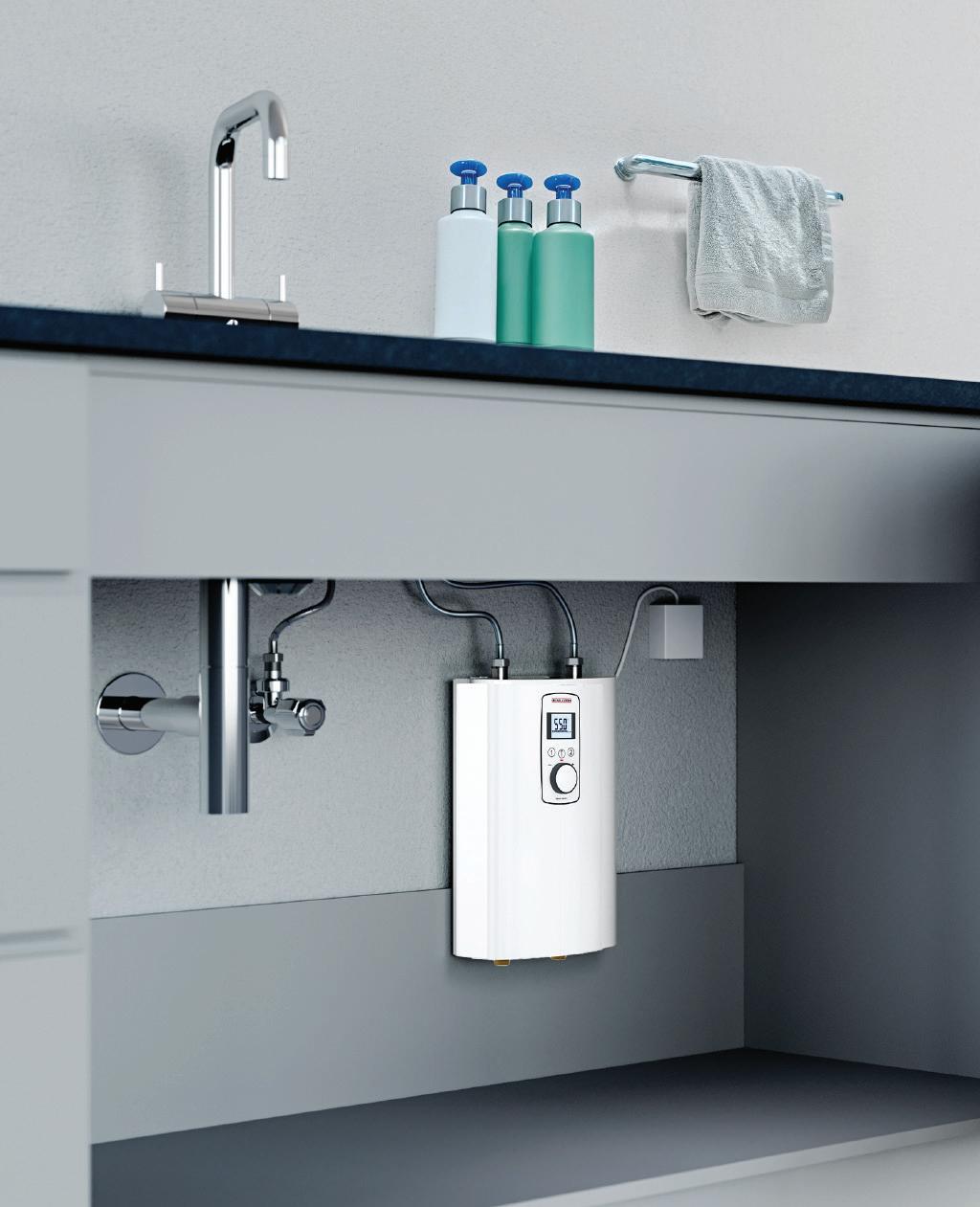
Upgrade bathrooms with Invisible luxury: The Stiebel Eltron DCE-X Premium
In contemporary bathroom design, simplicity and performance go hand in hand. Say goodbye to an old fashioned electric showers cluttering up your shower cubicle and hello to the sleek, powerful solution that redefines modern hot water delivery — the Stiebel Eltron DCE-X Premium compact instantaneous water heater.
At the heart of this impressive unit lies advanced bare wire heating technology, a system that directly heats water as it flows through the unit. This design not only boosts responsiveness but also enhances energy efficiency and virtually eliminates limescale for long product life with no loss of performance over time. The result is virtually instant hot water with reduced energy waste, longer service life and minimal maintenance.
What also sets the DCE-X Premium apart is its installation versatility. Unlike conventional electric showers or bulky water heaters that are fixed in full view, this compact powerhouse can be discreetly installed above or below tapping points — hidden behind vanity units, tucked under sinks or even in a cupboard on a landing — creating a wonderfully uncluttered bathroom finish. With its exceptionally slimline profile and highly compact footprint you get robust performance without compromising your interior aesthetics.
Despite its compact size, the DCE-X Premium delivers instant hot water on demand to multiple tapping points with the 6/8 model offering up to 9.6kW of power and the 10/12 an impressive 14.3kW on single phase. The fully
The overlooked element when planning ventilation
When discussing ventilation, attention is often focused on occupied spaces and visible systems. However, what happens beneath a building can be just as critical to long-term performance. Subfloor voids, particularly those beneath suspended timber floors or within enclosed groundfloor constructions, are frequently overlooked at design and refurbishment stages.
Without adequate airflow, subfloor spaces can quickly become prone to moisture-related problems. Moisture from the ground can rise into enclosed voids and after prolonged periods of high humidity, this can all contribute to mould growth and timber rot. Over time, this can compromise the structure of a dwelling and negatively affect air quality by allowing harmful ground gases such as radon to accumulate.
Why Passive Solutions Are Often
Insufficient
Historically, subfloor ventilation has relied on natural airflow through air bricks or vents. While effective in some scenarios, this approach is increasingly challenged by modern construction methods. Higher levels of insulation, improved airtightness, and
changes to ground levels can significantly restrict natural airflow beneath buildings.
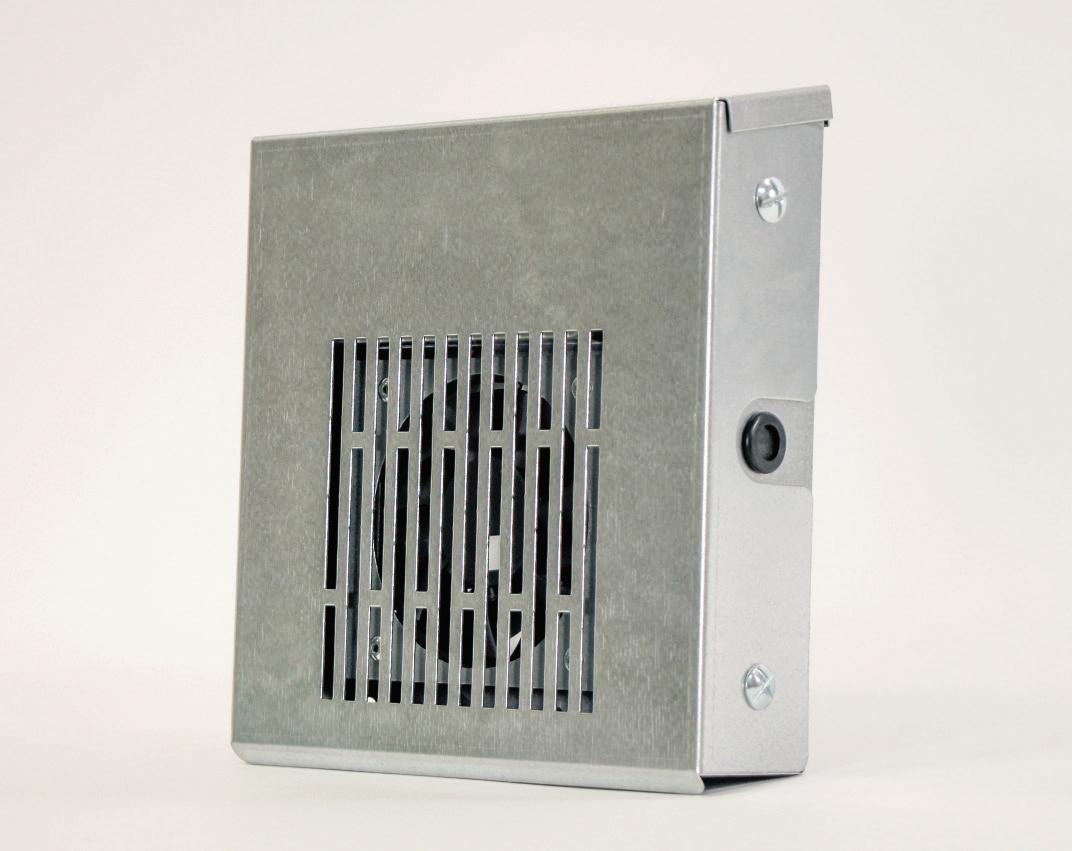
As a result, many subfloor voids do not receive the consistent ventilation required to control humidity and prevent moisture build-up. In these situations, mechanical subfloor ventilation offers a more reliable solution, providing controlled airflow regardless of external conditions.
Mechanical Subfloor Ventilation in Practice
Mechanical subfloor systems are designed to actively manage airflow within the void, either by extracting stale, moisture-laden air or supplying new air to promote dilution and movement. The choice between supply and extract can be influenced by site conditions, building layout, and the specific moisture or gas risks present.
Elta’s Mori WMF subfloor fan has been developed to support these varied applications and is now available in both extract and supply configurations, allowing engineers to select the most appropriate strategy for each project. The unit delivers up to 17 l/s airflow and is externally mounted to simplify installation and maintenance, particularly in retrofit scenarios.
electronic 4i control system continuously monitors all key parameters in real time, ensuring the water you rely on is delivered at the precise temperature you’ve selected.
Operating this unit is a pleasure, thanks to a large, illuminated multifunction display that clearly presents temperature, consumption data and operating status. Two memory buttons allow you to select preferred temperature settings before you step in the showerso that you never again need to hurriedly fumble with the mixer to get comfortable.
The integrated ECO mode further enhances efficiency, helping lower running costs without compromise.
Three built-in wellness programmes offer spa treatment at home, with alternating bursts of hot and cold water to invigorate, soothe muscles after sport or stimulate the body to warm itself.
Luxury in every detail extends to the highly accurate temperature control — adjustable in fine 0.5°C increments between 20°C and 60°C — offering unparalleled comfort and safety. You can even limit the maximum temperature for added child protection or anti-scalding peace of mind.
The Stiebel Eltron DCE-X Premium blends performance with design intelligence. It’s not just a hot water heater — it’s a refined everyday luxury that elevates your bathroom environment while delivering reliability, efficiency and intuitive comfort.
www.stiebel-eltron.co.uk/dce-x-premium
The fan incorporates an integrated controller offering continuous trickle ventilation with an optional boost function, alongside a brushless EC motor with an IP55 rating, supporting both energy efficiency and long-term reliability. The current Mori WMF is fully interchangeable with previous WMF models, enabling straightforward upgrades.
Looking Below the Surface
Subfloor ventilation is critical but often an underspecified element of building services design. As expectations around building health, durability, and occupant wellbeing continue to rise, greater consideration of below-ground airflow strategies will be essential. Mechanical subfloor ventilation provides a practical, effective means of addressing these challenges.
www.eltatrade.co.uk
The Electrician’s role in the rise of the Smart Home
Smart home technology has come a long way in a relatively short space of time. Here, Merlin Millner, Product Owner for Water-based Systems at Drayton, explores how electricians can capitalise on growing consumer interest and how this can be an opportunity to up-sell.
Consumer appetite for smart home technology shows no sign of slowing, and for electricians this presents a valuable opportunity to expand their service offering and increase project value. As connected devices become more mainstream, they are increasingly looking for integrated systems that improve comfort, efficiency and convenience. For electricians working on HVAC installations in particular, this shift creates a natural opening to introduce additional smart solutions that complement core electrical work.
Rising demand for connected homes
Interest in smart home technology is now firmly established among UK households. Research from Drayton found that 87% homeowners are interested in adding smart technology to their homes, with a further 9% of installers saying this applies to almost all customers. This widespread demand reflects a broader change in consumer expectations, and that smart technology is a practical way to manage energy use and improve day-to-day living.
Energy efficiency remains one of the strongest drivers behind adoption. Many homeowners are actively seeking technologies that help them monitor and reduce consumption, particularly as energy costs continue to fluctuate. Alongside efficiency, convenience and comfort also rank highly, with connected systems offering remote access, automation and personalised settings that traditional installations cannot match.
When it comes to specific products, interest extends well beyond heating controls. Research from Drayton found that smart lighting (56%), smart alarms (36%) and smart EV charging (31%) all ranked highly for consumer interest, along with other sensors such as leak sensors (13%), window/door sensors (12%) and humidity sensors (11%). This highlights an important point for electricians; most customers are not just looking for one smart
Why HVAC work creates the perfect opportunity
Heating and ventilation projects are often the ideal entry point for conversations about smart technology. Heating and hot water consume the largest amount of energy in the home, so consumers are highly receptive to efficiency improvements when work is being carried out. This makes it easier for electricians to introduce complementary solutions – such as smart thermostats, zoning controls or connected sensors – that enhance system performance.
For example, installing a smart thermostat like Wiser alongside a new heating system can deliver immediate benefits through features such as scheduling, learning algorithms and remote access. From there, additional devices can be recommended to build out functionality. Window or door sensors can turn off the heating when widows are open for ventilation, while humidity sensors can trigger adjustments that maintain comfortable indoor conditions. By explaining how these technologies work together, electricians can demonstrate clear, tangible value rather than appearing to upsell unnecessary extras.
Many modern smart platforms are designed to operate through a single app or interface, simplifying commissioning and ongoing use. For homeowners, this unified approach reduces complexity, while for installers, it allows them to offer a simple solution that differentiates their service from competitors offering basic installations.
From installer to advisor
As smart home adoption grows, the role of the electrician is evolving. Customers increasingly expect guidance on which technologies are compatible, reliable and
future-ready. This means electricians are becoming trusted advisors rather than simply tradespeople carrying out ‘fit-and-forget’ jobs.
Professionals who understand how different systems integrate – for example, how heating controls interact with lighting, security or energy monitoring – are better placed to recommend solutions tailored to each customers’ needs. This approach not only improves customer satisfaction but also opens the door to repeat business as clients return to expand their connected setup. Upskilling is therefore becoming an important competitive advantage and familiarity with the different solutions available on the market is key. Many manufacturers now offer training, technical support and resources to help installers build this expertise.
Maximising long-term value
The benefits to electricians of embracing smart technology extend beyond a single project. A homeowner who initially invests in a smart heating control is often likely to invest in additional upgrades in the future, such as connected lighting, energy monitoring or EV charging. By introducing these possibilities early, electricians can position themselves as the first point of contact when the customer is ready to expand.
Businesses known for delivering modern, integrated solutions are more likely to attract clients seeking future-proof installations. As homes continue to incorporate low-carbon technologies and electrify, demand for professionals who understand connected systems is expected to grow.
A connected future for the trade
Demand for smart home technology is rapidly evolving, and electricians are ideally placed to lead this transition. By recognising consumer interest, understanding which products homeowners are seeking, and using HVAC projects as a gateway to introduce wider solutions, professionals can increase project value while delivering meaningful benefits to customers.
By combining technical expertise with a proactive approach to smart technology, electricians can strengthen client relationships, unlock new revenue streams and position themselves at the forefront of the connected home revolution.
www.draytoncontrols.co.uk
device, but for a broader ecosystem, like Wiser, that can evolve over time.
Why electricians can capitalise on the dMEV boom
The decentralised mechanical ventilation (dMEV) market is expanding rapidly, creating a significant business opportunity for electrical contractors. Ashley Smith, Product Manager at Vent-Axia, explores why electricians are ideally placed to take advantage of the growing shift towards continuous ventilation
The dMEV market continues to gain momentum. Continuous dMEV now represents approximately one in four fans sold into the UK, with this expected to increase further. For electricians, this trend presents a clear commercial advantage. Contractors already installing dMEV, as well as those looking to expand into the category, can benefit from rising demand for a fast-growing technology that delivers strong margins.
As continuous ventilation becomes more widely adopted, electricians who specify and install reliable, high-quality dMEV products can deliver better performance while boosting project value. By delivering solutions that combine energy efficiency, quiet operation and improved indoor air quality (IAQ), electrical contractors differentiate their offering and secure higher-value installations.
Upsell
For electricians, dMEV offers customers a more advanced ventilation solution that delivers clear benefits, in terms of comfort, air quality and longterm performance. Products combining enhanced functionality, easy installation and competitive pricing create a strong upsell or spec-break opportunity. Electricians should consider continuous dMEV units that offer practical benefits for both the installer and homeowner. For example, the Lo-Carbon PureAir Cleanse is a next-generation continuous-running dMEV designed to deliver premium performance at a competitive trade price. Offering the quality, reliability and innovation installers expect, it is priced to be an attractive option for the electricians.
As customers increasingly focus on comfort and IAQ, the PureAir Cleanse ticks the right boxes, improving IAQ while providing energy-efficient, near-silent, continuous ventilation. Its sleek, modern, circular design also ensures it looks as good as it performs, making it appealing to customers.
Better installations
Choosing advanced dMEV products allows electricians to offer higher-value solutions to customers that focus on household comfort and IAQ. The PureAir Cleanse range, for example, includes models with humidity control, timer, and integrated IAQ sensing, allowing installers to select the right level of performance depending on a property’s needs.
Leading the market in innovation, Vent-Axia’s PureAir Cleanse is the industry’s first dedicated continuousrunning dMEV with an integral IAQ sensor, giving electricians a clear, high-value upsell to a smarter ventilation solution. Combining intelligent humidity control with advanced air-quality sensing, the unit detects, measures and helps clear the air of chemical pollutants, specifically total volatile organic compounds (TVOCs) which are often released during activities such as cooking, cleaning and showering. When pollutant levels rise, units automatically increase extraction to maintain healthier indoor air conditions.
Quiet operation is also important. The latest continuous dMEV units, such as the PureAir Cleanse, are designed to run almost silently in the background, helping maintain airflow without disturbing daily life. Intelligent control logic adjusts airflow smoothly and proportionally, minimising nuisance tripping. A
patented delayed comfort control allows households to enjoy a quiet bathroom for up to 20 minutes before boost activates. Meanwhile, if the light switch is turned on and off within three minutes, the boost will not activate, so there is less risk of disturbing the household during the night.
Easy installation
Ease of installation is another key factor for electricians. Products that simplify the installation process save time on site. The Vent-Axia PureAir Cleanse is designed to install quickly, while its high-pressure development and silent mixed flow impeller allow it to meet the requirements of many domestic applications without the need for a traditional centrifugal fan, simplifying system design.
Features such as flexible mounting options, an IPX5 rating, compatibility with low-ceiling voids, and an easy-to-use speed adjustment dial that enables accurate set-up and commissioning all help make installation more straightforward. Electricians should also look out for highly efficient EC/DC motors to help keep running costs low for householders, alongside long warranties that provide additional reassurance for both installer and homeowner. Additionally, PAS 2035 compliance makes dMEV units ideal for energy-efficiency retrofits, and the Lo-Carbon PureAir Cleanse is also recognised on SAP PCDB.
With the dMEV sector continuing to grow within the UK refurbishment market, electricians are well placed to benefit by installing premium continuous dMEV units. Fans such as the Lo-Carbon PureAir Cleanse combine competitive pricing, advanced IAQ technology and enhanced occupant comfort in an easy-to-install dMEV, making now the ideal time to capitalise on the shift.
Improving Indoor Air Quality Since 1936
Lo-Carbon PureAir Cleanse
Lo-Carbon PureAir Cleanse is the 1st dedicated continuous running fan with an integrated Indoor Air Quality sensor — setting a new benchmark for air quality monitoring.
Continuously running fan with sleek circular design
IPX5 rated, wall and ceiling mounted Zones 1, 2 and 3
Intelligent Air Quality sensor, humidistat and timer model option with proportional increase
Near silent operation independently tested
Easy to commission, fully adjustable variable control platform
Suitable for PAS 2035 energy efficiency retrofits
Contact your Vent-Axia area sales representative on 0344 856 0590 to secure current promotional pricing, or email us at sales@vent-axia.com
Modern Storage Heating: A Practical Answer to Affordable Warmth
AYulia Gillingham, Head of Marketing at Dimplex UK, explains why modern High Heat Retention Storage Heaters should play a greater role in tackling fuel poverty and upgrading the UK’s ageing electric heating stock
s Government policy intensifies around home heating affordability, one key technology should not be underestimated. While national debate gravitates toward heat pumps and large-scale retrofit, around two million UK homes are still heated by outdated electric systems1 that are expensive to run and difficult to control. Many of these homes are off the gas grid and a significant proportion of their occupants experience fuel poverty. For them, the priority is immediate bill reduction.
Modern High Heat Retention Storage Heaters (HHRSHs) offer exactly that. Replacing legacy storage heaters or direct-acting electric systems with high heat retention models can reduce heating costs by up to 50%, 2 delivering a measurable difference to households facing sustained energy pressure. In the context of cost-of-living challenges and increasing focus on electrification of heat, that level of saving makes a real difference.
Older electric heating systems were never designed for today’s tariff structures or consumer expectations. Poor insulation of the core, limited controllability and heavy reliance on peak-rate electricity leave residents either overheating their properties early in the day or relying on costly boost functions later on. Modern HHRSHs are engineered to charge efficiently during off-peak periods, retain heat for longer and release it in a controlled way when it is actually needed. The result is greater comfort, lower energy waste and far better alignment with how homes are occupied.
Did you know?
To qualify as a High Heat Retention Storage Heater units must retain at least around 45% of their stored heat after 16 hours and automatically adjust the amount of daily charge to suit the conditions. This requirement ensures heaters can charge correctly overnight and continue releasing warmth throughout the following day - a key factor in reducing reliance on expensive peak-rate electricity.
There is also a system-level benefit - as the grid transitions toward increased renewable generation, technologies capable of shifting load away from peak demand will become invaluable. Storage heating inherently supports this shift by separating the timing of electricity consumption from the delivery of warmth. Rather than drawing power at the point of demand, modern HHRSHs absorb energy overnight when demand is lower, easing pressure on the network while supporting more stable costs for consumers.
Advanced HHR solutions such as Dimplex Quantum demonstrate how far the technology has evolved.
High heat retention cores, intelligent charge control and intuitive digital interfaces allow precise management of stored energy. For residents, this allows improved comfort and predictable and lower running costs, while specifiers and installers gain compliance, performance and a credible, long-term upgrade from inefficient legacy systems.
For electrical contractors, the commercial opportunity is significant because the UK’s ageing electric heating stock represents a large, addressable market that is unlikely to be resolved solely through heat pump deployment in the near future. Social and private landlords, along with local authorities are continually pressured to cut tenant bills while keeping upgrade costs under control. In many properties, particularly flats, high-rise blocks and off-gas homes with limited external space, modern storage heating is a practical, cost-effective intervention that can be delivered quickly and at scale.
Installation is familiar territory for qualified electricians, particularly when replacing existing storage heaters. Projects can often be completed with minimal disruption to residents compared to more complex heating system overhauls. As housing providers prioritise energy performance and affordability, contractors who understand the technical and economic case for
HHRSHs will be in a strong position to support upgrade programmes and secure repeat work.
Through initiatives such as the Dimplex PRO Installer Club, installers can access product training, specification support and technical guidance to ensure installations are delivered efficiently and compliantly. As demand grows for electric heating upgrades, having that support will be even more important when tendering for social housing or multi-property projects.
Storage heating plays a valuable role in the UK’s low-carbon transition, offering an effective solution for many homes. While it isn’t the single answer for every property, that’s exactly why a range of technologies is needed: different housing types require different approaches. To deliver meaningful impact, policy must reflect the diversity of the UK’s building stock and the financial realities facing vulnerable households.
Modern HHRSHs provide an immediate, proven route to reducing bills, improving comfort and supporting grid flexibility. As the Warm Homes agenda continues to evolve, elevating the status of storage heating within the national conversation is vital. For installers ready to engage with the opportunity, upgrading outdated electric heating could become one of the most commercially relevant and socially impactful areas of work in the years ahead.
www.dimplex.co.uk
The Electrical Times Podcast is streaming now!
Don’t miss episode one, featuring Andrew Eldred and Glenn Grant from the Electrical Contractors’ Association as they discuss the vanguard of electrification, the apprenticeship bottleneck, and why the “sparky” of 2026 is becoming an energy consultant. Watch or stream at electricaltimes.co.uk/podcast Also available at youtube.com/@electricaltimes and on Spotify!
Give the grid a break
The Future Homes Standard (FHS) marks a decisive shift in how the UK will need to design and deliver new housing. From 2027, new build homes will be required to produce 75-80% fewer carbon emissions than those built to previous standards, spelling the end of gas boilers. This is more than a regulatory adjustment; it is a structural transformation of residential energy infrastructure.
At the heart of the FHS is the decarbonisation of heat. Domestic space heating and hot water remain one of the UK’s largest sources of carbon emissions, and the move away from fossil fuels is non-negotiable if the UK is to reach net zero by 2050. The question is not whether heat will be electrified, it is how.
Individual air source heat pumps (ASHPs) have quickly become the default solution for many developers planning new sites. They are proven, scalable and increasingly
familiar to installers. By extracting renewable heat from the air and upgrading it to a usable temperature, ASHPs can deliver around three units of heat for every unit of electricity consumed. In well-insulated new homes, they provide an efficient and compliant route to meeting FHS requirements. However, while individual ASHPs may solve the carbon challenge at property level, they introduce new considerations at system level. Electrifying heat across entire developments significantly increases electricity demand, particularly at peak times on cold winter evenings. Even with improved building fabric standards reducing overall load, simultaneous operation of hundreds of individual heat pumps can create substantial localised demand spikes.
For housebuilders and developers this can mean reinforcement works, like upgrading substations, transformers and cabling to cope with higher peak loads. This translates into additional costs, extended connection timelines and planning complexity. As more developments adopt all-electric strategies, grid capacity constraints are becoming an increasingly important factor in viability assessments.
While individual ASHPs could be seen as an important part of the decarbonisation toolkit, relying on them exclusively risks transferring the pressure from the gas network to the electricity grid.
If the Future Homes Standard is to succeed at scale, heat delivery must be considered as shared infrastructure. Networked renewable heat solutions - such as Networked Ground Source Heat Pumps and Community Heat Hubs - offer alternative models that align decarbonisation with grid resilience.
Networked Ground Source Heat Pump systems use a shared ambient ground loop installed across a development. Boreholes capture stable, renewable heat from the ground, distributing it via a closed loop to each home. Individual properties contain compact heat pump units, but the shared ground infrastructure dramatically improves efficiency and balances loads across the site.
Because ground temperatures remain stable throughout the year, Networked Ground Source Heat Pumps typically operate at a heating coefficient of performance of around 4.2, exceeding many air-to-water systems. Crucially, networked systems can be designed to operate with electrical demand profiles comparable to traditional gas-heated homes, significantly reducing the need for costly grid reinforcement. For developers, that means greater
by John Marsh, GTC Chief Innovation Officer
certainty around connection agreements and lower upfront infrastructure risk.
Community Heat Hubs take the networked concept further by centralising heat generation entirely. Instead of installing a heat pump in every property, a large central plant incorporating high-capacity heat pumps and thermal storage generate heat for an entire neighbourhood. This heat is then distributed through highly insulated pipework to individual homes.
The inclusion of thermal storage is key. Heat can be generated when electricity is cheaper and more plentiful and stored for later use. This flexibility smooths peak electrical demand, supports grid stability and aligns with the UK’s increasingly renewable electricity mix.
From a construction perspective, Community Heat Hubs can simplify installations, reduce plant space requirements within homes and eliminate the need for external ASHP units on every plot, which is an advantage for planning and aesthetics. From an infrastructure perspective, they enable a coordinated, utility-style approach to low-carbon heat delivery.
The Future Homes Standard represents a once-in-agenerational opportunity to rethink how heat is delivered in the UK. Electrification is essential, but it is not a standalone strategy. As housing delivery accelerates, the industry must ensure that decarbonisation does not inadvertently create bottlenecks elsewhere in the energy system.
Networked renewable heat solutions demonstrate that it is possible to meet and exceed FHS carbon requirements while mitigating pressure on the electricity grid. By treating heat as shared infrastructure rather than a standalone household asset, developers can unlock efficiencies of scale, reduce grid reinforcement costs and deliver resilient, future-ready communities.
For electrical professionals, this shift will demand new skills, closer collaboration with utility providers and a broader systems-thinking mindset. But it also opens significant opportunity. The future of heat is electric, but its success will depend on how it is integrated.
As the countdown to 2027 continues, the message is clear: the homes of the future will not just be low carbon. They will be networked, flexible and designed with the grid in mind.
www.gtc-uk.co.uk
The Electric Series is made up of 13 exper tly selected steel and aluminium radiators and towel radiators, which provide unbeatable quality & design to suit ever y room and decor
KEEP WARM
Winner Q&A
Adrian Barber at Prefect Controls answers our questions about the award-winning Irus+ControlSensor Building Energy Management System
The system provides self-suggested recommendations for greater efficiency. Can you give us an example of a typical recommendation the AI might flag to a facilities manager that a human operator might miss?
Yes, an example would be identifying abnormal heating behaviour in a small number of rooms that appears insignificant when viewed individually but reveals a pattern when analysed collectively.
For instance, the system might flag that several rooms are consistently using more heating energy than similar rooms elsewhere in the building. By analysing sensor data such as temperature trends, occupancy patterns and heater run times, Irus could recommend checking for plug-in heater use, or incorrectly configured temperature profiles.
Because the platform collects millions of data points from individual rooms, it can highlight subtle differences, like high humidity hotspots, due to illicit cooking equipment, that would be very difficult for a human operator to spot without extensive manual inspection.
Achieving up to 50% heating load savings is a significant claim. Is this primarily driven by the occupancy sensors, or does the internet platform intelligence play a larger role in optimising those loads in real-time?
The savings typically come from a combination of ControlSensor, the intelligence of the central platform, and automated actions, rather than from a single feature.
Occupancy sensing plays a major role because heating output is automatically reduced when energy would be wasted, for example when a room is unoccupied or a window is opened. The system also automatically reverts from the higher “boost” temperature back to the default “setback” mode when the resident leaves the room.
However, the central internet platform is equally important. It enables facilities teams to adjust heating profiles across entire buildings or campuses or respond to external signals such as peak electricity demand periods. It also provides guidance on making immediate changes that yield significant results.
In practice, occupancy sensing prevents unnecessary energy use at room level, while platform intelligence provides an overview to help optimise an entire building or estate in real time.
But the biggest factor, unlike many monitoring systems, is that we actually turn electricity and water supply on and off depending on conditions.
With the system already in use across more than 180 sites[AB1.1], what have been the biggest technical hurdles when scaling the Irus+ platform from a single building to a massive, complex estate?
There can be technical challenges, that need consideration, but none are insurmountable. They tend to fall into these three categories.
Infrastructure. Student accommodation, particularly within universities, can consist of buildings constructed decades apart, with varied heating systems and electrical layouts. The electrical infrastructure (for the use of Mains Borne Signalling) needs to be robust and reliable for good comms.
Data volume. Large estates will generate billions of data points annually. Data without interpretation is just noise! To be valuable, estates teams must be ready to action the insight that Irus provides, so they know what is happening from a campus overview down to a single room.
Integration. Scaling also requires integration with maintenance workflows. Alerts about faults, leaks or abnormal conditions need to be made known to maintenance teams so they can respond efficiently.
You mention that the modular design and MBS help minimise disruption during both new-build and retrofit projects. In a typical[AB2.1] retrofit, how much of the existing electrical infrastructure can be retained, and what is the average install time per room?
The system communicates using the building’s neutral and earth wiring, there is typically no need to interfere with the electrical infrastructure or install much separate data cabling. One of the advantages of the Irus infrastructure is that ALL our modules use it, so adding to the system later is cost and time effective.
Existing heaters are replaced with ‘no-control’ panel heaters. For ‘wet’ systems a valve actuator is installed on each radiator. A ControlSensor and a power unit are located in each room. Communication runs through the existing mains wiring to the Secondary Interface Units (SIFU) these then transmit data to the Main Interface Unit (MIFU).
Following the MIFU/SIFU installation, a typical project takes around 45 minutes per room.
You’ve highlighted the use of Mains Borne Signalling (MBS) as a key differentiator. For our more technical readers, could you explain why you opted for this over wireless protocols like Zigbee or LoRaWAN, particularly in the dense RF environments of modern student blocks?
At the time Irus was developed Mains Borne Signalling (MBS) was chosen largely because of the practicalities of installation and reliability of communication in highdensity accommodation buildings.
We are currently developing additional comms methods, but for the time being MBS avoids the challenges of signal issues through concrete floors and fire-rated walls because data is transmitted via hard-wired communication pathways. It’s quick to install, cost effective, and reliable.
The system is purpose-built for occupancy-based control. How does the ControlSensor distinguish between a truly empty room and a resident who is simply sleeping or stationary, to ensure you aren’t cutting off heat when it’s actually needed? ControlSensor uses a microwave sensor rather than a simple motion trigger. It is significantly more sensitive.
Instead of immediately assuming a room is vacant when movement stops, the heating is reduced only after sustained absence is detected, ensuring that someone who is sleeping, studying quietly or watching a film isn’t mistaken for having left the room.
MAIN SPONSOR
Also, many sites choose to have a ‘sleep’ or ‘night’ profile that maintains an appropriate temperature between specific hours.
Beyond just heating, you monitor water wastage and kitchen safety. How are these disparate data points integrated into the central platform without overcomplicating the user interface for facilities teams?
The Irus platform manages this by structuring the system as modular services on a single infrastructure.
The portal has distinct software tools for control, inspection, and reporting. Controller provides access to all devices on the system for manual adjustment and monitoring purposes.
For guidance and recommendations, the Optimiser and Investigator tools gather devices and display them as our modules - SpaceHeat, SmartTank, UtilityMeter, LeakDetect, WaterSense, and HobSensus. From these an estate overview can quickly drill down to an individual room view.
Reporter generates bespoke reports for specific conditions e.g. high humidity, high water use, overridden equipment, leaks etc.
The alerting system means no issues can go unnoticed. Alerts are automatically generated as and when issues occur. They are classed as ‘Urgent’ in which case an email/SMS is dispatched, or ‘Daily’ for issues that don’t require immediate action. Then each day a report is sent to operators collating the alerts that have been issued.
This means data from devices such as leak sensors, water temperature monitors and kitchen safety controls can all be integrated into the same portal while still appearing in simple, role-based dashboards and reports.
How did it feel for this project to be named a winner at the Electrical Industry Awards?
Winning awards is significant because it validates both the technical innovation and the impact Prefect has in the field.
For a system like Irus, it is an opportunity for us to demonstrate effectiveness by reducing energy and carbon use, improving operational efficiency for customers, while enhancing safety, wellbeing, and comfort for residents.
We are a tight-knit team at Prefect, totally committed to the company, its purpose, and ambitions. The winning of awards recognises the skills and effort of each Prefect family member. We are helping greenness and it feels good to be doing the right thing! We make buildings more comfortable by making them more efficient and less wasteful. After all the greenest energy, is the energy we don’t use!
CATEGORY SPONSORS
TAG Active relies on tough enclosures for new Center Parcs attraction
Obstacle-course challenge events have grown rapidly in popularity in recent years. While competitors can test their physical and mental capabilities, the creators of these dedicated arenas are harnessing technology that can enhance the experience, enabling friends and families of all ages to compete together.
To date, TAG Active, based in Wrexham, has installed 78 active game venues around the world, including Europe, North America, the Middle East, and Asia. To make the events inclusive, instead of a race format, gamification of the concept involves points collection, spread over obstacles ranging from trampolines to climbing walls.
Players collect points by ‘tagging’ an electronic transponder with their wristband. These transponder ‘tags’ are positioned in high and hard-to-reach areas, as well as low and easier-to-access locations, with points awarded according to difficulty.
TAG Active, a designer of obstacle course activity games, has been commissioned by Center Parcs to gamify the Adventure Nets at Longleat Forest holiday village. With a format that has been rolled out at venues worldwide, players tag a wristband against an illuminated RFID transponder to score points.
At Longleat, Adventure Nets are set high in the trees, so TAG Active’s electronics must be protected in a durable, rain-proof enclosure that prevents condensation
TAG Active technology
The success of TAG Active Arenas has also spread to the Center Parcs range of holiday villages, including a TAG Challenge Arena indoor venue at its Nottinghamshire site. Now, for the first time, Center Parcs has expanded its TAG Active games to an outdoor location with the gamification of Adventure Nets at Center Parcs Longleat Forest. High up in the trees, Adventure Nets hosts a series of suspended nets, tunnels, a ball zone and treehouses. Within this maze of activities, points can be collected from ‘tags’ positioned throughout the course.
The proprietary technology behind TAG Active’s games involves a transponder that runs on Power over Ethernet (PoE), enabling a single, low voltage cable to carry power to the unit, as well as data communications. This removes the distance or interference challenges of Bluetooth or WiFi. A player’s wristband communicates with the transponder via RFID, comprising a microprocessor with a custom-designed aerial.
To signal a successful ‘tag’, an LED colour matrix presents a range of graphics, while the transponder communicates with management software. This not only manages the game in terms of players, teams, and points, but it can also present data based on user profile. This valuable analysis can help venues better understand player behaviour, matching games for the target audience to enhance commercial success.
All-weather protection
To protect the custom electronics of the transponder for all-weather, outdoor use, a durable enclosure was required.
“For the demands of Center Parcs Longleat Forest, we needed an entirely new enclosure for our transponders,” says Stuart Smith, Technical & Product Director at TAG Active. “The box had to be waterproof and able to protect the electronics from impact, and, considering the importance of the Center Parcs brand, the look had to fit as well.”
TAG Active turned to Spelsberg and partnered with the industrial enclosure manufacturer directly to benefit from its engineering expertise for this highprofile project. To house the transponder, Spelsberg specified a TK enclosure.
Manufactured from polystyrene, this lightweight material would enable easy handling during installation but would also achieve robust IK07 impact resistance to protect from player collision – potentially involving fully grown adults, running at speed – damaging
the electronics inside. To protect in all weathers, the housing also achieves IP66 to prevent the ingress of high-pressure water streams. This sealing is maintained even with a rear cable entry point, which is protected by a specially designed flange.
During extensive, six-month winter testing, the waterproofing of the sealed unit when faced with the sun’s heat, inevitably caused an element of condensation, but this challenge was quickly resolved.
“Spelsberg installed a one-way grommet, allowing traces of moisture to escape, and this effective design removed the issue. Engineering advice like this was an advantage of working directly with Spelsberg,” says Stuart.
Rapid enclosure availability
The project required the rapid availability of 24 enclosures, required to fit Center Parc’s constrained time window. The existing Adventure Nets area had to be closed while installation of the TAG Active hardware could take place, but reopening in time for the busy holiday season was an essential business need. With a large warehouse at its central England location, Spelsberg UK was able to quickly fulfil the order.
“Working with our installer, the enclosures were fast to integrate into the Adventure Nets, and they’ve provided the protection we need since then,” says Stuart.
The new TAG Active installation was launched at Center Parcs Longleat Forest in July, and the location has received a high number of players. As a result of this success, Center Parcs is looking to expand the TAG Active concept across other locations within its family of holiday villages.
INDUSTRIAL AND OUTDOOR ENCLOSURES
TRT Lighting introduces S12-compliant R-Range tunnel luminaire
TRT Lighting has launched the R-Range, a robust, S12-compliant LED luminaire engineered specifically for road and rail tunnels.
Built for demanding locations where safety, fire performance and maintenance access are critical, R-Range combines robust construction with a maintenance-led design and intelligent control capability.
In tunnel environments, access is rarely straightforward. R-Range has been engineered with this reality in mind, combining practical on-site access with remote monitoring via our Lumi-LinQ wireless lighting control system to support proactive maintenance.
The luminaire is designed in compliance with BS-EN-IEC60598 series of standards, offering additional assurance for specifiers working across infrastructure projects.
R-Range can be integrated with Lumi-LinQ lighting control, enabling smarter operation across tunnel networks. DALI dimming options are also available, offering additional flexibility depending on project requirements.
Available in multiple wattages, R-Range delivers outputs up to 3,314 lumens with specialised optics suited to tunnel applications.
A rated life of 100,000 hours (L90/B10) further supports long-term performance.
The luminaire has been developed as a practical, like-for-like replacement for existing tunnel luminaires, featuring common fixing centres and twin cable glands suitable for 3-core 16mm² SWA cable. This simplifies retrofit schemes and reduces installation time in live or restricted-access environments.
R-Range reflects TRT Lighting’s commitment to delivering robust, intelligent and maintenance-conscious lighting solutions for critical infrastructure.
For tunnels, and transport corridors where safety, fire compliance and ease of maintenance matter most, R-Range offers a practical and future-ready solution. www.trtlighting.co.uk/products/new-range/
Upgraded premium accessory packs for Elucian’s
domestic consumer units
Click Scolmore has upgraded the accessory packs supplied with its Elucian Domestic Consumer Units and Dual Row Boards to deliver improved performance, compliance and overall installation quality.
As part of the upgrade, every Elucian Domestic Consumer Unit and Dual Row Board will now be supplied with a premium grommet strip. This premium solution replaces the previously supplied standard grommet strip and will be accompanied by an appropriately sized meter tail cable gland. Together, these enhancements provide a more secure and refined finish, while also supporting faster and more compliant installations for contractors and installers.
The upgraded accessory pack supplied with each unit includes a comprehensive range of components designed to support efficient and highquality installation. Each pack contains CU1BLANK blanks, premium grommet strips, full instruction sets, a live bus bar with caps, meter tail glands and a complete sticker set.
For more information, visit the Elucian website - https://elucianuk.com/ or download the Scolmore Group app. www.elucianuk.com
Unicrimp adds Pink PVC Tape to its growing cable accessory range
Unicrimp, part of the Scolmore Group, has expanded its comprehensive Q-Crimp cable accessories portfolio with the introduction of a new Pink PVC Tape, developed specifically to provide clear and compliant identification of Functional Earth conductors within electrical installations.
Designed to deliver instant visual differentiation, the Pink PVC Tape enables installers to clearly separate Functional Earth from Protective Earth, reducing the risk of confusion on site. While Protective Earth provides a critical safety connection to prevent electrical shock, Functional Earth serves a different purpose by supporting the operational stability of the electronic equipment.
By introducing a distinct pink identification solution, Unicrimp addresses the growing need for clarity and compliance in modern electrical systems where both earthing types be present.
Manufactured for durability and performance, the pink PVC tape combines flexibility with strength ensuring reliable application across a wide range of installation environments. It features a natural rubber adhesive for strong adhesion and offers a voltage breakdown rating of 6kV. The tape is also selfextinguishing, further supporting enhanced on-site safety standards.
Supplied in a 19mm width with a 33m roll length, the tape provides practical coverage for everyday installation requirements. Its high visibility finish not only promotes safer working practices but also helps contractors maintain neat, professional results.
For more information visit Unicrimp’s website or download the Scolmore Group app. www.unicrimp.com
New Berula Linear Batten Multicurrent LED Luminaire from Ovia
Ovia, part of the Scolmore Group of companies, introduces the Berula, a new Linear Batten Multicurrent LED luminaire that is designed to deliver superior performance, flexibility, and ease of installation.
A high performing luminaire, the Berula is available in Microwave Sensor, Emergency, and Microwave Sensor & Emergency versions, and also comes in three different lengths and wattages. This luminaire is built for convenience and durability and offers a range of features and benefits to enhance the installation process and its performance.
Operating at an impressive 120lm/W, the Berula comes in three different sizes and wattage combinations - 1200mm (20-35W); 1500mm (30-52W); 1800mm (35-61W).
With its advanced features and high efficiency, Ovia’s new linear batten is ideal for a variety of environments, including commercial spaces, classrooms, car parks, and domestic settings such as utility rooms and garages.
The Berula comes with a five year warranty.
More information can be found on the Ovia website – www.oviauk.com – and the Scolmore Group app.
Watch the video here - https://www.youtube.com/watch?v=CoHAPWjpQnQ www.oviauk.com
MAGDUO - Two-Wire fire alarm system from ESP simplifies installation for contractors
ESP’s MAGDUO two-wire fire alarm system has been designed with small-to-medium sized contractors in mind, providing a flexible and adaptable solution that helps reduce installation time and overall project costs.
Two-wire fire alarm systems are based on conventional system technology but offer a more streamlined wiring approach. Unlike traditional four-wire conventional systems – where detectors, call points and alarm devices for each zone are wired on separate circuits – MAGDUO uses intelligent two-wire technology. This allows all devices to be connected via the same two-core zone cable back to the control panel. By enabling a single circuit per zone for both detection and sounder operation, the system significantly reduces the amount of cabling required on site, helping installers save both time and material costs while maintaining reliable fire detection performance.
The MAGDUO range currently comprises 25 products, including 2, 4 and 8-zone fire alarm control panels available in either grey or black finishes. Matching repeater panels are also available, with the 4- and 8-zone panels capable of supporting up to eight repeaters.
A key feature of the system is the FlexiPoint detector, which can be programmed into seven different operating modes, including smoke and heat detection. The range is further supported by a selection of sounders, strobes and manual call points, allowing installers to configure systems to suit a wide range of applications.
With its adaptability, fast installation and cost-effective design, MAGDUO is ideally suited to small-to-medium sized projects including restaurants, retail premises, schools, offices, apartments and hotels.
ESP is also offering comprehensive training on the MAGDUO system for wholesalers and installers.
www.espuk.com
Click Scolmore adds 4-gang single plate switch to Definity range
Click Scolmore continues to invest in the development of its product portfolio with the launch of a new 4-gang single plate switch - a practical and stylish addition to the company’s Definity range of screwless wiring accessories.
Designed to meet the growing demand for flexibility without compromising on aesthetics, the premium 10AX 4-gang complete switch can be used in areas with limited wall space or in hallways and living areas without chasing the wall. The switch also allows four separate circuits to be controlled from a single size Definity plate. This offers a clear advantage for installers and specifiers, as it removes the need for a twin-size plate and back box, helping to save space while maintaining a clean and streamline finish.
In many properties, switches are positioned between two door openings or close to an architrave, where wall space is extremely limited. Traditionally, this restricts installations to a maximum of 3-gangs on a single Definity plate, as 4-gang switches normally require a larger double Definity plate. With the 4-gang single plate switch, installers can now fit up to four circuits in tight spaces, avoid increasing the plate size, and maintain a clean, balanced appearance.
In hallways or living areas, it’s common to already have a 2 or 3-gang single plate controlling multiple lights. When an additional circuit is required, the usual solution is to chase the wall and install a double plate. The 4-gang single plate switch eliminates this need by allowing an additional circuit to be added within the existing single plate footprint, reducing installation time, mess and redecoration costs for the end user.
The new 4-gang, single plate switches are available across the Definity range of finishes - antique brass, polished chrome, stainless steel, metal white, matt bronze, brushed stainless steel, polar white, matt black and metal black. Inserts are available in black, polar white and grey, with grey inserts available only in the stainless steel and brushed stainless finishes.
For more information visit Click Scolmore’s website or download the Scolmore Group app. www.scolmore.com
EMAIL james.cooke@purplems.com TO SHARE YOUR HOBBY
James Cooke talks to Dave Battrick , Regional Manager for the West and South-West at ECA, about being in a band and the enjoyment from performing live
Can you tell us a bit about your role as Regional Manager for the West & SouthWest at the ECA?
As Regional Manager for the West and South-West at ECA my role is to engage with and look after the needs of the Members, and to ensure they are aware of the benefits and support services available to them. In addition, I organise a diverse range of meetings and events to help keep them up to date with industry developments and provide CPD opportunities. I also organise annual business days with a range of guest speakers, talking about issues that matter to our Members, which is combined with a social activity to help strengthen Regional connections.
How did your career lead you to the ECA?
Having previously had my own businesses for many years and been a member of the Federation of Small Businesses, I went on to work for them for just over 12 years. I subsequently worked at one of the largest Chambers of Commerce, Business West, for almost 3 years. As a result, I’ve developed a wealth of knowledge about working within membership organisations, with an understanding of what it’s like to run a business. These combined skills and experiences led me to join ECA’s Regional Team in 2022.
How do you balance your professional career with your music?
Playing in a band was always a hobby for me, not a professional endeavour, so it’s been easy to balance it with my working life. Band practice was one evening a week and gigs tended to be at weekends, so it was easy to do both without conflict!
When did you start playing the drums? I played drums in a school band as a teenager but stopped after leaving and starting work. About eight years ago, my old guitarist invited me to have a jam with his current band when their drummer left. Coincidentally, my daughter was taking drum lessons at the time, and we had a drum kit, so I attended a practice and ended up joining the band!
Did you have any formal training, or are you self-taught?
I’m self-taught. I learnt to play by simply playing along to songs that I liked and, with practice, became more competent.
What/who are your musical influences?
I’m a big fan of many musical genres, having owned a record shop many years ago, which opened my eyes to diverse styles. It would be impossible to name specific artists, but my preference is for bands and musicians who write and perform their own music, using proper instruments.
Tell us more about the band that you are in. Ironically, having been in the band, ‘Monkeyface,’ for about 8 years, I’ve just stepped down from drumming with them, though the band has been playing for over 20 years in and around Gloucestershire. There is an album of original material called ‘Lesser Forms of Life’ that can be found on Spotify. There is, however, more than one band called Monkeyface – look out for the one with a logo similar to – yes – a monkey’s face! The band also plays a range of covers by brit-pop and indie bands.
What kind of music do you play?
It’s a classic 5-piece indie rock band with singer, lead & rhythm guitars, bass and drums.
Were you in other bands previously?
The only other band I was in was the school band called ‘Force-10’ and we played a few gigs in Dining Room 4 at my old comprehensive school.
How often/where did you perform?
We played several times a year as it was mainly a hobby for us, and we’d also get asked to perform at charity events. We’ve played at pubs, clubs, village halls, and at festivals. We’ve even played in a few farm buildings!
What do you enjoy most about performing live?
The best thing about playing live is getting a positive reaction from the audience. Seeing a crowd of people dancing along to your performance is fantastic.
What is the most exciting gig you’ve ever played?
The most exciting gig I ever played was the first gig after I joined Monkeyface several years ago. It was a charity event, and everyone was there to have a good time. The dancefloor was packed the whole time we played, and they didn’t want us to stop! It was an incredible experience.
The biggest gig we ever played was last August at Lakefest, which is a huge festival at Eastnor Castle. As a small local band, we obviously didn’t play on the main stage, but in one of the festival marquees to a decent crowd, which was an amazing thing to do – and it was also the last gig I played for the band.
What has been your best moment in your music career?
The best moment is probably that first gig, followed by playing Lakefest. It’s also been great playing in a band, just enjoying working on songs to get them right, then hitting the sweet spot and performing them really well!
What are the band’s plans in the future?
After performing at Lakefest, the band is keen to advance, reach a broader audience, and play more frequently. This doesn’t match my own motivation for being in a band, which is to simply enjoy it as a hobby. Therefore, I decided to leave so they can pursue their goals more fully, but I’ll still play music at home and might join another band in the future to participate in relaxed, local gigs. I truly wish Monkeyface all the best!
The industry’s largest and most respected event, the Electrical Industry Awards is back.
Brought to you by Electrical Times, the Awardscelebrating its 34th year - recognise outstanding product innovation as well as individual talents. The winner of each category receives a coveted Electrical Industry Award.
So if you, or your company have something to shout about, these awards will get you noticed.
Some incentives for entry....
Gain independent industry recognition for the excellent work delivered by you, highlighted across the range of categories.
Promote your excellence, demonstrate a competitive edge and position your company alongside the best in the business.
A winners reception in central London with food, drinks, entertainment and completely free of charge!
Being a finalist is proof of excellence in your business and proves to clients new and existing you are in industry innovator.
How composites are modernising the Electrical Industry
The electrical industry is facing pressure, with aging infrastructure and growing electricity demand. At the same time, traditional materials such as wood, steel, and porcelain increasingly reveal limitations, pushing design engineers to search for replacement solutions. Composite materials are not only an alternative to convention, but an enabler of more resilient and efficient electrical systems. Here, Mika Kepponen, product manager at composite manufacturing specialist Exel Composites, explores the possibilities of composites within electrical applications.
Modern electrical infrastructure relies on materials capable of sustaining mechanical integrity and electrical properties over long service lives, even in harsh and high-stress environments. Composite materials are transforming the electrical sector by integrating high mechanical performance and reliable electrical properties into one-high performance profile.
Composites in electrical distribution and transmission must meet strict mechanical strength, dielectric performance, weathering resistance, and safety standards such as IEC, IEEE, and ASTM requirements to ensure long - term reliability in high - voltage environments.
Utility poles: a case study in infrastructure modernisation
Several areas of composites production facilitate better personalisation for utility infrastructure. Careful resin selection enhances insulation, while precise fiber placement increases profile strength, allowing components to be tailored to exact specifications.
In the United States, for example, approximately 185 million utility poles carry electrical lines across urban and rural areas, yet around 2.5 million wooden poles must be replaced annually due to damage, rot, or aging.
As noted by Dan Coughlin, the vice president for the American Composites Manufacturers Association: “These outages immediately halt economic activity through the loss of mass transit, traffic lights, electronic tolling stations, and retail cash registers. They also raise recovery costs related to mobilisation, backup power provision, and temporary housing,” highlighting the economic impact of aging pole infrastructure.
Decay and aging are common, but wooden utility poles also suffer damage from weather events, particularly high-impact winds. In comparison,
composite utility poles have higher environmental resistance. In utility pole production, filament winding techniques produce transverse fiber orientations, increasing poles’ rigidity and reducing wind deflection. Composite utility poles can last up to 80 years, around double the lifespan of wooden poles. Increased service life reduces the need for replacements or repairs, reducing maintenance costs. Additionally, composite poles are lightweight and easier to install, minimising risks of accidents or injury to engineers.
Composite materials are not only an alternative to convention, but an enabler of more resilient and efficient electrical systems.
Improving safety with composite insulators
Insulator rods are one of the most important and widely used products in electrical transmission and distribution. Forming a structural and insulating core, composite insulators support conductors and maintain electrical separation from towers, poles, and crossarms. Their lightweight advantage reduces load on supporting structures, enabling easier transportation and installation as well as increased design flexibility without compromising performance.
Among safety concerns for engineers, porcelain insulators can rupture or explode under high stress. When porcelain fails, it can send sharp fragments into neighbouring components, increasing the risk of secondary damage. Composite insulators offer a safer and more reliable alternative for modern power grids as their strong mechanical structure will not rupture under extreme stress.
Conductor cores for resilient power grids
In the on-going energy modernisation transition, polymeric matrix composites (PMC) cores offer higher strength-to-weight ratio than traditional steel cores used in aluminum conductor steel reinforced (ACSR) conductors. They also expand less when heated, increase transmission capacity and reduce energy losses, maximising efficiency. Multi-wire PMC cores maintain structural integrity even when individual strands are damaged, ensuring safe and consistent performance in overheard lines.
Beyond the grid
While utility poles and insulators are often the most visible examples, composite materials play an important role across a wide range of electrical applications where insulation and strength are key.
One long-established application is insulated rail joints, used to carry the electrical signals that indicate track position across railway lines. Glass fiber composite rail joints offer electrical insulation and resistance to environmental impacts like UV, heat, and moisture. Used across Continuous Welded Rail (CWR) and jointed tracks, composite insulated rail joints are easy to install, needing no adhesives or welding. This differs from their heavy steel counterparts, which require multiple complex installation steps. The high electrical insulation of the rail joints also ensures virtually fail-safe performance, saving costly delays for railway operators and passengers.
Whether electrical or transportation, the demands on decades-old infrastructure continues to grow. The modernisation of electrical components will require expertise and education on advanced materials like composites to provide advantageous properties and longevity.
To discover more about how composites can offer safer, more reliable, and environmentally resistant applications, read about Exel Composites’ expertise on composites in electrical applications solutions.