Architecture should speak of its time and place, but yearn for timelessness
FRANK GEHRY
PASSENGER TERMINAL BUILDING
BIHTA CIVIL ENCLAVE
COMMUNITY HEALTHCARE CENTRE
DREAM HOUSE
WORKING STATION O1 THESIS O2 O3 O4
IAB UNIVERSITY
THESIS
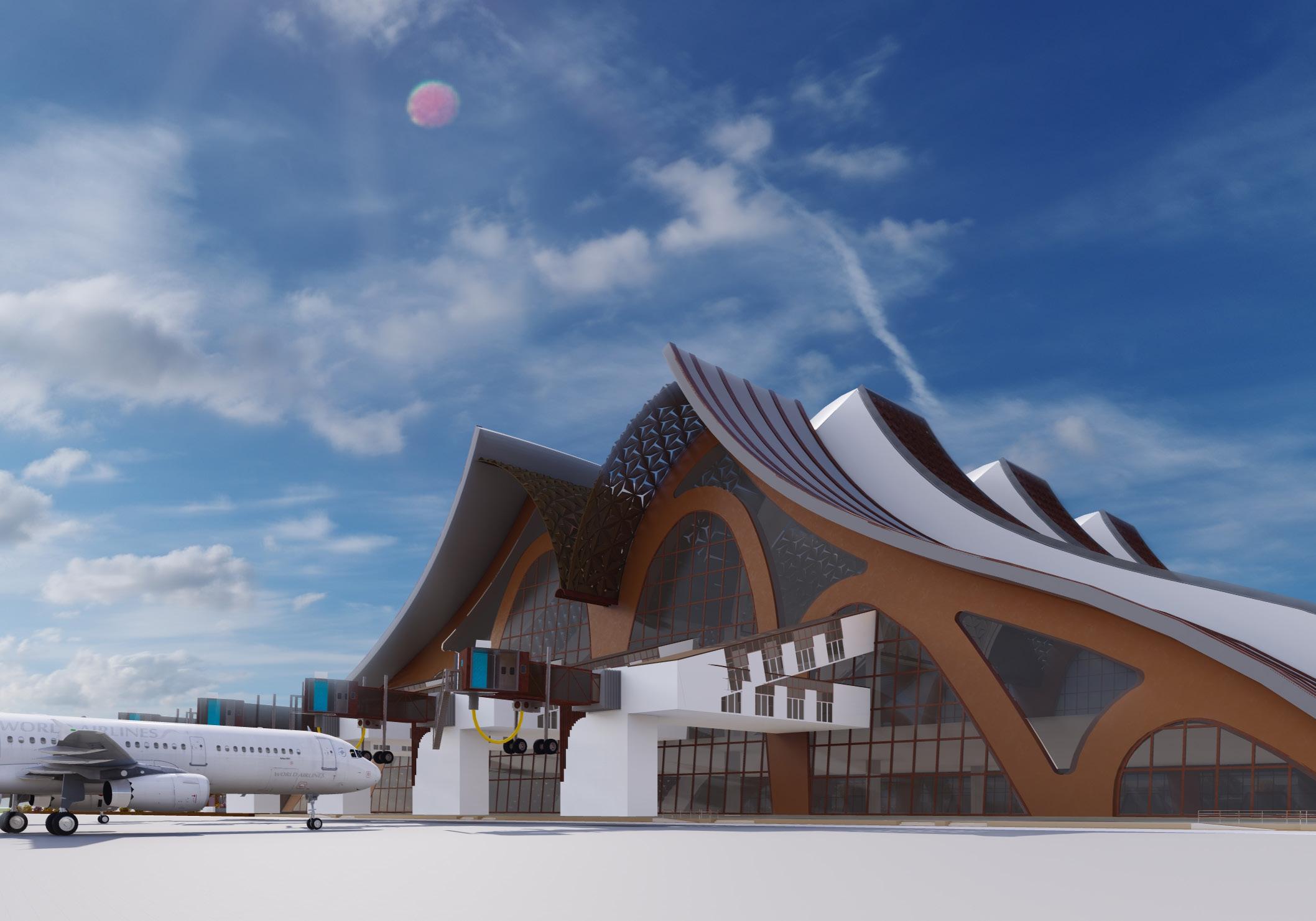
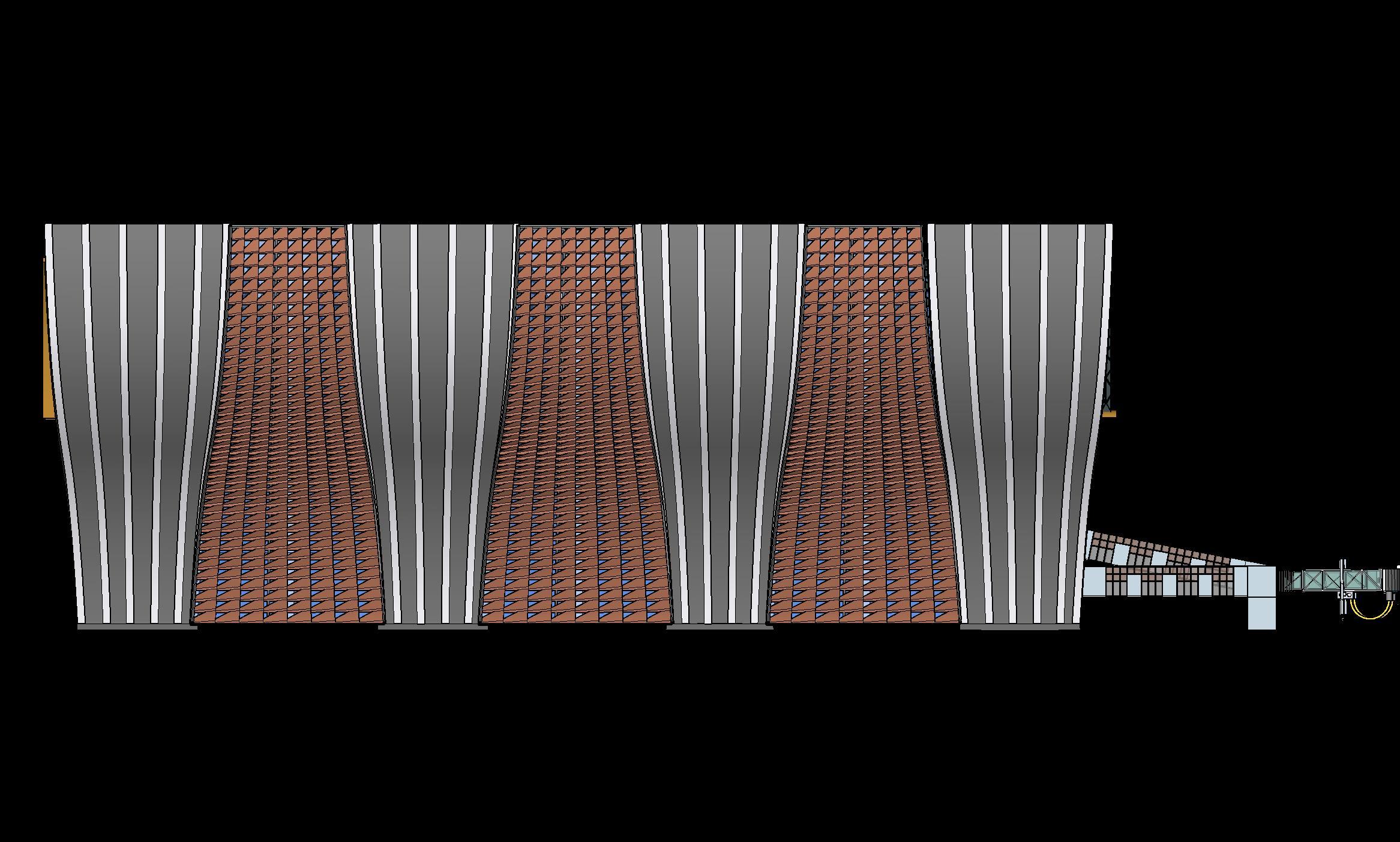
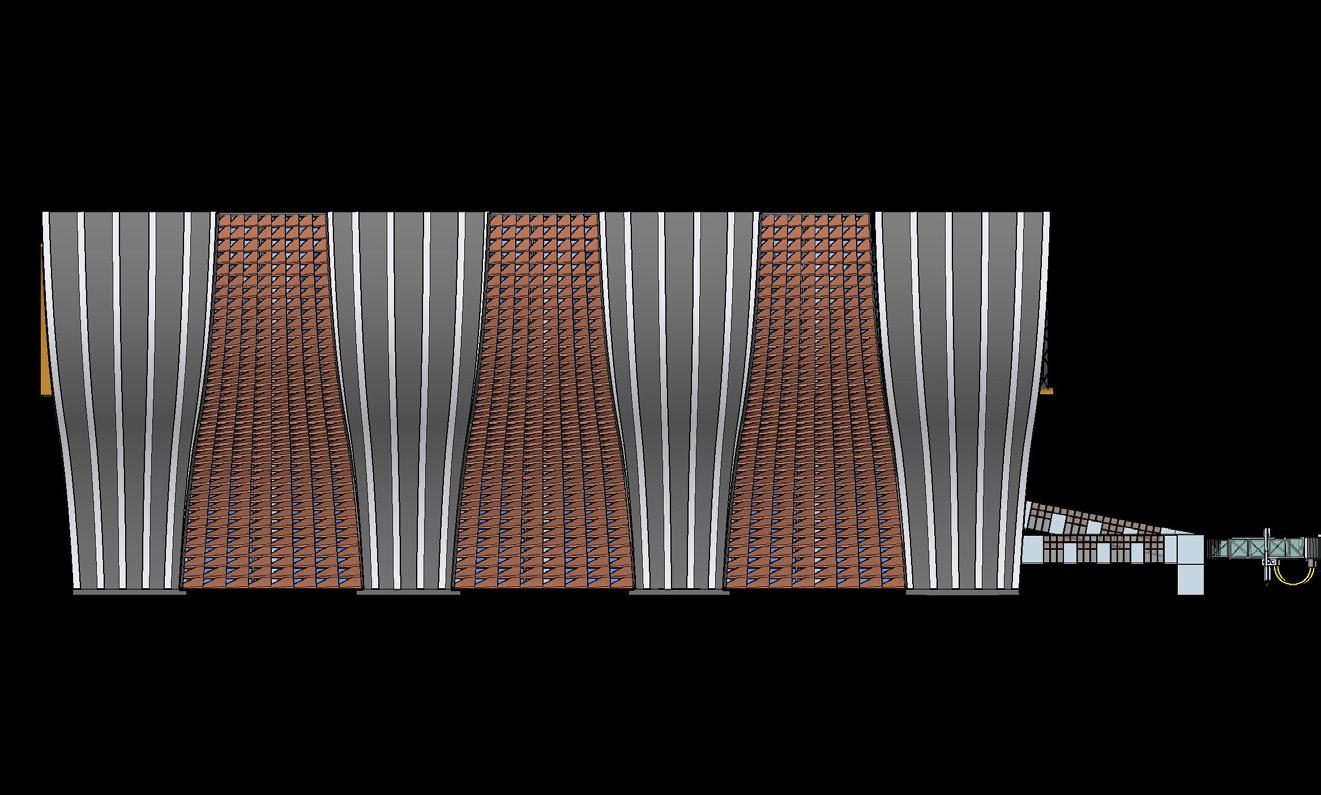
The Passenger Terminal Building at Bihta Civil Enclave is envisioned as a response to Bihar’s growing air transport needs, offering seamless connectivity for both domestic and international travelers. Proposed by the government as a strategic alternative to Patna Airport—where runway constraints and peak-hour congestion pose operational challenges—this terminal is designed to enhance regional accessibility and efficiency.
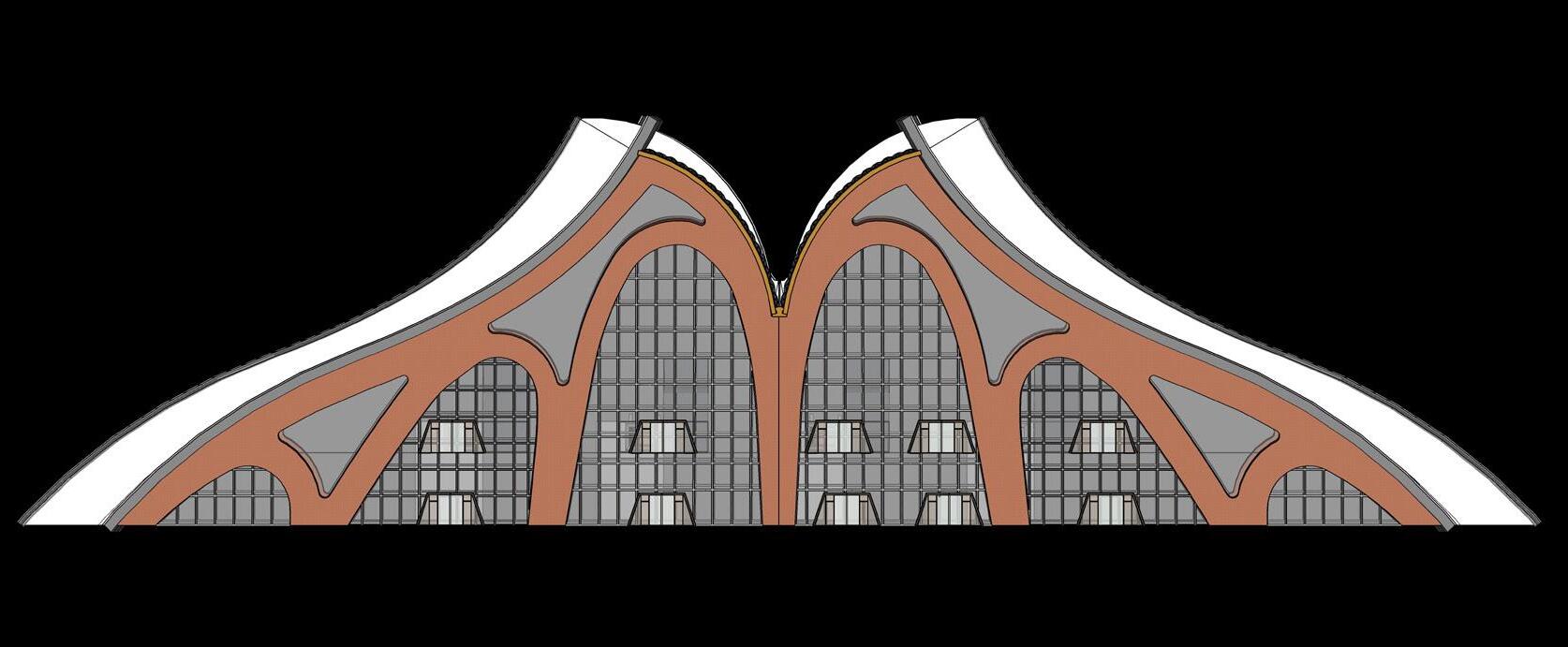
Beyond functionality, the design integrates Bihar’s forgotten cultural essence, drawing inspiration from its architectural and historical roots under the theme “Root of the Ancient.” Architectural elements abstract influences from Bihar’s rich heritage, such as the Mauryan stupas and the organic form of the Banyan tree, symbolizing continuity and resilience.
With a peak-hour passenger (PHP) capacity of 1,900, the terminal is structured to ensure intuitive passenger flow, optimized operational efficiency, and a strong cultural identity. This project not only redefines Bihar’s aviation infrastructure but also serves as a gateway that celebrates its deep-rooted legacy through contemporary architectural expression.
3D View
The Floor plans were built in Autocad and modelled in Sketch-up and Rendered in Photoshop and Lumion
elements that have long been overlooked yet remain integral to its historical narrative.
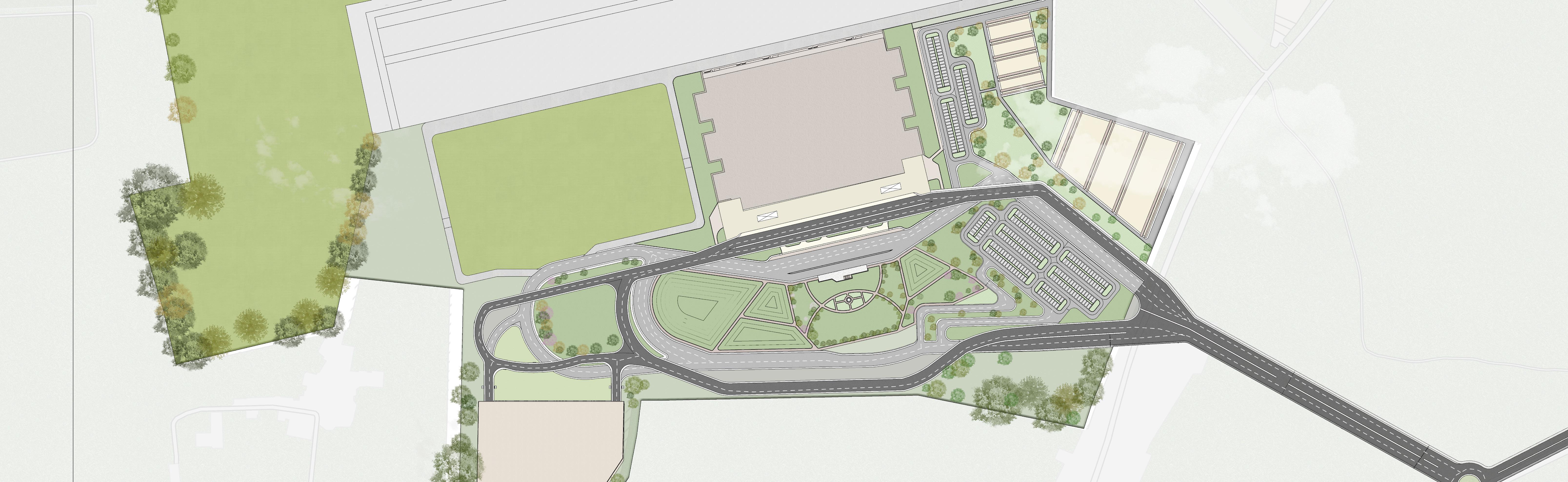
SITE PLAN
1. TERMINAL BUILDING 2. DEPARTURE LEVEL 3. ARRIVAL LEVEL
APRON 5. LANDSCAPE
6. PUBLIC PARKING
7. EMPLOYEES PARKING
8. MLCP
9. SERVICE BUILDING
10. TERMINAL EXPANSION
11. HOUSING EXPANSION
12. MAIN FLY-OVER
1. TERMINAL BUILDING
2. DEPARTURE LEVEL
3. ARRIVAL LEVEL 4. APRON 5. LANDSCAPE
6. PUBLIC PARKING
7. EMPLOYEES PARKING
8. MLCP
9. SERVICE BUILDING
10. TERMINAL EXPANSION
11. HOUSING EXPANSION
12. MAIN FLY-OVER
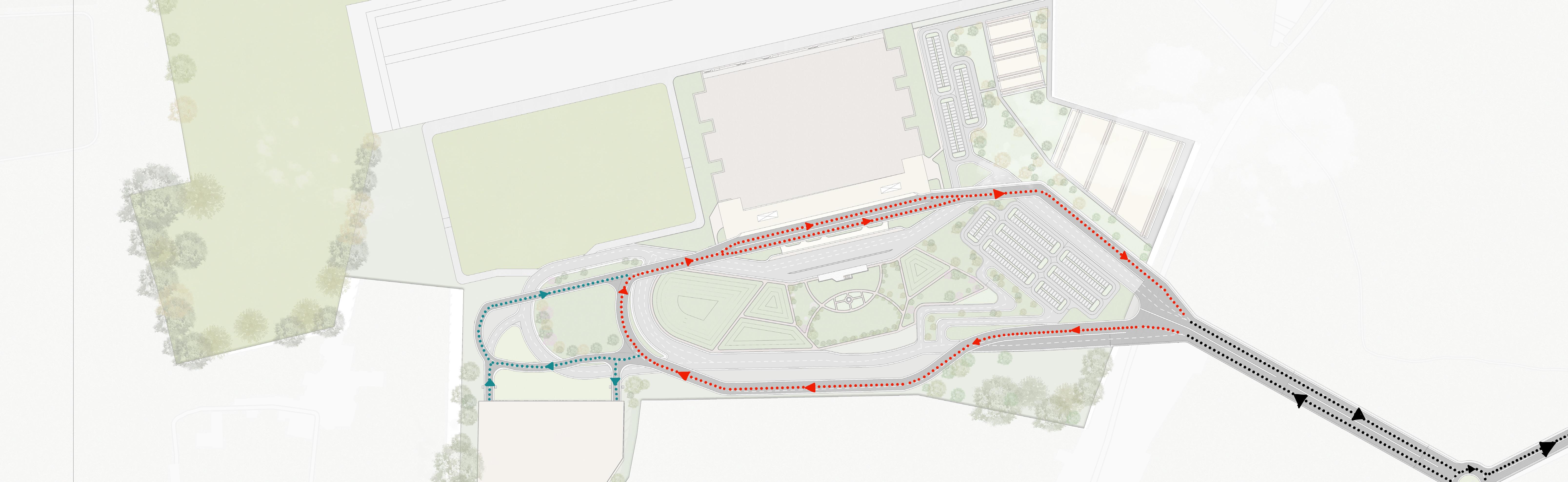
MAIN ROAD TOWARDS DEPARTURE TOWARDS MLCP
1. TERMINAL BUILDING
2. DEPARTURE LEVEL
3. ARRIVAL LEVEL 4. APRON 5. LANDSCAPE
6. PUBLIC PARKING
7. EMPLOYEES PARKING
8. MLCP
9. SERVICE BUILDING
10. TERMINAL EXPANSION
11. HOUSING EXPANSION
12. MAIN FLYOVER
MAIN ROAD TOWARDS ARRIVAL TOWARDS PUBLIC PARKING FROM MLCP TOWARDS EMPLOYEE PARKING
PLANNING
The cityside landscape of this project is meticulously designed to create a seamless integration of architecture and nature, offering an engaging public realm that enhances the experience of both travelers and visitors. This abstract yet contextually rooted design reflects Bihar’s cultural essence while complementing the architectural language of the terminal.
A well-structured lane hierarchy ensures efficient vehicular and pedestrian movement, with dedicated corridors for private cabs, taxis & autos, buses, and pedestrians. A strategically positioned bus stop is seamlessly connected via an underground subway, enabling safe and uninterrupted pedestrian access while mitigating traffic conflicts.
The arrival level is activated with retail stores, F&B outlets, and cab booking facilities, fostering a vibrant commercial interface. Passengers at the departure level can conveniently access these amenities via staircases, lifts, and escalators, ensuring a fluid and interconnected spatial experience. This holistic urban intervention not only enhances passenger convenience but also reinforces the terminal’s role as a cultural and transit hub, embodying Bihar’s architectural heritage and modern infrastructural advancement.
The Arrival Level (Ground Floor) features 3 domestic and 2 international arrival gates with designated baggage carousels, security hold areas, F&B outlets, lounges, washrooms, immigration, customs, and terminal offices for seamless passenger flow.
The Departure Level (First Floor) comprises 3 domestic and 2 international departure gates, with check-in counters (21 for domestic, 12 for international), baggage drop, security checks, hold areas, VIP lounges, F&B outlets, and retail stores, ensuring an efficient travel experience.
The terminal’s design integrates functionality with cultural identity, enhancing passenger convenience while celebrating Bihar’s architectural heritage.
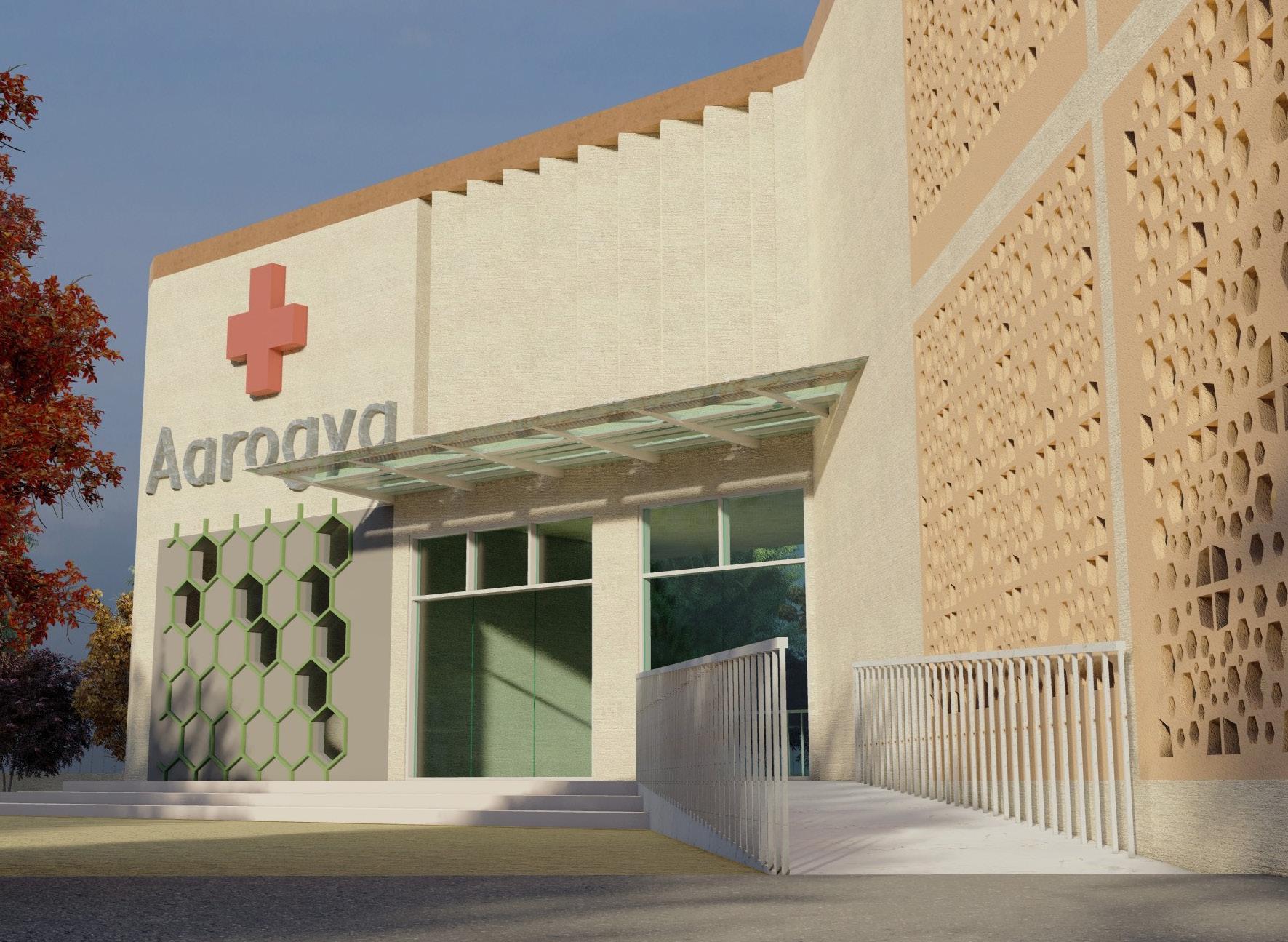
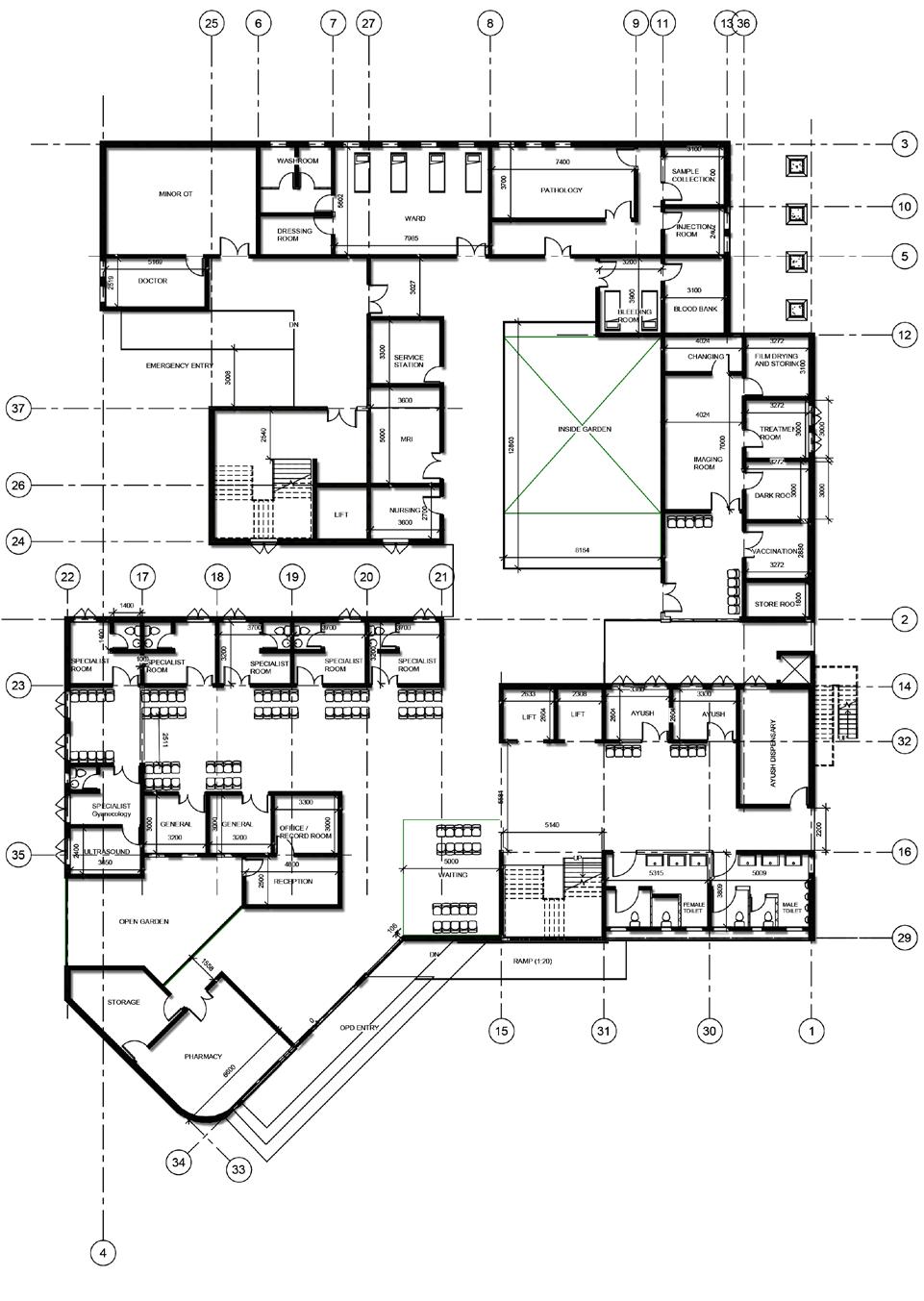
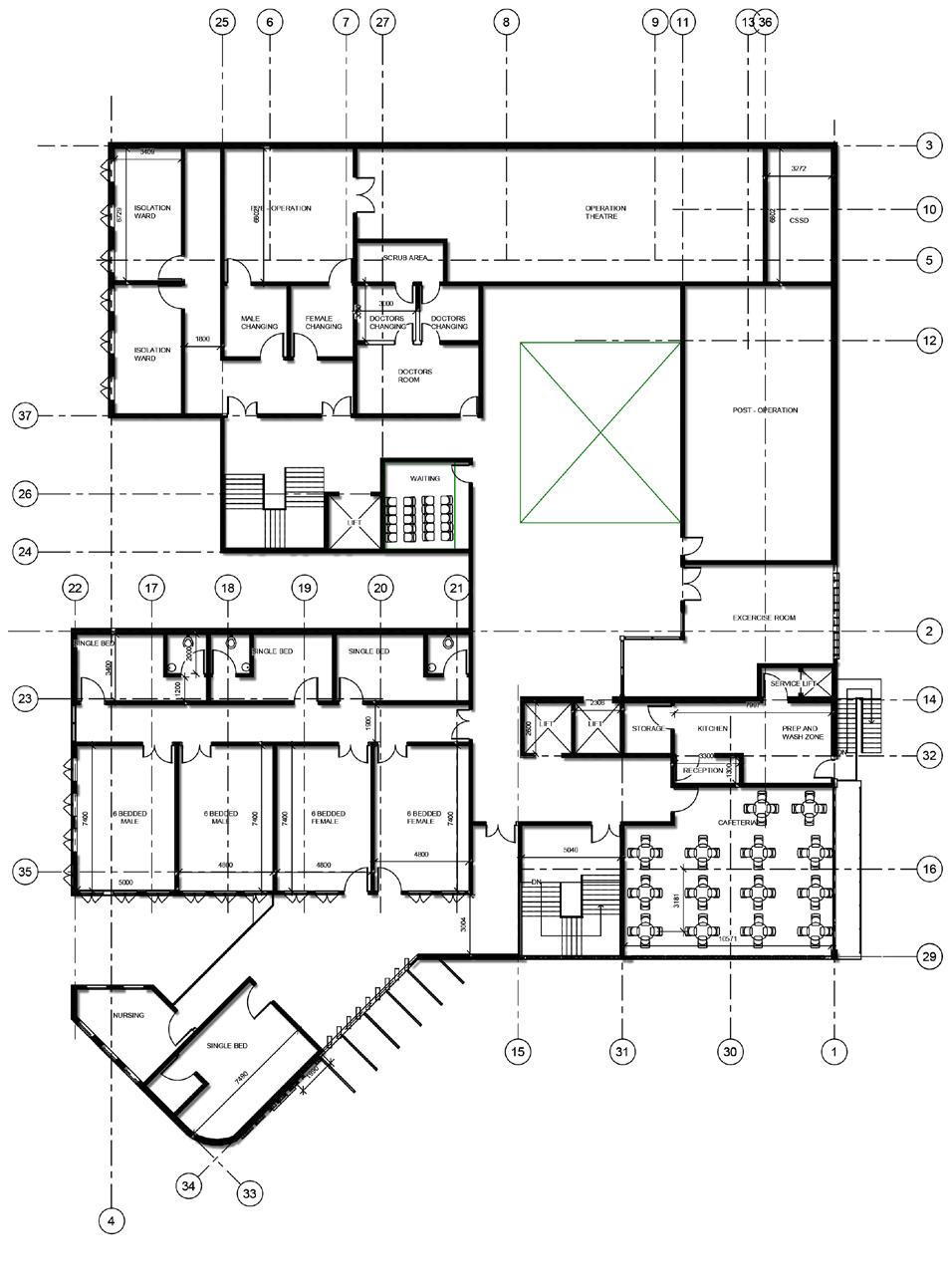
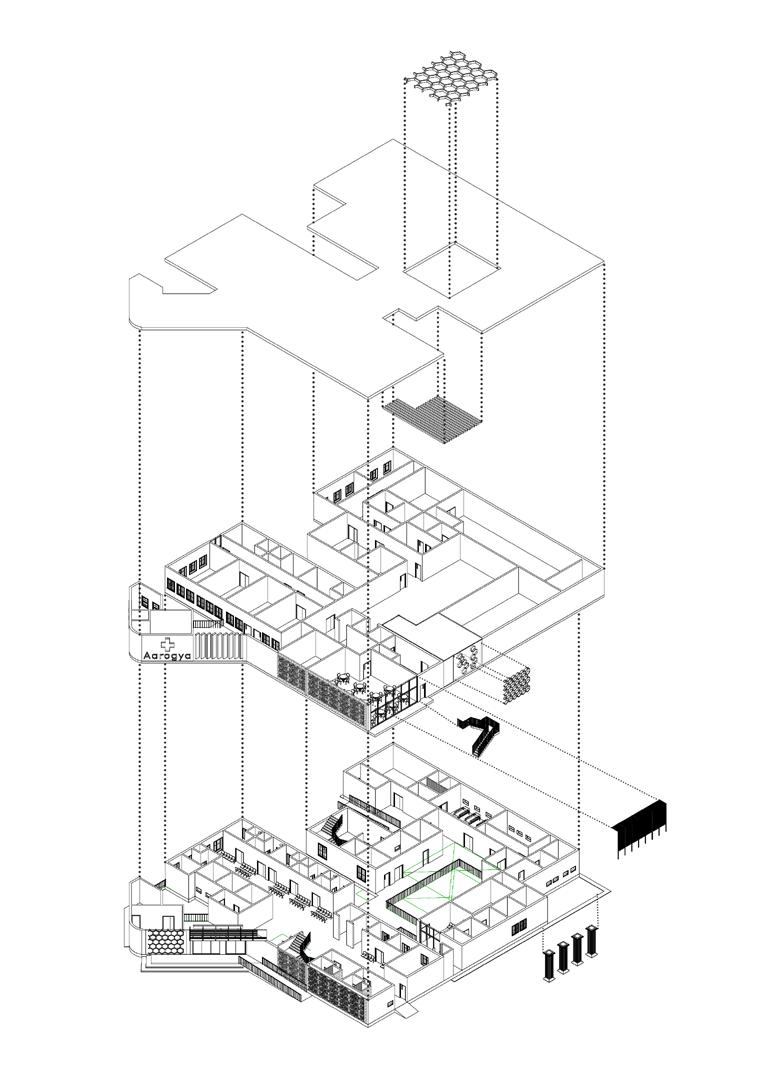
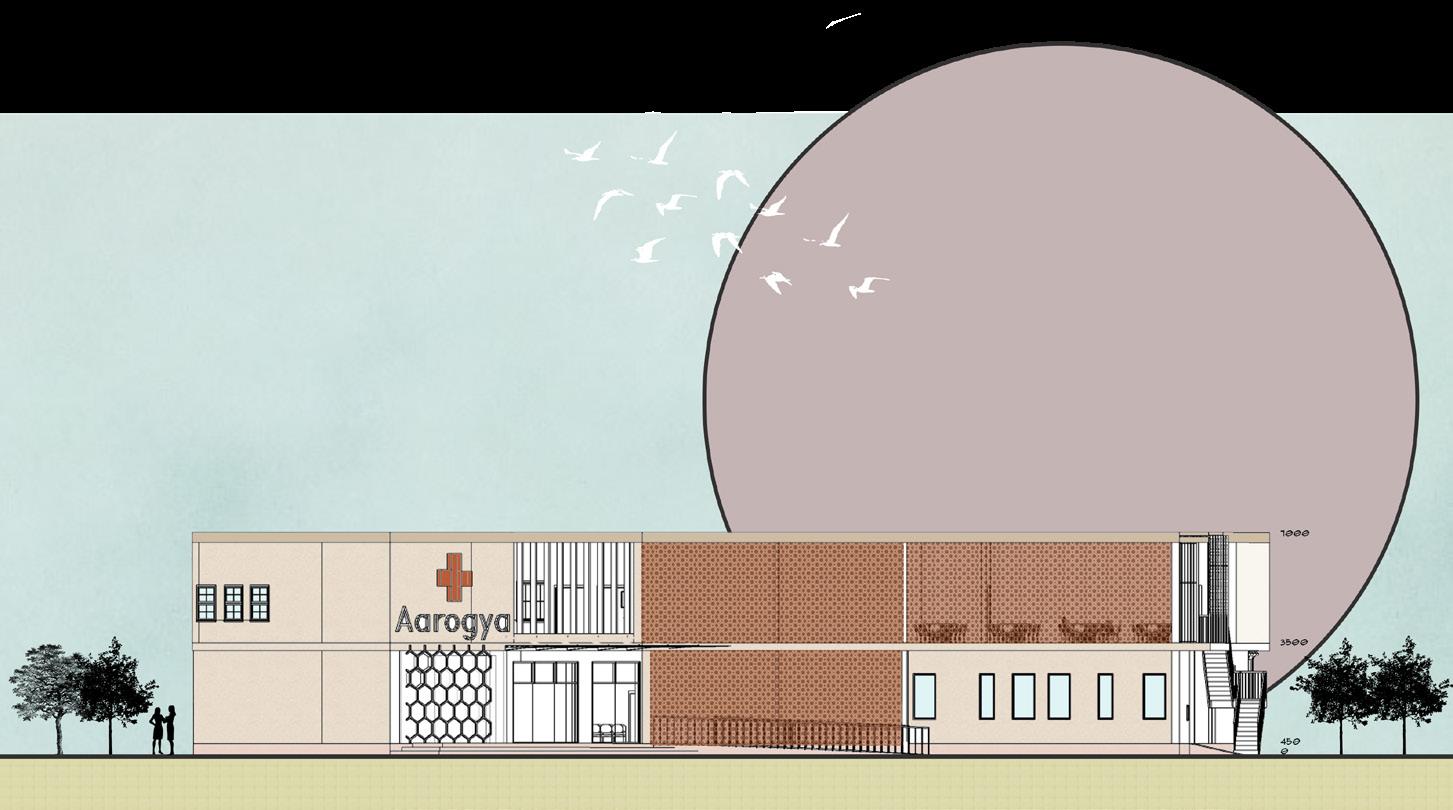
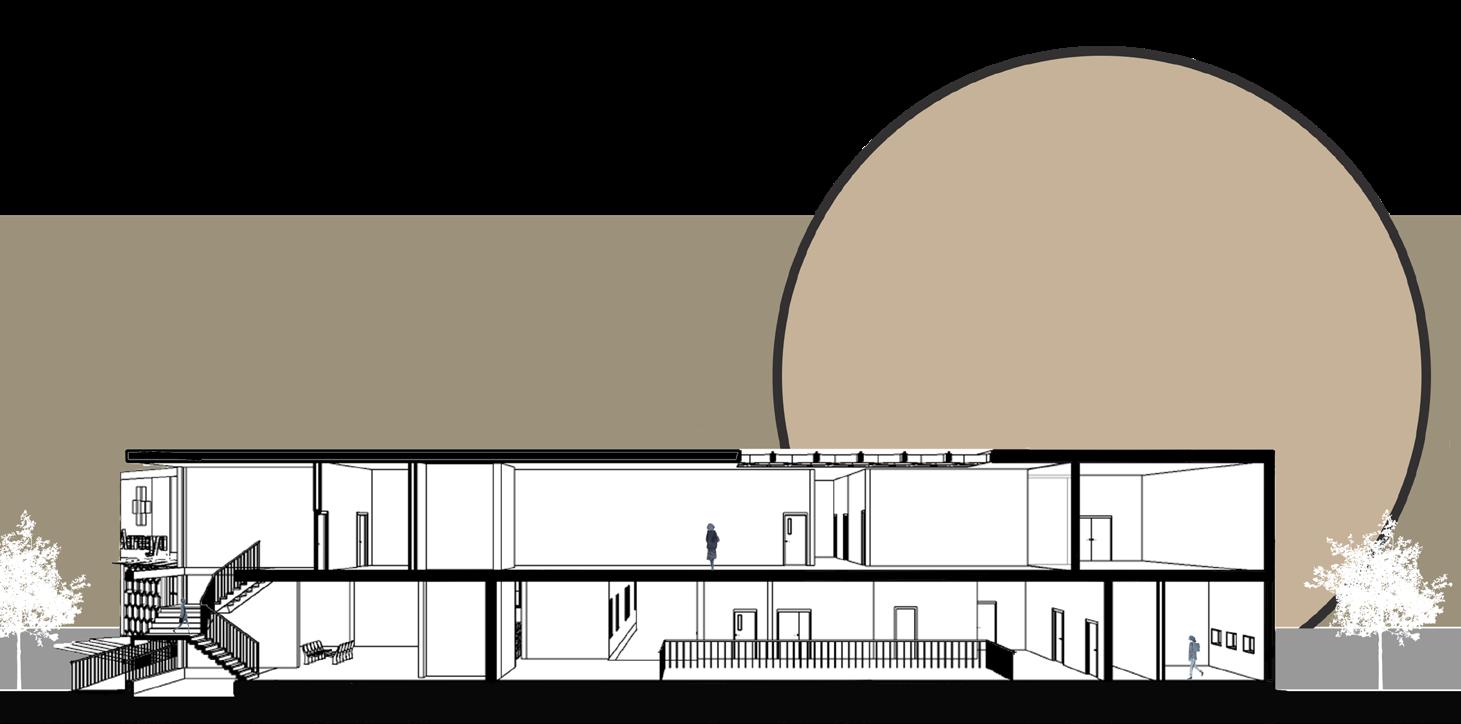
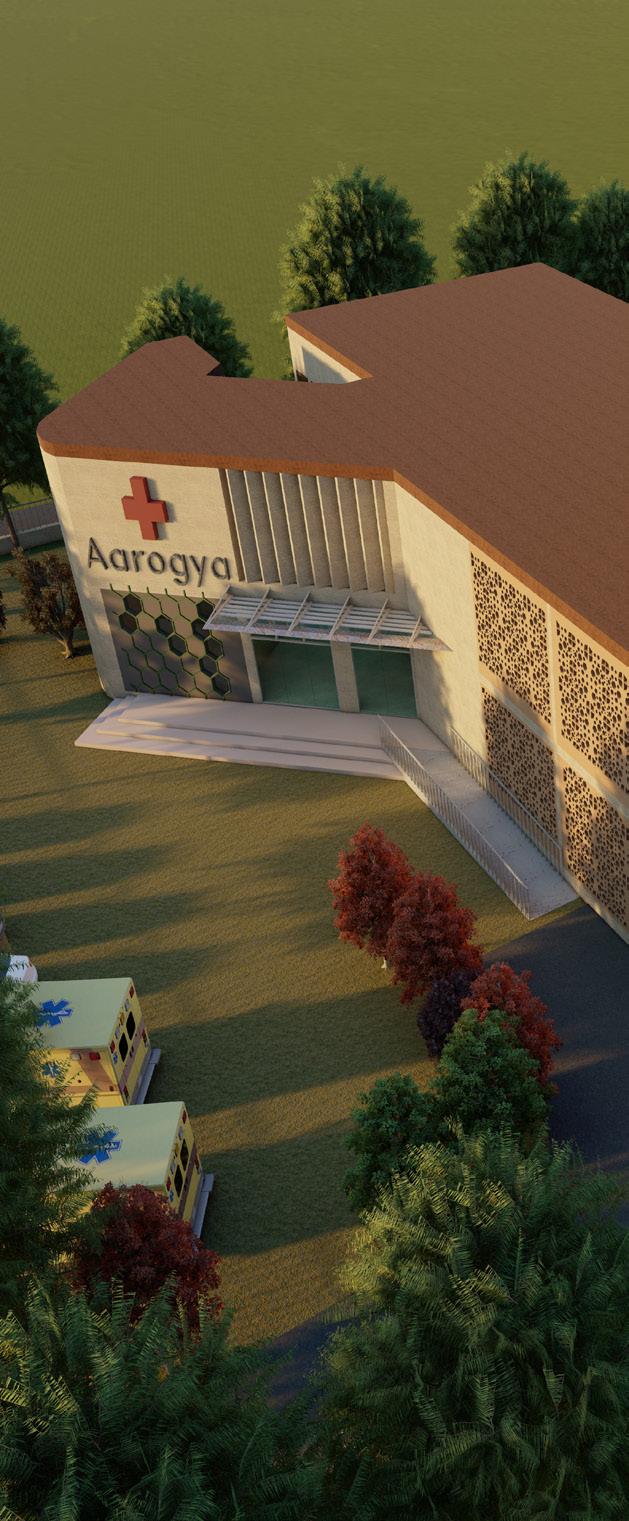
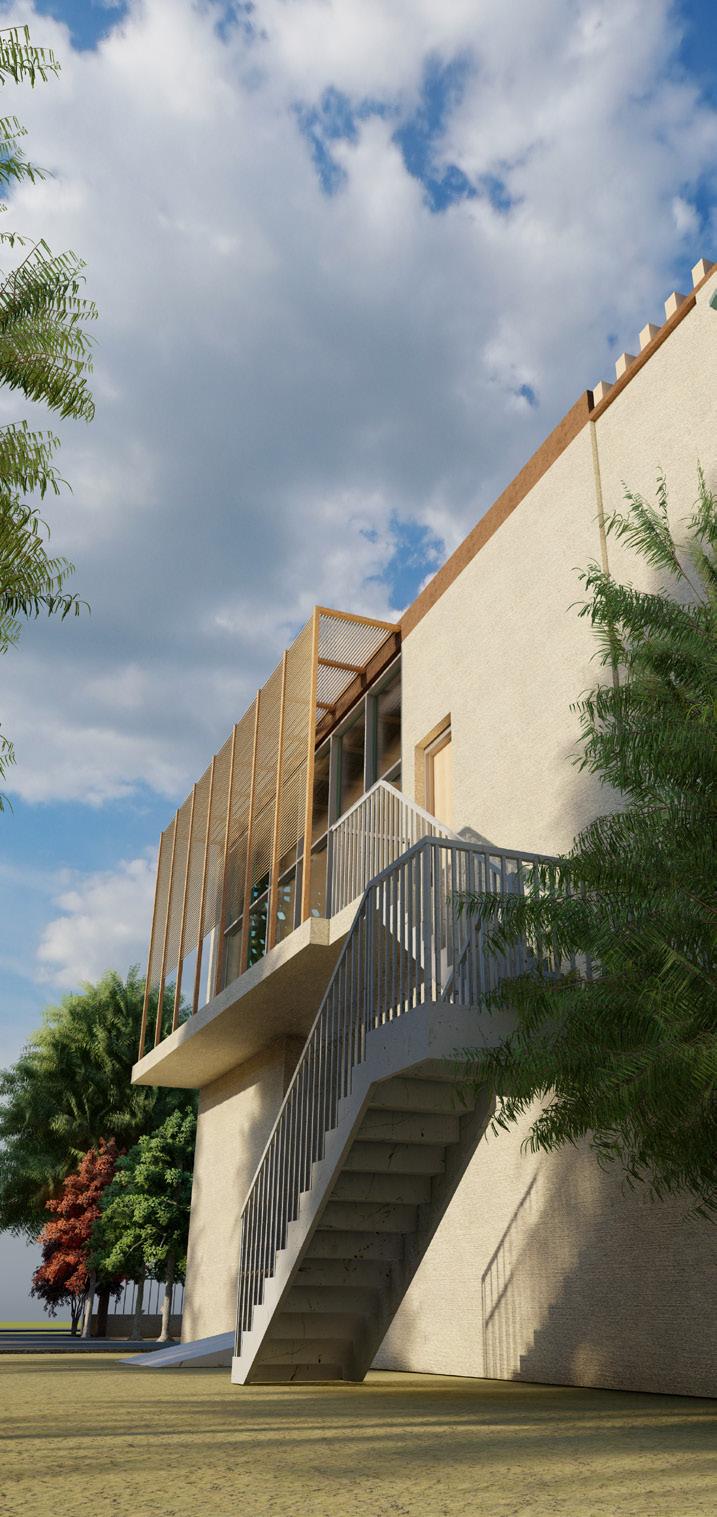
The Aarogya Community Healthcare Centre is a 30-bed medical facility strategically designed to enhance patient care and public accessibility in Patna, Bihar. The architectural approach prioritizes passive design strategies, ensuring optimal ventilation, seamless circulation, and a therapeutic environment. Integrated shading devices mitigate heat gain, fostering thermal comfort within the built space. Acoustic planning has been employed to buffer external noise, creating a serene healing atmosphere. The program includes OPD, IPD, and Emergency services, with the overall design adhering to universal accessibility standards, promoting inclusivity and efficiency in healthcare delivery.
Skills
3D View
The Floor plans and 3D model were built in Revit and Rendered in Photoshop and Lumion
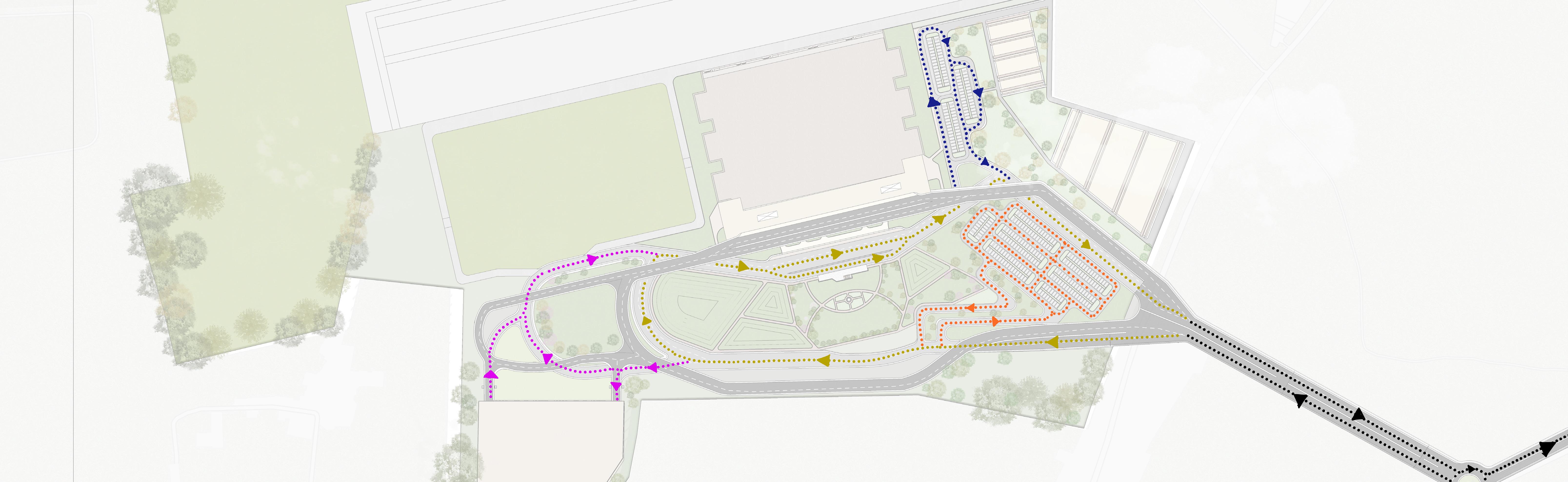
SITE PLAN
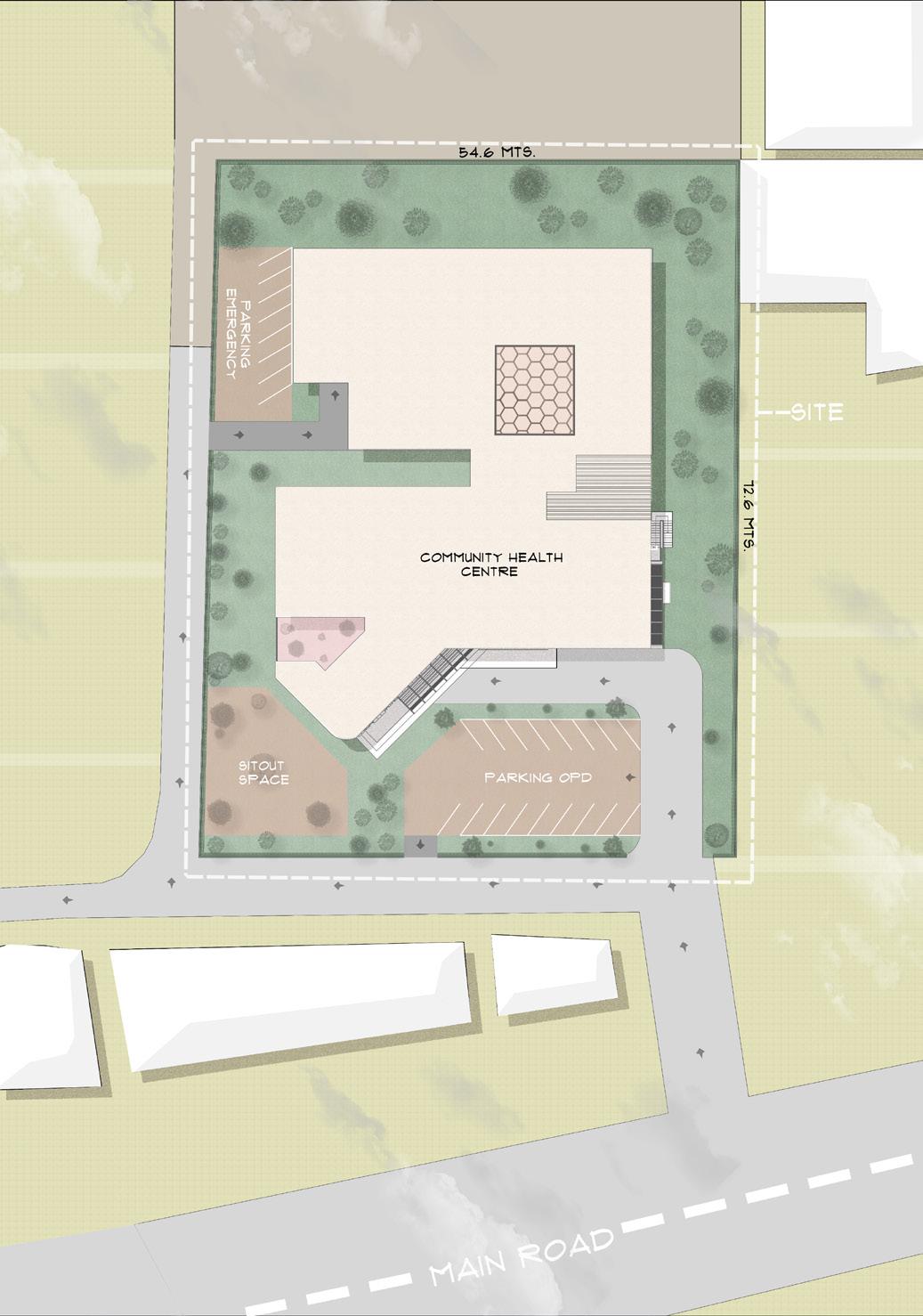
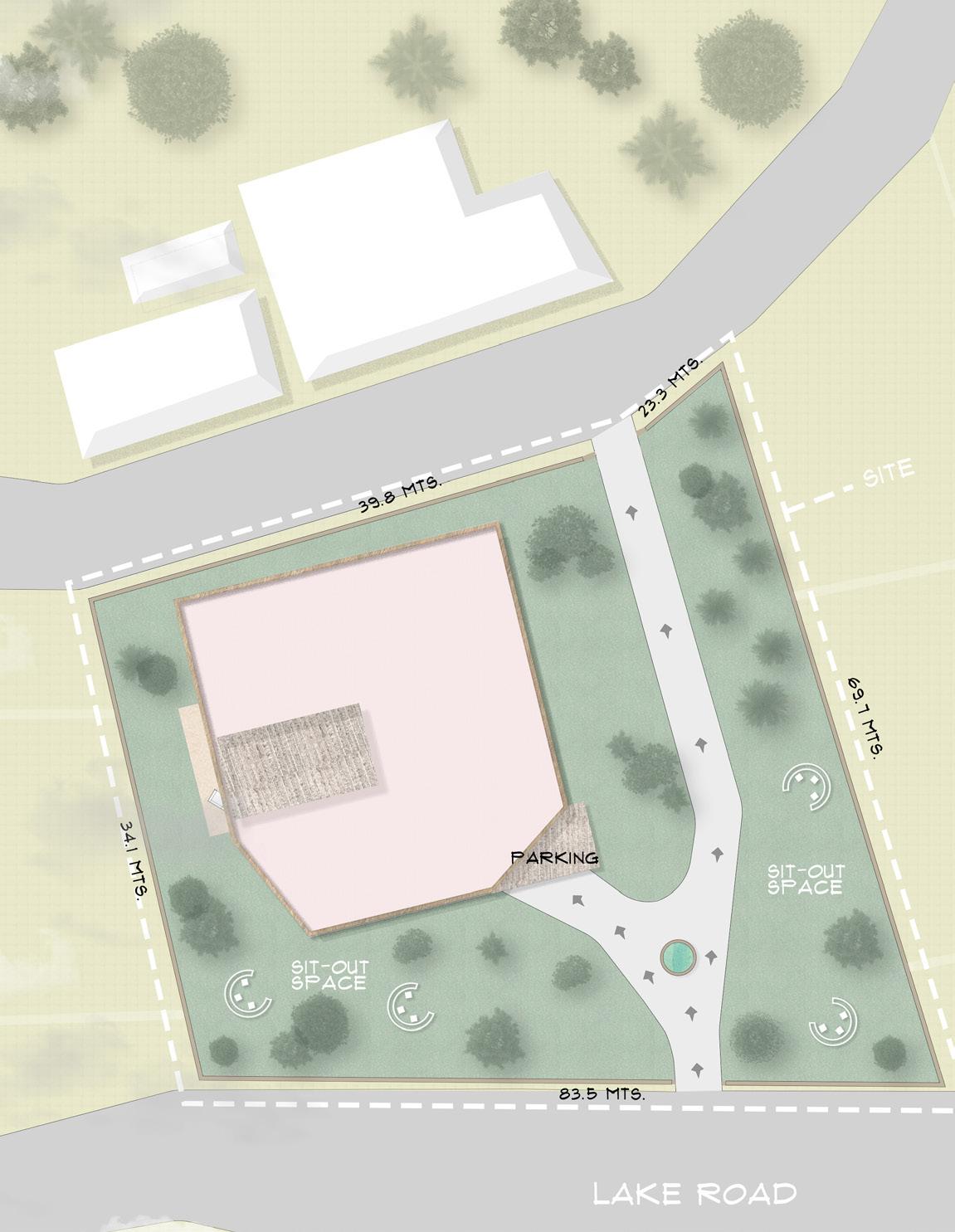
The Aarogya Project have the total site area of 4000 SqM in which the built-up area is the 50%. The site is divided into four major parts. At the front there is the OPD Parking area, on the left there is an sit-out space for the patient and there guardians,, in the left adjacent side there is parking provided for the Emergency ward. There is this two sub-Roads joininng the Aarogya CHC, ;the road on the front is for the OPD access and the road in the Left connects to the Emergency zone. The Design is developed according to the Circulation and security and safety of the users. As the weather of this location is Warm and Humid, so i have given some shading devices design and materials (Terracotta Jali).
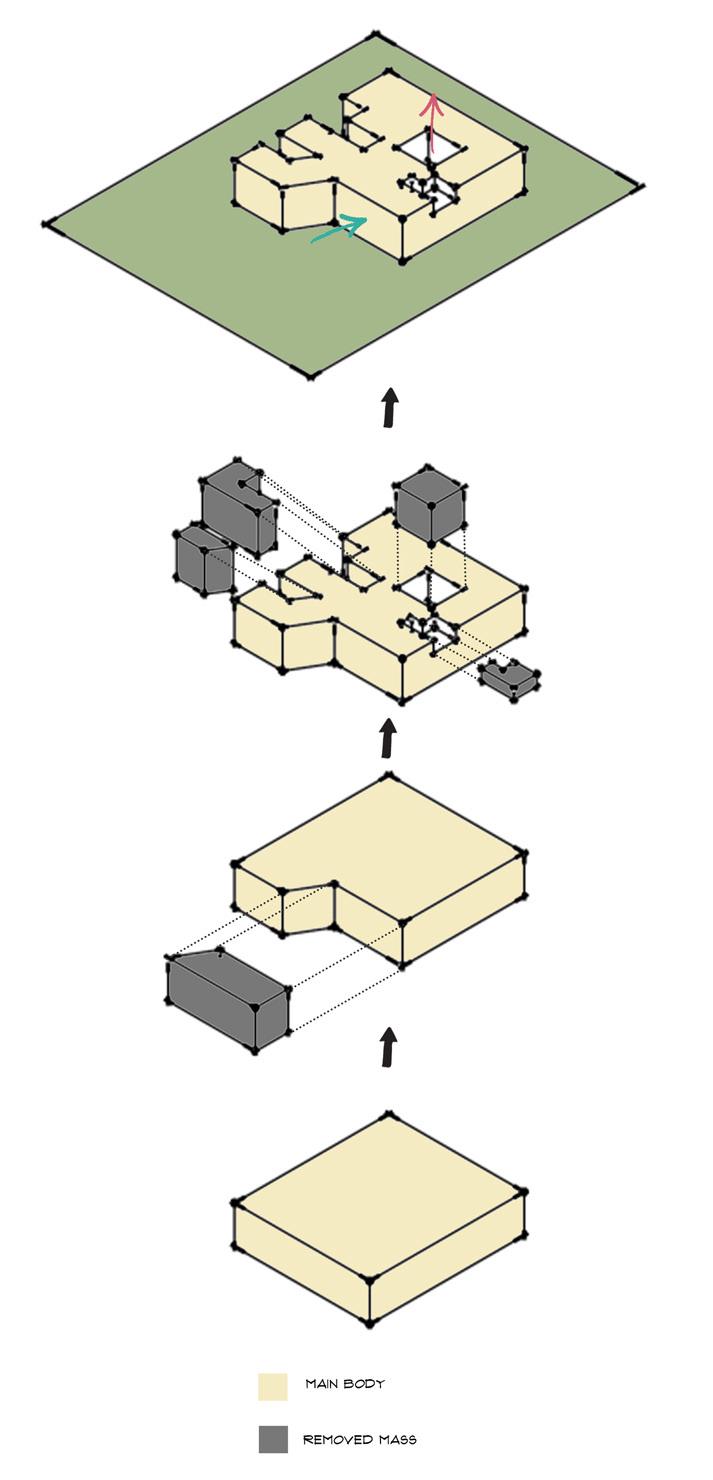
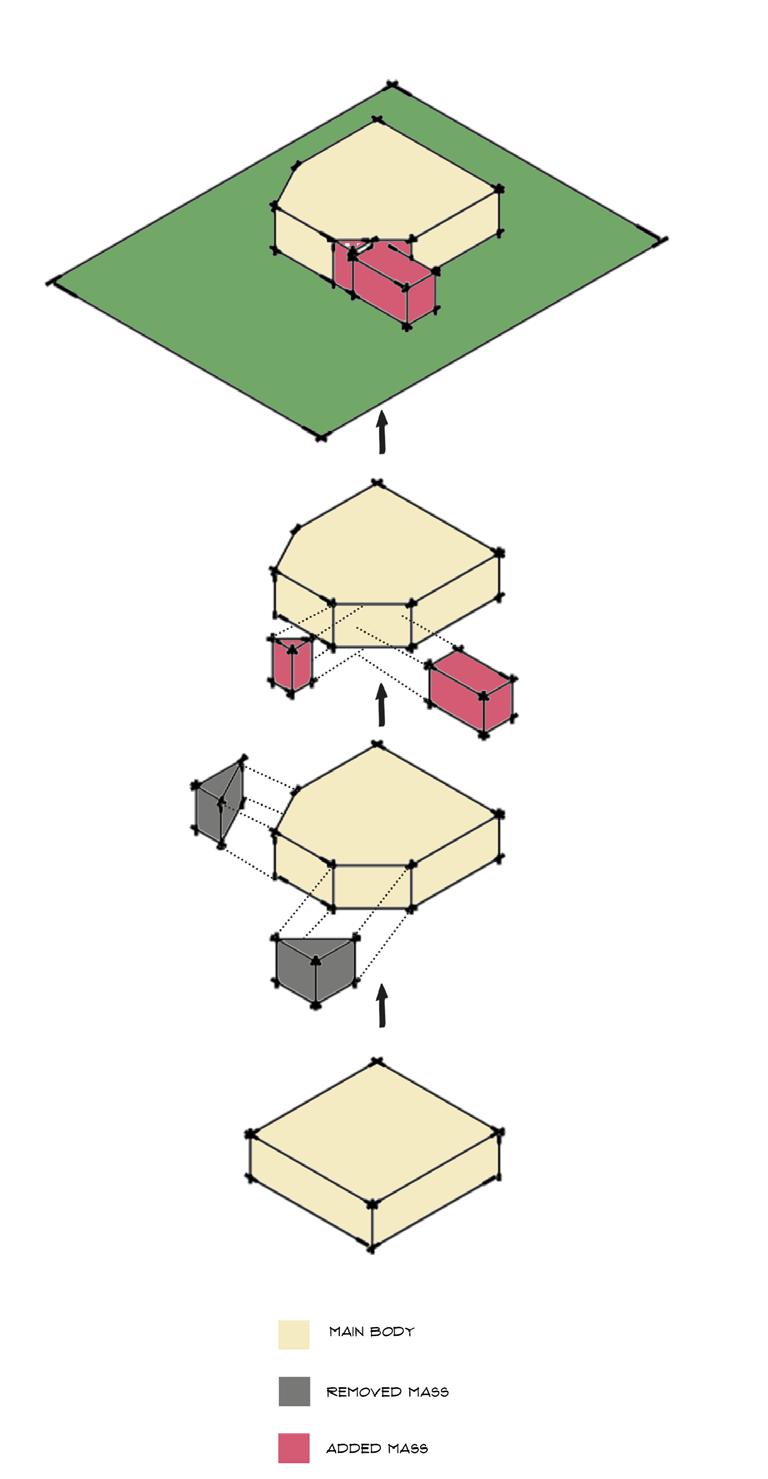
Formation Concept
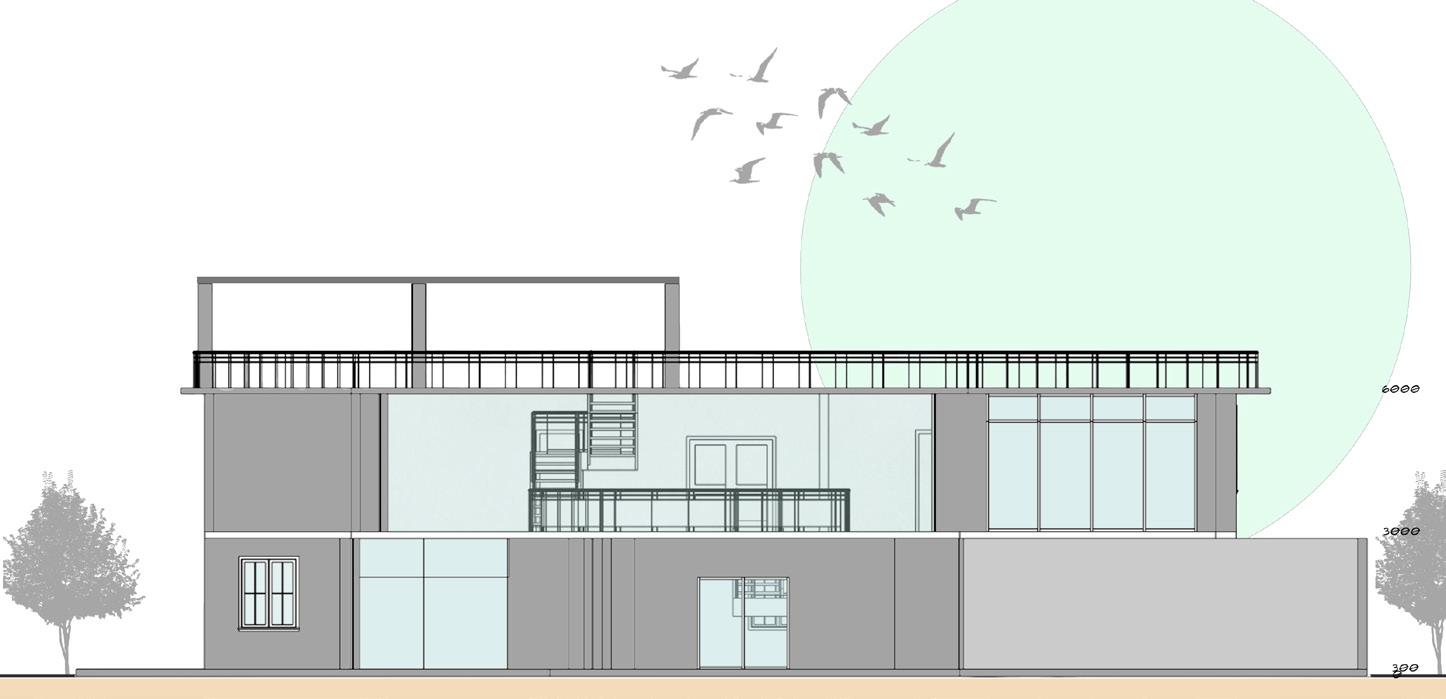
Community Healthcare Centre : Elevation
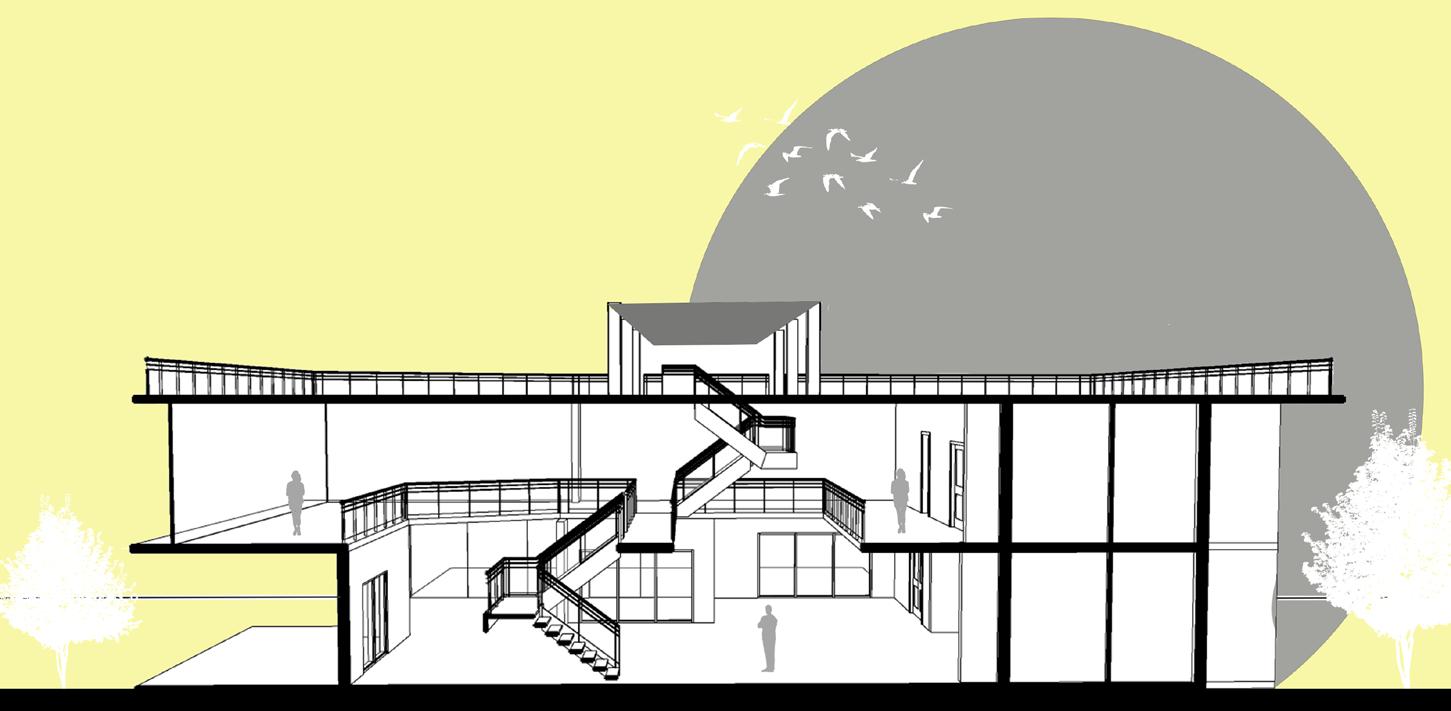
Community Healthcare Centre : Section
3D Render View
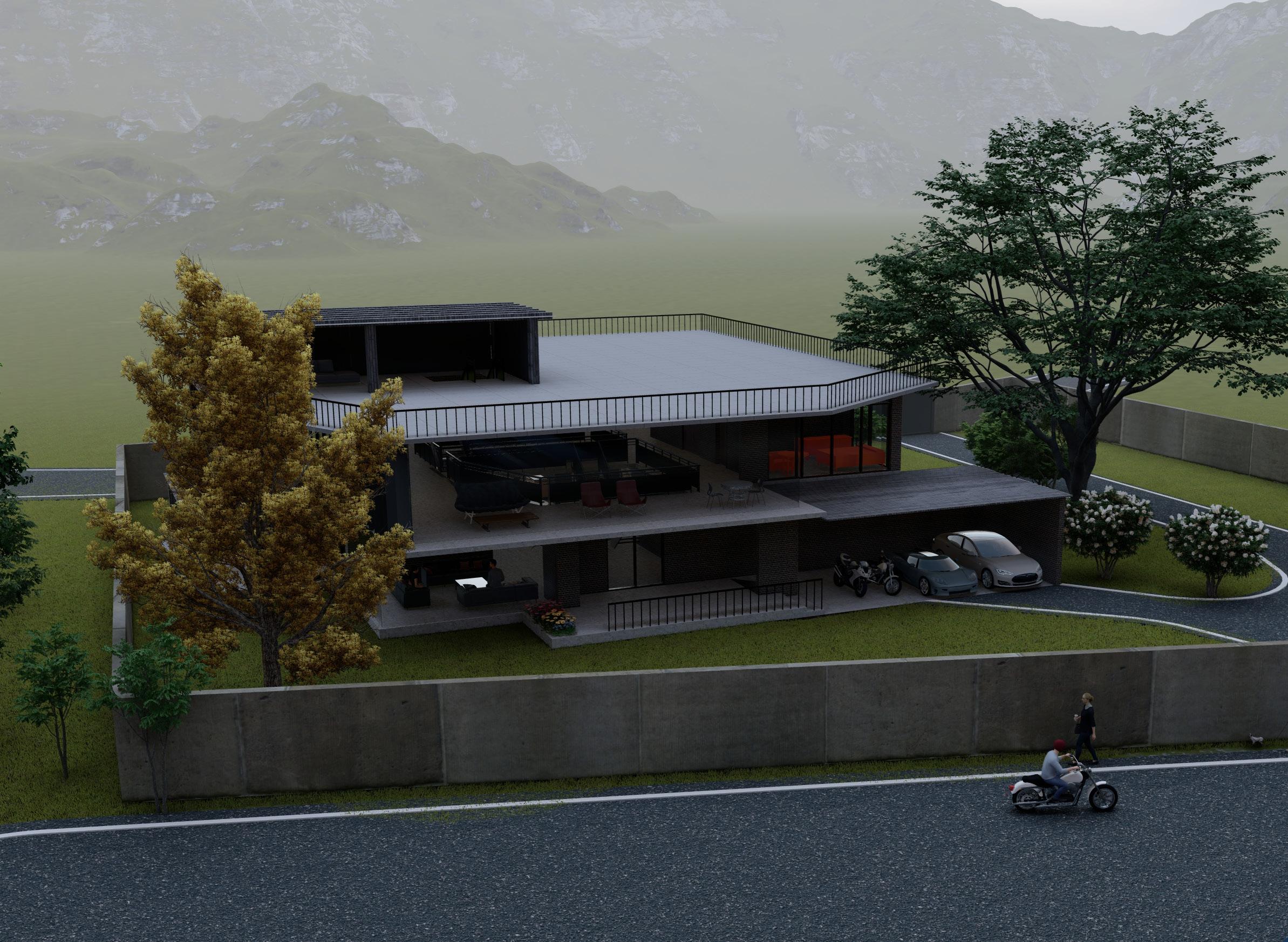
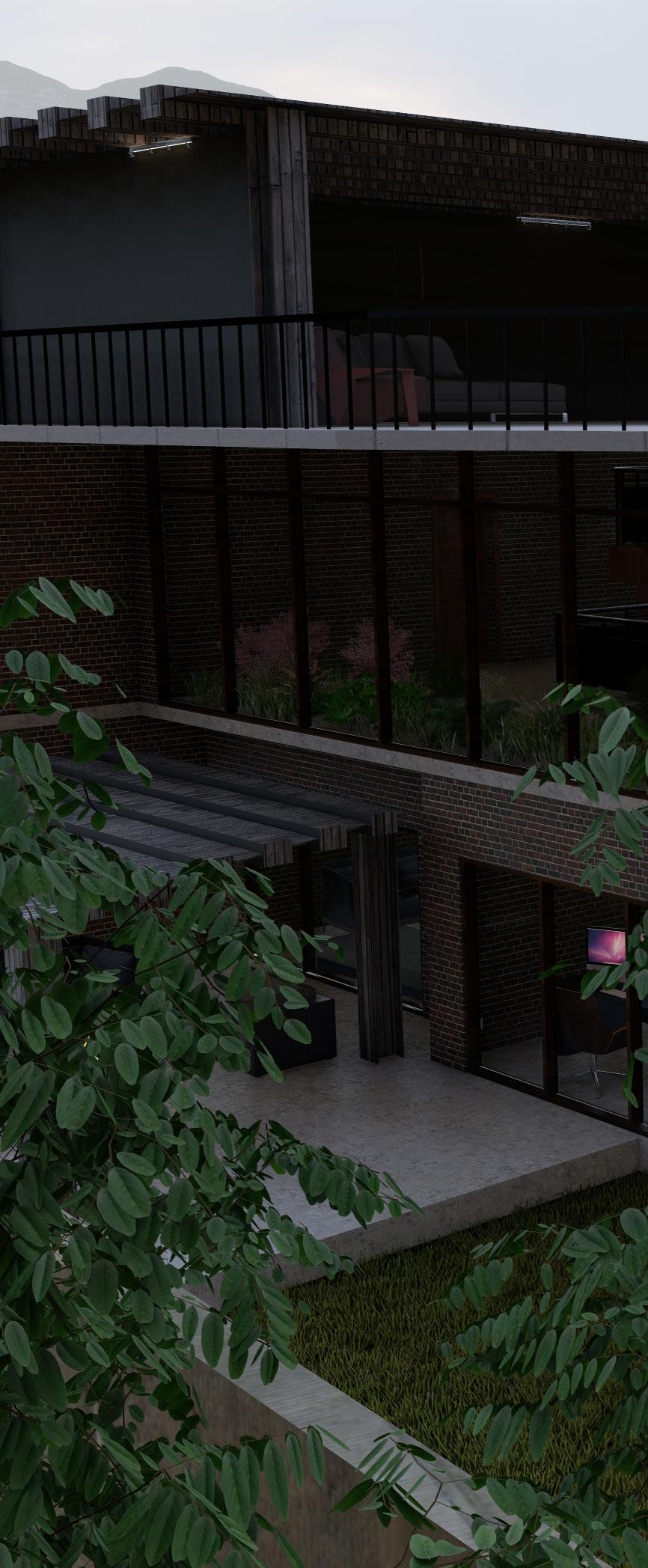
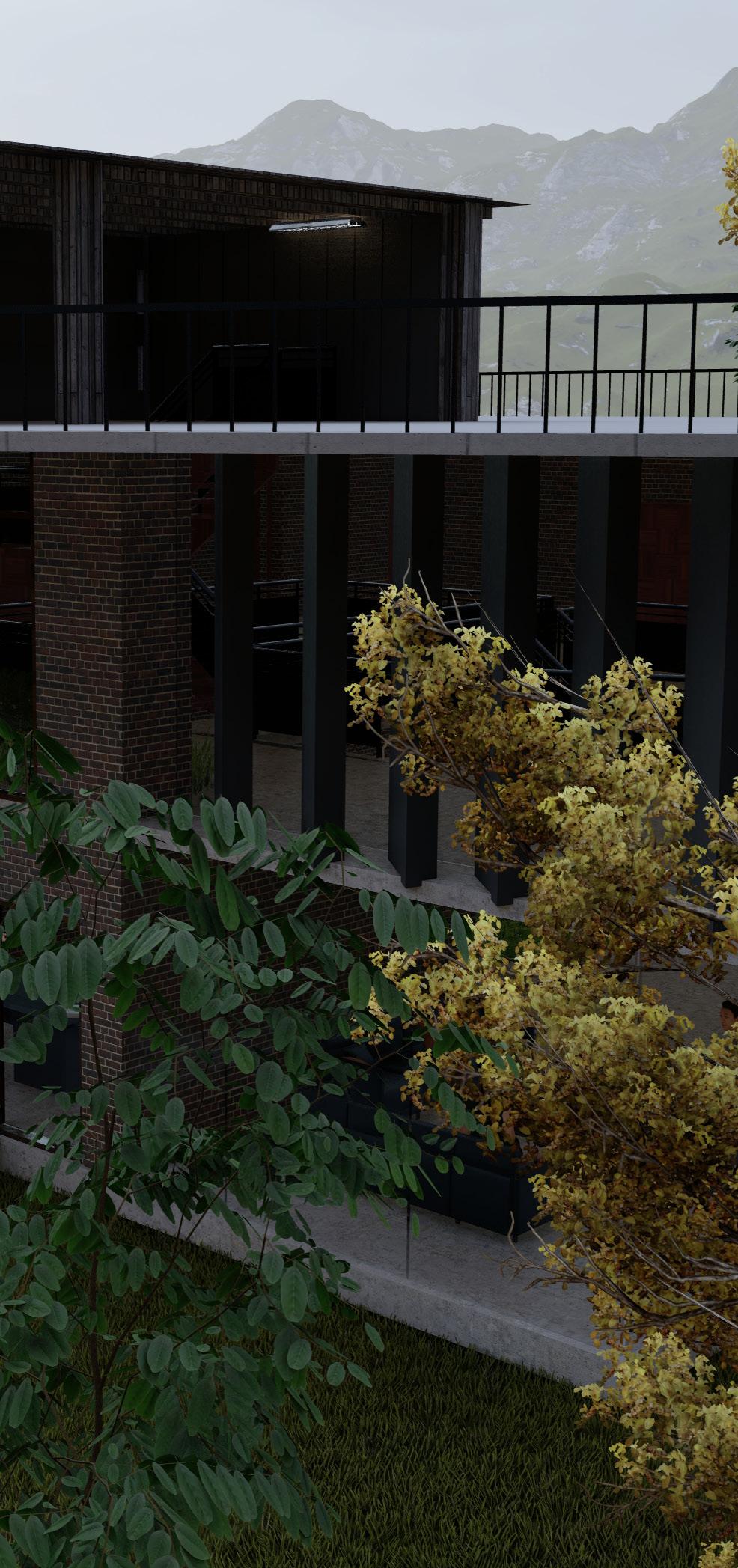
The Khajok Project is conceived as a luxury residence, meticulously designed to meet the needs and comfort of its occupants while integrating all essential amenities. The architectural approach emphasizes a sense of warmth and seamless circulation, ensuring effortless accessibility throughout the space.
The residence is thoughtfully planned, considering key design parameters such as Ooty’s climatic conditions, optimized circulation, and a primary focus on crafting a private, habitable environment that enhances the quality of living.
Strategically positioned, the site benefits from dual road access. The northern road, connecting to the main road, functions as an exit, streamlining vehicular movement. The southern frontage maximizes natural daylight, with high-performance glazing that reflects excessive heat while passively storing optimal warmth, ensuring thermal comfort within the residence. This integration of climate-responsive design and functional planning creates an elegant yet sustainable living environment.
Skills
3D View
The Floor plans and 3D model were built in Revit, Rhino and Rendered in Photoshop and Lumion
DREAM HOUSE
SITE PLAN
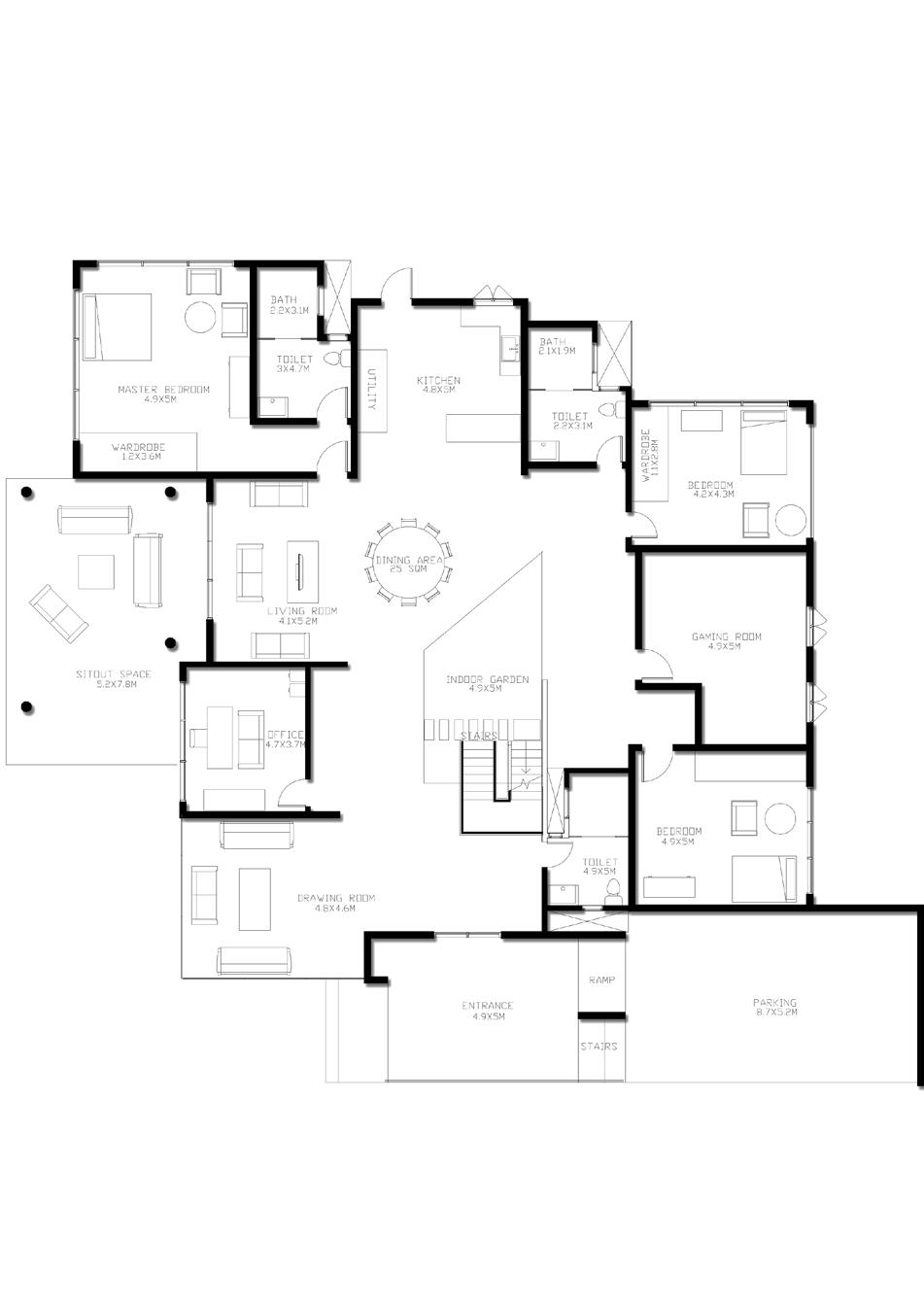
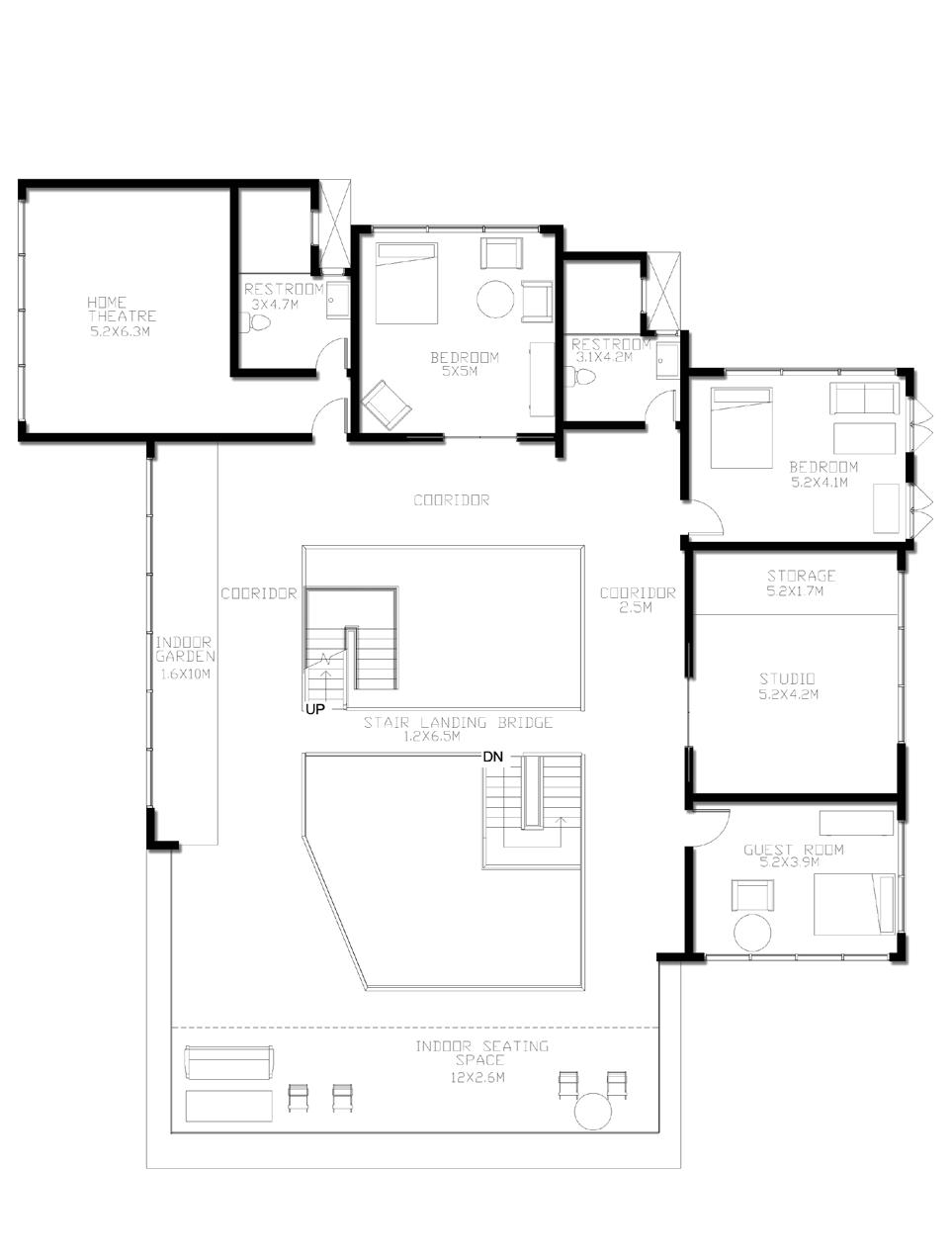
The Khajok project occupies a total site area of 2040 square meters, with a built-up area constituting 46% of the site. The design adheres to a Floor Area Ratio (FAR) of 0.4. Key spatial allocations are as follows : At the Ground floor there is dedicated parking area for vehicles. Functional spaces include the entrance foyer, drawing room, common toilet, and guest bedroom. Additional facilities include an office space, living room, gaming room, master bedroom, indoor garden, sit-out space, and another living room. A staircase originating from the indoor garden connects to the upper levels. At the First floor it features a home theatre, guest bedroom, multiple bedrooms, an indoor garden, an indoor seating area, and an architecture studio. The design culminates in a terrace space, providing additional utility or recreational potential. The architectural program ensures efficient spatial planning while integrating functional and leisure spaces across all levels.
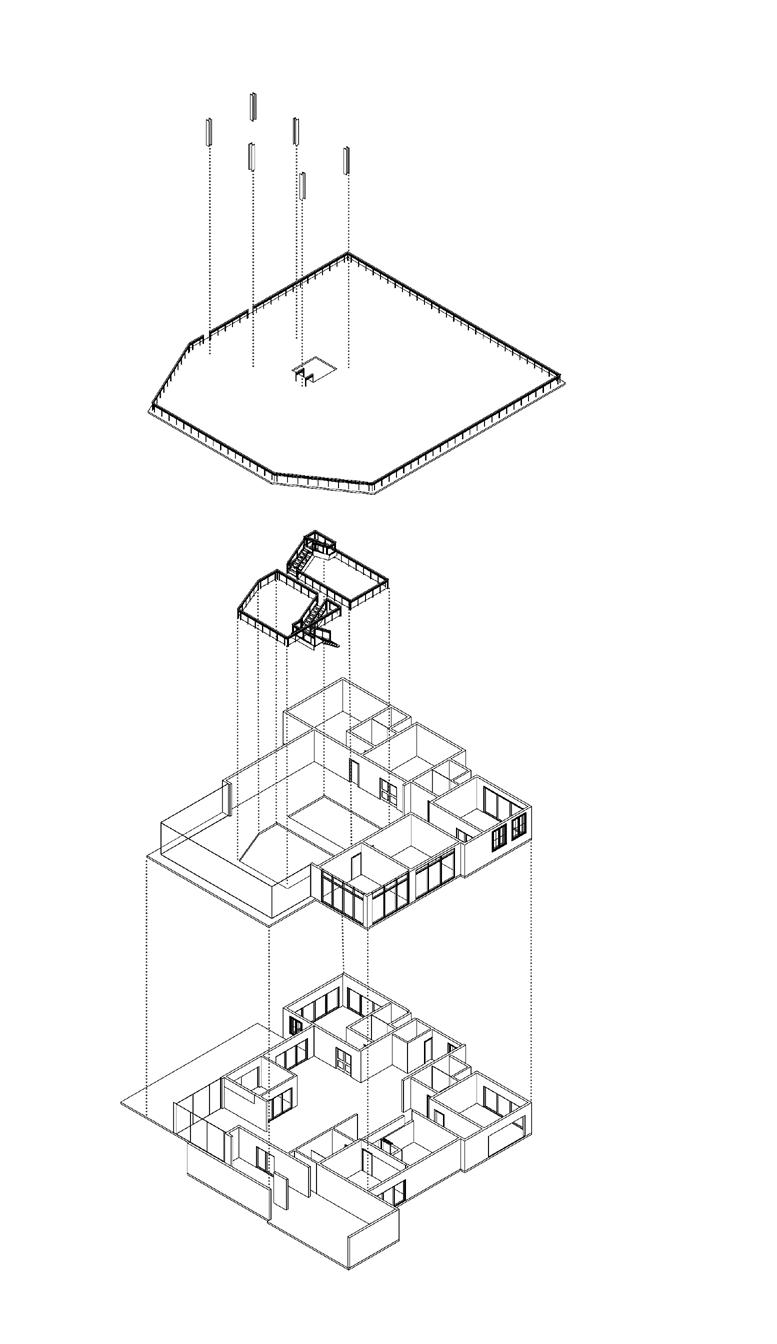
Formation Concept
Dream House : Elevation
Dream House : Section
3D Render View
AGRICULTURE AND BIO-TECH UNIVERSITY
Skills
The Floor plans and 3D model were built in Revit and Rendered in Photoshop and Lumion.
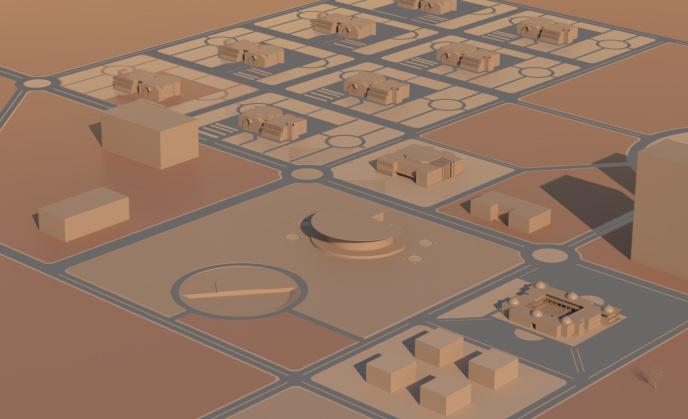
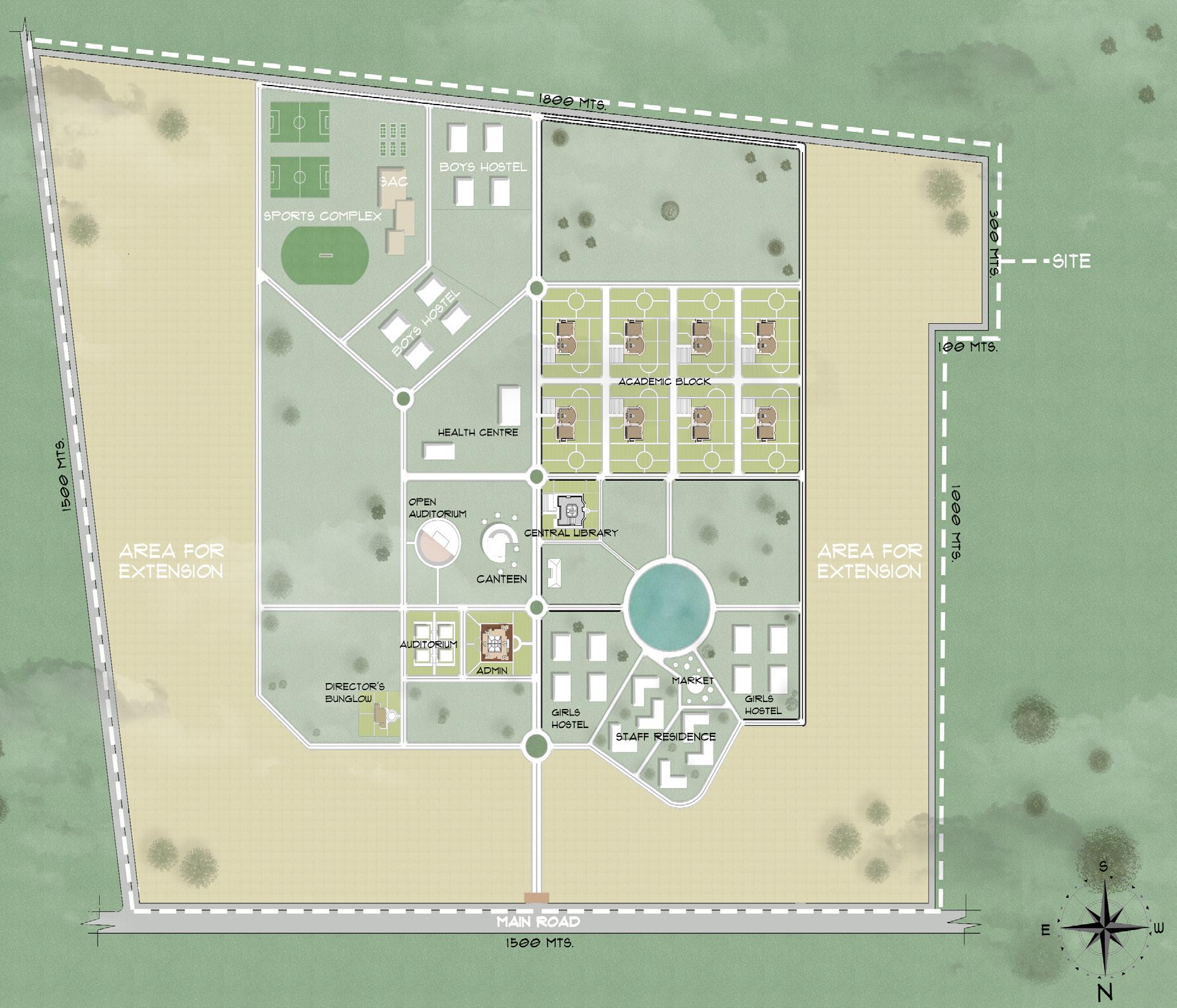
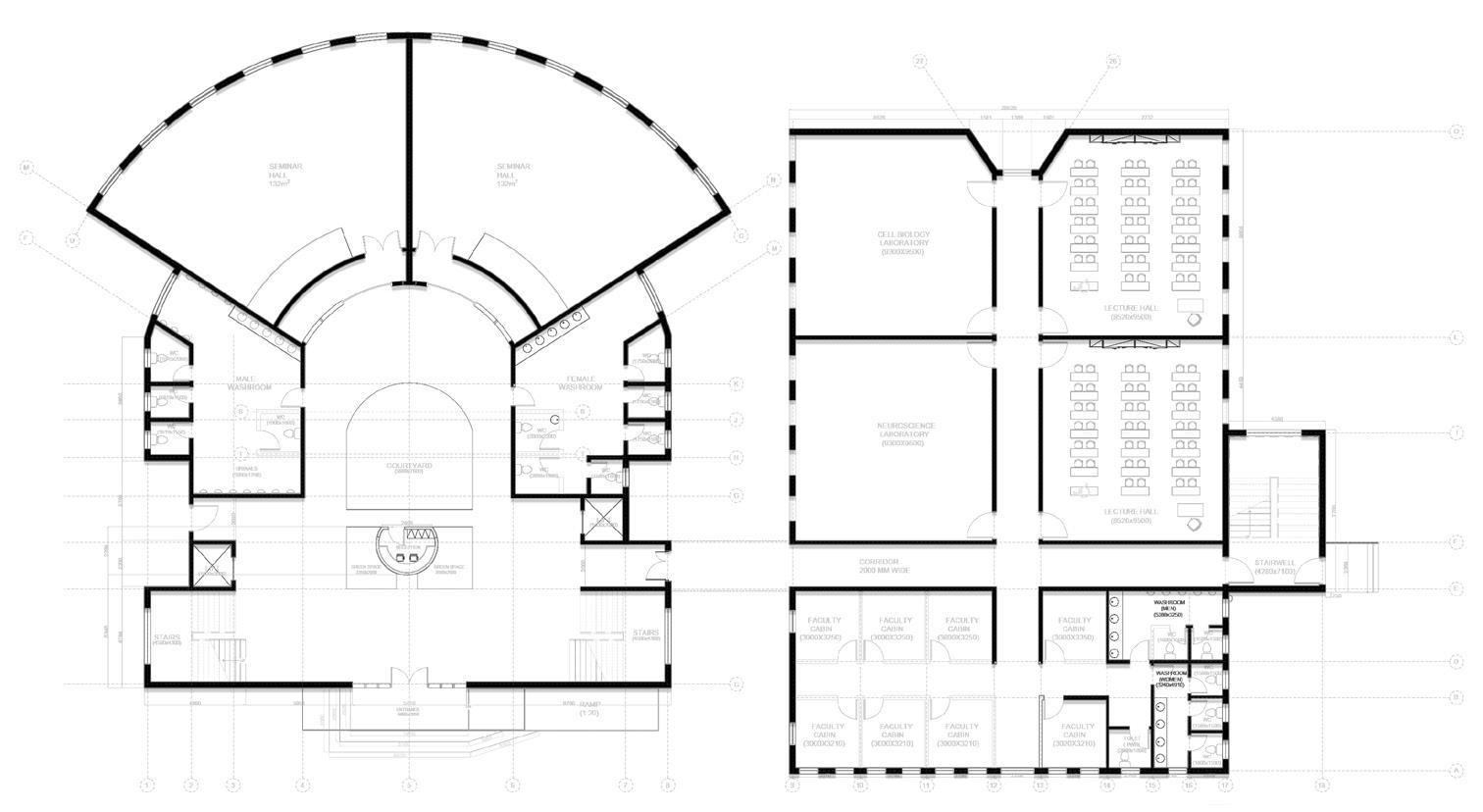
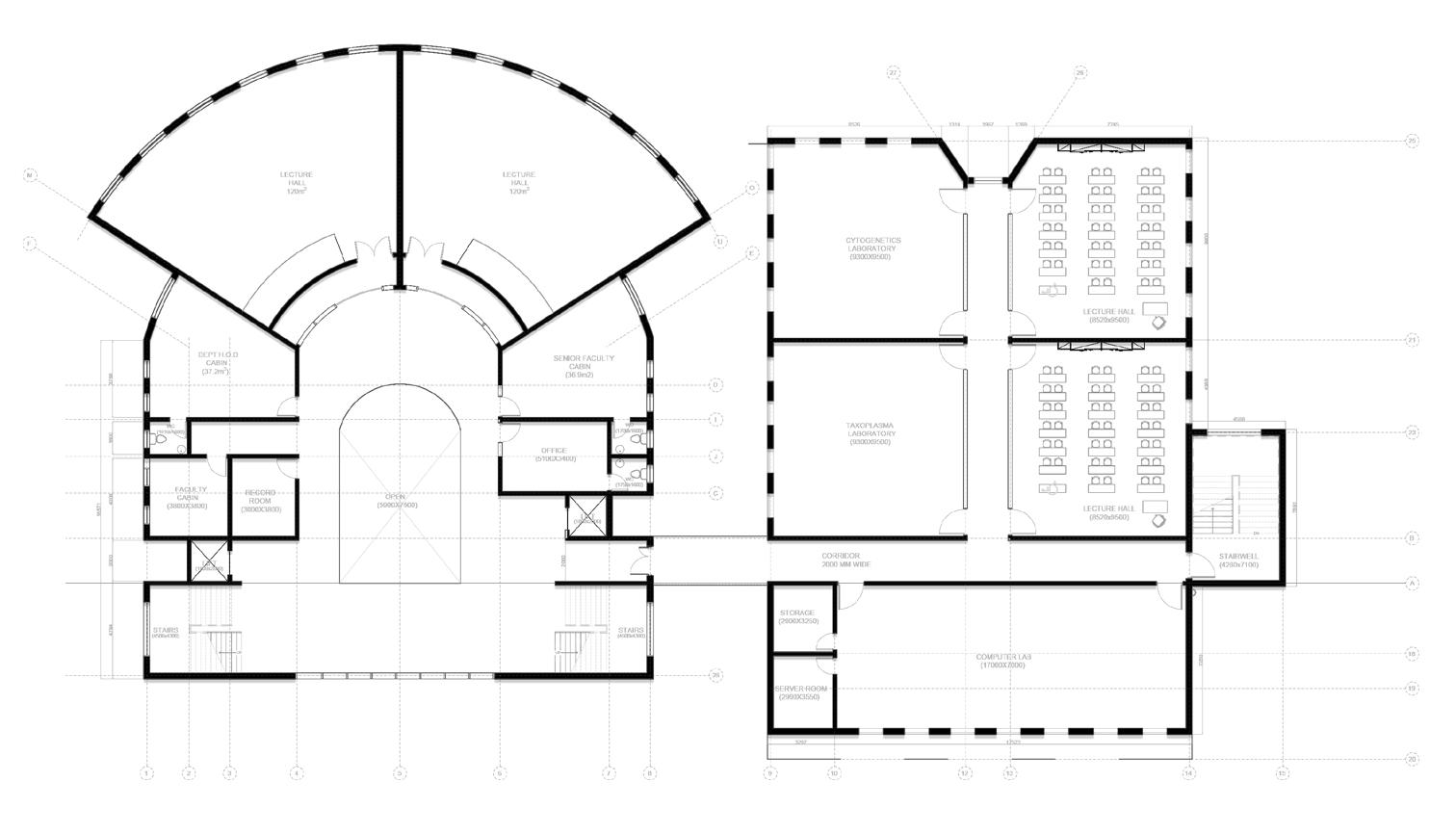
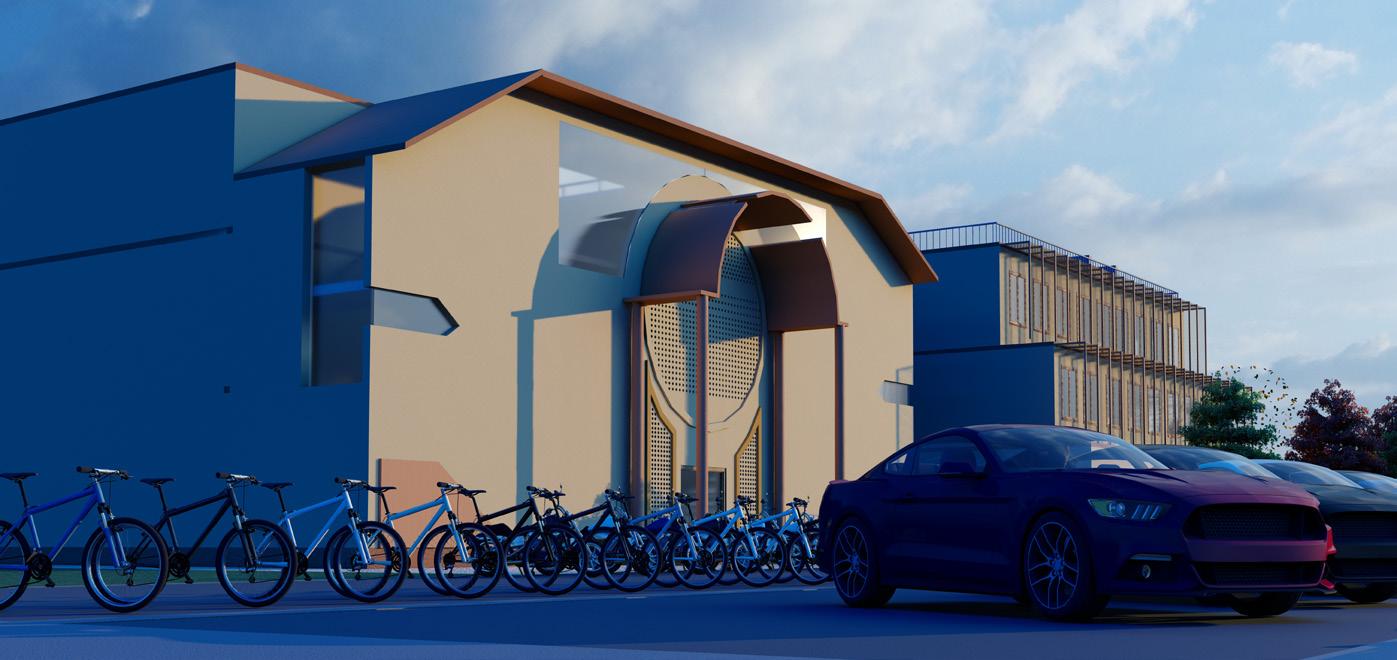
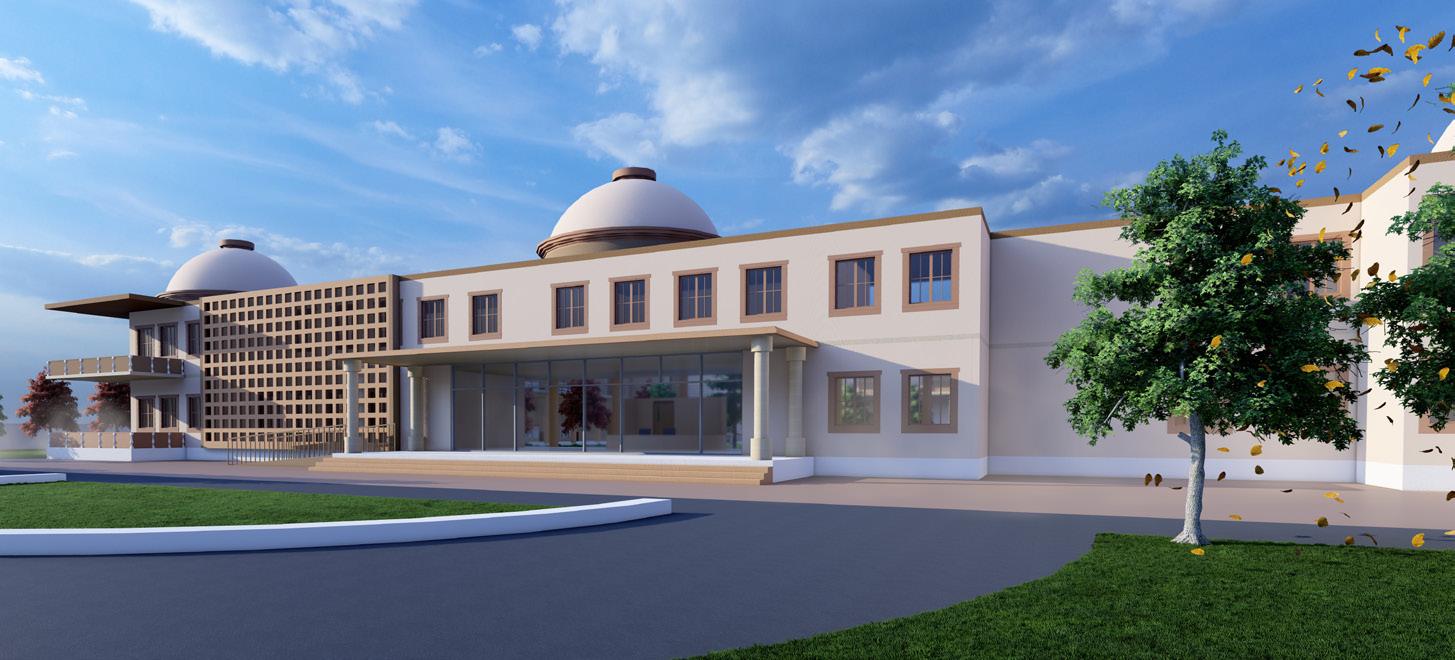
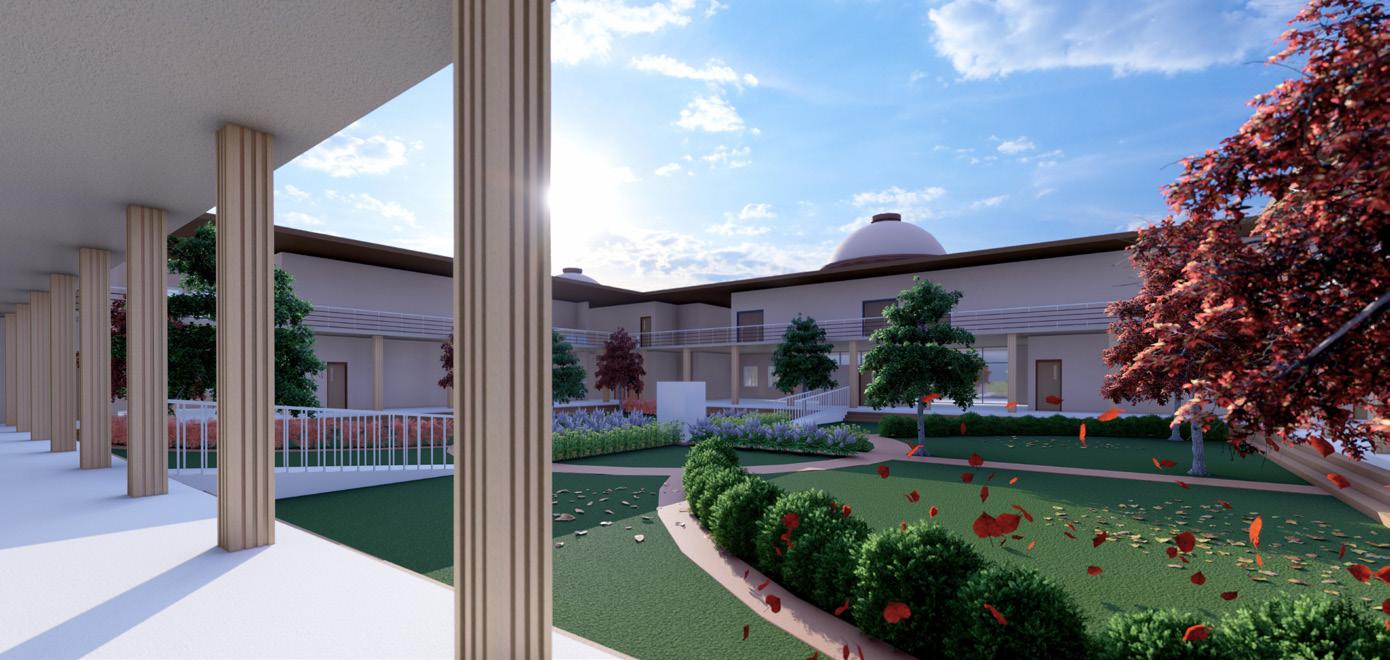
The design of Agriculture and Biotechnology University is based on requirements of around 2000 Students of UG, PG and Doctorial degree. The Site is located in Patna, Bihar. The total area of the 500 acre. The design is based around the required amenities and facilities for the students, Professors, Staff of the university.
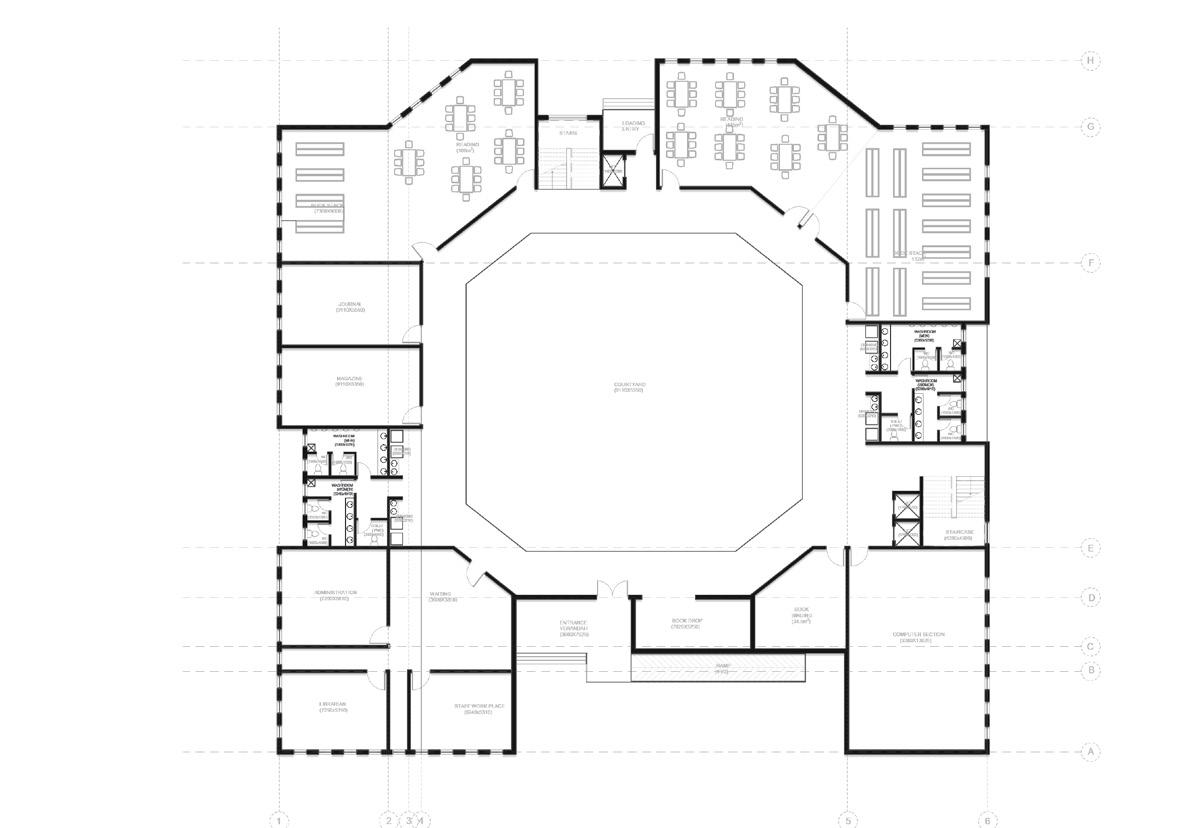
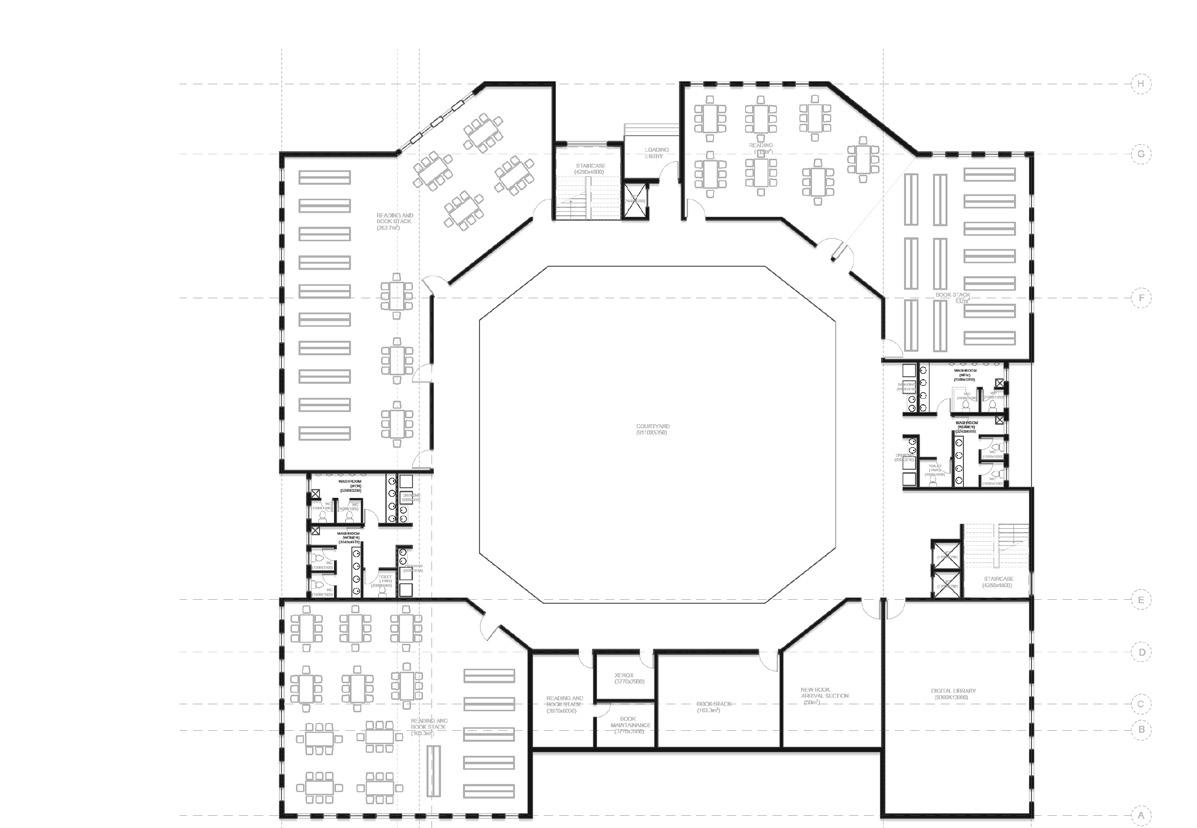
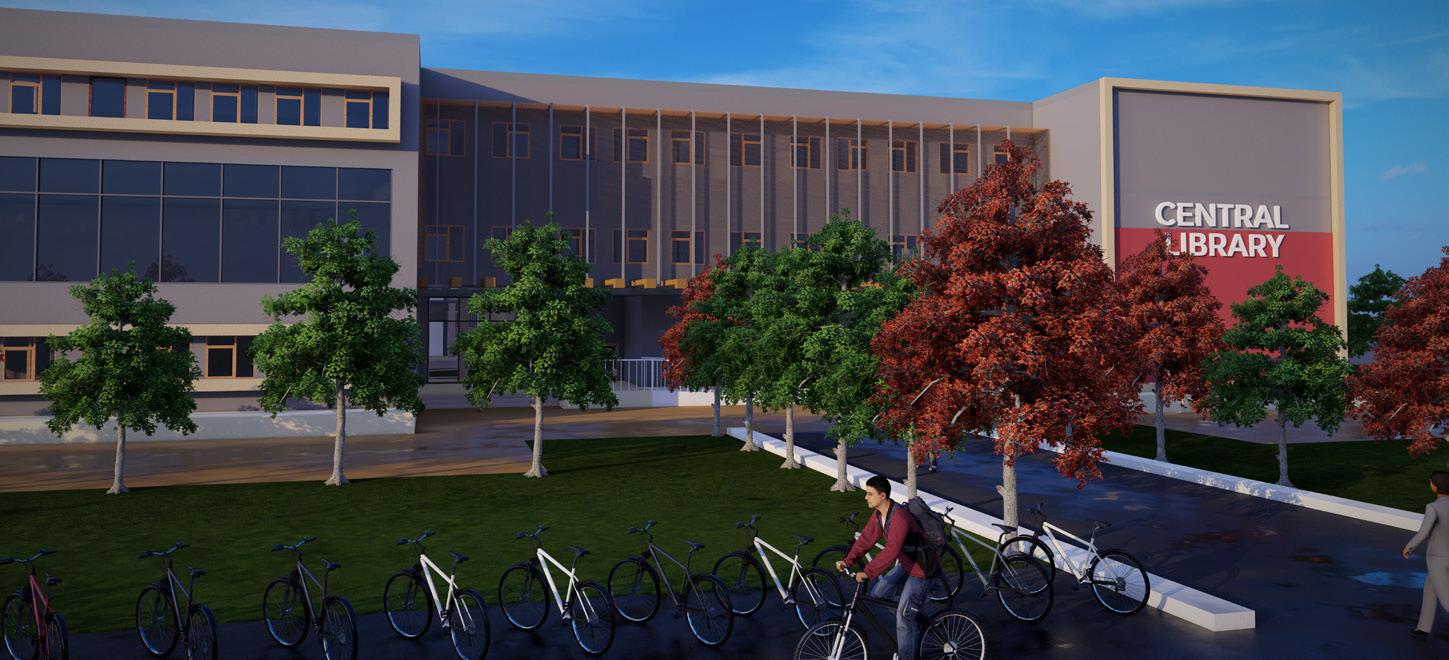
The Portfolio consists three buildings of the University i.e Academic, Admin and Library buildings. The site have 4 Auditorium, one central open auditorium for the students to interact. Nearby is the Canteen. The sport complex of the university consists one Cricket ground, two Football ground and six Tennis court and SAC building near the Hostels.
3D View
SITE PLAN
The site is structured into three primary zones, with expansion areas at both ends and the university core centrally placed for connectivity. Academic blocks are arranged around the library for accessibility, with girls’ hostels and staff residences ensuring security.
To the west, the administrative block, director’s bungalow, canteen, and an open-air auditorium integrate academic and leisure spaces. The health center and Student Activity Center (SAC) are nearby, while boys’ hostels are adjacent to the main sports ground, and a secondary ground near the girls’ hostel promotes inclusivity.
ACADEMIC BLOCK
Academic block : Section
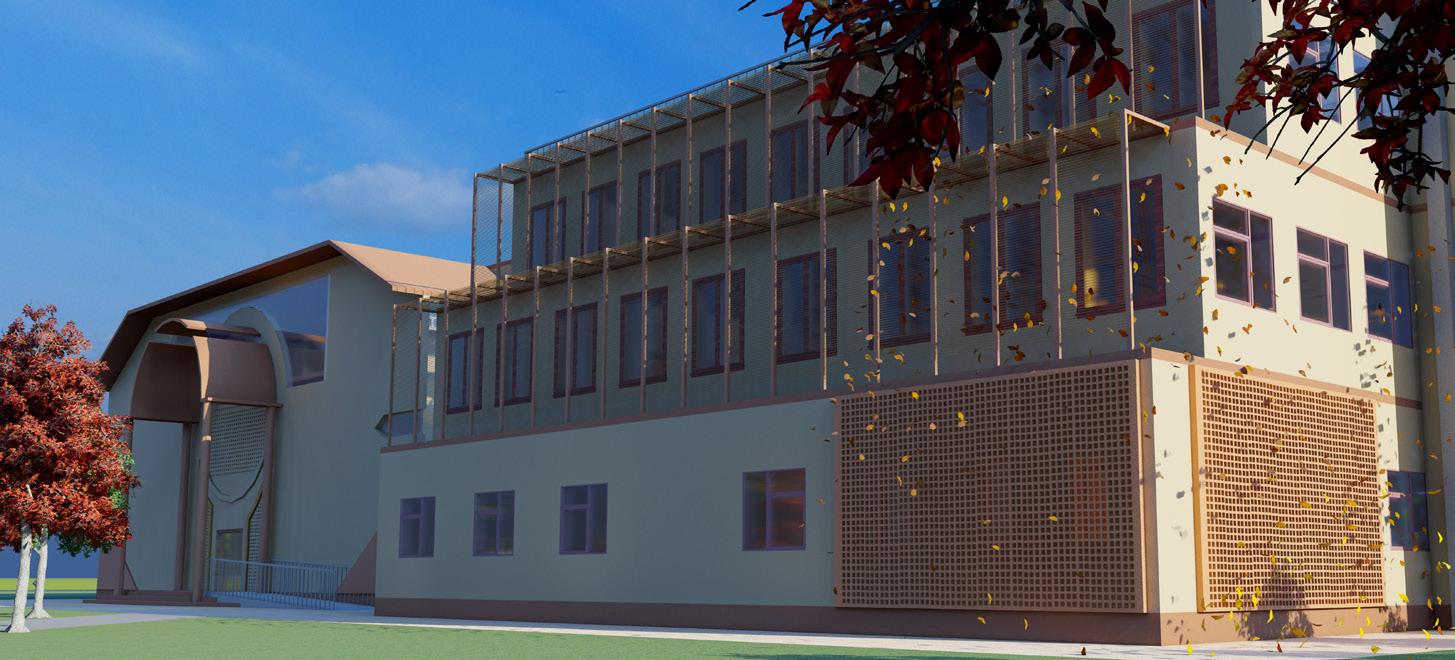
3D Render View
Admin block : Section
3D Render View
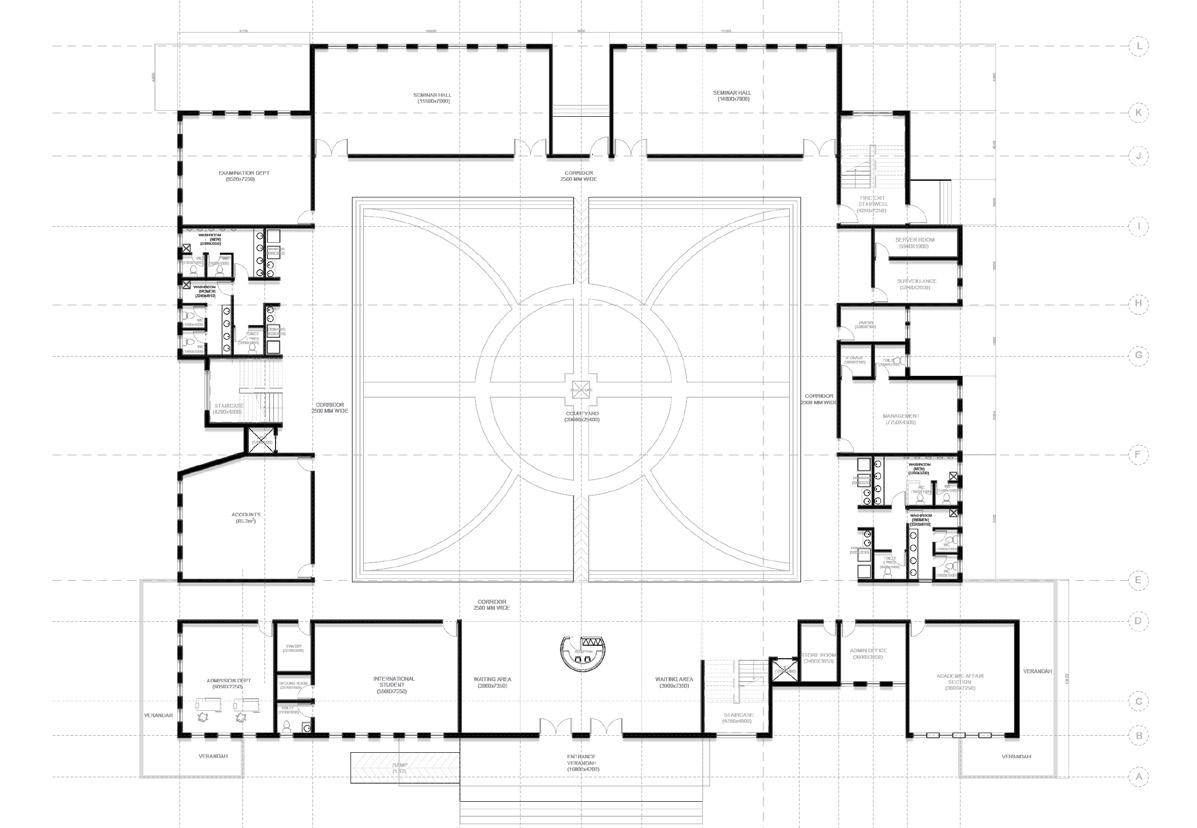
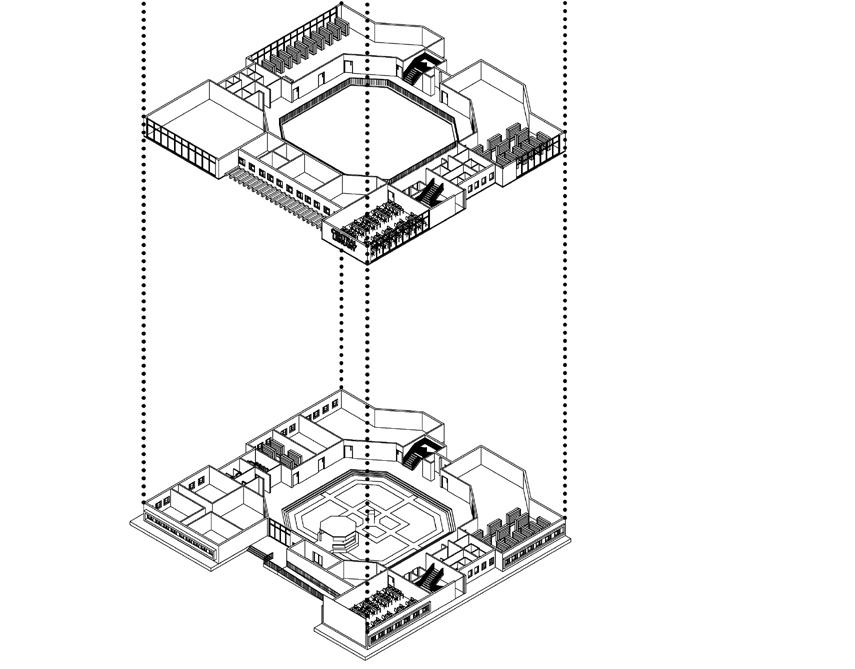
Lbrary Hall : Ground Floor Plan
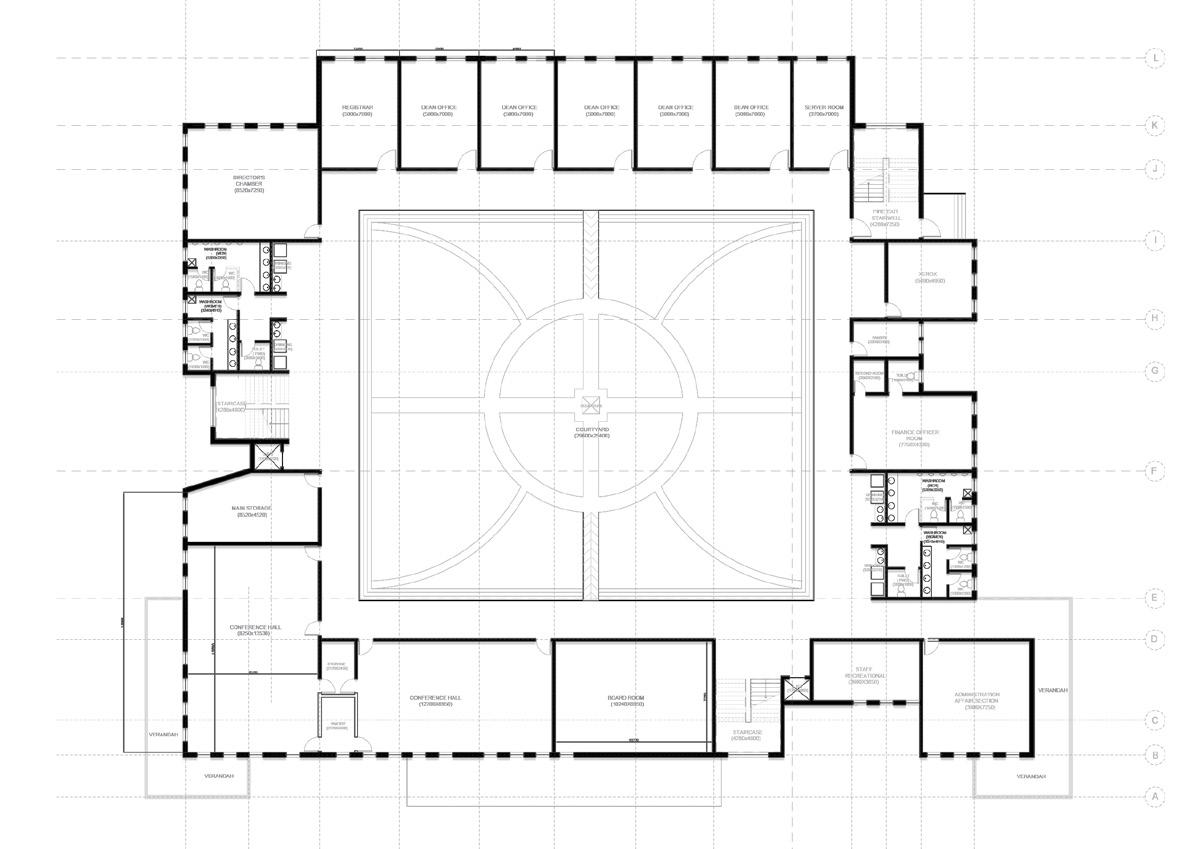
Library Hall : First Floor Plan Typical
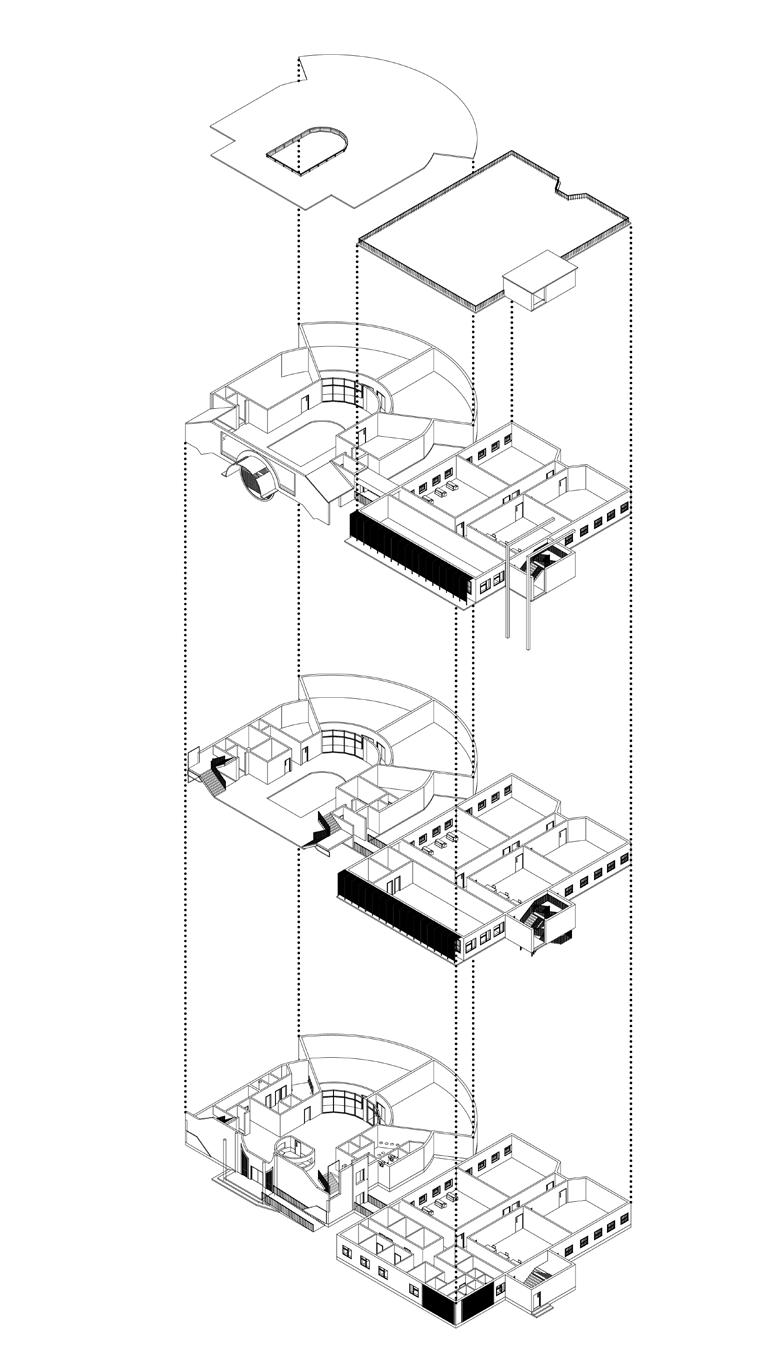
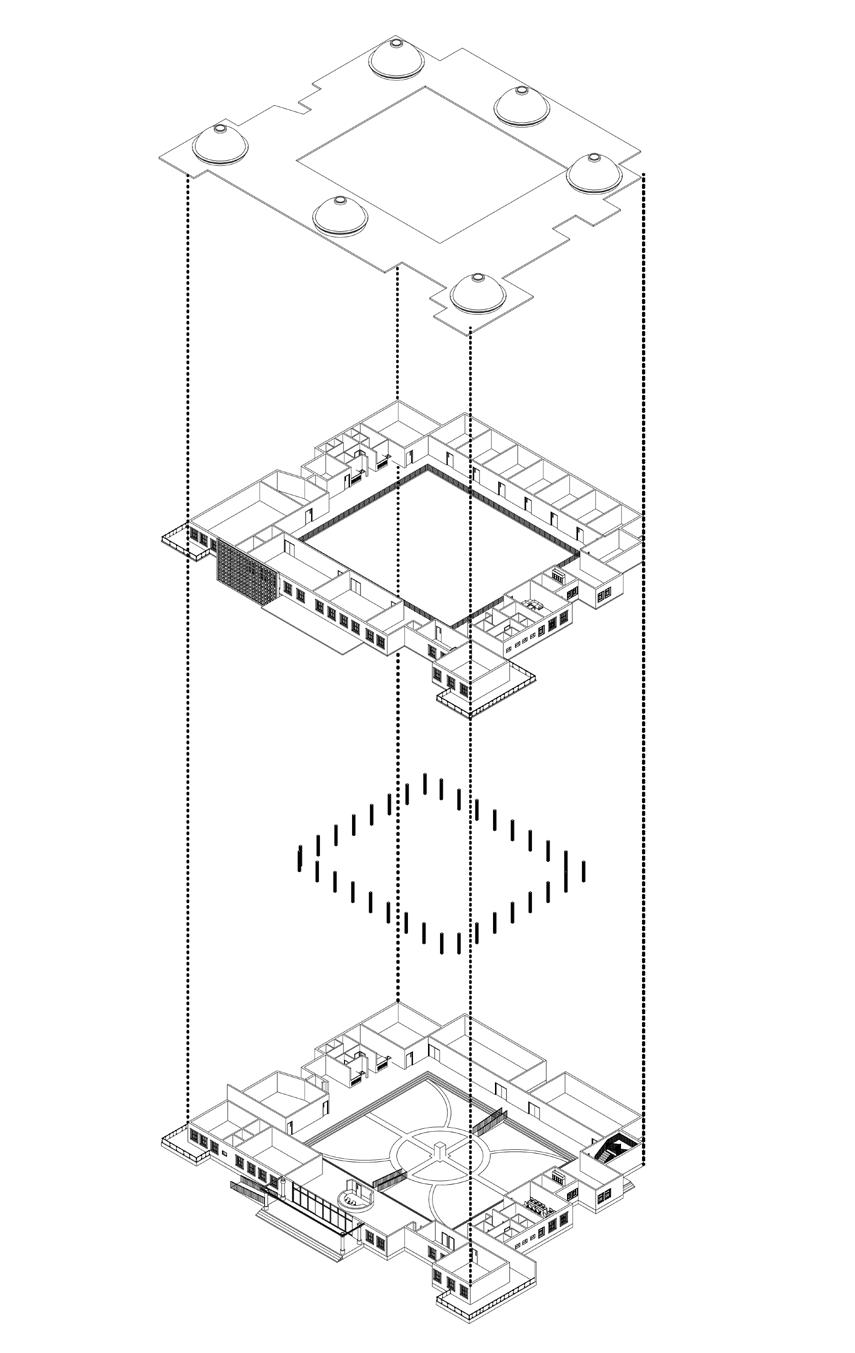
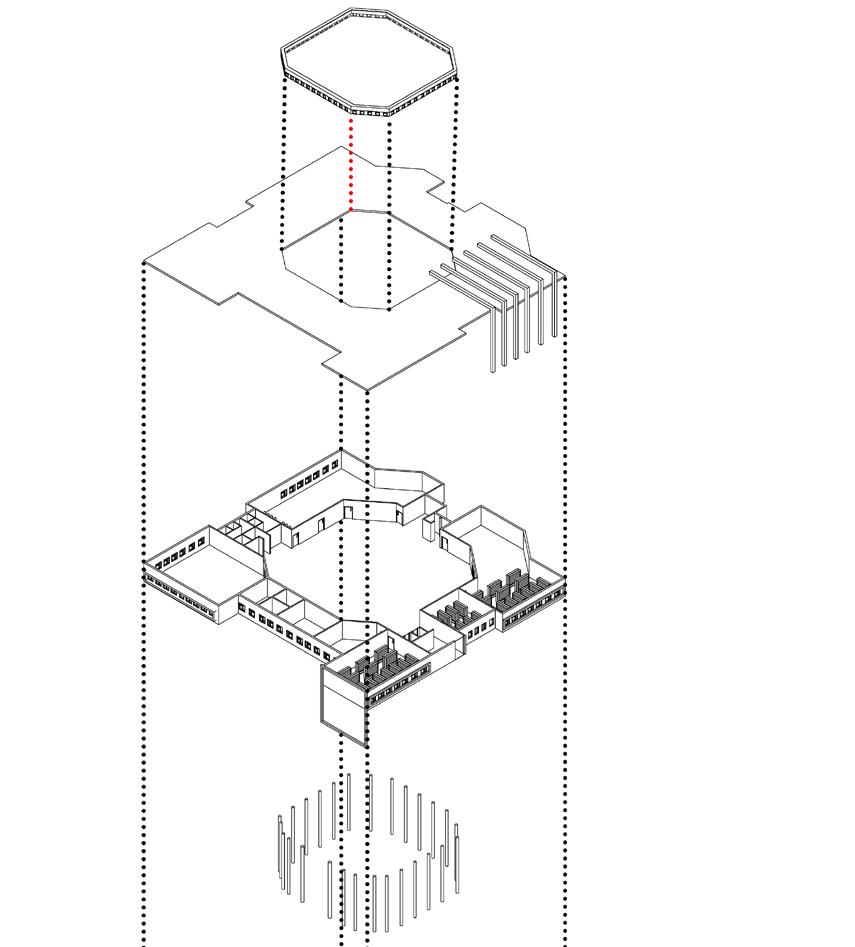
Exploded Isometric View
LIBRARY HALL
Library Hall : Section
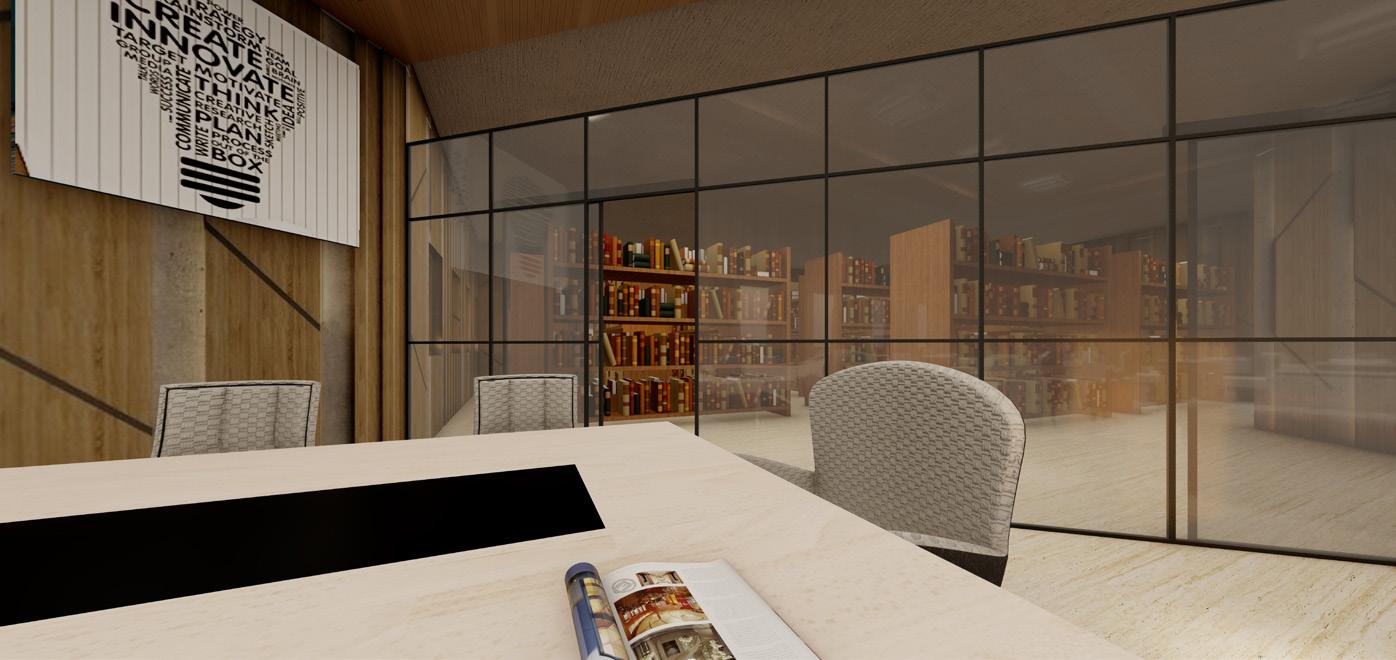
3D Render View
04 WORKING STATION
Skills
The Floor plans were built in Autocad and modelled in Revit, Rhino, Sketch-up and Rendered in Photoshop and Lumion
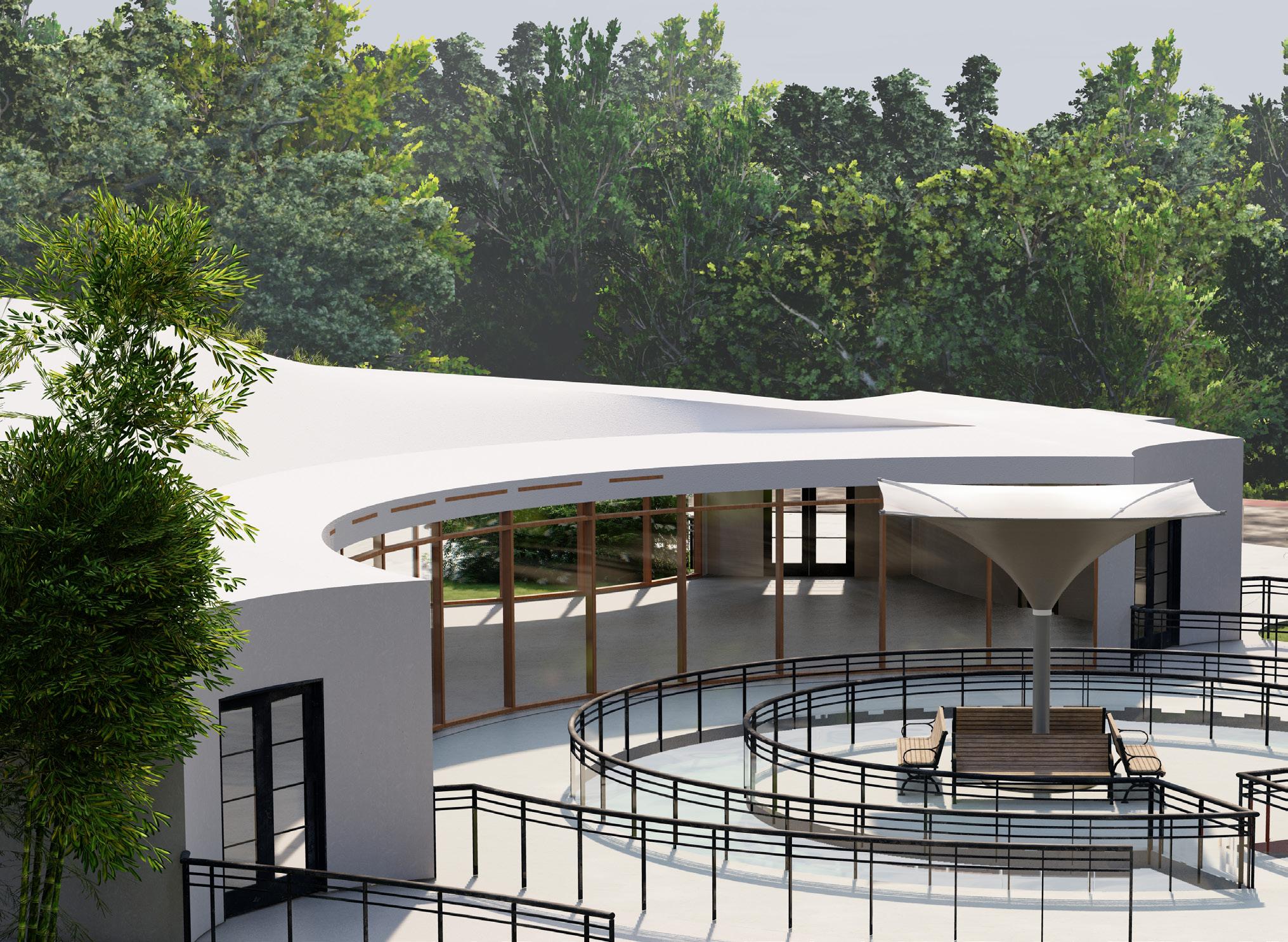
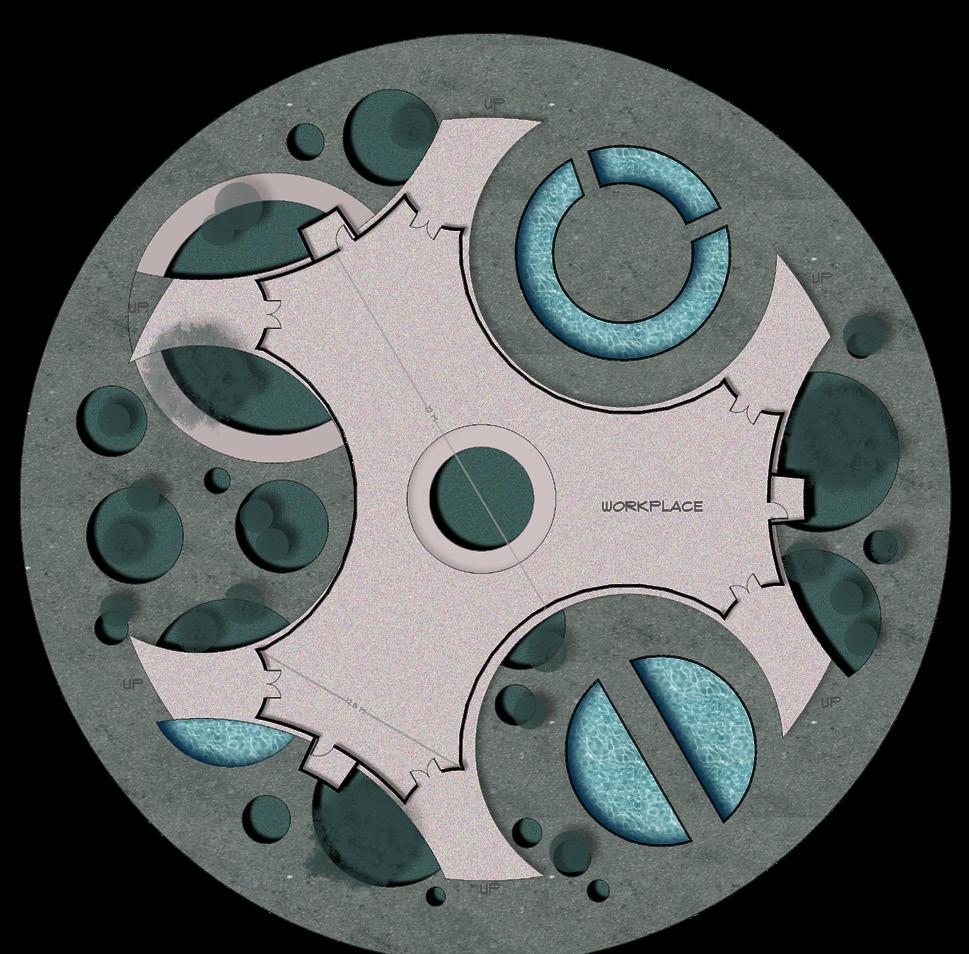
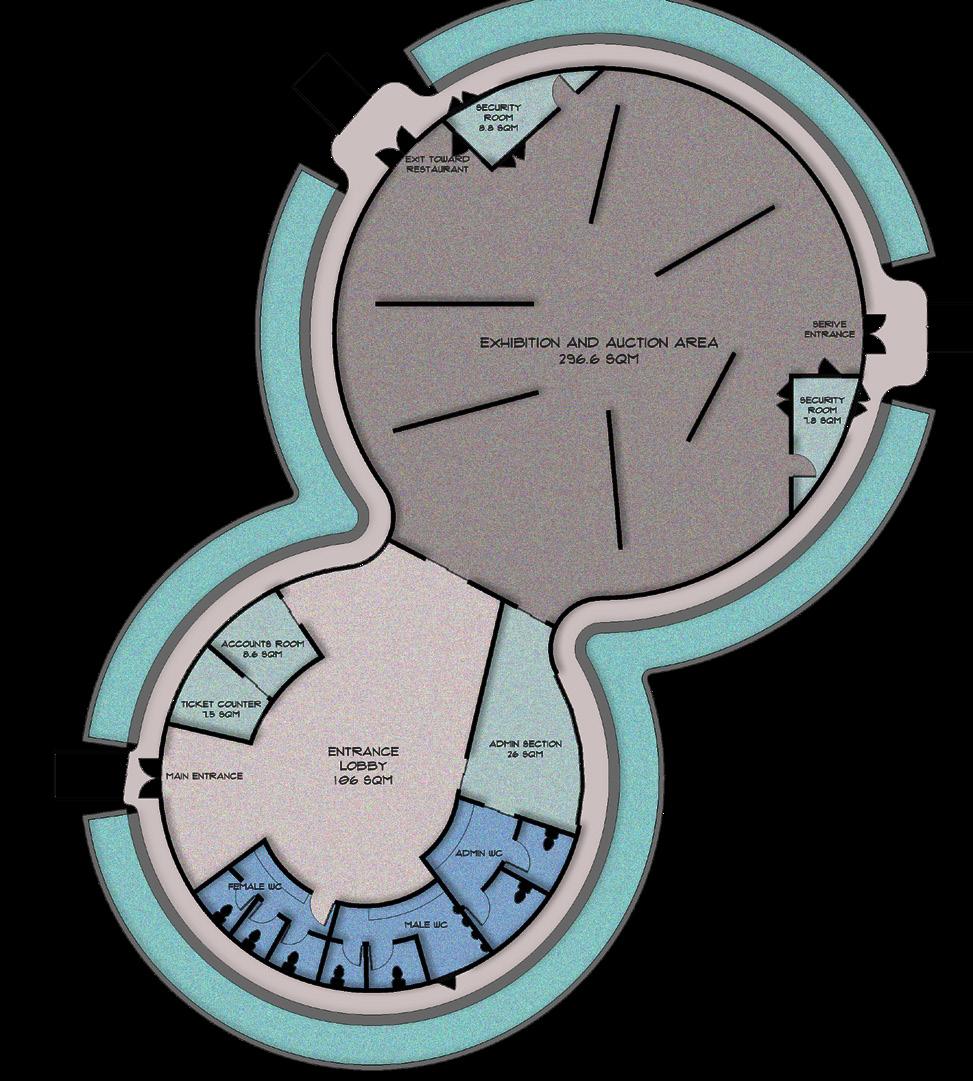
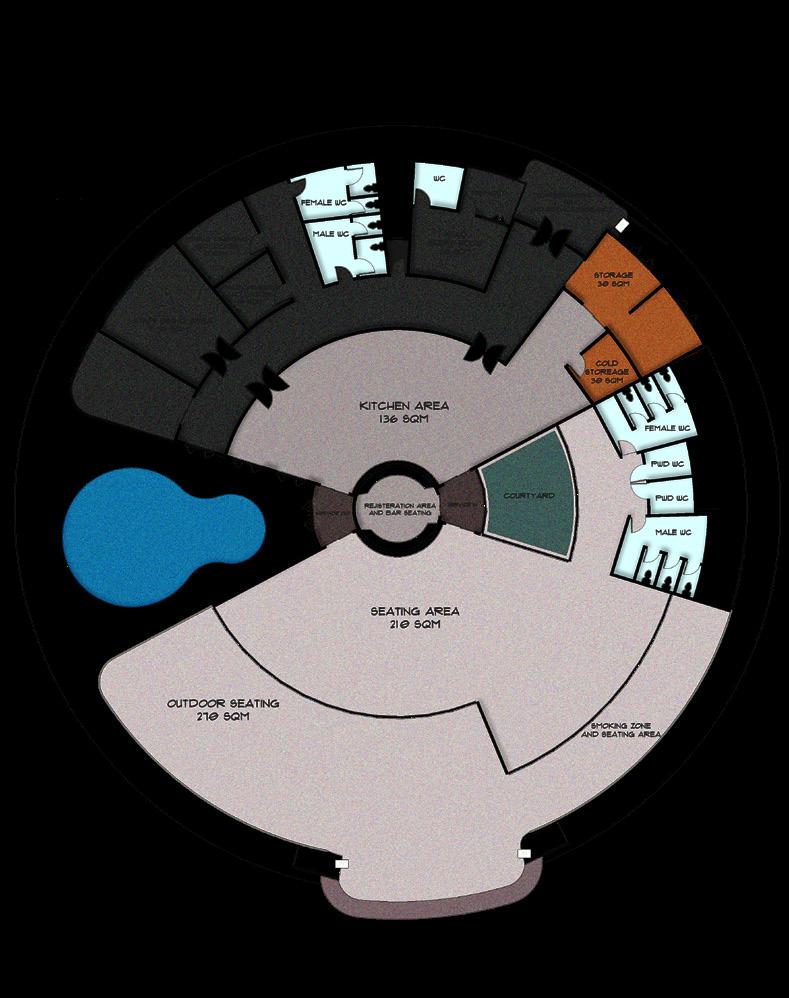
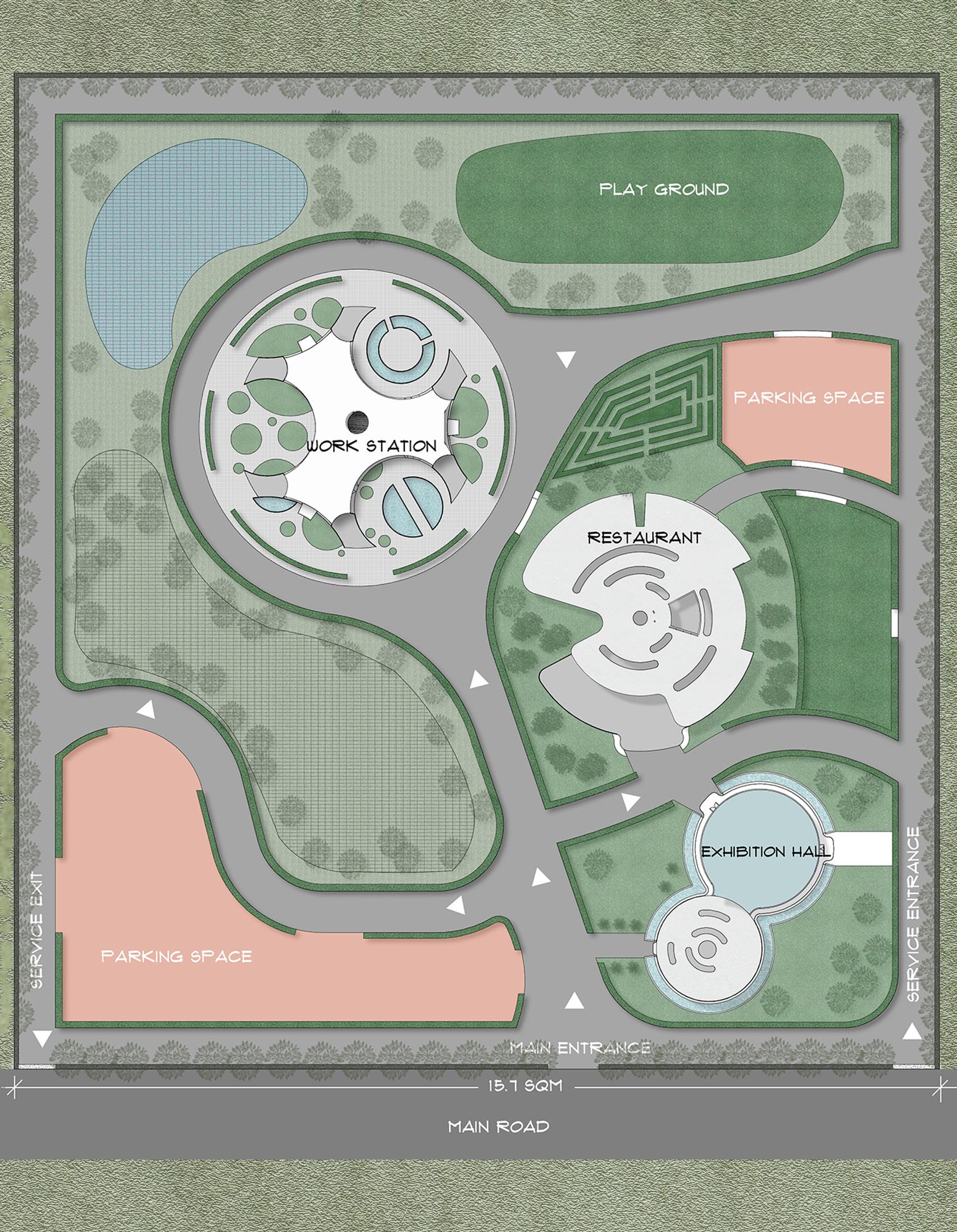
The aim of the project was to create working station for the specially abled persons. On the basis of their work, requirements has been taken , given facilities like Space for work , Restaurant, Exhibition.
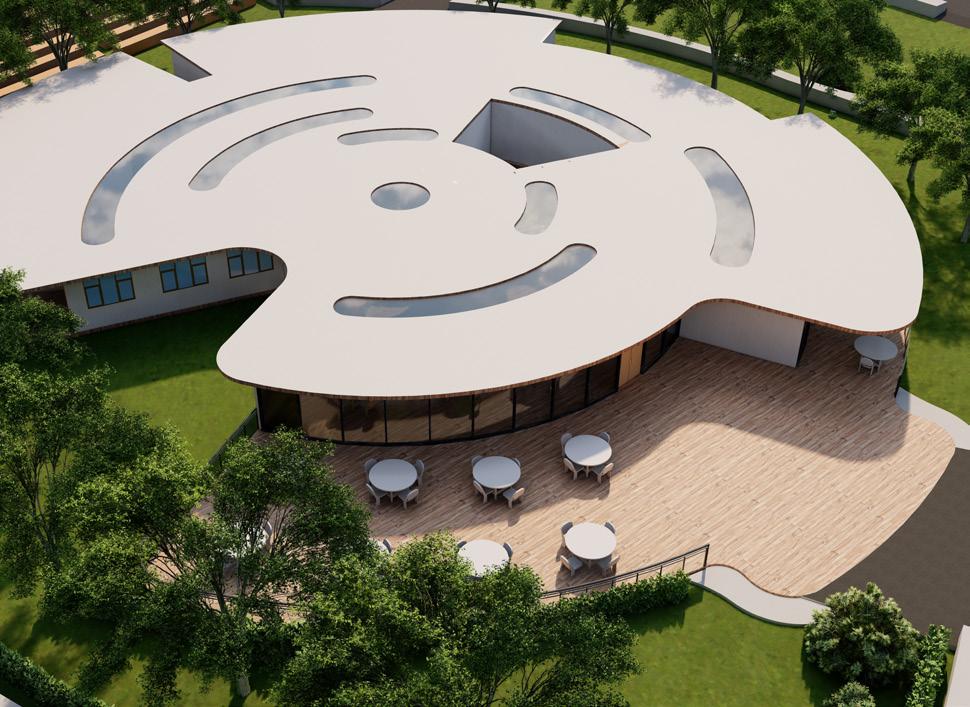
Modern and parametric architecture have been used in this Project, with considering Landscaping of the site.
3D View
SITE PLAN
Working Pod : Exploded View
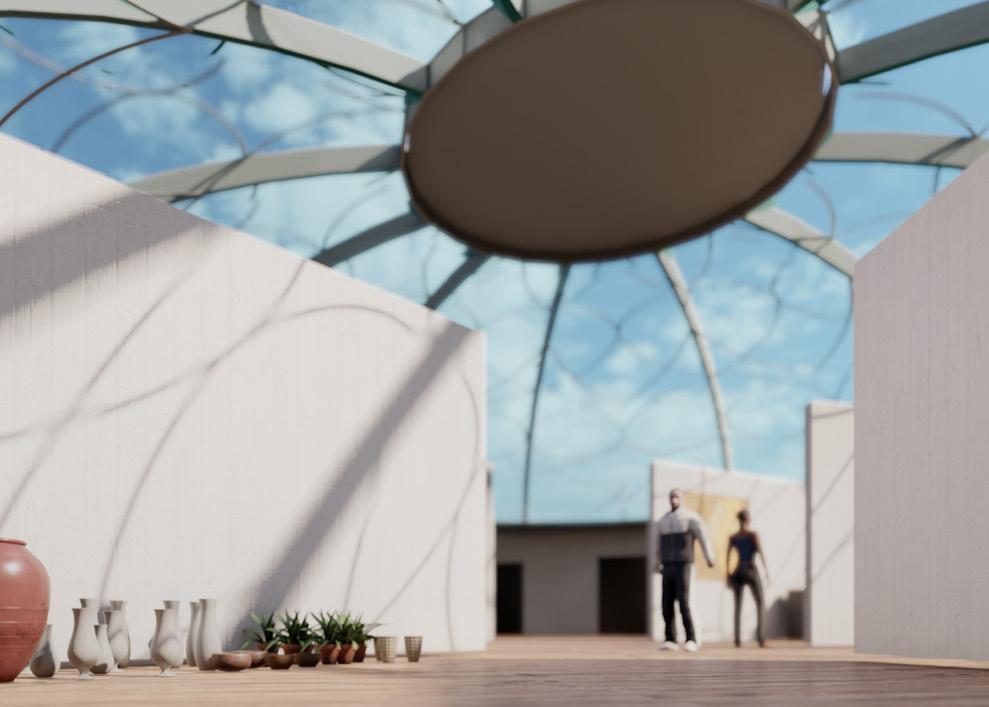
This Project have the total site area of 8640 SqM in which the built-up area is the 40%. Achieving maximum height of 7m. The site haveWarm and humid climate. The topography is flat. The pods are designed for the capacity of 25 people. This was designed taking consideration of the specially abled people, One of the pod is for the Pottery, second for the Sculpture and third for the paintings. This project have the consideration of the universal design principles in all the three spaces i.e working pod, Restaurant and Exhibition hall.
Restaurant : Exploded View
3D Render View
INTERNSHIP
WORKS
DESIGN DEVELOPMENTS
CREATIVE GROUP LLP
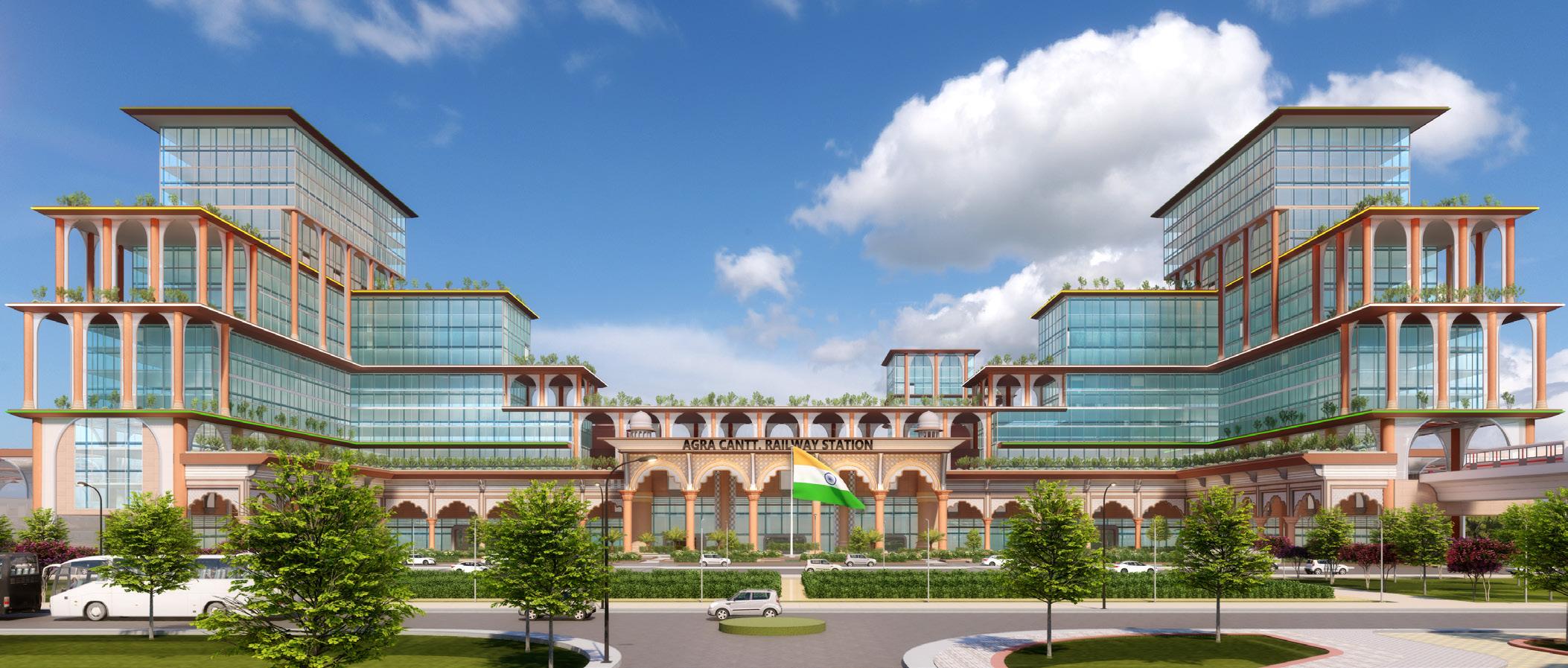
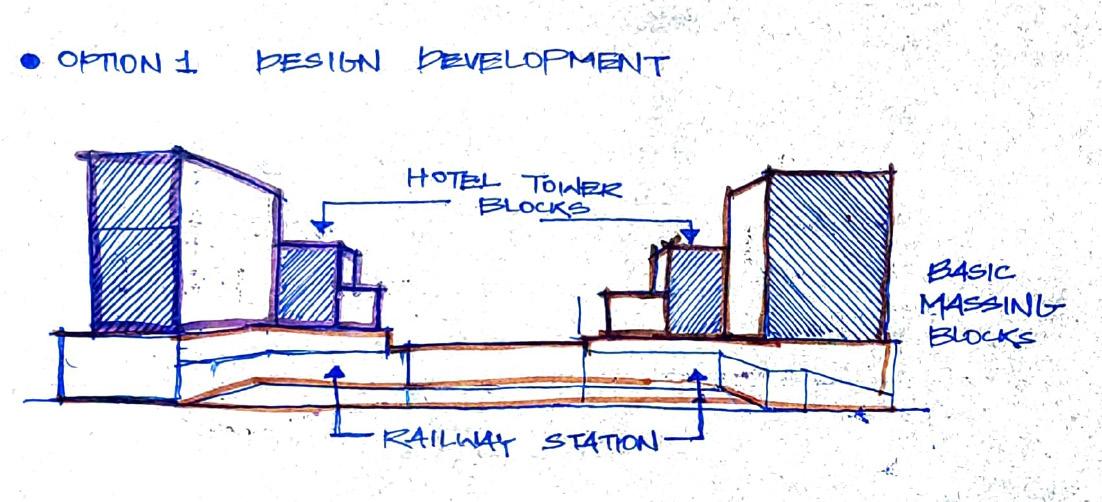
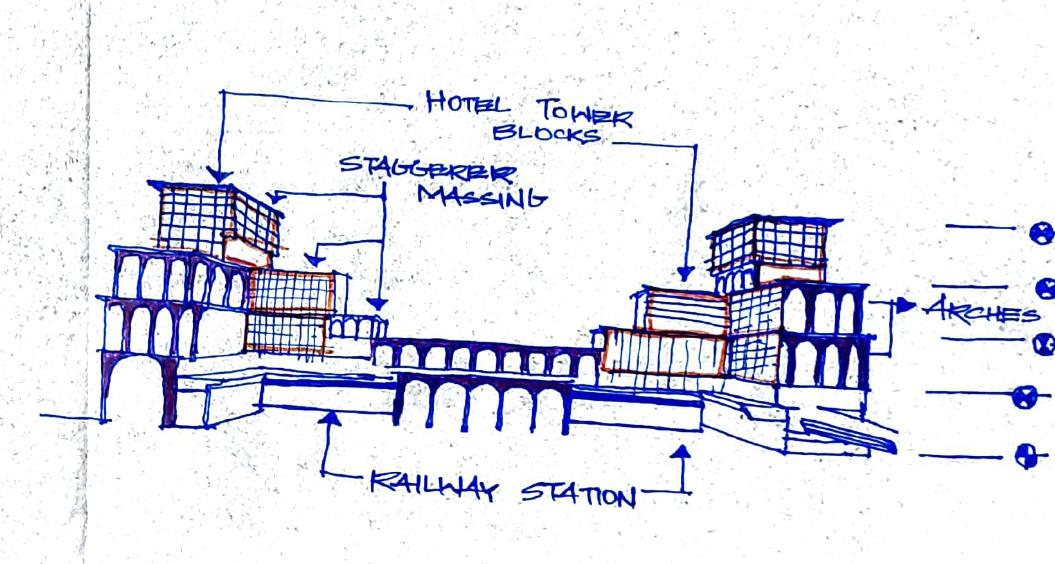
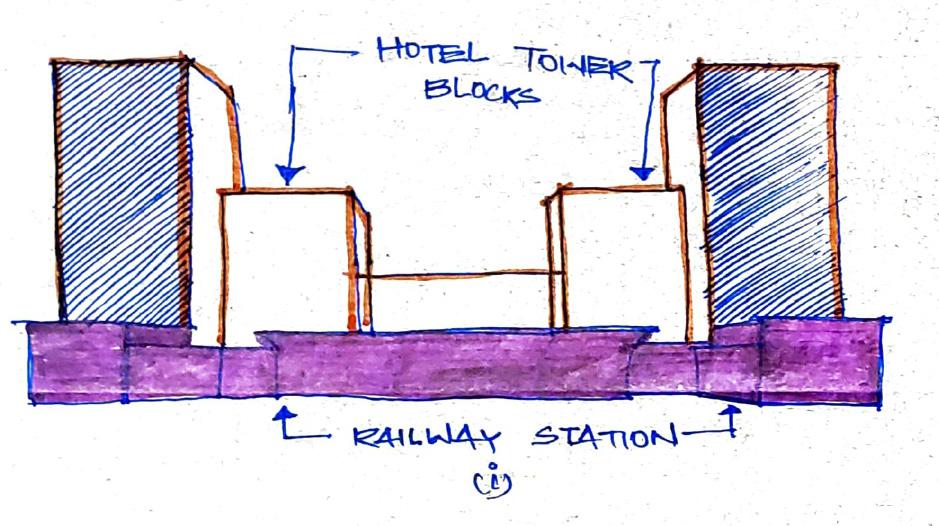
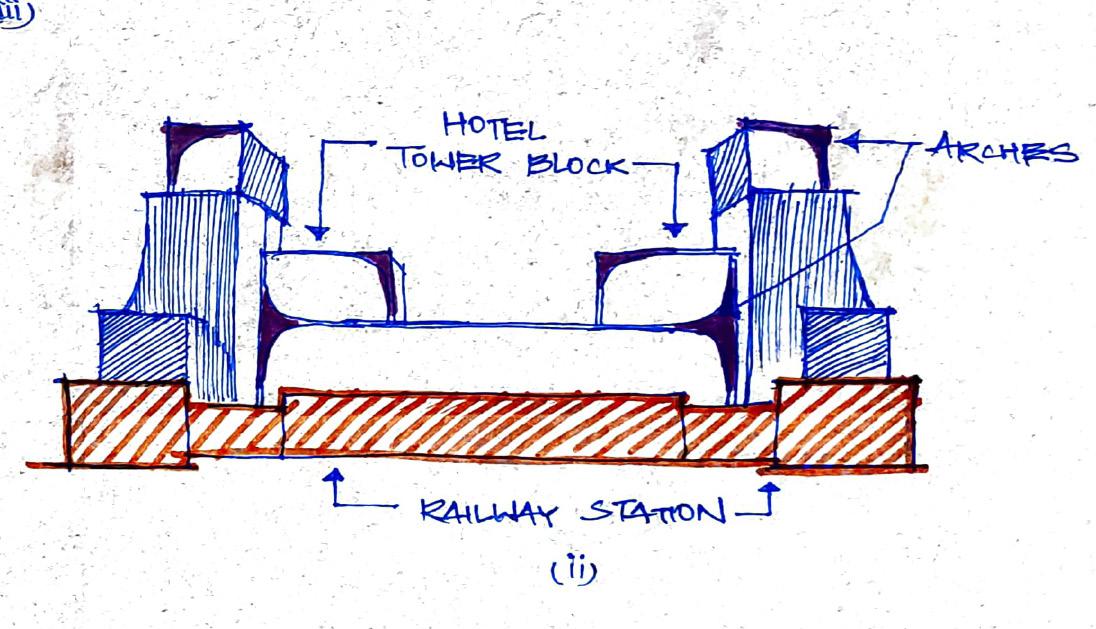
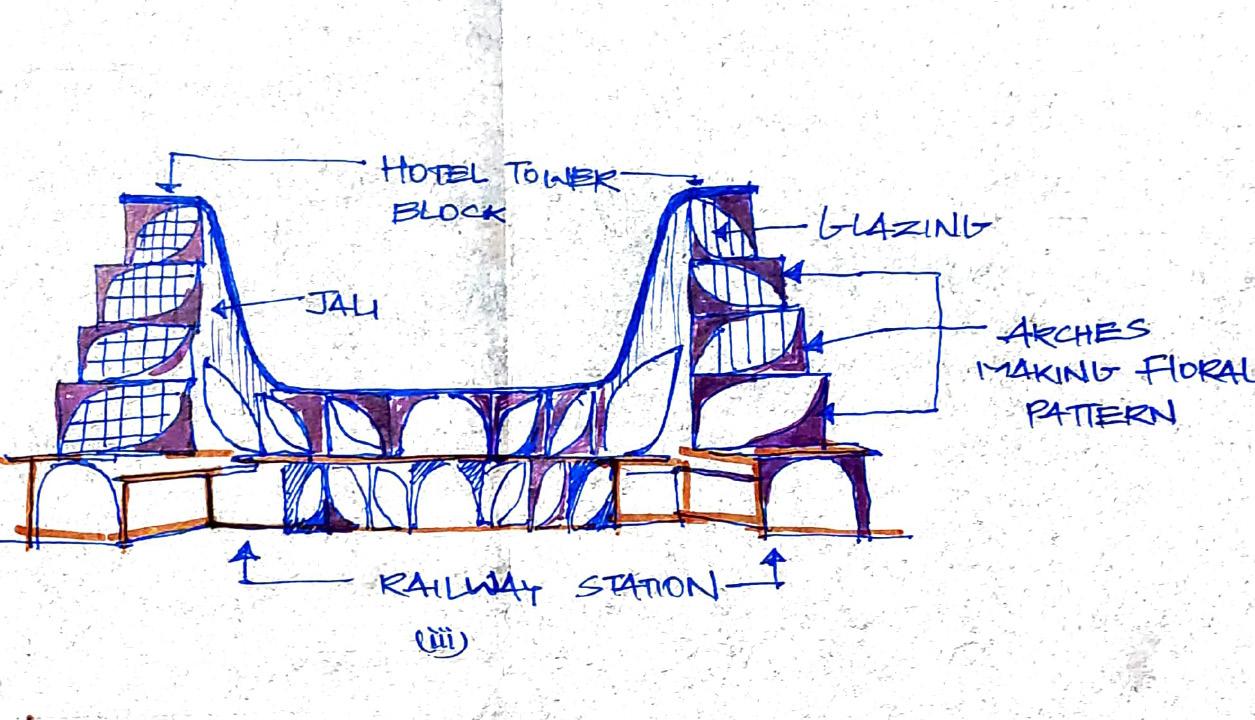
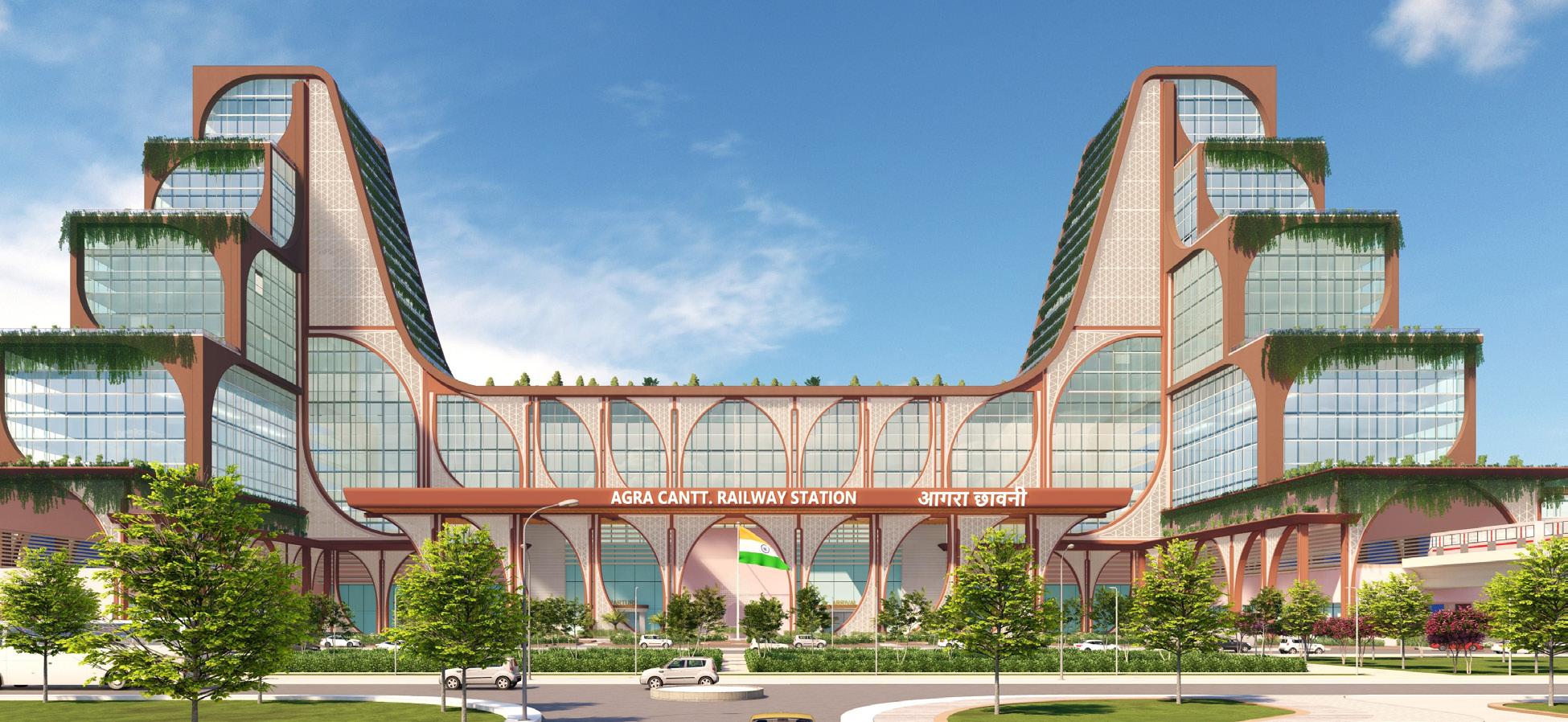
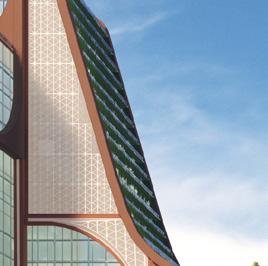
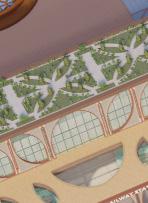
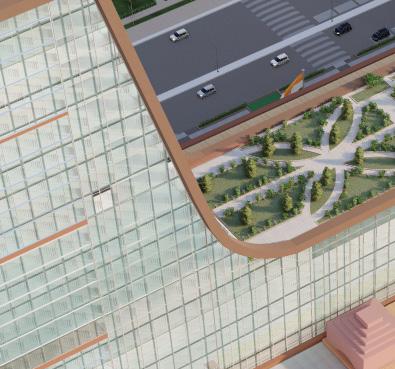
The Agra Cantt Railway Station Hotel Tower project involved the architectural design of hotel towers, integrating traditional elements reflecting the cultural identity of Agra. This design option drew inspiration from Udaipur’s architectural language, particularly its iconic arches, which influenced both the staggered massing of the building and the façade treatment. The design harmoniously blends traditional aesthetics with modern functionality, showcasing Agra’s heritage through its architectural features.
Hotel Tower Design Option 01
The Agra Cantt Railway Station Hotel Tower project involved the architectural design of hotel towers, blending traditional and modern elements. The design draws inspiration from Udaipur’s architectural language, prominently featuring arches that influence both the façade and the staggered massing of the structure. This approach integrates Agra’s cultural heritage with a contemporary architectural touch, reflecting the city’s identity while offering a modern aesthetic.
Hotel Tower Design Option 02 : 3D Rendered View
INTERNSHIP
WORKS
DESIGN DEVELOPMENTS
CREATIVE GROUP LLP
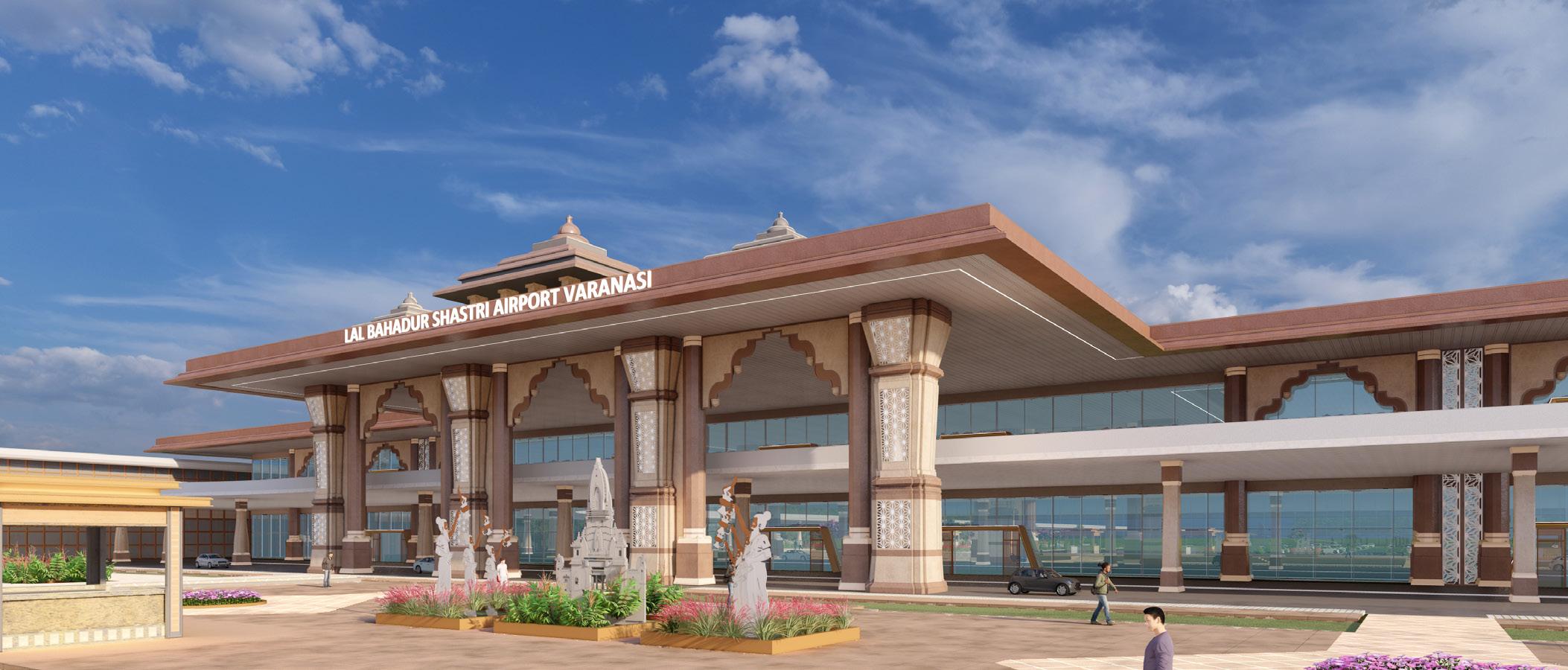
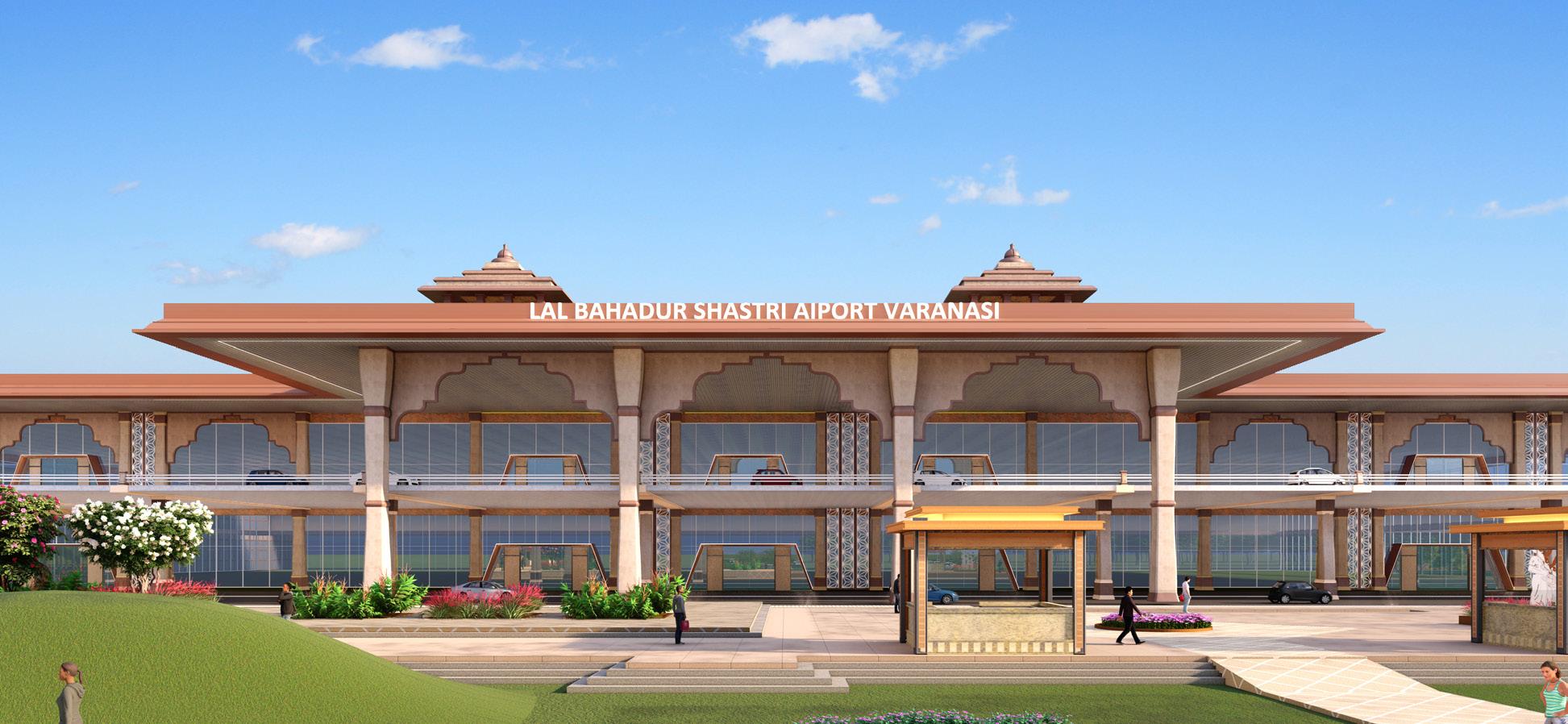
The project draws architectural inspiration from the entrance gate of the Kashi Vishwanath Temple, incorporating its traditional elements into the design. The infused features reflect the cultural essence of Varanasi while harmonizing with the local aesthetics. This approach integrates heritage-inspired details with a contemporary architectural language, creating a design that complements the spiritual and cultural identity of the region.
Hotel Tower Design Option 01 : 3D Rendered View
The project adopts a modernist approach while drawing cultural inspiration from the entrance gate of the Kashi Vishwanath Temple. Traditional elements, such as the iconic forms and motifs of the temple, are reinterpreted within a contemporary architectural framework. This fusion creates a design that respects the cultural essence of Varanasi while integrating clean lines, functional forms, and modern materials. The result is a harmonious balance between heritage and modernity, reflecting the spiritual identity of the region in a progressive architectural language.