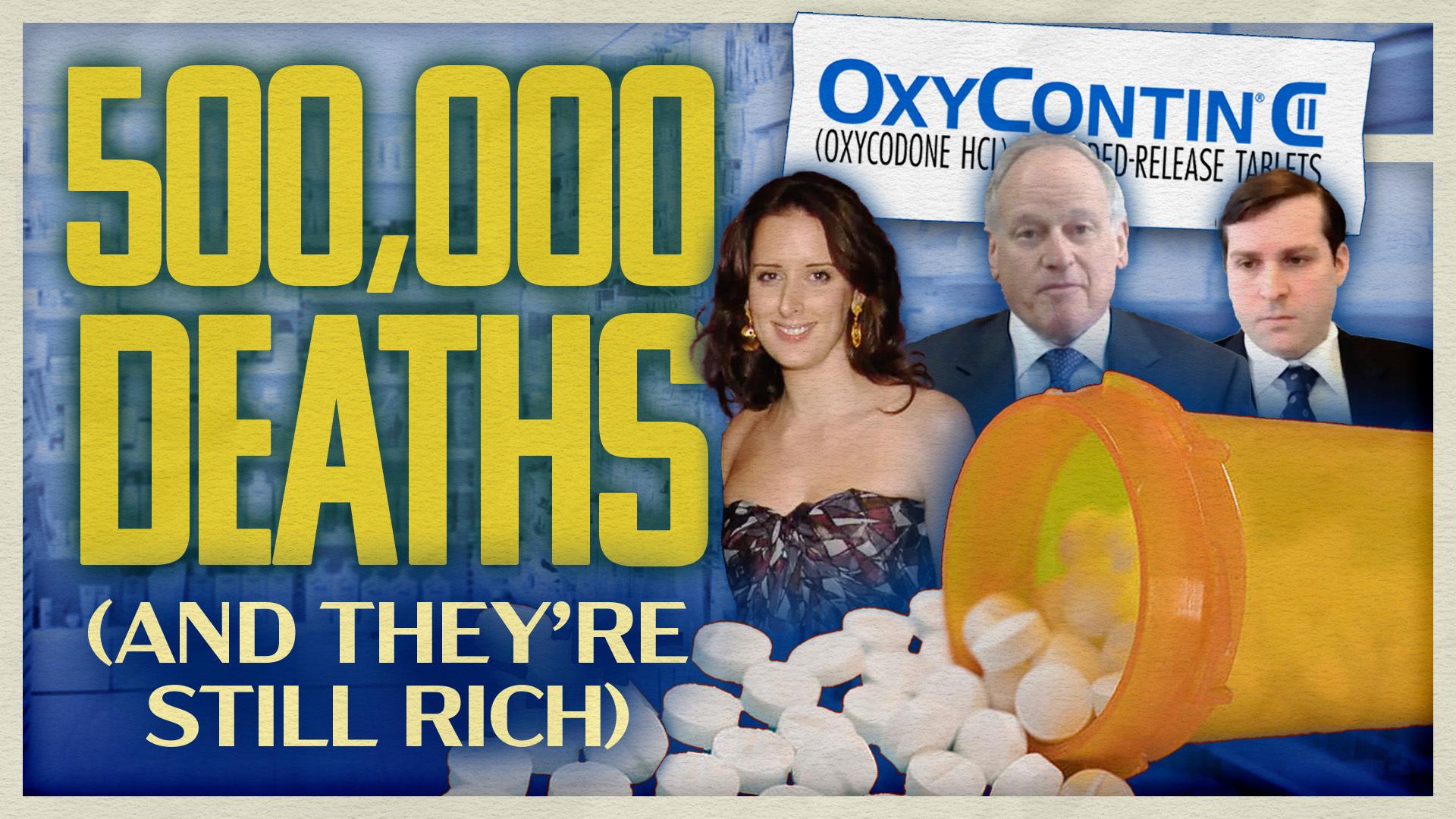
From the haunting emptiness left by my son's departure, at the cruel hands of OxyContin, emerges a story demanding to be told, and truths yearning to be acknowledged.
It also speaks of other bright futures cut short, relentless pain, and the treacherous seduction of relief in the form of a pill.
My son, in the prime of his life, was besieged by a vicious autoimmune disease, one that ruthlessly attacked the myelin shield of his nerves, ushering in unyielding pain.

Amidst our desperation, we turned to what was presented as a beacon: OxyContin. This drug, with all its reassuring accolades, was presented to us by a trusted family physician, and it came heavily endorsed by the pharmaceutical titan, Purdue Pharma.
"From Hopeful Reprieve to Heartbreaking Captivity: The Deceptive Tale of OxyContin and Its Silent Victims"
OxyContin, beneath its sheen of medical legitimacy, harbored oxycodone, a molecule so perilous that its DNA is strikingly akin to heroin. Its potency far outstrips even morphine, historically the touchstone of pain relief. Over the years, the medical fraternity had judiciously sidestepped the use of such powerful opioids as oxycodone heeding the glaring alarm bells of addiction.
But Purdue Pharma, with a marketing blitz and selective research sponsorships, set out to rewrite this narrative. They championed a tale of minimized risks and broadened the scope of OxyContin's application.
In the beginning, OxyContin seemed like a gift. Its introduction to our household marked the end of an era where pain punctuated every joy, every gathering. The persistent throb and discomfort, previously as predictable as clockwork, faded into the shadows. The laughter during our family dinners became genuine, the air lighter.
Little did we know that we were celebrating the opening act of a tragedy.
The beginning was subtle. A misplaced prescription here, a rushed visit to the pharmacy there. Alarm bells started ringing, but we dismissed them.
However, the inconsistencies grew more frequent. My son's once-clear eyes began to exhibit a distant, foggy glaze. The vivacity of his laughter was replaced by a languid apathy. Conversations with him became increasingly one-sided, like speaking to a shadow of his former self.
His family began to fracture. Accusations and blame ricocheted through my son’s home like shrapnel, wounding all in their path.
His young children were both thrust into a new world. Their innocence was the unsung casualty in this battle, the heavy price of addiction's collateral damage.
Friends and family, once the cornerstone of our son's world, found themselves on the periphery. The drug, once our ally in combatting pain, had taken center stage. It was the puppeteer, and he, the marionette.
The full weight of addiction's destruction isn't merely felt by the addicted. It permeates every corner, every relationship, shattering the foundations of trust, love, and understanding. Our son's battle with OxyContin is a testament to that.
In the end he was alone. Cut off from familial ties, he passed away one silent evening. It wasn’t the result of taking too much of one drug, but the unintended consequences of mixing medications, each within their supposed safe dosage.
His story has been repeated a million times.
A staggering one million Americans, since the close of the last century in 2000, have been lost to the opioid abyss. This isn't merely an unintended consequence but, as experts like Andrew Kolodny point out, a direct fallout of Purdue's deceptive canvasing. A crisis was birthed, pushing many toward the lethal allure of heroin when prescription opioids became elusive or financially crippling.
A character central to this saga, one who sows seeds of doubt in the very approval process of OxyContin, was Clarence Wright.
The year 1995 saw the FDA give its nod to OxyContin, touted as a solution for those enduring moderate to intense pain. Astonishingly, Purdue ventured into this approval without having conducted a single clinical study to ascertain the drug's potential for addiction or abuse. In a move that raised eyebrows, the FDA sanctioned a package label for OxyContin, proclaiming its superiority and presumed safety over other painkillers. This was attributed
to its unique, patented time-release formula, which was optimistically and somewhat naively deemed to "reduce the abuse liability." David Kessler, who was at the helm of the FDA during this pivotal decision, confided that he remained detached from this particular endorsement. Further deepening the murkiness surrounding OxyContin's approval was Dr. Curtis Wright, the FDA official directly responsible for overseeing its entry into the market.
Wright at first posed a significant obstacle to the drug approval.
This FDA regulator, after notably intimate deliberations with Purdue representatives, dramatically altered his stance on the drug. After a two day meeting with the Sackler family in a resort hotel he emerged with his signed FDA approval of the drug. And in what can only be described as a disturbing epilogue, he soon transitioned from his $50,000 year job at the FDA, a to a cushy perch at Purdue Pharma, drawing an enviable annual salary of over $400,000 as Director Medical Research for Perdue.
Richard Sackler, the family patriarch held physicians in high esteem, often stating, “I would trust a fellow-physician over the state.” But this reverence became tainted when he and his family-owned company, Purdue Pharma, began their aggressive marketing of OxyContin. It wasn't merely a painkiller; it was almost chemically identical to heroin. And while its ability to alleviate pain was undeniable, so was its potential for addiction.
Under the guise of helping patients, the Sacklers flooded medical journals with ads, claiming OxyContin's time-release formula made it safer and less prone to abuse. They didn't just aim their marketing at pain specialists –general practitioners, with limited training in pain management, were also
targeted. This broad-spectrum approach dramatically widened OxyContin's reach.
However, the grim side of OxyContin began to emerge. Patients, initially prescribed the drug for genuine pain relief, found themselves needing higher doses to achieve the same effect, indicative of developing tolerance. Addiction soon followed for many. The very nature of oxycodone the potent opioid in OxyContin meant that it was not just a painkiller but also a drug with a high potential for dependence. Yet, the Sackler family's marketing, much of it misleading, downplayed these risks. They financed studies and even paid influential physicians to declare that concerns about opioid addiction were exaggerated. By portraying OxyContin as a catch-all solution for pain, they in effect peddled a form of heroin to the masses. The implications were deadly. As the addiction crisis escalated, many who started with OxyContin transitioned to heroin, seeking a cheaper and more potent high.
The Sackler family's aggressive promotion of OxyContin wasn't just marketing; it was a catalyst for a public health catastrophe.
As the death toll escalated Perdue Pharmaceuticals became the target of countless lawsuits and much needed Government scrutiny and significant fines.
But the horrifying specter of the oxycodone epidemic can't be pinned on distant, faceless shareholders. Instead, its shadow looms darkest over the Sackler family, the masterminds behind Purdue Pharma, who stand accused of orchestrating a nightmare while comfortably nestling in their gilded nests.
This isn't just a business mishap it's an abyss of heartbreak and loss, carved out by the deliberate, insatiable greed of a single family.
While many wept, mourned, and buried their loved ones, the Sacklers cunningly siphoned billions from the company before its bankruptcy announcement, safeguarding their ill-gotten gains. Then, in a glaring twist of judicial oversight in December 2021, Judge Coleen McMahon of the Southern District Court of New York underscored the audacity of allowing the family to dodge responsibility. She highlighted their brazen extraction of over $10 billion from Purdue between 2008 and 2018 the very years when families were being torn apart by the opioid nightmare. Much of this blood money found its way to unreachable offshore accounts, shielded from the desperate cries and outstretched hands of those seeking justice.
Bitterly, while the world grieved, the Sackler name was being polished and prominently displayed on institutions of learning, medical establishments, and cultural centers worldwide. But as the truth seeped out, these names have been stripped away, revealing the scars beneath. Although recent legal proceedings threaten the Sackler's opulent fortunes, what's immeasurable is the pain they've inflicted. Their wealth might be immense.
The crushing weight of guilt engulfs me daily. It was I who introduced him to OxyContin, seeking help from a family doctor, a friend we believed in, thinking it was the answer to his ceaseless pain. But I was naive, not seeing the quiet slide into addiction. Do I bear the blame? Heartbreakingly, I do. Each day, I'm tortured by the questions: Could I have done more? Should he have fared better? These are the agonizing thoughts that plague those of us left behind, as we journey through the aftermath of such profound loss.
Look at the faces that represent the million that have died. You know them, you just don’t know their names.
God, I pray for my son to rest in peace and not be forgotten.