The
Art of Being True: M³ Anthology of Writings
Inaugural Edition Anthology
Written by Members of the Inaugural M³ Cohort
Edited by Jordannah Elizabeth Graham
Originally Published on April 12, 2021 via Publik / Private
Romarna Campbell
Caroline Davis
Eden Girma
Val Jeanty
Maya Keren
Erica Lindsay
Lesley Mok
Tomeka Reid
Sara Serpa
Jen Shyu
Anjna Swaminathan
Sumi Tonooka
THE WRITERS
(Alphabetical Order)
TABLE OF CONTENTS
1. Essay, Romarna Campbell, ‘Stream of Consciousness’
2. Poem, Caroline Davis, ‘Aretes of the New Cyrene’
3. Poem, Eden Girma, ‘To speak in memory’
4. Essay, Val Jeanty, ‘Sonic Ritual’
5. Essay, Maya Keren, ‘Reminder to Self’
6. Prose, Erica Lindsay, ‘Sonic Creation’
7. Essay, Lesley Mok, ‘Liberalism in Music: The Limits to Representation’
8. Essay, Tomeka Reid, ‘Tomeka’s 5 Favorite Quarantine Recipes’
9. Essay, Sara Serpa, ‘Motherhood in Music in 10 steps: The Invisible Work of Mother Musicians’
10. Essay, Jen Shyu, ‘Zero Grasses and Fertility: Your Backstory Is the Real Story’
11. Essay, Anjna Swaminathan, ‘The Sun Itself: Expanding my Horizons as a Queer
12. Essay, Sumi Tonooka, ‘Remembering Philly Joe’
This anthology was made possible by generous support from Nancy and Joe Walker and the media. The foundation. Support women and non-binary musicians and their stories.
DONATE TO M³
FOREWORD
Last year, I was approached by acclaimed musicians and composers, Sara Serpa and Jen Shyu, to join them on their new journey as founders of Mutual Mentorship for Musicians (M³). The mission of this organization, which supports performer-composers of underrepresented gender identities, gave me an opportunity to further my personal mission of creating new spaces and platforms for voices that do not fit the traditional mold and status quo of what jazz and creative musicians should be.
There is beauty to the act of creation. It is the opposite of destruction which degrades and pulls down the pillars of happiness, contentment, and stability. Though creation can still have its challenges, I was intrigued to witness women and non-binary beings pour their hearts out amid the uncertainty and strain of the COVID-19 pandemic.
With this said, all of the cohort members of M³ have achieved much in their own right, but I believe that they deserve much more recognition, community and encouragement, which this organization’s important work addresses and provides.
I had the pleasure of guiding and editing the writings of this inaugural M³ cohort, which featured Eden Girma, Anjna Swaminathan, Erica Lindsay, Caroline Davis, Maya Keren, Sumi Tonooka, Lesley Mok, Romarna Campbell, Tomeka Reid, and Val Jeanty, along with Jen and Sara. These artists are not primarily known as writers, but they gave their all while contributing to this anthology, and offer insightful, intelligent and beautifully written pieces that are inspiring and mesmerizing.
There is no glass ceiling hovering over this project and platform, and the cohort members were able to sail through the artistic and literary skies to find their voices. I could not be more pleased with the work they’ve done, and I look forward to continuing to see these human beings grow and evolve after experiencing such a healing communal safe space.
Women in jazz and creative music fight through the disparity of representation, and it takes bravery to work in such a medium and male-dominated realm. This anthology is a testament that art must prevail within the prison of other’s perceptions. They made work that pushes back and weaves stories and visions of their own perceptions and understanding of the world. I honor and thank them for their strength. – M³ Editor and Chief, Jordannah Elizabeth Graham
The Art of Being True: M³ Anthology of Writings
To speak in memory

I call upon an ancient conversation, of blues in the horizon, sacred arcs that line an engine’s shape with dew, with moving water, to lift us beyond joy or sorrow.
In life, in death, reality, imagination. In tapestries that float above as knitted by our fathers – fathers, known by quiet names, loving through a softer power, strings of heaven woven into brutal, mortal earth.
And they will say to their children and their children’s children that you were seized too soon. It is true. What absence isn’t cruel, what ancestors’ calling made with courtesy. Yet motion remains,
in our bodies, in our thoughts, from grief into morning, that morning of the blue, which sits in the distance.
I know there rests a book somewhere of lessons whispered still. Pieces of a vessel re-imagined by a blessed hand, into daughters, into sons, into lovers true.
I know you rest, still sweet and brown and salty haired among another ocean, the slippery place in which we cannot step
until our calling, until we have been made transformed through you, dear glint of twilight, promise of water and air. –Eden Girma
The Sun Itself: Expanding my Horizons as a Queer

Photo Courtesy of Anjna Swaminathan
I am sitting before my computer with the Sibelius software slowly starting up and I am feeling intense anguish. It’s almost a choking feeling as soon as I hear the orchestral crescendo of strings as the application buffers to life.
It’s not something I feel when I sing, paint, weave, play the violin, or even write. In fact, I barely looked at this blank Google Document for two seconds before my fingers began typing away.
In 2018, I began creating notated music for the first time. Or rather I began translating my music into western notation (for many years, I’ve jotted down my ideas in less formal ways). Whatever it is, this moment, right now, feels so deeply unnerving. I turned to my fiancée, Shannon, who was bewildered seeing me in this bizarre state for such a long period of time.
“But you always get over it. It always starts as a short-term block and then you have such good flow.” She offers, “It’s been weeks without flow, but you had so many great ideas this morning. What about those?”
“I don’t know, something about this time is different,” I say. And it hits me. I do not speak the language of Western notation. I read it (albeit very slowly) and I can write it (again, barely), but I do not speak, sing or breathe in this language. And what’s worse, over the past year, I have felt more and more that the language is merely another extension of white supremacy, colonialism, classism, ableism and heteropatriarchy haunting my life.
“How comfortable are you with Spanish?” I asked my fiancée, hoping that this expression might help her understand what I am feeling. “I mean, barely, but I can figure it out,” she says, still perplexed as to where I might be going with one of my many metaphors. So, I continue.
“Now imagine that you are writing a dissertation. You are hoping to write it in Spanish while also questioning what we call the ‘patriarchal and colonial linguistic frameworks of the Spanish language.’ You’re developing your own version of Spanish so that it doesn’t limit you even though your comfort with Spanish is extremely limited. It’s barely there.” This dissertation could make or break your career. You are bubbling with ideas but they are all in English. And while translation is an option, it simply doesn’t resonate with you the way that it does in English.
You know that you’d be selling yourself short if you wrote the dissertation in Spanish. And for kicks, let’s pretend Spanish uses a completely different script made out of dots and lines as well.”
And before I know it, I am sobbing my way through this hypothetical scenario. Not because I am afraid she won’t understand, but because I am finally feeling the weight of what I am pressuring myself to do: to leave my beginner stage and become an expert at Western notational composition.
I want to be a beginner who transcended itself to become the best. Doesn’t my experience as a musician, improviser, and unwitting composer—at least to me and those in my corner—count for something?
While I am relatively new to Western notation, I am a composer and I have been composing (knowingly or unknowingly, insecurely and at other times confidently) for at least a decade now. My ideas are constant.
I hear the hum of the fridge, a vacuum cleaner, or some dissonant horns outside our Bedford Stuyvesant window and my mind overflows with ideas. I hear the contrapuntal pitter-patter of the showerhead and the faucet as they slow their flow. It all creates waves of polyrhythmic ideas in my mind. I dance to them. I see the music in front of me.
It’s not in dots and lines. It is in colors, in characters, in concepts, in facial expressions, in hand gestures, in footwork, in love.
My creativity must be telling me something if it chooses only this particular space to disappear on me.
And my mental health is definitely telling me something about my feelings of safety in this musical form. Am I tossing out the intensive research and study of the past two years? Absolutely not. Notational composition has allowed my music to connect with some exquisite musicians and helped me forge connections with people I wouldn’t have been able to communicate with before. The people who kindled me in this form helped me find my footing and never once made me feel like I was less than. Yet, there is something about these realms of classical music and yes, it is specific to classical spaces whether we speak of Indian classical, Western classical or any other classic which therefore is a classist form of artform that make me feel that my creative abundance is meaningless without mastery of the correct form. It is rarely a specific person or institution. It’s something far more visceral, omnipresent and seemingly insurmountable.
Hell, here I am, writing an essay convincing myself that I am an abundant, prolific, creative, worthy composer who is deserving of the opportunities coming my way, all while staving off paralyzing self-doubt and composer’s block. I am still feeling insecure about saying that I am a worthy composer. Why? Because my abundance does not come pre-translated.
My abundance lives in intergalactic melodies sung into a frying pan sizzling with shallots, cumin seeds, cloves and bay leaves. It lives in the precarious watering schedule of my 27 plants and their alliterating names (Parachute, Parvati, Pankajam, Pita and so on). It lives in the laughter that echoes through the walls of my fiancée’s and my rainbow-colored apartment. My abundance cannot live on a page (or worse on computer software with poorly produced midi) because it was born from something far less tangible, yet far more intrinsic. It was born in the whisper of crisp winter winds coming into one ear and endless poems and songs flowing out of the other. How can I possibly bastardize this oh so divine and human abundance by fixing it onto a page?
Anyone who has experienced creative flow knows that these ideas are not ours, but something that we are put on earth to share with the world. They truly do find us before we find them. I am not arrogant. I am worthy. I have been for a long time. I have acknowledged it for a short time.
How do I allow this worthy visionary to coexist with the infectiously curious learner inside me? Can the visionary be curious as well? Do I have to give one up to be the other?
I remember when my mutual mentor Jen Shyu recommended me for a program. She wrote something along the lines of, “Anjna has a FIRE. A fire to constantly SEEK OUT knowledge and INTEGRATE it into her artistic visions.” I do have it… don’t I? A fire.
Another instance is when I was a runner-up for a major grant and the feedback from the panelists was, “Anjna appears to be surrounded by a constellation of brilliant mentors. She speaks of them often, but is she a star? Her work reflects that she is, but it seems like she doesn’t think she is. We don’t believe she is ready to embrace this grant as a solo artist.” I am though… am I not? A star.
So, how can “fiery learner Anjna” and “stellar visionary Anjna” merge to become the Sun I am and radiate light confidently without end? This brings me back to my tearful conversation with my fiancée. I am terrified of my own brightness. Especially when I am studying something new.
Before the pandemic, I met an older white male composer who had built much of his career off of his study of Indian classical music. When I introduced myself as an Indian classical musician and composer, he towered above me and asked, “Oh, are you a serious musician?”
I had only had one other experience with the term “serious musician.” It was at a jazz workshop with an infamously terrifying male elder nearly 10 years ago:
“So, you grew up and you’re a serious musician now, huh? Do you have a good ear?” The elder interrogated me in a crowded room full of white jazz musicians.
“Yeah,” I said rather confidently. I play oral traditional music. My ear is fantastic and I had no reason to believe otherwise.
“Alright, listen to this note.” He played a note on his horn, then suddenly asked “What note did I play? Play it on your violin.”
“I-I don’t have perfect pitch,” I gulped.
I tried rephrasing every workshop I’d taught about the differences between Carnatic music and Western music. “We play in relative pitch—”
“Well, come on, try it. You said you’re a serious musician, right? We’re all waiting.”
The mostly white male group of students looked on. Terrified, I plucked an open string to get my bearings, panicked and reproduced the tone of the air conditioner, which had become a drone for the entire experience.
“That’s not what I played,” he sneered, “Damn!! You said you were a serious musician!” He turned to the rest of the class and joked, “‘Serious musician. She couldn’t even play one note.”
The group of white faces laughed along with him. Mortified doesn’t begin to describe it. I truly felt like everything I knew meant nothing. Naturally, when asked again years later by another tall older man if I was a “serious musician,”
I dared not answer without clarifying what this would entail. It was silly to get anxious about being tested again (this was a post-concert reception, not a workshop), but it triggered something.
“Uh, I’m not sure what you mean.” I deepened my voice as though my alto resonance would close the gap between our heights.
“Serious. Do you do your practice seriously? You know, I am a very serious musician. I do my riyaaz (intensive practice) every morning.”
“Oh yeah… I-I practice,” I stammered again, feeling him tower figure over me.
I am a serious musician, right? He described something about Indian music during the concert and it was literally wrong. But I still felt so unworthy. Do I not know enough to be an expert? Why do I feel so small—not just in height—in front of this random man I have never heard of? This encounter was a turning point for me. I realized that I had been holding myself back for fear of wrongfully claiming my expertise in anything while so many others proudly claim expertise in things that are my entire world.
So, yes, I am stepping into a world of Western notation and questioning it simultaneously. I am studying scores that are experimental and sometimes reading them thinking they are canonical. I cannot claim to be an expert in this language. I cannot claim to be an expert in any musical language for that matter.
I am an expert in myself. I am an expert in this weird conglomeration of languages in which I create weaving, cooking, cartoonish voices, impressions, jokes, painting, drawing, makeup, hair braiding, tending to plants, singing, making love, nurturing, crying, strutting, fashion, styling, listening, speaking, breathing, and sometimes, in my own way, composing.
Even though I woke up to a depressive episode about my creativity leaving me, I am going to face this creative block head-on as a vestige of patriarchal, colonial, ableist, capitalist and homophobic conditioning, all of which I am an expert at interrogating.
I know this insecurity is not something I can turn off, but if I can transfigure the echoing voices of towering male gatekeepers into something less threatening, something humorous or caricaturesque even, I will share something far more powerful and resilient than “serious music.”
Today, I am choosing to step away from the pressure to be an expert in anything other than myself. If you hire me to create something for you, I am creating it in my wild and wonderful, ever-changing language. You may receive a painting and some instructions for musical play. You may receive a few essays and some listening exercises. You may receive poems about love and revolution. You may receive a plate of home-cooked food and a note saying that playing my music requires you to nourish yourself.
And, you may receive a meticulously notated score with lots of mistakes and only 75% of the formatting that I would need to be taken “seriously.” Whatever you receive, it will be me: a fiery learner, a stellar visionary, and on most days, the Sun itself. –Anjna Swaminathan
Sonic Creation
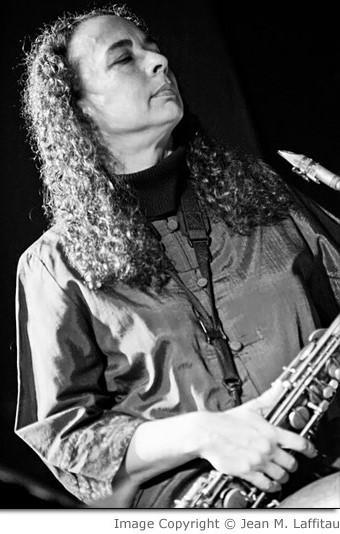
You are a channel for the sonic gods, so no need to let your mind interfere with your creative expression. Speak from your heart and trust what you are hearing. The mind /ego judgments will always lead you astray and will only weaken your connection to Source.
Some music may be simple, but if it comes from the heart it has tremendous power. Truth is simple, yet powerful. Trust your creative voice and go for it, wholeheartedly and humbly, without judgment.
Have fun! The mind has its place, to discern and to make choices, but it needs to know its place in the spiritual grounding of creative expression.
The ego-self, the small I, is subservient to a greater power that has no thought process to filter through and that requires an absence of egocentric concerns in order to lift off into flight. Like a plane about to take off, the less baggage that’s onboard, the faster it becomes airborne.
To express what is beyond your own understanding, or your control, is the destination. To achieve the heights of thought-free expression, to trust in something beyond – to be concerned only with staying in vibration with a higher frequency that speaks a truth inside you personally and viscerally – that is your only responsibility. Having ideas about yourself, or concepts about your musical expression has its place, but the “I” that thinks these ideas will not tune you into the vibration of Source that you are seeking.
This dynamic, vibratory Beingness takes form only through the experience of being present in the moment, each and every moment. Experience yourself, for this is the reason that you have chosen this material, physical form – not to understand it, or to gain control over it – but to surrender to experiential knowingness. This is the path to transformative art-making. In this sense, what anyone else thinks is meaningless, in that it is your own experiential practice that pushes you forward and gives your work meaning. No judgment, just the work and the transformation that occurs as a result of this expanded awareness. That is all that matters – to experience and create sonic vibrations that open up spaces for revelation and divine imperfection. –Erica Lindsay
Motherhood in Music in 10 steps: The Invisible Work of Mother Musicians
“There was something so valuable about what happened when one became a mother.
For me, it was the most liberating thing that ever happened to me. Liberating because the demands that children make are not the demands of a normal ‘other.’ The children’s demands on me were things that nobody ever asked me to do. To be a good manager. To have a sense of humor.
To deliver something that somebody could use. And they were not interested in all the things that other people were interested in, like what I was wearing or if I were sensual.
The person that was in me that I liked best was the one my children seemed to want.” –
From Toni Morrison’s and Motherhood: A Politics of the Heart by Andrea O’Reilly
What I write here highlights some of the personal struggles I have encountered working as a musician and mother in New York City. The iconography and reality of the music business do not consider, include or accommodate mothers. As an artist who chose to become a mother, I have experienced many contradictory emotions and have rarely found literature or support from others that could guide me during my most difficult moments as a parent. The invisibility of motherhood in music makes the daily routine of child-rearing a mysterious and daunting task that one only gets to understand as one lives it. Exposing some of the challenges mother artists face may be the first step to address our needs and hopefully receive more support. Having recently received an email congratulating me on a one-month-long artistic residency at a prestigious location, in which families are not allowed, I could not help thinking “How can I leave my young child for a month?” Why aren’t institutions thinking about this? The idea that an artist can just pack up and leave everything behind is beautiful, but it is also exclusive. In the popular imagination, there is a romanticized view of artists as geniuses entirely devoted to their art, and the most mundane tasks, such as caring for someone, changing a diaper, doing laundry, or preparing dinner are not included in the picture. My child is part of my life and creative practice, teaching me daily on kindness, generosity, patience, and growth. Why don’t others acknowledge this in my professional life?
1. How and when can I get pregnant?
The inequality of wages and opportunities for female musicians has always been present in my mind, from music school to the moment I became a professional musician. This made the decision of becoming a mother a difficult choice to make. I wanted to be a mother, but I feared I would not achieve my ambitions if I stopped making music to have a child. By the time my professional career started, at the age of 27, most of my male peers were already touring extensively while I struggled to get a gig in New York City. The lack of role models of female musicians embracing motherhood while staying on the scene being revered by their peers was blatant.
The stereotype of the male musician who continues to ascend in his career, even during parenthood, opposes the experience of the reality of the working mother musician. Mothers often seem to disappear from the musical arena, in order to embrace childcare.
2. Fear and nausea
Fear invaded my mind when I found out I was pregnant.
The realization that my body was not my own anymore became very clear almost immediately. I wondered if I would still be independent? All I could think about was how my musical life and my career, for which I have sacrificed so much, would be affected. Would I have time to practice? Could I continue to tour? Would people still call me for gigs? How would I make money?
With all of these worries swirling in my head, I did manage to stay musically active during my pregnancy, right until the last month, but it was not always easy. During the first 5 months, nausea accompanied me from the moment I woke up in the morning. In a professional environment, I had to pretend nothing was happening. Any odor or scent would make me want to vomit. I could barely eat and all I wanted to do was sleep. Yet, the buzz and activity of New York City kept waking me up, making me move forward.
3. Health care and lack of support
As an immigrant and freelance musician in the US, I had no guidance in navigating health matters in this country, and therefore, I didn’t have health insurance. I applied for Medicaid, and being eligible to have it, gave me access to free health care during my pregnancy. Accessing health in a foreign language is always challenging, regardless of how fluent you are. How do you understand the hospital rules, what the nurses say, what the doctor asks?
My regular doctor appointments were a sequence of measurements: weight, blood pressure, heartbeat, blood sugar, measurements of the belly. I was rarely asked about my emotional well-being. I was made to believe I had to endure pregnancy by pretending my life was still the same, without room for complaints or anyone to listen to my struggles. I could not afford a doula, and I imagined how much easier everything could have been with an expert accompanying me at every moment, giving me the advice doctors weren’t willing to give.
I immersed myself in books and articles to prepare as much as I could for the uncertainty of giving birth, trusting my body, intuition and the hospital personnel. I will never forget the fear that fell on me when I entered the hospital while in labor. At 6 am, I was put in a room for triage, scared and alone while everyone acted like it was business as usual.
4. The ever-present patriarchal mindset
I was educated to admire male musicians, who were sensitive and brilliant, geniuses dedicated to their art. I wanted to have what my heroes had: gigs, tours, and recognition for my music. Children rarely appeared or mattered in this picture.
Once pregnant, I felt like what was happening to my body had to be a secret in my professional life until I no longer could keep it.
I didn’t want to post any pictures of myself pregnant, fearing other musicians would not hire me anymore. And when it was obvious, I was frustrated to hear comments like “When the baby is out you won’t be available anymore.” Nonetheless, my mind stayed focused on being productive in my career until the last moment of pregnancy. Before giving birth, I accepted a gig on the other side of the globe at 6 weeks after my baby was born. At the time, I couldn’t imagine not doing it because of the reputation of the engagement and the generous concert fee. The money that was offered would allow me to live comfortably for 3 months and enjoy my baby. I did not predict how heartbreaking the separation would be. I sobbed at the airport when it was time for me to travel, and it is now hard for me to believe I left my baby behind to travel all around the world for a 4-day gig. Still breastfeeding, I had to pump milk before leaving NYC to freeze, and during my entire trip, pumping every 3-4 hours, to help my body continue to produce milk. In between, I would rehearse and perform.
5. Representation and Identity
It is so rare to see real images of pregnant musicians, performing, rehearsing, or teaching. Even rarer seeing mothers (and fathers) at work with their children. The pressure on female musicians to look young, slim and beautiful prevails all the time. When our bodies start to change, we’re confronted with shame for not matching that ideal look of a women musician. The new weight, the slowing down of everything, the clothes that don’t fit anymore, the huge bras to accommodate lactating breasts. My body, while breathing a new life, was a different one.
No one prepared me for the first days after my baby was born. After 9 months of preparation, hormones flew chaotically over my body, in a sudden and drastic change. My belly looked like an empty balloon and I didn’t know how to hold my baby. A week later, I had a total meltdown. I couldn’t breastfeed, blaming myself for this failure. The pile of laundry only got bigger and I found myself drowning in domestic chores. My body ached, and at night I could barely sleep 3 hours in a row. A lactation consultant’s visit was a miraculous sight, reassuring me I was doing everything right, but the feeling of failure and not knowing who I was anymore was there for the long haul.
The first months of a child are the first months of a new mother. This identity shift is profound and sudden.
6. Childcare and Isolation
In a 2019 speech, Marilyn Waring, a public-policy scholar and longtime advocate of revising economic measures of “productivity,” noted the absurdity of defining activities like caring for elderly relatives or newborns, shopping and cooking, as having no value, or as leisure. “You cannot make good policy if the single largest sector of your nation’s economy is not visible,” she said. “You can’t presume to know where the needs are.” – Jordan Kisner, The New York Times
New York is an expensive city and childcare is no exception. Daycare can sometimes be more expensive than college. What are the options for mother musicians when childcare costs around $1500-$2000 a month?
Without another option, my husband and I embraced parenthood and our son stayed at home with us for the first 3 years of his life. I don’t regret this choice, as raising my child is one of the most rewarding and beautiful experiences I ever had. However, I do wish I had had more support.
After 2 years, I was depleted and exhausted. I resented hearing how my friends in Portugal were able to leave their babies with their grandparents, or how they had affordable child care options. I desperately needed help with domestic chores or to watch my baby for 2-3 hours so I could do some creative work. Finding the time or room to practice was a constant juggle between childcare, fatigue and the pressure of having to be productive. I brought my son with me most of the time, to rehearsals, to my gigs and tours. My son learned how to be in a music venue or rehearsal studio, and for that, I feel proud of him and myself, for raising a new listener. My peers have been mostly supportive and many times loving and caring in these situations, perhaps not realizing that for me most times, bringing my son was a combination of juggling music gear with toys and snacks, managing rehearsal time with nap times, focusing on the music while making sure there were no disruptions.
Now and then I felt a profound feeling of isolation. Nap times coincided with session times. Concert times coincided with the bedtime routine. Without family around me or even a community to support me, there were many lonely months in which my sense of self felt lost.
A night out, other than to perform, was almost unfeasible as I could not spend $100 for a babysitter just to have fun (and usually fun means spending more money).
I am forever grateful for having friends who offered to watch my baby because the concept of leaving a newborn with a complete stranger was and still is unfamiliar. To contribute to the isolation, most of the music clubs, venues and concert halls don’t allow children.
I once had a musician telling me that I couldn’t bring my baby to a concert because “this scene is not for babies”. I absorbed that quietly, feeling embarrassed for even asking. Most artistic residencies for musicians refuse families and children, with only 10% of artistic residencies in the US being family-friendly. Most grants for musicians do not consider or offer childcare support. I have never seen a children’s room in a performing space. Very few music festivals, studios, or educational institutions have childcare facilities. In general, it is the mother musician who is expected to be flexible and accommodating and not the institutions.
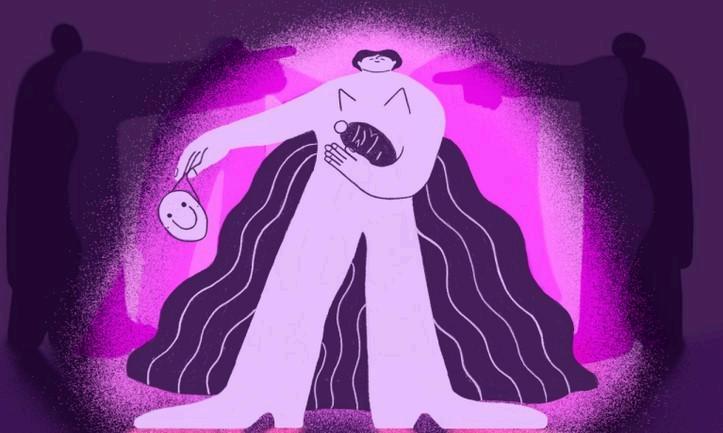
Image by Rita Magdala
7. The impossible standard
We want to call work what is work so that eventually we might rediscover what is love and create our sexuality, which we have never known. – Silvia Federici
Being a mother revealed another aspect I could not imagine in the arts and music world, one that I have envisioned as a place of creative and open minds. As a female musician, I have consistently felt that the tolerance level for making mistakes was low:
a missed entrance, a badly written score, a bad solo or not knowing something could immediately cast me as a bad musician or an outsider, causing much misery, associated with fear of judgment, bad jokes (jokes about singers are many), or career ruin.
However, the standards are incredibly high for mothers who still want to be active in the music scene. I can not use my child as an excuse.
Father musicians are great dads for taking care of their kids. Mother musicians are just doing what is expected from them. Each time I perform or attend a gig, I am asked about who’s watching my child. I seriously doubt father musicians are asked that same question.
8. The Pandemic
Mother: unpaid female caregiver responsible for virtual schooling, cleaning, nursing, nannying, cooking, tech support. Likely to leave the workforce during the COVID-19 pandemic. – Marshall Plan for Moms
As we approached the one-year marker of the COVID-19 pandemic, I was offered a shiatsu massage by a friend who lives nearby. As I was lying down to receive my first massage in more than A YEAR, I realized I couldn’t even remember how long I had not been able to relax or let go. As the massage went on, my body embraced stillness and I was able to feel my emotions deeper. I noticed each muscle tension and associated it with different months of the pandemic. At the end of the massage, I recognized I had been holding up space for everything else but me. My son is the obvious priority since he has been at home since March 2020.
How to care for his emotional and physical well-being, when seeing other children becomes a complex task? Because he is doing remote learning, my freedom mostly starts when he is asleep. At that time I was exhausted. With the whole family at home, how can I find a moment of solitude to create, compose or practice? Time management is a negotiation and I feel like the mother musician ceases to exist, except for tasks that require little time or focus. How tense and frustrated are mother artists at this time? Who is supporting them?
How will the pandemic affect their professional lives? Who will have access to work opportunities when live concerts are a possibility again? More than 2 million women have left the labor force in the last year.
Millions more have been forced to cut back our hours or work around the clock to keep their jobs and be full-time caregivers. The impact on women of color is especially devastating. When 30 years of progress can be erased overnight, the underlying system is broken.
9. A new standard of care (Parents Artist Advocacy League)
The Parents Artists Advocacy League has created a great document that I am quoting here. I believe we can look at it as a reference to help create a new standard of childcare in the music field. First and foremost, it is crucial for music institutions to recognize that:
● We can not have gender parity or gender inclusion without formal caregiver support.
● The majority of individuals who reduce work to increase time caregiving are mainly birthing people and women.
● Refusing to provide financial support for childcare prevents birthing people and women – particularly BIPOC birthing people and women, from access to employment and upward mobility in our field.
● Transgender artists, nonbinary artists, and cis women artists, particularly in the Black, Indigenous, and POC community, make less on the dollar to men and have fewer employment opportunities. They are expected to put labor into finding childcare/caregiver resources in order to work at all.
● The majority of caregiving responsibilities falls on birthing people and women and removes them from the workplace and work opportunities, including auditions, interviews, and career development.
10. Supporting Invisible work
But to not see women’s work in the home is to be blind to the work and struggles of the overwhelming majority of the world’s population that is wageless. – Silvia Federici
The general tendency of making motherhood culturally irrelevant reveals how mothers intentionally and unintentionally get written out of music history and professional opportunities. Female musicians, already burdened by payment and opportunities inequality, often have to choose between raising a family or their careers. The anti-mother bias is so deeply rooted that once mothers, musicians have to either pretend their children don’t exist or just disappear into the void because there is no support for them. Institutions and the community in the music field can think broadly and aim to provide support for motherhood and caregiving.
What kind of support do mother musicians need? What can institutions do to amplify mother musicians’ work?
● Healthcare support and guidance through pregnancy
● Paid maternity leave grants, baby supplies fund, childcare support fund
● Accommodate artist residences to support family caregiver needs.
● Make the workspace/rehearsal space accessible for caregivers and their child(ren)/dependents as needed.
● Educational institutions (universities, summer camps, workshops) can support their faculty by having a childcare facility, a creche, where teachers can drop their kids before going to teach.
● Music festivals, music conferences should include childcare facilities and staff for artists who travel with their children.
● Inclusive concert halls and music venues (playroom, children’s room, childcare options)
The challenge remains: how to create a forward-thinking and progressive community, in which mothers are also represented and included? The work mothers and caregiver musicians cannot be perpetually undervalued or rendered invisible. Continuing to ignore the struggles mothers/caregivers face is unjust, unsustainable and will perpetually leave out many in our field. Google it and you will find almost nothing on motherhood in jazz, improvised or creative music, except for the Mother’s Day celebration. This absence of articles, analysis, research and critical approach, reveals the crucial work that must be done urgently. We can not have gender parity or gender inclusion until this is recognized and prioritized. Talking and writing about it is the first step, and I hope future generations will recognize that success can have many shapes and directions, with motherhood included in the picture. –Sara Serpa
Image by Rita Magdala
Eyes open / examining phonics, texture, phraseology of binding wounds. Do we heal the injuries / is ours an iterative loop / or are we. I / your lack of femininity might be addressed with a dress. And I / you will have few roadblocks in your career due to re:dress. And so I / I took the liberty of shaping your hips in the final edits.
Oh.
I didn’t realize our presence was a nuisance / did. I didn’t think the music would take you this far / did I. It will be your unbirthed children who will carry your legacy / so did I.
Oh.
Slippery uncouth grandmothers / opened their mouths. Nestled in clitellum pinched in tit beaks / opened mouths. Voracious heirloom phrases / opened.
Oh.
Vacancy / availed snails reinforcing the suffering. Vacant / spandrels for your light. Vac / hold it in.
Oh.
Garnet red when it arrives / sharp and soft in the middle / sinewy. A 2015 Sassicaia. One day bright as the sun. This time extant. –Caroline Davis
Reminder to Self
The velvety silence right before the musicians start to play. The visceral shock of sound rushing through your face, your limbs. The sense of warmth, and awe, and a shakiness inside. Zoom has trouble matching the smack of live music.
But on a lazy summer’s day last August, I remember sitting outside with my laptop, listening to Val Jeanty conjure up something so potent it hit me as if I were right there with her, soaking up her sound like the intoxicating afternoon light.
We had gathered virtually as M3 cohorts to share samples of our work. After most folks shared beautiful prerecorded projects, Val casually offered to improvise live. As she started to play I felt myself entering the blurred reality of dreams.
I was hearing voices in the corners of my consciousness, opening up my field of vision to an expansive atmosphere breathing around me. Her music was both mystical and grounded in this loose, magnetic beat. She proceeded to provoke enough “Oh my God!”s and “WOOO!”s that my mom asked what I was listening to and could I please be a little quieter about it!? Once Val finished playing, the rest of M3 matched my exclamatory zeal. How did she do that?
Sara Serpa pinpointed what was so moving about Val’s performance: “You know your power.” Val seemed to have an effortless sense of self-assurance that lacked any sort of ego; there was no trace of the kind of self-indulgence that focuses the energy of the room on the improviser’s virtuosity nor the niggling voice that maybe this music is not compelling enough, not “connecting” enough! She not only offered a pathway into the lower frequencies, but she was also keenly aware of the pacing and emotional resonance of her sound; she was breathing in this power, letting it course through her. That offering stuck with me, through the slow turn of fall and the dead of winter. You know your power.
In what I imagine is a common experience for many throughout this pandemic, I feel I have lost sight of my power: my sense of inner assurance; my direction; my fire. These past couple months have felt especially hard. Maybe it’s that I’m only socializing with the few people I live with in my Covid bubble as I finish up a semester of Zoom classes. Maybe it’s that I haven’t felt that rush that comes with playing and listening to live music in too many months. I’m realizing my well-being relies on a communal web far more expansive than I ever imagined. I’m familiar with the amount of time I need with close friends and by myself, but maybe I need the embarrassed thrill of meeting new people; the same conversation with that one friend I had class with every Wednesday; the hellos and nods and gossip and flirtation and animosity. All these invisible threads holding us in silent trembling equilibrium.
In any case, I’ve found myself flailing. I go through periods of not feeling like playing the piano at all. I spiral through intense ups and downs in ego, feeling guilt, narcissism, indignation, and imposter syndrome in the same 24 hours. And I’ve been finding solace in radically different music than I did in the past five years, relying on mostly tonal songs with higher voices (Adrienne Lenker, Haley Heynderickx, Erykah Badu, Lianne La Havas, fellow M3 member Eden Girma) for the healing I desperately need.
Before the pandemic, I would have listened to Val play and thought, “Man, I need to get to work!” I found my fire in a clear direction to-do lists, deadlines, gigs. I felt (and still often feel) like I am thriving the most when I am carried by a semi-chaotic momentum. But recently, I’ve had to place trust in slowness. The most honest way I can find my power right now is by following what feels resonant and compassionate at this moment, and then the next, and the next. A couple years ago, a dear mentor and I met briefly during an exhausting month in both of our lives. She recalled how at the times in her life when she wanted to exercise the most control, sometimes doing the opposite was the only way to move forward.
“Have you ever been swimming in the ocean and gotten caught in a strong wave? You’re flipped upside down and you’re thrashing and there’s sand in your mouth and salt in your eyes and the more you struggle the more you can’t find your way up. The only way to get out is by going limp and letting your body rise to the surface. That’s how I feel sometimes. You have to let go and slowly float to the air above.
I always come back to this story, and it feels especially relevant during this long and cold winter. I think that ultimately what I heard in Val’s music was trust. Trust that the music would reveal itself, trust that this force would find a way to touch us through our devices even during the era of constant Zoom fatigue. And so, as bleary-eyed February trudges past, I’m trying to trust the slow whir of the universe. Trying to trust that the light that feels faint will always be there. Trying to let my body loosen, head up, rising. –Maya Keren
Remembering Philly Joe

Philly Joe Jones lived for the drums, and he loved the music with a passion. He was devoted to the craft and the art of jazz.
Besides being an innovator in modern drum technique, helping to establish post-bop styles, he was an all-around musician with multiple skills and a vast range of experience, including arranging and sight-reading. He was a brilliant drummer with a virtuoso technique, tremendous musicality and big ears. His swing was fluid and graceful, hot and fiery, cool and simmering. He possessed a personal sound and control over dynamics, drum technique and rudiments. He was able to go from a roar and in a heartbeat drop to the lightest pianissimo. He could play the most glorious fiery fast tempos and also make the brushes purr, providing a relaxed glowing warmth to ballads. When it came to the drums Philly Joe set the bar high. He was a consummate rhythm section player, able to make everyone he played with sound better.
Philly Joe Jones performed and recorded with some of the most dynamic musicians and rhythm sections in jazz – Miles Davis, John Coltrane, Bill Evans, Duke Ellington,
Tadd Dameron, Paul Chambers, Archie Shepp, Red Garland, Bill Evans, Ben Webster, Sonny Rollins, Johnny Griffin, Tommy Flanagan, Dexter Gordon, and Fats Navarro, and that’s just for starters. I still find it amazing that Philly Joe hired me to play in his band, considering the level of musicians he had worked with and my lack of experience. He told me that one of the reasons he called me to play in his band was because he really liked a tune I wrote called Sula’s Dance, a tune inspired by a character in Toni Morrison’s book, and he wanted to play it. I suppose that he also liked my playing well enough to hire me at such a young age, or at the very least, he heard something in my music, some potential that also inspired his decision.
The first gig I played with Philly Joe was at a local club in Germantown, Philadelphia, called Trey’s. Philly had a regular stint there, featuring the legendary Bootsie Barnes, one of Philadelphia’s great bebop saxophonists, who sadly passed recently during the pandemic. Trey’s was a neighborhood joint, a place where prominent local musicians would gather. It featured a regular rotation of local Philadelphia jazz musicians and occasional stints with more prominent, nationally recognized, players. It was probably at Trey’s that Philly Joe first heard me with my own trio.
As a mentor, Philly spent a lot of time coaching and teaching me about jazz, especially as a rhythm section player. He understood that he was passing the knowledge, and he made me feel that I was worthy to receive it. I was green and eager to learn. I remember him writing out rhythmic figures that he wanted me to play, comping patterns for the rhythm section to play together on certain tunes. He talked a lot about music and sometimes made suggestions to me about my playing. Philly Joe really did take me under his wing and I felt supported. We would listen to music together, hanging out at his apartment where he and Eloise lived.
He would talk about how Red Garland would end his solos, with those beautiful block chords, signaling his last chorus to the band. He wanted me to think more about structure and phrasing. I remember him saying to me “You have a weird time thing, but don’t worry, Monk did too. One day it’s gonna fall into place and work for you, it’ll become part of your style”.
I remember meeting Etta Jones once at that apartment while hanging out with him. They were close friends. Etta Jones! She was super nice and told me that Philly had said good things about me. Meanwhile, I felt I was hanging by a thread and barely able to hold my own.
My first road trip with Philly Joe Jones was a weekend gig in Washington DC. It was 1975. I was nineteen years old and he was in his mid-fifties.
My mother was not happy about my taking this gig and very wary of him, and that’s putting it politely.
Philly Joe Jones was the last band leader that any parent would want to see their teenage daughter go out on the road with! My mother did not trust him. She was aware of his drug use and the many notorious stories, some of which are legend. During this period, he was not at his peak of hard drug usage, thanks to the influence of his wife, Eloise, who helped him transition off of heroin. He was still a heavy drinker though and a user of multiple substances at once.
We checked into the hotel, a four-floor walkup. When we got to the top floor, Philly Joe gave one set of keys to Jimmy Merritt and tenor saxophonist Charlie Bowen to share a room, and then he looked at me and motioned with his head to follow him to his room, expecting me to share it with him! I was livid, and said “No way!” He got angry with me, yelling “How do you expect me to take you on the road if I have to pay for an extra room?” Road lesson number one: (especially true for women) never go out without enough money to get yourself home.
I quickly went back downstairs in the middle of his rant and explained that I was the piano player in the band and needed my own room. The hotel clerk laughed and said Philly Joe had told him I was his wife. I was so mad that I would have left if I had had the money, right then and there.
But here’s the thing. I felt free to express my anger because I also thought of Philly Joe as a friend and I was not afraid of him. He did end up paying for the extra room, and I played the gig that weekend. It helped that Jimmy Merritt was very protective of me during these times, providing soft-spoken but firm support. Aside from being a great musician and visionary composer, Jimmy Merritt was also a dad and had kids around my age.
I remember it was this same gig that I met tenor saxophonist, composer and arranger, Frank Foster who said to me, “incredulously”, what in God’s name are you doing out here on the road with Philly Joe Jones of all people? You should be going to college and studying music!” It’s interesting now to look back and realize that one of the reasons, among many, that women can have an especially hard time growing and developing musically in jazz, is because of road life, and the largely male culture that goes with it. It doesn’t accommodate women easily. But it is on the road that much experience as a jazz player is gained, and if you are a woman out there playing this music, chauvinism, patriarchy, and misogyny are part of the terrain you learn to navigate.
Philly used to come visit me in West Philadelphia, where I lived at the time, sharing a big old house with five female roommates. After hitting on everyone he possibly could, he would sit at the piano, an old upright, and play for hours. He played piano so well, and he knew a lot of tunes.
His nickname for me was Sumi Samich (sandwich). I learned to shrug off his sexual advances and inappropriate behaviors, which were mostly in his use of language and various shenanigans, probably because this was all mixed up with his genuine support, affection, friendship and respect for me. I remember being really hurt when Philly Joe did not take me with him on a European tour. He told me I was not ready. I was crushed, but he was right. I wished I had saved the postcard he wrote me from Europe on that tour. I cannot remember exactly what he said, but as usual, he was checking up on me, and I knew he felt bad about it. I eventually did take Frank Foster’s advice and went to music college to sharpen my skills and grow musically. A few years later Philly Joe brought Bill Evans to hear me with my trio at a club in Philadelphia. Philly Joe and Bill Evans in the audience! I somehow survived that night without dying from fear of them being out there listening to my band.
Being the pianist in the rhythm section with Philly Joe and bassist/composer Jimmy Merritt is still one of my most potent musical memories. Time and swing became something else in their hands. They had a way of being inside the music (talk about trying to find the one), carrying the flame of history, tradition, and musical maturity.
Working with Philly Joe taught me many things on many levels, musically and otherwise, with lots of ups and downs. Philly Joe was a complex character and our relationship was complicated and nuanced. He was an imperfect mentor, but he was a mentor nonetheless, and one whom I am not only grateful for but who I recognize as being very influential in my musical growth and development.--Sumi Tonooka