


SIGNATURE/DISTINGUISHED PASTELIST
2025 BEST IN SHOW
GENERAL MEMBERSHIP
2025 BEST IN SHOW

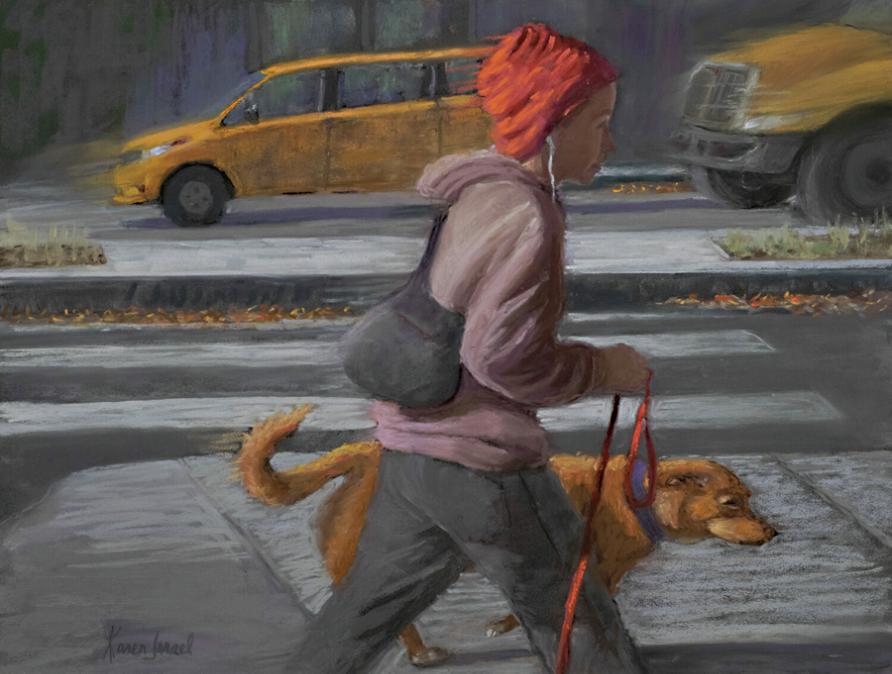
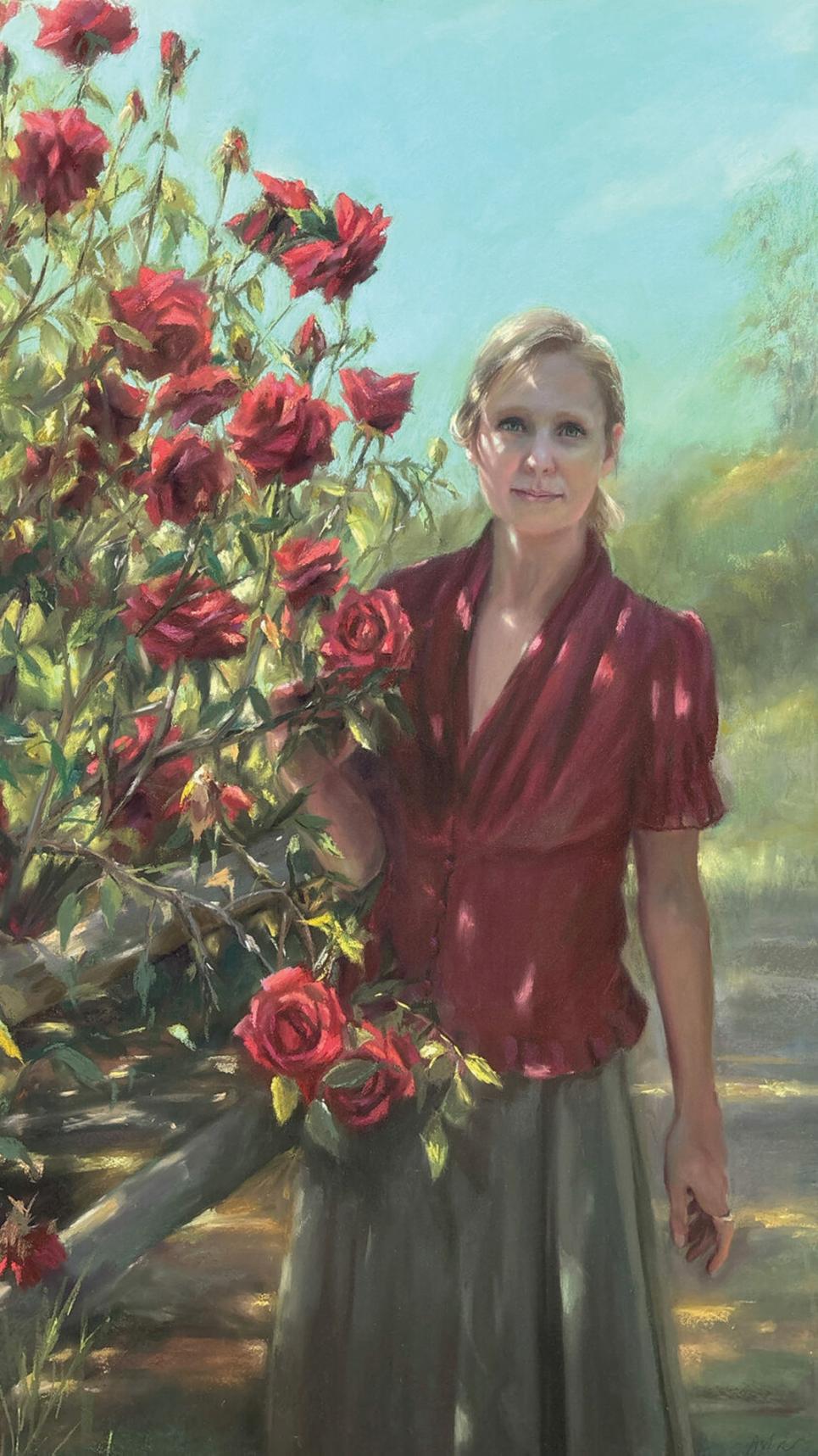
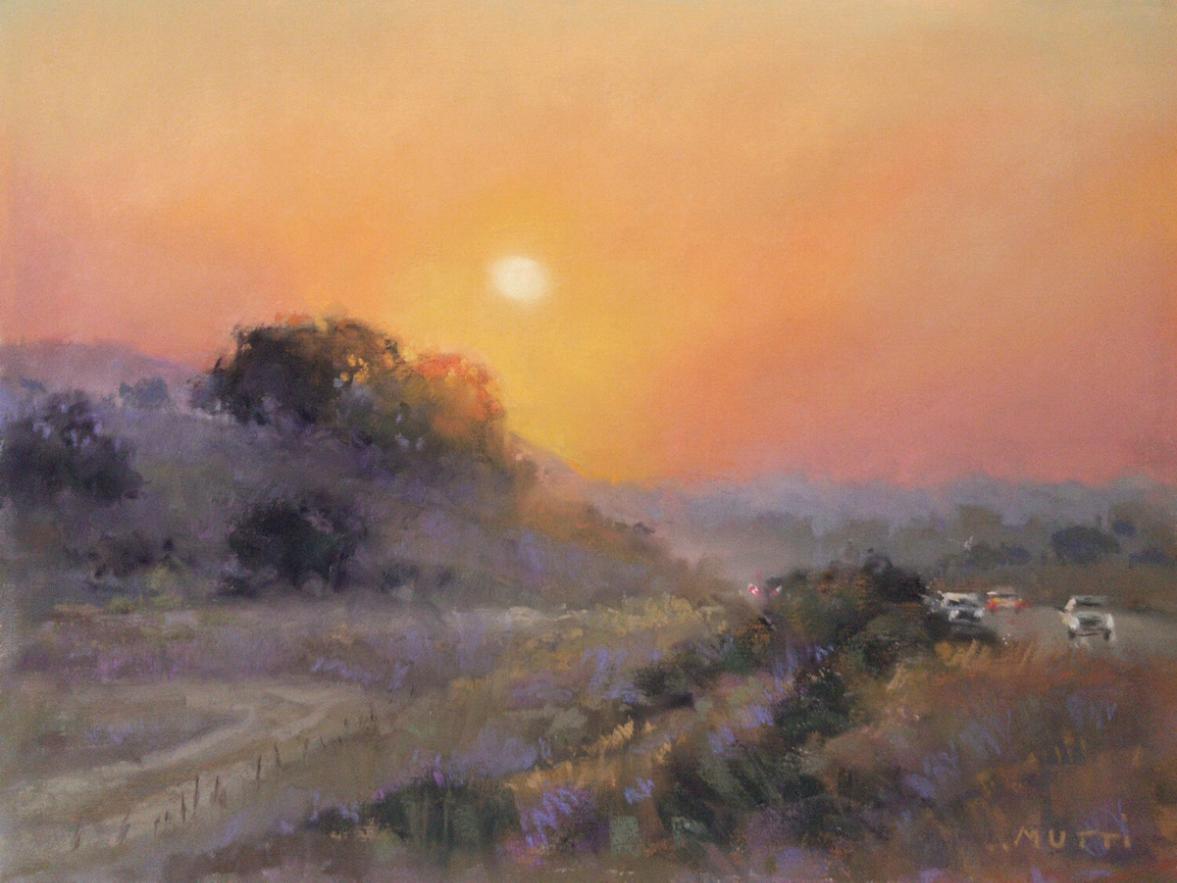
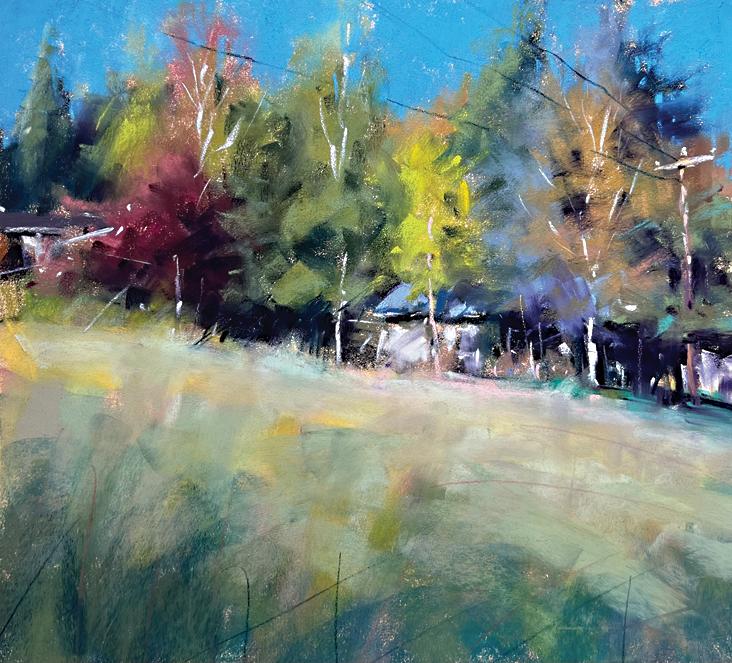
The Home Stretch Karen Israel, West Hartford, CT
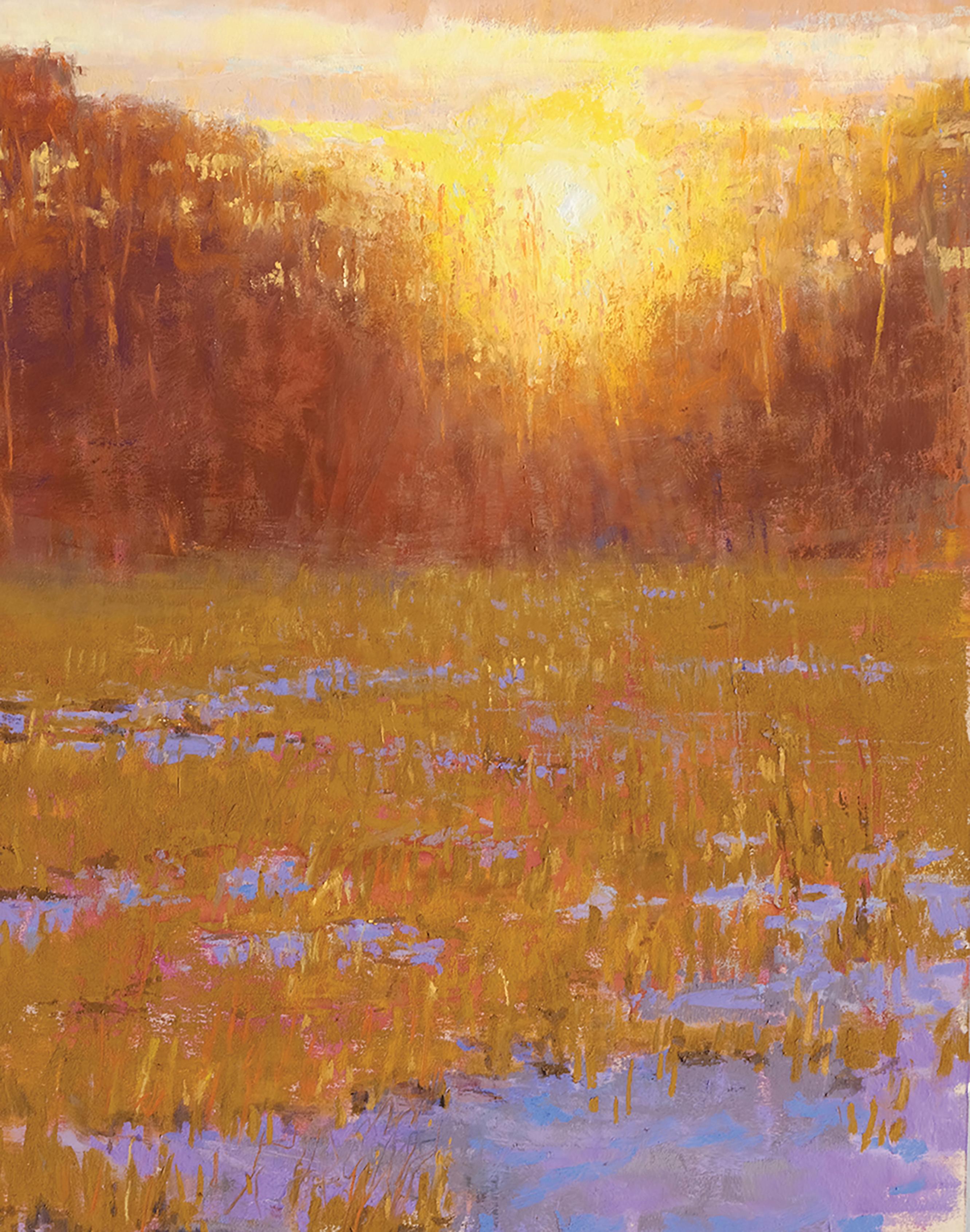
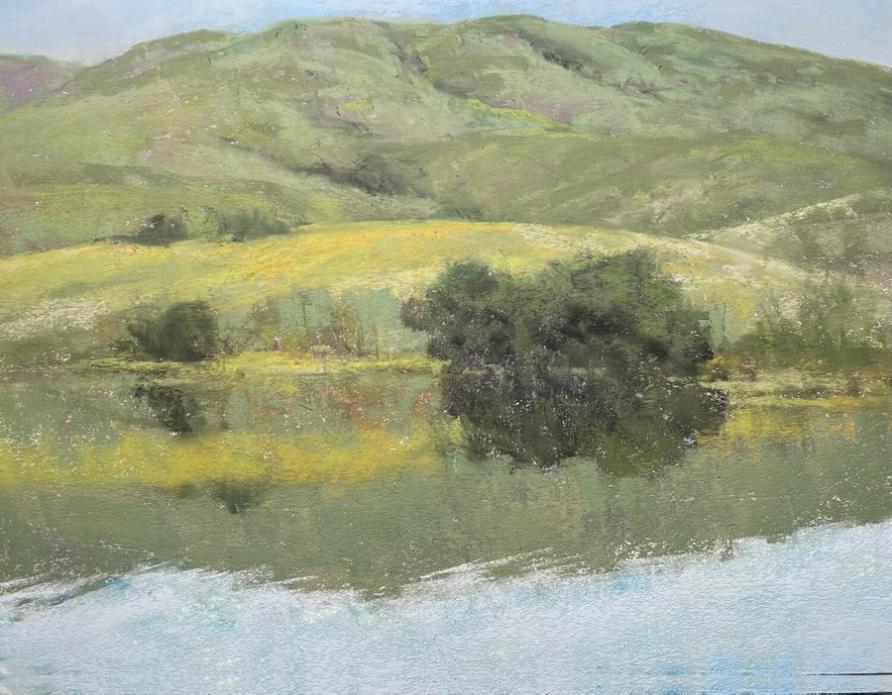
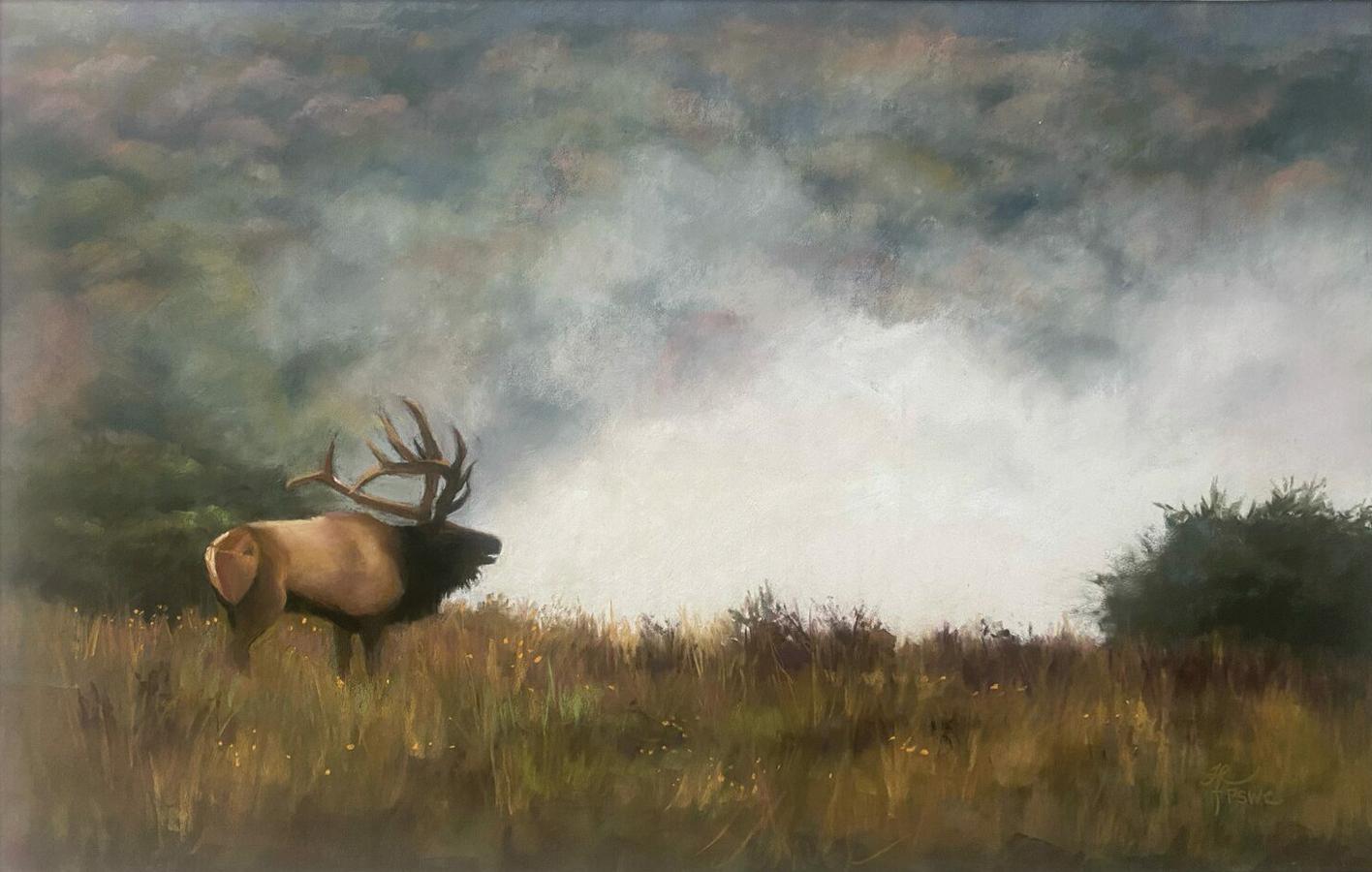
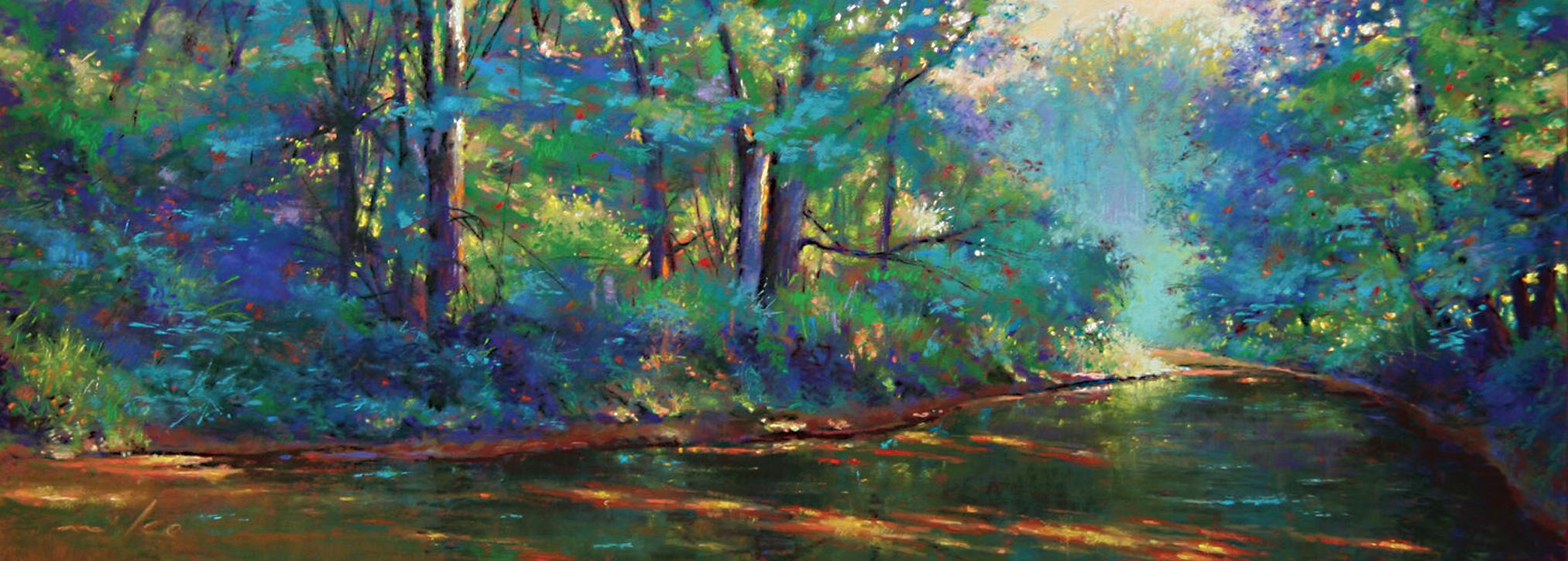
Nicasio Reservoir Patricia L. Connolly, Fairfax, CA
SIGNATURE/DISTINGUISHED PASTELIST
2025 BEST IN SHOW
GENERAL MEMBERSHIP
2025 BEST IN SHOW

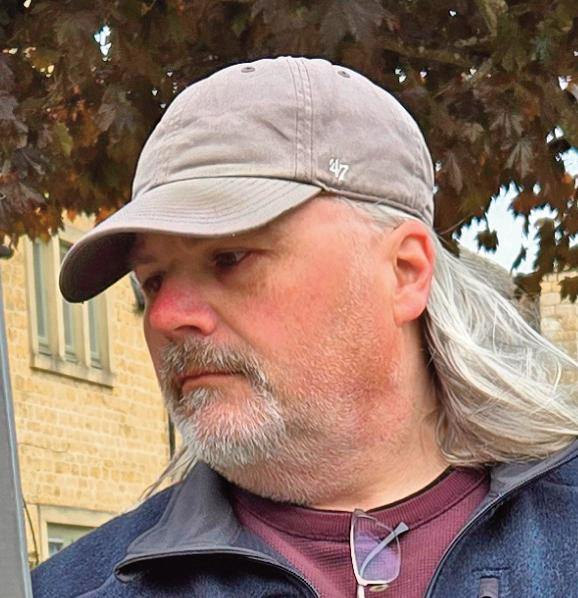
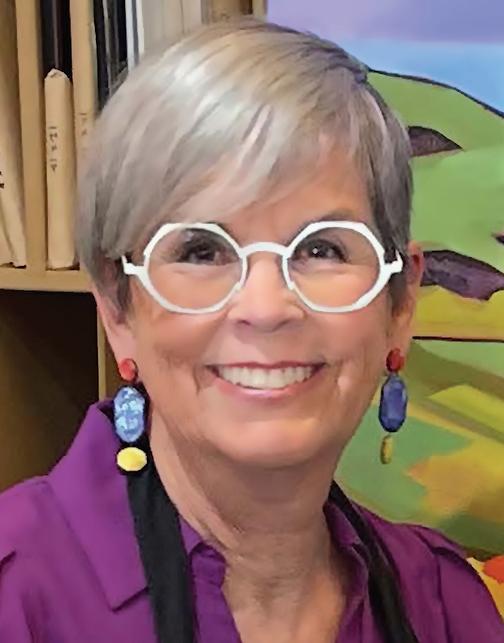
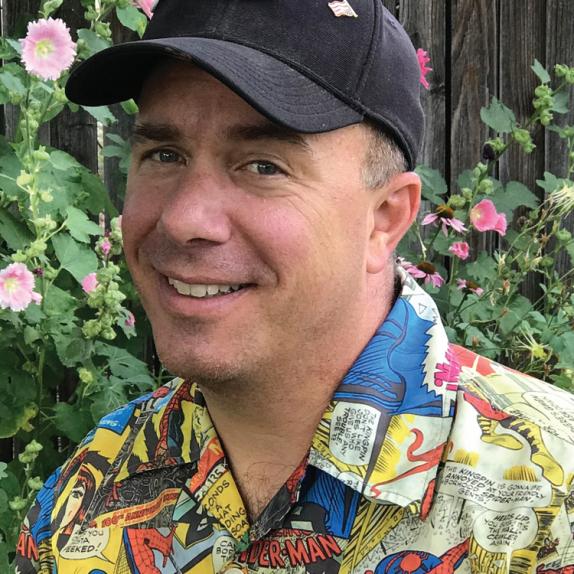
Jeff Slemons
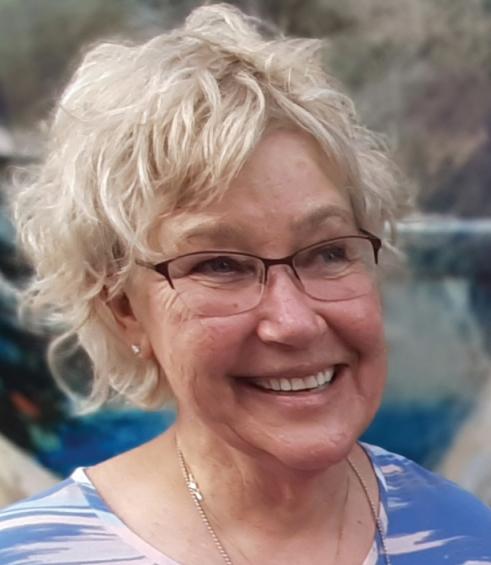
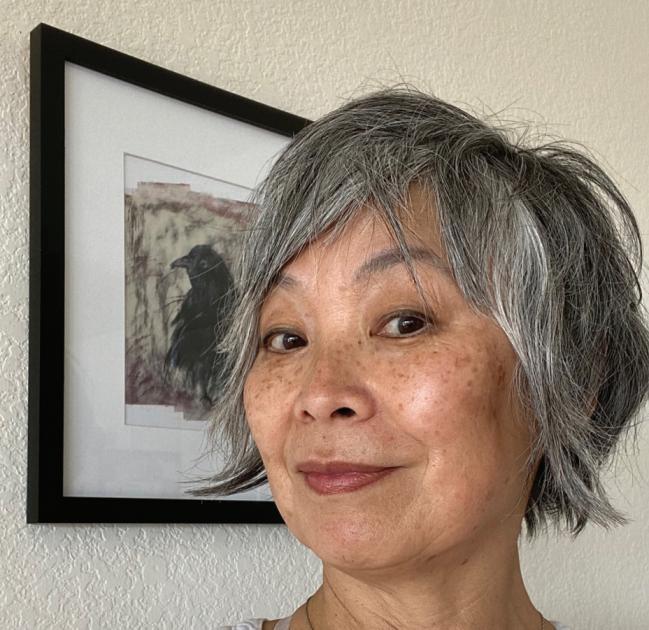
Tamami Tokutake
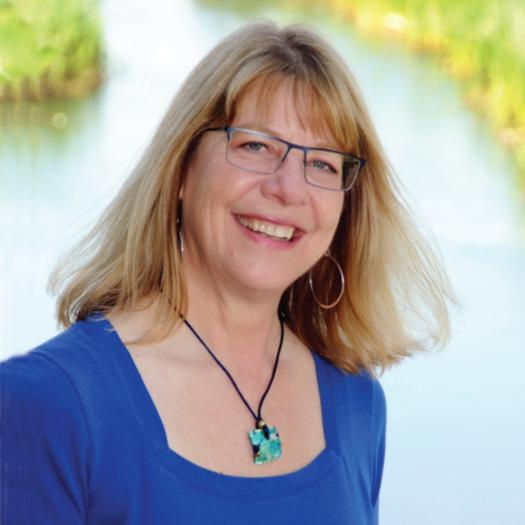

This is one of my favorite times of the year. It is the joyous season of holiday gatherings with loved ones which is always so heartwarming. For those of us living in colder climates, it can also be the season of quiet and stillness.
There is something about the contrast between outer cold and inner warmth that fuels artistic work. A studio lit by a warm lamp, with a mug of steaming tea or coffee, becomes a haven for creation. Without summer distractions, long stretches of uninterrupted time allow us to experiment, revise, and follow ideas without urgency. This seasonal shift invites introspection. The colder air keeps us inside, where thoughts have room to unfold. Many artists discover that winter’s quiet encourages deeper, more contemplative work.
I look forward to these next few months to focus on more experimental work. As I paint throughout the year, ideas come to mind that have the potential to stimulate the creative process and break out of the proverbial box. Those ideas percolate and tumble around in my brain waiting for the moment when I put gallery work aside and can turn my attention to see if there is any promise. It is the “What If?” process that so many artists talk about. This is also a time to keep in mind PSWC’s spring Out of Bounds! exhibit as it’s the perfect venue to show those pieces that are considered beyond traditional pastel painting.
In this issue, we are proud to announce the Award Winners of Pastels USA: 99 Voices 2025 Exhibition! The awards were not available in time for our previous issue’s press date and so, we are honoring the winners here beginning on page 33. Many thanks to our esteemed judge Colette Odya Smith for her expertise and service. Congratulations to all the accomplished artists who were acknowledged as well as to those who were juried in.
Bonnie Zahn Griffith lists her exciting line up of interviews for the coming year in her We Talk Art article starting on page 8. You’ll want to check that out.
It’s always fun to hear what our enthusiastic regional members are up to. Think about contacting your local Regional Group to join in on activities and plein air dates. Painting and conversing with fellow artists is wonderfully fulfilling. Hopefully there is a group in your area.
Wishing you the beauty of the season and may the New Year bring all that you hope for!
Francesca
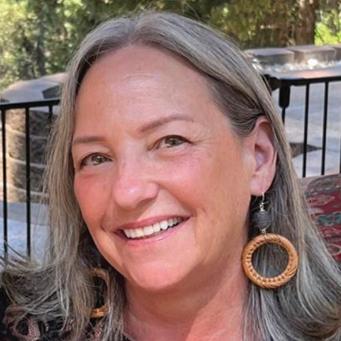

Pam Comfort, PSWC President
In addition to serving as President, Pam co-chairs the Out of Bounds! show, and covers open positions. She earned a doctorate in Educational Leadership and retired after a long career in public education. Pam loves to travel and aspires to create art that communicates a strong sense of nature, culture, and place. pamelacomfort.com
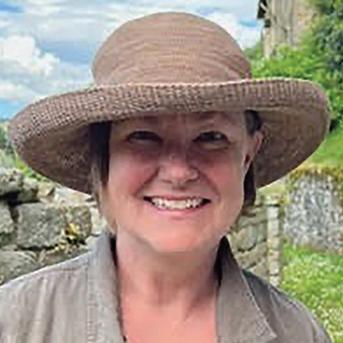
Kim Essex chairs the Scholarship program. She has a journalism degree from Drake University in Des Moines, Iowa. Kim is two years into her pastel journey, having started painting after retiring from a career in public relations and moving to Valencia, Spain, with her husband Sean and dog Trax. She says she hopes she has artistic genes; her mother, aunt, brother, niece, and grandfather were all artists. She believes everyone should surround themselves with original art as it reminds us of our shared humanity and the beauty within.
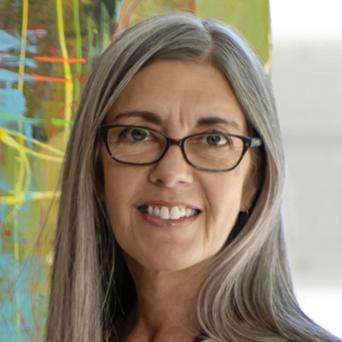
Marla Baggetta is a nationally acclaimed artist, a gifted instructor, and a pioneer in the realm of online art education. With a career spanning over three decades, Marla's artistry has flourished in pastel, oil, and notably, abstract acrylic. Marla's contribution to the art world extends beyond her paintings and workshops. Her paintings have been featured in several books and publications and exhibited throughout the United States. She has been featured in the Pastel Journal, Plein Air Magazine, the Pastel Society of the West Coast Magazine and is the author of Step by Step Pastel by Walter Foster Publishing. marlabaggetta.com
Loriann Signori’s paintings have been exhibited throughout the United States as well as an invitational exhibition in Russia. She has taught workshops in Italy and across the United States. Her preferred mediums have always been oil or pastel, her methods, techniques, and aesthetic aims have undergone significant transformations since she first began. Her paintings, situated between abstraction and recognizable form, are explorations into the color of air, light, and beauty. Her work has been featured in Pastel Journal, Plein Air Magazine, and Pratique des Arts. She currently lives and works in Silver Spring, MD.
WANT TO GET INVOLVED?
Our Society runs on volunteer power. We’re always grateful to receive more help.
Please contact us— we have a spot for you!
KEEP IN TOUCH FOLLOW US!




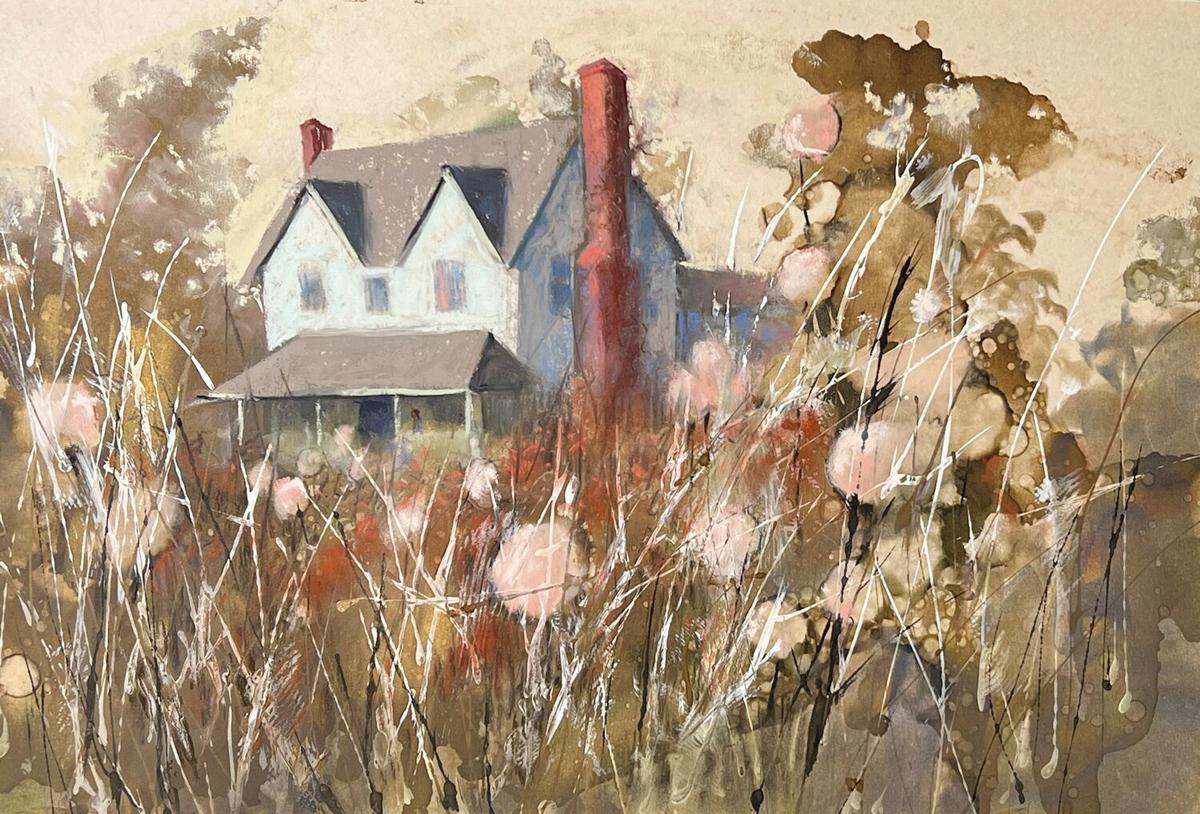
The Pastel Society of the West Coast’s Out of Bounds! exhibition goes beyond the traditional use of pastel medium. All the artworks in this Second Annual show are a combination of pastel and one or more other media in a twodimensional format. This exciting exhibition of unique works breaks out of the bounds of time-honored pastel expressions.

Judge Dawn Emerson
IN-PERSON WORKSHOP WITH DAWN
Pastel Innovations:
APRIL 6–8, 2026 • 9:00 AM – 4:00 PM
Pastel Innovations Plus:
APRIL 9–11, 2026 • 9:00 AM – 4:00 PM
See pswc.ws for more information.
Art Center Morro Bay MORRO BAY, CALIFORNIA SECOND ANNUAL



Open for Entries: January 20, 2026
Last Day for Entries: February 23, 2026
SHOW DATES
APRIL 2 – MAY 12, 2026
AWARDS RECEPTION
APRIL 12, 2026 • 5 – 8 pm
As we close the door on 2025 and prepare to welcome 2026, many of you may be joining me in feeling a sense of relief, and readiness to move forward. The past year brought a steady stream of joys and challenges.
A little research to see what we might expect from the coming year tells us that the 2026 Chinese New Year (starting February 17, 2026) brings the Year of the Fire Horse, a powerful blend of the Horse's independence and the Fire element's passion. It is considered a good year for bold moves, transformation, and fast-paced changes, and a dynamic year for new projects, travel, and personal breakthroughs.
We’ve all heard the saying, “Change is inevitable, growth is optional.” To take it further, and place it in the context of our art practice, two of our guest contributors, Marla Baggetta and Loriann Signori discuss the importance of change, and powerful,concrete ideas for making growth intentional
Research shows that we tend to prefer change that we initiate and resist change that is out of our control. The ability to embrace or adapt to change that is out of our control opens opportunities for new potential. Our featured artist, Carol Strock Wasson is a role model for having a positive mindset and looking for opportunities. She shares the story of how an unexpected pivot in her life led to the success she enjoys today.
The PSWC has a few changes planned, mostly to ensure that our members are reaping the benefits of their sustained membership. For example, we will be establishing a members-only rate and/or access for workshops, demonstrations and some other online content. We are always looking for ways to bring added value to our members.
Much of what we do here at the PSWC will continue: Bi-monthly (and more) We Talk Art interviews; BiMonthly Online Demonstrations; In-person and Online

Workshops; Themed Painting Challenges; Monthly Guest Blogs; Three Juried Exhibitions; PSWC Magazine published 4 times/year; Regional Activities (Paint-outs, Paint-ins, field trips, etc.); Scholarship Program for College Students; Workshop Scholarship for Members; Status Recognition Program; Social Media (Facebook) Community for Members Only; International Association for Pastel Societies (IAPS) membership; and a dynamic Website with information about these programs.
I am extremely proud of the programs that we provide, and the hard work of the board volunteers that I am honored to work alongside. We are a small but mighty group. My sincere thanks to volunteers Lynn Attig, Bonnie Griffith, Deborah Pepin, Francesca Droll, Sabrina Hill, SA Kushinka, Kim Essex, Jean Myers, Jan Miller, and Delcee Comfort Fields.
I wish all of you a Very Happy New Year!
Be Daring. Be Compassionate. Be Inspired.
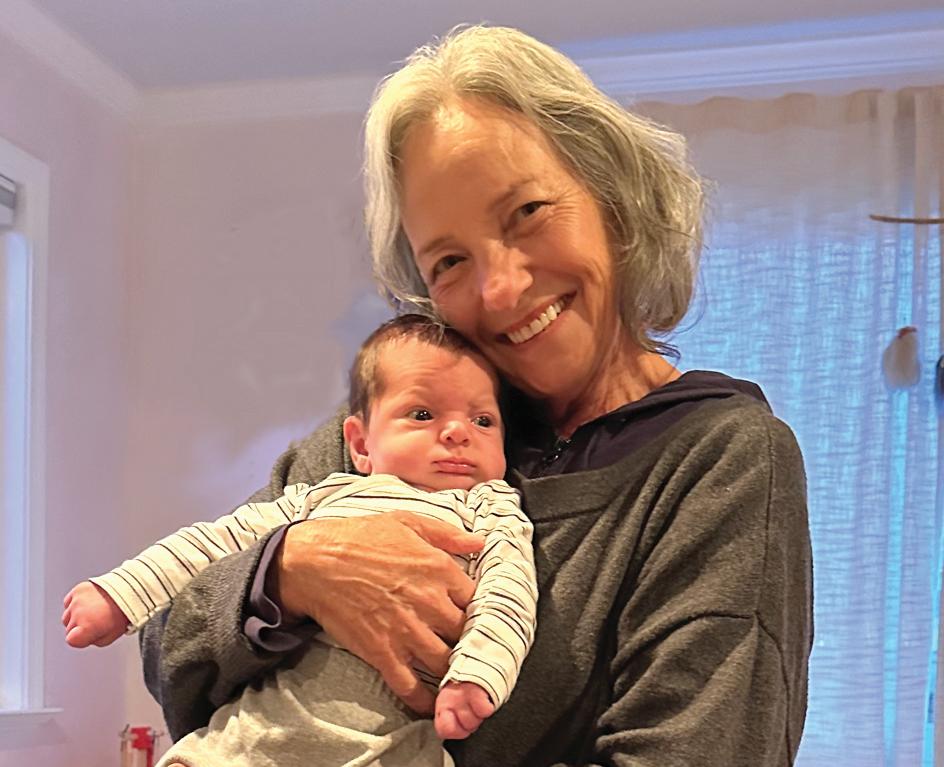


Bonnie Zahn Griffith chats with well-known artists in an informal virtual setting. A Zoom presentation for members of the PSWC.
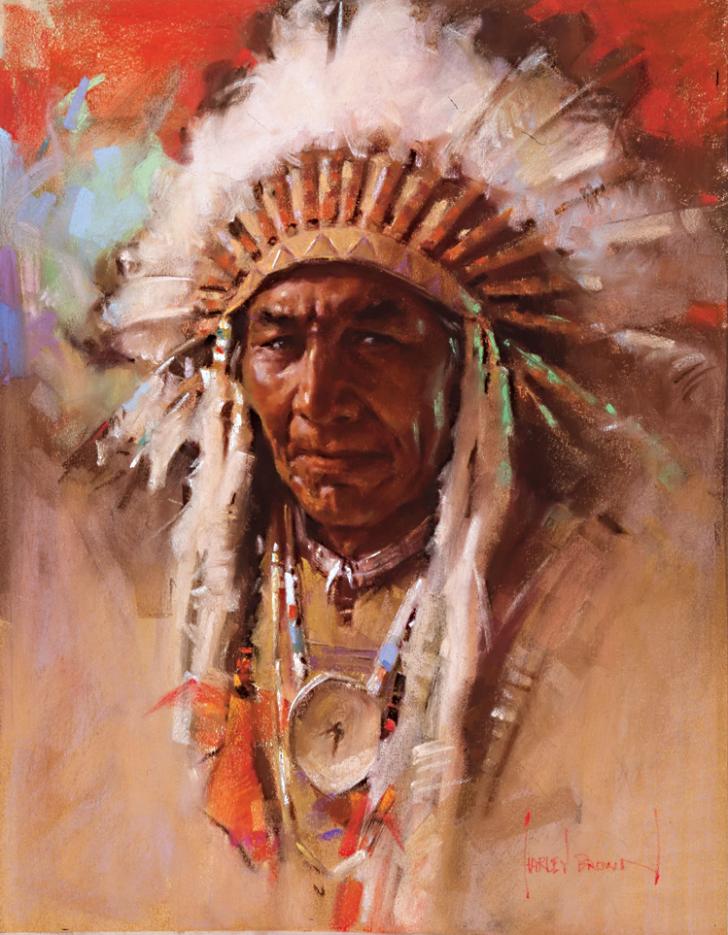
As 2025 comes to a close, we end the We Talk Art chats with Harley Brown, PSWC’s guest artist for November. What a way to leave a fabulous year with a bang! We are so fortunate to get to spend time every couple of months hearing from artists who make such a difference in our art world. Everyone has a story to tell, unique experiences to share and great insights into our world of art!
We started 2025 with Anne Strutz, who shared so much about her multi-media techniques just before our inaugural Out of Bounds! show and followed that episode with Alain Picard, who was such a delight to visit with as we heard his story. In March, it was a pleasure to visit with Geoff Ludwig, and get a virtual tour of Ludwig Pastels to learn about their process of manufacturing their fabulous and popular sticks!
visit with my friend and wonderful artist Jen Evenhus, who has taken pastel painting to the next level. She shared so many generous tips and her processes with us.

May brought the long-awaited spring, and it was an honor to visit with Richard McKinley and learn of his art journey. It was also a treat to see some works he has done and to listen to what he had to say about them. It was a personal pleasure for me (Bonnie), as the interviewer, to
During September’s We Talk Art session, while I was taking part in a plein air event in Joseph Oregon, I launched into a lively conversation with Eve Miller. I holed up in an office at the art center that hosted the event, connected over Zoom and engaged in a great PSWCsponsored chat with Eve. She is the best storyteller, and we were all delighted to hear about her adventures in pastel painting. She shared many invaluable tips.
And lastly, as I am writing this in early November, we are so pleased that Harley Brown has agreed to visit with us on November 23rd. I anticipate that by the time you are reading this, we will be talking about the many good stories we heard from Harley in our final We Talk Art session of 2025!
We had planned a talk with Sandra Burshell, but due to a scheduling conflict, we will be looking for another date, hopefully in 2026.
With that said, we have an impressive list of guest artists to talk with in 2026, starting out the year with distinguished pastelist, Colette Odya Smith in January.

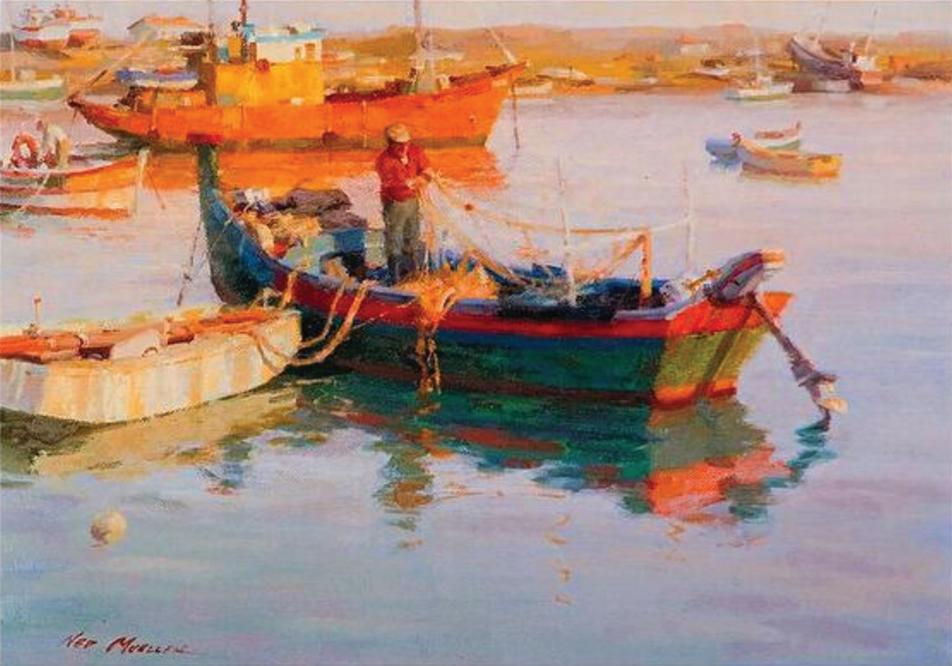
In February we get to chat with my good friend, master painter and educator in pastel and oils Ned Mueller. If you know Ned, you know he will provide us with great insight and wonderful stories across the decades of his art career.

Kim’s workshop precedes the Eagle Plein Air event in this area so there may be a dual reason to enroll in her workshop and then the Eagle Plein Air Festival if you love plein air painting. (Kim’s workshop will be in studio and for either pastelists or oil painters).
Back to We Talk Art 2026! In May, we get to hear from Jacob Aguiar, one of my favorite contemporary pastel artists.

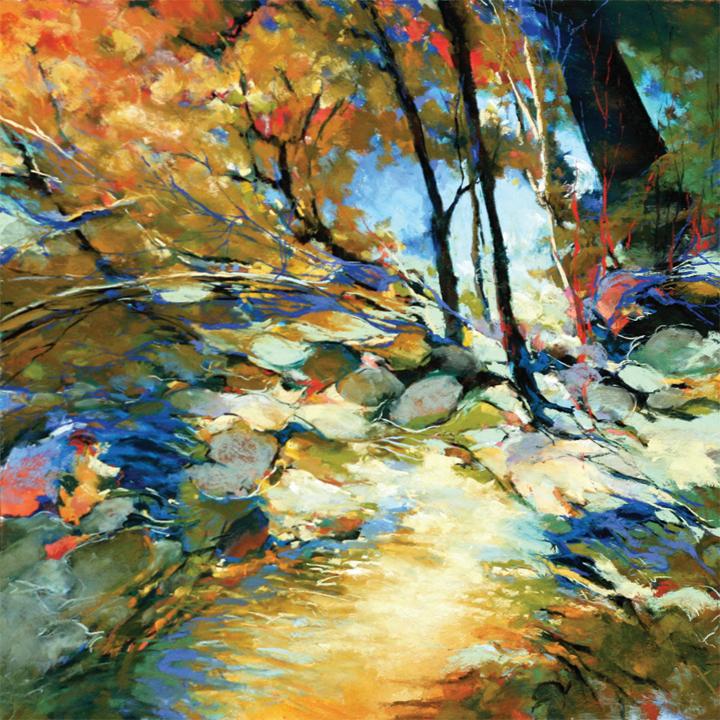
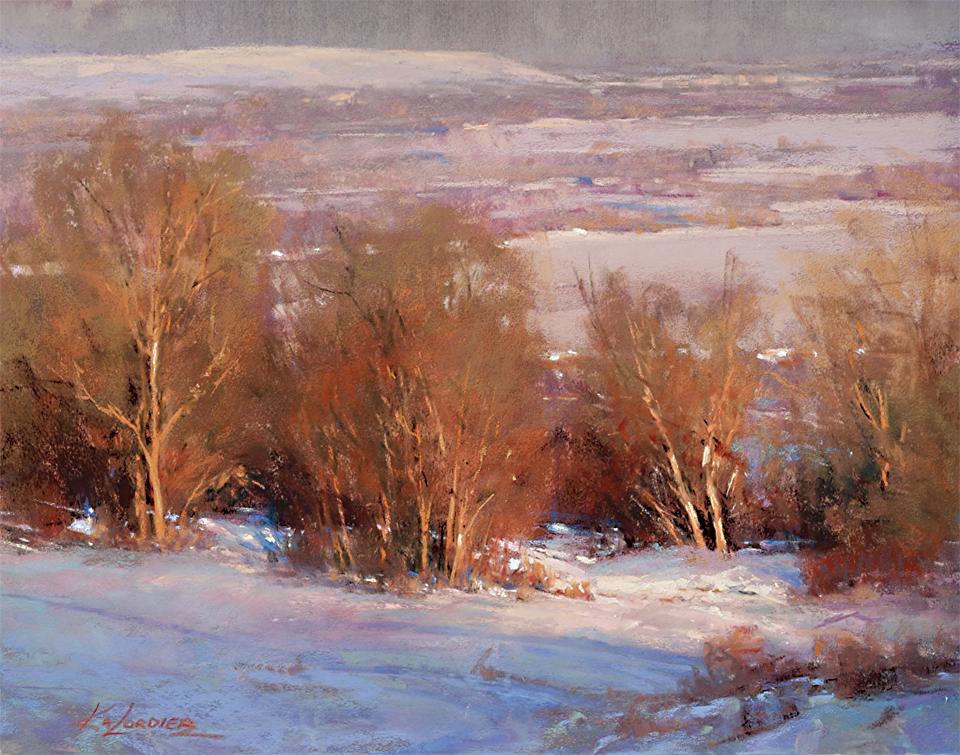
In March, we will be talking with Kim Lordier and I am excited to learn about her art journey and the techniques she uses to make some of the most beautiful pastel paintings on the market! Kim will also be doing a workshop for PSWC in the Boise, Idaho area in late September 30–October 2, 2026 (stay tuned for details).
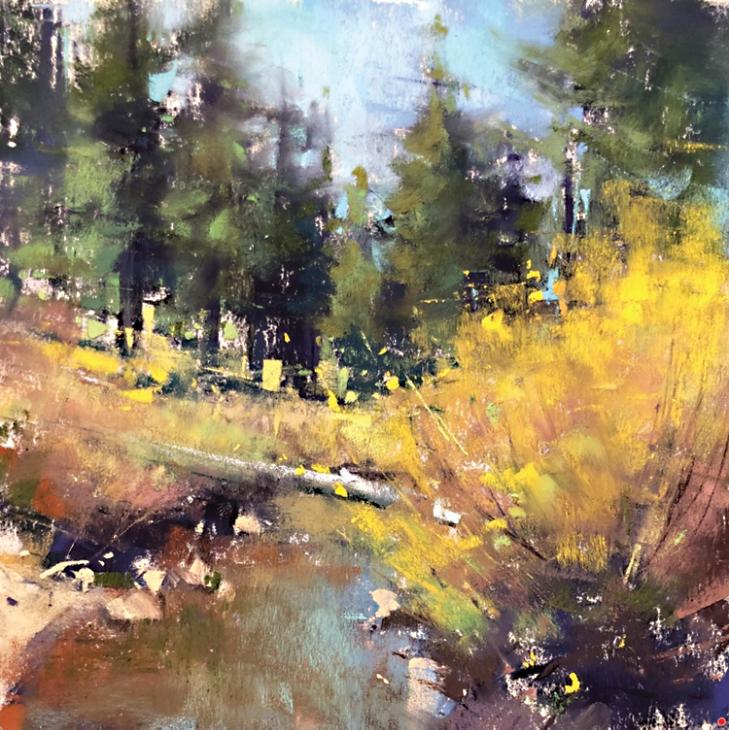
In July, it will be fun to talk with another iconic figure in the pastel world—Diane Townsend. What a career she has had making those richly pigmented sticks of color!
We are so pleased that Marla Baggetta has agreed to join us in September. Marla’s acclaimed work and long
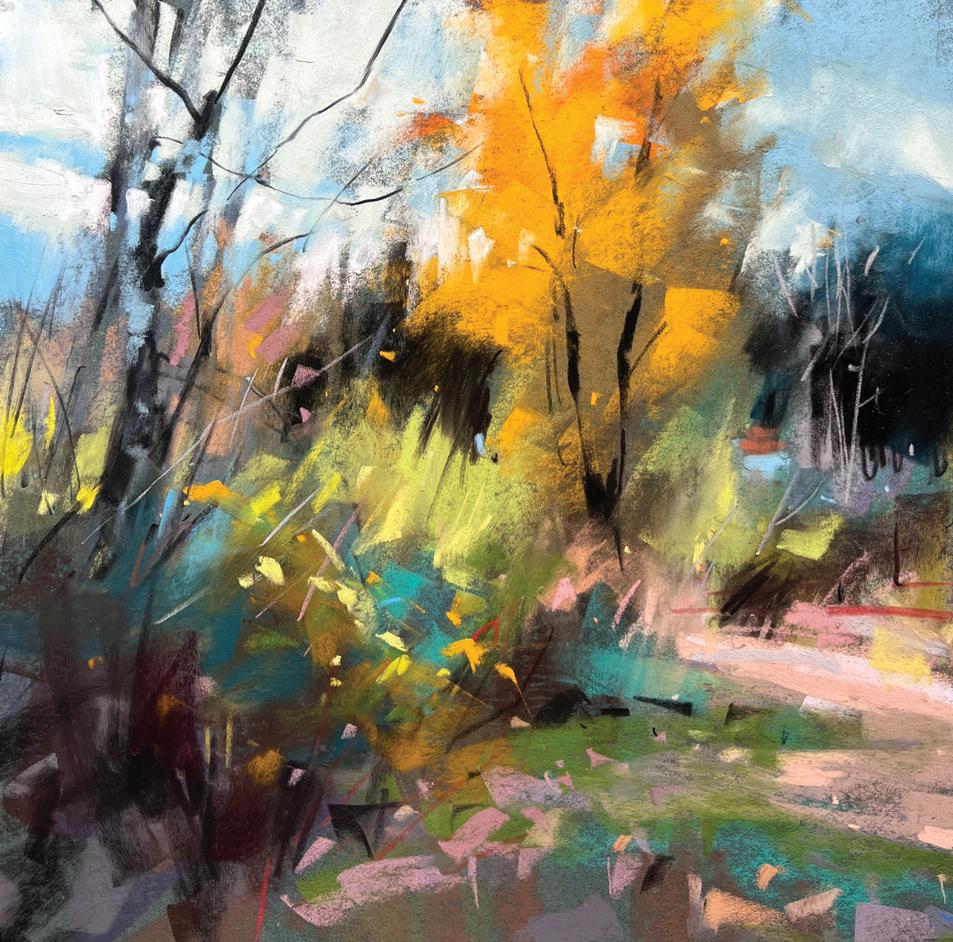

career are fascinating, so it’s a conversation you won’t want to miss.
In November we will round out the We Talk Art series with Anna Bessanova from Earthberry Pastels. It will be great to hear their story and learn about their process of manufacturing these lovely sticks of color.

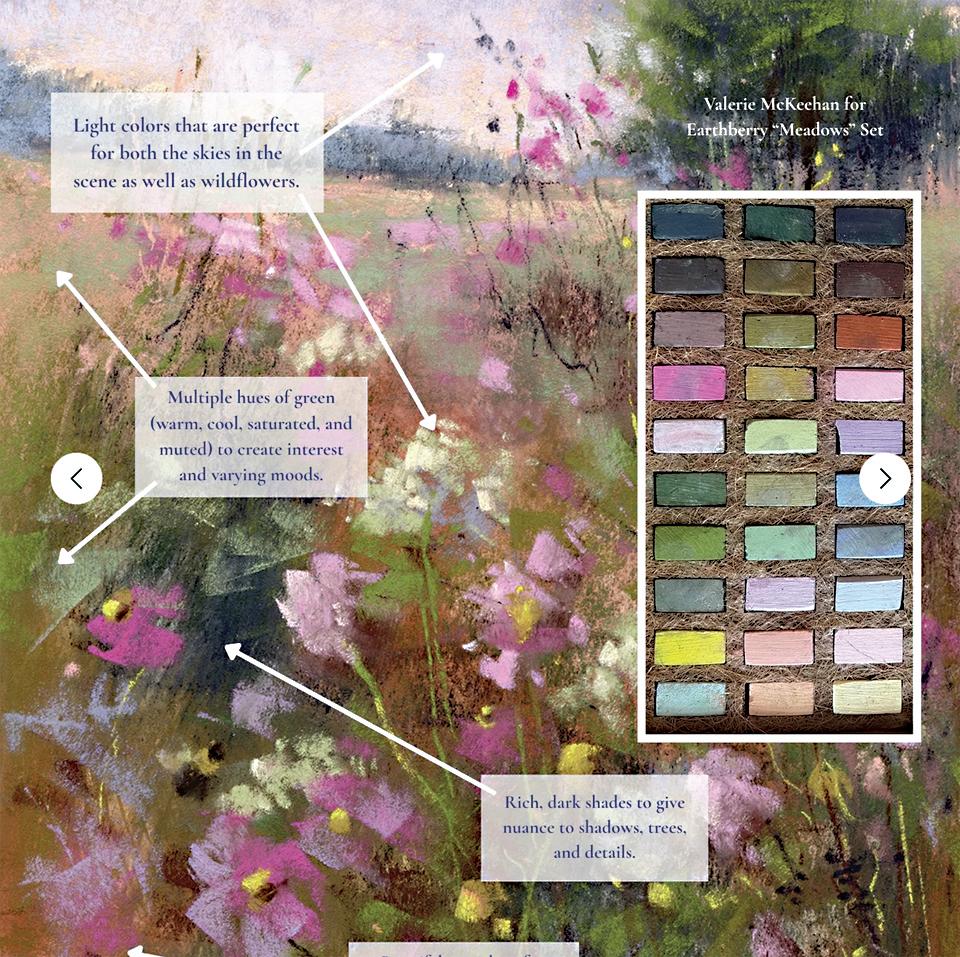
PSWC is thrilled to offer this series of informative interviews to our members. I feel so fortunate, as the series host, to have had so many guests with such interesting and helpful information be part of this program.
The year 2026 promises to be filled with more unique content and we hope our audience continues to grow. We greatly appreciate the guest artists for taking the time to talk with us and share their stories and experience.
As always, if you have a suggestion of a guest artist please reach out to us.
Don’t forget that the sessions are recorded and links to the archived sessions are on the PSWC website.
You might find it beneficial to go back and listen again to these recordings or if you missed the live program, hear them for the first time.
Thank you all for your membership, your participation in our exhibitions, regional activities, and other PSWC events, and for joining us on our We Talk Art series!
Wishing all of you remarkable success in 2026!
Bonnie Griffith Host of We Talk Art
The PSWC extends sincere appreciation to our Regional Representatives. These individuals play an integral role in supporting the Society’s mission to advance art and art education within our communities, while fostering engagement and enjoyment. They coordinate Paint-Outs, Paint-Ins, and social gatherings within their respective regions. Members residing in these areas are encouraged to visit their representatives’ websites for information regarding upcoming events. Traveling in the area? You may also discover opportunities to participate in local art activities that can enrich your journeys. For those interested in serving as a Regional Representative, please contact PSWC for further information.
Our newest regional representative, Lisa Skelly is deeply inspired by the beauty of nature. Through her paintings, she captures the essence of the natural world, with a particular focus on seascapes, landscapes, waves, skies, and clouds. Drawing on her love of nature, her work reflects her passion for the outdoors and her appreciation for the power and beauty of the natural world. For Lisa, painting is not just a creative outlet, but a way of connecting with the world around her. Her work is a celebration of the natural beauty that surrounds us, and an invitation to slow down and appreciate the wonders of the world. Lisa is a member of multiple other pastel societies, a California Art Club Artist Member, the American Impressionist Society, the American Society of Marine Artists, and a Signature Artist in the Laguna Plein Air Painters Association.
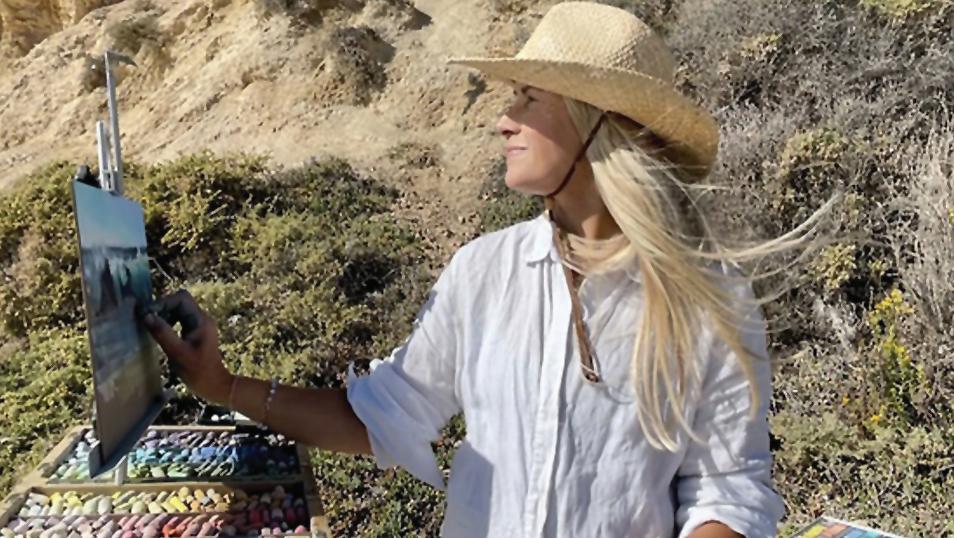

Lisa Skelly • lisaskellyfineart.com
Lisa’s work has received top awards, including Best of Show in the 2024 SLO-Poke Western Art Show and Best Plein Air Pastel at the 2023 Plein Air Salon competition. She has participated in invitational plein air events and exhibitions, and is a popular workshop instructor.
At the time of print, Regional Representative Jean Myers has two activities planned for December: Contact: jeanmyers1990@gmail.com
Santa Barbara Art Museum visit: Thursday December 4, 2025, 5:00 to 8:00 pm Visit the Santa Barbara art museum as a group to see the exhibition, The Impressionist Revolution: Monet to Matisse. December 4, 5:00 to 8:00 p.m. Admission is free only on the first Thursday of the month.
Portraiture Paint-In: Saturday, December 13, 2025, 12:00 to 4:00 pm Jean will do a portrait demonstration. Bring your own portrait photo reference to work on. A light lunch and refreshments will be provided. Jean has extra easels. Please RSVP jeanmyers1990@gmail.com for address.
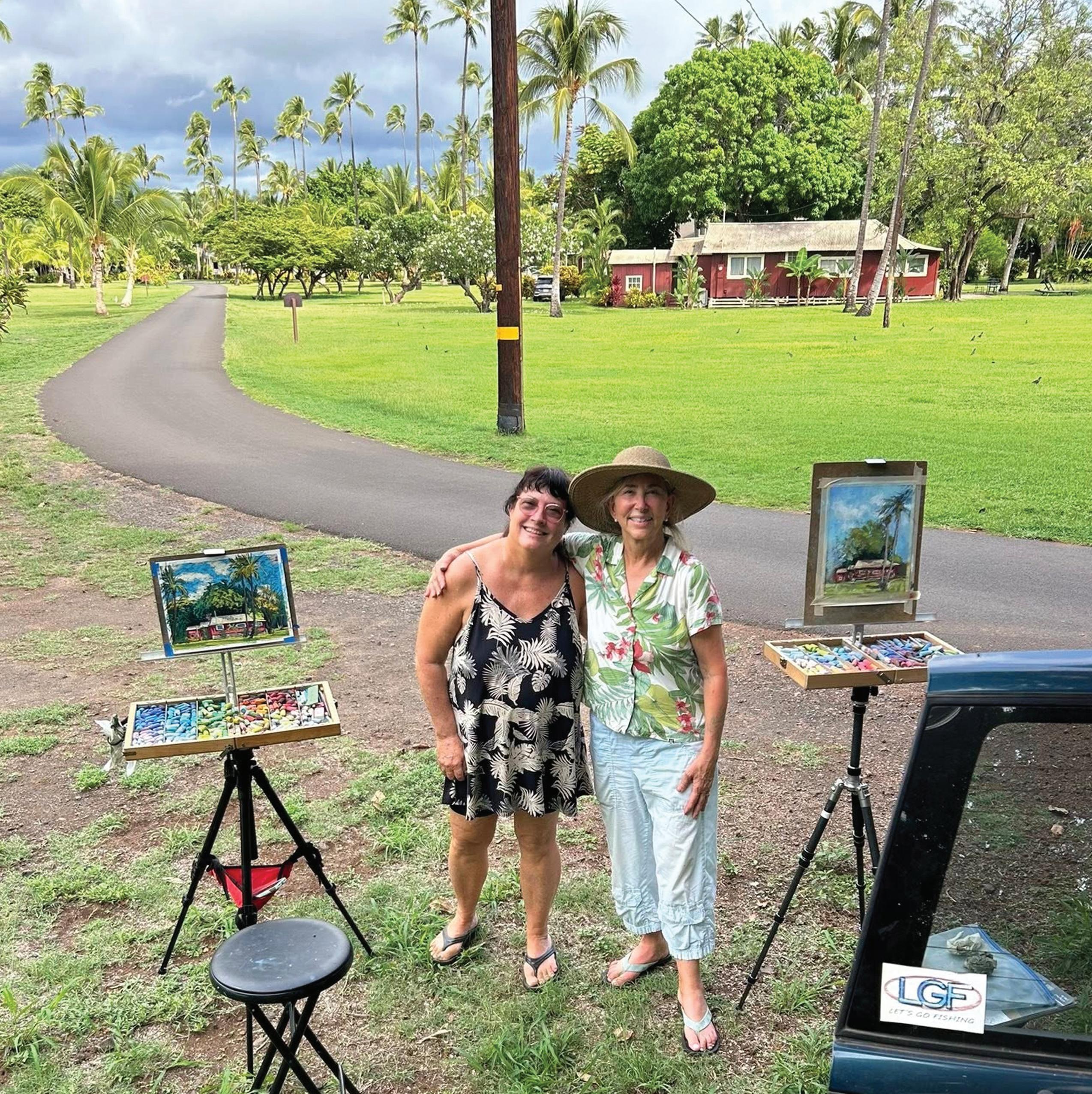
Bobbye West-Thompson, reports that a recent paintout at a friend’s expansive property included unobstructed views of Los Osos Valley and Hollister Peak, one of nine extinct volcanoes. The weather was spectacular and everyone went away inspired.
Bobbye also had a successful Open Studio event this fall, where she had nearly 100 visitors and sold ten framed pastels, lots of bin art that was matted and placed in plastic sleeves, as well as greeting cards depicting her original pastels. Bobbye shows her work at Monarch Gallery in Cambria and Marea Gallery in Baywood/Los Osos.
Congratulations, Bobbye!
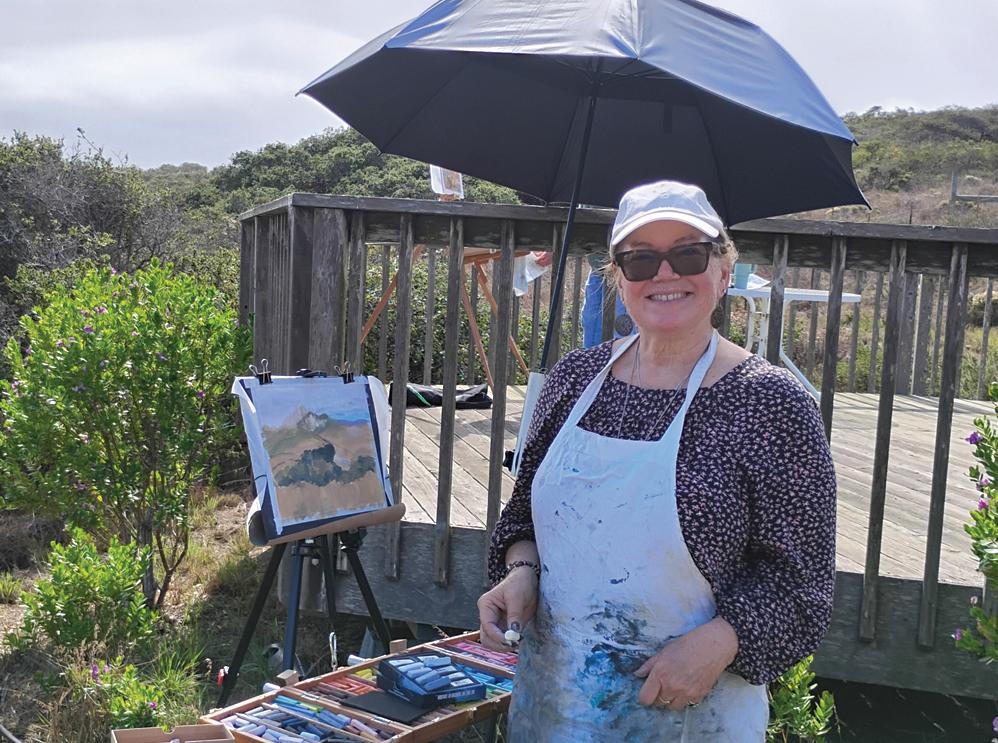

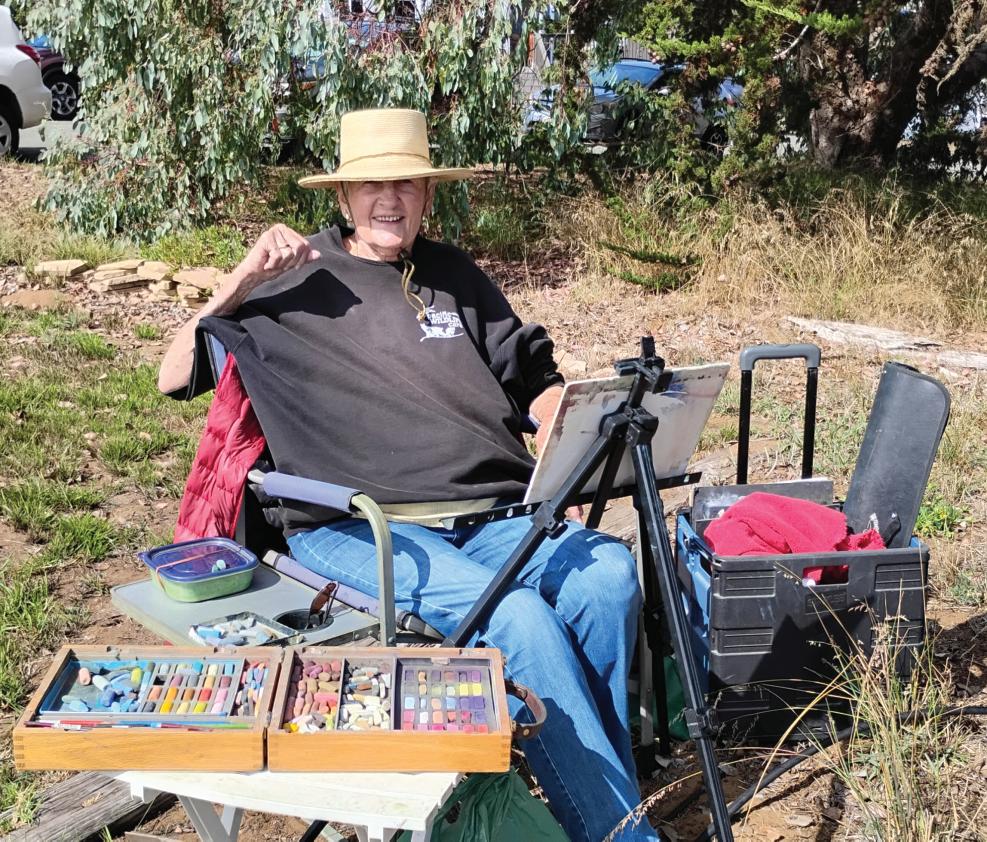

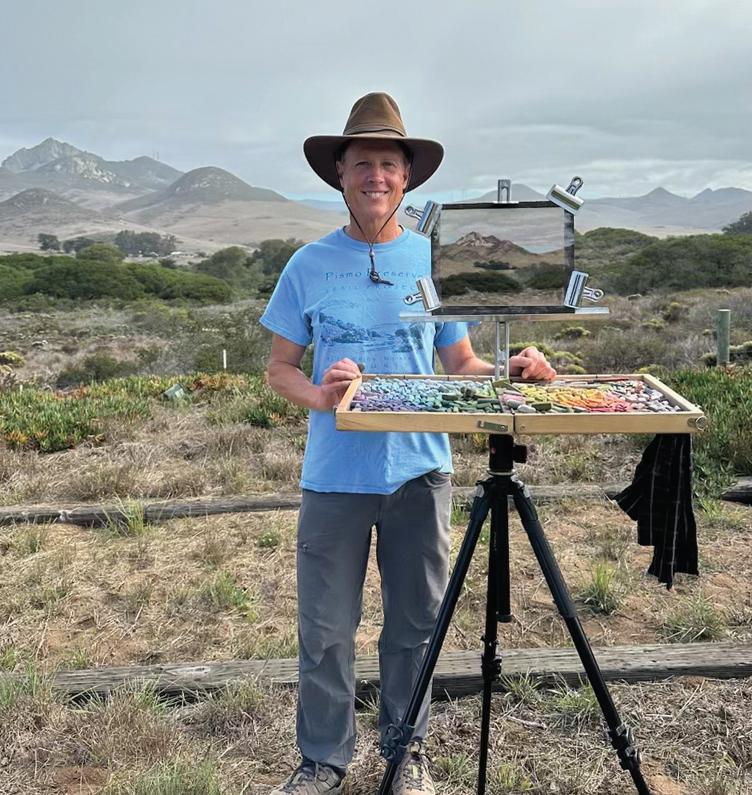
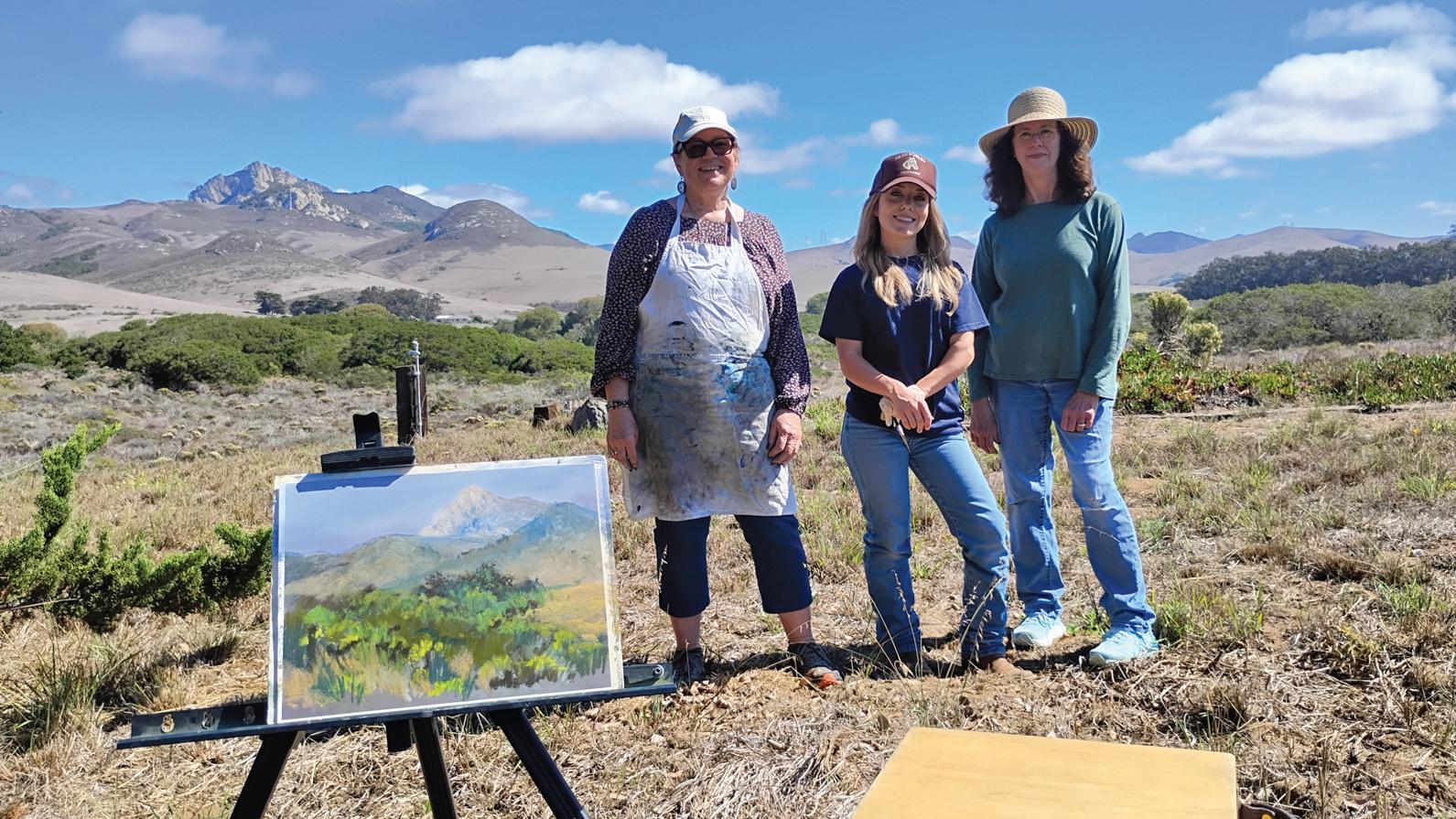


Bonnie Kenaley reports that PSWC members in her region have been very active over the last several months, engaging in a variety of events.
Commencing on October 3rd, the Eagle Plein Air Festival drew ninety artists from Idaho and beyond to paint, using various mediums. PSWC members participating in the festival included Bonnie Zahn Griffith, Jennifer Von Bergen, Norma Miller, and Bonnie Davis Kenaley. Bonnie Zahn Griffith received a top award, while Norma Miller earned an honorable mention.
The Magic Valley Arts Council sponsored its 15th annual Art & Soul of the Magic Valley, held June 6–28, 2025 in Twin Falls, Idaho. As a city-wide arts appreciation event, including 19 categories of art, public voting determined the winners. Jill Storey’s pastel piece, Come Sit with Me received the Best of Show award in its category.
The Northwest Pastel Society held its 2025 Members Show at the Columbia Center for the Arts in Hood River, Oregon during the month of September, juried by Gail Sibley, BFA. Jill Storey received the Best of Show award for her artwork, titled Looking Glass Creek
The Eagle Arts Advisory Committee (EAAC) hosted the “Art That’s Small Exhibit,” featuring paintings no larger than 12” x 12” inches, from October 1– 31, 2025. PSWC members who participated included Bonnie Zahn Griffith, Norma Miller, Jill Storey, and Bonnie Davis Kenaley.
In November, several members of the PSWC participated in the Iconic Idaho Exhibition, sponsored by the Plein Air Painters of Idaho, including Bonnie Zahn Griffith, Bonnie Davis Kenaley, and Norma Miller. Congratulations to Norma for receiving Honorable Mention for her entry, titled Autumn Glow
Bonnie Zahn Griffith was one of four artists invited to exhibit their works during the month of November at the Idaho Art Gallery in Meridian, Idaho.
Congratulations to Carrie Cornils for her exhibit of multiple media works for the Treasures of Time Art Show held at the Riverside Hotel in Boise from November 7th to December 3rd!
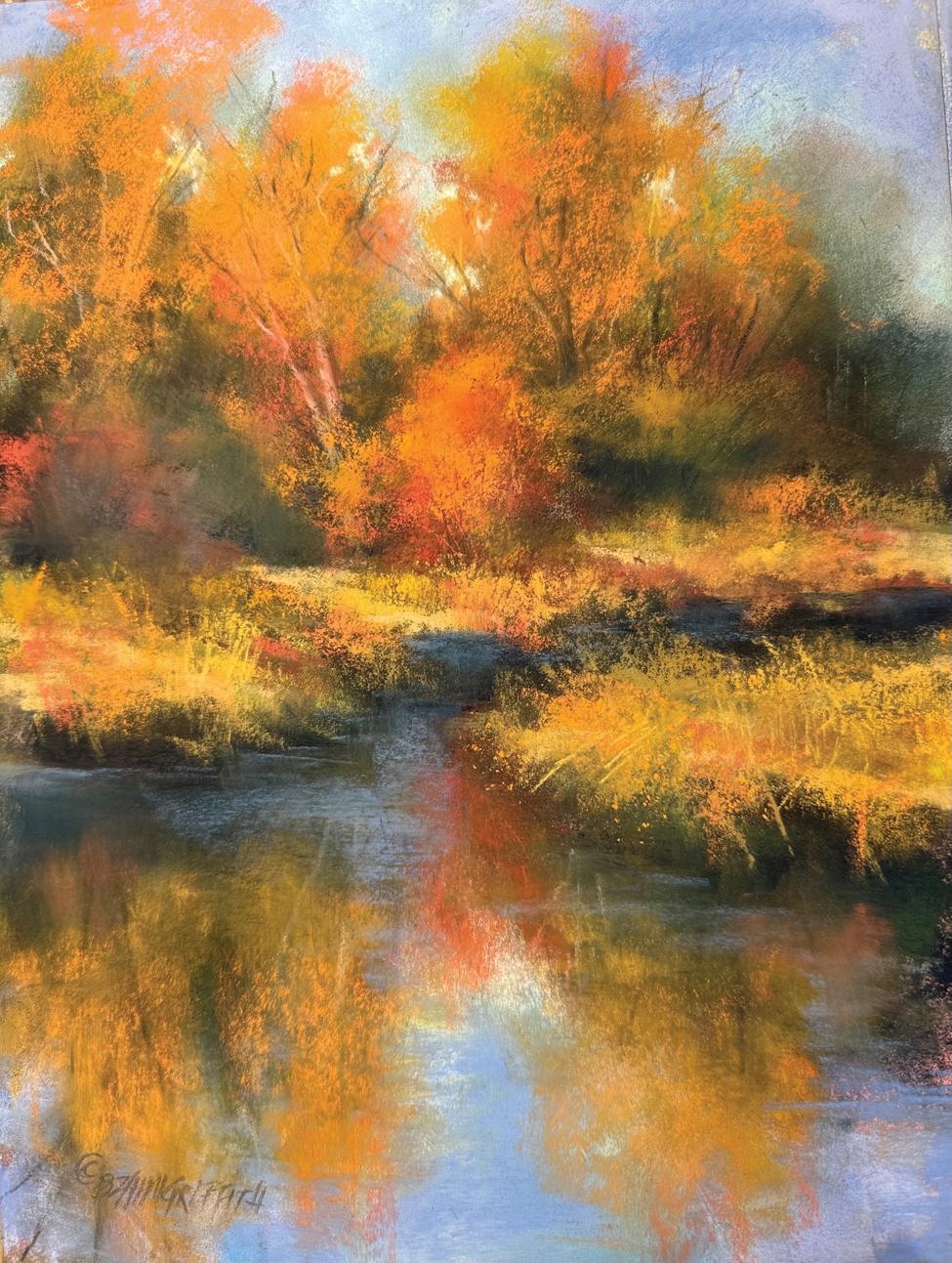

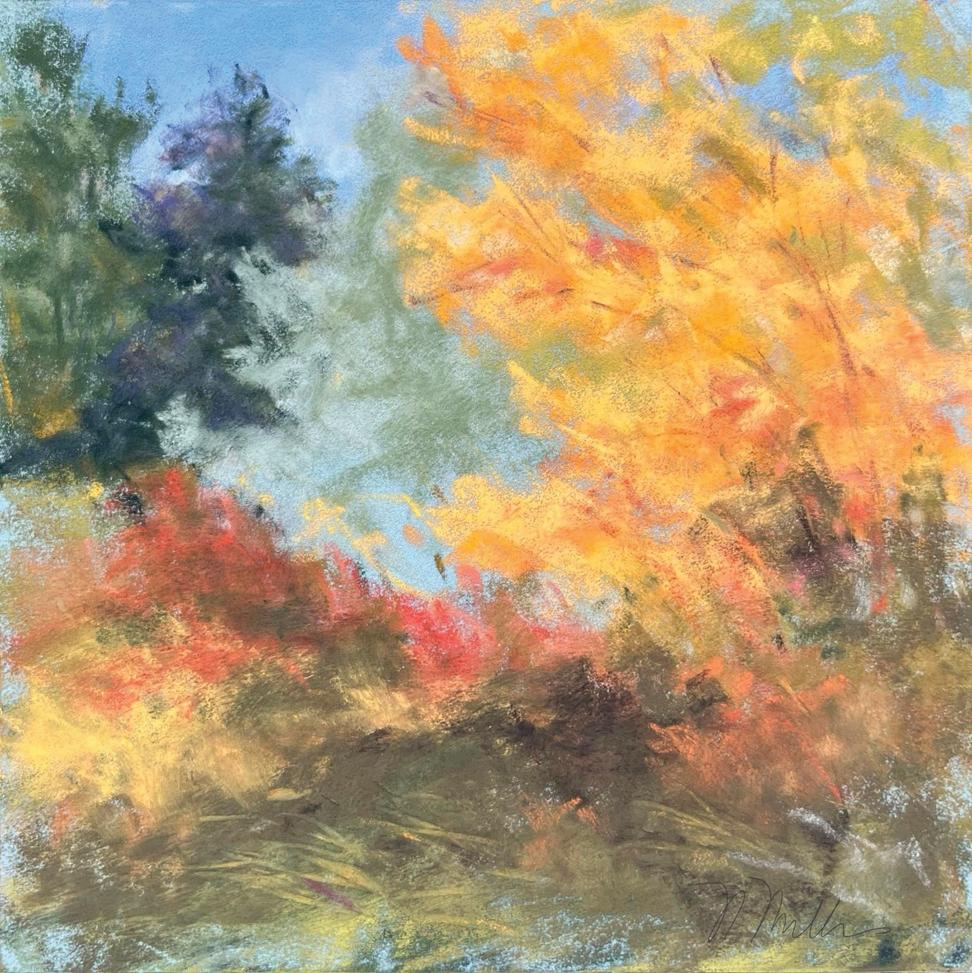

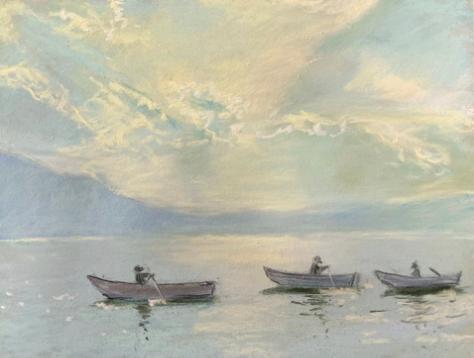
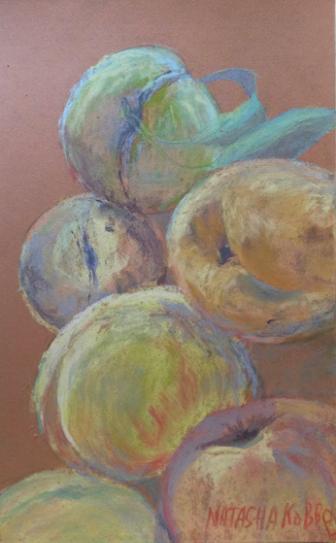
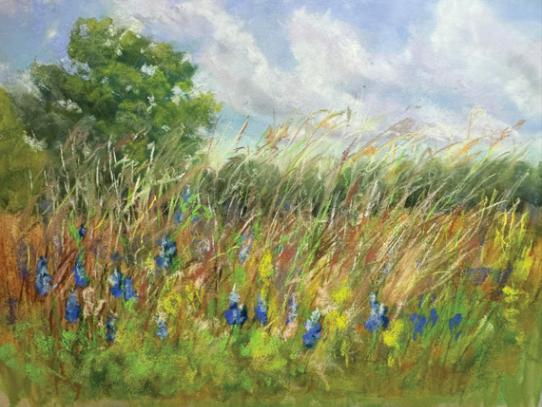
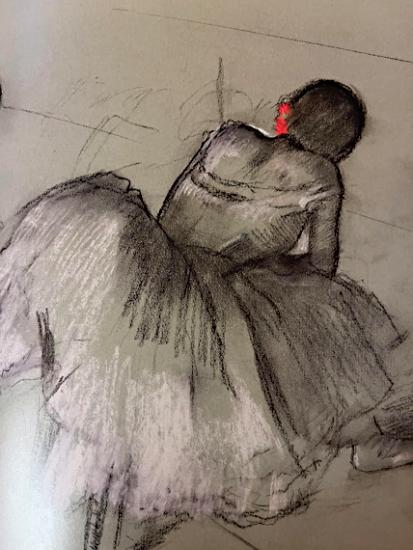
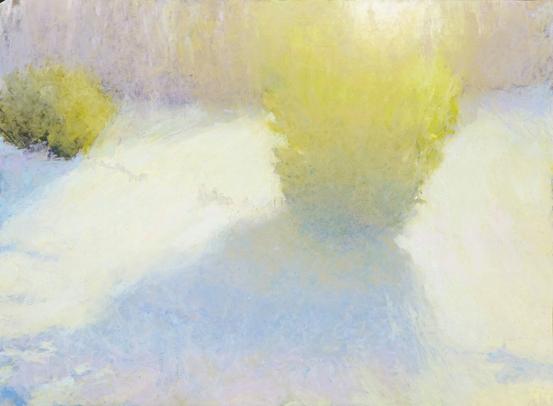
The PSWC Painting Challenges were more popular than ever in 2025! Each challenge offered an opportunity to build skills, experiment and engage in a little online camaraderie. Those members who participated, expressed an enthusiastic appreciation for the process and their fellow artists.
The February Challenge, Make it High Key, Like Mary’s Cup of Tea encouraged participants to experiment with high key paintings by compressing values and using a limited palette.
The Spring Challenge, Borrow Their Magic, But Add Your Own Spin! required artists to borrow inspiration from their favorite famous artists and make it their own by recreating it in their own style. Not surprisingly, our members went above and beyond—sometimes even surprising themselves!
Tonalism was the focus of our Summer Challenge, and participants used muted palettes, monochromatic at times, and soft edges to create the ethereal kind of atmosphere often found in tonalist paintings.
Our final Painting Challenge of the year is the October Challenge, and it is the longest one, lasting 21 days. Our congratulations go to the group that stayed with it until the end. See some of the submissions on the next two pages.
Our 21-day participant winners who were randomly selected to win the final three $100 prizes were Sally Ladd, Bonnie Kenaley, and Viviane Trubey. Of course, anyone who participates wins, because daily practice is the key to ongoing success.
Throughout 2025, Kelly Ann Hine continued to serve as our trusty Challenge Cheerleader keeping everyone inspired and on track!
For rules, more complete descriptions, and to participate, please visit pswc.ws/painting-challenges/
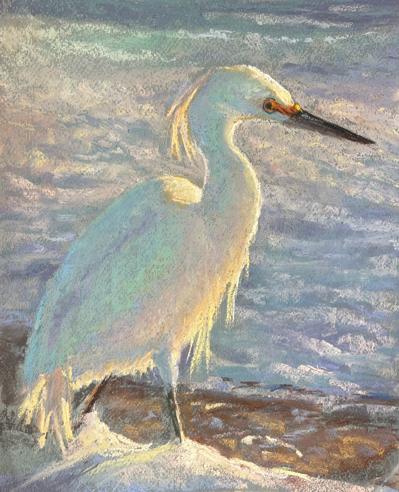
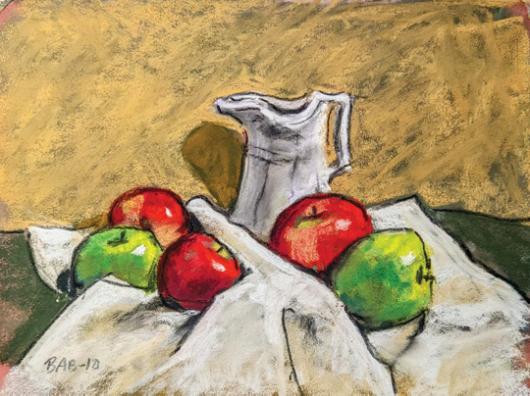
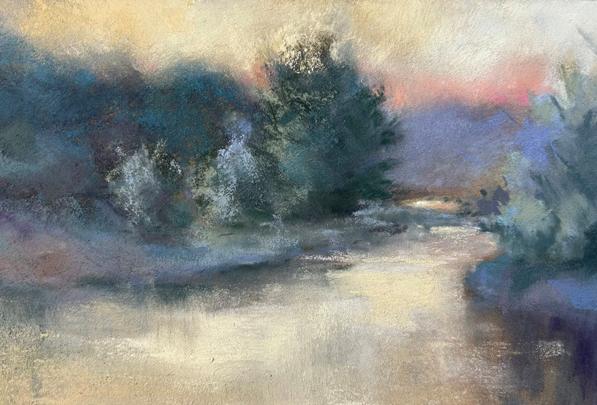
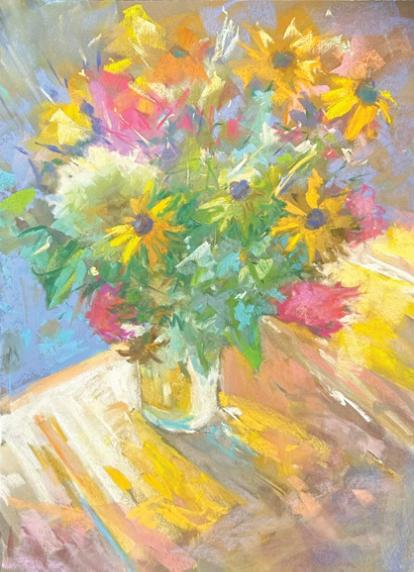
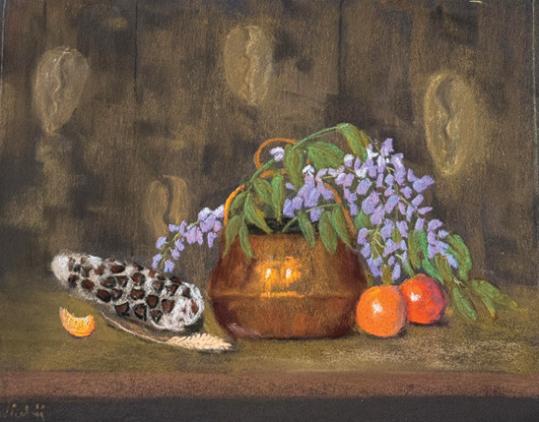

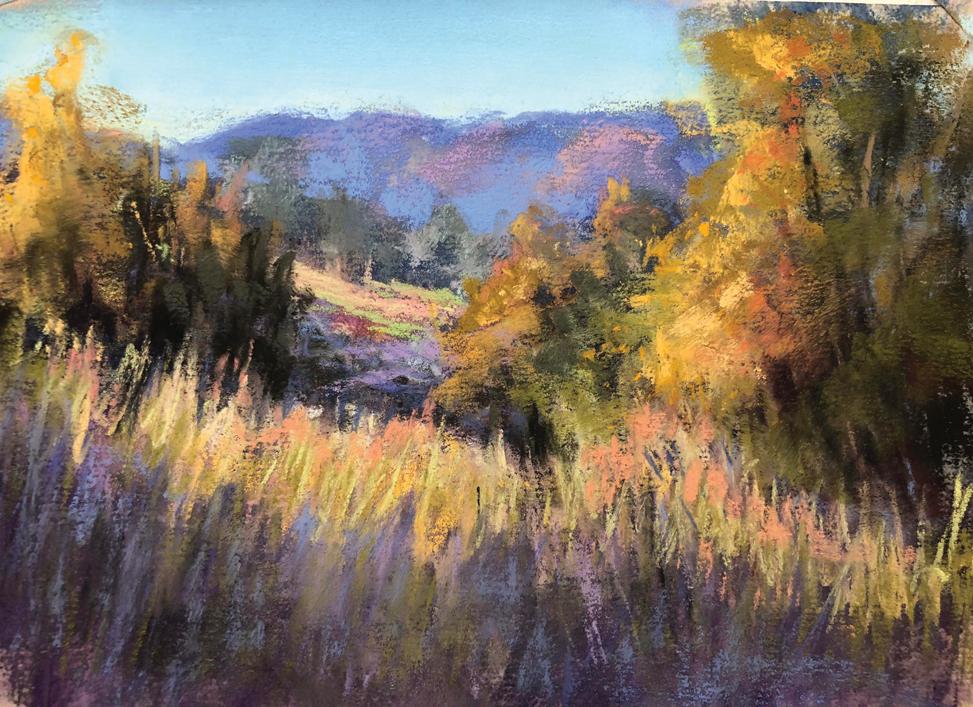

“It was as if I was in Art School with a daily exercise to experiment and learn with, without too much judgement. Thank you PSWC!
Thank you, Kelly Ann Hine and fellow participants! I so enjoyed seeing the creative process on a daily basis.”
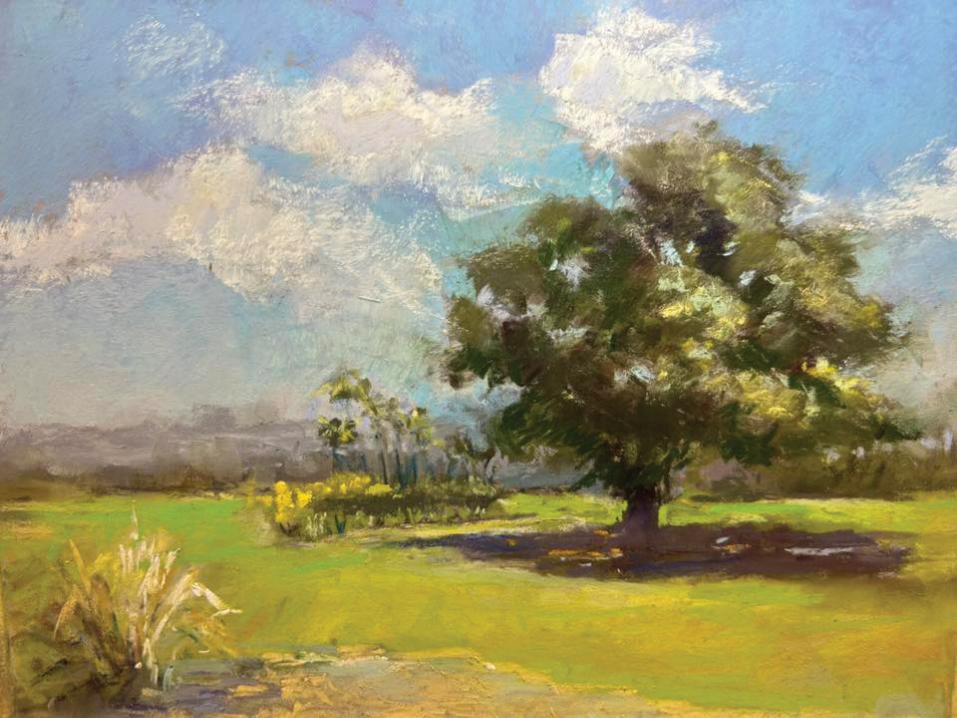
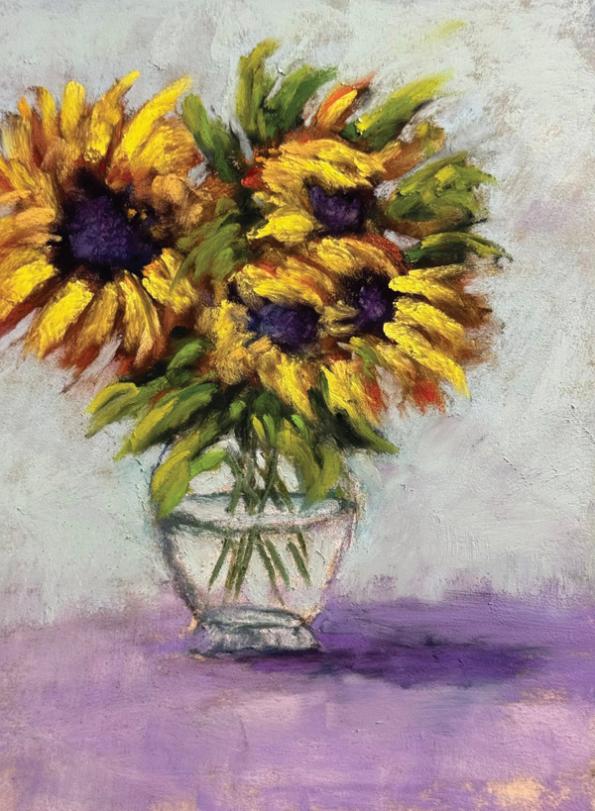
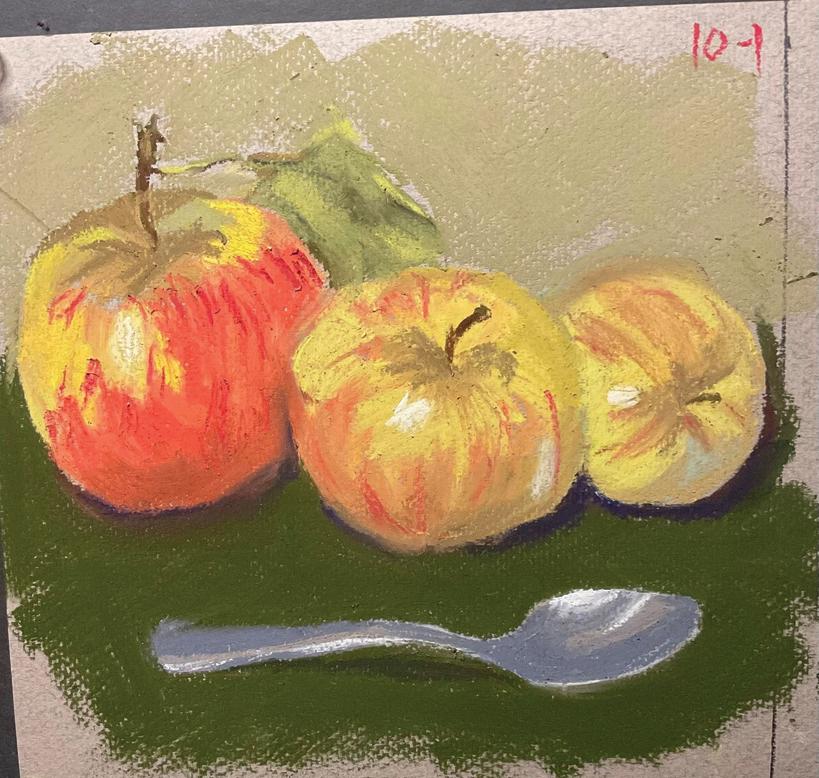
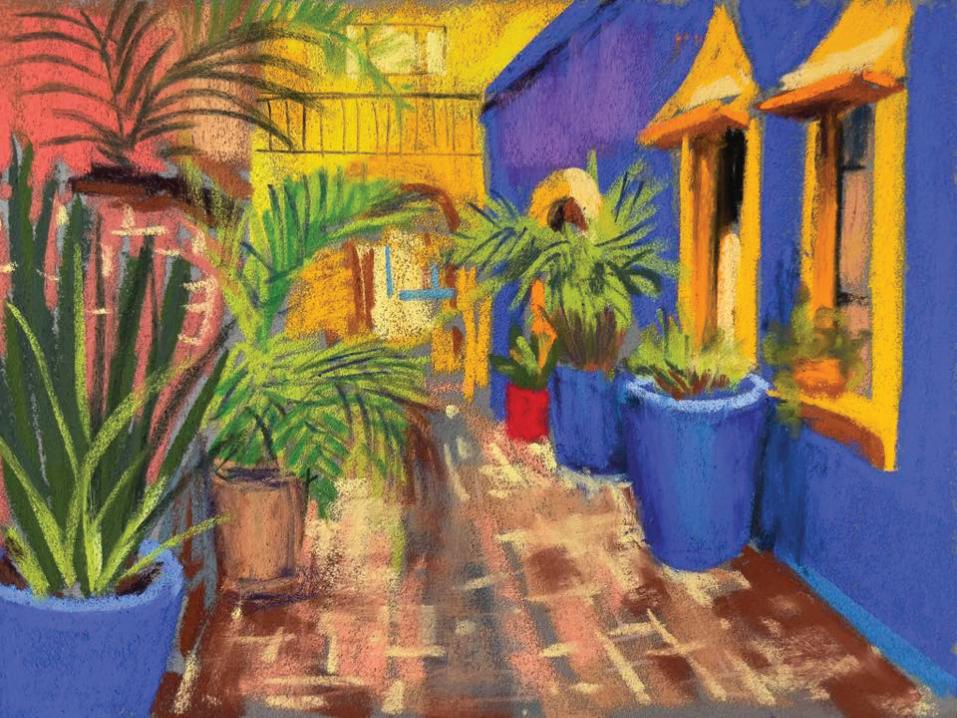
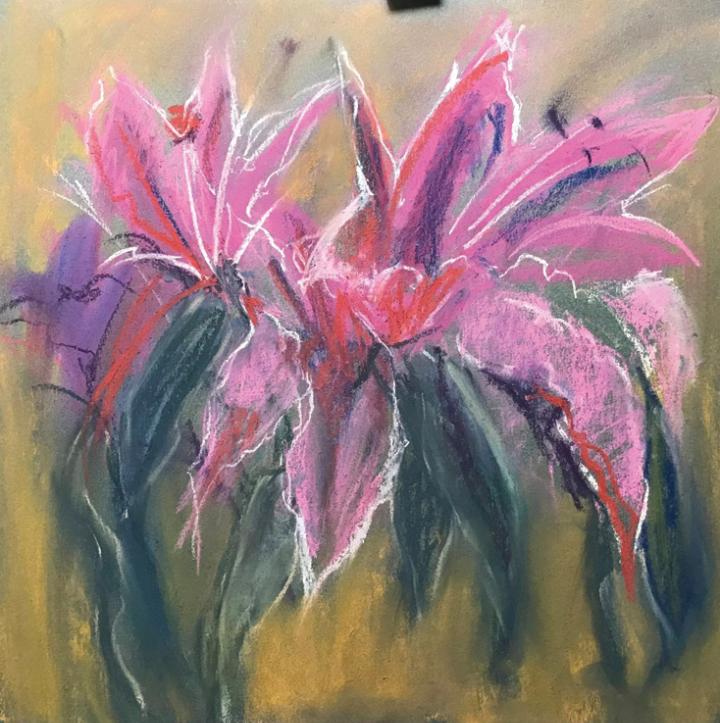

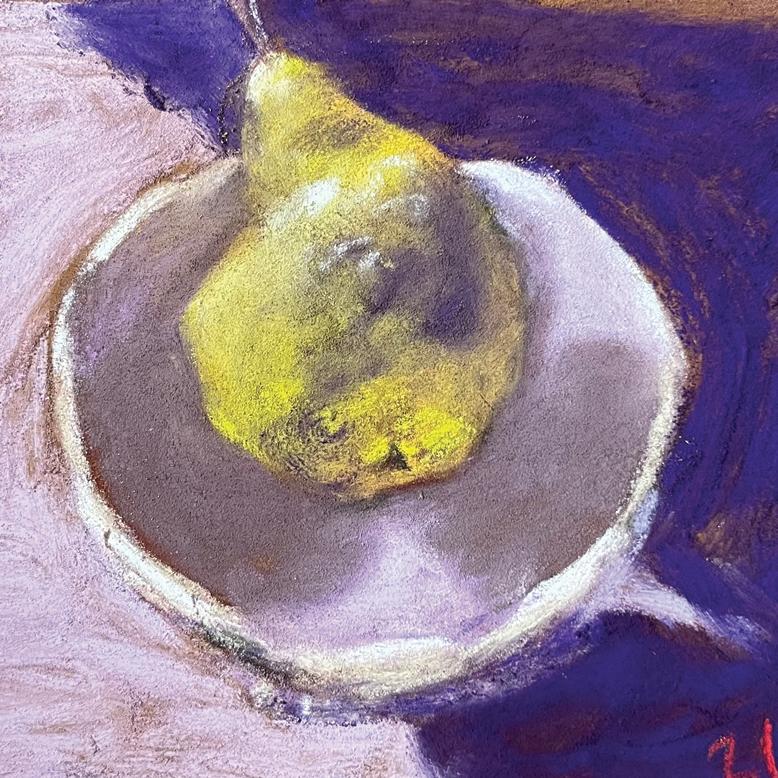
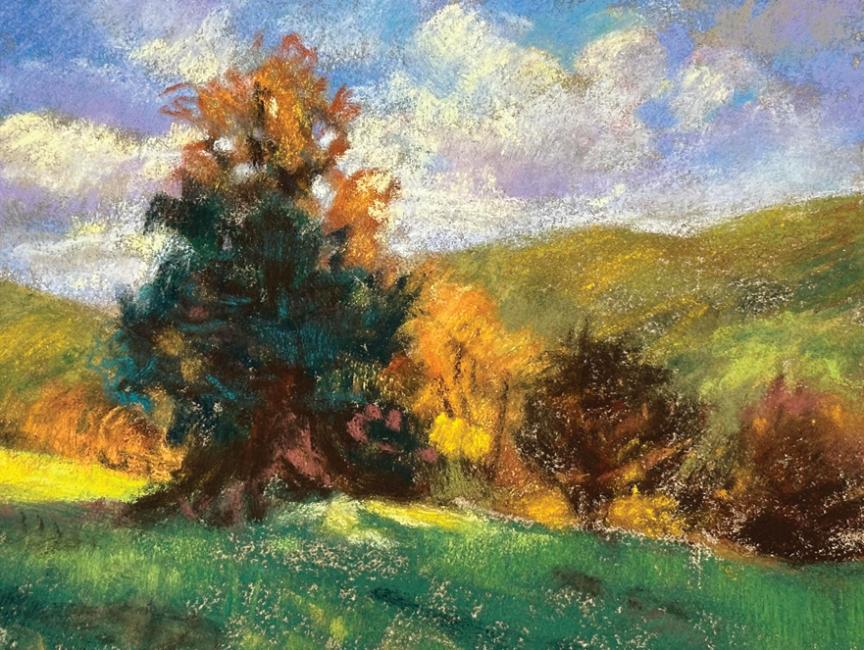
“Best part of this challenge is the community support and mindset to keep going!”
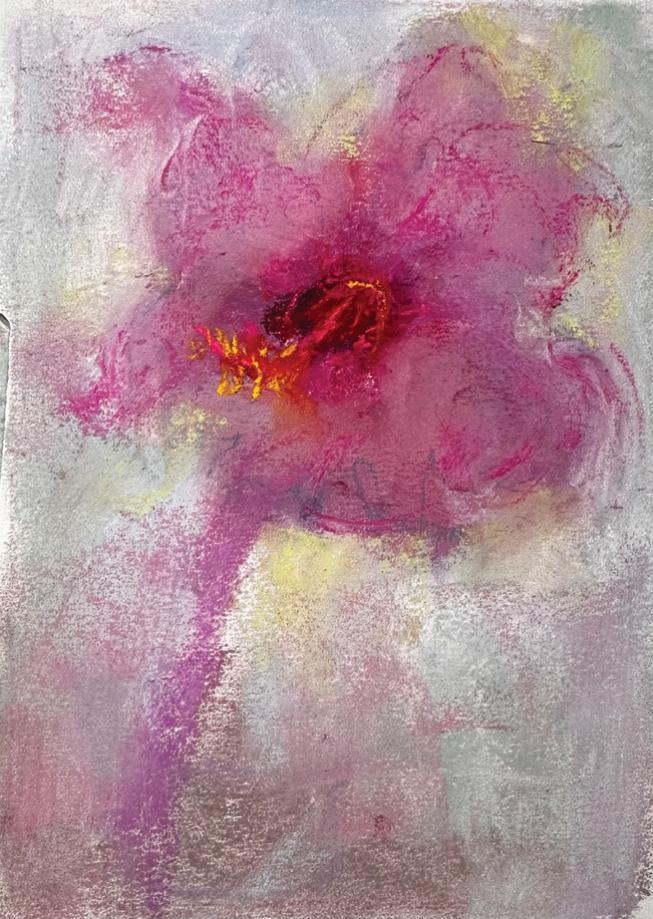
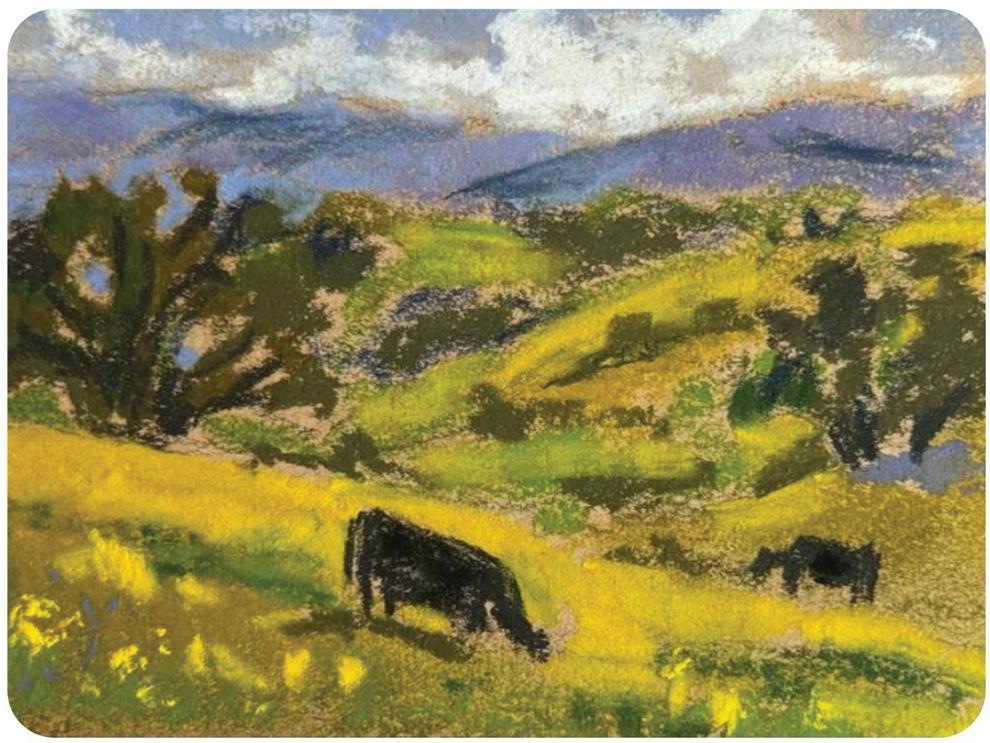
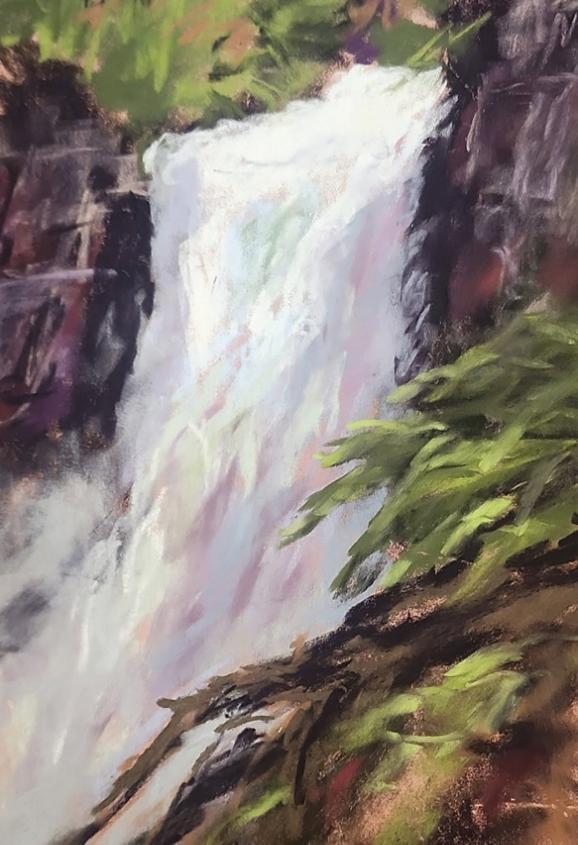

“Hurrah to all of us and huge thanks to Kelly Ann!”
February 1–10
Winter Painting Challenge: Multi-Media My Way Ways to experiment with multi-media paintings:
• Create an underpainting: Use watercolor, inks, oil paint, washes of acrylic paint, gouache, etc. Leave a high percentage of the underpainting in place, rather than covering it all with pastel. Remember, your support has to accept wet media.
• Create a monotype: Use printmaking ink or paint on freezer paper to create a monotype, and experiment with different tools to create marks, after printing, add pastel over the ink or paint
• Pastel over collage: Experiment with a variety of materials such as glued fabric and paper to create a collage and put the pastel on top, along with other media.
• Use a variety of materials: Use inexpensive materials like newsprint and drawing paper, don’t be afraid to PLAY, plan to make mistakes and learn. Research the ways that pastel can be used with cold wax, encaustic and fixative.
• EXPERIMENT: Use whatever you have to create unique marks and texture, combs, twigs, brayers, yarn, spoons, kitchen tools, and anything that can become a stencil.
• Look for inspiration: See examples by Dawn Emerson, Debora Stewart, Kelly Milukas, Judith Smith and Kathi Holzer.
April 1–10
July 1–10
Spring Painting Challenge: What Springs to Mind? Take advantage of this opportunity to create new pathways for your own artistic expression! A daily visual prompt will be provided (such as a squiggle or shape). Redraw the visual on your substrate and build upon it to create your painting, or study the visual and think about what it brings to mind. Use that concept as the basis for your painting. Or, identify your first emotional reaction to the visual and create a painting that represents that emotion. The sky is the limit, as long as you can express the connection between the visual prompt and your painting.
Summer Painting Challenge: This Challenge is All Wet! Utilize any and all principles related to painting water.
Any and all types of water count: ocean, lake, river, creek, stream, waterfall, pool, marsh, even water in a flower vase. Consider stillness/reflection, movement/ripples, light/refraction, eye level and shape, depth and clarity. Look through art books, and at online videos for tips on painting water. Practice by recreating paintings by the masters.
For inspiration, check out the works of Monet, Homer, Sargent, Hopper and contemporary artists Amy K. Sanders, Abi Whitlock, and Jessica Masters.
October 1–21
Use this opportunity to commit to nearly a full month of daily painting. Here are some ways to keep the momentum:
• Prepare your paper ahead of time
• Focus on small works
• Limit your time to 30 minutes or so
• Plan to work in a “series” every few days or week
• Choose one subject or reference and paint it using several different palettes
• Go to bed each night with the next day’s block-in or underpainting on your easel
Post your efforts to the PSWC Facebook page and encourage your fellow members!
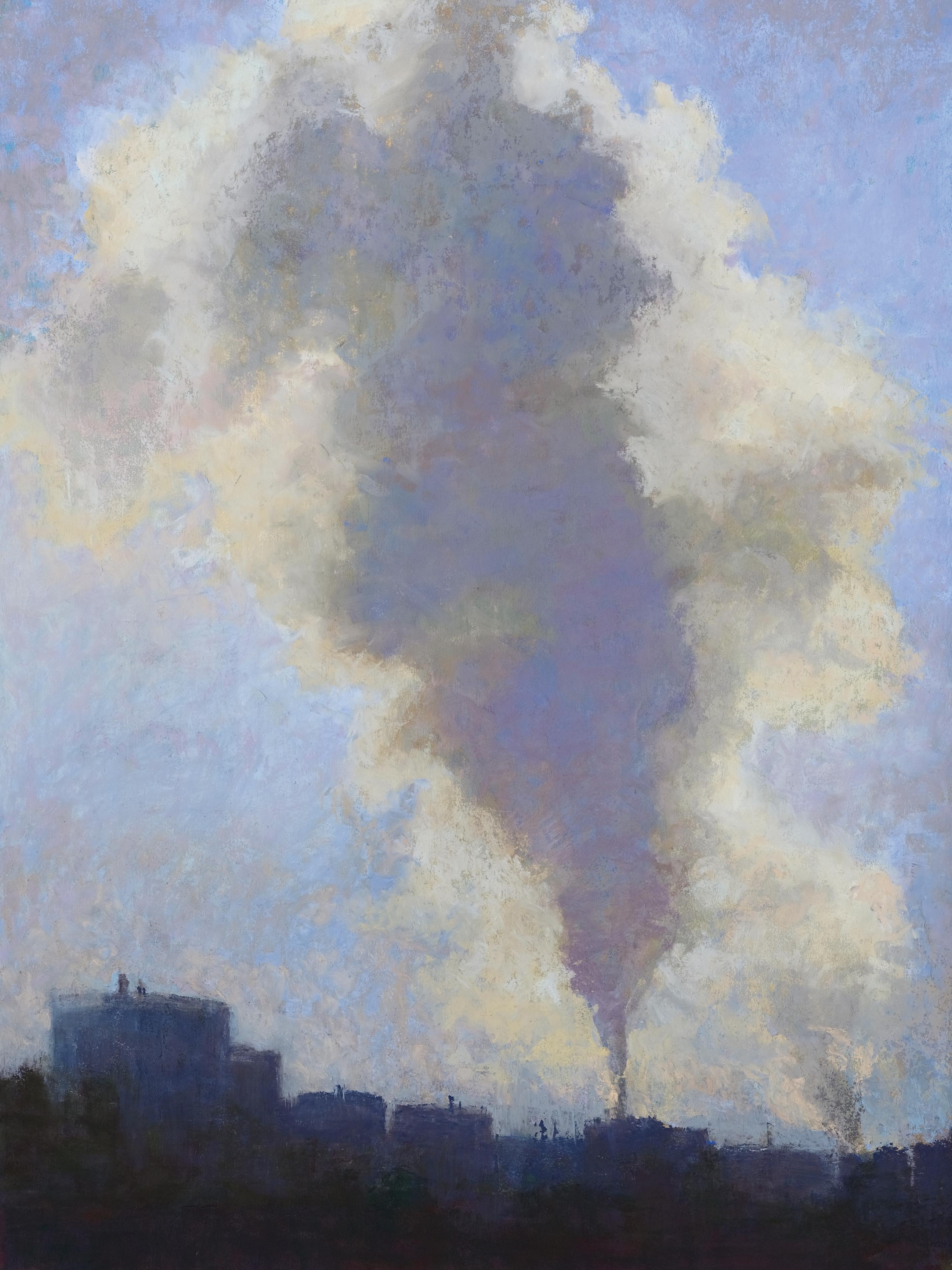
ARTIST
by Pamela Comfort
I first met Carol at the International Association for Pastel Societies (IAPS) convention in 2024. We spent quite a bit of time together volunteering at the registration table, and I soon learned that she is an upbeat, encouraging, and just plain fun person to be around. Carol is also a very accomplished artist and a popular, nurturing workshop presenter. Other well-respected artists are unified in their responses when asked about Carol: enthusiastic, creative, joyful, takes chances, always learning and helpful.
Tell us a little about your upbringing. Where were you born?
I was born in Union City, Indiana, in the town where I now live, except now the town no longer has a hospital. Artist Jimmy Wright was born in Union City, too. But, in a different state. He was born in one state, while his parents were living just over the border in another.
Yes, I think many states have a Union City, and they are usually located on a state line road. I live in Indiana, but my mailbox is on the opposite side of the road in Ohio. I cross the state line every day to get my mail, even though I have an Indiana address!
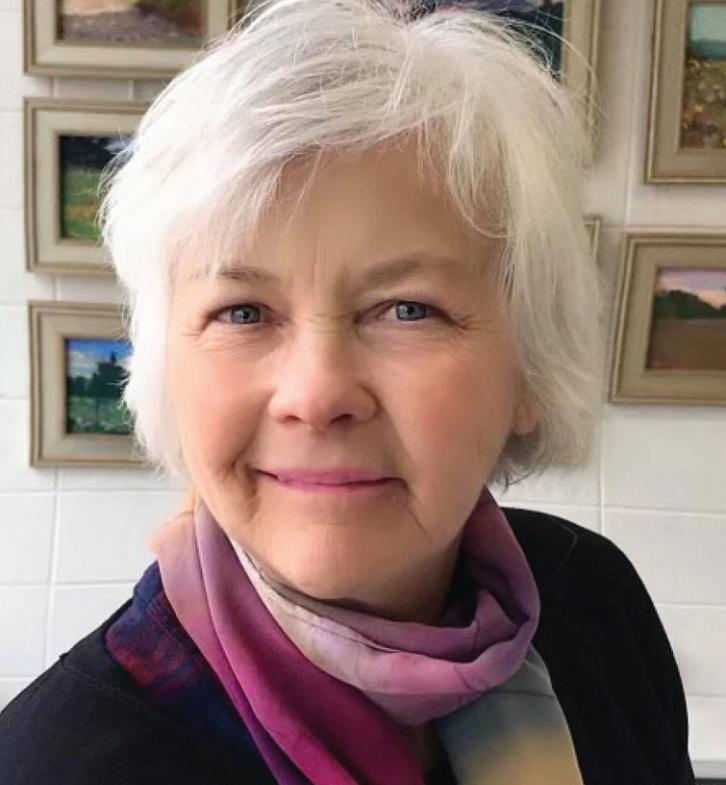

That’s crazy. Have you lived there your whole life? Tell us about your family. Was there something from your childhood that inspired you to become an artist?
I’ve lived here just about my whole life. My father owned a grocery store and my mother was a secretary for a law firm. I have an older sister who was the first born princess, and my younger brother is the blessed son, and I was in the middle.
I was curious and interested in creating like most children are but I never intended to be an artist. My mother painted somewhat, but she never pursued it professionally. She pushed an interest in art for the
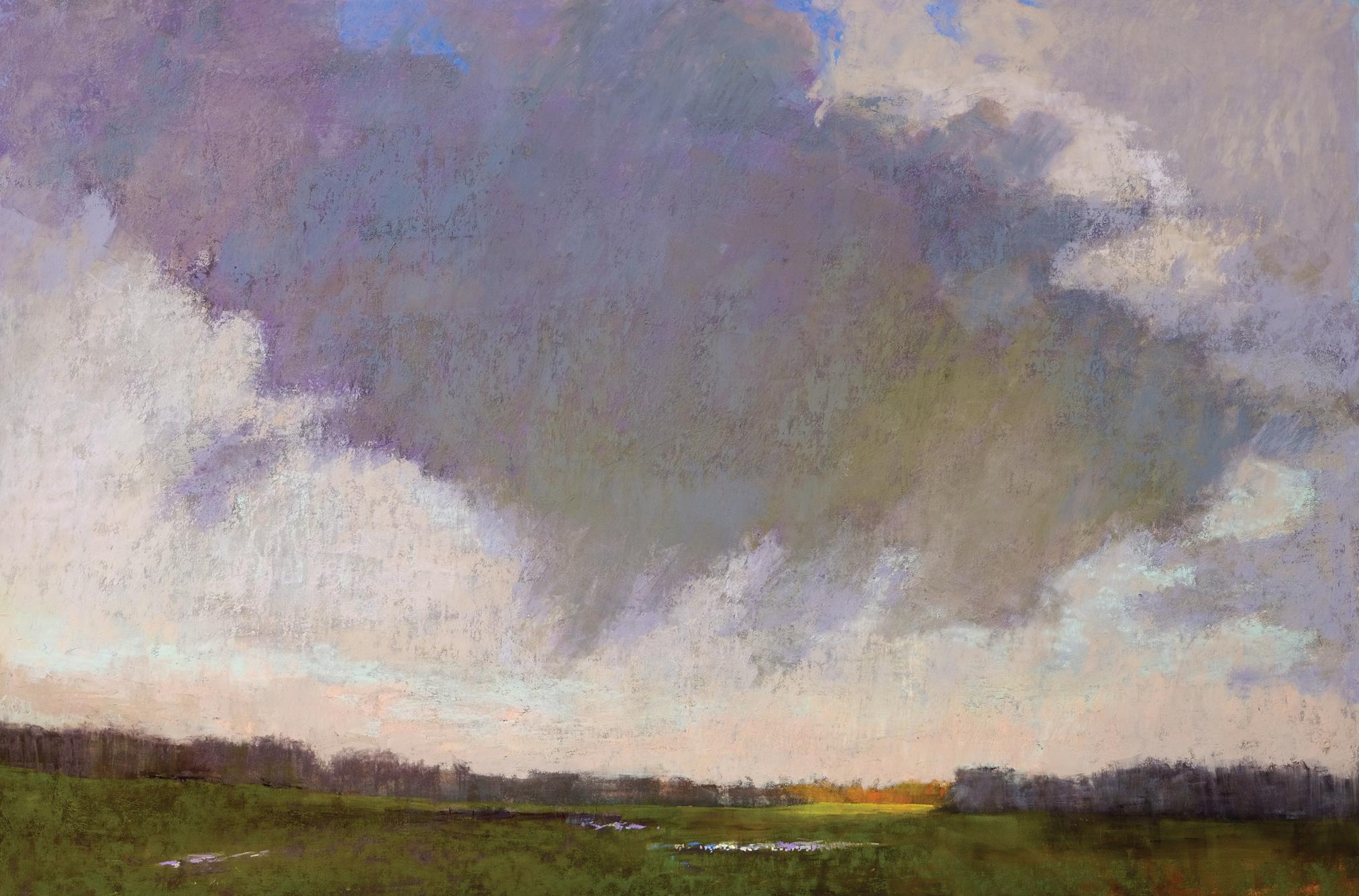
family, but I’m the only one it stuck with. At the time she was alive and painting, there was an art depot that they turned into an artist gallery from an old train station in Union City. She belonged to the Art Association of Randolph County. So, I had some exposure to art and to an art community.
I took art in school and loved it. I would usually paint from a photograph that I picked out of National Geographic magazine. My teachers would encourage me, so I did get a sense that I was good at art.
Did you study art in college? Were your parents encouraging of your pursuit of art as a major and as a career?
Well, as my parents said “How can you support yourself?” so, I happily went off to college to pursue my career path of chemical engineering. My parents questions were valid. I always tell young students now that come into my class and say they want to be an artist,
“You have to also have a career where you can support yourself.” And when my own children went to school, they didn’t even consider pursuing art. They went straight into business.
In this area, where I live, it’s very difficult to have an art career supporting yourself. If you were to move to New York, or someplace with a bigger population, then I think an art career might support an artist. But, in our little Midwest area, it’s just not possible.
How did you choose chemical engineering as a career path?
I always liked science, I liked math, and I liked biology. My uncle was a chemical engineer. I loved my chemistry classes in high school and in college. They were my favorite subjects. I wanted to have a good paying job that would allow me to do whatever I wanted in my free time. That’s what my uncle did. So, I went into it with that in mind.
No, because I suddenly became very ill and ended up in the hospital diagnosed with Type-1 diabetes. With that twist in the road, my life changed dramatically, and selfpreservation took over. With all the technology today, diabetes control has become easier, but back when I was diagnosed in 1976, there was nothing except a syringe and insulin. Every time the doctor wanted to know what my blood sugar level was, I had to go to the hospital to get a test. Even when I finally got my first glucometer, it took a whole minute to get the reading. Now it takes seconds.
Anyway, I didn’t know what to do at the time. It was very tragic for me. So I just came back home. I was devastated. I ended up going to Atlanta, Georgia with one of my friends for a year. We went to Bauder Fashion College. Don’t ask me why.
Then, I came back home again and I had a boyfriend and we got married. I helped him with his landscaping
business, and we had two kids. I worked at the business, Wasson Nursery Landscape Design.
Painting became a way to relieve the stress and fear of a chronic illness. I feel fortunate to still be painting after 49 years with the disease.
We raised our boys and they got involved in the business. We now have three stores. One son runs the business in Muncie, Indiana and the other runs the business in Fishers, Indiana. We have five acres of landscape property in Union City, and my husband’s goal is to spend the rest of his life taking care of this property. He loves it. I retired and I just do what I want to do now. So, I guess I still ended up working hard so that I could do what I wanted to do at the end.
So, after coming back home, what influenced your development as an artist? Did you have a mentor?
The whole time I was working with my husband and raising my children, I was also making art. The reason I
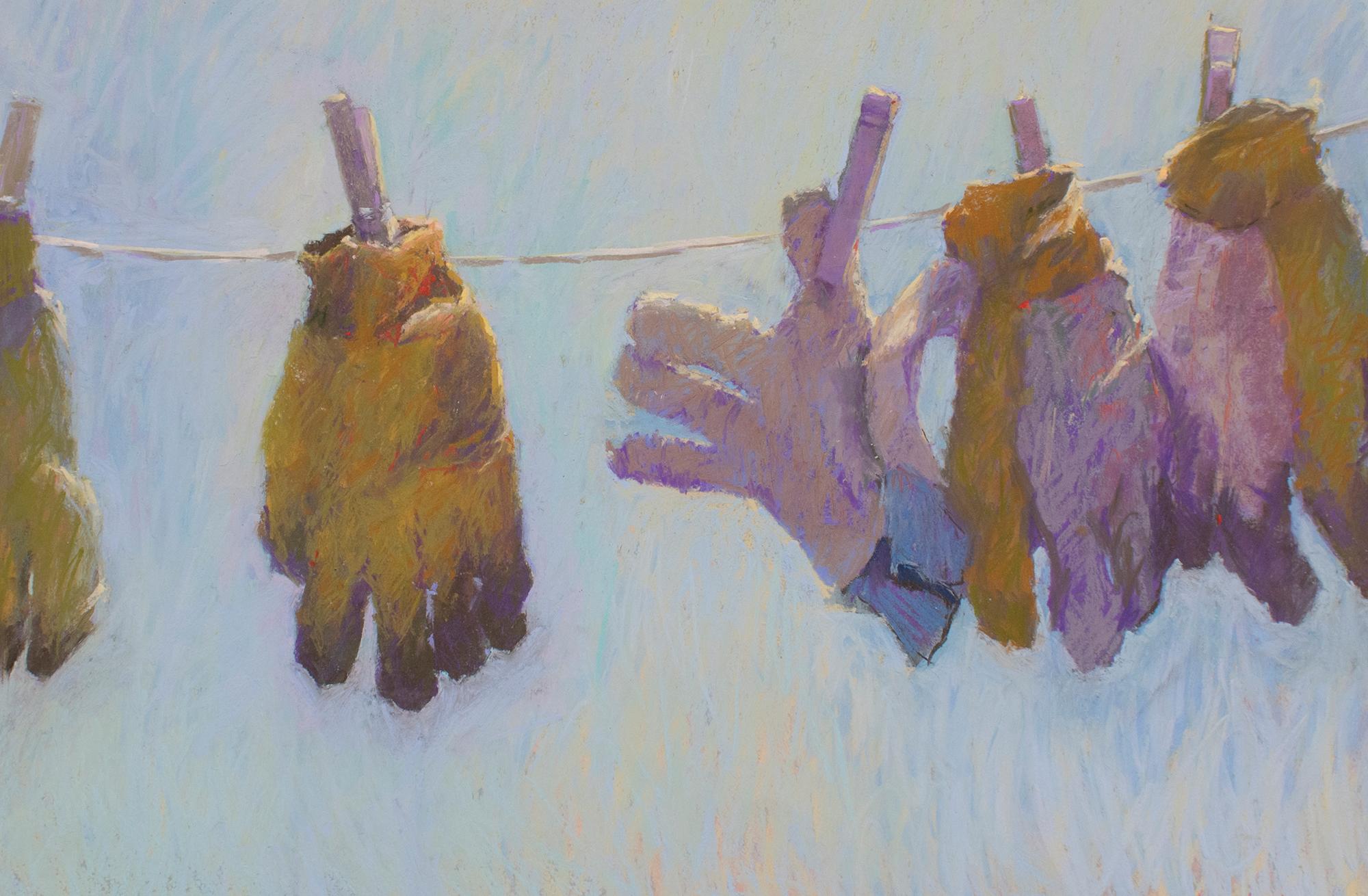
went to pastel was because of my children. I always had to take them places. If I was working on a painting, it seemed like somebody always had to go somewhere or do something, or I had to fix supper. So, I would have to put my stuff down and go do what I had to do, and by the time I came back, the watercolors would be dried and unworkable, or the oil paint would be kind of mushy and not very much fun to work with like it is when it’s fresh. But with pastels, you can pick them up and lay them down at will, and continue to work on your painting. So that’s how I got involved with pastels, and it was the best move I ever made. It was wonderful! The whole time I was working and raising my kids—I was out there plein air painting.
I would come home from work, take care of the kids, leave my husband with the kids, and go out plein air painting on the road. I had the old French easel and I
used either oil—because you do them so fast you don’t have to worry about dry paint—or pastel. In other words, I didn’t have a career and then start painting. I painted throughout my life.
I did take a few college courses in art but always as a side. My real growth as an artist happened when I started taking artist workshops. Susan Kuznitsky was one of my first workshop instructors at the Art Barn School of Art in Valparaiso, Indiana. I’ll never forget that, because right before I went to the workshop our barn burnt down. My husband said, “Go ahead, it’ll be okay. It’s just a barn. I’ll clean it up.” It wasn’t a major part of our life. It was just an old barn that was on our property. So, I went to the workshop anyway, and I learned so much from her. She taught me all about color and value, and I still base my teachings on what I learned from her.
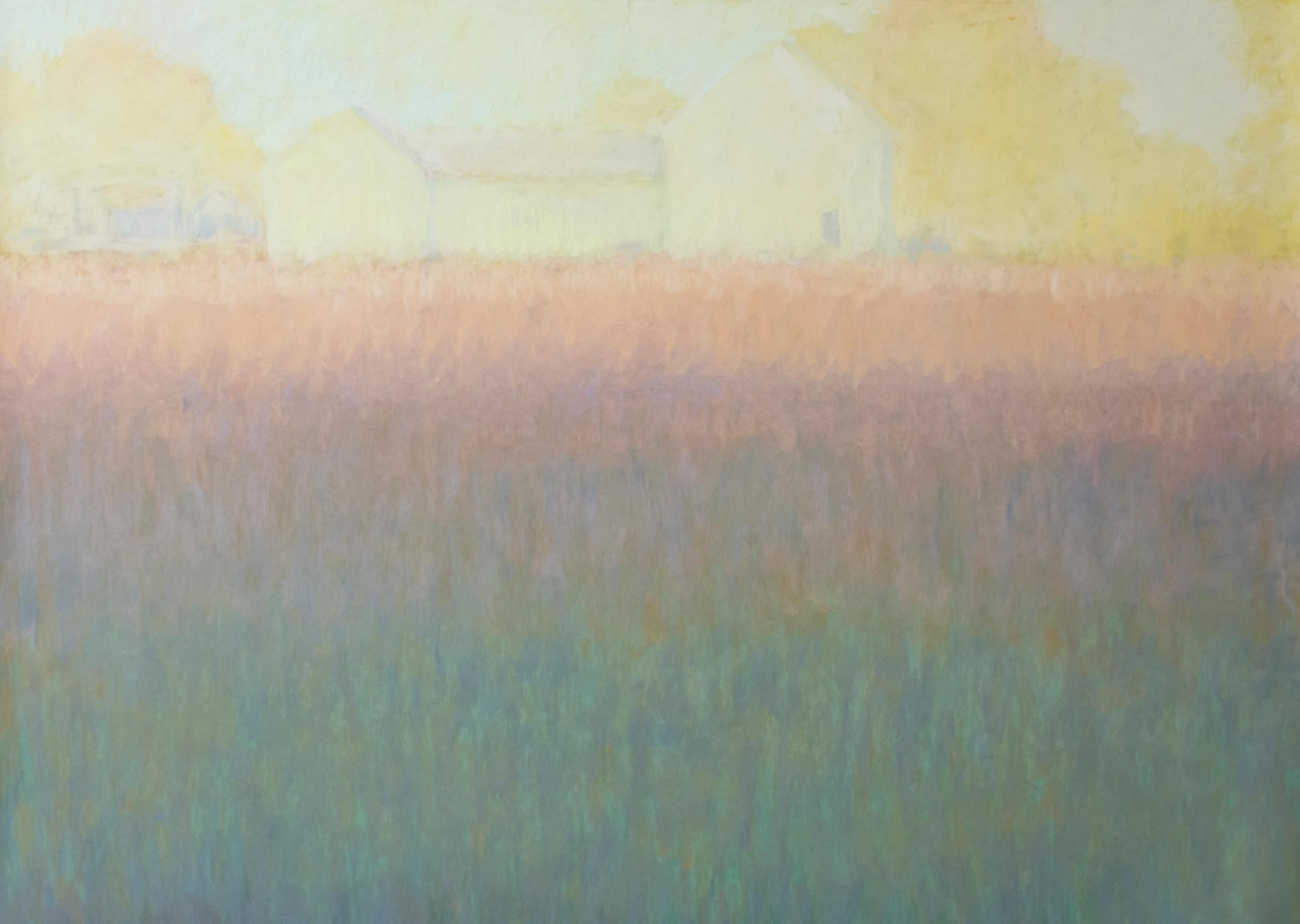
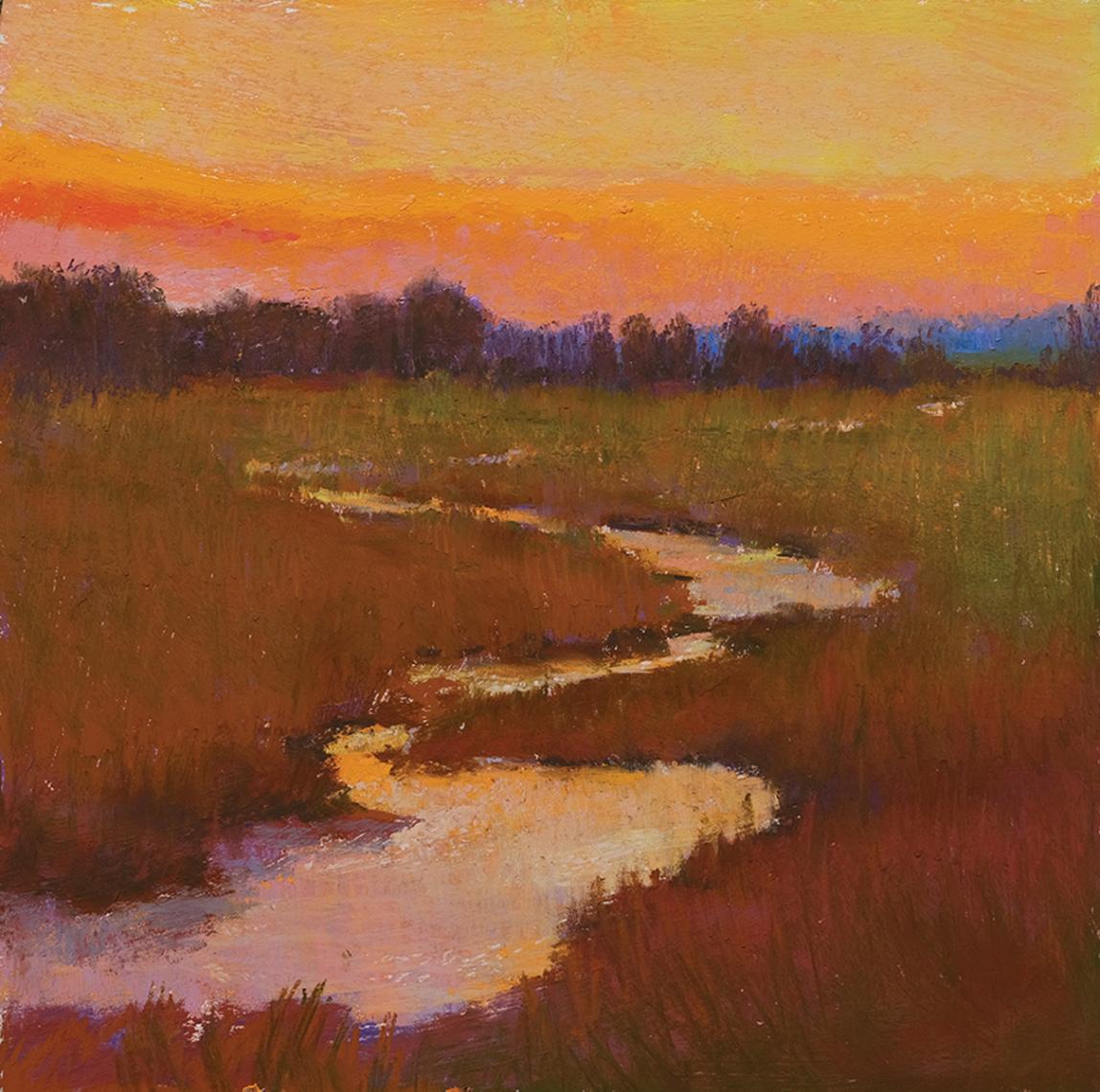
Since then I’ve taken classes from Albert Handell, Ken Auster, William Schultz, Doug Dawson, Carolyn Brown, CW Mundy, David Slonim, Dawn Emerson, and many others. From each I learned something that I took back to my studio and used in my own work. I also did a lot of selfteaching, reading art books, and giving myself goals and exercises that would strengthen my abilities. As a result, I have built up a library of books that I reference, and created many PDFs on just about every subject, that I use and share when I teach.
I also started going out to Wyoming to the Susan K. Black Artist Foundation. Susan K. Black had died of cancer, and her husband and other people that knew her had started a Learning Area development for artists to come in and learn and paint together. That was very instrumental in my growth.
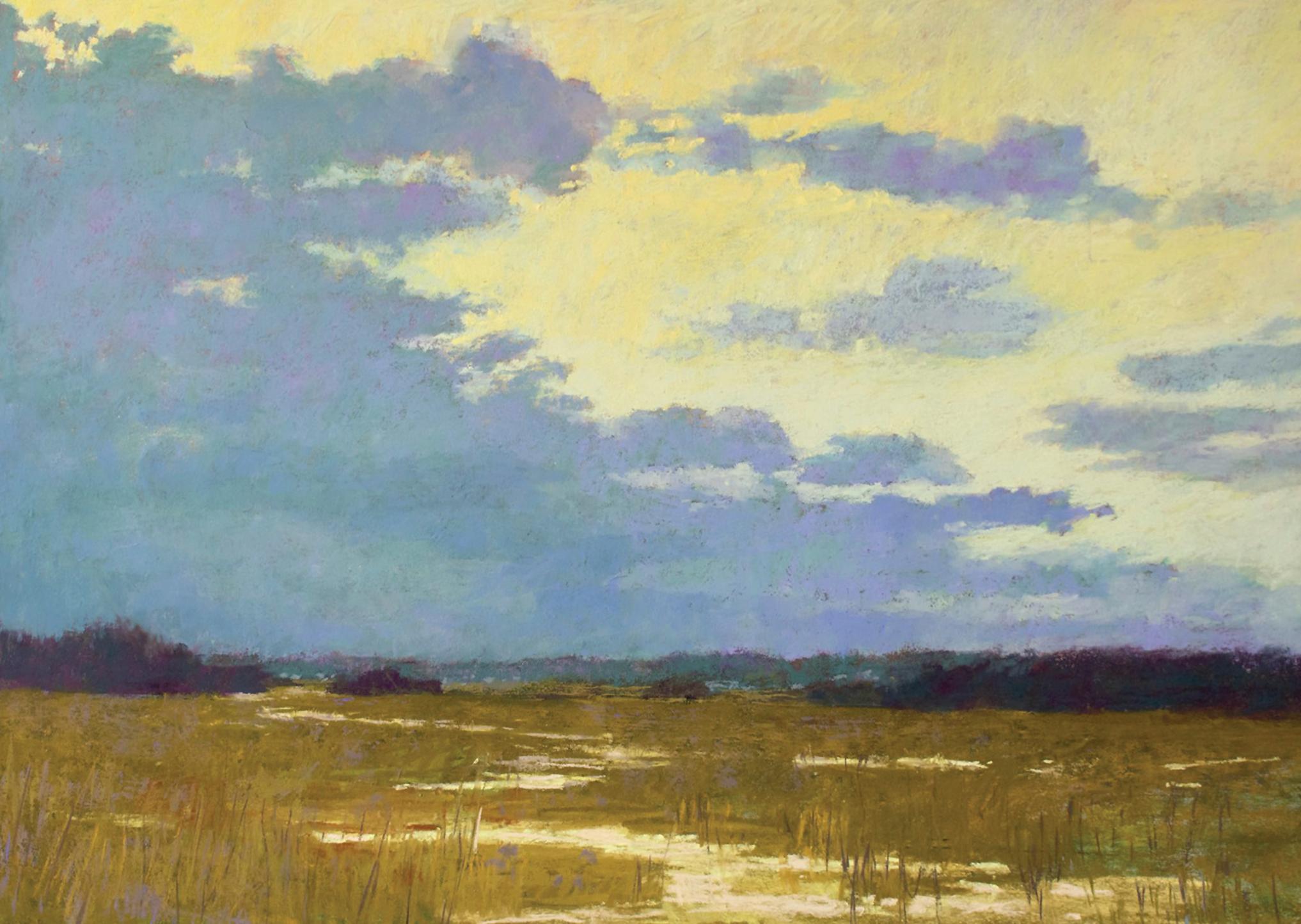
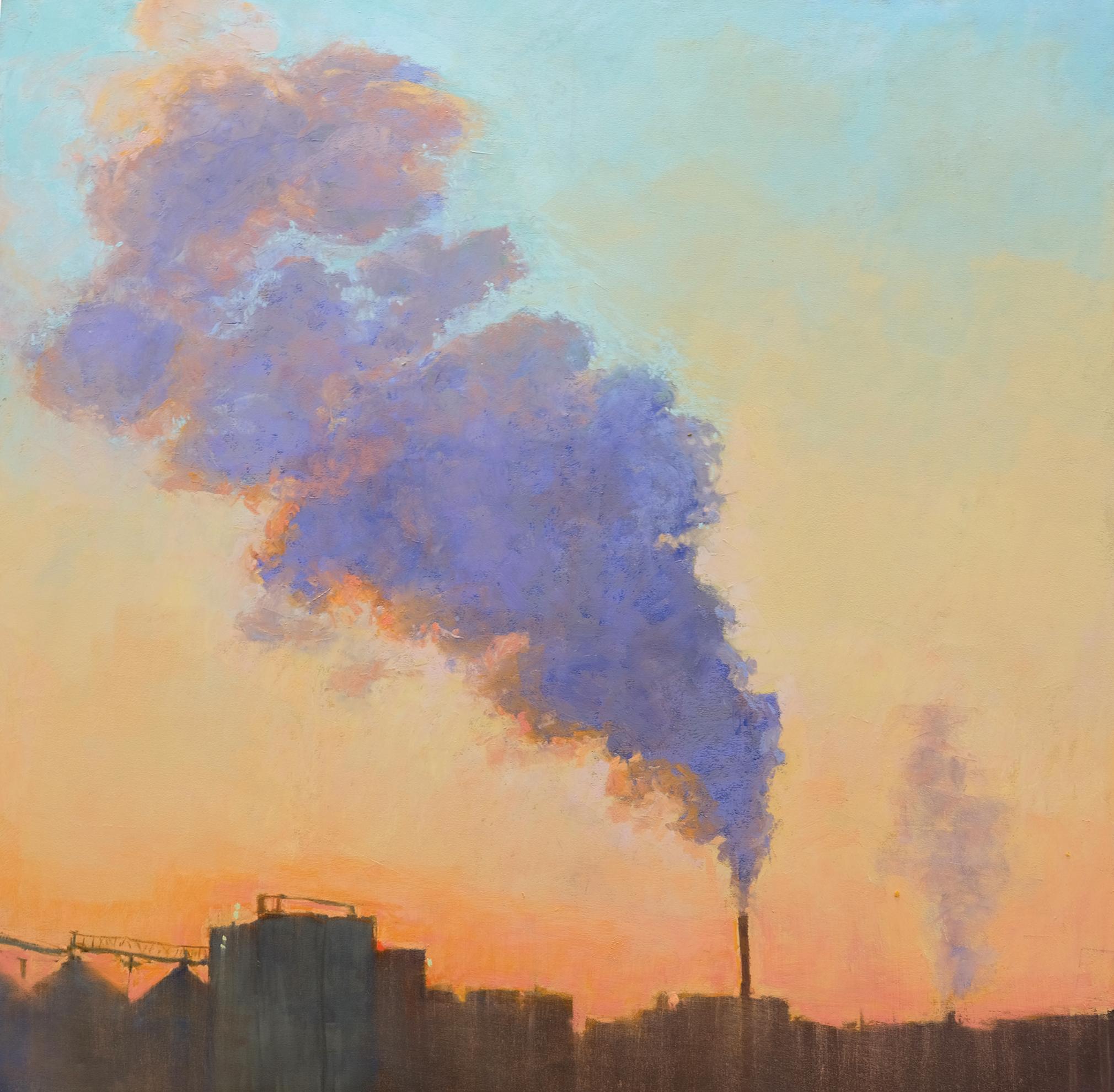
I also took classes from John Seerey-Lester, and I met Everett Kinstler, the portrait artist. My goal was to focus on painting, the pleasure of painting, and the process of painting. I did not have paintings in a gallery and I was not concerned with selling my paintings at the time.
Later, when my confidence and skill was more developed, I began showing my art at the art depot. Then, I started entering bigger shows in Richmond and
Indianapolis, and from there, I started entering other shows with organizations.
There were a lot more art opportunities here back then, than there are now. Union City has gotten a lot smaller because we lost our industry. There aren’t any factories like there used to be, like the Union City Body Company, Westinghouse, etc. So fewer people come through this area and live here than before.
The artist Ian Roberts said that “Our artistic growth is an evolution just as our personal growth is.” If this rings true for you, then in what ways has attention to your creative process helped you to learn more about yourself in general?
So true, when I first started painting, I had little confidence in anything. I was a fearful fright. As I learned and grew artistically, my confidence and courage grew along with it. Like a flower bud beginning to open and bloom for the sun, art and painting became my sun. I also learned to reach out to others, and to teach and share the beauty of our surroundings. Through teaching, I have taught others how to see in color and value.
What motivated you to get involved and stay involved in pastel societies, and the PSWC in particular?
I belong to a bunch of societies, and it’s the best thing I ever did. Especially since COVID, I’ve joined more and more because they started having these wonderful meetings where they’ll have an instructor come on and show us a few things, plus, you learn some things about the organization. It’s been wonderful! I’m grateful for what COVID brought us with Zoom and classes online. It’s been a silver lining for me because I also joined Pastel Artists Teaching Internationally Online (PATIO). I’ve made so many good friends from that group and learned so much from them. We all taught each other how to teach online.
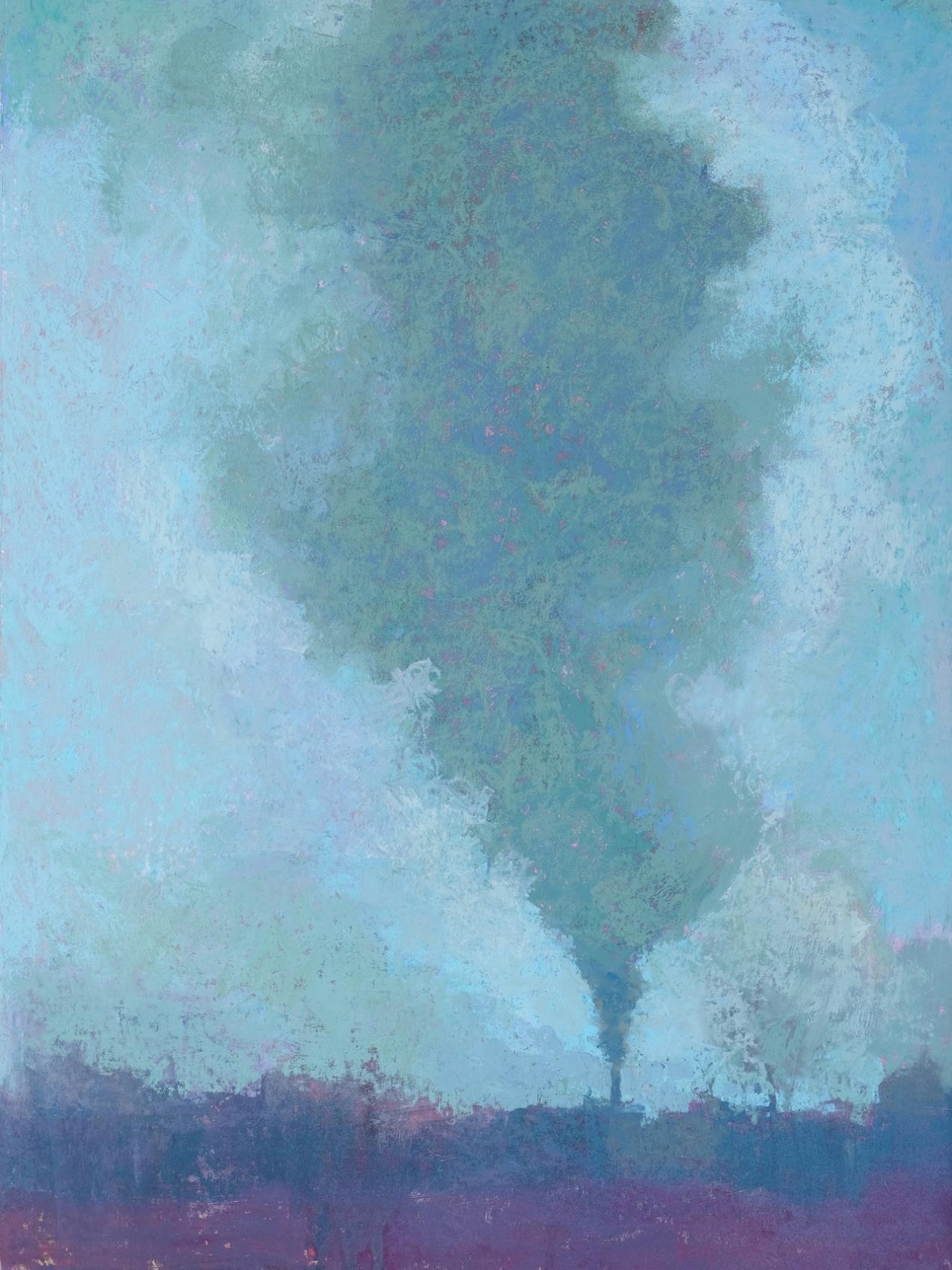
What is the biggest challenge you have had to overcome as an artist?
I noticed how hard people were working at one of the IAPS conventions. They seemed to have a connection that I didn’t have. As a result, I am no longer willing to sit on the sidelines and watch others work. I want to be involved in helping, teaching, and encouraging growth and knowledge about the pastel medium. I would encourage everyone to volunteer in some capacity. It will lead to new growth, new confidence, and lasting friendships while helping the organization you are a part of.
FEAR! Fear of failure! After years of teaching, I have lots of students who have the same issues. Fear is something that never fully leaves us. It rears its ugly head all the time. I think it’s always there in the back of your mind. Especially when you first start a painting, and you’re looking at an empty canvas, or an empty piece of paper, and you’ve done all the studies, the color harmonies, and you’re thinking, “I’ve got to start this now. I can’t delay any longer.” In fact, I’m starting to think that some of my preparatory work ahead of time becomes a way of procrastinating from starting.
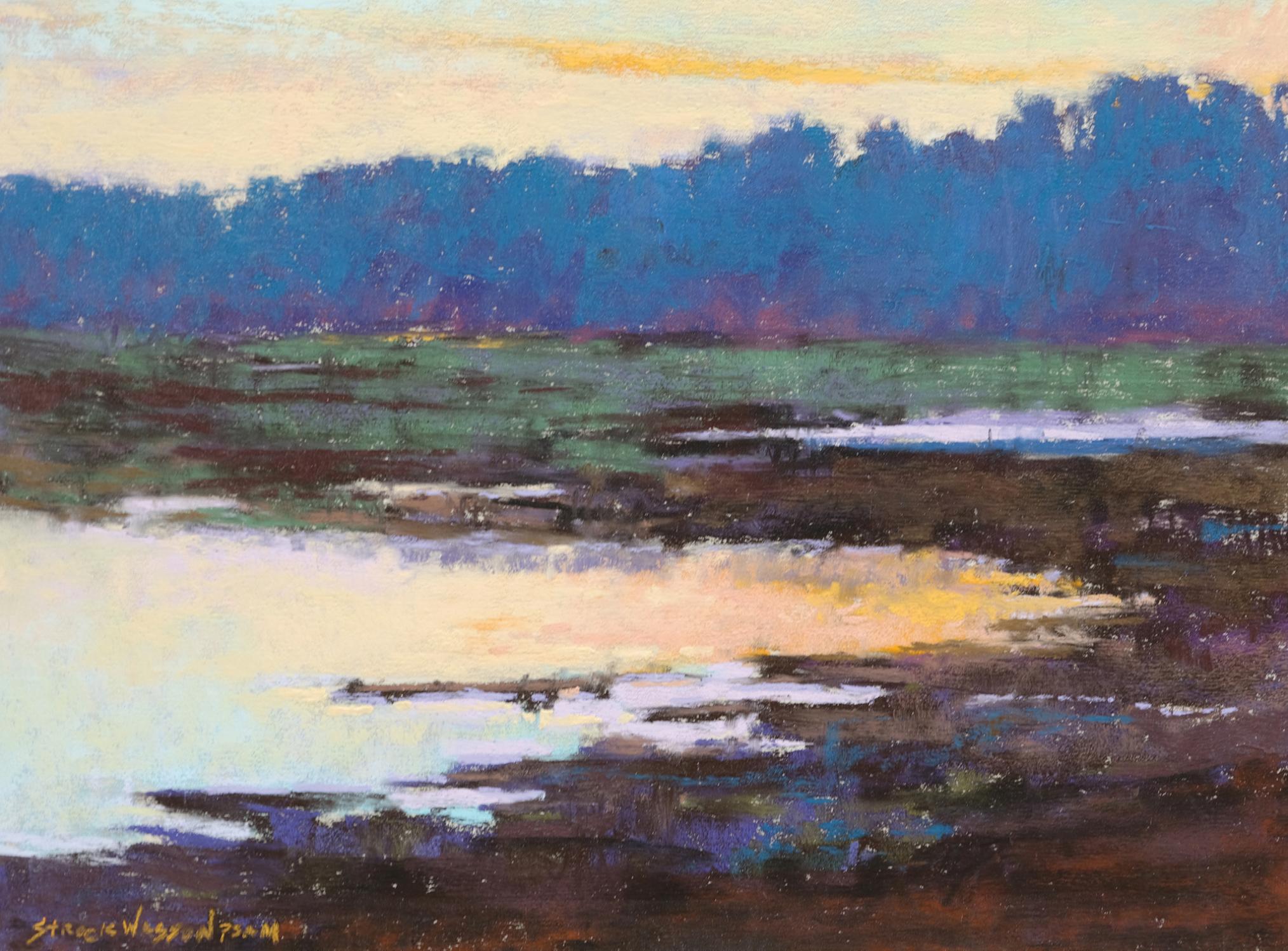
In our last issue, Andrew McDermott said we should think of every painting as just another experiment. He suggests we adopt the mindset of “let’s see what happens” and try to relieve ourselves of the pressure to create something successful. Would you agree?
Oh, I love him. Yes, I try to do as Andrew suggests, if I’m in the middle of a painting and it’s not going well, I start saying, “Well, what if I put some clear gesso here?” Or, “What if I spray it with alcohol? What if I throw in a really weird color and then go over it?”
The cure is to keep painting, keep putting your pastel stick on the paper and create. It’s your purpose, it’s the reason you are here, you have a gift to share. A quote by Chuck Close has kept me motivated when I feel the lack of inspiration caused by fear: “Inspiration is for amateurs; the rest of us just show up and get to work.”
Looking back over your life and career what advice would you give your 20-year-old self?
Whatever you do, if you love what you are doing you will be a success. Don’t let others’ opinion stop you from your dream. Do what you have to do to pay the bills, but always remember you are an artist.
Have you become a mentor for younger artists? What do you see as the main differences, in terms of the opportunities and challenges that younger artists face these days?
For any artist no matter your age, I would say the greatest challenge for any artist, young or old, is learning to listen to yourself. Put down the phone, stop relying on art apps, create what is in you, not what you see on the internet. So many of us fall victim to the art images that we see on the internet and compare it to the failure of our own work. Your work is uniquely your own, no one
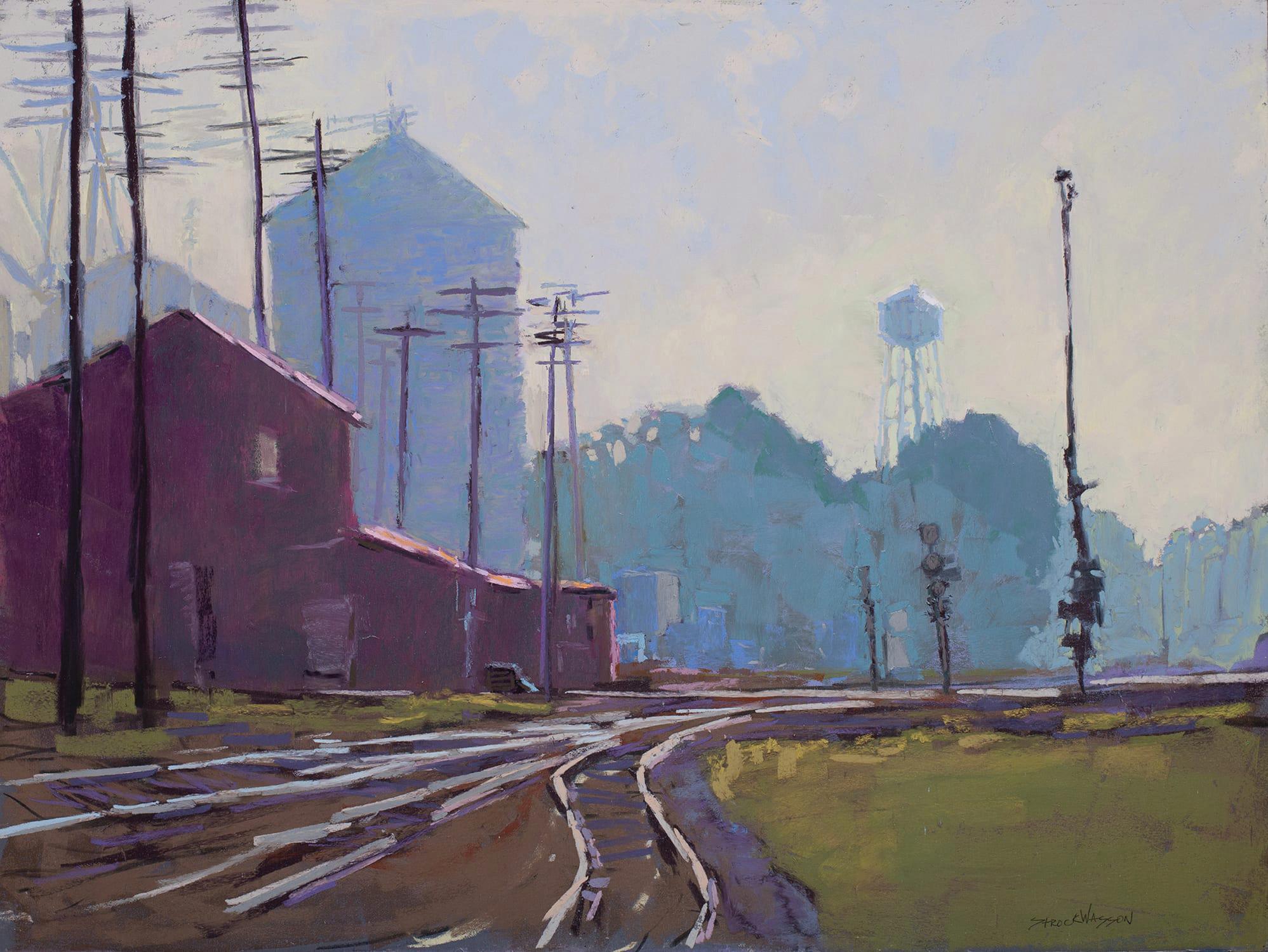
can ever paint like you and you cannot paint like anyone else. Find your own voice.
What has been one of your most rewarding experiences as an artist so far?
Achieving some personal goals of receiving Master Pastelist status with the Pastel Society of America, Master Circle designation with the International Association of Pastel Societies in 2019, and most recently, in April 2025, I achieved Eminent Pastelist status with the International Association of Pastel Societies.
This interview with Pam and PSWC has also been a rewarding experience reminding me of my journey.
Where do you see your work going next?
Unknown, but it is moving forward! I can’t restrict myself with a tangible word of where I want to go. I’ll
know as I continue to paint and process the work.
I’m always growing, always developing and always trying to figure out another way to do something. I think that’s what has helped keep my work fresh and alive to me, because you can never learn everything.
Currently, I’ve been working on making sure I do the thumbnails and the color studies. I’m making sure I’m doing the value studies, and I’ve learned that the more I prepare before I start, the better my end result will be. I used to just jump in, and I still just jump in sometimes, but I have a whole closet full of things that I just jumped in on and didn’t plan ahead. If I would have just taken a little bit more time to plan and prepare, I think I would have had better paintings, even back then. But I didn’t know that then. I just assumed, well, you go out and paint. If it turns out, it turns out. If not, then I’m a failure.
Do you reuse those surfaces?
Oh, yes! And a great tool for reusing those surfaces is the brayer and clear gesso with tooth. I can create a whole new layer. I’ve started developing a technique where I’m using the brayer and the clear gesso as I’m painting, not just before I paint, because I can get some unique marks and texture developed from those. And then if I put it on with a brayer, it dries very quickly. So, as soon as it’s dried, in about 15 minutes, I start going over it again and layer by layer, I can build up a lot.
Has there been a change in terms of the surfaces that you use and the pastels that you use over the years?
Yes. When I first started, if I wanted to enter a show, I had to enter under the term of drawing. Back then, pastel was not considered a painting medium. It was always a drawing. Also, there was no internet access to
supplies, so I think I had Rembrandts and whatever art brand the local art stores had in Muncie, Indiana. The only paper I had or knew about was Canson. It’s been years since I’ve used that. Now, I would fill that tooth so quickly. I need UArt or LuxArchival, or I make my own with clear gesso and gator board. I like to work in unusual sizes, that way I can buy a more expensive frame! Lately, I’ve been making my own sizes.
Who’s inspiring you lately? Are there contemporary artists you are following?
Skip Whitcomb. I’m taking classes from him right now. He’s a pastel artist and an oil painter. He does beautiful work, and knows how to use color. I’m always looking for classes where I can learn about color and its use. He’s taught me some new color combinations that I wasn’t really aware of, and I thought I knew a lot about color. He taught me about intervals, and about a color
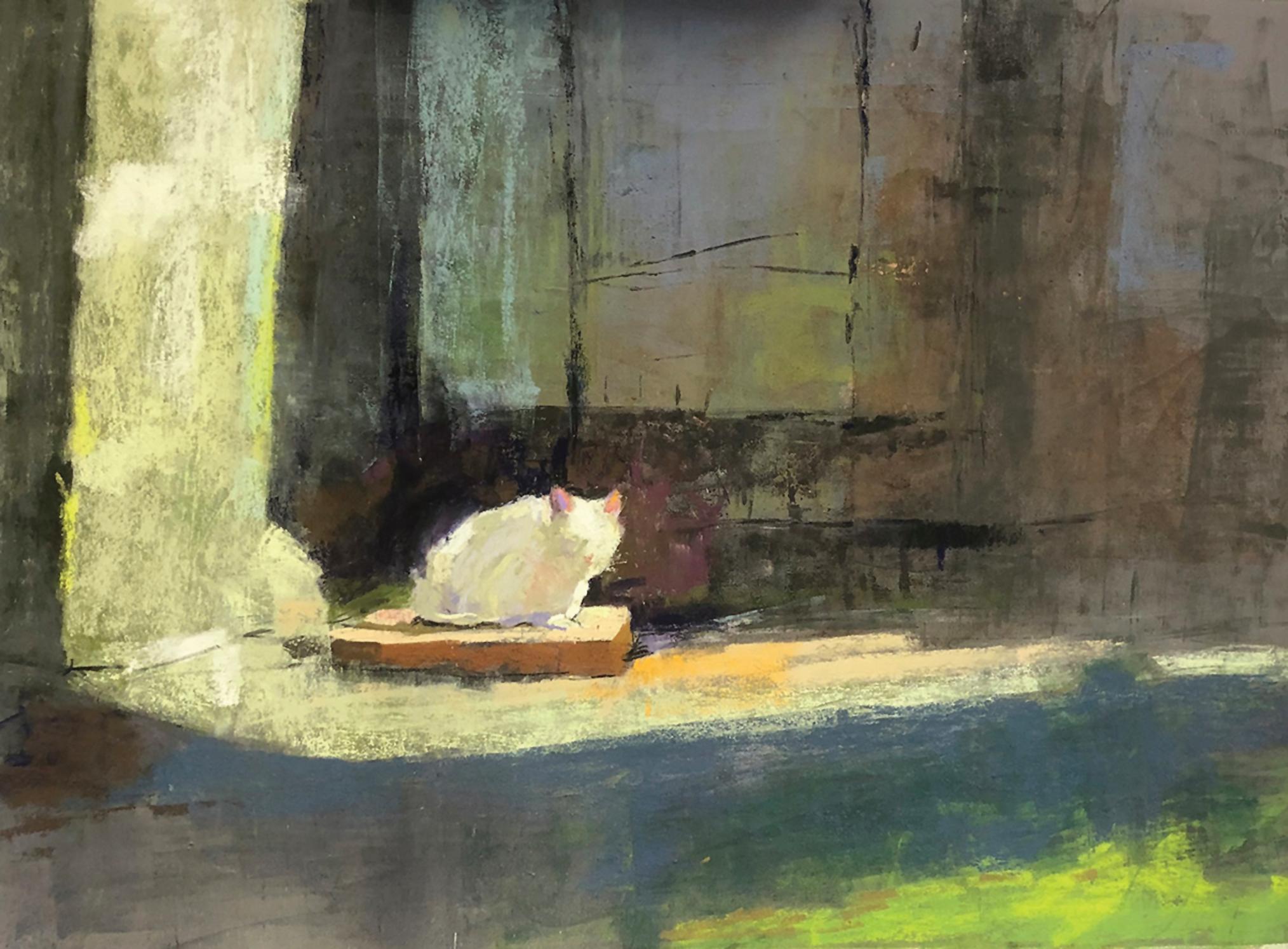
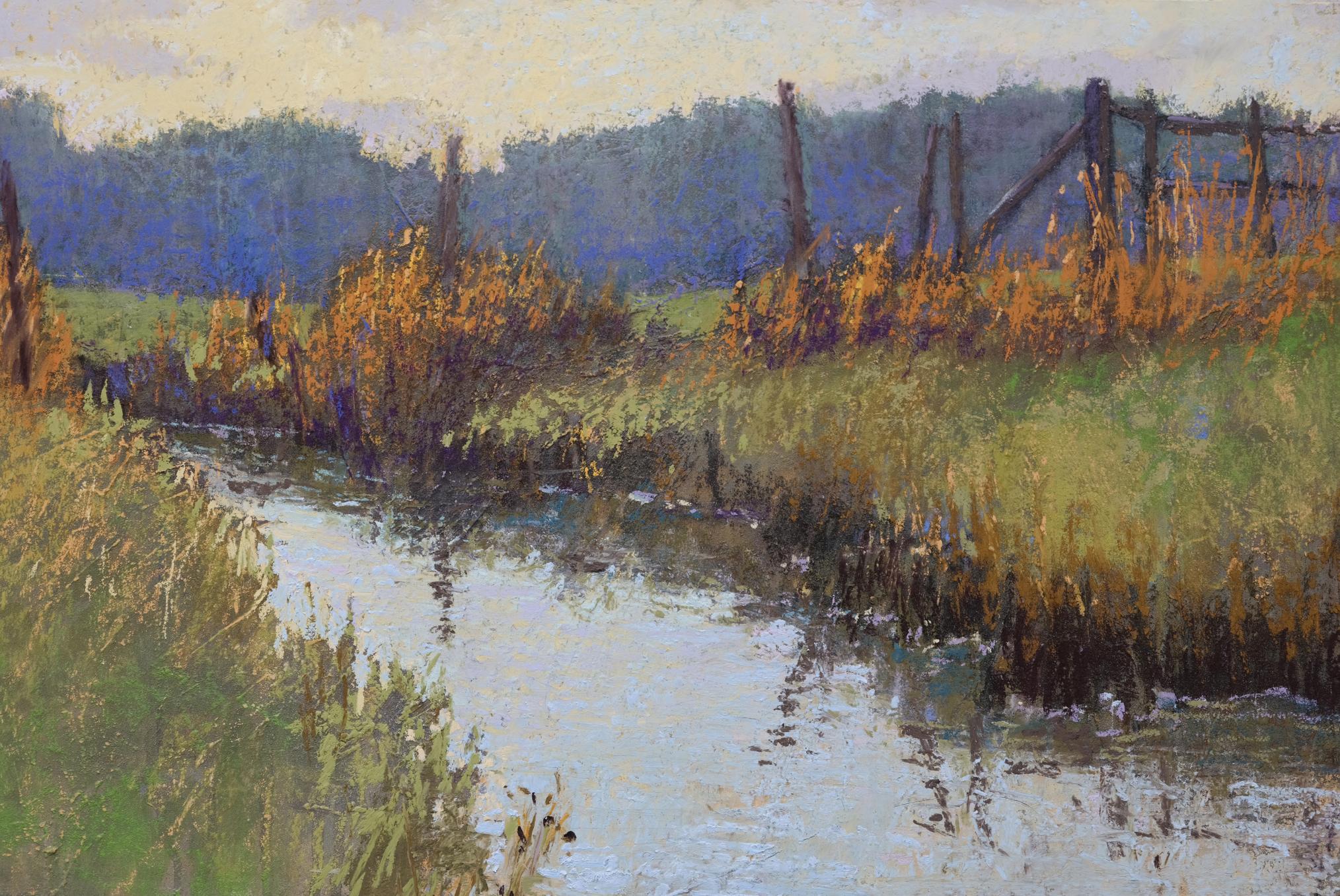
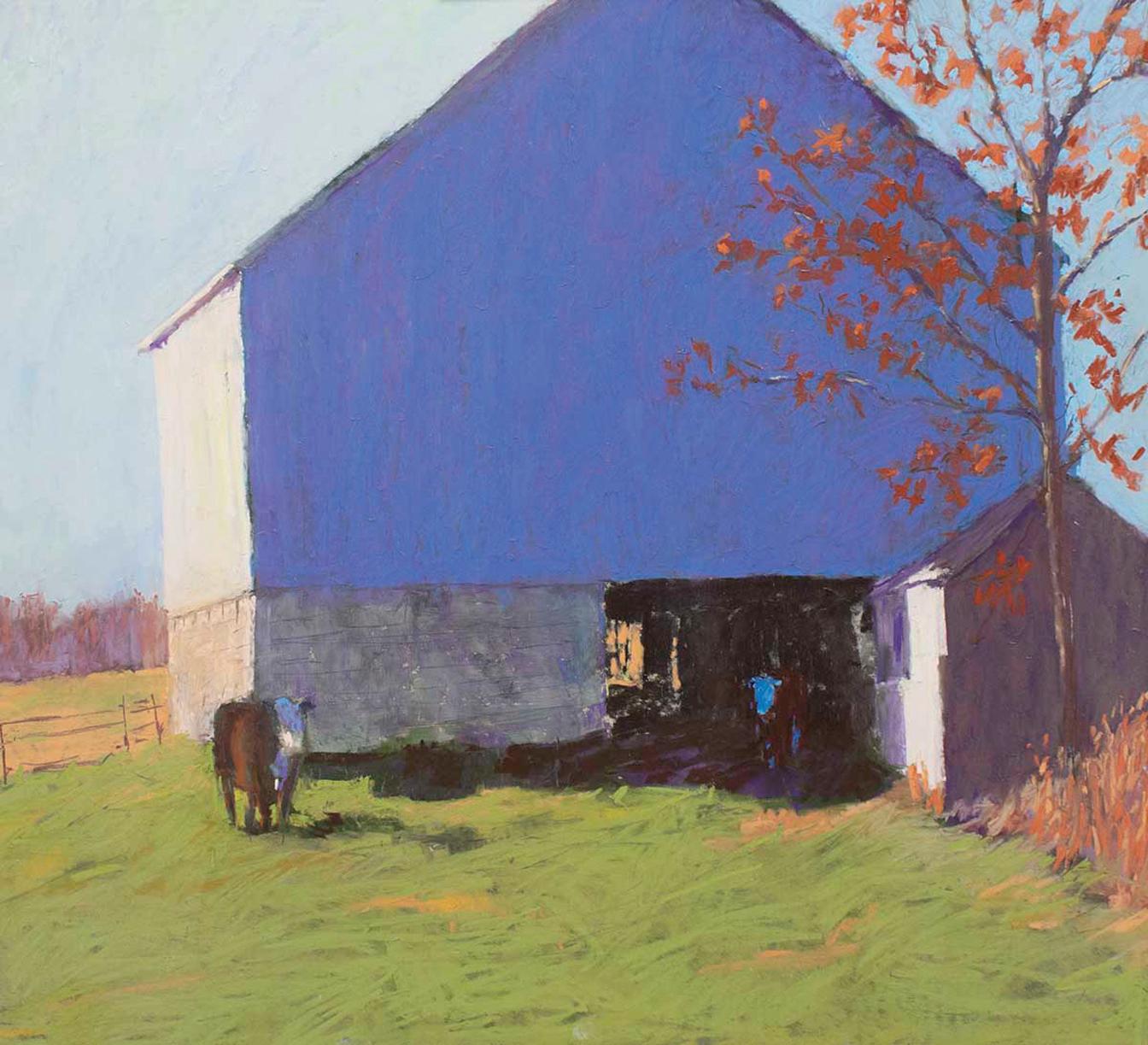
harmony called 7th chord. It’s just fascinating to me. I thought I’d heard all the different color harmonies there were, but no. There’s lots more to learn! So, I’m really excited now and I’m studying a lot of different color harmonies.
I’m also inspired by Brian Ruttenberg’s work. He’s an oil painter. And Nancie King Mertz. She’s my mentor. I love her. Of course, Susan (Kuznitsky). She’s always inspired me. Also, Dawn Emerson, she’s another who inspires me. I took a class from her in 2019. It was mind-blowing. I was so excited, I came back home from her class and bought a big press to do monoprints. Monoprints make a great underpainting for a pastel painting. So, I’ve been kind of working on that. It just never ends! There’s always so much.
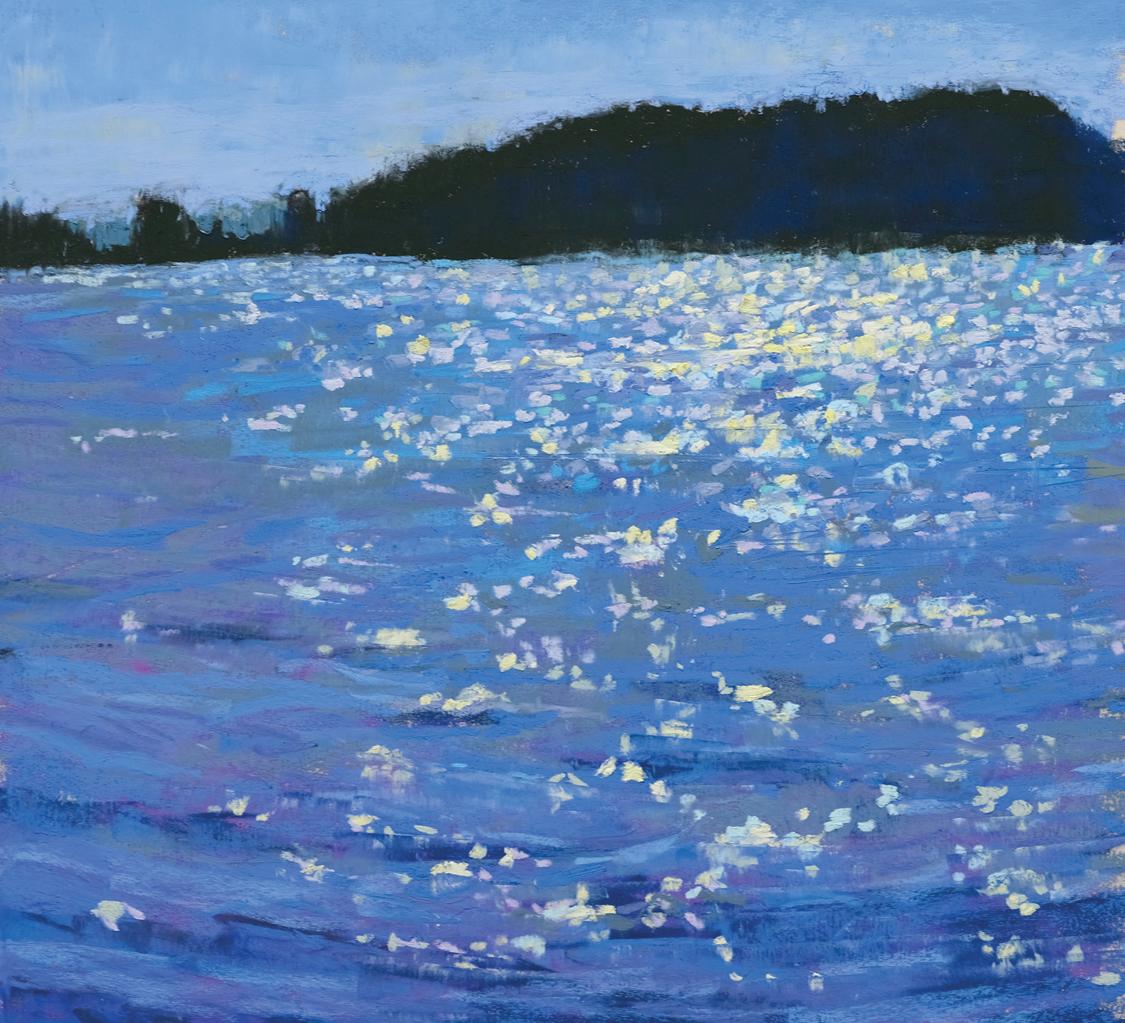
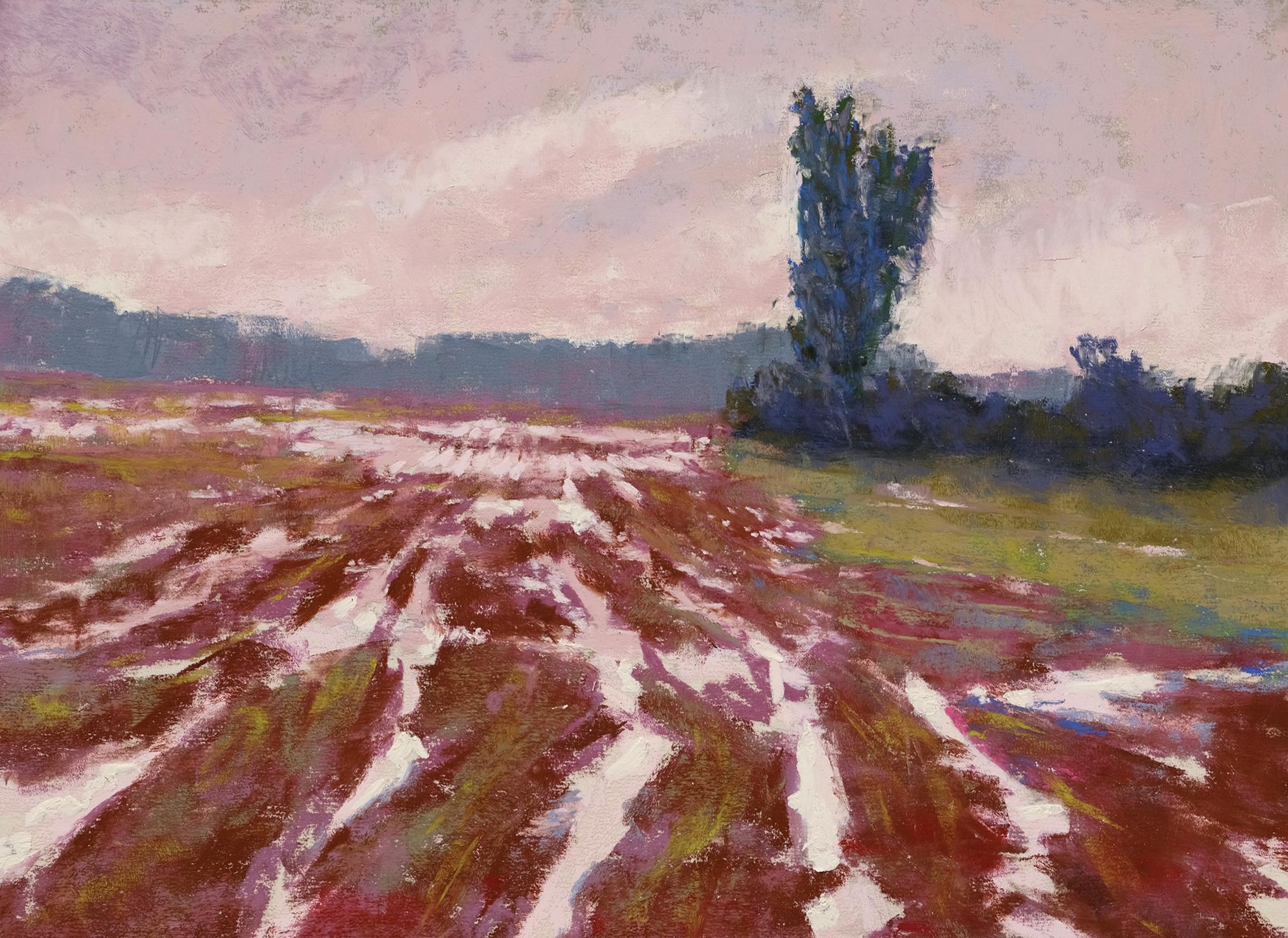
Any final thoughts from Carol Strock Wasson?
Sometimes adversity can lead to new horizons. When life gives you lemons, make lemonade. I often wonder where I would be if artistically if I had not developed diabetes at an early age. Would I still be an artist?
A very special thank you to our Individual Sponsors for their generous cash donations!



August 23 to November 29, 2025
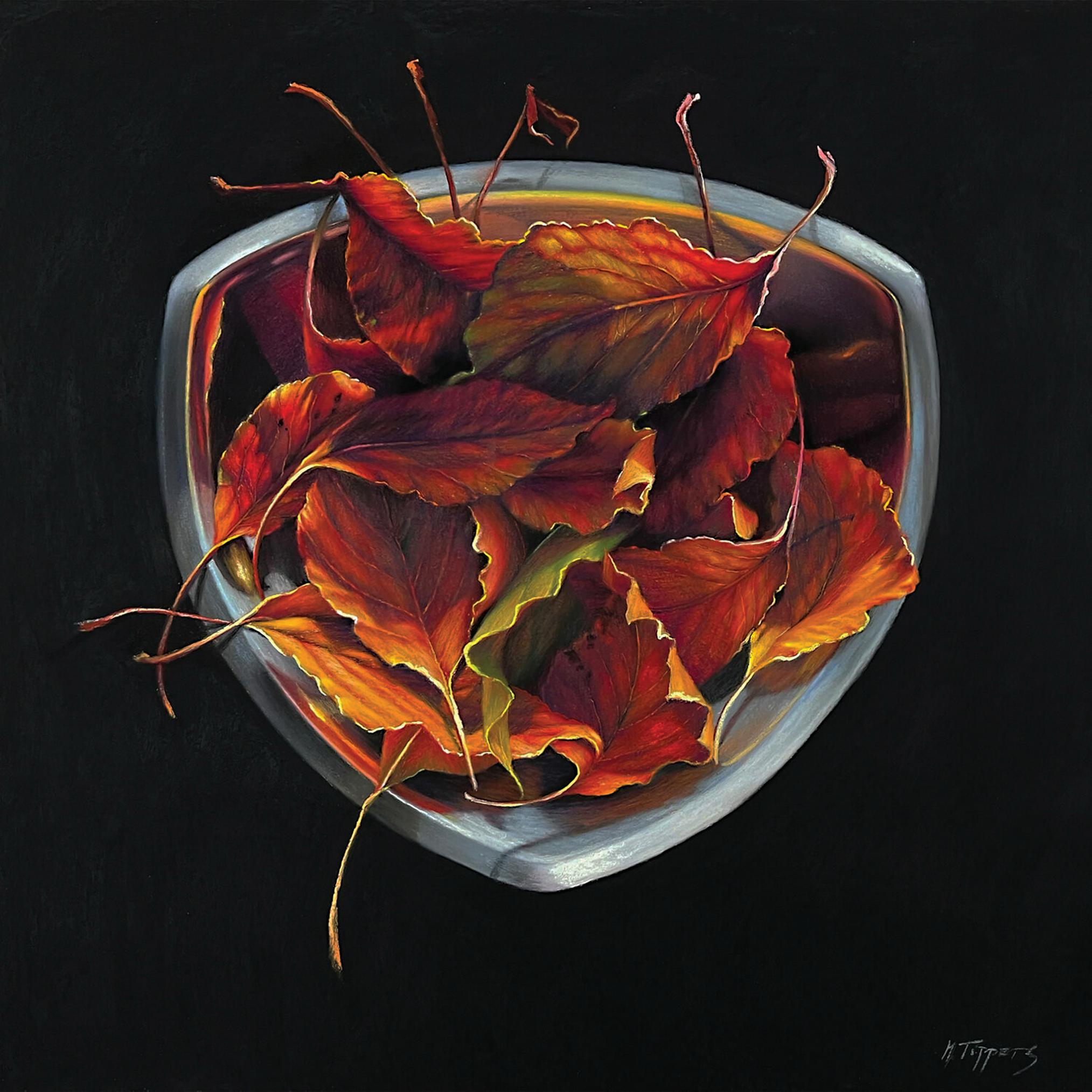
2025 BEST IN SHOW
DANIEL GREENE MEMORIAL AWARD
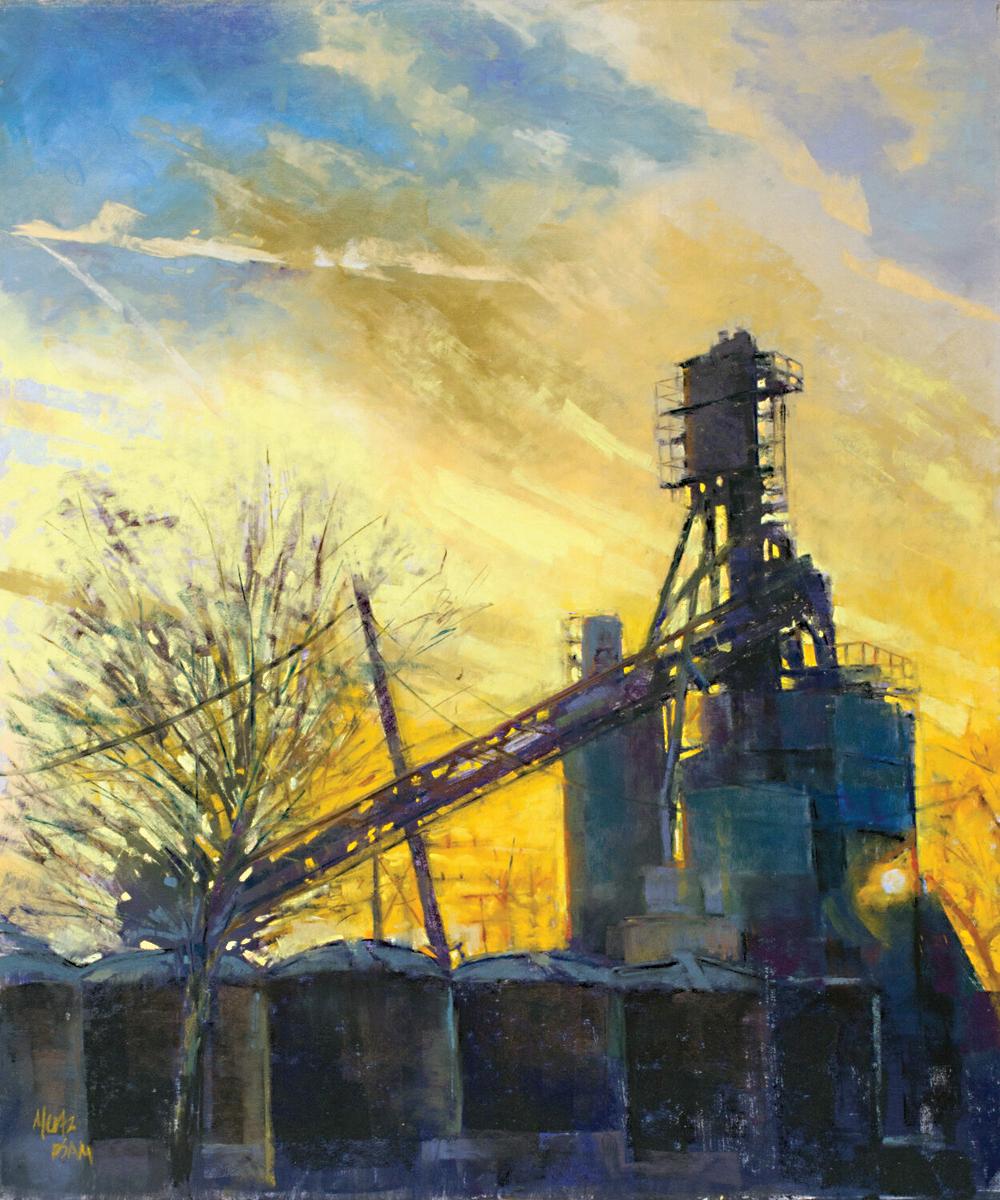
Autumn Splendor
Marie Tippets, Dana Point, CA
FIRST PLACE
WAKEHAM/SUTHERLAND HONOR AWARD
SECOND PLACE PRESIDENT’S AWARD
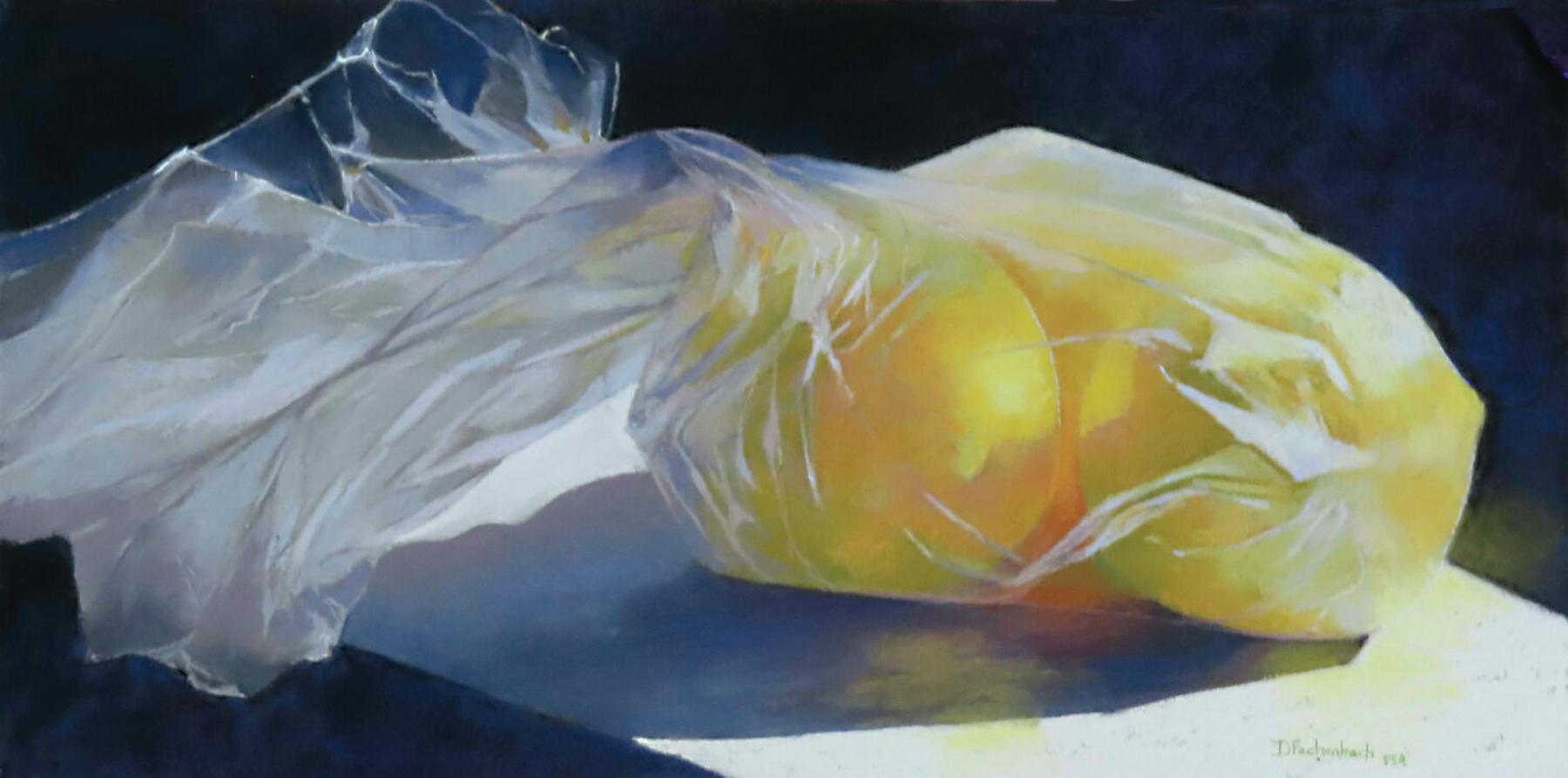
In the Bag
Diane Fechenbach
Highlands Ranch, CO
FINE ART CONNOISSEUR/STREAMLINE PUBLISHING AWARD
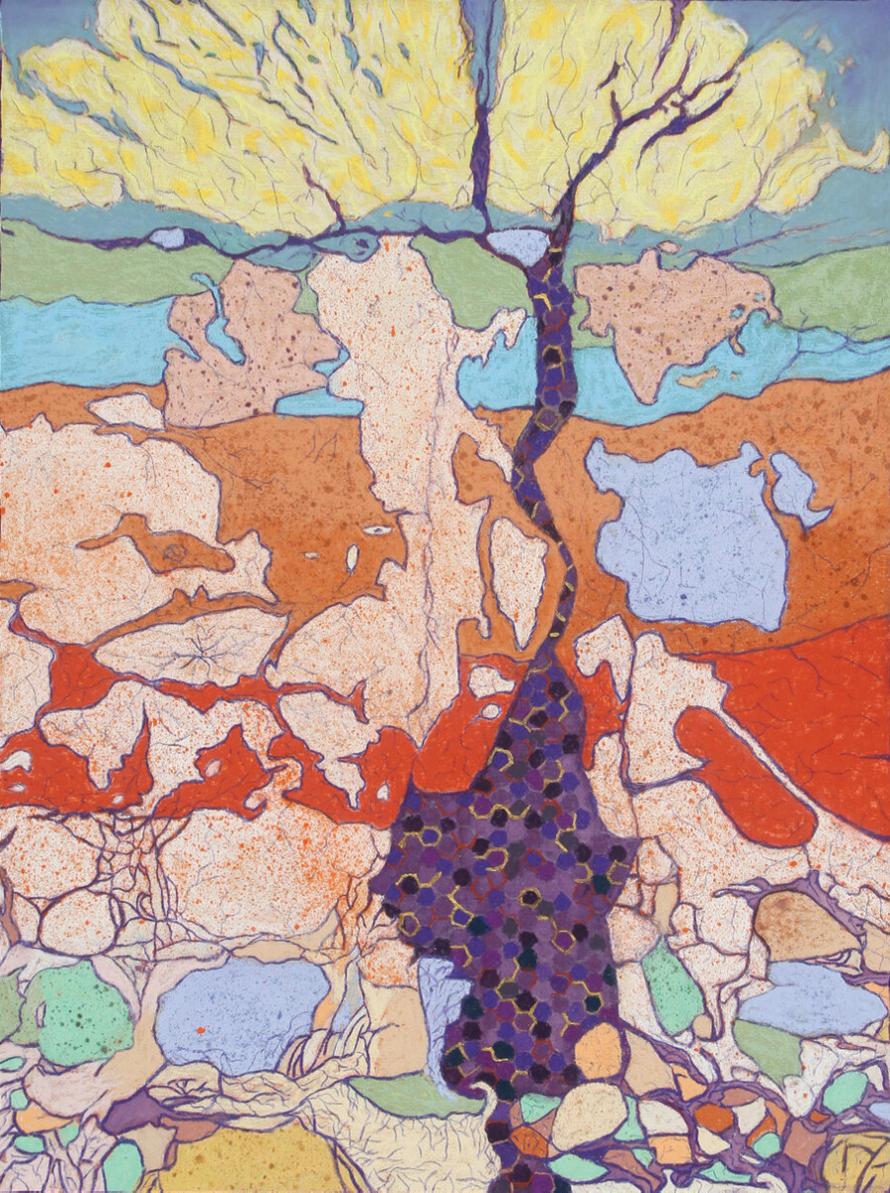
FINE ART CONNOISSEUR FEATURED ARTWORK AWARD I
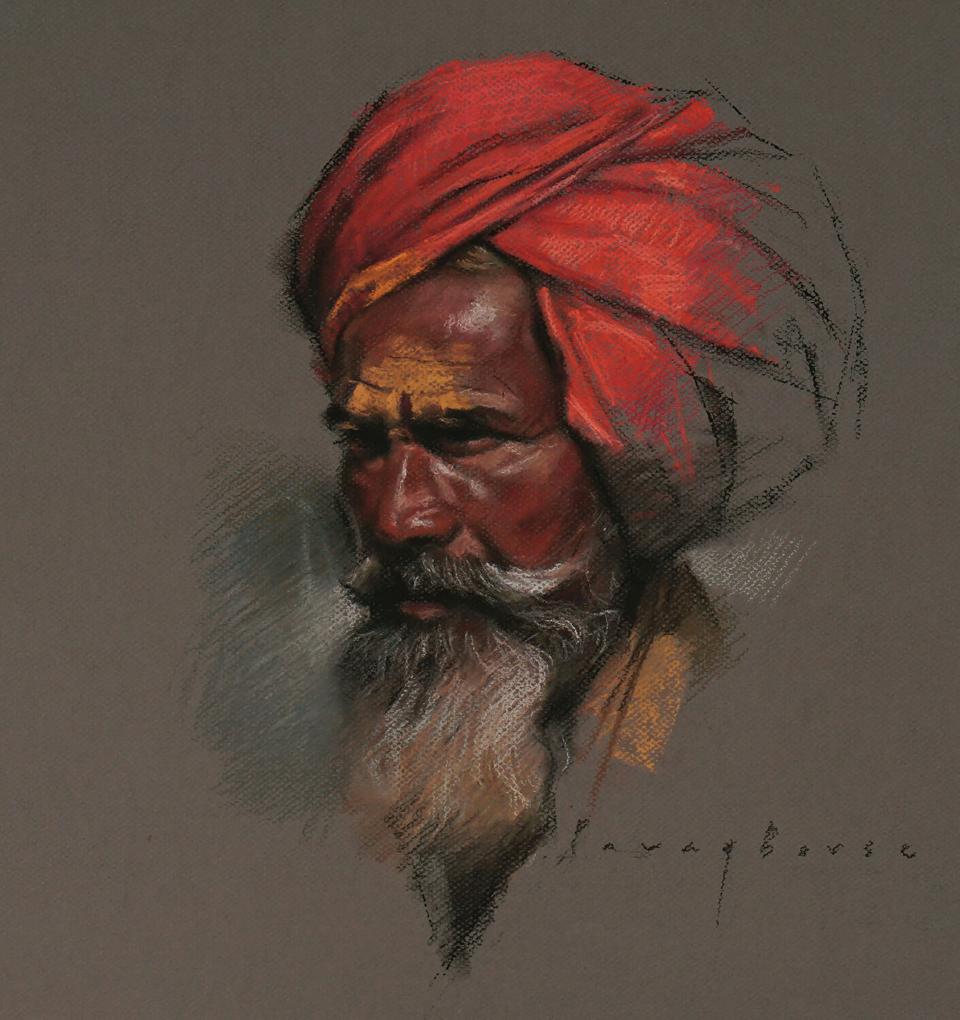
FINE ART CONNOISSEUR FEATURED ARTWORK AWARD II
A Piercing Look Parag Dinesh Borse, Mumbai, MH, India
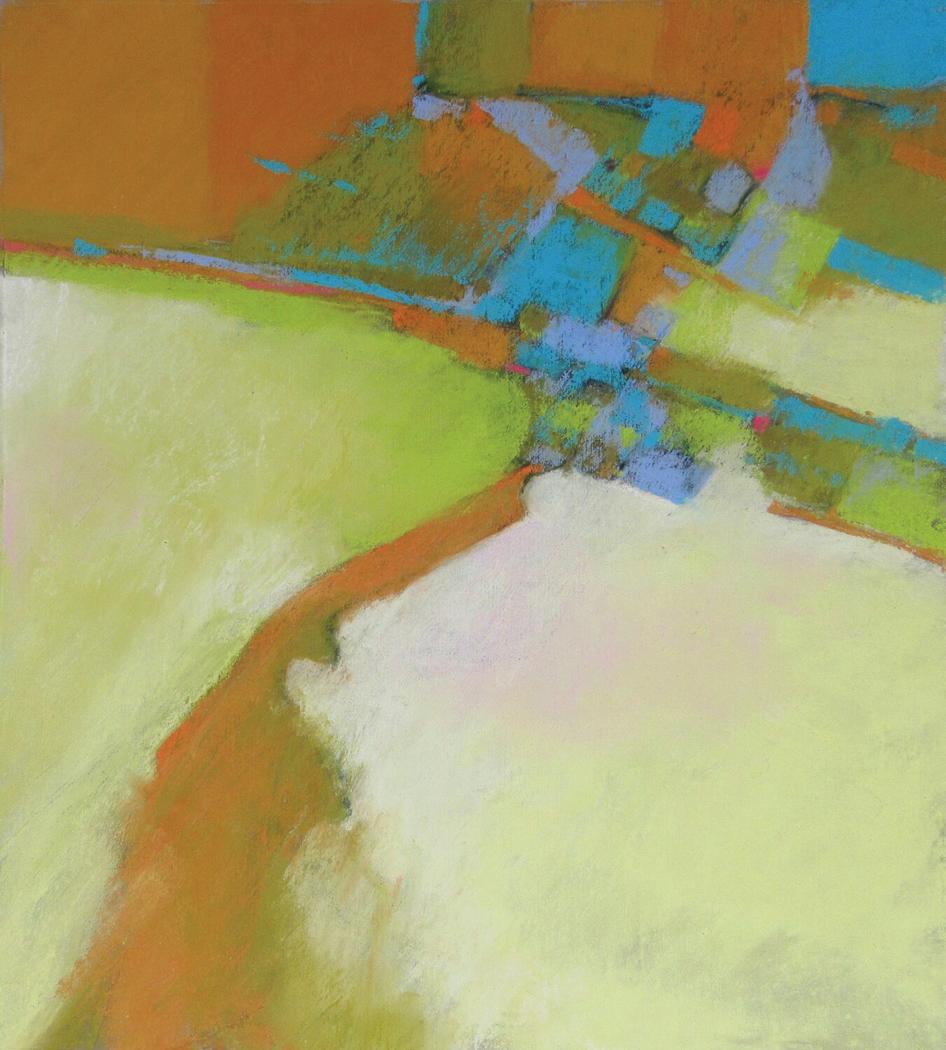
ROYAL TALENS AWARD
Crossroads Letitia Roller, Santa Fe, NM
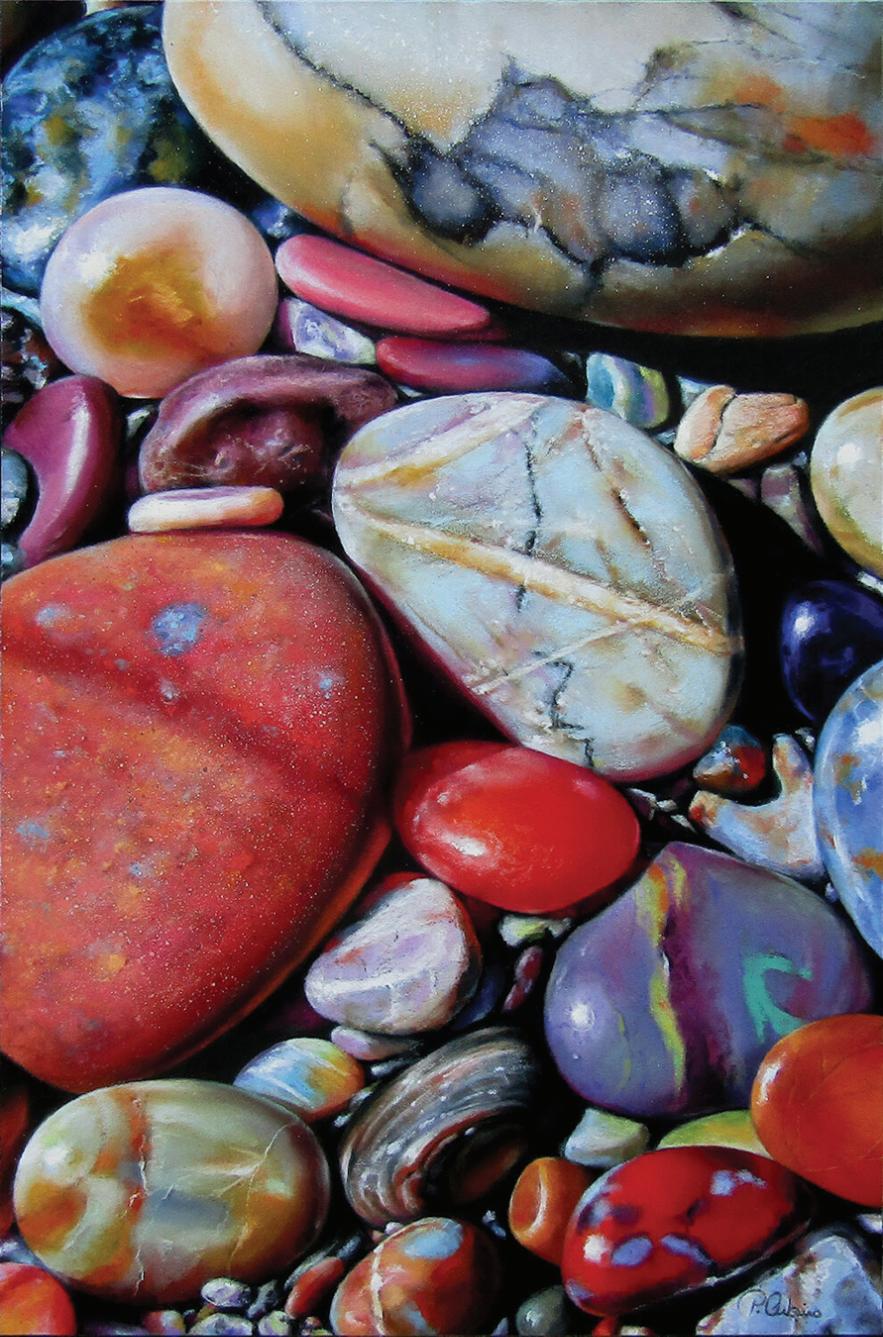
EARTHBERRY PASTELS AWARD
Legacies Patti Arbino Northridge, CA
DAKOTA ART PASTELS AWARD
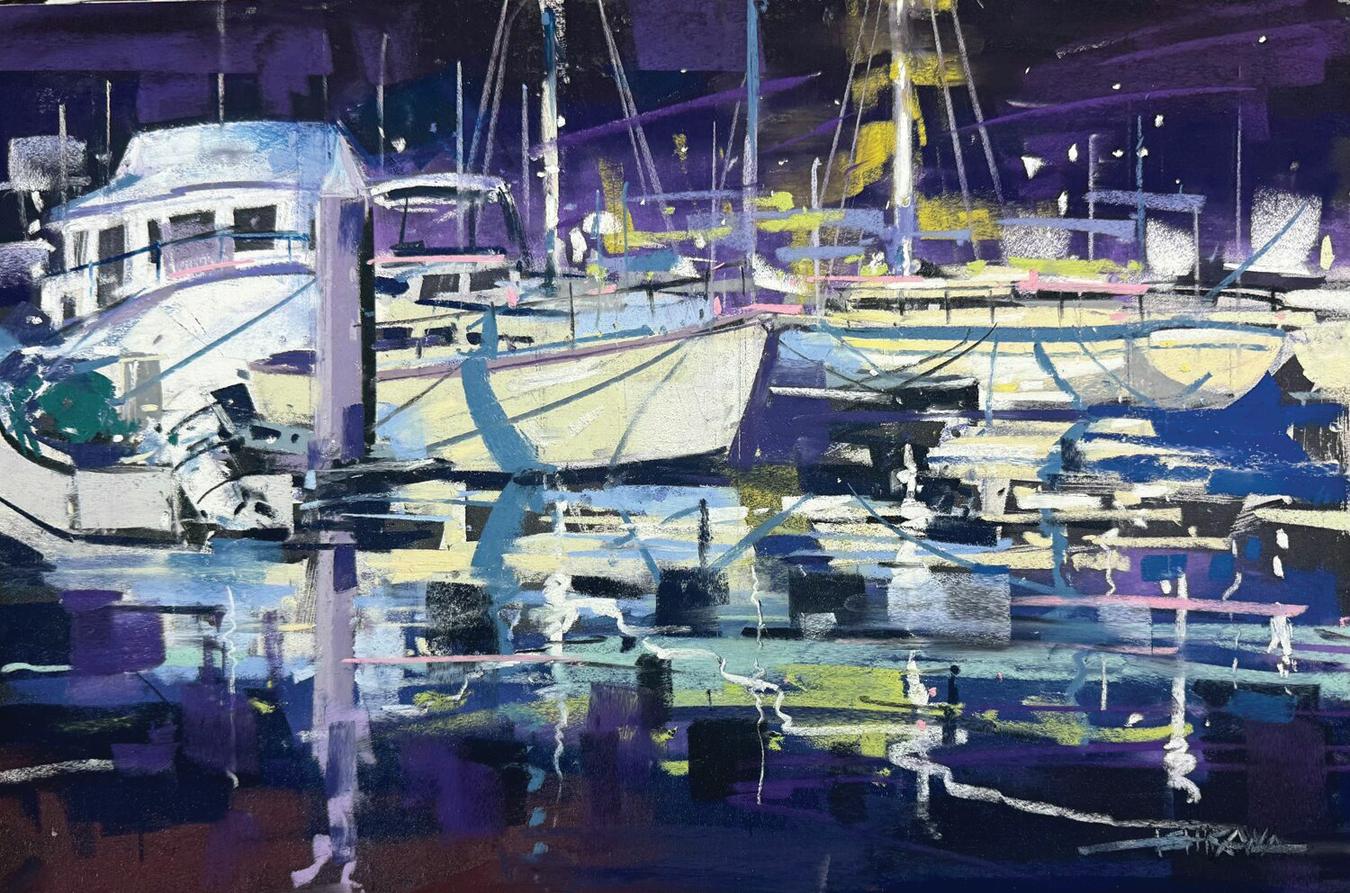
Yachts Alive
Mike Ishikawa
Palos Verdes Estates, CA
SCHMINCKE AWARD
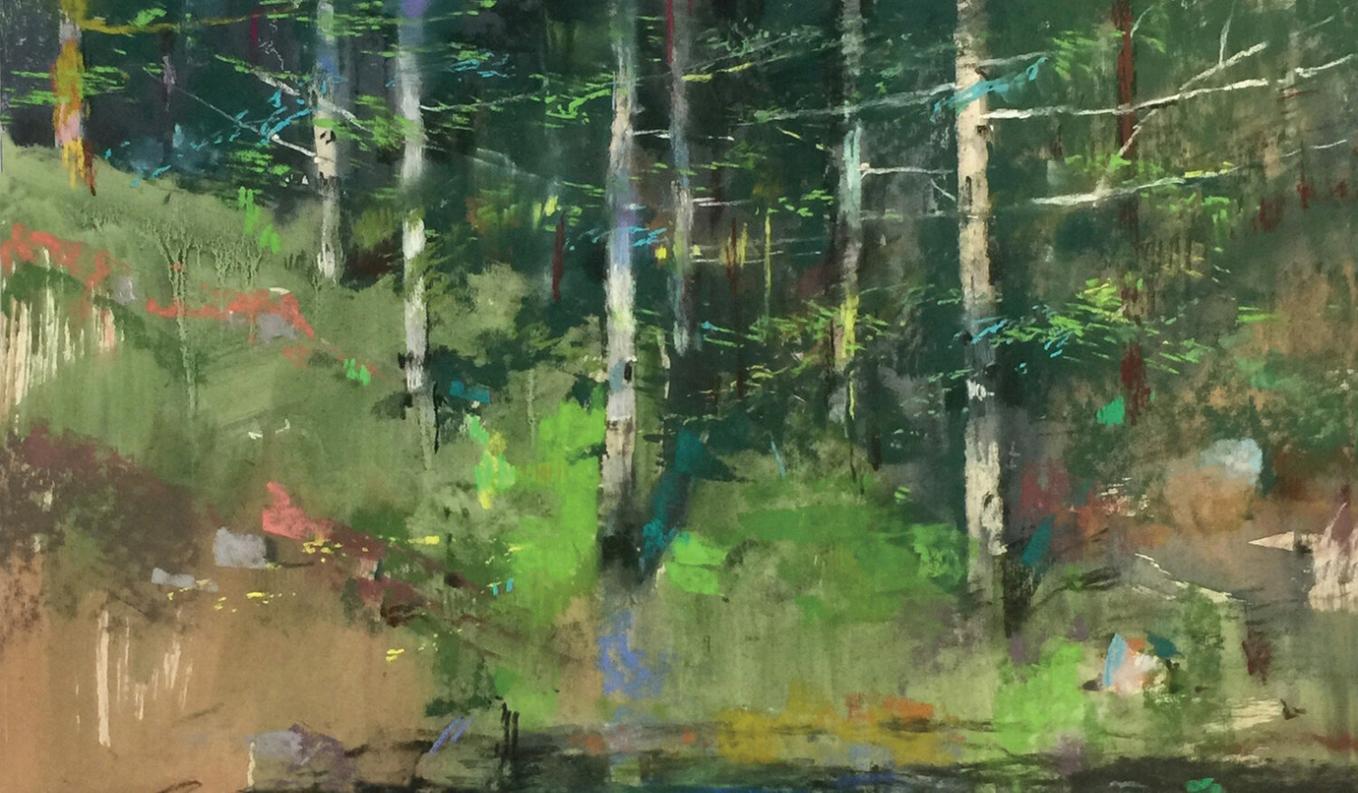
Aspens
Albert G. Handell
Santa Fe, NM
LUDWIG AWARD
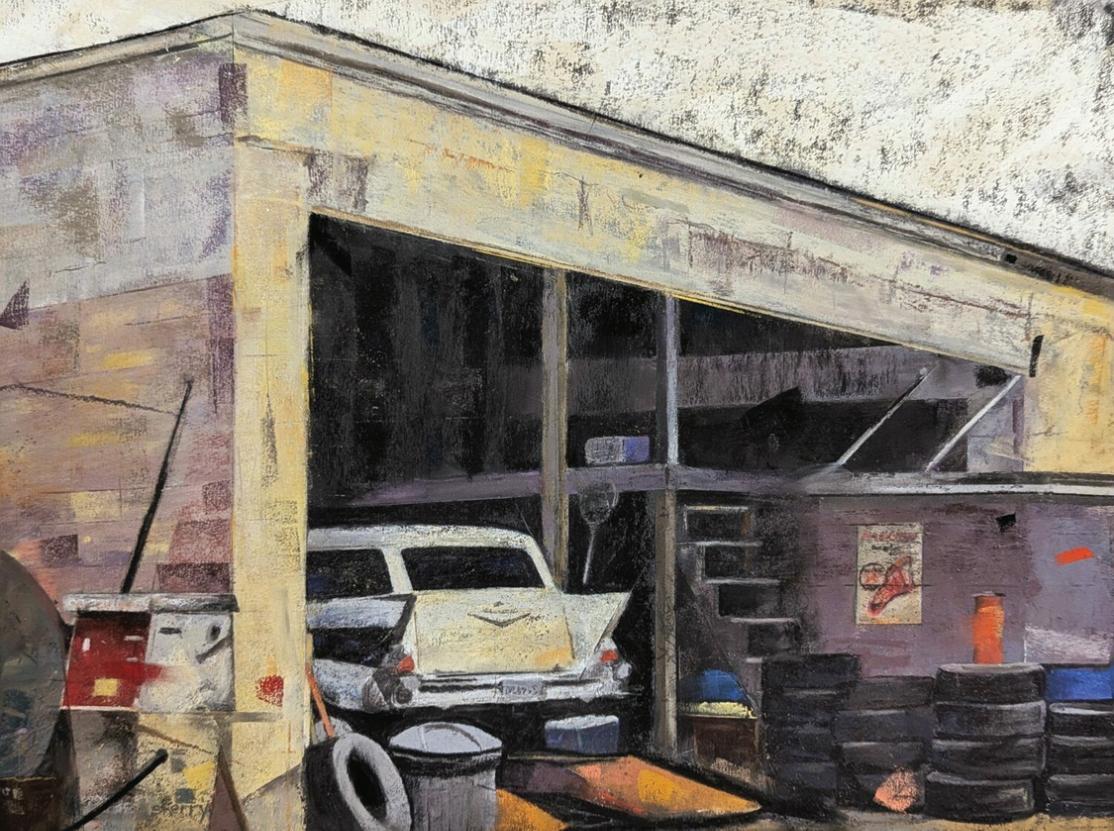
Waiting for Parts John Sherry Bend, OR
FASO/BOLDBRUSH AWARD I
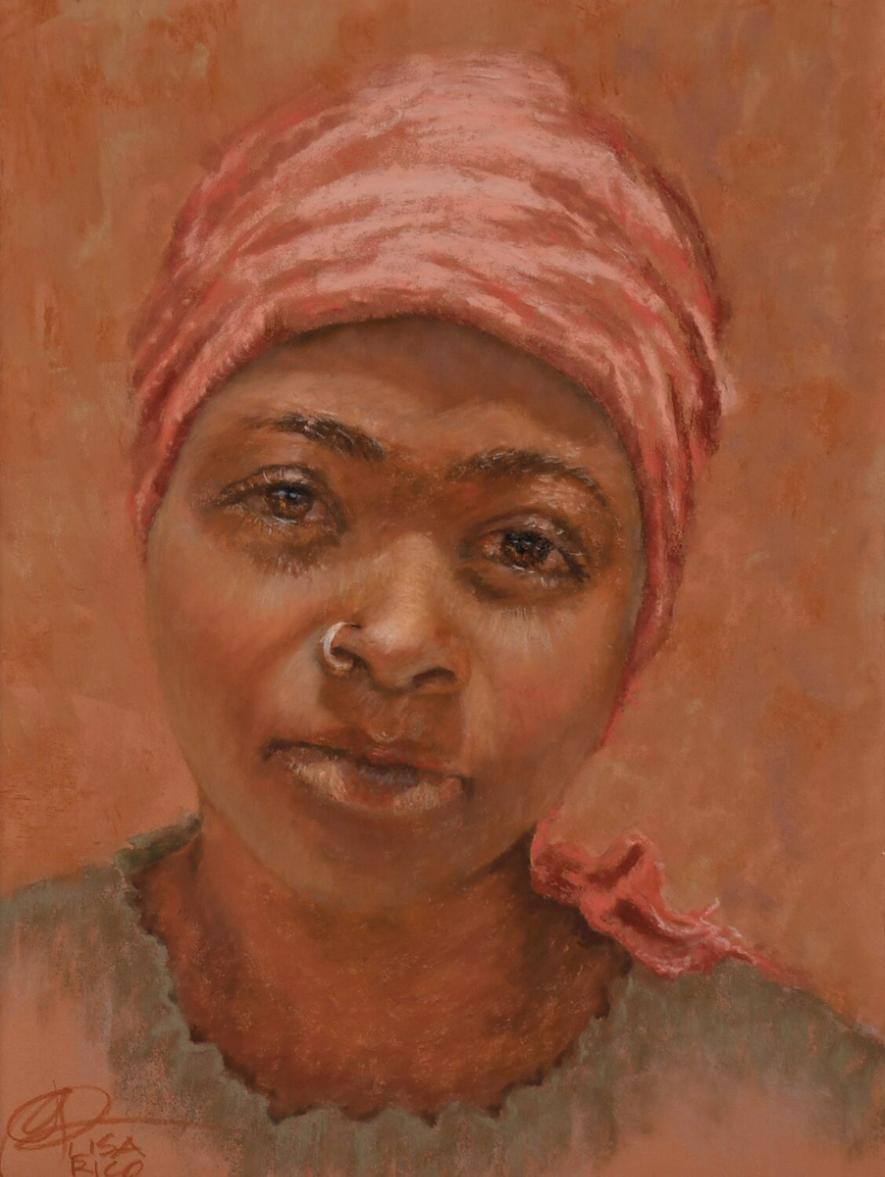
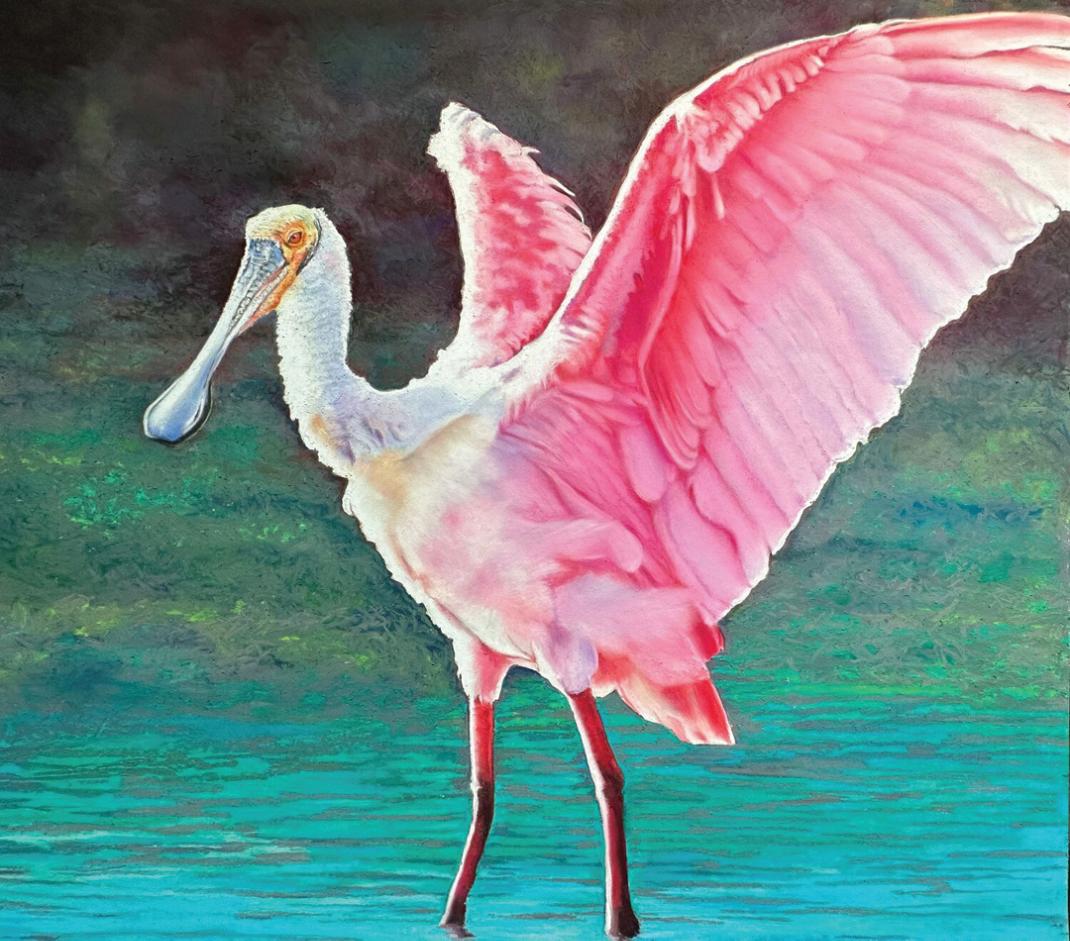
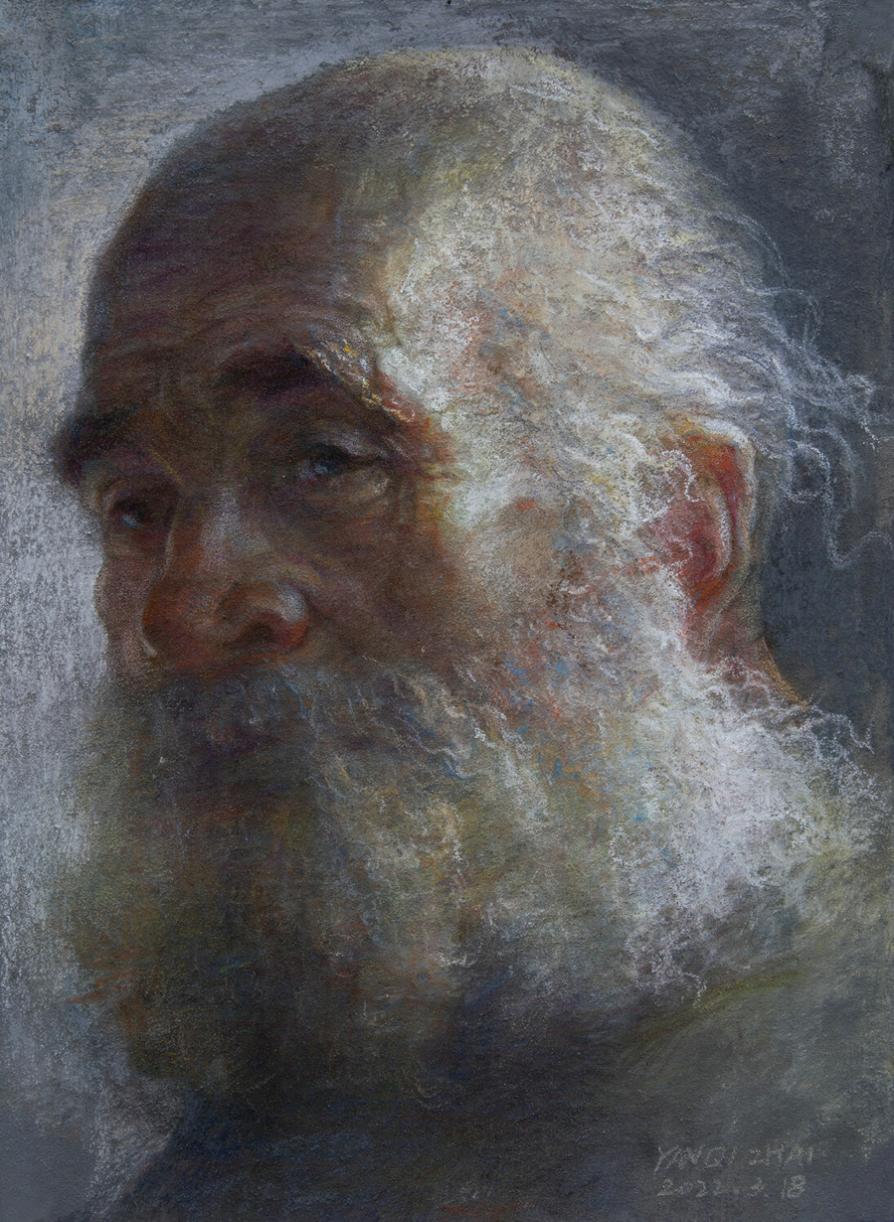
CLAIRFONTAINE PASTEL MAT AWARD

BLICK ART SUPPLIES AWARD
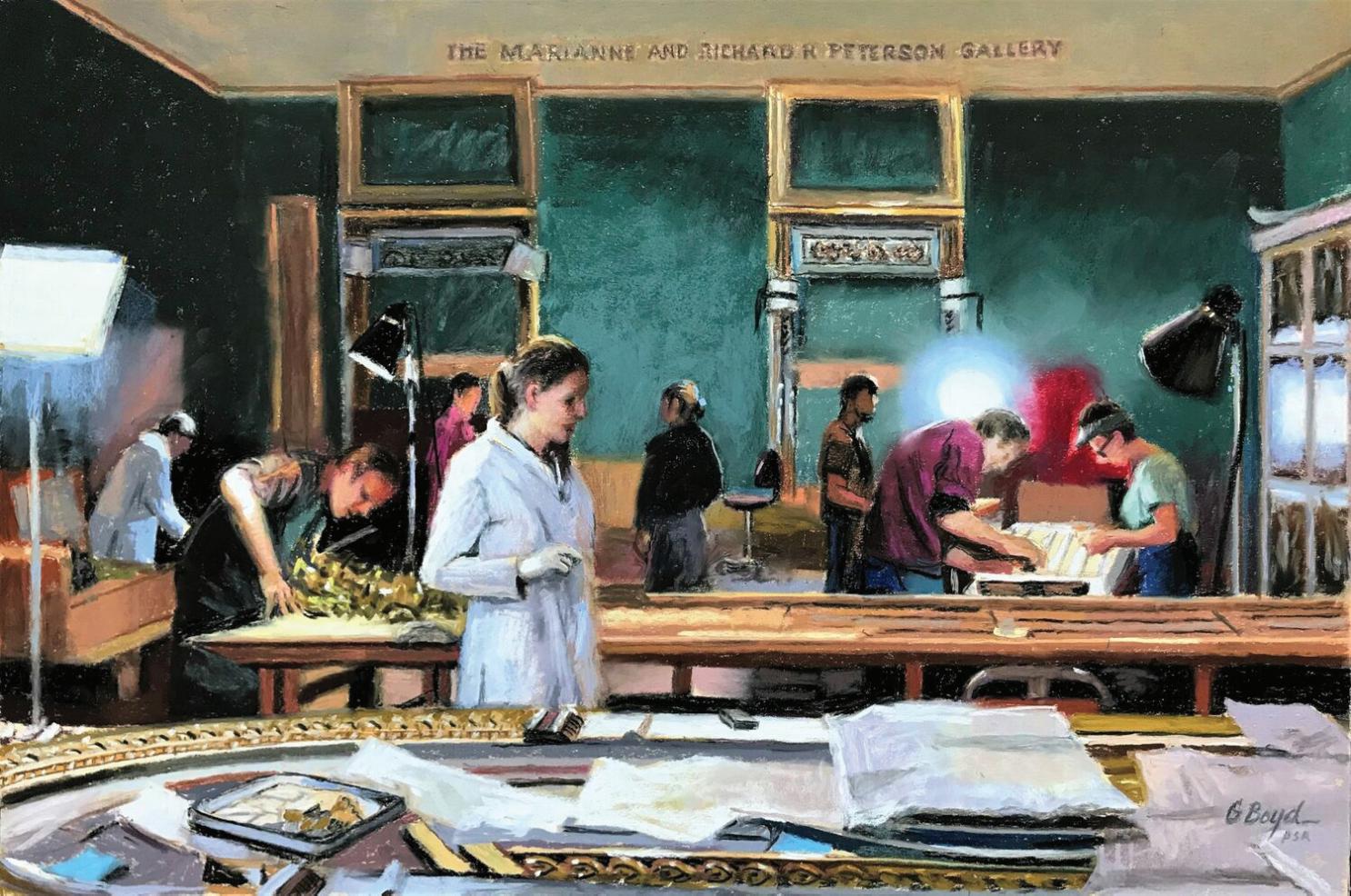
SHOWSUBMIT AWARD
Restoration at the Museum
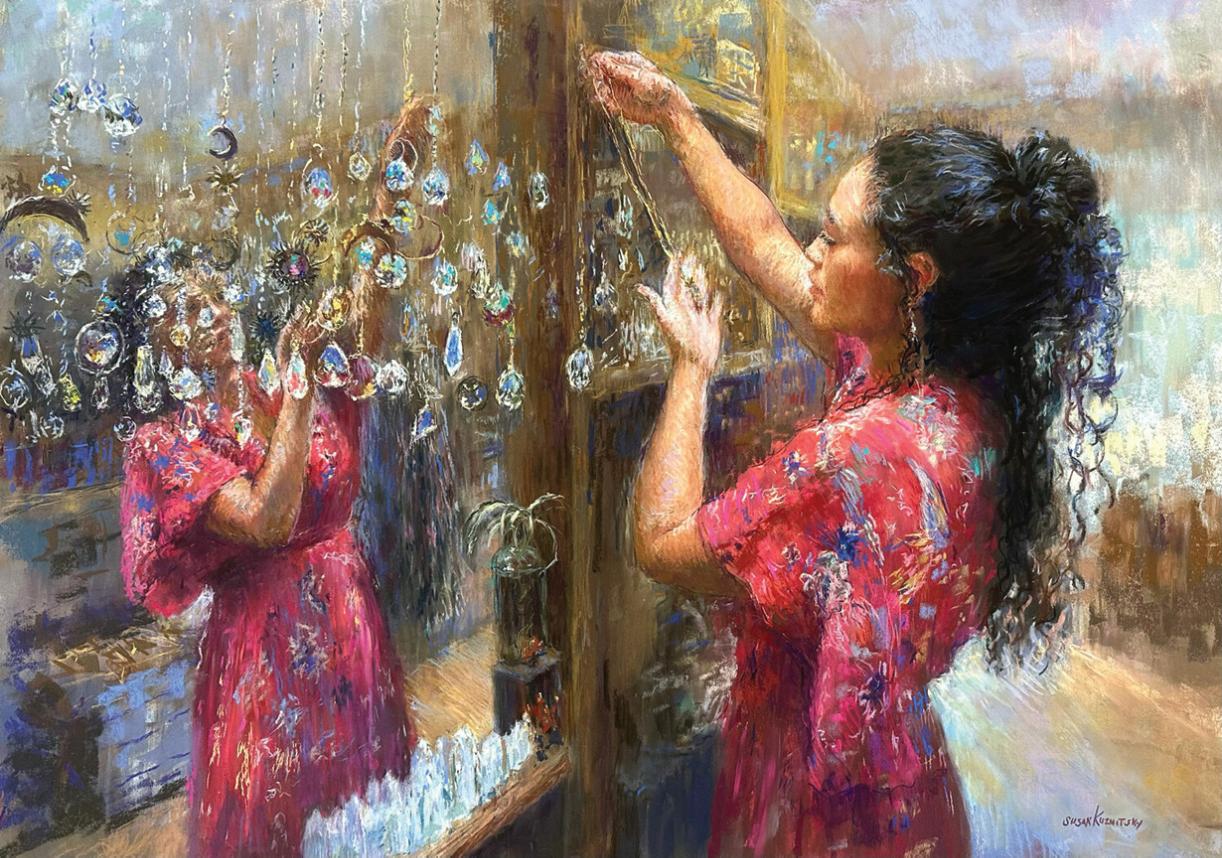
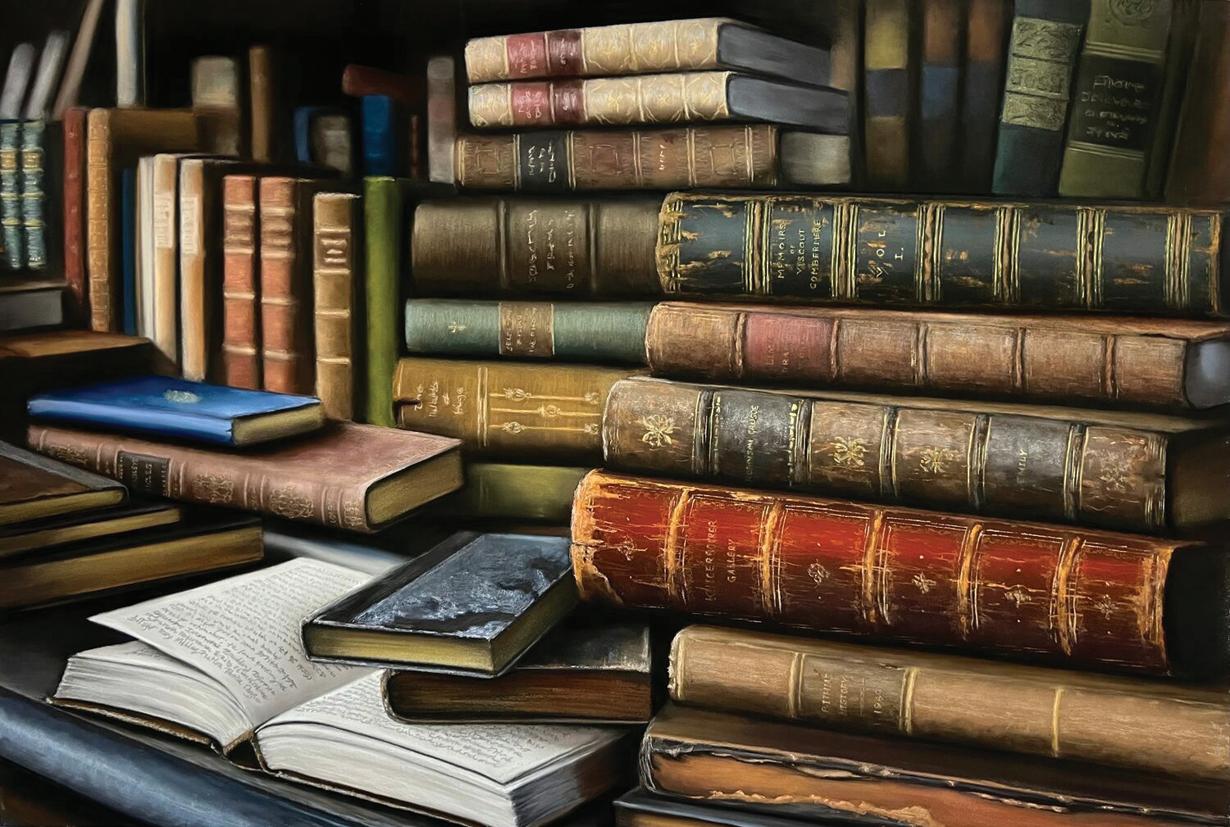
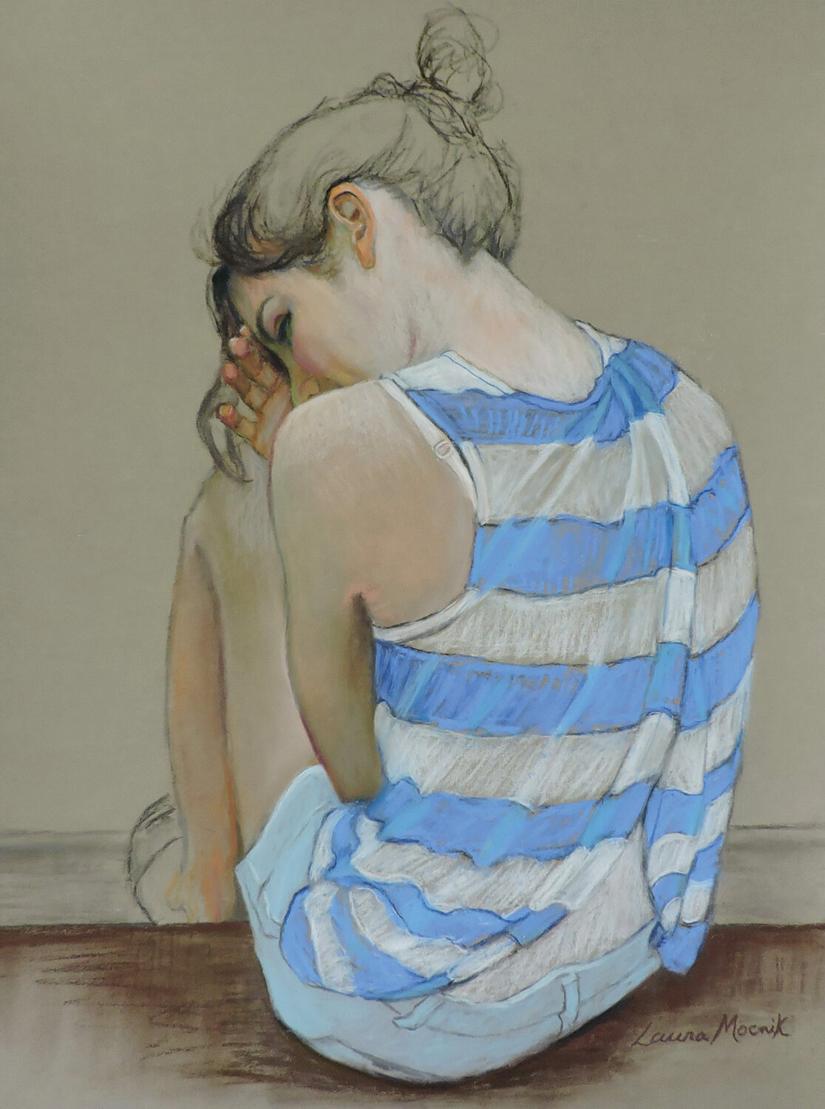
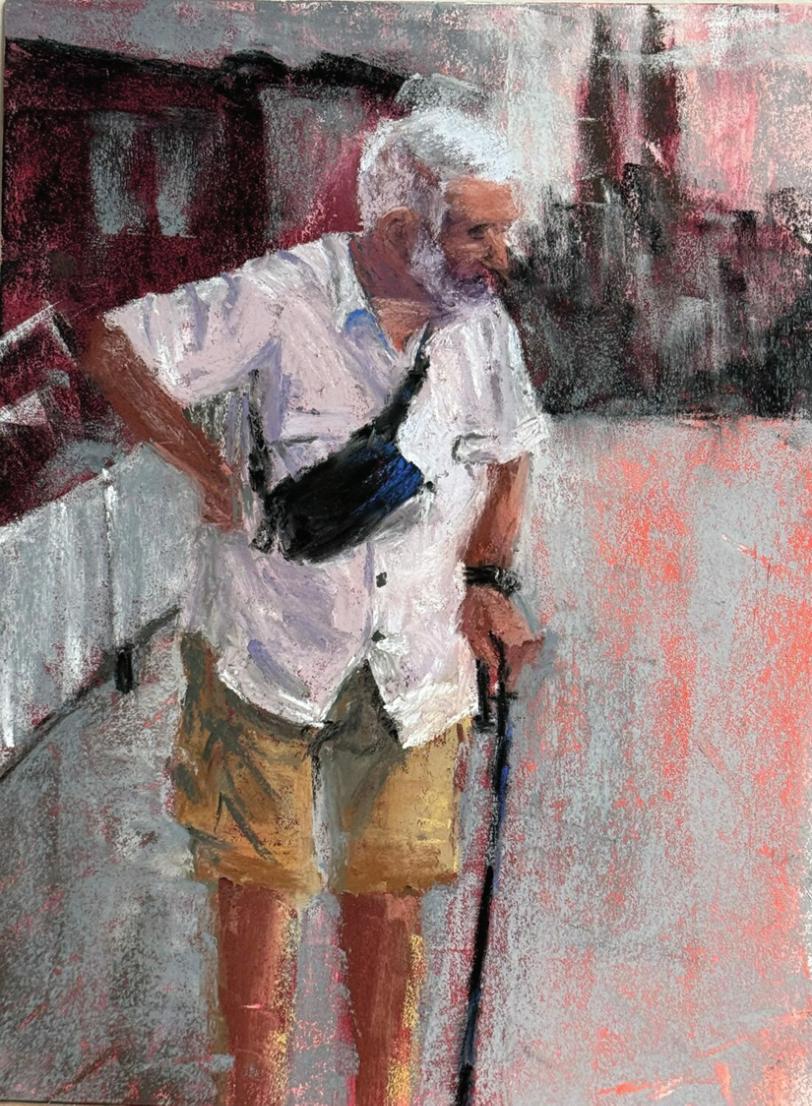
FASO/BOLDBRUSH AWARD II
AMPERSAND ART SUPPLY AWARD
UPSTAIRS ART GALLERY AWARD
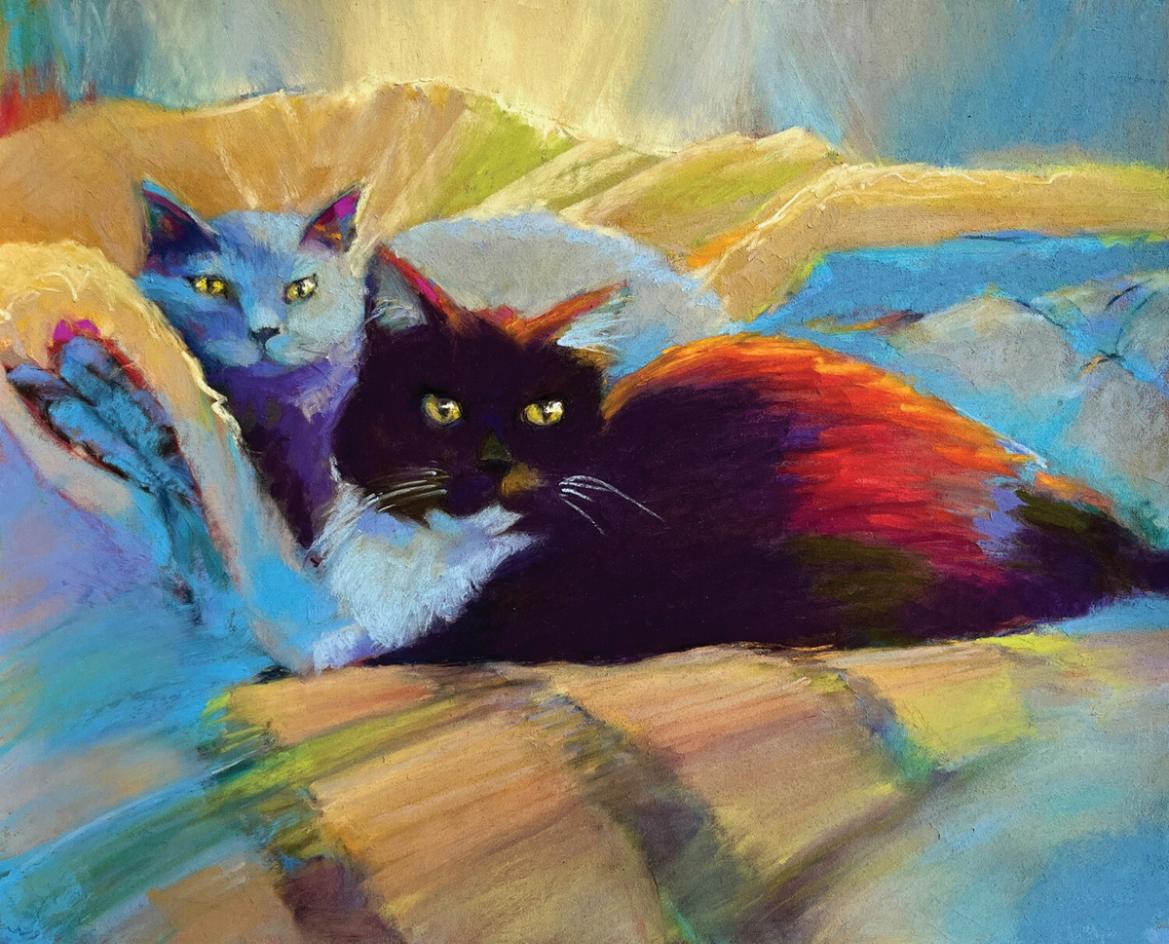
The Customers, Kristine K. Finfer, Bend, OR
Ahhh!
Check pswc.ws Events Calendar regularly for updates.
WE TALK ART • Additional dates may be added
January 18 (Sunday) Colette Odya Smith
February 21 (Saturday) Ned Mueller
March 21 (Saturday) Kim Lordier
May 17 (Sunday) Jacob Aguiar
July 18 (Saturday) Diane Townsend
September 20 (Sunday) Marla Baggetta
November 21 (Saturday) Anna Bessonova (Earthberry)
DEMONSTRATIONS • Additional dates may be added
February 21 (Saturday) Linda Mutti
April 19 (Sunday) Richard Suckling
June 27 (Saturday) Nancy Nowak
August 16 (Sunday) Natalie Richards
October 17 (Saturday) Adrian Guiliani
December 13 (Sunday)* Desmond O’Hagan
*also, Member Status Recognition
WORKSHOPS • See Workshops starting on page XXX
Laura Pollak Online
Saturdays, January 10, 17, 24, 31 • 10 am – 2 pm PST
Dawn Emerson in Morro Bay, California
April 6–8 and April 9–11
August: Workshop in Torrance, California: Artist TBD
Kim Lordier in the Boise area
September 30 – October 2
Anne Strutz Online
Fall – date TBD
PAINTING CHALLENGES
February — “Multi-Media My Way”
April — “What Springs to Mind?”
July — “This Challenge is All Wet!”
October — 21-in-21 Fall Challenge
December — Holiday/Winter Themes
PSWC MAGAZINE
March — Members Only Online Show (MOOS)
May — Out of Bounds! Show
August — Pastels USA: 99 Voices Show
December — Holiday/Winter Themes
ONLY ONLINE SHOW (MOOS)
December 5, 2025: Open for Entries
January 5, 2026: Last Day for Entries
January 19, 2026: MOOS goes live with online Presentation by Judge Loriann Signori
OUT OF BOUNDS! The Pastel Show That Goes Beyond Tradition
January 20, 2026: Open for Entries
February 23, 2026: Last Day for Entries
April 20, 2026: Show opens at Art Center Morro Bay
On-location workshops with Judge Dawn Emerson, April 6–8 and April 9–11
April 12, 2026: Awards Reception
May 12, 2026: Show Closes
40th Anniversary PASTELS USA: 99 VOICES
April 14, 2026: Open for Entries
June 14, 2026: Last Day for Entries
August 8, 2026: Show Opening and Awards Reception at VEFA Gallery in Torrance, California
On-location workshop: Artist TBD
September 19, 2026: Show Closes
January Debora Steward
February Susan Kuznitsky
March Laura Mocnik
April Jim Tyler
May Marie Tibbets
June Christine Obers
July Colette Odya Smith
August Karen Margulis
September Karen Israel
October Terri Ford
November Ilana Reisner
December Margaret Larlham
FABER-CASTELL
HOLBEIN
PANPASTEL
SENNELIER
LUXARCHIVAL
PASTELGRAIN




Quite literally in this issue’s Meet the Members, we go coast to coast—and beyond—to learn:
• how Keith Demanche uses natural inks for his underpaintings and is experimenting with botanical pigments found in the places where he paints plein air to make pastels
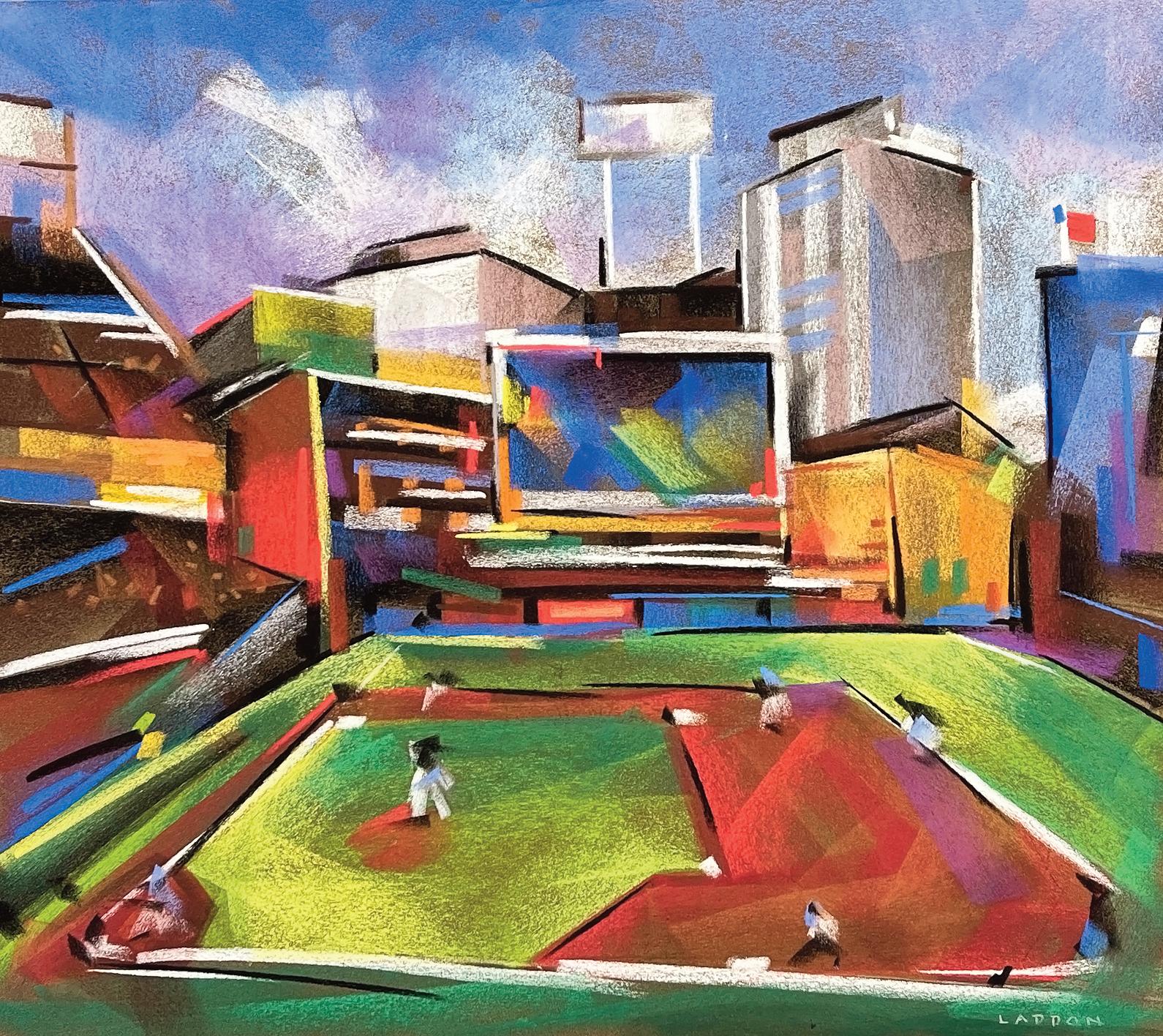
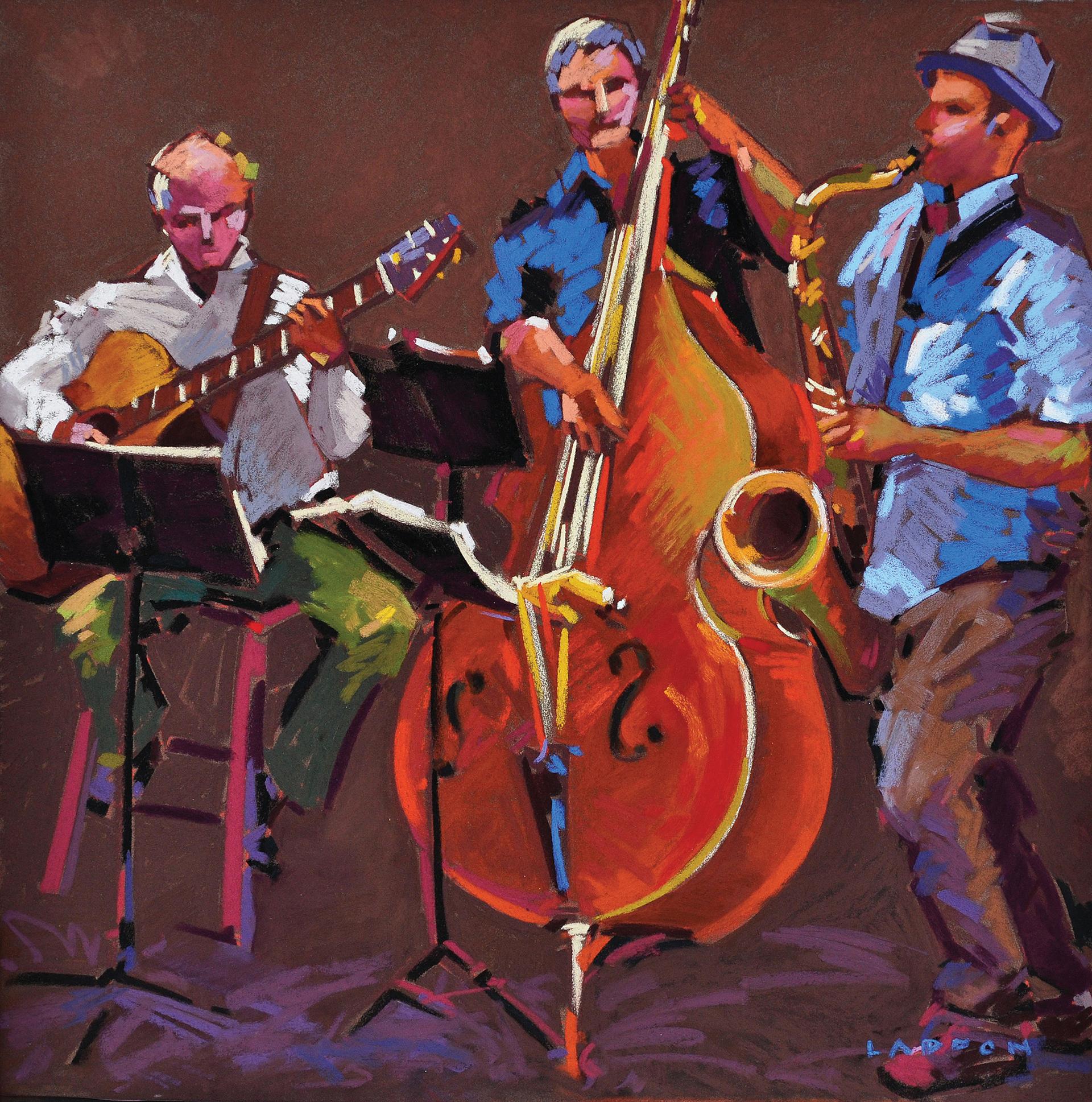
• how the colorful and contagious energy of Anne Laddon carries into her artwork, including a new series she creates from start to finish at professional baseball games
• how a gifted set of Terry Ludwigs turned lifelong artist Mel Neale into a pastelist after spending decades at sea homeschooling her girls and painting commissions in watercolors and acrylics
• how Jeff Slemons’ subconscious is continually working through how to tell a story of place and time with paint, as 50–60 unfinished works sit in his studio waiting for their moment
• how Tamami Tokutake becomes a pastel evangelist after finding her muse in the barren landscape of Reno, Nevada
—Kim Essex

By Kim Essex | Images by Keith Demanche © All Rights Reserved
Adecade ago, Keith Demanche was in a figure drawing class at MassArt in Boston, working in charcoal. On the final day, his instructor placed a few sticks of Rembrandt pastels on the table and suggested the class try color.
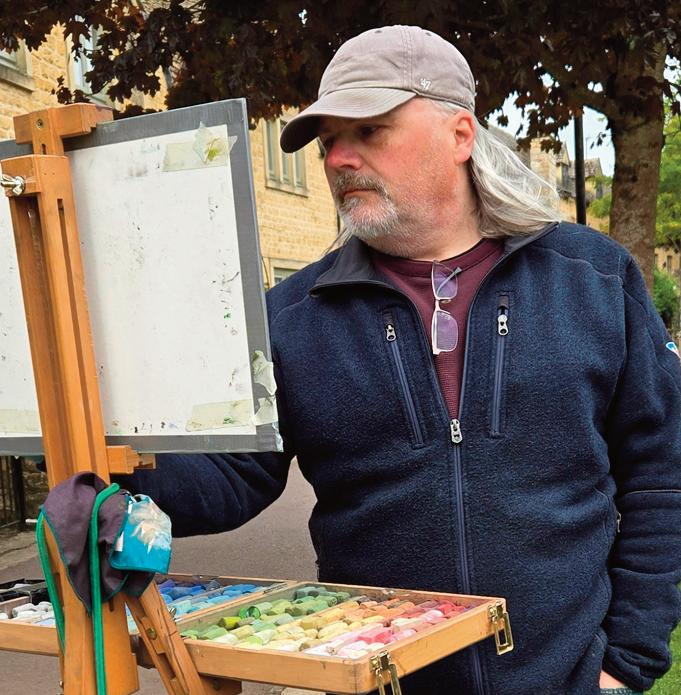

Keith remembers, “I spent the class just making marks and playing with the four different colors. I loved them and immediately went out to get a set and haven’t looked back.”
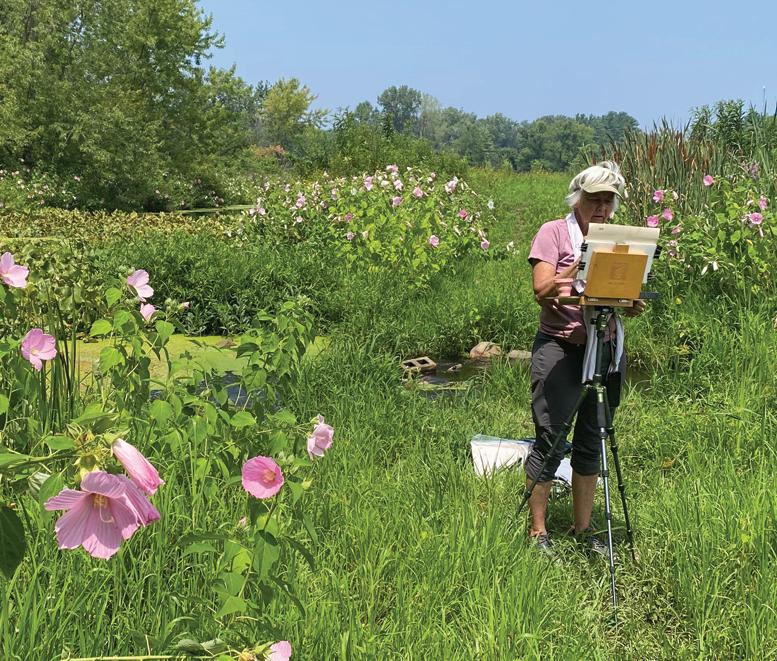
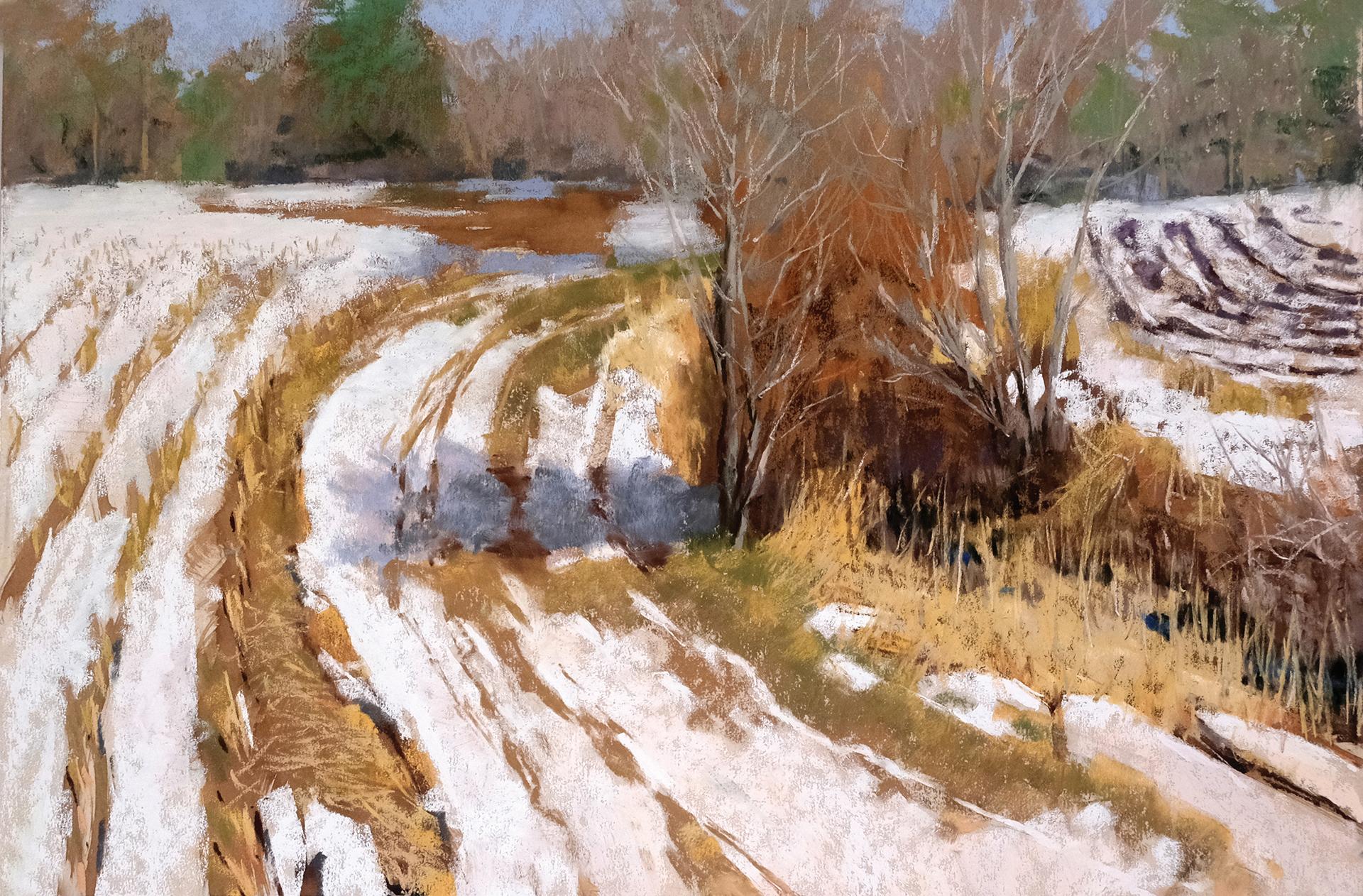
Based in New Hampshire, just an hour outside Boston, Keith is drawn to the changing seasons and the variety of environments within reach: sea grasses, fields, mountains, and coastal cliffs. Accompanied by other “die-hard” plein air artists, he carries his backpack, easel, and compact pastel box into nature year-round—even in snow.
“I can’t work from a photo anymore. I’ve come to really focus on plein air, being out in the environment and using nature to inspire me,” he says. “Without being in a place it’s hard for me to get involved with the painting.”

Though his pastel journey started in class, Keith is largely self-taught, learning from experimentation and workshops. He joined local pastel societies in New Hampshire and central Massachusetts, and more recently the Pastel Society of the West Coast, admiring the society’s high standard of exhibitions.
Pastels appeal to him for their immediacy and versatility.Their forgiving nature and vast range of colors make them equally suited for quick plein air sketches or finished studio work, he says.
When describing to me why he loves pastels, he says, “They go directly from my hand to the paper and create so many different kinds of marks. Pastels have also allowed me to evolve my color choices. I have learned over time how to mix and visually blend colors for light effects.” keithdemanche.com
While he believes his work leans more realistic, he is continually pushing himself to loosen up and achieve more impressionistic realism.
“I am trying to evolve into making more impactful, exciting paintings and not worrying about the finer details as much,” he says.
His favorite underpainting medium is natural inks—from walnut hulls, acorn caps, plants and florals—applied with both brush and pen. He described to me how the ink tends to pool and then separate when it’s hit with alcohol.
“My natural inclination is to keep working until something is finished. But I try hard to leave things be when I can. Those underpainting marks and little moments of
the process can so easily be lost, but they are often what makes a piece exciting to the viewer,” Keith says. Recently, he has started making his own pastels. Inspired by workshops in botanical pigments and mindful of the health risks associated with commercial materials, he is experimenting with natural, non-toxic binders and pigments. His vision is to create pastel sets tied to places and landscapes—pigments born of the environments he paints.
Keith’s dedication has brought recognition: he achieved IAPS Master Circle status and won Best Plein Air Pastel in Plein Air Magazine’s monthly competition. These moments validated years of balancing art with running a graphic design business alongside his wife for nearly 20 years.
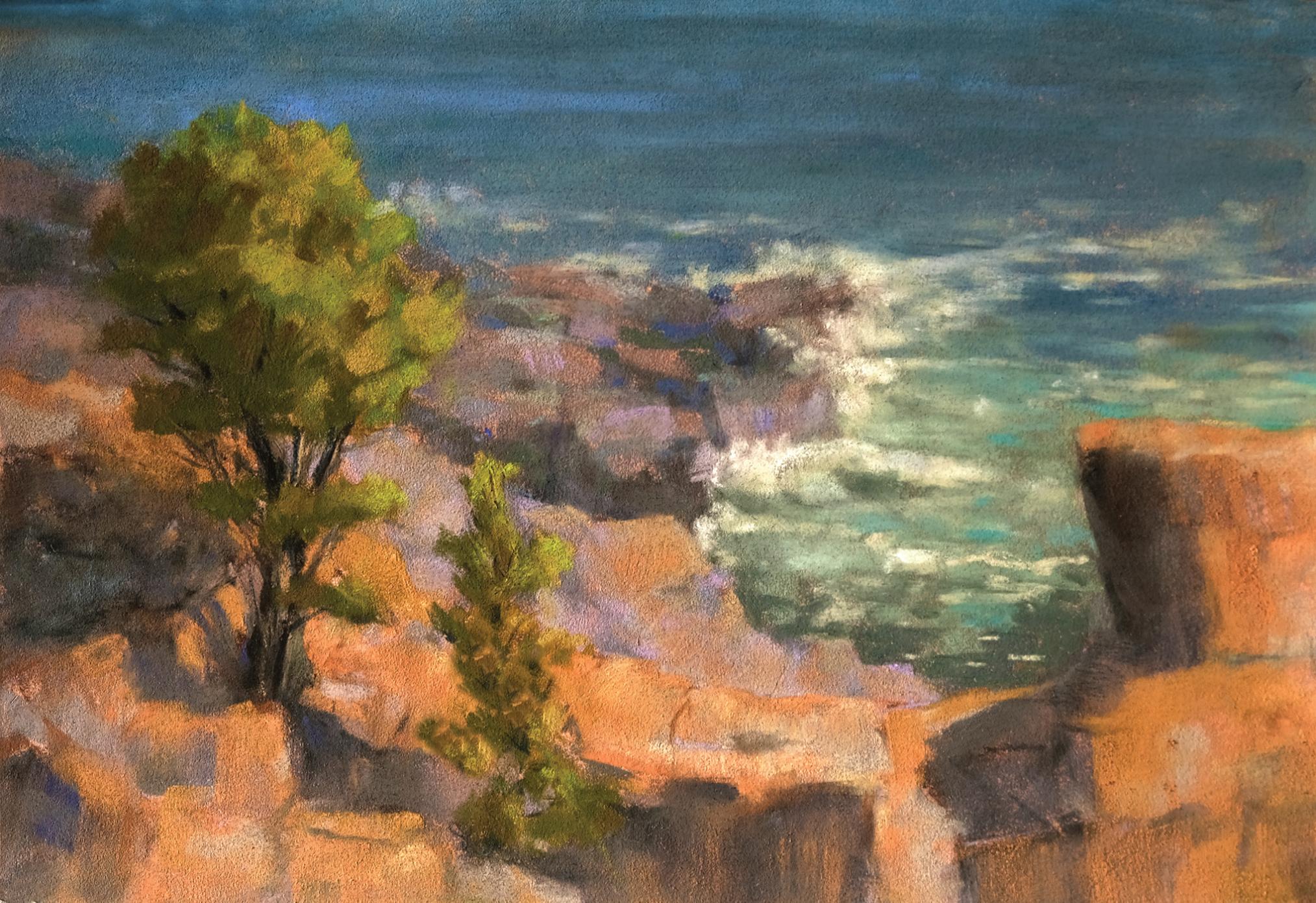


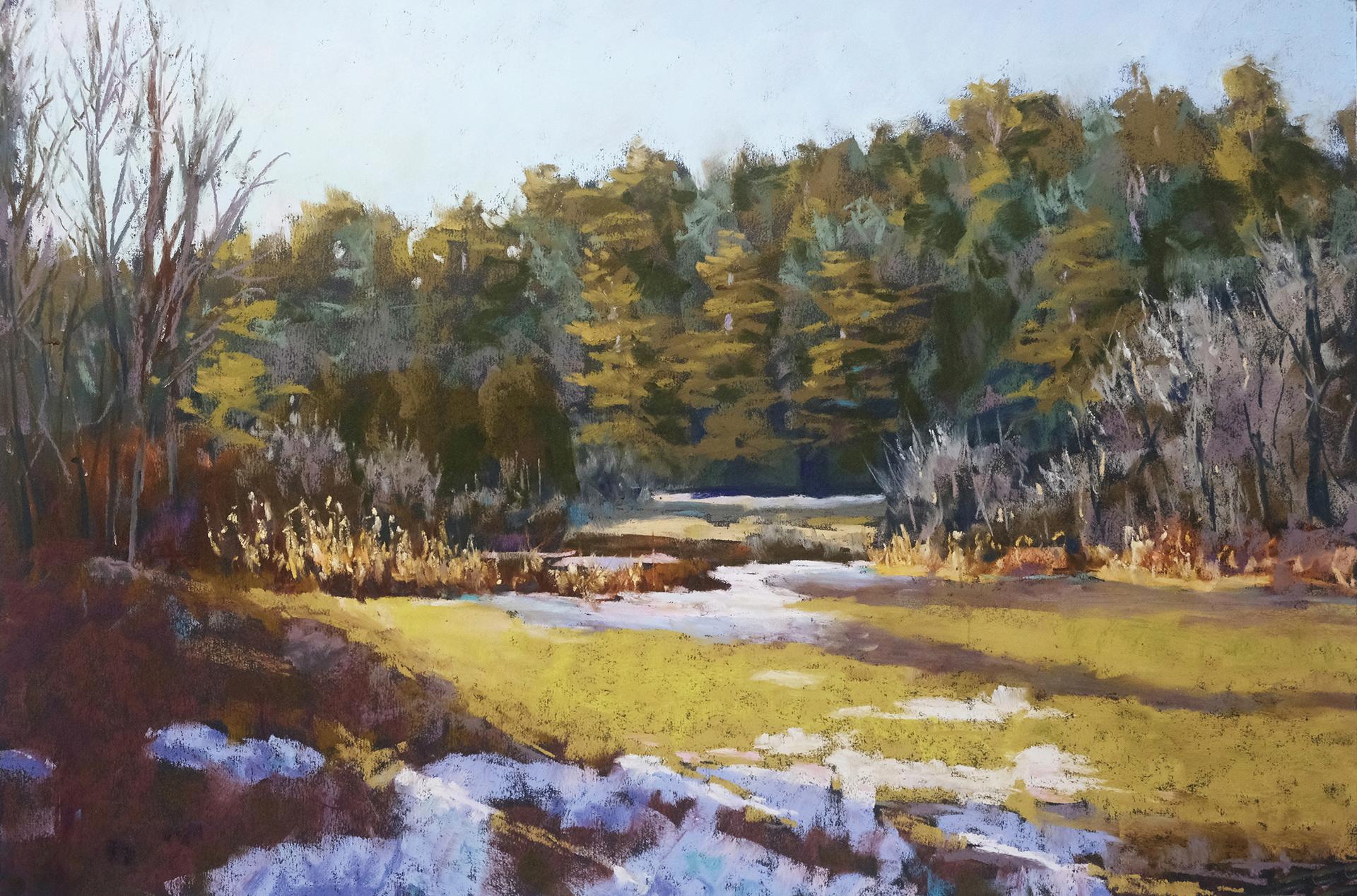
For Keith, painting is more than craft—it is solace. One of his most cherished works, Marginal Way, captures a view along Ogunquit Beach in Maine. He painted it in 45 minutes, recalling how the calm sea and rocks offered peace during his wife’s battle with cancer.
“It’s a place where I spent a lot of time to get away. Just the calmness of the view, very restful. A reminder to stop, take a deep breath, and relax,” he says.
In chatting with Keith, it seemed to me he has the perfect mindset for an artist—confident enough to try something new and chill enough to let the moment happen.
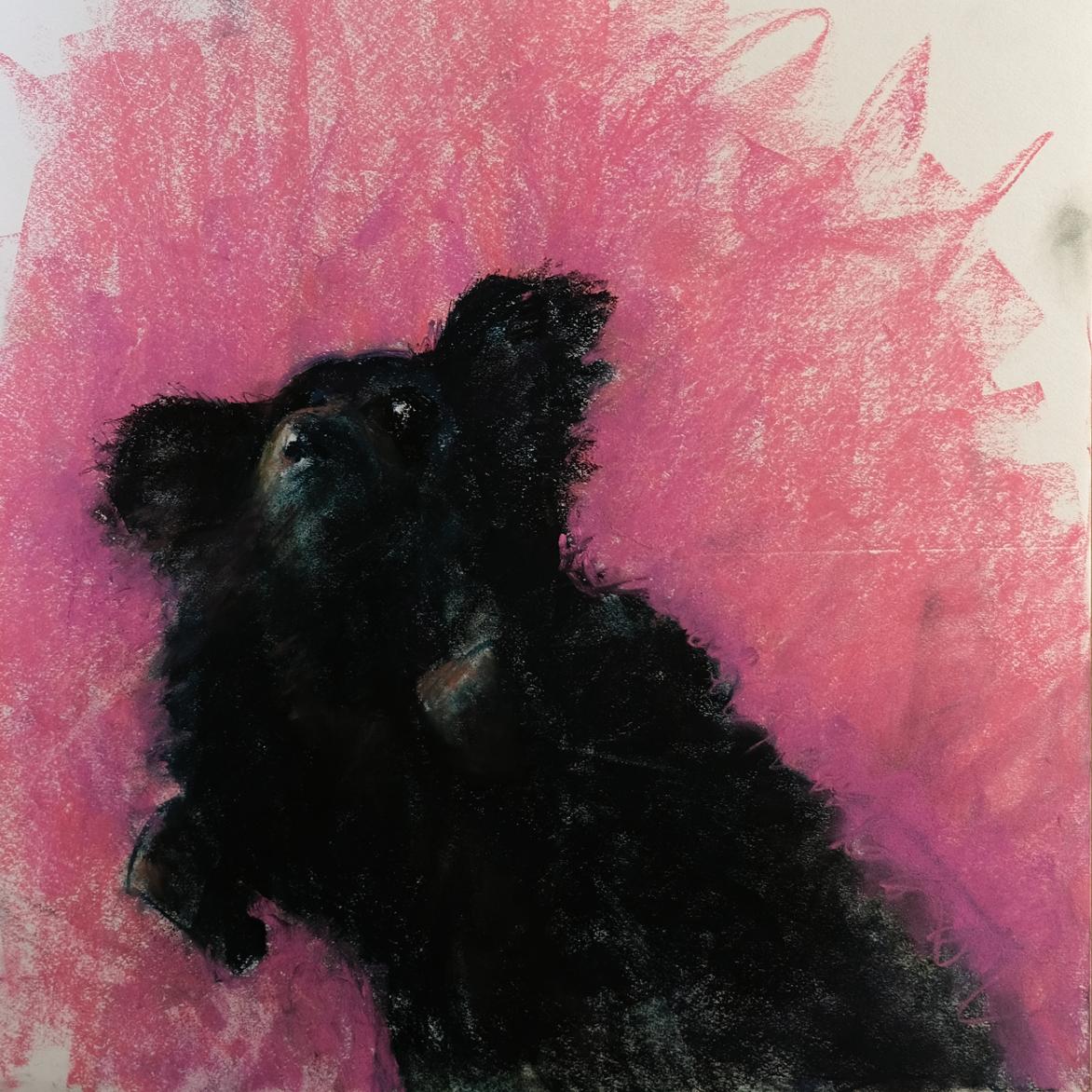
At his wife’s playful insistence to paint their dachshund and without an idea of what to submit into a show, he
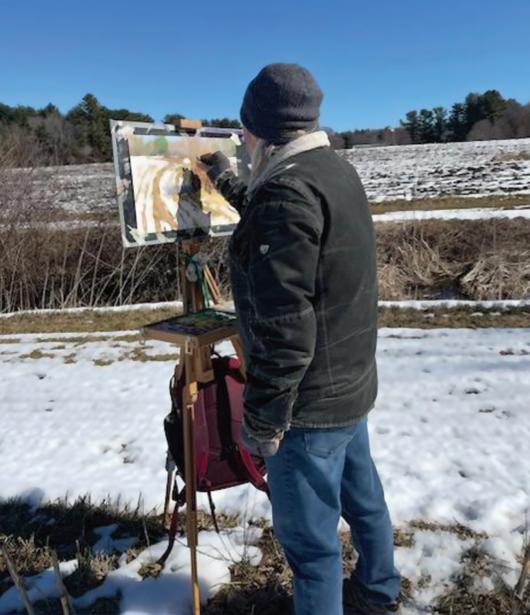

picked up his pastels and knocked out his first pet portrait of Emmett the dachshund right before the entry deadline closed.
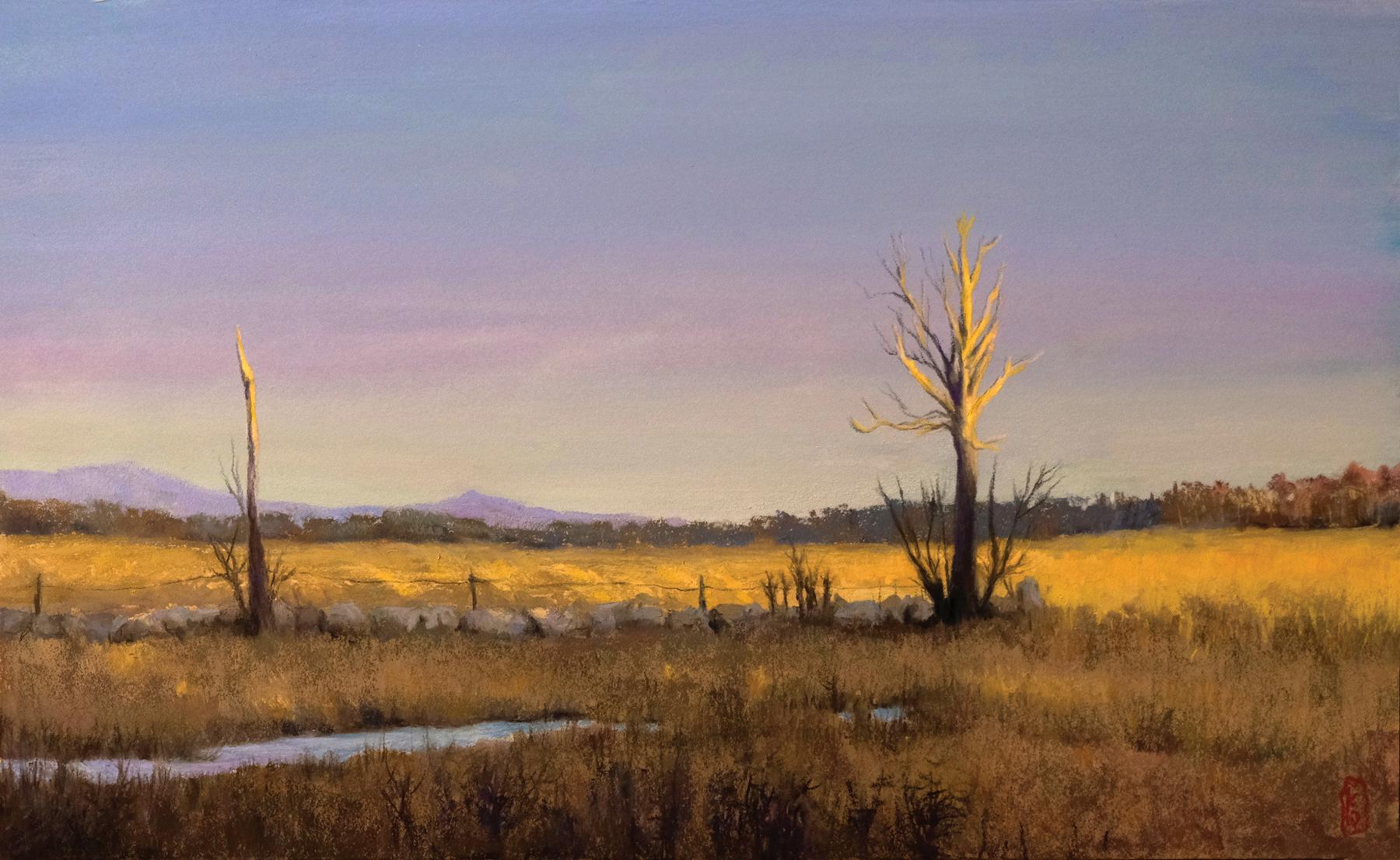
His work is rooted in presence: being outdoors, attentive to fleeting light, and committed to revealing “nature in a realistic but interesting way, showcasing the asymmetry of the natural world.”



By Kim Essex | Images by Anne Laddon © All Rights Reserved
For more than five decades, Paso Robles artist Anne Laddon has followed color like a compass. Her artistic path began in the 1970s as a serigrapher, creating hand-pulled, limited-edition prints. She started painting in oils in the 90s. “Plein air was all we did.”
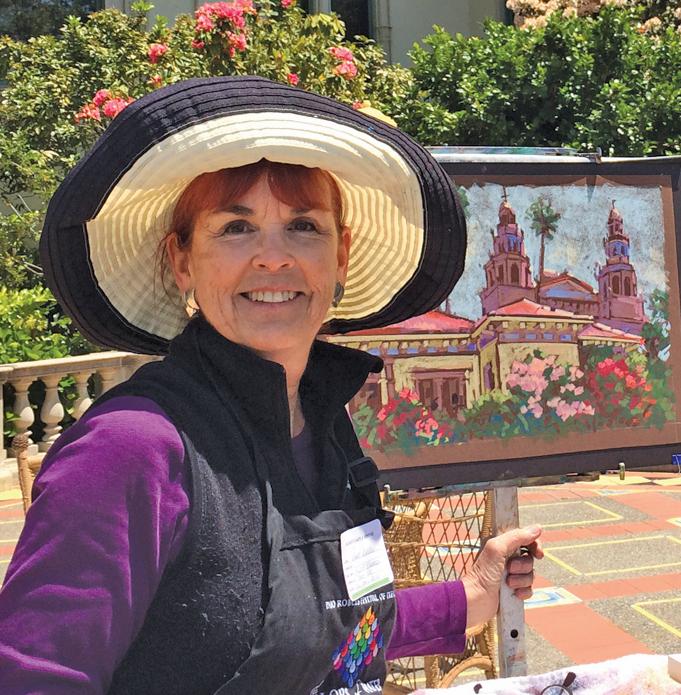
anneladdon.com
A twist of fate got her painting plein air with pastels—a medium that has become both a passion and a foundation for her evolving style.
“A good friend couldn't attend a pastel class on California’s Central Coast and gave the spot to me. I just happened to own a large set of pastels I had never opened. That was the late 1990s, and the instructor was William T. Hosner,” she says. “I fell in love.”


After that class, oils gave way to pastels for several years. But today, she works in both mediums, letting both inform the other.
She calls pastels her “looseners,” the medium that allows her to experiment freely without the pressure of a large canvas.
“It’s chalk and paper—you can always throw it in the trash if it doesn’t work,” she laughs. But over time, pastels have also sharpened her eye and strengthened her drawing skills.
A self-described “color junkie,” Anne constantly pushes her palette further.
“Colors in pastels are beyond my imagination. I find colors in my box that I couldn’t even dream up in oils,” she says.
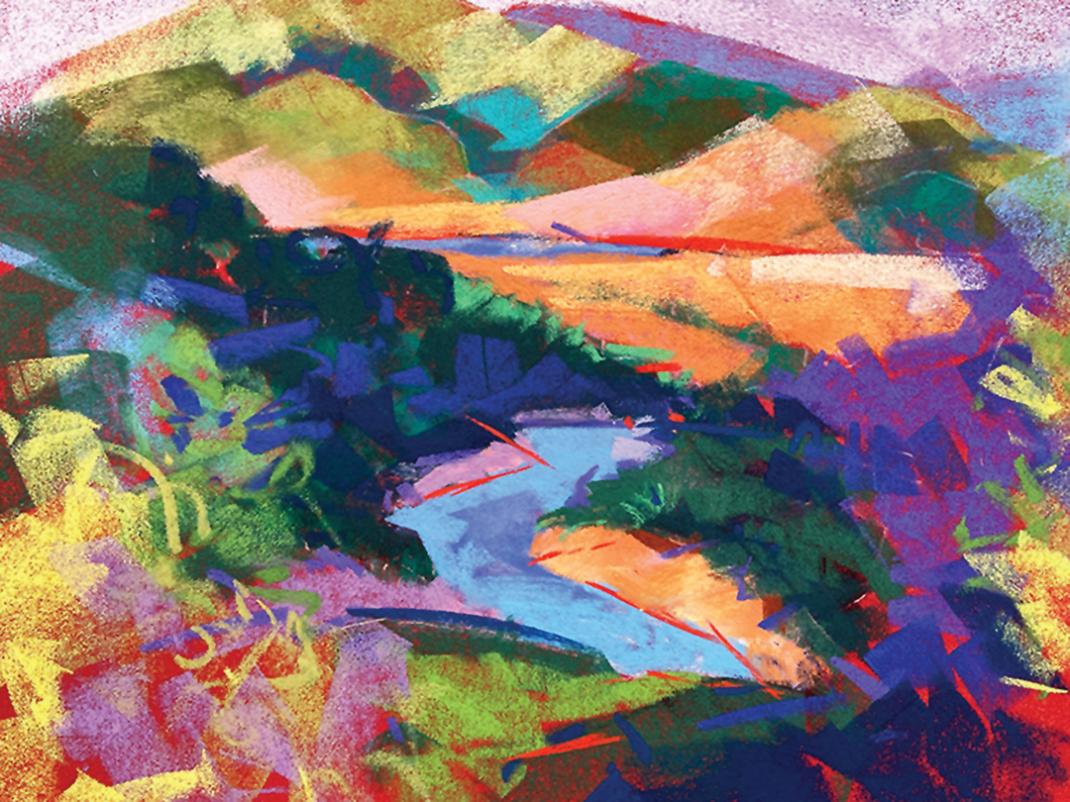
Her latest inspiration came from a PSWC workshop with Eminent Pastelist Tony Allain, who encouraged her to embrace abstraction and mark-making.
Based on what Allain showed her, she’s experimenting with the side of the pastel to add more complexity to her work. She compared these marks to how earrings or glasses—hers are signature, by the way—finish a look. She’s now exploring how this mark making can be applied to her oils. She painted Dip Creek Abstract after her workshop with Allain.
While many know Anne for her vivid landscapes, recently she’s been captivated by an unlikely subject: baseball stadiums. She sits in the stands beside her husband and son with a bag of half-stick Rembrandts and a foamcore board, blocking in the geometry of the field and painting the experience.
“I’m a shape-maker first,” she explains. “I anchor the field with all the stuff going on around it. I see the triangles of the seating, the giant TV screen’s changing colors…the ballplayers out there—they’re all shapes.”
The series has struck a chord—she’s sold several pieces in just the past month. So, next year, she and her husband are planning a tour of stadiums across the country, from California to Pittsburgh to Boston’s Fenway Park.
Anne is the founder of Studios on the Park, a nonprofit art center in Paso Robles with the mission of “providing a creative, educational, and transformational experience to enhance understanding and appreciation for the visual arts.”
“I’m just a volunteer. I’m the crazy lady who funds it and raises money,” she laughs. Even with her responsibilities to Studios on the Park, she carves out roughly half her time to paint.
And she paints wherever she goes. When I spoke with her, her husband was packing for a river rafting trip in two days. And she was bringing her pastels!
“I take two boxes of pastels—my half-stick Rembrandts because they are rough and ready and my Great American landscape set—and 10 boards ready to go,” she says.
Anne puts them in a Tupperware tub, wrapped in a blanket and then sealed in a plastic bag, and this is what gets loaded onto the raft so she can paint along the way.
When I asked her how she digests all that could be painted en plein air, she says, “Paint what makes your heart beat. That’s what I focus on.”
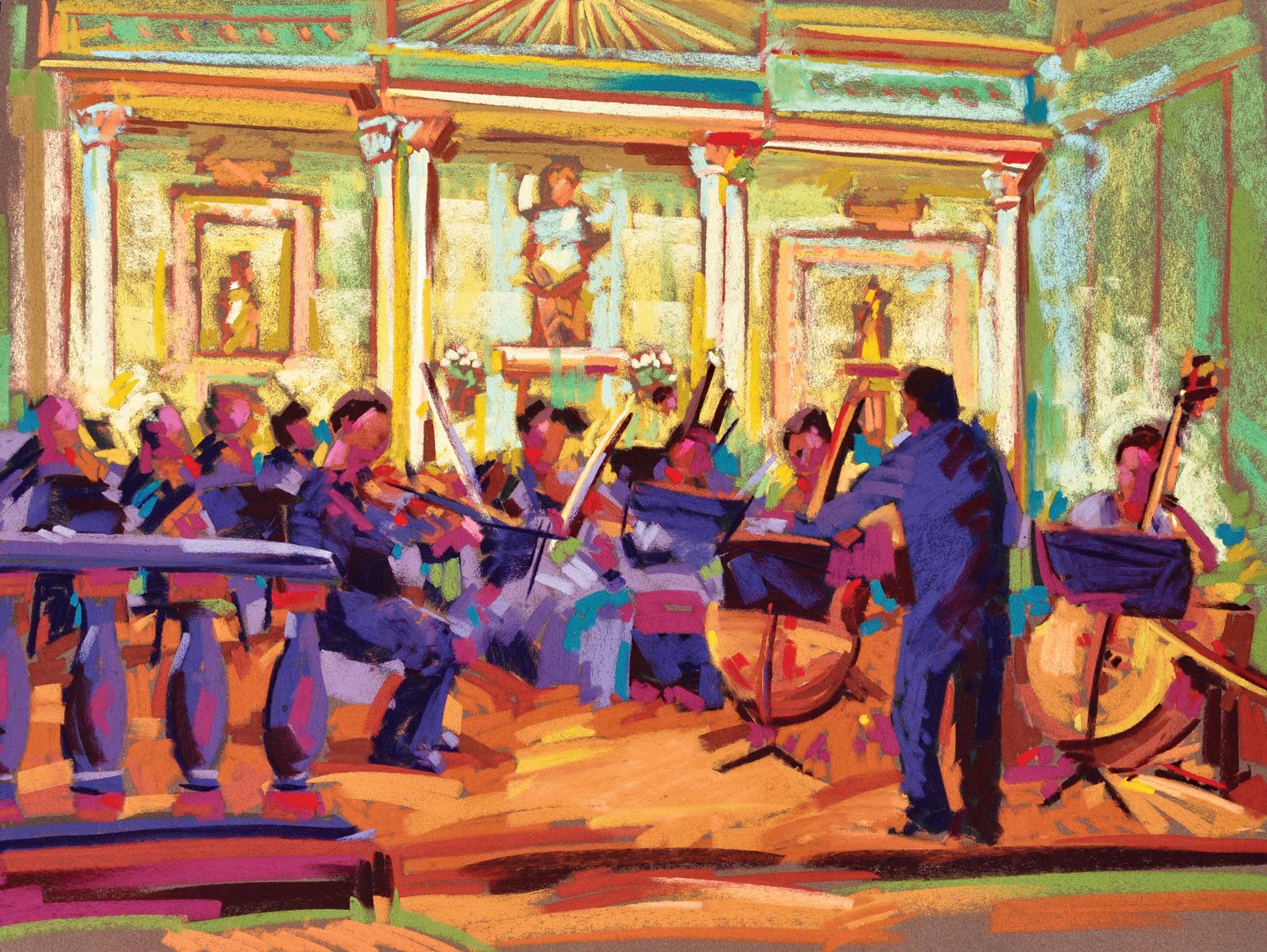
From the funky notes of a jazz trio, to the expansive tones of an orchestra in a mission church, to a rousing “Take Me out to the Ballgame” seventh inning stretch, she calls her art a diary of her life.
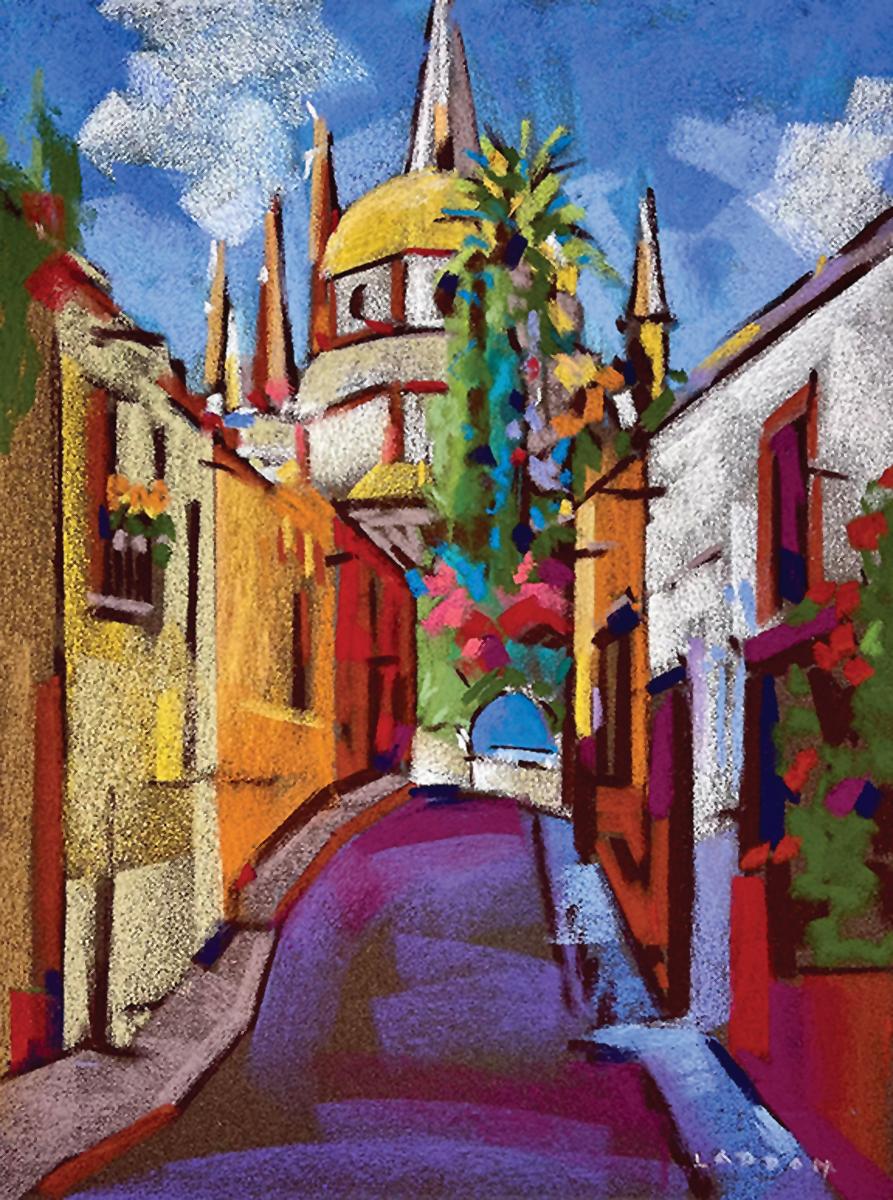


“If you stand quietly in the same spot for an hour and a half looking and painting, you get to keep that image forever whether the painting turns out or not.”

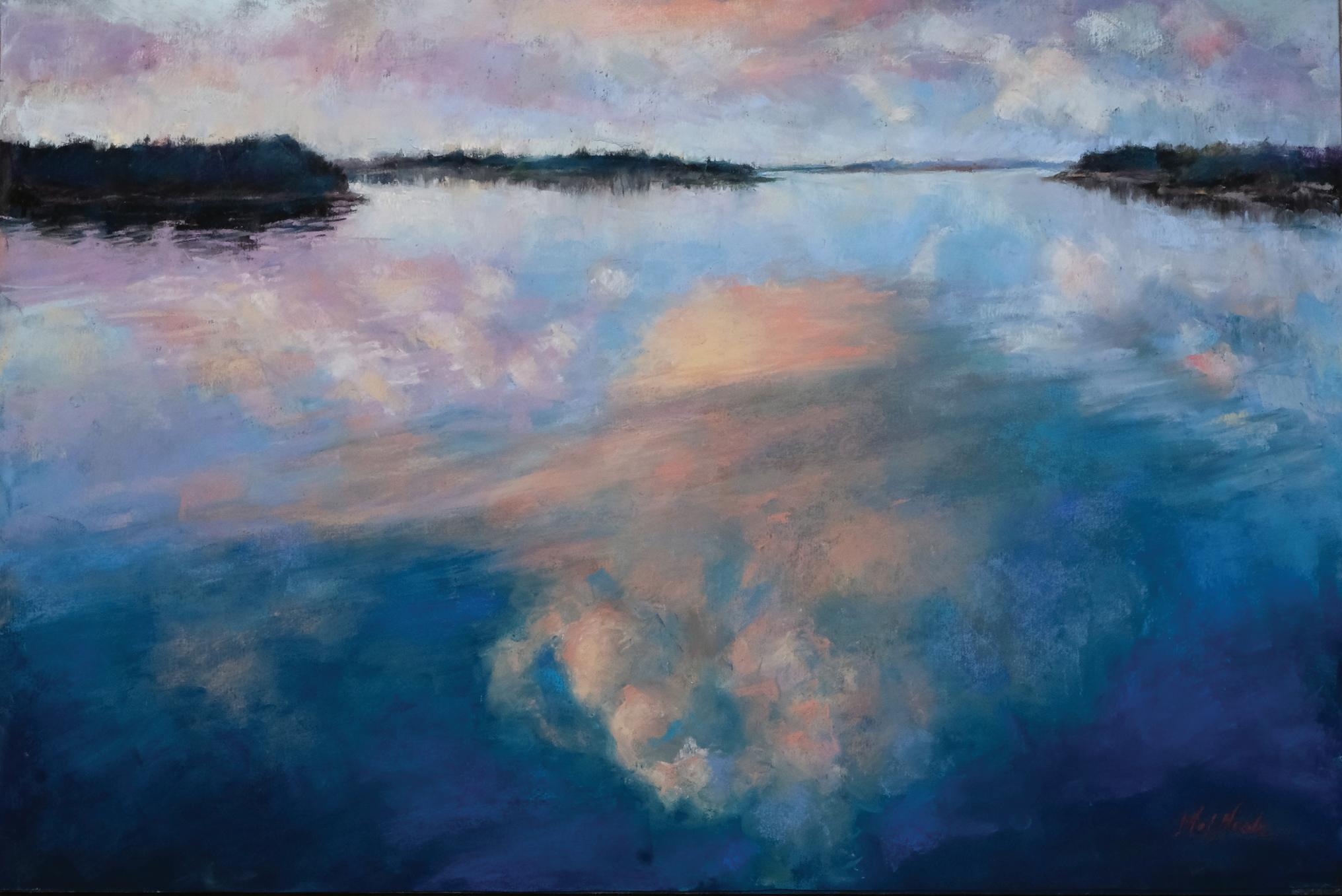
By Kim Essex | Images by Mel Neale © All Rights Reserved

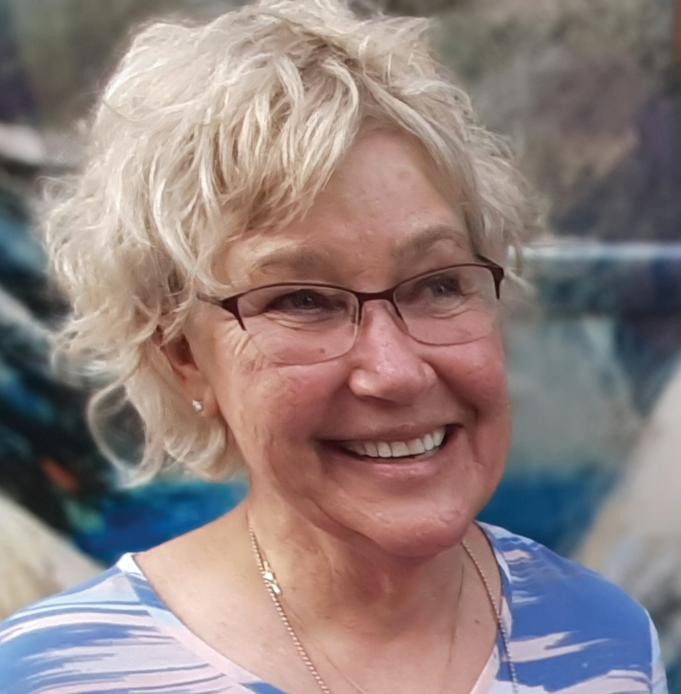
Mel Neale’s artistic journey has been as fluid as the tides she and her family once followed.
melneale.com
For more than two decades, she lived aboard a sailboat with her husband and children, raising her daughters at sea from kindergarten through high school, splitting seasons between the Bahamas and the Eastern Seaboard.
On the boat, while waiting for her daughters to finish their schoolwork, she would paint local scenery as well as commissions of yachts, homes and island scenes, mostly in watercolor and acrylic. Her photography and illustrations accompanied her husband Tom’s articles and columns in several boating magazines.
“It was a wonderful life,” she recalls, “but eventually, we decided it was time to have a place to go off the boat, a small retirement type of house for two people, a little house on the water where our kids and grandkids could come.”
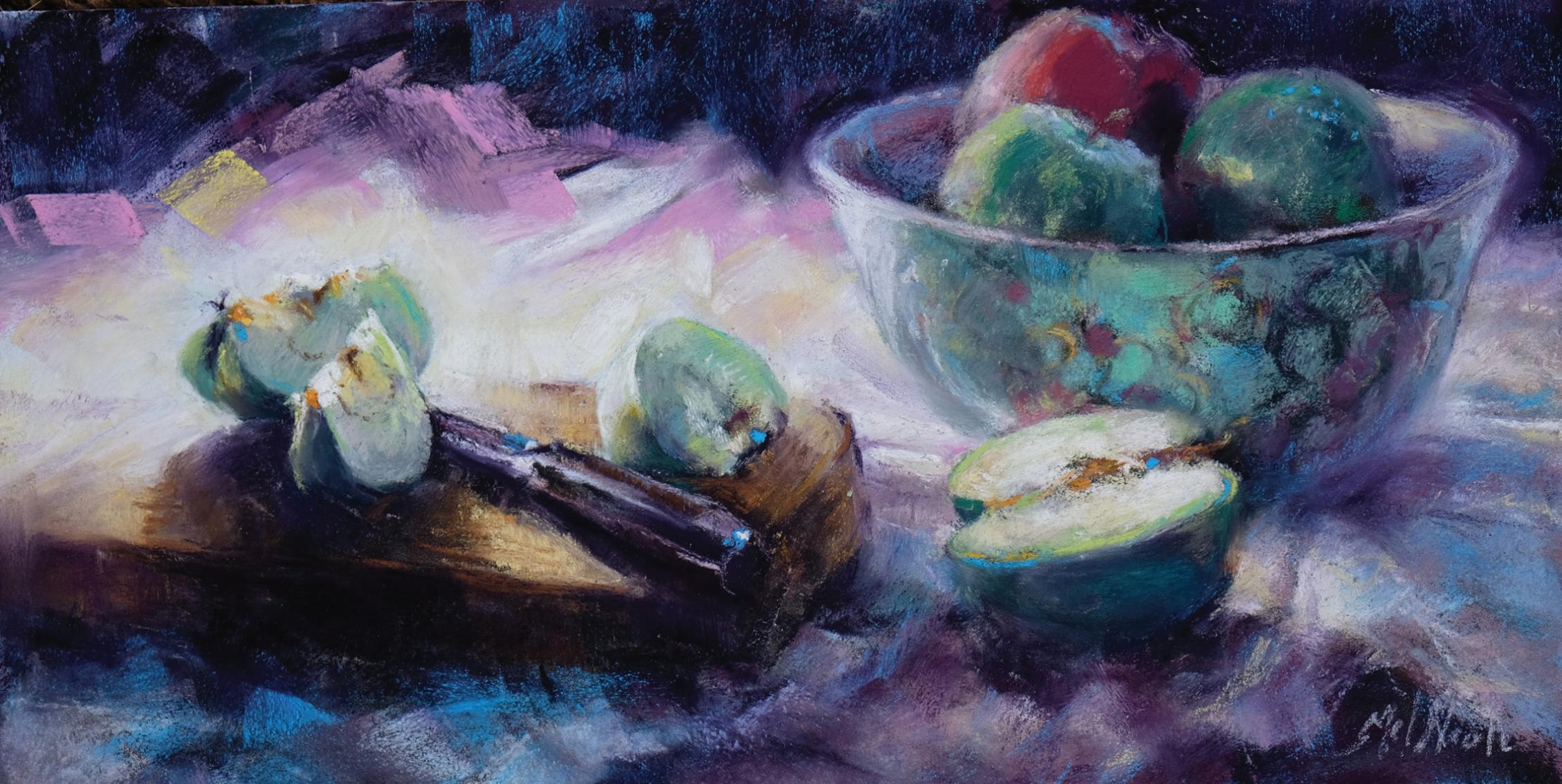

Her first art lesson as a 10-year-old was in pastel. As an art major in college and an art teacher in public schools for 15 years, she experimented with nearly every medium, but when she left teaching, “pastels were too messy for the boat,” she said.
As she told me her story, it seemed pastels found her when she planted on land once again. Her next-door neighbor was hosting a pastel workshop and gifted her several sets of Terry Ludwigs. Oh, the luck!
“It was so much fun. I love to draw, I love life study, and I love to finish paintings quickly. Pastel satisfies all those loves. I also love the variety of marks, the jewellike color and effects of layering those beauties, and that you can remove and start over unlike watercolor,” she explains.

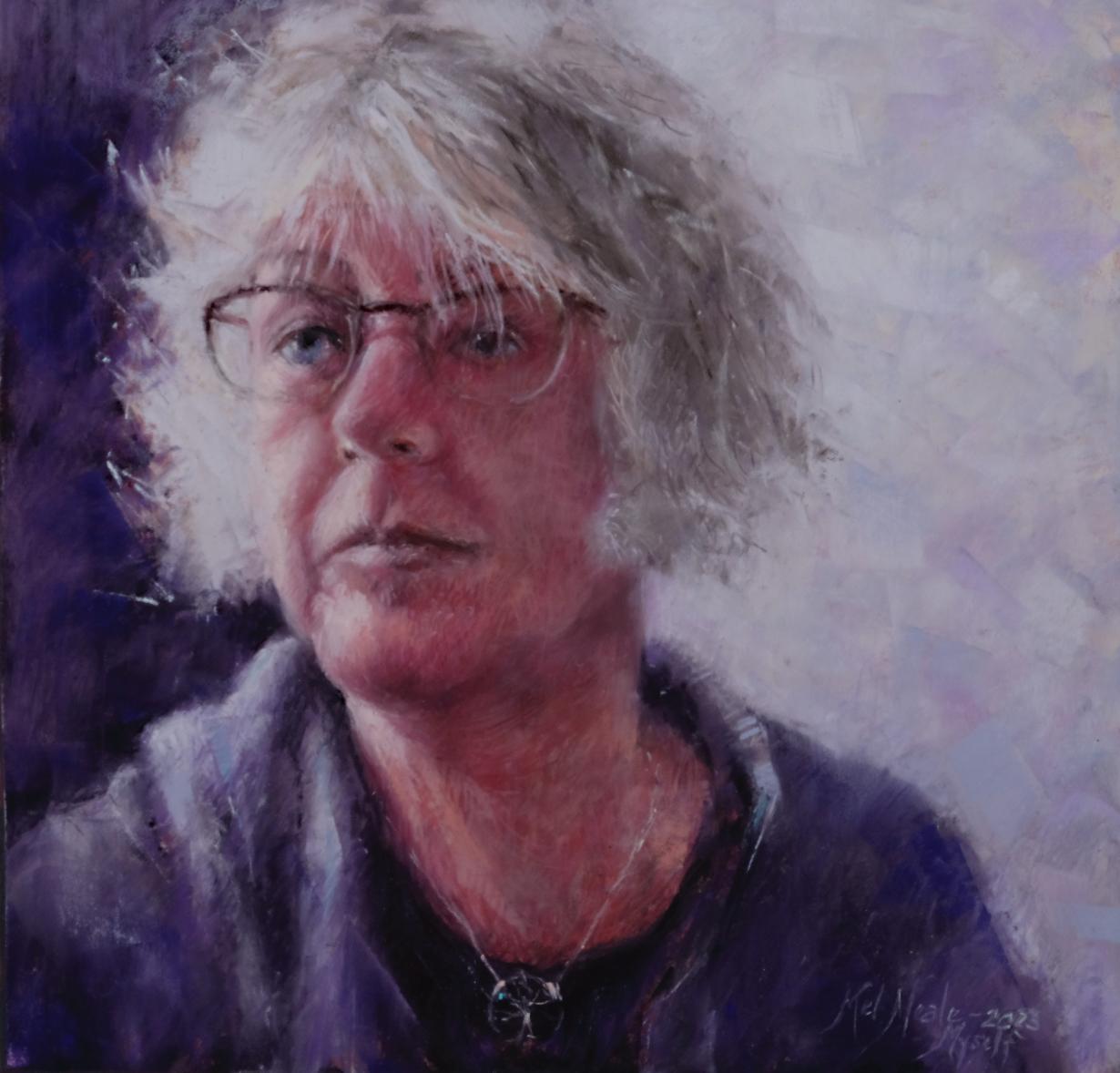

She is a signature member of the Watercolor Society of Virginia but says watercolors can sometimes be frustrating. Pastels are more forgiving, she explains, which makes them more fun.
She’s also a member of several East Coast Pastel Societies, but says of PSWC, “There is a fascination about the west coast art scene that has drawn me in. There are so many good pastel artists out there.” She has watched and admired PSWC’s 99 Voices in Pastels Show and appreciates the interviews with “really good artists.”
Her subjects often circle back to what she loves most: people in various activities, portraits, and still lifes that lean toward impressionism rather than strict realism.
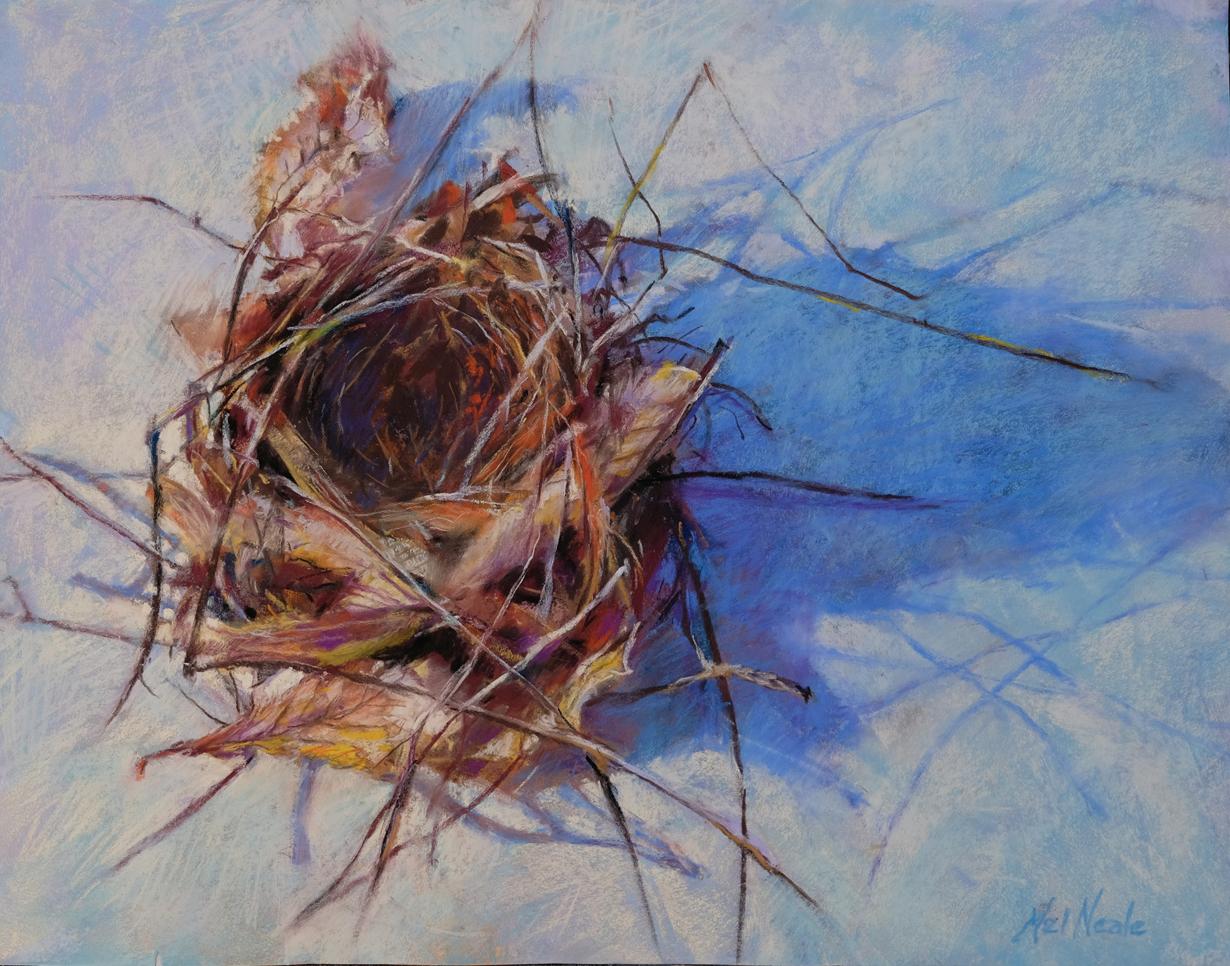
One notable work, Empty Nest, depicts a fragile bird’s nest found outside her kitchen window. It fascinated her.

She watched two cardinals construct it from leaves, twigs and yarn (which is beautifully rendered in the work). After laying eggs and raising the fledglings, they eventually left it abandoned. That is when Mel took the nest down, put it on a white board and took several photos.
The piece has earned recognitions both locally and in national pastel exhibitions, including the International Association of Pastel Society’s juried 2024 Pastelworld Exhibition.
“I like the challenge of making something believable from life, of capturing a likeness, and of using a sort of impressionistic technique to achieve these results,” she says.
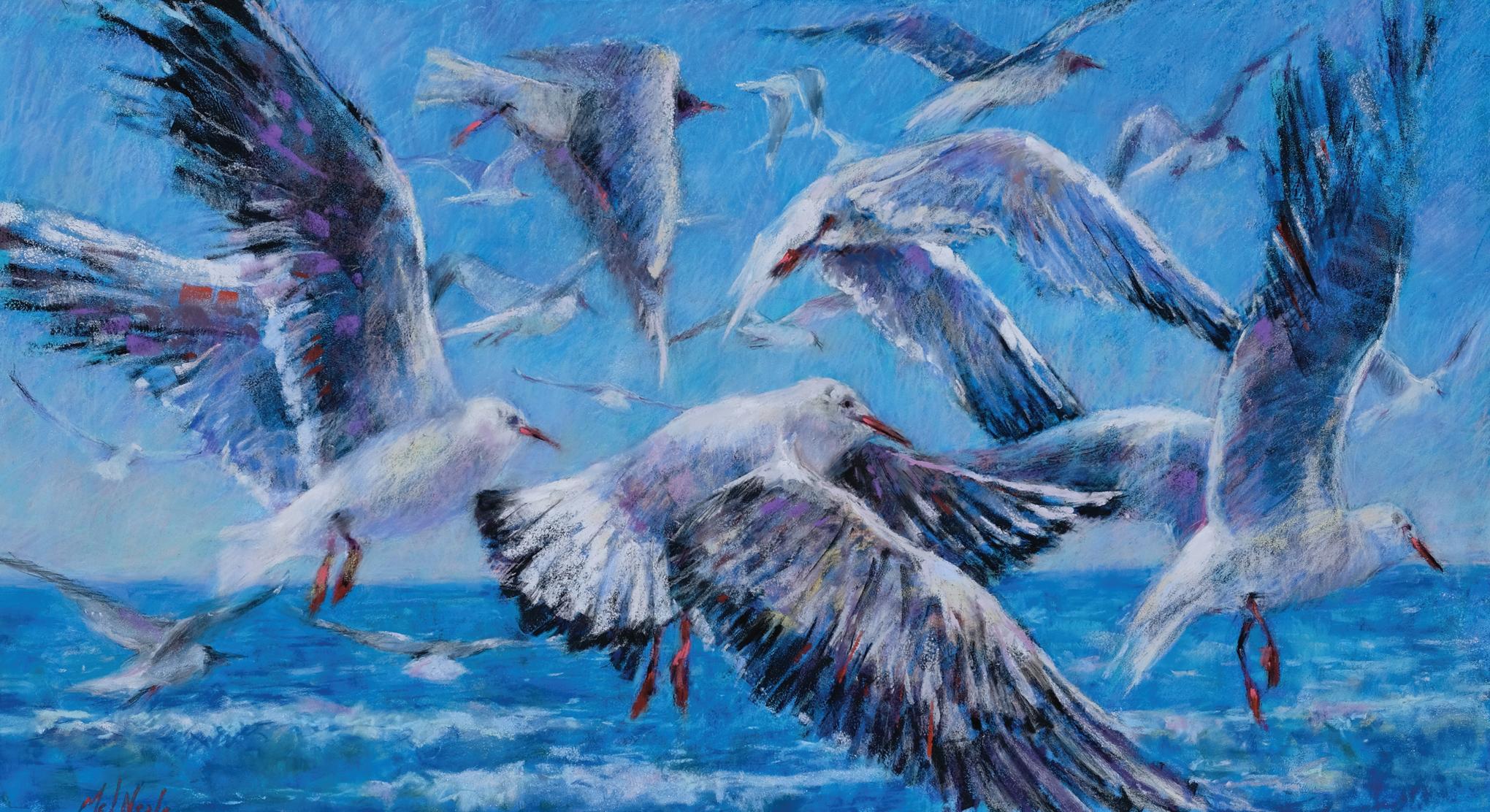
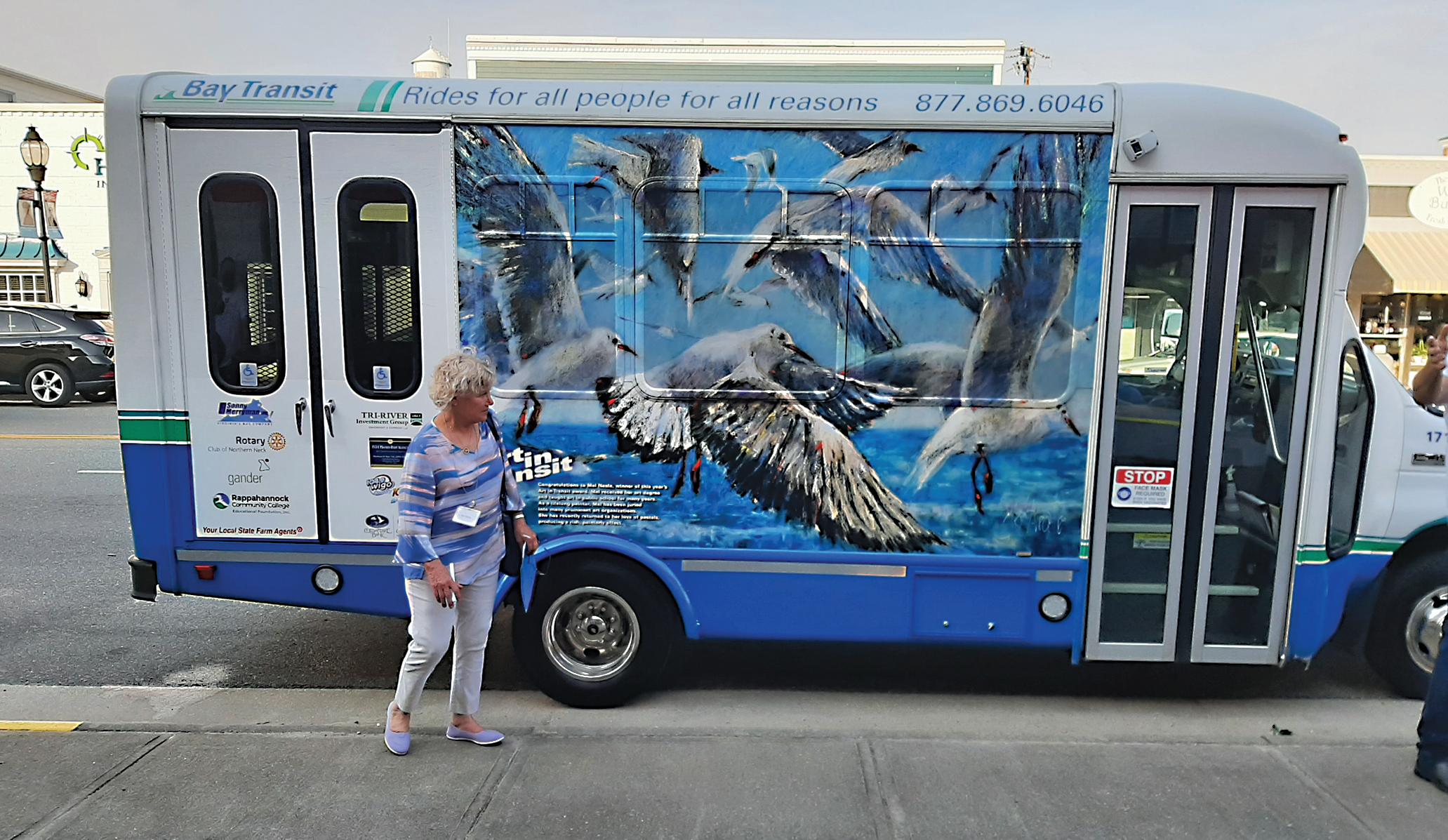
Of the many honors she has received in her art career, she fondly recalls winning first place in her town’s Art in
Motion competition. As a result, her art was transferred to the side of buses that serve seniors and the economically disadvantaged where she lives.
“It’s a big deal in our community. Buses go all along the coastal counties. They’re still out there,” she says, tickled that sometimes she can see her art drive by.
Though retired, Mel remains deeply active in her local art cooperative and as a mentor in Alain Picard online pastel courses. She’s also part of Picard’s “Cultivate” Facebook community, using the different subjects the community focuses on each month along with themes for local shows to inspire which of her reference photographs she paints from.
“You’d think I’d have plenty of time, but life fills up,” she laughs. “Still, painting keeps me engaged and moving forward. Pastels are the best fit for my life now. It’s like coming home.”


By Kim Essex | Images by Jeff Slemons © All Rights Reserved
Jeff Slemons, to borrow a saying, is an artist you want to sit down with and have a beer. He’s curious and expressive, in his art and his communications. So, when Jeff first picked up pastels in the early 90s, it was simply to give another medium a go.
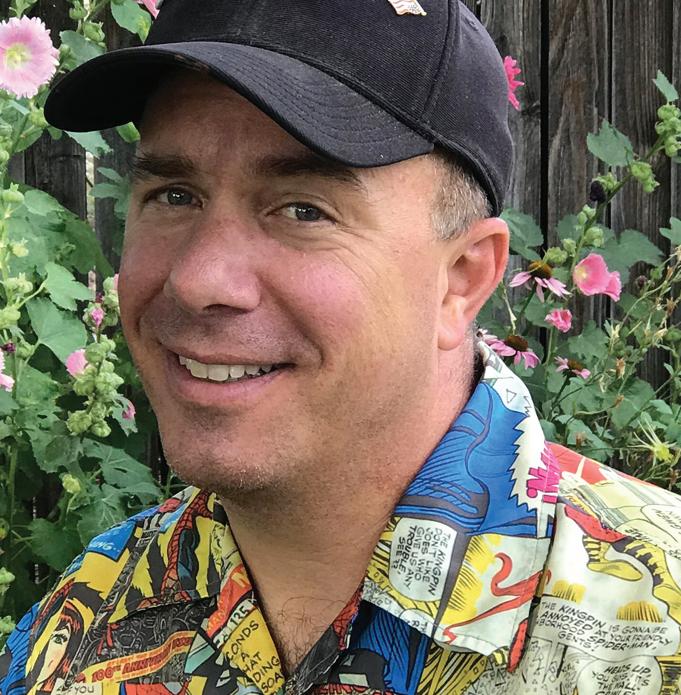
jeffslemons.com
Oils had been his fine-art outlet up until then, but pastels soon revealed themselves as the perfect balance: fast, forgiving, and endlessly expressive.
“Expressiveness comes easier to me with pastels,” he says. “If there is a visual component that I find interesting and I feel it needs to be put down in pastel, I'll go for it.”
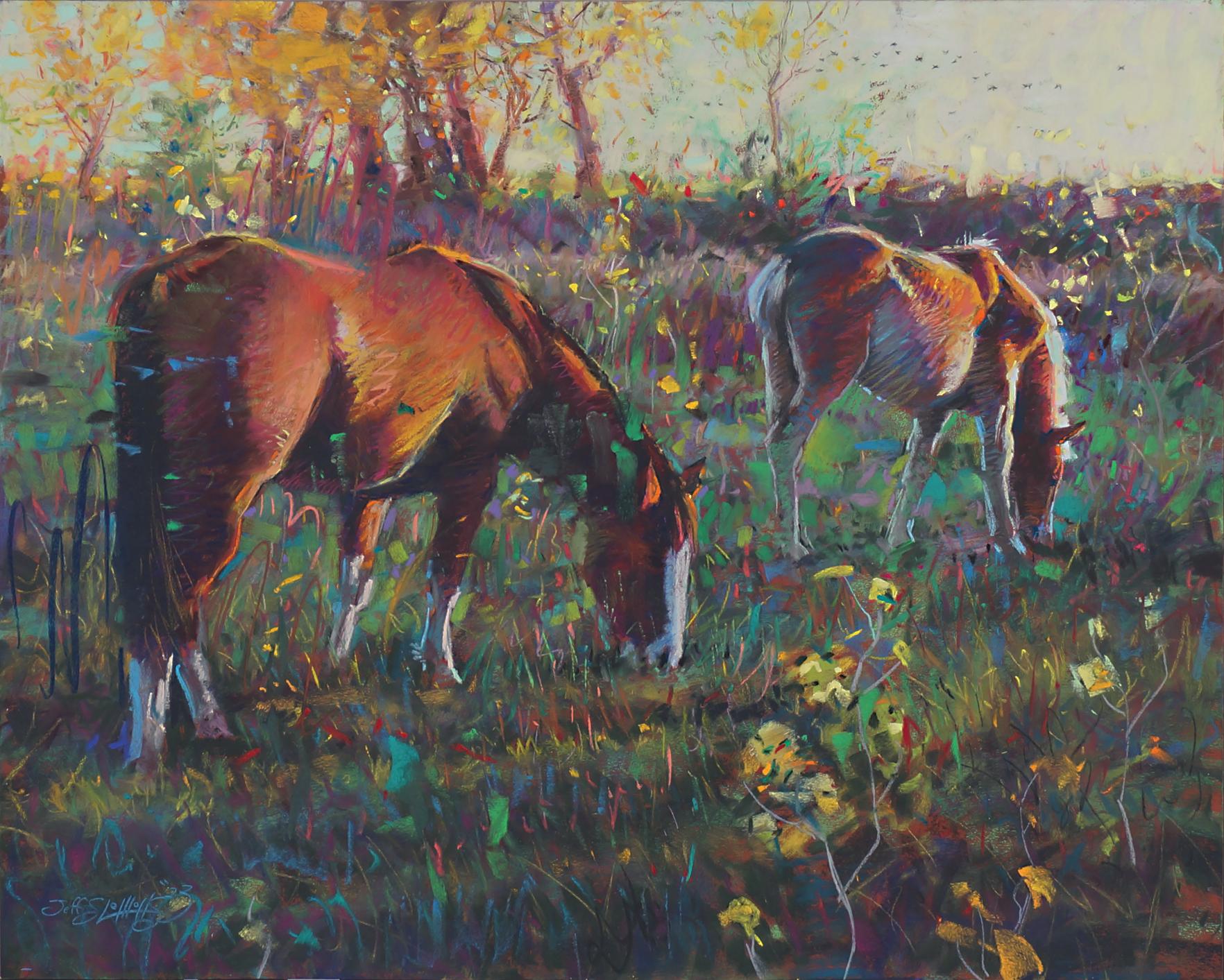

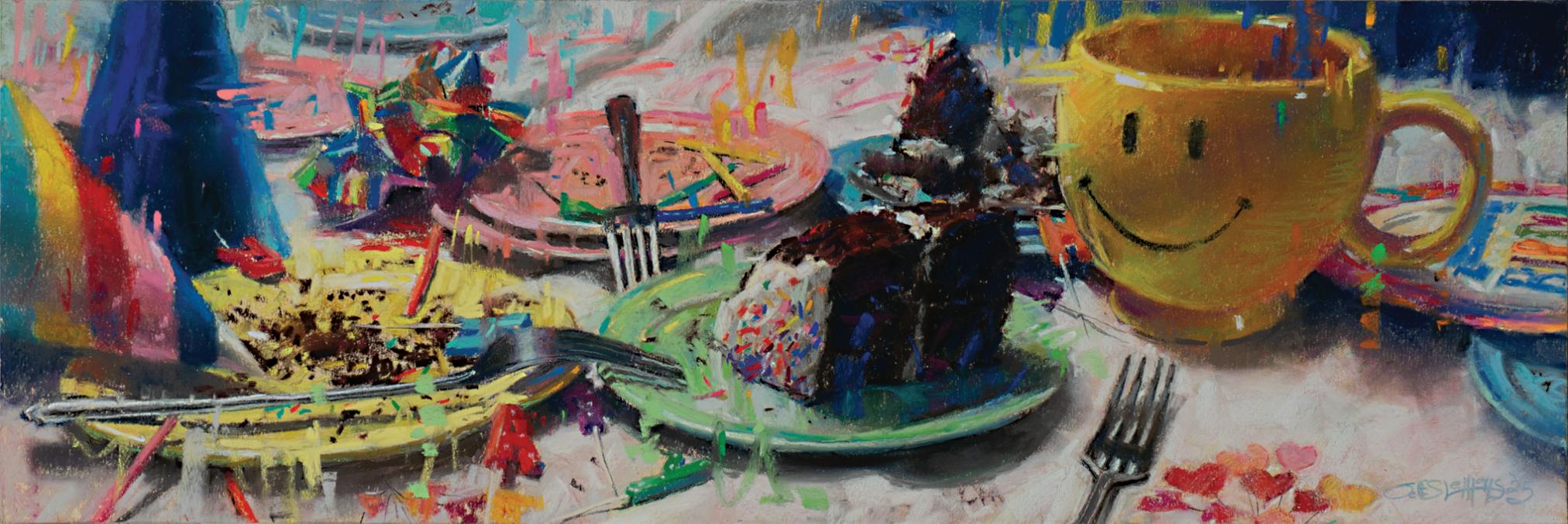

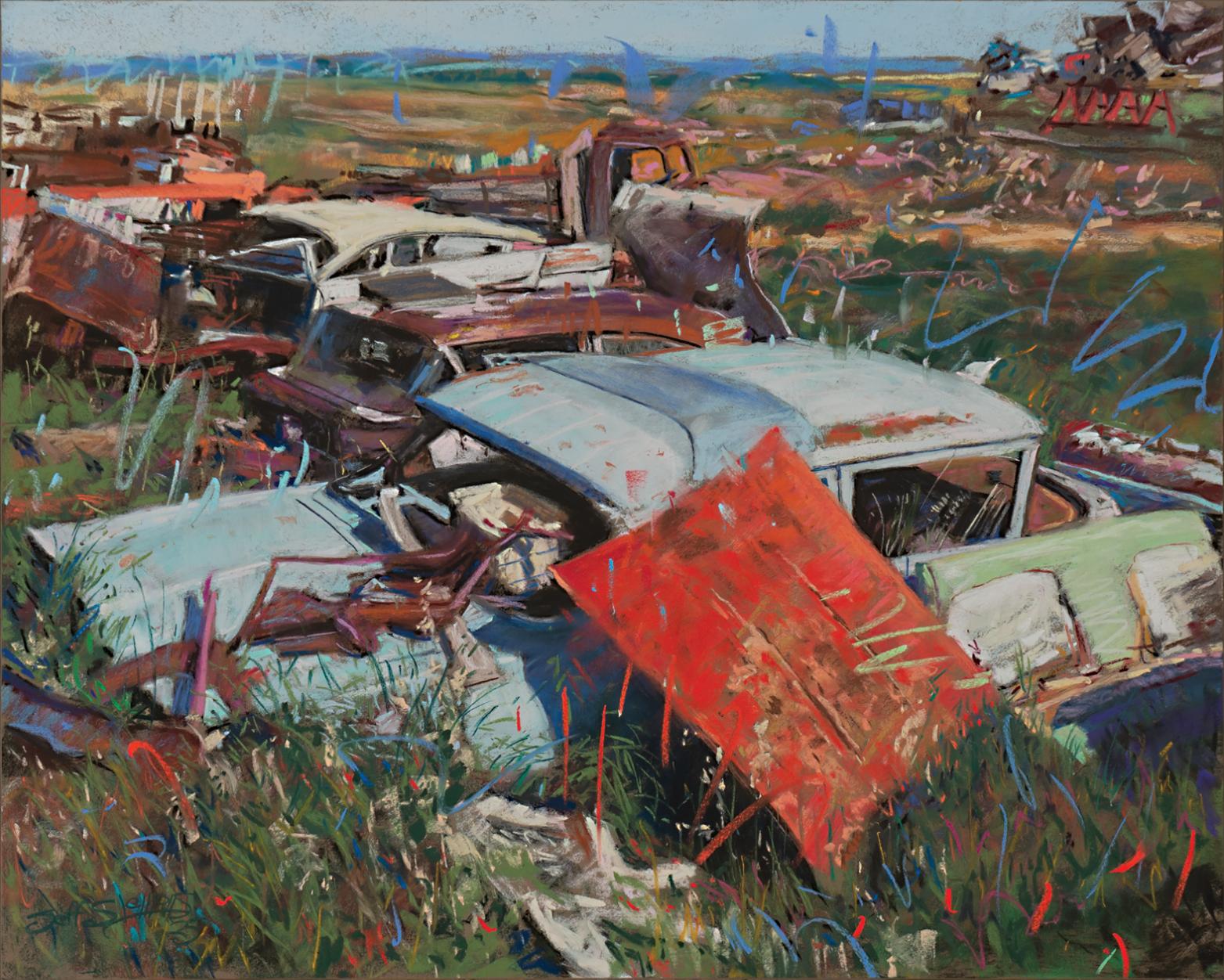
Today, the Greeley, Colorado-based artist juggles his “day job”—commercial illustration—with a fine-art practice that is in what he calls his “cowboys, cakes, and clunkers” period.
“Because pastels have no drying time, I can jump back into a piece between commercial assignments and pick right up where I left off. No wasted paint, no cleaning palettes,” he explains.
And like Anne Laddon, sometimes he’ll use pastels as a building block for his oils, to work through shapes without “blowing through a bunch of oil paint.”
The Photo Lies
While he believes painting plein air is ideal because it “forces you to focus on the important stuff and not get lost in the detail,” most of his work is from reference photos.
He uses his references to define shapes and recall what drew him to the scene, often the play of light or colors that excited him. But that’s about it because as he says, “That photo is lying to you from the get-go.”
In a blog, he writes, “To have a sense of spontaneity, I won’t allow the photo to dictate to me anything really beyond the general layout of the model and the basic play of color.”
But working in the studio is not without hazards. Jeff recalls a piece he had been working on for some time and
had it almost “dialed in,” when he had taken it off the easel and something fell on it and ripped it in half.“I just made up my mind to laugh about it and move on.”
Still, the victories outweigh the losses. “There’s nothing like knowing you’ve got it in the bag—or when someone looks at a piece and says, ‘I gotta have that.’”
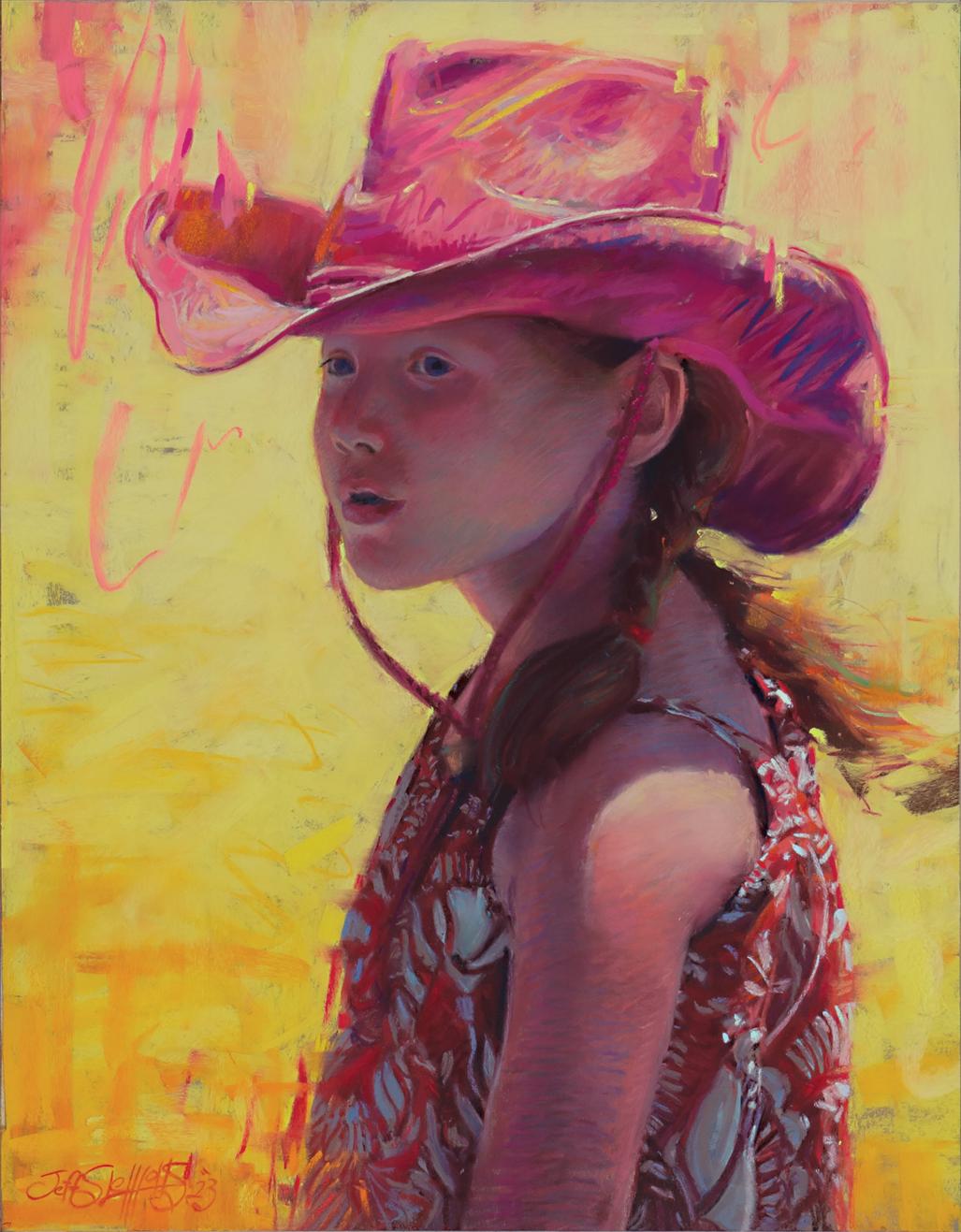

Gingersnap, Jeff

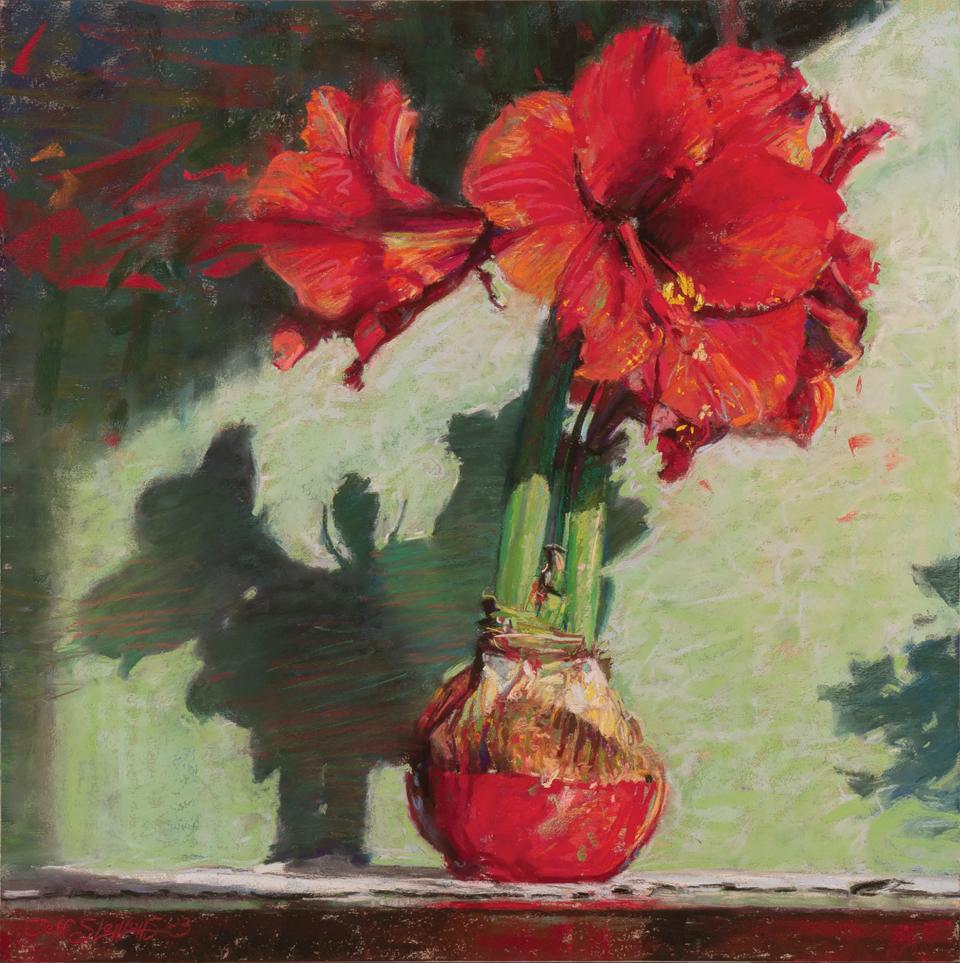
Right now, he has about 50 or 60 pieces in various stages of completion in his studio. On his easel, he is working on three or four pieces at one time.
“If you’re putting pastel down hoping something works, that’s when you have to stop,” he tells me in a way that is also reminding himself. “Some pieces I’m working out in the back of my head.”
It could be a year later, and he’ll pull out a piece because he has an idea on how to finish it.
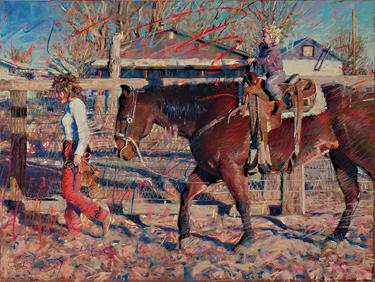
The artwork Follow the Leader of a mom introducing her daughter to a horse on a February morning is from a reference he took more than 25 years ago.
“The skill set wasn’t there. So, it had to sit,” he states.
Jeff taps his illustration training from the Colorado Institute of Art in his paintings to move the eye around, build dynamism, and create a focal point.
When I asked him what he could do now that he couldn’t 20 or 30 years ago, he quickly answered. “Simplicity. I’m not looking at a truck in front of the house. I’m looking at shapes, and simplifying the number of shapes, breaking it down into its simplest narrative.”
And then, he wonders out loud, “Maybe you can push it to the precipice where it is about to fall off. How close can you get to messing it up without messing it up, so the viewer wants to spend time with it?”
It’s interesting how Jeff talks about his art–—as an observer. Like it’s happening to him versus he’s in the proverbial driver’s seat.
Maybe that’s because he aspires to a ‘third level’ of painting, where intuition takes over and the marks flow without conscious effort.
To me, his color work seems to be getting close to that, which he describes as “mark making that captures the essence of air and action and breaks planes, connecting elements with color.”
“That would be nice,” he says about the third level. “But until then, I’ll just keep slogging it out and trying to paint a better picture.”
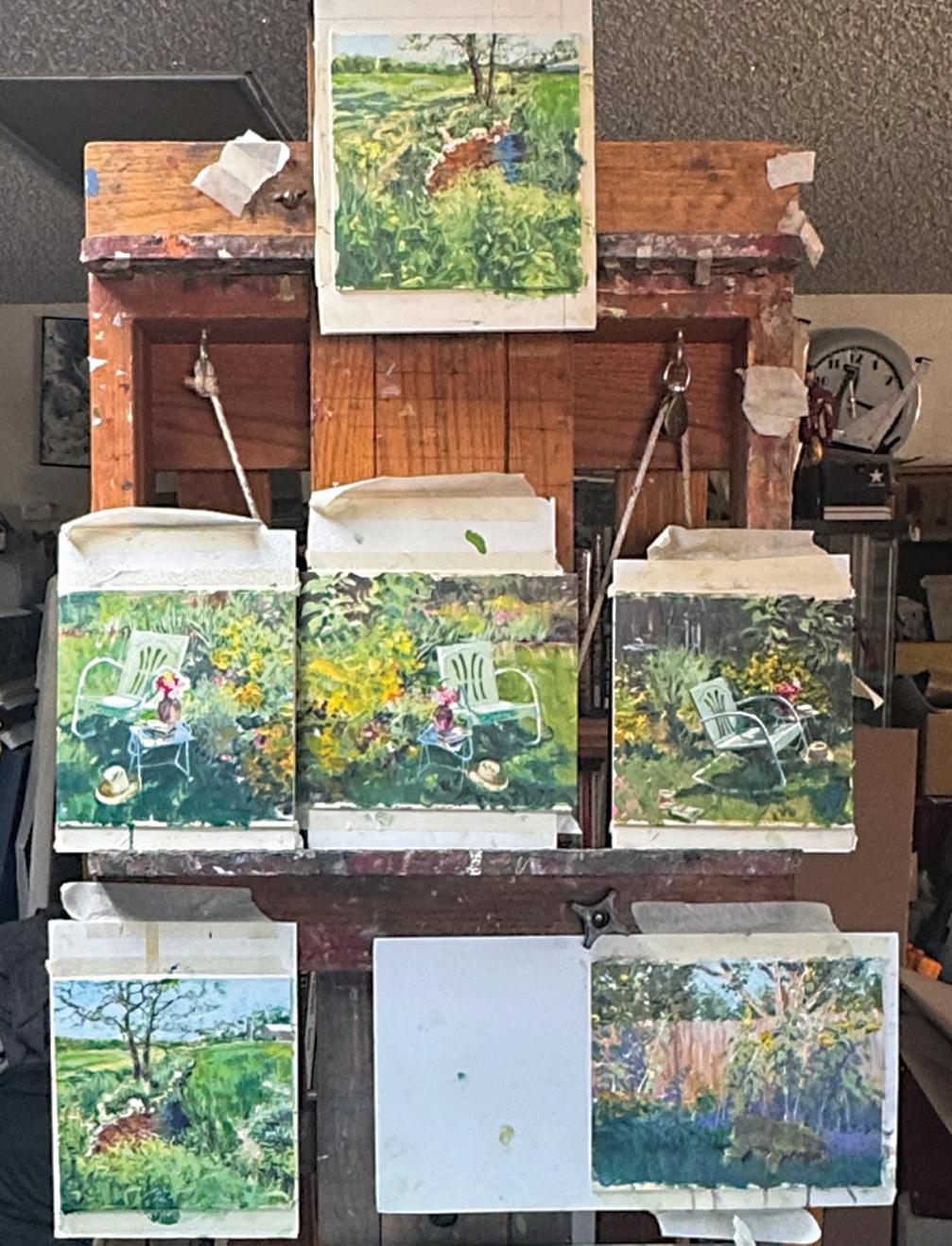




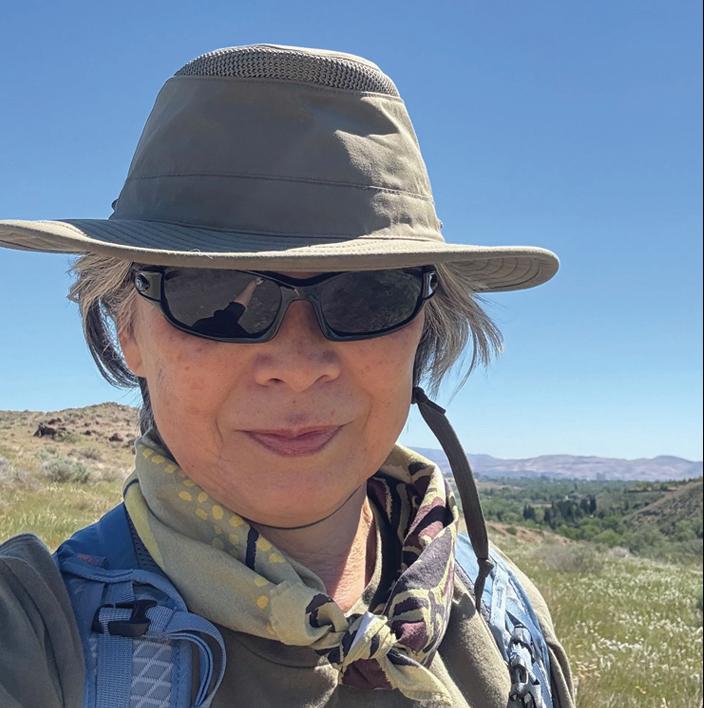
Ten years ago, when Tamami Tokutake bought a small wooden box of Russian-made Yarka pastels from a California art store that was going out of business, she wasn’t planning on becoming a pastelist.
“I thought I’d play with them when I retired,” she says with a laugh. “Now, I wish I had started sooner.”
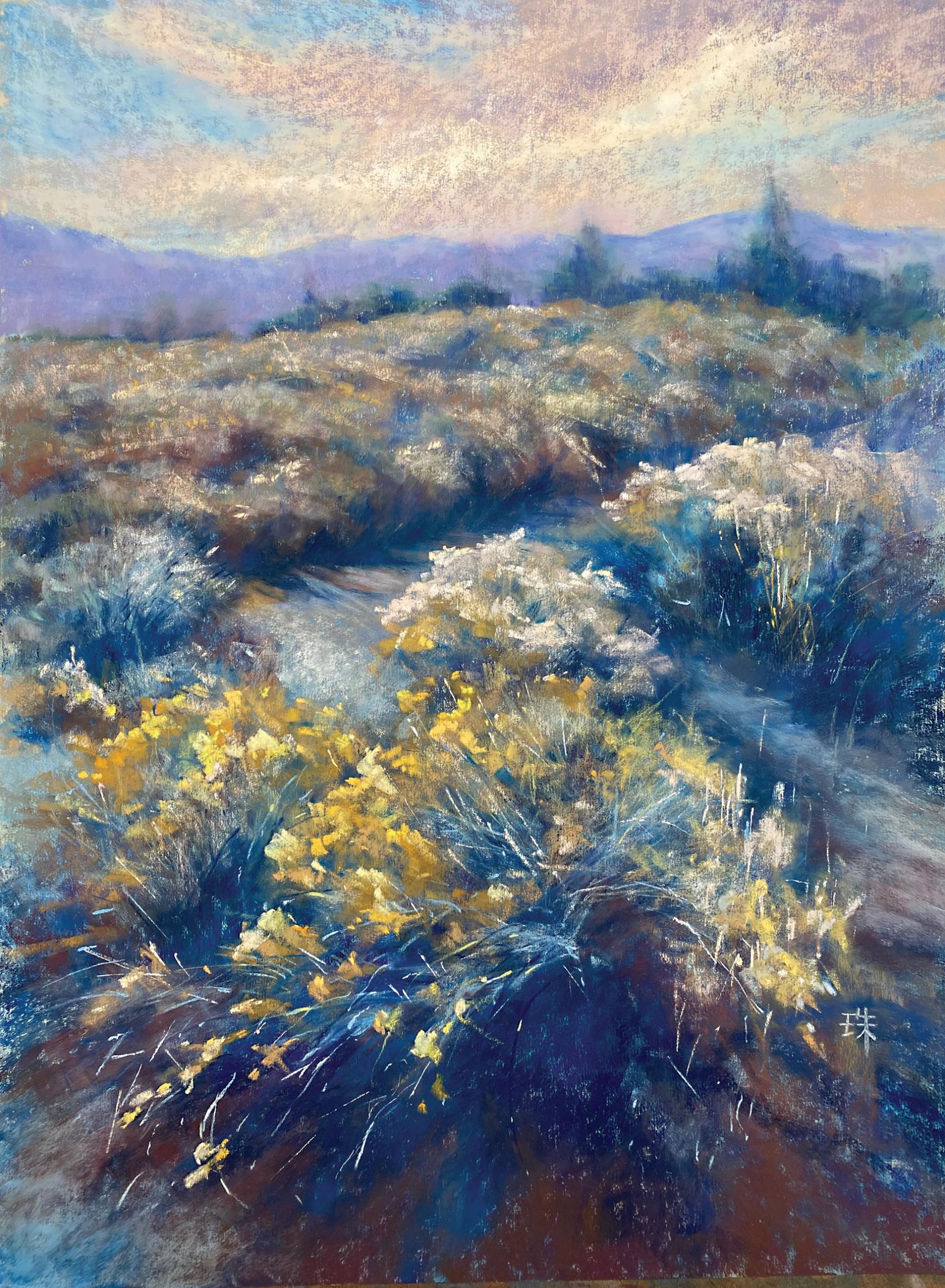
Today, from her home in Reno, Tamami paints the desert—not the bleached, barren landscape many imagine, but one full of subtle colors, textures and quiet drama.
“The high desert is incredibly beautiful to me,” she says. “It’s unforgiving and spicy. It captures my imagination.”
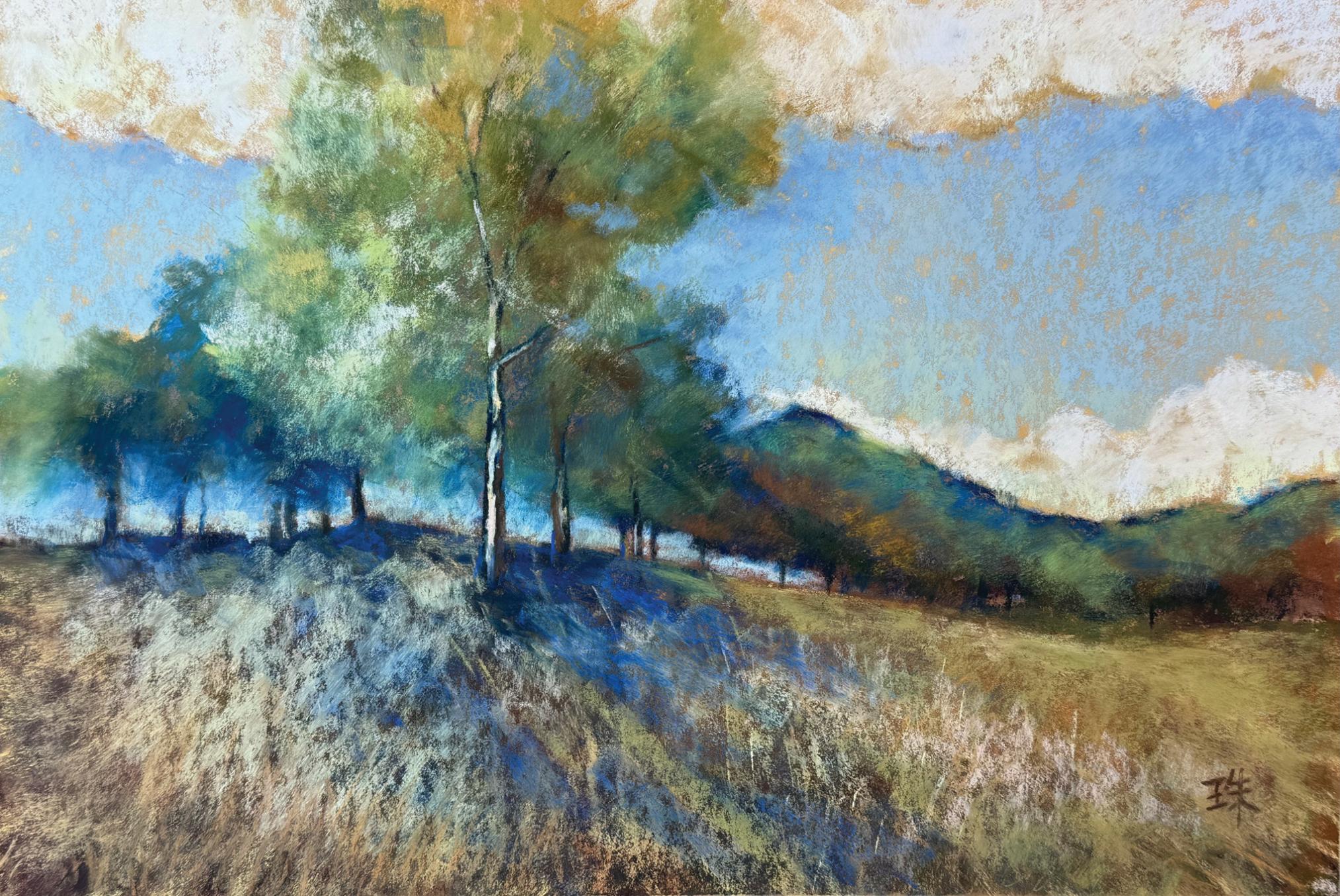

Before retirement, Tamami told me she was always creative, but she was busy with work, school, and raising a family.
She describes those years as “working really hard not to do art because I couldn’t fit it in.”
But about six years ago, something shifted. She started taking community college art classes and, then with COVID-19, art classes online. Pastel, she quickly discovered, matched her personality.
“There’s nothing else quite like it,” she explains. “It’s forgiving, immediate, and allows so much room for experimentation. I tell my artist friends —your medium has to match your personality, and for me, pastel is it.”
Texture plays a big role in her process. She experiments with sanded papers like UART 400, Canson Touch, sometimes even rare Wallis paper known for its grit.
Her underpaintings — created with layers of bold pastel color and alcohol — are “wild and colorful” foundations that bring depth to her final work.
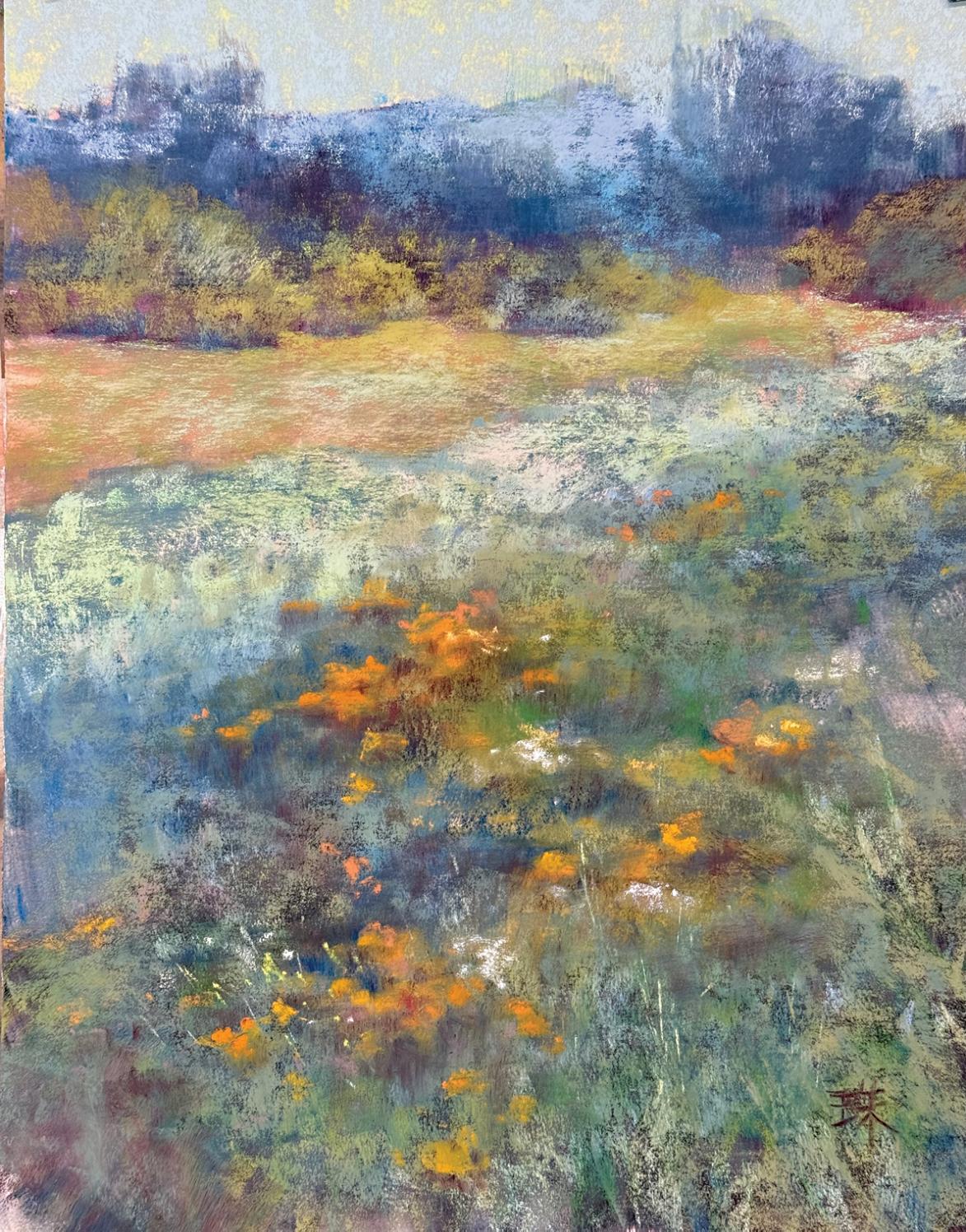

“I don’t aim for a good painting,” she says. “I aim for a good underpainting. If I get that right, everything else falls into place. If I did it well, I don’t have to eliminate the paper texture. I can use the paper to my advantage.”
Tamami’s compositions often feature paths and trails, a nod to her love of hiking.
“I'm a landscape painter, so I always look for a path (real or otherwise). I love hiking, so following a trail has a significance,” she says. She contrasts her current home in Reno with her former
one in Marin County, California—a place famous for its lush green hills and ocean views.
“It was beautiful, but I wasn’t captivated by it,” she admits. “When I moved here, I realized this is what I really wanted to paint. The landscape here feels alive.”
Tamami told me about one of her paintings, Lights on the Hill, which depicts an undeveloped lot in her neighborhood.
“It’s a place I walk past all the time,” she says. “You can see half of downtown Reno and the mountains beyond. I worry someone might buy the land and build on it, but I hope they don’t. It’s so beautiful—maybe only to me, but I feel an emotional attachment to it.”
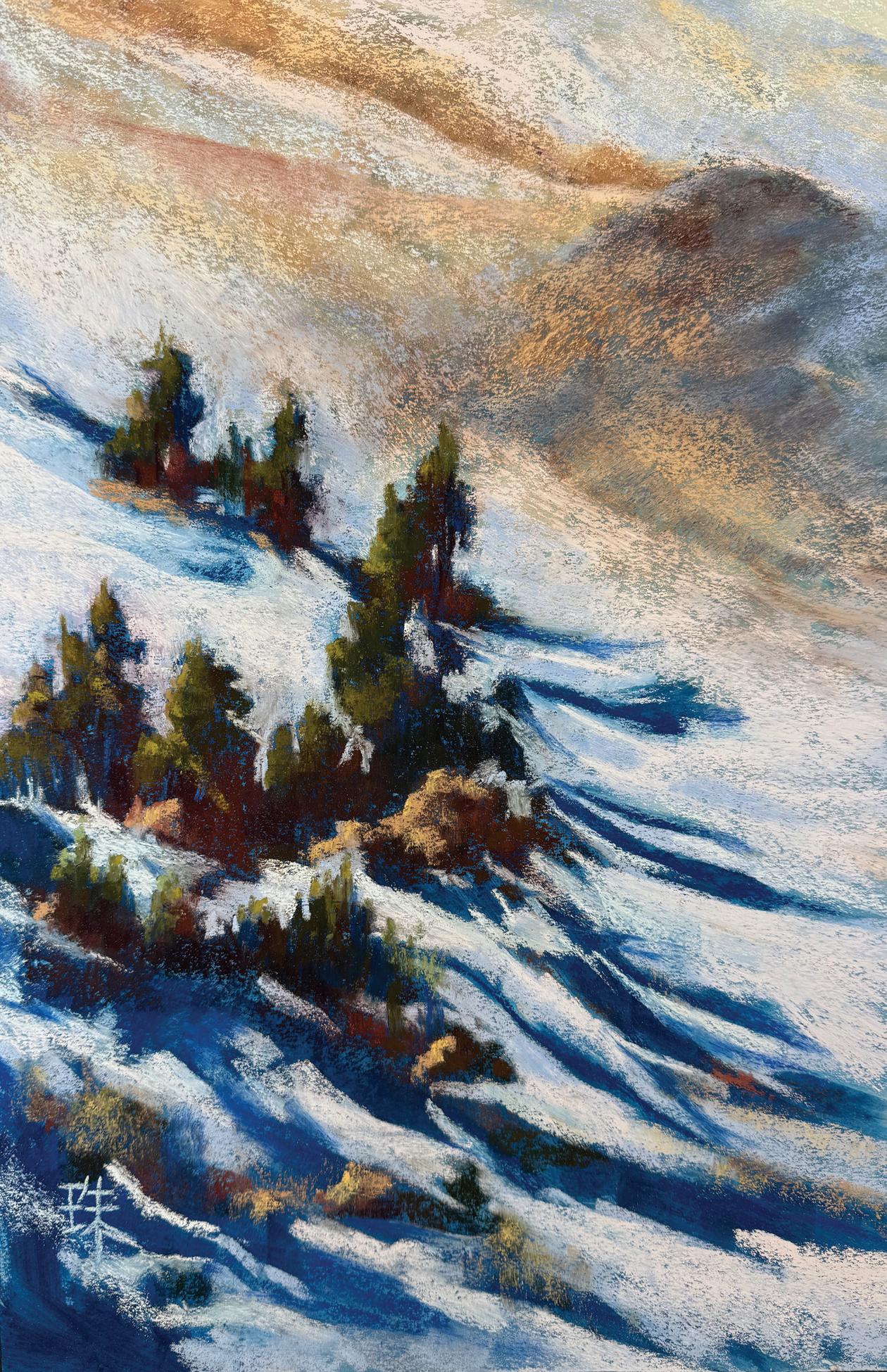

Though Tamami still describes herself as a developing artist, her work has a already touched others.
She recalls the first time someone teared up in front of her painting—a simple scene of a small stream. “That’s when I realized what I really want—to move people,” she says. “That’s the best feeling.”
Since then, her work has found a devoted audience in Reno, where locals recognize their home in her textured skies and sagebrush trails.
At Tamami’s first solo show, a woman thanked her for “painting our landscape so beautifully. You have captured what we love about our Reno.” She still remembers it as one of her proudest moments.
Once a rarity in her local art club—a pastel-only artist—Tamami has taken it upon herself to show artists the power of pastels. She’s given talks and hosted pastel shows, inspiring others to try the medium.
“It’s a wonderful art form—underrepresented and often misunderstood,” she says. “I want to create more opportunities to talk about it.”
For a self-described introvert, that’s a big step. But Tamami has learned that art can be its own form of confidence.
“I used to hesitate to call myself an artist,” she admits. “Now, I paint every day—sometimes in the studio, sometimes outdoors. Even when I’m hiking, I’m thinking about color, light, and texture. Everything is connected.”

by Marla Baggetta
Grab your wrist. Feel that pulse—drum, drum, drum. That’s you. That’s time. That’s change. To change is to be alive. You’re not the same person you were a year ago, a month ago, even a minute ago. Change is built into who you are. And as artists, we get the bonus round—we change as people and as makers.
When was the last time you changed your mind about what to paint? Or how to paint it? Or even why you paint at all? Did you hesitate because you were worried about what people might think? Afraid it wouldn’t fit
your “style” or “brand”? Maybe you told yourself, “I don’t paint flowers,” or the classic, “I’m a pastelist— I don’t do watercolor.”
Here’s the thing: being “on brand” often means being certain about what kind of painter you are. And certainty? That’s perfection’s best buddy. And perfection— let’s be real—just shuts the door on something far more interesting: possibility
That voice in my head that yammers on about who I am as an artist—I try like hell to ignore it. And, frankly, the people who think they know what I “should” paint or
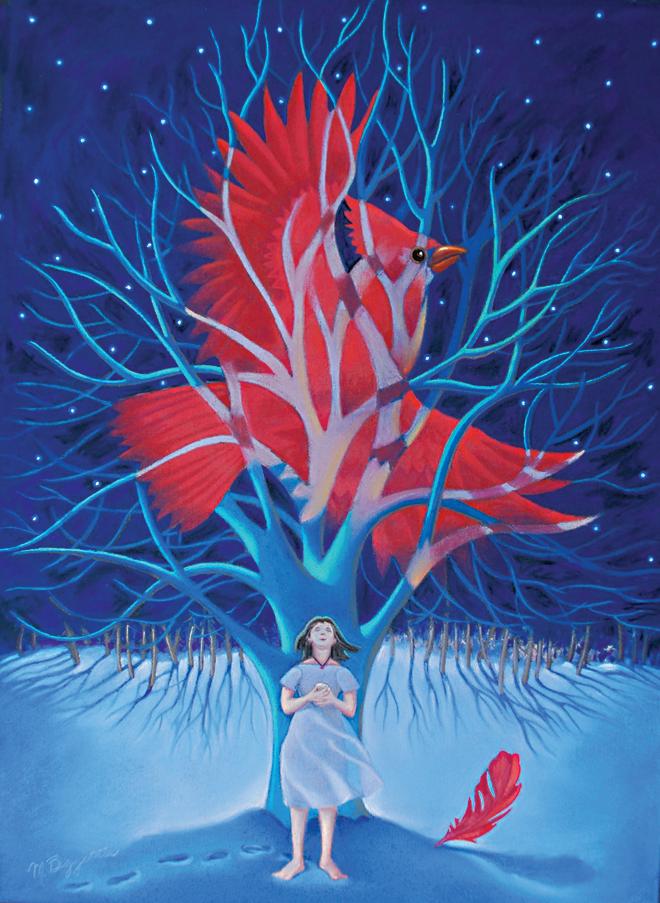
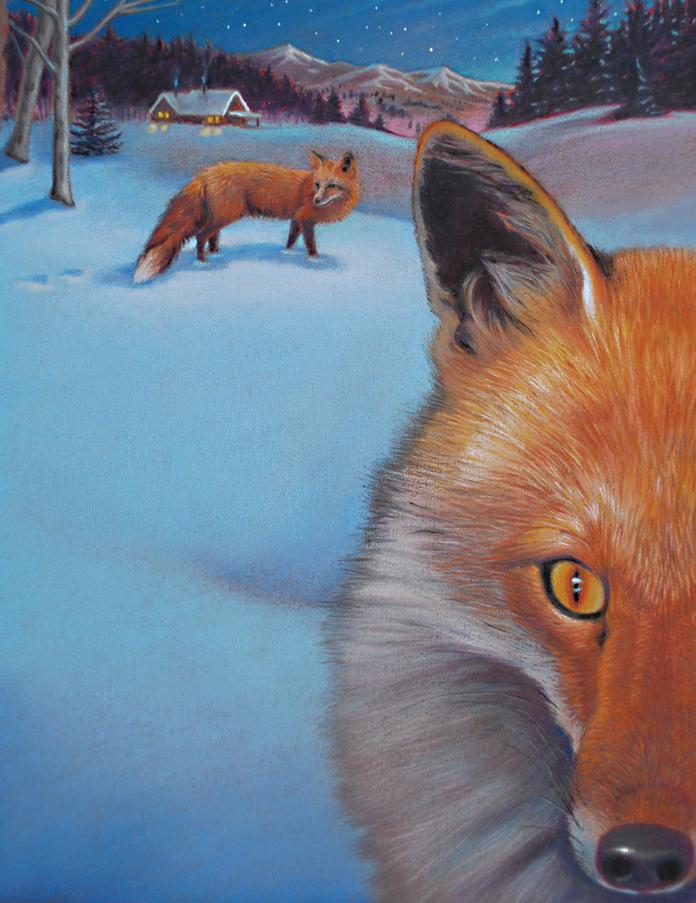
These illustrations were done many years ago and represent a love of narrative, storytelling and imaginative, stylized imagery.


how I “should” paint it? They care for maybe thirty seconds. Tops. That’s surprisingly freeing, when you think about it.
So I give myself permission to change things up. To play. To explore. To try weird underpaintings, even try to make bad paintings, try new papers, bigger canvases, smaller ones, mixed media experiments—whatever.
And here’s what’s interesting: it’s often the change you didn’t plan for that opens the biggest doors. A happy accident, a new tool you only tried because a friend shoved it in your hands, a crazy color choice you’d normally avoid—suddenly the painting has a pulse again.
But here’s my one piece of advice: stick with a new direction long enough to actually see where it goes. Don’t bail after one try. The first time I painted on sanded paper, I hated it. I stashed it in a drawer. Months later I gave it another shot, and now I can’t imagine painting without it.
Sometimes you need to wander a bit before you find the good stuff. It’s like visiting a new city alone—at first you might think, “Why does anyone like this place?” Then someone shows you the best spots, and suddenly you can’t wait to come back.

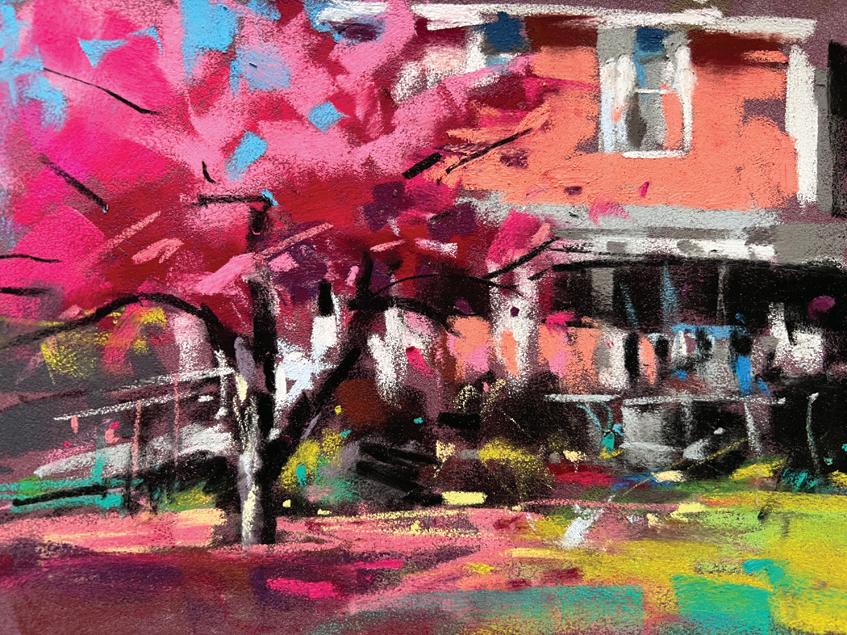

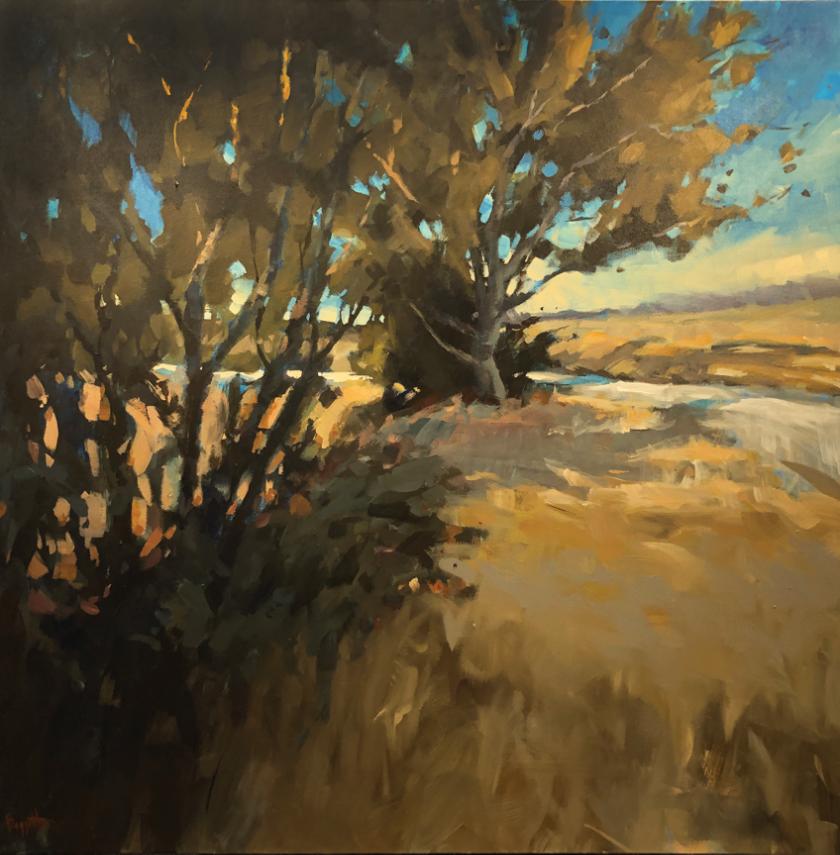

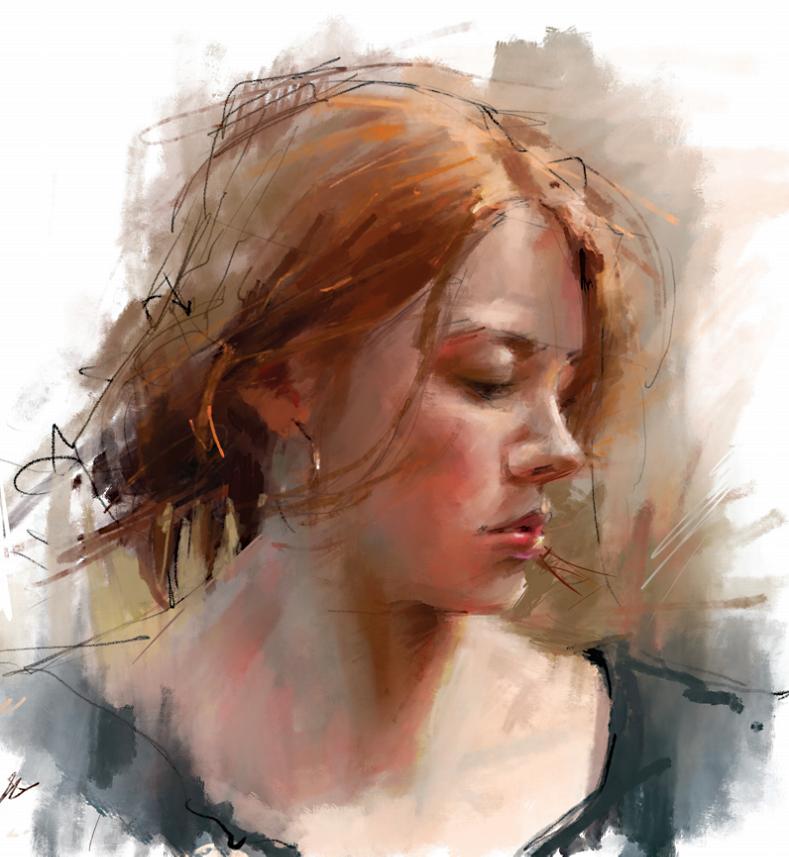

And don’t forget about beginner’s luck. It’s real. When you try something new, you start with low expectations and a wide-open sense of curiosity. That’s a sweet spot. It keeps you out of the clutches of certainty and perfectionism. It keeps you alive as an artist.
Because here’s the deal: the moment you stop changing, you stop growing. The work starts feeling stale. You start feeling stale. And art made from that place? That also shows up every time. Work done with excitement, energy and enthusiasm outdoes, cautious, predictable and labored work every time.
Change is what keeps the pulse in your paintings. It’s what keeps the whole thing alive—messy, unpredictable, exciting. It doesn’t have to be a revolution every time you pick up a pastel. Sometimes it’s just trying a new color, a new subject, or a new way of seeing. Each shift, big or small, cracks the door open to possibility. And possibility—that’s where the magic sneaks in. It’s where you rediscover why you fell in love with painting in the first place: because it makes you feel alive.
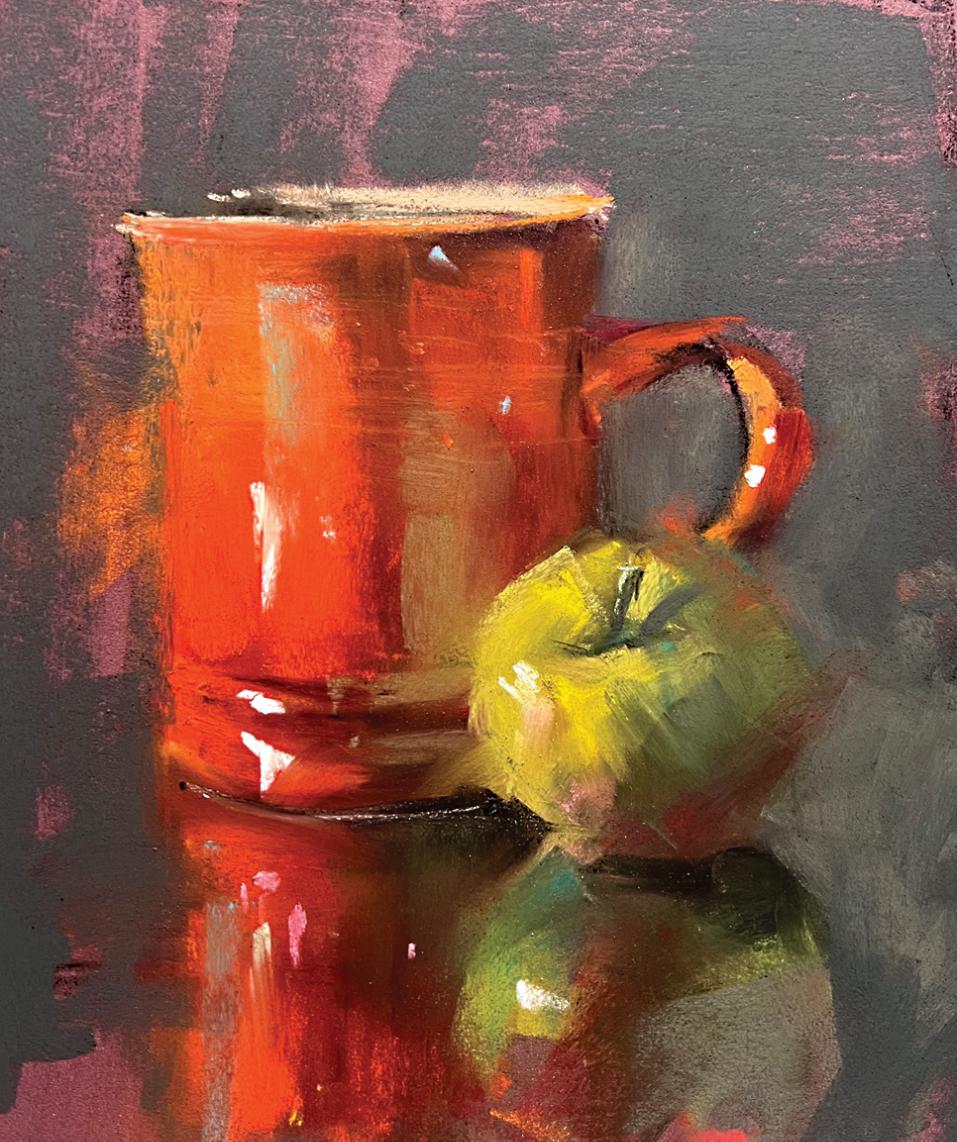

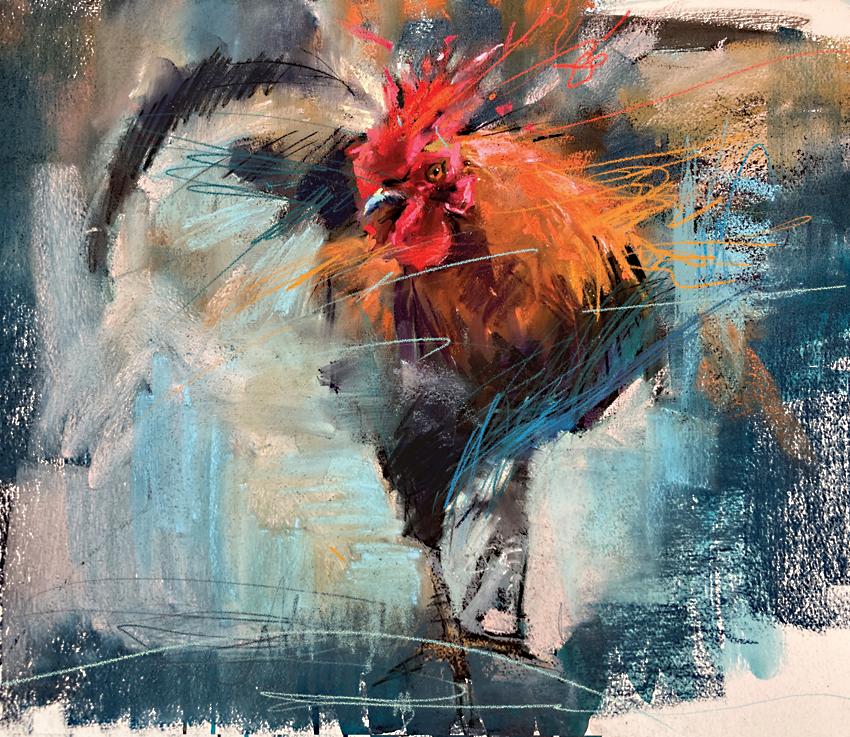
I jump around in terms of subject matter and technique.
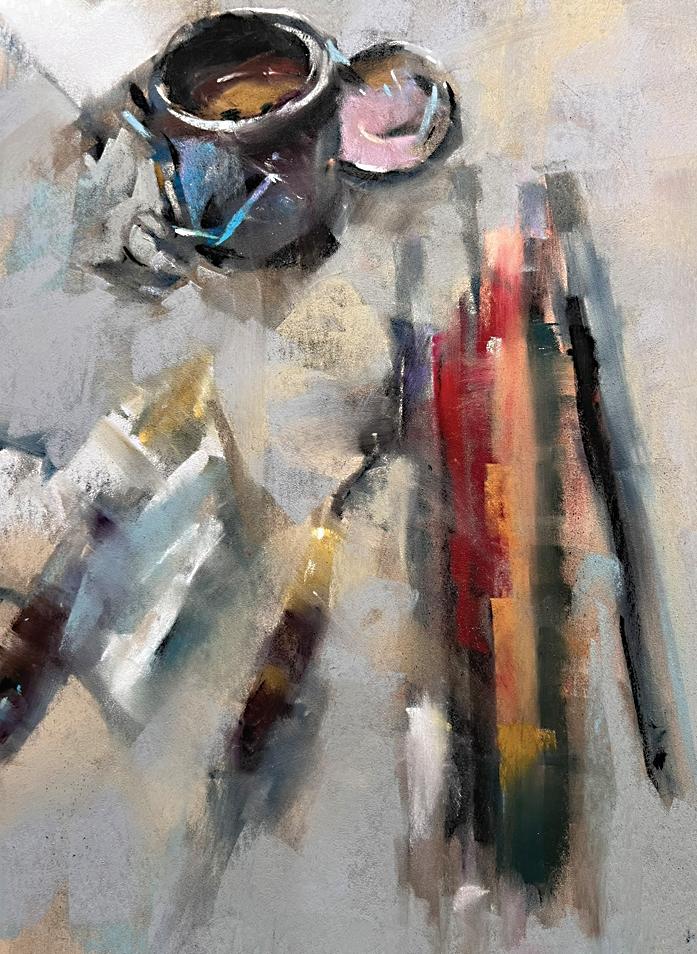


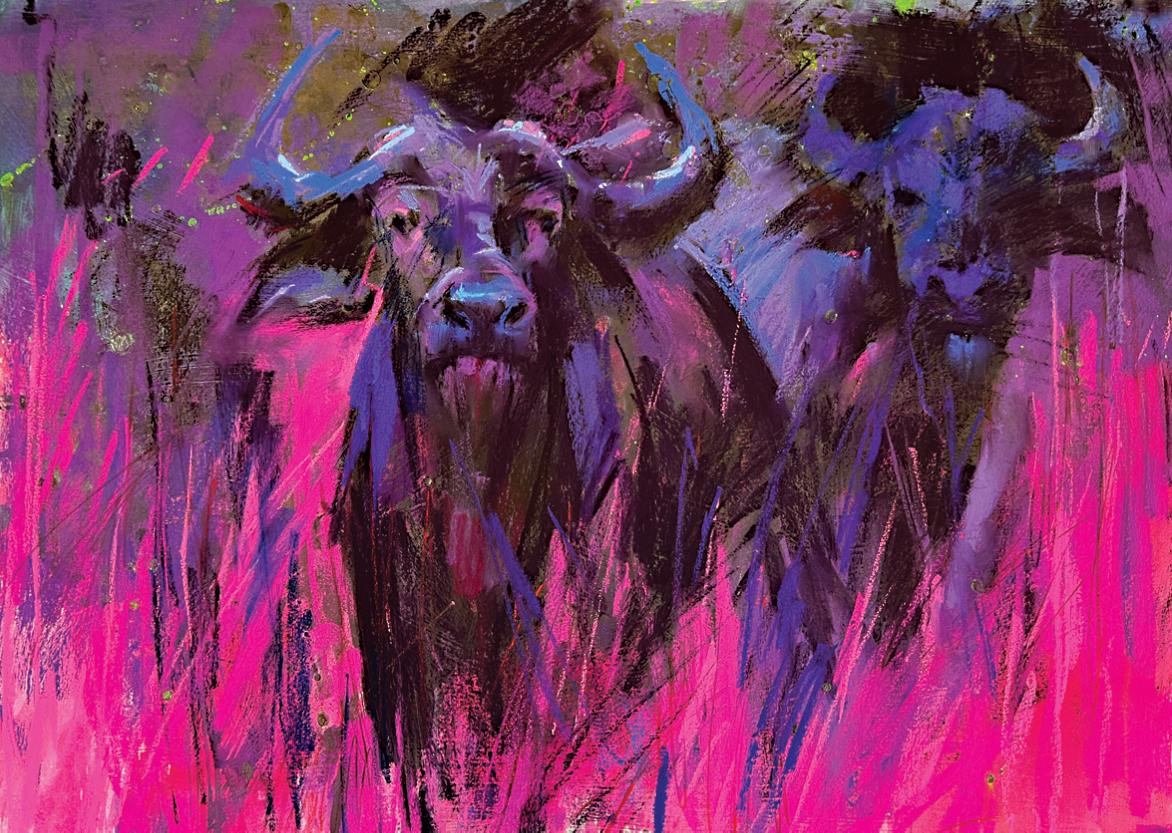
by Marla Baggetta
1. Mix mediums: Try watercolor or charcoal or even oils alongside your pastels for mixed-media rule breaking.
2. Go bigger—or smaller. Change the scale: Huge or tiny surfaces force you to think differently and break patterns of mark-making.
3. Try “weird” colors: Use hues you’d normally avoid. It might not be so strange after all.
4. Limit your palette: Work with just five sticks. Constraints often spark creativity.
5. Change your surface: Try print-making paper, watercolor paper, or even canvas.
6. Set a timer: Paint for only 15 minutes. No fussing, no overthinking.
7. Work slow: Spend a whole day on one piece if you usually crank them out quickly.
8. Add some tools: Use a palette knife, combs, brushes or graphite pencils for texture.
9. Start abstract: Lay down bold marks before you even think about “painting a something.”
10. Copy a master: Stand on the shoulders of the giants and see what you can learn!
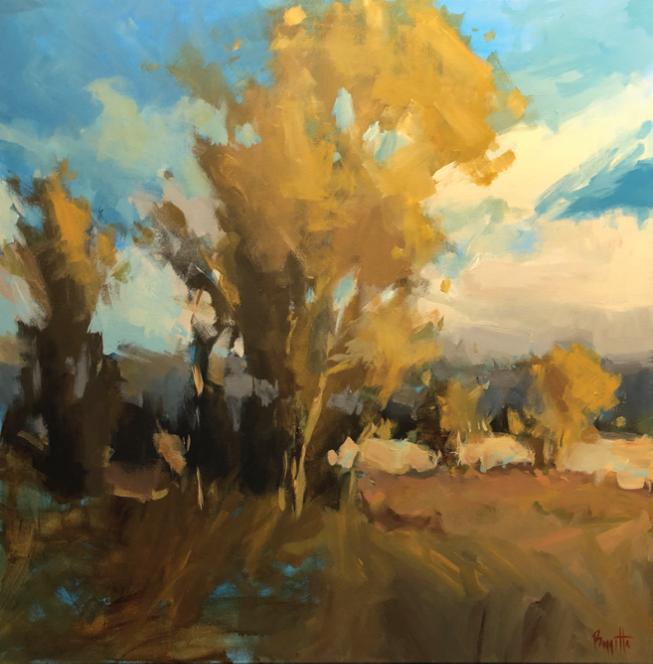

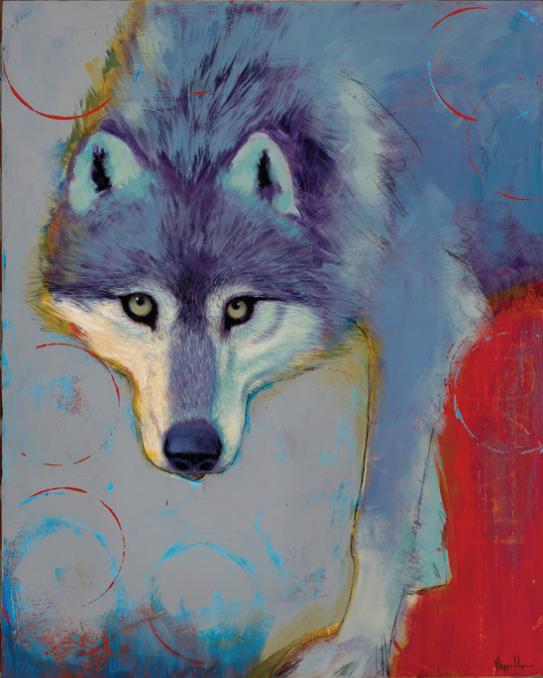


by Pam Comfort
This was a year full of learning opportunities, as PSWC sponsored six workshops during 2025 with top teaching artists!
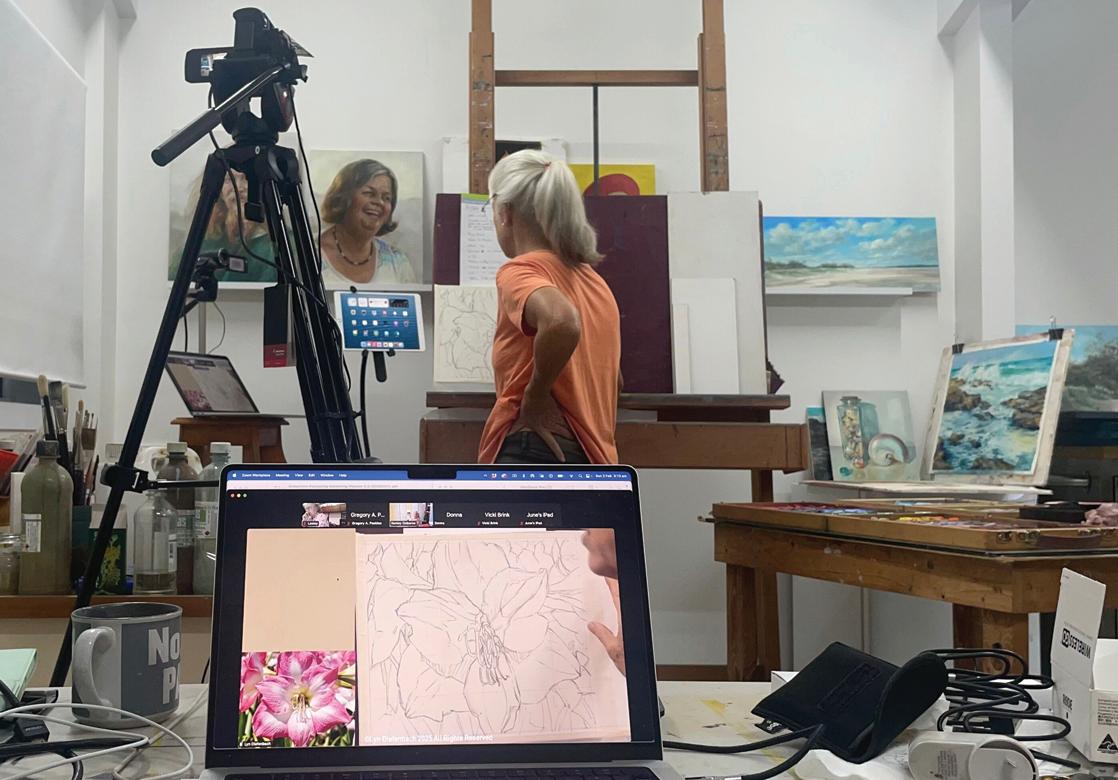

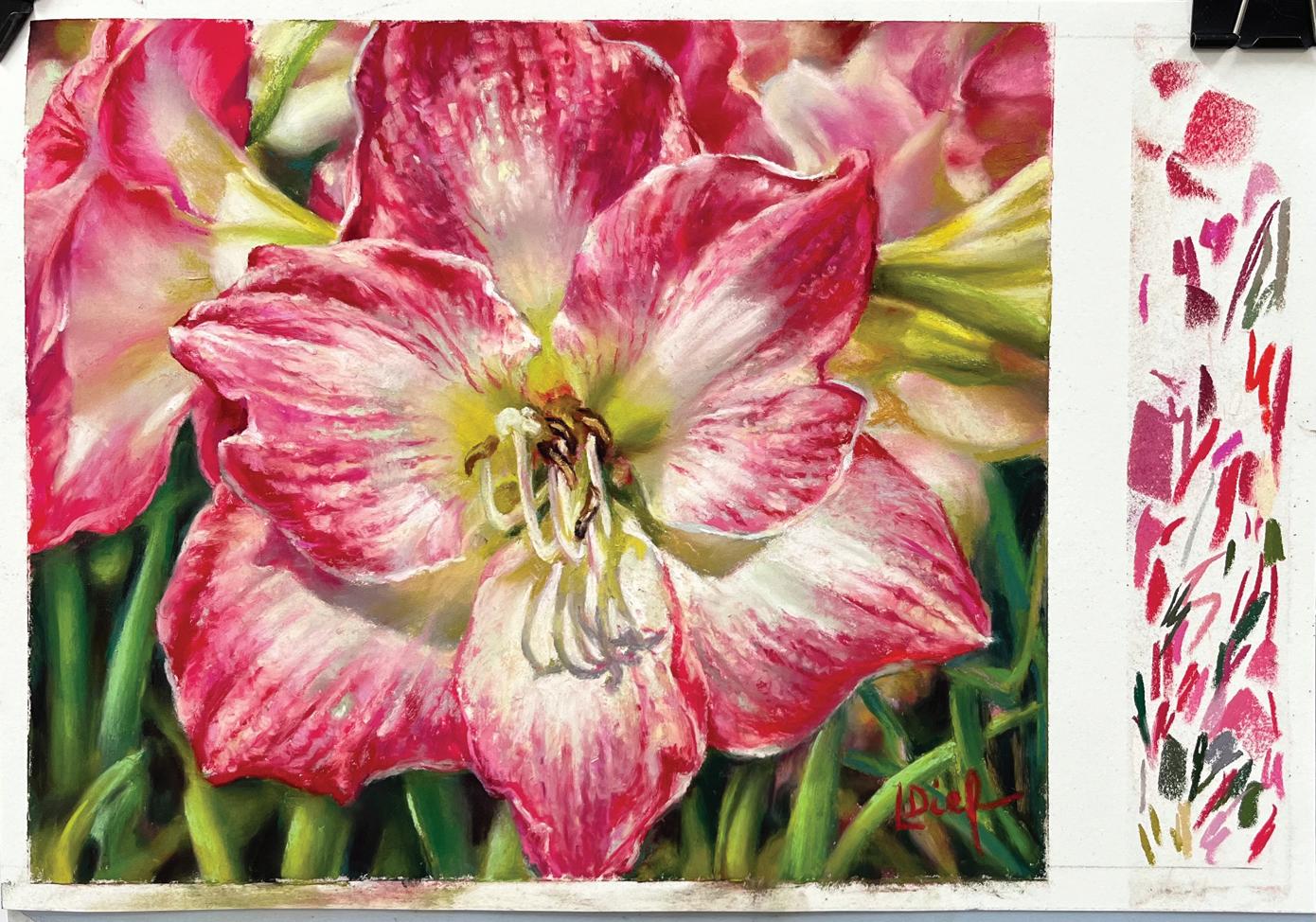
In February, Lyn Diefenbach presented a two-day, online “virtual” workshop: The WOW Factor: Florals in Pastel. Students learned about her art philosophy and approach to handling various aspects of florals.

In conjunction with our Out of Bounds! exhibition in Morro Bay, our judge Tony Allain presented a three-day workshop on the topic of Breaking Free: Mood and Atmosphere. Participants were treated to lessons on the Tony-style method of creating looser and more painterly works, with juicy color.
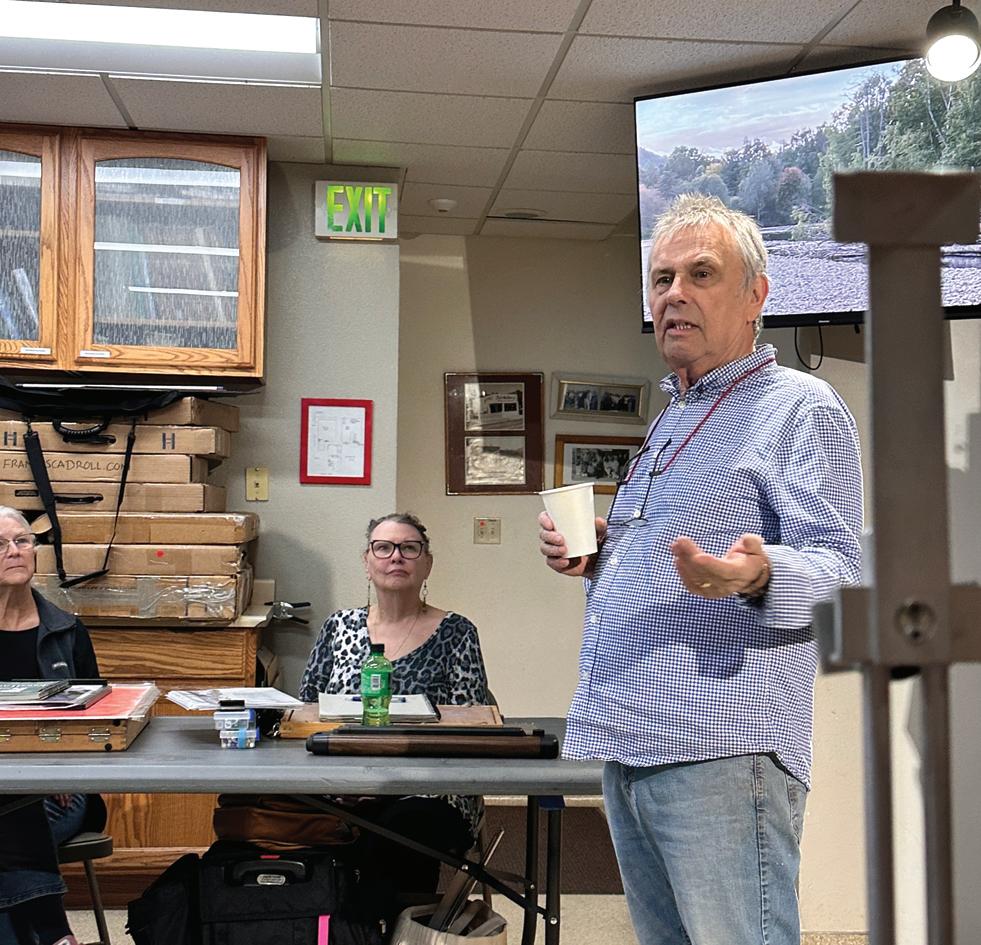

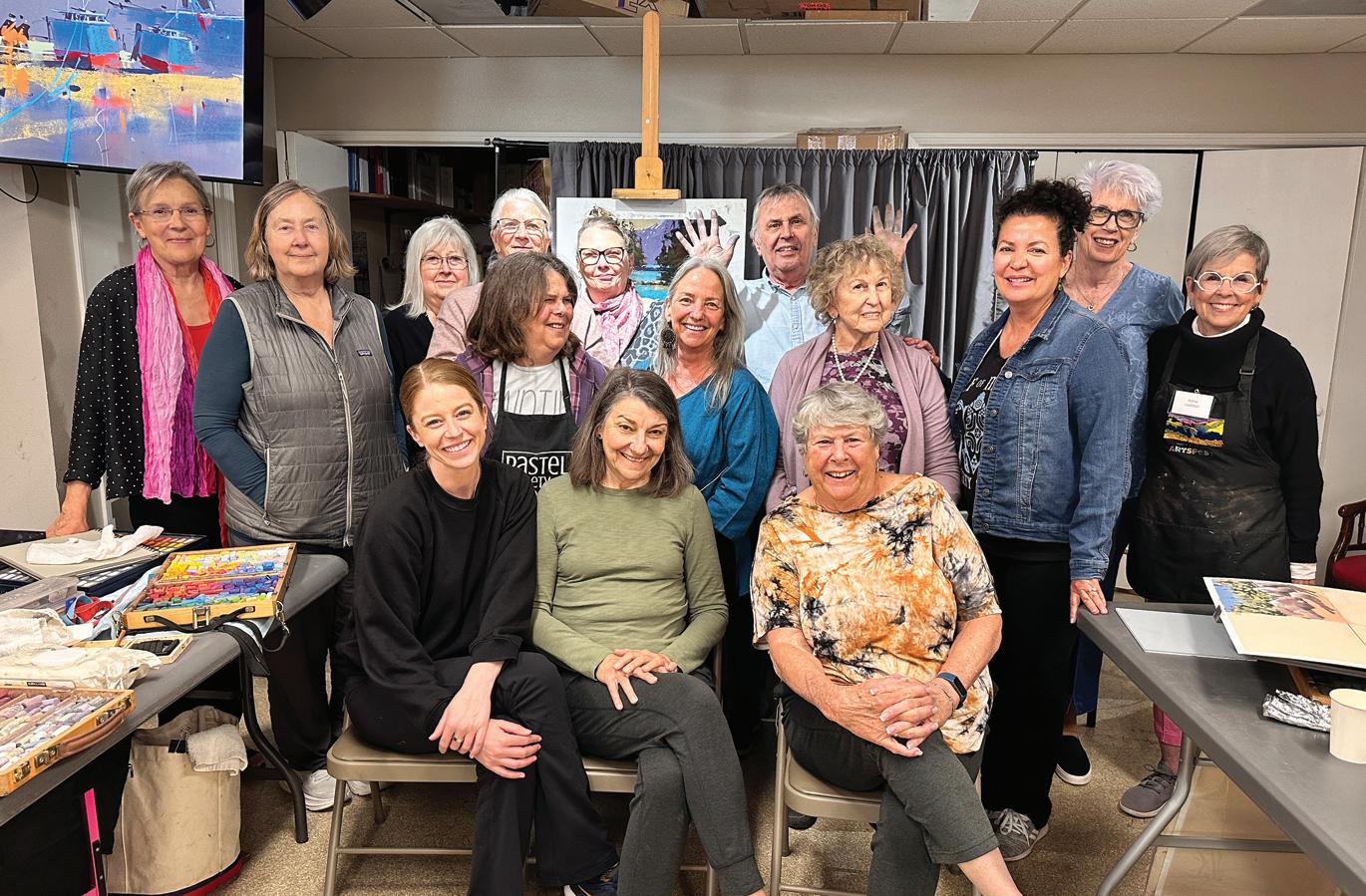

workshop participants.
Clark Mitchell hosted a three-day workshop in his straw bale studio and on the lovely grounds of his wine country home. His Take Your Pastels Outdoors workshop focused on how to make quick decisions in order to capture light and color, despite changing conditions.
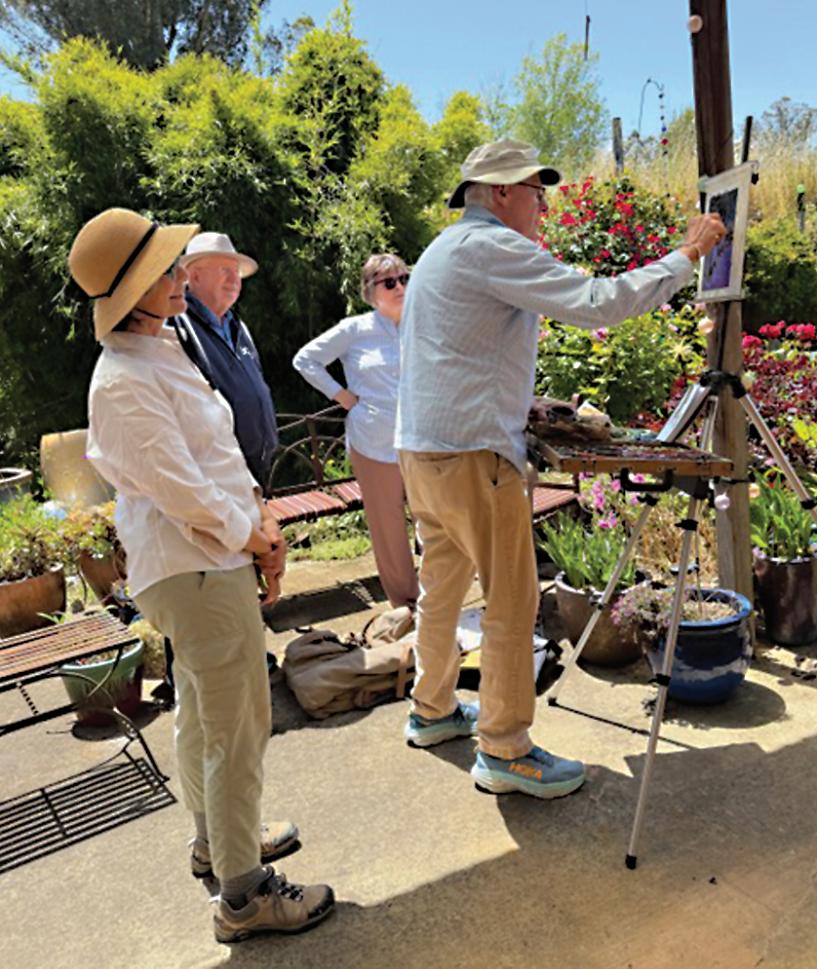

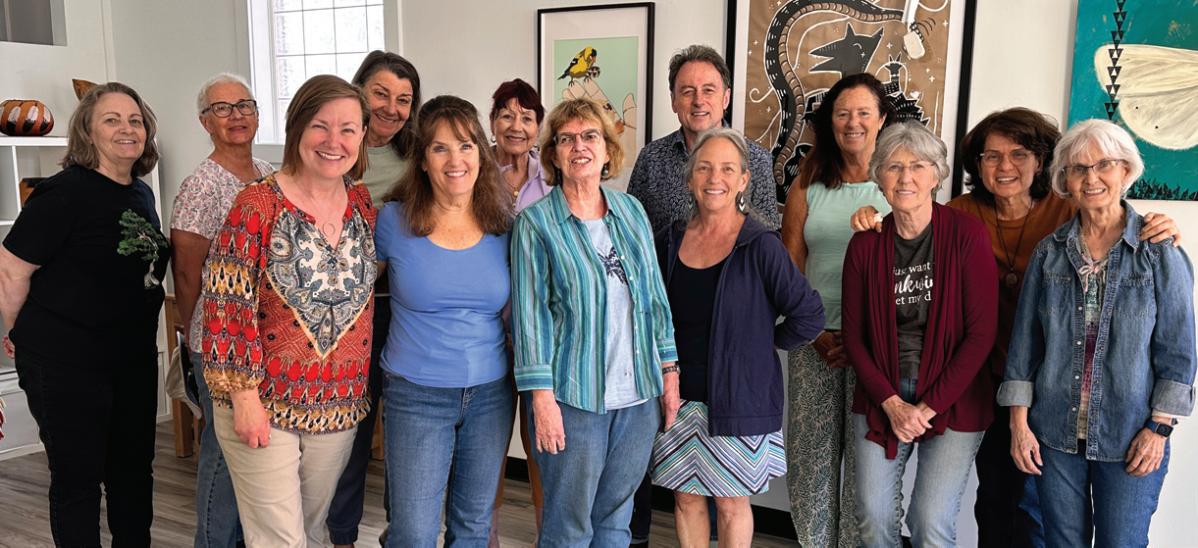

PSWC was originally “born” in the California Sierra foothills and it’s been a long time since we have had a workshop in the area. It was very exciting to have Desmond O’Hagan come to Placerville to present his three-day workshop Capturing Light: Interpreting Values and Shapes in late May. Workshop participants found themselves taking risks in order to practice Desmond’s technique for conveying energy. During breaks, there was time to explore Placerville’s charming Main Street.
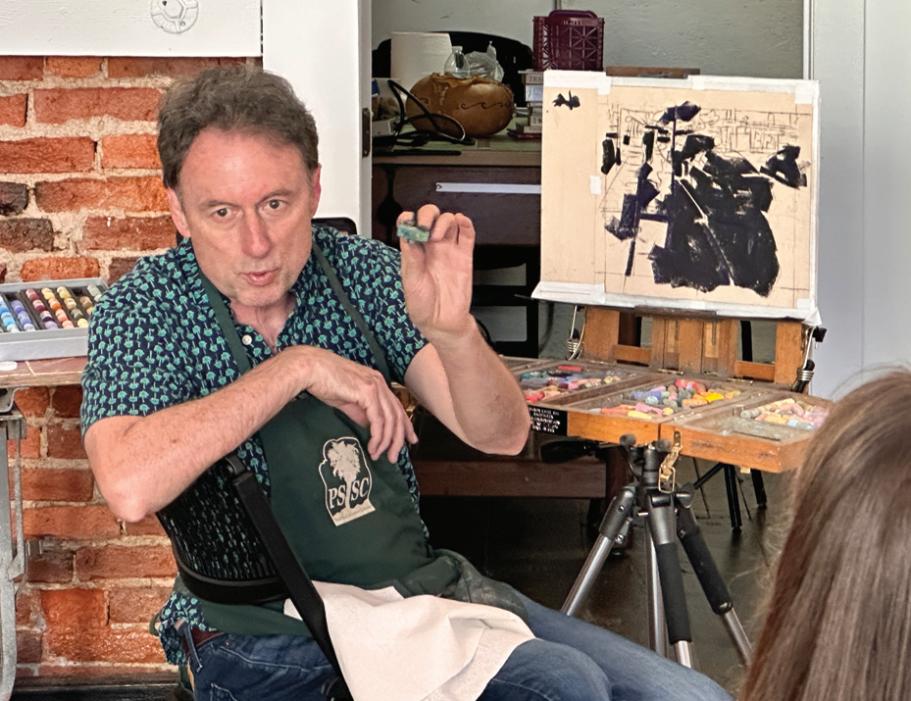

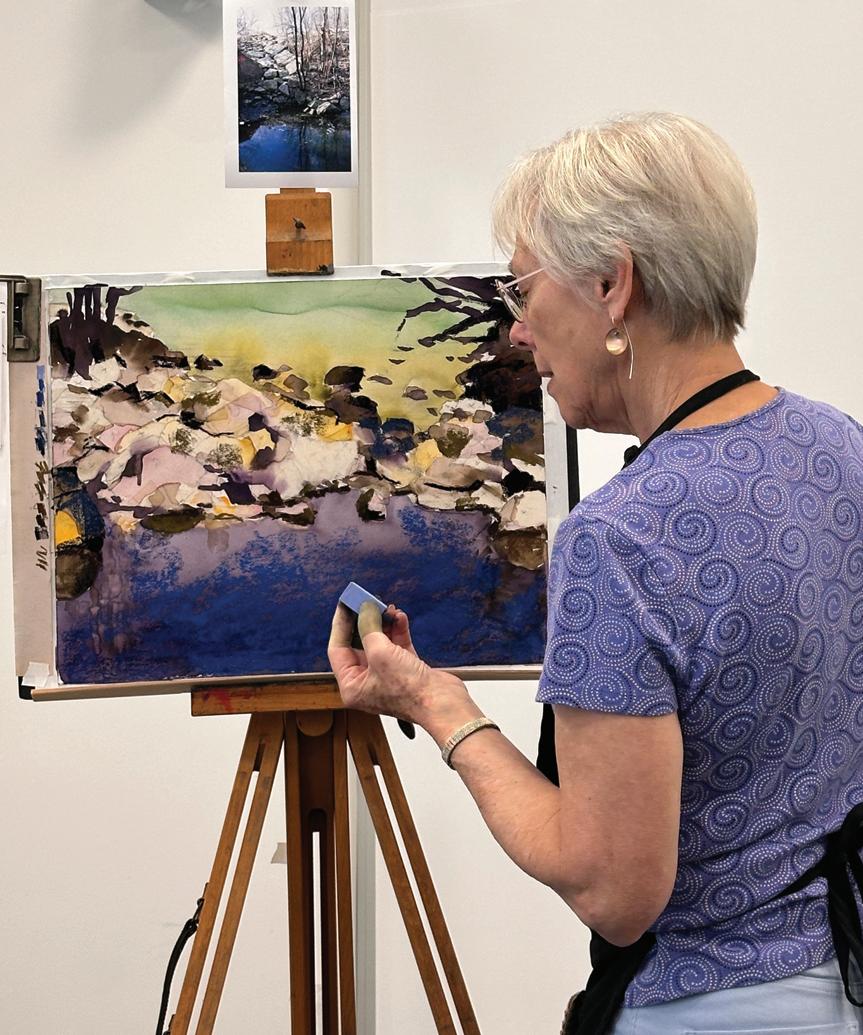

Students in Colette Odya Smith’s three-day workshop in Orange, California, Composition is the Key: Abstract Realism in Contemporary Landscape were treated to learning about the process she uses to create her stunning works, and received one-on-one guidance in order to practice new techniques and focus on personal artistic development. In addition, participants were able to enjoy the beautiful Pastels USA: 99 Voices exhibition at the Hilbert Museum of California Art, where the workshop was held.
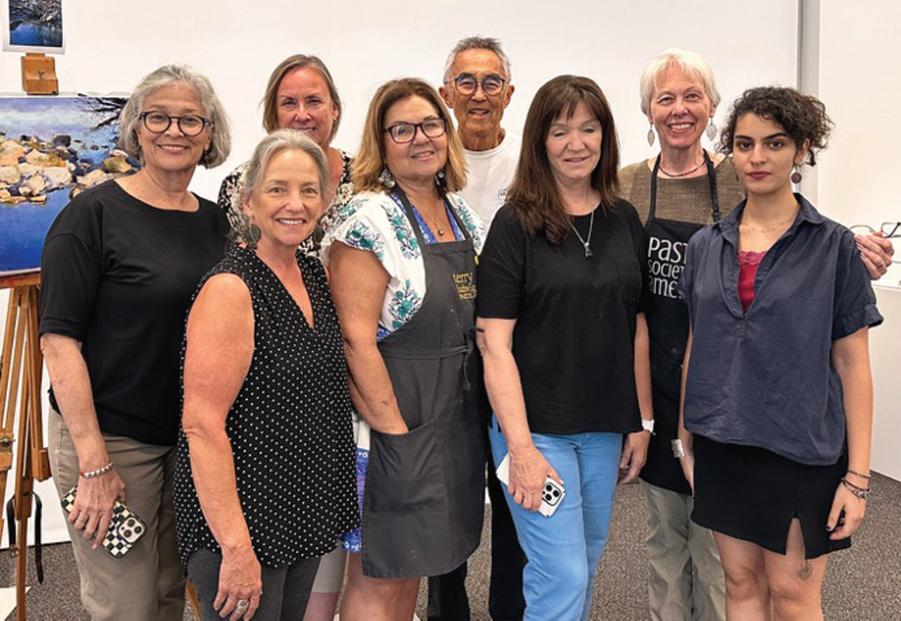

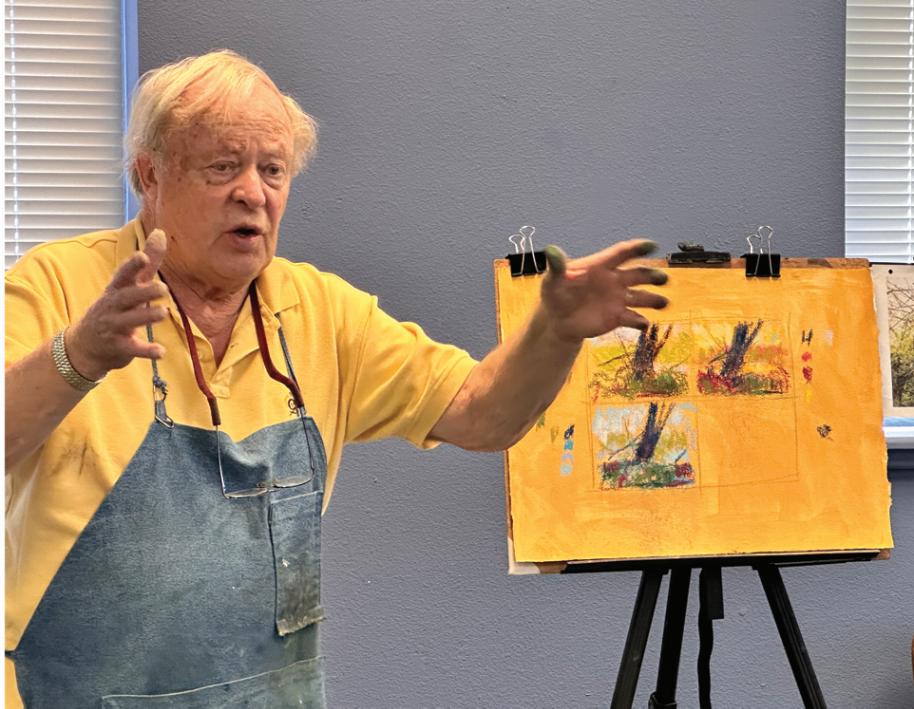
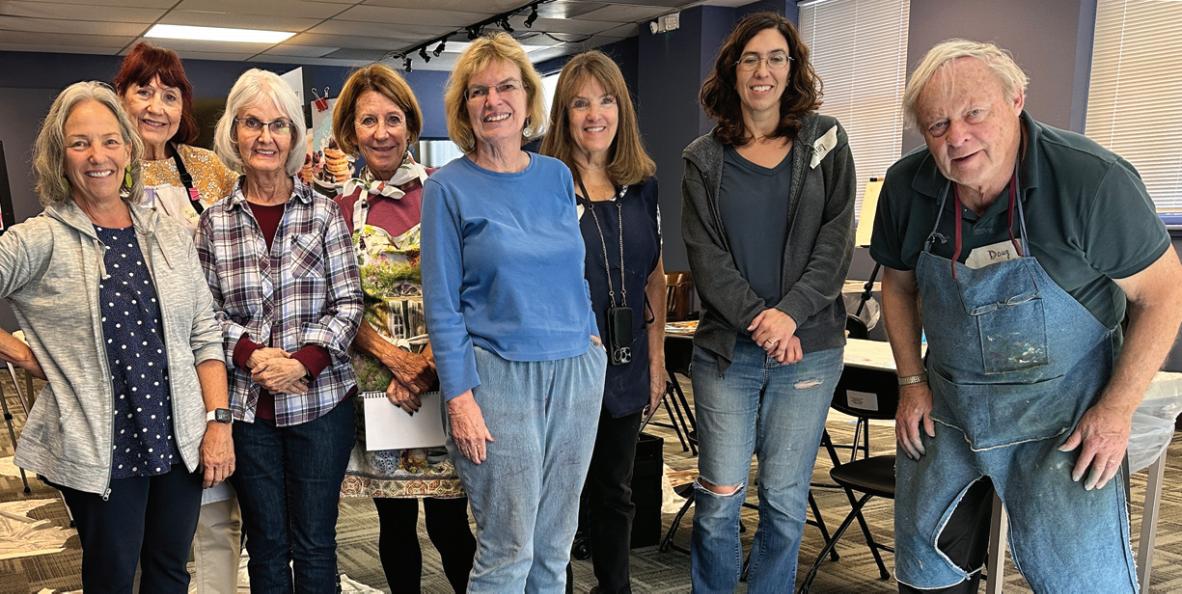
The legendary artist Doug Dawson and his lovely wife Sue (who accompanies him) flew from their home in Colorado to present Doug’s three-day In Studio Landscape Workshop, in Placerville in mid-October. The workshop was so packed full of content that participants kept saying things like, “I learned more just this morning, than I’ve learned in the whole… (insert a previous workshop, class, course, etc.).” When they weren’t painting, everywhere one looked, there were open notebooks and notes being furiously taken to capture all of the great tips Doug was sharing.
Doug’s workshop participants.
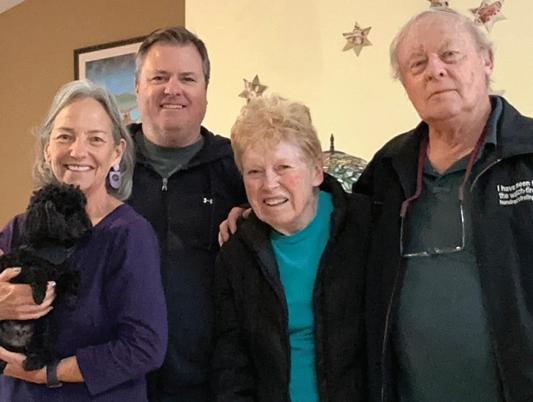


We already have Laura Pollak, Kim Lordier and Dawn Emerson on the calendar for 2026, and are in the process of developing additional workshops for the coming year, so keep an eye on the PSWC website for updates.
by Loriann Signori
Loriann Signori’s work cannot be described without referring to “significant transformations” and “explorations.” Here she describes four ways that we can avoid or extract ourselves from patterns that may be limiting our own growth as artists. She encourages us to: observe, question, release ourselves from expectations, and experiment.
Iwas asked to write about "taking risks, pursuing new opportunities, and embracing change.” It’s my absolute favorite subject, so I apologize: this will be a very biased article. The answer, to me, is simple. Observation is the key to freedom. It’s as simple as noticing what you notice.
Nature is a treasure box of wonder. If you really look, you will discover the new, over and over again. Most of my paintings are inspired by the lands and waters with a 5-mile radius of my house and studio… and now, my dining room. The mystery is always there. Observe.
I am not saying that you have to become a plein air painter. I am saying you need to understand what color does in the air, whether that is outdoors or inside. I do that by constantly creating small information gatherings, not paintings, in my playbook. They are attached to a sketchbook, which allows me freedom; they are just for me, not for sale.
Creating a “painting” aims you towards a product. Gathering is about wondering. Gathering is about questions, not answers.
On that subject, painting from a photograph is a linear process. You start with an image, and you aim towards reproducing the image. I ask you, is that art?
Observe, wonder, question, draw, and write about what you see…
Again, my biased opinion, that is convention. Invention is art and that is about looking, wondering, exploring and constantly making mistakes. Of course, it helps to have a firm understanding of the main tools: design, color, and value.The next key to freedom is to release yourself from the need to make “a product.” If you care too much how your painting will turn out it probably will never surprise you. I prefer to quiet myself into not knowing and hopefully discover something I didn’t grasp previously. Embrace mistake-making. It is through allowing yourself the liberation to simply create and make tons of mistakes that you can delve into the unknown.
Honeyed Heaviness started with a spark from my playbook, which is a sketchbook, that is bound, therefore not allowing me to remove the pieces in order to sell. They are for ME alone.
My favorite ways to turn on your brain heart combo.
#1 #2 #3 #4
Write your observations each morning.
Be in touch with why you paint. Feeling.
Use your sketchbook— playbook.
Experiment with aesthetics that allow deeper movement.
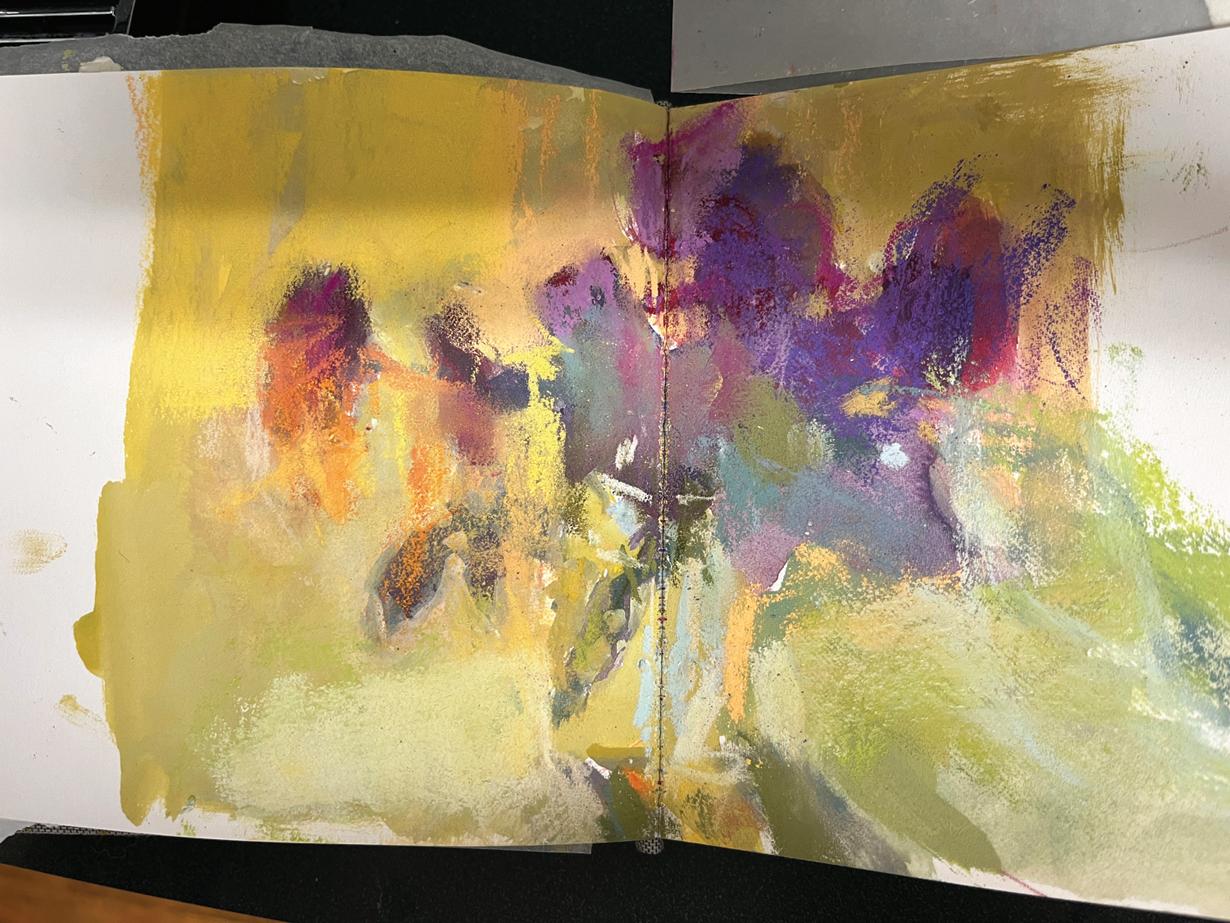


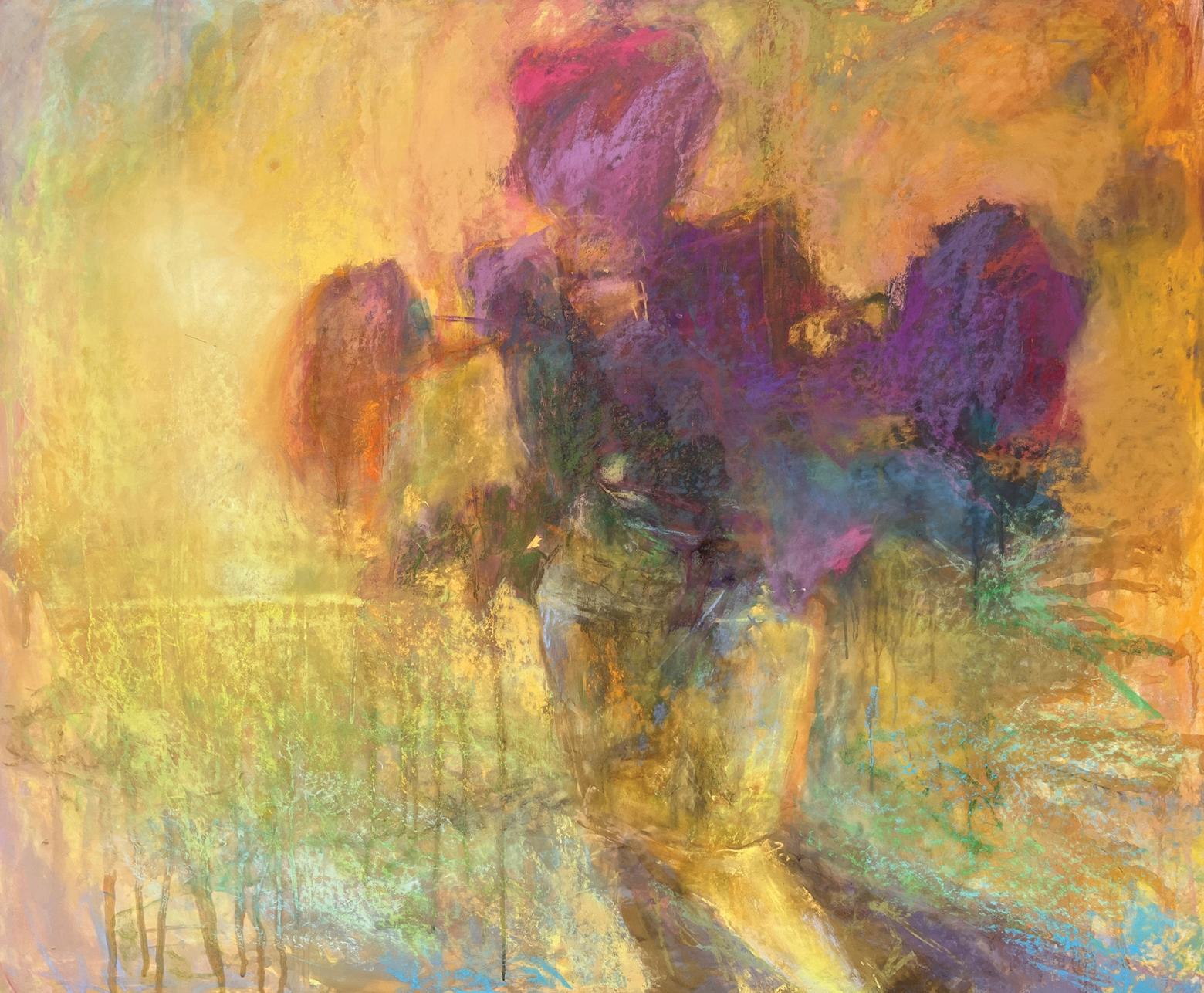
About three years ago, I observed that when painting my landscapes I began to “know” too much. I observed that certain techniques and patterns kept arising. I saw that predictability was happening. Predictably is the destroyer of freedom. To counter this I needed to lose any form of routine and instead wonder “what might happen if….?” You must be willing to make sacrifices. Thus, my investigation into florals began. Now as I study pictorial space and its extended possibilities, what is foreground and background are intertwined. I believe that nothing can be more abstract, more unreal than what we actually see.
In a nutshell:
Observe, wonder, question, draw, and write about what you see; study the masters; release yourself from expectations. And last, how little can you use the photograph?

Ipaint constantly. Long ago, for ten years, I dedicated myself to painting a small painting every single day. 3650+ paintings. Most were plein air. Still, I am not a plein air painter. My goal was simply to build an encyclopedia of light in my head.
I imagine, I dream, I walk, I observe, I write. This all adds to simply being attentive and noticing. This is probably the best advice I can give anyone. Keep in mind, I really know nothing, but I am present and unafraid. I consider myself an explorer, always trying to understand the unknown.
“The painting is but a fragment of reality.”
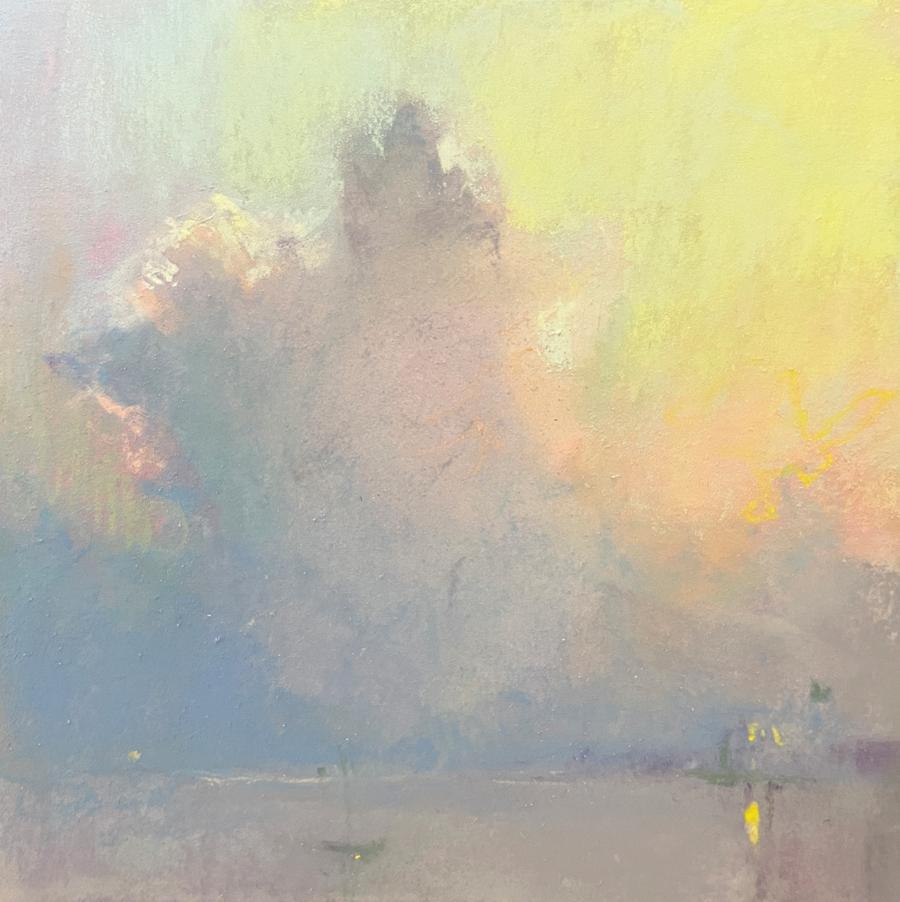

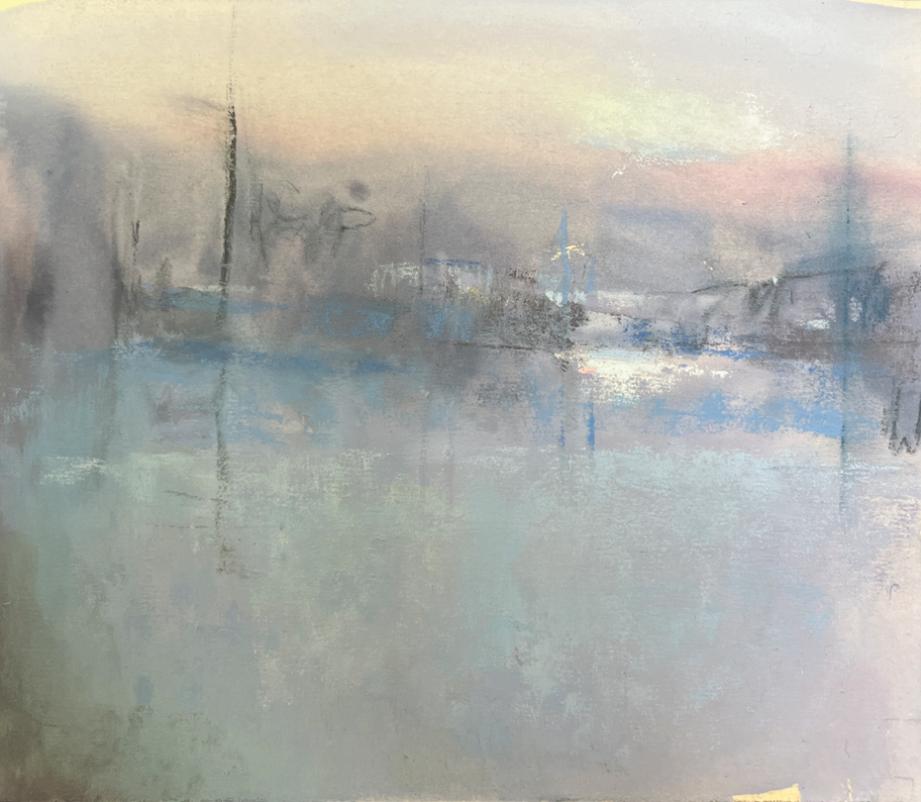

Most of my paintings are inspired by the loveliness that surrounds me each day. Intimate Serene Order began when I looked out my doors to gaze upon the light in the yard and out to the studio in back.
I did a number of studies from memory, I share two. I decided I wanted to intertwine the space—foreground and background. Yet I still wanted the space to read.

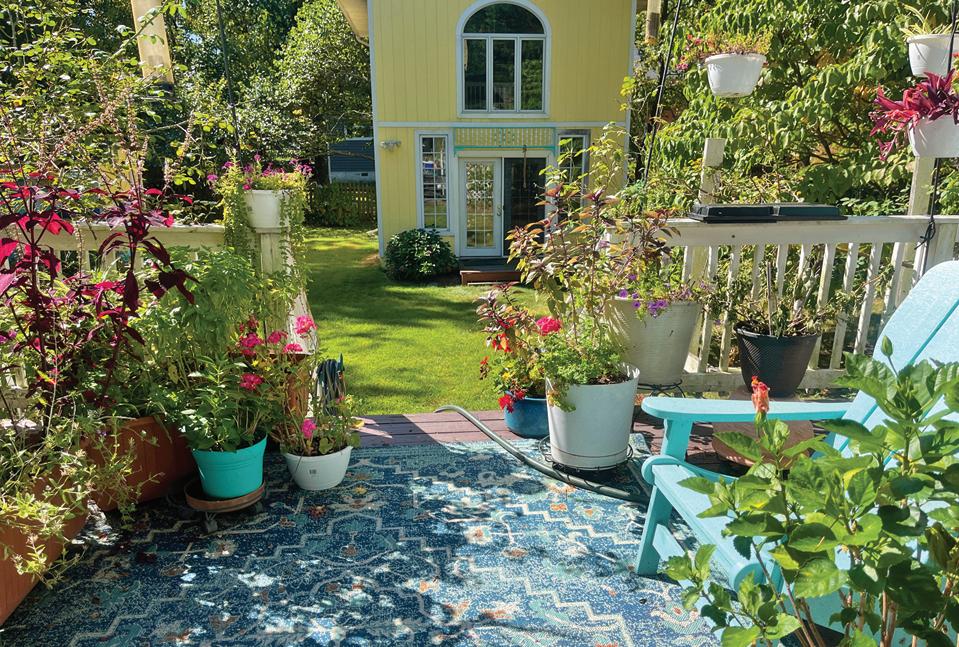
Inspiration from memory: #1
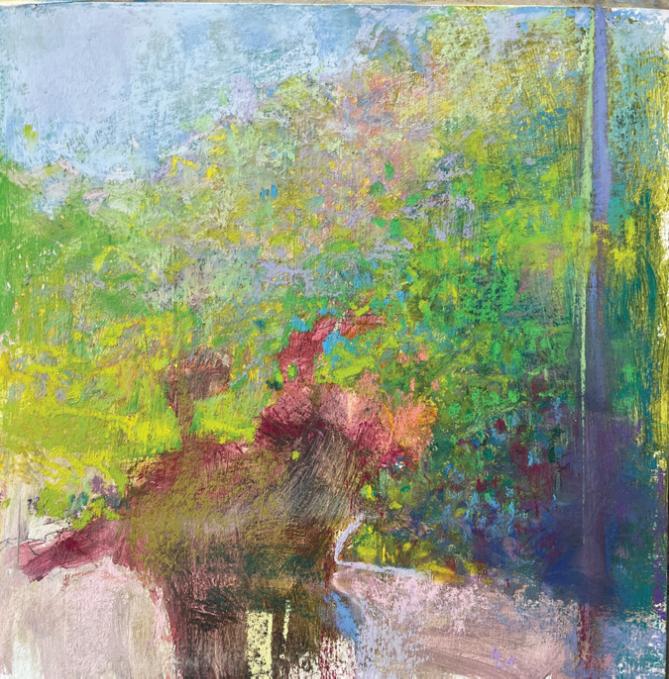

Inspiration from memory: #2
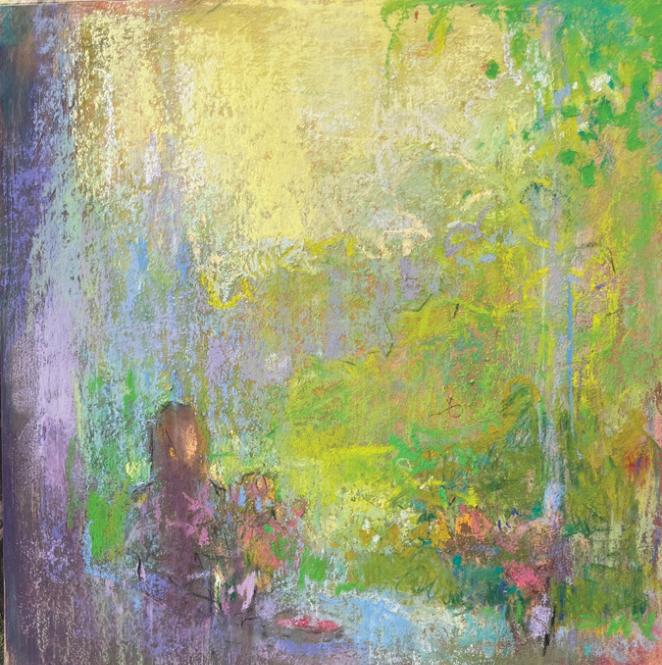
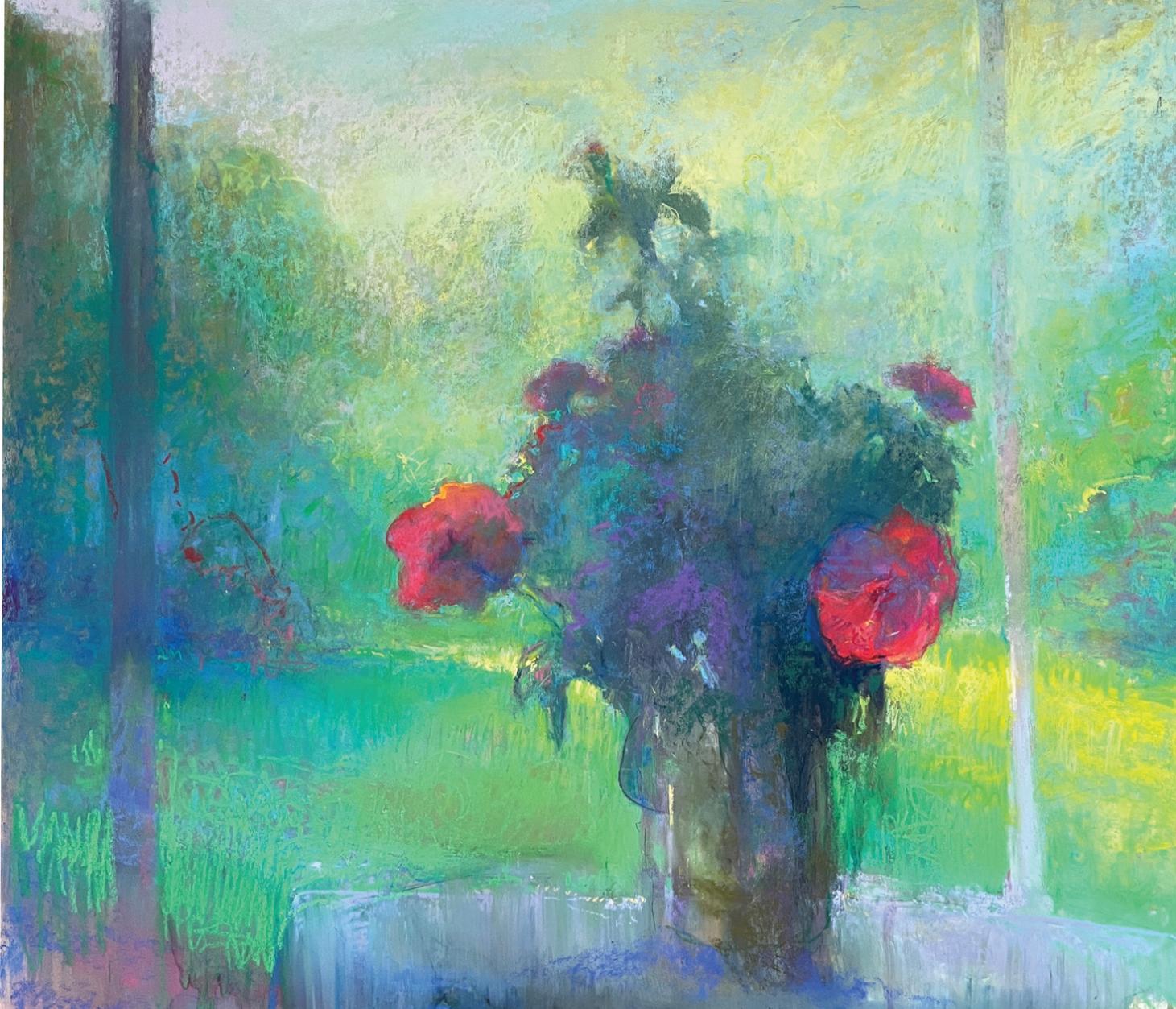

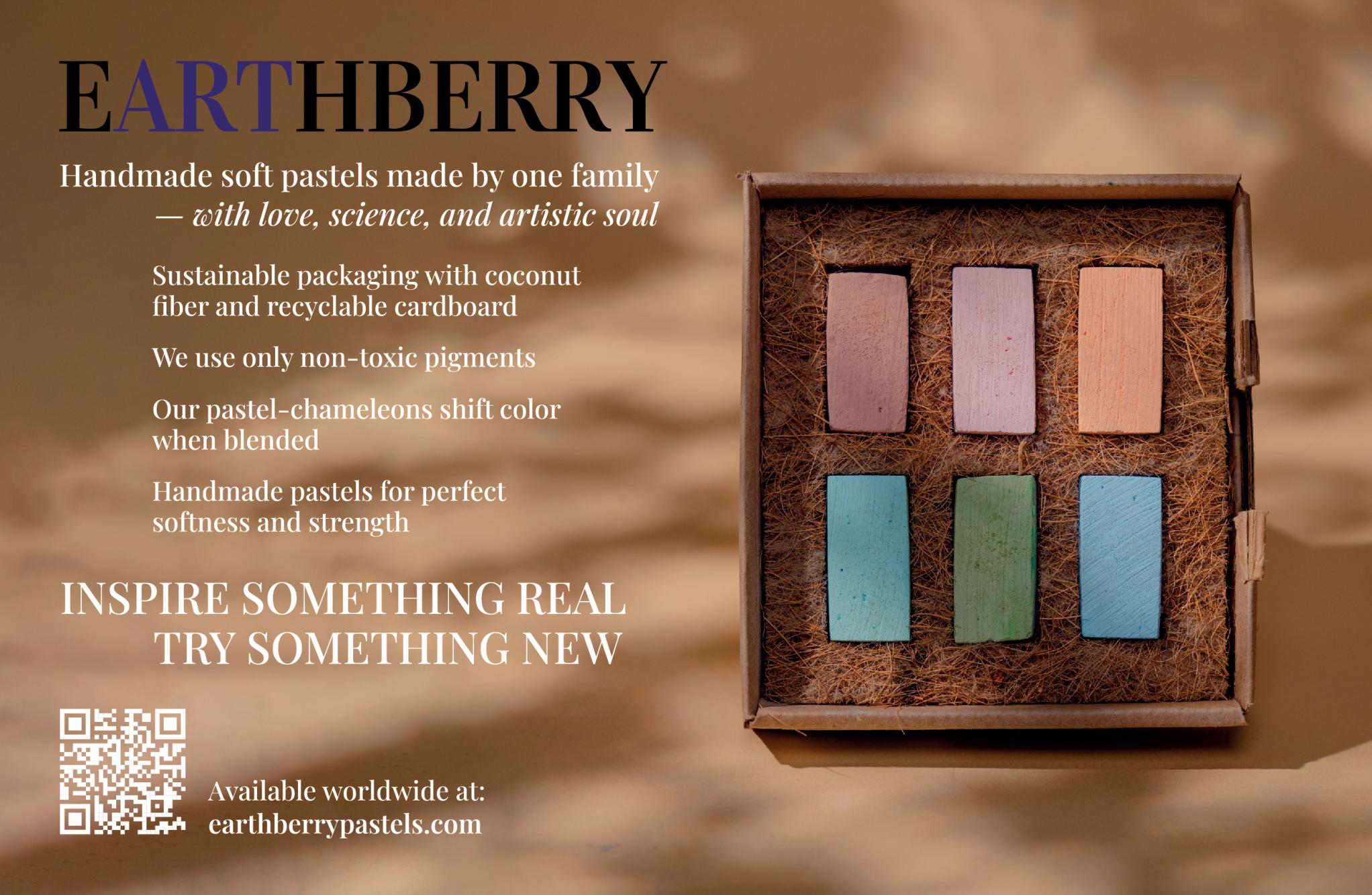
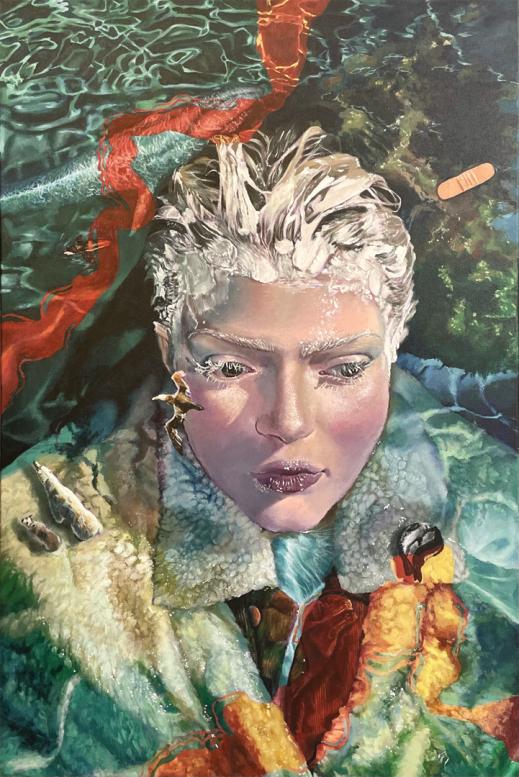

Anna Hernández 2025 Scholarship Recipient
Do you know a high school senior or college student interested in pursuing a career in art and attending or planning to attend a community or four-year college or university, or an accredited art school?
DEADLINE FOR APPLICATIONS APRIL 15, 2026
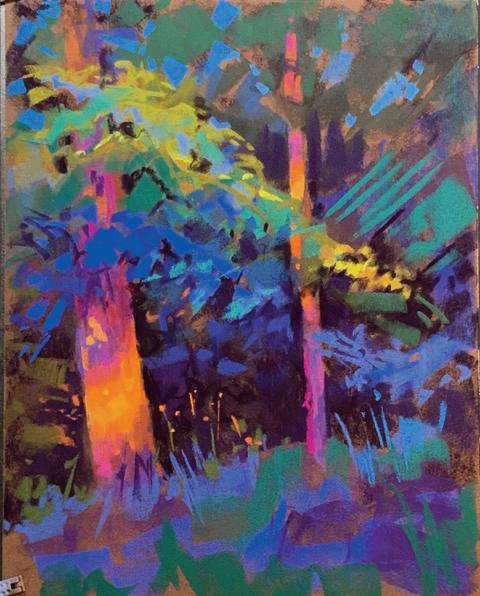
Some of the topics covered in this series will be:
• Demonstrate how to construct and design a powerful and dramatic painting whether landscape or abstract.
• Conveying emotion and intent
• Design
• Turning to inspiration (it’s all around you!)
• Choosing and editing your reference photos
• Guided exercises for design, value, mark making, edges
• How to transform an idea to a painting
• Understanding the value of color
• Using apps to help you get past getting stuck (and make painting a whole lot easier)
• Special effects to make your art unique
• One-on-one instruction to help artists to the next level
• Art reviews with clear ideas to improve your art
This format takes the stress out of a workshop allowing you to absorb the concepts between classes. All sessions will be recorded and available for two months of viewing!
A free, online bulleting board will allow us to share works, and a private Facebook community will allow for interaction between sessions.
SATURDAYS
JANUARY 10, 17, 24, 31, 2026 10:00 AM – 2:00 PM PACIFIC TIME
Online 4-week course through PSWC
Register online at pswc.ws/new-workshops/
$365 for Members
$390 for Non-Members Class size is limited!
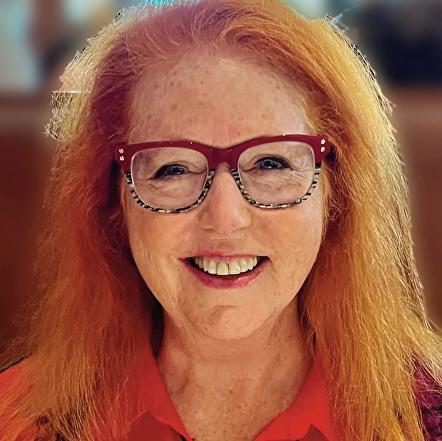
Laura Pollak is an award-winning, full time professional fine artist. She has attained Master Circle Status with the International Association of Pastel Societies as well as Signature Status of the Pastel Society of America, Pastel Society of the West Coast, Pastel Society of North Carolina, and Master Painter of the Southeastern Pastel Society. Laura is a newly juried in member of Women Artists of the West. Laura is often requested to do demos and teach workshops for pastel societies around the country. Her online teaching brings students from around the globe including Australia, Europe, New Zealand, Hawaii and Taiwan. She is a sought after mentor helping individual artists achieve their artistic goals.
laurapollak.com
APRIL 6–8, 2026 • 9:00 AM – 4:00 PM
APRIL 9–11, 2026 • 9:00 AM – 4:00 PM
In-person workshop through PSWC www.pswc.ws/new-workshops
$475 for each 3-day workshop
Art Center Morro Bay 836 Main Street Morro Bay, CA 93442
Dawn Emerson is an inspiring teacher who is passionate about helping each person in their own unique way of using the pastel medium to express themselves. She creates a culture of sharing and joyful exploration in each workshop that encourages each person to take risks, to constructively critique their work, and to identify meaningful themes to pursue in their art. Dawn is a signature member of the Pastel Society of America, a respected art judge and juror, author of the book Pastel Innovations, and has 7 instructional videos. Dawn’s work is known for its powerful energy and expressive way of combining realism with abstraction. www.dawnemerson.com
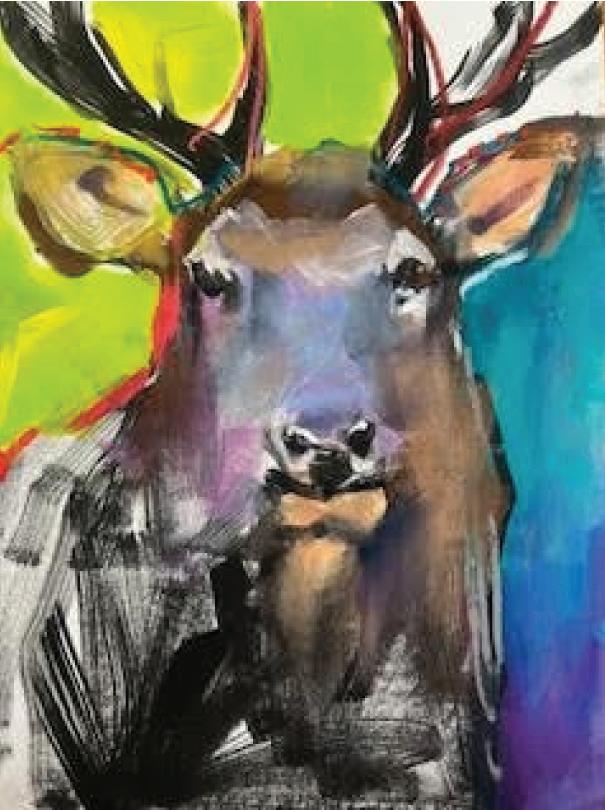
PASTEL INNOVATIONS April 6–8, 2026: You’ll discover the powerful versatility of PanPastels when used alone or together with stick pastels and mixed media like sumi ink, water mixable oils, oil pastels, crayons, and cold wax. Layering by adding and subtracting different media will be demonstrated using many “non-typical” art tools and surfaces. The intention is to introduce approaches to drawing that will unleash creative ways to think about your subject with renewed insight and possibilities. This class reviews techniques presented in my book Pastel Innovations, together with many processes developed since the book was published in 2017.
PASTEL INNOVATIONS PLUS April 9–11, 2026: Designed for those who have taken a“Pastel Innovations” session at some time, and want to explore applying these techniques to “mine” and edit a subject for more powerful meaning and expression. Each day techniques will be introduced to help you apply the design elements of line, texture, value, edges, space, color, and shape with mixed media and pastel (PanPastel and stick) in order to discover new ways to explore your subject.
Participants will be encouraged to push the boundaries of what is “expected” of the pastel medium by embracing the question “WHAT IF?”
Cynthia Baker-Gusman Anaheim CA cynthiaspastelart.com
Lisa BurnettOrangeCA
Denise BusonyHuntington BeachCAdenisebusony.com
Kevin CarrollAKkevincarroll.myportfolio.com
Louise Chandler-HonesNormandy ParkWAlouisehones.com
Alison CotterSeal BeachCA
Lisa DaigleTownsendMAStoriesOfYou.net
Keith Demanche Rochester NH keithdemanche.com
Terrilynn Dubreuil Asheville NC TravelingArtista.com
Emily Ennis Tiburon CA
Patricia Anne Farr Apple Valley CA
Marie Fiala Orinda CA
Shawnee Gallagher Cottage Grove OR
Rebecca Guinn Placerville CA
Esther Martinez Long Beach CA
Tegwin Matenaer Kuna ID tegwinart.com
Jordan Nickerson Portland OR
Jennifer Paisley Petaluma CA etsy.com/shop/jenniferrpaisley
Steven PalmerVancouverWAphotoartfusion.com
Lisa Peyer Vashon WA
Kelly Rylander Sacramento CA
Mary Kathryn Van Kleunen Winter Springs FL
Priscilla Wigham San Antonio TX
Cindy Wojdyla Palatine IL
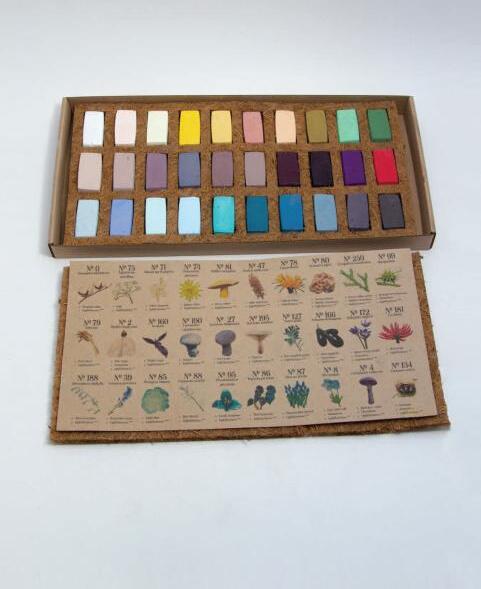
PRESIDENT REGIONAL REPS OUT OF BOUNDS CO-CHAIR Pamela Comfort
VICE PRESIDENT PASTELS USA: 99 VOICES CHAIR Lynn Attig
SECRETARY WE TALK ART HOST OUT OF BOUNDS CO-CHAIR Bonnie Zahn Griffith
TREASURER
501(c)3 COORDINATOR Deborah Pepin
AT-LARGE BOARD MEMBER Sabrina Hill
BOARD APPOINTEES
MEMBERSHIP COORDINATOR Open
MEMBERSHIP SHOW (MOOS) CHAIR SA Kushinka
WAYS & MEANS COORDINATOR Open
WORKSHOP COORDINATOR Jean Vineyard Myers
MAGAZINE EDITOR MARKETING Francesca Droll
WEBSITE MANAGER SOCIAL MEDIA COORDINATOR Delcee Comfort Fields
MEMBERSHIP STATUS Jan Miller
SCHOLARSHIP CHAIR Kim Essex