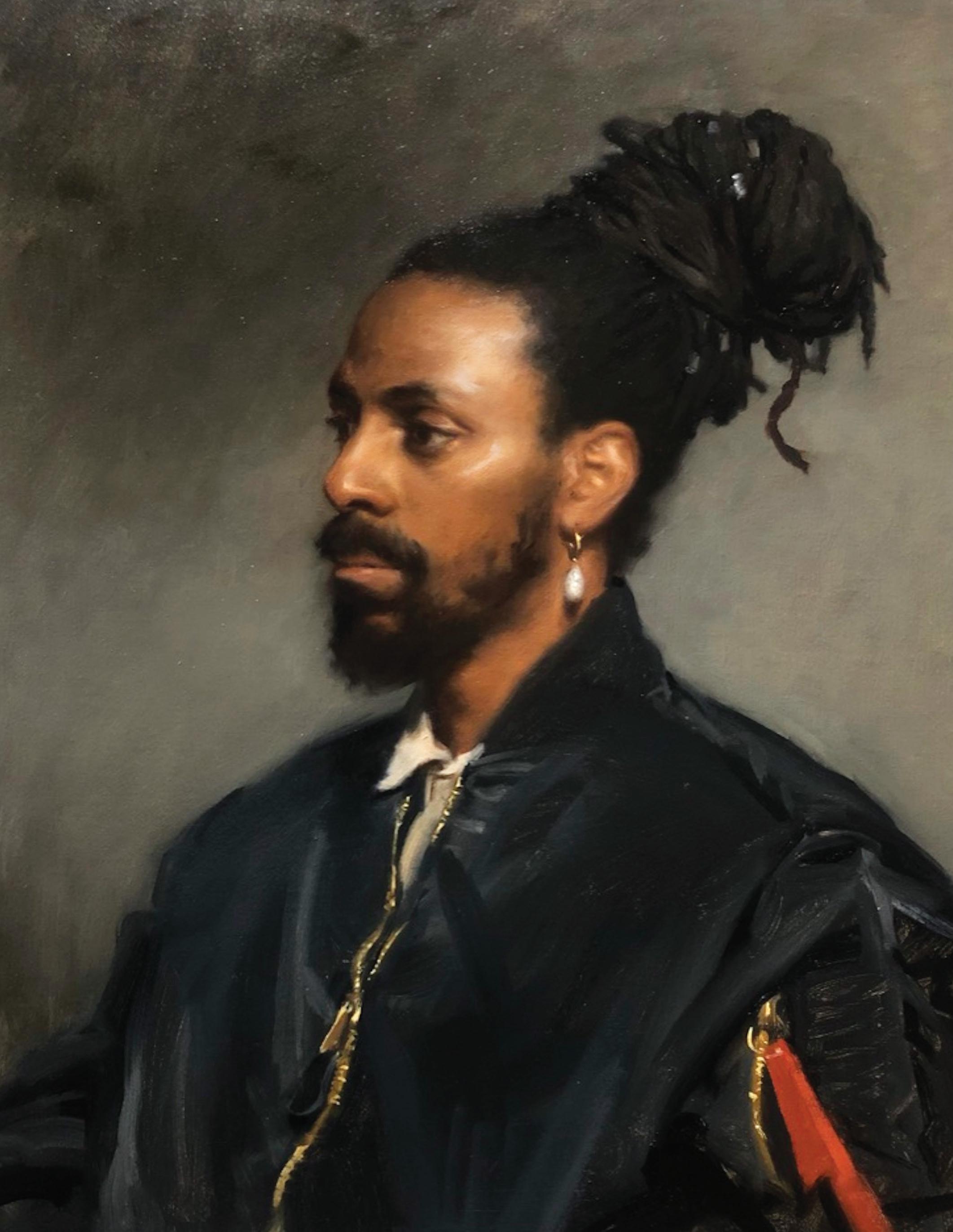
Looking Ahead
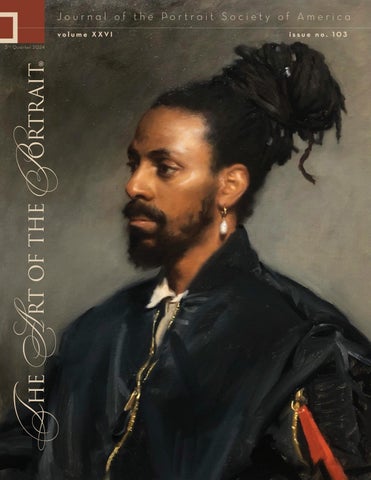
Established in February 1998, the Portrait Society of America will celebrate its 27th anniversary next year. Founded with the mission of nurturing the appreciation and advancement of fine art portraiture and figurative work, the Portrait Society has experienced significant growth since its inception. Today, it offers over 25 programs and publications, all dedicated to supporting artists and preserving the tradition of portraiture and figurative art.
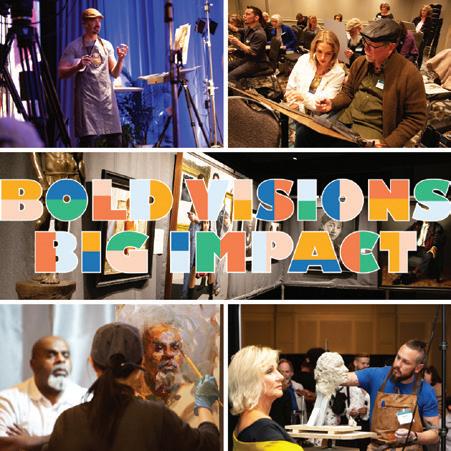
A partial list of our current programs and publications include the Annual Conference, Wednesday Webinars, The International, Members Only Competition, The Future Generation Competition, Everett Raymond Kinstler Mentoring Fellowship, Edward Jonas Memorial Grant, International Artist magazine, American Art Collector magazine, Quarterly Journal, Monthly E-News, Social Media (over 110,000 followers), Sargent Circle, Video Online Sales, Signature Status Program, State Ambassador Program, Artist to Artist Critique, Mentoring Program, Literature Committee, Sargent Palette Project, and the 6x9 Mystery Art Sale.
The variety and reach of these programs are making an impact in the visual arts, notably through our premier The International, which awards a prestigious $50,000 grand prize, attracting the top talent from across the globe to our annual conference that brings together over 800 artists. We regularly hear from artists that write enthusiastically and express the impact of these programs on individual artists.
Simona from Noblesville, Indiana recently wrote to tell us after returning from the conference with 45 pages of notes, she made the decision to finish a portrait she had started two years ago using her newfound knowledge. She entered it in a regional show and won 2nd Place. It was the first time she had received an award for her artwork. She wrote to tell us, “This is the first time in my artistic life that a juror gave me an award! It is the best feeling ever!”
Three years ago, Michael Shane Neal accepted the role of Chair, and along with the Executive and Advisory Boards, they have been implementing a bold vision that has been making a big impact. We have doubled the Draper Grand Prize award from $25,000 to $50,000, launched the Sargent Circle as a new funding initiative, hosted our inaugural Sargent Circle Art Trip, upgraded all our computer systems, and are currently transitioning to a cloud-based database.
Later this month our Boards are gathering for their annual in-person meeting where they will be looking back on what we’ve accomplished and then will look forward to the future. I’m excited about evaluating the work ahead including updating our mission statement, adding new programs, and thinking BIG for the future. Stay tuned for exciting announcements as the Board brainstorms on how we can broaden our impact and increase our visibility and influence in the visual arts. I truly believe we are in the strongest position since our founding to develop a strategic plan that will help us achieve our full potential.
Christine Egnoski Executive Director
Board Members
Michael Shane Neal, Chair, Nashville, Tennessee
Dawn Whitelaw, Vice-Chair, Franklin, Tennessee
Wende Caporale-Greene, Treasurer/Secretary, Woodbury, Connecticut
Quang Ho, Denver, Colorado
Mary Whyte, Charleston, South Carolina
Executive Director
Christine Egnoski
Advisory Board
Sam Adoquei, New York, New York
James Gurney, Rhinebeck, New York
Robert Liberace, Vienna, Virginia
Dean Mitchell, Tampa, Florida
Rhoda Sherbell, N.A., Westbury, New York
Burton Silverman, N. A., New York, New York
Jennifer Welty, Santa Cruz, California
Staff & Newsletter Contributors
Kim Azzarito, Assistant Director
Amanda Oliver, Membership Director
Allison Gilliard, Special Programs and Outreach
Karey Mortimer, Special Events Coordinator
Kerry Vosler, Writer, State Ambassador Coordinator
Wende Caporale-Greene, Writer, Board Member
Scott Jones, Writer, Washington State Ambassador
Sargent Circle
Platinum Members
Susan Basham
Sandra Murzyn
Michael Shane Neal
Sarah Perot
Brant and Joelle Phillips
Trish Savides
Henry Garth Smith, MD
Mary Whyte
Gold
Aida and Kevin Garrity
Hope and Billy Reis
Louis and Jessica Sterchi
Silver
Melinda and Jeff Balsar
Peggy Kinstler
Jerry and Ernie Williams
Carol and Darryl Yochem
Mailing address:
Portrait Society of America P.O. Box 11272
Tallahassee, FL 32302
Shipping address: 1109 S. Magnolia Ave. Tallahassee, FL 32301
Toll free Telephone: 1-877-772-4321
Fax: 850-222-7890 Web: www.portraitsociety.org
Design
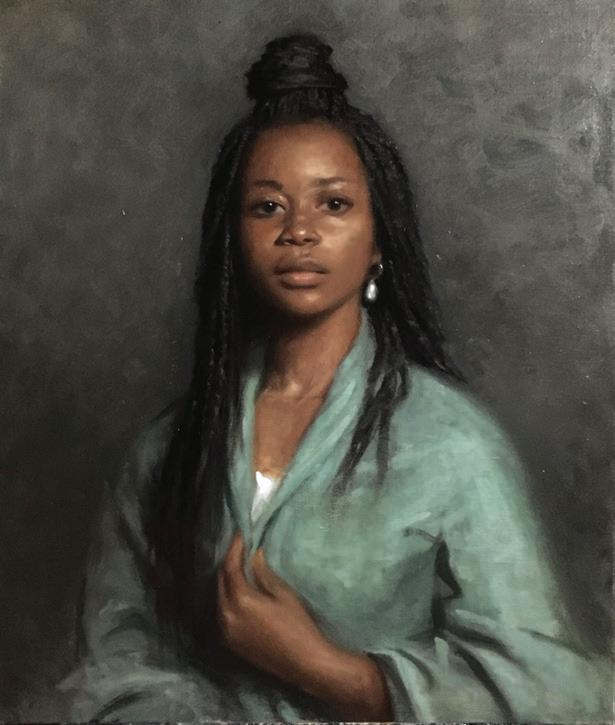
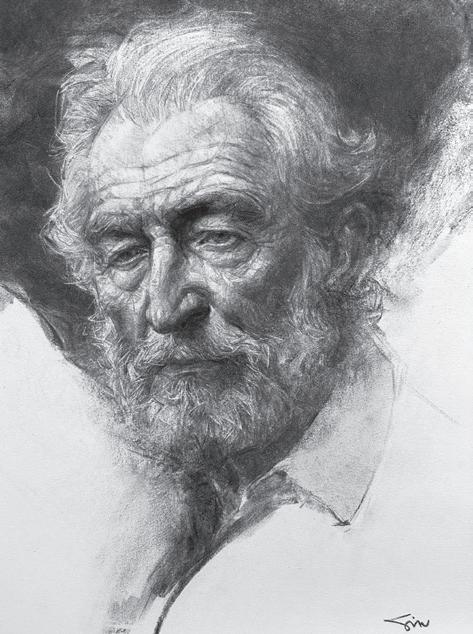
Teresa Oaxaca has carved a distinctive niche in the contemporary art world with her evocative blend of still life, portraiture, and fantasy elements. Boldly navigating the space between classical inspiration and modern innovation, her paintings are imbued with vibrant colors and dynamic scenes that transport viewers into a realm where the ordinary morphs into the extraordinary.
Oaxaca’s exuberant use of color and imaginative subjects make her still lifes more than mere representation– they are scenes pulsating with vitality and intrigue– a fantastic feast for the eyes.
A typical Oaxaca painting is a visual odyssey. Imagine a lavishly set table where a bowl of flowers seem to spill over with secrets, surrounded by lush flora that appear almost sentient. Amidst this abundance, one may find the faint, ethereal visage of a woman—a portrait subtly entwined within the narrative of the still life. With delicate, otherworldly features, these faces invite viewers into a deeper contemplation of the scene, encouraging them to look beyond the surface and unravel the layers of meaning embedded within.
Her distinct approach also manifests through her passionate embrace of vibrant colors. Oaxaca’s palette is boldly eclectic, ranging from deep, jewel-like tones to soft, pastel hues. The technical prowess in her work is complemented by an undeniable emotional depth, making each painting a reflection of Oaxaca herself. As a portrait artist, she has an uncanny ability to capture not just the likeness, but the essence of her subjects—their innermost thoughts, fears, and dreams. By integrating these portraits within her still lifes, she creates a harmonious interplay between person and object, blurring the lines between the living and the inanimate.
Oaxaca’s paintings are more than just visual treats; they are rich tapestries of thought and emotion, inviting viewers to explore and revel in the myriad possibilities of her created worlds. The meticulous detail, combined with imaginative brilliance and a vivid color palette, marks her work as not just an extension but an expansion of who she is—a true artist in every sense.
I sat down with her to discuss her paintings and her creative process. The following is that enlightening interview.
What would you point to as most inspirational for the paintings you create?
My paintings come from many sources. I love to be out in nature and alone in the woods. I also listen to books as I walk out in the forest. Some aspects of my work come from poets such as Emily Dickenson, Christina Rosetti, and Lewis Carroll.
By Sharon Ann Smith
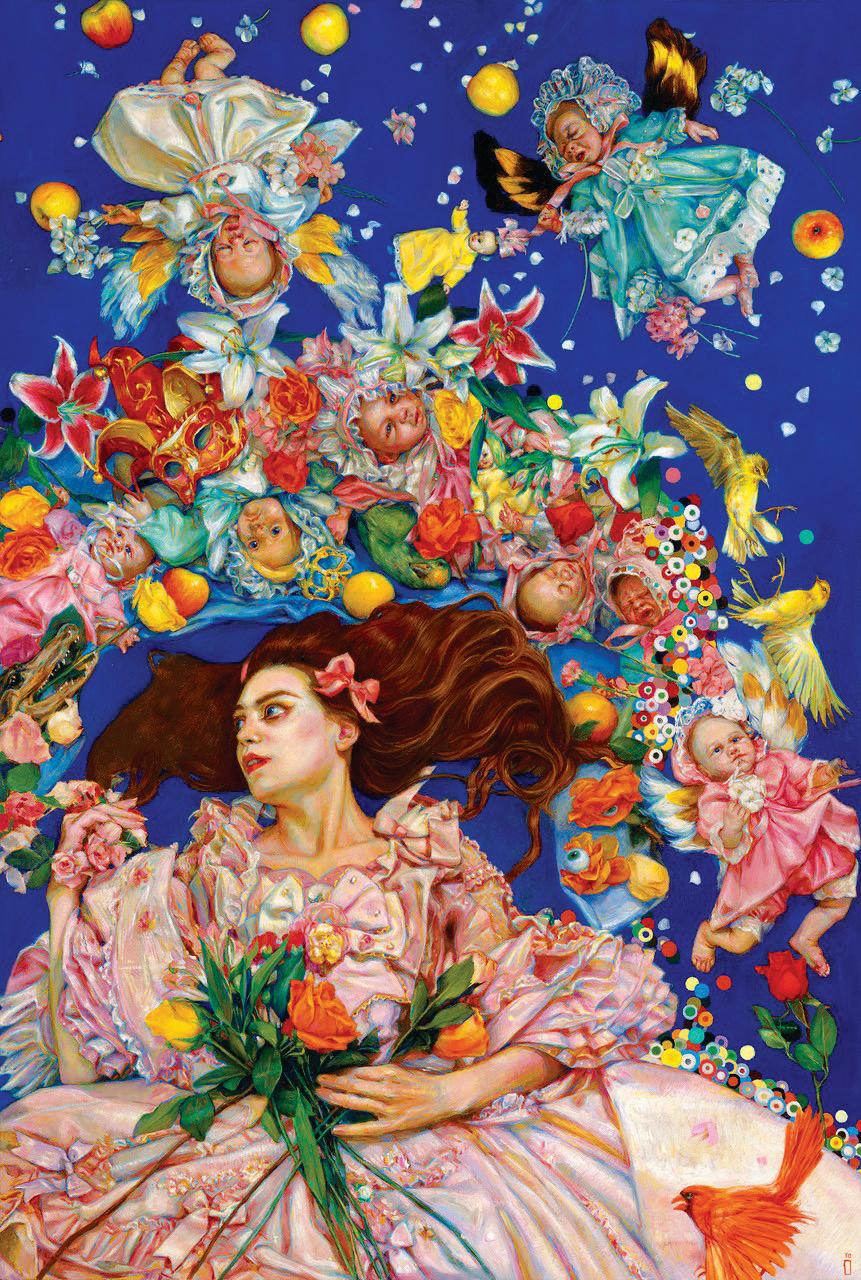
My most recent portrait piece entitled, “As Nature Piled Her Blossoms On,” is a painting that fit succinctly with Emily’s Dickenson’s poem.The poem became part of the beauty of the portrait.
If you were to describe your work for a collector what would you say?
My work is about pleasing the eye. I paint “light” and the way it falls. Simple observation reveals beauty; often it is found in the unconventional.
Where have you found inspiration in your travels abroad?
All my travels at home and abroad have influenced my work. Every so many years, I love to travel to Europe and visit the museums, taking in the sights and writing poetry, steeping myself in art history and the Roman Forum ruins, visiting Haarlem and Amsterdam and the Frans Hals Museum filled with artistic architecture and culture. However, taking my camera out in my own backyard and surrounding cultural areas is also very inspiring. The pictures I capture are subjects of many of my paintings filled with birds, fish and creatures found right here in the local zoo and botanical gardens.
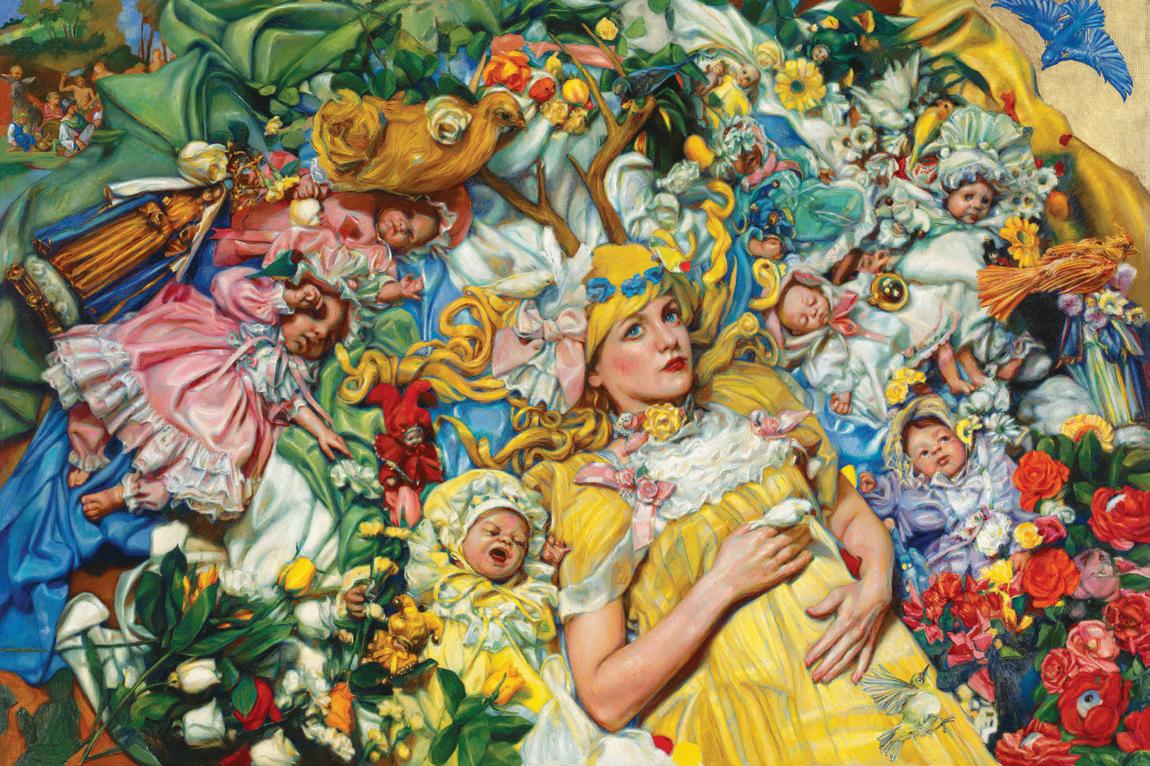
What are the most important aspects of capturing life in your paintings, specifically the portrait?
I don’t think of myself as someone who ‘paints portraits’ but as a painter who paints still-lives with people in them. Adding color, mixing color, and composing shapes creates a sense of rhythm and balance, capturing the form and life in the form. Adding brush strokes and details brings the painting life. Adding eyes to my painting is always life-giving.
What are your thoughts in creating art and maintaining a business from art?
Study and create in an unhurried manner, maintaining art for art’s sake only. Once the business of art becomes paramount, the art can suffer. One cannot do everything. Creating art for business can kill the joy of artistry. Put out what you wish to attract, keeping a true balance in all things and staying inspired.
Teresa’s current workshop and travel schedule is extensive. She currently teaches from her home studio via the Zoom platform. Plus, multiple workshops are coming in Virginia, Missouri, Tennessee, California, and England. Please see her magical website for a more detailed listing: www.teresaoaxaca.com
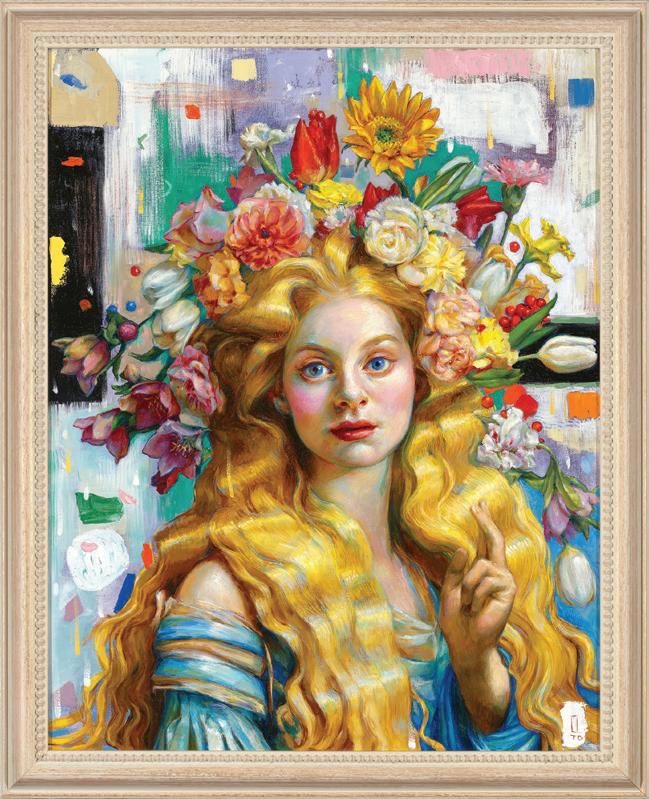
As Nature Piled Her Blossoms On
The Morning after Wo- ‘Tis frequently the WaySurpasses all that rose before- For utter Jubilee-
As Nature did not Care- And piled her Blossoms onThe further to parade a Joy-Her Victim stared opon-
2.
3.
The Birds declaim their Tunes- Pronouncing every word Like Hammers-Did they know they Fell Like Litanies of Lead-
On here and there-a creature- They’d modify the Glee To fit some Crucifical Clef- Some key of CalvaryEmily Dickinson
Recently, we had the pleasure of announcing the winners of the fifth annual The Future Generation Competition. This competition was created to acknowledge the work of talented, emerging artists who are 18 to 25 years old. Early recognition in art competitions can have an incredible and lasting impact on a young artist’s career, as it once did for John Singer Sargent, who, at the age of twenty-three, won Honorable Mention at the Paris Salon for a portrait of his teacher, Carolus-Duran. Since the competition’s creation five years ago, we have seen a remarkable caliber of work submitted by the best and brightest the field has to offer.
This year, the selected panel of judges were Dawn Whitelaw, Timothy Rees and Shana Levenson. Together they reviewed over 300 images from young artists around the world, including Australia, Austria, Bangladesh, Belgium, Canada, China, Denmark, Ecuador, Germany, India, Ireland, Israel, Italy, Mexico, Netherlands, New Zealand, Romania, Singapore, Sweden, Taiwan, the United Kingdom and the US. In their own words, the four top place winners, Ruben Astudillo, Patrick Robinson, Caden Ferita, and Cara Wilmanns, share their background, what drew them to art, and the inspiration behind their winning works.
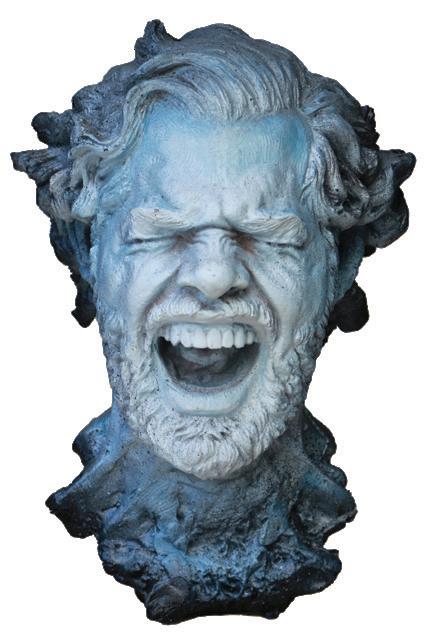
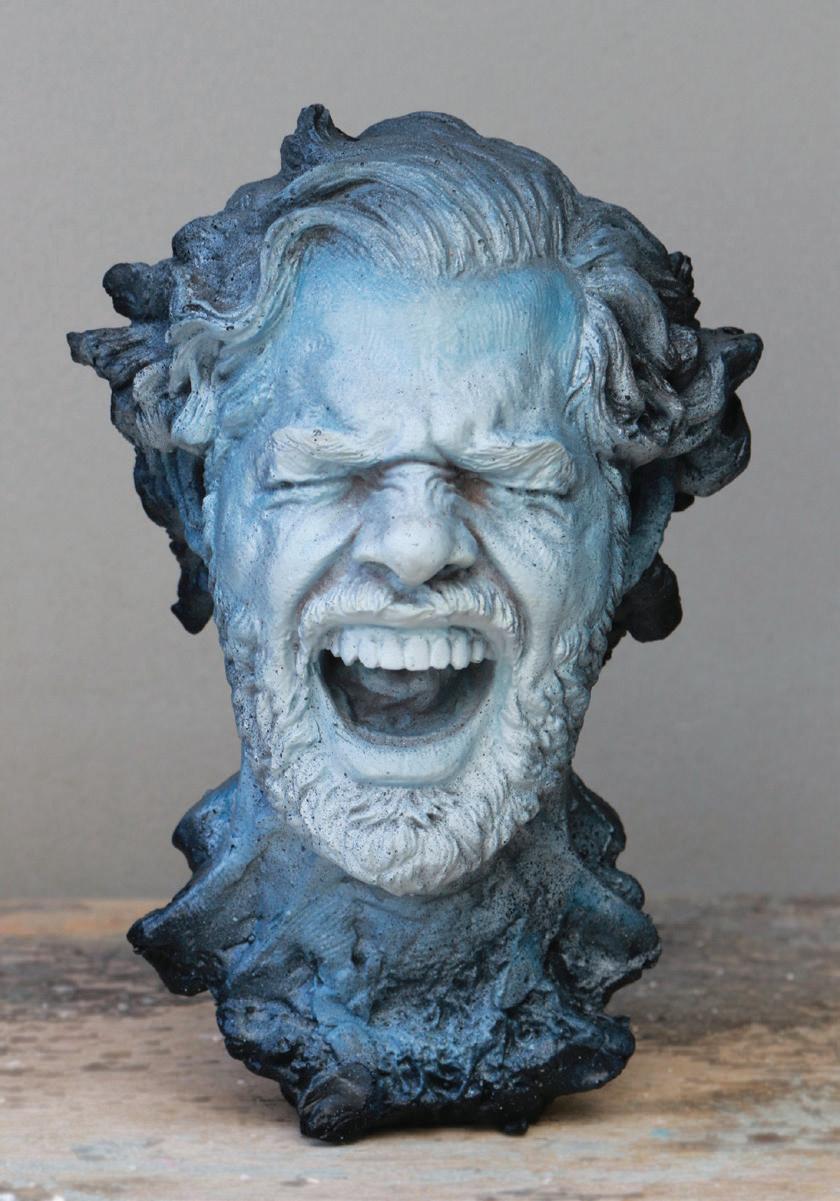
Ruben Astudillo, Closer, 11.8x7.8x7.4”, resin
This piece is the second of a trilogy of self-portraits that I undertook as a means of self-analysis and introspection. Titled Closer, it emerged from a period of anxiety, serving as both an internal outcry and an explosion of myriad, indistinct emotions. I view my personal projects as a form of non-verbal communication. My inspiration came from two sculptures by my favorite artists: Annima Dannata by Bernini and The Yawner by Franz Xaver Messerschmidt. This journey of self-acceptance, from the first piece, Over-thinker, to the most recent, Nothing Left to Lose, has been profoundly therapeutic. Each selfportrait varies in style and composition, reflecting different aspects of my physical appearance and emotional state. I work in solitude and keep my creations private until they are fully completed, as this approach helps me to stay true and sincere to my artistic vision and process.
My journey into art began at the age of six when I was introduced to clay. Although none of my immediate family members are visual artists, my grandfather, a sensitive writer and lawyer, has been a significant source of inspiration and is the subject of several of my sculptures. My parents, who are doctors, initially found it challenging to accept my choice to pursue art, but now support my endeavors wholeheartedly.
As a child, I took classes with Boris Salinas, a renowned ceramist and sculptor from my hometown, Loja, who was also my teacher at school. His guidance ignited my passion for creating. At eleven, inspired by film industry masks and Ecuadorian festivities, I began making paper masks. At fourteen, I found an anatomy book belonging to my sister and was captivated by a detailed illustration of a hand showing tendons, muscles, and bones. I attempted to replicate this in clay, and after not seeing Boris for some time, I brought this work to his studio. His positive reaction to my initiative and complex work deeply encouraged me. During a challenging period in my life, art became my primary means of expression and communication.
I decided against university and set out learning independently. Then I spent a brief period at the London Atelier of Representational Art, and eventually underwent three years of intensive study at the Barcelona Academy of Art.
3. THIRD PLACE WINNER:
I consider myself fortunate to have had a diverse educational journey, starting at a young age. My experiences range from ceramics and special effects to fine arts. Alongside formal education, I have greatly benefited from self-learning through books and online videos, especially during my early years. I am grateful to have learned from esteemed artists such as Simon Lee, Valter Casotto, Andrew Freeman, David Simon, and Brian Booth-Craig. Currently, I am enhancing my technical skills at the Florence Academy of Art, while I explore various educational paths to determine what best aligns with my goals. Previously, I studied at the Accademia di Belle Arti di Verona, where I delved into art theory, history, and contemporary conceptual art under the guidance of Daniele Salvalai.
2. SECOND PLACE WINNER:
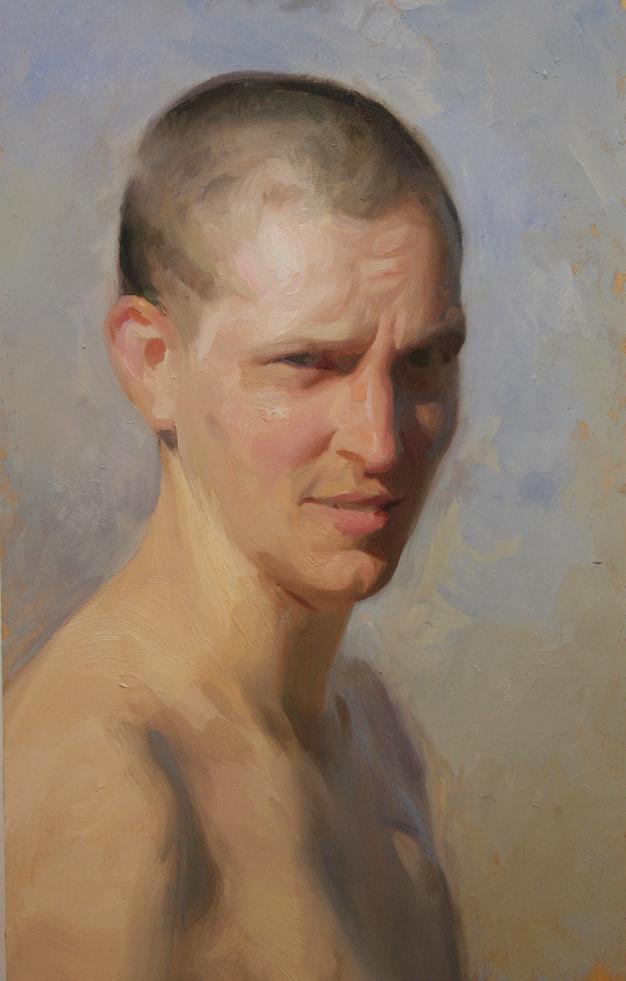
Patrick Robinson, Rob, 16x10”, oil
My painting Rob came after a trip to the sea with some friends. I like to represent the personality of people I know, and I felt that the open setting of the beach allowed me to record them bare and uninhibited. Rob is a real character, often seeming on the edge of sincerity and facetiousness, and I was drawn to the challenge of representing this subtlety. I was inspired by the characterful portraits of Sorolla, and Velasquez’ Los Borrachos. I became interested in portraiture during my time in secondary school. I began to attend life drawing sessions that were offered after class. From this I developed an interest in the old masters, and I realized the lack of education there is in painting naturalistically from life.
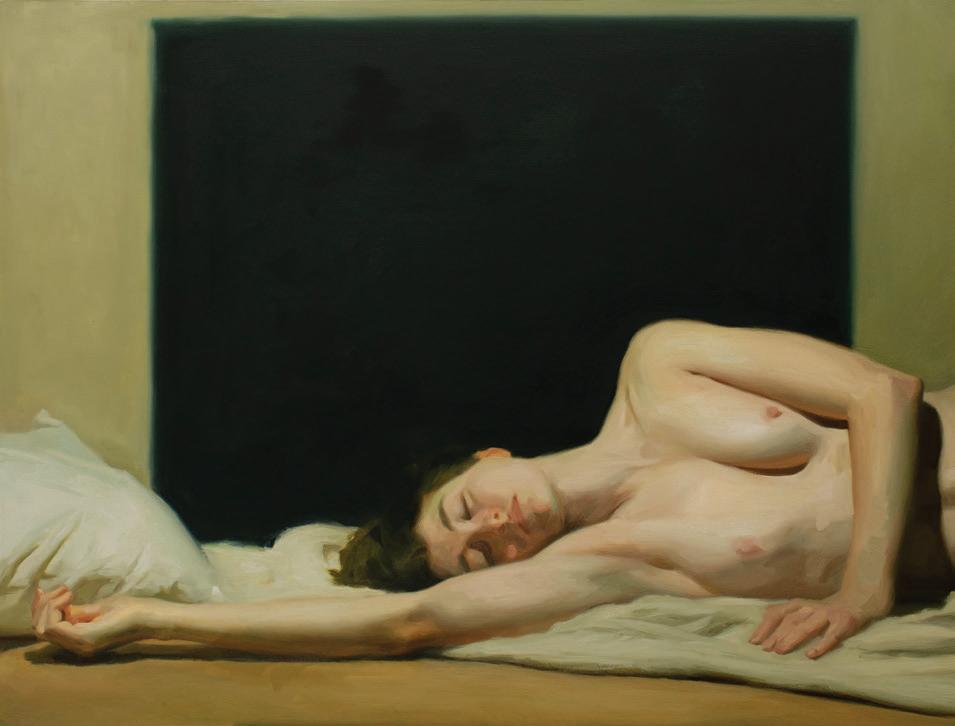
Caden Ferita, Black Square, 40x30”, oil
I chose to use oil paint as my medium for this piece as I felt it would aid in the attempt to create movement along the figure’s form, as well as establish body in the texture of the brushstrokes. In this painting a nude figure is lying on the ground with an ominous black square behind her shoulders and a seemingly unaware expression on her face to her surroundings and current predicament. The gesture of each arm acts as a continuation of the black square merging with the angular contours inviting the viewer to traverse its void. The subject matter is placed at eye level with the viewer to create a bridge to enter the scene. When the viewer is standing in front of this painting, the black square also behaves similarly to a mirror due to the reflectiveness, causing the viewer to become a part of the image as a faint reflection in the glossy paint.
What drew me to the field of art was my mom, and in all honesty, without her I don’t think I would have discovered my love for art, at least not so soon. She was always the one taking me to the museum to look at the paintings and sculptures. Eventually I began to become curious as to how these beautiful works on the walls were made. My mom saw that spark in me and put me in art classes.
As a kid you scribble, fingerpaint, collage, go to art classes, paint at home, get paint on the couch at home, and go to more art classes. You improve, you fail, you learn some more,
and eventually you find yourself at 21 years old still exploring that same itch. The journey and excitement of understanding the fine arts is what keeps me loving to paint. Currently I’m attending the Laguna College of Art and Design for a BFA in Drawing and Painting.
Cara
Wilmanns, Dad, 47x31”, oil
First of all I have to mention that this is a very personal painting, and it is one of a series of three paintings. One painting portrays my mother, the other myself, and together they make up my family (well, technically at least, because we haven’t been a family for a long time, since my parents separated when I was a kid). This separation had a huge impact on me, and this series of paintings was my way of
I decided to communicate the delicate subject mainly by changing the format of my father’s portrait and other subtle decisions in the composition. If you look closely, you will notice that factors such as light, line of sight, etc. are always the same in two paintings of the series, but different in the third. In general, this painting and the whole series deals with my family and its identity on several levels: a bit of light-hearted fun combined with some deep conceptual ideas.
I guess I was always drawn to painting. I mentioned that I come from a musical home, but my parents always let me paint a lot. As I recall, I tended to draw on everything: my clothes, walls, or even my face. But it took me until the end of high school to realize that I’m not bad at painting, so I started to pursue it as a hobby. Soon after, I left Germany for an exchange year in Hungary. By chance I ended up at a school that focused on music, visual arts and dance. At the beginning I was enrolled in the music class, but I found my way to the art room far too often. It was then that I began to dream of painting as a profession, and this dream has not changed since, even though I have experienced all the pitfalls of being an artist with my parents.
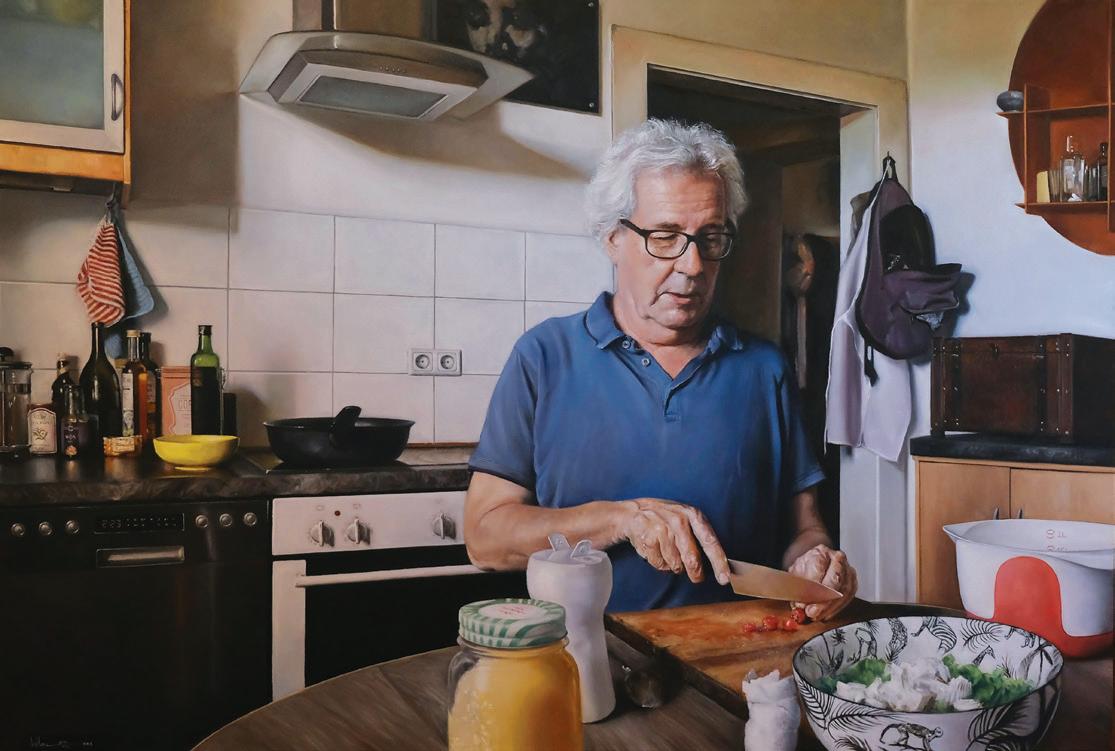
finding peace. It is an exploration of who we have become individually and documents how much life has changed. Both my parents are musicians, and my father used to be on the road a lot. Now he lives a quiet life a few towns away from me, and when I asked to paint him, he invited me to lunch. I can’t even remember the last time I ate the lunch my father prepared for me, and I immediately decided to come over early and figure out my composition while he was cooking - and it turned out just as I had imagined. Even better, I discovered that my father had become quite good at cooking. In the painting, he’s making a French quiche, with cherry tomatoes on top and a salad on the side.
In the context of the other paintings and the question of how to (not) connect them, I was very inspired by Edgar Degas’ The Bellelli Family, which also depicts separation in a family.
I already mentioned my exchange year, where I had the chance to experience a very traditional education, as most schools in Florence, Italy are famous for, but after my exchange, I went back to Germany where I finished high school and enrolled in university. I am currently finishing my M.A. in Education with a major in Art and Math. Germany is very focused on modern art and the art education system is very different from my impressions of American schools. In short, even though I have studied art for five years, I consider myself largely self-taught. I have some plans for the next few years, but it’s probably too early to reveal them.
4
Finalists: Sofia Arevalo, Olivia Arts, Leo Bignell, Giuseppe de Palma, Kayley Jane Dykman, Hongyuan Fang, Astrid Gaszynski, Dieter Ingels, Harsh Jalendra and Victor Pierrey.
Honorable Mentions: Tina Figarelli, Elysia Gilman, Andrea Kirlieva, Gabriel Lewis, Khalil McKnight, Shiori Mori, Emma Rach-Syslak, Parampal Singh and Fleur Stebis.
The Portrait Society of America’s Ambassador program continues to thrive. We have ambassadors across the U.S. and five continents around the world.
Kathleen Ericson, State Co-Ambassador in Michigan, recently shared what an impact the Portrait Society has had in her life: “This art world is the most enriching and interesting life. The Portrait Society really changed my life, and I am more than grateful for all the wonderful artists I have met along the way. You spread information and news to people, and it is amazing what comes back to you!”
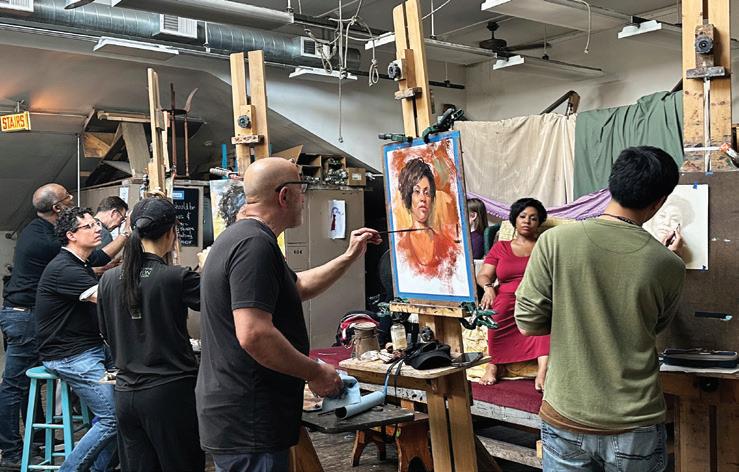
Check out the ways other State Ambassadors share information and connect with wonderful artists in their states/regions.
Lynita Motes (Alabama) hosted a meet-and-greet for members at her property south of Birmingham, AL, on August 21. Artists from all over the state attended and connected over snacks and coffee while sharing their artwork that each had brought along.
Donna Catotti (Alaska) will be hosting Studio Incamminati’s instructor, JaFang Lu, next June 9-13, 2025, for a portrait workshop in Haines, AK. Registration is open at www. studioincamminati.edu.
Wendy Roberts (Hawaii) is planning a Portrait Society demo event for this Fall. She also held a few Zoom meetings with members during the quarter, focusing on sharing resources, tips, and hints which was excellent.
Deborah Gill (Idaho) has been working on recruiting young college students by giving a one-year Portrait Society membership to a student each year.
Kim Abbati (Illinois) took a break for the summer after hosting the Second Annual PSoA Show at the Palette and Chisel. Their Third Annual Show is set for May 30-June 8, 2025.
Dianna Porter (Indiana) hosted the annual exhibit and “A Face for Radio” event on August 9 this year with the Hancock Arts Council. They had four radio personalities serve as models who were great and were excited to do it. It was a successful event!
Melanie Harding Bates (Kentucky) participated with Swapna Deo in the Faces for Radio live paint-out event in Indiana. Kassandra McNeil also exhibited three paintings in the regional Portrait Society exhibition connected with the event in Indiana.
Suzann Beck (Minnesota) hosted a great Minnesota Members Portrait Showcase in April and May 2024. It was a successful event, and the show looked great!
Nicole Troup (Pennsylvania) hosted a Zoom meeting in May and September with Pennsylvania members.
Jennifer Wharton (South Carolina) is preparing for the South Carolina Members Show in Aiken, SC next February-March, 2025.
Betty Bullen (Tennessee) is getting everything ready for the big announcement of the Portrait Society’s Tennessee Members Show in October 2025 at the Carriage House Museum Gallery in Clarksville, TN. More details to come!
Nora Dempsey (Texas) is hosting an artists retreat this October 11-17 to see some great galleries and have artists get together and do some painting, have great conversations, and see some beautiful architecture and art!
Robin Williamson (Texas) planned a Face-Off event to be held September 28 with fifteen local Portrait Society artists at the Southern Kindness Gallery in Houston. She has also been working closely with Bayou City Art Festival organizers to have a face-off event at the largest art festival in the city of Houston in October.
Carol Fairlie (Texas and New Mexico) hosted a Labor Day Plein Air weekend which ran for 6-9 hours each day, Friday through Monday, with a total of fourteen artists attending.
Stacy Minch (Utah) has a meet-up scheduled for mid-October, painting a portrait in the park with a live model. Multiple life sessions throughout the state are well-attended and thriving.
Janelle Hatherly (Australia/New Zealand) saw a hive of activity this quarter as the active members met on Zoom, contributed to an online survey, and discussed by email the possibility of collaboratively holding an exhibition of our works to promote realistic portraiture, as well as producing their 9th newsletter.
Andrea Schneider (Europe/United Kingdom) will be hosting a meeting via Zoom on October 6th and will plan another Zoom meeting in December as well.
Taleta Willer (South Africa) connected with Portrait Society Chairman Michael Shane Neal and his daughter, Mattie Ree, for a tour of Kruger National Park which included painting sessions with local, native models.
Kerry Vosler
Ambassador Coordinator
By Kim Azzarito
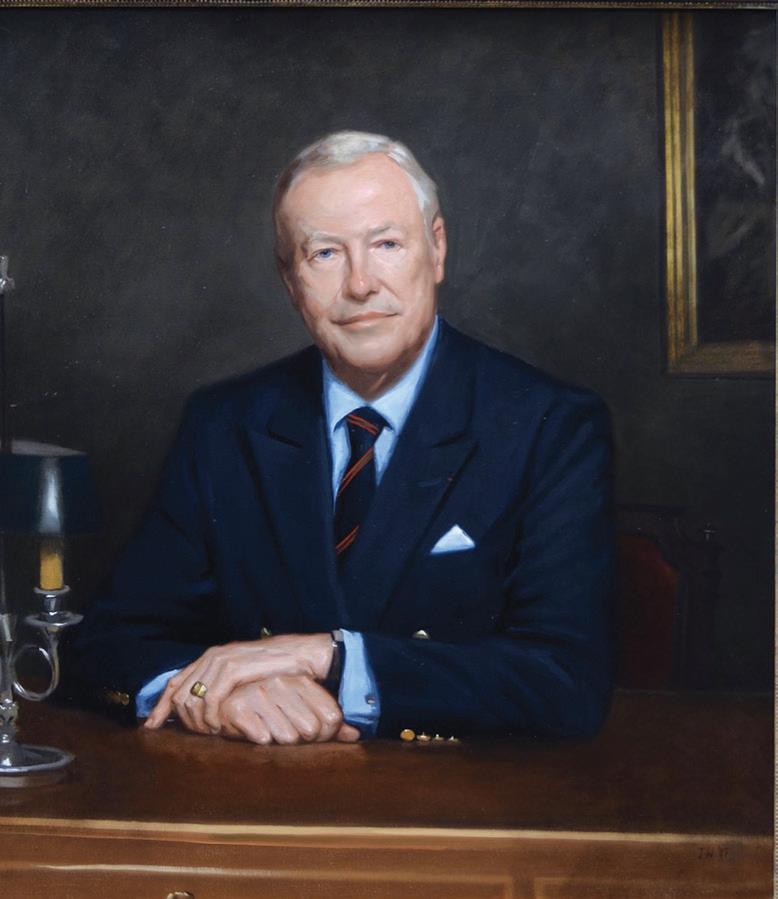
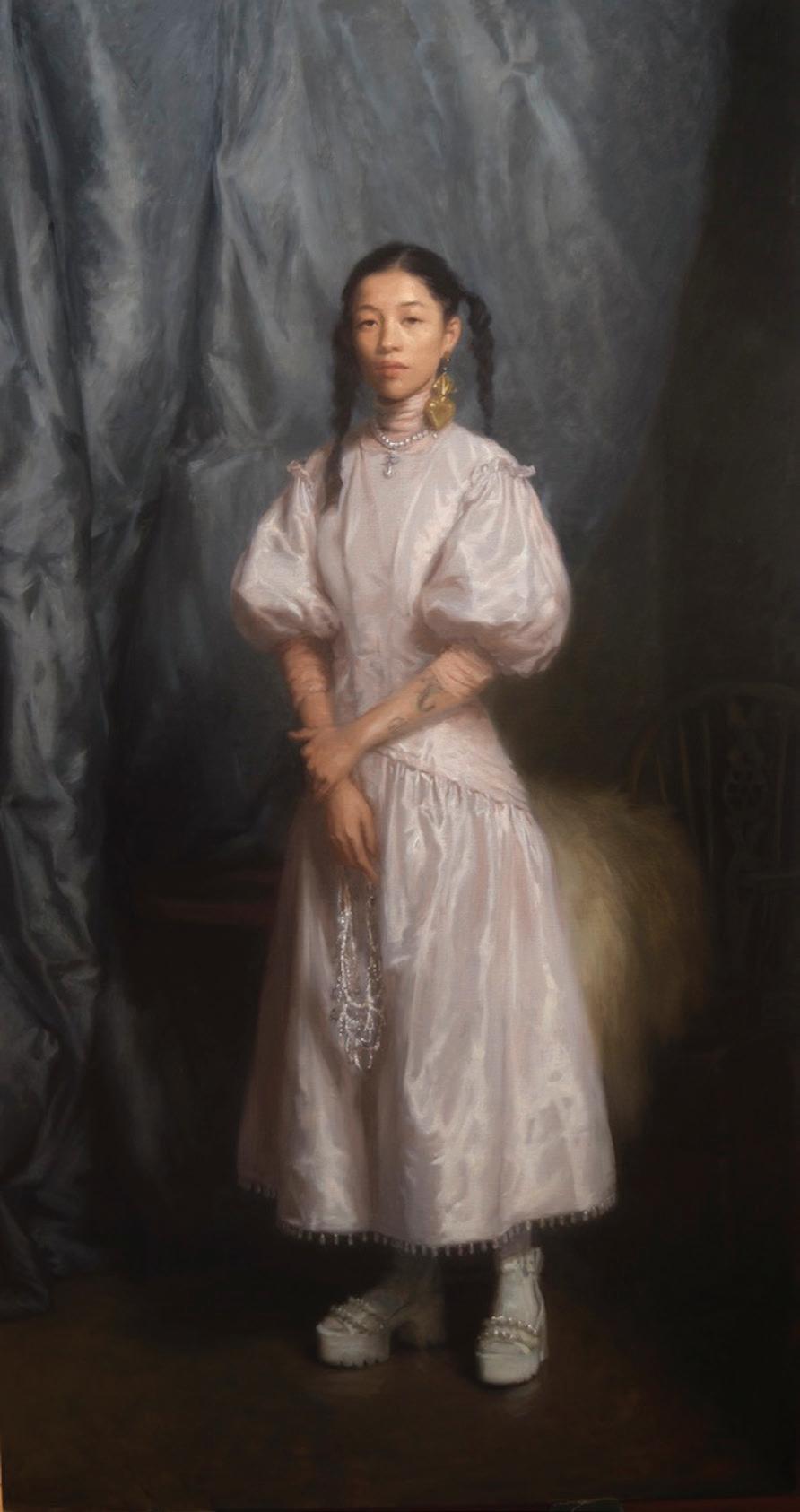
Recognized today as one of Britain’s leading female portrait artists, Isaabella Watling has been busy making her mark in the world of contemporary traditional portraiture. Classically trained at the Charles H. Cecil studios in Florence from the age of 18, Isabella spent her early years in the United Kingdom, where she was born, as well as Australia. Currently, she spends most days working from her historic studio in London when she isn’t traveling for commission work or gallery shows. Isabella’s work has been shown in several major international competitions. She has exhibited at the National Portrait Gallery, London for the BP Portrait Award, first in 2012 for her portrait The Importance of Being Glenn, and again two years later with her full-length portrait, Gina and Cristiano. This year, her full-length portrait, Daisy, was on view at our 2024 Annual Conference and was awarded 4th Place in The International Competition.
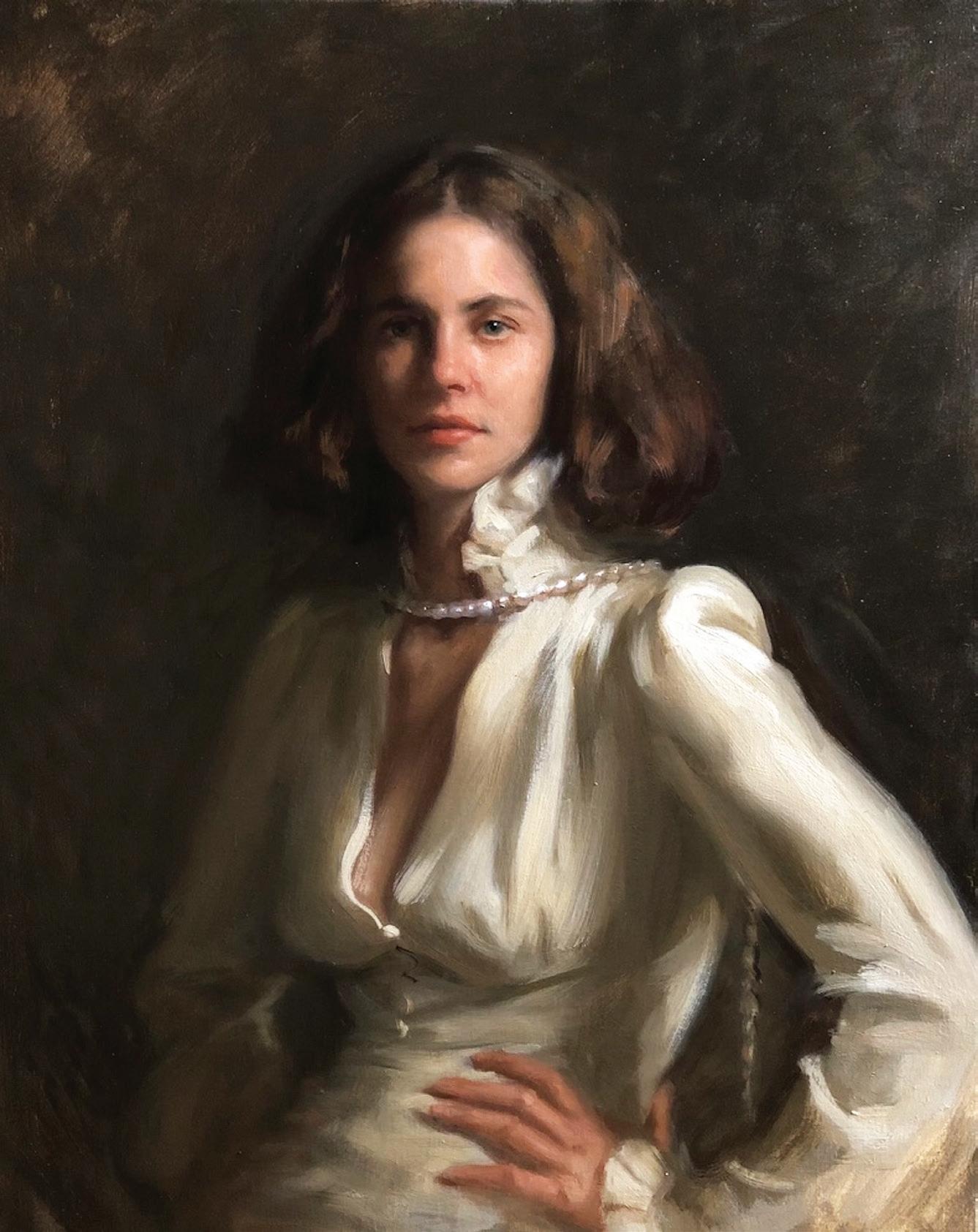
Speaking of her early training at the Charles H. Cecil studios, Isabella said, “My training with Charles had a huge influence on my approach. I was a total amateur when I began my instruction at the school. There, I was taught to base my approach around my eye. The process of working is one of correction. I put marks down and then, after careful scrutiny, I correct and refine. Through this type of training, the eye is strengthened with daily exercise. As well as that visual development, Charles also takes great pains to educate the sensibility of his students so that they learn how to compose a painting. He has dedicated his life to passing on the teaching that he received fifty years ago in Boston from R.H. Ives Gammell. He is an incredible teacher, passionate and extraordinarily articulate.” This training and attention to composition is certainly evident in her work today. In a recently completed life-size full-length portrait, titled Ollie with her Dog, Nino, Isabella carefully posed her sitter (or rather, sitters) standing together with a half-drawn curtain in the background. The young woman, Ollie, calmly holds her dog Nino by the leash as both gaze out from the portrait.
Isabella often speaks of how she was taught to paint using the sight-size method and how it enhanced her skills as an artist. In describing this process, she
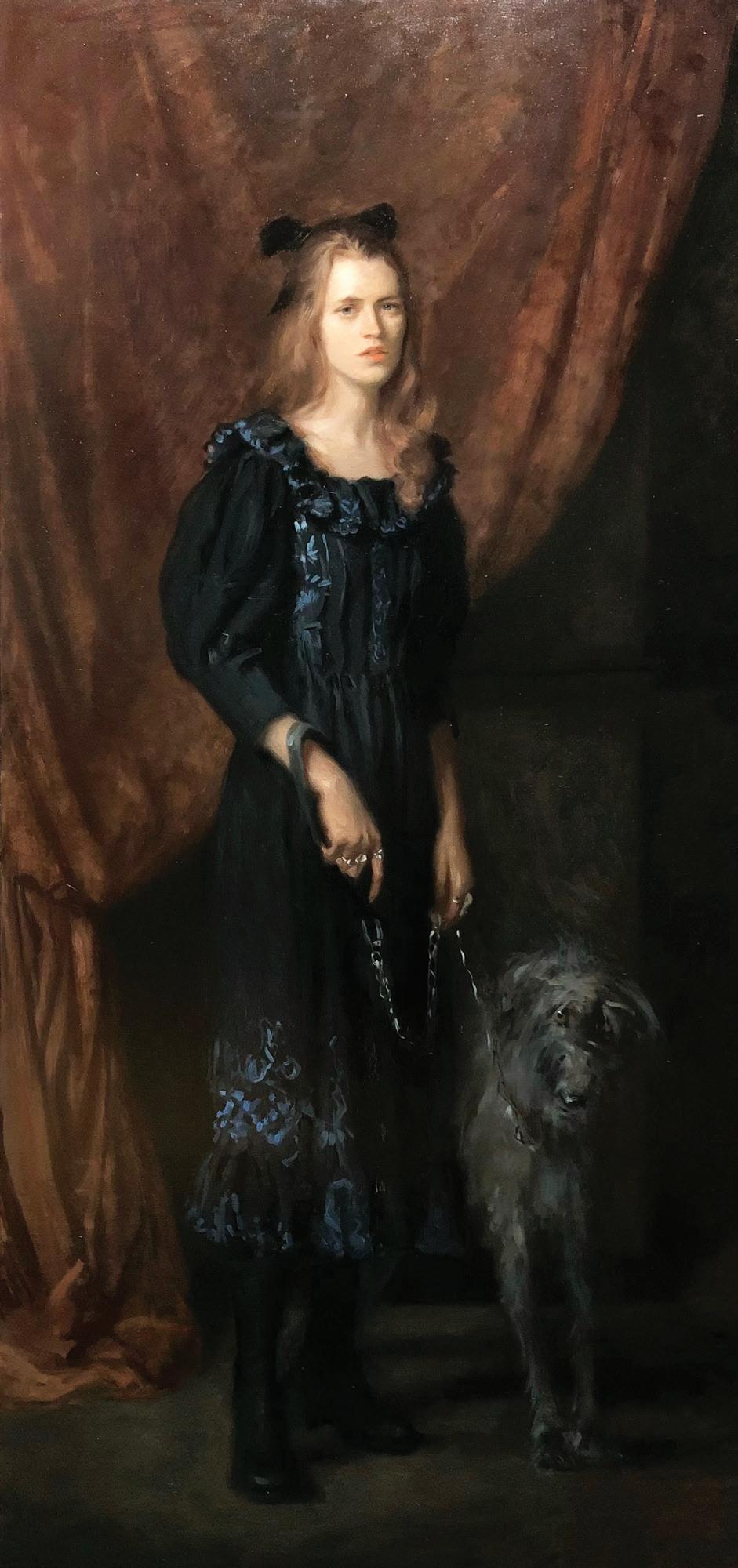
explains, “Sight-size is the term currently used to describe the way of working whereby the canvas is placed alongside the model and the image is created to the same scale, with the artist standing back to behold both the picture and the sitter at the same time from a distance. There is such a wealth of subtlety in nature, and this technique is a great way of getting closer to replicating the overall effect. I think it follows that using this process has made me more sensitive to my subject matter.” In her three-quarter size portrait of Zara, Isabella portrays a young woman wearing a long sleeve white gown posed confidently with her hands on her hips. Her dress features a delicate ruffle at the neck and sleeve, with a plunging neckline, and she wears a long strand of pearls draped over her shoulders. Her gaze is soft, yet assertive as she looks out from the canvas.
When viewing Isabella’s portraits, you get a sense of the whole individual and not just a likeness in the face. But how does she achieve this? In answer to that question, she mused, “I think the answer is in the teaching that has been derived from the work of Diego Velasquez, through the book written
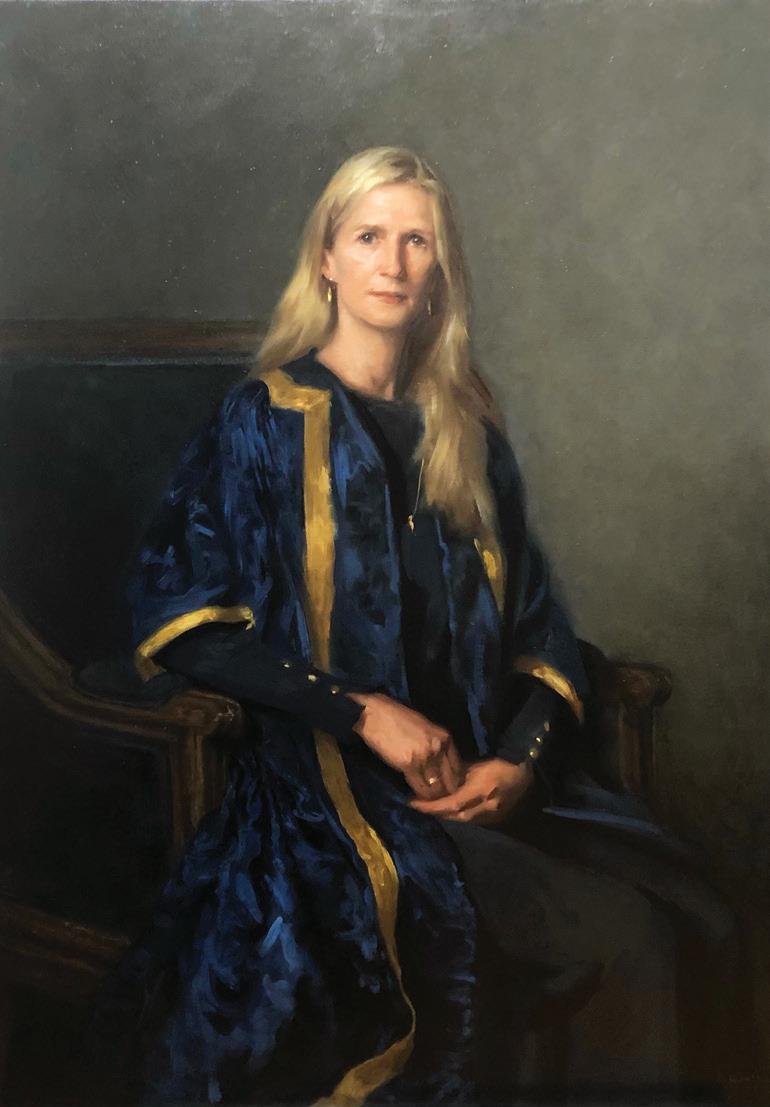
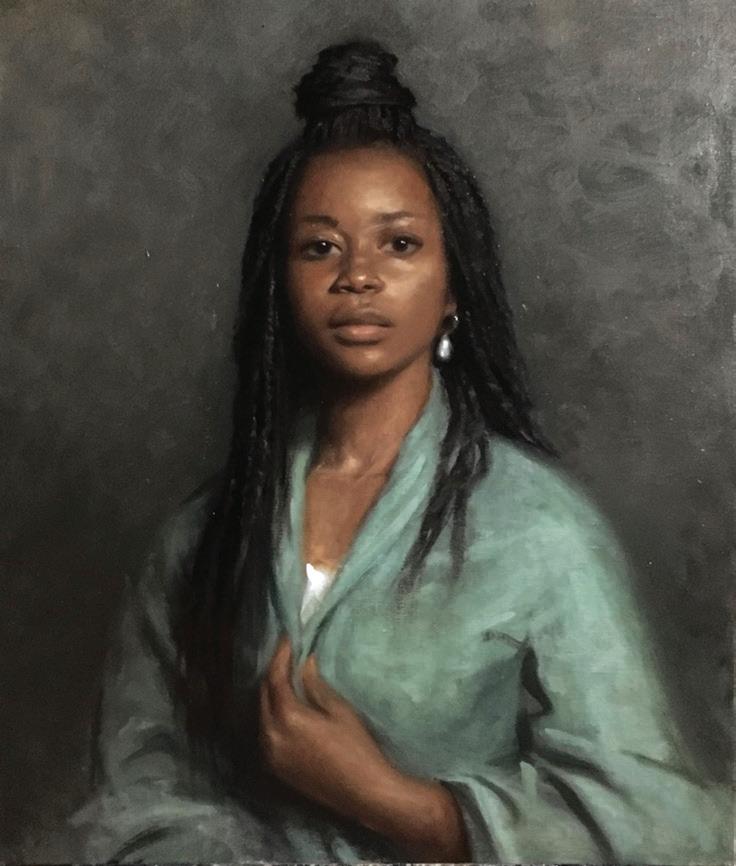
by R.A.M. Stevenson, The Art of Velasquez (1912). John Singer Sargent said that it was the best book on painting, and I highly recommend it, too.” In fact, the great Masters, such as Van Dyck, Velázquez, and Sargent, remain a constant source of inspiration and learning for Watling, as they have for many portrait artists over the years. In keeping with their approach, Isabella’s portraits are always painted under natural light and directly from the sitter.
This year, her portrait of Zizi was shortlisted for the National Portrait Gallery (London) Herbert Smith Freehills Portrait Award. Her work was selected from over 1,600 entries worldwide. “It is a huge honor to exhibit at the National Portrait Gallery for the third time,” Isabella said, while also noting that success in competitions can be varied and unpredictable. “It is now over a century since there was any received notion of good versus bad painting, so almost anything can be acclaimed these days. Therefore, I think it really all comes down to luck. Knowing this, I don’t mind too much when I am not selected, which happens often!”
As her career as an artist has grown over the years, so has her own family. Recently, she and her husband George welcomed their first child. Luckily for Isabella, she has a great support system to help her juggle the demands of motherhood while
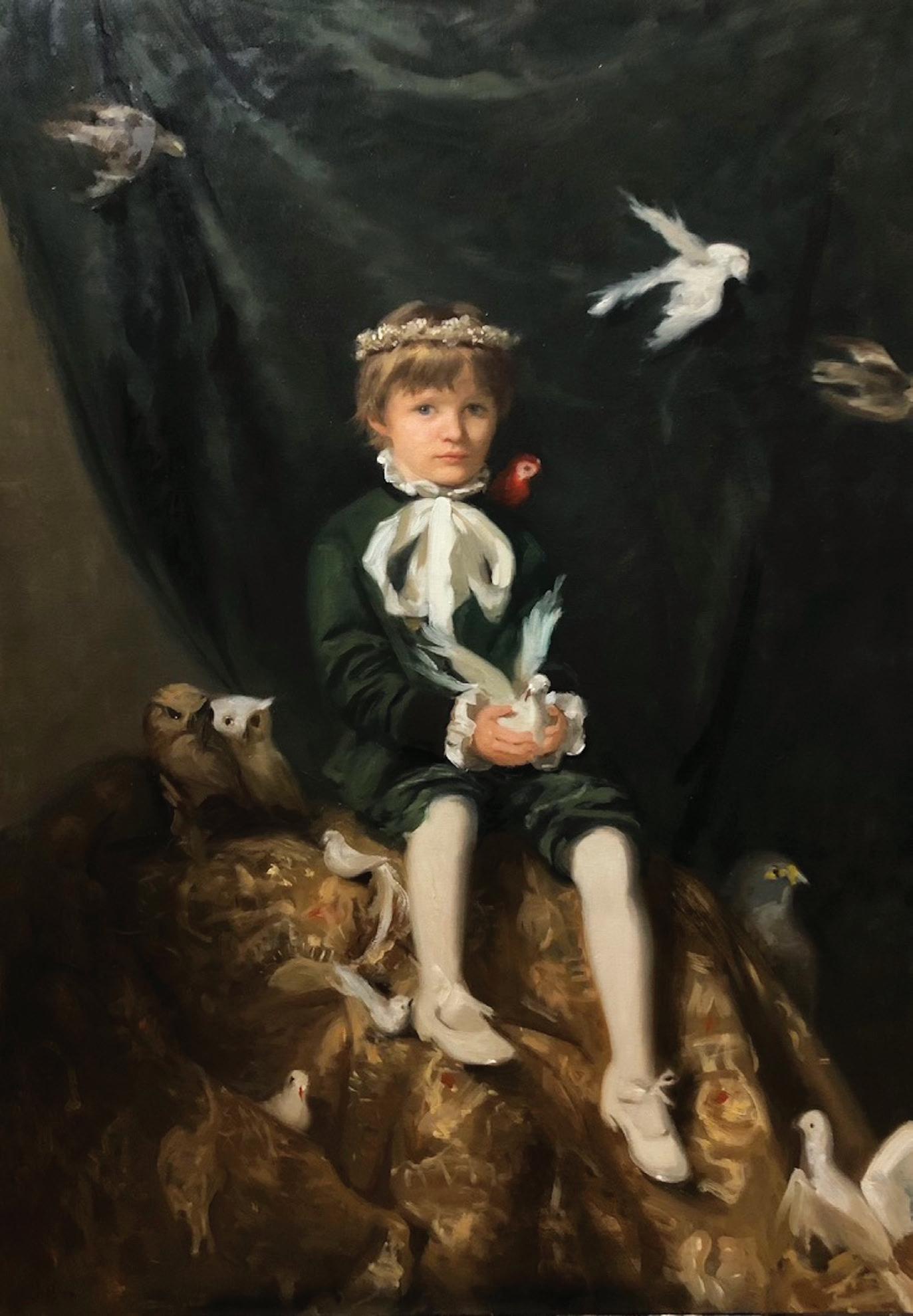
protecting her time in the studio. She says, “Along with my husband, I have great support from my mum and aunt who live nearby. I am hugely grateful to them for making sacrifices so that I can keep progressing in my work.” She states a goal of hers is to get to the level of Velasquez –perhaps a lofty ambition, but upon viewing her masterful oeuvre I wouldn’t rule out her achieving that goal.
Offering her advice for a young person beginning a career in the arts, Isabella said, “While I have had a very particular training and chosen to stick with it, I would not presume that this was the right thing for everyone else to do. Perhaps, in terms of advice, I could say, ‘listen to your inner voice,’ but then again, listening and learning from people that you admire and who are more experienced than you are also not a bad way to go.” Recently, Isabella has been busy working on several new full-length portraits for her first solo exhibition in her London studio, where she will offer a behind-the-scenes look at her workspace. You can see even more of her work on her website, isabellawatling.com.
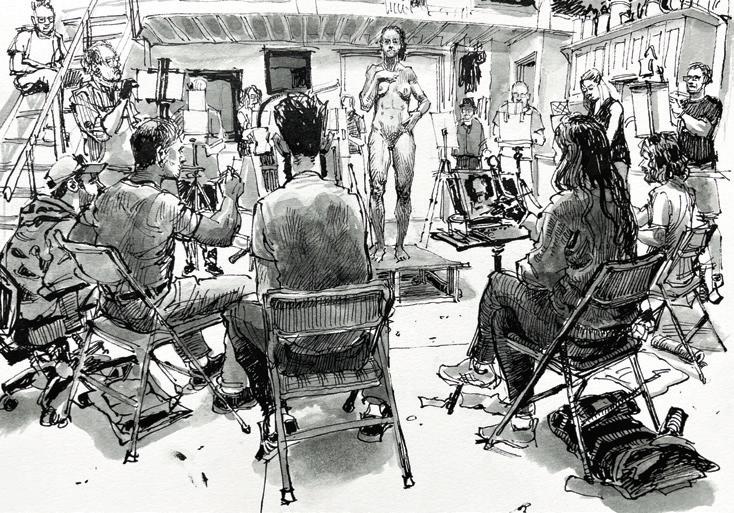
My last three months? I have had the honor to visit 23 artists’ studios, attend nine gallery openings and two museum shows, stop by three ateliers, draw with two groups painting from life, walk through two art festivals and two plein air events, listen to 30+ art podcasts and participate in one, check out the fine art at a county fair, a peonies painting festival, two artists’ studio tours, a student art competition, three art walks, two restaurant exhibits, two coffee houses, a sporting goods store, a public library, and have met dozens of new artists online through the emails and publications from the Portrait Society, OPA, PleinAir Salon, AIS, NOAPS, Boldbrush, and other art publications. It took time to count, but I am happy to have received 732 artists and art organizations emailed newsletters and available art notices. More artists are sending out monthly emails. Three galleries contacted me looking for artist ideas, and I gave several others artist recommendations. I purchased 11 pieces of art (this rate cannot continue), and I picked up a watercolor brush for the first time in 35+ years. I see doing art as a reason to travel and meet artists. I appreciated a 10-yearold’s critique of one of my first watercolors. I told her I liked her sky and clouds better than mine. She did point out positives in mine. She has a great instructor mom.
Why mention all this? The number one question artists ask me is, “How do I attract attention from galleries for my artwork?” My answer is two-fold.
1. It all comes down to the art itself.
2. See all of the above.
Participating in these types of events starts with attending them. I met dozens and dozens of artists during the past three months and reacquainted myself with many more. I am more convinced than ever that an artist needs to get out of the studio and will benefit from meeting and collaborating with other artists. In the last issue, I wrote about using local venues to show your work. I would also add that joining forces with other local artists for studio tours, paint-outs, critiques, and attending shows are also beneficial. Taking workshops and teaching workshops expands those relationships. There is no better way to interest someone in your art than having them see you doing it. Be a part of your artist “community.” That might start out as your local neighborhood, town, or city. It will expand. Come to think of it, the most successful artists have just learned how to scale that “community” nationally and internationally.
I have seen the gambit of studios, from small basement rooms with no windows to converted living/dining rooms to monumental stand-alone edifices full of reference materials with a wide variety of lighting sources. I do have one thought after these most recent visits. I suggest artists make their studios accessible to the public when possible. That could be an annual studio tour with other artists in the area. It could mean adding a paint-out event open to the public involving multiple artists. It could be hosting a demonstration, or it could be having a studio located in a public spot that becomes your
By Scott Jones
own gallery space. The top selling landscape artist in our gallery has his studio three blocks away in a community art center. I send gallery visitors who are interested in his paintings to his studio all the time. He also sends people to the gallery. He can sell paintings directly or sell through the gallery if the contact came through the gallery. Personal interactions with him have led to multiple commissions for the gallery. I know other artists who paint in retail-oriented spaces where their work can be displayed, and collectors can see them in action. The artist and the space become part of the neighborhood. Note: One should consider any privacy issues in a homebased studio. In Edmonds and on Camano Island, the muchanticipated annual studio tours are highly successful, and dozens of artists welcome people into their home studios.
A final thought: What is the first and most popular question asked in the gallery? “Are these all local artists?” There is an affinity for and admiration of local artists. Be aware of that. Take advantage of that in looking for venues to show your work or invitations to see your studio. I do point out to people that we are also fortunate to have nationally known artists who bring people to the gallery and our website from all over the country. I point out how that benefits our “local” artists.
Who you hang with helps!
Questions welcomed at scottjonesfineart@gmail.com or @scottjonesfineart on Instagram.
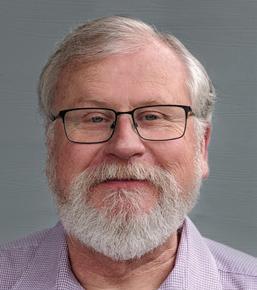
Scott Jones has been a passionate art collector since the age of 16, and after a successful exit from the business world, shifted his focus to his passion, selling art. He is currently a Sales Consultant for Cole Gallery in Edmonds, Washington and serves as State Ambassador of Washington for the Portrait Society.
On July 18th, Adrienne Stein’s exhibition The Enchanted Eye opened in Denver, Colorado. It was serendipitous that Adrienne, who spends time in Denver each year, was still in town when I arrived later in the month to visit my daughter Avignon. Situated close to the Denver Art Museum, we agreed to meet at Gallery 1261 where Adrienne took me on a tour and spoke of how this exhibition came together.
Adrienne explained how the title The Enchanted Eye was developed based on the figurative and portraiture work for which she has become known. These imagined compositions possess the feeling of fantasy and imaginative realism. With this mostly new body of work, Adrienne chose to focus on gardens as her theme, which she acknowledged have been painted many times, but instill these images with the same kind of fantasy feeling. Using bold beautiful colors and in some instances dramatic compositions, she successfully imbued these paintings with “that other-worldly, ethereal sense that other mythological works have but using a subject that is more commonplace,” she explained.
Adrienne has found specific gardens to be sanctuaries of contemplation and meditation. In 2023, she and her husband, artist Quang Ho, were the artists-in-residence at the Ladew Topiary Gardens in Monkton, Maryland. As a result of spending time both painting and ultimately having a show there, this gave her the opportunity to make botanical subjects not merely as a compositional device but instead as the focus of her paintings on their own merit. In addition to painting on location, she took photo and video reference and brought together many different sources from trips to several gardens to create a fantasy garden scene of her imagination. It also occurred to Adrienne that this show would represent her homage to some of her favorite artists including Maxfield Parrish, Louis Comfort Tiffany, and John LaFarge whose stained-glass windows are in the Pennsylvania Capital about twenty minutes from where she grew up in Harrisburg. “Parrish’s stained-glass landscapes have a glow about them that elevates the landscape to a sacred and holy kind of realm, so I was seeking that kind of feeling when I was creating these paintings,” the artist noted. Adrienne’s admiration ultimately culminated in The Enchanted Eye.
When Adrienne was in graduate school, she recalled how she was ridiculed for her love of 19th-century American illustrators, such as Dean Cornwell, as well as the nature-oriented PreRaphaelites. Nonetheless Adrienne was enraptured by their narratives, use of color, and faithfulness to nature. This emphasis on observation of detail and meticulous rendering of nature resonated with Adrienne. She realized how this combination of influences- the artists she loved, her personality and life experiences- all led to the way she approached her painting. Adrienne elaborates by saying, “For me, the most significant life experiences in the past couple of years were
By Wende Caporale-Greene
when I became a wife in 2020 and a mother in 2021, and those two experiences were the most impactful of my life and the most joyful. The work is the result of the love and joy I feel for my family. People recognize the paintings exuding joy and are so colorful, and since I wanted to ‘talk’ about love and motherhood without being so literal, this is my way of celebrating that.”
Walking through the gallery, Adrienne shared some insights into her thought process. She begins with Guardian where the central image of a bison skull dominates the symmetrical composition. She explains that this painting was part of a series that she did of the American West depicting the contrast between the different variety of flora, fauna and forms than she experienced in her native Pennsylvania. She explains that these were not direct landscape paintings but were inspired by Western artists such as Georgia O’Keefe and Agnes Pelton. Adrienne found that “depicting bones and feathers, decaying, dry foliage such as thistle and paintbrush were a lot of fun to paint.” Although she acknowledges that this work is a little different than the rest of the work in the show, it gives the viewer the opportunity to get a sense of the evolution of her work by seeing this painting among the others.
The waterlilies in Golden Hour were from Adrienne’s visit to a botanical garden in Santa Barbara, California that she visited with Quang and their young son, Liam. She was enchanted by how the “afternoon sparkled, and the light was so special.” Using a series of photos and videos from that day, Adrienne created this abstract composition. Other sources of inspiration for this exhibit, in addition to the primary influence of the Ladew Topiary Gardens, included the Denver Botanic Gardens and Monet’s Garden in Giverny, France.
In 2017, Adrienne and Quang purchased a vintage home built in 1764 on three acres in Pennsylvania. The former owner was a master gardener and painter who planted extensive gardens, and the couple recognized the responsibility they took on as the new stewards of this very special place. They ultimately built two studios as outbuildings on the property and have carefully and meticulously expanded the gardens to make them their own. The view of the garden from Adrienne’s studio has taken center stage in her work in recent years as a result.
Adrienne’s depiction of swans in Swan Fantasy II and Swan Fantasy III was greatly influenced by one of Adrienne’s favorite paintings by the British illustrator, Frank Brangwyn, not surprisingly entitled The Swans. Brangwyn’s version featuring a pair of swans, one with its wings spread, sitting on a bed of nasturtiums and orange and yellow flowers embodied the romanticism Adrienne hoped to convey in her own version. It was at Broadmoor Resort in Colorado Springs which features a large man-made lake where Adrienne found a pair of swans and the necessary reference for these paintings. She describes
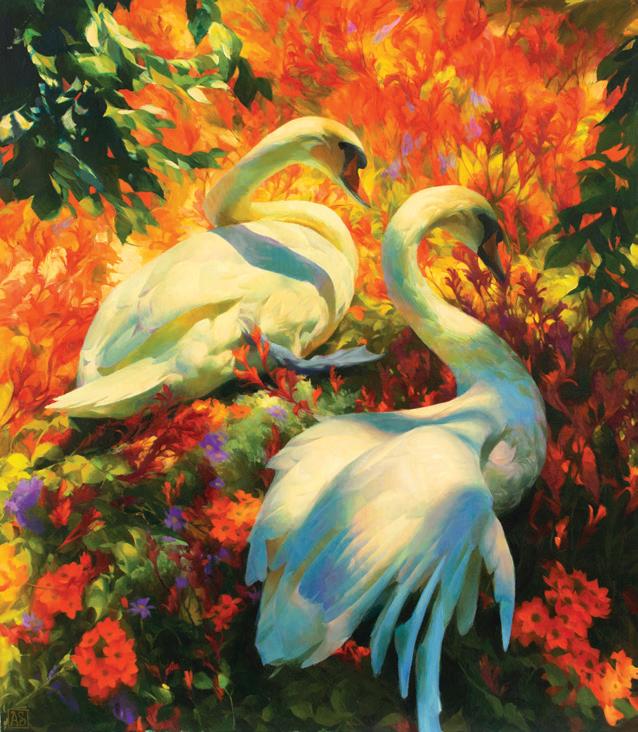
how the painting came together: “I went there and took videos of them on the shore and in the water, just observed them moving together. They were sitting on the shore of a lake, but I really wanted them in this lush environment. The red and orange flowers are from a garden I love to visit in Pennsylvania, so it was bringing many sources together to create what I had in my mind’s eye.” It is Swan Fantasy III that is the centerpiece of the show and everything else was built around it.
The Denver Botanic Gardens had a transformational effect on Adrienne when she began dating Quang and frequently visited the gardens for prayer and meditation. It became a sanctuary for her, and she intended to bring that tranquil quality and glowing light to her paintings not necessarily in a literal sense but in a more visceral way. Adrienne chose to represent the lily pond with no horizon or sky, choosing instead to just focus on the forms, colors and textures on the surface and the reflections on the water.
In order to formulate a composition, Adrienne prefers to make a little gouache study as opposed to using photoshop. Other times, she works directly on the canvas while acknowledging that initially resolving the composition is more desirable. She points out Ruffles, a striking composition of purple irises against a brilliant, gauzy yellow curtain that she and her mother arranged and painted together. Working alongside other painters is something Adrienne particularly enjoys. She works with a group of female painters in Denver who refer to themselves as “Sisters of the Brush” and greatly enjoy going to the Denver Botanic Garden to paint the lily and lotus flowers.
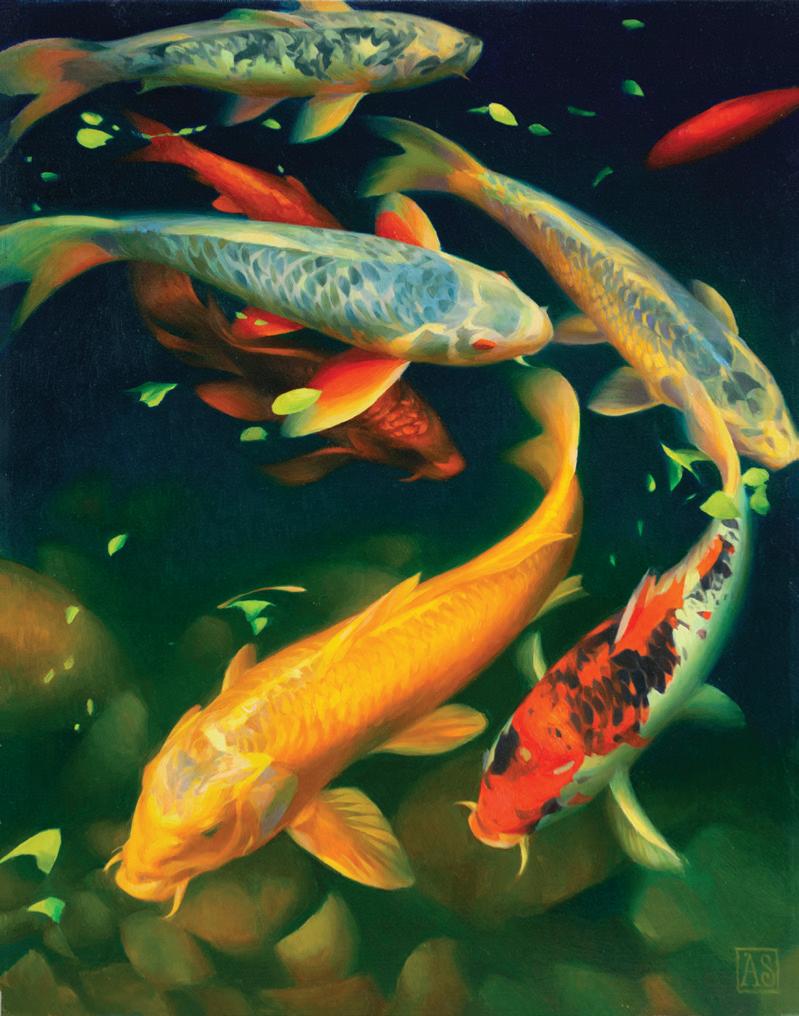
Adrienne describes the direction she chose to create the koi fish paintings from Ladew Garden. Her rendition is built upon layers of color with a concentration on scales, color and texture and composing like surreal fantasy dancers. She remarks on the influence of her husband’s collection of Japanese woodblock prints of koi which are pared down to the essence and poetic. Also in the show are two small paintings of the formal area of the Ladew Topiary Garden depicting the sculptural, shaped hedges which she felt more fully tell the story of her experience in the garden. It forced her to paint a ubiquitous subject while telling the story in her own way.
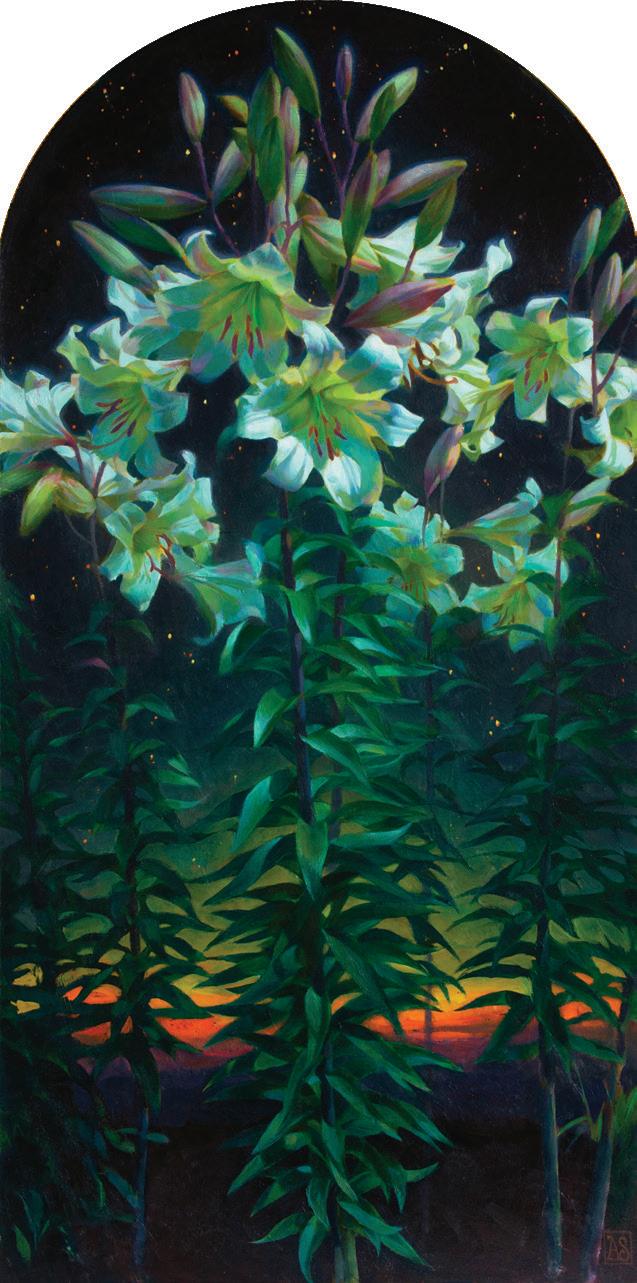
A beautiful rendition of Dutch tulips began as a demonstration that Adrienne gave at the garden festival at Ladew Gardens, and she later completed with photo reference. Although white lilies suggest Easter, Adrienne changed the mood of the painting by developing a dark background with strong blue and green shadows on the lilies. The bright orange sunset plays off the deep blue background with the tabernacle frame as a nod to this religious icon. The inspiration of Tiffany-stained glass resonates in this painting as well as in Towers of July, a diptych painting of complementary purple and yellow hollyhocks. This exhibition The Enchanted Eye accomplished all the objectives that Adrienne Stein had hoped to convey. I will eagerly look forward to seeing more of Adrienne’s uniquely beautiful work.
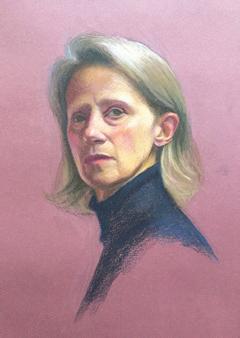
Wende Caporale-Greene is an award-winning artist and nationally known teacher of portraiture. She is a Master Pastelist with the Pastel Society of America and serves on the boards of the Artists’ Fellowship, Hudson Valley Art Association, and the Portrait Society of America 1. Star Gazers,
As artists, self-critiquing is an essential part of the creative process. It’s a skill that can significantly improve our work by helping us see it through a more objective lens.
There’s a moment in the 1940’s Frank Capra film It’s a Wonderful Life when the twelve-year-old George Bailey is faced with an adult-sized dilemma. Wondering what he should do, he discovers some advice from a most unlikely place—a cigarette ad which reads, “Ask Dad, he knows.”
Now, advice from cigarette ads can justifiably be held in suspicion, but I’ll take this one at face value and consider the lessons my father taught me for self-critique. My father was a seasoned artist and almost everything I have ever learned about painting has come from his tutelage.
My father often said, “An artist’s eyes are our own worst enemies. Our eyes are a lazy organ...and we get used to our own mistakes.” To combat this laziness, he advocated for constantly changing perspectives to fight the complacency of our eyes. Some of his tried-and-true methods follow:
Discovering distractions in your work can be challenging when you’ve been staring at it for hours. Changing your point of view can help reveal these hidden flaws. One of the best and easiest ways to do this is simply to look at your painting upside down. Obviously, actual headstands are not required. Turning the canvas upside down provides a similar perspective… with less athleticism needed. This unconventional approach disrupts your brain’s ability to recognize familiar shapes and forms. It helps you detach from the drawing to see the overall balance of your composition without getting bogged down by details. It’s a way to trick your brain into a fresh perspective. It allows you to see your work purely in terms of color, value, and composition.
Squinting is another easy-at-hand technique that simplifies your vision—minimizing details and helping you focus on the broader value patterns. By reducing the complexity of what you see, you can better judge the overall light and dark areas and how they interact.
Rather than always staying close to your painting and in one place, try walking back and forth in front of your painting, something like a fencer who constantly approaches and backs up from an opponent. This shift of position helps your gaze move between the “up close” to see tactical details and the “from a distance” for the more strategic view.
by Jason Bouldin with Kim Azzarito
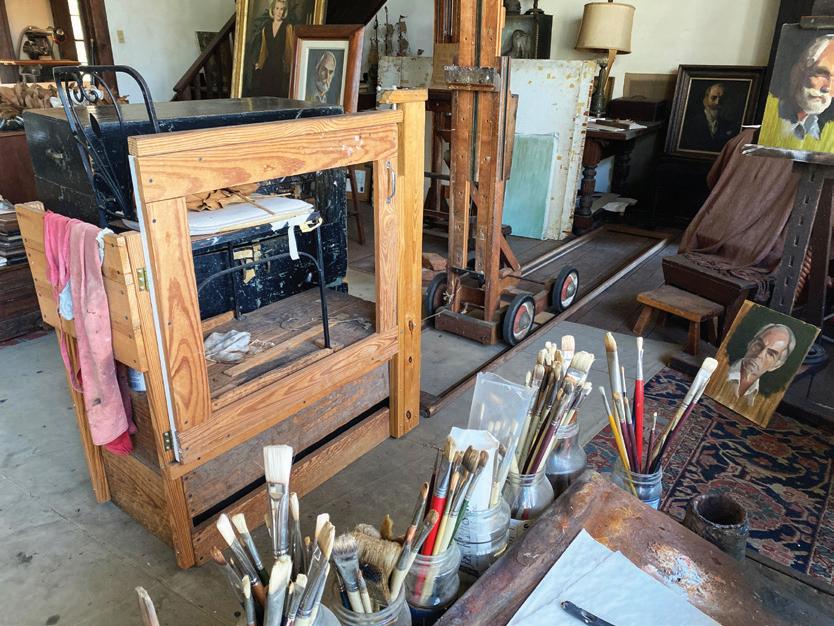
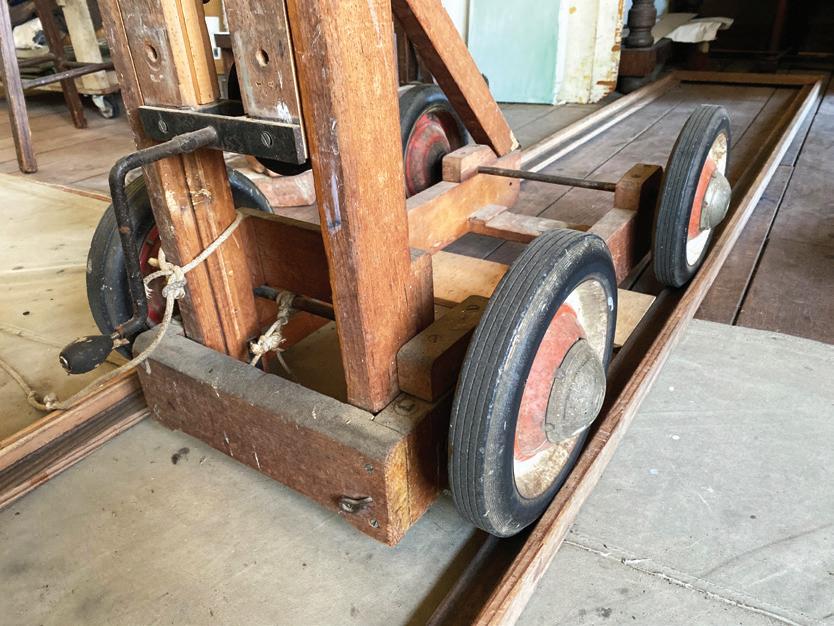
My father had notoriously bad feet. It was a challenge for him to stand in front of his painting let alone walk back and forth, so Daddy developed what he humorously called the “B3&M Railway”—the shortest railroad in the world. He outfitted his easel with wheels which fit into a wooden track. While he sat stationary at his paints and palette box, Daddy could gently kick the easel (with his painting as passenger on board), where it would coast to the end of the track (about 14 feet away). From this distance he could judge the overall effect. With a rope attached to the easel he would then pull the painting back within reach for the next stroke.
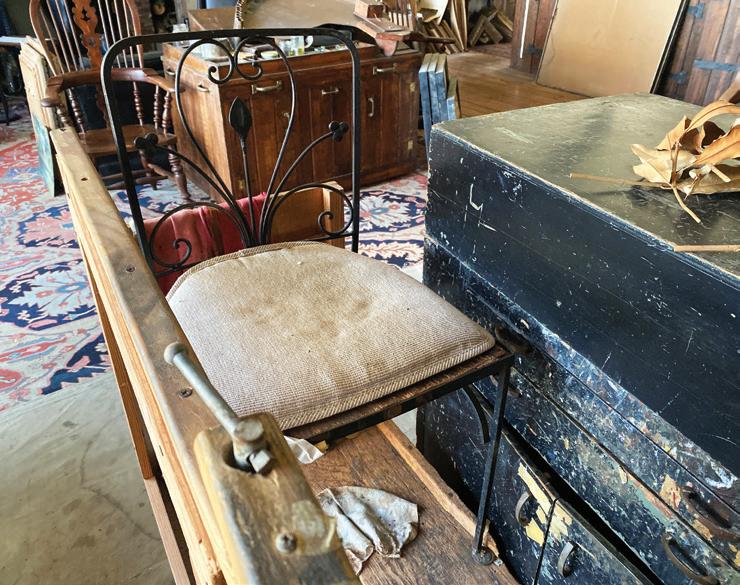
Moving your painting to a different location can provide a new context and reveal how it holds up under different lighting conditions. My father often placed his works in his dressing room under incandescent light (away from the natural light which was dominant in his studio) to see if they still looked good in a different environment. This method helps to highlight inconsistencies that might not be visible in your usual workspace.
Your Friends Close…and Your “Critics” Closer
Getting feedback from others is invaluable, but it’s essential to choose your critics wisely. While it’s tempting only to seek opinions from those who might be gentle, like family members, it’s often more beneficial to ask someone who will be honest and objective. My wife, Alicia, has become my reliable critic who doesn’t let me off the hook easily. Sometimes, even the opinion of a UPS driver can offer a fresh perspective.
Finally, there comes a time when you need to walk away from your work and not look back immediately. Taking a break and getting a good night’s rest can do wonders. When you return to your painting with fresh eyes, you’re more likely to spot mistakes and areas for improvement that you previously overlooked. Daddy said, “You’ll see your mistakes in the morning…guaranteed.”
Use a Mirror – One of the simplest yet most effective methods to gain a fresh perspective on your work is to look at it in a mirror. This reversal can immediately highlight issues with symmetry, proportion, and composition that you might not notice otherwise. It’s akin to seeing your work as a stranger might see it, providing a new viewpoint that can be incredibly revealing.
The Digital Critique– If you can photograph your work digitally (which can easily be done on a smart phone), try manipulating the image to mimic some of the aforementioned techniques. Through the simplest of editing tools, an image can be rotated 180 degrees and rendered upside-down, it can be changed into a black and white file to better judge values, or it can be flipped backwards so that it appears as it would in a mirror.
Consider the Narrative – Every piece of art tells a story, whether abstract or representational. Take a moment to step back and consider what narrative your painting conveys. Is it clear? Does it engage the viewer? Sometimes, the most critical aspect of self-critiquing is ensuring that your work communicates the intended message or emotion effectively.
Create a Checklist – Develop a checklist of elements to review each time you critique your work. This might include composition, value structure, anatomy, perspective, color harmony, edge quality, and overall impact. By systematically going through each element, you can ensure a thorough and objective critique process.
Document Your Progress – Keep a journal or a digital record of your critiques. Documenting your observations, decisions, and changes made can help you track your progress over time. This practice not only aids in improving your current work but also provides valuable insights into your artistic development.
Self-critiquing is not about harsh judgment but about seeing your work more clearly and making thoughtful improvements. By employing these techniques, you can develop a more critical eye and continue to grow as an artist. Remember, the goal is to keep evolving and never settle for what’s comfortable. Remember my father’s mantra: “change, change, change”—that’s the key to avoiding complacency and continually pushing the boundaries of your artistic potential. By embracing a mindset of constant improvement and leveraging these practical strategies, you can elevate your work and achieve greater artistic fulfillment.
Jason Bouldin grew up on his family’s farm in Clarksdale, MS, and studied at the University of Mississippi and Harvard University, where he earned a Bachelor of Fine Arts degree. After apprenticing with his father, artist Marshall Bouldin III, he began his professional career as a portrait painter. Bouldin won the Portrait Society of America’s Grand Prize in 2002 and has exhibited at the Royal Society of Portrait Painters in London. Besides portraits, he finds enjoyment painting landscapes and still-lifes.
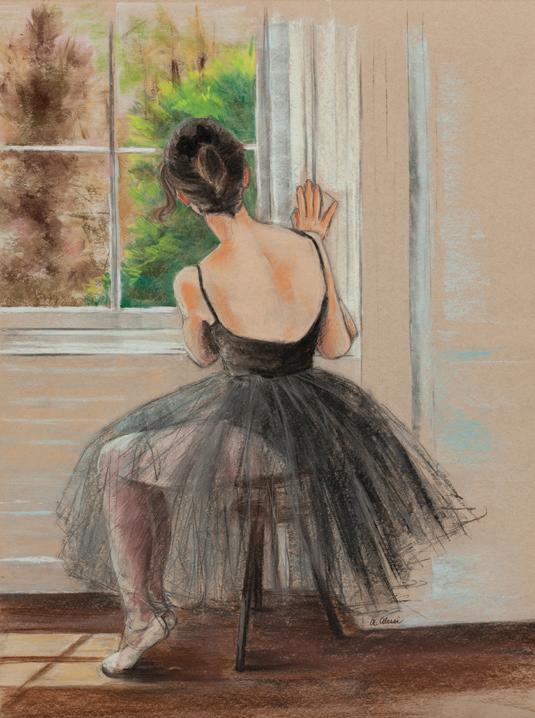
1. Annette Alessi artwork Ballerina Looking Out, 28 x 22", pastel on toned paper, received an Artistic Recognition Award for the Fall 2023 issue of Art and Color 365 magazine.
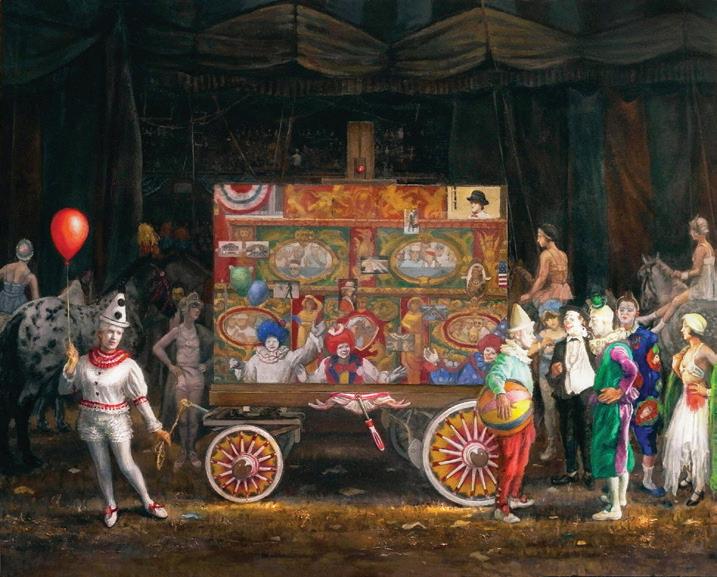
2. Gabriela Gonzalez Dellosso received Second Prize in the American Women Artists 2024 Annual Online Juried Show for her artwork The Harlequin’s Homecoming, 16x20”, oil.
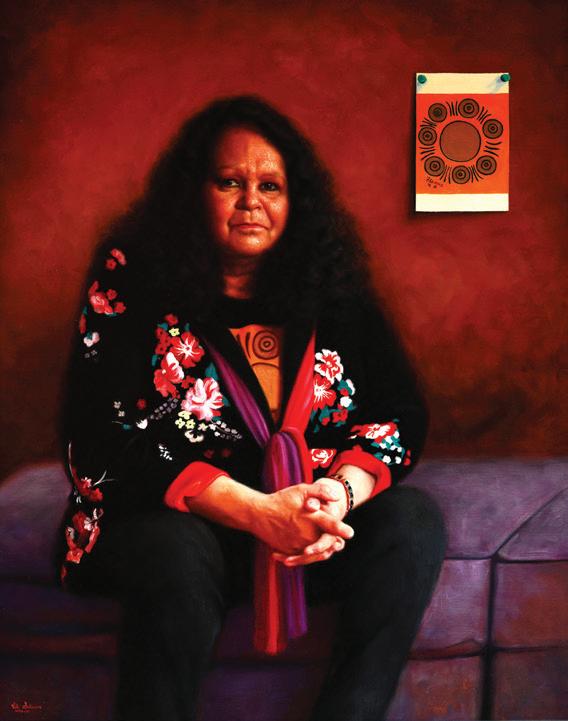
3. Vicki Sullivan’s painting of Aboriginal artist Fiona Clarke was a Highly Commended Prize Winner in The Lester Prize 2024 at the Western Australian Museum, Boola Bardip.
4. Judy Takács was awarded Best in Show at the Ohio State Fair for Burden of Thalia, Muse of Cheerfulness, her oil painting triptych from The Goddess Project, re-imagining mythology through feminist eyes.
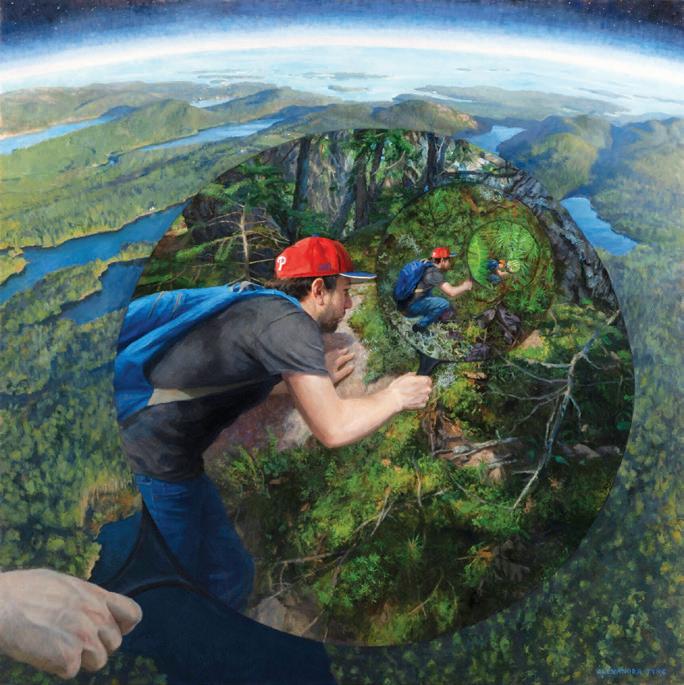
5. Alexandra Tyng’s painting Worlds Within Worlds, 48x48”, oil, received the Gold Medal of Honor in The Allied Artists of America’s 111th Annual Exhibition.
4 5
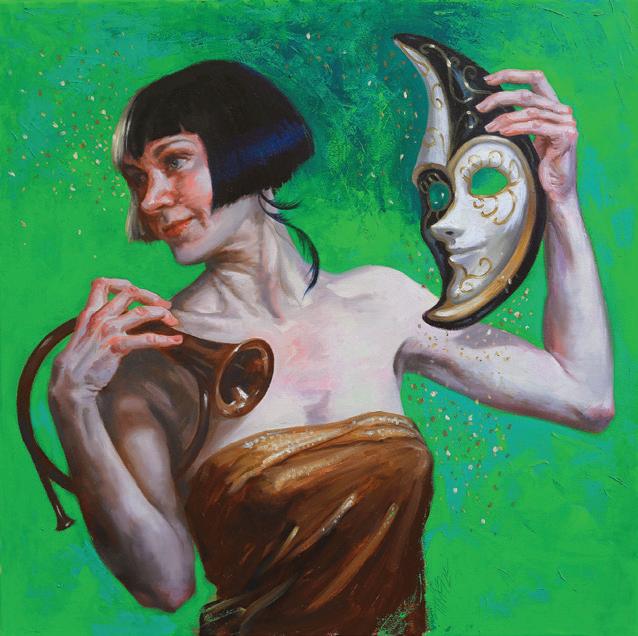
1. Charles Kapsner’s exhibition
“Odyssey: A 50 Year Artist’s Journey: Not a Still Life” of 20+ pieces illustrating his extensive artistic career will be on display November 7, 2024 through January 11, 2025, at Studio Pintura Fine Art in Minneapolis, MN. Contact info. studiopintura@gmail.com for more information.
2. American Women Artists
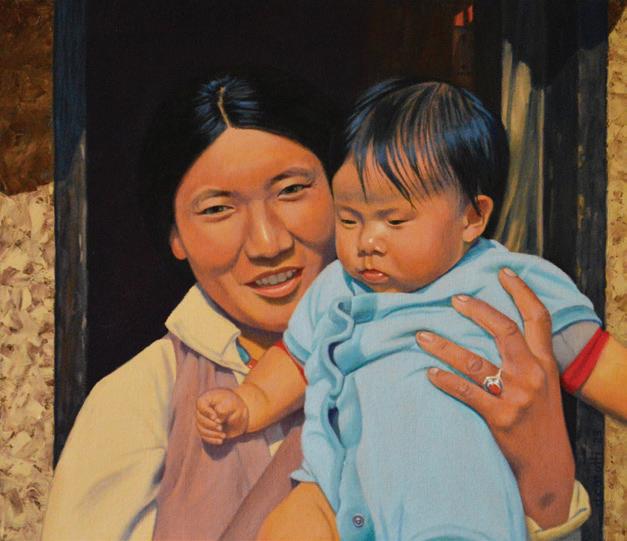
“Expanding Horizons” exhibition is open now through November 10, 2024, at the Loveland Museum, in Loveland, CO. This juried show features these Portrait Society artists: Nicole Alger, Stephanie Britt, Ellen Buselli, Donna Catotti, Mika Denny, Cheryl Elmo, Diana Kirkpatrick, Elayne Kuehler, Judith Leeds, Gayle Madeira, Eileen Nistler, Cher Pruys, Lori Putnam, GayLynn Ribeira, Pauline Roche, Donna Slade, Ardith Starostka, Judy Takacs, Anna Toberman, Susan Waters, and Linda West. Pictured: Donna Catotti, Lhamo and Her Daughter - Tibetan Refugees in Nepal, 20x24”, oil
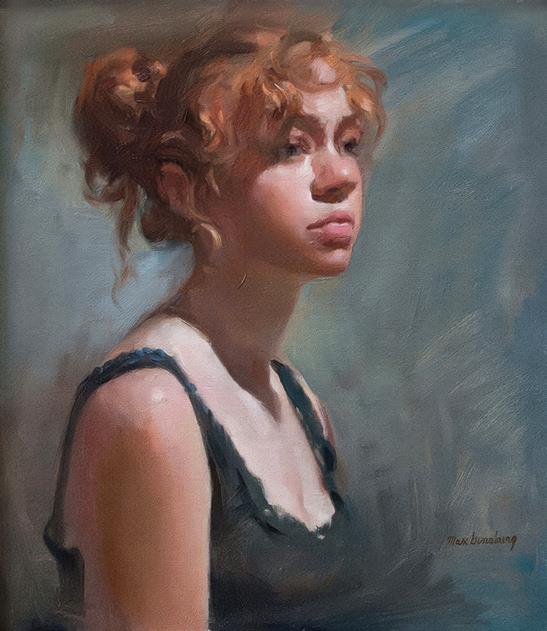
3. Max Ginsburg is teaching a Painting from Life workshop at Scottsdale Artists’ School, December 3-6, 2024. In this workshop, students will paint from a live model, alla prima. Visit scottsdaleartschool.org for more information.
4. JaFang Lu will be teaching a Portrait Painting workshop, June 9-13, 2025, in Haines, Alaska as part of the Studio Incamminati “In Your Town” workshops, where students will learn principles that enable them to develop a portrait painting from start to completion in a logical and flexible way. For more info and to register, visit studioincamminati.edu.
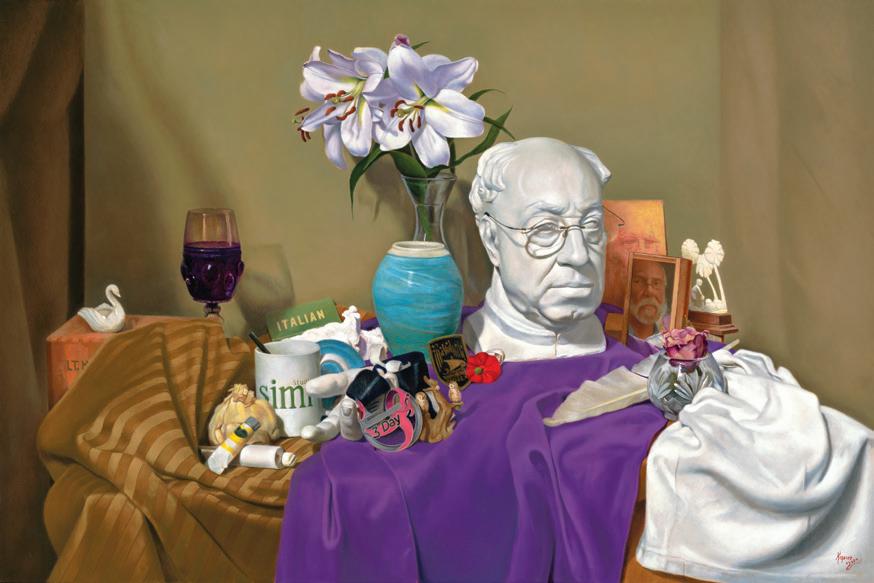
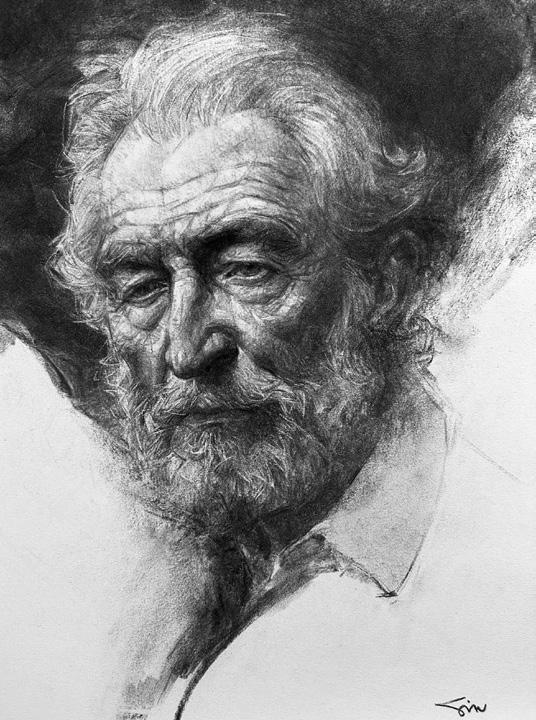
5. Oliver Sin will be teaching his first Rome, Italy expressive portrait drawing workshop on June 30-July 11, 2025, through The Rome Workshops. Visit theromeworkshops.com for more information. 2 3 4 5 1
RENEWING MEMBERS
A special THANK YOU to our renewing members in June, July, August
Patron
Richard Abbott, CA
Chantel Barber, TN
Lisa J. Betteridge, MA
Donna Carr, TN
C. Hope Cunningham, SC
Laura Era, MD
Jacquelyn Hill, GA
Kate Irby, LA
Deborah Kerr, Canada
Marion Field Koch, TX
Mary Lazar, NH
Jean Little, OK
Nancy Mann, FL
George Newton, FL
Daralyn Peifer, MN
Claudia Pitts, GA
Linda Harris Reynolds, DE
Marianne Rose, NC
Andrea Schneider, NJ
Robert L. Scott, Australia
Juan Shen, CA
David Sierra, KY
Rosalinda Taymor, CA
Dan Warner, NY
Laura Whitmer, VA
General
Jan Avery, CA
Sue Bailey, TX
Marshall J. Barrash, GA
Nathan Bartlett, MD
Neal R. Benham, FL
Debby Bird, FL
Sarah Blumenfeld, MO
Jie Cai, NY
Jamie Cassaboon, NY
Sarah Clinton, TN
Kathy Coates, NC
Renee Corwin, CA
Karen Coughlan, MD
Shelly J. Cox-Vandermeulen, FL
Cynthia Davis, OH
Paul DiVito, DC
Paul Dobbins, VA
Jill Eberle, NC
Kathy Fieramosca, NY
Amy Foster, MI
Kerri Gibbs, NY
Gavin Glakas, VA
Wanda Greene, MO
Eric Fei Guan, CA
Lexi Hannah, NY
Theresa Harris, GA
Susan Fleming Hotard, TX
Chin-Cheng Hung, GA
Doris Ingle, AL
Ann Johnson, GA
Cary Jurriaans, WA
Mariah Kaminsky, CO
Irina Kaplan, NY
Marjie Laizure, NC
Dennis Lake, SC
Emiliya Lane, WA
Chelsea Lang, NC
Hannah Leach, SC
Dodie Loewe-McPhie, OH
Ceci Luepnitz, TX
Debra A. Mandel, NJ
Elizabeth Marquette, TN
Jan LorineMatthews, TX
Cathy McArthur, FL
Jean McClelland, OR
Patrick McGannon, GA
Krystii Melaine, WY
Rachel Mindrup, NE
Sallie Day Mogerman, MO
Judith Michael Myers, CO
Heather Thomas Olson, ND
Karen S. Paris, CO
Trey Peaden, AL
David Philips, TX
Robert L. Prapuolenis, NY
Terrence Pratt, VA
Catherine Prescott, PA
Deb Putnam, MA
Timothy E. Rees, AZ
Pauline Roche, CA
Sharon Sprung, NY
Nicole Stewart, MD
Jim Stovall, NM
Scott Sullivan, MD
Jeffrey Tokarz, NY
Nicole Troup, PA
Teresa Weiser, GA
Linda A. West, CT
MaryLynn Elliott Williams, SC
Maria Willison, TN
Jessica Woodhouse, NY
Nancy Workman, IL
Nancy Zambito-Franz, FL
International
Bernade Flournoy, IN
Rick Cullis, Canada
Yolanta Desjardins, Canada
Gillian Dunlop, Australia
Carla Laffra, Netherlands
Betina Fauvel Ogden, Australia
Brenda St. Hilaire, Canada
Jimmy van Geet, Australia
JULY
Patron
James Andrews, WA
Laura Atkins, MI
Suzanne Barnes, OR
Tamara Beeler, IL
Doris Boudens, MA
Mickey Carlson, IA
Tom Edgerton, NC
Pierre Forest, Canada
Susan Goodmundson, CA
Terry Green, CA
Peggy Hagler, AL
Jill Holt, AL
Judithann Kelsen, VA
Wendy Kwasny, CA
Kam Lam, AZ
Setsuko LeCroix, OH
Erica Marshall, CA
David Mietty, MI
Vicky Miller, TX
Sanjukta Mitra, MN
Lyndsie Nash, UT
Mark Owen, CO
Samantha Penner, UT
Ron Primm, VA
Jami Rahn, CO
Michelle Recke, MN
Rachel Reitan, TX
Ainur Ryskulova, NJ
Lionel Sosa, TX
Thalia Stratton, CA
Kimberly Strittmater, WI
Elizabeth Swartz, VT
David W. Terry, OR
Deb Torguson, VA
Fred A. Treyz, VA
Linda Wharton, MD
Maria Whitehead, VA
Cietha Wilson, CA
Tillie J. Yow, GA
Janet Zabilski, MA
Bruce Zaretsky, NY
General
Froydis Aarseth, Norway
Sonny Abesamis, CA
Valentine Aprile, NY
Carol Arnold, MA
Cyndy Arthur-Rankin, MD
Coleen Barnhart, GA
Herb Basik, VA
Carol Volz Begley, PA
Audrey Bell, NM
Suzanne Morell Berry, TX
Norma Binam, TX
Kelly Birkenruth, CT
Patricia Boes, NY
Nel Bringsjord, VA
Lindy Bruggink, AL
Mark Burgess, MI
Kyong Burke, TX
Olena Burykina, TN
Michael Butler, GA
Kathleen Canterbury, IL
Nanette Catigbe, VA
Francisco Catigbe, Jr., VA
Connie Chadwell, TX
Stephanie Chang, MD
Richard Chenoweth, VA
Ken Clark, OK
Judy Crowe, TX
Dianne da Silva, TX
Laurie DeMatteo, PA
Lynn Denamur, WI
Roberta Dobbins, VA
Joan Drennan, CA
Virgil I. Elliott, CA
Janie Emery, LA
Jeanie Eng, VA
Michael Facey, NY
Sahar Fakhoury, NC
Donna Favreau, CT
Margaret Footit, TX
Barbara Fox, NY
Nanci France-Vaz, NJ
Katie C. Garner, GA
Manon Glassford, NH
Patrick Gloria, MI
Marci Green, VA
Diane Greenberg, PA
Catherine D. Hafer, MA
Julia Hankins, AL
Phyllis Henson, AL
Kaeti Hinck, DC
Nicole Horn, VA
Barbara Jacobsberg, NY
Anna Jarrell, NC
Arthur B. Jones, GA
Carolyn Karasek, IL
Rebecca Kemmerer, GA
Jean Kinney, WA
Margaret Kruger, FL
Beatrice Ku, HI
Ellen Lam, WA
Jesse Lane, TX
Arlene Lawrence, CT
Jim Leach, MI
Judith R. Legg, NC
Kara Lin, VA
Wendy Lo, CA
Jill Lundstrom, CO
Loretta Lusk, CA
Laurie Maddalina, NY
Patrice Maloney, NY
Patricia Martin, NC
Edward Martinez, CT
Meghan McCall, TX
Pearl McCarthy, MA
James R. Michie, UT
Elizabeth Miller, VA
Renanne Milner, IL
Dwayne Mitchell, GA
R. Thorpe Moeckel, DE
Diane Monday, MD
David Montgomery, AZ
Elizabeth Morgan, LA
Diane Mowatt, FL
Patrick Neilson, PA
Victoria Newton, CT
Pamela Nichols, CT
Lindsey O’Connell, VA
Terri Otten, NC
Carol Peebles, LA
Janet Phillips, WI
Corey Pitkin, NY
Eleanor Post, GA
Cathy Priest, IL
Carol Prior, CA
John Procyk, NJ
Megan Rieker, UT
Bryan Robinson, MD
Bradford Ross, MD
Adela Rovirosa, FL
Arkady Roytman, IN
Andrea-Lynn Saltzman, NY
Rena Selim, VA
Bob Sharpe, SC
Sarah Shaw, IN
Nata Shemshur, PA
Pam Siegfried, MI
Skeet Sirmons, KS
Charlotte Smith, LA
Valerie Southwood, HI
Leeann Sproul, TX
Doreen J. St. John, OH
Laurette Stern, FL
Michael Swann, AL
Yan Tan, CA
Elizabeth Thomas, CT
Lynn Thomas-Beckett, FL
Donna Townsend, OH
MelaniebTroutman-Williams, NC
Dana Trulock, AL
Eliner Tryon-Elgin, MD
Donna Tweedle, FL
Michelle Wegler, MN
Michael Weitzenhoff, HI
Carolyn Boutwell
Westerman, TN
Ann W. Wildmon, GA
Patricia W. Wilkes, AR
Robert Dale Williams, PA
Julie Williams, TX
Joanne Willoughby, SC
Val Wolf, CA
Trilby T. Wood, GA
Dorothy Woolbright, OK
Timothy Woolsey, TX
Carol Zack, IL
Kelly Zelen, MA
Sara Zigdon, FL
International
Hamid Abbasi, Australia
Kim Chase, Canada
Bahaa Faiad, Egypt
David Goatley, Canada
Chantal Graveline, Canada
Saskia Huitema, Netherlands
Christopher Laffin, Canada
Bill Lee, Australia
Swathi Madike, Australia
Delia Milko, United Kingdom
Jane Pestell-Litten, New
Zealand
Maliha Qureshi, UK
Sukhvinder Saggu, Australia
MingYang Zhang, China
AUGUST
Patron
Carole Allison, RI
Luis Alvarez-Roure, NJ
Lilliam A. Ambroggio, FL
Anna Rose Bain, CO
Melanie Harding Bates, KY
Sandra L. Bozer, MI
Carole Chalmers, GA
Jean-Marie Chapman, WI
Renee Cifuentes, OH
Judith A. Clark, RI
Kathy Collins, TN
Katherine Cook, FL
Mary Claire Coster, VA
Robin Damore, WA
Henry Egan, CT
Lisa Egeli, MD
Anthony Foss, Canada
Megan W. Grinder, TN
Daphne Hammond, FL
Kamette Harmer, UT
Christina Hetzler, MI
Jan Homan, MI
Brion Johnson, NC
Marlene W. Johnston, LA
Scott Jones, WA
Vasudeo Taranath Kamath, India
Gary Lang, FL
Suzanne Lawson, Australia
Joan MacDowell, TX
Jose Gonzalez Mendez, AL
Karen Perrella, CT
Linda Harris Reynolds, DE
Jill Rudzik, KY
Gail Spiegel, PA
Stephy Sunny, NY
Koreen Sutherland, Canada
Anhvan Truong, VA
Laura Vailati, FL
Sandra Ward, TN
Jennifer Heyd Wharton, SC
Dawn Whitelaw, TN
Cindy Woods, NM
General
Joseph Accorso, NY
Nila Jane Autry, UT
Deborah Ayres, VA
Jimpsie Ayres, TN
Irene Bailey, NC
Lisa Bane, PA
Dolores Barrett, TN
Cathy Barry, IL
Anita L. Beaty, SC
BJ Beck, CA
Robert Becker, OH
Holly Bedrosian, TX
Denice Belcher, MO
Linda Lea Bertrand, MA
Wilma T. Bradner, VA
Rodney Butler, TX
Alberto Carol, FL
Jerrold Dwayne Castro, Guam
Donna Catotti, AK
William Char, CO
Jean Chase, FL
Beverly Chemin, TX
Daphne Clark, ND
Steven Clevenger, IL
Mary Anne Cochran-Fox, VA
Gina Marie Cohen, CA
Donna W. Colleran, IL
Judy Crisp, TX
Kathy Cupp, OR
Elizabeth Curry, MA
Catherine Curtiss, WA
Denise Dambrackas, CO
Bill Daniel, GA
Judeth Davis, WA
Nan Dawkins, VA
Joanne Delmonico, RI
Gabriella Di XX Miglia, CA
Donald J. Doheny, DE
Gail Dowler, OR
Alix Dunn, TX
Stephanie Smiley Eargle, TX
Rita Earles, AR
Lori Meyer, NC
Vana Meyers, FL
Richard Moure, MD
Victoria C. Bell, CA
John Borowicz, MA
DanidKarim Eid, CO
Marjorie Elwood, CO
Beth Engel, NV
Cathy Erdmann, UT
Janet Felts, TN
Gayle Isabelle Ford, VA
Summer L. Foster, FL
Pat Frank, SC
Jenni Gingerich, WA
Leeahd Goldberg, TX
Stephen Gonyea, VA
Donna Grace, NJ
Fran Hall, OH
Deb Hanes-Nelson, KS
Annette A. Hanna, WA
Deborah Hansen, AK
Patricia Hanszen, TX
Julieanne Harris, PA
Helen H. Harrison, CO
Daryl Hartman, CT
Janet R. Hawse, WA
Anne Maree Healey, RI
Anthony Hedrick, SC
Bennie Higgins, WI
Maria Bennett Hock, NC
Heidi Hoffer, NC
Neal Hughs, GA
Mary Hull, TX
Dinah Jasensky, AZ
Guy Joy, CA
John King, FL
Chris Kling, FL
Linda Kollacks, IL
Dave Kupczyk, CA
Nichole Laizure, AZ
Carol Lake, NH
Jane Lamm, NC
Rhonda Lanclos, TX
Krisztina Lazar, CA
Ji Hoon Lee, WA
Yvonne Lee, MD
Judith K. Leeds, NJ
Carolyn E. Lewis, OH
Joseph Licci, FL
Kara Lin, VA
Ying-He Liu, MA
Wendy Lo, CA
Cathy Locke, CA
Cheryl Lockhart, WA
Kevin Macpherson, NM
Julia Maddalina, MI
Avery Maples, TN
Michael Martonick, WA
Elena Marty, CA
Patty McGeeney, CA
Susan Neese McKinney, MO
Michael J. Mentler, TX
Sherese Mesko, FL
Carly Milligan, UT
Donna Mitchell, CA
Susan Monte, CA
Gini Morelock-Bosco, TX
Lynita Motes, AL
Lee Nicolay, HI
Barbara Novak, MD
Catherine Nunn, VT
Karl Nygard, WA
Emily Olson, CO
Martha Osborne, FL
Jay Parnell, IN
Sangeeta Patel, WI
Komal Patel, NJ
Susan Patton, MS
Jane Polkowski, FL
Alan Pullman, MA
Andy Quisumbing, OH
Ted Reed, VA
Kathy Render, AL
Barbara Rettig, AL
Marianne Rice, WI
Jose Rivera, MI
Romeo Robinson, TX
Fernando Rodriguez, NY
Rita Romero, CA
Allan Rosen, TX
Kay Salem, TX
Karen Schlanderer, MI
Deborah Schlossman, MA
Meghna Sharma, CA
Pamela Shepard, AL
Donna Slade, NC
Sharon Ann Smith, NJ
Gary Stavella, NJ
Judy Steffens, IL
Dorothy Stevens, TN
William A. Suys, WI
Susan Swiderski, AK
Mary Ternus, ME
Elizabeth Thayer, UT
Trevor Wade Thomas, PA
Anna Toberman, IL
Karin Toppel, CO
Helen Vlasic, MI
Ann Kraft Walker, TX
Heather Wanamaker, SC
Michael Weitzenhoff, HI
G. A. Wells, KY
Kathie Wheeler, WI
Caffy Whitney, KY
Leah Wiedemer, FL
Stephen Wierhake, FL
Katie Williams, GA
Jenny Windsor, VA
Wesley Wofford, NC
Rainny Zhao, WA
International
Frances Bell, United Kingdom
Chung-Wei Chien, Taiwan
Beatrice Curty-Golay, Switzerland
Yolanta Desjardins, Canada
Ruth Fitton, United Kingdom
Lihuai He, China
Bin Huang, China
Linda Jakobsson, Finland
Heather Lenefsky, Australia
Shuang Liu, China
Aurelia Liwag, Philippines
Keith MacPherson, Canada
Alexandrea NicholasJennings, Canada
William Rogers, Canada
David Sandell, United Kingdom
Vicki Sullivan, Australia
Jean-Paul Tibbles, United Kingdom
NEW MEMBERS
A WARM WELCOME to our new members that joined in June, July, August
JUNE
Patron
Kathleen Cole, AK
William Rushton, NY
BT Shireman, NC
Arthur Striker, CA
General
Elaine Bankston, VA
Jamie Bartalamay, WA
Jenny Berry, FL
Diana Caron, NH
Dawn Combs, VA
Karen Dietzius, MD
Maggie Gallaher, TN
Robert Griffing, PA
Kaitlyn Hwang, IL
Vera Hyatt, TN
Susan Knause, MD
Kevin Leistman, IL
Sherry McNamara, MI
Lillian Hayley Munn, SC
Kristi Rose, TX
Ekaterina Stolyarova, NY
Corporate
Michael Turner
International
Mohammad Tariq Habibi, Germany
Meredith Nichols, Canada
Ka Li Wong, Austria
Qi Xin, China
Patron
Kiana Ghamari, MA
Marcus A. Keene, WA
Elizabeth Porter, VA
Elena Zaharia, GA
General
Diana Boegel, CA
Sergei Chernikov, WI
Robert Di Giacco, NY
Karla Esley, NY
Joan Glinert, MA
Claude Hennessey, VA
Dorothy Parr, MS
Katherine Pike-Werle, NC
Keeley Rae, VA
Lucia Ritacco, MI
Deborah Setser, TX
Frederick Steele, WI
Germaine Trenary, MT
International
Xiaohua Chang, China
Maria Erika MedinaBrzezicki, Kuwait
Rosemary Mihalyi, Canada
Daniel Yeomans,
Switzerland
Tanya Zakarow, Canada
AUGUST
Patron
Elissa Davis, DE
Ric Della Bernarda, ME
Charles Spillers, OK
General
Bill Baykan, IL
Kathleen Beggerow, FL
Elaine Coles, WA
Amy Collins, AL
Tammy Oliver Cook, MS
Marc Czapla, MO
Daniel Doll, CA
Ben Fenn, CA
Rebecca Finelli, VA
Johana Garcia, VA
James Gucwa, AZ
Nelia Harper, MN
Maga Jackson-Triche, CA
Louisa Louie, CA
Donna Magana, TX
Caroline Mauck, VA
Jeremy Messer, OK
Quyen Phan, CT
Lana Portolano, MD
Ashley Robles, PA
Lee Rue, CA
Jenny Sweeney, NY
Lesley Underwood, CA
Forest Wong, CA
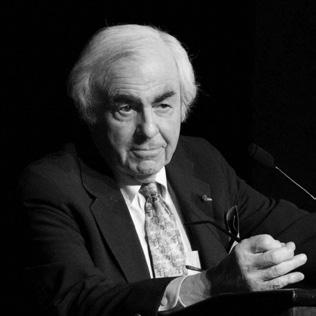
Application Deadline: November 15, 2024
In 1998, the Portrait Society was formed as a national non-profit organization to increase aesthetic and technical knowledge of the practicing portrait artist, artist’s representatives, art students and the general public.
Twenty-six years later, two of our founding members, Everett Raymond Kinstler and Edward Jonas, have left a legacy within the Portrait Society that we would like to honor. In their memories, we have created two memorial funds that will be used to assist portrait artists in achieving their goals.
We are pleased to announce the fifth year of the Everett Raymond Kinstler Mentorship Program and the Edward Jonas Grant Opportunity.
For more information and to apply, visit www.portraitsociety.org.
I am so pleased to receive this scholarship! Thank you for the honor and for your service to this important arts organization. I am so pleased to be using the scholarship money in a January workshop with Alicia Ponzio, an artist whose work I first saw at a Portrait Society conference. I am especially honored to be receiving a scholarship in honor of Edward Jonas. I know what a commitment it is to give back to the arts with time and service. Edward exemplified this commitment to service. -Suzie Baker, 2024 Jonas Grant recipient
The Portrait Society of America
P.O. Box 11272
Tallahassee, FL 32302
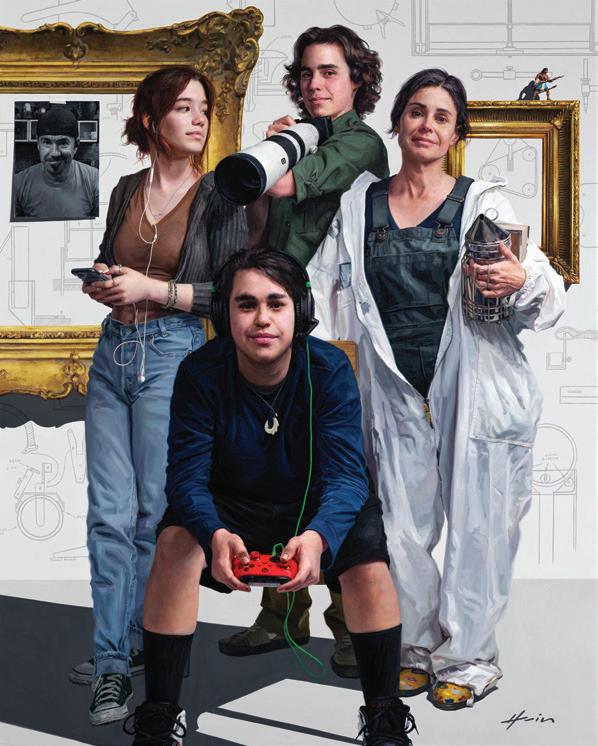
Participating in art competitions is a fantastic opportunity for artistic growth and offers numerous benefits, including global exposure, exhibitions, and the opportunity to measure your skills in the subject matter against other artists. The Portrait Society is hosting two upcoming competitions featuring cash prizes, awards, and worldwide recognition. Submit online at www.portraitsociety.org.
Entry deadline: November 4, 2024
Entry deadline: February 17, 2025
SECOND PLACE & PEOPLE’S CHOICE AWARD
Jeff Hein, My World, 60x48”, oil on panel
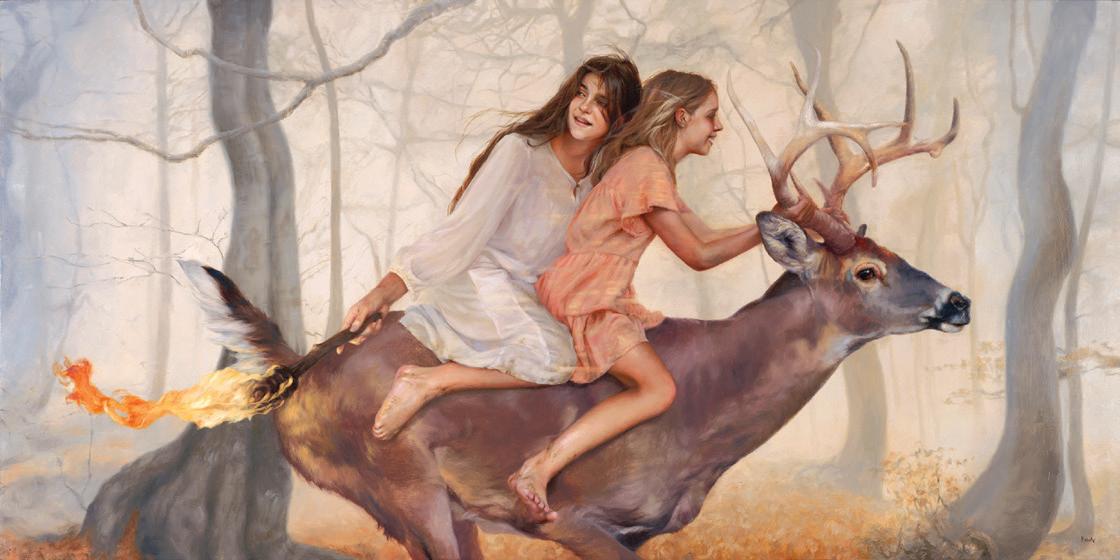
SECOND PLACE OUTSIDE THE BOX
Dana Hawk, Joyride, 30x60”, oil