

By Gabriella Maitland, English Journalist
Music will always be part of life. From powerful movie soundtracks to the soft hum of wind through seashells, it is everywhere if you are paying attention. Yet we often listen to and even play musical instruments without ever stopping to think about where they come from. I want to change that.
Used in movies like “The Little Mermaid” and “Star Wars”, the steelpan is an instrument born out of the most southerly islands in the Caribbean, known as Trinidad and Tobago. For all intents and purposes, the twin islands will be referred to as T&T in this piece. In the 18th Century, the instrument was conceived in T&T as a tribute to the enslaved people’s African Shango roots, where the beating of drums was used to “tolerate the harsh and inhumane practices of slavery” (Caribbeanz Southern Stars Steelband, 2010). However, when Spain surrendered to the British, the practice was banned out of fear that the drumming would unite the hearts of the slaves and cause them to rebel. And yet, those hearts did not stop drumming.
Unwilling to bend to the will of their slavers, the enslaved ‘peoples’ began cutting bamboo at different lengths to produce different sounds. However, as bands known as “tamboo bamboo” began to form and clash with one another, this practice was eventually also banned. And yet, music remained in the hearts of the enslaved. In
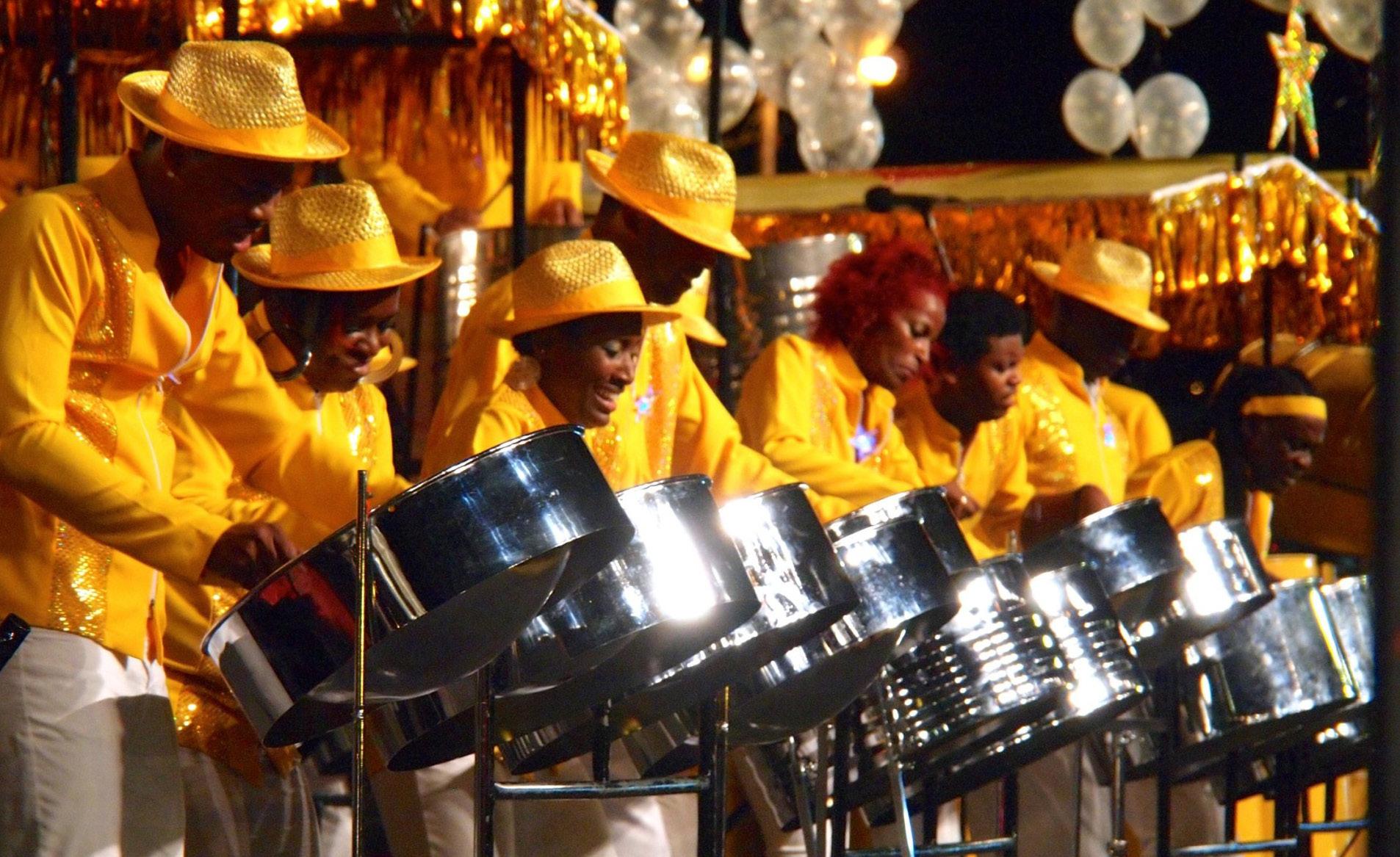
an attempt to preserve their Shango religion, drums continued to beat in the hills of a region known as “Laventille’. However, owing to high rates of poverty, the people were driven to “trial a number of metal objects such as milk cans, garbage can covers and pots to produce musical sounds” (Caribbeanz Southern Stars Steelband, 2010)1. And, soon enough, biscuit tins were the new musical instrument. Back then, players would use their hands to produce sound as the tins hung around their necks. Still, this is not the Steelpan we know today. Inspired by early pioneers, people alive in the 1940s—when American bases occupied T&T—began using discarded oil drums to produce sound.
It is important to recognize that the steelpan was not created by any one individual. Its story begins as an expression of resilience and creativity within communities, later shaped by innovators like Androe Beddoe, who sparked the “biscuit pan” movement, and Winston “Spree” Simon, whose vision helped develop the steelpan into the instrument we know today. The steelpan is widely regarded as a true labour of love. On August 11, World Steelpan Day, Trinbagonians formally shared their national instrument with the world, celebrating a cultural gift from Trinidad and Tobago to the global community.
Editor In Chief/Éditrice en chef

Destiny Chan
Chief of operations/Cheffe des opérations

Flo Iyam Tierra
Layout Designer/Maquettiste

Cynthia Xie
Photographer/Photographe
Jana Eleid
Section Editor/Rédactrice de sections:
Julia de Leon
Campus Life/Vie étudiant Arts & Entertainment/Arts & Divertissement
Bianca Anderson
Issues & Ideas/Actualité, Health & Wellness/Santé & bien-être, Metropolis/Métropole
English Editor/Rédactrice Anglaise

Amie Sosa
French Editor/Rédactrice Française
Leanne Eyre
English Journalist/Journaliste Anglais

Connell Simkin-Watt
French Journalist/Journaliste Française


Paige Lalonde

Coucou Glendon !
We are officially past the halfway mark of the winter semester! Je n’arrive pas à croire que le temps se coule aussi vite! Perhaps you have noticed, but it has not been a regular year at Pro Tem this academic year. Nos stands sont restés vides pendant un certain temps, et depuis que nous avons repris le journal, plusieurs membres de notre équipe ont démissionné, ce qui nous a mis dans une situation quelque peu délicate, notamment en matière de mise en page. I’m so proud of the team for rallying together, for taking on extra work, and for re-committing to their roles during this new start of Pro Tem!
Alors que le mois de février touche à sa fin, nous aimerions vous présenter notre numéro spécial consacré au Mois de l’histoire des Noirs ! To celebrate the culture and history of the African diaspora, take a look at our Arts & Entertainment section, where you’ll find an ode to the steelpan drum fea- tured in “The Little Mermaid”, tantalizing Black History reading recom- mendations, as well as NBA stories you have never heard of!

Tournez la page pour découvrir notre rubrique « Actualité & opinion », où vous trouverez les histoires de Carter G. Woodson, Claudette Colvin et Michelle Obama ! Vous verrez également que février a été un mois riche en événements, avec le Nouvel An lunaire, le Carême, le Ramadan et bien d’autres encore !
As always, check out Health & Wellness for some deliciously baked recipes and a continuation of the Psychological Neuromyths Series from last issue! Feeling artsy and reflective? Head over to Expressions, where you can lose yourself in student poems and letters to grandmothers!
Malheureusement, en raison de la résiliation de notre accord par l’Associa- tion Étudiante du Collège Glendon, notre budget a été réduit de moitié et nous devrons publier ce numéro en ligne. Nous aurions bien aimé continuer à tout imprimer, mais l’inflation et l’université en ont malheureusement décidé autrement. Still, our precious paper mustn’t die, and student journalism must go on!
Pro Tem is a unified organization that accepts and publishes articles from students, alumni, and community members. While we edit submissions for grammar and clarity, we stay true to each author’s voice and message.As an organization, we don’t endorse every viewpoint expressed; our goal is to amplify a wide range of perspectives within our community. For those interested in viewing an article in its original, unedited form, please contact our Editor-in-Chief at editor@protemglendon.com.
Bilingual Journalist/Journaliste bilingue

Geneviève Stacey
Avis de non-responsabilité!
Pro Tem est une organisation unifiée qui accepte et publie des articles provenant des étudiants, des anciens élèves et des membres de la communauté. Bien que nous corrigeons les soumissions pour la grammaire et la clarté, nous restons fidèles à la voix et au message de chaque auteur. En tant qu’organisation, nous n’endossons pas nécessairement chaque point de vue exprimé; notre objectif est d’amplifier une diversité de perspectives au sein de notre communauté. Pour ceux qui souhaitent consulter un article dans sa version originale, non éditée, veuillez contacter notre rédacteur en chef à editor@protemglendon.com.
Editor In Chief: editor@protemglendon.com
Editor In Chief: editor@protemglendon.com
Chief of Operations: operations@protemglendon.com Photographer: photography@protemglendon.com
Chief of Operations: operations@protemglendon.com
By Destiny Chan, Editor-In-Chief
If you’re drowning in university readings or convinced you “don’t like reading,” this is your sign to pick up a book anyway. Not for a grade. Not for a deadline. For yourself. Here are 7 of my top picks for Black History Month!
1. “Becoming” by Michelle Obama
A memoir of former first-lady Michelle Obama’s life from birth in the South Side of Chicago to the inaugura- tion of Donald Trump. She writes honestly about ambi- tion, doubt, marriage, motherhood, and public life. After reading this book in high school, her hard work, strength and grace inspired me to work harder and lead with grace myself.
2. “The Hate U Give” by Angie Thomas T H U G, “The Hate U Give”, is a coming-of-age story about Starr Carter, who lives between two worlds: her low-income neighbourhood and her elite private school. After witnessing the police shooting of her childhood friend, Starr must confront injustice, racism, and her own voice. The 2018 film adaptation changed the ending. You can read and decide for yourself which ending is most fitting.
3. “Born a Crime” by Trevor Noah
Trevor Noah was literally “born a crime” in apartheid South Africa, as he is the child of a Black mother and a white father in a system that outlawed their existence to- gether. South Africa has clear racial boundaries for every colour of skin. He jokes that he wanted to come to Amer- ica to be a part of one community, to finally “be Black”, giving the example of how Barack Obama is half white and half Black but is known as the country’s “first Black president.” Navigating his rough childhood in a comedic fashion, he also explores what it means to have to leave others behind to grow in success in life.
4. “A Long Way Gone: Memoirs of a Boy Soldier” by Beah Ismael
In high school, I was part of the Amnesty International Book Club where we would all read a book about an important topic, such as Indigenous peoples, the LGBTQ+ community, Black History, homelessness, etc., and then organize an event to fundraise for that topic. One of these books was “A Long Way Gone”, a memoir of a child soldier in Sierra Leone and how he fled from the government army and pieced himself together after seeing such violence at a young age. boxer in the sport. The social cues and physical gestures, such as a bow to express respect for Mike Tyson, were apparent throughout the encounter.
5. “Between the World and Me” by Ta-Nehisi Coates
Written as a letter to his teenage son, “Between the World and Me” reflects on race, history, and what it means to grow up Black in America. I distinctly remember how Coates shares his intellectual journey, describing how he would sit in libraries reading books with a notebook be- side him, carefully recording his thoughts and questions. The tone of the book is often pessimistic, as he confronts the harsh realities of systemic racism. Yet it is also deeply thoughtful, encouraging us to question the narratives they have been taught.
6. “The Watsons Go To Birmingham – 1963” by Christopher Paul Curtis
If you would like to reconnect with your inner child, I highly recommend revisiting children’s or young adult books—either ones you loved or ones you did not get the chance to read. This book follows a family travelling from Michigan to Birmingham, Alabama, through the eyes of ten-year-old Kenny Watson. The trip is meant to be a family visit to their grandmother, but it coincides with a tragic historical event: the 16th Street Baptist Church bombing. This event was something inexplicable and incomprehensible in the eyes of a child - why would someone do something so bad to young children and in- nocent people?
7. ‘That One Summer” by Rita Williams-Garcia Three sisters travel to Oakland, California to spend the summer with their estranged mother. Instead of a warm reunion, they discover that their mother is involved in the Black Panther movement. The eldest daughter, Del- phine, feels the heavy burden of caring for her younger sisters while trying to understand her mother’s choices. I distinctly remember reading the passage where the eldest daughter, who was still a child at the time, made her fam- ily chicken and potatoes from scratch in the oven around her mother’s activist papers.
Whether you love to read but are drowning in university readings, or hate to read but want to learn more during Black History Month, I encourage you to pause for a sec- ond and pick up a book for pleasure when you have time. Personally, I always enjoyed reading during summer break or winter break. Each book is like a portal to anoth- er world, another perspective, another reality. Reading is one of the most powerful tools to proliferate empathy— and in today’s world, we need a lot more of it.

By Connell Simkin-Watt, English Journalistt
For most basketball players, the NBA is the pinnacle, a destination years in the making. But for a rare few, that dream comes to fruition for just a fleeting moment. The term “cup of coffee,” borrowed from baseball, describes athletes who appear in exactly one NBA game before their careers take another path. According to Basketball-Reference, there are over 80 players in league history with that distinction.
While some of these players barely registered on the stat sheet, others have backstories rich with promise, world travel, or second acts beyond the league. This article will spotlight a handful, from pioneers of the 1950s to players whose NBA moment lasted seconds and explore who they were before that singular game and where life took them afterward.
Frosty’s Brief Brush with the Big Time: Forest Able (1956)
Forest “Frosty” Able was a standout guard at Western Kentucky University, where his collegiate success earned him a mid-round selection by the Syracuse Nationals in the 1956 NBA Draft. In his lone appearance that season, Able logged modest minutes but quietly secured his place in league history as one of the sport’s one-game participants. After his NBA stint, Able returned to Kentucky, remaining steeped in basketball as a high school coach and local personality. His legacy extends beyond the stat lines of that single game: he was inducted into Western Kentucky’s Hall of Fame and served as a mentor to players long after his professional playing days ended.
Small Minutes, Big Journey: Alex Scales (2005)
Alex Scales’ NBA tenure consists of a mere 9.2 seconds — one of the shortest playing times recorded for any player. On November 19, 2005, Scales checked in for the San Antonio Spurs in the waning moments of a game but didn’t register a statistical contribution before being waived days later.
What makes Scales’ story remarkable isn’t the length of his NBA stay, but what followed. He forged a journeyman’s career across the globe, playing professionally in Asia and Europe for over a decade. From the Shanghai Sharks to Real Madrid, Scales showcased his talent far beyond that single NBA snapshot, proving that success isn’t defined by NBA minutes alone.
If there were an award for the briefest NBA career, JamesOn Curry would be its first recipient. Drafted 51st overall in 2007, Curry worked through the NBA Development League (now the G-League) but, despite promising numbers there, didn’t crack a rotation until January 2010. Curry’s one game came with the Los Angeles Clippers, but he was on the court for just 3.9 seconds — the shortest documented NBA career in history. Despite its brevity, that moment meant everything to Curry; he beat the odds to reach the league, even if only for a blink.
After his playing days, Curry’s life took a winding path. He faced legal troubles early in his career that stunted his progression and, post-basket

ball, he held a variety of jobs while staying connected to the game by coaching youth teams and sharing his hard-earned wisdom.
From Court to Community: Don Anielak (1954)
In the early days of the NBA, opportunities were especially scarce. Don Anielak’s entire NBA résumé consists of a single game for the New York Knicks in 1954, where he chipped in a few points and rebounds before his professional basketball journey effectively ended. Yet basketball was never far from his heart: Anielak returned to Illinois, where he became a respected high school and college coach, shaping programs and young athletes for decades. His influence on the sport at the grassroots level arguably surpassed what he could have achieved as a player.
Players like Able, Scales, Curry, and Anielak remind us that the NBA is a narrow doorway into a broader world of basketball. For every superstar with a statue, there are dozens whose contributions came in a flash — but whose stories echo far beyond the box score. Their journeys illustrate that success in sport, much like in life, isn’t solely measured in minutes played or points scored. It’s about the impact, the resilience, and the paths forged when the spotlight dims. So the next time someone mentions “one-game wonders,” remember: behind every name in that list lies a life as rich and compelling as any Hall of Famer — just told in a different way.
Par Amie Sosa, English Editor
En repensant à mes débuts à Glendon, le campus me semblait à la fois déroutant et excitant. Les chemins se croisaient d’une manière que je n’avais pas prévue, les bâtiments étaient plus hauts que je l’avais imaginé, et chaque visage semblait porter une histoire que je ne connaissais pas entièrement. En tant qu’étudiante de première génération, je parcourais ces couloirs avec un pied dans deux mondes, portant les espoirs de ma famille tout en essayant de comprendre comment je pouvais m’y intégrer.
Je remarquais les petites choses qui me rappelaient chez moi. Une phrase familière entendue dans une conversation, un flyer pour un événement culturel sur un panneau d’affichage, ou les rires des étudiants parlant une langue que j’avais apprise chez moi. Je me souviens du jour où une amie m’a offert des Tortrix, les chips guatémaltèques que j’adore, et j’ai ressenti un vrai sentiment de reconnaissance et d’affection. Je me souviens aussi des enfants avec qui je partageais mes cours d’espagnol qui me disaient bonjour dans les couloirs. Ces petits gestes m’ont fait sentir vue et ont rappelé que des morceaux de chez moi pouvaient exister même loin de mon foyer.
Le changement de code linguistique était compliqué mais drôle. Je me souviens de mon premier essai en espagnol. Mon professeur m’a dit que j’écrivais comme un cowboy guatémaltèque à cause de l’argot que j’avais appris de ma famille. J’ai ri parce que, même si je me sens parfois “blanchie” dans d’autres aspects de ma vie, des morceaux de chez moi s’infiltrent toujours. Ce moment m’a rappelé que la langue que je porte est vivante, réelle et n’a pas besoin de correspondre à l’idée que quelqu’un peut avoir de comment je devrais écrire.
Je trébuchais parfois entre les langues, entre les règles académiques et les mots que ma famille utilisait à la maison. Une fois, j’ai mal prononcé un mot en classe et j’ai vu mes camarades pencher la tête, ne sachant pas ce que je voulais dire. Sur le moment, c’était embarrassant, mais en y repensant, je vois que ça faisait partie de l’apprentissage de comment naviguer entre deux
mondes. Ces moments m’ont rappelé que ma voix est unique et qu’il est normal qu’elle ne corresponde pas parfaitement à un modèle. Je voyais ma culture de petites façons autour du campus. Dans la façon dont une amie gesticulait pour raconter une histoire, dans le rire des étudiants qui reconnaissaient des expériences partagées, et dans les flyers pour des événements culturels. Même quand j’étais loin de chez moi, des morceaux de ma culture étaient partout si je faisais attention. J’ai trouvé des espaces où je pouvais être entièrement moimême, où des étudiants de première génération, des étudiants immigrés et des étudiants de tous horizons partageaient leurs expériences. Nous parlions de petites victoires, de moments de nostalgie, de projets qui semblaient impossibles et de petites réussites souvent invisibles aux yeux des autres. Je me voyais dans ces conversations et je comprenais que je pouvais appartenir à cet endroit. Je me souviens des rires dans mes cours d’espagnol avec des amis à propos de petites erreurs et de la fierté que je ressentais de la culture et de la langue que je portais avec moi.
Le campus n’était pas seulement fait de cours, d’examens ou de dates limites. Il s’agissait de remarquer les histoires autour de moi, d’oser partager la mienne et de comprendre que l’appartenance se construit lentement. Elle se construisait dans les rires partagés, dans les amis qui me saluaient dans les couloirs, dans les petits gestes de reconnaissance et dans de petits détails comme les Tortrix qui me rappelaient que je n’étais pas seule. Elle se construisait en apprenant à naviguer entre le monde que j’avais quitté et celui dans lequel je me trouvais, en portant les deux dans mon cœur sans en perdre aucun.
En y repensant, je sais qu’il était normal de trébucher, de parler par fragments, de mélanger l’argot de mon barrio avec les mots de la classe et de rire de moi-même en chemin. Glendon est devenu un endroit où je pouvais porter chez moi tout en découvrant peu à peu qui j’étais censée être, parfois sérieuse, parfois maladroite, parfois drôle, mais toujours moi.

By Anonymous
Fertile
And tired of the chaos and torture of the mundane everyday, she bites her leg squirming from the pain and spitting out a chunk of her dry dead flesh, to canonize the moment. People wish her well, they wish her to be free, but with this, she fears being forgotten. Her life can no longer be a series of cataclysmic moments, she is merely a fallacy of the erosion of girlhood. To begin again would be a fearsome loathness for her, and desire would be a job best fit for a man. But in that, she could never be civil, never fall victim to the erudition of man, to know her; to be known in such falsehood, a deep misunderstanding therein lies a problematic truth. That in each woman’s suffering is a man who knows her bounds, her life, more so than she can ever name. How wrong to seek out importance in a woman’s suffering, how dismal to crave her flesh as a right to carry the weight of her world. To see her merely as a wounded animal and not as a human.
We as humans find solace in our own suffering, and should we not be joyful in this right. Yet to have it controlled by another— that is womanhood.
Broken and undetermined suffering, she wills her life away to find meaning. Beyond man, beyond the question of suffrage, and more, to detail the triumph of the stomach within her stomach, the heart that craves a comfort meal of half marrow and half carnage. A plating of perfection is ironic, yet symbolic of her victory. Meaning, to her, is strategic, it’s a pedal that pushes conveniently to rush the start line. And now she sits preemptively awaiting her next meal, in tandem with her grotesque appetite, she politely sets her napkin on the table. A heart is usually, culturally, the most important ingredient to a meal, while for her, it is the meal. By eating her own she can wed the victory of self-destruction with complete self-possession harmoniously. A balanced meal with no interruption from the inexhaustible beating and thumping of fear and unconscious rules. She meets the edge of the fork to her mouth with a grin, “It’s a heart,” she says to herself, “it’s mine” she argues over it.
Within this dispute she tilts her head back choking, almost violently, the chunk of heart caught in her throat won’t dissolve. Like a raw egg inching its way down, clogging her saliva with dark red, gracing the uvula. Stuck firmly— her heart won’t allow itself to be eaten whole.
Walls
Darkness and lightness, fading over one another, one contrasting over the other like an array of intense visions. A miracle, from the work of angels, afterlife, and love. Crossing over; mounting between and opening her eyes to faint realization. She sees the parable, it’s a voice whose warm breath touched her skin, and froze there in time. Making closeness feel possible without distance, despite touching a saint that was ungodly. After that, only from that second, closeness became fatal. In motion, this was a kaleidoscope of flashing colours, lights, and sounds, where you could never observe the same motion twice. Though, arguably, it exists only outside the human awareness. It’s perhaps then, instinctual, like an animal coddling its young, yet fearing its sinful nature. The feeling itself becomes entirely null when we learn its true cruelty. We suddenly turn our faces inward and succumb to things, long and heavy burdens of things. When we wish for it all to be over more quickly, the things become their own darkness, shadowing over the lightness from within till we become a blank slate.
A poor young girl who learned that closeness only meant abandonment—this feeling never left her. Now in those moments, she turns her palm away from warmth for a comfortable emptiness that avoids trickery. — anon.
By Amie Sosa, English Editor
Je me demande si tu rigoles quand je dis espina [bouton] au lieu d’espinaca [épinard]. Je me demande si tu secoues la tête comme tu le faisais quand je trébuchais sur les mots ou sur des coutumes qui n’étaient jamais vraiment les miennes. Je me demande si tu m’appellerais encore princesse des neiges, en me taquinant pour être trop blanche, trop différente, trop moi.
J’ai eu l’impression de voir notre peuple dans le film que j’ai regardé sur la danse mexicaine, même si ce n’était pas vraiment le nôtre. J’ai essayé de bouger comme eux, d’entendre des rythmes que j’imagine que tu connaissais, de capter une joie que tu portais sans jamais la dire à voix haute.
Quand je me tresse les cheveux, je me demande si tu te vois là-dedans. Quand je prépare du manjar [confiture de lait] avec la recette que tu as laissée sans mesures, je sens tes mains dans les miennes et l’attente silencieuse que je devrais juste savoir. Je me trompe, je renverse, je goûte, je recommence.
Je garde précieusement tes petites notes manuscrites, celles avec de petits rappels ou des phrases qui semblaient insignifiantes à l’époque. Je les lis maintenant et je sens ta voix traverser les années. Ce sont des morceaux de toi que je peux tenir, de petits fragments qui me rappellent d’où je viens et comment tu as façonné la vie que j’apprends à vivre.
J’apprends à accepter de ne pas être exactement comme toi, même si une partie de moi le souhaite encore. Je te cherche partout dans les chansons, dans les films, dans les odeurs, dans la façon dont mes doigts se rappellent ton toucher. Parfois je me sens proche de toi. Parfois je me sens plus éloignée que jamais.
Je n’ai pas tous les mots. Je n’ai pas toutes les connaissances. Je porte des fragments, de petits morceaux de toi cousus en moi. Parfois cela suffit. Parfois cela me laisse avec un désir de plus, plus de rires, plus de conseils, plus de la vie que tu as vécue et que je ne peux qu’imaginer.
J’espère que quelque part tu observes. J’espère que tu me vois tendre la main doucement, timidement, vers la vie que tu m’as laissée. J’espère que tu ressens la même tension, le même petit désir, et peut-être que tu souris en voyant toutes les façons dont j’apprends à être nous et aussi moi-même.
By Anonymous
that dredges on past its last howl it takes a while before it stops it seems to arrive at morning and leave at dusk,
what till the morning comes can make of so much anger
By Amie Sossa, English Editor
I speak in fragments
Spanish slipping through my fingers like sand I never quite learned to hold Am I the daughter I was promised to be or only a shadow of the mother I have never met
When I look in the mirror
I see more than my reflection I see my abuela’s eyes staring back through time asking questions I do not know how to answer
The streets I walk are mine and not mine
The language I speak is mine and not mine never sounding quite right
The songs I hum and the food I cook carry the weight of centuries I have not lived carry the stories I have not told I reach for something I cannot name a home I have never fully known a voice I am still learning a life that belongs both to me and to those whose eyes I carry whose eyes keep staring back at me
Par G. Stacey, Bilingual Journalist
Ingrédients :
Pour la pâte
2 tasses de farine (plus pour étaler la pâte)
2 ¼ cuillères à café de levure
chimique
3 cuillères à soupe de sucre granulé
½ cuillère à thé de cannelle moulue
½ cuillère à thé de sel
¾ tasse de lait
3 cuillères à soupe de margarine ou de beurre
Pour le sucre à la cannelle
½ tasse de cassonade
2 ½ cuillères à thé de cannelle moulue
1 cuillère à soup de margarine ou de beurre
Instructions :
Pour la pâte à biscuits
½ tasse de cassonade
¼ tasse de sucre blanc
⅔ tasse d’huile de canola
¼ tasse de lait d’avoine non sucré
1 cuillère à soupe de fécule de maïs
2 cuillères à thé d’extrait de vanille pure
1 ½ tasse de farine tout usage
½ cuillère à thé de bicarbonate de soude
½ cuillère à café de sel
¾ tasse de pépites de chocolat
Préparer d’abord la pâte à biscuits
1. Mélangez les sucres, l’huile, le lait et le fécule de maïs. Utilisez une fourchette et bien mélanger pendant environ 2 minutes, jusqu’à ce que le mélange ressemble à du caramel lisse. C’est une étape importante d’un point de vue chimique. Incorporez la vanille.
2. Tamisez les ingrédients secs (pas les morceaux de chocolat) ensemble dans le bol. Mélangez jusqu’à ce que le tout soit bien incorporé.
3. Incorporez les morceaux de chocolat.
4. Mettez de côté.
Préparer la pâte des rouleaux à la cannelle
1.Fouettez les ingrédients secs ensemble (farine, levure chimique, sucre, cannelle et sel) dans un grand bol.
2. Faites fondre le beurre et/ou la margarine dans une petite casserole à feu doux jusqu’à ce que le beurre soit juste fondu.
3. Versez le mélange de lait dans le mélange de farine. Utilisez une spatule pour mélanger jusqu’à ce que le tout soit bien mélangé.
4. Pétrissez la pâte pendant 1 minute sur un plan de travail légèrement fariné jusqu’à ce qu’elle se rassemble. Si elle commence à être trop collante, ajoutez un peu plus de farine.
5. Couvrez la pâte d’un torchon humide et laissez reposer 15 minutes.
6. Préchauffez le four à 350°F.
7. Pour faire le mélange de sucre à la cannelle, mélangez la cannelle et le sucre dans un petit bol.
8. Faites fondre la cuillère à soupe de margarine et/ou beurre au micro-ondes.
9. Formez la pâte en un rectangle d’environ 10 x 12 pouces. Badigeonnez la pâte de margarine/beurre fondu et saupoudrez au mélange de cannelle et de sucre.
10. Écrasez la pâte à biscuits en une couche sur le sucre à la cannelle.
11. Coupez en 12 bandes de 1 pouce (environ). En commençant par une extrémité de la bande, roulez chaque bande individuellement et la placer dans un compartiment d’un moule à muffins en silicone.
12. Faites cuire au four pendant 20 à 30 minutes jusqu’à ce qu’elles soient dorées.
Make the cinnamon roll dough
1. Whisk dry ingredients together (flour, baking powder, sugar, cinnamon & salt) in a large mixing bowl until combined.
2. Melt butter and margarine together in a small saucepan over low heat until the butter is just melted.
3. Pour milk mixture into the flour mixture. Use a spatula to mix together until just combined.
4. Knead the dough for 1 minute on a lightly floured work surface until it comes together. If it starts to feel too sticky, add a touch more flour.
5. Cover the dough with a damp towel and let it rest for 15 minutes.
6. Preheat oven to 350 degrees.
7. To make the cinnamon sugar mixture, mix the cinnamon and sugar together in a small bowl.
8. Melt the tablespoon of margarine in the microwave.
9. Roll out dough into a 10x12 inch rectangle (kind of). Brush dough with melted margarine and sprinkle with cinnamon and sugar mixture.
10. Squish the cookie dough into a layer on top of the cinnamon sugar.
11. Slice into 12 1-inch strips. Starting at one end, roll each strip individually and put in a compartment of the silicone muffin tin.
12. Bake for 20-30 minutes, or until golden brown.
Par G. Stacey, Bilingual Journalist
Je préparais des repas pour la semaine et j’ai essayé une nouvelle recette (crédit à @evannryan), et je l’ai tellement adoré que je devais la partager ! Super simple, en plus, donc bon si tu manques un peu de temps.
Ingrédients (pour quatre portions) :
- 15 biscuits graham végétaliens (les miens étaients sans gluten)
- 2 cuillères à thé de beurre végétalien
- 3 tasses de yogourt de noix de coco nature
- 2 portions de poudre de protéine à la vanille
- 2 portions de poudre de protéine au caramel salé
- 2 cuillères à soupe de beurre d’arachide
- 2 cuillères à thé de jus de citron
- 2 cuillères à thé d’extrait de vanille
- ¼ cuillère à thé de sel
- ¼ tasse de pépites de chocolat miniatures
Instructions :
1. Détruisez les biscuits Graham jusqu’à obtenir une consistance sableuse (méthode au choix). Transférez à un bol.
2. Faites fondre le beurre végétalien et le mélangez aux biscuits Graham jusqu’à l’obtention d’une consistance uniforme.
3. Mélangez le yogourt à la noix de coco, les poudres de protéine, le beurre d’arachide, le jus de citron, l’extrait de vanille et le sel.
4. Incorporez les pépites de chocolat.
5. Répartez le mélange de gâteau au fromage dans quatre bocaux.
6. Garnissez avec le mélange de biscuits Graham, divisé environ en quatre.
7. Dégustez!
Hey!!! Sorry it’s been so long since I posted; life’s been wild. Anyways, I was meal prepping for the week, and I tried a new recipe (credits to @evannryan), and I loved it so much I had to share it! Super simple, too, so good for when you’re in a bit of a time crunch.
Ingredients (makes four portions):
16 vegan graham crackers (I used gluten free)
2 tsp vegan butter
3 cups plain coconut yogurt
2 servings vanilla protein powder
2 servings salted caramel protein powder
2 tbsp peanut butter
3 tbsp lemon juice
2 teaspoons vanilla extract
¼ teaspoon salt
¼ cups mini chocolate chips (though, if you’re like me, you’re bad at measuring this one) - ¼ cuillère à thé de sel
- ¼ tasse de pépites de chocolat miniatures
Instructions:
1. Blend the graham crackers until they achieve a sandy consistency. Transfer to a bowl.
2. Melt the vegan butter, and mix into the graham crackers until it achieves a uniform consistency.
3. Blend together the coconut yogurt, protein powder, peanut butter, lemon juice, vanilla extract and salt.
4. Fold in the chocolate chips.
5. Divide the cheesecake mixture into four mason jars.
6.Top with the graham cracker mixture, divided approximately into four.
7. Enjoy!
By Gabriella Maitland, English Journalist
It’s no secret that humans are obsessed with compartmentalization. We see this all the time: someone is either good or bad; you either like pancakes or you like waffles; or, more “scientifically”, you’re either logical (left-brained) or creative (right-brained). However, nothing is this black and white. Everything in life is connected in some way, and naturally, this also extends to our brains. Despite the numerous personality quizzes and self-help books, the idea of being left- or right-brained is a myth.
The notion that individuals are either left or right brained comes from a 1940s surgical study where “doctors discovered that by surgically severing the corpus callosum, seizures could be reduced in patients with otherwise unmanageable epilepsy.” ¹
These studies highlighted the differences between the two halves of the brain. Still, this provides no evidence that hemisphere dominance varies from person to person, or that there is any dominance at all. So why is this neuromyth so widely believed?
Certain myths have a way of becoming popular in psychology, and widespread in society. This is owing to the fact that they exploit the Barnum effect, a phenomenon “when people are offered generic descriptive statements that are presented as individualized descriptions of their own personalities, they are predisposed to accept them as meaningful and true.” ² Simply put, those who are predisposed to certain personality traits, like being creative or logical feel affirmed when a quiz tells them that they’re “spontaneous and intuitive” or
¹ “Are There Really Right-Brained and Left-Brained People?” Encyclopedia Britannica, last modified June 13, 2025, https://www.britannica.com/story/are-there-really-right-brained-and-left-brained-people.
² Britannica, “Are There Really Right-Brained and Left-Brained People?”
³ Robert H. Shmerling,”Right Brain/Left Brain, Right?” Harvard Health Publishing, last modified March 24, 2022, https://www.health.harvard.edu/blog/right-brainleft-brain-right-2017082512222.

“rational and analytical.”
While there’s no recent evidence supporting the idea that people are either logical or analytical, a plethora of research, such as a “2013 study from the University of Utah, [where] brain scans demonstrate that activity is similar on both sides of the brain regardless of one’s personality” has disproven this neuromyth. ³ That said, it is nice to believe that our brains are hardwired to our passions.
By Destiny Chan, Editor-in-Chief

Fun fact: Michelle Obama and I share the same birthday — January 17th. I have a theory that those of us born in January are more inclined to become leaders. Perhaps it’s because, depending on the school system we were raised in, we are often the eldest in the class. Even if it is only by 1-11 months, it comes with the burden of expectation. “Since you are older, you should know better.” “Since you are older, you should volunteer and raise your hand and ask the questions.” I’ve since shaken off the pressures of age, citing that age doesn’t matter. Someone could be 40 and act like they’re 18, or someone could be 18 and act like they’re 40.
Either way, Michelle is no stranger to high expectations and pressure. In her 2018 memoir, “Becoming”, she details her life from birth in the South Side of Chicago all the way to the first inauguration of Trump in 2017. ¹ Growing up, her parents, Marian Robinson and Fraser Robinson III, had high expectations for both her and her brother. Her mom, a stay-at-home mom, and her dad, a pump operator at the city water plant, always answered every question they had and
actively listened to their children. This was vital as we live in a society, especially in the USA, where racism towards and the dismissal of black people, especially black women abounds. This gave their children confidence.
When Michelle came home from elementary school one day and said the class was not a good learning environment, her mother took her seriously. She went to school with her one day and observed the class, and subsequently pulled her out of that school. Michelle then started attending a magnet school which was a competitive environment for high achievers. She excelled, graduated as salutatorian and has since emphasized the importance of hard work and education. She and her brother would later go to Princeton University, and Michelle would go on to attend Harvard Law School.
After completing a bachelor’s degree in sociology (with a minor in African American studies) and then earning her law degree, Michelle found herself in a well-paid job at a prestigious law firm in Chicago. But this wasn’t fulfilling her. She says that her whole life up until then, she had been checking off boxes: graduate high school, check; get into university, check; earn degrees, check; secure a good job after graduating, check. With all this box-ticking, she never stopped to ask herself what would truly fulfill her in life. After a few years at that law firm — the place where she would end up meeting Barack Obama after being assigned to be his mentor — she changed paths and began working in community service, including roles in public service and
nonprofit leadership, such as serving as Executive Director for the Chicago office of Public Allies and later working at the University of Chicago Medical Center.
Eventually becoming the first Black First Lady of the United States, Michelle Obama launched major White House initiatives that included healthy eating through the Let’s Move! campaign (something she was inspired to do after noticing the health of her two daughters, Sasha and Malia, decline amid busy schedules and too many nights of processed food and takeout), as well as initiatives like Joining Forces to support military families and Reach Higher, which encouraged young people to pursue higher education. Yet her deeper legacy lies in representation: for many young Black girls and women, seeing her in the White House expanded what felt possible.
With two other books, “The Light We Carry” and “The Look”, as well as two podcasts, “The Michelle Obama Podcast” and “IMO with Michelle Obama & Craig Robinson”, Michelle continues to inspire and lead by example through integrity. Even after the White House and all of the pressure and responsibilities that came with it, she continues to engage communities with hope and resilience. Even though she despises politics and never would have chosen the route their family ended up taking, the
Par Sirine Askri, Journaliste Française
L’histoire des Noirs qui s’est ancrée dans une lutte pour des droits égaux a toujours eu des figures phares représentant la cause. Contrairement aux histoires et héros que l’on connaît, la réalité historique est beaucoup plus nuancée et surprenante que les mythes. Les figures emblématiques sont beaucoup plus nombreuses que celles apprises dans les manuels scolaires mais ne sont pas mises en avant pour des raisons stratégiques, médiatiques ou encore politiques. Le cas de Claudette Colvin illustre parfaitement un exemple de comment certaines figures passent sous les radars. On connaît tous l’histoire de Rosa Parks qui était la première femme noire à s’être rebellée face à la ségrégation dans un bus à Montgomery en 1955. En réalité, 9 mois plus tôt, Claudette Colvin, jeune fille de 15 ans l’avait fait en premier. A cette époque, les lois Jim Crow imposaient une séparation raciale stricte dans les transports en commun: les blancs avaient la priorité sur les sièges face à la communauté noire. C’est dans ce contexte que Claudette refusa de céder sa place se battant ainsi pour ses droits constitutionnels, provoquant un scandale à l’époque. Suite à cela : accusation d’agression, humiliation,

arrestation, procès. La jeune Claudette a plaidé non coupable et grâce à des aides financières de leaders noirs elle finit seulement mise sous probation.
Les leaders d’organisation pour les droits civiques avaient pensé à considérer l’action de Colvin comme une protestation contre les lois ségrégatives mais au vu de son jeune âge ainsi que le fait qu’elle était enceinte, cela n’a pas abouti, afin d’éviter une figure médiatiquement vulnérable. À sa place, Rosa Parks a été celle qui a été mise en lumière: son âge adulte, sa situation stable et son comportement vu comme moralement irréprochable donnaient un aspect plus fiable à la cause. Elle était également membre active de l’Association nationale pour la promotion des gens de couleur (NAACP) qui lui a valu sa popularité et le respect qu’elle recevait avant même sa rébellion dans le bus. Cette figure ainsi que son acte étaient vus comme une occasion plus stratégique pour le mouvement du boycott des bus. Les militants se sont battus pour la cause dans l’affaire Browder v. Gayle où Colvin était une des quatre plaignantes principales qui a porté l’affaire devant la Cour Suprême. En novembre 1956, cette dernière déclare finalement les lois ségrégationnistes dans les bus comme anticonstitutionnelles.
Malgré ce tournant historique dont elle était participante, elle s’est ensuite intentionnellement
éloignée des projecteurs et vécut dans l’anonymat en s’installant à New York où elle travaillait en tant qu’aide-soignante jusqu’en 2009 lorsque Phillip Hoose sort un ouvrage racontant son histoire. Malgré l’occasion tardive, cela lui a permis de réintroduire son nom dans la mémoire collective. Suite à son rôle enfin reconnu, c’est finalement en janvier 2026 qu’elle perd la vie de causes naturelles. L’histoire de Claudette Colvin démontre que les grandes batailles de droits s’appuient sur une multitude d’acteurs et d’actions parfois méconnues. La construction de la mémoire collective repose sur des choix parfois plutôt stratégiques parfois plutôt symboliques. Reconnaître l’importance de Colvin ne signifie pas minimiser le rôle de Rosa Parks mais nous aide à rejeter une version simplifiée de l’histoire montrant la complexité de ces combats. En définitive, l’histoire choisit les noms à mettre en avant, et l’élargissement de ces
«
Je savais alors, et je sais encore aujourd’hui, qu’en matière de justice, il n’y a pas de solution facile. On ne peut pas enjoliver les choses. Il faut prendre position et dire : “Ce n’est pas juste.” »
- Claudette Colvin
Par Amie Sosa, English Editor
This February feels different. It is packed with overlapping celebrations and moments that remind us how histories, cultures, and identities can coexist and connect in ways we often overlook. Lunar New Year opened the month with bright red lanterns, family gatherings, and traditions centered on renewal, hope, and good fortune. Across cities and homes, people welcomed a new year based on a different calendar, a reminder that time, tradition, and celebration are not experienced in only one way. As those festivities continued, many Muslims prepared for Ramadan, a sacred month of fasting, prayer, and reflection. Shortly after, Christians entered Lent, a season marked by sacrifice, self-discipline, and spiritual renewal. Different faiths and different histories, yet all rooted in practices of reflection, hope, and renewal.

At the same time, February marks Black History Month, which carries its own weight and significance. It is not simply a celebration but a recognition, a pause, and a call to remember. Black history was once excluded from textbooks, minimized in classrooms, and erased from dominant narratives. This month asks us to slow down and acknowledge the labor, resilience, creativity, and brilliance that have shaped nations. Civil rights movements did not only benefit one community, they redefined freedom and justice in ways that affect us all. Much of what feels mainstream today, from music and language to fashion and activism — has roots in Black innovation and struggle. Observing Black History Month while other cultural and religious observances unfold does not lessen its importance. Instead, it places it within a broader conversation about coexistence, awareness, and recognition.
In the middle of these layered moments, one of the most-watched events in the United States took place: the Super Bowl. Beyond football, the halftime stage has become a cultural platform, broadcasting identity and visibility to millions. Bad Bunny’s performance in Spanish was historic not only because it was the first time the Super Bowl featured a Spanish-language headliner, but also because it happened during a moment when social and political tensions felt high in the country. In a time of polarized debate, division, and uncertainty, millions of viewers experienced something entirely different: a global audience connecting to lyrics in another language, singing along, and feeling the energy without translation. That visibility is meaningful. It signals that cultural expression does not need to be filtered or assimilated to be recognized, celebrated, or embraced.
What makes this February stand out is not just that these events happen close together on a calendar. It is that they overlap in real life, intersecting in classrooms, neighbourhoods, social media, and conversations. A student might be studying civil rights history while preparing to fast for Ramadan. Another might be observing Lent while celebrating Lunar New Year with friends. Someone else might see their language represented on a national stage for the first time. These experiences are not competing; they are unfolding side by side, reminding us that diversity does not dilute meaning; it enriches it.
In a world that often highlights difference as division, this month quietly demonstrates another possibility. Cultures, faiths, and histories can share space. They can be honoured simultaneously. February has shown that identity is layered, shaped by race, religion, language, and heritage, and that these layers do not cancel each other out. They expand our understanding of one another. What makes this month powerful is not only what each celebration represents individually, but what emerges when they are seen together: a calendar that holds multiple histories, voices, and experiences, all alive at the same time.
Par Sirine Askri, Journaliste Française
Février représente un mois crucial pour les communautés noires, notamment en Amérique du Nord. Période choisie comme symbolique du mois de naissance d’Abraham Lincoln et Frederick Douglass, le Black History Month (BHM ou le Mois de l’histoire des Noirs) créé en 1926 par Carter G. Woodson était une célébration d’une semaine qui s’est étendue à un mois. L’objectif était d’exposer la société à l’histoire des noirs ainsi que de reconnaître le rôle important joué par la communauté noire dans l’histoire américaine initialement afin d’espérer un traitement et des droits égaux. L’importance du BHM reste toujours cruciale dans le contexte nord-américain actuel: au Canada, après seulement trente ans de célébration du mois des Noirs, l’histoire du pays ainsi que son lien avec l’esclavagisme reste assez négligée avec une grande partie du public qui l’ignore. Malgré un véritable progrès en termes d’initiatives politiques en faveur de la communauté noire, les résultats peinent à être prouvés en raison d’un manque de collecte de données. Aux Etats-Unis, le BHM est encore plus primordial dans un contexte de racisme ancré dans la société et afin de combattre l’effacement historique des Noirs. Pour une célébration faite pour la reconnaissance d’une minorité ethnique, elle est également mal perçue par certains et enflamme de nombreux débats. Certains, notamment les communautés non concernées, jugent cette fête comme une source d’inégalité entre les races qui perpétue un schéma de ségrégation de la communauté noire. L’acteur Morgan Freeman s’était exprimé pour expliquer que l’histoire des noirs fait partie de l’histoire américaine et ne nécessite pas de distinction ni de mois dédié. L’argument de Freeman peut être considéré comme légitime mais le racisme systémique témoigne d’une intégration encore incomplète des Noirs dans l’histoire du pays, ce qui explique la pertinence du BHM. Dans d’autres pays comme la France, le modèle est difficilement exportable. En effet, la formule nord-américaine du BHM est vue comme trop communautaire pour le républicanisme français. Alors même qu’en pratique, la discrimination structurelle et le manque de reconnaissance sont également fortement présents dans le pays, cela reste un sujet sensible contrairement au cas de l’Amérique du Nord. Toutefois, elle est difficile à documenter en raison de l’encadrement juridique strict des statistiques ethniques.
La durée du Black History Month pose aussi problème car elle représente une réduction voire simplification de l’histoire des noirs qui se retrouve limitée dans un cadre d’un mois. Comment peut-on reconnaître et mettre l’attention sur tous les enjeux complexes de l’histoire des Noirs en seulement un mois ?
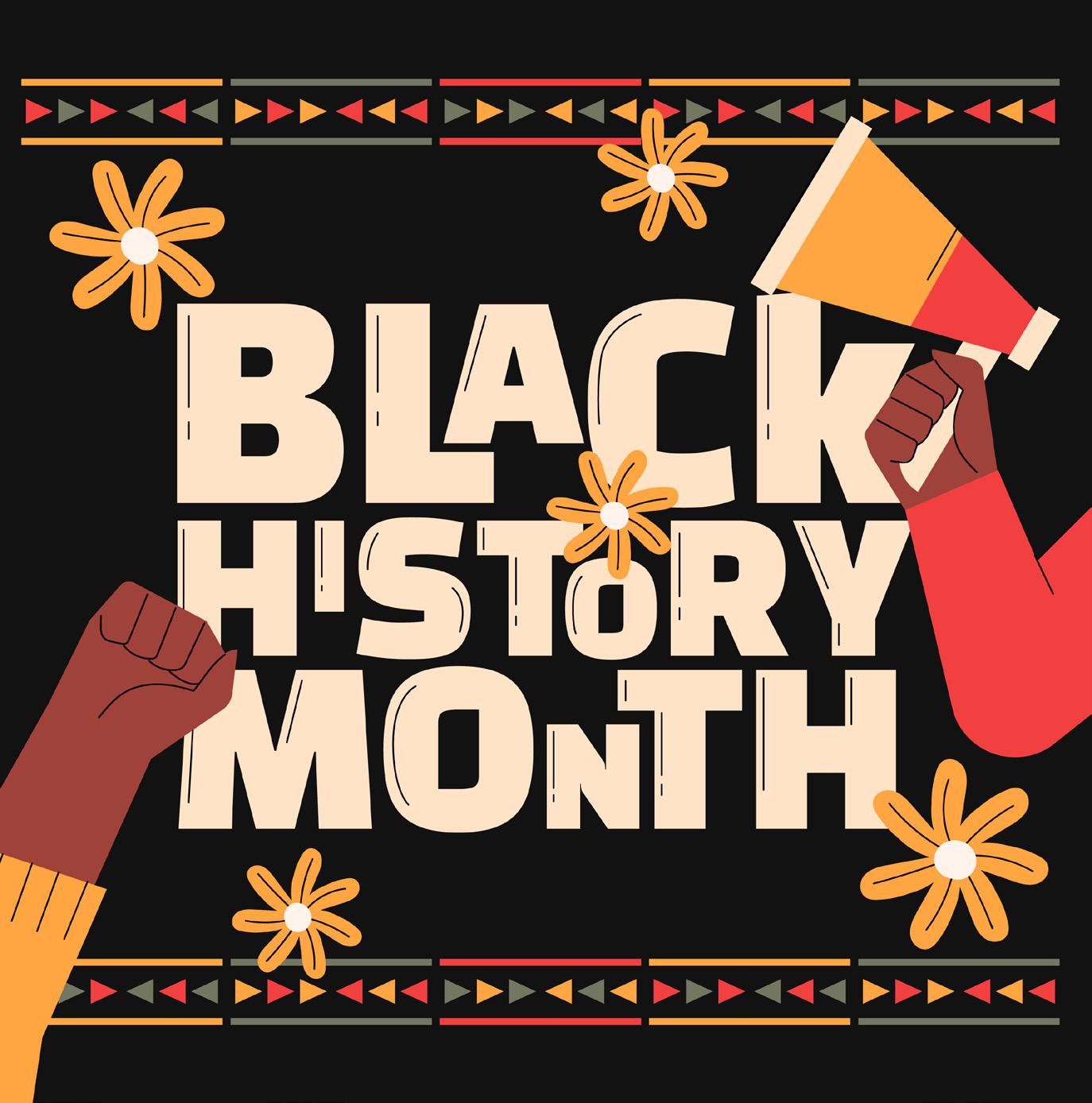
De plus, on retrouve une visibilité accrue des populations concernées en février qui est quasiment inexistante le reste de l’année. Un phénomène de manque de diversité qui se manifeste dans plusieurs domaines : dans les programmes télévisés, dans les entreprises ou encore les programmes scolaires. L’appellation “noir” apporte également de nombreuses questions: Est-ce que cela inclut toutes les communautés noires ? Les communautés africaines ? Est-ce seulement les Afro-Américains ? Qu’en est-il pour les communautés avec des racines noires ? On sait bien que Carter G. Woodson était panafricain et a intentionnellement choisi le terme “noir” de manière à inclure un spectre vaste. Toutefois, notamment aux Etats-Unis, les communautés Afro-Américaines sont souvent celles qui sont réellement célébrées.
Toutes ces critiques montrent les limites de ce modèle mais elles révèlent surtout son caractère incomplet de la reconnaissance qui rend le BHM nécessaire. Malgré le fait que la célébration du mois des noirs est sujet à débat, le réel problème n’est pas son existence, mais plutôt le fait qu’il soit nécessaire.
By Paige Lalonde, Journaliste Française
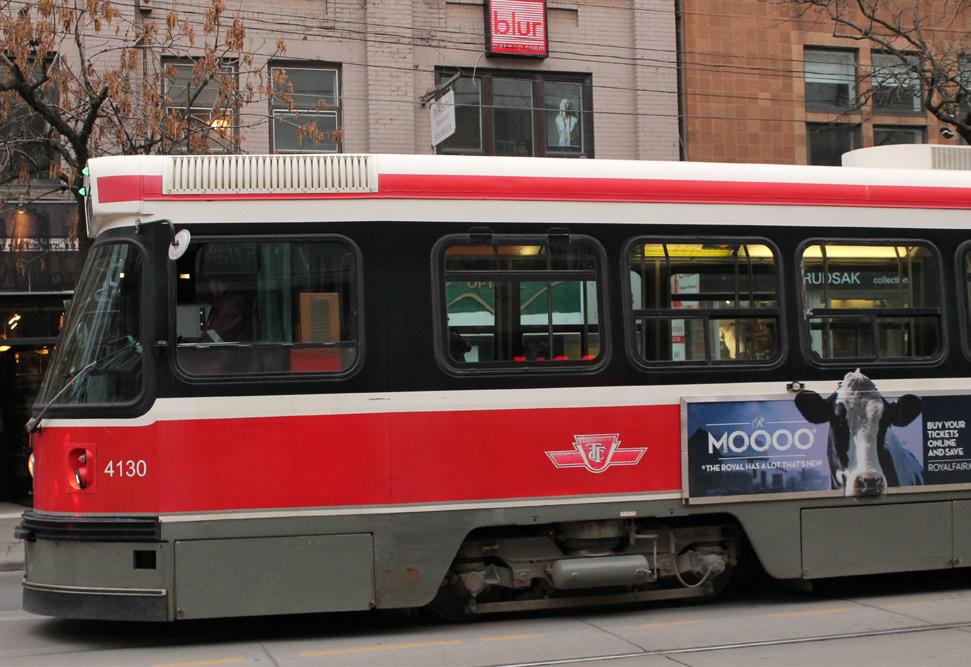
C’est une actualité bien consultée par les publications torontoises : le LRT Eglinton Crosstown a enfin ouvert après au moins 15 ans d’attente (19 ans pour être honnête). Proposé pour la première fois en 1985, mais fermé par le premier ministre de l’époque, Mike Harris, en 1995, le tramway d’Eglinton ne serait conçu sous sa forme qu’en 2007. Depuis lors, des retards incessants, des coupes de financement et un transfert vers un contrat Metrolinx ont entravé l’achèvement du LRT. Même le Finch West LRT, sans grand tambour, a ouvert avant la ligne d’Eglinton (même si je n’oublierai pas que la ligne Finch a toujours été censée s’étendre jusqu’au Toronto Zoo – une vérité que la TTC aimerait que nous oubliions tous). Donc, sans surprise, l’ouverture du LRT Eglinton ce mois-ci est un événement majeur.
Cependant, le Crosstown n’a pas vraiment commencé sous sa meilleure forme. La TTC et Metrolinx ont souligné à plusieurs reprises qu’il s’agit d’une ouverture par étapes, avec moins de trains en circulation et des horaires d’exploitation fortement réduits. Vous ne trouverez pas le LRT en service après 23 h pour l’instant, ce qui est assez décevant pour les passionnés de transports en commun.
Mais, nous ne pouvons pas surestimer l’importance de cette nouvelle ligne de transport. Eglinton a toujours eu besoin d’une file de décharge pour détourner les conducteurs de la route et les usagers des transports en commun hors de la ligne Bloor-Danforth. La Crosstown ouvre d’innombrables connexions avec ses 25 nouvelles gares – inutilement grandes – de grande taille. Des quartiers comme Leaside et des musées comme Aga Khan bénéficieront grandement du pouvoir transformateur du passage piéton. Des hôpitaux comme Sunnybrook seront infiniment plus accessibles pour les personnes sans voiture parmi nous. Mais, en tant que personne originaire de l’est de Toronto, il y a une façon dont je crois que le LRT d’Eglinton révolutionnera le transport en commun torontois : en créant un moyen viable pour les habitants de Scarborough Glendonites d’aller en classe à un rythme raisonnable. Quand j’étais en première année à Glendon, je vivais aux confins de Scarborough. Pendant la majeure partie de mon parcours universitaire, j’ai vécu près de Kingston et Galloway. Pour ceux qui ne connaissent pas la région, ce quartier, parfois appelé The Guild, est une communauté terriblement mal desservie par les transports en commun. La station de métro la plus proche est à 20 minutes de bus les meilleurs jours, même avec les nouvelles voies prioritaires de transport en commun créées en 2020. Le moyen le plus rapide pour moi d’aller sur le campus la plupart des jours nécessitait de prendre trois bus : le 86, le 95 et le 11. Pour un cours à 9 h, il me faudrait facilement deux heures pour y aller. Tout cela en vivant à Toronto.
Par Amie Sosa, English Editor
Scarborough n’a généralement jamais été bien desservie par la TTC, et depuis que Scarborough RT a déraillé en 2024 et hospitalisé quelquesuns de ses usagers, nous n’avons même pas eu de ligne de tramway léger pour nous rendre là où nous devons aller.
Jusqu’à ce que je déménage récemment en centre-ville, je suppliais pour que le LRT d’Eglinton soit terminé afin de pouvoir réduire mon temps moyen de trajet jusqu’à 40 minutes. Maintenant qu’elle est ouverte, j’envie les étudiants de Glendon qui prennent le train jusqu’à la gare de Leaside et terminent leur trajet par un court voyage en bus 11, ou, par beau temps, une marche facile de 25 minutes.
Glendon est en grande partie un campus pour les navetteurs. J’ai rencontré des étudiants dont les trajets depuis Durham, Mississauga ou Richmond Hill font honte à mon trajet de deux heures. La vie universitaire de Glendon a toujours été plutôt calme en ce qui concerne les universités, et j’attribue cela en grande partie à ce fait. Nous rentrons chez nous en toute activité à la fin de nos journées parce que nos trajets ressemblent à un travail à temps partiel. Avec l’ouverture du LRT d’Eglinton, aussi fade que cela puisse paraître en ce moment, je me permets enfin d’imaginer ce que cela pourrait apporter à la culture sociale de Glendon si nous avions tous un peu plus de temps pour rester sur le campus avec nos pairs.
Et aux futurs étudiants de Glendon vivant à Scarborough : réjouissez-vous de ce que vous avez aujourd’hui. Je me souviens avoir souhaité la même chose.
La ville a toujours semblé vivante, mais récemment, j’ai commencé à remarquer à quel point Toronto change. Les rues, les quartiers et les marchés semblent plus diversifiés que jamais. On entend tant de langues dans le métro, on voit des festivals culturels dans les parcs, et on découvre de petits commerces et cafés tenus par des gens venus du monde entier. Parfois, je pense que je deviens juste plus consciente, mais j’ai aussi le sentiment que la ville elle-même devient plus connectée et plus ouverte aux histoires de toutes les personnes qui l’appellent leur maison.
Je me suis davantage impliquée dans la communauté locale, essayant de me pousser à être plus extravertie, à rencontrer de nouvelles personnes et à explorer des quartiers que je traverse habituellement sans vraiment m’arrêter. Les gens sont vraiment formidables. J’ai rencontré de nombreux étudiants et jeunes professionnels de différents horizons, chacun portant sa propre expérience et son histoire. La ville semble moins être un endroit que je dois traverser seule et plus un espace où je peux trouver des moments d’appartenance de manière inattendue.
Je remarque les petites choses qui rendent la ville familière. Un sourire de quelqu’un qui attend son tour au St. Lawrence Market, une conversation amicale dans la TTC, ou un geste gentil d’un inconnu à Kensington Market. Un jour, une amie m’a offert une petite collation d’un commerce local, et cela m’a fait sentir reconnue et appréciée. Ces petits moments me servent d’ancrage et me rappellent qu’il est possible de se sentir chez soi-même dans une ville qui ne cesse de bouger. Être à Toronto me fait aussi réfléchir à la personne que je veux être. J’apprends à naviguer dans les rues bondées, les tramways et les événements de réseautage avec curiosité, humour et confiance, des qualités que je n’avais pas toujours. Je trébuche parfois, je me trompe dans certaines situations sociales ou je me sens déplacée lors de grands événements urbains, mais chaque expérience m’apprend quelque chose de nouveau sur la ville, sur les gens qui y vivent et sur moi-même. Ce que j’aime le plus, c’est de voir à quel point Toronto continue d’évoluer. Ce n’est pas seulement la nourriture, la musique ou les festivals. C’est l’énergie, la volonté des gens de partager leurs histoires et la façon dont les communautés se rassemblent même dans les petites actions du quotidien. En marchant sur Queen Street ou dans Graffiti Alley, je remarque des personnes qui s’aident, qui créent des liens avec des inconnus et qui construisent des moments de gentillesse qui rendent la ville vivante et accueillante.
La ville bouge vite, mais je bouge avec elle. Je porte mon expérience avec moi et je l’utilise pour me connecter aux autres. Je ris de mes erreurs, je célèbre mes petites victoires et je commence à sentir que j’ai ma place dans cet immense espace en perpétuel changement. Toronto est grande, complexe et parfois écrasante, mais elle est aussi remplie de moments où je peux me voir reflétée dans les personnes autour de moi. Cela rend la ville un peu plus mienne.