NEWS
California Redistricting Referendum pg. 06

FEATURES
Shruthi Gowrishankar pg. 12
SPORTS
The Power of Visualization pg. 20
POSTSCRIPT
A Capy Christmas pg. 28


California Redistricting Referendum pg. 06
FEATURES
Shruthi Gowrishankar pg. 12
The Power of Visualization pg. 20
A Capy Christmas pg. 28
editors-in-chief
Amrita Brar
Nitya Dhulipala
managing editors
Miya Widman
Nikhil Krishnaswamy
news editor
Laura Chen
opinions editor
Ashley Qi
features editors
Celine Zhang
Saba Sharifolnasabi
investigations editor
Madalina Zheng
lifestyles editors
Atrisa Rahgozar
Katie Mak
postscript editor
Cathy Wu
copy editors
Angela Kim
Ashley Qi
Celine Zhang
Laura Chen
sports editor
Rebecca Wawda
social media managers
Chloe Choe
Nimrit Gandhi
Dear readers,
Angela Kim
Atrisa Rahgozar
Chloe Choe
Mason Lien
Nimrit Gandhi
Saba Sharifolnasabi
Zain Haseeb
online editors writers
Alina Tie, Anderson Chang, Annika Bagga, Anuj Shah, Calista Fu, Cecilia Zhou, Chloe Han, Elaine Chen, Emily Chen, Hana Widman, Izumi Rubin, James Li, Kayla Lee, Netra Dsouza, Nishaant
Sinha, Rola Ali, Sarah Kim, Sophia Yee, Srinika Joshi, Zoe Jerajani, Zoe Wang
advisor
Ann Shriver-Peck
Editorial Policy
“The Prospector” is an open forum of expression for student editors to inform and educate their readers. It will not be reviewed by or restrained by school officials prior to publication or distribution. Advisors may and should coach and discuss content during the writing process.
The staff of “The Prospector” seeks to recognize individuals, events and ideas and bring news to the Cupertino community in an accurate, professional and unbiased manner. “The Prospector” will not avoid publishing a story solely on the basis of possible dissent or controversy.
If you believe an error has been made or wish to have your opinion expressed in “The Prospector,” please contact us via mail or email. Letters sent become the sole property of “The Prospector” and can be edited for length, clarity or accuracy.
“The Prospector” editorial board reserves the right to accept or reject any ad in accordance with its advertising policy.
Contact Us:
chsprospector@gmail.com
The Prospector 10100 Finch Avenue Cupertino, CA 95014
As finals approach and all students are collectively pushing to the finish line, we hope you can find a sense of comfort in the shared experiences that connect all of us on campus. In these last few weeks of the semester, the pace slows just enough for The Prospector staffers to take stock of where we’ve been and where we’re headed.
In this issue, we reflect on both the highs and lows of the high school experience. On page 30, Laura Chen revisits first semester’s routines, highlights, and everyday challenges as we reach the school year’s halfway mark and look ahead to what’s next.
On page 4, Ashley Qi and Chloe Choe examine the SNAP Benefits Shutdown and its ripple effects within the Cupertino community, highlighting how national policy decisions shape local lived realities.
On page 24, Annika Bagga, Netra Dsouza, and Sarah Kim explore the resurgence of digital cameras and the nostalgia-fueled media culture shaping our generation, presented through a multimedia package.
As this semester comes to a close and a new year of learning, growth and discovery begins, we hope these stories offer you clarity and moments of reflection. Thank you for supporting The Prospector and for continuing to engage with the narratives our staff works hard to bring to life.
With love,
Amrita Brar, Nitya Dhulipala, Miya Widman, Nikhil Krishnaswamy


How the government shutdown impacted SNAP, the supplemental nutrition assistance program, for families across the country
ASHLEY QI, CHLOE CHOE opinions editor | multimedia editor
On Nov. 1, 2025, Supplemental Nutrition Assistance Program benefits were halted for over 42 million Americans. SNAP, known as CalFresh in California, is a program that provides monthly food benefits to low-income households. While SNAP is federally administered, states are responsible for maintaining operations and issuing food assistance.
November SNAP
benefits were paused after the United States government entered a federal shutdown on Oct. 1, 2025 — a 43-day hiatus that marked the longest shutdown in the nation’s history. The shutdown was a result of congressional deadlock, meaning lawmakers were unable to reach an agreement regarding appropriation bills that allocate funding for federal agencies and programs. When appropriation bills have not been passed, Congress may pass continuing resolutions —- a temporary bill that resumes government funds until completion of regular appropriation acts. By the end of the U.S. government’s fiscal year
on Sept. 30, however, neither appropriation bills nor continuing resolutions had been passed. When this lack of authorized funding occurs, the government is forced into a shutdown. Following the beginning of the government shutdown, regular federal funding — that is, primarily health and human service programs including SNAP benefits — expired throughout the duration of the shutdown.
SNAP provides eligible households with an Electronic Benefits Transfer card. The EBT card acts as a debit card that individuals may use at authorized retailers to purchase food. During the 2024 fiscal year, SNAP served an average of 41.7 million people per month — approximately 12.3% of all U.S. residents. That same year, SNAP supported approximately 14% of California’s population, with state benefits totaling $12.22 billion.
On Oct. 10 — 10 days into the government shutdown — the United States Department of Agriculture directed states to hold off issuing November SNAP benefits due to insufficient funds. In response, California and 24 other states filed a lawsuit against the Trump administration in an effort to force the use of emergency reserve funds to cover costs for food benefits.
Two federal courts ruled in the
states’ favor, both finding that the federal government was mandated to make contingency funds available for SNAP. Gov. Gavin Newsom also deployed the California National Guard to support food distribution, and fast-tracked $80 million in state funds to go toward food banks.
Despite the federal courts’ rulings to continue SNAP funding, the Trump Administration filed an appeal on Nov. 6, asking that payments stay frozen while the government was shut down. The United States 1st Circuit Court of Appeals did not immediately issue a ruling on the motion. As a result, on Nov. 7, Supreme Court Justice Ketanji Brown Jackson issued an administrative stay — a temporary order that pauses enforcement of lower-court rulings while an appeals court deliberates. This stay lifted the deadline for the federal government to fund SNAP benefits in full. On Nov. 11, the Supreme Court then extended the administrative stay. On Nov. 13, however, the Trump Administration withdrew its appeal, as SNAP funding was reinstated with the end of the shutdown.
During the government shutdown, many CalFresh recipients were unable to satisfy their immediate needs, leading to a surge in demand for alternative options like local food banks during this period of uncertainty. Second Harvest of Silicon Valley led the effort to support the Santa Clara and San Mateo communities, providing food distribution sites throughout the area.
Fremont Union High School District also offered support for families affected by the apprehension surrounding SNAP benefits. FUHSD Nutrition Services prepared grocery-style meal boxes, which contained both fresh produce and shelf-stable items. These
boxes were made freely available for pickup to any affected families in the district.
On Nov. 10, the Senate passed H.R. 5371 — a bill that marked the end of the government shutdown. Also known as the “Continuing Appropriations, Agriculture, Legislative Branch, Military Construction and Vet- erans Affairs, and Extensions Act, 2026,” the H.R. 5371 bill provides continuing appropriations for numerous federal agencies through Jan. 30, 2026. With federal funding agreed upon, government services reopened after President Donald Trump approved the legislation on Nov. 12.
Following the signing of the FY26 Appropriations Act — a bill passed to fund government agencies and programs for the 2026 fiscal year — all November CalFresh benefits have been restored. Furthermore, the end of the government shutdown ensured the extension of full SNAP benefits through September 2026
Begins

Oct. 1
U.S government enters a shutdown due to a deadlock regarding funding
Benefits Halted............Oct. 10
November SNAP benefits are scheduled to be held off States Sue.....................Oct. 28
States sue the Trump administration to urge the use of emergency reserve funds for food benefits
Court rulings..............Oct. 31
Two federal courts rule in favor of the states Appeal is filed...............Nov. 6
The Trump administration files an appeal to keep payments frozen
Administrative stay......Nov. 7
Supreme court issues a temporary stay
Shutdown Ends..........Nov. 12
Government shutdown ends and SNAP funding is reinstated
TOTAL 43 days




Examining the impacts of Proposition 50, a measure that passed in the November special election, which redraws California’s congressional district map




Several regions, shown here on the existing congressional district map, that will be affected by Proposition 50’s redistricting: Sacramento Valley, Placer County, San Joaquin Valley, Riverside County, Orange County, Temecula Valley, east San Diego County




County Lines District Lines

HANA WIDMAN, KAYLA LEE writers
On Nov. 4, 2025, California residents voted in a special election to pass Proposition 50, a measure that will authorize changes to the state’s congressional district maps.
Proposition 50 was originally introduced to the California legislature on Aug. 18, 2025. This decision was influenced by Texas passing a new congressional map, which aimed to gain five Republican seats in the House of Representatives. California Gov. Gavin Newsom and other Democratic lawmakers proposed that California gerrymander its own congressional
osition 50 are targeting five Republican-held seats in Congress, as well as aiming to decrease competition in swing districts. The odds of Republicans being elected in each district will be lowered by the new map, because districts with a majority of right-leaning voters will be broken up. Parts of these former districts will be incorporated into far left-leaning districts on the new map, where Republican votes

districts in order to offset districting changes in Texas, leading to the creation of Proposition 50.
Typically, California’s congressional district maps are determined by the California Citizens Redistricting Commission, a state agency that draws the boundaries of California’s state legislative and U.S. congressional districts following the decennial census. However, this year, Proposition 50 authorizes legislation to draw new congressional district maps, replacing those that had been created by the CCRC. This proposition will cause the CCRC to divert from the standard 10-year redistricting cycle, since the newly drawn maps will take effect roughly halfway through the decade.
were also spent on advertisements opposing the movement.
For some California voters, Proposition 50 presents an important political step, while for others, fair representation is at risk. According to statistics by CBS News, voters in support of Proposition 50 feel strongly that the change is an important step for California in response to redistricting in other states, especially the most recent Texas redistricting.

Proposed map of California’s congressional districts
Those against Proposition 50 argue that the map drawings were conducted by an independent commission and took power away from the people. Some also fear that the new separation of districts will cause a social divide among California’s cities and counties. Proposition 50 brings many changes. As districts are redrawn, many residents may find themselves in a new congressional district, meaning they would be represented by a different member of Congress.
The new maps created for Prop-
will not have as much of an impact. These maps would take effect in 2026 and be used until the 2030 U.S. Census.
Financially, the campaign surrounding Proposition 50 is the most expensive in California’s history at approximately $200 million. Many residents were engaged in the campaigning, donating hundreds and thousands of dollars in support of the proposition. Although this proposition was widely supported and well funded, tens of millions
Proposition 50 successfully passed after the Nov. 4 special election, with approximately 64% of voters approving. While some counties had clear decisions, others were left with a close vote. NBC Bay Area reported that counties such as Santa Clara, Alameda and Santa Cruz showed strong support for Proposition 50, with an average range of 70-80% of residents in those districts voting in favor. Further inland and rural counties, such as Fresno County and Lake County were more divided
KATIE MAK
lifestyles editor
s technology continues to progress and the job market rapidly evolves, a change in the education system is crucial, now more than ever. With an increase in artificial intelligence used in the learning process, as well as accessibility to technology, information has become significantly democratized.
This calls for a change — class time must be used more valuably to better prepare students for their futures. With this in mind, courses should go beyond the required material and incorporate structured time to develop the soft skills that students will carry after high school.
structured with lectures, discussion, textbook readings and worksheets, with the aim of solidifying the concepts taught. Students often get caught up in the need to overload with content knowledge, simply for the sake of an upcoming test.
This only ben-
efits short-term, and not in the long run, as students often forget that information and how to apply it, ultimately losing out on the opportunity to build their skill sets.
than an opportunity to build the soft skills that will stay with them beyond the classroom.
“ BEING A LIFELONG LEARNER, IT MAKES THINGS MORE FUN; AND IT’S TRANSLATABLE TO ANY INDUSTRY OR MAJOR OR CLASS.
OLIVER YEH
The exchange of information is no longer as important, and the time spent in class must transition to incorporate more opportunities for students to exercise their skill sets and engage with one another.
Traditionally, courses are
With a repetitive structure, students tend to lose interest in the curriculum, as they begin to view it as a transactional process — inputting content, memorizing it, and then regurgitating it — rather
However, this system should be modified, and schools must recognize the importance of building valuable skillsets to better prepare students facing rapidly changing workplaces. According to Forbes, 48% of college graduates felt unprepared to apply for entry-level positions in their fields. This can be traced back to the flaws in traditional learning, where specific content knowledge is emphasized, instead of applicable skills.
The essential skills that stu- dents must have in order to succeed in any environment, including school and workplaces, range from communication, problem-solving, empa-
thy and collaboration. According to America Succeeds, 85% of job success stems from these skills. This places a greater emphasis on the need for schools to implement opportunities to help students develop these soft skills, which are missed out on in traditional settings.
Said AP US Government & Politics and AP Economics teacher Oliver Yeh, “Being able to communicate clearly, [whether] verbally, through writing, through other media or means; [...] I think being able to express yourself is really important.”
To build these skills into lessons, Yeh often starts classes off with a discussion to get the class warmed up and to interact with one another. In his class, these warm-up questions are often related to the course content or act as a way to stimulate discussion about current events and how policies affect our lives. Yeh also introduces pathways that are non-linear to present an open-minded mindset to students, through showing motivational videos or discussing careers that are considered
thinking and problem-solving skills through trial and error. Hands-on learning also allows students to exercise collaboration and communication— when expressing their ideas, listening to others and discussing solutions.
porate these skills. This shifts the focus from solely test scores and content to including real-world applications of knowl -
non-traditional. Additionally, hands-on experiences and failure are vital in the process of developing and honing skills, as those lessons will truly stick. From exploring simulations to crafting models, students hone their critical
This type of learning creates memorable experiences when students get a chance to directly work with materials, solidifying connections between theoretical concepts and practical applications. This contrasts with students idly trying to focus on lecture after lecture, which fails to keep students actively engaged.
Schools must recognize the essential skill sets that students need to develop, and implement engaging opportunities within the curriculum that effectively incor-
edge, preparing students beyond the classroom.
Establishing this skills-focused system does not solely require redesigning curriculum — it also requires teachers to foster growth-oriented environments where students feel at ease to take risks and make mistakes within their learning. For Yeh, he strives to maintain a mindset of continuously learning, to keep growing as a person. Said Yeh, “[I hope] that creates a culture not just about getting stuff done or an accomplishment, but more like a process of learning together. [...] When there’s that culture of being a lifelong learner, it makes things more fun, and it’s translatable to any industry or major or class.”
The journey of learning, whether facing failures or successes, is where true knowledge comes from and remains. Students not only learn more about themselves, but also better develop valuable real-world skills, working through abstract ideas and turning them into lasting lessons
ZAIN HASEEB, ZOE WANG
in-depth editor | writer
Candlelight flickers in the background. Spilled ink bleeds through the page. Red paint trails down painted fingertips. Reel after reel, #torturedartist fills the captions as the comments praise the pain and suffering put on display as a work of art.
Throughout the media, tortured artists are often glorified, placed
IF A MAN [...] UNTOUCHED BY THE MADNESS OF THE MUSES, [BELIEVES] THAT TECHNIQUE ALONE WILL MAKE HIM A GOOD POET, HE AND HIS SANE COMPOSITIONS NEVER REACH PERFECTION.
” “
on a pedestal to be admired by aspiring artists as the epitome of art. Essentially, it is the idea of an artist whose art is inspired by or contributes to their struggles with mental illness. The trope romanticizes the perception of suffering and the idea that creativity is derived from torment or madness.
Historically, many famous artists have been known for their genius bordering on madness. This trope can be traced back to the ancient Greeks, following the teachings of influential philosophers such as Plato and Socrates, who made many arguments in favor of a divine madness. “If a
of the “tortured artist”
man [...] untouched by the madness of the Muses, [believes] that technique alone will make him a good poet, he and his sane compositions never reach perfection.” Both Socrates and Plato argue that madness is not a flaw, but a necessary state for certain pursuits, especially in the arts. Since then, numerous famous artists who have also suffered this divine madness are still praised for the dark allure of their works.
The years following the original teachings of Socrates and Plato saw a rise in tortured artists. In the Romantic era, at 18 years old, Mary Shelley wrote her classic “Frankenstein,” which pioneered the science fiction genre. Behind the scenes, however, her life was shrouded in death — only one of her five children survived past childhood, and after her husband drowned, she kept his heart on her desk. In the post-impressionist era, there is Vincent van Gogh, the epitome of the tortured artist, suffering from bipolar disorder and borderline personality disorder. As his mental health declined, his art began to feature darker, muddier colors depicting distorted figures, reflecting his inner turmoil. Moving into modernism, in 1963, Sylvia Plath published her famous novel “The Bell Jar,” which uncovered the gruesome societal pressures faced by women in the 1950s — she committed suicide just weeks later. Her writings explored themes of depression, anxiety and emotional turmoil, giving readers an honest
look into her personal life as she grappled with her mental health.
A common thread in all these classics is the tragic tale that accompanies them, which many have accepted to be the driving factor of their superiority. Despite the tragic stories and unhealthy lifestyles of these artists, the trope still remains immensely popular, which begs the ques -
tion: What causes this infatuation with tortured artists?
Human emotion, for one, might be to blame. It is widely recognized that people are instinctively drawn to works that evoke strong
emotions. Research indicates that emotional experiences, particularly negative ones, are preserved in people’s memories much longer than neutral experiences. Catharsis, for example, is a crucial factor. Experiencing sadness through a fictional medium allows for emotional release in a controlled environment without the same real-life consequences as other mediums. In - volvement with such media, however, could even be explained by something as simple as the fact that a strong emotional response makes a fictional work feel more realistic, increasing a person’s connection with the narrative. According to research conducted by Profes-
sors Joydeep Bhattacharya and Alan Pickering of the Psychology Department at Goldsmiths, along with student Kaile Smith, creativity and suffering might have a relationship opposite to how the media portrays it. The study, which sampled the mental states and creative behavior of 290 creative professionals, found that participants were increasingly creative in both their work and everyday life when they felt a strong sense of well-being and positive emotions. This contradicts the idea that art needs to be rooted in suffering in order to be considered real and valuable, affirming the works akin to others, which remain beloved classics despite having a strong positive message.
Likewise, van Gogh’s painting “Sunflowers” shows that his creativity wasn’t solely a product of suffering. Supported by his brother’s love, he created joyful works as well. His pain was his usual source of inspiration, and his art was a way for him to express his struggles, but this correlation does not imply causation. Despite being the epitome of the tortured artist, all his works, whether forged in pain or born from love, were beautiful masterpieces, suggesting that his genius may not have stemmed from pain after all. His legacy thus suggests that his artistic genius rose not simply from pain, but from a full range of human experience. Therefore, the only explanation left for the obsession with the tortured artist is that pain feels more authentic. This belief creates the need to perform sadness, or to feel you have enough grief in order to be relevant, both socially
and artistically. Essentially, romanticizing tragic artworks to validate the self, and how the consumption of sadder media outdoes the consumption of more lighthearted ones, due to this popular notion.
Because many artists have a background of suffering, mental illness or trauma, the media often concludes that mental illness and suffering are the reasons for the production of good works. Even though these artists used their pain to inspire many of their works, it ultimately discourages seeking a healthier lifestyle in order to maintain this belief in “divine madness.” This concept remains prevalent in many cultural references today that glamorize self-destructive behavior, painting it as a gift or something exclusive to chosen ones, making it extremely harmful to viewers. Viewers might also internalize the idea that they must be in pain in order to be interesting or to produce worthwhile art. Most importantly, it undermines the work of other artists, because it gives the impression that good art does not come from hard work or genuine skill, but stems instead from madness and suffering.
Suffering and trauma are not — and should not be — prerequisites to creating good art. Art is inherently a subjective experience and a crucial form of self-expression that should never lift one voice over another. People can honor the voices of those who led unfortunate lives by appreciating their art, but not by viewing suffering as a necessary step to truly becoming an artist. Ultimately, it is not the tortured artist we must destroy, but the pedestal

NIMRIT GANDHI
spotlight editor
With a delicate stroke of her paintbrush upon her white canvas, Cupertino High School senior Shruthi Gowrishankar is ready to create yet another beautifully designed art piece consisting of rich and vibrant expression. Art is a prominent passion that Gowrishankar dedicates about 20 hours each week to, ensuring quality pieces are made. She is very open to spreading her creative talents through art commissions that she has had open for about a year. However, to Gowrishankar, art is more than just a business — it is a valuable form of expression, providing a channel for her to convey her own personal experiences as well as those of her clients.
Gowrishankar’s passion bloomed when she was a child, and her creativity is still growing today. She has been doing art since she could pick up a pencil — since about 4 years old. As her artistic skill
continued to blossom, Gowrishankar’s love for art took a step further in middle school, when she decided to take it more seriously and delve into it as a passion. Gowrishankar’s art journey has taken her very far — as an esteemed artist, Gowrishankar has won numerous awards for her artwork, placing both
nationally and regionally in the Scholastic Art Competition multiple times. Gowrishankar spends her time creating all types of artwork, ranging from colorful canvas paintings to intricate murals painted on walls. Most of her artwork typically leans toward a painting medium with a distinctively bright and vivid style.
“I think the more I did art, the more a style just naturally came to me,” Gowrishankar said. “And once I realized that, it was kind of just, ‘Okay, how do I further incorporate this style into my works? Or how do I further expand it?’”
Initially, Gowrishankar enjoyed making pieces for friends and family, often in the form of gifts, but it was not a business she tried to advertise. Art was more of a way for Gowrishankar to indulge in her passion with minimal consideration of the monetary aspect, and to take joy in portraying beautiful moments and sharing them with friends and family. Her personal artwork often centers around her own experiences. She incorporates snippets from her childhood, finding

joy in this process as she reflects on childhood moments. However, she transitioned into a more business-focused approach when she officially opened up her commissions last year. For Gowrishankar, this was a good way to spread her creativity and expression among a wider audience, while also making money. Her commissions often capture personal moments and experiences of those buying her pieces.
“Parts of [the art business] I really enjoy are the fact that someone’s trusting me to bring something they like to life,” Gowrishankar said. “The idea of
for others does not go unnoticed. Gowrishankar feels conflicted about viewing art as just a business, instead placing more value on the creative expression involved in each artwork. Said Gowrishankar, “I don’t really like the whole idea of art as a business, just because I do think it’s something that everyone should be able to express and enjoy.”
“THE IDEA OF BEING A VESSEL IN SOME SORT OF WAY FOR SOMEONE’S INTERESTS — IT’S KIND OF COOL, BECAUSE I CAN ALSO INCORPORATE MY OWN STYLE INTO IT.
finding meaning and building connections through creative pursuits. One particularly memorable moment for Gowrishankar was creating and selling graduation cap paintings last year for the Class of 2025 seniors. Behind the sales and money she made, the true value behind these pieces was the intimacy of this project.
”SHRUTHI GOWRISHANKAR

being a vessel in some sort of way for someone’s interests — it’s kind of cool, because I can also incorporate my own style into it.”
Currently, Gowrishankar’s sales reach the audience of high school students and friends, often in the form of small pieces for customers to hang up. However, Gowrishankar is interested in expanding her platform to adults, who would be willing to pay more money for her art pieces. But beyond the transactional aspect of her business, Gowrishankar’s genuine love for providing a creative outlet
Even though Gowrishankar earns money from commissions, the true value of her art business lies in
“A lot of my friends were seniors last year, so it was more of a personal thing as well,” Gowrishankar said. “Just creating artwork for friends in general […] it’s nice to be a part of that personal environment”




JAMES LI, ROLA ALI writers
Jill Hirsh and her ensemble take their places in front of an anticipating crowd. The speakers hum, lights flare and an electrified chord hits the audience. The stage is far from a classical orchestra, but transforms into a medley of rock and roll nostalgia. Hirsh’s performance on the
stage reflects a lifetime devoted to music. Before becoming Cupertino High School’s orchestra director, Hirsh had already built a dynamic music career. Hirsh is a San José State University alumna with a double major in music education and performance. She has spent years playing instruments, performing in a wide range of ensembles and teaching. Her early musical development included time with the Southern California Youth Philharmonic. After earning a degree in music, Hirsh continued to pursue opportunities to perform. Her professional work spans from ensembles like the Cambrian Symphony Orchestra, New Music Ensemble Disrupt and the Mariachi Oro Azul.
Hirsh was exposed to music at the young age of five. She began her journey with piano lessons,
motivated by curiosity. By fourth grade, she tried the violin, but after watching her brother try the cello, she felt more drawn to that instrument. It was not until sixth grade that she finally picked up the cello herself, which has now become her chief instrument.
While Hirsh is best known as a cellist, she has spent years mastering a wide range of string instruments like the violin and viola, adapting to the distinct techniques that each one demands. She explained that switching between viola, cello, bass, and guitar requires rebuilding funda mental skills.
“Learning violin was also a challenge, learning vibrato and a whole new set of techniques, but it was enjoyable. It was really fun, and I have not mastered it yet,” Hirsh said.

plemented by composers, this setting encourages improvisation and adaptation with electric instruments. One of the main things they do is play renditions of old rock music. For Hirsh, playing this genre offers a contrast to orches tral work, giving her access to a new realm of creative freedom.

“There are built-in solo sections to the music so we can improvise and take solos, which is really fun. I really enjoy that,” Hirsh said.
That continued effort is central to how she teaches. Hirsh notes that the hardest part is not the instrument itself, but the discipline required to improve. Because she is still working through the same hurdles her students face, from techniques like vibrato to producing a resonant tone, she feels better equipped to guide them through their refinement.
“There’s always something better to improve or grow or develop. Studying how to get better at something keeps me busy,” Hirsh said.
By applying this mindset with her students, she is not just a performer but an adaptable educator.
One of Hirsh’s most unique musical experiences is performing with the Renegade Orchestra, a rock and roll ensemble that blends string instruments with electric guitars, bass and drums. In contrast to traditional orchestras, which follow guidelines im-

With a surplus of commit ments, Hirsh has fre- quently had to reject opportunities in order to balance her present career, especially now that she teaches the CHS orchestra year-round. To Hirsh, this is not entirely a loss. Looking back, she feels that she has fueled her passion through teaching.
“I had subbed [in a profes sional orchestra] last year while I was in the credential program, and I real- ized that I don’t actual- ly want to pursue [the job],” Hirsh said. “I am much happi- er just teaching high school and doing a few er things rather than trying to also work wards earning a symphony job while teaching.”
With countless performances, years of education and ex periences, Hirsh applies many of

her own breakthroughs directly in the classroom. One important lesson she carries is to always keep an open mind, whether she is teaching or performing.
“You are collaborating with people a lot in teaching and in performing music, and so being able to admit when you are wrong and to really listen to others and their ideas, to be open-minded, and to ask questions [is really important],” Hirsh said.


For Hirsh, her ultimate goal is to convey her love and passion for music to her students. She hopes that they also find joy in exploring music, making it themselves and look to continue staying involved in any way, regardless of whether they pursue a career in music. Her advice

“Don’t quit,” Hirsh said. “It doesn’t mean you have to do it asreer, but don’t stop -
CECILIA ZHOU, EMILY CHEN writers
On the surface, the college registration dashboard appears simple — but what seems like a single “Submit Application” button is built on months of stress, commitment and payment. In the current world of academics, college applications define the high school experience, but each Advanced Placement exam and SAT registration comes with a price tag — one that costs upwards of hundreds of dollars, countless hours and significant emotional energy.
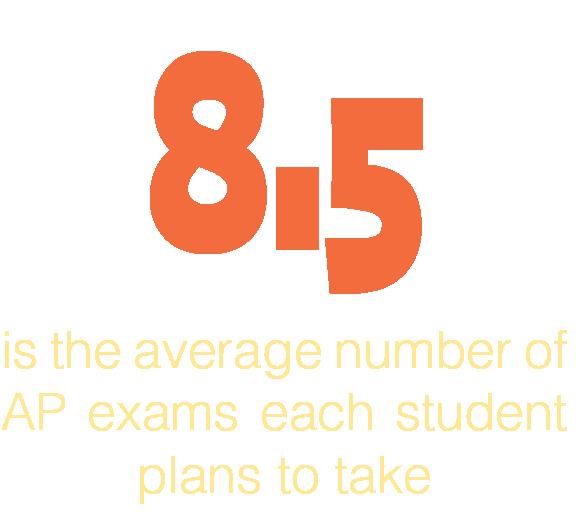
According to a survey of 18 participants conducted by The Prospector, the estimated number of AP tests that CHS students plan to take in high school is around 8.5 exams. This amounts to a total of about $1,100 in AP expenses per student.
“ BUT IF A STUDENT HAS ANY FINANCIAL HARDSHIPS, WE, CUPERTINO HIGH SCHOOL, STILL WANT THEM TO PARTICIPATE [...] STUDENTS JUST NEED TO LET US KNOW AND WE’RE GOING TO MAKE IT HAPPEN. ”
TAMARA EMMERT

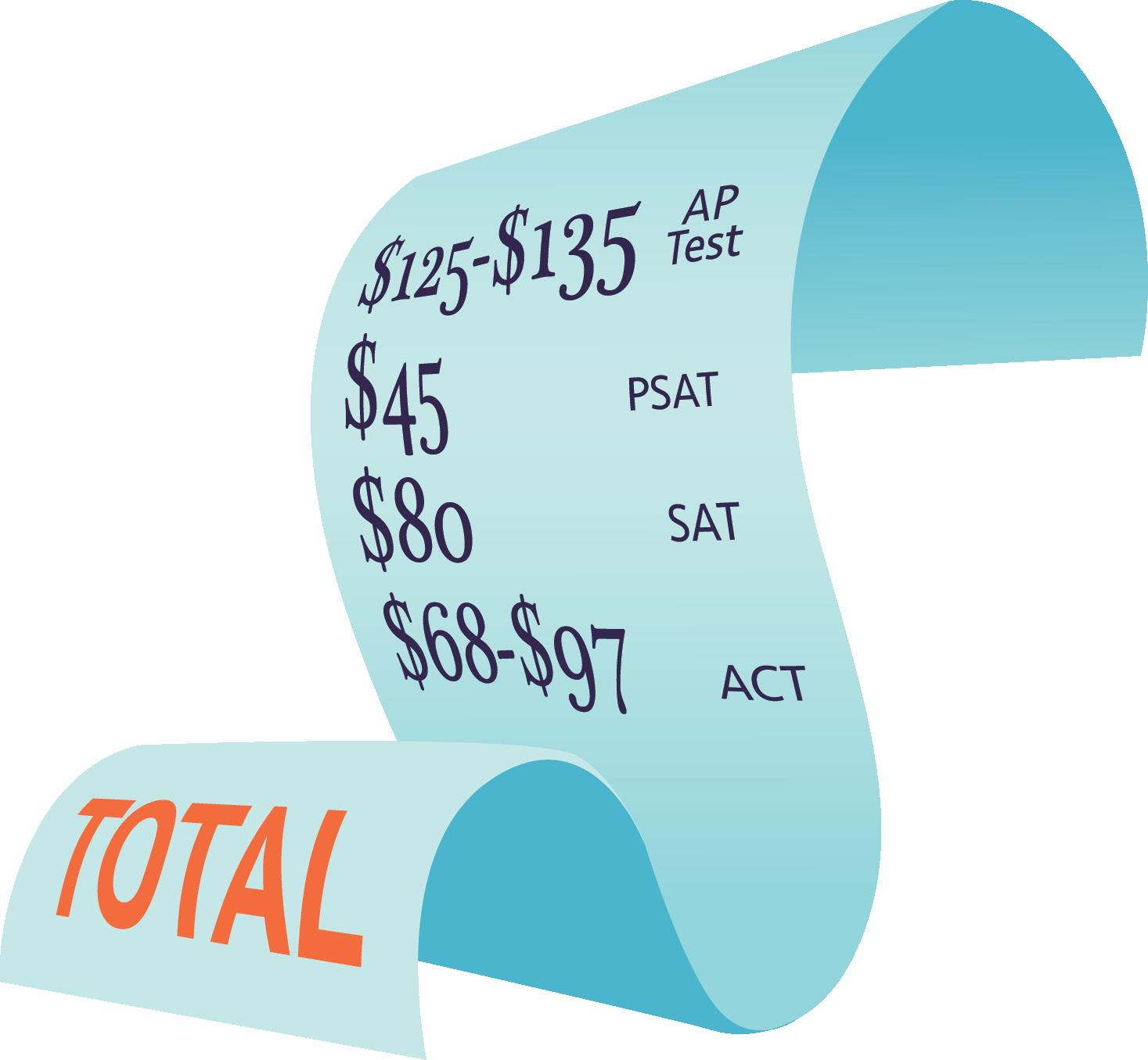
The cost of the college application process is most visible in standardized tests. AP classes and exams allow students to enroll in college-level courses and demonstrate academic rigor. Thus, for many students at Cupertino High School, registering for numerous AP exams is viewed as the norm. However, an extensive list of AP tests often leads to an equally lengthy receipt of exam expenses. For Fremont Union High School District students, the cost of one AP exam varies from $125 to $135. These prices have no signs of reducing — instead, they are continuously rising to even greater numbers, as demonstrated by trends shown by Total Registration, an internet college registration service.
In addition to AP tests, standardized assessments such as the Preliminary SAT, SAT and ACT further measure a student’s academic abilities in comparison to national standards. While not all schools require such admission tests, a strong exam score strengthens an application by providing evidence of academic achievement. Beyond gauging an individual’s aptitude, some colleges may examine standardized test results when deciding scholarship eligibility, making the PSAT, SAT and ACT exams vital aspects of the application process.
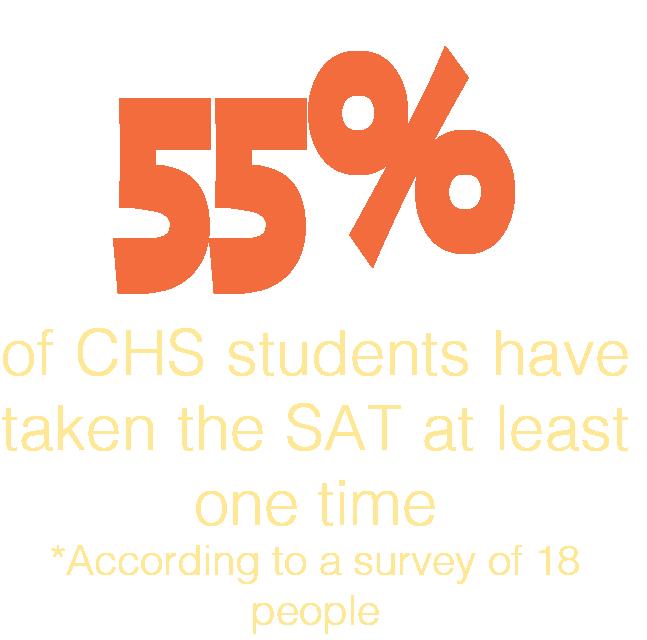
Yet, similar to APs, securing these scores is not free. Test fees are expensive, with the PSAT costing $45, the SAT costing $80 and the ACT costing $68 to $97. Furthermore, based on The Prospector’s survey, 89% of students have taken the PSAT once or twice, and 45% of students report taking the SAT more than once. Upon totaling the expenses, students will typically spend close to $200 on these assessments.
Even after a test is taken, the costs do not end. Sending SAT scores to colleges is an intricate process: students may
send free score reports up to four schools, but only during registration season and before their scores are released. Following this is an extra charge of around $12 to $15 per school, which can accumulate rapidly. CHS schoolbased therapist, Christopher Hickey, notes that the standard in the current environment is to apply to between 10 to 20 schools.
“The application costs themselves are somewhere between $60 to $95 per application,” CHS senior Reva Ukkadam said. “If you’re applying to at least 10 schools, that’s already $1,000.”
Some students also choose to engage in test preparation programs and private counseling to increase their odds of acceptance. Survey results show that CHS students generally attend at least one outside-of-school tutoring class. PrepMaven, an online tutoring and college advice service, explains that these elite tutoring courses can range from $40 to $100 hourly. According to HelloCollege, an expert online admissions consultant, students may seek independent college counseling options for personal -
ized attention — sessions ranging from $100 to $300 per hour. These
fi - nan -

cial pressures highlight the strain placed on families by the admissions system, leading to disparities between households of differing financial backgrounds. A Harvard study in 2023 found that the children of the wealthiest 1% of the population were thirteen times more likely to score above a 1300 on the SAT than lower-income families. This reflects the unequal access to long-term preparation, tutoring classes and high-quality schools that those from lower-income families face. Research conducted in the Journal of Consulting and Clinical Psychology found a lower extracurricular participation rate for students of financially disadvantaged households, as many are unable to afford paid activities. Because college admissions expect applicants to have a strong extracurricular involvement, the system is disadvantageous to students of lower socioeconomic backgrounds.
ship opportunities for select colleges provide a chance to lighten the economic burden, and these awards can vary from small prizes of a few thousand dollars up to full rides. Former CHS wellness center counselor, Natalie Rodriguez, states that to apply, students can contact the College and Career Center at CHS to assist in determining eligibility qualifications. She also emphasizes the importance of the visibility of these financial resources for students, describing her personal perspective as a former counselor at Ohlone College.
Said Rodriguez, “There was one year where $10,000 went untouched simply because nobody applied because nobody knew about it. Giving that [scholarship] information to students gives them a sense of relief.”
— just $10 for financially qualified students.
“But if a student has any financial hardships, we, Cupertino High School, still want them to participate,” school counselor Tamara Emmert said. “[...] Students just need to let us know, and we’re going to make it happen.”
Financial costs are not the only hefty price students are expected to pay. For students from low-income households, the college admissions process places an emotional and psychological burden on their shoulders. While application fees, test costs and travel expenses add up quickly, the underlying toll — stress, anxiety and the insecurity of being at a disadvantage, linger even after applications are submitted.

Nevertheless, there are solutions in place to solve the issue of financial disparities. Scholar-
Likewise, FUHSD offers financial aid to students buying school items, such as the AP, PSAT and SAT tests. To apply, students must complete the FUHSD Income Eligibility Form and the Free and Reduced Meal Application. These resources allow students to purchase exams at discounted prices
Beyond the financial and emotional strain, the admissions process also demands a significant investment of time and effort. For many students, especially those juggling academics, family responsibilities and parttime jobs, the extensive commitment towards extracurriculars and test preparations can quickly become overwhelming.
“I was in a lucky spot because I really liked all the extracurriculars that I did at school — whether that was clubs or academics. I tried my best to stay positive and find ways to enjoy it. But I did dedicate almost all of my
time to those things, partially because I did enjoy doing them, but also because they are important to keep on pursuing,” Ukkadam reflected.
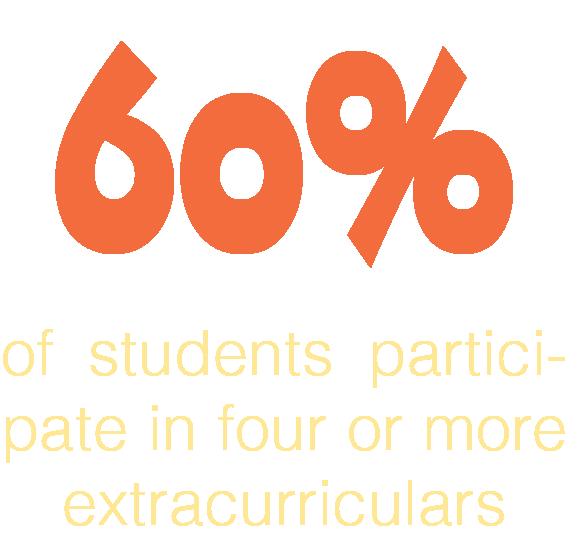
Even when students have a genuine passion for their activities, the pressure to excel in every aspect can be very time-consuming. As the number of extracurriculars steadily increases, maintaining balance becomes difficult. For some students, dedication towards these activities starts to diminish, and every club, sport and activity becomes a piece of the puzzle, fitting together to create the ideal college application. Said CHS junior Rosa Lee, “If they’re not genuinely passionate about it [extracurricular], it probably won’t get them that far anyway. You need a passion to keep going with something you like. I think those who really enjoy the extracurricular activities they do will reflect on their application because they’ll probably get farther.”
Alongside personal challenges, social expectations further burden students. The culture of being able to do it all drives students towards unrealistic goals and ultimately fosters a competitive environment, feeling compelled to keep up with the accomplishments of their peers.
“I think the
pressure mostly comes from school, and my parents want me to go to a good college, but I think a lot of it is because of the peer pressure from school, and seeing a lot of different people succeed. That makes you think, I have to do all this, and go to a good college, too,” Lee said.
“It’s common for students to compare themselves with their peers,” school therapist Denise Salin said. “This can have a negative impact on well-being because students often feel discouraged, anxious, or ashamed if they aren’t doing as well academically.”
“ed by Ellucian states that 61% of students say financial stress negatively affects their education.
“It can add up to a lot, [financial challenges] coupled with the anxiety of trying to still perform well in their current courses,” Rodriguez said.
YOU NEED A PASSION TO KEEP GOING WITH SOMETHING YOU LIKE. I THINK THOSE WHO REALLY ENJOY THE EXTRACURRICULAR THEY DO WILL REFLECT ON THEIR APPLICATION BECAUSE THEY’LL PROBABLY GET FARTHER.
”
ROSA LEE
For many students, navigating an admissions system built around resources they lack means battling the feeling of being behind before the process even begins. The fact that resources such as tutoring classes, counselors and extra test attempts are available to those who can pay places more pressure on students who cannot.
Furthermore, a study by Junior Achievement United States of America finds that 74% of students are currently stressed about their family’s economic situation and view it as a barrier to reaching their goals. Additionally, a nationwide survey conduct-
Indeed, students who are burdened with financial stress routinely feel guilty for adding financial strain to their families. Over time, these struggles can manifest into mental health challenges. A survey conducted by Grand Rising Behavioral Health found that 78% of high school students’ mental health was negatively impacted by financial stress.
Ultimately, the cost of college applications extends far beyond financial means — it is also a test of time, effort and emotional resilience. From exams and application fees to tutoring classes and extracurricular commitments, students often feel pressured to follow a fixed path, participating in supplemental activities not out of passion but out of obligation to strengthen their applications. For those who come from low-income families, the pressure is greater, without the same access to outside resources — they start at a disadvantage. Thus, it begs the question: If the system meant to create opportunities favors those with privileged backgrounds, how can higher education truly be attainable for all?
ANGELA KIM
online opinions editor
All athletes subconsciously experience images of missed opportunities, mistakes, injuries and losses. Sports visualization gives athletes control by replacing negative images with purposeful mental practice that strengthens performance and leads to success.
as the thrill of victory or excitement. Additionally, the brain releases dopamine when an athlete visualizes a successful outcome as if they had actually achieved the reward. Visualization can also sharpen an athlete’s focus immediately before executing a certain action or performance.
“It’s a good way to get yourself in the mood to go on the floor and
back to scientific reasoning. The National Institute of Health, the leading agency for biomedical and health research in the United States, provides insight into guided imagery training. The effectiveness of these training sessions depends on their frequency, duration and consistency. During these sessions, athletes picture specific scenarios such as stand-
Take five and dive into how athletes use visualization
dance in front of a bunch of judges or [an] audience,” said Cuper-
Visualization in sports exists in numerous forms, including process, outcome and motivational visualization. Process visualization is the mental rehearsal of a sport as the athlete breaks down a skill into specific steps to improve future performance. Outcome visualization is a form of visualization in sports that involves the athlete imagining their desired outcome, such as scoring the winning goal or crossing the finish line.
Athletes use motivational visualization, another form of visualization, to boost confidence by visualizing specific emotions, such
“ ”
ing at the starting line while experiencing the emotions they might feel, as well as imagining a perfect performance.
IT’S A GOOD WAY TO GET YOURSELF IN THE MOOD TO GO ON THE FLOOR AND DANCE IN FRONT OF A BUNCH OF JUDGES OR [AN] AUDIENCE.
KAILEY RYU
”
tino High School junior Kailey Ryu. “It does help in a way that even though it helps with confidence, it also helps with being in the moment.”
The impact that visualization has on athletes can be traced
Regular sessions are said to enhance athletic performance by reinforcing certain neuromuscular pathways and cognitive processes. Visualization strengthens neural pathways by activating similar brain regions as the physical actions being pictured, improving the mind-muscle connection, the conscious focus on a specific muscle to increase its engagement.
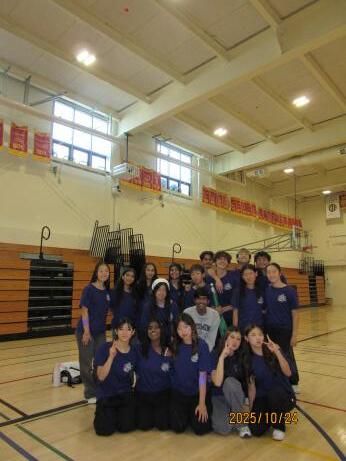
The CHS Golden Spurs Dance Team implements visualization into their practices to ensure that the team is prepared for their competition season.
“We sometimes huddle up in a circle during competitions or practices to really think about the facials that we want to do,” Ryu said. “We put the music on by the side, and we look at each other and dance it in our head, and I think that really helps with utilizing the visualization to target other aspects other than just dancing with movement.”
“ I THINK VISUALIZATION IS PARTIALLY A PLACEBO EFFECT AND ALSO HAS A PHYSICAL ASPECT.
visualizes success, positive expectations are created and consequently lead to improved performance.
JAELYN JENSEN “ ”
”
The placebo effect, where an outcome results from an individual’s belief in a treatment rather than the treatment itself, is also prevalent in visualization. When an athlete
“I think visualization is partially a placebo effect and also has a physical aspect because when you visualize yourself doing something and actually make it happen, it’s a physical difference that you are making for yourself,” said CHS junior Jae-
lyn Jensen. As athletes continue to push for maximum success, visualization remains one of the most effective tools to transform worry and doubt into confidence and a mindset ready to succeed


It is the same superstitious ritual every time she gears up to hit the rink. Sitting in the corner of the locker room, there go the knee pads. Right, left. Lacing up her skates. Right foot, left foot. Strapping her goalie pads. Right, then left again. The meticulous method is a strategy in itself. For Bailey Watson, the 15-year-old ice hockey phenom, even suiting up is a deliberate part of her game plan on the ice.
As a rising star, Watson began skating at just 2 or 3 years old and started her athletic career in ice hockey at 4. As a kid, she found herself captivated by the upper-division girls positioned as goalies. Now, Watson stands

beside them, accumu - lating a total of 14
championship titles, 12 finalist titles and over 30 Most Valuable Player nominations for her performance as a goalie.
“So from eight [years old] to now, I’ve been a goalie, and it’s a lot of fun,” Watson said. “I’ve definitely had my ups and downs.”
Watson currently competes in travel ice hockey with the Pacific Girls Hockey League. Only a sophomore, Watson plays alongside 18 and 19-year-olds in the Tier II 19U AA division and receives regular invites to Tier I practices, the highest level in the San Jose Junior Sharks Program. Her high save rate of 93% is comparable to professional-level standards.
Every month, Watson plays in four games in the PGHL tournament, gaining opportunities to compete all across the country, from Portland, Oregon to Buffalo, New York. Aside from her time in the San Jose Junior Sharks, Watson has practiced with the Anaheim Lady Ducks, an elite girls youth program, and has trained with professionals, Division I athletes and former hockey Olympians. Watson supplements her ice hockey training with field hockey, playing for her club team and Cupertino High School’s Varsity Girls Field Hockey in the fall.
With her hectic athletic career, Watson strives to maximize her
training, cultivating an off-ice work ethic to elevate her performance on the rink.

“I’ll do extra lessons, and I am at home a lot. I do hand-eye coordination training, and right before a game, I usually also do handeye coordination training, and I’ll visualize,” Watson said.
In addition to her physical conditioning, Watson must keep up with the mental resilience her position demands. As the final line of defense, the goalie assumes a tremendous amount of responsibility in their team’s execution, making split-second decisions that determine the team’s score. Goaltending requires immense concentration and adaptability, so hesitation is not an option. Watson knows this all too well and has struggled to keep from internalizing such pressure.
“I’ve always had those moments where it’s my fault, and I feel like my team doesn’t like me, or that I didn’t help them out, and that definitely can affect me mentally,” Watson said.
“
BUT THAT’S THE THING ABOUT GOALIES — YOU HAVE TO HAVE A WALL
Watson’s former experiences have taught her that she falls out of love with ice hockey when she overwhelms herself with practices and mistakes. Maintaining composure and letting go of her faults
with a quick recovery time has allowed Watson to refocus on the plays ahead and to recover for her next save.
“But that’s the thing with goalies — you have to have a wall mindset,” Watson said. “It’s like you can’t think about the bad things until the very end of the game, because if you’re thinking about that, you’re just gonna get more down on yourself.”
Beyond mental discipline, ice hockey reinforces a powerful lesson about teamwork, a message that Watson has embraced in her dual roles as an individual player and a team member. In reflecting on her ice hockey journey, Watson aims to cherish her final four years of league ice hockey, embracing its challenges, life lessons, community and milestones along the way

the resurgence of digital cameras as well as their distinct qualities within this age of technology
ANNIKA BAGGA, NETRA DSOUZA, SARAH KIM
writers
Gathering with your friends at Winter Formal, you head toward the dramatically lit photo booth backdrop. You quickly pose together and get ready to take photos. “Smile!” calls the person capturing the photo. Only they do not whip out an iPhone. Instead, they pull a small, vintage-like digital camera out of their bag, and an audible yet soft click fills the air. Until 2020, compact pointand-shoot digital cameras were considered outdated technology. However, they have evolved to become a new and preferred way to take photos. Many Cupertino High School students own a digital camera, and a large number of pictures recently posted on social media have been uploaded from these devices. The repopularization of digital cameras is linked to several factors,

including their high-quality image production and retro vibe.
Prior to the invention of iPhones, digital cameras were the mainstream photography device. Their straightforward features and high-resolution photos made them a more convenient option than film cameras. As people no longer needed to wait for their photos to develop, the digital camera market soared in the early 2000s, with camera brands such as Canon and Nikon leading the industry.
“Switching from film to digital was a game changer,” CHS Associated Student Body advisor Kent Paris said. “Growing up, everything was film, so you took as many photos as you could and had to wait for them to be developed to then see them.”
The invention of the iPhone in 2007 introduced a new level of convenience. Not only was the device compact and allowed for easier communication, but the
iPhone’s extensive photo-taking features also caused millions to make the switch. There was no longer the need to carry around a digital camera when the iPhone included almost every photographic feature one could think of. By 2011, camera sales had declined sharply, and by 2015, the iPhone was the most-used camera on the popular photo-sharing app Flickr.
“The camera quality and the lack of internet access on a phone made it so you carried both a cell phone and a digital camera,” Paris said. “It was when the first smartphone came out that you were able to carry less.”
The return of digital cameras resulted from the broader resurgence of the “Year 2000,” or “Y2K,” aesthetic. This reflects a common pattern in pop culture in which old trends tend to resurface two decades later, adjusting to today’s style. In 2020, early-2000s fashion and styles quickly gained traction on social media and ap-

pealed to members of Generation Z. As the aesthetic grew in popularity, other elements such as music and technology also resurfaced — leading to the eventual comeback of digital cameras.
Today, digital cameras have reclaimed their place as the preferred method for capturing photos, and this shift is accompanied by concrete advantages. According to Statista, a global intelligence platform, the digital camera market worldwide is going to reach $24.4 billion in 2025. Perks such as better image quality, affordability and straightforward design have made them attractive to students and young adults.
Said sophomore Aayush Das, “People want to document their memories in a way they feel memories should look like — nostalgic, which is why digital cameras are perfect since you can’t really do the same on a phone.”
Some might argue that digital cameras are unnecessary as smartphones already offer high-quality cameras, built-in editing tools and other conve-
nient features. For most people, it would be impractical to carry another device when a smart phone has all the necessary fea tures.
While a smartphone prom ises convenience, digital cam eras provide advantages that phones cannot replicate. They offer superior image quality, manual controls for lighting and flash effects and a unique aesthetic that stands out on social media platforms. More importantly, using a physical camera encourages more intentional photography — rather than just taking pictures, people are forced to consider the subject and composition of their photos more carefully.

“
PEOPLE WANT TO DOCUMENT THEIR MEMORIES IN A WAY THEY FEEL MEMORIES SHOULD LOOK LIKE — NOSTALGIC, WHICH IS WHY DIGITAL CAMERAS ARE PERFECT SINCE YOU CAN’T REALLY DO THE SAME ON A PHONE.
”
The resurgence of digital cameras exemplifies the cycle of cultural trends — the idea that what was once outdated will eventually become popu-
lar again. This phenomenon is especially noticeable among Gen Z, a generation that embraces nostalgia while valuing authenticity. The Y2K aesthetic represents a broader shift away from convenience and toward more meaningful experiences. By choosing digital cameras, Gen Z is not rejecting technology, but engaging with it more thoughtfully — proving that trends sometimes have more value than most people realize




















































Post-Test Subconscious Delusion

lems you didn’t know so you can bombard Google