
Scanxiety_compressed

Page 1


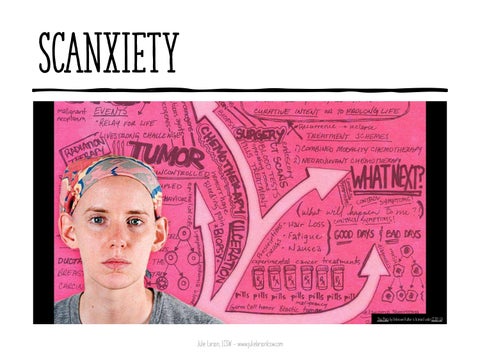
Scanxiety

What is Scanxiety?

• The experience of distress leading up to a follow up scan.

• Normal feelings: fear, worry, uncertainty, irritability, impatience, emotional fragility

• Predictably builds as the appointment date draws near.

• Often includes unhelpful thoughts that fuel distress

• Can negatively impact sleep, appetite, relationships, attention and focus

Triggering PTSD symptoms

• Studies have shown that 4-22% of cancer survivors have a risk of developing PTSD.

• Those with more pain, advanced cancer or who have suffered other types of trauma are more at risk.

• PTSD includes intrusive thoughts, irritability, sleeplessness which interfere with quality of life, daily functioning or work.

• Symptoms can cause patients to avoid places or things that remind them of the event and cause delays in follow up care. Julie Larson, LCSW - www.julielarsonlcsw.com

Three paths:

1. Thinking

2. Emotion

Thinking Path

 Will cancer come back? Progress?

 Will I get a secondary cancer related to my treatments?

 Will I recognize symptoms?

 How will I understand what physical feelings to pay attention to and which to dismiss?

 Am I doing enough?

 Am I overdoing it?

Taking Action #1:

Worry = Unanswered Questions

• When is my cancer most likely to recur?

• What are the doctors looking at during follow up visits?

• When should I contact my medical team?

• Did treatment put me at risk for any future health issues? How will those be monitored?

• What options are available to manage pain during follow up procedures?

• When will I get results? How?

• What is my worst case scenerio? Then what…

Taking Action #2:

Scanxiety is normal. How can you prevent these emotions from taking over your life?

• What else can you tell yourself?

• Is there a different way of interpreting the situation?

• Can you replace “What Ifs” statements with “What Is”?

• Use test results from your most recent follow up to balance.

• Acknowledge signs of healing like hair growth, strength and energy.

• Remind yourself of the significance of the treatment plan you endured.

• List the lifestyle decisions you make to support your health such as diet, exercise, sleep or meditation.

Intrusive Feelings

Greet Your Feelings Like a Visitor

“Loneliness, we meet again.”

UNCERTAINTY LONLINESS

Oh hello again FEAR, it’s You.

Name the Feeling FEAR

“Hello Anger. You’ve returned.”

REGRET ANGER

“Regret. You’ve come back.”

“Uncertainty, I see your back.”

“Worry, You’ve been here so often lately”

“Ah, Sadness. Yes, I know you.”

Radical Acceptance

• Resist fighting with the feelings we decide are “bad” or “wrong”

• Let go of ideas of how you “should be” (e.g. strong, positive, hopeful, pragmatic)

• Give yourself permission to feel exactly how you are today.

• Allows you to acknowledge the way you DO feel right now is a result of a long string of events. It makes sense. It is ok.

What Messages Does Your Body Send?

HEADACHES

TENSE MUSCLES

DIGESTIVE ISSUES

Who is caring for YOU?

• Slow down.

• Self care begins by listening to yourself.

• Can you name the feelings?

• Are you able to grab onto the thoughts cycling through your mind?

• Do you have questions?

• Have you created any assumptions?

• Work to observe and understand yourneeds and limits

• What contributes to having a really great day?

Traveling back to RIGHT NOW

• Use your 5 Senses: 5-4-3-2-1

• Change your physical position:

• Breathe deeply. Change your internal pace.

• Turn on music.

• Call a friend.

• Stomp your feet. Wiggle your fingers. Hug yourself.

• Let your voice ground you. Speak out loud. Julie Larson, LCSW - www.julielarsonlcsw.com

Be Gentle With Yourself

• Remember your feelings will likely change day to day.

• Try not to ignore your need to share your worries, fears and questions.

• Often talking with others helps you work through concerns or uncertainties in a natural way.

• Try not to put on a “happy face” if you are not feeling that way. Your true feelings are more helpful to everyone.

• Talking about cancer can be complicated. Most conversations are not a one-shot deal, they are an ongoing dialogue.

Turn static files into dynamic content formats.
Create a flipbook