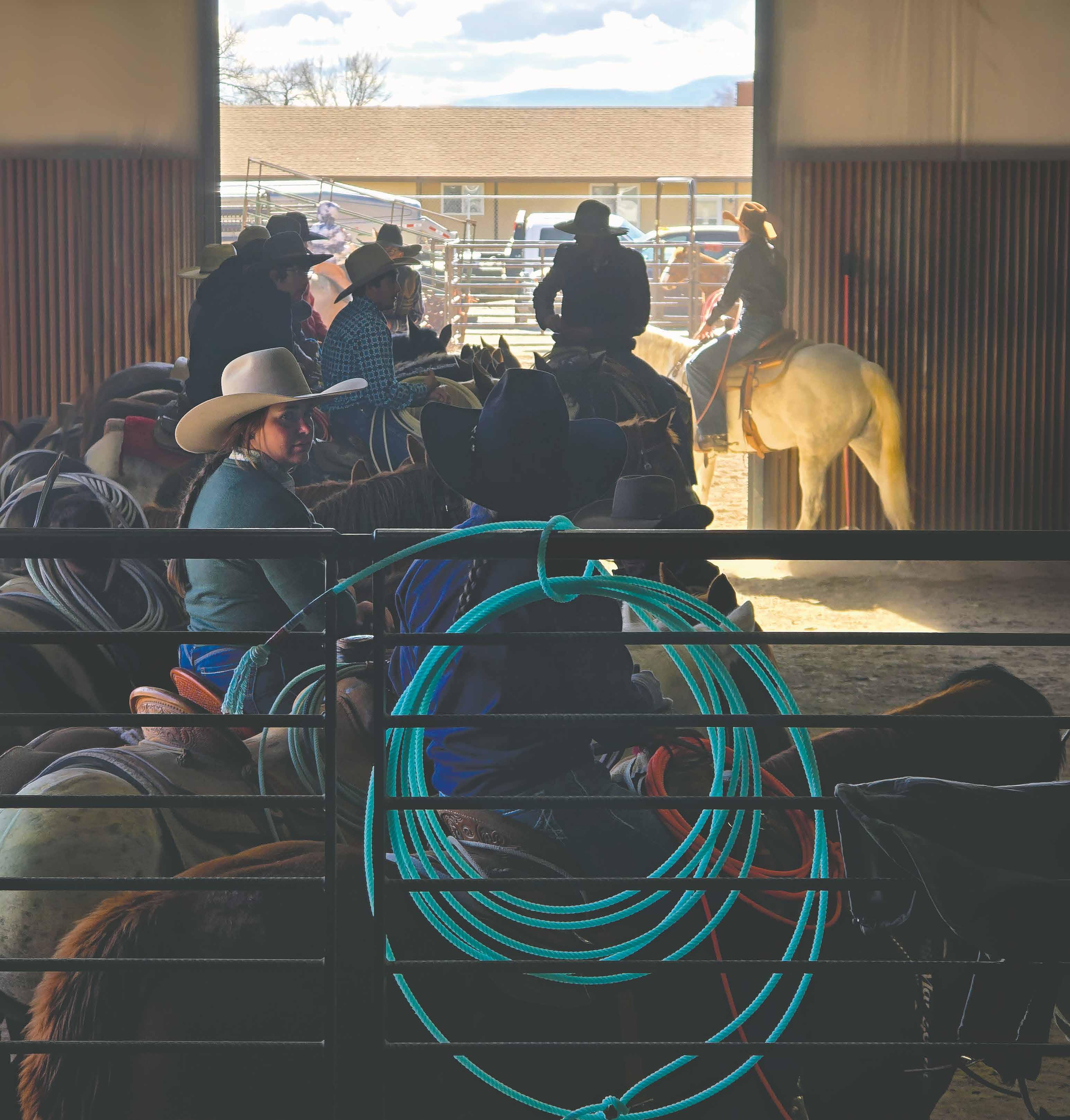
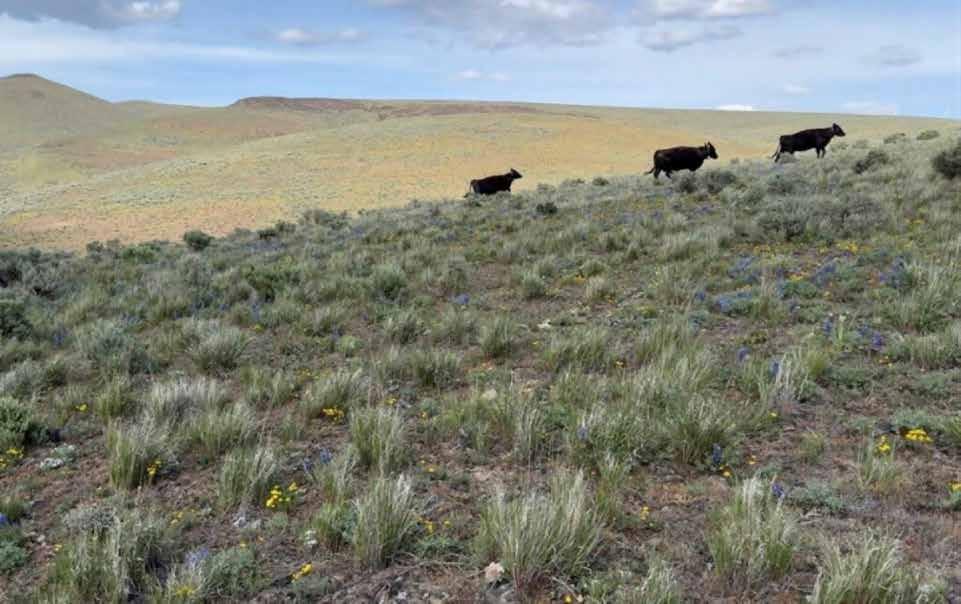
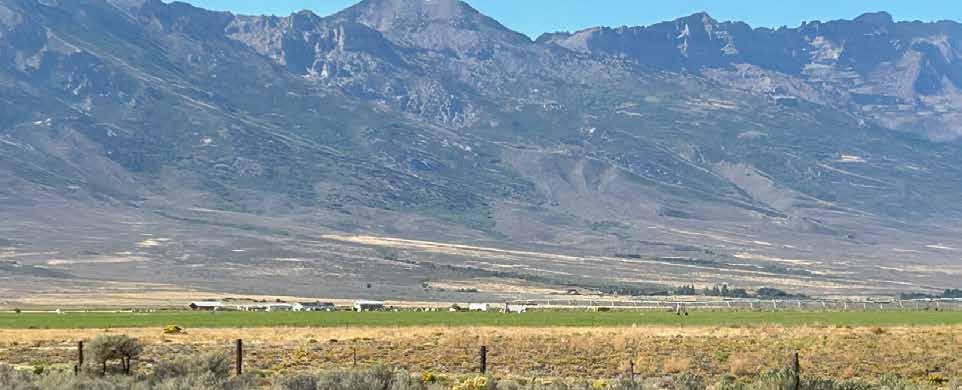
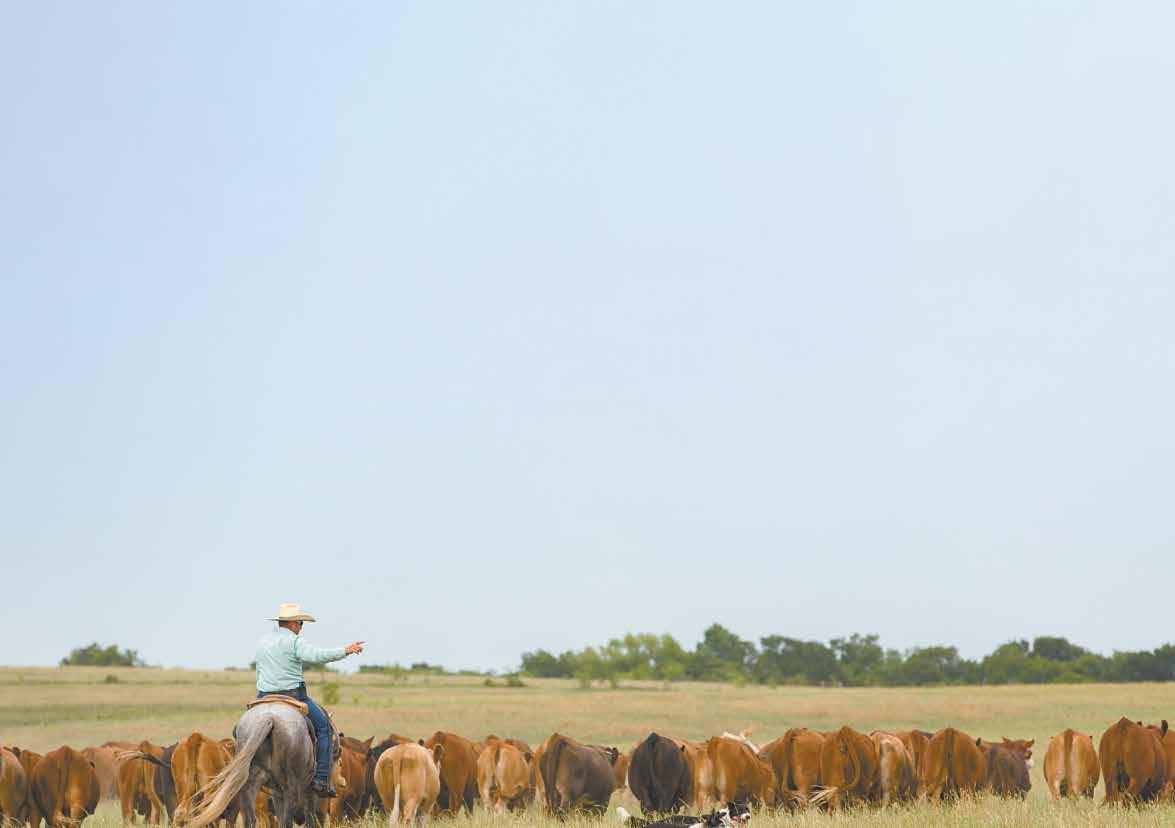
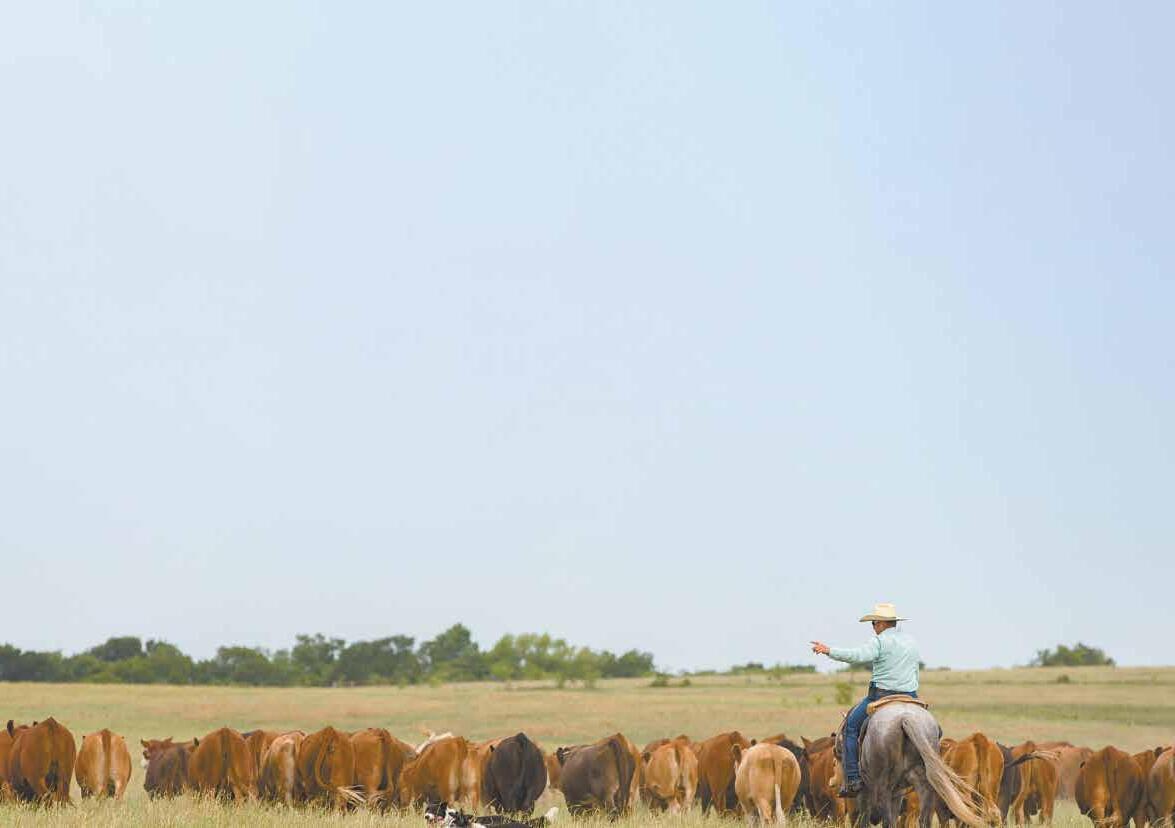
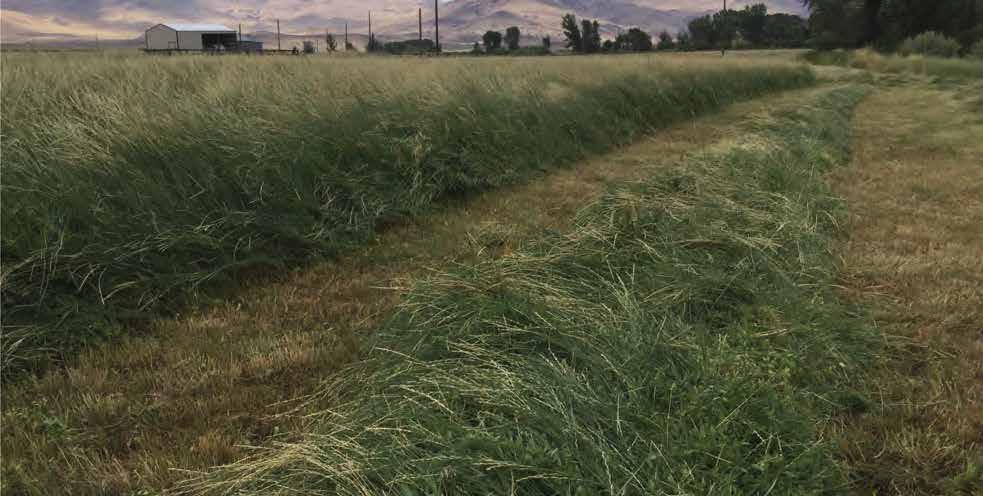
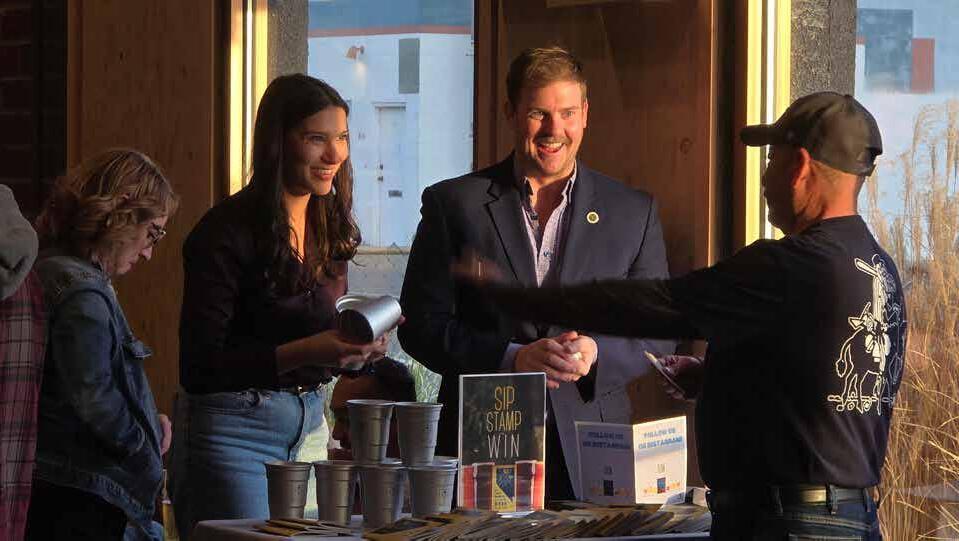
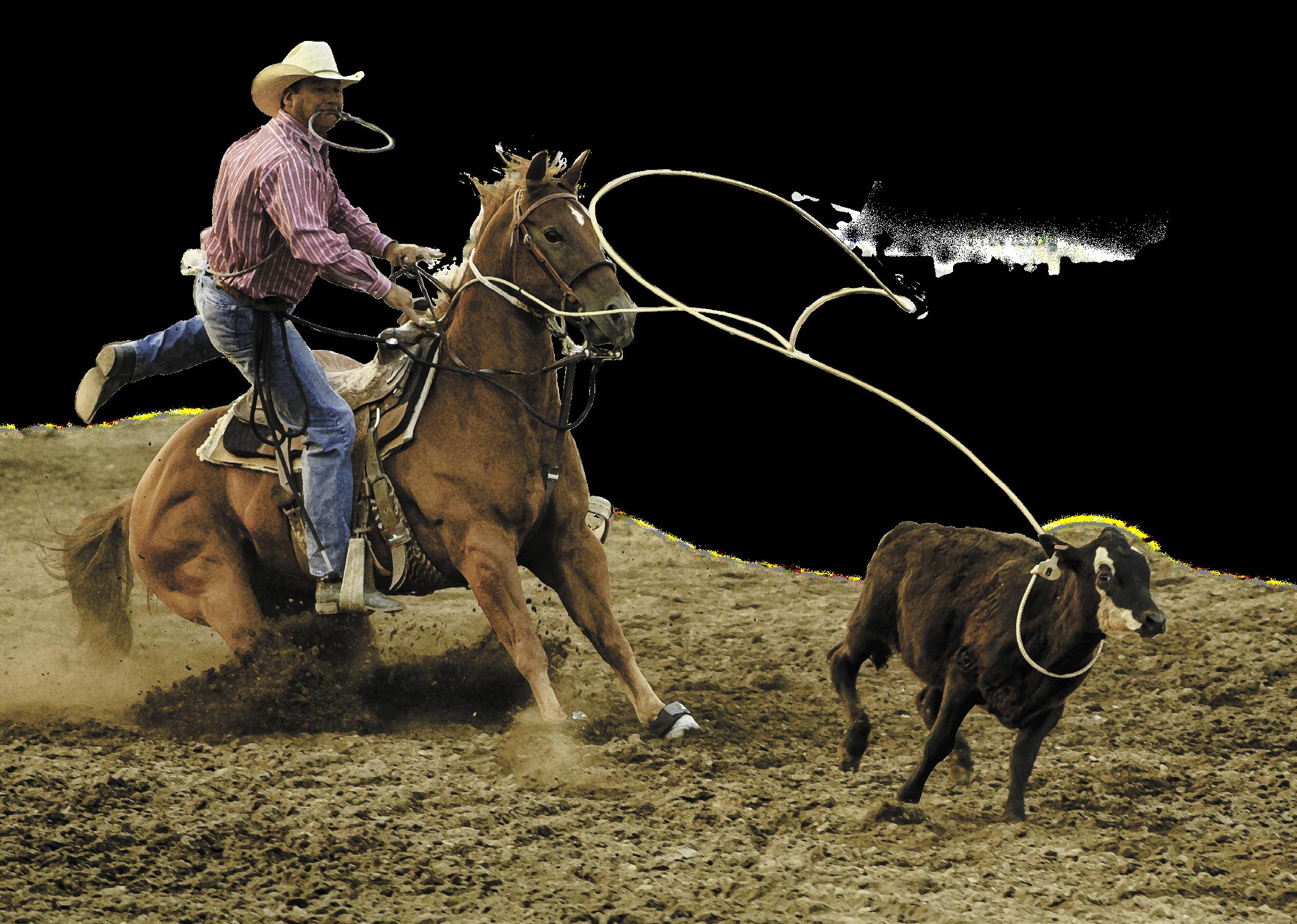
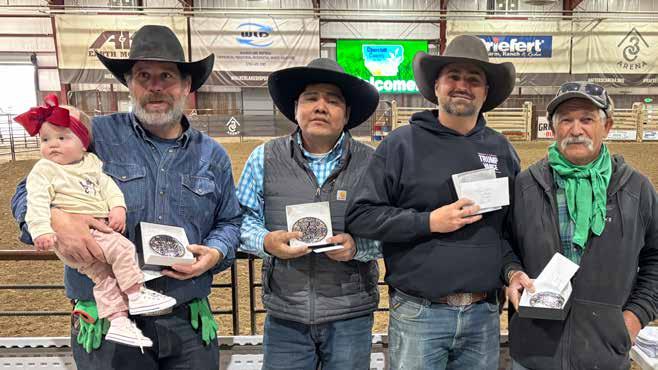
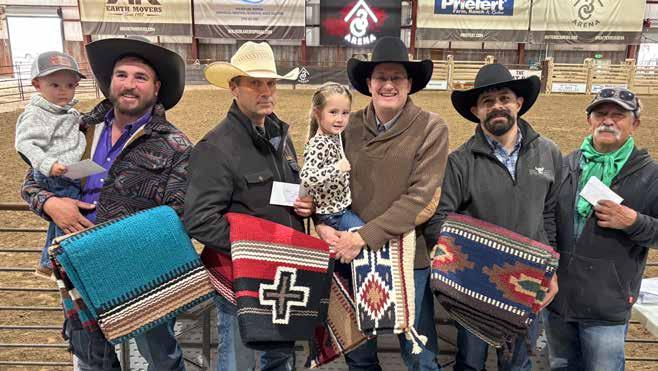
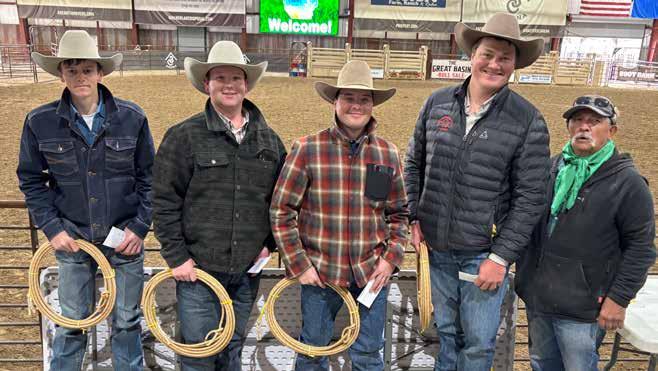
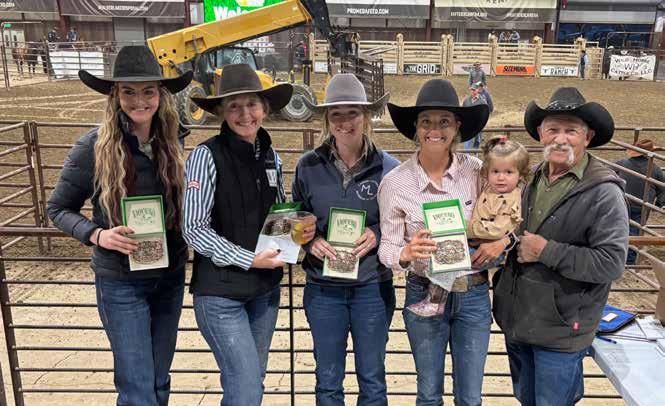
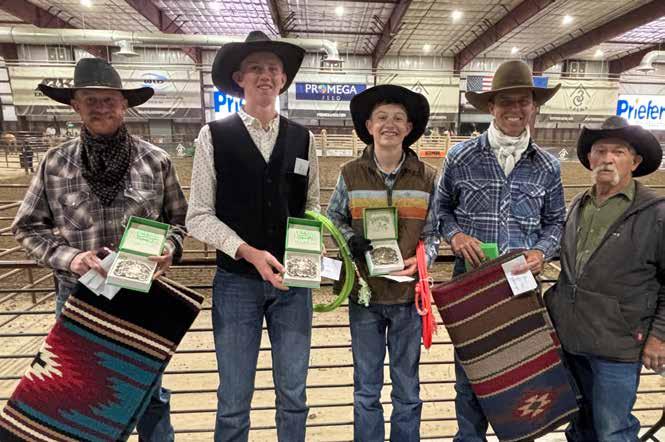
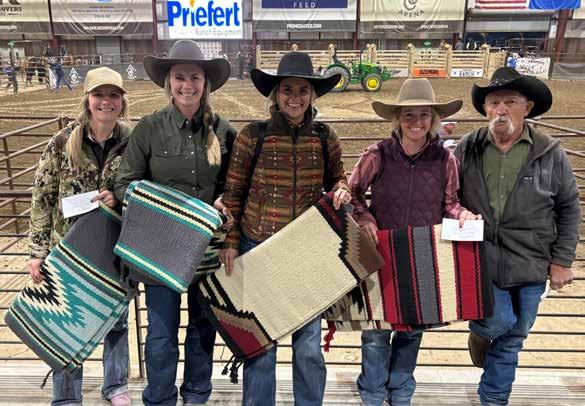
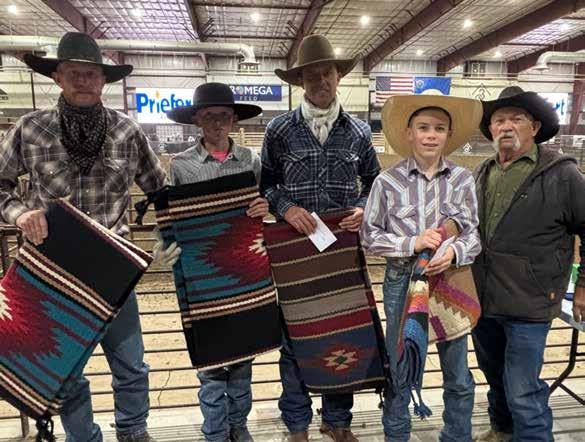
In Utah’s Bear River headwaters, the small ranching community of Randolph stood to lose the foundation of its livelihood. Grazing on public lands was under intense scrutiny, and the future of both the land and the families who depended on it was uncertain. Rather than turn away from the problem, they turned toward each other. Ranchers, agencies, and conservation partners joined forces to reimagine how grazing could work - not just to sustain operations, but to improve water, wildlife, and the range.
Three Creeks is the story of a community coming together to save itself - and, in the process, improving our public lands for the benefit of us all.
Read more and watch the video here: https://westernlandowners.org/films/three-creeks/
NCBA UPDATE
I have just returned from Nashville and the National Cattlemen’s Beef Association (NCBA) convention. I am aware that not everyone reading this is a supporter of NCBA, but it remains an effective avenue to influence what happens in Washington.
Starting with the D.C. update – Head of NCBA Ethan Lane, along with NCBA and Public Lands Council (PLC) staff talked about Farm Bill priorities that were included in the Big Beautiful Bill (BBB). They discussed the increase in protein and whole food that was a major part of the new Dietary Guidelines for Americans and NCBA’s contribution to that effort. I thought that they spent way too much time talking about the Fair Label Act and fake meat, because it has become obvious that no one wants to eat that stuff, but I have to agree that it is important to accurately and clearly label it so that no one believes that they are getting real meat if they buy it. Next, they updated us on the progress being made to protect the US cattle herd from the New World Screw Worm and the efforts in Mexico to push it back South. Another improvement with respect to taxes includes changes to the Estate Tax and depreciation.
In the Public Lands arena, important improvements have been made in the following areas: NEPA, WOTUS, ESA, Grazing Permits, Roadless Rule & Fire. There have been many regulatory rollbacks and more than a dozen grazing specific bills. NCBA
PLOWDOWN ALFALFA
MIX 25%
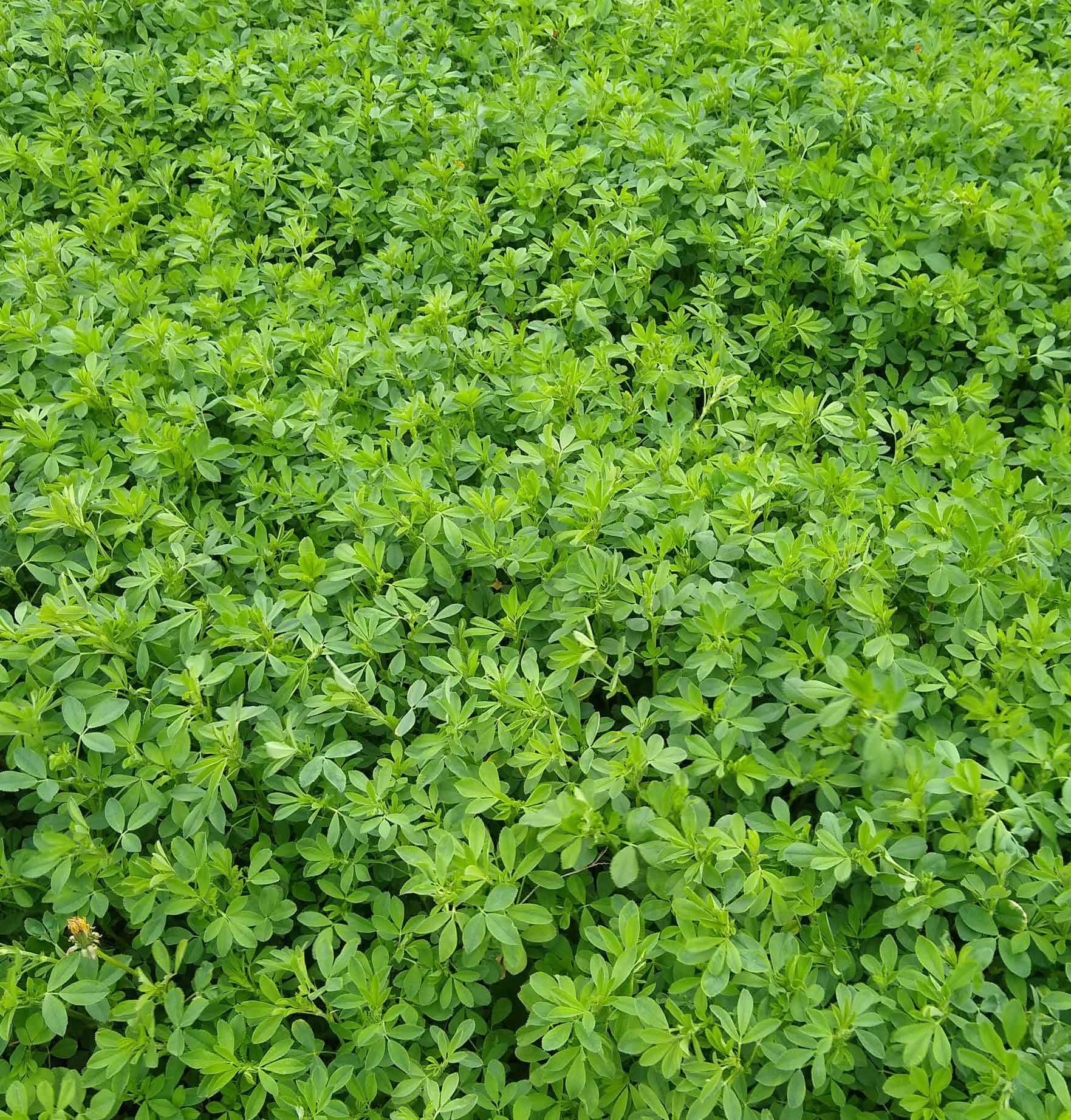
“Plowdown” alfalfa with your regular alfalfa seed. Expect a hearty yield increase your “new seeding” first year!
“Plowdown” is #9 fall dormancy. It is supposed to winterkill, but has often been known to overwinter for a second growing season!
You could plant “Plowdown” as a one year only crop. Great for a bean crop, for example, next growing season.
By Dave Baker, NCA President
staff is working hard to ensure that these changes last beyond the Trump Administration.
Next, we participated in a PLC sponsored roundtable discussion with senior staff at BLM and US Forest Service. We talked about the increased ability to use categorical exclusions to allow projects like building fences and water improvements on allotments. In most cases, these projects can now move forward without lengthy environmental reviews.
After the PLC roundtable, we attended the NCBA Region VI meeting. Region VI includes CA, NV, UT, AZ, NM, and HI. Jeff Young from Ensign Ranches is the representative for Region VI, and I have no doubt that he will do a good job and be open to any input that we might have. The meeting included updates on local issues from each state.
A resolution was passed in the Live Cattle Marketing Committee meeting to include breeding and cull cattle in the Livestock Risk Protection (LRP) program. It will be interesting to see how that works if it comes to fruition. I can see using such a tool to manage risk in those years when we have extra feed and we’re feeding open cows until early spring.
As always, the CattleFax update was well attended and interesting. Cattle and beef supplies will be smaller in 2026, particularly in the first half of the year, but they expect expansion to begin in 2027. Expansion is expected to be slow, and prices are expected to remain strong for at least a couple more years. However, they believe that prices are at or near cyclical highs. The market is expected to remain volatile, and the Mexican border situation is a wildcard. Meteorologist Matt Makens expects to return to El Niño by summer, increasing the odds of a wet summer for our region.
Secretary of Health and Human Services Robert F. Kennedy Jr. was interviewed during one of the General Sessions. He spoke about the chronic disease epidemic of Americans and the toxic food environment that has contributed to it. He strongly believes that the new food pyramid, which prioritizes proteins and whole foods, is the key to improving the health of Americans. According to him, it is backed by the best available science.
Another item of interest is that 93% of the candidates supported by the NCBA Political Action Committee (PAC) won their races. This undoubtedly creates significant influence. Candidates from both parties who are friendly to the cattle industry are included. When the political pendulum swings (and we all know that it will) NCBA will have less political influence, but it will still have enough to make a significant difference.
With respect to the leadership at NCBA, Gene Copenhaver is the new president, and the two people next in line are ranchers from Oregon and Idaho. Gene was at our 2024 Nevada Cattlemen’s Convention in Fallon and I’m sure many of you had a chance to visit with him. He has a stocker cattle operation in western Virginia and has a background in Ag Finance. I have visited with Gene on multiple occasions and am confident that he will hear and consider our input.
That’s more than enough for now.
by Martin Paris | NCA Executive Director
NCA March Roundup
Happy March, everyone! What a strange winter we have had so far. Those brand-new snow boots may have to stay in the closet until next winter. The most recent Drought Monitor has only about 2% of Nevada in a severe drought, but those mountains sure could use a fresh coat of white stuff.
NCA leadership recently attended the National Cattlemen’s Beef Association Convention in Nashville, Tennessee. As always, there were plenty of issues discussed and a lot of good takeaways. I’d like to reflect on some of the wins the cattle industry is racking up.
Starting on the public lands front, we successfully ended the Bureau of Land Management’s Public Lands Rule, which would have placed conservation use on par with other multiple uses. We also saw the U.S. Forest Service’s “Roadless Rule” be upended in Congress, which will now allow greater access for permittees to reach portions of their allotments and enable firefighters to get where they need to go to protect critical resources.
New grazing regulations out of the Bureau of Land Management are on their way that will allow greater flexibility in grazing management. Dozens of new
categorical exclusions have come online that will allow permittees to construct common sense range improvements without layers of environmental review and bureaucratic red tape. Both the BLM and U.S. Forest Service are also aggressively working on repermitting vacant grazing allotments across the West.
There are nine separate pieces of legislation currently introduced in Congress that the NCA is working hard to get across the finish line. These pieces of legislation include everything from additional grazing flexibilities and Endangered Species Act reform to retooling the Equal Access to Justice Act to put a stop to the endless litigation from radical environmental groups aiming to destroy animal agriculture. Please stay tuned throughout the year as we hope these proposals begin to move forward.
In other areas of the cattle industry, March is National Nutrition Month and what a better way to celebrate than with a new inverted food pyramid featuring a with a big ol’ ribeye and package of ground beef at the very top. There is no doubt that a concerted effort is underway to get Americans to eat real food instead of what Robert Kennedy Jr. refers to as “nutrient-free”
food. It’s nice to see what we already know finally getting some recognition: beef is one of the healthiest, nutrient dense, and real foods out there.
But the wins don’t stop there. Did you know that 84% of fed cattle are grading Choice or higher, and 12% are grading Prime? At this rate, we are getting close to phasing out Select grades altogether. The quality of beef being produced is a testament to the work that all of you do on your operations and is a major reason why beef demand continues to climb off the charts. All of this is topped off by record-breaking cattle markets and what appears to be a shift to El Nino and wetter weather at some point this year.
While there are still plenty of things to work on and fix, it would be pretty half-glass-full attitude not acknowledge some very important things happening within our industry that recognizes the work you all do, as well as cattle’s positive impact on our diets and environment.
Until next time.
GLP-1s, Protein, and Making Every Bite Count
By Kori Dover, RD – Director, Food & Nutrition Outreach
GLP-1 medications are now part of everyday nutrition conversations. Research on GLP-1s continues to be studied beyond diabetes and weight management, examining a range of health areas including cardiovascular disease, kidney and liver health, neurodegeneration, and women’s health. Today, about one in eight U.S. adults has tried a GLP-1 weight loss medication, and use continues to grow as these medications become part of longterm weight and chronic disease management.³ As this research expands, it has also raised new questions about how nutrition supports health when eating patterns change.
For many people using GLP-1 medications, appetite changes are one of the most noticeable shifts.¹ Meals may be smaller, less frequent, or skipped altogether, which can feel like a relief for some and a challenge for others. Even so, the body’s need for nutrients does not change, meaning the foods people choose play a bigger role in supporting health when overall intake is lower.
This shift is happening at a time when protein already matters to consumers. Research from the International Food Information Council shows that protein consistently ranks among the top nutrition priorities, driven by interest in muscle health, feeling satisfied after meals, and overall wellness. For many people, protein is often thought of in terms of energy, physical strength, and staying functional day to day, rather than weight loss alone.²
As appetite changes with GLP-1 use, the question is not whether protein still matters, but how to get enough of it in a way that fits new eating patterns. Adequate protein intake helps preserve lean muscle during weight loss and supports strength and metabolic function. Research consistently shows that higher-protein eating patterns are associated with better retention of lean body mass, particularly when weight loss occurs alongside a reduced appetite. ³ Choosing protein-rich foods that deliver meaningful amounts of protein and essential nutrients in a relatively small portion becomes
especially valuable in this context. Lean beef is an example that can fit this need.
Lean beef is a nutrient-dense protein option. A three-ounce serving of cooked lean beef provides about 25 grams of protein for around 170 calories, along with ten essential nutrients that can support muscle and metabolic health.⁴ Maintaining muscle mass is not only about strength. Muscle plays an important role in blood sugar control, mobility, and long-term cardiometabolic health, especially as people age. Preserving muscle through adequate protein intake may help support these outcomes alongside GLP-1 use, particularly for older adults and others at higher risk for muscle loss.⁵
GLP-1 medications influence appetite, but do not replace the role of nutrition. Research shows these medications work best when paired with supportive eating patterns and healthy lifestyle behaviors.³ Even as appetites and routines change, balanced meals that include protein-rich foods, along with fiber-rich fruits, vegetables, whole grains, and regular movement, remain central to overall health.
One thing is clear: as eating patterns evolve, making every bite count becomes more important. Foods that deliver high-quality protein and essential nutrients in a reasonable portion help people get more value from the meals they enjoy. Beef offers a wholesome, familiar, and flavorful way to do just that, which can help support health and wellness goals while fitting into changing eating patterns.
References
1. Garvey WT, Batterham RL, Bhatta M, et al. Two-year effects of semaglutide in adults with overweight or obesity (STEP 5). Nature Medicine. 2022;28:2083–2091. doi.org/10.1038/s41591-022-02026-4
2. International Food Information Council. IFIC Spotlight Survey: Americans’ Perceptions of Protein. July 2025. Washington, DC. ific.org/wp-content/ uploads/2025/07/IFIC-Spotlight-Survey-Protein-Perceptions.pdf
3. Montero A, Sparks G, Presiado M, Hamel L. KFF Health Tracking Poll May 2024: The Public’s Use and Views of GLP-1 Drugs. KFF. 2024. www.kff.org/health-costs/pollfinding/kff-health-tracking-poll-may-2024-the-publics-use-and-views-of-glp-1-drugs/
4. He W, Connolly ED, Cross HR, Wu G. Dietary protein and amino acid intakes for mitigating sarcopenia in humans. Critical Reviews in Food Science and Nutrition. 2025;65(13):2538–2561. doi:10.1080/10408398.2024.2348549
5. U.S. Dept of Agriculture, Agricultural Research Service, Beltsville Human Nutrition Research Center. FoodData Central. NDB#13364. Accessed 5.21.24. fdc.nal.usda.gov
6. DeFronzo RA, Tripathy D. Skeletal muscle insulin resistance is the primary defect in Type 2 diabetes. Diabetes Care. 2009;32(Suppl 2):S157–S163.
Figure 1 | Roasted Sundried Tomato Tri Tip. Photo courtesy of Beef It’s What’s For Dinner.
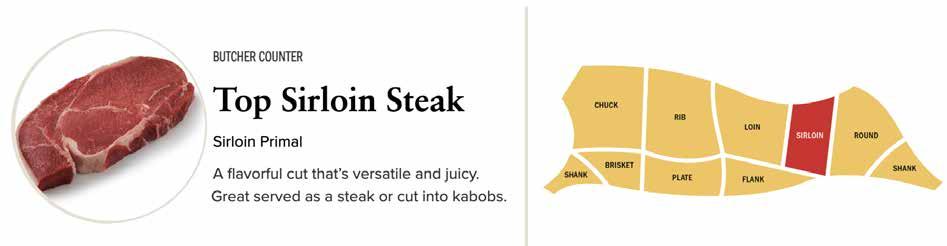
Spicy Portuguese Beef Kabobs
Fast & Healthy! Total time: 30 minutes
The preparation couldn’t be easier — just skewer cubes of beef Top Sirloin and red bell pepper slices. A spicy seasoning blend puts this recipe over the top. Perfect as an appetizer or over a salad for dinner.
Ingredients:
1-1/2 pounds beef Top Sirloin Steak, cut 1-1/4 inch thick
1 large red bell pepper, cut into 1-inch pieces
Seasoning:
2 tablespoons chopped fresh cilantro
2 tablespoons olive oil
2 teaspoons hot pepper sauce
1 teaspoon minced garlic
1/4 to 1/2 teaspoon crushed red pepper (optional)
Cooking:
1. Cut beef Top Sirloin Steak into 1-1/4-inch pieces. Combine seasoning ingredients in medium bowl. Add beef; toss. Alternately thread beef and bell pepper onto six 10-inch skewers.
2. Place kabobs on grid over medium, ash-covered coals. Grill, covered, 8 to 10 minutes (over medium heat on preheated gas grill, 9 to 11 minutes) for medium rare (145°F) to medium (160°F) doneness, turning once. Season with salt, as desired.
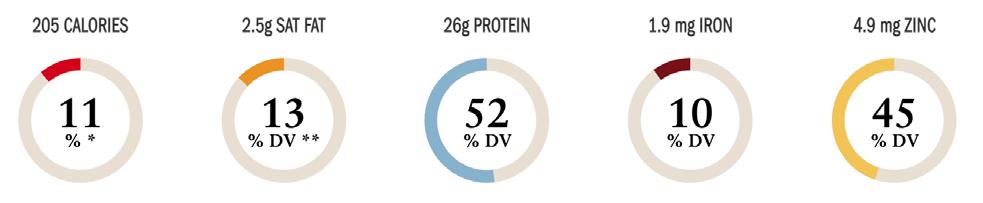
Nutrition:
Recipes & photos courtesy of
HAY FARMERS!
DID YOU KNOW YOU CAN SAVE WATER, GET VITAL SOIL NUTRIENTS, AND INCREASE SOIL HEALTH ALL WITH ONE PRODUCT? NEVADA-MADE COMPOST!
By and large, soils in our region lack appropriate levels of available organic matter and nutrients. We’ve developed a recipe for a Premium Compost that is easy to spread and gives crops what they need to thrive. Our organic compost supplies the necessary ingredients that native soils are lacking, helping farmers reach the recommended 5% of available organic matter in their soil.
PUT IT TO USE! Organic matter made simple. Spread Full Circle’s Premium Humus-Based Compost with a wet lime spreader, gypsum spreader, or manure spreader. That’s it--really, that’s it! PER 20 TONS OF FULL CIRCLE'S
Our Premium Compost at agriculture rate is $45 per ton and is delivered in bulk, loose semi-truck loads.
Delivery rates vary depending on location and full truckloads are required for agriculture rate (20 tons).
StockSmart opens the door to remote-sensed rangeland production data at the ranch scale
By Tip Hudson | Washington State University Extension Rangeland & Livestock Management Specialist
StockSmart is a free, online decision support tool that helps rangeland managers use better information to calculate ranges of stocking rates – how many head of cattle, sheep, or other animals can be sustainably fed for a season by a particular rangeland area.
To determine stocking rate ranges, ranchers and federal, state and Tribal rangeland managers need to know how much forage their land produces each year. But forage production varies from one end of a range management unit to the other and can vary in the same spot from year to year. Drought can reduce average range production by more than 40%, and favorable precipitation can double it.
Until now, rangeland managers relied on general estimates of forage production based on the soil types in their pastures, or on sparse, one-time samples taken at a few locations within each pasture. Neither approach adequately reflects the variations in forage production or the problem of extrapolating to large scales, undermining a manager’s ability to effectively manage grazing decisions.
StockSmart was developed by Washington State University Extension, the University of Arizona, and the US Forest Service Rocky Mountain Research Station. It calculates stocking rates using remotely-sensed forage production data for every quarter of an acre for the last 40 years, providing much more information than previous datasets on how that forage production varies across geographic space and from year to year.
StockSmart allows managers to better understand how much of the forage is actually usable and accessible by the animals they are grazing. Some of the forage comes from shrubs, which animals may not eat much of. Some forage needs to be left, so the grasses thrive, stabilize the soil, and continue to produce next year. StockSmart also allows the user to define their animals’ terrain use with some key parameters, especially how steep a slope their livestock will traverse, and how far from water they will disperse. And StockSmart allows you to explore scenarios, such as how the amount of forage and stocking rate might change if you invest in new water developments or fencing.
The team, led by Tip Hudson and Sonia Hall at Washington State University and with support from a grant awarded by the Western Sustainable Agriculture Research and Extension program of the US Department of Agriculture, is now
offering free drop-in meetups to get more out of StockSmart. StockSmart meetups are held online on the first Wednesday of each month from 10 to 11 a.m. Pacific Time. Participants can attend one, several, or all meetups to ask questions, explore new features and see how others are using the tool in realworld operations.
“These meetups are designed to be interactive and directly useful to individuals,” said Tip Hudson, Washington State University Extension rangeland and livestock management professor. “You can come with a specific question, explore new features or just see how other managers apply StockSmart to their grazing plans.”
Hudson will start each session by highlighting a key feature of StockSmart and then lead an open discussion where participants can troubleshoot and learn from one another. The first meetup will introduce key features and show users which settings they can adjust to fit their operations. Future sessions will explore the vegetation data that powers StockSmart, refining animal and land details, creating pastures and stockwater features, interpreting results, building “what-if” scenarios and other topics that participants request.
Meetups are led by Hudson and Sonia Hall, agricultural climate resilience specialist with WSU’s Center for Sustaining Agriculture and Natural Resources, with guest contributions from other StockSmart development team members. The sessions are supported by the U.S. Department of Agriculture’s National Institute of Food and Agriculture through the Western Sustainable Agriculture Research and Education program.
For details and to register for upcoming meetups, visit their web page at: https://csanr.wsu.edu/resources/stocksmart-meetups/
• Sonia Hall, Agricultural Climate Resilience Specialist, WSU Center for Sustaining Agriculture and Natural Resources 509-293-8797 • sonia.hall@wsu.edu
Rangelands in eastern Washington (photo courtesy of Tip Hudson, WSU).
The More Things Change...
You have no doubt heard the phrase “the more things change, the more they stay the same”. That premise has many examples in agriculture. We all have old boxes of files and memorabilia stored in an extra space. I probably have more than most but as many boxes as some. I have made it a goal this year to get rid of most of these obsolete files and I am working on the goal. It is not easy, but I am determined to make a big dent this year. My problem is I won’t let go of this stuff until I have touched every piece and read enough of each paper to realize I don’t have to save it. I guess I am a coward and don’t have the gumption to just dump boxes. I feel I am not alone.
In my efforts to rid myself of all these unwanted remnants of dead trees, occasionally I have come across some writings which support the notion expressed in the first sentence. One very interesting paper was the July 1985 edition of the Nevada Rancher.
Many will remember Bill Behrens, Extension Livestock Specialist. This edition of the Nevada Rancher announced his retirement. He was also a columnist for the paper and his last column was published in the edition I was reading. He reminisced but also mentioned a few issues of the day. These included a reduction in sheep numbers, public lands and water and changes to tax laws which could materially effect cattle raising in a negative way.
The issue had the mid-year meeting agenda of the National Cattlemen’s Association held in Louisville Kentucky. Also, there was a whole page devoted to cattle industry concerns in Washington D.C. Tax reform, dietary guidelines, and a Public Rangelands Bill were prominently discussed. This later bill apparently called for a permanent extension of the existing grazing fee formula for instance.
There was a reference in an article to what is known as the Main Station Farm on McCarran Boulivard. The article noted that the size of the farm and its proximity to the College of Agriculture create an ideal location to conduct agricultural research and teaching opportunities for faculty and students. This is exactly what the proponents of an agricultural conservation easement have been saying as one of the arguments to save the Main Station Farm for educational purposes, supported by the Dean’s Advisory Committee of CABNR.
The BLM wrote they were going to continue implementing their wild horse and burro plans after the foaling season was finished over the past four months. The prior fall and early winter gathers resulted in about 3,500 animals in captivity. The goal according to this article was to reduce the more than 4,000 remaining horses to a management level of about 2,000 horses. We
all know what has happened in the forty years since this article was published in the Nevada Rancher.
These few examples from a forty-year-old Agriculture newspaper reinforce my main point. I am speaking strictly about agriculture now. If you list the issues I identify above and compare them with what we in agriculture face today you will find little today that is new. Sure, we are faced with much new technology to aid in the management of our farms and ranches. Virtual fencing is a tool that will transform how we manage vast rangelands particularly in the west. Drones also come to mind as a tool to check livestock and water resources over long distances. There will always be new tools and technologies, but fundamental issues will remain the same.
I wonder what issues identified in this edition of the Progressive Rancher will be around a few decades from now. Roger Whittaker and Mac Davis were upcoming headliners at Harrah’s by the way according to the Nevada Rancher I was reading.
I’ll see you soon.
PROTECTING YOUR WATER RIGHTS
NAF Scholarship, Grant, and Sponsorship Application Period is NOW OPEN
The Nevada Agricultural Foundation (NAF) is now accepting Scholarship Applications from Nevada students pursuing an agriculture-related college degree. Scholarship applications are accepted from Nevada high school seniors or students in progress with their college education who graduated from a Nevada high school.
The deadline for scholarship applications is March 15, 2026. Scholarships are for the 2026-2027 academic year. Over $50,000 in scholarships will be awarded this year.
Research and Development (R&D) grant applications are also being accepted until March 1, 2026. The NAF will be awarding up to $50,000 in total grants for 2026.
Along with R&D grants, the NAF is accepting sponsorship applications for this year. If you are interested in receiving a sponsorship from NAF in 2026, NOW is the time to apply.
For more information and application forms, visit nevadaagriculturalfoundation.org today!
UNITED STATES DEPARTMENT OF THE INTERIOR BUREAU OF LAND MANAGEMENT and
THE PUBLIC LANDS COUNCIL
This MEMORANDUM OF UNDERSTANDING (MOU) replaces the 2017 MOU, as previously extended, between the PUBLIC LANDS COUNCIL (PLC) and the BUREAU OF LAND MANAGEMENT (BLM), Department of the Interior (DOI), that established a framework for cooperative monitoring.
I. AUTHORITY
Section 307(b) of the Federal Land Policy and Management Act of 1976, 43 U.S.C. l 737(b), authorizes the Secretary, subject to the provision of applicable law, to enter into contracts and cooperative agreements involving the management, protection, development, and sale of public lands.
Section 4 of the Public Rangelands Improvement Act of 1978, 43 U.S.C. 1903(a), provides that “the Secretary of the Interior and Secretary of Agriculture shall update, develop (where necessary) and maintain on a continuing basis thereafter, an inventory of range conditions and record of trends of range conditions on the public rangelands, and shall categorize or identify such lands on the basis of the range conditions and trends thereof as they deem appropriate.”
II. PURPOSE
The purpose of this MOU is to establish an updated framework for cooperative monitoring and the exchange of information on public rangelands administered by the BLM. The BLM and the PLC agree to work together to achieve the common goal of rangeland stewardship through joint, cooperative monitoring at the pasture, allotment, watershed, and landscape levels.
The signatories to this MOU agree that cooperative monitoring on BLMadministered public rangelands provides mutual understanding, exchange of information, and collaboration among the interdependent goals and interests of the grazing permittees, lessees, and cooperators ( collectively referred to as “grazing,operators”) served by PLC and the BLM, assisting the BLM to make integrated rangeland management decisions.
Both the BLM and the PLC aim to utilize science-based monitoring to evaluate, achieve, and sustain desired rangeland conditions. The BLM and grazing operators benefit from the exchange of information when monitoring data is collected, analyzed, and interpreted in a transparent and candid setting. This MOU builds on the current, historic, operational, and practical experience of grazing operators to help make resource management more efficient. This MOU creates a framework to share data analysis results, biologic concepts, and professional judgements made by BLM rangeland resource professionals.
III. ESTABLISHMENT OF RESPONSIBILITY
This MOU is not intended to, and does not create any right, benefit or trust responsibility, substantive or procedural, enforceable by law or equity, by a party against the United States, its agencies, its officers, or any person. In all actions taken under this MOU, the BLM will comply with the Federal Advisory Committee Act to the extent it applies.
IV. ROLES AND RESPONSIBILITIES
THE PLC AND THE BLM WILL JOINTLY:
1. Inform grazing operators and BLM employees of the content and purpose of this MOU.
2. Encourage grazing operators and BLM employees to share monitoring information and data between and among them. Data sharing should include science-based, long-term trend monitoring where feasible as well as short-term monitoring to guide and document season-of-use, stocking, .permit/lease compliance, and annual allotment decisions in a collaborative setting. However, this MOU also encourages collaborative long-term monitoring.
3. Seek to promote, achieve, and maintain healthy rangelands in accordance with the BLM’s Rangeland Health Standards.
4. Promote and support the integration of cooperative monitoring into grazing decisions that will allow for the effective implementation of greater flexibility in public land grazing authorizations.
5. Promote and support training opportunities for cooperative monitoring including using standard monitoring methods and data collection platforms where feasible.
6. Include a discussion between the PLC and the BLM on cooperative monitoring as an agenda item at each annual PLC meeting.
7. At least annually, assess the level of participation in cooperative monitoring. The PLC and BLM will make every reasonable effort to track grazing operator participation to demonstrate the level of cooperation achieved between grazing operators and the BLM.
THE PUBLIC LANDS COUNCIL WILL, AS APPROPRIATE:
1. Publicize, distribute information related to, and otherwise support joint, cooperative monitoring among its members, including emphasis of monitoring across landownership boundaries, and in the context of the larger landscape, where practical.
2. Encourage grazing operators to work cooperatively with the BLM to develop a monitoring plan which, at a minimum, addresses those items outlined in Appendix A ( attached).
3. Work with the BLM to emphasize and implement consistent monitoring methods, protocols, and compatible data management approaches between PLC members and cooperators and the BLM.
THE BUREAU OF LAND MANAGEMENT
WILL:
1. Continue working with grazing operators who have actively participated with the BLM in collecting and analyzing monitoring data.
2. Survey previously active monitoring partners to assess their ongoing interest in conducting joint, cooperative monitoring.
3. Work with all affected interests, including grazing operators new to . cooperative monitoring, to collaboratively achieve monitoring objectives, to the maximum extent feasible within the limits of available funds and BLM priorities, prioritizing instances where cooperative monitoring would support the effective implementation of flexibility in a grazing authorization.
4. Work in collaboration with interested grazing operators to develop cooperative monitoring plans. The plans should address those items outlined in Appendix A for, at a minimum, the portion of the grazing operation on land managed by theBLM.
5. Involve grazing operators in existing, consistent monitoring methods, protocols, and compatible data management approaches for data collection and evaluation processes, and provide copies of evaluations to collaborating grazing operators.
6. Continue to coordinate with the Natural Resources Conservation Service to perform soil surveys and develop Ecological Site Descriptions.
7. Maintain decision authority concerning the planning, collection, analysis and interpretation of the monitoring data collected under this MOU. The BLM retains its responsibility to make decisions relating to public land management, including livestock grazing, and to comply with public involvement requirements in the grazing regulations.
V. GENERAL PROVISIONS
A. Information related to the location, identity, permitted activities, and business addresses of current permittees and lessees are available through the public Rangeland Administration System Reports to assist PLC in the distribution of cooperative monitoring information.
B. Use of Data: Data submitted to the BLM for consideration when making decisions on public lands will be available to the interested public, including grazing operators, to the extent consistent with law and subject to any restrictions on public disclosure, such as in the case of personally identifiable information or cultural site data. The BLM shall accept for consideration monitoring data collected using standard BLM methods and protocols when the data meets the BLM’s data quality requirements, even if collected prior to implementation of this agreement. The BLM reserves the right to reject or limit the use of monitoring data not collected using such methods or found not to accurately reflect on-the-ground conditions.
C. Prior to implementing joint cooperative monitoring, both parties shall agree to the methods for collecting data in accordance with Appendix A. Priority should be given to methods found in the most recent version of the Technical Reference 1734-8, Interagency Monitoring Manual for Grassland, Shrubland, and Savanna Ecosystems, Herrick, J., et al. (2022), Technical Reference 1735-2, AIM National Aquatic Monitoring Framework: Field Protocol for Wadeable Lotic Systems (2021), Technical Reference 1735-3, Field Protocol for Lentic Riparian and Wetland Systems (March 2024), and those techniques found in statewide Rangeland Monitoring Guides. Additional resources found in Technical Reference 1730-1, Measuring and Monitoring Plant Populations, Technical Reference 17343, Utilization Studies and Residual Measurements, Technical Reference 1734-4, Sampling Vegetation Attributes, and Technical Reference 1734-7, Ecological Site Inventory may also be considered.
D. Nothing in this agreement may be construed to obligate the BLM or the United States to any current or future expenditure of resources in excess of authorization and appropriations available.
E. The BLM has a responsibility to coordinate, consult, and communicate with many different entities concerning management of the public lands. This MOU addresses interaction between the BLM and the PLC which represents members of the livestock industry operating on public lands. This MOU does not preclude or restrict other public land users, interested public, or other public or private agencies, organizations or individuals from participating in cooperative monitoring.
F. This MOU does not require the BLM to notify or include interested public when cooperative monitoring is initiated by the permittee or lessee.
G. Nothing in this agreement shall be construed to conflict with any existing statute, regulation or policy of the United States.
H. As long as local cooperative monitoring agreements are consistent with the terms of this MOU and Appendix A, the BLM must approve implementation without revision of the plan.
I. This agreement shall be effective upon the date of the last signature, for a period of five years.
J. This agreement may be re-negotiated, amended, extended, or modified by a written amendment through an exchange of correspondence between authorized officials of PLC and the BLM.
K. Either party may terminate this agreement by written notice to the other party. Each party will obtain prior approval from the other prior to releasing all press releases, published advertisements, or other statements intended for the public that refer to this MOU or to the parties, the DOI, the name or title of any employee of the DOI, or other cooperating individuals in connection with this MOU.
L. Nothing in this MOU may be interpreted to imply that the United States, the DOI, or the BLM endorses any product, service, or policy of PLC. The PLC will not take any action or make any statement that suggests or implies such an endorsement.
APPROVED
February 2, 2026 by
U.S. DEPARTMENT OF THE INTERIOR BUREAU OF LAND MANAGEMENT
William Groffy | Exercising the Delegated Authority of the Director and
APPENDIX A
Cooperative Monitoring Plans
The following should be considered when developing a monitoring plan with a grazing permittee or lessee. Cooperative monitoring plans should be considered dynamic documents and reviewed and modified as necessary when new information is available or data needs change. Caution should be taken when modifying long-term monitoring plans where legacy data exist and the value of trend data is reliant on re-reading existing monitoring sites. Where Allotment Management Plans (AMPs) or other landscape management plans are used, consider augmenting these documents with joint cooperative monitoring plans. The general steps for developing and implementing effective monitoring plans are also described in the BLM’s Inventory and Monitoring of Ecological Resources manual section 1735 (Rel. 1-1832, pages 1-18).
A. Identify Management Objectives
Management objectives should be identified and listed to assist in defining appropriate short- and long-term monitoring objectives. Management objectives typically are found in land use plans, other management plans, or implementation decisions. Landscape management goals, desired plant ... continued next page
THE PUBLIC LANDS COUNCIL | Tim Canterbury, President
communities, and animal habitat types are examples of management objectives to use when selecting rangeland attributes and monitoring indicators. When fully processing grazing permits, new decision documents should list or refer to applicant committed measures; livestock grazing (i.e., actual use information), rangeland, vegetation, wildlife, and riparian and stream monitoring objectives or requirements; archaeological site locations and protection requirements; and other resources associated with livestock grazing. Note that management objectives may be site-specific and dependent on the affected resources or resource concerns and management approaches.
B. Define Monitoring Objectives
Identification of specific, measurable, achievable, relevant and time-bound (i.e., SMART) monitoring objectives is recommended when developing a monitoring plan. Objectives can be informed by compiling and reviewing all available monitoring data and summaries from prior inventory efforts including watershed assessments, any recent rangeland health evaluations, or other reports or decisions that might include a monitoring plan or outline resource issues. Where available, review vegetation cover maps ( e.g. RAP), NRCS soil survey descriptions of soil series, local geology and regional climate, as well as ecological site descriptions (ESDs), vegetative community state and transition models, and any applicable GIS-based vegetative cover information. Review of this information can help prioritize the types and locations of data to be collected. An effective monitoring plan may identify short and long-term monitoring objectives. The following examples should not be considered all-inclusive.
For short-term monitoring, consider using data sources such as local climaterelated records, actual-use/season of use stocking records, utilization surveys, previous photo-point records, ocular estimate stubble height data, and other sources of information collected from methods using state Rangeland Monitoring Guides and/or livestock association Resource Monitoring Guides. Additional resources include but are not limited to BLM Technical Reference 4400-22, Actual Use Studies; and Interagency Technical Reference 1734-3, Utilization Studies and Residual Measurements.
For long- or short-term monitoring, consider gathering fire occurrence mapping and metadata, vegetation treatment information, state habitat data ( especially vegetation mapping), ecology and weather-related records, actual-use/season of use stocking records, utilization surveys, and photography. Additional cooperative monitoring data needs can be identified to meet management objectives, desired plant community objectives, and other considerations such as noxious weed and invasive species presence, or special status species habitat condition.
C. Monitoring Attributes & Protocols
1. Agree on the appropriate interpretation and use of cooperative monitoring data and results, and review applicable BLM data quality requirements and data standards ahead of time with all cooperators and agencies. Review and agree on joint calibration of estimated data and qualitative data definitions, adjusted for local conditions and species.
2. Describe and agree on location(s), timing, attributes to be measured, protocols, and tools to be used. All parties should agree on whether the data will be used for long- or short-term monitoring, adjustments during the season of use, or both, if appropriate.
3. Cooperative short-term monitoring should include measuring and assessing indicators or attributes appropriate for evaluating the pasture/allotment/ watershed or landscape-level management objectives. These can include repeat or new measurements recorded by photography, utilization estimates
or residual measurements (stubble height), vegetation structure (height, pattern), age class distribution of plant species, vegetation production and/ or vigor, erosion indicators, ground cover, vegetative species composition, and other relevant indicators measured at a seasonally-appropriate time for the method.
4. Monitoring data should be collected in a manner that is repeatable and as quantitative as practical. Where landscapes have undergone forage or state transitions, monitoring should account for current ecological status. Monitoring protocols may be adjusted post-transition to account for current ecological conditions. Photography should be clearly labeled and include at least one photo that includes distinctive horizon features and coordinates.
5. When interpreting and extrapolating long-term trend data and monitoring results, characteristics that influence site potential such as soil, moisture, aspect, and slope should be considered. The landscape should be stratified to account for differences in land potential and current capability. Ecological sites and soil types may provide an appropriate basis for stratification. Ecological site descriptions should be reviewed for information that can provide a basis for application of indicators and benchmarks.
6. Long-term monitoring should consider the long-term trends of specific rangeland indicators within the area of interest, and whether they are at or trending toward the desired condition given the potential of the area (e.g., the trend of perennial bunchgrass frequency, forb diversity, or annual grass cover).
D. Data Evaluation, Analysis and Interpretation
Long-term monitoring can also inform departure from the desired condition based on the ecological site potential. Insight into appropriate indicator benchmark values may be determined by reviewing the range of indicator values for similar locations within AIM datasets. Benchmark values derived from AIM data can be supplemented with professional judgement and other information provided through cooperative monitoring with the permittees or other stakeholders.
1. All parties involved in cooperative monitoring should receive copies of field data, results, and summaries. Consider follow-up sessions to further monitor, evaluate, and discuss data findings, as appropriate.
2. No single attribute or point-in-time measurements should be used as standalone information for trend monitoring or consideration of obtainment/ non-obtainment of rangeland objectives.
Nevada Water Solutions LLC
Water Rights / Resource Permitting Expertise
Thomas K. Gallagher, PE 775 • 825 • 1653 / FAX 775 • 825 • 1683 333 Flint Street / Reno, NV 89501 tomg@nevadawatersolutions.com
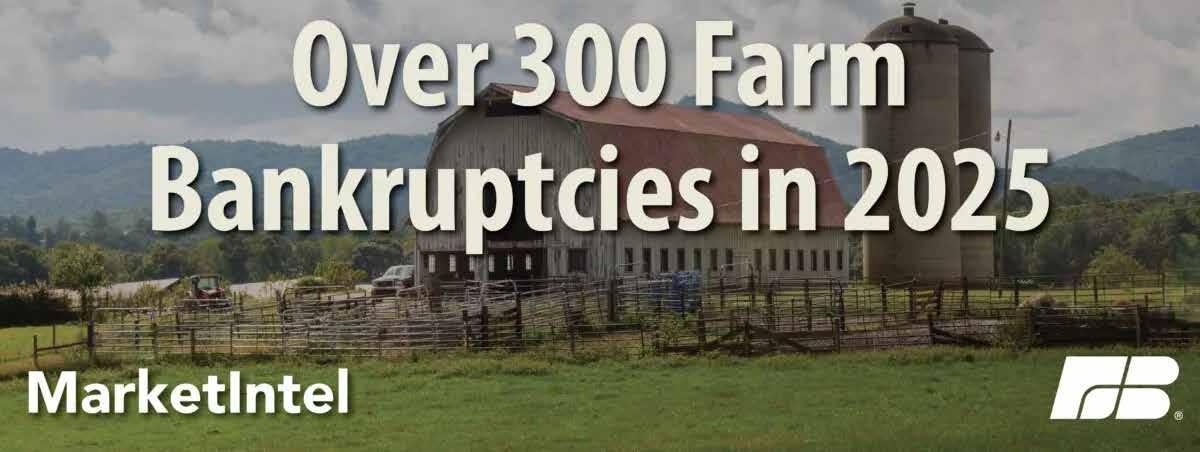
Farm Bankruptcies Continued to Climb in 2025
By Samantha Ayoub, Economist
Key Takeaways
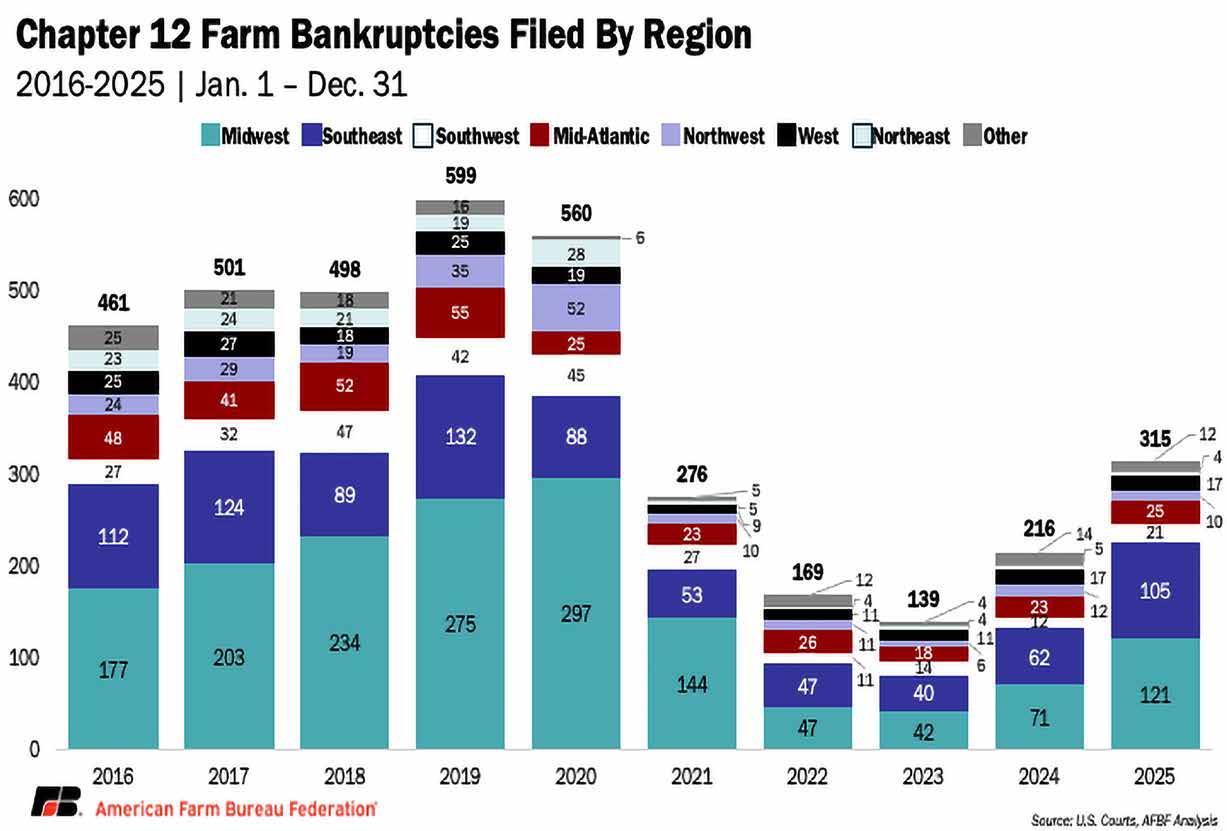
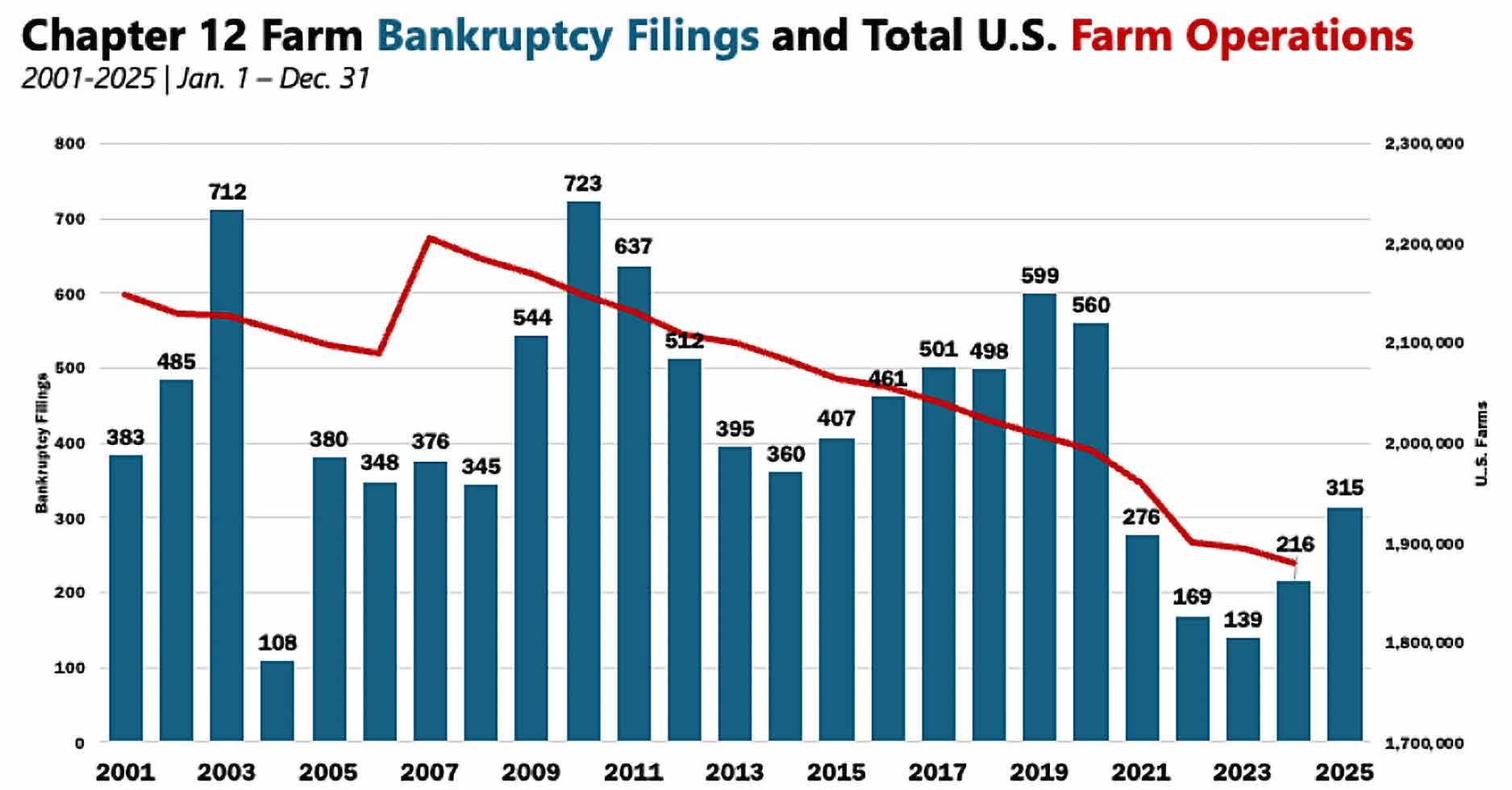
• Chapter 12 bankruptcies increased for the second year in a row, reaching 315 filings in 2025. This is a 46% increase from 2024.
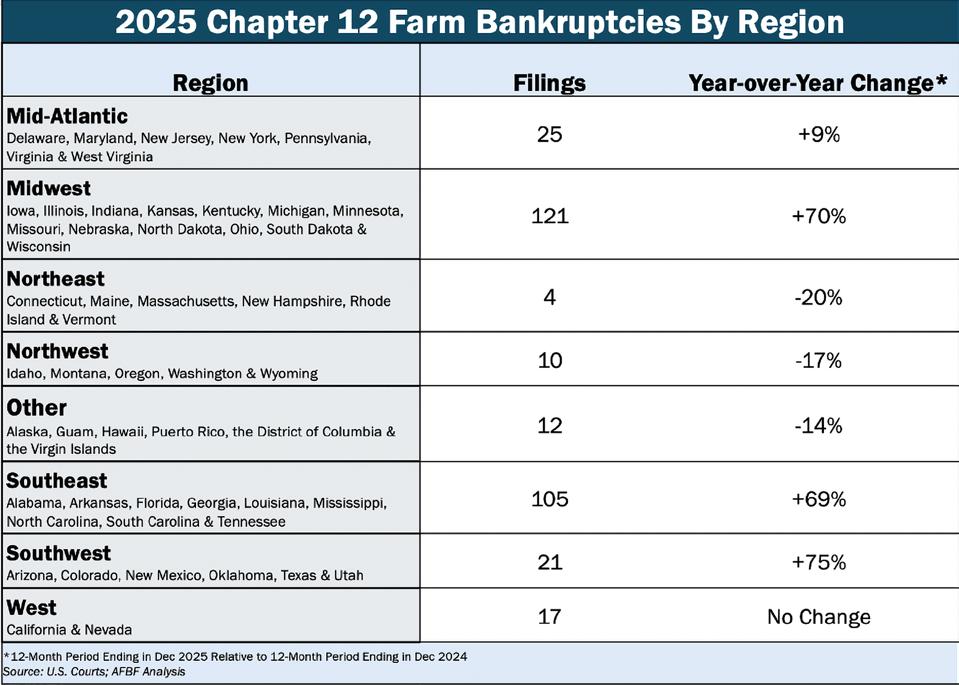
• The Midwest and Southeast filed 121 and 105 Chapter 12 cases, respectively, far outpacing any other regions. Deep crop losses across commodities common in these two regions have compounded after years of declining receipts and rising expenses.
• Families must earn the majority of their income from farming to qualify for Chapter 12. As off-farm income becomes more important for family benefits and supporting farms during economic downturns, many family farms are not eligible for Chapter 12 bankruptcies and may have to close altogether when debt and operating expenses become too great.
As we look ahead to another year of challenges in the farm economy, indicators of farm financial health are under close inspection. Filing for Chapter 12 bankruptcy is a last resort for farmers who have undertaken large debt to continue operating with increased flexibility for payments. AFBF Market Intel reports have long
followed annual filings of Chapter 12 family farm bankruptcies, and this year’s uptick is another reminder of the strain American farmers and ranchers face.
The U.S. Courts report that 315 farm bankruptcies were filed in calendar year 2025, up 46% from 2024. While still down from recent highs, this is the second year in a row of increased filings. Chapter 12 also does not reflect larger trends in farm closures that may be the only option for certain struggling operations.
Declining Farm Receipts Drive Local Increases
The most recent farm income forecast confirmed that the farm economy has faced extreme financial pressure, with little relief in sight. Significant losses are expected across crop sectors for another year, and many livestock sectors are also tightening margins. The Midwest and Southeast each filed 121 and 105 Chapter 12 cases, respectively, far outpacing any other regions. This is a 70% increase in filings for the Midwest, and a 69% increase in the Southeast.
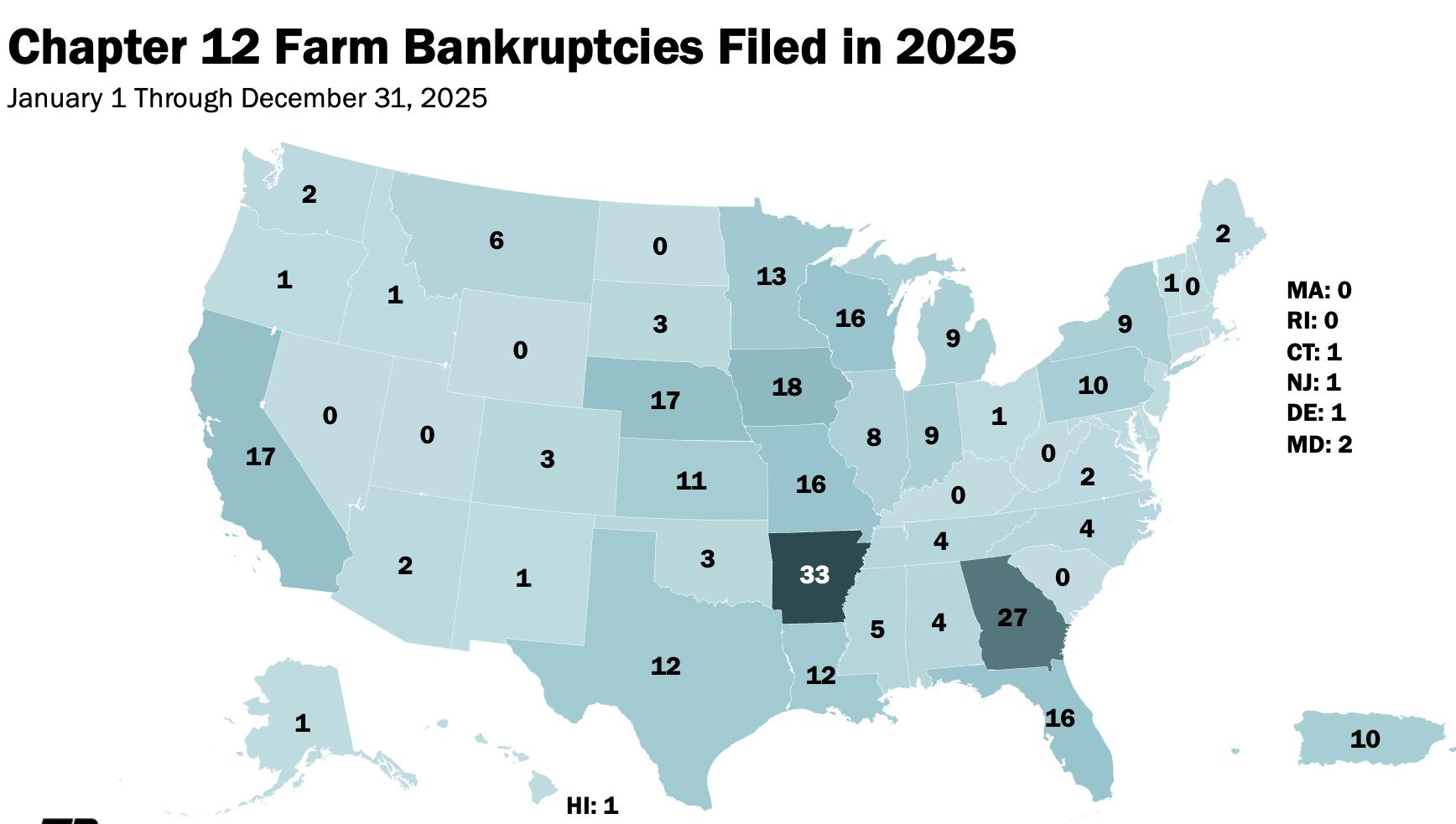
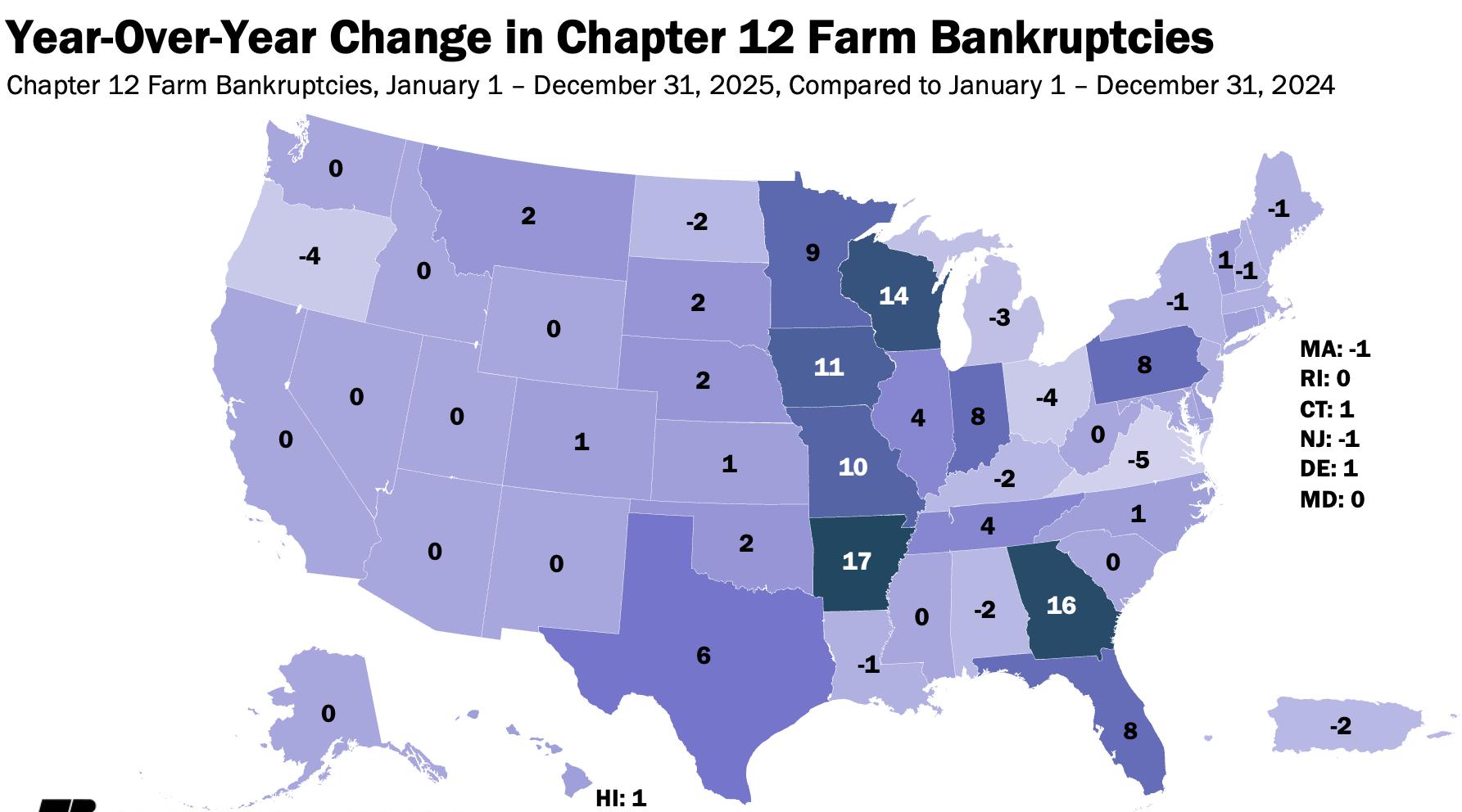
Deep losses across commodities common in these two regions have compounded after years of declining receipts and rising expenses. For example, rice farmers are expected to lose over $200 per acre in loss, even after supplemental assistance. The nation’s leading rice- producing state, Arkansas, leads the U.S. in Chapter 12 filings in 2025 with 33 filings, more than double 2024 and the most in the state in the 21st century. Georgia follows with 27 filings, up 145% from 2024, reflecting both losses per acre in principal row crops and limited support for high-cost specialty crop production. Other Southeast states with double-digit bankruptcies include Texas and Louisiana with 12 each, and Florida with a 200% increase from 2024 to 16 filings.
In the Midwest, principal row crop losses combined with weakening dairy, hog and poultry markets have led to doubledigit Chapter 12 filings in Iowa (18, +220%), Nebraska (17, +29%), Missouri (16, +167%), Wisconsin (16, +700%), Minnesota (13, +300%) and Kansas (11, +10%).
Other states with significant increases in filings in 2025 include Montana, with 200% more filings, and Pennsylvania with a 160% increase in filings. While California was unchanged from 2024, they tie for fourth-highest number of filings with 17 in 2025, reflecting continued price and cost pressures on their diverse agricultural industries.
Yet Another Sign of a Struggling Farm Economy
Farm bankruptcy filings are a lagging indicator that spike when prolonged financial pressures push farms to explore last resorts. According to the Federal Reserve Bank of Kansas City, farmers are taking more larger operating loans and taking longer to repay them. USDA estimates that total farm debt will rise 5.2% to a record $624.7 billion in 2026, highlighting the financial backing farmers need under current conditions.
This is driven especially by the need for additional lines of credit simply to cover input costs, rather than business investments. Nearly 40% more new farm operating loans were opened in the fourth quarter of 2025 than in 2024. At the individual farm level, the average operating loan in 2025 was 30% larger with an average maturity, or payment length, three months longer than 2024. For machinery and equipment loans specifically, the average maturity hit the highest level since 2021, signaling how difficult it is to invest in operational upgrades. On top of this drastic need for credit to get through the year, interest rates remain above decade averages, with interest expenses expected to reach a record $33 billion in 2026 across the farm economy.
All of these credit and debt factors are stretching farmers and ranchers to the brink. With expected financial pressures into the future, Chapter 12 provides an opportunity to better manage the debt loads that have kept operations afloat.
Chapter 12 Bankruptcy not Always an Option
However, many farms do not qualify for Chapter 12. Particularly in down years, off-farm income has become a crucial resource for many farms to provide benefits for their families and support their farming enterprise. Yet, earning most of your income from off-farm employment disqualifies farmers from Chapter 12. So, many families may face the even more difficult decision to sell land, limit production or close their farm altogether. This continues the alarming rate of farm loss in the United States, with over 160,000 farms closing between 2017 and 2024.
Conclusion
Increases in Chapter 12 bankruptcies once again highlight the continued pressures American farmers and ranchers face. A fourth consecutive year of expected declines in farm income will continue to strain agriculture, placing further reliance on credit options that are growing thin. For many families, excessive debt loads could be met with little flexibility as Chapter 12 eligibility prohibits them from using the tool specifically designed to accommodate downturns in the farm economy. Instead, we will likely continue to see increases in both bankruptcy and farm closures, further straining the remaining farms – and the food, fiber and fuel supply chain for all Americans.
Nevada Farm Bureau Federation www.nvfb.org
Nevada Farm Bureau’s Success On Defeat Of SB 172
SB 172 - This legislative proposal was introduced and carried by Senator Edgar Flores. As it turned out, it was the most critical legislative measure that agriculture faced in the 2025 session.
As introduced, it sought to accomplish several objectives.
• Taking away agriculture’s exemption from overtime. Farm and rancher employers would be required to pay employees overtime wages for anything over eight hours a day and 40 hours per week.
• Established a prescriptive “Agricultural Works’ Bill of Rights.” It also provided for agricultural workers to organize and form collective bargaining units(unions).
• Creation of an “Advisory Committee” to advise the Labor Commissioner of what regulatory and legislative proposals should be developed for the benefit of agricultural workers. The committee would be nine voting members.
* 2 members who are advocates, appointed by the Labor Commissioner;
* 2 members who are advocates of agricultural workers;
* 3 members who represent agricultural employers, appointed by the Director of Agriculture;
* 2 members who are from the Farmworker Law Program of Legal Services
Nevada Farm Bureau opposed the bill on the basis of policy… Agricultural Overtime Requirements: 200
Because of the impact of weather as well as the seasonal and intensive nature of the agricultural industry, agricultural labor should remain exempt from the state’s overtime requirements (law and regulations).
The bill failed to pass the Nevada Assembly after gaining approval in the Senate on a 13 “yes” – 7 “no” and 1 “not voting” vote.
Nevada Farm Bureau Protects Vested Water Rights Owners With Defeat Of SB 31
SB 31 – Was a very simple water bill with nine words of new language to be added to existing law. However, those nine words would have significantly far-reaching consequences. Nevada Farm Bureau opposed this bill on the basis it was unfair to private citizens with assertions that they had vested water rights.
In the 2017 Nevada Legislature, a bill was passed into law, requiring anyone claiming vested water rights to submit their proof through a form prescribed by the State Engineer. This form would need to be received by the Division of Water Resources by December 31, 2027. Nevada Farm Bureau supported the passage of the 2017 bill noting that it would be a positive concept for everyone claiming vested water rights to get those claims on the table. This would help in making it clear where things stood with water rights that preceded state water law.
SB 31 was introduced by the Division of Water Resources and sought to let the agencies of the federal government out of the requirement for filing the proof of vested water rights.
Private citizens with vested water rights claim will have their claim abandoned if they don’t submit the paperwork that the State Engineer has developed, but the agencies of the federal government don’t have to comply and don’t risk their potential water right.
Nevada Farm Bureau and others strongly opposed this bill and it died in the Assembly Natural Resources Committee.
Recent Legislative Accomplishments
Nevada Farm Bureau’s Success With Passage Of Water Bills
SB 36 & AB 104 – These two bills were supported by Nevada Farm Bureau, who was part of a group of stakeholders working together with the Division of Water Resources to develop a proposal for a voluntary water right buy-back and retirement program. The diverse group of stakeholders has been working together for a number of years and has demonstrated that it takes collaboration to be successful in getting things done. Farm Bureau’s participation in working partnerships is determined by member-developed policy.
The bills were brought forward by the 2024 Joint Interim Standing Committee on Natural Resources. The purpose of the legislation is to develop a system which gives water right owners options to voluntarily sell water rights for retirement as opposed to having only curtailment as a process for reducing water rights. Out of Nevada’s 256 groundwater basins 40 percent are over-appropriated, and of overappropriated basins, half are being over-pumped.
Nevada Farm Bureau Policy - Nevada Water Buyout/Retirement Program: 313
Nevada Farm Bureau supports a water right buyout/retirement program as a means to solve over appropriation as long as it does not significantly diminish another property owner’s property rights.
Bills Advance Benefits Nevada Farmers and Ranchers
SB 466 –This bill is a very important piece of legislation because it transfers authority to regulate and permit food establishments from the Division of Public and Behavioral Health to the Department of Agriculture. It also transfers the authority of the State Board of Health to amend and enforce regulations for food safety to the Department of Agriculture. The Nevada Department of Agriculture gained additional authority over cottage food operations and farm-to-fork events.
Nevada Farm Bureau policy identifies the need for direct marketing, including cottage food entrepreneurial businesses, and a state meat certification program with necessary inspections as a function of the Nevada Department of Agriculture. Farm Bureau members who were attempting to pursue cottage food businesses or farm-to-fork events were struggling to deal with county level health district bureaucrats. Our strong support for passage of SB 466 was based on these needs of changes to benefit farm/ranch enterprises.
AB 352 – This bill ties very closely with SB 466. It expands the opportunities for cottage food and farm-to-food businesses. It also creates a new area of cottage cosmetics to be licensed by the Department of Agriculture.
A major improvement for cottage enterprises (food and cosmetics) is the provision which now allows these businesses to expand sales up to $100,000 per year. Previously, cottage foods were limited to $35,000 per year in sales. The requirement also included obtaining a license from each health district – with the change to a Department of Agriculture license the entire state is now open for business on a single license.
Again, Farm Bureau’s support for this bill was providing opportunity for food producers who were attempting to build their businesses and receive fairer treatment than they were receiving from health district bureaucrats.
• The U.S. cattle herd continues to shrink. The January U.S. Cattle Inventory report shows the cattle inventory on Jan. 1, 2026, is 86.2 million head, down 300,000 head or 0.3% from 2025. This decline indicates that the cattle inventory is still in the contraction phase of the cattle cycle.
• Cattle inventory will likely not expand until at least 2028. The combination of fewer beef cows and a declining calf crop means the 2026 calf crop will likely continue to trend downward as there are fewer calves available for the breeding herd, even if more heifers are kept for breeding purposes.
• Tighter cattle supplies will contribute to higher prices and volatility for cattle and beef in 2026. Smaller cattle supplies paired with strong consumer demand for beef has driven up prices for both cattle and beef. With cattle supplies this tight, markets have become more responsive to news and events that could impact supply and demand. This has resulted in a tremendous amount of volatility in cattle markets.
2025 was a remarkable year for cattle with prices setting records on several occasions. USDA’s most recent net farm income forecast adjusted net farm income downward for 2025 and is projecting lower incomes again in 2026. One of the few bright spots in the agricultural economy has been beef cattle with cash receipts for cattle rising 39% from 2020 through USDA’s forecast for 2026.
The Cattle Inventory | USDA’s January Cattle Inventory report provides state-level and national data on the number and value of cattle and calves, the number of operations, and detailed breakdowns by class. This report sets the tone and direction for cattle markets for the upcoming year. The Jan. 30 report was bullish. All cattle and calves on feed in the United States on Jan. 1, 2026, totaled 86.2 million head, a 75-year low, down about 300,000 head, or 0.3%, from 86.5 million head in 2025. While this is a much smaller decline than the 1.6% average inventory decline from the last five years, it is still an indicator that the U.S. cattle supply is continuing to fall. The continued decline in cattle, though small, means we are now in year 13 of the current cattle cycle and year eight of contraction. Other data contained in the report provides clues about when expansion could begin.
Beef Cows and Calf Crop Decline | Beef cows that have calved totaled 27.6 million, down 285,000 head, or 1%, from 27.9 million in 2025 and the lowest since 1961. Heifers for beef cow replacement were 4.71 million, up 1% from 4.67 million in 2025. Heifers for beef cow replacement expected to calve were 2.96 million, also up 1% from 2025. This increase in replacement heifers means that farmers are beginning to keep some heifers for breeding rather than placing them on feed for beef production. This does not necessarily mean the cattle herd is about to expand, but it is one of the first steps of expansion.
The 2025 calf crop is estimated at 32.9 million head, down about 521,000 head, or 2%, from 2024. This is a record low and is the second consecutive year a record low has been set. For any expansion in the cattle inventory to occur, the calves from this year’s calf crop (particularly heifers) will have to be kept for breeding rather than placed on feed for beef production. If this happens, these calves could produce
a calf of their own in 2027 and present the possibility of some herd expansion by 2028. However, the lower number of beef cows combined with the smaller calf crop means a smaller calf crop can be expected in 2027.
A smaller 2025 calf crop also means there are fewer cattle available to be placed on feed in 2026. The U.S. border to Mexico remains closed to imported livestock including beef cattle to combat the spread of New World screwworm. Approximately 1.2 million-1.5 million head of cattle placed into feedlots for beef production are imported to the U.S. from Mexico when the border is open each year. This supply constraint will keep prices for feeder cattle elevated in 2026 and 2027.
Beef Production | Even though cattle numbers are continuing to fall, USDA’s Economic Research Service (ERS) increased its beef production forecast toward the end of 2025 (still below 2024 levels). However, lower beef production is expected in 2026. This is because the average live weight of fed cattle was record high for every quarter in 2025. The average live weight of all fed cattle for quarter four in 2025 was 1,460 pounds, 50 pounds, or 3.5%, higher than the fiveyear average live weight of 1,410 pounds. USDA’s National Agricultural Statistics Service’s (NASS) Cattle on Feed report indicated marketings of fed cattle well below yearago levels in every month in 2025 since April. However, the increase in live weights has been enough to offset much of the decline in marketings and keep production estimates for 2025 at 25.95 billion pounds, just 3.8% below 2024. Based on the trend of higher weights and lower marketings, USDA’s latest World Agricultural Supply and Demand Estimates (WASDE) report estimates beef production in 2026 will be 25.735 billion pounds, less than 1% lower than 2025.
The Markets | Cattle markets set several records in 2025, along with experiencing tremendous volatility. Most notable, the 5-market monthly weighted average negotiated price for fed steers hit a record $243/cwt in August 2025.
Higher cattle prices are due to historically tight cattle supplies, but also consistently strong consumer demand for beef. The most recent data from USDA’s ERS estimates the composite all-fresh retail price of beef was a record $9.55 per pound in December 2025 after posting a new record high in every month since June 2025. Demand for beef has remained strong even while these prices have continued to climb.
Imports and Argentina | Tighter supplies of cattle have led to tremendous volatility in the cattle and beef markets. When supplies of commodities are low, they become more sensitive to news or changes that can impact supply or demand, and the result is market volatility. One example of high volatility is the October 22 announcement to increase the tariff rate quote (TRQ) on beef from Argentina.
An additional expected market response to lower cattle supplies for beef is increased imports. As the cattle inventory continues to decline, beef imports climb. According to data from USDA’s Foreign Agricultural Service, beef imports increased by 258,490.1 metric tons, or 17%, from 1.5 million metric tons from January through November 2024 to 1.76 million metric tons for the same period in 2025. Put another way, the U.S. cattle inventory has declined by 7.7% from 2020 to 2025 while beef imports during the same time period have increased by about 48% by volume. Australia was the number one source of imported beef in 2025 with 434,578.8 metric tons of beef, up 25% from 2024 and 88% from 2020.
Since 2020, approximately 2% of U.S. beef and veal imports originated from Argentina. Argentina has a tariff rate quota into the U.S. of 20,000 metric tons per year with exports above this volume tariffed at 26.4%. Beef coming into the U.S. from Argentina is grass-fed beef and is used as lean trimmings for ground beef. The October announcement proposed to increase the TRQ from 20,000 metric tons per year to 80,000 metric tons per year. Industry experts do not believe increased imports from Argentina will have a measurable impact on prices paid by consumers for beef. However, the market response following the October announcement was substantial. Following the announcement, the 5-market average cash cattle price fell 13%, from $239/cwt before hitting its low price of $207 on Nov. 28. In addition, feeder cattle and live cattle futures experienced several limit down (the maximum range for a futures contract in a single trading session) trading sessions following the announcement. Since that time, cash cattle prices have recovered all of the losses that occurred following the announcement.
On Feb. 5 the United States Trade Representative (USTR) signed the United States–Argentina Agreement on Reciprocal Trade and Investment (ARTI). The agreement improves some sanitary and phytosanitary barriers that limit beef and pork exports to Argentina. It also allows temporary duty-free importation of U.S. beef into Argentina by removing the 9% duty for beef imported up to the 20,000 metric ton TRQ and an additional 20,000 metric tons per quarter for a total of 100,000 metric tons for 2026 only.
On Feb. 6, the White House released a Presidential Proclamation allowing additional temporary access of Argentine beef into the U.S., increasing the TRQ by 80,000 tons of lean trimmings. This means Argentina will be able to export an additional 20,000 metric tons of beef per quarter at a tariff rate of 4.4 cents per kilogram of beef for Argentina’s World Trade Organization TRQ of 20,000 metric tons and for their additional 20,000 metric tons per quarter for a total of 100,000 metric tons to the U.S. in 2026 only. Any additional exports are subject to the 26.4% tariff rate. This 100,000 metric tons would account for approximately 5% of U.S. beef imports or about 1% of total U.S. consumption. The market response has been calm compared to the first announcement. Futures markets edged gently higher on Feb. 9 following the ARTI and Presidential Proclamation.
Conclusions | USDA’s Jan. 1 Cattle Inventory report confirms the U.S. cattle herd remains in the contraction phase of the cattle cycle with little opportunity for meaningful expansion until at least 2028. Declines in beef cows and the calf crop underscore just how tight supplies have become, even while modest increases in replacement heifers suggest farmers and ranchers are cautiously considering rebuilding. In the short run, fewer calves, limited feeder cattle availability, and restricted live cattle imports will continue to constrain cattle markets.
These fundamentals have translated into historically high prices and pronounced volatility across both cattle and beef markets. Strong consumer demand has allowed higher prices to persist, offsetting broader weakness in the agricultural economy and making beef cattle one of the few bright spots in agriculture.
Looking ahead, cattle producers still face substantial uncertainty that clouds herd rebuilding decisions. Ongoing animal health threats, including New World screwworm, along with the potential for another severe drought year, continue to raise costs and production risk despite strong underlying demand.
Nevada Farm Bureau
Farm Bill 2026?
By Doug Busselman | NFB Executive Vice President
We are working through the last of February as we write this and there is a lot of hopeful anticipation for many agricultural producers in the country (although not quite as much from Nevada farmers and ranchers). At this point Monday, February 23rd is being considered as a massively important date. By the time you read this article, you will be able to determine whether that was the case or not.
Monday, February 23, 2026, is slated as the date for the U.S. House of Representative’s Agricultural Committee to mark up the 2026 Farm Bill. It also was announced as the first day that those commodity producers who qualify to receive some of the $11 billion in Bridge Payments can get signed up to get their payments.
The sign-up for Bridge Payments continues until April 17th.
Early estimates that have been reported indicate that a possible $2 million in Bridge Payments might come to Nevada’s eligible row crop and other eligible commodities.
Now Back to the Farm Bill 2026 Matter:
The reason that the House Ag Committee is working on a markup of the 2026 Farm Bill is because we’re still waiting for a new Farm Bill since the 2018 Farm Bill expired on September 30, 2023.
Tracing back the history of how we have gotten to where we are now – the 2018 Farm Bill passed the U.S. Senate on December 11, 2023 (a little later than scheduled for it’s preceding Farm Bill wasn’t rewritten on time either). The U.S. House passed the Farm Bill a day later and President Donald Trump (in his first term) signed the 2018 Farm Bill into law on December 20, 2018.
As we’ve indicated, the 2018 Farm Bill expired at the end of the fiscal year in 2023 but was “renewed” for a one-year extension to be completed before September 30, 2024. Okay, but that “year” didn’t make its deadline either and was extended into 2025.
On July 4, 2025, President Trump (second term) signed the “One Big Beautiful Bill” which included several critical elements of what had become outdated in the Farm Bill because of the inability
of those representing the country to come to an agreement and pass an actual “new” Farm Bill.
The “One Big Beautiful Bill” locked into place these portions of the multiple-time-expired Farm Bill with about $66 billion in new agricultural investments over the next 10 years:
Farm Safety Net Enhancements – brought about updates and extensions of the Price Loss Coverage, the Agricultural Risk Coverage, the Dairy Margin Coverage and marketing assistance loans through 2031. It also raised reference prices for major commodities and improved revenue guarantees and maximum payments.
Crop Insurance – this increases coverage levels, expands premium subsides for beginning farmers, authorizes a new pilot insurance product for poultry growers and introduces greater flexibility for Supplemental Coverage Option participants.
Conservation Programs – through the adoption of provisions in this bill, funding for the Environmental Quality Incentive Program (EQIP), Conservation Stewardship Program (CSP) and the Agricultural Conservation Easement Program (ACEP) were maintained. Some of this was possible through the redirection of some funds that were formerly provided through the Biden Administration’s Inflation Reduction Act.
Trade Promotion and Research – this section establishes the Agricultural Trade Promotion and Facilitation Program which fires up an annual funding of $285 million in 2027. Specialty Crop Research ($175 million for 2026) will be supported. Last, but not least, scholarships will be funded for research facilities to advance agricultural innovation.
Disaster and Rural Development – this provides funding for disaster assistance, renewable energy programs (example – Bioenergy Program for Advanced Biofuels) and specialty/horticulture crop support, including organic program development.
Because of the timing for these programs, the much-needed financial support for those commodities which receive government program support wasn’t going to get to those in need in
time for this year’s production cycle. Thus, the $12 billion Bridge Payment Program was announced in early December of 2025 ($11 billion for row crop producers and $1 billion for sugar and specialty crop growers).
The mark-up of the “Farm, Food and National Security Act of 2026” is aimed at resolving the holes in what should be in a real Farm Bill and didn’t fit into the “One Big Beautiful Bill.” The gaps which need attention to complete the Farm Bill fit into the titles of:
• Credit
• Rural Development
• Research and Extension
• Forestry
• Energy
One of the additional points that Farm Bureau and others are interested in is the issue of California Proposition 12. The U.S. Supreme Court ruled that only Congress could stop states from enacting laws in their legislatures that dictate to farmers in other states, forcing them to grow food the way they have established. If every state passed laws that apply on a nationwide basis – the result would be a web of conflicting laws that no farm or business would be able to navigate. The “Farm, Food and National Security Act of 2026” could be the opportunity for Congress to address the issue.
The February 23rd House Ag Committee markup isn’t the first time that committee chairman, Congressman G.T. Thompson has attempted to get to a full and relevant Farm Bill. He was successful with his committee to markup a bi-partisan Farm Bill draft in 2024, but the bill didn’t get a floor vote or even a Senate Bill to compare with.
Even though there are less attributes in a Farm Bill for Nevada producers than there are for other parts of the country, there are still some very important and positive things that a complete Farm Bill can provide. Getting the House Ag Committee to get the ball rolling for completing this long-delayed legislative package -- passed in both the House and Senate and then signed into law by the President would be a notable accomplishment.
Three Ways to Earn a Scholarship
By Brittney Money, NVFB
The Nevada Heritage Foundation is now accepting applications for three scholarship opportunities supporting Nevada students pursuing careers in agriculture, ag-business, and agriculture-related trades. Whether you’re continuing your education at a college or university, enrolling in a certification program, or entering a skilled trade, these scholarships are designed to help you take the next step toward your future.
Application Deadline: April 1
Nevada Heritage Foundation Trade Scholarship
• Supports students entering a trade that serves Nevada agriculture.
Nevada Heritage Foundation Memorial Scholarship
• Honors individuals who supported the sustainability and future of Nevada agriculture.
Continuing Education Scholarship
• Helps hardworking students continuing their education in an agriculture-related field.
For full scholarship details, please scan the QR code below.
you’re looking to sell a farm or ranch, give us call!
Clover Valley Farm South of Wells
A 240 acre farm with 160 acres of water righted lands Currently with one 125 acre pivot and two wells. The Home is a large manufactured home with 3 bedroom and Two full baths plus office, living room and family room. Two large metal storage buildings Price: $1,200,000.
SHORT ON WATER ?
Two Alfalfas in One
Greenway Alfalfa
This Alfalfa has been called a tetraploid anomaly by alfalfa breeders. On the market since 1979, and being improved twice, It remains the highest yielding, low water alfalfa on the market!
HERE’S WHAT GROWERS ARE SAYING: (More testimonials available on our website)
“Ten years ago we planted 5lbs/per acre of 360-D mixed with some grasses. The pivot was so short on water, we had to plug some nozzles in order to water parts of the pivot. Over the years the grasses died out due to lack of water, but the 360-D kept increasing. Today, 10 years later, the pivot is solid 360-D and producing well, and still very short on water.”
Cade Davis Spring Valley Ranch - 30 miles east of Ely, NV
“We have 10 pivots of alfalfa in the Railroad Valley of Nevada. Tough ground with a high PH. 10 years ago we planted 30lbs/acre of 360-D. Today that pivot is the No. 1 pivot on our hay ranch, and testing well for dairy.”
Kennon Forester - 106 miles Southwest of Ely, NV
“First year, after seeding year, we harvested 3.4 ton on 1st cut and 1.7 ton on second with very little rain in the growing season. Over 5 ton on 2 cuts so far!” (Dryland)
Mosekian Farms - Cambridge, ID
“Our area has been in drought for several years. Everyone in the panhandle is short on water. We only pump 400 gallons on 120 acres. That's why we plant 360-D. Under that short water we still yield near normal and the quality is excellent because we plant 35 lbs/per acre. We planted 8500 pounds this year!”
Dan Sawyer - Clarendon, TX
Alan Greenway Seedsman
Over
Greenway Seeds
Caldwell, ID
208-250-0159 (cell)
208-454-8342 (message)
Alan Greenway
GREENWAY SEEDS www.greenwayseed.com
Warehouses in Caldwell, ID and Deer eld, WI
“Modern Forages Sold Nationwide and Canada”
√ Will produce AT LEAST 80% of crop with 50% of water
√ Will produce a subsequent cutting after water is gone
√ Plant on dryland/ guaranteed to out yield Ranger or Ladak
√ Plant under pivots that only pump 400 gal/
√ Plant on elds that have only early season creek water
√ Plant under end guns on pivots
√ Plant in the late fall with your dormant seeded grasses
Nevada Farm Bureau Grassroots News
NFB Presidents Presents Overview Of Nevada Agriculture To Interim Legislative Committee
Assemblymember Natha Anderson, Chairman of the Joint Interim Standing Committee on Natural Resources invited Nevada Farm Bureau President Bevan Lister to make a presentation to the committee for their February 25th meeting. Lister was asked to include in his presentation:
• The role of Farm Bureau in Nevada and the industries that the Bureau helps to support
• Current trends and challenges in agriculture
• Alfalfa production in Nevada, including the contribution to rural economies and challenges faced by the industry
The Power Point presentation to the committee is found here: https://tinyurl.com/NV-Ag-Overview
Nevada Director of Agriculture, JJ Goicoechea also presented to the Interim Committee, preceding Farm Bureau’s presentation and covering the current programs that the Department of Agriculture and how the new elements of various updated programs are coming about. Director Goicoechea’s presentation is found here. https://www.leg.state.nv.us/App/ InterimCommittee/REL/Document/32277
Members of the committee were very engaged in each of the two agricultural presentations with a number of questions and interactions with each presenter.
This is an early – add to your calendars - the next meeting of the Joint Interim Standing Committee on Natural Resources is planned for Wednesday, March 25th, where they will join with the Joint Interim Standing Committee on Growth and Infrastructure in covering data centers.
What’s In The New House Farm Bill Language?
It is important that you plan to join the Nevada In their most recent Market Intel backgrounder, American Farm Bureau Federation (AFBF) economist, Daniel Munch and Faith Parum, Ph.D. have combined to share the details of the programs being included in the Farm, Food and National Security Act of 2026. This is the draft markup that the House Agricultural Committee is hoping to pull together to update the 2018 Farm Bill after three extensions that were necessary to keep some of the Farm Bill sections continuing to operate. The new committee date for conducting the markup will take place on Tuesday, March 3rd, starting at 5 p.m. (Eastern Time) and will likely spill over to more work on Wednesday, March 4th.
A real benefit of this Market Intel piece is the clarity that the authors have captured to dig into the sections of the Farm Bill which didn’t fit into the One Big
Beautiful Bill Act, and are now being dealt with in this new effort. Those sections include:
Title 1 – Commodities
Title II – Conservation
Title III – Trade
Title IV – Nutrition
Title V – Credit
Title VI – Rural Development
Title VII – Research, Extension and Education
Title VIII – Forestry
Title IX – Energy
Title X – Horticulture, Marketing, Regulatory Reform
Does Nevada’s Elk Management Outcome Matter To You?
Thanks for the input that we’ve had in regard to the concerns of the current elk populations around the state. This has greatly assisted us in putting together a general idea of what we will be noting in our comments to the Nevada Wildlife Commission’s Elk Management Committee when they meet March 12 in Boulder City, NV. Over the past couple of weeks, we shared the “Elk Management Committee” work of planning for the elk management process for Nevada. We’re still anxious to hear more from those who will be impacted, if you believe that the numbers of elk in your area should be increased, left the same or reduced, participating in this process could make a difference on what happens.
At the March meeting they will be making their recommendations to the Nevada Board of Wildlife Commissioners. Those recommendations will include population objectives (which could allow increases or decreases in the identified 2025 Population Estimates and Objectives column with the range of up to 10 percent increases or 10 percent decreases) …things could also be kept the same. They will also be covering hunting seasons and hunting limits.
Based on the plan outline, the consideration of managing of the statewide program will be carried out on the basis of treating designated elk herds on a herdby-herd basis (mostly connected to “Unit Groups”) that are presented in this Map: https://tinyurl.com/ ElkMgmtMap
This table ( https://tinyurl.com/elkunitgroups ) ties in with the Map and shows the corresponding details of herd sizes, population make-up, 2025 Population Estimates and objectives.
If ranchers within these designated herd areas see reasons for not increasing or perhaps supporting decreases based on range conditions, exceptional overabundance of wild horses or heavily decreased grazing AUMs being held in suspension for whatever reason the BLM or Forest Service have decided –these points could be made at the county meeting as
well as shared with the Nevada Farm Bureau…email Doug Busselman at doug@nvfb.org.
In addition to the Map and Table noted above with their links, we also offer a couple of brochures on elk related (Damage Compensation: https://tinyurl. com/ElkDamageComp) and (The Elk Incentive Tag Program: https://tinyurl.com/ElkTagProgram) for private landowners.
Hearing Held On Proposed Designation Order For Lower White River Flow System
The Nevada Division of Water Resources held a public hearing on Wednesday, February 25. This hearing covered the proposed designation order for the Lower White River Flow System in Southern Nevada. The proposed designation can be found by visiting https://water.nv.gov/uploads/happening-now-docs/ LWRFS_Basin_Proposed_Order.pdf
Persons wishing to submit written testimony or documentary evidence may submit the material by March 27, 2026, by e-mailing to jhenson@water. nv.gov or by mailing to the following address: Nevada Division of Water Resources at 901 S. Stewart St, Ste 2002, Carson City, Nevada, 89701.
Kyle Reber, NFB Southern Field Representative joined the hearing by way of the provided Zoom link. His notes on the speakers who participated in the hearing can be found here: https://tinyurl.com/42wak9ny
BLM Seeking To Recruit Advisory Committee Members
The Federal Register annouced that BLM was callingl for nominations to the National Wildhorse and Burro Advisory Board. Six seats need to be filled and the deadline for submitting nominations is April 13, 2026.
The call for nominations seeks to fill three currently vacant positions that represent wild horse and burro advocacy, veterinary science, and public interest (with a special knowledge of natural resource management). The call also seeks nominations to fill three positions representing humane advocacy, wildlife management, and livestock management, which will become vacant in September 2026.
Visit www.blm.gov/programs/wild-horse-and-burro/ advisory-board for details of what the Board does and how to submit nominations. A number of Nevadans have served in various roles on this Advisory Board over the history of the Board.
Nevada Farm Bureau has also been approached by members who would like our Letter of Support for their nomination. We’d be happy to consider such support for others who might be qualified for filling open seats. Please contact us at doug@nvfb.org.
THE ROUNDUP
An analysis of western ranching politics.
IN THE NEWS
Administration: White House enters final steps to scrap Biden-Era public lands rule.
White House poised to revoke Biden’s public lands rule, E&E Daily News - The Trump administration is taking the final steps to undo one of former President Joe Biden’s signature conservation policies. The White House is now reviewing a final rule that would revoke the Bureau of Land Management’s conservation and landscape health rule commonly referred to as the public lands rule which elevated conservation as a formal use on BLM rangelands. The final rule proposal was sent for White House review on Friday, according to a post on the Office of Information and Regulatory Affairs’ rules webpage. BLM in September unveiled a draft proposal to rescind the rule, which Interior Secretary Doug Burgum said at the time “had the potential to block access to hundreds of thousands of acres of multiple-use land preventing energy and mineral production, timber management, grazing and recreation across the West.” The draft rule underwent a 60-day public review and comment period. It followed a five-month OIRA analysis of the public lands rule and a separate BLM review. Once the White House signs off on the final rule in the coming weeks, it is expected to be implemented shortly after it is published, though a timeline is not clear. Representatives with the Office of Management and Budget, which includes OIRA, did not respond to a request for information. The sweeping public lands rule has been divisive since first proposed in 2023. Among other things, the rule applied rangeland health standards across the 245 million acres the bureau oversees. It also established a new leasing system that allowed environmental groups or others to pay to protect BLM-managed land for a certain period of time, such as if companies wanted to execute a mitigation project to compensate for work on other federal land. But critics argued that the leasing system could be used by environmental groups to buy leases and tie up thousands of acres of federal lands from other uses, such as livestock grazing. Kaitlynn Glover, executive director of the Public Lands Council, a ranching industry trade group, said they “look forward
to OIRA finalizing their review and the Interior Department removing this harmful, illegal rule for good.” The Interior Department under President Donald Trump has accused the Biden administration of sidestepping public concerns and criticisms of the rule before implementing it in June 2024. Those included comments that the administration downplayed the economic effects of the rule on industries like hard rock mining, which depend on access to public land. Conor Bernstein, a spokesperson for the National Mining Association, said in an email Monday that the Trump administration is justified in removing a rule that they agree is illegal. “We’ve consistently said the prior rule enacted by the Biden administration clearly disregarded the legal obligation to balance multiple uses on federal lands,” Bernstein said. Conservation groups and some congressional Democrats have pushed back, arguing that treating conservation the same as other uses of BLM rangelands is consistent with existing laws and policies. They have said killing the rule hamstrings the bureau’s ability to protect rangelands from the ravages of increased wildfires, drought and other impacts of a warming climate. “The administration should not go forward with repealing the public lands rule, which would disregard the reality on the ground,” said Maddy Munson, senior policy and planning specialist at Defenders of Wildlife.
Wolves: New CPW director anticipates wolf reintroduction will continue; Wolves spotted in Eastern Colorado, crossing into Front Range foothills in February.
Colorado’s new parks and wildlife director promises transparency, science-based wildlife decisions and more wolves, The Colorado Sun - Colorado Parks and Wildlife will continue wolf reintroduction with or without the U.S. Fish and Wildlife Service, the agency’s new leader, Laura Clellan, said in a ranging interview with The Colorado Sun. In her new job, she said she will ensure Colorado’s wildlife management remains based on “science, law and long-term sustainability,” and that she will keep politics out of her decision-making to enact policy decisions made by the parks and wildlife commission and to “ensure transparency across the agency.” Clellan was a late addition to the roughly 150 candidates for the position that oversees around 1,000 employees and an annual budget of around $365 million. She was brought in after five finalists had been interviewed by the Parks and Wildlife Commission. The commission on Feb. 23 voted unanimously to confirm her. Clellan, who was named the agency’s acting director on Dec. 1, soon after Jeff Davis resigned, said CPW staff, leaders, commissioners and stakeholders asked her to apply for the permanent job, because “we need leadership. We need purpose, direction and structure. We need somebody who’s going to lead this organization and not be afraid to make decisions.” Among the “most pressing issues” for Clellan is continuing “wildlife on the ground — wolves, furbearers, water management,” she said. Another “is making sure we have resilient
ecosystems and balancing exceptional experiences here in Colorado.” The third is keeping CPW relevant for the future. And the fourth is “organizational and workforce health. I’m a firm believer that we get nothing accomplished without the people of our organization. I was so glad to see this in our plan. We are absolutely going to focus on our people.” On the topic of wolves, Clellan said the U.S. Fish and Wildlife Service has not provided an official response following Director Brian Nesvik’s demand that CPW provide a full accounting of wolf reintroduction actions since the program began in 2023. Clellan led the correspondence with Nesvik, who she said is a “great partner” she has frequent conversations with. “I also knew Brian Nesvik as Gen. Nesvik when he was in the Wyoming National Guard and I was in the Colorado National Guard,” she added. “So we have, you know, kind of a special connection there.” Absent a response, CPW is “going to continue to manage the wolves in Colorado as we have been,” she said. “We still have our 10-J. We still have our memorandum of agreement with them. And, you know, I have been in close contact with them. And right now, I feel confident that we are going to be able to continue to move forward with gray wolf restoration in 2026.” That includes adding 10 to 15 wolves in this calendar year, which likely means those wolves are coming in December. Colorado voters directed CPW to start reintroducing wolves by the end of 2023 in a vote in 2020. Clellan said she is committed to compensating ranchers for livestock losses, even as the agency has faced pushback for the costs accrued in 2025.
Wolves move further east in February, crossing into Front Range foothills, CPR News - Last month, a couple of lone gray wolves may have traveled farther east than the animals ever have in Colorado since reintroduction in 2023. The latest map of collared wolf activity released by Colorado Parks and Wildlife shows which areas wolves passed through from late January through late February. During that period, wolf activity spread further east into southern Front Range counties, from Douglas to Huerfano. Movement appears to move as far east as Interstate 25, south of Pueblo. However, CPW’s maps have some limitations. They define regions by state watersheds, and track collared wolves with GPS pings, which ping only about once every four hours. So wolf detections may just indicate an animal passed through, not that they are moving into an area or establishing there. Brenna Cassidy, CPW’s wolf monitoring and data collector, said she has not heard of an increase in wolf sightings along the Front Range. “Wolves are quite nervous around people generally,” she said. “It’s very, very rare to have a wolf be close to a town like that.” Cassidy said the wolves being tracked in the east are not part of the four established packs in the central mountains. She said it’s likely two individual wolves roaming alone, searching for mates. In January, CPW announced it would not be introducing more wolves to the state, as planned. This came after the Trump Administration halted the state from importing wolves from Canada, after which Colorado could not secure wolves from other states. With those
reintroductions paused, Cassidy said it’s all the more important for existing wolves to find mates in order to establish a self-sustaining population. She said that watching GPS pings while tracking wolves across the state makes her hopeful that lone wolves will find each other and pair up. “I’m sitting here rooting for them,” Cassidy said. “And then they just don’t meet, and that is a little bit of a bummer.”
Congress: HNR plans markup for geothermal energy and forest bills; Rep. Zinke of MT, announces he will not seek reelection; Nominee to lead BLM pledges no major sales of public lands.
Natural Resources sets markup of geothermal energy, forest bill, E&E Daily News - The House Natural Resources Committee plans to move more than a dozen bills via unanimous consent this week, including proposals to support geothermal energy and to change how sequoia groves are managed. The committee will meet Thursday to mark up 16 proposals. Only two measures are to include amendment discussion, according to the committee’s majority staff. They are Idaho Republican Rep. Russ Fulcher’s H.R. 5576, the “Enhancing Geothermal Production on Federal Lands Act,” and California Republican Rep. Young Kim’s H.R. 5587, the “Harnessing Energy At Thermal Sources (HEATS) Act.” Fulcher’s proposal would create a National Environmental Policy Act carve-out for certain geothermal exploration wells to ease the permitting process. Kim’s proposal would likewise waive some NEPA requirements, as well as Endangered Species Act and historic preservation review mandates for new geothermal projects on state or private lands. A version of the legislation passed the House in 2024 but stalled in the Senate. Other bills on the agenda include: H.R. 301, the “Geothermal Energy Opportunity (GEO) Act,” from Rep. Celeste Maloy (R-Utah), H.R. 398, the “Geothermal Cost-Recovery Authority Act,” from Rep. Alexandria Ocasio-Cortez (D-N.Y.), H.R. 1077, the “Streamlining Thermal Energy through Advanced Mechanisms (STEAM) Act,” from Rep. Susie Lee (D-Nev.), H.R. 5617, the “Geothermal Gold Book Development Act,” from Rep. Yassamin Ansari (D-Ariz.), H.R. 5631, the “Geothermal Ombudsman for National Deployment and Optimal Reviews Act,” from Rep. Jeff Hurd (R-Colo.), H.R. 5638, the “Geothermal Royalty Reform Act,” from Rep. Mike Kennedy (R-Utah), The panel is also set to take up California GOP Rep. Vince Fong’s H.R. 2709, the “Save Our Sequoias Act.” The bill, which would allow more forest-thinning near the giant trees, has split environmental groups. Schedule: The markup is Thursday, March 5, at 10 a.m. in 1324 Longworth.
Zinke announces he won’t seek reelection, The Hill - Rep. Ryan Zinke (R-Mont.), a former Interior Secretary during President Trump’s first term, said Monday he will not seek reelection this November. Zinke, who has represented Montana in the lower chamber for three non-consecutive terms, wrote in a letter to Montanans
that he has “quietly undergone” multiple surgeries since returning to Congress in January 2023 and faces “several more immediately after leaving office.” Zinke joins over a dozen Republican House lawmakers not seeking re-election, as Democrats are optimistic about their chances of taking control of the lower chamber this November. While Zinke said his injuries, sustained from a 22-year career as a Navy SEAL, are not life-threatening, his recovery will require him to spend “considerable time” with his wife, Lola Zinke, and their family. While he said his injuries, sustained from a 22-year career as a Navy SEAL, are not lifethreatening, his recovery will require him to spend “considerable time” with his wife, Lola Zinke, and their family. “My judgement and experience tell me it is better for Montana and America to have fulltime representation in Congress than run the risk of uncertain absence and missed votes,” Zinke, 64, wrote. After retiring from the Navy SEALS in 2008 with the rank of commander and the Bronze Star, Zinke served in the Montana Senate from 2009-13. He was first elected to represent Montana’s at-large district in 2014, becoming the first Navy SEAL in the lower chamber upon taking office in January 2015. Trump appointed Zinke as his first Interior secretary, a role the latter served in from March 2017 to January 2019. He left the administration after the Interior’s Office of Inspector General referred a probe on scrutinized land deals he signed off on to the Justice Department. Zinke later ran to represent Montana’s new 1st congressional district in 2022, defeating Democrat Monica Tranel by just over 3 percentage points. In his Monday letter, the Montana Republican touted his work to remove “excessive” regulations, lower taxes and pass the bipartisan Great American Outdoors Act — which Trump signed into law in 2020 and allocated billions annually for conservation, outdoor recreation and the maintenance of national parks. “Service is a duty that I will always hold sacred, and I am grateful for the opportunity to make a difference,” Zinke wrote. Sen. Steve Daines (R-Mont.), who preceded Zinke in representing Montana’s at-large district, said the congressman “served Montana and our country with honor and distinction for four decades.”“I have known Ryan since we were in high school. We attended Montana Boys State in Dillon together in 1979,” Daines wrote on the social platform X. “He was a Whitefish Bulldog and I was a Bozeman Hawk. His desire to serve his country was evident back then.” The deadline to file to run in Montana was on Thursday. Just over an hour after Zinke’s announcement, Montana radio host Aaron Flint launched his campaign for the seat. Shortly thereafter, Sen. Tim Sheehy (R-Mont.) endorsed Flint, a combat veteran who served in Afghanistan and Iraq.
Trump Nominee Pledges No Major Sales of Public Land
He’ll Manage, Bloomberg Law - Former Rep. Steve Pearce (R-N.M.) said Wednesday he doesn’t envision supporting a large-scale sell-off of federal land if he’s confirmed as the nominee for director of the Bureau of Land Management. As a member of Congress, Pearce supported some level of federal public lands divestment, something the Trump administration
has backed as way to expand availability of land for housing. “I do not believe we have too much federal land sitting in public hands,” Pearce told the Senate Energy and Natural Resources Committee during his confirmation hearing. However, he said it creates “great stress” for that land to be managed from Washington. If confirmed, Pearce would oversee the BLM’s 245 million acres of federal land, mostly in the West, in addition to all federally-owned onshore oil and gas reserves. He’ll manage the federal oil, gas, and coal leasing programs, 263 Congressionally-designated wilderness areas and 31 national monuments, including Utah’s Bears Ears and Grand Staircase-Escalante national monuments. Interior Secretary Doug Burgum said in 2025 that the agency plans to sell federal land for housing around cities and towns in the West. Pearce said local input is essential to land management decisions at BLM, and he fought in Congress against the federal government as an absentee landlord. In Congress, Pearce advocated for selling federal land to pay down the federal deficit. He sponsored or co-sponsored bills to offer federal lands for sale to states or local governments, reduce endangered species protections, promote fossil fuels, require Congressional consent for new national monuments, and to transfer federal land to people who claim to have land rights under the Treaty of Guadalupe Hidalgo.
Industry: Beef prices and consumer demand rise.
Beef prices continue to increase with consumer demand, Illinois Farm Today - Consumers’ demand for beef — not just shrinking cattle numbers — is playing a central role in shaping prices and profitability across the U.S. beef supply chain, according to research from Kansas State University agricultural economists. Brian Coffey, who co-authored a recent paper examining the U.S. retail beef market, said in a university news release a microeconomic assessment shows consumer preferences have become a powerful driver of market outcomes, even during a period of historically tight supplies. Coffey and co-author Glynn Tonsor analyzed retail-level beef data from recent years to better understand how supply and demand interacted as the cattle industry moved through a major contraction. The current trajectory began in 2019, Coffey said, when the U.S. beef cow herd reached its most recent peak. Since then, drought, market conditions and other pressures have triggered rapid herd liquidation. “Since 2019, the number of beef cows in the U.S. has gotten smaller and smaller,” Coffey said. “That’s been front and center when we think about the cattle and beef supply chain.” By 2023, the industry was still firmly in a liquidation phase. Fewer cows meant fewer animals available for feeding, and cow slaughter also declined compared with 2022, creating another supply shock. Yet the total amount of beef available to consumers held steady. Advances in genetics, feeding methods and technology allowed feedlots to finish cattle at heavier weights and produce larger carcasses with more high-quality beef. Imports of lean trim also played a key role, helping maintain ground beef supplies — a cornerstone of the U.S. market.
President’s Desk
As we move deeper into this new year, I am both proud of the work our community has accomplished and mindful of the opportunities still waiting for us. PLC stands alone in this space as no other organization is doing what we
do to defend, advance, and strengthen the role of livestock producers on public lands. That leadership carries responsibility, and it also carries boundless opportunity for the future.
The question before us is simple: how can each of us create new opportunities in our own states and communities to address the challenges facing public lands ranching?
PLC will continue championing practical land management and long-standing multiple-use principles, but those principles come to life through your locally-driven initiatives. Local action is what protects rangeland health, strengthens grazing operations, and ensures the next generation can continue this stewardship.
Are you planning to join us for Legislative Conference this spring? Read below for registration information.
From the Desk of the Executive Director
February, March, and April bring countless friends and partners to the nation’s capital to meet with members of Congress and the administration in a concentrated effort to underscore necessary policy change.
These efforts were often centered around the historic appropriations cycle, but because the appropriations cycle has operated under a series of continuing resolutions or omni-/mini-buses for 29.5 years.
The appropriations process still warrants constituent engagement every spring, but we also take the opportunity to use our spring fly-ins to push other core policy that - hopefully - will be enacted throughout the year.
As we prepare for PLC’s spring legislative conference, the public lands grazing community has plenty on our agenda: preparing Congress to have a meaningful conversation about how to engage in intentional, fair land disposal; passing the Fix Our Forests Act; enacting the Endangered Species Act Amendments and associated species-specific delisting bills; and more.
Over the next month, PLC will be working with our national partners to activate a series of legislative campaigns to get key priorities over the finish line. We may only be in March, but 2026 is already a short year because of the midterm election cycle, and PLC is focused on ensuring Congress uses every possible minute of floor time to enact legislative wins. From the SPEED Act to the Grasslands Grazing Act, we’re looking forward to a productive spring.
Kaitlynn Glover | kglover@beef.org PLC Executive Director
2026 Legislative Conference
Registration Now Open
Join us in DC on April 21-22 for our Annual Legislative Conference. On Tuesday, PLC will provide a policy briefing, Hill prep session, remarks from Members of Congress and Hill Staffers, and a rooftop reception at the NCBA/PLC office. Finally, the event will wrap up with visits to the Hill to meet with your congressional delegation on Tuesday. Early bird registration closes on 3/15!
For more information and to register, visit https:// publiclandscouncil.org/events/legislative-conference
Policy Update
February brought steady movement across a number of issues that directly affect livestock producers on federal lands.
From strengthening cooperative monitoring to advancing key legislative priorities, the month underscored the importance of keeping practical, producer-focused solutions at the center of federal land and wildlife policy.
One of the most meaningful developments was the finalization of a new memorandum of understanding between the Public Lands Council (PLC) and the Bureau of Land Management (BLM). This agreement establishes a formal framework for cooperative monitoring on BLM grazing allotments and outlines mutually approved data-collection methods. It also creates a clear pathway for permittee-collected data to be incorporated into agency decision-making with the same weight as agency-collected information. Building on the similar agreement PLC reached with the U.S. Forest Service in 2022, this new MOU reinforces the shared commitment to recognizing permittee expertise and expanding rangeland monitoring capacity at a time when federal agencies face significant resource constraints.
As agencies work to modernize their processes, the Department of the Interior finalized its updated National Environmental Policy Act (NEPA) implementing procedures and published them in the Federal Register. These updates complete DOI’s transition to the government-wide NEPA changes issued earlier in 2025 and are intended to bring greater clarity and consistency to environmental reviews across the Department. Attention also turned to the management of wild horses and burros. BLM and the U.S. Forest Service opened applications for six positions on the National Wild Horse and Burro Advisory Board, with nominations due April 11, 2026.
Wildlife policy remained a major focus throughout the month. The U.S. Fish and Wildlife Service finalized the court-ordered delisting of both the northern and southern distinct population segments of the lesser prairie-chicken. While the immediate regulatory burden tied to the listing is lifted, the Service simultaneously initiated a new 12-month petition finding process and opened a 30-day public comment period to gather updated scientific and commercial information. Producers in affected
Tim Canterbury | PLC President
states should expect continued attention to habitat conditions and conservation measures as the agency evaluates new data.
On Capitol Hill, the Senate Energy and Natural Resources Committee held a hearing on the nomination of Steve Pearce to serve as Director of the Bureau of Land Management. Senators questioned Pearce on his past positions related to public lands and permitting, and stakeholders continue to emphasize the importance of having confirmed leadership at BLM as the agency navigates major decisions affecting grazing, permitting, and land management.
Congress also continued its work on permitting reform, an issue that remains central for producers across the West. The Senate Environment and Public Works Committee has begun drafting the Water Resources Development Act, which has historically served as a vehicle for Western water priorities. At the same time, the Senate is considering the SPEED Act as part of broader permitting reform efforts. PLC remains an active member of the U.S. Chamber of Commerce’s Permit America to Build Coalition, which recently urged congressional leadership to modernize federal permitting laws to reduce delays and litigation risk.
The month also saw important progress on grazing policy. Ty Checketts, President of the Association of National Grasslands and PLC board member, testified before the Senate Energy and Natural Resources Subcommittee on Public Lands, Forests, and Mining in support of S.2787, the Grasslands Grazing Act of 2025. The bill would ensure that ranchers who graze on national grasslands receive the same due-process protections under the Federal Land Policy and Management Act (FLPMA) as other federal grazing permit holders. In the House, the Natural Resources Committee advanced Congresswoman Hageman’s companion bill with bipartisan support, and it now awaits consideration by the full chamber.
March is shaping up to be an especially active month, with major legislative work, agency actions, and ongoing rulemaking all moving at once. These next few weeks will require strong engagement from producers across the West, and there will be no shortage of opportunities to connect with congressional delegations and reinforce the livestock industry’s priorities. Staying involved and staying vocal will be essential as we work together to secure durable, practical outcomes for the months ahead.
2026 Nick Theos Scholarship Applications Due 3/4
Each year, PLC offers two Nick Theos scholarships that include a $250 stipend to help cover travel and meal expenses, complimentary hotel accommodations, and complimentary conference registration to attend the PLC Legislative Conference!
Applications are now open, apply today here: https:// tinyurl.com/NickTheosScholarship
North American Women Pastoralists’ Gathering
2026 is the International Year of the Woman Farmer and International Year of Rangeland Pastoralists. This past month, PLC members attended the North American Women Pastoralists’ Gathering in Monterey, California where they discussed women’s role in pastoralism and ranching. Attendees shared their thoughts and takeaways following the event.
NCBA President-Elect Kim Brackett: “Attending the IYRP Women’s Gathering was an eye-opening experience for me. The women ranged from lifelong cattle ranchers to urbanites with small herds of livestock. It was fascinating to visit with women from all walks of life about livestock grazing and recognize that despite our many differences we all understand the value of pastoralism.”
PLC Secretary Robbie LeValley: “One of the best lines from the day is that IYRP makes the invisible work done by women visible, highlighted, and celebrated. The PLC’s role in this effort will contribute to the entire body of work while clearly highlighting the rangeland focus of our collective efforts.”
PLC Treasurer Brenda Richards: “The North American Women’s Pastoralist Gathering in Monterey, California was indeed a unique gathering of women to talk about the significant role women have played in grazing livestock in the past, how it has progressed, and the significant role we still play today. The private land pastoralists, and niche market pastoralists were well represented, so for me, it was just as important that our segment in the pastoralist conversation had representation and voice to bring these benefits to light and emphasize the important role we play in the overall conversations.”
To read their full comments visit our website.
Society of Range Management Conference -
by Dave Daley
shared strategies for preserving and improving rangelands. This conference coincided with worldwide events designed to celebrate the International Year of Rangelands and Pastoralists. Throughout the world, rangelands are important to protect open space, support diverse wildlife and plant communities, provide recreational opportunities, protect clean water AND contribute to rural communities by supporting livestock grazing.
As a 5th generation rancher, I recognize that the economic vitality of rural communities is directly tied to those livestock producers who live and work in the vast expanses of the western United States. Over 38 million acres in California alone are classified as rangelands and grazed by livestock. Ranchers are proud of their role as land stewards on both public and private land. I had the privilege to address the opening plenary session, focusing on the critical importance of understanding and respecting different ecosystems. From the semi-arid Great Basin, to the grasslands of North Dakota, to the foothills of the Sierra Nevada, rangelands are highly variable. Yet, federal and state policies are often designed as “one size fits all.” In practice, that strategy may be destructive to the landscape. Local knowledge of the ecosystem must be incorporated into land management decisions. Unfortunately, the input from local communities is often ignored by distant policies designed to apply on a state or federal level. We must do better.
I was encouraged by the number of students in attendance that are committed to protecting rangelands in perpetuity. They embraced the idea that “grazing is good” and can be a powerful tool to reduce fuel loads and limit catastrophic fire. There is broad consensus that grazing the landscape appropriately, monitoring rangelands carefully, and working collaboratively with others leads to healthy rangelands for all.”
Year of the Woman Farmer
2026 is the International Year of the Woman Farmer! Throughout the year there will be different opportunities to explore the roles that women have in agriculture. The toolkit which features information about different events throughout the year is now live. Get involved! https://www.nasda.org/celebratinginternational-year-of-the-woman-farmer/
Year of Rangelands/Pastoralists
2026 is the International Year of Rangelands and Pastoralists! Each month is a different theme that relates to rangelands and pastoralists. Different events and opportunities will be held to celebrate the IYRP, ranging from educational to entertaining, connecting members of the rangelands and pastoralists communities. March theme: IYRP is livelihood and economics. Pastoralism is an economic powerhouse that is largely unrecognized. Rangelands are not wastelands. Pastoralists are food security champions. For more information visit https://iyrp.info
Garrett Edmonds | gedmonds@beef.org PLC Director
“At the recent Society of Range Management conference in Monterey, CA over 1100 academic leaders, federal agencies, producers, and students
Grant Opportunities are OPEN; Seeking RFP Subjects!
This month we are highlighting our new Treasurer, Paige Poulos, and what led to her passion for agriculture and sharing her time with Nevada Cattlewomen.
Fifth generation in a pioneer Northern California family, Paige was raised among the vast cattle and sheep ranches of rural Mendocino County. She spent her childhood making ranch calls with her father in his veterinary practice and developed a deep affinity for livestock that has lasted her entire life.
Following college at UC Davis, Paige worked in executive public relations and marketing roles in the wine industry before founding her own firm in 1990. Her work and that of her dynamic team created close relationships with vintners, winegrape growers, chefs, broadcast, print and internet journalists, and farmers and ranchers in the United States and Europe. In 2004 she was named one of the world’s leading women entrepreneurs for her culinary communications success and was later inducted into Les Dames d’Escoffier, a women’s culinary honor society.
In 2010 Paige became very concerned about the development of genetically modified hays and livestock feeds and their impact on the health of livestock, humans and wild grassland habitat. She assigned firm clients to her senior staff and moved back to Mendocino County from the San Francisco Bay Area and launched a new career as a broker of certified organic and non-GMO hay for dairies and grass-fed meat operations. Expanding into 5 western states, she moved to Idaho in 2016 and then to the Elko area in 2018 to focus on her Nevada hay brokerage work which included a contract with Newmont Mining among others.
Today her home base is Marys River Ranch in Deeth, Nevada where her partner and his family raise red Angus cross cattle. Her greatest passions are providing hay to Nevada cattle operations, advocating for the use of cattle and sheep to enhance soil, wildlife and resource quality on public and private lands, the protection of the large landscapes of the West for grazing, local and regional meat production and recreation, and Western cowboy art, gear, poetry and culture. She feels strongly that we have collective duty to do all we can to ensure that all Americans have access to USA born and raised grass-fed beef and lamb. She belongs to the Elko Chapter of Nevada CattleWomen, is a member of both Nevada and National Cattlewomen Associations, Nevada Cattlemen’s Association and is a member and supporter of the Western Folklife Center.
She is honored to serve her community and fellow cattlewomen as Treasurer of the Nevada CattleWomen’s Association.
SALTON SUPREME
SALT TOLERANT ALFALFA
I love springtime on the farm. Everything is fresh and green. Everywhere you look, you see life. It’s a time of renewal, of regeneration. Really that is what modern agriculture is about year-round. But springtime brings this cycle into full technicolor on the farm. When I look out on my farmland, I am reminded that it hasn’t always been this lush and green. It has taken years of hard work and dedication to get us to this point. I am proud of how my family has worked to renew the soil and bring life back to these rolling hills. The story on my farm can be repeated hundreds, thousands, and even millions of times over. It’s the story of modern agriculture. While terms like climate-smart, sustainability, and now regenerative have become buzzwords, these are all words for what farmers have been doing for decades: protecting our natural resources and promoting soil health.
Let’s talk about the latest buzzword, “regenerative.” Regenerative agriculture focuses on farm practices that promote soil health. If you’re a farmer like me, you’re probably thinking, “That sounds a lot like what I already do every day.” And when we dig into modern agriculture, the practices associated with regenerative agriculture—like cover cropping, composting, and crop rotation, to name a few—are common practices. While the term, regenerative, is growing in popularity, many people are not quite sure what it means. According to our research, there is a largely positive perception around the term, however, even if folks can’t quite define it. Soil health matters, and farmers agree. We know firsthand how important healthy soil is. It’s why we plant cover crops to prevent soil erosion. It’s why we rotate what crops we plant in a field to enhance nutrients in the soil. And it’s why beef cattle farmers like me rotate where our livestock graze to restore the soil.
Farmers are at the forefront of regenerative practices like these because we see firsthand what it takes to grow and sustain life. We know we have a big job to do, growing the food, fiber and renewable fuel that families at home and abroad rely on. As we innovate and adopt new tools and technology, we are also growing more with less. Farmers enjoy talking about efficiency, but unfortunately, that term gets misunderstood. It can have an impersonal tone to some. But efficiency is highly personal to farmers. We want to do our jobs better every day—caring for our land and animals—because of how much we care for our families and yours. For farmers, efficiency and regeneration go hand-in-hand. You cannot grow more, without first tending to your soil and ensuring it is healthy this season and for seasons to come.
Finally, we cannot talk about regenerative agriculture without recognizing the critical tools that help us do the important work of protecting our soil. Modern agriculture has come a long way from the days when my grandfather carried a plow to his fields and hitched it up to his mule. Today’s precision agriculture equipment is allowing farmers to monitor crop health down to the plant, use less water, and pinpoint pesticide and fertilizer application. And yes, let’s talk about pesticides. Farmers are committed to safely using these products, which often require extra training and certification. What’s more, many of us live on the same land where we use these products, so we know how important safety is for our families and yours. Without pesticides, our crop health would suffer, leading to more waste, and we would lose regenerative practices like cover cropping and no till.
Both conventional and organic agriculture have a role in the regenerative agriculture discussion. Regenerative practices are not one-size-fits all either. What I need to do on my farm in Georgia is going to look different from what is needed on a farm in New Hampshire or Idaho. Farms of all sizes play a role in regenerative agriculture too. Whether farmers are working with 100 acres or 10,000 acres, they rely on healthy soil and are committed to doing right by the land.
As new terms like regenerative agriculture rise in popularity, we need to keep stepping up and sharing our farm stories. Let’s take ownership of this buzzword, rather than letting others define it for us. To my fellow farmers, I have said it many times over—the public wants to hear from you because they trust you. Farmers and ranchers are the most trusted voices when it comes to soil health. Our research shows that four out of five adults trust farmers and ranchers to make decisions about regenerative agriculture practices. Let’s show them that their trust is grounded in the right place.
Hoagland, Seven High Ranch, Reynolds Creek, Owyhee Co, Idaho
Nevada Farmers Forum launches with strong producer turnout
More than 150 attendees gather in to share practical strategies, strengthen small farms and advance farmer-to-farmer learning
Producers from across Nevada gathered in Reno this January with a shared purpose: strengthening the future of agriculture in the state through collaboration, innovation and practical problem-solving. The Nevada Farmers Forum held Jan. 23–24 at the University of Nevada, Reno, drew 150 farmers, ranchers and agricultural professionals for two days of education by farmers, for farmers centered on practical methods and innovative strategies to strengthen small farm agriculture.
The event was hosted through the Desert Farming Initiative, a program of the College of Agriculture, Biotechnology & Natural Resources’ Experiment Station, as part of its Grow Organic Nevada program. Holley Family Farms and Great Basin Community Food Co-Op partnered in supporting the event.
The agenda reflected the realities of farming and ranching in a high-desert state. Sessions covered soil health and livestock management, poultry production in Nevada, viticulture and winemaking, annual and perennial floriculture, infrastructure innovations for small farms, lean farming systems and more. Regional producers and University agricultural researchers delivered research-based guidance tailored to Nevada’s diverse climates and operational scales, ensuring attendees left with tools and management strategies applicable to their own operations.
Keynote speaker Ben Hartman returned to Nevada to share insights on lean farming systems, profitability and operational efficiency. Hartman’s sessions emphasized disciplined enterprise analysis, waste reduction and streamlined production systems. Attendees, from those considering organic transition to established operators refining their business models responded to the practicality and clarity of his approach.
A highlight of the forum was the founding farmers’ recognition, where chef Mark Estee delivered remarks honoring producers who have helped shape Nevada agriculture. Estee also sponsored and hosted a Friday evening social mixer at Liberty Food & Wine Exchange, where locally sourced cuisine showcased Nevada-grown products and reinforced the importance of regional supply chains.
The event was made possible through the support of sponsors including the College of Agriculture, Biotechnology & Natural Resources Experiment Station; Liberty Food & Wine Exchange; Reno Local Food Group; Andelin Family Farm; Friends of Nevada Organics; Full Circle Soils & Compost; Granite Seed Nevada; Great Basin Community Food Co-Op; and NAI Alliance. Student ambassadors from the College’s Department of Agriculture, Veterinary & Rangeland Sciences provided essential on-site coordination and assistance.
Beyond keynote and breakout sessions, exhibitors and speakers connected producers with technical resources, service providers and agency partners relevant to Nevada’s production environment. The strong turnout and engaged participation underscored the demand for continued collaboration among the state’s agricultural community.
The conversations sparked at the Forum will continue through the Nevada Farm Network, a year-round community designed to sustain the connections and resource-sharing established during the event. The Network provides producers with ongoing access to educational opportunities, peer engagement and timely updates relevant to Nevada agriculture and serves as a centralized hub to support farmers and ranchers beyond the annual gathering.
The forum was made possible by funding from the U.S. Department of Agriculture through its Transition to Organic Partnership Program.
For more information, contact Tatum Gogna at tgogna@unr.edu or Rob Holley with Grow Organic Nevada at rholley@unr.edu.
Mark Estee addresses attendees during the founding farmers recognition at the Nevada Farmers Forum, honoring producers who have helped shape Nevada agriculture. Photos by Tatum Gogna.
How Are Our Native Bees Responding to Rangeland Restoration?
By Kirk C. Tonkel, Dan Harmon, and Charlie D. Clements
The Great Basin Desert, with its characteristic plants and animals, is very big. At roughly 200,000 square miles, the Great Basin approaches in size the entire country of France. This large region in the Intermountain West, with its vast areas of rangelands, is increasingly threatened by the degrading forces of invasive plants and altered fire regimes. The overwhelming task of restoring these degraded habitats involves an integrated approach to combat these threats.
One management tactic the USDA Agricultural Research Service – Great Basin Rangelands Research Unit (GBRRU) in Reno, Nevada researches, involves the use of pre-emergent herbicides to reduce weed competition, primarily cheatgrass, coupled with
reseeding to establish desirable perennial plant species. These seed mixes used in reseeding efforts attempt to restore perennial plant communities, reduce wildfire threats and provide natural resources for wildlife and livestock.
In addition to using perennial grasses to competitively exclude or suppress cheatgrass and provide forage, restoration efforts can include the use of pollinatorfriendly species such as yellow bee plant, Rocky Mountain bee plant, and western yarrow, which are capable of establishing in these challenging growing conditions. Including pollinator-friendly flowering plants serves to encourage a diverse, abundant community of pollinators important for wildlife species such as sage grouse, along with overall health
of rangelands. In Great Basin Desert rangelands, bees are important pollinators for forbs and a variety of woody plants. We began inventorying bees in the spring of 2025 at two locations in northern Nevada currently undergoing research restoration efforts. These baseline inventory results will provide valuable information for monitoring efforts and inform similar research projects at other rangeland restoration sites in the Great Basin. In addition, we hope to improve pollinator recruitment by using this bee inventory data to inform seed mix species composition for future reseeding efforts.
Two locations, established to evaluate revegetation strategies aimed at improving degraded rangelands in Northern Nevada, were selected to inventory
Figure 1. A fluorescent blue cup trap (left) and a blue vane trap (right) collecting bees at the Bedell Flat site.
bees as a measure of restoration success. One site being inventoried is Bedell Flat, about 21 miles north of Reno, Nevada in a post wildfire, cheatgrass dominated Wyoming big sagebrush habitat. ARS research restoration efforts for the past decade at this site have established numerous perennial grass-dominated areas that suppress or reduce cheatgrass invasion and are now stable enough to allow succession towards increasing densities of pollinator-friendly shrubs and forbs. Western yarrow was also successfully established through initial research seeding efforts, and a herd of antelope can now be seen frequenting the site.
Beginning in 2025 we inventoried bees to determine if similar increases in pollinators were also occurring at the newly restored site. Additionally, we sampled ground active insects for each of the restoration phases from the starting point of cheatgrass domination to the pre-emergent herbicide fallow year consisting of mostly bare ground, to first year small seedlings after seeding efforts, and finally an established mature perennial plant stand. We wanted to know if different insects were utilizing the areas during different stages of the restoration process. Here we present the flying insect sample
identification and will save the ground active insect identification for a future article.
The Izzenhood site is located roughly 23 miles north of Battle Mountain, Nevada. This site, while also being a Wyoming big sagebrush site, is more arid than Bedell Flat and has burned numerous times. It is a location near critical wildlife habitat for migrating herds of mule deer that has received a great deal of post-wildfire rehabilitation attention. Like Bedell Flat, stands of perennial grasses have been established for the past decade through ARS research efforts.
Due to the excessive aridity of this site, the only successful pollinator-friendly forbs have been Rocky Mountain and yellow bee plant, which are annuals with drastically fluctuating densities from year to year. This site also differs from Bedell Flat by lacking a successional return of shrubs like sagebrush and rabbitbrush, with the only successful shrub being forage kochia, an important introduced resource rehabilitation shrub. At this site we also sampled ground insects for the stages of restoration, and sampling areas were around an acre in size.
Inventory efforts were initiated in the spring of 2025 using cup traps and blue vane traps to collect bees. Trapping was done using 10oz plastic cups painted either matte fluorescent blue, matte fluorescent yellow, or flat white. These colors were selected to account for the seasonal and species-specific attractiveness of different colors to bees (Droege et al. 2024). These cups were affixed to pvc pipe sunk into the ground to a depth that would leave the base of the cup raised slightly off the ground (Figure 1).
Thirty traps were placed along a transect, with five meters between traps and traps set up in an alternating color arrangement (blue, white, yellow, blue, white, yellow, etc.). One transect was established at Izzenhood and one at Bedell Flat, with traps open for four seperate two-week intervals from mid-April through September. This collection timeframe was selected to account for the seasonality of many bee species, with some species and genera of bees known to be active in only in the spring, summer, or fall. One blue vane trap (BanfieldBio Inc.) with a clear jar was also placed at each site affixed to a wooden stake, leaving two feet from the trap entrance to the soil surface (Figure 1).
.... continued next page
A glance at some of the variety of bee species trapped.
Upper left - a species in the genus Neolarra, a very rarely collected group. Upper right - Eucera californica, one of the numerous longhorn bees collected.
Lower left - the charismatic red-belted bumble bee. Lower right - Anthophora curta, one of the more frequently encountered digger bees at our sites.
Figure 2.
This second type of trap was deployed in an attempt catch bee species that may avoid cup traps, allowing for a more thorough sampling of the site. We also sampled ground insects for each restoration phase with ground traps during those same two-week periods throughout the season. We will focus on our preliminary pollinator bee sampling for this article.
Preliminary results indicate that over 100 species of bees and thousands of individuals were collected from the two sampling locations over the entire sampling period. Species collected were from five separate bee families and 28 genera. From around half of these genera, only a single species in that genus was collected. One example is in the very rarely encountered genus Neolarra (Figure 2), where one species (and only one individual of that species) was found. In contrast, several genera were represented by four or more different species, including mining bees (Andrena spp.), digger bees (Anthophora spp.), bumble bees (Bombus spp.) longhorn bees from the genus Eucera, sweat bees and furrow bees (Halictus and Lasioglossum spp.) and mason bees (Osmia spp.) (Figure 2). Species known to have ground-nesting habits comprise the majority of species collected. These findings match our observations of an increase in bee nest entrance
holes on the soil surface during pre-emergent herbicide fallows when cheatgrass is controlled and large areas of open, bare ground are available. A lack of abundant, suitable structure for twig-nesting, cavity-nesting, and other nesting habits may explain the lower numbers of species with these habits in our collections. Most species collected where feeding habits are known are polylectic, visiting a variety of different flower species for pollen and nectar (Figure 3). Oligolectic species, which have more restricted flower preferences, were less frequently encountered. And monolectic bees that visit only a single genus or species of plants were collected but were uncommon. Additionally, cleptoparasitic bees which do not collect pollen but parasitize other bee species, were present at both sites but were not collected in large numbers. Also worthy of mention – honey bees (Apis mellifera) were absent from collections at both study locations, with feral colonies likely unable to survive in the area (Cane and Love, 2016). In these degraded landscapes where annual changes in weather conditions, weed invasions, and fire can change the plant community drastically from year to year, we would expect these generalists to be more resilient than specialists, but are encouraged by the presence of specialists.
Figure 3. Agapostemon femoratus, a ground-nesting generalist, feeding on nectar from a successfully seeded yellow bee plant at the Izzenhood site.
Our plan is to continue sampling as the plant community matures and, in the absence of fire disturbance, undergoes succession towards increased shrub dominance. These shifts may increase the variety of nesting structures available and increase bee diversity. If we can increase the establishment of additional forb species, these sites will have the potential to support more bee specialists. Difficult growing conditions at these sites have limited the success of some of the bee-friendly plants included in our seeding mixes, with the exception of western yarrow, Rocky Mountain bee plant, and yellow bee plant. Having baseline data at all stages of restoration and long-term monitoring programs is critical to gain insight into how these bee communities respond to landscape changes.
SUGGESTED READING
Cane, J.H. and B. Love. 2016. Floral guilds of bees in sagebrush steppe: comparing bee usage of wildflowers available for postfire restoration. Natural Areas Journal, 36(4): 377-391.
Droege, S. and C. Maffei. 2024. The Very Handy Bee Manual. 2.0: How to Catch and Identify Bees and Manage a Collection. Zenodo, 25 July 2024, https://doi.org/10.5281/zenodo.12812755.
Goosey, H.B., Blanchette, G.E. and D.E. Naugle. 2024. Pollinator response to livestock grazing: implications for rangeland conservation in sagebrush ecosystems. Journal of Insect Science, 24(4): 1-13.
5 years of the NV Craft Beverage Passport celebrated with 2026 release
The 2026 Nevada Craft Beverage Passport was released on Friday, Jan. 30, 2026, at Bristlecone Brewing Company and Lovelady Brewing. With lines out the door, passport stampers were ready to get their hands on the special 5th-Year-Edition of the passport, offering exclusive prizes for those who participate.
“We’ve seen tremendous growth in the Craft Beverage Passport program year over year—both in the number of participating establishments across Nevada and in the enthusiastic craft beverage supporters like the ones celebrating with us tonight,” said NDA Director J.J. Goicoechea.
The Nevada Craft Beverage Passport is a program created by the Nevada Department of Agriculture (NDA), in partnership with Made in Nevada and Travel Nevada, to increase support of Nevada’s craft beverage, agriculture and tourism industries. Passports are free to patrons and include 51 establishments across the state. Patrons receive a stamp for every establishment visited and earn prizes starting at 10 stamps. The more stamps, the bigger the prize. Exclusive fifth-year-edition prizes include 2026 Night in the Country tickets, 2026 Reno Rodeo passes, tickets to 2027 Brew HaHa, Made in Nevada gift baskets and various prizes from participating establishments to choose from.
The release of the 2026 Nevada Craft Beverage Passport also recognized establishments who have participated all five years with certificates from Lieutenant Governor Stavros Anthony: 10 Torr Distilling and Brewing, Alibi Ale Works, Big Dog’s Brewing Company, Black Rabbit Mead Company, Boulder Dam Brewing Company, Frey Ranch Distillery, Great Basin Brewing Company, High Mark Distillery, Kruze Road Winery, Lead Dog Brewing Company, Nevada Sunset Winery, North 5th Brewing Company, Revision Brewing Company, Schussboom Brewing Company, Shoetree Brewing Company, The Brewer’s Cabinet, and The Depot Craft Brewery Distillery.
Visit agri.nv.gov/passport to learn more about the Nevada Craft Beverage Passport and find one near you.
The Great Basin Bull Sale is in the books for 2026, and by any measure it was an extremely successful event.
204 All Breeds Bulls Average $7679
Starting Thursday night, Joe Nichols entertained a raucous crowd. The ranch rodeo on Friday drew a full slate of teams that had a healthy competition with a great family atmosphere. Saturday’s main event drew a huge crowd that bought a great set of all breeds bulls from all over the western United States.
Kris Gudel, Dave Holden, and Charlie Hone would like to thank the crew at the Rafter 3C, the city of Fallon, and the Nevada Cattlemen’s Association for all of their help putting on this Event. And of course a huge thank you to all of the buyers who put there confidence in the consignors who sent a great set of bulls.
Lot 61
BISHOP FEAT N2671
Consigned by Bishop Cattle Company
Parma, Idaho
The test is finished, the points are in, and we’re proud to introduce our Champion. BISHOP FEAT N2671 stood at the top after a tough race against serious competition, and he earned it every step of the way.
Lot 89
12 Herefords average $7125
10 Sim-Angus average $6125
13 Charolais average $8365
2 Red Angus average $6500
1 Brangus $13,000
2 Balancers average $5500
Top Sellers
Lot 12, Consigned by Dixie Valley Angus, $40,000 purchased by Alta Genetics
Lot 51, Consigned by Riverbend Meadows, $28,000 purchased by Stevenson Down T Angus
Lot 60, Consigned by Bishop Cattle, $27,500 purchased by Grimmius Cattle
Lot 61, Consigned by Bishop Cattle, $25,000 purchased by Hone Ranch
Lot 13, Consigned by Dixie Valley Angus, $21,000 Purchased by Alta Genetics
Angus Growth Division Champion
Consigned by Gem State Angus Ranch
Twin Falls, Idaho
Power, performance, and profit potential all wrapped into one standout bull. Lot 89, a son of Sitz Resilient 10208, brings the kind of growth and muscle that today’s market is demanding.
Lot 146
All Other Breeds Champion Performance Bull Consigned by Jorgensen Charolais
Power, performance, and breed-leading efficiency! Sired by KEYS POWERMAX 57G, this impressive Charolais bull showed all-around excellence and certainly earned his spot at the top of the division.
with a
HERE’S WHAT GROWERS ARE SAYING: (More testimonials available on our website)
“I’m phasing out all my varieties, including 2 Nexgro, 2 croplan, and R.R. varieties in favor of 360-V. The regrowth speed is just right. Two years in a row we have cut 6.25 ton with four cuts. 1st cut is always 2.5 ton! The variety is somewhat shorter but stacked with leaves. Always makes dairy quality.”
Levi Umbel - Torrington, WY
“360-V is my favorite variety! Quick recovery, heavy producer and a heavy 3rd cut!”
Andy Dobson, past president - Natl. Hay Growers - Mud Lake, ID
“360-V has leaves at every inch of the stem and the stem is very ne. Best alfalfa we have ever planted!”
“360-V will take heavy tra c.”
John Fierera - Stockton, CA
Greg Ball, Rexburg, ID
Rafter 3C Arena — Fallon, NV
2026 HOT IRON BRANDING Results
MEN'S TEAMS
1st Place Team: Bar A (Jake Ward, Billy Finks, Blake Teixeira, Alan Malotte)
2nd Place Team: Deadman Ranch (Trevor Carrasco, Austin Carrasco, Josue Madrigal, Matt Hussman)
3rd Place Team: Martin Ranch (Range Martin, Brett Martin, Quaid McKay, Brodi Jones)
WOMEN'S TEAMS
1st Place Team: Faith Hill Construction (Sandy Kiel, Payton Feyder, Tess Johnson, Mattie Ward)