Progressive Rancher February 2026

Page 1


Nevada Plagued by Snow Drought

89423

Wolves Are Not Going Away: Ranchers Push for Practical Management Tools

31 Financial Di culties of Nevada Food Co-Ops

31 USDA | Accepting Applications for the 1890 National Scholars Program

While the reintroduction of wolves has led to significant challenges for local ranchers, some say they are willing to deal with the animals if they will return to their natural habitat. Ranchers repeatedly stress they are not advocating extermination of the wolves, but workable management solutions. Rick Roberti, California Cattlemen’s Association president and a cattle rancher in Sierra Valley, said: “We don’t want to get rid of all the wolves. We just want them managed in a way we don’t su er so many losses — for them to return to their natural habitat.”

Current, state and federal laws severely limit ranchers’ ability to defend their livestock; only nonlethal hazing is allowed, and requests to remove or euthanize problematic wolves have been denied.

Here are two requests from the producers dealing with wolves:

1. Coexistence management tools.

2. Noti cation and data transparency for risk management.

Sensible management policies will allow both wolves and ranchers to coexist, but unless balance is restored and ranchers’ voices are heard, both the rural way of life and broader ecosystem could face severe consequences.

By Angie Stump Denton | Read more at: www.drovers.com/news/industry/ wolves-are-not-going-away-ranchers-push-practical-management-tools

32 SRM | Desirable Seeding Methods to Rehab Degraded Rangelands

35 FB | Alfalfa In e Red: Rising Costs and Falling Returns

SUBSIDIES

Sub·sidy | a sum of money granted by the state or a public body to help an industry or business keep the price of a commodity or service low

I recently read an article describing public lands grazing as one of the federal government’s bedrock subsidy programs. It reminded of the “Cattle Free by 93” e ort of the early ‘90s. It was the same old comparison of federal grazing fees verses the fees charged for renting private pasture. I think that most readers of this article are well aware of the di erences in expenses between running cattle on public land verses private pasture, so I won’t go back to 1992 and list them. Instead, I want to discuss subsidies in general.

Consider roads. According to a U.S. Accountability O ce study, a single 18-wheeler causes road damage equivalent to almost 10,000 cars (GAO, 1980). Collectively, trucks account for 91-99% of vehicular-caused road damage. e American Trucking Associations say that the claim is greatly exaggerated, but assuming that it is correct, and that fuel taxes pay for road maintenance and repair, cars are greatly subsidizing the trucking industry. If my pickup burns half as much fuel per mile as an 18-wheeler, it could be claimed that the subsidy is $5,000 to $1. Fuel taxes actually only cover about half of costs, but it is claimed that taxpayers are subsidizing the trucking industry

by $87.6 billion every year. So, if anyone is concluding that owning a truck must be the way to get rich – well, I’ll sell you a truck. We all know that the trucking industry is highly competitive and none of us care whether our calves are loaded on a blue truck from Idaho or a red truck from Nebraska. So who ends up with the subsidy? at’s hard to pin down, but it’s obviously some combination of businesses that are shipping/receiving and the consumers. It could be argued that some of that subsidy should be spent on railroads and ports.

Let’s look at National Parks as well. Millions of taxpayers who will never visit a National Park help pay the expenses for the people who do enjoy our National Parks. at is a subsidy. Great Basin National Park was created while I was in college, which prompted me to take a Parks and Recreation class. In that class, it was claimed that even if someone never visited a National Park, they derived value from knowing that it existed. It made me wonder if people derive value from knowing that food exists on grocery store shelves. Obviously, the taxpayer who subsidizes the National Park visitor is also helping support many local, private businesses. Just as the ranches that depend on public land grazing do.

Turning to farm subsidies, farms and ranches produce commodities that are interchangeable with other goods of the same type. Price is determined by the market, and individual producers are “price takers” with no control over the market price. In the long run, the commodity producer breaks even. While it is politically palatable to give subsidies to farmers, any consistent subsidy will be transferred to others in the production chain that hold more market power or leverage.

ink John Deere, ADM, JBS, and the consumer. Insurance programs are a di erent matter; they shouldn’t be consistent. Ideally, they stabilize a lowpro t industry that relies heavily on personal knowledge and experience to be pro table and e cient.

I’ve just shared a lot of information that most of you probably already know, but it’s been on my mind. Subsidies are complicated. Claiming that one thing or another is subsidized is easy if you don’t chase the money around. With respect to public lands grazing, it is the best use of the resource, and it would be irresponsible to not use a renewable natural resource to produce food for people.

anks for your time.

Over 275 head entered

EARLY FALL PERFORMANCE CONSIGNORS

Cardey Ranches, CA

Carter Cattle Company, NV

Cope Cattle, CA

Dixie Valley, CA

Hamilton Angus, MT

Hone Ranch, NV

One Equals One Simmental and Angus, ID

Popovits Family Ranch, CA

Riverbend Meadow Ranch, CA

Westwind Ranch Angus, IL

Wright Farms, OR

LATE FALL PERFORMANCE CONSIGNORS

Bishop Cattle Company, ID

Carter Cattle Company, NV

Cope Cattle, CA

Neal Cattle Company, CA

One Equals One Simmental and Angus, ID

Bishop Cattle Company, ID

Bullhead Ranch

Carson Angus Ranch, UT

Cunningham Land and Livestock, IL

Diamond L, GA

Popovits Family Ranch, CA

Riverbend Meadow Ranch, CA

Steve Smith Angus and Gelbviehs, UT

Westwind Ranch Angus, IL Wright Farms, OR

SPRING YEARLING CONSIGNORS

Rafter 9, NV

RC Cattle, CA

Rio Segura, NV

Dixie Valley, CA

Gem State Angus Ranch, ID

Hone Ranch, NV

Jorgensen Charolais, CA

Rafter Bar B, NV

Riverbend Meadow Ranch, NV

Steve Smith Angus, UT

Wild West, OR

Wright Farms, OR

RANGE BULL CONSIGNORS

Brunson Cattle Company, NV

One Equals One, ID

Romans Angus and Brangus, OR

Dixie Valley, CA

Hone Ranch, NV

Steve Smith Angus & Gelbviehs, UT

Rafter 9 Ranch, NV

Flying RJ , CA

Wild West Angus , OR

Mrnak Herefords West, NV

Exciting announcement

Amador Angus, CA

Easterly Romanov, CA

WC Carpenter Red Angus

Hertlein Cattle Company, CA

Heluva Ranch, ID

Wooden Shoe Farms, ID

Gudel Cattle Co., CA

Gem State Angus Ranch, ID

Kern Cattle, CA

We’re thrilled to share that Joe Nichols will be headlining this year’s event — bringing hit songs like “Tequila Makes Her Clothes Fall Off” and “The Impossible.” Join us Thursday, February 12, from 7–9 PM at the Rafter 3C Arena for an unforgettable evening of live music. Tickets are $65 per person and go on sale December 1.

SCHEDULE

THURSDAY, FEBRUARY 12

Mr SR 71 Right Now
Hook’s Yellowstone
EZAR Step Up
Poss Rawhide
Connealy Upscale
Raven Powerball
S A V Cattlemaster
Connealy Legendary BigK/WSC Iron Horse
KBHR High Road BCLR Cash Flow Hook’s Eagle

GEM STATE ANGUS RANCH

HCC

Photo credit: Georgia Evans

CROUCH CONGRESS (AAA 20163340) is the $175,000 top-selling bull from the 83rd National Angus Bull Sale, already siring record-setting progeny including Schiefelbein Executive at $435,000 and multiple national champions. His calves rank in the top 10% for WW and YW and top 15% for MARB, $G, $B, and $C, delivering explosive growth and carcass quality Daughters bring added value as elite replacements with superior MW and sound structure, backed by strong CLAW and ANGLE EPDs.

KR Top Gun 0914 (AAA 19988199) was one of the top-selling bulls in the 2022 Krebs Ranch sale and a growth sire Top Gun stamps his calves with length, depth, and shape. His first Rafter 9 calves have impressive performance from birth to weaning His progeny smash the scales-Top 15% WW, YW, RADG, and CW! His daughters are feminine with elite phenotype typical of the Krebs matriarchal Savannah donor family. He is a practical, rancher-oriented bull with structural quality and maternal excellence

S A V Magnum 1335 (AAA 20159546) was the $345,000 lead-off bull of the 2022 Schaff Angus Valley sale, now a featured ST Genetics sire Magnum combines doubledigit CED with top-1% WW and YW, big ribeye, and IMF, and comes from the revered Emblynette cow family with multiple generations of Pathfinder dams Magnum offers outcross calving-ease, growth and maternal strength He brings power, length, and muscle expression in a structurally correct package ready for heavy use

3. SAV MAGNUM 2. KR TOP GUN

NCA Awarding Three Scholarship Opportunities

e Nevada Cattlemen’s Association (NCA) is eager to announce three scholarship opportunities this year. e NCA Scholarship will be awarded to a rst-year college student beginning to pursue an education within the agricultural industry. is scholarship is open to all Nevada High School graduating seniors planning to attend a community college or four-year college/ university and majoring in an agriculture- related eld. e amount of this scholarship for 2026 will be $1,500!

Eligibility & application requirements for the NCA Scholarship include:

• Applicant must be a senior graduating from a Nevada High School.

• Applicant must plan to attend a Community College or a 4-year College/ University.

• Applicant must be seeking a degree in an agricultural related eld.

• Applicant must have at least a 2.5 GPA. A copy of the student’s o cial transcripts is required.

• Applicant must submit a cover letter describing themselves and how your future plans tie into the future of the cattle industry, background in the beef industry, and how this scholarship may bene t them.

NCA is also pleased to announce the Marvel/Andrae Scholarship, which is available to graduating high school seniors or students currently enrolled in college. To be eligible, students must be pursuing a degree in agricultural economics, agricultural business, or the animal/meat science elds. e 2026 Marvel/Andrae Scholarship award will be $2,500! e Nevada Cattlemen’s Association would like to thank Agri Beef for their continued support of the Marvel/Andrae Scholarship. is scholarship recognizes the legacies of Tom & Rosita Marvel and Jim & Sharon Andrae, and the many contributions these two Nevada ranching families have made to our industry.

Eligibility & application requirements for the Marvel/Andrae Scholarship include:

• Applicant must plan to attend or be currently attending a Community College or a 4-year College/University.

• Applicant must be from Nevada and pursuing a degree in agricultural economics, agricultural business, or the animal/meat science elds.

• Applicant must have at least a 2.8 GPA. A copy of the student’s o cial transcripts is required.

• Students that were previous recipients of the NCA Scholarship and meet the eligibility requirements of the Marvel-Andrae Scholarship are eligible to apply.

• Applicant must submit a cover letter describing themselves, background, goals, future plans, and how this scholarship may bene t them.

In its third year, the NCA will also be o ering the Walt Leberski Memorial Scholarship. e Walt Leberski Memorial Scholarship will be awarded to a graduating high school senior or currently enrolled college/trade school student. Applicants must be pursuing a degree/certi cate in an agriculture related eld at a community college, 4-year university, or trade school. e amount of this scholarship for 2026 will be $5,000!

Eligibility & application requirements for the Walt Leberski Memorial Scholarship include:

• Applicants must be born in Nevada and have or will be graduating from a Nevada High School.

• Applicant must plan to attend or be currently attending a Community College, University, or Trade School.

• Applicant must be pursuing a degree or certi cate in agricultural related eld.

• Applicant must have at least a 2.8 GPA. A copy of the student’s transcripts is required.

• Students that were previous recipients of the NCA Scholarship or Marvel-Andrae Scholarship will be eligible to apply for the Walt Leberski Memorial Scholarship.

• Applicant must submit a cover letter describing themselves, background, goals, future plans, and how this scholarship may bene t them.

Scholarship application forms can be downloaded from the Nevada Cattlemen’s website at www.nevadacattlemen.org. Applicants can call the NCA o ce at 775-738-9214 or send a request to nca@nevadabeef.org for a copy as well. Completed applications need to be postmarked by April 1st, 2026, and can be mailed to: Attn: Research & Education Committee, c/o Nevada Cattlemen’s Association, P.O. Box 310, Elko, NV 89803; or submitted by email to nca@ nevadabeef.org.

Nevada Water Solutions LLC

Water Rights / Resource Permitting Expertise

Thomas K. Gallagher, PE

775 • 825 • 1653 / FAX 775 • 825 • 1683 333 Flint Street / Reno, NV 89501 tomg@nevadawatersolutions.com

The Art of Range Podcast – Why You Should Listen Today

Have you heard the song by Alabama “40-Hour Week”? It speaks of people who make the world go round, saying “the fruits of their labor are worth more than their pay.” ey are the people who generate food, shelter, and clothing and get it from here to where.

Ranchers don’t just grow food and ber, they do it in Real Places that also generate wildlife habitat, clean water, open space, carbon sequestration – public goods and environmental services. One environmentalist-turned-ranching-advocate said that “ranching is now the only livelihood that represents true interdependence between man and wild, biotic communities.” I am convinced that this is a civilizational imperative. If we can do that, we should pursue doing it well. Doing it well in a complex domain like nature requires ongoing education and living conversation.

e Art of Range Podcast exists to accomplish education and conservation through conversation, to model and provoke human-to-human interaction, to inspire a land ethic, and to support ecosystem services on the working lands of the American West.

I had the distinct privilege of joining University of Nevada, Reno as the keynote speaker for the 2026 Cattlemen’s Update. In my talk, I highlighted the importance of place-based ecological intelligence in a world of so-called arti cial intelligence. You can’t eat virtual food, and no one wants to eat petri dish meat. And knowledge of Real Places by Real People is necessary to grow edible Real Foods.

is year is special because 2026 is the International Year of Rangelands and Pastoralists, a chance for us to show the world the beauty and synergy of livestock and natural lands. And Nevada is special because the state probably has the highest percentage of rangeland by area than any other state in the union.

e Art of Range Podcast has been providing continuing education on ranching and rangeland management since 2018. e title “Art of Range” plays on the idiom that range management is both art and science. A science is classically understood as a body of knowledge to be acquired.

ere is much we know about the physical and biological world and the numerous ecological interactions among organisms. An art, classically understood, is the practice, the application of a body of knowledge. Rangeland management is certainly an art as well—those whose livelihoods depend on making sound decisions with land and livestock over a lifetime require skills only developed through continual learning. It’s one thing to pass a CDL exam. It’s another thing to safely drive a loaded truck and trailer across a mountain pass in winter. Knowledge is not enough.

Most moderns’ daily lives are lled with distraction and constant stimulation that prohibits us from engaging in sustained thought and, most importantly, what psychologists call generation. Generation is one’s brain building information on its own through extended, focused attention, not just passively receiving unrelated stimuli in a frantic, disjointed stream. e synthetic activity of generation is crucial to learning; as in the truck driving illustration one must be an actor and not simply an observer.

e communication medium of a podcast allows indulgence in unhurried thinking and generation. Further, a podcast which broadcasts interactive dialogue between people – rather than a canned, tightly scripted message – has much greater potential to stimulate the kind of creative thinking that is badly needed to work through complex issues with biological and sociological components. Ranching is not rocket science –it’s way more complex than that. Rocket science is merely math.

Over the last 7+ years, the Art of Range has interviewed researchers, ranchers, and book authors on numerous topics in rangeland-based livestock production. Wild re, cheatgrass, control, beavers and riparian restoration, cow-calf economics, grazing strategies, animal nutrition, virtual fence technologies, farm lending, bucking bull breeds, grazing patterns to optimize soil carbon – you name it, we’ve talked about it.

Take a look at the topics at artofrange.com; follow the show on any device through Apple Podcasts, Spotify, Podbean, or other podcast app. Send an email to me at hudsont@wsu.edu if you have requests for content or suggestions for interviews.

What’s Demand Got To Do With It?

Understanding the Market Force Behind Producers’ Bottom Lines.

Cattle producers have a lot on their plates managing the day-to-day grind of ranch life, and in an industry with constantly changing dynamics, it’s easy to overlook the forces shaping market returns. ere’s one factor that quietly in uences producer pro tability, and it often gets misunderstood: consumer beef demand.

In the 1980s, consumer con dence was slipping, dietary trends were shifting and beef demand plummeted, taking cattle prices down with it. Producers were culling herds, packing plants were closing and the ripple e ects were felt across rural America.

In response, cattle producers voted to create the Beef Checko in 1985, a beef promotion, research and education program with one mission — building consumer demand for beef. Forty years later, the Beef Checko ’s mission hasn’t changed. If anything, it’s become even more important in today’s marketplace. When demand is strong, everyone in the beef supply chain bene ts, starting with the producer.

Let’s break demand down using data, insights from Kansas State University Ag Economics Professor Dr. Glynn Tonsor and tools like the Meat Demand Monitor to show how demand ensures long-term pro tability on the ranch.

Demand vs. Consumption: Why the Di erence Matters Consumption = how much beef is eaten.

Demand = how much consumers are willing to buy at di erent prices of beef.

It’s common to hear these two terms used interchangeably, but they’re not the same. While consumption tell us the volume of beef eaten, it doesn’t tell us how much people willing to pay (and by extension total beef expenditures), and that’s the number that really in uences the market.

Demand is the more powerful measure because it captures both volume (lbs) and value ($/lb). It re ects how much beef consumers buy and the price they’re willing to pay. High demand means consumers are choosing beef on purpose even when it costs more, which supports strong cattle prices.

Dr. Tonsor explains it with this anaolgy: “If you walk into a store planning to buy one pair of jeans, but spot a buy-oneget-one-free deal and leave with two pairs, your consumption doubled, but your demand didn’t change; you simply bought more than originally planned because the price was lower than anticipated. Now ip that: if you went in planning to buy one pair and left with two at full price because you liked the t and quality, that’s true demand growth. You valued the product enough to pay more for it.”

at’s why consumption data alone can be misleading. ere could be millions of pounds of beef sold, but if it was all discounted to quickly move through the system, it’s not likely helping producers’ bottom lines as total industry dollars have likely not grown. at’s why the Beef Checko uses demand as an indicator for a successful, pro table industry.

Demand’s Power

Last year o ered a clear example of how powerful consumer demand can be. In 2024, beef production was essentially at, up just 0.1%, with no major shifts in slaughter numbers or carcass weights. Yet fed cattle prices rose 6.6%, and feeder cattle prices jumped 15.6%.1 is fact can be attributed in part to stronger consumer beef demand.

Taking it a step further, research conducted by PH.D.s Melissa McKendree, Glynn Tonsor, Ted Schroeder and Nathan Hendricks estimated how much cattle prices respond to changes in retail beef demand:

• 1% increase in demand boosts fed cattle prices by 1.52%.2

• It also boosts feeder cattle prices by 2.48%.2

Using that math, 2024’s 6.7% rise in beef demand2 translates into a:

• 10.2% increase in fed cattle prices.

• 16.6% increase in feeder cattle prices.1

“ is model helps us put real numbers behind the value of demand growth,” Tonsor said. “It shows just how much of a per-head return is tied to what consumers are willing to pay at retail.”

In short, if demand hadn’t grown, both fed and feeder cattle prices in 2024 likely would have been 10% lower or more.2

What’s Driving Demand Today?

What’s behind this rise in demand? Two major factors, according to the Meat Demand Monitor (MDM), cofunded by the Beef Checko , which surveys 3,000 U.S. residents every month:

1. Taste | Consistently, taste is the number one reason consumers choose beef.

In April 2025:

• 58% of respondents said taste was a top driver.3

• Only 13% said it was a low priority.3

e U.S. cattle industry has responded by improving carcass quality over the past two decades. Rates of Prime and upper two-thirds Choice have increased, giving consumers a more consistent, avorful eating experience. e Beef Checko reinforces this e ort with targeted consumer campaigns and in uencer partnerships that spotlight beef’s superior taste and eating experience.

2. A “Pro-Protein” Culture

e broader American public has been leaning toward protein-rich diets. Vegan and vegetarian diets are declining, according to MDM data. Additionally, MDM data shows demand for plant-based alternatives peaked in 2021 and has steadily declined since.

“ is hasn’t been a headwind for beef,” Tonsor said. “Beef demand has continued to grow despite more availability of these products.”

What About Sustainability?

Negative reports about the environmental impact of agricultural practices can sometimes circulate in news outlets, often causing producers to feel anxious and defensive. Still, MDM data shows environmental impact ranks much lower as a driving point for consumer purchasing decisions. In April, only 12% of respondents listed environmental impact in their top four drivers, while 65% put it in the bottom four3

Dr. Tonsor emphasizes that broad demand is still being driven by eating experience, price and freshness, not claims about sustainability. While sustainability may not be a leading purchase driver, the Beef Checko continues to highlight producers’ environmental stewardship through national campaigns showcasing responsible grazing, water conservation and habitat preservation. ese campaigns remind consumers that raising beef and caring for the land go hand in hand.

Does the Beef Checko Make an

Impact?

In comparison to other commodity checko s, the Beef Checko collection amount has not changed since its inception — $1 per head on the sale of live domestic and imported cattle. With in ation, the economic purchasing power of $1 today is not the same as it was in 1985. In response, Beef Checko e orts have had to adjust. For example, instead of airing beef ads on traditional broadcast channels, ads now run on Connected TV platforms like Hulu and YouTube, where they reach urban consumers most likely to be in uenced.

“Beef Checko e orts often out-punch their weight,” Tonsor said. “ e programs help drive value well beyond the size of the investment.”

In today’s complex, fragmented market, where consumer preferences vary by age, region and income, demand growth is not something to take for granted. It’s something that must be earned and protected with every dollar and every message. at’s why the Beef Checko remains focused on doing exactly that, driving demand through research, promotion and education to keep beef front and center on the plate.

(1) Livestock Marketing Information Center, 2024 Fed and Feeder Cattle Market Summary (5-Market Average and 7–800# Southern Plains data)

(2) McKendree, M. G. S., Tonsor, G. T., Schroeder, T. C., & Hendricks, N. P. (2020). Quantifying the Impacts of U.S. Beef Demand Determinants on Cattle Prices. American Journal of Agricultural Economics.https://doi.org/10.1093/ajae/aaz034

(3) Tonsor, G. T. (2025, April). Meat Demand Monitor – April 2025. Kansas State University. Retrieved from https://agmanager. info/livestock-meat/meat-demand/monthly-meat-demandmonitor-survey-data/meat-demand-monitor-april-2025

Nourishing Meals with Global Roots

As more people look for variety and meaning in their meals, global avors are gaining traction, not just for taste, but for the way traditional dishes can bring together balance, culture, and everyday ingredients. Meals like this Picadillo-Style Beef StirFry show how global inspiration can help us build dishes that deliver key nutrients like iron, zinc, and B vitamins, all while adding bold avor and variety to the plate. Pairing lean beef with produce and pantry staples is a simple way to create meals that can support energy, fullness, and overall well-being.

Ingredients:

1 pound beef Top Sirloin Steak Boneless, cut 1 inch thick

1-1/2 teaspoons ground cumin

1 teaspoon dried oregano

1 tablespoon olive oil, divided

1 large all-purpose potato, peeled, cut into 1/2-inch chunks

1 medium onion, thinly sliced

1 medium green bell pepper, thinly sliced

1 can (15 ounces) tomato sauce

1/2 cup raisins

Cooking:

1. Cut beef Top Sirloin* lengthwise in half, then crosswise into 1/8 to 1/4-inch thick strips. Combine beef strips, cumin and oregano in medium bowl; toss to coat (*1 lb Top Round Steak or Beef Flank Steak may be substituted)

2. Heat 1 teaspoon oil in large nonstick skillet over medium-high heat until hot. Add 1/2 of beef; stir-fry 1 to 3 minutes or until outside surface of beef is no longer pink. Remove from skillet. Repeat with remaining beef and additional 1 teaspoon oil. Season with salt, as desired; keep warm.

3. Heat remaining 1 teaspoon oil in same skillet over medium heat until hot. Add potato, onion and pepper. Cook and stir 5 minutes. Add tomato sauce and raisins; bring to a boil. Reduce heat; cover and simmer 15 to 18 minutes or until potato is tender; stirring occasionally. Add beef; cook until heated through, about 1 to 2 minutes. Season with salt, as desired.

4. Serve beef mixture in tortillas or over hot cooked rice topped with almonds, cilantro and sour cream, as desired.

Recipes & photos courtesy of

Feeling Cynical

Please pardon the cynicism. I am not usually a cynic and throughout my adulthood I have prided myself in not being cynical. But the disappointments of the years add up and I just hope this is an isolated attitude and not a new and chronic state of mind.

What has brought on this malady? Many readers will recall an e ort in 2023 in Oregon called Initiative Petition 3. e Petition, if passed, would have resulted in a complete undermine of all animal agricultural practices in the name of “animal welfare.” In other words, the initiative would have banned normal animal husbandry practices including veterinary medical treatments by farmers, ranchers and Doctors of Veterinary Medicine, ear tagging and branding to provide proof of ownership and evidence of medical treatment such as Bang’s vaccination. It also would have banned hunting and shing and many other animal-related activities. ink horse and dog shows and rodeo. e initiative was defeated by Oregon voters.

After the signi cant defeat in 2023, the initiative is back under the title the People for the Elimination of Animal Cruelty Exemption or PEACE Act. ere’s some irony for you. In no universe is this a peaceful e ort. It is full on war against those who provide food through the humane use of animals. Make no mistake though, there is a large number of people who truly believe humans should not “exploit” animals, and all animals should have the same rights as humans.

Here’s where the cynicism comes in though. One of the chief architects and advocates of the PEACE act was recently quoted by a well-respected agricultural journalist in a widely read agricultural newspaper. He conceded the current measure will fail. I would characterize this latest initiative as more a publicity stunt than a serious endeavor. “We believe this initiative will help shift society towards no longer using the killing of animals as a strategy to meet human needs.

Given the radical nature of the campaign, we’re aware that it is almost certainly not going to pass in 2026. Despite that, we believe getting it on the ballot now will make it more likely to pass in a future election cycle, and that will help us build the organization we’d need to keep getting it on the ballot…”

In other words, the chief advocate for PEACE is using the important process of initiative petitions as a fund-raising tool. is means recreationists ,hunters and shermen, and ranchers, farmers and others will have to spend precious resources and time to defeat this ill-advised specious e ort. It is amazing to me that the very necessary things done in agriculture for human welfare and, indeed survival, continue to be attacked and criticized as has been the case for tens of thousands of years.

I’ll see you soon.

PROTECTING YOUR WATER RIGHTS

MISSION STATEMENT | The mission of the Central Nevada Regional Water Authority is to prepare communities in central and eastern Nevada for sound water-resource decisions that promote prosperous economies and strong civic institutions in a healthy natural environment.

The Central Nevada Regional Water Authority was established in 2005 to proactively address water issues in the Central Region, the largest of Nevada's 14 hydrographic regions. CNRWA formulates and presents a united position on water-related issues; monitors, assesses and responds to water projects that may adversely impact a member county; implements a groundwater monitoring program and encourages citizen participation in water-related issues. CNRWA’s nine member counties are: Churchill, Elko, Esmeralda, Eureka, Humboldt, Lander, Nye, Pershing, and White Pine.

PLOWDOWN ALFALFA

MIX 25%

“Plowdown” alfalfa with your regular alfalfa seed. Expect a hearty yield increase your “new seeding” first year!

$3.75/lb. BuyDirect! Eliminate

“Plowdown” is #9 fall dormancy. It is supposed to winterkill, but has often been known to overwinter for a second growing season!

You could plant “Plowdown” as a one year only crop. Great for a bean crop, for example, next growing season.

Alan Greenway Seedsman Greenway Seeds Caldwell, ID GREENWAY SEEDS www.greenwayseed.com

208-250-0159 (cell) 208-454-8342 (message)

If

“Modern Forages Sold Nationwide and Canada”

Warehouses in Caldwell, ID & Deer eld, WI

“We noted 5 extra inches of growth above our 360-V canopy height. We had mixed in 25% Plowdown and this year we will mix in more!”

give us call!

Clover Valley Farm South of Wells

A 240 acre farm with 160 acres of water righted lands Currently with one 125 acre pivot and two wells. The Home is a large manufactured home with 3 bedroom and Two full baths plus office, living room and family room. Two large metal storage buildings Price: $1,200,000.

New Terms on Fish Creek Ranch in Eureka Co.

Now Offering to sell 100% interest in the ranch. Lots of irrigation water from springs that arise on the ranch. Mine owner wants to reserve some water rights and Sage Grouse credits and 100 acres off the East side for a future Man Camp. Over 2597 deeded with approx. 1000 acres water righted out of the Springs. 5 homes plus multiple other outbuildings. Price: $4,000,000.

Consignment Deadline: January 21

February 27

Consignment Deadline: February 19

wvm@wvmcattle.com

www.wvmcattle.com

©Doverspike

Nevada Farm Bureau

Alfalfa Is A Legitimate Crop And Those Who Grow It Matter

A few years ago, a public policy debate about using irrigation water to grow alfalfa started making the rounds. Many years before, when the Southern Nevada Water Authority was attempting to acquire water from neighboring counties north of Clark County, there was a brief mini-debate on the subject, but I actually think those making that argument had the water going to California hay growers from the Colorado River more than those who were using their water in Nevada to grow hay.

A couple of the western states where this topic has been getting attention include Utah and Arizona. e Utah campaign to undermine alfalfa hay production – for the sake of proper use of water by people who are looking to water their lawns – was the opening shot of this round.

e debate has also included public relation exchanges in Arizona more recently. at might be a little more about the Saudi Arabian dairy that is pumping ground water and irrigating the alfalfa crops which they send back to feed their dairy herd. en again, as the back and forth goes back and forth it isn’t too uncommon to have nonagricultural people who discuss the amount of water going into alfalfa production suggesting that someone ought to be considering ways for some other crop – which takes less water to grow - to be up for “public conversation.”

Beyond the “let’s use our water for houses instead of hay” there is a di erent direction that we’d like to take this…it has to do with whether alfalfa gets credit for even being a crop?

To their credit, the Arizona Farm Bureau’s webpage has a piece entitled “Arizona’s Essential Alfalfa” (www.azfb.org/Advocacy/Issues/ArizonasEssential-Alfalfa) lays out a strong case for alfalfa being a “foundational crop of agriculture across the West.”

Alfalfa is also essential to Nevada. e 2022 United States Department of Agriculture (USDA) Census reported that total hay acreage, including alfalfa,

was over 1.5 million acres. In their 2024 USDA Agricultural Overview, the agency estimated that Nevada’s value in production for alfalfa was over $174 million. Alfalfa strongly holds its position as the “Queen of Forages.” It still provides the highest nutritional value along with the best palatability of any forage.

Why the emphasis on alfalfa being a legitimate crop?

On Monday, December 8, 2025, President Donald Trump announced that USDA would be making $12 billion available for a one-time bridge payments to American farmers (quoting directly from the USDA news release) “in response to temporary trade market disruptions and increased production costs that are still impacting farmers following four years of disastrous Biden Administration policies that resulted in record high input prices and zero new trade deals.”

Of the $12 billion, $11 billion would be going to row crop farmers and $1 billion would go to specialty crops and sugar – “commodities not covered in the Farmer Bridge Assistance Program.”

I was part of the “stakeholder” virtual video meeting that followed the President’s announcement. Knowing that Nevada alfalfa producers had gone through all the same input cost increases that farmers and ranchers nationwide have been going through, I asked the question about whether alfalfa would be included in the specialty crop, $1 billion pot of assistance funds -- (“commodities not covered in the Farmer Bridge Assistance Program”).

e rst response that was given indicated that there wouldn’t be anything for the alfalfa growers, because they weren’t on the list which USDA uses for eligible specialty crops. Richard Fordyce, Undersecretary for Farm Production and Conservation, who was leading the stakeholder’s virtual session, followed up from that initial “no” with a “if you can make a case” for the merits of such a need. at began this process of “making the case” for Nevada Farm Bureau alfalfa producers.

In 2018 the last Farm Bill was passed and still has parts operating, since Congress was unable to renew it by September 30th, 2023. is began the process of one-year extensions until parts of what had been in the Farm Bill were included in the “One Big Beautiful Bill” that was signed into law July 4, 2025. Some of the more important parts of the enhancement points included in the “One Big Beautiful Bill” won’t kick in until October 2026.

Here is where the “Bridge Assistance” comes in, providing payments to get those row crop and other eligible producers, through the 2026 growing season and able to still be in business when the bene ts of “One Big Beautiful Bill” take e ect.

e “Bridge” payments will be based on the model losses during the 2025 crop year and applies a at per-acre payment for all acres planted to covered commodities, as explained in an American Farm Bureau Federation (AFBF) economist, Faith Parum, Ph.D. in her January 2, 2026 Market Intel, “Farmer Bridge Assistance Program: Details on $11 Billion in Aid.” (www.fb.org/market-intel/farmerbridge-assistance-program-details-on-11-billionin-aid)

Under the nal per-acre rates set by USDA, as related in Parum’s article, the payments for major crops are:

Rice – $132.89 per acre

Cotton – $117.35 per acre

Oats – $81.75 per acre

Peanuts – $55.65 per acre

Sorghum – $48.11 per acre

Corn – $44.36 per acre

Wheat – $39.35 per acre

Soybeans – $30.88 per acre

Barley – $20.51 per acre

Doing a state-by-state analysis, the “Farmer Bridge Assistance Program: Details on $11 Billion in Aid” presents a chart indicating that those in Nevada who qualify for the Bridge Payments will receive roughly $2 million of the $11 billion (0.018 percent).

A great deal of the credit for making a case for alfalfa producers goes to American Farm Bureau Federation Economist, Daniel Munch. His research and production of “Alfalfa in the Red: Rising Costs, Falling Returns” (www.fb.org/ market-intel/alfalfa-in-the-red-rising-costsfalling-returns) provides valuable insight into the losses alfalfa growers are facing.

First, and foremost, Munch notes that in 2024, alfalfa ranked as the fourth most valuable eld crop in the U.S. e three commodities with higher sales value were corn, soybeans and wheat. Alfalfa generated an estimated $8.1 billion in farm-gate sales. Munch highlighted that the estimated 2025 economic losses totaled roughly $2.9 billion – about a loss of $203 per acre. Also as Much pointed out, Alfalfa producers get no commodity support payments or the Farmer Bridge Assistance Program.

Depending on Congress:

Activities are underway in Congress to attempt to increase the nancial assistance, adding more funding for specialty crops and others who have received less. Nevada Farm Bureau has been expressing our perspective that Alfalfa producers, who have got nothing to assist in helping to cover signi cant losses, should be included in whatever Congress might provide. At this point it is not clear whether Congress will produce additional aid, but we do believe that we’ve made the case that Alfalfa is a crop and those who produce this crop in Nevada and across the nation do matter.

Protecting the Future of Nevada Farms and Ranches

Nevada agriculture has never been simple.

Between drought cycles, wild re seasons, shifting input costs, and policies that can change the way an operation runs overnight, producers in this state don’t just need resilience, they need representation. at’s where the Nevada Farm Bureau comes in.

While many people recognize the Farm Bureau name, few people know what we truly do. Nevada Farm Bureau is a grassroots, member-driven organization built by the people who live agriculture: farmers, ranchers, and rural families across the state. Its mission is straightforward, protect and promote Nevada agriculture. e work behind that mission spans everything from policy to public education.

A seat at the table when it matters

Agriculture is impacted by decisions made far from the pasture gate. Water management, grazing access, wildlife pressures, transportation, labor, and regulation all shape the future of Nevada’s farms and ranches. Nevada Farm Bureau exists to make sure producers aren’t just a ected by those decisions, they’re part of them.

rough advocacy at the local, state, and national levels, the organization works to keep agriculture visible and understood where it matters most: in the rooms where decisions are being made.

Connecting producers and strengthening communities

Farm Bureau also plays a quieter but equally important role, connection. Nevada agriculture is made up of diverse operations spread across big geography. at distance can make it hard to share challenges, solutions, and opportunities.

Farm Bureau helps close that gap by bringing producers together, supporting leadership development, and helping create a uni ed voice on issues that a ect everyone in the industry.

Telling Nevada agriculture’s story

Nevada’s producers know what it takes to raise livestock, grow crops, and care for the land, but today’s consumers don’t always understand where their food comes from, or what it takes to produce it responsibly. Farm Bureau works to strengthen agricultural literacy and improve the public’s understanding of modern agriculture.

at matters not just for public trust, but for the long-term future of the industry.

More than membership

For many members, Farm Bureau begins as a way to support agricultural advocacy, but it can quickly become more than that. Membership connects producers to resources, timely updates, and bene ts that can add real value to an operation, while also supporting the bigger mission of protecting agriculture statewide.

At a time when rural communities are navigating constant change, one thing remains true: agriculture is stronger when producers stand together.

Nevada Farm Bureau is here to help ensure Nevada agriculture remains productive, protected, and represented, today and for the next generation.

Learn more!

To learn more about Nevada Farm Bureau membership, programs, and more, visit nvfb.org or scan the QR code.

Nevada Farm Bureau Grassroots News

Meeting Schedule Shifting Into High Gear…Reports Will Be Following Next Week

is newsletter is normally used to pass along news on what we’ve learned from meetings and discussions that we are involved with. We’ve got a full calendar of meetings and appointments for discussions, but we can’t report on them in this week’s newsletter because they haven’t happened yet. We look forward to sharing the details of what we learn at the Nevada Department of Wildlife Elk Management Meeting.

Unfortunately, that meeting won’t have been completed when this week’s newsletter is wrapped up and sent to your email in-box. e calendar ahead also includes meetings on water matters and legislative items. We anticipate that we’ll have more speci cs to report on in January 30’s Weekly Grassroots issue.

AFBF President Has Direct Message To Congress

On Wednesday, January 21st, American Farm Bureau President Zippy Duvall highlighted the urgent need for legislation expanding the bridge support program for farmers, reinforced by new analysis indicating the economic crisis in farm country is likely to continue this year.

“We are grateful for the aid Congress has delivered to farmers this year and do not take that for granted. But we are in an economic crisis, the likes of which we haven’t seen in decades.” Duvall said.

He pointed at new analysis that was published in Farm Bureau economist Faith Parum, Ph. D. “Market Intel piece” which reveals farmers are likely to face another very di cult year if markets do not improve.

“ e sad reality is the climbing rate of farm bankruptcies and further consolidation of farms is only going to accelerate if Congress fails to act.” Duvall observed.

“Members of Congress on both sides of the aisle have assured us in recent weeks that they recognize more aid is needed to keep our food supply strong, which requires a strong agricultural sector. Many have also voiced strong support for approving year-round E15 fuel, which would be a win-win for consumers and farmers by reducing the price of fuel at the pump while increasing demand for both corn and sorghum.

“ e target for months has been to include both priorities in the government funding package. So, it was a shock to see bill text proposed by the House that includes neither. ere is still time. Congress must act. Failing to do so would not only fail farmers, who don’t control the prices they’re paid or the skyrocketing cost of supplies, it would fail every family in America who relies on farmers to provide safe and healthy food to stock their pantries.”

“We know much work is yet to be done for a legislative package to reach the nish line. e importance of including a lifeline for farmers, which translates to food security for families across America.”

When learning of the necessary language being included in the House Budget Bill, to bring about the additional nancial support for farmers who haven’t been helped in the initial Bridge Payment Program and the E-15 year-round program, President Duvall has encouraged – “Continue to reach out to your Member delegations in both the House and Senate on Capitol Hill and express your disappointment with the lack of inclusion of farm assistance and year-round E15 in the current package. Share the urgent need for Congress to act.”

Nevada 2026 Livestock Movement

Permit Applications Now Open

e Nevada Department of Agriculture’s (NDA) Division of Animal Industry has provided the platform to use in obtaining your 2026 Livestock Movement Permit e annual application fee is $25 – and the individual Livestock Movement Permits are provided for no additional cost.

You have to have a Livestock Movement Permit if you’re going to legally move branded livestock beyond the boundaries of a brand inspection district, unless you have a brand inspection document, provided as the result of a band inspection by a Nevada Brand Inspector. ese movement permits, used within the state of Nevada, are only valid for the year in which they were issued. In other words, the Livestock Movement Permit you have from 2025 is no longer valid. It is even covered by Nevada Law, You also need to be up-to-date with your livestock assessment fees in order to obtain the 2026 Livestock Movement Permit.

Return all prior year’s movement permits to: Nevada Department of Agriculture – Elko O ce 4780 E. Idaho, St., Elko, NV 89801

Questions should be directed to: livestockinspection@agri.nv.gov (775) 753-1360 e January issue of the Agu-cation Gazette Newsletter is now available! Inside, you’ll nd the latest updates, highlights, and information you won’t want to miss.

Thanks For Farm Bureau Members Who Have Been Responding To Our Action Request

Early this week Nevada Farm Bureau sent all farmer/ rancher members (who we have email addresses for) a message seeking help in reaching out to members of the Nevada Congressional delegation. We greatly appreciate those who have answered that request, followed through with using the links, and made your

thoughts known with our Nevada representatives in Washington, D.C. e actions of Farm Bureau members, at the organization’s grassroots level, is what makes us strong and capable of e ectively representing our farmers and ranchers. ank you!

Nevada Legislative Interim Natural Resources Committee Meets Jan. 28

As we have written in an earlier newsletter, the Joint Interim Standing Committee on Natural Resources will hold their rst meeting on Wednesday, January 28, 2026. e meeting will have the opportunity to be joined by virtual connections but will also have an in-person opportunity for those who wish to travel to Carson City and Room 4100 in the Legislative Building. It begins at 9 a.m.

As was the case when we last covered this meeting being scheduled -- there isn’t an agenda to share. You still can plan though to use the Legislative Website to follow and participate in the committee’s meeting. e membership of the Joint Interim Committee on Natural Resources includes:

Assemblywoman Natha Anderson (chair)

Senator “Shelly” Cruz-Crawford (vice chair)

Senator John Ellison

Senator Julie Pazina

Assemblymember Venicia Considine

Assemblymember Rich DeLong

Assemblymember Bert Gurr

Assemblymember Jovan Jackson

NAF Scholarship, Grant, and Application Period Now Open

e Nevada Agricultural Foundation (NAF) is now accepting Scholarship Applications from Nevada students pursuing an agriculture-related college degree. Scholarship applications are accepted from Nevada high school seniors or students in progress with their college education who graduated from a Nevada high school. e deadline for scholarship applications is March 15, 2026. Scholarships are for the 2026-2027 academic year. Over $50,000 in scholarships will be awarded this year.

Research and Development (R&D) grant applications are also being accepted until March 1, 2026. e NAF will be awarding up to $50,000 in total grants for 2026. Along with R&D grants, the NAF is accepting sponsorship applications for this year. If interested in receiving a sponsorship from NAF in 2026, now is the time to apply.

Visit www.nevadaagriculturalfoundation.org or send an email to info@nevadaagriculturalfoundation.org for more information and application forms.

SHORT ON WATER ?

Two Alfalfas in One

Greenway Alfalfa

This Alfalfa has been called a tetraploid anomaly by alfalfa breeders. On the market since 1979, and being improved twice, It remains the highest yielding, low water alfalfa on the market!

HERE’S WHAT GROWERS ARE SAYING: (More testimonials available on our website)

“Ten years ago we planted 5lbs/per acre of 360-D mixed with some grasses. The pivot was so short on water, we had to plug some nozzles in order to water parts of the pivot. Over the years the grasses died out due to lack of water, but the 360-D kept increasing. Today, 10 years later, the pivot is solid 360-D and producing well, and still very short on water.”

Cade Davis Spring Valley Ranch - 30 miles east of Ely, NV

“We have 10 pivots of alfalfa in the Railroad Valley of Nevada. Tough ground with a high PH. 10 years ago we planted 30lbs/acre of 360-D. Today that pivot is the No. 1 pivot on our hay ranch, and testing well for dairy.”

Kennon Forester - 106 miles Southwest of Ely, NV

“First year, after seeding year, we harvested 3.4 ton on 1st cut and 1.7 ton on second with very little rain in the growing season. Over 5 ton on 2 cuts so far!” (Dryland)

Mosekian Farms - Cambridge, ID

“Our area has been in drought for several years. Everyone in the panhandle is short on water. We only pump 400 gallons on 120 acres. That's why we plant 360-D. Under that short water we still yield near normal and the quality is excellent because we plant 35 lbs/per acre. We planted 8500 pounds this year!”

Dan Sawyer - Clarendon, TX

Alan Greenway Seedsman

Over 50 Years Experience

Greenway Seeds

Caldwell, ID

208-250-0159 (cell)

208-454-8342 (message)

Alan Greenway

GREENWAY SEEDS www.greenwayseed.com

Warehouses in Caldwell, ID and Deer eld, WI

“Modern Forages Sold Nationwide and Canada”

√ Will produce AT LEAST 80% of crop with 50% of water

√ Will produce a subsequent cutting after water is gone

√ Plant on dryland/ guaranteed to out yield Ranger or Ladak

√ Plant under pivots that only pump 400 gal/

√ Plant on elds that have only early season creek water

√ Plant under end guns on pivots

√ Plant in the late fall with your dormant seeded grasses

Welcome to Nevada Farm Bureau’s Agriculture in the Classroom!

Our mission is to promote, preserve, & protect Nevada agriculture through advocacy, education, & leadership. Ag in the Classroom connects educators with agricultural resources, support, & guidance to bring agricultural education into the classroom.

Silver State Ag Fact

“Milk, it does a body good!” Who remembers that advertisement? Did you know that the Department of Agriculture just rolled out the new guide to healthy eating choices? Finally, dairy is recognized for its healthy fat content. However, Nevada dairy farmers have known that milk was a super drink. The earliest known documented commercial dairy farms in Nevada were established in the early 1900’s.

The Natl. AITC Conference is a Premier

Professional development event for K-12 teachers, volunteers, and professionals in agricultural literacy. Mark your calendar now for next year’s National Conference: Illuminating Agriculture, to be held in Providence Rhode Island, June 22-25, 2026. Build your knowledge & get linked to Ag in the Classroom.

Exciting News!

The new guidelines for healthy eating have just been rolled out this month, by the National Department of Agriculture. Why is this exciting? Now there is more realistic insight and better information into healthy eating habits. The new Eat Real Food pyramid provides guidance on how we should be eating for improved health. This is not just another diet fad. This is solid information aimed at helping Americans get back to the eating basics and become healthier. Please support this new concept and let’s teach our kids to make better eating choices.

Ag Wagon News

he Ag Wagon is busy serving southern Nevada, and Clark County schools are lining up for their chance to experience its hands-on Ag Day adventures. Traveling throughout Las Vegas, the Ag Wagon brings agriculture to life for students. Additional stations include: Moolissa the dairy cow, friendly poultry and goats, an engaging bee display, interactive STEMbotics activities, and a Sow & Grow seed planting station. Each visit o ers students a fun and memorable way to explore agriculture, food systems, and science. With demand still growing, the Ag Wagon will continue making stops at Clark County schools into March, ensuring thousands of students have the opportunity to learn about Nevada agriculture in an exciting and meaningful way.

Featured Ag Lessons & Books

Here is a great site for Prek: http://www.myamericanfarm.org/ 5 resources that help make a connection from farm to school. Check it out & see what you can use in your classroom, after school/extracurricular program, or just home with your own family.

Star Volunteers

Nevada Farm Bureau wishes a big thank you to all of our Star volunteers throughout the state who strive to bring agriculture to our youth (and adults) through the AITC program. We could not be successful in this program without your ideas, coordination, and support. Thank you and Happy New Year!

Program Spotlight

As we start the new year, we would like to spotlight some of our newest AITC participants. The following Clark County schools recently participated or are in the planning stages for Ag Day experiences. Thank you to the new Administration and teachers who have incorporated AITC into their programs.

Woolley Elementary

Sandy Miller Academy

Rowe Elementary

Fong Elementary

Journey Education

Reedom Elementary

Berkley Elementary

David Cox Elementary

Bennet Elementary

Ira Earl Elementary

Will Moore Elementary

Lunt Elementary

Herron Elementary

Cactus Park Elementary

Applications Open: 2026 On The Farm STEM Immersive Experience

Applications are now open for the 2026 On The Farm STEM Immersive Experience. A professional learning opportunity for science educators ready to connect NGSS and three-dimensional learning to real-world food and agriculture.

Educators will gather in and around Madison, WI, July 20–23, 2026, for three days of immersive learning on and o the farm, including farm and agricultural site visits, hands-on STEM workshops, and networking with fellow educators and ag experts over group meals.

Participants will also complete a short learning arc that includes ~3 hours of asynchronous eLearning and three virtual webinars (tentatively May 21, June 18, and August 6, 2026).

• Travel reimbursement up to $750

• All lodging and meals included during the in-person experience

• Application deadline: February 13, 2026

Start your 2026 On The Farm STEM application here: www.onthefarmstem. com/register/madison26

Ag Day Calendar for Classroom Fun!

National Ag Day was started in 1973 to increase public awareness of agriculture’s role in society. Each year, National Ag Day recognizes and celebrates the abundance provided by farmers & ranchers across the U.S. Visit ww.agdaily.com/lifestyle/list-of-national-days-in-agriculture/ for cool information to teach on National Ag Days.

January 24 – National Peanut Butter Day

February 4 – National Hemp Day

February 17 – National Cabbage Day

March 1 – National Pig Day

March 16 – National Artichoke Hearts Day

March 19 – National Poultry Day

March 24 – National Women in Agriculture Day

March 31 – National Tater Day

THE ROUNDUP

An analysis of western ranching politics.

This week in Washington

House Natural Resource Committee advances legislation to delist Mexican wolves

On ursday, the House Natural Resources Committee approved H.R. 4255, the Enhancing Safety for Animals Act of 2025 with bipartisan support. is bill would remove federal ESA protection of the Mexican Wolf, bringing much-needed relief to cattle producers and rural communities dealing with the impact of livestock losses and growing public safety concerns. e next step for the bill is to be presented to the full House for a vote. PLC will continue our push to restore commonsense to the ESA. Now is the time to for Congress to listen to producers and advance legislation that re ects the on the ground realities of running a livestock operation with an apex predator. PLC extends our appreciation to Chairman Bruce Westerman, and Congressman Gosar for sponsoring this legislation.

Call 202-224-3121 and urge your Representative to support H.R. 4255 to protect our communities and way of life.

To learn more about the impacts of Mexican wolves, visit Wolves Among Us here: https://wolvesamongus. org/take-action/

House Transportation and Infrastructure Committee advances wildfire aerial response legislation

On Wednesday, the House Transportation and Infrastructure Committee approved the Wild re Aerial Response Safety Act of 2025 that aims to study impacts of unauthorized drones jeopardizing wild re response.

out of “voyeuristic interest” should be held legally accountable for their actions as if they were in place of the drone.

e next stop for this legislation is vote by the full House. Call 202-224-3121 and urge your Representative to support this legislation!

Congressional Appropriations

As Congress wraps up another consequential week, lawmakers are pushing toward the January 30 funding deadline with mother nature throwing a wrench in the ongoing progress. is week the House passed H.R. 7148, the Consolidated Appropriations Act, 2026 (Transportation and Housing Urban Development, Defense, Labor-HHS and Education), with a vote of 341 to 88, and H.R. 7147, the Department of Homeland Security Appropriations Act, 2026, with a vote of 220 to 207. At this time, the House has passed all 12 appropriations bills, 6 have been passed by both chambers, leaving 6 to be passed in the Senate.

During the Palisades Fire last January, an errant drone crashed into and damaged a re ghting aircraft. e bill from Reps. Janelle Bynum (D-Ore.), Elijah Crane (R-Ariz.), Juan Ciscomani (R-Ariz.) and Joe Neguse (D-Colo.) — would assess the feasibility of counter-drone technology and educational materials for civilian drone users. Rep. Tom Barrett (R-Mich.) suggested amateurs ying drones in restricted airspace

Despite progress, the Senate has canceled Monday’s votes due to the winter weather and scheduled the rst vote to be held on Tuesday at 5:30 p.m. In order to meet the deadline the Senate would need to pass the funding package through unanimous consent.

With passage of the current funding bills, producers will face minimal impacts if there is a partial government funding lapse on January 30, 2026. PLC has worked hard securing our priorities in the already passed Interior and Ag appropriations bills.

PLC appreciates House and Senate members for their work in passing critical funding legislation.

American Sheep Industry Annual Convention

On January 28-31, the American Sheep Industry (ASI) will hold their Annual Convention!

PLC is looking forward to having the opportunity to engage with sheep producers that come to attend from all around the country. is convention is a great opportunity for sheep producers to come together and discuss issues that are taking place within the industry.

PLC recognizes the importance and value that sheep producers bring to the livestock industry and to rural communities across the country. We remain dedicated to advocating alongside ASI for polices and resources that support their continued success!

Intern Corner | By Sarah Herrera

is week in D.C. Madeline and I had the opportunity to attend our rst brie ng on New World Screwworm. We heard a wide range of industry professionals who spoke in depth about the serious impact it has not only on animal health, but also on cattle producers and broader livestock industry. We were excited to witness the productive, solution focused discussion and see the level of collaboration taking place around emerging and high priority topics such as New World Screwworm. Experiences like this reinforced the importance of continued education, awareness, and proactive policy discussions to address any issue at hand.

What is International Year of Rangelands and Pastoralists?

IYRP is a yearlong global awareness and education initiative focused on the health, resilience and economic importance of the world’s rangelands. ese landscapes — grasslands, prairies, shrublands and deserts — support billions of people through food production, biodiversity, carbon storage and rural livelihoods. In fact, more than half of the world’s land surface is used as rangeland, according to the 2021 Rangeland Atlas.

By declaring a global celebration in IYRP, the United Nations is acknowledging a simple but often overlooked truth: healthy rangelands don’t happen by accident. ey depend on the people who manage them every day. Get involved with these 12 monthly themes that o er meaningful opportunities for you to voice your stories and connect with others all around the globe! Tag us on socials: #IYRP2026 #PublicLands #GrazingIsGood #rangelands

Upcoming Affiliate Meetings

American Sheep Industry Annual Convention

January 28-31, 2026 | Reno, Nevada

Cattle Industry Convention & NCBA Trade Show

February 3-5, 2026 | Nashville, Tennessee

Stockmanship and Stewardship Event

March 28, 2026 | State College, PA

Spring 2026 Legislative Conference

April 21-24, 2026 | Washington, D.C.

Young Cattlemen’s Conference

May 28 -June 4, 2026

CO, IA, SD, OH, and D.C.

Summer Business Meeting

July 12-14, 2026 | Aurora, CO

IN THE NEWS

HNR committee advances legislation to delist Mexican wolves; CRA used to overturn Utah monument plan; Maloy to succeed LaMalfa; Wildfire response bill approved by House

House committee OKs bill delisting Mexican wolves, E&E News - e House Natural Resources Committee approved legislation to remove federal protections for the Mexican wolf despite strong opposition from Democrats who argue the change will eventually drive the wolves back to the brink of extinction. e committee also voted to approve seven other public lands and wildlife bills via unanimous consent during an often-contentious markup hearing. Lawmakers clashed markedly over Arizona Republican Rep. Paul Gosar’s H.R. 4255, which would eliminate Endangered Species Act protections for the Mexican wolf. e “Enhancing Safety for Animals Act” advanced out of committee by a 23-13 vote, with only Democratic Rep. Adam Gray, who represents a farm-and-ranching district in California’s Central Valley, crossing party lines to support it. In doing so, the committee rejected an amendment from Rep. Adelita Grijalva (D-Ariz.) that would have replaced the text of the bill with a mandate that the Interior Department develop a plan to “modernize” the program compensating ranchers for the loss of livestock killed by the wolves. e amendment would also have required Interior and the State Department to ensure that Mexico is doing its part to restore wolf populations on its side of the border, which stand at about 40 animals — well short of the targeted goal of 200. “ e Mexican wolf is nowhere near a sustained recovery,” Grijalva said. e amendment failed 19-11 along party lines. California Rep. Jared Hu man, the committee’s top Democrat, was particularly critical of the bill — the only one of eight bills at ursday’s markup that was not approved under unanimous consent.

GAO: Congress can toss Utah monument plan | E&E News - Lawmakers can use the Congressional Review Act to overturn a Biden-era management plan for the Grand Staircase-Escalante National Monument in Utah, the Government Accountability O ce has concluded. e GAO, in a report issued last week, concluded that because the Bureau of Land Management never submitted to Congress the management plan nalized in January 2025, it is subject to a CRA vote, which allows lawmakers to overturn recently nalized rules with simple majorities in both chambers of Congress. e report, requested by Rep. Celeste Maloy (R-Utah), has renewed concerns among conservation groups that Congress will seek to chip away at protections for the national monument — which President Donald Trump dramatically reduced in size in 2017 during his rst term in o ce — by eliminating the management plan that emphasized protecting the monument’s natural resources. It’s not clear whether Maloy or any other member of Utah’s congressional delegation, which includes Republican Sen. Mike Lee, who chairs the Energy and Natural Resources Committee, will le a CRA resolution to revoke the management plan.

Utah Rep. Maloy elected to replace late Rep. LaMalfa as leader of Congressional Western Caucus | E&E Daily News - Utah Rep. Celeste Maloy was unanimously elected as

the chairwoman of the Congressional Western Caucus, replacing Rep. Doug LaMalfa, R-Calif., who died unexpectedly earlier this month. e caucus elected Maloy during its meeting on ursday, the Deseret News rst learned, moving the Utah Republican to the top position after being tapped as the caucus’ executive vice chair by LaMalfa last year. Maloy ran unopposed. Rep. Nick Begich, R-Alaska, will replace Maloy as the executive vice chair, which is the second-highest position in the caucus. e Congressional Western Caucus is a bipartisan group of lawmakers speci cally focused on issues such as energy, federal land management, water policy, and other rural issues. e group sets the agenda for the entire Republican caucus on those issues. Members of the Western Caucus often add proposals related to land management to larger bills, such as the e ort last year by Maloy and Rep. Mark Amodei, R-Nevada, to sell o certain public lands in Utah and Nevada. at language was ultimately removed from the massive tax package that passed last year. Utah has a long history of being involved in the caucus with former Rep. Chris Stewart once serving as vice chair as well as now-Sen. John Curtis. All four members of the current Utah delegation are in the Western Caucus.

Committee approves wild re aerial response bill, E&E News - e House Transportation and Infrastructure Committee on Wednesday approved bipartisan legislation seeking to address unauthorized drones hurting wild re response. e “Wild re Aerial Response Safety Act,” H.R. 6618, would require the Federal Aviation Administration to investigate the frequency and e ect of drones in restricted airspace over the past ve years, along with prevention measures. An amended version of the bill passed by voice vote. Rep. André Carson (D-Ind.) underscored the stakes of the issue, which he said is a “costly nuisance” that risks the safety of rst responders. ere were at least 34 drone incursions into active wild re areas last year as of September, and 29 of those disrupted re ghting aircraft, according to the National Interagency Fire Center. e majority of these instances happened in California. During the Palisades Fire last January, an errant drone crashed into and damaged a re ghting aircraft. e bill — from Reps. Janelle Bynum (D-Ore.), Elijah Crane (R-Ariz.), Juan Ciscomani (R-Ariz.) and Joe Neguse (D-Colo.) — would assess the feasibility of counter-drone technology and educational materials for civilian drone users. Rep. Tom Barrett (R-Mich.) suggested amateurs ying drones in restricted airspace out of “voyeuristic interest” should be held legally accountable for their actions as if they were in place of the drone.

Cattle producers brace for snow; Property insurers sold record amount of catastrophe bonds in 2025

Cattle Producers Across the U.S. Brace for Snow, Bitter Cold With ese Tips | Successful Farming - e National Weather Service (NWS) shows snow and ice in the short term forecast for many key cattle states. Frigid temperatures, with wind chills well below zero, are expected in many areas through the weekend. Extreme cold warnings have been issued from Montana to Iowa, winter storm warnings will take e ect Friday in parts of Oklahoma and winter storm watches were implemented for a large stretch of the U.S. from New Mexico to Maine, NWS maps show. Kansas State Beef Systems

Extension Specialist Justin Waggoner appeared on the K-State Agriculture Today podcast this week to share tips ahead of the forecasted arctic temperatures. Waggoner reminded listeners that cattle in a con nement or feedlot setting will have di erent behavior and needs than cattle in more exposed environments such as pastures or out on corn stocks. For example, Waggoner says feedlot or con ned cattle will often increase their dry matter intake ahead of the storm. “ at can really set up a scenario that creates challenges in terms of acidosis or digestive upsets,” he said. As the storm comes in, the cattle tend to not go to the bunk as much or feed delivery might be slightly delayed. at combination can create a problematic disturbance in the cattle’s digestive system, Waggoner explained. To get ahead of that situation, Waggoner suggests cattle producers feed additional roughage 12 hours prior to the storm until 12 to 24 hours after the weather system moves through. While recommendations vary, Waggoner said, “A lot of times it’s maybe 2-4% on a dry matter basis that we’ll increase that long stem roughage component of the diet, allowing those cattle to increase their voluntary intake, but at the same time it’s roughage based so it doesn’t lead to some of those digestive upsets.” Maintaining accessible water for livestock can also be a challenge in frigid temperatures. “If we’ve got those continuous over ow tanks, turn that ow up a little bit to make sure we’re going to keep that tank surface open,” Waggoner recommended. Electric tank heaters should also be checked regularly to make sure they’re functioning properly. After signi cant snowfall, it may be necessary to clear a path to the water tank in pens. Insurers sold record amount of catastrophe bonds in 2025, report says | Climatewire - U.S. property insurers are increasingly managing climate risk with the help of an unusual partner: investors. e global market for catastrophe bonds — nancial tools that let investors bet on the chance of a natural disaster — reached a record $61.3 billion in 2025, according to Artemis, a website that tracks insurance sector nancing. e gure represents a near-doubling of the cat bond market since 2020, according to Artemis data. e “huge” growth in 2025 skewed heavily toward North America, where U.S. insurers are seeking new ways beyond traditional reinsurance to protect against catastrophic losses from devastating natural disasters, Artemis said. One sign that catastrophe bonds are going mainstream: ey’re being adopted by smaller insurers that prefer more established tools to manage risk. Jerry eodorou, director of nance at the libertarian R Street Institute, noted the increasing participation of local farm bureaus that sell property insurance, which he called “very conservative.” “ at would have been unthinkable 10 or 15 years ago,” he said by phone. Catastrophe bonds have “come of age, and 2025 showed it,” he added. Developed in the 1990s after Hurricane Andrew in Florida cost insurers billions, cat bonds are helping ll a gap left by reinsurance companies that have raised prices and pulled back from backing primary insurers in disaster-prone areas such as Florida. “Reinsurers do not have an appetite for more U.S. risk,” said Alex Braun, a professor of insurance at the University of St. Gallen in Switzerland. “ ey have more than enough of it.” For investors, buying cat bonds helps diversify portfolios and in recent years has provided strong returns. Braun said insurers eager to expand in high-risk areas such as Florida are holding back because they cannot buy reinsurance.

Ca lewomen’s C ner of the C ral

Meet Nevada Cattlewomen’s Vice President, Kate Butler!

is month we are highlighting our new Vice President, Kate Butler, and discussing what led to her passion for agriculture and sharing her time with Nevada Cattlewomen.

Raised in Gardnerville, Kate Butler developed a deep connection to agriculture at an early age through raising and riding horses, a passion that began in childhood. at foundation grew through active involvement in FFA throughout high school. While attending the University of Nevada, Reno, she continued her commitment to agriculture by serving as a 4-H Community Coordinator for Lyon County and later earned a bachelor’s degree in Mining Engineering and Geology.

Today, she and her husband live in Battle Mountain, where they own their rstgeneration, family operated ranch raising American Wagyu cattle for direct-toconsumer beef sales, and foundation quarter horses, along with hay production. e couple met in 2021 and are proud parents to two daughters.

Alongside ranching, she works full time as a Project Controls Manager for i80 Gold Corp. She is proud to contribute to both mining and agriculture—two industries so vital to our Nation. In her spare time, she volunteers with the Nevada Cattlewomen’s Association, the Elko County Fair, and serves on the Nevada Farm Bureau’s Ag in the Classroom Committee. She is deeply passionate about agricultural advocacy and sharing the importance of agriculture with communities and future generations.

She is excited to serve as Vice President of the NCA and looks forward to continuing her work supporting and advocating for Nevada agriculture.

Nevada Water Supply Outlook Report

January 1, 2026

What a di erence one storm can make in the Sierra! For a while it seemed like winter might never arrive in the Lake Tahoe area, but conditions changed quickly between the winter solstice and Christmas. Compare photos at left from our sta . On December 20, 2025, Jason Welz was mountain biking at 7,600ft near the Hagans Meadow SNOTEL, overlooking the nearly snowless Tahoe basin. Compare to Je Anderson’s photo from December 26th when skiers around the basin were enjoying powder skiing bliss under bluebird skies thanks to a storm that brought up to ve feet of snow to SNOTELs in the area.

SUMMARY | Unfortunately, so far, the theme of water year 2026 has been warmer than normal temperatures resulting in more rain than snow in the mountains. Statewide daily average air temperatures at Snow Telemetry (SNOTEL) sites were often above median in November and December. December was very warm with average temperatures near or above previous maximums between December 9 and the 23. Statewide, SNOTELs have had decent to excellent precipitation totals since October. January 1 water year precipitation is 84-256% of median for basins across the state; however, snowpack percentages are much lower, ranging from 19-128%, due to non-freezing temperatures when the precipitation fell. e good news is, snowpacks typically continue to build through March, which means there is still three months to recover from this slow start. anks to the rain, soil saturation levels made net gains in all basins since the start of the water year. Currently all basins have soil moisture exceeding January 1 medians. Soil moisture is record high for January 1 in the Truckee and Walker basins, Spring Mountains and Eastern Nevada. e healthy soil moisture conditions across the state provide the potential for e cient runo come snowmelt season.

Continue reading the full report at https://www.nrcs.usda.gov/nevada/snow-survey

SALTON SUPREME

SALT TOLERANT ALFALFA

NAF Scholarship, Grant, and Sponsorship Application Period is NOW OPEN

The Nevada Agricultural Foundation (NAF) is now accepting Scholarship Applications from Nevada students pursuing an agriculture-related college degree. Scholarship applications are accepted from Nevada high school seniors or students in progress with their college education who graduated from a Nevada high school.

The deadline for scholarship applications is March 15, 2026. Scholarships are for the 2026-2027 academic year. Over $50,000 in scholarships will be awarded this year.

Research and Development (R&D) grant applications are also being accepted until March 1, 2026. The NAF will be awarding up to $50,000 in total grants for 2026.

Along with R&D grants, the NAF is accepting sponsorship applications for this year. If you are interested in receiving a sponsorship from NAF in 2026, NOW is the time to apply.

For more information and application forms, visit nevadaagriculturalfoundation.org today!

NAF (775) 673-2468

info@nevadaagriculturalfoundation.org

NEVADA FFA FOUNDATION

Welcome to 2026! e rst half of the school year is in the books, and we are happy to report growth in multiple areas!

Our Greenhand Conferences kicked o the year with 300 freshmen and sophomores attending in either Fallon or Mesquite. e rst step in our leadership program introduces FFA opportunities to new students and provides a roadmap that will guide them through each stage of their agricultural education and FFA careers.

In November, eight chapters competed in the National FFA Convention in Indianapolis, with numerous students joining the crowd of over 73,000 students. We shared the outcomes with you already, but the most important aspect of competing at National is how it builds con dence as our own State Convention approaches.

Our nine new teachers survived their rst semester and began their second semester by coming together for the Nevada Ag Teachers Association winter conference in Yerington. ese conferences provide an opportunity to tour ag businesses, learn from peers, and plan for convention and other FFA events.

We were honored to receive a grant from the Nevada Ag Foundation to provide introductory curriculum for our new teachers. is will help them align their classroom programs to agriculture curriculum and FFA opportunities.

e Nevada Department of Education is hard at work developing curriculum for a new Resource Extraction pathway that will fall under the auspices of Agricultural Education. is new program will prepare students for careers in mining.

Our Winter Leadership Training will be held in Mesquite February 25-26. Underclassmen students will discover tools and processes to cultivate healthy connections. e upperclassmen students will de ne their personal leadership direction and a focused communication plan to support agriculture.

ank you to all of our partners, teachers, donors, parents, and students for the momentum we are experiencing!

Foundation Update

ank you for all you do to support FFA and our 28 chapters! In my rst six months as the Foundation President, I’ve visited 11 chapters (with four more coming in February!) and I attended the leadership conferences held thus far. e students are impressive, and the teachers are among the most dedicated I’ve ever met.

All this travel is painting a clear picture of why the work of the Foundation is so important—most of our schools are older, and we have the opportunity to help upgrade classrooms and labs. Nevada is also a big state, and the work done by the Foundations helps keep costs down, like registration fees and transportation.

I’ve had the opportunity to meet several of our corporate donors, all of whom see Nevada FFA as a prime source for employees they will need in the future. ey are excited to partner with us, not only through generous donations but also by encouraging employee engagement with local schools and sharing their training and internship programs with teachers.

How can you help?

Donate to Nevada FFA - monthly gifts make it easy to give a little that turns into a lot! Let us know if your employer matches gifts!

Sponsorship - if your company sponsors youth and education programs like ours, let us know! We are always working to improve partnerships with businesses to ensure a win/win for both. Contact Kristen Kirkpatrick to learn more.

Volunteer - we can often use subject matter experts to judge competitions or maybe you are a well-connected business leader who would like to know about our Board.

Include Nevada FFA in your estate plan - even just 5% of your estate to Nevada FFA can create transformational change and a legacy your family will be proud of! I was one of those people who appreciated FFA but from an outside view—join me! Get involved and discover for yourself how rewarding it is to help the next generation of Nevada’s leaders build their futures! It’s truly an honor to serve FFA, and I hope to meet as many parents, Alumni, donors, and friends as possible!

- Dean Maga, Owner, Freeport Freight & President, Nevada FFA Foundation

State Convention is March 23-26

In 2025, a record 648 students descended on Northern Nevada for our 96th Annual State Convention. We hosted 39 competitions in multiple locations, from UNR to Western Nevada College and, of course, our headquarters at the Nugget in Sparks. We awarded 38 State Degrees for achievement in ag education, leadership, and how skills can be applied through Supervised Ag Education projects. As the 2026 Convention approaches, we look forward to setting another record for attendance and to seeing all of the skills our students have acquired!

How can you participate?

General sessions are held each evening at the Nugget, and we encourage parents and friends to attend. Check our website for a complete schedule. Of course, none of this is possible without the support of our sponsors: American AgCredit, Nevada Gold Mines, Kinross Gold, i80 Gold, Anderson Dairy, Freeport Freight, Nevada Dream Tags, and more. For information about how YOU can support this event, contact Kris Kirkpatrick.

Much of Nevada plagued by snow drought

An unseasonably warm winter brought rain rather than snow to the Silver State and much of the West — threatening water supplies for farmers and wildlife.

Each winter, high elevation snow blankets mountains for skiers and sledders, forming a natural reservoir that will slowly melt as winter warms into spring and provide a steady ow into creeks and rivers.

At lower elevations, where it doesn’t linger as long, snow replenishes moisture in the soil and provides water for rangeland plants.

But on Jan. 1, just 379,000 acres across the West were covered with snow, much less than the usual roughly 1.46 million acres that usually blanket the Western U.S. at’s because the West, including Nevada, is experiencing what meteorologists refer to as a “snow drought.”

Unseasonably warm temperatures through late fall and early winter have resulted in much of Nevada’s precipitation arriving so far this year as rainfall. Beyond western Nevada, the state’s snowpack is lagging.

“It was an unusually warm start to the season. When we got storms, we got rain instead of snow in the mountains,” said Je Anderson, hydrologist for the Natural Resources Conservation Service in Nevada. “It’s not just here, there’s been snow level issues all across the West this winter.”

Maps from the U.S. Drought Monitor show that much of the West, including all of California and most of Nevada, are drought-free or facing just moderate drought because of the heavy rainfall the West has seen this winter. But just observing there is a lack of drought doesn’t paint a complete picture.

“You can only store so much water in the soil,” said Baker Perry, the state’s climatologist.

last three decades. Some days reached temperatures of 10 degrees or more over normal.

Reno tied its previous record for warmest November since 1893, and the city didn’t see its rst frost until midNovember, setting a record for its latest fall freeze.

“We’re looking at the future here of the West,” Perry said of the warming temperatures.

As of Jan. 1, the state’s snowpack was at 74 percent of median (the middle of a range of historical snowpack measurements.) ose numbers are bolstered by the Tahoe, Truckee, Carson and Walker basins, which are all around normal and have a 50-50 chance of reaching the median snowpack by April 1. e rest of the state isn’t faring as well.

Without snow, ski resorts and other winter industries that rely on snow see diminished revenue. In the spring and summer, farmers, many of whom rely on the steady release of snowmelt for irrigation, face diminished, or even nonexistent, ows. Reduced stream ow also a ects municipal water supplies, sheries and wildlife.

“ e snowpack is the best winter reservoir to store water for summer,” Anderson said.

Warm, warm, warm Snow droughts can come in many forms. When neither rain nor snow falls, it creates the dry conditions most people think of when they hear the word “drought.” Or precipitation can fall as rain instead of snow, as much of the West is experiencing this year.

“We’ve had good precipitation, and that was especially the case in October and November,” Perry said. But Nevada and the Eastern Sierra still closed out 2025 with the lowest snowpack in more than 40 years. e low snowpack — the amount of snow that falls and remains frozen on the ground for several months — thus far is largely because of unseasonably warm temperatures. In November, statewide temperatures in Nevada were nearly 6 degrees above “normal” measurements for the

e snow water equivalent — the amount of water contained within the snow — sits at just 24 percent of the median in the Upper Humboldt Basin, while the Lower Humboldt is at 31 percent. It’s the worst start to a winter for that region in nearly a decade, Tim Bardsley, hydrologist at the National Weather Service, said at an early January weather brie ng. e basin has just a 20 percent chance of reaching its median snowpack.

e Ruby Mountains outside Elko also have record low snow water amounts.

Across the rest of the West, “It’s really a mixed bag,” Bardsley said.

Less snow, more tension in Colorado River negotiations

e Colorado River Basin, which spans hundreds of square miles, is also struggling with warm temperatures and low snowfall.

While the Northern Rockies have a decent snowpack, Arizona, New Mexico, Utah and southern Colorado, all regions that rely on the over-tapped Colorado River for water, are “in pretty poor condition,” Bardsley said.

Bronson Mack, spokesperson for Southern Nevada Water Authority, said no further additional cuts to the state’s water allocations are expected this year.

Earlier this month, the federal Bureau of Reclamation released its proposed guidelines for the operation and management of Powell and Mead at the year’s end if the seven states that rely on the Colorado River for water can’t come to an agreement about how to manage ongoing shortfalls.

e draft environmental impact statement outlines various proposals for the river’s management, although the states, including Nevada, are seeking to draft their own agreement rather than having guidelines imposed on them.

Nearly a quarter of snow measuring stations in Colorado with at least 20 years of data were at record lows on Christmas Day; temperatures were between 15 and 25 degrees above normal.

More than three-quarters of snow measuring sites in the state, as well as Utah, Arizona and New Mexico, were below the 20th percentile in early January, despite much of the river basin receiving more than 100 percent of normal precipitation.

e Colorado River’s two main reservoirs, Lake Mead and Lake Powell, are at 33 percent and 26 percent of capacity, respectively. e reservoirs are plagued by an imbalance between water supply and demand.

For the last several years, Nevada, the smallest user of Colorado River water, has seen a 7 percent cut to its allotment. Because Southern Nevada doesn’t use its full allotment, water users don’t usually notice the cut.

While some groups celebrated any movement toward a resolution, others said the federal draft guidelines penalize southern states.

“It is clear federal o cials are determined to prop up Lake Powell and limit the pain for the Upper Basin while the Lower Basin bears the brunt,” Kyle Roerink, executive director of the Great Basin Water Network, said of the draft guidelines in a press release.

A nal decision on the river’s future is slated for Oct. 1, the start of the new water year.

Although the Tahoe region and Eastern Sierra are faring well, most of Nevada’s snowpack is well below median this year. (Courtesy Natural Resources Conservation Service)

Hoagland, Seven High Ranch, Reynolds Creek, Owyhee Co, Idaho

The financial difficulties of food co-ops in a very large State like Nevada

Food co-ops in a large, rural state like Nevada face signi cant nancial di culties primarily due to lack of robust distribution systems, insu cient operational capital, the high costs associated with vast distances, and challenges in building a consistent, large-scale local supply chain. [1, 2]

Key Financial Challenges

• Logistics and Distribution Costs: Nevada’s large geographic size and dispersed population centers mean long distances between farms (often in rural valleys) and urban markets (e.g., Las Vegas or Reno). e absence of developed local food distribution systems forces individual producers or small co-ops to handle their own transport, which is costly and time-prohibitive, especially due to high fuel prices.

• Insu cient Capital and Financing: Lack of access to su cient start-up and working capital is a primary barrier for food co-ops. Supermarkets, including co-ops, operate on very thin margins, and without adequate initial funding to cover operating losses in the rst years, they face signi cant failure risk.

• Supply Chain Inconsistencies: Food co-ops rely on a steady supply of local produce, but Nevada farmers face challenges with extreme temperatures, scarcity of water, and di culties in ensuring consistent product quality and quantity year-round. is inconsistency makes it di cult to secure the volume needed for a full-service grocery store and to compete with large outof-state producers.

• Economies of Scale and Competition: Small co-ops often face higher costs for goods from distributors due to low-volume purchases. ey struggle to compete on price with larger, conventional grocery stores that bene t from economies of scale and extensive, integrated supply chains.

• Workforce and Management Issues: Recruiting and retaining skilled management and specialized sta (e.g., in produce departments) can be di cult and costly. A high turnover of leadership and management can destabilize a co-op and contribute to failure.

• Regulatory Hurdles: Nevada has had a lack of clear and simple guidelines for small-scale food processing, which creates confusion and uncertainty for entrepreneurs looking to develop value-added products that could improve cash ow and pro tability.

• Reliance on External Funding: Abrupt changes in government support, such as the recent federal funding cuts to programs like “Home Feeds Nevada” (Local Food Purchase Assistance Cooperative Agreement Program), can nancially crush producers and impact the ability of food banks and schools to purchase local food, thereby weakening the entire local food system infrastructure that co-ops rely on. [1, 2, 3, 4, 5, 6, 7, 8, 9, 10]

AI responses may include mistakes.

[1] extension.unr.edu/publication.aspx?PubID=2202

[2] www.unr.edu/nevada-today/news/2025/roundup-food-systems

[3] nevadacurrent.com/2025/03/24/usda-cancels-funding-forpopular-locally-grown-food-program-in-nevada/

[4] healthyfoodaccess.org/business-models/grocery-stores-and-co-ops/

[5] www.rd.usda.gov/ les/RR192.pdf

[6] www.kolotv.com/2025/04/17/nevada-farmers-struggle-after-federal-cutends-key-food-security-program/

[7] columinate.coop/why-some-new-co-ops-fail/

[8] www.clemson.edu/extension/agribusiness/sccced/resources/ cooperatives-bene ts-constraints.html

[9] www.rd.usda.gov/sites/default/ les/RR208.pdf

[10] archives.grocer.coop/articles/why-some-co-ops-fail

USDA Accepting Applications for the 1890 National Scholars Program

e U.S. Department of Agriculture (USDA) is now accepting applications for the USDA 1890 National Scholars Program, which aims to encourage students at the Congressionally created 1890 landgrant universities to pursue careers in food, agriculture, and natural resource sciences. e application deadline is March 8, 2026.

Students around the country are invited to complete and submit their applications online through an online application. e USDA 1890 National Scholars Program is available to eligible high school seniors entering their freshman year of college that will attend one of the 1890 land-grant universities and pursue degrees in agriculture, food, natural resource sciences, or related academic disciplines. e program is also open to rising college sophomores and juniors that meet the same criteria. (www.usda.gov/about-usda/general-information/staffoffices/office-partnerships-and-public-engagement/minority-serving-higher-educationinstitutions/1890-program/usda-1890-national-scholars-program)

“Our land-grant universities, especially our 1890 land-grants, are critical in educating the next generation of agriculturists, and the USDA 1890 National Scholars Program supports this e ort by providing students with real-world work experience and support for their education. Now more than ever we need to encourage our young people to join the noble and ful lling profession of farming and feeding our fellow citizens,” said U.S. Secretary of Agriculture Brooke L. Rollins. “President Trump has made it a priority to promote excellence at Historically Black Colleges and Universities, and USDA is proud to further these e orts through this important program.”

is program is a partnership between USDA and the 19 land-grant universities that were established under the Morrill Land Grand Act of 1890. Scholars accepted into the program will get work experience at USDA through summer internships and will also receive nancial support from USDA for their education.

e USDA 1890 National Scholars Program supports Executive Order 14283, White House Initiative to Promote Excellence and Innovation at Historically Black Colleges and Universities, and continues USDA’s long history of developing leaders and providing support to public land-grant universities to build the next generation of the agricultural workforce.

e 19 members of the 1890 universities system are: Alabama A&M, Alcorn State University, Central State University, Delaware State University, Florida A&M University, Fort Valley State University, Kentucky State University, Langston University, Lincoln University, North Carolina A&T State University, Prairie View A&M University, South Carolina State University, Southern University and A&M College, Tennessee State University, Tuskegee University, University of Arkansas Pine Blu , University of Maryland Eastern Shore, Virginia State University and West Virginia State University.

Desirable Seeding Methods to Rehabilitate Degraded Rangelands

Great Basin rangelands are some of the most atrisk ecosystems due to the invasion of exotic and invasive species, increased wild re frequencies and aridity.

Since the late 1800s, sagebrush ecosystems in the western United States have declined from an estimated 62 million acres, down to 32 million acres.

One primary threat is the invasion of cheatgrass, which has successfully invaded millions of acres of rangelands and is estimated to dominate nearly 10 million acres in the Great Basin. is conversion of rangelands formerly dominated by shrubs and perennial grasses into exotic annual grass dominated ecosystems has increased re frequency and reduced forage value.

An estimated 990 million acres, or 42%, of the total land area of the United States is used for pasture and grazing. e economic and social impacts of invasive species include direct impacts on property values, agriculture productivity, public utility operations, wildlife habitats, tourism and recreation, as well as the costs associated with invasive species control, which are estimated to be more than $26 billion per year in North America.

Cheatgrass is a primary driver of re dynamics in sagebrush ecosystems because it recruits well following re and other disturbances, thus creating continuous ne-textured early maturing fuel that increase the chance, rate, spread and season of wild res. Cheatgrass has decreased wild re return intervals from an estimated 60-110 years to as

frequent as every 5-10 years, which signi cantly reduces the recovery of native species and further promotes cheatgrass expansion.

Large-scale catastrophic wild res in the Great Basin now reach hundreds of thousands of acres. Approximately 11% of the Great Basin has burned once since 1984, and an estimated 3% has burned twice in that same time period. Fuel reduction treatments are used to reduce or redistribute burnable material with the goal of decreasing wild re intensity or burn severity.

e establishment of perennial grasses is critically important in suppressing cheatgrass densities and associated fuels, reducing wild re threats, increasing water in ltration,decreasing soil erosion,and allowing

Figure 1. Conversion of big sagebrush/bunchgrass community to cheatgrass dominance following catastrophic wild re and broadcast seeding e orts in northeastern California.

succession to proceed and improve sustainable grazing and wildlife resources. Restoration or rehabilitation of Great Basin rangelands is di cult due to extreme variability in soil types, climate, plant communities, and topography. Attempts at restoring native perennial species in the Great Basin have experienced limited degrees of success, with higher elevations and cooler temperatures reporting more establishment of seeded species while lower elevations and warmer temperature sites report poor establishment of seeded species. Signi cant failures in rangeland seedings using contemporary seeding rates have become increasingly alarming with as low as 1% success reported. Native perennial grasses, shrubs, and forbs have reduced competitive ability with cheatgrass, particularly at the seedling stage. Rehabilitation is complicated by the inter- and intra-annual variability in weather, which makes it even more di cult to predict any level of success. In many cases, the rst step in restoring or rehabilitating cheatgrass-infested rangelands is through e ective weed control practices to decrease cheatgrass above-ground densities, as well as seed bank densities. E ective cheatgrass control methods using mechanical or herbicide treatments have advanced considerably in recent years, although the use of soil-active pre-emergent herbicides to reduce cheatgrass is the most widely employed. After cheatgrass control, proper seed mixes, seeding rates,

and methodologies should be determined. Proper seeding methods (drill vs. broadcast), timing, seed selection, and seeding rates play a critical role in the success of restoration or rehabilitation e orts.

Drill seeding is the preferred method when seeding perennial grasses, as drill seeding provides improved seed-soil contact, higher seed precision per area, and lower chance of seed predation compared to aerial broadcast seeding methods.

Drill seeding can be limited due to topography, and therefore aerial seeding is often the chosen method. Drill seeding can also be limited by wet and frozen soil conditions. Aerial seeding also requires signi cantly higher seeding rates to experience acceptable success rates, which ultimately increases the overall costs of restoration or rehabilitation e orts, this signi cant increase in cost is even more pronounced using native species.

Not all disturbed sites require seeding as higher potential sites with good residual perennial grasses shrubs and forbs may have the inherent potential to recover and be productive plant communities following disturbances such as wild res.

With that said, much of the Great Basin experiences extreme aridity and requires added attention and aggressive weed control and rehabilitation e orts.

Figure 2. Drill seeding of bluebunch wheatgrass plot in northwestern Nevada. e establishment of desirable perennial grasses by drill seeding methodologies is superior compared to broadcasting methodologies and is critical in conserving soil health.

In more recent times, there have been added concerns of drill seeding on Great Basin rangelands due to soil disturbance and the association of this disturbance to increase cheatgrass invasion. e ecology of cheatgrass does not require mechanical disturbances to invade or dominate habitats (Fig. 1).

When a drill seeding fails the chances of cheatgrass or other invasive weeds dominating the site are quite high. is is also true for sites that receive aerial seeding treatments as well as sites that do not receive any treatments. Soil health is critical to sustaining productive healthy plant communities therefore, the conservation of soil is important as soil scientists have reported that it can take a thousand years to replace 1 inch of lost fertile topsoil. Establishing desirable perennial plant species protects against added erosion and loss of topsoil.

We have tested drill seeding results compared to broadcast seeding at various sites throughout the Great Basin for some time. Certain species do have improved success following broadcast seeding methods, which include big sagebrush species, western yarrow and forage kochia. Perennial grasses on the other hand experience much higher success rates when drill seeded.

For example, we drill seeded bluebunch wheatgrass @ 4, 8, and 12 lbs per acre rate and yielded 15, 17,

.... continued next page

and 17 grasses/m², respectfully, after 2 years. In comparison, we broadcasted at 8, 12, and 16 lbs/ acre (always suggested to broadcast at higher rates) and yielded 1, 3, and 3/m², respectfully (Fig 2). is pattern held true for Siberian wheatgrass, crested wheatgrass and ickspike wheatgrass. Bottlebrush squirreltail (which was near zero) failed using both methods. Sandberg’s bluegrass was an exception. We drill seeded bluegrass @ 1, 2, and 4 lbs/acre rate compared to a broadcast rate of 2,4, and 8 lbs/acre rate. Drill seeded bluegrass resulted in 19, 22, and 17 plantes/m², while broadcast seeding resulted in 23, 30, and 28 plants/m². It is very common for rangeland seedings to have much lower rates than we recommend. is can be due to managers wanting more diverse seed mixes, which lowers individual seeding rates, lower overall seeding rates due to overall costs, or seed availability for the amount of area to be seeded. When these rates are decreased, success rates can also be expected to decrease. When we decreased bluebunch seeding rates to 1 lb/acre rate in a 10 species diverse seed mix, compared to 4 lbs/acre rate in a 5 species seed mix, perennial grass densities decreased from 9/m² down to less than 2/m² with the lower rate. When we drill seeded antelope bitterbrush at 2 lbs/acre rate we experienced the establishment of over 2,500

antelope bitterbrush plants per acre compared to less than 50 antelope bitterbrush plants per acre following 3 lb/acre rate when using the broadcast seeding method. It is a better approach to seed 1,000 acres using the most successful methods to optimize success rather than to seed 3,000 acres at methods that will experience higher failure rates (Figure 3).

Our goal on the majority of Great Basin rangelands we conduct our research is to improve the establishment of perennial grasses to biologically suppress cheatgrass densities and their associated fuels. is allows for a decrease in the risk and frequency of wild res as well as improve sustainable grazing and wildlife resources. Again, the bestknown method at suppressing cheatgrass is through the establishment of perennial grasses, and the superior method at establishing perennial grasses is through the drill seeding methodologies (Fig. 3). Seeding rates and seed mixes are complimentary when correctly implemented as well as e ective and e cient weed control e orts. When possible, resource managers and landowners should use drill seeding to successfully establish perennial grasses at densities necessary to suppress exotic and invasive weeds such as cheatgrass.

Figure 3. Long-term establishment of perennial grasses following drill seeding methods signi cantly reduced cheatgrass densities as well as the risk and frequency of wild re, providing sustainable grazing and wildlife resources

Suggested Reading:

Jensen, K., Horton, H., Reed, R. and Whitesides, R., 2001. Intermountain planting guide. USDA-ARS Forage and Range Research Lab, Logan, Utah

Clements, C.D., D. N. Harmon, R. R. Blank and M. Weltz. 2017. Improving seeding success on cheatgrass-infested rangelands in Northern Nevada. Rangelands 39:174-181.

Davies, K. W., C. S. Boyd, D. D. Johnson, A. M. Nafus and M. D. Madsen. 2015. Success of seeding native compared to introduced perennial vegetation for revegetating medusahead-invaded sagebrush rangelands. Rangeland Ecology and Management 68:224-230.

ALFALFA IN THE RED

Rising Costs, Falling Returns

www.fb.org/market-intel/alfalfa-in-the-red-rising-costs-falling-returns

Key Takeaways

• A major U.S. eld crop without a safety net: Alfalfa is the fourth most valuable eld crop in the U.S., generating roughly $8.1 billion in farm-gate value in 2024, yet it remains largely outside core farm safety-net programs.

• Prices collapsed while costs stayed high: After record prices in 2021–2022, alfalfa prices fell more than 40%, while production costs remained elevated, pushing average returns into negative territory since late 2023.

• Export demand has weakened sharply: Shipments to key markets, especially China, have fallen amid global dairy market shifts and ongoing trade con icts, reducing a critical outlet for Western hay producers.

• Losses are large with limited relief: Estimated 2025 economic losses total roughly $2.9 billion, or about $203 per acre, with no access to commodity support or the Farmer Bridge Assistance Program.

Alfalfa is a core input into U.S. dairy and beef production and one of the country’s most economically signi cant crops. In 2024, it ranked as the fourth most valuable eld crop, generating an estimated $8.1 billion in farm-gate sales, behind only corn, soybeans and wheat.

In recent years, alfalfa producers have faced a sustained deterioration in margins, driven by a combination of weather-related production volatility, persistently high input costs, shifting international livestock feed demand and heightened export uncertainty. Unlike many other major crops, alfalfa has limited options to o set losses when prices fall, as available risk management tools are narrowly focused and do not address broader margin pressures.

ose pressures are now re ected clearly in returns. Prices spiked during the drought-driven supply tightening of 2021–2022, but that rally reversed as weather conditions improved and export demand weakened. With prices now below full economic cost in many regions, losses have widened — and alfalfa is not eligible to receive to payments from the recently announced $11 billion Farmer Bridge Assistance Program, leaving the sector’s current shortfall unaddressed.

Production Dynamics Shape Risk

Unlike annual crops that are terminated every year, alfalfa is a perennial legume grown in multi-year “stands,” where a single planting supports repeated harvests over multiple seasons. Fields are typically harvested repeatedly for ve to seven years or longer, depending on management, weather and water availability. In rain-fed regions such as the Midwest and upper Plains, growers commonly take three to four cuttings per year, while irrigated systems in portions of the West and Southwest can support seven or more cuttings annually.

is long stand life limits how quickly production can respond to market signals. When prices rise, new seedings represent only a small share of total acreage, and newly planted stands often take one to two years to reach full productivity. Conversely, when prices fall, growers may remain locked into production even as margins deteriorate. e result is a supply base that adjusts far more slowly than most annual crops.

Geographically, alfalfa production is widespread but concentrated in regions with strong dairy and cattle sectors and more favorable growing conditions. California, Idaho, Montana, the Dakotas and Arizona consistently rank among the top producing states, achieving high yields due to longer growing seasons and irrigation.

Nationally, alfalfa acreage has declined for decades. From 2000 to 2025, harvested acres fell by nearly 40%, dropping from roughly 23 million acres to about 14 million. Part of this decline re ects land competition from crops with more favorable economic returns, especially crops eligible for commodity safety net programs such as Price Loss Coverage (PLC), Agriculture Risk Coverage (ARC) and marketing loans, as well as those bene ting from biofuel-driven demand that has periodically lifted prices over the past two decades.

Drought and Weather Volatility

Weather has been one of the most persistent headwinds alfalfa growers face. From 2020 through 2022, the U.S. experienced one of the most geographically widespread drought periods on record. According to the drought monitor, by early 2023, growers had endured 119 consecutive weeks with at least 40% of the contiguous U.S. in drought, and in October 2022, over 60% of the country was classi ed as abnormally dry or worse.

For alfalfa, drought reduces both yield and quality, while water shortages in irrigated regions can force acreage out of production entirely. In California and Arizona, curtailed surface-water deliveries and tightening groundwater regulations led some growers to fallow alfalfa acres during 2021–2022, contributing to the lowest U.S. hay inventories recorded since 1954, tightening supplies and placing upward pressure on hay prices.

Drought also intensi ed demand in the hay market. According to our surveys of drought-impacted farmers and ranchers in 2021 and 2022, 70% to 80% of respondents reported removing animals from rangeland due to insu cient forage, increasing reliance on hay. Nearly 90% reported higher local feed and forage costs, and more than 70% traveled long distances to secure feed. For many cattle operations, these conditions translated into emotional structural adjustments: ... continued next page

66% of respondents reported herd liquidations, decisions that continue to in uence the U.S. cattle herd’s ability to recover. As a result, weather-driven supply shocks tend to produce sharper and more persistent price movements, with pronounced price spikes during drought years, followed by softening as weather improves and inventories gradually rebuild.

Trade Volatility

Exports have become a critical, and increasingly volatile, outlet for U.S. alfalfa, particularly for Western producers. Roughly 31% of West Coast alfalfa and other hay production is exported, compared to about 3% of total U.S. hay output nationally, leaving Western growers especially exposed to shifts in global demand. Japan, South Korea, Saudi Arabia, the United Arab Emirates (UAE) and Taiwan have long served as key destinations for U.S. alfalfa, particularly for premium dairyquality hay. Since 2012, however, China has consistently ranked as the largest foreign buyer by volume, driven by rapid expansion of its dairy herd and e orts to improve milk yields through higher-quality feed. In 2022, China purchased approximately 1.66 million metric tons, accounting for 57% of total U.S. alfalfa hay exports and playing an outsized role in supporting Western hay prices. at export channel has weakened sharply. After reaching a record 2.88 million metric tons in 2022, total U.S. alfalfa hay exports fell to about 2.18 million metric tons in 2023, a 23% year-over-year decline and the lowest level in a decade. e contraction was driven overwhelmingly by China, where imports of U.S. alfalfa fell 47%, dropping to 870,000 metric tons. Softer Chinese milk prices combined with an oversupplied domestic dairy sector and broader economic slowdown, reduced feed demand and curtailed purchases. is pullback continued into 2024 and 2025. Between January and September, China imported 1.28 million metric tons of U.S. alfalfa in 2022, compared to 718,000 metric tons in 2024 and just 560,000 metric tons in 2025, the lowest level since 2020. Ongoing U.S.–China trade tensions and inspection-related frictions have added further uncertainty to what was once the most reliable export market. Other markets have provided only partial and uneven o sets. Saudi Arabia’s imports surged in 2023, rising roughly 42% to about 431,000 metric tons, as domestic water-conservation policies sharply curtailed local forage production. However, shipments to Saudi Arabia and other Middle Eastern buyers softened through 2024 and into 2025, as procurement strategies shifted and buyers adjusted inventories following the 2023 surge. e UAE followed a similar pattern, with imports jumping more than 250% in 2023 from a low base but failing to sustain that pace in subsequent years. Japan’s imports of U.S. alfalfa declined sharply in 2023 and remained subdued in 2024–2025, as a strong U.S. dollar reduced price competitiveness and buyers increasingly sourced from alternative suppliers or relied more heavily on domestic forage. Together, these trends underscore that gains in select markets have not been su cient or durable enough to o set the contraction in Chinese demand.

Prices Fall as Costs Stay Elevated

e nancial impact of these combined pressures is now evident in returns. Alfalfa prices peaked during 2021–2022 amid drought-driven shortages, but the rally proved short-lived. From April 2023 to November 2024, national average prices fell from about $288 per ton to $164 per ton, a 43% decline. By 2025, prices averaged roughly $171 per ton, well below recent break-even levels.

At the same time, production costs have remained stubbornly high. University cost-of-production studies across the Plains and Western states show full economic costs ranging from $165 to more than $300 per ton, depending on irrigation intensity, yield and region. Input expenses, particularly water, fertilizer, labor, fuel and machinery, have climbed 20% to 35% since 2020, while yields have stagnated near 3.5 tons per acre.

Estimated 2025 Economic Losses

Cost-of-production studies from the University of California (2020),University of Arizona (2023), Iowa State University (2025), Oklahoma State University (2024), University of Nevada (2008-indexed) and the University of Idaho (2020) show that alfalfa production carries an average full economic cost of about $229 per ton, a gure that re ects operating expenses, cash overhead, and the annualized non-cash

costs of land, equipment and eld establishment. Together, the states represented by these university budgets account for about one-third of U.S. alfalfa production. While some higher-yield operations may cover a portion of variable operating costs, recent prices frequently fail to recover full economic costs, leaving producers unable to fully cover capital recovery and land charges. Using USDA’s estimate of 14.12 million harvested alfalfa acres in 2025 and an average yield of 3.51 tons per acre, total production reached roughly 49.8 million tons, placing the sector’s annual economic production costs near $11.4 billion. USDA-National Agricultural Statistics Service price data show 2025 year-to-date average prices near $171 per ton, generating approximately $8.5 billion in farm-level revenue. e result is an estimated $2.9 billion economic shortfall in 2025, or a loss of about $203 per acre.

Limited Safety Nets and Exclusion from Recent Aid

Despite its economic scale, alfalfa has never been a covered commodity under core farm bill commodity programs such as PLC and ARC. As a result, alfalfa producers do not have access to price- or revenue-based support when markets weaken, unlike many other major crops.

Some risk management tools are available through the federal crop insurance program, but coverage remains limited and uneven. In certain states, producers can insure alfalfa hay or seed under yield-based policies, though these products are not widely available and do not protect against price-driven revenue losses. A key constraint is the absence of a standardized price discovery mechanism for alfalfa, which limits the feasibility of revenue-based insurance. e most commonly used tool for forage producers is the Pasture, Rangeland and Forage (PRF) rainfall index program, which provides indemnities when precipitation in a selected grid falls below historical averages. PRF is primarily structured to help livestock producers manage forage availability risk rather than to insure market-oriented hay production, and it is not crop-speci c or tied to actual yield, quality or market sales. As a result, many alfalfa growers, particularly those producing hay for commercial sale, may view PRF as an imperfect substitute for traditional yield or revenue insurance. Disaster assistance during recent droughts has also been uneven. Programs such as the Livestock Forage Disaster Program (LFP) and the Emergency Livestock Relief Program (ELRP) provided payments to livestock producers experiencing grazing losses or elevated feed costs during 2021–2022. For cattle operators who both own livestock and grow alfalfa, these payments may have supported forage use or purchases. However, standalone alfalfa growers without livestock generally did not qualify, highlighting a structural gap between livestock-focused disaster aid and forage producers whose losses stemmed from reduced yields, quality degradation or market disruptions.

Ad hoc assistance tied to trade and pandemic disruptions has provided only modest relief. During the U.S.–China trade dispute, alfalfa was initially excluded from the 2018 Market Facilitation Program (MFP) and later added in 2019 following industry advocacy. While payment rates varied by county, alfalfa payments were typically under $30 dollars per acre, substantially lower than payments received by many row crop producers.

Pandemic-era assistance did increase support but only marginally. Under the Coronavirus Food Assistance Program (CFAP), alfalfa growers were eligible for multiple payments up to $35 per acre each . At typical yields of 4–5 tons per acre, that support translated to roughly $7–$9 per ton, a limited o set against production costs that often exceeded $200 per ton during the same period.

Looking Ahead

Alfalfa’s role in U.S. agriculture is foundational, supporting livestock production, rural economies and export markets across more than 218,000 farms nationwide, according to the 2022 Census of Agriculture. Yet in 2026, growers face a familiar but intensifying challenge: high costs, volatile weather, uncertain trade access and limited policy support. Without more responsive risk management tools and timely assistance, prolonged negative margins risk accelerating acreage loss and undermining long-term supply resilience.

Recognizing alfalfa’s economic importance, alongside other crops facing similar pressures, will be essential as policymakers consider how best to ensure the stability of the broader agricultural system.

HERE’S WHAT GROWERS ARE SAYING: (More testimonials available on our website)

with a

“I’m phasing out all my varieties, including 2 Nexgro, 2 croplan, and R.R. varieties in favor of 360-V. The regrowth speed is just right. Two years in a row we have cut 6.25 ton with four cuts. 1st cut is always 2.5 ton! The variety is somewhat shorter but stacked with leaves. Always makes dairy quality.”

Levi Umbel - Torrington, WY

“360-V is my favorite variety! Quick recovery, heavy producer and a heavy 3rd cut!”

Andy Dobson, past president - Natl. Hay Growers - Mud Lake, ID

“360-V has leaves at every inch of the stem and the stem is very ne. Best alfalfa we have ever planted!”

“360-V will take heavy tra c.”

John Fierera - Stockton, CA

Greg Ball, Rexburg, ID

Farm Bureau Names 2026 Farm Dog of the Year

People’s Choice Pup also Recognized

Recognizing the vital role that four-legged friends often play on family farms and ranches, Farm Bureau launched the Farm Dog of the Year contest several years ago – now a popular feature of the American Farm Bureau Convention.

e winner of the 2026 Farm Bureau Farm Dog of the Year award is Max, a 4-year-old Border Collie owned by Oklahoma Farm Bureau members John, Charla and Brynley Enns. AFBF, with support from Nestlé Purina PetCare, recognized Max as the winner, from among nearly 100 contenders. Max was selected by a team of judges.

Members of the public voted online to select the People’s Choice Pup. Goose, owned by Kentucky Farm Bureau member Lindie Hu man, was named People’s Choice Pup. Two other dogs were nalists for People’s Choice Pup: Ruby Hope, owned by Indiana member Travis Burkhart; and Bubbles, owned by Montana member Elena Hovland-Stuker.

“Farm dogs are more than workers, they’re family,” said AFBF President Zippy Duvall. “While they assist with chores, they also o er the companionship that makes tough days a little easier. It has been a pleasure to partner with Purina for the eighth annual Farm Dog of the Year contest, showcasing the important role dogs play in everyday farm life.”

e contest celebrates the diverse ways these dogs support a farm such as rounding up livestock, chasing o predators, opening gates, fetching/carrying items such as tools and buckets, and of course greeting visitors.

Farm Dog of the Year Max’s primary role is to herd beef cattle on the Enns’ farm. His assistance is invaluable for John, who is disabled and uses a mobility scooter. Moving “momma cows” and their growing calves from pasture to pasture so they have access to nutritious, fresh grass is a recurring chore for John and Max.

“I can’t image doing this without Max,” John said. “Max is not only a working dog, he’s great with the family.” After a long day of herding boisterous cattle on mostly hilly terrain, Max often accompanies John and Charla to pick daughter Brynley up from school. Balancing farming with a disability and family life while navigating today’s challenging farm economy would test anyone. But John remains undeterred. “Together, we make things work,” he said.

Purina, one of the nation’s leading pet care companies, donated prizes for the contest again this year, which included $5,000 in prize money, a trophy plate, a year’s supply of Pro-Plan dog food and other Purina products for Max. e People’s Choice Pup, Goose, receives a trophy plate, Purina products and a $2,500 cash prize. Nestle has been helping dogs and cats live longer, healthier lives through scienti cally based nutritional innovations for 130 years.

“Purina is proud to continue partnering with the American Farm Bureau to celebrate the essential role of farm dogs like Max,” said Jack Scott, vice president of sustainable sourcing at Nestlé Purina PetCare. “ ese remarkable dogs are invaluable partners in agriculture, and through the Farm Dog of the Year award, we’re honored to recognize their contributions and the bond that makes pets and people better together.”

Charitable Donation

Again this year, as part of the Farm Dog of the Year program, AFBF will donate $1,500 to P.H.A.R.M. Dog USA, which trains and places farm dogs with farmers living with physical, cognitive or illness-related disabilities. e donation will be made in honor of Max and Goose.

www.fb.org/news-release/farm-bureau-names-2026-farm-dog-of-the-year

Photo credit: American Farm Bureau photo, BigFoot Media

Turn static files into dynamic content formats.
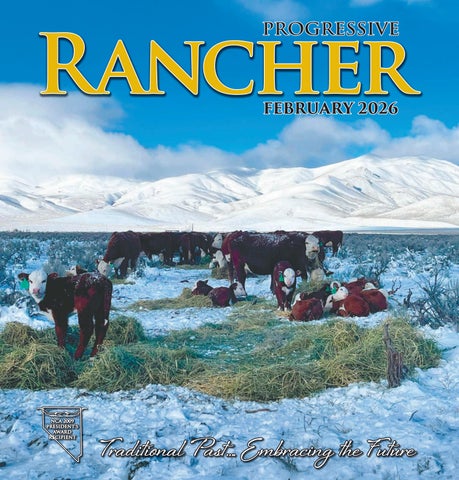
Create a flipbook
Issuu converts static files into: digital portfolios, online yearbooks, online catalogs, digital photo albums and more. Sign up and create your flipbook.