A deep dive into the world of sustainability in the toy industry through the progress and possibilities that are steering the industry into the next generation.
In this exclusive Toy Chapter for Products of Change, we explore the state of play for sustainability in the toy industry: who is doing what? What is being focused on? What has been achieved and what are the ambitions? And where does consumer perception lie across all of this?
Despite numerous challenges, the toy industry is continuing to grow, push boundaries, innovate. What we are seeing now is not sustainability caving under the pressure, but it evolving to better serve the companies it is being rooted into. It is less about perfection, and more about progress and continuous forward steps.
The pace and volume of change required, whether it be across materials, packaging,
transparency, data, circularity, or end-of-life, requires collective effort and collaboration and is too great to be solved in isolation.
And this is the very role of Products of Change: to support the global brand and licensing industry through its sustainable transition, bringing together shared knowledge and industry-wide progress.
Across the industry, companies are already taking meaningful steps forward: packaging is being reduced and redesigned; materials are being reassessed; new innovations are entering the market; data transparency is improving; and circular models are beginning to emerge. The foundations for the next generation of toys are already being built, and we can’t wait to see how they continue to grow.
Kathryn Brand Editor and Content Manager
Helena MansellStopher CEO
Rob Willis Director
Ian Hyder Director
Jakki Brown Director
MEET THE TEAM
Samantha Loveday Group Editor
Nicola Webster, Social Media and Community Manager
PRODUCTS OF CHANGE SUPPORTERS 2026
THE STATE OF PLAY
There are few industries more closely tied to the idea of the future than toys – which is exactly why its sustainability journey matters so much.
Despite a challenging few years, featuring a cost-ofliving crisis, haphazard tariffing, increasingly complex compliance, and a burgeoning digital age, all adding pressures to the market, the toy industry continues to grow, experiencing its first year over year growth since 2022, according to License Global’s Special Report: Global Toy Trends. As of 2025, the toy market was valued at US $112.73 billion, and is expected to grow at a CAGR of 4.10% from 2026 to 2035, reports Expert Market Research.
Yet, on the ground, toy companies are still reporting that the cost-of-living crisis and price conscientiousness of consumers abounds and is often serving as something of a barrier to further sustainability ambition from companies.
“Right now, there is more economic pressure and cost pressure than attention to sustainability,” commented Florian Hess, executive board member of Spielwarenmesse, one of the industry’s largest toy trade shows.
“Where it is cost effective to do it, I think people are doing it,” added Dr Amanda Gummer, founder of the Good Play Guide.
While at POC we champion the message that sustainability and commerciality are partners not foes, there are many moving parts at play that present barriers to sustainable development.
One of which of course, over the last year or so, has been the political climate in the US with leading figures’ abject denial of climate urgency. USbased companies are now operating in a very different ecosystem than they were a few years ago, with sustainability being de-emphasised or reframed to make it more palatable.
Speaking to Theron Grim, vice president of EHS, sustainability & corporate citizenship at Hasbro, he explained how Hasbro’s has been reimagining its Impact Report, but they are still doing the reporting, perhaps with more vigilance than ever. “It
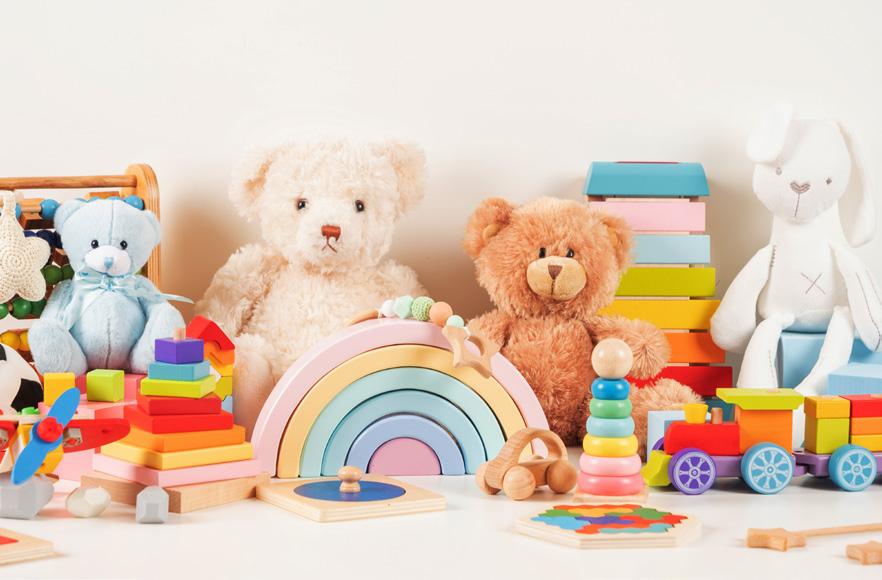
ABOVE: The toy industry is varied and complex but its imagination provides fuel for innovation. Credit: Shutterstock.
MAY 19-21, 2026
Mandalay Bay, Convention Center
3 DAYS
500+ BRANDS
12,000+ PROFESSIONALS
UNLIMITED POSSIBILITIES GET YOUR PASS
has become less a narrative and more fact-based,” said Theron. The report previously had narratives on all its initiatives but now is focused on the data; “numbers, they’re not controversial, they’re just data, right?” he said. With such pressures, the question is: “How do we talk about it in a positive way, to make sure that the work is still being done to progress this forward?” asked Theron.
And the resounding answer from the numerous toy companies we spoke to was that the ball must be kept rolling since “it is the right thing to do.” Despite all these challenges, the toy industry is indeed persevering with its sustainability journey; more and more companies are pushing it up their priority list, whether through legislative requirements or not, sustainability is not being sidelined – not in the slightest – and has firmly rooted itself into the conversation, whether actioned or not, of almost every company.
“It seems the industry is slowly moving,” said Rebecca Tinsey, head of QA and compliance at toy retailer, The Entertainer. And for an industry that exists on the principle of providing joy, discovery, and an understanding of the world around them to the next generation, it could be argued that the safeguarding of the planet for that generation is unreconcilably bound to the toy industry and provides it with a blueprint of both the why and the how.
BUT DO CONSUMERS REALLY CARE?
How much the consumer cares is a topic that gets batted around and conjures varying answers depending on who you ask. The overarching narrative, though, is that they are interested in sustainability, they do of course care, but when what is sustainable and what is affordable goes head-to-head, when it comes to toys particularly, affordability is the priority for the vast majority of consumers. But where they have the option and it is price parable, sustainability is a great selling point, a marker of quality, and provides a ‘halo effect’ to the toy brand they are buying from.
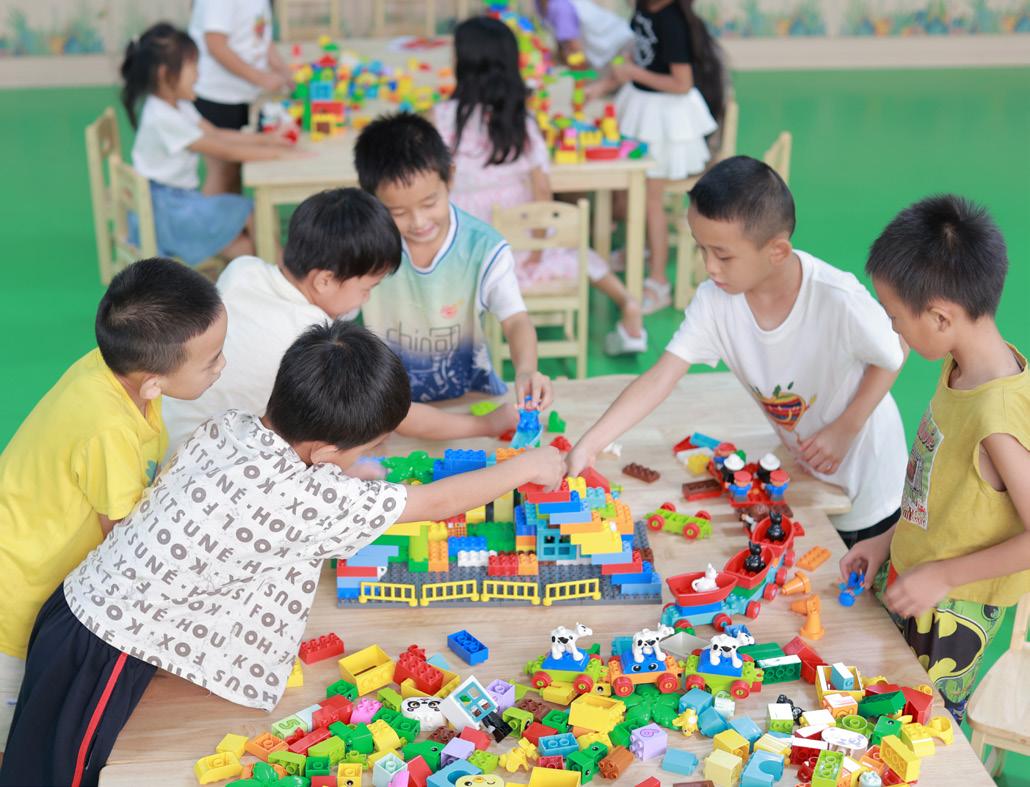
LEFT: The toy industry is exploring new ways of operating to safeguard future generations. Credit: Shutterstock..
“The cost of living is not a favourable companion to sustainability priorities,” said Dr Amanda Gummer, it is still a “nice to have” for many, and can be “sacrificed on the altar of price,” she said.
Greg Simmons, director of sustainable product development at Moose Toys, added that sustainability is a good story to have but most consumers are not seeking it out when purchasing toys. “So, it’s about actually making changes that are systemic, that everybody benefits from, but you don’t lead with it,” said Greg, “Sustainability can’t be that arrogant. It can’t assume that people will pay the difference, when people are not going to pay the difference.”
Yet the consumer is more aware and educated on the topic of sustainability than ever before.
Roger Panton-Kent, head of quality assurance & compliance at Addo Play, argued that “whether it’s FSC wood, or recycled materials, those [sustainability credentials] still have currency, […] they are an important element for many of our consumers.”
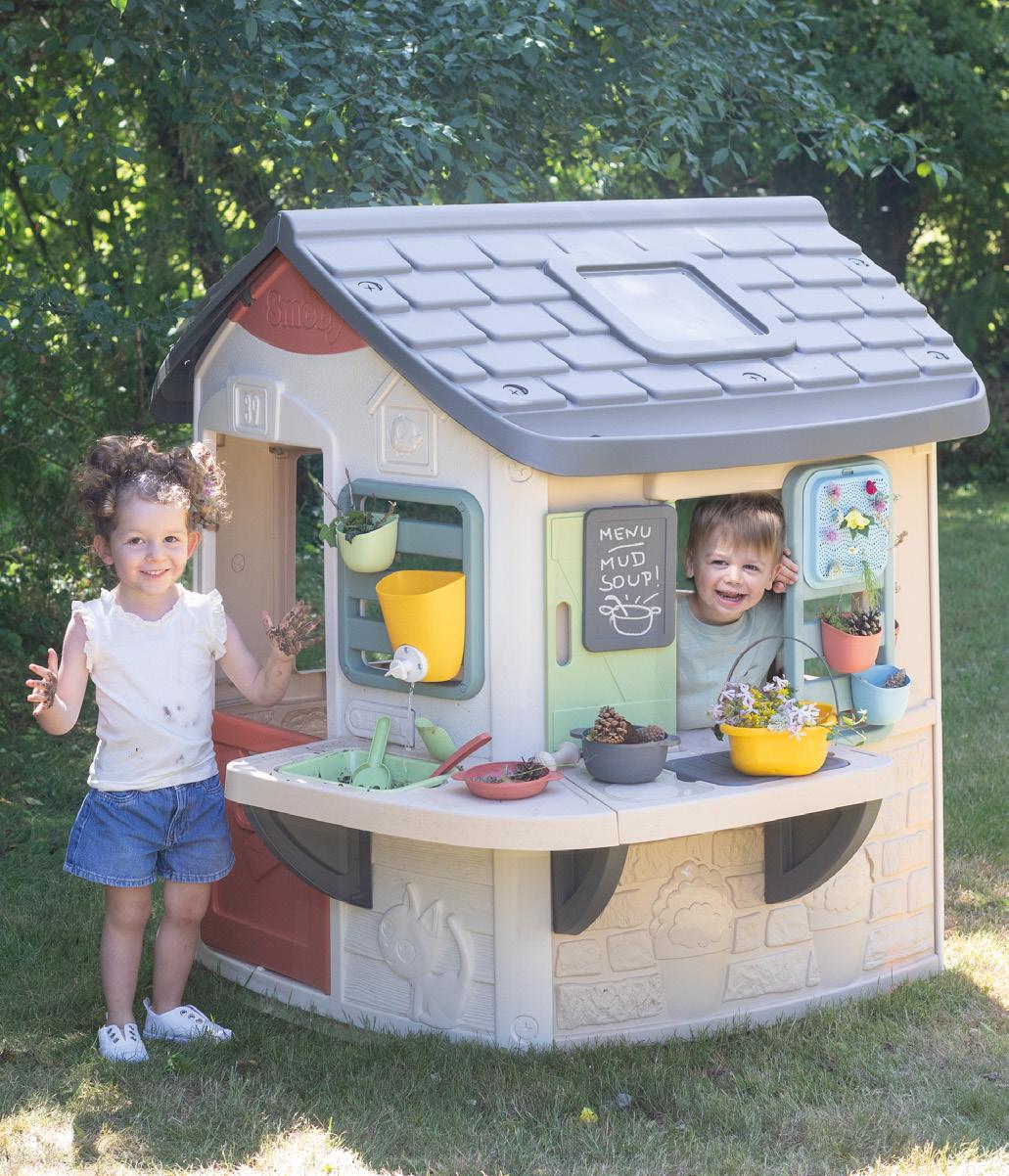
Alexis Delorme, managing director at Smoby, concurred that “sustainability is becoming a key factor in consumer choice.” Demonstrating that if toy companies make it easy and accessible, consumers will choose it, they will care. And especially when it comes to toys, there are other priorities that naturally go hand-in-hand with it.
“If you’re investing in the research to get the toy right and to make sure it’s maximised the benefit
for the kids and the play value and the learning, you probably are also prepared to invest to make sure it’s sustainable,” noted Dr Amanda Gummer, who, through her company, The Good Play Guide, she assesses and recommends to parents the very best toys available for child development, safety and happiness. “It’s noticeable that a product that has clearly got a sustainability focus also does tend to be a good toy because they’ve invested in it, you know, they care about it.”
In other words, sustainability resonates most strongly when it aligns with quality and value, rather than existing as an abstract concept.
And toys, perhaps more than any other consumer product, have a natural advantage here. The best toys are already those that last longest, encourage creativity and are loved across generations.
This is a sentiment that is reiterated in the research of Kids Industries, which has exclusively shared some of its findings with POC for this report.
ABOVE: Smoby is building on its sustainability credentials with the support of its consumers. Credit: Smoby.
THE FACTS AND FIGURES: KIDS INDUSTRIES
Headlines
■ Large global consumer surveys always show strong stated support for sustainability.
■ Most consumers report climate impacts in daily life, and many say sustainability matters in purchase decisions; 80%+ say they’re willing to pay more for sustainably produced/sourced goods.
■ The average stated willingness‑to‑pay premium for recycled toys is about 10%.
■ 52% of parents under 40 consider a toy’s environmental impact when buying. Younger parents are important – the change is coming.
Parental challenges
■ In Christmas 2024 research, many parents said they’ll prioritise toys in budgets (69% would cut other expenses rather than toys). These show parents explicitly express sustainability interest alongside other purchase drivers.
Why families will pay
Durability/reparability/longevity is commonly the top sustainability attribute parents/consumers cite; 58% prioritise durability for example. This translates into a willingness to pay for toys that last, can be passed down, or have take‑back/repair programmes.
Packaging and clear material provenance (recycled content, lower carbon footprint) are also top tangible cues consumers use to judge sustainability. Consumers
Question: What do you think are the biggest challenges you face as a parent raising a child today?
Teaching my child good morals / values
Bullying or peer pressure experienced by my child
Ensuring a child receives a quality education
Negative media my child is exposed to
Fears about my child’s physical safety
Local violence / crime
Financial pressures
Not having enough time to spend with my child
The ubiquity of technology / screens in our lives
Access to quality healthcare
Concerns about the environment / climate change
Managing work / work security as a parent
The influence of exposure to advertising
Discrimination or violence faced as part of a minority group
Societal expectations around parenting
Changes to daily routines
Extra pressures faced as part of a minority group
Base n = 5,032 families with children aged 4 13 from across the UK, USA, Germany, France, Brazil, India, South Korea, Mexico, Saudia Arabia & Nigeria.
Concerns for the future
Question: What issues are you most concerned about in relation to your child’s future?
Crime / violence
Financial problems
Illnesses / pandemics
The environment and climate
Lack of jobs
Online safety
War / military conflict
Access to education
Political instability
Access to healthcare
Gender inequality
Deterioration of civil or minority rights
Base n = 5,032 families with children aged 4 13 from across the UK, USA, Germany, France, Brazil, India, South Korea, Mexico, Saudia Arabia & Nigeria.
look for packaging and specific product attributes (recyclability, recycled content, local sourcing) when assessing sustainability and are willing to pay small premiums for sustainable packaging.
Sustainability and propensity to purchase
Stated influence is high but conditional: large global surveys show that many consumers say they’re willing to pay more or choose sustainable options, but actual purchasing is sensitive to price, age cohort, and income.
Gen Z parents and higher‑income segments are most likely to convert stated willingness into purchases; inflation/cost‑of‑living reduces the realised purchase of premium sustainable items. Sustainability boosts propensity to purchase for a meaningful segment but price and perceived value continue to moderate actual purchase.
The trend in recommerce/resale markets continues to grow rapidly and toy reuse/resale is a significant part of that trend: platforms and logistics players report rising reuse/resale volumes and toy take‑back programmes.
Some reports suggest as much as 50% of toys are returned/reused through various provisions. That means families increasingly view resale/ hand‑me‑downs as a sustainability/cost strategy.
Specific takeaways
Families will say they want sustainable toys; younger parents are the strongest segment. But price/ value signals (durability, learning value, brand
trust, packaging claims) determine whether that stated preference becomes a purchase.
Use of durability and clear, specific claims (recycled content %, take‑back) rather than vague ‘green’ language is more effective in driving sales. Highlighting longevity, repairability, recycled content, and offering resale/take‑back or trade‑in options are all important to consider – these directly match the attributes families say they’ll pay for. Circular business models capture price‑sensitive and sustainability‑motivated families; invest in easy ways to resell/return and credible certification/third‑party verification of claims. For packaging specifically, many consumers will pay only a small premium: in US/other markets ~50% say they’d pay 1–3% more for sustainable packaging; 4–7% say they’d pay >10% in some categories.
A LEGISLATIVE LOOKOVER
Legislation is undoubtedly shaping the path of sustainability for companies of all shapes and sizes. Amidst the growing list of acronym soup regulations that are being proposed and coming into force all over the world, there are some that are particularly impactful and relevant to the toy industry.
With the toy industry already heavily regulated across chemicals and safety, the management is definitely getting more complex. The biggest and most all-encompassing legislation is coming out of the European Union, through the European Green Deal. Though this body of work has many focus areas, the largest hitting the toy industry are:
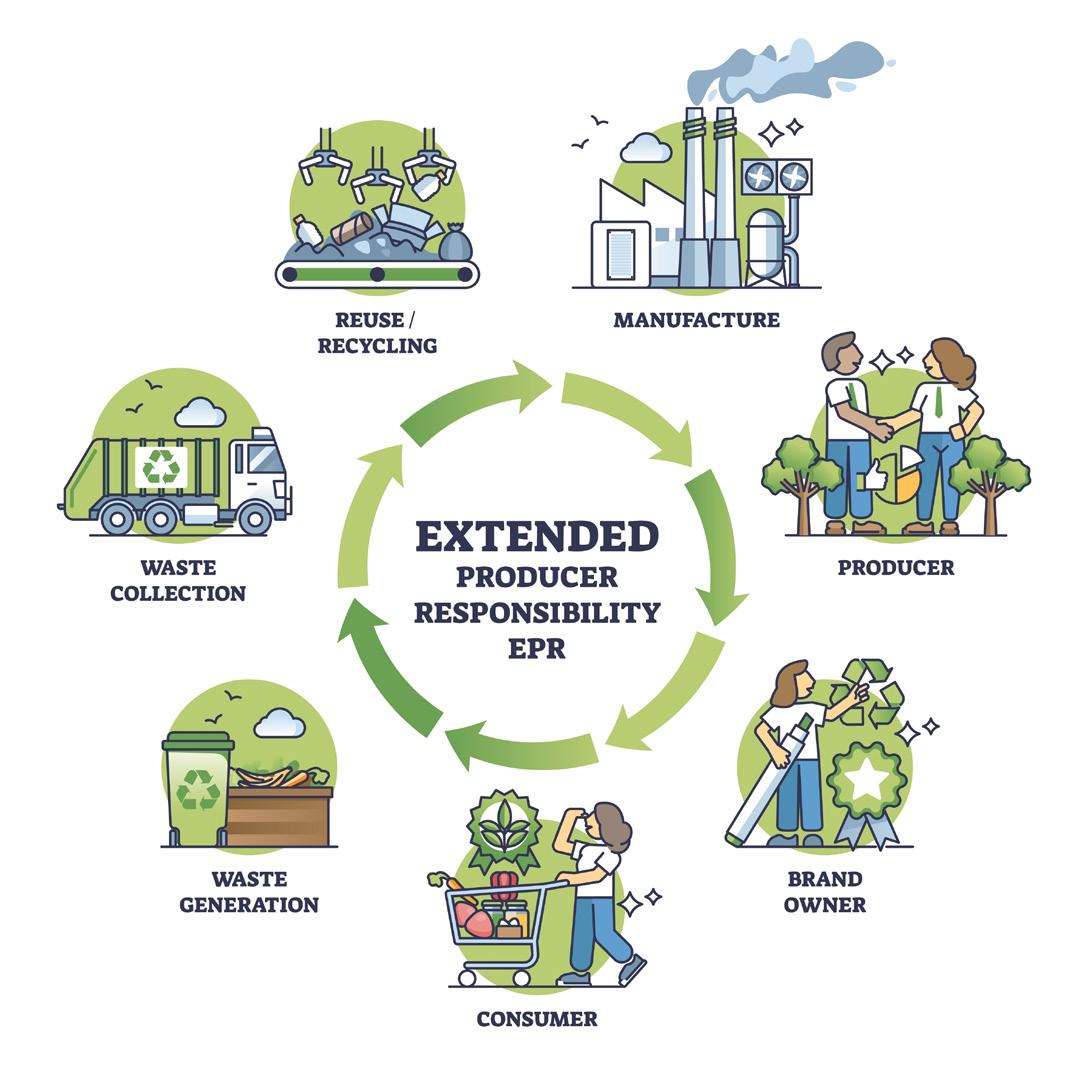
1. Extended Producer Responsibility (EPR).
2. Eco-design for Sustainable Product Regulation (ESPR).
3. EU Empowering Consumers Directive (EmpCo).
4. Toy Safety Regulations (not part of the EU Green Deal, but environmental sustainability has been built
into the new regulation extending from social, chemical, to both environmental and circular considerations).
Extended Producer Responsibility (EPR) EPR is a core component of the European Union’s broader Circular Economy Action Plan (CEAP), which aims to reduce waste and enhance product sustainability. The European Union’s legal framework on EPR is primarily governed by directives, and – though ladder up to the same goals – have different requirements across member states, similar to the US approach, so unfortunately there is not one global system which does add complexity. To add to this, under the CEAP the directives cut across four different areas:
■ Waste Framework Directive (2008/98/EC): Establishes minimum requirements for EPR schemes across member states, including financial responsibility for producers.
■ Packaging and Packaging Waste Directive (94/62/ EC): Regulates packaging waste and includes EPR measures for packaging producers.
■ Directive on Waste Electrical and Electronic Equipment (WEEE) (2012/19/EU): Establishes EPR for producers of electrical and electronic equipment.
■ Single-Use Plastics Directive (2019/904): Implements EPR obligations for producers of certain plastic products, such as plastic bags.
Outside of mainland Europe, the UK also has its own version of EPR, which mirrors much of the EU regulation, with a particular focus on packaging, as it works to ensure that producers cover the full
responsibility of managing the waste from their packaging, encouraging more sustainable practices and for producers to reduce, eliminate and fund the systems to recycle end-of-life materials.
Eco-design for Sustainable Products Regulation (ESPR)
The regulation reaches far beyond product design and pushes responsibility across the entire lifecycle to:
■ Design out waste: Products must be conceived for durability, reuse, repair, and recyclability – minimising waste from the start and tackling issues like dead stock.
■ End-of-life financing: Producers are financially responsible for the systems that enable products to be collected, reused, or recycled at end-of-life moving into EPR (Extended Producer Responsibility).
■ Full supply-chain transparency: Digital Product Passports (DPPs) will capture and share detailed information on materials, repairability, and environmental impact.
Key dates:
The EU is aiming for substantial market compliance by 2030 for prioritised categories (garments, footwear, furniture, electronics, chemicals, paints, mattresses).
The first working plan will define specific requirements for these categories with expected compliance required by 2027.
EU Empowering Consumers Directive (EmpCo)
The EmpCo Directive is being put in place by the EU to better protect consumers against greenwashing by shoring up rules around sustainability claims and product information.
Applying across all business-to-consumer communications, not only does EmpCo consist of restrictions on greenwashing and sustainability labelling but also compels traders to provide information on durability and repairability of their products, and prohibits early obsolescence where products are designed to have a limited life span to encourage repeat purchases.
The UK Green Claims Code, developed by the Competition and Markets Authority (CMA), ladders up to this same piece of legislation. As a business, you need to be sure your green claims are not misleading. You need to ask:
1. Are your claims truthful and accurate?
2. Are your claims clear and unambiguous?
3. Do your claims omit or hide important information?
4. Do they only make fair and meaningful comparisons?
5. Have you substantiated your claims?
6. Do they consider the full lifecycle of a product?
Key dates:
EmpCo entered into force in March 2024 and EU member states must have transposed the rules into their national law by 27 March 2026. The regulations become fully applicable to businesses from 27 September 2026.
The UK Green Claims Code was published as guidance for businesses in September 2021, and active enforcement began in early 2022. As of April 2025, the CMA has been able to fine businesses directly for breaches in the code.
Internationally
While the EU, closely followed by the UK, are leading the way for large swathes of environmental legislation, that is not to say there isn’t plenty more going on across the
globe. Though politically it feels like this conversation is taking a back seat, reality shows that companies are getting ready for compliance over the next few years, and are very aware of the global impact of inaction.
United States: SEC Climate Disclosure Rule (2025 start) requires large public companies to report climate-related financial risks, GHG emissions (Scope 1 & 2 mandatory, Scope 3 if material), and climate-related targets.
Many companies also follow SASB industry standards for investor-focused ESG reporting.
Japan: TCFD-aligned disclosures mandatory for listed firms.
Australia: Mandatory climate reporting aligned with ISSB proposed from FY2024/25.
China & Hong Kong: Exchanges requiring TCFD/ ISSB-aligned ESG disclosures for listed companies.
EU Toy Safety Regulations
In December 2025, the EU published its latest update to its Toy Safety Regulations, which will come into force from 1 August 2030. The purpose of the regulation is to safeguard children with high safety standards for the toys that are sold in the European Union, through the introduction of stricter requirements for manufacturers, importers, and distributors. Lars Vogt, director of EU policy at Toy Industries Europe, took POC Members through the changes in a webinar at the end of 2025:
The key changes to the Toy Safety Regulation:
■ The Directive (TSD) becomes a Regulation (TSR).
■ A Digital Product Passport (DPP) will be required.
■ A reference to mental health for digitally connected toys.
■ New chemical restrictions.
■ Range of other technical updates – for example:
- Acoustics (sounds/noise)
- Labelling/warnings
■ New economic operators with new roles:
- Fulfilment service providers
- Online Marketplaces
■ Common Specifications.
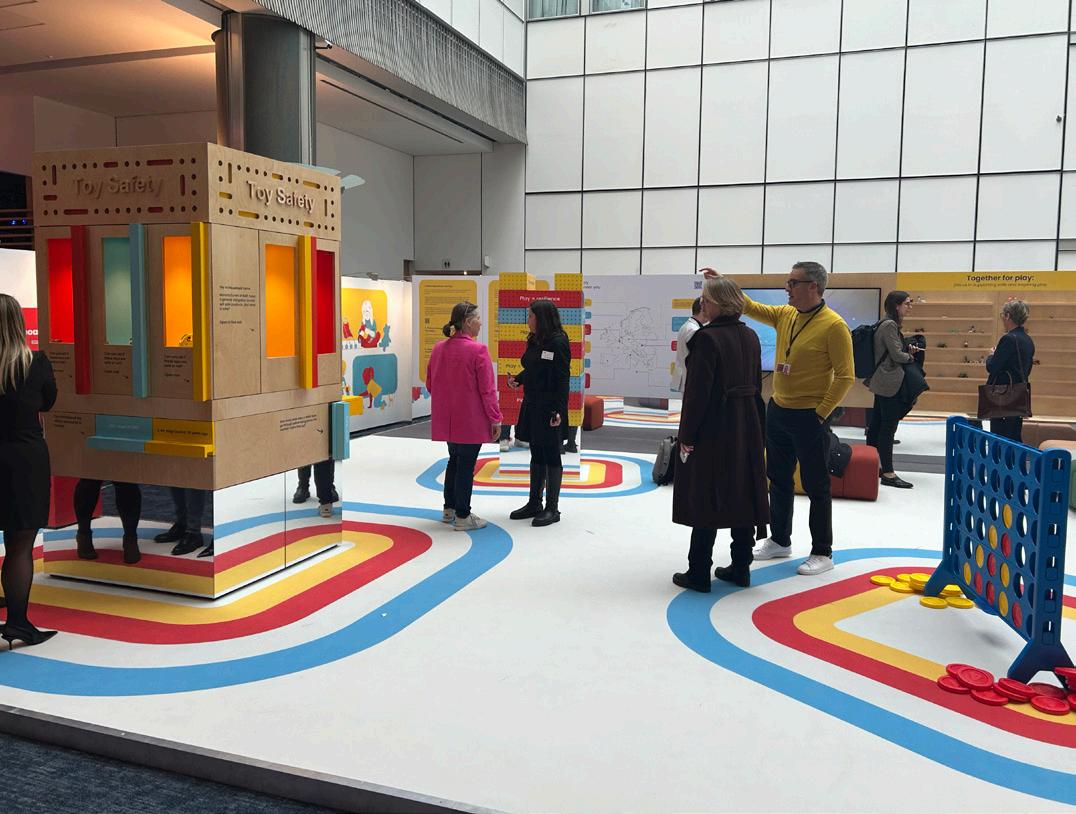
BELOW: Toy Industries Europe toy safety exhibition in the European Parliament, Brussels. Credit: POC.
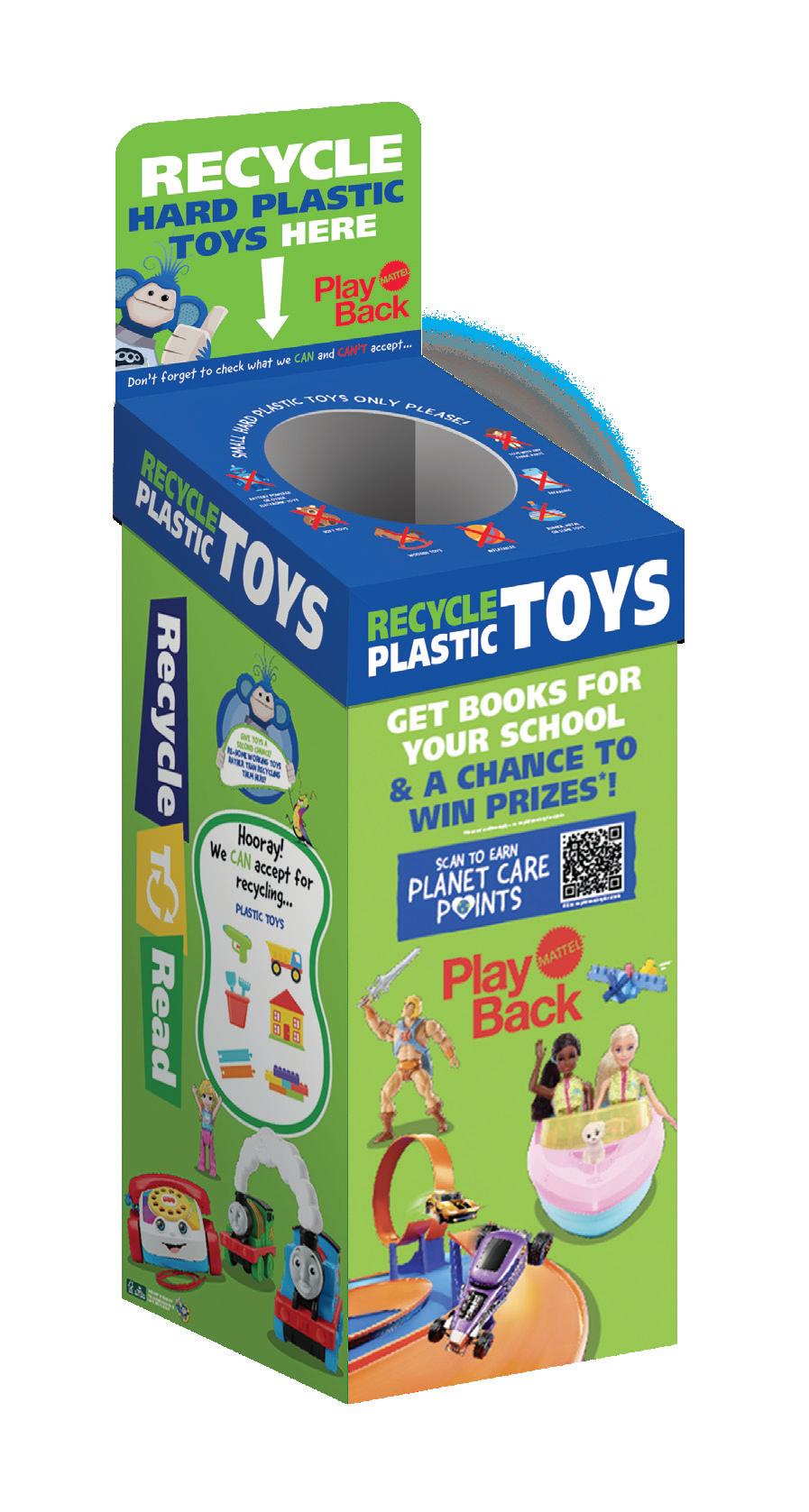
Turn Broken Plastic Toys into BOOKS for SCHOOLS!
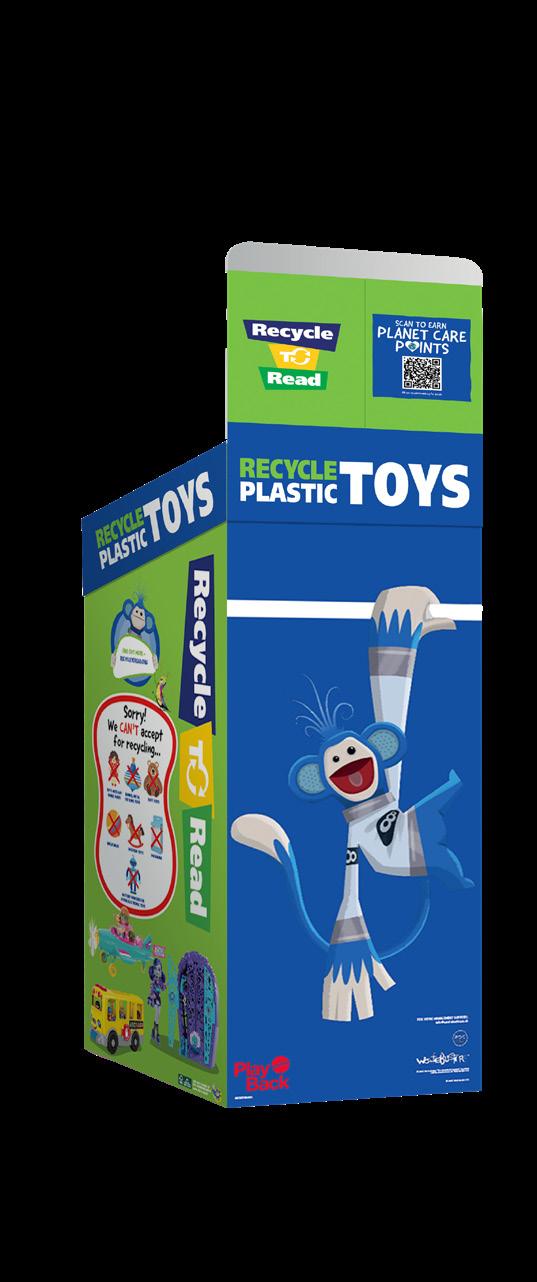
1. Put your broken plastic toys into a Recycle to Read collection bin in participating Tesco stores*
2. Scan the QR code!
3. Earn a Planet Care Point and help your school get books and you will be entered into a weekly prize draw to books and other great prizes too!
What is staying the same:
■ Definition of a toy (with some minor updates).
■ The CE marking.
■ The need for technical documentation (although elaborated).
■ Economic operator roles (manufacturers, importers and distributors).
■ Conformity assessment, the use of standards and EC –Type approval.
■ The link to the EN 71 series and EN 62115.
The challenge of enforcement of toy safety regulations is ever-growing, due to the sale of toys through e-commerce and online platforms, many of which come from outside of the EU and make it harder to enforce existing rules, allowing a concerning number of unsafe toys to slip through.
Updates to the EU Toy Safety Regulation look to close loopholes and ensure compliance and safety of the toys sold in the region.
How legislation is affecting toy companies
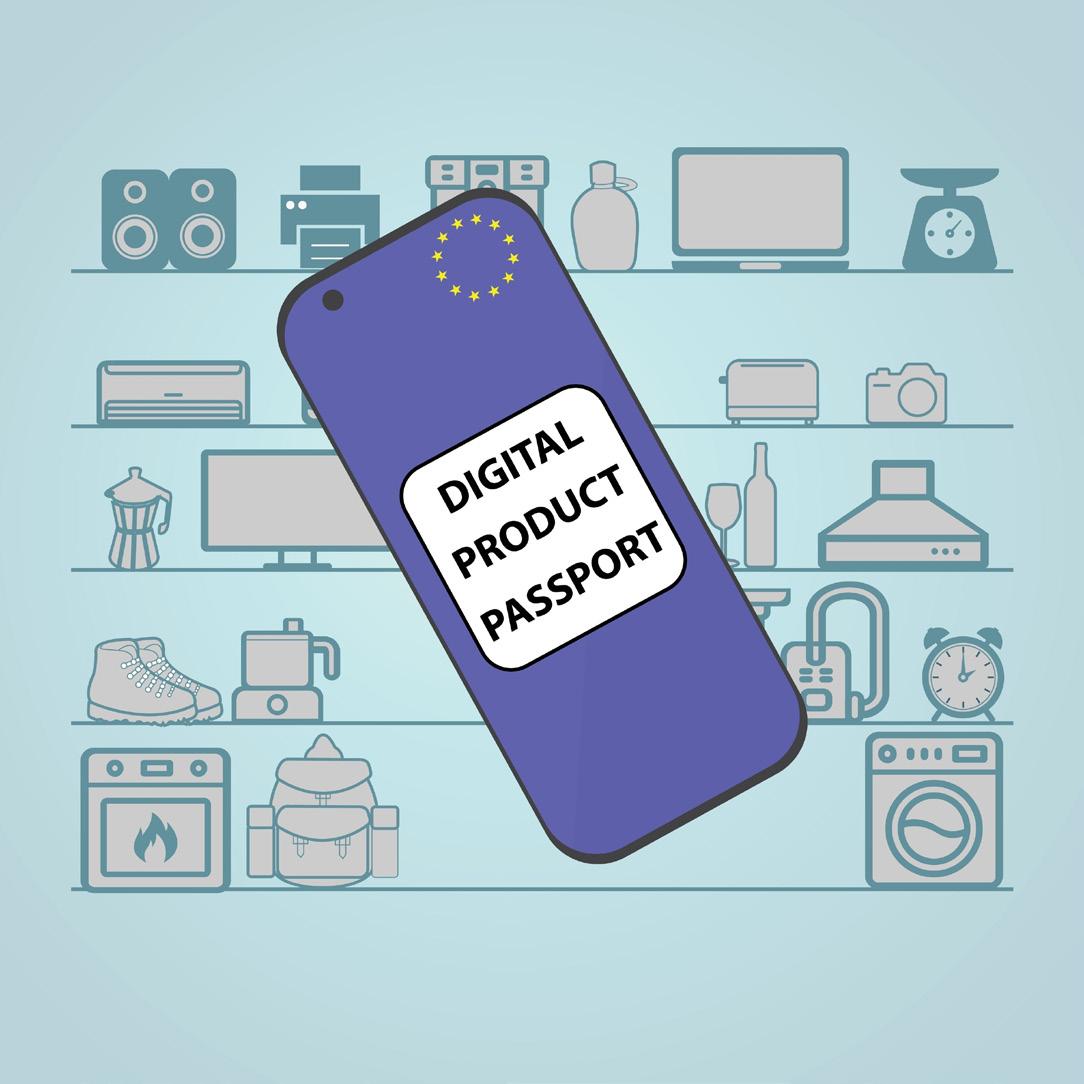
Digital Product Passports (DPPs) are forming a significant part of what the future of toys and their regulatory compliance will look like. Not only will they be invaluable when it comes to adhering to Toy Safety regs and demonstrating toys are compliant, but down the line they will be central to how the consumer themselves interacts with a toy.
As part of ESPR, DPPs can demonstrate the materials a toy is made from, where it has come from, and the environmental impact it has had being produced, much like nutrition information on
BELOW: DPPs will provide product information for compliance purposes as well as sustainability information. Credit: Shutterstock.
food packaging. This is something Mattel has been exploring, as, even though regulations enforcing DPPs for ESPR are a little way off, all the data needs to be collected, accessible and ready before then.
Addo Play is taking a similar approach, explained Roger Panton-Kent: “Whilst the digital product passport is some time away, we know we need to gear ourselves up in terms of the information that we’ll need to support that, but also just in terms of technology and integrating it with our exisiting systems.”
EPR is the behemoth that is front and centre for many toy companies and beyond at the moment. Rebecca Tinsey from The Entertainer, explained that from a retailer point of view, EPR is a huge cost to the business. “EPR remains a major challenge for us, bringing with it a significant and growing cost burden. As we move into year two, those costs are set to increase further. While the sustainability work we’ve been undertaking is beginning to offset some of the impact, it continues to be an ongoing and rapidly rising expense, making it a clear priority,” she explained. “Over the past 12 months, and continuing into this year, our priority has been driving accurate packaging data. We’re partnered with Valpak to help collate much of the granular data required from suppliers, enabling us to establish clear and measurable KPIs.”
Valpak is a UK-based environmental compliance scheme, helping businesses to manage, report and reduce packaging, waste electrical and electronic equipment (WEEE), and battery waste.
Data collection was also the name of the game over at Hasbro. “I think the entire sustainability industry is struggling a little bit on the balance of how transparent, how much information do companies need to provide to drive decision making, to drive sustainability,” said Hasbro’s Theron. While various legislation is coming into force at different times and from different regions, the plea is for more universality and aligned regulations globally to streamline compliance.
“[EPR] is an incredible administrative burden on the business,” said Moose’s Greg Simmons. “The first lesson is work out how to measure what materials. And then we get onto something called designing for EPR, where eco-modulation comes in, and you’ve got to then narrow the materials you use so you go in for the lower cost materials. And this is exactly what EPR is designed to do, is to save you money by making better design decisions.”
So, although there is no shying away from the enormous challenge of regulatory compliance, these big toy companies are recognising the bigger picture and that it is driving progress.
“There is a huge opportunity to create value from the compliance tasks, rather than to simply accept them as a cost of doing business. In other words, we are looking to see how we can exploit the increased understanding which comes from this work to simultaneously reduce our impact and optimise our operations,” commented Alys Dawson, director of product development, creative and marketing services, Rainbow Designs.
PROGRESSING PACKAGING
If there is one area where the toy industry has been able to make rapid progress, it is packaging. While the changes may appear small on the surface, the cumulative impact can be significant.
Since EPR is dominating the focus for many toy companies, naturally packaging is being prioritised throughout sustainability strategies industry wide.
“Our focus, as a retailer, has to be in and around packaging, which it has been for probably the last two years,” commented Rebecca Tinsey from The Entertainer. “Packaging is an area we have imminent costs against because of compliance obligations, and we can make a difference in a way..”
As with The Entertainer, and for many of the other toy companies we spoke to, this has comprised of three main areas:
1. Reduce packaging size/volume of material and standardise sizing.
2. Reduce or eliminate plastic usage.
3. Improve recyclability through clearer labelling and easier material separation.
It is also something that toy companies feel they can make a significant amount of progress on and indeed many are well along their sustainable packaging journeys.
“We had a project,” said Hasbro’s Theron Grim, “where we standardised for our action figures the size of the box, which seems boring and small, but by doing that, we
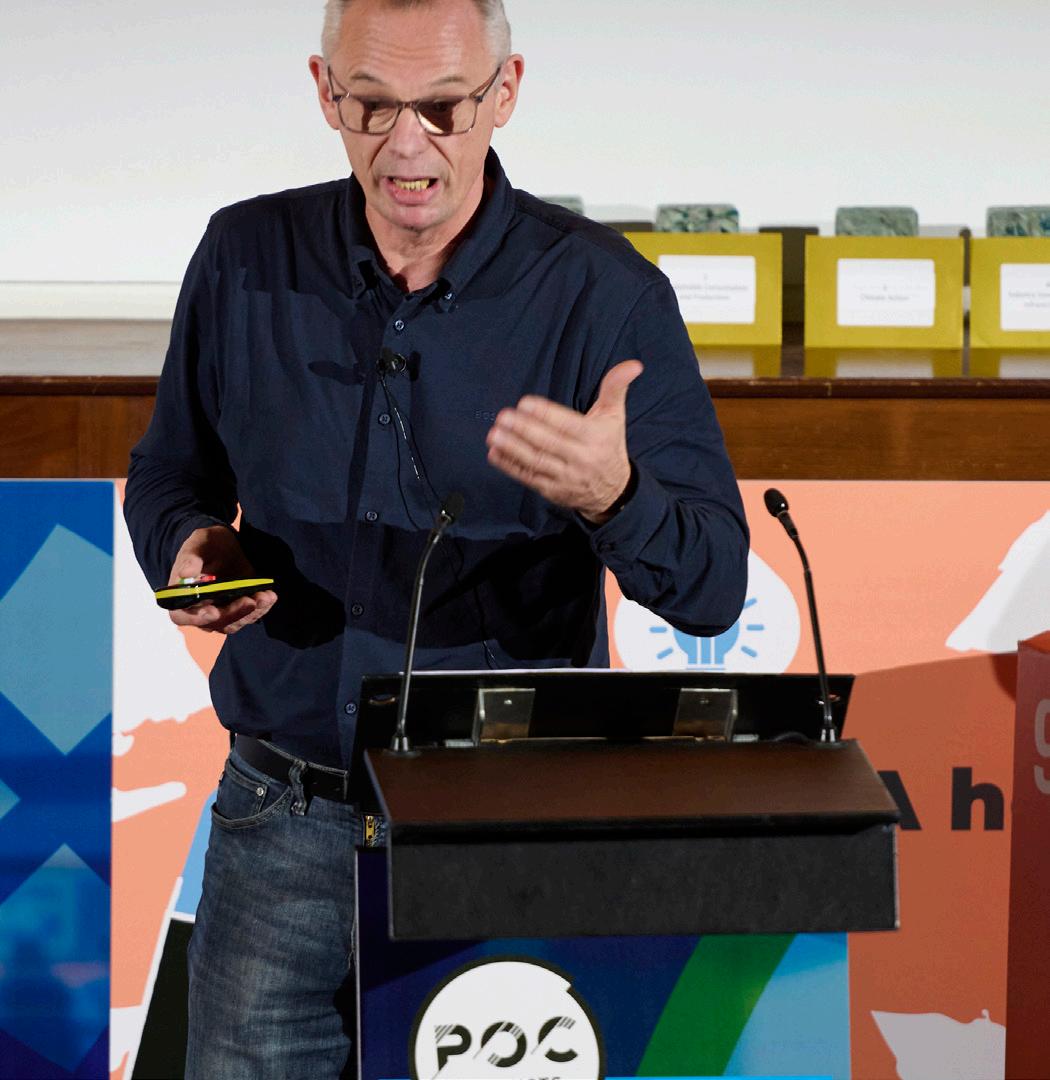
LEFT: The LEGO Group’s Christian Lanckman spoke at the POC Conference 2025. Credit: POC.
were able to optimise the amount of those that we put into the bigger box, and then the amount of boxes we put into the shipping container. So, we were able to increase the efficiency of our container loading, which means we had less containers, less shipping, and less shipping energy. So again, these are really big impacts, right?”
Huge impacts, in fact, as the LEGO Group’s sustainable packaging manager, Christian Lanckman, attested to at the POC Conference in 2025.
Through creating the packaging optimisation programme for LEGO, Christian developed a performance prediction algorithm which helps partners have more sustainable packaging by reducing material use while generating large financial savings, lowering EPR taxes, and enhancing logistic efficiency. This is largely achieved through material improvement, lightweighting, right sizing, cube optimisation, and harmonisation of the packaging portfolio.
Christian used the example of a LEGO partner who, as a result of packaging optimisation, was able to put 44% more product on a pallet, reducing its shipping costs, not to mention the savings from reduced packaging material use and EPR taxes.
Working closely with vendors, manufacturers and licensees is essential to be able to ensure such a level of impact. Addo Play has created a sustainable packaging guideline for its vendors, building and expanding on its existing requirements to clearly set out expectations to “make them more prominent,” said Roger Panton-Kent. “There’s an element of helping us meet legislative requirements in terms of red, amber, green [RAG] materials, but also prompting them to think about minimising pack sizes, you know, optimising shipping.”
The LEGO Group has also been working hard to reduce single-use plastic – many of which are classified as ‘red’ under the RAG Recyclability Assessment Methodology (RAM). Now, 93% of the LEGO Group’s packaging by weight is made from paper, cardboard and other paper-based materials.
Addo Play, similarly, has been “stripping out and minimising the plastic content of packaging. So where possible, we’ve removed plastic and/or changed the plastic material to make it more recyclable,” said Roger.
happened is that ultimately, this is the lowest cost when we’re talking about Extended Producer Responsibility taxations for a particular thermoform.” Not only is this saving Moose money in taxes, but now PET is widely used in thermoforms, the price has come down significantly. While many toy companies began their packaging transition when the carrot was still being offered, now they are meeting the biting point of the stick and having to make these changes in order to avoid heavy EPR costs.
And there is the consumer perception and expectation to consider, too. Theron explained that, while Hasbro has been working on sustainable changes for some time and has made a lot of progress, there are certain changes that have been met with resistance from its consumer base.
For example, when Hasbro moved away from plastic windows to closed boxes, a lot of customers didn’t like it. And while it is always to be expected there will be an amount of resistance to any change – humans are creatures of habit after all – and that it is a case of weathering the tide, it was Hasbro’s collector customers that proved the real challenge. For collectors, the consumer behaviour is very different; the box often remains unopened for display purposes, for which a window is essential.
Similarly, Theron described how Hasbro has tried to move its iconic Monopoly box to a smaller format: “The Monopoly box, the traditional Monopoly box, is probably a third bigger than it needs to be. You could make it smaller because there’s a lot of void space in there, but people want the big box. That’s what you want when you put it on the shelf, especially the retailers, in many cases, I would say, especially in the US. While they say they want sustainability, then they say, well, we want the big box because we need to fill up the shelf space.”
Meanwhile, Moose Toys has completely cut out PVC from its thermoform blisters, as PVC seriously contaminates PET recycling streams. “PVC is a contaminant in PET. It actually renders a bale of PET almost useless if you have one PVC component in there. And we made the change a long time ago, probably three to four years ago, and it costs more. But what’s
It is that intention-action gap that we meet once again. However, Theron’s “especially in the US,” is worth noting here, as UK toy retailer, The Entertainer’s Rebecca Tinsey, presents a slightly different perspective: “Consumers can sometimes be frustrated by oversized packaging relative to the product. We do see this feedback from time to time.”
As with everything, there is only so far you can paint such things with a broad brushstroke; regional variation is huge, and with sustainability it can be chasmic. Even comparing developed countries like UK and Europe with the likes of the US – a particularly stark example at this time – the attitudes are different, especially from consumers, leaving it to brands to lead the way and “do the right thing” regardless, setting out what is the new normal.
ABOVE: The LEGO Group has been working closely with its partners to optimise packaging. Credit: Shutterstock.
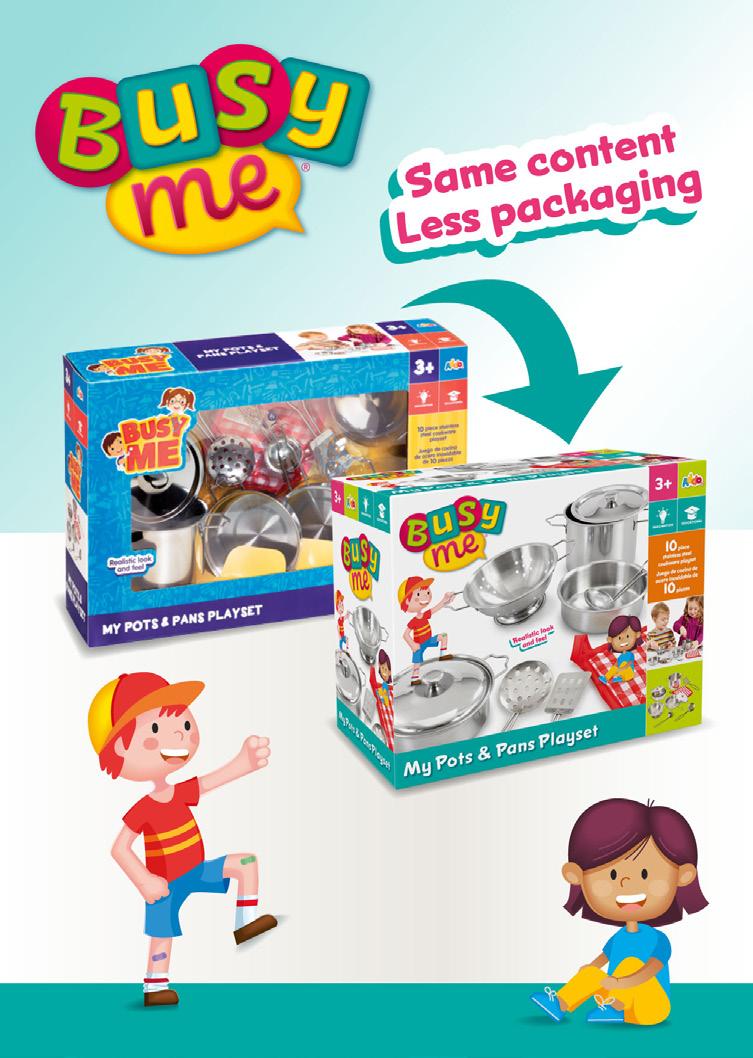
BELOW: An example of Addo Play’s packaging transition. Credit: Addo Play.
PURPOSEFUL PRODUCT
While packaging transformation is progressing rapidly, the product itself remains a more complex challenge. For an industry historically dominated by plastic, transitioning materials requires careful research and testing. Yet progress is underway.
We’ve spoken about how sustainable packaging transformation gives companies huge opportunity to make rather a large dent in their environmental impact: reducing waste, material, size, cutting shipping space and therefore costs and emissions, and swapping out materials that will rack up large EPR bills.
However, when it comes to the products these companies create – the toys that they are known and beloved for – making such impactful changes is profoundly more complex – or at least involves much greater overhaul, particularly for an industry that is overwhelmingly dominated by plastic.
But there are companies making the change. Step by step, product by product, there are toy companies improving the sustainability of their products and showing that it is financially viable to do so.
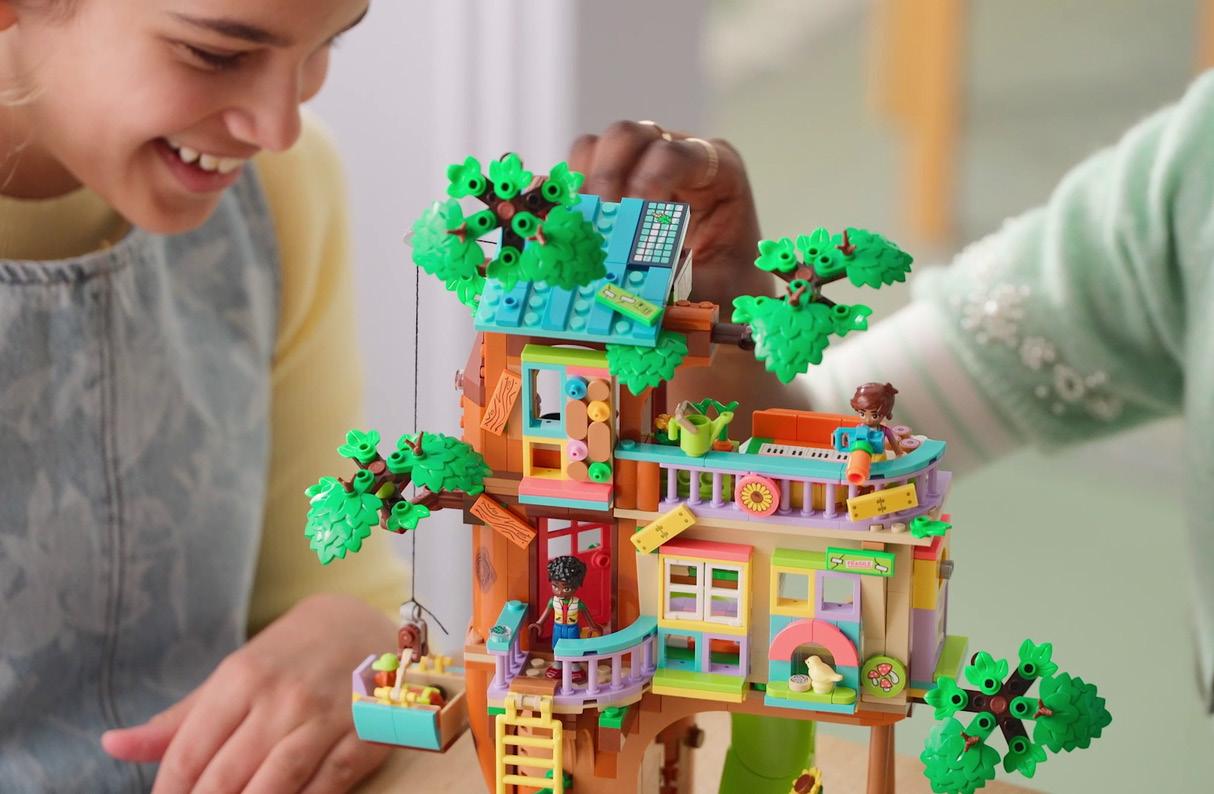
The LEGO Group, for example, is transparent about the journey it is on to reduce its reliance on fossil-fuel based plastic, exploring endless materials and configurations in the process, while remaining steadfast on maintaining the feel and quality of its bricks that its consumers know and love.
Since 2018, LEGO’s flexible parts such as botanical
elements and minifigure accessories, have been made from bio-polyethylene (bio-PE), made from sugarcane. As of 2024, transparent elements such as windows and lightsabers contain 20% recycled materials, sourced from artificial marble kitchen worktops. And rigid LEGO elements, such as its axles, are being transitioned in 2026 to ePOM, a material made using renewable energy and CO2 from bio-waste to create e-methanol.
The LEGO Group also shares that it is utilising the mass balance approach, where renewable materials are mixed with virgin materials to allow them to be slotted into existing production processes. The LEGO Group explains that this enables it to transition to more renewable materials, but is not the end goal, more a stepping stone to the next solution: 100% renewable material.
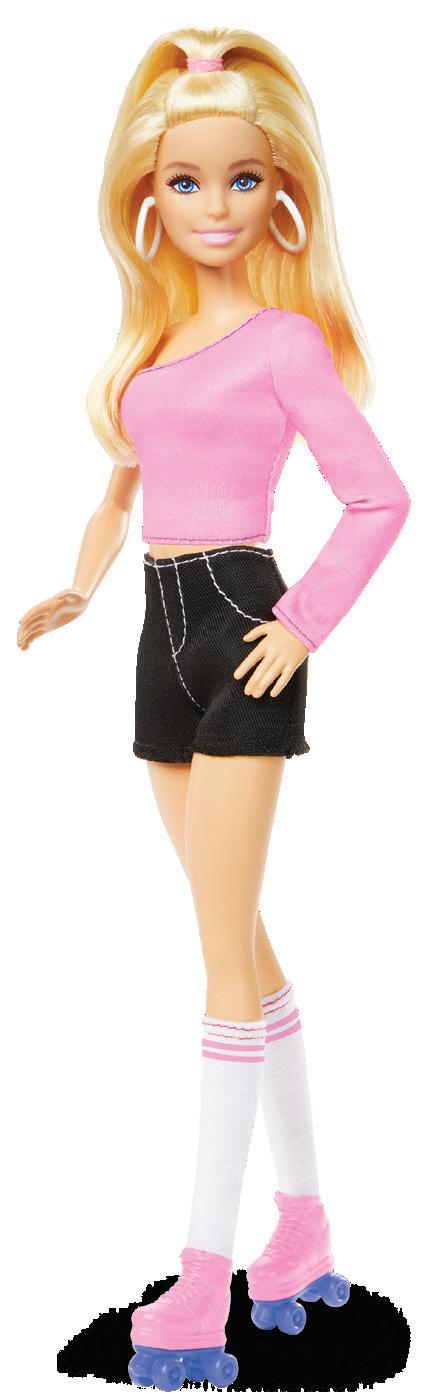
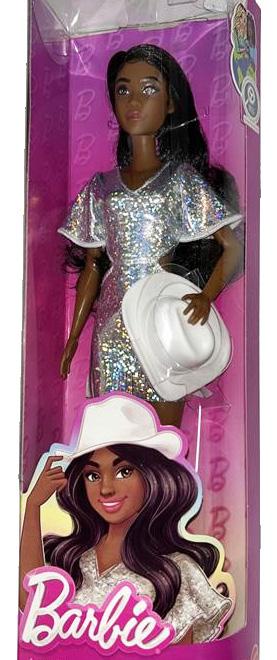
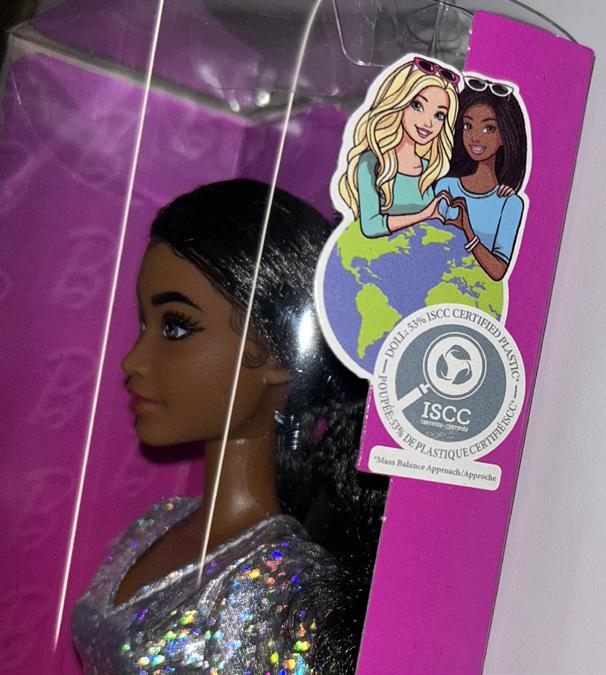
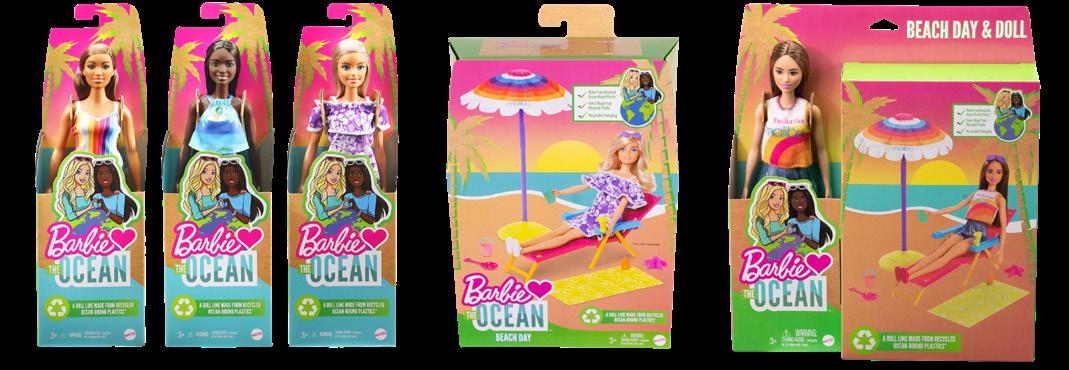
The mass balance approach is also something that Mattel has been utilising in its Barbie Fashionista range. Since 2021, with its Barbie Loves the Ocean doll, Mattel has been incorporating recycled plastic into some of its dolls, and in 2024 launched the Barbie Getaway House which is made from 70% ISCC-Certified Plastic. Now, all of Mattel’s popular Barbie Fashionista range – a line that encourages diversity and inclusivity – are made from 53% ISCC-Certified Plastic. These are mass balance resins,
ABOVE: The LEGO Group is constantly exporing new materials for its beloved toys. Credit: The LEGO Group.
ABOVE: The LEGO Group is utilising mass balance to introduce renewable materials. Credit: The LEGO Group.
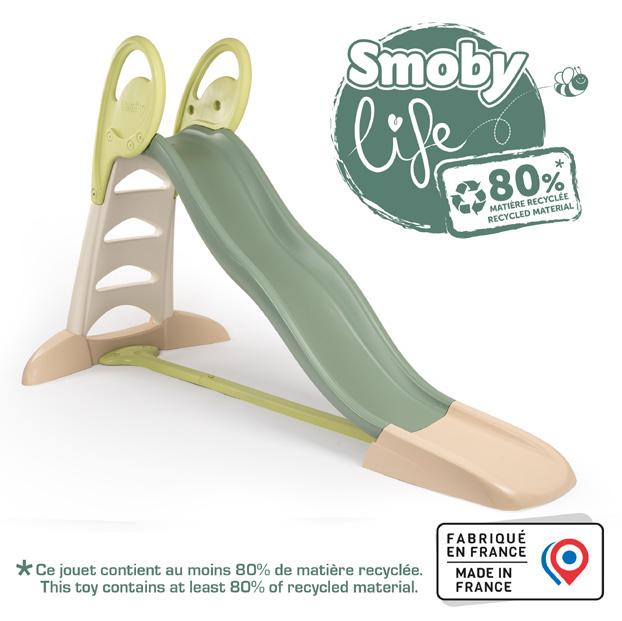
100% of its products. And as of 2025, Smoby’s entire range of outdoor toys had been converted to the use of recycled materials, one of which saw Smoby pick up an award at Toy Industries Europe (TIE)’s Play for Change Award in 2025 under the Sustainability category.
Also targeting its virgin fossil-based plastic dependence is Moose. Greg Simmons explained that Moose is looking closely at how it can use material efficiently and utilise recycled material. He shared that recycled polyester is a fairly straightforward and costcompetitive switch; so that now GRSCertified recycled materials can be incorporated into Bluey plush toys.
and serve as drop-in equivalents of Mattel’s standard materials, easing adoption and reducing operational challenges involved in the transition.
For toy companies that create products predominantly from plastic, these companies are chipping away at their fossilbased usage and introducing new materials in a way that doesn’t throw off kilter their production processes, with goals to continue progressing it further.
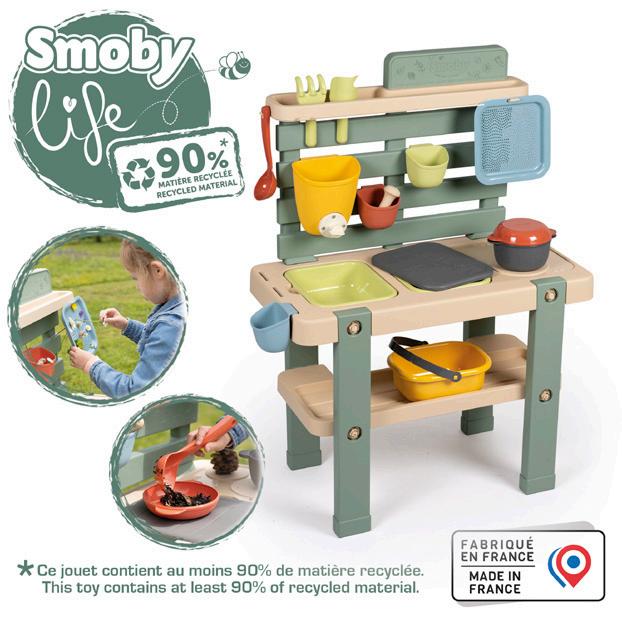
This process is visible most clearly with Smoby. The toy company launched Smoby Life back in 2024 for the brand’s 100th anniversary as a capsule collection of approx. 10 items, a large focus of this was the fact it was made using recycled materials.
“The success and positive reception of Smoby Life prompted the decision to extend these sustainable practices across all Smoby’s product lines, as the company saw the potential for significant impact and growth in eco-friendly toy production,” said Alexis Delorme.
Now, recycled material accounts for over 50% of Smoby’s material usage, and it is coursing ahead towards its ambition of incorporation into
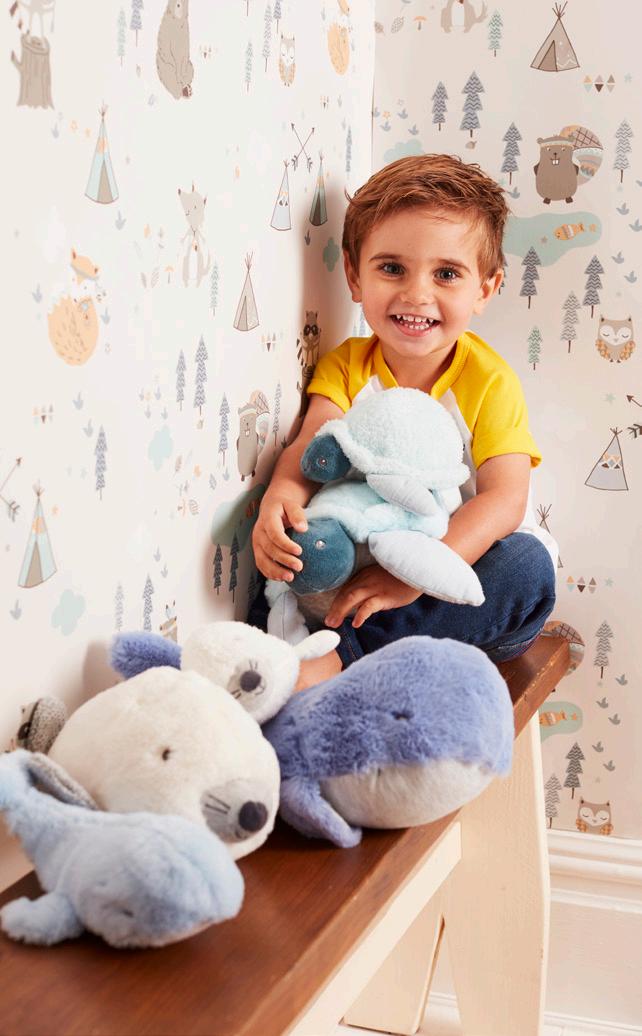
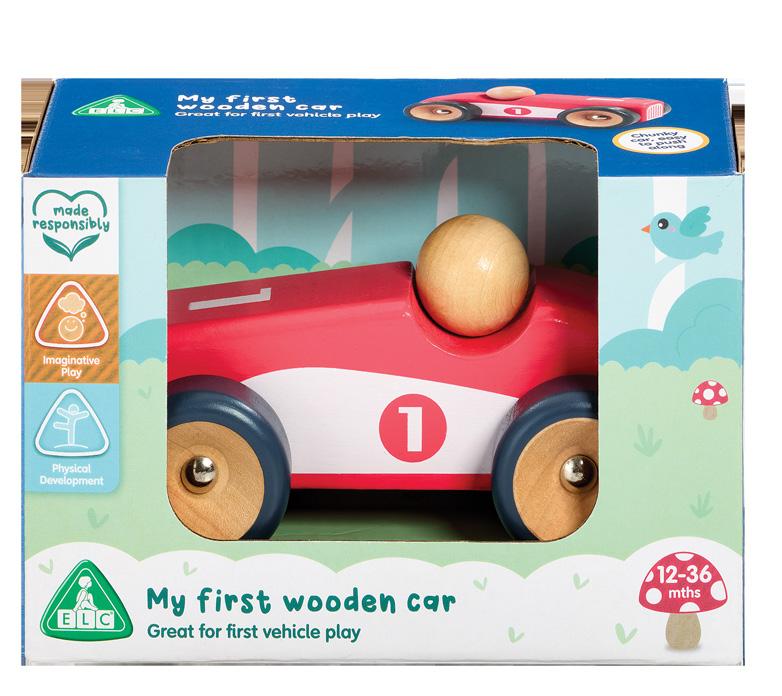
Addo Play has also been increasing recycled materials in its plastic products, and has made the switch for almost all of its plush products to 100% post or pre-consumer recycled material. Addo’s core iconic range of wooden toys sets it apart amid a sea of plastic on toy shop shelves; its wooden and paper-based toys are all FSC certified, and it is working on EUDR compliance, despite not being in the pipeline for toys just yet. More and more, we are seeing companies begin to take responsibility for the products they are creating or selling. Rebecca Tinsey from The Entertainer, noted that, as a retailer, this is particularly important; “We do have a level of responsibility, because we effectively sell the product to the consumers. You know, we are responsible, albeit we’re dealing with brands, we still have a level of responsibility for those products.”
ABOVE: Smoby Life products incorporating recycled material.
Credit: Smoby.
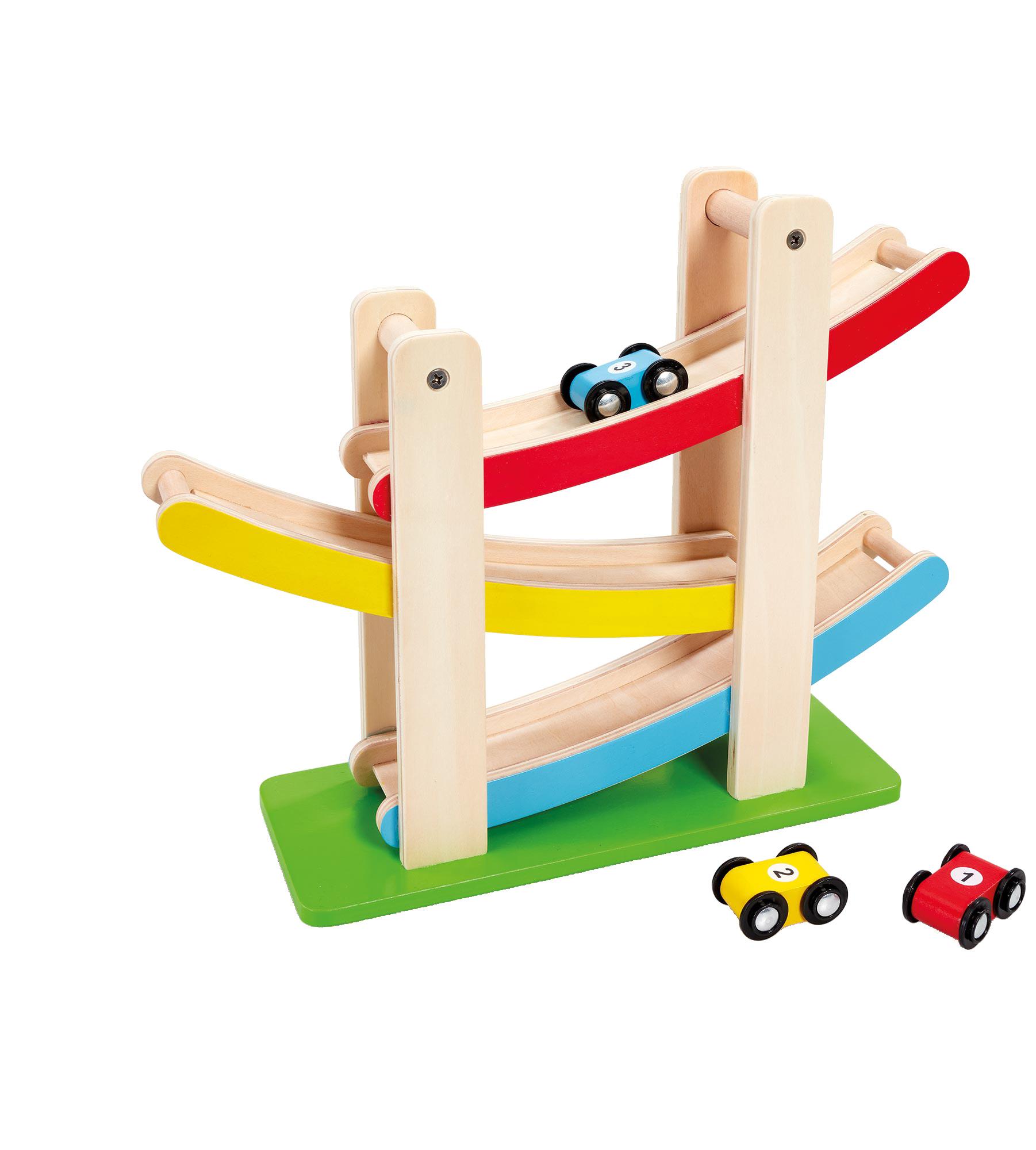
ABOVE AND LEFT: Addo Play’s toys, featuring recycled polyester plush and FSC certified wood. Credit: Addo Play.
ABOVE: Barbie Loves the Ocean set the scene for Barbie Fashionista’s bio-based plastic inclusion. Credit: Mattel.
INNOVATION SPOTLIGHT
PROUD PENGUIN
While these major toy companies are making progress on product, there are still many more steps ahead and the time needed to make such significant transformations can be long and require significant operational change.
This is where younger brands can come into their own. Smaller brands have the agility and flexibility to seize opportunities and do so quickly, embedding sustainability processes and considerations into the fabric of their companies from the very beginning.
Proud Penguin is a fantastic example of this. A new company on the scene, but behind it years of research and trialling, to introduce high quality, realistic animal figurines to the toy market, manufactured from ISCC PLUS certified TPE, which is linked to a minimum of 34% of bio-based feedstocks such as used cooking oil (mass balanced), instead of the PVC based figurines currently dominating the market.
Gary Wilmot, Proud Penguin’s founder, explained that in addition to the German production facility supplying the TPE material being ISCC PLUS certified, the ESCPcertified factory where the figurines are injection moulded and hand painted in Tunisia achieved the same at the end of last year, and with Proud Penguin also a ISCC PLUS license holder, this affords Proud Penguin a completely transparent supply chain.
“Securing ISCC certification was a real game changer for the Proud Penguin brand as I was looking for that stamp of approval that the consumer can begin to identify with and we can use in all our messaging across social media, ecommerce and at point of sale etc,” commented Gary.
Proud Penguin figurines are built to outlast childhood, with kids encouraged to pass them on to a sibling, friend or charity shop or through a send back process to the company for a thank-you voucher. Returned toys are repaired where possible and donated to schools and community programmes near the factory that made them – a second life for the toy, and a thank-
you to the people who crafted it.
Gary is working with a number of zoos, safari parks, aquariums and animal charities, securing distribution at retail and online as the highquality realistic animals reach the perfect audience of wildlife lovers at such locations.
And with a price point comparable to current PVC options on the market, it is as economic as it is environmental. What’s more, the story can continue to be told, since each and every one of Proud Penguin’s figurines sports a Digital Product Passport through the Buyerdock platform. Through a QR code on each figurine’s product tag, the consumer can get access to a range of information tiles, from the ‘technical stuff’ about the material and product journey, through to the ‘fun stuff’ about the animals and the environments that they live in. As well as signing up for 1% for the planet, Proud Penguin continues to press forward to see how it can further reduce the environmental impact of its products. Having been founded with this mission, sustainability has become Proud Penguin’s identity and USP and is setting it apart from other toy brands out there. With an animal-centric brand, the toys are going to appeal to the children who are interested in and care about wildlife, and with the Digital Product Passport and the sustainability credentials of the toy, this story can continue to grow and foster a care of the planet in children from the get-go.
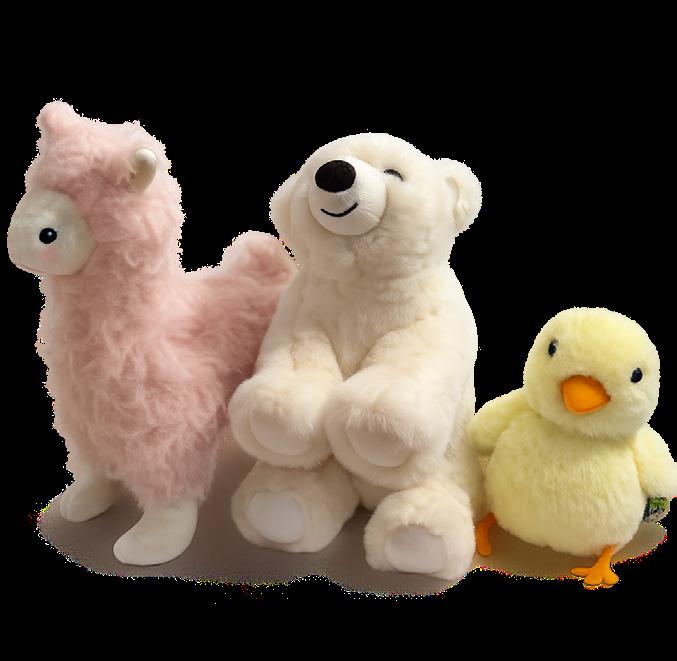
Scaling new materials is the way forward, which is why Products of Change has continued to work alongside material innovation start-up, BioFluff, which creates bio-based plush for toy companies to replace their fossil-fuel based materials. Using 100% bio-based PLA made from corn polymers, BioFluff’s innovation is commercially ready and scalable, and is expected to be launching with a number of toy companies this year.
Products of Change has been hosting working groups for the toy industry with BioFluff’s co-founder and CCO, Roni Gamzon, to bring this solution to market over the last couple of years. In consultation with some of the biggest toy companies, the material has been successfully refined, certified and brought to a market-ready price point.
BioFluff began in the fashion industry, providing an alternative to polyester-based plush, and has now expanded to both the interiors and toy industries. The PLA material BioFluff has developed is made from renewable non-GMO corn that is non-food stock competitive. It has a
BALENA
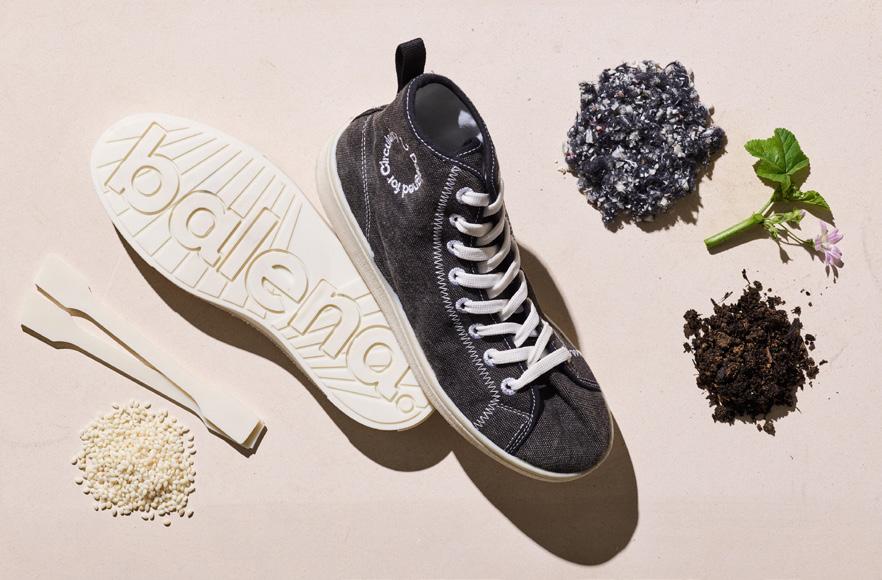
Another new face on the scene is Balena, also innovating and presenting solutions in the world of bio-plastics. Balena is a materials science company engineering the next generation of bio-based, highperformance plastics for drop-in industrial scale production. The material matches the functional performance of conventional plastics while offering safer formulations and end-of-life pathways through recycling and industrial composting.
carbon footprint half that of traditional PET, is industrially compostable or recyclable at end-of-life, as well as being durable, machine washable, and with low flammability.
To achieve this, BioFluff has been working closely with its manufacturing partner and finished toy producer in Indonesia, Quty, which in turn has high sustainability standards, operating fully on renewable energy. BioFluff’s material is seamless to use in Quty’s exisiting machinery and passes its manufacturing tests.
As BioFluff continues to grow and enter the commercial market, Roni explained they are always on the lookout for more champion brands or stores to work with the BioFluff material, and support the vision of making bio-based plush the new norm in the toy industry.
business development lead, Balena. “Toys are often a child’s first interaction with the material world. They’re touched, squeezed, chewed, thrown, and loved for years, so the materials behind them truly matter.
“At Balena, we design highperformance materials with carefully selected, safer inputs that are nontoxic. For us, performance and safety are inseparable, especially in products designed for children,” said Shoshana.
Balena also began in the fashion space, making products such as compostable shoe soles, but has now set its sights on how its solution could benefit the toy industry, explained Shoshana Kandel,
Balena has two formulations of its product ideal for adoption in the toy industry: BioCir® Flex is particularly well suited for soft-touch components, squeezable toys, flexible parts, and wearable accessories, where elasticity and comfort are essential. Meanwhile, BioCir® X is ideal for more structural or impactresistant elements, offering the strength and durability required for moulded components and toys designed for active, high-energy play.
The future of toys does still seem to be full of plastic, but not as we know it, and not with the virgin fossil-fuel based materials of days gone by. Instead, it is coming to terms with a bio-based future that is increasingly scalable, affordable, and adoptable.
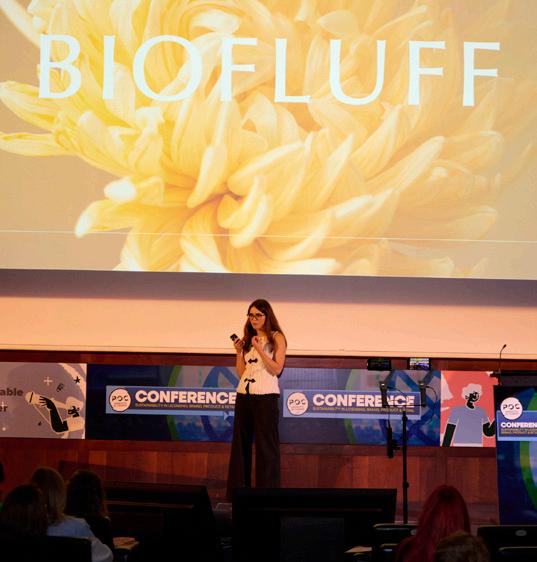
ABOVE: BioFluff’s sample plush toys made by Quty and Roni Gamzon presenting at the POC Conference 2024. Credit: BioFluff and POC.
ABOVE: Balena’s formulations of bio-plastic have numerous applications. Credit: Balena.
OPERATIONAL EFFORTS
When it comes to sustainability, it is of course not just the product and packaging that needs to be addressed, but the processes themselves of product creation and the supply chain operations, covered by Corporate Sustainability Reporting Directive (CSRD) in the EU.
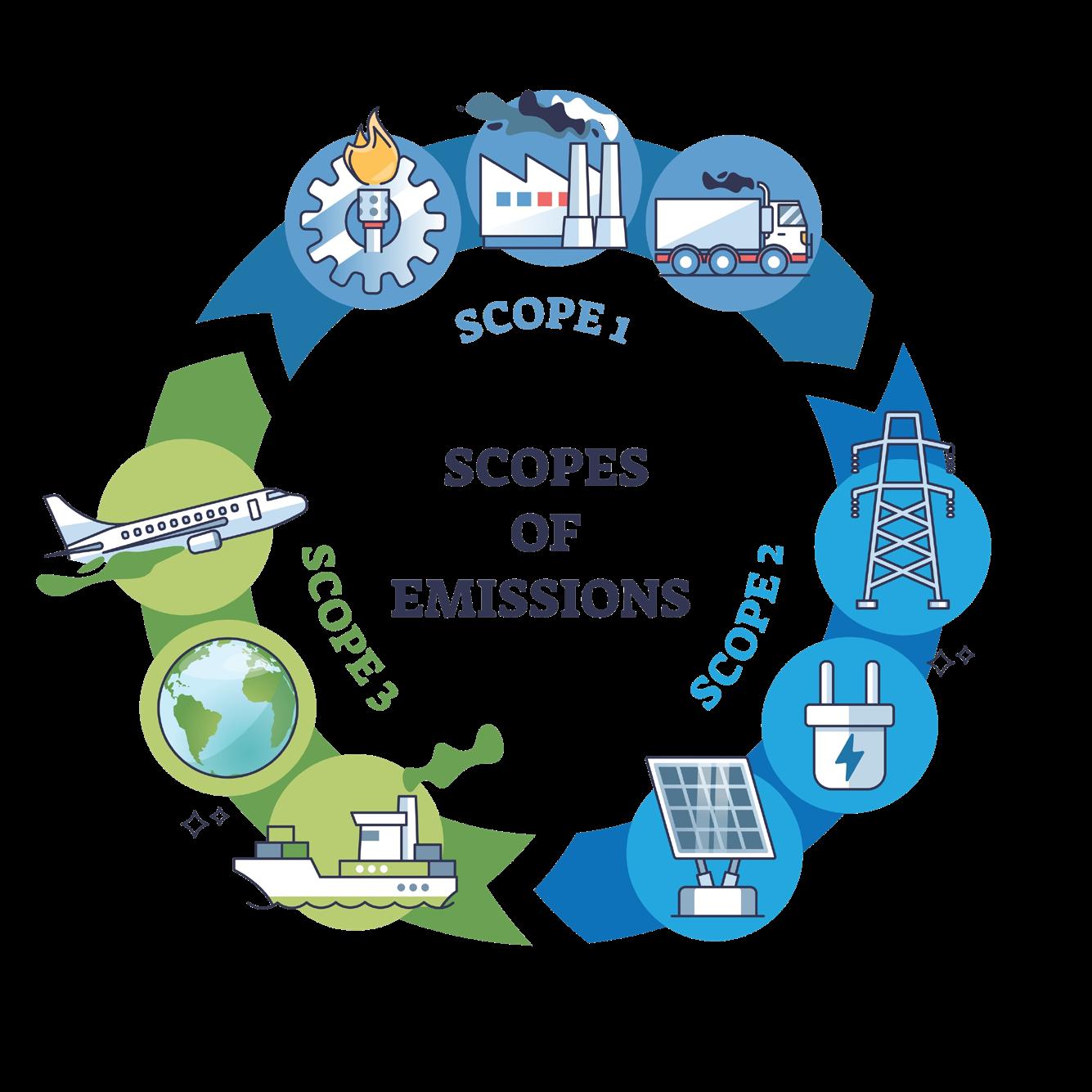
Mattel has been making significant progress reducing its Scope 1 and 2 emissions, helped along by its adoption of certified sustainable plastics. And now the company is focusing more of its attention on Scope 3, which presents more of a challenge.
This is a similar story for many companies at the moment – toy industry and beyond: the challenge of securing quality data for Scope 3 abounds.
“We’ve asked our vendors to provide data on energy usage, gas usage, waste materials, water consumption, those sort of questions. And we’re going through that data at the moment. The object of the exercise is for us to use that data to highlight the high energy or water uses right within our supply chain and then highlight opportunities for efficiency improvement,” said Roger Panton-Kent from Addo Play.
Rainbow Designs is working similarly; “We also completed our first broader carbon footprint assessment, covering Scopes 1, 2 and 3. In 2024, our total footprint was 1,495,069kg CO₂e, equating to an average of 1.03kg CO₂e per product manufactured. This has given us a clear baseline and informs the sustainability strategy, helping us to identify
collaboratively with them, we are building a clearer picture of risks, opportunities and achievable improvements. Importantly, because our emissions sit within our partners’ Scope 3 reporting, our progress directly supports theirs,” said Alys Dawson.
Meanwhile, Moose has a target to be Net Zero by 2040 for Scopes 1, 2 and 3, which it has aligned with its three biggest customers: Walmart, Target, and Amazon; “they’ve all got the same targets,” said Greg Simmons. But it is not all about the emissions; it is about the company culture, it is about education, and it is about implementing broader systems company wide to do things differently.
Rainbow has been working hard to embed sustainability into all of its operations; “into every decision we make, across product design, sourcing, operations and culture,” said Alys, led by its Rainbow Cares programme. This has also manifested across training as well as its communications.
Moose has taken this a step further, embedding sustainability into its onboarding and internal comms, utilising its Membership access to the Products of Change platform to induct employees with the POC educational modules and Sustainability 101s.
“Through POC, we’ve got this great educational tool we have embedded internally into our onboarding processes. And also, we invite anyone in the business to go and join up and go and look at those materials.”
Having company-wide support and buy-in fosters an environment where sustainability is considered at every level, and in every decision. When it is an afterthought or an add on is when implementation requires that much extra energy and complexity.
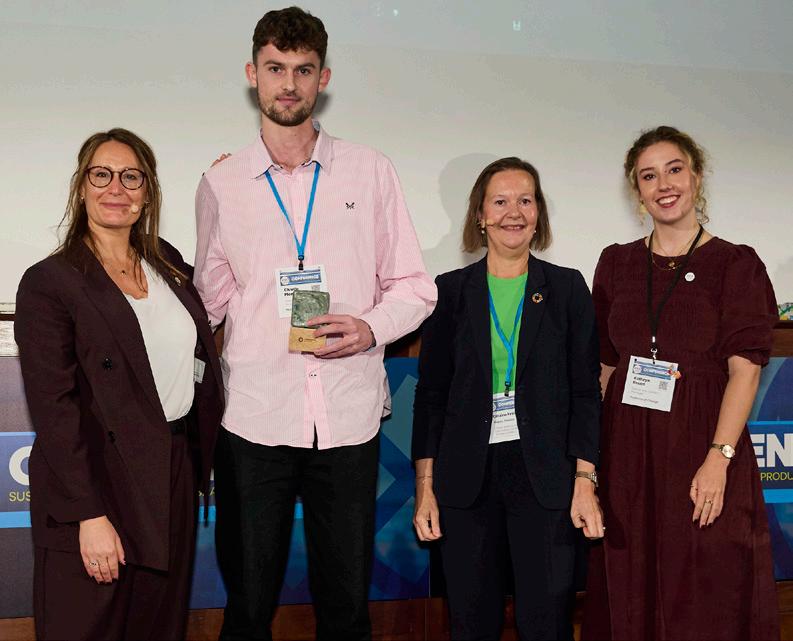
BELOW RIGHT: Moose won a POC award in 2025 for SDG 13 – Climate Action. Credit: POC.
THE BURGEONING BUSINESS CASE
Perhaps the most encouraging shift across the toy industry is the growing recognition that sustainability and commercial success are not opposites. In fact, many sustainability initiatives are delivering operational efficiencies.
As the integration of sustainability continues to mature and progress in business, what is becoming increasingly evident is how beneficial sustainability is to business. Sustainability is dogged by the belief that it is always an expensive thing to do, it takes away from a company’s bottom line and simply costs a business more money. But we are seeing more and more that this doesn’t need to be the case. Sustainability by mere definition is all about efficiencies, resourcefulness and savvy decisionmaking that takes the long-term impact and success of a company into consideration.
“We are still in the mindset that the best way to implement sustainability in our organisation is through efficiencies those costs have associated energy and greenhouse gas emissions. And again, this is not the exciting part but is the meat of where most of those savings are going to be,” commented Theron Grim from Hasbro.
A lot of companies speak about implementing sustainability because it is the “right thing to do,” which of course, it is, however it needn’t be solely altruistic; it can –and should – also benefit the company and the consumer.
“Sustainability has a lot of value that it brings to business. And actually what we find is that you can improve your bottom line, but also you can reduce the amount of emissions that we’ve got as well,” said Greg, “This is where sustainability has to see a commercial lens, and has to see – where is the financial value? Not just – are we reducing emissions?”
Moose has 2030 goals to be net zero for scope 1 and 2 emissions, and operate solely on renewable energy. So, in December, Moose changed its energy contract for its head office to a three-year contract that will be 100% renewable by the end of the three years. As a result, Moose expects to see significant financial savings over the term of the contract. “Year three will be 100% renewable, and we’re going to save money,” said Greg.
Greg also explains that it is about working hand-
ABOVE: Addo Play works closely with its partners to minimise cost increases associated with sustainable switches. Credit: Addo Play.
in-hand with the rest of the business and other teams in the company; having them onboard and active in the process both eases and contextualises any financial demands.
Roger Panton-Kent from Addo Play also discussed the need for close relationships with partners and vendors, so that they are brought on the journey too. “That’s why things can’t happen overnight,” he said, “What we’ve managed to do is work closely with our vendors to minimise the cost impact,” as there can be cost increases associated with sustainable switches. Roger explained that Addo Play is a great quality but a chiefly value-based brand, so it has been important for them to not increase the costs to their customers. “It’s doable, but you have to work at it, to explore opportunities,” said Roger. “I think that’s where, I think we’ve been quite successful. Everybody’s got behind those objectives. You know, it’s not, doesn’t feel like a burden. They just recognize that there’s a good thing to do.”
Sustainability connotes a thoughtful toy maker, one who is working to safeguard the future of its young customers. This is also evidenced in the work of Recycle to Read, the Wastebuster programme founded by Katy Newnham alongside Products of Change. Katy explained that parents are saying that the brands that are supporting the Recycle to Read programme – and as a result appear on the communication materials – they view to be a responsible brand. Particularly for Mattel, as a key supporter of this initiative. “The parents are saying that it definitely makes me think differently about them. It makes me think that they do actually really care, and that they’re actually probably a very responsible producer of toys,” said Katy.
This consumer trust is something that is priceless, especially when it comes to the toys parents are buying for their children.
There is also a huge business benefit to be had around consumer perception. While we may be at a point where consumers are not reliably always willing to pay more for sustainability, that doesn’t mean they don’t still see it as a positive for the toy they are buying – a benefit but also an indicator of the kind of company they are purchasing from.
Amanda Gummer through her role with The Good Play Guide, has observed that the toy companies that “focus on well-being and learning through play, historically, are the ones who are more likely to make the shift towards the sustainability agenda.”
“Practising business responsibly is simply the right thing to do, but it is also central to long-term growth, strong partnerships and brand credibility,” commented Alys Dawson from Rainbow Designs. “Sustainability is becoming an expected standard, but how genuinely and holistically it is embedded still differentiates brands.”
So while sustainability can be associated with an additional financial cost, we are seeing more and more that companies are taking this in their stride and seeing it for what it is: an investment in the future of the company, and a signpost to consumers that they care about the products they are creating and the future of the tiny humans they make them for.
LEFT: Mattel is a key sponsor of Recycle to Read. Credit: Wastebuster.
AN END-OFLIFE STORY
As well as ensuring toys and packaging are made from lower impact materials, it is also now falling on brands to consider what happens to their toys at the end of their life. Traditionally, toys have had limited endof-life pathways. But this is starting to change.
The likes of Hasbro, Moose, and Rainbow Designs run various take back schemes where they collect and rehome unwanted toys. And this is becoming increasingly popular; perhaps fuelled by the cost-of-living crisis, consumers are looking more and more to second-hand toys.
Rainbow Designs works closely with The TOY Project, a UK-based organisation which collects unwanted toys and gives them to children who need them, offering art and storytelling workshops for communities, while raising money for local events.
But what about the toys that are broken or unusable, and can’t be passed on to a new loving home? This is where the Wastebuster team comes in with its
Recycle to Read programme, developed in partnership with Products of Change.
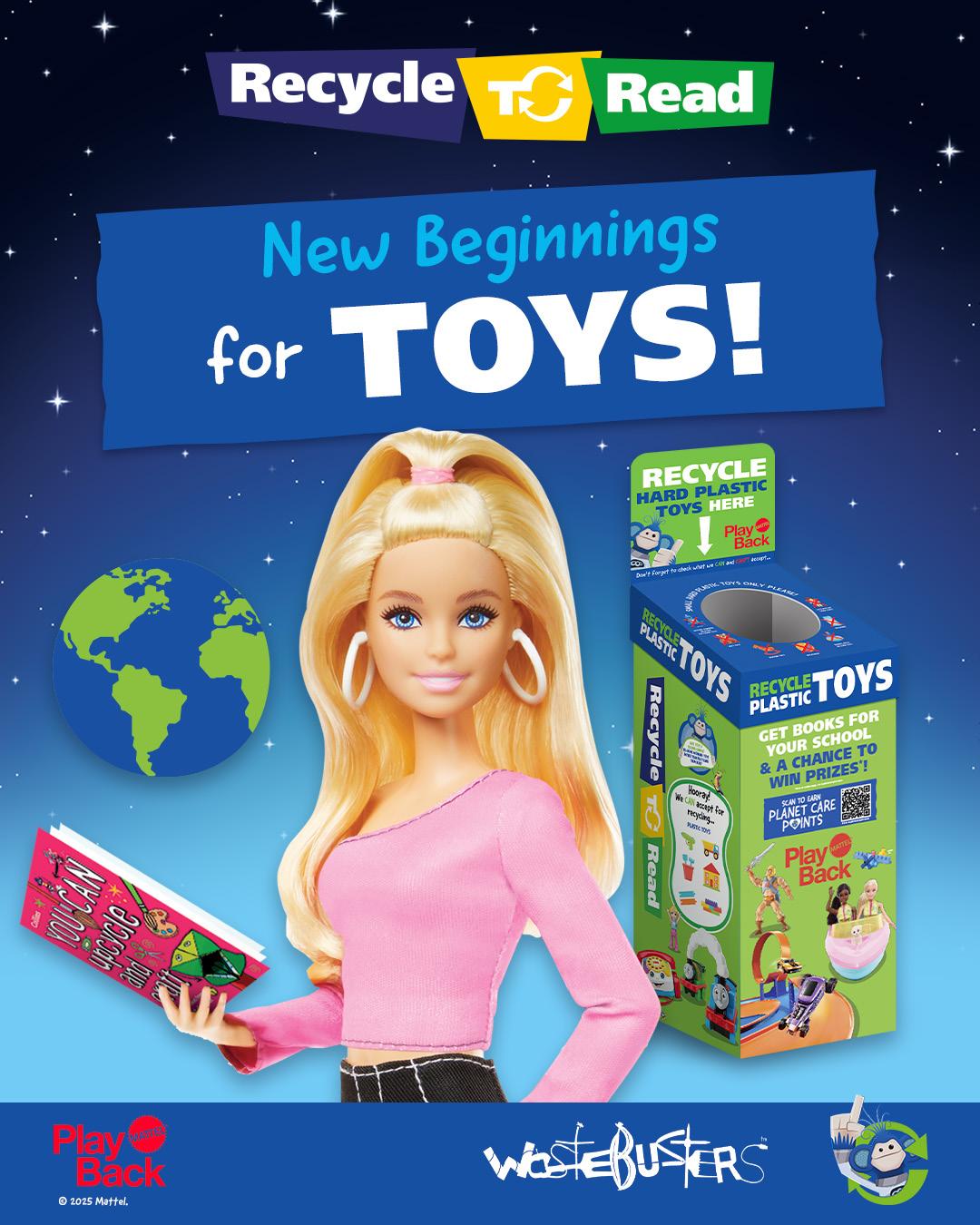
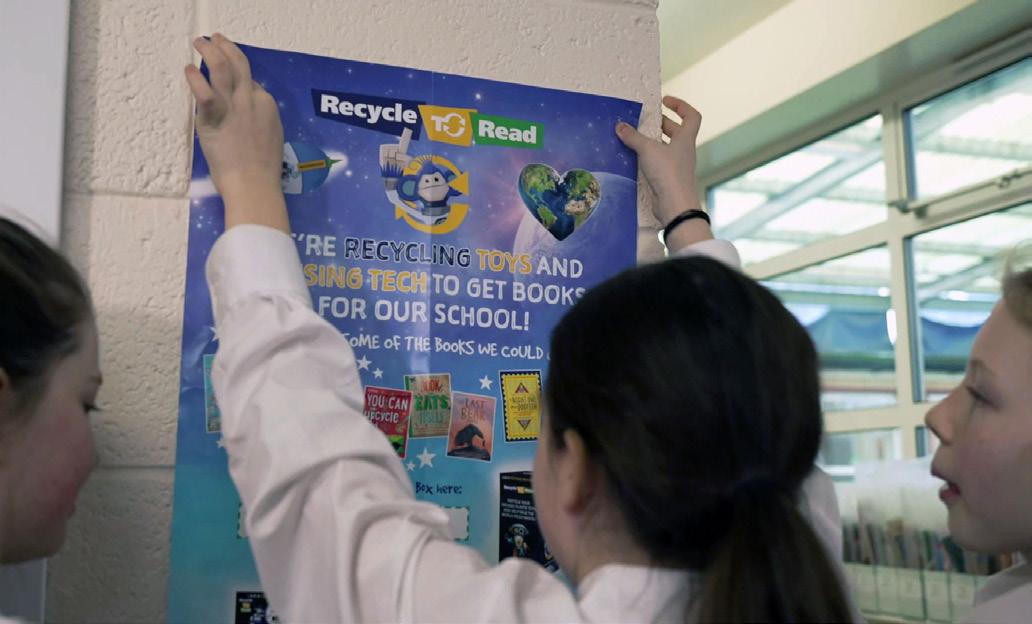
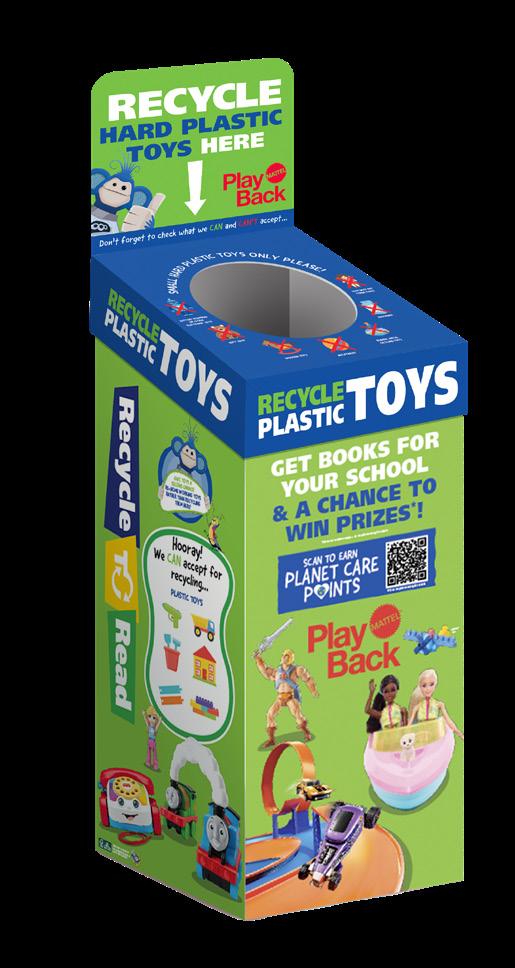
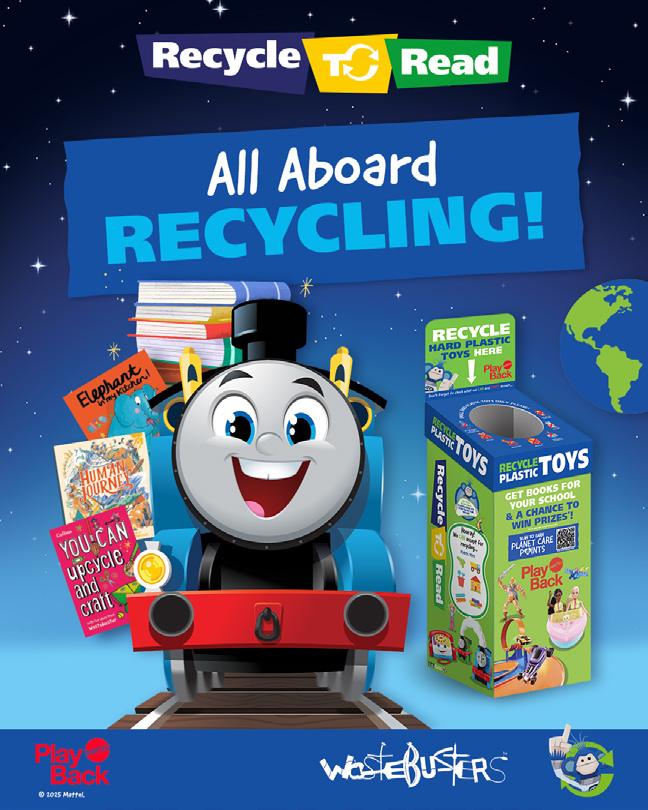
Recycle to Read collects broken hard plastic toys in Tesco stores across the UK, which are then assessed and recycled. The scheme now covers 167 large Tesco stores, sponsored by Mattel, for a cross-sector international research programme, exploring the application of circular economy principles within the toy industry. Contributing children earn books for their schools in an additional push for child literacy; 1 in 7 UK schools does not have a library, and around 1 in 15 children do not own a book of their own at home, a problem Recycle to Read is tackling alongside the lack of real end-of-life solutions for broken toys. Recovered toys are sorted and mechanically processed in the UK by authorised recycling partners; plastics are separated and converted into recycled feedstock suitable for use in the manufacture of new products containing postconsumer recycled content.
Despite the fact that Recycle to Read has been only trialling and scaling its programme over the last couple of years, already over 800 schools have signed up, and it has collected over 13 tons over a 10-month period, without any focused promotion. This demonstrates the willingness and engagement of the UK consumer for playing their part and contributing to this scheme.
Wastebuster is now analysing a 500kg sample of collected toys, identifying the materials present, as well as the types and ages of toys and brands – invaluable information for toy
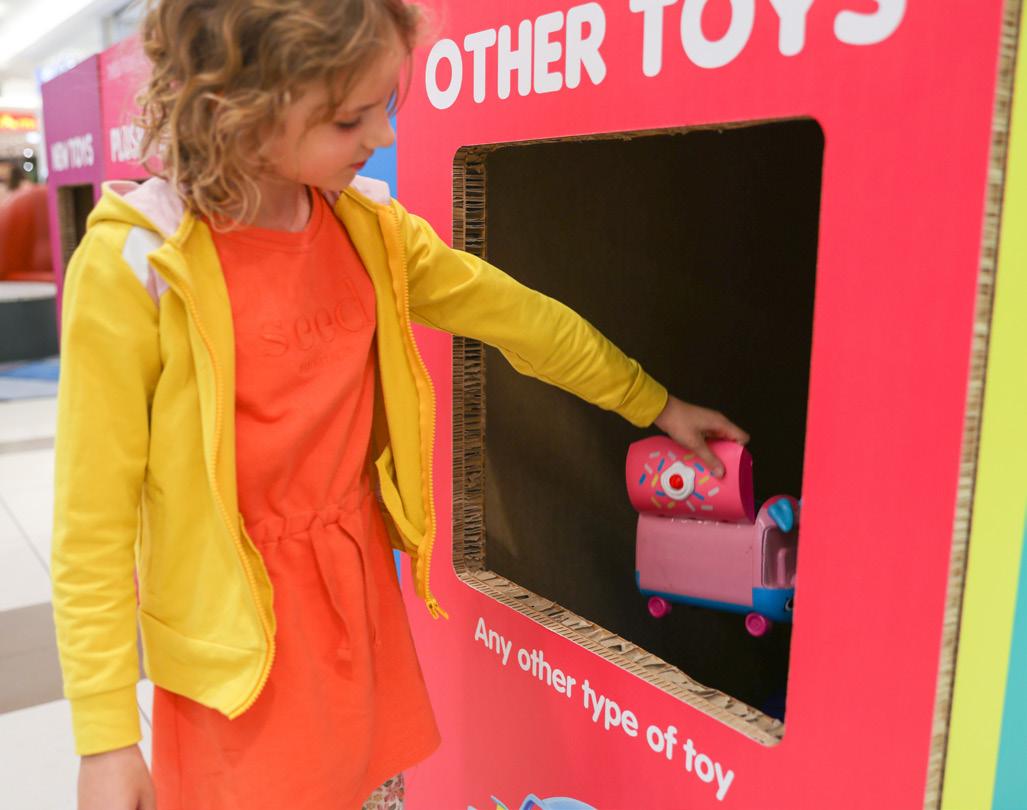
ABOVE AND RIGHT: Recycle to Read works with schools to collect unwanted toys in exchange for books.
Credit: Wastebuster.
companies to learn and understand, especially when designing for recyclability.
“Products of Change is working alongside Wastebuster to establish Recycle to Read as a cross-sector collective impact programme –making change but also spearheading a new way of doing business and a new way of positioning brands to consumers as responsible businesses,” said Katy Newnham, CEO of Wastebuster.
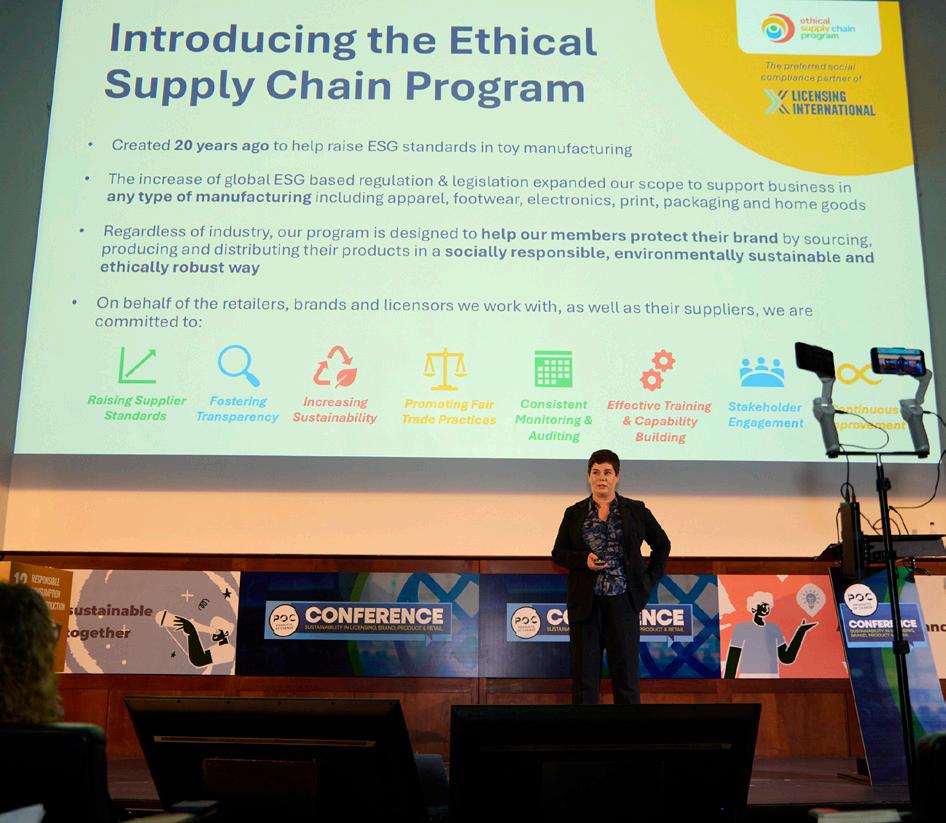
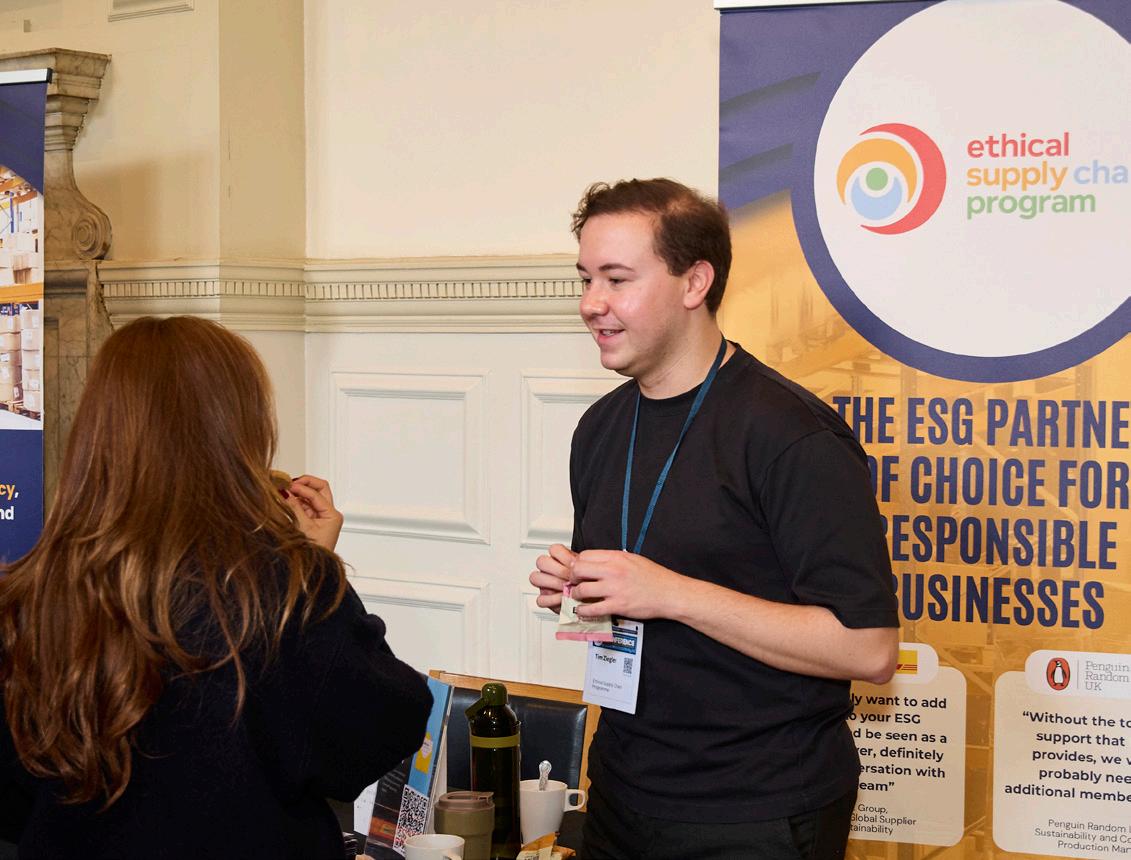
challenges around recycled material use in toys. There are very stringent measures in place as part of toy safety regulations, governing what particular material types can be used for toys – they are around children after all, and inevitably find their way into toddlers’ exploratory mouths. Transparent traceability of recycled materials is still being established – and is something the Ethical Supply Chain Program (another partner of Products of Change) is working on, alongside Mattel, the LEGO Group, Crayola, and Target.
The ESCP is working to establish a Recycled Materials Chemical Safety Assessment (RSCA). “The reason it has been created is the use of raw materials in toys is managed by existing chemical management software, however the use of recycled materials produces more variables, so existing chemical management systems are not suitable – collaboration to find a solution was essential,” Carmel Giblin, ESCP president and CEO explained at a previous POC Conference.
In a true circular economy, toys would be recycled to make new toys, completely closing the loop, however we are not there yet, and that is largely due to the safety
The aim is to create a database of approved recycled material grades that are suitable for use in toys that material procurement or product development teams can use as a resource to more easily connect with recyclers, bringing varying methodologies together into one unified process.
This will be a gamechanger for using recycled materials –particularly plastics – in toys, making it safer and more accessible, especially for the SMEs that don’t have the resources to do the level of research and due diligence that is otherwise required. The database will level the playing field for those companies, allowing the huge toy companies leading the industry to put them in place for the good of the wider industry and the environment that we share.
ABOVE: ESCP’s recycled material assessment will enable greater use of recycled material in toys. Credit: ESCP.
BELOW: ESCP at the POC Conference in 2024 (left: Carmel Giblin speaking on stage) and 2025 (right: ESCP exhibiting). Credit: POC.
BUILDING THE WAY FORWARD
For many toy companies, especially the leading ones, sustainability remains firmly on the agenda –and has for some time now so that we’re at a point where how sustainability is spoken about and actioned is maturing and learnings are being gathered and shared.
Which is the very reason Products of Change was established and continues to operate across industries – collaborations and shared learning are being proven time and time again to be the most effective way forward when it comes to addressing sustainability. No one company or industry can save the planet alone, and the system changes that are required need all handson deck. You only have to look at the Wastebuster or ESCP projects – both initiatives that have had fantastic investment and support from across the toy industry, producing something that will benefit everyone.
“The role of sustainability should be, actually, to share
information. Put it this way, if somebody learns it, they can apply it, and actually, if their business grows out of it – great, awesome,” commented Greg Simmons from Moose. “If somebody gets something out of it, we are all going to benefit.”
Where possible, Products of Change brings these learnings and resources together on our platform for anyone in the Membership to benefit from – whether it be our Sustainable Packaging Guidebook, created in collaboration with the LEGO Group, Magic Light, and Tesco; or the Carbon Methodology proposal for the brand licensing industry, led by the Walt Disney Company, the LEGO Group, Universal Music Group (Bravado), the BBC, the Jamie Oliver Group, Paramount, Manchester City, and many others; or the Members willing to put their own company resources on the POC website, such as Tesco’s packaging requirements or Nobody’s Child Digital Product Passport Playbook; or even getting our members on the platform through webinars and working groups to openly talk about the progress they’re making or the challenges they are facing.
and do it,” said Roger from Addo Play. “I think sustainability, if you go back a few years, was putting wrongs right. [...] What we’re trying to do now is make it right first time,” and building sustainability into processes from the very beginning makes this possible.
So while the toy industry is facing its own set of challenges – whether from digitalisation or economic and political uncertainties – sustainability is and has to be woven-in to sure the industry up against any future challenges it may face and ensure it continues to stay resilient and thrive.
“The momentum is clearly building. Sustainability is no longer a niche conversation in the toy industry; it is fast becoming the new norm, driven by regulation, retailer expectations and shifting consumer values. While there are still challenges around cost and materials, there is also growing collaboration and innovation,” said Alys from Rainbow Designs, adding: “We see strong demand from partners for credible, practical solutions rather than perfect answers. The industry is moving from intention to action, and those who invest now in understanding impact, improving design and working transparently will be best placed for the future.”
“We’re not standing on a pedestal to demonstrate how wonderful we are from a sustainability perspective, we just think we need to do the right thing and crack on
The toy industry is moving – step by step, product by product, partnership by partnership – toward a more thoughtful way of making toys. And that feels like exactly the kind of future play deserves.
RIGHT: Addo Play is working to build things right the first time. Credit: Addo Play.
FUTURE FORECAST
Toy company Emissions Scope 1 and 2 Scope 3 emsissions Water Waste
The LEGO Group Reduce absolute GHG emissions by 37% by 2032 compared to base year of 2019, SBTi approved.
Reduce absolute scope 1 and 2 GHG emissions 90% by 2050 from a 2019 base year.
Reduce absolute GHG emissions by 37% by 2032 compared to base year of 2019, SBTi approved.
Reduce absolute scope 3 GHG emissions 90% within the same timeframe.
Bandai
FY2030: 32,500 tons (50% reduction compared to FY2019; ahead of schedule).
FY2035: 27,000 tons (55% reduction compared to FY2019; newly established based on government guidelines).
FY2050: Net zero emissions.
Hasbro Overall net zero Target: Reach net zero greenhouse gas emissions across the value chain by 2050 from a 2020 base year.
Near-term targets: Reduce absolute scope 1 and 2 GHG emissions 47.5% by 2030 from a 2020 base year.
Long-term targets: Reduce absolute scope 1, 2, and 3 GHG emissions 90% by 2050 from a 2020 base year.
Mattel Reduce absolute Scope 1 & 2 GHG Emissions by 50% by 2030 (versus 2019 baseline).
Ravensburger
Over two-thirds of products produced in own facilities in Europe. Product development takes place in offices in Europe and the USA. Those operations will be carbon neutral by 2023.
Promotion of response in Scope 3 (increase accuracy of calculations and explore measures to reduce Scope 3 emissions in the supply chain).
Ongoing focus on reducing water consumption across operations.
Three consecutive years of reducing water (2022-2024).
Active investments in water recycling and reuse, and alternative water sources (rainwater, groundwater, reclaimed water).
Collaboration with supplier on water efficiency improvements across the value chain.
No public commitments at time of review.
Target of ≤28,000 waste volume (tonnes) for 2025.
Target of ≤13 waste to landfill (tonnes) for 2025.
Reduce absolute scope 3 GHG emissions 42% within the same timeframe.
Long-term targets: Reduce absolute scope 1, 2, and 3 GHG emissions 90% by 2050 from a 2020 base year.
No public commitments at time of review.
Reduce entire carbon footprint by 40% (Scope 1, 2 & 3) by 2030 compared to 2018. E.g. this also includes emissions from delivered materials or logistics services.
Owned and operated (O&O): Reduce water withdrawal in O&O facilities by 40% by 2030 from a 2020 base year.
Upstream value chain: Improve water withdrawal data accuracy by 2026 from a 2023 base year.
No public commitments at time of review.
No public commitments at time of review.
Promotion of waste recycling at each business site.
Reduced paper usage. Started shrink wrap recycling at logistics centers.
Converted plastic waste generated at factories to RPF: 105 tons in FY2024.
No public commitments at time of review.
Achieve zero manufacturing waste by 2030.
No public commitments at time of review.
Achieve and maintain carbon neutrality of Scope 1 and 2 emissions.
No public commitments at time of review.
Continue to monitor water usage closely to ensure efficient consumption.
Tracking onsite waste since July 2024 with a goal to set key benchmarks and waste reduction targets to develop an action plan. SpinMaster 70% reduction in Scope 1 & 2 emissions by 2030. Net Zero for Scope 1 & 2 by 2050 from a baseline year of 2019.
public commitments at time of review.
public commitments at time of review.
Zero waste in owned and leased facilities by 2035.
Tomy Achieve a 50% reduction in Scope 1 & 2 emissions (compared to FY22) by 2030, and net zero by 2050.
40% renewable energy by 2030.
Moose Overall net zero target: Reach net zero greenhouse gas emissions across the value chain by 2040.
Near-term targets: Reduce absolute scope 1 and 2 GHG emissions 42% by 2030 from a 2022 base year.
Long-term targets: Reduce absolute scope 1 and 2 GHG emissions 90% by 2040 from a 2022 base year.
No public commitments at time of review.
No public commitments at time of review. No public commitments at time of review.
Moose Toys also commits to reduce absolute scope 3 GHG emissions by 90% within the same timeframe. No public commitments at time of review.
Reduce waste materials (appropriate inventory control, promotion of the 3Rs, reassessment of containers and packaging).
No public commitments at time of review. No public commitments at time of review. No public commitments at time of review. No public commitments at time of review.
Products of Change would like to thank all those who contributed to this Toy Chapter: Alys Dawson, Rainbow Designs; Alexis Delorme, Smoby; Roni Gamzon, BioFluff; Theron Grim, Hasbro; Amanda Gummer, The Good Play Guide; Florian Hess,
SIMBA
Jazwares
This Future Forecast details the sustainability commitments of some of the largest toy brands. Where public commitments are not yet visible, many of these organisations are active POC Members working collaboratively to build the data, systems and strategies required to deliver measurable environmental progress. This overview reflects publicly available information at the time of review. Absence of a public commitment does not necessarily indicate absence of internal activity.
Materials
In 2025, 52% of the materials bought to make LEGO bricks and elements came from recycled and renewable sources, with the goal to keep increasing this.
Introduce recyclable packaging across all areas of business – as of 2025, 95% of packaging by weight is made from paper, cardboard and other paper-based materials.
Reduce single-use plastic and introduce paper-based bags in all LEGO® sets.
Aim that all packaging will be made from either recycled or FSC content.
Reduction in petroleum-based plastic use. Promotion of product recycling.
Utilised recycled plastics and alternative materials.
Sustainable design Nature and biodiversity
Introduced Planet Promise Design Guidelines in collaboration with WWF to embed socially and environmentally responsible narratives into LEGO sets, stories, and packaging.
Plans to invest DKK 18 million (USD$18 million) into four carbon removal projects, including restoring degraded tropical forest across 14,000 + hectares in Mexico.
Supplier/licensee engagement
Launched a dedicated Supplier Sustainability Programme to drive impact across its procurement ecosystem, including mandatory carbon data disclosure and science-based reduction targets.
Promotion of environmentally friendly design in own products and services.
Build on portfolio of sustainable material use throughout including plant-based or recycled plastics, FSC®-certified materials, and/or recycled paper-based materials. No public commitments at
Collaborating with stakeholders to achieve a harmonious balance between operations and the natural world.
is addressing environmental issues across the entire supply chain in an effort to achieve a sustainable value chain with fewer environmental impacts.
at time of review.
Achieve 100% recycled, recyclable, or biobased plastic materials in products and packaging by 2030.
Use FSC® certified paper, cardboard and wood.
Reduce single-use plastics and increase the share of recycled material in paper and plastics.
Improve recyclability of products and packaging, looking at both ecological and economic alternatives for plastics derived from fossil oil.
Expand upon microplastic research with Deakin University to engineer and design a new, low microplastic sheeting fabric.
Reduction in the use of virgin plastic in all packaging materials.
Windows and blisters on any new products uses recycled 30%-35% minimum rPET.
Switched to non-mineral-based inks.
Melissa & Doug have an ongoing goal to reduce overall volume of packaging materials.
Over 3.5 million pounds of packaging have been eliminated since 2021.
Evaluate product range against circular design principles and put in place a product design policy that incorporates circular design principles.
Embed APCO action plan implementing public commitments and review packaging design.
Continue to research and explore options for end-of-life and textile take back.
Continuously exploring opportunities to reduce the use of virgin materials in toys through innovative methods or by incorporating recycled or certified responsibly sourced content.
Goal to maintain the best play experience while finding ways to minimise environmental impact.
Committed to further reducing environmental impact through ongoing conservation efforts.
public commitments at time of review.
Undertake a materiality assessment, engaging with stakeholders to confirm the material issues that are important to each stakeholder.
No public commitments at time of review. No public commitments at time of review.
No public commitments at time of review. No public commitments at time of review. No public commitments at time of review. No
Research eco-conscious materials, conduct demonstration verifications, and disclose progress with the aim of reducing and recycling petroleum-derived plastic in products.
Explore repairable and disassemble-able design for better end-of-life solutions.
public commitments at time of review. Collaborate with suppliers to build and implement a system achieveing sustainable procurement (conduct SAQs, audits, and briefings).
No public commitments at time of review. No public commitments at time of review. No public commitments at time of review. No public commitments at time of review.