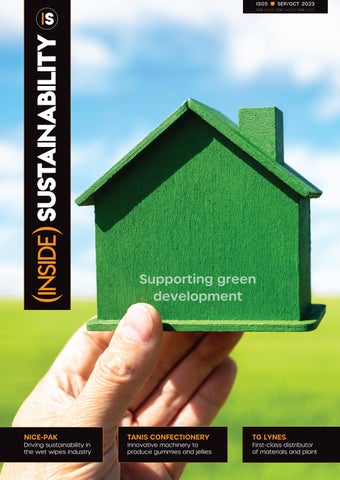
TG LYNES First-class distributor of materials and plant NICE-PAK Driving sustainability in the wet wipes industry TANIS CONFECTIONERY Innovative machinery to produce gummies and jellies Supporting green development inside ( ( SUSTAINABILI T Y i S IS05 n SEP/OCT 2023 ONE PLANET ONE CHANCE ONE VOICE
Webfleet makes history
Webfleet, in collaboration with Bridgestone, The AA and Stellantis, has set a new Guinness World Record for ‘The Greatest Distance Travelled by an Electric Van on a Single Charge.’ Drivers Fergal McGrath from Volta Trucks, Sam Clarke from GRIDSERVE Sustainable Energy and Kevin Booker (EV & Sustainability Consultant) clocked up an astonishing 500.8km (311.18 miles) on a single charge.
Managing Director
John White
Finance Director
Filomena Nardi
Editor
Phil Nicholls
Editorial Assistant
Imogen Ward
Hannah Barnett
Feature Writers
Andy Probert
Romana Moares
Richard Hagan
Colin Chinery
Business Development Manager
Darren Foiret
Research Editors
Jeff Johnson
Mark Simmonds
Judi Wheaton-Mars
Ginelle Lorenzo
Natalie Martin
Dane Coady
Becky Scrivens
Jamie McBride
Sam Ransome
Matthew Spalding
Hadlee Ellwood
Sales Director
Richard Brightmore
Sales Manager
Helen Leisi
Project Managers
Alexander Paterson
Tony Ingrouille
Kym Hamilton
Chris Renicar
David Earl
Connor Doddington
Lisa Smith
Will Tottie
Bobby Godfrey
Loretta Smith
Art Director
Ian Spencer
Art Editor
Philip White
Webmaster
Michael Stamp Designers
Sarah Jones
Georgina Harris
Events Manager

Jasmine Lodge
Marketing Executive
Adam White
Administration &
Summer Clover
Gavin
Inside sustainability 3
I.T.
T: +44 (0)1493 445121 +44 (0)1502 566216 E: media@insidepublication.com W: www.inside-sustainability.com © Inside Sustainability 2023 No part of this publication in any form for any purpose, other than short sections for the purpose of review may be reproduced without prior consent of the publisher. Company Reg No: 06783092 Company VAT No: 167 6757 57
Bellward
Fast and furious… and fascinating
Welcome, Dear Reader, to your latest edition of the ever popular, informative, and enlightening Inside Sustainability. Although we approach autumn here in the northern hemisphere, and it feels as if summer is already slowing down to hand over to the next season, things certainly have not slowed down for our team. Clearly the same is true for all the thriving companies that we have had the pleasure of working with in this issue.
Speaking of velocity, the Editor and I, being a couple of petrol heads, were invited to the Goodwood Festival of Speed back in July. Despite a rainy day, there was not much to been seen, and indeed heard, there that one would describe as slow!
Although technically on a working trip to this prestigious event and interviewing many companies involved in sustainability, we did, of course, allow ourselves time to see up close many Formula 1 cars in the paddock. We shared the crowd’s excitement at seeing all manner of classic and modern cars and bikes race around the track.
It was a challenge for a couple of fiftyyear-old big kids to turn our excited faces
away from this spectacle to visit the trade stands. However, I am glad we did as it was an enlightening experience to listen to these companies talk so passionately about their latest innovations within the transportation industry. I won’t name them here, instead I encourage you to flick through the following pages and read about them in glorious detail. I am sure you will find them as fascinating as we did.
So, without further ado, Readers, take your positions on the starting grid for a lap around this edition. We can’t promise good weather, but the journey will definitely be a thrill! n
Inside sustainability 5
John White Managing Director
Managing Director John White invites you to take a lap around our track.
To have your company’s latest product, technology or concept included in Inside Sustainability, contact us today Send us your innovation: news@insidesustainability.com GE T INVOLVED inside( ( sustainability




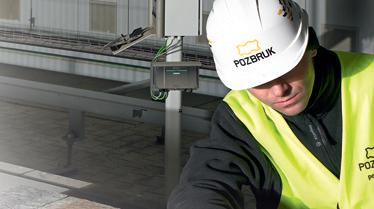
6 Inside sustainability 58 46 88 TG Lynes Structura UK Forma London 66 SAUTER 74 ULO Systems 82 POZBRUK 94 CambridgeHOK PARTNERSHIPS EVENT intro 05 Director’s Comment 10 Country Focus 16 Upcoming Events 18 Inside Sustainability Minds 20 COP28 24 The Greener Manufacturing Show 30 London EV Show CONSTRUCTION
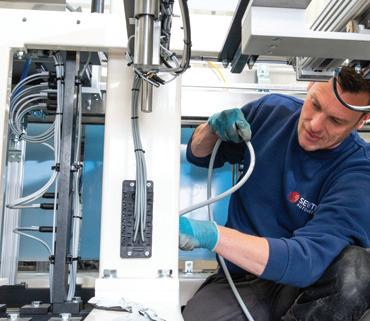
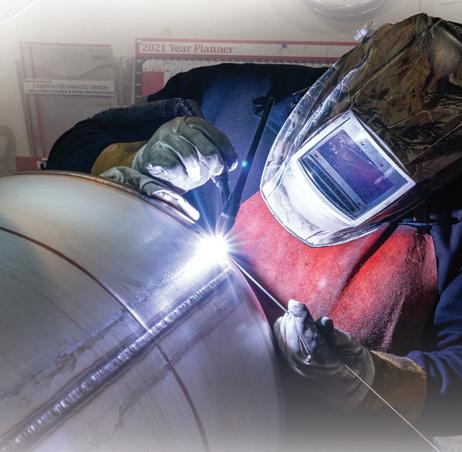
Inside sustainability 7 Contents i S 128 Nice-Pak Tanis 136 Amazon Filters Sewtec Automation 102 Bin Dasmal Group ENGINEERING & MANUFACTURING 118 WINTER REFRIGERATION 150 158


8 Inside sustainability 196 186 Chemtrix Fast & Fluid Management 204 K-FLEX Polska 210 Mammut Sports Group 180 9. Septembar 164 CCL Industries 174 Boix 216 Smith & McLaurin 222 Spaas Kaarsen TRANSPORTATION & LOGISTICS




Inside sustainability 9 Capgemini 304 Contents i S Bowman Power Group FortisTCI 282 238 Aerospheres JOB AIR Technic 252 246 Savino Del Bene 258 TECHNOLOGY Drone Delivery Canada 274 Turmec 290 Intelligent Energy 310 North Star 316 SERVICES & Waste Efficiency 298
Latest developments from the New Zealand industry

ZEALAND
Construction, climate and church groups call for end to free carbon credits
A new coalition of groups has launched the Don’t Subsidise Pollution campaign, calling for an end to free carbon credits and introduction of a Carbon Border Mechanism to decarbonise Aotearoa’s emissions-intensive industries like concrete, steel and aluminium.
Following the passing of a law that tightened up the overallocation of free credits, the coalition, coordinated by Common Grace Aotearoa and including New Zealand Green Building Council, wants to see political parties commit to getting rid of the system of free carbon credits altogether.
“Subsidising pollution in a climate crisis just doesn’t make sense,” Common Grace Aotearoa advocate Alex Johnston, organiser of the coalition, said. “When we all play our part in cutting climate pollution, then we can get further to meeting our targets together, and faster. But as cyclones and floods devastate communities across Aotearoa, the people in government are incentivising large multinationals to continue business as usual.
“Under current legislation, these companies will still be getting free credits for decades to come, even after the whole country is meant to be at net zero emissions.”
The Don’t Subsidise Pollution coalition is calling for the free credits to be gone by 2030, and in their place introduce a Carbon Border Mechanism, an environmental tariff that the European Union is phasing in from October.
The group also wants the Government to help maintain demand for domestically produced cement, steel and wood through green infrastructure investment via public procurement or a Ministry of Green Works, ensuring most industries getting free credits are not outcompeted overseas.
Andrew Eagles, Chief Executive of the New Zealand Green Building Council believes it is time to take action: “By ratcheting down free ETS credits, we’re incentivising ambitious climate action from our biggest polluters, and we can use that money to actually invest in real change.
“By removing free allocations, funds are freed up to better support the transition to a zero-carbon future.”
COUNTRY FOCUS
n
10 Inside sustainability
NEW
Latest developments from the Norwegian industry
NORWAY
Eksfin reaches loans and guarantees milestone for offshore wind projects
State-backed export credit agency Export Finance Norway (Eksfin) has deepened its commitment to the international offshore wind market by providing loan guarantee financing to Spanish energy company Iberdrola. The transaction supports Norwegian exporters’ participation in the East Anglia Three wind park project in the UK.
Iberdrola is one of the world’s leading players in the offshore wind market and recently secured a EUR 500 million green loan to finance the construction and development of East Anglia Three. Eksfin is guaranteeing 90% of the loan amount with Citi acting as the guarantee holder.
Through this transaction, Eksfin has provided guarantee financing for the first time to a Spanish energy company and facilitated significant export opportunities for the Norwegian supplier industry, in accordance with its mandate. Altogether, the loan financing supports export contracts valued at over NOK 6 billion / EUR 590 million.
“Our cooperation with leading international offshore wind developers is vital for the Norwegian offshore wind cluster,” Eksfin Managing Director Tone Lunde Bakker said. “We are very happy for this transaction with Iberdrola. It helps to
cement our strong position within renewable energy and opens new opportunities for Norwegian exporters,”

The deal also marks a new milestone for Eksfin, which since 2019 has provided more than NOK 20 billion / EUR 1.8 billion in financing to foreign purchasers of Norwegian technology and services within offshore wind.
Iberdrola continues to advance its commitment to sustainability, based on the electrification of the economy through clean energy, and aimed at combating climate change, plus creating wealth and employment in the communities where it operates. This operation strengthens Iberdrola’s relationship with its Norwegian partners. Offshore wind is currently the most important driver of the Norwegian supplier industry’s strong growth in the renewables sector. n
COUNTRY FOCUS
Inside sustainability 11
Latest developments from the USA industry

USA
Bringing NASA technology back down to Earth
The SMART Tire Company (STC) was conceived in 2020 as part of the FedTech NASA Startup Program in America. The founding team worked with inventors at NASA Glenn Research Center to explore commercial applications of this breakthrough tire technology and have raised an undisclosed amount of private funding to bring shape memory alloy tires to market.
FedTech is a private venture program funded by federal agencies and corporate partners, that connects entrepreneurs to technologies developed across the Department of Defense, NASA, Department of Energy, Department of the Interior, Department of Transportation, top-tier universities, corporate R&D arms and other research laboratories.
Shape Memory Alloy Radial Technology (SMART) is a revolutionary new technology for the $300B tire industry. This space-age tire changes the way vehicles perform on and off road, enabling new transportation possibilities around the globe.
Originally developed by NASA, and now commercialised for terrestrial use by The SMART Tire Company, these superelastic tires are airless, durable and will never go flat. Made from a special advanced material, NiTinol+ (nickel titanium), a shape memory
alloy that is elastic like rubber, yet strong like titanium.
This superelastic tire was born out of the extreme challenges NASA faces on Mars, where there are no roads, temperatures can reach -100C and tire performance is mission critical. Today, The SMART Tire Company is Reimagining the Wheel™ again, by bringing this tire technology to new applications on Earth.
SMART tire commercial products will be encased in a special rubber and polymer integration (tread, sidewalls, etc.), which could last much longer than the standard carbon black tire, creating a more sustainable product that has greater potential for recycling.
The SMART Tire Company was invited to the 2023 Goodwood Festival of Speed, where these innovative tyres were displayed. The company was featured in the popular Future Lab section of the festival.
12 Inside sustainability
COUNTRY FOCUS
n
Latest developments from the Türkiye industry
TÜRKIYE
Istanbul Airport announces sustainability report results
The innovative and industry-leading iGA Istanbul Airport, known as Türkiye’s gateway to the world and a true rising star in the world of aviation, has announced the publication of its 2021-2022 Sustainability Report.

Leading with the ethos ‘focus on the planet, target for the future’, iGA places sustainability at the heart of all activities, with an emphasis on mobility, environmental integrity and social benefit. With a sense of responsibility towards future generations, iGA also focuses on responsible consumption and management, and the report shares a detailed outline of the airport’s practices, achievements and future targets in line with this.
According to the Net Zero roadmap, key findings include that iGA Istanbul Airport concluded 2022 with 13% fewer emissions. It is expected that Scope 1 and 2 emissions will be reduced by 23% by 2025, and iGA is also developing pro jects to reduce Scope 3 emissions, which are those produced by the airport stakeholders.
In addition to this, iGA met 35% of its water consumption through reclaimed water, and the solid waste recycling
ratio was increased from 31% to 34% in 2022.
With its focus on human life and respect for the environment and society, iGA continues to work with all its stakeholders to ensure a better world for future generations, in line with the United Nations Sustainable Development Goals. The report outlines the main features of iGA Istanbul Airport’s sustainability planning, including its 2030 goals, which are integral to creating a fairer, healthier and more sustainable world, as well as its endeavours within the mobility sector.
The efforts of iGA Istanbul Airport for the future of mobility and its achievements in the aviation industry continued to be rewarded by leading international organisations during 2021-2022. iGA was selected as the World’s Busiest Airport for three consecutive years and has also been named World’s Best Airport by the readers of Condé Nast Traveller. n
Inside sustainability 13
COUNTRY FOCUS
click to sections:
CONSTRUCTION
ENGINEERING & MANUFACTURING
TRANSPORTATION & LOGISTICS
SERVICES & TECHNOLOGY
BACK TO CONTENTS

one planet – one chance – one voice
EVENT PARTNERSHIPS
A selection of upcoming events, quotes and event preview on COP28, followed by interviews about Greener Manufacturing and London EV.

i
S
08-09 November 2023
The Greener Manufacturing Show
The Greener Manufacturing Show 2023

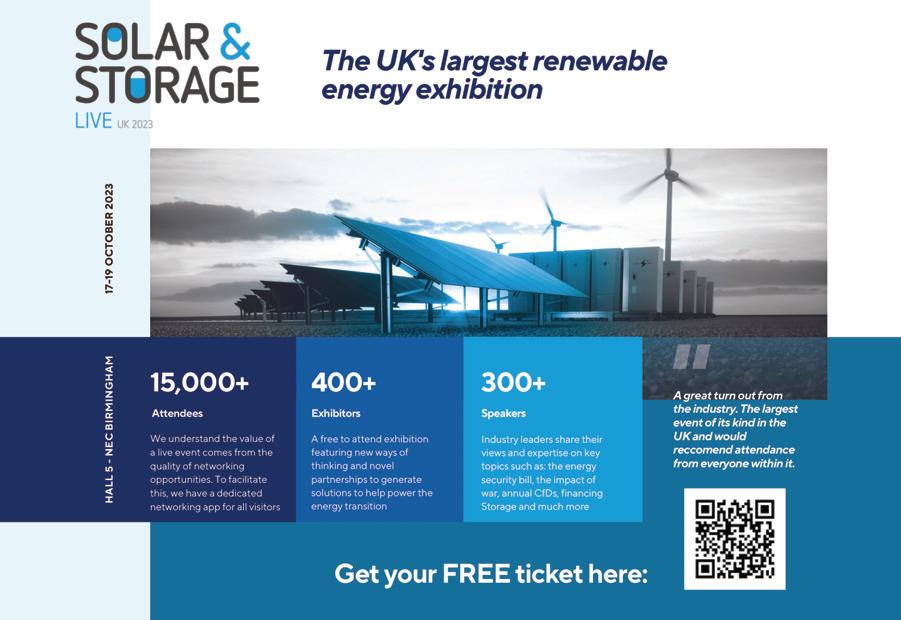
| Plastic Waste Free World Conference & Expo Europe is the must-attend event for any sustainability-focused company. This combined event connects 250+ exhibitors with 4,000+ like-minded professionals, industry experts and potential business partners.
18-19 October 2023

Smart Buildings Show
Smart Buildings Show connects visitors to the latest information and technology in the smart buildings industry. The event gives visitors the information they need to arrive at an informed decision on how to make their buildings more economic for owners and more functional for occupiers.

02-05 Octobe ADIPEC
ADIPEC is an international plat energy producers, consumers accelerate game-changing s mational progress for the future of en Dhabi by ADNOC, ADIPEC builds on its vation and evolution for the entire ene
 [click here] for weblink
22-
Eur lau Join
for the ucts and se minimise the [click
The Busine
employees Zone
h
[click here] for weblink
16 Inside sustainability
[click here] for weblink
-23 November 2023 ess Show 2023 – Sustainability Zone
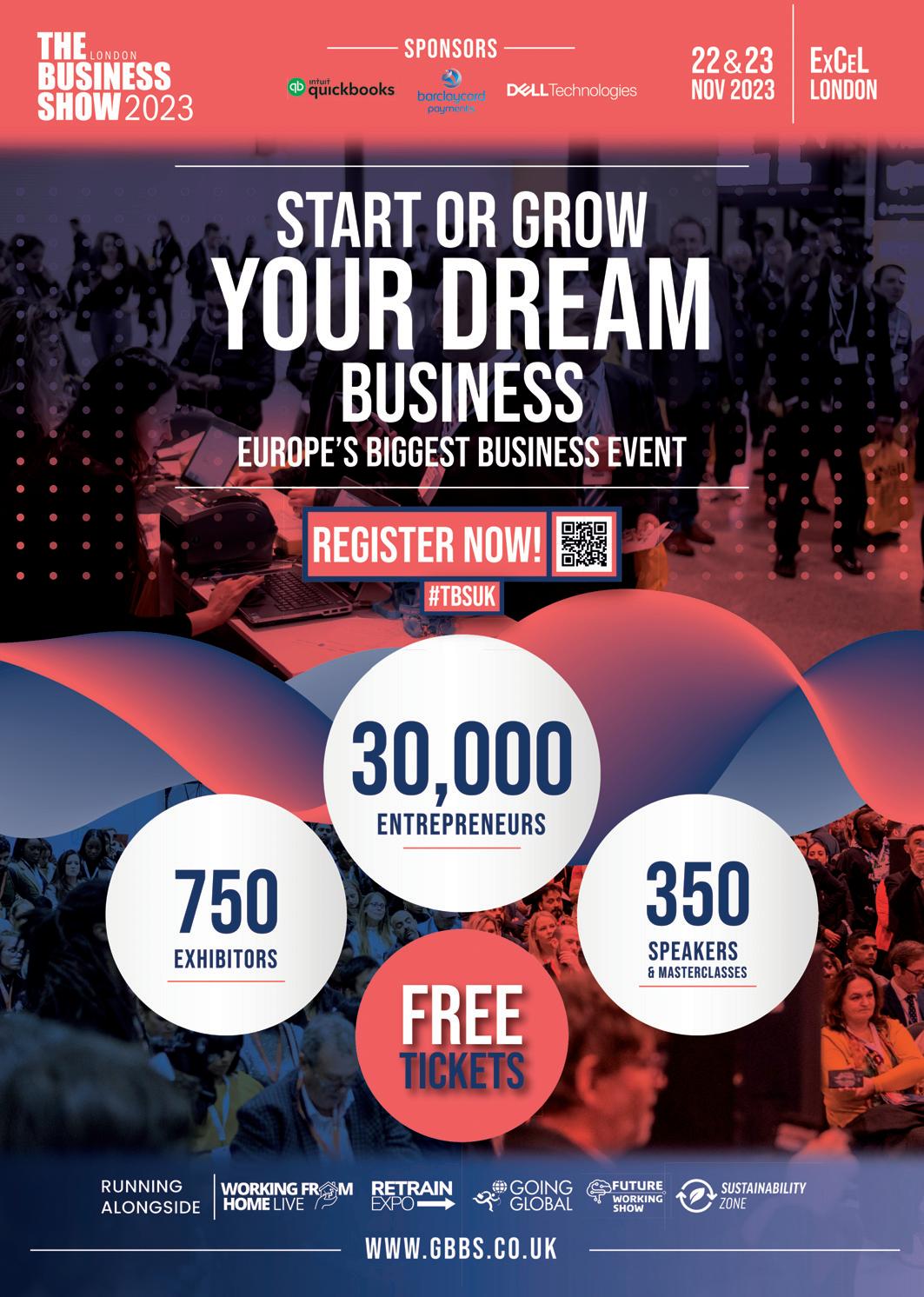
rope’s biggest business event has unched its own Sustainability Zone! n over 30,000 business owners and at The Business Show’s Sustainability e latest in pioneering information, prodervices to help businesses effectively eir long-term environmental impact.
here] for weblink
r 2023
tform convening global s and innovators to olutions and transforergy. Hosted in Abu 39-year legacy of innoergy ecosystem.
30 November12 December
COP28 UAE

Held in Dubai, COP28 UAE will be a milestone moment when the first Global Stocktake will provide a comprehensive assessment of progress since adopting the Paris Agreement. The COP28 UAE Presidency will work to ensure that the world responds with a clear plan of action.
[click here] for weblink
Why not give your event exclusive coverage to thousands of readers and connections globally? Contact us: media@insidepublication.com

Inside sustainability 17
INSIDE SUSTAINABILITY MINDS
Inside Sustainability asks the experts about their personal experience in the industry
minds inside Sustainability
Question: What benefits do you see from attending industry events and conferences, either face-to-face or online?

I am advocate of attending conferences as it gives you a chance to see what your peers, colleagues and competitors are doing. Meeting face-to-face, personal engagement and discussing shared solutions, innovations and struggles all certainly help.
Scott Shearing, MD, Stortford Interiors
We do a lot of meet-the-buyer events and find them very beneficial because as a niche product, we can generate more distributors, meet central purchasing groups and engage with people to discuss the benefits of Grease Guardian.
Michel Fitzpatrick, Divisional Director, Grease Guardian
It’s simply essential. No matter the size of the company, everyone has to team up with industry peers because sustainability and climate challenges are so big and the time to fulfil them is so short that there’s no other option than to collaborate. All these industry associations and meetings –whether in person, hybrid or online – are critical to getting things done. We need to collaborate. Sustainability is a global team sport.
Adrian Huber, Head of Corporate Responsibility, Mammut Sports Group
They help to drive engagement and enable us to touch base with stakeholders across industry. Engagement across the supply chain is critical.
David Enders, Group HSES Manager, Lamprell
We always ensure that we seize the opportunity to meet in person so that our customers, as well as our future customers, understand that our way of doing business is based on the human touch because in such a dynamic market it is important to have the right partner who is able to listen and act together.
Sandro Pietramala, QHSE & Sustainability Manager, Savino Del Bene
“
“ “
“
“
“ “
“
“
“ 18 Inside sustainability
It’s an opportunity for us to reinforce our capabilities with customers in person, while exploring the customer’s needs more effectively versus online interaction. Our frequent breakfast technical briefings – tailored to suit airlines and leasing companies – are a great example of industry events and how they can benefit stakeholders. Our breakfasts are by invite only and have been well attended, featuring topics that are specifically of interest to airlines and related stakeholders.
“
It’s
important
it allows you to keep in touch with what’s happening in the industry.
We went through a stage in which we stopped participating in exhibitions, though we always visited them, but we have now started exhibiting again. Even at conferences, you get to see what regulations are changing, how the industry is moving and what problems people are facing. And it’s a great way to meet the industry. We could have 15-20 regular suppliers around the world and these events are a chance to meet them. Just keeping on top of the industry’s heartbeat.
We would love to hear your answers, so send an email over to our Editorial Manager, Phil Nicholls.

“ Get Involved
very
because
Gavin Dunne, Associate Sales Director, Turmec
“
Paul Gibson, Head of Sales, Eirtech Aviation Services
“ “
When we do attend conferences, the benefits are to strengthen our networks and to represent our brand as best we can .
“ media@insidepublication.com Inside sustainability 19
Daniel Rickman, MD, Structura UK
COP28 UAE
Running from 30th November to 12th December 2023 at Expo City, Dubai, COP28 UAE will be a milestone moment when the first Global Stocktake (GST) will provide a comprehensive assessment of progress since adopting the Paris Agreement. This will help align efforts on climate action, including measures that need to be put in place to bridge the gaps in delivery.
The COP28 UAE Presidency will work to ensure that the world responds to the GST with a clear plan of action.
This event marks a halfway point. It has been seven years since Paris, with seven years to go to 2030. The world must respond to the facts: there is a need to reduce emissions by 43% before 2030 and course correct on adaptation, finance and loss, and damage.
The UAE has pledged to deliver a transformational COP of action.
“At COP21 in 2015, the world agreed to limit global warming to 1.5°C compared to pre-industrial levels by 2050,” HE Dr Sultan Ahmed Al Jaber, PresidentDesignate for COP28 UAE, said. “To remain on target, science tells us that emissions must be halved by 2030. We only have another seven years to meet that goal.
COP28 UAE is a prime opportunity to
rethink, reboot and refocus the climate agenda.
“Working with the UNFCCC Executive Secretary alongside the UN Climate Change High-Level Champion and the UAE Youth Climate Champion, I will strive to build consensus amongst parties to drive climate action. Together, we will prioritise efforts to accelerate emissions reductions through a pragmatic energy transition, reform land use and transform food systems. We will work to mobilise solutions for vulnerable countries, operationalise loss and damage, and deliver the most inclusive Conference possible.”
Sustainability at COP28
This is a large event, so it would be impossible to cover it all in a single preview. However, here is one COP28 topic that is particularly relevant to Inside Sustainability.
The Global Innovation Hub, launched in November 2021, aims to promote transformative innovations for a lowemission and climate-resilient future. The Hub expands the global innovation


20 Inside sustainability EVENT PREVIEW Special focus on COP28
30 Nov - 12 Dec 2023, Expo City Dubai
https://www.cop28.com/en / https://unfccc.int/

space by facilitating solutions that support the climate-related Sustainable Development Goals (SDGs) and that address core human needs for food, shelter, mobility and access via alternative value chains aligned with those SDGs. The Innovation Hub complements the current approach to innovation for climate solutions – an approach that has tended to be incremental, sector-based and problem-oriented – with a transformative, need-based and solution-oriented one.
Hosted by the United Nations Framework Convention on Climate Change, the Innovation Hub leverages the convening power and climate leadership of the United Nations with the dynamism of the private sector. At COP28 the Hub will provide a global cross-disciplinary community of
practice with spaces – physical and virtual – to share ideas and design climate solutions in a spirit of radical collaboration.
Key participating actors will include governments at multilateral, national, regional and local levels, urban planners, digital businesses, corporates, enablers, incubators, accelerators, scientists, and researchers.
All participants in the Innovation Hub commit to developing solutions aligned with the Sustainable Development Goals and the targets of the Paris Agreement. Although technological innovation is expected to play a major role, the Innovation Hub will also focus on solutions related to policy and regulation, business models, financing instruments, and cooperation. n
Inside sustainability 21
22 Inside sustainability
EVENT PREVIEW
In an exclusive interview for Inside Sustainability, Event Director Peter Sarno answers questions about the event.
The Greener Manufacturing S
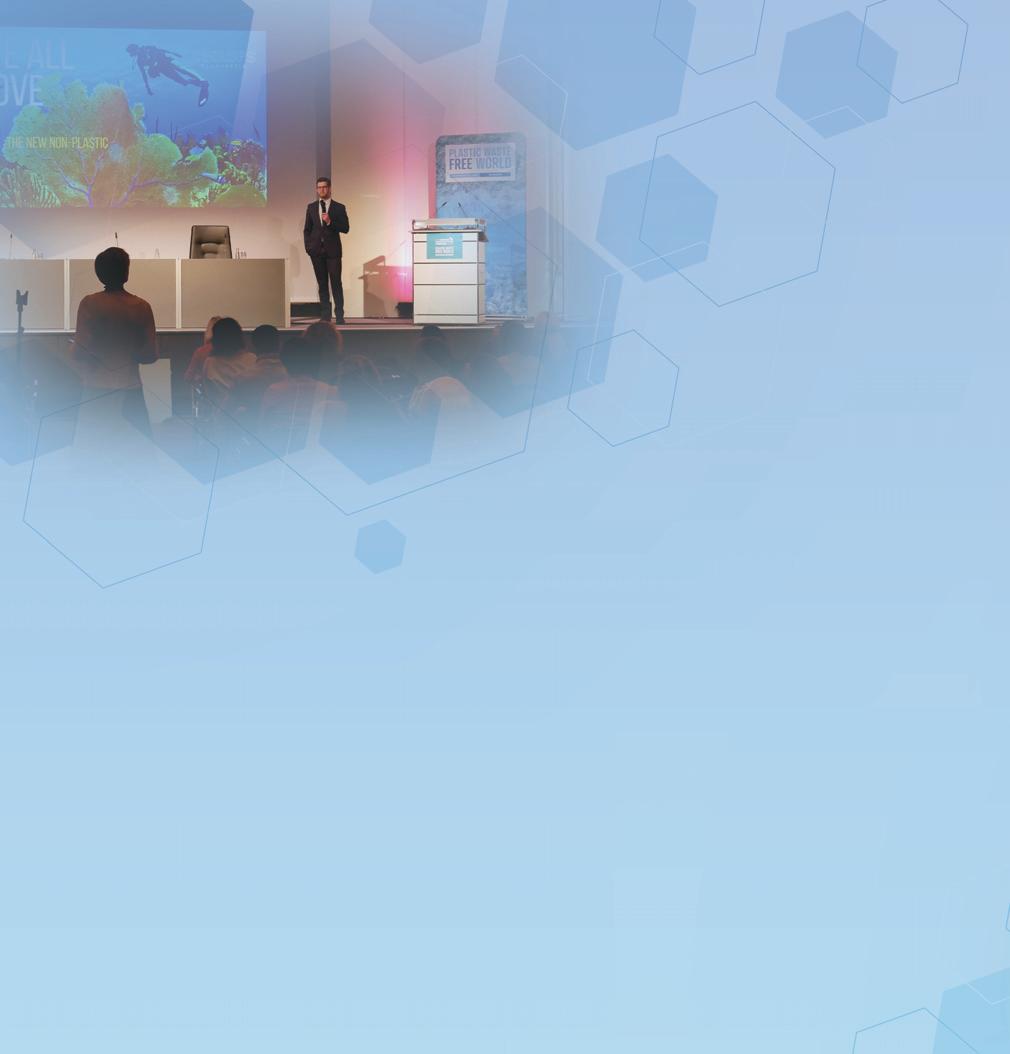
The Greener Manufacturing Show 2023 | Plastic Waste Free World Conference & Expo Europe is the must-attend event for any sustainability-focused company. Running 8th to 9th November in Cologne, Germany, the combined event brings together over 250 exhibitors. Event Director Peter Sarno explained to Jasmine Lodge what visitors can expect.
What do you
see
are the benefits to businesses for attending The Greener Manufacturing Show 2023 | Plastic Waste Free World Conference & Expo Europe?
The 3-stream conference and 250+ exhibitor-strong expo serves as an invaluable platform for networking, allowing attendees to connect with 4,000+ like-minded professionals, industry experts and potential business partners. Engaging in conversations with peers can foster innovation, generate new ideas and pave the way for collaborations that drive positive change in manufacturing processes.
Overall, attending the show enables businesses to establish themselves as eco-friendly leaders, opening doors to new business opportunities, enhancing brand reputation and, ultimately, contributing to a circular economy.

How have GMS & PWF Europe 2023 evolved since the last show?
We have seen remarkable development since the last show. This leading event in the industry has constantly adapted its agenda and offerings to align with the changing environmental landscape and growing concern for plastic waste. The
24 Inside sustainability
Show 2023
third edition promises several new and exciting features to look forward to, including a B2B Matchmaking service, design expertise from the Green Future Club and the presence of an ambitious start-up zone.
There will be an enhanced focus on sustainable manufacturing processes and technologies that promote greener practices. Visitors can also expect an increased presence of industry experts, thought leaders and leading businesses sharing their insights. Furthermore, there will be more interactive sessions, workshops, and technology demonstrations to actively engage participants and facilitate knowledge sharing from the likes of Covation Bio, VTT and Trinseo.
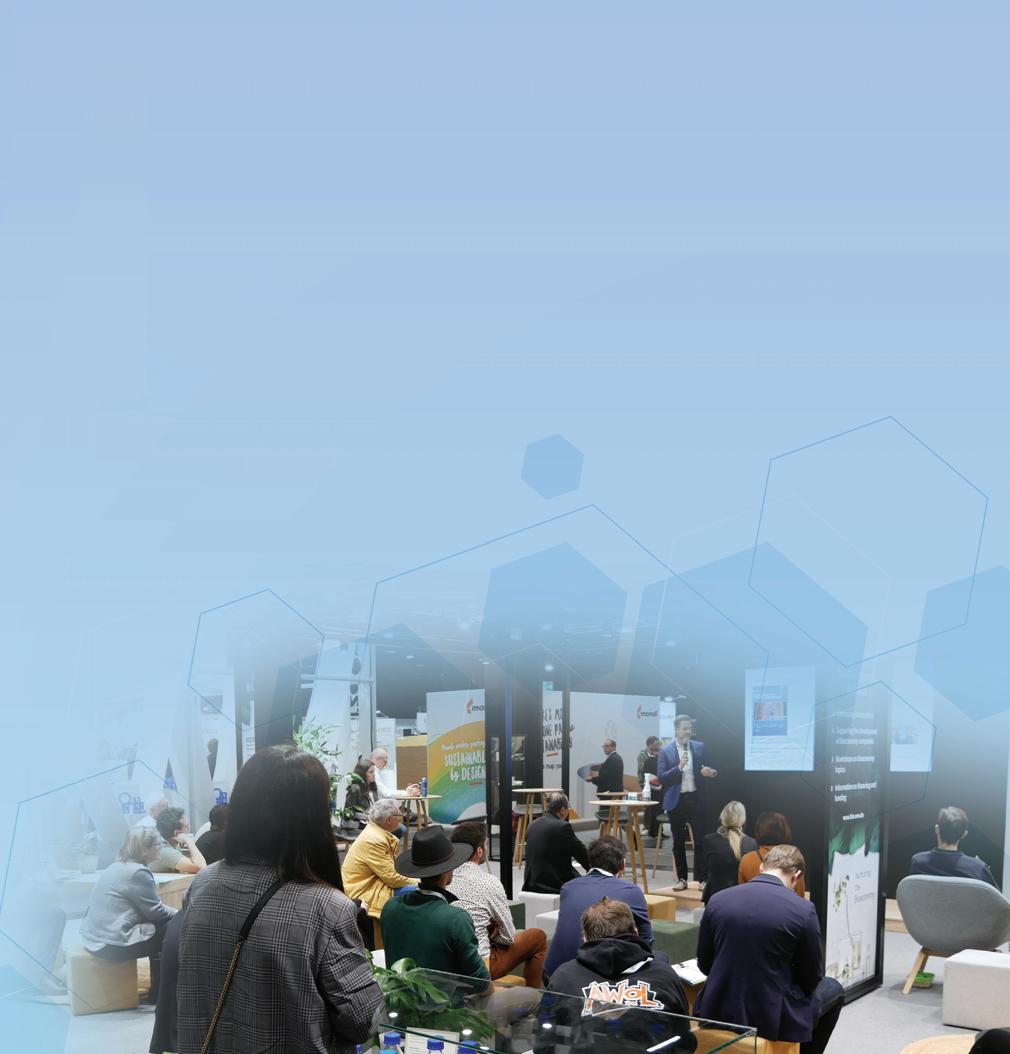
What visitor and exhibitor numbers are you targeting for this year?
The two-day show is a highly anticipated event in the manufacturing industry. Our goal is to host over 4,000 attendees in Cologne, including manufacturers, industry experts, suppliers, policymakers and environmental enthusiasts. As for exhibitor numbers, the event hopes to engage with around 250 industry-leading companies and organisations that are committed to developing eco-friendly manufacturing practices and plastic alternatives.

EVENT PREVIEW
In an exclusive interview for Inside Sustainability, Event Director Peter Sarno answers questions about the event.
8-9th November, K
www.greener-man
What can visitors expect from
their trip to GMS & PWF Europe?
Visitors can look forward to an immersive and enlightening experience that revolves around sustainability, innovation and the collective effort to create a greener world free of plastic waste. This event offers a plethora of opportunities and features that ensure visitors leave with valuable insights, meaningful connections and inspiration to drive positive change in their respective industries.
The free-to-attend expo will connect businesses to a diverse range of exhibitors offering cutting-edge technologies, sus -
tainable products and solutions to reduce plastic waste. Networking opportunities will be abundant, allowing visitors to connect with like-minded professionals and explore potential collaborations.
What benefits can companies expect to gain from exhibiting?
Exhibiting companies can showcase their innovations and solutions to a targeted, high-quality audience of decision makers actively seeking green manufacturing and alternatives free of plastic waste. This exposure can lead to new business opportunities, potential partnerships and increased brand visibility within the greener manufacturing sector.
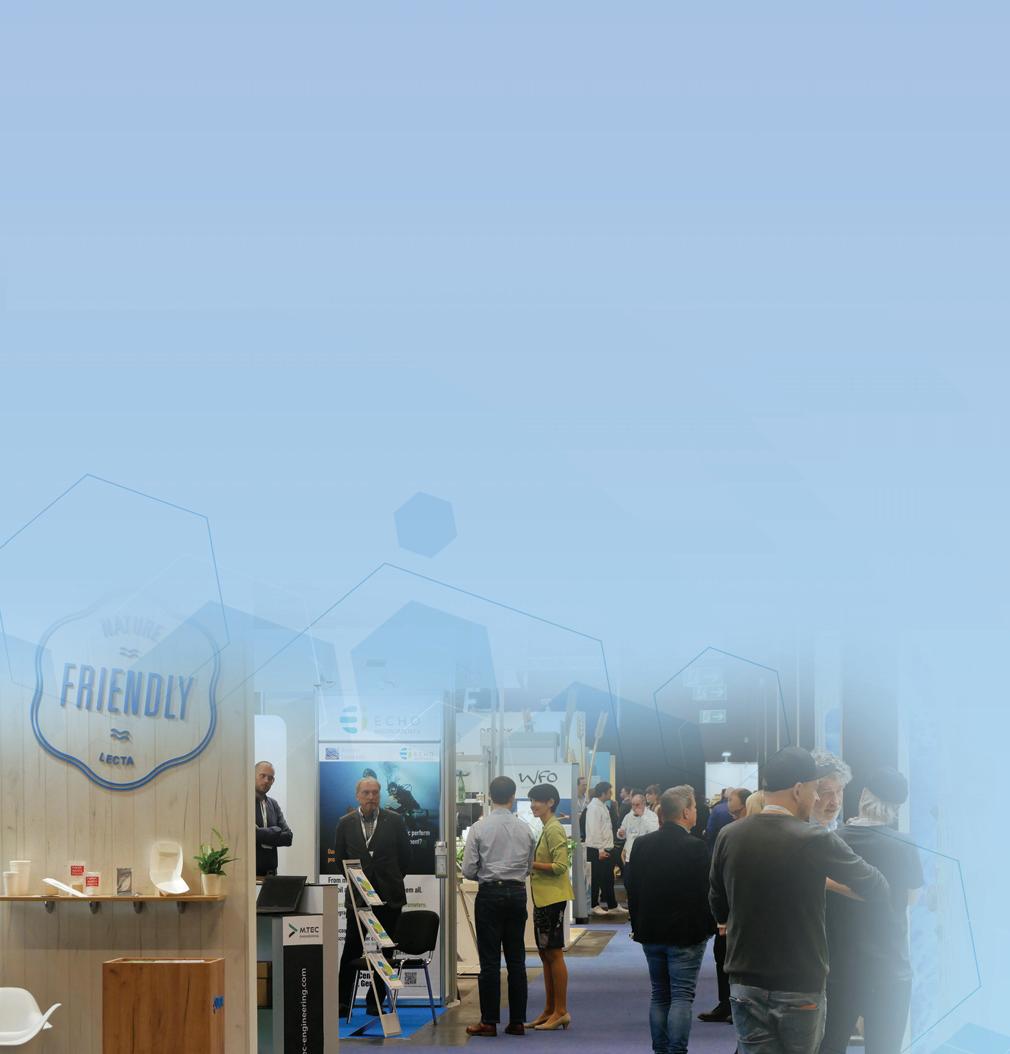
26 Inside sustainability
nufacturing.com
Company previews:
• STX – lead sponsor – climate action solutions
• SAP – circular manufacturing solutions that drive a paradigm shift in production processes
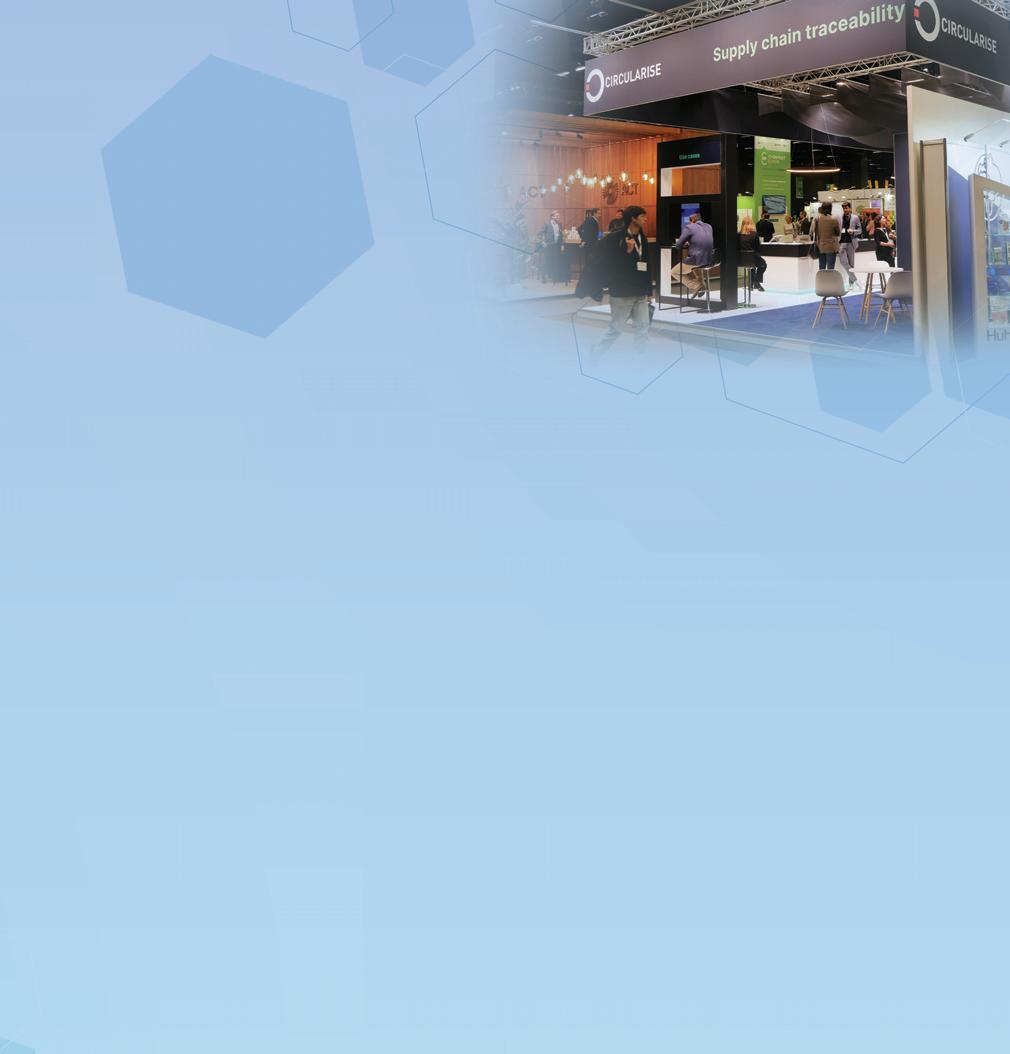
• Chocal – groundbreaking plastic-free packaging solutions
• AVIENT – innovative polymer solutions
• ALLNEX – sustainable coating technologies
• VTT – the power of cellulose-based technology
• Ecochain – cutting-edge lifecycle analysis software
By showcasing their eco-friendly products and services, organisations can capture the attention of a niche audience that genuinely cares about environmental sustainability. This heightened visibility can lead to increased recognition and improved brand loyalty among ethically minded consumers.
Can you share any previews about the latest technologies and solutions on display this year?
With an impressive lineup of renowned companies, attendees can expect a glimpse into the forefront of circular manufacturing, plastic waste reduction, eco-friendly packaging, sustainable polymers, climate action solutions and much more. I am happy to provide a sneak peek at some of the 250+ companies and their exciting offerings that will be on display this year.
Please tell me more about your conference programme.
The conference agenda at The Greener Manufacturing Show & Plastic Waste Free World Europe 2023 is poised to address pressing environmental concerns and offer potential solutions to foster a sustainable future. With a focus on Scope 3 emissions, plastic waste reduction opportunities, and alternative material possibilities, the event aims to engage participants in productive discussions and innovative strategies.
Attendees will have the opportunity to engage with more than 130 leading experts in the field over the three dedicated conference streams and discover the potential of these trending subject areas in driving greener practices.
Inside sustainability 27
Koelnmesse, Germany
EVENT PREVIEW
In an exclusive interview for Inside Sustainability, Event Director Peter Sarno answers questions about the event.
Are there any other special aspects of GMS & PWF Europe that you would like to highlight?
The Greener Manufacturing Show & Plastic Waste Free World Europe goes above and beyond a standard exhibition by incorporating unique and essential elements that enrich the experience for attendees and exhibitors alike. Through B2B matchmaking, bioeconomy workshops and the ‘Industry Meets Design’ initiative, the event fosters meaningful connections, drives innovation and encourages cross-industry collaboration to address the pressing challenges of sustainability.
As a result, the event stands as a pivotal platform where businesses can come together to exchange ideas, explore opportunities and collectively shape a more environmentally responsible and resource-efficient future.
What do you consider to be the main industry challenges for manufacturing sector for the future?

One of the most significant challenges for the manufacturing sector is reducing its environmental impact, particularly greenhouse gas emissions. Manufacturers
are under increasing pressure to lower their carbon footprint and address Scope 3 emissions, which include indirect emissions from the entire value chain, from raw materials extraction to product disposal.
The Greener Manufacturing Show & Plastic Waste Free World 2023 dedicates a two-day conference heavily focused on Scope 3 emissions. Bringing together experts, industry leaders and solution providers to share insights, best practices and strategies for reducing indirect emissions. By facilitating knowledge exchange and showcasing emission-reduction technologies, the event helps companies take meaningful steps toward achieving sustainability goals.
The conference will also serve as a platform for companies to learn about successful circular economy implementations, sustainable product design and circular supply chain practices. By highlighting realworld examples and success stories, the Plastic Waste Free World element will inspire manufacturers to embrace circularity and design products with end-of-life considerations in mind. Delving also into various sustainable packaging solutions, innovative materials and best practices for waste reduction to tackle packaging pollution and provide eco-friendly packaging alternatives.
28 Inside sustainability
8-9th November, K www.greener-man
On a personal level, what aspect of the show are you most excited about?
As the Event Director, one aspect of The Greener Manufacturing Show & Plastic Waste Free World that I am most excited about is the incredible range of companies and industries that participate in this event. The show attracts a diverse group of businesses, representing various stages of the supply chain, which is always exhilarating.
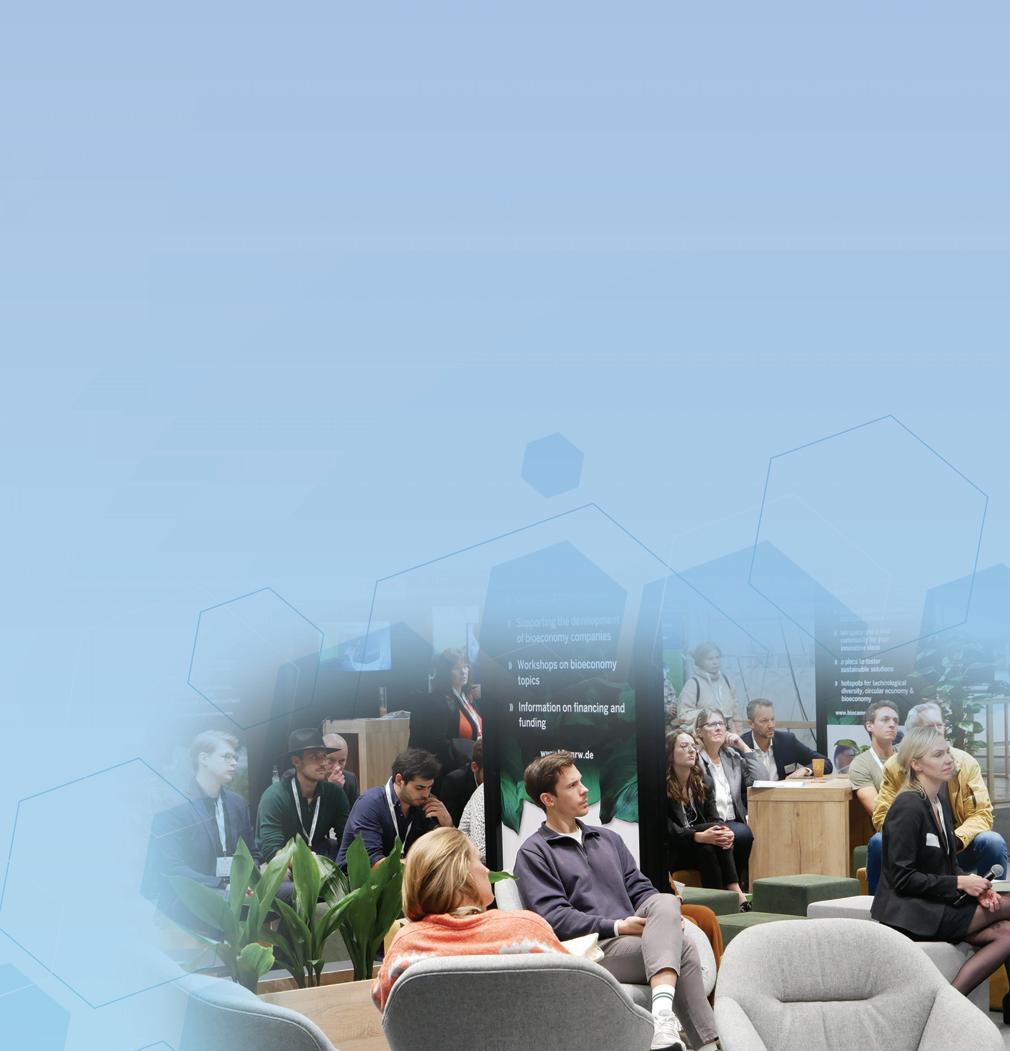
The chance to bring together like-minded individuals and organisations that are committed to creating a plastic waste-free world fills me with anticipation. Witnessing the energy and enthusiasm in the room
when industry leaders unite to tackle this pressing issue is truly inspiring. It reaffirms my belief in the power of collective action and the impact we can have when we work together towards a common goal.
Is there anything not covered by the above questions that you would like to share with our readers?
Visitor and Exhibitor registration is already open; to secure your place at this year’s must-attend event, guarantee your Free Expo Pass or Early Bird Conference Ticket visit: www.plasticfree-world.com/greenermanufacturing-show-register/ n
Inside sustainability 29
Germany
Koelnmesse,
nufacturing.com
Founder & CEO at Valiant Business Media Shariq AbdulHai exclusively updates Inside Sustainability about the show.
london EV show
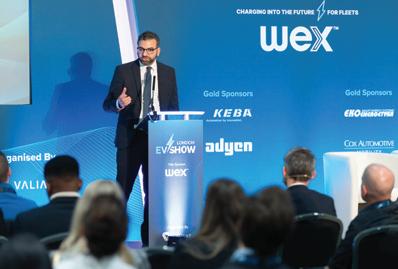
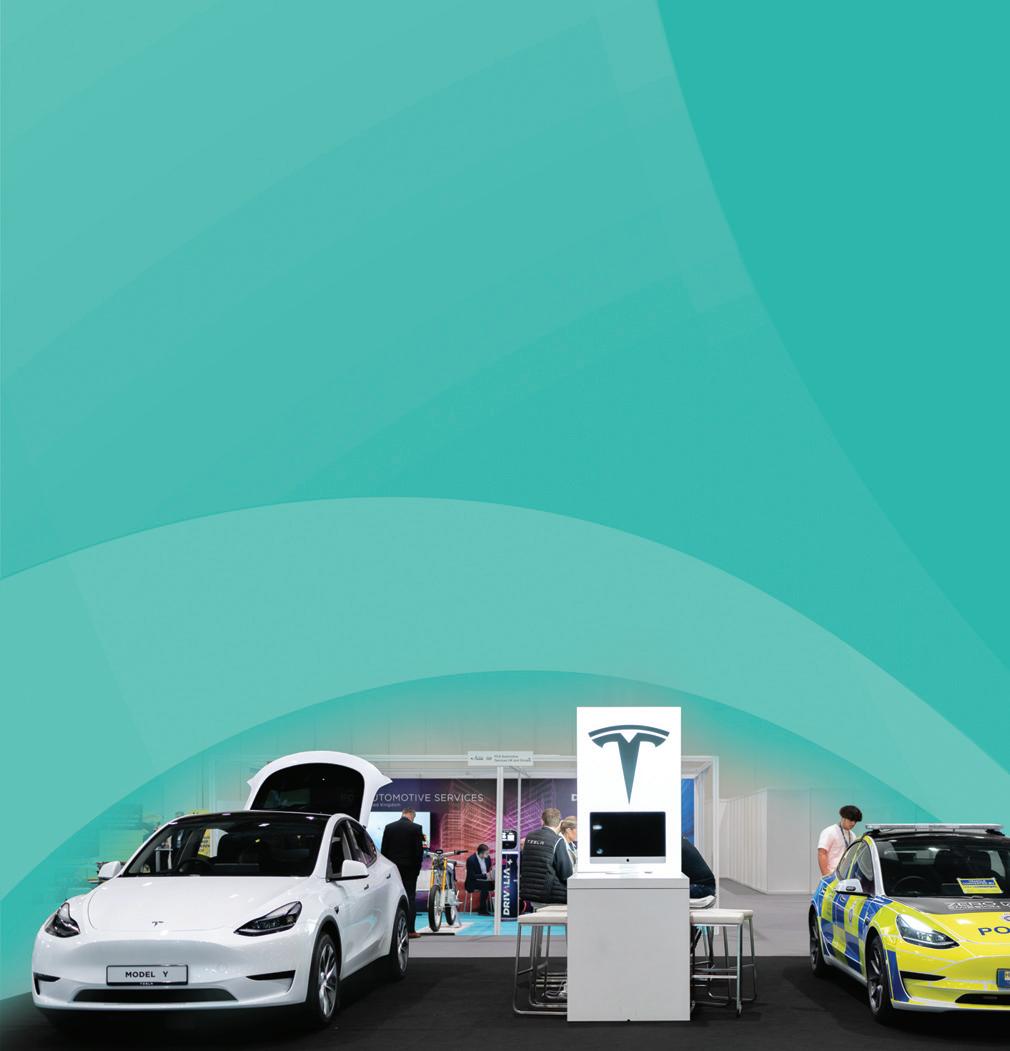
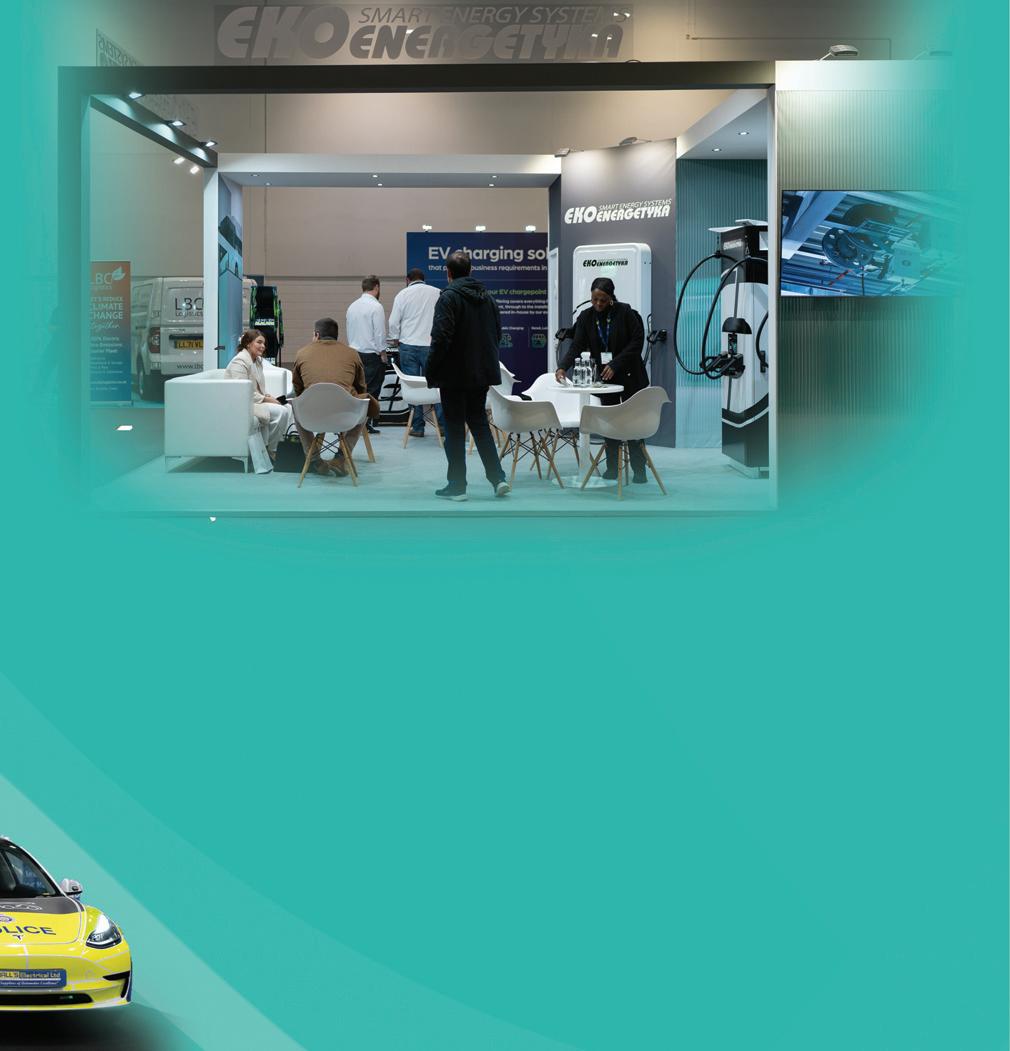
From 28th to 30th November 2023, the London EV Show will gather the world’s leading companies and startups to showcase a broad range of products, services and ideas, from electric cars and light vehicles to electric trucks and vans, as well as electric charging infrastructure and battery systems. Founder & CEO at Valiant Business Media Shariq AbdulHai discussed the event with Jasmine Lodge.
Looking ahead to the London EV Show, what do you see are the benefits to businesses of attending the event?
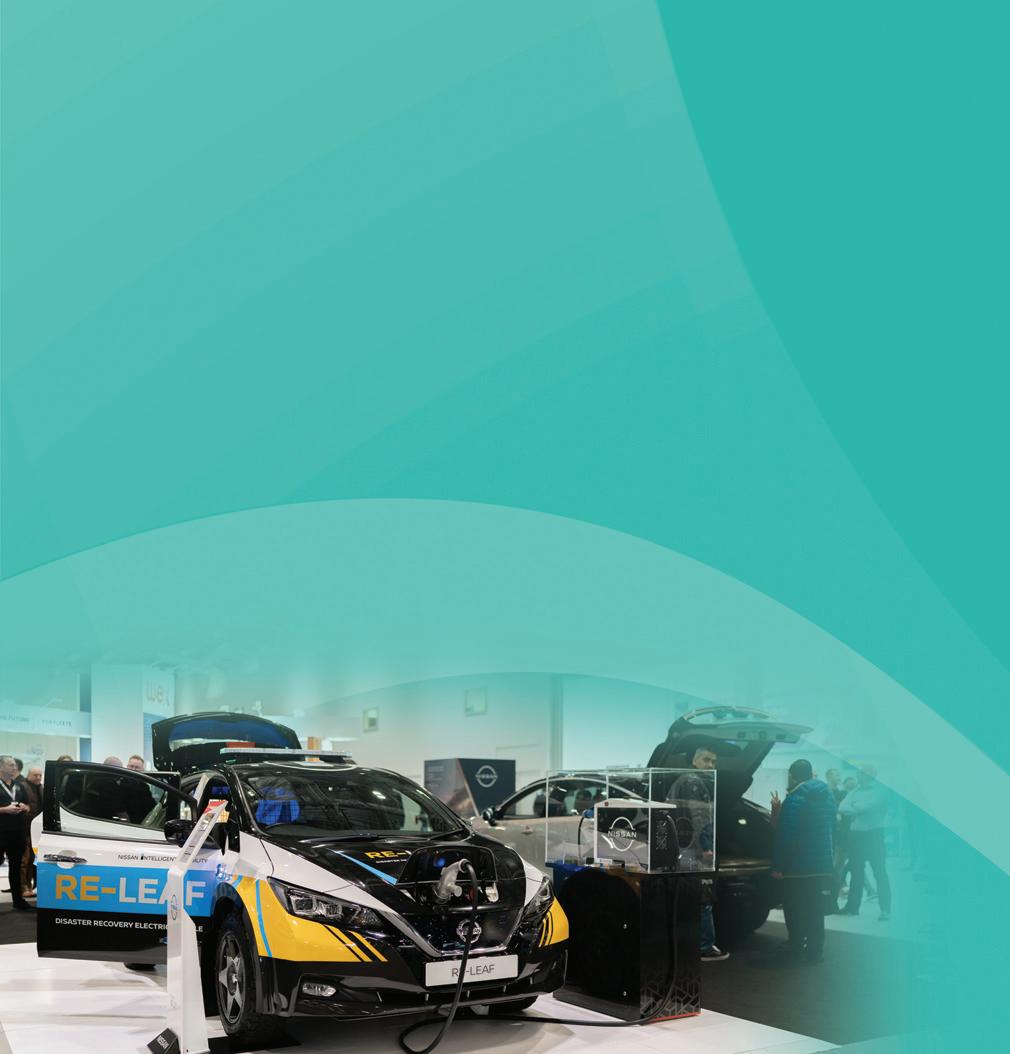
Attending presents numerous benefits to businesses across the EV industry. Firstly, it offers an exceptional platform for networking and business development, bringing together leading manufacturers, suppliers, engineers, policymakers, investors and entrepreneurs from around the world. The event facilitates the establishment of strategic alliances and partnerships, pro -
viding a unique opportunity for companies to expand their market position.
Additionally, businesses can showcase their latest products, services and innovations to a diverse audience, generating qualified leads and enhancing their business pipeline. Furthermore, by participating in the show, companies gain media exposure, augment brand awareness and directly engage with potential customers, investors and industry decision-makers, all of which contribute to the overall growth and success of their business.
EVENT PREVIEW
30 Inside sustainability
The London EV Show has evolved significantly since the last edition. As the UK’s biggest EV expo and conference, we witnessed amazing year-on-year growth of 160% in terms of number of exhibitors, 200% in terms of attendees and 140% in terms of speakers. Entering its third year, #LEVS23 is gearing up to exceed all expectations and will set a benchmark as the must-attend event not only in the region but globally.
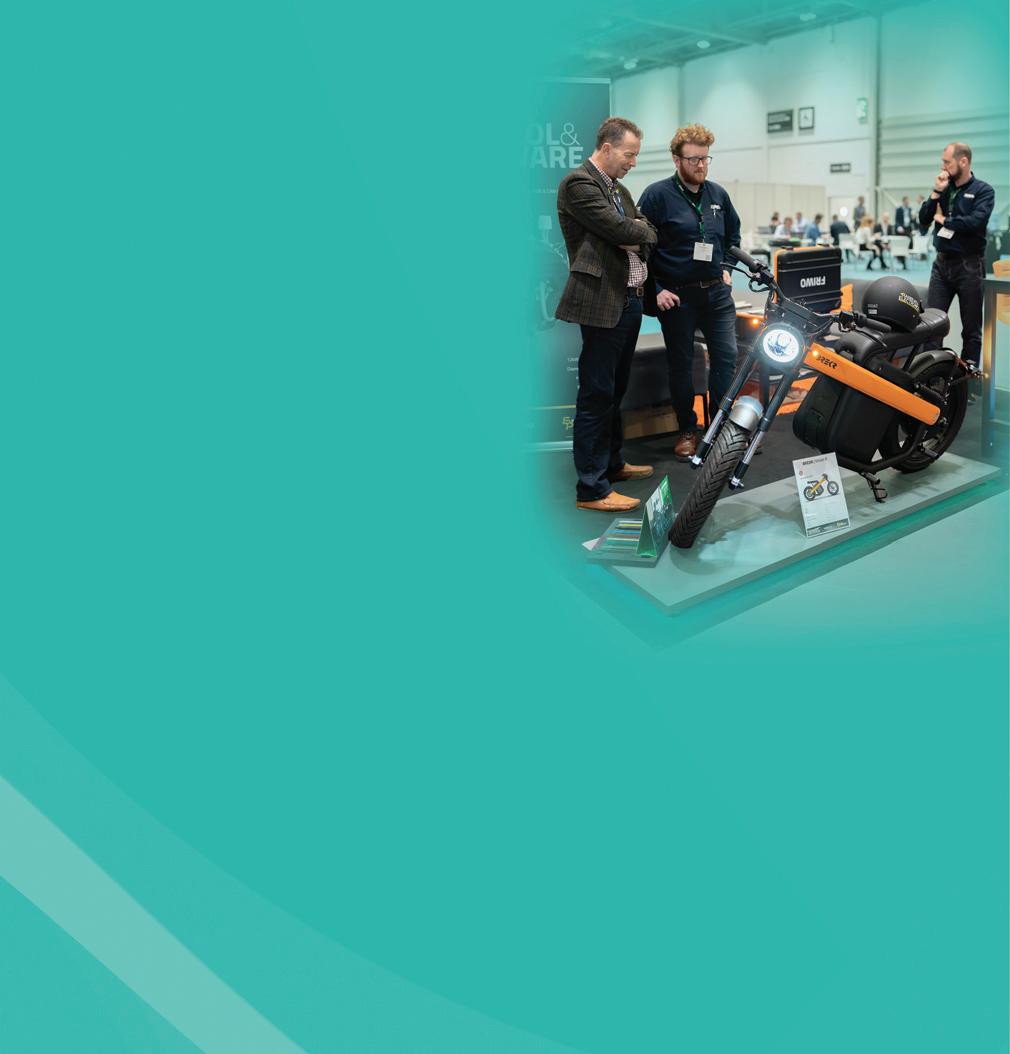
We are proud to announce that this year’s show will feature a massive 12,000sqm expo floor at ExCel London, accommodating leading EV businesses and a wider range of electric vehicle products and solutions. The show now includes multiple test drive tracks and product demonstrations, allowing
attendees to engage firsthand with the latest electric vehicles. This participatory aspect not only enhances the visitor experience, but also boosts attendance by providing an interactive way for attendees to engage with the products.
Furthermore, we have expanded our conference programme to include over 150 industry experts delivering content-oriented sessions, panel discussions, Q&As and investment-focused talks, covering a wide array of topics vital to advancing EV adoption and the broader industry.
 How has the London EV Show evolved since the last show?
Inside sustainability 31
Founder & CEO Shariq AbdulHai
What visitor and exhibitor numbers are you targeting for this year?
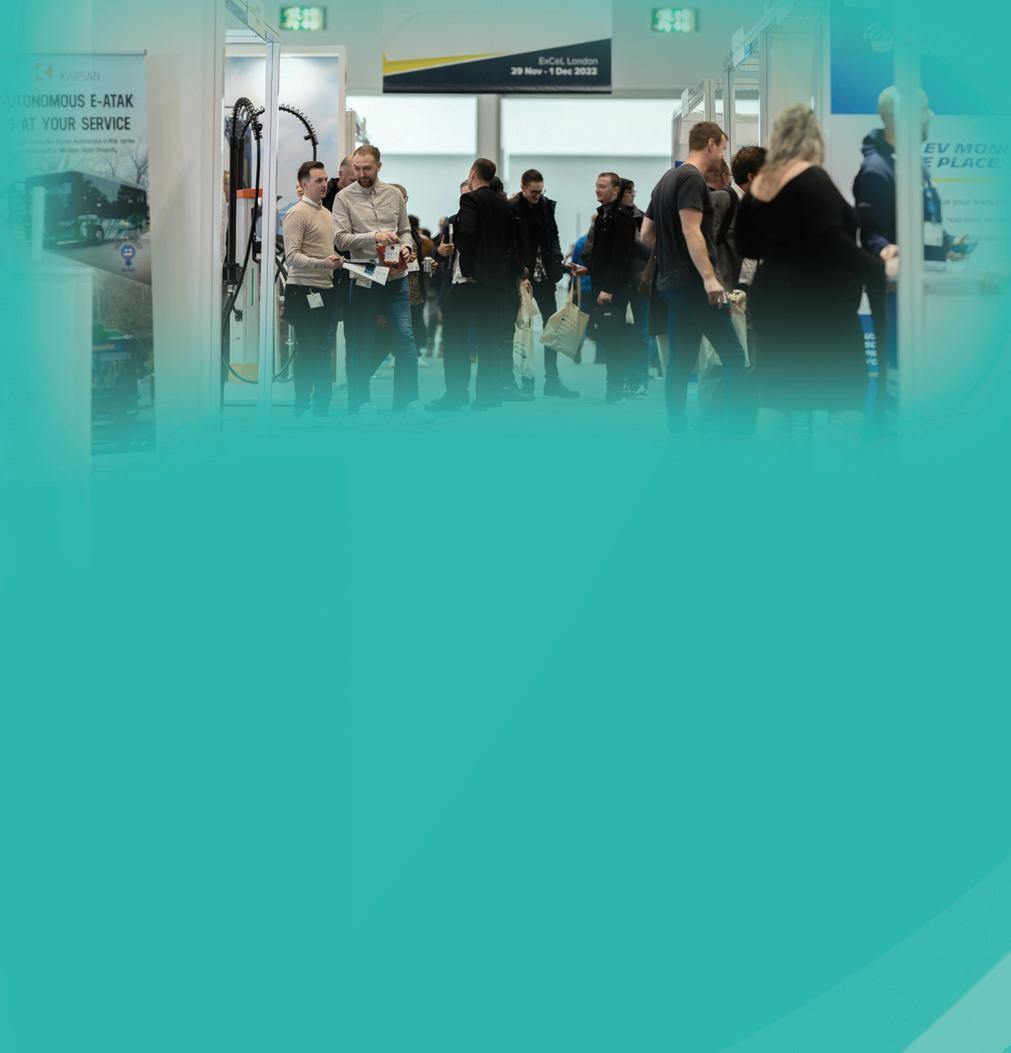
We are targeting over 10,000 enthusiastic attendees and 240+ exhibitors. These numbers reflect our commitment to creating a vibrant and dynamic platform for networking, business development and knowledge sharing within the EV industry.
What do you see as the advantages of attending an event with a dedicated focus like this?
Visitors to the London EV Show can expect a comprehensive showcase of the latest EV models, next-gen technology and solutions from around the world. The dedicated focus of the event ensures that attendees can
immerse themselves in all things EV, gaining insights into electric cars, light vehicles, trucks, vans, charging infrastructure, battery systems, EVtols and even electric boats. By attending events like the London EV Show, visitors gain a deeper understanding of the EV landscape, emerging trends and technological advancements, all while engaging in meaningful discussions and forging connections with like-minded individuals.
What benefits can companies expect to gain from exhibiting at the London EV Show?
Exhibitors can expect a range of benefits that contribute to their business growth and visibility. Exhibiting provides an opportunity to showcase the latest products
32 Inside sustainability
EVENT PREVIEW
Founder & CEO at Valiant Business Media Shariq AbdulHai exclusively updates Inside Sustainability about the show.
28-30th Nov www.london
vember 2023, London
nevshow.com
and services directly to a captive audience of industry professionals, potential customers and investors.
Generating qualified leads through interactions at the booth expands the business pipeline. Establishing long-lasting relationships with industry stakeholders helps consolidate market position and opens doors to potential collaborations.
How popular is the test drive track at the show? How much do you feel this additional service helps boost attendance?
The track is an important feature of the London EV Show. It provides attendees with the hands-on experience of driving the latest electric vehicles, allowing them to gauge the performance, comfort and
features of these vehicles in a real-world setting. This experiential aspect significantly boosts attendance by offering a unique and engaging activity that goes beyond static displays.
Attendees appreciate the opportunity to take the vehicles for a spin, helping them make more informed decisions about their potential purchases and fostering a deeper connection to the EV technology.

Are there any other special aspects of the London EV Show that you would like to include in this feature?
In addition to the aforementioned features, we would like to highlight our commitment to creating a global platform for CXOs, VPs, Directors and other senior-level executives
Inside sustainability 33
EVENT PREVIEW
Founder & CEO at Valiant Business Media Shariq AbdulHai exclusively updates Inside Sustainability about the show.
to connect and network in a business-oriented face-to-face environment. The networking lounge and meeting rooms provide a space for participants to set up one-on-one meetings with key stakeholders, facilitating meaningful interactions.
The event’s networking app also aids in linking participants in advance, ensuring that valuable connections can be established from the moment attendees step into the venue.
What do you consider to be the main industry challenges for the automotive value chain for the future?
The automotive value chain faces several challenges in the future, including technological advancements, regulatory changes, supply chain complexities and consumer adoption rates. Events like the London EV Show play a crucial role in addressing
these challenges by providing a platform for industry players to share insights, best practices and innovative solutions. The show fosters collaboration, networking and knowledge exchange, enabling companies to overcome difficulties by collectively working toward a sustainable and electrified future. The event’s focus on real-world product demonstrations and interactive discussions empowers companies to identify strategies that align with the evolving landscape.
On a personal level, what aspect of London EV Show are you most excited about?
We are most excited about the opportunity to witness the enthusiasm and energy of attendees as they engage with the latest electric vehicle technology. The London EV Show serves as a hub for individuals who are passionate about electric
28-30th Nove www.london 34 Inside sustainability
ember 2023, London evshow.com
mobility, and seeing their reactions to the test drive tracks, live demonstrations and comprehensive exhibits is truly inspiring.
We look forward to facilitating connections, sparking discussions and contributing to the global shift toward a greener automotive future.
Is there anything not covered by the above questions that you would like to share with our readers?
One aspect we would like to emphasise is the event’s role in fostering sustainable and clean
transporttion solutions. As the world moves toward reducing carbon emissions and embracing greener alternatives, the London EV Show provides a crucial platform for showcasing the latest advancements in electric vehicle technology.
This event serves as a catalyst for change by bringing together industry leaders, policymakers, investors and innovators who are collectively driving the transition to electric mobility. We are excited to contribute to this transformative journey and inspire positive change within the automotive value chain. n
Inside sustainability 35

click to sections:
EVENT PARTNERSHIPS
ENGINEERING & MANUFACTURING
TRANSPORTATION & LOGISTICS
SERVICES & TECHNOLOGY
BACK TO CONTENTS
one planet – one chance – one voice
CONSTRUCTION
An introduction to the construction sector, with an event preview, sustainable construction news and a photo feature, followed by company profiles.
i S
construction
event focus on the sector

The Smart Buildings Show will take place at ExCeL in London. This event will connect visitors to the latest information and technology in the smart buildings industry. The event gives visitors the information they need to arrive at an informed decision on how to make their buildings more economic for owners and more functional for occupiers. Smart buildings deliver services that make occupants productive at the lowest cost and environmental impact over the building’s lifecycle. To do this requires adding intelligence from the design phase through to the end of the building’s useful
life. Smart buildings use information technology during operations to connect subsystems, which typically operate independently, so that these systems can share information to optimise total building performance.

EVENT PREVIEW Special focus on construction events
40 Inside sustainability
Smart Buildings Show 2023 18-19th October 2023
“ “
The global smart building market is projected to grow from $80.62 billion in 2022 to $328.62 billion by 2029, at a CAGR of 22.2% in forecast period, 2022-2029 (Fortune Business Insights). The smart building market is growing for a number of reasons. Innovative building architecture helps to reduce operating costs, tenant management, security management and performance management.
Many organisations have implemented smart building technology to increase personnel efficiency, promote sustainability programmes, strengthen building operations and enhance organisational decision making.
The Smart Buildings Show 2023 will cover all key aspects of creating and managing an intelligent building, including;
• Building automation systems
• Health & safety
• Energy efficiency
• Lighting and controls
• Services and support
• Building automation and design
• Regulations and consultancy
• Workplace and wellbeing
Visitors to the Smart Buildings Show will find all the necessary information to make their buildings more economic and functional. The show offers all the usual opportunities to network with peers from other organisations, as well as find new partners and business opportunities. This is a chance to be part of the latest thinking and share the experiences of other organisations within the smart building industry.

n
To book or find out more visit:
www.smartbuildingsshow.com

FROM
HARD HATS Inside sustainability 41
TO SUITS
Come to the Smart Buildings Show 2023 t o see what is new in the industry and keep up to date with all latest innovations and technologies.
Latest construction news from around the industry

Cemex has announced its partnership with Heathrow Airport, London, and Ecocem on a trial exploring the viability of lower-carbon concrete at the site. Following a series of lab and plant trials, the trial has been designed to test the concrete’s durability and longevity in a true-to-life airport setting.
Initially, two lower-carbon solutions will be tested: a Pavement Quality Concrete (PQC) equivalent mix containing 50% GGBS, and a zero-clinker product. The lower-carbon concrete will be trialled at the airport in a pouring site under the watch tower as part of a phased process to test its strength and durability in the field. The project, led by Jacobs and implemented by Cemex and Ecocem, will see the lower-carbon concrete assessed for use in main airport areas, groundworks and auxiliary purposes. With aircraft taking off and landing every 45 seconds pre-pandemic, it is critical that the concrete undergoes rigorous testing to ensure its strength and durability can
withstand the pressures of one of the world’s busiest airports. The aim is for the trial’s findings to be used to set out a blueprint that other airports, keen to reduce carbon from all facets of their operation, can follow.
“Cemex is renowned across the construction industry for its commitment to providing customers with more sustainable concrete solutions,” Richard Kershaw, Technical Manager at Cemex, said. “We were the first supplier in the UK to launch a net-zero concrete product, making us ideally situated to support Heathrow with its lower-carbon concrete trial. We hope this trial will prove successful and demonstrate to the aviation sector, the opportunities available to cut emissions during their development projects.”
This trial at Heathrow Airport is the latest example of Cemex’s commitment to fostering partnerships with forward-thinking organisations as part of its efforts to achieve true carbon neutrality, in line with the Future in Action programme.
42 Inside sustainability LATEST CONSTRUCTION NEWS
n
Cemex supports Heathrow airport and Ecocem with lower-carbon concrete trial
Global climate action body approves carbon-cutting targets for Kier Transportation, Highways
Kier Transportation, Highways’ nearterm, long-term and net zero targets have all been validated by the Science Based Targets Initiative (SBTi).
The SBTi is a global body formed as a collaboration between CDP, the United Nations Global Compact, World Resources Institute, and the World Wide Fund for Nature, enabling businesses to set ambitious emissions reductions targets in line with the latest climate science.
Kier Transportation, Highways’ validated targets include achieving net zero scope 1 and 2 emissions by 2039 and net zero scope 3 emissions by 2045. These are supported by a series of near-term and long-term greenhouse gas emission reductions.
The validated targets demonstrate its commitment to achieving net-zero carbon across its operations in line with the latest climate science and the Paris Agreement’s commitment to limit the global temperature increase to 1.5°C above pre-industrial levels. These targets complement Kier Group’s near-term and
net zero targets, which have also been submitted to SBTi for validation.
Kier Transportation, Highways will be primarily using its transition to electric plant and fleet and its new Sustainable Sourcing Strategy as key drivers to ensure these targets are met effectively, having 18% of its fleet, electric and hybrid vehicles.

“We’re really pleased to see SBTi verify these targets, which show our commitment to reducing carbon emissions across our operations in line with the latest climate science,” Matt Tompsett, Head of Environment and Sustainability at Kier Transportation said.
“Reducing our emissions as quickly as possible in order to help limit the impact of climate change is a top priority for us. We are already seeing the impacts of climate change all around us in the form of extreme weather. This impacts our staff, our local communities and our ability to deliver our projects for our clients.
“To have this internationally recognised organisation certify our goals will only help us in our journey to net zero.”
Inside sustainability 43
n
VISUAL CONCEPT
A passivehouse from Grocott & Murfit
Have so new prod
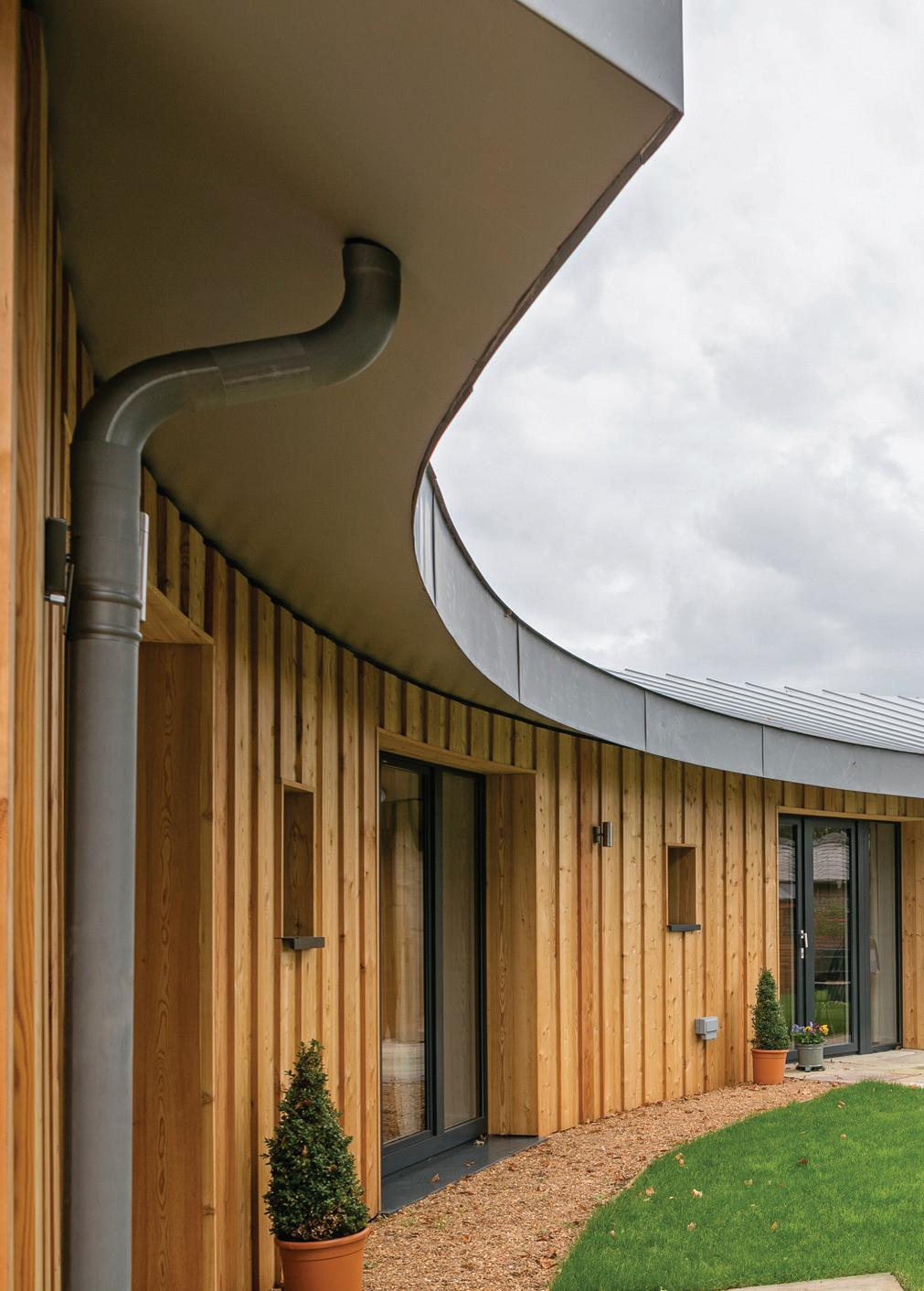
Award-winning house
This is an exceptionally unique project and winner of the ‘LABC East Anglia Building Excellence Award’. Passivehouse is the ultimate sustainable building, completed with the most effective heat solutions – a combination of MVHR and Air Source. Grocott & Murfit are fully certified tradesman by Passivehouse – pioneers in the conceptual development of energy efficiency in homes. Passivehouse buildings achieve a 75% reduction in space heating requirements, compared to standard practice for UK new builds.
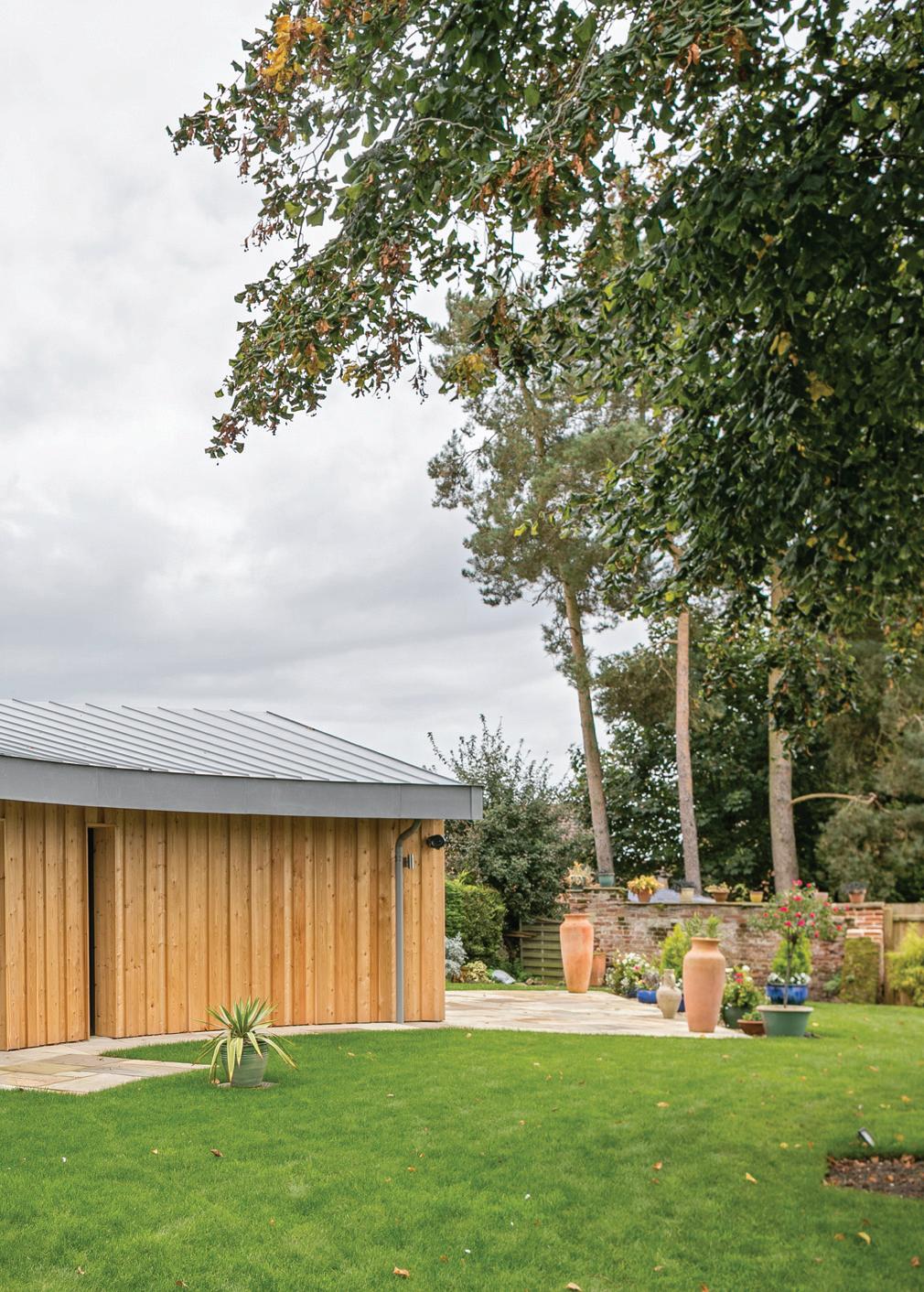
For more information please visit: www.grocottandmurfit.co.uk
mething interesting to show the business world? We are always looking for beautiful and interesting visuals of ducts, innovations, buildings and technology. Get in touch and start promoting your company to the global market.
media@insidepublication.com
As a first-class distributor and supplier of materials and plant, TG Lynes has been at the forefront of the UK’s mechanical services, heating, plumbing & air movement sectors since 1912. Now having reached more than 110 years of supplying the trade, the company continues to provide a top-quality service. Managing Director Andrew Ingram reflected over some of the company’s recent accomplishments as it travels towards a greener future. Report by Imogen Ward.
46 Inside sustainability
TG LYNES I PROFILE
With more than 80% of its delivery destinations located in and around central London, TG Lynes realised a move towards sustainable thinking was crucial.
“We’ve really taken a holistic approach when it comes to sustainability,” Managing Director Andrew Ingram said. “We looked at the whole business because it’s not just one element that affects a carbon footprint Distribution vehicles have always been high on the agenda, and obviously, working in London we’ve continuously aimed to be ahead of the curve with our fleet.”
TG Lynes has a multitude of experience when it comes to the procurement and distribution of materials and plant. With a history dating all the way back to 1912, the company has maintained a strong presence across the UK’s MEP sector.
“Although often perceived as a homecounties-centric business, we do deliver further afield on a regular basis,” said Mr Ingram. “We make deliveries to Norfolk, Birmingham and Southampton daily. People may not realise, but we also offer a national service via application. We are aware of the environmental cost of that

Inside sustainability 47
48 Inside sustainability
kind of journey, which is why it is on application basis only. We make conscious efforts to ensure we aren’t travelling up and down the country without good reason.”
HVO on the go
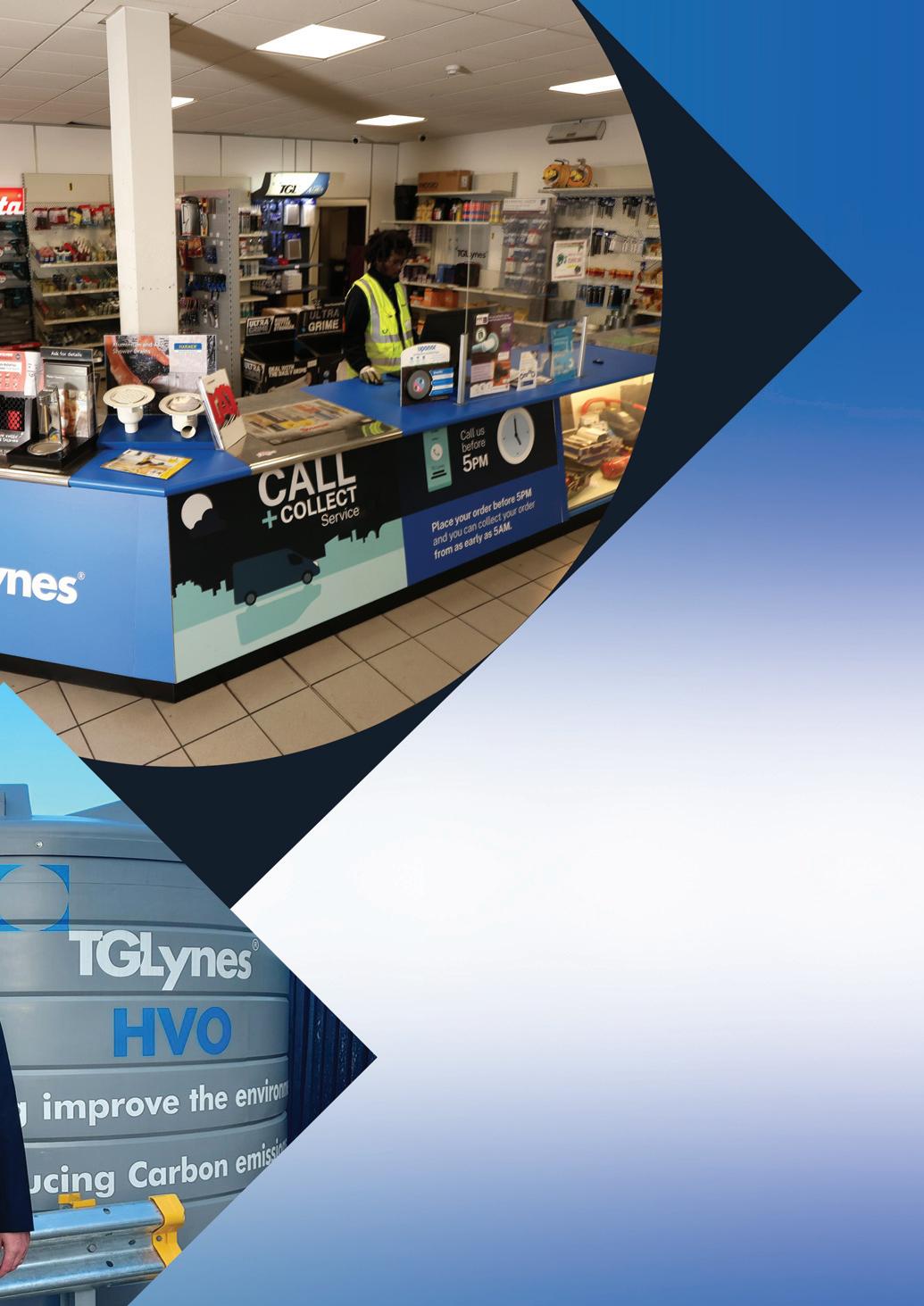
With a fleet of 22 trucks, TG Lynes felt it important to start the transition towards a greener and cleaner fuel. Starting with the largest vehicles within its fleet, the company made the switch to HVO.
“Being based in London we are aware of the city’s air quality, and we are trying to minimise our impact on that,” Mr Ingram
explained. “We’ve started utilising HVO on our 18-tonne trucks, which are the least efficient vehicles in our fleet. We felt it important to start with these vehicles, because we were keen to make an immediate impact that offered the most gains.”
Having previously run on diesel, these trucks are now 90% more carbon efficient. As a bonus from the HVO implementation the trucks’ MPG performance has also improved by 10%. The company intends to extend this transition to more of its vehicles in the future.
“Obviously HVO is more expensive than diesel, and that has been a challenge,” Mr Ingram said; “but really, it’s important to look past that initial cost and understand the benefits of this fuel. We really make a conscious effort to factor that additional
50 Inside sustainability TG LYNES I PROFILE
cost into our budgeting process, because we really believe in the bigger picture.”
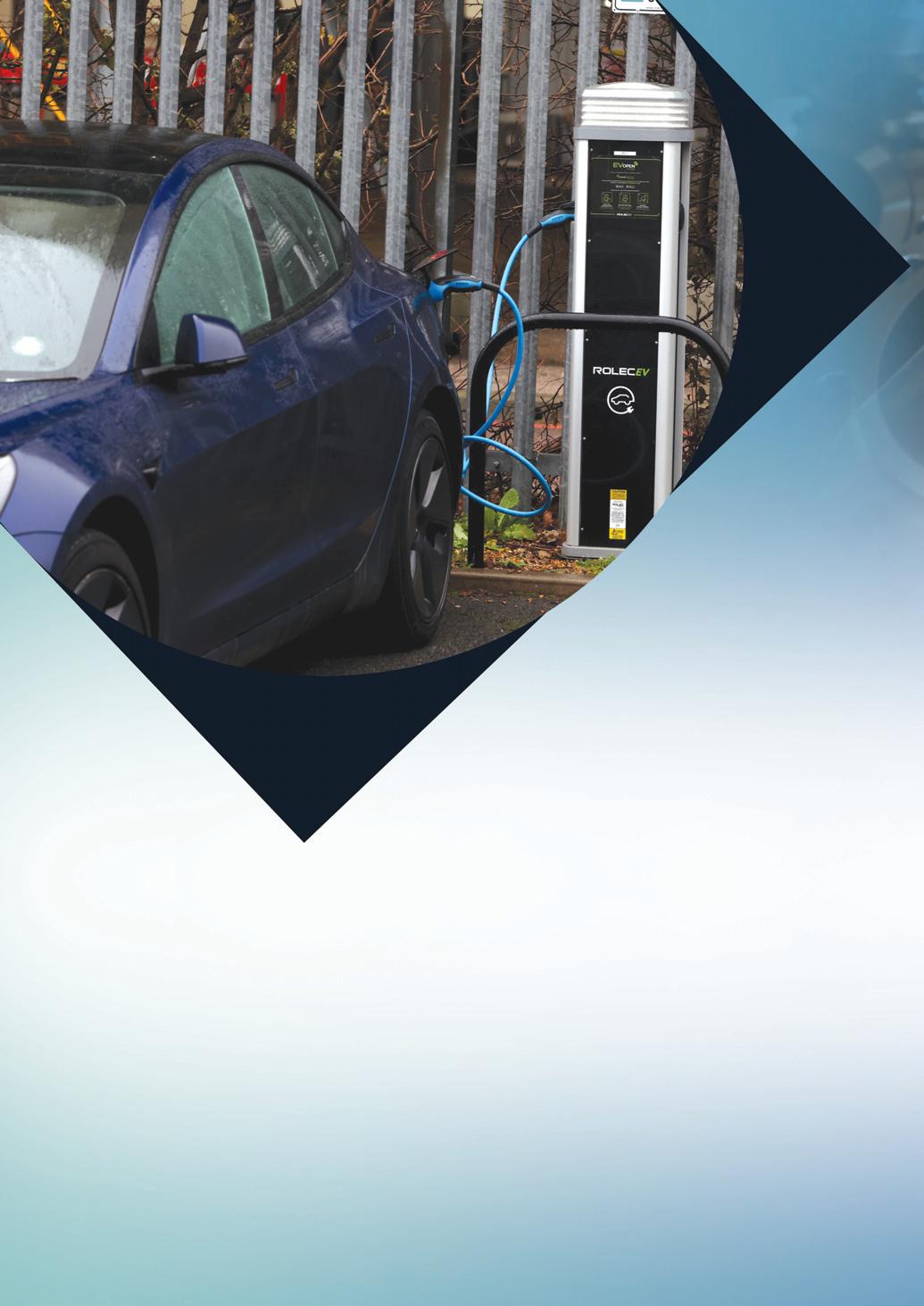
A new addition has also joined the company’s fleet, arriving in the form of an e-moped. Purchased as a fast response, localised distribution vehicle, the bike was the perfect choice for urgent order requests.
“With its zero tailpipe emissions, the e-moped is just another way we can work towards improving emissions in our local area,” Mr Ingram said. “It’s not a costly endeavour, but it certainly plays a part.”
Inspiring change
Fleet renewals are not the only positive change being made at TG Lynes. The company was also recently nominated for the HVR Net Zero Hero Award due to its continuous efforts.
“We’ve been on quite a positive journey whilst trying to reduce our environmental impact,” said Mr Ingram; “and the nomination really arose from the effort we m:ade
to improve. From LEDs to solar panels we even have a number of EV trucks on order as well. We are really proud of the progress we’ve made, and it was really nice to be put forward for this award.”
TG Lynes recently celebrated two years since the installation of solar panels on its 60,000 sqft facility in Endfield, London . Having saved 25 tonnes of carbon so far, its PV panels are certainly a solid investment. The installation currently fulfils more than 35% of the company’s energy requirements, with the rest being covered by 100% sustainable energy sourced from wind farms.
Inspired by its own achievements, TG Lynes also revitalised its company car fleet, with 60% hybrids and 40% full EVs.
A one-stop shop
Customers who require plant but do not always want the commitment of purchasing the equipment have found the perfect solution in TG Lynes’ Plant Hire service.
Inside sustainability 51


52 Inside sustainability


Inside sustainability 55
“It has really become a one-stop shop for our customers,” Mr Ingram said. “Through this service, our customers can order their products and get the required tooling at the same time. In doing so, they get a stress-free service that is quick and easy to request. Also, because the products are coming from the same place, and delivered on the same vehicle, our customers don’t have to sit around waiting for everything to arrive separately.
“Ultimately, we want to make our customers’ lives as easy as possible: it’s really an integral part of the business, one that we are proud to offer.”
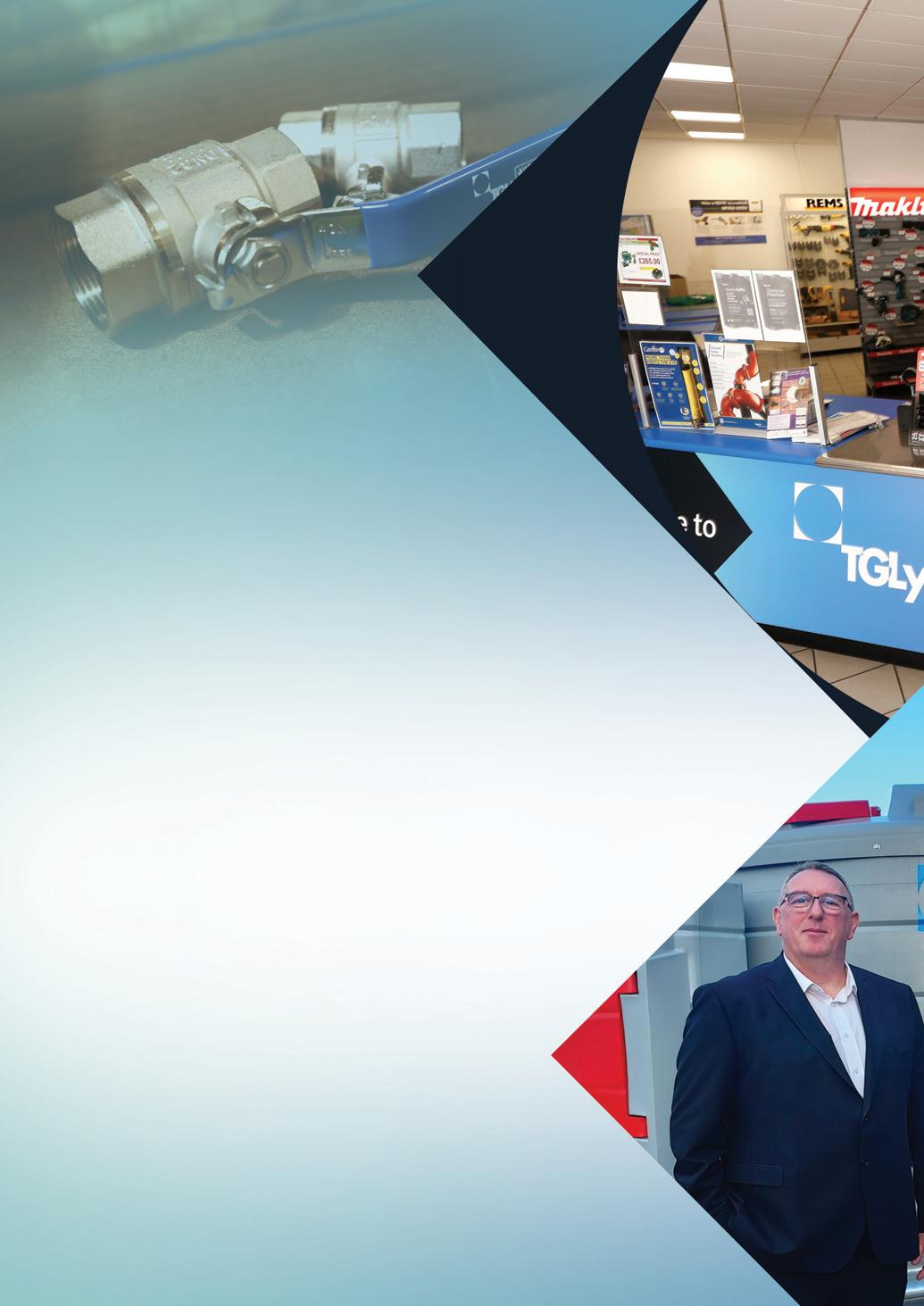
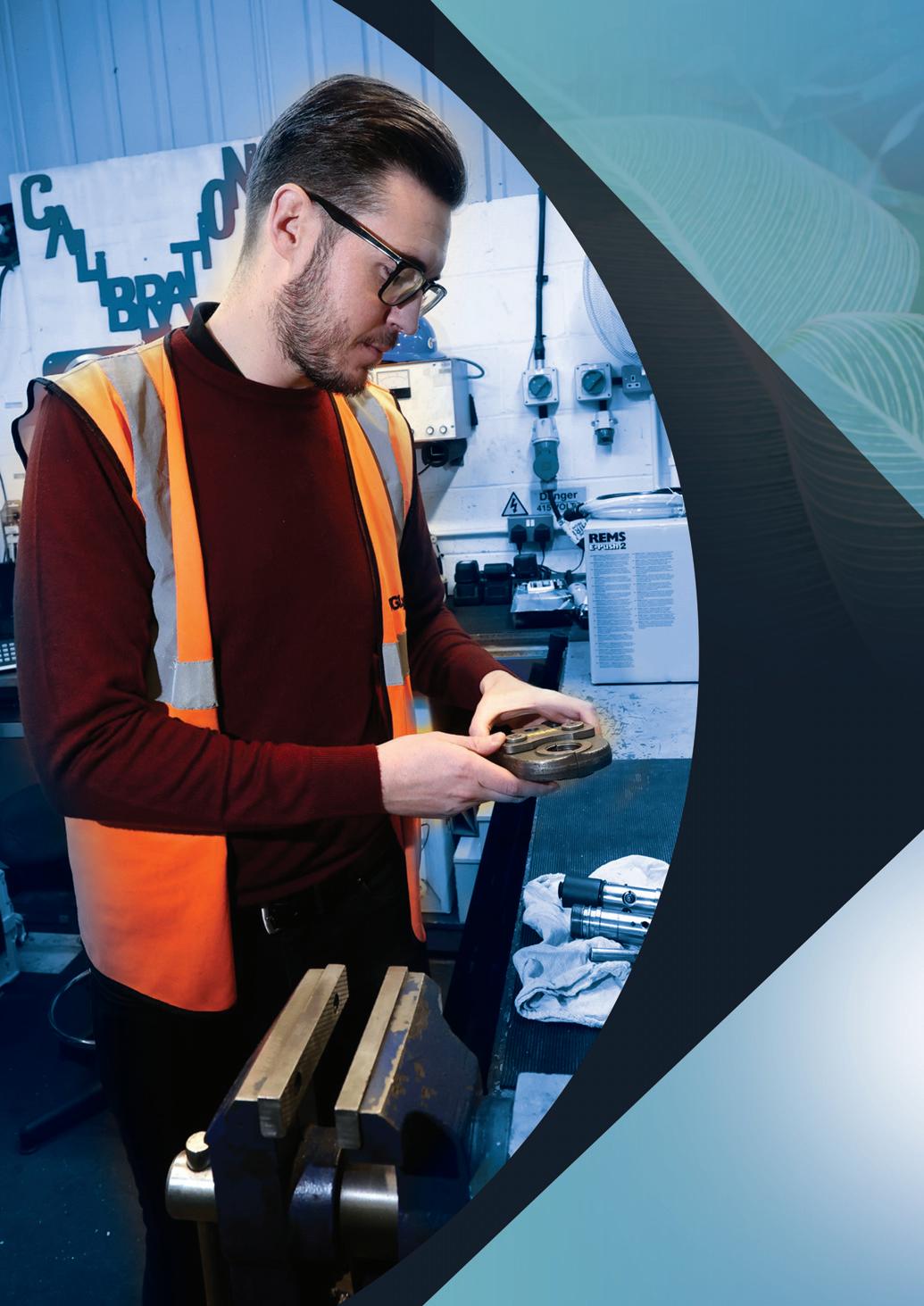
According to Mr Ingram, TG Lynes’ Plant Hire service is incredibly popular with clients; so much so that the company recently made the decision to expand it: “Following our partnership with REMS we decided to expand the plant hire incorporating a service centre for the product range. So, not only can we hire out REMS products, but we can now sell and service them too. That expansion was really driven by our desire to make interacting with TG Lynes as easy as possible.”
This service also encourages a culture of reuse. Rather than buying plant that is only needed for one project, customers can hire out the products and feel-good knowing that they are not contributing to landfill.
TG LYNES I PROFILE 56 Inside sustainability
ManagingDirectorAndrewIngram
As it looks to the future, TG Lynes intends to continue down the road of sustainability, whilst also expanding the company’s capabilities.
“We are currently headed towards a product portfolio expansion,” Mr Ingram explained. “With this, we plan to increase our usable warehouse space by another 7,000 square feet, and we’d like to have this completed by the beginning of 2024.
“The future at TG Lynes is very exciting. There is a brilliant atmosphere here, and everyone really cares about what they do. Being able to make a positive difference to our environmental impact is also a real driver. We hope that our story will motivate and inspire others to take the leap into sustainability,” he concluded. “Hopefully, it will give them ideas about what can be achieved.”
Inside sustainability 57
n
Sustainability is at the heart of Forma London, a specialist fit-out and refurbishment contractor. “We plan to continue to learn about the best ways of tackling the issue of sustainable construction,” explained Paul Delahunty, company co-founder and Chairman, in an interview with Romana Moares.
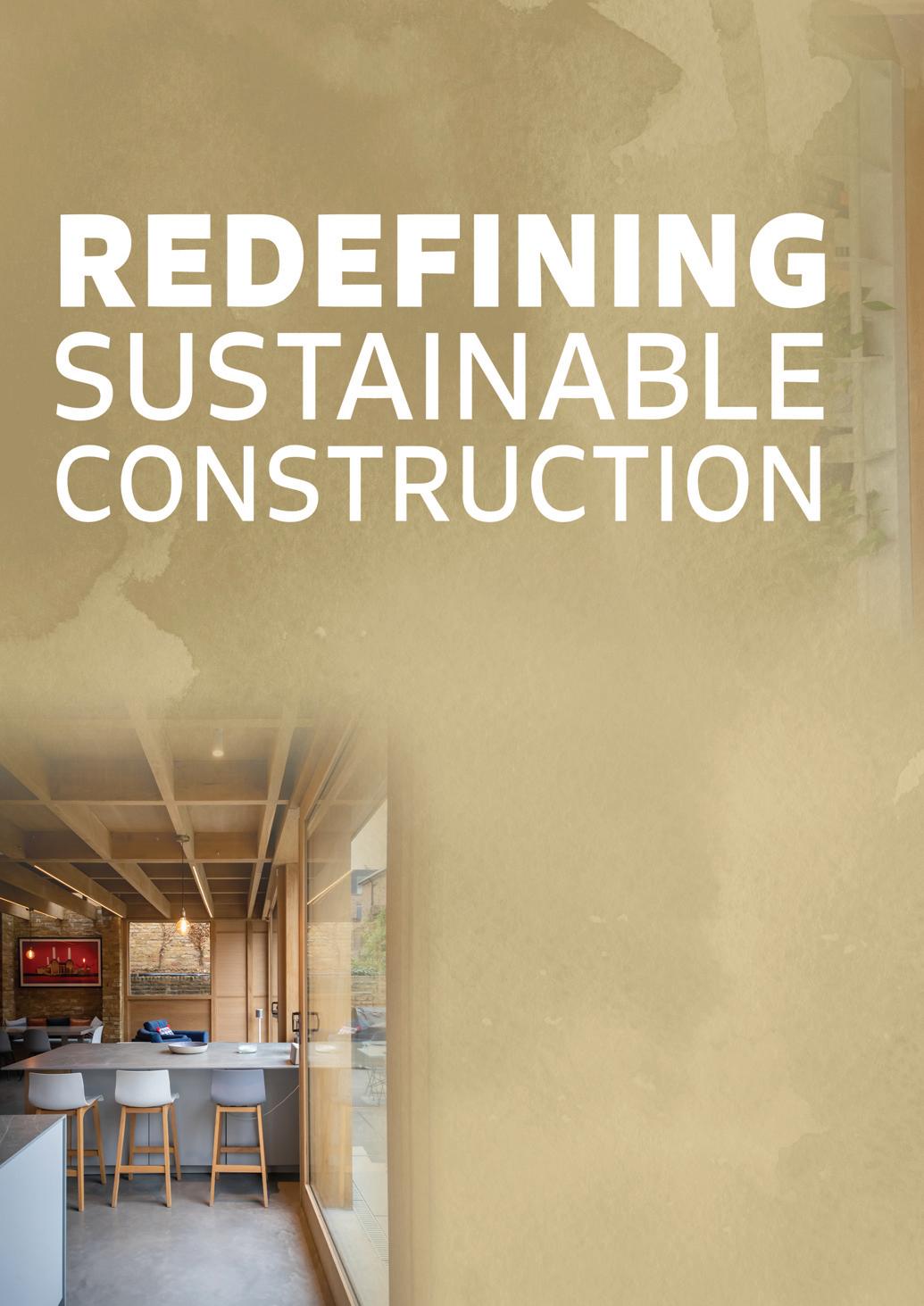
Forma London was founded in 2014 by two young enthusiasts with a clear aim – to simplify the overall client journey. “We believed we could bring some innovative methods to the notoriously conservative construction sector, to make the process more standardised, more systematic and, ultimately, quicker,” said co-founder and Chairman Paul Delahunty, when asked what the main trigger was for setting up the business.
He reflected that the process had been a learning curve, marked by several milestones – the completion of a project valued at over £500K, quickly followed by others of over £1 million were big moments for the business and proof that what Forma was trying to do, and believed in as a business, was resonating with clients.
58 Inside sustainability
FORMA LONDON I PROFILE
What further pushed the business forward was the implementation of a Business Management System that streamlines workflow and ensures that all the site teams, (as well as office teams), work from the same standard templates and follow the same protocols. “Achieving Constructionline and CHAS accreditation were also hugely important milestones as they have given us the opportunity to expand our client base,” added Mr Delahunty. Forma’s relatively small size is one of its advantages. “We can react quickly to changes,” he said, “and implement new ideas or methods of construction faster than larger competitors, which means we can be ahead of the curve.”
End-to-end service
So how exactly does Forma's approach simplify the client's journey? Mr Delahunty explained that the construction process can be daunting for clients, who may be unaware of current building regulations and the options available: “What we offer is a complete end-to-end service.
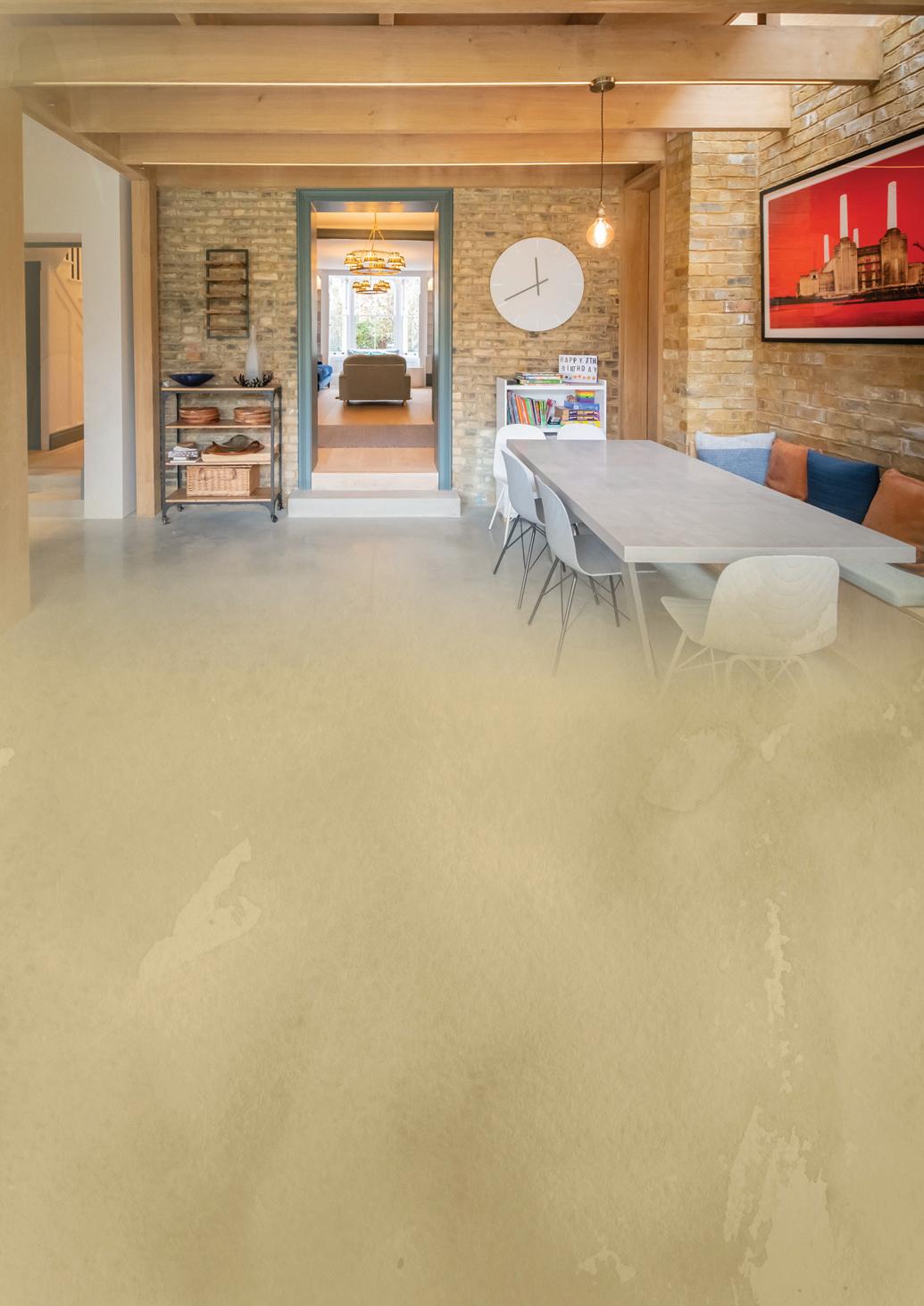
“We support the client throughout the process, so at no point are they without our assistance in understanding what their options are, what the financial implications of any decision are, and what the best course of action is.
“We use several simplified reporting documents for all projects to ensure our team knows the process fully and that every report issued to a client is simple and very
Inside sustainability 59
clear, yet contains all the details required. Clients don't need, or have the time, to find regulatory information themselves; this is all on our system and readily available. We also externally audit our systems to ensure our processes are correct.”
He confirmed that sustainability is a huge factor that has significantly shaped the direction and methods of construction the company uses. “For existing properties,
both commercial and residential, the process will start in the design phase,” Mr Delahunty explained. “We look at the space and conditions and ensure that we challenge the design to check that we will be reusing and reforming something first and foremost, before adding anything new.”
The purpose of this initial review is to look objectively at what is in situ and see how this can be better employed or reused
FORMA LONDON I PROFILE 60 Inside sustainability
within the new design, as opposed to approaching the project as a blank canvas, according to Mr Delahunty: “For new builds, the process is about ensuring the longevity of the building by delivering a high-quality, durable product. Ensuring that it meets and exceeds the requirements for low-energy buildings.

“As before, waste material is reduced and recycled as much as possible, and any new material is appropriately sourced.”
From warehouse to office space
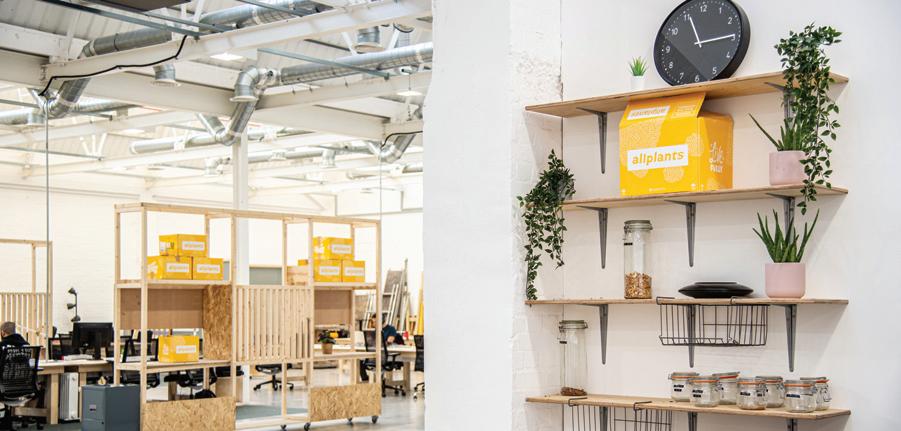
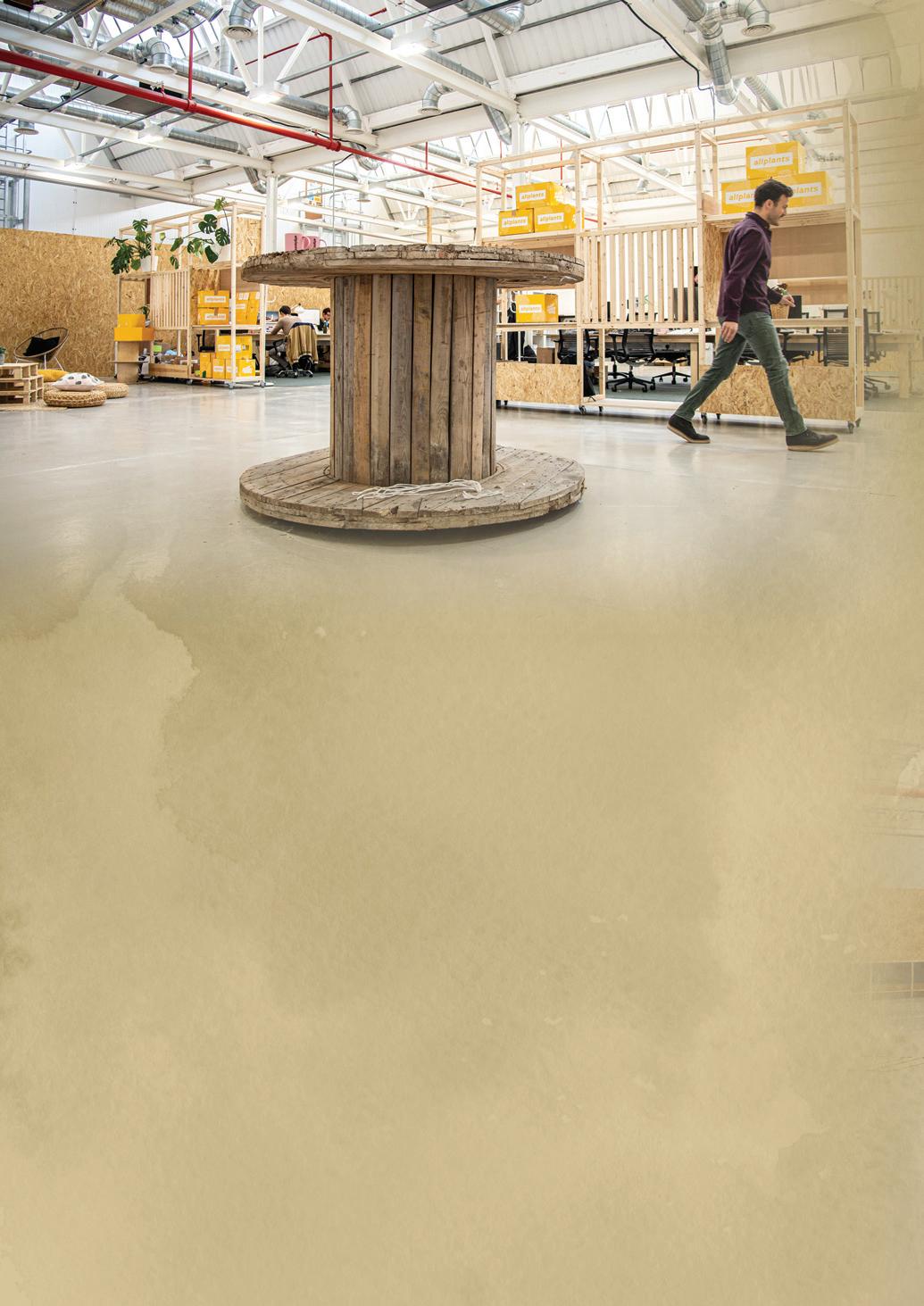
Over the years, the company has completed over 200 projects for a wide range of clients. One particularly stands out, as it very clearly demonstrates Forma’s approach and capability – a project for allplants, a manufacturer of plant-based frozen meals that approached Forma
to design and build allplants’ new multi-purpose office space.
The client wanted a creative environment for their employees, and one that would fit with their company ethos of taking care of the planet. Forma was excited to work with a brand that fits with its own vision of building ethical and sustainable offices and workspaces.
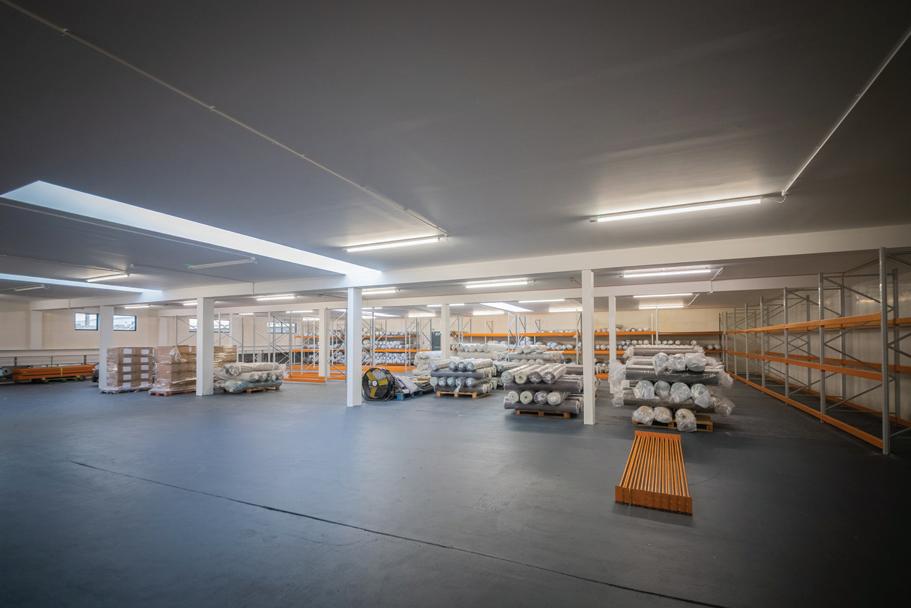
“The building was an empty 20,000 square foot warehouse shell in Walthamstow, said Mr Delahunty. “Along with the proposed office area, allplants wanted space for a recording studio for photo shoots and online video content, and a trial kitchen or innovation studio where new products would be tested. The project required a quick turnaround of eight weeks, with our team simultaneously overseeing the design and the build.”
62 Inside sustainability FORMA LONDON I PROFILE
With the warehouse an empty shell, there were no heating or cooling facilities already in the building. Forma engaged sustainable air movement company Elta Fans for the extraction and used a brand new, state-ofthe-art, energy-efficient solution from iXu for the ventilation system.
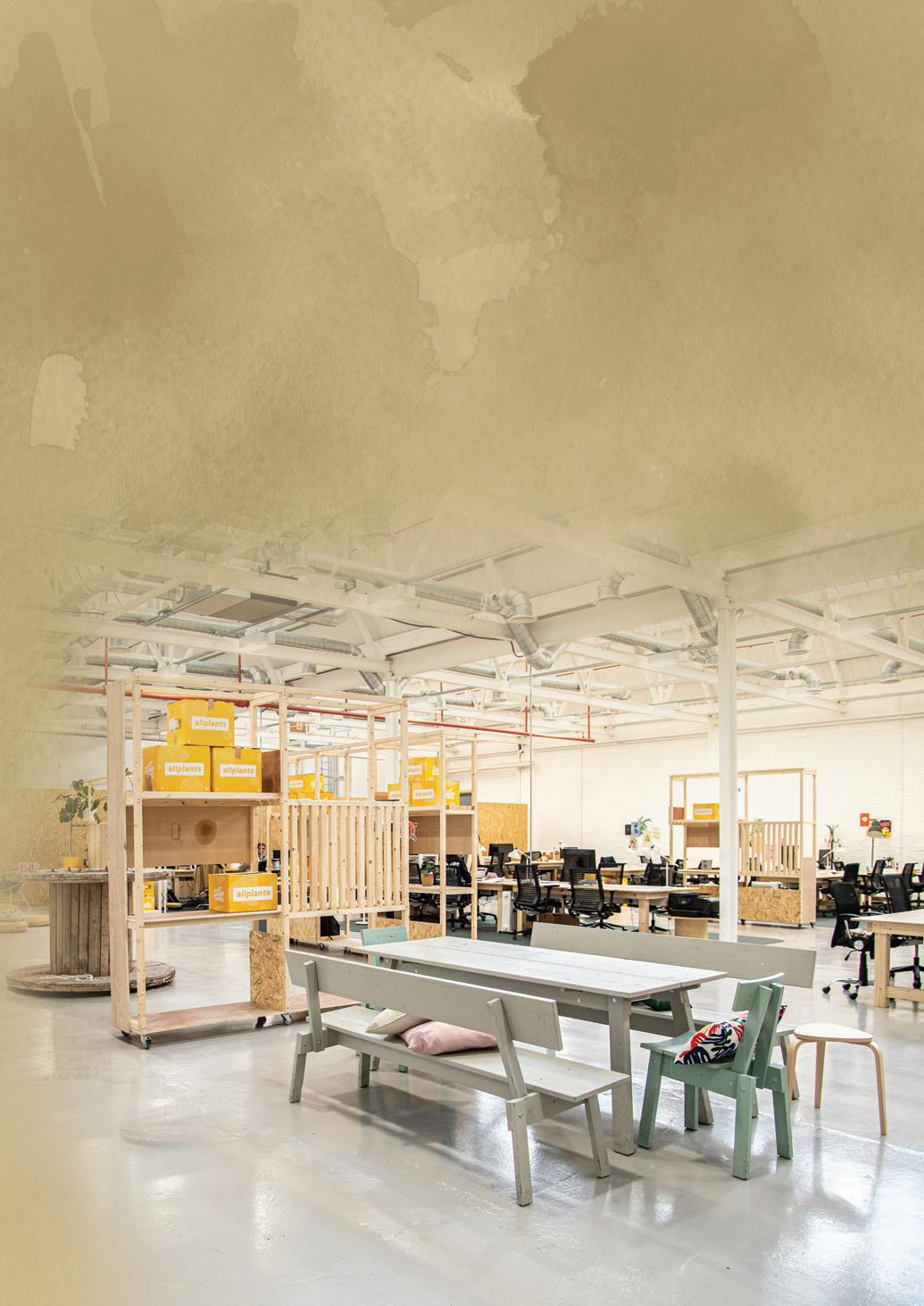
Mr Delahunty explained that all the fixtures and fittings were created using recycled materials and wood offcuts from the project on site. For the benches and desks, Forma opted to use materials
from local suppliers and ethical timber merchants to show its support for local businesses, as well as keeping down the cost of transportation and the resulting carbon footprint. Any chairs and seating that were not made by them were sourced from second-hand suppliers.
“The project was delivered on a fasttrack programme, and in alignment with the overall budget,” he continued. “With the limited time constraints, we managed to stay true to allplants’ – as well as Forma’s –
Inside sustainability 63
integral values of sustainability. The added bonus is that when it’s time for allplants to move to a bigger space, all of our hard work can be reused and carry on the journey with them.”
Set for growth
It goes without saying that Forma's supply chain and partners are key to the success of any project: “All our partners are vetted before they are approved and added to our contractors list,” said Mr Delahunty. “The questions we ask relate to all areas of their business to ensure they align with our standards, and we routinely ask them about anything new that might be a more sustainable alternative to consider.
“In this way, we are always looking and learning about alternatives in the construction industry.”

FORMA LONDON I PROFILE 64 Inside sustainability
Speaking about upcoming projects, Mr Delahunty revealed that Forma is currently gearing up to commence a new-build project in Leigh-on-Sea to deliver several much-needed new homes: “We are looking at different methods of construction to reduce the amount of concrete needed in the foundations, by potentially using a mix of light gauge steel frame and SIPS timber panelling to provide the structure. Hopefully, this will allow us to utilise a screw pile system that we have used on two recent pro -
jects, meaning we will require fewer concrete foundations.”
The future looks exciting for Forma London: and given the ever-increasing focus on sustainable practices, the company is set for continued growth. Starting basically from scratch nearly ten years ago, this feels very rewarding for the founders.
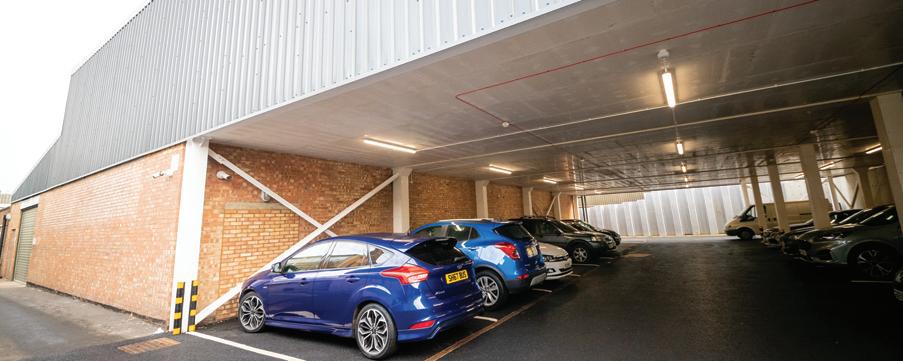
Mr Delahunty concluded that a finished project is the most exciting aspect of his work: “After initially speaking to a client and understanding what they want to achieve, seeing the outcome is so rewarding.” n

Inside sustainability 65
When it comes to comfort-based smart building solutions, SAUTER is an expert. UK Technical Director Neil Dolley and UK Head of Energy Charlie Hilton explained why, in an exclusive interview with Inside Sustainability. Report by Imogen Ward.
66 Inside sustainability
SAUTER I PROFILE
Creating sustainable environments is what building automation specialist

SAUTER does best. From the development of its renowned SAUTER Vision Center (SVC) to its high-performance Modulo 6 Smart Control Platform, SAUTER designs state-of-the-art technology with comfort and energy savings in mind.
“ Our main objectives are to maximise wellbeing, reduce energy consumption and optimise efficiency of our clients’ buildings,” said UK Technical Director Neil Dolley . “Using data analytics, the system will predict how varying operational patterns will influence the performance of the building. Once we have a greater understanding of how a building is being utilised and how the controls are performing, we can then focus on optimising the key objectives.”
With more than 100 years behind it, SAUTER has a long-standing history of technological design and innovation. The company’s subsidiary SAUTER UK has been proudly following in those footsteps ever since it was established back in 1976.
Inside sustainability 67
Inside sustainability 69
“The time clock was the first thing developed by SAUTER,” Mr Dolley said. “From there, we have gone on to develop and manufacture high-end control products such as smart intelligent actuators and smart sensors; today, we are highly focused on providing smart connectivity and tailored client solutions.”
SVC is the company’s web-based building management system (BMS) and integration platform, now on its eighth version. The system was first introduced to the market in 2014 and has been contin uously adapted and improved ever since.
“We release a new version on a regular basis,” Mr Dolley explained. “Version seven saw the introduction of our data analytics and energy module, AEM.”
“Visualising the building or plant analytics and energy data on a dashboard means the users can optimise and reduce energ y consumption,” UK Head of Energy Charlie Hilton added.

Whilst crucial, SVC is just one element within an intricate system of building mon itoring technology. From smart sensors to freely programable controllers, SAUTER utilises an array of technology to create a state-of-the-art smart environment that learns and adapts.
Sixth sense from Second Sight
For buildings that are not compatible with BMS, the company offers Second Sight. As a stand-alone building performance monitoring system, Second Sight utilises wireless sensors to track data.
“Second Sight is essentially all the benefit of a BMS, without the complex control elements or requiring extensive engineering,” Miss Hilton said. “What it does do, is provide people with remote access that they wouldn’t have before and provide actionable insights to optimise the operation of the space.”
70 Inside sustainability SAUTER I PROFILE
“It allows the owner the means to monitor how their building is performing,” Mr Dolley added. “Through the simple intuitive dashboards, the client can identify a problem and make the necessary judgement call.
“It could also be used as a secondary monitoring system to ensure a building’s primary BMS is performing efficiently.”
Thanks to its use of wireless sensors and IoT (Internet of Things) gateway, Second Sight can be moved easily to monitor different areas or buildings; and being cloud-based, the product can also be connected to an existing BMS and extended to additional buildings within the vicinity.
Staying in control
Maintaining its user-friendly status, SAUTER has developed the SAUTER Smart Vision app to allow for quick and easy adjustments onthe-go. Developed with the wellbeing of the building’s occupants in mind, the app is updated on a regular basis to incorporate clients' unique requirements.
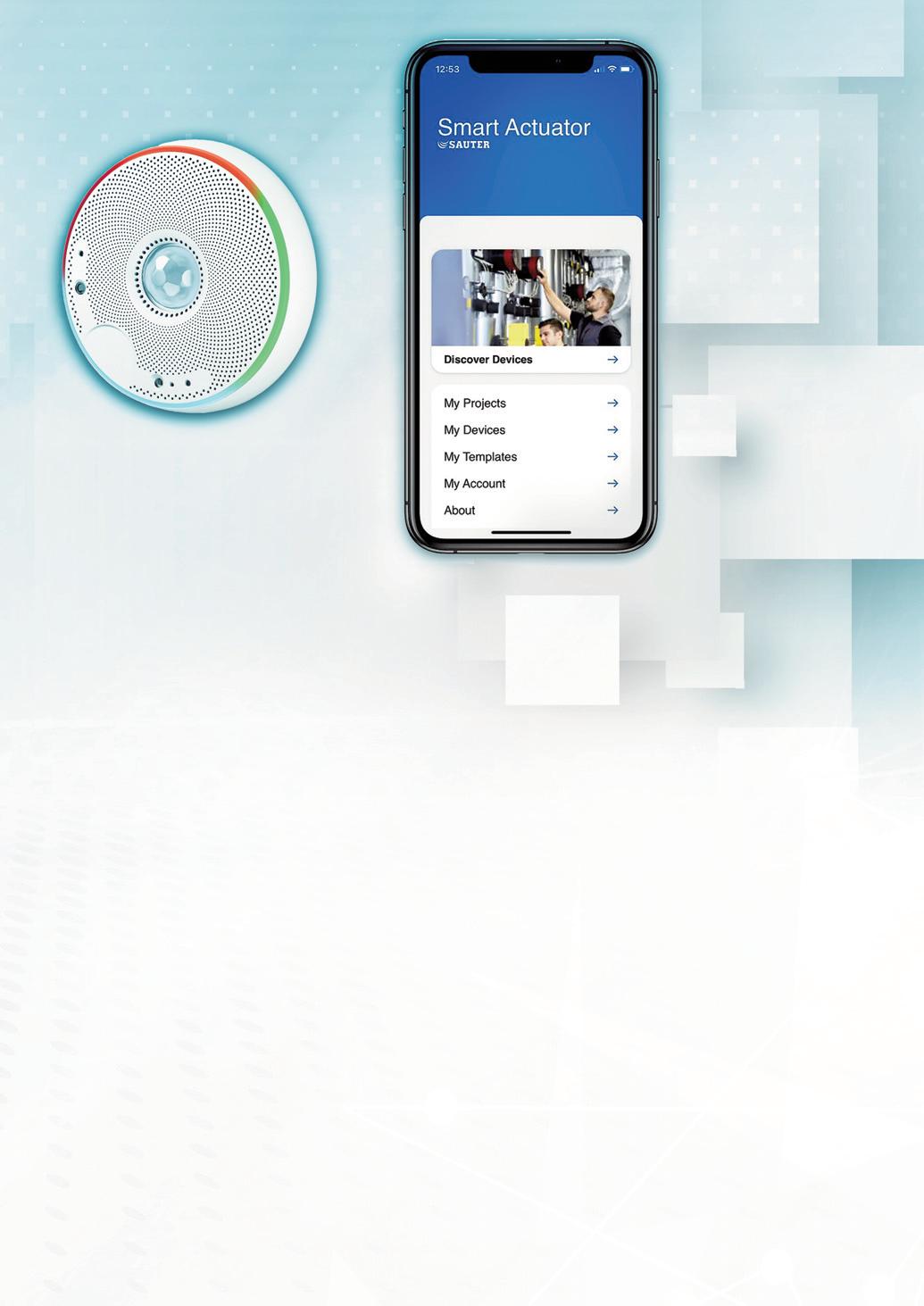
“The IoT protocol MQTT (Message Queuing Telemetry Transport) is widely used by the industry,” Mr Dolley explained. “Smart connectivity provides the opportunity to collect
feedback directly from the best data source there is; the people. Rather than installing screens everywhere – which would have a negative impact on the environment – the obvious solution is to utilise the tools users already have: their phones.
“The app enables us to get instant feedback when there is a problem. For example, if an area is too hot or too cold, the user can choose from a selection of emojis to inform us of this concern. Utilising the monitoring technology in that space, the system can then make automatic adjustments where necessary.”
With a fully integrated BMS, not only can customers easily monitor figures that save time, money and reduce carbon emissions, but they can also perform other tasks, such as booking meeting rooms.
Inside sustainability 71
“Additional features such as smart washrooms and office space cleaning optimisation are continually being added,” Mr Dolley said. “Often cleaners will work through areas
Leading by example:
Last year, Sauter UK was awarded the EcoVadis Silver Medal for its efforts in sustainability. This year, the company is going for Gold.
Running off 100% renewable energy, SAUTER UK’s headquarters has its own array of solar panels that were installed in 2017 and generate part of the company's energy requirement.
that haven’t been used, which is detrimental to the environment and an unnecessary cost The app can be used to highlight areas that don’t require cleaning as well as those areas that may require extra attention.”
Continuous R&D
Through continuous research and development, SAUTER has ensured its products stand the test of time. Now, looking to the
future, the company is focused on developing solutions for emerging requests.

“People are now looking for solutions that not only enhance the building’s performance, but their own activities,” said Mr Dolley. “For example, when sending an invite to a meeting, why not book the room, provide the guest with directions, and give them access to the building as well as the room controls, whilst still maintaining the security of the building, all from one action. Although a simple concept, behind the scenes it’s all about the connectivity between the various system packages within the building.
“There is a number of variables when considering a smart building: firstly the connectivity, followed closely by the purpose and functionality between the various building packages. For the latter, there is the need to decipher the best solution, for example, a location finder could be achieved using either QR code or iBeacon technologies, with user interaction via an APP or smart screens.
SAUTER I PROFILE 72 Inside sustainability
“That is where the development is today: It’s not always the product, but the solution and how it is to be delivered.”
Other investments ongoing at SAUTER include the smart actuator and Smart Sensor, a multi-sensor with Bluetooth and IoT connectivity via MQTT. Both products will be available to view on the company’s stand at the Smart Buildings Show in October.

When looking back over the progression within the industry, Mr Dolley was very reflective on the journey: “What I enjoy most about my job is the challenge. The industry has progressed incredibly over the last
decade with the advancement of Smart Connectivity, and now the inclusion of AI on the horizon. The foreseeable challenge is incorporating the latest modern technologies to meet the clients’ objectives, without over-complicating the delivered solution.”
“I suppose for me, the opportunity to make a difference for businesses is really a job highlight,” Miss Hilton concluded. “It’s going on that journey with someone who may not know how to reduce their energy consumption, and working with them to find the best solution and creating a lasting relationship .” n
Inside sustainability 73
74 Inside sustainability ULO SYSTEMS I PROFILE
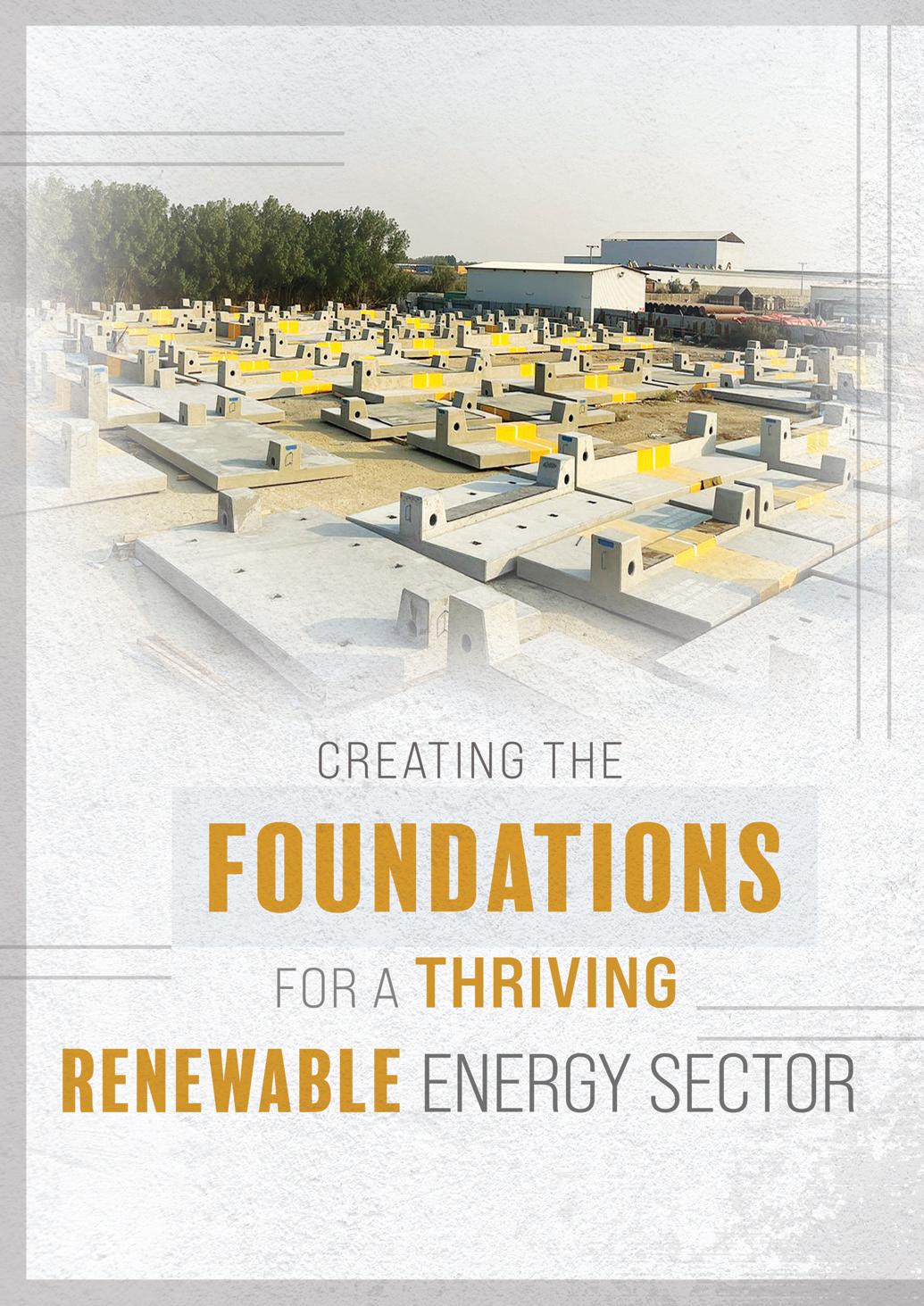
ULO Systems, an innovative solution leader with over 50 years of experience, initially provided foundation grouting solutions to the offshore oil and gas sector, and is now rapidly pivoting to supply renewable energy clients. ULO Systems has a comprehensive range of offshore grouting solutions for every possible foundation type as well as fabric formwork, flexible interlocking concrete mattresses and reinforced precast concrete crossing supports, in addition to a wide range of products and services to serve various oil, gas and renewable energy offshore operations.
The UAE-based ULO Systems can count itself as being in the right place at the right time with the right solutions, as demand for sustainable renewable energy sparks an uptick in the need for more offshore wind farms. Throughout construction, operations and maintenance, the extreme and hazardous environmental conditions and operating parameters are constant issues faced by the industry.

Having been a mainstay of the offshore energy sector for 50-plus years, ULO is
exploring new frontiers and securing projects as it becomes a pivotal player in fast, efficient, safe grouting of wind farm foundations. Its professional, bestin-class proprietary grouting equipment and DNV-approved operational methods are proving highly transitional.
“Since 2022, we have returned to pre-Covid levels of business in the windfarm and oil and gas sectors,” said General Manager Gregory Sauvage.
“Traditional energy is also seeing greater investment in expanding existing
Inside sustainability 75
Zena Zeyad Head of Project
installa tions and new fields in Qatar, UAE and Saudi Arabia.”
However, with the offshore wind market capacity expected to reach 600 gigawatts, fifteen-fold its current market, ULO is harnessing the expansion potential from Asia to Europe and the Americas.
“Offshore windfarm projects now account for 40 per cent of ULO’s income stream, compared to 20 per cent two years ago,” Mr Sauvage said. “It is a marke t that will only get bigger as more projects
come to the fore. We are also keeping pace with R&D and investment in more innovative equipment as we anticipate the growth in bulk grouting.”
Quicker turnarounds
In 2020, ULO worked on a 950-megawatt offshore wind farm at Moray, East Scotland, grouting 103 substructures over six months. The project featured ULO’s new-generation recirculating jet mixer (RJM) and high-capacity pump to

76 Inside sustainability ULO SYSTEMS I PROFILE
Rilsa Raphael QHSE Manager
significantly reduce grouting time. The RJM can enable grouting five times faster than traditional mixers and has a capacity of up to 120 cubic metres an hour for standard OPC.

ULO unveiled a new and even more compact RJM1 unit in 2023 which has been put into operation on several projects, including its first offshore wind contracts in Taiwan. “One of our recent projects in Taiwan involved the grouting of 52 jacket foundations,” Zena Zeyad, Head of Project, said. “This was realised within a challenging timeframe of 103 days, signifying an overall
impressive rate of one jacket installation every two days. Our team’s resilience and adaptability enabled it to navigate several challenges and ensure the project’s successful execution.”
The installation compared favourably with recent European projects, where large-scale projects were installed at a rate of 1.75 days per jacket, according to Mr Sauvage: “We achieved our targets in Taiwan despite harsh wind, typhoons and other challenges. Reaching these remarkable sequences and offshore output has never been seen in Taiwan
Inside sustainability 77



78 Inside sustainability
and will assist in accelerating offshore wind farms deployment.
“It clearly validated how development in new equipment and teamwork at all levels help our clients deploy their offshore wind installation faster, save costs and deliver on target. It was a great achievement for the ULO team and further demonstrated the effectiveness of our RJM concept.”
Such impressive results, Mr Sauvage explained, had helped secure a string of other RJM1 bookings and another set of contracts in Taiwan.
Sustainability focus
Since 2012, Abu Dhabi has been home to the International Renewable Agency (IRENA), and the UAE has become a pivotal player in the growing renewable energy segment. ULO Systems has taken the lead in sustainably focused solutions.
“ULO’s strong commitment to sustainability objectives is being achieved through a two-pronged approach: on raw materials and process change.” Rilsa Raphael, ULO’s QHSE Manager responsible for environmental factors, said.
The company has invested in sustainable raw materials; seeking alternatives to the plastic traditionally used in its fabric formwork. “We are actively working on fabric formwork made from natural fibre,” Ms Raphael continued. “This will, in turn, address environmental concerns and meet client demands for eco-friendly solutions to minimise plastic-based waste in the oceans.”
The fabric formwork is an effective sub-sea solution that helps stabilise pipelines and rectify free-standing ones. This formwork displaces water and excess fluids during the curing phase, allowing the formwork to develop and maintain its full strength and shape, providing long-term support in every application.
Amongst other materials initiatives, its sustainable approach led to collaboration between ULO and ECOncrete in exploring the adoption of its marine concrete technology to replace traditional concrete used in its current concrete mattresses.
“This transition will not only contribute to thriving marine life but also accelerate the growth of marine ecosystems and align with our commitment to environmental preservation,” said Ms Raphael.

ULO SYSTEMS I PROFILE 80 Inside sustainability
“Essentially, the mattress will be a living, thriving ecosystem for marine life.”
Addressing its processes, she high-lighted how the company was transitioning to a moulded system for its concrete mattresses: “Previously, we used recycled plastic shelves to encase concrete mattresses that remain in the system for its entirety.
“We plan to adopt a new approach to de-mould the recycled plastic shelves. This means making more concrete mattresses by significantly reducing the consumption of plastic. In the long run, we will significantly reduce the plastic and our carbon emissions.”
Embracing change
ULO Systems employs 80 people, with a pool of 120 offshore personnel to meet peak season work demands. It has a yard in Hamriyah Free Zone, near Sharjah, in Dammam in the KSA and maintenance logistics facilities in Singapore, the Netherlands, and in the US.
It receives exceptional support from its parent company, Bukhatir Group, one of the UAE’s largest and most diversified business houses, with interests spanning from North
America to North Africa and South Asia. ULO Systems is setting up new business in Saudi Arabia as major offshore works are coming from Saudi Aramco.
“We are developing different services, and Saudi Arabia is fast expanding in all our markets,” said Mr Sauvage. “The energy industry is also investing heavily and growing in Europe, Asia and the US. Globally, the market is strong, and ULO Systems is handily placed to continue driving forward. We continuously invest in our equipment and evaluate our products and processes to be more carbon efficient and minimise plastic usage.
“We adopt a visionary approach to anticipate customers’ requirements and challenge our processes to be cost-effective. It is about finding a perfect balance, keeping pace and our eyes wide-open.
“Our suppliers’ achievements are critical to us, and we maintain a transparent and collaborative approach, while clients expect us to be deadline driven, with zero mistakes,” he concluded. “Our DNA is to be flexible: we never say ‘no’ to customers’ challenges and always bring solutions to the table. We learn from every project and take those experiences into the next one to ensure ULO Systems is always improving.” n

Inside sustainability 81
Advanced technologies and continuous production optimisation have been driving POZBRUK for nearly four decades, making the company one of Poland’s leading manufacturers and innovators of concrete products. “Every day, we provide modern solutions for individual clients, as well as for large construction projects,” emphasised Sales Director Bartosz Nowicki.
POZBRUK, headquartered near Poznan in central Poland, is not just a concrete slab manufacturer: today, the POZBRUK Group has a network of plants producing prefabricated concrete elements in addition to its own aggregate mines, rail transport and specialised equipment facilities, as well as its own laboratory.
reports.
“These assets, combined with state-of-the-art production lines and a qualified staff of 600 people, provide our customers with a wide range of top-quality products,” said Sales Director Bartosz Nowicki. “Our technologically advanced and extensive machinery makes us unique in Poland.”
POZBRUK’s portfolio includes decorative pavements, terrace solutions, stairs, fences, structural landscape elements, floor slabs and much more. The company also offers products designed for public facilities, such as industrial pavements and noise barriers, and pre-stressed concrete lintels and a system for the construction of prefabricated halls.
Growing into a national leader
POZBRUK was founded in 1985 as a family business, and over the years the business grew and diversified, reaching a significant milestone in 2008 with the acquisition

82 Inside sustainability
POZBRUK I PROFILE
Romana Moares
Pozbruk Sales Director Bartosz Nowicki
of two Polish mines, making the company independent of aggregate suppliers. Further expansion and diversification followed. In 2016, POZBRUK acquired a technological line for the production of reinforced and prestressed concrete prefabricated elements, dedicated primarily to the construction of industrial buildings.
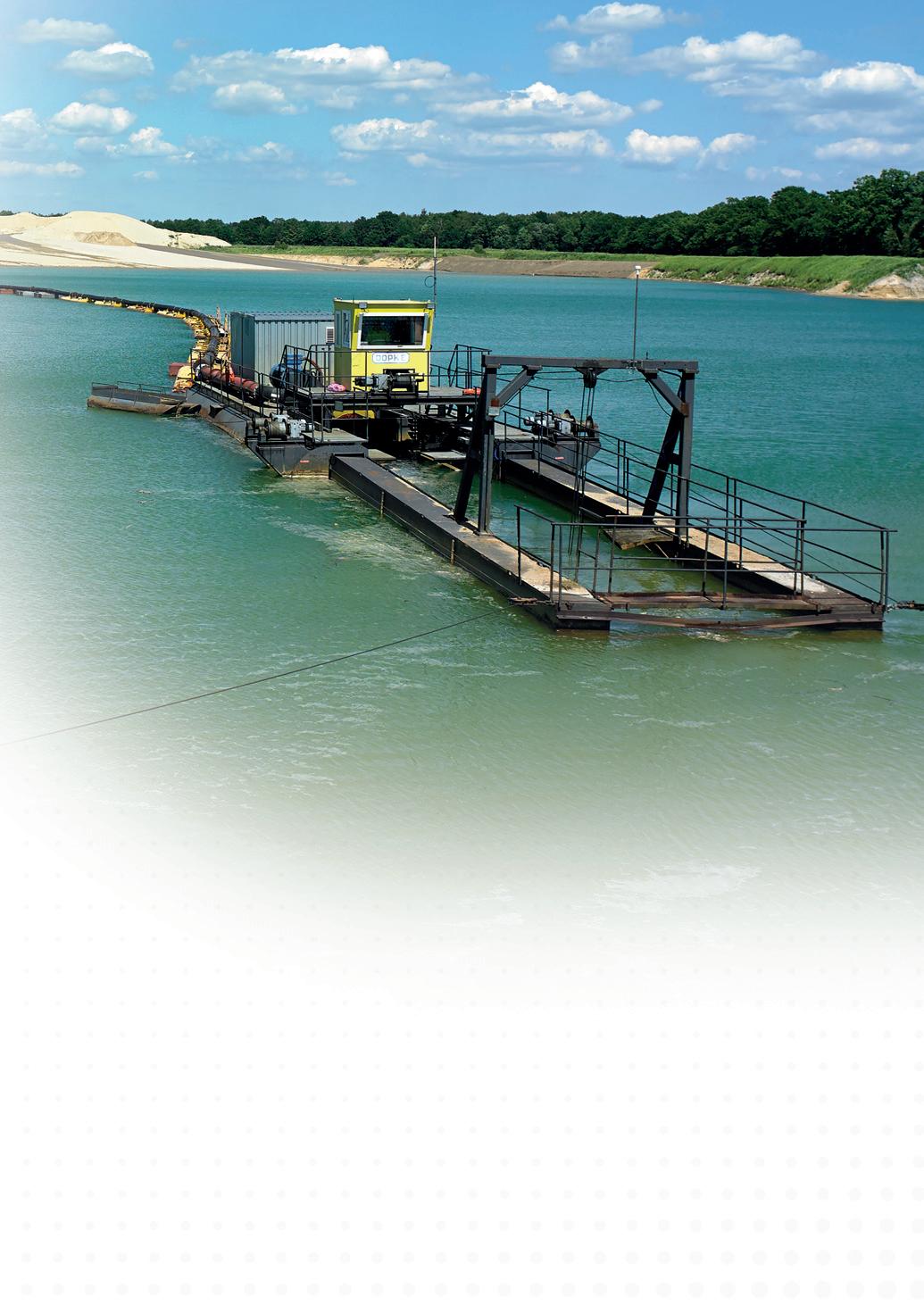
Two years later, the company launched the production of modern large fibre-concrete panels with digital overprint, for façades, internal walls and floors. In 2019, a modern plant was built for precast composite walls
and semi-precast floors, used for module building. These latest developments resulted in the company significantly increasing its product range and, ultimately, expanding into foreign markets.
“The highest quality and continuous growth – these words simply sum up the decades of POZBRUK’s development,” said Mr Nowicki. “They have become the basis of everything about the business – from choosing the right people and creating modern technological facilities, through to professional customer service.
Inside sustainability 83
“Quality, combined with innovation, has made POZBRUK one of Poland’s leading manufacturers in the prefabrication industry, as a strong brand that has won customers’ trust.”
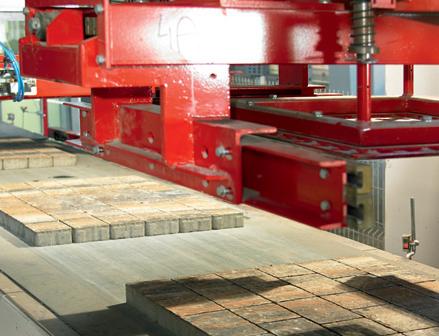
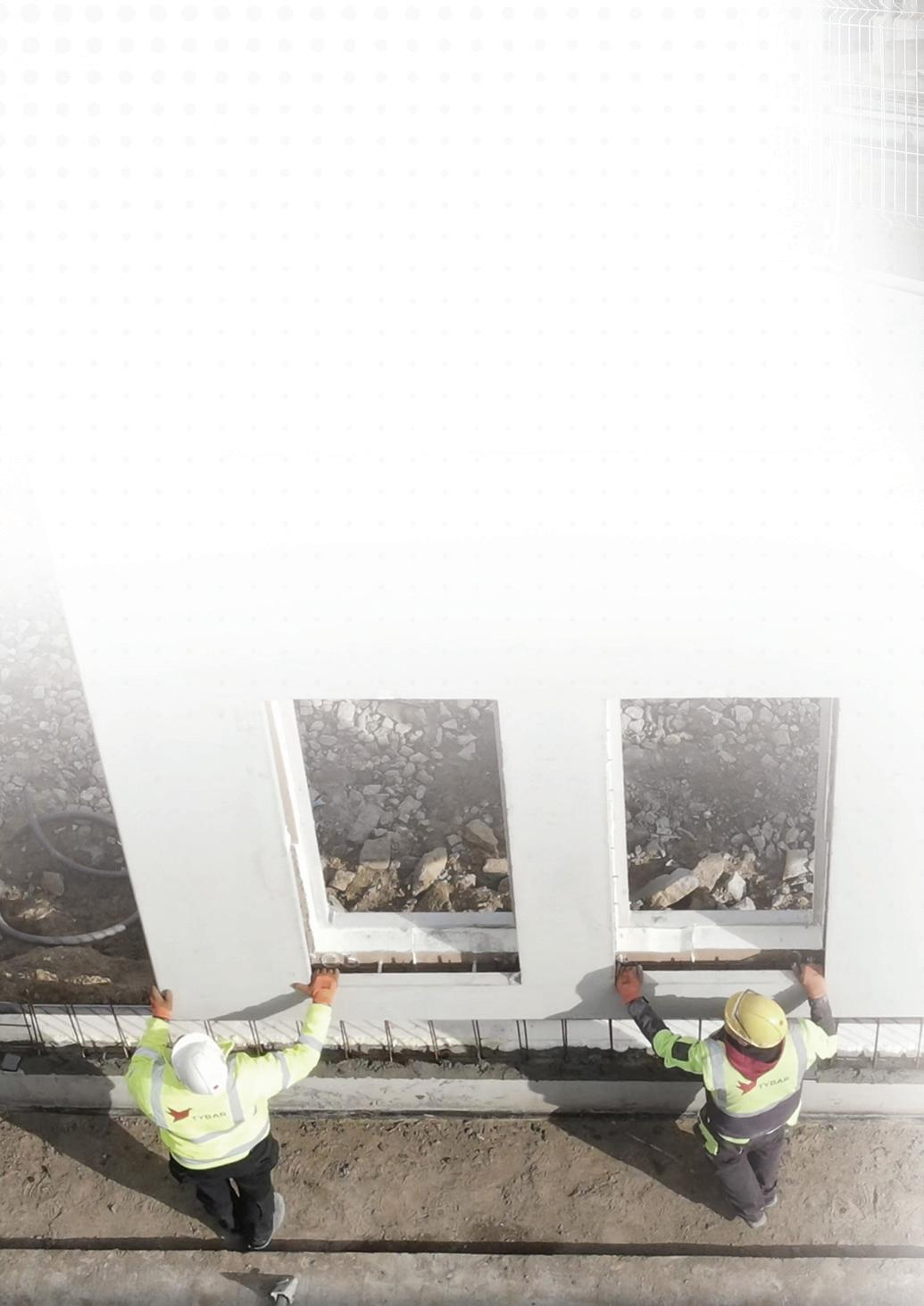
Proud achievements
Speaking about the company’s wide portfolio, Mr Nowicki reflected that each of the products is extremely important to the business. However; one product group, the company’s latest offering, specifically stands out, creating previously unknown opportunities – prefabricated facade walls. The elements can be delivered directly to the site, which reduces the construction process by up to 40%.
“A great example is the façade of the ‘Bałtyk’ tower in Poznań, which is made up of around 4,000 precast concrete components, and which made the building a new icon of the city of Poznań,” stated Mr Nowicki.
84 Inside sustainability POZBRUK I PROFILE
“The priority was to achieve an effect of non-homogeneous colours, which would accentuate the irregular form of the building. The surface of the facade was expected to shimmer in the sun and change its hue depending on the angle of the light falling on it. The desired effect was achieved through the use of mica, which lends the facade a shimmering texture.”
The building received numerous prestigious local awards and was also nominated for the EU Prize for Contemporary Architecture – the Mies van der Rohe Award.
“Another project that fills us with pride is the B10 hotel and office complex in Wrocław,” said Mr Nowicki. “For the 6-storey office building, we provided prefabricated three-layer walls with a finished polished façade, prefabricated pillars and precast prestressed beams, HC floors and double walls.”
The strong, thermally insulated external partitions with windows included were delivered to the construction site as prefabricated components: no scaffolding
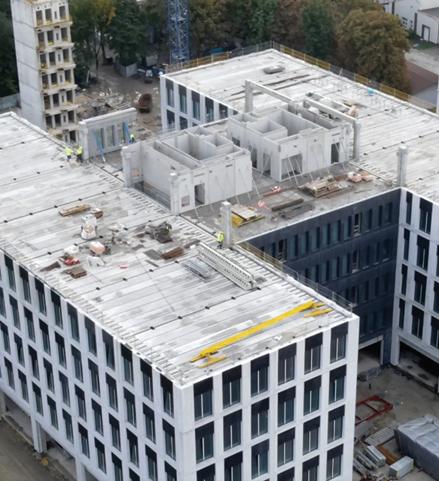
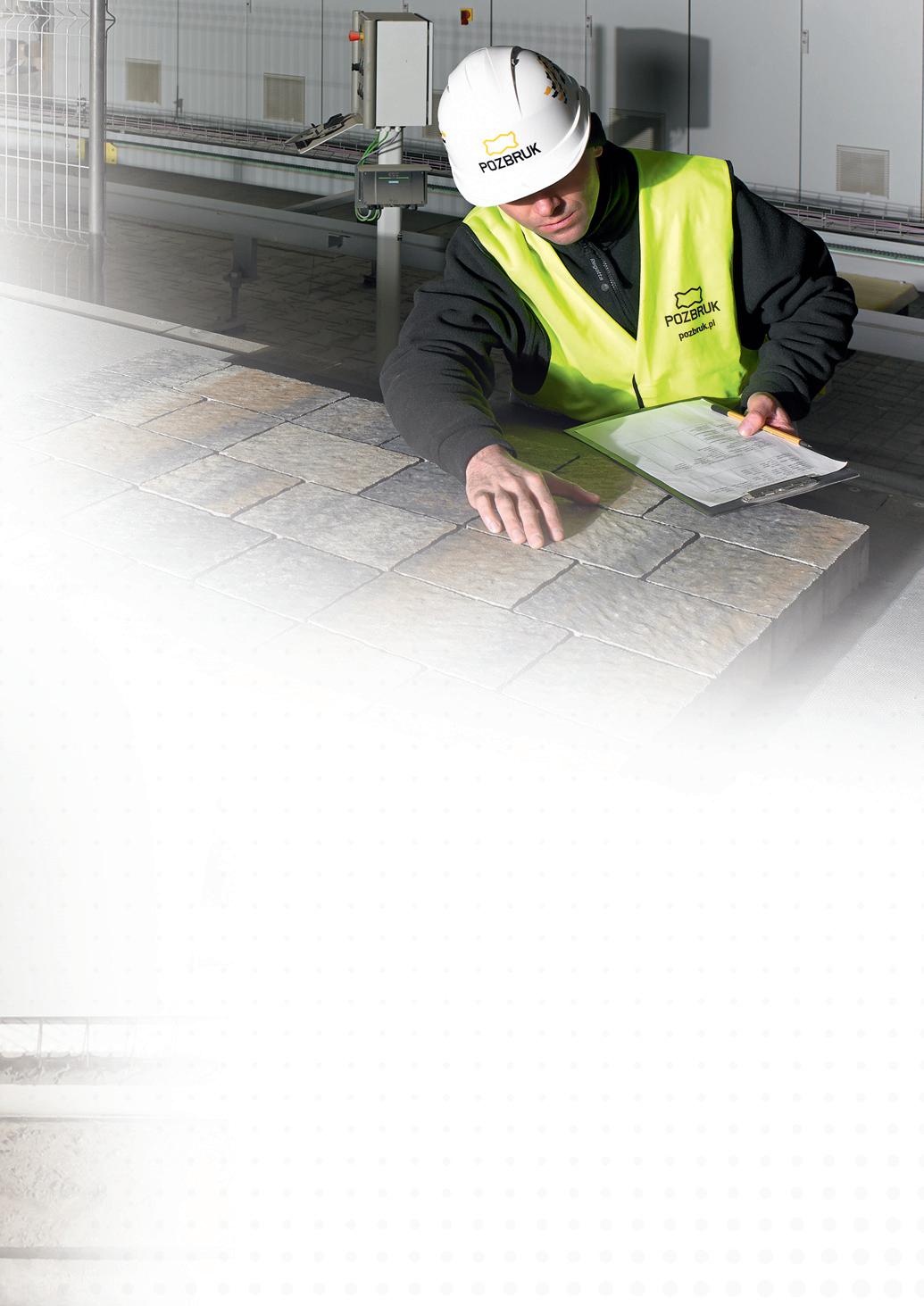
Inside sustainability 85
and formwork was needed, and no additional finishing was required, so construction time was significantly reduced.
Environmental harmony
While POZBRUK continues to grow and expand, environmental aspects are an integral part of its development. The company has integrated environmentally sustainable practices into the design, production and distribution of its products: according to Mr Nowicki: “Our teams of technologists and laboratory employees strive to come up with solutions that reduce the amount of cement used in production.
“Production optimisation is an on-going process. We use electric rail transport to move crystals from our mines and we hope to build a siding on our premises to enable direct unloading of raw materials onto the conveyor belt, in order to eliminate the use of motor vehicles. We also plan to invest in solar power in our factories.”
He affirmed that efforts to optimise the products themselves are also ongoing:
“We offer an increasingly wide range of ecological surfaces. An example is cement enriched with nanoparticle titanium dioxide (TiO2), referred to as ‘self-cleaning concrete’.

“TiO2 is a photocatalyst. In sunlight, it accelerates oxidation reactions from polluted air, turning harmful nitrogen oxides to harmless nitrate ions. These are easily washed away by rain, which reduces harmful nitrogen and the sulphur oxides emitted by vehicle engines and industrial devices. By using paving stones with TiO2 added, the quantity of impurities can be reduced by up to 25 per cent.”
Mr Nowicki further explained that the prefabricated buildings that have become popular in recent years generate a lower carbon footprint as a result of the increased speed of production, as well as greater energy efficiency: “The better insulation materials reduce heating costs, resulting in lower CO2 emissions during the life of the building. The amount of construction waste during the implementation of a prefabricated building is immeasurably smaller
POZBRUK I PROFILE 86 Inside sustainability
than that of traditional construction. The savings in formwork timber, polystyrene and packaging are up to 80 per cent.”

Future plans
Sustainability is also an important factor when choosing suppliers, agreed Mr Nowicki: “We select only certified suppliers that promote environmentally friendly practices, and we strive to build mutual trust through good cooperation: resolving problems quickly and being supportive in challenging situations fosters true partnerships, so that we can work together toward our sustainable goals.”
Speaking about future development against a background of market turbulence and geopolitical challenges, he noted that POZBRUK strives to see change as an opportunity: “POZBRUK has so far focused on the domestic market, but we are now pursuing a number of expansion activities to the west and north. We are also ready in the front rank to support our neighbours and to help rebuild Ukraine when the time comes.”
Back on home soil, current projects are numerous and include, for example,
a waste incinerator facade. POZBRUK has also just been contracted to deliver a facade for the court building in Wrocław and a building structure with facade for a museum warehouse project.
“In the coming years, we will continue to invest in automation and are continuously implementing AI solutions to increase efficiency and production process control, ” Mr Nowicki concluded. “My personal goal is to create effective, winning teams. With the right people on board, creating new technologies and implementing difficult projects is a pleasure.
“Strong, creative, close-knit teams are the foundation of the POZBRUK Group’s future development and success.” n
Inside sustainability 87
Structura UK delivers excellence in architectural glazing design, fabrication and installation for commercial buildings. The company has achieved Carbon Neutral Certification and demonstrated its sustainable credentials in sensitive renovations. Managing Director Daniel Rickman spoke with Andy Probert about curtain wall, carbon emissions and the company’s strategies for success.
Based in Chessington, Surrey, Structura UK is one of the UK’s foremost curtain wall engineering companies. For more than 30 years, it has been at the heart of some of the most iconic glazing renovation projects. In partnership with leading European curtain wall system manufacturers and glass producers, Structura UK operates as a central hub for the design, manufacture and installation of bespoke, ambitious and out-of-the-
ordinary projects that effectively breathe new life into commercial buildings.
The company embraced sustainability 12 years ago, being among the first to install solar panels at its factory. However, its ‘green journey’ has gathered impetus under Managing Director Daniel Rickman and Sustainability Manager Regina Singer. “The shift to carbon-neutral emissions is not achieved by massive leaps, but by an accumulation of small steps,” said Mr Rickman. “The carbon emergency is here, and Structura is tackling that issue head on.”
Engineering excellence
Sustainability sits as a permanent, silent partner on the shoulders of the 100-strong workforce. It is present in everything they do. While giving a chic new look to an office block, the company’s glazed curtain walls often extend the serviceable life of a building, façade, entrance or fenestration and provide considerable energy savings.
Structura UK has been entrusted with refurbishing some of England’s highest

88 Inside sustainability
STRUCTURA I PROFILE
Structura Managing Director, Daniel Rickman

Inside sustainability 89
profile landmarks, including Grade II listed properties such as the BT Tower in London, Eastbourne’s Congress Theatre and Bath School of Art and Design.

“While we are involved in new build projects, most renovations we work on don’t have any As-Built drawings,” Mr Rickman said. “We create the design to understand any issues and historic challenges – if it is a listed building. It is a niche skillset, and an experienced-based approach.”
That experience is what Structura UK revels in, given over half of its staff have been with the company for more than 10 years.
Project shift
Grade I and Grade II listed buildings, with all the tight planning regulations involved, do not faze Structura’s engineers.
“Having extensive experience in retrofitting historical monuments is crucial,” Mr Rickman explained, “as the skillset is not the same as new build construction. Demonstrating this gives confidence to our clients that we know what we’re doing.”
Structura UK is primed to take on what might be regarded as its most important 2023 project with the renovation of a national monument, a Grade I listed building in London. “While we cannot mention the landmark’s name, it is as good as it gets for our profile,” Mr Rickman added. “I believe we
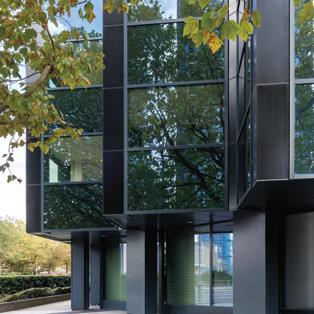
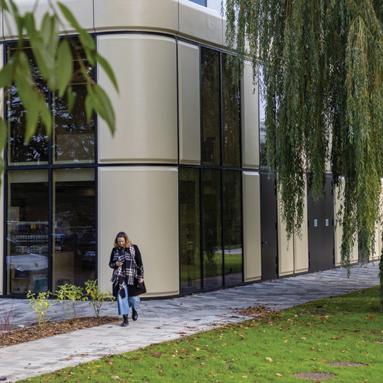
90 Inside sustainability STRUCTURA I PROFILE
secured the contract because of the feedback we received for our commitment to sustainability.

“That is a critical differentiator that sets us apart from our peers. That feedback was very rewarding to hear and reflected the conscious decisions we made.”
As part of this tender, Structura UK will responsibly recycle the original glass that requires replacement. This will be done in partnership with a glass recovery scheme launched by Arup, a collective of experts dedicated to sustainable development.
The project will be the first in England to receive Arup certification. The architectural-grade glass and components will be separated and recycled into the circular economy with a focus to be used upstream.
“With Arup’s approach, we will have the certification showing the volume of glass

being reused in that circular economy,” Mr Rickman said. “It is highly significant in our industry and very different from simply recycling downstream.
“The shift from office development to include high-profile renovation work for listed buildings post-Covid has been welcomed and a testament to our growing experience in this field. Stakeholders of these landmark properties are concerned about employing a safe pair of hands. That is essential because the risk is great, and if something happens, then that building’s historical significance could be lost.”
The company’s multi-faceted approach and reuse of original materials have also won it several of this year’s prestigious Schuco Excellence Awards, notably for ‘Sustainability’ at the Bath School of Art & Design project, where the company also secured ‘Overall Winner’ 2023.
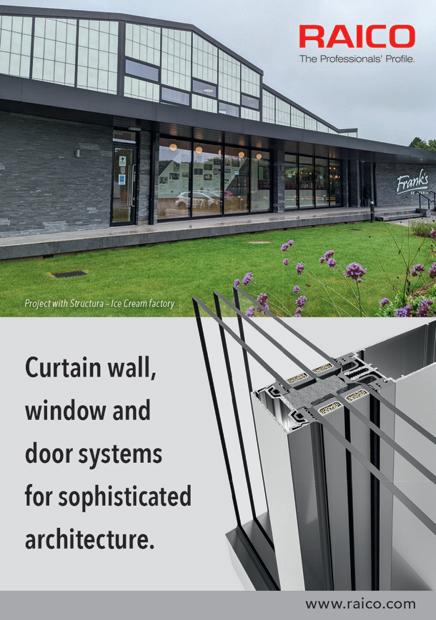
Inside sustainability 91
Sustainability and synergy
“Sustainability is at the heart of what we do,” Mr Rickman said, “from in-office recycling, removing single-use plastic drinks machines, less paper working, LED factory lighting and stringent waste reduction of construction materials. Sustainability is no longer a nice-to-have for any business, it is an integral part of how we should be driving the industry forward.”
Shifting to an electric-vehicle fleet and keeping a closer eye on its energy usage, has given the company greater visibility and clarity on its biggest costs, financially and on carbon emissions. That approach has been adopted on-site, with deliveries
of locally sourced materials delivered by electric vehicles, while waste reduction, recycling and reuse are key priorities. The company’s proactive stance has been underlined by its Sustainability Manager, Regina Singer, who joined nearly three years ago as a buyer, but adopted her passion for sustainability in-house, according to Mr Rickman: “That passion and drive enabled Structura to become carbon-neutral, effective from June 2021, and we aim to continue maintaining that status going forward.
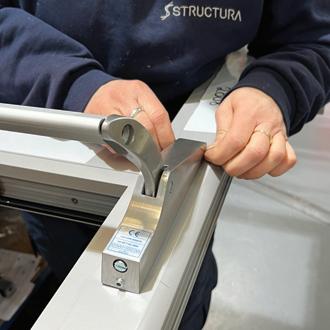
“We also want to encourage that sustainability drive in our supply chain, working with as many Environmental Product Declarations as possible, and providing support and encouragement to our small local suppliers in tackling carbon emissions.”
It has saved 140 tonnes of CO2 since its solar panel installation in 2012, equivalent to over 250MWh of renewable energy. In early 2023, the company invested in solar battery storage to capture the energy it creates to fuel its head office, factory and EV fleet.
The company has ISO 14064-1 accreditation confirming its Carbon Reduction performance. “We’ve been on our sustainability journey for several years, recording our greenhouse gas emissions
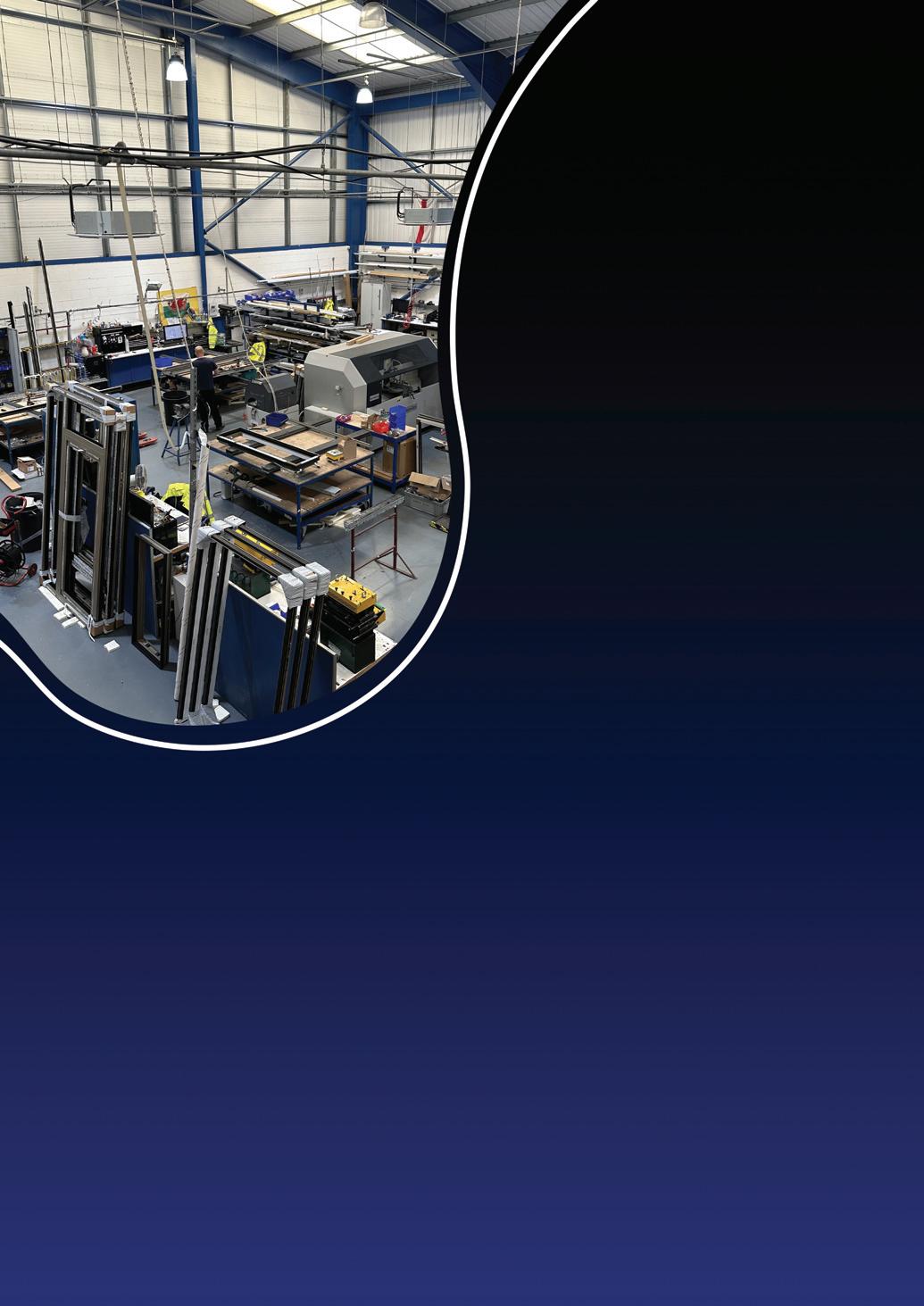
STRUCTURA I PROFILE 92 Inside sustainability
since 2018 and having a representative year (post lockdown) to draw a fair comparison,” Mr Rickman added. “The result proved a reduction of over 12 per cent of our operational Scope One and Two emissions across two comparable years, which is highly encouraging.
“Understanding the reality of our emissions has been eye-opening and is now influential in our decision-making. Our commitment is to continue reducing this as part of our Net Zero plan by 2030.”
Maintaining long-term relations with suppliers and clients is based on transparency and Structura’s knowledge, value and experience handling client properties and systems. “There is also an acknowledgement in our supply chain that we are reliant on one another to succeed,” he added.
Structura UK recently underwent an overhaul of its management, although the founding directors remain a part of the business.
“The new management team is planning beyond the founders,” Mr Rickman concluded. “The team brings new vision, direction and energy, while ensuring the founders’ legacy remains alive for the long term.
“We have secured a pipeline of orders valued at over £20m for the next 12 months and have had to replan with a stretched budget. Performance has never been better. So, our immediate future looks very promising, both commercially and sustainably.”
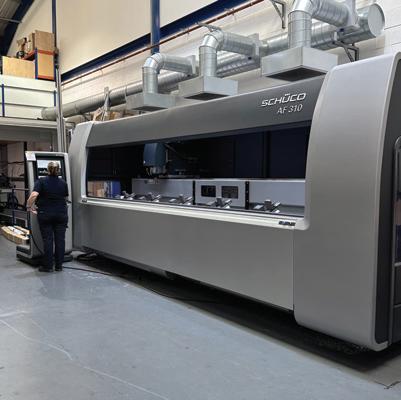
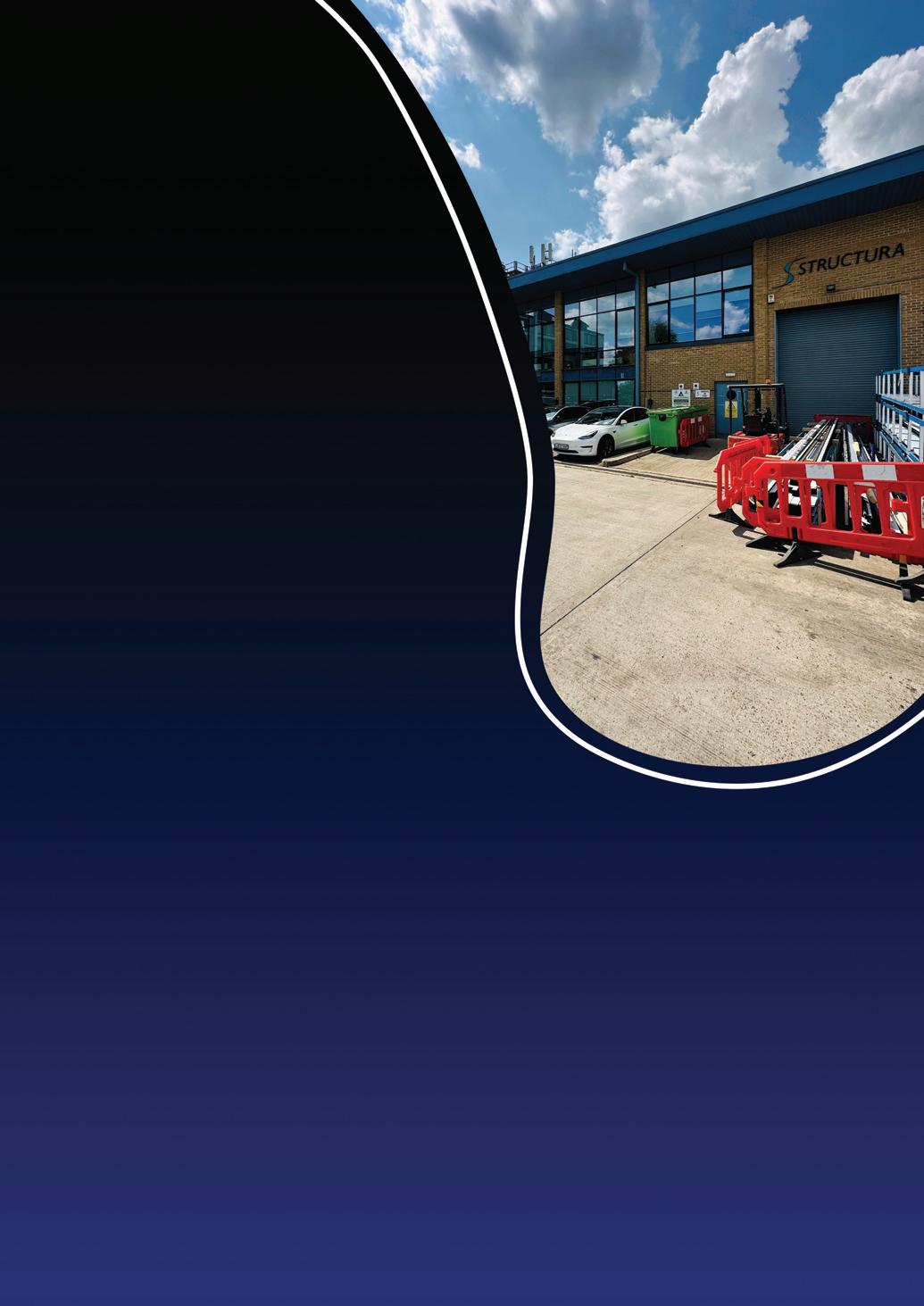
Inside sustainability 93
n
CambridgeHOK is a dynamic and forward-thinking group of horticultural engineering specialists, dominating the vertical farming, greenhouse and energy sectors. From purpose-built headquarters and manufacturing facilities in east Yorkshire, the company is at the forefront of the industry. Joint MDs Louis Bradley and Patrick Harte explained more to Hannah Barnett.
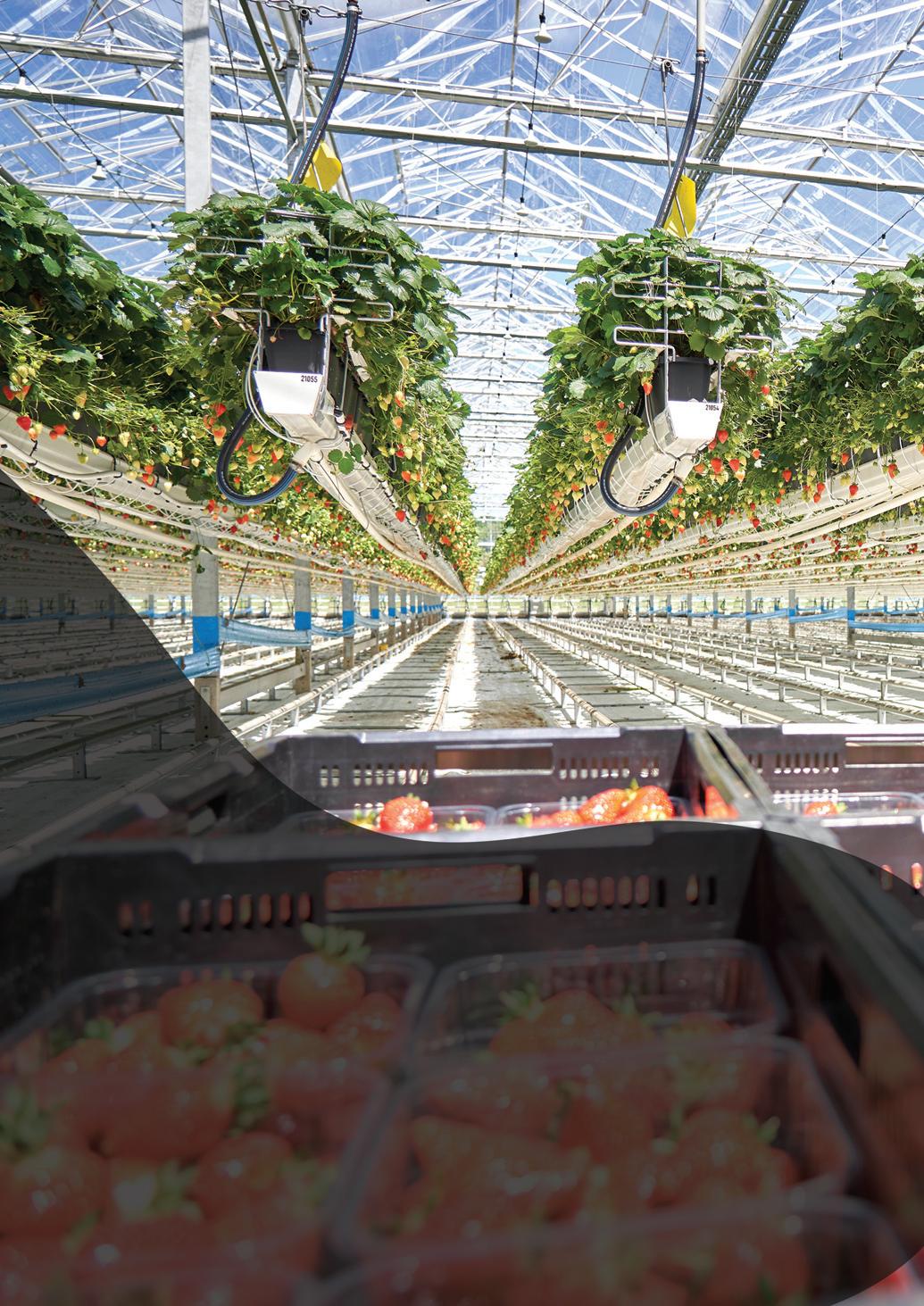
94 Inside sustainability
CAMBRIDGEHOK I PROFILE
Acompany like CambridgeHOK is only as strong as its people. To do what it does requires an experienced team of designers, structural engineers, mechanical heating, cooling and ventilation specialists, computer control developers, electricians, project managers, fabricators, and installers.
This pool of talent has proved essential over the last 20 years, as the company transitioned from specialising in glasshouses to offering a full turnkey solution and placing itself at the forefront of an expansion of the horticulture industry. CambridgeHOK now offers services ranging from civil design, structural engineering, electrical maintenance and irrigation.
“If you give us a field, we’ll give you something that can grow a crop,” Patrick Harte, Joint MD, explained. “30 years ago, we would have just put a glasshouse over the top and added some heat, on a slightly larger scale than you might have at home.
“Today, we use very precise heating or cooling systems to perfectly manage the temperature and humidity. We add in high tech irrigation systems to give the right amount of water and nutrients to every single plant in the same way – across a large site. We’re talking about trying to water, control climate and perfectly grow hundreds of thousands – if not millions, of plants at any one time.”
Background
The company was founded in 1955 by a tomato grower. It moved to East Yorkshire in the 1990s and into the vertical farming space in 2011, during the early days of the
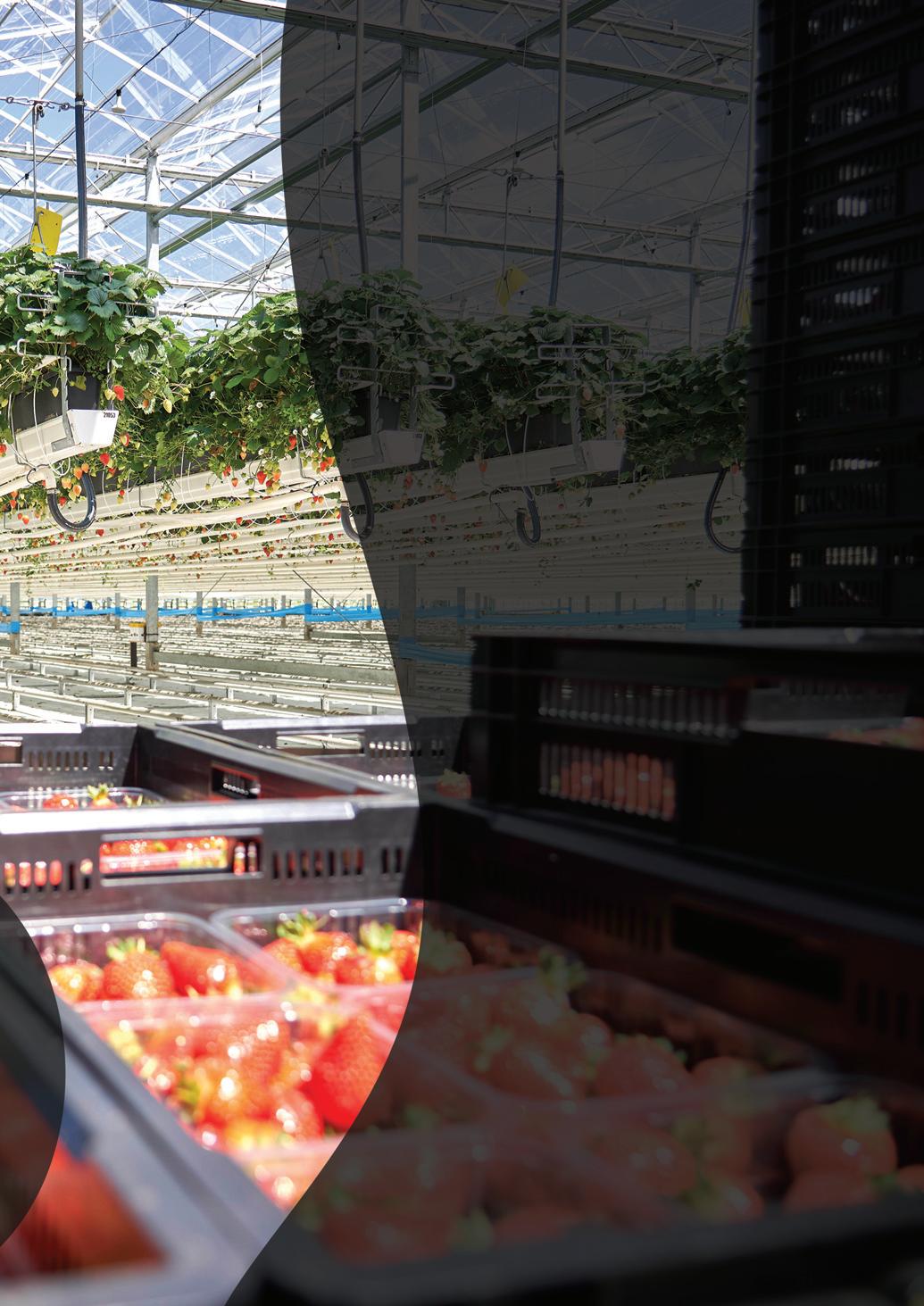
Inside sustainability 95
96 Inside sustainability
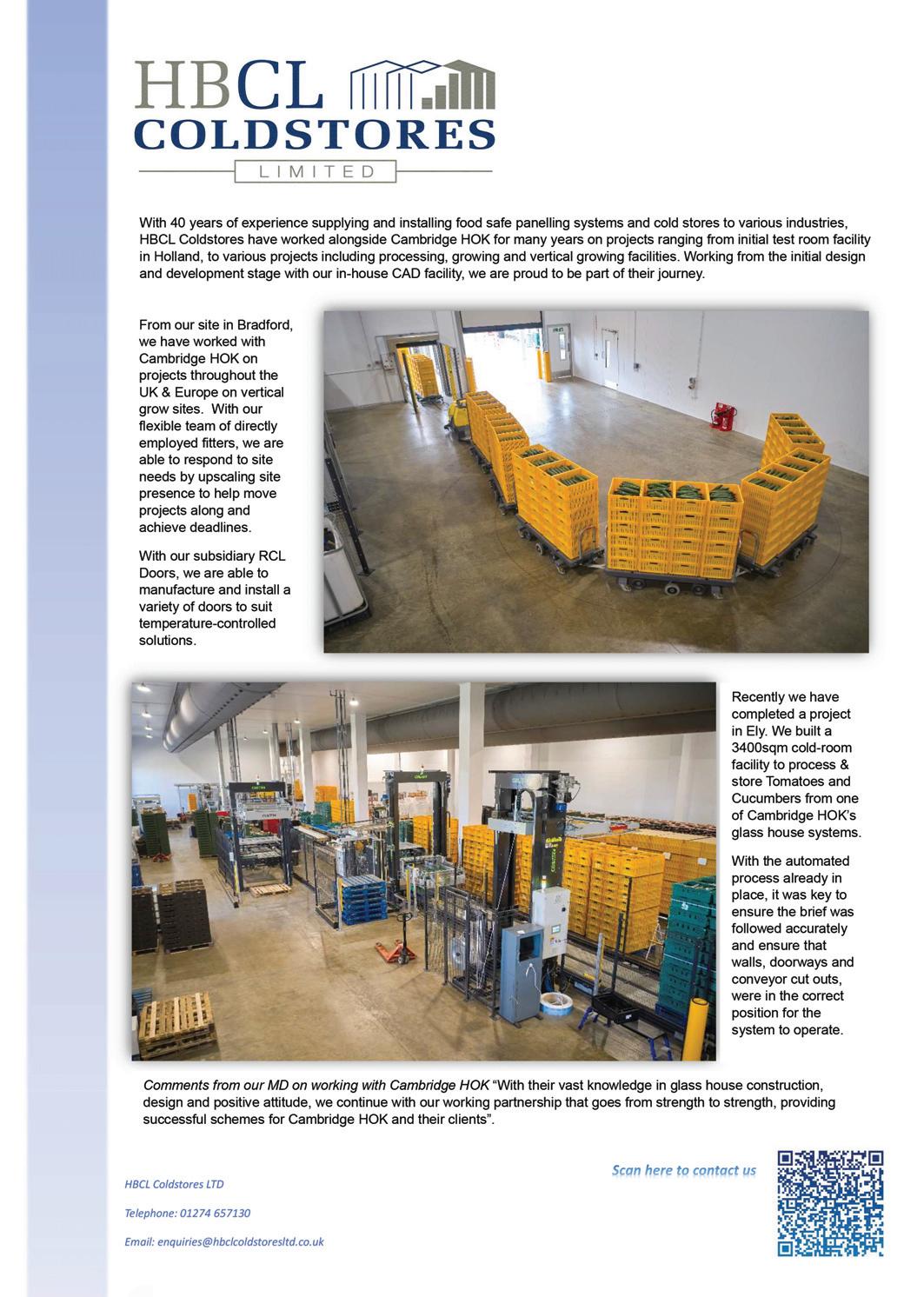
CAMBRIDGEHOK I PROFILE
industry. Since 2021, CambridgeHOK has been part of the Atrium Agri group, which has helped the company meet the economies of scale its projects now require.
“The industry is growing, and the market is consolidating,” said Louis Bradley, Joint MD. “We made the decision to be part of a larger group because it helps us maintain our position and continue to serve our customers. The projects are getting larger, and the investments are getting bigger.
“The pace of innovation in horticulture is moving rapidly in comparison to more established industries. We never stand still in this business. What we’re doing this year could easily be completely different in five years.”
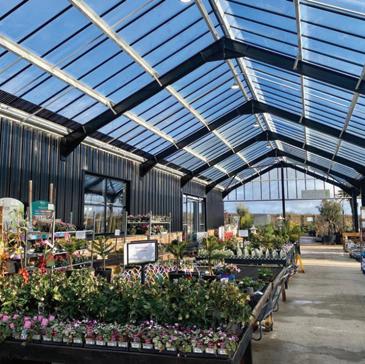
CambridgeHOK is now constructing sites of up to 100,000sqm. “If we went back 30 years, we would call 4,000sqm a big site,” said Mr Harte.
Turnover has trebled over the last decade, and the company has several projects worth up to £40 million in the pipeline.
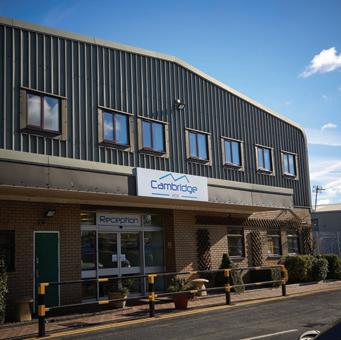
98 Inside sustainability
Big contracts
In 2020 CambridgeHOK took on its first £10 million-plus project, building a six-hectare glasshouse for Dyson Farming, the UK’s largest privately owned farming business. The contract was recently extended to add a 4.7-hectare extension to the strawberry growing glasshouse in Lincolnshire.
“Dyson was an interesting one, because we designed the first site with no real brief, other than that they wanted a strawberry greenhouse powered by their waste
energy,” Mr Harte explained. “We’ve got people in our team who are former growers and understand operating sites, so we can design them in the way we would want to run them.
“It’s not just about building a structure. We’re here to help them build a business. There’s a lot of mathematics involved in sizing packing areas, working out how many strawberries to produce and things like that, and we do all the calculations. This means our customers don’t need experts who understand it all; we help fill that role for them.”
On the Dyson site, CambridgeHOK has employed cutting-edge technology and advanced growing systems to lengthen the British strawberry season, growing from early spring into late autumn.
“In normal construction, like when building a factory, it’s the shell that’s made,” Mr Harte said. “and a different company provides the equipment that produces the goods. But our structure is integral to growing the product. If we get that bit right, we give the customer the best chance they can to deliver a good crop. Clearly, they still need to do a good job running it. But that’s probably more distinctive in our industry than any other; we give them the engine to grow the crop.
“We are an integrator of technology, as well as a construction company.”
Innovative technologies
CambridgeHOK now automates much of the day-to-day operations on its larger sites, utilising robots in its glasshouses to move things more efficiently.
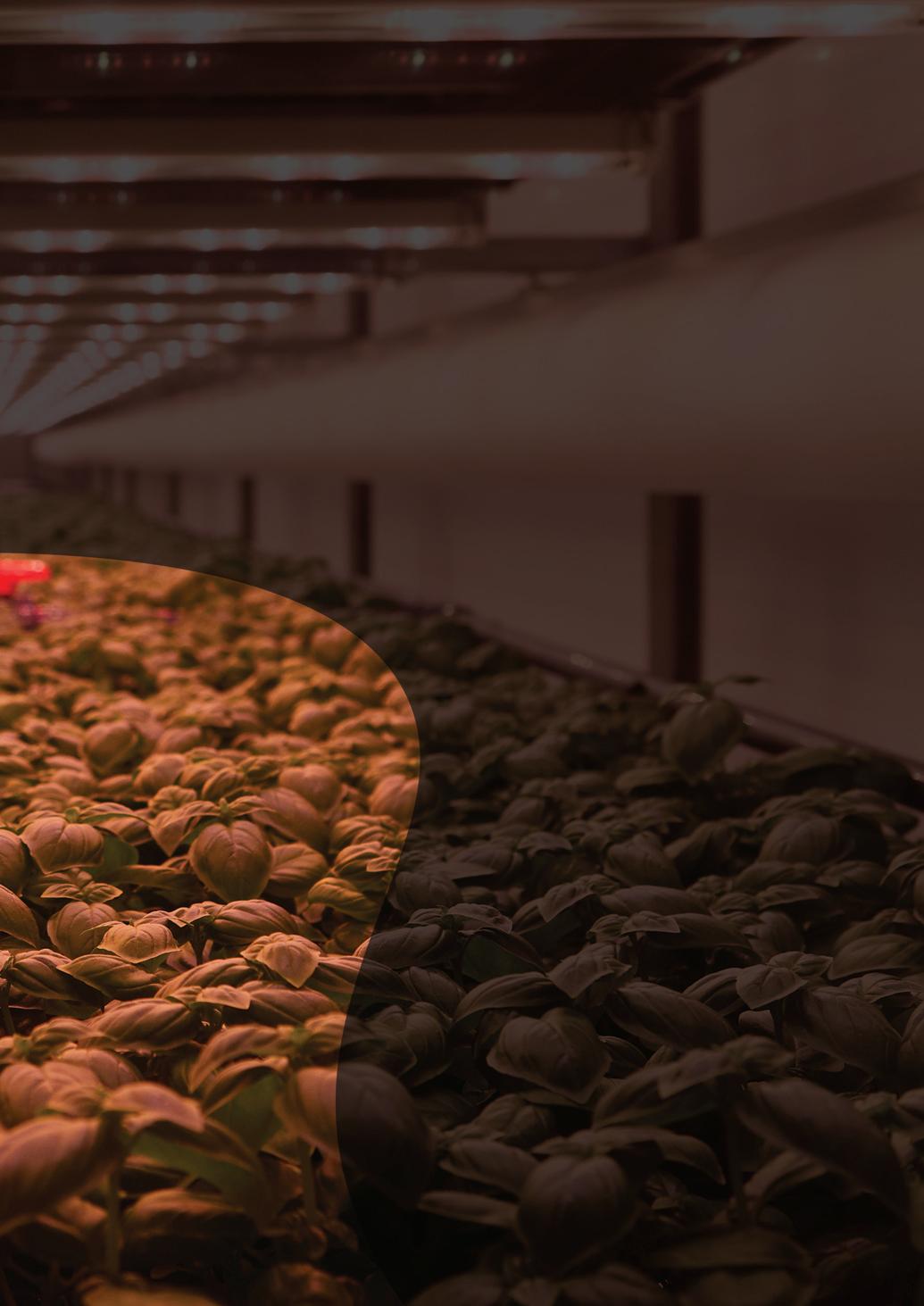
Inside sustainability 99
“It’s sort of a horticultural equivalent to Amazon’s warehouse technology,” Mr Harte said. “We no longer bend down to pick plants out of soil, we elevate them. And we add CO2 to enrich the environment for the plant, so we can produce a much higher yield, with a lower input from people.”
The company also offers innovative solutions to preserve water in its glasshouses, using a lagoon to store the excess that is caught on the roof. Water captured in times of plenty is recirculated and reconditioned for use in times of scarcity.
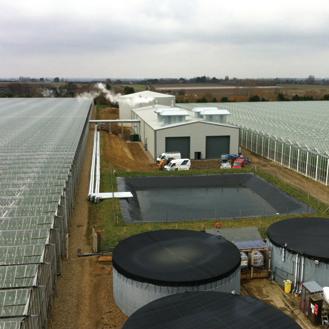
These innovations have proven ever useful as the company takes on more projects in emerging markets, such as the medical cannabis sector. CambridgeHOK recently built a pharmaceutical grade growing facility for a customer.
“That was an interesting technical challenge,” Mr Harte said, “because the environment must be kept to a completely controlled standard to create a repeatable crop. An inconsistent supply of medicine, in quality or content, will not effectively treat a condition: so, we needed to build facilities that can grow those crops to a very precise standard.”
Sustainable relationships
Undertaking bespoke design projects helps the company to maintain its long-lasting supplier relationships. CambridgeHOK can apply the same principles from one site to another, although often with a different outcome.
“Because we are integrating technologies, we need to work with suppliers who are constantly innovating,” said Mr Harte.

“We usually maintain strong relationships at senior levels – often owners or MDs. I spend a significant amount of time with our suppliers, trying to understand new technologies and keeping up with developments in the market.”
In 2022, the company completed a project after 11 years. While that was an exceptionally long timeframe, projects do usually take several years of diligent work and dedication, meaning CambridgeHOK cultivates similarly strong partnerships with its customers.
“Our customers value the fact it’s not a transactional relationship,” Mr Bradley said. “We are personally invested; we have been there from the first hand-drawn sketch. When you build that type of relationship with a customer – and you really care about a project – that leads to future business.”
Moving through the stages of a horticultural project with a customer is indeed one of the most exciting parts of running a business like CambridgeHOK, Mr Harte concluded: “I’m often in the first meeting with the client, and there might be an idea on a scrap of paper. Then fast forward three years, and we’ve built this massive thing: and there can be obstacles, but it all comes together.” n
CAMBRIDGEHOK I PROFILE 100 Inside sustainability
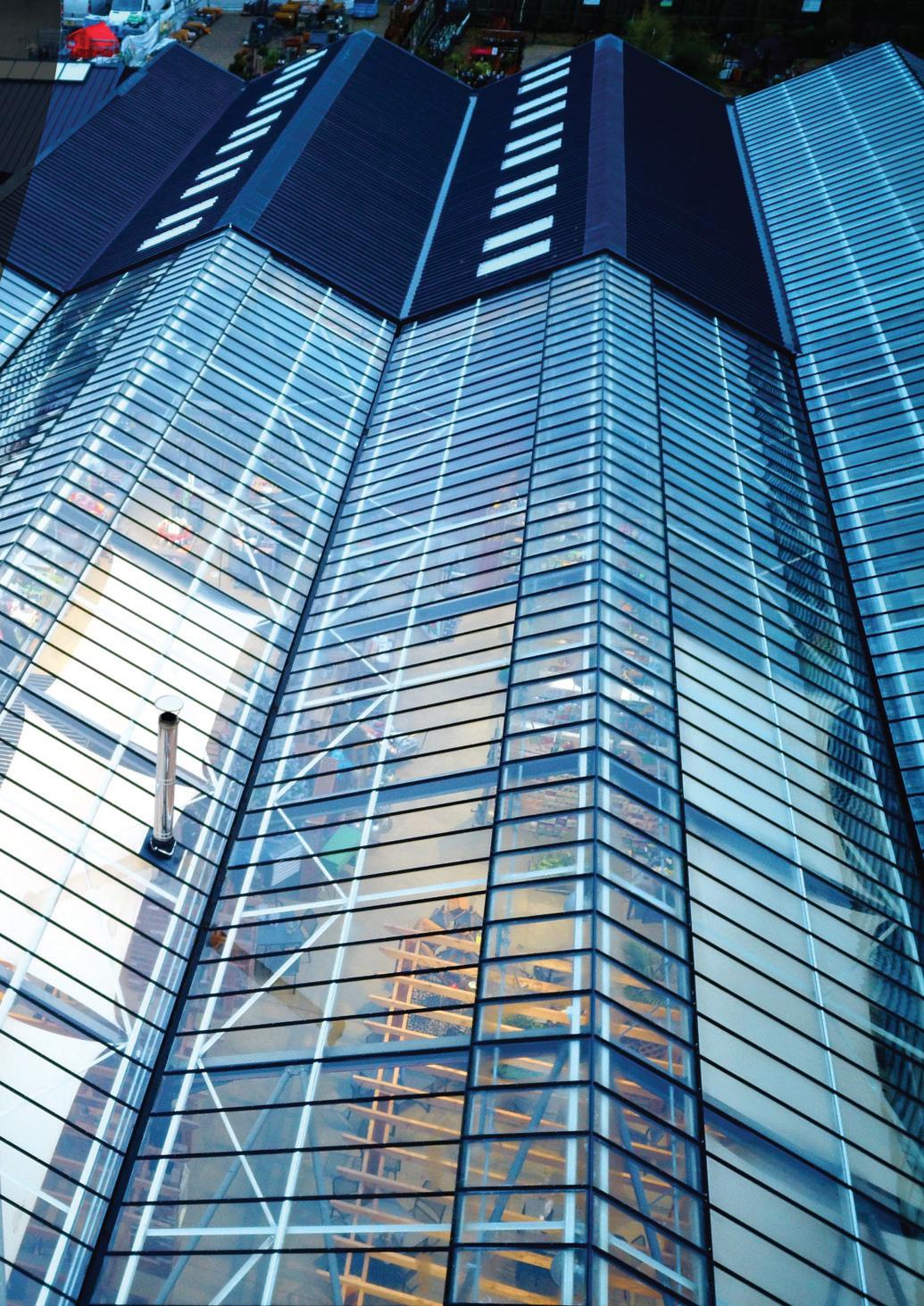
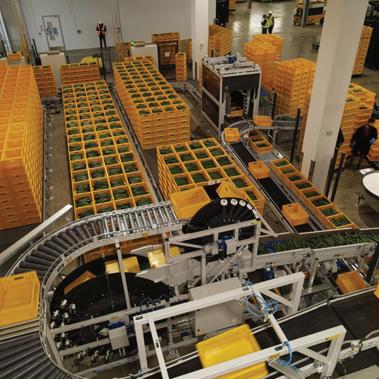
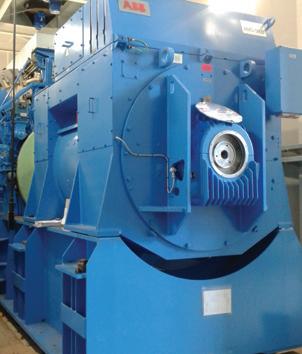
Inside sustainability 101
Bin Dasmal Group, a leading contracting company in the UAE, offers multiple verticals including HVAC, MEP trading, contracting and maintenance, lifting and safety, access and storage solutions, outdoor living, and sustainable products. General Manager Sahul Hameed explained to Andy Probert how Bin Dasmal Group creates sustainable growth through providing engineering solutions.

102 Inside sustainability
BIN DASMAL I PROFILE
Ascrapyard and a parking lot are not the most obvious locations for a defining initiative to farm fresh produce. However, the workforce at Bin Dasmal Group has utilised its engineering prowess, (normally reserved for more complex projects), to rise to the challenge of developing a series of farming operations. The launch of Ekthaar, the group’s newly formed indoor vertical farming manufacturing operation, has been two years in the making, but could now define the template for similar opportunities in i ndustrial settings across the Middle East.
“In the long term, Ekthaar envisions solving broader problems such as
regional food shortages by locally growing and harvesting fresh produce in any given space that is unused and available,” said General Manager Sahul Hameed. “We use less soil and water and create more produce.”
Group principles
Founded in 1976, the Bin Dasmal Group began as a contracting and trading company based in Dubai. Today, the group has a direct presence in the GCC region, including UAE, Oman and KSA. Now employing 1,000 people across its various locations in the Middle East, the group has interests in manufacturing, trading,

Inside sustainability 103

BIN DASMAL I PROFILE
contracting and servicing operations, while maintaining engineering solutions in the construction market.
Most importantly, healthy relationships with local and international partners, as well as a productive working culture with employees and stakeholders, are where Bin Dasmal’s core strengths and values lie. This is the primary asset it aims to maintain and develop further through continued investments in branding and marketing, human resources, information technology, QHSE, and research and development to remain a competitive conglomerate overall.
“Currently, we have set and implemented important sustainability initiatives as per the execution of the latest international green building standards and regulations in the UAE,” Mr Hameed explained. “We aim to increase sustainability awareness among the community in accordance with the new UAE agenda of 2023 as ‘Year of Sustainability’ while we approach the 28th United Nations Climate Change Conference of the Parties.”
A leading trading group
The arm of the group known as Bin Dasma l General Trading represents leading names of building, HVAC-R and plumbing components, materials and equipment. This UAE-based company has established collaborations with European, American and Asian companies, which reflects the initiative of the company to adapt to the ever-increasing demand of its local and international clients.
“At Bin Dasmal General Trading, we aim always to achieve excellence
106 Inside sustainability
without compromising on product quality, service or any of our values,” Mr Hameed explained.
The extensive portfolio of products from Bin Dasmal General Trading includes coatings, adhesives, sealants, thermal insulation, copper pipes, compressors, condensers, evaporators, controls and much more. Moreover, these products are from globally leading brands such as Foster ® , Aeroflex, Dorin, Friga-Bohn, Danfoss, Lawton, Koura-Klea, Garmco and others.
Bin Dasmal General Trading has supplied products for an impressive list of projects. In Dubai, these include the Grand Bleu Tower, DIFC office building and link bridge, and Al Khail Avenue Mall. Notable projects elsewhere in Abu Dhabi include the ADNOC Group Service Hub and the Waterfront Residential Towers.
Contracting partnerships
The subsidiary previously known as Bin Dasmal Contracting is now called Bin Dasmal Engineering Technologies
& Management Co LLC (BETAM). With over f our decades of experience, BETAM offers civil engineering and MEP services. BETAM has expertise in designing, building, facilities management and energy management services, all in
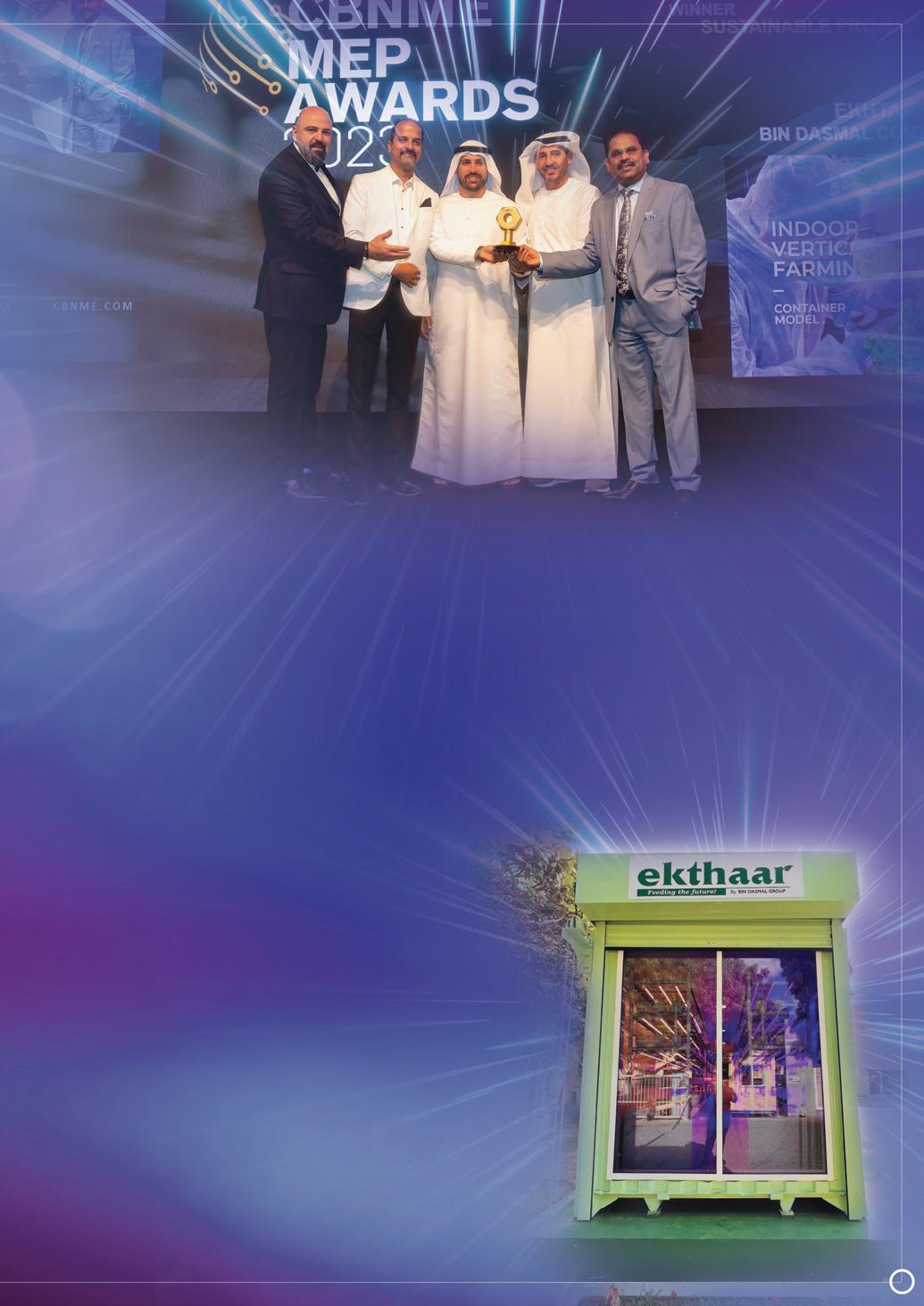
Inside sustainability 107
one establishment. During design projects, the company places the client at the forefront and delivers engineering solutions built on a sustainable platform , with a low carbon footprint and in keeping with clients’ needs.
“Our vision at BETAM is to be one of the regional leading MEP and energy service companies,” Mr Hameed said. “We will efficiently serve our client’s needs by pursuing excellence through an ongoing effort by passionate, dedicated and disciplined employees to deliver quality and timely projects.”
All these services are provided by a team of experienced engineering personnel and technicians who offer round the clock service. BETAM promises reliable services through its experienced
team and timely response to customer demands which are supported by the company’s commitment to high quality.
Farming with a difference
Ekthaar, which means ‘growing’ in Arabic, is Bin Dasmal Group’s answer to making a positive difference by implementing the three ‘R’s concept of reducing, reusing, and recycling. The group then identified unused spaces at its compound in Dubai
Investments Park. A construction waste management programme was implemented, with waste materials from various projects reutilised in the farming infrastructure.
This led to the implementation of three key systems: a greenhouse, an indoor ‘net house’ farm and container-based vertical

BIN DASMAL I PROFILE 108 Inside sustainability
farms. “The net house was a result of converting an existing scrapyard into an area capable of producing fresh produce,” said Mr Hameed. “The greenhouse was set on four unused parking lots, and two containers were located elsewhere on the site.
“We utilised the group’s core strengths in the mechanical, electrical, plumbing and civil sectors to develop these units. This approach helped Ekthaar provide costeffective, sustainable farming solutions.”
Established in accordance with the latest international green building standards and regulations, the units are now harvesting fresh produce with greater nutrition all year round.
“Ekthaar is using only five per cent of the actual soil and water, while saving 25 to 30 per cent of the total construction cost by reusing construction waste materials,” Mr Hameed continued. “It is a combination of horticultural and engineering techniques that optimise crop production, crop quality and production efficiency.
“Compared to traditional agricultural practices, applying the CEA methodology ensures effective water usage in the cultivation of crops all year round.”
Ekthaar’s sustainable farming solutions portfolio includes containerised Controlled Environment Agriculture (CEA); an advanced and intensive hydroponically-based agriculture where plants grow within a controlled environment to optimise horticultural practices.

“Customers can use the extensive knowledge base that Ekthaar offers, especially since the construction industry is diversifying its interests and transitioning towards sustainable endeavours,” Mr Hameed concluded.
“We are evaluating and developing strategies that can be transitioned to industrial clients who envision creating vertical farms on any unused land they have. Ekthaar is certainly primed to both expand its vertical farming model and continue spreading its green philosophies across the Middle East.” n
Inside sustainability 109
click to sections:
EVENT PARTNERSHIPS CONSTRUCTION
TRANSPORTATION & LOGISTICS
SERVICES & TECHNOLOGY
BACK TO CONTENTS
one planet – one chance – one voice
ENGINEERING & MANUFACTURING
An introduction to the engineering and manufacturing sector, with a special report, engineering and manufacturing news, followed by company profiles.
i S
Sustainability and SM

Jasper Steinhausen is the founder and CEO of Business With Impact. Specialising in making sustainability profitable for SMEs, he has helped more than 100 companies create business results through sustainability. and spoken to more than 10,000 people on the subject. In this Special Report, he answers questions about how SMEs can improve their sustainability. Questions by Imogen Ward.
What inspired you to get involved with the topic of sustainability?
It was a specific class in the gymnasium. I was sitting in a classroom as a teenager, lis tening to my teacher telling us about the potential consequences of global warming on Scandinavia and the UK. He explained that rising temperatures caused by increasing carbon emissions could disrupt the gulf stream that brings warm water to the UK and Scandinavia. It could lead to Arctic conditions spreading across Scandinavia.
It was a wake-up call that we were experimenting with such huge and dramatic changes by continuing to emit CO2 into the atmosphere. I have been working with sustainability ever since.
How can sustainability benefit SMEs?
In many ways! Typically, benefits include reduced costs, increased innovation, productivity gains amongst staff, recruit ment
and retention of high-quality staff, improved branding, being ahead of the curve on regulation and demands, and expectations from the market. Finally, sustainability can benefit SMEs through increased sales and increased customer loyalty.
These are findings I have made with my experiences with clients, but also supported by some research my team did on what other studies and reports have found. My experiences were supported again and again in the studies with a total of over 30,000 SMEs across Europe.
What tips can you provide to ensure companies avoid greenwashing?
Do what you say – say what you do! It is basically that simple. Always talk about the specific results and initiatives you have created and not about general phrases like ‘this is a sustainable product’. Results and being able to support your claims with evi -

112 Inside sustainability SPECIAL REPORT
Entrepreneur and writer Jasper Steinhausen talks with Inside Sustainability.
Esdence is what counts, these are what will give you respect.
I have a model I call the Impact Magnifier that I recommend. It is a triangle that has Results, Mission and Roadmap in each corner, and the idea is to always focus on the specific results, but to also add your bigger purpose as context. Adding in your roadmap is what helps to prove that you are not just talking about a stand-alone effort and have a greater plan for achieving legitimate sustainability.
How is the manufacturing industry adapting to the topic of sustainability? In your opinion, do you think the industry is doing enough to incite change?

The short answer is no, I do not think they do enough. Neither from the point of view of the huge potential that companies miss out on when not engaging strategically with sustainability, nor from the point of view of what we need to provide the next generation with the tolerable conditions to unfold their lives.
Inside sustainability 113
To learn more, please visit: www.bwimpact.com
But that said – there is significant movement amongst the manufacturing industry. I see we have passed a tipping point and most business leaders recognise that they need to do something different. Unfortunately, most business leaders feel they don’t know how to lead the transition and how to connect sustainability and business, beyond just a branding opportunity. There is a need for a mindset upgrade as sustainability has never been part of the education or practical experience of the manufacturing industry.
How can the implementation of a circular economy aid manufacturing companies?
A circular economy is best viewed as a toolbox for solving business problems, and simultaneously making a positive impact on the world.
Because of the focus on creating positive impact and the language used to explain the circular economy, it is my experience that businesspeople manage to understand it quickly. It’s a fast-track to be able to see a pathway to becoming a more sustainable company in a way that benefits the business as well. In short, it is another way of thinking about what, and how, to generate value.
By understanding the circular business approach and mindset, everything around the green transition becomes easier and more beneficial.
Could you give us a brief summary of the topics covered in your new book ‘Making Sustainability Profitable’?


The book for business leaders is a ‘howto’ guide on creating a thriving business that makes the world a better place. It is based on 15 years of practice in applying a circular economy to over 100 companies on a consultancy basis. Moreover, it covers the top three problems I have realised business leaders face when they are yet to wholeheartedly embark on their journey to becoming sustainable:
1 They don’t know how to lead it.
2 The business is becoming less attractive.
3 Business is getting harder and harder.
Finally, the book provides a model called the Impact Blueprint to solve those three problems, including the ‘how-to’ elements so you can do it yourself.
What is your Impact Blueprint, and how can it help companies improve their sustainability and progress their business?
114 Inside sustainability SPECIAL REPORT
Entrepreneur and writer Jasper Steinhausen talks with Inside Sustainability.
The Impact Blueprint consists of the five steps that you need to cover to move your business from a place where you get little ROI out of your effort to prove sustainability initiatives, to a place that propels your business forward. The five steps are:
1 Mindset: Getting the foundation in place for turning sustainability into a business driver.

2 Mission: Develop a great answer to the central question, ‘Why is the world a better place because we exist?’
3 Mapping: Discover the right steps going forward that will move you towards your mission in a profitable way.
4 Movement: Kickstart your implementation and start to create business values with embedded environmental impact, while gaining credibility for the final step.

5 Magnify: Spreading the message about your results and journey to harvest the credit and inspire others to go down the same path.
Do you have any helpful tricks that companies can utilise to grow a thriving business without sacrificing the environment?
Start by writing down the top five problems you face in your business and then repeat the process for your ideal customers. Make it a goal to implement a circular economy and sustainability as tools to solve those problems. Solving a top five problem will always be valuable, and if you successfully use a circular economy as a tool, then you have the environmental side covered as well.
But a great place to start is to find a way to upgrade your mindset on the connection between business and sustainability. You can find several articles and videos about this topic on my LinkedIn profile. Once you get the right mindset, everything else becomes easier. n
Inside sustainability 115
The latest company and industry related developments from the engineering world

ANDRITZ wins first order in green hydrogen sector
Koppö
Energia of Finland has selected international technology group ANDRITZ to perform the Front-End Engineering Design (FEED) for a large-scale plant to produce green hydrogen.
This order is a milestone in ANDRITZ’s strategy to become one of the world’s leading industrial partners for large-scale green hydrogen production plants.
The facility, with a capacity of 200MW, will be built in Kristinestad, Finland, as part of a Power-to-X project. The customer, Koppö Energia, is a joint venture between Germany-based Prime Capital, a renowned asset manager specialising in alternative energy projects, and CPC Finland, a subsidiary of project developer and green power producer CPC Germania.
The FEED provided by ANDRITZ will include the complete hydrogen plant, incorporating the alkaline electrolyser technology of HydrogenPro. Based on the design, the joint venture intends to place the order for the Engineering,
Procurement and Construction of the green hydrogen production plant at the beginning of 2024.
The hydrogen in Kristinestad will be produced using renewable energy, mainly wind power. Up to 500MW of wind and 100MW of photovoltaics power will be developed under the Koppö Energy Cluster to supply the green hydrogen plant with electricity.
Hydrogen produced from renewable sources is considered a virtually carbon-free energy carrier, making it a vital component in combating climate change. The plan for the green hydrogen produced in Kristinestad is to process it into sustainable liquefied synthetic methane (SLSM) for fuelling heavy transport in a sustainable way.
In general, green hydrogen and its derivatives are expected to replace fossil fuels on a large scale in the future, especially in energy-intensive, hard-to-abate industries such as steel, cement and chemical, as well as transport by ships and trucks.
116 Inside sustainability SUSTAINABILITY NEWS
n
Diamik Glass launches new range of ecorok sustainable surfaces
Yorkshire-based sustainable work surface manufacturer Diamik Glass has announced the launch of its 2023 range of trademark ecorok™ surfaces, made from 85% recycled glass.
Ecorok surfaces can be used for a wide range of purposes, including worktops, splash backs, tabletops, tea points, reception desks and much more. Produced by the expert team at Diamik Glass, the method for creating ecorok has been honed over four years to create sustainable, hardwearing and luxury work surfaces.
ecorok is crafted using waste glass that would otherwise have gone to landfill, where it would take up to 4,000 years to break down. The glass is sourced responsibly from businesses within a 10-mile radius of the company’s headquarters in Leeds and then crushed down, sized and colour sorted ready for use. ecorok is created using unique recipes for each design and set in specially adapted solvent-free resins to create a solid sheet.
Using a range of glassware products allows the experts at Diamik Glass to create different colourways for a unique and bespoke finish. Being made to specification for each commission means each carefully crafted sheet of ecorok produces virtually no waste, making it a more efficient product for work surfaces, as well as the only truly sustainable option.
To date, Diamik Glass has worked with architects, joiners and construction professionals to secure impressive contracts with brands, including Legal & General, Cambridge University, WPP HMRC, Mastercard and Bombay Sapphire among many others.
To have your company’s latest product, technology or concept included in Inside Sustainability, contact us today
media@insidepublication.com

Inside sustainability 117
n
GE T INVOLVED i S
Nice-Pak annually produces approximately 500 million packs of wet wipes for the European market. This product range is now almost entirely plastic-free. Commercial Director Ian Anderson and CSR & Communications Manager Alison Roberts explained to Hannah Barnett how the company has reached this impressive achievement.

118 Inside sustainability
NICE-PAK I PROFILE
Nice-Pak has always had a reputation for innovation. The company played a pioneering role in the creation of the wet wipe and its associated categories. This started with food service wipes in the 1950s and progressed through the development of baby and facial wipes in later years. Household wipes followed in the early 2000s, securing Nice-Pak’s dominance in the wet wipe market.
Now a new transformation is taking place in the arena of sustainability: It means the much-maligned wet wipe is no longer an enemy of the environment, thanks largely to the endeavours of Nice-Pak, its suppliers and customers.

“Around 2009, way ahead of our time, we put sustainability at the heart of what we do,” Ian Anderson, Commercial Director, explained. “We started to report externally, unprompted and unpressured, on our sustainability commitments. Our intention was, and still is, to use them as the bedrock of all our innovation.”
With 700 employees and three factories across the UK and Germany, the business serves both private label and branded sectors of the market. It covers all the major product categories; baby wipes, facial wipes, household cleaning wipes and moist toilet tissue. Nice-Pak has a dominant share in the in the UK market, where the per-capita consumption of wet wipes is the highest in the world.
The pledges
In 2020, Nice-Pak issued six sustainability pledges, ushering in a key turning point in the company’s sustainability journey.
Inside sustainability 119
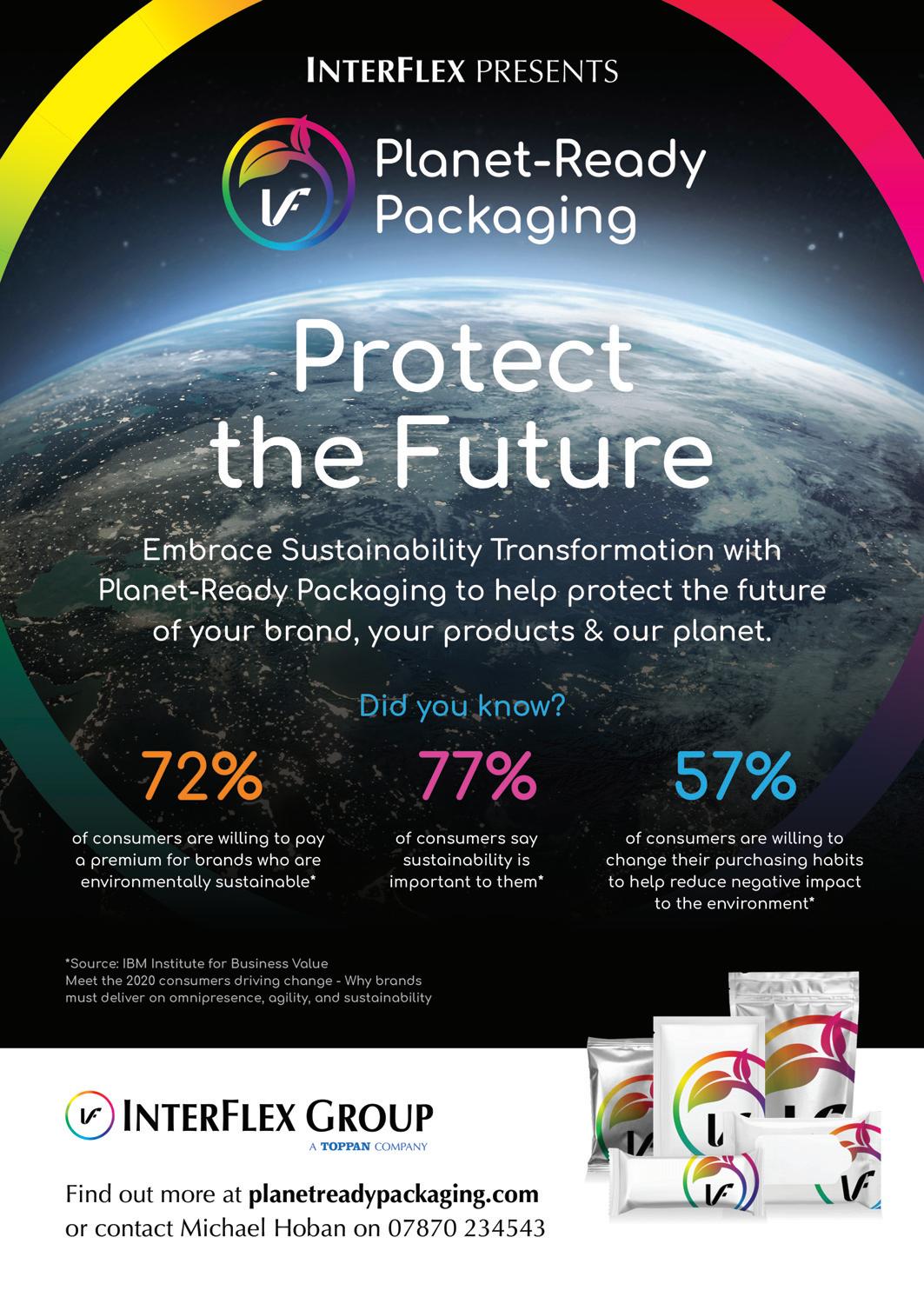
The pledges included offering a responsibly sourced, plastic-free, nonwoven wipe option as part of every quote to customers, and commitments to sustainable packaging, reducing the use of chemicals and minimising the impact of its factories.
“It’s not just a question of what we do, but how we do it,” Mr Anderson said; “the 2020 pledges built on our position at the time, but a lot has happened since then.
“It’s easy to concentrate on what the products are made of, but it’s equally important to look at the business and how it operates in terms of carbon impact, as well as our engagement with employees and local communities. We’ve tried to do the right thing on all fronts, and I suspect that we have invested way above the industry average on these commitments.”
Nice-Pak set its focus on shifting from polymer-based fibres towards those derived from natural sources, which are free from plastic and biodegradable. In 2022, the company reached a significant milestone, with 90% of its wipes in the UK market becoming plastic-free – comfortably exceeding the target of 80%. When the pledges were made in 2020, only 53% of its wipes were plastic-free.

“We achieved 90 per cent plastic-free by working with both suppliers and customers,” said Mr Anderson. “Many customers have made their own pledges to eliminate plastics in products, so we are all working in the same direction. We are in control of certain elements when removing plastic from our products, but we also rely on collaboration. In the world of private label and brands: customers have a dominant role in deciding what their products are composed of and how they are described.
“We can control the dosing of liquid onto a wipe, the folding, the cutting, the packing, the wrapping and the application of labels: but further upstream, things like the fibres used in the nonwoven design, the structure of recyclable laminates and labels plays a huge part in our ability to deliver on sustainable targets. That was a challenge and we’re grateful to our suppliers for what they’ve done to help us get where we are.”
It was also vital during the development process that quality was not reduced and that wipes performed as well as, if not better than, those that went before. This
122 Inside sustainability NICE-PAK I PROFILE
meant rigorous testing into how different materials responded on the production line and the degree to which combinations of materials satisfied consumer need.
The sustainable package

Nice-Pak’s sustainable initiatives have been recognised by rating platform EcoVadis. The certification body considers four areas: environment, labour and human rights, ethics and sustainable procurement. Nice-Pak was platinum certified in 2022, placing it in the top 1% of over 90,000 companies worldwide.
“This is an independently assessed CSR scorecard, requiring a plethora of supporting documentation. To be rated in the top one per cent is a phenomenal achievement,” said Alison Roberts, CSR & Communications Manager. “It is testament to all those across our business who have worked tirelessly to develop and manufacture these sustainable solutions.”
The company achieved its standout rating by considering the full spectrum of what it means to be a truly sustainable business.
“We believe that human rights and ethics are as important as everything
Inside sustainability 123
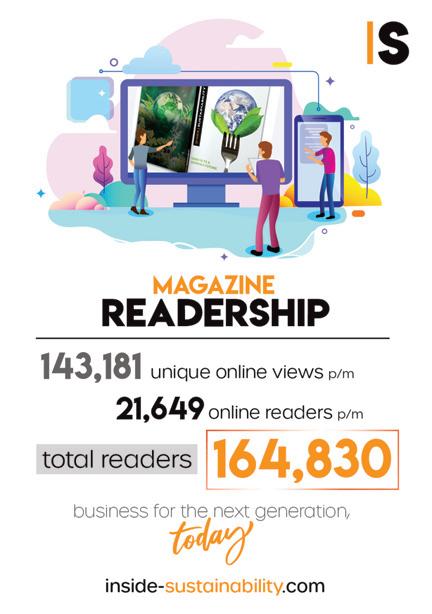
124 Inside sustainability

else,” Mr Anderson said. “Nice-Pak is proud to have been rated as a top employer for ten consecutive years. We treat our people fairly and try to make work as enjoyable as possible.”
Into the future
Nice-Pak maintains its competitive edge by choosing not to vertically integrate; going against the grain of some parts of the market. “We take the view that good companies understand their spheres of expertise better than anybody else,” Mr Anderson explained. “We have a strategy of collaborating closely with the true experts in the technologies that underpin our work, without necessarily trying to replicate what they do.”
An ongoing challenge at Nice-Pak International’s HQ involves countering misinformation regarding wet wipes. But, as the company has a dominant share in the UK market, it can be confident that most UK wet wipes no longer contain plastic. There is also a continuous effort to ensure the products are the best they can be. This includes ensuring that they remain affordable and never compromising on quality. “First, there was a challenge in ensuring that plastic-free wet wipes didn’t make the consumer feel that sustainability was a sacrifice,” Mr Anderson said. “Now, we want to go a step further and deliver a level of tactile performance that’s better
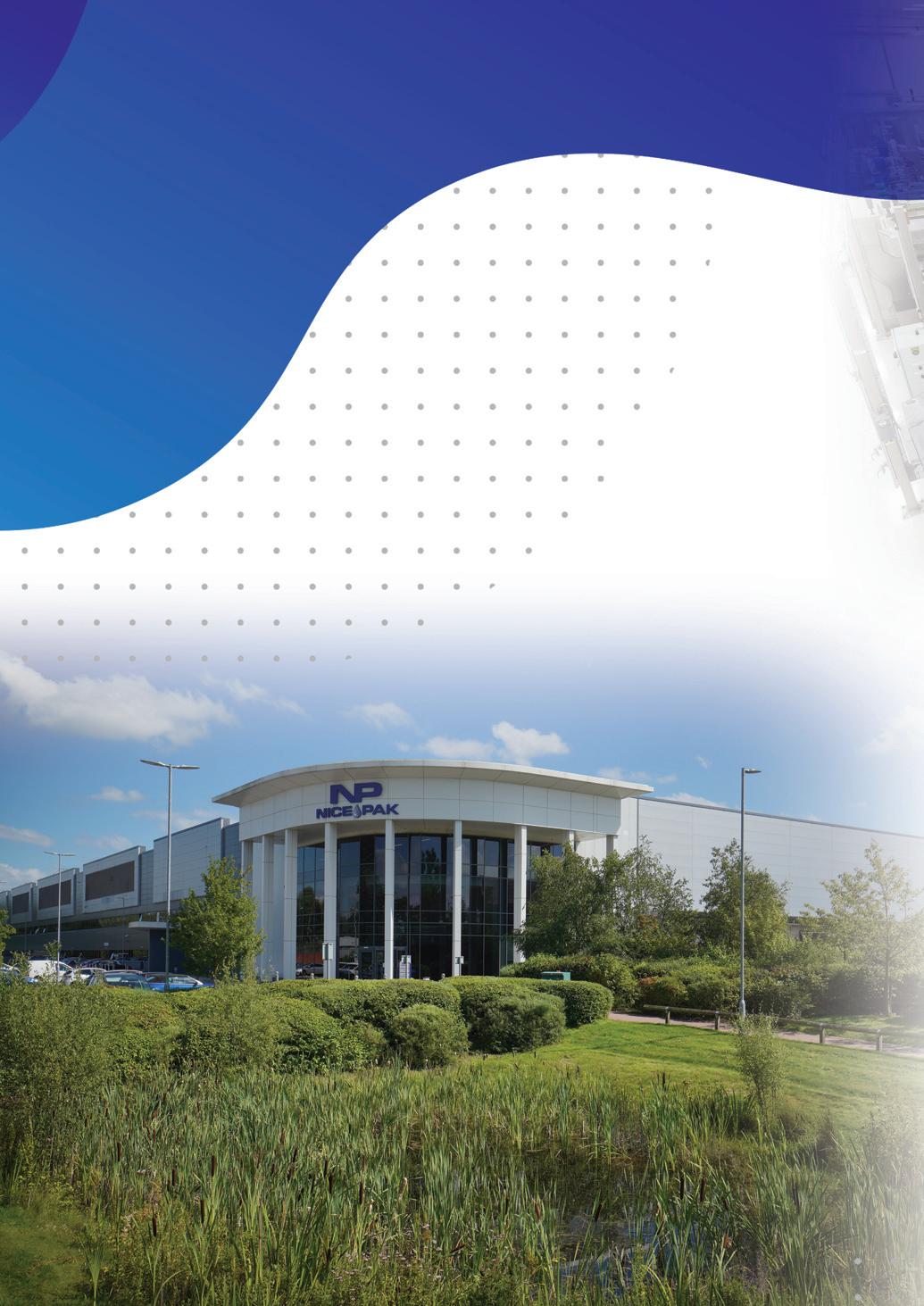
NICE-PAK I PROFILE 126 Inside sustainability
than anything anyone’s ever experienced before, including when plastic was the baseline.”
Nice-Pak’s pioneering role driving change in the industry is indisputable. “We took action before legislation was calling for it and began offering customers choices in this area,” Ms Roberts said. “As a result of that initiative – along with the support of key suppliers and customers – we have driven large scale sustainable change across the industry. And there’s still so much more we can achieve.”
These impressive achievements were only possible as part of a close partnership with customers. Throughout these sustainable developments, Nice-Pak consistently maintained the high service levels demanded by customers.
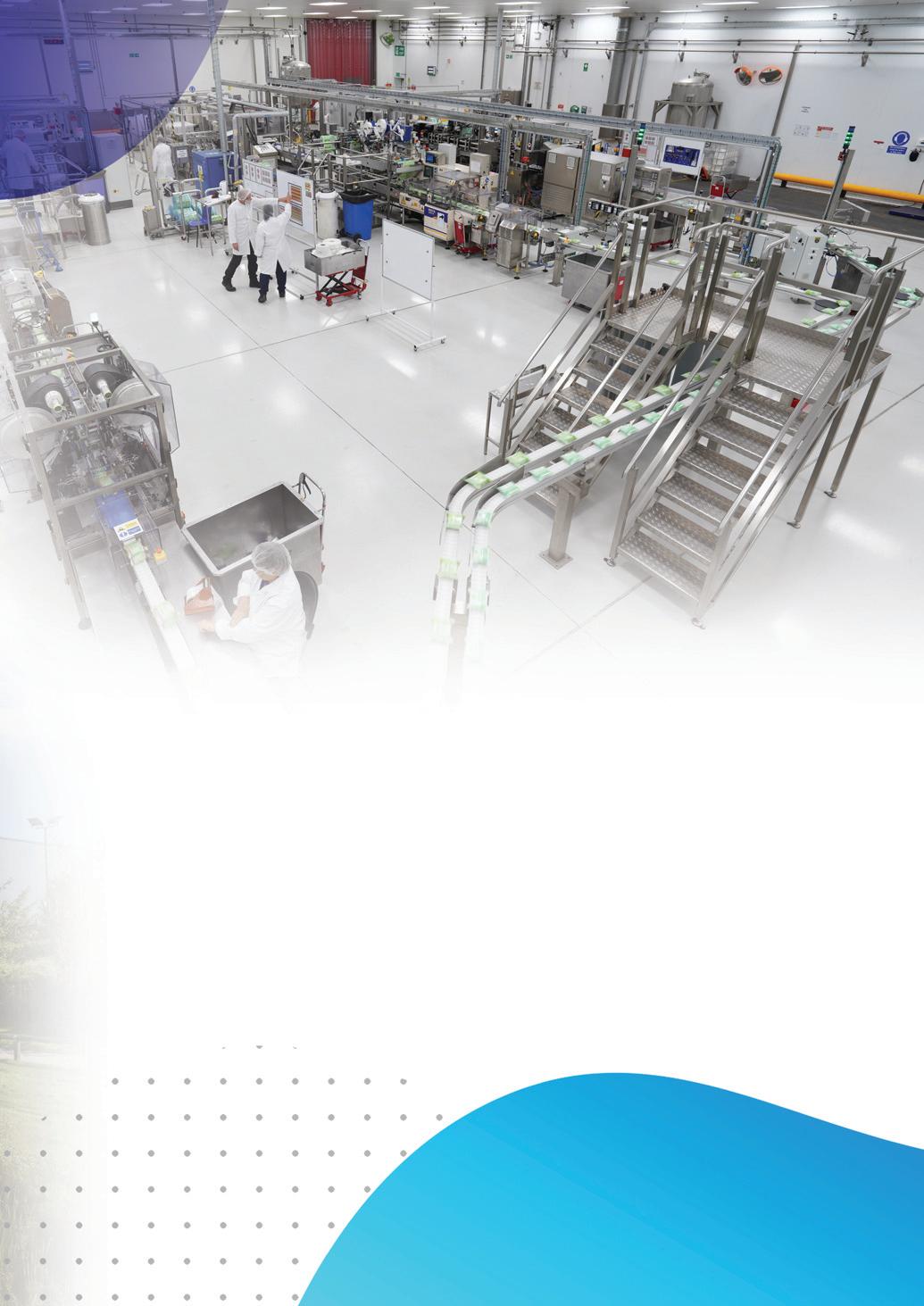
Pragmatism, collaboration, innovation and continuous evolution remain at the heart of everything Nice-Pak does.
“The pace of technological development is so fast: we must always be ready to change direction, or accommodate materials which people didn’t even dream of just a few years ago,” Mr Anderson concluded. “We can only do that with the right partners. And we’ve got tentacles reaching out across the industry, with some of the best brains out there already working on the next invention.” n
Inside sustainability 127
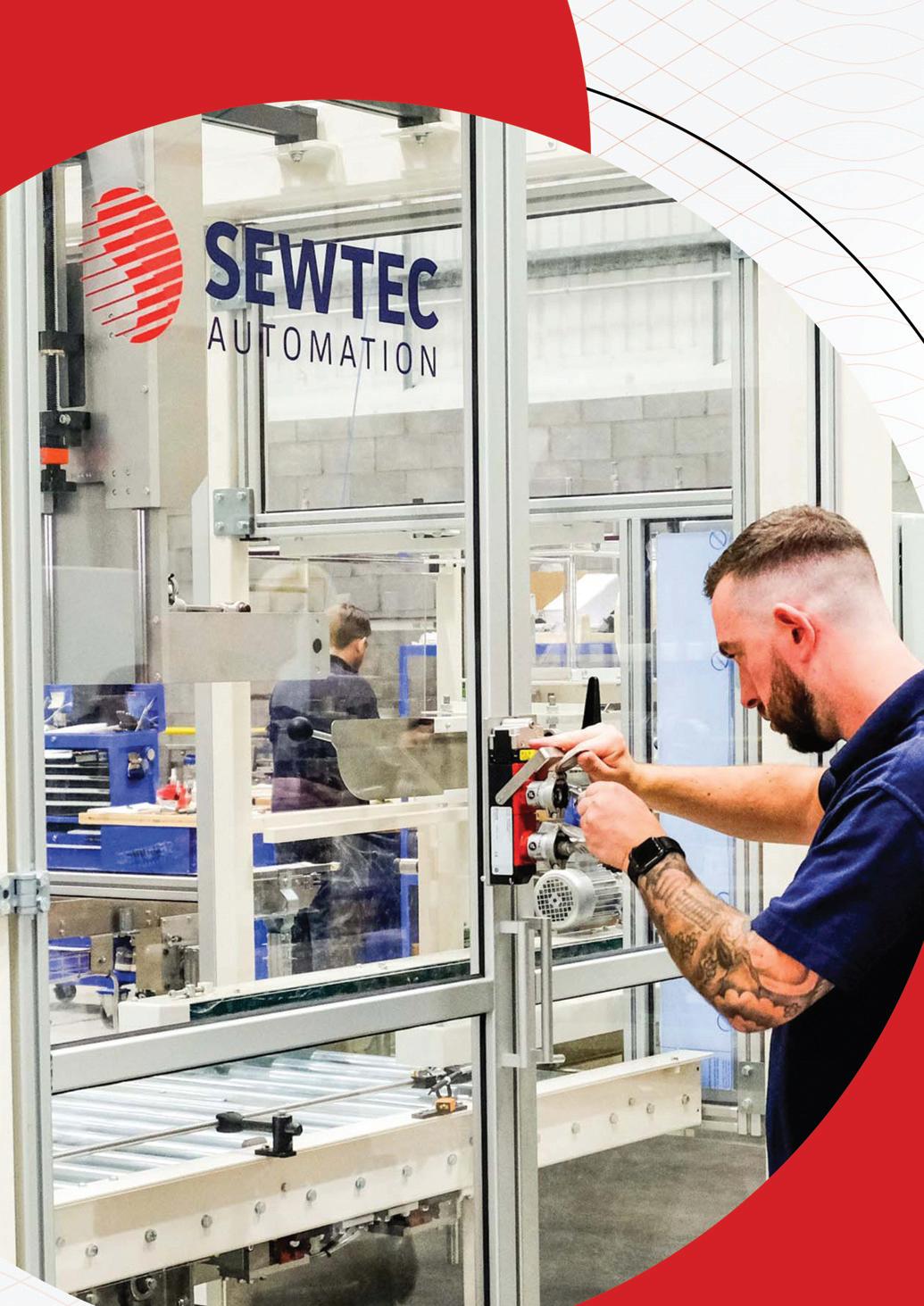
128 Inside sustainability SEWTEC AUTOMATION I PROFILE
Founded in the heart of the United Kingdom, Sewtec Automation is a respected name in the field of industrial automation. Having just been commissioned to provide machinery for the illustrious Royal British Legion’s new plastic-free poppy, Business Support Director Mark Atkins and Head of Sales Andy Perks spoke with Richard Hagan about this landmark project, sustainability and Sewtec’s vision for the future.
Se wtec Automation has a robust and proven track record, having risen to prominence by consistently providing innovative and bespoke automation solutions. It has carved a unique niche for itself with its ability to design, manu facture, build, test, install and commission one-of-a-kind machinery
that meets specific needs not addressed by conventional automation technology. The company is highly flexible, according to Business Support Director Mark Atkins: “At Sewtec, every day is a learning day; we get the opportunity to create solutions that are bespoke and do not exist anywhere else. People come to us when other companies cannot achieve what is required.”
Inside sustainability 129
SCHNEIDER ELECTRIC

Sewtec Automation and Schneider Electric have a long relationship, which is partly down to both companies taking a proactive approach to sustainability. Sewtec’s work on the one-of-a-kind machinery for the important plastic-free poppy is a culmination of their technical expertise and our leading products, enabling both innovation and sustainability. This one project encapsulates the collective effort from both Schneider and Sewtec to reduce industry’s impact on the environment and create a clear path to Net Zero by 2050.

Rachel Whittington, OEM Sales Director, Schneider Electric.
–
130 Inside sustainability
editorial mention
Sewtec prides itself on its technical expertise, knowledge of the automation industry and experience of a wide variety of industry sectors. Its solutions are deployed from an impressive 75,000 sqft state-of-the-art design and manufacturing facility in the UK.
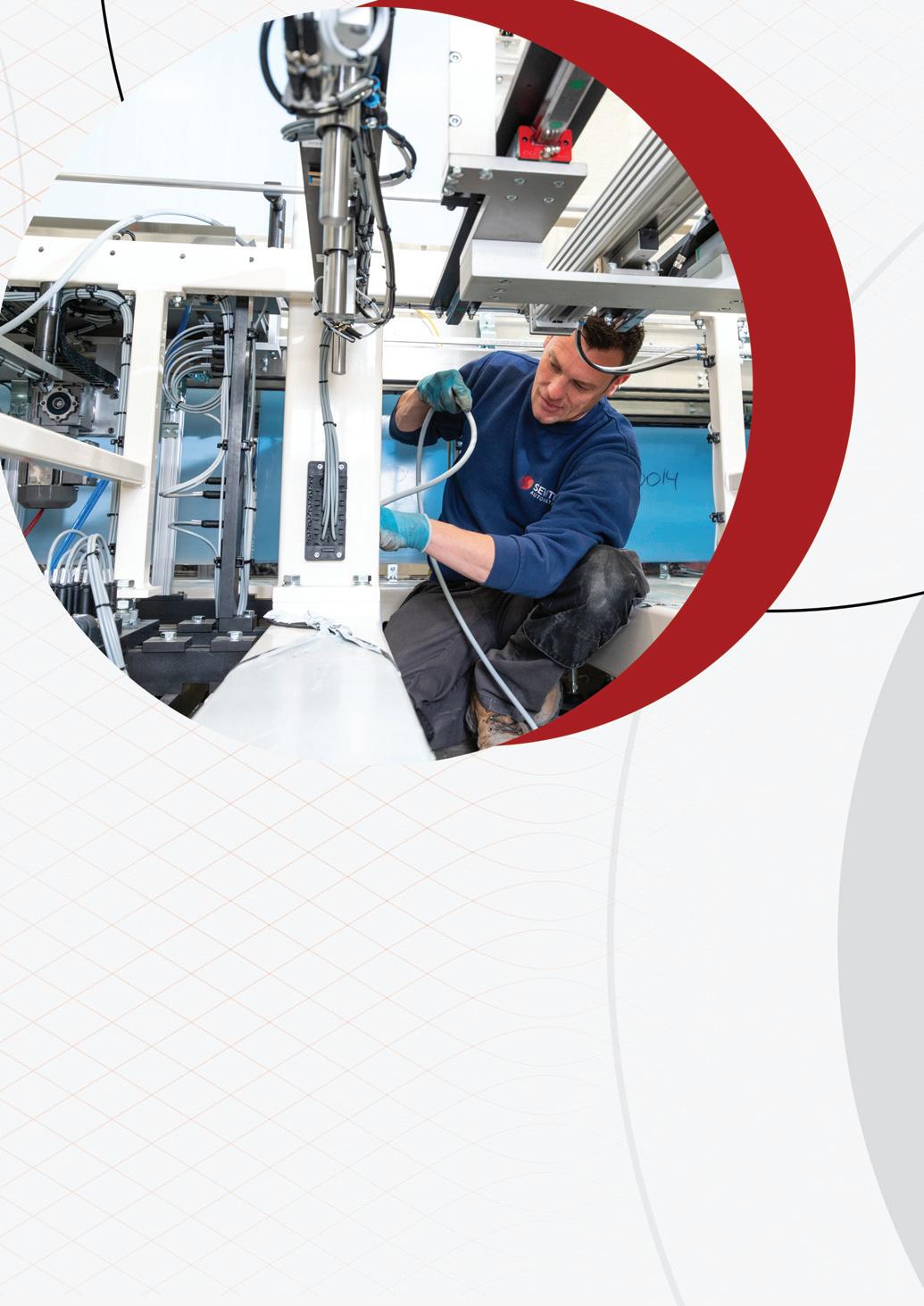
Partnering for a green future
Sewtec’s commitment to environmental sustainability is notable. The company is determined to achieve net zero status by 2030 and has formalised this pledge by signing up to the UK Government-backed SME Climate Hub. “Sustainability is not just a buzzword to us,” said Mr Atkins: “We are committed to working in a way which
promotes the best sustainable practices across our manufacturing processes.”
To reduce its carbon footprint, Sewtec has adopted a multi-faceted approach. One such initiative is its commitment to retrofitting customer machines to increase efficiency and prevent them from becoming waste. The company boasts a proven record of modernising control systems, drives, motors and software, enabling old machines to run up to 50% more efficiently at a fraction of the cost of buying new.
“We understand how important sustainability is for any business, but especially in manufacturing,” Mr Atkins continued. “We pride ourselves on being an environmentally friendly organisation – from designing
132 Inside sustainability SEWTEC AUTOMATION I PROFILE
efficient plastic-reducing packaging production machines to retrofitting machines to ensure they do not end up as waste.”
A significant aspect of Sewtec’s commitment to sustainability is its practice of sourcing locally to support the regional economy. By engaging local suppliers, Sewtec minimises the environmental impact on its community and supply chain. This approach underlines the company’s broader mission of being a responsible corporate entity, demonstrating a deep sense of commitment towards its community and the environment at large.
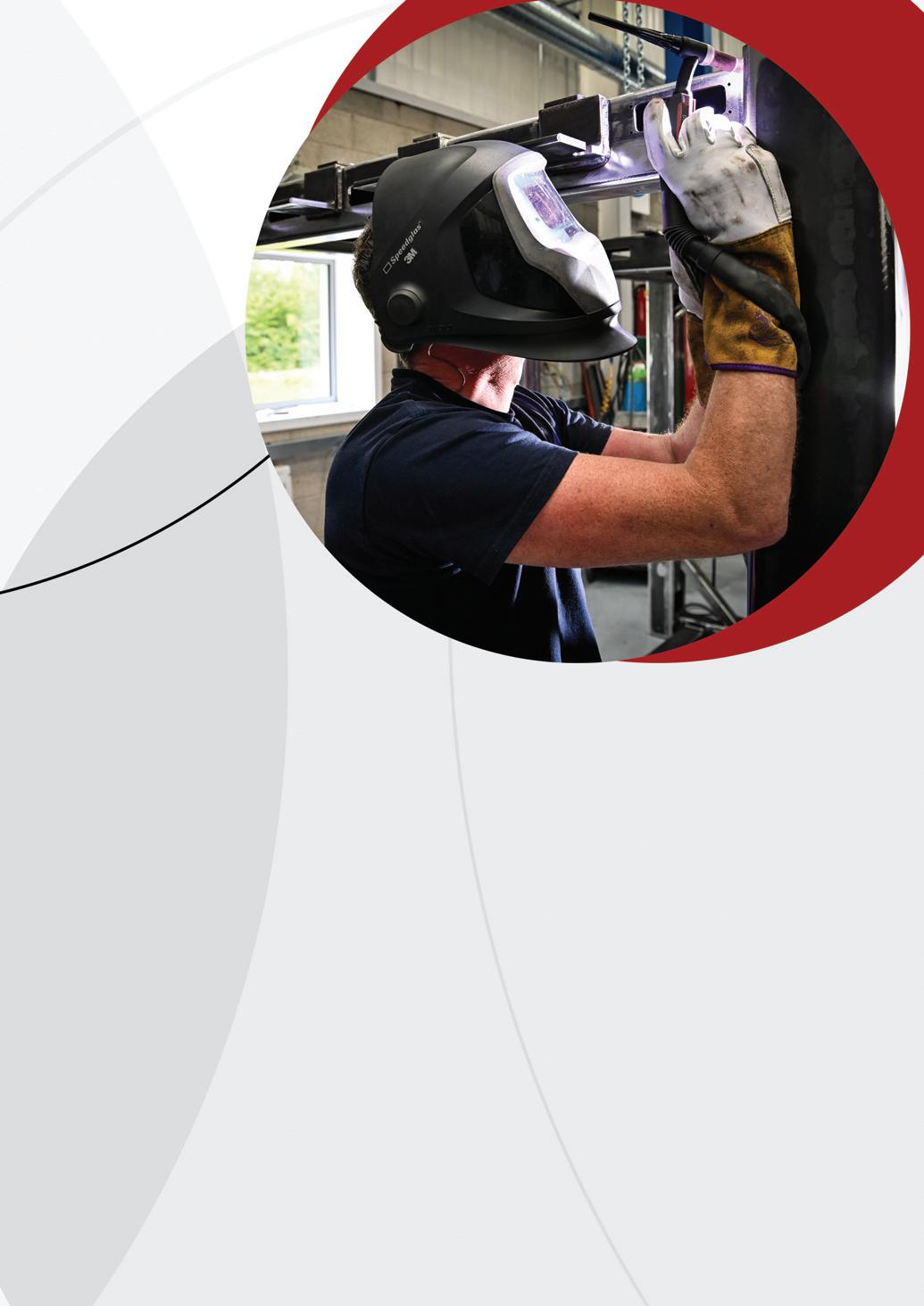
The plastic-free poppy Sewtec’s recent high-profile partnership with the Royal British Legion (RBL) exemplifies the ethos of combining
innovation and sustainability. Tasked with creating machinery to manufacture RBL’s new plastic-free version of its iconic poppy, Sewtec accepted the challenge with enthusiasm.
The new, sustainable poppy is made entirely from paper and can be recycled in ordinary paper recycling collections. It maintains the classic poppy design and leaf shape and can be fastened with a pin or inserted into a buttonhole. Stick-on versions of the poppy are also available. This unique endeavour was not straightforward, as no machines for this purpose existed in the world.
“The poppy machines have been an extremely challenging concept,” said Andy Perks, Head of Sales. “It has been a real privilege to work with such an iconic brand.”
Inside sustainability 133
Three bespoke machines were designed and built, one of which was specifically tailored to the Scottish poppy’s distinct design, and they are now producing the UK’s first plastic-free poppies in time for the Royal British Legion’s 2023 Poppy Appeal. “Everyone involved in the project was driven by th e same objective, and when you look at the final product, you cannot help but
be amazed by what we achieved through innovation and teamwork,” said Mr Perks.
Sustainability and growth
As Sewtec propels forward, it does so with an eye towards both innovation and sustainability. The company has a rich history o f maintaining the ISO 14001 standard fo r over a decade, providing a firm foundation
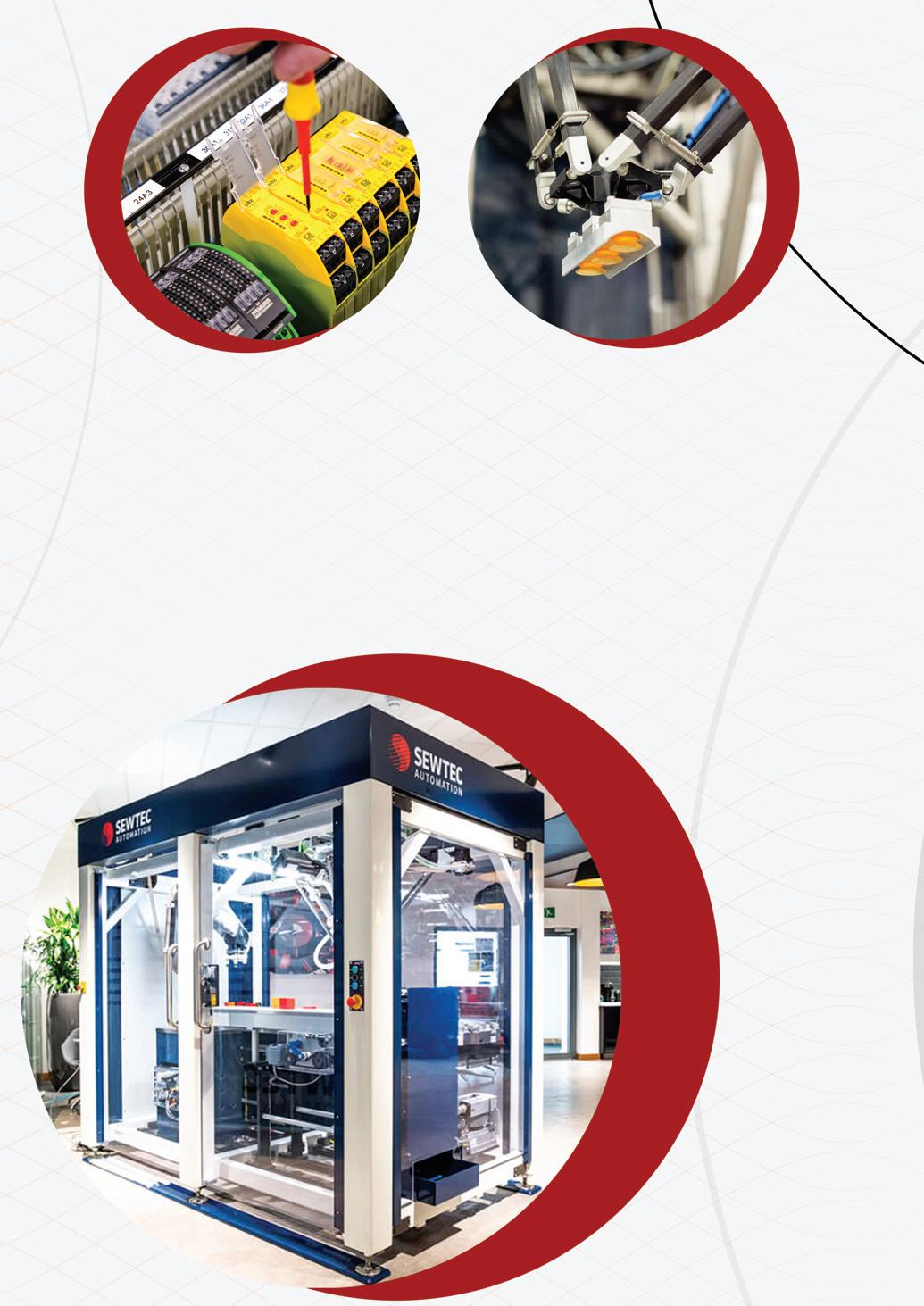
SEWTEC AUTOMATION I PROFILE 134 Inside sustainability
for its environmental ambitions. Its dedication to sustainability has earned Sewtec the gold status EcoVadis accreditation, a 5-star zero waste sustainability award, and nominations from Sedex (the world’s largest data platform for supply chain assessment) in the Technology and Innovation category.
This drive towards achieving net zero status by 2030 plays an integral role in shaping Sewtec’s future plans, as Mr Atkins explained: “To ensure we achieve this target, we will cut our carbon emissions in half by 2030. To reach net zero by 2050 means we have committed to putting no more carbon into the atmosphere than we are taking out of it.”
The excitement of innovation
Sewtec’s commitment to developing unique solutions for its clients is what fuels the passion of its workforce. The company thrives on the challenge of beginning each project from a blank canvas and crafting solutions that other automation companies might deem impossible.
“At Sewtec, every day is a learning day, ” said Mr Atkins. “We know our team of
engineers are best in class just by looking at some of the solutions we produce, which are operating at blue-chip sites around the globe.”
Indeed, the company’s history is as deep as its reach across Europe’s industrial sector is wide. “There probably isn’t a household in the UK that doesn’t have one or two products created by automa tion solutions that we designed and built, ” Mr Atkins proudly confirmed.
Sewtec Automation is more than a pioneering leader in industrial automation; it is a company committed to bettering the world through sustainabl e practices, innovative solutions and local engagement. Every day the team at Sewtec is driven to create unique solutions for unique challenges, making it a force to be reckoned with in the world of automation and sustainability.
The company’s passion for innovation, commitment to environmental responsibility and dedication to its customers and community sets it apart, and paves the way for a greener future.
Inside sustainability 135
n
Tanis creates bespoke production lines for a portfolio of international manufacturers of gummies and jellies. Founder Leo Tanis, CMO Wouter Tanis, CTO Martijn Tanis and Sales Manager Victor Tanis outlined the family ethos and latest developments at the company. Report by Phil Nicholls.
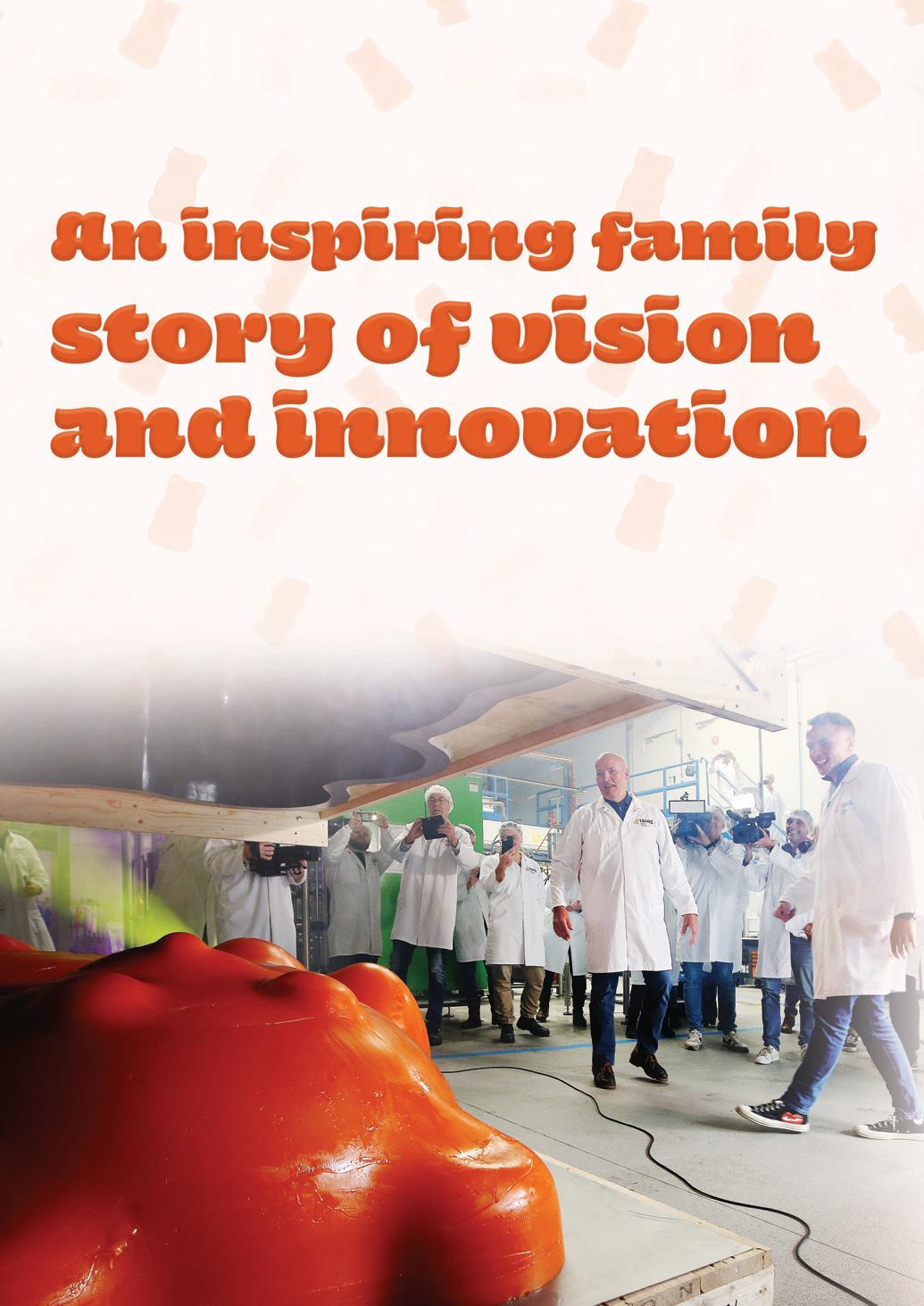
136 Inside sustainability
TANIS I PROFILE
The growth of Netherlands-based Tanis over the past years has led to the establishment of a complete portfolio of machinery for the production of gummies and jellies. The breadth of experience and innovation at the company combine to create a one-stop shop for an impressive range of international clients.
“Our customers no longer need to approach multiple entities for a complete production line,” said Sales Manager Victor Tanis. “Instead, they can rely on a single entity where all the necessary knowledge is present throughout the entire process. Tanis strongly believes that the final result of the last machine is closely connected to the initial phase of the production line. Avoiding and resolving any imperfections is significantly easier than when working with multiple suppliers.”
A story of vision
In 1995, the Tanis brothers founded Tanis initially as a process engineering consultancy company. Thanks to the encouragement of loyal customers, the brothers dared to think big, and in 2005 they moved to a new location with their own production facility and took full control of manufacturing.
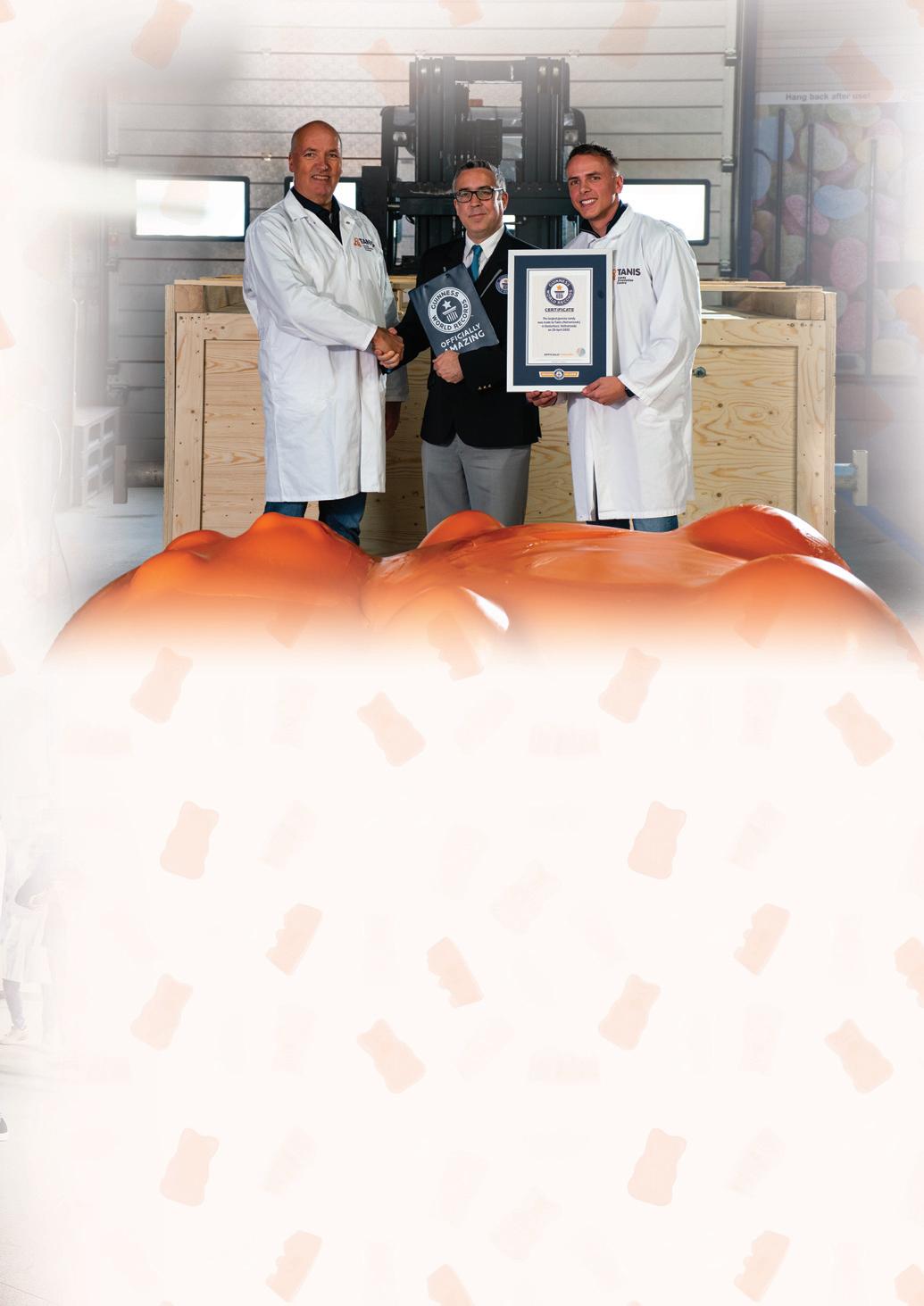
Steady growth continued at the family-owned company, alongside a more specific focus on the confectionery category of gummies and jellies. “We charted our own course and seized the opportunities that came our way,” Founder Leo Tanis recalled. “It’s amazing to see how Tanis has developed.”
Today, Tanis supplies complete production lines and personalised support; all of which is inspired by its exceptional, continuously
Inside sustainability 137
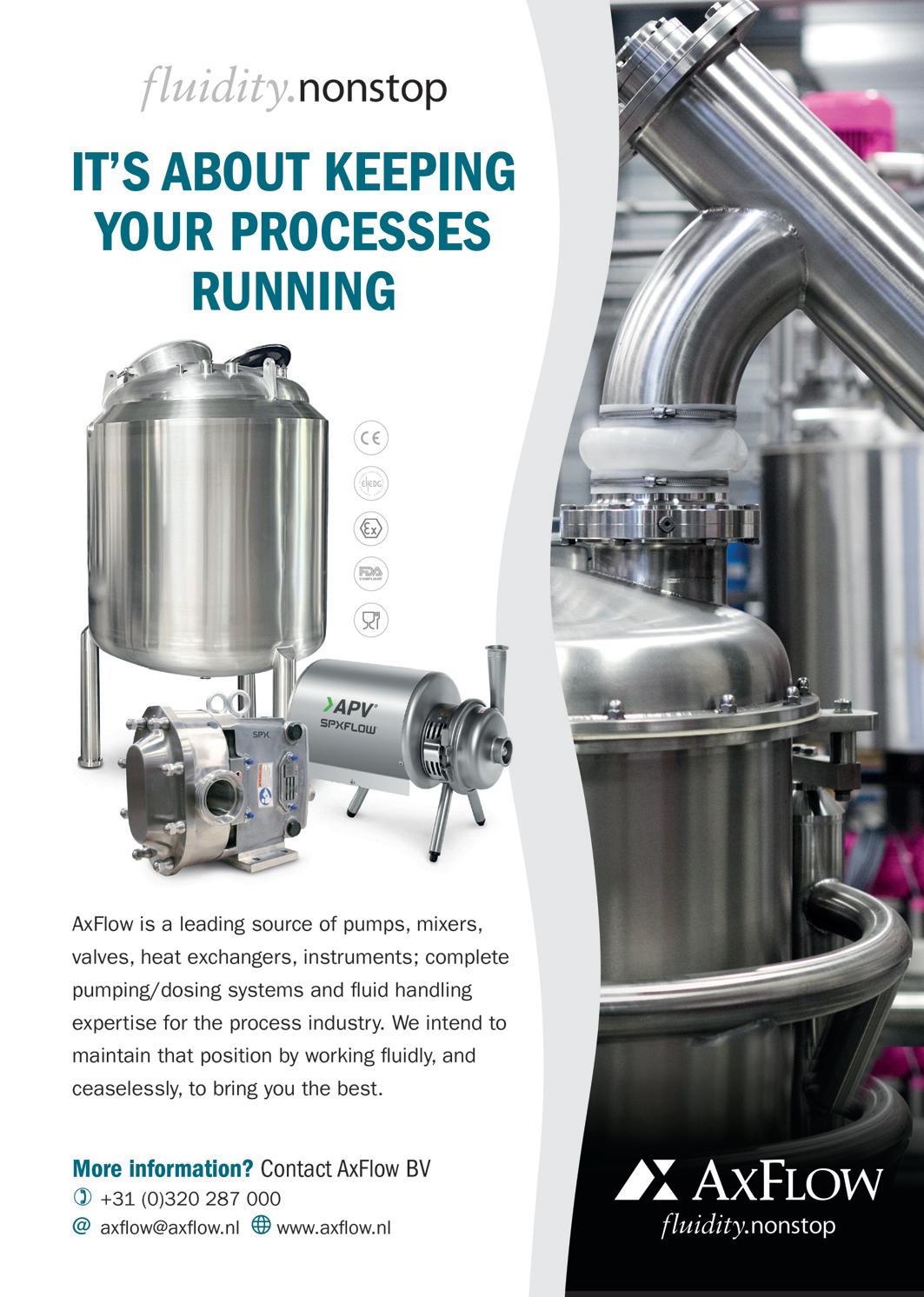
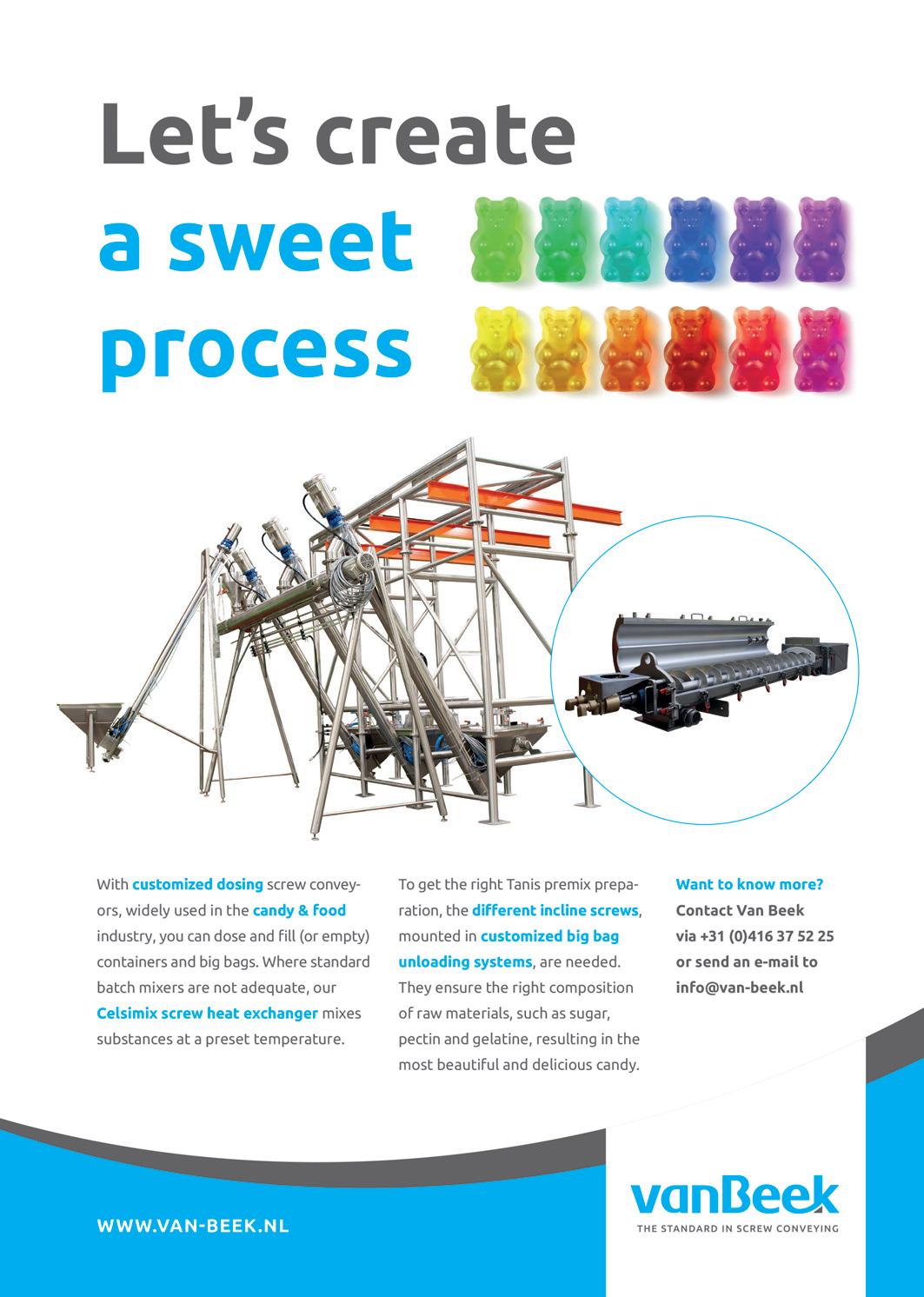
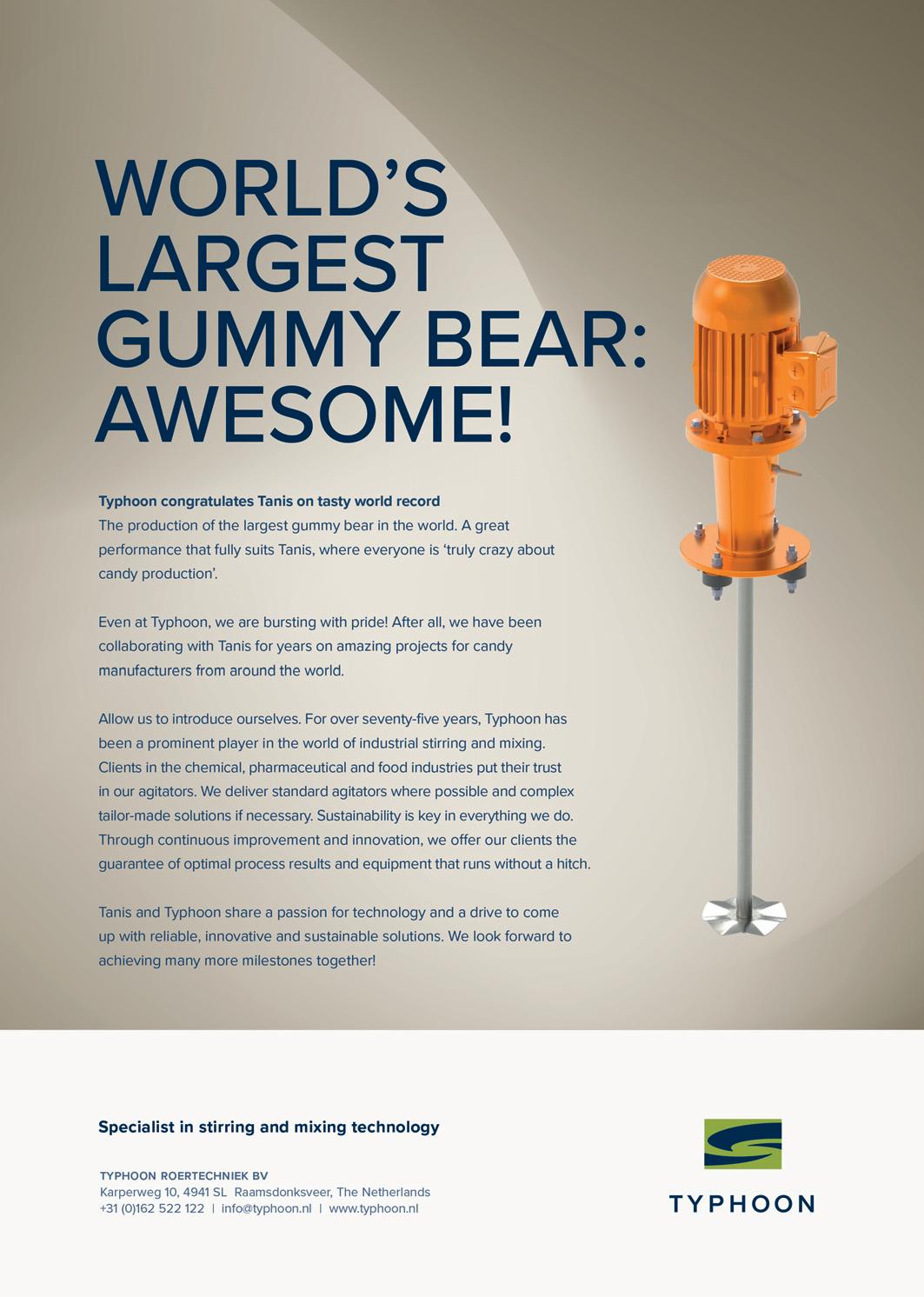
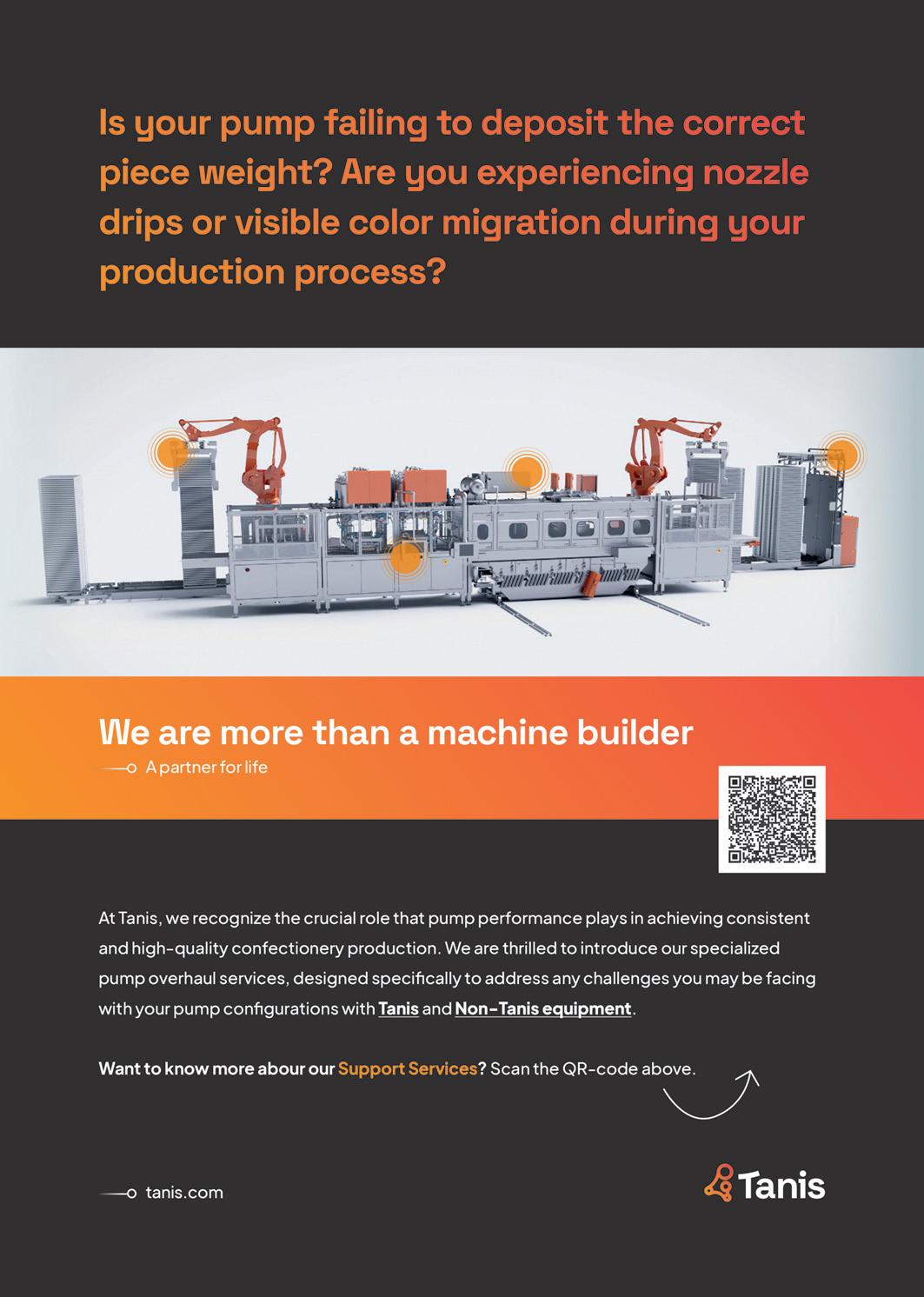
developing knowledge and craftmanship in sugar (and non-sugar) confectionery and process technology.
The headquarters is located in The Netherlands, which includes the primary production centre, Innovation Centre, pilot plant and support hub all – in Oosterhout. Tanis has a second production centre based in Made, The Netherlands. The global scope and market presence of Tanis results in another production centre and a support hub in Sydney, Australia. Due to its strong position in the United States, Tanis has also established a dedicated support hub in Salt Lake City. The company’s total staff recently surpassed 300.
A story of innovation
“By specialising in both the confectionery and the OTC market, Tanis has grown into the most experienced partner in both starch and non-starch solutions,” said Victor Tanis. “The expertise of the Tanis OTC Candy Equipment division has been instrumental in driving the growth of nutraceutical gummies in the United States.
When Tanis entered this market, there were already smaller non-starch
systems available. However, these all relied on moulds made of porous silicone, which is less cleanable compared to Tanis’ polycarbonate moulds. This starch-free production process is essential due to the need for cleanliness, primarily to minimise the risk of cross-contamination of certain dietary supplements in the casting material.
Tanis’ innovative approach has not only improved product quality, but also enhanced production efficiency and reliability. “Consumers do not realise it, but the confectionery industry is constantly evolving,” Victor Tanis continued. “Tanis is fully investing in this development.
“For instance, we have a unique vision for the use of moulding starch in gummy production. Despite the growing popularity of non-starch processes and the competition faced by the traditional moulding starch system, Tanis continues to invest in the development of starch processes.”
A recent innovation is an advanced drying chamber that eliminates the need for reconditioning the moulding starch, allowing for space savings and further scalability of production. Tanis believes in the benefits and future of both starch and non-starch processes. With this dualistic approach, Tanis demonstrates innovation, versatility and a pioneering role in the candy industry.
A family story
Tanis’ work ethic and dedication to the customer makes this family-owned company stand out. Managing expectations can be a challenge, but Tanis is determined to
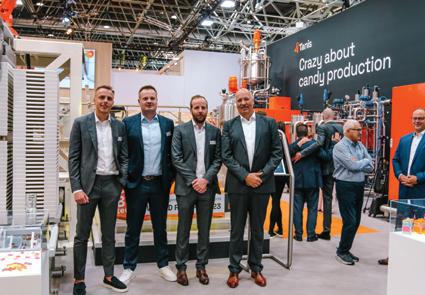
142 Inside sustainability TANIS I PROFILE
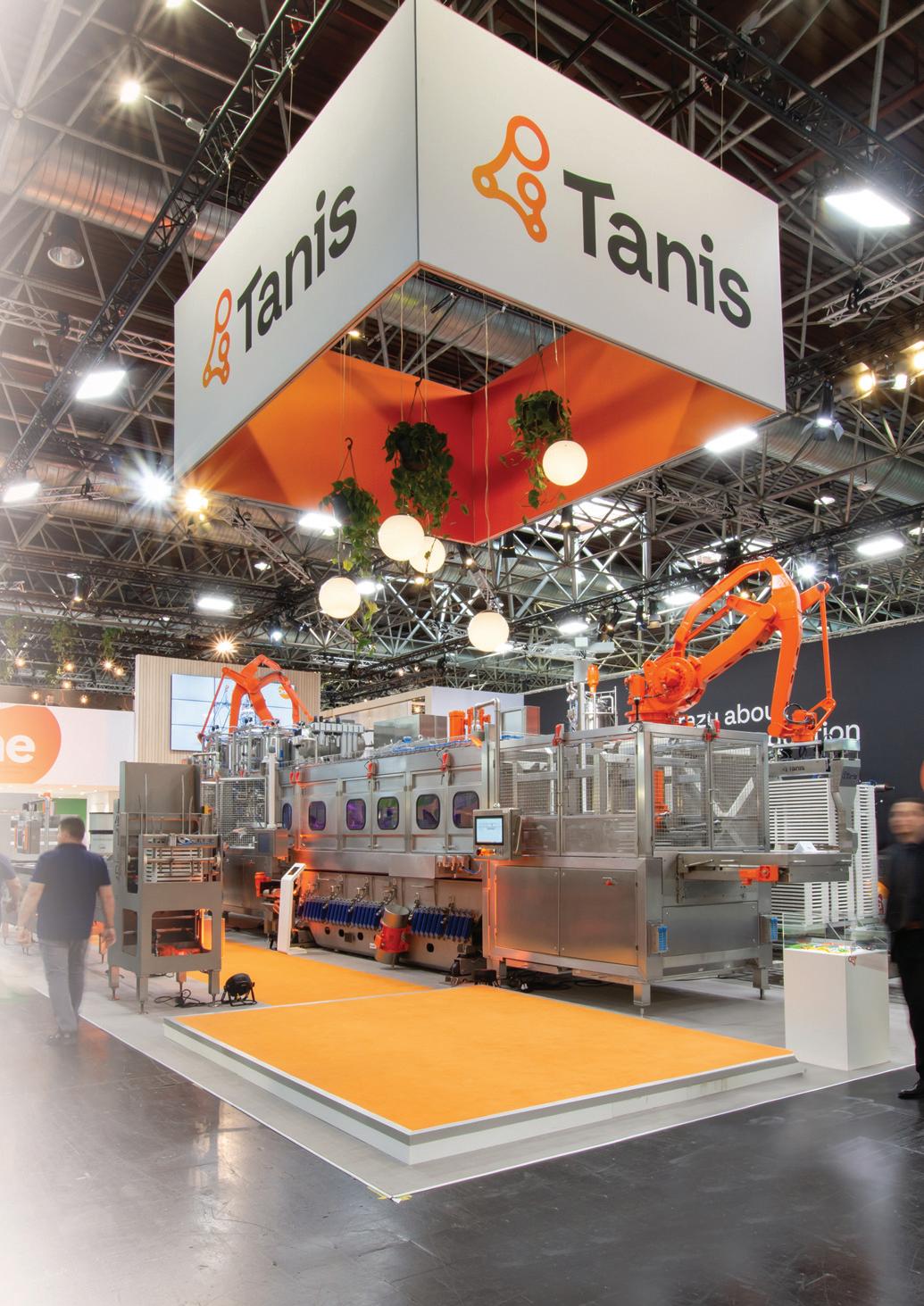
Inside sustainability 143
146 Inside sustainability
address possible problems as quickly and efficiently as possible. The characteristic depth of knowledge at Tanis enables the company to solve problems and deliver a complete production line solution to customers. Whether it is the challenge of sharing this knowledge or setting a world record, Tanis is ready to find an innovative solution.
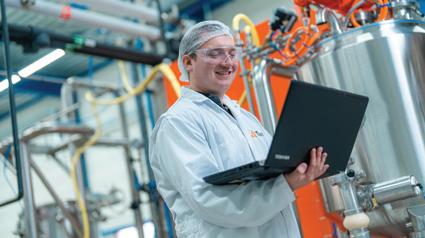
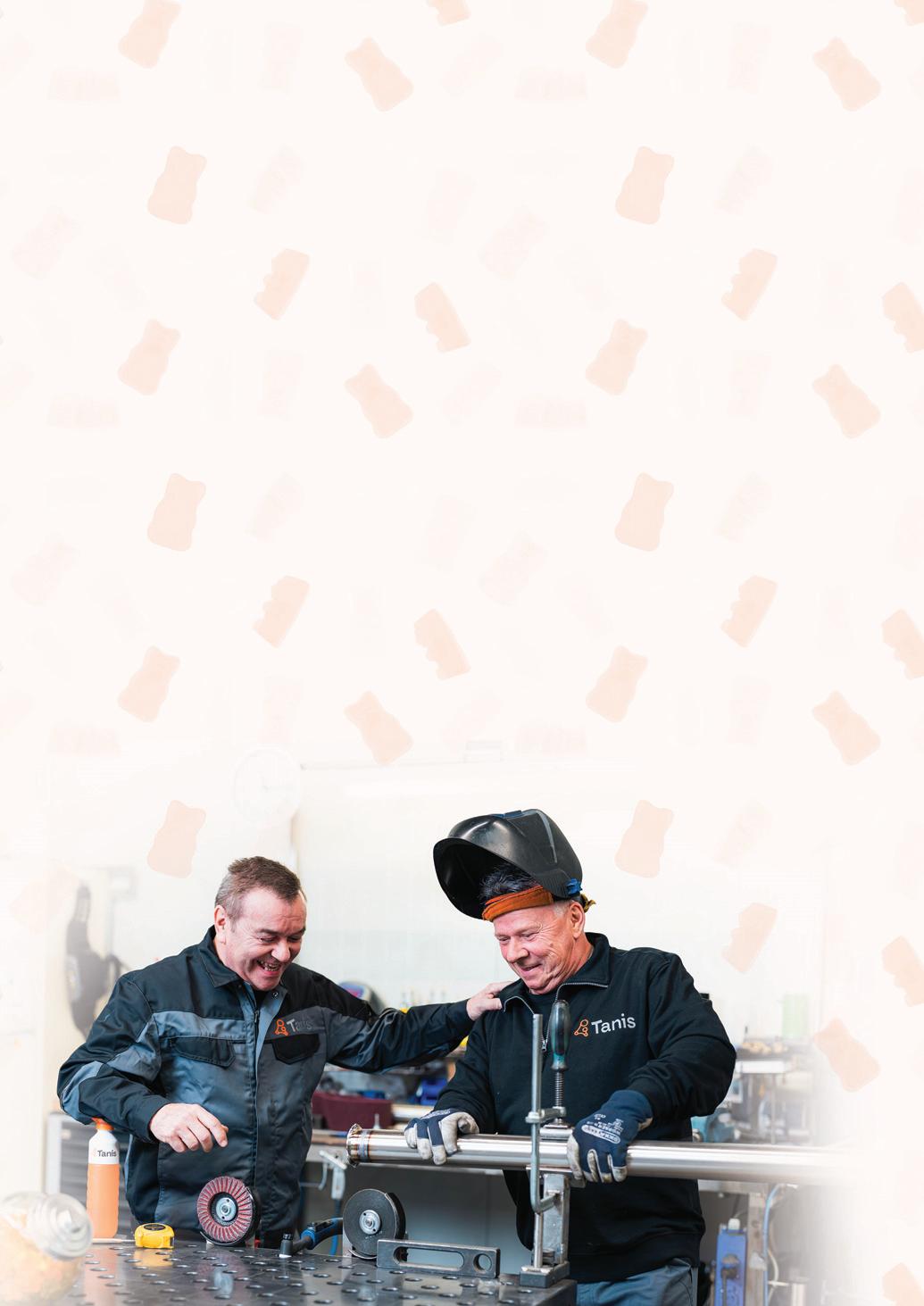
This extensive experience within the company is evident at the Tanis Academy, which helps to guide confectionery producers on an innovative journey to create their customised products. This entails taking everyone interested in confectionery making and supporting them at every step of the process.
Even for companies new to the industry and unfamiliar with confectionery preparation, Tanis is ready to teach the fundamentals. The Academy also provides valuable training for new operators, helping them become familiar with operating advanced machinery.
Furthermore, Tanis actively shares knowledge about innovations, trends and developments in the confectionery field through lectures delivered by expert food technologists. The Academy forms a crucial part of Tanis’ continuous efforts to fulfil its core mission: taking confectionery producers by the hand on an innovative journey to create their products.
One such innovative journey was Tanis’ achievement of a Guinness World Record for the largest Gummy Bear in the world. Under the watchful eye of a representative from Guinness, the total weight of this enormous gummy candy was determined to be 1,728 kilograms.
TANIS I PROFILE 148 Inside sustainability
“It was truly a remarkable exercise,” recalled CMO Wouter Tanis. “We didn’t know exactly know what the end result would look like, but that’s what made it so exciting. Together with our team, we worked step-by-step on innovative process and recipe adjustments, enabling us to achieve this unprecedented size of 2.5 metres long.

“This was a wonderful example of how Tanis is willing to push boundaries and make the impossible possible.”
“We have demonstrated that it is possible to produce a gummy of this magnitude without using moulding starch,” agreed CTO Martijn Tanis. We are proud of the result and look forward to continuing our pursuit of progress and innovation at Tanis.”
The same passion and dedication that Leo and his sons have always demonstrated towards customers are qualities they also cherish when it comes to attracting colleagues and suppliers. The company is run like a close-knit family, where customers, colleagues and suppliers are all considered valued members.
A willingness to persevere regardless of obstacles and the ability to solve problems are characteristic of Tanis. This ethos led Leo Tanis to gain friends who eventually encouraged him to start his own company. These friends were his very first customers; and even after 27 years, Tanis maintains the same principles with every new customer: dedication and determination.
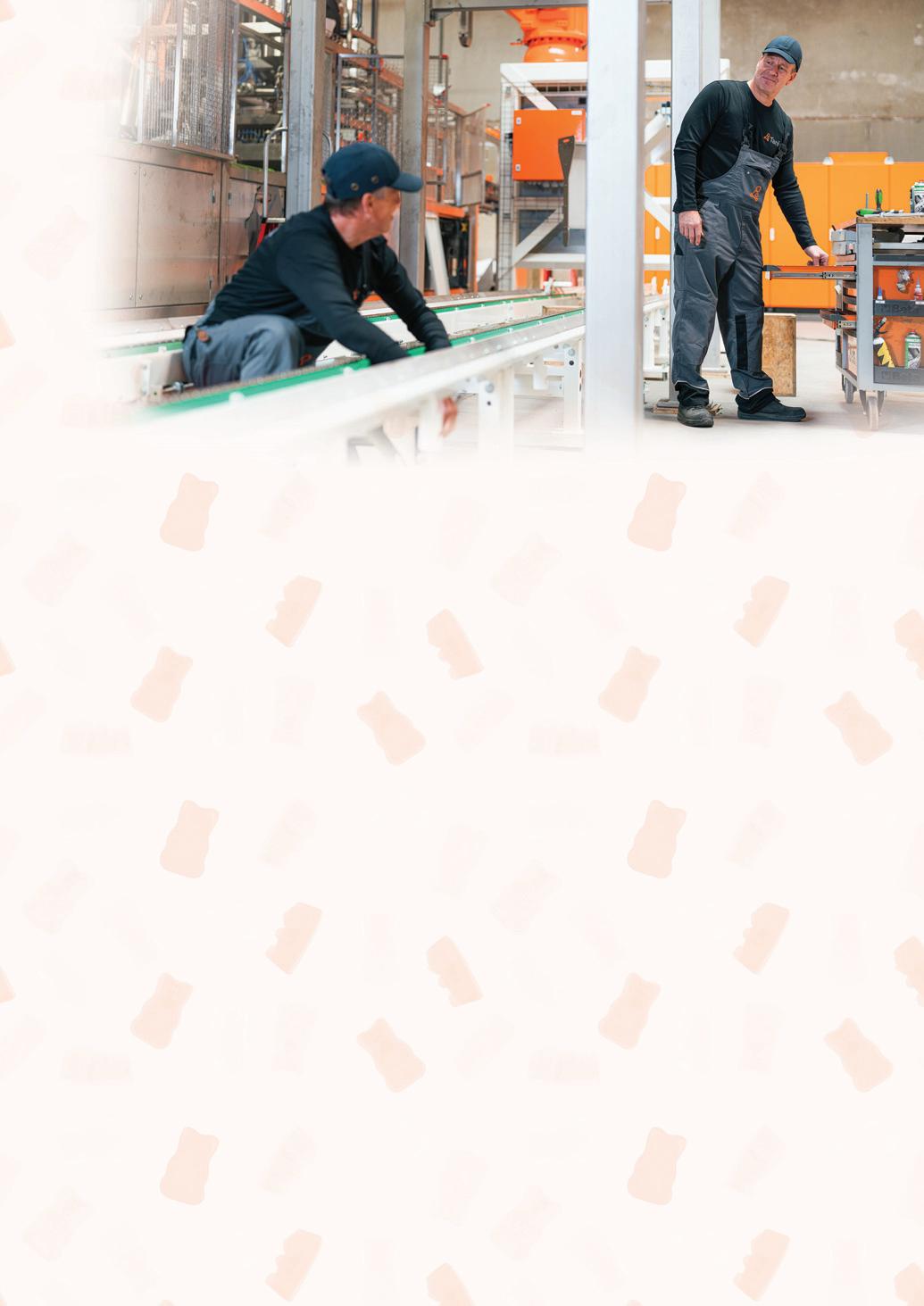
Inside sustainability 149
n
With almost 40 years’ experience in the design and manufacture of refrigeration packages, WINTER REFRIGERATION was created to revolutionise the global refrigeration industry. Even today, that innovative flair remains. Sales Manager Pegah Emami-Kalb discussed the company’s journey to green in an exclusive interview with Inside Sustainability. Report written by Imogen Ward.

150 Inside sustainability
WINTER REFRIGERATION I PROFILE
Founding WINTER REFRIGERATION in 1984, Managing Director Reza Emami is an expert when it comes to natural refrigeration.
“Anyone that works with Mr Emami knows that he breathes, works and lives with ammonia,” Sales Manager Pegah Emami-Kalb said, with a smile. “Aligning with this dedication, our refrigeration products and packages are designed to work with natural refrigerants, including ammonia, CO2 and hydrocarbons.”
Setting up WINTER in the United Arab Emirates, Mr Emami was inspired by the location and quick to pioneer the
refrigeration industry with more sustainable options.
“Being located in the Arabian desert, where we have very limited access to resources, really helped us understand the true essence of sustainability,” Ms Emami-Kalb said. “Our location also comes with additional advantages: our energy costs are lower in comparison to our contenders – allowing us to be very price competitive with our products.”
On offer at WINTER is a vast range of products, which includes oil and gas refrigeration packages, heat pumps and condensing units. With these products,

WINTER saves its customers expenses: As an industrial company within the UAE, WINTER is also able to offer extremely reduced customs rates to customers in countries that have signed agreements with the UAE Government.
the company targets two main industries: oil and gas, and industrial refrigeration/agrofood. According to Ms Emami-Kalb, the oil and gas sector is already focused on the progression of natural refrigerants. The industrial refrigeration/agrofood sector, on the other hand, has a way to go.
“Although we cater for both industries, industrial refrigeration/agrofood is definitely an area where we see the biggest gap for sustainable solutions,” Ms Emami- Kalb explained.
Inside sustainability 151

152 Inside sustainability
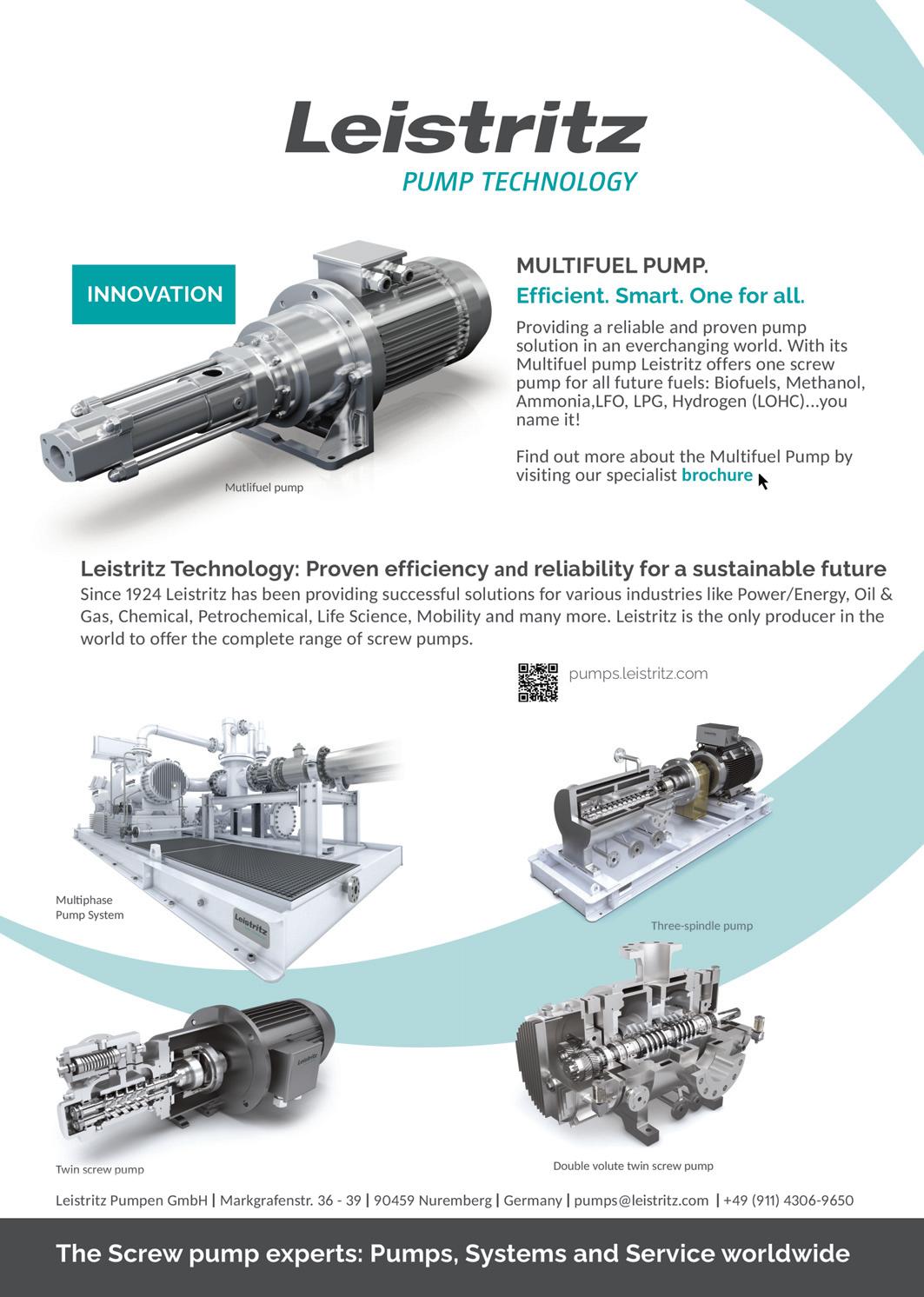
Natural promotion
With this knowledge in mind – and a clearcut understanding of natural refrigerants –the company endeavoured to become the perfect choice for those looking to invest in greener refrigeration plants. Currently experts in ammonia and CO2, WINTER offers these options (alongside hydrocarbons) with plants that are exceptional in design and can be tailor-made for each customer.
“Our standard screw compressor and chiller packages are widely used within the food processing industry and any other sector that requires low temperatures to operate,” said Ms Emami-Kalb. “These products are designed to be plug-andplay solutions that are reliable and longlasting. We also developed them to be
easy to install and convenient to handle during transportation. Providing a complete plant room on one skid, where possible, allows it to be transported and placed in its destination in one piece.”
One stand-out product currently on offer at WINTER is the ammonia industrial chiller. Designed to work with ultra-low ammonia charge, the product is incredibly efficient and sustainable. Thanks to ammonia’s properties (particularly its lack of ozone depletion and neutral global warming potential), the chiller can help reduce a customer’s carbon footprint by replacing older, less efficient and less reliable systems.
“We truly believe that natural refrigerants are the future: that’s why we encourage our clients to pursue that path as much as

154 Inside sustainability WINTER REFRIGERATION I PROFILE
possible,” Ms Emami-Kalb added. “These refrigerants all have lower GWP and ODP compared to traditional refrigerants.”
Always eager to improve upon its customers’ experience, WINTER is quick to research and develop new products. Last year at Chillventa 2022, the company released the brand-new Heat Pump Package, which was developed to work alongside refrigeration plants.
“WINTER’s R&D team understood the importance of the waste heat that was being expelled into the environment from refrigeration plants,” Ms Emami-Kalb said. “From this, the team developed the Heat Pump Package, which utilises waste heat by reducing it to more useful temperatures, rather than exhausting it into the atmosphere. At a time where global energy prices are sky-high, everyone is looking
for ways to improve their energy efficiency: we have the solution for that.”
Since launching the product last October, WINTER has received a lot of interest from customers, and the company foresees a very promising future for the heat pump.
Harmonising with Howden
Winter Refrigeration’s consistent reliability and quality-excellence has led to several exciting opportunities. In 2010, the company became the official packagers within the Middle East for Howden –a global leader in compressor engineering.
“Howden is the Rolls Royce of screw compressors, so our partnership with them was a major breakthrough for us,” said Ms Emami-Kalb. “This disrupted the region’s market and really established us as a key player in the industry.
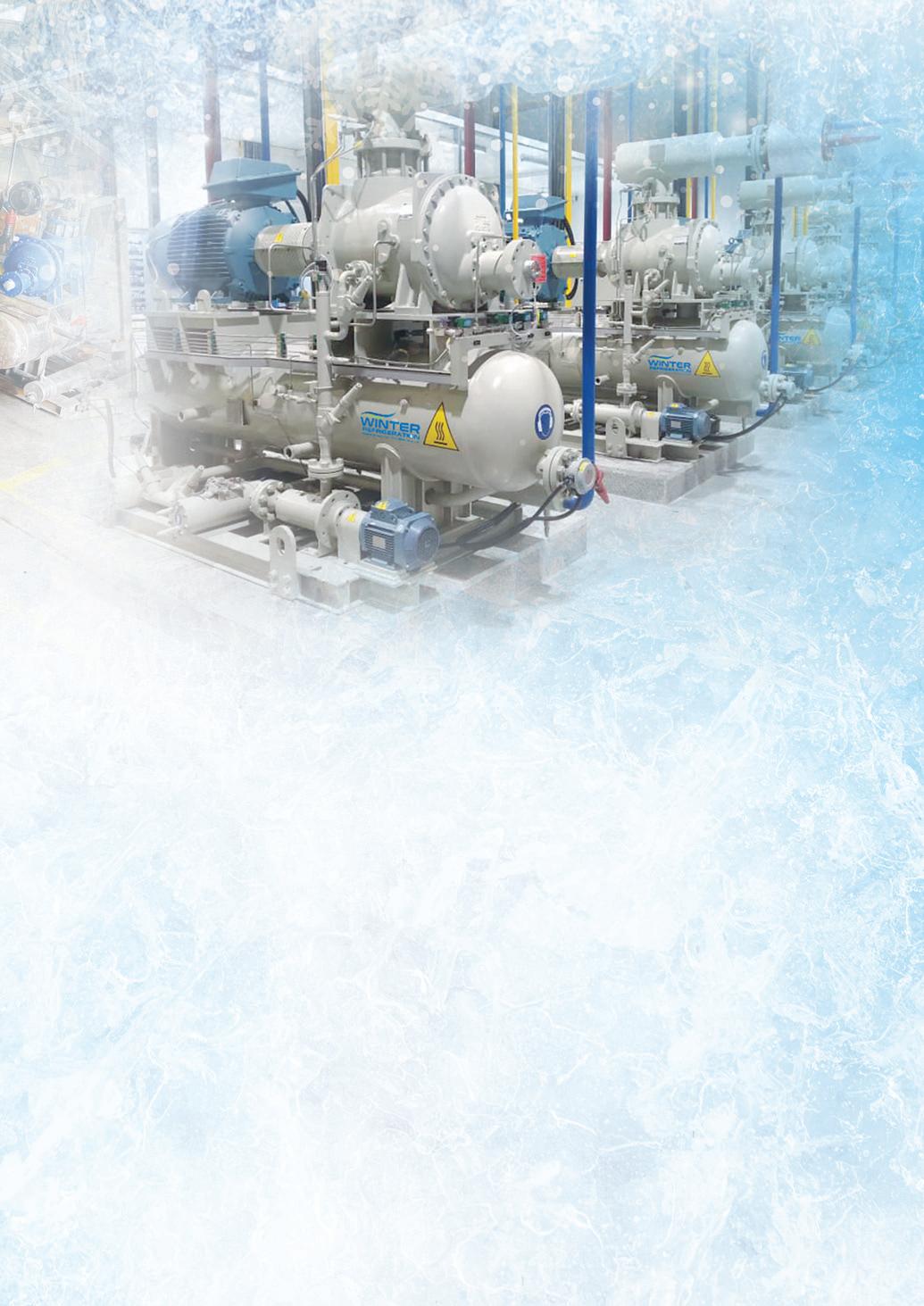
Inside sustainability 155
“Our refrigeration packages set new, widely accepted standards. Today, our products are running efficiently all across the globe. Although we are Howden’s official packagers for the Middle East, we are not limited in our exports. In fact, this revelation actually encouraged us to expand our reach. We opened a sales company in Germany, and our official packaging status came with us.”
As part of its partnership with Howden, WINTER retrofits screw compressors; replacing customers’ worn-out systems with brand-new Howden models. The company even modifies the skid to ensure the new compressor is a perfect fit, and it offers the service as a more sustainable and cost-effective alternative to purchasing a new skid.
The company also supplies all the spare parts needed for Howden compressors, saving customers valuable time and money
Supporting local
All of WINTER’s production processes rely on 20 highly efficient machines (from CNC to automatic welding), and the consistency and reliability of its hard-working suppliers. With an entire role dedicated to maintaining supplier relationships, these companies are incredibly important to WINTER.
“Personally, I believe that building long-term relationships with suppliers and partners is a crucial element of any company’s success,” Ms Emami-Kalb said. “At WINTER, we have a dedicated p erson to manage these relationships.

WINTER REFRIGERATION I PROFILE 156 Inside sustainability
We foster a collaborative environment that helps strengthen our business and encourages mutual benefits and growth.”
Creating relationships locally is also strongly encouraged at WINTER. In line with its commitments to reducing its carbon footprint, as well as supporting local, WINTER is an avid supporter of the Make it in the Emirates campaign. As an open invitation to investors, innovators and entrepreneurs, this campaign encourages businesses to improve the National In-Country Value of the Emirates. WINTER’s own NIV has reached 60%.
Looking forward, Ms Emami-Kalb felt positive regarding the company’s future: “We take great pride in ensuring our industrial refrigeration products and solutions consistently meet the requirements of the marketplace.
We have a deep understanding of the ever-changing needs of our customers and are confident in planning for future trends.
“Mr Emami is continually looking for new solutions, products and markets. The aim with that is to awaken the market for natural refrigerants. Especially here in the Middle East, there is a lot of potential to increase sustainability – particularly in the district cooling plants.
“This is an area that is quite resistant to the implementation of natural gases, but we are working hard to change that. We are approaching a lot of companies to show them exactly why we are passionate about this topic,” she concluded. “We already have the solution; we just need the first company to jump onboard and I’m confident the rest will follow.”

Inside sustainability 157
n
FILTRATION EXPERTS OF THE HIGHEST ORDER
Amazon Filters is one of Europe’s leading independent manufacturers of high-quality liquid and gas filters for various process industries. Booming orders have put the company on a path for significant expansion and greater global reach in a highly competitive industry. Managing Director Neil Pizzey spoke to Andy Probert.
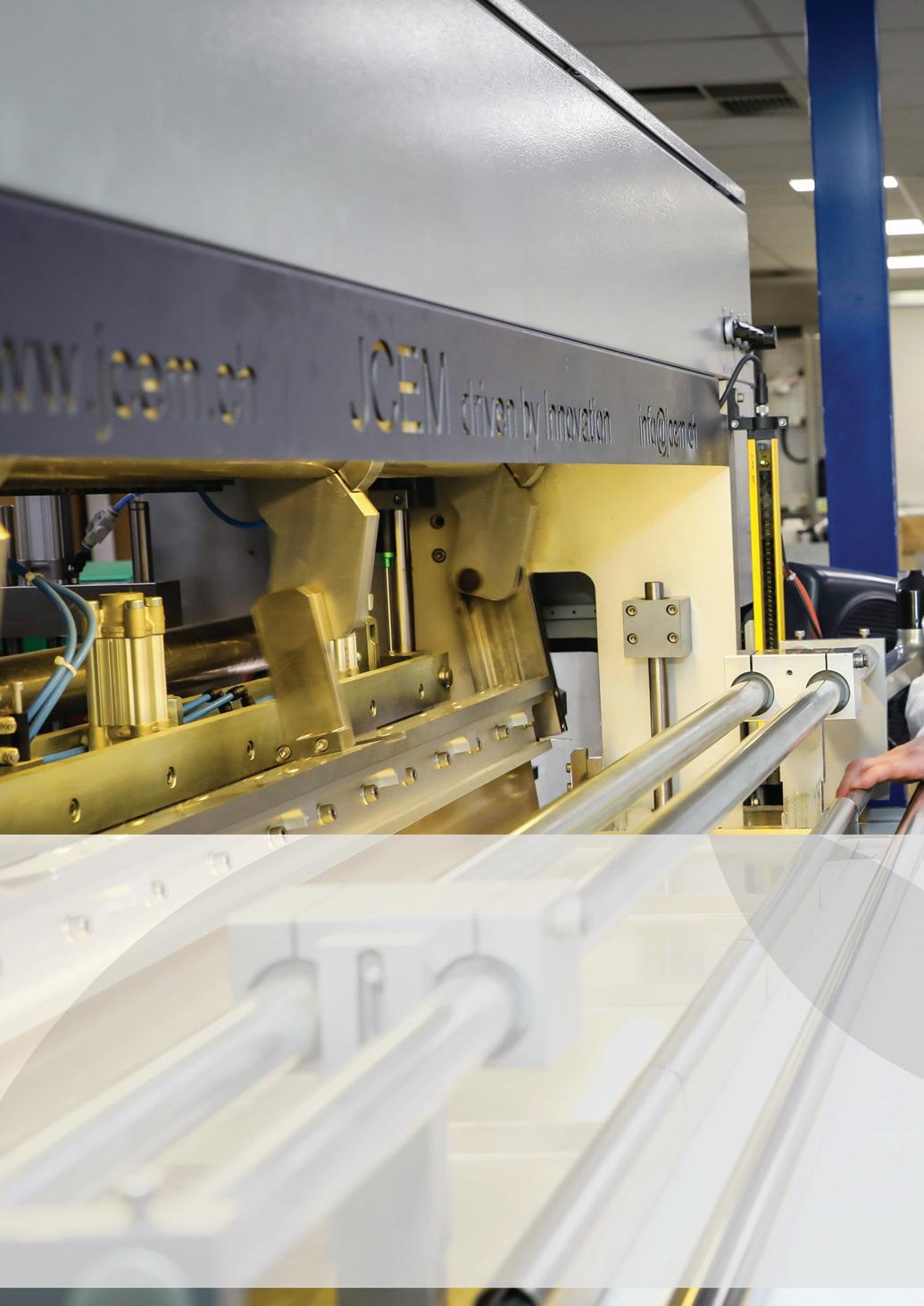
158 Inside sustainability
AMAZON FILTERS I PROFILE
For more than 35 years, the experts at Amazon Filters have designed, manufactured, and installed filtration solutions that regularly go beyond client expectations. Reaping that detailed industry knowledge with high-quality accredited and innovative systems, the company now has a network encompassing over 40 countries and exports that account for 75% of its trade.
Its portfolio includes membrane and depth filter cartridges and capsules, stainless s teel filters, filter bags, carbon filters,
pleated filters, cartridge filter housings for liquid and gas applications (standard and custom design), and bespoke engineered projects.
The company’s solutions enjoy heavy demand in process industries ranging from food and beverage, energy, pharma and healthcare, chemicals and coatings, water, and OEMs for special filtration projects.
“We have a massive range of different configurations of filtration products, from standard to one-off bespoke designs,” said Neil Pizzey, Managing Director. “
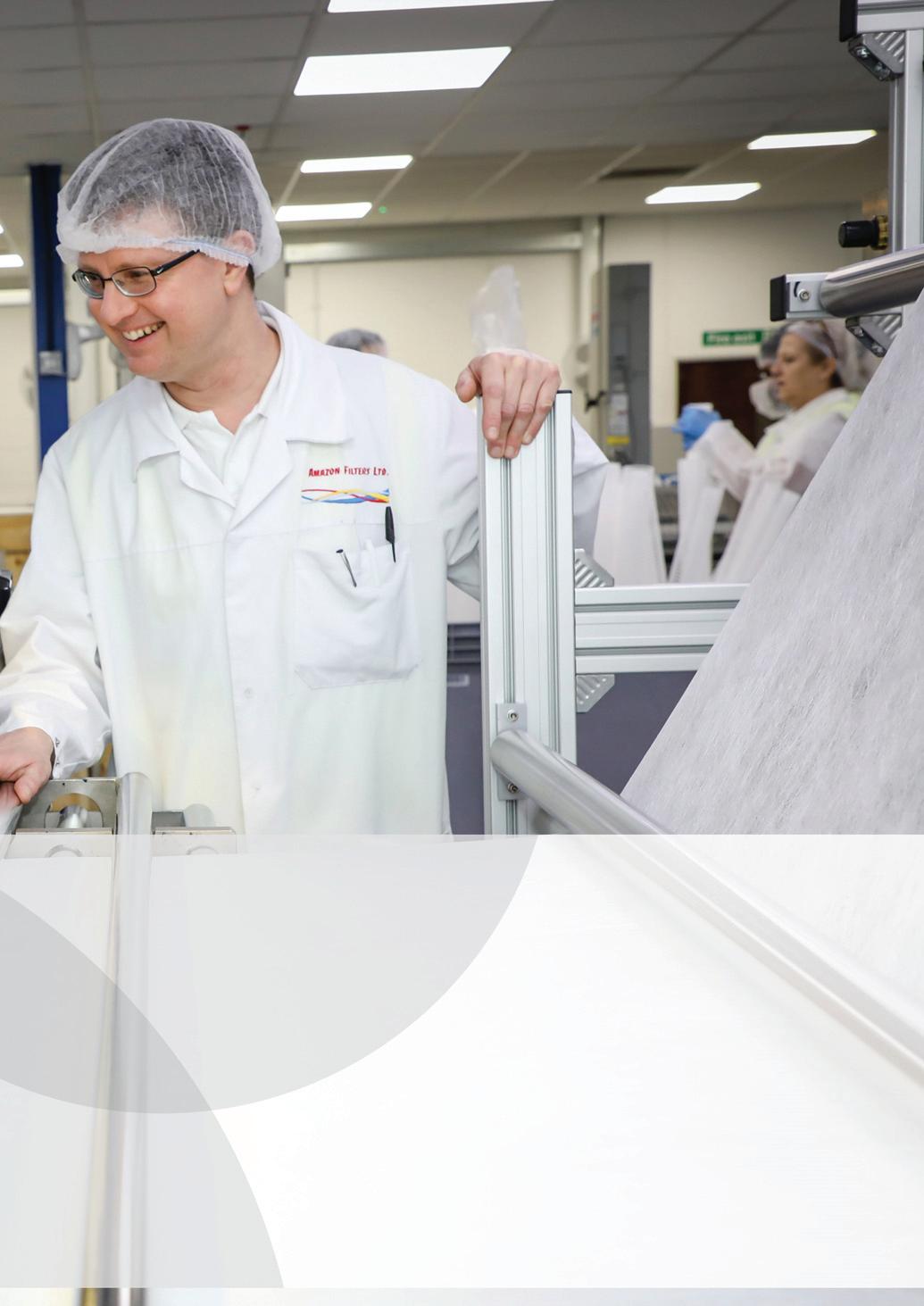
Inside sustainability 159
A no-nonsense approach to critical safety, quality and long-life performance of our solutions has enabled us to experience robust growth in an industry otherwise dominated by global giants.”

Expansion and global reach
Neil’s engineer father, Mike, founded Amazon Filters in 1985, having amassed over 20 years of filtration experience. His aim was to provide creative solutions to some of the biggest challenges facing the process industry.
Today, it employs nearly 300 people at its head office, warehouse and 7,000sqm production hub in Camberley, Surrey, a satellite facility in Poland which is focused on R&D and is a world leader in the production of melt-blown filters, and a sales and distribution facility in Germany.
The company annually produces more than three million melt-blown filters, 750,000 pleated filters and 5,000 filter housings, ensuring that it is highly geared and flexible to meet the demands of clients worldwide.
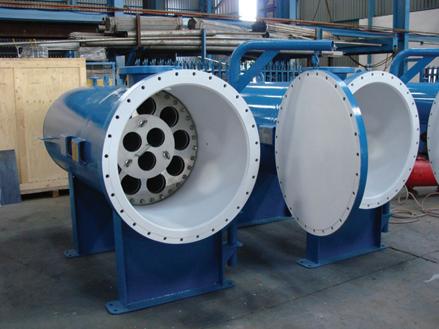
160 Inside sustainability AMAZON FILTERS I PROFILE
Its in-built flexibility and ‘quick and able’ manufacturing capability has enabled Amazon Filters to maintain a sustainable 10% annual growth over the years. However, following robust growth in 2021 and 2022, the company is further scaling up operations, headcount and geographic reach.
A strengthened shipping and dispatch team has enabled it to better respond to customer demand, focus on its core markets of the UK and Europe, and strengthen its distribution networks in the Americas and Asia-Pacific.
With recent strategic hires in Malaysia and the US to spearhead growth, its next aim is to bolster export potential in Africa, where it already has several partners serving industries and clients in Nigeria, Kenya, Uganda and South Africa.
Strategic investments
Having bought out a minority stake of an outside private equity investor, the company has embarked on investing in
additional premises and equipment to boost its production capacity.
This began in late 2022, with the lease of an additional 650sqm warehouse and office on the same site as its main production centre. “This has allowed us to continue our growth plans while securing the business’s long-term future,” said Neil.
As part of a £1.5m capital investment programme, the new building allows Amazon Filters to relocate existing warehousing and create new production halls to underpin and increase its ‘quick and able’ manufacturing capacity.
“The new production halls will receive significant investment in state-of-the-art production line equipment to manufacture our pleated filters,” Neil explained. “As a result of these moves, we expect to double our production capacity for this type of filter and support our reach into international markets beyond the UK and Europe.”
Additionally, the company invested in handling and welding automation

Inside sustainability 161
equipment for the metal fabrication workshop and bringing in-house a variety of pressed and machined component parts. It has added more capacity with two semi-automated CNC mills.
“Continued capital expenditure on new machinery supports our policy of vertical integration in which manufacturing is increasingly done in-house with less
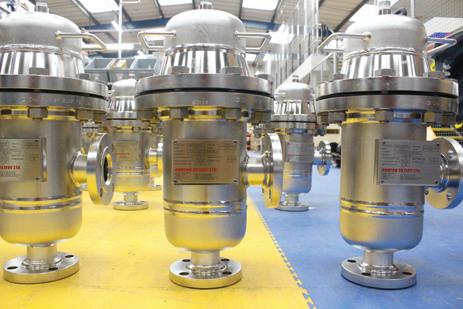
reliance on third parties or sub-contractors,” said Neil. “We have more control over what we do and how, why and when we do it.
“The aim is to support ‘quick and able’ manufacturing, the fast, flexible capacity to turn round customer orders, (including complex and bespoke projects) whatever the order size and wherever they originate in the world.
“All these investments underpin our ambitious strategy to grow by 25 to 30 per cent in the next four years across all industries and in all international territories.”
Sustainability drive
Upscaling performance has also contributed to new products, such as its SupaSep LGP; high-performance liquid-gas coalescer that supports

AMAZON FILTERS I PROFILE 162 Inside sustainability
critical separation processes, and ASME BPE-compliant housings for use in bio-pharmaceuticals production.
“Because we make high specification filters, they typically last much longer compared to poor quality comparable products,” Neil continued. “That helps reduce waste, costs, and ensures effective performance without needing continual replacements. These can make real-life differences to our clients.
“Filtration is often a process problem solver and an enabler of new technologies. To illustrate that, Amazon Filters is heavily involved in new energy projects including hydrogen production programmes and carbon capture projects of global standing helping to resolve challenges and make them commercially and economically viable. So, we are always at the forefront of new technologies emerging.”
In one specific case, Amazon Filters was approached by a global supplier of filtration solutions for wind turbines to support its work on turbine gearboxes. The gearbox is the hardest working part of a turbine, but up to 50% of gearboxes fail in the first few years of operation, resulting in expensive repairs and unexpected downtime.
Amazon Filters developed a bespoke melt-down structure and, along with technical improvements, the client has not reported any filter damage during routine maintenance. “We’re thrilled to have helped extend the life of these gearboxes and save money on upkeep,” Neil added. “Our innovative technology, which we used to solve this problem, now has a European patent too.”
With pressure beginning to bear down on industries to improve environmental standards, the company’s filtration solutions help to optimise clients’ use of resources.
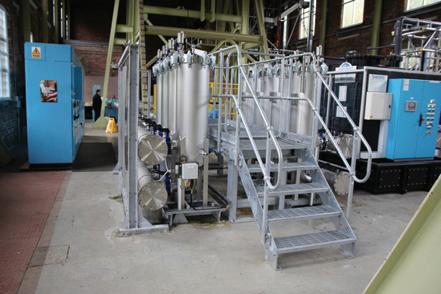

The company’s own sustainability impetus began with its long-standing ISO 14001 accreditation. Amazon Filters is focused on achieving the best sustainable practices relating to its own activities. These efforts – installation of solar panels, LED lighting, the upgrading of heavy compressors to low energy versions – all contribute to sustainability along with extensive recycling, use of renewable energies and reduction of waste.
“Using fewer products helps clients consume less materials,” said Neil. “We provide in-house expertise to design the filtration process so that it performs at the most efficient level. That is backed up by having products with longer-life potential than others. Put simply – using better filters equals using fewer of them, which means lower costs and less waste.
“Our value-added experience is secondto-none and is consistently maintained,” he concluded. “It’s a win-win scenario for us, our clients and the planet.”
Inside sustainability 163
n
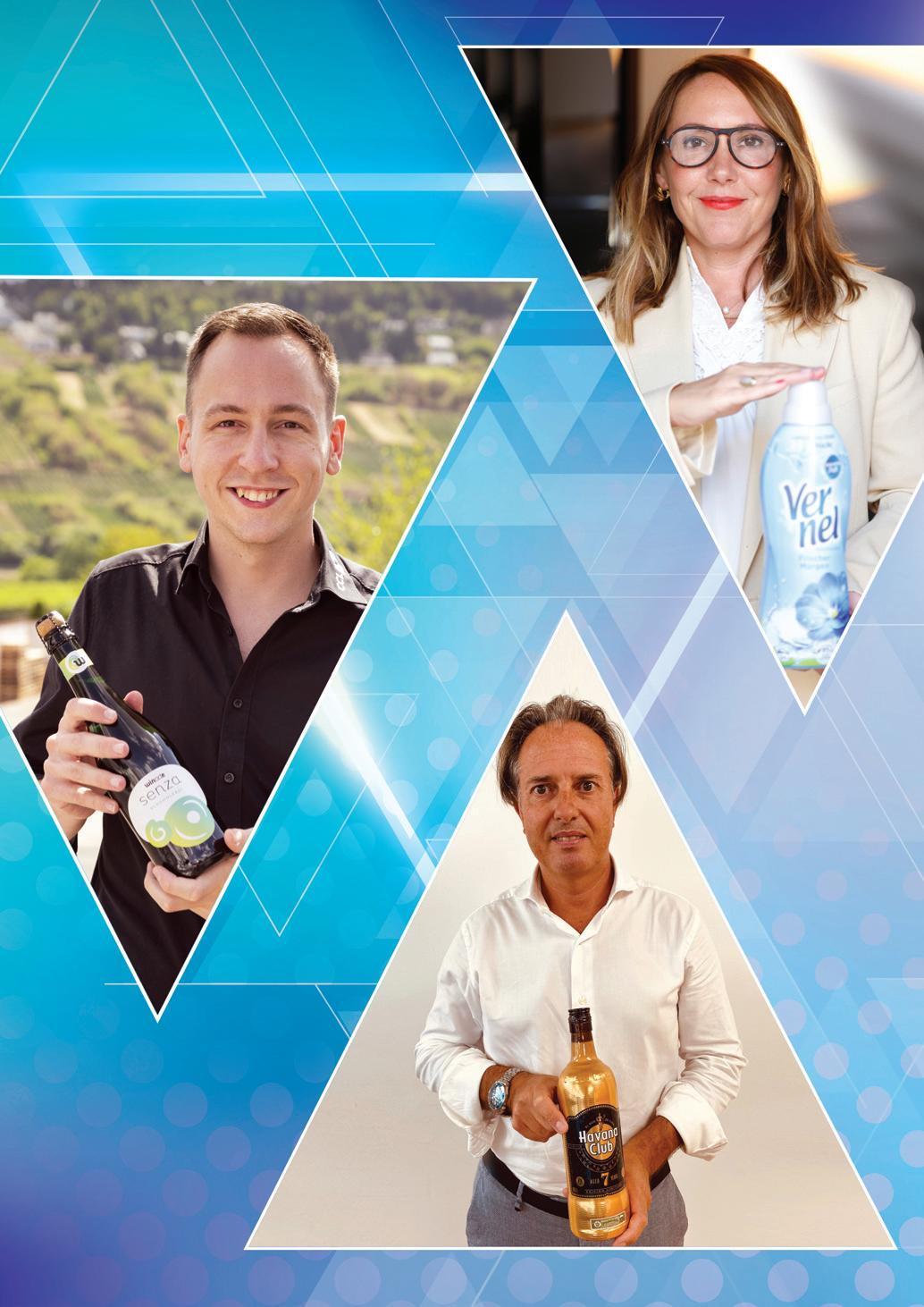
164 Inside sustainability CCL INDUSTRIES
PROFILE
I
Headof Sustainability and Communication
CCL Industries is a portfolio of packaging specialists serving a wide range of government institutions and large global customers. Head of Sustainability and Communication Marika Knorr explained the latest developments in conversation with Phil Nicholls.
Innovation is a core part of the broad range of products at this global speciality packaging pioneer. A prime example of this operating philosophy can be found in the polymer banknotes produced by the CCL Secure subsidiary.
“Since the first GUARDIAN™ polymer banknotes were launched in 1988, the benefits have been recognised around the world,” explained Head of Sustainability and Communication Marika Knorr. “Put simply, polymer banknotes are more secure, being much harder to counterfeit, more hygienic
to use and having less of an environmental impact than paper notes. They’re also more durable, which means they need to be replaced less often. Even better, polymer notes are recyclable into other long-lasting plastic products at the end of their life, such as car components or flooring.”
Established in 1951, CCL was founded as Connecticut Chemicals Limited in Toronto, Canada. In 1983 the container business was added, then in 1985 specialty packaging arrived. By 2001,
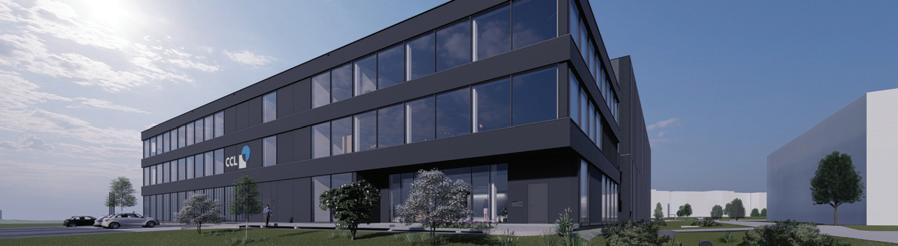
Inside sustainability 165
Marika Knorr
CCL INDUSTRIES I PROFILE
the Label Division comprised 13 facilities and was limited to North America.
It is at this point that CCL Industries’ intensive acquisition and growth began. By 2020, the group owned 170 produc tion facilities in 40 countries with 22,000 dedicated employees.
A global operation
Today, CCL Industries has 25,300 employees at 205 facilities in 43 countries, which generated a total revenue of CDN $6.4 billion in 2022. CCL Industries is the partner of choice for many large brands that operate globally, but also plenty of local companies.
As the largest label company in the world, CCL Industries provides innovative solutions to the home and personal care, premium food

and beverage, healthcare and specialty, automotive and durables, and consumer markets worldwide. The company is divided into four reporting segments: CCL, Avery, Checkpoint and Innovia.
CCL is the world’s largest converter of pressure sensitive and specialty extruded film materials for a wide range of decorative, instructional, functional and security applications. CCL serves government institutions and large global customers in the consumer packaging, healthcare and chemicals, consumer electronic device and automotive markets. Complementary products and services are sold in parallel to specific end-use markets.
168 Inside sustainability
The Avery segment is the world’s largest supplier of labels, specialty converted media, and software solutions for short-run digital printing applications for businesses and consumers.
These lines are available alongside supporting products sold through distributors, mass market stores and e-commerce retailers.
Checkpoint is a leading developer of RF- and RFID-based technology systems for loss prevention and inventory management applications – including labelling and tagging solutions – for the retail and apparel industries worldwide. Finally,
Innovia is a leading global producer of specialty, high-performance, multi-layer, surface- engineered films for label, packaging and security applications.

Innovative designs
With over 200 production sites, CCL is a truly global company that meets the needs of both global and local customers. It is in the DNA of CCL that the investment in the latest printing and production technology is key. CCL offers all printing techniques and can also combine several options for the best results in terms of printing quality.
“The focus on premium embellishments and sustainability sets CCL aside from the competition – as does its innovation
Inside sustainability 169
capability,” said Ms Knorr. “As we have many different technologies within the CCL Industries Group, such as RFID tags, material science and printing excellence, then many things are possible that other companies cannot offer.”
When innovating, it is key to design the l abels and other product decorations according to the Design for Recycling Guidelines that have been issued in many parts of the world, such as APR in the United States and RecyClass in Europe.

“Basically, a bottle consists of three parts – the bottle, the cap and the label or sleeve,” explained Ms Knorr. “All these parts need to harmonise so that the bottle can be separated efficiently in the mechanical sorting and recycling process.”
An evolving market
The current trends in packaging and labelling are towards sustainability, digitisation and alternative materials. CCL
works with an extensive network of partners, ranging from suppliers to customers. This also includes a special sustainability network including industry organisations, associations and certification bodies.
“In recent years, there has been a shift from simply being the supplier to also consulting on the best options for labels and other product decoration,” continued Ms Knorr. “The customer expects us to have a clear understanding of the landscape when it comes to regulations and recycling infrastructure. Thus, we have invested in our capacities to meet these expectations.
“In terms of sustainability, it is our goal to be the thought leader in the industry. We are fully aware of our responsibility as the world’s largest player.”
Three years ago, CCL Label introduced a sustainability roadmap and strategy called ‘The Positive Programme’, consisting of three main pillars. The first one is a positive plastic pledge, committing to invest in research
CCL INDUSTRIES I PROFILE 170 Inside sustainability
The benefits of GUARDIAN polymer banknotes:
• Stronger – lasting from 3.8 to 6 times longer than paper
• Safer – GUARDIAN is inherently extremely difficult to counterfeit
• Cleaner – the surface is smoother than paper and totally non-absorbent
• Greener – distribution of polymer banknotes resulted in a 48.8% reduction in greenhouse gases
and development along the whole value chain to drive a more circular economy for FMCG packaging.
The second pillar addresses positive products, meaning investments in production efficiency and more sustainable technologies at production sites. This pillar also focuses on the Sustainable Label family – a portfolio of labels specifically engineered to support recycling and to deliver a better carbon footprint.
The third pillar is ‘The Positive Academy’, which reflects CCL’s ambition as the industry sustainability thought leader. This pillar supports fact-based discussions about packaging materials and the Design for Recycling guidelines. Finally, the academy delivers regular education to employees about the latest recycling techniques and how label materials can make a difference.
CCL is also investing in this evolving market with plans for the new Dornbirn facility in Austria to be a 20,000m² sustainable factory fit for the future. This facility will be a hub for Sustainable Shrink Sleeves for many major European brands. The new 140-metre-long and 70-metre-wide building will offer state-of-the-art workplaces for 220 employees.
The factory will be equipped with sustainable energy generation, as the heating energy for the building is primarily covered by heat recovery from the production machines, compressors and afterburners.
A future in relationships
Apart from striving to be the thought-leader when it comes to sustainability, CCL is looking to grow with its global brand customers. Over recent years, CCL’s adjusted net earnings moved from less than $500 million at the end of 2019 to well over $600 million for 2022. The company aspires to further gains in 2023.

“None of us could imagine such a development during the worrisome lockdown days of the winter and spring of 2020, but it happened,” Ms Knorr said. “Sales for 2022 were up 12.1 per cent to 6.4 billion dollars.
“This is the path CCL wants to continue along.”
CCL has an in-house BOPP manufacturer called Innovia. This puts CCL in the unique situation of having a material science specialist within the group. Thus, CCL can develop, test and tailor-make packaging materials – not only for labels but also for flexible packaging solutions and graphic films.
CCL INDUSTRIES I PROFILE 172 Inside sustainability
“In order to produce a new generation of shrink sleeves that are made from polyolefin and float during the recycling process, we invested 23 million Euros at our Innovia site in Plock, Poland,” Ms Knorr explained. “The line opened last year, and we are able to produce our own shrink sleeve material that can be modified as required.”
Alongside relying on the abilities of companies within the CCL Industries Group, close partnerships with employees and suppliers are vital to achieve these growth goals, according to Ms Knorr: “The future is in relationships. Full stop.
“We are fortunate to work for a company that believes in its people above all else, and then uses its resources to support them with new technology and products.
“This ideology extends to our customers; putting these relationships first and sup -
porting them with the greater resources of CCL. As we all plan for the future and the uncertainty it brings – a more competitive market, sustainable packaging, supply chain stability – none of these can be over come without strong relationships.

“I got into packaging seven years ago,” Ms Knorr concluded, “and this is where I found my passion for FMCG and sustainability-related topics.
“When CCL Label asked me to join them in my current role, I immediately accepted. This job gives me the opportunity to utilise my key strengths by com municating inte r nationally on a very important and contemporary topic. I am now able to contribute to a very pressing matter: sustainable packaging of the future.” n
Inside sustainability 173
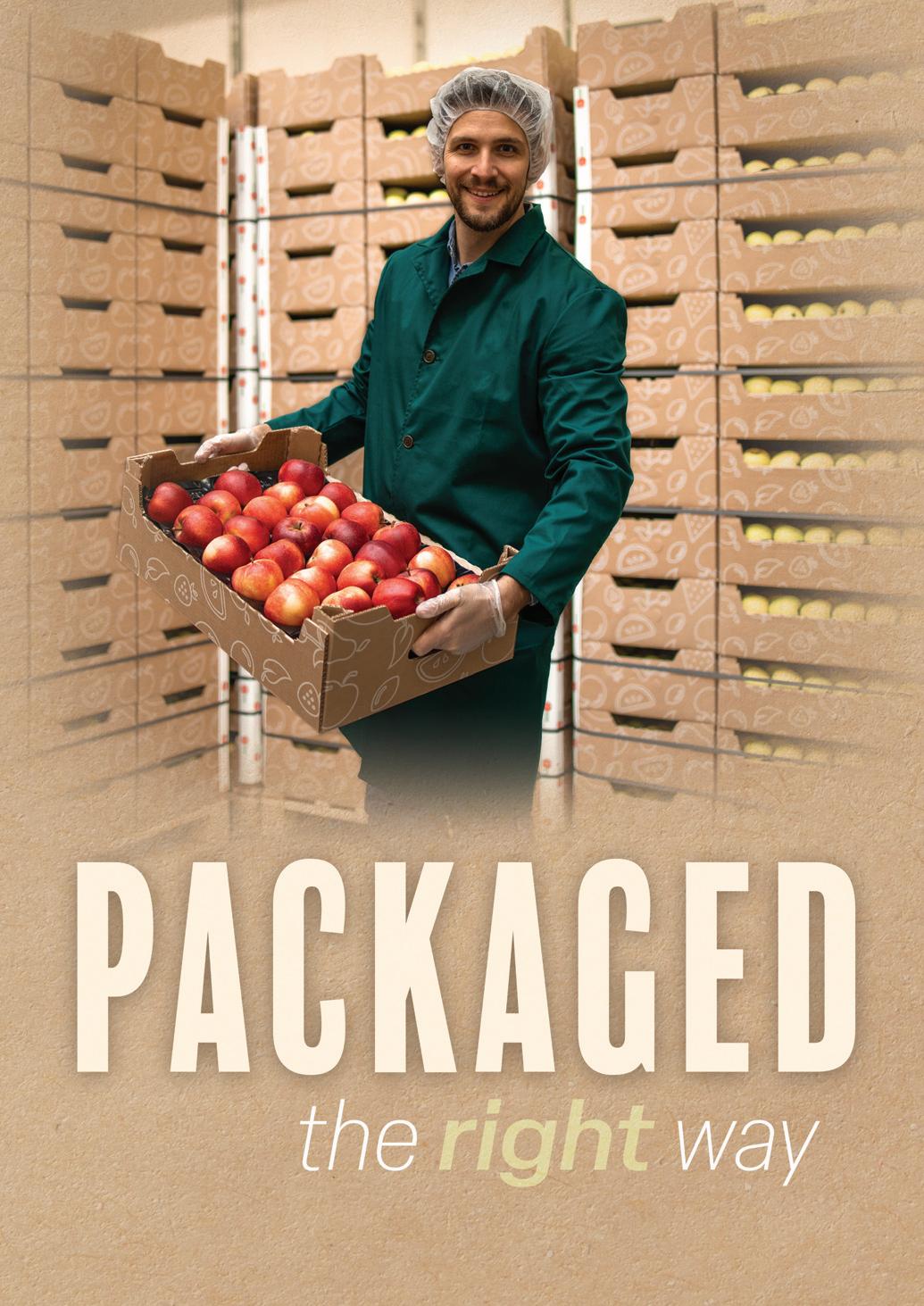
174 Inside sustainability BOIX I PROFILE
Spain-headquartered Boix, is a leading designer and manufacturer of industrial machines for forming, erecting and gluing corrugated and compact cardboard boxes. The company prides itself on providing its customers with a true sustainability advantage, according to Job Schmidt, Managing Director of Boix Europe. Romana Moares reports.
is now in the hands of the second generation and today employs around 400 people.
Boix has been one of the companies that has grown globally as a result of its customer focus and flexibility in meeting its clients' individual requirements. Moreover, Boix's machines reduce operating costs and the environmental footprint – a factor that helped the company to sell a record number of machines last year – over 450 units to customers in more than 90 countries.
Less can be more
Established five decades ago, the Boix Group has become a regional and global market leader in the development and production of machines for sustainable packaging. The company continues to be a family-owned business, which
“Boix machines are long-lasting, sust ainable products made to the highest quality standards,” said Job Schmidt, Managing Director of Boix Europe. “We help our customers on several fronts: cost reduction, material savings, production improvement as well as enhanced logistics – our machines reduce the number of trucks needed

Inside sustainability 175
for transportation, as well as warehouse space.”
He explained that Boix Europe, a 100%owned subsidiary of the Boix Group, is one of the six production locations of th e group and is in charge of serving 44 countries. “We provide safe, reliable and innovative carton packaging automation solutions through standardisation,” Mr Schmidt continued. “We offer our customers the opportunity to package, transport and present their valuable products in a protected and sustainable way.”
One example will suffice for all: just recently, Boix's machine was deployed by a global client for a seasonal job (Christmas gift boxes) that usually happens between May to December, requiring one million boxes which are manually made. Under the new arrangement with a Boix packaging machine, the job can be accomplished by fewer people within a shorter period besides to the material savings.
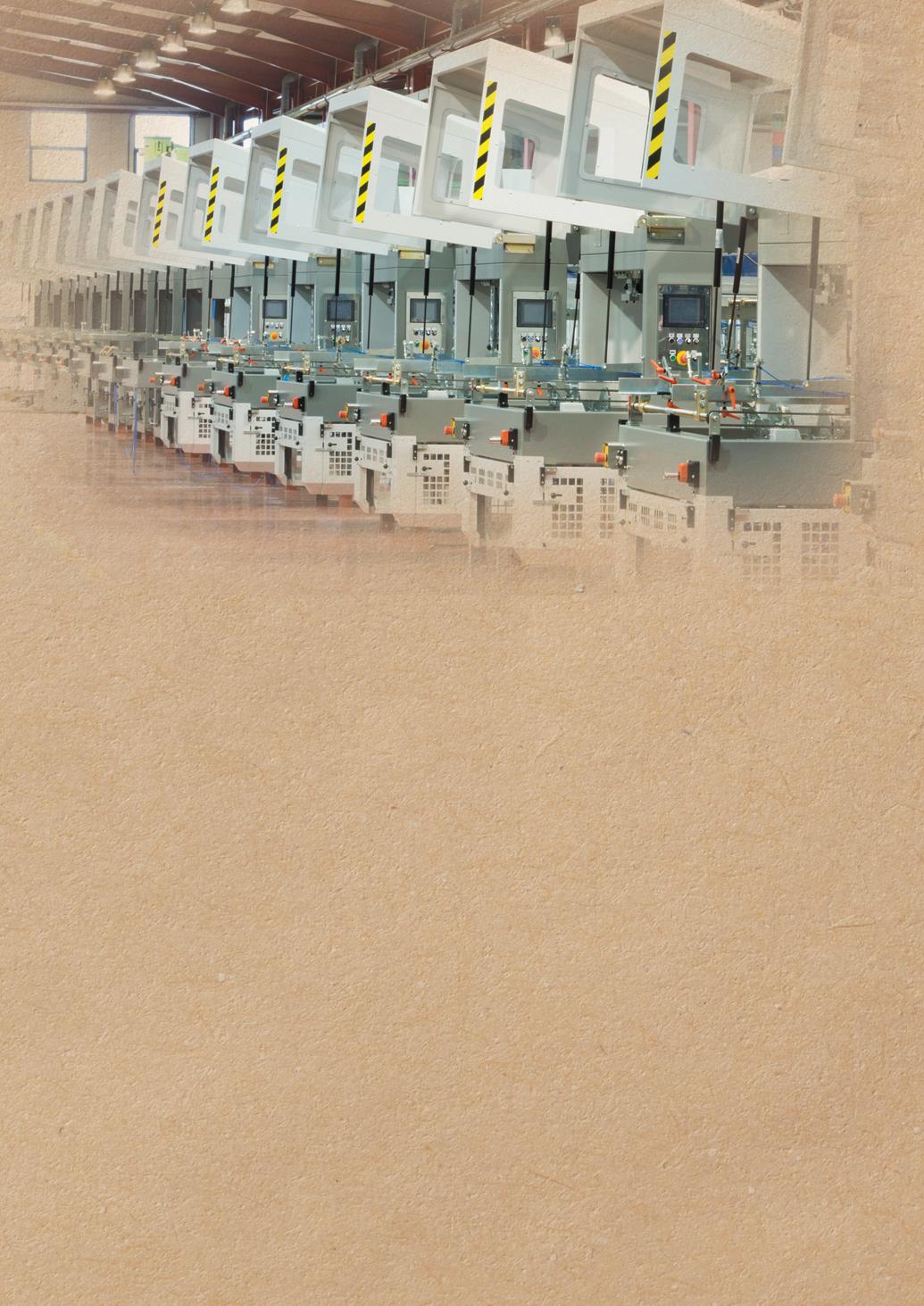
Mr Schmidt pointed out that Boix does not only deliver the machine. The company provides technical support and after-sales service as well, which is one of the factors that distinguishes Boix from competitors. “50 per cent of our people are in servicerelated roles,” he said. “So, we are able to take really good care of our clients on a long-term basis.”
New machines & developments
The company's global coverage is strongly promoted by its network of partners that can provide service to clients even in countries or regions where Boix is not physically present. “Local is crucial,” explained Mr Schmidt. “Our partners can provide a fast response to clients in local languages while sustaining Boix's standards, and this has proved to be a good approach. Today, about half of our business globally is done in cooperation with our partners.”
176 Inside sustainability BOIX I PROFILE
He affirmed that innovation is an important part of the group's success. In line with the global effort to reduce the use of plastics, Boix has launched the Boix MCT-TS machine that can fold and glue cardboard punnets with a top ledge, which can be closed with existing sealing solutions without the need to directly change the client’s existing sealing-tool.
This solution is highly attractive for the food sector, enabling clients to store fresh fruit and vegetables. This method can also be used with other items for food consumption such as fast and takeaway specialities, meat, confectionery, and bakery products.
“With this technology, customers can reduce the amount of
plastics in their packaging by 95 per cent,” Mr Schmidt said. “This lower consumption is very important, as some countries, including France, have already introduced stringent regulations regarding the use of plastics in packaging. Other European countries are following suit with similar new pieces of legislation.”

Inside sustainability 177
Next to the exceptional market for punnets, Boix is always improving the wellknown tray formers according to the needs of customers. As an example, the latest development is to automatically switch between tray size without any manual intervention, a feature now available in several models.
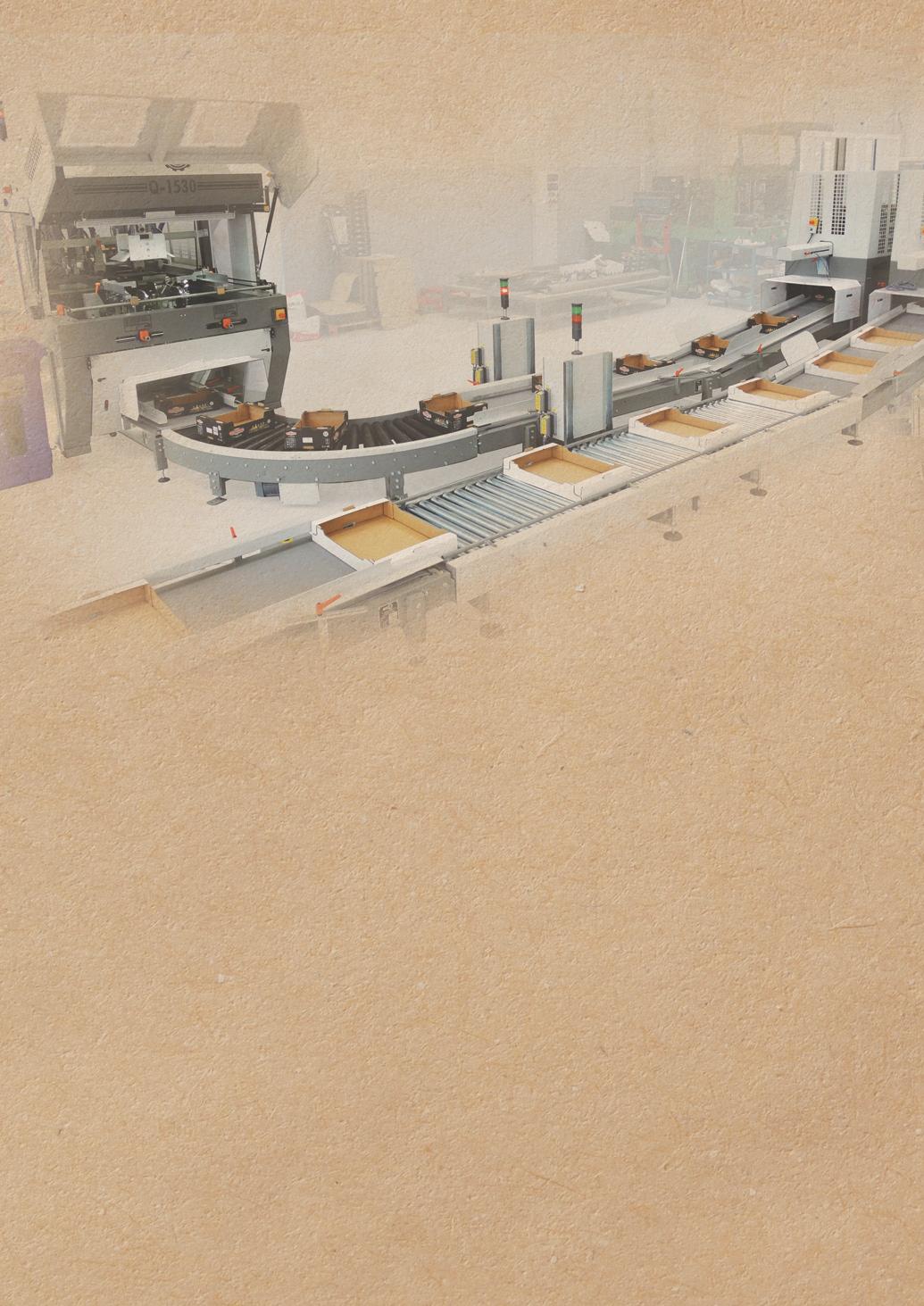
Sustainable business
Sustainability is also rigorously pursued internally at Boix, according to Mr Schmidt: “We aim to inspire and help our environment with responsible and healthy business practices. Within our manufacturing company, we strive for circular entrepreneurship and sustainable solutions.
“We want to reduce the use of new raw materials and CO 2 emissions. We work hard to achieve a positive social impact on everyone inside and outside
the Boix Group. As a family business, it is in our DNA to take good care of ou r family and the local environment.”
The family approach has also helped the business weather the challenges of the last few years. “With our network of trusted partners, we are able to support our customers as required,” Mr Schmidt continued. “Due to the fact we are spread all over the world and have in-house manufacturing of mechanical parts (95 per cent), we are able to keep our business stable and even growing.
“Of course, some challenges persist, such as the shortage of technical skills, but we continuously invest in technology, people, personal development and promote innovation and all this is driving the company forward,” he said, adding that business expansion is definitely in the pipeline.
BOIX I PROFILE 178 Inside sustainability
Lasting relationships
The company has just expanded its warehouse in Spain by another 4,000m 2 and invested in robotics to increase production in the metal workshop The Boix Group has also just opened a new office and warehouse in the US.
Mr Schmidt pointed out that the company is looking for a new location in the Netherlands to expand its office and also to build a large Experience Centre. Here, customers, partners and also young people – potential candidates – can get a feel for Boix’s machines and witness at first hand how packaging optimisation can lead to raw materials and logistics savings, as well as energy, material and space reductions.
Looking ahead, he acknowledged that Boix is set to continue to develop solutions that bring significant benefits to both customers and the environment. “Through reliability, long-term thinking and responsible u se of resources,” Mr Schmidt concluded, “we will create lasting relationships and sustainable value for employees, customers, suppliers and society.” n

Inside sustainability 179
Behind the machines in tissue conversion
Founded in 1982 by a group of four young friends in Serbia, 9.Septembar very successfully navigated not only the significant challenges inherent to starting any new business, but also the various geopolitical circumstances that defined Eastern Europe in the decades that followed. Today, the company deservedly takes its place as one of the machinery production leaders in the niche – but highly specialised – tissue converting industry. Sales Director Vladimir Babic spoke with Richard Hagan.
From its manufacturing headquarters i n Serbia, 9.Septembar designs, engineers and manufactures specialised tissue converting machinery for the global tissue converting industry. Its machinery is used by tissue converting companies primarily for the production of napkins - for which 9.Septembar’s machinery is particularly well-known - as well as a broad swathe of other tissue products including wipes, handkerchiefs and special rolls for medical and other applications.
The napkins produced by 9.Septembar’s machinery, in particular, can be found everywhere from supermarket shelves to top hotels and restaurants.
180 Inside sustainability
9.SEPTEMBAR I PROFILE
Blowing away the competition
9.Septembar’s single production and headquarters facility benefits from its highly connected, central location in Čačak, Serbia, about an hour from the airport and only 144km from Belgrade. With the exception of a small portfolio of third-party parts, 9.Septembar’s machinery products are entirely manufactured in-house, giving the company’s teams complete control over quality and production timeframes. Third-party components, meanwhile, are sourced directly from leading Class A suppliers such as SKF, Eaton, Omron Amron and Siemens.
All of 9.Septembar’s production takes place using highly sophisticated machinery
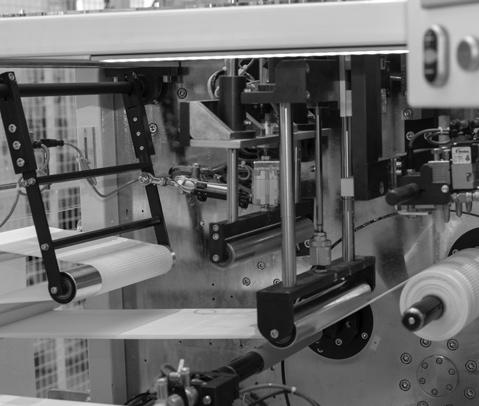
What’s in a name?
When registering the company, the founders lacked a corporate name. However, they decided to complete the form anyway. They asked the clerk the date, then wrote it in on the form incorrectly. No new form was available, and they were not allowed to cross out their ‘chosen’ name. 9.Septembar was born.
from the world’s leading producers, including HAAS and DMG MORI. This combination of high-quality parts and sophisticated machinery, matched with 9.Septembar’s in-house quality assurance, continuously ensures that the company’s machines remain amongst the best in the market. Overseeing all of its operations is 9.Septembar’s team of 120 staff members, of which fifteen are engineers based in its research and development lab.
9.Septembar is on an ongoing drive to be a trendsetter in the tissue converting industry. One of the ways in which it aims to retain its position as a market leader is in its embracing of Industry 4.0. Consequently, 9.Septembar’s team of R&D engineers collaborates with top academics
Inside sustainability 181
at the University of Belgrade to leverage their expertise and knowledge in the company’s innovation programme.
“We have really good connections with many of the professors at the university, and in fact, several of my own classmates are now professors there themselves,” said Sales Director Vladimir Babic. “Thanks to our connections with these leading minds , we are on top of the latest trends at all times and we understand exactly what needs to be done for us to fully embrace Industry 4.0. Ultimately, it delivers huge benefits to our customers and even to the end-users of their products.”
Productivity and Industry 4.0
Many of 9.Septembar’s machinery products – particularly ones installed in Europe –already benefit from Industry 4.0 features, according to Mr Babic: “Customers with Industry 4.0 machinery have full remote control of the machine’s production, as well as real-time feedback about the machine’s status via an easy-to-use app.
“Whether it’s the machine’s current capacity and production speed, how much the machine produced during the day, how many boxes of product it created, or even how many stops it had and the causes of the stoppages, all of this can be remotely monitored. It means that there
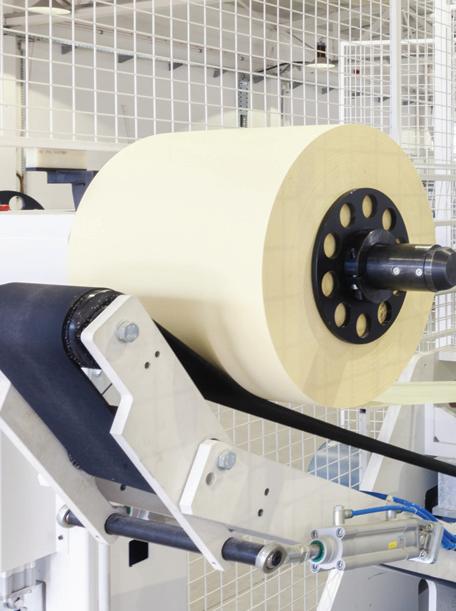
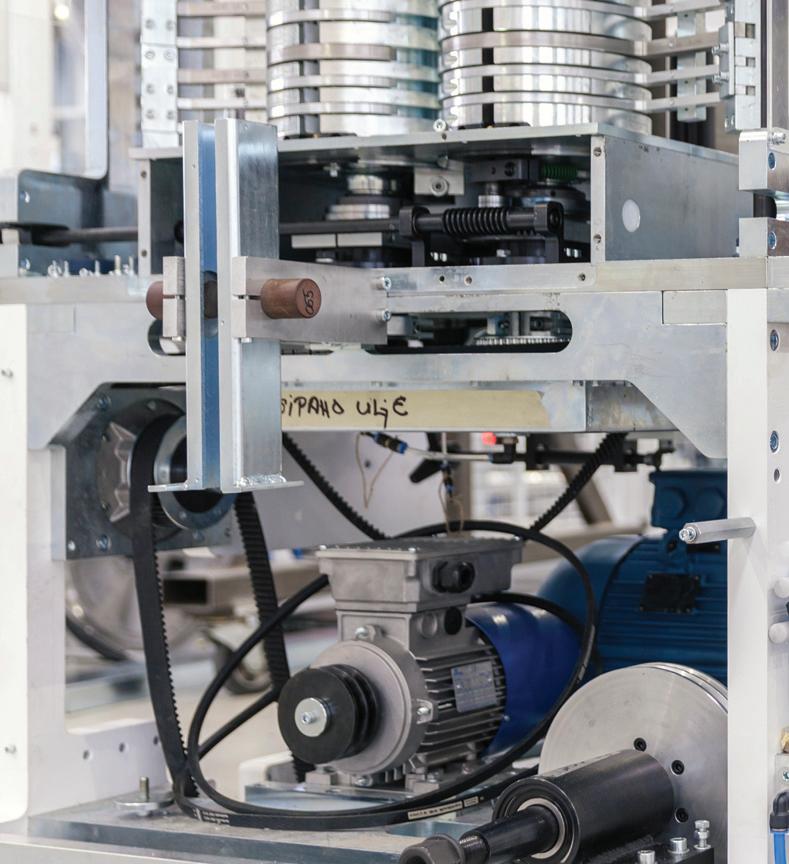

182 Inside sustainability 9.SEPTEMBAR I PROFILE
member or foreman to be physically on the floor watching the machines.”
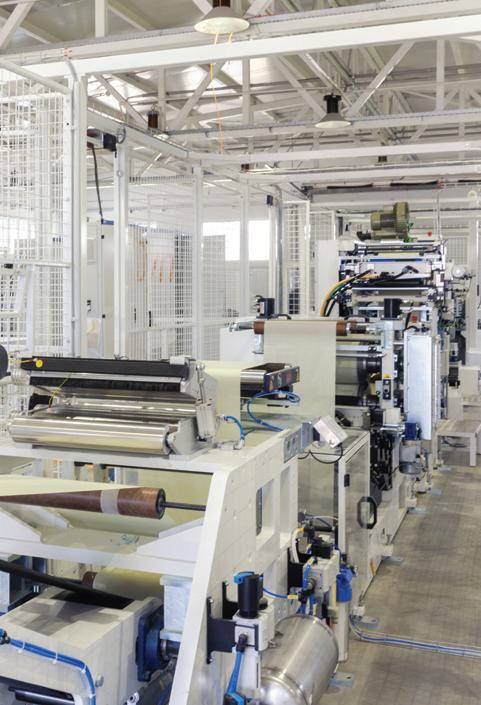
9.Septembar’s remote control app extends far beyond simple real-time monitoring, even allowing the operator to select and remotely load a new recipe onto the machine, or to adjust the machine on the fly for new work orders, without having to stop the machine first.
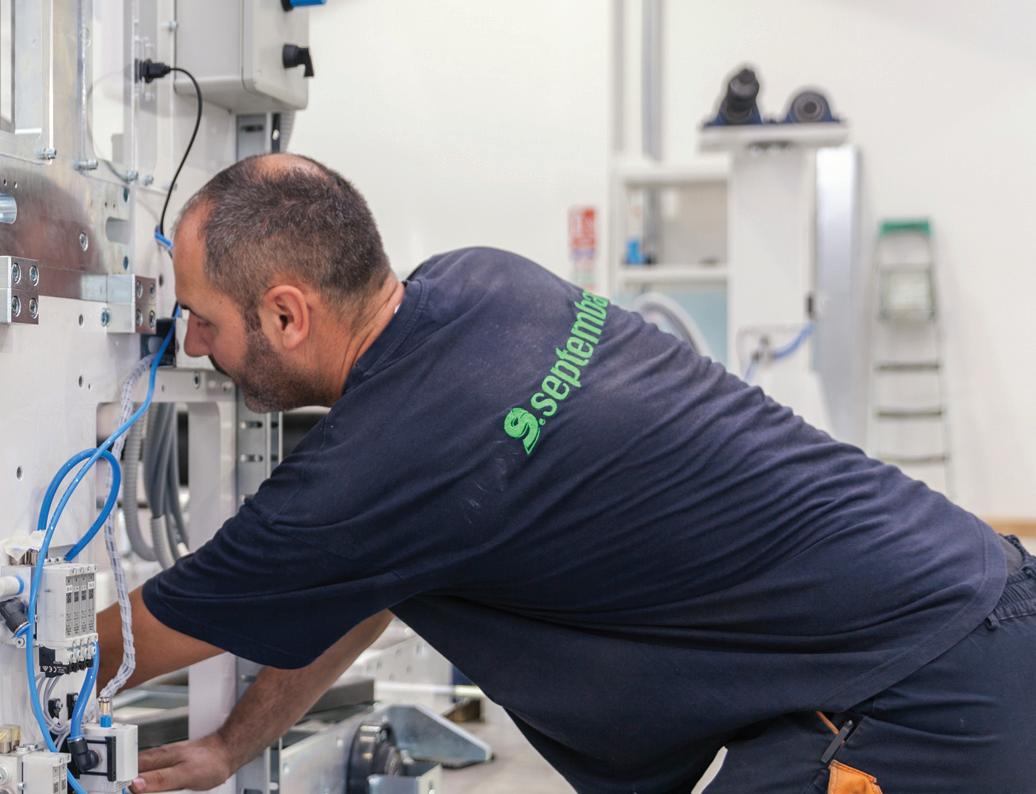
“Our machinery designs keep the operator, and their ease of working with the machine, in mind from day one,” said Mr Babic . “These features together make our machines highly effective, in addition to being some of the fastest, highest capacity machines on the market. It’s one of the ways in which we’re not only following trends to meet customer expectations, but setting trends, too.”
Inside sustainability 183
Given that the machines are connected to the internet, 9.Septembar’s engineers are able to log in to any machine at a moment’s notice to diagnose any problems and recommend solutions to the customer, thus speeding up the resolution often to a matter of minutes, and avoiding the time and expense of flying an engineer to the customer’s site. It also allows software updates to be remotely and instantly delivered to 9.Septembar-deployed machinery, ensuring that the product is constantly operating efficiently and correctly.
The future is in the bag
The world is gradually moving away from single-use plastics, including plastic shopping bags. Having long ago identified this trend while anticipating the retail sector’s demand for alternative shopping bags,
9.Septembar is proud to introduce EOS; its latest machine designed initially for the production of paper bags, but capable of also producing paper rolls for applications such as dental bibs, bedsheet covers and specialised wipes.
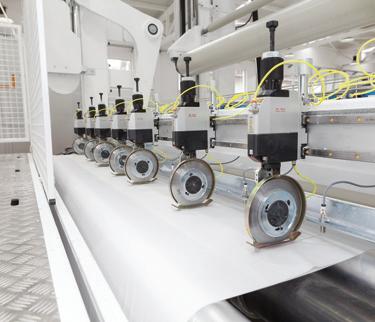
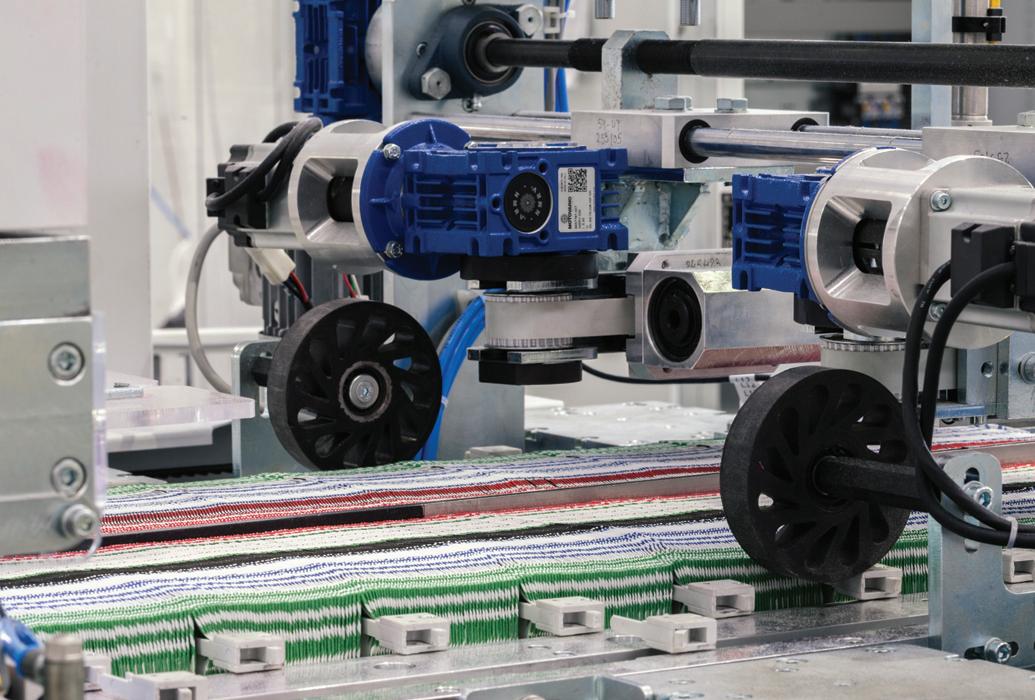
“We’re expecting the demand for paper bags to steadily rise, and we are optimistic that EOS will become the machine that the industry will turn to for paper bag production,” Mr Babic explained. “I really believe that EOS can change not only 9.Septembar’s trajectory, but also move the world forward in general. It’s an innovation that we are heavily invested in. The machine is currently on our factory floor and is in the final phase of testing for the production of both paper bags and paper rolls.”
Concluding, Mr Babic spoke about 9.Septembar’s approach to solving its

184 Inside sustainability
customers’ production needs: “We don’t see a customer’s production problems as problems, but as challenges. Every new idea that our customers bring us is a challenge that has a solution, and it’s our job as engineers to find the best path to that solution.
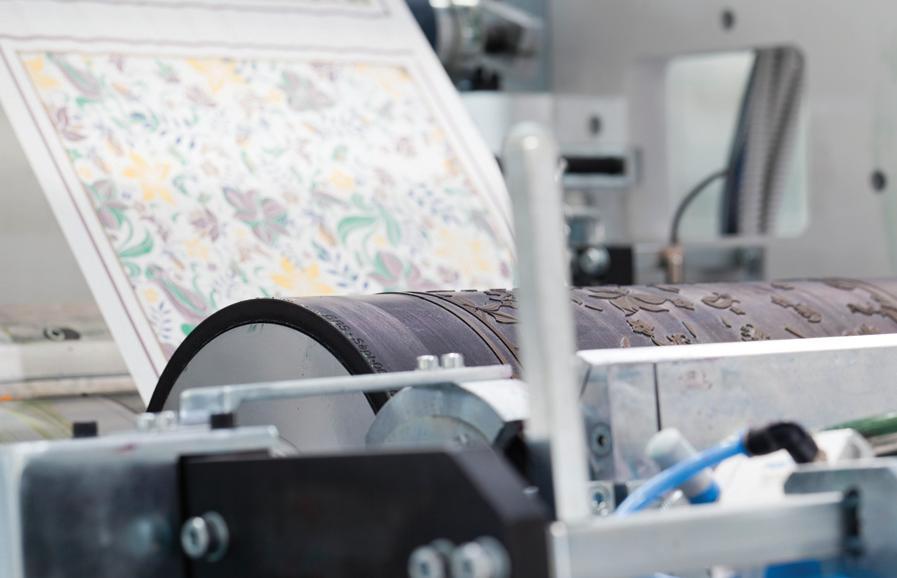
“Looking forward, the huge effort we’ve made to build better, more durable, faster , more eco-friendly machines will continue to form the core of those solutions: and in the meantime, we plan to maintain our position in the major leagues of the industry.”
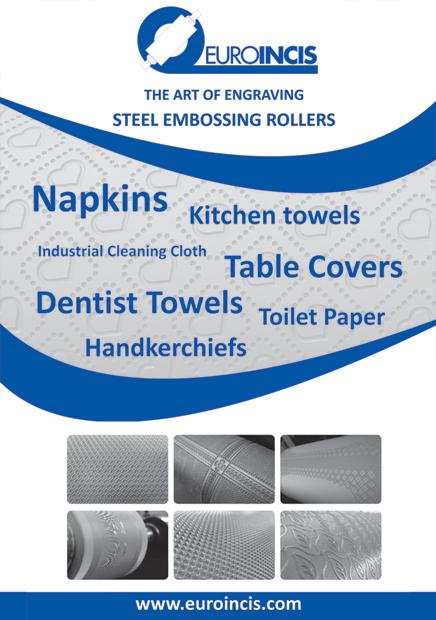

Inside sustainability 185
n
Chemtrix specialises in the design and implementation of continuous flow reactors for challenging chemistries. By combining engineering and chemistry expertise, the company has developed a range of small-footprint flow reactors for mg-scale reaction screening, through to multi-tonne industrial production. Chemtrix recently marked 15 years in operation, and CEO Charlotte Wiles told Hannah Barnett what the company has achieved so far – and where it intends to go next.

186 Inside sustainability
CHEMTRIX I PROFILE
Ch emtrix’s technology allows chemicals to be produced in a safe and sustainable way. Rather than performing reactions in a batch vessel (as is the industry standard) in flow chemistry, a chemical reaction is performed as a continuously flowing stream. Pumps carefully meter reagent streams and the reaction takes place within the flow reactor under precise thermal control.

“It means you've got flexibility over how much you produce based on how long you run the process for, rather than increasing the size of your batch vessels,” said CEO Charlotte Wiles.
“We can increase the process safety, reduce operating costs, reduce energy usage and, overall, reduce the amount of waste associated with performing chemical transformations.”
A decade and a half Chemtrix BV was incorporated back in March 2008, establishing headquarters in the Netherlands. Its base in Geelen allowed the company to to be close to launch customers in the speciality, fine chemical and pharmaceutical sectors.
According to Dr Wiles, the entire industry has evolved substantially since then: “The biggest shift over the last 15 years has been the development of the technology from what was initially thought of as a research curiosity into what's now a maturing technology used for manufacturing across the world.”
Chemtrix seized the opportunity to start developing equipment suitable for customers who had an R&D question to answer. But as flow chemistry became embedded in R&D labs, larger equipment was needed, and the focus shifted to the
Inside sustainability 187
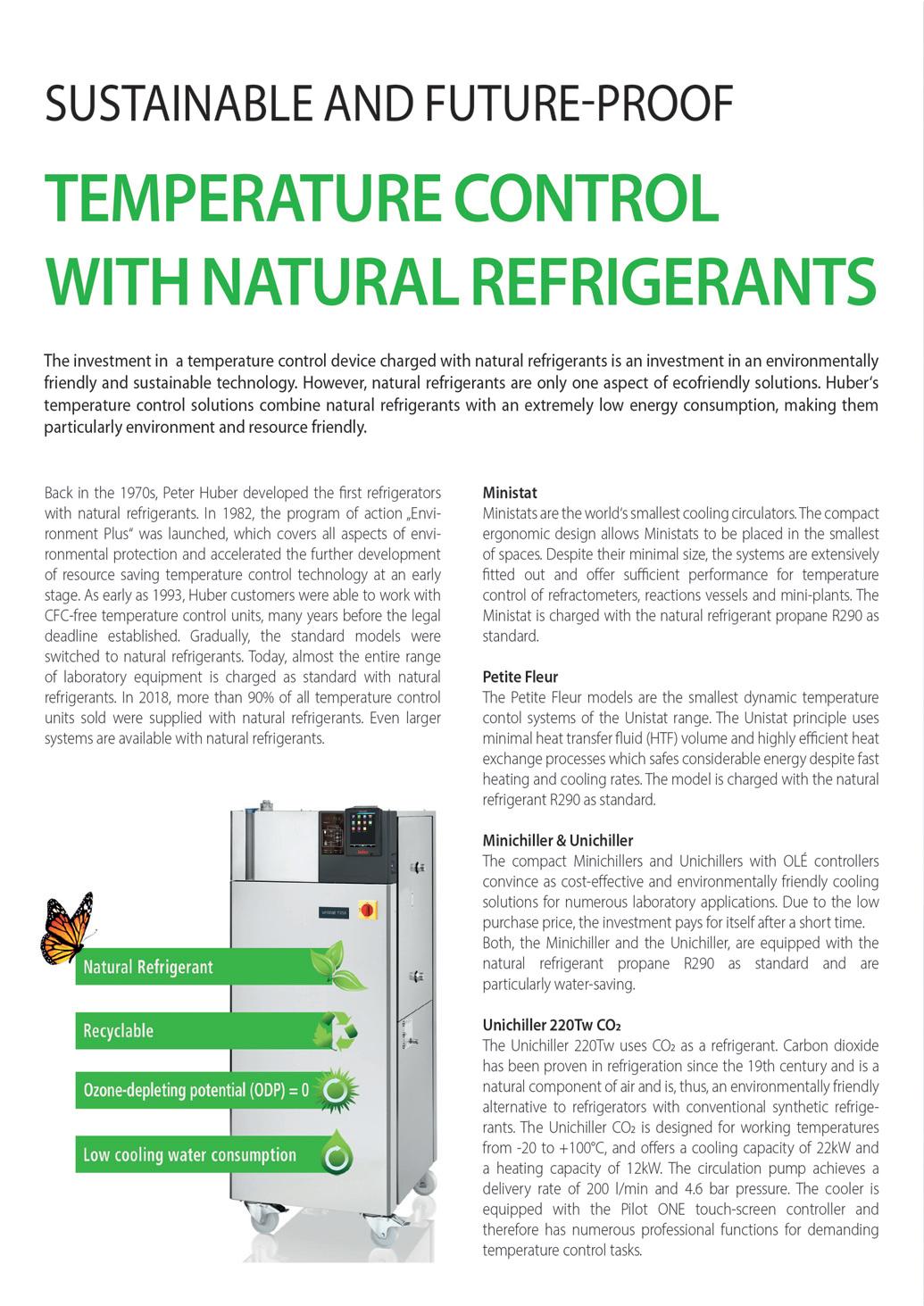
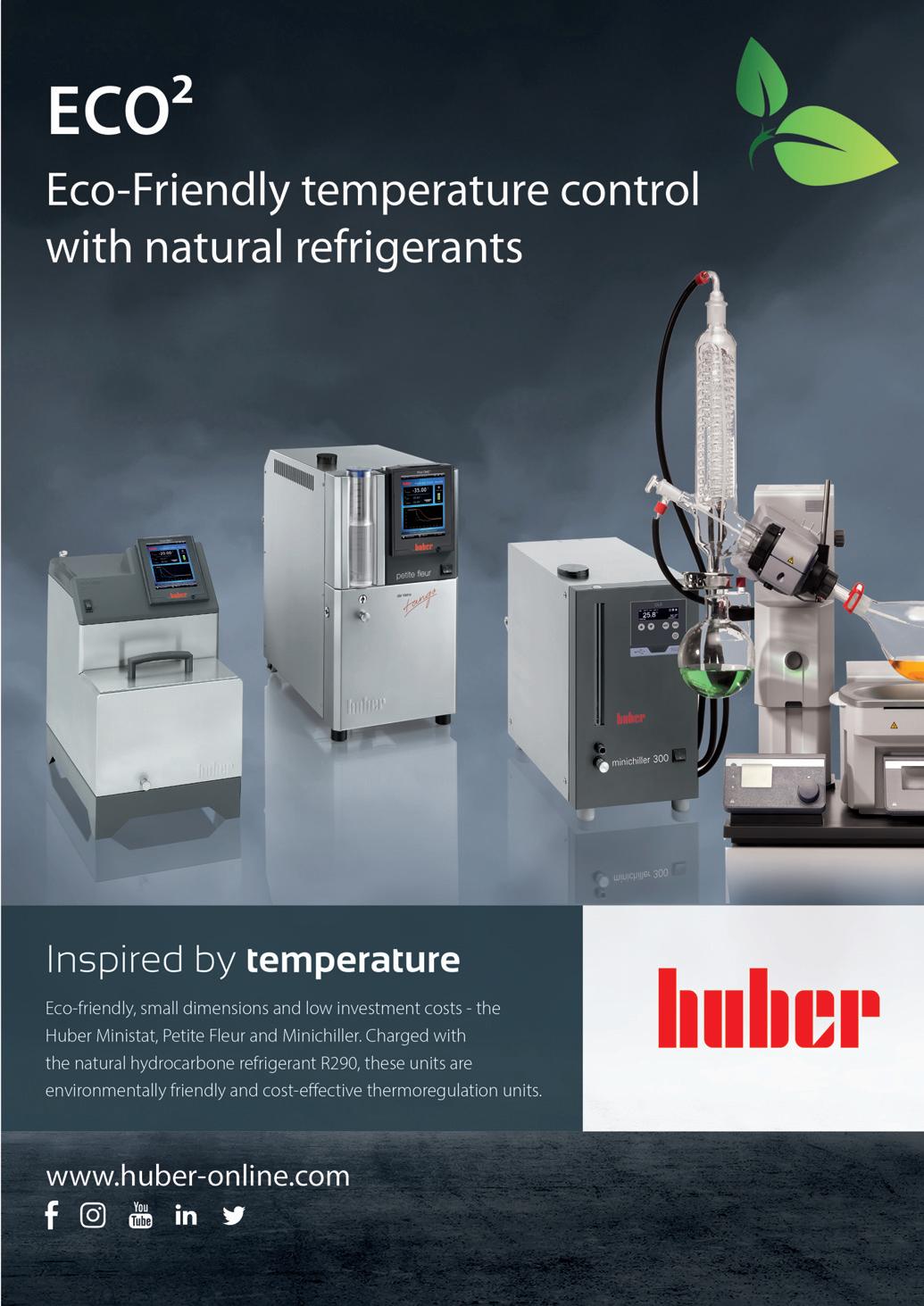
development of scalable flow reactors for industrial manufacturing.
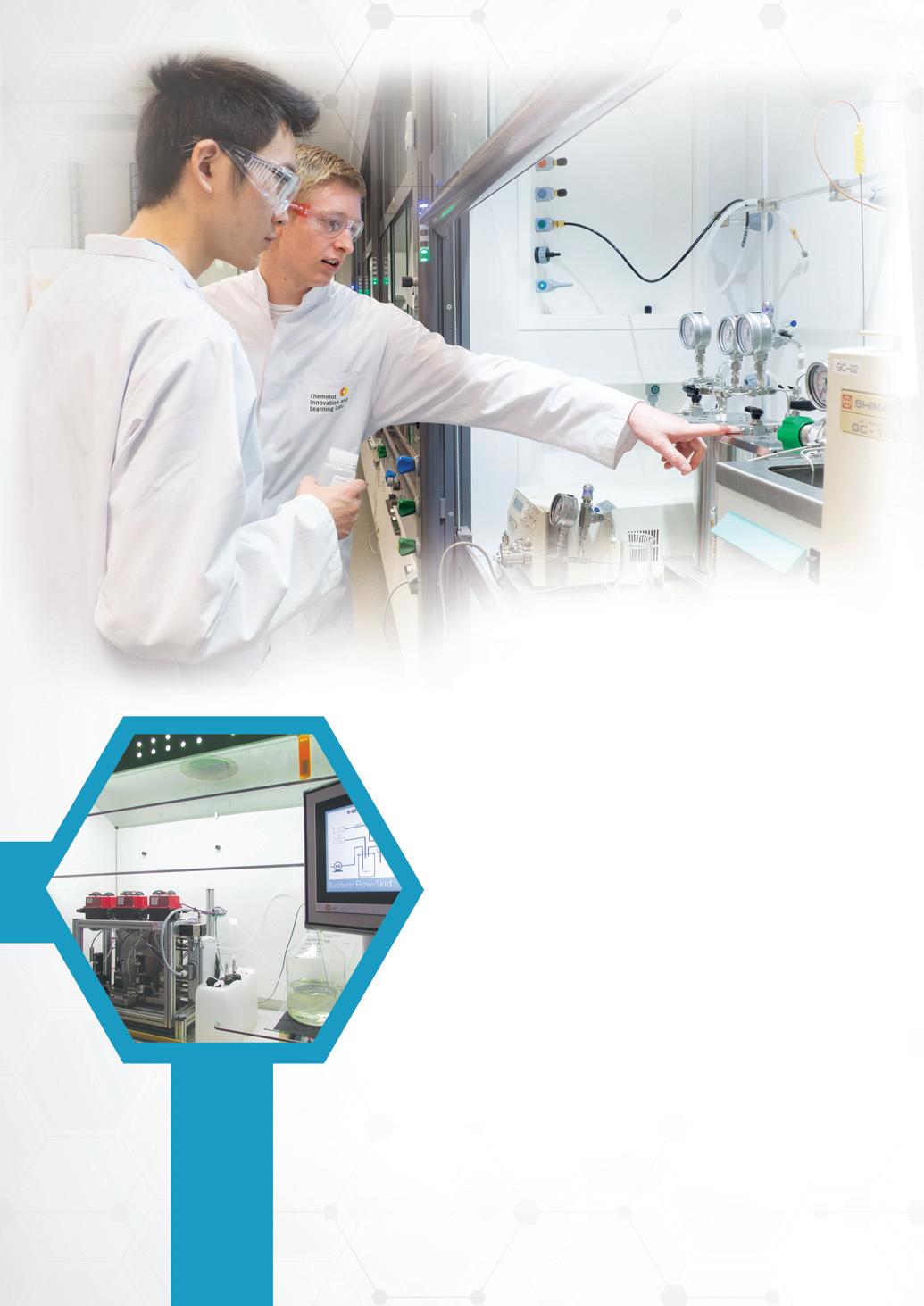
“In the early years, companies were hesitant to develop in flow if there was not a way exploit the technology to access larger quantities of material,” Dr Wiles recalled. “The key milestones for us were going from milligrams to kilos, and then kilos to the first metrictonne. And when you can make a few 100 tonnes a month, you realise you've got a portfolio of equipment that allows people to trust in the technology.”
A sustainable method
“Though exact reaction parameters vary from process to process, typically you need pumps, a reactor and a heating (or cooling) unit. Any complexity beyond that depends on the process, but we routinely employ process analytical tools (PAT) from our partner Mettler Toledo to give real-time monitoring of the process(es),” said Dr Wiles.
190 Inside sustainability CHEMTRIX I PROFILE
“Because of the increased mixing and thermal efficiency, a continuous flow production system has a footprint of a few square metres, which is considerably smaller than a typical multi-purpose batch plant.”
Batch processes require large tanks that must be heated up and cooled down; a more time consuming and less sustainable method than that favoured by Chemtrix. “The nice thing about a flow reactor is you maintain its temperature, reducing the peak loads on your utility system and reducing the overall heating or cooling capacity required,” as Dr Wiles put it.
Chemtrix is also looking into developing further sustainable solutions through the use of photochemistry, a branch of science concerned with the chemical effects of light.
“Our existing equipment is directed towards reducing energy usage, high atom economy and lower waste generation,” explained Dr Wiles. “but
we are now also looking towards what we can do by bringing light into devices. And we are researching whether we can use that as our energy source to further improve the products we have available.”
Securing the supply chain
Following the disruption created by borders shutting during the Covid pandemic, companies and governments alike are pushing towards decreased reliance on external sources – and flow chemistry has started to come into its own.
“Companies are looking towards securing their supply chains for key raw materials,” Dr Wiles said. “That's been our biggest area of growth. It started preCovid, but the pandemic accelerated the conversation about local manufacturing, which was one of the target concepts we had as researchers over 20 years ago.”
As with any successful business, Chemtrix also places value in its own supply chain, and in forging long-lasting

Inside sustainability 191

partnerships. “Sustainability of our relationships is key,” said Dr Wiles. “We look for an equally balanced partnership, where we can bring something to the table, and in return get something that fills our knowledge gaps. We find that being open and collaborative has been central to building not only our relationships with our customers, but also relationships with our suppliers.”
Dr Wiles stressed the benefits of working with local suppliers where possible and cultivating an atmosphere of collaboration rather than competition: “We think it's important –from an OEM component supplier, all the way through to an engineering partner – that we have a collaborative way of working.”
An example of collaboration in action comes in the form of Chemtrix’s partnership with Flowid. The latter is also a continuous
equipment manufacturer focusing on flow solution provision and system integration, and is based nearby, in Eindhoven.
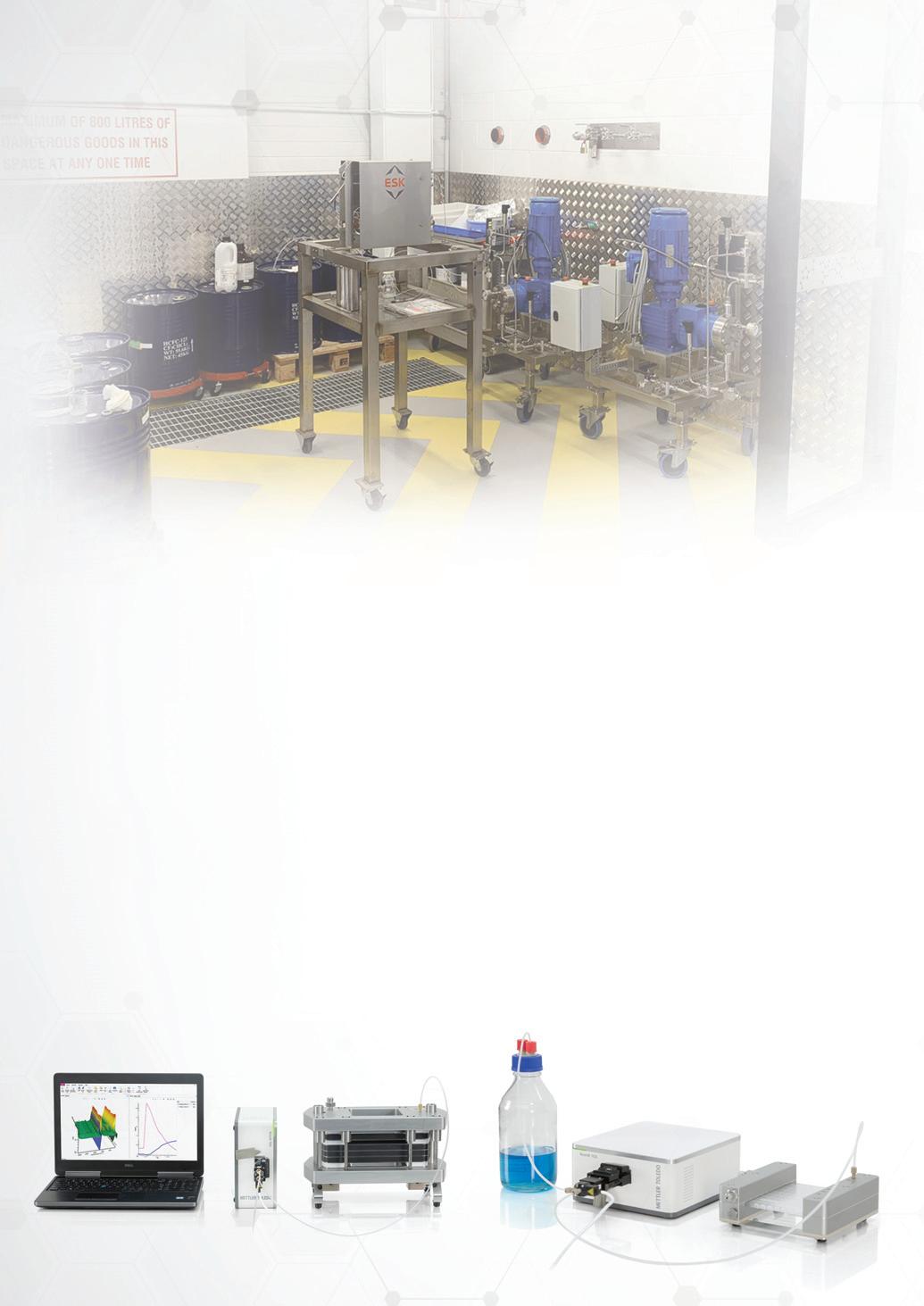
“By working together, we provide a much bigger offering to our customers, working together to reduce the barriers to entry for a customer,” explained Dr Wiles. “
The future of flow chemistry
Dr Wiles was candid: the biggest challenge the company faces is overcoming the conservative nature of the chemical industry. She explained this means competing with already established infrastructure: “If a company has a large asset that is not being fully utilised, no matter how good an alternative solution is,
CHEMTRIX I PROFILE 194 Inside sustainability
the company will always choose to use the existing depreciated asset.”
As a result, Chemtrix is intent on growing the flow chemistry market as a collective. I n 2024, it will organise the third edition of the Flow Chemistry Pavilion at the Achema tradeshow. “We're looking at around 25 to 30 flow chemistry providers being present within the pavilion,” Dr Wiles said. “By standing together as a community, we show that we're not competing with each other: we're competing with the old way of working.”
Recent ICH Q13 guidance published on continuous manufacturing is another step in the right direction. The guideline describes scientific and regulatory considerations for the development, implementation, operation and lifecycle management of continuous manufacturing. “The guideline goes some way towards demonstrating how the technology is maturing. It is a strong signal from the regulators and will give compa -
nies a lot of confidence,” said Dr Wiles.
It is clear that the past 15 years are just the beginning for Chemtrix: but what next?
“Our objective is to continue doing what we're doing, and doing it well,” concluded Dr Wiles. “Whilst the technology’s adoption continues to grow, we are clear that we don't aim to replace every batch tank. This is a complementary technology that will co-exist alongside batch infrastructure; and as it matures our knowledge about where it adds value will continue to increase.
“We embrace curiosity, and challenge companies not to stick to the status quo. Start questioning why you do something a certain way: half the time you'll find it’s simply because it’s always been done that way. There’s a lot still to be improved on, even for established processes. So we encourage people to ask questions, and continue to push boundaries to see what’s possible.”

Inside sustainability 195
n © Copyright CoRIAC
Fast & Fluid Management is an innovator within the tinting and mixing industries, with a diverse portfolio of dispensers, mixers, shakers and software. Managing Director Filipe Oliveira da Silva explained what is required to keep Fast & Fluid at the forefront of the industry, in conversation with Phil Nicholls.
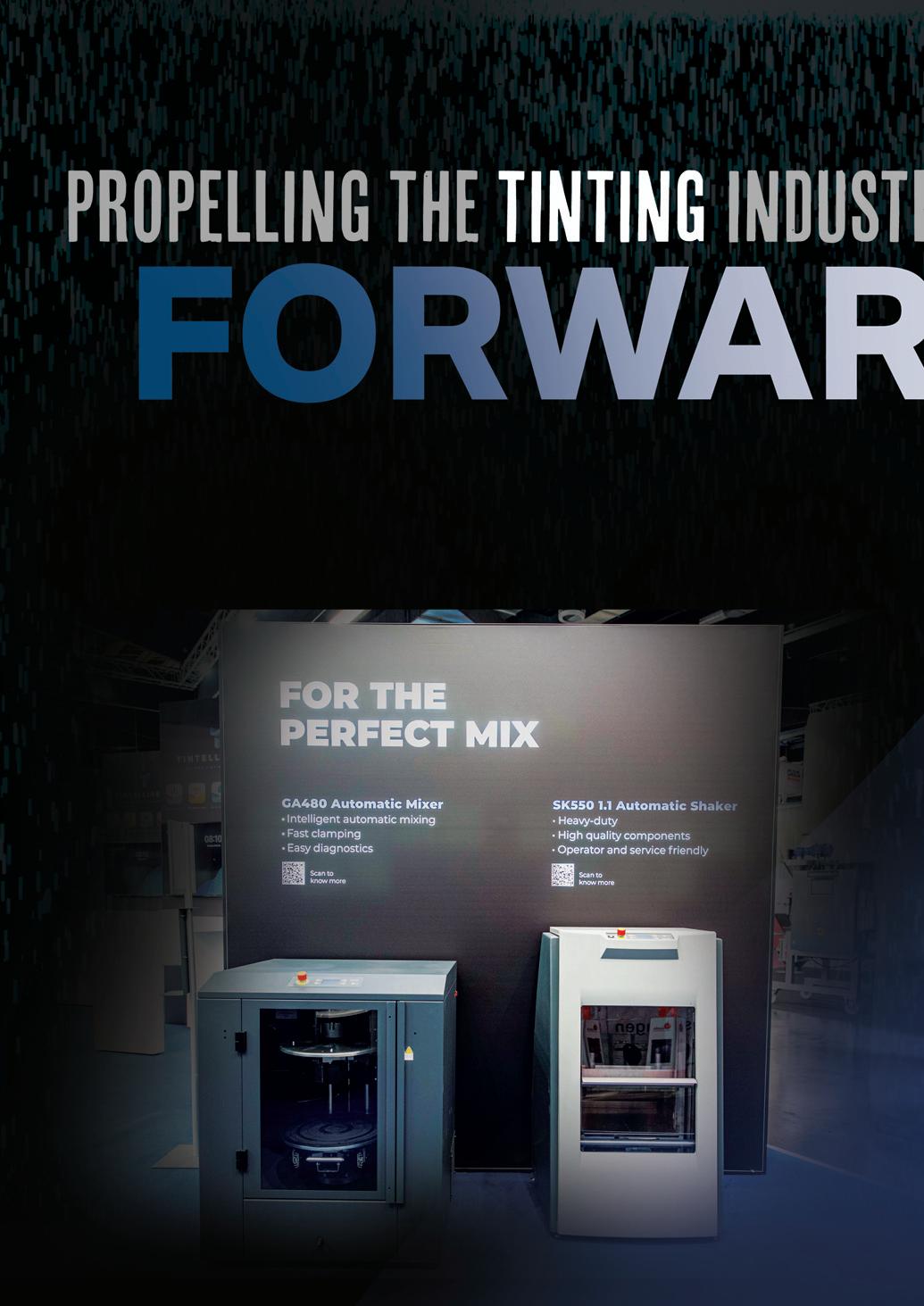
196 Inside sustainability
FAST & FLUID MANAGEMENT I PROFILE
ased in the Netherlands, Fast & Fluid Management is the global market leader in the field of paint dispensers, paint mixers and shakers. This position is maintained through a dedication t o innovation. Earlier this year, at the European Coatings Show 2023, Fast & Fluid announced the Tintelligence TM unified tinting solutions.
“Tintelligence is an ecosystem of seamlessly integrated state-of-the-art tinting equipment and advanced digital applications, giving one experience enterprise-wide,” Managing Director Filipe Oliveira da Silva explained. “It empowers tinting stakeholders with smart technology and insightful data to drive their business to new levels of operational and commercial performance.”
The foundation of the company goes back to 1985 when Harbil International was founded in Sassenheim. Two years later it joined forces with Miller in the USA, resulting in the creation of Fluid Management. In 2002, the Italian company Fast SpA united
with Fluid Management Europe to form Fast & Fluid Management. Subsequently, the company expanded steadily to become the number one world manufacturer of colourant dispensers for architectural paints. As part of the IDEX Corporation (a S&P500 listed company), Fast & Fluid operates worldwide, serving global customers.
B“We have a long history of innovation in the tinting industry,” Mr Oliveira da Silva said. “Our portfolio includes a diverse range of dispensers, mixers and shakers, and software to suit different applications. We are recognised and trusted for our high quality, robust and reliable tinting equipment.”
Fast & Fluid focuses on delivering its vision and mission: ‘Colourful solutions, reliable to the core in every tinting location in the world.’
Evolving market
“Serving our customers is at the heart of what we do. We have the biggest R&D team in the industry to continuously drive in novation,” Mr Oliveira da Silva continued. “Fast & Fluid works very closely with customers to understand their needs and gain valuable insights.”
This dedication to innovation is required for Fast & Fluid to hold its leading position in a dynamic industry. Alongside the worldwide trend towards urbanisation and sustainability, customers have i ncreased expectation for the digitalisation of companies.

Inside sustainability 197
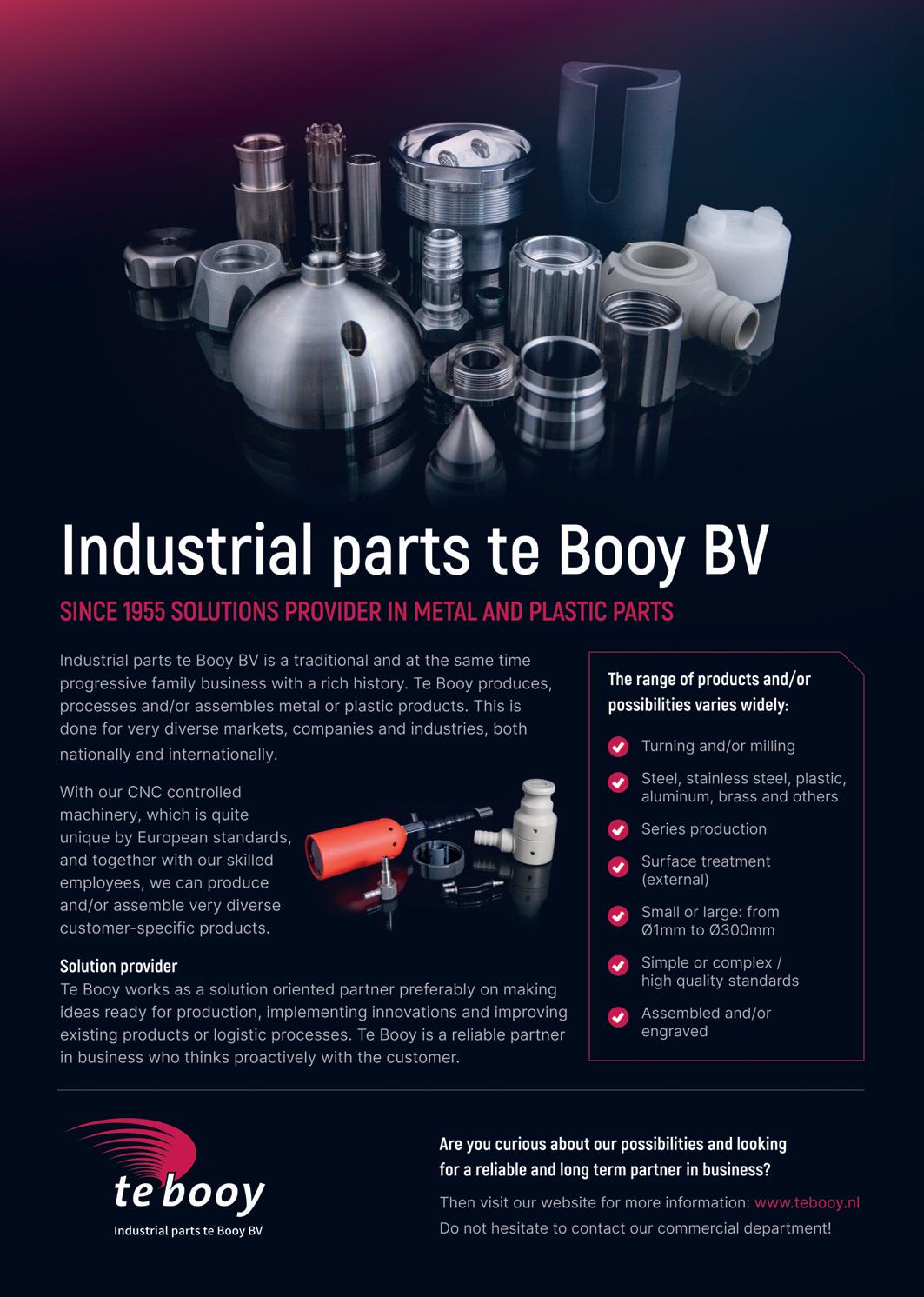
Fast & Fluid’s forthcoming Tintelligence TM is a solution to meet the current challenges and future needs of the market. The Tintelligence TM equipment is designed to be smart, connected, and intuitive to enable simple, accurate and sustainable tinting. It will reduce downtime, optimise the tinting cycle and increase operator efficiency. The advanced suite of applications seamlessly integrates
Tintelligence will drive business value:
• Real-time sales analytics to respond faster to market trends
• One-click software or database updates
• Maximised fleet uptime with remote monitoring and predictive alerts
• In-built diagnostics and remote troubleshooting
• Quick resolution, increased accuracy and minimised mis-tints for improved sustainability

• Enhanced in-store experiences with quick and hassle-free order fulfilment
with the equipment, enabling smarter colour management and faster data-driven business decisions.
“During the coming years, our product portfolio will evolve by merging into our Tintelligence ecosystem,” Mr Oliveira da Silva said. “This will provide our customers with the best of both worlds: highly reliable equipment with advanced digital applications.”
Another innovative product from Fast & Fluid is the Biocide-Free Spray Solution. This has been specifically designed to be environmentally friendly and durable. The spray protects up to 24 vulnerable colourants and is completely userfriendly. Deploying unique spraying lids that condition the headspace of the canisters, providing thorough protection, Fast & Fluid’s programmable spray system allows customers to tailor the
200 Inside sustainability FAST & FLUID MANAGEMENT I PROFILE
i nterval and duration of the disinfecting spray to optimise the conditioning of colorants, ensuring they remain vibrant and healthy for longer. The system provides clear fault feedback with LEDs and acoustic signals, which makes it easier to identify any issues that may arise. With a large 5L spray liquid container that lasts up to
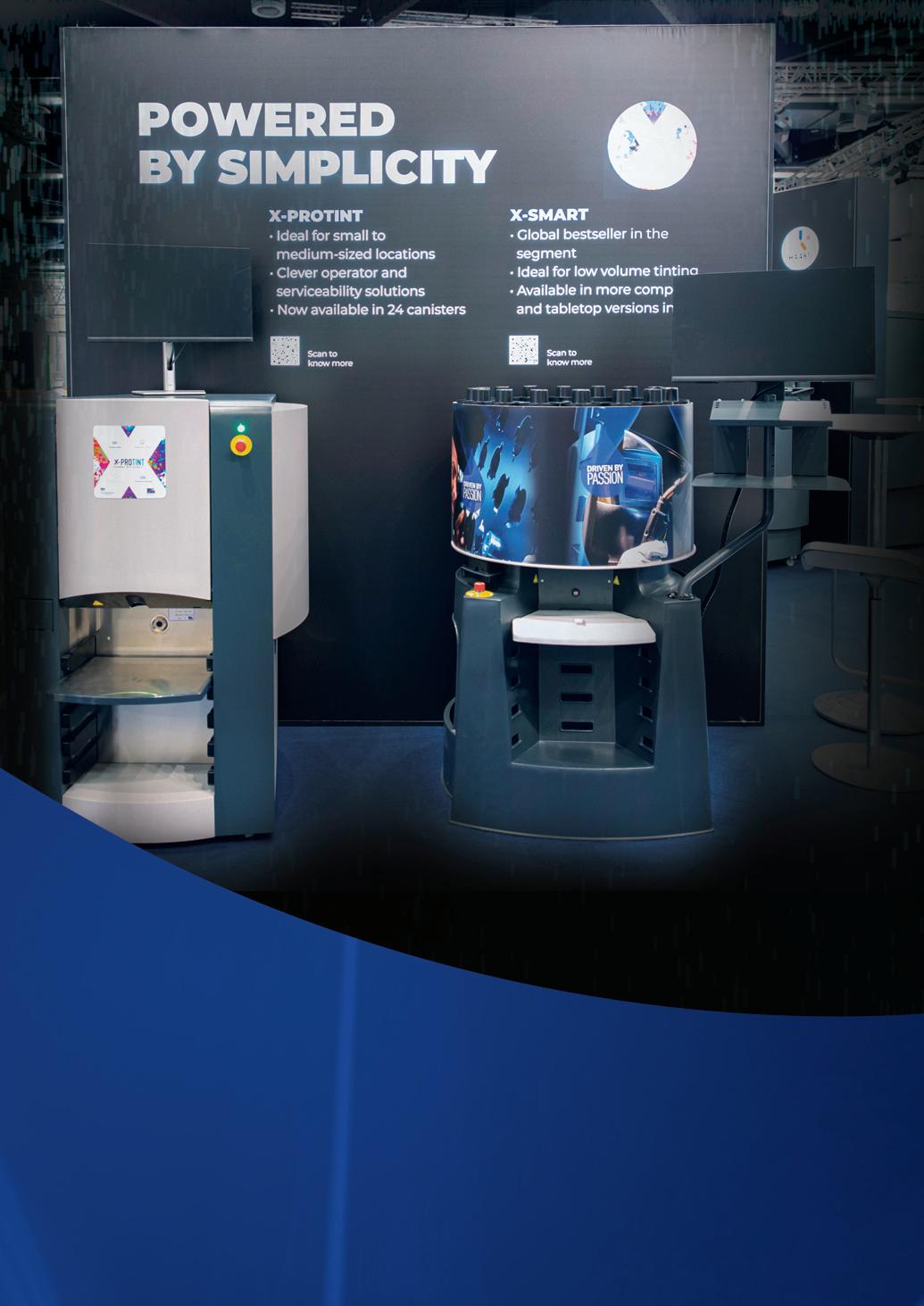
12 months, this spray solution is also a cost-effective way to protect colorant systems.
“We also have a solution for existing machines,” Mr Oliveira da Silva explained. “Our special retrofit kit that is available for our HA180, HA480 and HA450 machines
Inside sustainability 201
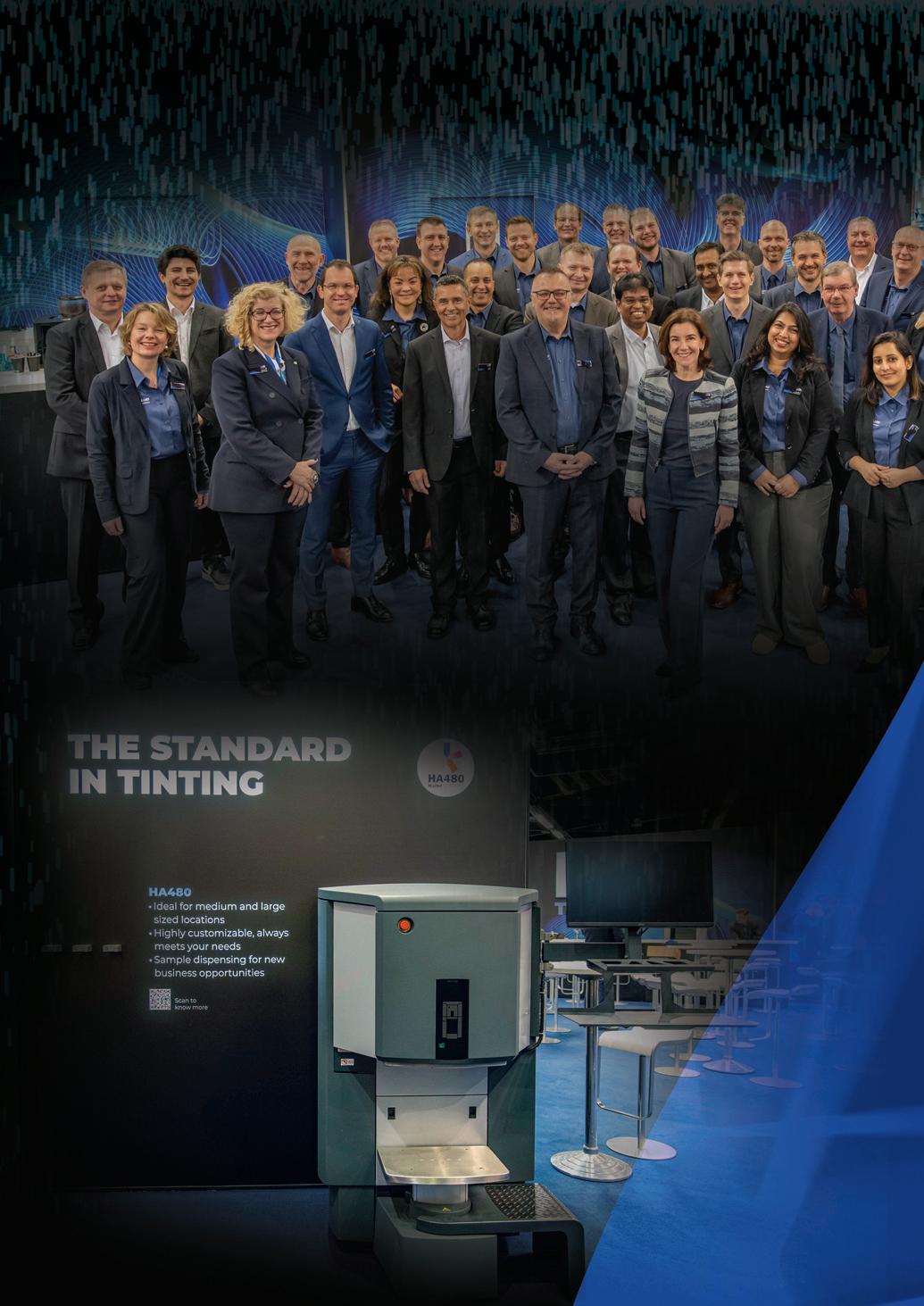
FAST & FLUID
I PROFILE 202 Inside sustainability
MANAGEMENT
will do the job. This retrofit kit makes it easy for a client to upgrade their current machine and enjoy the benefits of our Spray Solution.”
A strong tint of green Sustainability is another major trend shaping every industry. Colorant developments are now driven by regulations and the growing environmental awareness of the end users. Fast & Fluid Management is committed to playing a vital role in this field, continuously innovating its product portfolio by adding suitable and reliable sustainable alternatives.
“We’re proud to announce that in 2022, we focused on reducing our carbon footprint through multiple initiatives on energy consumption and waste reduction,”
Mr da Silva said. “The results speak for themselves: we achieved a five per cent decrease in energy consumption and a thirteen per cent decrease in waste generated per unit produced.
“As we look forward, we’re committed to continuing our focus on reducing our carbon footprint. We are currently assessing the opportunity to install solar panels on our factories and further reduce paper consumption as part of the production process. And of course, we are using every opportunity along the way to reduce our carbon footprint even more.”
Fast & Fluid expects a similar commitment from its suppliers, in terms of environmental protection and sustainability. A large part of
this expectation revolves around packaging, which should be minimal and reusable. Suppliers are also encouraged to deploy recycled material for plastic components whenever feasible.
A talented future
Recent years have brought an unusual set of challenges to global business, many of which will not go away as things evolve. “Nowadays, the focus is less on supply chain issues, but more on finding and keeping talent,” Mr Oliveira da Silva added. “This is a key priority within Fast & Fluid Management.

“We are lucky that we can leverage the fact that we are part of IDEX Corporation which provides us with the guidelines and a wide pool of talented people that can help us grow the business together with our customers.”
Looking to the future, innovation remains at the core of Fast & Fluid’s activities and that is something the company will not change. Fast & Fluid aims to maintain its market-leading position by continuing to serve customers in a way that helps clients grow their business.
Innovation and enthusiasm at Fast & Fluid is present throughout the company. Mr Oliveira da Silva concluded by sharing what makes him eager to walk into the office each morning: “To me, that is creating impact! And by that, I mean engaging and creating great teams with an obsessive orientation towards solving customers’ problems by focusing on the things that matter the most.”
Inside sustainability 203
n
MATERIALISING SUCCESS IN THE INSULATION MARKET
K-FLEX Polska provides flexible elastomeric insulation materials that have specialist thermal and acoustic properties. As a subsidiary of K-FLEX, the company has access to a wide network of partners and a rich history rooted in quality assurance and innovation. Project Manager Kamil Maszczyk discussed the company’s latest investments, in a report by Imogen Ward.
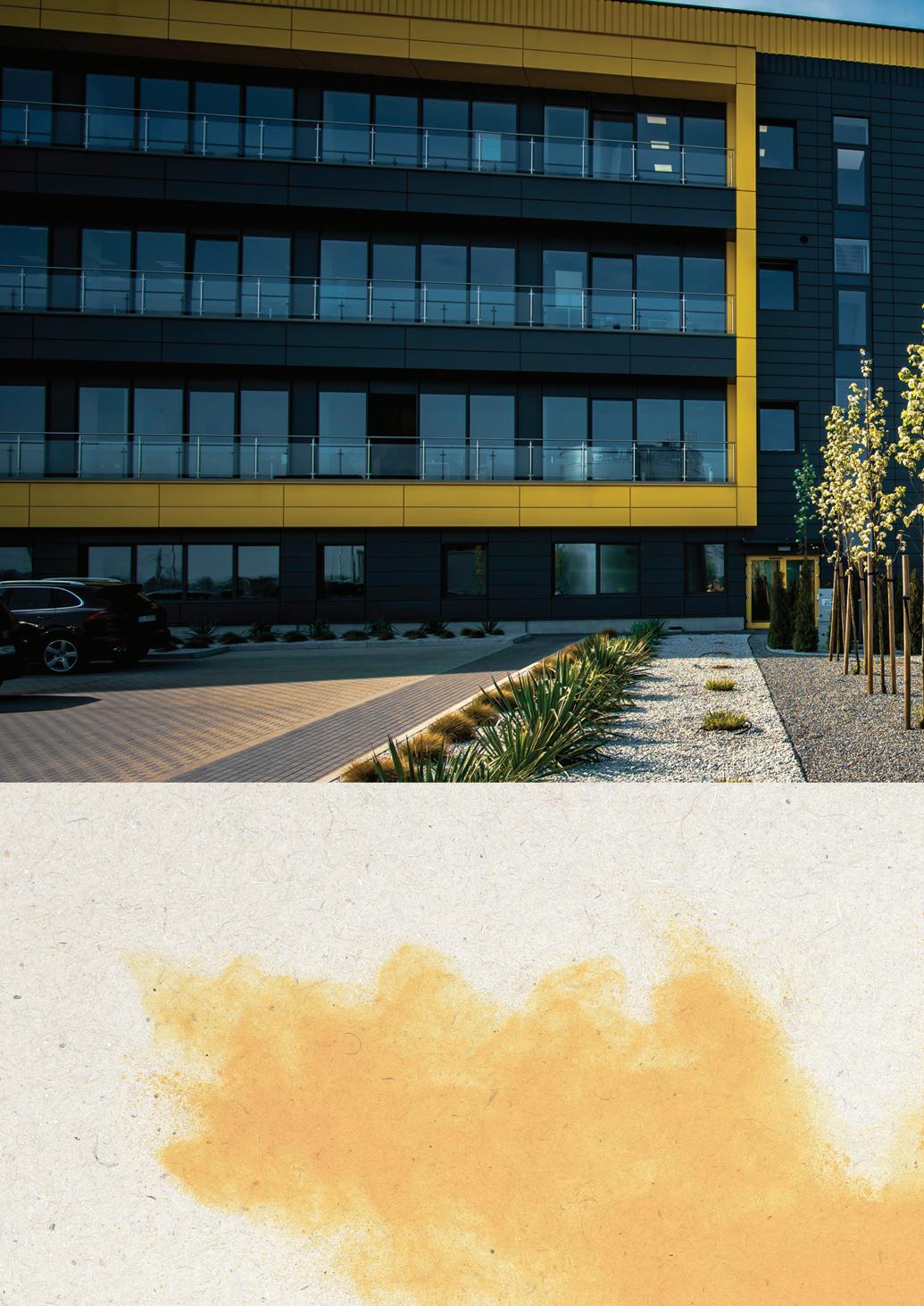
204 Inside sustainability
K FLEX POLSKA I PROFILE
Excitingly, K-FLEX Polska is currently involved in five major European projects, all of which are funded by Horizon 2020 and promote a sustainable and co-operative circular economy. “We started our adventure with the European projects in 2020,” Project Manager Kamil Maszczyk said. “It was a bit strange, developing this during the pandemic, because our main task was to meet people and gather information. Out of all the projects, FRONTSH1P is by far the biggest project for us; it is the first one we have fully coordinated, and it has so much potential for development.”
Previously a feature for the Inside Industry magazine, K-FLEX Polska has been busy growing its capabilities over the past two years.
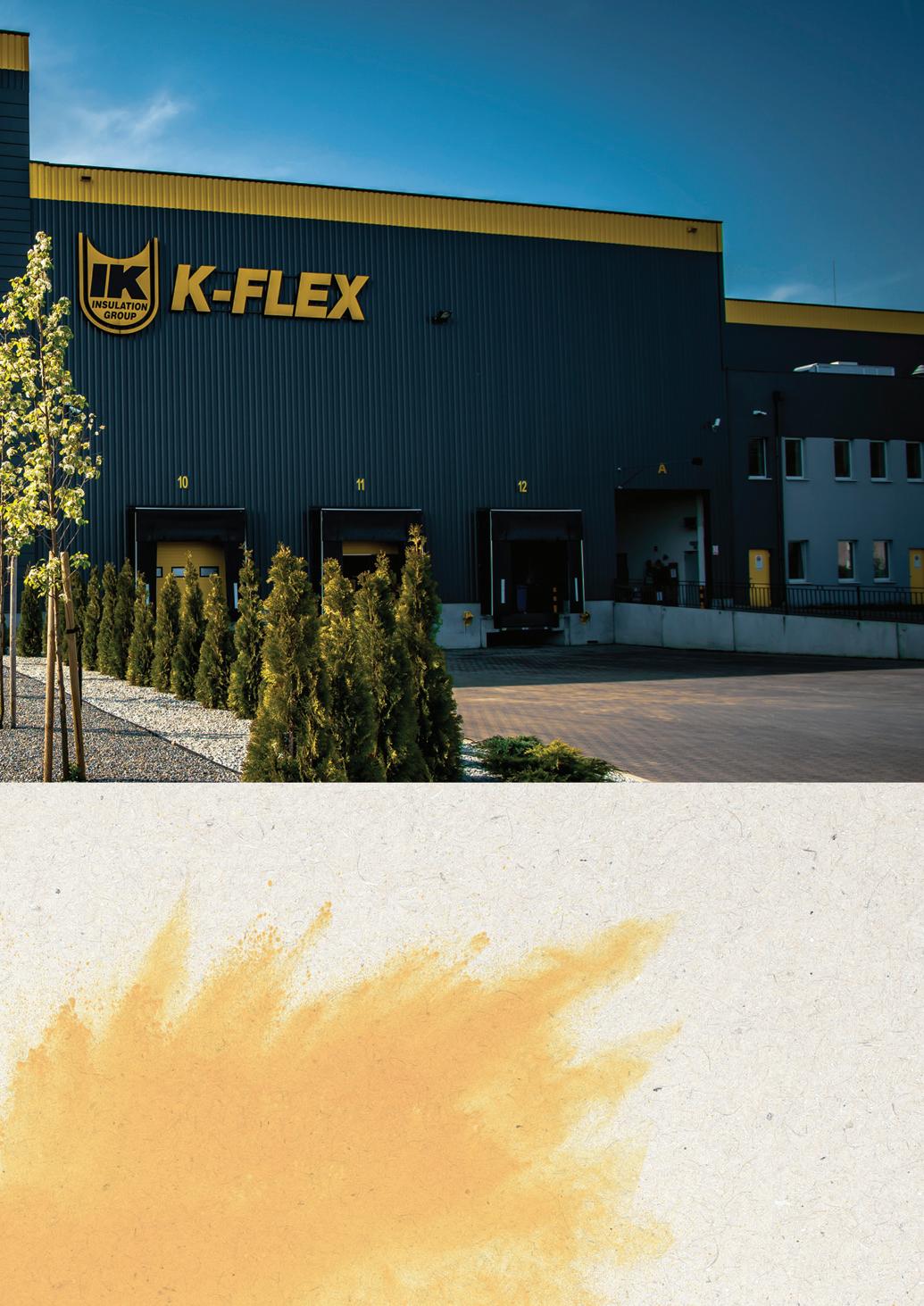
Inside sustainability 205
Flexing new capabilities
The greatest developments at K-FLEX Polska come in the form of two new warehouses, in Uniejów, Poland. “In 2022 we opened a new warehouse that has an area of 8,000 square metres,” said Mr Maszczyk. “In May this year we expanded our capacity again with the commission of our biggest warehouse to-date. With a floor space of 32,000 square metres, this addition takes our total production warehouse space to 100,000 square metres.”
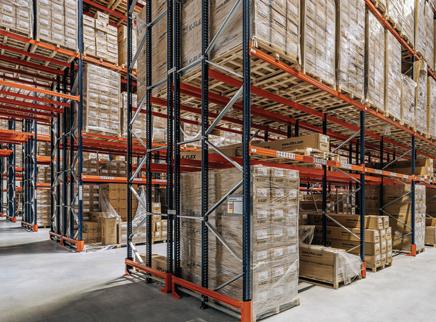
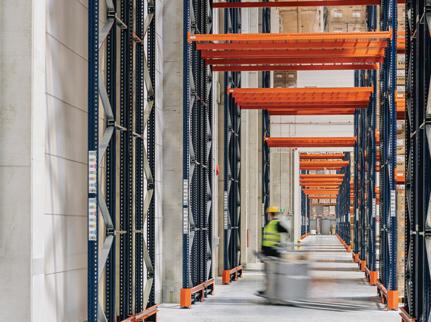

This increase in capacity provided K-FLEX with the perfect opportunity to further
develop its production capabilities. K-FLEX has decided to develop its own OEM multilayer piping with integrated insulation.
“We are currently the only manufacturer that produces both multilayer piping and the insulation itself,” Mr Maszczyk explained. “Before, the pipe manufacturer would send their products to get them insulated; we would then have to send them back once complete. That means the customer would be paying for the cost of transportation –it also results in a bigger carbon footprint. Often these pipe companies would be in different countries and the client would be
206 Inside sustainability K FLEX POLSKA I PROFILE
close to us in Poland, so it made no sense to continue this way.
“Now we have everything under one roof, we can manufacture the pipes and insulation at the same time. We have sold more than 50 per cent of our insulated pipes to companies in Europe, with 10 to 20 per cent being here in Poland, and this number is still growing: we expect it to reach 50 per cent within the next three years.”
Multilayer pipes are great for underfloor heating, which is an area that K-FLEX intends to invest in further in. The company is currently developing underfloor heating systems and strives to produce all the materials for this – enabling its customers to purchase everything they need from one supplier, which makes lead times shorter, reduces the cost of the project and makes the whole process much simpler and stress-free.
Project success on the horizon
K-FLEX always endeavours to make a difference within the wider community. As part of this commitment, the company is involved in five major Horizon pro jects. The largest of which, FRONTSH1P, began in 2021. Based around the progres sion of the circular economy within the Polish region of Łódzkie, the project has implemented
circular solutions into four of the region’s main production processes. As a result, the project is expected to lead to an improvement in the region’s decarbonisation and general regeneration efforts.

“FRONTSH1P is not only focused on the businesses in Łódzkie, but also aims to engage the citizens in the circular economy,” Mr Maszczyk said. “The project is focused on four different areas: food and feed, water and nutrients, plastic and rubber waste, and wood packaging. In our case, we provided scraps from our production process, which can be thermally treated to produce energy. Some of the solutions developed during the project include a waste composter and bags made from recycled plastics. Our scraps helped make these bags.”
Biodegradable bags were made to reduce the number of plastic bags ending up in landfill. Locals can also get involved by donating their domestic waste to the project – making it a community-wide effort. Following the success in Łódzkie, the project has also been extended to four other European regions: Campania, Italy; Sterea Ellada, Greece; Norte, Portugal; and Friesland in the Netherlands. This number is set to expand, as time progresses, to create Circular Regional Clusters that will
K FLEX POLSKA I PROFILE 208 Inside sustainability
work in unison to ensure the success of the FRONTSH1P vision.
The company is also working on three projects that promote the innovation of building practices. RINNO, InCUBE and REHOUSE are dedicated to creating a standardised and cost-efficient way of developing infrastructure that is both sustainable and economically efficient.
The final project, FLEXINDUSTRIES, promotes the development of energy efficient and sustainable solutions for electrical and heating networks worldwide. Following the success of these five projects, K-FLEX has committed to two new projects which should start before the end of 2023.
Products that protect
Currently, the company’s most successful product is rubber insulation. As the largest provider of this material in Europe, K-FLEX hopes to encourage more companies to invest in the insulation. “We want to promote insulation as a crucial energy saver,” Mr Maszczyk said. “It is better to spend the money on installation today rather than paying ten times as much for heating over the next ten years.”
On top of this, the company also produces a range of eco insulation.

Made without the use of halogens, the K-FLEX SCR ECO creates non-toxic fumes in case of fire. In this instance, the product’s protective jacket also slows down the emission of smoke and fumes. “This product is perfect for customers that need insulation material with the best fire-resistant properties,” said Mr Maszczyk. “This has been available since 2018 and has been upgraded to increase the maximum service temperature and fire-resistance.”
Going forward, the company hopes to continue expanding its reach in the marketplace to secure its position as a market leader. “We have plans to implement new products relating to the different types of insulation,” Mr Maszczyk said. “We also want to develop a new type of pipe for the cooling systems, and plan to create a strong presence in DIY stores. K-FLEX is a global enterprise, with 17 plants spanning the globe, and our united goal is to expand into the USA and Mexico.
“We will continue to support our customers and provide them with market leading products that are adapted to meet all requirements,” he concluded. “We can do that because we are as flexible as our flexible insulation material.”
Inside sustainability 209
n
Established in 1862, Mammut Sports Group is a Swiss outdoor company selling high-quality clothing and equipment to mountain sports enthusiasts worldwide. While its customers go about conquering some of the world’s toughest outdoor challenges, Mammut has spent the last twenty years actively tackling sustainability challenges head-on. Adrian Huber, Head of Corporate Responsibility at Mammut, chatted with Richard Hagan about how the company is conquering one sustainability peak after another.
210 Inside sustainability
MAMMUT SPORTS GROUP I PROFILE
Mammut Sports Group was founded over 160 years ago as a small family business, owned by Kaspar Tanner, a rope maker, in Dintikon, Switzerland
Initially making ropes for agricultural use, several decades later its product range shifted to ropes for mountaineering and sailing. A significant milestone for the company and alpine safety was achieved in the 1950s, when Mammut launched the first glacier rope made from nylon yarn.
Mammut’s evolution continues to the present day, with the small Swiss family business ultimately transforming into a leading worldwide specialist in ropes, harnesses, sleeping bags, clothing and footwear, as well as mountain and outdoor sports equipment.
Adventures across Europe
Mammut is a global company, employing 850 staff in eight countries. Additionally, it has distribution agreements in 40
countries, offering customers the world over a complete range of outdoor apparel, hardware and footwear.
It also owns 47 brand stores and outlet stores around the world, delivering an exciting in-store Mammut experience, designed to encourage alpine adventures.
To ensure that its products stay at the pinnacle of its customers’ needs, Mammut proudly maintains partnerships with various professional alpine athletes who evaluate Mammut’s materials and equipment on an ongoing basis. It has been a highly successful programme that is exemplified by Mammut’s Eiger Extreme collection.
First launched in 1995, the Eiger collection is designed for extreme adventures on Europe’s mountains, having been endorsed by high-profile alpinists including Stephan Siegrist and Nicolas Hojac, both of whom directly contributed to the collection’s design and engineering. The Eiger Extreme collection has since been augmented

Inside sustainability 211
by offshoots such as the Eiger Free collection, developed in collaboration with professional freeskier Jérémie Heitz, and the Sender Harness developed in partnership with renowned rock climber Adam Ondra.
A decade of sustainability
Mammut is incredibly proud of its sustainability programme that was initiated over a decade ago, beginning in the early 2010s. While the programme had been fruitful, the past several years have seen the intensity of its sustainability efforts substantially ramp up.

“Our industry is heavily driven by the sustainability mega-trend, but we have the benefit of having had a head start over a decade ago, and so we already have internal processes for sustainability,” said Adrian Huber, Head of Corporate Responsibility at Mammut. “The industry has now reached a tipping point at which sustainability is no longer a ‘nice-tohave’, but a real part of our daily task list. Sustainability is truly driving our strategies and products and is now the key innovation driver in our industry.”
Pointing to various incoming European Union regulations, Adrian Huber highlighted the high profile of sustainability programmes
in the clothing sector: “We have made various commitments, including the UNFCCC (the United Nations Framework Convention on Climate Change, also known as the Paris Agreement), along with the UN Fashion Industry Charter for Climate Action and the Science-Based Targets Initiative. Therefore, the journey ahead is clear, and the things we need to do to decarbonise are fully outlined.”
A particular highlight of Mammut’s sustainability programmes is its Resourceful Performance initiative. Driven by the company’s Chief Product Officer, the Resourceful Performance programme aims to use as few resources as possible while producing the best-performing sporting solutions possible. The end result must enable Mammut’s consumers to engage in their activities without greater impact and without compromising the product’s longevity and quality.
Most crucially of all, the Resourceful Performance programme implements a new requirement that Mammut’s products must be repairable and be specifically designed to cater for endof-life solutions. “Keeping the product’s end-of-life in mind is an important step towards our circular economy goals,”
212 Inside sustainability MAMMUT SPORTS GROUP I PROFILE
said Adrian Huber. “Whether end-of-life means repairing, recycling, disassembling or reselling, these are all hot topics related to the circular economy and ones that we are actively tackling.”
In 1992, Mammut began offering repair services within Switzerland and Europe, with repairs being carried out by its global network of local retail and third-party repair studios. In the service’s first year, Mammut’s teams mended an impressive 16,000 products. Last year, Mammut mended 14,815 products in Europe and was aware of 247 third-party repairs in North America, 330 in China, an estimated 930 in Japan, and 134 in Norway.
Bottling up the Himalayas
In addition to constantly striving to meet its growth objectives, Mammut has committed to reducing its carbon emissions

Inside sustainability 213
by 55% for 2030 or sooner, while aiming to be net zero by 2050 at the latest. Mammut is tackling this challenge on three simultaneous fronts: supplier energy, materials and circular economy.
On the materials front, Mammut is moving away from virgin polyesters and polyamides, to use recycled alternatives instead , but there is a catch. “This isn’t sufficient to meet the required 55 per cent carbon emissions reduction goal,” said Adrian Huber. “It means that we have to find alternative materials with significantly better environmental and carbon profiles than our existing solutions, and that involves innovation, development and research.”
The company is actively exploring alternative materials such as hemp, while trying to become more circular wherever possible. In Nepal, Mammut has teamed up with a local charity called Himalayan
MAMMUT SPORTS GROUP I PROFILE 214 Inside sustainability
Adrian Huber Head of Corporate Responsibility
Life. The Mountain Plastic project sees plastic bottles collected throughout the Himalayas and delivered to Kathmandu, where special machinery converts the bottles into PET pellets. Mammut is then able to use those pellets to make materials such as fibres and fleece.

Mammut’s climbing ropes, which contribute to 14% of its carbon footprint, are obviously a particular focus for the company’s sustainability efforts. “Our ropes are quite easy to recycle as they’re made from mono-material, and that’s what we’re now doing for our ropes and our materials sector in general,” said Adrian
Huber. “We are currently closing the loop in rope manufacturing.”
In conclusion, Adrian Huber reflected on Mammut’s sustainability programme and his own involvement in it: “I’ve been fighting for twenty years to make sustainability an integral part of how we do business. What excites me these days is that I no longer have to convince any investor or anyone else of the importance of sustainability. It’s become a real part of our company’s strategy, supported by our management and driven by our investors. Business as usual is no longer an option, and this makes me really optimistic.”
Inside sustainability 215
n
I’VE BEEN FIGHTING FOR TWENTY YEARS TO MAKE SUSTAINABILITY AN INTEGRAL PART OF HOW WE DO BUSINESS.
Smith & McLaurin is a respected manufacturer of materials for pressure sensitive self-adhesive labels (PSLs), tickets and tags. The company supplies materials to a wide variety of industries including leading retailers, global beverage brands and food manufacturers. Hannah Barnett spoke to Sales Director John Radford and Managing Director Pat Kennedy to learn more.
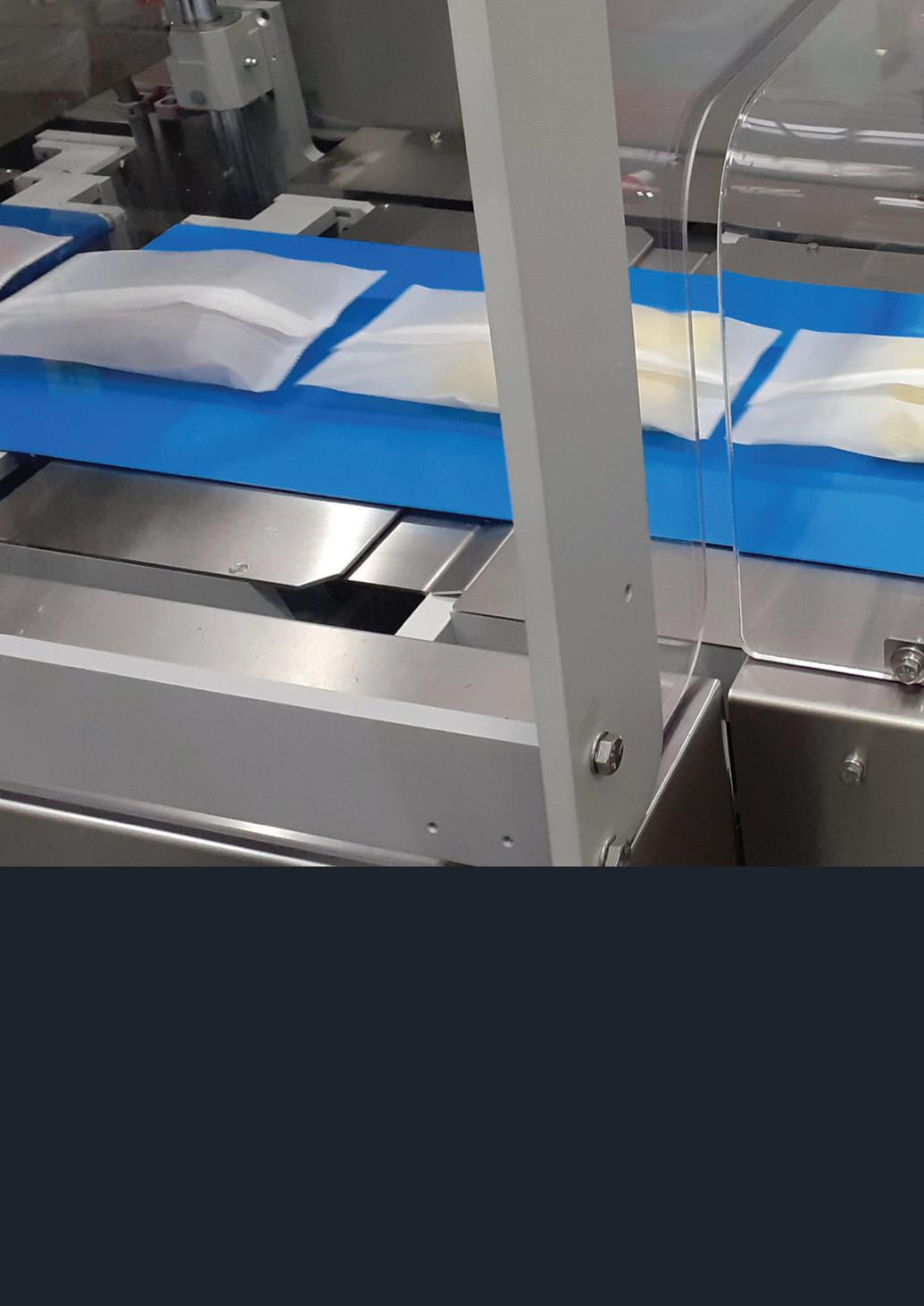
216 Inside sustainability
SMITH & MCLAURIN I PROFILE
Longevity is not something Smith & McLaurin needs to worry about. The privately-owned business has been trading since 1849 and has been on its site in Kilbarchan on the west coast of Scotland since 1868.
These days, the workforce is 78-people strong with a turnover of £24 million. Personnel are not lacking in experience; the in-house technical team boasts 100 years of knowledge between the five of them.
Offering a diverse range of products, with no customer representing more than 8% of turnover, the company maintains a strong position in the market. And it continues to do so, despite the rise of global giants in the labelling sector, by prizing innovation and specific product development. Smith & McLaurin knows its niche and flourishes within it.
“We are a pan-European business,” said John Radford, Sales Director, “whereas our competitors are true global giants. Each of our competitors have key strengths for servicing the market with commoditised products. Our strength, over the last 20 years, has been to focus on the modified commodity sector, which is 20 per cent of the market. And that feeds into our core pillars: service, trust and innovation.”
Always innovative
Emerging from a period featuring Brexit, Covid and worldwide supply chain delays challenged every industry, smith & McLaurin’s secret to profitable growth is continuing to innovate.
“We have seen a significant consolidation of our customer base,” explained Mr Radford. “Across the UK, Ireland and central Europe, our traditional client base has been acquired not only by similar businesses, but also flexible packaging and corrugated cardboard companies. In Benelux, for example, there used to be 13 or 14 customers: that is down to three key groups, with a greatly reduced number of independent label convertors trading in this region.
“Europe is an eight billion square-metre label market, and we’ve got two-and-a-half
Inside sustainability 217
per cent of it. So, we must remain relevant within these consolidated groups because we’re fighting global billion-dollar organisations. Our innovation is the key differentiator across all our regions.”
Over the years, the company has launched many pioneering products from the label in the centre of vinyl records to signage used inside the Apollo space craft. Recently, the company developed products for the digital market including for HP, using its own proprietary top coatings and latterly for inkjet technologies. Nowadays, Smith & McLaurin is innovating with its approach to sustainability.
Adaption to the market
Smith & McLaurin classifies its products using ‘Adapt’ as the prefix for the different ranges. “We use a chameleon on the logo because the chameleon adapts to its envi ronment and we adapt to our customers’ environment,” explained Mr Radford.
The Adapt range splits all 450 of the company’s products into six key areas: digital, wine and spirits, speciality, modified commodity, security, and sustainability –

the last one being the AdaptEco range.
“Sustainability is probably the key driver, not only for us, but the whole industry and every market sector,” said Mr Radford. “We have spent the last two to three years developing products for AdaptEco that help our customers to differentiate with their customers from commoditised products.”
The company helps customers operate sustainably, partly because of upcoming plastic taxes set to be introduced in the UK within the next 18 months. These taxes will have a significant effect on the bottom line of retailers and brand owners if current labelling and packaging is not changed.
The introduction of plastic taxes will bring a whole new approach to the sector, Mr Radford said: “For us as a business, it’s not about a reduction in carbon footprint; it’s about giving our customers products that allow them to offer the brand owners and retailers the ability to reduce the amount of taxes they’re going to be paying. We are taking industry standard grades, removing the plastic, and replacing them with nonplastic alternatives. That’s been one of our key drivers. And it’s been very successful in these early stages and will continue to drive our growth in the coming years.”
PurityWash
One of Smith & McLaurin’s most innovative products is PurityWash. The first-to-market adhesive lets labels easily wash off from plastic and glass bottles or containers
218 Inside sustainability SMITH & MCLAURIN I PROFILE
during industrial cleaning. The adhesive leaves materials residue-free, maximising the recyclability and reusability of bottles and plastic containers. More significantly still, the bottles can also be reused.
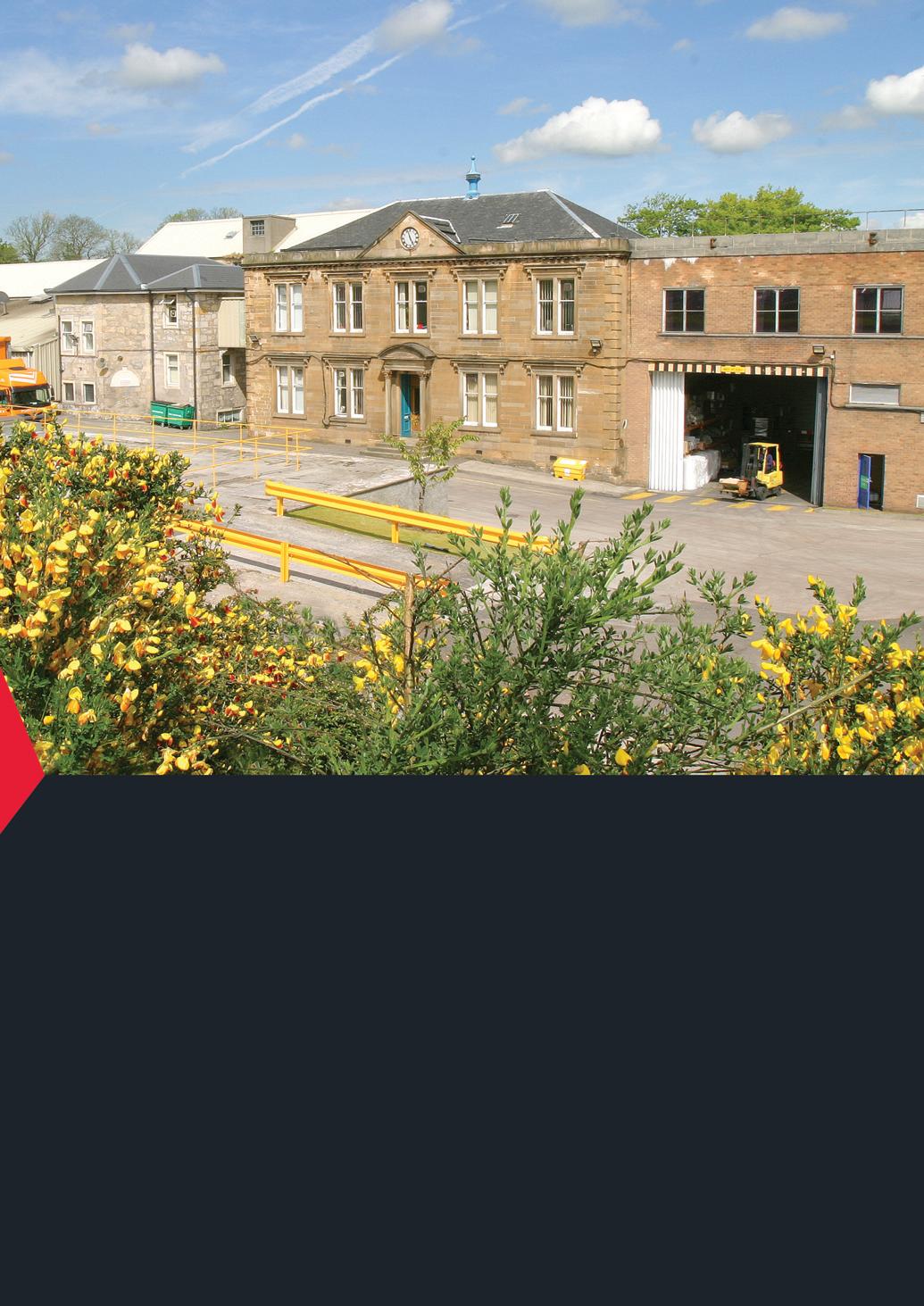
“We’ve had huge interest in this product – even from the States,” said Mr Radford. “All the wineries in the Napa Valley recycle instead of reuse. But now, using this adhesive, they can wash labels off and reuse the bottles, which is unique. It’s going to save the industry millions in energy.”
The adhesive reacts with water, allowing the label to come off whole without leaving any ghosting or shadowing on the bottle. The more complex challenge is making this work with a PP or PE label.
“Clearly, water can’t penetrate through the face of a filmic label,” Mr Radford explained. “so, we’ve developed an adhesive that allows water to penetrate
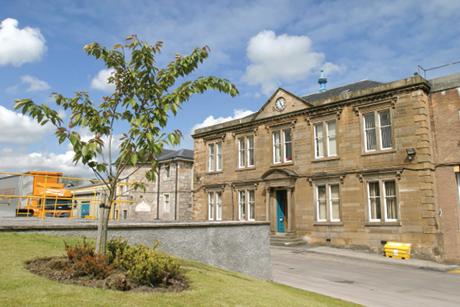
Inside sustainability 219
the edges of the label, removing the face stock without any ghosting or build-up of residue. We’ve just had the first approval in mainland Europe for that, and it’s going to be produced at a considerable volume.”
Loyal partnerships
For a company with the longevity of Smith & McLaurin, it is no wonder that long-term relationships with both customers and suppliers are highly valued. The company’s offering of a niche service provides its partners a key position in the market and keeps them coming back.

“We’ve got customers that have been with us longer than the 19 years I have been here,” said Mr Radford. “Our traditional customer base is second or
third generation. If we’re lucky enough to meet the original customer, they’ll often say: ‘is such-and-such still working at Smith & McLaurin? I met them 40 years ago.’ And on our team, the average tenure is 14 years. We had one lady who left recently who had been working here 50 years to the day.”
The strength and loyalty of the Smith & McLaurin supply chain was tested recently when a large industry supplier went on strike, causing massive repercussions across the sector. “Luckily, due to the long-standing relationships we’ve got, all our suppliers supported us, otherwise we’d have had significant supply issues over the last 18 months.” Mr Radford said. “Everyone struggled for supply. However;
SMITH & MCLAURIN I PROFILE 220 Inside sustainability
we managed to maintain a supply to all existing customers. I’m not saying it was easy – far from it. But we kept our customers supplied during this period.”


This loyalty, both from suppliers and towards customers, reflects Smith & McLaurin’s corporate structure. Though it is no longer family run, it remains privately owned. “And really, its personally owned,” said Managing Director Pat Kennedy. “We don’t just manage and run it, we own any problems with the company. We own the good and we own the bad.”
“This allows us to make instant decisions to help deliver the products our customers need. The entire management team, up to and including myself, will make themselves
available to any of our customers regardless of size. We believe having the decision makers involved throughout the process is a key component of the advantages offered by Smith & McLaurin. Adapt is not just in the product range, it is the way we operate as a company.”
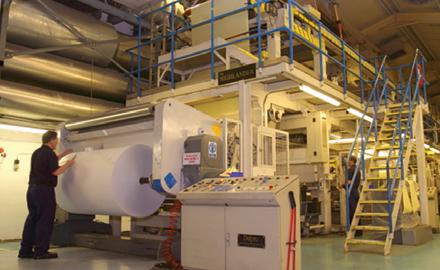
Inside sustainability 221
n
LIGHTING THE WAY FOR
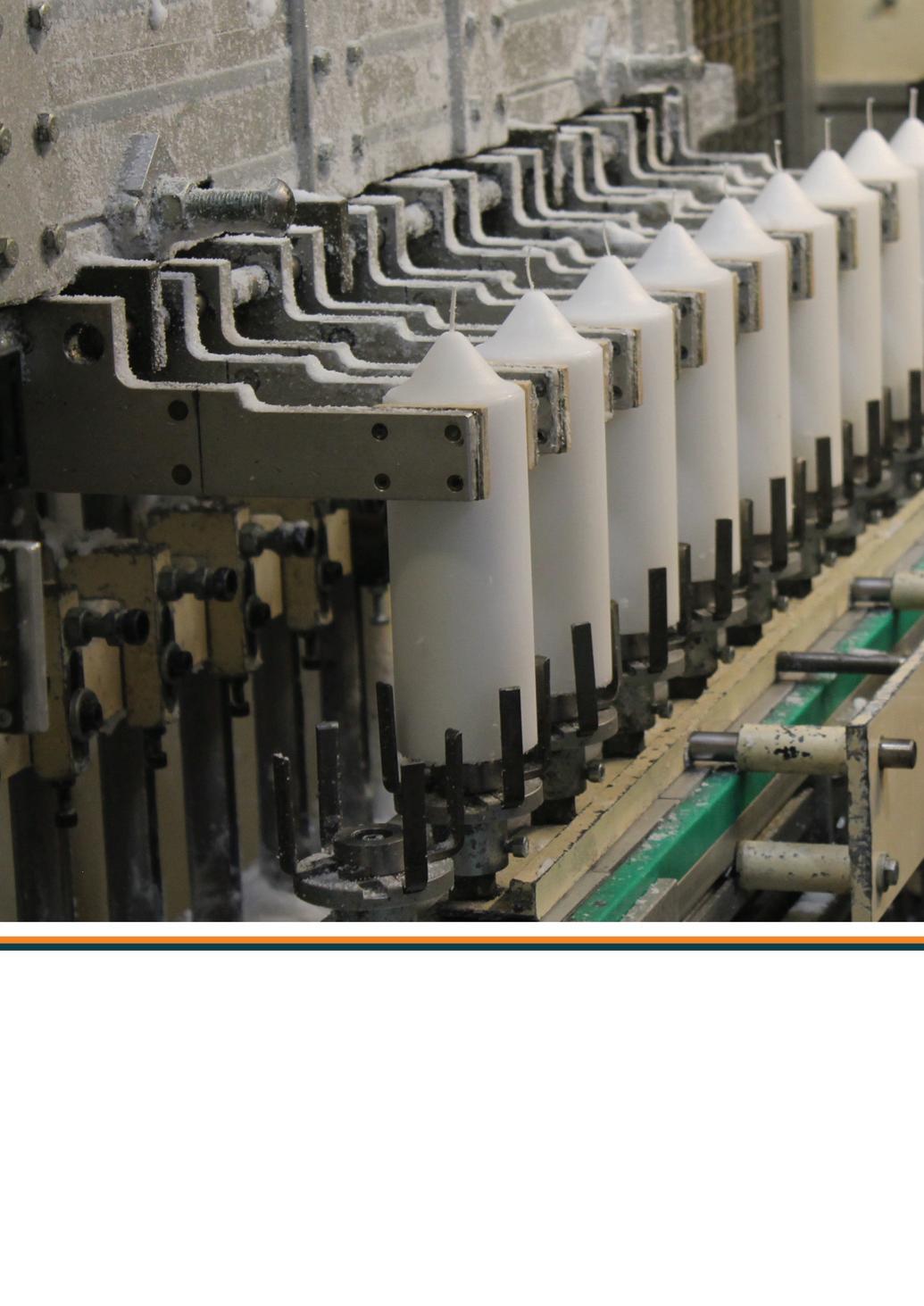
GREENER CANDLE MAKING
When it comes to candles, Spaas Kaarsen is a household name. Now, celebrating the company’s 170th anniversary, co-owner & CEO Ben Spaas, co-owner & Sales Manager Sarah Spaas and Head of Sustainability Elise Maris explained what Spaas hopes to achieve in the future. Report by Imogen Ward.
222 Inside sustainability
SPAAS KAARSEN I PROFILE
Spaas Kaarsen is a pivotal part of Europe’s candle making history, having produced high-quality candles that are soot-free for more than 100 years. It all started in 1853, when Spaas would bleach beeswax for monasteries and abbeys. The second generation took it one step further and introduced candle production to the business. “We are the
fifth generation of Spaas, and with each generation comes a new focus and new milestones. Now here we are, 170 years later, having evolved substantially to sit amongst the top three players within the European candle industry, producing 40,000 tonnes annually,” co-owner & CEO Ben Spaas said.
Spaas produces all of its candles at its two production facilities located in Belgium and Poland. These facilities are responsible for manufacturing a diverse array of wax-based products.
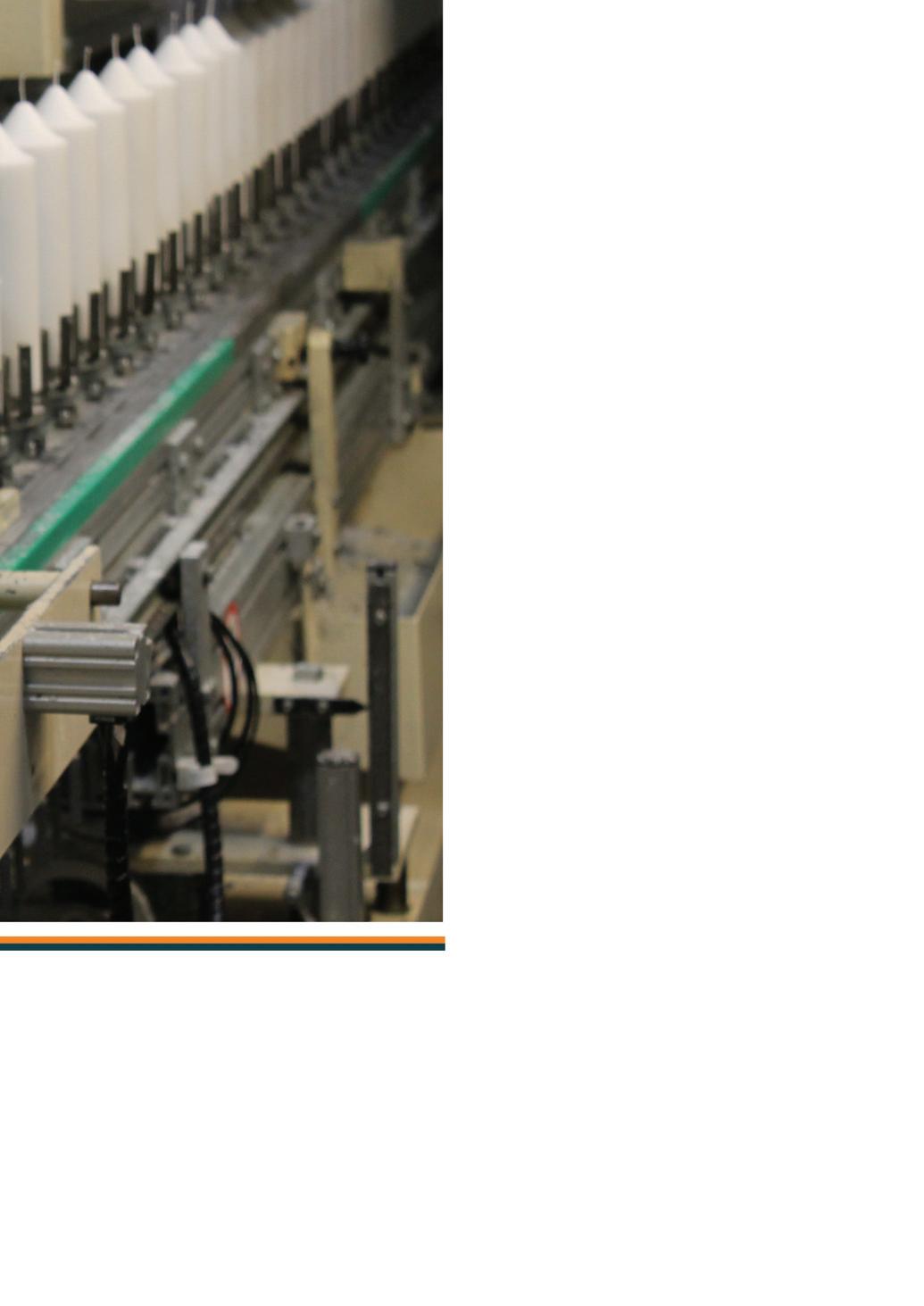
Each plant has its own specific focus on production lines. The plant in Belgium is highly automated and primarily concentrates on the production of large-volume products, while the Poland facility wants to retain the flexibility to produce tailor made solutions.
Spaas is known for producing and marketing candles under the SPAAS brand, offering a diverse range of both scented and unscented candles. In addition to its own brand, the company also manufactures private-label candles for major retailers, and they operate across various market segments, including retail, catering, garden centres, online sales and churches.
Implementing change
Now under the leadership of the fifth generation, the Spaas team has become increasingly aware of the challenges currently facing the planet. Keen to have an impact on this, the company has invested in improving its practices. “At Spaas, we are fully aware of sustainability,” said Mr Spaas.
Inside sustainability 223
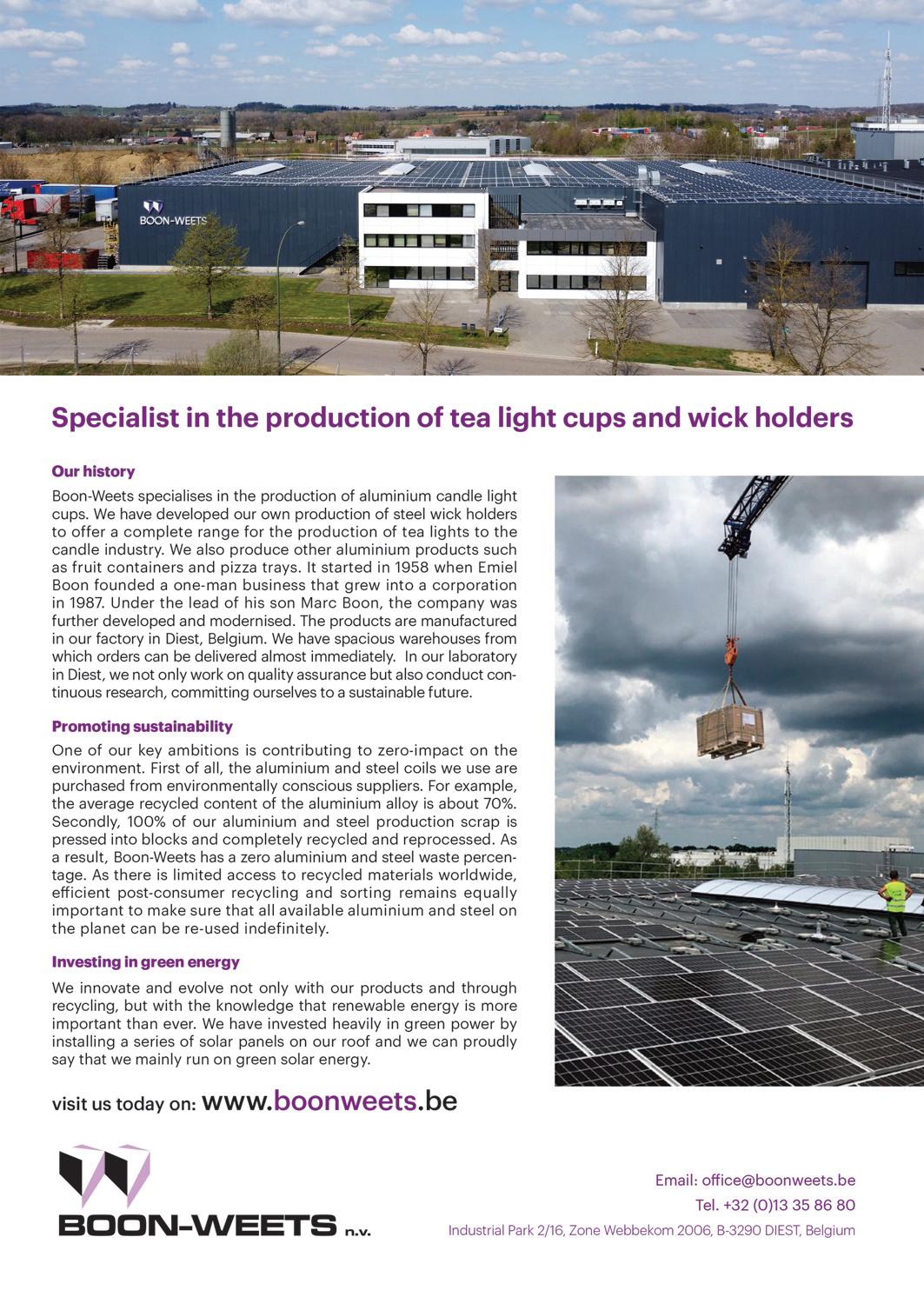
SPAAS KAARSEN I PROFILE
“We aspire to embrace it and be a frontrunner within our industry for sustainable development, taking the necessary actions because we have a responsibility to the future generations. As the fifth generation of Spaas, we feel it is important to take ownership of that.”
Due to increasing sustainability regulations, consumer expectations, requirements from banks, insurance companies and more, Spaas saw a need for developing and implementing an ESG (Environmental, Social and Governance) strategy. To address this, Elise Maris was appointed Head of Sustainability, who came to join the team in this crucial transition.
“Over the past few months, we have been developing a sustainability strategy,” Ms Maris said: “we are currently working on defining our short- and long-term targets. For a sustainable transition, a long-term vision is key.
“The strategy consists of five main themes. In terms of environmental themes, we want to make our packaging more sustainable by following the reduce, reuse, recycle, rethink hierarchy. A second commitment involves our carbon emissions, which we’ve been calculating to set targets to reduce our footprint.”Spaas’ sustainable strategy also focuses on waste management. Not only is Spaas attempting to reduce its waste, but it
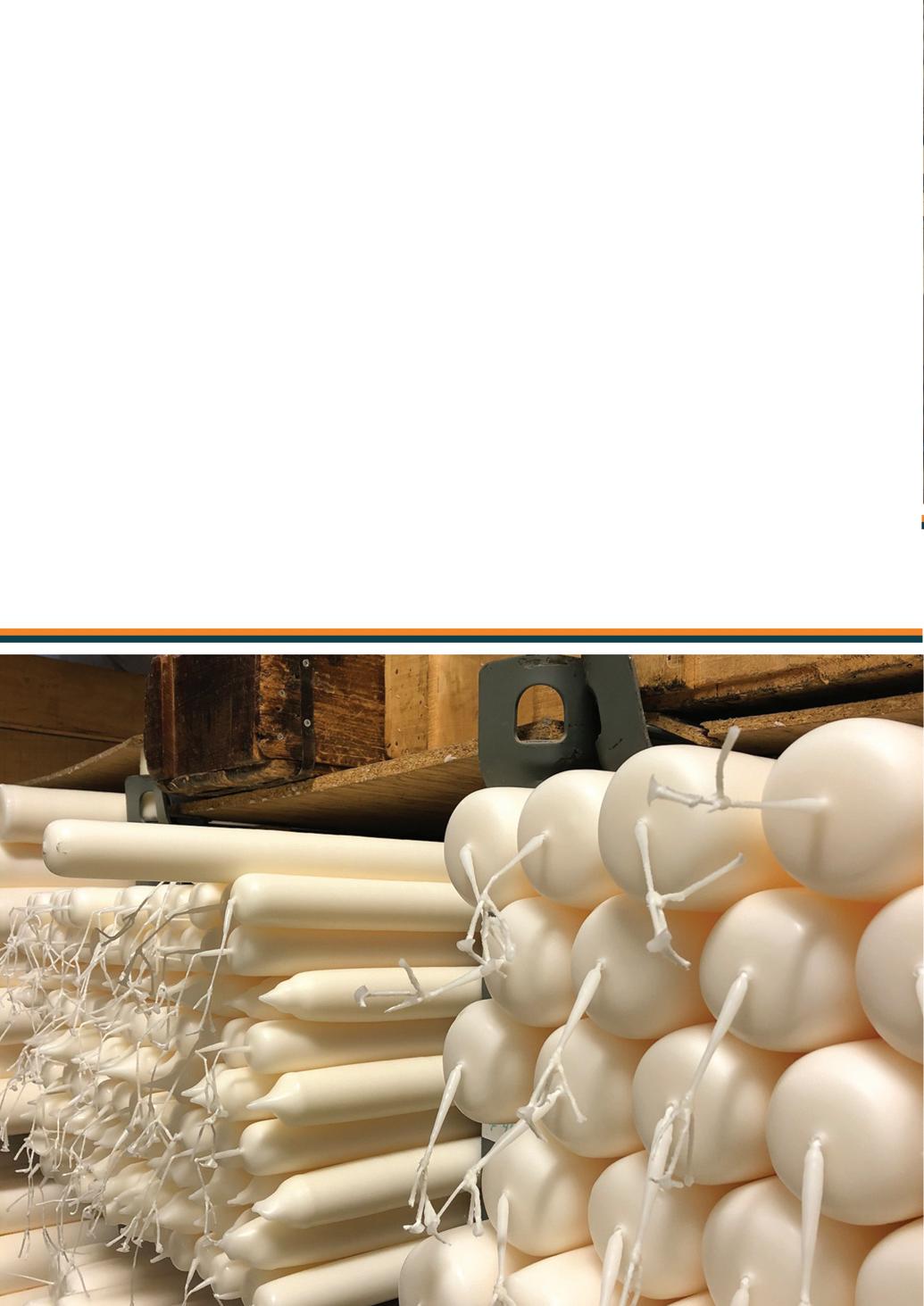
226 Inside sustainability
is also working in collaboration with other companies to ensure it is repurposed effectively. “We recently started a partnership in Belgium to repurpose our label carriers,” Ms Maris explained. “Our partner takes these away and repurposes them into new label holders or paper for journals.”
“We also have an ongoing partnership with an aluminium processor,” Mr Spaas added. “We produce a lot of tealights, and during production sometimes we are left with empty tea light holders. Because they are made from aluminium, they can be endlessly recycled and repurposed.”
Spaas’ sustainability, (or ESG), strategy places a strong emphasis on social responsibility. The company is committed to an inclusive and safe work environment that encourages diversity and personal growth for all employees. Spaas’ overarching vision is to extend beyond corporate boundaries through support for the communities in which it operates and by ensuring responsible sourcing.
Ms. Maris further explained: “We are fully committed to ensuring that the
sourcing of our raw materials is not linked to human rights abuses or other environmental violations.
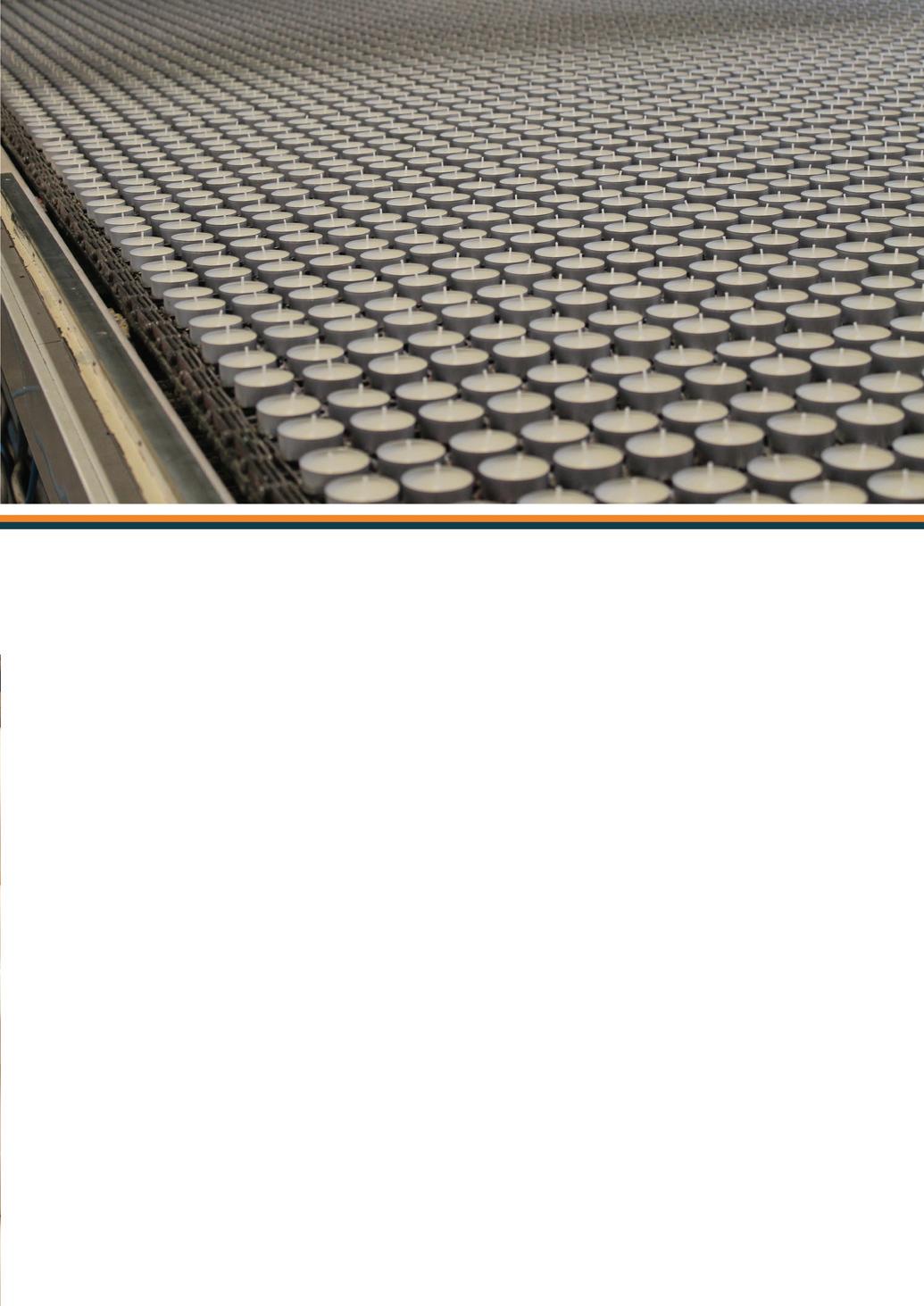
“Our employees support our sustainability transition. After consultation with staff, the tealight process was adjusted to better manage the company’s waste. Packaging errors occasionally occurred during the production of tea lights: as a result, Spaas used to throw away the whole pack, but after a dialogue with the production line team, the company gave its engineering team the responsibility to adjust the production line. This modification now allows Spaas to collect, repackage and resell these imperfectly packaged items.”
Recognition of excellence
Spaas' sustainability efforts have been recognised by EcoVadis, an international sustainability rating platform which awarded it a silver medal for outstanding achievements in environmental responsibility, labor and human rights, ethics, and sustainable procurement. Receiving this silver medal from EcoVadis in 2021 placed
Inside sustainability 227
Spaas among the top 25 percent of companies with this distinction. “This achievement fills us with pride, as we see the medal as a recognition of our progress and an affirmation of our commitments to our sustainability targets,” said Ms Maris.
Taking it one step further, Spaas is considering introducing guidelines for suppliers, to ensure it is working with companies who are also EcoVadis certified or compliant. “At the moment discussions are ongoing, so we have no set target, but it is what we are working towards,” said Mr Spaas. “For next year though, we are implementing a new code of conduct that will take us a step closer.”
“Our partnerships with our suppliers are super important, especially in the changing world of today,” Ms Maris explained. “We see this as an opportunity to work together and share knowledge to adjust to this changing
world. In order to maintain that crucial balance of ecological, social and economic factors, we reviewed our supplier code of conduct and integrated standards that focus on sustainable business practices. We also updated our responsible sourcing policy, which assesses sustainability, quality and price. These documents will be communicated to all suppliers at the beginning of 2024.”
Focusing on the future
Whilst walking the path of sustainability, Spaas has made sure to remain focused on corporate advancement to abide by its vision of a greener future.
“We are continuously assessing how we can best integrate sustainability into our product development process,” Mr Spaas said. “There always needs to be a balance between cost, design quality and sustain -
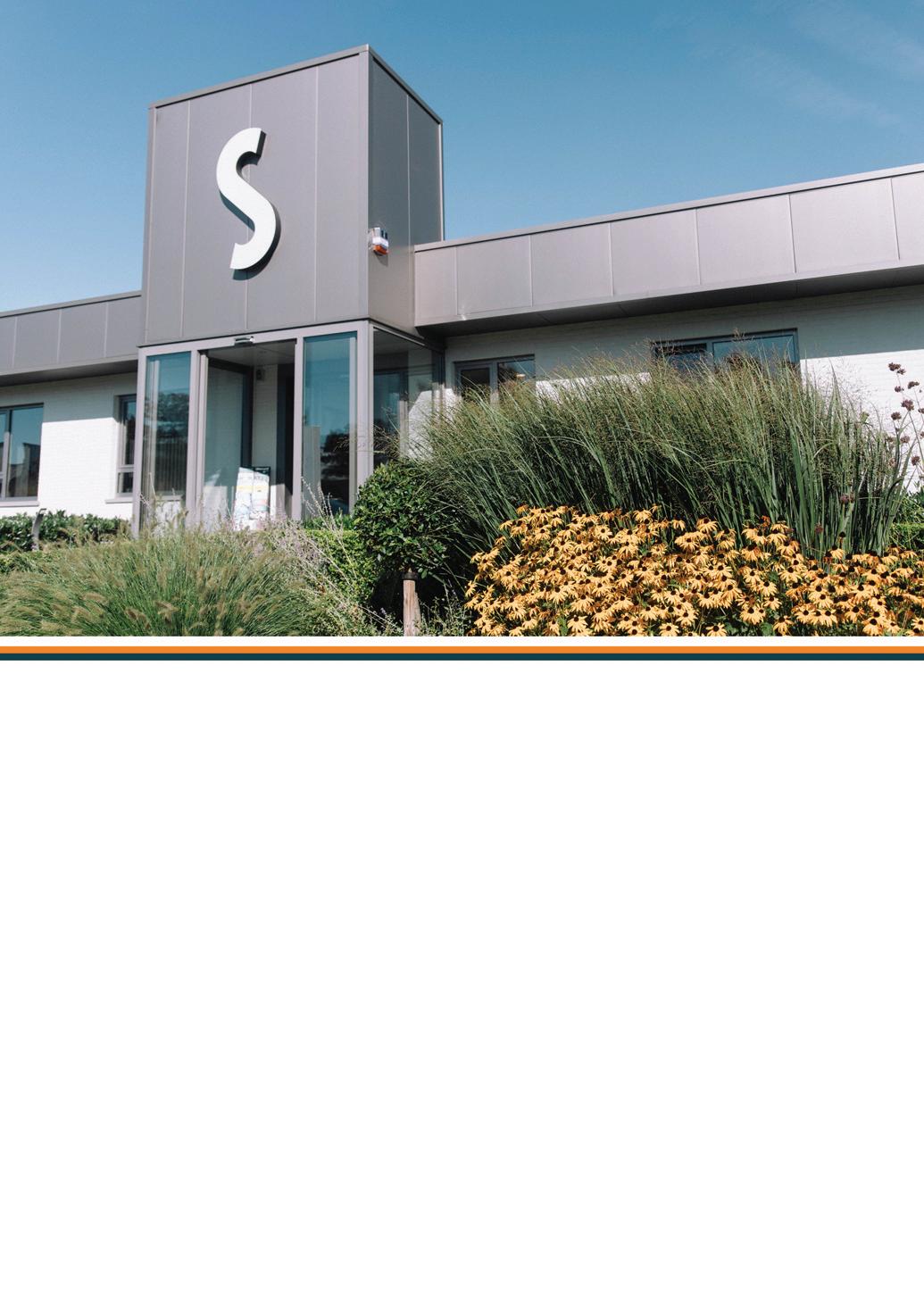
SPAAS KAARSEN I PROFILE 228 Inside sustainability
ability, and this brings its own set of challenges. But nevertheless, we ensure sustainability is integrated from the very first stage of product development.”
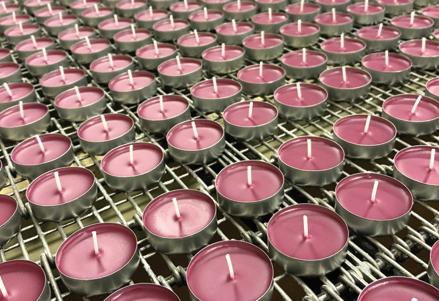
The company continues to assess the ongoing market trends to ensure it remains on track with its goals. One recent trend that has garnered the company’s attention is the increasing demand of refillable products. “We are currently looking at the concept of refills and how we could make that work,” Ms Spaas continued. “There’s a lot of planning involved, and it brings up many questions. We need to overcome these challenges before we are ready to launch.”Spaas anticipates that, once ready, the product will be brought to the market promptly to appease consumer demand. Despite its dedication to being green, the needs of customers remain a number one priority.
“Over the next 10 years, we will implement a strategic growth strategy that will help us develop the business alongside the needs of our customers,” Mr Spaas concluded. “We have a very strong customer-centric strategy, which aligns perfectly with our core philosophies and shared values as a family-run business. That strategy is an element that is highly valued by our customers, and one that will not change.”
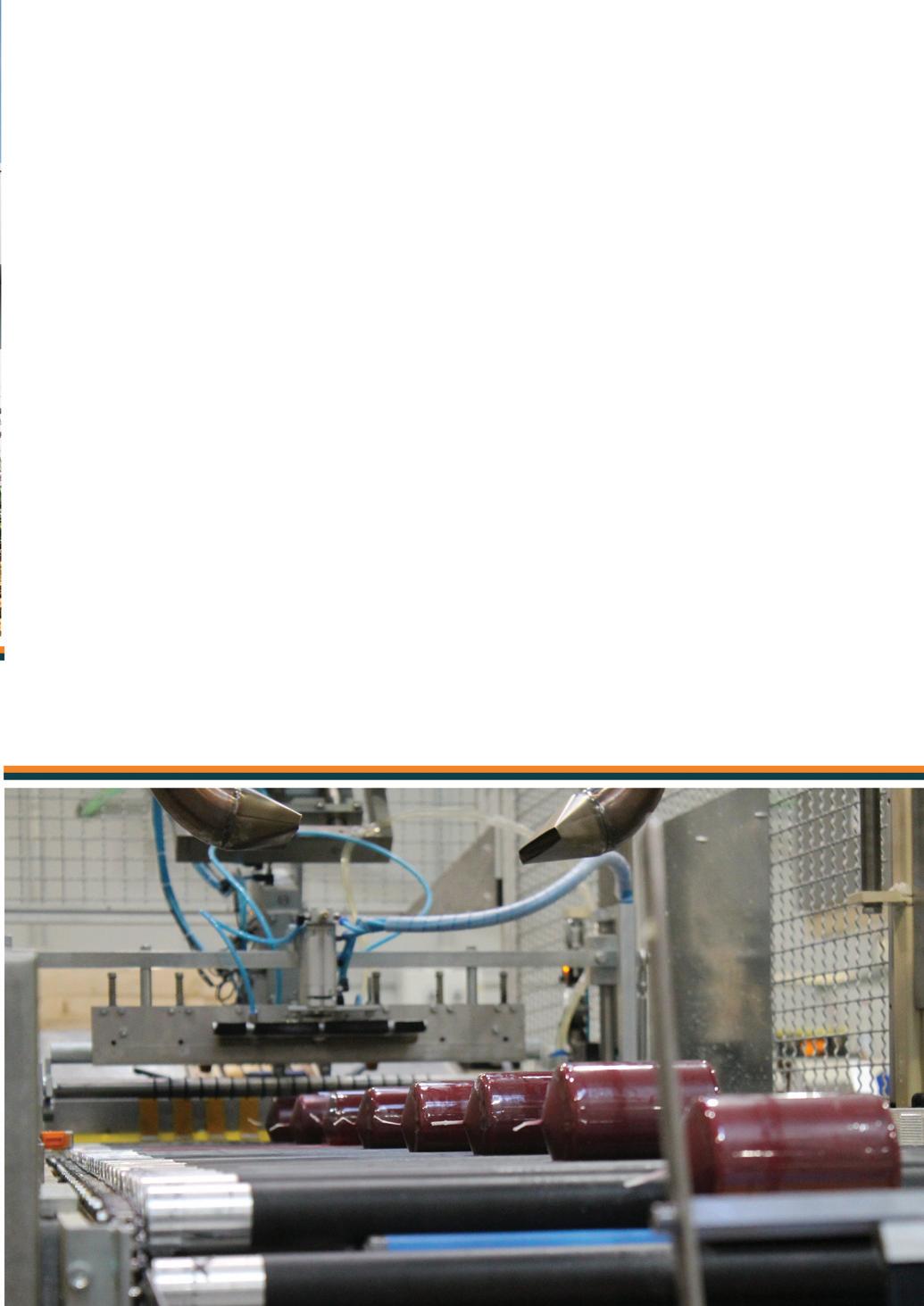
Inside sustainability 229
n
click to sections:
EVENT PARTNERSHIPS CONSTRUCTION
ENGINEERING & MANUFACTURING SERVICES & TECHNOLOGY

BACK TO CONTENTS
one planet – one chance – one voice
TRANSPORTATION & LOGISTICS
An introduction to the transportation and logistics sector, with special reports and topic related innovations, followed by company profiles.

i S
Goodwood FoS:
BAR Technologies
Managing Director John White and Editorial Manager Phil Nicholls were lucky enough to be invited to the 2023 Goodwood Festival of Speed. Alongside seeing some awesome cars, this was also a fantastic opportunity to chat with a range of innovative transport companies.
While there was incredible car technology on display at Goodwood, the marine industry was not for gotten. At the BAR Technologies stand, Chief Technological Officer Simon Schofield talked us through an innovative maritime project. BAR Technologies has invested significant resources over the past years to become a key player in cutting emissions within the marine industry. That research resulted in the WindWings technology.
WindWings combines wind propulsion with route optimisation. This could increase the fuel efficiency of vessels in excess of 30% depending on whether the
installation is a retrofit or combined with a fully optimised newbuild hull. Initially aimed at bulk carriers and tankers, further variations will be developed by BAR for other large ship types.
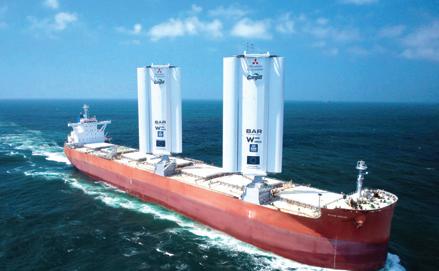
“WindWings are expected to save 1.5 tonnes of fuel, per wing installation, per day, and save 4.65 tonnes of CO2 per WindWing per day – if using heavy fuel oil,” BAR Technologies CEO John Cooper said. “This makes the technology not only a pre-eminent choice for vessel owners and operators racing to reduce carbon emissions from their fleets, but also a highly compelling business case.”
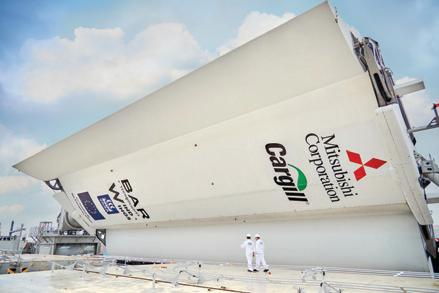
232 Inside sustainability SPECIAL REPORT
Revolutionary maritime technology spotted at Goodwood.
BAR has already secured two signed contracts for work on new vessels combining WindWings with hull optimisation for a bespoke solution. One size does not fit all, so BAR has developed a WindWings optimised around the most common vessel sizes where either three or four WindWings will be deployed.
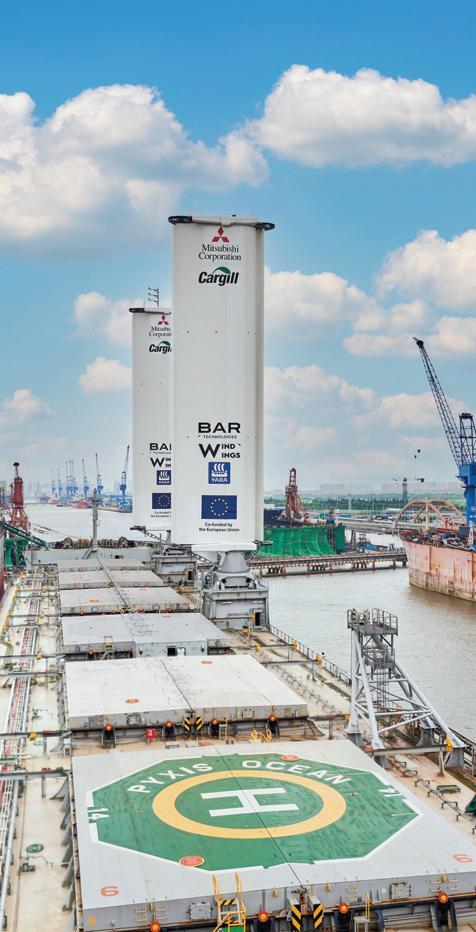
In August, the ground-breaking WindWings set sail on open waters. This maiden voyage tested this new technology that will bring cutting edge wind propulsion to commercial shipping for the first time.
Mitsubishi Corporation’s Pyxis Ocean, chartered by Cargill, is the first vessel to be retrofitted with two WindWings. These large wing sails measure up to 37.5 metres in height and can be fitted to the deck of cargo ships to harness the power of wind. Produced by industrialisation partner Yara Marine Technologies, WindWings are expected to generate average fuel savings of up to 30% on new build vessels, which could be even higher if used in combination with alternative fuels. The installation of these wings took place at the COSCO shipyard in China, enabling the Pyxis Ocean to conduct her maiden voyage with this innovative technology. n
www.bartechnologies.uk
Inside sustainability 233
Goodwood FoS:
Nyobolt
Managing Director John White and Editorial Manager Phil Nicholls were lucky enough to be invited to the 2023 Goodwood Festival of Speed. Alongside seeing some awesome cars, this was also a fantastic opportunity to chat with a range of innovative companies.

WEwere excited to speak with Dr Steve Hutchins, VP of Operations and Engineering at UK-based battery company Nyobolt. Dr Hutchins explained how Nyobolt is set to transform EV batteries. With current EV cars taking as little as 30 minutes or as long as 48 hours to charge, the new patented technology from Nyobolt pioneers new materials, cell design and efficient software
control and power electronics to reduce this to just six minutes – enabling more power in less time.

The Nyobolt design, described by Dr Hutchins as “a sieve with bigger holes,” will offer a significantly better user experience overall. The new battery will charge 100 times faster, as well as being lighter and delivering more efficient operation while requiring less resources to build.

234 Inside sustainability SPECIAL REPORT
An innovative EV car spotted at Goodwood.
Another advantage of Nyobolt’s new battery, according to Dr Hutchins, is how it sidesteps the requirement for home charging. It has been shown that the need for EV owners to charge their vehicle at home is a significant drawback for the uptake of these vehicles.
Nyobolt has collaborated with CALLUM, the renowned automotive design and engineering business, in showcasing the new EV car concept vehicle incorporating this technology, designed by revered car designer, Julian Thomson, now designer at General Motors Advanced Design Europe. This converted Lotus Elise was present at Goodwood FoS. The concept was developed and executed by CALLUM. n
About Nyobolt
Co-founded in 2019 by Professor Dame Clare Grey DBE, FRS, and CEO Dr Sai Shivareddy, Nyobolt is unlocking the potential of battery technology to power innovations that cannot wait. Nyobolt’s world-leading team has taken a systems level approach to develop batteries capable of charging in minutes by pioneering new materials, cell designs, efficient software control and power electronics.
The technology is manufacturable and scalable right now, allowing innovators to electrify new products and services that are currently impossible to develop.


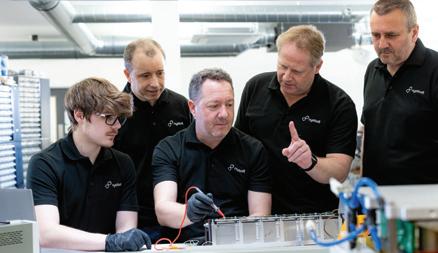
https://nyobolt.com/
About CALLUM
CALLUM is a design and engineering business creating bespoke and limited-edition products. CALLUM is focused on design, lifestyle and travel, taking on projects that intrigue, excite and tell a story. It is a collaboration of talented individuals with experience across art, audio, automotive, fashion and motorsport brands.
Among its founding members is British designer Ian Callum CBE, admired for his prolific automotive work, which includes the Aston Martin Vanquish, Vantage and DB9, Jaguar F-Type, F-PACE, XJ and, most recently, the World Car of the Year Awardwinning I-PACE, amongst others.
https://callumdesigns.com
Inside sustainability 235
Accelerating electrification in North East England
There is no better place than the North East England to invest, collaborate or innovate in electrification technologies.

North East England is the premier location for electrification transition – uniquely placed to fuel the drive to net zero with access to renewables, energy storage systems, mining for battery materials, processing and R&D capabilities. Plus, the region’s ‘whole system’ capability encompasses the entire battery lifecycle.

“Electrification and the drive to net zero is much more than putting no- and low-carbon electric vehicles on the road,” Michelle Duggan, Inward Investment Manager at Invest North East England, said. “Anything that runs on an internal combustion engine can be electrified and our longstanding technological capabilities, especially in the automotive industry, means we have been able to accelerate the pace at which we develop electric vehicles as well as ‘off highway’ modes of transport, such as rail and plant machinery.”
As net zero technologies and electrification continue to hit the headlines, the announcement of additional investment
into the UK for a new giga factory in Somerset (by Tata in partnership with JLR) is good news for North East England.
There is an exponential growth in demand for battery technology and supply to support the electrification of transport industry and energy systems at a global level and the UK needs to continue to build its capacity. North East England has considerable expertise and experience in both industrial R&D and an academic research capability that is already operating in a multi-disciplinary environment. n
236 Inside sustainability INNOVATION FOCUS
Latest innovations related to the transportation and logisics sector
L.E.K. Consulting report shows the necessary actions and implications of scaling up SAF

Consulting, the global strategy consultancy has released a substantively evidenced report that clarifies the central role that Sustainable Aviation Fuel (SAF) will play in the future of aviation, sets out the key challenges that must be overcome and offers insight for all value-chain participants on the roles that they will need to play to accelerate and deliver a clean future for the global aviation sector.
The report noted that whilst there is no single solution, SAF is the critical lever for decarbonising the aviation sector today, to 2050, and beyond: For the sector to achieve its target of 65% penetration by 2050, it will require global capacity in excess of 400MT pa, compared to a capacity of <1MT pa today. Whilst hydrogen and battery electric may represent a paradigm shift in the future
L.E.K.for certain segments of the aviation industry (regional and short haul), SAF is the only solu tion that can be scaled today and across all journey lengths.
L.E.K. Consulting states that the unit cost of SAF is likely to remain >2x the cost of kerosene to 2050: whilst each technology pathway for SAF production is expected to experience significant declines in cost, the required capacity can only be delivered by progressive shifting to more expensive solutions - in particular Power to Liquids - thereby eroding the technology cost benefit.
In aggregate, SAF will cost USD3.5-5.5 trillion in excess of a kerosene-only future: whilst this is a significant quantum, this cost must be seen in the context of the overall cost of delivering a net zero future, which has been variously estimated as USD130-140 trillion over the period 2022 to 2050.
Inside sustainability 237
n
L.E.K.’s report identifies the scale of the challenge, the funding options, and the action plan to accelerate and deliver SAF - the only near-term scalable option to decarbonise the aviation sector before 2050.
AEROSPHERES I PROFILE
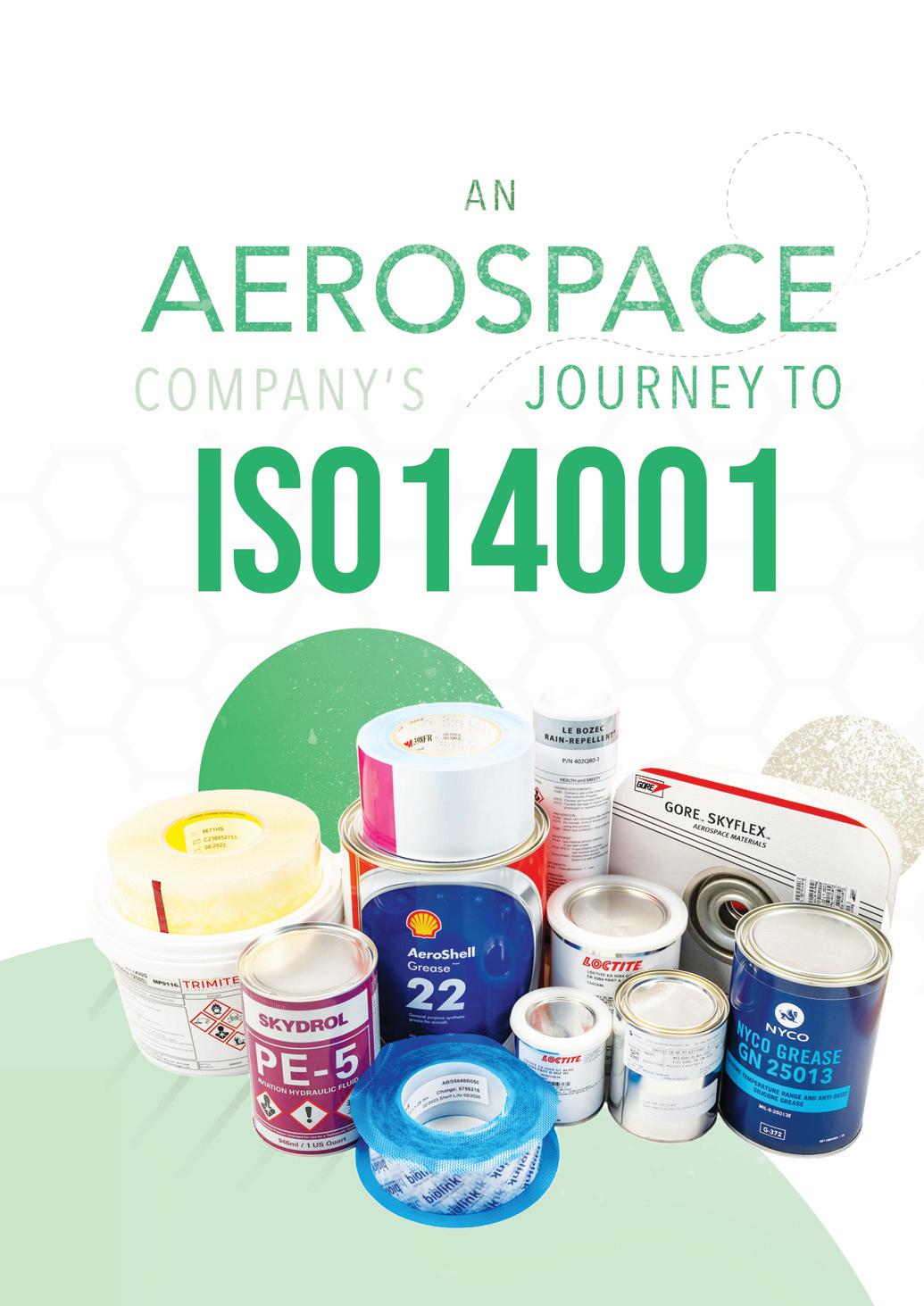
238 Inside sustainability
Since 1990, Aerospheres (UK) Ltd has been providing the commercial airline maintenance, repair and overhaul (MRO) industry with all its chemical and consumable requirements. But the company wanted to do more to improve its own sustainability. Hannah Barnett spoke to Quality & Sustainability Manager Bryan Thornton and E-commerce Manager Sandra Lorgeron about how it achieved that goal.
Aerospheres is now an ISO14001-certified organisation. This reflects the company’s objective to become a greener supplier in the years to come.
“Implementing ISO 14001 should be a consideration for any organisation that i s serious about sustainability,” explained Bryan Thornton, Quality & Sustainability Manager. “It’s not a one-stop solution, but with committed leadership and desire for continual improvement it sets a strong framework for the journey ahead.”
A brief history
Based in North West London, Aerospheres has always emphasised customer service by holding the products its customers need and providing a very responsive service. Following a takeover in 2019, the company now operates as part of FDH Aero, a global group of companies offering multiple supply chain solutions for the aerospace industry. This ushered in a cultural shift from a family-run enterprise to more corporate operations and a period of sustained growth has followed.
Operating from an 18,000-squarefoot warehouse and offering over 5,000 product lines, the company provides

same-day shipments to customers all over the world. And despite the challenges posed by the pandemic, the company has recovered well and grown by nearly 80 per cent in the last two years.
To drive further growth, the company has recently invested in state-of-the-art racking providing a 60% increase in storage capacity. It also implemented online purchasing, which already accounts for more than 20% of total sales.
“Our endeavours have yielded an i mpressive 98 per cent customer satisfaction rating in terms of service,” explained E-commerce Manager Sandra Lorgeron.
An accreditation overview.
Aerospheres recognised the growing expectation for all organisations to manage their impact on the environment. Obtaining ISO 14001 accreditation was seen as objective evidence that the company is taking these responsibilities for sustainable operations seriously.
“Being part of the aviation and chemical industries – both of which are identified as having a high impact on the environment, it’s important that Aerospheres recognises our responsibility to manage
Inside sustainability 239
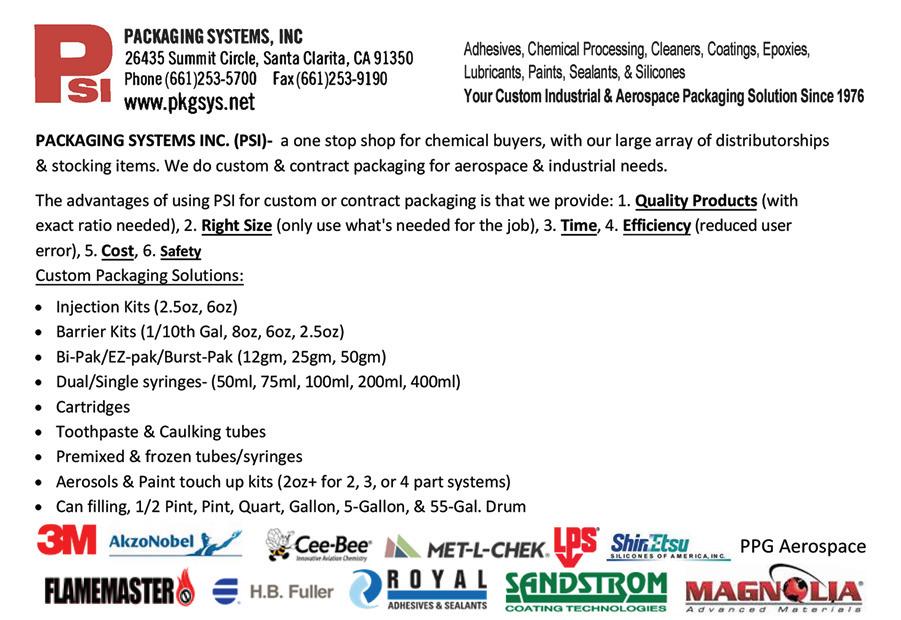
240 Inside sustainability
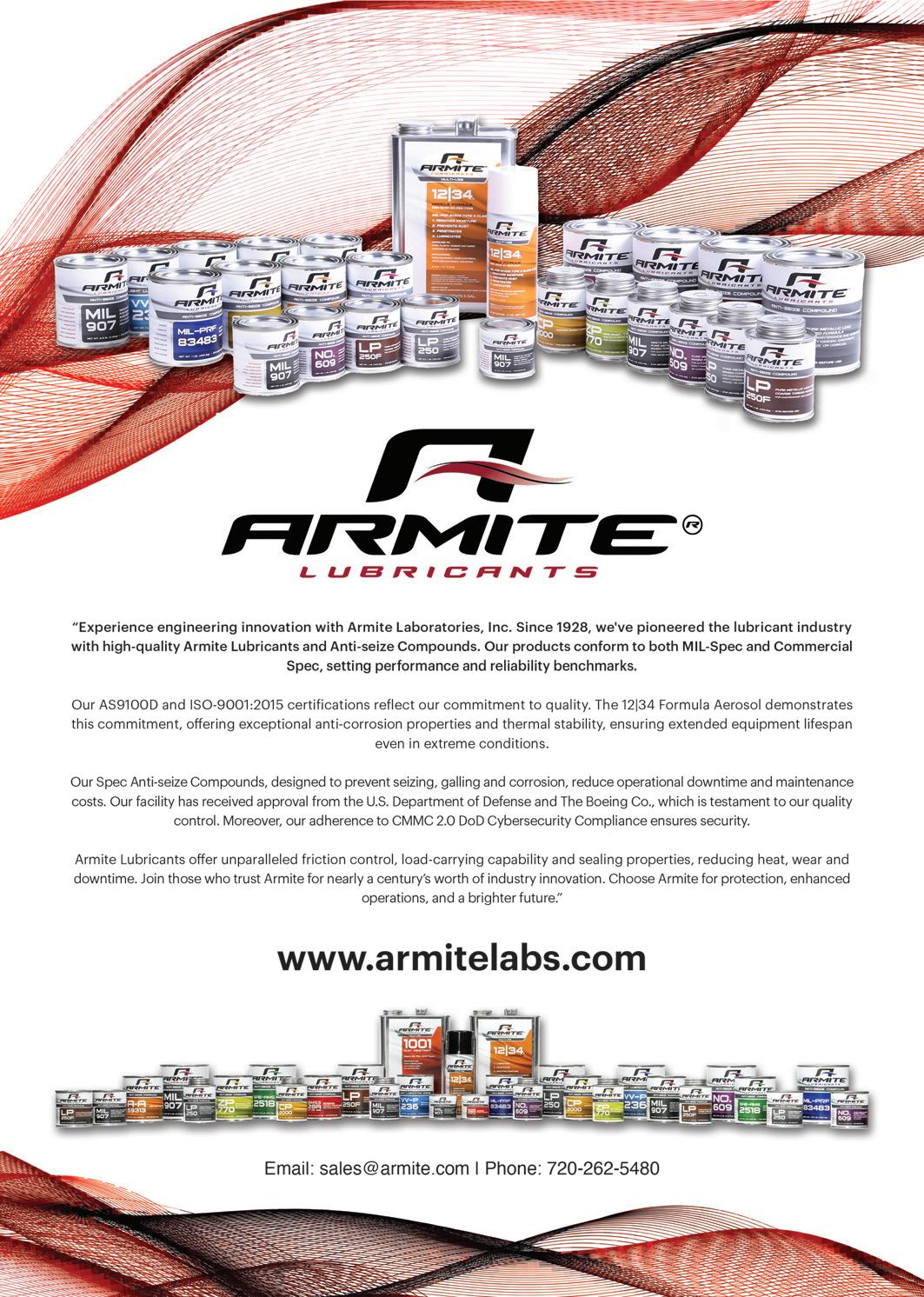
AEROSPHERES I PROFILE
our business in a sustainable manner,” reflected Mr Thornton. “We wanted the ISO 14001 accreditation because it advertises to our customer base and stakeholders that we’ve implemented effective processes to manage and minimise our environ mental footprint.”
With full corporate support, Aerospheres achieved the distinction of being the first company in the group to obtain accreditation and intends to mentor its sister organisations through the process in due course.
As Mr Thornton explained, implementing ISO 14001 did not require a dramatic overhaul of operations. In fact, the company found that much of what was required was
already in place. The process simply drove i mprovement within the organisation in a more formalised way.
“We were already an ISO 9001 accredited company,” he said. “Once you’ve attained that, achieving an additional ISO standard is relatively straightforward as most of the structure is similar. It’s probably half of what you already do.”
The road to ISO 14001
To achieve accreditation, Aerospheres needed to demonstrate the practical steps i t was taking to reduce its environmental impact. This meant identifying all the ways it interacted with the environment and then using a ranking mechanism to establish

242 Inside sustainability
Aerospheres are now compliant with the ISO 14001 standards
t hose that were most significant. Mitigations and controls were established, and measurable targets for improvement were implemented.
This process identified that Aerosphere s already had many sustainable practices in place. These included a basic recycling scheme, LED lights, the replacement of paper archives with online storage and using biodegradable packing chips.
But is also identified new initiatives: “We receive and unpack a lot of products which are shrink or polythene wrapped, and this currently contributes a large proportion of our common waste,” explained Mr Thornton. “Therefore, one of our key priorities is implementing a recycling stream for these soft plastics. The problem is this is not commonly recycled, so one of the challenges is finding a waste management company to provide this service.
Fortunately, these now seem to be coming onstream as interest and demand grow.”
Another initiative to reduce plastic waste is the replacement of packing tape with paper versions. Alongside this, the development of an advanced forecasting system not only ensures improved stock availability for customers but also reduces waste from expired products.
Then there is recognition of CO2 emissions from transport: To mitigate this, the company is significantly reducing the number of individual air shipments by developing a growing number of consignment agreements with its major customers. And on the domestic side, it is also offering staff incentives to use alternative transport rather than commuting by car.
Once targets and controls had been identified, a further requirement was to ensure the company was aware and
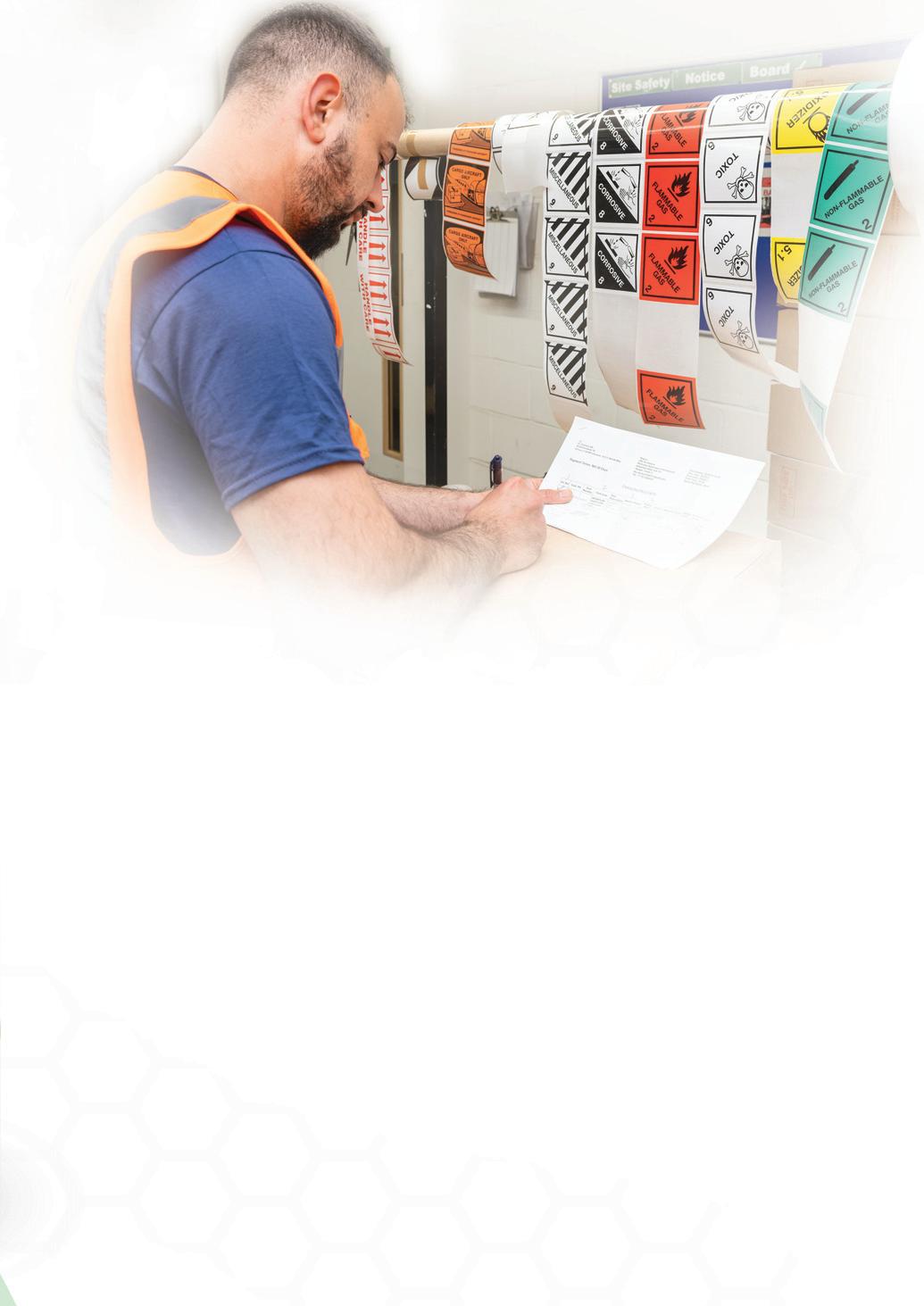
Inside sustainability 243
compliant with all the relevant environ mental legislation. Aerospheres recommends seeking professional advice to help with this process, but there are also good resources to be found online.
The final stage was to ensure adequate emergency, containment and emission controls were in place and that the business had the procedures and training to manage these. Again, Aerospheres had implemented most of this already due to existing health and safety measures.
“Fundamentally, ISO 14001 requires a business to develop an Environmental Management System with the three prime objectives of one; identifying measures to reduce its environmental impact; two, ensuring it is fully legally compliant and, three, providing controls to prevent pollution,” said Mr Thornton. “If you can do these three things, you will have the basis for a successful accreditation.”
The fundamental requirements of an ISO 14001 environmental management system:
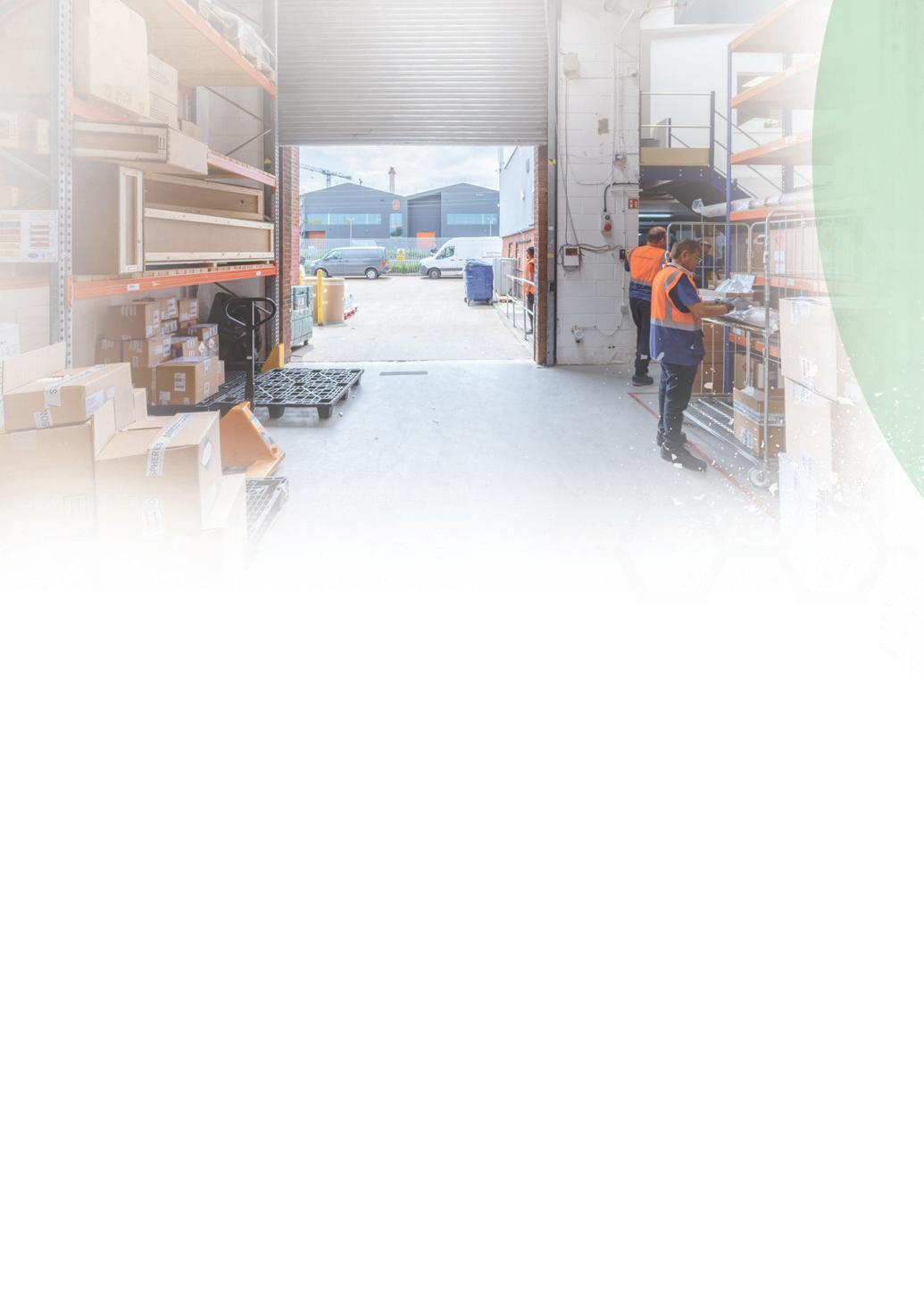
1. Reduction of environmental impacts such as emissions, waste and energy consumption.
2. Demonstration that the company understands and is compliant with all relevant environmental legislation.
3. Ensuring controls are in place to prevent pollution and manage emergencies.
Going forward
After six months of work, Aerospheres successfully passed its audit in March 2023.
Of course, as with any company challenges remain when it comes to implementing sustainable measures.
As Mr Thornton put it: “Driving behavioural change is just as important as an investment; and while we offer customers
AEROSPHERES I PROFILE 244 Inside sustainability
greener products wherever available, there is often an inertia to change in the aviation industry which can sometimes make this easier said than done.”
And the attempt to encourage change does not end with customers: “We now ask our suppliers what they are doing to improve sustainability – the momentum for change is growing,” said Mr Thornton.
Sustainability is also now part of our investment decisions. Historically, investment criteria were largely about pounds and dollars. Now, we are also thinking about its impact on the environment. So, if we invest in new equipment, we will consider spending a bit more to get the most energy-efficient version.
Similarly, if we expand into new premises, we would be asking what the heating and insulation are like. We must consider all these things.”
With this ethic of continuous improvement in mind, those who work at Aerospheres are proud to have achieved the accreditation and are keen to keep on evolving.
“We see the ISO 140001 as a solid demonstration to our customers that we take sustainability seriously,” Mr Thornton concluded, “but it’s only the first step on a journey to continually improve. We would recommend other organisations to consider doing the same and hope our story can give some insight and encouragement .” n

Inside sustainability 245
Dedicated to enabling the transition to cleaner energy, Bowman Power Group designs and manufactures electrified turbomachinery for the industrial combustion engine and fuel cell sector. In an exclusive interview, CEO Paul Dowman-Tucker discussed the environmental benefits of these systems. Report by Imogen Ward.
ASthe world races to meet net zero, there are companies behind the scenes working hard to ensure these goals are met; Bowman Power Group is one of those businesses.
“Our impact on sustainability is a lot less obvious than some,” said CEO Paul Dowman-Tucker. “Currently, we mainly work with internal combustion engines (ICEs) that are generally considered to have a negative environ mental impact.

246 Inside sustainability
BOWMAN
I PROFILE
POWER GROUP
However, whilst we all envisage a future that is net zero, the current scene is a long way off that. A transition in fuel and infrastructur e needs to occur to achieve net zero. Bowman’s mission is to ensure ICEs are as sustainable as they can be as we work towards that transition.”
Demonstrating a serious commitment to the clean energy transition, Bowman has successfully developed three essential product lines
that enable ICEs to maintain their power without sacrificing the environment.
The longest running product under the Bowman name is the eTurbine. Having been manufactured since the company’s inception in 2003, eTurbine successfully recovers waste heat energy from an ICE’s exhaust gas, resulting in the production of additional free electrical energy.
“We’ve dedicated more than 30 million running hours of experience to the eTurbine, and in the last six months the fleet has generated around 75,000 MWhrs of free energy which otherwise would have been lost as heat ”

Inside sustainability 247
Mr Dowman-Tucker explained.
“We also develop eCompressors, which help to boost ICEs, and allow them to burn fuel more cleanly. Our final product is the eTurbocharger which can do the jobs of both these machines.”
Project Highlight
Bowman has been collaborating with a turbocharger OEM partner on a co-development project. The goal is to create an eTurbocharger for heavyduty trucks; successfully harmonising the harsh environment of a truck engine turbocharger and the sensitivity of a very high-speed electric machine. The project has pushed the boundaries of Bowman’s capabilities.

Fuelling a new generation
Securing the future of the eCompressor, Bowman has recently developed the direct-to-market StartIQ™. This two-stage next-generation com pressor runs at 50kW and accelerates from rest to 90,000rpm in under a second.
“StartIQ™ is really powerful,” said Mr Dowman-Tucker. “The renewables sector is our initial target market, and that won’t be limited just to the UK; anywhere in the world that has significant renewables penetration is of interest to us.
“Renewables are dependent on externa l factors that mean they are intermittent power sources. There needs to be a provision in place for when that intermittency occurs. Currently, the UK relies on gas-fired generators to solve this however, these are often slow to reach full power. StartIQ™ is the perfect solution to this problem.”
248 Inside sustainability BOWMAN POWER GROUP I PROFILE
With the announcement of National Grid Group’s new contracting framework, Quick Reserve, the current natural gas infrastructure cannot compete. Quick Reserve will require energy sources to ramp-up and feed into the grid within one minute. Due to turbo-lag on the gas-fired generators (and their slow turbochargers), renewable power sources currently take as long as five minutes to begin supplying.
StartIQ™, however, has the power to ensure these engines can participate after all. The system ensures a successful ramp-up in seconds by supplementing energy to the engine’s turbocharger. Following pilot tests, Bowman discovered
that the StartIQ could also slash CO2 emissions by using a tenth of the fuel required in a standard engine warm-up.
“These results really prove the positive environmental impact that can be had from our eCompressors,” said Mr Dowman-Tucker. “It removes the need to constantly renew generator infrastruc ture, because our eCompressors
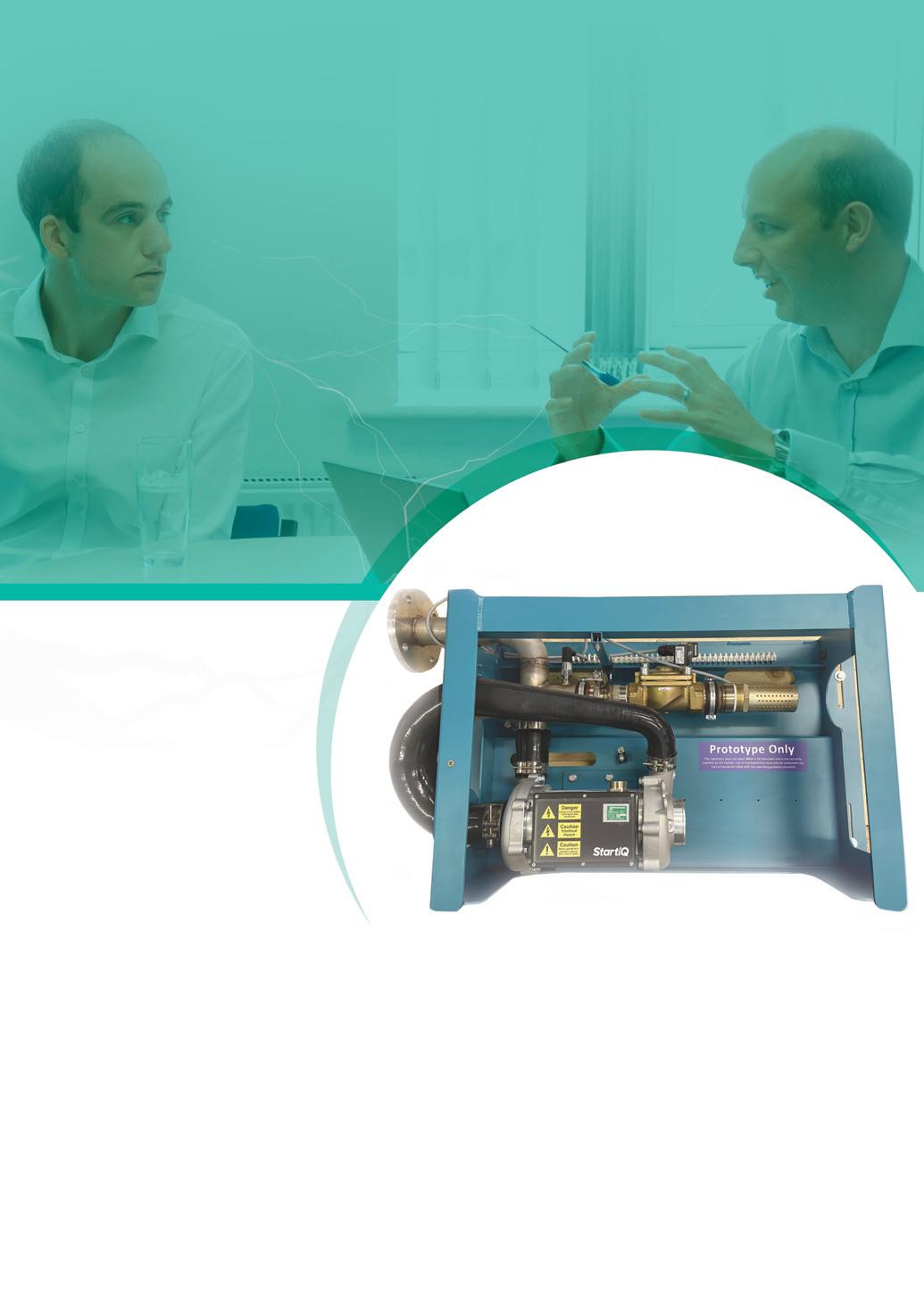
Inside sustainability 249
“Bowman is dedicated to enabling the energy transition to reach net zero, and our electrified turbomachinery is a vital part of that journey”
are effectively upgrading an asset that is already there. We can upgrade existing generating assets to be fit for the future needs of the grid, which is much more sustainable than building out new capacity – especially when that new capacity is battery storage, which incurs an enormous carbon cost in manufacture and installation.
More power, more possibilities
Complementary to the new eCompressor, Bowman is developing a core power electronics module, which has opera tional capabilities of up to 60kW of power.
“It is quite difficult to find a power electronics platform on the market which is fast enough to control machines at the speed and power levels we operate at,” said Mr Dowman-Tucker. “On top of that, we would also need it to control power that flows in two directions. Over the years, we have developed several generations of power electronics.
“Bowman’s new platform will incorporate Silicon Carbide MOSFET technology, which has been around for a while, but is novel in
our application. We are really taking a big leap forward with our core technology. The new generation will be compatible with our electrified turbomachinery, but we would also like to reach a point where our competitors can use it in their applications as well.”
There is certainly a lot taking place on the production side at Bowman, and with these advancements, the group anticipates sales will double this financial year and again next year. To accommodate this growth, Bowman has taken the decision to relocate to bigger premises.
“Our new facility will be operational by the first quarter of 2024, and it will have
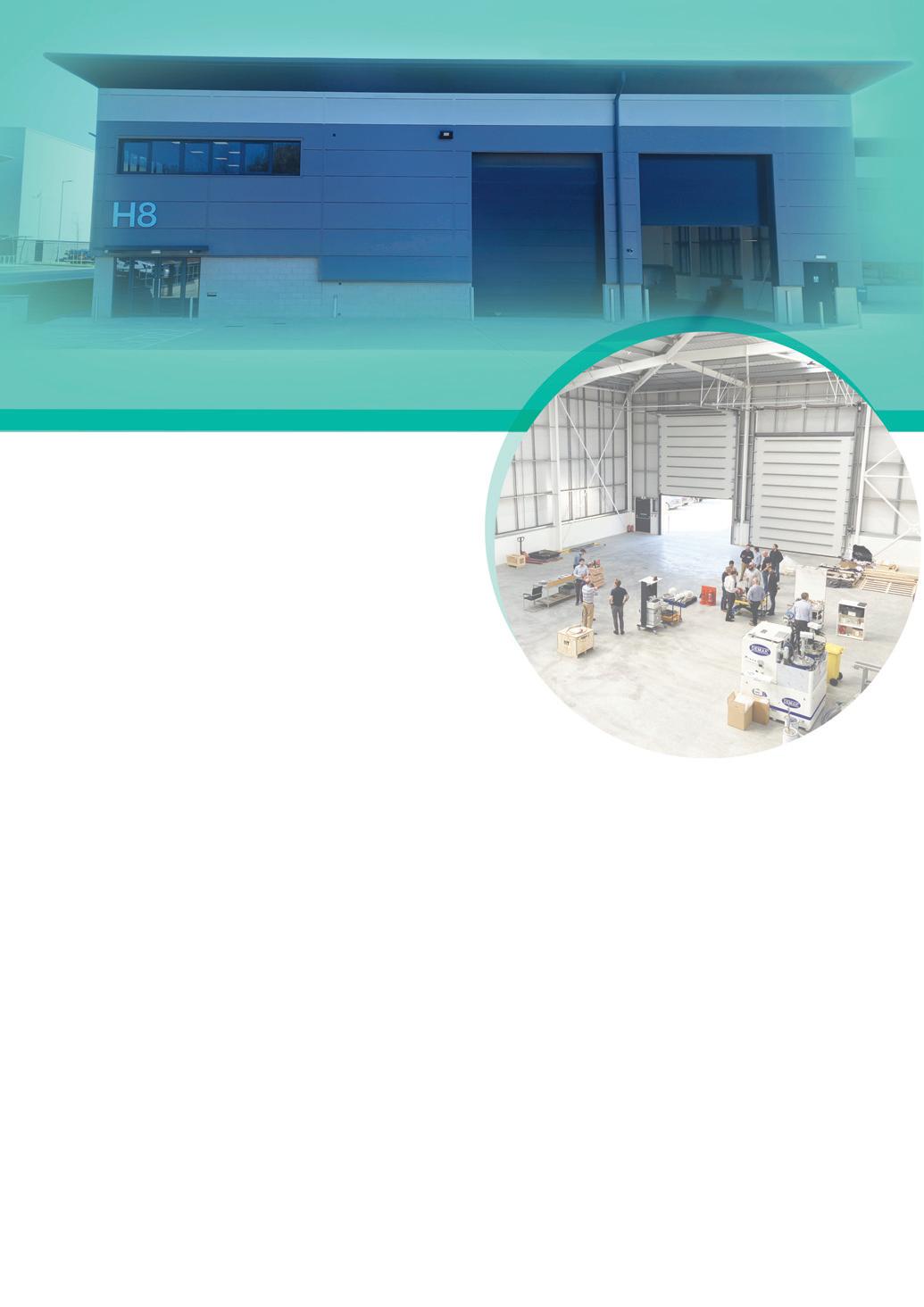
BOWMAN POWER GROUP I PROFILE 250 Inside sustainability
enough capacity to cover our growth over the next three to five years” said Mr Dowman-Tucker. “Previously, we haven’t been as production-oriented, but the new facility gives us the opportunity to really explore that side of the business again. The new building is more efficient than our old one, and it also has an array of solar panels, which we would like to expand in the future. This is only the beginning of our journey: not only to provide sustainable products, but also to improve the sustainability of our own operations.
“We will soon establish a sus tainability baseline from which we can improve, and we hope to collaborate with Southampton University to achieve this.”

Steering towards net zero
The production of Bowman’s electrified turbomachinery will be considered in its new sustainability baseline. Currently, the impact of the production process is offset in mere hours of each system’s running time.
“Our baseline will focus on our energy costs: this is essential with the operation of a bigger facility and the increase in pro duction capacity,” said Mr DowmanTucker. “One of the test processes we use today is a hot gas stand; it’s an effective way of testing the products, but it does burn a lot of fuel to do so. With the move, a more sus tainable recreation of this test is possible. We are really broadening the possibilities of what we can achieve in the coming years.”

On the topic of development, Mr Dowman-Tucker laid out Bowman’s main goal for the coming years: “Our growth journey is a key element of everything we do. We really want to establish ourselves in the technological sector and enhance our sustainability.
“Although our sustainability story isn’t as conventional as other companies,” he con cluded, “Bowman is dedicated to enabling the energy transition to reach net zero, and our electrified turbomachinery is a vital part of that journey.”
Inside sustainability 251
n
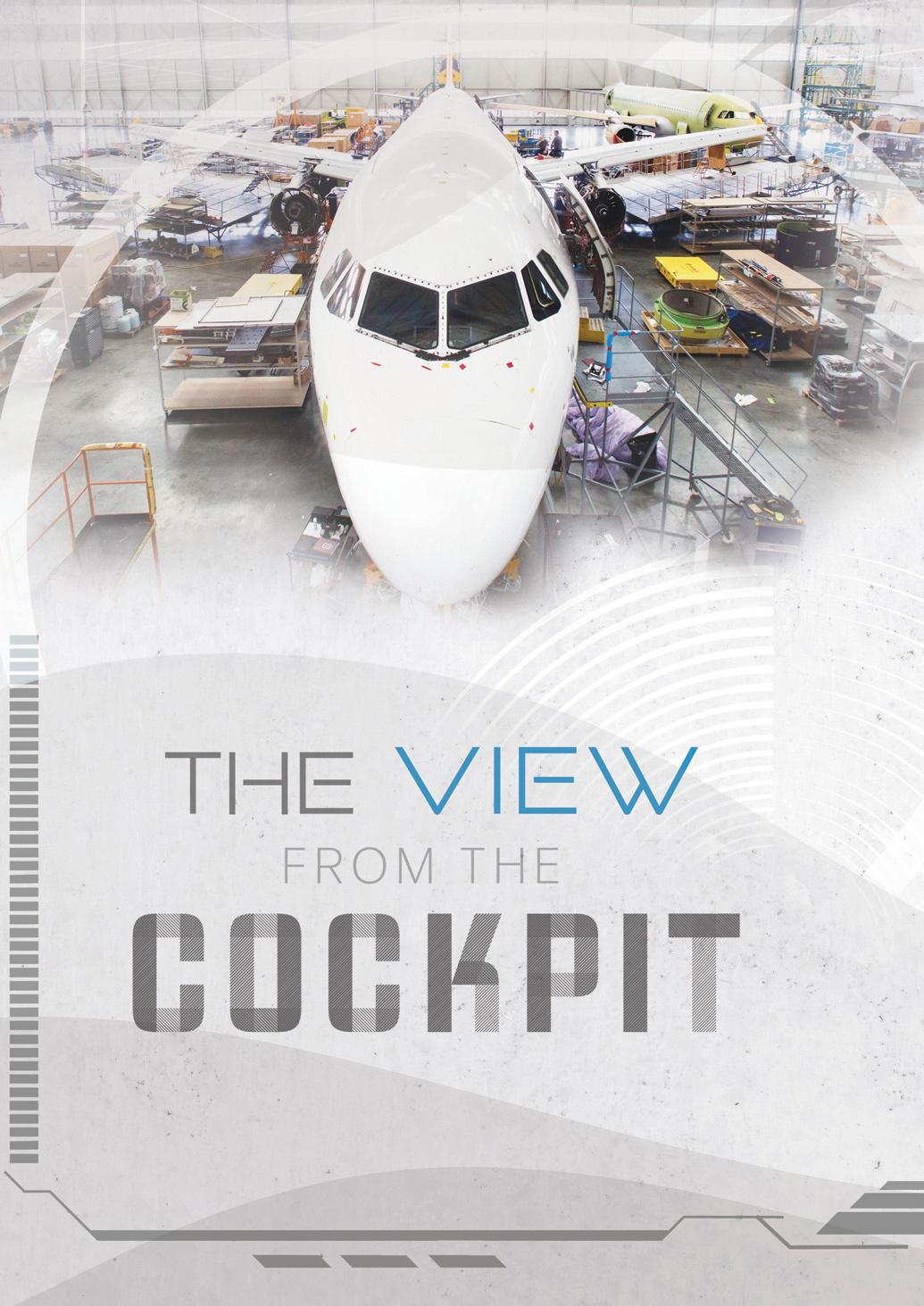
252 Inside sustainability JOB AIR TECHNIC I PROFILE
JOB AIR Technic was founded in 1993 as a base maintenance centre for aircraft, and is today a successful EASA/FAA approved organisation. In 2008 JOB AIR Technic built a new facility, which is considered one of the biggest single-span maintenance hangars in Central Europe. CEO Vladimír Stulančák gave details to Hannah Barnett about how (and why) the company has grown.
Th ere is no denying that it has been a turbulent few years in the aviation industry. Operations at JOB AIR Technic were impacted by the Covid pandemic and the subsequent sudden grounding of planes, followed by sanctions on Russian Aircraft after the invasion of Ukraine.
But according to CEO Vladimír Stulančák, one of the fundamental reasons the company continues to be successful is the strong management systems that support its employees.
“l like working with people,” he said. “Each of my employees is different and we will never satisfy everyone at once, but my strategy as CEO is to ensure that all employees who come to my office do not leave without an answer. It might be positive, negative, neutral, it doesn’t matter. What matters is that they do not leave the office without the answer. Because if you are without an answer, you are lost in the system. And if you are lost, then you are not performing.”
A business overview

JOB AIR Technic is certainly doing well, fulfilling 120 orders in 2022 and reporting a 36 million EUR turnover for the year, up from 33 million in 2021. The company now operates two hangars: one of 146 metres, capable of handling six aircraft at one t ime, and another, which opened in 2020, is 94 metres long and has the capacity to hold two Airbus A320 or Boeing 737s at the same time.
The Czech company currently focuses on base maintenance, with includes services like structural work and cabin reconfigurations, as opposed to line maintenance which covers pre-flight checks and scheduled minor repairs.
“There is so much work for base maintenance companies like us at the moment that we don’t know how we would manage if that still included the Russian market too,” Mr Stulančák said. “There are up to 1,000 planes still in Russia, so I can’t even imagine what the market would do if they required maintenance in the EU
Inside sustainability 253
market. We are completely full with our workload and happy about it. Of course, summer season is quieter than winter, but still the workload is better compared to the pre-Covid standard seasonality.”
Mr Stulančák also conceded that stabilisation is more important than growth in the industry since the pandemic, largely because of a lack of trained employees: “I think labour shortage is the major issue in the market at the moment. We are lacking several thousands of technicians in Europe.”
Nonetheless, expansion remains on the cards: JOB AIR Technic is a member of the CSG Czechoslovakia group, and the company has an approved growth
strategy for the next five years as part of that. For example, JOB AIR Technic wants to expand into the aircraft painting sector and into line maintenance services to complement its work in base maintenance.

“We are not just going in one direction,” Mr Stulančák said. “For us, complexity is vital. Because if we keep doing what we are doing with base maintenance, to be honest, it would be very difficult to survive. You cannot really be profitable with just one service anymore.”
Strong partnerships
As well as its successful MRO services, JOB AIR Technic has a branch called CAMO, a consultancy and airworthiness management company, ready to serve a wide range of clients including leasing companies, airlines, business aircraft owners, banks and aviation brokers.
254 Inside sustainability JOB AIR TECHNIC I PROFILE
CAMO works to protect client interests, whether that means maintaining contractual terms, preserving the value of their assets, or ensuring that all lease terms fully comply with contractual obligations. “With CAMO, we are not just performing maintenance, we can plan it too,” explained Mr Stulančák. “So we are at the beginning of the supply chain for clients.”
A recent partnership with Sunaero is intended to strengthen the company s position in the Central European market by offering customers innovative solutions for fuel tank repairs. Sunaero carries out specialist work as a leading provider of helium preventive leak checks and fast leak repair for A/C fuel tanks.

“The service Sunaero offers is very spe cific,” Mr Stulančák added. “So we are working with them, and others, for services that are either too expensive or time consuming for us – so we contract them externally. We want to be able to
offer our customers complexity, maybe for a job it is not possible to do in one hangar.”
Another profitable partnership comes in the form of ABC International, ‘The Cabin Branding Specialist.’ The successful Italian company creates customised interior aircraft designs and JOB AIR Technic is one of its approved partners. “We work closely with them,” said Mr Stulančák. “Often, the customer orders this service in advance, before they come to us; we really have to preserve a strong relationship with ABC International, so that they recommend us. We think it is working quite well.”
JOB AIR Technic has also signed a contract with AJ Walter, the worldleading independent component parts, repair and supply chain solutions provider. “We have a very good relationship with them. They are the component provider for all our customers,” said Mr Stulančák.
Inside sustainability 255
Sustainable management
In 2020, JOB AIR Technic was awarded ISO 14001 certification. The internationally agreed standard sets out the requirements for an environmental management system, and helps organisations improve their environmental performance through more efficient use of resources and reduction of waste.

“I think sustainability is one of our biggest challenges,” reflected Mr Stulančák. “But we try and keep our systems and processes in check. Last year, we performed 200 audits, both internal and external. That’s a lot, and although I am not saying audits automati -
cally create sustainability, they are part of it, especially for ISO 14001.”
JOB AIR Technic has a lean maintenance system in place, which relies on self-directed teams, and routine tasks being scheduled as efficiently as possible. According to Mr Stulančák, the company also utilises the five principles of noted business philosophy, Kaizen and adopting these strategic systems seems to be paying off.
“It is working well,” he said. “We have an open-door policy. Employees have absolute freedom to report everything. The number of reports from last year has increased by more than 200 per cent. So people are really acting differently.
JOB AIR TECHNIC I PROFILE 256 Inside sustainability
They are not just reactive, but proactive. They want to improve.”
Mr Stulančák must be doing something right, because JOB AIR Technic has doubled in size and turnover since he took over as CEO four years ago. “When I joined, I changed the management team and we set out a clear vision,” he concluded.

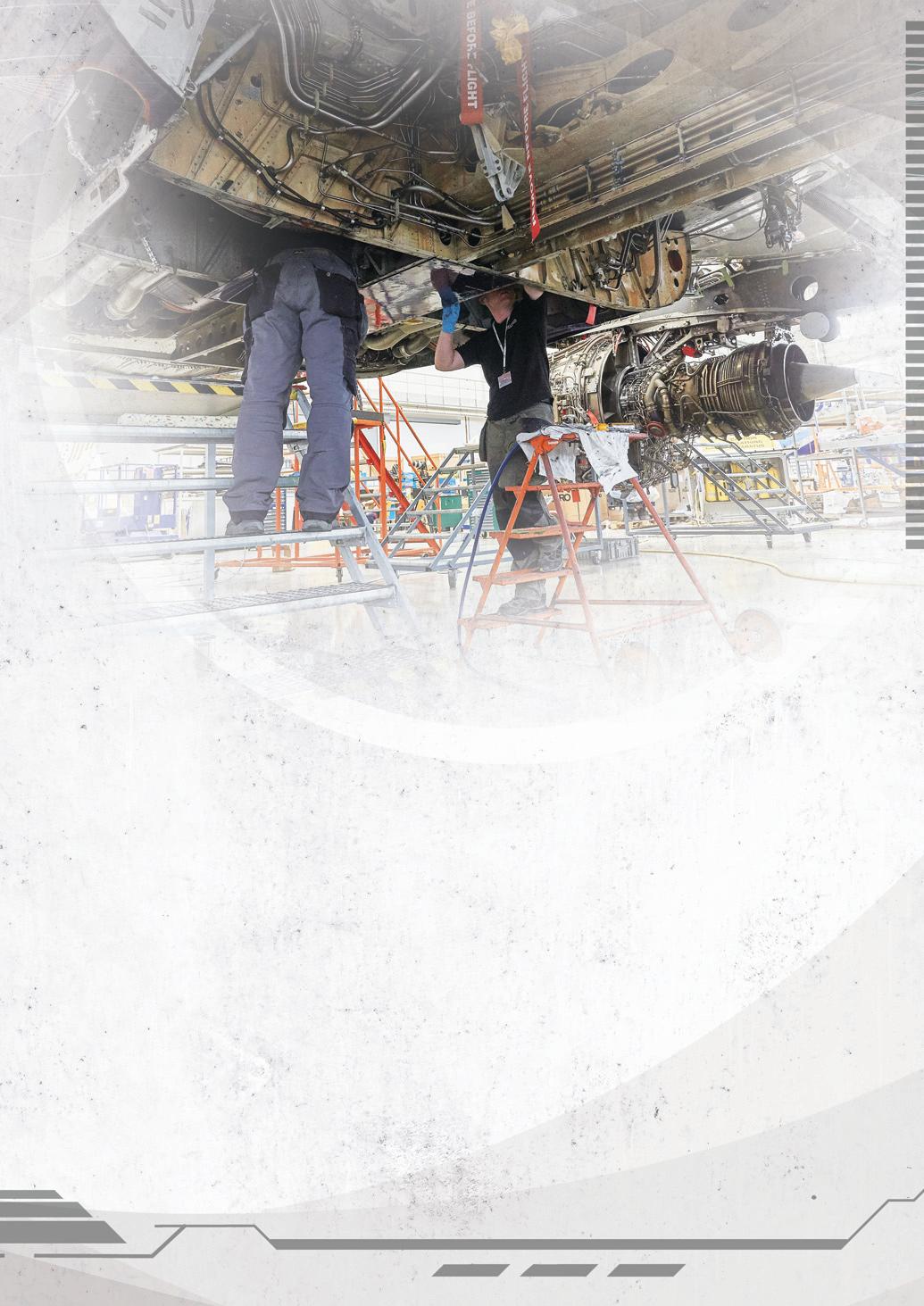
“I took my experience from working in the Lufthansa group and found that if you have c lear targets, you just need to do systematic work. And I think this, along with the courage to be creative, is crucial in business.
“I always tell my employees to remember two things in their work: positivity and courage.”
Inside sustainability 257
n
SAVINO DEL BENE I PROFILE
With over 120 years of successful operations and growth behind it, Savino Del Bene is a leading Italian international shipping company, proudly providing exceptional shipping and logistics services customised to meet its client’s needs. Today, the company continues its reputation for constant evolution and embracing of change, with a substantial focus on connectivity, flexibility and personal relationships. QHSE Manager Sandro Pietramala explained to Richard Hagan the company’s operations.
258 Inside sustainability
Savino Del Bene’s history can be traced back to the turn of the twentieth century and a small office in Florence, Italy. Named after its founder of the same name, Savino Del Bene’s office specialised in providing transport to emigrants heading to the United States to make a new life.
Global growth milestones
T he fledgling company grew continuously and eventually saw the establishment of its first overseas office in New York City in 1977. Additional offices across the United States soon followed. South America was next, with Savino Del Bene opening an office in Brazil in 1994, after
which the company set its sights on the Far East, with various offices opening across Asia; first in China and then in Japan.
Back in the Americas, a series of acquisitions resulted in Savino Del Bene taking its place in 1988 as a multi national leader in the industry.
This trend of constant growth of its physical footprint to better serve customers has continued through to the present day. By 2023, Savino Del Bene had a worldwide presence of over 300 offices in 60 countries, giving it uniquely deep local knowledge of the customs and administrative regulations on all five continents.

Inside sustainability 259
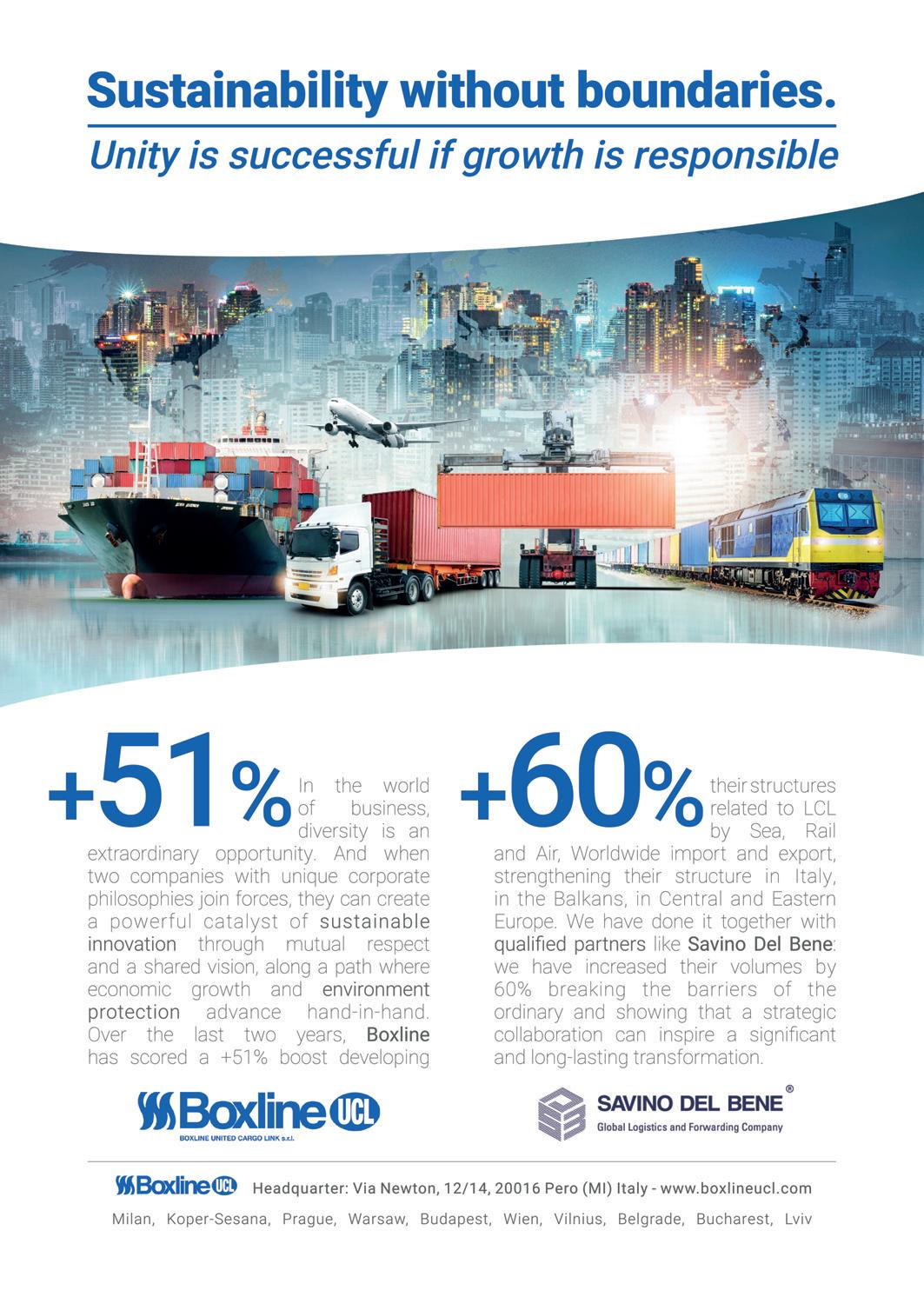
In a demonstration of the ongoing pace of Savino Del Bene’s growth, by mid-2023 the company had celebrated the opening of a very large new warehouse in Toronto, Canada, and another in New Jersey, USA. Over the first few months of 2023, it also opened three new offices in Saudi Arabia and one in Sweden.
Cutting-edge IT
Savino Del Bene’s dedicated IT division ensures that the company always has the most cutting-edge track and trace, data, and management systems on the market today. “We have internally developed
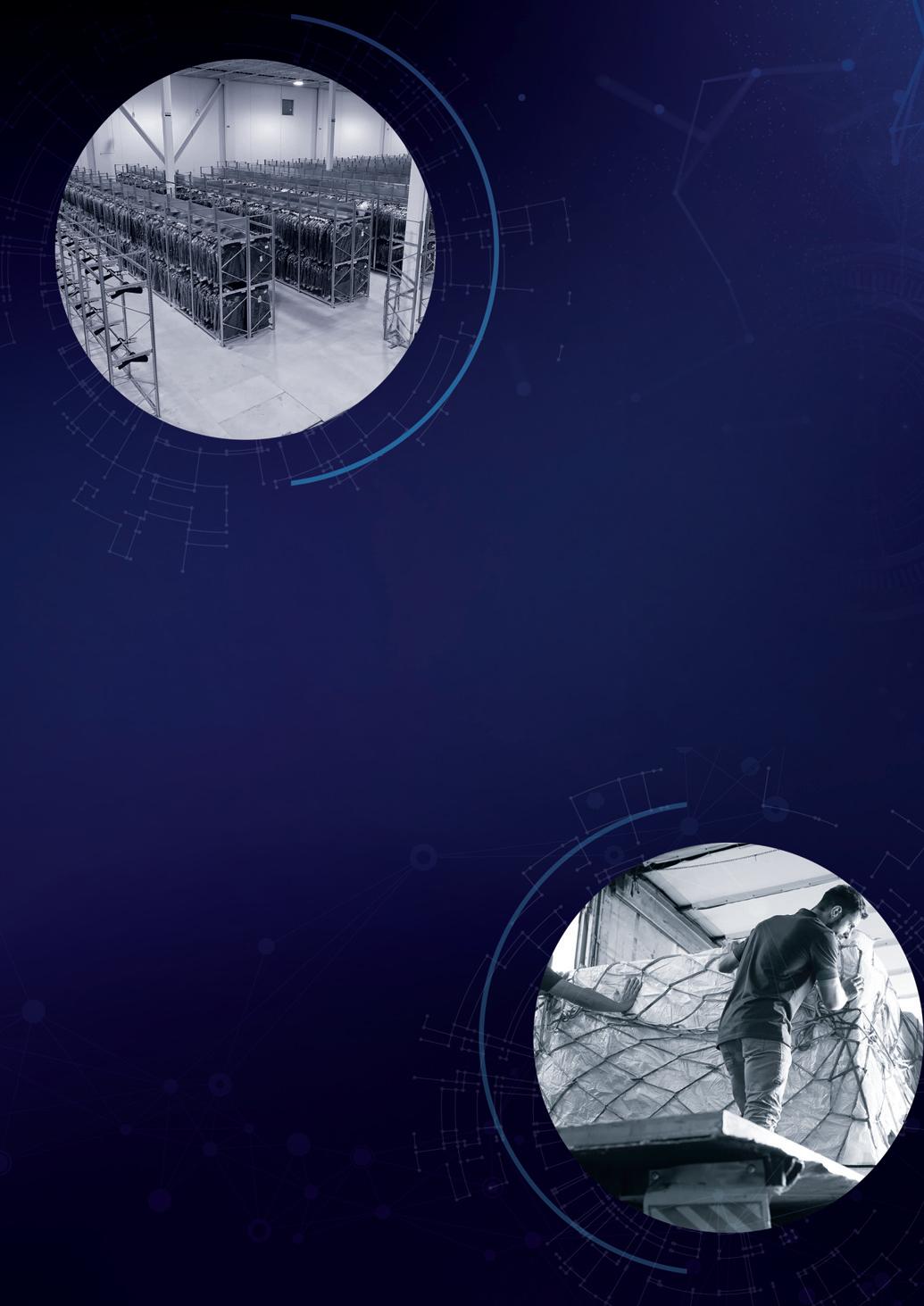
software programs that cover every aspect of the shipping process,” QHSE Manager Sandro Pietramala said: “our applications have been specifically tailored towards integration with the internal installations and cloud services of our other providers.
“The main services offered by our systems are advanced track and trace, purchase order management, an online booking platform, a warehouse
262 Inside sustainability
SAVINO DEL BENE I PROFILE
management system, e-Commerce, and EDI (Electronic Data Interchange) capabilities.”
Savino Del Bene’s complete IT operat ions are managed and operated by the IT division, employing 70 skilled developers and programmers. This team ensures that Savino Del Bene is always able to provide the most flexible connectivity and API options for the company’s clients. Consequently, Savino Del Bene’s operations are seamlessly integrated with all of its biggest clients around the world –including major fashion houses in Europe.
Supply chain sustainability
Mr Pietramala explained that although Savino Del Bene does not directly own any aircraft or vehicles, sustainability is still
a major priority for the company: “As an international freight forwarder, we recognise that our business activities have a significant impact on the environment and, therefore, the climate. Since we are freight forwarders, most of the emissions linked to our activities derive from our use of third-party services.
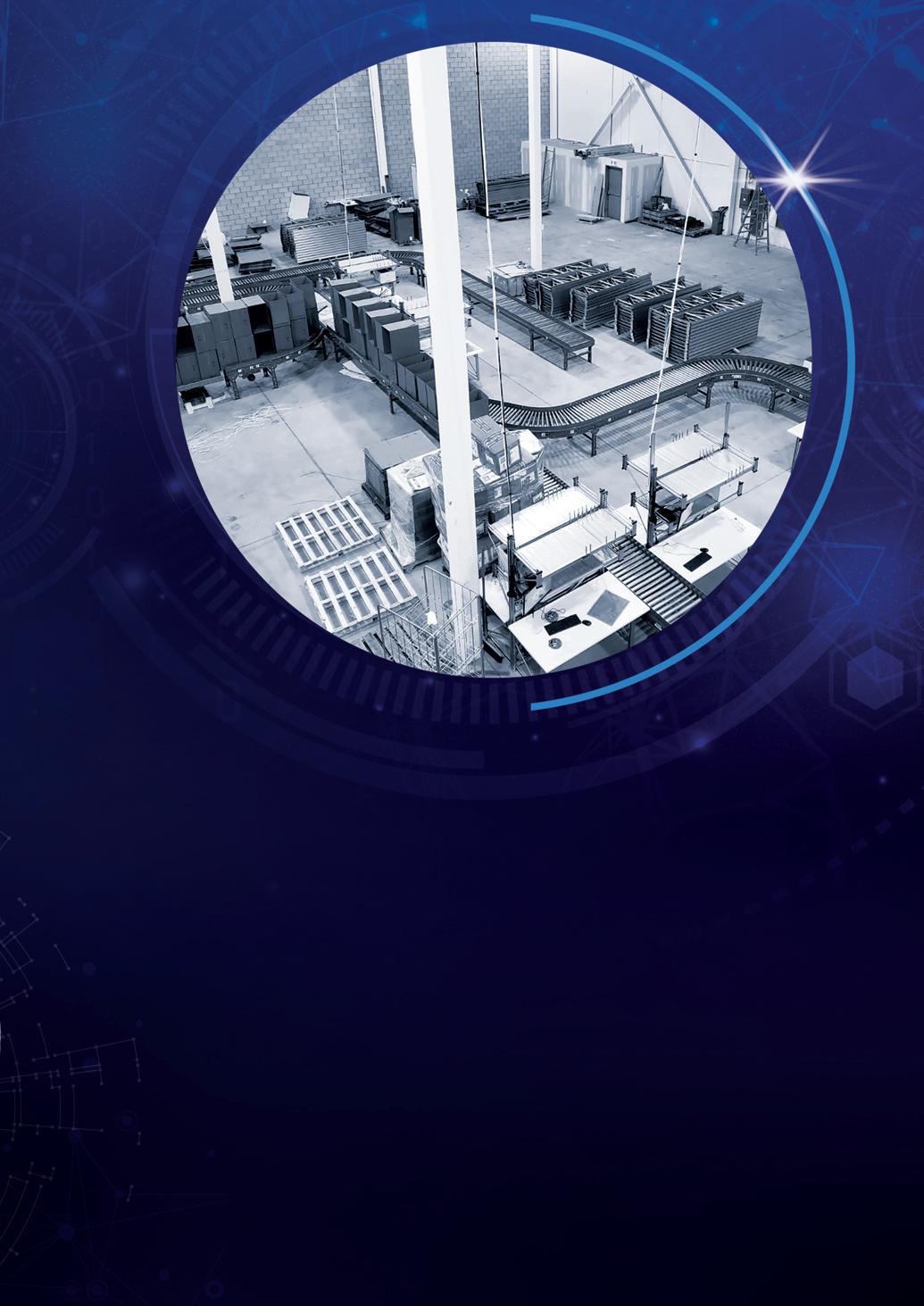
“For this reason, one of the aspects we are investing heavily in is ‘green procurement’ or recognising and selecting suppliers on the basis of their sustainability credentials.”
Savino Del Bene is committed to reducing its environmental impact by offering sustainable solutions and using resources responsibly. Therefore, in addition to its green procurement criteria, it is f ocused on two other macro-areas for the
Inside sustainability 263
reduction of pollution and waste in a manner that is compatible with available company resources. Those areas are emissions calculation and environmental protection.
The emissions calculation process involves ongoing detailed emissions analysis of Savino Del Bene’s supply chain, with reference to the EN 16258 standard (the European standard for calculating and reporting greenhouse gas emissions from transportation). This programme aims to improve the company’s efficiency and environmental performance. Its environmental protection programme is also a substantial one. By mid-2023, two major solar PV rooftop installations on company warehouses are due to be completed. The energy generated from those
installations will be used to power electric vehicles. “We have greatly increased our efforts to identify and adopt innovative solutions and technologies in order to reduce waste and emissions within our company premises,” Mr Pietramala said. “By communicating our environmental policy to all of our suppliers, we want to be recognised as a reliable partner for the development of efficiency projects that can only be implemented with collaborations between ourselves and our customers.”
Competitive flexibility
As one of the world’s largest freight forwarders, Savino Del Bene is able to offer its customers an unrivalled level of flexibility.

SAVINO DEL BENE I PROFILE 264 Inside sustainability
In one example of this, the company received an urgent request for assistance from a major fashion house client in Italy. An expensive dress had to be hastily flown to New York for a high-profile event. Savino Del Bene sprang into action with a creative solution: one of its staff members personally transported the dress in a travel bag, flying from Italy to New York, ensuring that the dress reached its destination safely and on time.
During the height of Covid, Savino Del Bene was able to leverage its substantial resources and operational creativity to ensure that desperately needed medicine reached where it was required. “When most of our competitors stopped work due to difficulties with

shipments, we decided to rent an aircraft to move pharmaceuticals from China to Europe,” concluded Mr Pietramala. “Most of our clients recognise our capacity and flexibility to find a solution today – not tomorrow. There’s no waiting around.”
In a complex world full of unexpected events, Savino Del Bene has positioned itself for growth through its people and its flexibility that, together, ensure a human touch in its customer relationships. Going into the future, the company looks forward to constant improvements in its information systems, so that it can continue to deliver to customers the excellent, person alised service for which it is famous.
Inside sustainability 265
n
click to sections:
EVENT PARTNERSHIPS CONSTRUCTION
ENGINEERING & MANUFACTURING
TRANSPORTATION & LOGISTICS
BACK TO CONTENTS
one planet – one chance – one voice
SERVICES & TECHNOLOGY
An introduction to the services and technology sector, with special reports, followed by company profiles.
i S
The Significance of Wastewater Tr Protecting Our Environmen
In today’s world, wastewater treatment holds a pivotal role in preserving the environment and safeguarding public health. Mark Fowles, Director at William Gilder Group, outlines the current crisis and why effective wastewater treatment is a vital part of the solution.
ASour demands on water resources continue to strain their limits, the implementation of effective wastewater treatment processes has become crucial. These processes aid in the removal of pollutants, pathogens, and contaminants, ensuring its cleanliness before it is discharged back into the environment.
The pressing issue of water and the ongoing sewage crisis have garnered significant attention, with people now seeking viable solutions to address these challenges.
The water crisis
The current water crisis in the UK highlights the urgency of wastewater treatment and its impact on maintaining ecological balance, preserving water quality, and fostering sustainable development. Disturbingly, data from the environment agency reveals that untreated sewage was released into England’s rivers and seas at least 301,091 times last year. The environment secretary
has rightly acknowledged that this situation is unacceptable.
To rectify this problem, water companies have pledged to invest an additional £10 billion, in addition to their previous commitment of £3.1 billion, to be spent within this decade. This funding will be allocated to critical measures such as expanding and improving pipes, as well as constructing underground reservoirs equivalent to thousands of Olympic-sized swimming pools. These reservoirs will serve to contain surges in rainwater, preventing overwhelming stress on the system.
The objective of this package is to reduce sewage overflows by up to 140,000
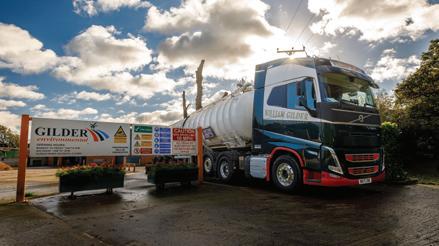
268 Inside sustainability SPECIAL REPORT
An expert from WGG outlines the business benefits of recycling.
reatment
is vital to address existing gaps and work collectively towards common goals.
Although the Plan for Water has garnered support from various stakeholders, there remains a lack of clarity regarding the protection of these groups from potential obstacles and how sectors like agriculture can effectively contribute.
occurrences annually, compared to 2020 levels. However, despite these ambitious efforts, there remains a long way to go in addressing long-standing issues, particularly concerning storm overflows and the strain on an aging sewer network caused by population growth and climate change.
Defra’s recent Plan for Water recognises the need for substantial investment to tackle these challenges. Eliminating discharges from storm overflows alone is estimated to require up to £600 billion. While funding has been outlined, it is important to note that money alone will not solve the problem.
The Plan emphasises the necessity for changes in drainage and water run-off, utilising natural resources—areas where the water industry has previously fallen short. Furthermore, close collaboration among stakeholders, including agriculture, wastewater, and sewerage companies,
The William Gilder Group, boasting expertise in agriculture and wastewater treatment, aims to bridge this gap and address some of the challenges outlined in the Plan. Collaboration and continuous improvement hold the key to resolving the water challenges faced by the UK.
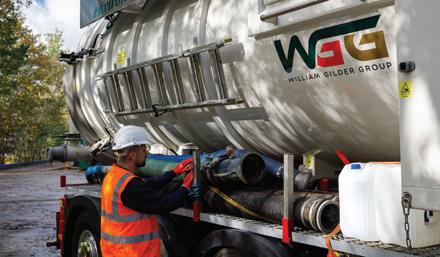
Why wastewater treatment matters
The significance of wastewater treatment lies primarily in its ability to protect the environment. Wastewater carries various harmful substances, including toxic chemicals, heavy metals and organic pollutants. If left untreated, these contaminants can infiltrate the soil, pollute groundwater, and ultimately find their way into rivers, lakes, and oceans.
By subjecting wastewater to treatment processes, it is possible to effectively remove these pollutants, significantly reducing their adverse impact on aquatic ecosystems. In turn, this protects the
Inside sustainability 269
nt:
diverse flora and fauna that rely on clean water for their survival. Additionally, this approach helps restore and maintain the cleanliness of rivers, lakes, and oceans, ensuring their safety for recreational use. Water scarcity represents another pressing issue, and wastewater treatment plays a crucial role in water conservation efforts. Through advanced treatment techniques, wastewater can be treated and purified, transforming it into a valuable resource for various purposes, such as irrigation, industrial processes, and even drinking water.
Recycling and reusing treated wastewater minimises a reliance on freshwater sources, alleviate pressures on water supplies and ensures the sustainable utilisation of this essential resource.
Furthermore, wastewater treatment ensures compliance with regulatory standards set by the government and environmental agencies. These entities
have established stringent guidelines and regulations concerning the discharge of wastewater into the environment.
Wastewater treatment plants play a crucial role in meeting these regulations by effectively treating wastewater before its release. This prevents legal violations and potential penalties.
In 2014, WGG obtained permission from the Environment Agency to establish a specialised waste treatment centre. Through this facility, the group has the capability to treat, recover and dispose of various types of waste, including industrial and domestic sewerage, liquid wastes, and gully wastes.
This wastewater treatment facility in Toddington, Gloucestershire is specifically designed to treat various types of waste liquids, including septic wastes and leachates. The treatment centre has a storage capacity of 8,700m³ and is authorized to process up to 124,000m³ of liquid waste annually.
The system employs an aerobic process, utilising a designated water treatment system to remove solid fractions and allow filtered liquids to enter the main tanks. An aerated settlement tank further enhances microbial activity to degrade organic matter, resulting in significant reductions in BOD (biochemical oxygen demand) and
270 Inside sustainability
SPECIAL REPORT
An expert from WGG outlines the business benefits of recycling.
To learn more about the work of the William Gilder G www.williamgilder.co.uk/pages/home.aspx
Mark Fowles, Director at William Gilder Group
COD (chemical oxygen demand) levels. The treated water is then safely discharged or recirculated back into the process.
The importance of wastewater treatment cannot be overstated. It surpasses mere waste management and stands as a critical process that protects the environment, conserves water resources, safeguards public health, prevents eutrophication and ensures compliance with environmental regulations.
By investing in wastewater treatment infrastructure, promoting research and development of innovative treatment technologies, and raising awareness about the significance of proper wastewater management, everyone can collectively work towards a sustainable future where more clean water is available, and ecosystems thrive.
About William Gilder Group
William Gilder Ltd has proudly provided specialist transportation services for over 25 years. The company’s wide range of trailers, vacuum tankers and a hands-on approach with total commitment to providing high quality services means it is able to provide the right level of support where it matters most.
As part of William Gilder Group’s ongoing commitment to quality and service, the company holds ISO 9001 Quality Management Systems and ISO 14001 Environmental Management Systems accreditations.
In recent years the business has expanded further to include industrial services and waste treatment provisions and facilities. In addition, the business has a new state of the art head office based at Teddington Hands, Gloucestershire.
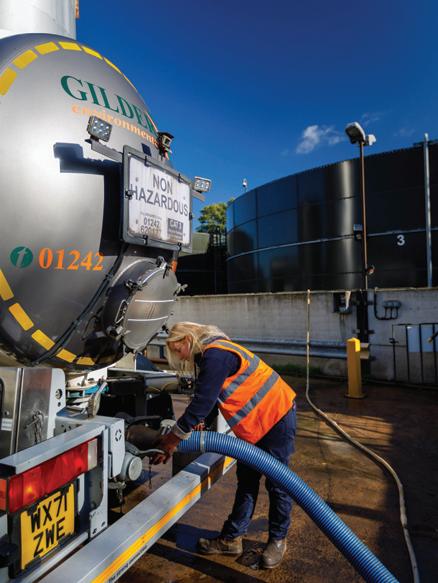
Inside sustainability 271
n
Group, please visit:
Goodwood FoS:
AutoNaut
Managing Director John White and Editorial Manager Phil Nicholls were lucky enough to be invited to the 2023 Goodwood Festival of Speed. Alongside seeing some awesome cars, this was also a fantastic opportunity to chat with a range of innovative companies.
Jesse Loynes, Fleet Manager at AutoNaut, explained the ingenious features of the USV on display. The solar panels on the deck of the USV power the assorted monitoring equipment on board the vessel, with the payload varying according to the project. The 3m AutoNaut has 175W peak output from the solar PV panels on deck, whilst the 5m has 300W peak output. The actual output depends on the latitude of operations, the season and the weather.
The Future Lab exhibit sat at the heart of Goodwood Festival of Speed. This amazing pavilion featured a broad range of futuristic and interactive innovations, all showcasing centred around the theme of ‘technology for a better world.’
Much to our surprise, Future Lab focused on more than just cars. The last thing we had expected to see at the Festival of Speed was an Uncrewed Surface Vessel (USV) propelled by the motion of the waves, but that was precisely what the engineers at AutoNaut were exhibiting.
However, the truly innovative engineering was in respect of the four keel mounted foils positioned fore and aft that propel the USV. Through clever use of springs, the AutoNaut USV is powered by energy it harvests from the natural movement of the waves. In a flat calm, the system can be assisted by an auxiliary propeller.
Extensive hydrodynamic testing has refined the technology, while field trials and missions have proven its robustness in stormy seas. The AutoNaut is designed to be self-righting and resilient in all weather and has survived 65kt storm
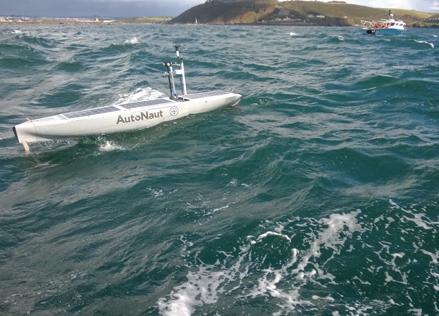
272 Inside sustainability SPECIAL REPORT An innovative USV on show at
Goodwood.
conditions with 10m waves, capsizing and righting four times and successfully continuing with the mission.
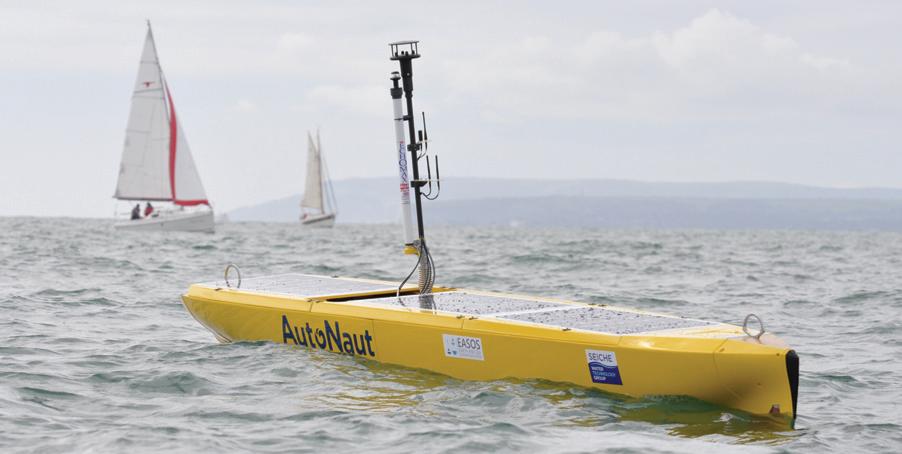
About AutoNaut
AutoNaut is a UK company that designs, builds and operates USVs. The company has manufacturing and operation facilities in Sussex and Devon. AutoNaut is part of the Seiche Water Technology Group, which provides monitoring and measurement solutions for the marine and utilities in the UK and across the world.
Seiche is the UK’s leading specialist in underwater noise and marine mammal
monitoring, specialising in the design, development and manufacture of underwater measurement and acoustic systems together with advanced visual detection systems. n
www.autonautusv.com/home
Inside sustainability 273
have your company’s latest product, technology or concept included in Inside Sustainability, contact us today media@insidepublication.com GE T INVOLVED i S
To
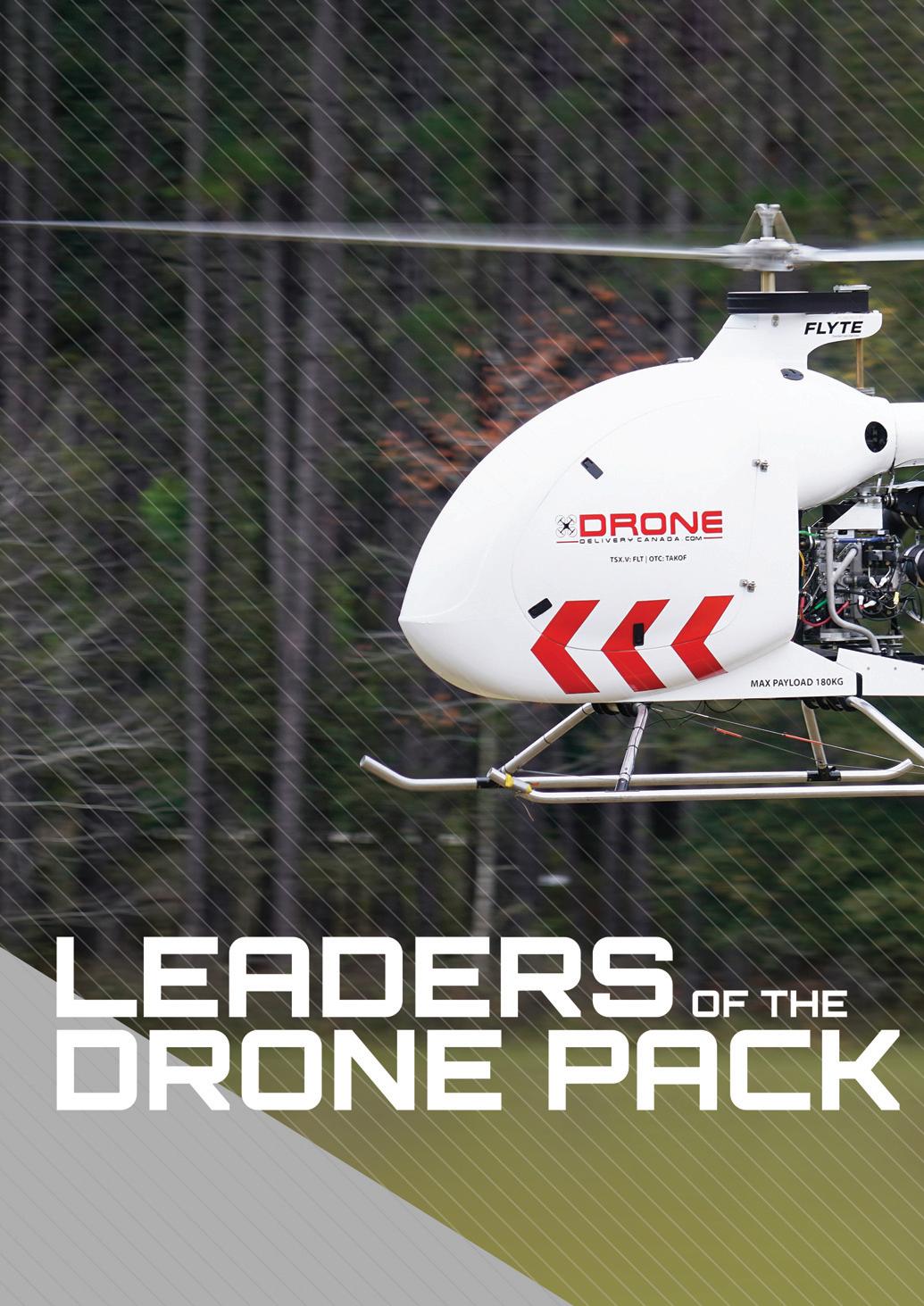
274 Inside sustainability DRONE DELIVERY CANADA I PROFILE
Drone Delivery Canada is a publicly traded, award-winning, ISO 9001-certified company focused on designing, developing and implementing commercially viable, drone-based delivery systems. CEO Steve Magirias explained to Hannah Barnett how the company is disrupting the logistics market.
TADrone Delivery Canada, for operations to run smoothly, a close relationship with its customer base is paramount. The company provides a complete turnkey logistics solution, including a proprietary software system known as FLYTE, alongside hardware and professional services. This allows for a safe and secure autonomous cargo delivery process from depot to depot.
“We don’t just sell a drone and leave the customer to their own devices,” Steve Magirias, CEO, said: “we run a managed service. This means we work with the client; we evaluate the best possible route, implement everything and do the test flights. We
go to full production once we’ve validated all the checks and balances to ensure everything is working together, and then we fly based on the customer schedule.”
An overview of innovation
Drone Delivery Canada, located in Vaughan, near Toronto, was founded in 2014 to provide a disruptive, advanced drone logistics infrastructure solution. Company contracts in commercial and industrial applications include, but are not limited to, emergency and medical services, mining, the oil and gas sector, parcel delivery, and providing goods to remote communities, both indige nous and non-indigenous.
Inside sustainability 275
VALQARI

Valqari is elevating last-mile package delivery by providing customers with a sustainable, secure, and seamless solution. The end-to-end delivery process is completely transformed by our cutting-edge DronePort, which is powered by our AI-powered software stack. Our environmentally conscious system reduces carbon emissions, contributing to a greener world. Our top priority is security; our artificial intelligencepowered software ensures that your packages arrive safely and on time, and our droneports ensure that they remain safe until they are picked up. With Valqari, you can discover the future of deliveries, where innovation meets sustainability and efficiency meets excellence.
276 Inside sustainability editorial mention
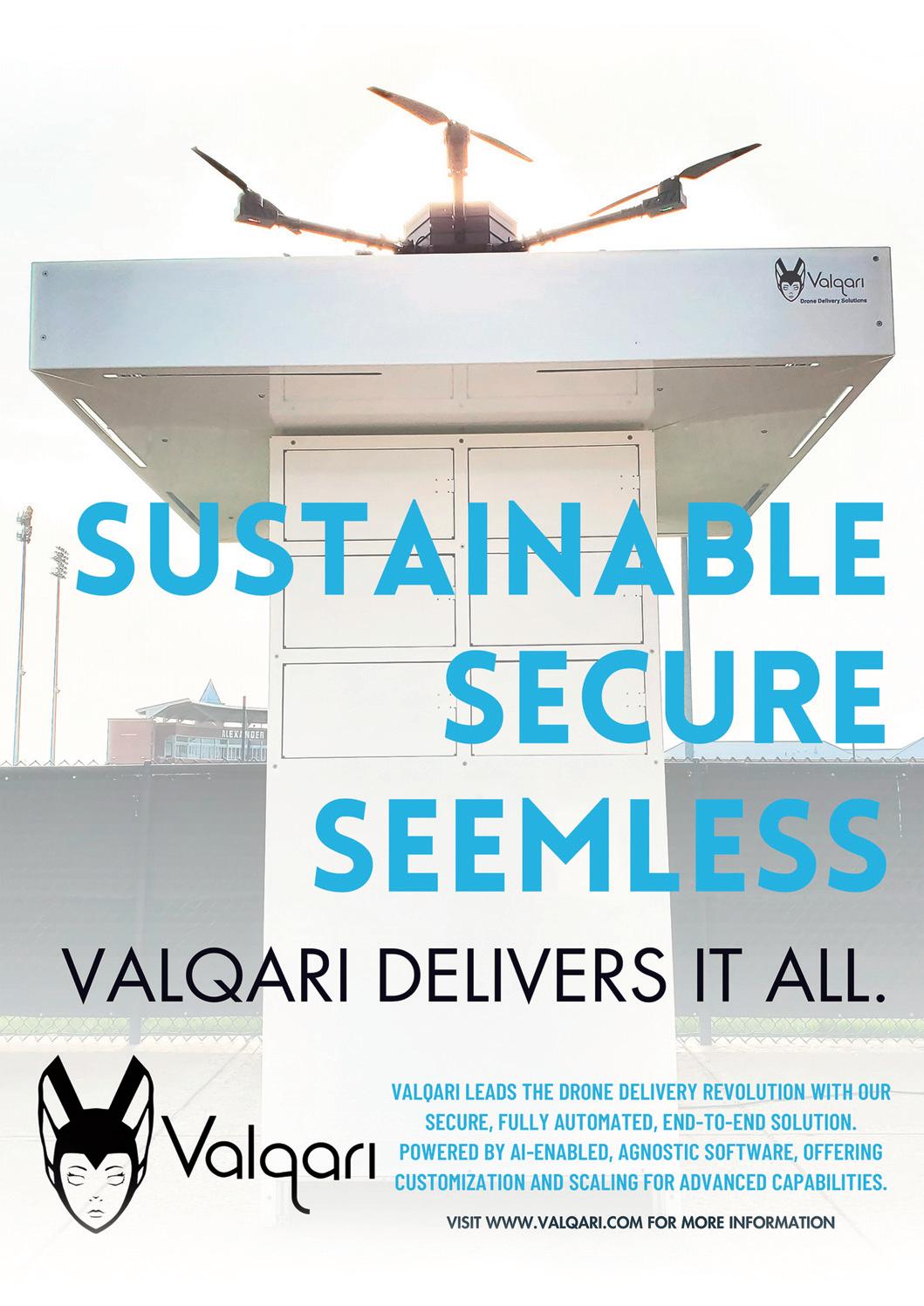
For its first five years, DDC was dedicated to development and prototyping. A big milestone was reached in 2019, when the company commenced commercial routes and developed a strong relationship with the Canadian regulator, Transport Canada. “Getting something flying commercially really helped propel the company, by giving us legitimacy and raising additional funding in order to keep advancing the development of our products and growing to where we are today,” said Mr Magirias.
Aviation safety and regulatory compliance is of upmost importance to the company. This includes risk assessments, a safety management system, operational training programmes and HSE reporting processes similar to those used in commercial aviation.

“We are focused on getting the technology to the point where it can be scaled-up,” Mr Magirias explained. “Although we want to have as much of a market share and the highest revenue possible, the main priority for us is to advance the technology forward to a fully autonomous solution that complies with regulations.”
Scaling-up with EIA and more
One of the company’s milestone partnerships began in 2019 with Edmonton International Airport (EIA). It is a collaboration with Zing and Apple Express and came about through DDC’s 10-year strategic relationship with Air Canada Cargo.
The project used drones to transport cargo and parcels between the airport and nearby industrial areas, improving logistics a nd reducing ground transportation and road congestion. It also demonstrates the efficiency, safety and reliability of DDC’s drone delivery platform.
“One of the challenges on the EIA project was complying with Transport Canada and Nav Canada, so as to not disrupt the flight path of the planes,” Mr Magirias explained. “Typically, the sweet spot to fly a drone is between 300 and 400 feet. At the Edmonton Airport we are flying as low as 50 feet. We must ensure we meet the requirements and avoid any situations where we have to deconflict with regular airport traffic.”
In 2022, as the first drone operation on i nternational airport grounds, DDC won an XCELLENCE Award for innovation from
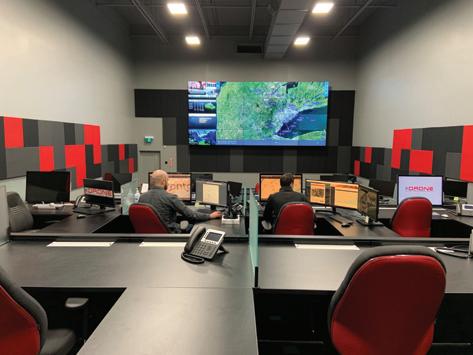
278 Inside sustainability
PROFILE
DRONE DELIVERY CANADA I
Drone Delivery Canada CEO Steve Magirias
the Association for Uncrewed Vehicles Systems International (AUVSI).

With phase two in the planning stages, and a three-month extension recently announced on the contract, DDC hopes to continue to add value for its airport partners. “The EIA are extremely focused on advancements in technology,” Mr Magirias said. “They’ve been big supporters of ours throughout the whole process and are a great team of people to work with.”
Another arm of the deliveries sector has involved distributing medical isotopes from the DSV depot to the Oakville Trafalgar Memorial Hospital. At 13.4km, it is DDC’s
longest commercial route to date, and the drone covers the distance in just under 15 minutes. The long-term goal is to establish a full ecosystem of drones delivering between multiple hospitals.
One of DDC’s standout projects was delivering COVID-19 test kits and pharmaceuticals from the village of Fraser Lake, across the water to the Stellat’en First Nation community in British Colombia. “This was a first pilot project,” Mr Magirias explained. “But it’s very innovative: it was the first of its kind that we know of, at least within Canada. We’re looking forward to more projects in that sector.”
Inside sustainability 279
FLYTE is right
FLYTE is DDC’s flagship virtual flight management software that allows for secure automated operations, monitoring of commercial air traffic, weather and other data, from the Operations Control Centre.
“Our FLYTE software controls everything,” said Mr Magirias. “It’s the heart and the brains, if you will. It’s a requirement within Canada that every flight has a remote pilot in command. So anytime we fly for commercial reasons or for development testing, our team is monitoring all the flights from our Operations Control Centre at our headquarters. The software helps us pre-program the route and the waypoints as well as monitor every aspect involved in each flight.”
FLYTE also offers a sophisticated logistics system including real-time package tracking, delivery notifications, scheduling, monitoring logs for temperature-sensitive cargo and maintenance records of all drones including their components.
To complement a customers’ existing supply chain, FLYTE can be easily integrated with internal logistics software via APIs. “We don’t just sell the hardware: what a customer gets is a full logistics solution that can deliver the cargo where it’s needed,” Mr Magirias added.
The future of drones
As the market for drones continues to expand, DDC has set its sights on eventual expansion to the US – where the sector is

DRONE DELIVERY CANADA I PROFILE 280 Inside sustainability
already much larger – and globally. This will mean continuing to consolidate its current position and retaining strong business relationships. The company meets with suppliers every quarter to keep its partners abreast of new developments.
“We have a few key suppliers,” said Mr Magirias. “Some are used by others in the industry, some are proprietary, using our technology. The main goal is to have open communication and regular dialogue, so they understand where we’re going and what our expectations are going forward. Ultimately, they’re a business and have an eye on revenue for themselves too. When you’re trying to beat down suppliers on price, it doesn’t build a great relationship. We want a relationship of transparency.”
DDC also wants to strengthen and maintain its sustainable credentials. When roughly 80% of all packages delivered across Canada are less than five pounds in weight, drone delivery is a sustainable option compared to a gas-guzzling truck. The same could be said of a drone’s potential in the food delivery space. That’s not all they can do though, as some of the innovative sectors DDC is operating in makes clear.
“Most people will look at the convenience of drone delivery,” Mr Magirias concluded. “But there could also be a lifesaving aspect when it comes to wildfires and getting drones to do things that would otherwise put humans in danger. There’s a lot of good that can come from drones, along with delivering people’s coffee and things like that.

“I think the future is bright – and drones will make a big difference. It’s really not a question of if, but when.” n

Inside sustainability 281
FortisTCI provides electricity throughout the Turks and Caicos Islands. Serving over 17,000 customers, it is regarded as one of the most reliable electricity providers in the Caribbean. Rachell Roullet, Vice President for Innovation, Technology and Strategic Planning, explained to Hannah Barnett how the company is transforming the energy landscape of the Turks and Caicos.
Since 2015, FortisTCI has been working out the best methods to seize the massive solar energy potential in the Caribbean, with significant success.
In 2018, the Caribbean Renewable Energy Forum voted the FortisTCI Utility Owned Renewable Energy system (UORE) as the ‘Best Distributed Generation Project’ in the region. This was a milestone for the company and a proud moment for its staff. FortisTCI has methodically improved its capabilities ever since. Though the company has been pursuing solar energy, it is also researching other renewables for its network, such as wind power and lower-carbon energy sources like natural gas.
FortisTCI operates in Providenciales, North Caicos, Middle Caicos, South Caicos, East Caicos and the adjacent Cays. The company also serves the islands of Grand Turk and Salt Cay. “The distinctiveness of our company is that we serve several islands,” explained, Vice President for Innovation, Technology and Strategic Planning Rachell

Roullet. “When it comes to sustainability, we take it one island at a time, to ascertain what is best for each island.”
Renewable innovations
FortisTCI offers two service options for customers wishing to switch to solar power. The first is for customers who wish to install their own solar PVs. The company provides incentives via its Customer Owned Renewable Energy credit (CORE).
The second option is the Utility Owned Renewable Energy (UORE) programme, which means the company installs the solar panels and offers a fixed-rate incentive based on capacity. FortisTCI has so far provided 2.6MW via 18 rooftop solar systems for 16 partners under its UORE programme, and has a long waiting list. The goal is to increase solar power capacity to 7MW in the short to medium term across the islands.
Though the Caribbean climate makes the Turks and Caicos an ideal location for
282 Inside sustainability
FORTISTCI I PROFILE
solar power, it is also vulnerable to other types of weather namely, hurricanes. 2017 was a particularly difficult year with three powerful hurricanes, Harvey, Irma and Maria wreaking huge damage to utility systems in the USA and the Caribbean.. Nonetheless, FortisTCI restored electricity service in less than 60 days, before the start of the tourist season.
“We live in a hurricane belt, so that always informs our actions,” Ms Roullet said. “It means we continue to invest in a hardened transmission and distribu -
tion network, as these hurricanes become more forceful – and perhaps even more frequent. Along with sustainability and affordability considerations, we also must ensure that our investments support resilience.”
The company consistently maintains a very high ASAI (Average Service Availability Index) of 99.96%, one of the highest in the Caribbean. This outstanding reliability helps to support the tourism-based economy and attracts direct foreign investment into the country.

Inside sustainability 283
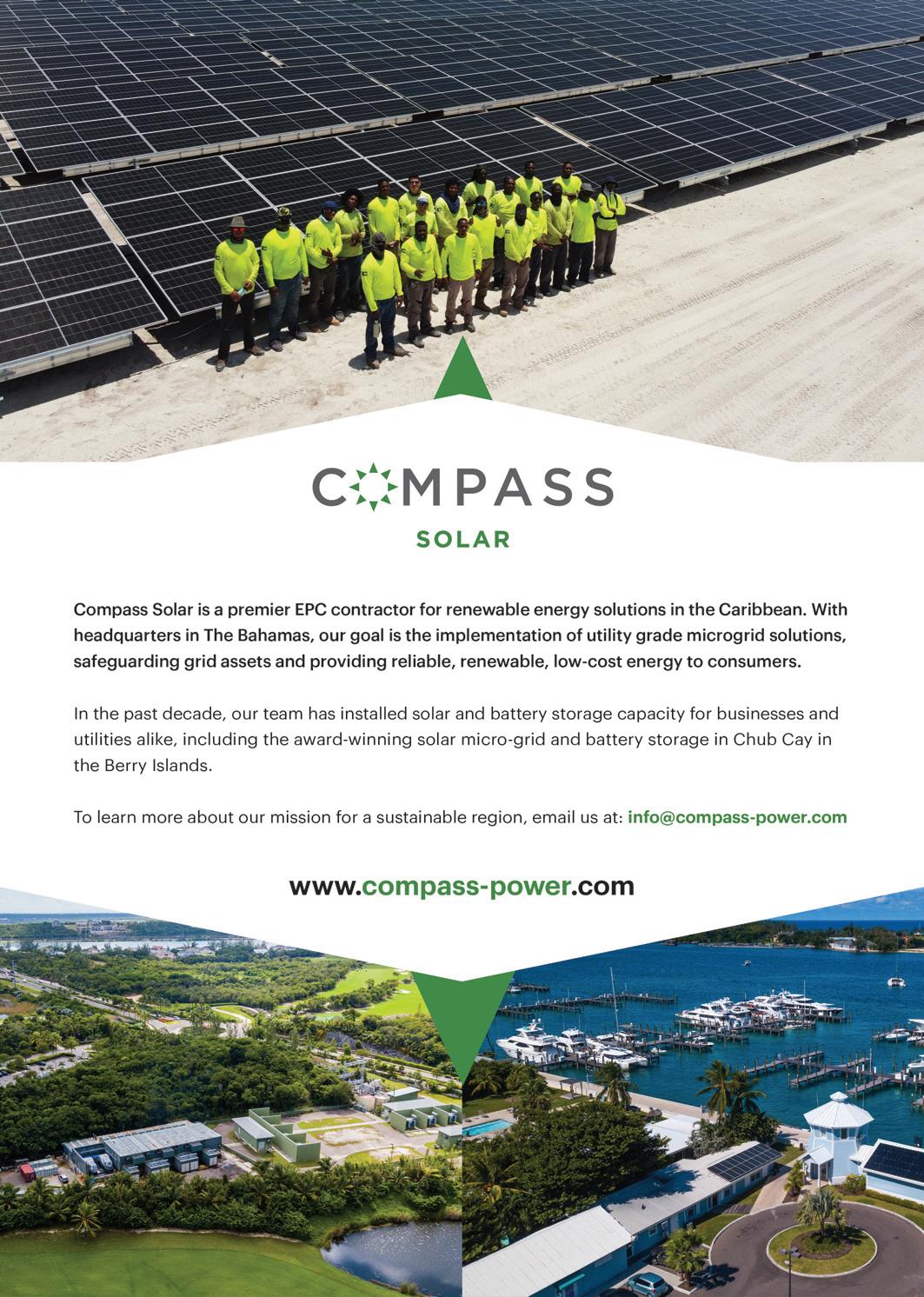
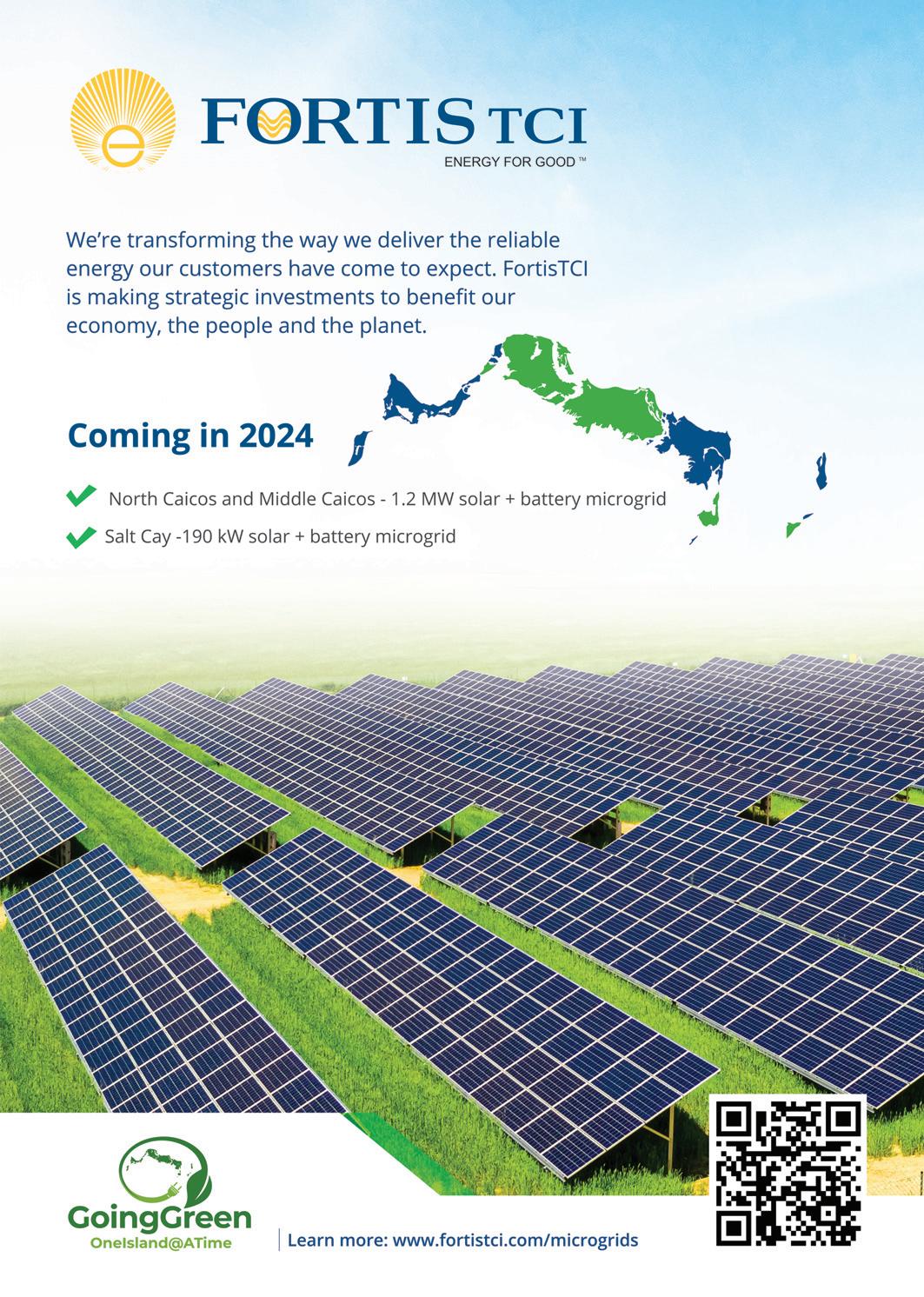
FORTISTCI I PROFILE
And continuing innovation at the start of 2018, just months after the hurricane damage FortisTCI launched an e-mobility programme; showcasing its first electric vehicle charging unit on the island. “We are demonstrating how the utility will support the infrastructure of e-mobility,” said Ms Roullet. “We have ten EV charging units installed now; some on our premises and others with partners like local hotels.”
Regulatory reform
FortisTCI maintains active engagement with the government, to discuss the energy industry and regulatory reform of the sector. With a new Commissioner of Energy and Utilities in place, the company is even more focused on achieving regulatory reform.
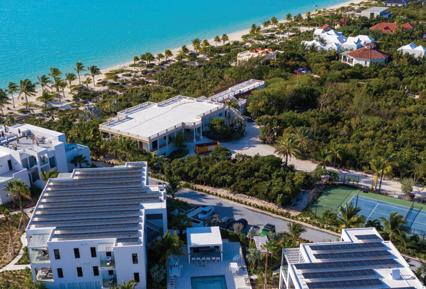

“The existing electricity ordinance was drafted in 1980s: it needs to catch up with what's happening in the industry,” Ms Roullet explained. “We want a high penetration of renewable energy, but achieved in an orderly and equitable manner, respecting the regulatory compact and balancing safe, reliable,
least-cost and sustainable electricity service for TCI.”
FortisTCI drafted its Clean Energy Plan in 2021, guided by the Resilient National Energy Transition Strategy (integrated resource plan, or IRP), which was developed with and approved by the government in 2019. The IRP analyses long-term demand for electricity, alongside the long-term supply, and assesses the optimal mix of energy to meet these requirements. Based on the IRP, the optimal energy mix for Turks and Caicos is 33% renewable energy by 2040.
“We intend to see a greater penetration of RE by the time the study renews,” said Ms Roullet. “So, using these plans as our guiding principles, we are working towards greater renewable energy penetration as well as investing in research and development for sustainable projects.”
FortisTCI’s cleaner energy goals are also guided by the sustainability ambitions of its parent company, Fortis Inc, a leader in the North American regulated gas and utility industry. Fortis Inc has committed to a 2050 net zero direct GHG emissions target.
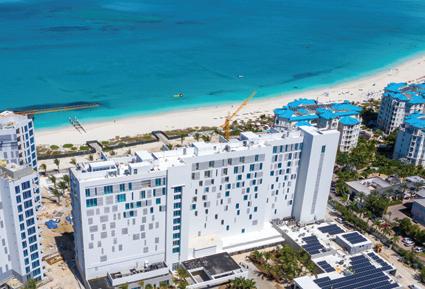
286 Inside sustainability
Roadmap to the future
Another innovative element to FortisTCI’s expanding renewables programme is the microgrid system currently being installed on two islands. These microgrids integrate utility-owned solar PV systems and thermal generators, together with a battery energy storage system (BESS) with stabilisation technology, to facilitate a seamless transition between grid-connected and islanded mode without any disruption to the electricity service to customers in the specified service territories.
“We are going green, one island at a time,” Ms Roullet explained. “North Caicos will be the first installation site; it is set to be powered by 30 per cent renewable energy We're going to install a 1.2MW solar PV with a 1MW battery energy storage system.”
This will mean North Caicos running on three sources of energy: the grid, the solar PV battery and the standby generator, providing a resilient energy package for the island. Salt Cay is also targeted to be 91% renewable energy powered by the end of 2024, with the installation of a 200kW solar PV and a 200kW battery energy storage system.
FortisTCI President and CEO Ruth Forbes stated: "We are taking significant steps to transform how we produce and distribute energy in the Turks and Caicos Islands. FortisTCI is greening the islands with our microgrid and other alternative energy projects.
“Microgrids on North Caicos and Salt Cay will decrease the overall cost of energy production in these islands. With appropriate amendments to the electricity

Inside sustainability 287

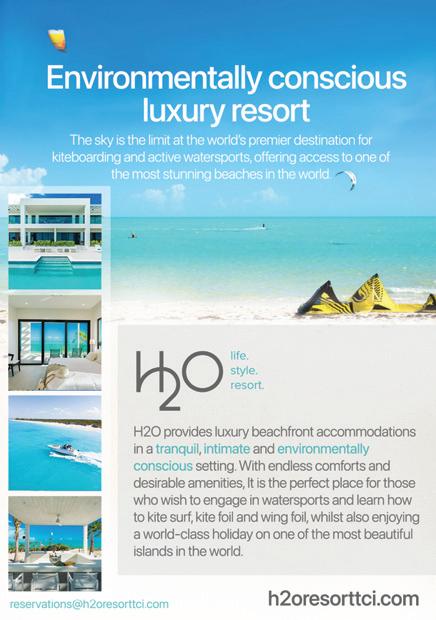
288 Inside sustainability
ordinance, customers can benefit from lower energy prices over time.
“We will continue to work with the Turks and Caicos Islands Government to achieve this outcome. Reducing our dependence on imported diesel fuel, expanding renewable energy integration, and lowering the cost ‘of electricity are all part of the sustainable energy future we are building for the Turks and Caicos Islands."
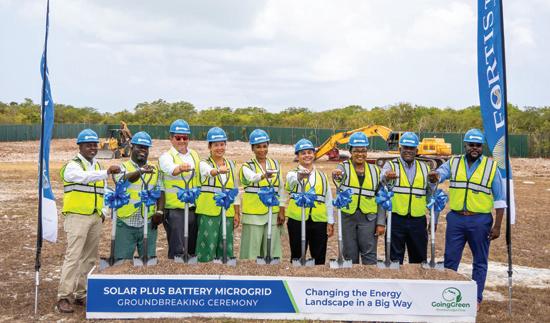

As a dynamic and evolving company, FortisTCI will play a key role in the energy transition process in Turks and Caicos.

According to Ms Roullet, working in the
centre of such progress is an exciting place to be.
“We’re not only changing the energy sources, but we are also changing the skills of the organisation,” she concluded. “We must learn to integrate the battery energy storage system, how to optimise solar PV systems and what role wind can play. We must diversify. Navigating this changing landscape of decarbonisation, decentralisation and digitalisation is the most exciting challenge in the utility industry.” n
Inside sustainability 289
Recycling plant specialist Turmec is a leading international provider of materials handling and recovery solutions to the waste processing sector. Turmec has developed a unique set of expertise and skills, positioning themselves at the top of the industry. Turmec are busy finalising the mechanical installation of the biggest recycling facility in the world. Associate Sales Director Gavin Dunne filled Richard Hagan in on the details.
Turmec’s reputation as a trusted supplier of powerful recycling solutions spans the globe, serving diverse customers from family-owned enterprises to national and international operators alike.

Turmec was established over fifty years ago in 1972. Initially, the company provided contract and general engineering services for the aquaculture and fisheries industry, for which it manufactured items
like fish net washers and fish cages. That all changed in 2000, when Turmec was sold to Joe Coffey, hailing from the mobile crushing and screening industry. Mr Coffey immediately switched Turmec’s focus to the recycling industry and began marketing its services accordingly.
Turmec was awarded its first recyclingbased project only a year later in 2001, and from there, the company has gradually grown its market share in the recycling
290 Inside sustainability
TURMEC I PROFILE
industry. Having conquered its home market in Ireland, Turmec entered the United Kingdom in the late 2000s, followed by Australia in 2016.
“Since then, the Australian market has been very good to us, with five installations,”
Associate Sales Director Gavin Dunne explained. “The scale of the projects we have built in Australia are the largest in the world, handling three to four times the tonnage of our standard projects.
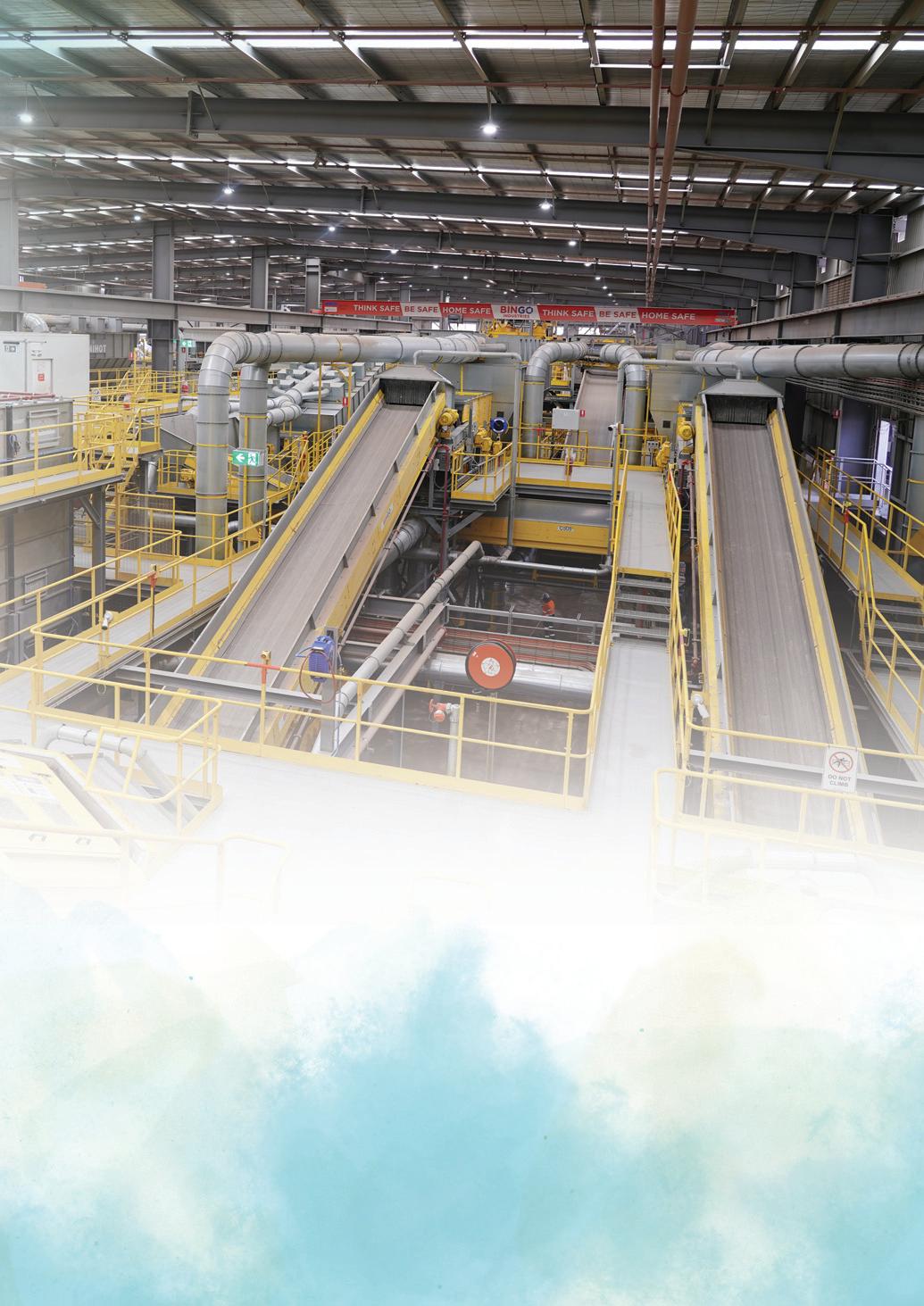
Built for the circular economy
Turmec is headquartered in Rathcairn in County Meath, Ireland – about 45 minutes from Dublin. But do not be fooled by its rural, small-town location. With 110 staff members employed at Turmec, its 66,000sqft factory is fully equipped and staffed to manufacture everything required for its projects anywhere in the world. It also boasts various certifications, including EN 1090 (a set of European standards that regulate the
Inside sustainability 291

292 Inside sustainability
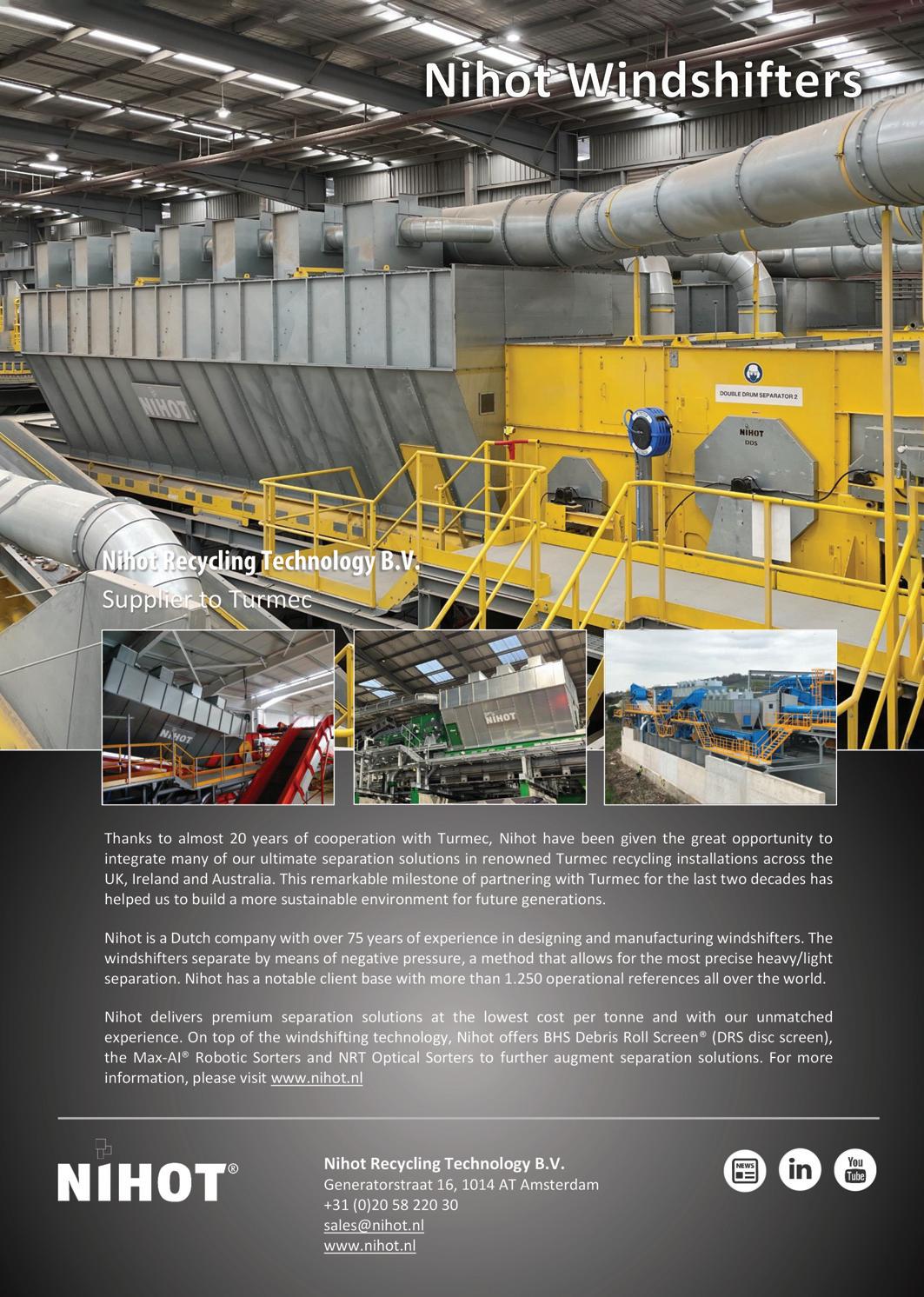
fabrication and assembly of steel and aluminium structures), ISO 45001 (occupational health & safety), ISO 9001 (quality management) and ISO 14001 (environmental management).
Turmec specialises in designing highly automated processes that deliver high-ton-
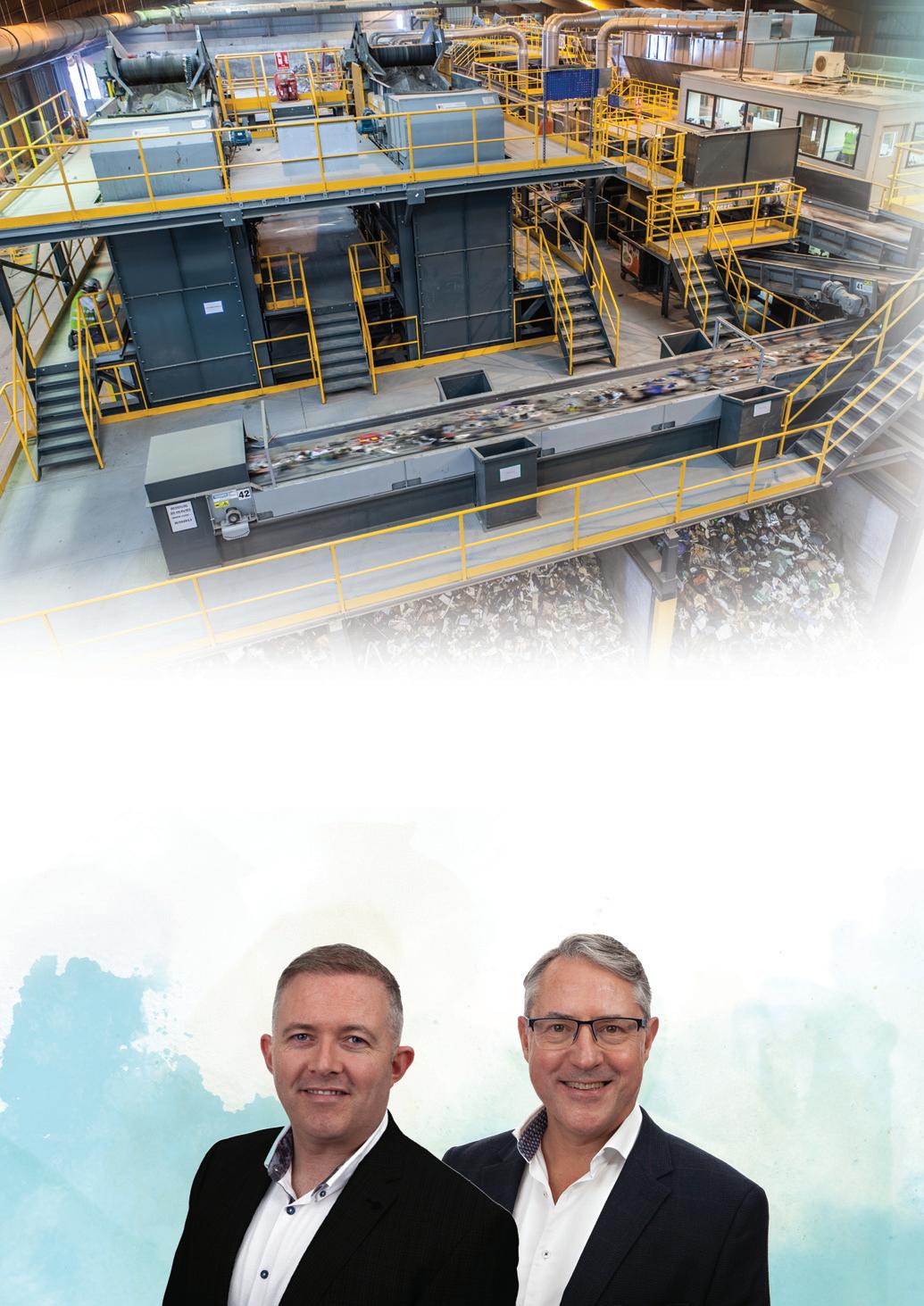
nage throughput, high recovery and purity of recyclates and low manual intervention.
“Our systems get as much as possible out of the waste in an efficient, low-energy manner,” said Mr Dunne. “They are specifically built for the circular economy. For example, most of our construction waste
294 Inside sustainability TURMEC I PROFILE
Turmec Chief Executive Officer, Geoff Bailey Turmec Associate Sales Director, Gavin Dunne
facilities recycle up to 99 per cent of the waste, recovering stone, concrete, timber, ferrous and non-ferrous materials such as aluminium. Any residual waste is further processed and used as an alternative fuel by the cement or waste to energy sectors.
Going Down Under
Turmec is proud to announce that it will soon complete the construction of the largest recycling facility in the world. Located just outside Brisbane, Australia, the new facility is designed to process an impressive 475 tonnes of waste per hour; ultimately aiming for landfill diversion and recovery rates of up to 99%.
“The project, for Rino Recycling, is valued at $89 million and is licensed to process one million tonnes of mixed construction waste annually,” Mr Dunne explained. “When complete, the plant will be one of the largest construction and demolition (C&D) waste recovery sites in Australia. It will process a range of waste types from pure demolition waste and skip waste to NDD (Non-destructive digging) waste.”
The plant - which has an interior volume equivalent to twenty Olympic-sized swimming pools - will process these recyclables into a range of high-quality sand, fill, road base and aggregate materials which will be supplied back into new construction projects, including everything from road building to mega projects such as stadiums.
Clearly, getting finished products out of raw demolition materials is not easy, but it’s exactly in this type of challenge that
Turmec’s expertise really shines. “The processing plant features great flexibility in design; and is made up of four different infeed’s. The various lines can be operated individually or operated together,” Mr Dunne said.
“At the back end of the plant, the clean aggregates are fed through a wet processing supplied by CDE. There, the materials
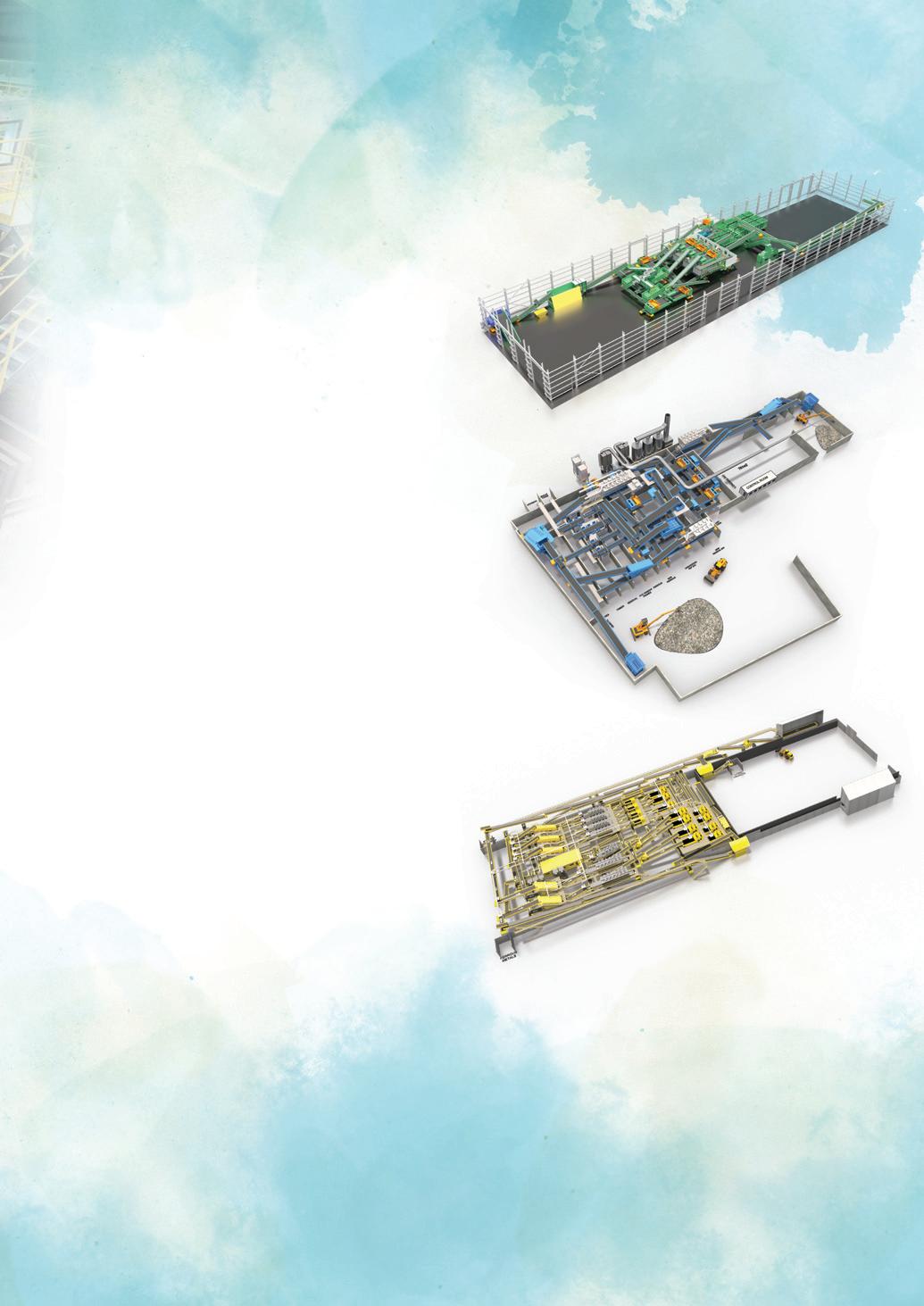
Inside sustainability 295
are washed, sand and silt removed, graded by size and then delivered to storage bays.”
Construction on the new plant began in January 2023 and by August 2023, the project had reached mechanical installation completion, with commissioning and handover to follow in the coming months.
Opportunities in the Big Easy
In May 2023, for the first time, Turmec attended the New Orleans Waste Exhibition. Having previously identified the United States as a potential growth opportunity for the company, Turmec participated in the exhibition as a first step to a possible entry into the US market.
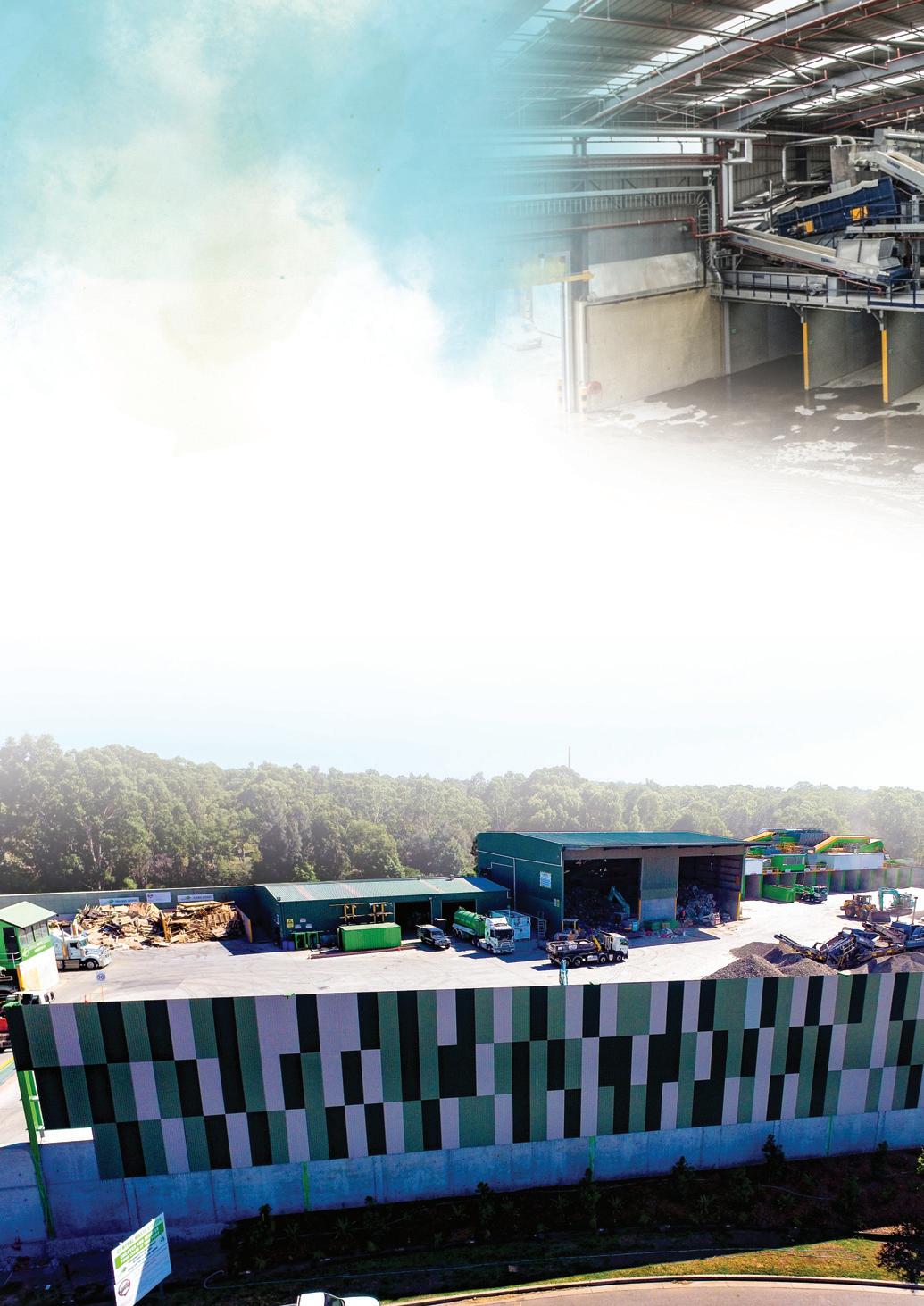
“The opportunity for Turmec in the US is huge,” Mr Dunne explained. “Thus far, we’ve found that the waste companies there are
receptive to us; they would welcome more suppliers in the recycling space, because the existing players are suffering from long lead times due to huge demand.”
Consequently, Turmec is investigating the viability of setting up its own physical
TURMEC I PROFILE 296 Inside sustainability
presence in the US, as this will ensure that it is able to quickly and reliably deliver its crucial after-sales service and support to its US customers.
Looking beyond the US, Turmec is already putting feelers out for other growth markets,
with the Middle East featuring prominently in its plans. “Momentum in our business is growing fast in the Middle East, particularly in the United Arab Emirates and in Saudi Arabia,” Mr Dunne said, concluding. “Of course, we’re always looking into the future to predict which direction the waste industry is moving: what’s coming next and what future projects may lie ahead.
“For example, we are asking ourselves whether the opportunity still lies in traditional recycling, or do we get involved in something a bit more exotic, like solar panel recycling?”
In the meantime, Turmec warmly invites you to visit its team at Waste Expo Melbourne, in which it will be exhibiting, October 26th to 28th 2023, to discuss your recycling machinery needs and challenges.
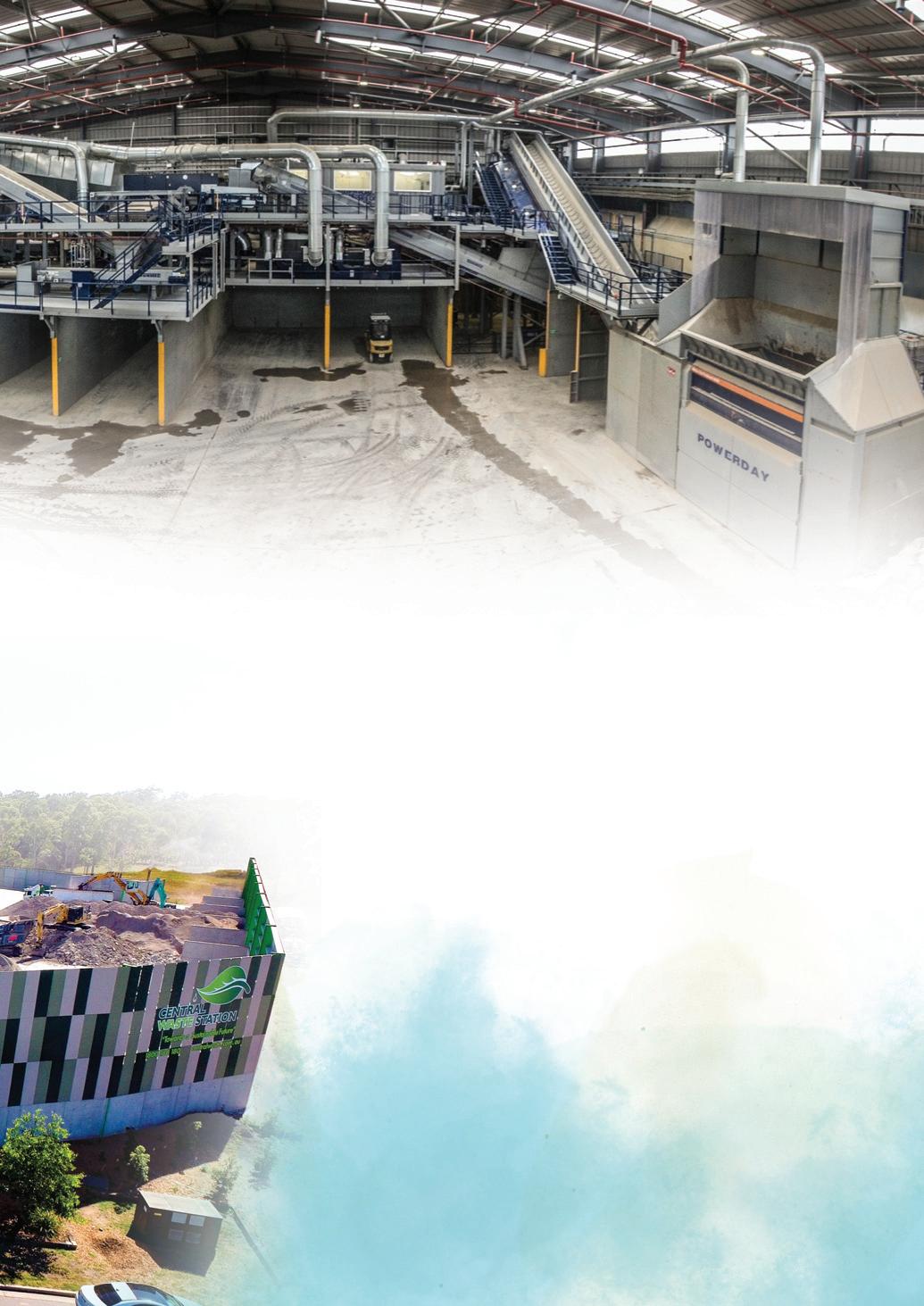
Inside sustainability 297
n
For the past two decades, Waste Efficiency has developed its services to deliver the very best waste management, recycling and facilities management solutions. Now, with its 20th anniversary looming, the company is on a mission to become the preeminent independent provider of waste management for the whole of the UK. Managing Director Tim Reed discussed how this will be achievable. Report by Imogen Ward.
Hoping to secure the top spot in the UK, Waste Efficiency intends to become the go-to place for waste management.
“We want to become the preeminent independent provider of total waste
management services in the UK,” said Managing Director Tim Reed. “We will do that by providing customers with the best data and the most compliant services.”
Ever since 2003, when the company was first established, Waste Efficiency
298 Inside sustainability
WASTE EFFICIENCY I PROFILE
has utilised its expertise up and down the country, to aid customers that are looking to manage their waste.
“The beauty of our offering as a business, is that it works for just about anybody,” Mr Reed explained. “At the moment, we do a lot of business in the industrial manufacturing area, but that is expanding into other areas, because any company that really values doing the right thing – managing waste and having control over its processes – is a potential customer for us.”
Currently on the company’s radar is the distribution and fulfilment sector. Already present within this market,
Waste Efficiency aims to expand its customer-base, to advance closer to number one status.
After having recent success with expansion (the company has successfully doubled in size over the last two years), Waste Efficiency anticipates it will double again by 2026.
The company provides a comprehensive offering, including total waste management, waste compliance management and consultancy. The company also has on-site waste operators available when needed and provides cleaning and site maintenance services to ensure all its customers’ production lines are shipshape.
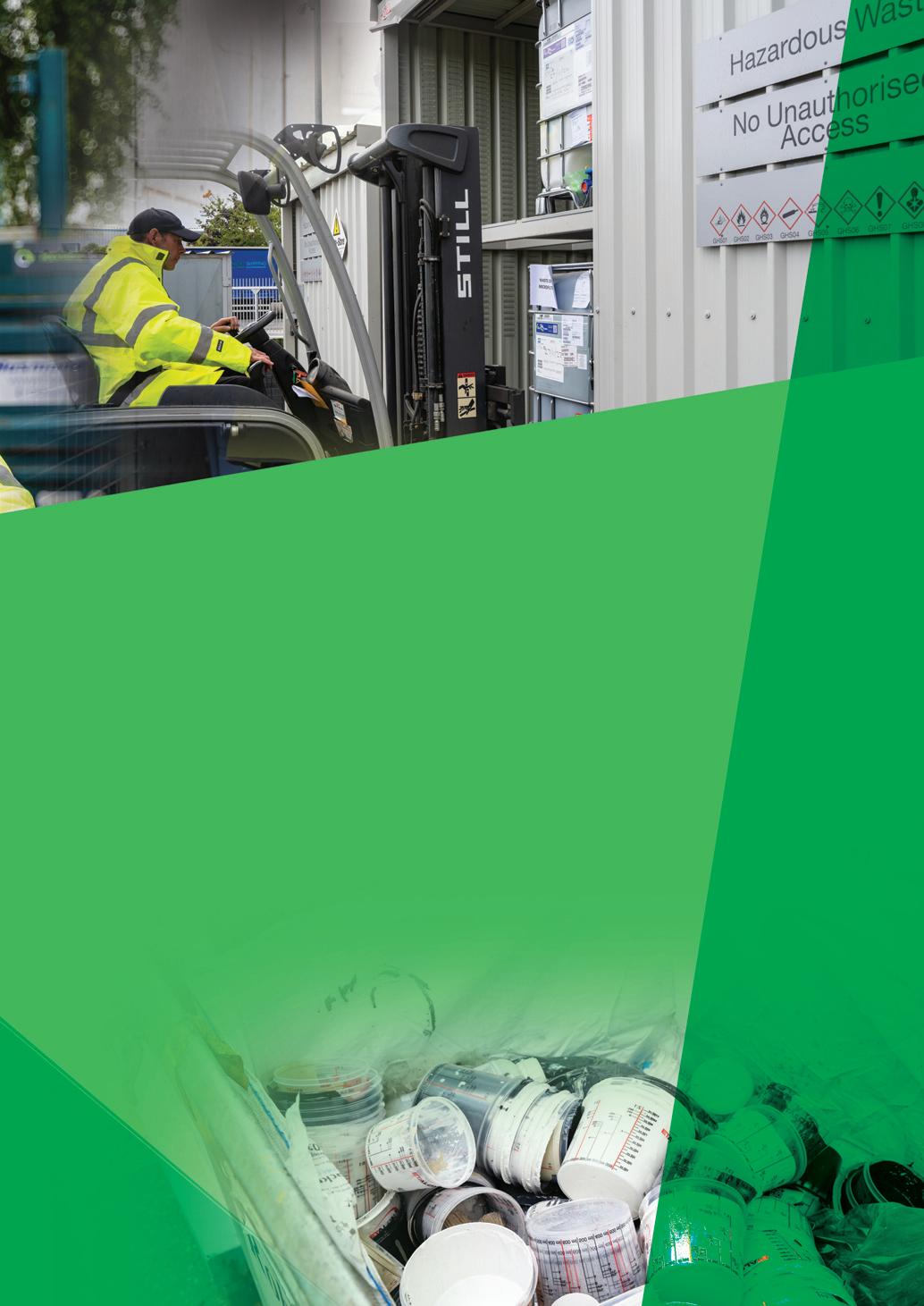
Inside sustainability 299
A system that incites change
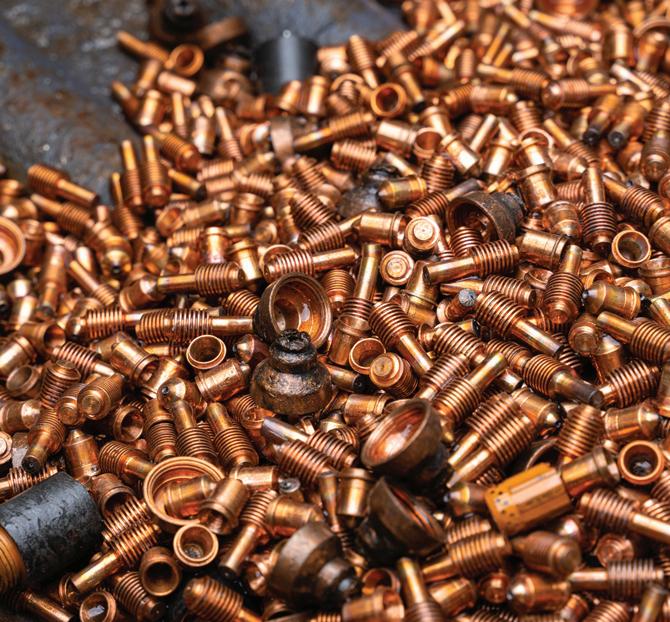
With customers in mind, Tim Reed set out to develop a system that could make waste management accessible for all. In 2013, the company introduced its online reporting system, CADS. A virtual portal that enables customers to input data and create reports, CADS also has ready-made reports which can be used for guidance and ease.
“One of the key elements of improving a site is good quality data,” Mr Reed said. “It’s very important to maintain a good understanding of what is happening. What
waste are you producing? How do you produce it? Why do you produce it? What happens to it? What opportunities do you have to move that waste up the waste hierarchy? These are all questions that require powerful information; and many companies just do not have access to that. We give customers every opportunity to get the answers needed for the best solutions.”
As an additional bonus, Waste Efficiency also offers consultancy support: analysing customer data, identifying anomalies and providing sensible solutions.
“When we first created our portal, there were hardly any other companies that had one,” Mr Reed explained. “Now, everybody
300 Inside sustainability WASTE EFFICIENCY I PROFILE
seems to have their own version; but they vary tremendously in terms of user experience and the quality of data they can provide. Those are the two areas where we remain ahead of the game, and future investments will only place us further in front.
“Through this system, our customers can a ccess tools which will help them to interrogate the data and turn it into meaningful actions, and we will support them every step of the way. It’s one thing providing data, but customers need the additional support to actually interpret that data.”
Closing the loop
With the aim of creating closed-loop recycling, (dependent on the waste stream), the company also offers a recycling-based solution.
“Some of our customers are making plastic components,” Mr Reed said. “In some cases, these production processes create a lot of waste. We take that waste material, process it, regrind it back into polymer and send it back to be reused in the production process. This creates circular closed-loop recycling
“The popularity of this service is growing because there’s a push from the industry to include recycled materials in their products. I think as the world wakes up to closed-loop recycling, it’s something we will be seeing a lot more of in the future.”
Unlike traditional waste companies with expensive vehicles and premises, Waste Efficiency does not have an expensive infrastructure it is under pressure to load. By removing the pressure of physical captive infrastructure, Waste Efficiency

WASTE EFFICIENCY I PROFILE 302 Inside sustainability
can dedicate more of its time to finding the perfect solution for each customer. “We don’t have a fleet of lorries sitting outside that have to be used every day to ensure they pay for themselves,” Mr Reed explained. “That means we don’t have that pressure to sell in-house services so we can really focus on delivering the optimum solution for each waste stream. This enables us to deliver the very best solution for each customer.”
A top team
All of Waste Efficiency’s successes have occurred with the support of an ambitious and passionate team. The company is committed to ensuring the wellbeing of its workers.
“A lot of our staff are struggling with the cost-of-living crisis,” said Mr Reed.

“We look to support people where we can. We have signed up for a scheme, which will give all our employees discounts at a large range of retailers. We always try to keep communication open with our staff so that we know when there are issues, and we can do our utmost to help ensure they remain content at work.”
The staff at Waste Efficiency are a number one priority: Mr Reed even attributed his own motivation to them. “One of the most satisfying parts of my job is seeing everyone work cohesively as a team,” he concluded. “We have quite a few people on the team, in a range of different roles, but they all come together to really help improve our customers’ experience and drive forward our vision of being the market leader for waste management.” n
Inside sustainability 303
Charting sustainable paths in digital
TRANSFORMATION
Capgemini has taken up the sustainability mantle, responding to growing demand from companies and public institutions seeking to become more responsible. Executive Vice President & Managing Director of Capgemini
Invent in Norway & Sustainability Lead for Capgemini Northern Europe Karl Thomas Reinertsen along with Vice President, Head of Automotive, Capgemini
Invent in Sweden, Denmark and Finland and Head of Sustainability, Capgemini Group Nordics Per Holmblad outlined the company’s mission to change the world. Report by Richard Hagan.

304 Inside sustainability
CAPGEMINIINVENT I PROFILE
Headquartered in Paris and part of the broader Capgemini Group, Capgemini Invent is a leading strategic partner helping businesses harness the power of technology. The company applies its expertise and solutions to address the full range of business needs across key areas, including strategy and transformation, applications and technology, engineering, and operations.
An evolving market
Just as the technology that powers its solutions is constantly evolving, so is Capgemini’s own operations. “We have evolved significantly since our founding in 1967 by Serge Kampf,” said Karl Thomas Reinertsen, Executive Vice President & Managing Director of Capgemini Invent in Norway & Sustainability Lead for Capgemini Northern Europe. “We evolve our services

Inside sustainability 305
as client needs evolve, to help our clients become more relevant and efficient in all areas.”
Capgemini’s clients can be found in several industries, including financial services, telecommunications, energy and utilities, automotive, and consumer products. Capgemini proudly works with a number of very large companies, most of them boasting global footprints. “We provide our professional services across IT, Data, Engineering, Strategy, Innovation and business transformation to help our clients move from yesterday's successes into tomorrow’s triumphs within the contexts of each respective sector,” explained Per Holmblad, Vice President, Head of Automotive, Capgemini Invent in Sweden, Denmark and Finland and Head of Sustainability, Capgemini Group Nordics. In the automotive industry, for instance , Capgemini is assisting companies as they shift gears from internal combustion engines to electric vehicles. “We help
our clients innovate and make these changes embedded and true within their organisations,” Mr Holmblad said.
Since its establishment several decades ago with only a handful of employees, Capgemini has continuously grown both organically and through acquisitions to its present impressive size. Today, it is a formidable presence on the Paris Stock Exchange, employing 350,000 staff spread across 50 countries. This includes a significant presence in the Nordics where it has 6,000 employees alone, in all the region’s major cities.
Further afield, Capgemini also has dozens of locations in 50 countries on most continents, including offices in Asia, Europe, North America and the Middle East.

A Nordic speciality
Capgemini’s geographic presence in the Nordics in particular, uniquely positions it to capitalise on the region’s dynamic
306 Inside sustainability CAPGEMINIINVENT I PROFILE
tech scene and its practical approach to tech innovation, as Mr Holmblad shared: “The Nordic countries are primarily production economies. Their pragmatic foundation leads to solutions that are well integrated into a process or industry need.”
At last year’s Nordic Sustainability Tech Awards, an award founded to champion companies using technology to create innovative solutions that limit the environmental and societal impact of climate change, the winning innovations frequently offered profound solutions to real operational needs, like ensuring clean oils and recycling of materials.
Mr Reinertsen also noted the advantages of being based in a region where sustainability is taken seriously. “Companies in
Denmark, for example, are very strong in wind energy solutions production,” he said. “They not only build a lot of wind turbines, but they also ensure that old ones are recycled. Norway’s energy production landscape, meanwhile, is shifting to hydropower and other renewable solutions.” He noted that these efforts, amongst many others in the region, pave the way for a broader shift towards sustainable solutions.
In support of sustainability
Embracing sustainability at its core, Capgemini has worked on several transformative projects.
One such initiative was a collaboration with a global auto OEM’s shared mobility business. The goal was to create an easy

Inside sustainability 307
and seamless service that customers would actually use, while ensuring that the technology enabled the OEM to understand what a customer needs at the right time.
Capgemini’s role was to study and understand how such a service could help the client reach its sustainability goals through a reduction in privately owned vehicles. Mr Holmblad recalled: “They started with the goal of having one shared car replace eight privatelyowned ones. By tweaking the system’s usage and efficiency, they moved up to replacing nine cars. We helped them understand the impact of the car-sharing service and the capabilities that the client has in relation to its sustainability goals.”
In this digital age, Capgemini is keenly aware that the future belongs to companies

that successfully integrate technology into their operations. “Data is at the core of new technologies like AI, machine learning and blockchain,” said Mr Reinertsen. “It’s about how you organise and capture data whilst ensuring that you have a proper data source. That’s what most companies are heavily focusing on right now, and it’s been the most important factor in our growth in the past decade.”
He explained that cloud computing will play an especially vital role in the future of most businesses. “Cloud computing has been driving a lot of business for our industry. Our clients are increasingly using the cloud – not only to be more agile but also to be more sustainable while making use of safer, more industrialised solutions.
“Both we and our clients have ambitious sustainability and carbon neutral targets.
CAPGEMINI INVENT I PROFILE 308 Inside sustainability
I expect that the cloud computing market and related services will continue to help our clients be more sustainable and will therefore grow significantly.”

Making a change for the future
Looking towards the future, Mr Reinertsen emphasised Capgemini’s commitment to staying relevant to its clients’ needs, which increasingly span the realms of strategy, operations, technology and sustainability. “We are constantly investing in new capabilities and hiring new talent to stay ahead of our client’s needs. Our mission is to ensure that we accelerate our relevance and that we’re capable of helping our clients with the important questions we’ve discussed here.”
Mr Holmblad agreed. “That’s what makes this work intriguing,” he concluded. “Our people have inspiring levels of ambition because, for us, every day is about making a difference for our people, clients and society at large.” n
Inside sustainability 309
Per Holmblad, Vice President & Head of Automotive for Sweden, Finland and Denmark & Sustainability Leader at Invent & Business Unit Nordic
Karl Thomas Reinertsen Executive Vice President and Managing Director of Capgemini Invent in Norway & Sustainability Lead for Capgemini Northern Europe
For the past 20 years, Intelligent Energy has pioneered the hydrogen sector with its lightweight and compact fuel cells. Now, with more orders than ever before, the company continues to make waves within the industry. In an exclusive interview with Inside Sustainability, CCO Greg Harris explained why fuel cells are the future. Report by Imogen Ward.
Initially set up as a spin-off from Loughborough University, Intelligent Energy has dedicated the last 20 years to developing powerful fuel cells perfect for a diverse range of applications.
“Intelligent Energy was one of the first c ompanies to work on fuel cell technology,”
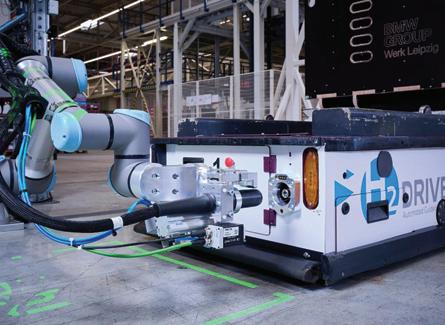
said CCO Greg Harris. “To begin with, finding a market for the technology was difficult, but now with everyone focused on meeting net zero targets, the level of interest has accelerated. Today, the challenge is scaling up our production quickly enough to meet that demand.”

Intelligent Energy is still strongly connected to its roots at Loughborough University, with its main research facility located on the institute’s science park. Home to an impressive array of test labs, the facility has been recently upgraded to expand production capabilities and upgrade end-of-line test capability.
This expansion was implemented to meet the soaring demand for fuel cells; and with the company expecting to produce around 1,000 fuel cells this year and double that
310 Inside sustainability
INTELLIGENT ENERGY I PROFILE
amount in 2024, further expansion is urgently needed.
“We are currently looking at potential locations for expanding our manufacturing and testing,” Mr Harris said, “and we recently ordered a one-megawatt electrolyser to provide the hydrogen we need to support our testing, which should be delivered by the middle of next year.”
The impressive range
According to Intelligent Energy, fuel cells are a solid investment – especially when compared to alternative options currently available on the market.
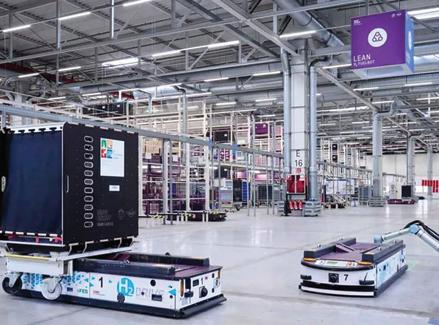
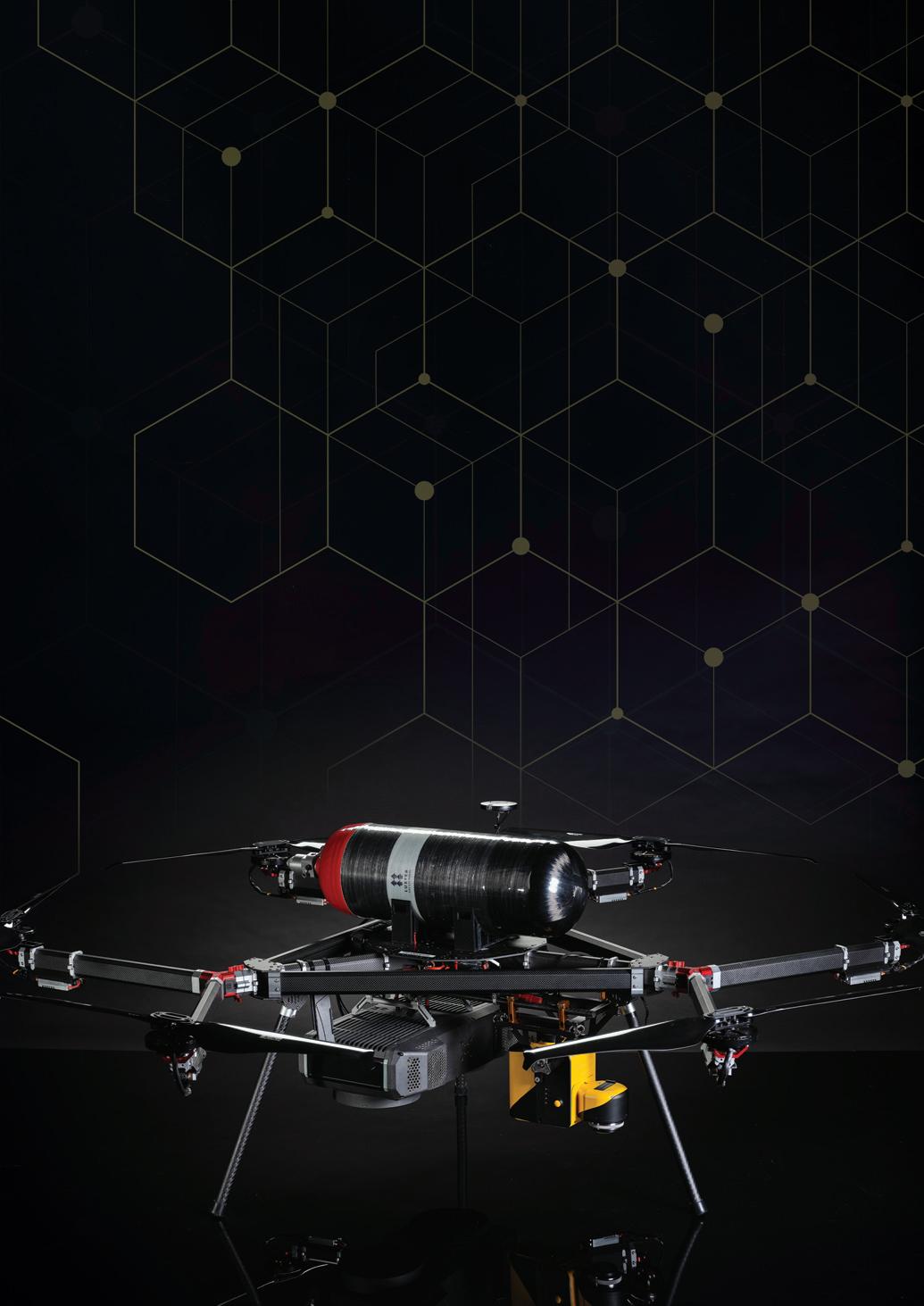
“Many industries have already started to use batteries to replace internal combustion engines and people are finding out where they work, and where they don’t work so well,” Mr Harris explained. “And that’s really where the fuel cell comes in.”
Fuel cells are a zero-emission technology, that do not require finite minerals for production; just a small amount of platinum. According to Mr Harris, they are also almost entirely recyclable: “Up to 95 per cent of materials within a fuel cell can be recycled, and done so economically, without incurring the high end-of-life costs typically associated with batteries.
Inside sustainability 311
“Our fuel cell stacks are replaceable to extend the life of the product. Depending on the type of fuel cells, the predicted lifespan is anywhere from 5,000 hours for the smaller products to 10,000 hours or more for the larger products.”

Two different fuel cell lines are currently on offer at Intelligent Energy. The IESOAR TM and IE-POWER TM complete the first of these ranges: these are low-powered, air-cooled systems that can fuel applications up to 5kW.
“These products really suit low-power applications, with customers utilising multiple cells to power applications up to 32kW,” Mr Harris said. “The IE-SOAR TM is the lightweight version, which is often used for drones and fixed wing and rotary wing drones, and the output from each fuel cell ranges from 800 watts to 2.4 kilowatts.
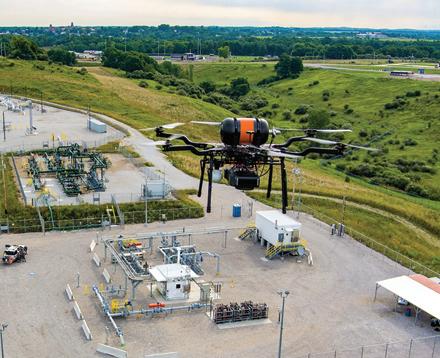
“The IE-POWERTM range is used for forklifts and other material handling equipment. They are also now being used in the US for backup power systems, which is currently our biggest area of growth.”
Since the introduction of the Inflation Reduction Act in 2022, which offers incentives to those accelerating the transition to net zero technologies, Intelligent Energy has witnessed a significant increase of fuel cell purchases from the US.
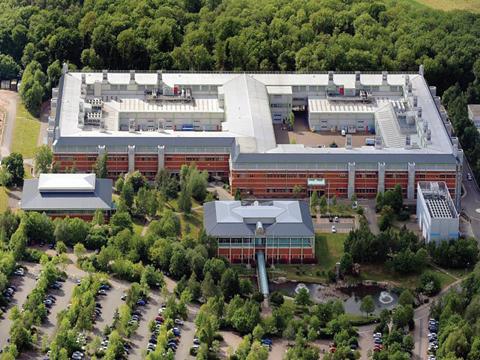
Powered-up progression
For those looking for higher power, the company also offers a range of liquidcooled fuel cells, called IE-DRIVE TM . The IEDRIVE TM is currently available in two forms: the DRIVE 100, perfect for powering
312 Inside sustainability INTELLIGENT ENERGY I PROFILE
passenger cars and light commercial vehicles, and the HD100, designed for heavy-duty vehicles and large stationary power applications.
The development of the IE-DRIVE TM products has been supported by an Advanced Propulsion Centre-funded project. The first IE-DRIVE TM 100 fuel cell engine will be integrated into an SUV and tested by project partner Changan-UK later this year.
“It’s a really exciting time for us,” Mr Harris said: “we’ve already delivered the first system for lab testing, and we’re now in the final build stage for the systems to go into the vehicles.

“The initial testing has shown that we can deliver up to 155kW from the stack, making it one of the most powerful fuel cell integrations within a passenger vehicle. This gives us confidence in delivering the 110-kilowatt system output targeted in the project. Next year, we will be scaling up IE-DRIVE TM production ready for delivery of hundreds of units from 2025 onwards.”
At the end of 2023, the company also starts testing its third generation of high-power fuel cell technology, delivering at least 30% improvement in power density compared to the previous model
The future of fuel cells
Whilst other countries are slowly becoming enlightened to the potential of fuel cells, South Korea has been integrating this technology into its infrastructure for many years.
“South Korea is a very interesting market for hydrogen and fuel cells,” Mr Harris explained. “It’s one of the most
developed hydrogen economies, with around 40,000 hydrogen cars on the road, and the increased use of hydrogen within a lot of industries. In particular, the South Korean government is pioneering the use of fuel cells to support the electrical grid.
Inside sustainability 313
Inelligent Energy CCO, Greg Harris
“We’ve been supplying our IE-SOAR TM fuel cells for drones in South Korea for the past few years. Last year, we started supplying IE - POWER TM fuel cells for back-up power systems. Now, they are using our high-powered IE-DRIVE TM products to provide a solution for use within the grid. Using hundreds of our fuel cells collectively, we can provide multiple megawatts of power to support the grid. This is a key project for: IE, not only are we pioneering the use of PEM fuel cell technology in this type of application, but it is also getting the attention of other countries as part of the future net zero solution. It’s incredible to be involved in that.”
The future for Intelligent Energy is looking promising, having just signed several important agreements within the US,
including a volume supply agreement with partner BWR. The company also recently gained a new US distributor for its drone fuel cells, IE-SOAR TM . It is no

INTELLIGENT ENERGY I PROFILE 314 Inside sustainability
wonder that Intelligent Energy delivered more fuel cells in the first three months of 2023 than for the whole of 2022, reflecting the rapid growth in opportunities for these fuel cells .

“It’s invigorating to see everything that is happening in the world of hydrogen right now. South Korea, Germany and the USA are really encouraging the development of hydrogen as a fuel and the use of fuel cells, but the UK has a long way to go,” Mr Harris said: “It’s frustrating, because it’s evident from other countries that the right level of support can quickly accelerate the uptake of fuel cells. Regardless, it’s an incredibly fascinating time to be involved in the industry.
“The level of interest from different industries and various markets is huge,” he concluded. “Every day brings different activities and opportunities – and that’s truly remarkable.” n
Inside sustainability 315
STEERING THE ENERGY TRANSITION
With five decades of experience supporting the offshore industry, North Star is in prime position to accelerate the shipping sector’s transition to green energy. Chief Technology Officer James Bradford explained how the company is doing exactly that, in an exclusive interview. Report by Imogen Ward.
Having worked continuously in the offshore sector since the 1970s, the UK’s leading infrastructure support vessel operator North Star is no stranger to the marine industry’s journey towards net zero. Now, eager to extend its fleet beyond oil and gas – to offshore wind, the company which employs more than 1,300 crew and onshore personnel from its bases in Aberdeen, Lowestoft, Newcastle and Hamburg – has set itself an ambitious goal.
“Our strategy is to add 40 hybrid -elec tric SOVs to our fleet by 2040,” said Chief Technology Officer James Bradford.
316 Inside sustainability
NORTH STAR I PROFILE
“And so far, we’ve made a great start with our first two service operation vessels delivered ahead of schedule. We’ve received a lot of positive feedback for the Grampian Tyne and the Grampian Derwent’s unique and innovative design, as well as our project management skills, which is a great position to be in as we aim to build our business across Europe.”
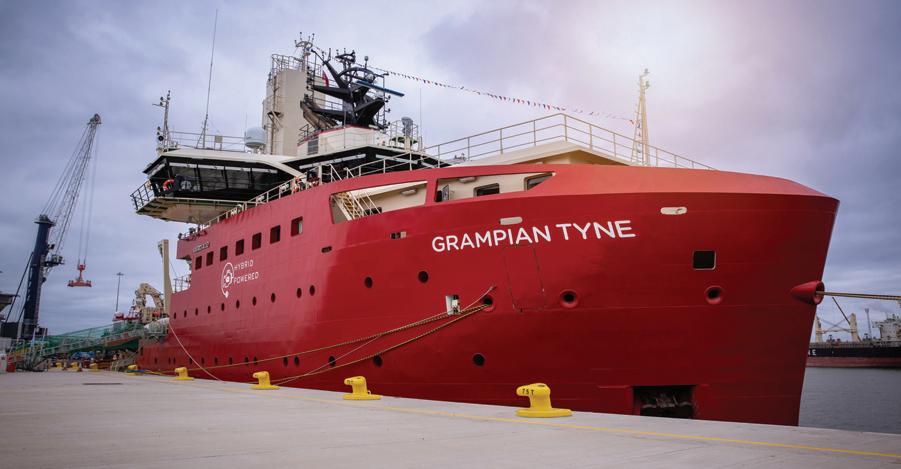
Prior to working in the oil and gas sector, the firm was established 135 years ago to aid the fisheries sector. Seizing on the
North Sea’s oil boom, it quickly became a highly regarded and respected emergency response and rescue vessel (ERRV) operator. The firm has the largest ERRV fleet in Europe and provides essential crew rescue, firefighting, and other emergency response services to offshore energy operations around the clock, 24/7, 365 days a year.
“ERRVS are a mandatory requirement for all offshore oil and gas installations,” Mr Bradford said. “With the changing

Inside sustainability 317
demands of the energy industry driven by climatic considerations, the opportunity to transition our years of experience garnered in ERRV operations (and proven track record for reliable on-time simultaneous newbuild programmes) made our investment in a new ship design for the renewable sector an obvious choice.
“Not only is there an increasing need for energy security across Europe, but with that comes a realisation that as we move to protect the planet, the need for oil and gas will start to decrease. That’s why we made a conscious decision to start diversifying the business into offshore wind.
“But that’s not going to take a matter of weeks; it’s a transition that could take 20 years to complete.”
Emerging ESG
In line with its commitment to the renewables market, North Star has also recently implemented its own ESG strategy.
“The research really began in 2019,” Mr Bradford said. “It’s mainly being driven by metrics that have already been successfully applied to deep sea shipping; we are great believers in learning from other shipping categories that have previously been exposed to energy efficiency and decarbonisation regulatory diktat.

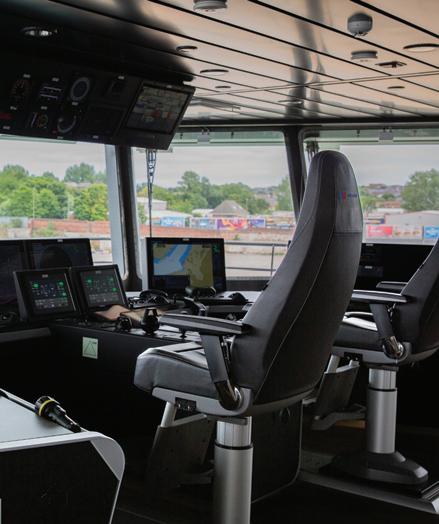
“As part of our decarbonisation plans, we’ve introduced a carbon intensity index across our fleet, so that we can more accurately measure our emissions. We have also included a commercial metric which is linked to the business’ transition from using fossil fuels to green energy. That metric will indicate how quickly we are making that

318 Inside sustainability NORTH STAR I PROFILE
move. We also have a technology roadmap which identifies the partners who we’ll call on to accommodate the ever-increasing regulations of a transitioning industry.”
Choosing the perfect partner
The journey towards a greener fleet needs a well-structured plan and a solid financial backing to execute it. North Star was acquired in 2022 by Partners Group (a leading global private markets firm), which, along with other investors, has enabled North Star to build its world-class offshore wind tonnage. The company selected VARD as its shipbuilder and has delivered the first two of four SOVs ahead of schedule for the Dogger Bank Wind Farm for decade-long minimum charters. It also has the first two of up to four Construction SOVs underway with the organisation.
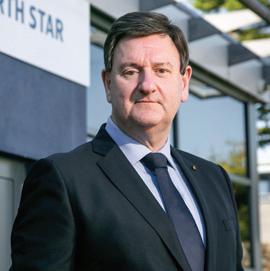

“We went through a comprehensive evaluation process that included several ship building yards,” said Mr Bradford. “We put together our specifications which were based upon the project pillars of
Inside sustainability 319
Chief Technology Officer James Bradford
quality, cost and build time. VARD scored highly within all three areas.
“We’re really making the most of the amazing technology available at VARD’s Vietnam and European yards, including a huge amount of automation, from steel cutting to welding and fabrication. Their technology and our desire to deliver a clean, energy efficient service to the renewables sector really go hand-in-hand.”
40 by 2040
With the first two SOVs delivered, and four more underway, the ball is well and truly rolling for North Star’s ambitions.
“The Grampian Tyne was delivered directly to Equinor for operations and maintenance

work,” Mr Bradford explained. “She’s been in service for a couple of months now and is doing extremely well. From the feedback we’ve received, the ship’s performance has been quite exceptional. Equinor has been an amazing support as we brought the vessel up to full capacity, and we couldn’t be more delighted with the results.”
The company is not one to rest on its laurels; the team always has an ear to the ground for new innovation developments. For example, the North Star SOVs deploy the Electric Voith Schneider Propeller (eVSP) from Voith. The two eVSPs per vessel are eVSP 26/230 with 1850 kW each, plus an electronic control system. The eVSP has Voith roll stabilisation, a unique feature which allows active roll reduction of the vessel, providing a more stable and safe working platform.
“There is a saturation of technology within the market that could satisfy people’s needs for the next 10 years, but there’s nothing that is legacy at this time,” Mr Bradford said. “So we’ve configured our designs with high efficiency engines, open technology and energy storage systems – batteries – to afford North Star the time required to evaluate how the technology evolves and finally stabilises as the industry transitions. We have chosen methanol as our chosen future fuel for this transitionary period, which reduces our carbon emissions by 92 per cent. We are also installing energy storage back-up systems.”
In the meantime, the company is currently looking at two future fuel options for its ERRVs and is in talks regarding methanol, and HVO diesel supply and fuel blending technology.
NORTH STAR I PROFILE 320 Inside sustainability
“HVO would reduce our emissions by 85 per cent if we applied it to all of our ERRVs,” Mr Bradford said. “The main barrier for that, though, is the price. Currently HVO is three times more expensive than marine gas oil. In order to move forward, the industry really needs to come together to make it more affordable. The regulatory bodies can’t expect businesses to be financially compromised to go green.”
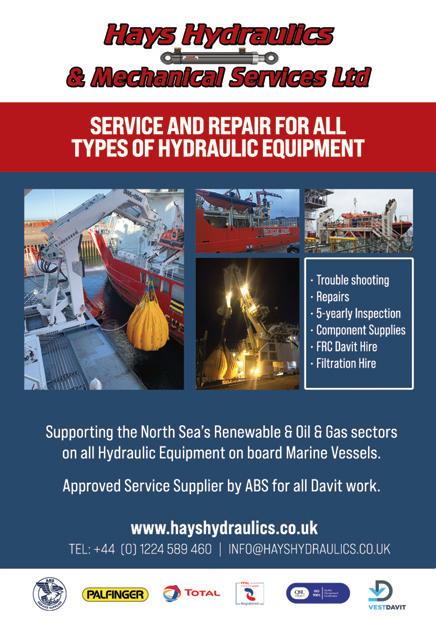
North Star is also looking into drone technology to further aid its support to the offshore wind sector. With so much on the cards, the future for the firm looks bright.
“I’m a great believer that if you’re happy with what you do, then you will always excel,” Mr Bradford concluded. “I’ve applied that to my entire life, and it is applicable to North Star as well. There’s an energy within the organisation that is hard to find. The atmosphere is buzzing, and the challenge is always forthcoming, which is great.
“What North Star is achieving – along with its technology partners – is something you don’t come across very often. I really believe this company is one in a million, and being a part of this journey is absolutely fantastic.”

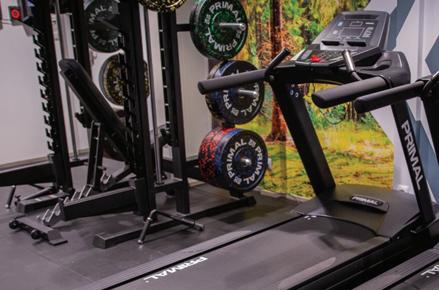

Inside sustainability 321
n