Weyburn, SK S4H 2L0 306-861-7687 tgfis@sasktel.net
Keep in touch by reading the official Gelbvieh Magazine.
The Gelbvieh Guide magazine is mailed FREE OF CHARGE for four years to purchasers of registered Gelbvieh cattle when the registration certificate is transferred into the purchaser's name. Ask the seller of the animal for a registration certificate when you purchase a Gelbvieh animal.
Note, according to the Animal Pedigree Act (Chapter 13, Section 64(j), no person shall sell a purebred animal without providing to the buyer, within six (6) months after the sale, the animal's duly transferred certificate of registration. If you are not a CGA member and wish to continue to receive the GELBVIEH GUIDE or know of someone who should be on our mailing list, please clip out and send in this coupon and remit $26.25 Canadian and send to the Canadian Gelbvieh Association office.. For out of country subscribers, please fill out the Subscription Form, remit $50.00 Canadian, and send to the Canadian Gelbvieh Association office.
Name:
Address:
City:
Postal Code Country
Prov/State
Mail to: Canadian Gelbvieh Association
5160 Skyline Way NE T2E 6V1
Ph: (403) 250-8640 Fax: (403) 291-5624
$26.25 Enclosed for Canadian subscription fee. $50.00 Enclosed for foreign subscription fee.
Gelbvieh
CGA PRESIDENT’S REPORT
Aaron Birch
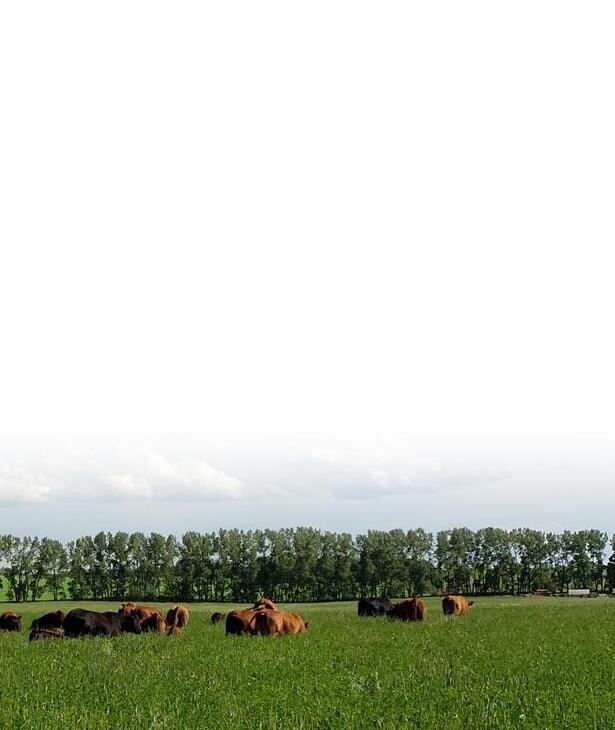
As I write this we have completed our AI and embryo transplants for the year and have turned the bulls out. This year’s calf crop is shaping up nicely and we are as ready for cows to head to grass as they are. Many producers may be in the middle of or just starting calving. No matter where you are in your production cycle the one thing we can all agree on is how nice it is to see a group of Gelbvieh cows turned out on spring pasture. In talking with many of you lately another thing we can all agree on is that more moisture would be appreciated in most areas of the country.
The demand for Gelbvieh genetics was very evident this spring with many successful bull sales which included private treaty, online timed auction and live auction. The fact Gelbvieh breeders have readily adapted to whichever sale format works best for them has really improved our market share and the sustainability of the breed. I know I’m not alone in already being excited to see the great females that will be available in the sales coming up this fall.
The industry got some exciting news recently with Canadian Western Agribition announcing they plan to have a live event in 2021. I hope more events are able to make similar decisions as well. Although we have all tried to make the best of the past year I know that the friendship and comradery you find at shows and sales has been missed by us all. We plan to go ahead with the National Gelbvieh Show at Agribition in conjunction with their 50th anniversary celebration. The CGA AGM will also be held in Regina during Agribition in addition to a virtual component once again.
I am very pleased that the number of Gelbvieh cattle being DNA parent verified continues to increase with many breeders moving toward DNA genotyping their whole herd. Although I realize this is not the right fit for every breeder the increase
of DNA parent verified cattle in our herd book is a positive for all breeders. It is interesting to note that as more DNA is completed, less parent exclusions seem to be found.
Our association had a very successful whole herd enrollment this year with most breeders completing their assessments by the deadline and all being completed shortly after. In talking with Sarah I was pleasantly surprised to find out that 97% of members utilize digital beef for their recording. I would wager this is among the highest of the breed associations. Although we will always have the option to send registrations to the office to be entered the fact that so many do their own greatly increases the amount of staff time that can be put toward promotion and improving aspects of the registry. We have had some new features included in digital beef recently. This includes cattle that are homozygous polled or homozygous black by parentage having that designation included in their display information. We are always working to find new ways to improve both what digital beef can offer members and to maintain the integrity of our herd book.
Like most of you reading this I am often reminded how lucky I am to be in the cattle industry. The last year has certainly proved the resiliency and importance of cattle men and women. I also count myself fortunate to be involved in a breed of cattle that works so well in so many management systems and is filled with some pretty incredible people, many whom I call friends. Here’s hoping we can actually get together and appreciate that soon.
CGA OFFICE MEMO Sarah Van Schothorst CEO
Happy Spring Everyone!
Bull season has wrapped up. Please ensure that any herd sire you purchased has DNA on file. This will be required before calves can be registered. When making DNA requests or wondering what test type to choose, remember to reference the fantastic video we created that covers DNA from start to finish! You can find it on our website gelbvieh.ca. Fall show and sale season will be here before we know it, remember to send your DNA in early.
TIPS & TRICKS
1. Did you know that under the Animal Pedigree Act members are required to keep their records indefinitely, this includes breeding and calving.
2. When running your cows through the chute, take 2 DNA samples of every cow you have. This could be 1 Tissue Sampling Unit (TSU) sample and then a hair sample in a regular paper envelope. Or it could be two hair samples stored in two regular paper envelopes. Make sure they are labelled completely with tattoos and registration numbers. If you are planning on testing some animals right away apply your hair to a hair card. TSUs that you will not be testing within a year’s time can be frozen for storage. Store the envelopes with hair in a dry place like your filing cabinet. The second sample provides insurance for you once you have shipped the first to the lab. This can save time when animals have gone to pasture and you want to get them tested. It can also prevent problems when animals die or are shipped, and you forgot to take a sample.
3. Make sure your DNA request is complete before your sample arrives at the lab. If this procedure is not followed there will be a delay in receiving your results, beyond the regular 21-day turnaround.
4. Make sure to order TSU supplies from the CGA office or hair cards directly from the lab to avoid the loose hair charge. An extra $4 will be charged for any sample arriving at the lab without using a hair card, blood card, or TSU.
5. Remember all ET calves must be fully parent verified before they can be registered with a CDGV number.
6. The member handbook is posted on the CGA website gelbvieh.ca. It includes information and screen shot instructions for basic registry work.
The CGA has tentatively booked our AGM at the Royal Executive Hotel in Regina, SK on November 23 at 7:00pm. There will also be an online component for those that are unable to attend in person. Stay tuned for more information as things may be subject to change due to COVID-19 regulations.
The Gelbvieh and Gelbvieh influenced heifers at Olds College have completed their trial period. We look forward to compiling the data and reporting the results in the Fall Gelbvieh Guide
Be sure to have all your registrations and performance data entered by August 31st for the Dam of Merit and Dam of Distinction Awards.
Juniors! Remember to submit your application for the Junior scholarship by July 15th.
I hope everyone has a safe Summer.
Good day everyone! Hope you all have been well! As a RN working in a smaller, rural site - we are certainly seeing an influx of COVID patients right now. I hope you all have been able to keep yourselves and your families safe. With that being said, uncertainty remains about what the situation will be come summer and fall and what events will be happening. We have not heard any updates from Farmfair as of yet- though their future does seem quite grim at this point. We are in discussions about different events, venues, or avenues we can take to hold a show. If anyone has any feedback or ideas on this - please feel free to contact anyone on the board.
One thing for sure is planning for the 2021 Wish List is well under way! Mark your calendars for December 3 & 4 in Stettler! The Stettler Ag Society did a phenomenal job of hosting us last year and we look forward to being there again in 2021. This event just keeps getting better and better and we would love for you to be a part of it! The Bull Futurity continues to grow and is something you don't want to miss. The amount of bulls that were purchased this Spring because they were seen at the futurity was impressive - I can count five just off the top of my head. Do not miss this opportunity to market your program. Before you turn cows out to pasture, we want to remind you to consider your consignments for the Wish List sale. We are always looking for new breeders to enter animals and always look forward to seeing what knock outs our returning consignors bring to town. If you have any questions about consigning, please contact Tom Kulak at (780) 722- 2150.
Association News
By Jessica Pearson, President
The junior incentive program is back for another year. This year, the Gelbvieh Association of AB/BC will be sponsoring a $1000 sale credit to the Wish List Sale We had a number of Gelbvieh breeders step forward and say - this is something I want to support as well! Therefore, we are introducing the "Breeder's Purse" credit this year! How much will it be? Well Gelbvieh enthusiasts - that is entirely up to you. Lets see how big we can get it and show those juniors out there showing off our breed how much we appreciate them choosing Gelbvieh! Breeders contributing thus far: Jonus Cattle Co, Hilltop Gelbvieh, Towerview Ranch, Limestone Stock Farm, Pearson Farms, Brittain Farms, BNH Livestock, Jace Cattle Co, Dusty Rose Cattle Co, Milne's Gelbvieh and Koziak Land & Cattle! A huge thanks to these forward thinking breeders for stepping up!!! I won't reveal any sort of amount just yet - but I will say it is EXCITING!!!! If you have a Gelbvieh 4-H or junior project this year, whether your show was live or virtual, be sure to take a picture and send it in for your chance to grab one of these awesome prizes! This credit could be what a junior needs to start their herd and grow their interest in our breed! If you would like to add to the breeder's purse, or would like more information on entering, please feel free to contact me.
The calendar was a huge success this year and I would like to thank all of those who purchased ads or calendars. We hope you have enjoyed them. As always, we appreciate your feedback and welcome any ideas you have on how to make them better for 2021. A huge thank you going out to Lorna Okell who did the brunt of the work on that project!
Take care and hope to see you all soon.
JUNIORS!
Did you have a Gelbvieh project this year in 4-H or at junior shows?
Be sure to send us in a picture to be entered to win a sale credit to the 2021 Wish List! For more information, please check out the Gelbvieh Association of AB/BC Facebook Page or contact Jessica at jessica.andruchow@yahoo.ca or (780) 297-2352
Well, who would have thought we would still be following tight Covid restrictions? Many events continue to be cancelled, while some are going virtual.
Many are keeping fingers crossed that we could get back to attending cattle shows this fall. From November 21-27 Agribition will be celebrating 50 years, and the Man-Sask Association will be hosting the National Gelbvieh Show and Sale. For the show to be successful we require volunteers to help with clerking, marshalling, and announcing. Sponsors and exhibitors are required. If you are interested, please contact a Man-Sask Gelbvieh director. Since this is a National sale, DNA submission will be required on all sale lots. First Class Marketing will be managing the sale. Nominations need to be submitted to them by mid-July. Manitoba Ag-Ex will be held in Brandon on October 26-30.
Due to Covid restrictions changing monthly, it was decided to cancel this year’s field day.
4-H Leaders are reminded to contact Cynthia Wirgau (204886-7683) or Brett Spray (306-614-9049) for tokens. Members are to show an animal that is Gelbvieh influenced to receive a token. Feel free to send us pictures that we can share on our Facebook page.
Association News
By Cynthia Wirgau
Nominations for Purebred and Commercial Breeder of the Year must be submitted by September 15. Please send your nominations to Brett Spray.
This year’s Donation Heifer has been generously donated by RPS Gelbvieh. Tickets will be sold, and a winner will be drawn at the National Sale at Agribition. Stay tuned for information on entering the Gelbvieh Sweetheart Heifer Classic.
We would like to remind everyone to submit information for the Gelbvieh 50th Anniversary History Book. If you have stories to share, be sure to send them to the CGA office.
In closing, I would like to congratulate all the graduates of 2021. You may not be having the celebration that you dreamed of, but you are being thought of and loved by many. Good luck with your future plans.
I hope to see you all down the road. Stay safe! Hope everyone gets the moisture they need.
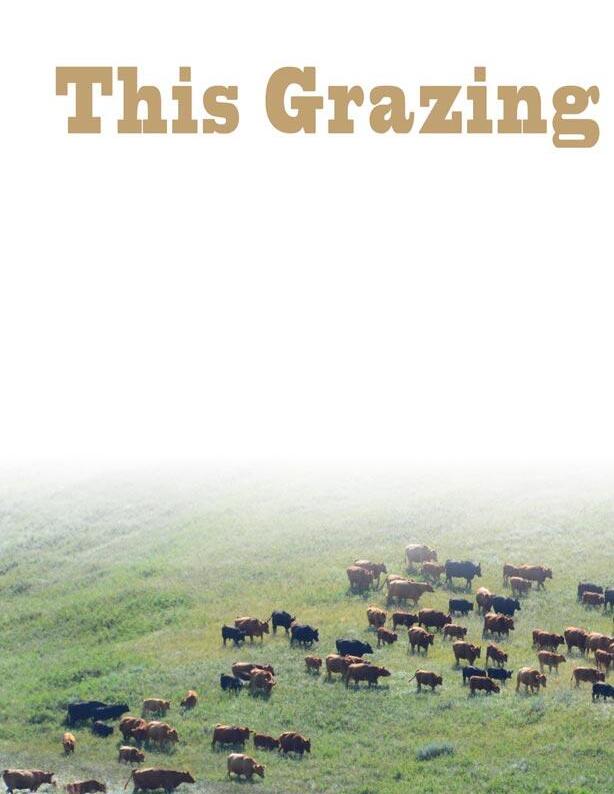
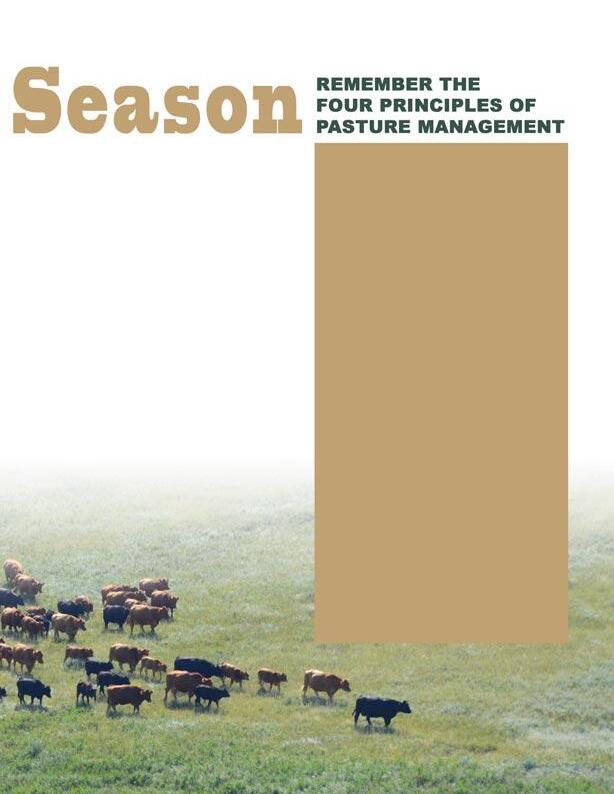
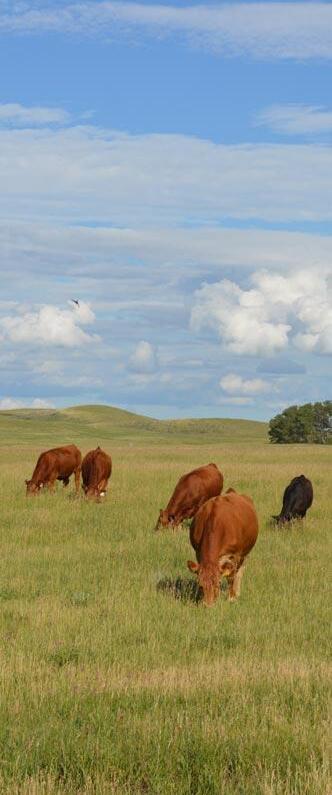
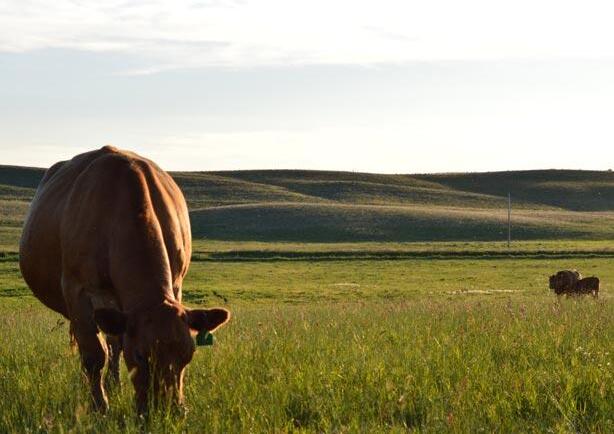
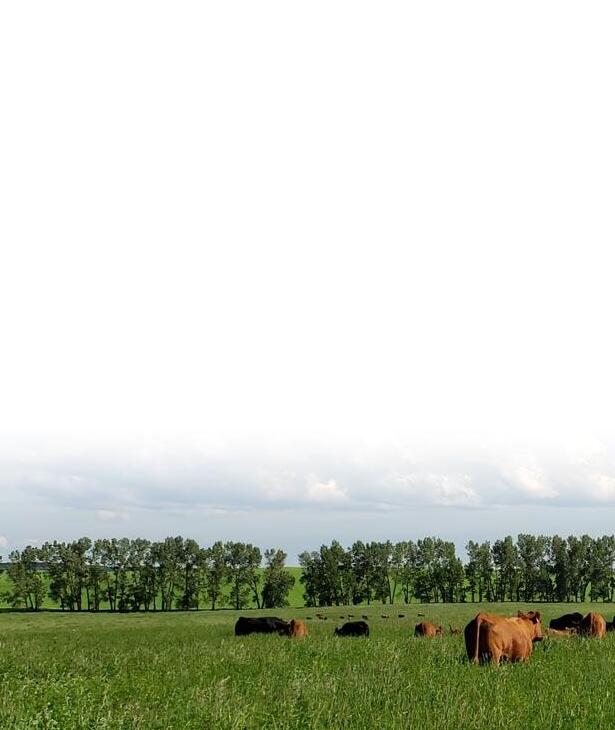
Pasture is a key component of beef cattle operations and one definitely worth managing. At first glance, grazing a pasture may appear as simple as placing cattle in a fenced area with a water source. However, practising effective grazing management is an art and a science.
Pasture conditions and types vary widely from native grassland to tame forage, with stands comprised of many diverse plants or perhaps just a simple mixture of a few grass or legume species. Regardless of the pasture type, focusing on a few key principles can help maintain forage productivity, ensure stand longevity, sustain a healthy plant community, conserve water, and protect soils. Here are four main factors to remember:
• Balance forage supply and livestock demand. Avoid overstocking a pasture by ensuring there is adequate forage available for the number of cattle, and the length of time, the cattle will be grazing. BCRC’s Carrying Capacity Calculator can help producers determine a starting point for their stocking rates. In addition to grazing, remember to factor in a utilization rate to account for trampling, wildlife, or insects. General guidelines for native pasture suggest a utilization rate of 2550%, and for tame pasture a utilization rate of 50-75% is a built-in buffer that allows the pasture to sustain itself.
• Distribute grazing pressure across the pasture. When left on their own, cattle will prefer to graze moist, productive areas of a pasture and avoid dry hilltops where the forage quality may be lower. Cattle can be managed to graze a pasture in a relatively uniform manner using different methods depending on forage type, topography, and goals. Temporary or permanent fencing, placement of salt and mineral, and stock water locations can all be strategically maneuvered to effectively move cattle.
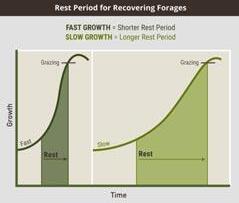
• Provide rest for pasture plants during the growing season to help plants recover. Forage plants need time to rest to allow them to replenish their energy reserves and prepare for the next grazing event. If plants don’t have adequate time to recover, pasture productivity can dwindle, and pastures can become susceptible to weed infestations, soil erosion and winterkill.
• Avoid grazing during sensitive times. Grazing too early can set a pasture back for the whole season. A general rule of thumb is for every day grazing is deferred in the spring, you gain two days of grazing in the fall. Other situations such as grazing wetlands or species at risk habitat, may benefit from deferring grazing until nesting season is over or flood potential has subsided.
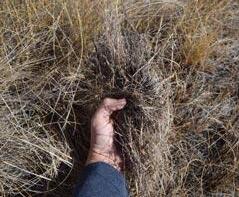
Manage pastures to retain adequate “litter” cover. Litter is
Printed with permission from the Beef Cattle Research Council. www.beefresearch.ca
the dead or decaying plant residue left from previous growing seasons and it is a valuable resource in both tame and native pasture stands. Litter insulates the soil, keeping it warm in the winter, and cool in the summer. As it breaks down, litter provides nutrients to the surrounding plants, and it is a wonderful safeguard for reducing soil erosion and water loss due to evaporation.
There are many different types of grazing systems promoted by groups and individual producers, including, but not limited to, rest-rotation, AMP (adaptive multi-paddock), intensive, or strip grazing. While each system has its own benefits and drawbacks, almost all systems factor in the four key principles of grazing management. By carefully managing pasture as the valuable resource that it is, forage production and range health can be sustained for this season, and for many years to come.
Litter is often called a “rancher’s insurance policy” because it helps pasture systems retain moisture in dry years and can help maintain forage yields.
November 23, 2021 at 7:00PM Emerald Room A, Executive Royal Hotel, Regina, SK
Tuesday November 23, 2021 at 7:00PM. We have tentatively booked the Emerald Room A in the Executive Royal Hotel, Regina, SK. This will be dependent on COVID-19 and the restrictions that may or may not be in place at the time. The meeting will also be online for those that are unable to join in person. The office will be in touch with these details. We have also reserved 20 hotel rooms at a rate of $109 per night for CGA members. 10 of these are single queen and 10 are double queen rooms. Supper will not be provided this year but there will be coffee and a snack available. This is because of the catering limitations at the hotel due to COVID-19.
1
The CGA Constitution may be amended at any General meeting of the Association by affirmative vote of two-thirds of the members present, but no amendment shall be valid until approved by the Minister of Agriculture of Canada and filed at the Department of Agriculture of Canada.
2
Notice of all proposed amendments shall be signed by two members in good standing and submitted to the Association at least fortyfivedays in advance of a General Meeting and they shall be included in the Notice calling such meeting, otherwise the meeting shall have no power to deal with the same.
3
The Meeting has only power to deal with the Article and selection as stated in the Notice calling such Meeting.
Members wishing to submit amendments to the Constitution are requested to forward some to the Association in accordance with the above. Please include addressed of mover and seconder. All amendments to the Constitution must reach the Association office by Oct. 8, 2021 in order to be included in the Notice of Meeting. Copies of the Constitution are available from the CGA office on request.
CANADIAN GELBVIEH
performance production profit
DECEMBER 3 & 4, 2021 STETTLER AG SOCIETY, STETTLER, AB TO BE HELD IN CONJUNCTION WITH THE GELBVIEH WISH LIST SALE
$400 MEMBERSHIP
Provides the member with one voting card, the chance to win the Futurity Champion Bull and draw down prizes. Draw down prizes will include but will not be limited to cash value vouchers to purchase animals from any Bull Futurity Member either privately or from a sale.
$200 PER BULL ENTRY FEE
Only Futurity Members are eligible to enter bulls.
RULES
· Eligible bulls must be born after January 1st of the previous year (2020).
· Bulls will only be allowed to enter the Futurity once.
· Members entering bulls must be the registered owner of their futurity entries by August 1, 2021.
· All bulls must be CGA or AGA registered PC88, Purebred or Fullblood.
· All bulls must have complete parent verification on file with the CGA or AGA by Monday November 29th , 2021 to compete. The Bull Futurity will guarantee results for all proper DNA samples submitted to CGA or AGA prior to October 1, 2021. All samples received after Octob er 1st will not have guaranteed results.
· All bulls will be tattoo checked and weighed at the event.
· All bulls will be videod and made available on-line.
· The Bull Futurity will supply a program with applicable information and stall cards that must be displayed. All additional pr omotional information will be the responsibility and left to the discretion of each member.
· Exhibitor of the Futurity Champion will not be eligible to win their own bull.
· Members receive 1 voting card per membership.
· On-line voting will be available for members who are unable to attend the event, there will be no proxy voting.
· Futurity Champion will receive up to $15,000 payout.
· All breeders entering bulls will be required to sign futurity contracts stating that the bulls are virgin bulls (never bred c ows or been collected). In the event their bull wins they must be willing to give up ownership, full possession and semen interest.
· The Futurity Winner has the option to collect in herd use only semen from the Futurity Champion. They may not sell this semen or use to breed cows that they do not own.
· Ownership of the Bull Futurity Champion is assumed by the Draw Winner and the prize money paid to the Futurity Winner when th e Bull passes a breeding soundness evaluation or if the Draw Winner chooses to take Ownership before that. Until Ownership is assumed the care of the Futurity Bull is the responsibility of the Futurity Winner. The Futurity Winner cannot use the Bull for natural breeding without the per mission of the Draw Winner. All further guarantees on the Futurity Champion are the responsibility and at the discretion of the Futurity.
· The Draw Winner has the option to sell the Futurity Champion in the Gelbvieh Wish List Sale. The Draw Winner has the option t o sell the Futurity Champion at any time after they assume ownership of the Futurity Champion.
· Purchase of insurance on the Futurity Champion is up to the discretion and/or responsibility of either the Futurity Winner or Draw Winner.
· The Draw Winner has the option to sell the Futurity Champion in the Gelbvieh Wish List Sale. The Draw Winner has the option t o sell the Futurity Champion at any time after they assume ownership of the Futurity Champion.
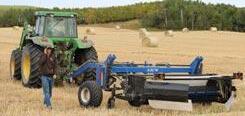
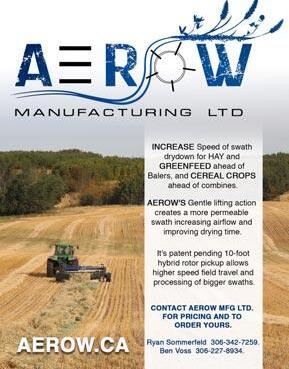
When Ryan Sommerfeld brought a funny looking green prototype machine on to Leigh Stuart’s 7500- acre grain farm in Glaslyn, Saskatchewan in the spring of 2020; it was a long shot that it would work at all. After all it was built from pieces of wrecked hay-bine, swather and combine pickups. The machine was built by Ryan Sommerfeld and Ben Voss; co-founders of Aerow Manufacturing Ltd. The two had believed that the machine, although untested on cereal crops, might safely and economically assist dry down of the 1500 acres of overwintered barley crop that lay there in swaths.
Leigh was sceptical but thought that he should give it a chance, after all it was worth the risk to try and speed up this large amount of combining before seeding would start. When the machine started to spin, Leigh commented that he thought it would be too aggressive to process the swaths without significant damage to the barley yields. After the first 100-yard pass it was assessed and there was very low shatter loss; “no more than a combine pickup would leave behind,” commented Leigh. The remainder of the field was processed, and they reassessed the situation. “We will use it on every acre ahead of the combines this spring,” was Leigh’s reaction to the results that he saw. Starting a few hours ahead with the AEROW and following with three large combines, a high school student, Marshal Woods, would run the AEROW at 8+ MPH and get chased by the combines across the field, and they would typically catch him by evening. The comments from the combine operators were that the speed almost doubled, wads from tough swathing conditions nearly disappeared and were not hard to pass through, and it was far less stressful combining behind the AEROW machine. In a few days, the combining was done, and the grain was considerably drier than it would have been, according to the unprocessed swaths in their six test strips. It was a successful test of what the machine could do.
That was the official start of the AEROW Manufacturing Company, and it’s suitably named windrow aerator “AERROW” (aeration of wind rows). The company has since refined its design twice and is set to begin upscale manufacturing of the machines in 2021.
Ryan Sommerfeld from RPS Gelbvieh was the original inventor of the machine. The significant amount of lowland haying acres on the RPS Gelbvieh farm and difficult drying conditions in NW Saskatchewan all contributed to the inspiration to build this high-speed, high-capacity machine. The design was partially inspired by a machine Ray (Ryan’s father and founder of RPS Gelbvieh) and Ryan built together out of an old baler and used for 10 years on hay and green feed crops to speed dry down.
“We felt that presently nothing was on the market that combined speed, capacity, and is very gentle on the crops,” says Ryan. While that old machine worked, it was not fast and was not easy to operate and Ryan felt that it could be better. So, the design process began, and the machine took shape. Ryan hired a local machine shop to build the first prototype to prove his concept. After proving the concept with that machine, he approached his neighbour Ben Voss who had a lot of experience with the Ag Machinery industry and together they designed and built a more advanced prototype in 2020. It was that prototype that was used in Leigh’s fields. The key to the machine is the simple and easy to maintain hybrid rotor/pickup, and from that we built around it.
Efficiency and safety are always top of mind and the AEROW machine certainly meets these high standards.
Gelbvieh
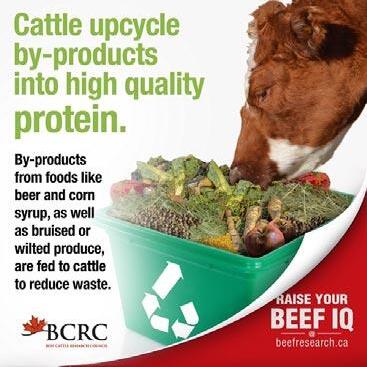
When I was a kid, “no dessert if you don’t finish your supper” encouraged us to eat everything on our plates. Others grew up with the guilt-based “children are starving in the third world” approach. There are more than twice as many people on earth today as there were 40 years ago, so issues like food security and “food loss and waste” are gaining attention. Every year in Canada nearly a tonne of food is lost or wasted per person. The federal Food Waste Challenge is part of Canada’s commitment to the United Nations (UN) goal to reduce global food loss and waste by 50% by 2030. Food waste is more than just the unidentifiable and vaguely menacing leftovers in the back of your fridge. In fact, food loss and waste are defined as any crop or livestock product that doesn’t directly reach a human mouth.
But some of this food loss and waste does reach human mouths indirectly, through livestock. As part of a Beef Cluster project, Dr. Kim Ominski and collaborators from the Universities of Manitoba and Lethbridge and Agriculture Canada are examining how livestock help reduce food loss and waste. Their first report “Utilization of by-products and food waste in livestock production systems: A Canadian Perspective” will be published in Animal Frontiers. Here are some of their key findings so far.
The UN’s Food and Agriculture Organization (FAO) distinguishes between “food loss” and “food waste”. Food waste happens in the store, the restaurant, or the home. Some companies have set goals to reduce or eliminate food waste in their operations as part of their corporate responsibility initiatives. For example, some retail stores donate bruised produce or unsold, outdated bakery products to food banks or famers to use as livestock feed. Feeding plate waste from homes or restaurants to livestock is often illegal unless it’s been re-cooked to kill potential pathogens. In fact, unregulated cross-border sales of unprocessed plate waste for pig feed may have contributed to the spread of African Swine Flu in parts of Europe and Asia.
Food loss occurs during production, storage and processing, long before it ever reaches the store, restaurant or home. This definition of food loss is incredibly broad. Crops that get hailed out, chaff, kernels that go out the back of the combine,
WASTE NOT WANTNOT
This article written by Dr. Reynold Bergen, BCRC Science Director, originally appeared in the April 2021 issue of Canadian Cattlemen magazine and is reprinted on the BCRC Blog with permission of the publisher.
bumper crops that exceed bin capacity and sprout in the pile, barley that fails to grade malt, and wheat that fails to meet milling standards are all examples of on-farm food loss. Byproducts from food processing including broken or small potatoes, over-cooked chips and French fries, beet pulp, hulls, screenings, distillers’ grains and oilseed meals are also considered food loss.
This broad definition of “food loss” is problematic for two reasons. Firstly, humans can’t or won’t normally eat these things. If they did, they either couldn’t digest them due to their high fiber content, or they might become sick (e.g. mycotoxins). Perhaps these things shouldn’t be classed as “food” to begin with.
But secondly, just because these things can’t be used for food doesn’t mean they can’t be used for feed. These crops and by-products can be fed to livestock, which can handle higher levels of fiber or mycotoxins than people can. So a considerable amount of “lost food” does reach human mouths –it just reaches humans indirectly, through eggs, milk or meat. Without livestock, this food truly would be lost, and the fertilizer, herbicide and fuel inputs (and all their accompanying environmental impacts) would also be completely wasted. Without livestock, that food might be landfilled or used to generate biogas or biofuel. But biogas and biofuel won’t feed a growing population, unlike eggs, milk, meat or beef.
Cattle have some unique advantages. Because they can digest high fiber by-products very effectively, cattle can consume up to 50% distillers’ grains in their diet, much more than pigs (15%) or chickens (10%). High fiber hulls from oats, soybeans and sunflowers are useful for cattle, but not hogs or chickens. Beef cattle can also cope with higher levels of mycotoxins in the diet than monogastrics.
Unlike other livestock, beef cattle can go out and collect “lost food” for themselves; they can graze a hailed-out or frozen crop, for example. No harvest and transportation is needed. So cattle may be a uniquely efficient solution to some of the food loss problem. In fact, cattle may even be viewed as a miraculous solution. For example, straw isn’t considered food, so straw isn’t food loss. But straw is 50% of the biomass from a grain field. Cattle can digest straw as a part of their
diet, just like they can digest the grass on marginal lands that won’t support crops. That’s a net gain of food for mankind, thanks to beef cattle.
Government also has a practical role in addressing regulatory barriers that contribute to food loss. By-products can’t legally be sold or used in a livestock ration until the Canadian Food Inspection Agency has approved and added them to Schedule IV of the Feeds Act. For example, quinoa, faba beans and hemp oil are increasingly popular with consumers. The by-products from these crops could replace some of the grains and protein supplements that are currently used in livestock diets, but not until they’ve received regulatory approval.
This team will also measure how upcycling “food waste and food” through livestock benefits overall greenhouse gas emissions, land use and biodiversity. These researchers are involved in international initiatives at the FAO, and will use these research results to help policy makers around the world understand that beef cattle aren’t the problem – they’re part of the solution.
FERTILITY. POUNDS. PROFIT.
Genetic tools to improve your bottom line
Igenity® + Envigor is an advanced, accurate and economical DNA profile that reveals the genetic potential you need to build a stronger herd. Paired with the industry’s first, and only heterosis tool, Envigor, increased Igenity + Envigor scores can lead to greater fertility in your females, and more profit at the rail.
Envigor Scores can increase fertility
Higher Igenity Terminal Index (ITI) scores means more profit at the rail
A 1-point increase of Envigor can lead to a 3.8% increase in the probability of a heifer breeding as a yearling
In a study conducted on over 4,200 crossbred cattle, In a conducted on over 4,200 crossbred t the top 25% of heifers based on ITI the top 25% of heifers based on ITI
• Increased REA of 0.40 in (P < 0.01)
• Increased REA of 0.40 in <
• Increased HCW of 49.16 lbs (P < 0.01)
• Increased HCW of 49.16 lbs <
• Increased ITI of 2 points (P < 0.01)
• Increased ITI of 2 <
Resulting in a revenue difference of over $80
Resulting in a revenue difference of over $80 per animal when compared to the bottom 25% per animal when compared to the bottom 25%
ALBERTA
ABEL FARM
MURRAY ABEL
RR 1
LACOMBE, AB T4L 2N1
403.782.1009 me.abel@xplornet.ca www.abelfarm.com
7T CATTLE
ADAM NIELSEN
39020A Rge Rd 21 Lacombe County, AB T4E 2M8 adam@dayspringcattle.com
BOX 59 SITE 5 RR 4 LACOMBE, AB T4L 2N4 403.782.4713 • 403.782.4713 susandy5556@gmail.com
ROCKY TOP GELBVIEH CODY CONGDON BOX 366 BASHAW, AB T0B 0H0
403.350.5791 rockytopgelbvieh@hotmail.com
RON HOFFMANN BOX 819 CARSTAIRS, AB T0M 0N0
ROYAL WESTERN GELBVIEH RODNEY & TANYA HOLLMAN 35347 RANGE ROAD 270 RED DEER COUNTY, AB T4G 0C9 403.588.8620 • 403.886.2813 rodscattle@platinum.ca www.royalwesterngelbvieh.com
RYAN HOLLMAN Box 69
PENHOLD, AB T0M 1R0 ryan_j_hollman@hotmail.com
SEVERTSON LAND & CATTLE
SCOTT & LISA SEVERTSON 29061 TOWNSHIP ROAD 350 RED DEER COUNTY, AB T4G 0M6 403.224.3756 • 403.224.3756 slcgelb@xplornet.com www.severtsoncattle.com
Please allot HERD IDENTIFICATION LETTERS - (1st choice) _________ (2nd choice) _________ (3rd choice) _________ for tattooing Gelbvieh Cattle. Herd letters can be two, three or four letter combinations: ie AB, ABC or ABCD. The correct method for Tattooing: first - Herd letters “ABC”, second - unique ID number of animal “24”, and last, - year of birth letter “B”. eg. Complete tattoo - “ABC 24B”.
_______ HERD NAME ($25.00 + Tax)
Please register, _____________________________________________ as the Herd Name, for the exclusive use of this membership when naming animals. Please Note: The Herd Name must be acceptable to the CGA.
I undersigned hereby applies for membership in the Canadian Gelbvieh Association, a non-profit corporation, with all rights and privileges and subject to the obligations thereof, as fully set forth in the By-Laws of the Association.
I (We) agree to conform to the By-Laws and Regulations of the Canadian Gelbvieh Association. I (We) waive any claim against and grant an absolute release to the Canadian Gelbvieh Association, any member, employee or agent of the Association, for any act or omission in connection with the Association, including but not limited to, any enforcement of the rules and regulations presently in effect or hereafter adopted by the Association. I(We) further release any and all data submitted to the CGA for use in Breed Improvement Programs.
I do not wish for the CGA to use my personal contact information for business purposes it deems necessary.
Applicants Sign Here
Print Name Here
Applicants Sign Here
Print Name Here
This application must be signed by the individual, all members of the partnership or signing officer in the organization applying for membership.
Canadian Gelbvieh Association, 5160 Skyline Way NE, Calgary, Alberta, Canada T2E 6V1
As we move into summer, cows are on pasture, bulls are breeding, and calves are growing. This is a good time to think about groups.
One of the key concepts behind genetic evaluation is that of a contemporary group. I know this is a sometimes poorly understood concept, as many of the questions and offhand remarks I encounter regarding EPD are really about groups.
Genetic evaluation basically works by comparing animals that are roughly the same age, the same sex and that are managed together. One of the most common concerns I hear about EPD is that “my calves are being compared to my neighbour’s, who creep feeds or whose scale is wrong”. This is fac
tually incorrect, as calf performance is NEVER directly compared between herds and in fact is NEVER compared between groups within your own herd. The genetic evaluation also does not directly compare bulls and heifers. The concern expressed by the producer about their neighbours’ management or mismanagement is one of the greatest strengths of the EPD system, as opposed to using actual/adjusted weights, ratios or in herd indexes.
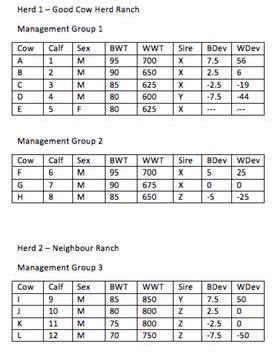
Let’s walk through an example of what happens, using a bit of a simplified example with 2 herds and 3 groups up to weaning. The adjusted birth weight (BWT), weaning weight (WWT) and difference from group average (BDev, WDev) in pounds is shown for each calf. (see chart)
If we just looked at the calves 1-12, we would think that the neighbour has better cattle with more lighter birthweights and more performance. Is this due to genetics or some secret of the neighbours’ management. Certainly, the Neighbour will have more impressive values to print in their sale catalogue, but does it tell the whole story?
By only comparing cattle that have been managed in the same way, a different picture emerges. This is what EPD do. In Management Group 1, we can’t include calf 5 in the comparisons, because she is a heifer and can’t be compared to the bull calves in the group. We also can’t compare group 1 and 2 at Good Cow Herd Ranch because they are in different management groups. In other words, the breeder has identified management differences that they feel impacts the relative performance of those groups. It could be different pastures or differences in calving season or a variety of other factors.
If we look at Group 1, we can see that Bull X has calves that are 2.5 pounds heavier at birth than the group average but also 14 pounds heavier at weaning. Bull Y’s calf is 7.5 pounds lighter at birth, but 44 pounds lighter at weaning when compared to the group average.
In Group 2, Bull X calves are 2.5 pounds heavier at birth and 12.5 pounds heavier at weaning and bull Z’s calf is 5 pounds lighter at birth and 25 pounds lighter than the group at weaning.
If we go to the Neighbour’s Cow herd and look at Group 3, we can see that their birth weights are lower than the calves in the Good Cow Herd, but the weaning weights are heavier, however when we compare within the group, we can see that Bull Y has calves that are 7.5 pounds heavier than the average at birth and 50 pounds heavier at weaning. Bull Z has calves that are 2.5 pounds lighter than the group average at birth and 17 pounds lighter at weaning.
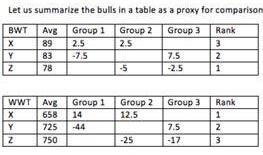
If we were to look strictly at the average performance of each sire’s calves (Avg) we get a very distorted picture of the bulls. In fact, it appears that Bull X has high BWT and no performance. When we look at where the sires rank when we compare within groups to remove management impacts, we can see fairly obviously that Bull X has the most performance,
even though the weaning weights in the Good Cow Herd were lighter than the Neighbour Ranch. By using the group to remove the environmental effects, we can get a much truer comparison of relative performance. If we were just to compare with average performance, the birth weight sorts out, but the weaning performance would be almost the exact opposite of what is actually happening with the sire’s calves.
There is a lot more complexity going on in the background. For example, the evaluation will look individual calves and at the pedigree of the cows as well as the sires to determine more detailed genetic relationships and will include DNA information from SNP Marker panels. Even with this added detail, grouping is one of the most important considerations for genetic evaluation. Rest assured as a breeder that your cattle are never directly compared to those of your neighbour and in fact are not even directly compared within your own herd across sex, broad age ranges or management groups. It is important to report cattle that you feel are managed differently or have had a different opportunity to perform as separate management groups.
A Management Group is your best representation of cattle that are managed together and given the same opportunity. The Contemporary Group is further divided using sex, age, previous management, and management group information. Getting the group right, empowers genetic evaluation and lets us accurately compare genetics across herds and environments and is a key component in creating quality EPD.
TOXIC PLANTS
Different regions have different problem plants; the prairies have some plants that don’t grow in the mountains, and vice versa. Some of these plants can be safely eaten by cattle in small amounts or in certain stages of growth, while others are toxic at all times. Livestock poisoning often depends on palatability (some plants are never eaten unless cattle have nothing else to eat), stage of development, portion eaten (some have more toxins in the roots, seeds, or some other part) and growing conditions.
Dr. Barry Blakley, toxicologist, Western College of Veterinary Medicine, University of Saskatchewan, says several factors can result in plant poisoning. “One is overgrazing; if cattle eat all the good plants in a pasture they may be forced to eat something else. Another factor is turning cattle out too soon on spring pastures. We see a number of poisoning cases when ranchers run out of hay and turn cattle out too early. The only thing growing out there may be weeds and toxic plants, because they tend to grow early. Thus range readiness is important,” he says.
“Another risk is when cattle are moved to new pasture; they start eagerly grazing and may eat whatever plants are there, indiscriminately. We’ve had several cases like that, with cattle eating larkspur. Drought is another risk factor. A few years ago we had severe drought in western Canada and saw more plant poisoning than normal. During drought, toxic plants may grow even when desirable plants don’t, and could be the greenest plants in the pasture. Plant abundance is another issue. If there are only a few toxic plants in a field or pasture there will be less risk than if there are a fair number. Often it’s younger, inexperienced cattle that have a problem, but not always. Aversion to toxic plants is something they learn,” he explains.
“Sometimes the growth conditions can be a factor, or certain parts of a plant are more toxic. It might be the seeds, leaves or roots; some times of year that same plant may not be very poisonous,” says Blakley.
“If a field has been recently sprayed with herbicide, this may damage some plants that are normally not toxic and make them toxic, by affecting the growth and metabolism. In some cases when we have a wet fall, plants have second growth, and the new growth may sometimes be more deadly—in plants that contain cyanide and nitrates,” he says.
TOXIC PLANTS - “Plant poisonings are highly variable from area to area, so you need to know which plants are a problem in your area. Mountain regions have different plants than the prairies, and wet areas have different plants than dry country. Some grow along streams, dugouts or sloughs,” he says.
By Heather Smith Thomas
Trees that are toxic include oak and red maple. Pasture management may be a factor in whether cattle consume these. “With oak poisoning the pasture is usually over-grazed and cattle are forced to eat oak leaves and/or acorns. This is a fairly common problem in certain parts of North America. In Saskatchewan and
western Canada we don’t see much oak, but in eastern Canada there are many cases of oak poisoning,” says Blakley.
Red maple is more common. “In these cases it’s often because strong winds have blown over rees and cattle have access to leaves and branches on the ground,” he says.
“The plants we analyze most commonly in our lab are those containing nitrates and cyanide. Both contain nitrogen. The cyanide is CN, and nitrate is NO3. Plants require nitrogen compounds to create amino acids, but under adverse growth conditions (drought, herbicide use, or changing temperatures in the fall when plant metabolism goes up and down), instead of the nitrogen being converted to amino acids it stays in the plant as nitrates or cyanide,” he explains.
“If you can get to those poisoned animals in time, they are treatable, but usually they are dead before you find them. There are about 60 different plants that can accumulate nitrates, and a handful that can accumulate cyanide,” says Blakley.
Oxalates are found in some plants, and high levels can be toxic. “Plants like rhubarb and sugar beet tops contain oxalates. There are a number of plants that do, but usually cattle won’t eat them. Oxalates tie up calcium in the body and the animal develops gut problems and kidney problems. Some cases look like milk fever,” he says.
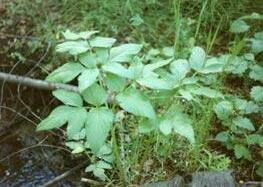
“We see lots of problem with water hemlock, which is more toxic than poison hemlock. Water hemlock tends to grow in wet areas. One root will kill a cow, causing convulsions before death. In theory you might be able to treat them, but you rarely find them alive because they die quickly. It’s mainly the root that’s the problem, and if the ground is wet the cow may pull the whole thing up and eat the roots. We’ve also seen poisonings when snowfall is deep, and the only thing sticking up is the water hemlock because shorter vegetation is covered,” he says.
“If water hemlock gets cut with hay, the leaves are not as toxic as the roots; if there are any roots in the hay it will be deadly, no matter what. It’s best to try to avoid getting any water hemlock baled up with your hay,” he says.
“Another poisoning we’ve seen some years is death camas. It grows early in the spring, and cattle may eat it when turned out to pasture too soon, before the grass is ready. The root is a bulb, like a small onion, and very juicy. Cattle generally don’t eat these plants unless they are short on feed,” Blakley says.
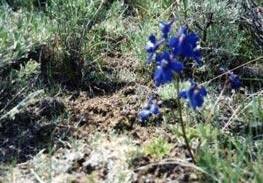
“Larkspur and monks hood can be deadly because their toxins tend to affect the heart. These plants grow fairly lush in mountainous areas. Another group of plants we get calls about is horsetail; it contains a thiaminase enzyme which breaks down B vitamins. This is a problem more serious in horses and not so much in cattle because they make their own thiamine, more efficiently. The other plant that has similar action is brackenfern. It also contains the thiaminase enzyme, and causes B vitamin deficiency in horses. Cattle tend to become anemic (aplastic anemia—which means the bone marrow doesn’t work), which is a different problem,” he says. Usually cattle won’t eat brackenfern, but if pasture is overgrazed they might eat it.
Another plant that causes problems is lupine (sometimes called blue bonnet). If cows eat very much of it during early pregnancy, it causes deformities in the calves—crooked legs, fused joints, cleft palate, etc. “In certain parts of North America this is a big issue, and in other areas stockmen have never heard of this problem,” he says.
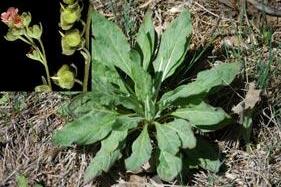
Hemlock
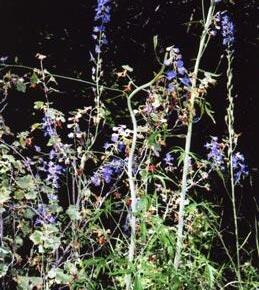
Larkspur
Low larkspur Low larkspur
“With most toxic plants—with the exception of water hemlock—cattle have to eat quite a lot to have poisoning occur. Dose is the big issue,” he explains.
“Occasionally we see abortions when cows eat ponderosa pine needles. They have to eat a lot of pine needles, but this can occur if they are grazing in an area where there isn’t much grass, and lots of pine trees,” he says.
Another group of plants that cause problems are the Astragalus family that includes milkvetches and locoweeds. Some are selenium accumulators, so if cattle eat very much they develop selenium toxicity, which is chronic. They lose their hair, have neurologic problems, lose weight, and eventually die. These toxic plants are found all over the country, and during drought they keep growing even after good forage plants are gone. This is usually when we see problems,” says Blakley.
Some plants cause liver damage, which in turn can cause photosensitization. Affected animals may slough off large areas of skin, especially the non-pigmented skin under white markings. The underlying cause could be liver damage, but in some cases they just develop photosensitization if they eat certain plants that contain photosensitizing agents. “St. John’s wort is a common one, and kochia. Some of the bluegreen algae can also cause photosensitization. Anything that causes liver damage—whether it’s a plant or a chemical, can cause photosensitization,” he says.
“Plants that contain pyrrolizidine alkaloids cause liver damage, and certain tansy ragworts are the classic example. The cattle that eat these will eventually develop photosensitization,” says Blakley.
Some household and garden plants can be toxic, but cattle rarely have access to these unless they get into someone’s yard or garden. Ornamental plants or trees in a yard or barnyard could cause problems if cattle gain access to them or reach through a fence to eat them. Oleander is a flowering plant that might be in your yard, or yew. Both of these are toxic if eaten.
DIAGNOSIS - It is not always easy to determine cause of death from toxic plants. “Most labs in western Canada don’t have the analytical capability to check for water hemlock’s toxin, for instance. Diagnosis is primarily based on post-mortem and history, and circumstantial evidence of what the animal might have been eating. Sometimes when you open the
rumen you might actually see the plant still there. The rumen is huge, however, and it may be difficult to sort through all that material and find it,” he says.
“Typically with a possible plant poisoning, the veterinarian rules out the obvious chemical problems or other disease problems. What’s left on the list would be plant poisoning, but some of these can be hard to confirm. If the cow is dead in the middle of a patch of tall larkspur, this would be an obvious assumption, but sometimes it’s not obvious. If there is a history of recent pasture movement, and the cattle hadn’t grazed that pasture before, sometimes you can go in there and see where they have actually eaten in an area where there are poison plants,” says Blakley.
“Sometimes people send in plant samples for identification. it is important to send the root, stem, leaves, and if possible, the flower—because the flower is often what distinguishes it from some of the other plants that look like it. The better (and more complete) the specimen sent for analysis, the better chance we have for identifying it. If someone sends just two leaves, it could be difficult. Agricultural stations that know the plants in their area can probably just look at it and know what it is. Some government organizations will send someone out to your pasture and look around the pasture with you, give advice on what plants are there, and how you should control them.”
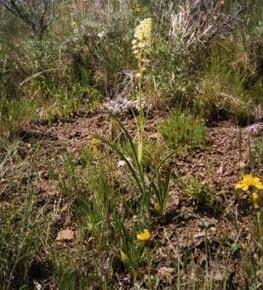
Death camus
CBBC Report
Congratulations on another year of successful bull sales as we look forward to getting the crop in and cattle out on green pastures. This past year has tested all of us in ways that we never thought possible in our modern world. Agriculture, food production and distribution which had been taken for granted for decades has been thrust into the spotlight. This will have long term impacts on our industry, and we need to be prepared and adapt to evolving market conditions.
Business continuity for beef producers has been a priority for CBBC and other industry groups during the pandemic. A key step was ensuring agriculture was deemed an essential service early in the pandemic. This has provided certain exemptions to restrictions faced by other industries. At the same time, it is important that we take precautions in order to keep our friends and family healthy and be prepared in the event there is an outbreak on your farm. We know that COVID has a high survival rate. But what happens when a family member, an employee or yourself are fighting symptoms of the COVID and are not able to work or are required by law to isolate or quarantine. Animals still need to be tended to and your farm operating. Every farm/ranch operation is different so there isn’t a standard procedure but develop a plan that works for your operation.
There is no indication of when border crossing restrictions will be lifted. However, agriculture is exempt from some restrictions in order for food to remain available for Canadians through the pandemic. Live breeding cattle, semen and embryos are able to cross the border into the United States or Canada. Live cattle can be transported by either a commercial carrier or on your own truck/ trailer. You are able to cross into
the US to pick up purchased animals as well as deliver animals you have sold. As a cattle producer, you may qualify to travel under the essential service worker designation and are able to cross into the US for business purposes even if you are not transporting cattle, but additional documentation will be required. This may include attending agriculture events such as auction sales or to view or purchase cattle and American cattle producers are also able to attend similar events in Canada. There are additional documentation and testing requirements which are subject to the discretion of the border agent at the port of entry. These requirements change on a regular basis and also depend on which Province you are departing or returning to or if a person is crossing via land or at an airport. At the time of writing, if you are traveling under the essential service worker designation you will still be required to provide a negative COVID test taken within 72hrs of departure/crossing but may be able to avoid quarantine requirements. These exemptions are at the discretion of the border agent and subject to change without notice. Plan for the unexpected.
For more information on travelling into the USA or inviting American cattle producers to Canada, contact the CBBC office at info@beefbreeds.ca or call 403-730-0350. There is additional COVID related information available on the Canadian Cattlemen’s Association website at www.cattle.ca.
The Do’s and Don’ts of TSU Sampling
The Do’s
• Sample calves as soon as possible for the earliest results
• Wipe off any excess dirt with water and towel
• Position cutter approximately 1 inch from the edge of the ear, avoiding veins
• Squeeze handles together in one swift, fluid, motion with enough force to pierce the ear
• Check to ensure sample is present and submerged in buffer and that excess hair isn’t protruding from the top
• Remove cutter by pulling handles apart
• Store samples in dark, temperature controlled room for up to 12 months
• For long term storage (over 12 months), place samples in deep freezer without auto-defrost capability
The Don’ts
• Sample “wet” calves – the placenta and fluid could cause a failed sample
• Use chemicals to clean off the ear – bleach degrades DNA
• Position cutter over any tattoo ink
• Squeeze handles together with excess force (shouldn’t take as much as ear tagging) that would damage the TSU
• Place TSU in box without ensuring sample is present
• Use pliers to remove cutter
• Place samples in direct sunlight or heat
• Store samples in auto-defrost freezers – such as the one in your kitchen
Do We Need to Worm Livestock at Turnout?
by Roy Lewis DVM
When getting ready to send cattle out to grass this spring one big question to ask yourself is do they need to be dewormed. In the past with our Avermectins or pour on products seeming to be effective in the fall and no chance of reintroduction over the winter we thought levels should be almost zero going into the spring. When testing cattle for internal parasites we are finding huge variation in the effectiveness of the pour-ons and hence the cattle’s parasite load. Cattle especially young calves or yearlings can be carrying quite a high load of parasites into the winter. That load should not change much over the winter so we must develop strategies as to what to do come spring if the cattle still have these parasitic loads.
If you want your cattle checked this spring take several samples (golf ball sized) of fresh manure in a sealed Ziploc bag into your local clinic and have them run a fecal analysis using what is called a “modified Wisconsin technique”. This will then give you an idea of the parasite load your cattle have going to pasture using whatever fall program you use. The Avermectin products will do a good job on lice in the fall and remove some of the internal worms. If you use them in combination with a benzimidazole product like “Safeguard” then the load over the winter should be essentially zero.
Research years ago showed deworming at turnout especially on young calves showed a weight gain benefit of about thirty pounds. The increase of course would be based on worm load as well as the milking ability of the cow’s quality of the pasture and also whether the calves could reinfect themselves at pasture. We often forget that just because cattle are dewormed there is a huge worm load out on many pastures waiting to be vacuumed up by grazing cattle. If cattle go out essentially worm free from a good fall dewormimg then it is best to wait approximately four-six weeks so that a lot of the pasture parasites (certain larval stages of parasites survive Canadian winters) can be grazed and consumed. The worming then kills them before they start producing more eggs. The old adage is 99% of the infective larvae are on the pastures and only one percent of the worms are in the cattle. The issue is they can be easily dewormed then but it takes a prescription to put it in the cattle mineral. If lungworms are an issue these worms can also be controlled but it may take another treatment later in the summer. Lungworms generally are more prevalent in the late summer to early fall.
Most internal parasites have a lifecycle of about three weeks in calves and about four to five weeks in cattle. If we avoid the routine Avermectins in the spring we won’t take out
the dung beetle larvae. The dung beetle is responsible for breaking up the manure pack. They roll the manure up into smaller balls and bury them. Because we get both some of the metabolites of the Avermectins being excreted through the bile and out the back plus cattle licking it off each other and taking it in orally there is a fair amount either of the original form or metabolized form coming out in the manure. This kills the dung beetle and if one just has to recall how recently (in the last few years) manure patties are staying pretty much intact through the entire summer grazing period. In the past unless pastures were overgrazed manure patties were almost non-existent. I used to scoff at the notion of the dung beetle and yet we see the good they used to do by breaking down these patties and the nitrogen helps fertilize the grass for next year. The majority of the Avermectins if we can then avoid at turnout will allow recolonization of the dung beetles.
If one does deworm once out on pasture gradually we can start to reduce the pasture contamination these cattle must face. The only easy way to continually monitor for parasites is through the manure and it is often nice to check two weeks after deworming to see if the parasites have been brought under complete control.
All species of animals have parasites to some degree. The good news is most parasites are species specific meaning they are unique to that group of animals. Bison on the other hand carry most of the cattle parasites and have a low tolerance for parasites. Sheep, goats and horses (all equines) all need to deal with parasitism throughout their lives so they need to be monitored with fecal analysis and dewormed on average more often then cattle. Clinical parasitisim such as weight loss, diarrhea, anemia or colic in horses are all possible signs from too many internal parasites as well. The same facts on pasture contamination apply to them as well.
If any questions regarding parasites, monitoring or setting up deworming schedules talk to your veterinary clinic. The technicians, receptionists and veterinarians are the best trained in all avenues of parasitology. There are many easily administered deformers on the market some even being water soluble, pour- owns, orally administered, injected or scripted into the minerals. They can devise strategies coupled with products that will be the most effective for your group of cattle as we’re always watching for resistance.
CCIA CANADIAN CATTLE IDENTIFICATION AGENCY
THE CLTS DATABASE AT YOUR FINGERTIPS
There’s an app for everything these days...and that includes traceability. Meet the CLTS MOBO APP!
The CLTS MOBO APP is essentially the Canadian Livestock Tracking System (CLTS) database at your fingertips. We’ve taken the entirety of a national traceability system and made it available on your Android and iPhone devices. You may not be familiar with the CLTS and its functionality, but utilizing the CLTS and the CLTS MOBO APP offers a userfriendly tool to help you report data, including; transportation information, premises identification obligations and movement reporting.
Our MOBO APP launched in 2010 in its basic form, was a response to the growing demand to operate a business anywhere, anytime. MOBO is our solution, with the flexibility to be portable and on-the-go while meeting increasing demands for livestock traceability regulations.
The APP is now more user-friendly than ever with streamlined features and intuitive design. The Offline Mode allows users to input-data and upload when it makes sense for them; when the job is finished or when they are back in a service area.
CLTS MOBO allows users to submit birthdates, animal movement and retired events (to name a few), directly to the CLTS database. It also features Optical Character Recognition technology, which converts images of number lists into editable, searchable data for easy uploads to your CLTS account.
New features include Bluetooth compatibility, which allows you to pair your tag reader to your mobile device and scan tag numbers straight to the CLTS MOBO APP. The Bluetooth feature is for Android only. We have also added a Reminder
feature, which notifies you when it is time to update the MOBO APP.
MOBO has moved from a 9-digit to a 15-digit system. Tags and tag numbers remain the same but you will now be required to enter the full 15-digit tag number when manually entering digits into the MOBO APP. You will be prompted to enter 15-digits when using the CLTS as well. This change is being implemented for greater security and identification within the Tag ID protocol.
Producer feedback is important to us. We work closely with producers who offer feedback on the APP, resulting in updates and process changes. We’ve added the option to include a screenshot when providing feedback, allowing you to easily explain the situation using a visual. The APP is field tested by the people actually relying on it to ensure the best product possible.
The CCIA (Canadian Cattle Identification Agency) Client Support Representatives are trained on new enhancements and can educate users and answer any questions – MOBO or otherwise.
With proposed amendments to federal regulations, producers will have increased responsibilities including timely reporting of data, transportation information and premise identification. CCIA is making it easier than ever to keep your records up-to-date and remain compliant.
We understand you have many jobs to do, let’s make this one as easy as possible.
The CLTS MOBO APP is available as a free download on Android and Apple devices, anywhere you download your APPs
SALE RESULTS
JEN-TY BULL SALE
MARCH
2,
2021, MEDICINE HAT FEEDING COMPANY
39 Gelbvieh Bulls Averaged $5,135
An awesome day for a bull sale, the weather was on our side and had a great turn out of buyers.
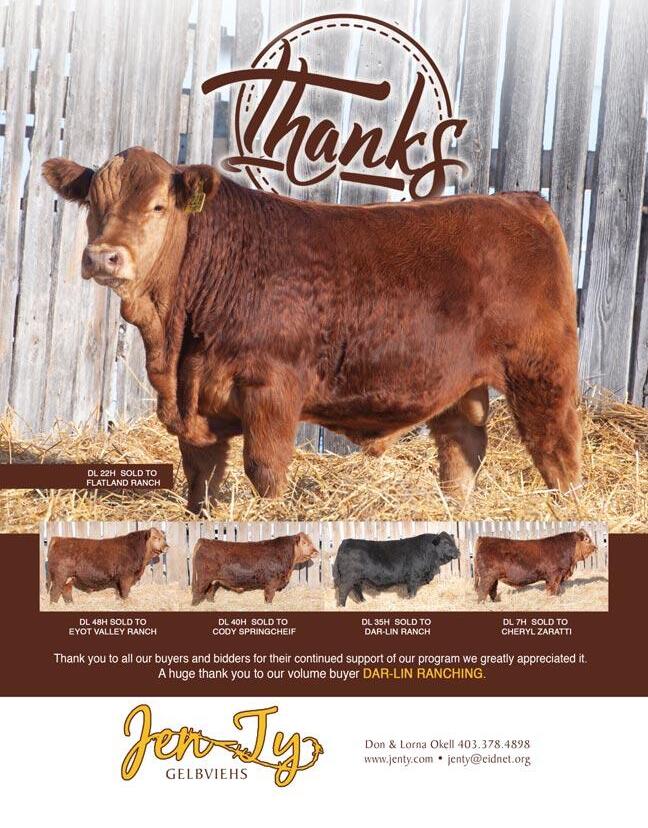
The high selling bull Jen-Ty Hickory 22H sold to Flatland Ranch for $9,250.
Cheryl Zoratti got a great addition to her program Jen-Ty Hash Tag 7H for $8,200 as well her husband Berny got Jen-Ty Hammer Down for $4,750.
K & A Enterprises purchased Jen-Ty Husky 39H for $8,600 Fairhaven Farms purchased Jen-Ty Hound Dog 37H for $7,100 and also picked up two more bulls.
A big Thank You to Dar-Lin Ranching who were our volume buyer and great supporters of our program, they purchased 8 great bulls to add their program.
Thank you to all our bidders and buyers, we are grateful for all the support you give us every year.
SEVERTSON LAND & CATTLE BULL SALE
MARCH 1, 2021, RED DEER COUNTY, AB
48 Gelbvieh/Balancer Bulls Averaged $7788
10 Red angus Bulls Averaged $6250
11 Black Angus Bulls Averaged $5850
20 Simmental Bulls Averaged $6600
89 Bulls Averaged $7108
A very good crowd was on hand and bulls sold in to BC, AB and SK. High selling bull was SLC Platinum 101G that sold for $20,000 to Bertens Holsteins. Lot 10, SLC Viper 59G sold to Cowlick Farms and Unger Land and Livestock for $17,500. SLC TKO 198G, a red Balancer bull sold to Hurlburt LIvestock and Fir River Livestock for $13,000. A pair of SLC Viper sons, lots 36 and 38 sold to Kochel Ranches for $10,000 each. Kochels also picked up SLC TKO 157G for $11,000. Ellis Cattle Company bought lot 19 ,SLC TKO 226G a red Balancer bull for $10,500. High selling Simmental bull was SIR Splash 16G who sold to Jeramey Leismer. Volume buyers were Ellis Cattle Company with 14 bulls, Ed and Cheryl Monical with 9 bulls and Kochel Cattle and Timber with 7 bulls.
CATTLE CAPITAL BULL SALE
APRIL 12, 2021, STE. ROSE DE LAC, MANITOBA
Consignor: Overby Stock Farm
The average of the Gelbvieh and Balancer bulls was $4250
High selling Gelbvieh bull was OSF Brett Favre 1G and sold to Davidson Gelbvieh, Ponteix, SK for $6,000.
SALE RESULTS
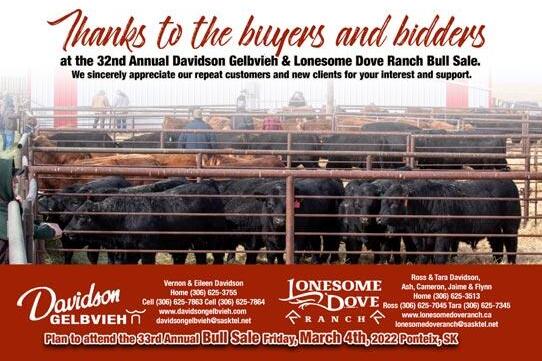
DAVIDSON GELBVIEH & LONESOME DOVE RANCH
32ND ANNUAL BULL SALE
MARCH 5, 2021, PONTEIX, SK
89 Gelbvieh Yearling Bulls Ageraged $6724.72
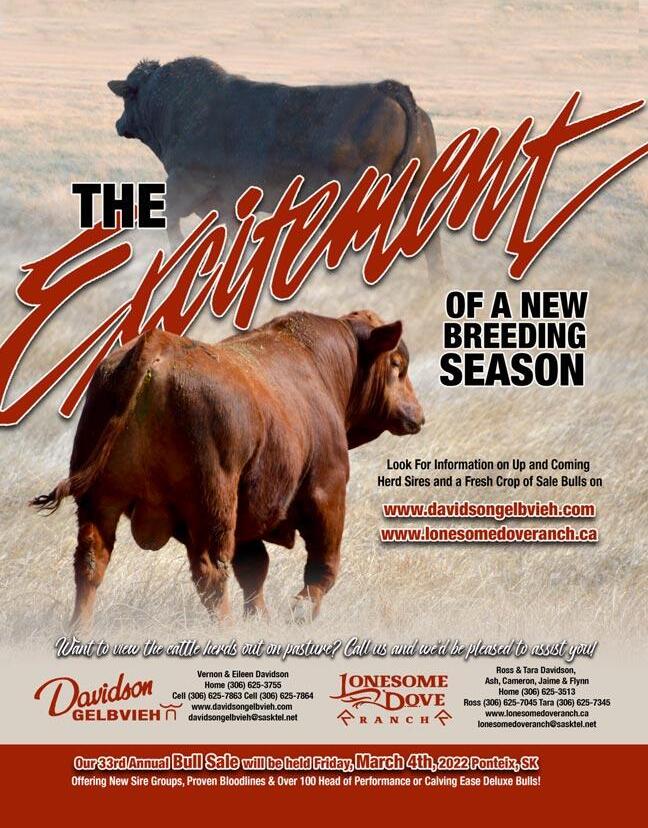
On Friday, March 5, 2021, Davidson Gelbvieh and Lonesome Dove Ranch hosted their 32nd Annual Bull Sale at the Bull Yards located southwest of Ponteix, SK. It was an active sale day with bidders and buyers from across North America participating in person and online. Thank you to our bidders and buyers as well as to everyone who took time to walk through the bull pens. Thanks also to our family and friends for their help on sale day. We look forward to hosting the 33rd Annual Bull Sale on Friday, March 4, 2022.
GELBVIEH ADVANTAGE BULL SALE
MARCH 12-13, 2021, FARM GATE TIMED AUCTION
25 Yearling Bulls Averaged $4810
6 Long Yearling Bulls Averaged $5850
This year the Gelbvieh Advantage Bull Sale looked a bit different, as we moved to an online platform and we sadly had to say goodbye to Jace Cattle Co, who decided to branch out on their own. We made the difficult decision to leave the bulls at home where they were most comfortable and Brittain Farms hosted the yearling pen, while BNH Livestock is home to the long yearling bulls. We were super excited about this year's set of bulls and were happy to hear very positive feedback from the people who were able to tour the pens.
Sale day looked a bit different but we had a great turnout online and various highlights over the two day timed auction sale. High seller went to Brittain Farm's exceptional calving ease prospect, CK Hurricane 16H for $8250, selling to Darcy Tarrant.
Next up was a thick made, meat machine, CK Hawkeye 7H, that you had to appreciate for his softness and length. He found a new home with Wendy Murphy for $7250. We had a set of long yearlings that caught everyone's eye, BNH Grand Combination 13G sold for $7000 to Rolling Ridge Ranch and BNH Gear Shift 7G, who also sold for $7000 and is making his new home at Maschmeyer Cattle Co. The Maschmeyer family also picked up an impressive yearling, CK Howler 24H for $7000. We are super excited to see these two top end bulls work in their program. Brittain Farms and BNH Livestock would like to thank all the buyers, bidders and supporters of the sale, as we navigate all these changes and challenging times!
FLADELAND LIVESTOCK & TWIN VIEW LIVESTOCK BULL SALE
MARCH 17, 2021, MOOSE JAW, SK
38 Bulls Averaged $6,115
High selling black bull was Lot 9 Twin View Viking 25H ET for $9,500 to Diamond Z Livestock. Viking is a son of the infamous JSJ Baha 35B and Chico Loco making him a full brother to Twin View's herd sire Valhalla.
High selling red bull was Lot 6 Twin View Kevlar 32H for $9,500 to Les Wiebe. Kevlar is a maternal brother to National Champion The Boxer and sired by Resilient.
Lot 5, Twin View Active Duty 52H, sold to Keriness Cattle & Jonus Cattle for $9,000. He is a son of The Boxer and full brother to AOB World Champion Female Twin View Sugar 26F. Fladeland Grover 102G sold to Lansing Land & Cattle for
$8,500. Grover is a son of Fladeland Painkiller and the great Fladeland Baywatch 41B cow who is headed for Fladeland's donor pen.
Lot 15, Twin View Klondike 2H, sold for $8,250 to Jensen Ranch in North Dakota. This calving ease sire is from the Rainbow cow family and sired by RUP Yukon.
Fladeland Gainer 79G was purchased by Triple S Cattle Company for $8,000. This balanced trait bull was one of the many consistent sons of Fladeland Element to sell and is from another LCR Warnock daughter.
Thank you to all our bidders and buyers.
SALE RESULTS
BEST OF BREEDS BULL SALE
MARCH 28, 2021, YORKTON, SK
Consignor: Goodview Gelbvieh
16 Bulls averaged $6,200
BLB Headline 27H, sired by FLAD Fladeland Element 21E, was our high selling bull that makes his new home at Last Mountain Luvestock, Strasbourg, SK for $14.500. We had a
This years sale was online with DLMS, as attendance was limited due to Covid restrictions. Purchases were made from Saskatchewan, Manitoba and Ontario.
High selling Gelbvieh was MGF Hextall 98H and sold to Corrie and Herb Govier, Ontario for $5750. He was one of the high sellers in the sale.
MGF Hard Drive 94H was sold to Karl Sothmann from Saskatchewan
DRAFT PICKS BULL SALE
FEBRUARY 16/21, ROYAL WESTERN GELBVIEH,
Average $6366
The sale's open house format 3 days prior to sale day was very well attended. Sale day was a busy atmosphere, with a large online attendance from across North America. The 2021 Draft Picks sale featured a large selection of Seed Stock caliber sires- both purebred and balancer genetics represented.
Leading off the sale offering were 3 Flush mates all sired by RWG Exact Combination 7409 and from the elite donor dam RWG Kitty’s Dream 6526.
Lot 1B, RWG Seminole Wind 9430 ET, was selected by Butler Creek of Tennessee for $28,000, purchasing 1/2 possession and 1/2 semen interest, forming a syndicate with semen packs going across Canada and the USA.
Lot 1A, RWG Grand Plan 9420 ET, was purchased by Gustins Diamond D, ND for $26,000 for 1/2 possession and 1/2 semen interest.
lot of great support once again and would like to thank all the producers that toured our bull pen at our open house or at some point prior to the sale. All of us at Goodview Gelbvieh would like to thank the buyers, bidders and everyone that supported the sale
Kelly Thomasson purchased 2 bulls, and Cliff Cherniak purchased 2 Gelbvieh and a Hereford. Purchases were also made by Farrell Pott and Robby Lamoureux.
Devin Manns purchased the Maple Grove Gelbvieh pen of 3 heifers.
Thank you to all the buyers, bidders, Melissa McRae with DLMS and Prairie Pistol (video), and the Lundar Bull Sale committee.
RED DEER COUNTY, AB
Lot 2, RWG Ghost Town 9422 ET, was purchased by Beastrom Ranch, SD for $17,000 for full possession, and 1/2 semen interest.
Lot 10, RWG Gut Feeling 9429, was purchased by Rocky Top Gelbvieh, AB for $10,000. He’s the direct son of RWG Kitty 0301 and sired by RWG Exact Combination 7409.
Lot 18, RWG Shot of Glory 9412, was the high selling Red Bull for $9,500 to Milliken Farms, MB. He is a standout SLC Merv 12N son from a top red donor RWG Lora 7304 ET.
Thank you to the bidders and buyers.
Kayla Marie Koziak was born on February 17, 2021, at 10:22 pm. She weighed in at 7 lbs 6 ounces and was 20.5 inches long. Proud parents Chad and Olivia Koziak and big sister Sophia of Koziak Land & Cattle, Lamont, AB. Grandparents Harold and Bev Milne of Milne’s Gelbvieh and Larry and Colleen Koziak are very excited to welcome another beautiful granddaughter to the herd! Sophia loves to show off her sister and take her out to see her cows!
BUSINESS DIRECTORY
BUSINESS DIRECTORY
Cattle
RON & GAIL ANDERSON
Phone (780) 523-2116
Fax: (780) 523-3920 gailanderson@hotmail.com
403-854-6270
403-854-0190 Hanna, AB flatlandranching@gmail.com www.flatlandranch.com
Larry, Lynne, Kate & Sarah FECHO
www.evgelbvieh.com
COMING EVENTS
A Complimentary Service Provided by the Canadian Gelbvieh Association
Jul. 15 - Application deadline for the Canadian Junior Association Scholarship
Sep. 1 - Deadline for the Fall issue of the Gelbvieh Guide magazine
Oct. 1 - Deadline for guaranteed results for DNA to be submitted for People's Choice Bull Futurity
Oct. 8 - Deadline for Amendments to the Constitution for AGM being held in Regina, SK
Oct. 15 - Function & Fitness 3.0, Twin View Livestock, Parkbeg, SK
Oct. 26-30 - Manitoba Ag Exhibition, Brandon, MB
Oct. 27 - Pre-sort Gelbvieh Cross calf sale, Medicine Hat Feeding Company, Medicine Hat, AB
Oct. 28 - Pre-sort Gelbvieh Cross calf satellite sale, Heartland Livestock, Swift Current, SK
Nov. 10-14 - Farmfair International, Edmonton, AB
Nov. 22-27 - Canadian Western Agribition, Regina, SK
Nov. 23 - 7 pm CGA Annual Meeting, Executive Royal Hotel, Regina, SK
Nov. 24 - 2 pm National Gelbvieh Show
Nov. 25 - 12:30 pm National Gelbvieh Sale & Sweetheart Classic
Dec. 1 - CGA Photo Contest Entry Deadline
Dec. 3-4 - GAA/BC Wish List Weekend, Stettler, AB
Dec. 3-4 - People's Choice Bull Futurity, Stettler, AB
Dec. 5 - The Gathering Sale, Olds Cow Palace, Olds, AB
2022
Jan. 1 - Deadline for the Spring issue of the Gelbvieh Guide
Mar. 2 - Severtson Land & Cattle Bull Sale, Red Deer County, AB
Mar. 4 - Davidson Gelbvieh & Lonesome Dove Ranch 33rd Annual Bull Sale, Ponteix, SK
Guide Categories
NEW CATEGORY!!
Cow/Calf
Scenic or Artistic
Animals with a Gelbvieh Branded CCIA Tag
Bull(s) 4. Herd
1. Send or email unmarked colored print (3 1/2” X 5” or 4” X 6”) or digital file of each photograph entered.
2. All entries must be postmarked or emailed on or before Dec. 1/2021. Judging will take place before Jan. 15/2022. 3. Prizes must be accepted as awarded. 4. Winners will be notified and assistance given in setting up ads. Contest and prizes sponsored by the Canadian Gelbvieh Association
Please send your photos to: Canadian Gelbvieh Association 5160 Skyline Way NE, Calgary, AB T2E 6V1 or gelbvieh@gelbvieh.ca
The Gelbvieh Guide assumes no responsibility for the accuracy and truthfulness of submitted advertising copy, and has the right to refuse any ad copy or photos. Advertisers shall indemnify and hold harmless the Guide containing pedigrees or statements regarding performance must conform to records kept by the Canadian Gelbvieh Association. Copy deviating from official records may be changed as necessary without advertiser consent.
Editorial Policy
Opinions expressed are the writer’s and not necessarily those of Gelbvieh Guide or the Canadian Gelbvieh Association. Photographs are welcome, but no responsibility is assumed during transit or while in the office.
Publisher’s Statement: All statements, including product claims, are those of the person or organization making the statement or claim. The publisher does not adopt any such statement or claim as its own, and any such statement or claim does not necessarily reflect the opinion of the publisher.
Printed by: Western Litho Printers Regina, SK, Canada
Mailed under permit number 40012883
Canadian Publication Agreement
Return undeliverable Canadian addresses to: Canadian Gelbvieh Association 5160 Skyline Way NE, Calgary AB T2E 6V1
Editor/Sales/Field Rep.
Gaylene Groeneveld
Phone: (403) 333-4911
Fax: (403) 207-9543
Email:
g5cattle@telus.net (Gaylene)
Electronic Composition Kim Matthews
Box 19, Site 5 RR#2, Olds, Alberta T4H 1P3 (403) 556-8836 (403) 556-8077
primecut@mail.com (Kim)
Canadian Junior Gelbvieh Association Scholarship
All eligible juniors are encouraged to apply for the $500 Scholarship. Please complete the Scholarship Application Form and include a one page essay describing your involvement in the Gelbvieh breed.
Please submit your application form and essay to the CGA office by email (gelbvieh@gelbvieh.ca), fax (403-291-5624), or mail (5160 Skyline Way NE, Calgary, Alberta T2E 6V1). The deadline to apply is July 15, 2021.
To be eligible you must be a current or previous member of the Canadian Junior Gelbvieh Association between the ages fifteen (15) and twenty five (25) as of January 1st of the current calendar year. Juniors are eligible to receive the award more than once.
Scholarship recipients will be presented with a cheque upon proof of enrollment. Send an official class enrollment form or receipt of tuition payment to the Canadian Gelbvieh Association office no later than October 1, 2021. In the event that a circumstance arises that prevents the recipient from enrolling in the school of choice by the above deadline, the scholarship will be forfeited. To retain scholarship, the recipient must complete at least one semester of full enrollment. If the semester is not completed, money awarded must be refunded to the Canadian Junior Gelbvieh Association
Graduation Date: _____________ Grade Point Average: ___________(example 3.5/4.0)
Estimated Percentage of Tuition Paid by Scholarships or grants during you last semester of post secondary education or for the upcoming semester?______________________
List any scholarships you have bee awarded:_________________________________ Career Goal:__________________________________________________________
If you are currently attending a Post Secondary Education facility, please complete the following:
Name of Post Secondary Education Facility you have previously or are currently attending:
If you are a graduating high school senior, please complete the following: Post Secondary education Facility you plan to attend: