

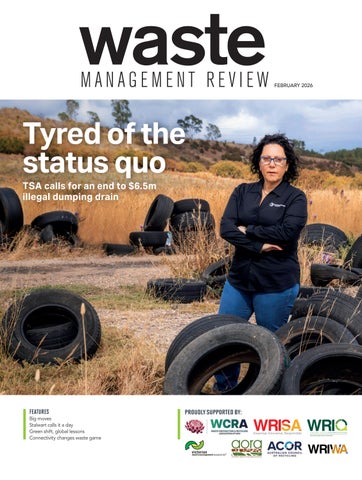
TSA calls for an end to $6.5m illegal dumping drain
FEATURES
Big moves
Stalwart calls it a day
Green shift, global lessons
Connectivity changes waste game



Regardless
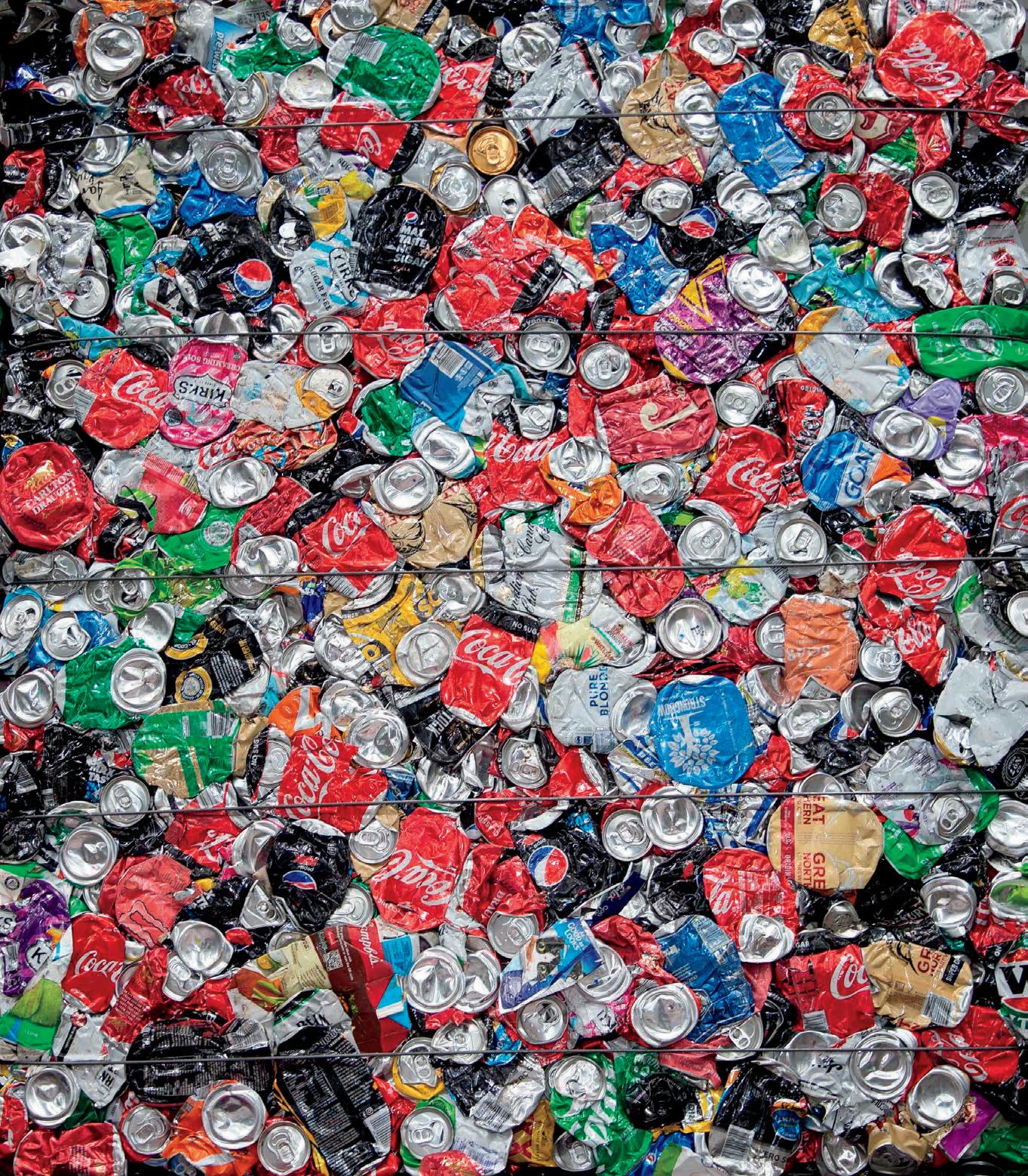
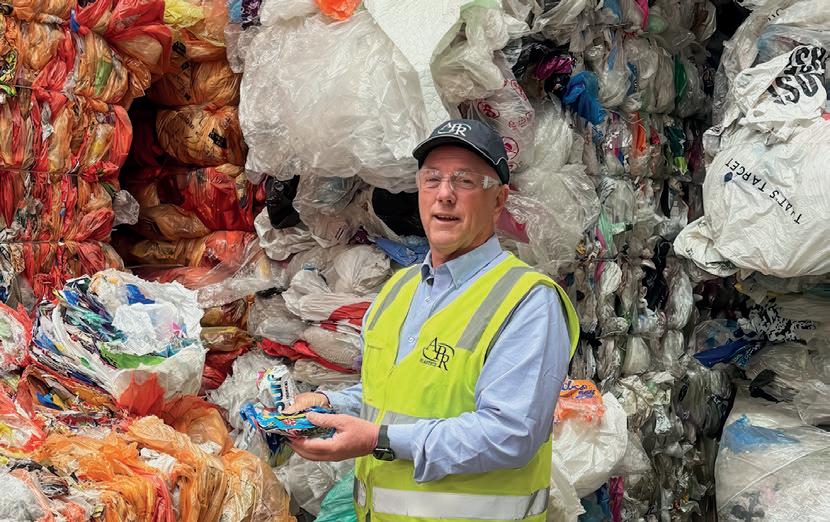
ForMunicipalCouncilsthathavepartneredwithAPRKerbsideintheGlass-outprogram,theirrecyclablesarenowbeing receivedwithlessthan1%glass.Theseremarkableresultshavedirectlycontributedtoreducingcontaminationlevels andfurtherdivertingwastefromlandfill.Improvingtheseparationofhouseholdrecyclablesandhavingnoglassinthe kerbsidecommingledstreamhasledtoasignificantimprovement inthequalityofallrecyclables.
KeylearningsgainedthroughouttheprogramwellpositionsAPRKerbsidetobestsupporttheneedsof MunicipalCouncilswhoarepreparingtoimplementglassout'ofthe commingledstream,transitionsmoothlyandre-educateresidents.
Suchbenefitsinclude:
Eliminatetheissueofglassshardsthatgetintoalltheotherrecyclables
Significantlyrecovermorerecyclablematerials
Reducecontaminationlevelsandfurtherdivertwastefromlandfill
Addressandcombatthelimitationspresentedtoapproachableend
andresourcessuchaspaper,cardboard,plasticandaluminium marketoutletsforrecyclableproductsduetoglassshards
Increasethevalueofrecyclablesandqualityofendproduct
Thevalue-addedsortingfacilitysitehasthecapabilitytoprocess: haveremovedglassoutoftheiryellow-liddedrecyclingbins
RecyclablesfromMetropolitanMelbourneandRegionalcouncilsthat
PaperandCardboard
PlasticssuchasHDPE,PET,PPandSoftPlastics
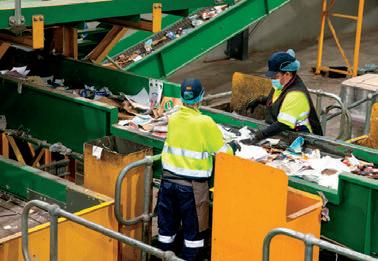
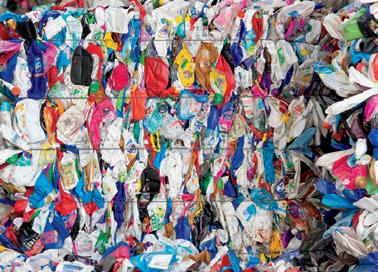
TheAPRteamarestronglyfocusedoncircularityandworkingincollaborationwithindustrypartnerstoexploreand seizeopportunitiesthatwillmaximiseresourcerecoveryand furtherdivertwastefromlandfill. Afterglass,softplasticswasidentifiedasthebiggestcontaminantofkerbside,yellow-liddedbinsinVictoria. Asaninnovativecompany,theAPRGroupcontinuouslylooksfordifferentwaystoachieveandsupportzerowaste strategygoalsandgivetheenduseraqualitymaterialwithminimalcontaminants. APRPlasticshasbroughttomarket,anadvancedrecyclingsolutionforthesoftplasticsstreamwiththeSoftPlasticsto Oilinitiative.RoboticswillalsobeutilisedtopickoffTetraPakcartonsfromtheKerbsideMRFlineforuseinsaveBOARD.

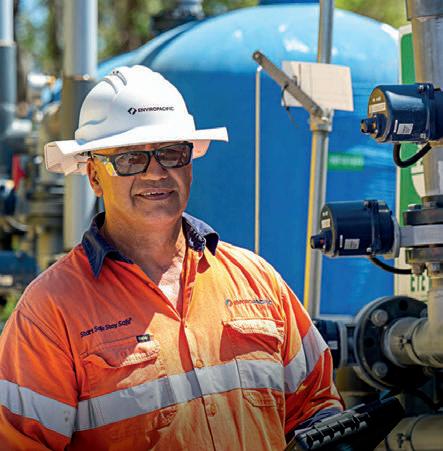

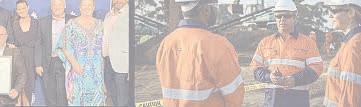
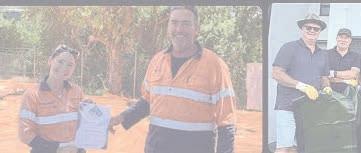
In the remediation and resource recovery sector the ability to adapt is a necessity. Few companies have demonstrated such agility over a quarter-century, but Enviropaci c, currently celebrating its 25th anniversary, is one of them.
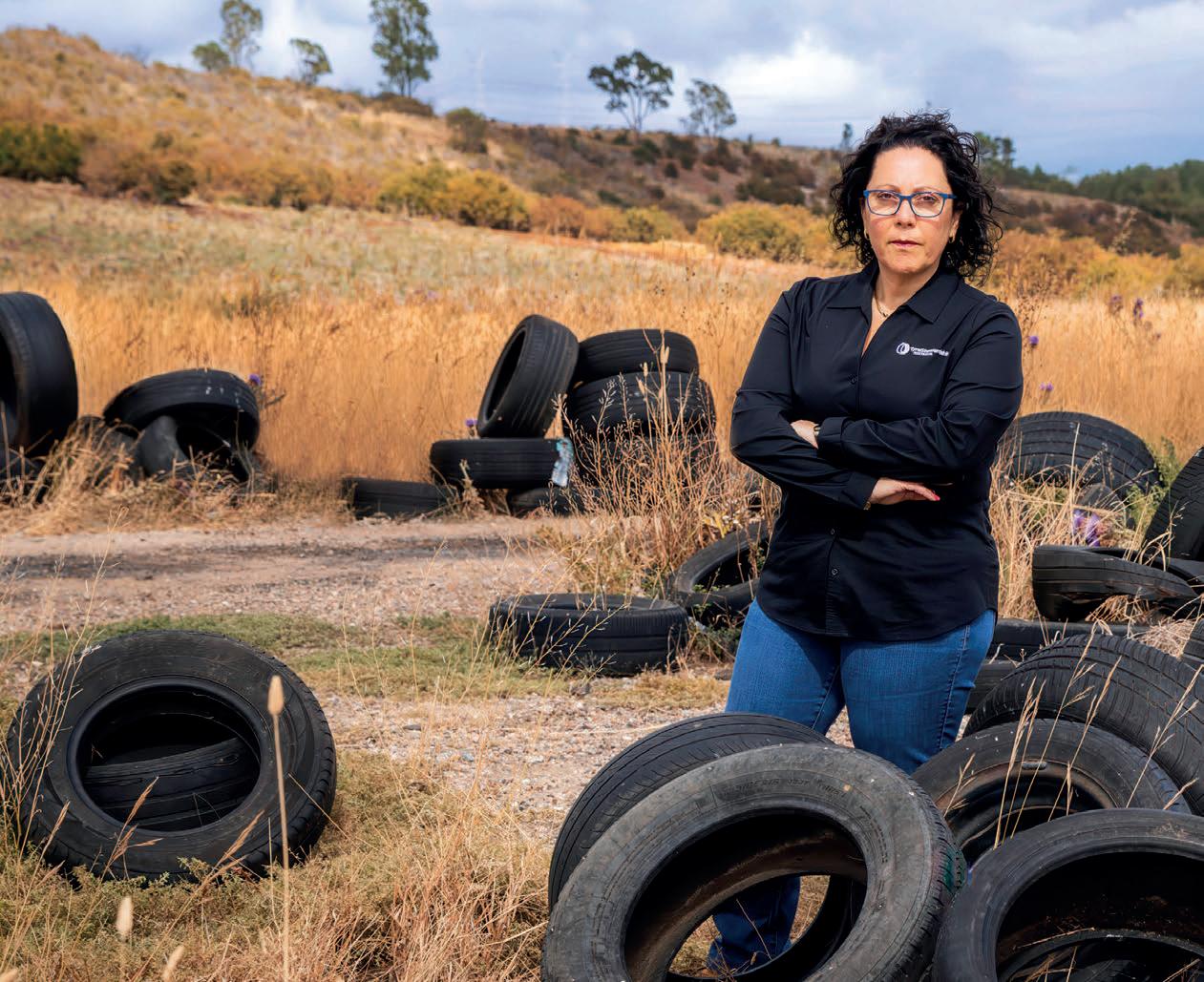
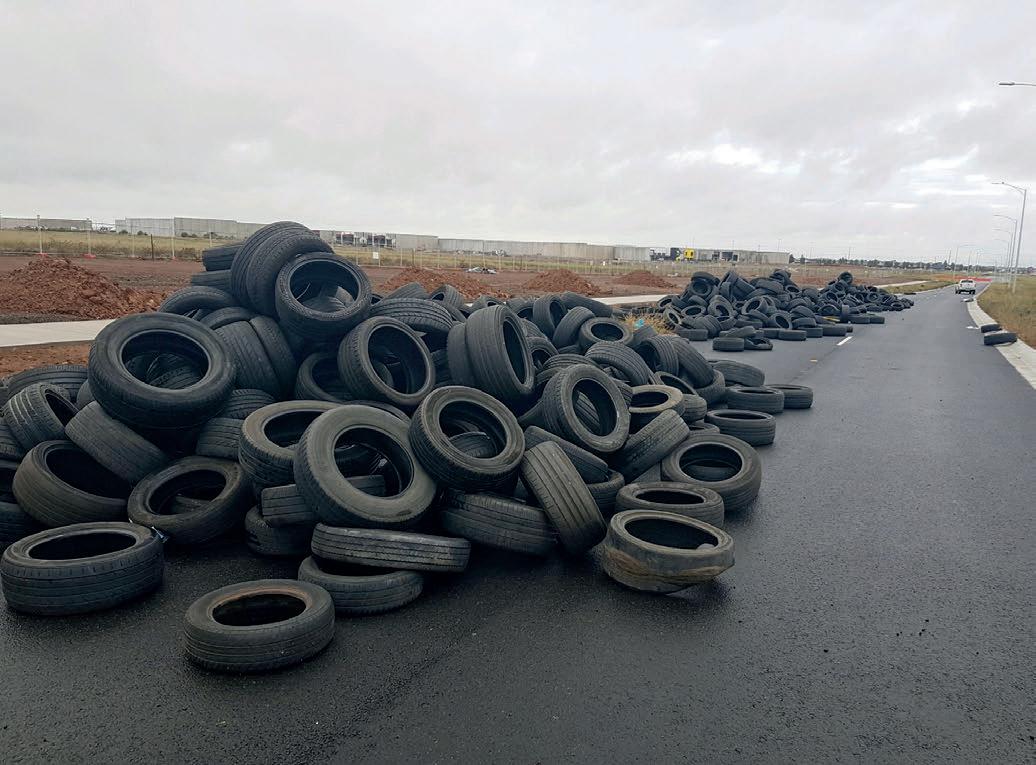
Illegal tyre dumping drains millions from local council budgets and community infrastructure.


“LEGITIMATE RECYCLERS WHO HAVE INVESTED IN STATE-OF-THEART RECYCLING INFRASTRUCTURE SHOULD BENEFIT FROM RECYCLING OPPORTUNITIES AND REVENUE, NOT UNLAWFUL OPERATORS LOOKING TO CUT CORNERS.”

Blueprint
Rick
Call for an end to $6.5m
Why Groundvac picked Isuzu for the long haul.
Transforming
Bringing
to the
How
Smaller vehicle design unlocks e ciency and access.
Navigating 25 years of environmental change.
Supporting long-term food security.
APR soft plastics success.
Managing battery re risks.
Pioneer
Modern mobile screeners move where the work is.
Tana’s operational overhaul.
New product development and demonstration plant launched.
Changing approach to public safety.
Endeavour Awards introduce new categories.





















































































































































































Is your workhorse pulling its weight? If youʼre still driving a ute, nowʼs the perfect time for an upgrade. The all-new Isuzu Ready-to-Work range tows and carries more than your average ute. It also comes with a sleek new cab design, more advanced safety features and car-like comfort.




With a wide choice of factory-built bodies designed to our exact specifications, Isuzu Ready-to-Work trucks are ready to get the job done. Are you ready to step up to a redefined workhorse?
Head to isuzu.com.au or visit your nearest Isuzu Trucks Dealer today.





For local governments across Australia, the sight of a roadside tyre stockpile is more than just an eyesore – it’s a signi cant, avoidable drain on the public purse.
In this month’s cover story, we look at data from Tyre Stewardship Australia’s (TSA) latest report, Stockpiling and illegal dumping of tyres: cost to local governments and others, and the ndings are stark.
e data reveals that Australian councils spent about $6.5 million cleaning up illegally dumped tyres in the 2022-23 nancial year alone. Nationally, an estimated 300,000 tyres were recovered. Perhaps most staggering is the cost ine ciency; the average cost to clean up a single dumped tyre is about $22 – nearly triple the $7.60 average fee for legal disposal at a tyre shop.
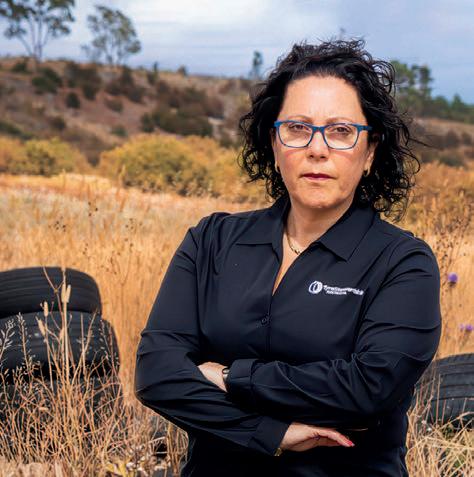
TSA Chief Executive O cer Lina Goodman describes the phenomenon as “like a tumour that just spreads, and that cost is borne on council to clean up.”
e report states that 61 per cent of responding councils nominate tyres as a “signi cant or worse” waste issue. While regional and urban-fringe councils bear the brunt of the nancial impact, the risk to amenity and the environment a ects everyone.
TSA is committed to addressing the market failure, noting that more is currently spent on reactive clean-ups than proactive, legal recycling channels.
However, resolving the tyre crisis is part of a much larger puzzle. e success of any stewardship scheme relies on the government backing outcomes with consistent settings and procurement policies that favour recycled content.
In our Last Word column, Kylie Roberts-Frost, Chief Executive O cer of the Australian Bedding Stewardship Council, says that while ambition is high, the real test lies in moving beyond good intentions to deliver veri able, industry-wide results.
Also in this edition, we look at the evolving landscape of waste transport and collection, celebrate a company that has navigated a quarter century of environmental change to emerge as a leader in remediation, water, and resource recovery, and re ect on the career of Rick Ralph, outgoing chief executive o cer of the Australian Resources Recovery Council who, after ve decades of advocacy, is passing the baton to the next generation.
Happy reading!

CEO Christine Clancy christine.clancy@primecreative.com.au
PUBLISHER
Sarah Baker sarah.baker@primecreative.com.au
MANAGING EDITOR
Lisa Korycki lisa.korycki@primecreative.com.au
HEAD OF DESIGN
Blake Storey blake.storey@primecreative.com.au
DESIGN
Laura Drinkwater
BRAND MANAGER
Chelsea Daniel chelsea.daniel@primecreative.com.au p: +61 425 699 878
CLIENT SUCCESS MANAGER
Justine Nardone justine.nardone@primecreative.com.au
HEAD OFFICE
Prime Creative Pty Ltd
379 Docklands Drive
Docklands VIC 3008 Australia
P: +61 3 9690 8766
info@primecreative.com.au www.wastemanagementreview.com.au
SUBSCRIPTIONS +61 3 9690 8766 subscriptions@primecreative.com.au
Waste Management Review is available by subscription from the publisher. e rights of refusal are reserved by the publisher
ARTICLES
All articles submitted for publication become the property of the publisher. e Editor reserves the right to adjust any article to conform with the magazine format.
COVER
Cover image: Tyre Stewardship Australia
COPYRIGHT
Waste Management Review is owned by Prime Creative Media and published by John Murphy.
All material in Waste Management Review is copyright and no part may be reproduced or copied in any form or by any means (graphic, electronic or mechanical including information and retrieval systems) without written permission of the publisher. e Editor welcomes contributions but reserves the right to accept or reject any material. While every e ort has been made to ensure the accuracy of information, Prime Creative Media will not accept responsibility for errors or omissions or for any consequences arising from reliance on information published. e opinions expressed in Waste Management Review are not necessarily the opinions of, or endorsed by the publisher unless otherwise stated.
The great majority of the incinerator bo om ash consi s of inert brick, rubble, glass, ceramics, and one. With over 30 years of experience processing and handling IBA aggregates (IBAA), we believe that IBAA deposits can be be er used and o er an alternative manufa ured aggregate suitable for many applications.



















































































We combine global experience with on-the-ground knowledge. By working closely with clients, contra ors and authorities, we deliver solutions that meet local needs and regulations.





A ear old anish energ crisis o ers a lueprint for Australia s transition to a true circular econo .
It is hard to imagine a quiet Sunday on Australia’s major motorways, completely devoid of vehicles, but for Denmark, the oil crisis of 1973 created exactly that reality.
Faced with soaring energy costs and a dependence on imported oil for more than 90 per cent of its energy, the Danish Government introduced carfree Sundays – a clear, immediate, and unsettling sign of national vulnerability.
It was also the unlikely starting gun for one of the world’s most successful, sustained green transitions, o ering lessons for Australia’s own resource recovery sector as it grapples with its complex waste and energy future.
Today, Denmark is ranked number one globally for climate change action,
a title built not just on policy but on a fundamental shift in national mindset.
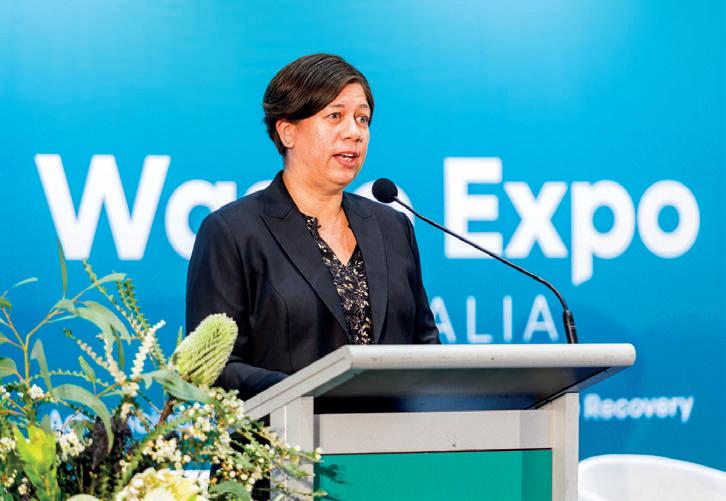
At Waste Expo Australia 2025, Ingrid Dahl-Madsen, Danish Ambassador to Australia, New Zealand and Fiji, re ected on the country’s history, explaining that the moment of vulnerability transformed into a national commitment to resilience and independence.
“It was clearly, when you look back today, the turning point for our energy policies in Denmark,” Ambassador Dahl-Madsen said.
“It taught us that energy security is not just about resources. It’s about resilience. It’s about independence.”
She said that the shock was also signi cant for future generations, instilling a deep, almost instinctual conservation ethic.
“Everyone learned at that time the need for saving resources. You never left a room without turning o the lights. You never left the water running when you were doing dishes. It was just integrated into how we were and how we grew up,” she said.
“As kids, we all learned about the value and the importance of saving our resources.”
e oil crisis pushed Denmark to diversify and innovate, transforming its energy story from one of black dependence to green determination.
It spurred the development of new sectors, notably the country’s worldleading wind industry. Now, more than 80 per cent of Denmark’s electricity comes from renewable sources, and the country is on track to achieve 100 per cent green electricity by 2027.
Despite this success, according to the Circularity Gap Report, Denmark’s economy is only four per cent circular, only slightly below Australia’s 4.3 per cent.
e low score, Dahl-Madsen said, stems from a high consumption of virgin materials. She said the global challenge is shifting from clean energy production to sustainable consumption.
Denmark’s journey toward a circular economy has been underpinned by
ou never left a roo without turning o the lights. ou never left the water running when ou were doing dishes. t was ust integrated into how we were and how we grew up.
Ingrid Dahl-Madsen, Danish Ambassador to Australia, New Zealand and Fiji
legislation and deeply embedded community involvement. It was the rst country to introduce a recycling law in 1978, which mandated that at least 50 per cent of beverage packaging and paper be recycled.
is, Dahl-Madsen said, fostered a culture of circularity from the ground up. She shared an anecdote about childhood pocket money:
“I grew up in a small town in Denmark called Skanderborg. Each August, a music festival rolled around, and every child in Denmark knew that they would be earning some big bucks collecting,” she said, referring to collecting refundable beer bottles.
that time, but that is really what it was.”
boasts a 93 per cent return rate for bottles and cans, with 99.7 per cent recycled in a closed loop. More remarkably, due to extensive sorting, only one to two per cent of household waste in Denmark goes to land ll.
maintained by a highly structured national framework: the Danish Circular Economy Plan (2020-2032) is an ambitious roadmap that sets out 129 initiatives across the entire value chain, focusing on three key sectors: plastic, biomass, and construction.
the easy choice, not the expensive one.
She provided real-world examples of how the framework translates to industry, including the Kalundborg Industrial Symbiosis – a partnership between 17 public and private companies where one company’s waste stream becomes a valuable resource for another, achieving savings and minimising waste.
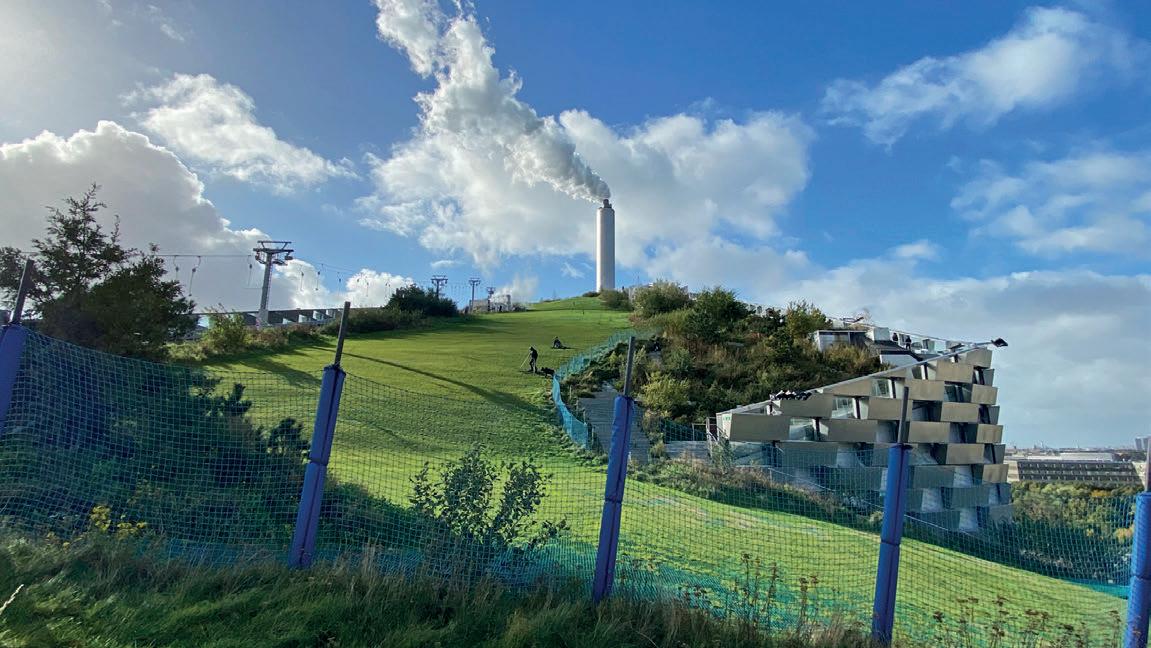
e famous Copenhill waste-toenergy plant in Copenhagen, designed with an arti cial ski slope on its roof, provides electricity and district heating
from other European countries to meet its energy needs.
Closer to home, the Quay Quarter Tower in Sydney, designed by a Danish rm, achieved embodied carbon savings equivalent to 35,000 ights between Sydney and Melbourne by retaining 65 per cent of the original structure.
Dahl-Madsen said perhaps the most vital learning for Australia is in Denmark’s collaborative approach. e transition wasn’t led by government alone, nor by industry in isolation, but through intense publicprivate partnerships.
e country launched 14 climate partnerships – one for each major sector – to co-design pathways to 2030 emissions reduction targets, which led to the landmark Green Tripartite Agreement between the government, agriculture industry, and environmental organisations.
“Collaboration has really been what has pushed the green transition in Denmark,” she said. “A circular economy requires all hands on deck –
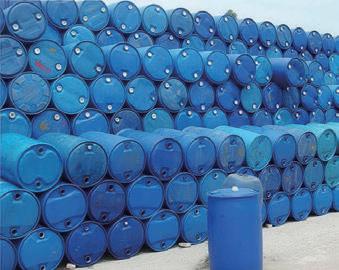
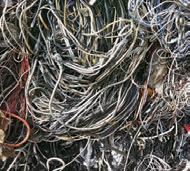
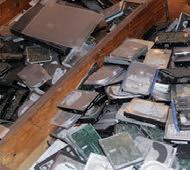
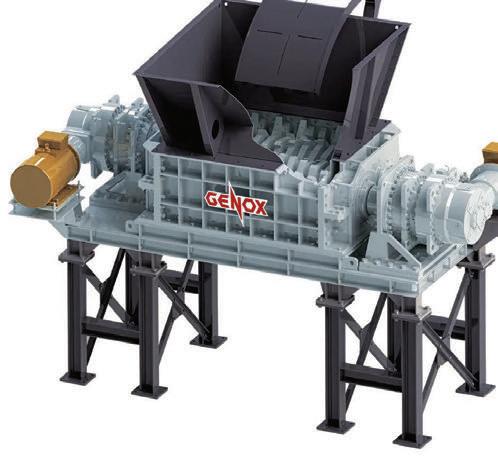
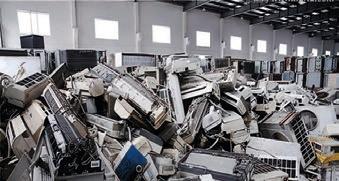
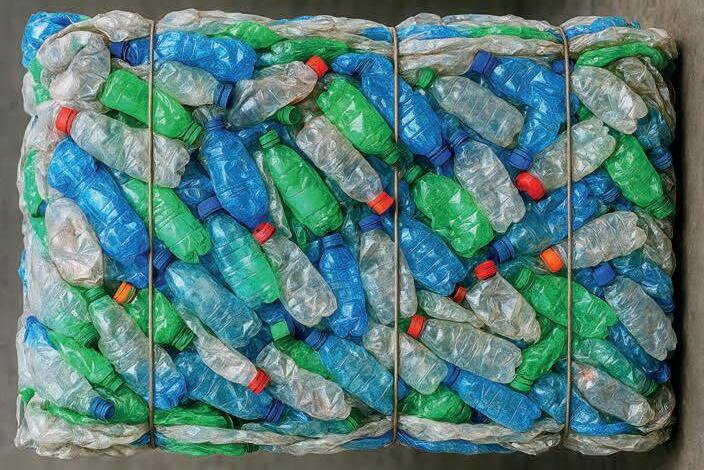
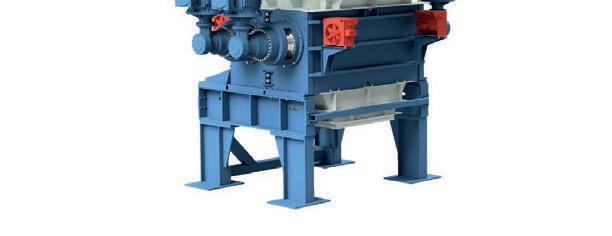
The twin-shaft shredder can cover applications shown in the picture below and more including debaling applications.
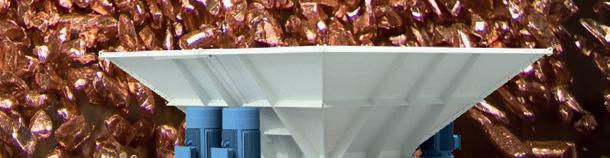
X Series Twin Shaft Shredders are extremely high torque, high throughput, rotating shear type size reduction machines often used for pre-shredding of large volume or high strength materials which may contain contamination. The unique modular split chamber design, provides excellent access to key components therefore reducing maintenance downtime and service costs. With designs up to 2.5m operational lengths and with 2 x 160kW motors.






Rick Ralph helped build the national foundation for resource recovery in Australia. After ve decades of advocac the ti e has co e to pass the aton to the next generation.
Forty-six years ago, the waste and recycling sector in Australia barely existed outside of land ll operations and scattered charity drives. It didn’t have a uni ed voice, a national agenda, or a clear public identity.
To follow the career of Rick Ralph, the outgoing chief executive o cer of the Australian Resources Recovery Council (ARRC), is to chart the industry’s evolution.
His career is one of longevity and depth of impact, thanks to a product that de ned an era.
Rick entered the sector in 1980, based on a single phone call asking him to get involved in a edgling scheme. e challenge was organising the recycling stream for a revolutionary
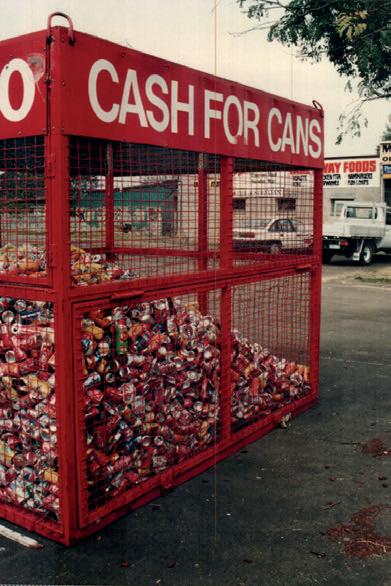
Rick was instrumental in establishing the world-renowned “Cash for Cans” program, an informal and state-based system where people could collect and return aluminium cans for cash – a precursor to modern container deposit schemes (CDS).
“ e introduction of the aluminium
number that many current CDS are still chasing today.
e success was driven by community – at one stage, there were more than 2000 formal community groups actively collecting cans, using the funds to purchase ambulances, install playgrounds, and carry out
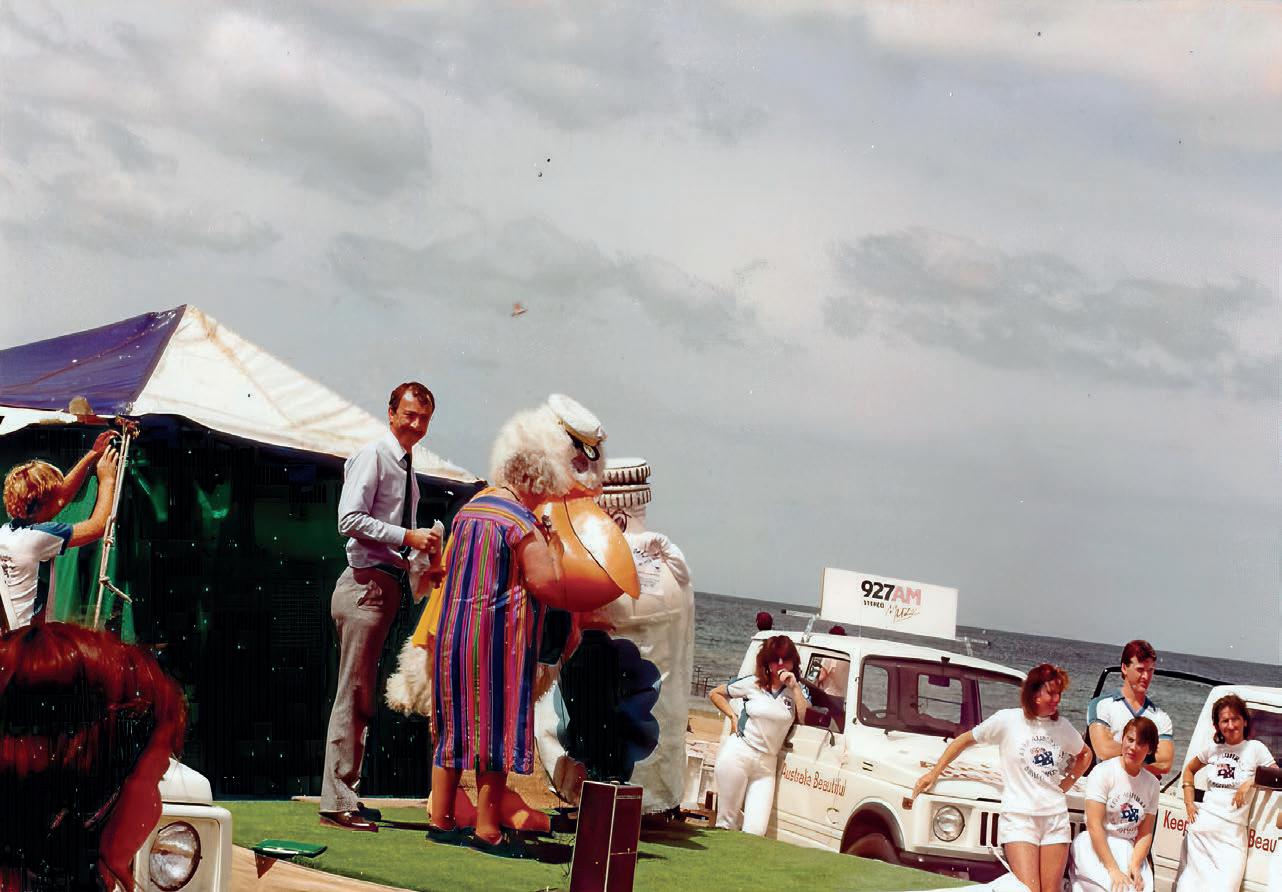
single can back and driving recycling policy reforms. After spending time in various roles, including establishing the scheme in South Africa, and then a stint running the Brisbane City Council’s waste business, Ralph for a short while owned and operated a materials recovery facility, then became involved in Australia’s rst pyrolysis gasi cation plant trial – a waste-toenergy concept – in the early 2000s at Wollongong. He has been an advocate for harnessing the calori c value of residual waste ever since.
e second great turning point in Rick’s career arrived in 2006. With government policy increasingly active in the waste space, Rick and several industry colleagues recognised what he calls a dangerous gap: the operational sector lacked a cohesive, independent voice.
is led to the formation of the nucleus that became the Waste Recycling Industry Association in Queensland, followed by the Northern Territory, South Australia and Western Australia. In 2017, with long-time industry stalwart Max Spedding he established the National Waste and Recycling Industry Council, now the Australian Resources Recovery Council.
“ ere was the realisation of the importance of industry having a strong, independent representative voice to protect its interests at the federal level,” Rick says.
is culminated in what he considers one of his greatest career highlights in 2024: achieving a formal disallowance motion in the Senate rejecting the proposed rule to charge companies $13,000 for every variation made to a commodity export, as well as having the government reject in the same year a budget proposal for $4-per-tonne “recycling tax” on the yellow bin.
ose achievements were the result of three years of “damn hard work”,

demonstrating the importance of having a strong non-partisan industry presence in Canberra.
Looking back, Rick says the constant state of ux and change is what kept him hooked.
“I think once you’re part of the industry you nd it di cult to leave it,” he jokes.
He attributes his success to building powerful networks. Yet, for a veteran who has navigated every policy tide, the current landscape presents distinct challenges.
Rick says the Federal Government’s e orts should be focused not on setting arbitrary waste reduction targets, but on harmonising language, de nitions, and cross-border standards.
“ is notion about having recycling targets, is a myth. You should be chasing the objective, and if you execute that properly, you’ll get your targets and more,” he says.
He contrasts this with the old voluntary systems that chased maximum recovery rather than simply
hitting a gure. Another change is the rise of “white noise” in the policy arena. He says the current system of stakeholder engagement lacks the collaboration between industry and government he experienced early in his career.
After a business career of 51 years, 46 in waste and recycling – spanning both international and public/private sectors – Rick is ready to step back.
While he will maintain some business interests “to keep the brain active”, beyond that, he has no plans.
For a career built on shaping the environmental consciousness and political representation of an entire industry, how does Rick sum up his contribution?
“I hope I’ve left our industry in a better place than when I came into it, with its own separate identity,” he says.
“More importantly, that my contribution leaves our planet in a far better place for my grandchildren to enjoy and the generations that will follow.”

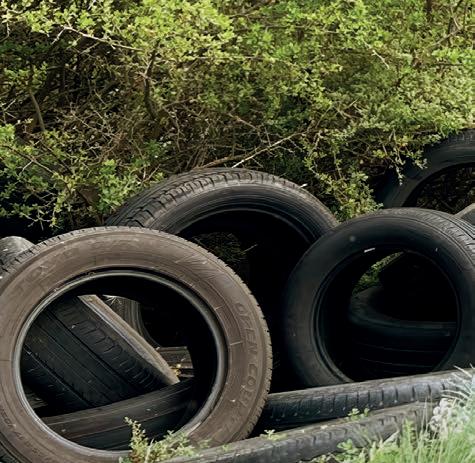
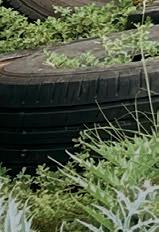
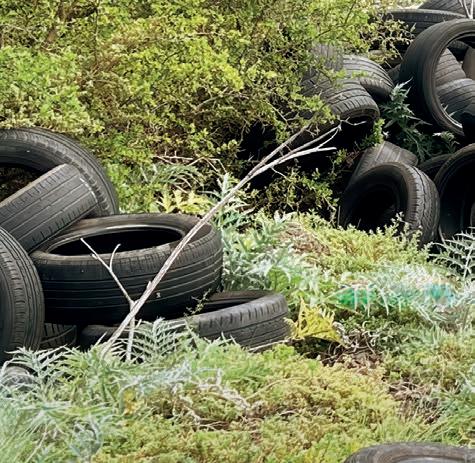
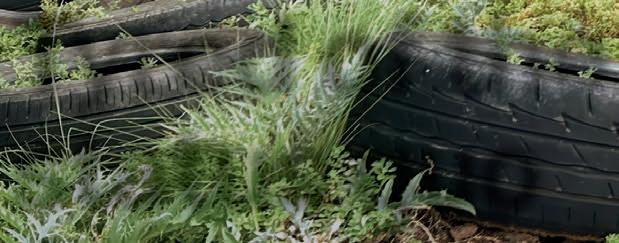

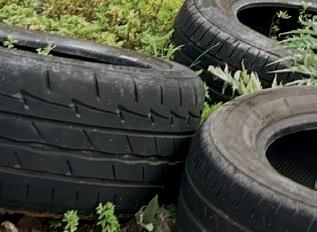
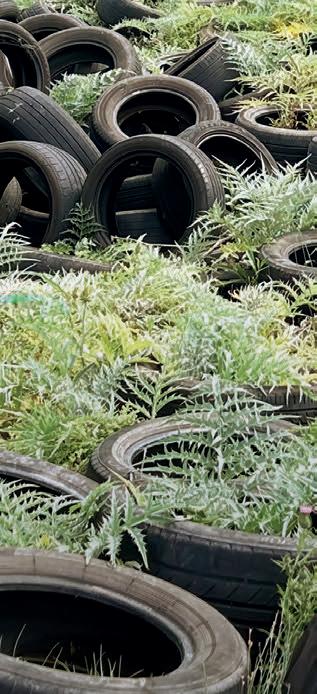
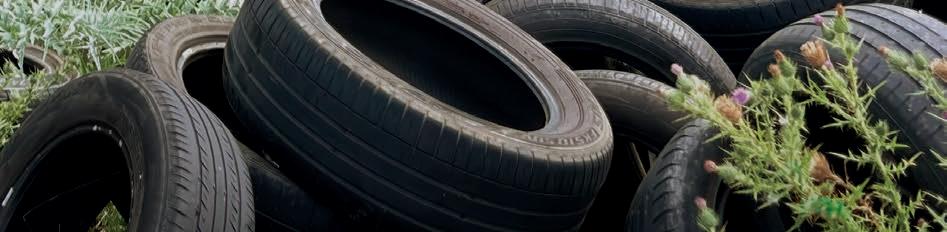
A veteran waste advocate is calling for federal intervention as illegal tyre dumping drains millions from local council budgets and community infrastructure.
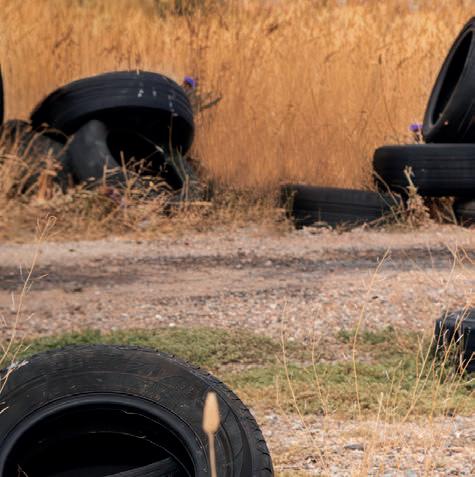
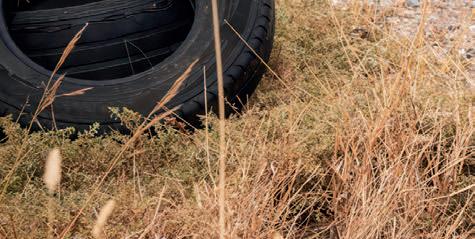
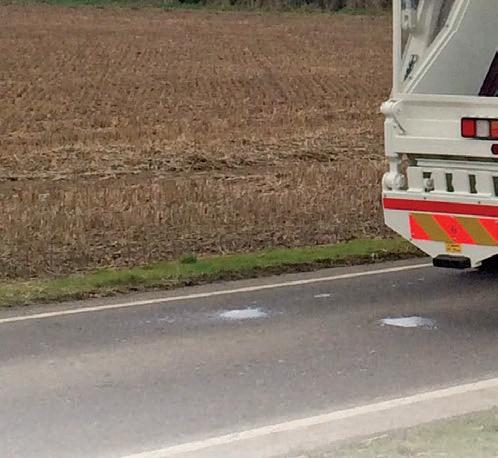
The sun was just beginning to hit the asphalt when I spotted two shredded passenger tyres resting
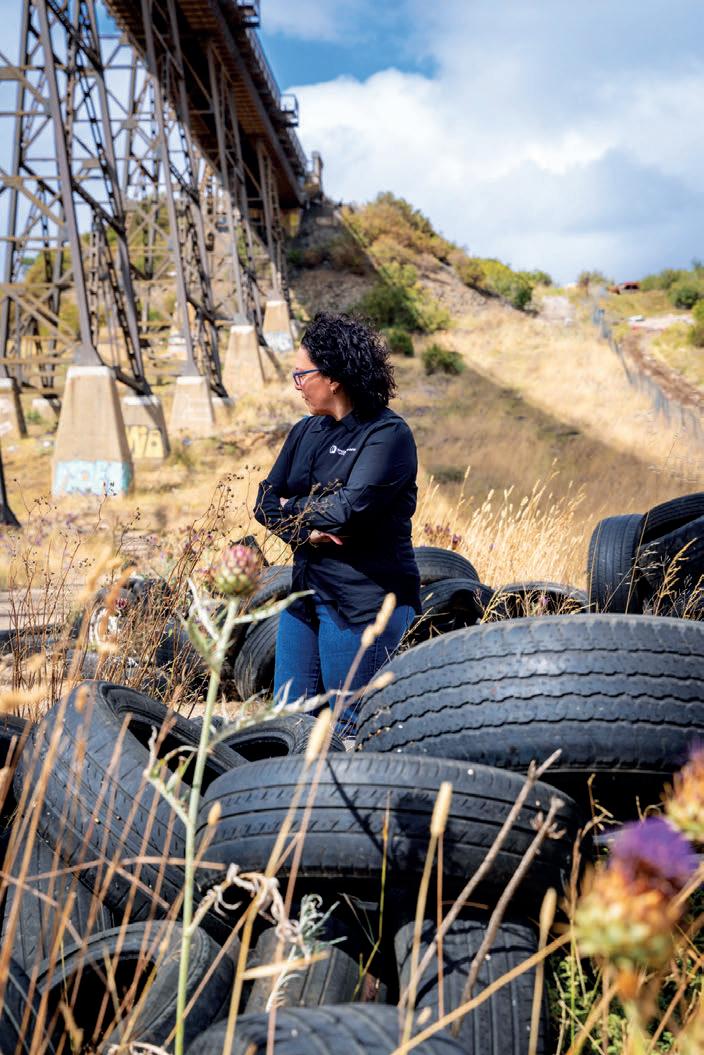
in the tall grass o the shoulder. A few kilometres further down the road and the scale of the problem shifted – a truck
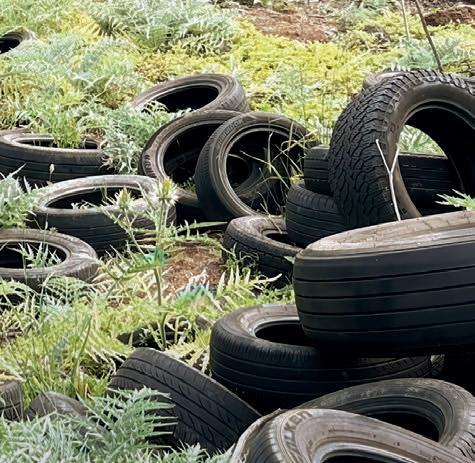
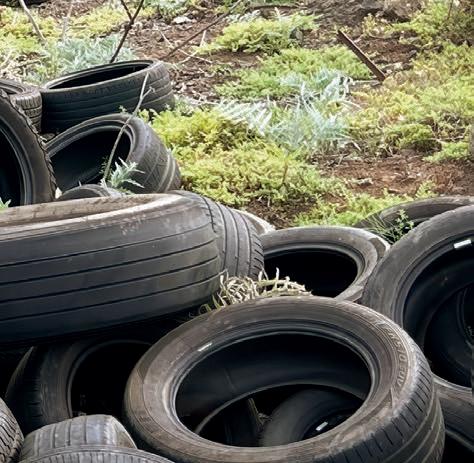
was pulled over beside a jagged pile of rubber – dozens of tyres scattered across the verge.
is scene, Lina Goodman tells me, is far from an anomaly; it is being played out right across Australia.
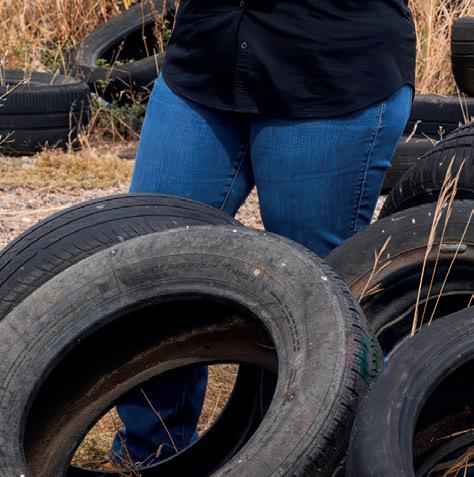
As the Chief Executive O cer of Tyre Stewardship Australia (TSA), Lina sees these “tumours” – a constant stream of smaller, pervasive illegal dumps that are spreading across the country – every day.
e numbers are staggering. On the surface, Australia appears to be a success story in the circular economy, with nearly 90 per cent of passenger tyres successfully collected.
However, the remaining 10 per cent translates into the equivalent of millions of car tyres being dumped or stockpiled, creating a legacy of nancial, environmental, and health risks for local communities.
In the 2022-23 nancial year alone, cleaning up illegally dumped tyres cost Australian councils an estimated $6.5 million, according to a report
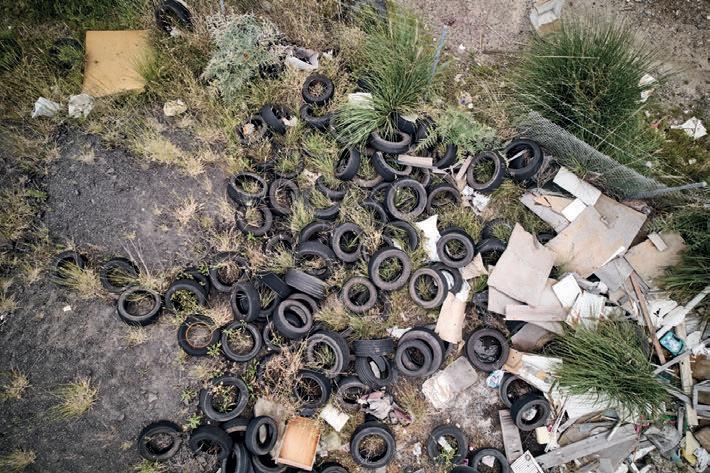
commissioned by TSA. However, Lina believes this gure is grossly underestimated, as many stockpiles and illegally dumped tyres are di cult to measure – and accurate measurement does not necessarily mean they are fully accounted for.
e report, Stockpiling and illegal dumping of tyres: cost to local governments and others, found that nationally, about 300,000 tyres were retrieved from roadsides and bushland at an average
cost of $22 per tyre – nearly triple the $7.60 fee a consumer typically pays to dispose of a tyre at a retail shop.
“We talk about rogue operators, but it’s organised waste crime,” Lina says, her voice re ecting a decade of frustration. “ ey are organised waste crime groups that are taking money and dumping tyres.”
TSA is a not-for-pro t organisation that manages Australia’s voluntary Tyre Product Stewardship Scheme.
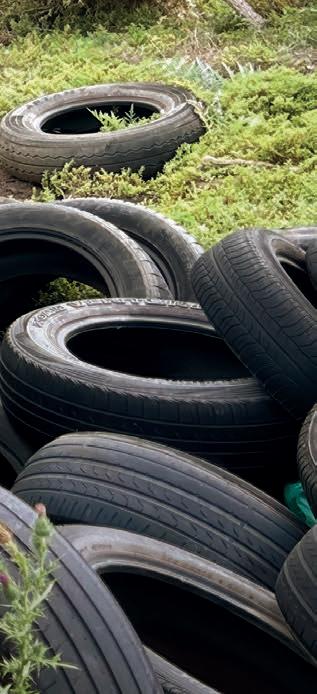
There are steps the community can take to help reduce illegal dumping.
Consumers are urged to use only TSA Accredited retailers who are committed to the responsible management of used tyres.
Vigilance is also key; apps such as Snap Send Solve allow residents to report dumping instantly using GPS and artificial intelligence technology to alert councils.
In 2025 alone, more than 2000 snaps of dumped tyres were reported in Victoria, providing a data map of “hot spots” in the state’s west.
Authorised by the Australian Competition and Consumer Commission, TSA works with retailers, recyclers, and manufacturers to promote sustainable management, research new uses, and support responsible endmarkets for used tyres.
Lina says that after 11 years of voluntary measures, rogue operators continue to exploit the system, and everyday Australians are carrying the cost. Brimbank is a large, diverse local
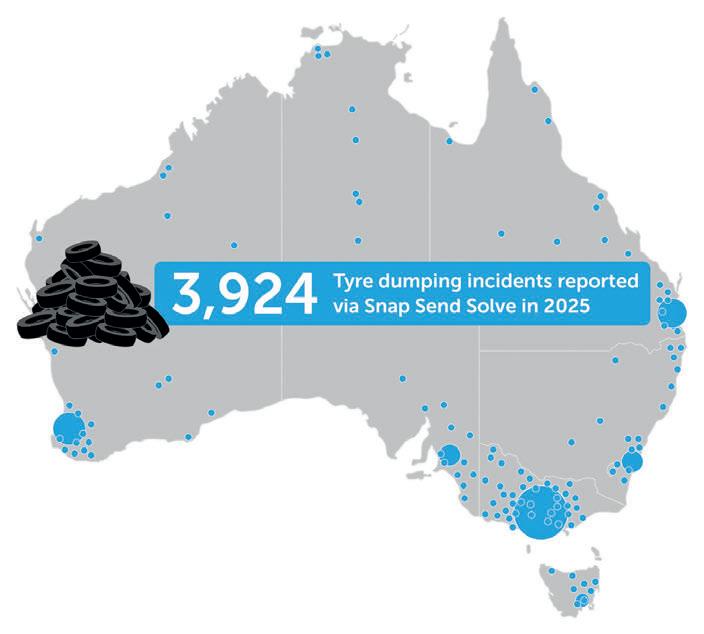
government area located in the western and north-western suburbs of Melbourne, about 15 kilometres from the CBD. In 2024, the City of Brimbank spent $86,000 cleaning up illegally dumped tyres. Wyndham City Council, in Melbourne’s outer south-west, spends $6000 every month.
In Isla Gorge, Queensland, it cost $100,000 just for crane hire to remove more than 200 tyres dumped in a ravine. And in the most recent highpro le case, more than 3000 tyres were illegally dumped inside the Macquarie Pass National Park, near Wollongong, New South Wales.
Lina says while the tyre dumper was ned $60,000, the cleanup bill was $200,000 including the cost of specialist contractors who had to use a ying fox pulley system to remove the tyres.
“Rogue operators, criminals posing as legitimate recyclers, advertise on social media or simply knock on doors to collect tyres for a fee, only to
dump them in national parks, under bridges, or even in private driveways once the cash is in their pockets,” Lina says.
“ ese are not businesses having a ‘bad day’; they are opportunistic entities that often use stolen vehicles or swap number plates to evade detection.”
She says the impact on the market is devastating. Legitimate collectors, who invest in the infrastructure and licensing required to process tyres responsibly, report losing up to 40 per cent of their business to these criminals who undercut them.
Ratepayers are e ectively paying twice: once when replacing their tyres, and again through their rates to clean up the mess left by illegal dumping.
“Councils across Australia are spending hundreds of thousands of dollars a year collecting dumped tyres, and that’s ratepayer money diverted from critical infrastructure,” Lina says.
“Victoria just announced $21.5 million to tackle illegal dumping, which is a huge amount of money that could have gone to building roads and vital infrastructure instead of cleaning up after criminals. is is about economic fairness for everyday Australians and for legitimate businesses that want to do the right thing.”
Lina says the time for studies and voluntary measures is over. e Federal Government needs to mandate product stewardship for tyres now.
“Every year of delay means more millions of dollars for councils, more environmental damage, and more legitimate businesses struggling to survive.”
e solution, Lina says, is in a proven global model. Mandatory product stewardship schemes have already demonstrated their e cacy in reducing or eliminating dumping.
In British Columbia, Canada, mandatory regulation has virtually wiped-out tyre dumping.
Closer to home, New Zealand’s mandatory scheme resulted in a local council reporting a 47 per cent drop in illegal dumping in its rst year of operation alone – an outstanding result.
Lina says these schemes work because they remove the commercial incentive for crime by ensuring that the cost of recycling is managed at the point of import and that only accredited, audited participants can handle the material.
“Legitimate recyclers who have invested in state-of-the-art recycling infrastructure should bene t from recycling opportunities and revenue, not unlawful operators looking to cut corners,” she adds.
“Mandatory schemes level the playing eld, ensuring everyone plays by the same rules by providing the regulatory certainty that investors need to build local recycling infrastructure. Without
this certainty, the opportunity for a thriving domestic tyre recycling and advanced manufacturing industry is being lost.
“With proper regulation, Australia could turn waste tyres into valuable products like crumb rubber for roads and other high-quality nished products, creating hundreds of jobs and attracting signi cant investment. However, no sane investor will put millions into a recycling facility while a rogue operator can undercut them by dumping tyres in a national park for free.”
Furthermore, dumped tyres are often so soiled with mud or contaminated by chemicals that they cannot be processed into high-value end markets, meaning they inevitably end up in land ll even after they are recovered.
he vast landscapes of western Queensland are home to a growing, silent crisis: a decadesold mountain of rubber that refuses to disappear.
train operators, both general freight and livestock, and their tyres are often disposed at the town dump. So, there’s the cost of having old tyres there and the waste site getting bigger and bigger.
In November 2025 the Standing Committee on Industry, Innovation and Science announced a Parliamentary Inquiry into the Australian tyre industry, looking at its role in the circular economy, focusing on improving resource recovery, developing new markets for recycled materials and addressing waste.
Lina welcomes the inquiry and says many local councils across Australia have made a submission. What is needed now, is action.
“We have reached our limit as a voluntary scheme, and we can’t create end markets when these tyres are being dumped and contaminated. If the Federal Government fails to regulate, local councils will be left paying for dumped tyres forever,” she says.
“When people see this as just an environmental problem, they miss half the story. is is also about economic fairness – for every Australian and for legitimate businesses. It’s about making sure crime doesn’t pay.”
For more information, visit: www.tyrestewardship.org.au
While urban centres often focus on the immediate aesthetics of roadside litter, the Mayor of Longreach Regional Council, Tony Rayner, describes a far more entrenched problem.
For the seven councils under the Remote Area Planning and Development Board, tyre stockpiles are not just a waste issue; they are an expensive, decades-long “impost” on regional land and resources.
A common challenge for regional leaders is the lack of economic scale. Unlike metropolitan areas, remote councils do not have the density of waste required to make commercial shredding and rubber crumb processing viable.
Instead, they are left managing massive stockpiles on council and Crown land. ese sites are not merely taking up space; they present an environmental and safety risk that local governments are forced to manage with limited sta ng and tight budgets.
“It’s not only passenger tyres out here, but also machinery tyres,” Tony says. “We have a vast number of road
“We also have the issue of being a refuge area for pests such as feral cats and every other rodent that likes to live under a 100-tonne stockpile of tyres.
“And it’s an environmental risk, because when they catch on re, whether it be deliberate or from internal combustion, it creates a major situation that is not good for anything.”
Despite the logistical hurdles, the regional board is working with recycling companies to secure grant funding for a tyre crumb plant in Longreach. By transforming legacy rubber into road base material, councils hope to turn a 50-year-old liability into a regional asset. e goal is not pro t, but the restoration of the local environment.
“We are working smarter to help the regions dispose of old tyres, and I think we’re on the right track,” Tony says.
“Historically old tyres have simply been stockpiled at waste sites or used in dam banks and earth walls. e opportunity to value add and remove an environmental problem is very exciting, especially to think that the end product is used in a road base.”
Why Groundvac picked Isuzu for the long haul
In the demanding environment of the Mackay region and Bowen Basin, where the heat and the reliability of equipment is a constant challenge, Mackay-based Groundvac jumped at the opportunity to upgrade its heavy vehicle eet with the latest in truck technology from Isuzu.
Attracting attention with the motto, ‘You think your job sucks,’ Groundvac’s operation uses a system where highpressure water breaks up and lique es soil, which is then immediately removed by a powerful vacuum. is allows for nondestructive digging around underground utilities, sensitive sites, congested areas, or locations with limited access.
Groundvac uses truck-mounted Vermeer hydro vacuum excavators, keeping the entire system mobile for a wide range of sites and scenarios.
Clients include Mackay Regional Council, Harrup Park, Ergon, Ventia, Hay Point and Daly Bay coal terminals, plus various mine sites, civil contractors, builders, plumbers and electricians.
Along with his wife Kerri, Russell Fry acquired the business ve years ago, growing the operation from three trucks to a eet of seven – six of which now bear the iconic Isuzu badge.
Across wide and varied sites, Groundvac needed a truck with a high load capacity on a relatively short wheelbase, while ensuring safety and comfort for the driver. e solution was the all-new Isuzu FVZ 260-300 6x4 from the MY25 F Series range.
Boasting a Gross Vehicle Mass (GVM) of 26,000 kilograms, Groundvac’s new FVZ 260-300 has a wheelbase of 5485 millimetres, a perfect platform to mount its 8000-litre hydro excavation spoil system on a atbed body.
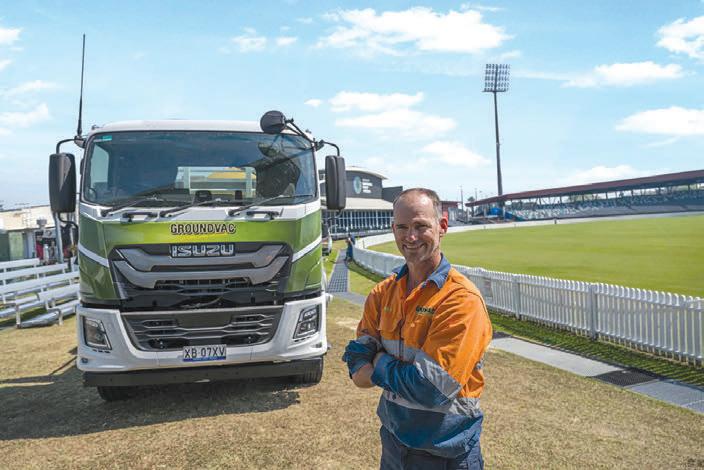
“Keeping this all mounted on a reliable truck means we can be in and out easily. We not only needed a vehicle that can carry the equipment, but it had to be highly manoeuvrable on all types of sites,” Russell says.
“We have a big shutdown coming up at the Major Mackay Port and we wanted to showcase our business in the best possible way and that included the new FVZ Isuzu.
“ is job’s a true test of Groundvac, but I have full con dence in delivering to the customer thanks to our new mobile operation.”
e MY25 Isuzu FVZ features the allnew 6.7 litre, water-cooled DB6A engine from Isuzu, o ering 221 kilowatt (296 horsepower) of power at 2200 revs per minute (rpm) and torque of 984 newtonmeter (Nm) at 1000 to 2100 rpm.
is DB6A engine series meets EuroVI emissions without the need for an Exhaust Gas Recirculation (EGR) system and features improved retardation when required from an engine compression brake.
O ering improved performance and better fuel economy, the MY25 Isuzu FVZ is tted exclusively with the MD3500 sixspeed Allison automatic transmission with GEN-6 software controls.
e Allison 3500 series is speci cally designed for medium-duty commercial trucking, o ering advanced features such as a push button controller with oil level checks and mode selection to enhanced fuel economy, increased performance, and reduced downtime. is reduces brake wear and enhances safe vehicle control.
“Isuzu has always been up to task for our needs, but this new truck really steps things up in terms of performance, vehicle dynamics, safety and comfort,” Russell says.
“Our trucks work hard and manoeuvrability in the new model is a de nite improvement. It’s no good having all the kit without having the ability to get to the job and then accessing the site.
“ en there are the performance and economy from the engine, which is a major plus in what are hot conditions pretty much all year-round.”
Another non-negotiable for Russell is safety. e next generation FVZ 260-300 features a bolstered range of passive and active systems thanks to Isuzu’s Advanced Driver Assistance System (ADAS) camera technology (now mounted low on the windscreen), designed to assist the driver’s judgement to avoid or reduce
the possibility of an accident. Advanced functions controlled by the new system include, Lane Departure Warning (LDW), Attention Assist Warning (AAW), Tra c Movement Warning (TMW), Tra c Sign Recognition (TSR) with Intelligent Speed Limiter (ISL) and Adaptive Driving Beam (ADB).
Rare in the FVZ’s segment, standard Lane Keep Assist (LKA) is an extension of the LDW system, using an electric motor and solenoid on the steering column to assist the driver. is same electric motor provides a dynamic steering function which reduces driver steering e ort at low speeds, while maintaining stability and control at higher speeds.
Features controlled by the camera and millimetre radar include Distance Warning System (DWS), Advanced Emergency Braking (AEB), and Full-Speed Adaptive Cruise Control (F-ACC).
Inside the cabin the Groundvac crew enjoy comfortable yet hardwearing materials and a smart and convenient layout. e seating position and interface with the steering wheel has been enhanced, with the changes re ecting a more responsive, stress-free driving experience.
“ e biggest feedback I get from the crew is that it is built for the driver,” says Russell. “It is closer to a car than ever before with all the creature comforts, including the cooled seat, which is a major plus when you have a driver in and out of the cab in the local climate.”
A highlight for Russell is an all-new driver’s seat in the form of the ergonomic ISRI 6860/875 NTS2 climate seat, customisable with a range of climate and positioning controls speci ed to suit all manner of applications and environments. “ e best way I can describe the driving experience is relaxing.”
Another addition to the range is an updated glass speci cation, again with driver comfort, safety and wellbeing in mind. A 99 per cent reduction in ultraviolet (UV) and a 59 per cent reduction in infrared (IR) cut-through has been achieved, helping to enhance visibility, prevent sunburn and retina damage and improve cabin insulation.
“You might say the truck is built for the Capricornia region, but I can see the bene ts for operators across the country,” Russell says. “ e exterior looks great too, which is really important in showcasing our business. Plenty of clients notice that you have the latest set of wheels.
“As an employer, I’m con dent in having my crew getting around in the right truck for the work we do, plus the safest and most comfortable for them.”
For more information, visit: www.isuzu.com.au


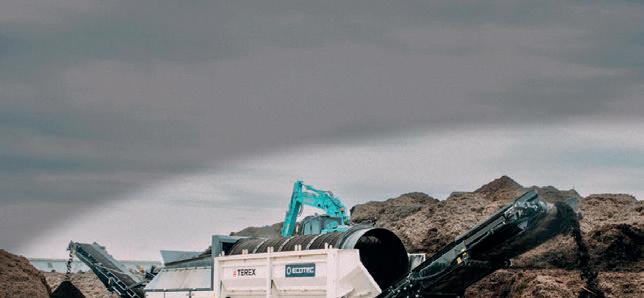
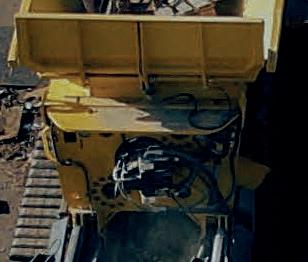
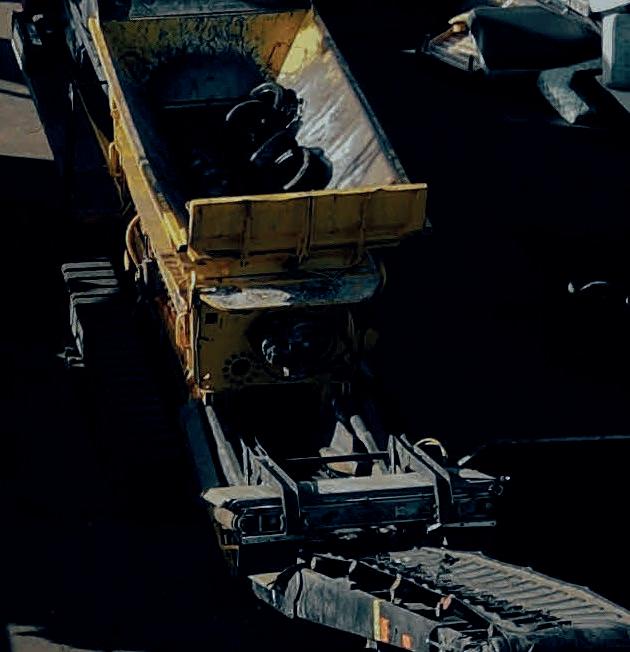
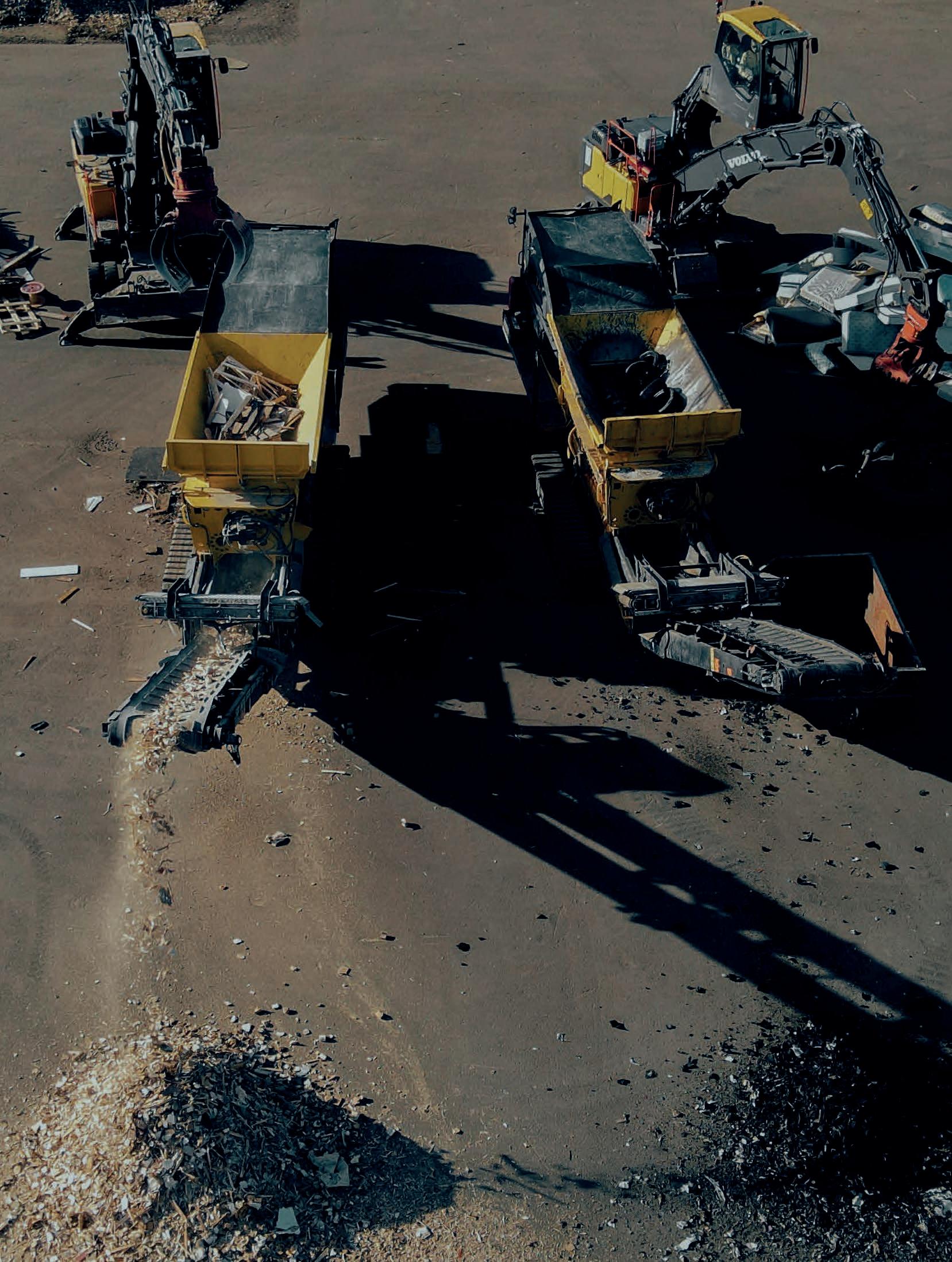
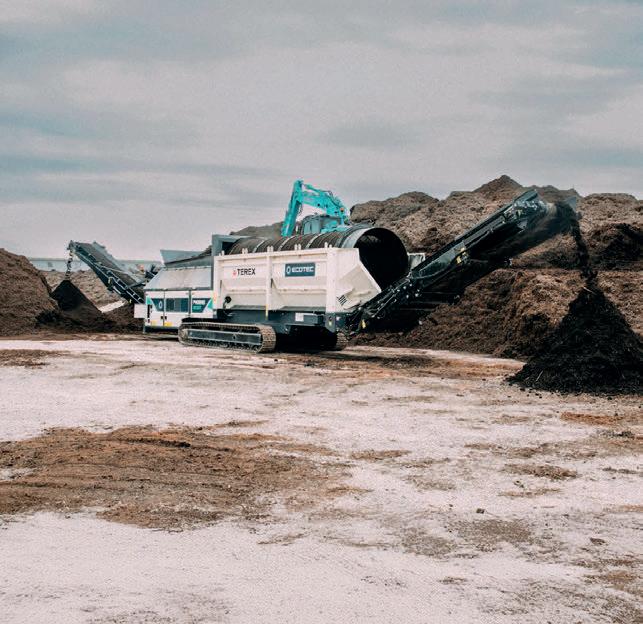
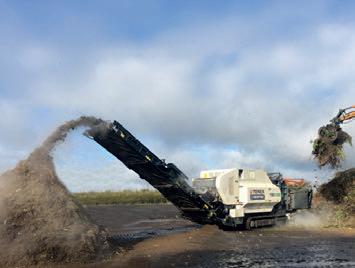
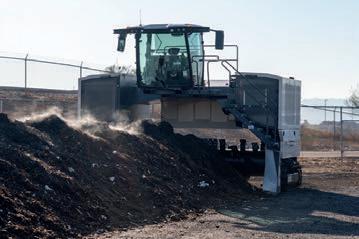
180° swivel fines conveyor, with a 5.7m (18’ 6”) discharge, means the machine can generate massive stockpiles.
Highly e icient in the separation & processing of wood chips, top soil, compost “green waste” and demo waste and aggregates.
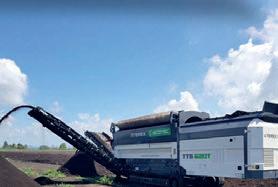
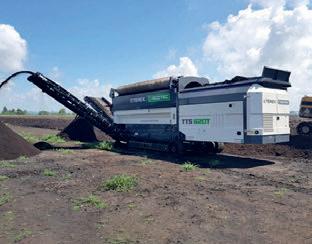
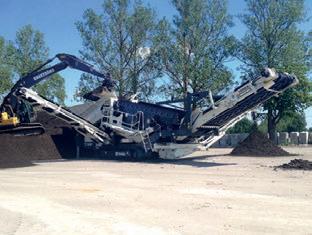
Veteran bin manufacturer Easyquip is launching a dedicated equipment division to better service the Australian waste industry.
Easyquip, a family-owned and run business with a 35year legacy in waste bin manufacturing, is establishing a dedicated equipment division.
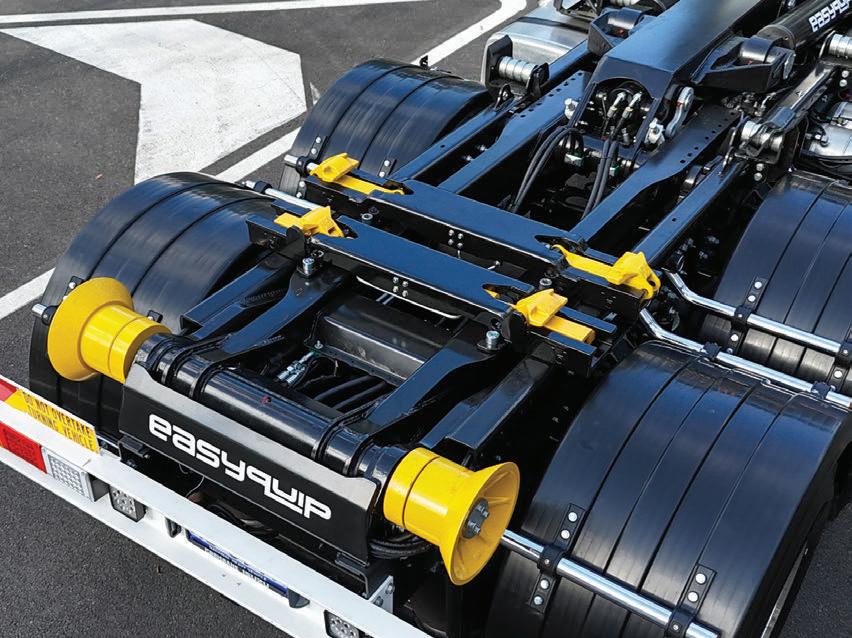
By partnering with the Italian hydraulic specialists at Bob Italev, Easyquip is bringing a new level of “small business care” to the world of hook loaders and truck-mounted equipment. e move is an expansion from Easyquip’s recent history, which has been focused on the production of highquality waste bins.
However, the company’s roots were rmly planted in the mechanical and engineering side of the trade, with its founder having deep experience in trucks
Over the past ve years, the business has gradually transitioned back into the equipment space, rst with compactors and now with a full-scale launch into hook loaders.
Easyquip’s Jack Hocking says the move is in response to customer demand.
“ ere’s a big hole in the industry. Not from a supply point of view, in some ways the market is saturated, but a lot of customers feel there isn’t enough focus on the small things that matter out in the eld,” Jack says. “ e decision to get into trucks wasn’t really driven by wanting to grow or wanting to be bigger and better, it was more that we could see our customers needed help.
“For us, we’d shifted from being
on the equipment division. We had developed a structure where we’re able to successfully deliver these products and projects to the market, but we’re still small enough to care, to go the extra mile to deliver the best solution for the customer”
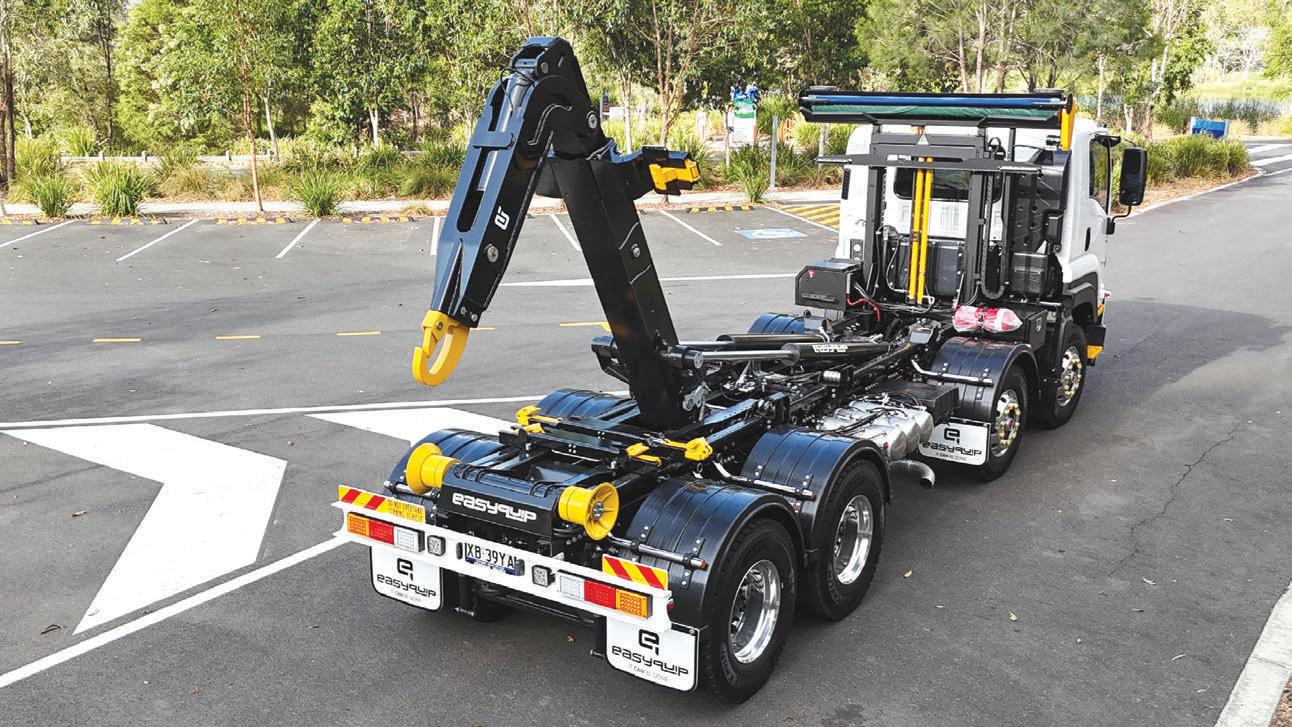
Jack says Easyquip’s background in bin manufacturing provides the perfect backbone for the new venture. With 35 years of building and selling hooklift bins behind it, the company understands the versatility needed in the Australian market. e Bob Italev unit is one of the most advanced in the market as far as multi rail width, multi hook height and multi lock position, with the exibility of a modular design.
“We’re not just bolting a unit onto a chassis; we understand the technical application and the stresses involved in the day-to-day operation of a waste eet,” Jack says.
e choice of Bob Italev as a partner was equally deliberate. Like Easyquip, Bob – a division of B.O.B. S.p.A. – is a family-owned business that has maintained its roots despite a global reach that extends to the Americas and beyond.
Founded in 1974, Bob Italev has spent half a century specialising in hydraulic equipment, speci cally hook loaders and skip loaders. It has had a presence in Australia for 30 years and has delivered more than 1000 units, but the new partnership with Easyquip as the sole Australian distributor represents a fresh commitment to the local market.
Jack says the alignment between the two companies’ cultures was a deciding factor.
“We’re not just bolting a unit onto a chassis; we understand the technical application and the stresses involved in the day-to-day operation of a waste eet.
Jack Hocking, Easyquip
“ ey’re very similar and aligned to our business model, their culture and values haven’t been diluted by becoming a big global brand. ey’re a family business from Italy.
“Although they are a global business
and lead the market in many ways, they’re still very much a family business that cares and supports the customer,” Jack says. “I deal directly with the owner, and I’m sure many in the Australian market would know him personally as well. He travels here to Australia and spends time on the ground with our customers, understanding their needs. ere’s that level of care and attention to detail.”
Jack says Bob Italev units have been speci cally designed to handle the oftenharsh conditions of the Australian waste landscape. But the hardware is only half the story.
Easyquip has invested heavily in infrastructure to support the new division, expanding its warehouse space in both Queensland and Victoria to accommodate an in-house stock of spare parts – addressing an industry pain point of waiting weeks for a component to arrive from Europe.
Beyond parts, the company has brought all engineering, tting, and stability calculations in-house.
Jack says in the waste industry, where “time is money,” the ability to have the needed resources on hand without relying on outsourcing is crucial. Access to
technical data, product-speci c training and all the supporting tools to provide the right solution in a timely manner is what the industry wants and needs.
Easyquip aims to ll a service “hole” and is positioning itself as a national equipment supply business that handles everything from the initial quote to in- eld training and longterm maintenance.
“Whether it’s a small family operator in Mildura or a growing regional business in Chinchilla, the feedback from the ground remains the same: operators want a partner who will answer the phone, deliver a solution and x a mistake if it happens,” Jack says.
“ e waste industry is too small for a bad reputation. e partnership between Easyquip and Bob Italev is built on the idea that reliability is the most valuable product a company can sell.
“If you want to be a respected brand in the waste industry, you have to be trustworthy, loyal and deliver the best solution. It’s about being the country’s trusted equipment supply business.”
For more information, visit: www.easyquip.com.au















The combination of a transport component giant and a global hydraulics leader is bringing service muscle to Australia’s waste sector.
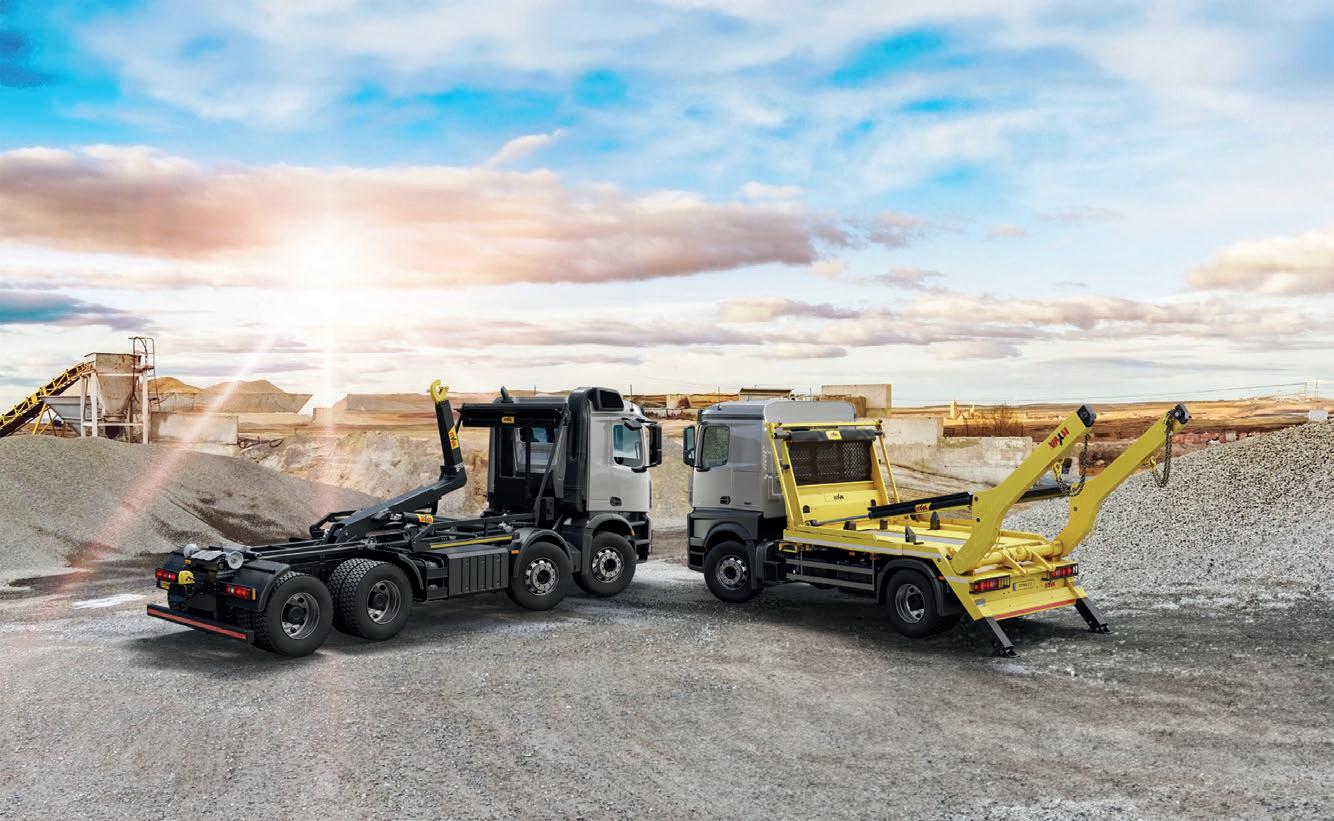
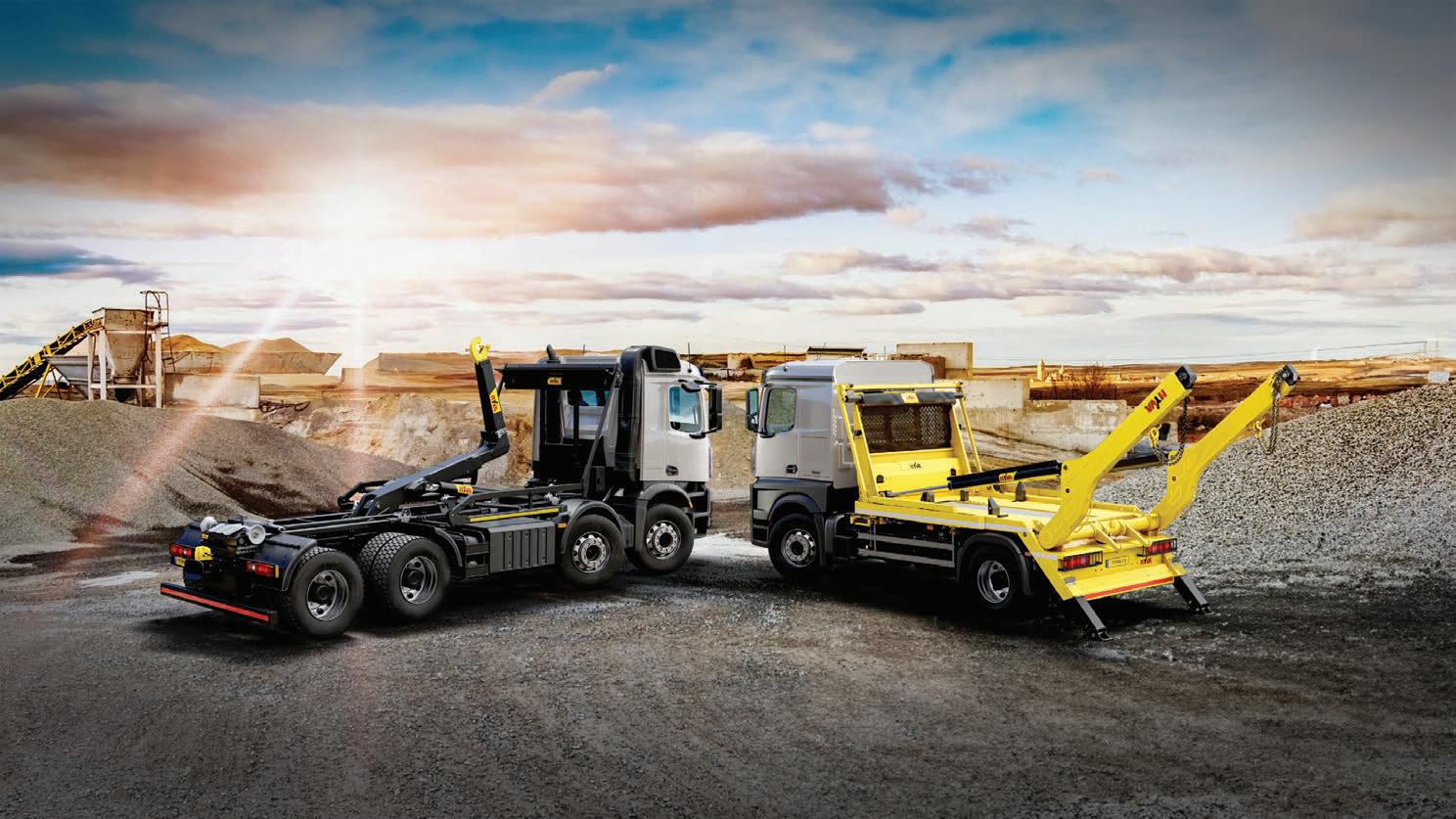
When JOST Australia, a major player in transport components, completed its acquisition of international hydraulics provider Hyva in 2025, it wasn’t just a corporate handshake; it was a restructuring of the supply chain for the industry.
e move combines two specialist areas – JOST’s vehicle components such as fth wheels and landing gears, and Hyva’s core hydraulic
gear including hook loaders, skip loaders, and tipping cylinders – under one banner.
Corey Povey, JOST Australia’s General Manager – Sales and Marketing says it means operators, eet managers and truck dealers can now lean on a structured source of supply and tting, via approved installers, who in turn provide a complete solution with any extras required.
“Customers are really happy that a reputable business like JOST has bought Hyva,” Corey says. “It’s given them more con dence to either stay with the product or to give it a go.
“We’re not just taking over a product line; we’re integrating it into a highly e ective sales and distribution company.”
JOST Australia, a subsidiary of the global JOST group, supplies
“When customers have invested in a truck or a trailer, they don’t want it parked. If the wheels aren’t turning, they’re not making money. We understand that.”
Corey Povey, JOST Australia’s General Manager – Sales and Marketing
including established branches in Perth, Adelaide, Brisbane, Sydney, and Melbourne.
It has moved into a new 14,000 square-metre warehouse in Melbourne where the entire inventory of Hyva products – hooks, skips, and cylinders – will be stocked and ready for dispatch.
advanced, high-quality components for the Australian transport industry, including fth wheels, landing gears, kingpins, couplings, and hydraulic systems for the truck, trailer, and agricultural sectors.
hooks and skips on the back of rigid trucks,” Corey says.
Corey says for a vehicle o road situation, it should be a “same day” dispatch for spare parts.
But the game-changer isn’t the merger itself, it’s the commitment to customer support.
Emissions Machines run clean and efficient Safety First
Electric Leadership
Designed top safety standards
Hyva was founded in the Netherlands in 1979 and is recognised as a global leader in hydraulic solutions for commercial transport, providing components for tipping gear, cranes, container handling, and waste management systems for trucks and trailers.
Sustainable
Built to support a greener future
“Time is money, and vehicles need to be on the road,” Corey says. “When customers have invested in a truck or a trailer, they don’t want it parked. If the wheels aren’t turning, they’re not making money.
Volvo leads in sustainable construction
It has also bolstered the team, adding a dedicated salesperson in Queensland and New South Wales. is increased capacity, combined with the legacy engineering of Hyva and the logistical power of JOST, means customers are getting a much safer bet.
Technology
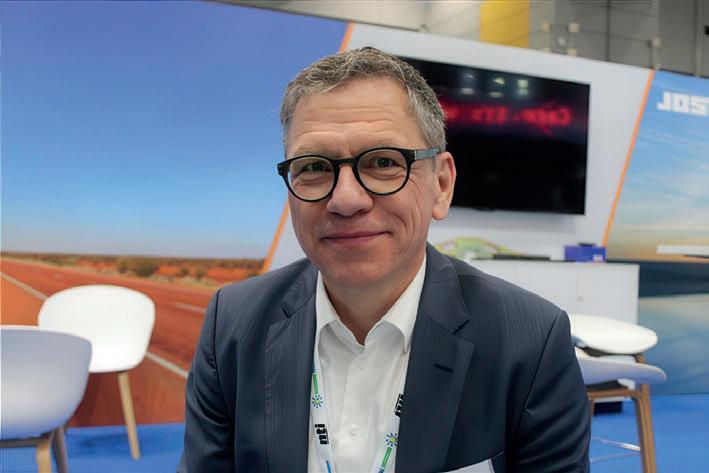
Announcing the acquisition in 2025, JOST Chief Executive O cer Joachim Dürr said adding the Hyva brand to the JOST world would strengthen the business structure, customer base, and market positioning.
“We understand that, and we want to support that. e key is to have people on the road as quickly as possible.”
Cutting-edge features enhance control
“Together, we will expand our global footprint, enrich our portfolio for transport and agriculture businesses, and boost our potential in the infrastructure industry.”
Corey says globally, JOST is always looking to expand and with the transport component market already mature, one way to grow is through acquisition, moving into complementary sectors. e waste and recycling sector is a perfect t. e move also allows JOST to leverage its strong existing relationships with truck brands and dealers.
It delivers all the need for demanding without compromising
“We’ve already had some good little wins with existing customers tting
“For the end operator, this translates to simpli ed purchasing and, most importantly, peace of mind that support is only a phone call away, regardless of where their truck is working,” Corey says.
JOST is backing up this promise with an investment in logistics. e company already boasts distribution coverage across Australia,
Delivers powerful, precise performance
“If it’s tted in Melbourne, it goes to work in Perth or it goes to work in Queensland. It doesn’t matter. We’ve got coverage everywhere.”
For more information, visit: www.jostaustralia.com.au
to achieve zero tailpipe emissions and remarkably low noise levels.









Electric Leadership
Volvo leads in sustainable construction
Zero Emissions
Safety First
Machines run clean and efficient

High Productivity

Delivers powerful, precise performance
Designed with top safety standards


Smart Technology
Smart Technology

features enhance
Cutting-edge features enhance control


Sustainable Focus

Built to support a greener future

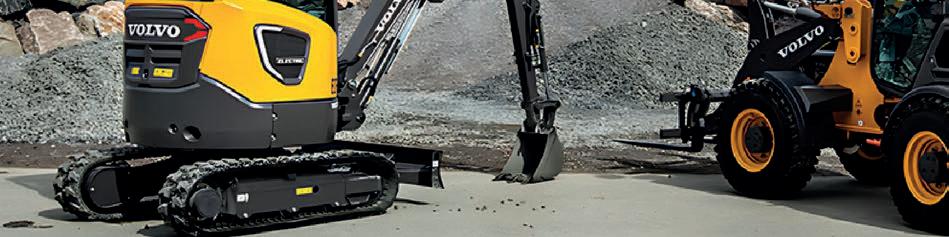
Volvo's technology utilises battery power to achieve zero tailpipe emissions and remarkably low noise levels.

It delivers all the performance you need for demanding construction tasks without compromising on sustainability.



he da s of rel ing on paper log oo s endless phone calls and crossed ngers for machine uptime are fading fast with the introduction of Bucher Connect.
For too long, waste operators have lacked clear, real-time visibility into how their equipment is performing, where it is located, and when maintenance is required. at is about to change with the introduction of a new integrated platform that’s set to connect every part of the eet, from the sweeper on the street to the static compactor bolted down at the shopping centre.
is move isn’t just about adding GPS – it’s about providing “overarching connectivity across the complete product range,” says Edward Mason-Je eries, Product Manager at Bucher Municipal.
Edward says the launch of the Bucher Connect system in Australia tackles one of the most complex problems in eet management – how to manage eet operations and uptime in real time from afar.
While mobile units such as vacuum tankers and street sweepers are constantly on the move, compactors are static, yet both are critical in waste management operations. Bucher Connect o ers individual platforms under one management system to cover the needs of bulk waste equipment, street sweepers and vacuum jetting equipment.

“ is is far more than just a tracking tool,” says Edward. “We’re providing connectivity for all products, making asset management a single, uni ed digital task.”
Bucher Connect, which covers sweepers and vacuum and jetting vehicles, is built on technology road-tested in European markets. is means Australian operators are getting a proven system designed to slash vehicle downtime and ramp up productivity immediately.
e platform gives managers realtime visibility of location, fuel level, operating hours, and maintenance status, with instant digital alerts and recommended repair measures straight from the machine.
Edward says access to live job tracking, event logs, and key digital documents helps customers “better understand how their vacuum and jetting assets are used and maintained, driving more informed operational decisions”.
Where the platform is a gamechanger is on the stationary side with Compactor Connect. Designed for bulk waste, static and transportable compactors, Compactor Connect required local development to suit the unique demands of the Australian waste sector.
“Compactor Connect marks an important step forward for Bucher Municipal, giving customers real-time

visibility of their assets so they can optimise collections, reduce downtime, and run more e cient operations,” Edward says. “With live compactor status, exible user access, and con gurable noti cations, Compactor Connect puts control directly in the hands of operators – allowing smarter scheduling, clearer accountability, and better decision-making”.
But he says it’s not just about seeing the real-time data of what’s happening with those machines and where they are. It’s also about customers having to interact with them.
“We will be rst to market with a system like this for compactors, and it o ers our customers the ability to manage their business and optimise how they’re interacting with the compactors,” Edward says.
“If they have a compactor at a shopping centre, and it’s managed with a swipe card, Compactor Connect owners or centre managers can update who’s able to use the machine instantly. ey can make changes to access requirements, hit a button and
it’s automatically uploaded to those machines in real time”.
For existing customers with Bucher compactors connected to the server, Compactor Connect can be activated as an upgrade, making the transition to digital management largely straightforward. e broader Bucher telematics ecosystem extends this capability across other equipment types. Telematics can be enabled on many existing sweepers. For vacuum and jetting equipment the system is available on new machines only.
Edward says maximum productivity is non-negotiable in the waste industry, and data plays a critical role.
“ is is really about digitising these machines and providing owners and operators with real-time information to help them optimise how they’re running their equipment, how they’re planning jobs and waste collections, and ensuring productivity is as high as possible for their business.”
For more information, visit: www.buchermunicipal.com.au

















ow s aller vehicle design is unloc ing efficienc and access across diverse communities.
For years, the resource recovery sector relied on size as a proxy for e ciency, deploying large collection vehicles designed to maximise tonnage per route. But the biggest trucks often fail where accessibility matters most.
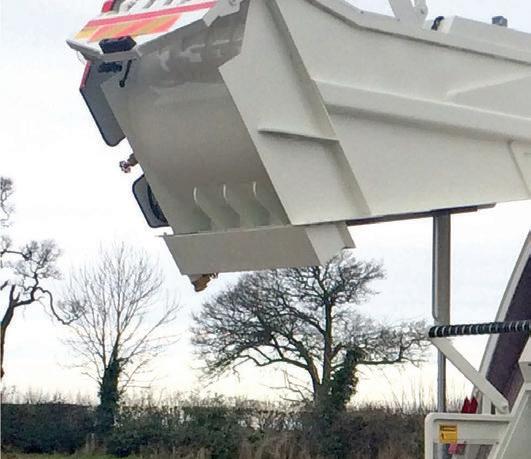
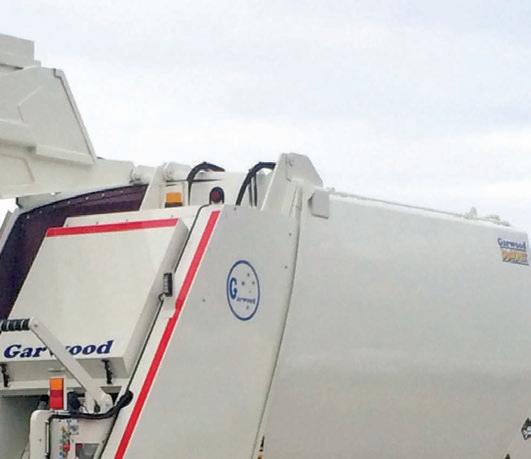
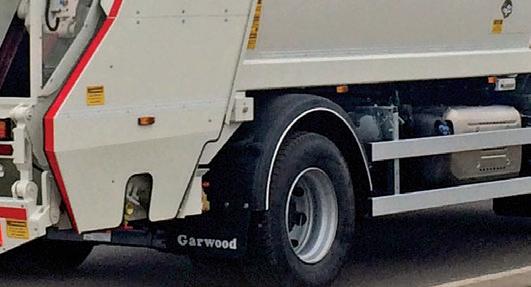
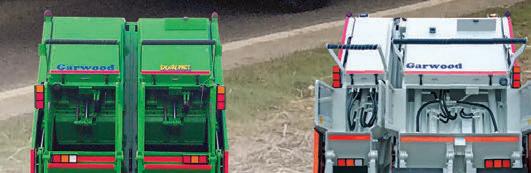
From tight urban cul-de-sacs to narrow, unsealed regional roads, size can be an operational hurdle. It’s overcoming these hurdles that was the core idea behind the Australian-designed Litterpact.
Daniel McHugh, Managing Director of Garwood International, says the Litterpact is a result of the company’s ongoing commitment to engineering excellence in this niche.
“From my perspective, it isn’t just another waste collection vehicle. Its core design principles revolve around maximising e ciency, ensuring accessibility in diverse settings, and o ering unparalleled adaptability,” Daniel says. “ is makes it an exceptional performer in a wide array of operational environments.”
He says the Litterpact’s “right size” philosophy means o ering a range of sizes
metres – allowing operators to match the vehicle to speci c collection requirements.
“ e design e ectively bridges the gap that often exists between smaller, less productive units and larger trucks that can sometimes be overkill – a design philosophy consistent with Garwood International’s focus on practical and e cient solutions,” Daniel says.
Its integration with a range of 4x2 cab chassis, from 7.5 tonnes to 16.5 tonnes gross vehicle mass (GVM), provides exibility for eet managers.
Daniel says the compact footprint and manoeuvrability make the Litterpact suitable for regional, indigenous, and smaller communities where the size of larger vehicles creates logistical hurdles, while tackling waste collection challenges in previously underserved locations.
Customer feedback highlights savings in both operational time and overall costs.
“ e Litterpact’s e cient design translates directly into lower fuel consumption and reduced emissions compared to larger, less agile alternatives,”
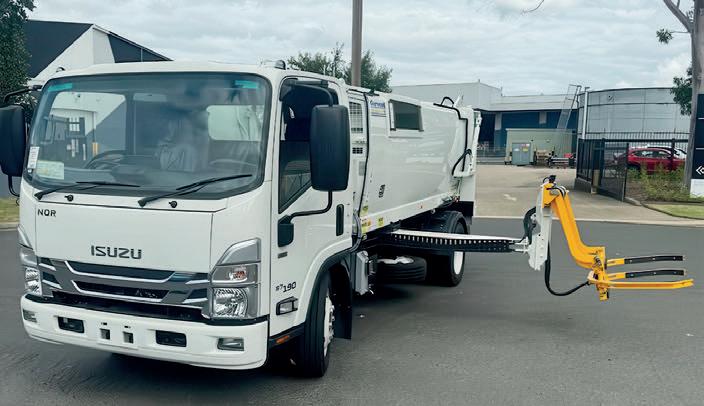
Beyond its size, the Litterpact incorporates key safety and operational innovations, such as the integrated combstyle lifter.
“It’s a standout feature and one that showcases the innovative spirit of Garwood International,” Daniel says.
“ e design allows the operator to safely and easily step out of the cab to position and load the bin onto the lifter comb bar. e lifter incorporates a full cover that moves in tandem with the lifting mechanism, preventing any debris from falling out of the bin during the lifting cycle, maintaining cleanliness and safety.”
A second variant features a cabcontrolled grab-style lifter with a reach up to 2.7 metres, further enhancing e ciency and operator safety. e unit’s lifting speeds are comparable to those of much larger 20-29 cubic metre units.
Additionally, the robust packer and ejector system ensures clean, rapid unloading without the need to tip the body.
“Unlike some other sideloaders, the Litterpact’s body remains stable during waste ejection, as it doesn’t need to be tipped,” Daniel says. “ is is a critical design element that minimises the risk of instability, especially on the often-uneven surfaces of land ll sites.”
He says its proven success, both in Australia and in the European market, speaks volumes about its e ectiveness.
“It’s a crucial element in building more e cient, economical, and environmentally responsible waste management systems for the future.”
For more information, visit: www.garwood.com.au
avigating ears of environ ental change re uires agilit . Enviropaci c delivers integrated re ediation water and resource recover outco es.
The moment a new contaminant is identi ed, or a new piece of legislation comes into e ect, the goalposts shift, sending ripples through the Australian industrial landscape. In the remediation and resource recovery sector, where compliance and environmental outcomes are nonnegotiable, the ability to adapt is a necessity.
Few companies have demonstrated such agility over a quarter-century, but Enviropaci c, currently celebrating its 25th anniversary, is one of them.
e story of Enviropaci c is one of constant change, born from the truth that where there is contaminated ground, there is
almost always contaminated water, and where there is waste, there must be recovery.
Founded on core principles of innovation and client focus, the company has successfully grown from a specialised remediation out t to a national entity employing nearly 300 people.
e expansion into water and resource recovery was an organic response to the complexity of the problems the company was hired to solve.
Fred Lunsmann, General Manager of the Remediation division, has been with the company for 21 of those 25 years. He describes the industry’s evolution
“ e regulations are always tightening and the benchmark for industry best practice is always increasing,” Fred says. “Once there’s an improved established way of doing things, that’s
He says the increasing standards, combined with rising community expectations and the sudden emergence of contaminants such as PFAS (per- and poly uoroalkyl substances), has de ned
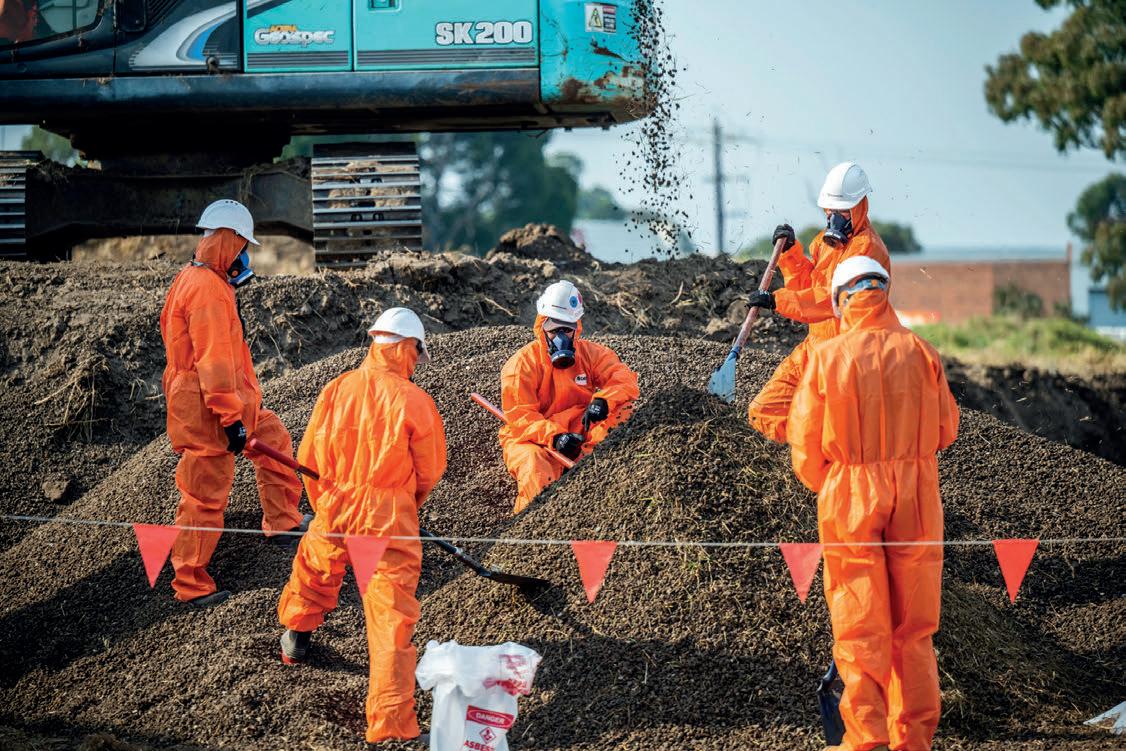
e Remediation division, which performs the physical removal and treatment of contaminated soil, operates on two very di erent scales. While the major projects often grab the headlines, they only represent about half of the total workload.
“We’ve got a lot of smaller, reactive projects around the country,” Fred says. “We might be on site for a week doing asbestos cleanup or cleaning up a service station site or a small demolition project.
“We do over 300 of these smaller projects a year, compared to maybe 10 or 15 of the bigger more complex ones.”
He says the ability to be agile and responsive to those smaller, high-volume reactive jobs is what allows the division to maintain a national footprint and a sustainable operational base.
Complex projects, like the works carried out to turn a historic industrial area in Barangaroo, New South Wales into a sustainable mixed-use precinct, or the ongoing remediation of former gas work sites, builds capability in the team. But Fred says it is the high-volume, rapid-response work that demonstrates the company’s exibility.
He says Enviropaci c’s founding purpose remains clear: “We want to provide innovative and cost-e ective solutions to our clients to solve their environmental problems.”
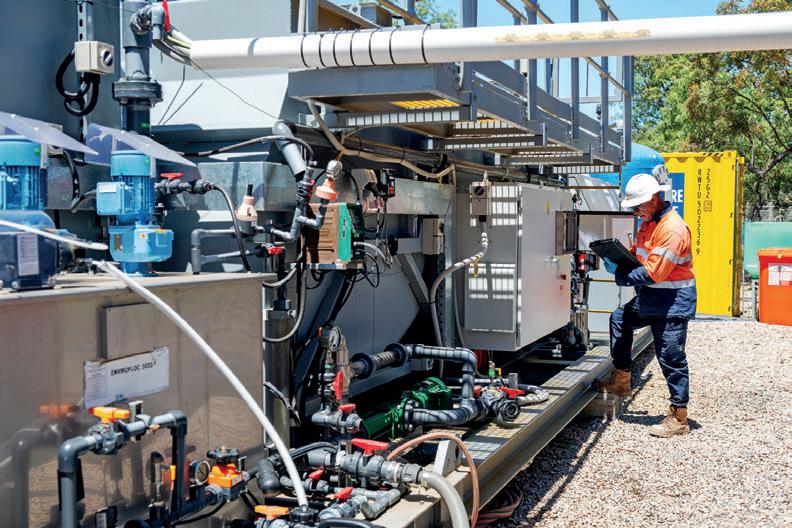
e Water division is an example of Enviropaci c’s organic evolution. As the Remediation team dealt with contaminated soil, it encountered contaminated groundwater, which required management and treatment to support the overall cleanup. is led to the internal growth of a technical team that eventually spun out into its own national division.
John Saleh, General Manager of the Water division, has a background in chemical and process engineering, making him well-suited to the complex analytical challenges the industry faces today.
He points out that the water sector is de ned by the contaminant of the day: PFAS.
“PFAS contamination and pollution of our waterways is a growing issue, and
something that Enviropaci c has good skillsets in, as well as a strong history of successful remediation,” John says.
“Our business is well placed to deal with the PFAS challenge as it becomes more and more prevalent in our environment.”
e division’s work, which includes treating complex legacy contamination for clients such as the Department of Defence, airports, and mines, relies on commercially available adsorption techniques, predominantly using granular activated carbon (GAC) and ion exchange resins.
What sets the division apart, however, is the guarantee of outcome it o ers. John says the team will guarantee to treat water to a speci c volume and a speci c quality.
“A lot of people won’t guarantee an outcome. ey’ll just say, ‘we’ve got a technology, it’ll do its best,’ but we take that extra step,” he says.
“When you step back and you look at the impacts PFAS can have for a community, it’s really quite incredible. If we can remove PFAS from the groundwater, it can be the di erence between a farmer continuing to run a property that’s been in their family
for generations, and that farmland no longer being productively used.”
e company’s third essential pillar, Resource Recovery, completes Enviropaci c’s circular approach to environmental management.
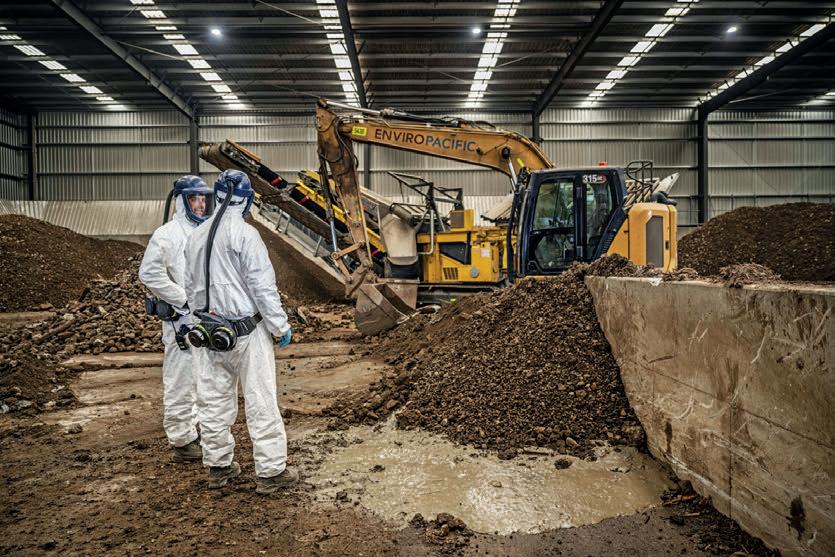
Remediation and water divisions generate materials – soils, sediments, and sludges – that must be handled responsibly. e Resource Recovery division, led by Dino Adikaram, works to process these streams, diverting as much as possible from land ll.
“We don’t see waste. We see resource,” Dino says.
“When we receive contaminated soil or sludge from a remediation site, the easiest path for the project is disposal, but that con icts with Enviropaci c’s fundamental environmental values. Our recovery facilities are engineered to separate, treat, and blend these materials back into usable formats that meet strict environmental criteria for reuse in construction and civil ll.
“Every stream is an opportunity to avoid land ll. at makes complex clean-up projects economically viable and environmentally defensible.”
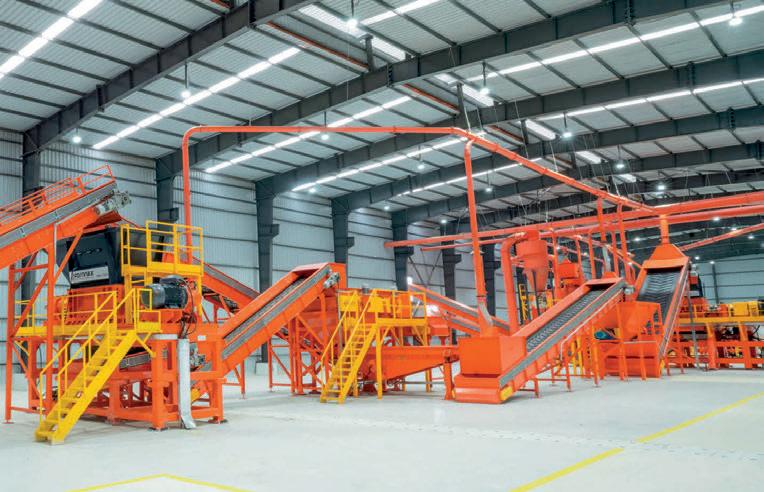
is ensures that the work of the remediation and water teams doesn’t just displace the environmental problem; it converts it into a valuable input for the next stage of infrastructure development. e integration of each division is key to Enviropaci c’s longevity. From the initial complex site remediation to the treatment of contaminated groundwater and the nal recovery of reusable materials, the three divisions operate as a vertically integrated ecosystem.
Fred says this approach allows the company to maintain quality control and innovative capacity across the entire project lifecycle, managing the regulatory pressures and community scrutiny. It also ensures that the environmental outcomes are holistic, not compartmentalised.
capability; it requires a deep, almost instinctual connection to the problem at hand.
He says the waste and resource recovery sector requires more than just
“I still really enjoy what I do, and it’s because of that mix of project delivery, often with a technical solution involved,” Fred says. “A lot of our employees really
relate to the environmental outcomes, and it keeps them focused and engaged and interested in the work they do. ey get a lot of satisfaction out of the work Enviropaci c does.”
For more information, visit: www.enviropaci c.com.au



How turning organic waste into farm-ready compost can support long-term food security.
The most valuable commodity in Australia is often overlooked: the health of its soil.
For decades, farming relied on inorganic fertilisers that treat soil as a substrate, rather than a living ecosystem.
While initially boosting yields, this practice has depleted the natural resilience of vast tracts of agricultural land, leaving them low in carbon and essential nutrients, according to Ben Dearman, Managing Director of Ennovo.
He says the resource recovery sector
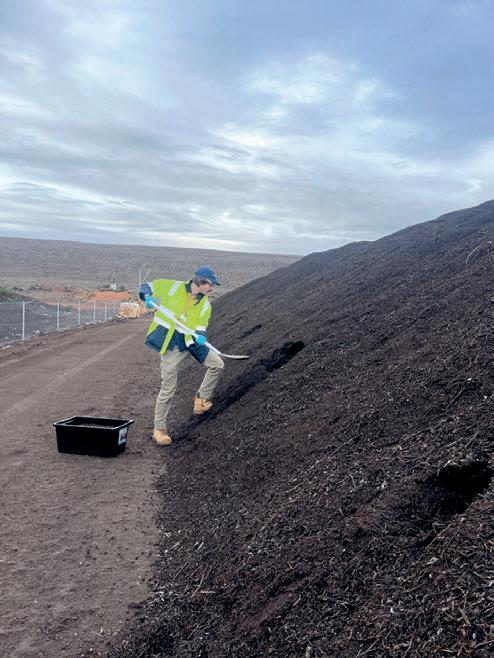
is focused on bringing innovative solutions to the waste management, renewable energy, and contaminated land industries.
Ennovo provides solutions for the management of organic waste with experience in designing, constructing and operating waste management facilities, including open windrow and in-vessel processing.
e company continues to develop novel processes that unlock the value within organics such as important plant and soil nutrients, microbial activity, energy, and carbon credit generation.
Ben says while there has been some resistance to change, often driven by the status quo, farmers are now seeking solutions to problems beyond mere nutrient replacement.
“Farmers are looking for something that has a physical aspect to the nutrient delivery as they understand healthy soils are the lifeblood of their farms, not just a chemical replacement,” Ben says.
“ ey know the usual agronomic approach of using inorganic fertilisers isn’t delivering results, so they’ve approached us to look at applying compost.
“In our case studies, we have been able to convert degraded agricultural areas into much more productive zones, even preparing some for high-value horticultural production when coupled with an irrigation option.”
Compost, manufactured from municipal and commercial organic wastes, has been used extensively throughout history to return organic matter to the earth. Modern technology is transforming it into a sophisticated, science-backed industrial process.
Ben says the advantages of highquality compost products over inorganic fertilisers are numerous and compelling.
“Compost o ers a slow release of nutrients, ensuring a steady food source for plants rather than a sudden, temporary boost. It improves soil structure, enhances microbial diversity, and increases the soil’s water-holding capacity – a critical factor in a drying climate,” he says.
“Using these organic wastes in the composting process is the very de nition of a circular economy outcome, diverting material from land ll and turning it into a resource that revitalises the landscape.”
Despite these bene ts, integrating compost into mainstream agriculture faces hurdles. e two biggest challenges are the high cost of logistics –given that compost production is often centralised near urban waste streams, while farms are regional – and the initial nancial uncertainty for producers.
ese issues are being met with industry-led innovation.
“ e challenge of getting compost to the farmer is real, but it’s being solved on multiple fronts,” Ben says. “We’re
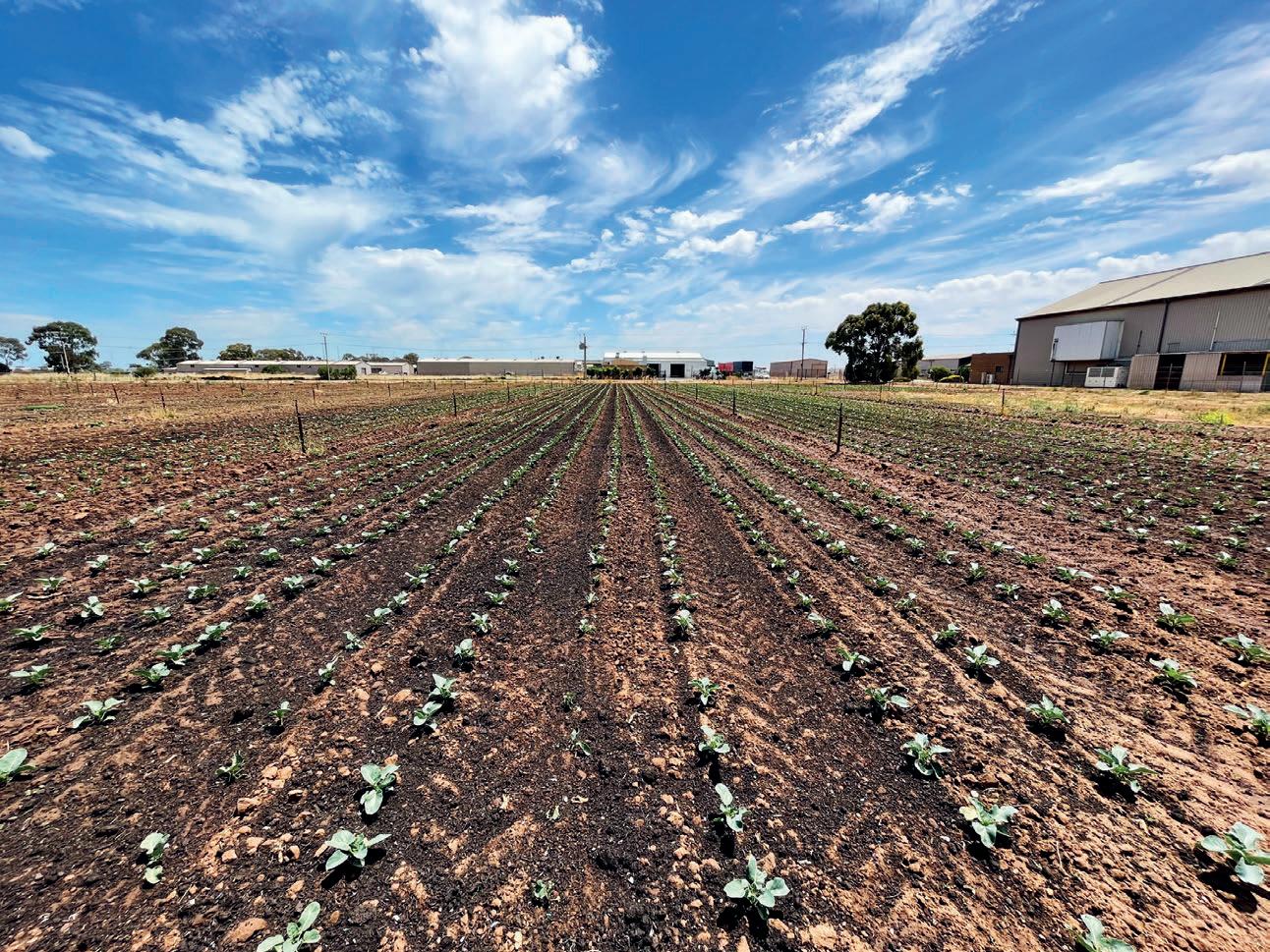
gives a level of certainty to the end user. is technical progress is making it feasible for farmers to improve their soils through compost.”
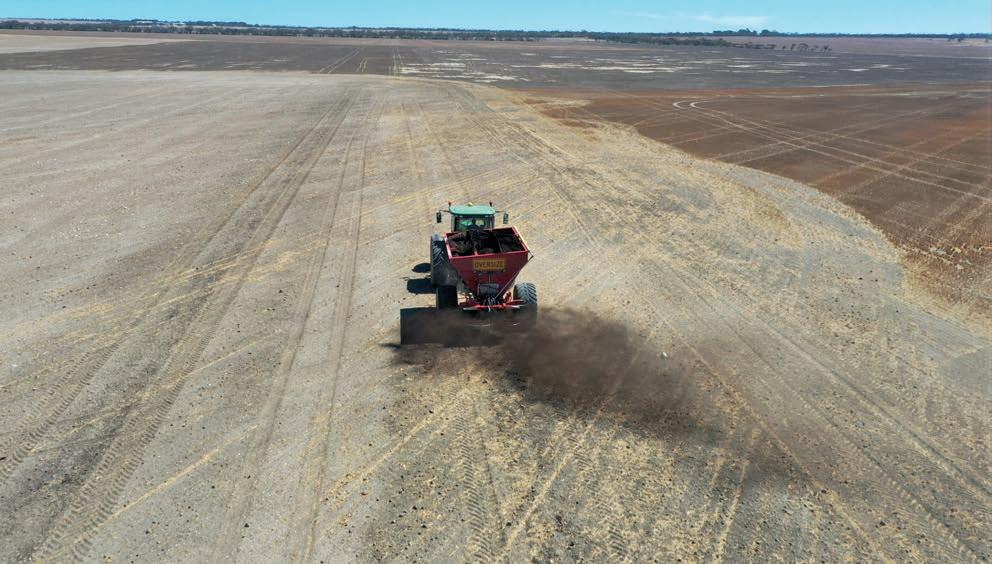
Application techniques are also evolving. For years, compost was spread on the surface, relying on natural processes for integration. Now, specialist equipment is pushing the organic material deeper into the soil where root systems can bene t immediately.
Techniques involve deep rippers and inclusion plates tted to ploughs, which can drive the organic material much deeper. Ben says this approach, paired with GPS-enabled technology for optimised, paddock-wide application, is highly e ective, though it represents a philosophical divergence from the ‘reduced tillage’ systems currently favoured in some broad-acre sectors.
Ultimately, the biggest barrier to adoption is the farmer’s bottom line. For a farmer, a change in approach carries signi cant nancial risk, as a crop failure can be devastating.
“Farming is a tough game, and they don’t have the luxury of having a crop
we’ve seen results within the rst season, though normally it takes three to ve seasons to really build that robustness into the soil health.”
He says the long-term case for organics is irrefutable. It reduces the reliance on imported inorganic fertilisers, o ers superior yield and provides greater crop resistance to pathogens and disease, bolstering the overall sustainability of the farm.
as the foundational element, augmented as required.
“We are de nitely moving forward in the right direction,” Ben says.
“I’d like to see organics become an everyday part of the standard agronomic approach for broadacre and horticultural applications.”
For more information, visit: www.ennovo.com.au
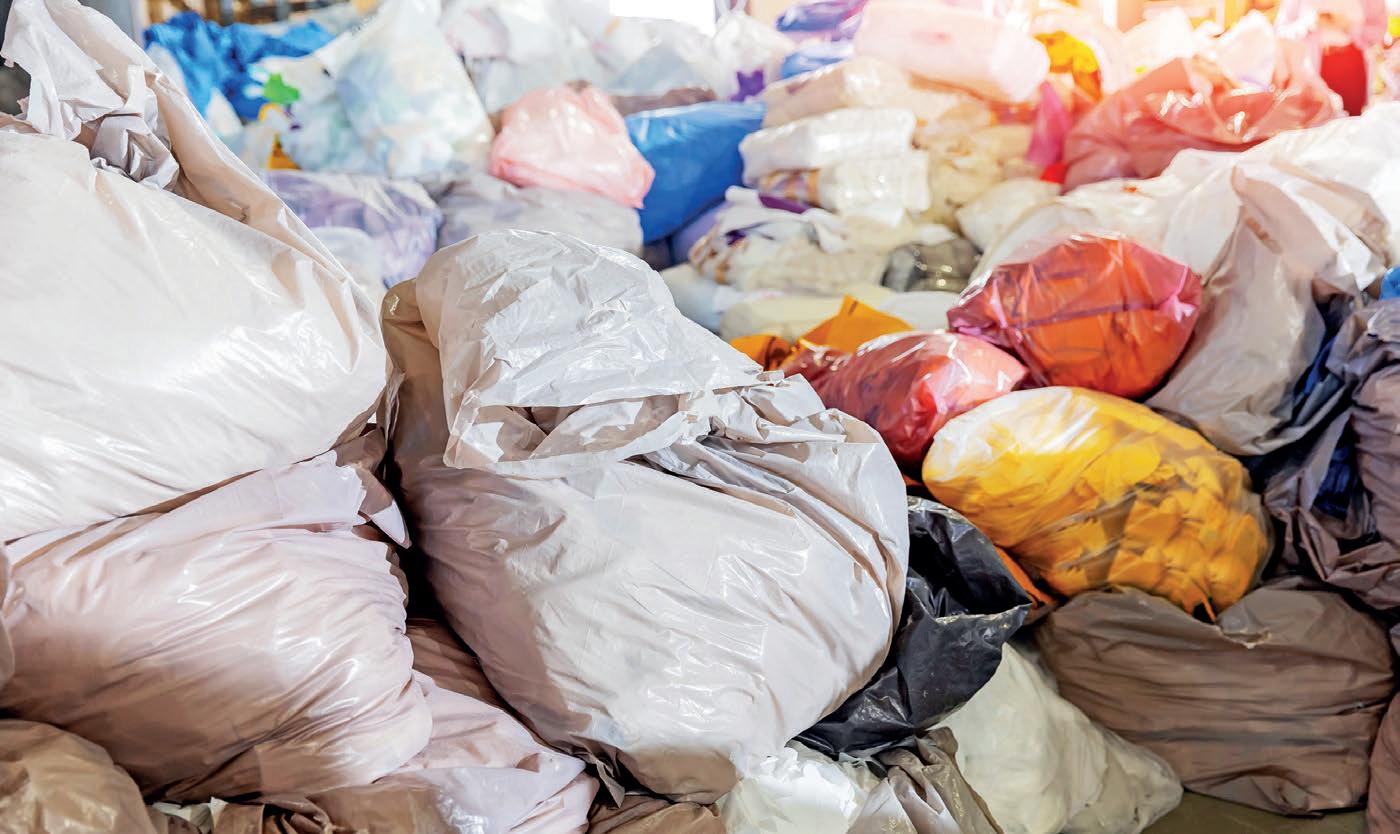
APR Plastics launches a ten-year national expansion to ensure soft plastics circularity.
In the wake of the collapse of collection program REDcycle in 2022, the public has grown weary of the narrative surrounding soft plastics. For many, the sight of stockpiled bags became a symbol of a broken system.
But APR Plastics is moving to change the narrative.
Managing Director Darren orpe says too long has been spent focusing on the hurdles rather than the tangible solutions already operating within Australia.
He is aiming to solve the plastic crisis by “meeting the material at its source” with a seven-to-ten-year rollout that will
involve APR establishing processing infrastructure in every major state and territory across the nation.
From Perth and Adelaide to Brisbane and Hobart, the plan is to duplicate the company’s proven sorting and pyrolysis technology to ensure that soft plastic generated in any corner of Australia has
a viable, local pathway back into the circular economy.
“I don’t want plastic being delivered to me in Melbourne; I want to go to where the plastic is in Western Australia, Brisbane, New South Wales, Adelaide, and the Northern Territory,” Darren says.
“Why should we just have a solution in Victoria when it’s a nationwide solution that’s required?
“Everybody I talk to asks what happens to the plastic still generated in the other states, and they are right – we should be doing something there. We will set up and duplicate what we’re doing in Melbourne so we can process between 40 and 100 tonnes a day in each location to get a better outcome for those soft plastics.”
e national ambition is anchored by a need for a “good news story”. For Darren, rewriting the story means moving beyond the too hard basket and proving soft plastics –notoriously di cult to sort because of their varied polymer types – can be successfully returned to foodgrade packaging.
At the heart of the expansion is a sophisticated sorting facility designed to take the guesswork out of recycling for the public.
Darren says while consumers are eager to participate – surveys indicate that more than 95 per cent of people want to do the right thing when it comes to plastic recycling – most don’t know the di erence between polyethylene (PE) and polypropylene (PP).
APR’s facility uses de-bagging, magnets, shredders, and optical sorters to isolate the speci c polyole ns required for chemical recycling.
Phase one is a $3.5 million sorting facility in Dandenong, in Melbourne’s southeast, which has capacity to process 100 tonnes a week. Supported by a Sustainability Victoria grant, the facility is currently being commissioned.
Darren
“Why should we just have a solution in ictoria when it s a nationwide solution that s re uired
Darren Thorpe, Managing Director APR Plastics
By October 2026 a $3 million phase two upgrade, supported by the Federal Government’s Recycling Modernisation Fund, will include infrared process from Germany to push that capacity to 60 tonnes per day.
is will be the blueprint for the interstate facilities.
Darren rejects the idea that this is just another cycle of stockpiling, pointing to his workforce of 110 people as evidence that the business model is functional and sustainable.
“We need a good news story because there’s been a lot of work going on in these past four to ve years to be able to help solve the plastic crisis,” Darren says. “APR has solved that problem with a supply chain that we built, and by turning the plastic that we’re capturing into an oil and then back into foodgrade packaging.
“I was talking to someone today and they asked why we aren’t nding ways to
replace the plastic, and I said because you can’t – the plastic we’re talking about is the right packaging for the right product.
“We would have a bigger food waste problem if we tried to change the packaging, so we need to nd a solution for the packaging itself, and that’s what this sorting facility will do before it goes to our pyrolysis plant.”
APR’s focus remains on the “circular outcome,” and ensuring that 175,000 tonnes of soft plastics nationwide eventually nd their way through pyrolysis machines annually, closing the loop for good.
“ e good news is out – the recycling of soft plastics is happening, will continue to happen, and has a circular outcome,” Darren says. “We’re very excited to be the forefront of this, and we want to see this all the way through.”
For more information, visit: www.aprplastics.com.au
From mobile phones and laptops to power tools, e-bikes and household appliances, lithium-ion batteries underpin the electri cation of everyday products.
As their use accelerates, re authorities and waste operators are confronting a growing number of battery-related res.
Australian re authorities have repeatedly warned that lithium-ion batteries can fail when damaged, incorrectly charged or stored in unsuitable conditions. Incidents in residential settings are also frequently linked to charging practices, incompatible chargers or batteries that have deteriorated over time.
Once thermal runaway occurs, res can escalate rapidly, producing intense heat and hazardous smoke that is di cult to manage using conventional re ghting methods.
e waste and recycling sector is also experiencing the downstream consequences. Councils and waste operators have attributed an increasing number of res in collection vehicles and waste facilities to batteries that have been incorrectly disposed of into kerbside bins or general waste.
e challenge for industry is no longer limited to end-of-life recycling capacity, says David Cooke, Sales and Account Executive at EcoBatt Safety.
“Managing battery safety increasingly requires intervention much earlier in the lifecycle, including how batteries are charged, stored and handled long before disposal.”
EcoBatt Safety operates within the EcoCycle Group of companies, a family-owned Australian business with a long-standing presence in the recycled materials industry.
With heritage in metal recycling through Recycal, the group has expanded into downstream processing and specialist recycling as waste streams have become more complex.
Today, the EcoCycle Group operates across metals, batteries, e-waste, electronics, mercury and plastics.
e group also includes specialist manufacturing businesses such as Tasmanian-based Castings Tasmania and ACL Metal Powders, which use recovered materials generated through recycling operations, reinforcing a closed-loop approach to material recovery.
David says this downstream integration has in uenced how the group responds to emerging safety challenges. Rather than treating lithium-ion battery res as isolated operational incidents, EcoCycle Group has approached them as a system-wide risk requiring practical controls at multiple points across the battery lifecycle.
“In many cases, the conditions that contribute to battery-related res are established well before end-of-life, particularly during charging, storage and handling,” David says.
“By the time batteries enter the waste stream, their condition and handling history can signi cantly
in uence the level of risk, highlighting the importance of layered controls rather than reliance on a single point of intervention.
“Across the waste and recycling sector, lithium-ion batteries are increasingly recognised as a re risk that must be managed continuously, from rst use through to nal processing.”
In residential environments, lithium-ion battery res are commonly linked to charging activity – devices left charging unattended, damaged batteries, incompatible power supplies and noncompliant chargers.
Commercial and industrial settings face similar challenges, often at greater scale. When batteries fail in these environments, the consequences can extend beyond property damage to business interruption and worker safety.
Traditional re safety measures are not always e ective for lithium-ion battery incidents. In many cases, the safest response is to isolate and contain the event, preventing re spread and secondary ignition rather than attempting immediate suppression.
Recognising the need for purposebuilt re containment solutions, the EcoCycle Group partnered with CellBlock FCS, a global manufacturer specialising in lithium-ion battery re containment technology.
Cellblock FCS created CellBlockEX, a proprietary re-mitigation media engineered speci cally to manage lithium-ion battery thermal events. It forms the foundation upon which a range of containment and safety solutions are built.
David says CellBlockEX is designed to absorb and dissipate heat while suppressing ame propagation during a battery failure.
“CellBlock FCS’s approach focuses on containment rather than extinguishment alone. Its products are designed to withstand thermal runaway events, containing ames, heat and hazardous smoke and allowing batteries to burn out in a controlled environment,” he says.
EcoBatt Safety was established to bring this technology to the Australian and New Zealand markets. e business is the exclusive distributor of CellBlock re containment products across Australasia, supporting applications across residential, commercial, industrial and waste-sector environments.
rough EcoBatt Safety, CellBlock’s containment solutions are being applied across a range of scenarios, from Safe Charge Sleeves used in everyday charging environments to Max Drums designed for higher-risk batteries.
Charging remains one of the most common points at which lithium-ion batteries fail. Despite increasing public awareness, many devices are still charged overnight or unattended, often in areas not designed to manage re risk.
CellBlock FCS’s Safe Charge Sleeve range integrates containment directly into the charging process. Batteries are charged inside protective enclosures designed to withstand high temperatures and suppress ames.
e Safe Charge Sleeve D Series is designed for consumer electronics such as mobile phones, tablets and laptops,
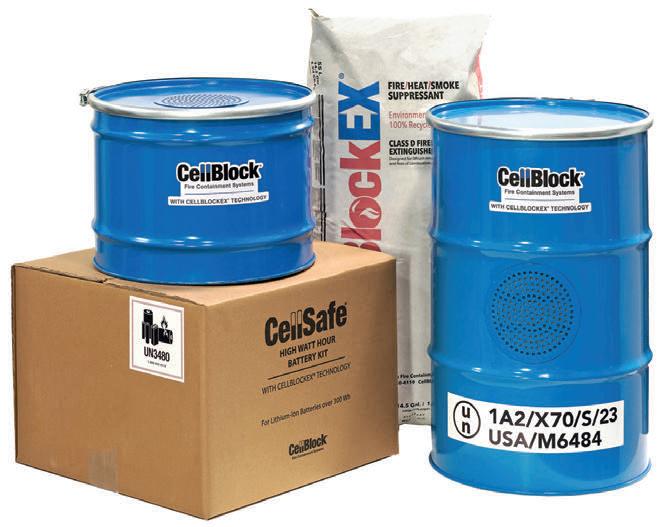
making it suitable for homes, o ces and shared work spaces. e Safe Charge Sleeve E Series is for larger and higherenergy batteries, including those used in e-mobility devices and equipment.
Beyond everyday charging, damaged, defective or recalled batteries present a heightened risk. Batteries that have been dropped, crushed, swollen or exposed to heat may enter thermal runaway hours or days after the initial damage.
For waste operators, councils and businesses handling these batteries, safe storage and transport are critical.
Designed for use across storage, handling and logistics environments, CellBlock Max Drums provide heavy-duty containment for lithiumion batteries considered higher risk, including those awaiting recycling or disposal.
David says that as regulatory scrutiny around battery handling practices increases, containment systems are becoming an important component of operational risk management and due diligence.
In addition to containment products, proactive safety planning is becoming a priority for facilities handling batteries. CellBlock FCS’s EHS (environment,
health and safety) Wall-Mounted Kits support everyday safety protocols in workplaces and processing centres. e kits provide designated stations for storing safety and rst-response equipment in areas where batteries are charged, stored or handled; helping to integrate battery safety into broader workplace safety systems.
As lithium-ion batteries continue to proliferate, the waste and recycling sector is being forced to reconsider traditional approaches to re risk. David says education around correct disposal remains essential, but awareness alone cannot eliminate all incidents.
“Physical containment systems acknowledge a practical reality: batteries can fail, sometimes unpredictably,” he says. “Designing safety into everyday processes such as charging and storage is becoming a critical component of responsible battery management.
“For EcoBatt Safety, this focus re ects a broader philosophy embedded across the group, where safety, processing and material recovery are interconnected parts of the same system.”
For more information, visit: www.ecobattsafety.com.au
a
Danish workshop building scrap shears in 1956 to a global provider of sophisticated recycling systems, Eldan Recycling continues to shape the recycling landscape.
In an era de ned by resource scarcity, ambitious circular economy mandates, and the pressure to deliver cleaner outputs, the foundation of a successful recycling operation rests entirely on its machinery.
Yet, few machinery providers can boast a history as long and as foundational as Eldan Recycling A/S. From its humble beginnings as a small Danish metalworking factory in 1956, the company has transformed into an enduring and innovative pioneer in mechanical recycling technology, now navigating modern demands with renewed technological momentum.
e story of Eldan is not just about producing equipment; it is about responding to crises, setting industry benchmarks, and proving that long-term vision trumps short-term xes.
e company’s journey began with a practical necessity in 1956, producing heavy-duty scrap shears which laid a foundation of mechanical solutions that the company itself describes as “an enduring and innovative” hallmark of its identity.
Environmental regulations banning the open burning of scrap cables in the 1960s created a purity crisis for copper recovery. Eldan responded by creating its rst cable strippers, allowing recyclers to safely and e ciently recover clean copper.
Eldan Recycling’s Carsten Nielsen says it was this moment that the company “unknowingly stepped into cable recycling,” – a eld where it would quickly become a global leader, setting the tone for its future market strategy: innovation driven by regulation and necessity.
at pioneering spirit was carried into the mid-1970s, when Eldan began testing new approaches to process endof-life tyres. is led to the development
of its early Rasper technology. By 1990, the company launched its rst complete tyre-recycling plant, o ering an integrated line that moved beyond simple shredding to full granulation and material separation.
Carsten says this move solidi ed Eldan’s leadership in a waste stream that is now a critical environmental concern worldwide.
e business gained signi cant nancial stability and a wider industrial
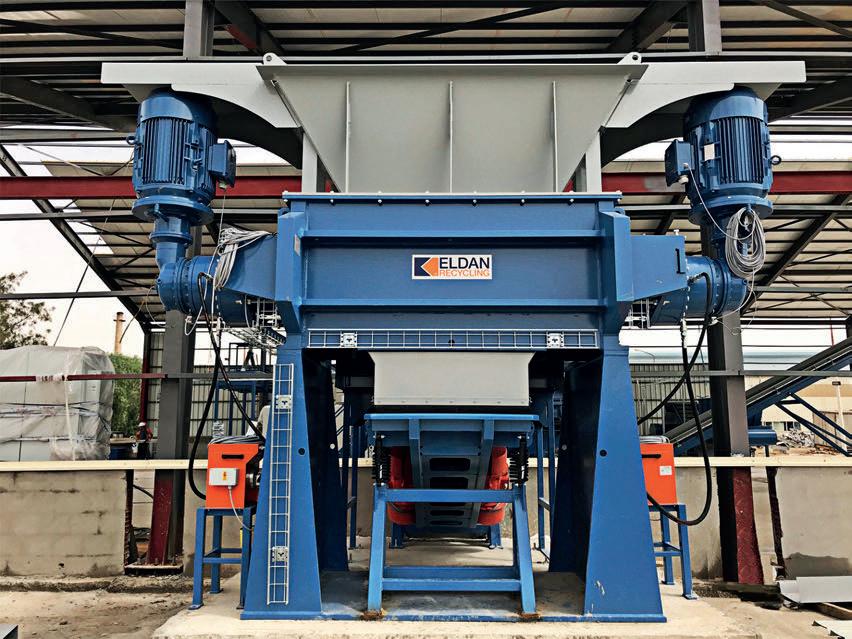
network in 1999 when it was acquired by the Swedish industrial group Lifco AB, allowing Eldan to maintain its highly specialised identity while injecting the “ nancial horsepower” necessary for global expansion.
is period saw the integration of REDOMA Recycling AB in 2016, deepening the expertise in both dry and wet cable-recycling techniques, and further expanding the portfolio beyond cables and tyres to encompass electronic waste, aluminium scrap, and mixed non-ferrous materials.
Today, Eldan’s global success – with more than 1300 complete systems and 8100 machines installed worldwide – is built on its ability to address the pain points of modern recyclers.
“Recyclers today face unprecedented demands for material purity, which often determines market acceptance and price,” Carsten says. “For decades, Eldan has built its reputation on engineering precision, ensuring that the outputs from our systems – whether rubber granulate for sports elds or clean copper – meet these strict standards.
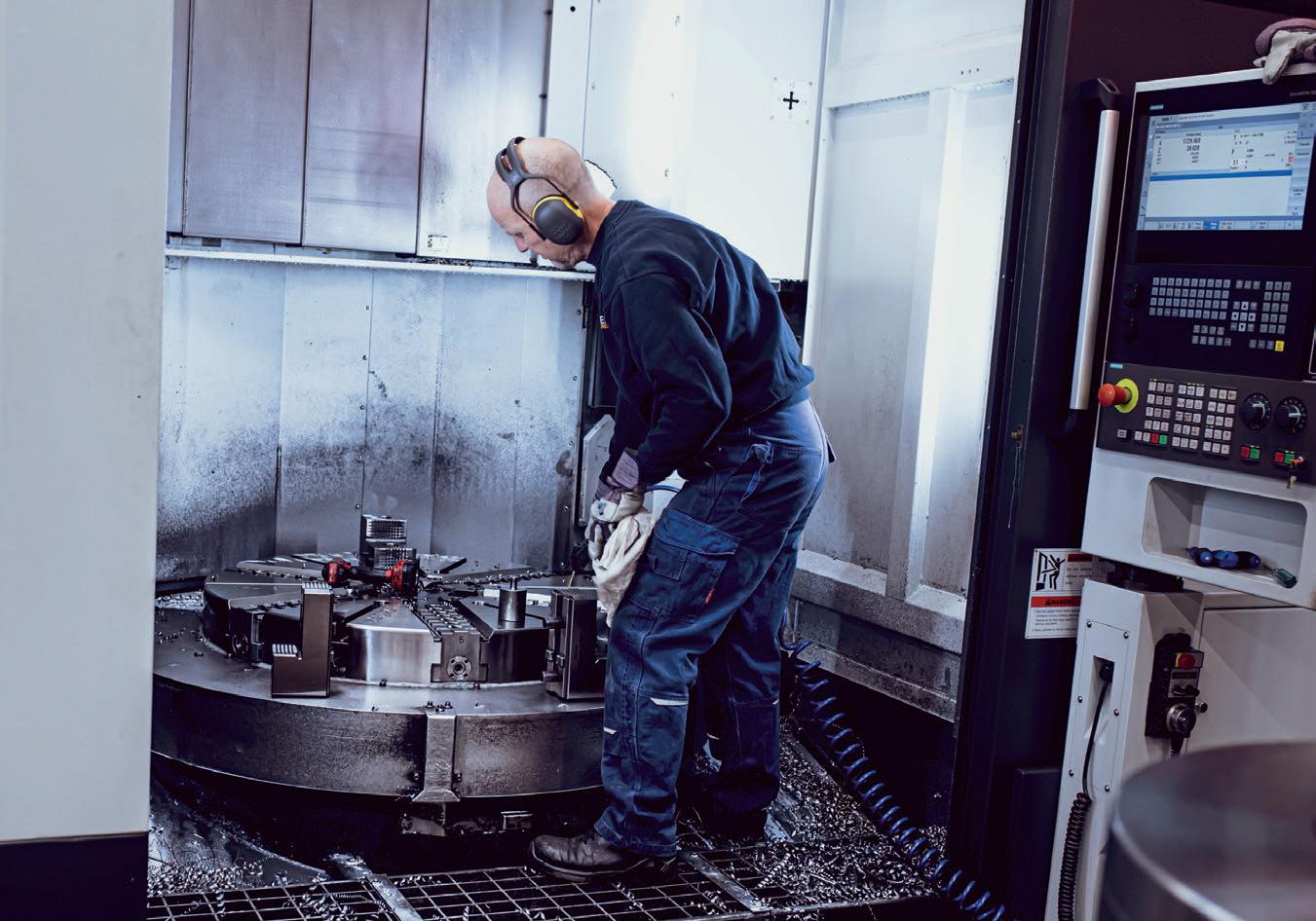
“ is focus is directly tied to our core operational choices, which are nonnegotiable for success.”
Carsten says the company’s decision to keep manufacturing in-house in
Denmark ensures quality, guarantees reliable spare parts availability, and allows for the customisation necessary for complex, multi-material processing.
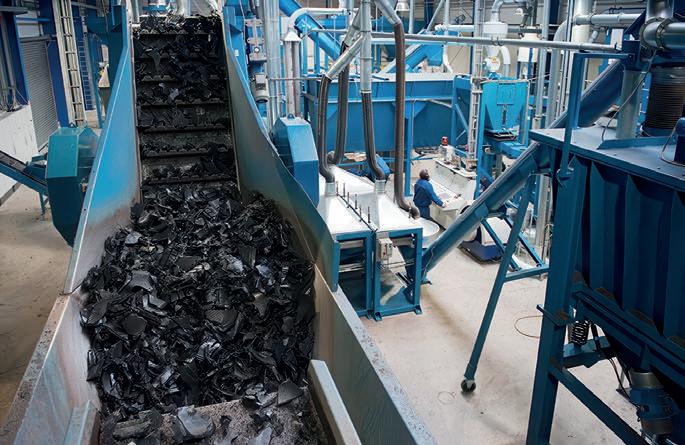
“ e in-house approach, coupled with a modular plant design, allows customers to start small and expand their operations over time – a vital strategy for reducing initial investment risk and adapting to uctuating market
“Furthermore, this multi-material
electronic waste, and scrap means the technology is highly adaptable, a key requirement for facilities dealing with
is dedication to manufacturing stability is now paired with cuttingedge digital innovation. In 2024, Eldan acquired a stake in PICVISA Machine Vision Systems, a Spanish tech company
providing advanced machine vision, arti cial intelligence, and robotics for automated sorting and classi cation in waste management and recycling.
“ is partnership is critical because it positions Eldan at the forefront of next-generation recycling, where purity requirements are increasingly strict,” Carsten says.
“Recyclers are actively investing in Eldan’s proven, high-purity systems to reduce waste, recover valuable resources, and supply the high-quality secondary raw materials that downstream markets demand.
“Eldan stands ready – not just as a supplier, but as a strategic partner for recyclers aiming to meet both environmental and economic goals.”
For more information, visit: www.eldan-recycling.com
Modern mobile screeners move where the work is, transforming how tough, sticky materials are recovered and recycled.
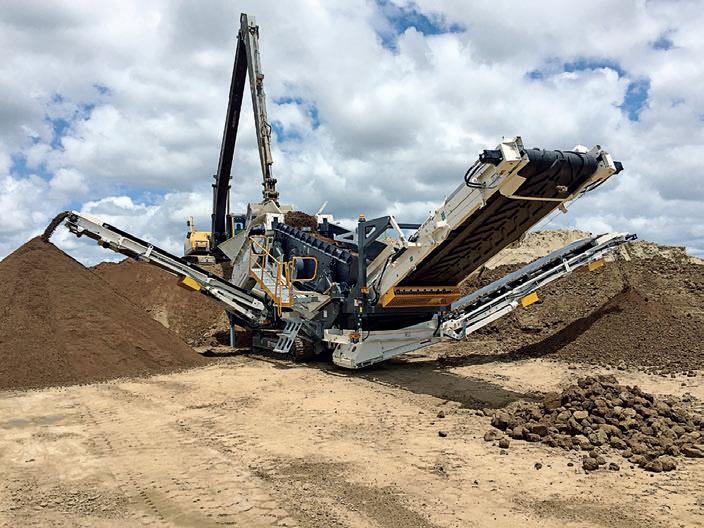
the waste and recycling industry, but advancements in mobile screening technology are delivering game-changing solutions.
e Terex Ecotec TRS550 Spaleck screen is a specialised piece of equipment designed to e ciently separate a wide range of materials, making it suitable for waste management and composting.
Its key di erentiator is the patented ip- ow technology which allows the machine to handle tough jobs where other equipment struggles to maintain processing consistency.
e design minimises downtime and maintenance costs while increasing productivity and overall e ciency. Its compact design and low energy consumption also o er a cost-e ective and environmentally friendly choice.
Manager John Wilson con rms the positive impact on the work ow.
“In the past we were using a xed trommel. We’re nding this mobile screen to be more e cient, and we can feed material in a lot quicker than previously,” John says.
“Being mobile is probably one of the main highlights, because you can save a lot of travel time in your loader. Driving from our windrows to the xed trommel can take a lot of time, particularly once you get to the furthest corner of the yard.
“Now we can just keep moving the screen based on where we’re working.”
e machine’s versatility comes from its German-manufactured Spaleck screen box, featuring a heavy-duty, abrasionresistant, steel plate apron feeder,
magnetic head drums on the conveyors (pulling any ferrous parts out of the material), exible top deck screening panels, and an aggressive ip- ow bottom deck.
e combination of self-cleaning screen media and the ip- ow mats virtually eliminates blockages and never blinds over, even with the stickiest types of material. is is especially important for applications such as compost, wood chips, di cult soils, wet material, and scrap steel waste, reducing downtime and maximising production capabilities.
Available exclusively through Finlay Waste & Recycling, the 30,500 kilogram machine features a powerful 83-kilowatt (kW) Caterpillar C4.4 engine. Its tracked design ensures ease of movement within operational areas.
e ability of the TRS550 to handle the most di cult feedstocks consistently is a game-changer for operations like Western Composting Technology.
e machine’s performance validates the investment in specialised, robust equipment designed for the harshest of conditions.
“When it comes to maintenance and safety, it’s pretty good. We haven’t had any issues,” John says. “It’s doing a fantastic job.
“We couldn’t be happier with the choice we’ve made.”
For more information, visit: www. nlay.com.au


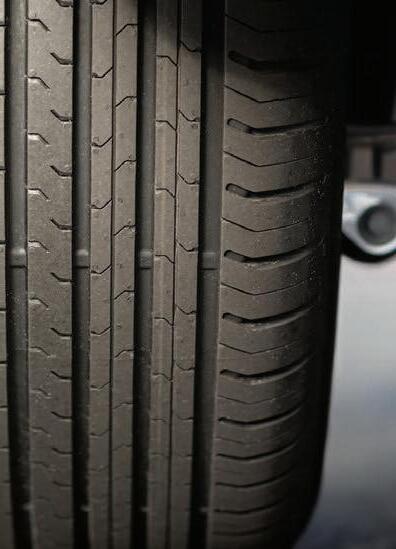

We recycle almost 20 million used tyres from across Australia each year. Whether helping industries reduce their reliance on fossil fuels, or creating more sustainable roads and surfaces, our products are having a positive impact on our world every day.


To learn more scan the QR code or visit tyrecycle.com.au
A digital platform and boosted parts stock ensure maximum machine availability nationwide.
The waste sector operates on thin margins, and nothing erodes those margins faster than equipment failure in a remote location.
When a shredder or compactor stops working the resulting downtime –which can stretch to weeks waiting for a technician, diagnosis, and replacement parts – becomes a crippling expense. is industry pain point is the driving force behind an operational overhaul by Tana. e change is being driven from the inside, often by veterans who
understand the historical challenges. Bradley Taranto, Tana’s Parts Manager, has stepped into a merged parts and service management role, tasked with transforming the support culture and processes.
“We’re trying to get a lot of processes in place to make sure we’re o ering strong customer support. at’s always the goal,” Bradley says.
“We’re aiming to increase our professionalism and the quality of our work.
“We’re focusing on the way the team works, making sure they’re taking photos on the job, checking things, and that we’re only going to go out to a machine once – we don’t want any callbacks.”
Tana’s new focus on increasing professionalism and quality of work extends to internal training, facilitated by packages and technical experts own in from Finland, as well as formalising contracts with external technicians to ensure national coverage.
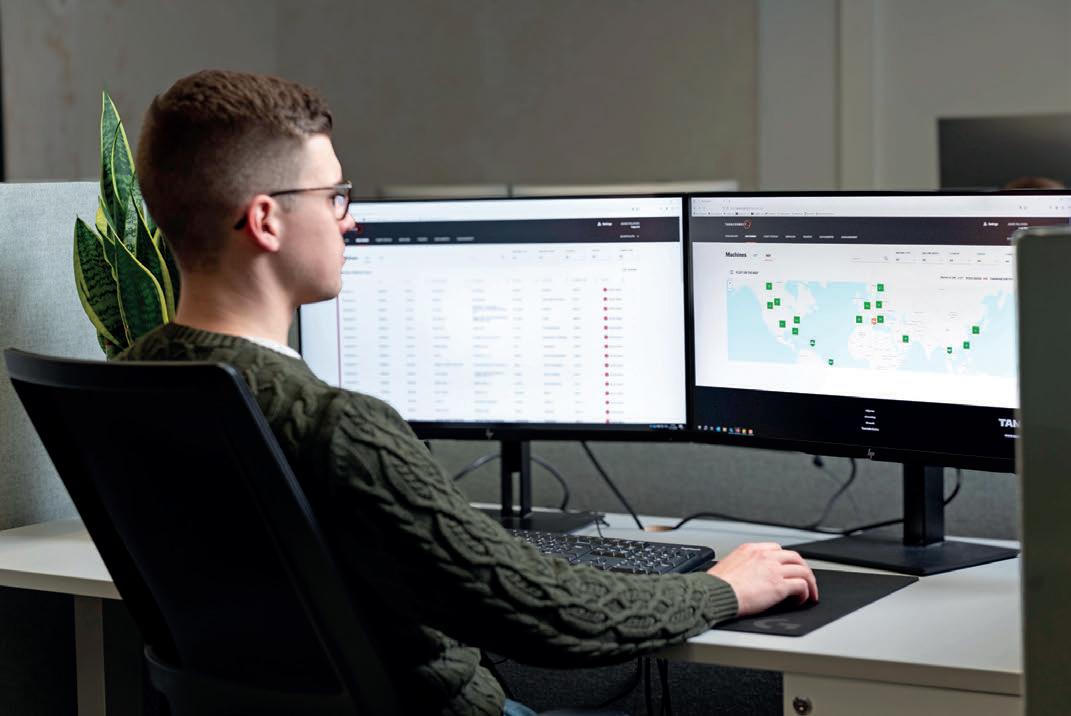
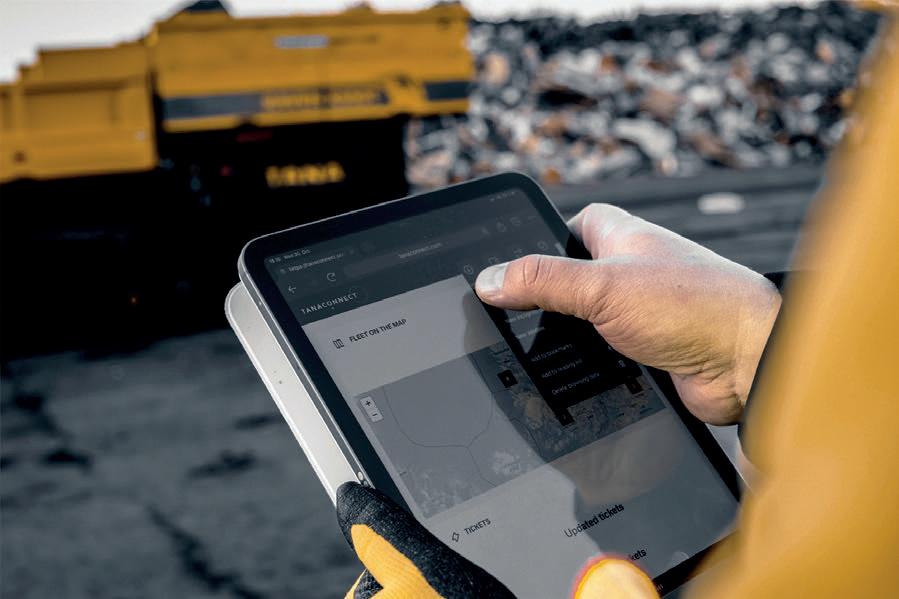
Bradley says proper training is paramount for both the technician’s future and the customer’s con dence.
“We want to make sure that every technician can go out to a machine, have the information they need, and be able to x the customer’s machine on site, on the spot,” he says.
“If we’re going to put on an apprentice, they need to be trained the correct way on how to do things.”
Addressing the customer’s immediate frustration – the speed of spare parts – has been a priority. Bradley says Tana has adjusted stock levels and implemented new processes to achieve rapid turnaround. is includes weekly air freights from Finland and a plan to place machinespeci c parts containers at remote northern Australian sites, each holding up to 5000 hours’ worth of parts.
“We’re now at the point where, if an order is placed before midday, it will be shipped that same day,” Bradley says.
“Waiting two weeks for a part is simply not an option for contractors on a tight schedule.”
e game-changer is the digital twin capability provided by Tana Connect, a standard feature on all new machines.
e online system allows Bradley and his team to remotely diagnose machine issues, even when the compactor is thousands of kilometres away.
“Basically, I can connect to any machine from my computer, and I
can watch them pushing the joysticks, I can see the milliamps of the machine, I can see the pump pressures,”
“I can see the whole machine working, take readings and diagnose the machine over the phone. If not, we can organise parts directly related to that issue to be sent out.”
Tana Connect also tracks run times, fuel consumption, and shredder output (tonnage per hour), allowing managers to remotely update software or schedule maintenance based on alarm logs.
Another program, eSpares, o ers online ordering and detailed component breakdowns. While it’s currently used by sta , Tana aims to roll out a version for customers, assisting in identifying a broken part and its availability. is combination of professionalised physical support and leading digital technology o ers a compelling value proposition that goes beyond the machine itself.
“Tana machines, technology-wise, are leading the market,” Bradley says.
“It’s all about making the customer’s life so much easier.”
For more information, visit: www.tana.com.au

New development hub is set to accelerate recycling technology, reduce research and develop ent fro ears to onths and o er vital pre invest ent aterial testing.
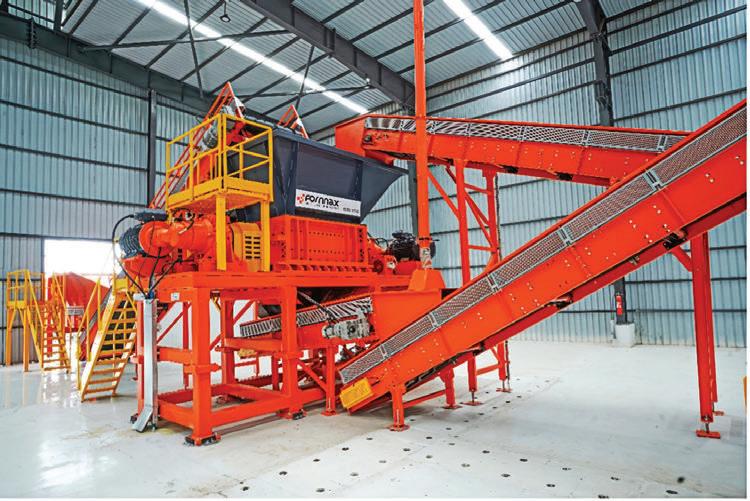
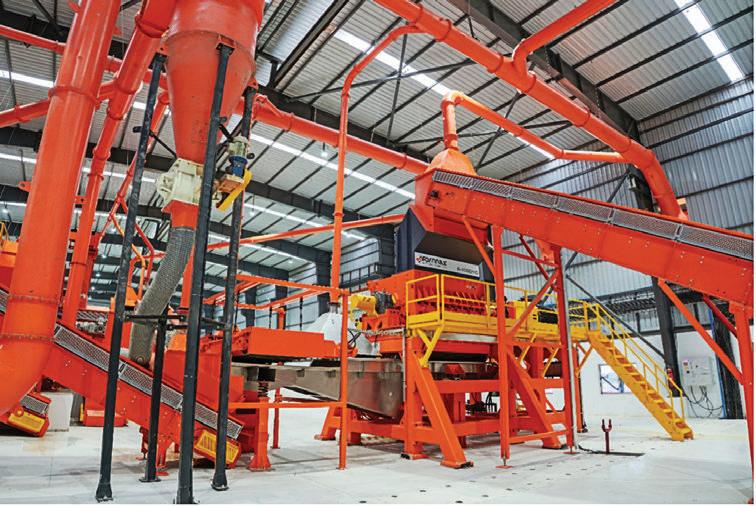
Fornnax Technology has taken a giant step toward its long-term vision of becoming a global leader in recycling solutions by 2030.
e industrial shredder manufacturer has unveiled one of the world’s largest new product development centres and demonstration plants, spread across a 12-acre facility located about 30 kilometres from the key western Indian port of Kandla in Gujarat.
e demonstration plant will serve as a hub for new product development, speci cally designed to meet evolving application demands. Fornnax plans to use the facility to upgrade its existing line of shredders and granulators by increasing their capacity, improving energy e ciency, and reducing downtime.
Jignesh Kundaria, Director and Chief Executive O cer of Fornnax, says innovation in product development is the key to the company’s bid to become a global leader.
“With this new facility, we now have the speed, exibility, and controlled environment to design, test, and validate new technologies in just six to eight months, something that would take four to ve years at a customer site,” he says.
“Each machine will undergo validation according to global standards, with every critical part and assembly rigorously tested under Engineering Build (EB) and Manufacturing Build (MB) protocols.”
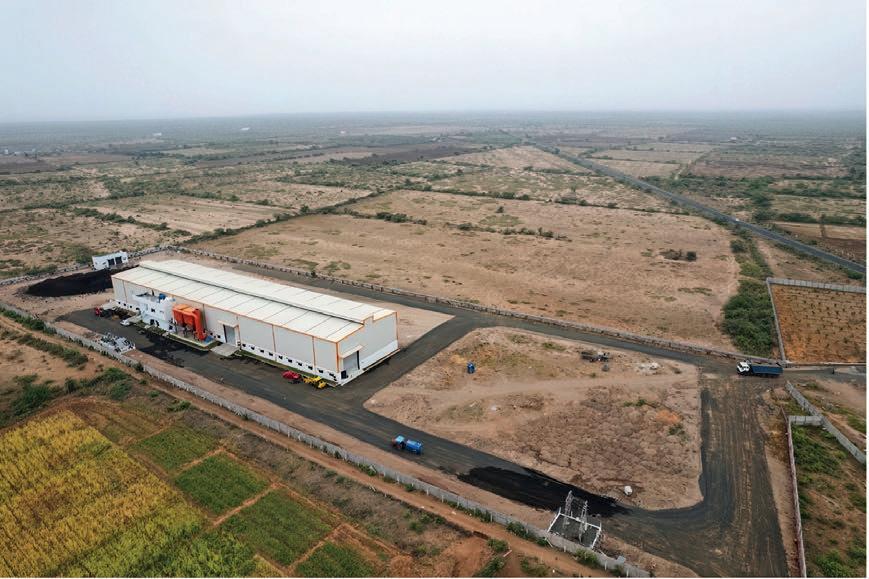
Fornnax’s New Product Development (NPD) framework is based on a Gate Review Process that ensures precision at every stage.
e process begins with market research and ideation led by the sales and marketing team, followed by a strategic review from the leadership team.
e design team then creates detailed designs, which are reviewed by the manufacturing, service, and safety teams before nal approval.
During the validation phase a functional prototype is constructed and rigorously tested for six to eight months before the design is optimised for largescale production.
A key feature of the new facility is its open-door policy for customers. Clients who are unsure about which equipment suits their speci c needs can bring their materials to the centre to observe performance across multiple machines and operating conditions.
Jignesh says this approach provides a risk-free, real-world testing environment that empowers customers to make informed investment decisions.
e centre will also support indepth research for emerging recycling applications such as e-waste, cables, lithium-ion batteries, and other miscellaneous applications.
e engineering and research and development (R&D) teams will conduct feasibility studies and performance tests to design tailored solutions for new or unfamiliar materials.
“ is agility reinforces Fornnax’s position as a solutions-driven technology provider capable of tackling complex recycling challenges,” says Jignesh.
Beyond its technological advancements, the new facility also houses an original equipment manufacturer (OEM) training centre for developing skilled operators and maintenance engineers for existing and future customers.
Upon completion of the training module, trainees will be deployed at Fornnax’s customer base to gain valuable experience in assembly, disassembly, and grinding operations.
ese engineers will be trained as a sales support team to gain adequate on-thejob training for post-course placement.
Additionally, Fornnax will deliver comprehensive corporate training to domestic and international clients, empowering them to operate plants with optimal e ciency, expert troubleshooting capabilities, and e ective maintenance practices for seamless integration and maximum productivity.
Looking ahead, Fornnax plans to scale its o erings and capture a larger share of the global market by focusing on high-demand verticals such as tyre, municipal solid waste, e-waste, cable, and aluminium recycling, along with new application areas such as auto shredder residue (ASR), lithium-Ion batteries, and more.
Jignesh says that by integrating R&D, training, testing, and customer engagement under one roof, Fornnax is laying the groundwork for the next generation of recycling technologies.
“Our goal is to empower customers with clarity and con dence before they invest. is facility allows them to test their own materials under real-world conditions, compare machines, and see results rsthand,” he says.
“It’s not just about selling equipment; it’s about building trust through transparency and delivering solutions that truly work for their unique needs.
“With this milestone, Fornnax reinforces its commitment to empowering industries worldwide with proven, future-ready recycling solutions that combine innovation, trust, and high-capacity performance.”
For more information, visit: www.fornnax.com.au
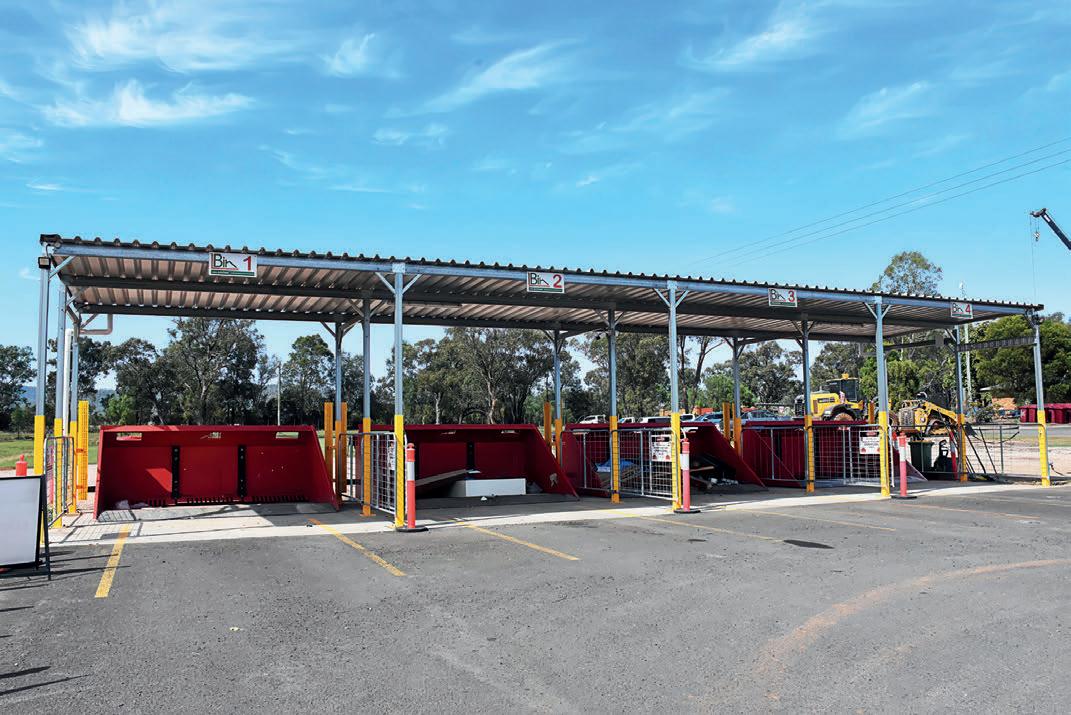
never been higher, yet much of the infrastructure used to manage public waste disposal dates back to a far less accountable era.
is is particularly true in regional Australia, where traditional land ll practices often require community members to navigate a risky landscape of active machinery and industrial operations just to drop o a trailer load.
It was against this backdrop of high risk and limited budget that the Gunnedah Shire Council partnered with Contained Waste Solutions (CWS) to show that change doesn’t require a massive budget, just smart engineering.
Like many regional sites, the public access point at the Gunnedah Waste
is practice, where residents unload waste near heavy plant, contractors, and varying ground conditions, creates an unacceptable duty of care risk.
Gunnedah’s solution, the LBin Waste Transfer Station, is elegant in its simplicity and profound in its impact.
It consists of four covered bays, with 6.2 cubic-metre open-faced LBins, creating an all-weather and compliant public deposition area on a clean, sealed site that can easily service 160 customers a day.
Users reverse directly up to the bays and slide their waste into the bins, immediately separating them from the high-risk activities of the land ll face.
greater scrutiny.
“In the past eight years, we’ve heard and can see more accidents happening in the waste industry,” she says.
“As a manager, it’s my responsibility to make sure I have a safe working place, not only for the sta but the users of the site and the contractors.”
Jason Lacey, Managing Director of Contained Waste Solutions, says the Gunnedah design was conceived with legal exposure front of mind, given recent increases in penalties for managers who ignore their duty of care obligations in New South Wales.
“ e waste industry has machines and trucks routinely crossing
through pedestrian and public areas and fall from heights risks that are commonplace,” Jason says.
e LBin system directly addresses this by physically separating the public from the operational plant and removes the need for working at heights.
e design features wide bays on a at oor that are easy to reverse into. Customers can simply back up their vehicle and slide their material straight into the bin. is is an enormous safety bene t for older customers or those with diminished physical ability.
e new deposition area also allows sta to control where the waste is deposited, reducing the land ll lling area and the amount of soil covering required.
“Operationally, it’s a big win for the sta as well,” Sheridan says. “In the past, people would unload their waste in areas that we didn’t want them to, like at the top of the land ll. Now we’ve got more control of where the waste is being dropped.
“It’s saving land ll space because the waste is not spread out.”
e improved visual access also helps resource recovery by allowing sta to identify hazardous materials such as batteries, tyres, and steel before they are buried.
e project’s success was recognised at the 2025 Waste Innovation and Recycling Awards, winning the Outstanding WARR (Waste and Resource Recovery Project) –Regional category.
For Gunnedah and CWS, the win is validation of a smarter, safer standard for regional infrastructure.
“I’m quite chu ed about receiving this award, because it’s been a project that I’ve wanted to do since 2012,” Sheridan says.
“I’m proud of this system and how it works. e majority of community feedback has been that it’s a fantastic area to use instead of being out with the ies and dust.
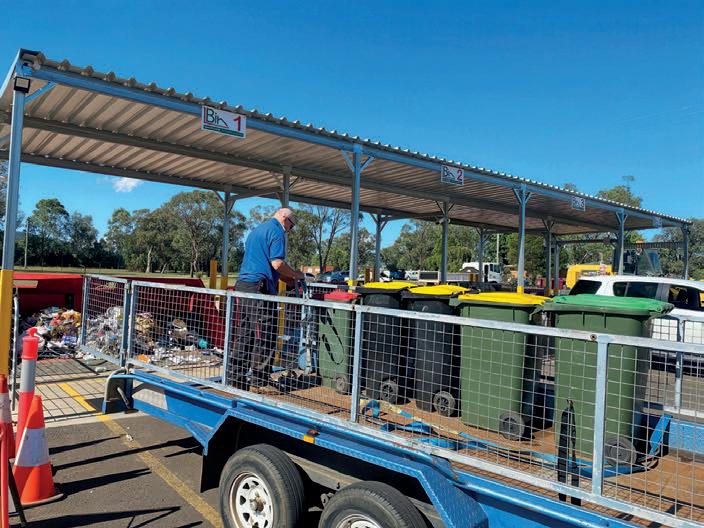
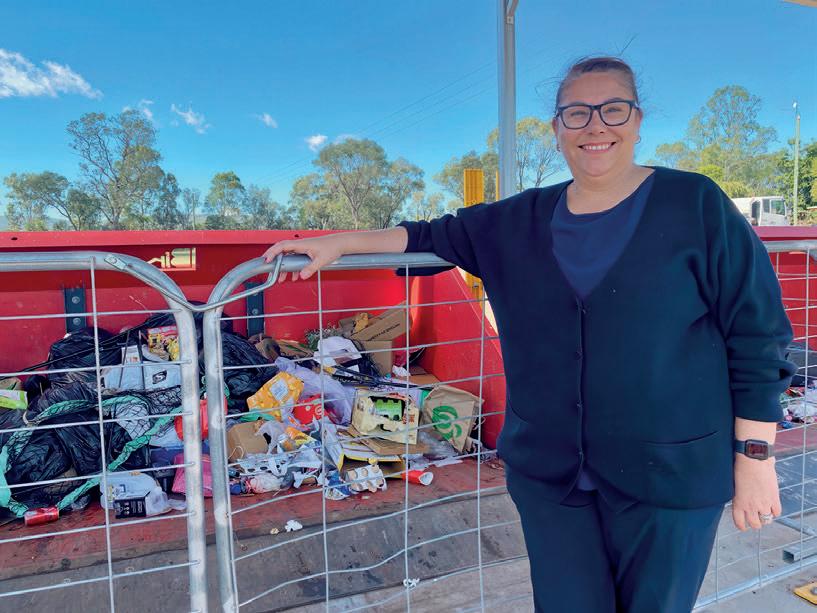
road to an area that is clean, sheltered from the elements, and sta ed to help when needed. is elevates the entire experience, encouraging residents to be more mindful of resource recovery and correctly separate their materials before arriving.”
Jason says the Gunnedah success story is resonating across the sector.
“ e waste industry can be slow to respond to anything new. It’s still rolling out public waste transfer system concepts that are more than 100 years old,” he says. “ e Gunnedah solution is being replicated by many other sites. We’ve got four other sites in the same region that are implementing systems on the back of Gunnedah, and other people are visiting that site to see it in action.”
ful lled a ordably.
“ e LBin system at Gunnedah was about 80 per cent lower in cost than the traditional alternatives considered. e new system achieves all safety and compliance objectives that the more expensive traditional systems could not.
“Planning and production are simple, with delivery in a few months rather than the years it takes most other traditional systems. Gunnedah’s facility was transformed in just a few months.
“Now we just need a few more people who care about safety, compliance and their budgets, to take it on as well.”
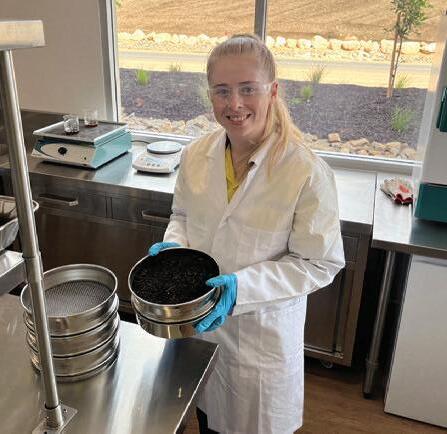
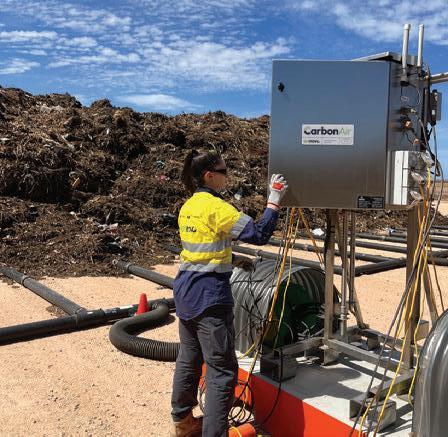
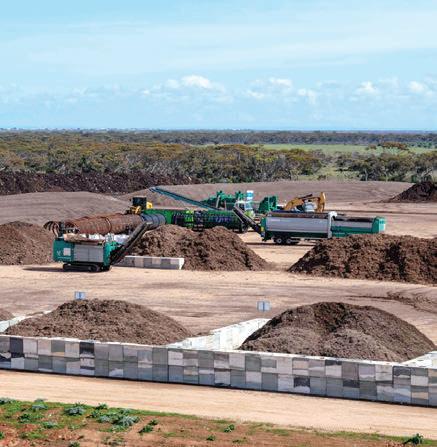
Ennovo provides comprehensive solutions for the management of recycled organics based on extensive experience with designing, constructing and operating recycled organics facilities.
Specialist Services
FOGO management and processing
Site assessment and approvals
Market assessment and development
Composting – open windrow and in-vessel
Process and product development
Third party compliance support
Carbon credit development and management
Ennovo’s Carbon Air system automates forced aeration for e cient composting in windrow and in-vessel applications. With telemetryenabled automation, it reduces costs, optimises operations, and ensures high-quality output, making it ideal for FOGO composting. Ennovo provides end-to-end solutions from design to market development.
Nominations are open for the 2026 Endeavour Awards, featuring two major new categories re ecting e trends in the anufacturing sector.
resented annually by Manufacturers’ Monthly magazine and held in collaboration with Australian Manufacturing Week, the Endeavour Awards honour the achievements of individuals and organisations driving the future of Australian industry.
e annual gala dinner will take place on May 13, 2026, during Australian Manufacturing Week at the Westin Brisbane.
Recognised as the manufacturing industry’s night of nights, the Endeavour Awards bring together
to celebrate success, share stories, and connect with peers.
is year, the awards are particularly signi cant for the waste, recycling, and resource recovery sector with the introduction of the Excellence in Sustainability Award, celebrating a manufacturing business that has demonstrated leadership and innovation in environmental sustainability.
e award is designed to recognise companies and projects focused on reducing waste, water, or energy consumption within manufacturing
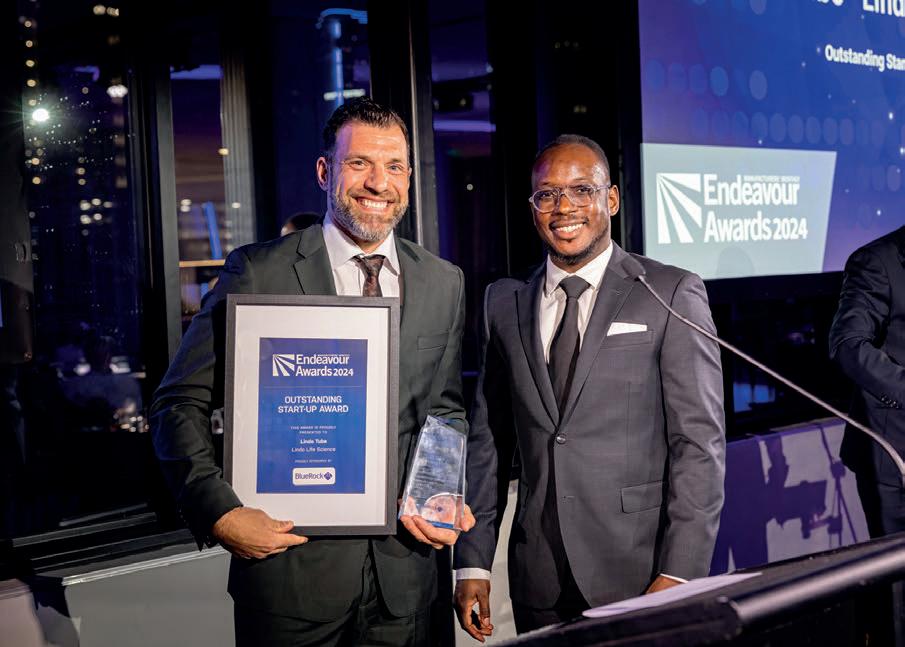
economy principles, such as using recycled content or designing for longevity, and developing and deploying clean technologies that minimise environmental impact.
For the rst time in the event’s history, the Endeavour Awards will also feature an Advanced Manufacturing Excellence Award, celebrating outstanding achievement in precision engineering, automation, or digital manufacturing technologies, and the Rising Star of the Year Award, recognising an emerging leader who has demonstrated exceptional talent, innovation, and commitment within the industry in the early stages of their careers (under 30 years of age).
RSM and Manufacturing Industry Skills Alliance have also joined as platinum sponsors for the 2026 awards.
Awards will be presented across the following categories:
•Innovation in Aerospace
•Innovation in Health Technology
•Innovation in Food & Beverage
• Manufacturing
•Innovation in Transport
•Outstanding Start-Up Award
•Leader of the Year– Sponsored by BDO Australia
•Manufacturer of the Year –
Sponsored by Weld Australia
For more information, visit: www.endeavourawards.com.au


Product Range
3 Tonne - 30 Tonne
Dino and Universal designs
Telescopic and articulated
Multi hook height
Multi rail width
Double rear locking
Modular design
Local service and support
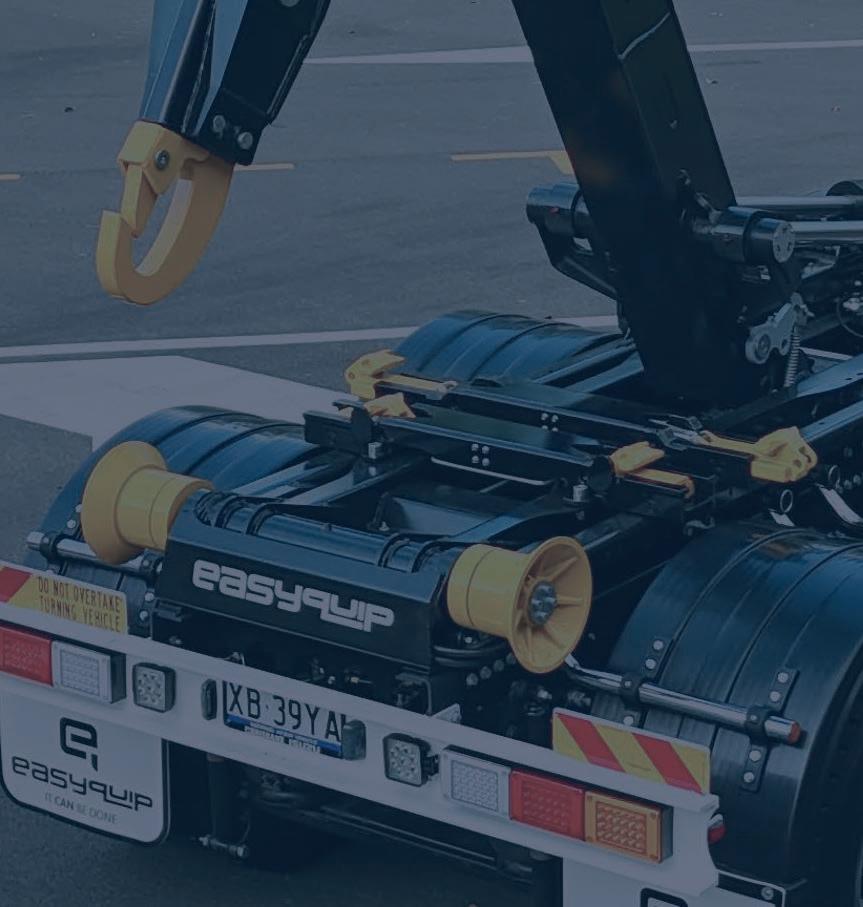

The GENOX GCV Series Shredder-Granulator Combo is a unique, integrated processing system that combines both primary shredding and secondary granulation into a single machine.
ighly compact, it’s designed to process a wide variety of plastic materials, including plastic rubber lumps, plates, scrap, frames, pipes, and polyethylene terephthalate (PET) bottles.
he machine’s design eliminates the need for external conveying equipment between the two stages, resulting in a significantly reduced footprint and outstanding cost performance.
he upper section is dedicated to shredding, featuring a rotor shaft with closely arranged small blades and a forced feeding mechanism. The lower section provides the crushing area, where the rotor shaft and feeding mode can be tailored based on the material’s characteristics and desired output.
he GC model o ers an -millimetre shredding operation length, powered by a -kilowatt motor, and features rotating and four counter knives. he final crushing stage, driven by a -kilowatt motor, achieves a crushing screen diameter of millimetres for fine output.
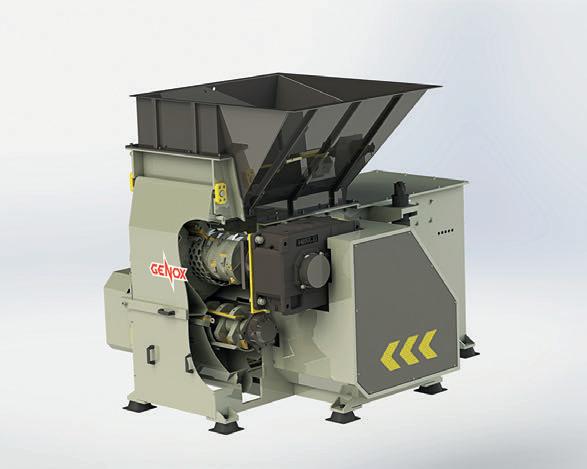
The Rotochopper FP-66 horizontal grinder is engineered to bridge the gap between mid-volume operations and high-capacity performance.
Designed specifically for pallet recyclers, mulch producers, and forestry biomass operations, the P66 brings the features of larger grinders into a more streamlined, fuel-efficient package.
At the heart of the FP-66 is Rotochopper’s “Perfect in One Pass” philosophy. This is achieved through a 66-inch-wide rotor featuring a specialised tooth arrangement and tip speed, paired with optimised screen geometry. ogether, they maximise production capacity while maintaining strict control over the end product size. The unit features a steel slat infeed conveyor that reduces spillage and wear compared to traditional belts, alongside a patented adjustable slab ramp infeed plate. This allows operators to hydraulically adjust the feed angle to suit varied materials.
Maintenance is simplified through a screen cradle system that allows for rapid changes and a digital operator interface for real-time monitoring. or operations looking to scale their output without the overhead of a larger machine, the P- delivers industrial-grade results at a significantly lower operating cost.
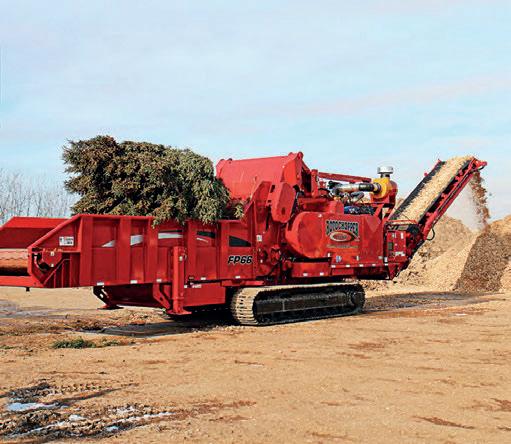

endeavourawards.com.au





Ambition isn’t the issue. Outcomes are, writes Kylie Roberts-Frost,
Chief Executive Officer of
the Australian Bedding Stewardship Council.
We’re not short on ambition. We’re short on actual results.
Across Australia, the good intentions are there. Governments are talking circular economy. Brands are talking responsibility. Consumers are asking better questions when they buy products.
But ambition alone doesn’t deliver investment or outcomes. If we can’t show what happens after a product is recovered, consistently and with evidence, we’ll keep cycling through the same debates, the same funding gaps, and the same trust issues.
Product stewardship starts upstream – at design and procurement – long before a product becomes waste. But once products do reach end-of-life, we need collection that’s practical, processing that’s t-forpurpose, and materials that can move into the circular economy with con dence.
We also need to be honest about resourcing. Voluntary stewardship schemes aim to solve increasingly complex problems, but without stable funding and broad participation, delivery is fragile. Collection is only the entry ticket. e real cost, and the real value, sits in what happens next: processing, proof, and end-markets.
Mattresses are a useful lens because they are bulky, multi-material, and logistically di cult. ey also re ect design decisions made years earlier – what’s inside the product largely determines whether recovery is e cient, safe and worthwhile. ey also test whether extended producer responsibility (EPR) can move beyond
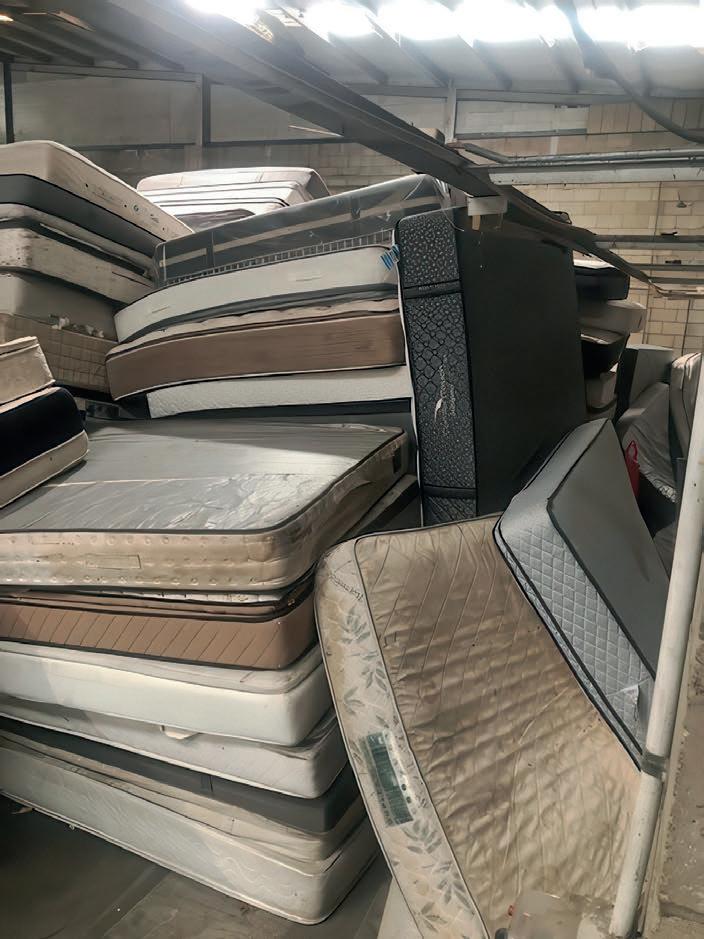
delivered consistently, and results can be demonstrated.
Here is the reality of product recovery we need to design for in 2026.
Collection is where recovery starts, not where it ends. Take-back is essential, but on its own it does not deliver circular outcomes. For bulky products like
recovered material can move into strong
If we want outcomes beyond metro Australia, we must plan for the economics of distance: fewer drop-o points, longer runs, lower volumes, and more variable product condition. We also need to meet councils where the problem is showing up most visibly–at land ll and transfer stations – and support them with practical take-back and recovery options.
In 2026, I want fewer “one-size- tsall” approaches and more t-for-purpose regional models: consolidation points, backhaul partnerships, predictable service schedules, and shared infrastructure across di erent industries where it makes sense. Without reliable access into the system, nothing downstream can be stable.
substitutes for durable infrastructure. In 2026, industry and government need to take the middle of the system seriously: infrastructure sized for actual volumes, contracts that reward quality outcomes (not just throughput), and reporting that is consistent and credible across Australia.
MOVE IT INTO THE MARKET
is is the credibility test: where does
viable now and what still needs work. Stewardship schemes can help build markets through better data, clearer speci cations, transparent reporting, and stronger pull from procurement and product design.
In 2026, end markets must be treated as core infrastructure. Without them, we’re simply moving material around
At the Australian Bedding Stewardship Council, our work is anchored in four pillars: Rethink, Redesign, Reuse, Recycle. In 2026, the challenge is to hold those pillars together as one system.
Ambition matters. But our results must be what counts.
recovered material move into end-markets
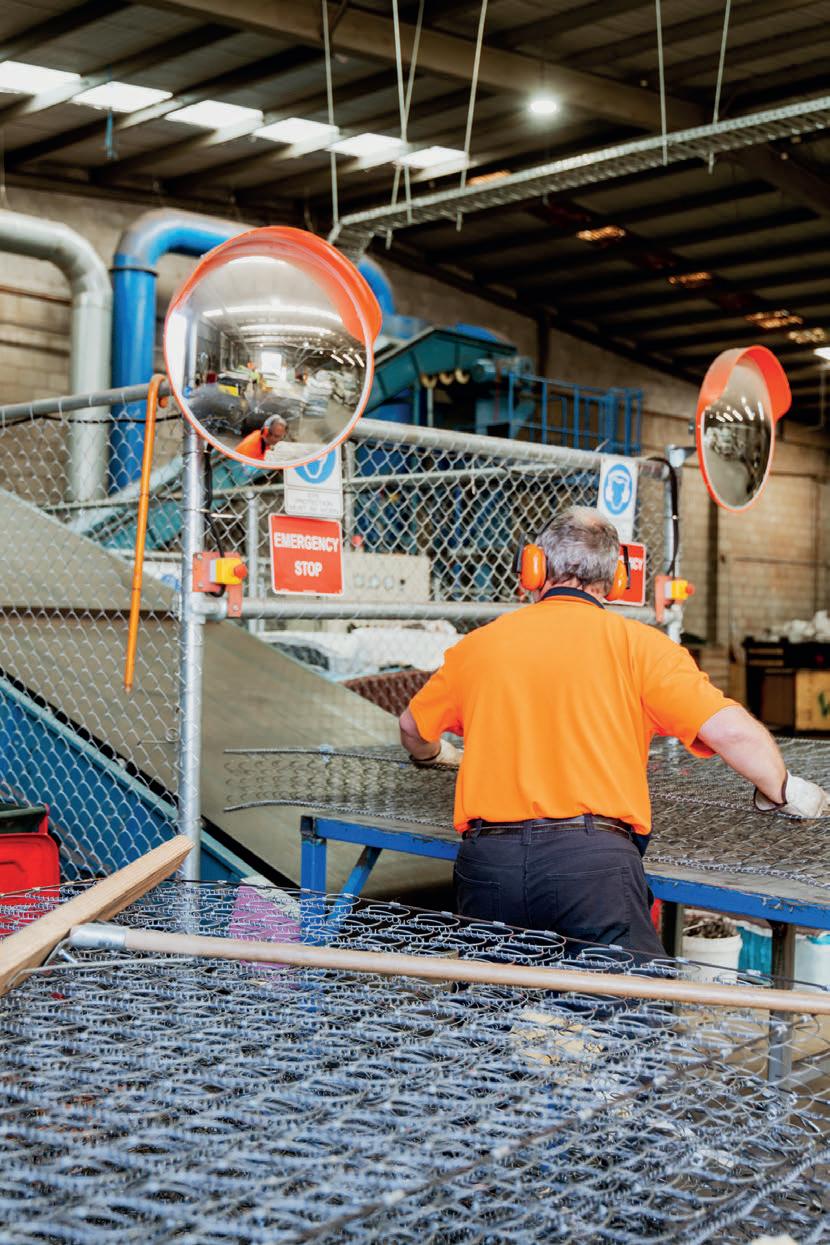
If we are serious about outcomes, three moves will help:
Government: back outcomes with procurement and consistent settings. Procurement can stabilise end-markets by favouring products with recycled content and credible recovery pathways. Ask for reuse and repair, not replacement. More consistent settings across jurisdictions will also help schemes and operators invest with confidence.
Manufacturers and retailers: fund the full pathway, and design for recovery EPR can’t stop at takeback. It must support regional logistics, processing, quality control and reporting, and it must drive design choices that reduce cost and improve recoverability (including disassembly-friendly construction and material transparency).
Operators and schemes: lift verification and reporting, without drowning in paperwork . We need reporting that is clear and credible, not for bureaucracy, but to protect sector integrity and enable investment. If we can’t show where materials went and what they became, doubt will fill the gap and doubt is expensive.