














FROM THE EDITOR

AS SUMMER finally starts to loosen its grip, there’s a collective sigh going up across jobsites around the country.
The worst of the scorchers are (hopefully) behind us, the days are shaving off a few degrees, and smoko no longer feels like si ing under a blowtorch.
For anyone who’s spent the past few months on roofs, slabs, roads or open sites, that shift can’t come soon enough.
This summer has been a reminder of just how brutal Aussie weather can be.
Long runs of 35-plus days, humidity that sticks to you like wet cement, and the kind of heat that drains your energy before you’ve even finished your first coff ee.
I know the northern states like to act tough, but us southerners weren’t built to tackle 40-plus degree days.
Tradies are tough, there’s no doubt about it — but even the toughest operators know there’s limits, and managing heat on site isn’t about being soft. It’s about staying sharp, staying safe, and making it home in one piece.
As the season changes, now’s a good time to reflect on what worked and what didn’t.
Did hydration get pushed aside to ‘just finish this last bit’?
Were breaks skipped because the schedule was tight?
Did PPE become something you fought against instead of worked with?
These are the moments that ma er — not just in the peak of summer, but year-round as conditions keep ge ing more extreme. In this issue, the focus is on working smarter in hot conditions and se ing yourself up for
whatever the weather throws next.
From gear that actually breathes, to eyewear that doesn’t fog up the second you start sweating, to smarter site practices that help teams push through long days without burning out — it’s about small changes that add up.
The end of summer also means a shift in mindset.
Autumn brings its own challenges: shorter days, cooler mornings, unpredictable weather swings.

But it also brings a bit of breathing room — a chance to reset routines, update gear, and take stock before winter rolls in. To everyone who’s powered through another Aussie summer: respect.
The heat tests more than just muscle — it tests judgement, patience and preparation. Here’s to cooler mornings, steadier days, and ge ing the job done without fighting the elements quite so hard.

EDITOR
Harry Murtough


SAILGP TOUCHED DOWN in Perth and, in very Australian fashion, decided the best way to say hello was with something loud, fast and just a li le bit unhinged.
Australian aerobatic ace Ma Hall shared the stage with the Red Bull Italy SailGP Team in a sky-meets-sea stunt that looked less like a warm-up and more like a dare.
Ahead of the season 6 opener, Hall and the Italian F50 pulled off a choreographed display that involved nose-down dives, inverted passes and a knife-edge flight alongside a foiling catamaran doing roughly 100 km/h. Because obviously that’s a normal thing to do on a weekday in Perth.
Ma carved through the skyline like it owed him money, skimming past the racecourse while the F50 blasted along below.
Air and water stayed politely separate, but only just.
“I’ve done a lot of cool things in my life – today fi ts right in there,” Ma said.
“It was just amazing to do this out here in Perth with the Red Bull Italy SailGP team.”
Hold on to your lunch!
If anyone understands pushing machines to their absolute limits, it’s Aussies — and SailGP has them well represented. While the F50 carried Italian colours, there was a big Aussie infl uence on board thanks to
Jimmy Spithill, Australian sailing royalty and CEO of the Red Bull Italy SailGP Team.
“I think it was just a great way to start. There are a lot of similarities between plane and F50 in that you’re pushing your machine to the limit, and it really takes a lot from a human performance standpoint,” he said.
On the water, Kiwi driver Phil Robertson had a frontrow seat to Hall’s airborne insanity. “That plane sort of swoop in and slip past us within almost touching distances… He could almost have touched us with his wingtips if he wanted to,” Phil said.
The Oracle Perth Sail Grand Prix marks SailGP’s first championship visit to the west, with Fremantle’s famously punchy seabreeze already giving teams a proper welcome. Thirteen teams, F50s nudging tripledigit speeds and Australians right in the thick of it — in the air and on the water.
Perth doesn’t do subtle, and SailGP got the message loud and clear.


Home builders are looking to utilise every inch of space as builds get tighter. Waterwall has entered the scene as an amazing option, for more reasons than one…
AUSTRALIA’S DROUGHT CYCLE is back on the boil.
Forecasts point to ho er summers, tighter water restrictions and growing pressure on municipal supplies.
For tradies, builders or landscapers, this presents a challenge but also an opportunity: how to help customers future-proof their homes and developments without sacrificing precious space or aesthetics.
This is where the Thirdspace Waterfall is redefining the game, and in doing so, reshaping how urban Australia captures, stores and shares water.
DODGE DROUGHT
Droughts and water restrictions aren’t new obstacles for ressie builds, but as urban areas get denser and regional centres grow larger, new solutions are needed.
Traditional backyard and underground tanks have long been the default solution for rainwater harvesting.
But in dense urban and suburban environments, they come with compromises.
They take up loads of precious outdoor space, are often diffi cult to retrofi t, and a typical 3,000-litre tank simply
doesn’t hold enough water to comfortably carry a typical family through the Australian summer.
The Waterwall tackles this problem head-on by shifting water storage to the boundary.
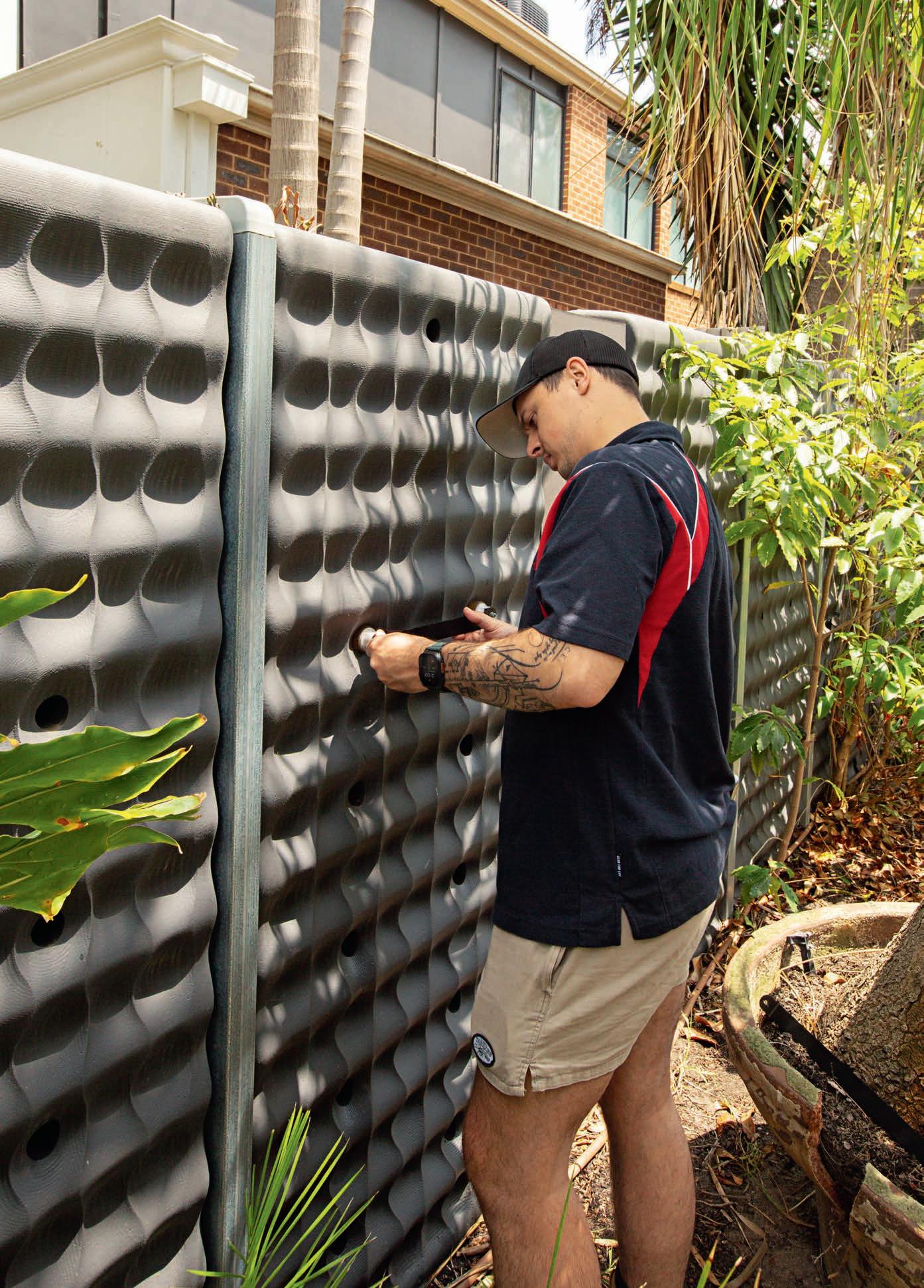
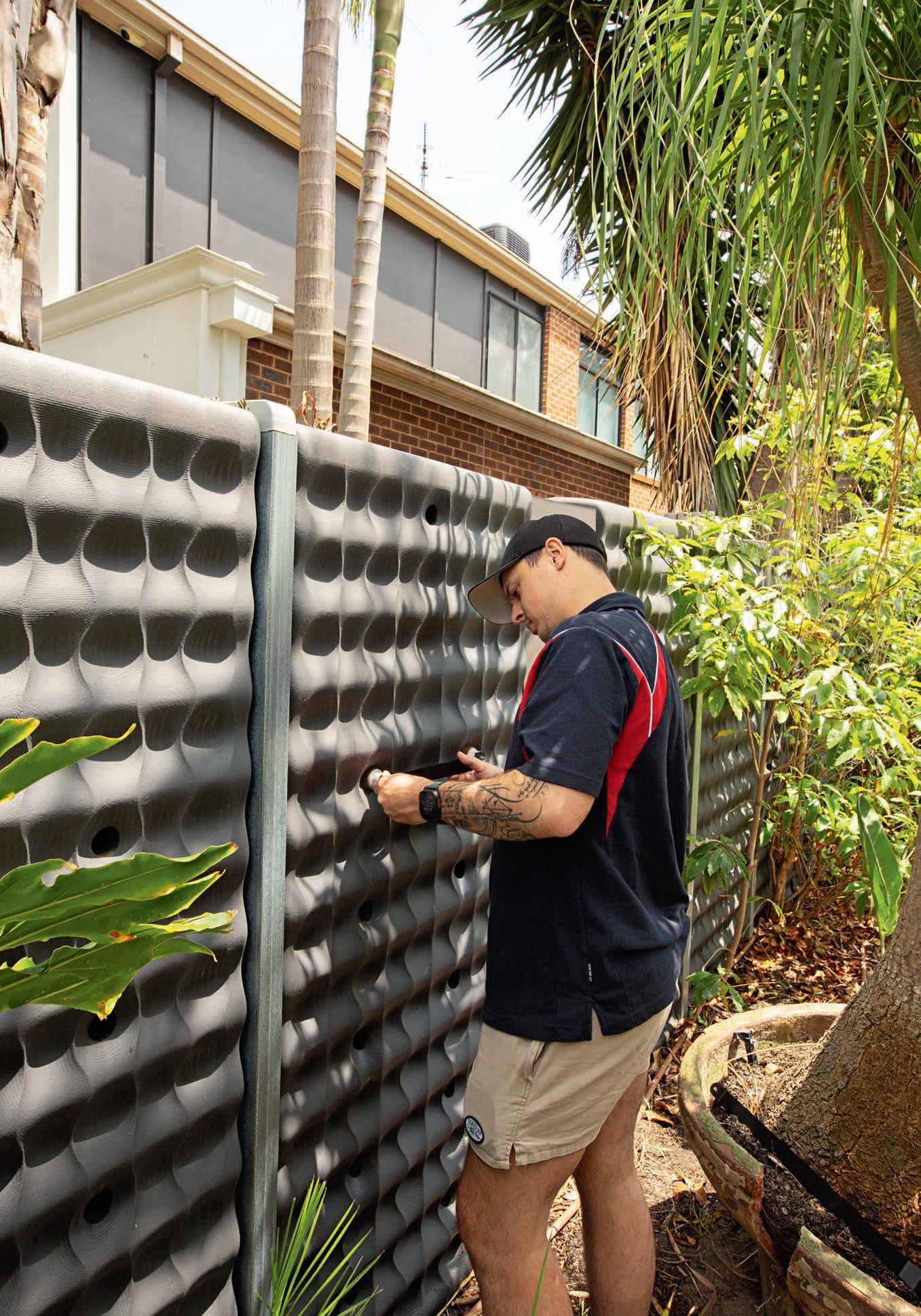
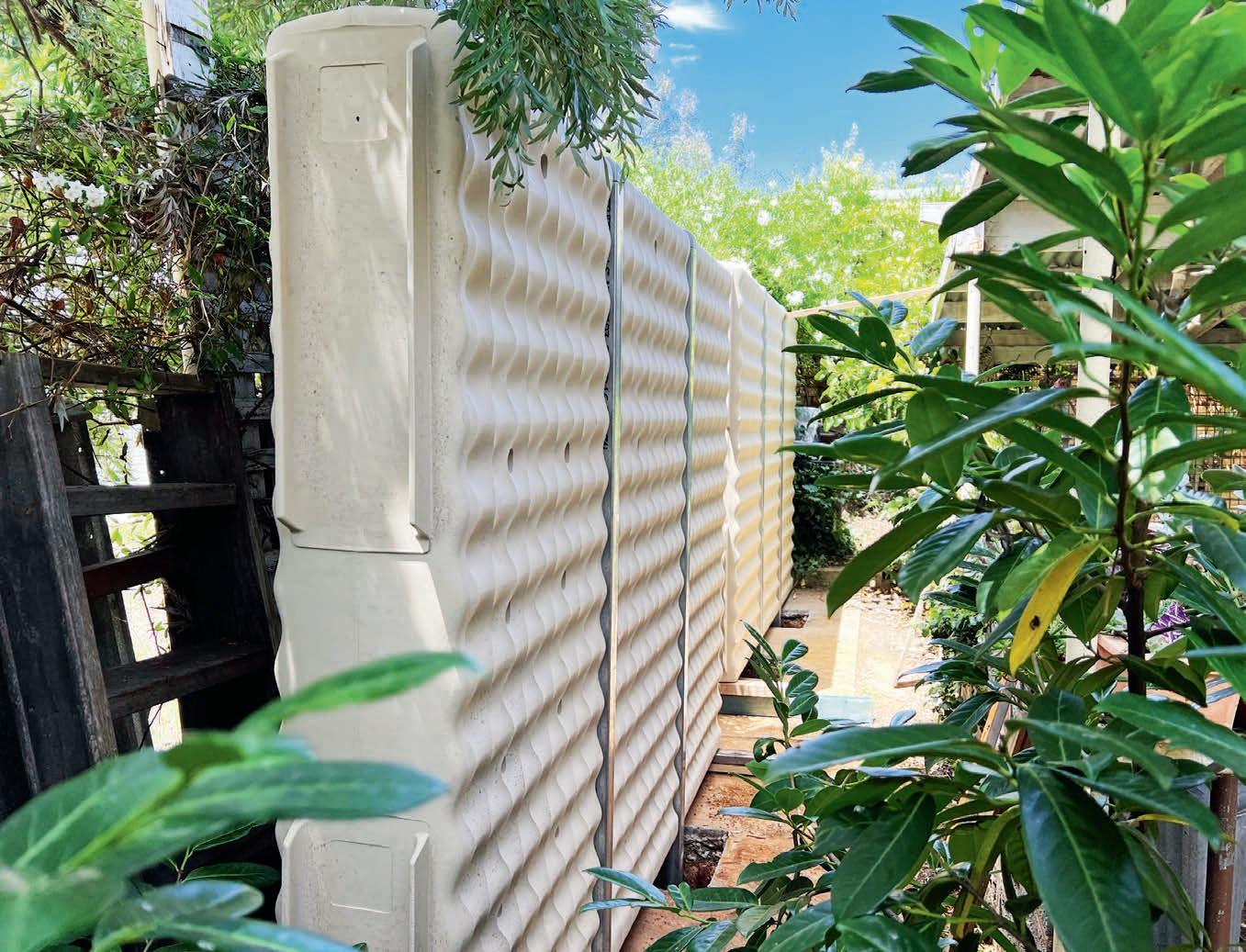
Using an ultra-slim profile — just 300mm deep — each Waterwall panel stores up to 1,200 litres while doubling as a regulation-height boundary fence.
Former Channel NINE weather presenter and geomorphologist Rob Gell AM is one of Waterwall’s biggest fans.
“Water is precious, as is the space around us,” he said.
“We’ve designed a water tank that won’t take up your valuable outdoor space.
“You can save water for your garden, or fl ushing toilets, but you don’t have this big, bulky tank in your garden.”
Installed along a fence line, the system delivers an unmatched volume-to-footprint ratio, freeing up yards, courtyards and side passages for actual living.
For tradies, this means more space for patios, pergolas or other alternatives where conventional tanks won’t fi t or don’t make sense.
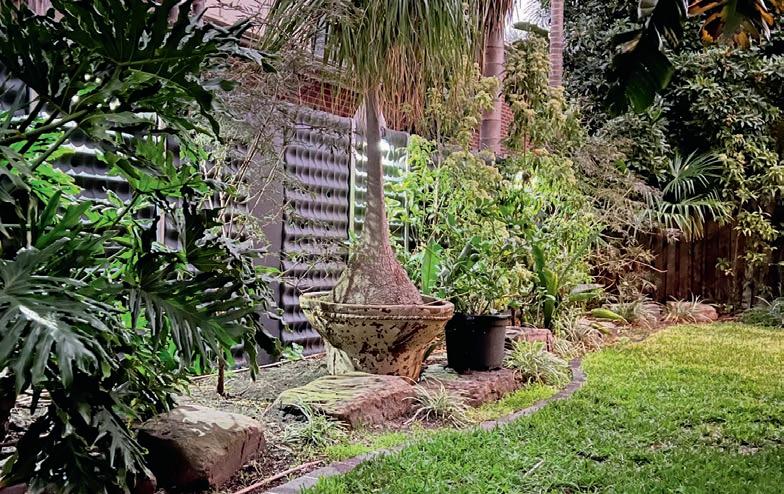
For landscapers, it means reclaiming space for
A boundary-based system that shifts water storage to the perimeter, freeing up valuable yard and landscape space
gardens, displays and usable ‘third spaces’ without compromising water security.
Creating your third space:
The customisable Waterwall allows the space created to evolve over time without reworking the core structure
From a fencing point of view, Fencing Industry Australia General Manager Steve Mazur said the Waterwall provided an entirely new opportunity when it comes to boundaries.
“Every property has a fence, and there are many different types of fencing that need to blend into their surroundings,” he said.
“The added bonus here is water conservation, which can then be reused. That’s a big plus.
“From a contractor’s perspective, they’re also always looking to diversify the types of fencing solutions they can offer their customers, so new products like this are something we’re always interested in.”
The Waterwall isn’t just a cool new product to sell new home owners — it’s part of a bigger picture.
The vision is to build the world’s first urban water reservoir, where neighbours can trade and share water within their estate.
Unlike your regular tanks that collect from a single roof area, the Waterwall can integrate multiple water inputs across a property.
Roof catchments feed directly into primary wall sections via gravity, requiring only 300mm of static head.
Once full, excess water can overflow into secondary systems such as ground filtration, wetlands, surface storage or stormwater — keeping water within the local environment for longer.
“Harvesting rainwater saves money and can make your home environment more resilient to rising costs and extreme weather,” Rob explained.
“The Waterwall allows any size property to store water in a modern, innovative way, including on a property boundary as a fence line.
“Our smart controls allow you to monitor water levels, control pumps and sprinklers, and even trade water with your neighbourhood to keep everything green water wall.
“It’ll redefine how we store and use water.”
Neighbours can choose to split costs, share storage, or even daisy-chain panels to create what’s effectively a ‘water ba ery’ running the length of multiple properties.
For builders and developers, particularly in estates, townhouses, retirement living or multi-dwelling projects, this opens the door to decentralised, community-scale water storage — reducing pressure on public reservoirs while giving residents direct control over their own supply.
The first objective of the Waterwall is simple: create space.
By replacing a standard fence or bulky tank, the system pushes storage to the perimeter, releasing usable outdoor area.
This is a game-changer for small blocks, narrow side setbacks and urban infill projects where every square metre counts.
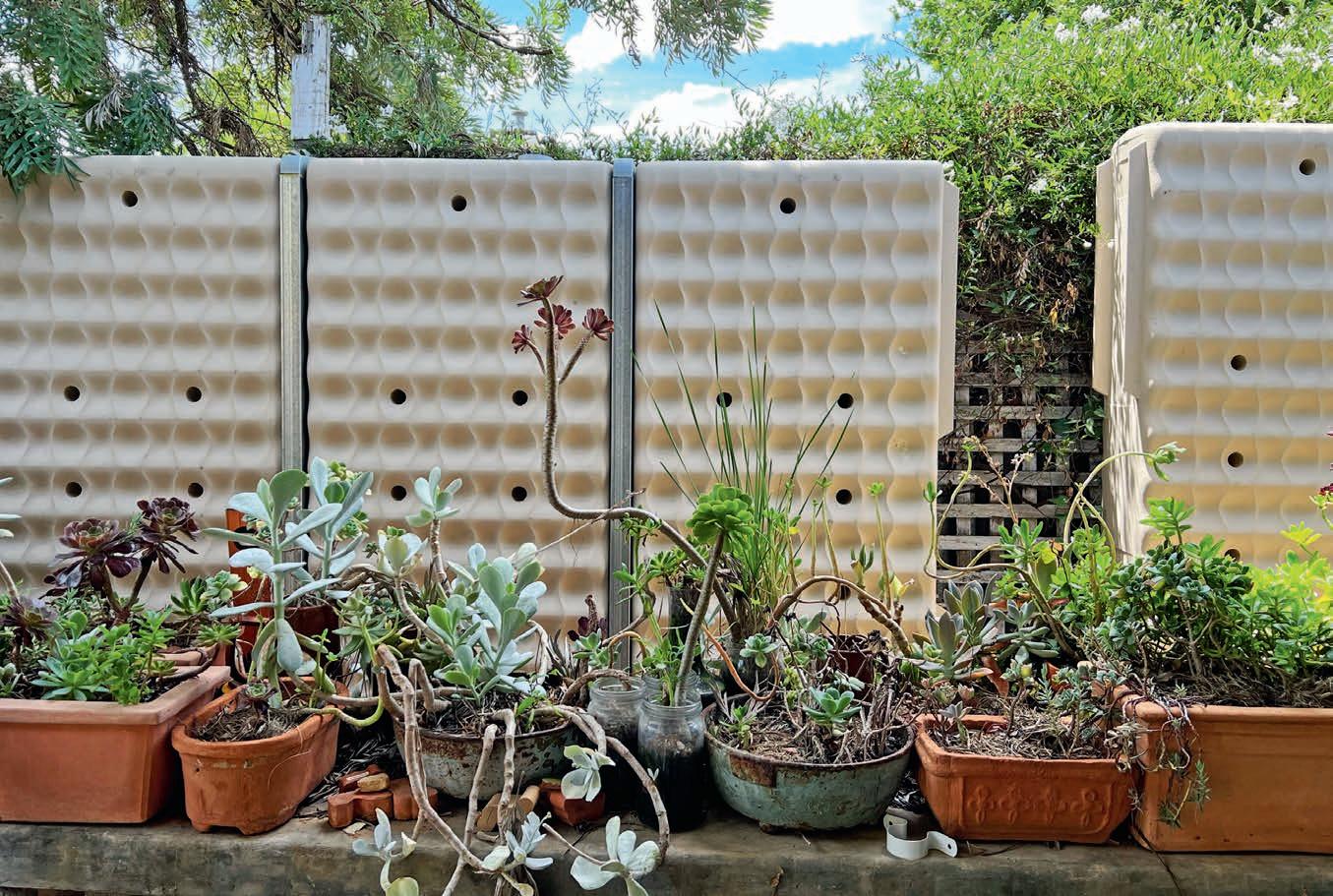
Each panel measures 2466mm long, 1800mm high and weighs just 100kg empty.
The future urban reservoir:
A fence-based approach that supports shared water storage between neighbours or across multi-dwelling sites
When full, the system weighs approximately 1.3 tonnes, which is why proper engineering and footing design are essential. Installed correctly, however, the Waterwall provides robust, long-term storage.
For tradies, this makes it a practical solution across a wide range of sites — from tight residential lots to commercial and industrial applications such as nurseries, schools or business parks where scalable water volume is critical.
Simon Su on is the owner of Simply Timber and Roofing Building Supplies in Kinglake, Victoria.
He’s been showcasing the Waterwall in his showroom, and services a variety of customers from builders or landscapers to the homeowners themselves.
“The footprint would be the biggest thing,” he said.
“It’s ideal for smaller areas — smaller yards, mediumdensity living, that sort of thing.
“You can put it straight up against a fence, and it takes up virtually no room at all.”
Sam Kirkby of Plateau Landscape Supplies also
showcases the Waterwall at his showrooms.
“Many residents and tradies across the Northern Rivers and Southern QLD are very eco-conscious and artistic when building outdoor spaces, the Waterwall encourages creative solutions whilst tackling the big problem of water storage in confined spaces,” he said.
Plumber Richard Knight has been on the tools for about 33 years. Based in Newtown, he appreciates the importance of space in residential areas.
“In inner suburbs … everyone’s struggling for space,” he said.
Waterwall’s flexible layouts that make it easier to work around corners, setbacks and complex site conditions
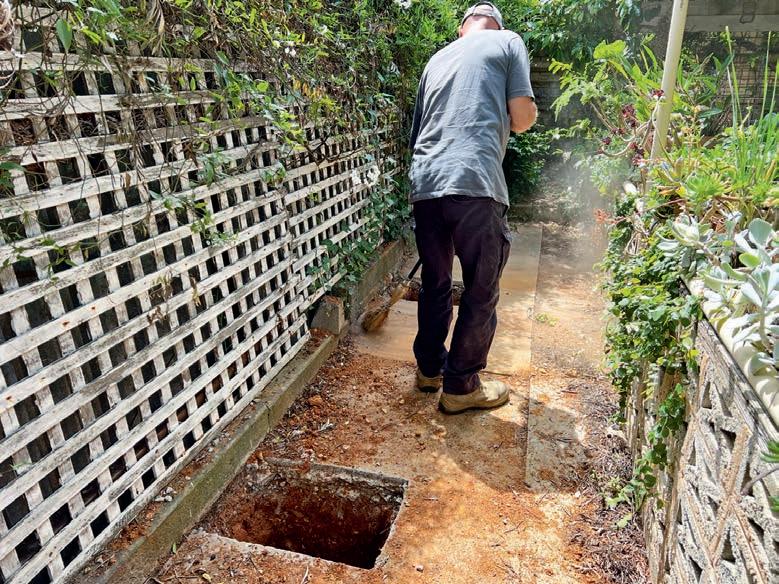
“It’s a really good product for that. You just have to put a bit more thought into it than a standard water tank, but as a finished product, it’s fantastic.
Even on a larger scale, the Waterwall has potential.
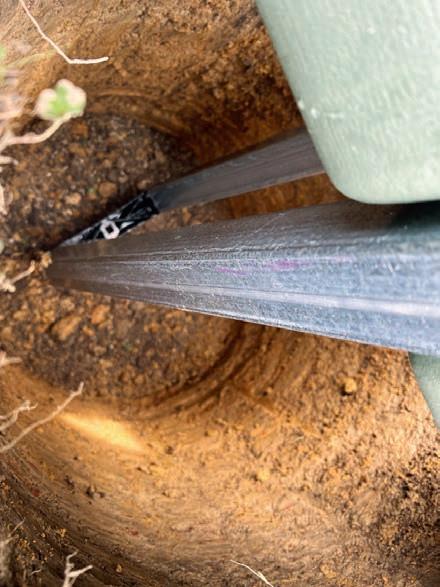
interconnection using poly pipe or hoses.
A 12V pump manages water distribution, and the system can be expanded over time as needs grow.
A basic footing of 750mm deep x 400mm inline x 600mm wide for concrete foundations is required for the Waterwall
Mod.IC Construction Manager Jackson Leigh does a lot of work in the intelligent construction space.
He viewed the Waterwall as a great option for larger sites when it comes to saving space.
“We worked on a site for MyCar. On that project, we installed a 25,000-litre underground water tank, and that alone cost thousands of dollars,” he said.
“Once you start digging, you introduce a lot of unknowns — soil conditions, safety requirements, engineering complications.
“We liked the idea of substituting an underground tank with a Waterwall because it removes so many of those variables.”
BUILD THE DREAM THIRD SPACE
Beyond water storage, the Waterwall creates something most homeowners are keen on: functional outdoor spaces.
The system’s mass provides sound-deadening benefi ts, helping to buffer noise from neighbours or streets.
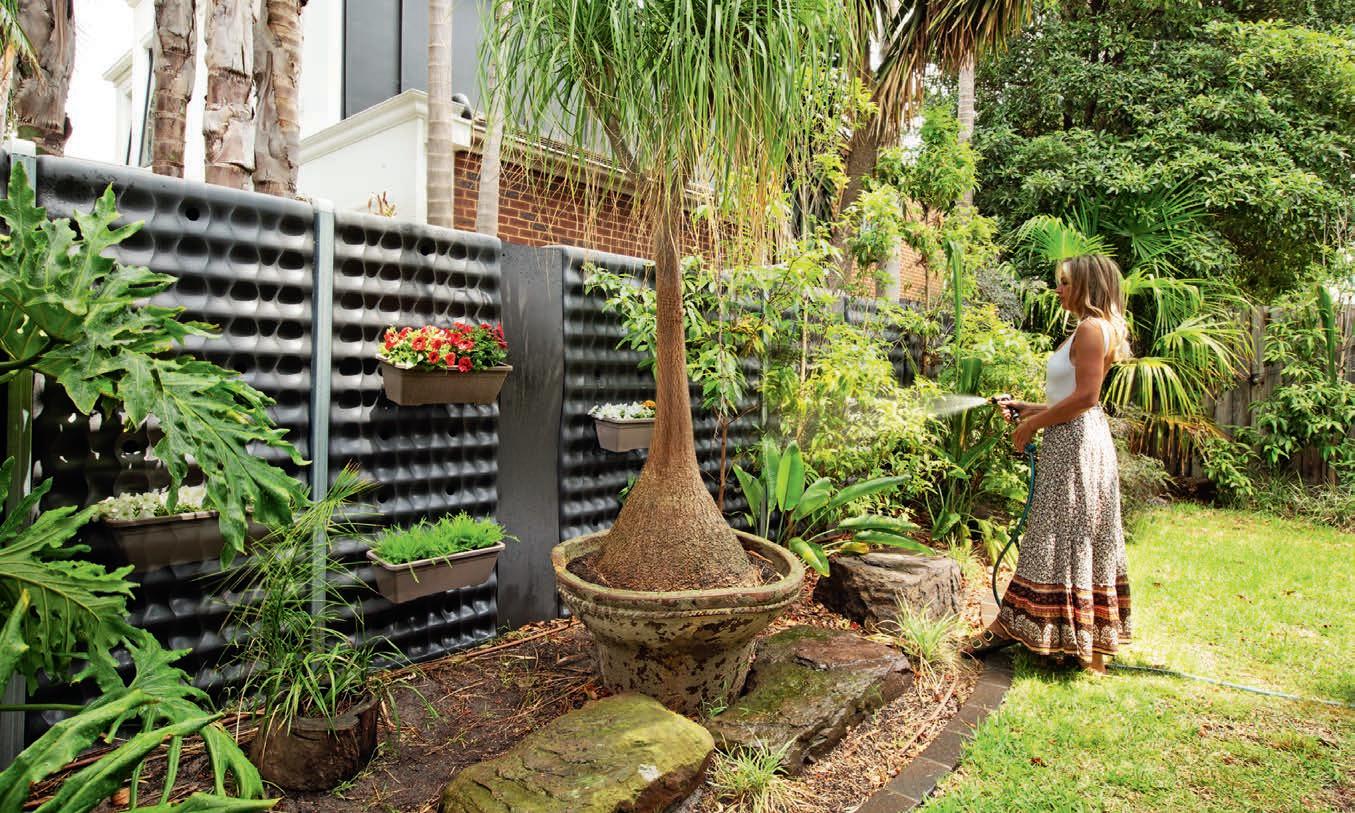
Plug-in accessory rails allow clients to hang vertical gardens, ornaments, lighting or artwork, transforming a once-static fence line into a living design feature.
With colour options including Slate, Sandstone, Granite, Ochre, Jade and Bluestone, the system integrates easily into contemporary Australian landscapes.
FLEXIBLE AND MODULAR
The Waterwall are designed to be modular and adaptable. Panels can be connected in series, isolated with ball valves, or repositioned if site layouts change.
Plumbing can run around corners and complex boundaries, making the system well suited to irregular blocks.
Each panel includes 1-inch female threaded brass fi ings at both ends, allowing straightforward
For tradies, this flexibility means the Waterwall can be staged into projects, upsold in future, or tailored to suit budget and site constraints — without locking clients into a single fi xed solution.
The Waterwall has been designed as a modular platform, with customisation built into every section.
Each panel features 33 integrated a achment points on both sides, allowing tradies, landscapers and designers to tailor the system to suit site conditions, aesthetics and functional requirements.
On-wall cladding can be fi xed directly to the panels to maintain a consistent architectural finish or introduce additional functionality.
Cladding systems can support vertical gardens, planting modules or water features such as ponds and fountains, all supplied from the stored water within the wall itself.
A growing range of on-wall accessories expands the system even further.
These include blockout la ice panels for privacy, water misting systems for outdoor cooling and fire protection, vertical garden supports, integrated lighting, and mounting options for solar panels and ba ery storage.
Together, these customisable options allow the Waterwall to be easily configured how your customer wants it whether it’s a privacy screen, living wall, service corridor or landscape feature.
Every Waterwall is manufactured in Australia using potable water-grade polyethylene. Recycled plastics are progressively incorporated into production, with the long-term goal of removing waste plastics from unsustainable lifecycles and remanufacturing them into durable, regenerative infrastructure.
The result is a single-formed, ultra-strong panel backed by a 20-year warranty — built to withstand harsh Australian conditions while supporting a circular economy.
While the Waterwall simplifies water storage, installation and engineering considerations must be taken seriously.
Concrete footings are mandatory: a minimum of 750mm deep x 400mm inline x 600mm wide.
Posts are locked in using plastic brackets supplied with each panel, ensuring stability when the system is full.
The base must sit evenly on ground, pavers or compacted sand to prevent uneven load distribution.
Plumbing requirements depend on usage.
Garden-only systems can often be installed without a licensed plumber.
Richard first came across the Waterwall working on a job for longtime customer Theresa, and had some handy tips when it came to installing it.
“It was a bit new to me,” he said.
“What we ended up doing was se ing the posts into the ground with concrete while the Waterwall was in place.
“We then lifted the Waterwall on props within the posts — because it slides down between them — and poured the slab with formwork around it.
“We let that cure for a couple of days, removed the formwork, and then slid the Waterwall back down onto the pad.
“So technically, we installed the Waterwall before the slab. It took a bit of thinking, but it actually worked really well.”
As the Waterwall expands, Steve said having an industry-recognised accredited installer program would be huge for its adoption by tradespeople.
“It would be a big benefi t,” he said.
“It allows the product developers to be confident the system is installed correctly. Installation is one of the biggest challenges in the fencing industry because, while there are product standards, there aren’t always clear installation standards.
“If product developers can help establish installation standards, we can then educate the industry to follow them.
“That way, everyone wins: the product performs as intended, installers know exactly what’s required, and the end user benefi ts from a correct, compliant installation.”
As drought tightens its grip and urban density increases, the way Australia thinks about water storage needs to change.
The Waterwall offers a compelling alternative: highvolume storage, minimal footprint, and the ability to share water across communities.
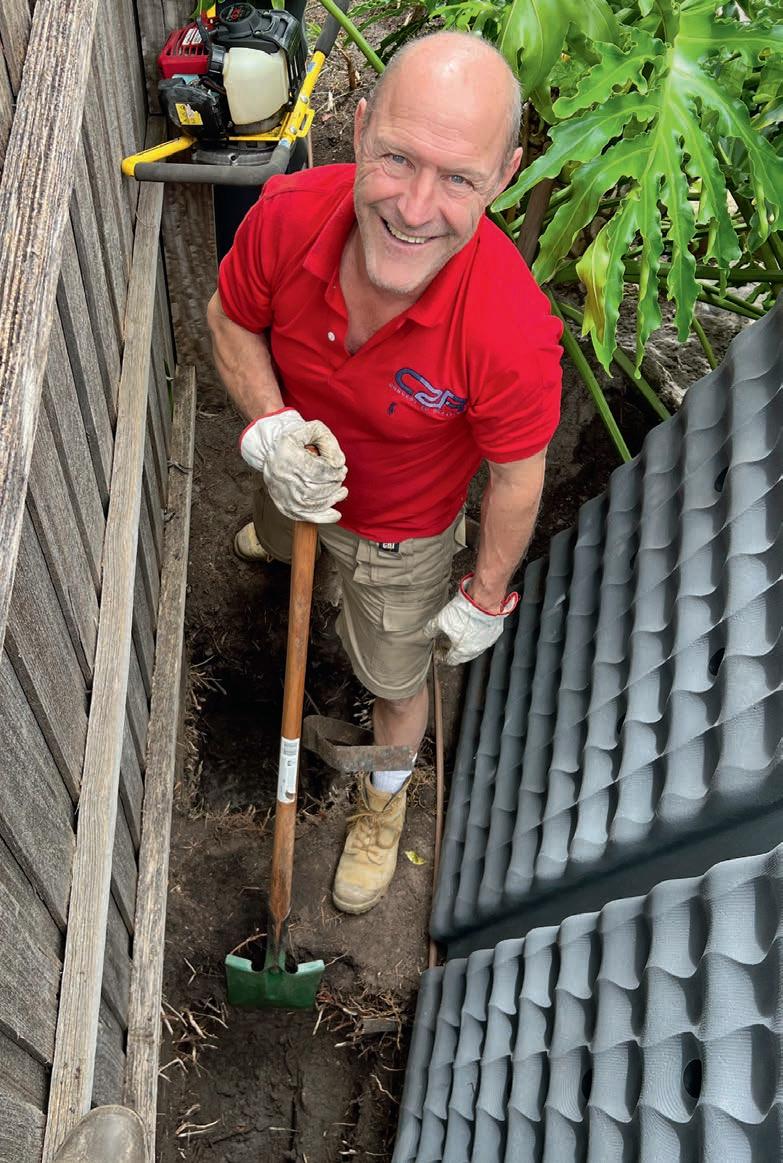

For Australian tradies, builders and landscapers, it’s more than a product to install — it’s a system to build around.
One that helps clients dodge drought, reclaim space, and join a growing Urban Reservoir Movement shaping the future of water-smart living.
“Space is everything. You’ve got to build a fence anyway, so why not combine the two?,” Jackson said.
“That’s something we really liked — the idea of the Waterwall being part tank, part fence, and part screening solution.
“We see it as dynamic enough to work across different project types — whether that’s commercial developments like MyCar or Hungry Jack’s sites, or even modular housing developments.
“In some cases, it could be the difference between a project stacking up financially or not.”
The Waterwall installation is designed to be straightforward, with tradies like Richard able to easily put it together for the customer

Bagger racing has taken the US by storm. It’s motorcycle competition at its wildest and most spectacular, and it’s coming to Australia.
HARLEY-DAVIDSONS
aren’t traditionally considered road-race bikes these days, but it’s easy to forget a great deal of the company’s development and reputation were forged on the fl at tracks and circuits of the US.
Bagger racing – running what looks like full-dress Harleys on road-race circuits – is big news. It’s
taken the US by storm and the purpose-built bikes, while they look like they should be on display at a show’n’shine, are raceready and brutally fast.
The Australian Bagger Racing League – BRL – is set to kick off in Australia in 2026 thanks to Alpha Performance Engines (A.P.E). The Aussie
company specialises in custom and highperformance Harleys, especially in drag racing, so promoting the BRL is an opportunity to combine A.P.E’s passions.
“We’ll keep our straightline racing going as well,” said Ma Ford of A.P.E.
“Harley-Davidson has been known for motorsport and racing in lots of different classes over the years,
so why not just add to it?
While there’s some bigmoney builds happening for sure, it doesn’t all have to be about how much cash you can drop. The series is meant to appeal to all levels of budget and provide a platform where you can build and all-out race bike, or ride your everyday H-D.
“It’s an affordable racing opportunity for anybody
A.P.E had its own incredibly beautiful Road Glide bagger and pro rider, Jake Masters, on hand at Queensland Raceway
that has already built a bike, or wants to look at building a bike, to get out there on the track and enjoy it.”
To give Australia’s motorcycle racing fans a taste of what’s to come, A.P.E ran a showcase day at Queensland Raceway. Basically, anyone with a Harley and the necessary riding gear could sign on and spend a day thumping around a certified roadrace circuit to see how it felt. The Tradie went along for a taste of the action.
A.P.E had its own incredibly beautiful Road Glide bagger and pro rider, Jake Masters, on hand at Queensland Raceway. The idea was to continue development of the bike and to give other Harley riders and spectators an inkling of what to expect.
More than 20 Harleys took to the track, some of them beautifully presented hard-core race bikes. Others looked like they’d ridden straight off the road to freedom, complete with footplates, taped-up lights and rego plates, but all had the look and feel only a Harley-Davidson can off er.
The A.P.E bike was a standout. Just looking at it could leave the onlooker overawed. It was huge, tall, and when the crew started the motor it felt like someone beating on the bowels with a pair of axe handles.
Pro racer Jake handled it like it was a kid’s minibike.


Alpha Performance Engines
A.P.E.specialises in custom and high-performance Harleys
Ma from A.P.E said the company’s thrilled be bringing the BRL to Australia, and at this stage the plan is to run two classes: Super Street Bagger and American Twins Unlimited.
The Super Street Baggers are all about raw power, precision and handling, combining aggressive styling with cu ing-edge engineering. Performance will meet design in a street-ready package, and riders will compete on custom baggers built for speed, manoeuvrability, and endurance.
The American Twins Unlimited class will allow maximum engine displacement and virtually unlimited modifications. It’ll be all about pushing the boundaries of what’s possible with American twin-cylinder engines, and competitors will ride seriously customised Harleys engineered for speed and performance.
When the Harleys rolled out onto the track the grumble of the big V-twins had the pit wall and spectator areas crowded. The sound and look of the big American bikes had everyone transfi xed. There were no wafer-thin riders folded up on bikes tuned in wind tunnels. These were big, balls-and-all, heart-on-the-sleeve muscle bikes proud of their brawn, and there were some very fast riders cu ing serious lap times.
Two or three riding past in a group with the thro les open had the pit wall trembling .There’s no doubt about it: bagger racing is spectacular. Australians are going to love it.
At the time of writing the competition dates hadn’t been announced, but the A.P.E folks have another showcase day at Victoria’s Phillip Island planned.
Head over to alphaperformanceengines.com.au/ bagger-racing-league for more info Check
Jake Masters won the US bagger Super Street title in 2024, the Pro Stock title in 2025, and will be A.P.E’s sponsored rider in the Bagger Racing League Australia.
With a proven track record and a passion for pushing the limits, Jake’s skill and dedication, along with the tech background of A.P.E, will showcase the incredible performance

capabilities of the company’s custom race baggers.
“It’s not about just building a fast Harley,” said the likeable and easygoing Jake. “It’s about the team that’s pu ing it together. You can have a fast bike, but ge ing it to turn and handle on the track’s a whole other story.”
Jake will compete in the full Bagger Racing League Australia series in 2026.













HBT is Australia’s largest buying group of independent stores within the Hardware, Building Supplies, Industrial, Paint, Rural, Garden and Timber categories.
We give local businesses the power to stay competitive –negotiating better deals, securing access to major suppliers, and supporting the kind of service you can’t find in a warehouse.
POWERING TRUE INDEPENDENTS







We know tradies rely on the local community, just like us.
When you shop at a HBT store, you’re not just backing a local – you’re tapping into the power of hundreds of independents who have joined forces to beat the big boys on price, range and service.
We’re powered by independents, united by purpose and stronger together.
Look for your local sign of independence
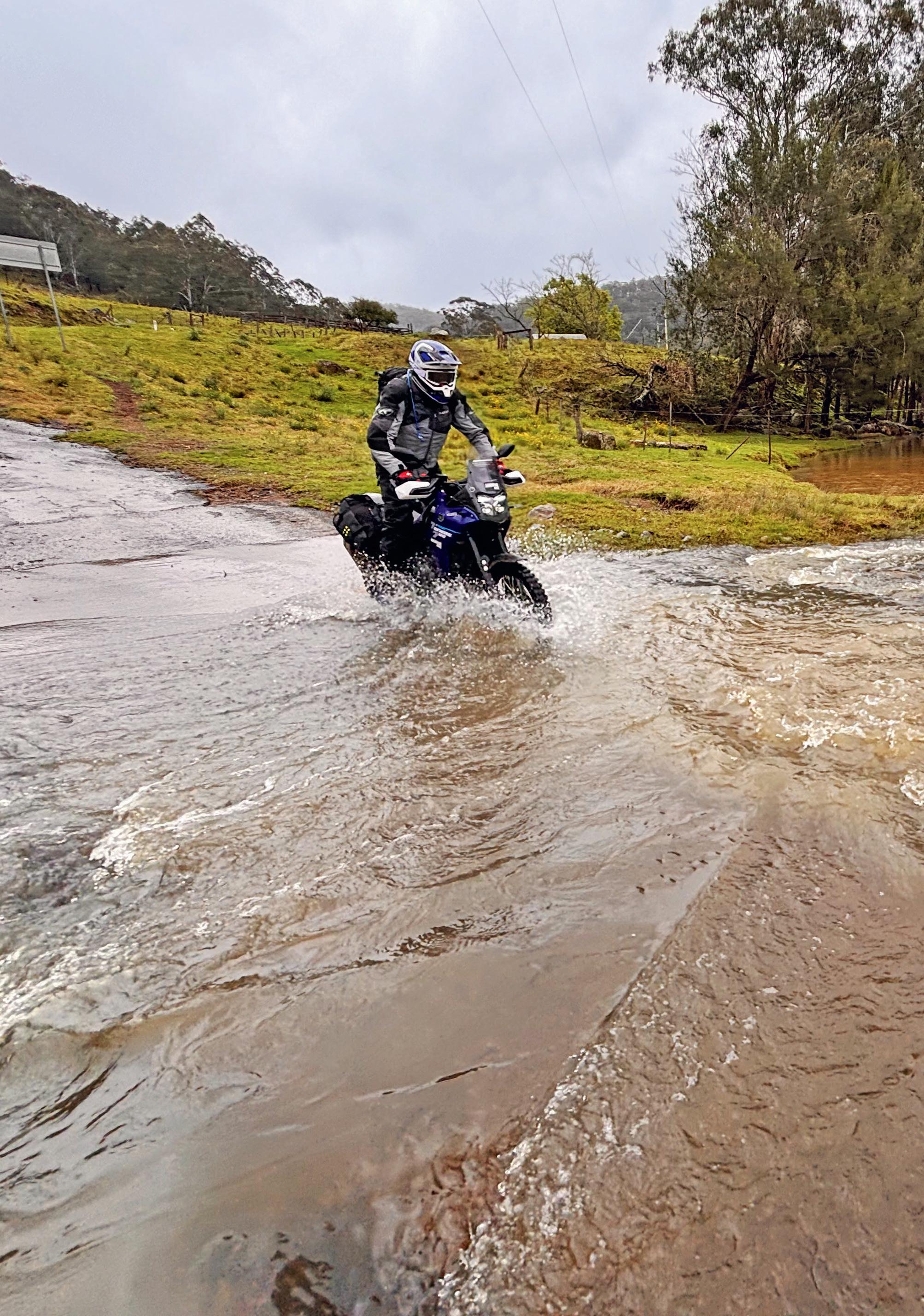
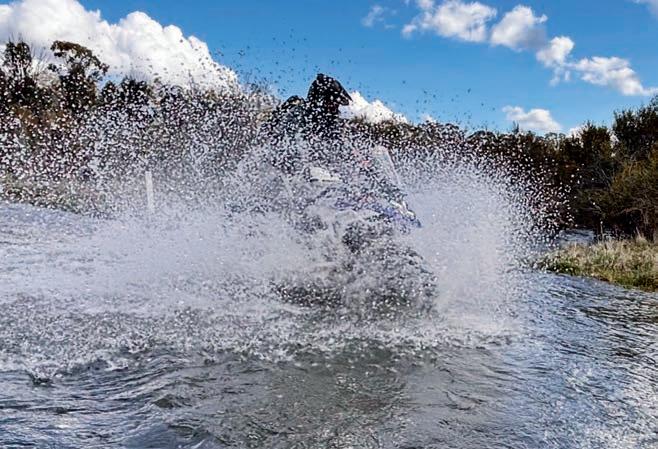
THE DIRTY WEEKEND is a gathering of adventure riders at Tingha’s Green Valley Farm – an event where like-minded riders can meet, ride and talk about riding big dirt bikes off road.
Part of the fun is ge ing there and so we set off from Sydney - in 10 degrees of non-stop rain that fillled boots full of water before we made the Wiseman’s Ferry meeting point.
WHEN THE WEATHER SETS THE TONE
But the Dirty Weekend got be er from then. A lot be er. Myself and my mate Mitch rode a pair of new Yamaha Tenere
700s and were joined with Klim’s International Sales Manager Will Bozung on a BMW GS1300 and Kiwi Steve Gillies from Ultimate Adventure Moto NZ tour company on the new KTM390 Enduro. Small, medium and large adventure bikes all covered.
ROUTE MAKES THE RIDE
The route was set by new tour company Vagabond’s Jackson Manteit and Max Smith and took us from
Wisemans to Nundle on day one via an iconic ADV route including Brokenback, Bowmans Creek and Crawney Pass.
The rain never let up, but on the plus side, the wet gravel roads offered amazing grip. Spirits were high in the Peel Inn at Nundle, buoyed by the sunny weekend forecast.
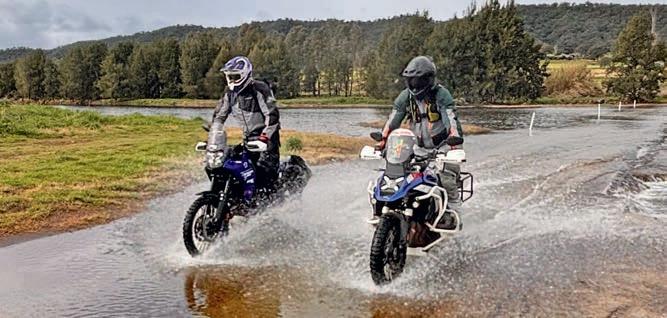
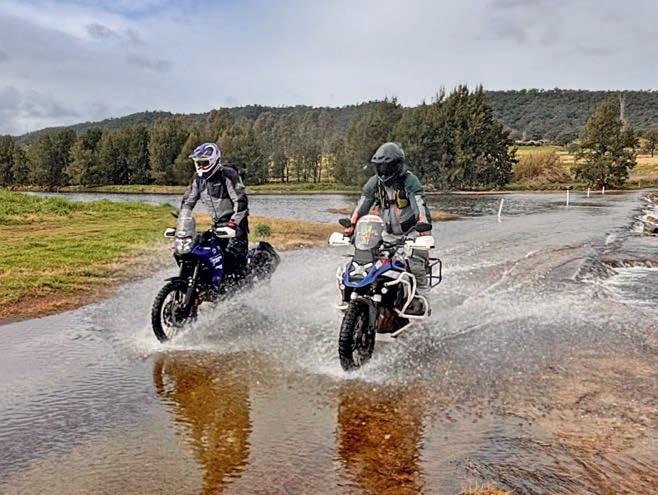
Our boots stayed wet all weekend. But that was down to deep water crossings rather than the weather.
ROLLING INTO THE HEART OF THE EVENT
Day two Nundle to the Dirty Weekend venue at Green Valley Farm just outside Tingha, near Inverell, was a fun high-speed blast along scenic dirt roads, stopping for lunch at the Alternate Root at Uralla with the Adventure Moto crew.
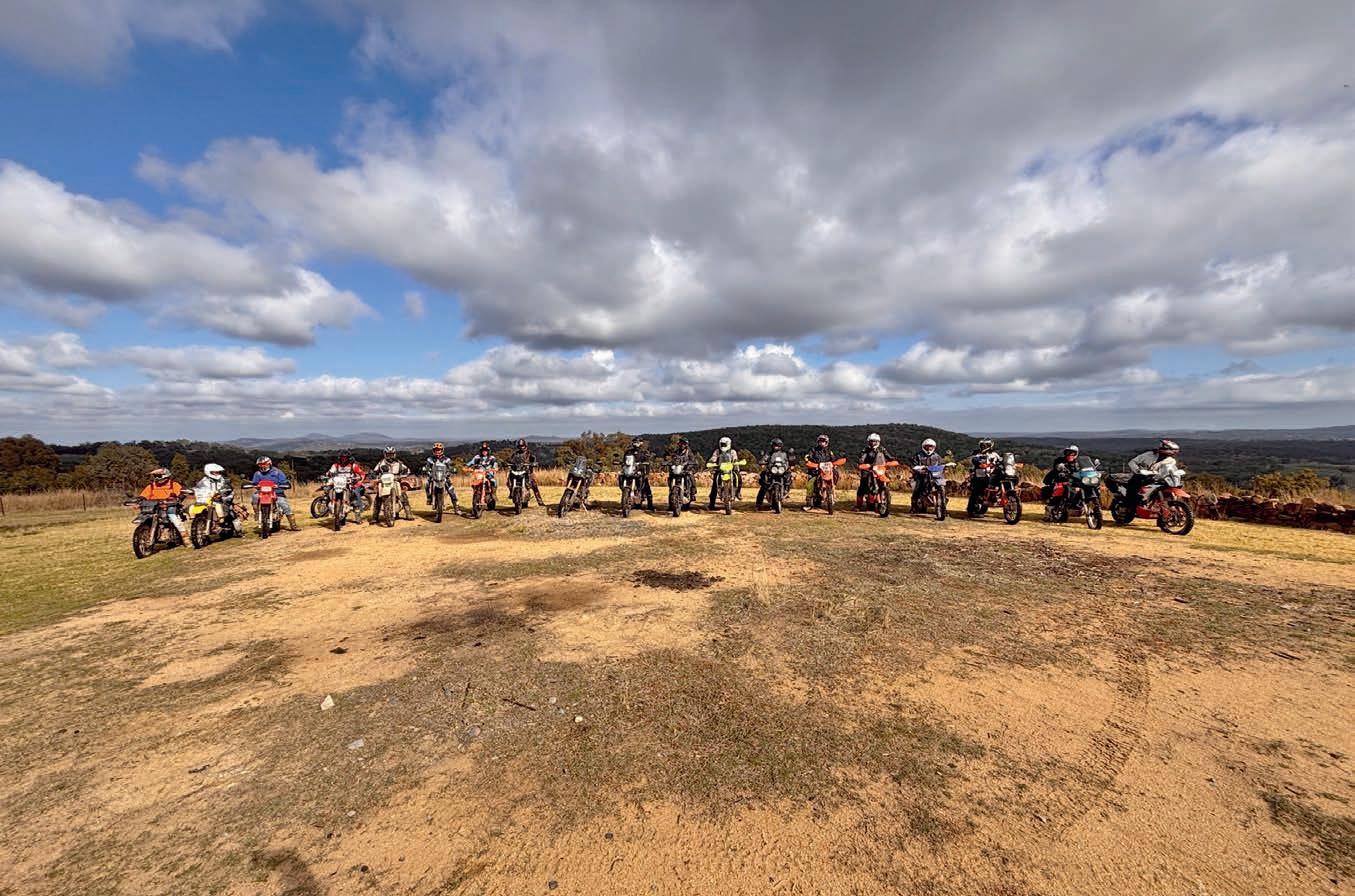
Green Valley Farm is an awesome location for the 300-strong gathering of ADV riders, with camping and a number of huts
Ge ing there is as much a part of the adventure as the destination
available to book. The Stewart family who own Green Valley Farm kept the masses well fed and the bar stocked.
And when you’re not talking about, or riding, adventure bikes, you can always visit Green Valley’s zoo or have a go on the Farm’s vintage mechanical fun fair rides.
TESTING RIDERS ON THE ENDURO
On Saturday, 19 unsuspecting, and quite possibly hung over, riders seeking a challenge lined up at 8am for a morning ride around ‘the enduro
loop’. The plan was to get back to the Farm for a gymkhana event at 2pm.
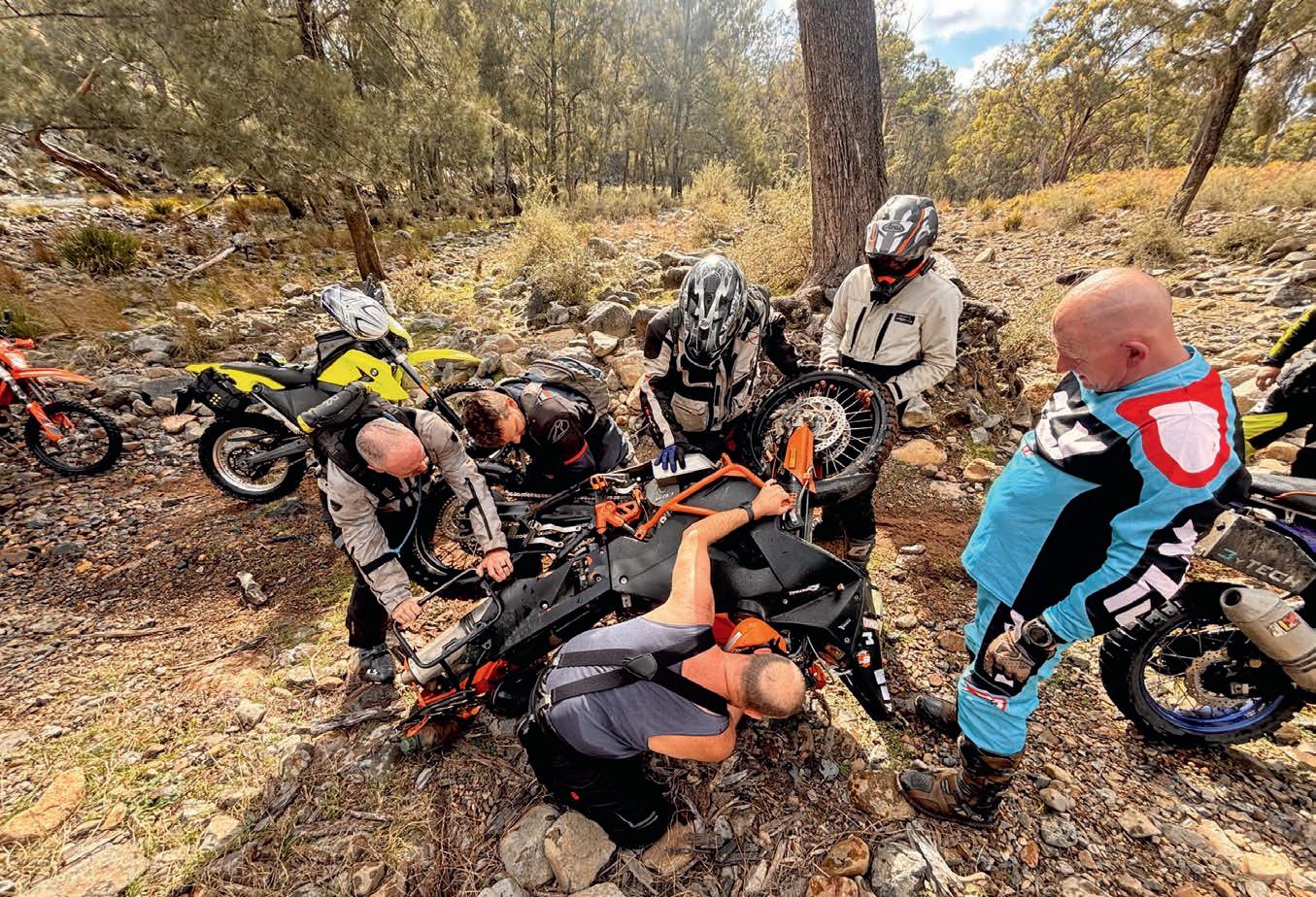
But with Thursday’s deluge, the trails proved tricky with three water crossings featuring decent sized boulders ready to catch you out, muddy paddocks where line selection was critical and the odd rocky hillclimb.
Riders waded in to help others through the water crossings and dug each
other out of bogs. The ride was hard enough on a single cylinder enduro bike, so big respect to the handful of big twin riders who powered through the enduro loop.
It’s always the tough rides that are most memorable – because no-one ever told an interesting story where everything goes to plan.
So the enduro loop ride will be remembered, especially by those who drowned their bikes in the swollen creek crossings.
When we reached Bundarra for fuel and a feed at the Commercial Hotel we were already behind schedule.
The second half of the ride was more flowing but still with plenty of trail debris to keep riders alert.
The group rolled back to
the Farm at 3pm ready for refreshment and armed with some great yarns for the fireside.
Dirty Weekenders opted for a self-guided Adventure ride.
And those who stayed at the farm could book a mini class with Dakar rider, content creator and dirt bike instructor Llewellyn Pavey.
Having learned the ropes from his dad and Dakar legend Simon Pavey, Llel can communicate dirt bike riding essentials as well as anyone.
The gymkhana kicked off with plenty of classes and prizes up for grabs. The event consisted of a short, timed course across grass that was wet in places for added jeopardy. It’s a fun
Challenging terrain has a way of revealing character
Wet conditions can sharpen both focus and camaraderie
event geared for crowd entertainment more than winning, as demonstrated by two legends on two wheels in a Ural sidecar outfi t.
Punters could take the opportunity to visit trade stands and there were plenty of giveaways including riding trips worth up to $6,000 to ensure the Saturday night prize giving was well a ended.
Event organiser Steve Smith from Adventure Moto says, “We are building a community here, this isn’t about us making money. We want to give back to the guys that support us by running a fun event.”
All trade staff are adventure riders first with a passion for building the ADV community ensuring
that riders who arrive on their own, leave with mates.
Open fire pits played a big part in the social scene. New riding buddies were made, fresh routes discussed, bike setups considered, the day’s incidents laughed over a few cold ones in front of a roaring blaze.
On Sunday, we decided to reverse the ADV route back the way we came. That meant compressing a two-day ride into one day of around 700km. Fortunately we were all on
There’s a bike in there somewhere!
Tenere 700s, which have to be one of the best choices for covering a mixture of dirt and tar when time is tight.
We left the Farm at 8am, chose only to stop for fuel, one photo at Bowmans Creek Road, a quick lunch at Singleton, a drink at Wollombi - and collected a kangaroo on Murrays Run. We rolled into Sydney at 6pm on the dot. That’s 1400km of prime adventure riding plus 60km of enduro trails – a great way to spend the weekend.
Look out for the next Dirty Weekend on 12-13 September 2026.

Professional-grade, heavy-duty ratchet handles built for high-torque industrial applications. The 48-tooth reversible mechanism offers superior accessibility with a smaller swing angle.
P/N: PZ65
• Versatile and Compact Wire Pliers: Perfect for Crimping, Stripping, and Precision Cutting in Wiring Projects.
• Featuring a built-in screw cutter compatible with Metric screws M2, M2.6, M3, M4 & M5, these wire pliers are your go-to for various tasks.
• Constructed with durability in mind, these pliers boast a sturdy body and a precise cutting blade, ensuring efficient and accurate work every time. Upgrade your toolkit for unparalleled performance in wiring projects!
Designed for tough tasks!
• Rescue stripped or damaged screw heads
• Tackle special, unique, or tamper-proof screws
• Perfect for crimping, cutting cables, shaping metal sheets, twisting wires, and more.
P/N: PZ-KIT

Achieve impeccably finished open-barrel connectors with a single pair of Connector Pliers. Compatible with major brands like MOLEX, TE, and JST..
• Four meticulously crafted cavities for diverse applications
• Equipped with a locking latch and coiled spring for enhanced usability
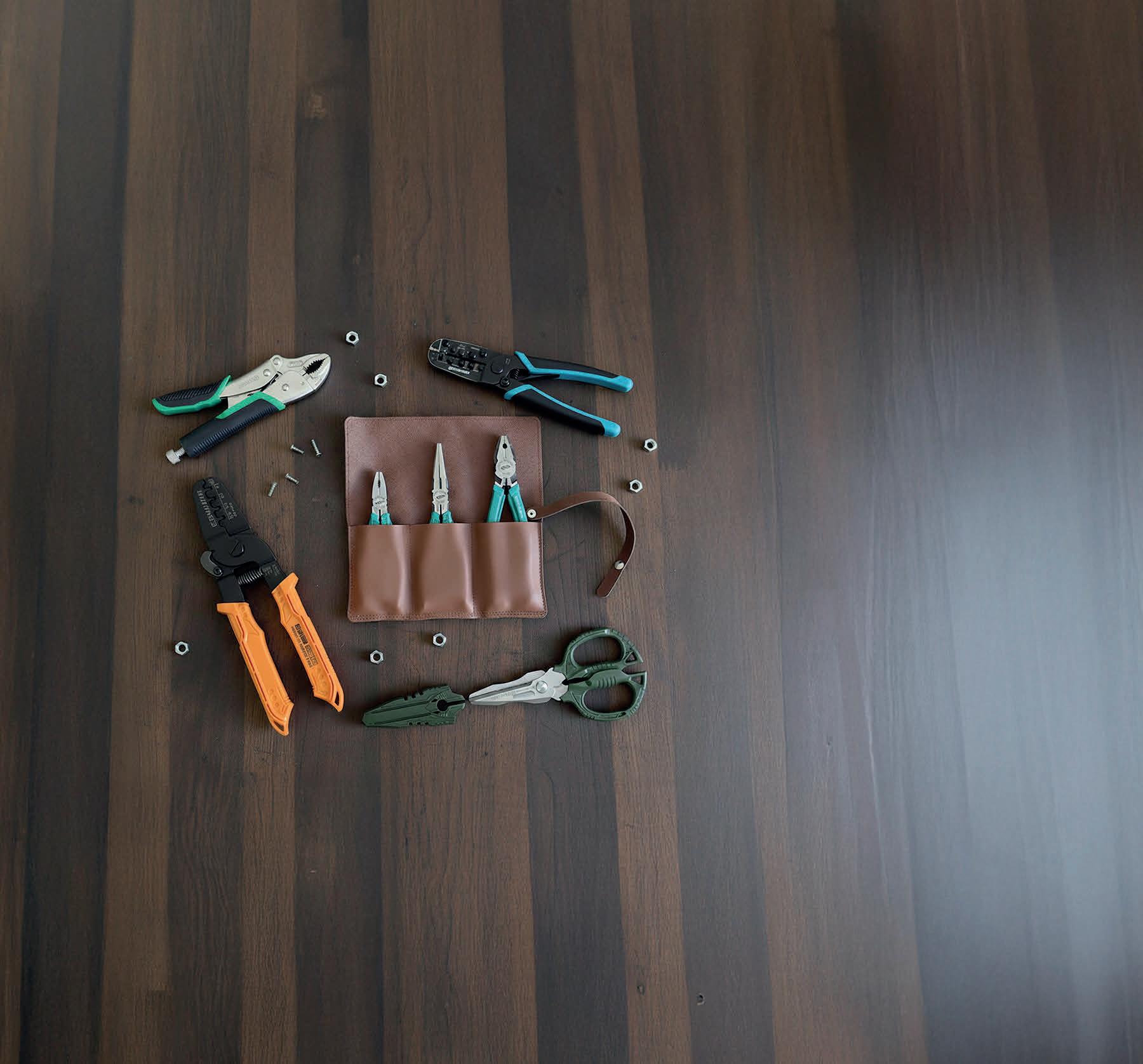
• Oil-resistant Elastomer (TPR) handle ensures a comfortable and durable grip
• Heavy duty 4-in-1 multipurpose blade combination: flat blade, box cutter, wire cutter, micro-serrations
• Stainless steel blades
• Anti-slip handle
• Finger pinch guard
• Strap hole
• Vent & drain hole
• Blade cap included
P/N: PH55


actually work in.
• Speed up follow-up: Even a quick ‘Got your message — I’ll call after 4pm’ stops leads going cold. How to get more leads with less effort in 2026
IF YOU’RE FLAT OUT on the tools, ‘marketing’ can feel like another job you didn’t quote for. But in 2026, ge ing more leads isn’t about posting on Instagram every day — it’s about being easy to find, easy to trust, and quick to respond.
HERE’S THE BIG SHIFT: AI is now doing a chunk of the shopping around for customers.
People are asking Google and tools like ChatGPT things like: ‘Best builder near me for a bathroom reno’ or ‘who installs Colorbond roofing in Newcastle?’ Those tools pull answers from what they can read online — your website, your Google Business Profile, your reviews, and how consistent your details are across the web.
SO THE PLAY IS SIMPLE:
• Get your basics sorted: Google Business Profile updated, service areas clear, phone number correct, and fresh job photos.
• Write like customers search: Have a webpage (or section) for each main service you do — ‘decks’, ‘kitchens’, ‘retaining walls’, ‘emergency plumbing’, etc. Add suburbs you
• Stack trust signals: Reviews, before/after pics, licence/insurance details, and clear info on how you quote and what happens next.
Why worry about how AI’s affecting business when you can use it to your advantage?
To make it easy, NextMinute’s put together an interactive marketing guide built for Aussie tradies — practical tips across digital basics, AI trust signals, referrals, ads, and simple AI tools to save time.
Check it out at marketingguide.nextminute.com or scan the QR code for more Check it out! Check it out!
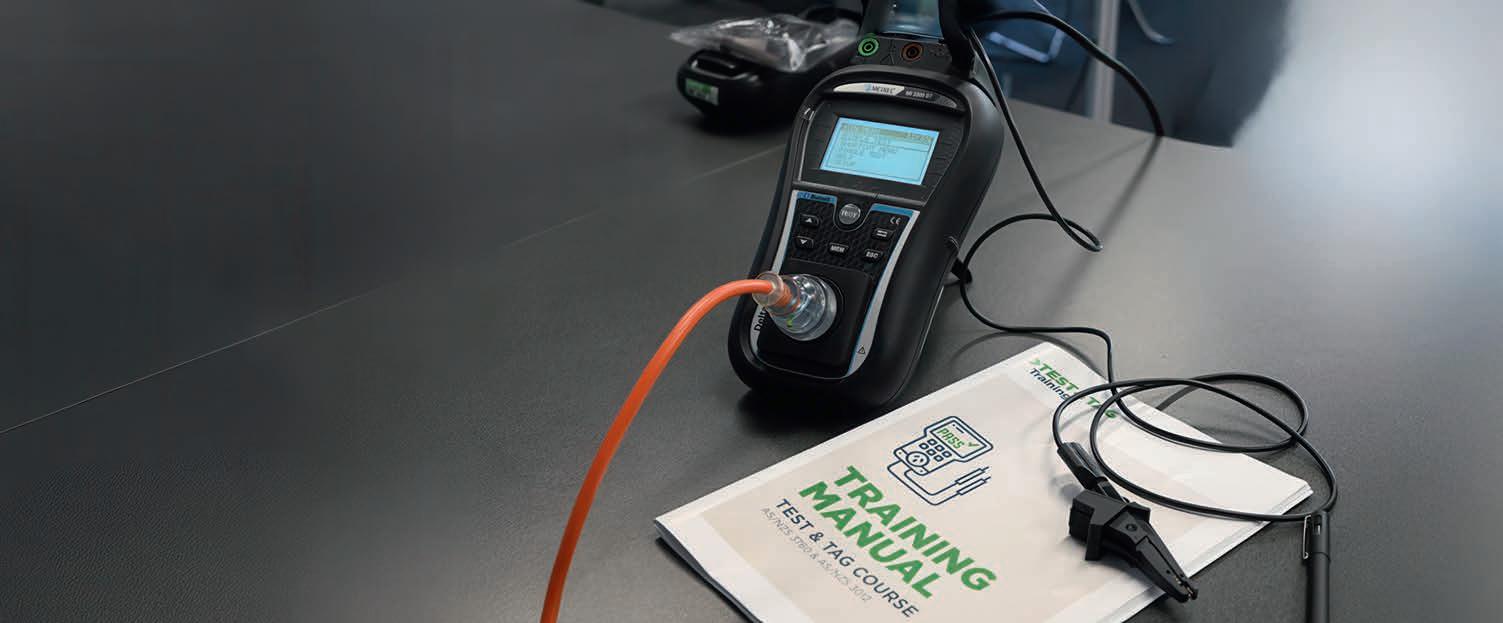
COMPLIANCE is an obligation, one that the team at Test & Tag Training are experts in. In high-risk environments that obligation is all the more crucial, particularly environments involving temporary power, portable equipment and rapidly changing conditions.
Staying compliant can be the difference between safe operations and serious consequences.
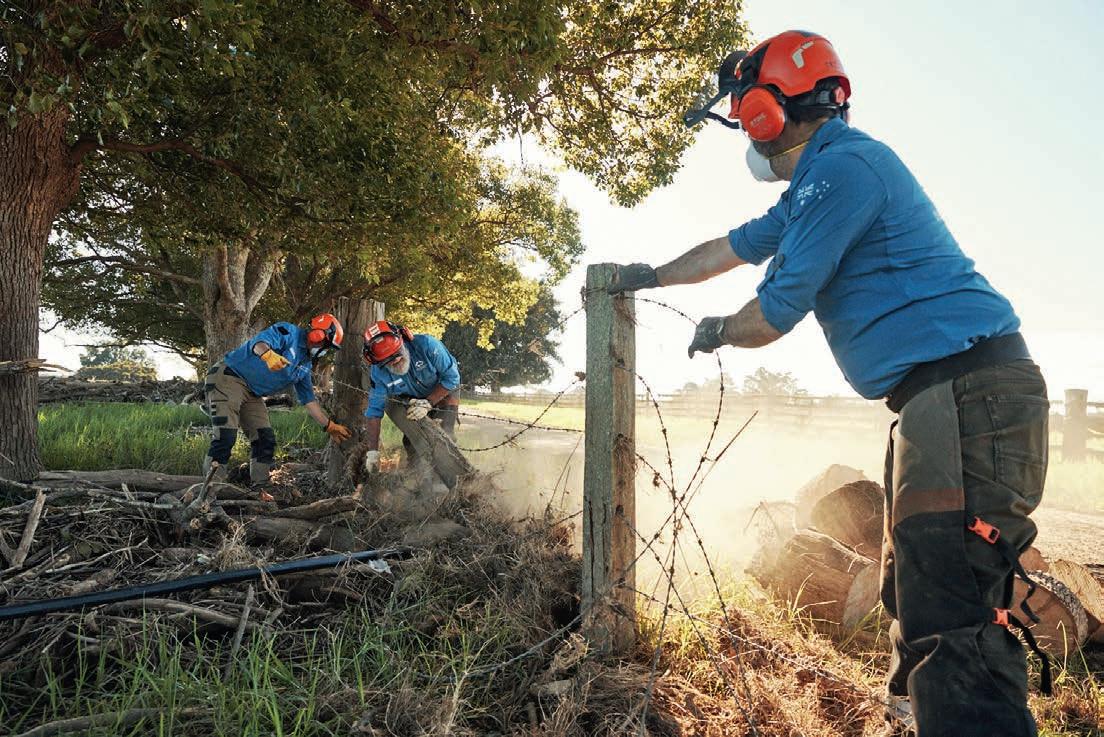
For organisations like Disaster Relief Australia, where volunteers deploy into disaster-affected communities across the country, electrical safety is a critical part of preparedness and response.
BUILT FOR UNPREDICTABLE CONDITIONS
Disaster Relief Australia unites the skills and experience of military veterans, emergency service personnel and motivated civilians to help communities prepare for and recover from disasters.
The veteran-led organisation now has more than 7,000 volunteers operating across every state and territory, with 10 disaster relief and recovery teams nationwide.
Each team maintains its own cache of equipment — from generators to power tools — used during flood, fire and storm recovery operations.
keeping that equipment compliant is a significant logistical task.
“Managing compliance requirements from a testing and tagging point of view can be a challenge,” she said.
“We utilise the skillset that to make sure that all the equipment for those teams is compliant.
“When we’re out on operations, if new equipment comes in, they’ve got the ability to understand if there’s a potential fault what they need to do when that happens.”
Rather than relying on external contractors, Disaster Relief Australia made the decision to bring the qualification in-house.
online and face-to-face options.
“They work with us to provide what best fi ts our needs,” Sarah said.
“We recently had a logistics conference and workshop in Brisbane, we were able to provide all of our coordinators with testing and tagging training.
“A trainer from Test and Tag Training actually visited in-person to do it … they’ve been fantastic.”
Disaster Relief Australia also sources its testing equipment directly from Test & Tag Training, creating a streamlined, end-to-end compliance solution.
Disaster Relief Australia is a primarily volunteer-based organisation, comprising of many military and first responder veterans
can apply their training correctly, regardless of location or deployment conditions.
“We purchased all our PAT testers from Test & Tag Training,” Sarah said.
“They provide us with continuous support for that equipment to make sure they’re serviced and calibrated correctly.”
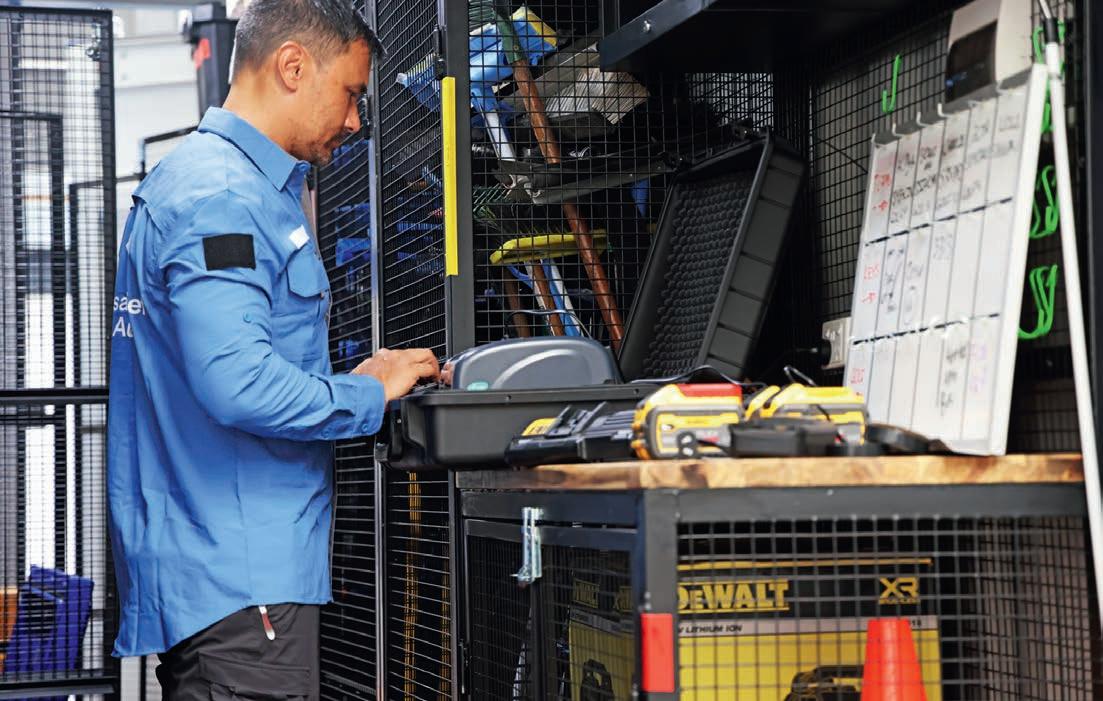
That’s where Test & Tag Training plays a vital role.
According to Associate Director of Logistics and Procurement Sarah Vaz,
Test & Tag Training provided volunteers with nationally recognised training, offering both
With multiple teams operating independently across Australia, consistency ma ers. Having standardised, reliable testing equipment ensures volunteers
This approach reduces downtime, improves safety outcomes and removes uncertainty during already high-pressure operations.
Test & tag is one of the few electrical safety tasks that doesn’t require a licensed electrician, just a trained and competent person under AS/NZS 3760.
In just one day, volunteers or workers can become qualified to use MIND
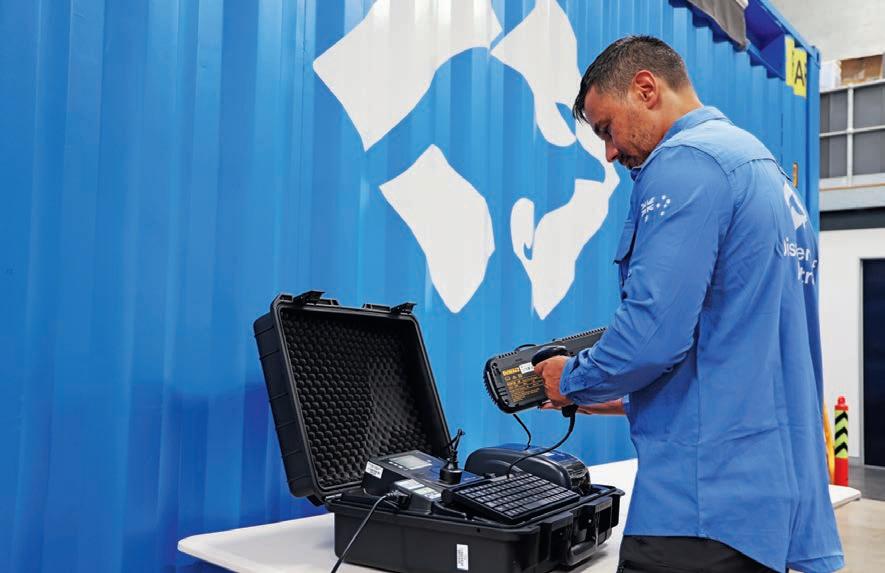
PAT testers and undertake testing and tagging.
“One of the most important things in my
Disaster Relief Australia works across the nation with 10 teams and more than 7,000 volunteers
view is having these tools actually provides our volunteers with skills and meaningful engagement opportunities,” Sarah said.
“So making sure we can give back to our volunteers while strengthening our overall capability as an organisation.”
CLEAR, PRACTICAL AND FIT FOR PURPOSE
As Australia’s largest provider of nationally recognised test and tag training, the team at Test & Tag Training supports organisations operating in high-risk, fast-moving environments.
For Disaster Relief Australia, having trained
Test & Tag Training has all the equipment for testing and tagging available, a service Disaster Relief Australia takes full advantage of
volunteers and reliable testing equipment in place means electrical safety is managed upfront, allowing teams to deploy with confidence when it ma ers most.
Practical training and the right equipment deliver real-world safety outcomes under pressure.
You can learn more about Test & Tag Training at testandtagtraining.com.au Check it out! Check it out!

what insurance they’ve got, and Public Liability is usually top of the list. It’s been hammered into the industry for years, and for good reason.
But there’s another type of cover that’s quickly becoming just as important – and in some states, unavoidable.
Professional Indemnity insurance is no longer just ‘kinda nice to have’.
With regulatory changes rolling out across multiple states and territories, builders who don’t take it seriously could soon find themselves locked out of work, or worse, exposed financially.
WHAT’S
So, what is Professional Indemnity insurance?
Put simply, it is about protecting builders when something goes wrong with their professional advice or services – not their tools or physical work.
Professional Indemnity protects you against losses claimed by a third party due to alleged or actual negligence in your professional services or advice.
Subject to applicable limits, a policy helps meet compensation payable to a third party and your defence costs (such as legal costs, investigator costs, and expert fees).
In the real world, that could mean cover for claims linked to things like lodging compliance declarations and regulated designs, or project delays that end up costing a client money.
It can also respond to allegations that a builder failed to exercise reasonable care and skill, didn’t obtain the right permits, or didn’t complete work within an agreed timeframe.
Just as importantly, Professional Indemnity insurance can help cover legal representation,
investigations and defence costs – expenses that can cripple a small building business even if the claim doesn’t go anywhere.
That said, it’s not a catchall policy.
Professional Indemnity insurance won’t cover defective workmanship, the cost of fi xing or redoing building work, property development activities, acting as a building certifier, or providing design or engineering services.
It’s about professional judgement and advice, not faulty tools or poor tradesmanship.
Many builders don’t think they give professional advice. But every time a recommendation is made, a sign-off is completed, or a compliance document is lodged, professional responsibility comes with it.
On top of that, the legal landscape is changing fast.
Professional Indemnity insurance is already mandatory in several states and territories, including Queensland, Victoria, Western Australia and the Northern Territory.
New South Wales builders should also take note, with PI insurance set to become a requirement from 1 July 2026 for registered building practitioners.
That means builders who don’t have Professional Indemnity cover may soon be unable to renew licences, bid for certain jobs, or meet contractual obligations – especially on larger or governmentbacked projects.
Even where it’s not strictly required (yet), Professional Indemnity insurance can play a big role in protecting a business from modern construction risks.
Projects are more complex, supply chains
are less predictable, and delays can snowball quickly.
When costs blow out or timelines slip, fingers tend to get pointed – and builders are often first in line.
Insurance is rarely anyone’s favourite admin job, but ge ing
Professional Indemnity cover doesn’t have to be painful.
BizCover offers Professional Indemnity insurance specifically designed for builders, with the ability to quote and buy online in minutes.
Builders can also compare quotes for other essential cover like Public Liability and Portable Equipment at the same time – potentially saving money and cu ing down on paperwork.
For many builders, Professional Indemnity insurance is no longer about ‘if’ it’s needed, but ‘when’.
With mandatory requirements expanding and claims becoming more common, ge ing covered early could be the difference between riding out a dispute or watching it derail a business that took years to build.
FOR A LOT of tradies, the career path feels set in concrete.
Finish school — start an apprenticeship like the old man — spend years on the tools and just keep going.
But for many, there comes a time where the body gets sore, the hours ramp up or the jobs dry up, or the future starts to feel uncertain.
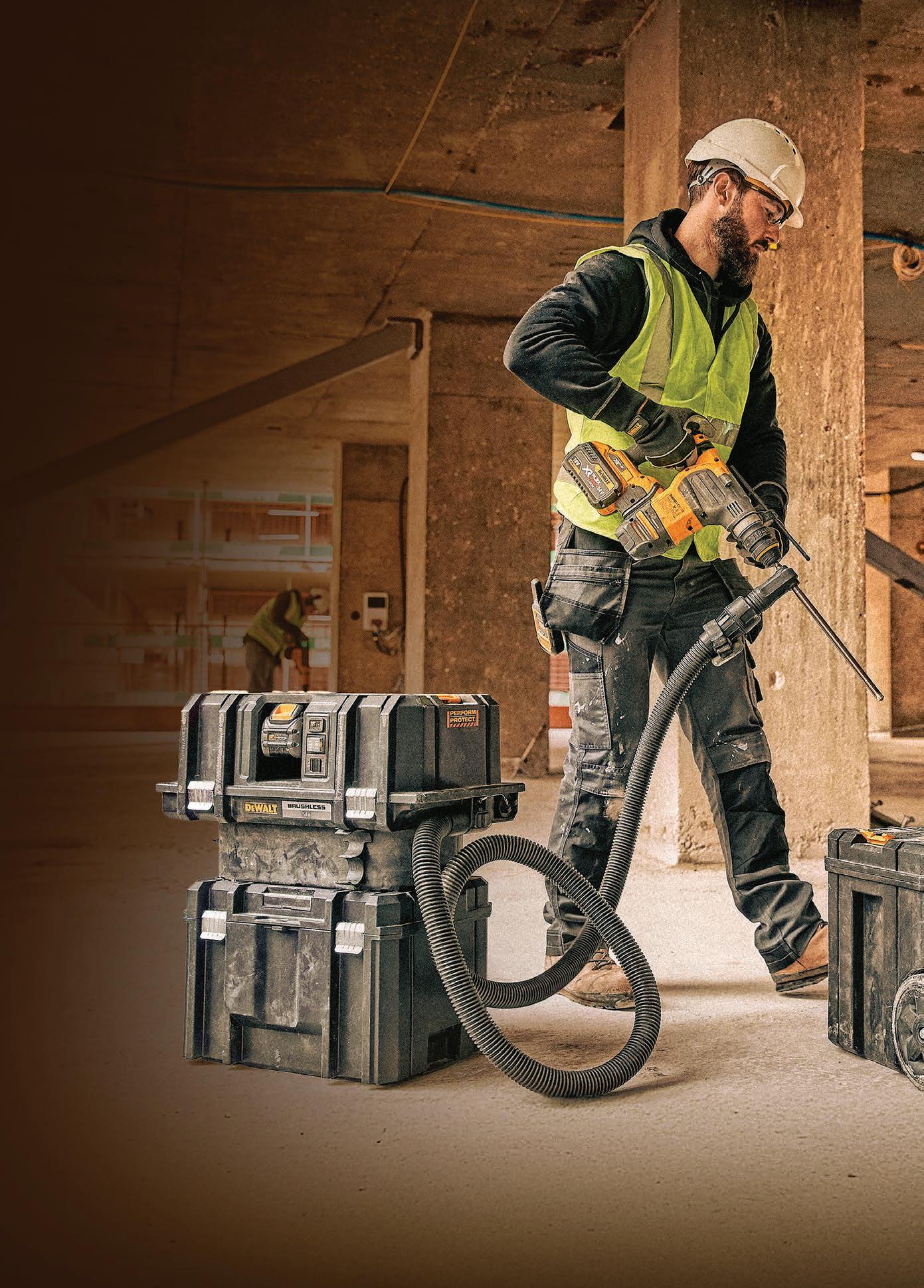
That’s where options ma er — and where Kennards Hire is showing tradies there’s another way to use their skills.
A FAMILIAR START
Queensland Operations
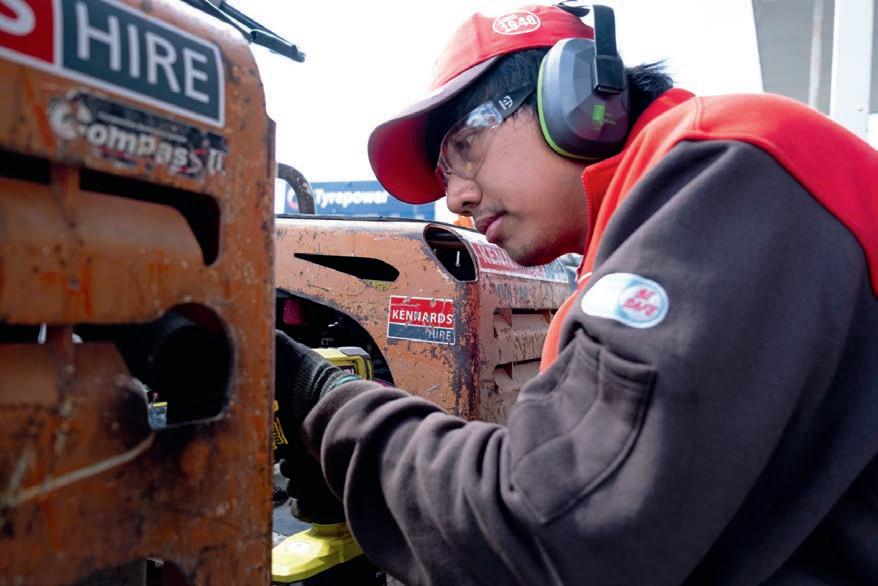
Site Manager Lee
Zanche a and Ravenhall (VIC) Branch Manager
Frank Barbaro both spent more than a decade working in the trades before making the move to Kennards Hire.
Different trades, similar stories — and both say the transition wasn’t about leaving the industry
behind, but staying connected to it in a new way.
Lee — a former roofer — fell into his trade straight out of school.
“My older brother was already on the roof and mentioned there was an apprenticeship going,” he said.
“I figured there wasn’t much else to do, so I went for it.”
Similar to Lee, Frank’s journey into carpentry stemmed from his family.
“My old man just wanted me to get a trade and do something with my hands,” he said. “He wanted me to be a plumber, but I wasn’t keen, so we bargained and I went with carpentry instead.”
Both spent more than 10 years working predominantly in
residential construction.
For Lee, a back injury forced the question earlier than expected.
Surgery and medical advice made it clear that roofing wasn’t sustainable for him long term.
“I’d been in the trade
since leaving school and had no idea what else to do,” he said.
Frank also looked at where his career was going and decided a change of scene was be er sooner than later.
“You start thinking, ‘am I really going to be doing this in my 40s or 50s?’” Frank said.
“I just didn’t see a longterm future on the tools.”
A NATURAL LINK
Both had used Kennards Hire regularly as tradies — generators, pressure washers and specialist equipment — which made the move feel less daunting.
“When I saw the job come up, I thought, ‘I know the tools, I know how tradies think,’” Frank said.
“It felt like somewhere I could actually use what I already knew.”
For both Lee and Frank, the biggest surprise was the career progression on offer.
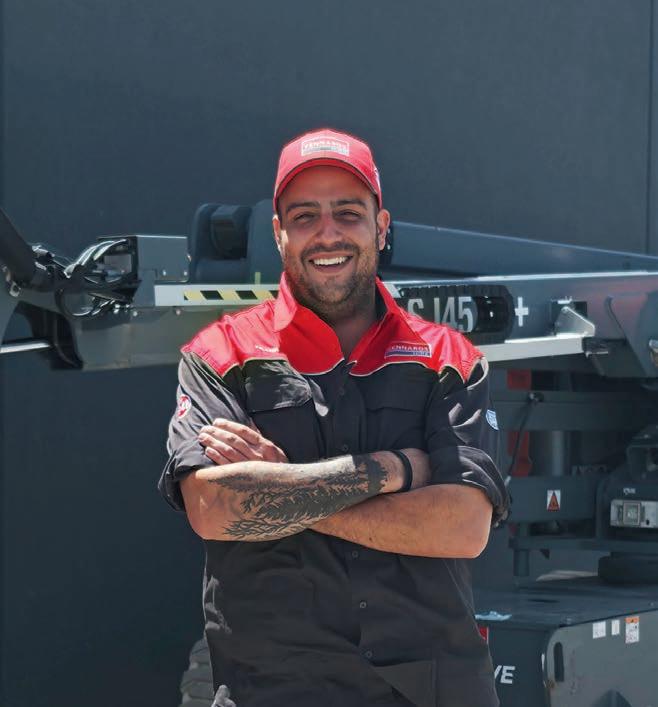
Frank joined Kennards Hire four years ago and has already progressed into a branch manager role.
It took a few weeks, but once he had acclimatised to his new digs, he was loving Kennard Hire.
“Once I got into it, I realised my trade background was a great

base to keep growing my skills,” Frank said.
“I moved into hire control, and pre y much every year there’s been progression.
“Now as a branch manager, I can honestly say I see myself retiring with Kennards Hire.
The security and growth are huge.”
That variety is something Lee agrees with.
“One minute you’re talking to a project manager on a major site, the next you’re helping a homeowner hire a piece of gear,” he said.
“It keeps you on your toes.”
“It’s been a bit of a whirlwind … but the opportunities are there if you want them.”
Trade experience quickly becomes a strength.
“You can relate to what customers are dealing
Frank Barbaro was a chippy for about a decade before he decided to get on board with Kennards Hire
with because you’ve been there,” Lee said.
“You understand the pressure on site and what actually ma ers.”
A REAL PATHWAY
These two blokes aren’t the only ones, with plenty of former tradies working at Kennards Hire branches nationwide.
For anyone on the tools wondering what else is out there, the advice is simple.
“Have a crack,” Frank said. “You’ve already got the skills. You might be surprised.”
At Kennards Hire, those skills don’t disappear — they evolve.
At Kennards Hire, you can.

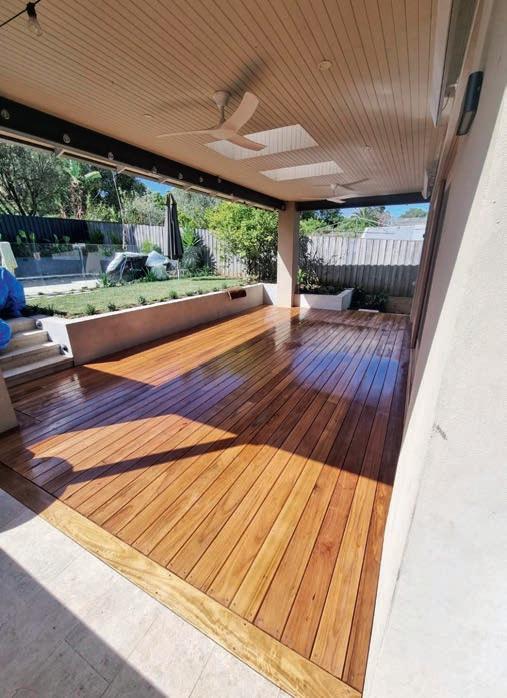
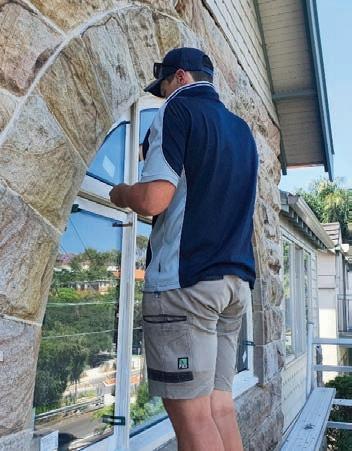
Ben runs a tight ship, and that’s how he likes it
AFTER NEARLY two decades on the tools, Ben Haynes is still doing what he’s always done best — turning up, ge ing stuck in and quietly building a solid reputation as a carpenter in NSW.
Ben left school straight after Year 10 and went straight into an apprenticeship.
“Nearly 20 years now. I left school straight out of Year 10 and went straight into an apprenticeship,” he said.
“After that, I was pre y much running my own show.”
Being a chippy felt like a natural fi t from the start.
Growing up, he spent plenty of time in the
shed making things with whatever was lying around.
“I was always interested in making things… The only tool he had was a jigsaw, so everything was made with a jigsaw,” Ben said.
Like a lot of long-term tradies, Ben admits he’s thought about other paths over the years, but carpentry keeps pulling him back.
“Yeah, pre y much,” he admi ed.
“I’ve thought about other things, but I always come back to it. It’s something I’m reasonably good at. I don’t know everything, but I know a fair bit.”
Ben started his own business in 2014 after realising weekend work was piling up while working for builders.
“I thought, ‘I can’t keep doing this,’ so I took the leap,” he said,
“I’ve pre y much been busy ever since.”
While running a business brings its own pressures, he reckons it’s worth it.
“There’s always stress with running your own business, but it’s usually worth it in the end,” he said.
Originally from Crookwell — a country town between Sydney and Canberra — Ben cut his teeth on everything from shearing sheds to

residential work. These days, he’s Sydney-based and has been for nearly a decade.
“So I’ve done everything from shearing sheds to working on inner-city terraces now,” Ben said.
Despite the long career, Ben’s business has stayed intentionally small.
“It hasn’t really grown that much, to be honest,” he said.
“I’ve almost always been a one-man band.”
COVID proved to be a turning point, helping him lock in steady Sydney work.
“COVID was almost the best thing that happened for me,” Ben added.
“I got stuck in Sydney, picked up some really
good jobs, and from there everything’s just been word of mouth. I don’t advertise at all.”
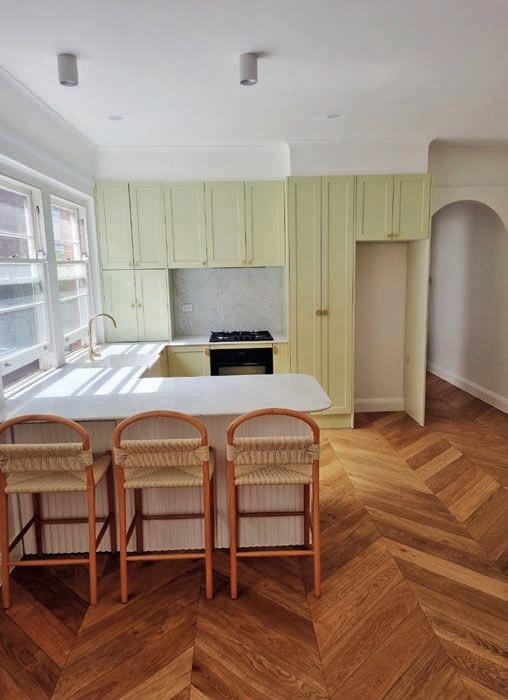
Today, Ben focuses mainly on renovations, kitchens and bathrooms, using subcontractors where needed.
“Just me. One-man show.”
And while the workload rarely slows, he’s learned to embrace it. “You sort of wish for quiet times, but when they come, you don’t know what to do with yourself,” Ben said.
“So I don’t mind being busy.”
For Ben, it’s simple — steady work, good clients and a trade he knows inside out.








Jason building his career brick-by-brick
BRICKLAYER Jason Seiler believes promoting skills excellence is crucial to a sustainable Australian economy, which is why the WorldSkills competition means so much to him.
“Achieving a Gold Medal in Bricklaying at Regionals has helped me take my trade more seriously. I’ve found my next chapter in this industry,” he said.
Jason described his WorldSkills experience as a “unique opportunity to take part in more complex and intricate projects,” which he doesn’t often encounter on a day-to-day basis.
With that comes stress.
“Learning to manage the pressure of competing has
been my biggest challenge so far,” he said.
“Thankfully I’ve had experience managing small projects, not to mention a li le friendly rivalry during my apprenticeship, that’s helped me build up stress tolerance.”
The competition has taught Jason many things, from the value of investing
in himself, to exposing him to the endless amount of things he can learn within the industry.
“No ma er how old you are or where you’re from, everybody has a different way of doing things. There’s always something you can improve,” he said.
Jason’s Skillaroos Training Squad selection left him speechless, and he acknowledges those who’ve contributed to his success.
“My bosses, Alex Cipriani
and Chris Waide took me on mid-way through my apprenticeship and their teachings have set me up not only for WorldSkills, but my career itself. Wayne and Jimmy from Trade Academy WA, who’ve spent countless hours training me. Wayne, in particular, is so enthusiastic and motivational. He’s been there every step of the way,” he explains.
He also credits his mother for her unwavering support.
“My mother, who is my biggest supporter in not only bricklaying but in life,” Jason said. “She was the one who encouraged me to start my apprenticeship in the first place. I can’t thank her enough for everything she’s done.”
And behind all he does in life, not just competing, is also the memory of his li le brother who passed away some years ago.
“He’s my someone to look up to,” he explains.
Jason envisions a future running his own business with a small team, “I’d love to be able to infl uence younger lads to jump into bricklaying to make sure this once-popular trade thrives.”


With 34 degrees of rake in the neck, a bobtail fender, and a 240mm rear tire, the 2026 Breakout feels like a factory-built street sweeper. But don’t get lost in the long-and-low chopper lore. This bike also offers USB-C charging, Rider Safety Enhancements standard, a monster Milwaukee-Eight® 117 Custom, ride modes, two new paint options, and much more.

Tradies love a good scroll sesh as much as everyone, but now you can put that phone to good use thanks to Fluke
BRAND:
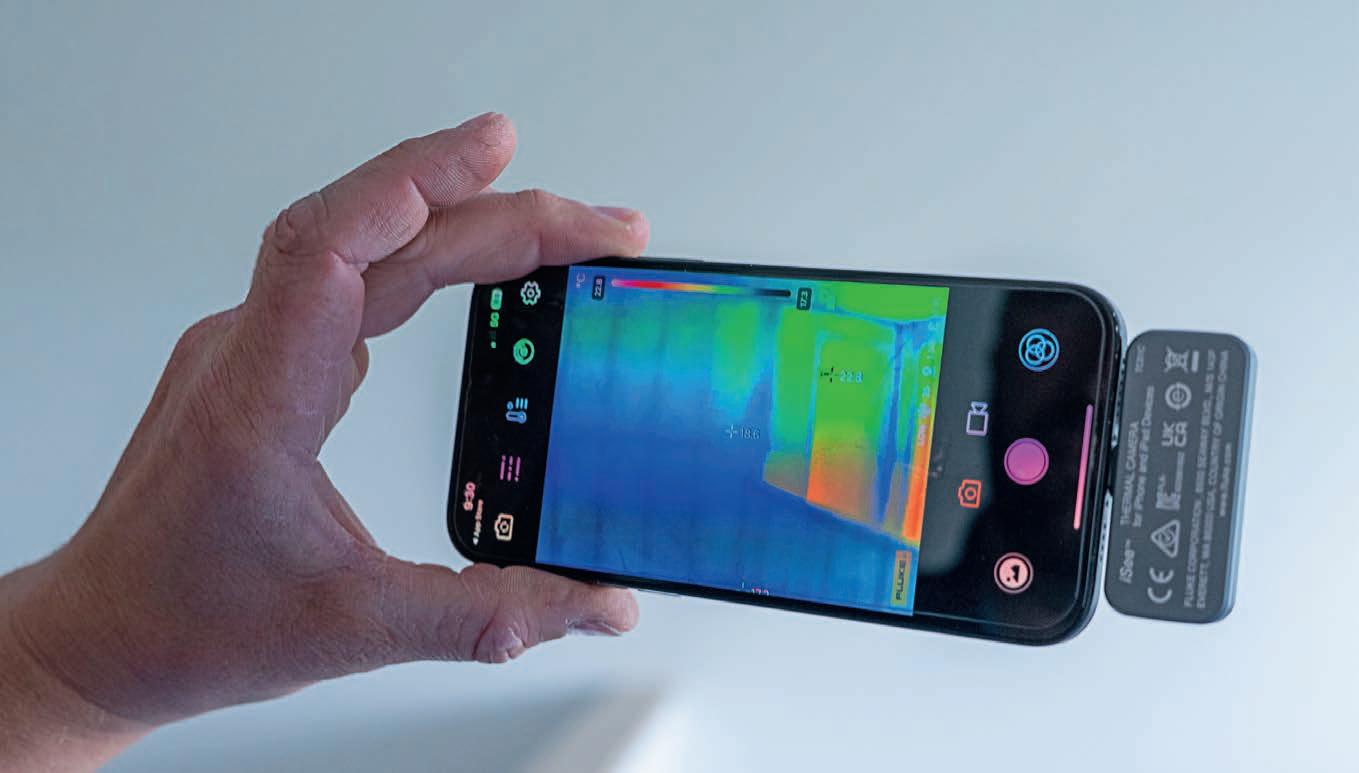
FOR TRADIES who need to utilise thermal imaging — without needing all the expensive, clunky equipment — Fluke has delivered with its Fluke’s iSee Mobile Thermal Camera range.
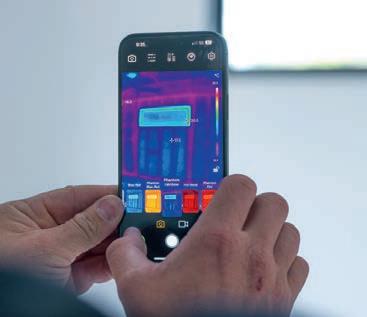
These compact cameras plug into your smartphone, delivering trade-ready thermal imaging that any tradie can use to get the job done.
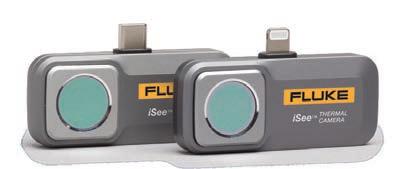
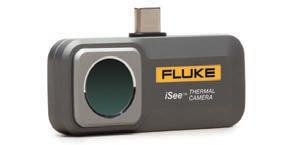
This includes tradie Jared Leiner, who helped us put the latest iSee TC01C camera – designed for USB-C ports used by newer iPhones.
The TC01A iSee camera is also designed for USB-C Android smartphones, with the TC01B designed for preiPhone 15 users with lightning connector.
TEST #1: SEEING IS BELIEVING
The image quality from iSee Mobile Thermal Cameras is more than equal to larger imaging cameras.
With a temperature range of up to 550°C, Jared could get reliable readings for all the tasks he’d use the camera for.
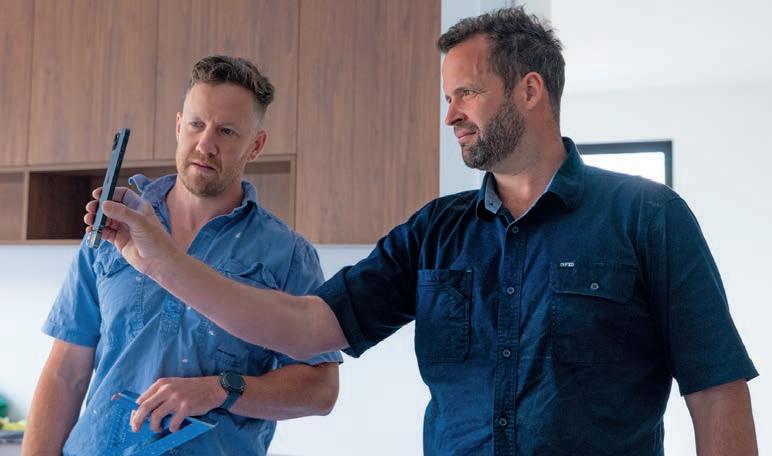
“I’d use this to detect water leaks, leaks in box gu ers or missing insulation ba s* which is a big thing – a lot of people move that around when they crawl through the roof,” he said.
“We’d also use it for underfloor heating, leaks in bathrooms — you will find them all with this.”
A crisp 256×192-pixel resolution as well as 25Hz frame rate also meant Jared could see everything clearly while he scanned his surroundings.
Featuring 10 different colour pale es, tradies can select how they view temperature data depending on their preference
Fluke has injected professionalgrade thermal imaging into the nifty iSee camera

“It’s very easy to see if there’s any faults, everything it shows you is very detailed,” he said.
“For us, it’s a proactive approach in trying to find an issue before it becomes a much bigger problem, ideally before the homeowner even gets their keys.
“With leaks in box gu ers, for example, you often can’t find these problems until it’s (water) coming through your ceiling.
“With this camera, it’ll show you exactly where it’s coming from so you’re not cu ing holes in the wrong places.”
Weighing in at just 22g, it’s easy for tradies to carry around an iSee camera and whip it out when needed.
Plug it in, and you’re ready to go.
“It’s literally plug ‘n’ play – not much more to it than that,” Jared said.
“Everything’s easily done with the press of a bu on, I can’t complain.”
The hardware isn’t the only thing that’s convenient about this camera, with Fluke’s iSee app allowing tradies to set up to fi ve different spots, lines or areas for the camera to monitor simultaneously.
You can also set real-time alarms for when a temperature breach limit is exceeded.
Jared could also share any images quickly via the app for quick checks by either his tradie team or customers.
Jared was loving just how feature-driven this camera was, despite its small size.
It was able to do everything he needed it to do and then some, without having to lug big (and expensive) tech around his worksite.
“One thing that stood out to me was how well the camera picks up underfloor heating,” Jared said.
“It shows you every coil, I reckon the iSee is fantastic.”
Check out fl uke.com/en-au to learn more
It’s literally plug ‘n’ play – not much more to it than that
It shows you every coil, I reckon the iSee is fantastic.

For tradies working with wires, accurate readings, detecting faults and efficient voltage testing are nonnegotiables.
Bosch’s latest range of electrical measurement tools has something for just about every occasion
BRAND:

THERE’S NO SHORTAGE of varied work sparkies and other electrical trades can be asked to test on a site.
There’s so much that can go wrong with a switchboard or outlet, and detection is key.
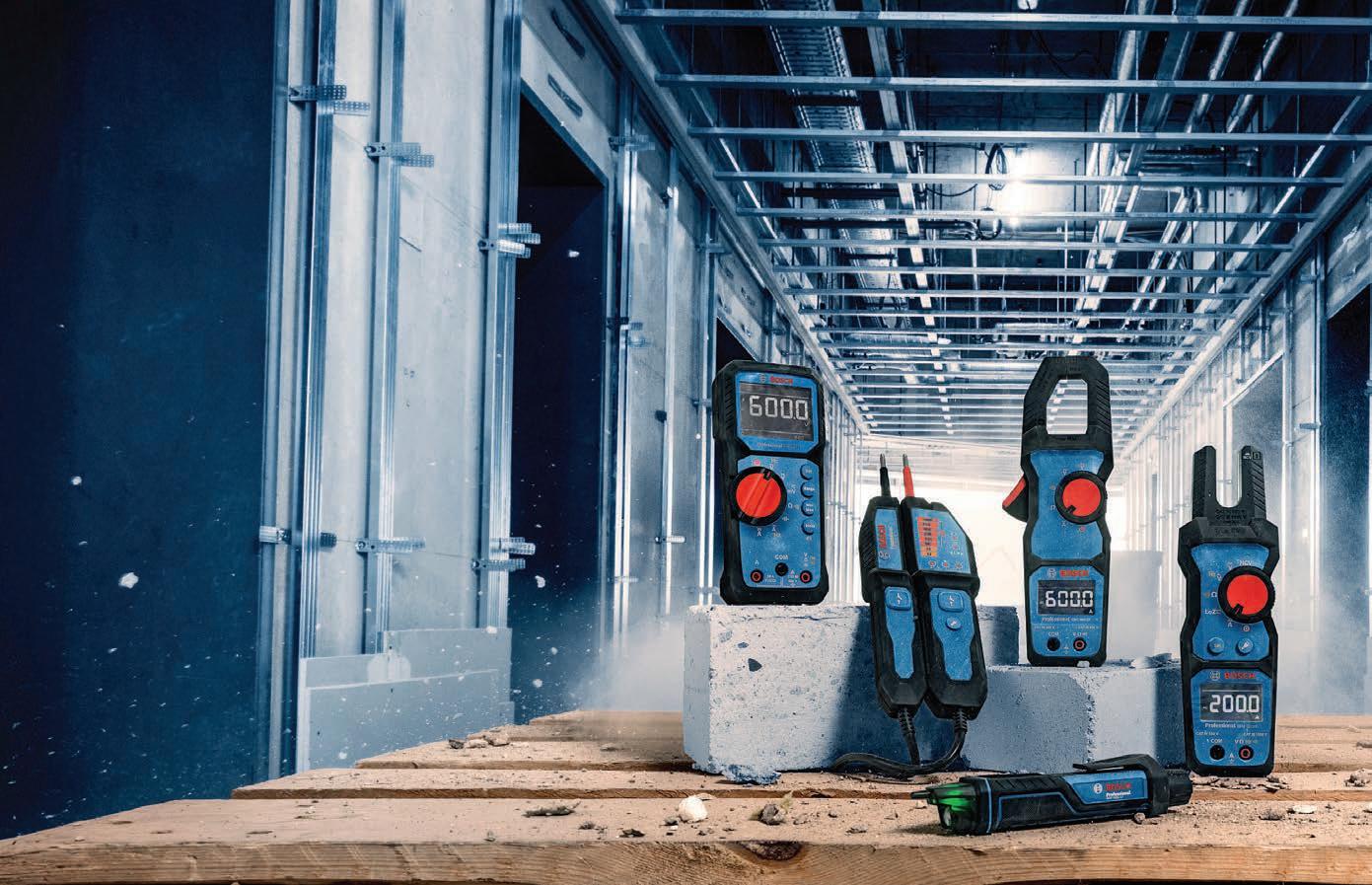
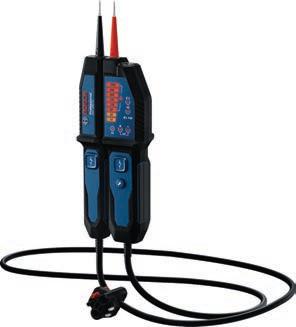
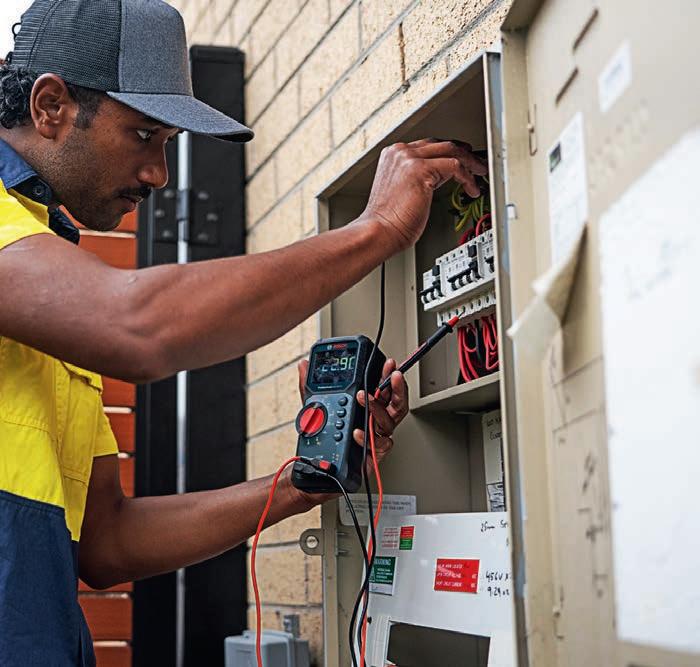
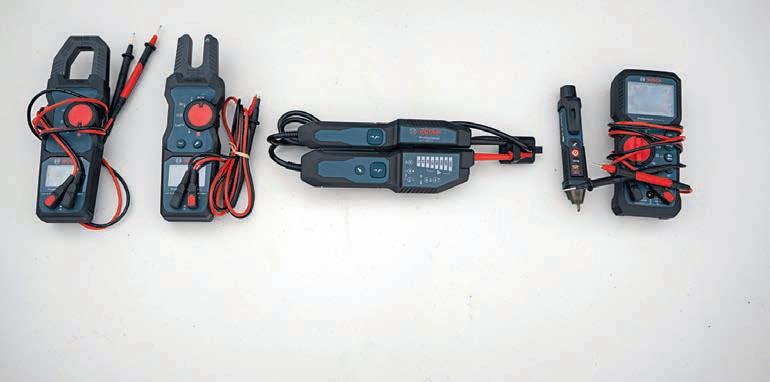
Depending on what reading you’re after, Bosch has delivered with fi ve of its latest testing tools: the GDM 600-15 Digital Multimeter, GMC 600-15 Dual Power Clamp Meter, GVT 1000-15 Voltage Tester, GFM 1000-15 Fork Meter and GVD 1000-17 Non-Contact Voltage Tester.
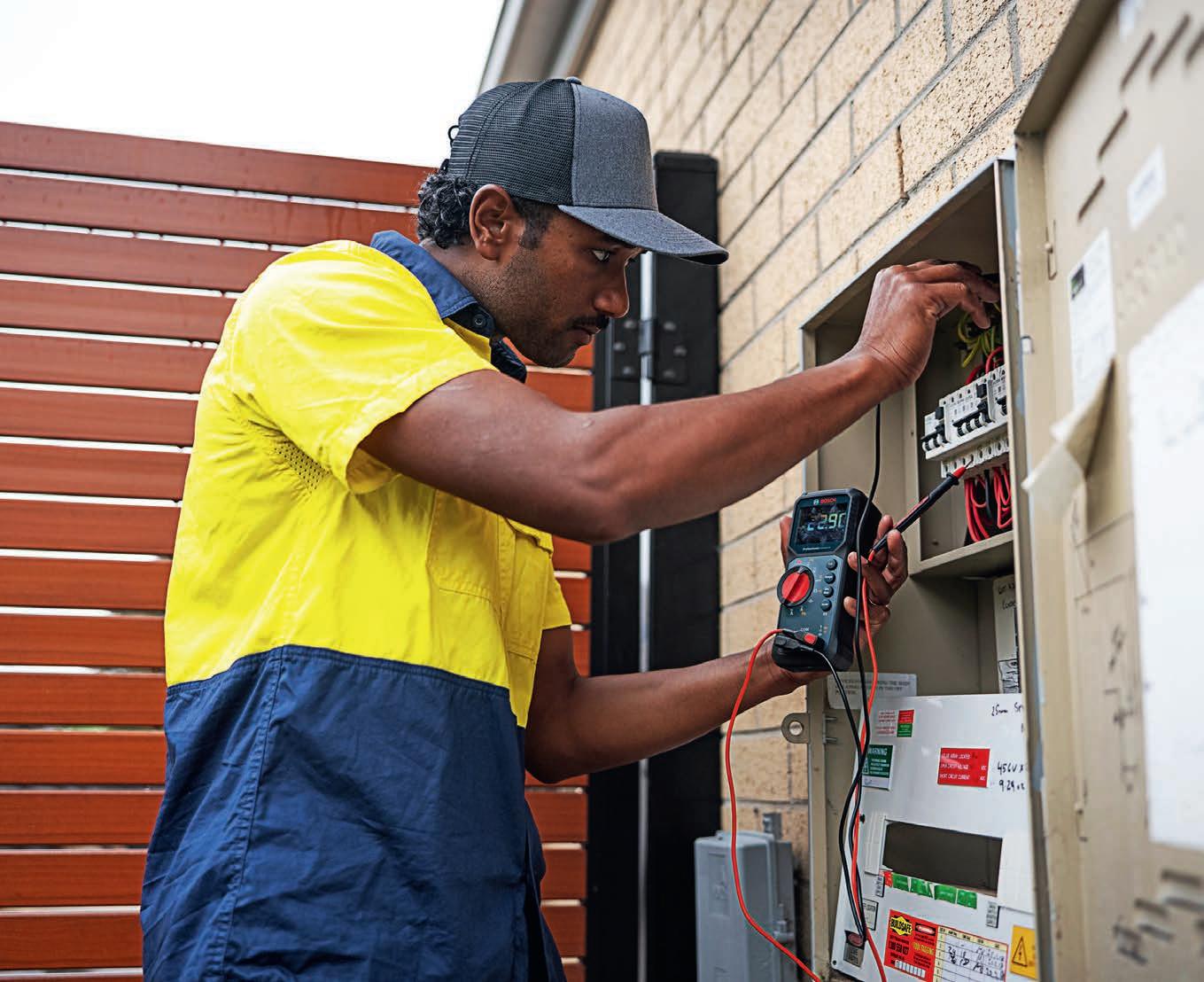
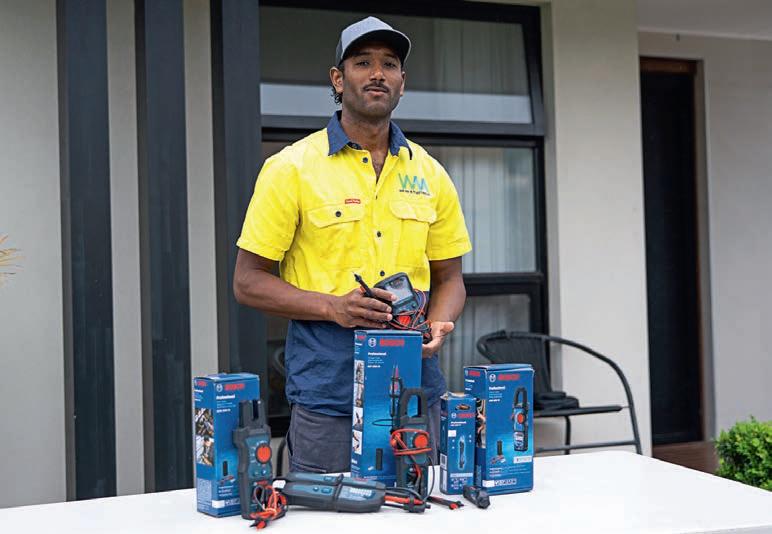
Electrical subcontractor/solar installer Ferdinand Joseph needs just about every tool on this roster, so we enlisted his help across a few sites across Melbourne.
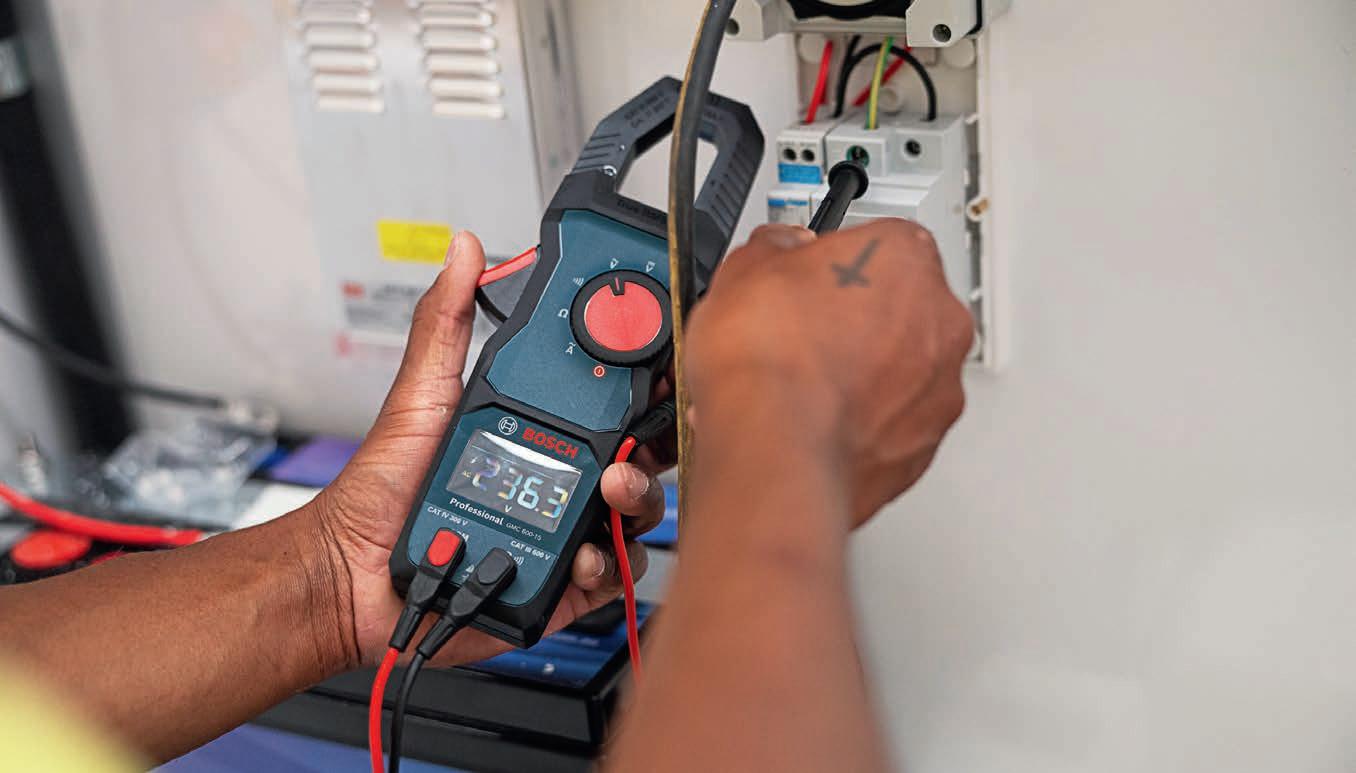
Whether it was the Digital Multimeter, Clamp Meter or Fork Meter, Ferdinand was a fan of the different features all three had.
Each tool can conduct fundamental tests including AC or DC voltage, continuity and amperage.
“The Clamp Meter came in great (handy),” Ferdinand said.
“As a sparky, you can notice some meter models the clamps are too thick. When you’re in a switchboard trying to get an amperage reading – if you’re thinking about ICBO testing to get a meter between the active conductor, it’s hard to do in a tight space.”
“Having these clamps be a lot more slimmer than most
An IP65 rating means the
models makes for working in tight spaces really easy.”
Ferdinand loved the Fork Meter’s non-contact voltage tester, which made it even easier to manoeuvre through tight spaces.
“It’s also got a fl ashlight and low-impedance input testing,” he said.
“That’ll come in real handy for sparkies.”
That ease-of-use trickles into the Digital Multimeter, which features a clear screen, dual ba ery system and simple interface which made Ferdinand’s job a breeze.
“The leads are really long. If you have the neutral bar at the bo om and you’re testing the top of an RCBO you’ve got that range,” he said.
“It’s an all-round great product.”
Both Voltage Testers have their own specialties which Ferdinand appreciated.
The larger GVT 1000-15 can test up to 1000V AD/DC and features LED feedback, a buzzer for audio alerts and vibration feedback. Think OPERATION! But replace the boardgame with a switchboard.
“Being a voltage tester that’s portable is particularly handy,” Ferdinand said.
“There’d be scenarios where you might not have the leads to go to and from outlets.
“When you’re using a metre like this, you need two hands to work each fork.
“These forks work independently off each other; you could be testing the active conductor and neutral bar completely independently.
“This would have major applications for sure in a spot where you don’t have a spare hand.”
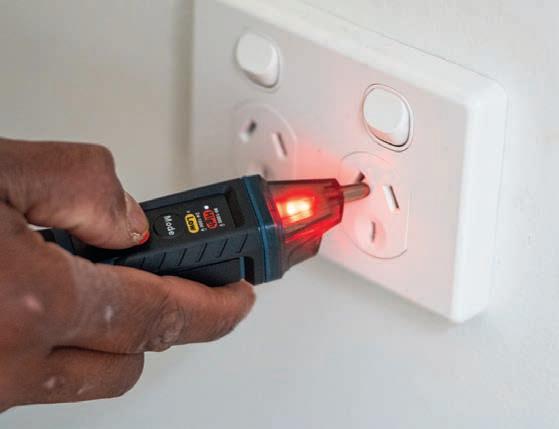
The GVD 1000-17 Non-Contact Voltage Tester is a great li le tool to carry around and test dual voltage ranges between 24V-1000V AC (with high 24V sensitivity) or 90V-1000V AC.
This simple-point and test tool has plenty going for it, including an automative self-test.
It’s worth mentioning all fi ve of these tools are designed tough for the Aussie worksite.
Whether you’re in need of portability, or heavy-duty testing, Bosch has something in this range for you.
“The Digital Multimeter and Clamp Meter in particular came in clutch when I was using them,” Ferdinand said.
“They’re all easy-to-use, lightweight and comfortable to hold, the leads are high-quality … it’s just been all-round great using them.”
CHECK IT OUT
Find out more by searching the
They’re all easy-to-use, lightweight and comfortable to hold
It’s just been all-round great using them
It is hard thing to admit as an Aussie but anyone who has travelled across the ditch will understand.
New Zealand really is a place of intense scenic beauty. Almost every conceivable natural a raction is spread from the far north to the deep south.
Every Kiwi who ever fled for opportunity or to travel the world will speak wistfully about the amazing natural beauty of their homeland.
The fishing! Literally a bonus on just travelling around the joint. It’s clean, it’s safe, the food and wine are amazing, the people almost exclusively friendly.

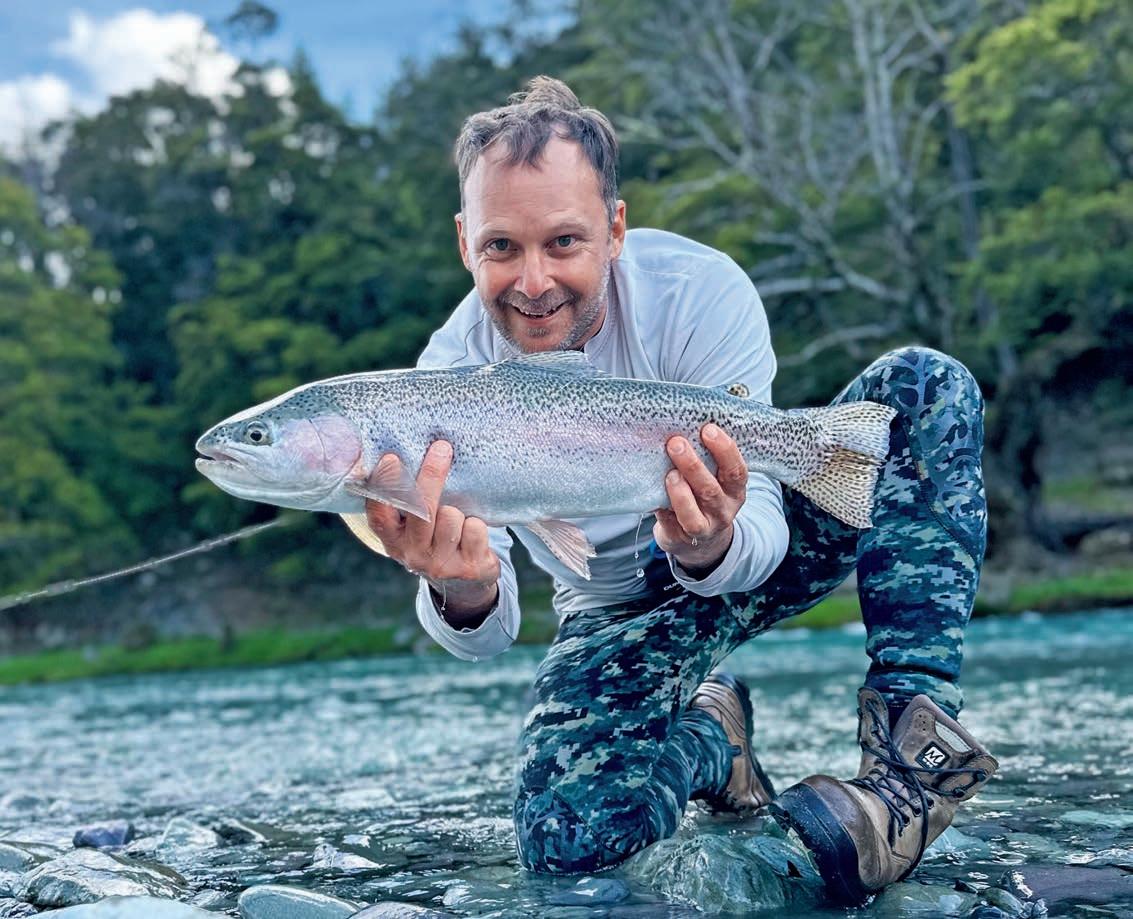
Plus large brown and rainbow trout and sea run salmon infest most of the streams creeks and rivers throughout. A huge variation in size, shape and coloration exists
Mountains dominate the South Island, influencing weather, water and access
between stocks of fish in the South Island. This diversity caused my a mixture of terrain, river flow and of course local food sources. Stocks and populations also adapt to their habitats being landlocked, flowing, impoundments or natural lakes.
The greatest challenge for die hard fishers is a ‘family holiday’ while passing up fishing spots around every corner.
The saltwater fishing is also exceptional; but for this feature, let’s focus on the endless clear freshwater systems. A 30-minute drive from any location on the island will discover more places to fish, more beats (river runs) to traverse and more trout to entice.
Rather than provide a rundown of the fishing across different regions (best done using local sources of info) this piece is only to set the scene.
First of all we are not talking specifically about fly fishing.
All forms of we ing a line are fair game over in NZ. However site specific rules and regulations apply across the broad range of fisheries activity. It is best to do a li le research and get your fishing licenses before heading over.
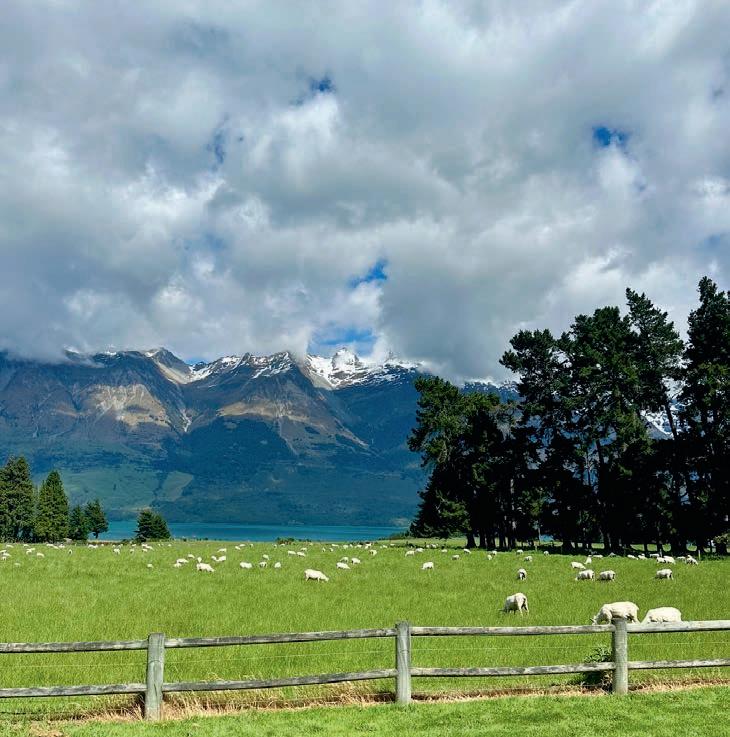
Cruising around this island is perhaps the most pleasurable driving experiences imaginable.
Lord of the Rings just echoes from every mountain range, every majestic lake and fortress looking rock theatre.
Mountain glaciers turn into mountain streams then creeks and finally down into the rivers, lakes and even canals criss-crossing the island.
Mountainous regions are never too far away in the South Island.
There are always looming, towering peaks somewhere
Distances are large, but certainly don’t seem onerous to most of us Aussi’s who are used to the vastness. Unlike the monotony of the Australian outback, you cannot drive 10 kilometres without seeing a picturesque natural landscape. The sight of green rolling hills with towering
peaks in the background, sheep tenderly grazing in the paddock. Ominous clouds streaking overhead and the endless hope for sunshine and perfect weather.
South Island is divided into districts which make road tripping and guides more useful to follow.
Nelson - Tasman in the far north, Marlborough in the far nor east, the spectacular mountain-riddled west coast, Canterbury which includes the main city of Christchurch), alpine Mackenzie and Central Otago plus the rugged and remote Southland (Fiordland). Different in so many ways, each region has some pre y special fishing in the endless freshwater systems.
The constant charge of springs and snow melt help keep most the rivers flowing year-round.
Lakes throughout the middle off the island intertwine with inflows and outlets.
The extremely rugged west coast has much shorter, more intense rivers and inlets. It is a sparse population spread out over the most amazing scenery.
Li le goat tracks might take you to the shores of a serene lake or to some whitebait fisherman’s camp where sea run trout gobble up the tiny whitebait running up the estuary.
Down in Fiordland, the land and water are so desiccated it becomes hard to differentiate between the two.
Even the land gets around 7m of rain a year falling for an average 200 days.
Sight fishing remains one of the purest challenges for visiting anglers
When you go for a walk in New Zealand, it’s called tramping. And tramp you can, with the island set up brilliantly for nature lovers and those seeking remote walking trails. Sometimes Kiwis even put up nice li le huts for a weary traveller to rest in their new found paradise. It’s not suggested to tramp too far in the winter and shoulder months as conditions can change quickly and with ferocity. Walks and overnighters in the wild can be restricted from October through to March.
Those towering mountain ranges are where the snow gathers during winter and melts again each Spring and Summer.
So choose your path wisely and always have a plan to be caught out in inclement weather.
Keeping warm and keeping dry are challenges that must either be embraced or overcome in this neck of the woods.
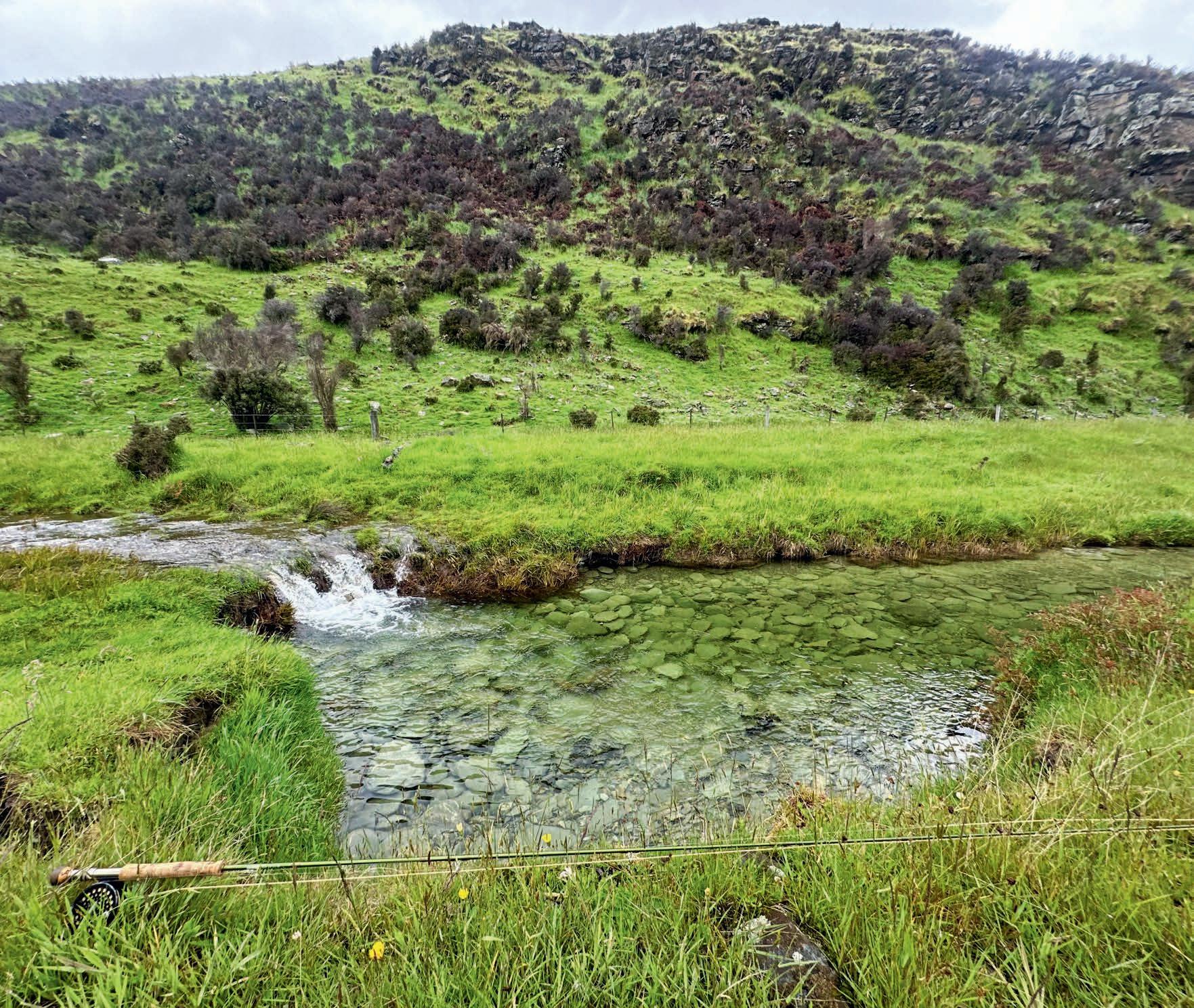
The rivers tend to be crystal clear, making the low numbers of big fish very wary!
When many of the systems come down from the snowcapped peaks, you will find a huge discrepancy in the clarity of water.
Many of the larger stony stems might flow quite cloudy for much of the snow melt period.
Especially if glacial activity adds an extra element

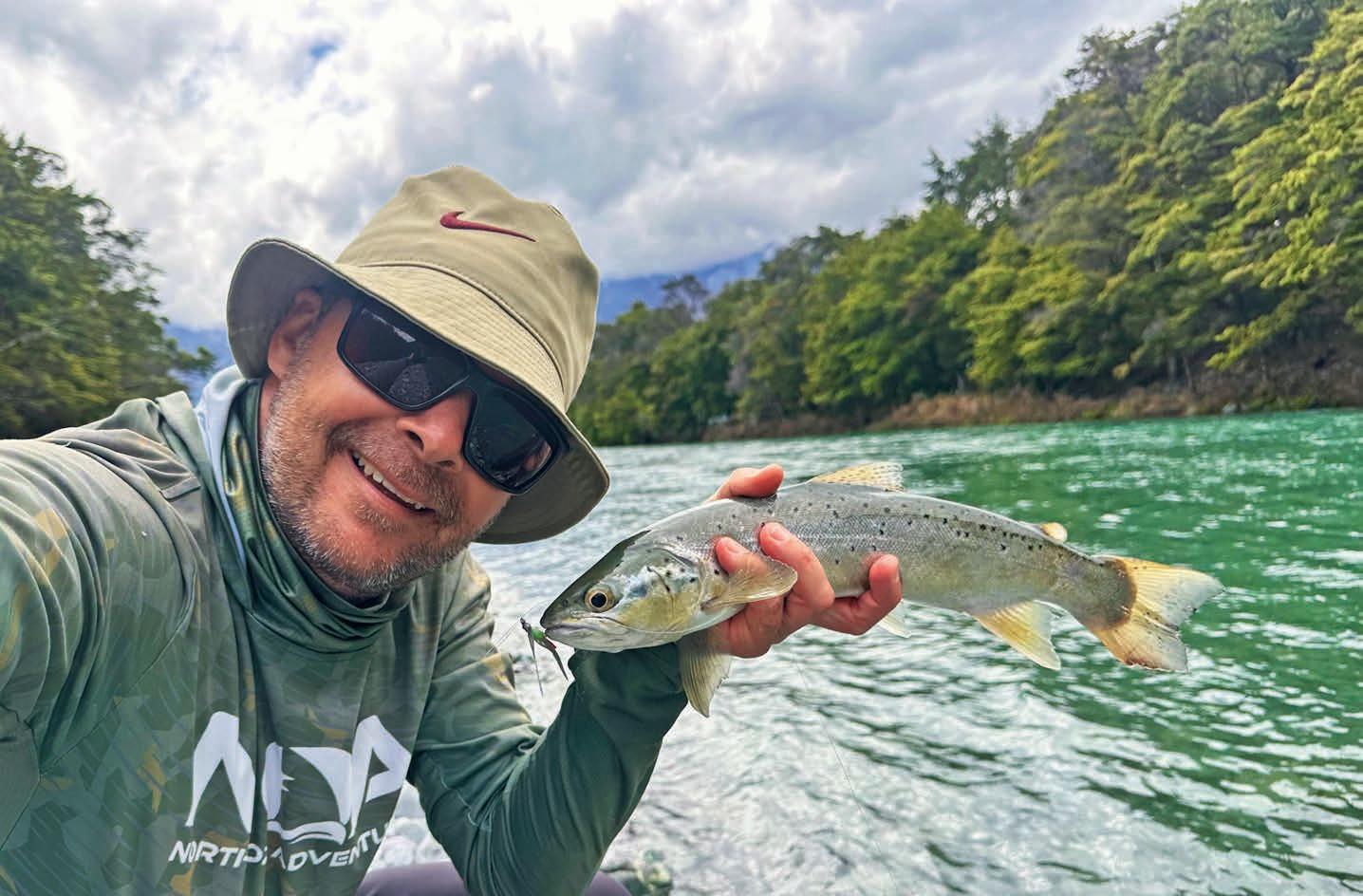

of silt and cloudiness to t he water column. Because there are so many systems to choose from within a couple of hours drive, your South Island fishing plans should not be so rigid to prevent reactive change.
Try and fish non-flooding, clear flowing systems wherever possible for the sight fishing ability and sheer enjoyment of the pursuit.
October 1st right through till April 30th is the official season and travelling anglers normally find their own preference for early season where fishing can be less pressured compared to later season when conditions and insect hatches can really turn the fish to active mode.
Many fly fishermen dream of a wily brown trout sipping mayflies off the surface on a clear mid-afternoon slow stretch of river.
Their guard down and launching at the hapless emerging winged morsels floating past their favourite riffle.
A very sleepy fish can activate with feeding savagery when the right conditions are struck and the change can be blisteringly quick.
Anglers might also dream of a cicada or mouse plague which can cause fish to throw caution to the wind in an a empt to stack weight on quickly.
Many boom and bust cycles play out for freshwater trout, based mainly around aquatic larvae and insect hatches.
To cover more water, fly fishers often prospect with a dry fly on the surface acting as both an indicator and lure, with a small, weighted nymph suspended below.
Being primarily sight-feeding species, there is usually the need for very light leaders and tippet.
It is common to fish between 4-6 pound tippet, which doesn’t leave much margin for error.
Fly fishers will normally use a 5 or 6 weight rod and a floating or sometimes sink tip line. Depending on
Seasonal conditions can quickly change how — and where — fish feed
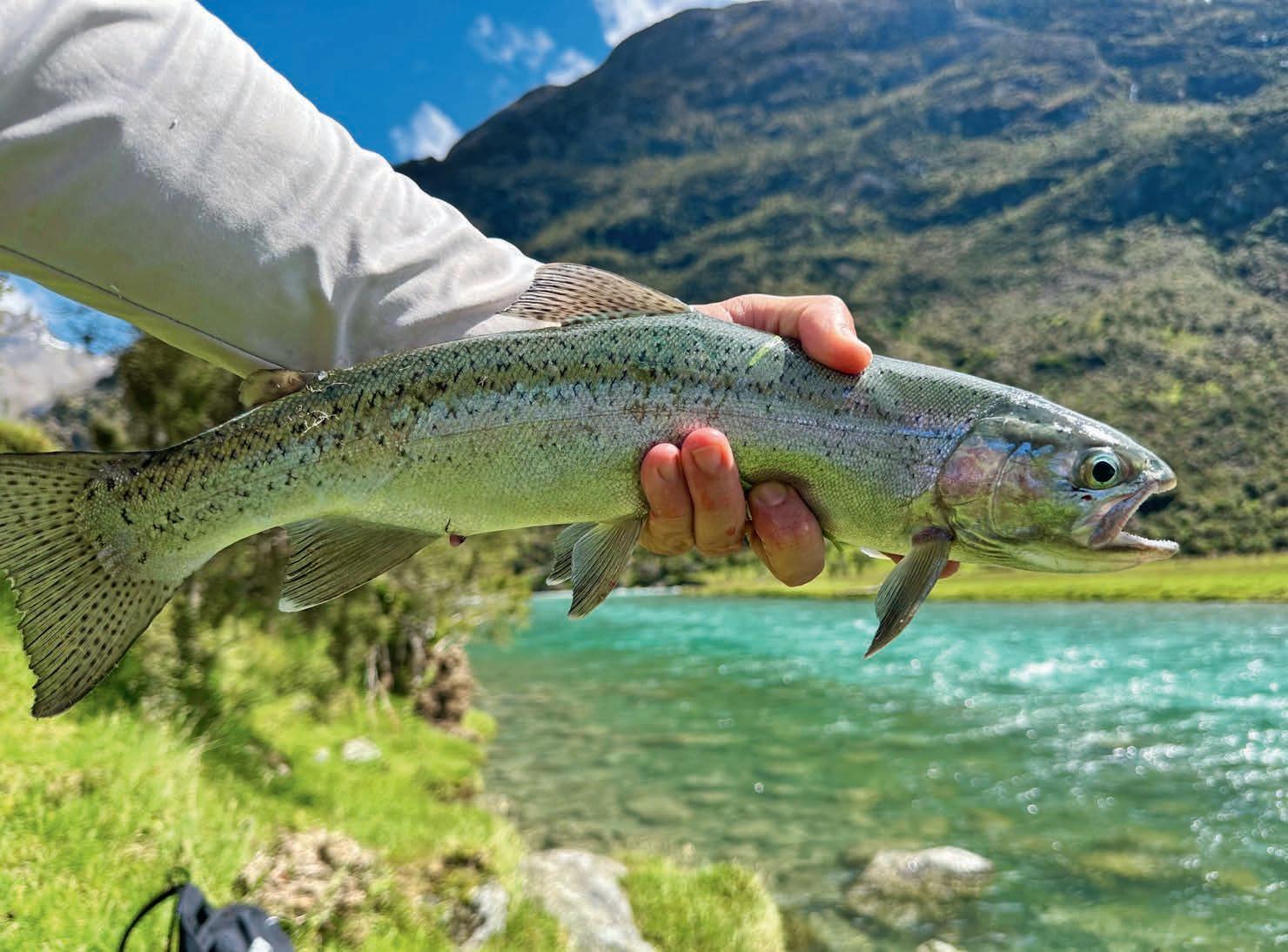
Where fresh meets salt, opportunity follows migrating fish
conditions and clarity of water, it is sometimes necessary to fish long leaders to prevent ‘lining’ or spooking the fish with the fly line.
Casting practice is mighty helpful because the rush of the moment can easily bring things undone with your casting technique.
For spin fishers, there is an enormous variety of fishing on offer from long casts to sea run salmon in cobblestone rivers to dragging cicada imitations slowly across the willow lined stream.
There are a handful of fly-only backcountry streams to avoid but literally hundreds of other options to choose from.
The South Island is very well known for monster fish and covering extensive water in fast flowing reaches is where spin fishing shines.
Overcast skies, rain, drizzle and wind are all common factors, giving anglers willing to adapt the chance to keep fishing spin in tougher conditions.
Casting lightly weighted paddle tails upstream and across then dragging them diagonally back is a great way to cover unseen fish.
Size should match the expected baitfish in the system but don’t underestimate the aggressive nature of these fish.
Trout will eat plenty of smaller trout throughout their life and also munch on larger offerings then most fly fisherman will give them credit for.
Small profile hard bodied minnows and surface offerings are also worth casting.
A tiny walk the dog lure with razor sharp trebles is a great way to cover water on a moonlight night.
Lake fishing might be undertaken for two lifetimes with endless waters still uncovered. Plenty of li le shacks, camping and caravan spots will line the shores of South Island lakes.
The inflow and outflows of these lakes are where plenty of effort is centred around, epically for fly fishers.
But for those trolling the lake edges or deeper stretches, a boat proves its worth.
Kiwis love li le jet boats and you will find adventure seekers accessing the many remote creeks and rivers feeding their way down into the larger lakes.
Places where trampers and all-wheel drive vehicles seldom get and the fish that li le wilder and less pressured.


On many of the west coast rivers during the late Spring months Sep - Nov, a delicacy swims up into the rivers on the larger incoming tides.
Whitebait are a translucent li le fish that swarms for protection, making them relatively easy to catch in fine mesh scoop and set nets.
Many trout actually live right down in the downstream sections of major systems, living a more standard estuarine life and feeding on these tasty morsels.
A li le white plastic or streamer fly will get you in on the action on these sea run fish.
Sea-run salmon are quite famous in the larger east coast systems with the fishing best through the warmer summer months.
A clearing river after rain is preferred and the river mouths and downstream sections are where these fish congregate.
Spawning numbers have been well down in recent years, leading to very strict regulations, down to one fish kept per season.
Slinging bigger streamer flies and spinning are the preferred methods for catching salmon.
Some of the biggest trout on record have been caught in the hydro canals and ponds surrounding the lake-strewn area of Twizel in Canterbury.
Big girthy fish are taken each year on nymphs being floated downstream and by spin fishers working the deeper runs and channels.
Spill over feed from the famous Kiwi salmon farms and predictable channel ways of funnelled food have lead to some incredible captures.
For the more pure at heart, spectacular dry fly fishing can be found in meandering streams just round the corner.
A fishing guide is recommended by almost all who travel to NZ. To cut down on the learning curve and understand both your quarry and the environment, this is money well spent.
However, you can just as easily do it yourself, all be it with a longer learning curve. A bloke names John Kent has produced a brilliant body of work, covering most of the lakes and rivers of both North and South Islands in a Trout Fishing Guide.
Get your hands on a copy, especially if fishing NZ’s freshwater systems is up your alley.
Some regions demand respect, preparation and a tolerance for the elements
TOOL UP!

THERE’S SOMETHING
about seeing an Aussie mixing it with the very best in the world that just hits diff erent.
Right now, that bloke is Oscar Piastri.
Calm as you like, absolute unit on the track, and already driving like someone who’s been in F1 for a decade, not fi ve minutes.
No muss, no fuss — just turns up, does the job, and goes bloody fast.
Which, funnily enough, is exactly the vibe DEWALT is leaning into with its latest
link-up with the McLaren Mastercard F1 Team.
BUILT TO HANDLE PRESSURE
The thinking behind this partnership was fairly simple for DEWALT.
“This exclusive collaboration is an exciting step in the partnership between DEWALT and the McLaren F1 Team,” DEWALT Marketing and Brand VP Mark Woor said.
“The world of F1 demands excellence in execution in a highly pressurised working
environment, as does the job of construction professionals and tradespeople who work on tough jobsites every day.”
This isn’t just a stickeron-the-side collab either.
DEWALT and McLaren are both built around performance under pressure.
In F1, milliseconds ma er. On-site, it’s not much different — you’re chasing daylight, deadlines and the last bit of patience before smoko.
Same deal, different uniform.
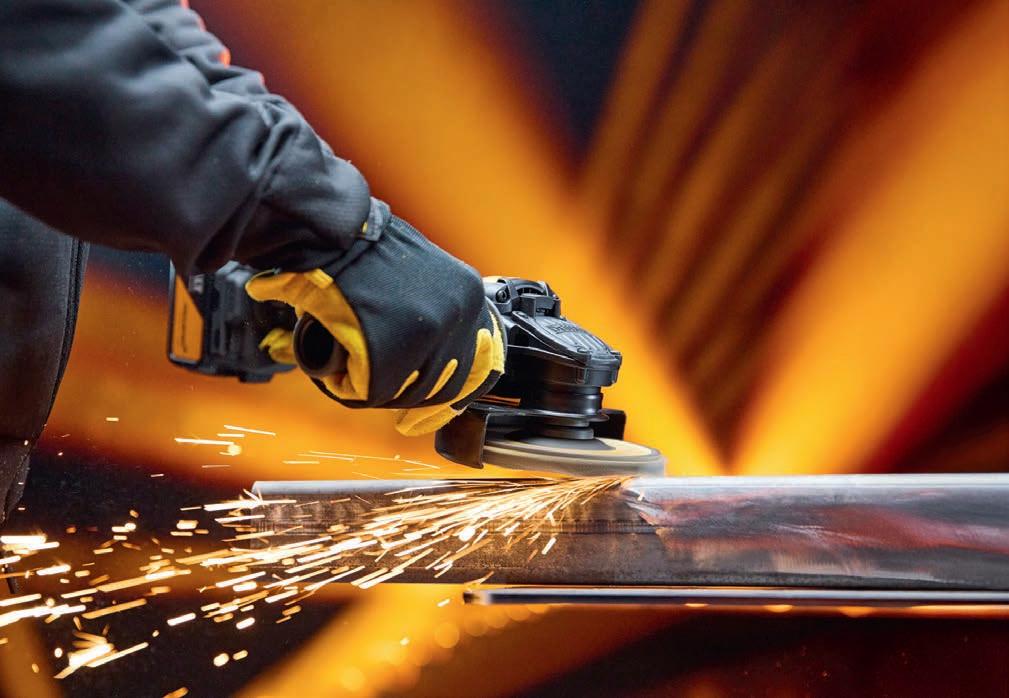
The DEWALT x McLaren F1 Team 18V XR Special Edition 125mm Angle Grinder is light on the scales but nonetheless impressive. At just 1.7kg with a 9,000rpm brushless motor, it’s quick, nimble and built for long days without wrecking your wrists.
The electronic clutch and kickback brake are a big tick for safety, while features like soft start, mesh dust covers and a solid rubber overmould make it feel like a tool designed by people who’ve actually used one.
Think Piastri threading a car through Turn 1 — smooth, controlled, and totally unfazed.
Meanwhile, the DEWALT x McLaren F1 Team 18V XR Special Edition High Torque Impact Wrench is all about serious muscle, delivering up to 1,396Nm of fastening torque and a brutal 1,898Nm of breakaway torque.
Translation? Stubborn bolts don’t stand a chance. It’s the kind of tool you grab when things have gone from ‘bit tight’ to ‘who tightened this with Thor’s hammer?’.
The four-mode selector with Precision Wrench gives you control when you need finesse, but still lets you send it when the job calls for brute force.
THAT’S NOT ALL
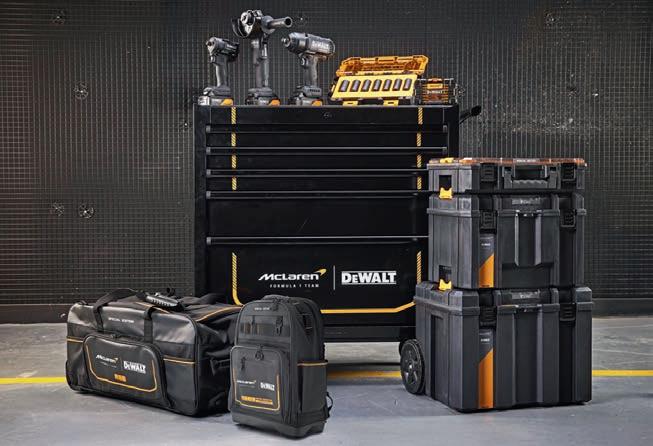
Beyond the power tools, the range fills out nicely with a Special Edition impact socket set, a tough roller cabinet, backpack and TSTAK system — all finished in McLaren colours and built to handle proper site wear and tear.
Like Piastri, it’s not about carrying on or making noise. It’s about turning up prepared, using the right gear, and ge ing the job done properly.
DEWALT x McLaren F1 Team 18V XR Special Edition Grinder is one of many awesome products from this collab
Whether you’re bolting steel, cu ing concrete or just trying to knock off on time, this range feels built for tradies who reckon performance should do the talking.













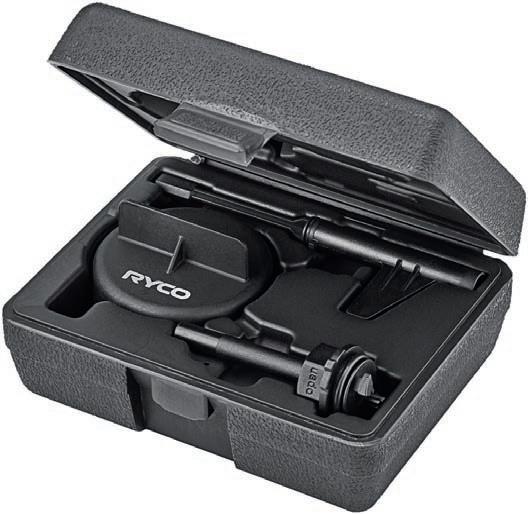
FOR THOSE back on the tools, the holiday might be over but that doesn’t mean your vehicle shouldn’t have the best for your everyday drive.
It’s why Ryco wants to remind drivers everywhere of the importance of not just ge ing your service done, and using filters designed to extend engine life to get the most out of your vehicle.
For the car enthusiast
who loves to DIY, you’ll know the importance of having the right tools at your disposal to ensure you achieve the best job possible.
It’s why Ryco has developed a range of tools to assist with servicing
filters, with added accessories to assist and support those looking to do it themselves.
ON THE UP AND UP
Ryco’s tool range is always
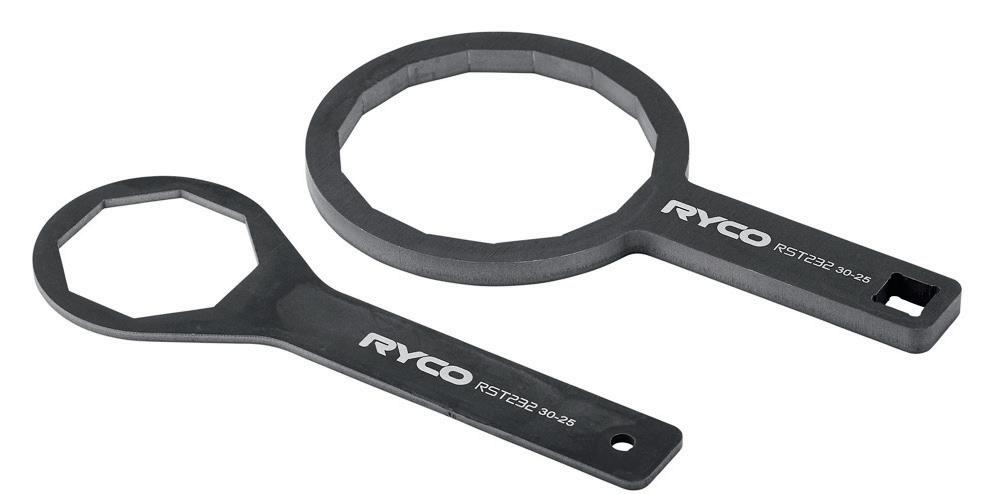
expanding, with new application specific tools designed to assist with transmission servicing such as the RST234, or the new range of wrenches made for Ryco Fuel Filter removal such as the RST232.
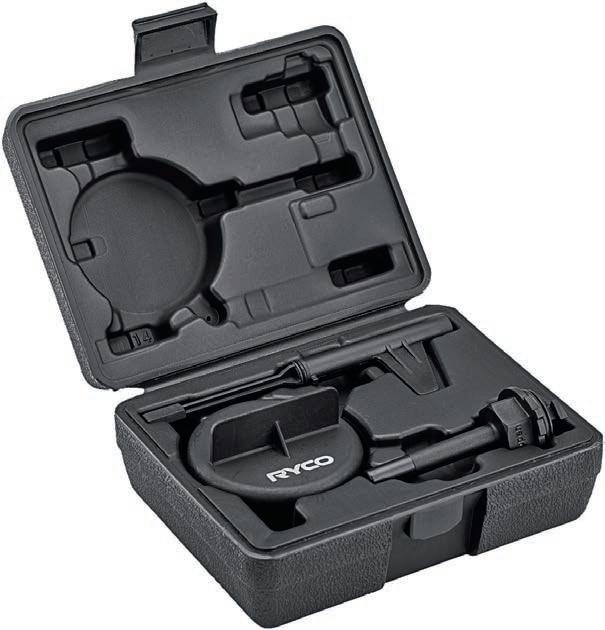
Ryco’s larger kits such as the RST200 Filter Removal Kit or RST100 In-Tank Fuel Filter Removal Tool Kit are a core part of the range, and a must-have for anyone working on their
car more regularly. Designed to take away the frustration that can be experienced during a filter service, Ryco Tools are made to be complementary to those who prefer to do it themselves, and can
Ryco’s filter removal kit range is a crafty tool for those who enjoy tinkering on their own cars
expect the same high quality Ryco filters are known to deliver.
To learn more about how these tools can assist you in your garage or around your house, head to the Ryco website, rycofilters.com.au. Check it out! Check it out!

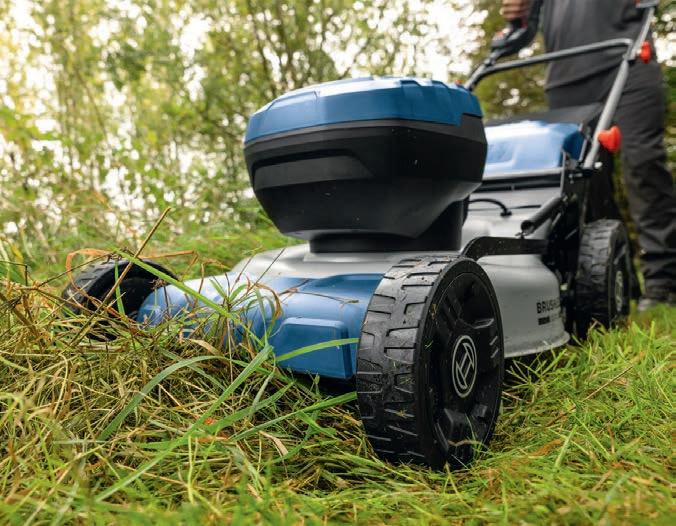
MAINTAINING larger lawns often comes with rigorous demands that ask for a powerful lawn mower. Bosch developed the cordless lawnmower GRA 18V2-46 Professional with a brushless motor as a strong and reliable performer for your lawn — all in the Bosch
Professional 18V System. Its strong brushless motor runs on two 18V ba eries and ensures high performance, increased runtime, and a long service life. The collapsible handle allows you to fold the mower compactly for easy transport and storage,
Bosch’s 18V System ensures the GRA 18V2-46 mower has the power for peak performance
even in a vertical position. Its ergonomic soft grip handle with easy two-level height adjustment helps you to work in a healthier posture, making your work more comfortable.

GAL 18V2-320
DUAL BAY CHARGER
The GAL 18V2-320 Dual Bay Charger almost eliminates your downtime on site, especially when tackling larger lawn spaces with the GRA 18V2-46 Lawnmower
The lawn mower has a cu ing diameter of 46cm and offers a 6-level cu ing height adjustment from 30 to 70mm.
The mower’s metal deck is extremely robust; it withstands higher loads and supports a longer product service life. Its 60-litre fabric grassbag and mulch plug give you the flexibility to
New 18V dual bay charger from Bosch Professional coming in quarter 1 2026!
The GRA 18V2-46 is powered by 2x18V ba eries. The new GAL 18V2-320 Dual Bay charger is the perfect pair for this mower to keep power on site and tackle larger yards.
either collect your clippings or use them as a natural fertiliser for your lawn.
Find out more about the GRA 18V2-46 Professional online: search bosch-pt.com.au






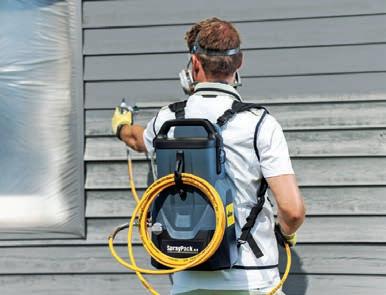
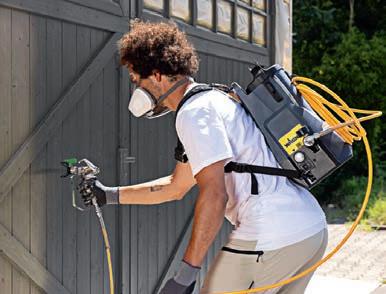
WAGNER AUSTRALIA revolutionises professional painting with the launch of the SprayPack 18V, a powerful and versatile cordless paint sprayer designed for contractors who demand mobility, effi ciency and performance on the job. Built for convenience and freedom, the SprayPack 18V is powered by Bosch’s Professional 18V Ba ery system, eliminating the need for cords or power outlets.
This game-changing technology allows painters to move effortlessly across job sites, tackling indoor and outdoor projects easily.
Equipped with higheffi ciency airless (HEA) technology, the SprayPack 18V ensures superior coverage with reduced overspray – making it an ideal choice for professionals looking to achieve a smooth and even finish. The unit also features a
4.7-litre hopper, allowing extended spraying sessions with fewer interruptions for refilling.
KEY FEATURES & BENEFITS
• Cordless convenience: No power cords, no restrictions – just grab and spray anywhere.
• High-effi ciency airless technology (HEA): Reduces overspray by up to 55 per cent, delivering a softer spray pa ern with improved
control and less paint waste.
• 4.7-litre hopper: Holds more paint for longer spraying times and fewer refills, increasing effi ciency on the job.
• Professional performance: Capable of handling a wide range of coatings, including interior and exterior paints.
• Effi cient & time-saving: Quick setup and fast coverage reduce overall project time, increasing job site productivity.
• Ergonomic & lightweight design: Engineered for comfort during extended use, minimising fatigue on large projects.
• Adjustable flow control: Allows precise control of spray pa erns for different materials and surface requirements.
• Durable & easy to maintain: Built with high-quality materials to withstand tough job site conditions, featuring easy-to-clean components for hasslefree maintenance.
• Powered by Bosch 18V: Flexibility through one ba ery platform. The kit variant includes two ProCORE 18V 4.0Ah ba eries and charger for continuous spraying. This product carries a 2+1 year Professional warranty.
The Wagner SprayPack 18V is now available for purchase in Australia and New Zealand.

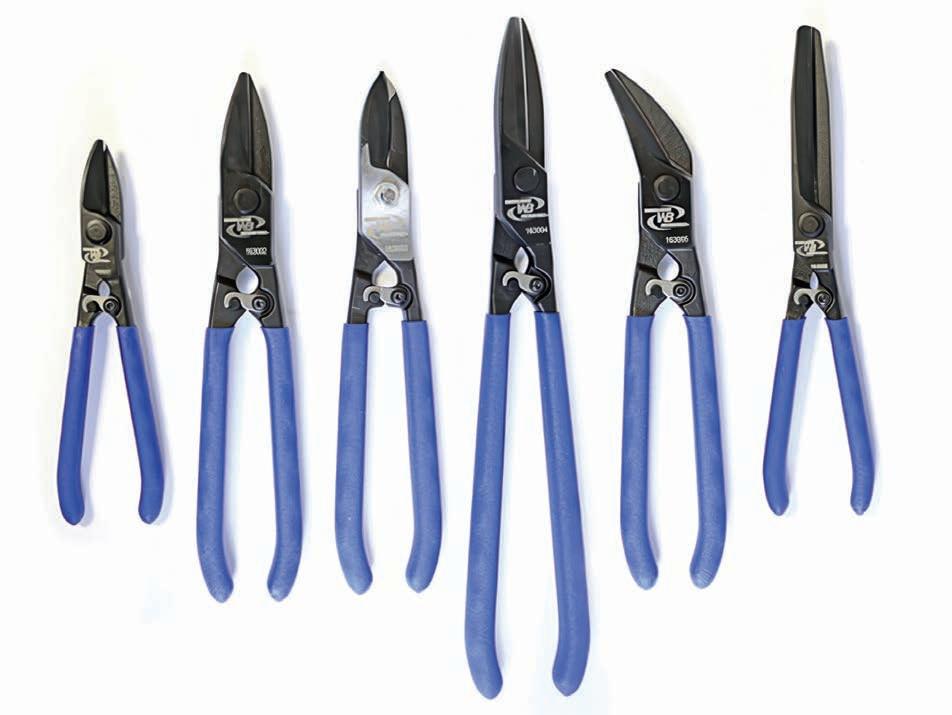
WHEN IT COMES to professional cu ing tools, performance, durability and comfort are nonnegotiable.
That’s exactly why Warren & Brown Tools set a new benchmark with the WB Tools Industrial Shears.
Engineered for demanding environments, these industrial shears are forged from high alloy steel, delivering exceptional strength and long-term reliability.
The result is a cu ing tool that holds its edge longer, resists wear under heavy use, and performs consistently across a wide
range of materials. From corrugated sheet and wire mesh to cable, plastic film, paper and co on, WB Tools Industrial Shears are designed to cut cleanly and effi ciently every time. What truly sets these shears apart is their super-hard, anti-wear blades.
Precision-ground for sharpness and durability, they reduce effort while increasing accuracy, making them ideal for repetitive tasks where effi ciency ma ers. Whether on the factory floor, in an automotive workshop, or on an
electrical installation site, these blades are built to work as hard as you do.
HANDS ON Comfort is equally important.
The ergonomic PVC handles provide a secure, comfortable grip that minimises hand fatigue during prolonged use. This thoughtful design ensures greater control and safety, even in fastpaced or high-pressure environments.
Versatility is another key advantage.
WB Tools Industrial Shears are suitable for industrial, automotive,
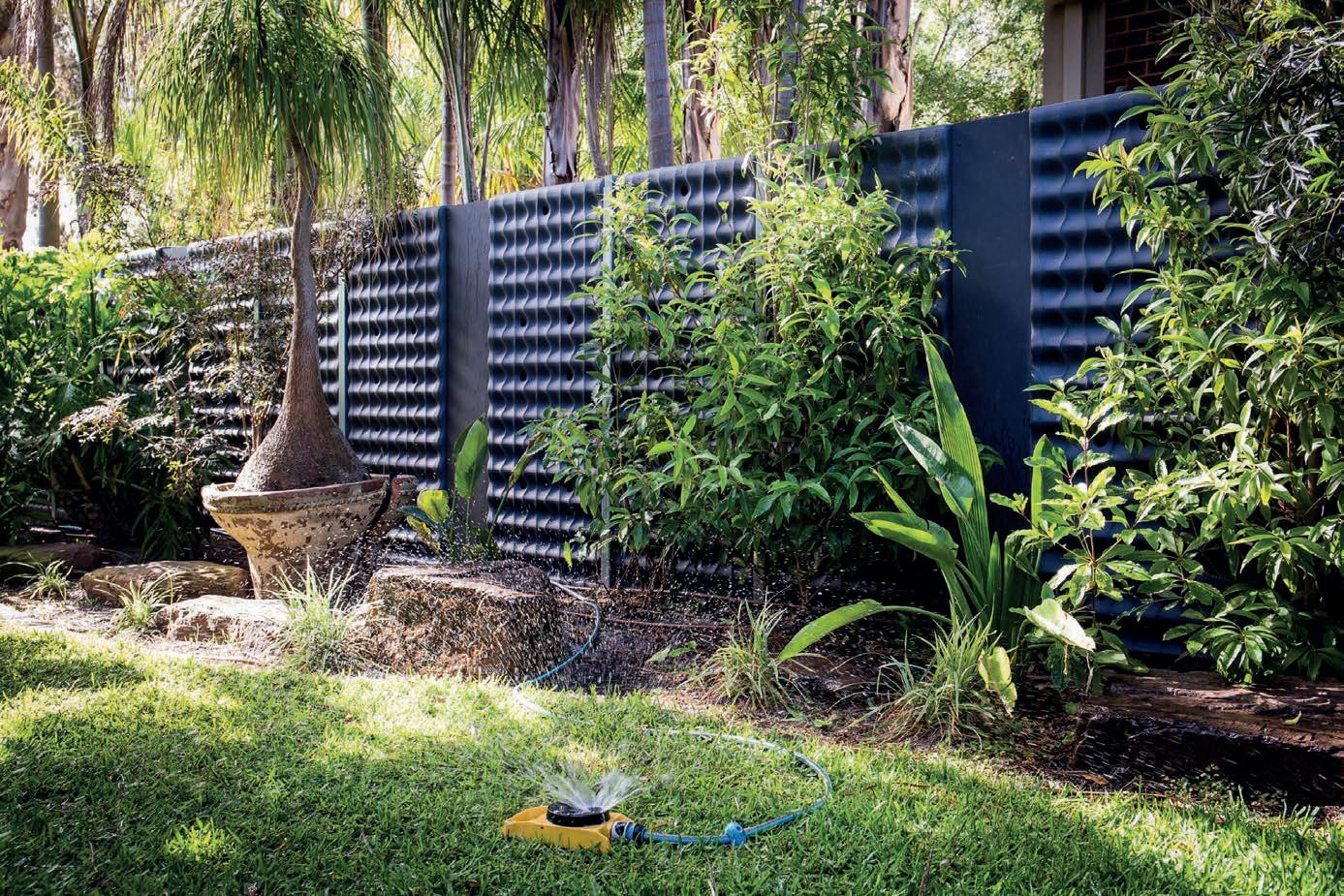
electrical, handicraft, home and gardening applications, making them a true multi-purpose solution.
Available in multiple sizes and designs, there is a shear to suit every task and preference. Manufactured to conform with international standards, WB Tools Industrial Shears reflect Warren & Brown Tools’ long-standing commitment to quality, precision and reliability. For professionals and
tradespeople who demand tools that perform without compromise, upgrading your toolkit with WB Tools Industrial Shears is a smart investment.
Precision, strength and comfort come together in a cu ing tool you can trust — job after job.
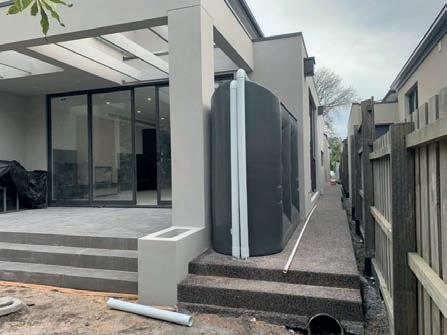
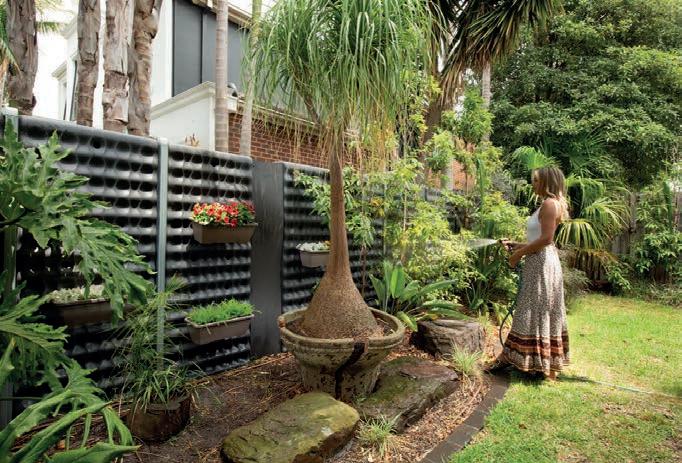
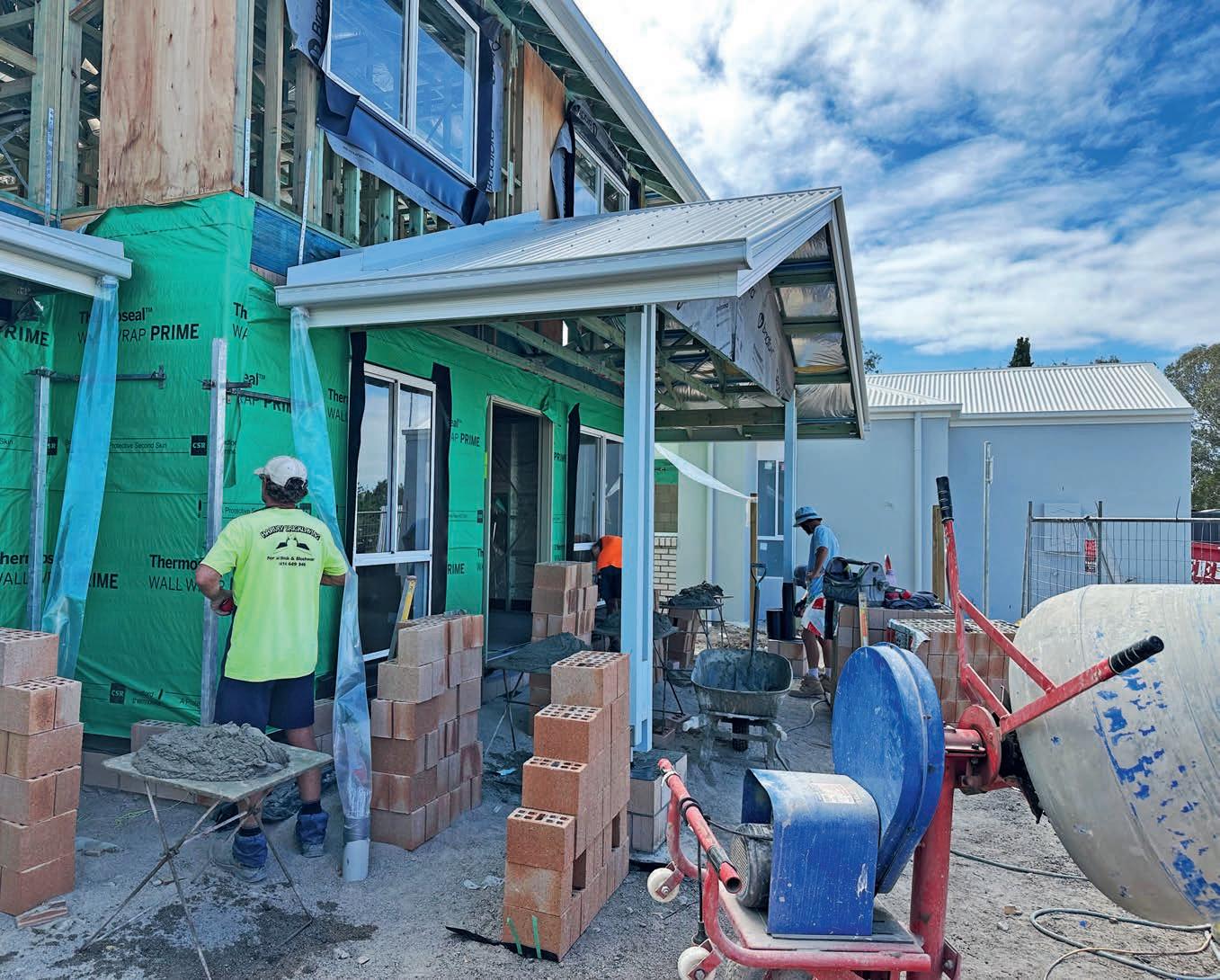
to bricklaying in Queensland’s demanding climate, material choice can make or break productivity on site.
For Harvey Bricklaying, Cement Australia’s Builders Cement has become the preferred option for residential brickwork, valued for its workability, consistency and performance especially in hot conditions.
This was on full display during a recent residential build in Bracken Ridge, on Brisbane’s northside.
Harvey Bricklaying was
contracted to complete the brickwork for multiple houses within a new development.
Builders Cement was used across the project for all brick mortar, supporting both effi ciency on site and quality outcomes.
Builders Cement is a general blend cement designed to deliver improved workability, longer pot life, a creamier mix, and improved feathering of mortar onto bricks compared to GP Cement.
Its blended formulation, which includes fl y ash, also improves durability by increasing resistance to sulfate a ack and chloride penetration, protecting structures especially in coastal areas and salt-rich environments — key considerations for long-term performance in residential construction.
For Harvey Bricklaying owner Murray Harvey, the choice is obvious.
He’s no stranger to Cement Australia products having more than two decades of experience under his belt; consistency and reliability
remain critical factors.
“I’ve been using Cement Australia products for probably 20 years now purely because I find them consistent and reliable,” he said.
For bricklaying applications in particular, Builders Cement offers practical advantages over GP cement, especially in Queensland’s heat.
“We like using the Builders Cement purely because it has more workability in the heat compared to GP so that’s why we prefer to use it on our jobs,” Murray said.
Builders Cement develops strength more gradually at early ages compared to GP cement, while still
delivering strong 28-day performance.
This slower early-age se ing allows bricklayers more time to work the mortar, reducing the need to constantly add water to maintain consistency during hot days.
“There is a difference it takes longer for the Builders (Cement) to harden compared to GP which hardens quite quickly but for this job if it’s mixed right and it’s allowed to mix, Builders works it well,” Murray said.
That longer pot life is a major benefi t for teams working in the heat, helping each batch last longer and improving

overall productivity on site.
From a compliance and performance standpoint, Cement Australia’s Builders Cement meets the requirements of AS3972 for Type GB general blend cement, while also complying with Type SL (Shrinkage Limited) and Type SR (Sulfate Resisting) classifications. Mortar produced using blended cements
Automate your refrigeration / heat-pump system evacuations with the Smart Vacuum pump
• Fully automatic evacuation with integrated holding test
• A3 & A2L compatible
• Bluetooth Testo manifolds, Smart App and Smart Probes
like Builders Cement are known to deliver improved later-age strength, increased durability and be er long-term performance.
Compliance-wise, Builders Cement meets the requirements of AS3972 for Type GB general blend cement
For bricklayers like Murray, these benefi ts translate into smoother workflows, be er results in harsh conditions and confidence that the
product will perform as expected — job after job. In the residential market, Builders Cement proves that it remains a trusted staple on bricklaying sites across Australia.
For more information regarding Builders Cement visit cementaustralia. com.au/products/builders-cement or contact the Cement Australia team on 1300 CEMENT (1300 236 368)
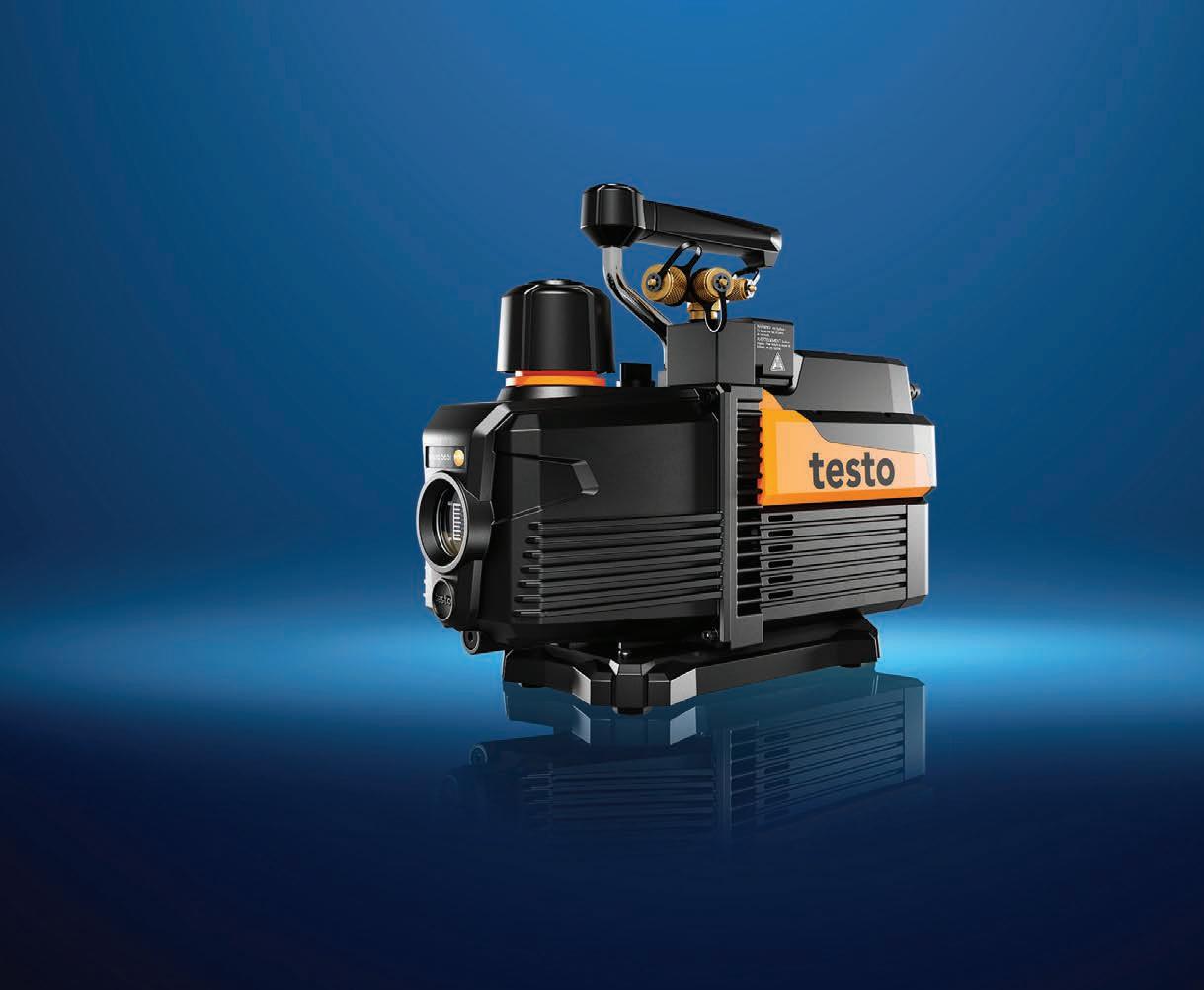

UP!
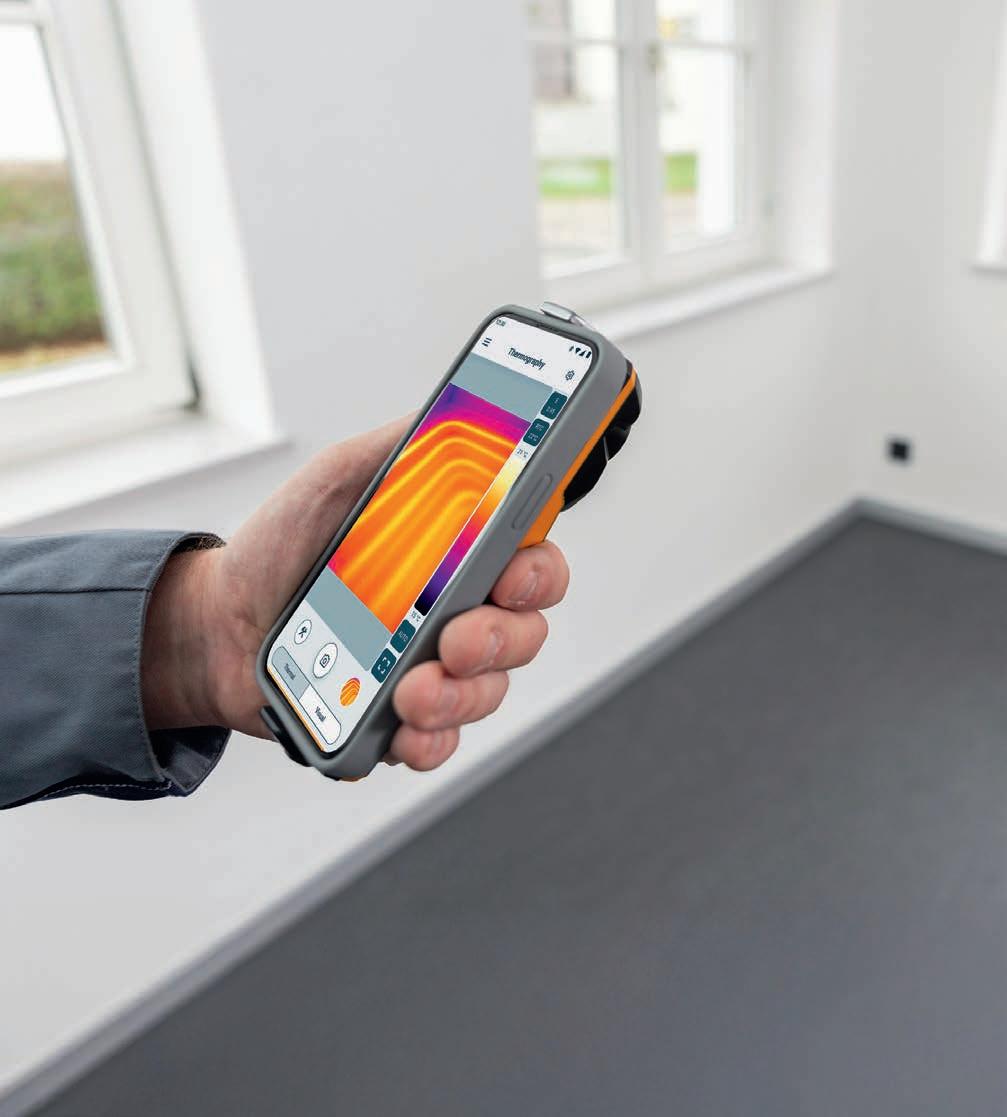
WHEN IT COMES to building maintenance, the biggest pains are problems tradies can’t see.
Heat loss, air leaks, moisture build-up and insulation failures often sit hidden behind walls, ceilings and roofs, sneakily costing owners money and creating bigger issues down the track.
That’s where thermal cameras and other imaging equipment have become a real gamechanger for tradies, maintenance crews … you name it!
DO THE JOB RIGHT
Thermal imaging — aka thermography — is a non-destructive testing method that reads infrared radiation – heat that’s invisible to the human eye.
By turning temperature differences into clear thermal images, tradies can quickly spot energy losses and building defects without pulling anything apart.
It’s fast, effective and becoming the standard on most jobs.
In energy consulting and building maintenance,
thermal cameras are ideally suited to identifying weak points in the building envelope.
Common problem areas like exterior windows and doors, roller shu er boxes, radiator recesses, roof structures and even the overall building shell can all be checked in minutes. Instead of guessing where heat is escaping or cold air is creeping in, a thermal image shows it right away.
This ma ers more than ever.
While new builds are ge ing be er when it
comes to energy effi ciency, existing buildings still a way off.
Older homes and commercial buildings often leak energy through poor insulation, outdated windows or hidden thermal bridges.
Finding and fi xing these issues through refurbishment can lead to real boon for both owners’ (and tenants’) wallets, not to mention a reduced environmental footprint.
From a building industry point of view, thermography also helps lift standards.
It provides clear, visual proof of issues that might otherwise be dismissed or missed. That makes
The testo 860i is an ideal tool for thermal imaging that works seamlessly with your smartphone
it easier to recommend upgrades like insulation improvements, window replacements or HVAC adjustments, and back those recommendations up with solid evidence. This is where quality thermal imaging equipment makes all the diff erence.
High temperature resolution is key to producing detailed, reliable images that clearly highlight inadequate insulation and thermal bridges.
Testo thermal imagers are well known in the trade for delivering highcontrast thermal images that are easy to analyse, even on-site.
Beyond image quality, modern thermal cameras also support be er reporting and transparency.
Clever documentation tools make it simple to produce professional reports for clients, while features like interchangeable lenses and live streaming to mobile devices give tradies flexibility on site.
Instead of scribbling notes and explaining problems later, issues can be shown and shared in real time.
THE TESTO 860I
A good example of how this technology fi ts into day-today work is the testo 860i wireless thermal imager for smartphones.
Designed for quick spot checks in HVAC, maintenance and building applications, it’s built with tradies in mind.
The testo 860i connects wirelessly to a smartphone or tablet and is operated through the testo Smart App.
We know tradies love a good smartphone sesh already, so this setup keeps things nice and familiar.
Thermal images, temperature differences and documentation are all handled in one place, making it easy to capture results and send reports while still on site.
One of the standout features is the ability to
quickly measure Delta T – the temperature difference between two areas – directly in the thermal image.
Application-specific functions like DeltaHeat make it easy to check the spread between flow and return temperatures on radiators, while DeltaCool helps assess temperature differentials in refrigeration and air conditioning systems.
For maintenance, this means problems can be identified quickly without any guesswork.
The humidity mode is another handy tool, especially when assessing indoor environments.
It helps identify areas
at risk of mould by highlighting surface temperatures that could lead to condensation.
Combined with the thermography measurement function, hotspots and temperature differences stand out straight away during inspections.
Image quality is another strong point. With a high infrared resolution of 256x192 pixels, the testo 860i delivers ultra-sharp thermal images that make it easier to spot insulation gaps, thermal bridges and air leaks.
Clarity is crucial when showing customers exactly what’s going on inside their building. From
a practical standpoint, the testo 860i is built for everyday site use. It can be used either wirelessly or a ached directly to a smartphone for one-handed operation. With IP54 protection and drop resistance up to 1.5 metres, it’s tough enough for Aussie work conditions.
The rechargeable lithium ba ery offers long operating times, so it won’t
quit halfway through a job.
For tradies looking to add more value to their building maintenance work, thermal imaging is no longer a nice-to-have –it’s a smart investment. With reliable tools like Testo thermal cameras, hidden problems become visible, energy losses are easier to fi x, and clients get clear answers backed by solid data.
Check it out! Check it out!
Head over to testo.com/en-AU/products/860i to check it out!


Try picking up a new trade in your late 30s. Now try doing it in another country. Now add in four li le ones … Ana’s done it all and then some in her journey from Peru to Australia to be a welder
ANA GAMERO’S journey in the trades has been far from straightforward.
She originally moved to Australia in 2009 from Peru while still dipping her toes in the English language.
Se ling in Melbourne, Ana started a family before things started going sideways.
“I went through some big challenges, including separation and family violence,” she said.
“That was a turning point for me. I had to stop and ask myself, ‘okay Ana, you’ve got kids — what do you do now?’.”
PUTTING IT TOGETHER
At 38, Ana decided to take her future — and that of her four children — into her own hands, literally.
After coming across the Women On Site Instagram page, she a ended a women in trades night hosted by the Australian Manufacturers Workers’ Union (AMWU).
“That night sparked my interest in welding,” she said.
“They offered me an
“There’s something about welding — it’s just you and the metal”
eight-week course. From the first class, something just clicked. I loved it.”
Things started melting into place for Ana, with her
welding teacher pointing her to a career as a fabrication engineer.
“I didn’t even know what that was at the time — I
just knew welding,” she said.
“I thought, ‘there aren’t many women in this — so why not?’ Breaking stereotypes is in my nature.”
EVERY DAY’S A LESSON Ana is completing her apprenticeship through the Chisholm Institute and working on building
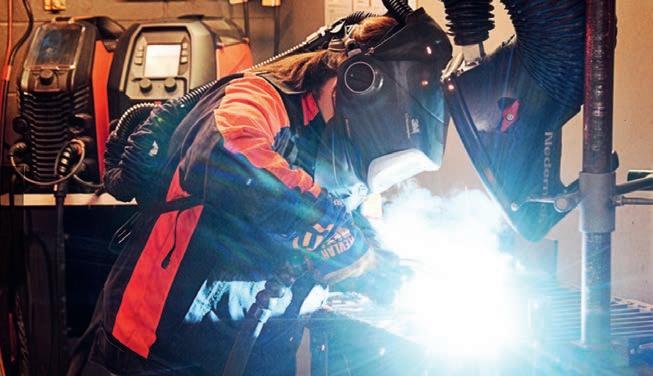
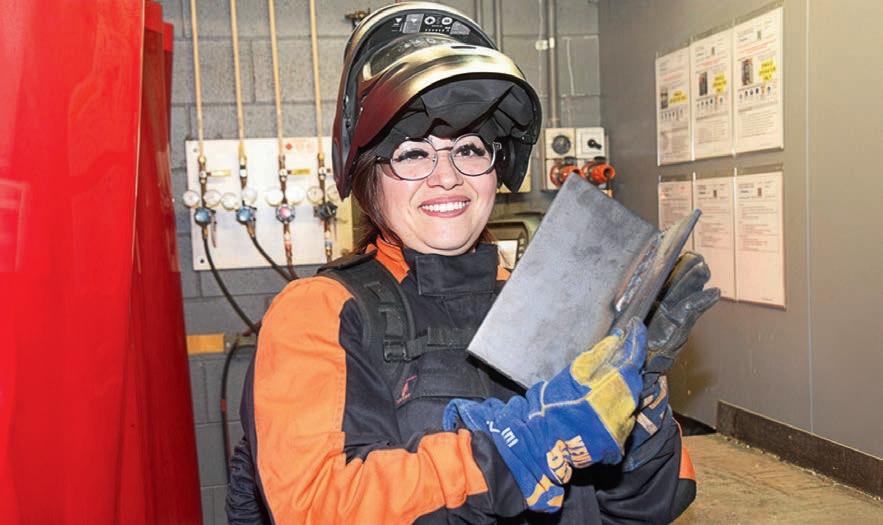
municipal trucks through Bucher Municipal in Scoresby, east of Melbourne.
“I’m developing my welding skills every day,” she said.
“Chisholm has also been amazing, giving guidance and encouragement along the way. That support makes a huge difference.”
Just like everything in life, Ana has taken on the challenge of complex welding with both hands.
“I burned a lot of metal at the start and did so much grinding just to get it right,” she said.
“But now, my hand control is be er, my
movement is smoother, and I feel confident with the gun.
“There’s something about welding — it’s just you and the metal. You switch everything else off. Watching the metal melt and come together, knowing you created that — it’s incredibly satisfying.”
Her talents in the trades haven’t gone unnoticed either.
In late 2025, she was awarded the Empowered Women in Trades (EWIT) Apprentice of the Year.
“I honestly didn’t think I’d win,” she admi ed.
“I thought the award would go to someone younger. Just making the top three felt huge.
“When my name was called, I broke down.
“As an overseas woman, rebuilding your life in another country isn’t easy. You don’t have the same village you grew up with.
“Being recognised — just standing on that stage — felt like a win. It showed that single mums, women rebuilding their lives, women starting again later in life — we belong here too.”
Something Ana has never taken for granted is the support she’s received from her coworkers and the wider tradie community, particularly fellow lady tradies.
“The village that EWIT has created — inspiring women, single mums, young women, diversity everywhere. It’s powerful,” she said.
“This isn’t about being
be er than men. It’s about equality. Strength comes in different forms, and when we work together instead of against each other, that’s when real change happens.”
FAMILY CONNECTION
There’s been one team that’s been her rock every step of the way, and that’s her children.
There hasn’t been a step, chapter or challenge where they haven’t been in Ana’s corner.
“They go to school to learn — I go to work to learn new skills,” she said.
“And we became a team.
“My kids are my strength. My eldest daughter is nearly 18 and wants to become a mechanical engineer — Formula One is her goal, and she’ll get there.
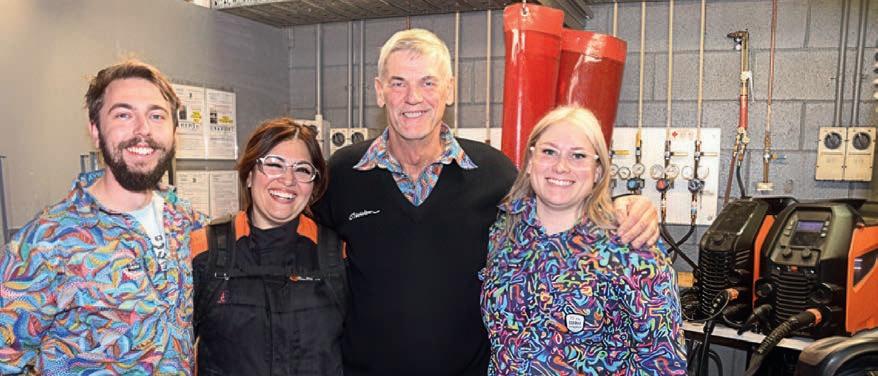
Ana is completing her apprenticeship at
“I always tell my kids: it’s not about how you fall, it’s about how you get back up. You’re allowed to cry. You’re allowed to feel. But you keep moving forward.”
At the EWIT Awards Gala, the children cheer team was in full force to remind Ana they’re her No.1 fans.
“My daughter was there. My other kids were ge ing ready with makeup and excitement,” she said.
“They told me, ‘you’re our winner no ma er what’.”
Ana’s story is a reminder that no ma er what comes your way in life, or when it comes, the right a itude and support network can make all the difference.
“Don’t give up on yourself. Do the research. Look at the opportunities,” she said.
“Trades aren’t just for men — there are respectful, supportive men out there who want women in the industry.
“You don’t have to fi t a stereotype. If you’re going through hard times, that doesn’t disqualify you — it can be the very thing that drives you forward.
“Just go for it.”
Lifeline: 13 11 14
Help is available: 1800RESPECT

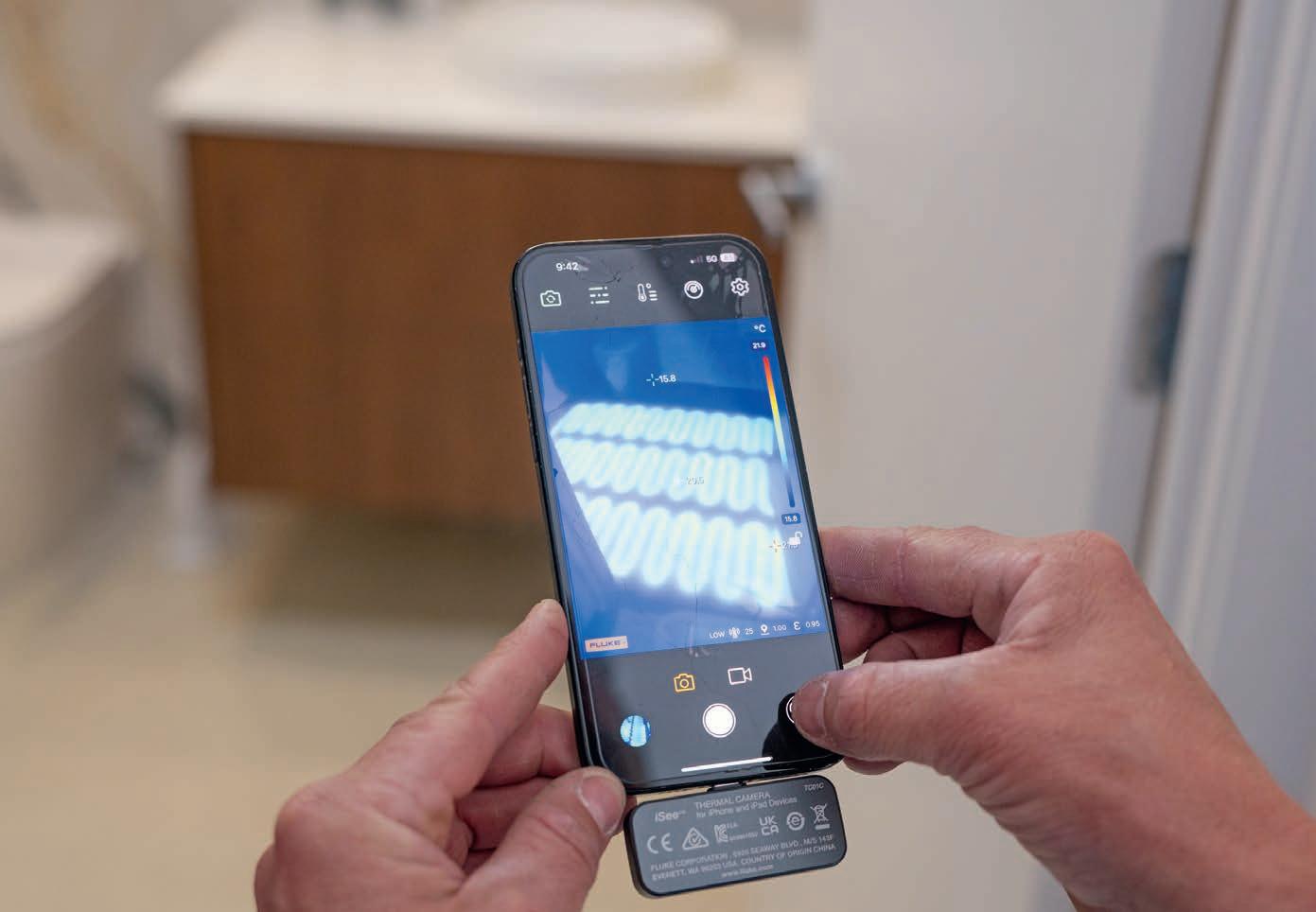
The five things tradies will love about Fluke’s iSee camera range
used to be something only specialists rolled out for big jobs.
But not anymore.
With Fluke’s iSee Mobile Thermal Camera range — the TC01A (Android USB-C phones), TC01B (pre-iPhone 15 ports) and the new TC01C (USB-C iPhones) — tradies can get professional-grade thermal imaging straight to their phone.
Here’s fi ve standout reasons the iSee range is winning fans on site.
The biggest surprise with the iSee range is just how good the image quality is for something so small. Each model delivers a sharp 256 × 192 resolution with a
temperature range reaching up to 550°C.
That means clear, detailed thermal images whether checking electrical hotspots, HVAC systems or engine components. A thermal sensitivity of 50mK and accuracy within ±2% or ±2°C helps pick up tiny temperature differences before they turn into expensive problems. Add a smooth 25Hz frame rate and the result is real-time thermal video that keeps up with the job.
2. PORTABILITY
Weighing just 22 grams, the iSee is about the size and weight of a USB stick. It lives in a pocket, tool bag or glove box without ever ge ing in the way. The TC01A and TC01C
connect via USB-C to Android phones and newer iPhones respectively, while the TC01B is designed for older iPhone models.
No ba eries to charge, no extra screens — just plug it in and get to work.
3. FILTER OPTIONS
Who doesn’t love a good filter?
Interpreting thermal data is easier when it’s displayed the right way. The iSee range includes more than 10 colour pale es, including popular options like Ironbow and Rainbow.
These filters make hotspots, cold spots and temperature gradients jump out instantly, helping tradies read the image faster and make decisions on the spot.
4. ISEE APP CONNECTIVITY
The Fluke iSee app turns the camera into a full diagnostic tool. Users can track up to fi ve spots, fi ve lines and fi ve areas at once, set temperature alarms, run time-lapse captures and compare infrared and visible images side by side (during picture-in-picture mode). Images and videos can be annotated, turned into reports and shared instantly — perfect when time is money.
5. DURABILITY
Despite its size, the iSee is built tough.
A solid aluminium body, IP54 to IP56 protection (depending on model) and a one-metre drop rating mean it’s ready for real job sites. It’s classic Fluke durability, just scaled down.
The iSee range puts serious thermal imaging power into a phone-based tool tradies already love using — and that’s a game changer.

CARPENTER , Lachlan King lives by the mantra, “It’s not a stuff up if it can be fi xed!”. Apart from giving you an insight into his funny side, it points to his problem solving prowess, something highly valued in the carpentry trade.
As for that trade, Lachlan says he’s always wanted to become a builder, a passion born from ge ing out into his shed after school each day and creating things. “Those times made me realise how much I enjoy it.”
A CONFIDENCE BOOST
Lachlan’s WorldSkills journey includes top spot in Carpentry at Regionals and a Bronze Medal at the 2025 Nationals. “It’s the best experience I’ve ever had. I’m so proud of myself for taking the
“All I wanted to do growing up was become a builder.”
first step to compete, and I’d 100 per cent do it again,” he shares. “The experience has increased my confidence a lot, especially in talking to other people. It’s been a boost to my skills too.”
Winning at Regionals
was one of his proudest moments because he had “all my family, my trainers and people from my community there.” He’s extremely thankful for that support, from his parents to his boss, Mick.
“I’m so glad Mick picked me to work with him.
The builds we do are like nothing else. I thank him for taking me on, giving me the time and space to train, financial help, and showing me the ways of Carpentry.”
FUTURE
It’s definitely a future on the tools for Lachlan.
“My goal is to become a registered builder, start a business of my own, as well as build a house to live in,” he says. “But I also want to make a greater impact by being a builder that creates jobs for other apprentices to help them skill up and boost the economy.”
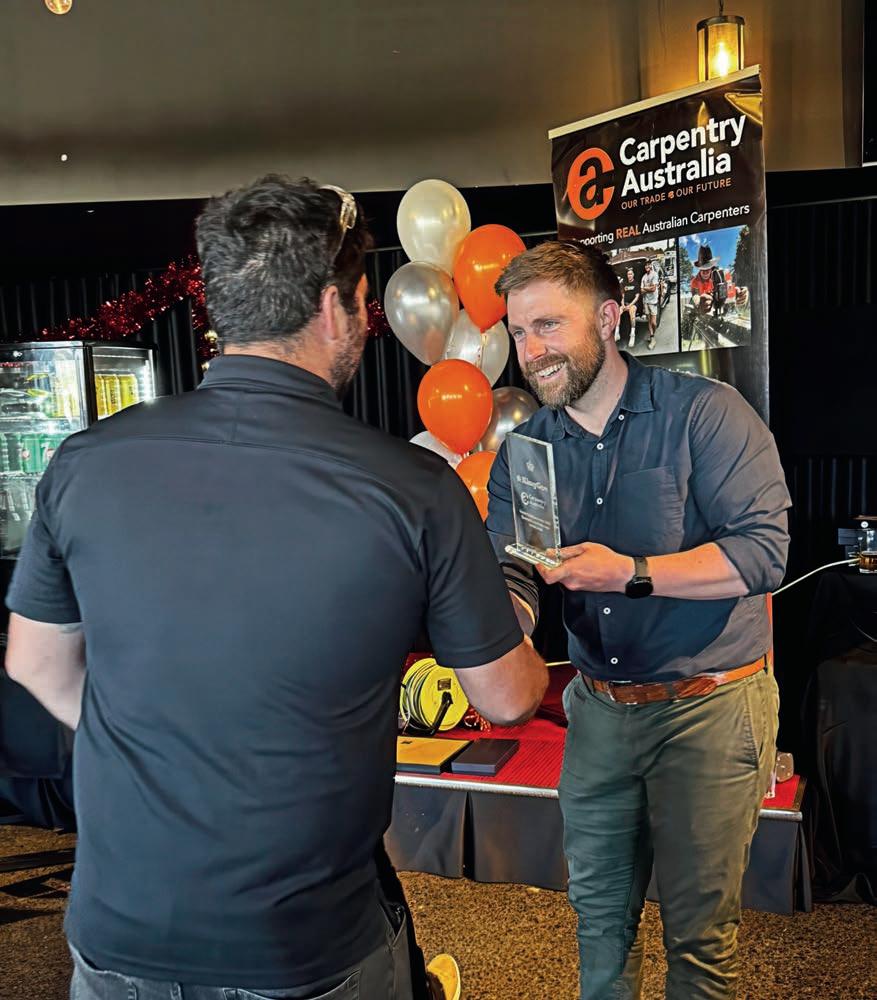
AS THE YEAR wrapped up, Carpentry Australia celebrated the people and partnerships helping to strengthen the Australian building industry, announcing the winners of its End of Year Carpentry Awards,

proudly supported by our fantastic sponsors.
More than a celebration of individual achievement, the awards reflect the standards that ma er across all trades: professionalism, reliability and pride in quality workmanship.
These values sit at the core of Carpentry Australia’s mission and continue to a ract builders, contractors and trades looking to work with carpenters they can trust.
Jesse Jenkinson was recognised for his consistent workmanship and professional approach on site.
Known for delivering
quality outcomes and being someone other trades can rely on, Jesse represents the type of carpenter that helps projects run smoothly from start to finish. The team at Limitless Build were acknowledged by King Gee for their innovation and leadership in residential construction, demonstrating how modern carpentry businesses can operate with integrity while collaborating effectively with other trades.
Imar recognised Jack Gallagher for his reliability and teamwork on complex builds, earning respect for his clear communication and professionalism on site.
This year also marked
a defining moment for Carpentry Australia with the introduction of the Graham Miller Award, created in memory of Graham Miller, a trade school teacher who played a pivotal role in shaping the career of Carpentry Australia CEO Jake McArthur.
Graham’s infl uence extended far beyond technical skills, he believed in accountability, mentorship and lifting standards across the trade.
Following his passing in late 2024, the award was established to recognise those who invest in people and help shape the future of carpentry through knowledge-sharing and leadership.
Looking ahead, March 2026 will see the launch of the new and improved
Carpentry Australia website, a major step forward for both members and the wider construction industry.
The platform has been designed to give builders, the public, and other trades direct access to screened, qualified and reputable carpenters, removing the guesswork and providing confidence that the people they are connecting with take their trade seriously.
For carpenters, the new website represents a significant opportunity to be visible, connected and supported.
Members will be showcased nationally, linked with real job opportunities and supported through resources that help raise skill levels, business capability and long-term career outcomes.
Sponsored apprentice members will benefi t from clearer development pathways, education and support, helping ensure the next generation enters the industry with strong foundations and professional standards. With continued growth across South Australia, Western Australia, Queensland and Tasmania, and stronger national connections forming every month, 2026 is shaping up to be a major year for Carpentry Australia.
OPEN DOOR POLICY
For carpenters who have
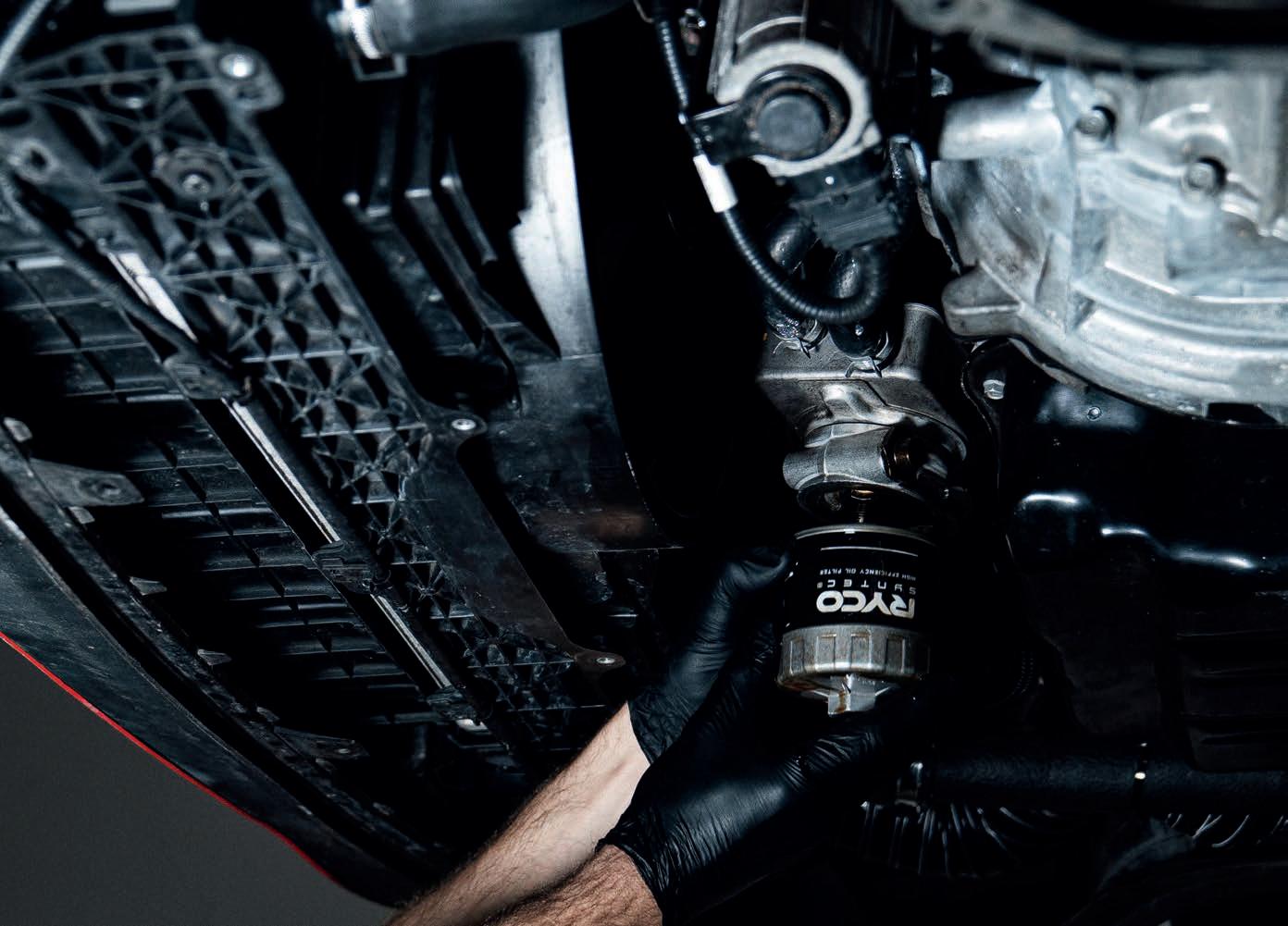

been considering joining but haven’t yet taken the step, there has never been a be er time to get involved.
Membership means being recognised, being connected and being part of a community commi ed to quality, reputation and
opportunity.
Adding to the momentum, another major Carpentry Australia Expo is planned for later this year and is set to be bigger and be er than ever.
The event will bring together trades, suppliers and industry leaders,
creating real connections that lead to be er projects and stronger working relationships across the industry.
As Carpentry Australia moves forward, the focus remains clear: connect reputable carpenters with real opportunities,
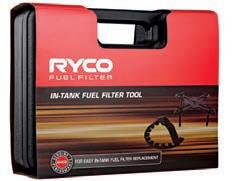
When you’re working on a vehicle, it’s important you have the right tools on hand to ensure that you achieve the best job possible.
It’s why Ryco have developed a range of tools and accessories to assist with filter servicing.
So when you’re working with filters, be sure you’re Ryco Ready.
give the broader industry confidence, and continue raising the standard of the trade nationwide.
If you want to understand how Carpentry Australia can support you, call us 1300 562 779 or visit carpentryaustralia.com.au


my inbox quickly fills with requests, invites and promotions for International Women’s Day as workplaces across Australia prepare to take space and pause to acknowledge women.
There are morning teas, breakfast events, purple cupcakes and well-meaning messages of appreciation amongst the mix.
And while recognition ma ers, International Women’s Day was never intended to be a symbolic gesture or a box-ticking exercise.
International Women’s Day?
The answer, it exists because inequality still exists.
Nowhere is this more evident than across the trades, construction and manufacturing sectors, industries that remain critical to Australia’s future, yet continue to underrepresent women, particularly on the tools and in leadership.
or are we just handing out cupcakes?
Trades are facing a perfect storm, skills shortages, an ageing workforce, increased infrastructure demand and fierce competition for talent. At the same time, women continue to make up only a small percentage of the trade workforce with progress slow in this area. This isn’t because women lack capability, resilience or interest.
It’s because the systems, cultures and workplaces they’re entering were never designed with them in mind.
International Women’s Day is more than just taking fi ve to eat a
by accident, it has taken a village, and it won’t continue without intention.
Celebrating women is important. Acknowledging achievements ma ers. But celebration without action doesn’t shift culture, improve retention or HAVE YOUR SAY!
We are always asked, why do we need an
Whilst planning your organisation’s International Women’s Day, it’s worth asking a more uncomfortable but necessary question: are we creating real change,
International Women’s Day ma ers because it forces us to stop and look at that reality. It reminds us that progress hasn’t happened
For women in trades, the barriers are still very real: limited access to opportunities, outdated stereotypes, inflexible work structures (for parents in general), poor site culture, and a lack of visible role models. These challenges don’t disappear because we acknowledge them once a year. They require consistent effort, leadership and accountability.

create safer workplaces. Too often, International Women’s Day becomes a standalone event rather than a catalyst for longterm change.
We hear inspirational quotes, but recruitment practices stay the same. We applaud women’s resilience, but don’t question why they’re still expected to be resilient just to survive.
Real change requires more than good intentions. It requires honest reflection on how our workplaces operate, who they work for, and who they unintentionally exclude.
At Empowered Women in Trades, we believe International Women’s Day should be a checkpoint, not the finish line.
If we want to see real progress in the trades, men must be part of the
conversation and the solution. Some of the strongest advocates for women in our industry are men who challenge poor behaviour on site, mentor female apprentices, push for flexible work options and use their leadership positions to open doors. Providing flexibility for family units, opening options for be er access to work-life balance. Look after humans, and we all win.
International Women’s Day shouldn’t be women celebrating women in isolation. It should be an opportunity to recognise women and the men who actively support them. Equity isn’t about taking opportunities away from anyone, it’s about making sure opportunity is genuinely available to everyone.
At EWIT, we work across the entire pipeline: from early exposure in schools to supporting women already working in trades. What we’ve learned:
a racting women is only half the job. Retaining them is where the real challenge lies.
Women leave trades for many reasons: isolation, lack of support, limited flexibility, unsafe or unwelcoming environments, and the exhaustion that comes from constantly having to prove themselves.
International Women’s Day is a chance for organisations to ask some important questions:
• Do women feel safe and supported in our workplaces?
• Are our policies designed for real life, not outdated assumptions?
• Do women see pathways for progression and leadership?
• Are we listening to feedback, and acting on it?
If the answer is “not yet”, that’s not a failure. But ignoring the question is.
This International Women’s Day, look to invest in actions that support
women 365 days of a year and provides ongoing impact. Some ideas:
Becoming part of the EWIT Alliance is a commitment to long-term impact.
Alliance members invest in education, advocacy, connection and real pathways for women and girls into trades.
It’s about being part of a village that shares responsibility for change and backs it with action.
Donate to organisations that support women
Charities and social enterprises working in gender equity rely on funding to deliver programs and reach communities.
Financial support directly translates into opportunities, education and impact.
Where you spend
your money ma ers. Supporting women-led businesses strengthens economic independence, leadership visibility and long-term sustainability for women across all industries including trades.
Rigid structures are one of the biggest barriers to retention.
Reviewing parental leave, carers’ leave, flexible rosters and returnto-work support isn’t just good for women, it benefi ts everyone. Make women part of the conversation and review.
This International Women’s Day, enjoy the cupcake but don’t stop there. Commit to change that lasts longer than a single day.
Because equity isn’t something we celebrate once a year. It’s something we build together.
#i akesavillage

IT’S BEEN an exciting start to the New Year and as a representative of NAWIC, I am truly

Cathryn Greville,

grateful to have been named Best Construction Industry Advocacy CEO 2025 (Australia). This recognition from the CEO Monthly’s prestigious Female CEO of the Year Awards 2025 reflects the passion, generosity, and commitment of our growing NAWIC community — our inspiring volunteers, members, sponsors, supporters, and dedicated staff — who show up every day to advocate for positive change and to strengthen our industry.
ADVOCATING FOR MORE
Advocacy remains central to our work.
Strong, informed, and courageous advocacy is essential to ensuring the voices of women and underrepresented groups are heard, and to driving lasting, systemic change across the built environment. The recipients of our 2026 NAWIC Bright Ideas Grants also reflect our commitment to driving positive change. This year, I’m delighted that the seed funding is
2026 Bright Ideas
Individual Grant recipient
Samantha Grant
going to a pilot program offering supported pathways for women in construction navigating parental leave, and an innovative project to provide hygiene facilities for women onsite.
BIG IDEA
Samantha Grant from New South Wales was awarded the $30,000 Bright Ideas Individual Grant for her Crib Shift: Building a Be er Way Back pilot program designed to address the urgent need for structured, supported
pathways for women in construction navigating parental leave and returning to work.
Crib Shift is a research-informed, industry-specific, and community-powered program responding to a gap identified in NAWIC’s Boosting Retention of Women in Construction parental leave research project, which highlighted the absence of cohesive, consistent frameworks to retain and support women during this transformative life and career stage.
Samantha says the program is also inspired by her lived experience and at its core, Crib Shift is primary prevention, creating the conditions where women can thrive in the construction workforce through supported leave transitions, employer capability uplift, and peerdriven community care.
Crib Shift is beyond a wellbeing initiative, it’s a primary prevention workforce solution.
This program doesn’t exist anywhere else. It’s informed by lived experience, guided by research, and grounded in reality.”
THE PROGRAM WILL INCLUDE:
• Mothers on Leave
Stream: accessible peer circles and reflective tools support women to stay connected to their identity, ambitions and industry during leave, without pressure to
perform or plan.
• Returning Mothers Stream: For women in their first two years back at work, this stream offers facilitated sessions and access to shared stories, frameworks, strategies and community; supporting a sustainable, confident return.
• Employer Stream:
This stream offers targeted, practical tools to build confidence among employers and managers.
• Dedicated resources for dads and partners: Recognising that women are best supported through this transition when there is a broader ecosystem around them that understands and shares the load.
The $20,000 Bright Ideas Business Grant has been awarded to The GO Company in Tasmania for their Hygiene for Her Project.
The funding will be used
to develop, produce, and distribute GO Sanitary Site Bundles, ensuring smaller and regional construction businesses have access to practical, affordable hygiene facilities for women on site.
Co-founded by electricians Jasmyn Smith and Logan Barne , The GO Company is dedicated to supporting women in underserved industries by providing essential sanitary solutions.
Many smaller construction businesses and remote sites do not have access to basic hygiene amenities.
This leaves women without suitable facilities, impacting their comfort, health, and sense of belonging in the workplace.
The aim is to offer

workplace solutions that make hygiene accessibility simple, affordable, and standard across all industries.
By delivering ready to install hygiene stations, the Hygiene for Her Project aims to:
• Eliminate reliance on basic or unsuitable portable toilets and ensure consistent access across sites of all sizes.
• Enable women to manage their hygiene
needs safely and privately without needing to leave work which will reduce downtime, improve productivity, and demonstrate that the business values its female workers.
• Encourage healthier, more sustainable work environment, supporting women’s long-term health, helping them maintain their careers without compromising wellbeing or family planning goals.
The Bright Ideas Grants provide an important opportunity to support innovative projects for women in construction that focus on retention, career progression, leadership pathways, and cultural change.
It was pleasing to a ract a total of 36 applications across both categories this year. My thanks go to our judges who noted that the overall high quality of the applications made the assessment process quite diffi cult.
Congratulations to both of our grant recipients for their innovative projects to support women in construction and I look forward to sharing the positive outcomes of their projects in the year ahead.
HAVE YOUR SAY!
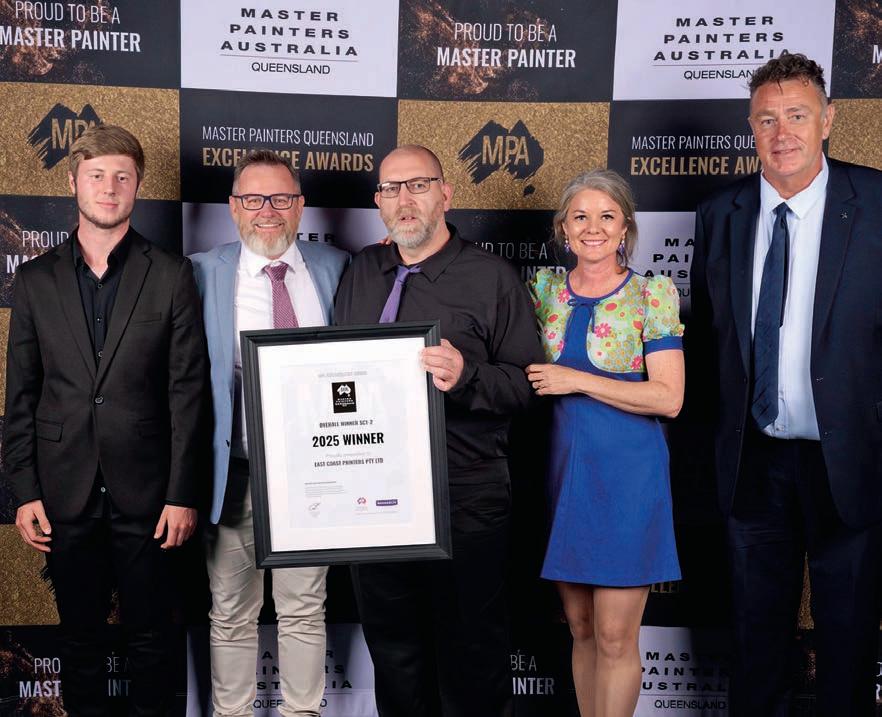
THE MASTER Painters
for Excellence
shine a spotlight on the skill, innovation, and professionalism that


painting and decorating industry.
More than an awards night, it’s a celebration of the people and businesses who set the benchmark for quality, integrity, and pride in our trade.
Hosted in spectacular style at the Star Casino Brisbane, the most recent Awards brought together a record 398 guests for an unforge able evening of connection, celebration, and craftsmanship.
The event opened with the stage coming alive with the spirit of fire, a symbol of unity, drive, and enduring purpose, fuelling the energy and se ing something extraordinary in motion that drives our profession forward.
From heritage restorations and decorative finishes to
major commercial and residential projects, each award recognised true excellence, work that reflects dedication, mastery, and passion for the craft.
Every entry was inspected and judged against clear, independent criteria, ensuring that recognition was earned, not claimed.
The Awards for Excellence form a cornerstone of Master Painters Queensland’s mission: to raise industry standards, enhance business success, and strengthen the reputation of painting as a skilled, professional trade.
Winning, or even being a finalist, delivers tangible
business benefi ts, helping members command premium pricing, convert more client quotes, and elevate their personal and business brands under the respected banner of an Award-Winning Master Painter.
These accolades are not just about prestige; they are proof of professionalism.
They demonstrate to clients, builders, and the broader community that painting is not something “anyone can do”, it’s a craft that demands skill, training, precision, and pride.
A REASON TO BELONG Entry to the Awards for Excellence is exclusive to Master Painters Queensland members, and that exclusivity carries real value.
For painters and businesses not yet part of the Association, the
Awards represent a clear incentive to join, to access recognition, credibility, and connection that help grow their business and their reputation.
Membership with MPA is about more than belonging; it’s about standing for something. It’s about being part of an organisation that champions professionalism, supports members business, and works to lift the image of our industry for everyone who earns their living through the brush.
Behind every awardwinning project is a team of painters, apprentices, and business owners, whose dedication brings quality painting to life. Their achievements build pride in our trade and demonstrate that painting is not just a job, but an aspirational career and a pathway to building a sustainable business. It’s about recognition for the skill, patience, and craftsmanship that transform spaces and elevate perceptions of what it means to be a professional painter.
The Awards for Excellence are open for entry all year round, providing members the opportunity to showcase their work as it happens.
Each year, the program continues to grow in prestige, infl uence, and

impact, shaping the image of painting as a respected, professional, and rewarding career for generations to come.
Proud to be a Painter. Proud to be an AwardWinning Master Painter.
Overall SC1-SC2 Winners East Coast Painters
WHAT DO THE AWARDS MEAN?
“Winning these awards immediately lifted the
spirits of the whole team. They can see why we insist on such high standards in every aspect of the job and for them to be recognised for their incredible skills at a state-level is an amazing achievement.
I am looking forward to using our awards to help educate the public about the value a real painter and decorator can provide and ultimately lift the standard of painting across the industry.”
East Coast Painters are a second-generation family-owned business, painting across South East Queensland for over 55 years.
Their exceptional customer service and a ention to detail has helped them to build a strong and loyal customer base.
The small team focuses on residential repaints where the experienced
leading hands lead and mentor apprentices to ensure skills and processes are passed down through the business.
Charlton is a professional painter with over 30 years of experience.
Overall winners Cat1-6 LEISURETEX PROPERTY MAINTENANCE PTY LTD
“For Leisuretex Property Maintenance, being
The awards annually celebrate painting businesses that span generations across Queensland
nominated for the Master Painters Association (MPA) Best Overall Painter of the Year 2025 is a milestone that celebrates more than two decades of growth, and dedication to excellence.
“Founded by Jaison Guljas, a third-generation painter, Leisuretex began as a small family painting business built on skill and resilience. Over the past 25 years, it has evolved into a trusted, property maintenance company delivering painting, waterproofing, concrete rectification, and height access solutions.”
LEISURETEX PROPERTY MAINTENANCE was named best overall Cat1-6 painter

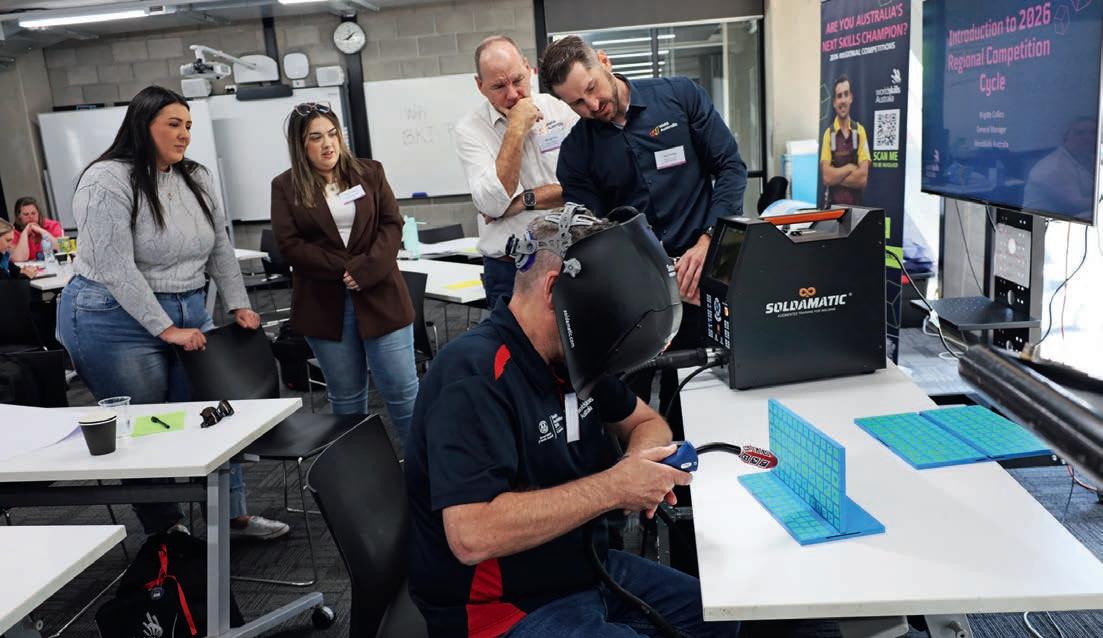
DESPITE RECENT positive data from Jobs and Skills Australia showing a decrease in the number of occupations currently experiencing a skills shortage, efforts to ensure the next generation of workers are being effectively trained and developed are continuing.

Trevor Schwenke CEO, WorldSkills Australia
At WorldSkills Australia, we’re working to inspire, develop and celebrate skills excellence.
Upcoming regional competitions in 2026 will see thousands of apprentices, trainees and students from all corners of the country showcasing their abilities, with the opportunity to progress to our National Championships and Skills Show and potential to be selected as a Skillaroo and represent Australia on the world stage in 2028 at the WorldSkills Competition in Aichi Japan.
Skills competitions provide a crucial opportunity for young people to demonstrate their abilities, benchmark their progress and put
the technical skills they have learnt to the test, alongside other talented competitors in their field.
Ranging from skills valued by established sectors such as bricklaying and automative mechanics, through to those coming to the fore in IT and robotics, the full-breadth of Australian vocational education and training (VET) will be on display.
One of the additional features of competitions such as these is the opportunity they present competitors to develop a broader, complementary set of skills beyond those being demonstrated and judged in events.
Perhaps harder to quantify, it’s so-called ‘soft skills’ such as time management, networking, and creative thinking which are critical abilities that participants will develop as they compete and progress in skills competitions.
Especially for those who progress beyond the regional competitions, the demands placed on competitors and the challenges they will need to overcome will require an exceptional level of commitment and the ability to adapt and stay resilient.
Even the process of travelling interstate or overseas for preparation and competitions provides opportunities and experiences which can be channelled into further personal and professional growth.
Competitors then bring all of these additional benefi ts back from events, integrating them with the technical skills they are
already honing to help accelerate their careers and make an even more significant contribution in the workplace.
It’s these value-added skills that today’s apprentice mechanic can draw on to become tomorrow’s workshop manager or someone just starting out in the building trade to begin the journey towards running their own construction business.
This is why we are seeing growing support from industry partners, education providers and government at all levels in our mission to develop and celebrate skills excellence.
The positive impact that skills competitions can have is not only being felt by individual participants, but it is also helping this next generation of skilled professionals make an increased contribution in workplaces across Australia.
Tradie magazine is always chock-full of the latest tools, industry issues and profiles
Subscribe today to receive each new issue delivered direct to your door – all from just $45!
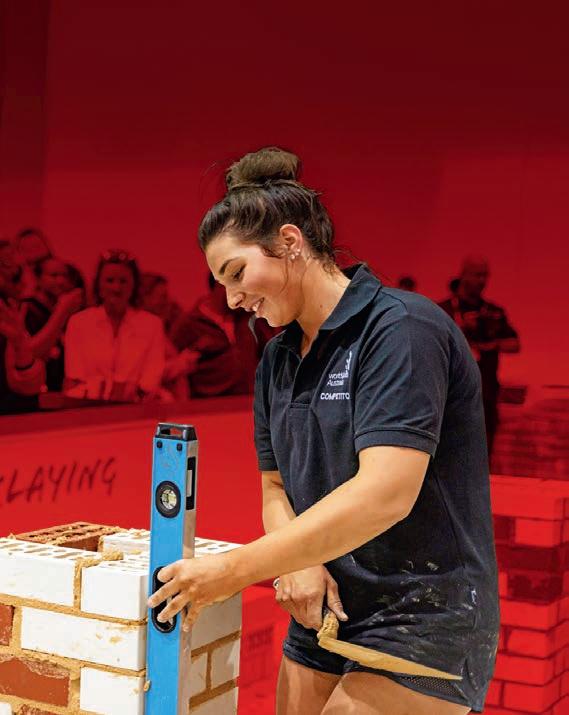


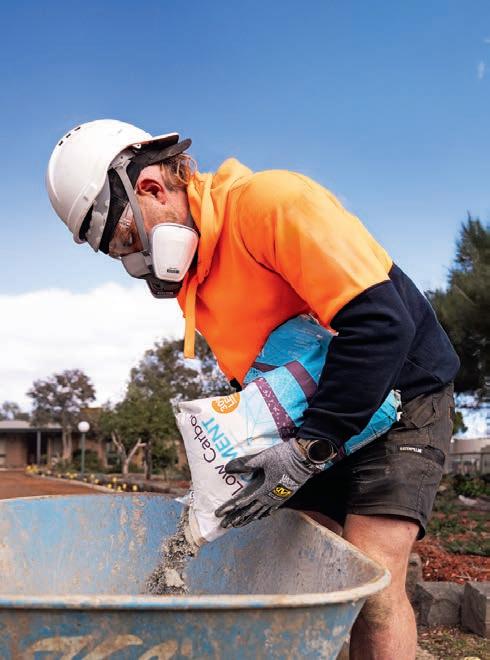

tradiemagazine.com.au

“It’s a place you can stay and grow your career”
- Sam, Assistant Branch Manager

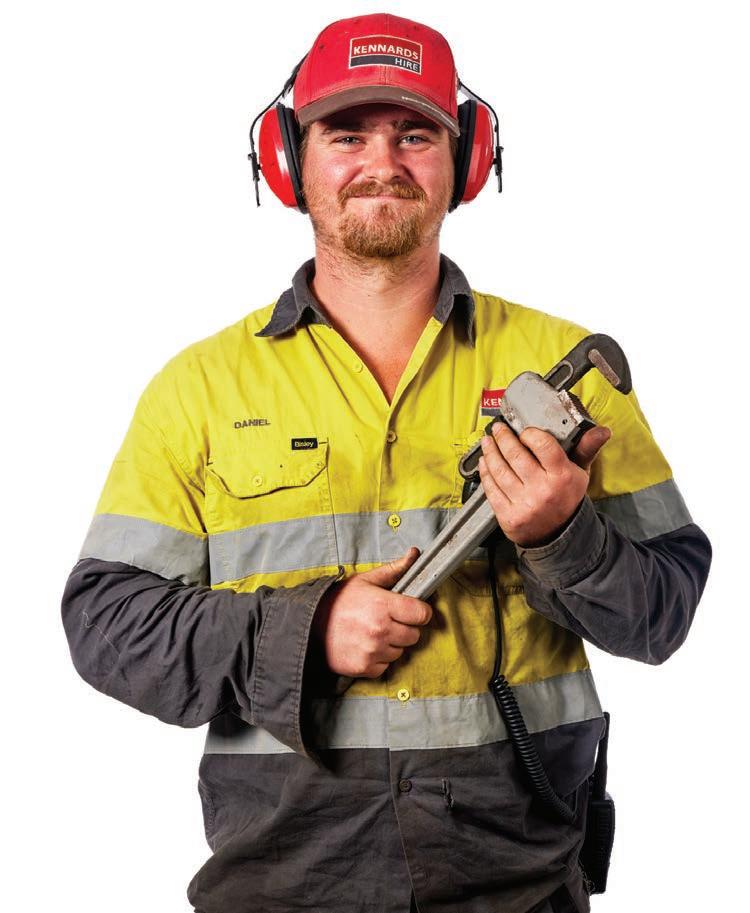
TAKE THE NEXT STEP IN YOUR CAREER

Scan to view current opportunities