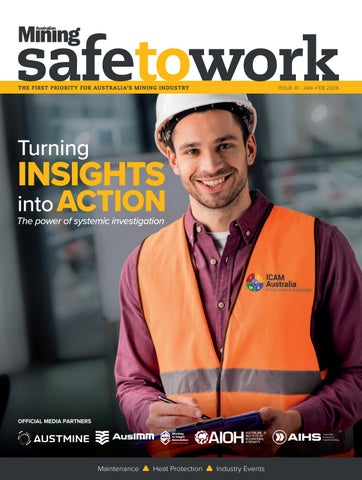

Turning into INSIGHTS ACTION
The power of systemic investigation







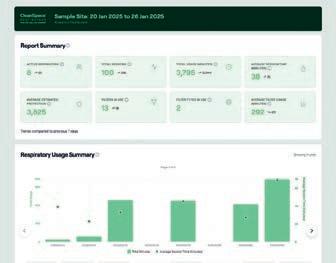

Key Bene ts
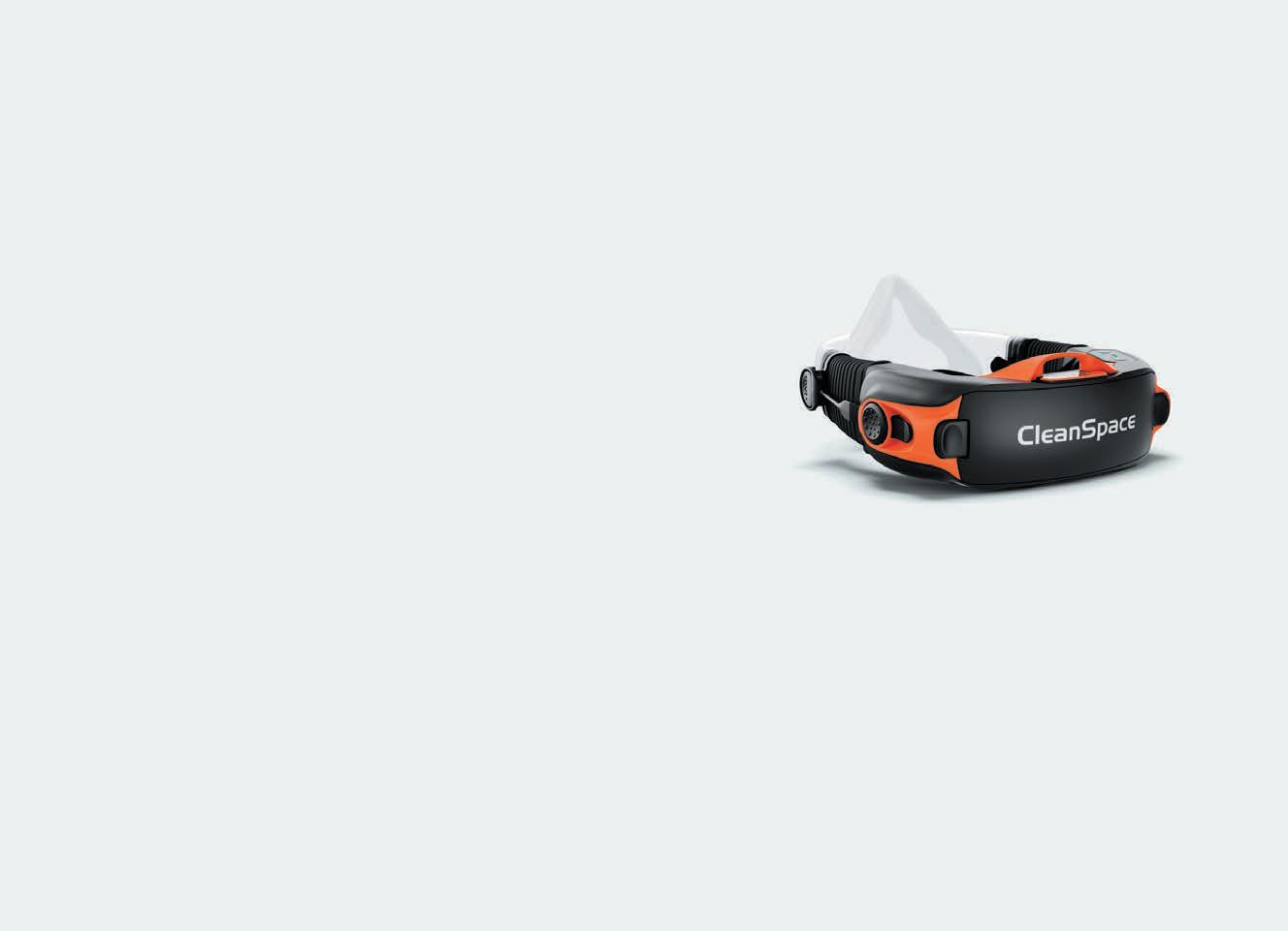
• Track real usage – see when and how your CST ULTRA units are used
• Verify protection – trust real data, not assumptions
• Optimise lters – reduce waste and unnecessary cost
How it Works
Simply download the SMART App, sync the data from your CST ULTRA, and request your Insights Repo .


IMaintaining the right balance
n an industry defined by complex systems and heavy machinery, clarity about how work truly unfolds remains one of the most powerful tools for improving safety and reliability. That idea sits at the heart of this edition’s cover story on ICAM. By examining the differences between how work is imagined and how it is ultimately done, ICAM provides a constructive framework for understanding the pressures and decisions that shape daily operations. It’s an approach that supports meaningful learning rather than fault-finding, and it continues to influence how organisations think about safety across the mining sector.
This mindset aligns closely with our focus on maintenance in this issue. Maintenance is essential to productivity, but it also brings some of the most challenging tasks on site. What’s encouraging is the energy and innovation being invested into making that work safer and more efficient.
Nivek’s TED remains a standout example of practical problem-solving born directly from field experience. Its ability to support heavy components in tight working spaces has reshaped how teams carry out demanding maintenance tasks, reducing risk and physical strain.
JOURNALISTS
LUKE DODEMAIDE Tel: (03) 9690 8766
Nome brings a similarly forward-looking perspective, emphasising that proactive maintenance is not simply a matter of compliance but a strategic safeguard against costly downtime. And Emesent continues to transform underground visibility, with Hovermap providing accurate, autonomous scanning that allows teams to plan maintenance with far greater confidence.
Alongside these features, this edition includes thought leadership pieces from across the industry and a look ahead at the trends expected to influence maintenance practices in 2026. And with summer now in full force, our heat-management article offers timely guidance for keeping workers safe in rising temperatures.
Together, these stories highlight an industry steadily strengthening the connection between intention and practice, and building safer, more resilient operations as a result.
Prealene Khera Editor
FRONT COVER: ICAM
ICAM Australia is focused on strengthening workplace health and safety. The company provides expert incident response consulting, WHS compliance advisory, and tailored incident investigation training, guiding organisations through each stage of the process. Its proactive approach helps companies implement systems and processes that not only meet regulatory requirements but also reduce risk, improve operational performance, and foster safer workplaces. Rooted in a philosophy of preventing recurrence, ICAM’s services combine practical guidance with deep expertise to support both reactive and preventative safety strategies.
Image: LIGHTFIELD STUDIOS/stock. adobe.com
CEO CHRISTINE CLANCY
MANAGING EDITOR
PAUL HAYES
Tel: (03) 9690 8766
Email: paul.hayes@primecreative.com.au
EDITOR
PREALENE KHERA
Tel: (03) 9690 8766
Email: prealene.khera@primecreative.com.au
Email: luke.dodemaide@primecreative.com.au
CLIENT SUCCESS MANAGER
JANINE CLEMENTS Tel: (02) 9439 7227
Email: janine.clements@primecreative.com.au
ART DIRECTOR
MICHELLE WESTON
RESOURCES GROUP LEAD
JONATHAN DUCKETT Mob: 0498 091 027
Email: jonathan.duckett@primecreative.com.au
The discipline of anticipation
As maintenance teams navigate the realities of working at height, a new approach is emerging – one built on foresight, not afterthought.
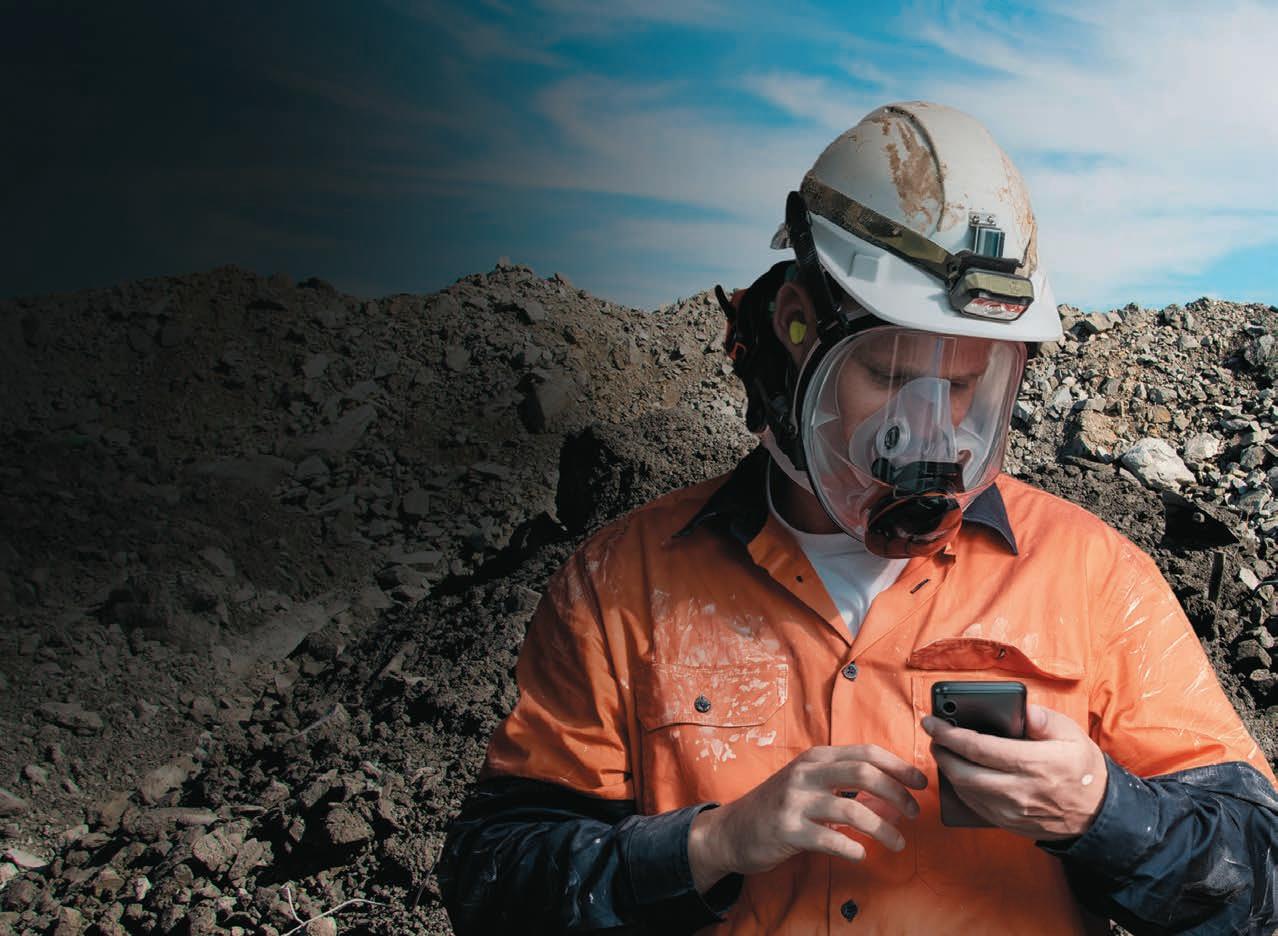
respiratory protection no longer relies on guesswork. CleanSpace is making it data-driven.
38 Staying ahead of the heat
With proactive planning and effective controls in place, mine sites can beat the heat.
Mine-site
Top-five mine maintenance trends for 2026
Maintaining an edge
Nivek Industries’ Tracked Elevating Device is transforming mining maintenance by eliminating heavy lifting.
Discover the key maintenance innovations that will shape the mining industry this year.
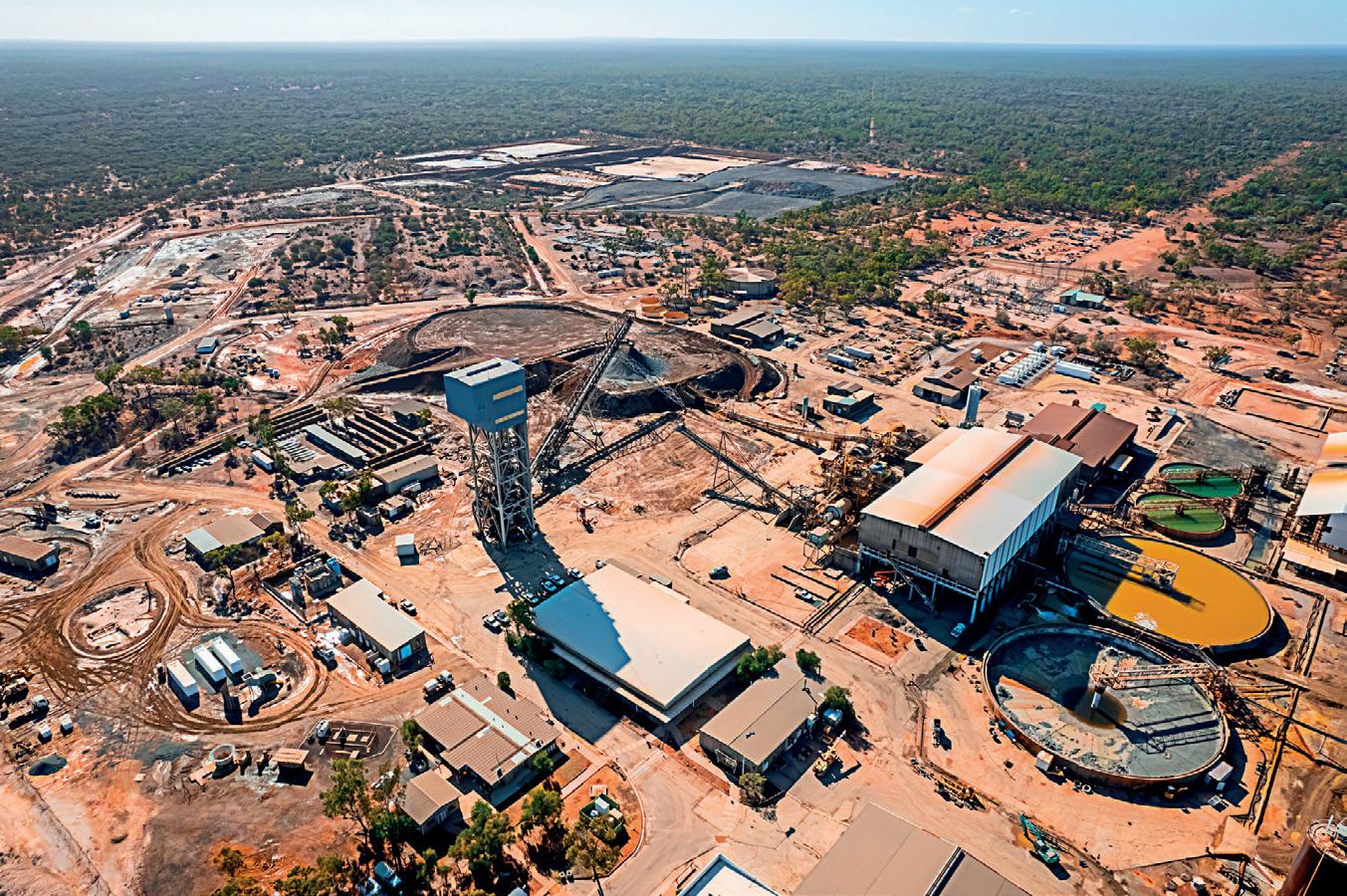
The compliance priorities shaping Australia’s mining sector in 2026.
The right questions
How use of emerging technology can strengthen safety in mining.

Safety snapshot

Safety in focus
THE MINING INDUSTRY CONTINUES TO FOCUS ON SAFETY, WITH A MIX OF NOTEWORTHY HEADLINES BRINGING THE YEAR TO A CLOSE. SAFE TO WORK ROUNDS UP SOME OF THOSE LATEST UPDATES.
As 2025 drew to a close, the final months of the year showcased remarkable progress in mine safety and operational standards. From inspiring demonstrations of teamwork and skill in emergency response competitions to proactive regulatory actions reinforcing worker protection, the period highlighted the industry’s ongoing commitment to continuous improvement and innovation in safety.
SAFETY INSIGHTS
November saw demonstrations of emergency readiness and operational excellence. Anglo American’s Moranbah North mine secured back-to-back victories at the 61st Australian Underground Mines Rescue Competition, edging out its sister site Grosvenor. The competition, organised by Queensland Mines Rescue Service and Coal Services NSW Mines Rescue,
tested firefighting, search and rescue, first aid, and hazard management under realistic emergency conditions.
Similarly, BHP’s Carrapateena team triumphed at the South Australian Mines Emergency Response Competition in Adelaide Hills. BHP’s 2025 Health, Safety, Environment and Community Awards in Melbourne also highlighted the company’s ongoing focus on safety innovation and culture, attracting nearly 400 nominations worldwide.
In Queensland, recent court rulings reinforced the importance of worker health, with a mining contractor fined for falsifying medical and drug testing records – a clear message that health assessments are fundamental to preventing occupational diseases like black lung.
Resources Victoria launched targeted spring inspections across mines and quarries in the state’s far
east in November, ensuring operators are meeting their legal obligations for risk management. Meanwhile, regulators renewed calls for stronger load restraint practices following a transport incident in Western Australia, highlighting the importance of adherence to operating procedures.
Queensland’s resources safety framework is set for a major overhaul, with a government-commissioned review revealing governance weaknesses and accountability gaps. The reform package will introduce an independent governing board to streamline oversight and restore confidence among the state’s 82,000 mining workers.
The NSW Resources Regulator reported a lift in incident notifications across the state’s mining sector, signalling renewed pressure on operators to tighten controls around high-risk activities. The regulator’s
quarterly safety report for July–September 2025 logged 596 incident notifications, an 18 per cent rise on the previous quarter and one per cent higher than the same period last year. While the quarter included one nonwork-related fatality, the data showed continued exposure to principal hazards, particularly vehicle operating areas and fire or explosion risks.
As summer approached, Resources Victoria and Fire Rescue Victoria collaborated to help coal mine operators prepare for heightened fire risk, with regular inspections verifying that fire prevention and response plans were in place.
SAFETY INCIDENTS
The underground explosion at Polymetals’ Endeavor mine near Cobar, New South Wales, drew national attention in late-October.
The NSW Resources Regulator issued an alert advising operators to reassess the use of ballistic disc explosives following the incident, which resulted in two fatalities and a
serious injury. The regulator launched a full investigation and as of the start of December was collaborating with manufacturers, suppliers, mine operators, and SafeWork NSW to explore potential restrictions on these devices
Elsewhere, a NSW mine site recorded a serious maintenance incident in November in which a worker suffered partial amputation of three fingers after using an improvised electrical system to operate a hydraulic ram. The NSW Resources Regulator issued prohibition notices and urged operators to formalise strict “machine under test” procedures.
A coal mine worker in Queensland narrowly avoided serious injury after being trapped between a reversing truck and a crane during a loading operation. Resources Safety and Health Queensland classified the event as a high potential incident, emphasising the need for vigilance in vehicle interactions.
A separate incident in NSW involved an excavator striking an overhead
powerline at an open-cut coal mine, causing electrical discharge over the cab. Although the operator stopped safely, the event highlighted ongoing risks where mobile plant operates near high-voltage infrastructure without proper guidance.
Investigations by the NSW Resources Regulator in November also revealed widespread tampering and component failures in explosionprotected diesel engine safety systems. The regulator issued a safety bulletin urging operators to strengthen engineering and procedural controls and restrict maintenance to trained personnel.
WorkSafe in Victoria alleged breaches of the Occupational Health and Safety Act following a fatal rock fall at the Ballarat Gold Mine in March 2024. Insufficient ground support and supervision were linked to the death of one worker and critical injuries to another. The case underscores the ongoing legal duties of mine operators and contractors to maintain safe working environments.
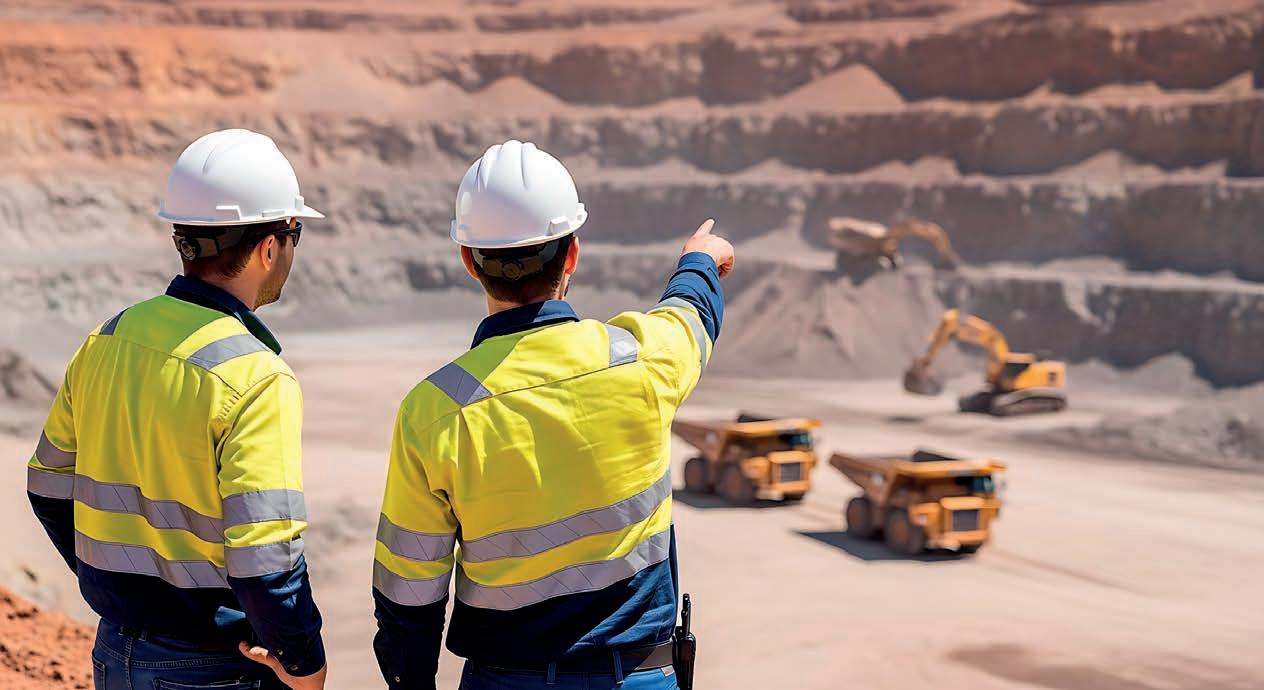
The final months of 2025 showcased progress in mine safety and operational standards.
Looking beyond compliance
THE INCIDENT CAUSE ANALYSIS METHOD BRIDGES OPERATIONAL REALITY AND STRATEGIC RISK GOVERNANCE, PLACING SAFETY AT THE CENTRE OF MINE SITES.
The effective management of safety in complex, highrisk systems, such as those in mining, depends on an organisation’s ability to reconcile the difference between how work is imagined and how it is actually performed.
In high-risk or complex workplaces, there is a critical need to understand and document the reasoning behind actions and decisions taken prior to an incident so valuable lessons can be captured and systemic improvements made. Contemporary safety thinking recognises that investigations must move beyond surface-level faultfinding to explore the systemic pressures that shape human performance and normalise deviation from ideal conditions.
This requires a deep understanding of the interplay between ‘work as imagined, work as normal, and work as done’ – together forming the operational reality triad.
The operational reality triad provides a conceptual foundation for understanding how failures emerge in organisational systems.
Work as imagined (WAI) refers to the formalised, idealised procedures, standards and protocols established for performing a task. These are designed with the intent of maximising safety, consistency and efficiency, often reflecting regulatory and best-practice influences. However, WAI is commonly authored by people removed from the realities of frontline work, meaning it may overlook the contextual variability workers face daily.
Work as done (WAD) represents the real, moment-to-moment performance of work; the decisions, adaptations and trade-offs people make to achieve the task under actual conditions.
A key tenet of contemporary safety theory is that WAD will routinely differ from WAI. Understanding these differences lies at the heart of systemic investigation models such as the Incident Cause Analysis Method (ICAM).
Work as normal (WAN) describes the evolution of daily practice; the habitual, accepted deviations from the formal standard. WAN captures the local adjustments, shortcuts and normalised compromises workers use to balance productivity, time pressure and limited resources. It sits between WAI (the prescribed ideal) and WAD (the real-time action).
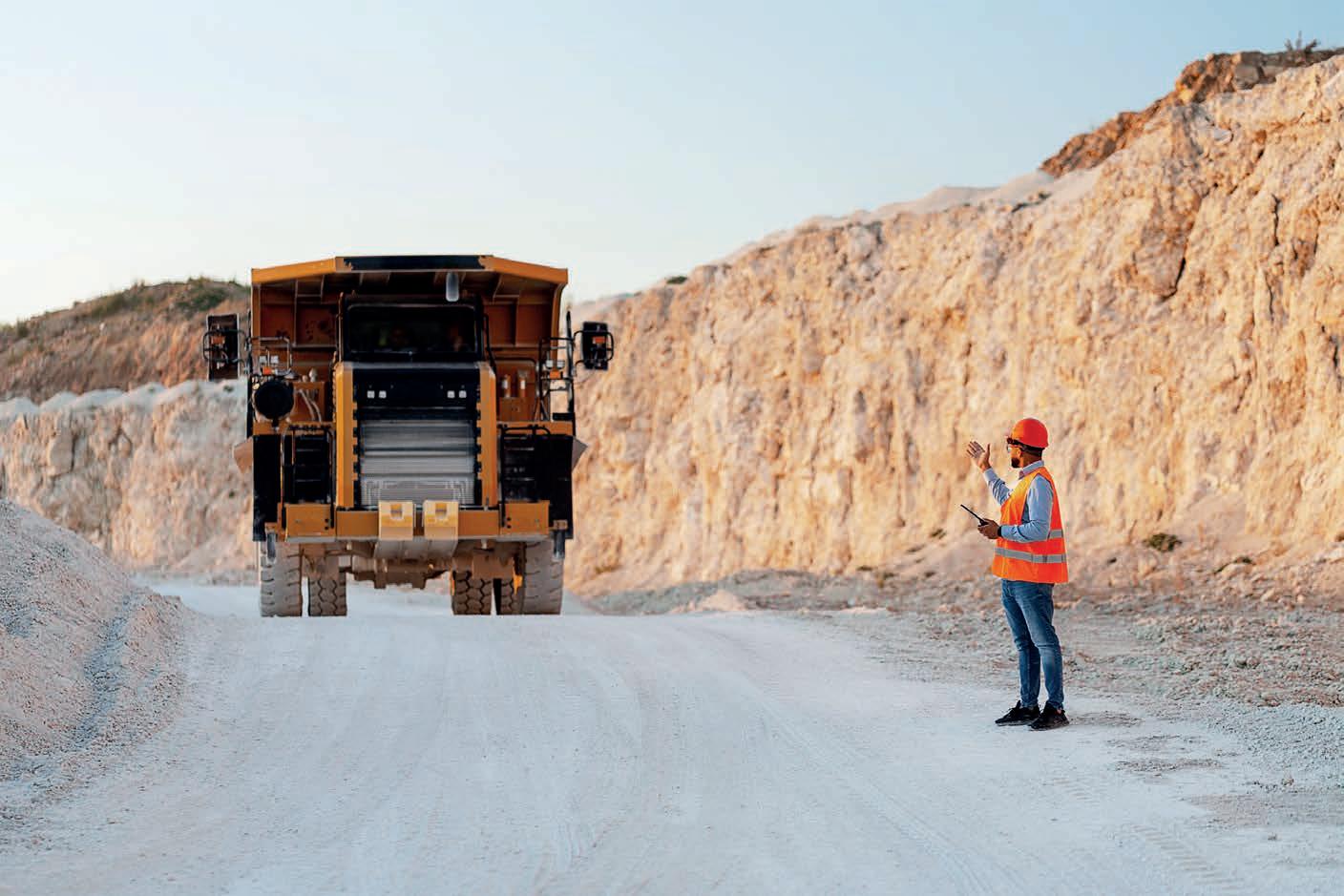
ICAM is a globally recognised model for structured investigation, particularly in complex, high-risk sectors.
The divergence between WAI and WAD challenges long-held managerial assumptions about control and compliance. Recognising this gap requires organisations to value frontline insight as the most accurate window into operational reality. The difference between WAI and WAD indicates procedural drift or that controls are not usable in real conditions. This identifies the gaps between risk controls and the safety system process.
Bridging this divide is essential for improving safety and productivity. ICAM investigations depend on understanding the work as disclosed (WAD-D), what workers say happened, which is collected through interviews and documentation.
The accuracy of WAD-D hinges on psychological safety. In an open, trustbased culture, workers freely disclose deviations and contextual pressures, allowing investigators to accurately reconstruct WAD. In cultures where blame is a concern, disclosures can sometimes be incomplete, which may affect the accuracy of findings and limit systemic learning. The methodology may reveal challenging issues, such as conflicting goals or oversight gaps, which can prompt reflection on existing structures.
Equally, the success of an investigation depends on how effectively it identifies WAN, the background of routine deviations and organisational drift that made the failure possible. When WAN is overlooked, the analysis risks stopping at the immediate act rather than exposing the latent organisational and systemic contributors.
An organisation’s cultural maturity ultimately dictates how deeply it can learn from its ICAM process. An open disclosure environment tends to enhance the value of training and investigative capability.
A SYSTEMIC FRAMEWORK
ICAM is a globally recognised model for structured investigation, particularly in complex, high-risk sectors. ICAM is designed to move beyond individual
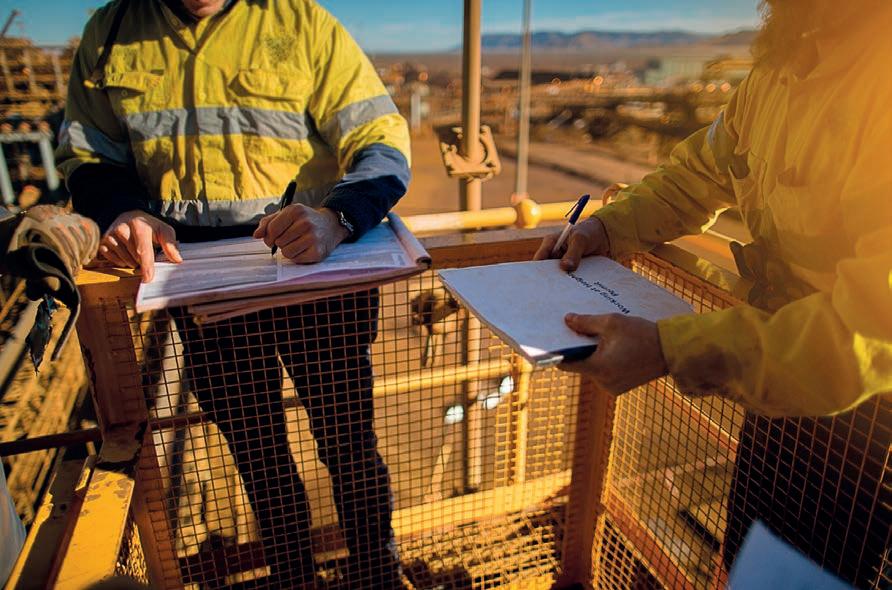
Bridging the divide between work as imagined and work as done is essential for improving safety and productivity.
blame and deliver systemic learning by linking frontline performance to organisational governance.
It is grounded in the research of organisational psychologist Professor James Reason, whose work on human error and organisational accidents revolutionised safety science.
Reason’s Swiss Cheese Model (SCM) visualises safety defences as layers of Swiss cheese, each with inherent weaknesses, or “holes”. When these holes align, latent conditions and active failures combine to cause an incident.
ICAM translates this model into a structured investigative process. It distinguishes between active failures (immediate errors or violations by individuals) and latent conditions (underlying system weaknesses such as insufficient resourcing, poor supervision, flawed design or inadequate training).
This marked a decisive shift away from the outdated “person model” of investigation, which focused solely on individual error.
Instead, ICAM embraces a systems model, recognising that most failures arise from complex organisational interactions, not isolated human mistakes.
ICAM provides a logical pathway to identify not only what happened, but why. ICAM Australia’s method has evolved to include seven investigation stages, designed to ensure consistency, rigour and alignment with organisational governance structures:
Emergency response
The priority is to secure the site, preserve evidence and stabilise the situation. This phase begins uncovering early insights into WAD, capturing how individuals responded in real time under stress or uncertainty.
Investigation planning
The investigation planning phase is confirming the scope, gathering the team, and admin around the conduct of the investigation.
PEEPO planning
The PEEPO (people, environment, equipment, procedures, organisation) framework guides data collection. This planning step identifies which domains may reveal deviations between WAI, WAN and WAD. PEEPO planning is what the investigator wants to know and verify, and who will gather it.
Incident investigation
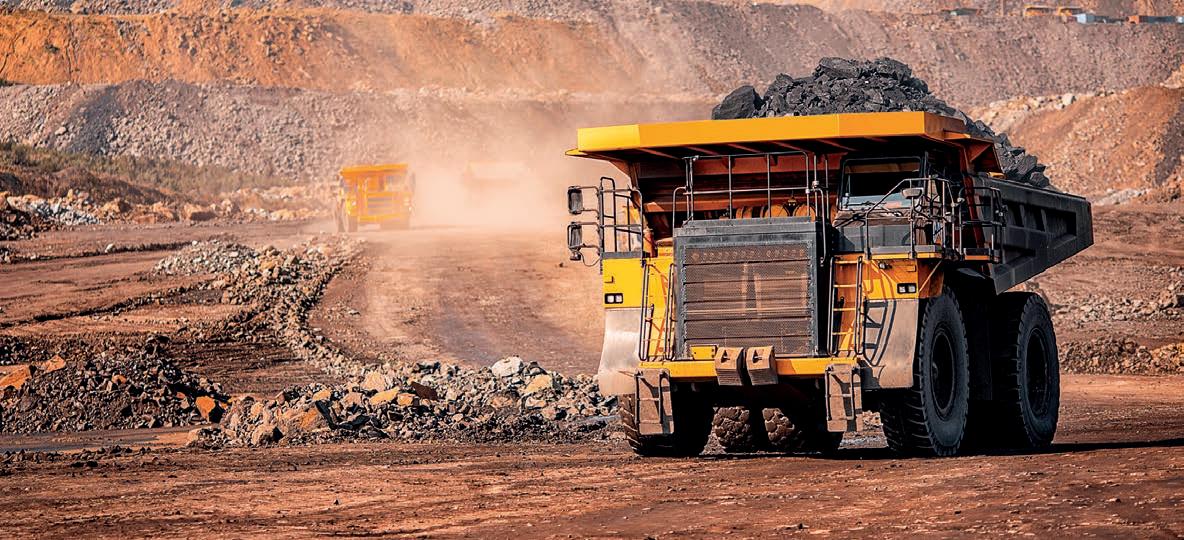
Investigators collect evidence through interviews, documentation, digital means and observations, focusing on obtaining accurate WAD-D narratives. The success of this phase relies on establishing psychological safety and trust to ensure unfiltered insight.
ICAM analysis
Data is categorised into ICAM’s four key contributing factor groups:
• Absent or failed defences –barriers that failed to prevent or mitigate the event
• Individual or team actions –observable actions or errors by people directly involved
• Task or environmental conditions – local circumstances influencing performance
• Organisational factors – deeper, systemic contributors such as management systems, planning, culture or leadership
The analysis connects these layers, tracing WAD back through WAN to WAI to expose the latent system conditions that created vulnerability.
Recommendations
Recommendations target systemic improvement, not individual blame. Actions are designed to strengthen defences, improve task conditions and
address organisational weaknesses identified in the analysis.
Reporting
The reporting stage consolidates findings into a coherent narrative that communicates not only what happened, but why it made sense to those involved. Reports promote learning and cultural growth rather than punishment, reinforcing safety as a strategic function of governance.
ICAM’s investigative power lies in its ability to bridge the gap between WAI and WAD, transforming the investigation into a diagnostic tool for system resilience.
Each ICAM category helps operationalise latent conditions and identify where procedural and cultural barriers broke down. For example, during the analysis of absent or failed controls, if a critical risk control such as a required equipment safeguard or procedural check was missing or did not function as intended, this exposes a disconnect between what was expected in the system design and what actually occurred in practice.
At the organisational factors level, ICAM exposes dormant weaknesses such as leadership decisions, goal conflicts, inadequate resourcing or poor change management. Research consistently shows that
organisational factors and absent or failed defences each account for approximately 22 per cent of identified causes and, within those, management system deficiencies make up more than 60 per cent.
ICAM’s objective is to reduce recurrence and enhance safety performance through systemic learning, not blame. It provides a framework to diagnose procedural failure along the WAI–WAD continuum:
• Flawed WAI – the procedure was poorly designed or unrealistic
• Flawed WAN – systemic pressures caused deviation to become normalised
• Flawed defence – supervisory systems failed to detect or address the drift
By tracing the event across this continuum, ICAM helps to ensure corrective actions address root organisational causes, not apparent behaviours.
Successful ICAM programs require leadership endorsement and cultural maturity. The methodology may reveal challenging issues, such as conflicting goals or oversight gaps, which can prompt reflection on existing structures. Without executive support to act on findings, even the best investigation becomes a static report rather than a catalyst for improvement.
PEEPO collection
ICAM helps mine sites ensure e ective safety practices are embedded in their operations.









PREMIUM HYDRATION FOR AUSTRALIA’S HARDEST WORKERS

Electrolyte MineralsReplenish essential minerals to prevent dehydration and maintain peak performance.

Six Delicious Flavours - Grape, Lemon & Lime, Watermelon, Passionfruit, Mixed Berry, Tropical.







Vitamins B6 & B12 - Reduce fatigue and boost energy levels.
BCAA’s for RecoveryAid muscle recovery and enhance performance.

99.5% Sugar-Free - Hydrate smarter without the extra sugar, ideal for staying fit and refreshed.
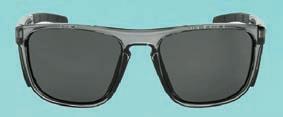

Request a free Acrkup hydration trial for your site and go into draw to win 10 Navigator X safety specs.





KEY FEATURES


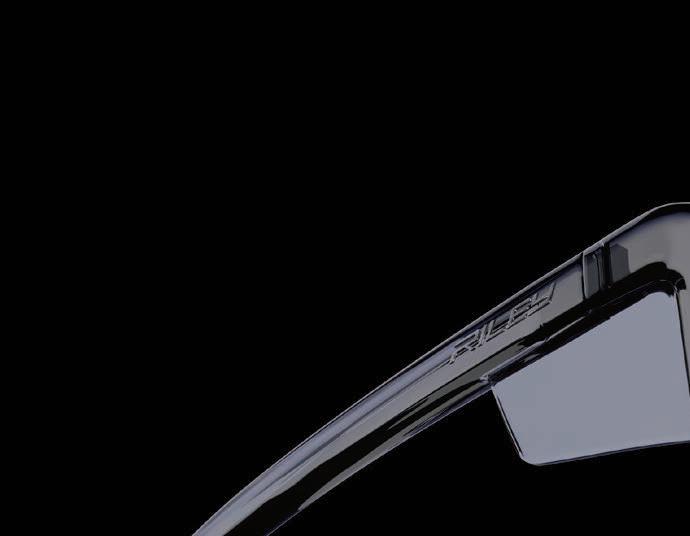
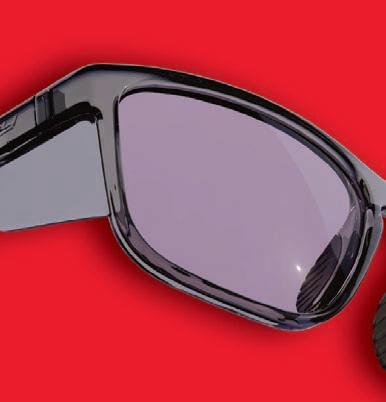
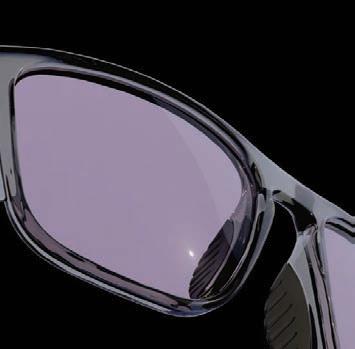
Pushing the boundaries on style and innovation, the NEW Navigator X offers a protective eyewear solution without compromise. Featuring the iconic wayfarer design, high quality materials and specialist lens options, the Navigator X is the next level for style & safety.

+ Market first HD lens dramatically improves clarity and contrast, heightens colours whilst relaxing the eye

+ Made using ethically sourced Bio-Based materials
+ Premium UV400 FLOW-TEC Anti-Fog and Anti-Scratch lenses (including polarised and mirrored)











SCAN FOR MORE INFO
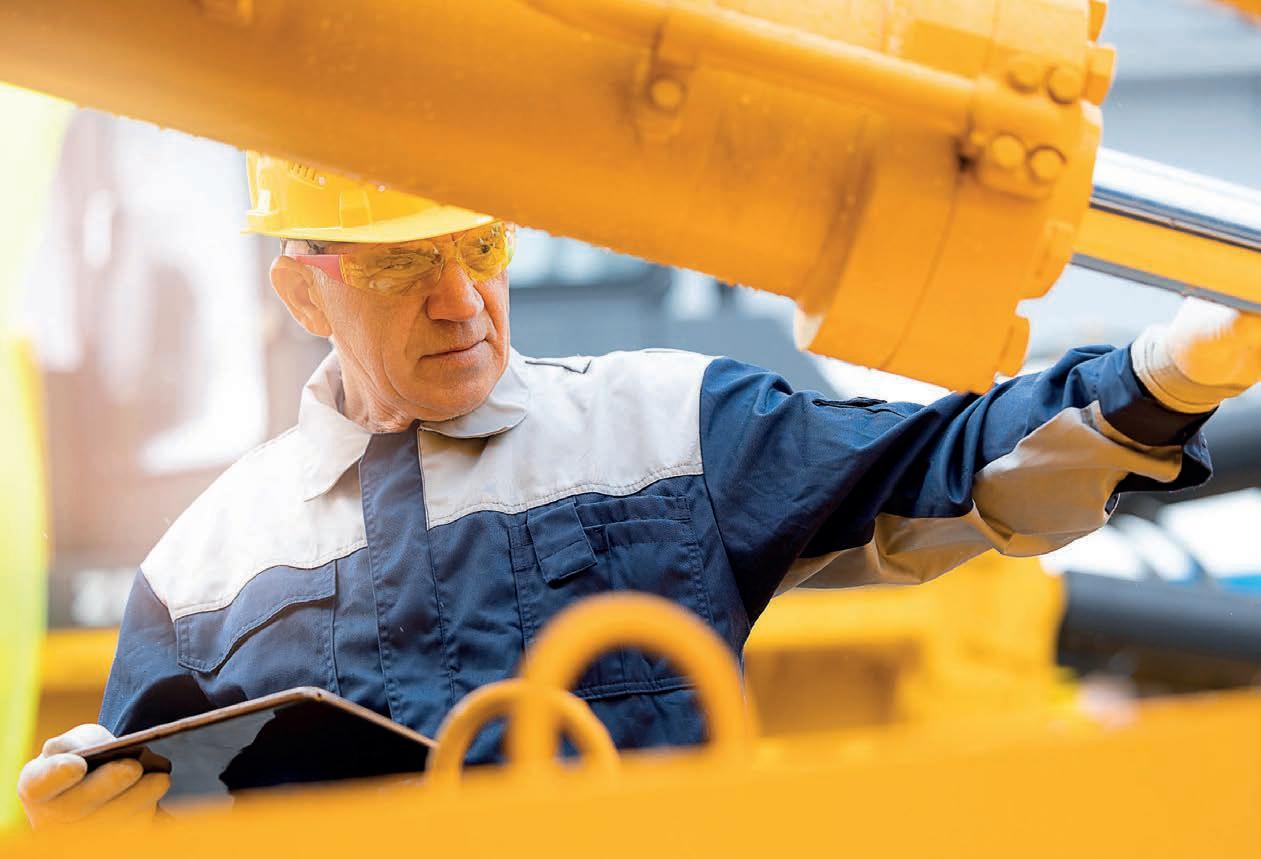
Maintenance logs and inspections reinforce a culture where safety comes first.

Turning maintenance into safety
MINE-SITE MAINTENANCE HAS BECOME AN ESSENTIAL SAFEGUARD THAT SHAPES SAFETY EVERY DAY.
The concept of maintenance in mining operations spans far beyond keeping machines running. It is a critical safety control, intertwined with risk management, asset reliability and worker protection.
Whether in an open-pit iron ore operation, an underground metalliferous mine or a remote processing facility, maintenance defines how well a site translates engineering controls into safe day-to-day working practice.
When maintenance is overlooked, hazards accumulate. A mis-aligned bearing, a guard removed for access, a hydraulic hose nearing end of life: each one may appear benign until something gives way. In the mining sector, with heavy loads, moving plant, remote terrain and variable environmental conditions, those
seemingly minor defects can escalate into incidents with serious injury or production loss.
By contrast, when maintenance is treated as part of the safety system, it becomes a form of risk control. Maintenance helps to ensure guards and interlocks remain in place, isolations are effective, plant condition is monitored and deterioration is addressed before it becomes a hazard. In this way, maintenance becomes as much about protection of people as it is protection of equipment.
Mining legislation in states and territories imposes a duty of care on mine operators and those who maintain equipment. For example, people in Western Australia who are involved in the design, supply, installation and, importantly, maintenance of plant are required to ensure safe systems of work.
What this means in practical terms is that the upkeep of machinery is not a secondary task. It must be integrated into the safety management system: maintenance schedules, inspection regimens, defect reporting, root-cause follow-up, and safe handover processes must all be aligned with operational safety.
EMBEDDING MAINTENANCE
IN
THE SAFETY CULTURE
Culture drives behaviour. For maintenance to serve safety, it must be part of the day-to-day mindset, and mine leadership plays a vital role in reaffirming that.
When senior company and site executives attend workshops, review maintenance logs and emphasise that maintenance work is as important as production work, people are likely to take note.
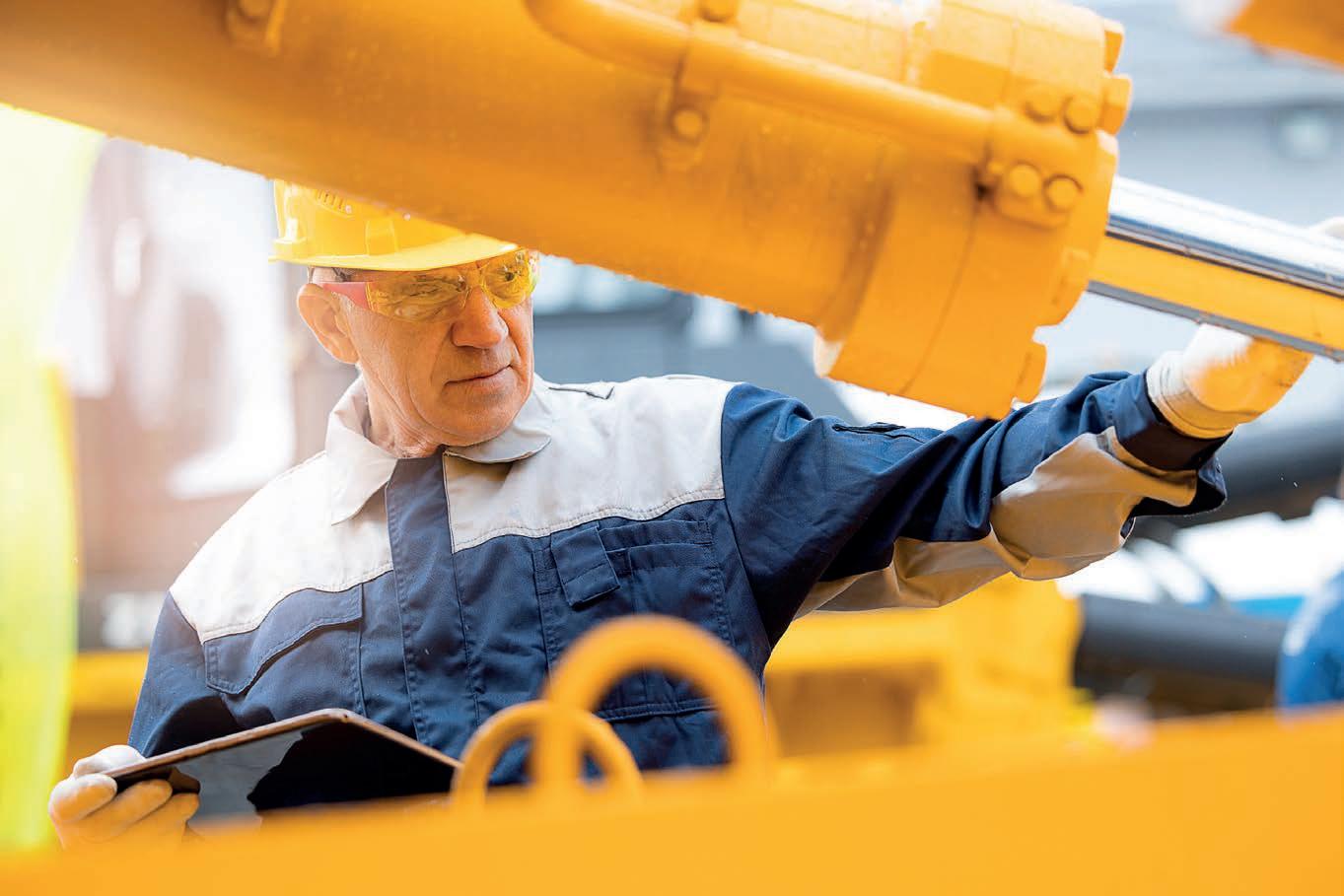
Effective maintenance culture in mining includes cross-functional engagement: operators noticing early signs of equipment change, maintenance technicians trained in safe servicing and inspections, operations supervisors planning downtime for maintenance rather than deferring, and safety teams integrating maintenance tasks into hazard-identification frameworks.
To achieve this type of culture, training and competence are paramount. Maintenance personnel must understand the mechanical task and the risk context, such as live hydraulics, electrical systems, moving plant and confined spaces. At the end of the day, workers and managers need to remember that maintenance must not only restore function but deliver safe operation.
Reporting and feedback loops are equally crucial. The absence of structured follow-through undermines trust in the maintenance system and allows latent hazards to persist.
Combating that is relatively straightforward; a defect discovered during inspection must be logged, prioritised, funds allocated, work performed and verified.
If these practices are regularly implemented, maintenance becomes a visible manifestation of the safety culture. However, operators also need to be across the various elements that make up a robust maintenance framework.
A mature maintenance system in mining industry settings must cover several dimensions:
Asset criticality
Sites should identify the equipment whose failure would have the greatest safety or production impact. This might include haul trucks, draglines, crusher motors, conveyor drives, ventilation fans or underground diesel machines. Focusing inspections and condition-monitoring on these pieces helps to ensure maximum safety return.
Planned inspections and servicing
Operating in harsh conditions –abrasive dust, heavy vibration, shifting loads, extreme heat, corrosion –means mining equipment degrades faster than many industrial peers. Maintenance regimens must reflect that reality.
Condition
monitoring and proactive intervention
While mining regulations may not prescribe every check point, best practice encourages vibration monitoring, oil analysis, thermal imaging, alignment verification and root-cause failure analysis. This reduces reliance on reactive repair.
Safe isolation, lock-out and hand-over
The mining environment often involves high-energy plant and systems. One guidance on isolation of hazardous energies makes clear that fixing or servicing machinery must be done under safe states, and should be verified and documented.
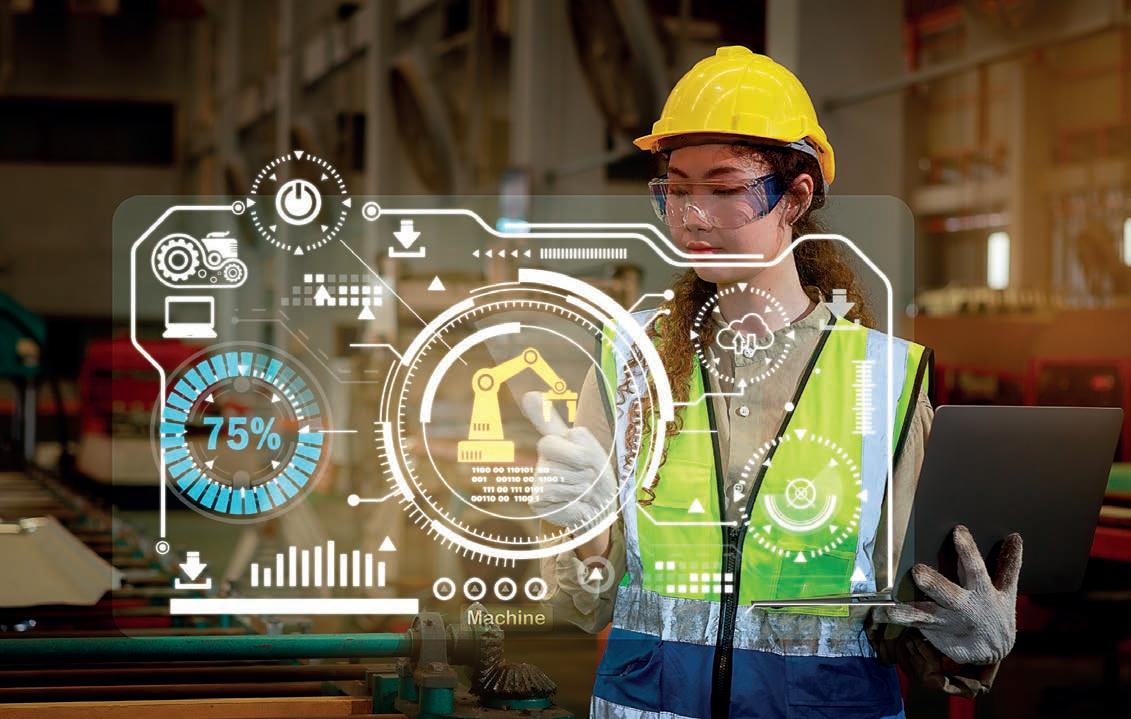
Technology and data-led systems help maintenance teams act before equipment failures occur.
Maintenance
Review, learning and
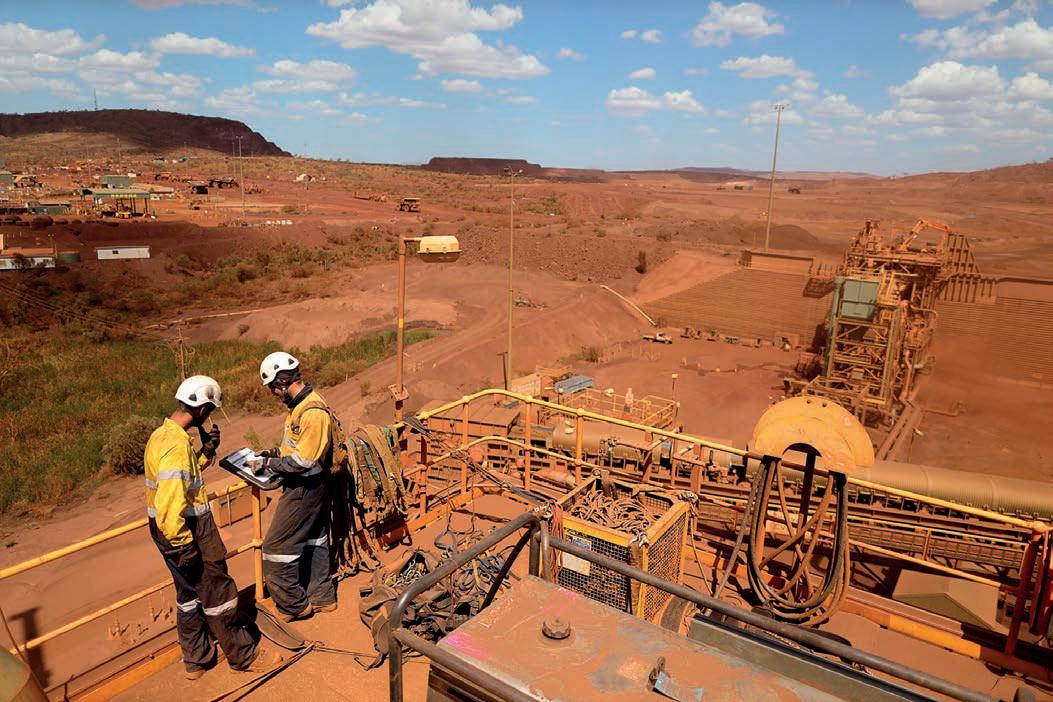
When equipment fails, inspections reveal defects or an incident occurs, organisations should analyse with the same rigour as incident investigations. Maintenance records hold the data for trend analysis and risk profiling.
FAIL TO PLAN, PLAN TO FAIL
Deferred maintenance often triggers a chain effect. A seal failure may let dust or moisture ingress, which increases wear on bearings; the bearing fails, vibration increases, coupling loosens, mis-alignment causes further wear.
Left unchecked, a small fault becomes significant and the cost in safety, and production, multiplies rapidly. While maintenance neglect is often triggered by production pressure – sites may defer non-critical maintenance to keep output flowing – mining regulation reminds us that
Australian guidelines for mining operations emphasise the need for ongoing monitoring throughout the life
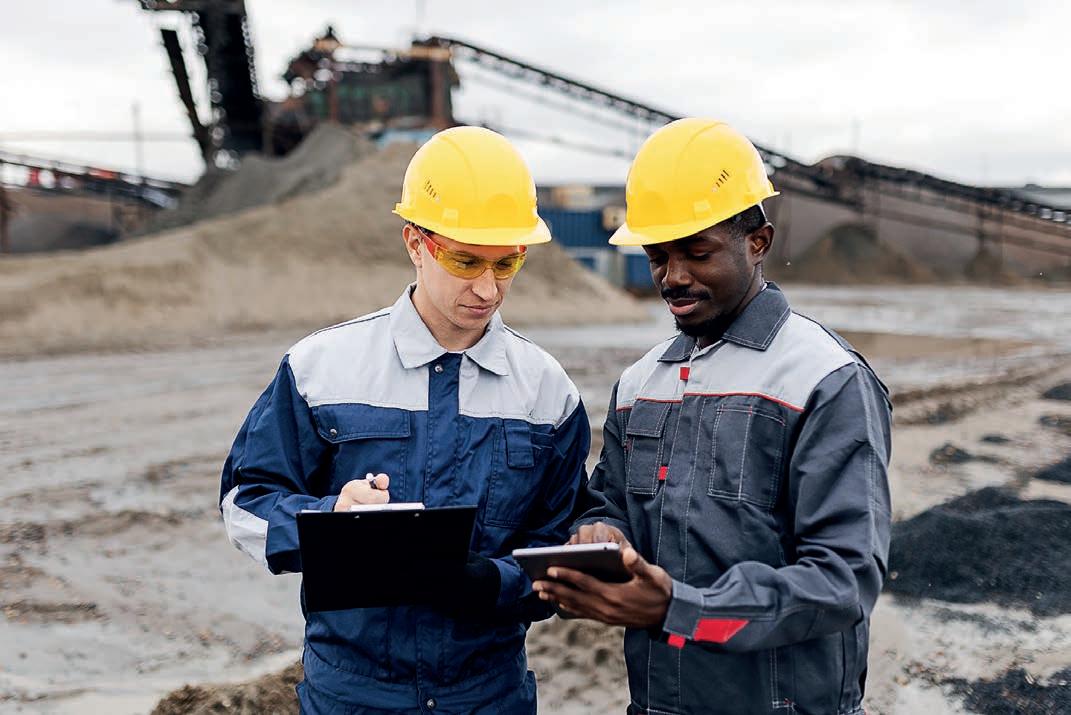
Supervisors leading by example reinforce maintenance as a safety-critical task.
Maintaining equipment in di cult conditions can prevent small faults from escalating.
of a mine and not just at design stage, because skipping maintenance is not simply risking a machine breakdown, it is risking a safety failure.
Key performance indicators for maintenance in mining should also go beyond ‘percentage of downtime’ or ‘cost per tonne’. They should include safety-related indicators such as number of defects found during inspection and time to closure; number of equipment-related incidents or near-misses linked to maintenance or condition issues; percentage of critical-asset inspections completed on schedule; trend of vibration or oil-analysis data for key assets; and hours for maintenance personnel on safety topics.
Where maintenance data is aggregated, it becomes its own kind of safety signal.
But even the managers with the best- laid maintenance plans and statistics face challenges once the work begins on site.
Several issues are unique to the mining context, but addressing them is
an ongoing part of keeping operations safe and productive.
Remote and fly-in, fly- out (FIFO) sites make maintenance logistics difficult, with parts, tools and specialist skills often located far from where they’re needed. Effective planning, adequate spares and strong supplier relationships are essential to keeping work on track and avoiding costly delays.
Many mines are also managing ageing fleets. Older machines may no longer match their original design assumptions, and sourcing compatible parts can be difficult. Maintenance teams need to understand legacy design issues, wear histories and component obsolescence to keep older assets performing safely and efficiently.
The human element adds another layer of complexity. Shift work, fatigue and rapid handovers can lead to incomplete documentation or shortcuts under pressure. Clear checklists, consistent verification, and active supervision help maintain standards and reduce the risk of errors, even in demanding conditions.
Technology also brings new opportunities for improvement, but it can also introduce new challenges.
Tools such as condition monitoring, machine learning, and Internet of Things (IoT) systems can provide valuable insights, but they only add value when paired with skilled interpretation and timely action. A sensor alert that isn’t followed by maintenance intervention contributes little to safety or reliability.
Meeting these challenges depends on how maintenance is understood and valued within the organisation. For mining operators, this means maintenance must be elevated beyond the workshop floor and into the safety framework.
Every inspection, every defect logged, every part replaced and every machine isolated is a moment where safety is reinforced.
The cost of not conducting maintenance is real, but the benefit of doing it well is far greater: fewer incidents, more predictable operations and better worker confidence.

Maintaining an edge
NIVEK INDUSTRIES’ TRACKED ELEVATING DEVICE IS TRANSFORMING MINING MAINTENANCE BY ELIMINATING HEAVY LIFTING AND REDUCING DANGEROUS WORKER FATIGUE.
Machinery maintenance in the mining and heavy industry sectors has long carried something of a dangerous paradox. While the goal is to keep equipment running safely, the actual process of maintaining these massive machines often poses a risk in itself.
Providing a safer approach to maintenance has always been a core
focus for Nivek Industries. The idea first sparked when Hunter Valley local Kevin Cant, working as a heavy plant
mechanic in a nearby mine, found himself removing a belly pan and thought, “there must be a better way”.
Enter the Tracked Elevating Device (TED), which in 2011 changed the way earthmoving machinery was maintained and refurbished by offering a safer, more practical approach to field maintenance – driven largely by its off-road, all-terrain capability. Designed as a mobile, remotecontrolled mechanical assistant, TED’s low-profile tracked design allows it to move through the tight undercarriages of earthmoving machinery and support the weight of heavy components, enabling fitters to work more safely

TED has continued to evolve through the development of versatile attachments, expanding its capabilities to support an even wider range of maintenance tasks. Nivek’s innovations are guided by the first-
hand experiences of the end users who rely on the system daily, ensuring each enhancement meets the practical demands of the field.
Nivek has actively partnered with major mining companies to develop bespoke attachments that streamline niche maintenance tasks. Recent collaborative innovations include the T264 Steer Cylinder Cradle for precise manoeuvring of heavy cylinders; the A-frame Pin Tool for simplifying complex pin removals; and the Dana Axle Cradle, which enables safer removal and installation of axles.
“All these attachments mount onto the TED and are used to support and move the various components to allow for safer and efficient removal and installation,” Cant said.
This ongoing feedback has driven Nivek to expand its portfolio, introducing complementary products that cover an even wider range and efficiently.
These innovations are just a few examples of how Nivek listens to its end users and translates their feedback into practical solutions. By continually refining TED and its attachments in response to realworld experiences, the company ensures every enhancement meets the demands of maintenance teams in the field.




“It’s incredibly valuable to us to have so much feedback from engineers, fitters and safety personnel, the people who will ultimately be using the system,”
Cant said.


“This gives us the parameters to work within and get the design right straight up, meeting some pretty tough criteria.”



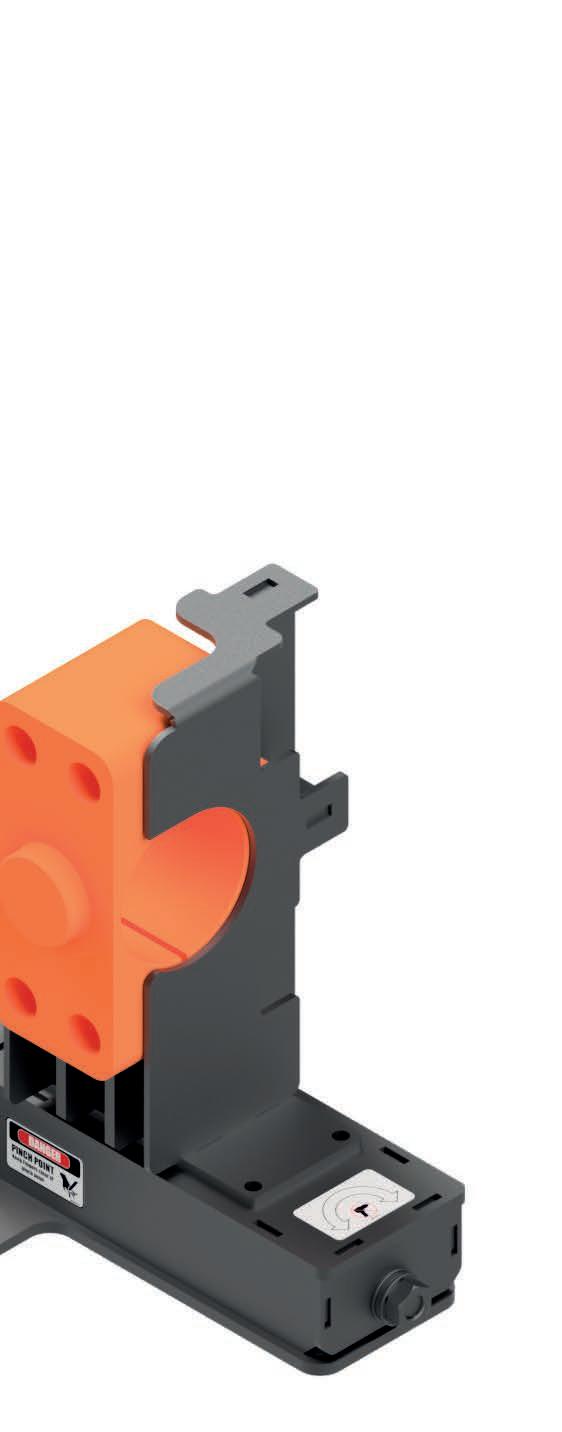
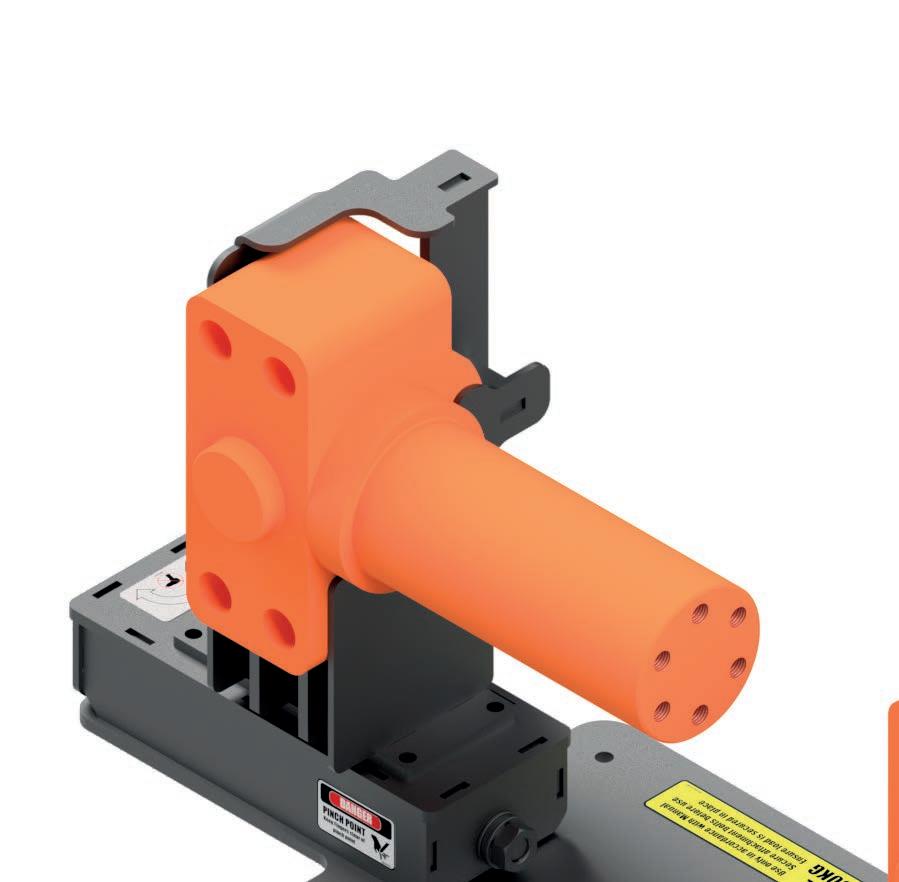
The A-Frame Pin tool carries the pin and mounting blocks required to secure the A-frame to the chassis.
of maintenance scenarios. The portfolio now includes Big TED, an evolution of the original design with a massive 3000kg lift capacity for bulky components; the LA range of lift assist arms, including the LA-40, providing targeted solutions for precise lifting tasks; and the BOB (Beast of Burden) range of tracked carriers, capable of transporting loads of up to 5000kg safely and efficiently over longer distances.
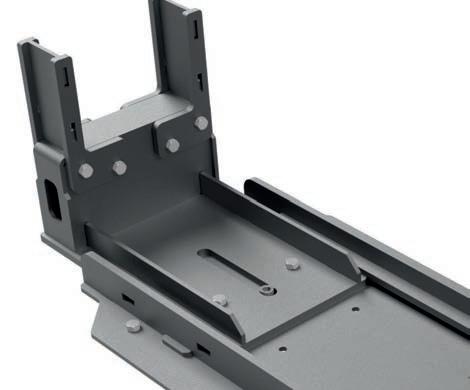
Perhaps Nivek’s greatest strength, Cant explained, is its refusal to view any product as a single-purpose machine. Every Nivek product is engineered with an adaptable base, ready to be configured or upgraded to tackle real-world maintenance challenges. This dedication to flexibility ensures Nivek products evolve with their users, delivering solutions that keep teams safer, faster and more efficient.
Looking ahead, Nivek is preparing to meet the increasingly complex requirements of modern maintenance.
“For the next phase of the business, we aim to enhance the versatility of our attachment line-up,” Cant said. “At their core, our products are tracked power units that deliver value through adaptability.
“We are also aiming to finalise our product range so that we can provide a solution for any niche maintenance task without needing to develop a whole
new machine. Often, a new bracket or cradle is all that is required.
“As industry safety standards continue to rise, Nivek’s evolution from a single lifting device to a comprehensive ecosystem of powered tools is something we’re extremely proud of.”
Through these initiatives, Nivek demonstrates its commitment to innovation, safety and efficiency, delivering adaptable solutions that evolve with the needs of the maintenance teams.
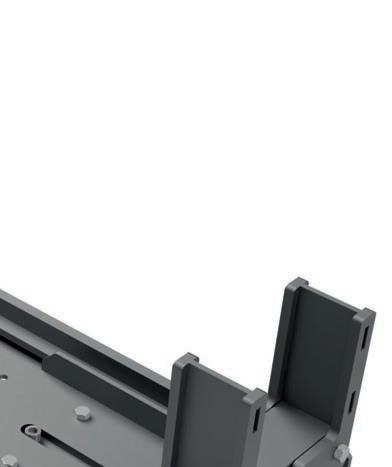
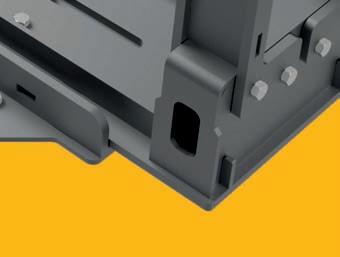
in specialised maintenance
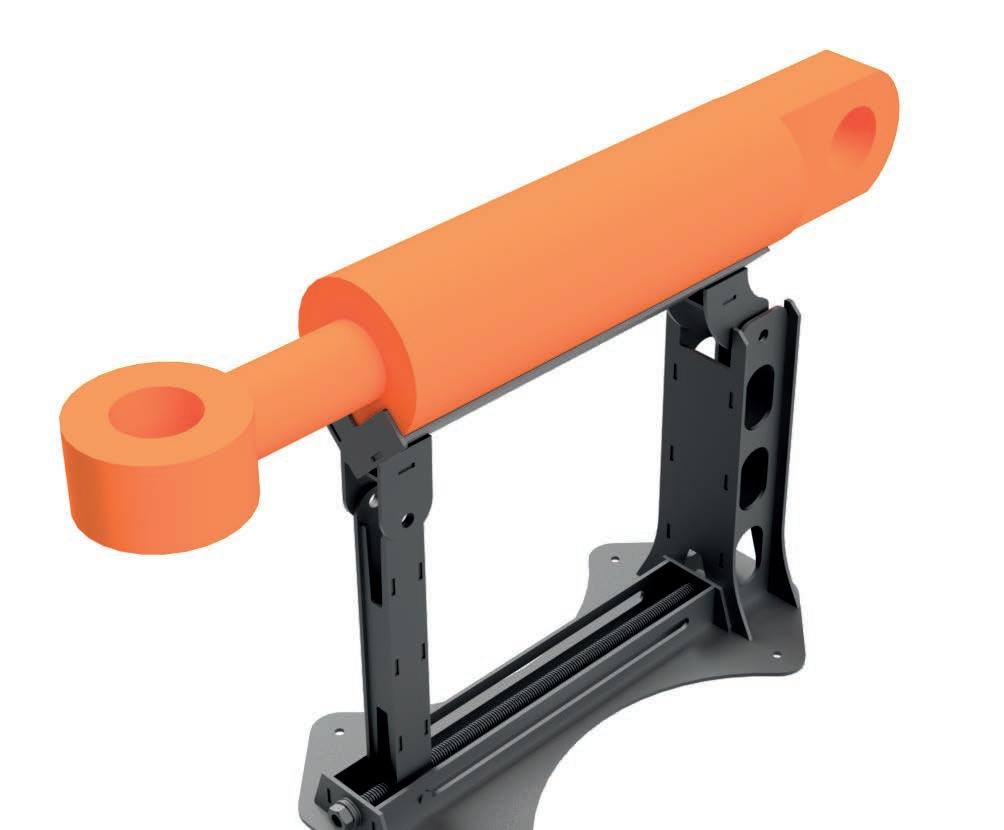
T264 Steer Cylinder Cradle
This unit is built to support Liebherr T264 steer cylinders throughout the removal and installation process.
A-Frame Pin Tool
This tool carries the pin and mounting blocks required to secure the A-frame to the chassis. When mounted on the turntable and combined with the low-profile pivot table, it allows operators to align the pin and mounting blocks for installation or removal while mitigating the risks of suspended loads. It also features an interchangeable pin crown to suit specific tasks.
Dana Axle Cradle
Reflecting the move toward bespoke problem-solving, this attachment addresses specific workshop challenges. By utilising the TED as a base, the cradle facilitates the removal and installation of heavy dana axles while allowing the maintenance crew to remain at a distance during the lift and lower stages.


The Dana Axle Cradle is a vital tool that addresses specific workshop challenges.
The T264 Steer Cylinder Cradle supports the Liebherr T264 steer cylinders.
Safety through e ective conveyor maintenance
CONVEYOR
SYSTEMS ARE
THE
BACKBONE OF AUSTRALIAN MINING OPERATIONS,
BUT MAINTAINING THEIR SAFETY AND EFFICIENCY DEPENDS ON RIGOROUS, ONGOING CARE. ESS ENABLES MINES TO MEET THESE DEMANDS THROUGH EXPERT MAINTENANCE AND SUPPORT.
Conveyor systems are essential infrastructure across Australian mine sites, responsible for transporting high-volume bulk materials, such as ore, overburden and minerals, throughout processing and extraction areas. Their smooth operation
Mine sites around the world operate in harsh conditions, aiming to maximise profitability. In the Australian setting, they must also conform to rigorous safety standards to protect personnel, which requires regular maintenance and site inspections.
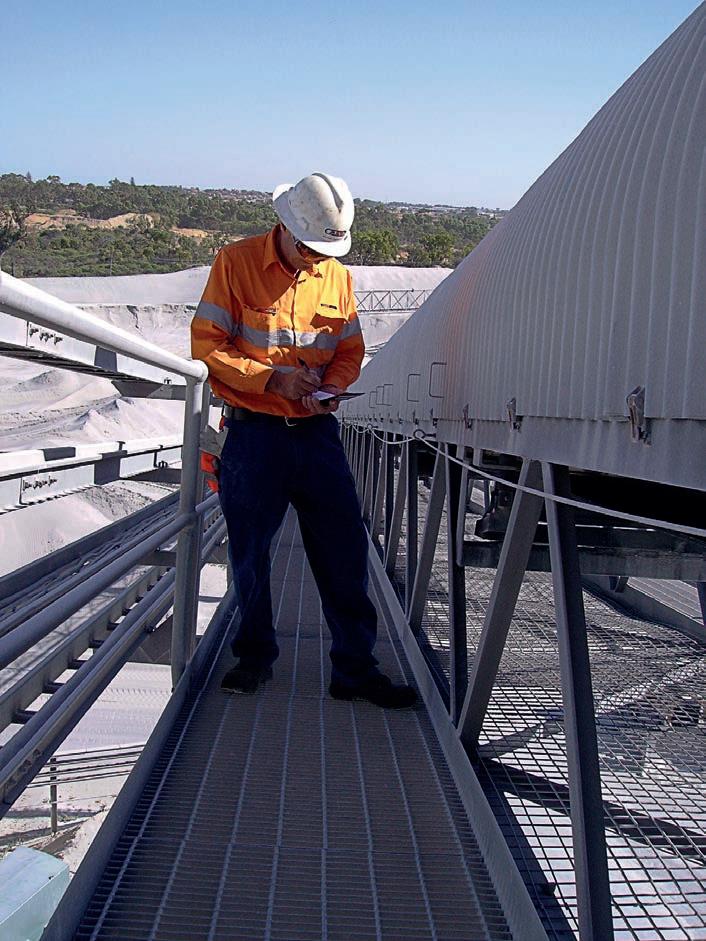
Without regular servicing and inspection of belts, components, and accessories, conveyors can experience accelerated wear, mechanical failures and unplanned downtime. On mine sites – where shutdowns have highcost implications – unexpected conveyor failures can halt production, disrupt scheduling, and introduce unnecessary safety risks.
To support safe and reliable operation, mine sites invest in a wide array of conveyor accessories. Belt cleaners, sealing and support systems, belt-tracking solutions, and flow aids all contribute to safer and more efficient operation. These systems not only improve efficiency and productivity but also help maintain compliance with environmental and safety requirements.
However, all belt accessories require regular inspections and maintenance. Minor mechanical issues or worn components can quickly escalate into significant failures if they are overlooked, creating operational bottlenecks and increasing safety risks.
One of the most effective strategies for avoiding such problems is predictive maintenance. By identifying signs of wear or mechanical stress early, mines can schedule
interventions before minor issues become major problems.
Predictive approaches enable operators to optimise maintenance scheduling, reduce unplanned downtime and protect personnel and equipment. Working closely with shutdown planners, specialists can assess new and in-service equipment to determine when repairs or adjustments are most effective. This approach not only safeguards the operation but also improves cost efficiency by targeting maintenance where it is most needed.
ESS plays a key role in supporting safe and reliable conveyor operation through integrated services. Its technicians conduct thorough inspections of the conveyor accessories and produce prioritised maintenance plans tailored to each site. By addressing issues proactively, ESS helps mines protect equipment, reduce costly failures, and maintain continuous production. Beyond inspections, it provides hands-on support, offering guidance and recommendations that strengthen broader maintenance strategies.
Skilled personnel are fundamental to safe and effective conveyor operation. ESS delivers targeted training programs at its Australian manufacturing facilities, regional hubs, and directly on mine sites, including remote locations. These sessions equip maintenance teams with the practical knowledge to identify hazards, assess equipment condition, and carry out servicing safely and efficiently.
ESS plays a key role in supporting safe and reliable conveyor operation through its integrated services.
On-site training includes learning to inspect belts and components for wear, replace and adjust belt cleaners and skirting correctly, optimise airflow at transfer points, and address the root causes of belt damage.
ESS also conducts fundamental conveyor maintenance workshops to improve safety performance for mine workers, safety teams, designers and planners. These sessions cover component identification, compliance with guarding standards, belt tracking techniques, dust control principles, and support system optimisation.
By combining theory with handson practice, these workshops are designed to provide employees, safety teams, designers and planners with the knowledge required to maintain system integrity under demanding conditions. The goal is not only to prevent failures but also to foster a culture of proactive maintenance and safety awareness.
On-site maintenance programs that integrate inspections, predictive maintenance and targeted training deliver clear benefits to mining operations. They reduce the risk of unplanned stoppages, extend the lifespan of critical components, and maintain a safer working environment for personnel. Mines that embed these practices into daily operations can respond quickly to emerging issues, minimise disruptions, and achieve greater efficiency.
ESS delivers tailored conveyor maintenance solutions designed to meet the safety, reliability and operational requirements of Australian mine sites. Through specialised engineering support, practical training and predictive maintenance strategies, ESS helps mining operations maintain safer conveyors, reduce downtime and support a more controlled and efficient working environment.
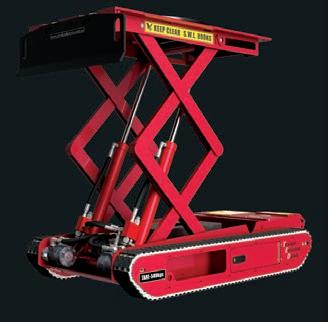
TED ATTACHMENTS DESIGNED FOR SAFETY. BUILT FOR PRODUCTIVITY.
Developed in collaboration with leading mining companies, TED’s latest attachments take on the toughest maintenance tasks with precision and control.
Purpose-built to improve safety, e ciency, and component handling, each unit mounts seamlessly to TED, transforming one device into a complete lifting system.

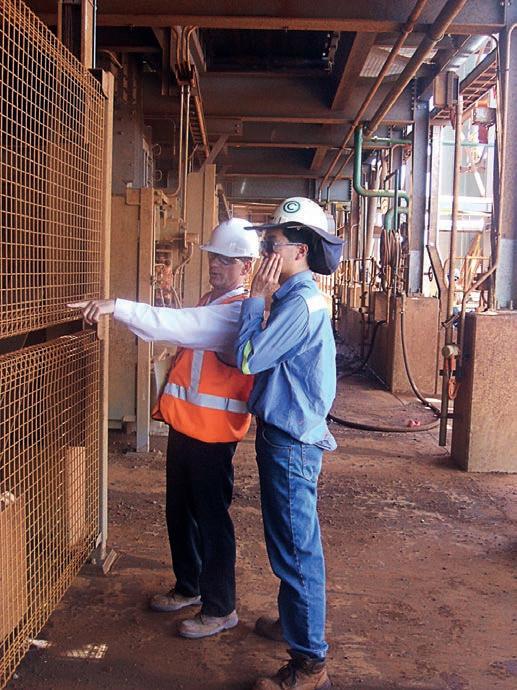
provides hands-on support to mine sites.
ENGINEERED, TESTED, AND PROVEN IN THE FIELD
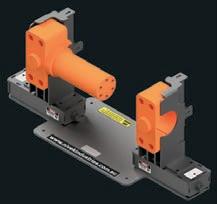
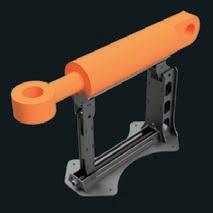
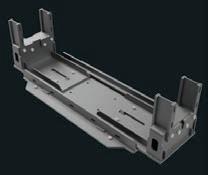
Safe, stable support for steer cylinder removal and install T264 STEER CYLINDER CRADLE
A-FRAME PIN TOOL
Simplifies pin handling and alignment during maintenance
DANA AXLE CRADLE
Strong, accurate positioning for safe axle maintenance
ESS
Powering predictive maintenance
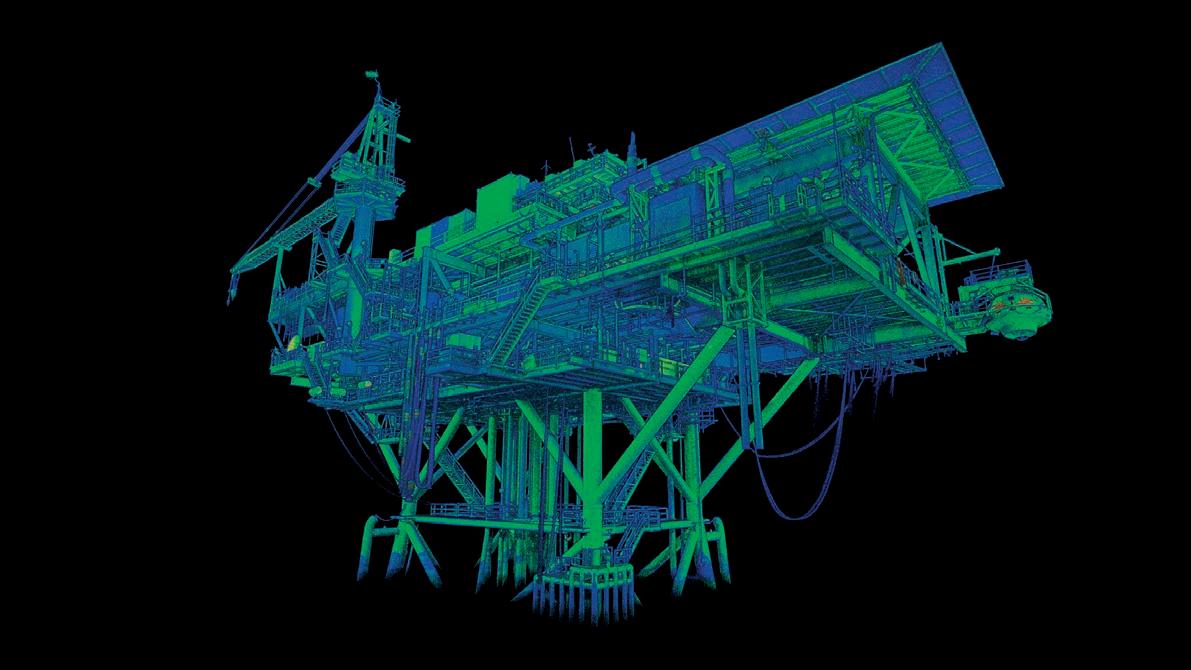
EMESENT’S HOVERMAP PROVIDES FAST, ACCURATE 3D REALITY CAPTURE FOR INDUSTRIAL INSPECTION AND MAINTENANCE.
Ethe mining maintenance process for nearly a decade.
The Queensland-based software company’s flagship product is Hovermap, an artificial intelligence (AI)-powered mobile scanning unit that combines collision-avoidance and autonomous-flight technologies to map underground environments.
Founded by tech trailblazers Farid Kendoul and Stefan Hrabar, who previously worked together at CSIRO, Emesent has quickly become a standard-bearer in underground mapping solutions. The Hovermap technology is the result of combining two breakthroughs: simultaneous localisation and mapping (SLAM) software, and light detection and ranging (LiDAR) capture and analysis.
allows it to be mounted to a drone for aerial views, switched to a walking scan for congested equipment areas, attached to a vehicle for vast spaces, or lowered into deep shafts via a protective cage when access is particularly unsafe.
This type of deployment flexibility has helped the Hovermap earn a reputation as the “Swiss Army Knife” of mobile survey mapping and maintenance.
“We’re giving operators more confidence by enabling Hovermap to fly autonomously through even narrower spaces,” Hrabar said.
“Improvements in Hovermap’s perception technology allow drones to pass through gaps as small as 2.4m without human intervention.”
powered autonomous mission control software, Cortex, which is accessed via the company’s app, Commander.
The software analyses the environment to detect obstacles and plan optimal routes in real-time, requiring less human intervention in maintenance.
“Our ongoing developments in Cortex and Commander represent the biggest advancement in our autonomous mapping solution in years,” Hrabar said
“This enables autonomous exploration-based data capture, delivers unparalleled simplicity of use, further increases operational safety, and allows capturing data in previously inaccessible areas.”
Emesent is known for its ability to autonomously map inaccessible spaces.
Images: Emesent
“HOVERMAP
IS OUR ONLY OPTION”
The Northparkes, New South Wales, site of the China Molybdenum Company (CMOC) mine utilised Emesent’s Hovermap to monitor essential underground infrastructure following the partial failure of two new 560m ventilation shafts shortly after completion. The mine needed detailed data, which its existing downhole bore camera could not provide.
“Access to the ventilation shafts was not possible by any other means,” CMOC Northparkes Mines senior operations geotechnical engineer Linda Snyman said.
“Scanning with Hovermap is our only option for obtaining detailed information about what’s happening down there.”
The solution involved safely lowering the Hovermap LiDAR scanner, mounted in a protective cage, 560m down the intake shaft on a cable. The scan took about two hours to complete.
By comparing scans from a year apart, Northparkes personnel were able to measure changes in shaft overbreak and deformation over time and identify the maintenance and work needed.
This analysis identified rock features such as joints and fractures that could affect the stability of the ventilation incline. Access to accurate data enabled the team to take timely remedial action, significantly reducing the likelihood of costly mine shutdowns and production losses.
Hovermap is continuously used across the mine to monitor other assets, such as drifts and surface stockpiles.
“HOURS RATHER THAN DAYS”
Aerial Production Services (APS) chose Emesent to create a 3D digital twin of a large, complex onshore natural gas compressor station in the south-eastern US. The facility contains extensive equipment, including vessels, piping and a compressor skid, requiring accurate scanning above, below and between the equipment.
Hovermap’s LiDAR system was mounted to a drone and utilised pilot assist mode to maintain a safe standoff
distance from the in-service equipment. APS completed the scan in just two 25-minute flights, which reduced the inspection time by more than 80 per cent compared to a typical ground LiDAR scan that would have totalled approximately six-and-a-half hours without capturing detail at height.
“The Hovermap unit allowed us to capture data with a depth of detail that we couldn’t achieve before, and to do so in hours rather than days,” APS field operation manager, oil and gas team Drew Talley said. “Terrestrial measuring tools would have provided some footprints but being able to fly above and below the equipment gave us a thorough representation.”
APS also performed a walking scan to enhance data in heavily congested spots. The resulting 3D digital twin will be used by the asset owner to support future maintenance, operations and construction planning, and provide
dimensional data for new equipment design. This single, versatile tool significantly cut post-scan processing time by more than 40 per cent, the company said.
The APS project highlights Hovermap’s dynamic and versatile uses, but Hrabar said the mining industry is where the technology made its name and will endeavour to continue to innovate.
“Emesent is known for its ability to autonomously map inaccessible spaces, especially dangerous underground environments like stopes,” Hrabar said.
“What is unique about Hovermap is its ease and speed of deployment in challenging subterranean spaces. It ensures the safety of maintenance teams in the field, helps minimise the inconvenience of monitoring and inspections, and saves both time and the cost of operations.”
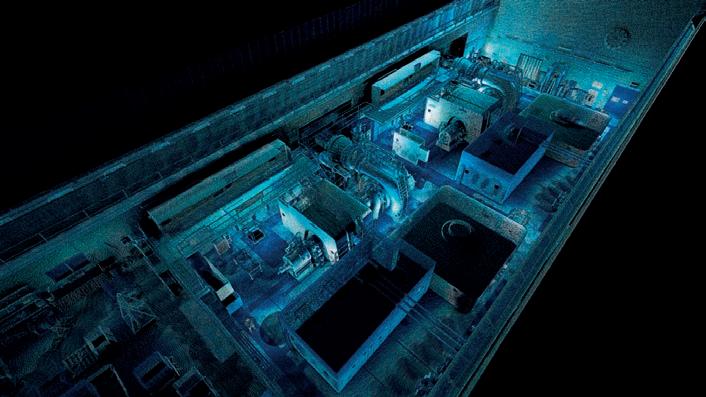
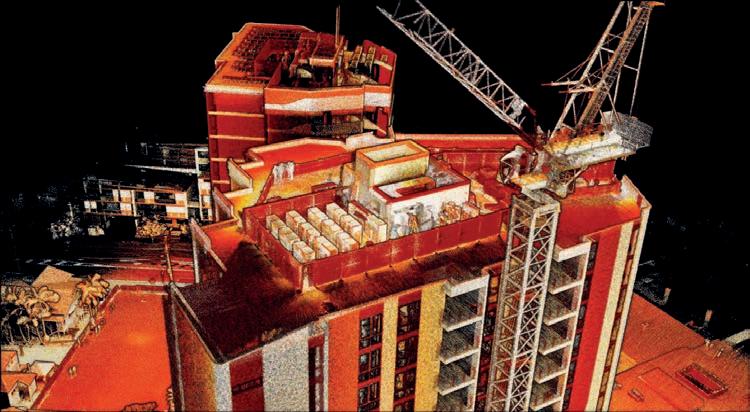
Emesent’s Hovermap is a reliable tool for industrial inspection and maintenance.
The 3D digital twin can be used by asset owners to support future maintenance, operations and construction planning.
Rock steady maintenance
NOME DELIVERS THE SYSTEMS, EXPERTISE AND OEM SUPPORT THAT MINES NEED TO STAY AHEAD OF UNPLANNED DOWNTIME.
“Maintenance isn’t an after-thought; it’s the backbone of a successful mine,”
Nome managing director Nathan Owen told Safe to Work
“At Nome, we understand this better than anyone.”
Beyond just being an inconvenience and a disruption, unplanned downtime in mining can also be extremely costly. Every hour of lost production can translate into significant financial impact and operational delays.
That’s why, according to Owen, proactive maintenance and timely servicing are essential in ensuring mines can safeguard productivity and profitability – something Nome helps mines achieve every day.
Specialising in the design and manufacture of real-time monitoring systems for the industry, Nome provides operators with the tools they need to stay ahead of potential issues.
Powered by a comprehensive global maintenance strategy designed to keep its clients’ systems compliant,
reliable and performing at their peak throughout their year, the company’s commitment to supporting clients goes far beyond installation.
As an original equipment manufacturer (OEM), Nome operates through a trusted network of distributors and partners, helping to ensure mines have access to worldclass support no matter where they are, whether deep underground in a soft or hard-rock operation.
While its systems are engineered for resilience, even the most advanced technology requires careful upkeep. To meet this need, Nome has built a vast maintenance ecosystem that spans continents, sectors and project types.
From underground soft and hard-rock mines to tunnelling and civil works, Nome’s experts are on hand to provide responsive, reliable service. Its global footprint means clients are never waiting for assistance, and whether it’s a scheduled audit or an urgent repair, Nome maintains the same high standards everywhere.
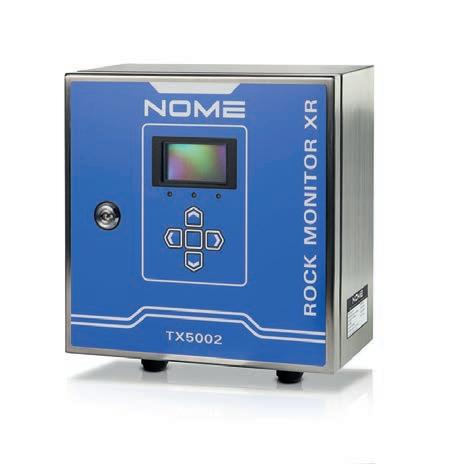
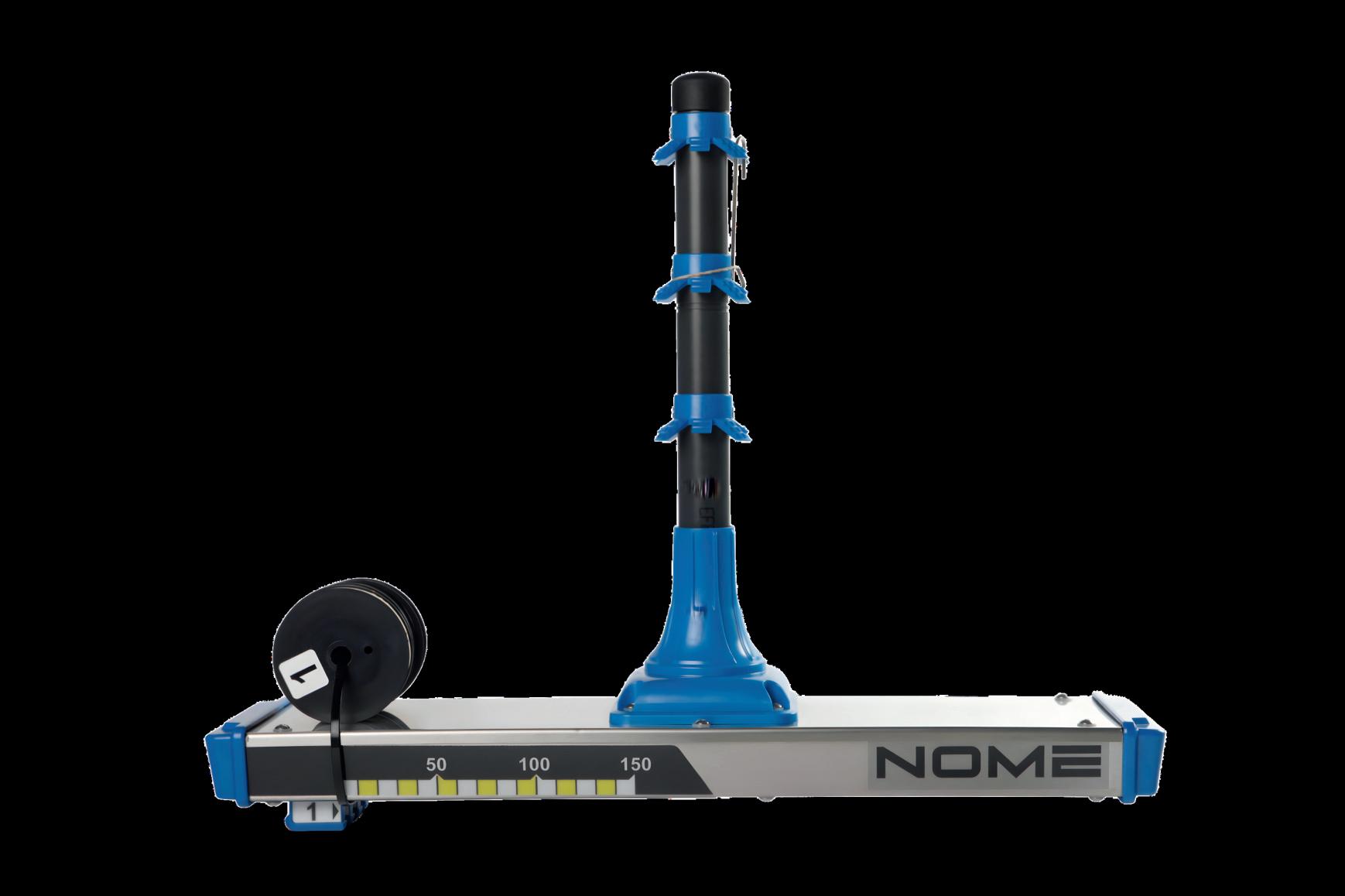
Systems like the RockMonitor are critical for safety and e ciency, but they require expert care like Nome’s to deliver long-term value.
That same commitment extends to safety and compliance, which are nonnegotiable in mining. Nome’s OEM on-site audits are designed to ensure systems meet the strictest regulatory and operational standards. More than a simple checklist, these audits aim to identify potential issues before they develop into costly problems.
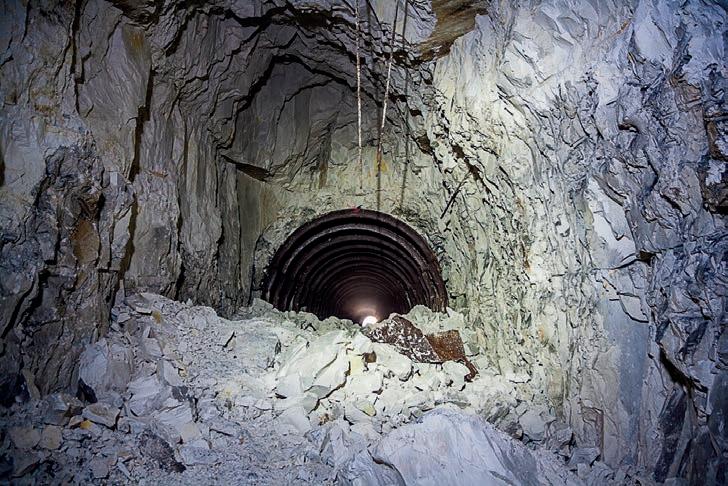
Certified technicians carry out detailed inspections, verify system integrity and provide clear, actionable recommendations. This process ensures every system like Nome’s RockMonitor, which is designed to monitor the conditions of the underground roof and roadway strata, operate within compliance frameworks, protecting the workforce and operational performance.
Owen said this approach reflects a core part of the company’s ethos
“With Nome, compliance isn’t just a requirement, it’s a promise,” he said.
Driving that promise further is an innate understanding of the fact technology is only as effective as the people who install and maintain it.
Nome’s in-depth training programs empower mining teams
Image: Nome
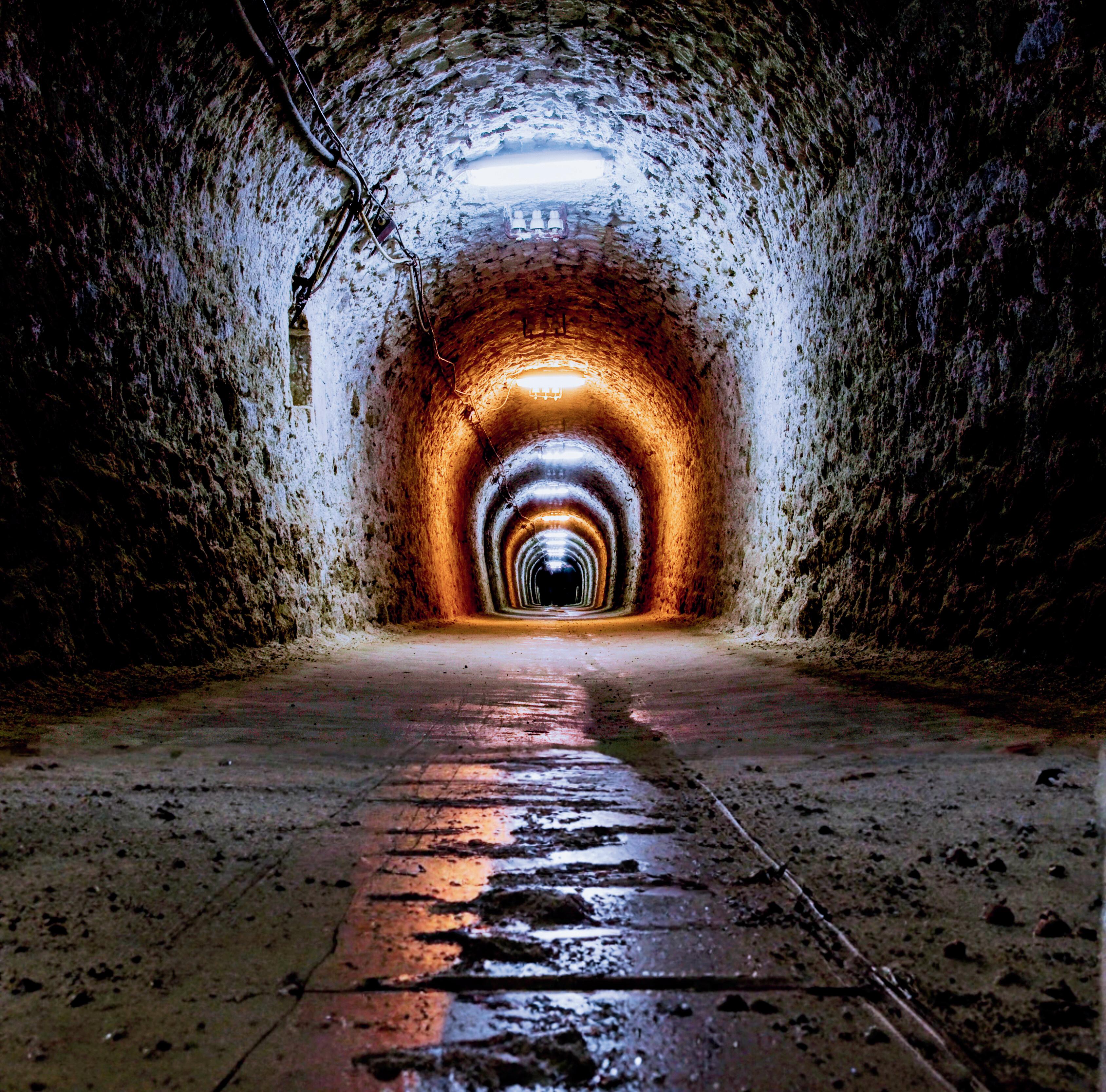
Nome’s RockMonitor system and maintenance solutions help to ensure miners are unharmed in underground environments.
Image: Vladimir Mulder/shutterstock.com
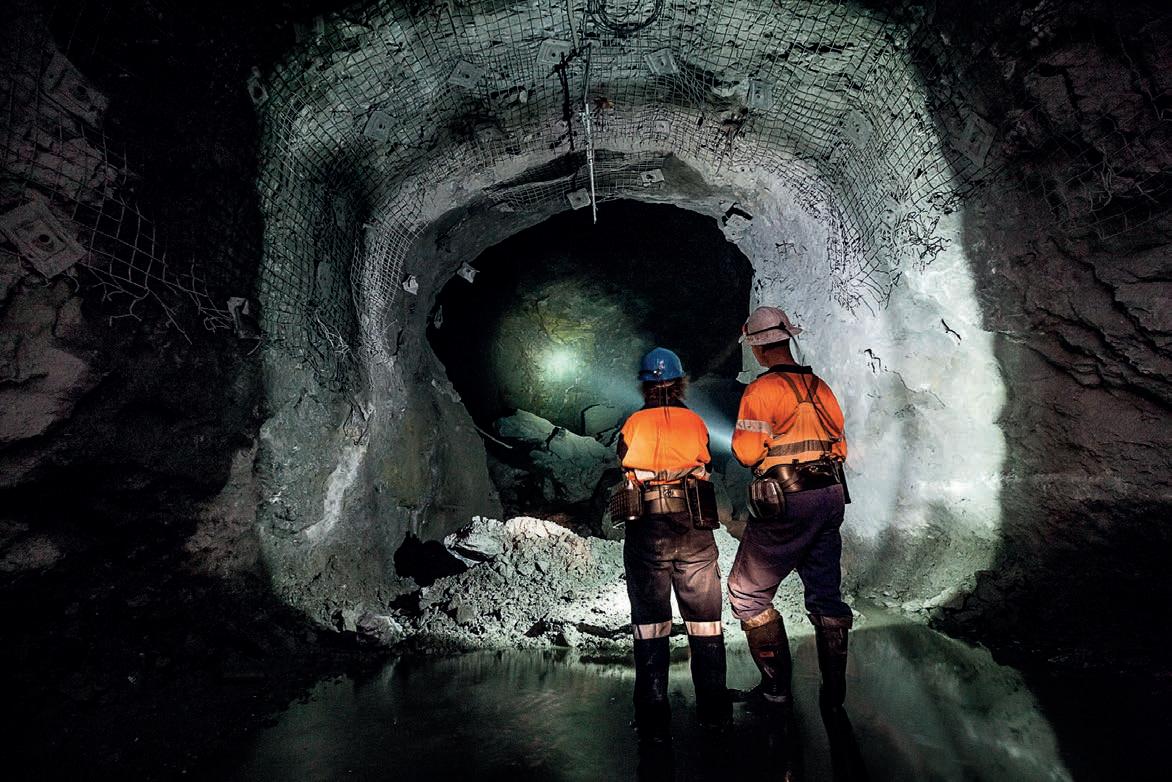
to take full ownership of system management, from set-up through to ongoing upkeep.
Tailored to each operation’s unique environment and workforce capabilities, the training goes beyond generic instruction to address real-world challenges on site.
“We don’t believe in one-size-fits-all solutions,” Owen said.
“Our training is tailored to site conditions, operational needs and employee experience.”
This type of hands-on approach helps to build confidence and expertise, which means every system performs reliably and consistently, no matter the complexity or location.
The focus on people and training is matched by Nome’s dedication to quality.
Given “quality isn’t optional, it’s fundamental”, Owen said when clients choose Nome, they’re choosing a partner who values “precision, reliability, and accountability”.
The company’s workshop is ISO 9001 and AS3800 certified, so every overhaul, repair and maintenance task meets the highest safety and compliance standards. These certifications reflect a culture of “excellence and a commitment to protecting people and assets” alike.
“Our certifications aren’t just badges; they’re proof of the rigorous processes that underpin everything we do,” Owen said.
When it comes to maintenance, it’s crucial to understand that it’s not a one-time event, but rather represents an ongoing commitment.
To give clients continued and complete peace of mind, Nome offers tiered support packages that range from essential check-ins to full-service monitoring and remote diagnostics, making sure systems are always performing as expected.
Remote diagnostic capabilities also allow the company to identify and resolve issues before they impact production. Combined with regular
calibration and performance reviews, these services keep operations running smoothly and safely.
Maintenance like this matters now more than ever. With mining environments rapidly evolving and as operations become more automated and technology-driven, the need for robust maintenance strategies is also growing.
Systems like RockMonitor are critical for safety and efficiency, but they require expert care to deliver long-term value. To truly protect productivity and safety in these modern operations, advanced systems must be paired with proactive, expert maintenance.
“By partnering with Nome, you’re investing in a take-charge approach that minimises risk, maximises uptime, and ensures compliance across every site,” Owen said.
“Our maintenance solutions are designed to support your operations today, tomorrow and for years to come.”
Nome o ers tiered support packages that range from essential check-ins to full-service monitoring and remote diagnostics.
Image: Michael Evans/stock.adobe.com

The discipline of anticipation
AS MAINTENANCE TEAMS NAVIGATE THE REALITIES OF WORKING AT HEIGHT, A NEW APPROACH IS EMERGING, ONE BUILT ON FORESIGHT, NOT AFTERTHOUGHT.
By Working at Height Association – Australia chief executive officer Scott Barber
Working at height remains one of the most persistent and serious issues across mining and resource operations. The risks are well understood, yet they continue to manifest, particularly during maintenance work. In this space, where access is complex, time pressures are high, and tasks are often reactive, the difference between control and potentially dangerous situations can hinge on a single overlooked detail.
For many operations, maintenance represents the convergence of multiple risk factors: non-routine tasks, limited access points, variable weather, and the frequent involvement of external contractors. These realities make “safety first” more than a slogan; it must become a discipline, embedded in every stage of planning and execution.
The first principle of a safety-first approach is that prevention begins long before anyone straps on a harness. In the rush of shutdowns or unplanned repairs, there’s a tendency to default to control measures at the lower end of the hierarchy, fall arrest systems, permits and personal protective equipment (PPE). But the real gains in safety come when organisations look higher up that hierarchy, asking a more fundamental question: does this task even need to be done at height?

remote inspection cameras, modular plant components and ground-level assembly areas are proving that, in many cases, the answer can be “no”. Even where height access remains necessary, proactive planning allows teams to choose safer options; fixed walkways instead of ladders, engineered platforms instead of scaffolds, or mechanical lifting aids that reduce human exposure.
When this mindset is applied early in the maintenance planning process, height safety becomes an outcome of good design rather than a burden of compliance. The safest rescue plan, after all, is the one that never needs to be used.
Across the mining sector, the majority of maintenance tasks involving height are carried out by contractors. They bring vital expertise and flexibility, but they also introduce variability in systems, culture and competence. Too often, contractors are treated as outsiders to the safety ecosystem, briefed on the rules but excluded from the planning.
Working at Height Association – Australia chief executive o cer Scott Barber.
Image: Scott Barber
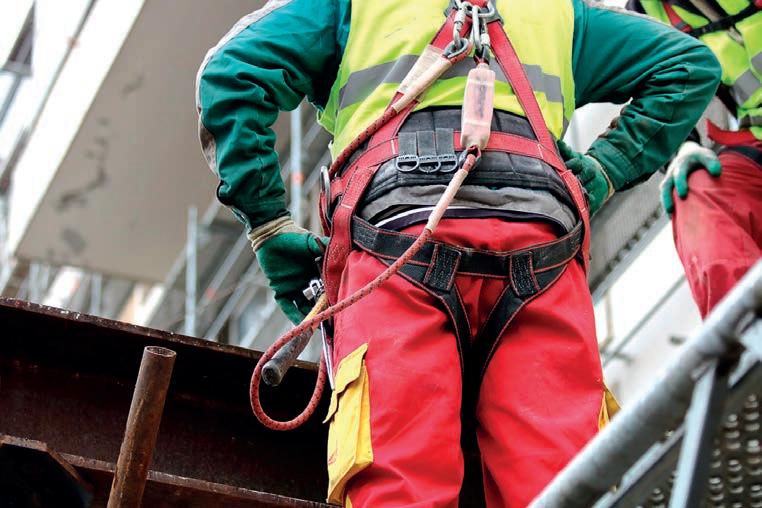
A true safety-first approach treats contractors as partners. It begins with verifying their capability and continues through shared ownership of risk. This includes confirming that height safety training is current and workers hold genuine competency, the training is relevant to mining environments, rescue plans are specific to the task and location, and all equipment used for fall protection has a traceable inspection history. Beyond compliance, it means involving contractors in pre-start discussions, risk reviews and post-job debriefs so lessons flow both ways.
When contractors are embedded in the conversation, not just supervised

Every scaffold, portable anchor, or restraint system must be engineered for its intended load and location. When teams understand that height safety is as much an engineering discipline as it is a procedural one, the quality of their decisions improves. The result is not just safer access, but greater confidence in the integrity of the work environment itself.
PEOPLE, BEHAVIOUR AND THE PAUSE
through it, safety culture shifts from control to collaboration. This is where most of the untapped value in contractor management lies.
Even with competent people and good intentions, the physical environment plays a decisive role. Fixed access systems, anchor points, and walkways in mining settings endure relentless conditions: corrosion, vibration, heat and mechanical impact. Without rigorous inspection and re-certification, what was once compliant can quickly become unsafe.
Temporary systems pose similar risks. The word “temporary” should never be mistaken for “improvised.”
No safety system can compensate for rushed decisions. Human factors, fatigue, complacency and production pressure remain the most common precursors to fall-related incidents. Encouraging workers to pause, think and plan before stepping off the ground is one of the simplest yet most powerful defences available.
Leaders set the tone. Their presence in the field, willingness to listen and recognition of cautious decision-making send a message far stronger than any slogan. The ability to stop and reassess a job when conditions change should be celebrated, not criticised. When people feel trusted to act on their judgement, they are more likely to take ownership of their safety and the safety of those around them.
Even in well-managed operations, incidents can occur. That is why a safety-first approach also demands
COLD WATER KEEPS WORKERS SAFE, FOCUSED AND READY FOR THE NEXT SHIFT.
Chilled water systems designed for high temperatures and long shifts.
Comfort & Recovery
Heat Mitigation

Supports faster cooling after hot shifts and improves daily recovery. Keeps water cool during high ambient temperature conditions.








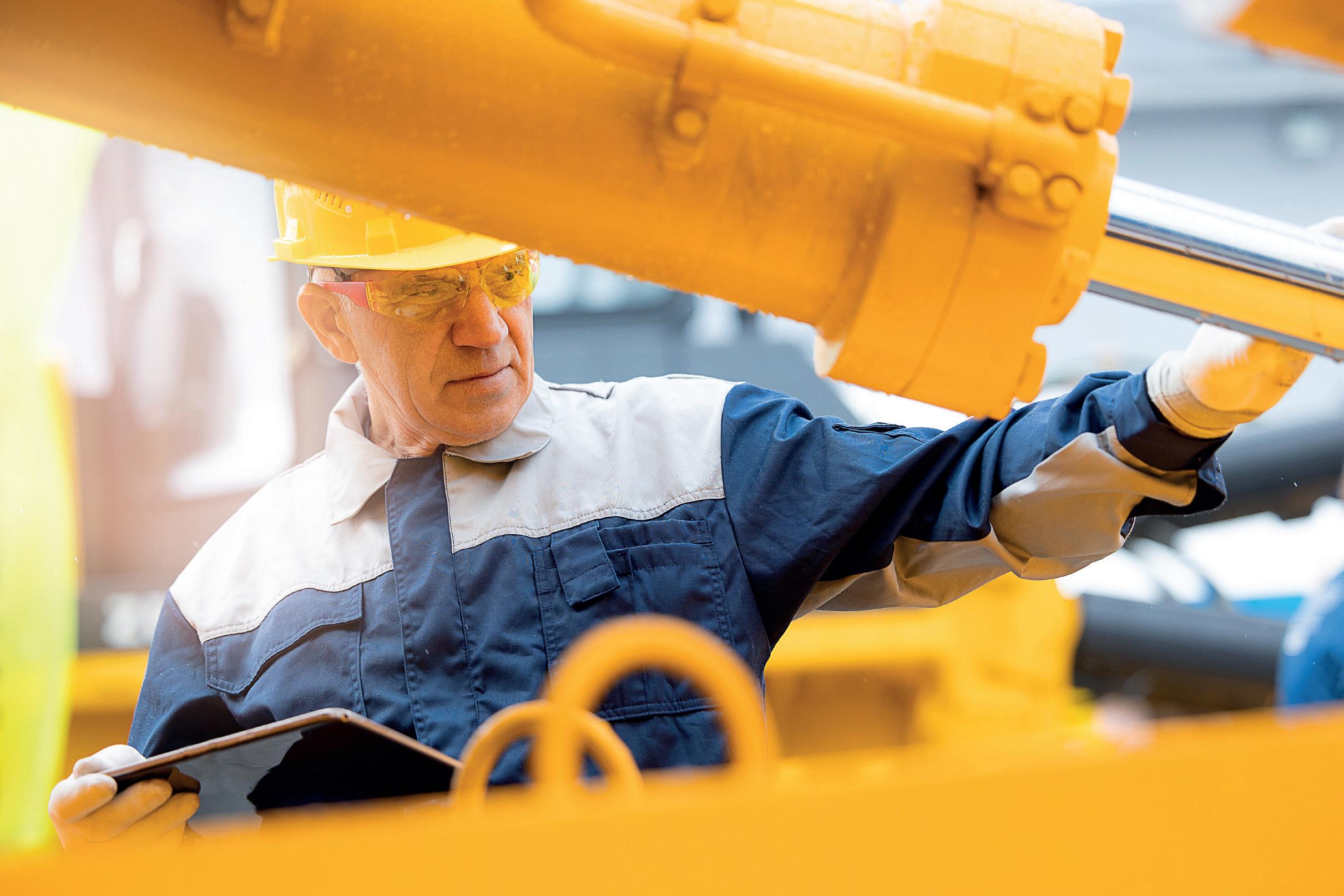
Height safety is an essential consideration during maintenance work.
Maintenance
a credible rescue capability. Rescue planning should never be an administrative formality; it must be a rehearsed and practical skill.
Mining operations, particularly those in remote locations, cannot rely solely on external emergency services. Teams on site must be equipped and trained to act immediately, with the right gear and the confidence to use it. Regular drills improve readiness and reinforce the importance of prevention: every rescue practice serves as a vivid reminder of why planning matters.
LEARNING, SHARING AND IMPROVING
Each near miss, unsafe condition, or positive intervention carries information that can prevent future harm. The best organisations treat these not as isolated events but as opportunities for system-wide learning. Digital tools now make it easier than ever to capture, share and
analyse these insights across teams and sites.
By aligning with recognised frameworks such as ISO 45001 and the Model Code of Practice: Managing the Risk of Falls at Workplaces, operations can benchmark their practices against national and international standards. But it is the local sharing of knowledge, between crews, between shifts, and between operators and contractors, that most powerfully reinforces a safety-first culture.
Some still view safety as an obstacle to efficiency. In reality, the opposite is true.
Well-planned maintenance that reduces height exposure often delivers better task design, cleaner workflows and fewer delays. Removing uncertainty through engineering and competence improves schedule adherence and quality of work. The decisions that protect people also enhance performance.
When safety is embedded in planning and design rather than enforced through paperwork, it stops being a competing priority and becomes part of the way work is done.
STRENGTH IN ANTICIPATION
“Safety first” is not defined by the presence of harnesses, helmets, or procedures. It is defined by anticipation, the ability to see risk before it manifests, to design out exposure before it becomes a problem, and to involve every person on-site in the act of prevention.
Working at height will always carry risk, but that can be managed, controlled and often removed when planning, engineering and decisionmaking align. In an industry where complexity and consequence meet every day, this is the foundation of sustainable safety performance, and of workers’ right to go home safely, no matter how high the job takes them.


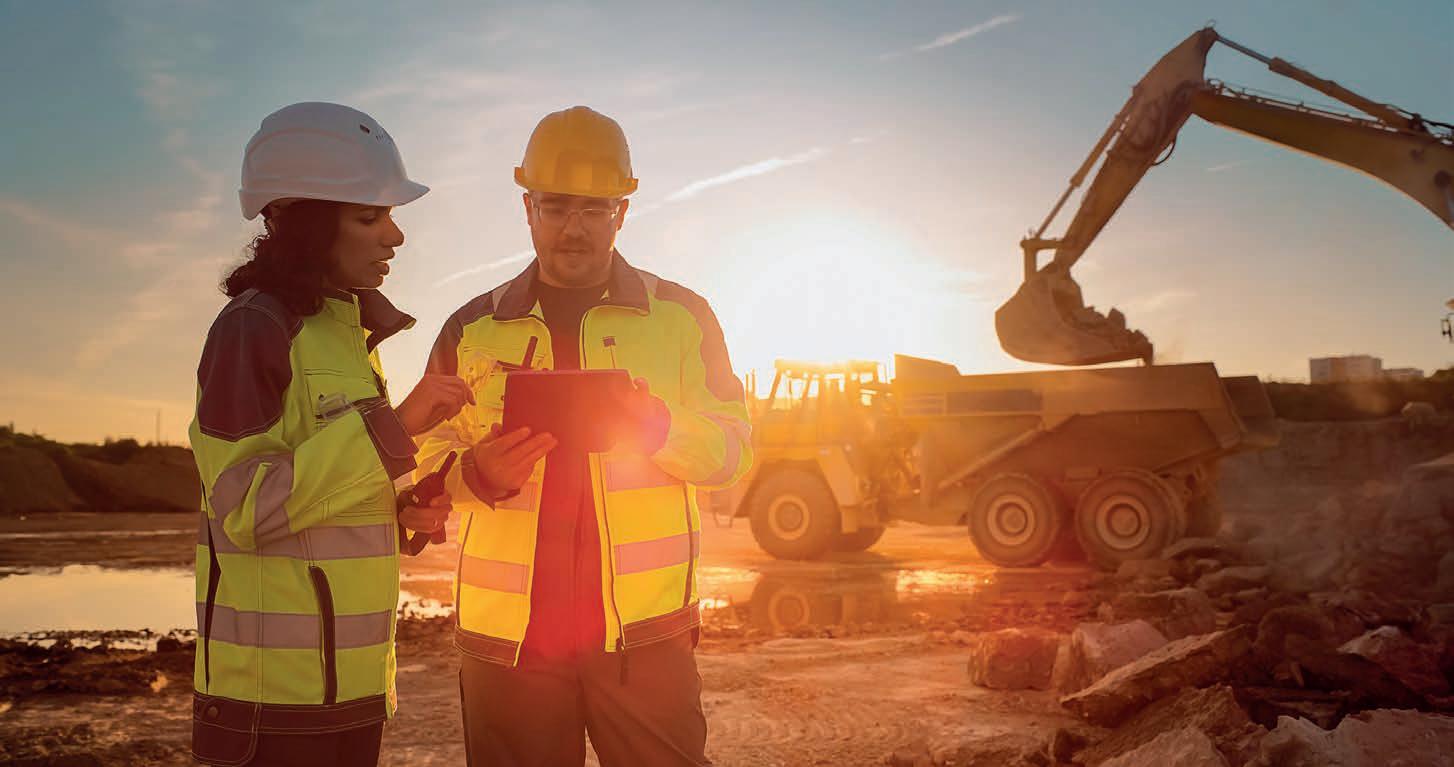
The majority of maintenance tasks involving height are carried out by contractors, who must be treated as partners.












Top mine maintenance trends for 2026
DISCOVER THE KEY MAINTENANCE INNOVATIONS THAT WILL SHAPE THE MINING INDUSTRY THIS YEAR.
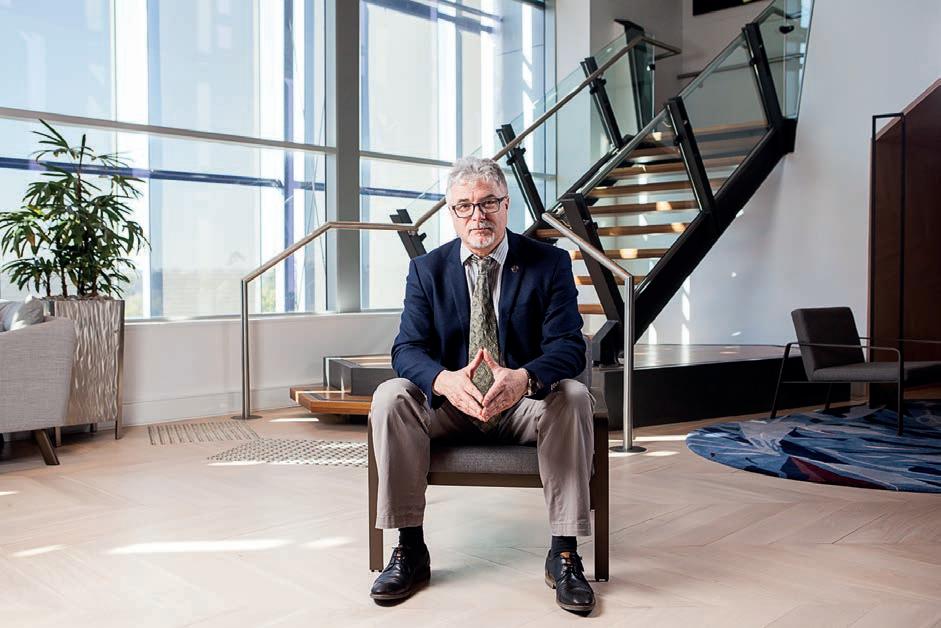
By University of Queensland School of Mechanical and Mining Engineering, professor and discipline leader mining Peter F. Knights.
little robotic assistance), measure and improve – this trend is only set to accelerate. So with a little help from my crystal ball, the following are my predictions for trends set to affect the
AAustralia during 2025 were occupational health and safety (especially around ground support and heavy machinery); equipment reliability and ageing machinery; environmental impact and liability; labour and skills shortages; and financial and logistical challenges. As maintenance, repair and overhaul (MRO) operations are key to delivering zero harm production, these issues are inter-related.
It seems incredible to think that Open AI released ChatGPT 3.0 in November 2022. In the space of just three years, large language artificial intelligence (AI) models have grown to influence almost every aspect of our lives, and this includes MRO services. With the advent of agentic AI – the ability of AI bots to act like an additional worker by being able to independently plan, act (with a
Diagnostics tools will continue to evolve so that it no longer becomes necessary to “open” a machine in order to detect, diagnose and specify repair actions. This will increasingly be done via smart software, often employing AI and ML (machine learning) algorithms. Some “edge” computing may be required to detect impending failures, however increasingly machine operating data and repair histories will be accessible in the cloud. This means the AI algorithms for diagnosing and specifying repair actions can be cloudbased, which greatly facilitates regular updating of the software. Removing the need for maintenance workers to access machinery in order to diagnose faults removes workers from the line of fire.
SKILLS SHORTAGES
AI will do for white collar workers what robotics did for the blue-collar workforce. Robert Gottliebson, seasoned business analyst for The Australian, recently wrote that AI favours “doers” over the “thinkers”. We are already seeing this play out in declining enrolments in certain sectors such as computer science, where AI can now generate reliable
usable code at a fraction of the costs of young graduates. This is likely to cause young school leavers to question the relevance of a university qualification, and to think instead of obtaining trade qualifications. And so AI may have inadvertently solved the industry skills crisis. The supply of newly qualified trades peoples will not be immediate, however, as they still need to flow through their three-year qualification period.
Agentic AI, or the ability of computer chat bots to plan, think and improve, is also likely to impact the industry. It could, for example, augment the skills of maintenance planners. A former PhD graduate working in data analytics in the US recently told me that, “agentic AI is like having 20 assistants to help me”.
PRESCRIPTIVE MAINTENANCE
We are also likely to see the continued roll out of AI for decision support, expanding from predictive to prescriptive maintenance via cloudbased computer apps accessible from anywhere.
Prescriptive maintenance goes beyond the anomaly-detection capability of predictive maintenance. In addition to fault detection, it adds fault diagnosis, prognosis and decision support in the form of recommended courses of action.
To keep older assets operational, research is being directed towards establishing machine and component health indices. While some of these indices will be derived from AI or ML approaches, risk-based multivariate
University of Queensland professor Peter F. Knights.
Image: Peter F. Knights
statistical approaches are equally valid. The advent of risk-based health indices will help extend the operational lives of older machines.
INTEGRATED SUPPLY CHAIN INFORMATICS
There is a need to enhance integration and visibility of information along the value chain, and across the verticals.
There remains a significant “gap” between predictive alerts occurring at the mine site and the ability of distributors to supply spare parts. This is in part because, for reason of commercial proprietary, information systems do not talk to each other. This causes repair times to blow out, resulting in wrench time factors that are low by world standards. How can we improve equipment repair times?
As an industry, we need to start measuring the components of repair time (wait time, decision time, logistics time, active repair time). Once we have
equipment in the form of autonomous haul trucks (AHTs) and autonomous rotary blasthole drills (ARDs), the journey to automate maintenance tasks has been long and arduous.
About a decade ago, Rio Tinto trailed robotic tyre change systems. They are still not a regular feature of operations today – why? Early systems were not particularly reliable, requiring considerable on-site support. The systems did not completely replicate the range of tasks a tyre fitter can supply, so labour savings were not so evident. It is arguably easier to economically justify automation for production, rather than support tasks.
Nevertheless, some interesting cases exist where robotic maintenance systems can save time, money and environmental and safety risks.
Once such example is robotic truck wash down facility. These not only reduce wash down times, thus boosting fleet availability, but they also reduce water usage and operator risk exposure. Another area where repair times might be reduced is engine turbo replacement. At present, fitters have to wait two to three hours for turbos to cool down prior to performing repairs. A robot can perform this work while the turbo is still hot.
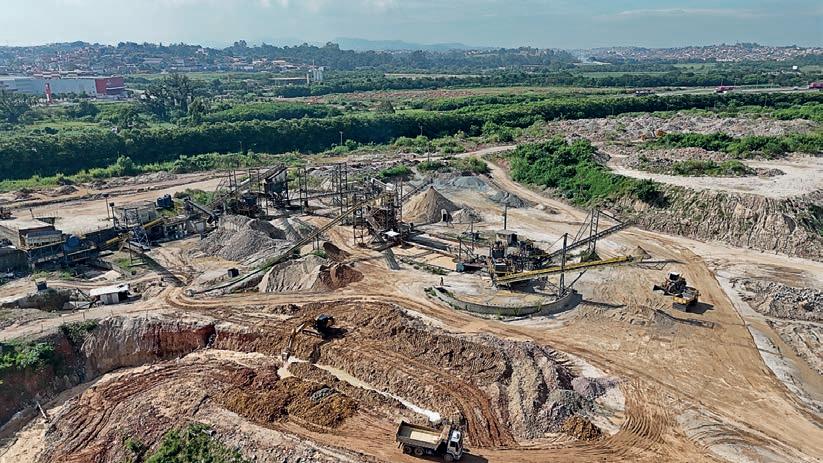
Equipment reliability and ageing machinery was a top maintenance concern in 2025.
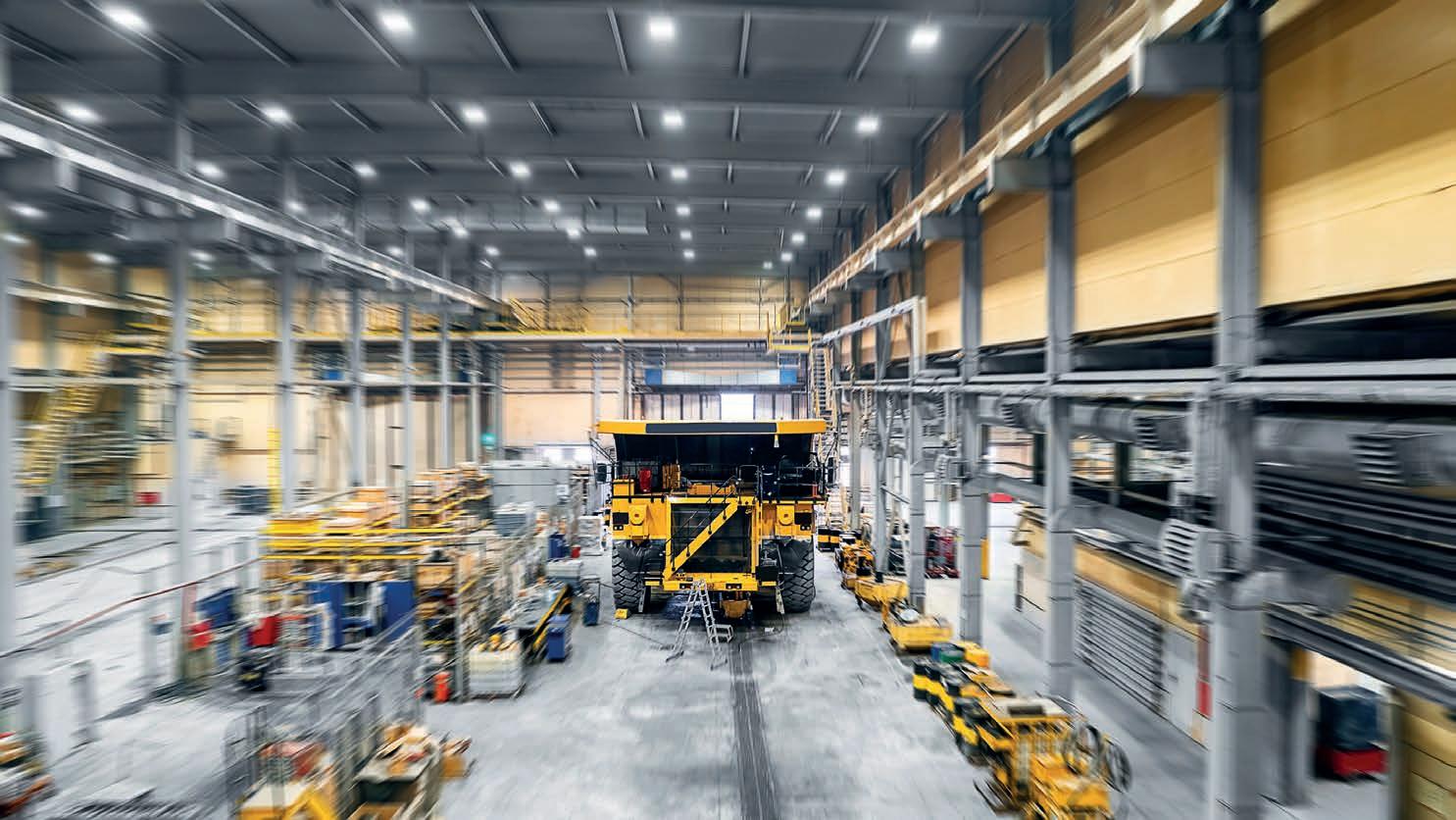
Mine maintenance will continue to evolve in the next 12 months.
Reliable systems, safer outcomes
DEEPER MAINTENANCE DISCIPLINE PAIRED WITH PREVENTIVE ASSET MANAGEMENT COULD CHANGE HOW SAFETY IS DEFINED ON THE GROUND.
By Argon & Co partner David Rotor.
In May 2024, a fully loaded autonomous ore train collided with a stationary locomotive near Karratha in WA’s Pilbara, destroying 22 wagons and three engines. Six crew members narrowly escaped harm as the safety system failed. The incident shut local rail operations for six days, causing substantial production loss.
This wasn’t just a near-miss. It was a stark reminder that reliable systems are safe systems.
The derailment illustrates what happens when asset management is treated as a back-office function rather than a frontline safety imperative. Despite improved metrics across the industry, a “fix on failure” mentality still dominates. Scheduled maintenance often lags. Production losses and safety concerns remain real. Every asset management decision is ultimately a safety decision, yet we continue to separate them in practice.
I was brought in with a small team to help the response-andrecovery team after the derailment. Our mandate was ambitious: lift haul capacity by nearly 10 per cent, avoid increasing unscheduled loss, and ensure the team could operate safely over 2000km of track.
We chased down the most common fault causes, knocked out repeat failures with better maintenance, and looked for faults that could be moved from trackside to remote support at the Perth operations centre. By targeting root causes instead of just symptoms, we built a new rhythm for keeping trains moving that worked for the team and the business.
This approach isn’t new, but it’s rarely executed with the discipline required to make it stick. At Xstrata’s Nickel Rim South shaft in Sudbury, Canada (now Glencore), I saw a project deliver 5.7 million hours without a single lost-time injury (LTI). When the industry norm is an LTI every 100,000 hours, that’s an exceptional record.
The key? Every person, employee or contractor, received the same training and personal protective equipment (PPE). Sensors and underground Wi-Fi cut response times. Above all, anyone could stop work at the first sign of trouble. Taking true ownership and building the right site culture made all the difference.
Technology plays its part when deployed thoughtfully. Drones for conveyor inspections at an iron

ore miner’s ports replaced hours of walking alongside moving machinery in tough conditions. With drones on the job, safety improved and the allinjury frequency rate dropped from 0.40 to 0.37 in a single year. There were fewer close calls, less stress for the crew, and conveyors ran with noticeably less unscheduled loss.
These examples share a common thread. They demonstrate that addressing underlying failure modes delivers safety and production wins. You don’t have to choose between keeping people safe and hitting targets. Sites that hit production targets are the ones where people don’t feel pressured to take risks.
So where do you start if your operation isn’t there yet? In addition to standard asset management
Argon & Co partner David Rotor.
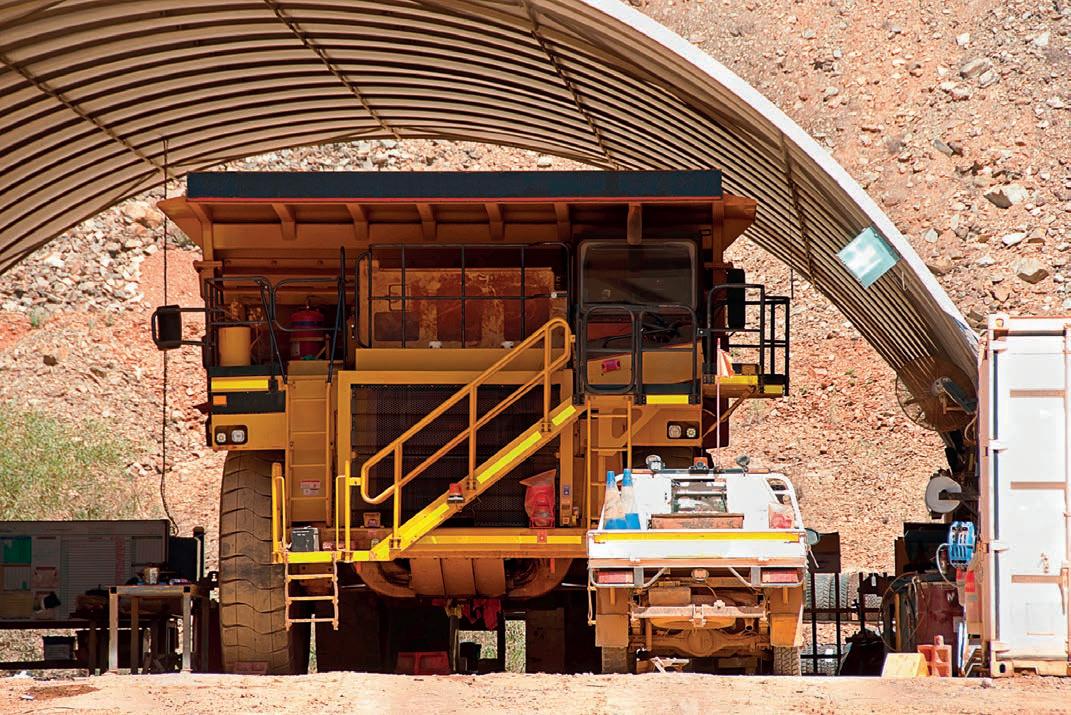
Every asset management decision is ultimately a safety decision.
practices, I recommend exploring two major factors that inhibit both production and safety.
First, dig deep into your unscheduled loss. Go past top-level faults and scrutinise second- and
third-level details. This is often where big wins hide. Nothing beats time on the ground, observing operations and talking to people. One day in the field is worth at least five behind a desk.
Then assess ‘line of fire’ contact hours. How much time do your crews spend near critical risks such as conveyors, crushers and moving machinery? Track it like any other performance metric. The goal isn’t just less production downtime, but fewer exposure hours. Every fault you eliminate boosts safety and helps your production target.
Every day on site, we make calls that decide if teams go home safely. The question is not “could it happen here?” but “what are we doing to prevent it?”
When asset management priority drops, risk always increases. The best asset management is straightforward, smart and owned at the frontline.
Challenge yourself to audit your operations with two questions: How deep are we digging into our unscheduled losses? How closely are we tracking our crews’ line of fire exposure?
The answers determine whether teams go home safe.
Building the right site culture around maintenance is key to a productive operation.
What we know about the Endeavor incident
OWNER POLYMETALS HAS PRIORITISED EMPLOYEE SUPPORT IN THE WAKE OF THE EXPLOSION.
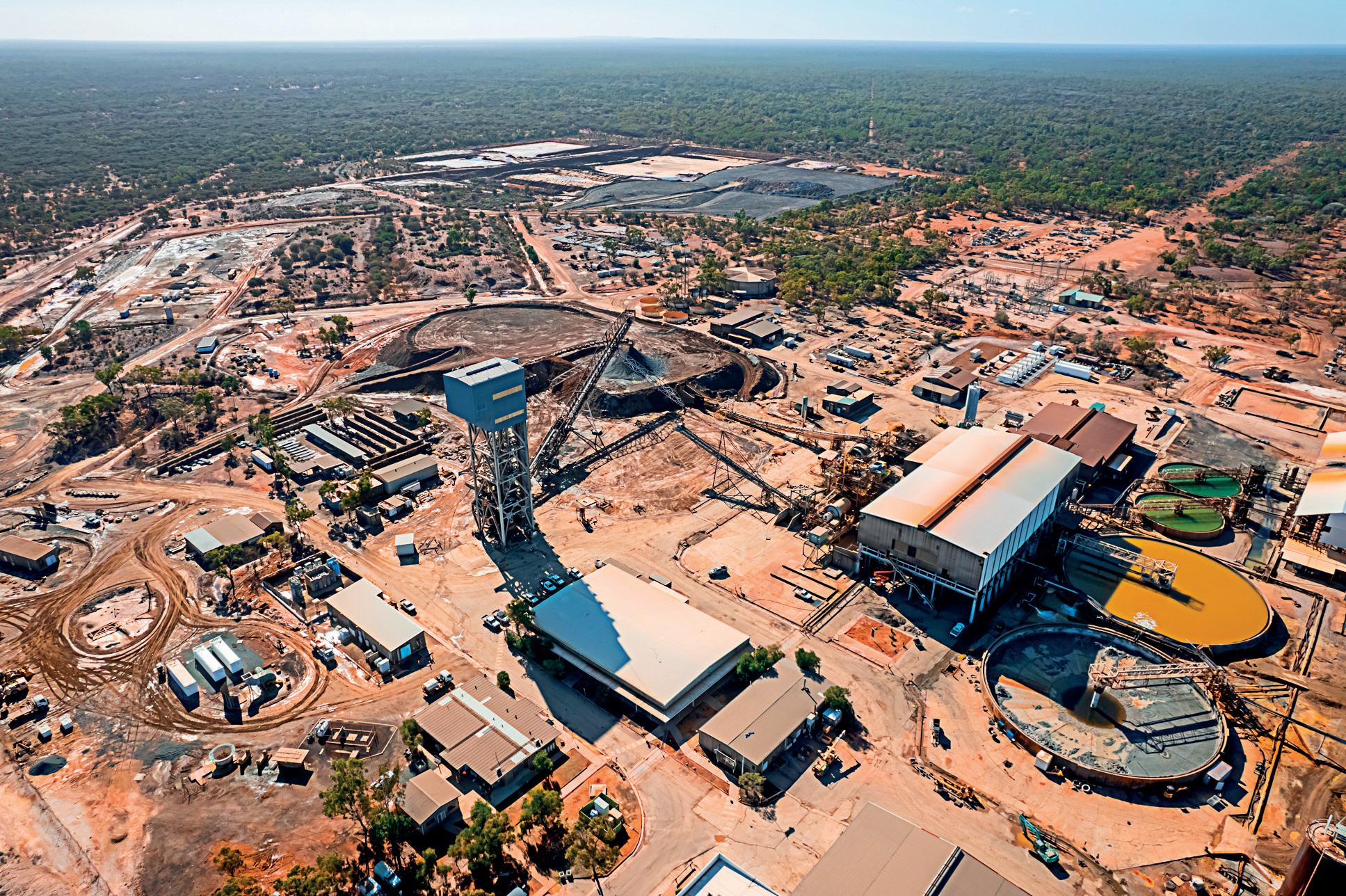
On October 28, 2025, an underground explosion at Endeavor mine near Cobar, New South Wales, drew attention as one of the most significant incidents in the year.
Emergency services were called to the mine at around 3.45am after reports that two workers had been critically injured in what was initially described as a workplace incident. Mining shift supervisor Patrick McMullen, 59, and chargeup operator Holly Clarke, 24, both qualified shotfirers, tragically lost their lives in the explosion. A third worker, MacKenzie Stirling, survived the blast and returned home to recover from injuries sustained during the incident.
Mine owner Polymetals immediately suspended all mining activities, pledging ongoing support for its employees. Executive chairman Dave Sproule said the company was “shocked and saddened” and extended condolences to the workers’ families, friends and colleagues. He emphasised the company’s commitment to supporting all staff and their families in the incident’s aftermath.
The explosion prompted immediate responses across the state.
NSW Premier Chris Minns described the impact of the blast as having been “felt across the entire mining industry” and stressed that the “number-one priority in any mine must
be safety”. He said that, while safety protocols and procedures in mining had greatly improved, these deaths served as a “sobering reminder” of the need to remain vigilant.
NSW Minerals Council chief executive Stephen Galilee echoed the sentiment, noting that the incident highlighted the ongoing importance of maintaining a strong safety culture.
“This is a sombre reminder of why the New South Wales mining industry must never deviate from our commitment to the safety of our workforce as our number-one priority,” Galilee said.
About a week after the blast, Polymetals reaffirmed that the safety and wellbeing of its workforce
The Endeavor mine site near Cobar in New South Wales.
Image: Polymetals
remained its “highest operational priority”, as it outlined a staged return to work.
Exploration drilling, concentrate transport and statutory electrical works resumed first, followed by a gradual return of personnel as operations restarted. Polymetals said the plan was designed to allow work to recommence while recognising the impact the incident’s had on employees.
As the investigation progressed, the NSW Resources Regulator issued an alert to mine operators across the state, advising them to review the use of ballistic disc explosives. Initial information indicated that the explosion occurred while workers were preparing a ballistic disc to clear a blockage in the drawpoint of a stope, and that the unintentional initiation of the charge was responsible for the fatal injuries.
The regulator said it was engaging with manufacturers, suppliers, mine operators and SafeWork NSW, which licenses the devices, and noted that restrictions on their supply or use could follow if serious risks were
identified. Mine operators were urged to revisit explosives risk assessments, evaluate whether ballistic discs were necessary in their operations, and consider alternative methods for clearing blockages.
A subsequent update provided further detail about the circumstances of the blast. Inspectors reported that the three workers had been preparing a BD260 ballistic disc around 3.30am on level 500 of the mine to clear a hangup in a drawpoint. The disc detonated while the team was still underground, well before the scheduled surfaceinitiated blast window of 5.45–6.00am. Investigators found that the connecting wire linking the electric instantaneous detonator assembly to the mains firing line was discovered in the shotfirer’s vehicle, indicating that it had not been connected at the time of the detonation.
The regulator said it was examining the mine’s procedures for handling ballistic discs and detonator assemblies, including the instructions workers received and the level of supervision provided during the task.
Inspectors has also been assessing whether radio-frequency interference from underground communication systems – such as two-way radios, mobile phones, smart watches and signal amplifiers – may have contributed to the unintentional initiation.
As of early December, a technical assessment of the ballistic disc and detonator was underway to verify compliance with manufacturer specifications. Inspectors were reviewing relevant risk assessments, safe-work instructions, and guidance supplied by designers and manufacturers of the devices.
Polymetals said it would continue to work with authorities as the investigation progressed.
“[We] will not rest until we understand what happened,” Sproule said. “Words fall short of how deeply affected the Polymetals’ family is by this tragic incident. The feeling of profound sadness when life is lost is never forgotten.
“We are doing everything we can to support those affected.”
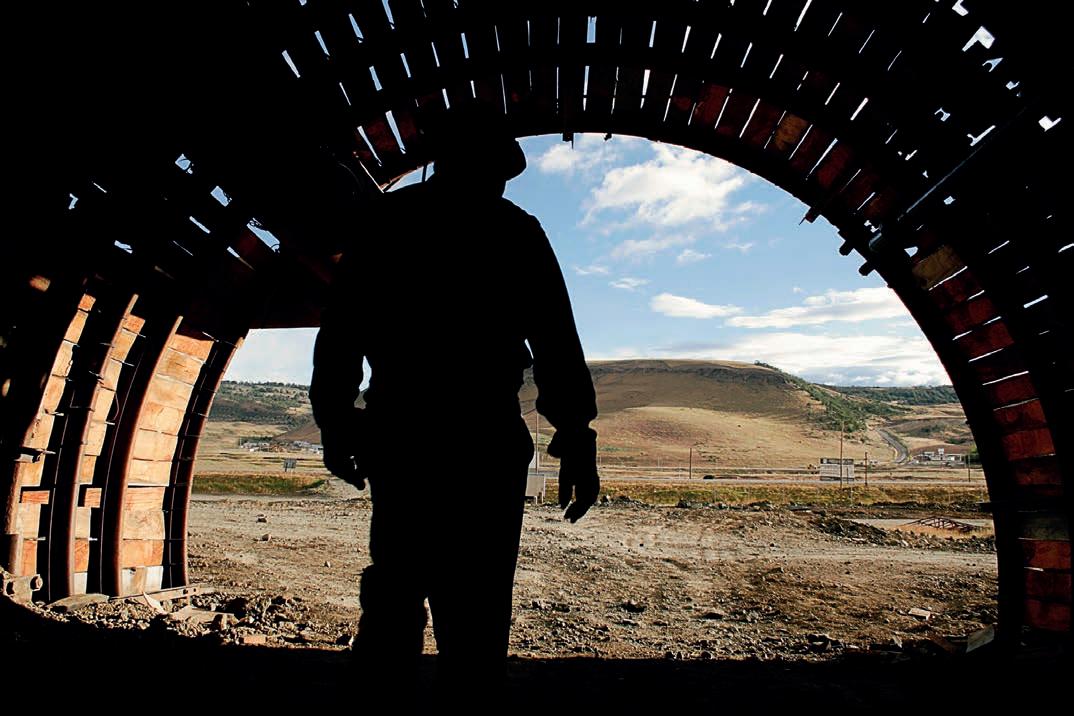
The NSW Resources Regulator examined the mine’s procedures for handling ballistic discs as part of its investigations.
A valuable insight
BUILDING A CULTURE OF COMPLIANCE AROUND RESPIRATORY PROTECTION NO LONGER RELIES ON GUESSWORK. CLEANSPACE IS MAKING IT DATA-DRIVEN.
With a continuous glucose monitor attached to her right arm, Judith Waugh can track her blood sugar levels in real-time.
Although she doesn’t have diabetes, her genetic predisposition to the condition meant Waugh decided to actively track changes in her body, establishing credible and regular reference points for herself instead of relying on annual blood reports.
“I’m a data person, and the data always tells the truth,” Waugh told Safe to Work
It makes sense, then, to have a data-driven person like Waugh leading the implementation of CleanSpace’s most recent innovation, Insights Reporting.
As the respiratory protection provider’s director of commercial solutions, Waugh brings a unique three-pronged take on the new
product. While her pharmaceutical and biotech background cements her technical capabilities, it’s the proactive approach to her own health that most clearly illustrates Waugh’s belief in the power of actionable data.
“I’m very passionate about it, because it resonates with me,” she said. “Much like diabetes, respiratory issues have a chronic progression, and I think if there’s a tool at your
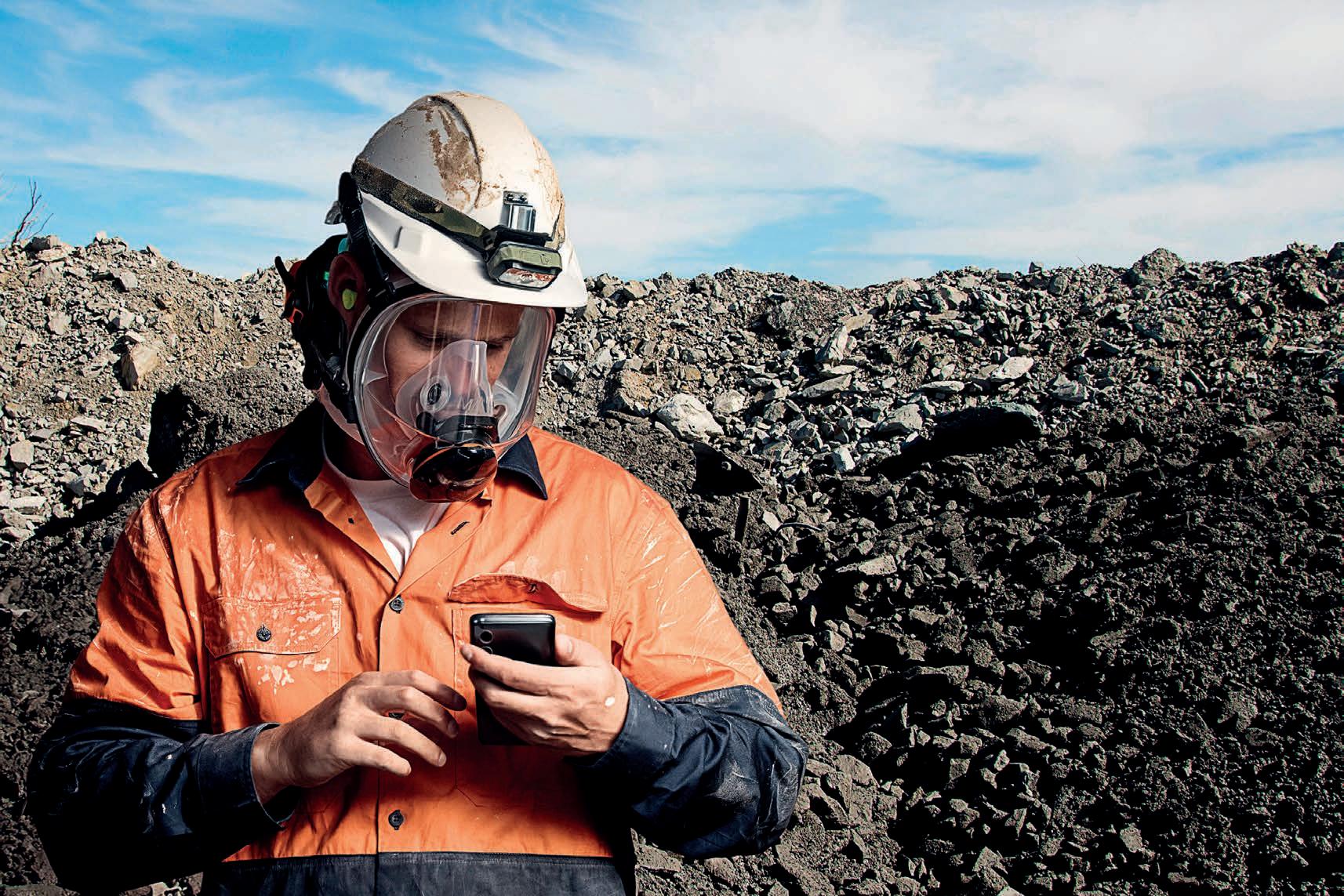
CleanSpace is helping mine sites create a positive culture of compliance around respiratory protection.
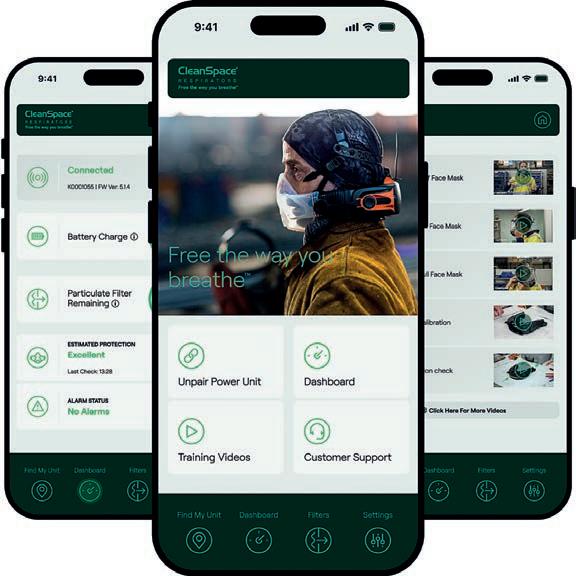
disposal that allows you to trace certain indicative elements, then why wouldn’t you use it?”
For miners frequently exposed to dust, contaminants and other invisible hazards, that tool now comes in the form of Insights Reporting. The “indicative elements” in mining environments are patterns of exposure, mask use, filter lifecycle and protection gaps, all of which CleanSpace’s reporting platform is designed to reveal.
Developed as an extension of the SMART app – a digital platform that provides an intuitive dashboard for monitoring filter condition, battery charge and protection levels, while also allowing managers to track gas and vapour filter life in real-time – Insights Reporting builds on these capabilities and takes them a step further.
“The SMART app doesn’t store any information, it just gives users a reading,” Waugh said.
“However, Insights uses the app’s interface to synchronise the information to the CleanSpace cloud, and from there we provide clients with a comprehensive report based on that gathered data.”
Essentially, the SMART app offers real-time snapshots of CleanSpace’s powered air-purifying respirators (PAPR), and Insights Reporting transforms this information into something far more powerful: a clear, validated record that supports site compliance and strengthens the broader safety program.
According to Waugh, the shift reflects a wider movement across the industry.
“For a long time, respiratory protection data focused on hazards and exposure limits,” she said. “That information is still critical, but we’re now seeing a real push toward gathering continual data on how equipment is actually used in real working conditions.”
KEEP IT SAFE KEEP IT CLEAN!
During planned plant maintenance and shutdowns, conveyor belt cleaners, skirts, impact beds and other conveyor accessory maintenance is often overlooked, or service is performed by people who are not trained to service the equipment.
Unless conveyor accessories perform at optimal levels, belt damage, carry-back and spillage can result.
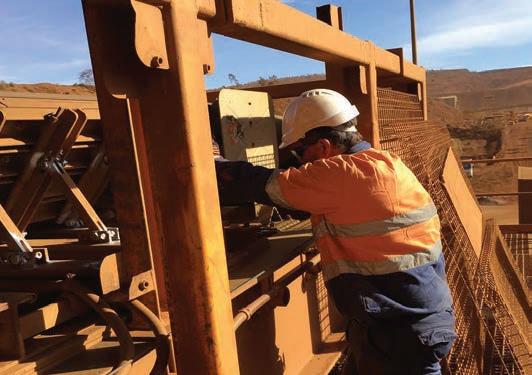
ESS provides competency-based technicians to specifically monitor and maintain conveyor belt cleaning, sealing and support systems.
ESS technicians are able to inspect conditions and produce a condition report and maintenance plan that can be actioned by plant staff, contracting companies or ESS technicians.
ESS offers a range of flexible maintenance, monitoring and training services to ensure optimum performance from the plants conveying systems.
ESS Maintenance and Monitoring Services Include;
•Installation and Commissioning
•Service and Maintenance
•Inspection and Reporting Services
•On-site troubleshooting
•Site Compliant Vehicles and Equipment
•Maintenance Contracts
• Conveyor Accessory Maintenance Training



The SMART app allows safety managers to track safety metrics in real-time.
In the past, much of this information was captured manually or assessed infrequently – “more as a periodic, static measurement”, as Waugh described it. Insights replaces those fragmented records with continuous, real-world data drawn directly from CleanSpace PAPRs.
It turns respiratory protection from a standalone piece of equipment into an integrated part of a site’s safety and compliance framework.
CleanSpace has embedded this capability within its CST ULTRA model, which includes a real-time clock. This allows the device to record not just usage but when that usage occurred, providing time-stamped data that can be corroborated and analysed. An algorithm then converts the raw code stored within the respirator into a readable Insights report.
“The report is essentially a summary of everything the device has captured,” Waugh said. “If someone opened a CST ULTRA, they wouldn’t be able to interpret the code, it’s just data. But Insights translates that code into meaningful information a site can act on.”
For operations, the result is a detailed picture of how respiratory protection is being used across a fleet. Sites can review which filters were used, how long they lasted, which respirators were deployed, how many hours they operated and the estimated protection levels they provided.
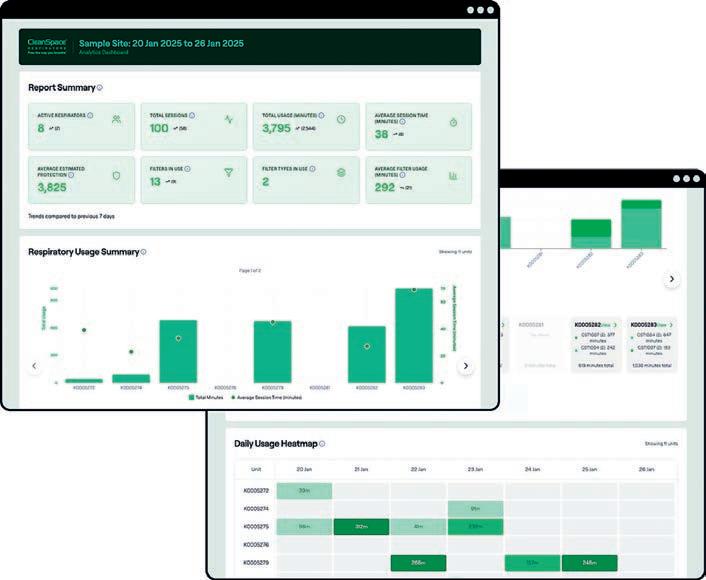
All information is de-identified at the user level; CleanSpace only sees the respirator serial number, ensuring privacy while still allowing meaningful analysis.
This creates a two-way partnership between CleanSpace and the client. Sites can match serial numbers to their own records and begin to identify patterns; for example, why one respirator’s filters are lasting twice as long as others, whether different workers spent the same amount of time in a high-dust area, or if a device wasn’t used at all on a shift where it should have been.
“As soon as a respirator comes off the face, the data stops saving,”
Waugh said. “So we can see, down to the minute, exactly how long it was used. That level of visibility lets sites ask the right questions and close the gaps before they become problems.”
CleanSpace’s new platform arms operators with information that supports not just decision-making but a culture of compliance across the workforce.
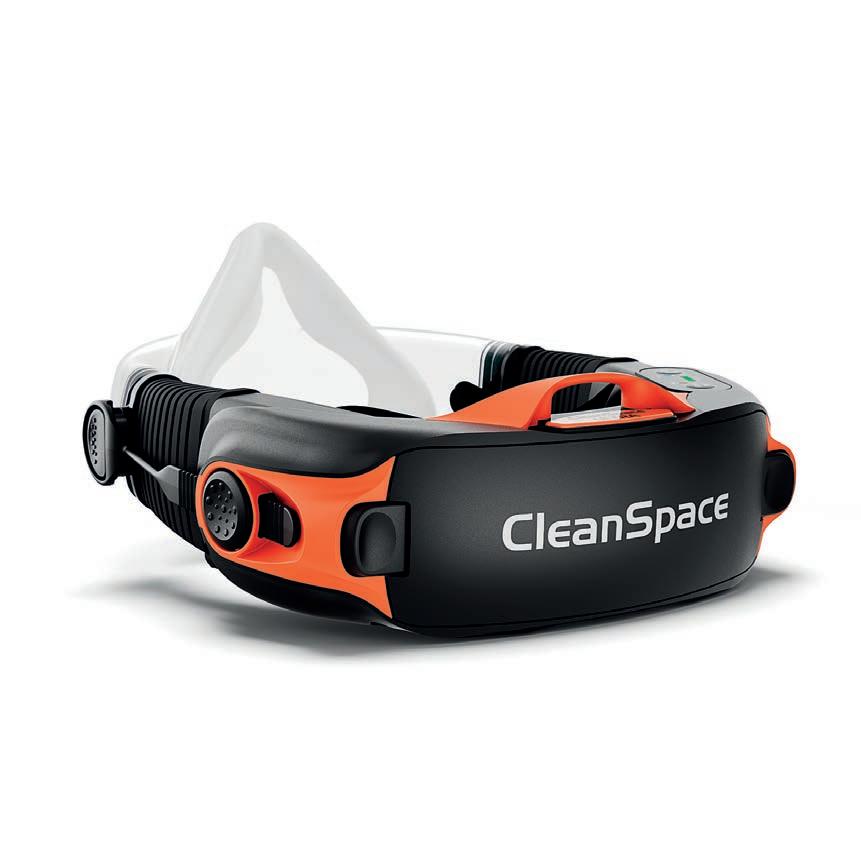
“Data is critical,” Waugh said. “It’s not about pointing fingers or telling someone they’re doing the wrong thing. It’s about giving mine managers the ability to look at reliable information over a defined period and ask, ‘How can we use this to make things better for our people?’”
To achieve that, CleanSpace works closely with sites to help them interpret the data and turn findings into practical improvements.
“We all have to work together to make sure that, at the end of the day, the worker is safe,” Waugh said. “People need to trust that their workplace is making the best decisions for their health, and that their employer, their supplier and their equipment provider all know what they’re doing.
“And, rest assured, CleanSpace does. We know our stuff inside out.”
CleanSpace’s new Insights Reporting platform provides operators with invaluable respiratory protection data.
Operators with the CST ULTRA model can capitalise on CleanSpace’s new Insights Reporting o ering.

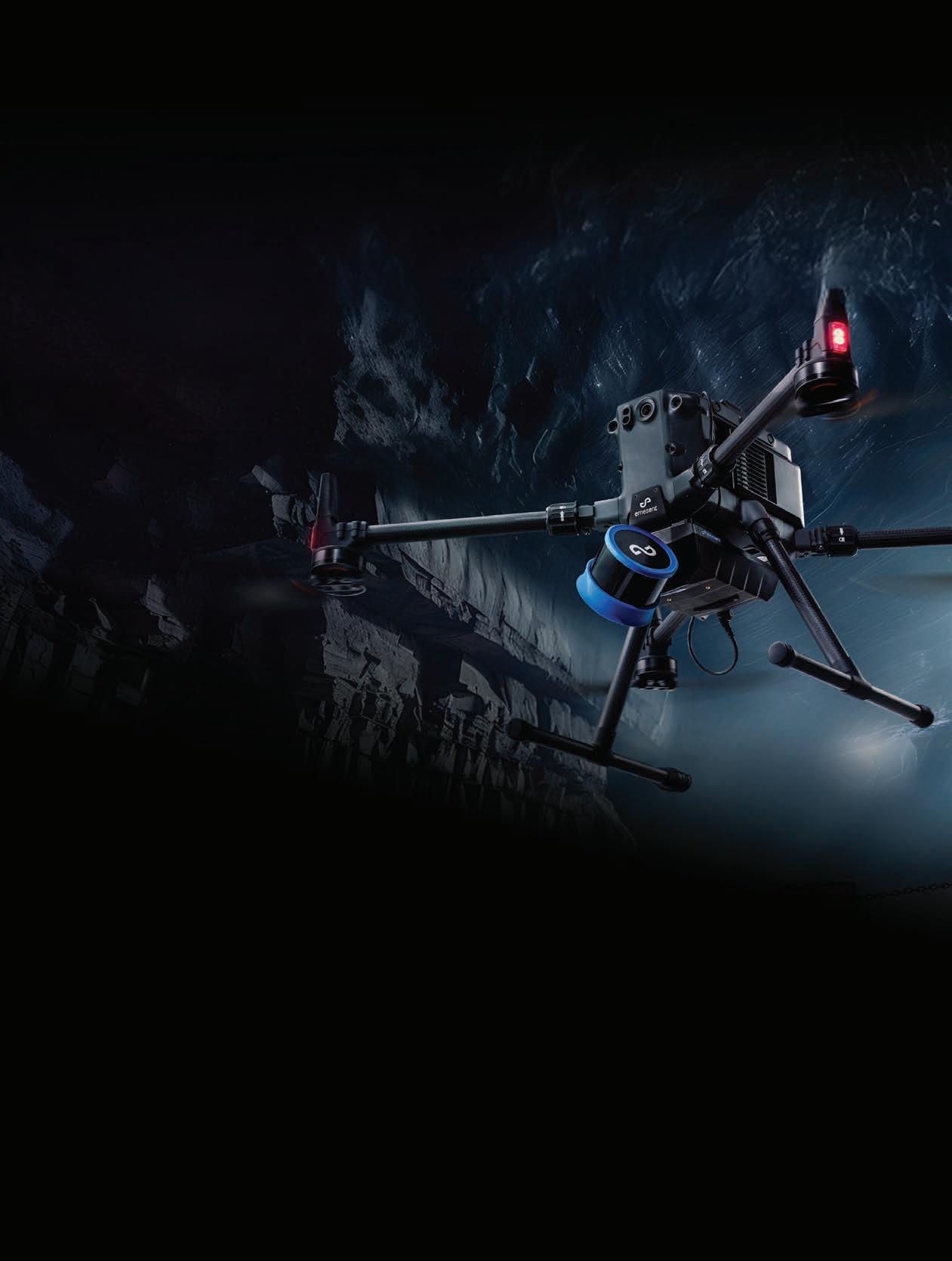

Staying ahead of the heat
WITH PROACTIVE PLANNING AND EFFECTIVE CONTROLS IN PLACE, MINE SITES CAN BEAT THE HEAT THIS SUMMER.
As Australia heads into another long, hot summer, heat exposure remains a key focus for resources operators committed to keeping their people safe.
Heat stress is a well-known hazard – capable of causing dehydration, exhaustion and, in extreme cases, heat stroke – but the industry continues to show how proactive planning and strong safety culture can significantly reduce the risks.
Resources Safety and Health Queensland (RSHQ) releases annually updated guidance to help sites prepare for the hotter months, reinforcing that heat can be managed effectively with the right capability and controls in place.
Heat affects each person differently, and the onset of symptoms can escalate quickly if early warning signs go unnoticed. High temperatures, humidity, low air movement and physically demanding work all increase the likelihood of
heat-related illness. Workers may experience cramps, fatigue, rash, nausea, fainting or confusion, and without timely intervention these can progress to heat stroke.
RSHQ advises obligation-holders, site managers and workers to be aware of the risks of heat stress and know what to do to prevent it, or treat it, should it occur.
Recent years have seen more sites reviewing their heat management strategies well before summer arrives. This includes assessing existing controls, checking emergency readiness and making sure workers understand exactly how heat will be managed across their site. A thorough heat-risk assessment helps identify exposure levels and whether additional steps are needed., Operations are increasingly incorporating weather forecasts, seasonal variations and real-time monitoring into their planning, allowing supervisors to adjust tasks and schedules as conditions change.
This shift toward more responsive, data-driven management is helping teams make better, safer decisions throughout the day.
Hydration remains one of the most effective and accessible controls available. Water and other options located close to work areas ensures workers can drink small amounts at frequent intervals – typically every 15–20 minutes – to maintain adequate fluid levels. Many sites now provide crushed ice to help reduce core body temperature and support continued hydration on hot days. In higher-risk roles or locations, pre- and post-shift hydration testing is used as a practical indicator of worker readiness.
Nutrition also plays a crucial role, as eating before a shift helps maintain energy levels and provides natural electrolytes, often reducing the need
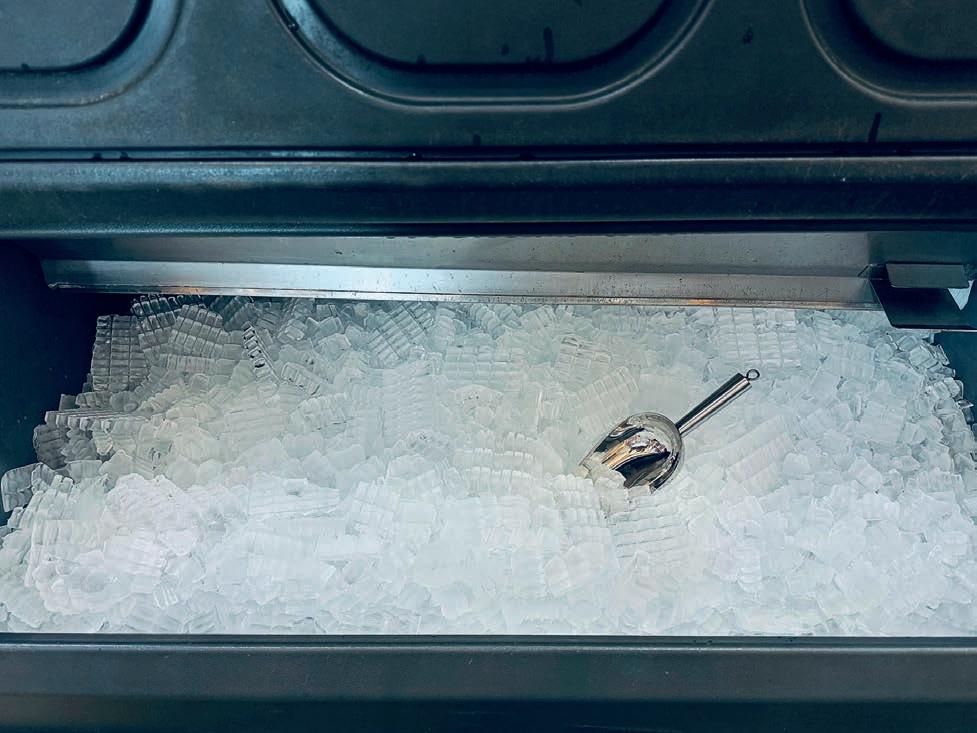
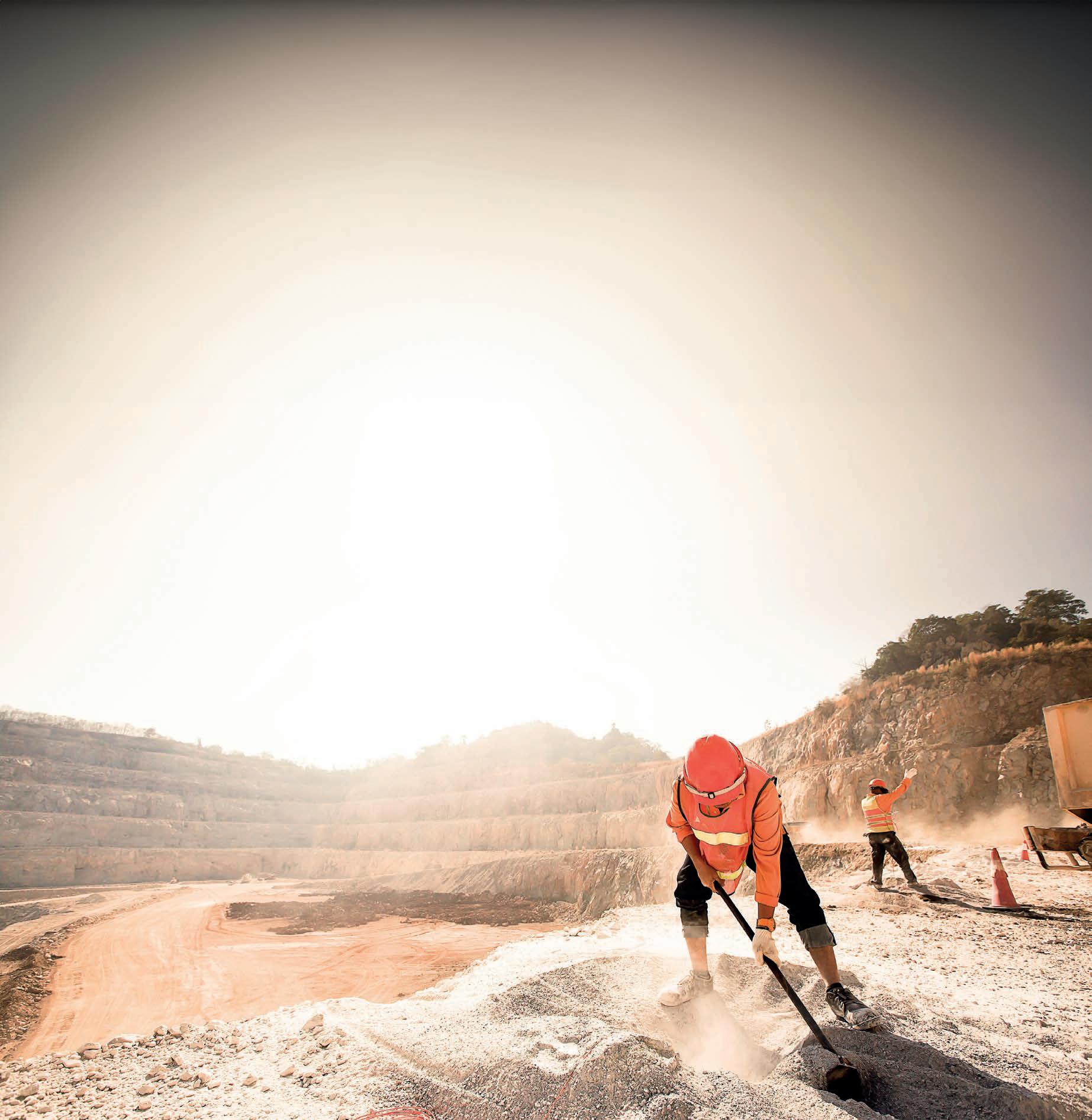
Heat can be managed e ectively on mine sites with the right controls in place.
for supplements. Workers can selfmonitor their hydration using urine colour charts posted in facilities, a simple tool that continues to prove highly effective in encouraging early action.
Environmental and engineering controls are another area where the industry is making strong progress. Operators are increasingly investing in insulated work areas, shaded break zones and improved ventilation to reduce heat build-up. Where possible, tasks involving high physical demands or exposure to heat sources are scheduled for cooler parts of the day. Mechanical aids such as cranes, hoists and forklifts are being used more frequently to reduce manual strain and limit time spent in hot environments.
Clothing selection is also evolving, with many teams opting for moisturepermeable, ventilated fabrics that support cooling while still meeting safety standards.
Providing spaces for workers to cool down continues to be a cornerstone of heat management. Air-conditioned vehicle cabins and control rooms offer valuable refuge throughout the day, while portable shade structures and fans are used in remote or temporary

work locations. These cooling areas support structured work-rest practices, giving workers the opportunity to regulate their temperature before heat stress develops.
Supervisors are also placing greater emphasis on acclimatisation, gradually increasing exposure for new starters, returning workers or those moving into more demanding roles.
Following National Institute for Occupational Safety and Health guidelines, many sites now integrate acclimatisation into roster planning, recognising factors such as age, health, medications and fatigue.
A strong safety culture is central to these improvements. Modern training programs focus not only on recognising heat stress symptoms but also on understanding personal hydration needs, buddy-system checks and when to escalate concerns. When workers are empowered to speak up early, supervisors can intervene sooner, reducing the likelihood of serious incidents. Many sites also embed heat considerations into incident reporting, allowing them to identify patterns, refine controls and continually strengthen their heat management
plans or triggered action response plans (TARPs).
In the event of a heat-related incident, rapid cooling is essential. RSHQ encourages all sites to ensure their first-aid facilities and emergency response teams are fully prepared for summer conditions.
Portable heat-stroke kits –particularly valuable for exploration teams or remote crews – are becoming more common. These kits typically include an esky, iced water, damp towels and instant cold packs, enabling first responders to begin cooling immediately while waiting for the emergency response team to arrive. By equipping teams with practical, easy-to-deploy tools, sites are significantly improving their ability to stabilise affected workers during the critical early minutes.
While heat exposure will always be a reality in the Australian resources sector, the industry continues to lift its standard of care. From better planning to smarter engineering controls, stronger hydration practices and ongoing workforce education, operators are demonstrating that heat risks can be managed confidently and effectively.
Heat exposure continues to impact how sites manage safety this summer.
Many sites now provide crushed ice to help reduce core body temperature.
Image: VladisChern/shutterstock.com
Image: kckate16/shutterstock.com
Heat protection
Beat the heat
BODY
ARMOUR IS HELPING AUSTRALIAN MINERS STAY SAFE AND PERFORM AT THEIR BEST, EVEN AMID EXTREME HEAT.
Even though dehydration and heat stress are preventable, miners across the country continue to be affected by these conditions every summer. Why does this pattern persist, and what is it really costing the industry in avoidable incidents, reduced productivity and unnecessary risk?
According to the Australian Institute of Health and Welfare, in a recent 10-year window, extreme heat was responsible for 7104 hospitalisations and 293 deaths across Australia – a reminder of how important proactive heat management truly is.
Heat will always be a constant on mine sites, but heat stress doesn’t have to be. Even in long, demanding shifts under heavy personal protective equipment (PPE) and harsh Australian conditions, workers can stay alert, maintain strength and operate safely when the right support systems are in place.
That belief sits at the core of Body Armour’s philosophy.
Applying principles normally reserved for professional athletes, Body Armour brings sport-science thinking into the mining sector, providing tools, knowledge and strategies that help workers manage summer conditions effectively while maintaining performance. Their approach is grounded in a deep understanding of what miners face daily. While mine work is physically demanding in its own right, summer conditions amplify the strain: heavy PPE, continuous machinery handling and constant exposure to sun, dust and heat place significant pressure on the body.
Under these conditions, fatigue develops quickly. Concentration dips. Dehydration begins long before a worker feels thirsty. Sweat
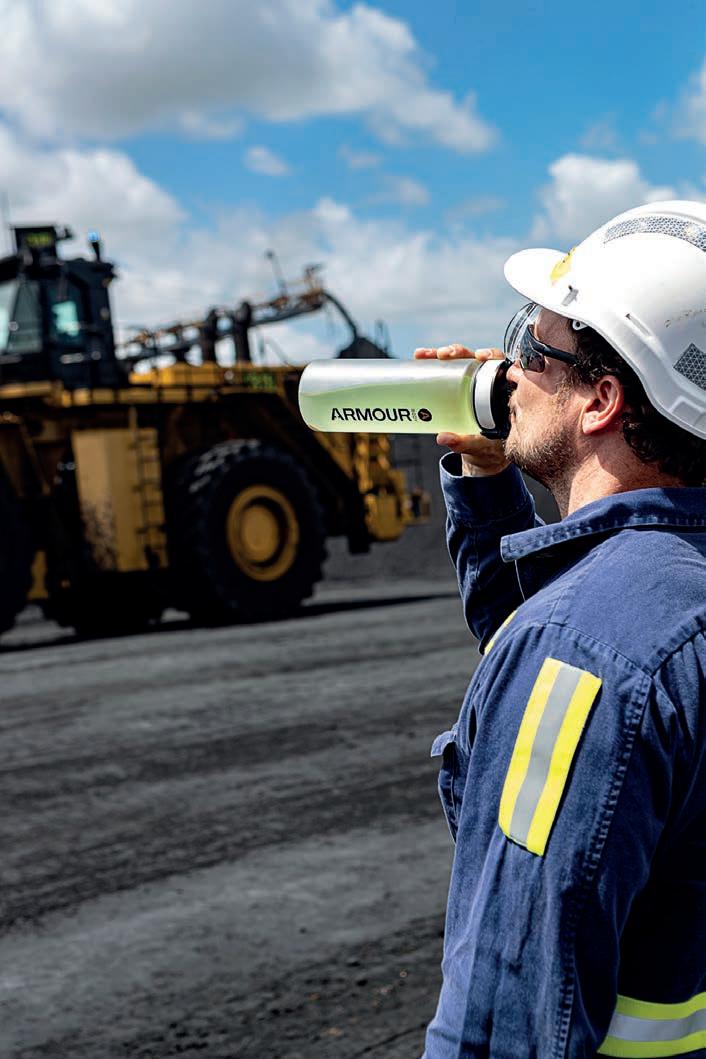
E ective hydration in the heat doesn’t just include water; it also depends on regaining lost electrolytes.
approach helps to effectively counter this situation.
Tier one is education. Starting with its Human Factor Toolbox Program, the company teaches workers the fundamentals of body mechanics, from how heat affects core temperature to how it slows muscle efficiency and mental clarity. Early recognition of heat-related symptoms helps workers intervene before performance and safety are compromised.
Tier two focuses on clean, effective, fit-for-purpose hydration range. Body Armour also supplies
The aim is simple: stabilise the body so workers can perform consistently, even in relentless heat.
Tier three looks at technology. Supporting this is the Core Alert watch, a wearable device that monitors core body temperature and physiological stress in realtime. It alerts workers before their temperature reaches unsafe thresholds, prompting them to rest, hydrate or cool down. Already trialled successfully on Australian mine sites, the device gives workers visibility over their own physical state and
Images: Body Armour
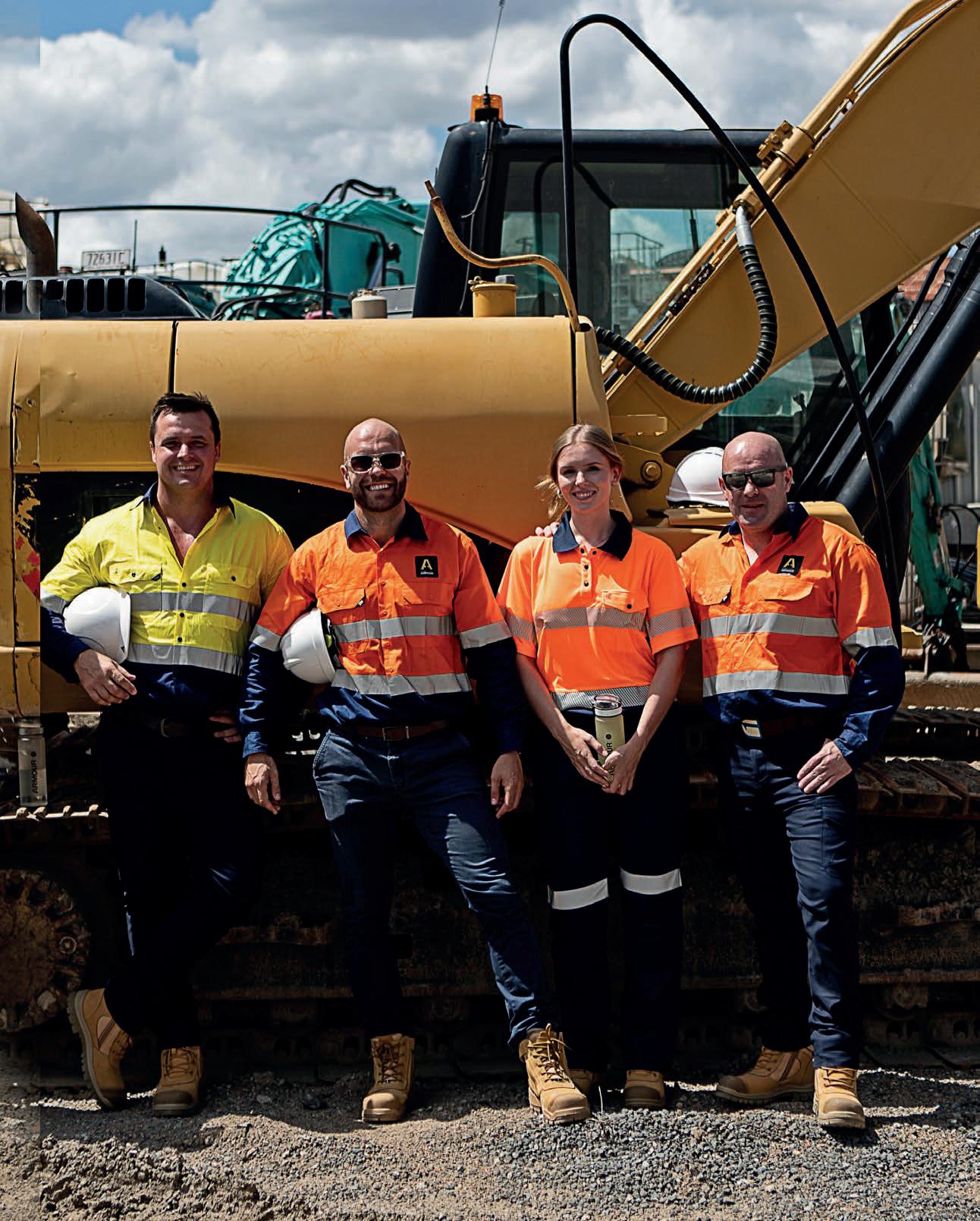
One of Body Armour’s core strengths is its emphasis on education. Rather than treating hydration as an afterthought or a compliance tick, the company begins by helping workers understand the fundamentals, how the body responds to heat, what drives fatigue, and which physiological signals matter most on site. This foundation sets the stage for evidence-based strategies that target real-world mining stressors.
It begins with grounding workers in simple physiological truths, the basic building blocks of how the body performs in heat and clearing up common misconceptions along the way:
High-sugar products cause spikes and crashes, contribute to fatigue and can increase gastrointestinal strain, the opposite of what’s needed to stay sharp and safe.
“Hydration is just about water.”
It isn’t. Electrolytes make hydration work. They drive muscle contraction, nerve signalling and fluid absorption. Without sodium, potassium, magnesium and calcium, workers lose strength, focus and reaction speed far sooner.
As summers become hotter and mining environments more demanding, the sector is adopting an approach long embraced by elite sport. The direction is clear:
• Real-time physiological monitoring, using data and wearable technology to alert workers before heat stress escalates
• Personalised hydration strategies, tailored to sweat rate, workload and environmental conditions
• Ingredient transparency, as sites move away from artificial dyes, sweeteners and outdated formulas toward solutions genuinely fit for purpose
This is the future of heat management: proactive, data-driven and tailored to the individual worker, not just the external environment.
Body Armour is already aligned with this shift. Its clean-ingredient electrolyte formulations, practical education and innovations like the Core Alert watch transition heat safety from reactive to predictive. The focus expands beyond PPE and procedures to empowering workers with insight into their own physiology.
At its heart, Body Armour’s mission is simple: equip workers with the knowledge and tools to protect their most important asset, their own body. When crews understand how heat affects them, use products designed specifically for heavy industry and can monitor their physical state throughout the shift, they work with greater confidence, sharper focus and improved safety.
Body Armour empowers workers with the knowledge and tools to protect their own body.
‘Safety isn’t seasonal’
MINE SITES CAN ENSURE THEIR EMERGENCY SHOWERS ARE UP TO THE TASK ALL YEAR ROUND WITH HEAT TRAP SOLUTIONS.
When a mine worker pulls the handle on an emergency shower – an essential on-site safety feature – the last thing they expect is a blast of scalding water. But as the mercury rises across the Pilbara, that’s becoming a very real risk.
Under AS 4775, emergency shower water must remain within the tepid range of 15.6°C to 37.8°C
to prevent thermal injury and reduce aerosolisation risk.
Built for emergencies, these showers help to quickly wash off harmful chemicals, dust or debris from a worker’s body and clothing after an incident.
However, when water in pipelines and storage tanks overheats, emergency eyewash and safety shower systems can shift from
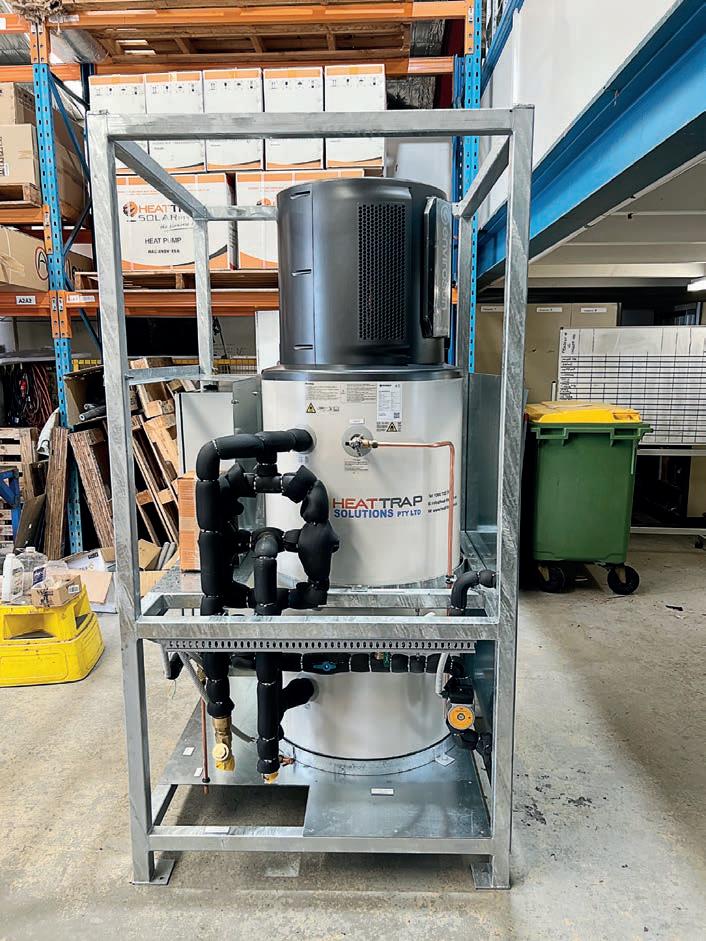
lifesaving equipment to a source of preventable injury and contamination.
While heat stress, hydration and fatigue are familiar safety concerns, extreme temperatures can also compromise the very systems designed to protect workers. In exposed conditions, water trapped in long stretches of pipework can quickly exceed 38°C, the upper limit of the safe tepid range required by Australian standards.
According to Heat Trap Solutions managing director Ashley Challenor, it’s here that hidden risks emerge.
“We’re seeing more sites discover that their ‘compliant’ showers fail when the heat arrives,” he told Safe to Work. “Once water temperature rises, antiscald valves start dumping potable water, or worse, workers are exposed to unsafe temperatures at activation.”
Beyond the risk of scalding, stagnant, overheated water provides an ideal breeding environment for Legionella bacteria, which can cause serious respiratory illness. Warm, stagnant pipework creates ideal conditions for bacterial proliferation, especially in systems with uncirculated dead legs.
For operators, Challenor said, this means summer readiness is now a “critical part of mine-site compliance and worker protection”.
INNOVATION BORN IN THE PILBARA
Heat Trap began to actively address the problem in 2015 after Rio Rail’s Cape Lambert and Karratha operations in the Pilbara found themselves in ‘hot water’.
The company was struggling to control Legionella and dangerously high-water temperatures in its emergency eyewash and safety shower systems.
Heat Trap systems are designed to support full compliance with AS 4775 and broader WHS obligations. Images: Heat Trap
The Heat Trap team developed an innovative fix: a circulated safety shower cooling system that keeps water moving through insulated pipework, passing it through a chiller and UV steriliser to maintain safe, sterile water between 22–38°C.
The company soon realised this wasn’t an isolated issue, as sites across Australia were facing the same challenge, and that’s when it stepped in as a desired solutionprovider, helping companies maintain control over water safety in extreme temperatures.
From there, Heat Trap has grown into a national leader in industrial water cooling and circulation. Its circulated safety shower cooling system eliminates the key issues of heat build-up and stagnation without wasting potable water or relying on energy-heavy refrigeration.
By continuously circulating water through a controlled chiller and UV steriliser, the system is designed to ensure that every safety shower and eyewash station delivers water that is safe to touch and safe to use, even in extreme sweltering conditions.
The company’s remote skid safety shower recirculation technology –recognised as a finalist in the 2021 Work Health and Safety Excellence Awards – extends this protection into hazardous and remote environments.
Housed in a 5000L insulated skid unit, the system includes chillers and pumps to maintain a constant 30°C water supply. Every drop is recirculated and UV-treated, eliminating dead legs and stagnant zones where bacteria can thrive.
While Heat Trap’s systems are best known for emergency response, their applications extend across cooloff units, chiller skids, drinking water systems, accommodation blocks, and temperature regulation in highrisk areas.
In addition, water temperatures at hand-washing stations in some Pilbara locations have reached 47°C, hot enough to cause discomfort and undermine hygiene. This often means that basic sanitation needs go unmet.
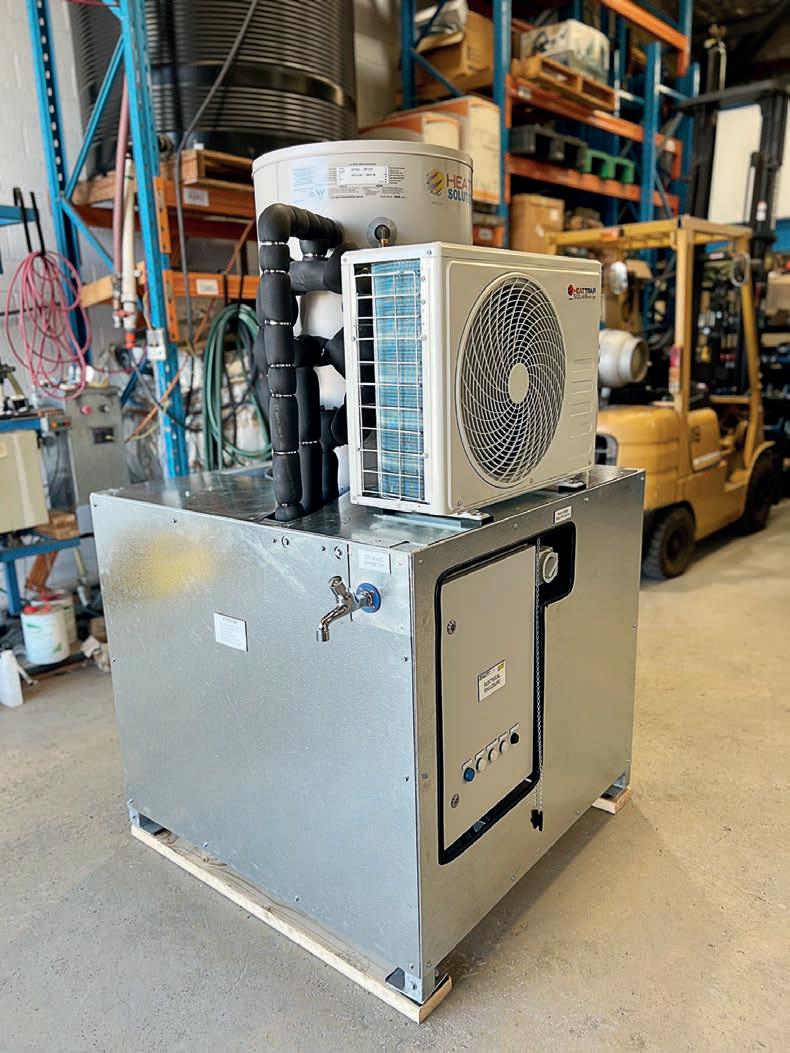
Bore water cannot be effectively treated through reverse osmosis unless cooled to suitable temperatures, and workers using untreated water for sanitation can be exposed to contaminants such as arsenic, cadmium and other blacklisted heavy metals.
Heat Trap resolves these problems by integrating chillers and sterilisation technology, ensuring mine sites can maintain clean, usable water for every purpose, from emergency response to hydration and sanitation, regardless of climate conditions.
From Western Australia to Queensland, Heat Trap continues to work with mining and industrial
clients to help ensure compliance with safety regulations, helping operators turn reactive safety measures into proactive design standards.
What began as a local solution for Pilbara operations has grown into a nationwide push for better water safety standards across Australia’s harshest environments.
“Safety isn’t seasonal,” Challenor said. “It’s about designing systems that protect people every day of the year.”
All Heat Trap systems are also designed to support full compliance with AS 4775 and broader work health and safety (WHS) obligations relating to water temperature, hygiene and emergency response.
Heat Trap has grown into a national leader in industrial water cooling and circulation.
Mate for summer
SAFETY
MATE’S INNOVATIVE SOLUTIONS ARE HELPING MINERS NOT JUST SURVIVE THE SUMMER HEAT BUT THRIVE IN IT.
Australia’s mining industry is no stranger to tough conditions, but the height of summer pushes even seasoned workers to their limits. Scorching heat, unrelenting humidity, high-UV exposure and physically demanding labour combine to create a working environment where safety and wellbeing must be front-of-mind.
Across sites from the Pilbara to the Bowen Basin, two essentials consistently rise to the top of every worker’s toolkit: effective hydration and dependable protective eyewear. In partnership with Safety Mate, ARCK Solutions and Riley Eyewear are delivering new products designed specifically for Australia’s high-risk environments. The result is a safer, more resilient workforce ready to face the hottest months head-on.
HYDRATION REIMAGINED
ARCK Solutions is setting a new benchmark for hydration standards across the country through ARCKUP, a premium range of Australian-made electrolyte sachets engineered for workers battling real heat stress, not just mild summer discomfort.
Driven by a mission to empower workforces and mitigate heat-related illness, ARCKUP was developed for environments where “drink more water” simply isn’t enough.
On most mine sites, workers navigate heavy personal protective equipment (PPE), radiant heat from equipment, long travel distances, and extreme exposure throughout their shifts. Dehydration, muscle fatigue, dizziness and heat stress impact wellbeing, compromise safety and decision-making. Recognising this, ARCK Solutions created ARCKUP as a next-level approach to hydration, blending essential electrolytes, vitamins and amino acids into convenient single-serve sachets that can be used anywhere on site.
Each sachet contains a carefully balanced combination of magnesium citrate, sodium chloride, potassium chloride, calcium lactate and zinc citrate to replenish minerals lost through sweat. This maintains fluid balance and supports normal muscle and nerve function – critical for staying alert and responsive in highpressure environments.
But ARCKUP goes beyond mineral replacement. Fortified with vitamins
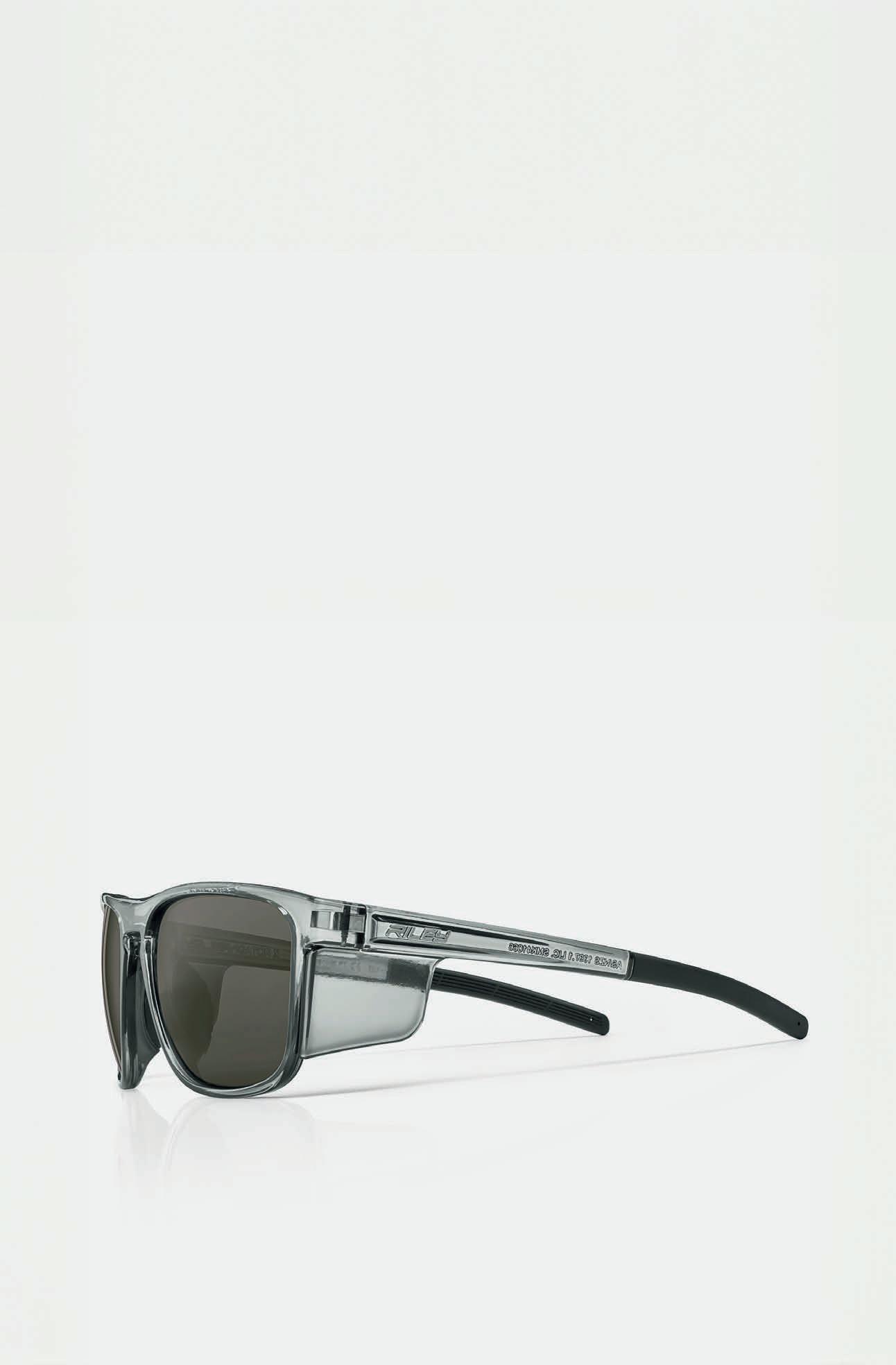
C, B6 and B12, the formula helps combat fatigue, supports energy levels and improves cognitive performance. Workers aren’t just hydrated, they’re sharper and more capable of maintaining focus throughout long shifts.
Heat stress recovery is also a major consideration on mine sites, where physical exertion can take a heavy toll. ARCKUP includes branchedchain amino acids (BCAAs) such as leucine, isoleucine and valine to assist in muscle repair, reduce soreness and help workers bounce back quicker between tasks or after challenging days in the heat.
As an Indigenous-owned Australian business, ARCK Solutions brings a community-minded ethos to its mission. Through Safety Mate – ARCKUP’s national distribution partner – the brand is reaching workers in mining, construction, transport, civil works and other heatexposed industries.
“At Safety Mate, we are always looking for innovative ways to enhance workplace safety and wellbeing,” Safety Mate director Clint Tee said. “Water alone is not always enough to maintain optimal hydration levels,
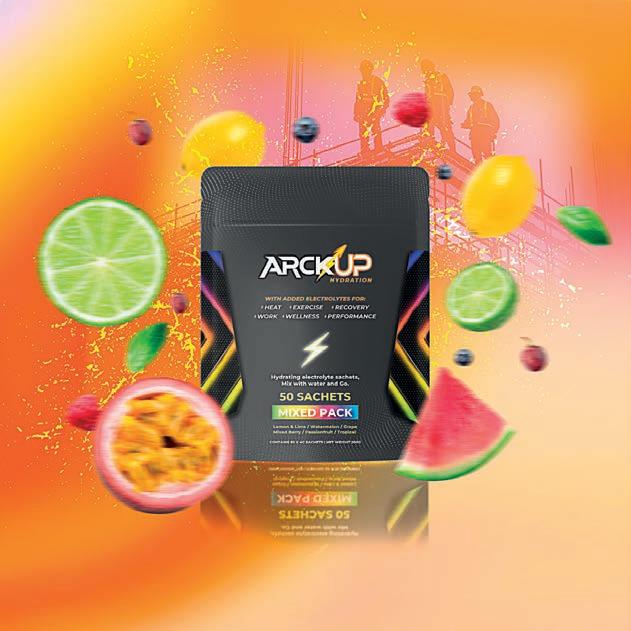
which is why ARCKUP offers a more effective solution.”
Whether workers are pushing through a sweltering day on site or recovering from a weekend adventure, ARCKUP provides the right physiological support to stay hydrated, energised and ready for more.
“Australian miners need hydration solutions that work as hard as they do,” Tee said. “ARCKUP is one solution making a difference.”
CLEAR VISION AND COOL HEADS
While hydration is critical for internal performance, external protection is just as essential – especially for eyes exposed to UV and daily hazards at ground level. That’s where the latest innovation from Safety Mate and Riley Eyewear steps in.
The Navigator X range builds on five years of collaboration between the two companies, who developed the original Navigator series to bring comfort, performance and style together in a single eyewear package. With Navigator X, they’ve raised the bar again, offering eye protection that helps workers stay cool, comfortable and protected throughout long days in the sun.
Exposure to UV radiation is a major risk in Australia, with the Cancer Council warning of potential long-term damage
including squamous cell cancers on the eye’s surface. In addition, miners face high risk from debris, dust, glare and machinery-related hazards. Protective eyewear is a crucial barrier against injury.
Navigator X eyewear is built around Riley Eyewear’s FlowTec dual-lens coating, which provides anti-fog and anti-scratch protection. This ensures clarity even in humid, high-heat industrial settings, where standard eyewear often fogs, scratches or becomes uncomfortable.
Each lens offers 100 per cent UVA and UVB coverage, filtering visible light up to 400 nanometres to keep vision clear even in intense sunlight. Available in seven lens types – including clear, polarised, LED and the market-first HD – the range supports workers across varied conditions and tasks. Prescription options are also on the way.
Comfort is a priority for Navigator X, with a rubberised nonslip nose piece, flexible side arm tips, and a transparent side shield that boosts peripheral visibility without adding weight. Designed for all-day wear, the glasses reduce pressure points, eliminate the need for constant adjustments, and support safe movement around dynamic work sites.
Aesthetics also play a role in ensuring consistent PPE use.
Traditional safety glasses often lack the style workers want, leading to inconsistent use. Navigator X tackles this with a sleek, modern design built from ethically sourced bio-based materials, combining sustainability with a premium look and feel. Navigator X meets the highest global safety standards, including AS/NZS, EN166 and ANSI Z87.1, ensuring miners are equipped with world-class protection that stands up to Australia’s toughest conditions.
A SAFER SUMMER FOR MINING
With hydration and eye protection two of the most fundamental safety needs on any mine site, ARCKUP and Navigator X deliver powerful, practical solutions for meeting the challenges of an Australian summer head-on. Together, they help create a workforce that’s not only protected, but primed to perform – one that remains cool, hydrated and focused no matter how high the temperature climbs.
Through innovation, collaboration and a deep understanding of worker needs, ARCK Solutions and Riley Eyewear’s partnership with Safety Mate is supporting a mining industry where safety and performance go hand in hand, and where every worker can thrive in the heat.
ARCKUP is a premium range of Australian-made electrolyte sachets engineered for workers battling real heat stress.
The Navigator X range o ers eye protection that helps workers stay protected through long days in the sun.
It’s show time
BRISBANE IS SET TO BECOME AUSTRALIA’S HUB FOR WORKPLACE SAFETY INNOVATION WITH THE RETURN OF A PREMIER SAFETY EVENT.
After a three-year hiatus, the Workplace Health & Safety Show (WHSS) is making its highly anticipated return to Queensland, and its timing could not be more crucial.
Safety leaders across Australia are grappling with a rapidly evolving landscape: tougher legislation, increasing psychosocial risks, growing workforce pressures, and heightened scrutiny on how organisations safeguard their people.
For mining operators, professionals in work health and safety (WHS) and human resources (HR) staying ahead of these challenges is essential – with effective leadership, informed decisionmaking and practical strategies key
Set for March 25–26, the WHSS in Brisbane will arrive against the backdrop of those changes and at a pivotal moment for Queensland’s safety community.
Over two intensive days, the event will deliver actionable insights, practical tools and innovative solutions designed to help organisations reduce incidents, strengthen compliance, and foster safer workplace cultures. More than a networking opportunity, the show is a forum for leaders to explore what’s changing in the workplace safety landscape, understand the requirements of new regulations, and discover what strategies and technologies actually work in realworld environments.
The recent WHSS in Sydney
for themselves: 82 per cent of exhibitors rated visitor calibre as very good or excellent, while 91 per cent confirmed the event met or exceeded their expectations.
Thousands of professionals engaged with emerging technologies, regulatory updates and innovative approaches to building stronger workplace cultures. For exhibitors, the benefits were tangible, generating tens of thousands of sales opportunities across WHS, HR, technology, operations and safety solutions.
Abbie Bursa from PIP ANZ reflected on the quality of engagement, saying participants were “engaged, curious, and collaborative”. Similarly, Anthony Barbara of Dexion Logistics described the Sydney event as “extremely

The WHSS is a forum for leaders to explore what’s changing in workplace safety.
The enthusiasm and active participation witnessed in Sydney underscores the momentum that will carry into Brisbane in 2026, ensuring attendees access the latest thinking and solutions shaping the future of workplace safety.
WHAT BRISBANE 2026 HAS TO OFFER
The Brisbane program promises to be one of the most robust in the show’s history. Attendees can expect a rich agenda featuring three stages and more than 40 continuing professional development (CPD)-certified sessions covering a range of critical topics. The program will provide insights from regulators, psychologists, Paralympians, technologists and industry innovators, ensuring a diversity of perspectives and practical learning opportunities.
More than 130 leading suppliers will showcase the latest solutions to today’s pressing safety challenges. From psychosocial health and compliance to technology, leadership and organisational culture, participants will leave with tangible tools and strategies they can implement
immediately. This hands-on, solutionfocused approach is designed to ensure the WHSS remains a practical resource for professionals seeking measurable improvements in workplace safety and productivity.
The WHSS is a national platform connecting Australia’s safety community across Brisbane, Melbourne and Sydney. Each city delivers a unique program tailored to local and national safety priorities, providing professionals with multiple opportunities to stay informed, develop their skills and access the latest safety solutions.
Brisbane will kick off the 2026 series, followed by Melbourne from May 20–21 and Sydney from October 21–22. Together, these events create a year-round hub for more than 15,000 professionals to learn, connect, and elevate safety standards. With hundreds of exhibitors and thousands of attendees nationwide, the WHSS portfolio ensures safety leaders have ongoing access to insights, innovations and solutions shaping the future of work in Australia.
Registration for the Brisbane WHSS is free and now open, giving safety professionals the opportunity to secure their place and begin planning a program tailored to their needs. Exhibitor spaces are also available for organisations seeking to connect with high-intent safety buyers.
More than 130 leading suppliers will showcase the latest solutions to pressing safety challenges at the upcoming WHSS.
Over two days in Brisbane, the WHSS will deliver actionable insights, practical tools and innovative solutions.
Compliance and enforcement outlook
HIGHLIGHTING THE COMPLIANCE PRIORITIES SHAPING AUSTRALIA’S MINING SECTOR IN 2026.

By Gilbert + Tobin special counsel Lauren Shave.

Australia’s mining sector enters 2026 with a mature and increasingly robust safety regime.
Across the country, work health and safety (WHS) regulators are sharpening their expectations, providing clearer lines between ‘paper compliance’ and demonstrable risk control in the field. In this environment, mine operators should anticipate more proactive inspections, targeted campaigns and rigorous testing of officers’ due diligence obligations.
In considering the compliance and enforcement outlook, three key themes emerge:
• Psychosocial safety
• Critical control management for material risks
• Contractor management across complex supply chains.
PSYCHOSOCIAL SAFETY MOVES TO THE FRONTLINE
The most visible shift is the elevation of psychosocial risk to a core safety priority. Regulators now expect mines
to treat psychosocial hazards with the same discipline and rigour applied to physical risks.
That includes a structured approach to identifying psychosocial hazards such as remote and isolated work, high job demands, role ambiguity, fatigue, bullying and sexual harassment. The process should assess the nature, likelihood and duration of exposure, and result in the implementation of controls that are reasonably practicable and measurable.
Compliance checks are increasingly focused on outcomes, not just policies. Regulators want to know how leaders monitor workload peaks, whether rosters are designed to minimise fatigue, how incident data, including near misses and complaints, is trending, and whether psychological injury management is integrated with return-to-work processes.
Cultural safety is under scrutiny. Regulators may review worker consultation records, training quality and the credibility of reporting


channels. The focus is on closing the gap between on-paper frameworks and lived experience in camp, on shift and in contractor workforces.
A board’s due diligence duty now includes psychosocial risk. This means visibility over how controls are working, allocation of resources and evidence that complaints and survey findings are converted into corrective actions.
There are several useful resources to assist officers in understanding these duties, such as Safe Work Australia’s Code of Practice, ‘Managing Psychosocial Hazards at Work’.
CRITICAL CONTROL MANAGEMENT
Regulators remain focused on high-consequence hazards and the integrity of critical controls. Given their importance in fatality-prevention, vehicle–pedestrian interactions, mobile plant operation, working at heights, energy isolation and geotechnical stability continue to dominate the regulatory agenda.
A strong safety focus will be at the centre of Australia’s mining industry in 2026.
In 2026, expect greater scrutiny of critical controls that are specific, understood by frontline workers and evaluated for effectiveness at a frequency that matches the level of risk.
Audits may focus on whether sites can show a ‘golden thread’ from risk assessment to the field, linking bowtie analyses to procedures, prestarts, permit-to-work systems and supervisor checks. Where control performance is uncertain or poorly evidenced, regulators may issue improvement or prohibition notices and return to confirm closure.
Investigations will examine whether control failures were foreseeable, monitoring data was acted upon, whether design or engineering solutions were reasonably practicable.
Change management is a common area for ‘blind spots’. Regulators are focusing on how operators assess and implement changes such as new technology, autonomous systems and modified plant are assessed for risk and introduced without weakening established controls.
CONTRACTOR MANAGEMENT AND EFFECTIVE COORDINATION
Contractor-heavy operations continue to challenge safety governance. In most Australian jurisdictions, mine safety and broader WHS, duties can be held concurrently by multiple parties. This may include the mine owner and contractor, or contractor and sub-contractor. Where duties are shared or overlap, the law expressly requires those parties to consult, cooperate and coordinate with each other.
Officers must exercise due diligence to ensure these obligations are met. This includes being satisfied that contractor risks are understood, appropriately resourced and subject to robust assurance protocols.
Inspections increasingly assess how information flows between mine operators and contractors, how interfaces are managed and whether supervision and permit systems operate seamlessly across entities.
Increased risk of an incident (and enforcement action) arises where there is ambiguity about who controls a work area, or misalignment between contractor procedures and site standards.
WHAT THIS MEANS FOR 2026
Assurance will be decisive. Mines that can produce strong evidence, such as control verification records, quality data, timely corrective actions and learning deployment, will build credibility with regulators and be better positioned during inspections and investigations.
Equally, boards and senior executives who can articulate and substantiate their safety strategy, including on psychosocial risks and contractor interfaces, will set the tone for compliance.
The outcome is not only regulatory confidence but the sustained protection of people in one of Australia’s most critical industries.
QME will be held in Mackay and is expected to reach new heights in 2026.
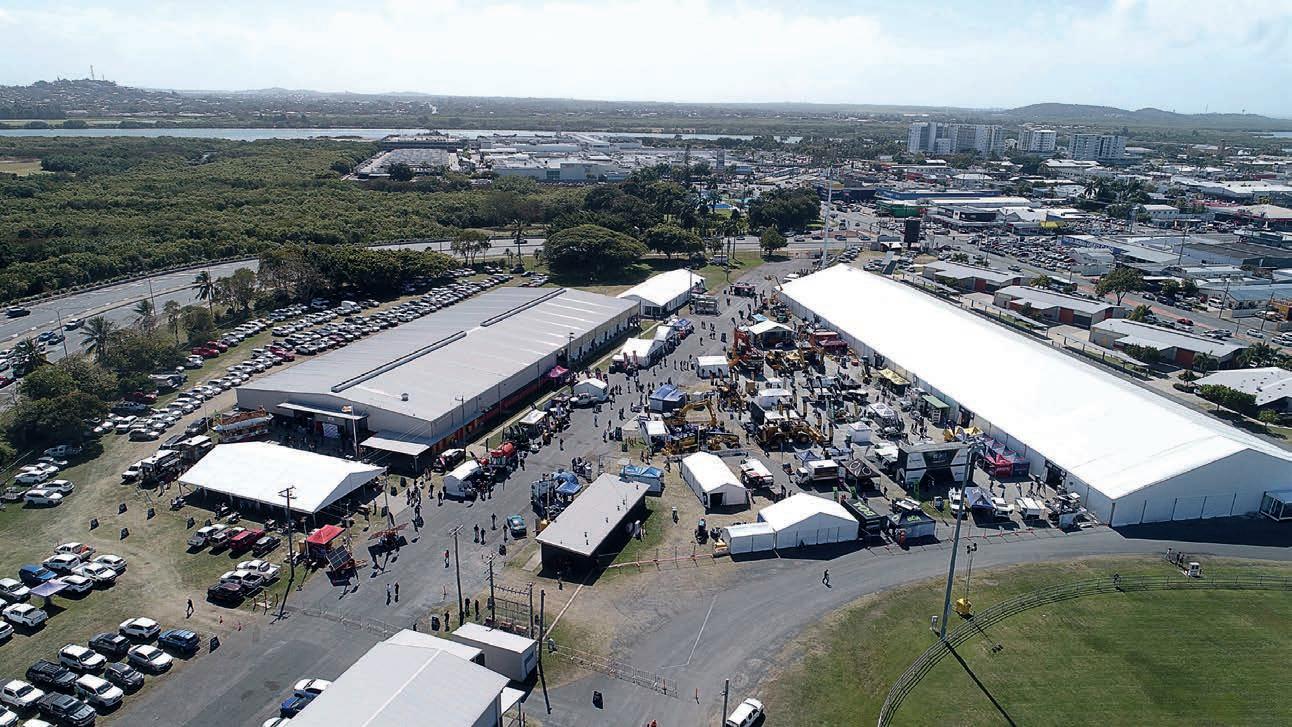
Beyond the hard hat
THE QUEENSLAND MINING & ENGINEERING EXHIBITION 2026 WILL SHOWCASE CUTTING-EDGE MINING SAFETY TECHNOLOGIES.
The Queensland Mining & Engineering Exhibition (QME) 2026, returning to Mackay from July 21–23, is set to be the definitive platform for one of the resources sector’s most pressing challenge: driving world-best practices in safety and worker well-being.
As the largest regional mining event in the state, QME attracted more than 5000 visitors in 2024 and features hundreds of suppliers across its three-day run.
The upcoming edition is now positioning itself as a crucial hub where technological innovation, leadership, and cultural change intersect to create safer, more resilient mine sites across the state.
A key message of the event, reinforced by the conference agenda and major industry partners is that modern safety extends beyond managing physical hazards and demands a comprehensive focus on the mental and emotional health of the workforce.
DUAL FOCUS
The exhibition and its concurrent conference are tackling safety from two critical angles.
Firstly, the trade floor will spotlight cutting-edge innovations from major suppliers, including ATOM, Hitachi Construction Machinery, and Brooks/ XCMG, with their latest products.
Dedicated conference sessions will delve into the use of artificial intelligence (AI), predictive maintenance, automation and remote operations, technologies that redefine site safety by predicting equipment failures and removing workers from high-risk environments. This shift marks the transition to a proactive, datadriven safety management system.
Secondly, the conference agenda tackles the growing focus on workforce resilience. Dedicated sessions will explore the ‘next frontier of safety’, moving beyond compliance to address mental health, fatigue management, and challenges in remote operations.
Experts will explore how newly designed support systems are crucial for a workforce facing the unique pressures of isolated, digitally connected operations.
“The conference agenda is structured to provide a wide-ranging overview of important industry topics, including conversations about mental
health and workforce resilience,” Prime Creative Media show director –mining events Rebecca Todesco said.
Beyond the exhibition floor, QME 2026 will be an all-encompassing showcase of supplier innovation and excellence, illustrating the worldclass capabilities of Mackay and the broader central Queensland region.
The event includes a free-to-attend Leadership Series that is meticulously curated to address the current needs of the industry, providing direct, actionable benefits across

The event is expected to draw thousands of attendees.
many mining functions, from operations to maintenance and safety management.
COLLABORATION FOR A SAFER FUTURE
The strategic alignment of key industry bodies ensures safety remains at the forefront of the dialogue.
“QME will help to accelerate the adoption of world-class practices,” Todesco said. “Attendees can meet the suppliers, examine the cuttingedge machinery, and engage in the dialogue necessary to confidently upgrade and improve their work sites.”
Another pillar of the 2026 edition of QME will be the dedicated Mining Pavilion. This central hub will bring together key mining companies and major contractors, offering a vital space for them to exhibit their latest projects, initiatives and innovations directly to the thousands of attending mining professionals. The Queensland Government’s strong push for critical minerals, another key QME theme, also has significant safety implications.
“As Queensland mining’s goals evolve, so do the region’s safety needs,” Todesco said. “QME provides a discussion hub to foster meaningful progress on how to manage complex new minerals and supply chains, growing the industry together.”
As an official association partner, the Queensland Resources Council (QRC) embeds leadership in
safety, diversity and environmental performance into the event’s DNA. QRC chief executive officer Janette Hewson will deliver a keynote, emphasising how QME provides a platform for sharing the innovation and best practices crucial for a sustainable and safe regulatory environment.
“QME is now a major event on the Queensland resources calendar and, as the industry’s peak body, QRC is proud to be involved,” Hewson said. “The exhibition also takes the resources sector to the wider public and shares the innovation and world best practices that are home-grown in Queensland’s resources sector.”
Additionally, the Queensland Mining Awards, hosted by the Bowen Basin Mining Club (BBMC) during QME, will celebrate industry excellence. The awards serve as a key mechanism for highlighting and
promoting innovations that specifically improve safety and environmental outcomes, ensuring that winning solutions are showcased to decisionmakers eager to implement them on their own sites.
“QME is always such a significant celebration of the mining industry, so hosting our awards in the midst of that celebration helps to elevate QME even further,” BBMC director Jodie Currie said.
QME 2026 promises to be an unmissable event for stakeholders committed to safeguarding their people, pioneering new technologies, and setting the standard for the future of the Queensland resources sector.
Exhibitor stands are selling out fast for QME 2026. Secure your spot now at queenslandminingexpo.com. au/getinvolved/
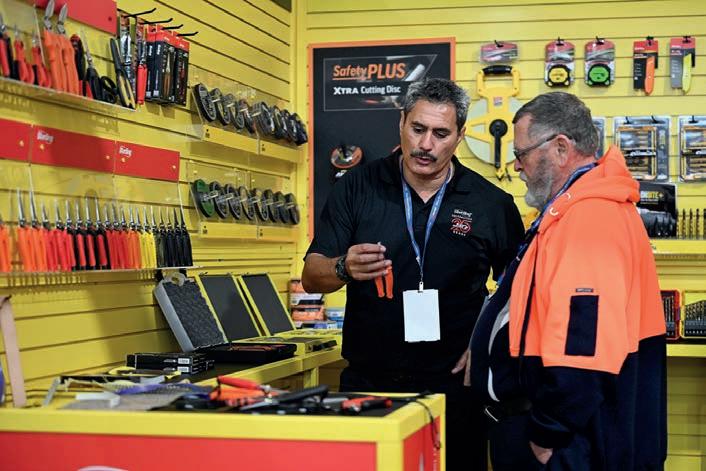
The latest technological innovations and o erings will be on display.
QME 2026 will exhibit the latest tools for safe, practical industry solutions.
Images:
A ‘critical platform’
PNG EXPO 2026 IS DESIGNED TO SPARK COMMERCIAL OPPORTUNITIES, ADDRESS CHALLENGES, AND MAP GROWTH IN THE EMERGING PACIFIC POWERHOUSE.
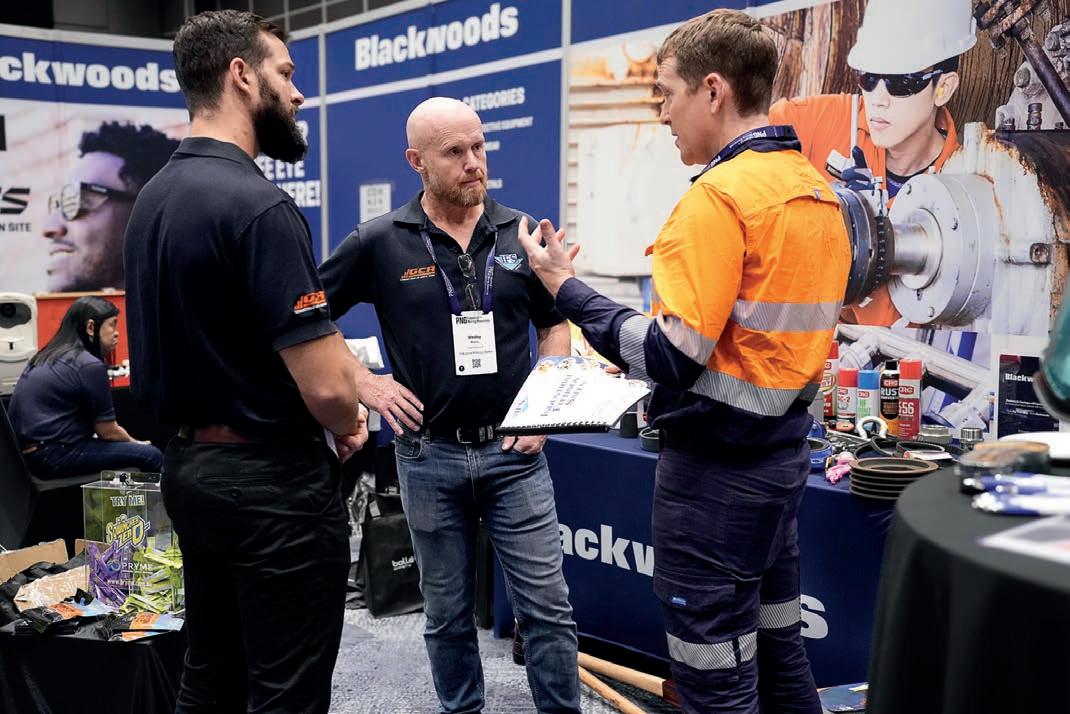
Treadying for an industryleading cast of exhibitors in 2026, solidifying its role as the region’s premier mining showcase.
The event returns against a backdrop of historic economic expansion. Papua New Guinea’s (PNG) booming mining and energy sector is driving Oceania’s fastestgrowing economy, with 2025 growth revised up to 4.6 per cent by the Asian Development Bank.
Record outputs from gold, copper and LNG projects signal a surge in opportunities for suppliers and service providers across the entire Pacific region. The PNG Expo is where companies and industry heads, to shape this growth gather.
In response to this burgeoning demand, the 2026 iteration will feature
Complementing the exhibition, the free-to-attend conference program, curated in collaboration with PNG Mining, will host experts presenting critical insights on local challenges and opportunities.
With 65 per cent of attendees at the 2025 iteration indicating their direct involvement in decision-making processes at their companies, the PNG Expo is designed to start conversations and create real commercial opportunities. Blackwoods business development manager James Stalker highlighted the event’s essential role in this process, and the Australian industrial and safety supplier returning for the event.
“The PNG Expo is a critical platform for Blackwoods Export because it brings together key decision-makers
“It’s not just about showcasing products, it’s about building relationships, understanding local challenges and reinforcing our commitment to supporting Papua New Guinea’s growing industrial economy.”
The enthusiasm for the 2026 event reflects the industry’s positive sentiment. Prime Creative Media show director – mining events Rebecca Todesco said momentum is building across the sector, and PNG Expo 2026 is designed to scale with that growth.
“The launch of our 2026 event marks a new phase for PNG Expo and one we’re especially proud to lead,” Todesco said.
“From a redesigned floorplan to stronger content streams and bigger networking opportunities, everything
Blackwoods has made multiple appearances at the PNG Expo.
Images: Prime Creative Media.
we’re doing is designed to add value for both exhibitors and attendees.”
The demand for domestic support is immense, as evidenced by the fact 62 per cent of attendees in 2025 were based in PNG.
Crucially for the Pacific nation, whose influence in the sector continues to grow, the expo acts as a regional agenda-setter. It promotes the development of vital local partnerships while successfully attracting essential international investment.
Suppliers can showcase their solutions directly to key buyers from fast-growing mining and energy projects, including those involved in major LNG and copper developments.
For miners operating in a region where personal trust and local understanding are paramount to business success, the face-to-face interaction provided by the expo deepens commercial trust.
For companies like Blackwoods, it provides a vital platform to address key industry challenges, particularly those related to safety and supply chain reliability.
“The biggest challenges we see in PNG’s mining and industrial sectors include safety compliance and workforce protection in remote and high-risk environments especially around sourcing quality goods fit for task, ethical sourcing and supply chain reliability for critical consumables and PPE,” Stalker said.
Blackwoods used its presence at the 2025 PNG Expo to respond directly to these challenges by showcasing innovative personal protective equipment (PPE) solutions designed for tropical and rugged conditions, customised safety programs, including glove audits and product standardisation, and integrated supply solutions that reduce downtime and improve procurement efficiency.
Stalker said the Blackwoods stand will again focus on practical demonstrations and case studies that show how the company helps clients meet safety standards while optimising operational costs.
Blackwoods’ key takeaway from the last event was the growing demand for localised solutions, as well as the fact clients want suppliers who understand PNG’s unique challenges, from logistics to climate conditions.
“This reinforces our strategy to strengthen partnerships and deliver tailored solutions rather than one-sizefits-all products,” Stalker said.
This approach supports the need for forward-looking insights and emerging technologies unique to the region, such as the increasing domestic market for autonomous hardware and equipment that can withstand the often temperamental weather conditions.
Companies must leverage the platform to present solutions that are not only technologically advanced but are also practical and resilient in a challenging operational environment, according to Stalker.
“National events like PNG Expo are vital because they provide direct access to global suppliers and innovations,” Stalker said. “For those seeking safety solutions, these events are an opportunity to see, test and compare products that can make a difference in protecting workers and improving operational efficiency.”
Secure your spot now at pngexpo. com/getinvolved/
The number of attendees at the PNG Expo has grown year-on-year.
The Stanley Hotel has proven to be a popular venue.
Safety and technology

The right questions
Smartphone apps can encourage managers to prioritise safety and promote healthy habits.
HOW EMERGING TECHNOLOGY CAN STRENGTHEN SAFETY IN MINING.
As mining operations across Australia move deeper into digital transformation, a new global report is urging industry leaders to pause and ensure that innovation and safety evolve hand in hand.
‘The impact of emerging technology on safety at work’ report, developed by the Lloyd’s Register Foundation Global Safety Evidence Centre and researched by RAND Europe, highlights how rapidly advancing tools such as artificial intelligence (AI), wearable devices, augmented reality and collaborative robotics are reshaping occupational safety and health (OSH).
The report’s overarching message is clear: while emerging technologies can help protect workers and enhance productivity, their impact depends on how they are designed, deployed and governed. Evidence shows that new tools can introduce new safety risks as easily as they mitigate them. With the right questions asked early, digital technologies can
support safer, healthier and more resilient mining environments.
PROMISE AND PITFALLS OF EMERGING TECHNOLOGIES
The Lloyd’s Register Foundation report maps existing evidence on how digital tools are shaping safety outcomes across a range of industries. The patterns are revealing and relevant to mining operations that are increasingly adopting digital systems, automation and remote monitoring.
For example, OSH-focused smartphone apps are being used to streamline reporting, encourage healthy habits and help teams identify hazards faster. Some evidence shows these apps can motivate managers to prioritise safety and support better wellbeing among workers. However, the impact on performance indicators such as sickness rates or long-term behavioural improvement remains mixed, suggesting apps alone cannot replace safety culture and leadership.
Augmented reality (AR) and virtual reality (VR) technologies present
another promising avenue. These interactive platforms can immerse workers in realistic training scenarios, ideal for mining environments where hands-on experience is essential but often high-risk.
The report notes encouraging indications that AR and VR increase worker engagement and improve motivation to apply safety learnings, yet the evidence on whether these tools, on their own, translate into stronger safety knowledge is less clear. Their effectiveness likely lies in thoughtful integration with broader training programs, rather than as standalone solutions.
Other technologies require more careful navigation. Algorithmic management systems and emotional AI, tools that automate supervision or attempt to monitor wellbeing, may unintentionally undermine worker trust or place new pressures on staff. The report highlights cases where employees felt compelled to suppress emotions or manage their behaviour to preserve privacy, adding stress

The report highlights how rapidly advancing tools are reshaping occupational safety and health.
EVIDENCE MATTERS

rather than relieving it. But here, too, thoughtful design and collaborative implementation can reduce risks.
When workers are involved in decision-making and systems are transparent, these tools have the potential to support wellbeing rather than erode it.
Wearable devices tell a similar story. While sensors capable of tracking fatigue, health data or environmental exposures can alert teams to emerging risks, poorly implemented wearables can create heightened anxiety or complacency, depending on how they are used. The message from the report is not to avoid these technologies but to deploy them with clear communication, supportive policies and appropriate training.
One area of particularly high interest for mining is collaborative robotics, or ‘cobots’, which are machines designed to work alongside humans, often undertaking hazardous or repetitive tasks.
Early evidence suggests significant potential for improving safety and productivity, but research gaps remain, especially regarding how cobots can be safely integrated into highly variable existing work environments such as in mining. The report calls for more investigation into real-world use cases to ensure that cobots complement, rather than complicate, human workflows.

evidence not only enables safer work environments but also gives companies confidence to invest in new tools without exposing workers to unintended harm.
Institute for the Future of Work head of social research Dr Magdalena Soffia said industries too often place “blind faith” in technology, assuming it will deliver value automatically. In reality, she said, the depends on thoughtful design and governance.
While mining has embraced innovation – from automation to remote operations centres – the report highlights the importance of grounding technological adoption in evidence and safety science.
Lloyd’s Register Foundation director of evidence and insight Nancy Hey believes that while digital technologies introduced for business benefits often bring unforeseen risks, major technological shifts can be made safer through collective action and shared learning.
“We know it is possible to maintain and improve occupational safety without stifling innovation,” Hey said. “We’ve been through many rapid technological shifts in the past that have been made safer by acknowledging the challenges and making a collective effort to address them.”
This message aligns with the direction of the mining sector, which continues to balance efficiency, cost pressures and productivity with the
“Governing and regulating emerging technologies is not only about enabling growth and creating new sources of value,” she said. “It is also about anticipating and mitigating risks to our most important resource: the workforce.”
For mining companies, this means evaluating tools based not only on cost or efficiency but on long-term impacts on worker health, organisational culture and skill development.
Mining’s future will undoubtedly involve more digital tools, remote systems, AI-driven monitoring and automated equipment. But as this report reinforces, technology must serve the workforce, not the other way around.
When emerging technologies are designed with people in mind, backed by evidence and deployed collaboratively, they can help mining operations reach new levels of safety and performance.
In a fast-changing landscape, asking the right questions may be the
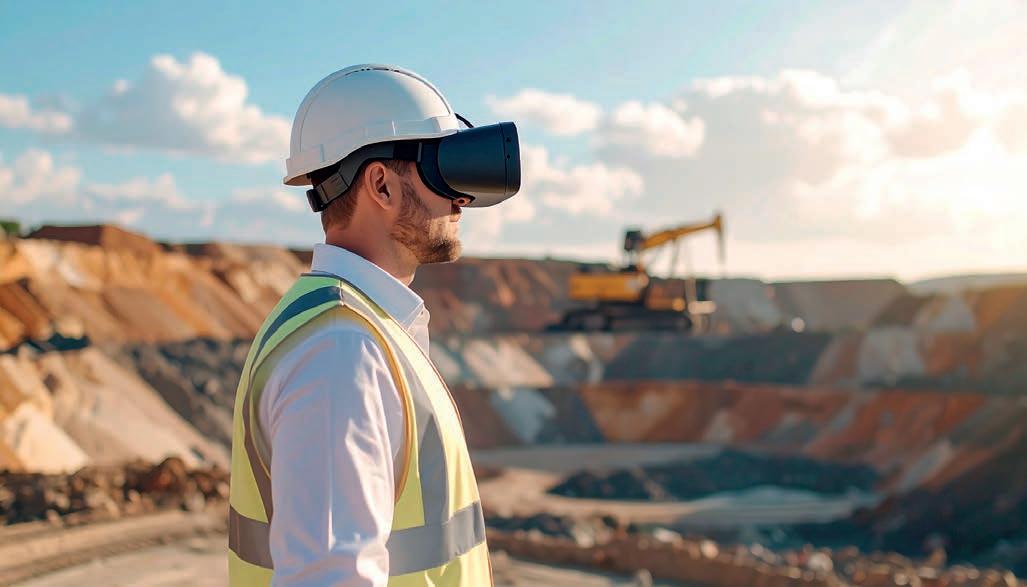
Image:
Lloyd’s Register Foundation
Augmented and virtual reality in interactive training may improve workers’ learning engagement.
Awards
Celebrating safety, sustainability and community
FOR OVER TWO DECADES, THE BHP HEALTH, SAFETY, ENVIRONMENT AND COMMUNITY AWARDS HAVE BEEN AMONG THE HIGHEST HONOURS A PERSON IN THE INDUSTRY CAN RECEIVE.
From reducing injury risk on site to reviving an endangered Indigenous language in Chile, the winners of BHP’s 2025 Health, Safety, Environment and Community (HSEC) Awards embody the values that have shaped the company for 140 years.
Now in their 22nd year, the awards remain BHP’s highest internal honour, recognising the innovative and impactful work that makes the business – and the communities it touches – safer, more sustainable and more inclusive.
This latest winners were revealed at a ceremony in Melbourne in November 2025, bringing together teams and individuals from across BHP’s global operations.
BHP chief executive officer (CEO) Mike Henry used the occasion to emphasise the power of daily initiative.
“Every day, we have the opportunity to have a positive impact on performance, those around us, and the world – doing what’s right, seeking better ways and making a difference,” he said.
Since their inception more than two decades ago, the HSEC Awards have attracted more than 2000 nominations and recognised over 580 finalists. The 2025 iteration saw nearly 400 nominations, with 30 finalists selected across six core categories, all also eligible for the global People’s Choice Award.
ADVANCING HEALTH, SAFETY AND ENVIRONMENT
Taking top honours in the Health and Hygiene category was the operations services team from Minerals Australia for its reducing musculoskeletal injuries initiative – highlighting a whole-of-system approach to physical and mental wellbeing.
In the Safety, Security and Emergency Management category, Copper SA’s robotic cathode stripping machine showcased how automation can remove people from high-risk tasks while improving productivity, while also demonstrating the growing role of robotics in safety initiatives. Environmental stewardship took centre stage with the Environment and Climate Change category winner, preserving an oasis in the desert , from the technical global functions team. The project delivered measurable environmental benefits in one of BHP’s most challenging landscapes.
STRENGTHENING COMMUNITIES AND INCLUSION
In the Community and Indigenous Peoples category, Escondida’s reviving the Ckunsa language project was recognised for its partnershipdriven approach to cultural revitalisation. The initiative supports one of northern Chile’s original peoples by preserving and re-teaching their ancestral language.
Escondida was also recognised in the Inclusion category with the

BHP’s internal awards recognised several top-notch projects.
women, STEM and mining initiative that supports women expanding their career pathways.
Leadership in sustainability was also celebrated, with the Sustainability Leadership Award presented to two individuals: president Brazil (external affairs) Emir Calluf; and Peak Downs mine maintenance manager for operations services Brennan Long.
The coveted People’s Choice Award went to WAIO’s digital shunt plans, a project that resonated strongly across BHP’s global workforce for its practical impact and innovation.
While celebrating the achievements in accelerating inclusivity and safety, BHP said the awards were a key foundation for dedication and teamwork that drive improvements across the business, helping to set a benchmark for the wider resources sector.

expanded the floor plan but spaces won’t last
The Stanley Hotel and Suites Port Moresby, Papua New Guinea
1-2 July 2026
Download Prospectus

Secure your spot and showcase your business to the industry’s key players


CONFERENCES, SEMINARS & WORKSHOPS
EVENT SUBMISSIONS CAN BE EMAILED TO EDITOR@SAFETOWORK.COM.AU

Global Resources Innovation Expo
Perth Convention and Exhibition Centre, WA
MAY 5–7
The Global Resources Innovation Expo (GRX26) is an industry-led conference and exhibition hosted by Austmine in partnership with AusIMM. Building on the success of its debut last year, GRX26 will connect attendees with global delegates, showcase cutting-edge technologies, and explore emerging solutions in mining, resources and safety.
• www.grx.au
AMR Safety Summit 2026
Perth Convention and Exhibition Centre, WA
MAY 21–22
The AMR Safety Summit brings together leaders, frontline professionals and technology providers for discussion, practical insights and demonstrations aimed at making mining operations safer and smarter. It is ideal for mine safety and health professionals, operations managers and site leaders, contractors and suppliers delivering safety solutions, regulators and compliance teams, and industry stakeholders interested in technology - driven safety solutions.
• amrsafetysummit.com
Mine Electrical Safety Conference
Queensland 2026
Sofitel Brisbane Central, Qld JUNE 1–3, 2026
The 2026 Mine Electrical Safety Conference, hosted by Mine Electrical Safety Association, is Australia’s premier forum dedicated to electrical safety in mining and quarry operations. The
conference brings together workers, regulators, contractors and suppliers to share technical insight, best-practice updates and innovations in electrical hazard management, while fostering industry - wide networking.
• absoluteevents.eventsair.com/ mescqld2026/
Health, Safety, Environment and Community Conference and Awards 2026
Rydges Resort Hunter Valley, NSW AUGUST 2–5
The 2026 NSW Mining HSEC Conference and Awards brings together industry leaders, professionals and decisionmakers to explore operational safety, workforce wellbeing, environmental management and community engagement. Featuring panels, case studies and networking opportunities, the event promotes leadership, professional development and collaboration.
• nswmining.com.au/events/health-safetyenvironment-community-conference-andawards-2026
Mine Health and Safety Conference 2026
Pan Pacific Perth, WA OCTOBER 5–7
The Mine Health and Safety Conference 2026, organised by AusIMM, is dedicated to improving health, safety and wellbeing across mining operations. Attendees will explore risk management, critical controls, ergonomics, equipment safety and workforce wellbeing. The event features expert panels, technical sessions, and networking opportunities.
• ausimm.com/conferences-and-events/ mine-health-and-safety
International Mining and Resources Conference + Expo (IMARC) 2026
ICC Sydney, NSW OCTOBER 27–29
IMARC is one of Australia’s premier mining gatherings, bringing together global leaders, investors, technology providers and policymakers under one roof. Attendees will explore topics from project development and investment to environmental, social and governance, operational excellence, mine digitisation, and sustainable mining practices across a conference program and vast exhibition show floor.
With more than 500 exhibitors showcasing cutting - edge technology, machinery and services, IMARC provides a unique opportunity to discover innovations shaping the future of mining, alongside networking with peers from more than 120 countries.
• imarcglobal.com
Ground Support 2026
Sofitel Brisbane Central, Brisbane, Qld NOVEMBER 17–19
Ground Support 2026 brings together mining professionals, geomechanics experts and underground mining practitioners to focus on ground support design and rockfall mitigation, a critical safety concern in underground operations. Themes include mechanised support installation, support for dynamic conditions, corrosion -resistant systems, instrumentation and monitoring, numerical modelling and case studies. The symposium offers technical papers, networking, professional - development credits and exhibition- level engagement.
• acggroundsupport.com