

Committed to innovation and quality to support your success.
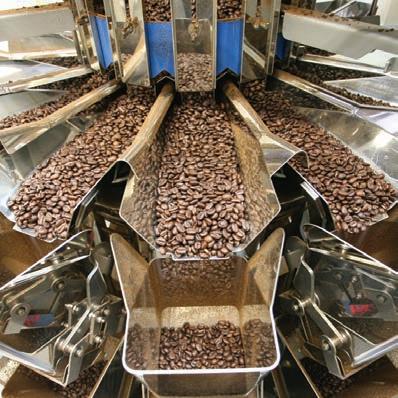
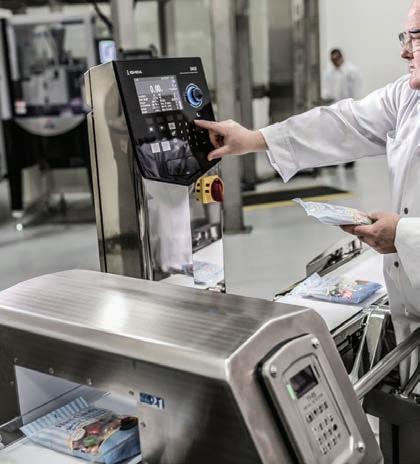
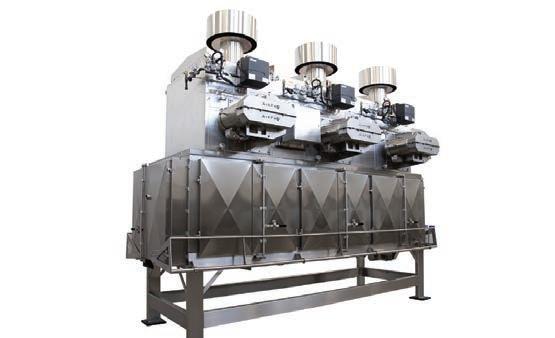
Bringing together leading brands in processing, packaging and inspection equipment specifically for the coffee industry. Our solutions set the standard for yield, efficiency and safety. Whatever your product needs, we can meet it with precision and passion.
•Preparation + Processing
•Coating + Flavouring
•Drying + Roasting
•Product Handling
• Weighing
•Inspection
•Packaging



AManaging Editor: Mike Wheeler
t its core, the purpose of automation and robotics is to make life easier.
The early stages of automation evolved within food manufacturing as far back as the 1st century BC – water wheels. While their exact origins are unclear, the Greeks and Romans adopted this semi-automatic technology to grind grain into flour.
Fast forward to the present day, automation and robotics have become a staple of food and beverage manufacturing, as well as many other industries. New techniques, processes and machines have expanded the role automation plays across society.
In the food and beverage industry, a product’s success often lies in consistency. While flavour, texture and colour must remain the same, manufacturing processes need to evolve to remain competitive. Through automation and robotics, brands can relieve operational pressures while maintaining quality.
This edition of Food & Beverage Industry News features three Meet the Manufacturers embracing these changes to boost efficiency with the end consumer in mind. Better Beer has partnered with Casella Family Brands for production and distribution, freeing its team to focus on more complex and creative work. Provincial Food Group has transformed a 4,000 square metre facility in Shepparton to improve efficiency amid tight margins and a diverse product range.
Finally, Ferguson Plarre’s Bakehouses, follows a strict and selective approach before adopting new technologies to ensure they benefit employees. The chief executive officer instead advocates for strengthening internal systems first. This aligns with the advice of construction company Total Construction. Taking an agnostic and holistic approach, the company highlights how food manufacturers can overlook hurdles when introducing new technology, which can undermine
its purpose of simplifying operations.
So how can businesses keep pace in an advanced environment and ensure technology truly serves them? Collaboration with industry experts is key. Working with solution providers brings knowledge and insight that help companies make informed decisions.
One such solution provider is Eurocold. With a fleet of more than 700 refrigerated vehicles, Eurocold is raising awareness of how ageing trucks contribute to food spoilage during transport, while offering rental options for newer refrigerated truck bodies.
Then there is Existco, which delivers digital solutions that improve connectivity across manufacturing processes and educates businesses on the benefits of automation and IoT technologies. Companies such as Trimatt Systems encourage manufacturers to consider the entire production process, including packaging, while delivering inhouse printing systems that support compliance and faster responses to change.
Networking and partnerships keep innovation moving and prevent stagnation. Industry events such as MICE, Bulk Expo and the Endeavour Awards, supported by this masthead’s publisher Prime Creative Media, allow questions and scepticism around new technologies to be addressed, driving meaningful change across the sector.
Then there is research. UNSW researchers who have developed an edible coating to extend the shelf life of summer fruits are also calling for stronger industry collaboration to turn research into practical solutions for Australian food manufacturing.
While automation exists to make life easier, close collaboration across the food sector remains essential to support the growth and resilience of Australian food manufacturing. F
CEO: Christine Clancy
Managing Editor: Mike Wheeler
Ph: 041 557 2106
mike.wheeler@primecreative.com.au
Journalist: Dae Hong david.hong@primecreative.com.au
Art Director: Michelle Weston
michelle.weston@primecreative.com.au
Sales/Advertising: Joanne Davies
Ph: 0434 785 611
joanne.davies@primecreative.com.au
Client Success: Cait Pillay Ph: (03) 9690 8766
caitlin.pillay@primecreative.com.au
Cover
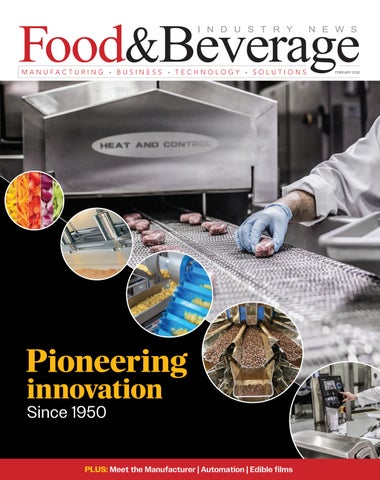
Image: Heat and Control
Subscriptions AUS NZ O/S
1 year subscription99109119
2 year subscription189199 209
For subscriptions enquiries please email subscriptions@primecreative.com.au
Copyright
Food & Beverage Industry News is owned by Prime Creative Media and published by John Murphy. All material in Food & Beverage Industry News is copyright and no part may be reproduced or copied in any form or by any means (graphic, electronic or mechanical including information and retrieval systems) without written permission of the publisher. The Editor welcomes contributions but reserves the right to accept or reject any material. While every effort has been made to ensure the accuracy of information, Prime Creative Media will not accept responsibility for errors or omissions or for any consequences arising from reliance on information published. The opinions expressed in Food & Beverage Industry News are not necessarily the opinions of, or endorsed by the publisher unless otherwise stated.
© Copyright Prime Creative Media, 2023
Articles
All articles submitted for publication become the property of the publisher. The Editor reserves the right to adjust any article to conform with the magazine format.
Head Office
379 Docklands Drive
Docklands VIC 3008
Ph: +61 3 9690 8766
enquiries@primecreative.com.au http://www.primecreative.com.au
Sydney Office
Suite 11.01,

6 News
8 Meet the Manufacturer: Ferguson Plarre’s Bakehouses
Now budding into its fifth generation, a bakery business aims to “bake” people happy.
14 Meet the Manufacturer: Better Beer
Better Beer is driving awareness to Australian-made better-for-you beers.


18 Meet the Manufacturer: Provincial Food Group
Provincial Food Group supplies a range of value-added meat products at its Shepparton facility.
24 SEMMA
SEMMA aims to increase Australia’s GDPfrom six to 10 per cent within five years.
25 Food transport
Eurocold addresses the dangers of food spoilage caused by old trucks on the road.
28 Digitisation
Disjointed systems set a business for failure. Existco simplifies the chaos through connectivity.
32 Construction
While new equipment is exciting and can automate processes, one construction company offers an agnostic view.
34 Printing
As more businesses are seeking flexibility and control, Trimatt Systems suggests a just-in-time printing system.
36 AIP
Seven ANZ companies have received 11 WorldStar Packaging Awards.
38 Edible Films
How can coffee help preserve blueberry life? UNSW researchers are turning food waste into a protective edible film.
42 MICE
Coffee is a daily craving. Recognising this, the Melbourne International Coffee Expo will deliver an aromatic energy.
45 Compressed air
Atlas Copco’s compressed air solutions safeguard the food and beverage industry from recalls.
46 Endeavour Awards
Nominations are now open for the 2026 Endeavour Awards, celebrating the achievements of Australian manufacturing.
48 Bulk
Bulk Expo is rounding up its 2026 partners and sponsors to elevate the industry.
50 New Products

Confectionery manufacturers are exploring cocoa free chocolate as they respond to increased volatility in the price and supply of cocoa beans, according to new research from Rabobank.
According to the report Beyond the bean: ‘Big chocolate’ explores cocoa free pathways, food companies are investigating a range of technologies
that could replace cocoa beans with alternatives that are more reliable in supply and less exposed to price swings.
The global cocoa market has experienced sharp disruption in recent years. As a result, cocoa free innovation in chocolate is moving from niche experiments to strategic initiatives as manufacturers seek to

diversify their ingredient base, the report said.
Cocoa is grown largely in equatorial regions, with more than 60 per cent of supply coming from West Africa. Production is sensitive to changes in temperature and rainfall, with recent seasons marked by erratic weather, drought and disease, including swollen shoot virus. Yields in Cote d’Ivoire and Ghana have declined, while recovery timelines remain uncertain.
RaboResearch identified three technology pathways being pursued by cocoa suppliers and snack manufacturers. These include lab grown cocoa aimed at long term supply security, fermentation based solutions for nearer term reformulation and scalable growth, and upcycled ingredient systems for cost focused, high volume applications.
Lab grown cocoa uses plant cell cultures to produce cocoa powder and cocoa butter in bioreactors, with the aim of replicating cocoa without farming.
Researchers at Australia’s national science agency, CSIRO, have partnered with the University of Leeds in the UK to develop an AI powered tool designed to help repurpose agrifood waste and improve food security.
In Australia, more than seven million tonnes of food are wasted each year, representing around one third of all food produced.
The project will use fermentation to convert agrifood waste into high quality protein that can be used as an ingredient in food production.
Three sources of agrifood waste will be examined. These include damaged or unharvested vegetable crops, grain byproducts such as canola meal or brewer’s spent grain, and byproducts from cheese making.
The research team will develop an AI tool that calculates optimal fermentation conditions to produce microbial protein powder for human or animal consumption.
The aim of this project is to produce upcycled protein at scale that can compete with conventional protein sources.
“Working with our colleagues internationally, this project will combine AI, fermentation science and real case studies to support industry to turn that waste into sustainable protein at scale,” said CSIRO project lead Dr Kai Knoerzer.
Fermentation has been used for thousands of years to preserve foods such as bread, cheese and wine.
“When fermented using yeast, for example, food waste can be transformed into valuable products within the framework of a circular bioeconomy,” Knoerzer said.
University of Leeds professor of artificial intelligence in food Dr Nicholas Watson said for upcycled protein to have an impact on food security, it needed to compete on price with existing products.
“We are excited to work with CSIRO and partners across the globe to bridge that gap, launching an AI platform to support the fermentation of agri-food waste,” Watson said.
The $3 million project will run for
“It is the only cocoa free technology that offers a theoretical route to chocolate ‘bar grade’ sensory experience and long term supply security, but it is still in the pilot stage,” said RaboResearch analyst Paul Joules.
“In theory, lab grown cocoa is identical to cocoa, but it is a long horizon play that is still highly experimental. Consumer acceptance is untested and there are hurdles around cost, scale and regulatory approval.”
Fermentation based approaches use plant inputs such as oats, sunflower seeds, carob, fava beans, barley and grape seeds to create chocolate like ingredients. These are the most advanced for near term use, with several companies scaling production.
Despite the activity, cocoa remains central to chocolate production. RaboResearch highlighted that the options are there to add resilience rather than replacing cocoa. F
two years and is supported by the Bezos Earth Fund’s AI for Climate and Nature Grand Challenge, a $100 million initiative focused on using artificial intelligence to address climate change and biodiversity loss. F
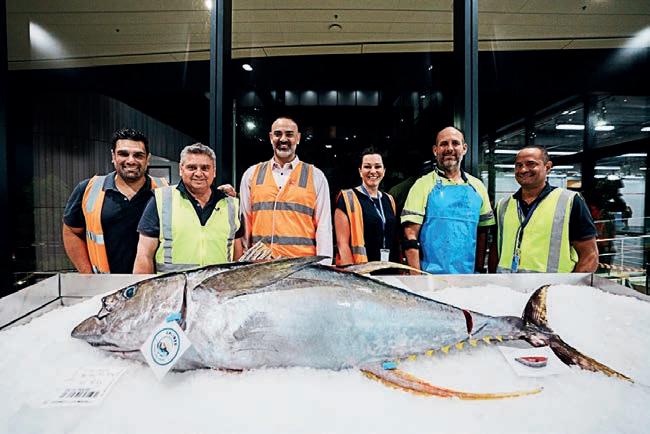
The new Sydney Fish Market has officially opened at Blackwattle Bay, bringing wholesale seafood trading together with public retail and dining in a single precinct.
Home to 42 retailers and 19 seafood wholesalers, the market spans more than 26,000 square metres and combines fresh seafood trading with food retail and hospitality. It replaces the former site with a redesigned working market that allows public access to daily operations, including live auctions.
“The new market preserves the authenticity of Sydney Fish Market, while improving the environment for both trade and public customers,” said Adam Mourad, Sydney Fish Market chief commercial officer.
“It also opens up the working market to the public, giving people a view of the live auctions and daily operations in a way that has never been possible before.”
Delivered by the New South Wales government and constructed by Multiplex, the project forms part of
a broader investment in Sydney’s visitor economy and seafood sector.
“An architectural and engineering triumph, the Sydney Fish Market features state of the art systems, facilities and a purpose built design that supports a fully operational wholesale and retail hub, built to serve generations of seafood lovers,” said minister for lands and property Steve Kamper.
“The new Sydney Fish Market is set to become one of Australia’s must visit destinations, ready to welcome up to six million visitors a year and deliver a boost to Sydney’s tourism economy and jobs sector.”
Designed by 3XN GXN Architects in association with BVN Architecture and ASPECT Studios, the building includes public waterfront spaces alongside purpose built facilities for industry operations.
Beyond seafood retail and dining, visitors can also access behind the scenes tours, Sydney Seafood School masterclasses and experiences recognising First
Nations fishing traditions.
“The opening of the new Sydney Fish Market marks a defining moment not only for our organisation, but for Australia’s seafood industry,” said Sydney Fish Market chief executive officer Daniel Jarosch.
“This new precinct creates a platform for our fishers, wholesalers and retailers, while offering visitors an experience that celebrates the quality, diversity and sustainability of Australian seafood.
ALDI Australia has begun transitioning its canned tuna range to Marine Stewardship Council (MSC) certification. The rollout across its Portview and Oceanrise exclusive brands commenced in October 2025 and is expected to be completed by early 2026.
MSC certification indicates that the tuna is sourced from fisheries assessed as meeting standards for sustainable fishing and traceability.
ALDI Australia buying director for canned seafood Daniel Tuffield said the certification would apply across the retailer’s canned tuna products.
“We’re excited to introduce the MSC blue fish label across our Portview and Oceanrise canned tuna products,” said Tuffield.
“MSC certification means we’re having a positive impact by supporting sustainable fishing practices.”
Third party certification schemes
such as MSC are intended to provide transparency around sourcing and fishing practices, enabling customers to make informed purchasing decisions.
ALDI Australia sustainability director Daniel Baker said the transition aligns with the company’s broader sourcing approach.
“Transitioning to MSC certification for our canned tuna range reflects our commitment to work with globally recognised certification bodies to source wild seafood products,” said Baker.
The move follows a change to the sourcing policy of ALDI South Group, ALDI Australia’s parent company, which in January 2025 incorporated the Marine Stewardship Council’s Improvement Program. According to MSC program director for Oceania and Singapore Anne Gabriel, this decision would have flow on effects across the supply chain.
“Our vision is to create a destination people will return to again and again, not just to buy seafood, but to experience it. From watching live auctions, oyster shucking at Sydney Seafood School to tasting your way through its cuisines, we expect it to become a destination for locals and visitors.”
The market will operate from 7.00am to 10.00pm on weekdays Sunday to Thursday, and until midnight on Fridays and Saturdays. F

“ALDI’s decision to source and clearly label all its canned tuna from MSC certified fisheries is a meaningful step for ocean health and the coastal communities who depend on it,” said Gabriel.
“Putting the distinctive blue MSC label on such a familiar staple empowers millions of shoppers to
choose seafood that safeguards the future of our marine resources.
“By 2026, we estimate two-thirds of all canned tuna sold in Australia will feature the MSC blue fish tick label. This represents one of the most significant category-wide sustainability shifts in the Australian grocery sector.” F
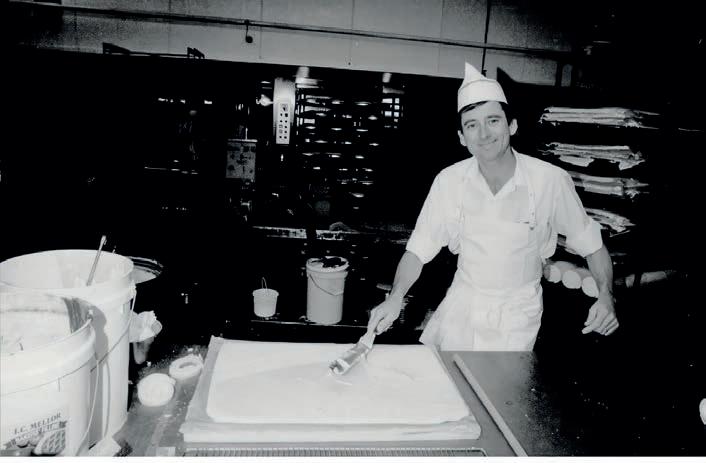
From a small shop to serving the Queen and a US President, one man’s pastry dream has been shaped through four generations. This is Ferguson Plarre’s story.
What does it mean when Ferguson Plarre’s Bakehouses aims to “bake” people happy? Chief executive officer Steve Plarre joined Food & Beverage Industry News, drawing back to the family history.
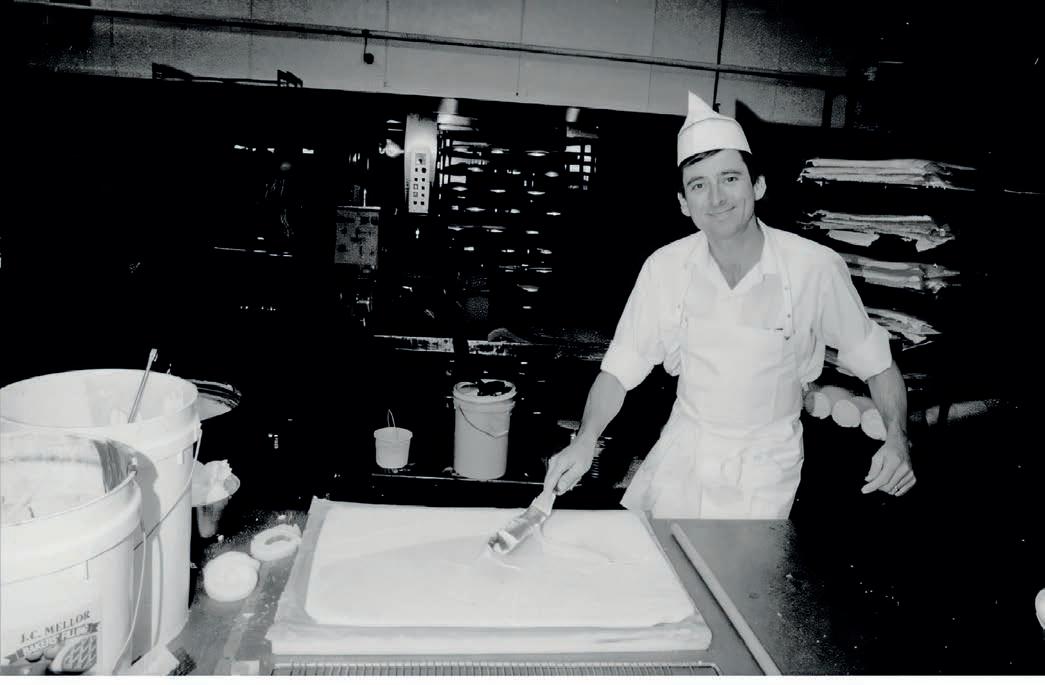
In the late 1800s, the Plarre family lived in a small farming town in Germany. Starting the business was his great grandfather, Otto Plarre. How pastries entered the picture remains a mystery.
“There were no pastry chefs in the family,” said Plarre.

Otto Plarre’s father was a beer barrel maker, and the pastry DNA was non-existent. Steve Plarre, who never met his great grandfather, could only imagine. While speculations may be endless, Plarre was certain of one thing.
“Whether it is a dessert, leftover food, or a meal made with love, I believe he decided that he wanted to make food that make people feel good when they eat them,” he said. With spreading joy as the vehicle of the business, Otto Plarre chose to train as a pastry cook in Munich, Paris
and London. After accomplishing apprenticeships across the globe, he moved to Australia where he opened a bakery business in Puckle Street, Moonee Ponds. Becoming well acquainted with another bakery owned by the Ferguson family, the two forged what is known today as Ferguson Plarre’s Bakehouses, which would last over three decades in partnership.
The business grew slowly over than time. Plarre listed two highlights in the business legacy. In 1963, Queen Elizabeth II visited Australia to
commemorate the Canberra jubilee celebrations. Called Plarre’s Cakes at the time, the company served the Queen and her entourage with fancies and small cakes when they visited Parliament in ACT.
In 1966, the company supplied rum truffles, green frogs and fancies for the former US President Lyndon Johnson’s morning tea. He mentioned that the moment where his grandmother drove her little green car with the cakes to serve the president was televised to the nation. Since then, the business has
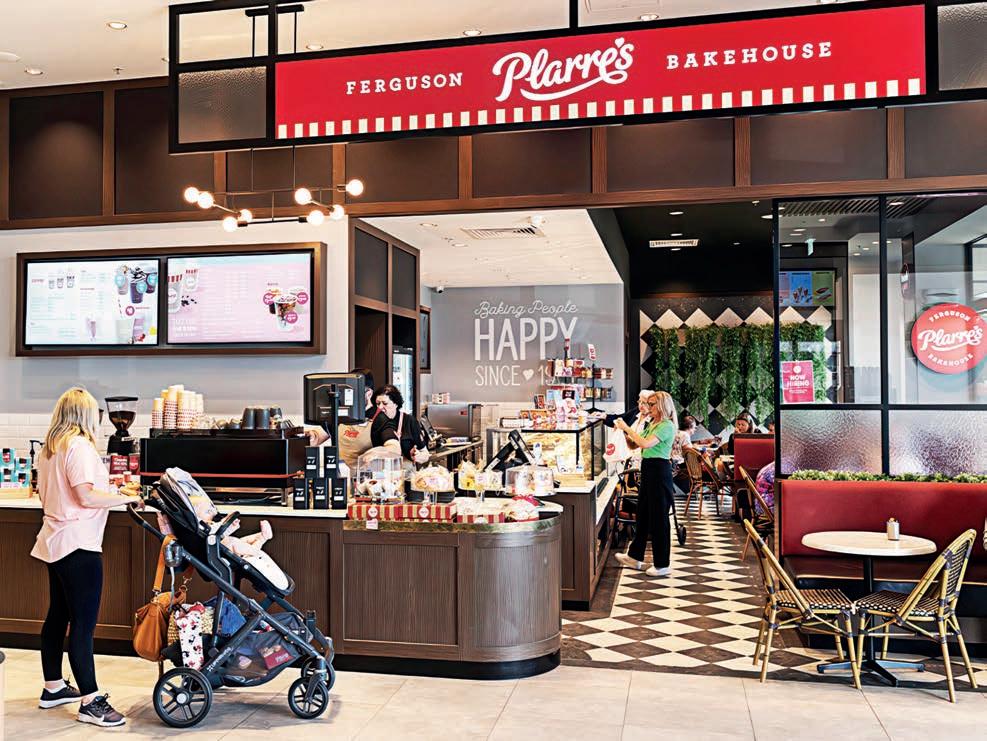
caught popularity, shaped by each generation adding their own layer of craft, system thinking and long-term stewardship. Today, the business operates around 80 stores across Victoria. While the company’s achievements appear substantial, Plarre advocates for stable growth.
“Slow and steady wins the race has been our strategy,” said Plarre.
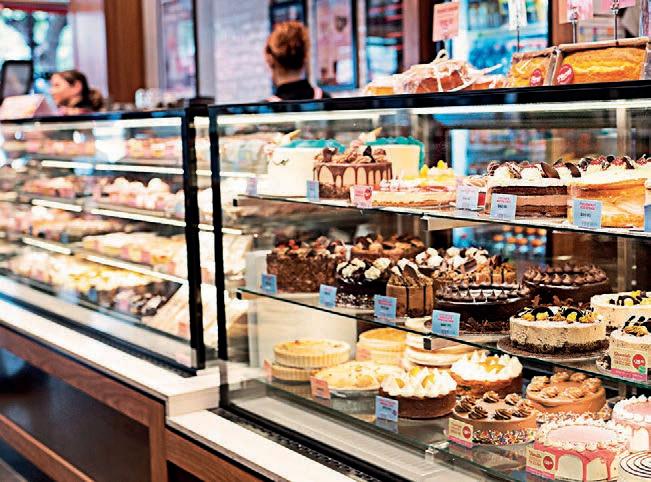
Plarre admits that he sometimes wishes the company’s growth would be faster. However, he points out that the success of the business was gradual and rooted in tradition. For example, some of today’s trending items, such as modern scrolls, have roots in the same traditions that shaped the early Plarre bakery where offerings include Black Forest cakes, gateaux and classic pastry work.
Staying in touch with its roots backed by a strong family-oriented business, Ferguson Plarre has flourished into a well-known Melbourne bakery business.
Although Plarre and his brother, Mike Plarre, grew up in the business from sweeping the floors to cooking and truck driving, the Plarre family had not been involved in the business directly.
“We have always enjoyed the business,” he said. “But our parents were never expecting us to join.”
Prior to joining the business, Plarre studied at Melbourne University, graduating with a Bachelor of Commerce. Even as he studied, Plarre continued to work at the bakery. With the tools he had learnt externally, he said that he was able to naturally apply them in the business.
As part of the fourth generation in the business, he followed his father Ralph Plarre’s footsteps, who was president of the Baking Industry Association of Victoria in 1996, and joined the business in 1987 as an administration manager.
“I have since moved on as general manager finance to CFO and eventually CEO,” Plarre said.
Under his leadership, the Plarre family purchased the Ferguson family’s interest in Ferguson Plarre’s Bakehouses after a successful 32year partnership. After more than 125 years of operations, the company is now slowly budding into its fifth generation.
“We have a very vested interest in the business as there is a very good chance our kids are going to inherit


the results of the decisions that we are making,” he added.
With the next generation starting to take shape, Plarre’s focus on the company’s sustainable operations grew.
The hot cold paradox Plarre recalled the 60s, sitting in his father’s office that was situated above all the fridge and freezer motors. Conversations were interrupted by the noise from the condensers, generating a surplus of heat.
“Bakeries have got the paradox all the time where they are trying to refrigerate and freeze things but creating heat as a result of what they make,” he said.
of heat to either warm up water for boiling, steaming or cooking in ovens. While the food and beverage industry is making a shift to sustainable solutions, Plarre said that such improvements are a lot easier when “you are building something from scratch”. With the company’s 100-year-plus legacy, the transition, or a retrofit in technologies like gas to power, is a challenge.
Despite the hurdles, Ferguson Plarre built a new factory in 2007 with sustainability in mind. It began its first Environmental Offset Program to offset all direct carbon emissions from its facility with Greenfleet Australia and launched Victoria’s first diesel electric hybrid truck in the same year. Specifically
broke down the bakery’s solutions to the hot cold contradiction.
Traditional bakery design often treats hot and cold systems as separate, meaning heat is generated in one place and expelled as waste, while cold rooms struggle to maintain consistent temperatures. Ferguson Plarre designed a system that captures the large amount of heat generated by fridge and freezer motors and transfers it into water tanks through heat exchangers.
Water drawn from the ground at around 10°C often reaches 60°C purely from this reclaimed heat. The water then requires only a small amount of additional energy to reach cooking temperatures, which is typically used for custards, meat
volume preparations.
The same reclaimed heat is used to maintain the temperature of a 7,000-litre liquid chocolate tank that sits in a hot water sleeve.
“We also looked into our air conditioning and air pressure systems,” said Plarre.
Air movement inside the building was another focus. Freezer rooms and ambient rooms sit close to areas that hold ovens and warm equipment. Incorrect air pressure can push warm air into cold rooms, causing energy waste. The company specified fan motors and airflows to ensure each room holds stable pressure and temperature. This delivered a measurable reduction in gas footprint per square metre by 60 per cent in

Compressed air is the invisible ingredient behind every safe, high-quality food and beverage product. With ISO Class 0 oil-free air and sub-zero dew points, Atlas Copco solutions protect your product, your compliance, and your brand.
The value for you:

Zero risk of oil contamination
Sub-zero pressure dew point with high-e iciency heat of compression dryers
Lower energy use, smaller footprint, reduced maintenance
Raise your air quality. Raise your production performance.



The company’s further sustainability efforts move beyond its facility and operations. In 2008, Ferguson Plarre planted its 14,000th tree to offset Tier 1 and 2 greenhouse
gas emissions, winning the Best Green Business Award at the 2008 MyBusiness Awards in Sydney. This was followed by a Banksia SME Sustainability Award and Origin Gold Banksia Award in 2009, where the
company planted its 22,000th tree.
“Even after all that, we were trying to find the next big way to improve and reduce carbon footprint,” said Plarre.
Despite the achievements, Ferguson Plarre thought of more ways to add to the environment.
“We have installed solar panels on the roof, driving 70 per cent of all our direct power needs from the sun in the summer,” he added.
While this balances out in the winter, solar power still serves 30 to 40 per cent of power needs throughout the year, increasing energy efficiency. Another way to reduce footprint is through food waste management, where food waste goes to pig farms rather than landfill.
Plarre said the company is currently looking at new ways to manage food waste such as biodigesters or using it to develop pet food.
“Some of the technology is not quite there yet,” he said. “But we are always looking for the next thing to try and push forward.”
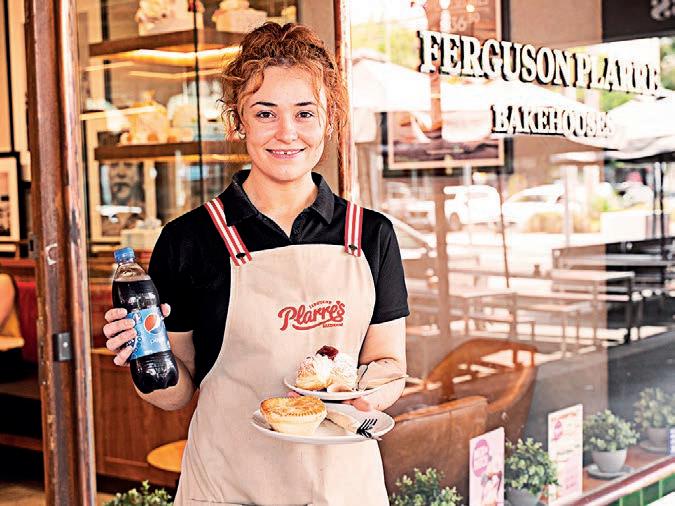
The business produces around 150 products almost every day, ranging from party pies to celebration cakes. About 70 per cent of the range is still made in ways that resemble the methods used by earlier generations. Plarre explained that this is not a resistance to automation but a reflection of product type, volume and the limits of equipment that can handle such variety.
If a piece of equipment can improve consistency and reduce repetitive strain, the company adopts it. If not, much of the work still depends on skilled hands supported by strict processes.
“We employ 250 people. We want to look after our people,” said Plarre. “We are always open to look for techniques that can streamline processes that reduce repetitive strain risks.”
With manufacturing complexities Plarre describes as “terrifying”, he did not hesitate to answer when asked what was imperative to run the business – systems.
“It is a defence for us, a moat around our castle, but it is so hard to manage,” he said.
Compared to other bakeries that have a smaller product range, allowing them to automate all systems, Ferguson Plarre uses manual visual management methods, relying on lean principles and detailed whiteboard planning. As each product
must meet expected yields and costs, the business tracks performance closely.
Despite the manual nature of its processes, the company is leaning towards digitisation.
“With where digital AI is going, we have the capacity to manage complexities with systems that spit out simple solutions,” he added.
The ongoing challenge
The COVID 19 pandemic caused a dip across most industries. According to Plarre, expectations for things to return to normal has not only failed to bear fruition, but it has also gotten worse over the years.
“Manufacturers are facing challenges in food inflation, unbelievable staff availability, and costs,” he said.
With pressures from rising costs, labour shortages and changing consumer expectations, Ferguson Plarre has felt these pressures firsthand. Skilled workers who want to learn craft and work in scaled environments are harder to find, and competition for talent remains high. To navigate through the challenges of a drying talent pool, the company ensures it keeps a healthy work culture and systems.
“When you do find those golden nuggets of people, you can find ways to hang on to them long term,” Plarre added.
At the same time, supermarkets continue to expand their offer of low cost, high volume baked goods. This environment pushes many businesses toward either premiumisation or bulk. Ferguson



Plarre has committed to the premium side, maintaining quality while using systems to manage costs.
Being receptive to the consumer is a skill that businesses should learn. Tastes change, trends come and go and customers have become more specific about what they want. Plarre said that careful listening supports decisions about which products to retire, where to reduce complexity and where to innovate. In doing so, care for the customer will improve and fewer errors will be made.
“I would love to see us national,” said Plarre. “Not for the sake of being big, but because we have built the business to have a good impact on people.”
Currently operating in Victoria, Ferguson Plarre aims to bring value and enjoyment to customers across Australia. To achieve this goal, the company will focus on refining product complexity, improving systems, planning for energy transitions and strengthening the customer experience.
Plarre is not looking for fast growth that will cost the culture. While anyone can dream of perfection, Ferguson Plarre is working towards constructing a robust and stable foundation that can support complexity levels, replicability and consistency that is vital for the company as a Victorian hub to expand nationally.
“Fast growth can come at the cost of culture,” he said. “Watch this space.” F
Grows with your
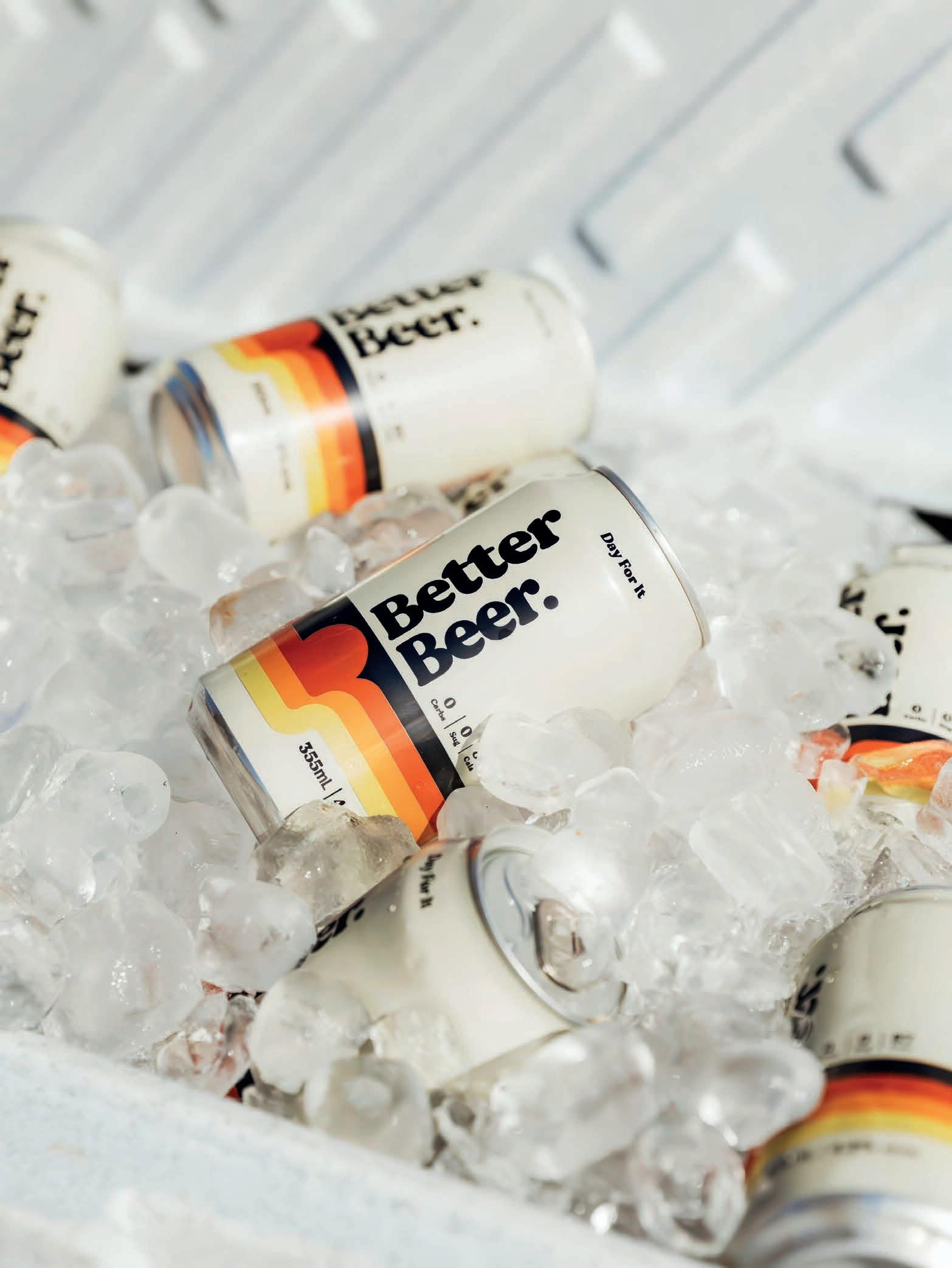
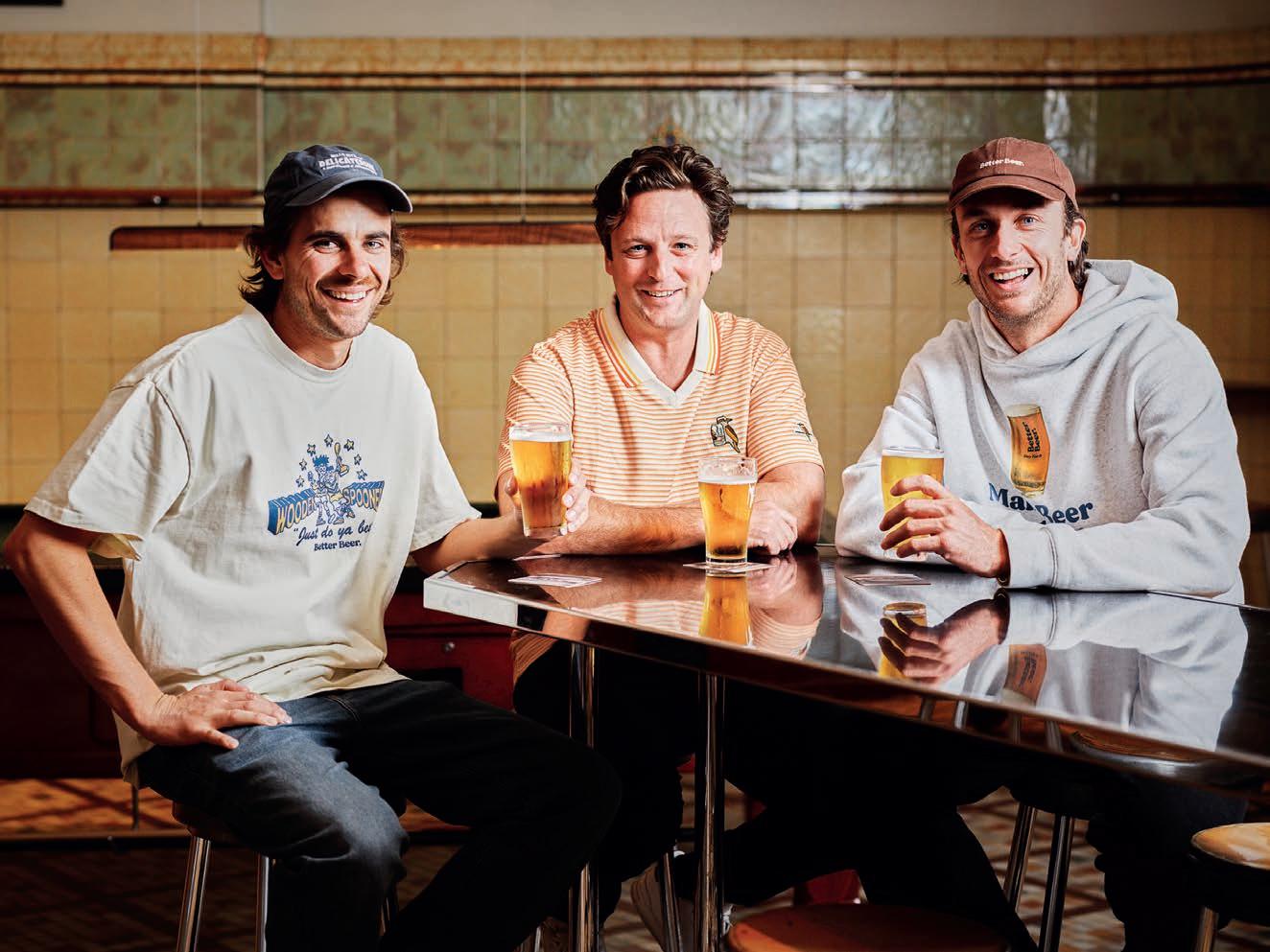
From a social media connection to a fast growing Australian beer brand, Better Beer’s CEO shares the importance of a balance between flavour, identity and moderation.
It started with a dance.
In 2019, Nick Cogger, founder of alcoholic kombucha company K.Booch, was searching for unique ways to promote the brand’s product following its launch. He came across Matt Ford and Jack Steele, better known as The Inspired Unemployed.
“I found these two people on the internet called The Inspired Unemployed doing a dance down the street in their hometown,” he said.
Intrigued by the comedy duo, he said they suited the brand’s vibe of the coastal kombucha lifestyle. With a strong number of followers on the social platform, Cogger took a chance and reached out, offering them their first brand deal. From then on, the three have maintained a friendship.
The next two years were silent –until they met again. This time, Ford and Steele reached out.
“Being in the beverage industry, they approached me with a concept to do a craft beer brand in their hometown,” said Cogger.
According to him, craft beers were trending with the likes of Stone & Wood and Balter. During this time, Cogger had been thinking of a new
business plan. His background in alcoholic kombucha provided early exposure to ‘better for you drinks’ and highlighted how quickly categories can move when they align with changing expectations. He said there was a sense that the next phase of growth would come from beers that delivered familiarity without excess.
For Cogger, moderation does not need to come at the cost of enjoyment. Rather than introducing new flavours or styles, the three decided to focus on reworking a classic lager format to remove unnecessary carbohydrates and calories while remaining easy to drink.
With the help of Australian Beer Co., they created a lager recipe that was zero carbohydrates, easy to drink and able to be produced at scale.
“We pitched it to Endeavour Group, who offered us exclusivity to 1,600 bottle shops straight off the bat,” he said. “And so that’s how we created Better Beer.”
Launched in November 2021, Better
its reach so the product could be enjoyed across Australia. In December 2024, Casella Family Brands (CFB) was announced as Better Beer’s exclusive Australian distribution partner – who has been brewing Better Beer at its Yenda facility since 2021.
Since its launch, the brand has sold 100 million cans. It has recorded more than $95 million in retail sales over the past year, with 12 million litres sold across its range and distribution in more than 7,600 retailers nationwide.
According to Cogger, Better Beer has honed its brewing technique to steer clear of the 200–300 calories per can that heavier craft beers sometimes contain.
“What we’ve been able to do through our brewing process is almost halve that down to 87 calories per can,” he said.
Part of this process includes eliminating excess sugars and carbohydrates, which is more appealing to health-conscious consumers.
In less than four years, Better Beer
among independent operators, a rare achievement in Australia’s competitive beer market. According to Cogger, this competitiveness is shaped by ownership dynamics.
“Most of the beer consumed in Australia isn’t Australian owned,” he said. “We’ve leaned into brand storytelling that we are an authentic and Australian owned brand.”
The early response exceeded expectations. Cogger said the company faced challenges in supply management in the early days. With an initial launch of 15,000 cartons of beer, stock expected to last two to three months sold out within a week.
“We had to back solve all of that,” he said. “It’s not as easy as turning on production out of a tap.”
Initial production volumes were rapidly exhausted, forcing the team to address supply constraints in real time. Brewing schedules, fermentation timelines and packaging availability quickly
infrastructure struggles to keep pace with demand.
Recognising that canned supply could not be secured in time due to can shortages, the team quickly sourced millions of clear glass bottles. Rather than risk disappearing from shelves, the business introduced a
new product format for Better Beer, allowing production to continue while supply chains adjusted.
“By doing that, we were able to keep up in the market,” Cogger noted. “If we had a two-month outage, we would have lost the momentum that has carried us up until today.”
For Cogger, this market challenge proved a blessing in disguise. Through swift response, the company ensured its product remained available while expanding and experimenting with formats.
This period shaped the company’s operational mindset. Rather than
viewing production as fixed, Better Beer learned to remain flexible and pragmatic, prioritising continuity and availability. Maintaining presence in store was seen as critical to sustaining brand recognition and trust, particularly in a category defined by choice.
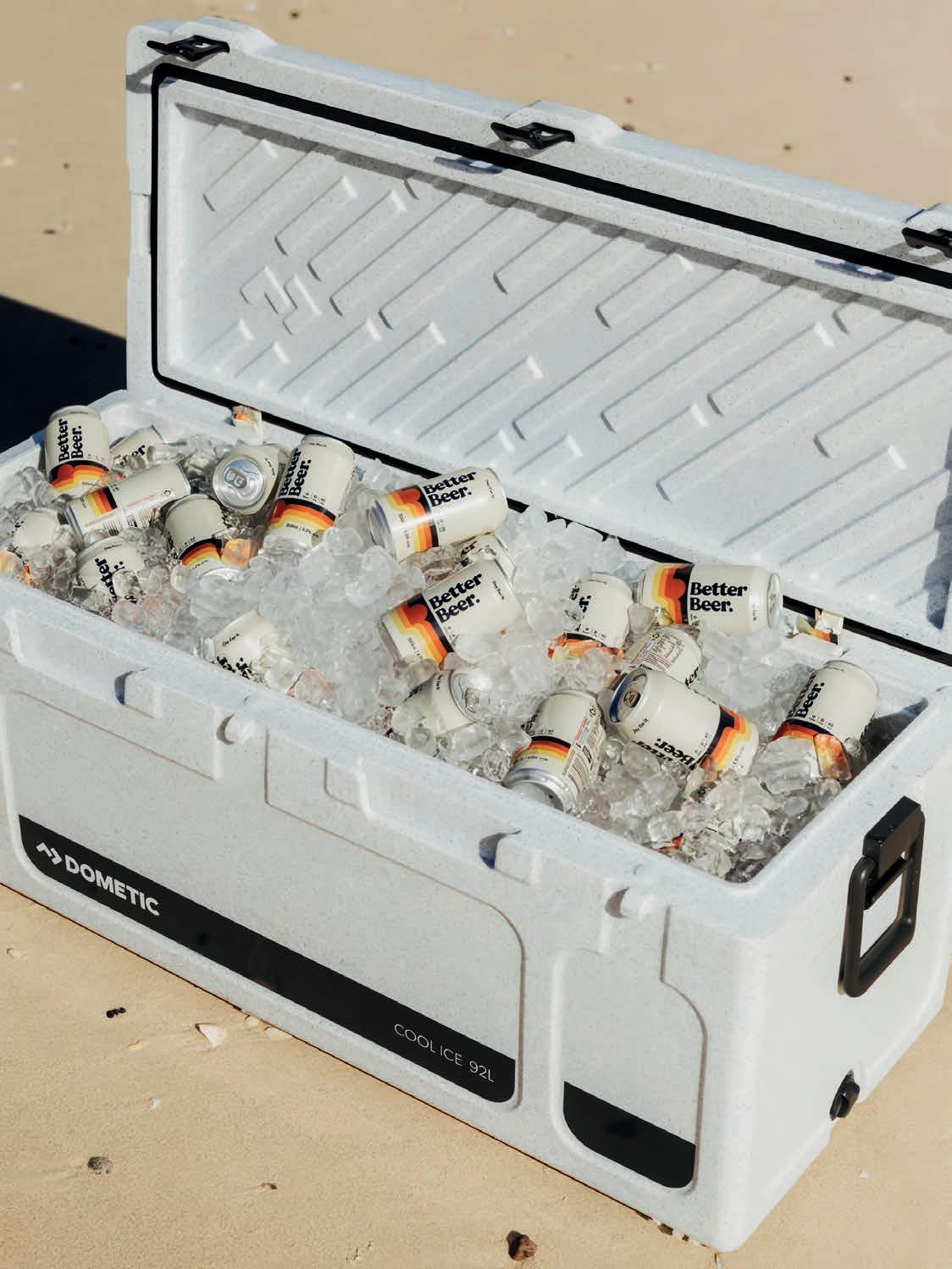
Distribution played a central role in the company’s strategy.
“The big thing for us was trying to find out how to reach all bottle shops in Australia,” Cogger said.
With an estimated 7,000 to 8,000 bottle shops nationwide, the team realised there would be limits without a manufacturing or distribution partner. The decision to partner with CFB as Better Beer’s distribution partner was a strategic decision. With an established sales team already servicing retailers, the company achieved coverage that would have been difficult to replicate independently.
“The fact that they have been making our beer this whole time has made it a really easy transition,” he added.
Focusing on on-trade and offtrade expansion, the partnership evolved from a three-year production agreement, leveraging CFB’s distribution network to reach bottle shops nationwide within a two-month period.
Cogger said the partnership has enabled Better Beer to focus on strengthening its brand and consumer connection, while relying on CFB to expand presence across both on-trade and off-trade channels.
While the business operates with a small remote team, outsourcing production and distribution has allowed it to scale efficiently. This lean structure reflects a broader shift in beverage entrepreneurship, where brand building and partnerships often outweigh vertical integration.
“We have been able to unlock a huge amount of growth in the business through joining up with Casella Family Brands,” he said.
Looking ahead, the company has set ambitious long-term goals, including reaching production volumes of 20 million litres per year. Achieving this will depend on continued market expansion, operational efficiency and sustained consumer engagement.
Leadership is also evolving as the business matures. The appointment of a new chief financial officer, Chris Pensabene, reflects preparation for future capital raising and the need for deeper financial expertise.
“Chris has come from Stone & Wood,” said Cogger. “He’s got a wealth of knowledge in the industry. Adding him to the team will increase our knowledge base and it’s an exciting appointment.”
In the shorter term, product innovation remains focused on refining existing categories. The launch of a new light beer – Halfy –aims to reshape how consumers talk about lighter options, positioning it as half a standard drink while maintaining recognisable beer characteristics.
By introducing new language around light beer, the brand hopes to influence category perception rather than simply follow it.
Cogger noted how brand identity has been central to Better Beer’s growth.
“The main thing for beverage brands is trying to connect to a consumer,” said Cogger. “You have to
create a little community around the product.”
The association with Matt Ford and Jack Steele, known for their portrayal of contemporary Australian humour and culture, shaped the tone and personality of the brand. Their public image resonated during the pandemic, offering light-hearted content that reflected everyday Australian life. This sensibility carried into Better Beer’s storytelling, reinforcing familiarity and authenticity.
In a market where many popular beers are owned by large corporations, Better Beer positions itself as locally owned and developed. This message has resonated with consumers seeking transparency and connection, particularly younger drinkers who value alignment between brand values and personal identity.
As consumer preferences continue to evolve, brands that balance flavour, identity and moderation are likely to shape the next phase of growth in the beer category. Better Beer’s journey shows how clarity of purpose, paired with operational agility, can allow new entrants to compete meaningfully in a crowded market. F








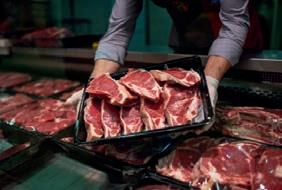
Provincial Food Group has been producing premium meat for the food manufacturing sector, winning the Shepparton Business Award for Food and Agriculture.
Real work happens quietly in the background.
When storytellers craft a superhero, fame and recognition are ingredients for their story. While there are superheroes that revel in it, some prefer to remain quiet in the limelight, making the world a better place in silence.
The food and beverage manufacturing industry extends this sentiment. With technological advancements boosting agriculture, along with smarter production systems, the industry has flourished to mitigate food insecurity and hunger, allowing room for improvement in areas like taste, quality and experimentation.
The industry’s work has become an unknown necessity, masked by its abundance and seamlessness. However, its invisibility should not be taken lightly as it represents the sector’s diligence to uplift living standards in Australia. Part of this silent yet essential movement is Provincial Food Group, a meat manufacturer based in central Victoria.
“We supply value-added meat products, processing different products to deliver to a range of customers from canteens and hospitals to high-end restaurants,” said director of the company Mark Morley.


“Our expertise is sitting in the background as a reliable premium meat manufacturer.”
During the 1960s, the site operated under the name Scorpio Meats before Morley’s business partner, Thomas Paterson, and his family bought the going concern in 2008. A decade later, the company was sold to Beston Food Group, a publicly listed organisation in the dairy industry.
During this time, Morley spent much of his own career in food and agriculture in Australia, then the Middle East and South Asia as a Trade Commissioner for the Australian government. In that period, Morley worked alongside Thomas’ family business, selling Provincial Food Group’s products to retail and wholesale customers in Saudi Arabia, while gaining an understanding of the business and the global meat industry.
When Beston fell on difficult market times, Morley and Paterson seized the opportunity – backed by meat and livestock investors – to go
back into the business, growing it through infrastructure renovations and upgrades, and cutting the operational expenses of the business through better utilisation of staff, technology and their supply chain.
“The thing about the food and beverage industry here in the Goulburn Valley – Australia’s food bowl - is that we work in a factory with great staff, producing things that people love to eat,” said Morley.
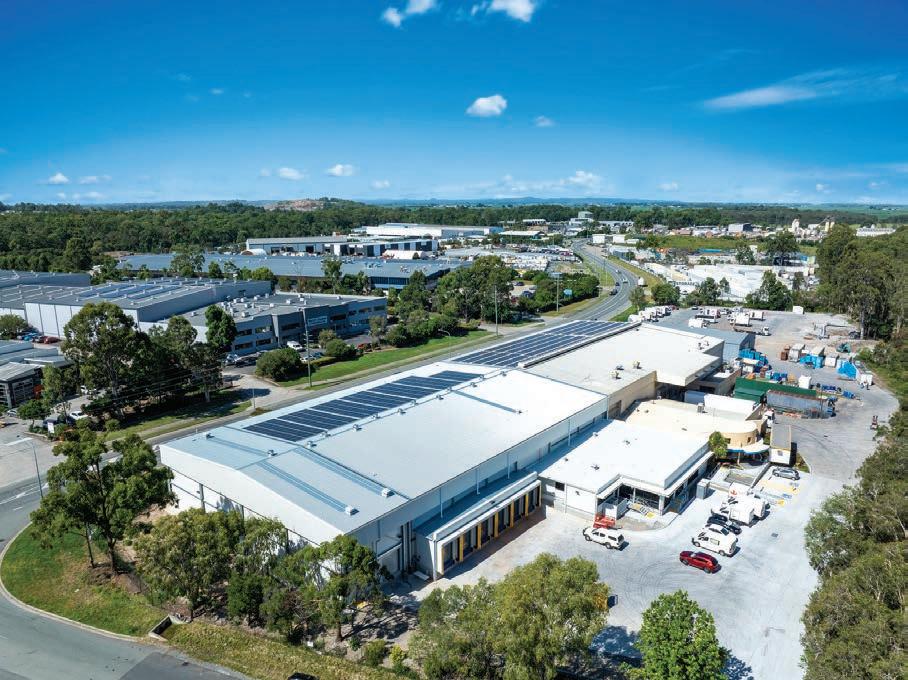
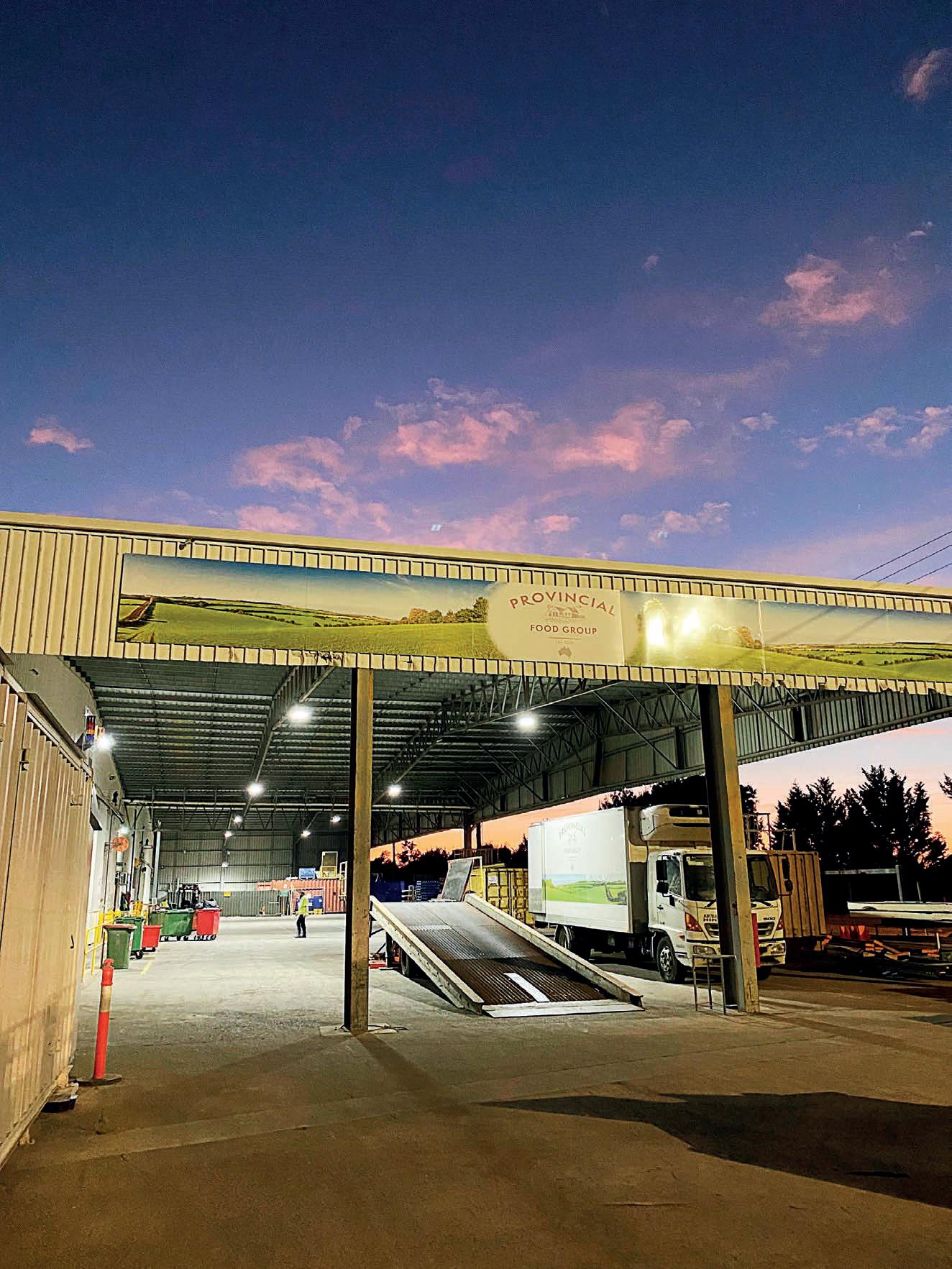
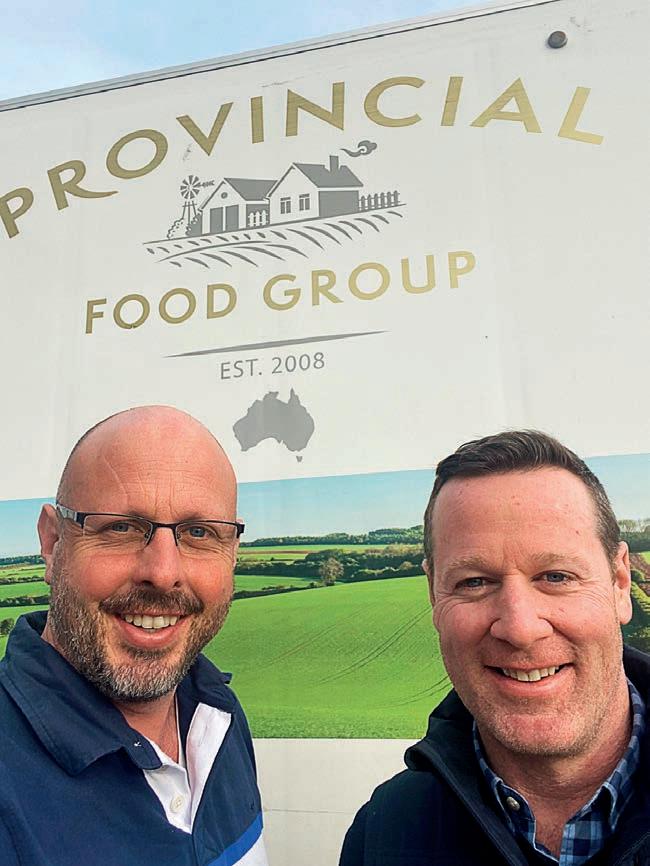
Provincial Food Group operates from a 4,000 square metre facility in Shepparton.
“While the site is currently well equipped, the site was a former cold store, which lends itself to cold chain logistics and manufacturing,” said Morley.
Between 2016 and 2017, the site was transformed into a food manufacturing facility while still retaining its ability and infrastructure to operate as a cold store.
“Half of the site now is a meat manufacturing facility,” Morley said.
The site is SQF level 9 accredited for manufacturing, processing and distribution. Alongside its HACCP
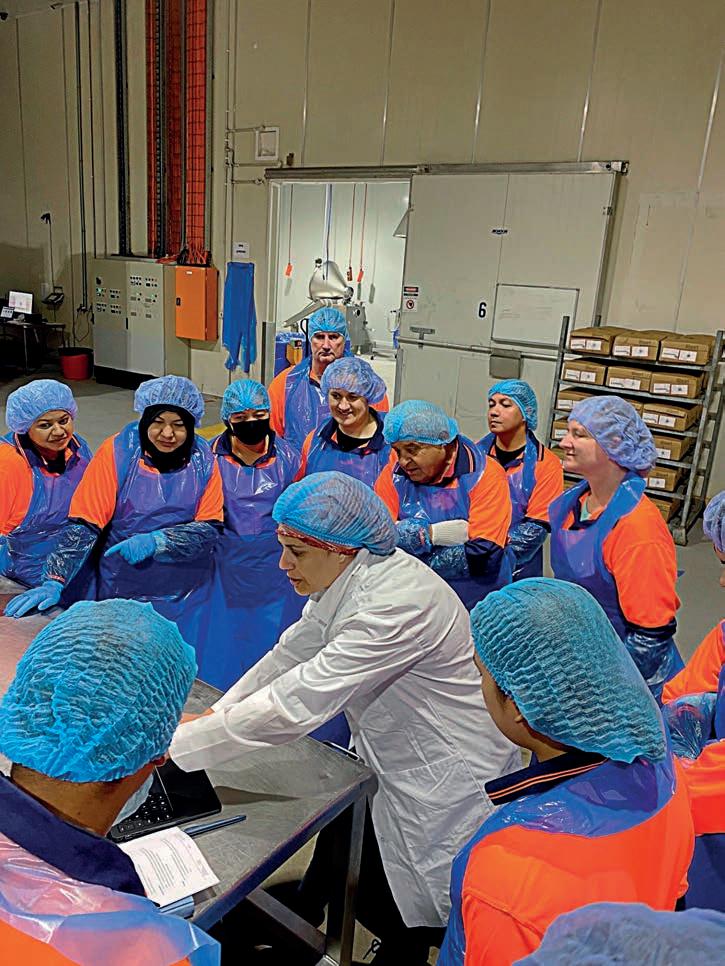
The site is SQF level 9 accredited for manufacturing, processing and distribution.
“We’ve made quite a big investment in incorporating throughput, being able to deliver much quicker and to spec, as well as building efficient manufacturing out of the site,” said Morley.
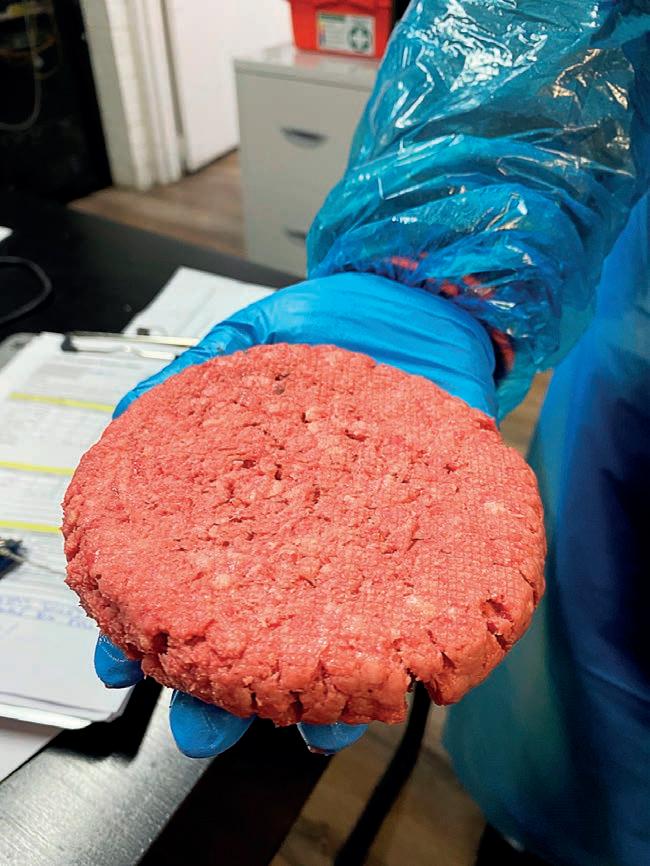
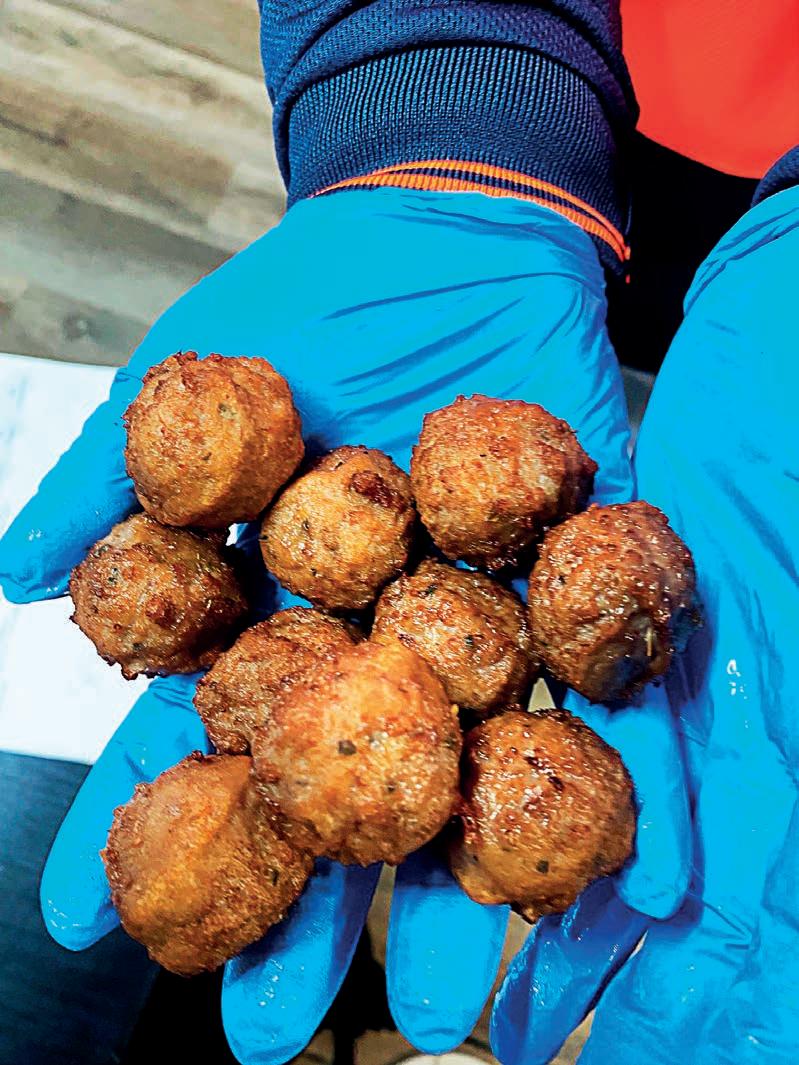
To take on diverse briefs, Provincial Food Group runs a range of production lines dedicated to specific purposes. It includes lines for dicing and mincing, meatballs, burgers, sous vide products and smoked meats, all running independently. The company produces smoked beef bacon, meatballs and cooked burger products to pulled meats and diced
cuts depending on the needs of each customer.
Several packaging lines, including thermoformers, support the business’ contract manufacturing work, which makes up 90 per cent of its work. Most customers order in bulk formats for food service, though the company also supplies national retail ranges where required.
“Generally, our preference is to work with companies that we can assist in both new product development, as well as building up products that meet their specification and their price points,” said Morley.
While production capability is central, he emphasised that modern manufacturing requires more than equipment. The company must manage tight margins, volatile raw material prices and rising operating costs. He noted that meat prices have risen sharply across beef, lamb and chicken recently.
“The factors include the drought in Southeast Australia, trade tariff policies of the US, and consumer trends. None of this is news to the meat industry, or to retailers,” he said. Supply constraints in the Australian
meat market from paddock to plate have increased these pressures, which flow through to manufacturing, where customers often demand stable price points despite fluctuating protein prices. Alongside raw material unpredictability, energy costs continue to weigh on the sector.
“It’s incredibly expensive to operate a factory in Australia, with government red tape, and compliance from large national retailers,” Morley said.
Running refrigerated sites requires baseload power regardless of monthly throughput. As Morley explained it, whether the factory produces 300 tonnes or 30 tonnes a month, the electricity cost remains the same. These challenges force manufacturers to focus closely on cost control, efficiency and capital planning.
Outside of invested equipment to remain competitive, Provincial Food Group ensures it works closely with customers on new product development, adjusting size, format, ingredients and packaging to reach required price points. This approach







allows the company to absorb some pressure on behalf of customers who face their own challenges around cost of living and shifting consumer behaviour.
“The approach is to be really innovative and well equipped internally to absorb some of the heat our customers face,” said Morley.
He continued to highlight the importance of a flexible customer base as another part of the model to mitigate rising costs. The business supplies domestic retail, domestic food service and export customers, ensuring that it does not weigh heavily on one customer or format. This diversification helps the company manage market changes, navigate raw material shortages and maintain relationships across formats.
The company focuses on being relationship centric. Morley believes a collaborative and open approach is essential to manufacturing and that transparency helps both suppliers and customers understand each other’s pressures.
“If you can work hand in glove with an organisation, there is nothing more satisfying than being able to grow together through the relationship,” said Morley.
By sharing information on costs, capacity, timelines and challenges, the business has been able to build trust and support long-term partnerships. This approach allows the company to plan, hold raw material when needed, and align production with demand in a way that benefits all parties involved.
interesting and innovative sector.
Drawing back on his career taking food delegations across 20 countries, he highlighted what makes it meaningful for him.
Looking ahead, Provincial Food Group aims to expand both its domestic and international markets, as well as its domestic food service business. With its halal certification and links to the Middle East and Southeast Asia, the company sees potential to grow exports. These markets continue to rely on imported food and value suppliers that can meet halal standards reliably and consistently.
Morley described the food and beverage sector as the most
“The whole sector is full of people that have an intimate and welldeveloped relationship with the land and customers to provide wonderful food solutions to people,” he said.
Being involved in an industry with like-minded individuals who are willing to serve for the greater good was what he valued. Encouraging this mindset and attitude, the team is committed to contributing to the region’s food sector, recently receiving recognition through the Shepparton Business Award for Food and Agriculture.
Morley said that the opportunity
of being able to compete against bigger manufacturers reinforced the progress the business has made in transforming its site and refining its operations. Part of the reason he wants to see the company thrive and flourish with better infrastructure and culture for the staff extends to making a warm, human connection with everyone.
“The joy of working in food and beverage is that you get to participate in the good times,” said Morley. “You get to be involved in something that’s fundamental to us as humans. It’s the joy of seeing your food served at a family table, restaurant, or being served for people in need.
“That’s the wonder and beauty of food.” F













With a goal of increasing Australia’s GDP to 10 per cent within five years, SEMMA’s CEO has noted how the organisation advocates for food and beverage manufacturers.
By
Manufacturers and the supply chain have been part of the Australian industrial landscape since the 1830s when the first blast furnace was introduced. We peaked in the 1960s with a GDP input of 25 per cent. Today, it’s below six per cent. We know that when governments change or are in debt, it can only mean one thing – increased political red tape, raising the cost of doing business.
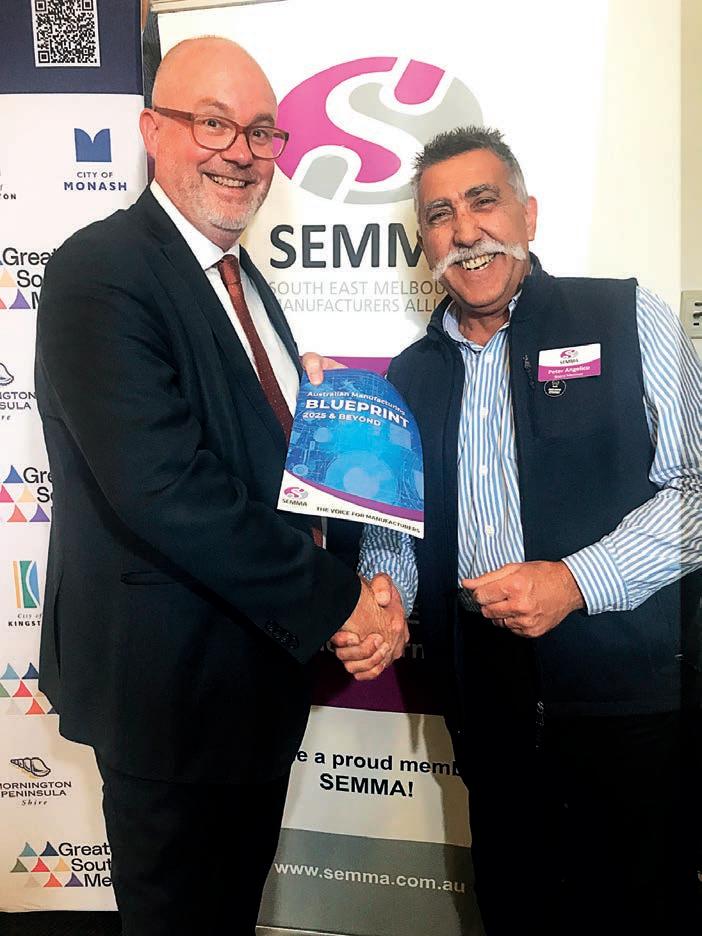
In 2025, South-East Melbourne Manufacturers Alliance (SEMMA) launched our Australian Manufacturing BLUEPRINT. This is our policy platform that has enabled us to have stronger conversations with policy makers about legislative reform.
Our Five Pillars of Growth –Economic, Energy, Educate, Expand, Evolve – focus on key areas where manufacturing can continue to add value and increase our GDP from 5.9 per cent to 10 per cent in five years. We believe goals are necessary to get results.
SEMMA has been advocating for manufacturers for 23 years and we continue to make our members’ needs known at all levels
of government. We are apolitical, bipartisan member-funded not-forprofit organisation.
For manufacturers, SEMMA will continue to advocate for a freeze on land tax, payroll tax and Workcover Premiums for small and medium enterprises (SMEs). We will continue to ask the regulators to do their job when it comes to Local Jobs First Content and to toughen our antidumping laws.
SEMMA is also known for its ability to connect businesses. Our members do not feel the need to compete and SEMMA’s membership network gives members the complementary network channels enabling them to engage likeminded businesses as sounding boards, build up strong partnerships, and learn from these networking relationships.
As stated, manufacturing has played a foundational role in supporting the Australian economy for many decades. It is time to recognise and acknowledge the contribution of our food and beverage manufacturing sector to the Australian way of life.
While SEMMA might be based in the southeast of Melbourne, we
have an eye on the national economy and our place in it. In fact, the southeast of Melbourne has recently been acknowledged by a Deloitte
Report to be the Manufacturing Powerhouse of Australia.
The southeast region contributes $89 billion to the economy, employing 75,400 people through 3,801 manufacturers. Nationally, manufacturing is the sixth largest industry, generating $137 billion in value-added output and employs 930,000 people. It contributes 12.4 per cent to Australia’s exports and 7.9 per cent to capital expenditure (AI Group 2024).
We believe there is enough manufacturing opportunity to go around, but government policy must help not hinder our smart, secure and sustainable manufacturers.
To have your say, join and become a SEMMA member while we keep raising the profile and voice of SME manufacturing. www.semma.com.au F
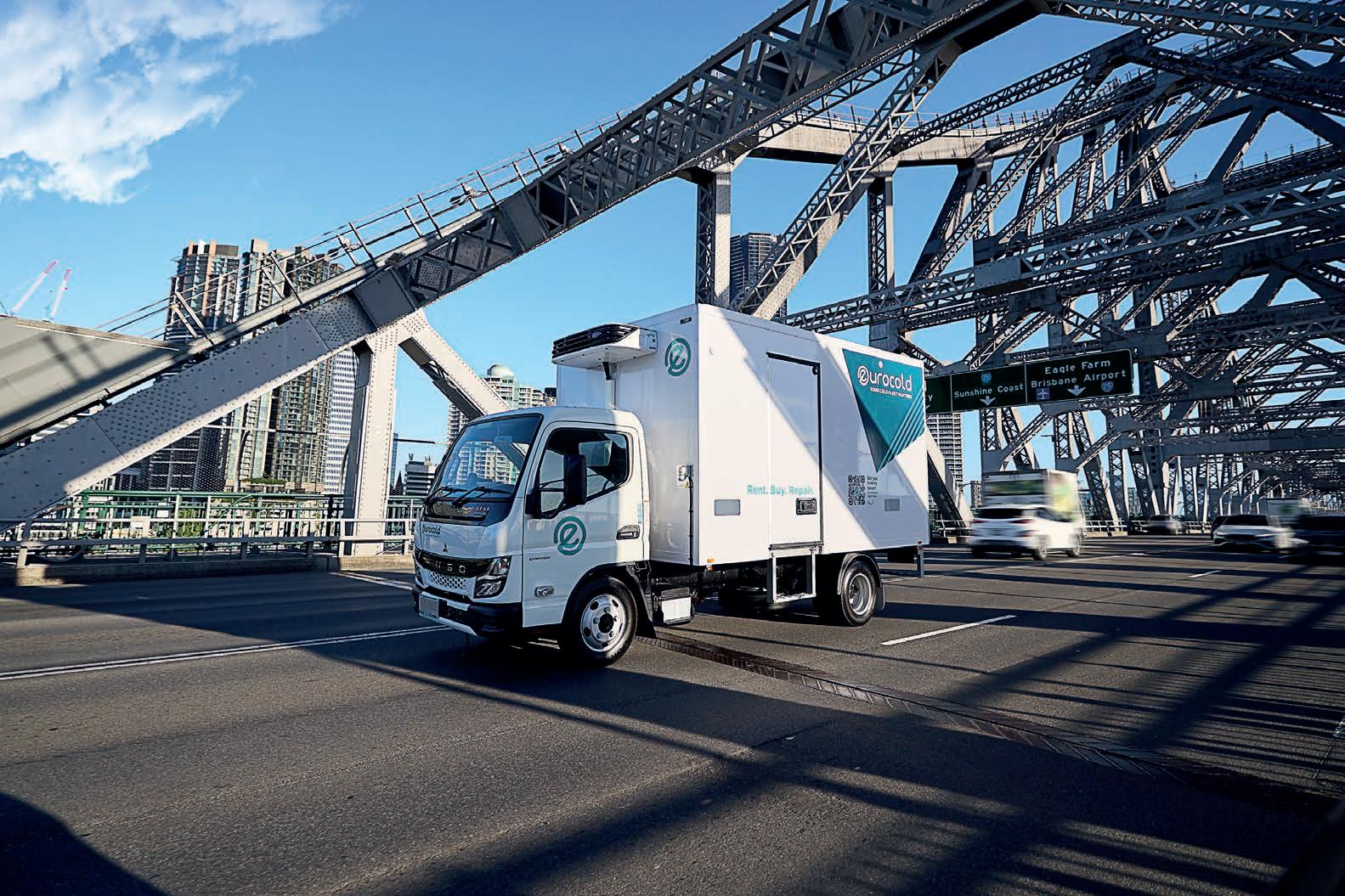
With old, refrigerated trucks causing the rise of food waste, Eurocold outlines how innovation and long-term fleet renewal can reshape its future.
All things age. While wine becomes fine with age, this sentiment does not apply to trucks. Take computers as an example. The first electronic computers weighed around 30 tonnes, taking up hundreds of square feet. Over time, computers became lighter, thinner and better. Not only was their appearance transformed, their overall performance and speed were enhanced.
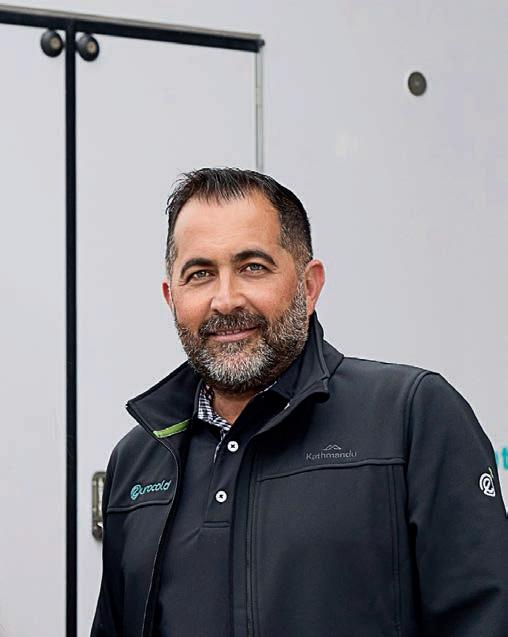
The same applies to refrigerated trucks and fleets. According to managing director at Eurocold, Avraam Solomon, many trucks on the road are more than 10 years old. With ageing assets that lead to insulation breakdown and temperature drift, food being transported by these vehicle risks spoilage and unnecessary waste.
“Everything develops in time,” said Solomon. “There are lighter materials that hold the temperature better and fridges that are more efficient. If you’re not changing your vehicles, you’re missing out on these new technologies.”
Besides the adoption of new technologies, another problem with ageing assets is the wear and tear.
He compared a refrigerated truck to a fridge at home, where there are two separate compartments divided into a chiller and freezer. When a fridge gets old, its seals break and wear out, allowing hot air to enter while cold air leaves, which impacts temperature sensitive products.
Similarly, trucks face constant impact from loading docks, daily opening and closing of doors, driver handling and exposure to weather.
In a commercial food distribution environment, small leaks in temperature control can be costly. When multiplied across thousands of deliveries each week, the losses accumulate.
While it is ideal to place priority on asset management to ensure that even simple components such as door seals do not lose integrity, Solomon stated the reality.
“We don’t look after our assets as a sector,” he said. “In the first year or
two, businesses will look after their trucks because it’s brand new. After 10 years, they gradually become neglected.”
Solomon said that there has never been an obligation to keep the sector accountable, with the responsibility on the shoulders of the asset’s owner.
In Europe, refrigerated vehicles undergo mandatory testing every two years to check insulation and temperature performance. These checks result in certification marks that give assurance to anyone handling the food.
In Australia, no such system exists for the refrigerated bodies themselves. Trucks must meet general roadworthy standards, but the refrigeration compartment is rarely inspected in a formal way. These unregulated and compiled trucks lead to a larger problem.
“About 72 per cent of the food we waste in Australia is caused by the transportation of that product,” said Solomon.
A large portion of this waste
is caused because temperature readings fall outside acceptance
refrigerated vehicles, each built for specific categories from fruit and vegetable, fish, to red meat.
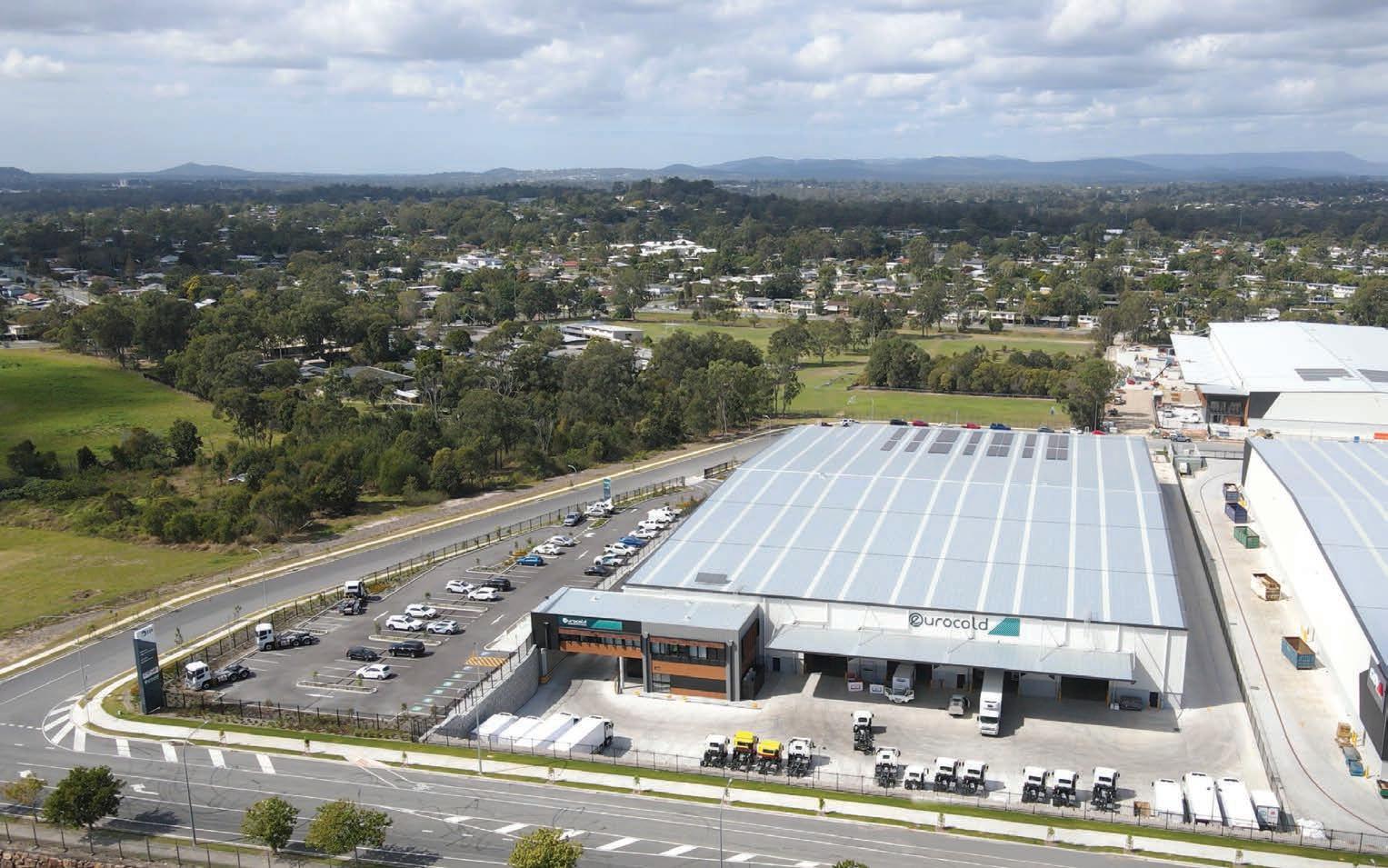
The business is headquartered in Brisbane, with depots across capital cities and several regional centres. While the company builds and sells vehicles, rental is its core model.
“We stand behind modern trucks, and the clear commercial advantages of renting rather than owning,” said Solomon.


OzHarvest and SecondBite, it focuses on a different approach.
“Eurocold’s approach is to own the asset instead of the customer,” said Solomon. “This ensures that we take responsibility of checking the trucks and making sure it is functional.”
Eurocold was created from a lifetime spent in food transport and the food service sector. With more than 40 years in the industry, Solomon worked in a milk distribution business that
grew into a sizeable food service operation called Solomon Food Group before it was sold in 2009. Through the years shaping food transport knowledge, Eurocold was born.
Since 2021, the business has grown into a fleet of more than 700
The team believes long-term rental offers food service operators a way to modernise their fleets without the burden of depreciation, upfront capital outlay or the need to continually reinvest in assets. For many operators, owning a refrigerated truck becomes a distraction from their real work. While many customers still prefer to own their vehicles, the business sees rental as a growth market.
“The market here is maturing,” he said. “We support operators by managing the assets for them, so they can stay focused on performance and growth.”
For food wholesalers that are growing quickly, this shift in mindset can give them a more stable financial path.
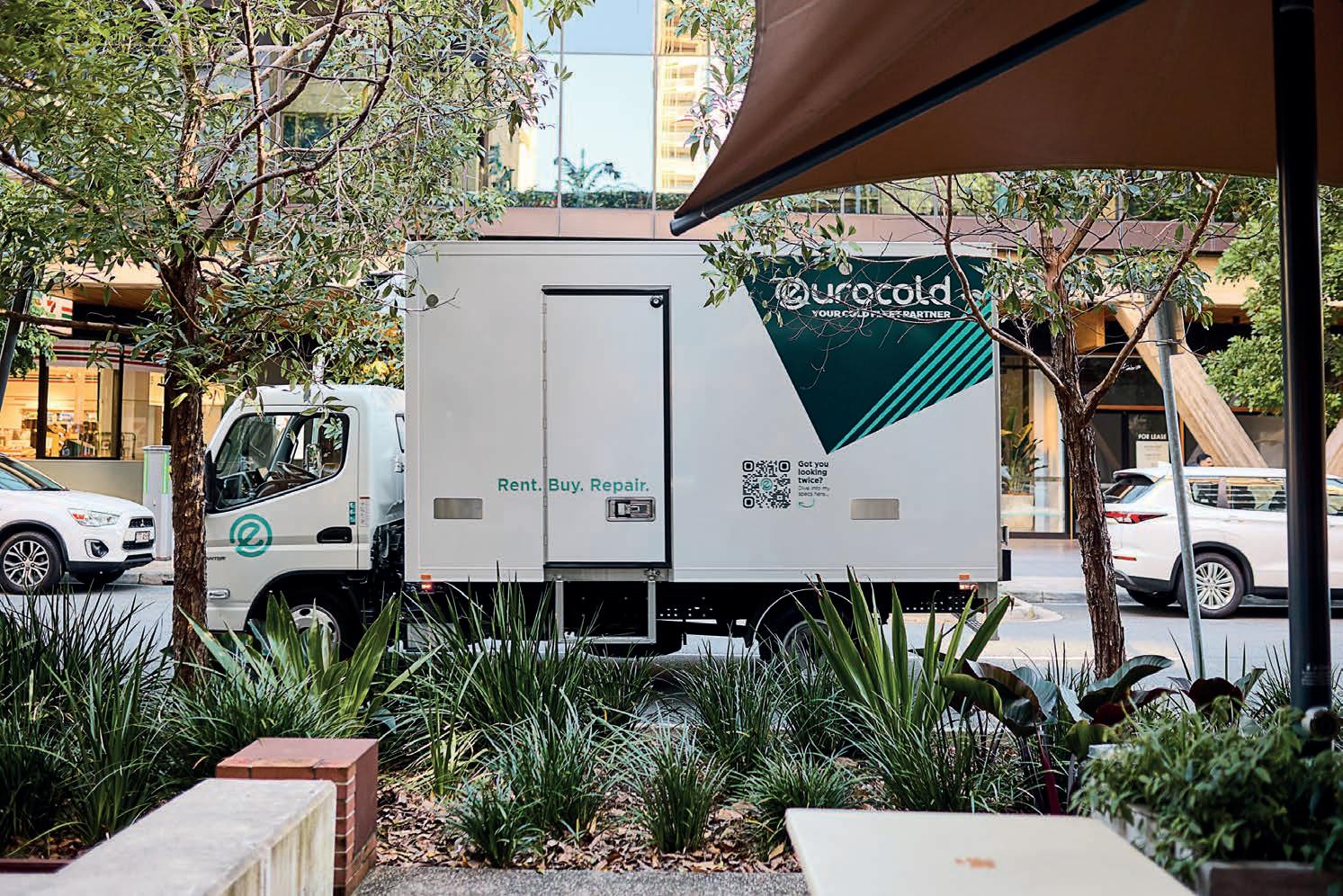
A central part of Eurocold’s philosophy is centred on stopping the waste. While ageing trucks cause spoilage during transport, operators still rely on older assets with outdated technology that no longer performs at the level it should. The company advocates for frequent fleet renewal to reduce food waste.
Modern technology has enabled panels to be lighter and more thermally efficient, fridge units designed to operate with consistency, and lower overall energy use. Solomon said that if operators replace trucks every four to five years, they can have access to the latest technologies and their benefits.
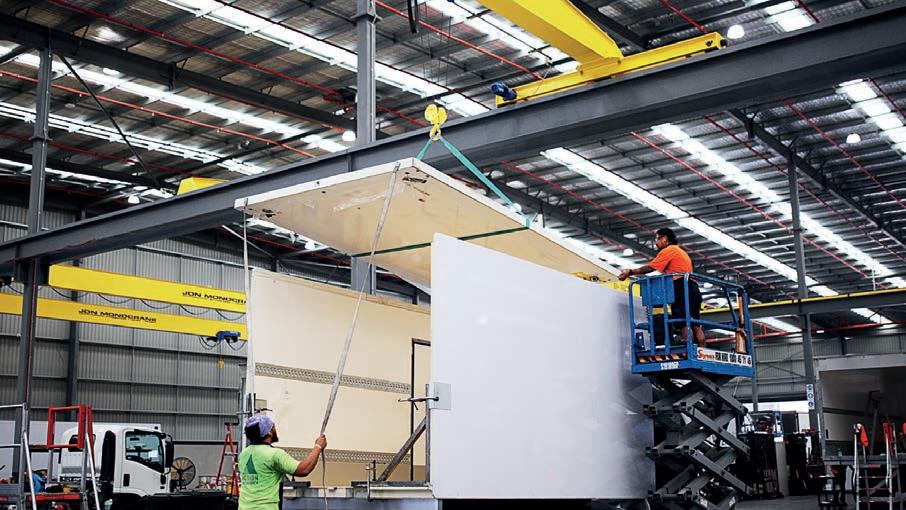
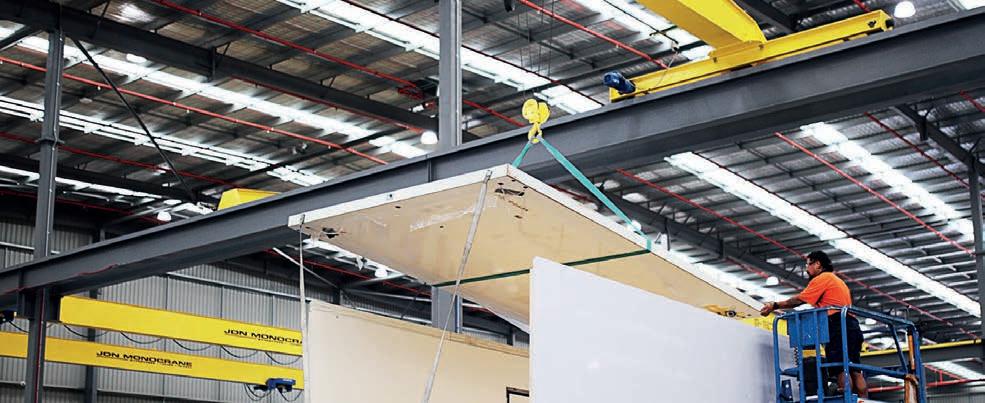
By keeping ahead of new innovations through its Berrinba assembly facility, the company aims to elevate cold transport. Multiple production lanes, cranes and configurations are set up to streamline processes to efficiently navigate through scalable workflows to deliver to customers.
A key part of Eurocold’s offer is its exclusive partnership with ISOKIT
“We support operators by managing the assets for them, so they can stay focused on performance and growth.”
Isothermal Solutions to deliver ISOKIT bodies that are designed and engineered in Italy. This refrigerated body is assembled using a bonded system rather than rivets or screws. Traditional Australian builds often rely on rivets that pierce the insulation and create small points where heat can enter.
“The ISOKIT design bonds the truck together in a way that prevents leakage,” said Solomon.
By bonding panels together using a high-strength adhesive system, the body forms a sealed shell that minimises thermal leakage. The company tests its builds through advanced isothermal processes to maintain consistent temperatures even in harsh Australian conditions.
With a commitment to innovation in tandem with the company’s rental model, food waste levels would be reduced while boosting operations. As businesses grow, food wholesalers and distributors
often find themselves pressured into becoming experts in asset management. For example, a seafood wholesaler may know everything about product sourcing yet be forced to spend time managing truck repairs, maintenance schedules and fridge unit performance.
“They’re forced into being a distribution business but it’s not what they’re passionate about,” said Solomon.
Eurocold positions itself as a partner that removes this burden. By taking responsibility for the asset, the company aims to allow operators to focus on their work while relying on a reliable and modern fleet.
Change in food and beverage can be daunting but to remain competitive in the market, change is essential. Take for example purchasing decisions generationally. According to Solomon, older generations have historically
Seventy-two per cent of the food wasted in Australia is caused by transportation.
preferred to buy trucks outright.
However, younger operators increasingly see value in renting trucks as it allows them to redirect capital into property, product lines, expansion or building long term wealth. Eurocold sees this shift as a natural evolution in an industry that is becoming more sophisticated. To help with this shift, the company emphasises partnership.
“One of our other values is that ‘we’re in it together’,” said Solomon. “We understand the importance of our customer’s business, and we aim to support them.”
Looking ahead, Eurocold plans to expand its presence across Australia and into New Zealand. The company is targeting a fleet of between 1,500 and 2,000 long-term rental vehicles within the next decade. With this scale, the company aims to encourage frequent fleet turnover and promote a shift toward operational expenditure models.
“We have the passion and we understand the industry,” said Solomon. “We can stop food waste together.” F
What does chaos look like? The absence of connectivity in food and beverage manufacturing can cost a business. Existco introduces a digital solution.
Dictionaries define a system as parts working together as an interconnected whole. A healthy food and beverage business thrives on well organised accounting, recipe management, production, quality assurance, labelling and packaging. But what happens if these systems are disconnected? The irony of a disjointed system demonstrates a future set for failure. In industries like meat and poultry where each item’s exact weight and price are determined at the time of sale, a single mistake can amount to costly delays and disruptions. Founder and owner of Existco Eli Abitbol described separated systems as chaos.
“A disconnected system is inefficient,” he said. “Existco works to eliminate the chaos.”
Take the seafood industry as an example. In a complex industry that is involved with multiple touchpoints that require multiple systems, a Western Australian seafood processor, Perth Seafoods, had to keep up with the pace.
The seafood problem
Known for supplying premium and sustainably sourced seafood to retailers, foodservice providers and large-scale commercial customers, Perth Seafoods was met with new contract opportunities. However, with opportunities came new challenges.
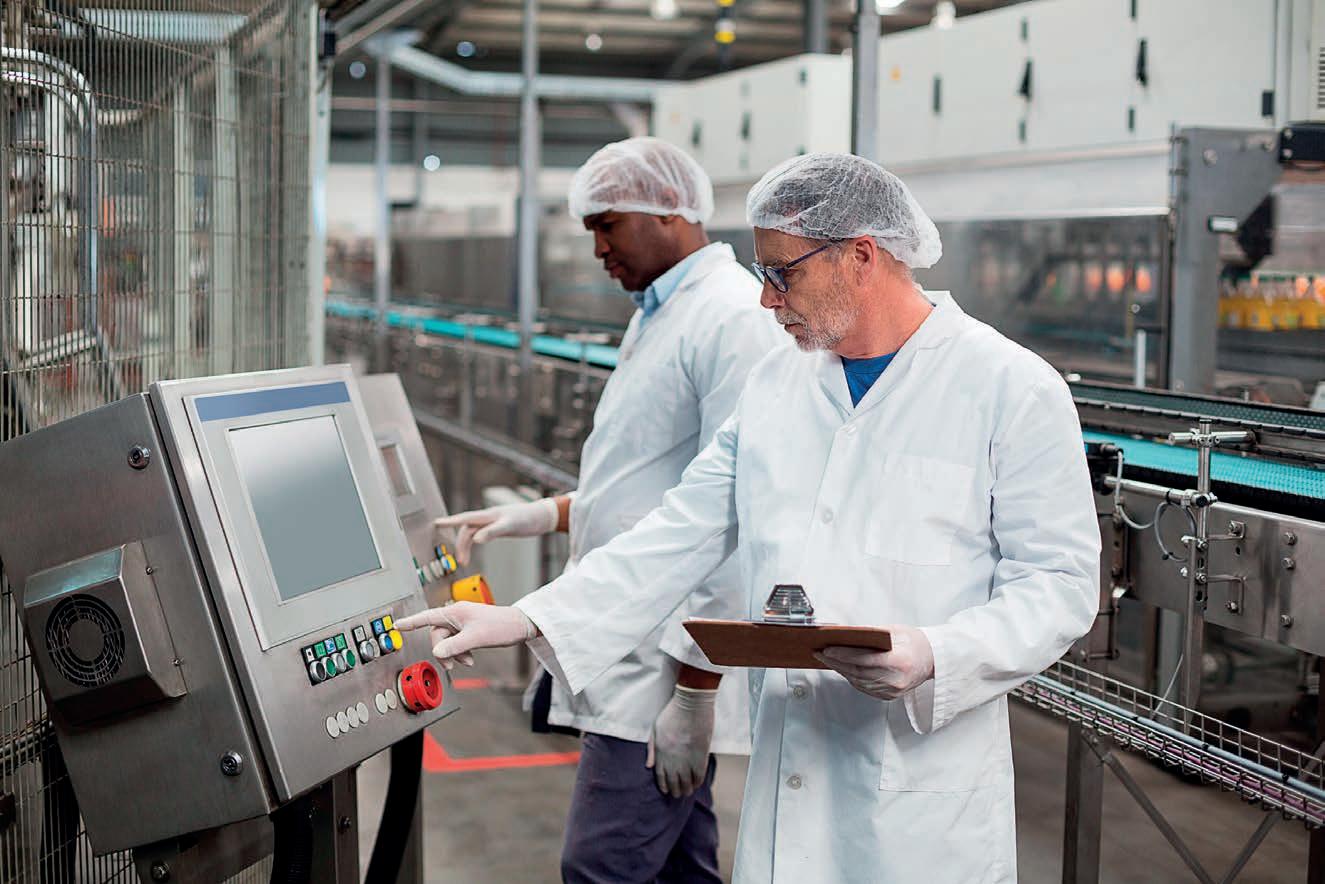
From dry filleted fish, sashimi, caviars and oysters, the company found pressures to deliver at higher volumes without affecting product consistency and accuracy in inventory tracking. Adding to increased operations and highvolume production, the seafood industry faces strict hygienic requirements and needs to adopt quality systems and testing. In a case of a product recall, it must track and trace goods from factory to client. Additionally, the company relied on manual labelling processes. When met with an inconsistent label, it slowed dispatch and disrupted production plans. Manual systems like spreadsheets, bottlenecks
created inefficiencies in forecasting, scheduling and fulfilling orders.
While it is possible to handle and manage these disconnected systems through increased manpower and multiple systems, it leaves higher risks for faults and human error.
Especially with large scale contracts that require increased outputs, it can put strains on staff and services, making the business prone to failures.
Abitbol noted that most food and beverage businesses are not foreign to these challenges and often adopt multiple systems to mitigate them. However, it comes at a cost.
“We find that a lot of costs are going into these systems rather than having everything run and operate
from a single point,” he said.
Balancing large volumes with scattered systems and no central source of truth, Perth Seafoods required a smarter automated solution to handle its operations.
Operational chaos was brought to order through the implementation of the Existco Plant Control System (ExPCS).
“The ExPCS is a fit-for-purpose solution for the food industry,” said Abitbol. “We’ve worked with the industry in the past 25 years to produce a product that meets industry demands.”
Partnering with Existco, what used to be heavily manual for Perth Seafoods developed into an automated and centralised operation, connecting every stage of the workflow into one system. The integrated platform is purpose built for modern food manufacturing, elevating the seafood specialist with new innovations, doubling turnover in
less than six months.
“We introduce high-tech solutions into low-tech industries,” Abitbol said. “We use the latest technology to digitise and empower the business to make informed business decisions.”
Headquartered in Perth, Western Australia, Existco provides end-
processing plants both nationally and internationally, the ExPCS aims to connect operations by adding value to its products and services for businesses looking to digitise processes. One of the ways Existco demonstrates this is through the core feature of the platform: triple dimension inventory tracking.
“We introduce high-tech solutions into low-tech industries. We use the latest technology to digitise and empower the business to make informed business decisions.”
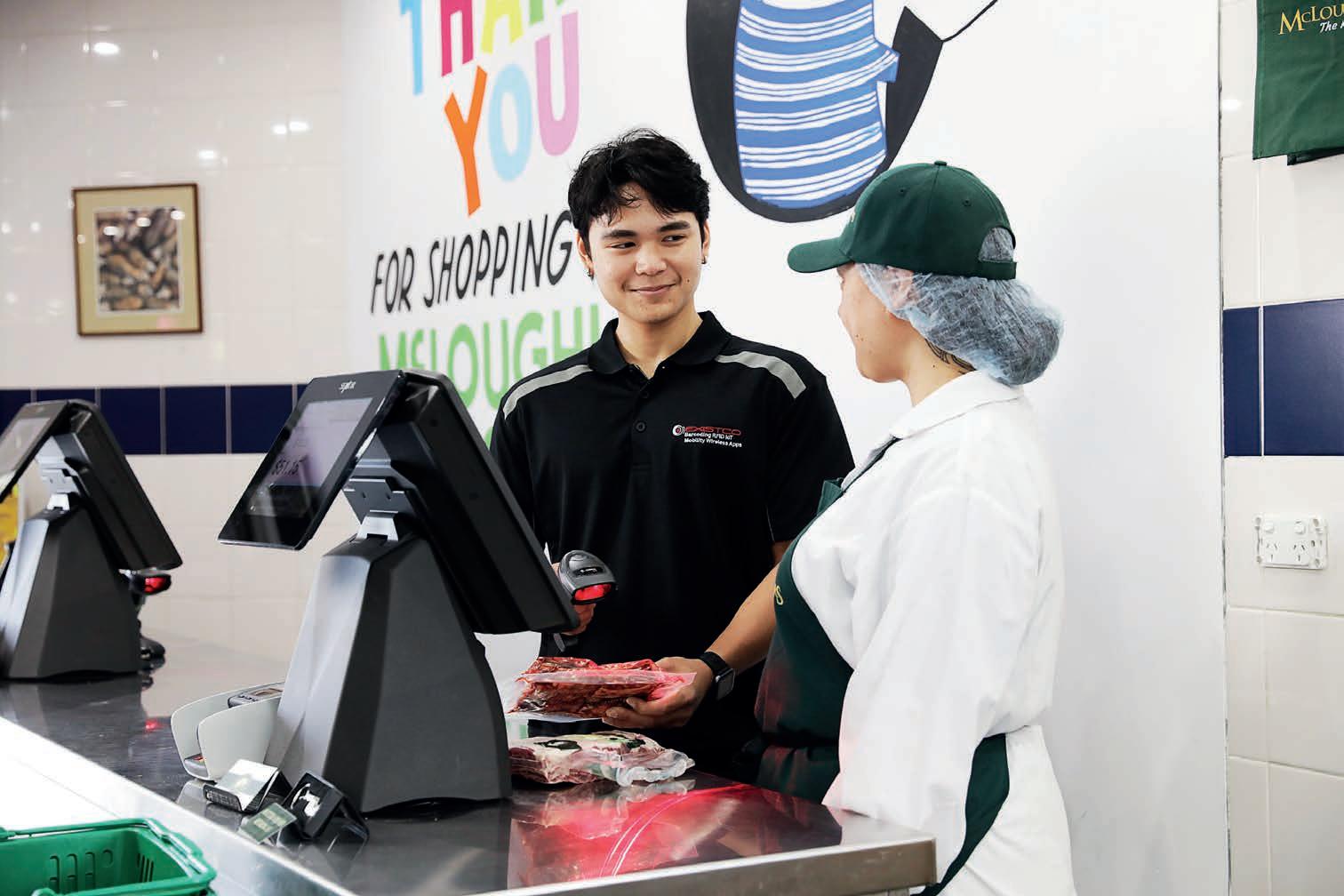
to-end solutions across intelligent barcoding, point-of-sale systems, product tracking, marking, labelling and engineering. Working closely across meat, poultry, seafood, fruit and vegetable, bakery and general manufacturing where precision and traceability are imperative, Abitbol said the company has a 99.2 per cent customer retention.
Operating in more than 300 food
“When you sell meat, seafood, poultry and vegetables, you require quantity and weight,” said Abitbol. Abitbol explained that most systems provide a single dimension inventory, where they only provide a single unit of quantity. With many variables in the random weight industry, the ExPCS adds a third
Existco provides solutions across barcoding, point-of-sale systems, product tracking, marking, labelling and engineering.
dimension – the serial number. With this addition, the system can help manufacturers strengthen traceability.
For businesses like Perth Seafoods where inventory is affected by factors like production volume, import/export markets and storage capabilities, a strong tracking system is required. With the temperature-sensitive nature of seafood, inventory is dependent on the cold chain and reliable logistics for fresh products.
When inventory is disrupted by environmental or regulatory factors, having the ability to track-andtrace seafood will not only save costs but also protect consumers. With reduced risks, Perth Seafoods gained clarity to confidently take on large and high-volume contracts that would have been difficult to manage with previous processes.
Through a platform that provides a third-dimension tracking feature, Existco has worked its way to address and solve pain points in the food industry.
Abitbol emphasised that the ExPCS was built from the ground up to elevate every part of the business, including employees.
“We’re about doing more with the people you have,” he said.
Streamlining the workflow allows employees to be more productive by removing timeconsuming ancillary tasks caused by errors or disconnectivity. From a bigger picture, it enables food manufacturers to focus on making targeted and careful business decisions.
Previously, before the rise of technology and digitisation, businesses made data-less decisions, which Abitbol described as a dangerous gamble. Existco’s platform makes it easier for better and safer choices that will make, not break, the business through automation, barcoding, Radio Frequency Identification (RFID), IoT technology and easy to connect capabilities to high-speed equipment like X-ray machines or in-line labellers.
As an extension of the company’s efforts to simplify processes with a single source of truth, it also ensures that the ExPCS can be adopted regardless of whatever stage the business is in, big or small.
“Our solution is highly integrable for accounting, production equipment and third-party systems,” said Abitbol.
While the platform takes control of inventory, manages sales, production, compliance and fulfilment, simplicity is at the core of the technology. With decades of experience in the food industry, Existco understands its customers, especially those who find it difficult to adopt new systems.
With proper onboarding and documentation in the initial stages,
Existco remains connected to the customer to provide constant support. Through immediate online inquiries, video training and local help, the company ensures that it is not simply a set-and-forget model but a collaborative one.
“We accept that every business is different,” said Abitbol. “Our solution is agile and has customisation capability where we can adjust the product to meet specific customer needs.”
Although new innovations arise across industries, change can only occur if the business is willing to take the step to improve.
“Solution providers cannot operate a system on behalf of the customer,”
By unifying the workflow, teams can focus on high-value work instead of fighting errors and inefficiencies, unlocking greater productivity across the entire operation.
added Abitbol. “It always starts from the customer wanting to make change.”
With businesses like Perth Seafoods, which took a step to drive growth in its turnover without affecting other aspects of the business or increasing staff numbers, Existco’s immediate goal is to educate food and beverage manufacturers on the benefits of automation and IoT technologies. In the long term, the company aims to impact the industry with plans to tap into the global market.
Heading towards these goals is the company’s motto and vehicle – “customers for life”. Through its service and product features that add value to businesses, Existco aims not to provide customers with only short-term and fast solutions but a lifelong partnership to help them remain resilient and competitive in the saturated market.
“All businesses want to grow, be more efficient and profitable,” said Abitbol. “Make the leap of faith to make a difference in your business.” F


Iis rising to the surface. With the hustle culture mindset boosting productivity with technologies introducing new ways of working, businesses are pressured to adopt and adapt. With widespread focus on ambitious growth, food and beverage businesses tend to make purchasing decisions prematurely – driven by trends rather than needs.
Australian specialist F&B construction company Total Construction goes against the grain. Servicing the building sector for more than 30 years, the company has developed an understanding of food and beverage businesses inside out. According to the company’s group general manager, food and beverage group Rob Blythman, Total takes a different approach.
“Being a holistic contractor, we’re not interested in just selling construction works,” he said. “Clients can have a sense of comfort that
little agnostic.”
Part of this agnostic and objective approach is challenge. Blythman gave an example involving automation and robotic technologies. As automation and robotics accelerate across food and beverage manufacturing, many businesses are discovering that the real challenge is not the technology itself, but the environment it must operate in. For builders working closely with manufacturers, this gap between equipment ambition and building reality has become evident.
According to Blythman, many manufacturers approach automation with a narrow operational lens. The focus is often on output, labour savings and return on investment, while the broader implications for the building itself are left until late in the process.
In practice, this can create costly delays once equipment is ordered and delivery dates are locked in. For example, high value robotic and
manufacturers frequently assume their existing infrastructure will be sufficient.
“A business could order a $10 million piece of robotic equipment that requires power requirements that have not been considered in planning,” said Blythman.
Committing to equipment that requires a power load far exceeding what the site was originally designed to handle is already too late. Addressing this later can involve transformer upgrades, network approvals and long lead times that stall commissioning plans.
Total’s general manager, food and beverage group Tony Tate, raised another problem around structural capacity.
“One of the biggest issues is that the client buys a piece of equipment only to find out that it does not fit within the space,” he said.
Automation equipment is often
machinery, placing additional loads on floors, slabs and roof structures. Tate noted that roof voids are frequently overlooked, particularly when new services such as refrigeration evaporators are added.
Roofs are typically designed to carry only the building envelope, not additional suspended loads, making strengthening and certification essential before installation can proceed. If a roof is designed to take only 500 kg per square metre, incorporating additional support will be required to install a refrigeration evaporator that weighs two tonnes.
“You will need additional strength, you will need structure, and you will need to certify it,” said Tate.
While costs and structural capacity are factors to consider, Blythman and Tate emphasised the importance of a commonly overlooked issue – egress paths. National construction codes
require clear and compliant escape paths to ensure staff can exit safely in the event of a fire.
When long automated lines or large robotic systems are installed, they can unintentionally block or extend escape routes beyond allowable distances. This often triggers redesigns, fire engineering reviews and approval delays that could have been avoided with early planning.
Manufacturers often assume that minor changes do not need to be disclosed or reassessed. However, what may seem like a simple retrofit can quickly become a building-wide compliance exercise.
“In the past, businesses could do it and get away with it, but now, it’s getting more difficult with private certifiers,” said Tate.
“Companies need to look at introducing new equipment holistically, not just uncrate the equipment and plug it in,” Blythman added.
Blythman said the challenge is that food and beverage companies are not construction companies. While established businesses may have a dedicated construction or project management team, this is not always the case. A site transformation or equipment introduction does not occur regularly, removing the need for full time construction expertise.
For example, a medium-sized manufacturer may operate in a shoehorned facility where equipment and processes have been added over time.
“With everything squeezed in, everything is bulging from all aspects, from dimensions through to the services,” said Blythman.
How can manufacturers navigate these problems?
When considering introducing new technology, Blythman and Tate advised manufacturers to devise a plan immediately. Whether reaching out to a building consultant or creating checklists, businesses must ensure everything is covered. This early input allows potential issues to be identified before purchase orders are placed, helping businesses understand whether timelines and budgets are realistic.
Total Construction’s approach is built around early engagement. While large consulting firms may offer similar assessments at high
cost, many builders are willing to provide early guidance, provided they have the specialist knowledge to understand food and beverage operations.
Specialist knowledge allows an operational perspective rather than a sole focus on construction. Tate highlighted how Total questions assumptions around process flows, cleaning regimes and service demands.
“Total understands the operations and we respectfully challenge them, offering alternatives and a wider perspective,” he said.
This approach can lead to solutions that reduce cost or complexity without compromising performance.
For businesses that have already installed equipment and are facing difficulties, it is not too late to seek assistance. Depending on time and cost constraints, projects may proceed under different approval pathways, each with implications for compliance and scope.
If a company is not bound by time constraints, it can apply through the standard Development Application (DA) process. However, this can take up to six months before approval is granted. Total can also provide an internal Complying Development Certificate (CDC) – a fast-track approval for straightforward projects
current codes through upgrades where required.
Although companies can work through these challenges, the operational advantage the equipment was meant to bring may not be realised for months due to neglected issues. For manufacturers considering automation technologies for the first time, Total’s advice is consistent – be early. This means assembling the right team early and involving building specialists from the outset.
Blythman encourages early planning to prevent setbacks through partnership driven approaches.
This mindset extends to how Total interacts with subcontractors and suppliers, helping food manufacturers navigate construction pressures they are unfamiliar with.
“We’re all in it together,” he said. “We will help the client as best we can, but we won’t try to shortcut it.”
As automation reshapes food manufacturing, success will depend not only on the technology selected, but on how well it is integrated into the physical and regulatory requirements of the site. Planning is not an optional extra. It is the foundation on which every successful automation project is built. F



On
demand packaging is emerging as a practical way to improve flexibility, compliance and control across production workflows. One company’s printing solution sets the standard.
What makes a brand?
A logo can bring a brand to life. However, it is not enough to carry a business. It is only the cherry on top. Before the logo is the packaging – from the material to production and logistics – that makes or breaks the brand.
The food and beverage industry adds a layer of complexity to packaging. With stringent food safety measures and supply demands, manufacturers need to find internal ways to streamline processes while remaining compliant. However, the push for greater efficiency brings more hurdles caused by ancillary tasks and decreased productivity. To counteract this predicament, automated technologies are gaining traction.
While automation is often associated with production lines and filling equipment, a quieter transformation is taking place further downstream. Packaging –long treated as a fixed and static component of manufacturing – is now being reconsidered as a dynamic

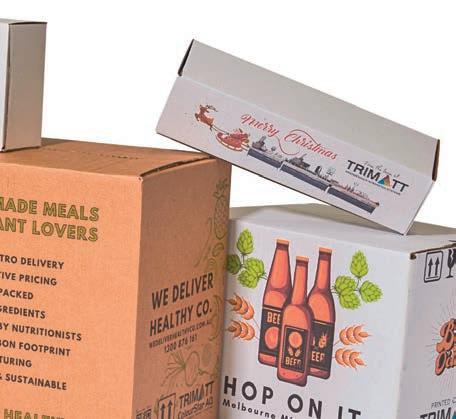
Packaging is often addressed late in the production planning process, making it a lower priority during manufacturing.
and responsive process.
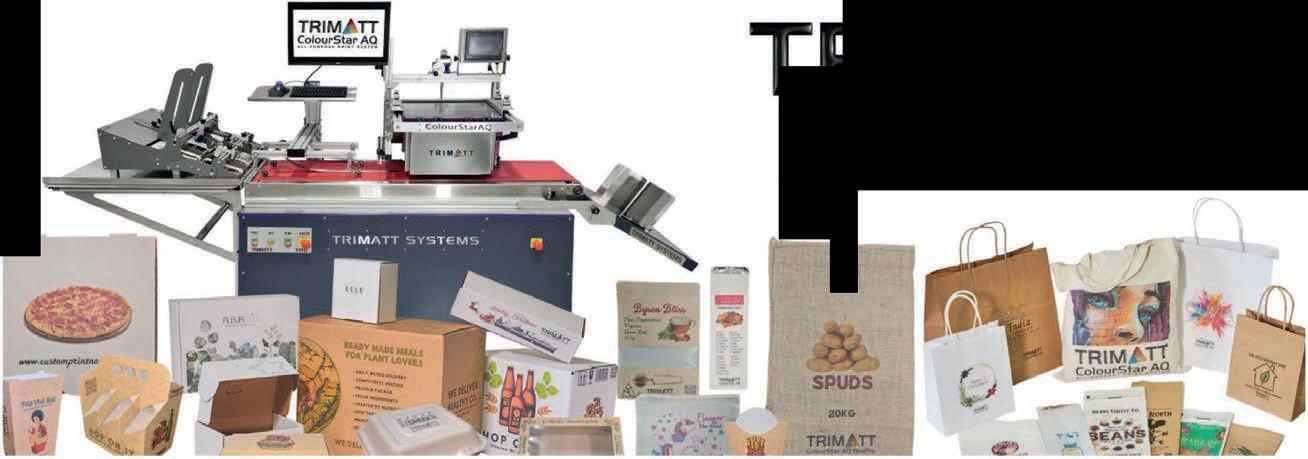
However, just because a technology includes automation features, it does not guarantee efficiency. According to founder of Australian print and product automation technology supplier Trimatt Systems, Matt Johnson, flexibility has emerged as a defining advantage.
“A trend we are seeing is that businesses are looking to implement a system that allows them to produce their packaging materials just in time,” he said.
Seeing growing interest from food businesses seeking more control over when and how their packaging is produced, Johnson said


companies are looking into Trimatt’s technologies.
“Manufacturing companies invest in our technology to install into their business to give them flexibility to print or label packaging material just in time on the day of filling,” he added.
Increasingly, businesses are integrating printing and labelling systems directly into their production workflow, enabling packaging to be created on demand rather than held in storage. For manufacturers operating with multiple products, frequent formulation changes or short run stock keeping units (SKUs), the benefits can be immediate.
Packaging no longer needs to be ordered in large quantities for each product variation. Instead, brand elements, ingredient panels, nutritional information, barcodes, batch details and date coding can all be applied as required, reducing both inventory and waste.
“There’s a lot of unique information besides just the branding included in the packaging,” said Johnson. “Especially for food products, it needs to be compliant.”
This level of flexibility is proving attractive not only to small producers, but also to larger and multinational businesses. While a
business may have the capacity to order in bulk, Johnson highlighted that manufacturers are motivated by control. Bringing packaging production in house allows businesses to respond faster to market demands, introduce new SKUs with less risk, and adjust information without relying on external suppliers.
Trimatt’s ColourStar AQ V, a digital print engine designed and manufactured in Australia, offers this flexibility.
Part of the advantage of the ColourStar AQ V is its usability.
“The system is user friendly and a hands-off automated system,” said Johnson. “The operators have minimal intervention with the machine, reducing downtime.”
With software that can be flexibly integrated with enterprise resource planning (ERP) systems, it removes the need for data handling, creating a streamlined process. By allowing businesses to connect production data directly to their packaging output, there is no longer any need to manually re-enter data.
This integration ensures traceability from raw materials to finished goods.
A key feature of the ColourStar AQ V is its ability to print full process colour directly onto packaging, as opposed to traditional monochrome coding solutions. This allows brands to preserve visual identity while meeting functional requirements.
“The ink itself is extremely vibrant, lightfast, watertight, and freezer safe,” added Johnson.
According to him, the ink is well suited for food packaging due to its ability to print on a range of porous media types, ensuring packaging remains legible and compliant throughout the supply chain. With an integrated friction feeder, adjustable receiving tray, over 100mm height adjustable print head, and conveyor, it delivers a digital printing solution at a speed of 27 metres per minute.
Transitioning to a just-in-time production model is not without complexity. Johnson noted that while the print engine remains consistent, every business is different.
“It’s not just a one size fits all,” said Johnson. “What changes from business to business is the workflow, the dimensions of the materials and


data handling requirements.”
As a result, he said Trimatt provides a consultative approach. The challenge is not simply installing equipment but ensuring it fits seamlessly into existing operations.
“We really try to understand what our customers’ needs are to guide them through that process and give them the best solution,” Johnson added.
When asked how companies are reacting to just-in-time production models in manufacturing, Johnson said many have adopted it in some areas.
“However, they may not have this model throughout the complete process of their business,” he said. “Most of the time, packaging is the last process they look at.”
Awareness of on demand packaging systems remains a barrier. Johnson said he continues to encounter businesses that are unaware of print packaging solutions because they assume packaging automation is limited to large scale operations. Additionally, packaging is often addressed late in the production planning process, making it a lower priority during manufacturing.
Johnson urges manufacturers to consider packaging from the outset, alongside production and
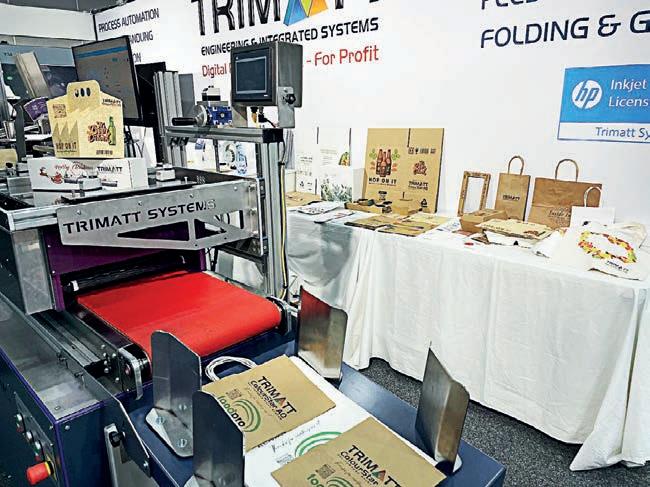
logistics, rather than treating it as a downstream add on.
“There is a limitation of understanding within the market as to what’s available,” he said.
Trimatt Systems aims to elevate the food and beverage industry through collaborative partnerships and education. With multiple industry exhibitions planned, the company wants to demonstrate the technology in action and engage directly with manufacturers seeking to refine their operations.
“We want to reach the market to let them know what is available and start thinking about packaging from the get-go,” added Johnson.
On demand printing and labelling is no longer a niche solution, but a growing viable option for businesses of all sizes. By bringing packaging closer to the point of production, manufacturers can reduce waste, improve compliance and respond faster to change. For those willing to rethink traditional workflows, packaging on demand offers a practical pathway towards a more agile and resilient manufacturing model.
“We’ve got a busy year ahead of us,” said Johnson. “We will continue to support businesses with their inventory reduction and business streamlining processes.” F
Australasian companies have received global recognition at the WorldStar Packaging Awards, highlighting innovation across food, labelling and materials.
Author Nerida Kelton FAIP, executive director AIP – vice president Sustainability & Save Food – WPO
The Australasian Institute of Packaging (AIP) has announced that seven Australian and New Zealand companies have received 11 WorldStar Packaging Awards.
The latest round of the WorldStar Packaging Awards attracted 481 entries from 36 countries, with 234 recognised at the event.
“With the tough global competition increasing every year, receiving a coveted WorldStar Packaging Award is getting harder,” said Nerida Kelton, executive director of the AIP.
“The AIP are extremely proud that seven ANZ PIDA Winners have been internationally recognised with 11 awards across six categories including Packaging Materials & Components, Food, Fresh Fruit & Vegetables, Other, Household, Labelling & Decoration.”
The Australasian winners were:
Food
•Australian Organic Food Co Mono Material Spout Pouch (Flavour Makers + Cheer Pack Asia Pacific).
•Amprima recycle-ready packaging for shredded cheese (Amcor Flexibles Asia Pacific ANZ).
•Koor refillable system – Koor.
•Katermaster Regen Reusable Food Container (Bunzl Australia & New Zealand).
Fresh Fruit & Vegetables
•Opal Paper-based fresh produce punnet (Mountain Blue + Opal).
Labelling & Decoration
•Carman’s Gourmet Snack Mix –
Zipform Packaging.
Household
•Koor refillable system (Koor).
Packaging Materials & Components
•Amprima recycle-ready packaging for shredded cheese (Amcor Flexibles Asia Pacific ANZ).
•Australian Organic Food Co Mono Material Spout Pouch (Flavour Makers + Cheer Pack Asia Pacific).
•Advantage 9um Pallet Wrap (Bunzl Australia & New Zealand).
Other
•Reusable Ecommerce Tote (Woolworths Reuse Co +Viscount Reuse).
“As only winners from the Australasian Packaging Innovation & Design (PIDA) Awards are eligible to enter the WorldStar Packaging Awards, the continued global recognition of our packaging designs is a testament to the strict criteria and judging process of our regional awards program,” added Kelton.
“We look forward to celebrating the ANZ winners in person on the 8th of May 2026 at a gala awards ceremony which will be held inside of



To continue innovative packaging growth, applications are now open for the annual Australasian Bioplastics Association (ABA) packaging scholarship program, run in partnership with the Australasian Institute of Packaging (AIP).
Three scholarships are available for the Australasian region, including the Diploma in Packaging Technology, Certificate in Packaging Technology and AIP President Award.
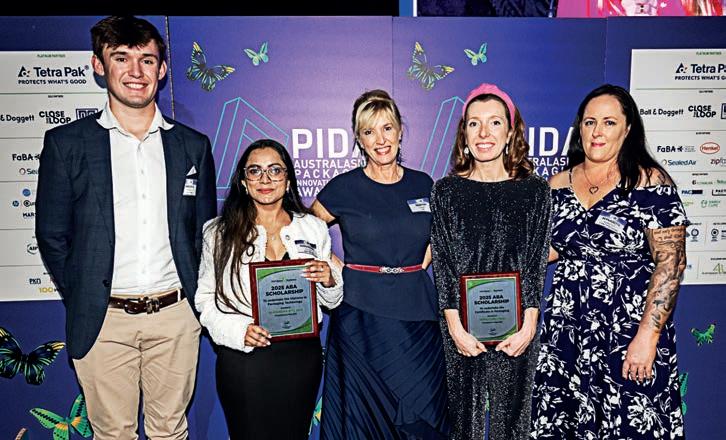
The Diploma in Packaging Technology is a Level 5 PIABC qualification, internationally recognised as the premier qualification in the packaging industry. The course prepares learners to take responsibility for packaging operations at any level through the supply chain and can lead to higher level study.
According to Kelton, Diploma in Packaging Technology students come from a variety of backgrounds and disciplines, but they all share a desire to broaden and deepen their knowledge and understanding of the packaging industry.
The ideal first qualification for those working in the packaging industry is the Certificate in Packaging Technology. It introduces the industry for those starting out in a career in packaging. This Level 3 PIABC course delivers foundational insight and understanding that adds value to both careers and businesses.
The AIP President Award has been designed to work in collaboration with the ABA program to support one additional person to undertake either a Certificate in Packaging Technology or a Diploma in Packaging Technology each year. The AIP President Award will also consider applications from AIP members across Asia to be eligible for a third scholarship, sponsored by the AIP.
The annual scholarship program is part of the Australasian Packaging Innovation & Design (PIDA) Awards, with applications closing on the 27th of February.
The PIDA Awards are the feeder program for Australia and New Zealand for the WorldStar Packaging Awards, with winners announced at the gala awards ceremony on the 28th of July at the Aviary Crown during FoodPro. F







16-17 September 2026


EXHIBIT IN 2026. BE SEEN. BE HEARD. BE CHOSEN.



UNSW researchers are turning food waste into a protective edible film that could extend the expiry date of Australian summer fruits.





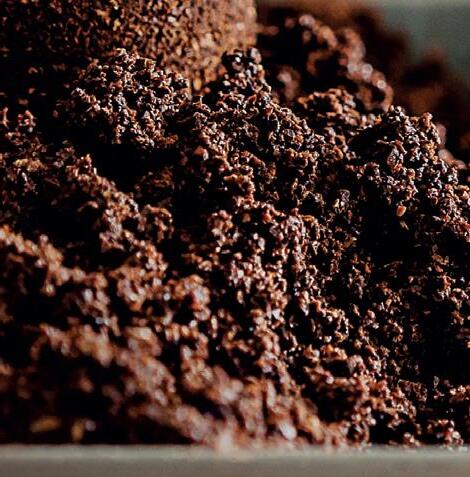

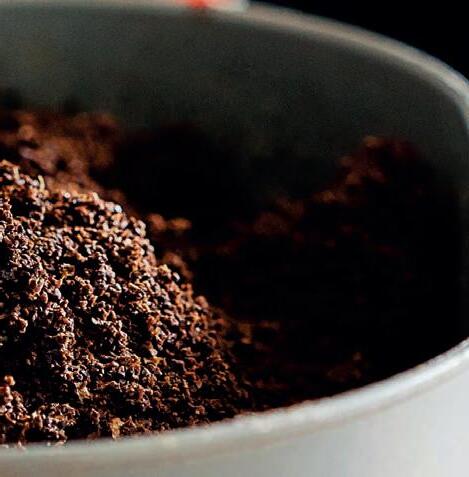


Are coffee and blueberries a culinary match? Some may argue ‘no’. But UNSW researchers say that the two may work together to make sure our summer fruits have a longer shelf lifespan.
In the university’s School of Chemical Engineering, a research team has developed an edible coating that could transform the way fresh food is protected and preserved. The research is led by PhD student Lilah Saidi, under the supervision of Professor Cordelia Selomulya, Dr Yong Wang and Associate Professor Peter Wich.
Saidi, Wang and Wich joined Food & Beverage Industry News to talk about biopolymer coatings.
“Biopolymer films are a growing research and solution for food preservation,” said Saidi.
According to her, the interest in biopolymer films is driven by the need to reduce food waste and improve quality during storage and transport. Among films made from the likes of proteins or lipids, polysaccharides have gained attention due to being abundant, natural and biodegradable.
“However, polysaccharide-based films have high water vapour
permeability, which limits their application,” she added. “When we coat food, we want to preserve it from moisture transfer.”
Moisture movement either from the food to the environment or the reverse can accelerate spoilage.
Polysaccharide-based films, being prone to vapour permeability, can compromise the freshness consumers expect by softening textures.
Developing polysaccharide-based films with enhanced water resistance was the core of Saidi’s research. The project has been around for more than a year since the beginning of Saidi’s PhD, with food preservation at the forefront. The early stages involved broader research, building foundational knowledge on the behaviour of polysaccharides, oils and nanofibres while finding appropriate methods and characterisations.
After research and planning, the project came to fruition in Saidi’s second year with concentrated laboratory trials that refined the formulation over time. The team then explored a circular approach that uses abundant waste while addressing moisture loss and deterioration, using blueberries.
The blueberry problem
Imagine opening a punnet of freshly bought blueberries, only to find a third mouldy, mushy or having a sour taste. While these sweet and flavourful berries provide nutritional benefits, they have delicate skins and high water activity. Prone to dehydration and mould during storage, fresh fruits like blueberries are often subject to food waste.
Blueberries have very short shelf life and require protection.
“Blueberries have very short shelf life and require protection,” said Yong. “Lilah’s design for edible coating is not only limited to the berries, but for wider food categories.”
Quality of food can also be considered. While blueberries that are slightly soft are still safe to eat, consumers will still choose firm and plump ones, discarding the rest. Yong provided an example with layered


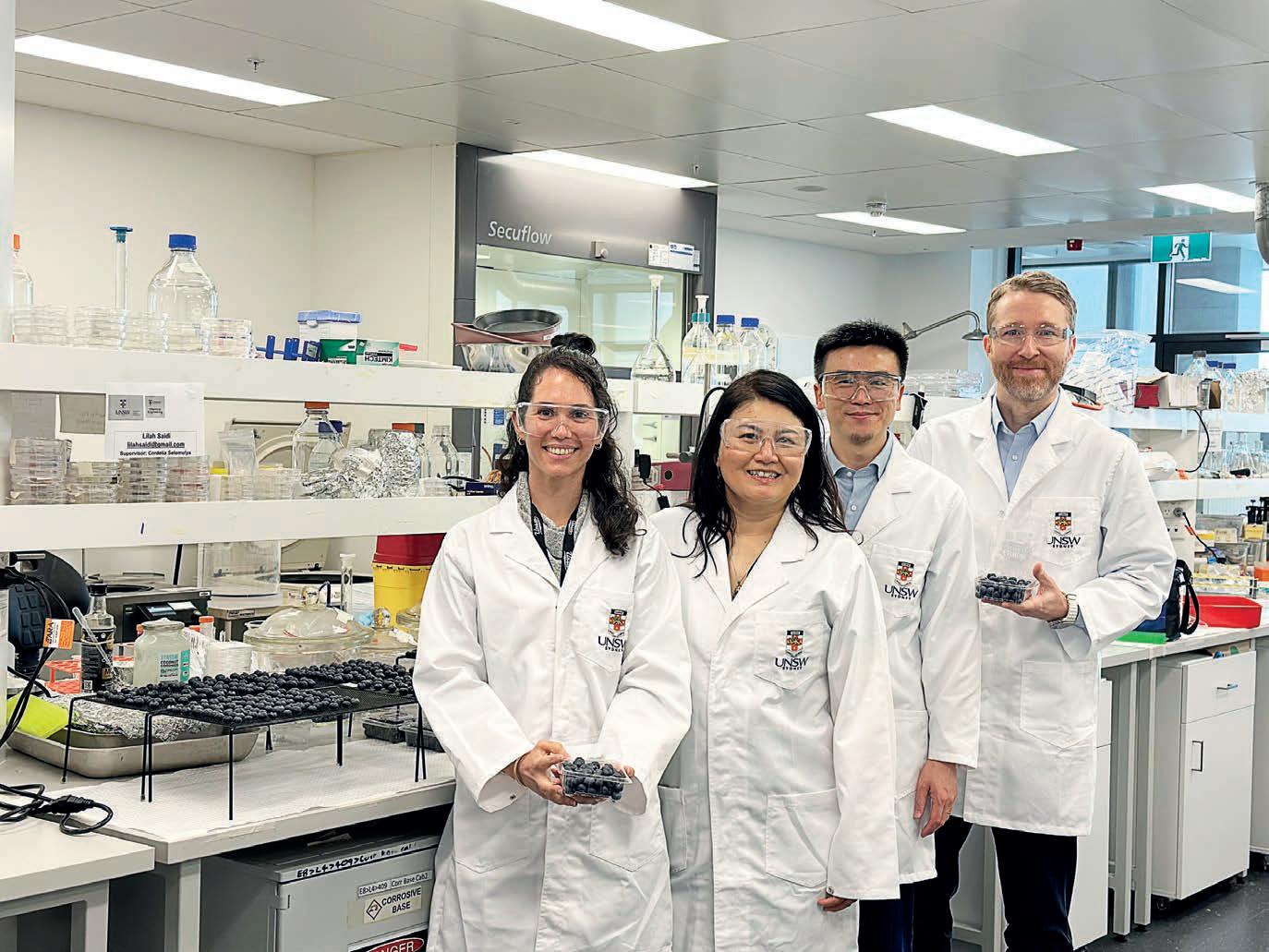
cookies where the biscuit’s texture must not be affected by the moisture from cream fillings. By having a thin and transparent layer that effectively separates the components while still being edible, the quality of the cookie can remain consistent for longer.
“The main aim would be applying these coatings directly to the food to serve as a protective layer that can extend shelf life and enhance quality,” said Saidi.
To create a natural and edible coating that strengthens the shelf life of fresh produce without relying on conventional plastic packaging, the team turned to UNSW’s Maze Café.
Current polysaccharide films made from plant cellulose fibres or starches are being tested for use as edible coatings. While they are biocompatible, biodegradable and food safe, they are not effective at protecting fresh produce from moisture transfer.
Saidi’s coating contains cellulose nanofibres derived from used coffee grounds and grapeseed oil. According
The interest in biopolymer films is driven by the need to reduce food waste and improve quality during storage and transport.
to her, nanofibres from the coffee grounds form a tighter and interconnected network that makes it harder for water molecules to pass through. Grapeseed oil was used to further reduce the film’s affinity for moisture.
“Coffee is the most traded agricultural product and the second most consumed beverage,” said Saidi. “In addition to that, it is rich in cellulose nanofibres.”
While its abundance and ability to produce cellulose nanofibres is a reason for its use, she had a bigger picture in mind.
“The main reason we chose coffee grounds is because it produces large amounts of waste,” she said.
For every gram of coffee beans used, about 0.9 grams of waste grounds remain. By reutilising the waste, the development of
the edible coating kills two birds with one stone within food waste, preserving and repurposing food.
The key word here is edible.
“You do not have to wash it as it is part of the food, making it easier for consumers to handle,” said Yong.
Comparing this to food packaging, edible coating reduces the need for a separate layer that requires removal. While currently this does not replace all packaging needs, it has potential to cut the amount of plastic film used for products such as berries. Yong said that plastic recycling challenges remain widespread and, in many cases, thin films do not reach the appropriate collection or processing facilities.
An edible coating can reduce the amount of packaging ending up in landfill while still protecting produce during distribution. By upcycling
spent coffee grounds from the university’s café, a biodegradable product is created to reduce waste.
Development of this technology was no easy road.
“With research, there are limitations and challenges that you come across all the time,” said Wich.
According to him, achieving the right adherence of the coating to the fruit surface is essential. Every fruit has its own surface characteristics, meaning the coating must be compatible with the texture and chemistry of the skin.
For blueberries, the research required studying contact angles, adhesion forces, surface properties and storage outcomes. The formulation must be thin, transparent and smooth, yet robust enough to function throughout distribution and retail handling.
The challenge Saidi highlighted is having this film be applicable for all foods.
“Every food, fruit and fresh produce has its own texture and
component on the skin,” she said.
Saidi said that the formulation must achieve water resistance while maintaining the right viscosity and visual appearance. It also needs to carry enough functional components to support antimicrobial activity when required.
“It is about trying to find the right balance between the components without compromising any of the other properties of the film,” she said.
Behind each step is a body of mechanical, chemical and biological testing. The science behind the coating requires study of the components, ratios and preparation methods. The objective is not only a working coating but a scientifically validated foundation that can be scaled and adapted for industry use.
With many hours spent in the laboratory analysing tensile strength, water vapour permeability, antimicrobial behaviour and physical interactions within the coating, Saidi’s supervisors described the work as a puzzle.
“We do not just look at the final outcome,” said Wich. “Researchers must focus on the pathway to get there, which includes an in-depth scientific approach to understand what is truly going on.”
When asked about commercialising the technology, Saidi said that it was already in discussion.
“We have been in touch with potential partners and are looking for partners to scale this edible solution in commercial settings,” she said.
Along with conversations with potential commercial partners, the team has filed a provisional Australian patent. This indicates that the technology has moved beyond conceptual development and laboratory trials into early readiness for pilot scale coating and continuous casting tests.
As mentioned, the coating can be applied to other food products through adjustments, which Saidi said is something the team can manage. She also said the coating has the potential to embed other edible bioactive components such as antioxidants, antimicrobials or fungicides.
However, extracting nanofibres from coffee grounds is labour and energy intensive, which could be
challenging to scale the innovation.
The team must continue to test the coating on fruit beyond the lab under real world storage and transport conditions, while exploring application methods and regulatory approvals.
To navigate through this step, Saidi wishes to close the gap between
An
researchers and industry partners to tailor the technology for different settings.
“Any research is highly important,” she said. “Having more resources and collaboration between laboratory work and industry would lead progress in the field.”
As the research moves towards commercial readiness, the team aims to continue strengthening the link between academic research and practical solutions. They have also been investigating a new source of cellulose nanofibres for more advanced and versatile coatings.
While the science is detailed, the end goal is simple; extend shelf life, maintain quality and provide an edible alternative that removes the need for certain forms of plastic packaging. F
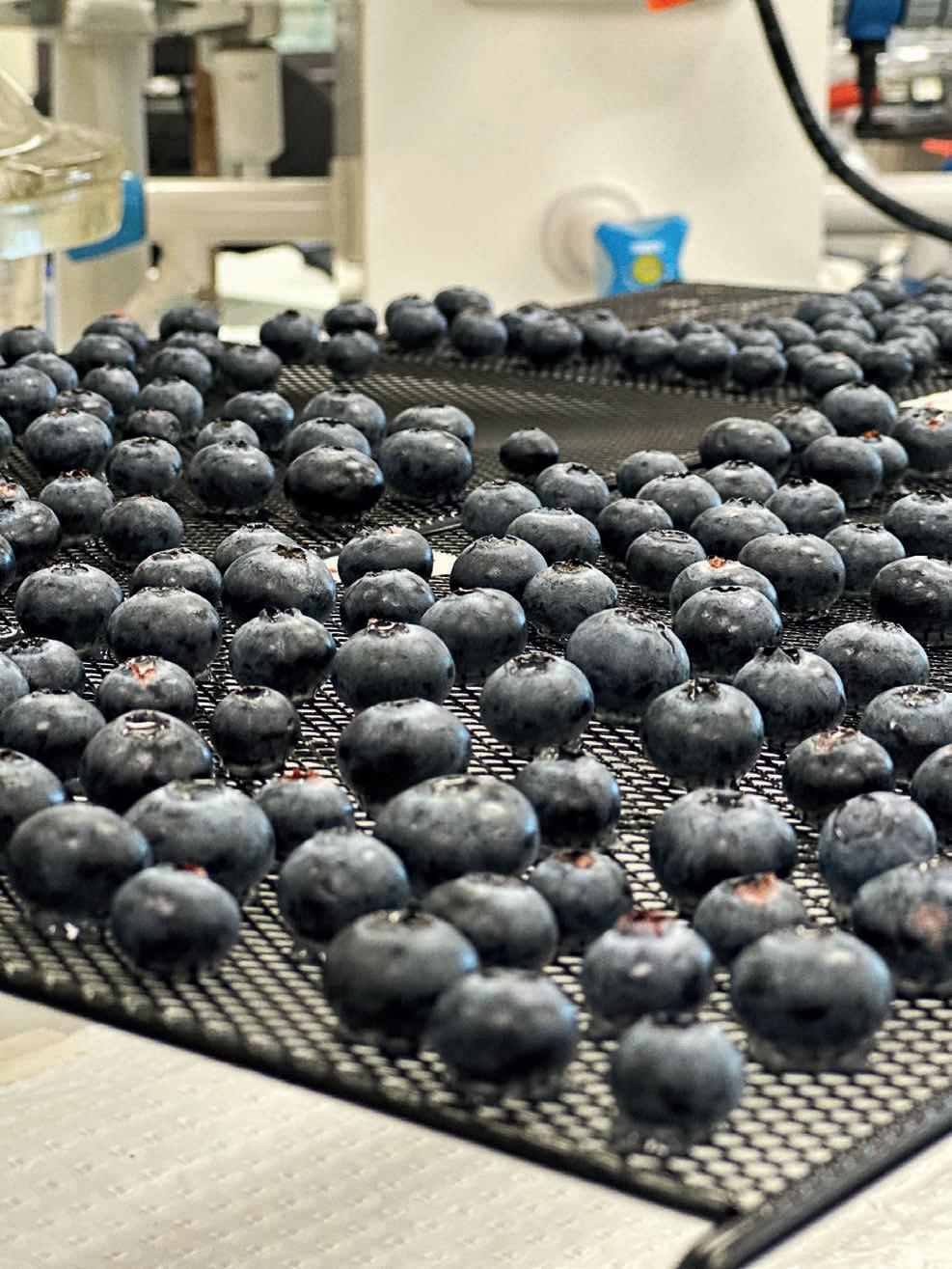
Once a person understands the hype around coffee, they can’t stop. The Melbourne International Coffee Expo will return in March 2026 to deliver an aromatic energy.
Food trends burst in an instant and fizzle out within months. Coffee is not the same. It is a daily craving. Many enjoy a cup of morning americano for a caffeine boost, a cool iced latte on a hot afternoon during a catch up with friends, and even an evening espresso while winding down after a day of hard work. Like its variety of flavours and applications, the coffee industry is also filled with a range of enthusiasts from across the globe.
To bring the passion and culture to life, the Melbourne International Coffee Expo (MICE) is returning to the Melbourne Convention and Exhibition Centre from 26 to 28 March 2026. Since 2012, MICE has grown to become an essential
Renowned for its high value B2B environment and established audience of café owners, roasters, green bean traders, equipment suppliers and distributors, MICE aims to boost industry connection and deliver education, product discovery and sector wide innovation.
MICE’s recognition as the premier business event for the coffee industry is no secret, but its growing consumer-facing presence has become a feature of recent iterations. Household brands such as Breville will offer hands-on experiences for both industry professionals and passionate home baristas.
Other home coffee innovators will return to the show floor in 2026. For example, the Roasters Playground,
Coffee Roasters. The Playground drew large crowds daily.
The Roasters Playground featured a line-up of Australia’s top roasters. Visitors were invited to taste samples of coffee, participate in interactive sessions and take part in competitions. A total of 40 roasters from across Australia appeared for a half day stint, reflecting the variety of coffee companies and their respective roasting styles.
Due to its success, organisers have confirmed the Roasters Playground will return in 2026, with plans to make it even bigger and more engaging with the support of La Marzocco and Riverina Fresh.
MICE would not be MICE without education. From café management
CEO of Pablo and Rusty’s Coffee Roasters and Amelia Hicks, director and co-founder of Old Quarter Coffee Roasters. The selected speakers have played a role in shaping contemporary coffee culture.
Across keynote sessions, panel discussions and practical workshops, the 2026 program provides attendees with actionable insights into sustainability, roasting innovation, hospitality leadership, green bean sourcing and the future of specialty coffee.
“Year after year, MICE brings together the people who drive the global coffee industry forward,” said Siobhan Rocks, general manager Events at Prime Creative Media.
“Our reputation as the trusted place where business gets done continues to grow, and in 2026 we’re elevating every aspect of the show, from exhibitors to education to consumer engagement.”
In 2025, attendees came together to discuss the challenges around sustainability.
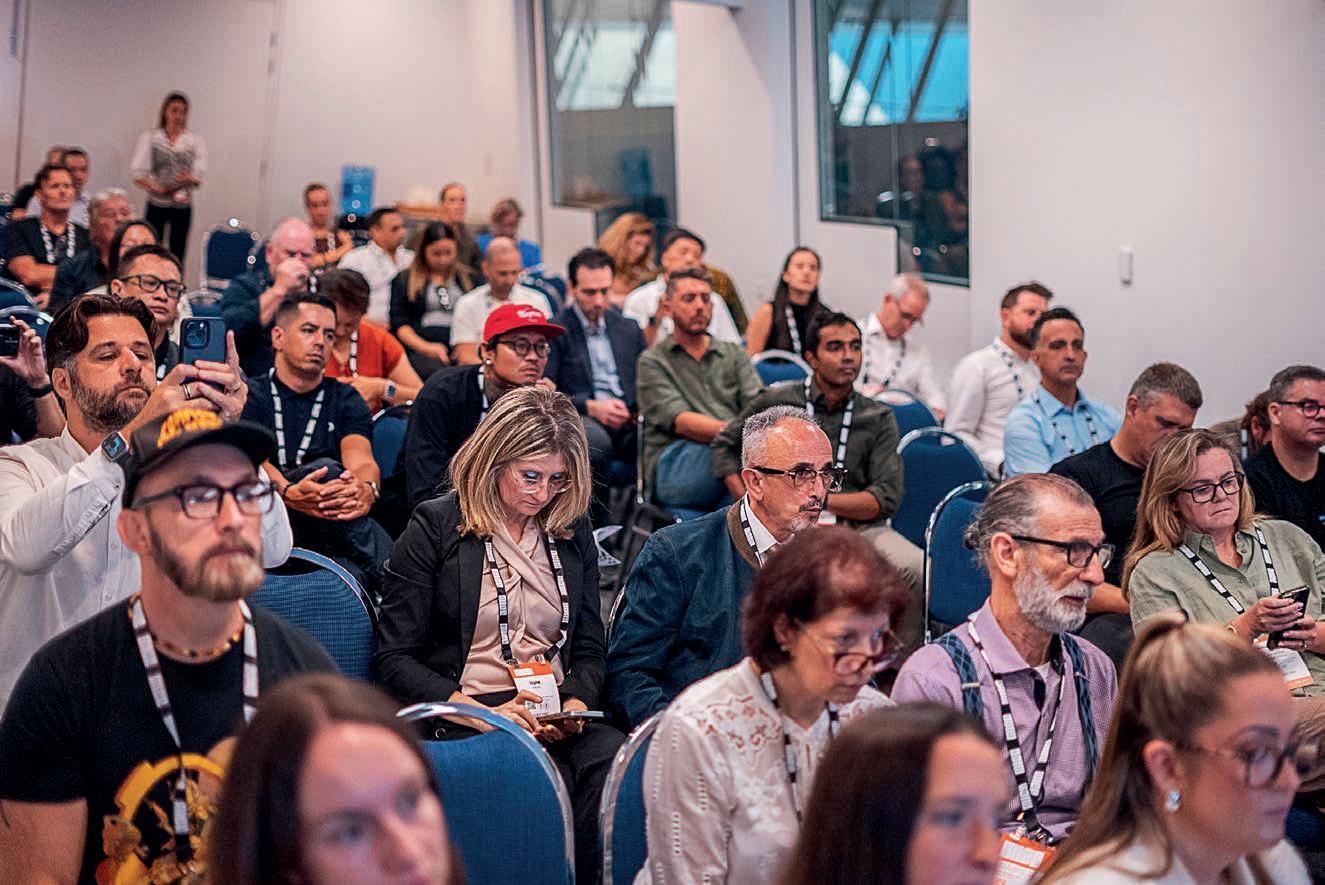
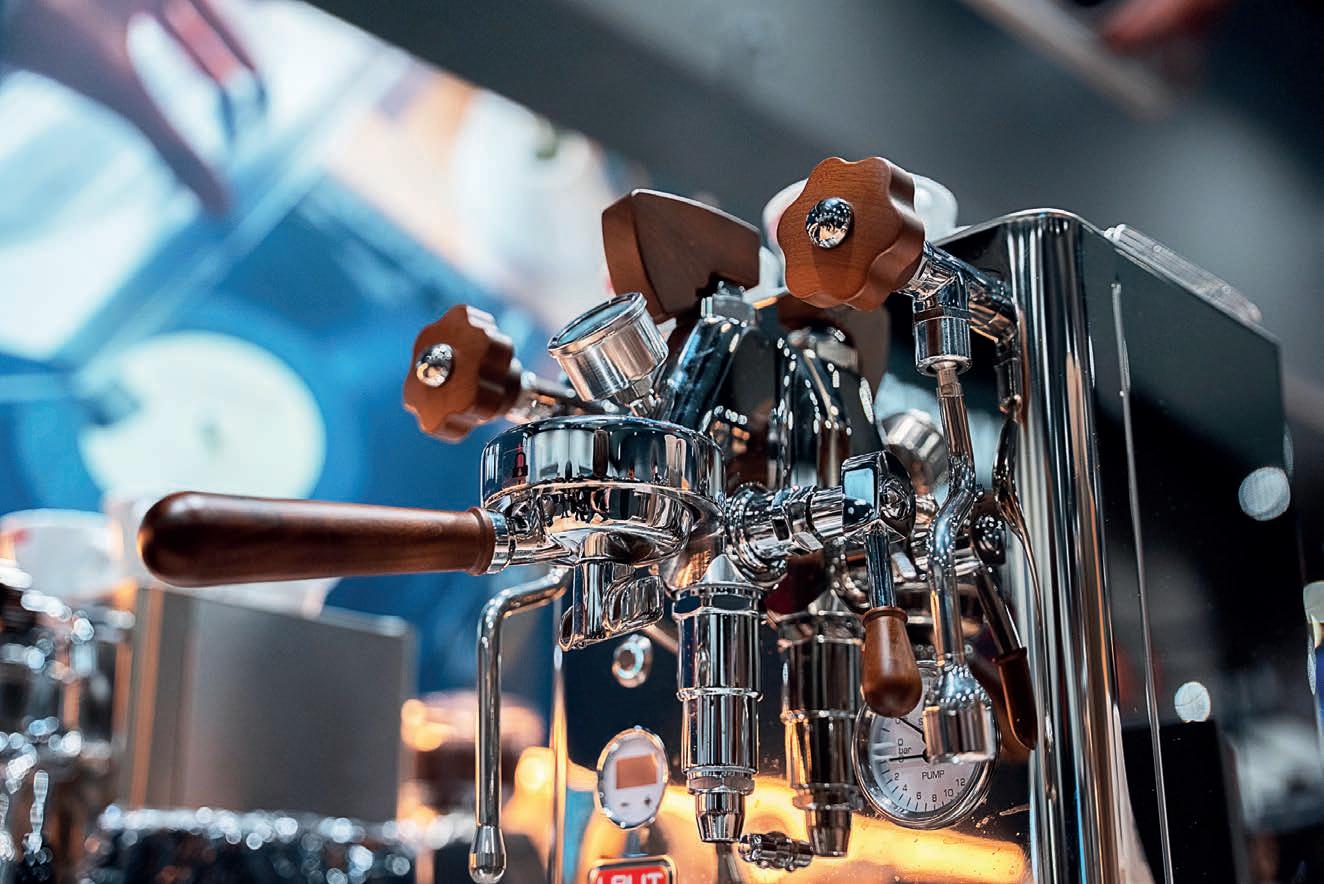
While the 2026 Expo will feature popular brands and speakers, it is also a hub for shared moments and a safe space for passionate conversations around coffee. Bringing together diverse participants including baristas, roasters, café owners, equipment suppliers and industry experts, networking remains one of MICE’s strongest offerings. By facilitating an environment where ideas can be exchanged, every piece of communication, big or small, can leave traces that shape the future of the industry. In 2025, people came together to discuss an industry challenge – sustainability. With conversations on the current coffee landscape, the industry raised solutions to minimise environmental waste.
Going beyond short-term fixes, the engagement displayed longterm thinking with strategies to reduce waste and adopt sustainable practices. It was a moment demonstrating the industry’s mutual care for the sector. By enabling coffee lovers to exchange ideas and explore responsible methods, MICE fosters an environment that
keeps the coffee industry resilient, competitive and innovative.
MICE 2025 attracted more than 31,000 visitors over three days, with 134 exhibitors showcasing products, expertise and innovations across the sector. It has become the definitive meeting place for the coffee supply chain, from small specialty businesses to large-scale equipment suppliers.
Building on the successes of 2025, the Expo is shaping up to be one of the event’s biggest editions yet, with organisers preparing for another year of growth. Visitors can expect a dynamic show floor, late night networking sessions, interactive tasting areas and educational content designed to inspire, inform and empower.
With only one month to go, exhibitor spaces are filling and thousands of attendees are planning their visits from across Australia and around the world. MICE 2026 invites the industry to experience the world’s destination for coffee and secure tickets now. F


Visit: https://internationalcoffeeexpo.com/attend








Poor air can lead to product recalls, harming a brand’s reputation. Atlas Copco’s compressed air solutions safeguards the food and beverage industry.
In today’s food and beverage industry, the quality of compressed air is not just a technical detail – it’s fundamental to product safety, regulatory compliance, and brand reputation. As manufacturers strive to meet stringent standards, the challenges around air purity, dryness, and dew point have become more evident.
Compressed air is used throughout food and beverage production – for packaging, conveying, mixing, and even direct contact with products. Any contamination, whether from oil, water, or particulates, can compromise product integrity and safety. That’s why the industry relies on ISO 8573-1, the international standard that sets purity classes for oil, water, and particles.
Oil-free air is the foundation of compliance. Even trace amounts of oil can lead to product recalls, regulatory penalties, and damage to consumer trust. Modern solutions, such as Atlas Copco’s oil-free compressors, deliver ISO 8573-1 Class 0 air, eliminating the risk of oil contamination. But purity doesn’t stop at oil – moisture control is equally vital.
Excess humidity in compressed air can cause corrosion in pipelines, foster microbial growth, and threaten product quality. Achieving a sub-zero pressure dew point (PDP) is essential, especially for applications where air comes into direct contact with food or packaging.
Atlas Copco’s Heat of Compression (HOC) dryers, also known as Rotary Drum Dryers, are setting new standards in air drying technology. By harnessing the heat generated during compression, these dryers remove the need for purge air or electric heaters, reducing energy consumption and lowering the carbon footprint.
•Class 3 dryers offer sub-zero PDP
for demanding applications.
•Class 2 dryers guarantee a PDP of -40°C.
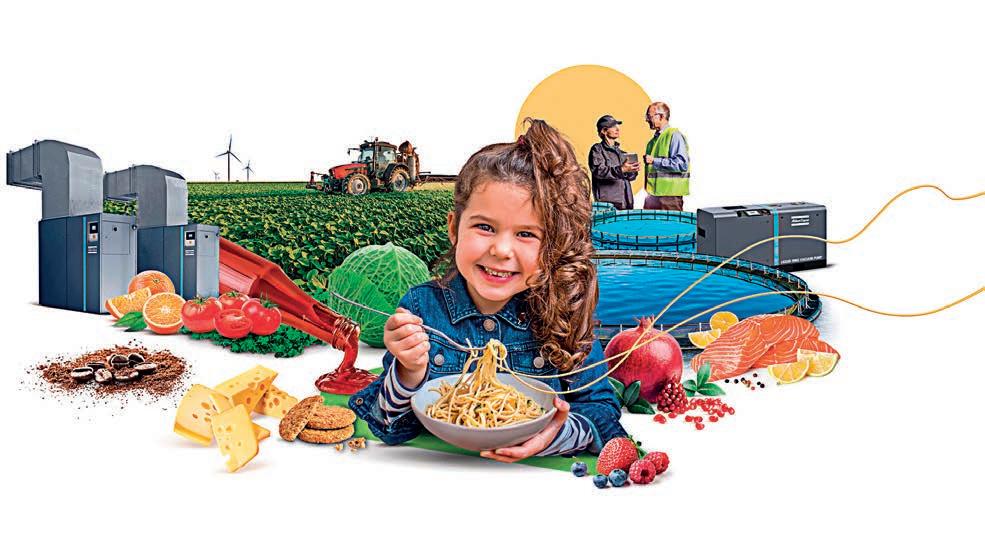
These dryers can be integrated into oil-free compressor systems, saving floor space and further reducing maintenance and energy costs.
Standalone units are also available to complement existing setups, with models suitable for everything from small operations to large-scale industrial plants.

Traditional oil-lubricated compressors require filtration and external dryers, adding 10–25 per cent more energy consumption. In contrast, an oil-free compressor with integrated iMD dryer offers lower maintenance costs with no extra filters or dryer components. With no separate dryer installation, it reduces footprint and saves energy through heat recovery.



For food and beverage producers, investing in advanced compressed air solutions is more than an upgrade; it’s a strategic move toward quality, compliance, and sustainability. With ISO 8573-1 Class 0 oil-free air and sub-zero PDP, manufacturers can safeguard their products, meet regulatory demands, and reduce their environmental impact.

As the industry continues to evolve, raising the bar on compressed air quality is essential for success. F



With nominations now open, the 2026 Endeavour Awards will recognise the people and projects advancing innovation across Australia’s food and beverage manufacturing landscape.
While it is important to work hard, it is also rewarding to look back and acknowledge a year’s worth of effort by an individual, a team, or an organisation within the food and beverage industry. Presented annually by Manufacturers’ Monthly, the Endeavour Awards are the national awards program recognising outstanding achievement in the Australian manufacturing industry.
Delivered in partnership with AMTIL and Australian Manufacturing Week (AMW), nominations are now open for the 2026 event. Recognised as the manufacturing industry’s night of nights, the Endeavour Awards bring together leaders, innovators and rising stars to celebrate success,
share stories and connect with peers shaping the future of Australian manufacturing.
AMW is Australia’s trade show for advanced manufacturing and precision technology. Owned and operated by AMTIL, the AMW exhibition highlights technologies including CNC machining, robotics, additive manufacturing and software. It is designed to connect professionals, promote innovation and support industry growth.
“This partnership with AMTIL and Australian Manufacturing Week is a natural fit. It allows us to expand our reach and further strengthen the manufacturing industry as the Endeavour Awards continue to grow into the future,” said Molly Hancock,
Prime Creative Media’s head of marketing – Events.
RSM and Manufacturing Industry Skills Alliance have also joined as platinum sponsors for the 2026 awards.
The annual gala dinner will take place on 13 May 2026 during Australian Manufacturing Week at the Westin Brisbane.
It is more than an awards night. It is a celebration of innovation, resilience and excellence across the manufacturing sector. The event brings together manufacturers from across the country to honour achievements, connect with industry peers and spotlight the people and companies shaping Australia’s manufacturing future.
Innovation in food and beverage manufacturing
Now more than ever, it is crucial to support and champion local food manufacturing. This is an opportunity to recognise those making a difference, whether they are driving innovation, supplying vital products or services, or leading their organisations with vision and impact.
The Innovation in Food & Beverage Manufacturing award is open to businesses developing innovative processing, packaging, automation or sustainability solutions for the industry.
As the industry has seen the rise of new and efficient technologies in the past year, companies and individuals from the sector are invited to submit
nominations and showcase the projects, technologies and people contributing to the industry’s growth and resilience.
Other awards presented across the categories include:
•Advanced Manufacturing Excellence Award.
Celebrates outstanding achievement in precision engineering, automation, or digital manufacturing technologies.
•Innovation in Aerospace.
Celebrating advancements in aerospace technology, this category is for companies driving innovation in aircraft, space, and defence aircraft manufacturing.
•Innovation in Health Technology. Recognising technologies that improve healthcare and medical manufacturing.
•Innovation in Transport.
Highlighting innovation in transport, this category is for businesses enhancing vehicle manufacturing, public transport, or sustainable mobility solutions.
•Outstanding Start-Up Award. Recognising an Australian manufacturing start-up that has introduced a new product to market, filling a market gap.
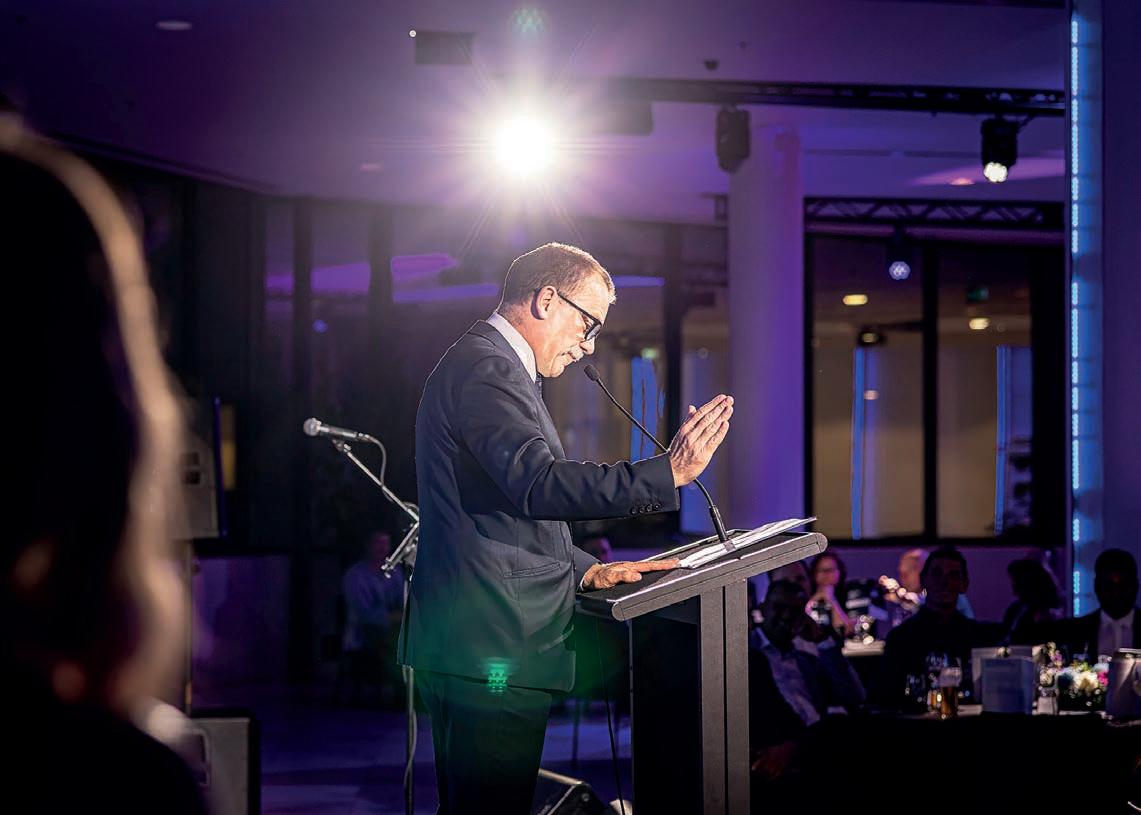
•Leader of the Year– Sponsored by BDO Australia.
Aleader who holds a senior person (executive, manager, director, or equivalent) in a private, not-forprofit, or government organisation who has effectively shaped their business’ success, delivered financial growth, significantly and positively impacted the business’ culture, and championed the industry widely.
•Manufacturer of the Year –Sponsored by Weld Australia. Manufacturer of the Year is chosen from the winners of the other Awards categories.This category is not open for nomination.
The awards will also feature two other new categories. First, is the Rising Star of the Year Award, recognising an emerging leader who has demonstrated talent, innovation and commitment within Australia’s manufacturing industry in the early stages of their career under 30 years of age. Then there is the Excellence in Sustainability Award, which celebrates a manufacturing business that has demonstrated leadership and innovation in environmental sustainability.
Nominating criteria and instructions:
•Nominations are unable to be withdrawn once nominations are closed.
•Your nomination must be completed in one sitting; a partially completed form cannot be saved and reopened at a later date.
•All products and/or technologies must be manufactured and/or commercially available in Australia.
•Companies and sites nominated must operate within Australia.
•Executives nominated must reside and work in Australia.
•All nominations must be accompanied by a high-resolution image (at least 1MB in size) suitable for print publication.
•Please have any supporting documentation (i.e. equipment specifications, photographs, marketing materials) ready to upload; file sizes shouldn’t exceed 5MB.
•All finalists are required to have a representative at the Gala Awards evening should they be successful. A key part of the Awards is the interactive connections between creative problem solvers striving to make meaningful impact within their industries through collaborations.

These awards mark milestones, passion and progress from the innovative minds who contribute to the shared goal of building strong industries and communities. From technologies to manufacturing capabilities, it is important to pause and show appreciation by celebrating achievements and acknowledging how far businesses have come.
If you know of a business or colleague whose innovation has transformed a project, a leader who
has contributed to success and growth while positively impacting workplace culture, or a rising star already making waves early in their career, now is the time to give them the recognition they deserve. F
Nominations close on 13 February 2026.
Nominate now – https:// endeavourawards.com.au/ get-involved/
BULK 2026 will bring Australia’s bulk materials sector together to showcase innovation, strengthen safety and build partnerships from 16 to 17 September 2026.
Bulk materials underpin much of Australia’s food, agriculture and manufacturing sectors. Grain, powders, fertiliser, cement and ingredients move through ports, silos and processing plants every day, forming the backbone of supply chains that feed domestic markets and support exports.
To recognise and elevate the bulk industry, the Bulk Handling Technical Conference and Expo (Bulk Expo) will return to the Melbourne Convention and Exhibition Centre.
The event will bring together engineers, operators, manufacturers and suppliers from across sectors including food and beverage, agriculture, mining and ports. It is positioned as a practical forum where technical challenges can be discussed alongside commercial realities.
Practical solutions in focus
Running alongside the exhibition,
hopper and bin design, conveying systems and wear management.
For food and beverage manufacturers, where bulk handling systems play a role in product quality, hygiene and efficiency, these discussions are relevant. Improvements in ingredient handling can support consistency, reduce waste and improve throughput.
This year, the Australian Society for Bulk Solids Handling (ASBSH) was announced as an official association partner for the event, overseeing the development of the technical conference program. By bringing industry expertise and specialist insight to the agenda, the program is set to deliver practical, relevant content that reflects real-world challenges, emerging technologies and best-practice solutions across the bulk solids sector.
“We’re thrilled to partner with Bulk Expo again to shape the technical program,” ASBSH director Mark
professionals, showcasing realworld solutions and fostering idea exchange.”
According to him, some of the key conference themes include materialhandling challenges, storage and handling, conveying, environmental considerations, transportation, modelling and simulation as well as dust monitoring and control.
“Partnering with ASBSH allows Bulk Expo to deliver a conference program that is truly relevant and valuable to the industry,” said general manager – Events at Prime Creative Media Siobhan Rocks.
“The association’s understanding of the challenges and opportunities within bulk storage and handling will ensure delegates walk away with actionable insights and strategies to improve operations, efficiency, and safety.”
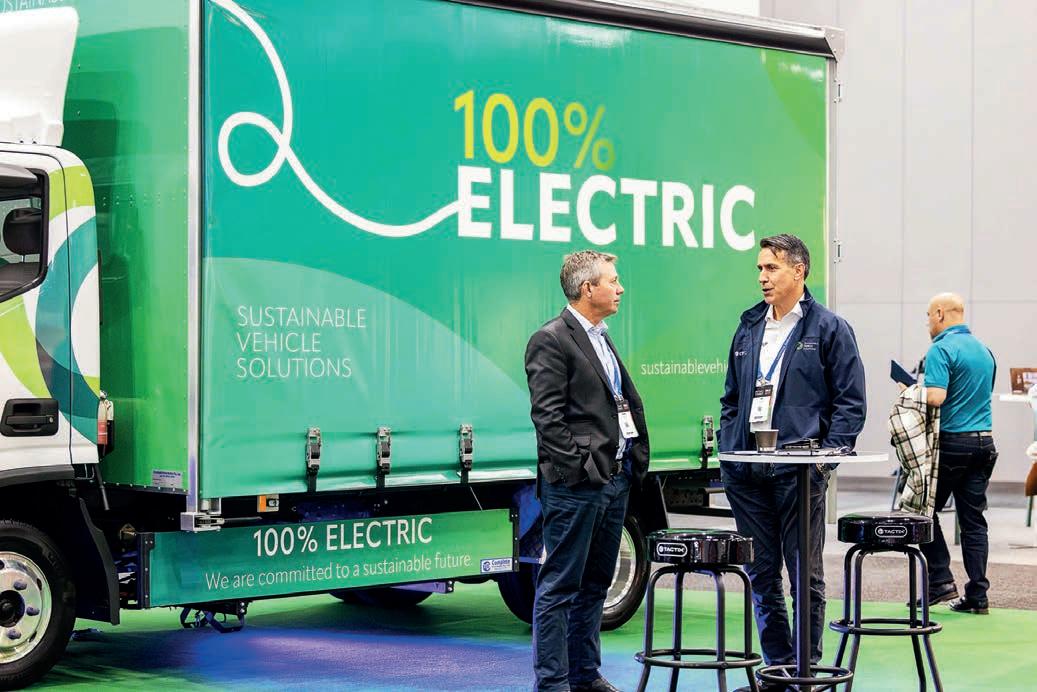
as an official industry partner to catalyse positive change and boost resilience for the sector.
“ICHCA is an independent, notfor-profit organisation, dedicated to improving cargo safety handling and movement worldwide, and we’re thrilled to be joining BULK2026 as an industry partner,” said ICHCA chair Scott McKay.
As part of the global ICHCA International network – a longstanding authority on cargo handling safety and standards – this partnership reinforces Bulk Expo’s commitment to driving safer, efficient, and future-focused outcomes across the bulk solids handling sector.
“BULK2026 is all about bringing together the organisations and specialists shaping the future of bulk handling,” said Rocks. “Having ICHCA Australia join us strengthens that
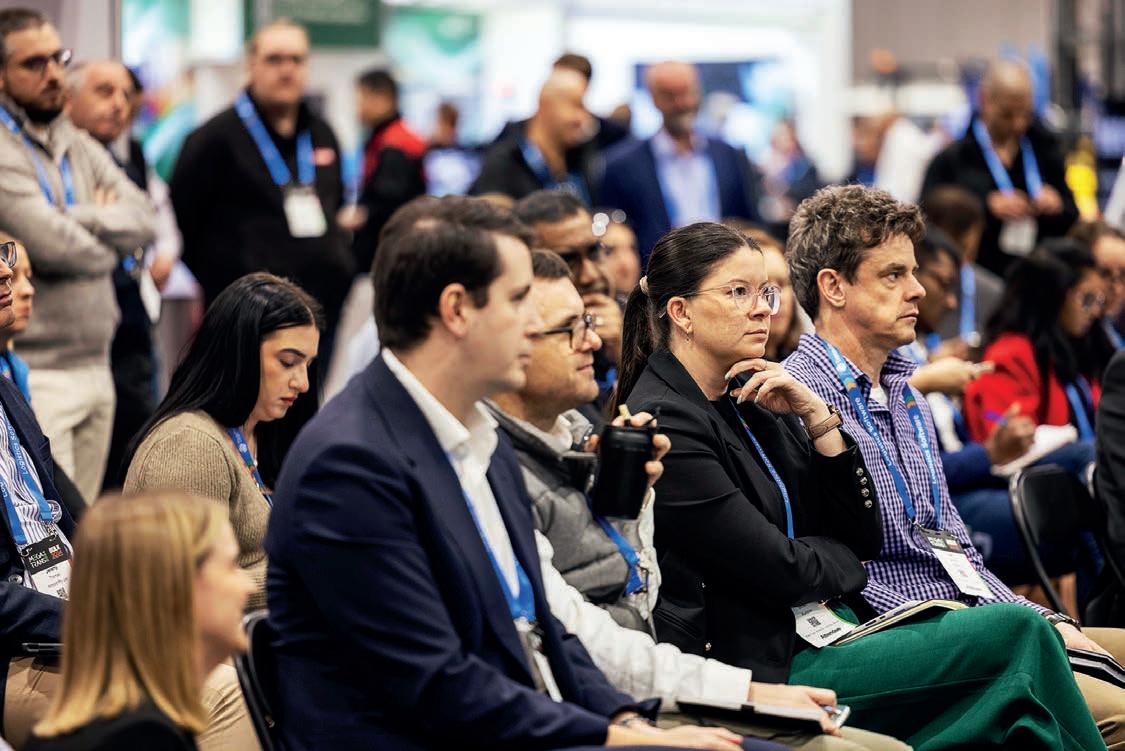
enhances our ability to connect innovation with practical, real-world application across the entire bulk handling ecosystem.”
ICHCA represents the nation’s interests at ICHCA International and other global forums, ensuring Australian perspectives contribute to worldwide improvements in cargo safety and logistics performance. By bringing additional depth around safe operations and evolving regulations, it aims to raise safety benchmarks and strengthen industry capability.
“The event brings the entire bulk handling community together, creating space for conversations that strengthen cargo safety across the sector,” added McKay.
“We’re proud to support an initiative that encourages collaboration and practical innovation.”
Networking remains a core part of the BULK2026 program. Alongside technical sessions and the exhibition, structured networking opportunities will bring together operators, suppliers and decision makers.
Building on the 2024 event, where close to 70 per cent of attendees held purchasing authority, BULK2026 is designed to serve both technical and decision-making audiences.
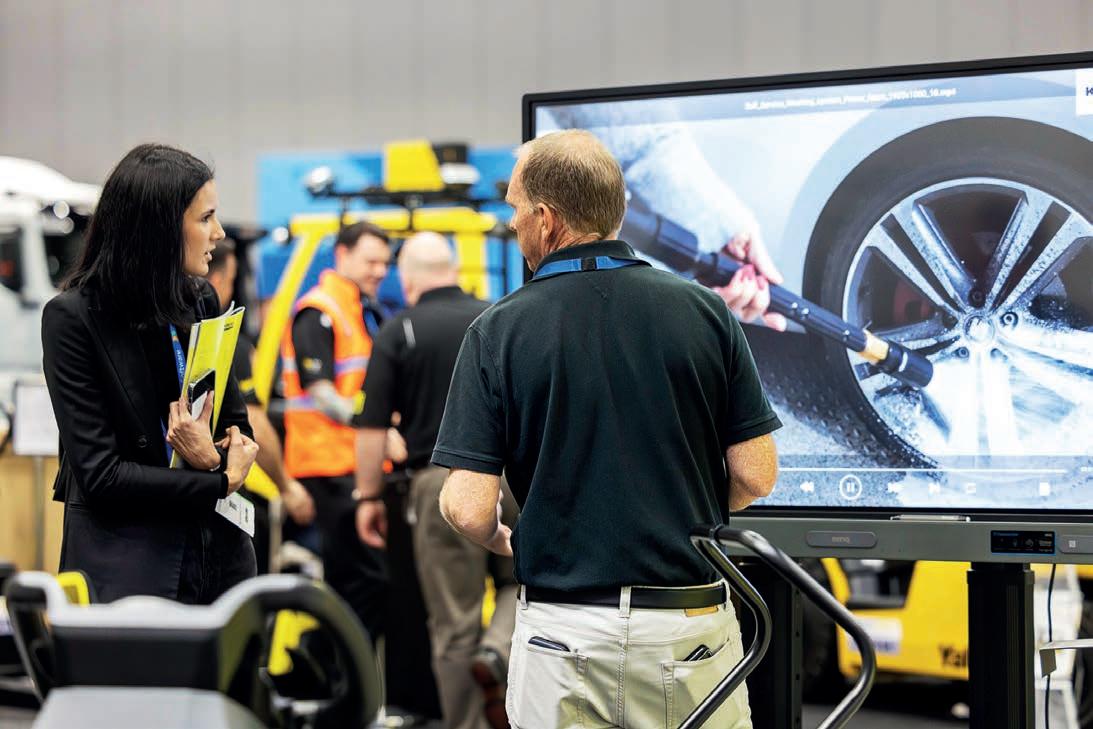
and efficient solutions that protect critical assets.
As a Gold Sponsor, Belt Wise will be present across the exhibition floor, providing opportunities to engage directly with operators, engineers and decision makers seeking smarter ways to protect assets, improve uptime and enhance workplace safety.
improvement across bulk solids handling,” said Belt Wise managing director Beau Weiss.
“At Belt Wise, we’re focused on optimising conveyor performance through engineering-led design, quality execution and innovation, and we look forward to contributing to industry conversations around safety, reliability and operational efficiency.”
The 2026 event will highlight technologies such as automation and digital systems designed to improve energy efficiency and reduce emissions across processing and transport operations. Visitors will be able to explore developments in robotics, smart conveyors and Industrial Internet of Things platforms.
“Bulk Expo is an important platform for bringing together the people, technology and ideas that drive
For many attendees, the value lies not only in the technology on display, but in the conversations that help shape future projects.
Bulk handling is a critical part of food and beverage manufacturing.
For food and beverage operations, clean and controlled bulk systems are essential not only for compliance, but also for maintaining food safety and protecting brand reputation. Advances in grain, feed and ingredient handling also have flow-on benefits for agricultural supply chains and export capability.
Environmental performance continues to shape investment decisions across the sector. As standards tighten and national emissions targets approach, bulk handlers are under pressure to reduce energy use, manage dust and improve site safety.
The bulk handling sector remains central to Australia’s economy, supporting everything from food production to export logistics. As demand grows and expectations evolve, the industry will need to continue adapting its systems and practices.
Events such as BULK2026 play a role in that transition, providing a platform to share knowledge, showcase solutions and strengthen industry relationships.
The exhibition floor will feature suppliers across conveying, storage, automation and environmental management. For many attendees, the opportunity to engage directly with equipment providers and service specialists remains one of the event’s strongest drawcards. F
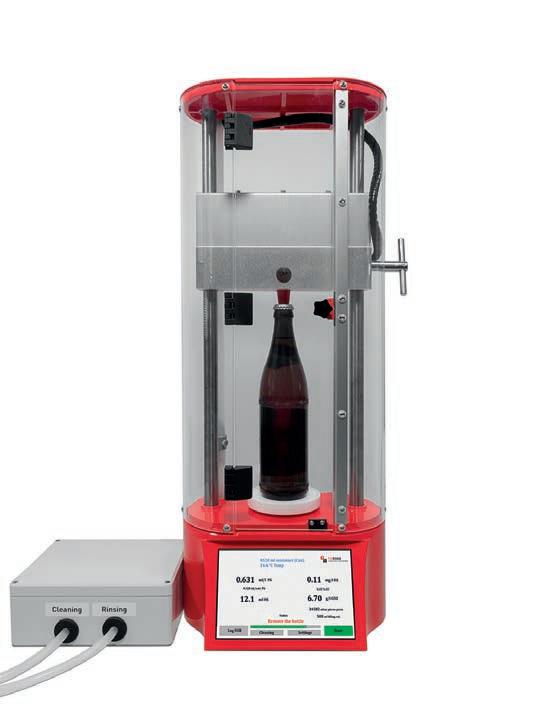
TecSense GmbH supplies optical and opto chemical sensor systems for measuring O2 and CO2 in liquids and
These systems are used for measurement in production environments where continuous or near line monitoring is required.
Quality control in the beer and beverage industry
TecSense offers headspace analysers for quality control of cans and bottles of carbonated drinks, including beer, mixed beer drinks and
•Simple, fast and fully automatic measurement process on cans and bottles.
•Measurement close to the filling line - no laboratory
•Fully automatic operation and digital documentation
of QC data.
•Immediate provision of data for optimising the filling process.
•Detection of quality deviations in the filling process.
•No pressure increase in cans or bottles - no risk of bursting containers.
control in the food and pharmaceutical industry
For food and pharmaceutical applications, TecSense provides systems for online control of modified atmosphere packaging.
Key benefits:
•Measurement of 100 per cent of all packaging without loss of productivity.
•Integration of the technology into existing packaging processes.
•Digital documentation of the QC data.
•Immediate detection of quality deviations in the packaging process.
•Rejection of defective units.
•Measurement along the
entire supply chain, from the manufacturer to the wholesaler to the supermarket shelf.
Portable quality control along the supply chain
TecSense also offers portable equipment for checking modified atmosphere packaging at different points along the supply chain.
Key benefits:
•Small and easy to handle device.
• Simple measurement.
•Digital documentation of QC data.
•Measurement along the entire supply chain, from manufacturer to wholesaler to supermarket shelf.
AMS Instrumentation & Calibration Pty Ltd on 03-9017 8225, or Freecall (NZ) 0800 442 743, alternatively on e-mail: sales@ams-ic.com.au or visit our web site at www.ams-ic.com.au
Boronia, VIC – Head Office +61 3 9017 8225
Interface manufactures thousands of standard force measurement products each year. For more than 50 years, it has identified common requests for force measurement solutions and made them available through a large catalogue of devices and systems.
Interface standard products
Interface load cells: The company manufactures more than 60 types of load cells in a range of shapes, sizes and capacities, from 1 lbf (500 gf) to 2 million lbf (9,000 kN).
Interface mini load cells: These provide accurate measurements comparable to full size load cells and use proprietary alloy strain gauges. Capacities range from 0.11 lbf (0.5 N) to 100 kN.
Load buttons: Interface supplies compression and precision-based load buttons in various sizes and capacities. These models offer resistance and durability suited to small spaces and high frequency use.
AxialTQ: This torque measurement device offers a rotor sensing element and electronics in eight torque capacities and five DIN sizes, with three accuracy classes labelled EX, LX and HX.
Wireless Telemetry System: The WTS includes sensor transmitters, receivers, displays, accessories and monitoring software operating on a standard 2.4 GHz signal.
Torque transducers: Interface produces more than 50 types
torque measurement applications.
Load pins, tension links and shackles: Interface load pins offer capacities from 220 lbf to three million lbf. Tension links are designed for lifting and weighing in harsh environments, with capacities from 11K lbf to 220.4K lbf.
Calibration systems: Interface calibration systems support both rigid and portable applications and can also be customised. The GS SYS Gold Standard Calibration System
Instrumentation: Interface supplies a range of instrumentation including signal conditioners, output modules, high speed data loggers, portable load cell indicators, weight indicators and junction boxes, as well as data acquisition systems and wireless telemetry systems.
AMS Instrumentation & Calibration Pty Ltd on 03-9017 8225, or Freecall (NZ) 0800 442 743, alternatively on