















































As the school year settles into its rhythm, this issue of Education Matters brings together a mix of stories re ecting the varied priorities shaping primary education right now.


Rather than centring on a single theme, this issue spans workforce insights, wellbeing, professional learning and emerging policy debates offering snapshots of the issues school communities are navigating as the year unfolds.
Our Hot Topic feature examines teacher job satisfaction, drawing on national data alongside school-based perspectives. The article highlights strong professional commitment and pride among teachers, while also acknowledging the pressures associated with workload, time and emotional demands. Together, the findings provide a measured view of how teachers are experiencing their work, and what contributes to professional satisfaction in today’s schools.
Wellbeing is also explored through a feature on school camps, excursions and outdoor learning. With engagement and attendance continuing to challenge many schools, the article considers how structured outdoor experiences are being used to support student connection, resilience and participation. rom day excursions to longer camps, the piece looks at how learning beyond the classroom is being positioned within broader wellbeing strategies.
Professional learning is the focus of our profile on Laureate Professor Jenny Gore, whose research has had a lasting in uence on teaching practice across Australia. The article traces the development of Quality Teaching Rounds and examines how collaborative, evidence-based professional learning can strengthen classroom practice while also supporting teacher confidence and collegiality. As workforce retention remains a national conversation, this work continues to attract attention.

This issue also takes a closer look at the ongoing discussion around social media and young people. As governments, schools and families respond to new restrictions and changing expectations, the article outlines the key considerations for educators working with primary-aged students in increasingly digital environments.
Taken together, the stories in Education Matters re ect the range of considerations facing primary schools from classroom practice and professional learning to student wellbeing and policy settings. They also underscore the importance of evidence, experience and context in shaping effective responses at school level.
I hope this issue provides useful insights and practical perspectives to support your work in the months ahead.
Rhiannon Bowman Editor Education Matters rhiannon.bowman primecreative.com.au
Chief Operating Officer: Christine Clancy christine.clancy@primecreative.com.au
Group Managing Editor: Myles Hume myles.hume@primecreative.com.au
Editor: Rhiannon Bowman rhiannon.bowman@primecreative.com.au
Design Production Manager: Michelle Weston
Art Director: Blake Storey
Designer: Michelle Weston
Media Bookings and Advertising: Holly Larkspur holly.larkspur@primecreative.com.au 0422 775 308
Client Success Manager: Sabrina Zor
Education Matters is a division of Prime Creative Media Pty. Ltd.
379 Docklands Dr, Docklands, VIC Ph: (+61 3) 9690 8766
Subscriptions
Education Matters is available by subscription from the publisher.
The rights of refusal are reserved by the publisher. Ph: (+61 3) 9690 8766 E: subscriptions@primecreative.com.au
Articles
All articles submitted for publication become the property of the publisher. We reserve the right to adjust any article to conform with the magazine format.
Cover Image
Bonython Primary School


www.educationmattersmag.com.au
www.educationmattersmag.com.au/subscribe/
Copyright Education Matters is owned by Prime Creative Media Pty. Ltd. and published by John Murphy. All material in Education Matters is copyright and no part may be reproduced or copied in any form or by any means (graphic, electronic, or mechanical including information retrieval systems) without the written permission of the publisher. The Editor welcomes contributions but reserves the right to accept or reject any material. While every effort has been made to ensure the accuracy of information, Prime Creative Media will not accept responsibility for errors or omissions or for any consequenses arising from information published. The opinions of the magazine are not necessarily the opinions of, or endorsed by the publisher unless otherwise stated. All photographs of schools (including students) depicted in feature articles and advertisements throughout this magazine have been supplied to the publisher (and approved) by the contributing school. All material supplied by schools is done so with the understanding that such images will be published in Education Matters and may also appear on the our website: www.edumatters.com.au.
24 Excursions and incursions
How schools can help provide a wellbeing reset.
27 Finding their own beat
Why Orelia Primary School sings the praises of Musica Viva Australia.
29 Schools’ most valuable liquid assets
Well-designed hydration stations can transform water breaks into an essential part of learning.
30 Grounds for connection
A new Felton Grant will help Epsom Primary School create a shared wellbeing space.
32 Turning ideas into action
Pilot Pen Australia explores how sustainable, reliable writing tools support creativity and deeper learning.
34 A structured approach to early literacy instruction
A systematic synthetic phonics programme supports early reading and writing.
35 Joy-n the club
The National Education Summit will position joy as a measurable driver of educator wellbeing in 2026.
36 After the ban
Education Matters explores what Australia’s new social media age restrictions really mean.
40 Under pressure
The human cost of school leadership.
42 Lessons from a wellbeing pilot
Carey Baptist Grammar School re ects on data-informed student support.
43 Adaptive professional learning for early career teachers
Hachette Learning Academy offers short, focused online courses that respond to individual progress.
44 Can evidence-based PD solve the teacher retention crisis?
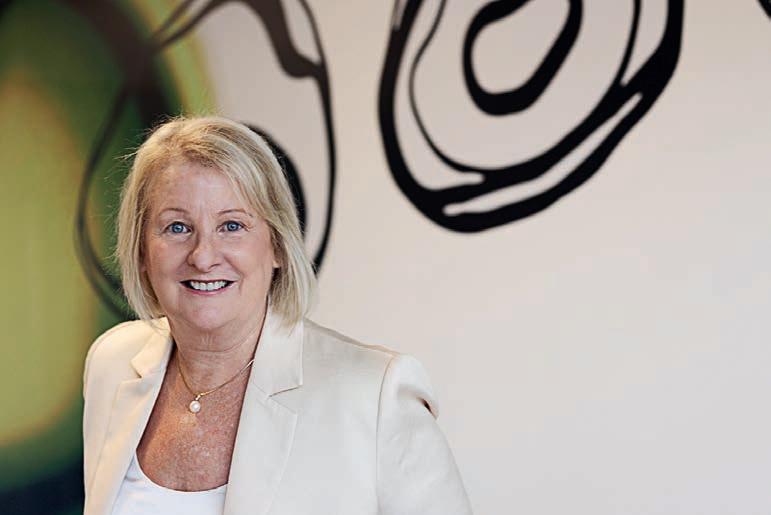
For Laureate Professor Jenny Gore, quality professional learning is about more than good teaching.
46 Community of Practice brings educators together
A groundbreaking collaboration is reshaping how schools share expertise to support autistic students.
48 Expert Contributors
Andrew Murray, Associate Professor Helen Adam, and Monash University.



Melbourne has been revealed as Australia’s most expensive city for both government and independent schooling, according to new national cost modelling of education expenses for families with children starting school in 2026.
The Cost of Education Index forecasts the total cost of a government education in Melbourne will reach $121,202 over 13 years, a six per cent increase on last year and around seven per cent above the national metropolitan average of 113,5 4. The figure also places Melbourne well ahead of Perth ($102,600) and Sydney ($106,567), which were identified as the most affordable capital cities for a government education.
While school fees and voluntary contributions account for a relatively small proportion of government schooling costs in Melbourne, ancillary expenses make up the bulk of family spending. These include outside tuition and coaching, transport, school camps and uniforms.
above the national non-metro average.
For Catholic education in regional and remote Queensland, total costs are projected to reach $244,714, representing a 55 per cent increase compared with 2025. In both sectors, ancillary expenses such as transport, outside tuition, electives, uniforms and musical instruments accounted for the majority of costs.
In contrast, regional and remote Western Australia was identified as the most expensive area nationally for non-metro independent education, with total costs forecast at $275,639 over 13 years, despite a slight decrease from last year. This figure remains around 20 per cent above the national average for regional and remote independent schooling.
“Futurity’s Cost of Education Index revealed 71 per cent of parents have reduced their ancillary spending in the past year by purchasing second-hand uniforms or sports kits, and extending the life of laptops and other technology.”
Ms Sarah McAdie, Futurity Investment Group
The Index also found Brisbane to be the most expensive city for a Catholic education, with total costs forecast at $273,494 over 13 years for a child starting school in 2026. This represents a 35 per cent increase compared with last year and is 11 per cent above the national average for Catholic education. Canberra and Sydney were identified as the most affordable cities for Catholic schooling.
For families considering independent education, Melbourne again ranked as the most expensive city nationally, with projected costs rising 12 per cent in the past year to $435,902 over 13 years. This is 18 per cent above the national average and significantly higher than Adelaide and Canberra, which recorded the lowest independent education costs among capital cities.
Regional and remote areas also showed sharp increases, particularly in Queensland. The Index identified regional and remote Queensland as the most expensive region for both government and Catholic education outside metropolitan areas. The total cost of a government education in non-metro Queensland is forecast at $108,647 over 13 years, a 20 per cent increase on last year and eight per cent
The research underpinning the Index draws on feedback from 2,500 parents with schoolaged children, alongside independent data from the Australian Curriculum, Assessment and Reporting Authority. Additional cost categories, including before- and afterschool care, school clubs and fundraising contributions, were included in the latest modelling to provide a more comprehensive picture of education expenses.
The Cost of Education Index was commissioned by Futurity Investment Group and conducted by Resolve Strategic.
Futurity Investment Group’s Sarah McAdie said the costs associated with education are placing a significant burden on many Australian families.
“An astonishing 45 per cent of parents reported they are having fewer children because of the cost of raising a child,” Ms McAdie said.
“Escalating cost of living, rent and mortgage repayment pressures mean many households are stretched to breaking point.
“The majority of parents (57 per cent) rely on the support of others to pay for their child’s education, including grandparents.
“Futurity’s Cost of Education Index revealed 71 per cent of parents have reduced their ancillary spending in the past year by purchasing second-hand uniforms or sports kits, and extending the life of laptops and other technology.


























































“Our vision is to drive e ective Respectful Relationships Education to strengthen a culture of empathy, equality and positive communication within our school community.”
A Sydney deputy principal says Respectful Relationships Education is helping to build a stronger culture of empathy, equality and positive communication in schools, as the NSW Government prepares to roll the program out to an additional 150 public schools in 2026.
Deputy Principal of Burwood Girls High School Ms Katherine Lye, whose school took part in the pilot, said the program was about empowering students with practical skills to form safe and inclusive relationships.
“Our vision is to drive effective Respectful Relationships Education to strengthen a culture of empathy, equality and positive communication within our school community,” Ms Lye said.
“We want to empower every student with the skills to build safe and inclusive relationships.”
The comments come as the NSW Government announced a major expansion of the revamped Respectful Relationships Education program, with 150 additional public schools set to begin implementation from Term 1, 2026. The expansion follows a pilot involving 10 NSW public schools, which came together late last year to share their experiences delivering the evidence-informed, age-appropriate program.
The Respectful Relationships Education program takes a whole-school approach, focusing on embedding equality, empathy and safety across the school community. It provides teachers, leaders and school staff with access to curriculum resources,
professional learning and system-based expertise to help address the drivers of genderbased violence and promote gender equality.
The NSW Government has committed $8 million to the program as a priority under its first dedicated primary prevention strategy, Pathways to Prevention. The Federal Government has also contributed $17.6 million through the Commonwealth Consent and Respectful Relationships Education Measure.
Under the expansion, every NSW public school will have access to resources, tools and support to embed a whole-school approach in their local context, including new Kindergarten to Year 12 Teaching Respectful Relationships curriculum resources.
Acting Minister for Education and Early Learning Ms Courtney Houssos said preventing gender-based violence needed to start early.
“Preventing gender-based violence must start long before harm occurs, and the NSW Government’s investment in Respectful Relationships Education is about giving young people the tools to develop healthy, respectful relationships in their lives,” she said.
Minister for the Prevention of Domestic Violence and Sexual Assault Ms Jodie Harrison said the program was designed to challenge rigid gender norms that underpin violence.
“Through our Respectful Relationships Education, we are giving our children and young people the tools to challenge rigid gender norms that are the underlying drivers of gender-based violence so they can live free of violence,” she said. EM
School

A record 19 new schools opened across Victoria in Term 1, 2026, providing thousands of students in some of the state’s fastest growing communities with access to local education options.
Acting Premier and Minister for Education Mr Ben Carroll visited Truganina in January to inspect the newly completed Mindalk Primary School, as it prepared to welcome up to 575 students when doors opened in January.
The new primary school features an administration and library building, alongside three learning neighbourhoods designed to house modern classrooms. The campus also includes a community hub with dedicated spaces for music and art, hard courts and a sports field.
Mindalk Primary School has been designed as an inclusion school, with purpose-built facilities to support students with a disability. These include sensory areas, accessible play spaces and wider corridors to improve mobility and access across the site.
The school’s foundation principal is Ms Blayne Wallis, who brings decades of experience in teaching and school

















leadership across a range of settings.
To support families in the local area, the state government has partnered with Melton City Council to deliver a new kindergarten adjacent to the school. The kindergarten will offer 99 places, helping families avoid multiple drop-offs while ensuring children receive early learning close to home.
Mindalk Primary School forms part of the Victorian Government’s broader commitment to open 100 new schools in 2026. Other schools which opened in Term 1 2026 include Birranga College in Clyde North, Biyala Primary School in Armstrong Creek, Kolorer College in Cobblebank, Narrarrang Primary School in Port Melbourne and Marra School in Kalkallo.
Mr Carroll said the new schools would help meet demand in growing communities.
“We’re opening 19 new schools in 2026, ensuring more hard-working families can access a great local school near where they live,” he said.
A full list of new schools opening in 2026 is available at the Victorian School Building Authority website. EM













"The
publication contains interpretations of key national trends from 2005 to 2023, and raises important considerations for policymakers about factors a ecting the available teacher supply pool in Australia."
Australia’s initial teacher education (ITE) pipeline remains under pressure, with new national data showing a slight decline in commencements and a continued drop in completions, even as the school-aged population continues to grow.
The latest National Trends: Initial Teacher Education Pipeline report, released in December 2025, tracks ITE student commencements, enrolments, completions and attrition from 2005 to 2023. The publication is designed to support workforce planning by highlighting trends that may affect future teacher supply.
In 2023, 24,864 students commenced an ITE program, representing a 0.4 per cent decrease compared with 2022. Nearly half (48 per cent) of all commencing students studied either completely or partly online, continuing an upward trend from 46 per cent the previous year.

The report shows clear differences in student characteristics across program types and degree levels. Students preparing to teach in primary and secondary settings are typically younger and more likely to enter ITE via secondary schooling or prior higher education. By contrast, students studying to teach early childhood learners tend to be older and most commonly enter through prior Vocational Education and Training (VET).
Secondary programs accounted for the largest share of commencements in 2023 (33 per cent), followed closely by primary programs (32 per cent), indicating a relatively even distribution across the two major schooling sectors.
While commencements have remained relatively stable, completions continue to decline. In 2023, 16,030 students completed an ITE program, a fall of three per cent compared with the previous year. Between 2017 and 2023, completions decreased at an average rate of 2.6 per cent per year.
Over the same period, Australia’s studentaged population grew at an average rate of one per cent annually. The report notes that growth in the student-aged population has consistently outpaced ITE completions, a
trend that may exacerbate existing shortages in the national teacher workforce.
Completion rates – measuring the proportion of a commencing cohort who go on to complete their program –vary significantly by study and student characteristics. Students studying part-time, online, or who are mature-aged are much less likely to complete both undergraduate and postgraduate ITE programs.
Although overall completion rates have declined over time, the report identifies some recent stabilisation. There was a slight increase in completion rates for the most recent undergraduate cohort, alongside stabilisation among recent postgraduate cohorts.
Attrition remains a critical issue across the pipeline. For both undergraduate and postgraduate ITE students, attrition is highest in the first year after commencement and remains elevated in the second year, before dropping substantially in later years of study. The findings underline ongoing challenges for workforce planning, particularly in balancing exible study options with improved retention and completion outcomes across the ITE pipeline. EM
The Victorian Department of Education has launched an urgent investigation following a major cybersecurity incident that has compromised the data of students across all 1,700 government schools in the state.
The breach, which was confirmed by the department earlier this week, occurred after an external third party gained unauthorised access to a central database via a localised school network. While the full scale of the impact is still being assessed, the department has moved quickly to secure its systems ahead of the 2026 school year.
According to the Department of Education, the information accessed includes student names, school-issued email addresses, school names and year levels, and encrypted student passwords. In a move to reassure the public, the department confirmed that highly sensitive personal identifiers – including home addresses, phone numbers, and dates of birth – were not accessed during the intrusion. Additionally, staff records are not believed to have been compromised.
“The department takes the safety and privacy of our students very seriously,” a spokesperson for the Department of Education stated. “We have implemented immediate safeguards, including the temporary disabling of certain systems and the reset of all student passwords across the government school network.”
Students returning for the 2026 academic year will be issued new login credentials upon their arrival at school. The department is currently working alongside cyber security experts and Commonwealth agencies to monitor the situation. At this stage, officials report there is no evidence that the stolen data has been leaked or traded on the dark web.
The department is in the process of notifying parents directly. Families are being advised to remain vigilant regarding unsolicited communications or “phishing” attempts targeting student email addresses.
The Department of Education has established a dedicated
Mr Russell Dyer believes assessment should do more than measure, it should help every child thrive. From his early days in the classroom to leading national programs at ACARA, he has championed a child-centred approach that empowers teachers, supports families and builds strong foundations for learning.

When Mr Russell Dyer thinks about assessment, he doesn’t picture scores or charts, he imagines children. Children discovering what they know, teachers identifying their strengths and parents understanding their learning.
This child-centred view has guided Mr Dyer’s 42-year journey from classroom teacher in the small mining town of Kambalda, Western Australia, to Executive Director of Assessment and Reporting at the Australian Curriculum, Assessment and Reporting Authority (ACARA).
In this role, Mr Dyer oversees NAPLAN, the My School website, and the full suite of national assessment programs and reporting, all of which he believes exist to support learning, not simply to measure it.
“If we keep students at the centre we will continue improving outcomes across Australia,” he says.
For Mr Dyer, national assessment is not about ranking or comparison, it’s about ensuring every child, in every primary school has the chance to grow and thrive.
“Assessment should support learning, especially for our youngest students,” Mr Dyer says.
His focus has always been on what assessment can reveal about a child’s understanding, their strengths and the ways teachers can respond. He remembers early in his teaching career how rewarding it was to see
students discover skills they never imagined they had. Those experiences shaped the philosophy he brings to national assessment today: to help every child succeed.
Building a foundation through classroom experience
Mr Dyer spent 26 years teaching, and the lessons he learned about supporting diverse learners translate directly to primary school settings. He taught physics and chemistry and often re ects on how every child enters a classroom with unique skills, interests and challenges.
“You adapt to what your students need,” he says. “Assessment is another tool to help you understand them.
This thinking has guided major developments in national assessment, including the move to online adaptive testing. By tailoring tests to each student’s ability, ACARA has created an environment in which assessment is both meaningful and engaging.
“The tailored test design has significantly improved the experience for primary students,” Mr Dyer explains. “It adjusts to where they’re at and provides teachers with richer insight into early literacy and numeracy skills.”
He says adaptive testing has helped teachers gain more precise information, allowing them to identify strengths, highlight potential
challenges and adjust their teaching strategies accordingly.
“It’s not about ranking students, it’s about giving teachers the knowledge they need to help each child progress,” Mr Dyer says.
Over his career, in roles ranging from gifted and talented education, curriculum development, standards setting, the administration of examinations and assessments, to Assistant Executive Director in the Western Australian Department of Education, Mr Dyer has observed how a thoughtful approach to assessment can transform learning. He recalls students who, with encouragement and guidance, became confident learners and creative problemsolvers. Those experiences continue to in uence how he views national programs, keeping the child at the centre of every initiative.
Making assessment fair and accessible
Equity is central to Mr Dyer’s approach. He is acutely aware that children begin school with a wide range of experiences, backgrounds and readiness levels. His work at ACARA has focused on ensuring national assessments provide all students with the opportunity to demonstrate their abilities.
“Every child deserves assessment that is fair, supportive and accessible. Our classes are full of very different
students, and we need to cater for those differences.”
Technology has opened new possibilities for primary students, particularly those with disabilities.
eatures such as magnification tools, text-to-speech functionality, alternative questions and additional time allow more children to participate in NAPLAN.
“These adjustments mean more students can participate meaningfully. But there’s more we can do, and we’re committed to expanding accessibility even further,” Mr Dyer says.
He also understands the pressures faced by primary teachers and believes high-quality assessment information can reduce those pressures rather than add to them. Online NAPLAN assessments now provide detailed insight into early skill development, enabling schools to intervene earlier and more effectively.
Mr Dyer says this early understanding can be transformative for schools, enabling them to tailor instruction and intervene proactively. “For primary educators, those early signals matter enormously. It helps prevent small gaps becoming big ones,” Mr Dyer explains.
He emphasises that assessment is only valuable if it is actionable. Teachers should be able to use the data to adapt learning for their students, provide targeted support and celebrate successes.
“Through thoughtful design, consistent practice and positive
feedback, assessment in primary schools can nurture growth, confidence and a love of learning. These practices re ect ACARA’s national commitment to supporting every child to reach their full potential and to building strong foundations for lifelong learning,” Mr Dyer says.
Future directions for assessment
ACARA is also preparing for future improvements, including the eventual replacement of the online National Assessment Program platform, the technology that underpins the NAPLAN assessments.
“This is an opportunity to improve the user experience for teachers and students,” Mr Dyer says.
“We are also working with governments to update the Measurement Framework for Schooling in Australia, that lists the agreed national key performance measures for schooling, outlines the annual assessment and reporting cycles and underpins the National Report on Schooling in Australia. We are also exploring ways to enhance the My School website so parents can access information more easily. These tools are there to help families understand and support their school community. Clarity is essential.”
Across the country, Mr Dyer sees consistent habits in highly effective primary schools.
“They use assessment to guide, not
dictate, their teaching,” he says. “They track growth over time, understand each child’s learning pathway and act quickly when support is needed.”
He said these schools balance structure with creativity, creating joyful learning environments where assessment is just one part of a much bigger picture.
Away from ACARA, Mr Dyer’s passions might surprise some.
His tropical garden in Perth, once featured in The Sunday Times, is a local showpiece, and colleagues often seek his landscaping advice.
“It’s my sanctuary,” he laughs. “A place to breathe and reset.”
He is also a keen traveller and a lover of European and British history, including World War I and II. A dedicated family man, he balances his professional life with personal interests and remains an eternally hopeful supporter of the West Coast Eagles. He says these pursuits provide perspective and energy for his work in education.
For Mr Dyer, teaching and assessment are inseparable. From his first classroom in Kambalda in Western Australia to his leadership role at ACARA, he has remained committed to ensuring assessment supports learning, empowers teachers and opens doors for every child.
“At the end of the day, it’s about helping children grow, helping teachers teach and helping families understand. That has guided me throughout my career, and it will continue to guide me in the years ahead.” EM

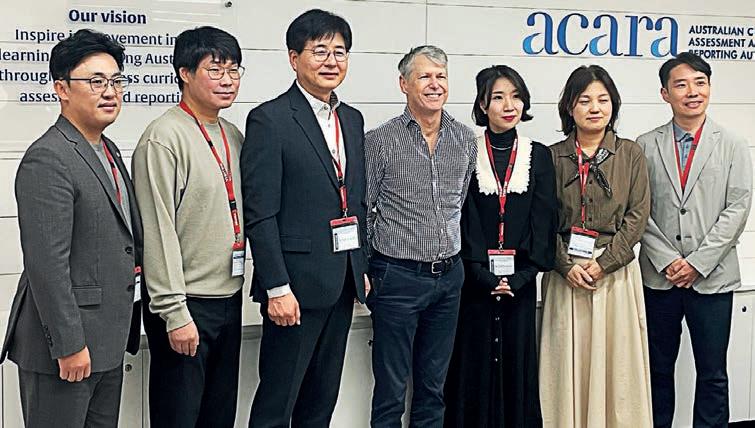

To keep up to date with ACARA’s work on the Australian Curriculum, the National Assessment Program and the reporting on schooling in Australia, follow them on Facebook or LinkedIn. You can also subscribe to its regular ACARA Update e-newsletter at www. acara.edu.au/news-and-media/ subscribe-to-acara-update.
Australian Primary Principals Association President Ms Angela Falkenberg reveals the hidden cost of o ensive behaviour in schools.


Walk into any primary school on a weekday morning and you will see leaders in action: a principal greeting students at the gate, reassuring an anxious parent, stepping into a classroom to support a teacher, juggling a dozen decisions before morning tea. What you may not see is the growing amount of time being siphoned away from this core work; time lost not to teaching and learning, but to managing offensive behaviours directed at school staff.
This is the story at the heart of Unveiling the Ripple Effect: How Offensive Behaviours Impact School Leaders’ Productivity, a new research report commissioned by the Australian Primary Principals Association (APPA) and conducted in partnership with Australian Catholic University (ACU). While many in the profession will nod in recognition at its findings, the data gives weight to what principals have been saying quietly, and sometimes loudly, for years: this issue is no longer anecdotal. It is systemic, costly, and unsustainable.
Every hour spent documenting incidents, responding to emails, seeking legal advice, managing complaints processes, or supporting staff wellbeing after a confrontation is an hour not spent on instructional leadership, student support, teacher development or community building. Productivity, in this context, is not about efficiency metrics, it is about lost opportunity.
The ripple effect
The report’s title is apt. Offensive behaviour does not stop with the individual leader targeted. Its effects ripple outward across the school community.
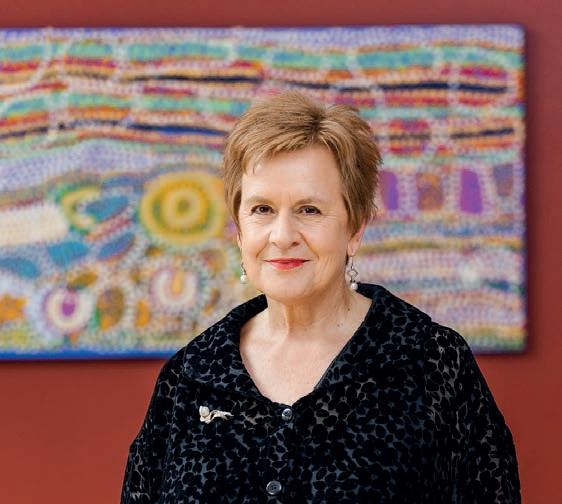
Australian Primary Principals Association (APPA) President Angela Falkenberg has held senior school leadership positions across both primary and secondary schools and has extensive experience in the education of First Nations children. APPA provides a voice to more than 7,600 public, Catholic and independent primary school principals across the country.
The work no one trained us for Offensive behaviours take many forms. They range from verbal abuse and harassment to threats, intimidation and sustained vexatious complaints. Often, they come from a small number of individuals, but their impact is outsized. The report confirms what school leaders know instinctively: dealing with these behaviours is not a brief interruption; it is prolonged, emotionally demanding work that pulls leaders away from their primary purpose.
When a principal is forced to spend disproportionate time managing con ict, teachers lose access to instructional support. When leaders are emotionally depleted, their capacity to lead with optimism and creativity is diminished. When staff witness leaders being undermined or attacked, it erodes trust and morale. And when school leadership is consumed by crisis management, students ultimately feel the impact through disrupted learning and strained relationships.
This is not about leaders being “too sensitive” or unable to cope. Principals are resilient, resourceful and deeply committed to their communities. But resilience should not mean they have to tolerate harmful or offensive behaviour as part of their role.
financial cos e can no longer ignore
One of the most confronting findings is that managing offensive behaviours
now costs the education system an estimated $206 million every year. When leadership time is diverted from core work, there is a real economic impact, not only in lost productivity, but in turnover, burnout and attrition from leadership roles.
At a time when attracting and retaining school leaders is already challenging, this matters. If we want capable teachers to aspire to principalship, we must be honest about the conditions they are stepping into, and then work collectively to improve them.
Why this matters now
Schools sit at the heart of communities. They re ect broader social tensions, pressures and divisions. As public discourse becomes more polarised and tolerance for difference frays, schools increasingly become sites where anger, fear and frustration are played out.
But schools cannot, and should not, absorb this alone.
The findings of this report land at a critical moment. Governments are rightly focused on workforce sustainability, wellbeing and productivity. This research makes a compelling case that protecting school staff from offensive behaviours is not a “nice to have”; it is central to maintaining a strong, effective education system.
The report points to the need for clearer protections, stronger system-level responses and shared accountability. Individual principals should not be left to manage serious incidents in isolation or to navigate complex complaints processes without adequate support.
APPA has long advocated for:
•Clear, enforceable standards of conduct for interactions with schools
•Consistent system responses to offensive and threatening behaviour
•Access to timely legal, psychological and professional support for leaders
•Public recognition that respect for school leaders underpins safe, effective schools
This research gives that advocacy a powerful evidence base.
A call to the profession – and beyond If we genuinely want better outcomes for children and young people, we must be clear about where educators’ time and expertise add the greatest value. Teacher and school leader time is finite and highly skilled. It belongs in classrooms, in professional conversations about teaching and learning, and in building strong, connected school communities, not in the ongoing co-regulation or management of inappropriate adult behaviour.
This report provides strong evidence of what many school leaders have long experienced: when time and energy are repeatedly diverted to managing offensive or disrespectful conduct, there is a direct impact on leadership capacity and school productivity. This is not about avoiding accountability or silencing community voices. It is about ensuring engagement with schools is respectful, proportionate and aligned with the shared goal of supporting student learning.
The findings are particularly timely considering the Australian Government’s commitments to addressing bullying, strengthening respectful relationships and eliminating racism. Schools play a critical role in modelling these values for children and young people. That work is undermined when the adults who lead and teach in schools are not afforded the same standards of respect.
Leading forward; for students
When communities are safe, supportive and inclusive places to live, work and learn, schools are stronger. Staff wellbeing improves. Leaders can lead with clarity and purpose. Teachers can focus fully on teaching. Most importantly, students benefit from adults who are present, energised and able to give their time to what matters most.

This research brings us back to first principles. Protecting school staff from offensive behaviours is not about privileging staff, it is about protecting the conditions that allow schools to function well. When leadership time is preserved for learning, wellbeing and connection, productivity increases in the ways that
Schools exist to serve children and young people. Supporting those who lead them is not a peripheral concern, it is fundamental to the outcomes we seek
When we protect the time and dignity of school leaders and all staff, we protect
New research shows strong public confidence in teachers, yet pressures persist. What do national data and frontline voices reveal about teacher satisfaction and professional pride?
When the CEO of the Australian Institute for Teaching and School Leadership (AITSL), Mr Tim Bullard, walks into a school, he pays close attention to the climate – the conversations in staffrooms, the energy in classrooms, the subtle cues that reveal how teachers are really faring.
After visiting schools across the country, he says one thing is abundantly clear: Australian teachers possess an unwavering sense of purpose, even in the face of escalating complexity and pressure.
“In every school I visit, what stands out is teachers’ sheer belief in the power of education to change lives,” Mr Bullard says.
That sense of purpose is more than anecdotal. In 2025, the Australian Teacher Workforce Data (ATWD) initiative reported that 89 per cent of teachers say their work makes them feel happy at least some of the time, despite rising workloads and persistent emotional challenges.
At the same time, new AITSL community research released ahead of World Teachers’ Day in October 2025 paints a compelling picture of public regard for educators. Almost nine in ten Australians (87 per cent) believe teachers deserve greater recognition. Another 6 per cent say a teacher has made a lasting positive impact on their life. And when Australians are asked which qualities they value most in teachers, three traits lead by a significant margin patience 5 per cent , empathy 3
per cent , and dedication 31 per cent .
Together, these insights frame a national story of respect, pride, strain and aspiration – one that plays out differently in each school community. To explore that story from multiple angles, Education Matters spoke with Mr Bullard and with Ms Rachael Sketcher, Acting Principal at Knox Park Primary School, who offered a ground-level perspective on the joys and pressures shaping teacher satisfaction today.
Purpose and recognition: what teachers see, feel and hear Mr Bullard says the recognition teachers receive from the wider community has never been clearer.
“Australians deeply value teachers and their work, he notes. But
translating those sentiments into teachers’ day-to-day experiences remains inconsistent.
“Appreciation doesn’t always translate into teachers feeling valued in their daily experience, he says.
The pace of school life, the pressure of multiple roles and the emotional weight of responsibility mean teachers often don’t pause to acknowledge the impact they’ve made.
Ms Sketcher recognises this tension all too well. or her, the recent AITSL findings were deeply affirming.
“Seeing such strong public recognition was incredibly heartwarming, she says. Having recently moved from Assistant Principal to Acting Principal after six years in leadership, Ms Sketcher has seen

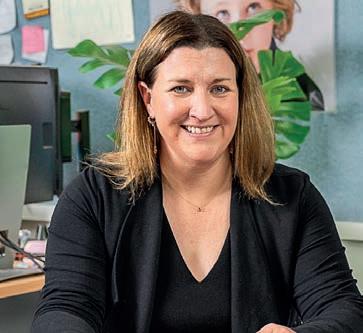

creativity, care and commitment that define her staff’s work.
Throughout her career, she has taken each leadership encounter as a chance to learn, noting qualities she hopes to emulate, and others she consciously chooses to do differently. Yet the strongest driver in her practice has always been gratitude – one of her principal character strengths. She says the AITSL research made her feel deeply proud not only of her school community, but of the profession itself.
“Teachers take immense pride in supporting every child in their care,” she says.
Public recognition validates that effort and, importantly, strengthens the sense of connection many educators feel with their communities. It also affirms the collective work that often unfolds out of sight: the quiet problemsolving, the long conversations about student needs, the emotional labour behind every learning moment.
Mr Bullard says recognition delivered consistently – and not just during moments like World Teachers’ Day has a powerful ripple effect. Trust, autonomy, and meaningful appreciation not only elevate teachers’ sense of purpose but also improve retention and professional resilience.
“When recognition is expressed more consistently, it strengthens teachers’ capacity to make an enduring impact, he says.
A considerable body of research further underscores this: quality teaching is the most significant inschool factor in uencing student learning. Recognition, then, is not merely symbolic – it strengthens the very foundations of educational quality. or Ms Sketcher, appreciation often arrives in simpler, more personal ways. She recalls small moments that stay with her: a student’s note explaining how much they’ve grown, a spontaneous thank-you from a parent, a colleague acknowledging her support after a demanding week.
“Those moments capture the sense of community within the school,” she says. They reaffirm that each member of the school has a role in shaping a culture where everyone feels seen and supported.
Wellbeing, workload and the pressures reshaping satisfaction Recognition bolsters morale, but it is not enough on its own to safeguard teacher satisfaction. National research continues to highlight the real and rising pressures teachers face. The data captured as part of the ATWD’s Australian Teacher Workforce Survey points to heavy workloads, insufficient time, and emotional demands as the leading stressors for educators. More than half of teachers report some level of burnout, a figure that remains deeply concerning for leaders and policymakers.
“We know there are challenges in the profession, Mr Bullard says. “Teacher and principal wellbeing are the foundation for thriving schools.
Without concerted action, he warns, the conditions that allow children and young people to ourish become compromised. That is why he believes systemic reform – not simply goodwill – is needed to address the workload pressures that have accumulated over time.
Addressing these issues requires redesigned workforce structures, stronger specialist support, and a national conversation that keeps wellbeing at the centre of reform. Mr Bullard notes
that employer systems across states, territories and non-government sectors take their wellbeing responsibilities seriously and have invested heavily in initiatives to support staff.
Nationally, wellbeing now sits prominently within the Better and airer Schools Agreement B SA , which includes measures aimed at supporting teachers and school leaders more effectively. These initiatives, Mr Bullard says, re ect a shift in Australian policy thinking: acknowledging teacher wellbeing not as a “nice-to-have,” but as a prerequisite for educational excellence.
Despite these efforts, the reality inside schools remains challenging. Ms Sketcher sees this every day. What teachers need most, she believes, is time – protected time to plan, collaborate, build relationships, complete administrative tasks, and connect with students.
“If I could see one change in the education system, it would be the creation of more time, she says.
“Teachers need more time for planning documentation, assessments, and individual education plans.
“Giving this time acknowledges the importance of the processes and symbolises that this work is valued.
Time constraints affect not only teachers’ professional productivity but also their personal wellbeing. Ms Sketcher notes that when school demands encroach on family time, job satisfaction can suffer. Balancing competing priorities becomes a daily challenge. Yet even with these pressures, she says the deep sense of purpose underpinning teaching continues to carry educators forward.
“What brings me the greatest joy is seeing students grow in confidence, curiosity and capability, she says.
Watching learning come alive, supporting staff as they inspire and challenge their students – these are the moments that define her fulfilment as a leader. Relationships, too, are foundational: the bonds among staff, students and families create a sense of shared purpose that is essential to school culture.
Mr Bullard highlights that the schools making the most progress are those adopting a collective, culture-wide approach to wellbeing.
“What stands out is how strongly their shared commitment is re ected in practice, he says. Such environments recognise that teacher wellbeing is inseparable from student wellbeing. When teachers feel supported and valued, they are better able to model the calm, patience and empathy students need.
Sustaining respect and strengthening the future of the profession
While campaigns like AITSL’s national Hats Off to Teachers’ on World Teachers’ Day draws attention to the profession, Mr Bullard stresses that recognition must extend far beyond a single day.
“Sustained recognition helps reinforce the value of the profession, boosts morale, and supports retention, he says.
He sees recognition as part of AITSL’s broader mission: celebrating teachers, supporting their development, and ensuring they have the tools, data and structures needed to thrive.
AITSL’s Strategic Plan includes five priorities, one of which is esteeming the profession. This commitment includes
promoting national teacher certification – a visible credential that elevates teachers’ expertise and supports career progression.
“We see ongoing recognition as part of a broader commitment to teacher wellbeing and professional respect,” Mr Bullard says.
Sharing evidence-informed insights from the Australian Teacher Workforce Survey, highlighting teacher achievements, and amplifying stories from the classroom all help build a culture that honours the profession’s complexity and importance.
Ms Sketcher’s perspective aligns closely with this. The qualities Australians most value – patience, empathy and dedication – sit at the very heart of sophisticated teaching practice. Empathy, in particular, shapes her leadership. Understanding each student’s story, recognising challenges, and responding with compassion forms the basis for trust and growth.
“In the classroom, empathy shows up in the way teachers listen, adjust their approach and ensure every student feels seen and supported, she says.
Patience enables teachers to guide students through setbacks without discouragement, and dedication keeps
them searching for the strategies that spark learning breakthroughs.
or Ms Sketcher, wellbeing is not an add-on but a foundation.
“When children feel safe, happy and comfortable at school, they are far more open to engaging deeply and achieving their best, she says.
Supporting teachers to thrive is essential to sustaining that environment. “If teachers feel valued and maintain a strong sense of professional satisfaction, I feel a profound sense of fulfilment.
Mr Bullard believes the future of teaching in Australia is strengthened by both public appreciation and a growing focus on systemic support. As expectations rise and the work grows more complex, the need to esteem, support and celebrate teachers becomes even more critical.
He hopes Australia will continue to broaden the ways it supports those shaping the next generation. Recognition, he says, must become an everyday practice, not an annual highlight.
And for Ms Sketcher, the message remains simple: “Ultimately, when teachers thrive, our children receive the very best version of their educators – and to me, that is what matters most. EM
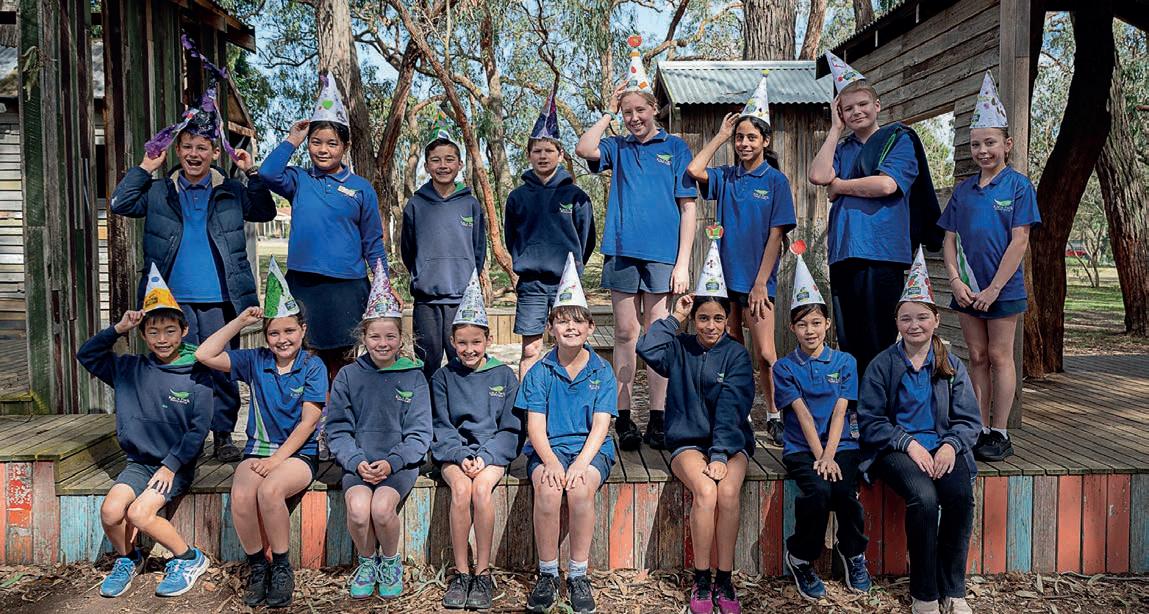
A cluster of primary schools on Melbourne’s Mornington Peninsula are banding together, sharing leadership, resources and relationships to better support students, sta and families across their communities.
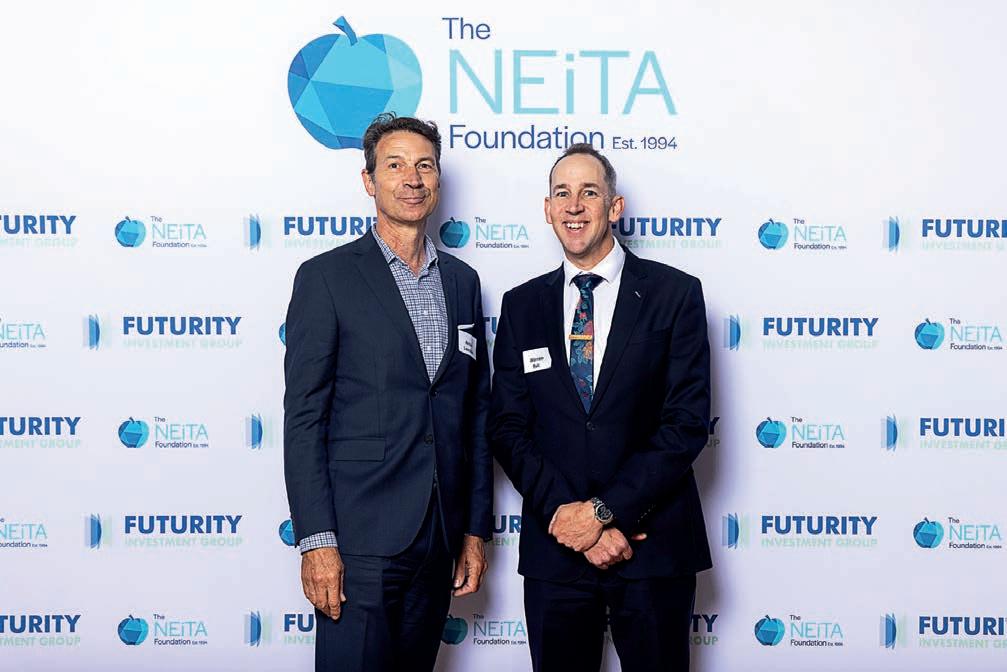
From a Catholic secondary classroom on the Mornington Peninsula to specialist schools, hospital settings and now a small primary school in Frankston, Mr Warren Bull’s career has taken a less conventional path than many school leaders. That breadth of experience now informs his work as principal of Frankston East Primary School, where collaboration between staff, schools and systems is central to daily practice.
Frankston East Primary is a small school, with around 165 students and a staff of approximately 25. It sits within a cluster of four nearby primary schools and a local secondary college, all working within a relatively stable population area where enrolments are steady rather than growing. In this context, scale matters. Small schools rely heavily on strong relationships, shared approaches and deliberate cooperation to meet student needs and sustain staff wellbeing.
“Leadership isn’t just about me telling people what to do,” Mr Bull says. “It’s about making sure the right systems and relationships are in place so our staff can focus on what matters – teaching and learning.”
A career shaped by specialist settings
Mr Bull began his teaching career in Victoria as a science teacher at
Padua College’s Rosebud campus, later leading the science faculty. From there, he moved overseas, teaching science and physical education in London for three years. During that time, he worked in a school catering to students with significant emotional and behavioural challenges – an experience that would shape the direction of his career.
“Working with students facing emotional and behavioural challenges really changed my view of teaching,” Mr Bull re ects. It showed me how important relationships are, no matter the setting.”
On returning to Australia, Mr Bull continued working in specialist environments, including at Stepping Stones, an adolescent psychiatric unit at Monash Hospital. There, he taught young people experiencing acute mental health challenges and also worked alongside the Butter y Foundation, supporting students with eating disorders.
A key figure throughout this period was Mr Bruce McPhate, who became a long-term mentor. Mr McPhate worked
with Mr Bull at Stepping Stones and later at a special school for students with intellectual disabilities, where Mr McPhate served as assistant principal.
Bruce was a huge in uence on me,” Mr Bull says. “Having a mentor who understands the complexities of specialist education made a big difference in shaping how I lead today.”
From there, Mr Bull transitioned back into mainstream education at Elizabeth Murdoch College, a large co-educational government secondary school. Over a decade, he taught science, mathematics and physical education, while also leading student wellbeing initiatives. His wellbeing leadership, he notes, was grounded less in formal qualifications and more in the cumulative experience gained across hospital, specialist and mainstream settings.
“I learnt that wellbeing isn’t a separate program – it’s embedded in everything we do for students and staff,” he says.
Leadership roles followed in specialist education, including an assistant principal position at
Marnabec Special School and later at Southern Autistic School, where Mr McPhate was principal. Mr Bull was part of the leadership team at Southern Autistic School throughout the COVID-19 period, working with students and families during a time of significant disruption.
“That period tested everyone, but it also strengthened our resolve to support our community, he re ects.
In 2023, Mr Bull took on his first principal role at Frankston East Primary School.
While his background spans secondary and specialist education, Mr Bull says the core of the work remains consistent: building relationships with students, families and staff, and ensuring structures are in place to support learning.
“No matter where you’re working, it really is all about those relationships that you develop with the students and the staff around you,” he says.
Supporting students through partnerships and recognition rankston East Primary benefits significantly from its relationship with The Smith Family, a long-standing community partner that supports families through initiatives like the Learning for Life scholarship program.
These scholarships provide vital assistance with school essentials such as uniforms and digital devices, easing some of the barriers faced by families.
“Programs like the Learning for Life scholarships make a real difference to families who are doing it tough,” Mr Bull explains. “It’s not just about money; it’s about giving our students the tools to succeed.
Mr Bull was recently recognised for his outstanding contribution to supporting students experiencing disadvantage at the 31st National Excellence in Teaching Awards (NEiTA), sponsored by Futurity Investment Group.
He received the prestigious The Smith Family–NEiTA Award for Powering Potential, along with a $10,000 professional development grant from the NEiTA Foundation. The award, created in partnership with The Smith Family, celebrates educators who go above and beyond to help children facing disadvantage achieve their potential.
“It was humbling to be nominated and recognised alongside so many inspiring educators,” he says. “But this award wasn’t just for me it re ected the passion and hard work of the whole Frankston East team.”
While access to technology remains an important focus, educators recognise that simply providing devices does not
guarantee learning outcomes. Re ecting on shifts in educational technology use, there is a growing awareness that equitable access must be coupled with effective teaching practices to support student success. Additional funding and equity grants, managed by school leaders, are crucial in providing the resources and staff needed to support diverse learning needs within the school.
“There’s no doubt there’s a divide in equitable access to education,” Mr Bull says. “But we’re also realising that tech isn’t a silver bullet. It’s how we use it that matters.
The school also works within broader funding structures, including additional equity funding and targeted grants. As principal, Mr Bull manages applications for departmental funding aimed at supporting students with additional learning needs and enabling the employment of extra staff where possible.
“There’s always more to do, and chasing funding is part of the role,” he admits. “But it’s worth it when it means better support for our kids.”
Frankston East Primary’s small size also shapes its internal structure. With enrolments spread across year levels, most classes are composite, with the exception of prep. This requires careful planning and collaboration among teachers, as well as shared expectations around curriculum and pedagogy.
“Our classes are mostly composite, so teachers need to be really exible and work closely together,” Mr Bull says. “It’s challenging but also rewarding.”
The school’s values – kindness, respect and integrity – underpin these approaches, but Mr Bull is quick to point out that values are only meaningful when they are re ected in daily practice.
“Those values aren’t just words on a wall,” he says. “They guide how we interact, learn and support each other every day.”
Cluster collaboration and shared leadership
One of the defining features of Frankston East Primary’s work is its participation in a close local cluster.
ongoing concerns.
“There’s no doubt teaching is as challenging as it’s ever been,” he says. “That’s why having this network is vital – we share the load and support each other.
Working together allows schools to share strategies for managing administrative demands, coordinate professional development and support staff wellbeing. For principals, the opportunity to connect with peers facing similar challenges is particularly valuable.


Within a two-kilometre radius, four small primary schools – Frankston East Primary, Ballam Park Primary, Karingal Primary and Karingal Heights Primary – work alongside McClelland College, the local secondary school that most students transition to after Year 6.
“This cluster model is a real strength,” Mr Bull says. “We meet regularly – at least once a term – to share ideas, align our approaches and support each other.”
The focus includes curriculum alignment, behavioural practices, professional learning and responding to departmental priorities. Recent collaborative work has included joint planning around the new mathematics curriculum and discussions about consistent behaviour management approaches across schools.
“We want to make transitions seamless for our students,” Mr Bull explains. “Consistency across schools means kids feel more confident and supported.
The cluster also plays a key role in supporting student transitions to secondary school. Primary students participate in activities with McClelland College students and staff, building familiarity with the secondary environment before the move to Year
7. This work is supported by strong professional relationships between school leaders across the cluster.
Beyond curriculum and transition, the cluster provides an important support network for principals and staff. Mr Bull acknowledges that teaching and school leadership are increasingly challenging, with workload, wellbeing and retention
Mr Bull also situates this work within a broader departmental structure, as part of the Central Peninsula Network. This wider network provides additional opportunities for collaboration and professional support, reinforcing the idea that leadership does not occur in isolation.
“Leadership is shared – it’s relational, not just positional,” Mr Bull says. “It’s about whole communities coming together for our kids.”
“It’s not just me doing this work,” he says. “It’s very much a whole-of-school approach to supporting our students and families, and extending that work across our cluster and network as well.” EM
ACT educator Ms Paula Taylor, winner of the 2025 Prime Minister’s Prize for Excellence in Primary Science Teaching, is transforming classrooms through hands-on, data-driven STEM learning that empowers teachers and students alike.
When Ms Paula Taylor arrived in Australia from Vancouver 15 years ago, she brought with her not only a strong background in science and education, but a passion for making scientific thinking accessible and relevant to every learner. That approach has now earned her one of the nation’s highest honours in science education – the Prime Minister’s Prize for Science (Primary).
For Ms Taylor, a senior member of the Academy of Future Skills within the ACT Education Directorate, the award recognises more than her individual expertise. It highlights a system-wide model of STEM education that is equitable, evidence-based, and deeply rooted in teacher development.
“It’s about empowering teachers so that every classroom becomes a place where students can think, act and communicate like scientists,” she says.
From medicine to mentoring Before turning to education, Ms Taylor trained in medicine in Canada.
“That’s really where I became a scientist,” she says. “I started to think like a scientist and act like a scientist – and that’s when I began communicating science, presenting research, and realising how powerful science education could be.”
After completing a degree in education, followed by a master’s in special education, she spent two decades teaching science to students in Years 7–12 across Canada. When she later settled in Canberra, she continued to blend those disciplines –science, pedagogy, and accessibility – into her leadership practice.
Ms Taylor also served as President of the Science Educators Association of the ACT, where she helped advise on the development of a purpose-built STEM centre. When the ACT Education Directorate established what would become the Academy of Future Skills, Ms Taylor was a natural fit to lead it.
At the time, the Directorate envisioned a central facility where students would come to participate in STEM programs but it wanted something more ambitious – and more sustainable.
“We wanted best practice happening in teachers’ own schools, in their workplaces, with their children,” she says. “So the service delivery model changed. Instead of students coming to us, we went to them.”
The Academy designed a teacher development program that could build capacity directly within schools. By mentoring, coaching and co-teaching with classroom teachers, Ms Taylor ensured STEM learning could ourish long after her visits.
“If I can upskill or work with teachers and empower them in their practice, they will have the biggest impact on all those kids,” she says.
Today, she describes each ACT public school she works with as a client.
“I hear what they want to learn, and I help embed curriculum ideas in a way that’s meaningful for their context.
Science that matters to every student
Ms Taylor’s approach is grounded in two guiding principles: make science relevant and make it accessible.
Drawing on her special-education background, she designs programs that meet students at their level while engaging them with authentic, purposeful learning.
“It has to matter to them,” she says. “When I plan a lesson, I always ask myself – what’s important to a 10-yearold? What’s going to hook them?”
When schools express uncertainty about teaching certain concepts – for example, chemical reactions – she reframes the topic through a child’s everyday experience.
“They might think chemistry only happens in industry,” she explains. “But I remind them that chemical reactions happen every time we put food in our mouth.
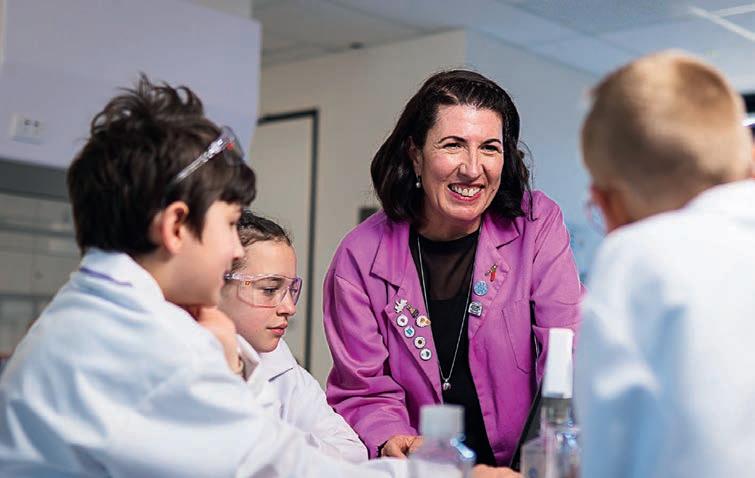
To demonstrate this kind of inquirybased, problem-solving approach, Ms Taylor often uses what she calls case studies – multidisciplinary projects that weave together science, mathematics, literacy and digital technologies. One of her most popular examples is a Year 5 activity built around a mock crime scene, complete with a mannequin named Beaker from The Muppets.
“Beaker is found lying on the lab oor with white powders scattered everywhere,” she says. “The students become forensic investigators trying to identify the substances.
sing a combination of scientific equipment and data analysis, students test 14 mystery powders to determine which are reversible or irreversible chemical changes.
“They’re collecting data, producing graphs, seeing patterns – learning how numbers tell a story,” Ms Taylor explains. “They’re doing sophisticated
science, but they don’t want to stop because they’re solving a mystery.”
The program’s success is measured not just in student engagement but in teacher confidence. Many of the teachers who first observed Ms Taylor’s workshops now borrow the materials independently through the Academy’s lending library.
“That’s the win,” she says. “The win is when teachers no longer need me beside them – they’ve gained the confidence to deliver it themselves.
The Academy of Future Skills has grown well beyond its original five-year plan. Now in its eighth year, the initiative employs a multidisciplinary team of STEM specialists who collaborate with schools across Canberra.
“When I visit schools, I often bring colleagues who have expertise in other subject areas,” she says. “Together, we can design something really robust and curriculum-aligned that might run for a whole term or even a semester.”
One recent example began with a simple request from a primary school whose Year 6 teachers wanted to emphasise healthy eating. Instead of delivering a one-off lesson, Ms Taylor’s team co-designed an integrated unit that wove together digital technologies, chemistry and biology.
“The students were programming their own sensors to measure their rate of walking,” she explained. “We did all the chemistry through food – looking at which substances burn more calories –and explored biology through how living things have needs. It just went on and on.”
That kind of interdisciplinary thinking,

she says, is helping teachers see that science is not a stand-alone subject confined to a single lesson each week.
“It’s something students feel compelled to do all the time. In some schools, it’s even taking priority – and teachers are overlaying it with reading and writing because it gives everything a purpose.”
Ms Taylor’s focus on data, measurement and real-world application ensures that even the youngest learners develop numeracy alongside curiosity.
“Kids as young as kindergarten are demonstrating through facts and figures that what they’re thinking about is entrenched in numbers,” she says. “Whether they’re building a sustainable home for the fourth little pig or investigating a mystery substance, it’s always data-driven.”
A key part of Ms Taylor’s work involves building partnerships between education and industry to ensure classroom activities re ect current and emerging fields.
“I want the science we do to mimic what’s happening in the real world,” she says.
While facilities such as Questacon provide valuable professional learning, she emphasises the importance of engaging directly with sectors driving innovation.
“Last year my industry focus was all about quantum – it was the year of quantum,” she says. “Before that, we highlighted the space sector from an ACT perspective. There’s so much happening in those two areas alone that I can run workshops connecting students with real jobs and real growth.”
She’s also extending the academy’s reach through partnerships with local universities, helping to prepare the next generation of teachers.
The impact of the Academy of Future Skills is visible across the territory. From early childhood to college, schools are reporting stronger engagement in science and teachers are noting that they are increasingly confident in designing and delivering integrated STEM programs. For Ms Taylor, that’s the true measure of success.
“Our data shows there’s a genuine need in the system,” she says. “The fact that the academy keeps growing after eight years tells us it’s working.”
ecogni ion and re ec ion
Ms Taylor describes the Prime Minister’s Prize as a humbling experience – one that acknowledges both her personal commitment and the collective effort of teachers across the ACT.
“It’s not just my award,” she says. “It represents the amazing teachers who open their doors, who invite me into their classrooms, and who take risks with their practice.”
Even amid the celebrations, her schedule remains full. The week after receiving the prize, she was back preparing for the annual ACT Science Fair, which saw more than 600 students from all sectors submit projects.
“It’s part of my job to lead that charge,” she says. “It’s busy, but it’s a wonderful problem to have.”
Asked what continues to motivate her after so many years in science education, Ms Taylor doesn’t hesitate.
“It’s when you see students take ownership of their learning – when they realise they can be the scientist in the room,” she says.
And, true to form, she insists that the most meaningful learning moments don’t come from her demonstrations but from what students discover themselves.
“I tell them, ‘I haven’t solved this problem before. I really need to hear from you what you’re learning.’ And they step up. They lead the inquiry, they do the cognitive heavy lifting – and they just own it.” EM
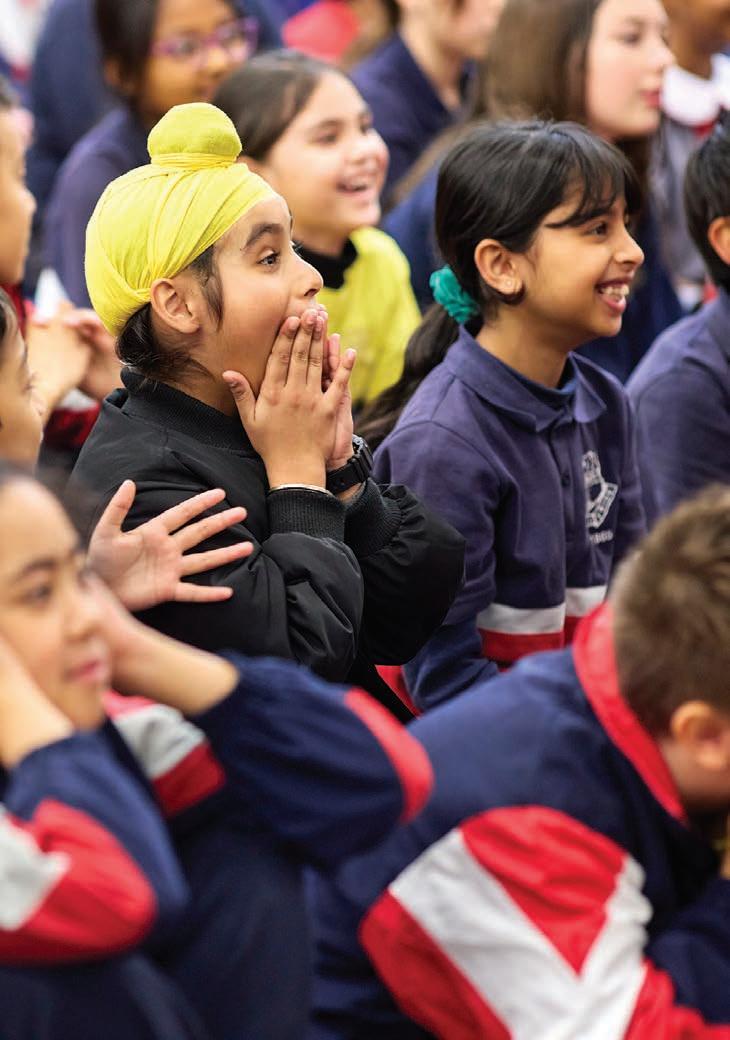
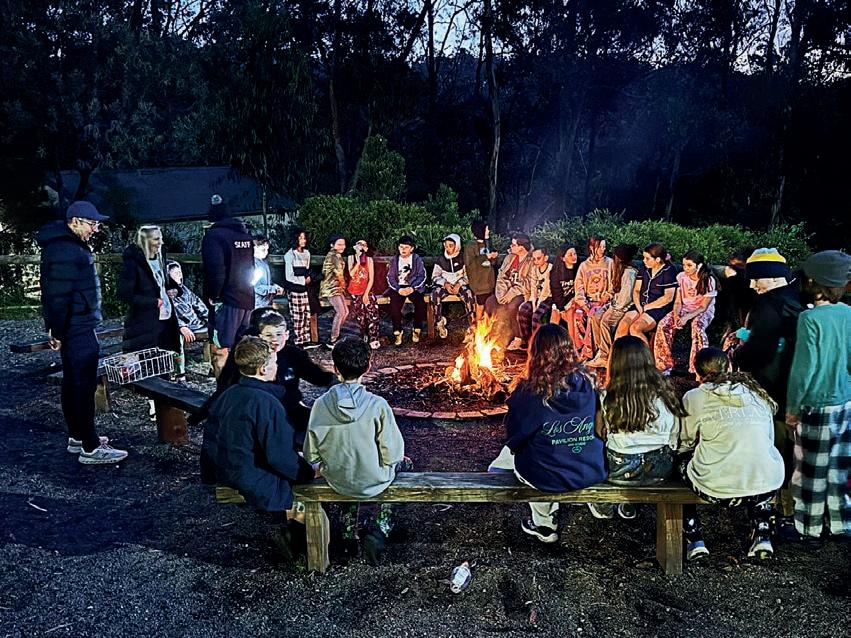
As schools encounter falling engagement, rising anxiety and disconnected learners, educators argue outdoor experiences o er a powerful wellbeing reset – strengthening relationships, building resilience and supporting students back into learning.
In 2026, school camps, excursions and outdoor learning are being reframed as essential wellbeing interventions, particularly for students who missed critical social development during the disrupted pandemic years.
Outdoor Education Australia President Mr Peter Kent, a longserving school principal whose ACT outdoor school hosts around 15,000 students annually, says the wellbeing rationale is now clearer than ever.
“Schools are noticing post-COVID that students who were locked down for a longer period are demonstrating generally less resilience and poorer wellbeing, and that’s not surprising,” he says.
“Kids missed out on opportunities to go outside and play and get dirty and muddy. They missed that formative period where they would just do it without thinking.”
For Mr Kent, well-designed outdoor experiences help redress exactly that loss. “There needs to be structured opportunities where kids are taken outside their comfort one.
While excursions reconnect students with the real world beyond their school gates, camps remain a unique space for sustained social connection, meaningful challenge and the kind of shared experiences that classroom structures rarely allow.
“Students bond on a school camp,” Mr Kent says. “They get concentrated time with each other. They do trust exercises and teamwork activities. They become more independent.”


For younger students especially, even a day excursion can be transformative simply because it expands the boundaries of what “school” means.
The wellbeing value, he argues, sits as much in those social and emotional shifts as in any structured learning outcomes.
The engagement challenge schools can’t ignore
At Federation University in Victoria, Senior Lecturer Dr Josh Ambrosy works closely with schools, teachers and curriculum designers across the Year 7–10 space.
Much of his focus is on articulating where outdoor education fits and why it matters, even though it isn't a formally recognised learning area in the Australian Curriculum.
He says student wellbeing and school attendance are now deeply intertwined, and outdoor experiences can make a measurable difference.
“A lot of the data coming out of secondary schools at the moment
suggests we have an engagement issue,” Dr Ambrosy explains. “We have a higher rate of truancy than we would like, and the data tends to get a bit worse each year.”
Declining attendance is not evenly distributed. Students from more complex backgrounds – those experiencing disadvantage, economic pressures or disrupted learning – are more likely to disengage.
The reasons vary, but Dr Ambrosy points to a helpful framework from a recent School Improvement Tool literature review, completed the by Australian Council for Educational Research.
They identified three key components to helping students engage in school: engaging school experiences, appropriate support for student wellbeing, and appropriate behavioural responses. When they work together, they drive engagement.”
Camps and outdoor programs, he says, naturally align with these factors.
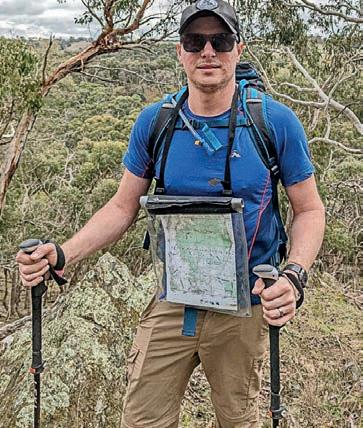
“Take a typical Year 9 program. Students go for a week-long hike with
a teacher and an outdoor leader. They’re doing something naturally engaging, because it’s in the outdoors,” Dr Ambrosy says. “They’re curious about the world. They get to experience it – not just learn about it.”
But critically, they also benefit from adult care and mentoring in a radically different context.
“You’ve got adults modelling behaviour, having conversations, supporting students through challenges. It’s structured in a way that really juxtaposes school. That’s exactly why it’s so positive at supporting engagement.”
He has seen how the relational impact carries back into classrooms.
“Students often return feeling safer and more connected. They’ve built relationships with peers and teachers. That shift can in uence how they attend school afterwards.”
Challenge by choice: Agency as wellbeing
If there is one concept that captures the wellbeing power of outdoor learning, it may be ‘challenge by choice’.
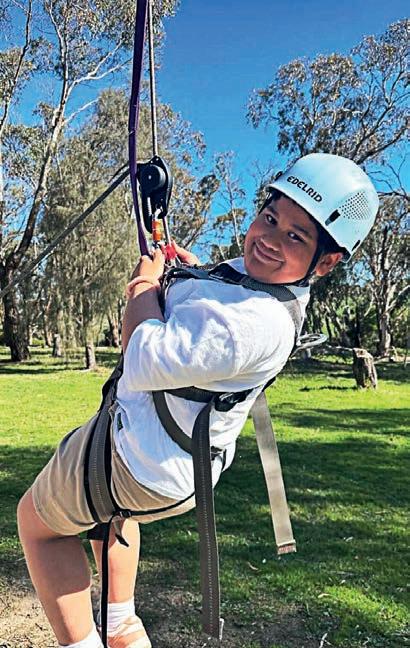
Mr Kent describes it simply: “It’s always up to the student how far they go with the challenge. We encourage them, but they’re in control.
On a climbing wall, that might mean choosing how high to climb. On a ying fox, students decide how far back they want to be pulled. On a ropes course, they determine how far to push themselves.
“Gone are the days of everyone being forced to do it, whether they want to or not,” Mr Kent says.
Why does this matter?
Because for many children –especially those anxious, unsure, or still rebuilding confidence agency is key to wellbeing.
We talk about comfort ones. You’ll choose to go to the edge of your comfort one, and something magical happens there your comfort one expands, Mr Kent says.
He offers a scenario familiar to many teachers.
“A child climbs halfway up a wall and feels proud. Later at dinner they tell their friend they went all the way – because in their mind, they’re ready to go further next time.”
The learning, he says, extends far beyond the ropes course.
“There are things in life that are completely safe but feel dangerous, like the first day of high school, or asking someone out on a date. By going on camp and being put in these safe-danger situations, students become more prepared for life in general. They’re less likely to avoid school or deny themselves opportunities.”
Mr Kent calls this “safe danger”, a paradox that resonates strongly with teachers supporting anxious students in the post-COVID era.
Making outdoor learning accessible While wellbeing is a compelling reason to prioritise outdoor experiences, cost remains a barrier.
“Because outdoor education sits outside the core curriculum, schools –especially in the government sector – can charge families. That can create equity issues,” Dr Ambrosy says.
Many schools rely heavily on equity
funding or excursion support programs. The Victorian Government, for example, is expanding its Camps, Sports and Excursions Fund, but Dr Ambrosy says the need still outpaces the support.
Mr Kent agrees cost can block access but points to a bold ACT solution.
“At the beginning of 2025, the ACT Government started what’s called a free camp initiative for public primary schools,” he explains. “Every school gets to go on a free camp every year.”
The motivation was simple: students who needed camps the most were the ones missing out.
“Families often feel too proud to ask for help. So the government said, ‘This is valuable, it’s worthwhile for everyone, and we’re going to fund it’.”
According to Mr Kent, every ACT public primary school has taken it up.
Teachers, he says, regularly tell him that five, six or seven children in each year level would not have been able to afford the experience without the program.
For those students, the wellbeing effects are profound.
Schools that move classes outside regularly report behavioural improvements too.
“In Canberra, occupational violence is an issue. But every school that routinely takes students outside says it reduces angry kids and incidents of occupational violence, Mr Kent notes.
“They credit it to kids being outside, connecting in nature, and improving their wellbeing.

Schools don’t need expensive camps to improve wellbeing. Both educators stress that outdoor learning can be integrated into everyday teaching. A science class might assess the health of a local creek. A geography class might walk the neighbourhood to study population demographics. A PE class might take up trail running on a local path.
Even taking a class outside to read has a small wellbeing benefit, but the deeper gains come when teachers use the outdoors as the learning context.
Walks on Country: wellbeing, inclusion and authentic learning
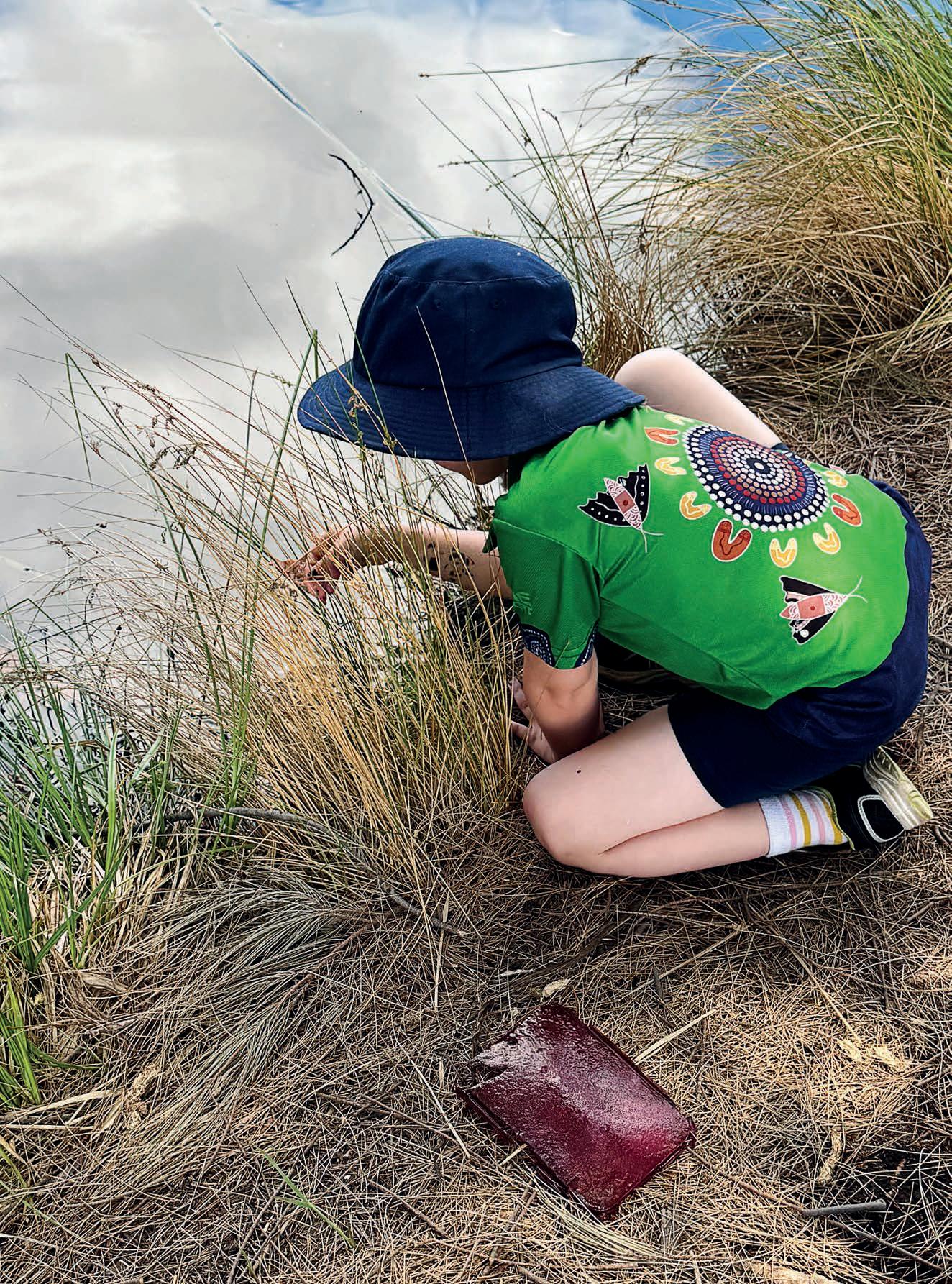
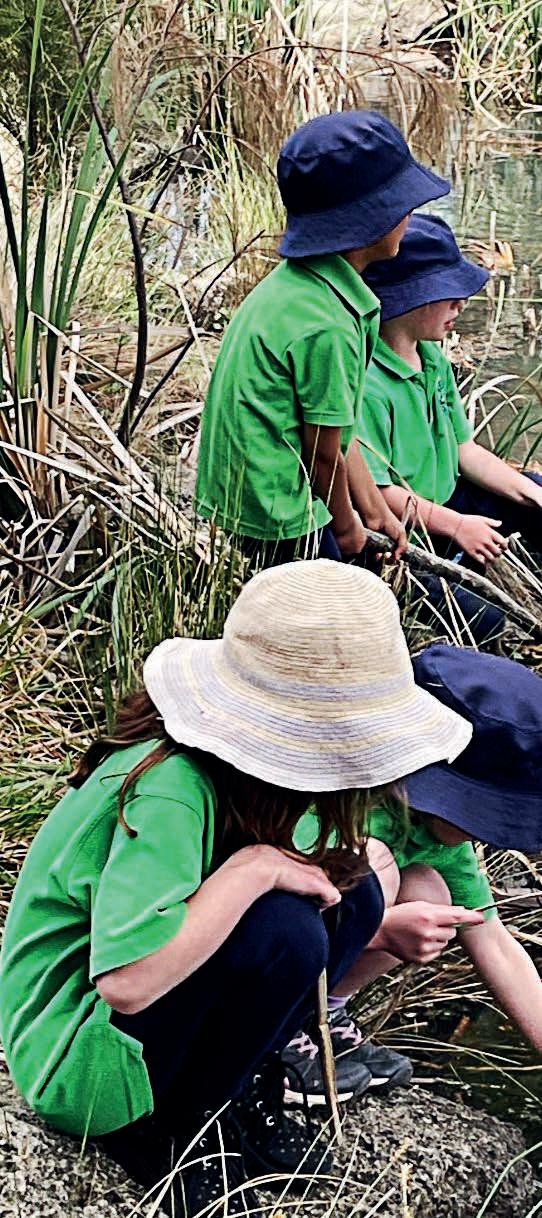
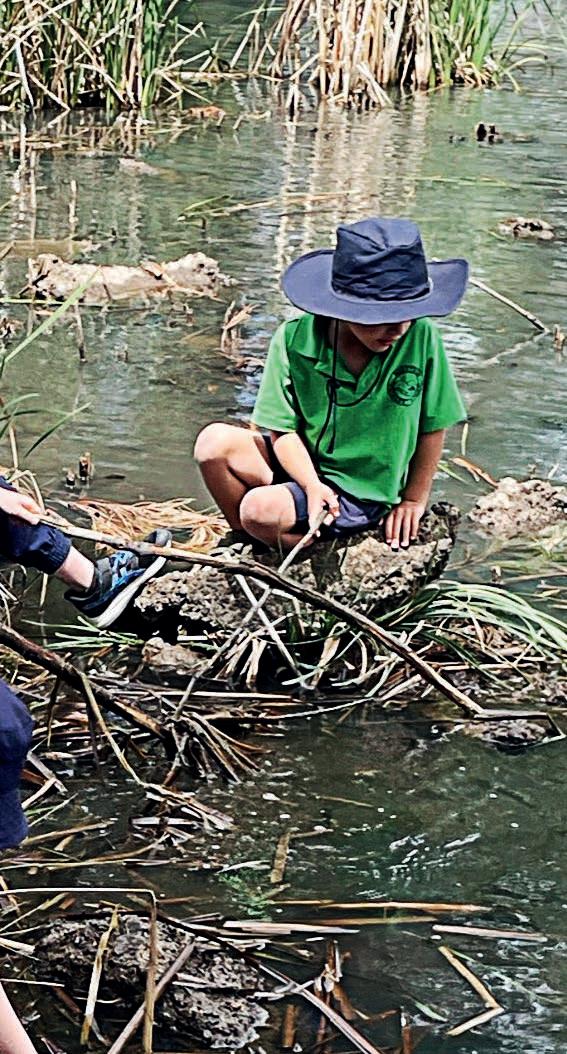
At Bonython Primary School in the ACT, outdoor learning has become a cornerstone of wellbeing, inclusion and cultural integrity for the school’s youngest learners. What began two years ago as a team of three kindergarten teachers working to combine their strengths has grown into a Walks on Country program that shapes both the emotional climate of the week and the learning that follows.
Kindergarten teachers Karen, Inge and Rachel work with a cohort of 45 five-year-olds, supported by Acting Principal Ms Amanda Hawkins. Together, they have designed a program that is grounded in cultural respect, childled exploration, and the belief that authentic learning extends far beyond the classroom walls.
The program emerged organically when the three teachers began working together. Each brought a specialist strength – cultural integrity, visual arts, and early years expertise.
“We wanted to do something that had some meaning and also connect them to the land,” the team explains. “It’s grown and evolved over two years, and it will continue to do that as we educate ourselves and meet the needs of the students in front of us.”
The Walks on Country take place every Monday, selected deliberately to support student wellbeing. As the team notes, Mondays can be “wobbly” for young children, whether due to separation from parents, fatigue, or the general shift back into school routines. Being outdoors offers a natural reset.


“Going out on Country helped stabilise our kids in a wellbeing kind of way for the rest of the week,” they say. “It was really good for everybody’s mental health and wellbeing just to get out on Country.”
The sessions run across the middle learning block – between play and eating breaks –giving students a large uninterrupted period to immerse themselves in nature. Although the duration is consistent, the location changes as the year progresses. The children begin with a short walk just outside the school gate before gradually building stamina and confidence to reach more distant sites: shaded slopes, a second tree-lined area, an underpass, a grove of she-oaks, and finally a wetland pond around 700 metres from the school.
This gradual progression is more than physical. Teachers describe the children’s “belief that they can walk the distance” growing alongside their emotional confidence.
Each session begins with a circle gathering. The children pause, listen and observe what they hear, smell and notice in their surroundings. They offer a simple Acknowledgment of Country and then ask Country for permission to play.
“What is Country offering us today?” teachers prompt. Answers range from “the sun” to “airplanes” to “the heat”. If the response from nature feels unsettled – “a massive gust of wind”, for example – the group may decide to turn back.
This practice blends cultural integrity with emotional attunement. Teachers complete a safety check while children settle, scanning for snakes, glass, or environmental changes. A formal risk
assessment supports the process, as do parent permissions and careful preparation around toileting and routines.
Importantly, the teachers take nothing with them except hats, water bottles in summer, and a small trolley with spare clothes. “Nature is your resource,” they emphasise.
Wellbeing foundations: emotional language and inclusion Before walking out the gate, significant work is done to build children’s emotional vocabulary. The team uses the Zones of Regulation, helping children name and express how they feel. Students from the school’s small-group inclusion program also join the walks, strengthening belonging and expanding access.
The teachers describe how the experience reframes learning: “Just because you’re not in the classroom doesn’t mean it isn’t learning.”
According to Ms Hawkins, the impact extends well beyond Monday.
“Although they have this beautiful experience on Monday, it’s not isolated. I see it through the week – in the writing, the letter learning, the phonics, the stories they read, and their oral language. It becomes a stepping stone for more learning.”
Students begin to notice the world differently: rubbish becomes “damaging Country , local places gain significance, and their re ections carry home to families. Bonython now applies this philosophy across the school.
“Every student from preschool to Year 6 goes outside the gates and experiences outdoor learning,” Ms Hawkins says. “The school is just the building. Education happens anywhere. EM
At Orelia Primary School in Perth, Musica Viva Australia’s incursions and teaching resources have reshaped learning, building teacher confidence, student engagement and inclusive pathways to creative success.
When Ms Manjeet Singh first stepped into the music room at Orelia Primary School, it was not part of a carefully planned career move. Trained as a science teacher, Ms Singh had spent years working across classrooms before staffing changes following COVID-1 saw her take on music a subject she describes as entirely new territory.
I felt like I was in the deep end, and I didn’t know what to do with it, Ms Singh says.
What followed over the next four years was the gradual reshaping of Orelia Primary’s music and visual arts program, underpinned by structured support from Musica Viva Australia and a growing sense of confidence in how music could be taught, adapted and embedded across the school.
Located in a low socio-economic
community in Western Australia, Orelia Primary serves students with diverse learning needs, including trauma backgrounds, neurodivergence and inconsistent attendance. or Ms Singh, finding an approach that was accessible, engaging and curriculumaligned was critical from the outset.
I reached out to Musica Viva Australia because I had heard about them, and when I did, they were really helpful, she says. They explained the incursions and the 10-week teaching lessons that go with them, and I realised that from pre-primary to Year 6, the curriculum was already scaffolded.
rom that point on, Musica Viva Australia or MVA, as it is also known became a central reference point for planning, programming and resourcing music at the school.
Starting with structure and support
The first MVA program Ms Singh introduced was a Japanese taiko drumming ensemble. At the time, she had limited formal music training and was still finding her footing as a specialist teacher.
I was a novice, she says. I’d learned a little bit at university, but I wasn’t musically inclined at all.
What made the difference, she explains, was the combination of live performance and detailed teaching resources. Each MVA booking includes access to up to 12 weeks of curriculum-aligned lesson activities, instructional videos and student materials, available to schools on a long-term basis.
The lessons were there, and they were interactive, Ms Singh says. I knew I was hitting the curriculum with all the kids.
The taiko program also lent itself to practical adaptation. Ms Singh inherited fitness balls and drumsticks from a previous teacher and repurposed them for percussion activities. Over time, she added
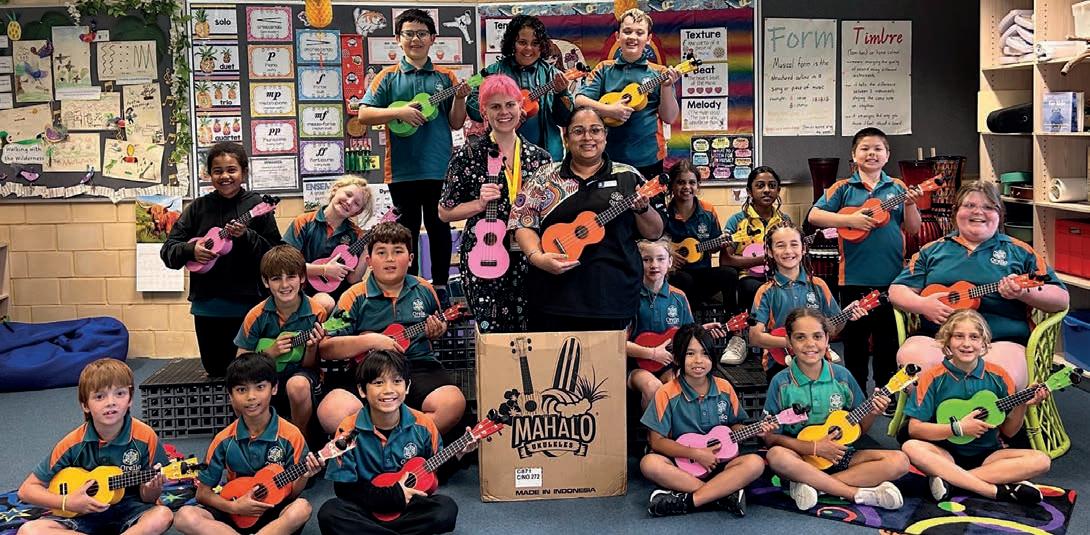
buckets, claves and PVC pipes, which students helped turn into makeshift bachi traditional taiko drumsticks.
It just engaged the kids, she says. They were making instruments, experimenting with sound, and actually wanting to practise.
The live incursion marked a turning point. School leaders observed the sessions, and Ms Singh recalls a shift in confidence and trust.
The principal said, You have my blessing just do whatever you want to do,’ she says. rom that point on, I felt supported to really build something.
MVA’s teacher professional development also played a role. Ms Singh undertook the organisation’s 12-week Music Education Skills for the Primary Classroom course, designed for generalist teachers with limited music background. When funding was an issue, MVA arranged a scholarship.
They paid for it, Ms Singh says. I did the modules, completed everything, and I just felt so proud. That’s when I really started thriving.
Connecting music, visual arts and curriculum
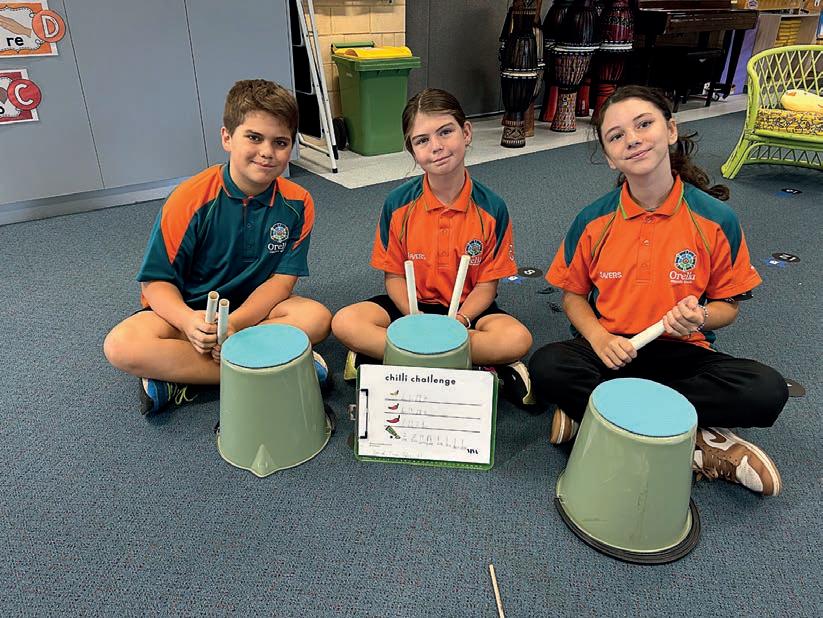
They ask, What are we doing as an ensemble ’ and they already know what that means for art as well, she says.
Assessment tasks are also adapted to suit student choice and differentiation. During the taiko unit, Ms Singh developed a tiered rhythm assessment inspired by Japanese cuisine, allowing students to select their level of complexity.
They could choose the small chilli, the red chilli, or the wasabi, she says. Some kids said, I’m going for wasabi,’ and wanted the most complex rhythm.
significant outcome. She describes music lessons as a space where all students including those with additional needs can participate and experience success.
Our special needs kids can access the lessons, she says. Kids with ADHD have success. The quieter kids start performing. They’re more confident and willing to step out of their comfort one.
She also notes that music days have become a drawcard for students with inconsistent attendance.
There are kids who turn up because they know it’s music day, she says.
As Ms Singh’s confidence grew, so did the scope of Orelia Primary’s arts programming. Alongside music, she now teaches visual arts, and the two subjects are intentionally linked.
My whole programming is always around what ensembles are available, she says. I see what’s coming up with MVA first, and then I plan everything around that.
When the taiko drummers returned with a water-themed program, Ms Singh designed visual arts units around ripples, movement and sound. Students created clay clouds, explored different media, and displayed their work across the school’s undercover areas.
It became our big first-semester show, she says. An art show and the MVA performance together.
This integrated approach has become a routine students recognise and anticipate. Ms Singh says children remember ensembles from earlier years and make connections between
According to Ms Singh, this exibility helped students take ownership of their learning while still meeting curriculum requirements.
I took ideas from the teaching resources and tweaked them. Now I feel confident to add my own avour or follow an interest the kids show.
ccess engage en and confidence MVA’s programs are designed to be accessible to a wide range of schools, including those facing financial or geographic barriers. Through its Equal Music initiative, financial assistance is available to low ICSEA and small schools, ensuring students can participate regardless of circumstance.
or Orelia Primary, this support has been essential. Ms Singh says the organisation is proactive in keeping her informed about subsidies, funding opportunities and upcoming programs.
They know my school is low socioeconomic, she says. They make sure we get the support that’s available.
MVA’s 2026 education program marks 45 years of delivering live, curriculumaligned music experiences to Australian schools, reaching more than 200,000 students each year. The upcoming lineup includes returning and new performances designed for oundation to Year , supported by a redesigned digital resource platform and free teacher professional development.
At Orelia Primary, Ms Singh says the long-term impact is evident not just in student outcomes, but in the school’s broader approach to the arts.
Our arts program is thriving. The principal supports it, the budgeting aligns with it, and the kids look forward to it.
Re ecting on her journey from science teacher to arts specialist, Ms Singh says the structured support and relationships built through MVA have been central to that growth.
They’ve given me the confidence to teach music in a way that works for my students, she says. And that’s made all the difference. I just love it. EM
Well-designed hydration stations can support student wellbeing, lift focus and build school pride, transforming water breaks into an essential part of learning.
Getting students excited about drinking water has never been easy. Teachers know that between busy timetables, long lunch lines and the pull of sugary drinks, hydration often slips down the priority list.
But an Australian owned, designed and manufactured provider of drinking water solutions says schools are beginning to recognise just how closely hydration is tied to student wellbeing and learning.
Servicing schools nationwide, Civiq offers fully customisable hydration stations that combine clean, safe water with school identity.
“Even mild dehydration can affect a student’s ability to concentrate and stay energised across the school day,” Civiq says. “Water really is essential brain fuel.”
According to Civiq, schools across Australia are rethinking the role of drinking water infrastructure on campus. Ageing fountains are increasingly being replaced with modern hydration stations that are designed to be accessible, refillfriendly and visually engaging.
“Many schools are recognising that outdated drinking fountains no longer meet the needs or expectations of today’s students,” Civiq says. “We’re seeing a shift towards hydration stations that students actually want to use.”
Civiq points to growing awareness that hydration supports cognitive performance, energy levels and classroom engagement. The company says when students have easy access


to clean, appealing drinking water, it can help reduce fatigue and improve focus throughout the day.
Design plays a central role in this behaviour change. While filtration and chilling are important, Civiq says it is the visual impact of hydration stations that captures students’ attention and encourages regular use.
“When students see their own artwork, school values or cultural identity re ected on a hydration station, it creates a sense of ownership,” Civiq says. “That’s when positive habits start to form.”
Across schools, Civiq reports that hydration stations are increasingly wrapped in artwork that re ects each community. These designs may include Civiq-designed templates, student-submitted drawings, Aboriginal artwork, school branding or messages acknowledging donors and supporters. According to Civiq, this approach turns a practical piece of infrastructure into a visible symbol of pride.
“Drinking water becomes something students choose to do, not something they’re reminded to do,” Civiq says.
Civiq also challenges the perception that hydration stations are an optional extra. The company says they should be viewed as core learning infrastructure, supporting student wellbeing in the same way as
desks, books and technology.
“Hydration stations aren’t a luxury item,” Civiq says. “They’re a foundational part of a learning environment that supports focus, wellbeing and engagement.”
While acknowledging that school budgets are under constant pressure, Civiq notes that many schools successfully fund hydration upgrades through grants, parent and community associations or partnerships with local businesses. According to the company, these models make projects achievable while strengthening community connection.
Schools are finding creative ways to invest in hydration because they can see the long-term benefits, Civiq says. “The return is healthier habits, better focus and happier students.”
Looking ahead, Civiq invites schools to consider the broader impact of accessible, well-designed drinking water across the school day. The company says small changes in infrastructure can support meaningful improvements in student energy and engagement.
“It starts with access, continues with design and is sustained through school pride,” Civiq says.
“One sip at a time, schools can create environments where students are supported to drink, learn and thrive.” EM

A new Felton Grant will help Epsom Primary School transform its grounds into a shared wellbeing space, highlighting how thoughtful outdoor design can strengthen learning and community.
At Epsom Primary School in regional Victoria, outdoor spaces are more than places to pass through between lessons. They are becoming places where wellbeing, culture and connection are intentionally brought together.
In early 2026, a new yarning circle will take shape on the school grounds, formed by durable outdoor seating and designed as a welcoming, inclusive gathering space for students, staff, families and the wider community. The project has been made possible through a Felton Grant, awarded as part of Felton Industries’ 2025 program recognising schools and community organisations that are reimagining their outdoor environments for longterm benefit.
For Epsom Primary School Principal Ms Julie Ladd, the grant represents more than an infrastructure upgrade. It
and cultural connection into the everyday life of the school.
The seating installation will collectively form a dedicated yarning circle, providing a purpose-built space that supports conversation, re ection and learning. The project has been developed collaboratively, with input from staff, students, the school’s wellbeing team and the baring djuwima leaders – Epsom Primary School’s Young First Nations leaders – who play a key role in shaping culturally responsive spaces across the school.
The initiative re ects a growing recognition across Australian schools that outdoor environments can play a meaningful role in student wellbeing. Rather than being seen as incidental spaces, school grounds are increasingly being designed to foster inclusion, social connection and a sense of belonging.
four organisations named as recipients of the 2025 Felton Grant, joining Camden Rugby Union Club in New South Wales, Mossman State High School in Queensland and St Norbert College in Western Australia.
Together, the recipients share in a total grant pool of $40,000, receiving Felton product credits to support projects that enhance outdoor spaces through high-quality, Australianmade furniture.
Now in its third year, the Felton Grant program continues to celebrate the power of outdoor spaces to connect people and strengthen communities. In 2025, the program expanded its reach, supporting even more organisations nationwide with practical, sustainable furniture solutions that promote accessibility, inclusivity and community wellbeing.
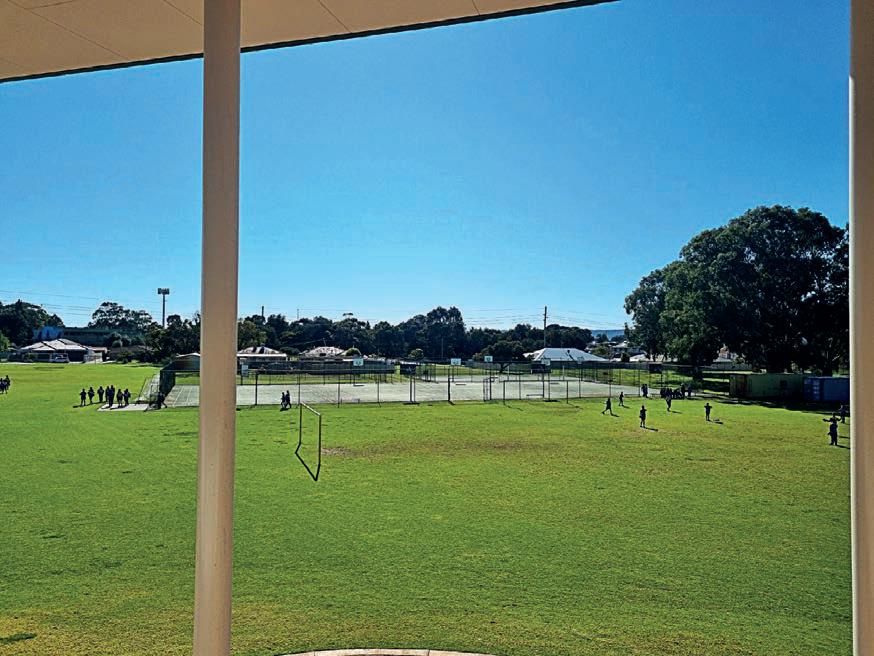
Felton Industries Marketing Manager Mr Drew Mackinnon said the growth of the program re ects both demand and creativity across the education and community sectors.
“Felton Industries is incredibly proud to see how the Felton Grant has grown into a valuable initiative that empowers communities to think creatively about their outdoor environments,” Mackinnon said. “The program provides access to durable, locally made products and encourages schools, sporting clubs and community organisations to reimagine what’s possible in their shared spaces”.
For schools like Epsom Primary, that creative reimagining is grounded in daily experience. Outdoor seating areas are not just places to sit, but spaces where students can regulate, connect
with peers and engage in learning beyond the classroom walls. The yarning circle concept draws on cultural practices that value listening, shared storytelling and respectful dialogue, aligning with broader wellbeing and inclusion goals.
The collaborative nature of the Epsom project has also been central to its design. By involving students — particularly the baring djuwima leaders — alongside staff and wellbeing teams, the school has ensured the space re ects student voice and cultural understanding. The result is an outdoor environment designed not only for use, but for meaning.
Across the country, the 2025 Felton Grant recipients highlight how different communities are responding to their own local needs. While Epsom Primary’s focus is on wellbeing and connection, other projects centre on sport, shade and spectator facilities, all underpinned by a shared emphasis on durability and long-term value.
At Mossman State High School in Far North Queensland, the grant will support the addition of a covered grandstand to recently refurbished outdoor multipurpose sports courts.
Deputy Principal Ms Mary-Anne Zahnow said the structure will provide much-needed shade for students during hot and sunny conditions, while also improving the experience for spectators during gala days with local primary schools.
In New South Wales, Camden Rugby Union Club is using its grant to expand spectator viewing capacity through portable grandstands. Club President Mr Toby Searle said the investment will help the club continue to host a wide range of local and regional events, improving experiences for players and the broader Camden community.
Meanwhile, in Western Australia, St Norbert College will apply its Felton Grant towards an all-weather structure and seating for new hard courts
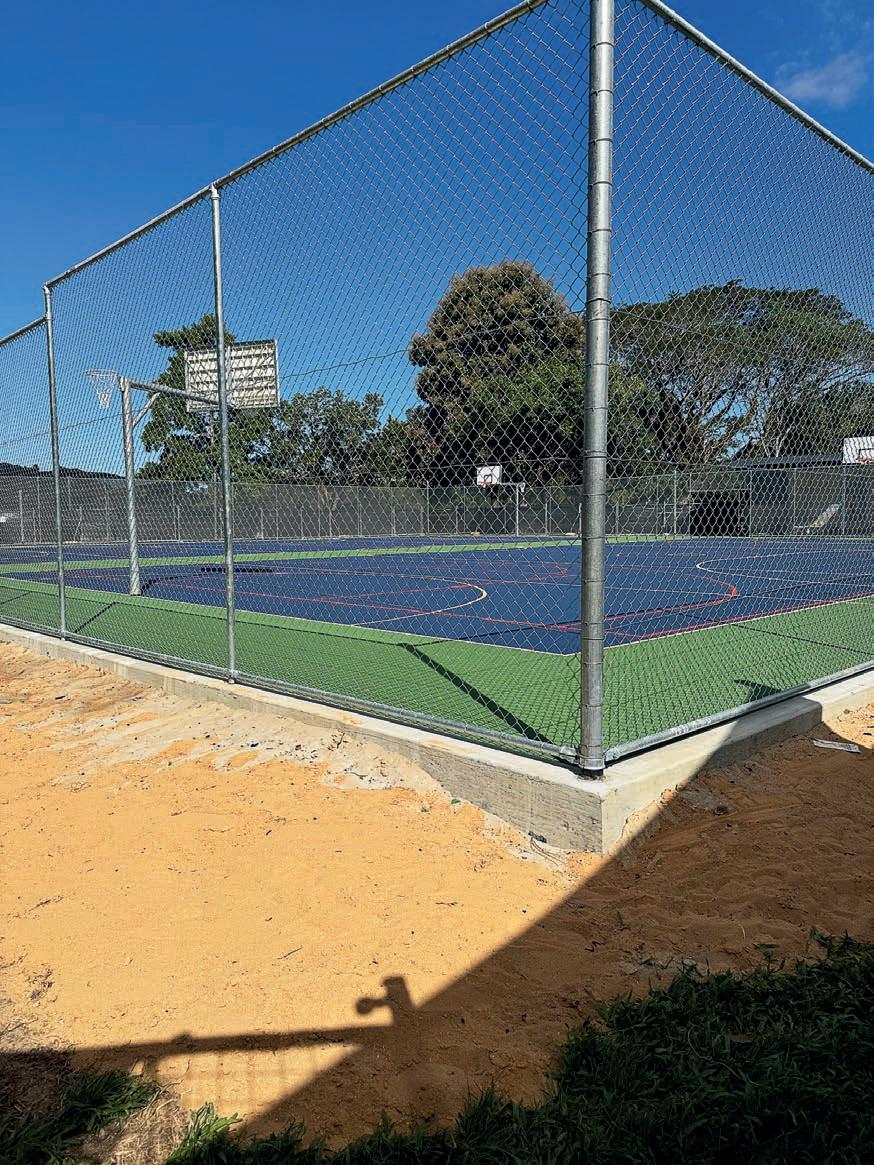
and scale, the common thread is an understanding that outdoor spaces matter. Whether through sport, gathering or quiet conversation, well-designed environments can shape how students and communities interact with one another.
The 2025 Felton Grant was open for submissions from August to September, attracting hundreds of applications from schools and organisations across Australia. Applicants were assessed on creativity, practicality and their project’s potential to strengthen community connection through improved outdoor infrastructure.
For Felton Industries, the program aligns with a broader mission to give back to the communities that have supported the company for more than two decades. As Australia’s leading designer, manufacturer and supplier of premium aluminium outdoor furniture, Felton works closely with schools, councils and community organisations
see how these projects evolve beyond the initial vision to become lasting assets that foster connection and resilience”.
At Epsom Primary School, that longterm impact is already being imagined. When installation begins in early 2026, the yarning circle will offer a dedicated place for gathering, re ection and shared learning – a physical expression of the school’s commitment to wellbeing, inclusion and community.
As Principal Julie Ladd re ected, “The project will promote student wellbeing and strengthen community connection by offering an inclusive and accessible area for students, staff, families and community members to gather, learn and connect.” EM
With Term 1 underway, Pilot Pen Australia explores how sustainable, reliable writing tools support creativity and deeper learning in classrooms already finding their rhythm in 2026.
The dust of the new school year has settled. Teachers have reshuf ed seating plans, trialled new routines and learned the quirks of their students. For Pilot Pen Australia, this stage of the year is where tools really prove their value.
“The start of a new school year isn’t just a date on the calendar – it’s
transform learning experiences.
Whether it’s a bold whiteboard marker guiding a class discussion, a smooth-writing pen supporting exam success, or a colourful range encouraging imagination in early learners, the right writing instruments help turn ideas into action,” Mr Murray says.

because writing is still where ideas take shape.
While tablets and laptops have changed the way students access information, research continues to show that handwriting strengthens memory, focus, and comprehension. A reliable pen or marker doesn’t just record information – it helps students process it in a deeper, more meaningful way.”
This insight is backed by neuroscience. When students write by hand, they engage multiple areas of the brain movement, vision, and memory – creating stronger neural connections than typing.
In a nutshell, your brain is processing information at a deeper level,” Mr Murray says. That’s why, even in hybrid learning environments, quality writing tools remain indispensable.
Innovation meets tradition Pilot’s reputation for quality is matched by its drive for innovation. In 2026, schools can expect exciting developments that blend style, functionality, and sustainability.
One trend is the rise of subtle shades. “There are muted tones like Chilly Blue, Dry Peach, Sand Beige and more in our ri ion Waai erasable pens and refills, Pilot shares. These softer colours cater to students who want individuality without sacrificing professionalism.
“Some pens are getting design upgrades too – limited-edition or ‘design-series’ versions of the FriXion Ball and Clicker feature patterned barrels or cute new characters to collect,” Pilot reveals.
These touches make writing fun and
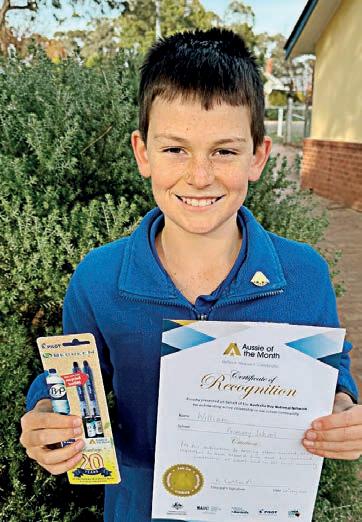
The waste reduction is substantial, and so are the long-term savings,” the company says.
Supporting Schools and Communities Pilot’s commitment to education goes beyond products. The company actively supports school communities through initiatives that celebrate values and inspire students.
One standout program is the Aussie of the Month program, delivered by the Australia Day Council national network in partnership with the Department of Home Affairs.

personal, encouraging students to engage with their tools. Beyond aesthetics, technical innovation is transforming erasable ink.
The ri ion one retractable gel pen now uses an advanced thermo-sensitive erasable ink that’s up to 30 per cent more vibrant than standard ri ion, Mr Murray says.
This ink technology spans the entire FriXion range, giving students confidence to write, erase, and try again perfect for brainstorming and revision. Sustainability is another cornerstone of Pilot’s innovation.
Most Pilot pens are refillable, creating more value for schools while reducing waste,” the company notes. The V Board Master whiteboard marker exemplifies this approach crafted from recycled materials and fully refillable, it dramatically cuts plastic waste across the school year.
“Instead of discarding an entire marker once the ink runs dry, schools simply replace the ink cartridge,” Mr Murray says.
This refill-first philosophy extends across Pilot’s portfolio, including the popular ri ion erasable range.
For schools that cycle through thousands of writing instruments annually, the environmental and financial benefits are significant.
“Students are recognised for embodying core Australian values such as respect, inclusion, mateship and a fair go, Mr Murray says.
The program has been running for over two decades, with Pilot providing pens and markers as prizes for recipients.
“2026 marks the 22nd anniversary of our partnership – over two decades of celebrating young Australians who make a positive impact in their schools and communities,” Mr Murray says.
Pilot also sees sustainability as a teaching opportunity. “Integrating refillable markers and pens not only reduces landfill waste but also models sustainable behaviour in a visible, everyday way,” he says.
For schools striving to teach environmental stewardship, these actions matter. They show students that small choices like refilling a pen instead of discarding it – can have a big impact.
Looking ahead, Pilot envisions classrooms where analogue and digital tools coexist.
The future of education isn’t about replacing traditional tools, but enhancing them, the company affirms. It says handwriting will remain central because it supports memory, critical thinking, and deeper learning.
“In classrooms that increasingly use digital devices, our role is to provide writing tools that elevate clarity, engagement and sustainability, Mr Murray says.
Their advice for educators as they embark on a new school year By choosing refillable pens and markers, schools can align their purchasing strategies with sustainability values, creating cleaner classrooms, reducing plastic waste, and empowering students to write their future more responsibly. EM
For more product information or to find your school’s nearest retailer, visit pilotpen.com.au.



A systematic synthetic phonics programme supports early reading and writing through structured teaching, story-based resources and fully decodable texts across the primary years.
Early literacy remains a core focus for primary schools, with emphasis on systematic approaches that support consistency, progression and evidenceinformed practice. Rocket Phonics is a systematic synthetic phonics (SSP) programme aligned to Letters and Sounds and designed to support learners from early years through to later stages of primary phonics instruction.
The programme uses a story-based approach, placing original texts and shared reading experiences at the centre of daily lessons. Authored by literacy expert Ms Abigail Steel, Rocket Phonics forms part of Reading Planet, a whole-school reading programme for learners aged three to 11. It is designed to provide schools with a complete phonics solution, incorporating teaching guidance, pupil resources, assessment tools and implementation support.
Programme design and delivery Rocket Phonics is organised into three strands to support learners at different stages of early literacy development. First Steps, for children aged three to four, focuses on oral communication and phonemic awareness, introducing lettersounds through nursery rhymes, phonics ditties and interactive activities. Big Book stories, ashcards and Activity Booklets support early mark making, letter recognition and emergent handwriting.
The Rocket Phonics SSP programme, for children aged four to six, provides a validated systematic synthetic phonics sequence. Teaching follows a clear weekly structure, alternating between blending for reading and segmenting
for spelling and writing. Fully decodable texts are used throughout shared, guided and independent reading, with capital letters introduced alongside lowercase letters.
Rocket Phonics Next Steps, for learners aged six to seven, consolidates and extends phonics knowledge with increased emphasis on spelling, writing and age-appropriate literacy skills. Colour-banded resources support whole-class teaching, alongside additional practice readers for targeted consolidation.
Rocket Phonics is delivered through an online and of ine hybrid model. Schools access planning, teaching materials, assessments and guidance via an online platform, while continuing to use printed classroom resources in daily practice. Resources include ashcards, Big Book stories, Pupil Practice Booklets, fully decodable reading books and Teacher’s Guides. Flashcards use picture mnemonics and photographic images to support phonemic awareness and vocabulary, while Big Books place phonics instruction within original stories.
Assessment is embedded across the programme and includes baseline, half-termly and mini-assessments, supported by tracking guidance within the Teacher’s Guides.
Intervention, professional learning and support
Rocket Phonics includes additional intervention resources for learners requiring further support. An intervention guidance document is available


via the online platform, providing structured advice on identifying need and supporting targeted instruction alongside whole-class teaching.
The programme also supports inclusive practice through professional learning focused on special educational needs and disability (SEND). A series of webinars hosted by the programme author explored SEND considerations within phonics teaching and are available on YouTube.
Professional development for Rocket Phonics is currently delivered online and includes recorded sessions and videobased training led by the programme author, supporting subject knowledge, pedagogy and assessment.
In Australia, Rocket Phonics is distributed by Lioncrest, which provides local support and offers further information and bespoke programme packages aligned to individual school contexts. EM
Join the community
Share ideas, talk to other schools and get questions answered in the Reading Planet Rocket Phonics Teachers Group on Facebook.
For more information including bespoke packages, visit https://lioncrest.com.au/ products/reading-planet/
The National Education Summit has announced a landmark initiative that will position joy as a measurable driver of student learning and educator wellbeing across Australian schools from 2026.
Revealed in Melbourne on 2 December, the initiative is being delivered in partnership with the Global Joy Mission (GJM), founded by Chartered Organisational Psychologist and author Ms Simi Rayat, as part of NES’s expanding wellbeing agenda.
NES Creative Director Ms Margo Metcalf said the focus on joy strengthens the summit’s longstanding commitment to supporting healthier, future-focused schools.
“The mental health and emotional resilience of educators has a direct and measurable impact on student learning,” Ms Metcalf said. “This deepens our wellbeing commitment by giving schools practical, scalable
Future-Focused Schools Conference, which brings together school leaders, wellbeing coordinators, psychologists, counsellors and teachers to explore evidence-based approaches to emotional resilience and mental fitness.
The program is centred on the belief that educator wellbeing is foundational: when teachers feel supported, equipped and energised, classrooms become calmer and more connected, thereby strengthening students’ emotional regulation and readiness to learn.
As part of the 2026 summits in Brisbane and Melbourne, a new science-informed keynote session –The Global Joy Mission: Empowering
The session, delivered by Ms Rayat, will introduce the 5Qs Formula a five-minute-a-day mental fitness practice already being adopted in classrooms – to build focus, calm, connection and emotional wellbeing. Schools will also be invited to join a national pilot program embedding the approach into daily routines.
“You’ll walk away inspired, equipped and ready to create a culture of calm, confidence and connection in your school community,” Ms Rayat said.
NES said its new direction is designed to shift wellbeing from discussion to measurable action.
“This turns educator wellbeing
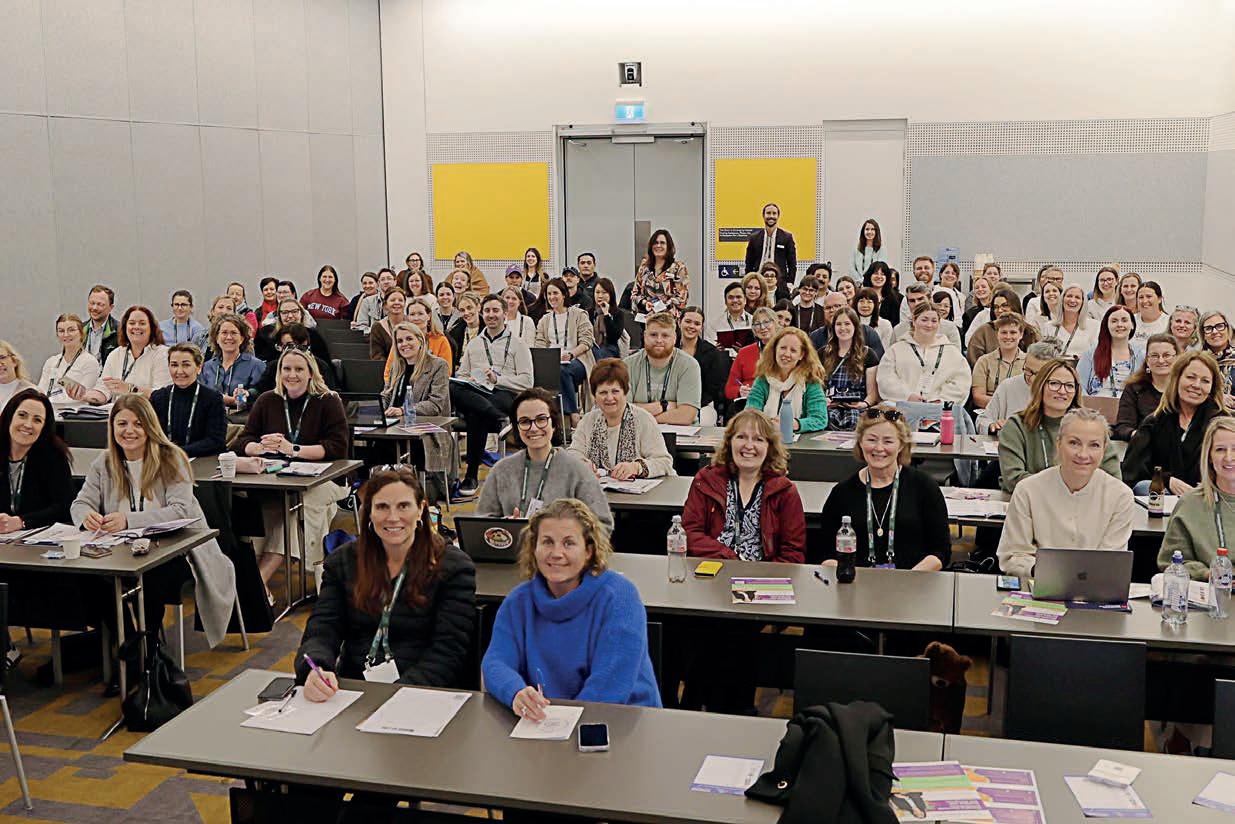




Education Matters explores what Australia’s new social media age restrictions really mean for teachers, school leaders, and the everyday rhythms of classrooms.
The social media minimum age legislation, which came into effect on 10 December 2025, was billed as a national intervention for children and families. The timing was jarring, dropping into the final fortnight of Term 4, when some senior students had already finished for the year.
Then came the six-week break. When teachers returned for Term 1, 2026, the ecosystems students inhabited socially had changed. What wasn’t known was how this would ripple through the staffroom and into daily pedagogical decision making.
In the lead up to the ban, Education Matters spoke to three experts – a principal, a senior researcher and a psychologist – about what potentially lay ahead.


As new age-based social media restrictions begin, Beaconhills College Executive Principal Mr Steve McGinley outlines how schools, families and educators are responding to reduce distraction and refocus learning.
With new social media age restrictions coming into effect on 10 December, schools across Australia are preparing for the impact on students, families and staff. At Beaconhills College in Victoria, executive principal Mr Steve McGinley says the issue has been on the school’s radar well before the legislation was finalised.
Mr McGinley says Beaconhills began examining the impact of mobile phones and social media on learning as early as 2022. The school undertook significant consultation with its community, surveying students, staff and families to understand concerns and experiences.
“When we surveyed parents specifically on mobile phones, the level of engagement was enormous,” he says. “That told us this was already front of mind for families.”
Beaconhills College educates around 3,000 students across two campuses. Mr McGinley describes it as a large, midfee school with a highly engaged, hardworking parent community. He says keeping families informed has been a priority as the legislation approaches implementation.
His recent communication to parents was designed to explain what the legislation means, when it starts, and where families can find reliable information. “The purpose was simply to make sure our community was aware of what’s coming and understood it,” he says.
From a school perspective, Mr McGinley says the most immediate impact will be in how online behaviour
is addressed when it affects students at school. While schools are not responsible for enforcing the legislation, it will in uence student conduct discussions.
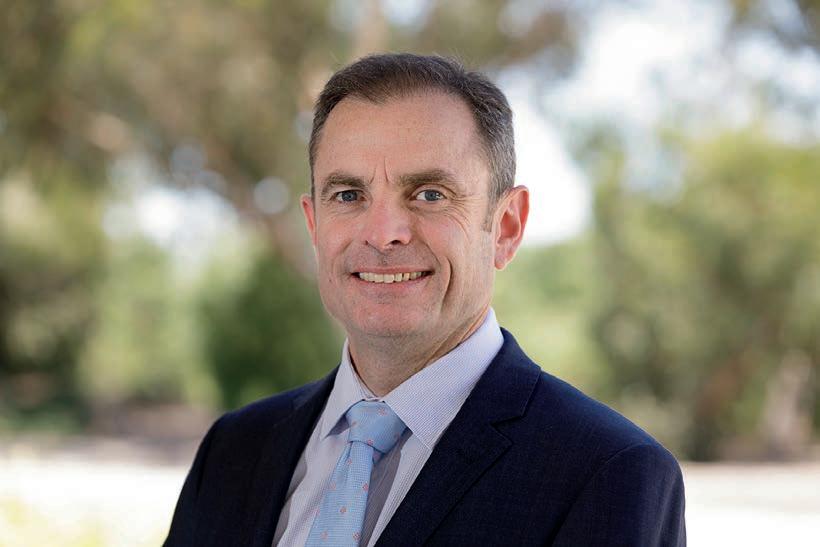
“If we’re dealing with an online issue between two Year 5 students on Instagram, our first question will be why they were on the platform in the first place,” he says. “They shouldn’t be there to start with.”
He explains that many con icts between students begin online outside school hours but quickly spill back into the school environment. Teachers and leaders are then required to respond, often at significant time and emotional cost.
“Our preference is to remove those issues so we can focus on our core business,” Mr McGinley says. “Teaching, learning and supporting student wellbeing.
Mr McGinley acknowledges that many students will attempt to bypass restrictions but believes education remains essential. He says schools have an important role in helping students re ect on how social media affects them.
“We talk with students about whether being online actually makes them happy,” he says. “Many will say they don’t like the constant checking, but feel they have to because everyone else is on it.”
He also describes the level of distraction social media creates as a growing challenge for educators. Even when phones are not physically
present, he says students’ attention is often divided.
“It’s not about blaming young people,” Mr McGinley says. “If this was our environment when we were growing up, we’d be exactly the same.”
Beaconhills already bans mobile phones during the school day, but Mr McGinley says the pull of constant connection remains strong. As both an educator and a parent, he sees similar struggles at home, where devices can interfere with homework, concentration and family routines.
Ultimately, Mr McGinley believes the success of the new restrictions will depend on schools and families working together. He says a shared, wholecommunity approach is essential.
“Our role as a school is to bring these issues to families’ attention because they affect education and wellbeing,” he says. “Parents then make decisions in the home, and we support them to do that.
He hopes the legislation will empower families to draw clearer boundaries, supported by schools, and reduce the hidden nature of online harm.
“The best outcomes happen when adults work together in the interests of young people,” Mr McGinley says. “That’s when we can draw a line together and support each other.” EM
Deakin University researcher Dr Luci Pangrazio says Australia’s social media age ban provides new opportunities to reinvigorate digital literacies programs for students and pre-service teachers.
As Australia prepares for the introduction of new social media age restrictions, educators are confronting practical and ethical questions about how the legislation will play out in schools.
Senior Research Fellow at Deakin University, Dr Luci Pangrazio, has spent years researching digital literacies, data use and the role of technology in education. Her work spans secondary schools and early childhood contexts, as well as family experiences of digital platforms.
Dr Pangrazio is also a chief investigator with the Australian Research Council’s Centre of Excellence for the Digital Child, an international research collaboration focused on children from birth to eight years. Together with her research into datafication and edtech in schools, her work provides insight into how digital policies intersect with everyday educational practice.
While many Australian states already have mobile phone bans in schools, Dr Pangrazio says the social media age restriction introduces new complexities rather than simply reinforcing existing rules.
“I think initially, because many states and schools already have a mobile phone ban, in some ways it might help to enforce that,” she says, noting that students primarily access social media through their phones.
However, she points to research showing mixed evidence on the effectiveness of phone bans, with studies suggesting they neither clearly reduce distraction nor definitively improve school climate.
Beyond device use, Dr Pangrazio
highlights the role social media already plays in learning and communication. Platforms are sometimes used informally to support collaboration, while messaging services such as WhatsApp and Facebook Messenger are excluded from the ban.
“That could send a mixed message,” she says, particularly if schools shift away from some platforms while continuing to use others linked to the same companies.
School communication practices are another area affected. Many schools rely on social media to share news, celebrate achievements and communicate with families.
“I think this could be problematic if they’re posting about children under the age of 16, because those students are not legally able to have accounts on those platforms, which means they cannot engage with the post or contribute to the discussion,” Dr Pangrazio says.
She describes this as raising questions about student voice and agency, and suggests schools may need to rethink how they use social media as a communication channel.
In the classroom, commonly used tools such as YouTube are also part of the discussion. Dr Pangrazio notes that while YouTube can be accessed without an account, platforms are increasingly able to identify child users through data patterns. Schools, she says, are likely to be working closely with parents as the legislation takes effect, adding to existing workloads.
Digital literacy remains a significant challenge. Dr Pangrazio’s research into pre-service teacher education found
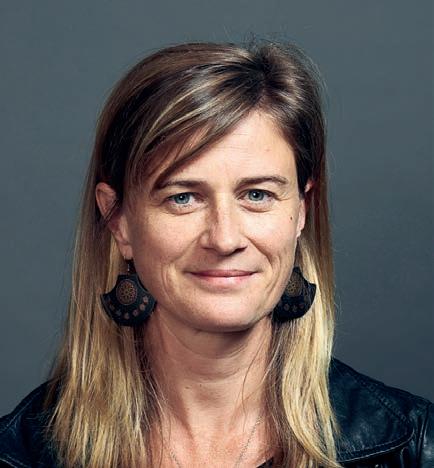
limited training on edtech, data privacy and digital systems.
“Teachers come out of university with very little experience of learning management systems or how data is used, and then they’re thrown into a very datafied system, she says.
She adds that digital literacies in the curriculum are inconsistent and often framed through safety and risk, rather than understanding how platforms function as media and commercial systems.Her earlier research with Year 7 students focused on algorithms and interface design, showing strong student engagement and interest.
“They loved the opportunity to learn more and talk more about it, because there are very few spaces where they can learn about these platforms and share their concerns,” Dr Pangrazio says.
She also points to schools as trusted sources of guidance for families navigating digital parenting, based on research from the Centre of Excellence for the Digital Child. As the ban comes into effect, Dr Pangrazio says schools may face pressure from parents seeking advice, as well as complex situations where families choose to bypass restrictions.Despite the challenges, she emphasises the educational opportunity presented by the policy shift.
“Once young people have an awareness of how these platforms are designed and why they work the way they do, that knowledge can be really empowering, she says. EM
Monash University psychologist Professor Marie Yap says social media age laws do not change schools’ core role, urging educators to prioritise student wellbeing and parent communication.
As Australia’s social media age legislation comes into force, educators are preparing for how the changes may affect students, families and schools, particularly across the secondary years.
Professor Marie Yap, a psychologist and researcher in child and youth mental health at Monash University, says the legislation applies across both primary and secondary settings, but the most visible impact is expected among students aged in their early teens.
“People generally expect the most affected young people would be those who are between the 13 to the 16 age band, those who are expecting to have access,” Professor Yap says.
She notes that younger children may already be using social media, but access is more commonly monitored by parents and often limited by device ownership.
For schools, Professor Yap emphasises that the legislation does not make educators responsible for enforcing or policing students’ social media use. This position, she says, aligns with guidance from the eSafety Commission.
“It is not their role to be policing, but it still remains the same. Their role is to look after their students’ wellbeing,” she says.
Issues such as cyberbullying and online harm, which contributed to the introduction of the legislation, are already familiar to schools. Professor Yap says existing wellbeing responses and support strategies remain relevant, including monitoring student welfare, responding to distress and providing education about respectful behaviour.
“The concern about student
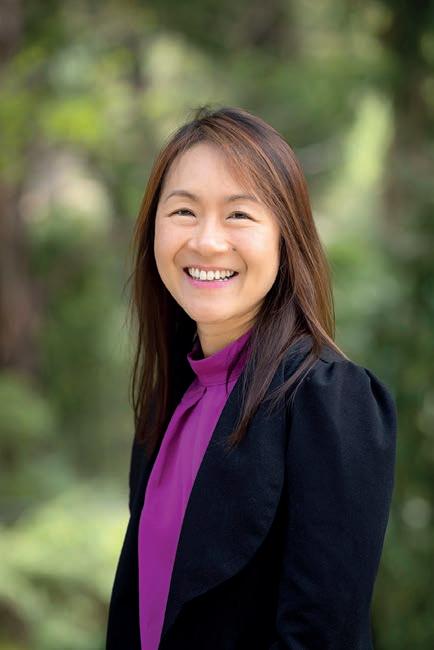
she says.
Professor Yap acknowledges that some students may continue to access social media despite the restrictions, potentially through alternative or less regulated platforms. In those cases, she says, schools’ responses would not change significantly and would continue to focus on wellbeing and support rather than enforcement.
She also suggests the legislation provides a prompt for schools to review whether they have sufficient policies in place around online safety, digital behaviour and student support.
“If schools are now forced to consider whether they even have sufficient policies in place, then this is a good prompt,” she says.
In terms of curriculum and school practices, Professor Yap says most digital literacy, online safety and
respectful behaviour policies should already align with the new laws. Rather than rewriting policies, schools may need to reinforce existing expectations and clarify what the legislation means for students.
“By and large, I would think that those policies still apply,” she says. “If anything, it would be an emphasis on a few of these additional points.”
She adds that schools may also need to help students identify alternative ways to meet social and connection needs previously fulfilled through social media, both online and of ine.
Parent communication will also play a key role. Professor Yap says schools are likely to support families by sharing information and directing them to external resources, including those provided by the eSafety Commission.
“At the very least there will be communications around ‘This is what the school’s position is, these are the steps that we are taking to support your child’,” she says.
Addressing concerns about teacher workload, Professor Yap says the legislation should not significantly increase administrative demands, as educators are not required to monitor compliance. Where issues arise, she says responses would mirror existing approaches to student distress and wellbeing.
“The focus for educators, for schools, is on what still remains the same,” Professor Yap says. “Their main agenda is still the same. This [social media ban] is a nuance that is new, but by and large, what educators still do on a day-to-day basis is hopefully still the same. EM
As workloads intensify and roles expand, principal wellbeing is inseparable from teacher wellbeing, demanding systemic reform to make school leadership sustainable long term, writes Australian Principals Federation (Victorian Branch) President, Mr Andrew Cock.
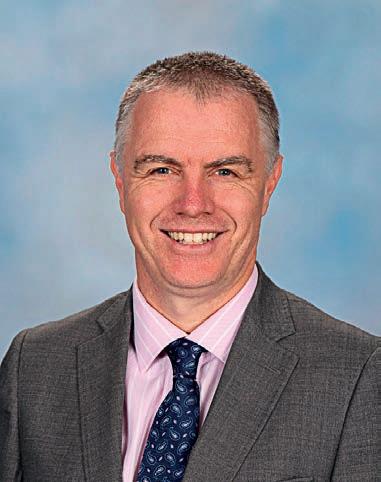

Wellbeing in schools is ultimately about people. Teachers and principals enter the profession driven by purpose, relationships, and a commitment to the students, but the conditions in which they work are increasingly testing these foundations. Across Australia, conversations about school staff wellbeing are becoming more honest and more urgent, not because educators are less resilient than previous generations, but because the work, the students and schools themselves have changed.
Expectations have grown, complexity has intensified, and the emotional load carried by school staff and leaders has never been heavier. Supporting the wellbeing of teachers and principals is therefore not a matter of individual toughness or goodwill; it is about creating systems, roles, and environments in which committed professionals can continue to do their best work without compromise.
declines, principals are not insulated from the impact – they absorb it operationally, emotionally, and morally.
Principals carry responsibility for supporting staff wellbeing while simultaneously navigating staff shortages, student outcomes, covering classrooms, and resolving con ict. In practical terms, this means that teacher stress often becomes principal stress by default. This is not a failure of leadership it is a reality of the role.
Mr Andrew Cock, previously Principal of Blackburn Primary School in Victoria, is an active leader in school leadership advocacy. He serves on the Australian Principals Federation’s Victorian branch executive, representing principal class interests and wellbeing in industrial forums. In his school and professional roles, he champions support, advocacy and improved conditions for educational leaders.
Any serious discussion of principal wellbeing must also acknowledge teacher wellbeing. In Australian schools, the wellbeing of principals and teachers operates as a shared ecosystem, pressure rarely disappears; it simply transfers. Teachers across the country are facing intensifying workload demands, behaviour complexity, curriculum challenges, administrative creep, and staffing instability. These pressures are real, documented, and increasingly visible in attrition rates and workforce shortages. When teacher wellbeing
The modern Australian principalship has evolved into one of the most complex leadership roles in the public sector. Principals are expected to be educational and instructional leaders, operational managers, HR directors, occupational health and safety officers, compliance experts, and community diplomats – many would reasonably argue they now function as the CEOs of their school ecosystems. This breadth of responsibility is carried with ultimate accountability, often without the adequate administrative supports, remuneration, training or protection.
Leadership theory is clear: sustainable leadership requires role clarity, decision making autonomy and manageable cognitive load. Yet principals operate in an environment characterised by escalating accountability, policy development, and shrinking buffers. The result is chronic role overload. What was once “additional responsibility” has quietly become baseline expectation.
Distributed leadership is frequently cited as the solution, but in practice, it

system mandated tasks that cannot be delegated. Delegation without capacity is not empowerment; it is risk transfer. Principals remain the final point of accountability, absorbing both operational pressure and moral responsibility.
The Australian School Leader Health and Wellbeing Survey provides some of the clearest evidence of the pressure facing school leaders today. Conducted nationally over more than a decade, the survey shows principals reporting significantly higher levels of stress, burnout, sleep disruption, and psychological distress than the general population and many comparable professions. Critically, the survey highlights workload intensity, role complexity, and lack of recovery time as the dominant risk factors. Additionally, research by Professor Jane Wilkinson has been particularly in uential in highlighting the “invisible labour” of school leaders – the relational, emotional, and moral work that sustains school communities, absorbs con ict, and holds systems together.
Across Australia, education departments have increasingly recognised principal wellbeing as a strategic priority and have responded with dedicated frameworks and targeted initiatives. This represents a significant shift from earlier approaches that relied largely on informal support or individual coping strategies. The challenge now is not awareness, but consistency and depth of implementation.
In Queensland, a dedicated Principal Health and Wellbeing Strategy sits within
school leaders face distinct pressures.
Victoria has been an early mover, implementing a Principal Health and Wellbeing Strategy alongside a suite of supports including mentoring, induction programs, health checks, and proactive wellbeing resources. These initiatives have been widely valued by principals and have helped normalise conversations about leader wellbeing.
In Western Australia, the Principal Health and Wellbeing Strategy 2023–27 offers a contemporary, strengthsbased approach built around being trusted, supported, and connected to lead. The strategy is reinforced by recent funding commitments that have expanded access to tailored counselling, mediation, and regional support services, demonstrating alignment between policy intent and resourcing.
New South Wales, Tasmania and the ACT have similarly developed wellbeing frameworks and action plans that recognise the importance of contextual factors, particularly for principals working in rural, regional, and remote settings. Their approaches highlight the value of integrating principal wellbeing within broader staff wellbeing and workforce strategies.
Collectively, these initiatives point to genuine and growing policy commitment across the different states. The opportunity now lies in strengthening alignment between wellbeing strategies and workload reform, embedding supports as core conditions of the role
With these refinements, existing strategies provide a strong foundation for sustainable improvement in principal health and wellbeing.
From an industrial perspective, principal wellbeing is inseparable from attraction, retention, and succession planning. Across Australia, shrinking applicant pools, rising early exits, and increased reliance on acting appointments are clear feedback. Competitive remuneration alone does not compensate for roles perceived as unmanageable. Peak organisations, such as the Australian Principals Federation maintain that without enforceable workload controls, genuine time-in-lieu provisions, and access to professional development, wellbeing initiatives will remain cosmetic. Each principal lost represents lost leadership capacity, destabilised culture, and significant replacement cost.
Principal wellbeing is not about making the role easier. It is about making it sustainable. Australia cannot afford to treat school leaders as endlessly elastic. The principalship is the linchpin of school performance, teacher wellbeing, innovation, strategic implementation and community trust.
If Australian education systems want high performing schools, they must design high functioning principals. Aligning expectations with reality, policy ambition with operational capacity, and wellbeing strategies with enforceable action. The future of our schools depends on it and the clock is already ticking. EM
Carey Baptist Grammar School reflects on what a year-long pilot revealed about data-informed student support.
When My Mind Check ceased operation in December 2025, it marked the end of a nationally funded digital wellbeing platform that reached more than 20,000 students in just over a year. For Carey Baptist Grammar School in Melbourne, the timing coincided with the conclusion of a deliberately limited pilot – one that has left a clear imprint on how the school thinks about student voice, data and early intervention.
Carey, one of Victoria’s largest independent schools, serves more than 2,500 students from early learning to Year 12 across its Kew and Donvale campuses. Its wellbeing framework has long combined psychologists, pastoral structures and surveys designed to track student experience over time. My Mind Check was introduced in 2025 as an additional, tightly scoped layer within that system.
Head of Student Wellbeing Mr Allan Griffin first encountered the platform at an education conference, before its national rollout. Unlike many survey tools already in use, My Mind Check offered short, supervised check-ins that produced identifiable student responses rather than anonymous cohort data.
“It encapsulated what we were looking for, Mr Griffin said. Evidencebacked, well supported on the backend, and free – it ticked a lot of boxes”.
The platform was deployed only with Year 5 and Year 10 students –Carey’s largest intake and transition years – and administered twice during the year, in Term 1 and Term 3.
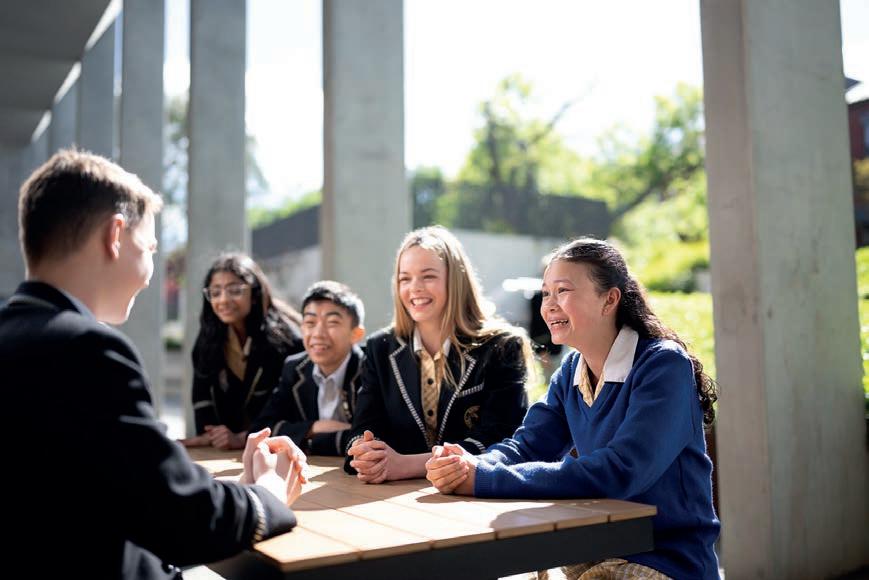
pastoral or class time, with staff present and consent obtained from families.
The aim was not to replace clinical assessment or long-established surveys, but to create an additional moment for students to articulate how they were feeling, in real time, and to give teachers clearer starting points for follow-up conversations.
My Mind Check itself was designed as an early-intervention tool. In 10–15 minutes, students responded to evidence-based prompts capturing indicators such as stress, anxiety and low mood. Educators accessed results through a portal that linked responses to curated resources and suggested next steps. Nationally, more than 200 schools across all sectors adopted the platform, supported by Australian Government funding that began in 2023. That funding will not continue, with operations ending in December 2025.
At Carey, the identifiable nature of the data proved to be the platform’s most distinctive feature. While anonymised surveys such as the Resilient Youth Survey continued to inform whole-school trends, My Mind Check provided insight into individual students “in that moment in time,” Mr Griffin explained.
This distinction shaped how the data was used. On check-in days, Carey convened psychologists and year-level leaders to review
responsibility for follow-up. In some cases, the information confirmed what teachers already suspected; in others, it provided reassurance that existing supports were aligned with student experience.
“It hasn’t necessarily told us anything teachers didn’t already know – and that’s a good thing,” Mr Griffin said. Sometimes a wellbeing tool’s biggest job is to affirm teacher judgement and give shared language for families”.
Consent rates sat at around twothirds of eligible students, typical for a pilot wellbeing initiative. Mr Griffin noted that any consent-based tool inevitably re ects only part of a student population, reinforcing the need for professional judgement and ongoing observation beyond survey data alone.
National data released in late 2025 showed strong engagement during the platform’s brief lifespan, with more than 29,000 check-ins completed and high levels of staff confidence reported. For Carey, the end of My Mind Check does not represent the loss of a single tool, but the conclusion of a trial that clarified where digital check-ins sit within a broader wellbeing ecosystem.
“Schools have ownership over how they use tools like this – and that’s the point. If we can use data to help a student feel safe enough to speak up tomorrow, that’s a win worth repeating,” Mr Griffin said. EM
Online professional learning courses support teachers’ knowledge and instructional practice through adaptive modules, reflection prompts and classroom application tasks.
Aimed particularly at teachers earlier in their careers or those developing a new area of expertise, Hachette Learning Academy offers short, focused online courses that respond to individual progress and understanding. Each course is designed to take between two and three hours to complete, supporting engagement alongside existing teaching responsibilities.
Courses within Hachette Learning Academy are built around adaptive learning modules informed by principles of cognitive development and effective professional learning. Each section begins with a re ective startingpoint question, prompting teachers to consider their current practice and activate prior knowledge before engaging with new content.
As teachers progress through a course, targeted questions check understanding and guide next steps. When responses demonstrate secure understanding, learning may accelerate or introduce additional challenge. Where uncertainty or gaps are identified, key ideas are revisited through rephrased explanations, alternative examples or model responses. This adaptive structure supports movement towards more confident, embedded practice.
Optional application and re ection tasks conclude each


section, encouraging teachers to trial approaches in their own classrooms and re ect on impact. These tasks are designed to support transfer from professional learning into classroom practice and promote teacher ownership of learning.
Hachette Learning Academy courses address a range of curriculum and pedagogical areas relevant to classroom practice. Existing topics include structure and scaffolding, inclusive classrooms, supporting students with English as an additional language, digital literacy and wellbeing. All courses are designed to be classroom-relevant while remaining grounded in researchinformed principles.
In 2026, new courses are expanding Hachette Learning Academy’s focus areas. These include content on impactful feedback by Kate Jones, an education author and former classroom teacher; revision by Helen Howell, an education consultant and former teacher instruction-based learning informed by the work of Zach Groshell, an instructional coach and former teacher; and metacognition by Nathan Burns, an educator and author. These additions broaden Hachette
Learning Academy’s offering across assessment, instructional practice and learning strategies.
Hachette Learning Academy is designed to support individual teacher development while aligning with broader school professional learning priorities. The adaptive nature of the courses allows teachers to engage at a pace and depth suited to their needs, while shared structures support consistency across teaching teams. For school leaders, Hachette Learning Academy provides a exible professional learning model that can complement existing induction and development frameworks. The online format supports access across different roles and career stages, while re ective tasks encourage connection between theory and practice. EM
View demonstrations and take a free 20-minute sample Hachette Learning Academy course at www. hachettelearning.com/hachettelearning-solutions/academy
To find out more or discuss Hachette Learning Academy packages for your school, contact Chioma. NwaorguOkere@hachettelearning.com.
For Distinguished Laureate Professor Jenny Gore, quality professional learning is about more than good teaching – it’s about helping educators rediscover confidence, connection and purpose in their work.
When Laureate Professor Jenny Gore began her career as a secondary PE teacher in South Australia, she could never have imagined her work would one day shape national policy and practice in teacher development.
Yet two decades of research, evidence and advocacy later, her Quality Teaching (QT) Model and Quality Teaching Rounds (QTR) approach are changing the professional landscape for Australian educators – and proving that high-quality professional development can do far more than improve classroom practice. It can restore teachers’ confidence, connection and joy in their work.
I’ve always had a passion for how we help teachers to do their jobs better and to feel more satisfied with their work, Prof Gore says. That passion has driven her career from her early days in the classroom to her current role as Distinguished Laureate Professor at the University of Newcastle, where she leads the Teachers and Teaching Research Centre.
Her journey into academia wasn’t a deliberate one – “circumstances took me here”, she laughs – but it became a calling. Early research collaborations with leading education scholars, including Professor Alan Luke, Professor Bob Lingard and Associate Professor James Ladwig, led to the development of a new way of thinking about classroom practice.
The result was the QT Model, developed in partnership with the New South Wales Department of Education and first introduced in 2003. Built around
three key dimensions – intellectual quality, quality learning environment, and significance it offers a coherent framework for describing and improving teaching practice across grade levels, subject areas and school contexts.
From a model to a movement While the QT Model helped schools define what good teaching looks like, Prof Gore and her team soon realised teachers needed a way to work with the Model collaboratively and meaningfully. “We needed to not only develop the Model but also a way of working with it that would be really powerful,” she explains.
That’s where QTR came in. Like medical rounds – where clinicians collectively observe, diagnose and discuss patient care – QTR brings teachers together in small professional learning communities to observe one another’s lessons, code them against the QT Model, and engage in deep professional dialogue.
“Teachers love getting into each other’s classrooms, which they so rarely get to do, says Prof Gore. They also value having time to read and talk about educational ideas. It’s a chance to engage with professional reading, observe a full lesson, and then come together for a rich, confidential discussion about what they’ve seen.
Unlike quick ‘walk-throughs’ or observation checklists, QTR requires teachers to watch an entire lesson –seeing the ow of learning from start to finish before individually coding and then discussing the lesson as
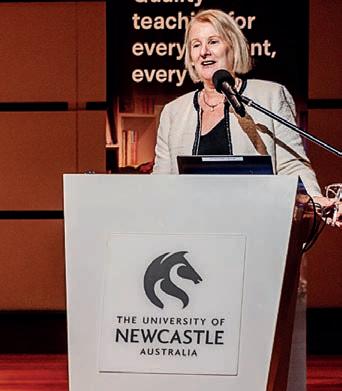

a group. The process deliberately attens hierarchy everyone, including the observed teacher, participates equally. We’ve done a lot to shift the power dynamics, Prof Gore says. It’s not about supervision or evaluation. It’s about collective diagnosis and professional growth.
Teachers who have taken part consistently report that the experience strengthens trust, collegiality and professional confidence. They laugh, they debate, they share vulnerabilities,” Prof Gore adds. It’s a safe, supportive space for their learning – the opposite of high-pressure performance review.
Prof Gore often describes QTR as addressing not just the substance of professional learning – what teachers need to know – but also its structure and relationships. Each round includes four components professional reading, classroom observation, individual coding, and collaborative discussion. Together they create a cycle of inquiry that is rigorous, relational and rewarding.
“Many teachers tell us it’s the best
professional learning they’ve ever done,” says Prof Gore. It makes teaching more intellectually engaging again.
The benefits also extend to students. Decades of research show that when teachers engage in QTR, student achievement can improve – with even greater effects in disadvantaged school settings. Cessnock High, for example, recently ranked second in NSW for improvement in HSC results and seventh in the state for NAPLAN improvement – this is a school with 75 per cent of students in the lowest quartile for socioeconomic advantage and 25 per cent who are Indigenous. We’re seeing impact on equity as well as excellence, Prof Gore says.
National investment, local impact
territory, across government, Catholic and independent sectors.
For participating schools, the professional learning itself is fully funded, with only teacher release time to cover.
The value of quality professional development has never been more urgent. With Australia facing ongoing challenges in teacher recruitment and retention, programs that strengthen teacher efficacy and wellbeing are critical.
According to Prof Gore, QTR does exactly that. We’re seeing fewer teachers reporting burnout, and statistically significant improvements in teacher efficacy their sense that they can make a difference, she says.
Gains are particularly strong across the areas of classroom management, effective strategies and student engagement.
Importantly, teachers who participate are also less likely to plan to leave the profession. It’s having an impact on retention, which is huge, Prof Gore adds.
That impact is now being amplified through a component of the National Teacher Workforce Action Plan (NTWAP) – a federal initiative providing free QTR professional development to 1,600 teachers to ensure quality induction into teaching.
Supported by $5 million in Commonwealth funding, the program was launched by Education Minister Jason Clare at Hambledon Public School in July 2023 and represents bipartisan recognition of the value of Prof Gore’s work.
“We’re just over halfway through now,” she says. We’ve reached more than a
It’s a two-day workshop followed by four days of in-school Quality Teaching Rounds, Prof Gore explains. So there’s no external consultant coming in it’s teachers working with teachers in their own context.
Each group of four teachers includes at least two early-career educators and at least one more experienced colleague, deliberately mixing generations and expertise.
“That blend of early-career and experienced teachers is central to the induction project, Prof Gore says. It’s about building capability, confidence and connection at the start of a teacher’s career.
Preliminary data from the program confirm strong results reduced burnout, increased wellbeing, stronger professional trust, and significant gains in teacher self-efficacy.
Qualitative data mirror those findings. “Teachers talk about how it’s changed their knowledge, practice, relationships and wellbeing, Prof Gore says. And all from just four days of rounds with their peers.
Perhaps most importantly, the approach is designed to be sustainable and self-propelling. We’re actually trying to do ourselves out of a job,” Prof Gore laughs. Once teachers understand the process, they can run it themselves.
Workshops for the QTR induction program are offered throughout the year, both face-to-face and online. Even the virtual sessions receive exceptional feedback.
“Sitting at a computer for two days of
admits, “but our participants rate the experience between world class’ and ‘outstanding’ (using the Net Promoter Score . It’s engaging, interactive, and gives them a taste of the rounds process before they lead it themselves.
Schools don’t need to send their entire staff – two to four teachers per school is enough to get started. Once they’ve attended the workshop, they can lead rounds back in their own school, she says.
The process is deliberately designed to stay developmental, not evaluative. “We’re clear that this isn’t about collecting data for principals or performance appraisal, Prof Gore emphasises. It’s about learning together and making everyday practice stronger.
For Prof Gore, the real success of the Quality Teaching movement lies not just in measurable outcomes, but in how it reenergises the profession.
“When teachers feel trusted, supported and intellectually stimulated, everything else follows, she says. EM
Schools interested in participating in the Strengthening Induction through Quality Teaching Rounds project can register for free two-day workshops – offered both in person and online – through the University of Newcastle’s non-profit social enterprise, the QT Academy. Each school needs four participating teachers, two of whom are in their first three years of teaching and at least one with more experience, to participate in the project. Workshops will continue through to mid-2027, but places are limited. For more information, visit https://qtr.edu.au/induction.
A groundbreaking collaboration led by Autism Spectrum Australia (Aspect) is reshaping how schools share expertise to support autistic students, with teachers across sectors joining forces to build inclusive practice beyond policy and into the classroom.
When 150 educators, researchers and policymakers filled a room at NSW Parliament House in October 2025, it wasn’t another professional-learning day. It was the start of something larger: a statewide effort to dismantle silos and create a shared, practical blueprint for inclusive education.
The event – Aspect’s inaugural Community of Practice (CoP) Spotlight brought together school leaders from government, Catholic and independent schools, alongside students and parents with lived experience of autism. Its goal: to shift collaboration from one-off training to an ongoing network of professional learning and mutual support.
“You can’t have inclusion in isolation,” says Ms Maryanne Gosling, Aspect’s National Director of Education. “If we hold knowledge in silos, only certain kids can be supported. Collaboration means that expertise becomes shared and used across our whole community.”
Breaking down barriers
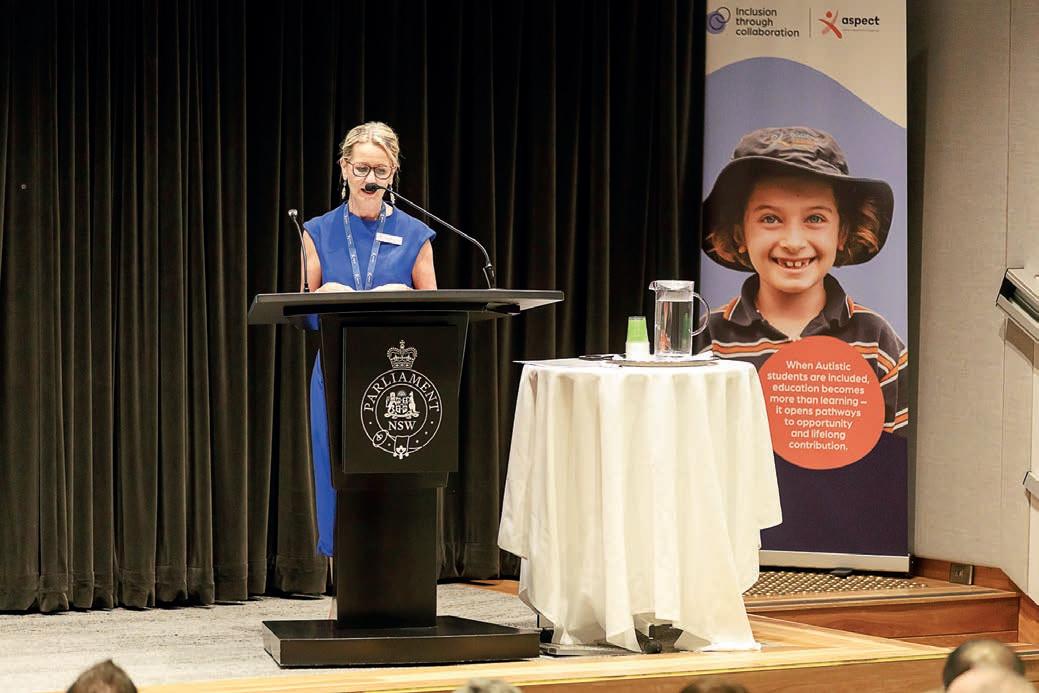
classroom experience.
Aspect’s model has always blurred boundaries between specialist and mainstream settings. With 110 classrooms operating inside the grounds of partner schools – around 60 sites across New South Wales the organisation has long championed a “shared-space” approach to inclusion.
That philosophy underpins the new Community of Practice framework. Rather than schools
“Every school has tried to rally and find the strategies that work for their children,” Ms Gosling explains. “But where that doesn’t work, those kids can end up feeling like they don’t belong – or being asked to leave. Collaboration gives educators a way to share what works, so more students can stay connected to their local community school.
The event in October was deliberately broad, showcasing examples of good practice across multiple sectors. Teachers presented short vignettes of what has worked in their classrooms, paired with researchers validating those outcomes. By design, it was also crowded. The 150-person cap was reached
For policymakers, it offered a visible demonstration of what can happen when systems relax their boundaries. “When you bring people together and show what can happen across those walls, it changes the conversation,” Ms Gosling says.
From one-off PD to sustained practice
Many teachers attending the launch spoke of the limits of conventional professional development: an intensive day of theory followed by little follow-up or coaching. The Community of Practice model aims to replace that with continuous, localised support.
“Think of it like having a network on the other end of the line,” Ms
Gosling says. “If you’re in a classroom with 30 students and something isn’t working, you can call someone who’s tried it before, or invite them to come in and model it. That’s what true professional learning looks like.”
Smaller, regional Communities of Practice will begin rolling out through 2026, allowing teachers to connect with peers facing similar contexts and student needs. These groups will meet regularly – both in person and online –to plan lessons, share data, and re ect on what’s working.
Aspect’s own schools already run structured “learning walks and talks”, where teachers visit each other’s classrooms to observe and refine inclusive strategies. The Community of Practice will extend this peer-to-peer model across systems and sectors, with Aspect providing facilitation and mentoring.
Collaboration, however, requires time – a resource teachers rarely have. Aspect has tried to address that internally by granting its staff an additional week of non-teaching time for professional learning and planning, with parents’ support.
“It’s not a lot – one week out of 42 – but it sends a message that teachers’ time to plan is valued,” Ms Gosling says. They don’t just need PD days they need time to sit with someone who can say, ‘Have you thought about trying this?’ and help make those small pedagogical adjustments.
For schools outside the Aspect network, she emphasises that the principle matters more than the format: “It might be relief time, curriculumdevelopment time, coaching – whatever form it takes, teachers need space to plan.
Over five decades, Aspect has seen profound change in both awareness and expectations surrounding autism.
“Because we’re better at understanding autism, our prevalence rates are much higher,” Ms Gosling notes. “Parents now know what they didn’t know before, and they’re looking
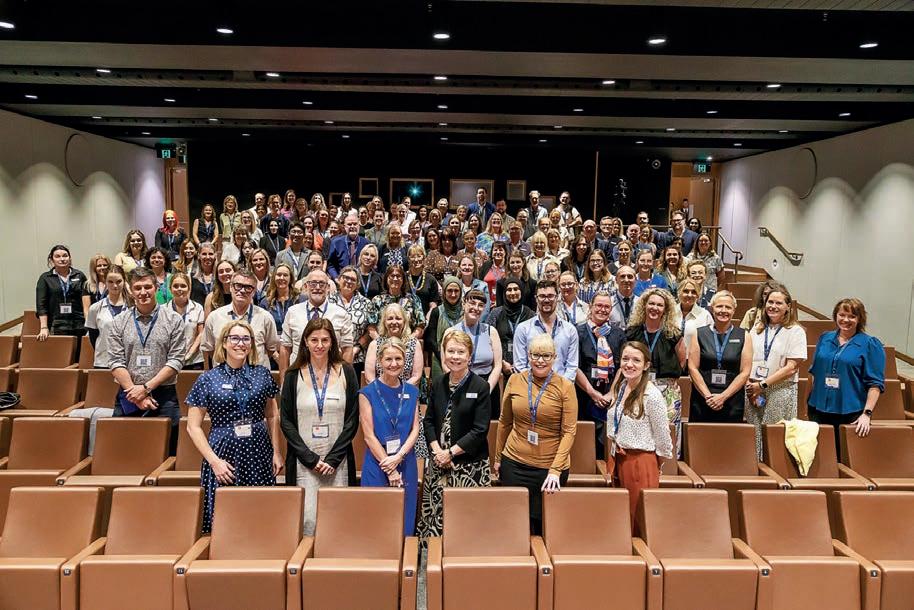
more specialist knowledge and systems that let them access it.”
Public attitudes have evolved too, re ected in the prominence of autistic voices at the Community of Practice launch. Speakers included Michael Theo, whose journey from a difficult school experience to success as an actor and consultant was featured on ABC's Australian Story in 2025.
“It is important that we listen to those with lived experienced and give them the opportunity to speak to what structures had to be in place for them to thrive – and what happens when they aren’t," Ms Gosling says.
A highlight of the Spotlight event was a Year 12 student and Deputy Premier of the NSW Youth Parliament, who described rebuilding her confidence after exclusion earlier in her schooling. Her story illustrated the power of teachers who “planned for difference” and made her feel she belonged.
“It’s about doing things with people, not to people,” Ms Gosling stresses. “Proper collaboration means students and families are part of the conversation, not an afterthought.
The Community of Practice’s inclusion of parents and young people alongside teachers and researchers ensures that future practice is grounded in lived experience.
“Your most impactful strategies will
person you’re trying to help, and with their carer or family,” Ms Gosling says.
Teachers interested in joining a local Community of Practice can register through Aspect’s website, with regional networks forming progressively through 2026. Each will focus on specific contexts rural or metro, primary or secondary – so members can swap strategies that truly apply to their classrooms.
This isn’t about ticking a PD box, Ms Gosling says. “It’s about building capability across the whole sector so every child can feel they belong.”
If early enthusiasm is any guide, Aspect’s Community of Practice may become a template for other states and systems. The appetite for genuine collaboration is clear, and the framework provides a way to sustain it.
“Educators don’t sign up for competition, Ms Gosling re ects. “They sign up because they care about students. Once you remove the system constraints, they’re ready to share everything they know.” EM
Educators are invited to register their interest to be part of future Communities of Practice: https://www. aspect.org.au/our-services/workshopsand-webinars/be-part-of-futurecommunities-of-practice
Teaching has changed, but a strong start still matters, writes Andrew Murray. Grounded planning, relational routines, coherent systems and supported sta wellbeing set up success for 2026.

At 7 42am on the first day of school this year, a Year 6 teacher told me she had already answered a handful of parent emails and sorted several small issues before her first student even arrived. Her classroom wasn’t perfect yet, but she greeted each child with warmth and calm. Watching her reminded me that across every school I visit, teachers begin the year with an impressive mix of hope, professionalism, and care. That spirit remains one of the strongest forces in education.
The beginning of the school year doesn’t look the same as it once did. Expectations have shifted, and student needs have diversified. Yet teachers continue to step into their classrooms determined to create spaces where young people feel safe, connected, and ready to learn. The back-to-school period is demanding, but it is also full of possibilities. When supported well, these early weeks become the foundation for a thriving year.
Students are coming in more emotionally aware than in previous years. Teachers are noticing students who articulate their feelings more openly, who settle quickly with consistent routines, and who respond positively to relational warmth. Yes, there are still moments of anxiety or dysregulation, but there is also a remarkable willingness to connect.
In one Sydney secondary school, a Year teacher told me that her class shifted instantly when she opened each day with a single grounding question. It’s like they remember who they want to be, she said. That small moment centres them. These snapshots show how quickly students can settle when offered a calm pathway into the day.
Andrew Murray is a leadership and sta wellbeing strategist across New Zealand and Australia. A former secondary school principal, he partners with leaders to build data-driven wellbeing frameworks. His work integrates Te Whare Tapa Whā with Harvard’s flourishing model. He lectures at BBI, tutors at Australian Catholic University, hosts the Well.I.Am podcast, and is completing PhD research.
January still carries a sense of renewal, but teachers are approaching it with more balance and less pressure for perfection. Instead of trying to organise everything before the first bell, many now begin with a clear plan and the confidence to refine it as the class settles. This shift matters. A teacher who allows herself to start with good enough planning is far more able to adapt to her students than one trying to force immaculate systems on day one. Great teaching grows gradually it rarely arrives fully formed in Week 1.
The administrative load at the start of the year can still feel heavy, but many schools are rethinking how they structure it. Some have reduced the number of platforms teachers must navigate. Others have simplified documentation and protected preparation time in the first fortnight. These changes don’t remove admin, but they make it more purposeful. Teachers consistently report that they begin the year with more clarity and much less cognitive strain when the systems around them are clean and coherent.
One of the most powerful aspects of Term 1 is the relational work that teachers do. It takes energy, but it is what gives the year its shape. Teachers guide students through uncertainty,
establish routines with steadiness, and help create a classroom identity that becomes a reliable anchor for learning. ew professions ask for the same blend of emotional intelligence, presence, and practical skill that teaching requires in these early weeks. The craft of teaching is at its most visible here, in the quiet, deliberate work of forming a community from a room full of individuals.
Even with optimism and purpose, the early weeks can feel intense. The shift from holiday rhythm to full relational presence is significant.
Teachers who support themselves well in this transition often do three simple things.
One helpful way is to adopt a daily anchor. This might be a moment of stillness before the students arrive, a quiet cup of tea mid-morning, or a short walk after school. The anchor is not about self-indulgence. It gives the nervous system a point of calm in a fast-moving day, helping you stay steady when the classroom energy rises and falls.
A second, equally important step is to protect one boundary early. Many teachers choose one weeknight that is work-free or set a finish time in the afternoon. The boundary doesn’t need to be rigid, but it does need to be consistent. When teachers establish this rhythm early, they protect energy that will be needed later in the term.
A third way to care for yourself is to reach out for support sooner rather than later. A quick check-in with a colleague, mentor, or senior teacher in Week 2 almost always prevents pressure from accumulating later. It’s not a sign of falling behind. It’s a sign of professional awareness and teachers who ask early almost always navigate Term 1 more smoothly.
Leadership shapes the quality of the back-to-school experience. The schools that begin the year well are those where leaders protect teacher time, articulate clear and achievable priorities, and make pastoral support available early. Strong leaders also communicate with families in a way that sets balanced expectations and avoids unnecessary urgency. And
they understand that a strong start is never left to teachers alone it’s cocreated by leadership that knows when to step in and when to protect space. When leaders remove friction, teachers bring their best to the classroom.
Despite the faster pace of today’s schools, there is much to celebrate in how teachers are beginning 2026. Classrooms settle more quickly when relationships are prioritised. Students respond with surprising maturity when routines are clear and warm. Teachers are adopting simple wellbeing habits that help them sustain energy. And more leadership teams are recognising that the opening weeks shape the wellbeing of the entire staff.
Teachers don’t need a perfect start. They need a supported one. When schools and teachers work together to create that environment, the year begins with stability, confidence, and a sense of shared purpose.
If we get the start right, the whole year opens up. And along the way, remember to smile and enjoy it you do special work. EM

Author Helen Adam explores how the recently announced Australian Teaching and Learning Commission's design will determine who will succeed, and who will not.
The Australian Teaching and Learning Commission represents Australia's most significant opportunity in a generation to reshape literacy education. By bringing together ACARA, AITSL, AERO and Education Services Australia, alongside teacher standards reviews and national lesson plan banks, the commission could fundamentally transform teaching. But will this integration embed equity throughout, or entrench approaches that have left particular groups of children behind for decades
Despite sustained focus on explicit instruction, deeply troubling patterns persist in Indigenous student outcomes. Research reveals Indigenous students experience disproportionately higher suspension and exclusion rates, with increases driven primarily during primary years. Meanwhile, studies examining gifted and talented programmes consistently find Indigenous students and those from Culturally and Racially Minoritised CARM backgrounds significantly underrepresented.
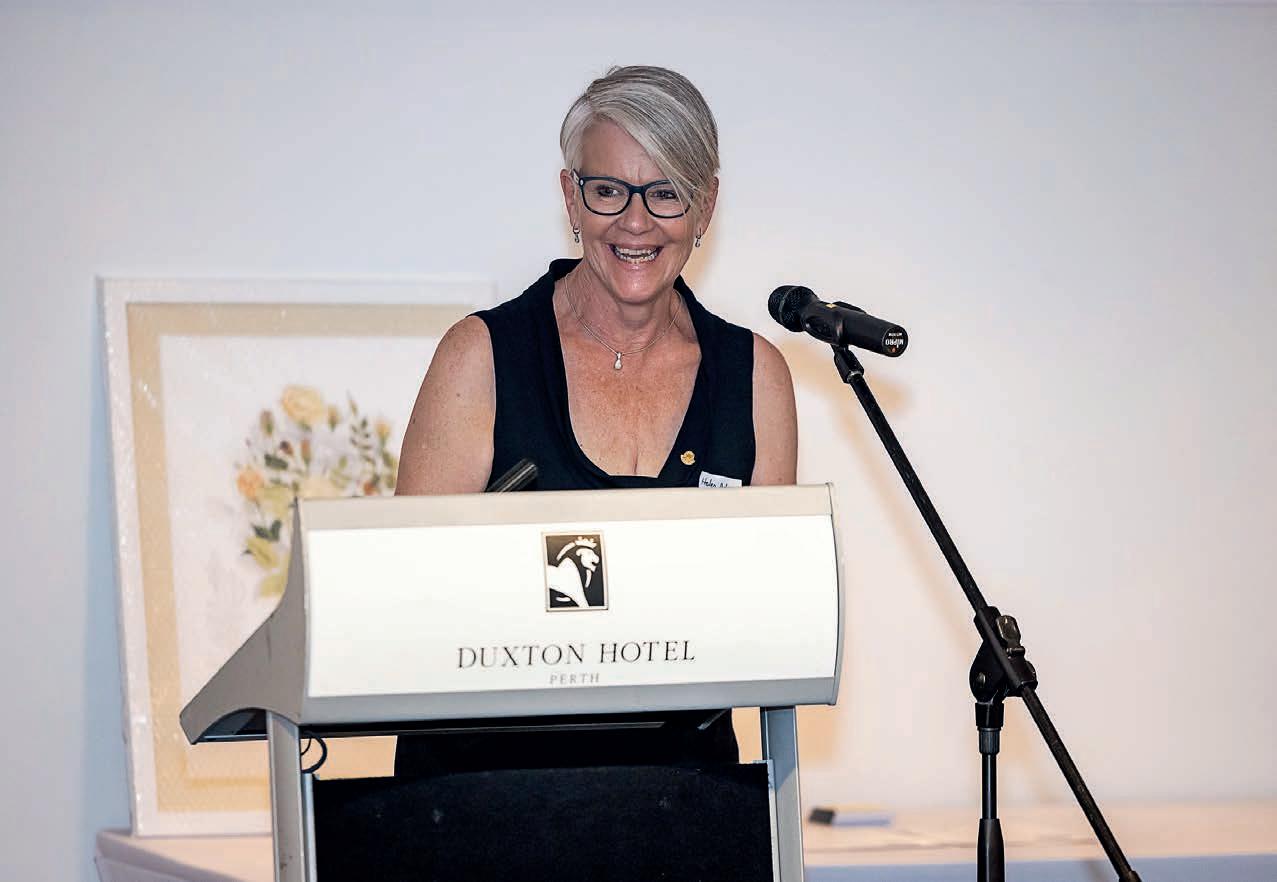
Council (ECPAC). She is the author of Creating Equitable Literacy Learning Environments: A Transformative Model published by Routledge, which examines how explicit literacy instruction can be implemented equitably across diverse contexts.
This creates a devastating double pattern Indigenous and CARM children overrepresented in intervention and special education, while simultaneously underrepresented in programmes for high-achieving students. When the same groups consistently fall into these categories, we must ask whether the problem lies with children or with systems that fail to recognise diverse strengths, knowledge systems and ways of demonstrating capability.
What lesson plan banks might entrench
Lesson plan banks could support teachers particularly early career educators. However, without deliberate design, these risk entrenching monocultural and linguistic assumptions that contribute to current inequities.
Consider which texts feature in 'model' lesson plans. Less than one per cent of books in many Australian classrooms authentically represent Aboriginal and Torres Strait Islander peoples. When lesson plans direct teachers towards particular texts as exemplars, whose stories get centred Classic texts may offer literary merit, but many contain problematic representations requiring sophisticated critical literacy approaches.
Lesson plans developed for monolingual contexts can assume particular home resources, cultural knowledge and family structures – recommending activities that presume book access, Englishspeaking support and middle-class practices while marginalising rich literacy practices like oral storytelling, multilingual homes and cultural knowledge transmission.
Teachers possess critical expertise in adapting resources, but this requires time and recognition as core professional work. If lesson plans become standardised scripts prioritising fidelity over responsive adaptation, we deskill teachers while entrenching the cultural biases underpinning persistent inequities.
Teacher standards:
the critical integration point
The teacher standards review presents perhaps the most structurally significant opportunity for systemic change. The recent AITSL addendum includes cultural responsiveness as required core content for ITE programmes a significant step forward. However, it's positioned as the fourth and final content area, after 'The Brain and Learning', 'Effective Pedagogical Practices' and 'Classroom Management . This sequencing risks positioning culturally responsive practice as something teachers add after mastering supposedly universal teaching techniques, rather than recognising it must be integrated throughout how we teach, plan lessons, manage classrooms and assess learning.
The commission provides a critical opportunity to ensure that when teacher standards are reviewed, culturally responsive practice becomes embedded throughout all professional capabilities. Teaching and planning standards could require building upon students' cultural and linguistic assets. Assessment standards could value multiple culturally valid methods beyond standardised measures. Classroom management standards could require understanding how cultural backgrounds shape engagement rather than defaulting to deficit interpretations.
Such integration would fundamentally reshape both initial teacher education and ongoing professional learning. Rather than treating cultural responsiveness as supplementary content addressed after technical competence is established, ITE programmes would embed these capabilities throughout coursework on pedagogy, assessment and classroom practice. Professional learning would similarly support ongoing development as student populations change and teachers deepen cultural competence, coordinated through aligned standards, resources and research that demonstrates effective approaches.
The commission's purpose is coordination between curriculum, teaching, assessment and research. But coordination towards what ends If these elements align solely to explicit instruction measured through standardised assessments and delivered through prescribed lesson plans, we risk only perpetuating existing problems. Meaningful coordination must recognise that evidence-based instruction works within broader contexts. High quality phonics, word and text level instruction, comprehension and writing instruction matter enormously and are robustly supported by research. But instruction cannot compensate for structural inequities inadequate book access, texts that fail to mirror students' identities, or the reality that children from well-resourced schools often receive more reading time and choice while disadvantaged peers often spend more time on isolated skills with limited actual reading.
Assessment that recognises capability Assessment frameworks must value diverse ways of demonstrating learning, recognising that capability manifests differently across cultural contexts. When giftedness is defined solely through culturally loaded measures, we systematically fail to identify capability. Recent experimental evidence reveals the scale of this bias culturally contextualising NAPLAN tests while maintaining identical difficulty improves scores by 0.24-0.30 standard deviations the difference between meeting and exceeding national standards Dobrescu et al., 2022 . The issue is inbuilt cultural bias questions requiring cultural knowledge unrelated to ability, resulting in scores re ecting test design rather than capability. Importantly, this study found that recognition and relevance scores increased significantly in contextualised tests – students reported seeing themselves and their communities in the assessment materials, a fundamental shift from feeling culturally invisible to culturally centred.
The evidence question
Randomised controlled trials have established foundational principles of effective reading instruction. But how evidence is defined within the commission structure will profoundly shape all other decisions. If evidence remains solely interpreted through RCTs whilst marginalising qualitative research, Indigenous methodologies and community knowledge systems, we predetermine which questions get asked, which solutions get funded and which practices get endorsed.
Quality research includes rigorous quantitative studies, Indigenous research methodologies centring cultural protocols, qualitative studies examining cultural contexts, and practitioner inquiry valuing teachers professional wisdom. The commission's research function must value diverse evidence traditions that together provide a richer, more complete understanding of how children learn and what teaching approaches support diverse learners.
The present moment
ederal Education Minister Jason Clare has made clear commitments to tackling inequity. The Better and airer Schools Agreement includes explicit equity targets. The Mparntwe Education Declaration commits to ensuring all young Australians achieve their potential regardless of background. The Teaching and Learning Commission provides structural architecture to operationalise these commitments – or to relegate them to aspirational statements while coordination prioritises standalone technical approaches that have demonstrably failed to close gaps.
We have the policy window, political commitment, and robust research showing what can be achieved through integrating quality instruction, equitable opportunity and authentic representation through culturally responsive practice. The question remains, will seize this once-in-ageneration opportunity or entrench the approaches that have produced the same disappointing results for the same children for decades. EM
Positive teacher–student relationships play a significant role in supporting teacher wellbeing in middle and secondary schools, according to a new study that brings fresh attention to the relational nature of teaching work.
Published in Educational Psychology Review, the paper, Associations Between Teacher-Student Relationship Quality and Middle and Secondary School Teachers’ Wellbeing: A Systematic Review, analysed 55 studies examining how relationship quality between teachers and students is associated with teacher wellbeing. The review found consistent evidence that positive, low-con ict relationships are linked to stronger wellbeing outcomes for teachers across multiple dimensions.
The study identified that positive teacher–student relationships were associated with teachers’ daily emotional experiences, as well as their sense of engagement, meaning and accomplishment in their work. These elements align with the PERMA model of wellbeing, which focuses on positive emotions, engagement, meaning and accomplishment as core contributors to overall wellbeing.
Importantly, the findings suggest that teacher–student relationship quality is not only relevant to classroom climate and student outcomes, but also functions as an indicator of teacher wellbeing, with implications for workforce sustainability and teacher retention.

sustaining relationships with students can be recognised as a core part of teachers’ work, with time, support, and professional development attached to it.”
Lead author and PhD candidate Ms Rhoda Lai, from Monash University’s Faculty of Education, said the findings highlight the need for schools to more deliberately recognise and support the relational demands of teaching.
“Schools that recognise the emotional labour involved in teaching are better placed to support staff
Ms Lai noted that relationshipbuilding can be particularly challenging to prioritise in secondary settings.
“Relationships are not always prioritised in high schools, where other things like covering content can take up considerable time, she said.
The research arrives amid ongoing national concerns around teacher
Professor Kelly-Ann Allen, a co-author on the paper and a belonging expert at Monash University’s Faculty of Education, said teacher wellbeing needs to be addressed as a priority in its own right.
“As the school year begins, we commonly see advice directed at adults on how best to support students returning to school. Students, however, are not the only people in school communities,” Associate Professor Allen said.
If we take anything from research on teacher wellbeing over recent
years, alongside growing concerns about teacher retention, burnout, and declining entry into the profession, it is that teacher wellbeing needs to be a clear priority in 2026. It cannot be a response to the previously mentioned concerns, because it deserves its own attention, in its own right, because teachers are important.”
The review positions teaching as inherently relational work, challenging the tendency to frame teacher–student relationships solely through the lens of student benefit.
“Our recent research treats teaching as relational work, Associate Professor Allen said. The benefits of studentteacher relationships are often framed as important for students. Teachers, however, also benefit from these relationships in meaningful ways.”
Across the studies examined, teachers who reported positive relationships with students were more likely to experience higher levels of wellbeing, including greater professional satisfaction, engagement and a stronger sense of meaning in their work. In contrast, strained relationships –particularly those characterised by ongoing con ict, violence or heightened emotional demands – were associated with increased risks to teacher wellbeing.
The findings underscore the role school leadership plays in shaping conditions that support healthy relationships. Ms Lai said leaders can help teachers manage relational demands more effectively by acknowledging relationship-building as skilled, emotionally demanding work rather than an informal or secondary aspect of teaching.
The research also points to practical features of positive relationships. Associate Professor Allen said consistency, warmth and predictability in interactions between teachers and students were key.
“When teachers use fair and predictable practices, share appropriate personal insights, and foster a sense of inclusion, teachers can find ways to share meaningful experiences with their students and know that this is benefiting
“If we take anything from research on teacher wellbeing over recent years, alongside growing concerns about teacher retention, burnout, and declining entry into the profession, it is that teacher wellbeing needs to be a clear priority in 2026.”
Associate Professor
Kelly-Ann Allen.
their own wellbeing as much as their student’s,” she said.
The study reinforces that teacher–student relationships develop over time and require reciprocal effort and engagement within professional boundaries. Like other relationships, they are shaped by mutual respect and sustained interaction.
This perspective is echoed by students themselves. Victorian middle
school student Florence said that because teachers and students typically spend an entire year together, investing in the relationship makes sense.
“Playing games in class, having fun with students, and giving out class rewards all help build positive relationships,” Florence said.
The researchers note that the positive effects of strong teacher–student relationships can endure well beyond the classroom. A wellestablished relationship can hold lasting value for both teachers and students and may be remembered decades later from both perspectives.
or school leaders, the findings add weight to calls for systemic approaches that recognise relational work as central to teaching practice. Allocating time, resources and professional learning to support relationship-building may play an important role in supporting teacher wellbeing, strengthening professional satisfaction and addressing longer-term retention challenges across middle and secondary schools. EM


Mr John Southon, Principal of Trundle Central School in NSW, argues schools must hold open, guilt-free conversations about domestic violence, rejecting harmful stereotypes that distort masculinity and leave young men struggling to form identity.
Few topics are more controversial and career limiting for an educator than encouraging open debate about domestic violence and the way men are portrayed in the media.
Yet the effects of this hideous crime and an unrealistic definition of masculinity some young men have are clearly seen in every school in Australia. Location, socio economic status, or religious affiliation does not protect our students from the crime of domestic violence – but informed debate and education can.
In 2024, I wrote in my school newsletter ‘the media labelling all men as violent is causing many beautiful young men to struggle with identity formation’. I also wrote, It is very difficult as an educator to inform young men about coercive control if a definition understandable to the teenage brain is not available.’
These statements were developed from 33 years of educating young people in mainstream, special education, behaviour and juvenile justice settings. It was not a reaction to an isolated case or a knee-jerk reaction from a bad day on the chalk face.
Surprisingly, mainstream media were ringing my phone at 5:00am to gain a statement to defend my controversial position. My concern then, and still now, is that saturation of young men with the message that being male is to be violent is causing young men identity confusion during a very vulnerable time in their life.
I see young men everyday who are afraid to identify with their concept of masculinity because it may offend, or they be labelled uncaring or even worse, condoning violence. This can
lead to boys isolating themselves and in extreme cases developing a real fear of the world they should be interacting with and contributing too.
These are not violent people; just young men with a different concept of being a male than the politically correct sanitised version. More modality of language would not sell the story as well but simple words such as ‘some’ or ‘more’ in the statement men are committing violence against women would make such a difference in the identity formation of vulnerable young men.
Coercive control is a hideous crime and the laws on the face of it are well overdue. However, my question is: how do we explain these laws to the adolescent brain? Trained legal minds were at the time struggling to understand how the law would be interpreted by the courts. How then can educators within the complex environments that are schools hope to effectively answer the multitude of questions coming from the people who need to be informed the most – our young men?
Many young men still cannot accurately define what constitutes a sexual assault let alone identify if their behaviour constitutes coercive control. Common questions I have fielded from young men are, Can women be charged with sexual assault? How do I know if a girl wants me to touch her? Some are so confused they no longer put themselves forward for a relationship.
This issue will be constantly placed in the too-hard-basket until we have a debate free from guilt and all types of

violence against women marginalises the debate and restricts our ability to bring about genuine change.
In my 34-year career I have never worked in a time where debate is more sanitised and controlled. All education systems develop and reward educators that are politically correct compliant clones, rather than conduits that encourage students to think beyond a concrete level to look at all aspects of an issue. The result is a generation of young people that seek guidance from social media and a society that wants to silo and group people under labels rather than actually debate and develop alternative viewpoints on controversial issues.
If educators, the front line of identity formation, continue to be marginalised and silenced because of the fear our comments and actions will be weaponised against us by the system we work within or the popular media, our young men will continue to suffer in a sea of confusion and fail to develop a positive concept of self. I passionately argue this era of extreme political correctness is the most dangerous to be male in our schools. Perhaps the academic results and attendance of male students are proof of this fact. EM
Mr Lucas Johnson, Director of Design Futures at Cornish College, shares how fostering connection and creativity within existing systems enhances student engagement and purpose in learning.
A student’s sense of connection to learning, to community and to the natural world has never mattered more in our education systems. As young people navigate new technologies, shifting expectations around social media and complex social environments, that feeling of belonging shapes how they learn and what motivates them. A strong sense of connection plays a quiet but significant role in how students develop resilience, agency and a willingness to engage deeply with their learning.
At Cornish College, we are continually learning just how powerful genuine connection can be in shaping a young person’s experience of school. We have observed time and time again that when students feel connected to their learning, to each other and to the adults who guide them, they approach challenges with far greater confidence and curiosity.
This understanding is guiding us towards an approach that upholds academic rigour while nurturing the human capabilities that help students feel increasingly seen, valued and ready for life beyond school. Our approach, Design Futures, sees our teachers and students co-designing learning that stretches beyond traditional boundaries. Through Design Futures, conceptbased inquiry, design thinking and systems thinking have been amplified as important drivers of learning.
Creativity is valued, and our students experience regular moments of self-validation and connection to their learning when they are given the space to follow ideas that matter deeply to them. Most importantly, though,
these shifts have not required us to work outside of the existing systems and structures of schooling. Instead, we have been intentional about using the exibility that does exist within these to enhance connection, purpose, and engagement. This work has already taken shape in several areas across the College. For example, in the primary years, our Years 3 & 4 Future Makers program sees students exploring big ideas through the lens of our 100 acres of natural Bunurong parkland, tackling real problems and learning from one another through co-constructed inquiry.
In Year 10, Design Futures 100 gives students the chance to shape a learning journey of their own, crafting inquiries that re ect their passions while strengthening creativity, critical thinking, collaboration and the confidence to pursue ideas with purpose. These experiences complement the strong academic foundation we continue to prioritise, helping students recognise that deep learning happens when knowledge, passion and capability all sit side by side.
Our senior VCE years are often where constraints feel most pronounced, shaped by a results driven system that places significant weight on exams as the primary measure of success. It is within this space that our Design Futures Studio has taken shape. It re ects our commitment to offering a senior pathway that brings together academic depth and purposeful learning experiences and is a natural extension of our long-term strategic vision for learning.
Rather than positioning it as an

alternative, the Design Futures Studio is an opt-in pathway that maintains VCE rigour while enabling students to explore real-world challenges, develop workplace capabilities, and connect their passions with their learning. It is structured, intentional, and built around strategic partnerships that help students see the relevance of their work beyond school.
The Design Futures Studio keeps students connected to their peers and to the rhythms of mainstream schooling. It offers validation, showing young people that they can be successful within the system while still pursuing learning that feels meaningful and authentic. By designing a pathway that values creativity, collaboration, curiosity, and contribution, we are helping students develop a sense of purpose that extends well beyond their final exams.
As our world continues to shift, we believe schools have a responsibility to adapt with it, with a sense of connection to learning, to community and to the natural world central to this. Design Futures is our expression of that belief. It re ects our ongoing effort to design learning that supports academic ambition, honours individuality, and equips students with the capabilities they need to shape a future they can be proud of. EM
Dr Julie Choi, Associate Professor in Education (Additional Languages) at the University of Melbourne, shares simple ways teachers can make space for all the languages in students’ lives.
What happens to students’ home languages when they walk through the school gate? Or the Korean picked up from dramas, the Spanish phrases from a friend, the Auslan learned just for fun? For many students, these languages recede once school begins. They wait outside the classroom, surfacing again at the lunch table or on their way home. School, students quickly learn, operates in English. This is rarely anyone’s intention. Curricula are not designed with linguistic diversity in mind. Assessments cannot capture it. The structures of schooling were built for a monolingual world that no longer exists, if it ever did. Yet research consistently shows that the languages students engage with matter deeply for identity, belonging, and connection. When these languages remain invisible at school, students receive an unspoken message: part of who you are has no place here.
The good news is that classrooms can become different kinds of spaces without teachers needing to overhaul their curriculum or speak multiple languages themselves. Small shifts in practice go a long way.
Consider what happens when a student moves between languages midsentence, weaving Mandarin and English together to explain an idea. Many of us were trained to see this as confusion or a gap in English proficiency. But research tells us this is sophisticated meaningmaking. Called translanguaging, this practice allows multilingual speakers to draw on their full repertoire of linguistic resources. It supports learning, creativity, and thinking. When teachers welcome this mixing, classrooms become spaces where students can bring all of who they are.
Making languages visible matters too. Displaying multilingual books, inviting students to share words and phrases, creating space for multilingual signs and labels: these acts signal that linguistic diversity belongs here. In my research with colleagues, we have seen what happens when students are invited to draw on all their full linguistic repertoires in creative projects. One parent told us their children had never seen Vietnamese as something valued until a bookmaking project made it public and celebrated. The shift was not just linguistic. It was a shift in how those children saw themselves.
Classrooms can also become spaces where knowledge ows in multiple directions. When a family member is invited to share a skill or practice, whether cooking, craft, storytelling, or something else entirely, students see that expertise takes many forms. This is not about showcasing cultural difference. It is about recognising that families hold knowledge worth learning from.

preparation, just a willingness to see multilingualism as a resource rather than a problem to manage. Teachers can extend this through identity texts, creative projects where students draw on their full linguistic and cultural repertoires to produce work shared with a real audience.
As students settle back into classrooms in the coming year, there are small moves that matter. When exploring a cultural artefact or practice, try saying a word in the language it comes from. Ask students how to pronounce it. Get it wrong, try again, let them teach you.
These moments show that teachers are learners too, and that linguistic knowledge can ow in any direction. Even simpler moves work. Allow students to draft ideas in their home language first, or pair students who share a language for discussion before reporting back in English. These practices require no additional
A useful question to ask students is not “What language do you speak at home?”, which keeps languages in a separate box, but “What languages are part of your life?” This recognises students as people with rich and varied linguistic worlds, shaped by heritage, curiosity, friendship, and media alike. These shifts take only moments. But they tell students: all of you belongs here. EM
Choi, J. (2019). Multilingual learners learning about Translanguaging through Translanguaging. Applied Linguistics Review https://doi.org/10.1515/ applirev-2018-0117
Choi, J., & Murray, L. (2025). Arts-rich translanguaging in community spaces: Vietnamese Australian parents đi ch i with collaborative bookmaking. The Language Learning Journal https://doi.org/10.1080/09571736.2025.2564705
Choi, J., Cleeve Gerkens, R., & Tomsic, M. (2023). “My book ideas were spinning in my head”: Arts-rich bookmaking experiences to create and sustain multilingual children’s meaning making flows. TESOL Quarterly https://doi. org/10.1002/tesq.3279
Slaughter, Y., & Choi, J. (2024). The a ordances of identity texts with adult students with limited or interrupted formal education. English Teaching & Learning https://doi. org/10.1007/s42321-024-00184-x
Choi, J., & Slaughter, Y. (2020). Challenging discourses of deficit. Language Teaching Research https://doi. org/10.1177/1362168820938825
To list an event in our calendar, email rhiannon.bowman@primecreative.com.au
International Women’s Day
8 March, Nationwide internationalwomensday.com
NAPLAN Testing
11 – 23 March, Nationwide nap.edu.au
Australian Secondary Principals’ Association
National Summit 24 – 25 March, Canberra aspa.asn.au
National Road Safety Week
17 – 24 May, Nationwide roadsafetyweek.com.au
National Careers Week
11 – 17 May, Nationwide careersweek.com.au
National Education Summit 14 – 15 May, Brisbane nationaleducationsummit. com.au
National Walk Safely to School Day
15 May, Nationwide walk.com.au/wstsd
Government Schools Principals Conference
28 – 29 May, Melbourne academy.vic.gov.au/ government-schoolsprincipals-conference
National Reconciliation Week 27 May – 3 June, Nationwide reconciliation.org.au
EDUtech Australia
3 – 4 June, Sydney terrapinn.com/exhibition/ edutech-australia
Doing School Differently 4 – 5 June, Melbourne aafie.org.au/doing-schooldifferently-2026/
World Environment Day 5 June, Nationwide worldenvironmentday.global
Australian Teacher Education Association Conference
1 – 3 July, Gold Coast atea.edu.au
Schools Tree Day 24 July, Nationwide treeday.planetark.org
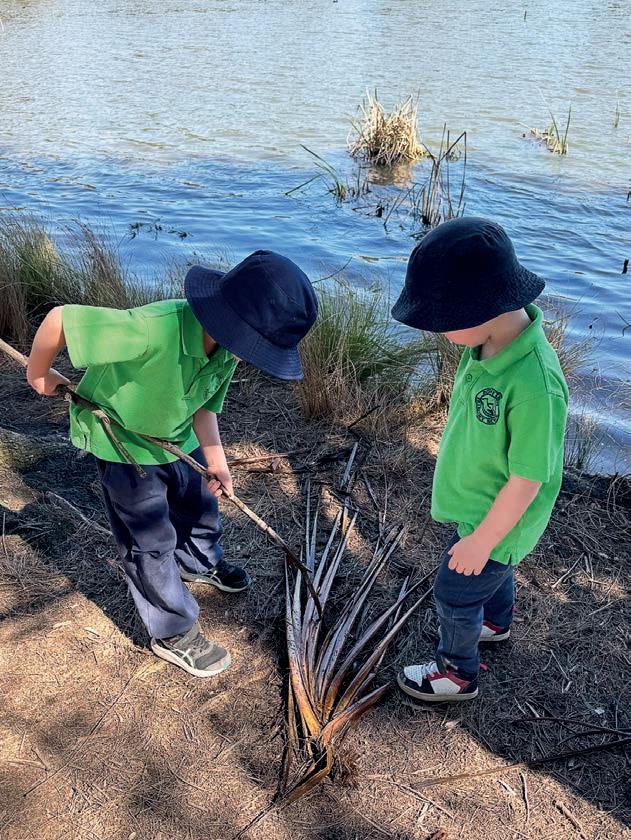
National Science Week 15 – 23 August, Nationwide scienceweek.net.au
Bullying No Way: National Week of Action 17 – 21 August, Nationwide bullyingnoway.gov.au
Children’s Book Week 22 – 28 August, Nationwide cbca.org.au
National Skills Week 24 – 30 August, Nationwide nationalskillsweek.com.au
Indigenous Literacy Day 7 September, Nationwide indigenousliteracyfoundation. org.au
R U OK? Day
10 September, Nationwide ruok.org.au
Media Literacy Week 24 – 31 October, Nationwide medialiteracy.org.au
Australian International Education Conference (AIEC) 27 – 30 October, Sydney aiec.idp.com
World Teachers’ Day (Australia)
Australian Primary Principals Association National Conference
31 August – 3 September, Canberra appaconference.com.au
Educate Plus International Conference
1 – 4 September, Brisbane educateplus.edu.au/ conferences

National Education Summit 3 – 4 September, Melbourne nationaleducationsummit. com.au
30 October, Nationwide worldteachersday.edu.au
National Recycling Week 9 – 15 November, Nationwide recyclingnearyou.com.au/ nationalrecyclingweek
Remembrance Day 11 November, Nationwide awm.gov.au/commemoration/ remembrance-day




Welcome to People on the Move, Education Matters’ bulletin to keep the Australian education sector updated on new appointments and personnel changes.

the not-for-profit and statutory sectors, with expertise in commercial and public law. Mr Goodwin replaces outgoing chair, Nyikina man Mr Charles Prouse, who has been Aurora’s first Indigenous chair.
Image: Aurora Education Foundation





New appointment at Christ Church Grammar Christ Church Grammar School in South Yarra, Melbourne, has appointed Ms Julie Bickett as Director of its Early Learning Centre, commencing Term 1 in 2026. Ms Bickett joins the school from The Geelong College, where she has spent the past 20 years as a teacher and Director of Early Learning. She brings extensive experience and a strong commitment to early childhood education as she relocates to Melbourne with her family.
Image: Christ Church Grammar School



Experienced principal joins Muyan Primary

Mr Neil O’Sullivan has been appointed foundation principal of Muyan Primary School, formerly Wallan East Primary. With more than 20 years’ experience in education, Mr O’Sullivan has previously led two government primary schools. Known as an optimistic and self-driven leader, he is committed to creating a culture of high expectations, teamwork and evidence-based teaching, with a strong focus on individual learning pathways for every student.
Image: Muyan Primary School
of The Glennie School, an independent Anglican day and boarding school for girls in Toowoomba, Queensland. Having served as acting principal since November 2024, she becomes the school’s 15th principal in its 117-year history. Ms Lowry holds a Master of Leadership and Management in Education and qualifications in Business and International Studies. She brings experience in embedding cultures of improvement and inclusiveness.
Image: The Glennie School

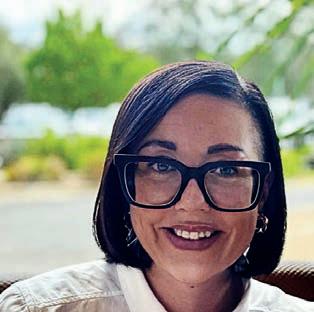



Mindalk Primary School appoints principal
Ms Blayne Wallis has been appointed principal of Mindalk Primary School, a new, supported inclusion school located in Truganina, Victoria, which opened on the first day of Term 1 in 2026. Ms Blayne is an experienced principal who has led in a variety of schools. She was the principal at Newport Gardens Primary School prior to this appointment.
Image: Mindalk Primary School
If you’d like to tell the sector about a new person in your school, company, institute or not-for-profit, please send the person’s name, position, image and a short description about their role to editor Rhiannon Bowman for consideration at rhiannon.bowman@primecreative.com.au.



Every week you will receive...
• The latest news in education
• Discussion of key issues
• Innovative products and resources
• Rich content that is highly valuable to education professionals













Contact: Holly Larkspur
holly.larkspur@primecreative.com.au





















Pick-up-and-go flashcards
Interactive, digital Big Books
Timesaving learner booklets
Fully decodable reading books aligned with the programme
Weekly and daily lesson plans
Exciting online games
Visual display resources
Rocket Phonics First Steps for ages 3–4/nursery
Create a firm foundation for literacy
Rocket Phonics for ages 4–6
Equip learners for phonics and wider literacy success
Rocket Phonics Next Steps for ages 6–7
Consolidate and extend phonics and literacy skills



Flexible CPD to meet your budget
Next Steps





Available in a blend of print and online







We are now in the best position we have ever been with regards to phonics and reading. We have transformed the attitude towards phonics amongst our adults in school (who now believe children ‘can’ do it!) and our children (who now believe phonics is fun!).
Amy Brookes, Assistant Principal and Phonics and Reading Lead at Victoria Primary Academy
Contact Lioncrest for more information and for a bespoke quote for your school
*Extensively trialled with UK schools