
www.councilmagazine.com.au





www.councilmagazine.com.au

Digital tools and data platforms are transforming local government operations

Prioritising safety How local actions can save lives


Sustainability at the forefront Councils are leading the way to net zero
From bre to submarine cable to satellite, Vocus connects businesses across 51,000 km of network backbone, linking land, sea, space, and air with secure and scalable digital solutions.







Published by
Welcome to the Summer 2025 edition of Council!
Chairman John Murphy
CEO Christine Clancy
Publisher Sarah Baker
Editor Tom O’Keane
Assistant Editor Kody Cook
Design Danielle Harris
Head of Design Blake Storey
Business Development Manager
Brett Thompson
Client Success Manager Cait Pillay
Head O ce
Prime Creative Media
379 Docklands Drive
Docklands Victoria 3008
P: +61 3 9690 8766 enquiries@primecreative.com.au councilmagazine.com.au
Subscriptions
P: +61 3 9690 8766 subscriptions@primecreative.com.au Council is available by subscription from the publisher. The rights of refusal are reserved by the publisher.
Cover image LisaGageler/stock.adobe.com
In this issue, we brought together stories that highlight both innovation and community spirit across local governments. From digital transformation and customer experience upgrades to safety initiatives and inspiring personal advocacy, this edition showcases the many ways councils are adapting, collaborating, and leading meaningful change. As you move through these pages, you’ll find a snapshot of the sector’s evolving priorities and the people driving progress on the ground.
As the year wraps up, we looked at some of the technologies that have been helping councils improve their service delivery, decision-making, community engagement, and boost their progress toward their sustainability goals.
Data collection, digital platforms and new software tools are a hot topic, and we looked at efforts undertaken by local governments such as Georges River Council, which recently completed a major overhaul of its customer service system.
Safety is also high on local government’s agenda. For councils, nothing is more important than keeping communities safe, and in this edition, we spoke with councils that proudly shared the work they are undertaking and supporting to ensure that all residents get home safe every day.
We heard from representatives at the Bega Valley Council, which has entered into a vital partnership to spread safe driving awareness and improve driving behaviour on roads in its region and beyond.
We also heard a story that emphasised how vital and impactful grassroots advocacy can be. In the City of Joondalup, one man was able to turn a personal tragedy into real change for his community, introducing an innovation that will save lives.
As always, we chose one council to take the stage in our Council in Focus segment. This quarter it was the City of Murray Bridge, a regional city in South Australia that was the only Australian local government to receive an invitation to an international event that will see economic cooperation at the forefront.
Additionally, for the second time in Council we had a chat with a local government Chief Executive Officer to learn about their career and get their insights into leadership in the sector.
This edition, we spoke with the City of Mandurah’s Casey Mihovilovich.
There’s plenty more to look forward to in this edition, and we hope it provides valuable insights and inspiration as you continue to build thriving and resilient communities.
Enjoy!
Editor, Council magazine
If you have a story idea, tip or feedback regarding Council, I’d love to hear it. Drop me a line at kody.cook@primecreative.com.au and don’t forget to follow us on social media – find us on LinkedIn, X or Facebook.
Council acknowledges Aboriginal Traditional Owners of Country throughout Australia and pays respect to their cultures and Elders past and present.
Efficiently collaborate, reduce rework, and deliver projects faster.
Our city’s outdated infrastructure causes inefficiencies and high maintenance costs. Modernising these systems offers an opportunity to improve services, reduce expenses, and support sustainable growth
Our city’s fragmented data causes inefficiencies and communication gaps. Implementing cloud-based workflows will centralise digital reviews, approvals, RFIs, and project data, enhancing collaboration and efficiency.

Discover how a unified digital platform is accelerating the planning, design, and construction of critical infrastructure projects across the nation.
Rising costs strain our city’s budget. By leveraging digital workflows, we can better manage projects and keep expenses on track, ultimately reducing overall costs. Scan to learn more
In each edition of Council, we’re shining a spotlight on the individuals steering our councils – exploring their career journeys, leadership philosophies, and the vision they bring to their communities. For this issue, we spoke with Casey Mihovilovich, the CEO of the City of Mandurah.
Mihovilovich exemplifies the type of dynamic leadership required to steer one of Western Australia’s fastest growing local government areas.
With over two years at the helm, her journey into the role – and her approach to leadership – offers valuable insights for councils across Australia.
“I’ve been the CEO for over two years now,” Mihovilovich began.
“My family have been in Mandurah for over 50 years, and I am born and bred here. Mandurah is the most beautiful place in the world, in my eyes.”
Despite a career that began in the private practice, Mihovilovich is unequivocal about her passion for her hometown.
“I’m so passionate about making Mandurah’s future brighter than it is today and making sure that we deliver for the community.
“When I first joined local government, over 20 years ago, I applied for a job at the City of Mandurah as an accountant, and I didn’t get it,” she recalled.
Yet, the setback didn’t deter her.
“I always wanted to work at the City of Mandurah,” Mihovilovich said.
The decision to switch from private practice to local government was driven by a search for balance and greater community impact.
“I was working up in Perth. It’s about an hour drive into the city, but peak hour, sometimes it took two hours,” Mihovilovich said.
“I was playing in the Women’s National Basketball League for the Perth Lynx as well, and the travel was just too much. So that’s when I first applied for a job at the City of Mandurah.”

her details were referred elsewhere.
“They forwarded my details to the Shire of Serpentine-Jarrahdale and they called me to see whether I wanted to go in for an interview,” Mihovilovich said.
“I didn’t really know much about local government, but they offered me the job, and the rest is history.”
This was the beginning of what Mihovilovich described as an extraordinary learning opportunity.
small local government when I first started, and I was able to go into all sorts of fields and learn a lot about each of the services that a local government can provide,” she said.
Mihovilovich said that every day working in local government is a highlight.

“I love my job and every interaction I have with a staff member, or a stakeholder is something I enjoy so much,” she said.
Mihovilovich takes special pride in community programs, such as Rhymetime at the local library.
“I am a true believer in lifelong learning and seeing the youngest generation learning to love being a part of the library and for them to read a book really does create a lot of hope for me,” she said.
LEADING BY EXAMPLE
Mihovilovich’s personal leadership philosophy is rooted in authenticity and professionalism.
“One of the key lessons I have learnt is that people will act and behave the way they want. I have learnt to not let that stop the City or myself from moving forward. I have learnt to use my values to judge my own performance,” she said.
“When we are making decisions or recommending to council to make decisions, it’s important that we’re always doing it in the best interest of the entire community.”
Mihovilovich said that she firmly believes in progress over perfection.
“I think that I’ve had to adjust my perspective. I’m not aiming for
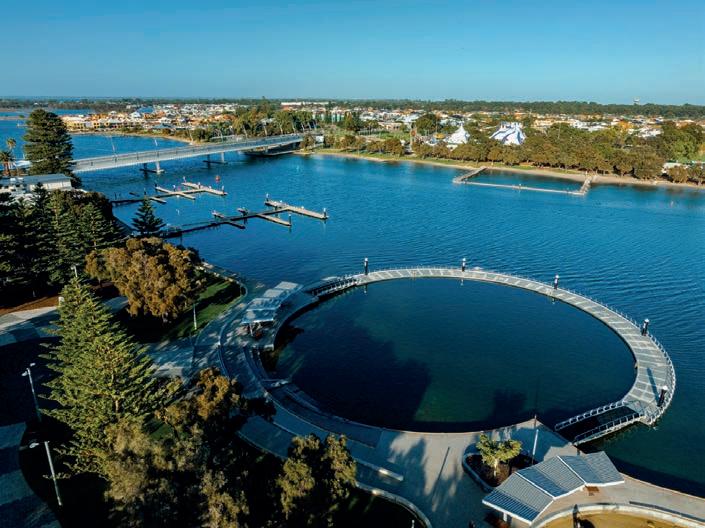
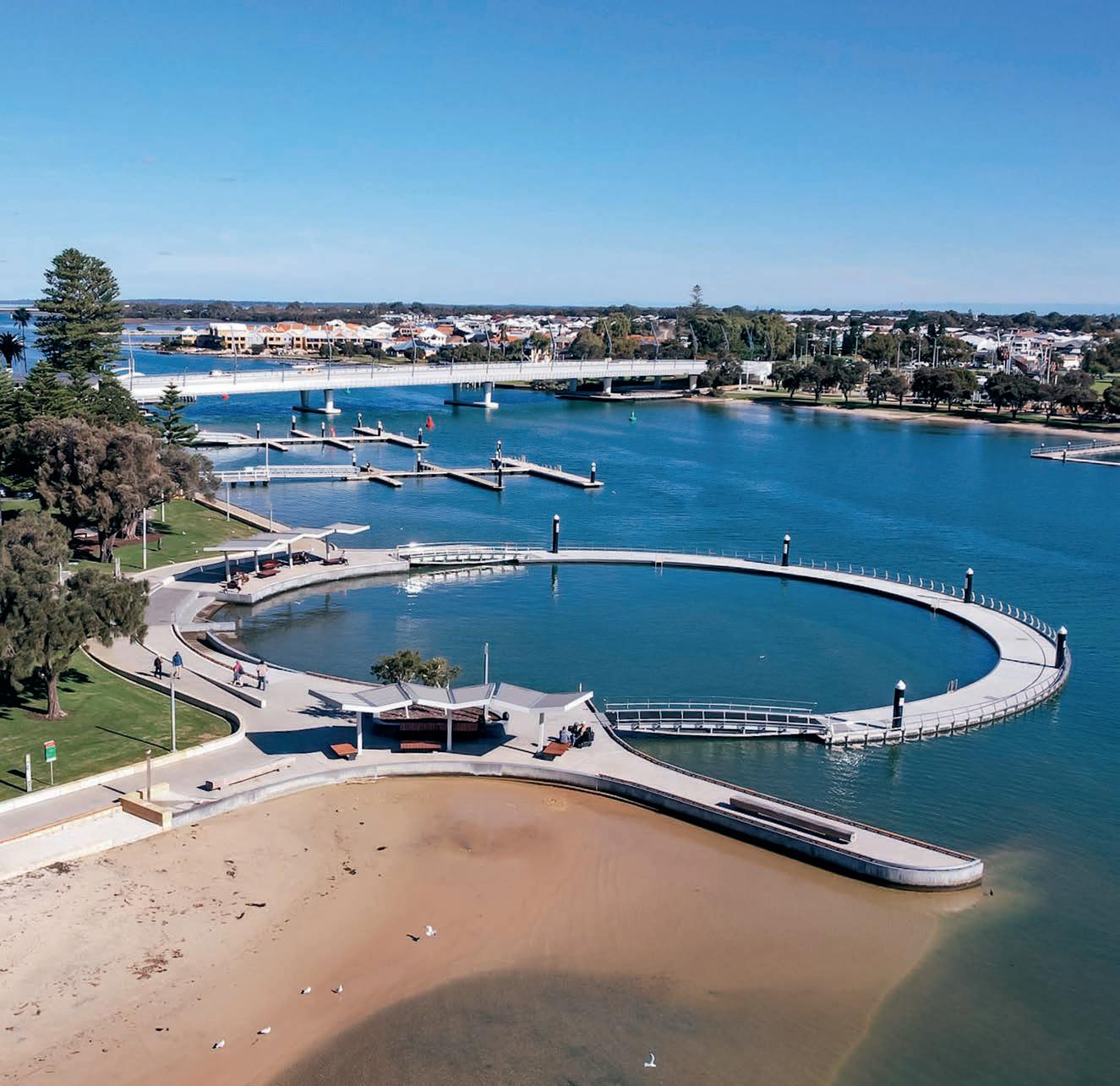
Kwillena Gabi Pool is a unique circular estuary pool with floating pontoons, a ramp, and a max depth of 4.5 metres.
perfection, but if I’m doing a task better than I was yesterday, last month or last year, then that’s progress. The challenge for me is to continue to practice that. Progress is far more important than perfection. Perfection – I don’t think it exists,” she said.
Attracting and keeping staff engaged in local government remains a challenge.
“People that work in local government have a high level of resilience. We perform such a vital function, but often you don’t get that recognition from the community,” Mihovilovich said. She said the solution lies in recognition and support.
“What we can do is ensure that our staff are recognised, ensure that they feel like they are protected and that we will support them, and our actions speak louder than our words.”





Mentorship has played a significant role in Mihovilovich’s path, and she explained that a great mentor for her has been the CEO at the City of Armadale, Joanne Abbiss.
“She broke down the glass ceilings and showed me what was possible,” she said.
“But I’ve been lucky enough also to surround myself with friends who are very successful in their own right, and a dad and mum that are so supportive of me, continuing to be a better person every day and continuing to push myself.”
Under Mihovilovich’s leadership, Mandurah is embracing growth and innovation.
“We’re currently in the approval phase to create a commercial offering
on our iconic Western Foreshore, which would include a mini golf course, a restaurant and microbrewery, and a chocolate factory. This forms part of a wider revitalisation of a popular community area and would see huge benefits for Mandurah’s future,” she said.
“It’s a proposed $25 million investment, and we haven’t seen an investment of that size in the city centre for decades, and so we are hoping that this is a catalyst for other investors to come into Mandurah and to see the potential.”
Major investment in community facilities is also underway.
“The Western Australian Government has committed to build a new netball facility, and we’re creating it as a multiuse facility. We are in the early stages of design and due diligence.”
Ongoing construction and infrastructure development is a talking point amongst residents.
“Often, I get comments that, ‘we’re doing another road construction’, or ‘you’re always under construction’, and I think to myself, ‘Well, isn’t that great?’ We are not stopping, it’s all about progress.”
Mihovilovich said that one persistent local challenge is spurring landowners to develop their city centre properties.
“Developers are telling us that it is because of the construction prices and their price point to sell after they’ve developed. We’re trying to work where we can with the State Government and developers, but it’s still not enough to get the construction price down,” she said.
Mihovilovich expressed her gratitude and appreciation to all local governments across Australia, and to everyone who works in the sector
“We really do impact the way that people live their lives. We all play a part in our community. I just want to say thank you to everyone for that,” she said.


















In every edition of Council, we shine a spotlight on one local government from across Australia. Whether it’s new infrastructure, an innovative technology project, a leading sustainability initiative or a community connection, we want to highlight the best of local government and share valuable knowledge. This edition, we spoke to the Rural City of Murray Bridge.
1. WHAT IS THE POPULATION SIZE AND LAND AREA OF YOUR COUNCIL?
As of November 2025, Council’s population is 23,257 people and spans an area of 1832 square kilometres in South Australia.
2. HOW MANY EMPLOYEES WORK AT YOUR COUNCIL?
The number of employees at the Rural City of Murray Bridge fluctuates, however it is currently around 220 employees.
Council also has an additional 125 people employed at Lerwin, its Residential Care Facility.
3. WHO IS THE MAYOR?
Council’s current Mayor is Wayne Thorley. He was elected in 2022 and is set to serve as Mayor until 2026.



4. WHO IS THE CEO?
Council’s current CEO is Heather Barclay, who has established a strong reputation for being a transformational leader within Local Government. She has proven experience in leading change and in leading a range of portfolios and programs. She acts with passion and integrity, has an authentic style, and focuses on greater good and quality outcomes, delivery and making a difference.
5. WHAT IS THE COUNCIL’S ANNUAL BUDGET?
The Rural City of Murray Bridge has adopted an overall operating budget of $73.5 million in 2025-26.
6. CAN YOU GIVE US A BREAKDOWN OF SPENDING FOR THE BUDGET YEAR AHEAD?
This budget of $73.5 million includes $63.5 million in delivering council services



and key projects, $9.4 million on renewal of community assets and $710,000 on enhancing community assets.
7. WHAT IS YOUR COUNCIL’S VISION FOR THE COMMUNITY AND ITS FUTURE?
Council is actively preparing for the growth of its rural city.
Under the State Government’s Greater Adelaide Regional Plan (GARP), Murray Bridge is set to grow to become South Australia’s largest regional city, providing local jobs, services and amenities along with affordable housing.
Council is committed to supporting its communities to access the opportunities and benefits that growth brings. Council’s goal is to ensure well-planned and connected communities where the built and natural environments are enhanced, and to maximise opportunities for the community and economy.
8. WHAT MAKES YOUR COUNCIL AREA SPECIAL?
The Rural City of Murray Bridge is a place where people can live well and thrive in an environment where jobs, education, affordable housing and a relaxed river lifestyle are accessible to all.
9. WHAT ARE SOME OF THE UNIQUE CHALLENGES THE REGION FACES, AND HOW DOES COUNCIL OVERCOME THESE?
Like many growing regional centres, Council faces the challenge of balancing rapid population growth with the need for sustainable infrastructure, housing and services.
It is addressing this through strategic planning, targeted infrastructure investment and strong partnerships with state government and local
stakeholders. This will ensure it is ready for the future, while protecting the region’s unique character and lifestyle.
10. HOW IS YOUR COUNCIL ADDRESSING CLIMATE CHANGE AND REACHING SUSTAINABILITY GOALS?
Council is committed to improving environmental outcomes and reducing emissions through its Climate Change Action Plan.
This includes reducing corporate emissions, investing in renewable energy and energy-efficient infrastructure, supporting sustainable development practices, protecting biodiversity and water quality, and helping the community to adapt to the impacts of climate change.
11. WHAT IS AN EXCITING COMMUNITY PROGRAM OR INITIATIVE COUNCIL HAS COMING UP IN THE FUTURE, OR ALREADY UNDERWAY?
As the only Australian local government organisation to receive an invitation, Council attended an international event in May 2025 following a direct approach from the City of Dezhou, China.
Council then welcomed a delegation from Dezhou on 1 July 2025, signing a Memorandum of Understanding to formalise the partnership. This collaboration is a significant step forward in fostering economic cooperation, sharing knowledge and expertise, and encouraging business and trade opportunities that will contribute to the sustainable growth of both cities.
12. CAN YOU TELL US ABOUT AN INTERESTING URBAN DEVELOPMENT PROJECT IN THE REGION?
Council is looking forward to the commencement of the Gifford Hill development, which is set to grow into Adelaide’s second city. This transformative project will deliver housing, services and amenities that will support the region’s growth while creating new opportunities for the community.
13. HOW IS YOUR COUNCIL EMBRACING DIGITISATION AND GROWING ITS TECHNOLOGICAL CAPABILITIES?
Council is investing in improved digital systems to make it easier for the community to interact with it.
This includes streamlining customer service requests, digitising records and approvals processes, and expanding its online presence to provide timely information and resources. Council is committed to using technology to deliver better, more efficient services for its residents and businesses.











Bega Valley Shire Council is taking significant steps to promote safer driving.

Road safety is a shared responsibility – a principle at the heart of the Bega Valley Shire Council’s recent partnership with the SARAH Group, a national road safety advocacy organisation.
Through bold initiatives, strategic collaboration, and a unified message to the community, the Bega Valley Shire Council is taking significant steps to promote safer driving, protect roadside workers, and work towards the goal of zero fatalities and serious injuries on local roads.
In November 2023, Council established the dedicated position of Road Safety Officer (RSO), funded jointly by Transport for NSW and Bega Valley Shire Council under the Local Government Road Safety Program.
Mandy McCloud, the Council’s inaugural RSO, quickly identified an opportunity to bolster local road safety through the resources and inspiration
provided by the SARAH Group – Safer Australian Roads and Highways.
Having commenced her role, McCloud received a set of gold ribbon stickers from Transport for NSW.
“Curious about their significance, I did some research and discovered their connection to the SARAH Group and the story of Sarah Frazer, who tragically lost her life on the Hume Highway in 2012,” she said.
Sarah’s death led her father, Peter Frazer, to start the not-for-profit SARAH Group, which now drives a national campaign for safer roads and heightened awareness among all road users.
“Learning about Sarah’s story really resonated with me, and I saw an
opportunity for Council to help raise awareness and promote safer driving behaviours,” McCloud said.
The partnership led to a practical and highly visible outcome: the application of reflective SARAH Group gold ribbon stickers on Council’s waste and recycling fleet – trucks that traverse the shire daily in all weather and lighting conditions. These stickers, far from being simple bumper adornments, are eye-catching symbols designed to spark curiosity and conversation throughout the community.
Tim Cook, Council’s Waste Strategy Coordinator, has overseen this process
in his role managing the kerbside collection contract.
“Our collaboration with Transport for NSW and Cleanaway allowed us to highlight SARAH’s message with a media and education campaign,” Cook explained.
“The reflective stickers make our already-visible trucks impossible to miss, especially during early morning hours or at night.”
But it’s not just about trucks.
“Ultimately, we would like to see the stickers displayed across all Council vehicles,” McCloud said, “as a visible and ongoing reminder of our commitment to road safety.”
The need for improved road safety is made tragically evident by the farreaching impacts of traffic crashes on regional communities.
In the Bega Valley, as across Australia, many people have been affected by road trauma, either directly or indirectly.
“One of the main aims of this partnership is to spark conversations,” McCloud said.
“When people see the ribbon stickers, we hope they’ll ask what they mean and learn about the importance of roadside safety. Even small actions – slowing down, moving over for roadside workers, or staying alert – can save lives.”
Council’s aim is not only to reduce crashes but also to create a culture of vigilance and compassion on local roads.
The SARAH Group’s national reach and grassroots support make it a powerful ally in achieving these objectives.
Council’s work with SARAH Group forms part of a larger suite of road safety initiatives designed to support and educate the region’s diverse road users.
These include:
•Caravan Weigh Day: Helping travellers ensure their vehicles are safely loaded before heading onto busy highways.
•Community and workplace safety campaigns: Ongoing programs tackling mobile phone use, impaired driving, senior driver safety, and participation in national road safety weeks.
• Learner driver workshops: Helping parents and supervisors foster better habits for new drivers, delivered in partnership with Eurobodalla Shire Council.
•Safety around schools and playgrounds: Installing new signage and running public education inspired by the Little Blue Dinosaur Foundation to protect children in high-traffic areas.
•Plan B – Win a Swag Campaign: Encouraging revellers to plan ahead and avoid driving under the influence.
• Survive the Ride workshops: Promoting motorcycle safety and group riding awareness.
•Pop-Up Pedal Park: Teaching children vital riding and road safety skills in a fun, practical setting.
“Together, these initiatives aim to promote safer driving, riding and walking behaviours across the Bega Valley and contribute to the shared vision of ‘Towards Zero’ – zero deaths or serious injuries on our roads,” McCloud said.
Bega Valley Shire Council’s partnership with SARAH Group reflects what is possible when local governments combine on-the-ground experience with the resources and reach of specialist advocacy groups.
The reflective ribbon campaign, in combination with year-round community programs, demonstrates the impact that local government can have on the safety and wellbeing of its residents.
The message is clear: Every action counts – and through continued innovation, cooperation, and community engagement, Councils like Bega Valley are making a lasting contribution to safer Australian roads.









Shaping the future of mobility for councils and communities.
Park


EasyPark by Arrive


Scan the QR code to see how we’re helping councils move smarter.







In a powerful testament to grassroots advocacy, a local council has implemented life saving devices across its community – potentially saving countless lives from choking emergencies – following the compelling campaign of a heartbroken father.
Acampaign spearheaded by Perth local, Brian Bwoga, after a personal tragedy, has transformed local safety protocols and sparked a broader conversation about emergency medical interventions, by introducing a life-saving choking prevention device to the Joondalup area.
City of Joondalup Councillor, Rebecca Pizzey, also played a pivotal role in bringing the device – the LifeVac – to her community.
“I met Brian during my campaign, and I met his boys then, as well, whilst door knocking,” recalled Pizzey.
“After his son passed away in February of 2024 from choking, he came to me with LifeVac, and said, ‘I’d really like to see this everywhere.’”
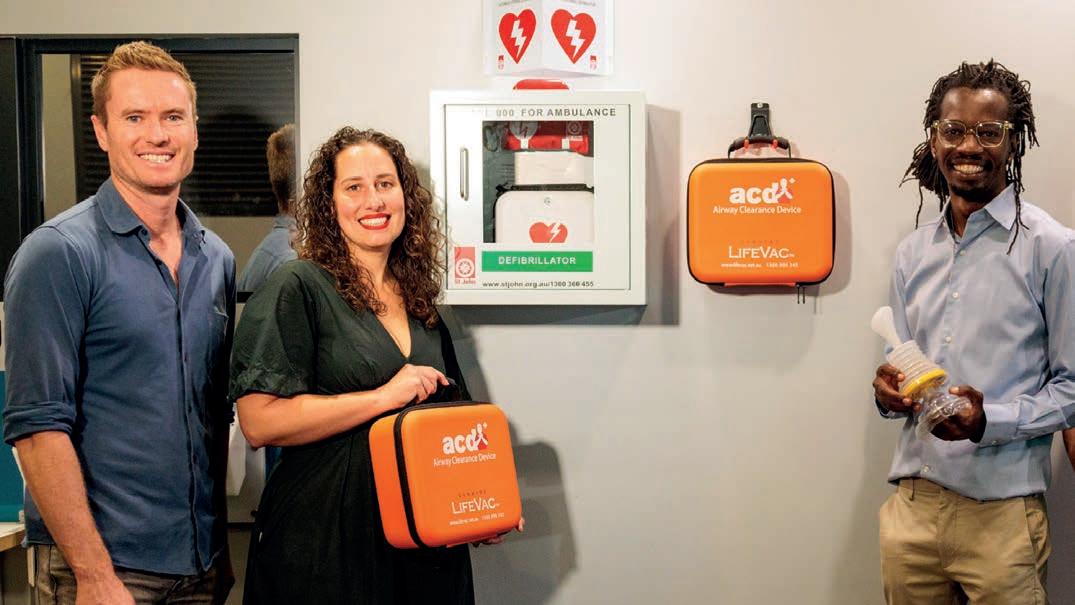
The device itself is straightforward to use: a mask that seals around the mouth, attached to a plunger that creates suction to remove obstructions. Its patented one-way valve ensures that nothing is pushed further into the airway, a feature that sets it apart from other devices.
“I couldn’t believe these devices existed,” Pizzey said. “I had never seen anything like it, and I couldn’t see any downside to it.”
As part of his campaign, Bwoga reached out to local leaders, shared his story, and made the case for equipping public spaces with LifeVac devices. His efforts resonated deeply with Pizzey, a trained nurse herself.
Together, Bwoga and Pizzey put forward a Notice of Motion to the city council, requesting a report on the device and its potential benefits. The process, which can often be slow and bureaucratic, moved with surprising speed.
“I think it was within a year that council came back and approved it. So that was amazing, very quick for local government,” Pizzey said.
But the journey was not without obstacles. Some community members and even fellow councillors expressed scepticism, questioning the device’s safety and regulatory approval.
“There was a bit of resistance from community members who thought that
because the device was not approved by the Royal Life Saving Society and other organisations like that, that it wasn’t safe to use,” Pizzey explained.
“But actually, it’s a Class A medical device. So, the Therapeutic Goods Administration approved it. It’s safe and easy to use, you don’t even need training.”
Bwoga’s advocacy was instrumental in overcoming these doubts. His personal story, combined with his determination, helped others see the urgent need for change.
“I think it’s just because Brian is so amazing at making everyone understand why it’s so important,” Pizzey said.
“He lost his son, and within a year, campaigned and got LifeVac in a number of councils, not just ours. We were the first one, so I’m thankful to him for giving me the opportunity to be involved.”
The result of Brian’s campaign was the installation of LifeVac devices across the council area – 32 in total, placed wherever there was an Automated External Defibrillator.

But for Bwoga, the mission was never just about a single device. It was about changing attitudes, raising awareness, and preventing future tragedies. To that end, he founded the Zaza Foundation for choking prevention in Australia, named in honour of his son.





“It’s a not-for-profit that he’s going to use to help educate people and to get LifeVac out there to all other areas,” Pizzey said.
Bwoga’s vision extends far beyond his own community. He hopes to see state governments adopt similar

measures, ensuring that LifeVac devices are available in schools, hospitals, and shopping centres across the country.
“What I would like to see is state government take it up to make sure that they’re in our schools and hospitals and shopping centres. I don’t see any downside in it,” Pizzey said.
The impact of Bwoga’s advocacy is already being felt. Medical professionals, including nurses and first responders, have expressed surprise and enthusiasm about the device.
“I’ve been showing nurses at work, and they’re like, ‘This is amazing, why don’t we have this here in the hospitals?’”
For Bwoga, every LifeVac installed is a tribute to his son’s memory and a step toward a safer future for others. His journey from personal loss to public advocacy is a powerful reminder of the difference one person can make. Through his efforts, Bwoga has not only honoured his son but also given hope and protection to countless families.
As communities across Australia and beyond look for ways to improve public safety, Bwoga’s story stands as an inspiration – a testament to the power of turning grief into action, and the enduring impact of a father’s love






The path to modern local government doesn’t start with a massive overhaul. It starts with one smart step. Councils in Manjimup, Halls Creek and Wattle Range are proving how targeted digital solutions can ease workloads, strengthen community engagement and redefine what’s possible in local service delivery.
Across Australia, local governments are facing the perfect storm of rising expectations, shrinking workforces and ageing infrastructure. Councils are being asked to deliver more services to increasingly diverse communities while balancing compliance, sustainability and transparency – all without the matching resources.
For many, the phrase ‘doing more with less’ has become an unwelcome reality. In Western Australia, every single council surveyed in Local Government Professionals Australia WA’s 2023 workplace research reported skilled-staff shortages. At the national level, the infrastructure maintenance backlog sits between $12 billion and $15 billion. Meanwhile, communities expect faster service, digital access and greater accountability from their councils.
If the sector keeps moving at the same pace with the same tools, something has to give. But forward-thinking
councils are proving there’s another way where smart, fit-for-purpose technologies act as a multiplier for staff capacity, community engagement and decision-making.
Digital tools designed specifically for local government are no longer a luxury, they are essential infrastructure. Councils that invest in smarter systems are finding ways to reclaim time, reduce burnout and build stronger relationships with their communities.
Here are a few recent examples:
Shire of Manjimup, in Western Australia, manages a region spanning over 7000 square kilometres, with a team of only 124 staff serving around 10,000 residents. Staying connected with the community across
such a large and diverse area was a constant challenge.
To address this, Shire of Manjimup turned to Antenno – part of Datacom’s Datascape platform – which is a simple but powerful two-way communication app that allows residents to report issues, receive updates and stay informed about council services.
Since implementing the app, 58 per cent of all community-reported issues now come through Antenno. Residents can easily flag local concerns such as road maintenance or waste collection, and they receive direct feedback once the issue has been resolved.
The shift has transformed how Council interacts with its residents. People feel more informed and more connected to local decision-making, while Council staff are saving time by managing communication through a single streamlined system. The technology hasn’t just improved efficiency, it has helped strengthen trust
Halls Creek is one of Australia’s
The Council implemented Datascape
Smart, fit-for-purpose technologies act as a multiplier for sta capacity, community engagement, and decision-making.
and transparency between Council and its community.
SHIRE OF HALLS CREEK: REFLECTING CULTURE AND IMPROVING ACCESS
At the opposite end of the state, Shire of Halls Creek faced a different challenge. Spanning more than 143,000 square kilometres of remote Kimberley country,
In South Australia, Wattle Range Council took on a challenge familiar to many local governments: managing legacy financial systems that were slow, fragmented and lacking visibility. These outdated systems not only affected internal efficiency but also made it harder to communicate financial outcomes to the community and maintain supplier relationships.

unnecessary friction, simplify complex tasks and return valuable hours to staff who are already stretched thin. For councils like Shire of Manjimup, Shire of Halls Creek and Wattle Range Council, digital transformation is not about doing more work, it is about creating the space to do more meaningful work.
Across Western Australia’s 147 councils, and, indeed, across the country, the pressures are the same: tight budgets, workforce shortages and the constant push to modernise. The difference lies in how transformation is approached. When it starts small, proves value quickly and aligns with community goals, it builds confidence and capability rather than adding burden.
The future of local government will belong to councils that see technology not as an extra cost, but as an essential tool for resilience, connection and growth. The councils leading this shift are showing that smart solutions can help them redefine the everyday and build stronger, more sustainable communities.
For more information, scan the QR code



































































































As councils across Australia face new community engagement requirements, the ability to collect, analyse and apply robust community data is becoming essential.
In recent years local government has faced growing expectations around community engagement and transparency. For councils and regional authorities, the ability to genuinely capture and reflect community sentiment is no longer a pipe dream. By adopting data-driven engagement tools such as Place Score, local governments can move beyond consultation to gain actionable insights, strengthen reporting, and build greater trust with their communities.
Place Score is a national social research company that delivers representative community engagement data to organisations via easy to use, online dashboards. They promote three core capabilities: rigorous community engagement, organisational insight
dashboards, and regional and national benchmarks.
From a local government perspective this is significant. Most councils run project specific surveys, workshops or focus groups that produce a mixture of data commentary but little in the way of consistent representation, longitudinal insight, benchmarking or actionable metrics. The traditional approach is also expensive, resource heavy and leads to diminishing returns as engagement fatigue sets in.
Place Score offers an alternative to help future proof your organisation. Rather than treating community consultation as multiple one-off exercises, councils can build a living, organisational asset: an ongoing data set that connects community sentiment, strategic priorities and service delivery. This ensures that engagement efforts, and community
priorities, feed directly into strategy, planning and reporting.
Across Australia, new regulatory regimes and community engagement requirements are coming into effect or being expanded. In Western Australia Class One and Two councils will be required to undertake representative service satisfaction research while at the Federal level the Community Sector Grants Engagement Framework will require local governments to develop monitoring, reporting and evaluation to support funding requests.
Councils will increasingly need to demonstrate not only that they consulted, but also how they used that feedback to reach an outcome. In that light, engagement becomes a compliance and performance issue

Systemic, data-led community engagement enables councils to provide services that truly reflect the needs of residents.

as well as one of community trust and legitimacy.
Data-rich engagement gives councils the means to demonstrate accountability, such as tracking satisfaction with services over time and comparing with national benchmarks.
Collecting information is one thing; converting it into data, and then actionable insight is another. Place Score positions its dashboards as a key mechanism for making community feedback operational. Using filters by geography or demographic group, local government staff can determine what residents care about most, how they feel services are performing and where investment may be required.
For example, a council might run its community satisfaction survey through Place Score to ask what amenities residents feel are lacking in their neighbourhood. The data dashboards allow project teams to cross-reference responses by age, location or communities of interest.
This can provide a clear indication of what to prioritise across councils’ wide service offering, from safety to recycling.
This kind of insight can directly influence strategic planning, capital investment decisions and community communications. Instead of relying on anecdotes or reacting to issues, councils can base decisions on what the community has stated matters most and then track whether the decision made a difference.
Another major benefit is the way data collection supports reporting, analysis and funding applications.
Whether a council is required to report to a state oversight body, respond to budget scrutiny or apply for grant funding, having rigorous, benchmarked community data builds credibility.
In many funding environments, evidence of community need, engagement and measurable improvement is a prerequisite. If a council can show baseline metrics, community perceptions over time, comparison with national or regional benchmarks and demonstrable change, the case becomes much stronger. Equally, transparent data can be shared with the community to show that ‘you asked, we listened, here is what we did’, thereby enhancing trust and social licence to operate.
Place Score’s engagement approach and data dashboards supports internal planning and external reporting, so councils can always prove their projects’ value and impact.
For councils seeking to move from ad-hoc consultation to strategic organisational engagement, the key steps include selecting a methodology that provides representative sampling, geographic and demographic insight, transparent national benchmarking and enables longitudinal tracking. This also means ensuring that questions are
clearly aligned with strategic priorities, and embedding data dashboards into routine planning and reporting.
Staff training and governance processes will also need to be strengthened so that community feedback translates into streamlined planning, action and reporting. In doing so, the organisation moves from simply doing ‘consultation’ to systematically aligning its community’s voice with investment, strategy and outcomes.
As local government continues to face evolving community expectations and regulatory demands, a data-driven community engagement model offers considerable strategic advantage.
By embracing new engagement methodologies supported by innovative technology such as those offered by Place Score, councils can reduce engagement investment while also improving efficiencies, transparency, and organisational alignment. Turning essential community insight into data helps track progress and support evidencebased decision-making. This will result in better community outcomes, more credible reporting and greater trust in the process.
Local government leaders who understand the value of systematic, data-led community engagement will be best placed to design services and infrastructure that truly reflects the needs of residents and prove that they are making a difference.
To learn more, visit placescore.org















In early 2022, the Ballina Shire Council found itself grappling with one of the most severe flood events in recent Australian memory. Facing unprecedented rainfall and rising water levels in the Northern Rivers region, Council turned to new datacollection technology to provide critical support to response and recovery e orts.

Ballina Shire Council’s adoption of Konect demonstrates how a well-chosen datacollection platform can shift the narrative from reactive to proactive.
The 2022 flood event that struck the Northern Rivers region of New South Wales was extraordinary.
According to reporting at the time, the Richmond River peaked at Woodburn at 7.15 metres – almost two metres above its February 1954 peak of 5.42metres.
Amid that crisis, Ballina Shire Council had just introduced Konect – a mobile data-collection and mapping platform that enables real-time asset tracking and reporting – late in 2021 and was still familiarising itself with the system.
Council’s Coordinator Geospatial Analytics, Jason Wadsworth, said, “We were looking for a tool that was intuitive, cost effective and able to be used across iOS and Android. We looked at a number of options, and Konect offered us exactly what we needed.”
From that point on, Ballina’s use of Konect evolved rapidly and deliberately to support flood recovery operations.
As the waters surged and assets were under threat, Council used Konect to identify and prioritise key infrastructure at risk.
“A major priority was understanding which of our many assets had been affected by the water. In particular, our critical pump stations, which were expensive to replace,” Wadsworth said.
“We were able to create a form in Konect that recorded flood levels and damage, but also captured photographs. All this proved invaluable not only in prioritising repairs, but also in dealing with the associated insurance claims.”
Having a tool in place that enabled field staff to easily record damage, geo-tag photographs, and attach metadata meant that Council could move from reactive to strategic decision-making far sooner.
Council used this immediate response phase to lay the groundwork for future events.
“We are now preparing a mobile, emergency environment in Konect that we can quickly deploy with all the forms pre-created. A major issue during the rain event was the breakdown of network communication,” he said.
“By having all the data synchronised on a mobile device prior to a future event, we can respond instantly, and capture everything we need without the need for an immediate upload.”
This approach, known as ‘offline-first’ mobile data collection, ensures that information can still be captured and stored on the device even when internet connectivity fails.
It’s a lesson in resilience: the system may need to operate without reliable connectivity.
Another interesting dimension of Ballina’s approach was the inclusion of data captured by the public.
“The thing is, that with smart phones, the photo comes with a geo location and date and time tag. It meant that we could quickly add that to our Konect and our mapping system,” Wadsworth said.
He also pointed out a realworld outcome.
“We had one business who needed to have proof of flooding at their premises for their insurance company. By having time stamped data, we were able to precisely document the time and conditions of the event that affected them.”
Enabling and validating communitygenerated data can extend asset visibility, support residents in claims and recovery, and build transparency with the public.
Council is also planning to integrate Konect into its existing systems.
As Wadsworth explained, “Real time reporting and activity is the ultimate goal across all aspects of Council service. We can run reports, allocate jobs, detail trends and improve efficiencies across the board.”
“The ability for us to get information to and from the field is one of the main motivations for Council’s full support. Our field teams have always struggled to have information about assets and other details at their fingertips. To that end, Konect has been a significant benefit to both our teams, the Council and the public as a whole.”
When utilised effectively, mobile data-collection platforms become part of a broader asset-management, maintenance and emergency-response
ecosystem. The cost-benefit goes beyond disaster recovery – it touches day-to-day operations and strategic planning.
From the Ballina experience, councils can take away the following actionable insights:
1. Select tools based on ease, crossplatform use and rapid deployment – Familiarity and first-use during a crisis matter.
2. Pre-configure forms and plan for offline operation – If network fails, data capture must not.
3. Prioritise critical assets early – Use geo-tagged field data to drive decision-making rather than waiting for full assessments.
4. Leverage community-generated data – Encourage smartphone-derived imagery/time-stamps from residents to enrich your dataset.
5. Integrate with broader systems – Link field-data tools into asset registers, compliance modules and job-management workflows to gain long-term value.
6. Embed continuous improvement and preparedness – Turn immediateresponse technologies into enduring capability for future events.
In the lead-up to and throughout the 2022 floods, Ballina Shire Council’s adoption of Konect demonstrates how a well-chosen data-collection platform can shift the narrative from reactive to proactive.
For local governments across Australia, the broader lesson is that the right tool deployed at the right time – and embedded into everyday operations – can make a substantial difference in resilience, efficiency and financial accountability. When disaster strikes, you want your ‘data engine’ ready.
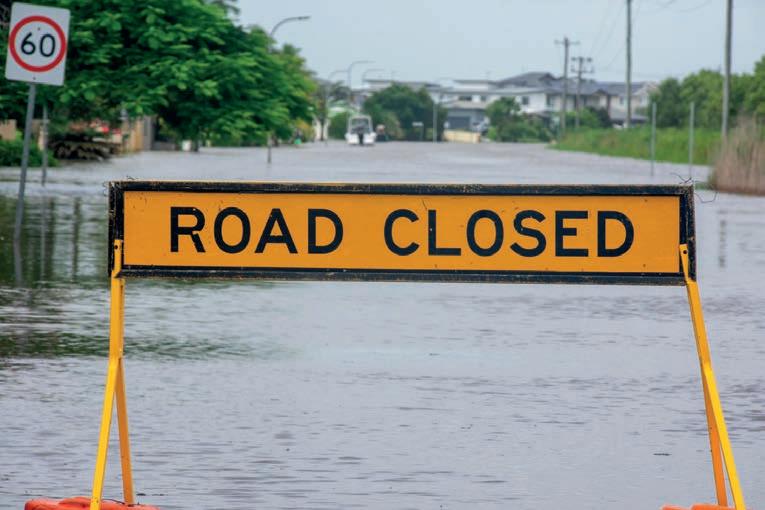
Konect helped Council identify risks and prioritise key infrastructure assets.




We’re Creating the Future of Water for people and communities, for generations to come



Hustler’s durability-focused design ensures lower running costs and fewer breakdowns.

For councils managing large green spaces in Australia’s harsh summer climates, equipment reliability is crucial.

ocal government mowing crews across Australia face unique pressures. Extended hours, large areas, and high ambient temperatures place heavy demands on ride-on, zeroturn mowers.
When a machine is expected to run long shifts under the punishing heat of northern Australia or inland regional centres, the risk of hydraulic system overheating, increased friction and component wear becomes a real operational cost.
The transmission oil in such machines is exposed to elevated temperatures for sustained periods, which can degrade lubrication and reduce efficiency.
THE HYPERDRIVE SYSTEM: BUILT FOR LONG SHIFTS
Hustler’s HyperDrive hydraulic system is built to tackle precisely these kinds of conditions.
At its heart it uses industrial-grade slipper piston pumps (Danfoss DDC-20) driving each wheel, heavy-duty high

torque wheel motors from Parker and, critically, a large oil reservoir of approximately 11.3 litres as a heat buffer.
The system integrates a thick aluminium oil cooler together with a dedicated fan and shroud to force air through the cooler and maintain lower fluid temperatures.
In addition, the HyperDrive system includes a hot-oil shuttle line that returns warmed oil from the wheel motors directly to the cooler, rather than allowing it to recirculate unchecked.

For a local government operations team, the benefits of a system like HyperDrive are tangible.
When mowing contractors – or in-house mowing teams – cover large parks, sports fields, road reserves or roadside verges under high temperatures, machine reliability and uptime matter.
If the hydraulic system runs cooler, contamination of oil is reduced, wear on parts is minimised and the likelihood of unexpected breakdowns falls. That means fewer reactive repairs and less time lost on costly unplanned maintenance. Over time this supports a lower total cost of ownership and better service delivery for council assets.
More specifically, the large oil reservoir functions as both a thermal buffer and contamination space: by providing more fluid volume, the system dilutes heat build-up and helps maintain optimum viscosity under load.
Coupled with the dedicated cooling path and fan, the system is engineered for longer continuous operation. That is particularly relevant in remote or regional local government areas where access to service technicians may be limited, and downtime is especially costly.
From a strategic asset-management perspective, councils can view advanced drive systems such as HyperDrive as part of a wider lifecycle planning approach.
Instead of just buying on deck width, horsepower or upfront cost, decision-makers can include hydraulic system robustness, heat management and warranty terms as key criteria.
For example, the HyperDrive variant is backed by a limited warranty of five years / 3000 hours on the hydraulic system in some markets. This warranty reinforces the manufacturer’s confidence in the system’s durability.
Furthermore, by investing in equipment better suited to hot-climate continuous operation, councils may reduce the number of machines required to cover the same workload or alternatively extend shift lengths without increasing machine downtime. This supports improved planning of labour resources, fewer overlapping shifts and more efficient use of capital.
When assessing mower options, councils should engage with suppliers
to clarify the following around hydraulic drive systems: what is the reservoir size, how is the oil cooled, what mechanisms are included for temperature regulation, and what are the real-world duty-cycle limits under high ambient heat.
It is also wise to check local dealer support, availability of service parts and the service interval requirements for the hydraulic system (for example oil and filter change intervals).
For councils operating in Australia’s demanding mowing environments, the performance and asset-management advantages of an advanced hydraulic drive system cannot be underestimated.
The Hustler HyperDrive system offers a compelling example of how equipment design focused on heat management, durability and continuous operation can contribute to lower running costs, fewer breakdowns and improved operational confidence.
At a time when local governments are under increasing pressure to deliver high-quality outcomes with leaner resources, such features elevate procurement decisions from simply buying ‘another mower’ to investing in longer-term performance and value.
To learn more, visit hustlermowers.com.au

The
system is designed to handle Australia’s unique conditions.



Strategic engagement. Evidence-based decisions. Measurable impact.


Place Score is trusted by local governments across Australia to transform community engagement results into a day-to-day resource that supports strategy, prioritisation, reporting and organisation alignment.
• Representative engagement
• Intuitive, easy-to-use dashboards
• National and regional benchmarks
• Metrics for funding, tracking and reporting
Visit Case Studies www.placescore.org and hear directly from Councils using Place Score today



Track and improve community satisfaction with council services.
√ Service performance
√ National benchmark √ Clarify priorities

Respond to priorities for neighbourhood improvements. √ Align with strategy √ Focus investment √ Build trust

Across Australia and New Zealand, councils are facing the challenge of maintaining wastewater networks that are not only e cient but safe, compliant and sustainable.
As the infrastructure landscape evolves, so too must the tools and partnerships that support it. For more than 55 years, the Sewer Equipment Company (Aust.) – or SECA – has been helping local authorities and contractors achieve this balance, providing smarter equipment, safer networks and stronger partnerships built on trust, technology and operational product training as well as nationally recognised courses through the
SECA Academy provided by Asset Training (RTO No.91255).
Founded in 1967, SECA has grown from a small Sydney operation into a leading supplier of equipment for the cleaning, testing, inspection and rehabilitation of pipes, sewers and drains. SECA’s difference lies in its approach. Rather than simply supplying products, SECA partners with councils to help them
plan, operate and sustain assets for long-term value. With offices and service centres in New South Wales, Queensland and Victoria, SECA delivers local expertise supported by international technology partnerships. From procurement through to operation, the company focuses on practical outcomes. Its service technicians, spare parts network and training programs ensure every customer receives responsive,
From CCTV inspection systems and pipe testing units, to drain cleaning and rehabilitation tools, SECA provides a complete suite of solutions.
Images: SECA.
Australian-based support designed to keep essential assets running safely and efficiently.
THAT SIMPLIFY THE WORK
SECA’s partnerships with trusted European manufacturers bring the latest innovations to Australian operators.
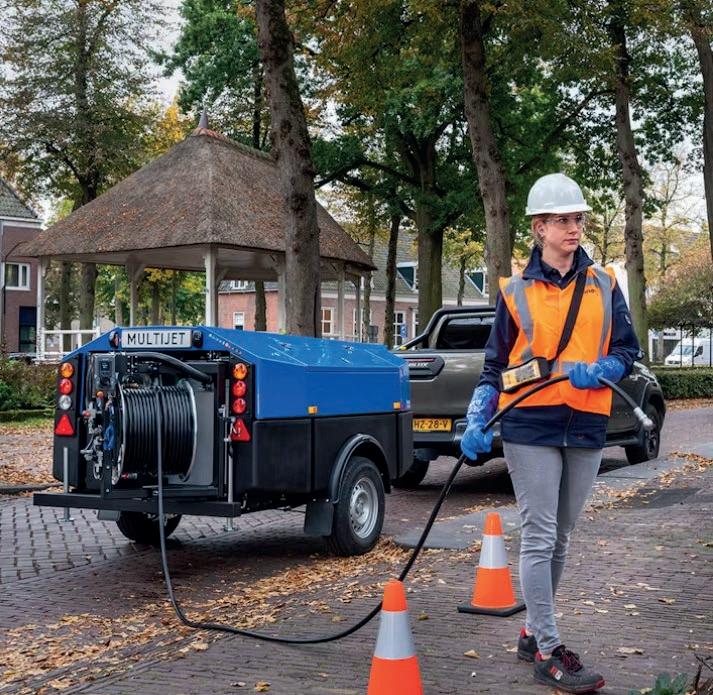
A standout example is the Rioned Multijet, a compact but powerful drain and sewer cleaning unit that has
become a favourite among councils.
The Multijet features a robust Kubota diesel engine, a 180-degree pivoting hose reel and intuitive remote-control operation, making it both efficient and safe to use.
These features help field crews work more quickly while reducing physical strain and jobsite risks. For asset managers, the result is less downtime, fewer callouts and more consistent performance across maintenance teams. Through technology that simplifies daily operations, SECA supports councils in delivering reliable public services to their communities.
Safety is integral to SECA’s equipment design and operating philosophy. Each product is engineered for stability, visibility and operator protection, helping councils and contractors meet Work Health and Safety and ISO compliance targets. SECA also backs every system with training, maintenance and documentation that simplify procurement and reporting obligations. By embedding safety into both design and service, SECA ensures that compliance is an outcome of good practice, not an administrative burden.
From CCTV inspection systems and pipe testing units, to drain cleaning and rehabilitation tools, SECA provides a complete suite of solutions that allow councils to modernise and manage
networks across the entire asset lifecycle. This integration supports smarter planning, more accurate data collection and significant lifecycle cost savings. Instead of short-term repairs, SECA’s approach promotes proactive asset management grounded in quality equipment and reliable support.
Across Australia and New Zealand, SECA’s customers are shifting from reactive maintenance to data-driven management. By combining rugged, field-tested technology with advanced digital reporting tools, SECA helps operators predict and prevent network failures before they occur. The company shares case studies that demonstrate measurable improvements in uptime, labour efficiency and compliance outcomes, showing that credibility is built through results, not rhetoric.
Behind SECA’s equipment is a national support network that councils can depend on. Australian technicians, comprehensive spare parts supply and ongoing training ensure that every purchase is backed by lasting service. When maintenance teams work safely and efficiently, networks run better and communities benefit.
As Australia’s infrastructure continues to age and adapt to new environmental challenges, SECA remains committed to its founding vision: to deliver smarter equipment, safer networks and stronger partnerships that keep essential services operating for generations to come.



We support Councils to better understand what to do and what to spend, where, when and most importantly why, across their building asset portfolio. We capture and deliver facility information using advanced technology helping you execute your business processes with greater efficiency and confidence.

Macutex, an Australian owned and operated awardwinning company, has provided facility asset assessment and reporting solutions to more than 40councils nationally since 2006.
•Asset registers
•Condition assessment and asset management plans
•Costed and prioritised maintenance, lifecycle renewal and capital work programs
•Regulatory compliance audits (accessibility, fire safety, building code, OHS)
•Functional suitability assessments
•Building floor plans
•Drone inspections (CASA licenced)
•3D reality capture models and digital walkthroughs
•Portfolio risk and opportunity profiling and performance benchmarking


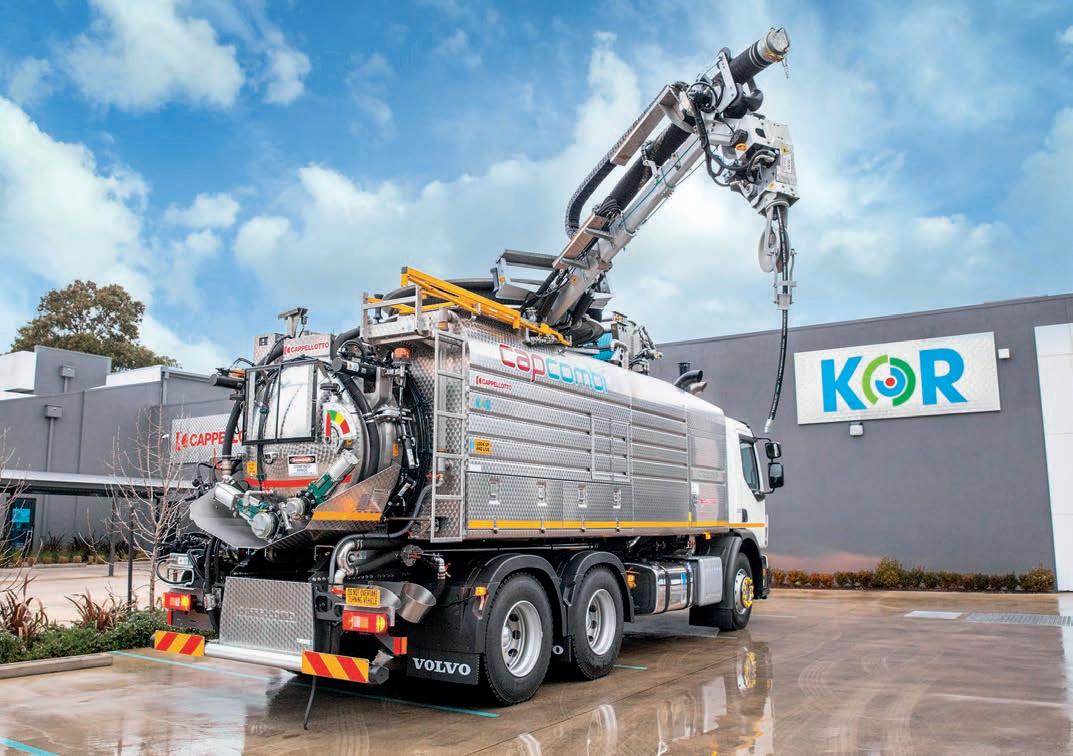
Through its ongoing post-sales support, KOR ensures that equipment delivers value over its entire lifespan.

For more than fourteen years, KOR has partnered with Cappellotto – Europe’s largest manufacturer of vacuum trucks, hydro excavation and drain-cleaning equipment – to deliver innovative, high-quality solutions to government and public works clients across Australia and New Zealand.
This strategic alliance is not just about providing reliable vehicles; it’s about ensuring that local councils and regional bodies benefit from world-leading technology, sustainable design, and a partnership with genuine after-sales support that stands the test of time.
Tim McGregor, Head of Product and Commercial at KOR, has overseen product development, OEM relationships, and the commercialisation of KOR’s extensive range.
Reflecting on the company’s journey, McGregor said that heading into the 15th year of its partnership, KOR has taken the Cappellotto product and helped it become a dominant force in the Australian industry.
“This is because the product has stood the test of time,” McGregor said.
“It’s the highest quality product globally for this type of equipment, and the productivity, performance, and reliability has been second to none in the industry.”
McGregor attributes the success of the partnership to KOR’s ongoing commitment to post-sales support, ensuring that equipment delivers value over its entire lifespan. This is a critical consideration for councils investing in high-value assets that must remain operational for years, often in demanding environments and remote locations.
McGregor explained that Cappellotto products’ leading lower cost of ownership starts in the design of the equipment.
“The higher quality design that you have leads to more efficient manufacturing, and through best design and highest volumes, you can then start to create a supply chain that is far more repeatable in quality. Lower volume competitors simply don’t achieve this,” he said.
McGregor said that unlike these smaller manufacturers who build limited numbers, Cappellotto operates at scale –manufacturing over 500 units annually.
“It’s like trying to build a car in a small production facility with limited resources versus building a car on a large scale production line in Europe with the best technology,” McGregor added.
This large-scale production, paired with a relentless focus on quality, ensures Cappellotto’s equipment is as reliable years down the track as they are on delivery – a crucial factor for councils
measuring total cost of ownership and equipment uptime.
From the earliest days, KOR has worked closely with Cappellotto to tailor products for local conditions.
“When we started, we looked to design models for Australian and New Zealand conditions, our weight limits, our size requirements, and then we steadily refined that over time,” McGregor said.
“Continuous improvement is at the forefront of our planning for future design driving an improved return on investment which drives customer support for KOR and our products.”
This commitment is reflected in repeat business, with many councils returning to KOR to build their fleets on the reputation of reliability, service and support.
KOR understands that world-class equipment is only as good as the support behind it.
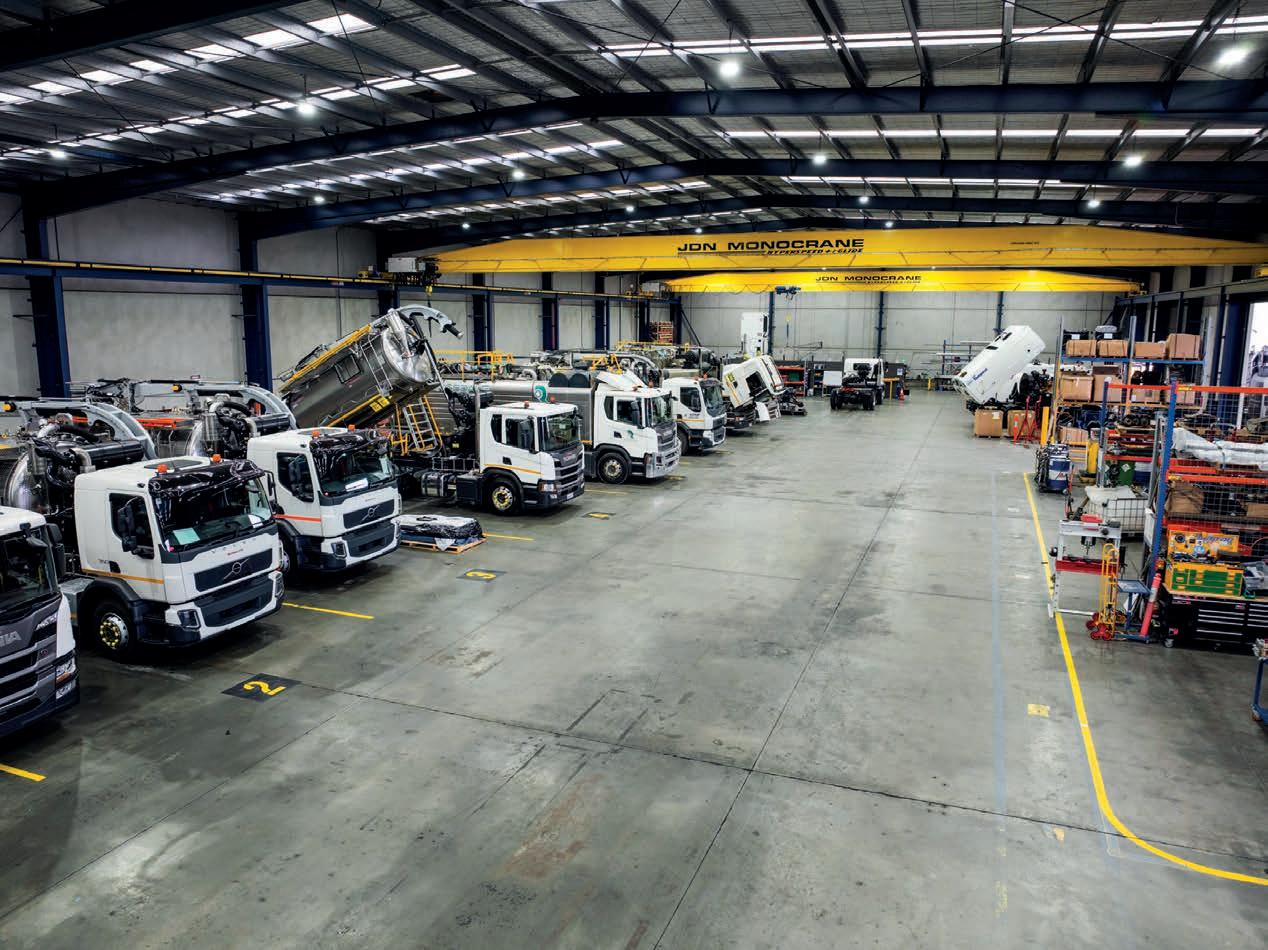
“On-site servicing and maintenance is conducted daily by our fleet of service vans, as well as having bricks and mortar branches across Australia and New Zealand,” McGregor said.
With service vans strategically deployed, KOR ensures minimal downtime for customers by providing scheduled and preventative maintenance at the point of need – vital for dispersed and remote councils.
“We strive to proactively limit any unscheduled equipment downtime by giving more support options available,” McGregor said.
KOR’s partnership with Cappellotto places a strong emphasis on customer feedback and operator empowerment to get the best results out of the truck.
“We offer equipment familiarisation programs and nationally accredited competency-based training around the use of vacuum and high-pressure water, which we provide across Australia and New Zealand,” McGregor said.
This training ensures council operators can use and care for the equipment
effectively, supporting safe and productive environments.
“We also couple the Cappellotto equipment to the highest-emissions level rating that we can get on European chassis – Euro-6 – and the equipment itself will have the lowest environmental footprint compared to other options.”
McGregor said that the secret to Cappellotto’s longevity stems from the materials and design.
“Virtually everything on our sewer and drain cleaning models are stainless steel – less painted surfaces, highest-grade European stainless steel – which gives you longevity, because there’s less items with a short life.”
For local governments seeking to maximise their equipment and fleet replacement budgets, KOR’s partnership with Cappellotto offers more than equipment – it’s a commitment to value, service, and sustainability that endures.
To learn more, visit kor.com.au


















Across Australia, local governments are leading the way in creating more sustainable, e cient and resilient communities. As councils plan for the cities and towns of the future, solar street lighting has emerged as a proven technology that delivers environmental, economic and operational advantages.


Reducing reliance on the electricity grid is a priority for many councils pursuing carbon-neutral or net zero goals.
Solar street lighting directly supports this mission, drawing clean energy from the sun to power safe, well-lit public spaces. Each light reduces emissions, minimises grid dependency, and helps local governments demonstrate tangible action toward sustainability targets.
Darmon LED is helping councils across the country realise these benefits through advanced solar lighting systems, which are built specifically for Australian conditions and designed to support councils’ sustainability goals.
Modern optical design plays a key role in this progress. Darmon LED’s range of solar lights incorporates precisionengineered optics that focus light where it’s needed while limiting upward light leakage. This reduces light pollution and protects the night sky – a growing consideration for councils in both urban and regional settings.
Built with corrosion-resistant aluminium housings and durable components, Darmon LED’s lighting systems are made to withstand the Australian environment. From coastal councils facing salt exposure to inland towns enduring high temperatures and UV radiation, these lights are engineered for reliability and longevity.
While sustainability is a clear driver, financial responsibility remains at the heart of every infrastructure decision.
Solar street lighting offers significant savings over its lifetime, beginning with installation. Because solar lights operate independently of the electricity grid, there’s no need for trenching, cabling or connection works – reducing project costs and avoiding disruption to local roads or pathways.
Once installed, solar systems eliminate electricity bills entirely.
Long-life LiFePO₄ batteries provide reliable energy storage, retaining more than 80 per cent of their capacity after 800 cycles. Combined with maximum power point tracking (MPPT) charging technology, which improves charging efficiency by up to 20 per cent, councils benefit from higher daily uptime and extended system lifespan.
Smart controllers also support reduced maintenance requirements. With programmable dimming schedules and motion sensors, energy usage is automatically optimised throughout the night. The result is predictable, low operating expenditure and a strong return on investment, important considerations for ratepayer-funded projects.
Resilience is increasingly essential in local government planning, particularly as communities face the challenges of extreme weather and grid instability.
Solar lighting provides inherent resilience by operating independently from central power networks. During blackouts, natural disasters or emergencies, solar streetlights remain operational, ensuring visibility and safety in parks, car parks, shared zones and residential streets.
The systems’ modular, tool-free design supports fast installation and easy maintenance. Councils can choose from multiple mounting options to suit various applications, from pathways and foreshore boardwalks to remote walking trails.
Smart features such as microwave sensors, dimming controls and time-based operation enable efficient lighting management while maintaining security and accessibility for pedestrians and motorists.
Reliability in harsh environments is central to any public lighting asset strategy.
Darmon LED’s solar streetlights are built for the unique demands of Australia’s climate. Each unit is tested to withstand wind loads up to 45 metres per

transparency ensures local governments
low-maintenance solar lighting, councils
enhance community safety while meeting
Solar street lighting represents more than
infrastructure. With proven performance long-term value, Darmon LED are helping darmonled.com or contact Darmon LED

For councils that manage large fleets or infrastructure projects, sustainable procurement is not just about doing good, it’s about longterm fiscal discipline.

For local governments across Australia, sustainable procurement is rapidly becoming a strategic imperative, integrating social, environmental, and economic considerations into purchasing decisions to ensure long-term value.
Sustainable procurement reduces carbon emissions, supports ethical supply chains, and fosters local economic development. In short, it aligns directly with council sustainability strategies, climate action plans and community wellbeing goals.
When councils adopt sustainable procurement, they’re asking: ‘What is the full life-cycle impact of this purchase? How does it affect our local community, our workforce, and our planet, not just today, but decades into the future?’
They’re opting for machinery, equipment and services that deliver value not just in price today, but in longevity, efficiency, minimal environmental harm and positive social outcomes.
There are several compelling reasons for councils to adopt sustainable procurement.
Product Manager for Electric and Sustainable Technologies at CJD Equipment, Reid Gibson explained that one of the key advantages of sustainable procurement is adopting machines with zero tailpipe emissions, which assist councils in meeting climate targets and reducing air pollution.
“Choosing zero-emission or lowerimpact equipment helps councils meet increasingly stringent climate targets and reduce local air pollution,” Gibson said.
“It also supports healthier urban environments – particularly in sensitive locations such as schools, parks or innercity developments.”
There are also the social outcomes. Reduced noise and vibrations from quieter, electric or hybrid equipment improves worker health and neighbourhood amenity.
“These machines operate almost silently, improving worker health and environmental conditions for the operator and those working within the vicinity of the machine,” Gibson said.
Ethical supply-chain practices also enhance community trust when procurement policies ensure responsible sourcing and labour standards.
Thirdly, from a financial and operational perspective, although upfront investment may be higher when selecting sustainable technologies, the life-cycle cost savings – from fuel, maintenance, down-time and resale value – can be significant.
“Electric machines have fewer moving parts and reduced maintenance and servicing costs over time. Additionally, electricity is generally cheaper than diesel, especially when paired with renewable energy sources and storage systems,” Gibson said.
For councils that manage large fleets or infrastructure projects, sustainable procurement is not just about doing good, it’s about long-term fiscal discipline.
However, it’s not without its challenges. Councils must plan for infrastructure – such as charging stations – ensure workforce capability for new technologies, and account for changes to procurement frameworks that factor in environmental and social criteria alongside price and performance.
Thus, while the business case may require more up-front planning and investment, the long-term benefits –including operational savings and improved productivity – make it a compelling proposition for local government.
For councils looking to move from policy to practice, several steps emerge as key: 1. Embed sustainability criteria into procurement policy. It’s CJD’s belief that councils should include environmental and social criteria alongside price and performance when evaluating tenders. Evidencebased frameworks help ensure that
2. Consider total lifecycle cost. CJD has said that beyond initial purchase price, councils should evaluate maintenance, fuel/energy consumption, resale value and operator productivity. Sustainable machines often come out ahead when full lifecycle costs are modelled.
3. Plan supporting infrastructure and training. When procuring electric or hybrid machinery, charging infrastructure, telematics, operator training and maintenance routines must all be factored in. As Gibson said, the infrastructure need can be a barrier – but one that is manageable with the right support.
4. Seek specialist partnerships and technical support. Councils may not have all the in-house expertise for emerging technologies. Whether working with the manufacturer, vendor or consultants, securing access to training, telematics data, and technical support ensures smooth transition and maximises value.
Recent industry analysis highlights that sustainable procurement is shifting from optional to strategic.
For example, Volvo Construction Equipment has published extensive Product Carbon Footprint reports showing that electric machines are a more sustainable choice compared to diesel machines when looking at greenhouse-gas emissions over their entire life cycle. Their work also emphasises that procurement is a key lever.
This underlines that councils, as large-scale purchasers, wield enormous influence in steering markets towards lower-carbon solutions.
For local governments, that means when a council demands sustainable equipment – either zero-emission machines or equipment with a lower overall environmental footprint – they activate the supply chain. Vendors respond, technologies scale, and whole industries shift.
Sustainable procurement is a powerful tool for local governments to deliver on climate targets, support community health and financial prudence.
As Gibson summarised, “It’s about ensuring long-term value by reducing carbon emissions, supporting ethical and sustainable supply chains, and fostering local economic development.”
CJD’s message is clear: embed sustainability into your procurement decisions now. Consider lifecycle costs, plan for infrastructure and training, and seek partners who can support the transition. The benefits – environmental, social and economic – are substantial, and the opportunity to lead the community into a lowercarbon future is real.
If your council is contemplating procurement of equipment, fleet renewal or large-scale infrastructure work, making sustainability a core criterion isn’t just good policy – it’s smart business, smart community stewardship, and smart future-proofing.

As Australian councils grapple with the transition to zero emissions transport, the rollout of public electric vehicle chargers is emerging as a key pillar in local government climate action.
Electric vehicle (EV) uptake depends on more than just consumer interest. Without visible, reliable, and accessible charging infrastructure –especially for people without off-street parking – the transition will stall. And that’s where local governments are stepping up.
Across the country, councils are becoming crucial players in the rollout of public EV charging, using their unique position as landowners, planners and service providers to bridge the infrastructure gap. From Sydney’s eastern suburbs to the streets of Newcastle and inner-city Melbourne, councils are not just trialling solutions – they’re building real networks, serving real drivers, in real time.
From asset-rich suburban councils to regional cities, local governments are making significant strides.
In Melbourne’s inner north, Merri- Bek City Council has taken a hands-on role in EV charging.
Merri-Bek’s journey in the EV space began long before electric vehicles became mainstream. The council was among the first in Australia to install public direct current (DC) fast chargers, rolling out the country’s second such unit. Early initiatives included trials with hydrogen vehicles and electric car sharing programs, demonstrating a willingness to explore innovative solutions and set ambitious benchmarks.
Technical Lead, Paul Swift, explained that Merri-Bek currently owns and operates about 22 public EV chargers and 13 council-only chargers.
“Ours is one of the largest council-owned portfolios in Victoria,” Swift said.
As Merri-Bek aims to dramatically grow its charging footprint – targeting 50 to 100 public DC chargers by 2030 – the council is considering a mixed model of direct ownership and licensing parking bays to private operators to increase scale and flexibility.
New initiatives include piloting hometo-street charging for residents without off-street parking and exploring polemounted chargers for faster deployment.

Through a combination of practical action, resident engagement, and openness to new models, Merri-Bek is balancing the drive toward zero emissions with inclusive, futurefocused infrastructure.
One of the country’s most comprehensive council-led charging programs has been established in Sydney’s eastern suburbs.
The Waverley, Woollahra and Randwick Councils have jointly built and expanded a public network of 90 charging ports of which 20 are DC.
“In our area, a lot of residents live without off-street parking,” said Anthony Weinberg, Regional Environment Program Manager for the three-Councils.
“If we are to transition to electric vehicles, we need to be able to support everyone in that transition,” Weinberg said.
“As a council we need to make sure that there’s accessible, available, equitable public charging. We recently calculated that 80 per cent of our residents now live within an eight minute walk of a charger.
“We’ve also got one of the highest uptakes of EV in the state – about 3.7 per cent of vehicles on the road, which is two and half times the NSW average.”
The 3-Councils began their journey in 2019 with a modest on-street network of six chargers – the first on-street public network in New South Wales.
“In 2019 we had maybe 40 charging sessions a month. Now it’s well over 4,000 per month, and we’re expecting that to keep growing,” Weinberg said.
“We also work with the private sector, in 2022 we were providing about 70 per cent of the public EV charging, whereas today we’re providing around 30 per cent and that’s because we’ve worked with private companies to install more charging stations.”
The City of Newcastle also stands out as a pioneering force in supporting sustainable transportation through its rapidly growing EV charging network.
Council’s Climate Change and Sustainability Manager, Dr Heather Stevens, said that the city started in 2019, and has now expanded to over
50 public charging bays, all powered by 100 per cent renewable electricity. Their commitment to installing the ‘right charger in the right place’ has helped drive a surge in EV ownership in the city.
Newcastle has taken a handson management approach to its infrastructure. The council owns and operates the charging stations, enabling
revenue to stay within the community. These funds are reinvested to further improve and expand the public charging infrastructure.
“For us, being a charge point operator means we can make decisions that are driven by our values – doing what’s best for our community rather than just what makes profit,” Heather explained.
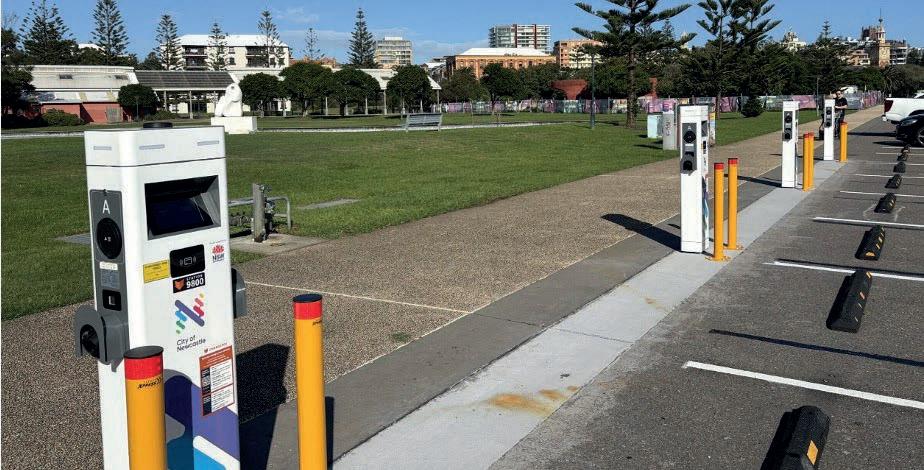
Chargefox has over 300,000 registered users.



The EV chargers, distributed across the city, offer different types for commuters, locals using shops or facilities, and travellers in need of a fast charge.
Accessibility is also a priority.
“We’ve responded to feedback from disability advocates to ensure that we provide wide and inclusive designs, supporting everyone using our chargers.”
User feedback has been supportive, especially on the increased convenience of locations, as well as from businesses who have seen an increase in local spend and visitation from users who are waiting for their car to charge.
By prioritising sustainability, inclusivity, and community benefit, Newcastle exemplifies how proactive local government can shape the future of urban mobility.
Each of this councils works with EV infrastructure software provider, Chargefox, for the software, driver-app, analytics, billing and integration services that the need, so they can focus on the location, hardware and operations of their networks.
Chargefox allows councils to outsource the software complexity, driver-interface, user-support and data analytics, while retaining ownership of the physical chargers and their strategic location.
This opens up flexible models: owning and operating chargers; licensing bays to external operators; mixing private and public models. As Swift points out, when it comes to achieving the scale of EV charging infrastructure that the transition needs, “I don’t think there’s any likelihood that Council will install and operate all of those. It’s always going to be a mix,” he said.
One of the benefits of using Chargefox’s platform that stood out most to councils was the ability to access user data to see trends and insights, allowing network planners to use that data to make informed decisions for their future infrastructure.
Weinberg explained that when users log on to the platform to enable a charging session, Council can see when, where and for how long a charger is used.

“Chargefox gives us all our monitoring and reporting and information dashboards. We can really see how our network has grown, and it shows us interesting things like the busiest times of day,” Wienberg said.
“We’re looking at using that insight to offer our drivers cheaper prices to during certain times.”
Stevens said that the platform can even distinguish between visitor and resident demographics.
“We now know that when we have visitors coming in our LGA – people who travel more than an hour – they want to charge on a fast charger,” Stevens said.
“Whereas people that live locally are happy to use the slow charger.”
Another challenge for charger owners is how to maximise the number of people using chargers in order to generate a return on investment.
Chargefox has over 300,000 registered users meaning that when councils install chargers that the EV driving community will be able to see, find and use them.
They also have partnerships with car manufacturers and fleets meaning that as the number of Australians driving an EV grows, the audience who can find and use chargers on Chargefox will grow along with it.
For councils looking to scale EV charging infrastructure, the message is clear: the hardware is only part of the story.

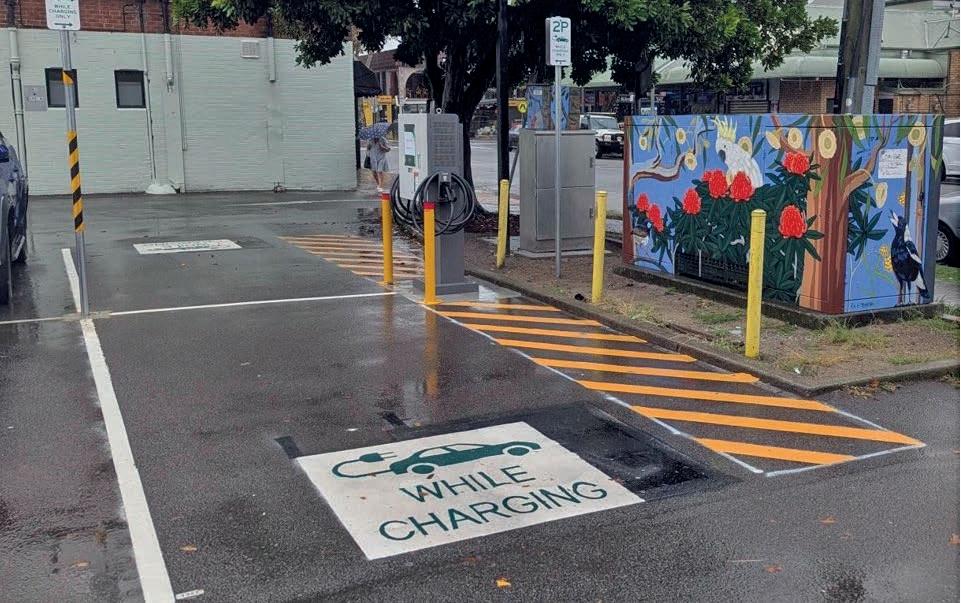
While each of these councils has a very different set of circumstances, they have all found that having a robust back-end platform for driver experience, maintenance alerts, analytics and billing is critical to moving beyond pilot stage.
For councils looking to scale EV charging infrastructure, the message is clear: the hardware is only part of the story.
Locating chargers, securing grid capacity, designing for access and monitoring performance, as well as finding an audience, all demand strategic attention. Partnering with a platform like Chargefox can reduce the friction around software, driver-interface and analytics, enabling councils to focus on location, community needs and outcomes.
Of course, every council’s context is different – high-density apartments, regional distances, or fleet renewal – but these three cases suggest that public charging is no longer an experimental add-on. It is a strategic infrastructure asset that plays a role in transport decarbonisation, community access and local economic activity.








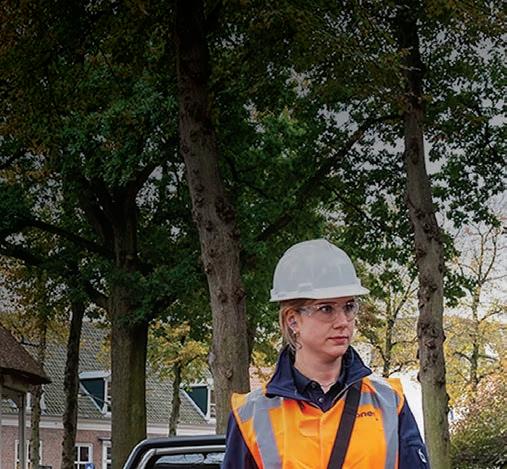

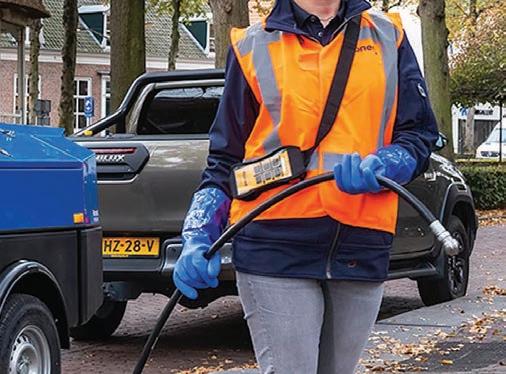






It’s easy to use
Built in toolboxes

180-degree pivoting hose reel
Light and easy to tow
Variable pressure output
Minimum pressure loss
Hose meter counter
It’s reliable
European designed and manufactured
Kubota diesel engine
Robust and durable
Easy to service
It improves safety
Increased stability
Maximum visibility


Remote control operation






Discover how to make jetting faster, easier, and more efficient with the Rioned Multijet






How local governments are bridging the infrastructure gap with Autodesk’s unifying digital project delivery platform.
Across Australia, local governments are at the forefront of addressing one of the nation’s most pressing challenges: renewing and expanding essential infrastructure. Roads, bridges, water systems, and community facilities built in the postwar decades are reaching the end of their life, while population growth, climate change, and rapid urbanisation are intensifying the strain.
The story isn’t unique to Australia. Around the world, public infrastructure investment has declined dramatically
since the 1960s, even as demand has surged. The American Society of Civil Engineers recently rated the United States’ infrastructure a “C-,” estimating a $2.6 trillion investment gap this decade. While Australia’s infrastructure networks are generally more modern, many local councils still face growing backlogs of deferred maintenance and project bottlenecks due to limited resources and manual processes.
However, a new wave of digital transformation is helping councils plan, design, and build better infrastructure
faster. Central to this transformation are Autodesk’s digital project delivery solutions, which provide a unified cloud-based platform that connects people, data, and workflows throughout the entire project lifecycle.
Digital project delivery creates a common data environment (CDE) where all stakeholders, from engineers and planners to contractors and community representatives, can


Because
paper-based systems, created mobile applications for site assessments and e-ticketing, and achieved faster project turnaround times – all while improving collaboration across hundreds of concurrent projects.
and accelerate project approval cycles. This frees up skilled professionals to focus on innovation and community engagement rather than administration.

Digital project delivery creates a common environment where all stakeholders can collaborate seamlessly.
collaborate seamlessly. This unified data ecosystem ensures everyone is working from the same set of accurate, real-time information, eliminating costly rework, duplication, and communication silos.
For example, with Autodesk Construction Cloud, councils can manage complex infrastructure programs across multiple departments and contractors while maintaining transparency and accountability. Tools like BIM Collaborate Pro and Civil 3D allow design teams to share models, conduct clash detection, and simulate project scenarios in real time – reducing risk and improving design quality.
The benefits are already proven. The Pennsylvania Department of Transportation (PennDOT), which manages more than 600 construction projects annually, adopted a digital project delivery approach using Autodesk technology to connect teams and streamline operations. By digitising its workflows, PennDOT eliminated
For Australian councils, the move toward digital project delivery isn’t just about efficiency – it’s about building resilience and sustainability into the fabric of public infrastructure. With tools like Autodesk InfraWorks, councils can visualise existing conditions and test design options against future challenges such as sealevel rise, storm surges, and extreme weather events.
Through digital twins and data-driven design, councils can also use accurate as-built models to inform maintenance strategies, track asset performance, and make data-backed investment decisions. This proactive approach allows local governments to extend the life of infrastructure assets and reduce total lifecycle costs, all while ensuring public safety and service continuity.
With funding constraints and increasing community expectations, councils must find ways to deliver more value from every infrastructure dollar. Autodesk’s solutions help local governments automate repetitive processes, reduce manual data entry,
Because Autodesk’s tools are cloud-based, they scale easily and integrate with existing systems –meaning teams can onboard quickly without major disruption. This flexibility makes it easier for councils to manage growing workloads and respond to urgent infrastructure needs without compromising quality or compliance.
Australia is already experiencing the impacts of more frequent and severe climate events, each costing billions in recovery efforts. Digital project delivery offers a smarter way forward – helping councils anticipate risks, prioritise investments, and build infrastructure that will stand the test of time.
By adopting Autodesk’s unified platform, local governments can integrate data, people, and processes across every stage of the project lifecycle. The result is greater transparency, faster delivery, and more resilient communities.
In today’s fast-changing environment, councils that embrace digital project delivery are not only bridging the infrastructure gap – they’re leading the way toward a more sustainable, connected, and future-ready Australia.
When the Town of Victoria Park set out to modernise its parking system, its goal was simple: to create a better experience for the community while ensuring the town stayed ahead of technological change.
The Town of Victoria Park in Western Australia
recently undertook a bold, industry leading move that has now earned the council national recognition, transforming the way local governments think about parking management.
In partnership with EasyPark and Orikan (PayStay), the Town of Victoria Park became one of the first local governments in Australia to launch an integrated multi-provider parking payment system. The project has since delivered major operational efficiencies, boosted community satisfaction, and positioned the town as an industry leader.
Manager of Business Services, Trent Prior, said the council’s achievement stemmed from a commitment to collaboration and innovation.
“Over a three-year journey, we’ve kind of had a vision, we’ve executed the project management framework,” Prior said.
“We’ve delivered the outcomes and ultimately been recognised now with an award in the parking industry. It’s nice to close off that whole loop, to know that it’s been an investment worth undertaking.”
For years, the parking industry has traditionally operated under a model of single-vendor dominance. The Town of Victoria Park set out to change that by creating a competitive ecosystem where consumers could choose between multiple parking apps throughout the town.
“Ultimately, from the town’s perspective, we wanted to provide consumers more choice when selecting pay by phone applications,” Prior said. “That is to improve their convenience, but also to promote customer experience.”
EasyPark (now part of the Arrive Group) and PayStay were selected through a formal quotation process that assessed multiple options.
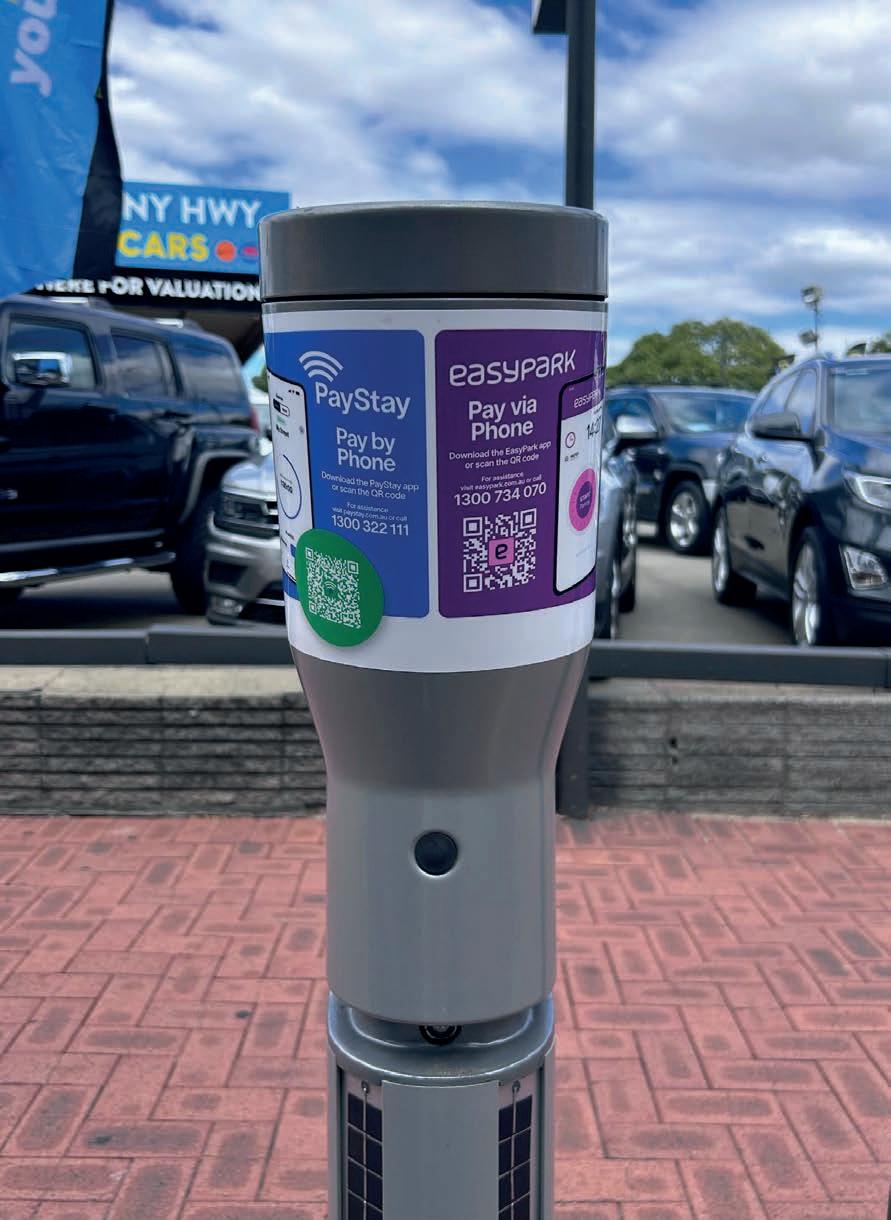
“These two were our preferred applications following the procurement process,” Prior said.
Both apps had recently undergone major refreshes, giving the town
Consistent branding and a shared five-digit area code across platforms has created a “simple, seamless experience.”
ongoing development.
By offering two competing apps with different convenience fees and user interfaces, Council has handed control back to drivers. This flexibility, combined with consistent branding and a shared five-digit area code across
“simple, seamless experience.”
Behind the simplicity of the new parking experience lies a technical integration. The town’s new open system connects the separate platforms
through a unified back end that enables real-time data sharing while maintaining system independence.
Prior said bi-directional integration was a key goal from the start.
“There was a lot of user acceptance testing happening that slightly delayed our launch, to ensure that from a customer’s experience, it was seamless,” Prior said.
This integration not only supports the town’s 30-minute free parking policy across all systems but also eliminates opportunities for users to “double dip.”
“We needed to manage that across three platforms so they couldn’t double dip. There was a lot of testing to ensure that was restricted to the first 30 minutes per user,” he said.
The result is a smarter, data-rich parking network that supports evidencebased decision-making. Real-time occupancy data now helps identify underpriced zones, allowing the town to refine its demand-based pricing model and ensure spaces are used efficiently.
Transitioning to a fully cashless, ticketless parking system could have sparked community resistance. Instead, the Town of Victoria Park’s thoughtful approach ensured a smooth rollout.
The council removed all cash parking meters, reducing the total number of meters from 137 to 81, while migrating 1.5 million annual transactions to digital platforms with just 16 community complaints in the following year.
This success was no accident. It followed nine months of accessibility consultation, six months of community communication, and a multichannel awareness campaign supported by on-the-ground staff. The process demonstrated how careful planning

and empathy can help residents adapt to change.
Internally, the shift also transformed the town’s parking culture. When Prior took over the department in 2022, he was determined to create a more customer-focused team. Regular team meetings, performance discussions and open communication channels have since eliminated high staff turnover. The department now has a stable, motivated workforce that takes pride in delivering better service to the community.


The results of the Town of Victoria Park’s innovation have been striking. Despite a 41 per cent reduction in parking meters, total parking income has increased by more than 33 per cent. Digital payment adoption has jumped from 22 per cent to 70 per cent, and the new system operates at zero additional cost to ratepayers.
Just as importantly, the model has captured national attention. The town earned the Excellence in Innovation and Technology - On Street award, celebrating a project that not only reshaped local parking management but also challenged long-standing industry norms.
“Both vendors being open to new ideas, considering the town’s strong commitment to our vision and goals, has enabled us to successfully deliver on those promises,” Prior said.
“We were really pleased to partner with EasyPark and Orikan and I think this is the new norm that local governments across Australia will now be adopting.”
For Prior, the project represents more than operational success – it’s about leaving a legacy.
“The way we’ve gone about it is to leave no stone unturned and to be open to innovation. We really feel like this is a legacy project that will now be available for everyone else to follow for the next decade.”
Instead of dedicating limited budgets to manual data collection, councils can redirect resources to creating greater value.

For decades, local councils have commissioned facility assessments (also known as building condition audits, facility surveys, building asset inspections and data collection programs) to support critical functions such as asset management, maintenance planning, lifecycle renewal forecasting, capital works planning, regulatory compliance and financial reporting.
The formula for success is straightforward: capture the right site information costeffectively, then deliver it in a way that creates genuine value.
The industry has long experienced an imbalance between the effort to collect information and the value generated. Why are highly skilled professionals spending time and budget travelling to regional sites to manually count doors and carpet? Why gather data solely for one purpose when multiple stakeholders could benefit from the same information whilst reducing costs and time spent?
When assessments are scoped narrowly, they deliver value for specific objectives, leaving other areas without needed information. Try assessing accessibility compliance from a condition-only Excel register! It simply doesn’t work.
Facility and asset management service provider, Macutex, believes it’s time to flip the equation from high effort input for low yield results to low input effort generating high-value, multi-use information. Macutex calls this the Effort to Value Ratio and two technology segments are making this possible.
SPATIAL REALITY CAPTURE
What if instead of going to site, the site came to you?
Macutex has pioneered spatial capture for portfolio-wide assessments since 2017, using drones, photogrammetry, LiDAR and 360° panoramic imaging. Once solely used for major capital projects, councils are adopting reality capture for diverse applications. This includes showcasing project outcomes through interactive before-and-after models, conducting virtual tender site inspections to eliminate travel whilst allowing contractors to take measurements remotely, recording capital works visually and creating models to support stakeholder engagement.
The technology transforms how councils manage assets across dispersed portfolios, particularly in regional areas where site access is costly and challenging.
Imagine capturing photos or video of a facility, then instantly generating an asset register complete with condition ratings, quantities and replacement costs in formatted spreadsheets. Better yet, imagine using those same images to produce a defect maintenance plan, ten-year renewal forecast, accessibility compliance report or carbon reduction recommendations.
This isn’t speculation. Over the past 18 months, Macutex has developed, trialled and refined these applications for enhanced facility assessments and reporting, instantly transforming images and video into comprehensive asset registers and customised reports.
These technologies fundamentally shift what’s possible. Instead of dedicating limited budgets to travel and manual data collection, councils can redirect resources to creating greater value. Remote facilities become more accessible, and information gathered serves multiple objectives simultaneously.
Importantly, managers can achieve more strategic outcomes such as better planning, improved compliance and enhanced decision-making, without proportionally increasing effort or budget.
The Effort to Value Ratio is finally changing. Macutex knows these technologies work. The question is how quickly Australian councils will adopt them to transform their asset management practices.
Interested to find out how Macutex can assist your organisation? visit www.macutex.com
Civil engineering tools for the next generation. Civil Site Design®.

Civil Site Design® is an easy-to-use civil design solution that adds road reconstruction, road design, site grading, stormwater, pipe and sewer design capability to your CAD platform. Using familiar string and template design, Civil Site Design includes a complete set of civil tools to supercharge your design, in one low-cost version. Design and drafting are cleverly integrated to reduce wasted time and improve production outcomes.
Developed in Australia, Civil Site Design is already used by more than 120 councils. To find out how Civil Site Design can leverage your CAD investment and save time on your next civil design project, use the QR code for a quick video overview.
Request your free 30-day trial or software demo now.


Organisations
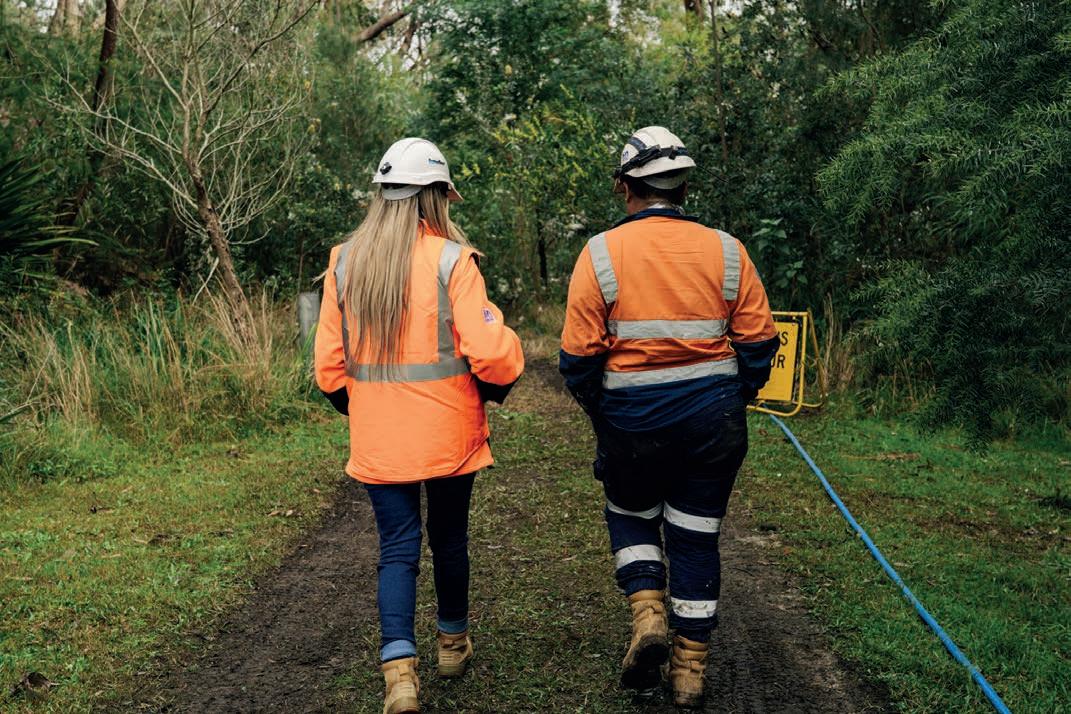
As pressure rises on Australian water infrastructure – compounded by climate change, ageing assets, population growth, rising costs and increasing expectations –the way forward must be innovative, e cient, and sustainable.
The Australian water sector has reached, and in some ways surpassed, a critical inflection point.
Increasing extreme weather events brought on by climate change are pushing systems beyond their current limits. Urban sprawl and higher density inner city living are similarly putting intense strain on assets that are often operating near the end of their lifespans.
Joseph Curkovic, a civil engineer and Interflow’s Innovation Manager, agrees that the asset and engineering challenges the sector faces are immense.
“We’re acutely aware of the mega, macro and micro challenges facing water authorities,” Curkovic said.
“Innovative engineering solutions play a critical role in resolving many of these complex problems, including well-established trenchless technologies which help asset owners to address challenges in rehabilitating and renewing existing pipelines.
“These techniques minimise excavations and result in minimal surface disruption, faster construction times at a lower cost, and significantly reduce the environmental footprint associated with building new pipelines, often using open trench methods.”
Curkovic said that as constraints tighten, expectations rise and seemingly
conflicting demands increase, new technologies and methodologies become paramount to meeting the future needs of customers.
“What will be required is greater, more open dialogue and collaboration across the entire value chain and asset lifecycle between asset owners and delivery partners like Interflow, who are leaders in trenchless technologies. It will demand increased collaboration, and ultimately, joint investments in new technologies,” he said.
“Only then will we be able to improve outcomes for the environment, and for communities that depend on our water and wastewater networks.”
More broadly, the path to sustainability and achieving net zero carbon emissions remains challenging, said Pam Johnson, Sustainability and Environment Manager at Interflow.
“It’s not that solutions don’t exist – many of them do. The challenge lies in rolling them out consistently across an entire sector, across businesses of all sizes and at all stages of their sustainability journey,” she said.
“While managing our operational emissions remain challenging, it’s achievable, especially with Interflow’s
strong purpose: to improve lives, communities and the environment.
“But when it comes to what we buy and how it’s made – essentially, how other businesses operate – system-wide progress will take deep collaboration, not just with suppliers but across the whole industry.”
As major water authorities begin shifting their procurement focus to include decisions around more sustainable and performance-based outcomes, it opens the door to new ways of working that challenge well-established and accepted engineering practices.
“That gives us permission to push ahead with our innovation programs and bring our purpose to life,” Johnson said.
“Without those shifts in customer expectations, some sustainable alternatives might never gain traction.”
The myriad of pressures on water in Australia mean success is no longer defined solely by technical outcomes. It is also about ensuring long-term water security, building stronger communities, respecting cultural heritage, embedding climate resilience and enhancing biodiversity.
As Johnson said, “we must partner strategically to get where we want to go, and to make sure we’re all on the same journey.”




Smart local councils around Australia have discovered the next generation of road and path surfaces. Made with crumb rubber from recycled tyres, they are safer, cost e ective and more resilient than ever before.
Ready to discover the crumb rubber di erence?
Council design teams across Australia face a uniquely challenging brief; deliver safe, accessible, resilient infrastructure, all while contending with constraints like public expectations and legislative requirements. Balancing these priorities is no small feat, and the tools councils use can make all the di erence.
Today’s councils are required to manage a diverse portfolio of works – urban road upgrades, rural safety improvements, creation of share paths, car park refurbishments, and the transformation of open spaces – all under tight timelines and expectations for community consultation and transparency. There are elements councils simply cannot move, from deep-set utilities to mature street trees; meanwhile, the households who live alongside these upgrades demand clarity and comfort about the impact of works.
As Shane O’Rorke, Technical Services Manager at Civil Survey Applications, reflected “Local government work is very varied, and it’s really challenging,
O’Rorke, who started his career in local government, recognised that designing infrastructure for councils is about more than just technical output.
“It’s about delivering tools that make it easy for local government designers to get their work done. It needs to be accurate, it needs to be controlled, because there are things you can’t change. But it also needs to be easy,” he said.
One of the persistent hurdles for local governments has been finding civil engineering design software that suits the Australian context. For years, imported solutions fell short – originally “built in America for Americans”, they did
experience, have altered this equation. Now, solutions are tailored for the Australian environment, supporting workflows in Autodesk, AutoCAD and Civil 3D, as well as BricsCAD. The approach enhances council designers’ ability to manipulate and visualise land changes, manage stormwater, utilities, and road alignments, all in real time within the familiar CAD (Computer-Aided Design) environment.
All levels of government are increasingly focused on equitable data sharing, particularly as the Infrastructure Foundation Class (IFC) format becomes the standard for projects in New South Wales and elsewhere. This enables planners, engineers, architects, and landscape architects to engage with the
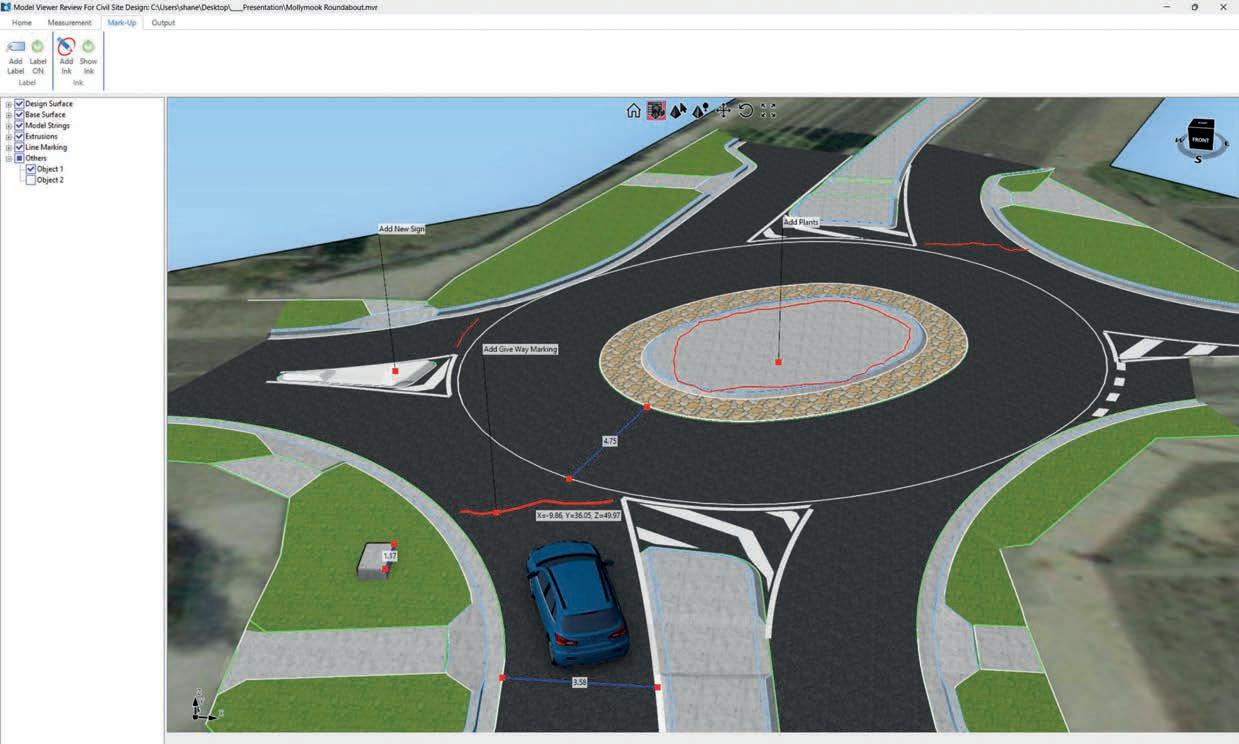
Users can now access Civil Site Design’s Model Review, a free standalone application which promotes collaboration and allows mark-ups among all stakeholders.
Civil Site Design’s new Quick Section Command dynamically displays surfaces, models, subgrade models, alignments and more.
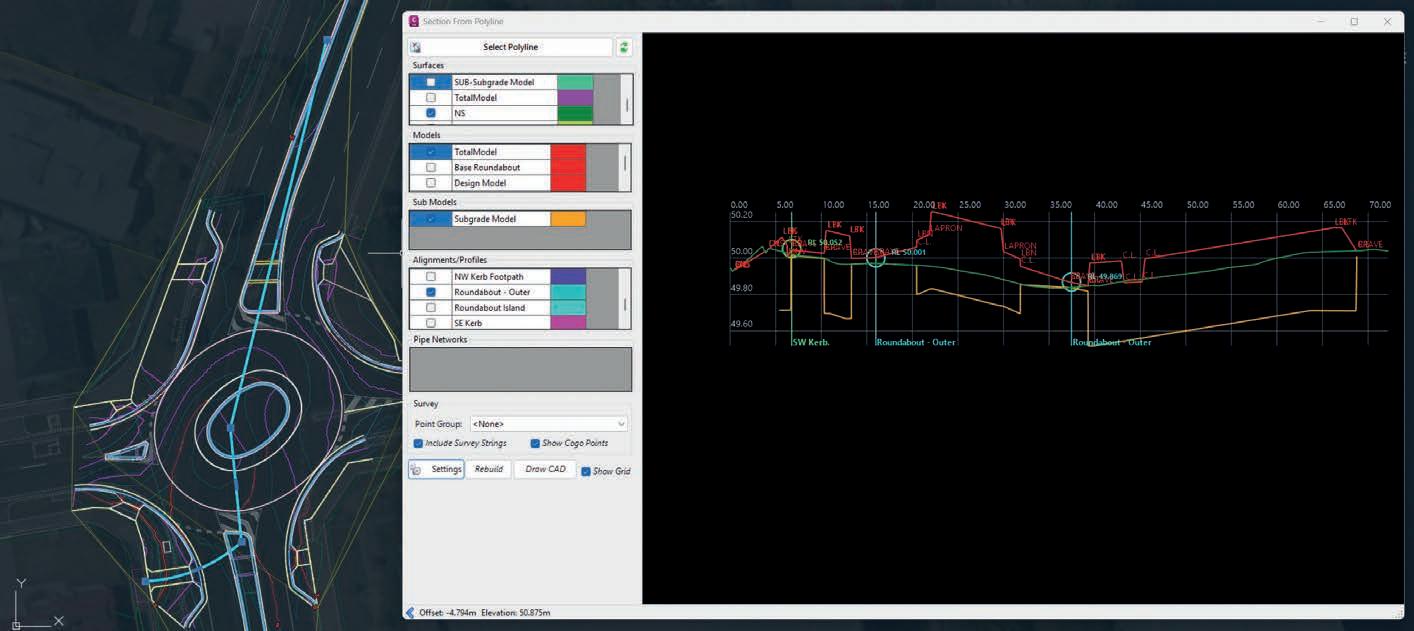
happening in industry now is this idea that we all create data that is equitably shared, equitably viewed, and equitably analysed.”
This shift is especially critical for councils, who must frequently package up design outputs to meet state government and multi-disciplinary project requirements.
Community consultation is no longer a box-ticking exercise – it’s an imperative. Councils need to bridge the technical expertise of engineers with the understanding of the local community.
“Advances in 3D visualisation allow councils to take screenshots or open up the model and move it around, and it makes a big difference for a resident to say, ‘Okay, I’m unhappy about this road, but when I see it, I can at least see why I’m unhappy’,” O’Rorke said.
“The fear of not understanding the impact goes away, because they can see it in context and look at it in any angle.”
Workshops with local councils have highlighted how these visual tools empower designers and community members alike, making design intent clear without the need for specialist technical skills. Tools such as Twinmotion now allow designers to add detail such as people, lighting, and landscape elements, creating immersive digital twins that resonate with a broad audience.
Civil Site Design offers local government teams a powerful solution for tackling complex infrastructure projects.
By streamlining everything from road design to stormwater management within familiar CAD environments, the software helps councils deliver accurate, compliant plans efficiently.
Designed with input from local government experts, Civil Site Design enables seamless collaboration, intuitive visualisation, and practical automation – making it easier for council engineers and planners to meet today’s challenges and shape well-functioning, resilient communities.
Civil Site Design is a well-established tool for 3D visualisation. Councils are using Civil Site Design to translate technical plans into clear visual representations that can be shared with colleagues and local communities alike.
This capability is enhanced by the new free Model Review software which allows the sharing of design models and provides check measuring, comment and markup capability for all stakeholders.
Civil Site Design is also leading the way in automation and artificial intelligence for council teams.
With AI-powered tools like Project Assist, designers can rapidly generate road models from basic geometry, saving manual effort and minimising the risk of repetitive errors.
“They spend less time going through the mechanics of the software and more time thinking ‘what is the intent? What is the outcome I need out of that software?’,” O’Rorke said.
Additionally, the software’s vertical grading optimisation helps users quickly find the most cost-effective, compliant design, even when dealing
with real-world constraints on grades, accessibility, and cut/fill volumes.
Civil Site Design also supports automated scripting and natural language processing via integration with trained AI models, empowering even less experienced users to leverage powerful design automation.
Feedback from councils highlights Civil Site Design’s ease of use and robust support ecosystem.
“It runs inside CAD, so pretty much what you design is what you produce as a final plan. That’s sort of the main benefit, and it’s an easy point of accessibility,” O’Rorke said.
The majority of Civil Site Design’s development team has direct local government experience, ensuring their software is aligned to council needs and workflows.
Workshops and case studies share best practice approaches to everyday challenges, ensuring councils get practical value from technology investments.
As local governments across Australia navigate the tightrope of efficiency, compliance, and community vision, Civil Site Design is helping bridge gaps – offering not just powerful design technology, but a way for councils to communicate, collaborate, and create lasting local benefit.
For more information visit civilsitedesign.com.au






A creative idea has brought new hope to a Western Australian council’s sta , at a time when morale was at a critical low. Allowing sta to bring their dogs into the o ce not only lifted spirits, but quickly became a treasured part of rebuilding culture and unity.
In the inner western suburbs of Perth, the City of Nedlands recently found itself at a crossroads.
Following the government’s decision to dismiss all councillors, including the mayor, Council went through significant changes – new commissioners were appointed, a new Acting CEO was brought in, and an air of uncertainty settled over Council staff.
In the wake of these events, it was, as Council’s Coordinator of Communications and Community Engagement, Ray Pedretti, described, “a difficult time in our history.”
Pedretti recalled that morale in the office had sunk noticeably even before councillors were let go.
“The councillors were not exactly getting on. There was a lot of debate in chambers all the time. This was affecting staff, and someone in the human resources department came up with the idea that maybe if some staff were allowed to bring their dogs in, it’d be good for mental health as well as lift morale, and it has,” Pedretti said.
He recounted how the staff felt the impact of council instability.
“In councils, if the councillors themselves are not doing well, it filters
right down through the organisation. Everyone feels like they haven’t got strong leadership,” he said.
“The dogs were one of these little things you can do that lifted everyone’s spirits and morale.”
The Dogs at Work initiative was launched in mid-2025, right when the council needed it most.
The concept was simple: allow staff to bring their well-behaved pets into the office one or two days a week. What began as an experiment quickly became a muchanticipated part of workplace culture.
“We started out with a lot of dogs, and we’ve narrowed it down – natural selection, really. We’ve narrowed it down to the dogs that are popular here, they just seem to be the ones that are coming in all the time, and they’re well looked after,” Pedretti said.
The administration provided practical supports such as expandable gates, beds, and water bowls for each dog.
“I bring my own dog in and there’s a routine to it. I know what my dog needs when she comes in here, she needs almost nothing at all. She’ll sit at my feet until I move, and then she’ll follow me wherever I go,” Pedretti said.
Pedretti explained that over time both staff and dogs have become more comfortable with the arrangement.
“Initially, all dogs have to be on a lead –but that’s loosened a little now, because most of the dogs are very well behaved, so the lead doesn’t really mean much anyway.”
The initiative was run with inclusivity in mind.
For example, notices were made available for staff to indicate a ‘no dog zone’ if they did not wish to have dogs near their workspace. Out of over 150 staff members, only three expressed any fear or dislike of dogs.
“They’re not complaining, by the way.

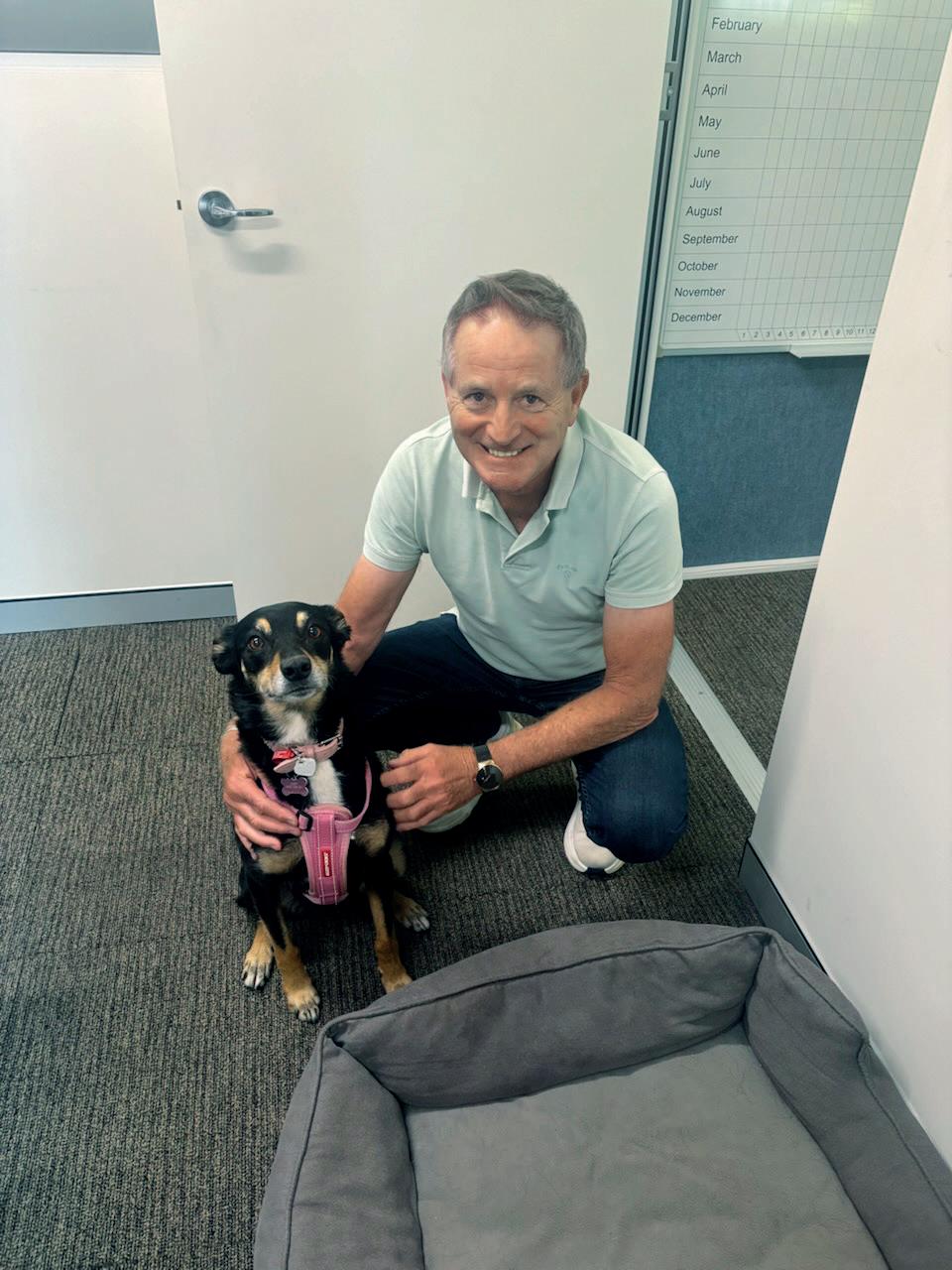
“This is an unusual building, like I imagine a lot of councils have to deal with, and there are departments that you just don’t really have a need to go to. The dogs bridged that. Every time there’s a dog in, everybody knows, and they go looking for the dog to give it a pat,” Pedretti said, adding that some staff even started bringing dog biscuits to share.
The City of Nedlands prides itself on its multicultural workforce, and the Dogs at Work program also played an important role in bridging cultural divides.
“We’re incredibly multicultural, many people here are from different backgrounds. Many of those cultures don’t necessarily have a lot of contact with dogs,” Pedretti said.
“One of our directors is Indian, and he really had nothing to do with dogs at all, but he’s really enjoyed the initiative, and he’s now thinking of getting a dog.
“They don’t care where someone’s from. They just want the pats.”
MAKING A POSITIVE DIFFERENCE
Staff quickly embraced the program and, according to Pedretti, it became “part of the culture” at the City of Nedlands.
“It’s amazing how quickly the dogs have adjusted and how staff have adjusted as well, including upper management. They bring dogs in as well,” he said.
Moreover, the initiative became a reliable source of comfort.
“Some people will now come out of, say, a stressful meeting, and go look for the dog first thing, to have a pat and just relax a bit. In that sense, they are wonderful stress relievers,” Pedretti said.
The positive atmosphere radiates beyond staff. Residents coming to pay their rates have responded with delight, regularly commenting on the presence of dogs in the customer service area.
“Almost every person that comes in smiles and says, ‘Oh, you’ve got your dog at work.’ It’s seen as something very positive,” Pedretti said.
At a time when the City of Nedlands needed a boost, Dogs at Work did more than lift spirits – it built bridges, reduced stress, and became a cherished part of council life.
To learn more, visit convergeexpo.com.au

New Zealand International Convention Centre, Auckland 28 – 29 October 2026
For local councils, introducing new systems isn’t just about upgrading technology –it’s about unlocking better ways to serve their communities.
When implemented thoughtfully, modern systems can streamline operations, empower staff, and deliver faster, more responsive services for residents.
But achieving these outcomes depends on more than just the technology itself; success hinges on how well the implementation process is managed –balancing innovation with staff readiness and organisational change.
Georges River Council’s recent customer experience transformation, guided by its Customer Experience Strategy, offers a compelling example of how getting this balance right can deliver tangible results. By taking a phased, consultative approach to implementing a new omni-channel customer service platform, Council not only modernised its systems but also improved satisfaction for both residents and employees.
Council’s Head of Customer Experience, Michelle Cowie, explained that the shift was a deliberate and carefully planned process that replaced systems no longer meeting the needs of the community.
Like many local councils, Georges River previously relied on legacy systems that had become increasingly outdated.
Cowie said that Council had a phone software solution that hadn’t been updated in four years.
She also noted that the existing platform offered “really limited functionality,” prompting Council to “go out to the market and see what different technologies and opportunities existed.”
This process led to the selection of a modern cloud-based omni-channel platform, NiCE CXone, implemented by Generation-e, which now centralises all of Council’s contact channels – including phone, web chat, and email.
“It’s designed to handle both inbound and outbound customer interactions across multiple channels, with the flexibility to grow alongside the
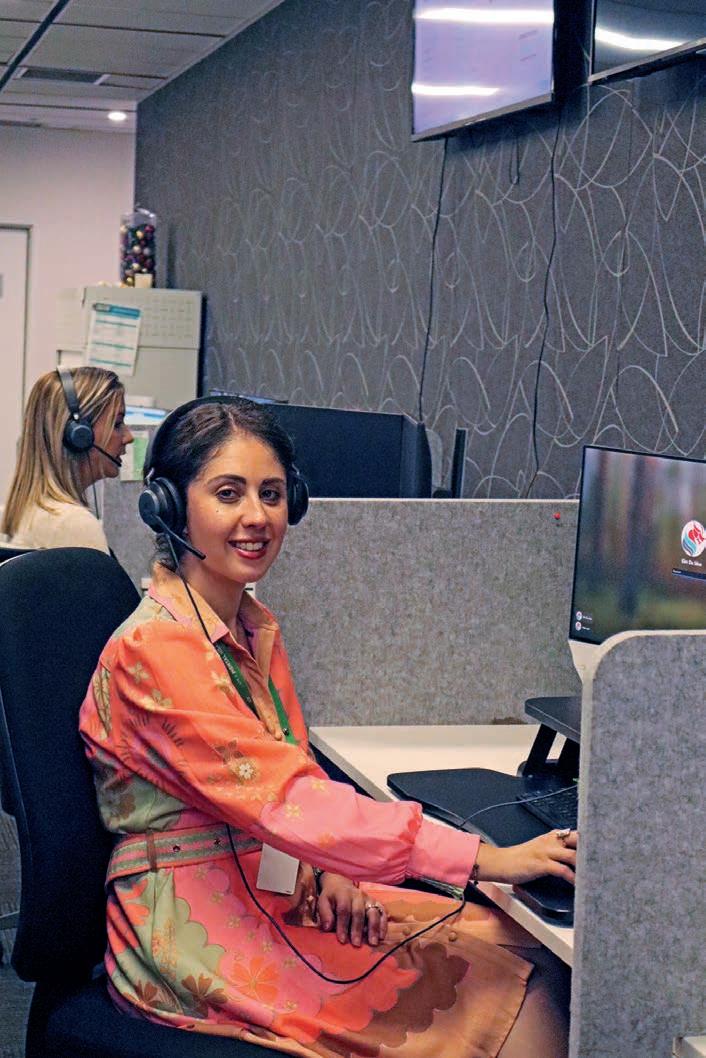
organisation and adapt to future service delivery needs,” Cowie said.
A key aspect of the success of this project was the deliberate and staged approach to implementation, which carefully considered the need to avoid overwhelming staff with too much change at once.
“We had a lot of other change going on across our organisation, so we were really mindful about change fatigue, particularly for the customer experience team. So that’s where we came up with a plan to phase the implementation,” Cowie said.
Council rolled out the system in three phases: first calls, then emails, followed by web chats.
“We took a phased approach to implementation, giving the team time to become fully familiar and confident with each stage before moving forward,” Cowie said.
“This allowed everyone to complete their training, build competence and feel comfortable with the new processes. Once the team demonstrated confidence and consistency in one phase, we progressed to the next, ensuring a smooth and well-supported transition throughout.”
From the outset, staff were closely involved in the process.
“We got the team involved right at the very beginning. When we started the project, we started talking to them about what we were doing, how they would like the new system to work, pain points that they had experienced with our old systems, and ideas they had that they thought would work for our new system.
“This emphasis on consultation and communication meant staff really embraced the new system and changes,” Cowie said.
The benefits of the new customer experience platform were immediate and wide-ranging.
“For our customers, it expanded the different contact options that they had. Customers can choose how they prefer to interact with Council,” Cowie said.
“The customised Interactive Voice Response (IVR) system also allows callers to be directed straight to the most relevant service area, such as the waste team or rates payment line. This ensures customers are connected to the right team straight away, improving convenience and reducing wait times.”
Another important improvement was the new callback functionality.
“Every three minutes, when our customers are waiting on hold, they are offered a callback option, they don’t lose their spot in the queue and the callback is directed to an agent as soon as one is available.” This reduced the inconvenience of long wait times.

Staff, meanwhile, found their daily work much more streamlined.
“Staff now operate through a single interface that integrates emails, voice calls, and web chats on one screen.
“This has significantly improved efficiency by ensuring customer enquiries are seamlessly directed to available agents. The system allows staff to manage multiple interactions when appropriate, while still dedicating the necessary time to customers with complex or sensitive matters, enhancing both the quality and responsiveness of our service.”
The new system’s reporting capabilities also significantly increased Council’s ability to make data-led decisions.
“We now have far greater data capture capabilities. This allows us to run more detailed reports and analyse not only the volume of interactions, but also their type and frequency. As a result, we can identify recurring themes and emerging issues more quickly, helping us respond to customer needs,” Cowie said.
These insights have directly led to practical changes.
“For example, we enhanced our website to improve the clarity and accessibility of information, after identifying that many community members were contacting us because they were unable to find the details they needed online,” she said.
The platform also enabled the creation of a priority line for high-priority calls,
such as dog attacks, water pollution or sewage overflow.
“We enhanced our IVR menu to ensure high-priority matters are directed immediately to available agents,” Cowie said.
“This improvement was introduced after phase one in response to customer feedback and our commitment to providing timely support. It means that customers with urgent needs are connected more quickly, and staff are notified to take immediate action where required. These changes have helped us deliver a more responsive and reassuring experience for customers when it matters most.”
Cowie’s key recommendation for councils considering a similar path is to adopt a phased, consultative approach.
“This was a very important project, and we wanted to get it right for our customers and our team. Don’t try and do too much too quickly,” she cautioned, underlining the importance of phasing the rollout to avoid overwhelming staff and ensuring adequate training at each stage.
By investing in modern customer experience technology and prioritising staff engagement, Georges River Council has delivered faster, more efficient services while fostering a culture of continuous improvement – an achievement of real value to councils across Australia.














Combining the resources of our respected editorial team with the knowledge and insights of some of the best and brightest minds in the sector, Council keeps you informed of the critical news, updates and changes you need to be aware of.