


Address: 379 Docklands Drive, Docklands VIC 3008
Phone: 03 9690 8766
Email: editor@bigrigs.com.au
Web: bigrigs.com.au
Accounts: 03 9690 8766
Subscriptions: 03 9690 8766
Classifieds: 0403 626 353
Circulation and distribution
queries: 03 9690 8766 info@bigrigs.com.au
EDITOR James Graham: 0478 546 462
james.graham@primecreative.com.au
SENIOR REPORTER
Danielle Gullaci 0478 844 797
danielle.gullaci@primecreative.com.au
DESIGN
BUSINESS DEVELOPMENT MANAGER
Treena Heit: 0403 626 353 treena.heit@primecreative.com.au
CLIENT SUCCESS MANAGER
Katharine Causer: 0423 055 787 katharine.causer@primecreative.com.au
CONTRIBUTORS
A truckie has been awarded more than $34,000 in compensation from his former employer despite admitting he smoked marijuana just three days before returning a positive roadside test while behind the wheel.
HC driver Brayden Dale-McCormick was pulled over by NSW Police on a Wednesday morning in early May last year, where he tested positive for a prohibited substance.
Dale-McCormick admitted to his employer Sleepeezee Bedding Australia that he’d smoked the pot “socially” the prior weekend.
Despite this, the company prepared a termination letter dated May 9 – four days before a disciplinary meeting was held – and gave it to Dale-McCormick immediately after that meeting on May 13.
Dale-McCormick took the matter to the Fair Work

Commission (FWC), arguing he was not impaired while working and had been denied procedural fairness after the initial test.
Commissioner Trevor Clarke sided with the truckie this week, finding Sleepeezee had moved with undue haste
and had effectively pre-determined the dismissal before properly putting its concerns to the driver.
The termination letter stated Dale-McCormick had breached the company’s drug and alcohol policy and posed a serious and imminent safety
risk to other road users. However, the FWC was not persuaded that either claim was supported by evidence.
“There was no proof that the applicant was impaired,” Clarke’s decision noted, pointing out that a preliminary roadside test alone could not establish influence or risk, particularly when the cannabis use had occurred more than a day before the driver resumed work.
The FWC also examined the company’s drug and alcohol policy, which prohibited being under the influence of drugs while working, but required evidence of impairment. No such evidence was presented.
“I find that the Applicant’s dismissal was harsh and unreasonable,” noted Clarke.
“A valid reason has not been provided, and the Applicant was not given a reasonable
opportunity to meet the concerns that the employer knew it wanted to raise with him.
“The employer was negatively impacted by the Applicant’s off-duty poor decision making, but not to an extent that justified termination. The response by the employer was disproportionate.”
Based on his average earnings of $1720 per week, the commission estimated Dale-McCormick would likely have remained employed for a further six months had he not been dismissed.
That amount was reduced by 30 per cent to account for the impact of his conduct on the employer, resulting in compensation of $31,304 plus $3600 in superannuation. The total payout was ordered to be made within 28 days.
Big Rigs has approached Sleepeezee for comment.
A Victorian crane truck company has been convicted and fined $200,000 after a truck driver was seriously injured while performing high risk work without a licence or supervision.
*Average circulation per issue in 2025
As reported by WorkSafe Victoria, the court heard that on the day before the driver’s incident, he advised his supervisor he was not comfortable making the delivery
by himself – and was told he would lose his job if he didn’t do it.
WVCT Oz Pty Ltd (trading as Western Victorian Crane Trucks) was sentenced in the Geelong Magistrates’ Court on February 3 after pleading guilty to a single charge of failing to provide information, instruction, training or supervision to enable an employee to work safely.
The company was also ordered to pay $5556 in costs.
The conviction relates to a September 2024 incident, where the truck driver was using a remote-operated vehicle-mounted crane to unload steel trusses at a Charlemont construction site – when the crane locked down because the load was too heavy.
He attempted to manually reposition one of the truss-
es, as he had previously been instructed, when the crane slewed and the load pinned him to the ground, causing a broken wrist that required a metal plate and 10 screws.
The court heard that the driver did not yet have a highrisk work licence, and this was the first time he had attempted this task on his own, a fter starting with the company three months earlier.
A WorkSafe investigation found it was necessary for WVCT Oz to reduce the risk of workers being struck by a steel frame and seriously injured or killed by supervising employees performing the task if they did not hold a high-risk work licence.
Big Rigs contacted Western Victorian Crane Trucks for comment.
BY JAMES GRAHAM
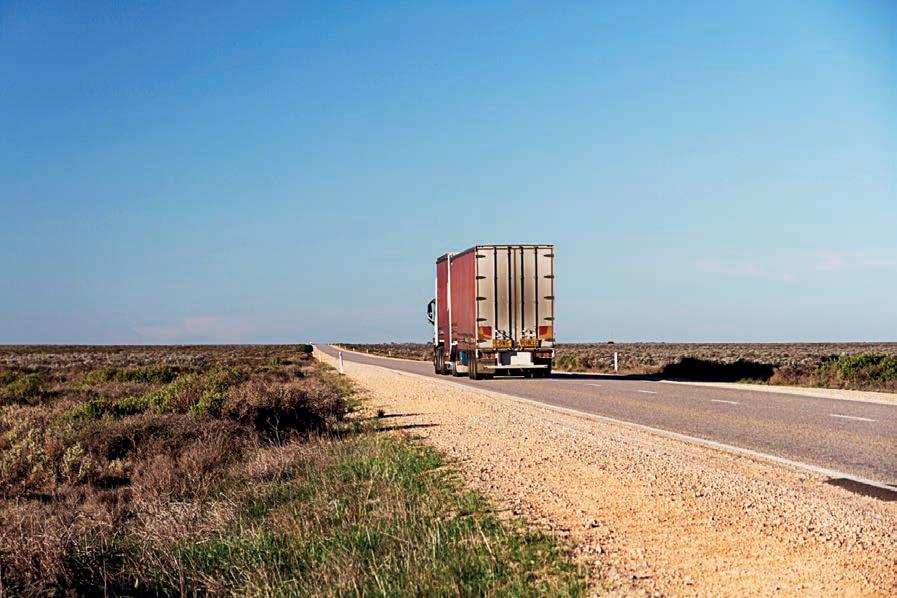
PORT Pirie-based interstate truckie Peter Copson only discovered he was facing a serious fatigue breach after a fine arrived in the mail in late 2023.
The National Heavy Vehicle Regulator (NHVR) alleged he had failed to comply with a condition of his basic fatigue management (BFM) accredi tation by working for a total of 15.75 hours within a 24-hour period – almost two hours over the allowable 14 hours under the Heavy Vehicle Na tional Law (HVNL).
According to the agreed facts in the subsequent court case, Copson completed roughly 13 hours of driving in South Australia before crossing into Western Australia near Eucla, where he drove for a further two hours before resting.
The NHVR attempted to count the WA driving time as if it had occurred in South Australia, arguing that the work performed in a non-participating HVNL jurisdiction be treated the same way as work done in a participating state.
But in his February 6 ruling in the South Australia Magistrates Court, Magistrate Brian Nitschke disagreed.
The magistrate said the provisions NHVR relied on - Sections 254, 244 and 245 – were only meant for very specific situations (like ensuring rest breaks before entering a participating state) — not to magically turn WA driving into SA BFM hours.
“The end result is that I find that on the evidence before me at the close of the prosecution case there is no case for the defendant to answer on the ground set out herein and I dismiss the information,” Nitschke said.
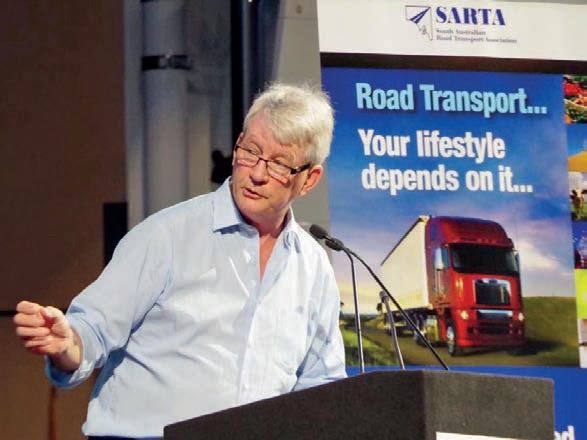
Steve Shearer, Executive Officer of the South Australian Road Transport Association (SARTA), described the ruling as a landmark one for industry. SARTA, along with the
Australian Trucking Association (ATA) and Livestock and Rural Carriers in South Australia, funded the defense at significant cost to prove their point.
“We did this because of the very important principle involved; namely that state sovereignty is vital and the NHVR must not seek to apply s245 in a non-participating jurisdiction [WA or NT] other than in the circumstances for which it was intended,” Shearer said.
“That’s why we took them on and beat them in court. It’s different when you’re coming back the other way and returning to South Australia, and you exceed the allowable hours while in South Australia because of the hours you did in WA since your last sleep.
“But they’ve got it completely wrong. My biggest question now is, why did they even bother?
“I think it was just silly enforcement, and they chose the wrong one to turn into a bit of

a test case – and they’re going to have to pay costs which will be pretty significant when you have King’s Counsels on both sides.”
Shearer said there were never any safety issues in question with this case, as the regulator tried to argue.
“You can argue about the merits of the WA fatigue regime,” he said.
“But I haven’t seen any evidence that proves that it’s less safe than what we’ve got in the rest of the country.”
In light of the SA Magistrates Court ruling, Shearer is now hoping to have more “indepth” conversations with the NHVR about a range of what he described as over-zealous penalties, including drivers being pinged $206 a pop for alleged incorrect descriptions of rest area locations.
“The key point from our point of view is, why is the NHVR wasting time and energy and resources on that sort of stuff and on other minor clerical errors in work diaries.
“They’re not the main game. The main game is people who are not having seven-hour sleeps. People who are really working excessive hours.
“People who are causing all sorts of other problems because they use ABN drivers without paying proper labour costs. What are they doing about the big safety issues?
“We need to have a serious conversation about it, otherwise we’re going to have a fairly ineffective NHVR in the sense they’re not actually impacting safety in the industry – just issuing a lot of fines.”
The NHVR told Big Rigs it would now “carefully consider” the judgment.
“Safety is the NHVR’s highest priority, and un-
“Heavy vehicle driver fatigue poses a serious and significant risk to all road users, nd the NHVR will continue to exercise its regulatory unctions and powers, in accordance with the law, to deliver strong safety outcomes.”
The ATA called for a National Transport Commission review of the work and rest area rules for truckies entering the HVNL states from WA or the Northern Territory after the court ruling.
ATA CEO Mathew Munro said the decision confirmed the ATA’s view that the cross-border time counting rules in the HVNL were flawed.
“Because of their complexity, the rules cause confusion for businesses and drivers. The rules discourage businesses from operating across the WA and NT borders,” Munro said.
“And the court decision raises the question of whether the HVNL time counting rules even apply in states that have specifically decided not to participate in the scheme.
“With the HVNL review legislation now passed, there needs to be a systematic process for updating the law.”
Munro said the judgment shows that reviewing the relevant section of the law – section 245 – needs to be at the top of the NTC’s work program.
Craig Minns, a former
policy advisor at the NHVR and now Director - Onroad Safety Solutions, said he was also surprised that the regulator pursued the case.
“s245 is the section of the HVNL that’s relevant, and it says that the hours you clock up in WA or the NT count when you hit SA or Qld or NSW. That’s fair enough, you’re now on their roads and they subscribe to the HVNL,” Minns said.
“The law also says that it can’t work the other way around: WA has territorial jurisdiction and they don’t subscribe to the HVNL, so it’s their law that applies on their roads.
“So, this matter, which cost a lot of money, was all about having a magistrate say that the law means what it says.
“Industry desperately needs NHVR to take on boundary cases. Matters that will lead to a substantial clarification of an important grey area in the application of the law, particularly around the Chapter 1A safety duties. This was not one of those matters, as far as I can see.”
The regulator can still appeal the magistrate’s ruling, but both Minns and Shearer said it’s unlikely they would.
“The risk for them if they decide to appeal and take it to the Supreme Court and get the same decision, they will have a binding precedent decision, so I don’t think they’ll take that risk,” Shearer said.
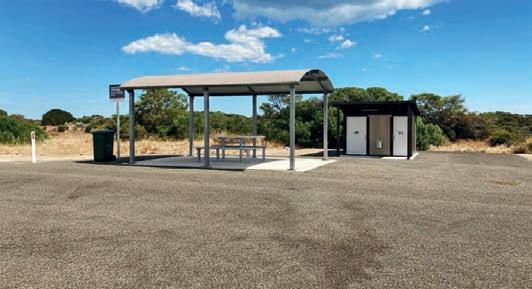
THE Salt Creek Heavy Vehicle Rest Area along the Princes Highway recently opened to truckies, but the $3.8 million price tag has left many scratching their heads.
The new rest area is located near the township of Salt Creek and is accessible to drivers travelling east bound, towards Robe.
It features a unisex toilet block, a metal shade structure, picnic facilities and parking – albeit only for five heavy vehicles at a time.
On average, around 1200 vehicles travel along Princes Highway near Salt Creek each day, including over 200 heavy vehicles.
According to SA’s Department for Infrastructure and
Transport, the location was selected to meet rest area spacing requirements and design guidelines for safe vehicle access and egress, while min-
imising impacts on adjacent properties and areas of high environmental and cultural significance within the Coorong region.
“This project is an investment in the wellbeing of the hard-working truck drivers who now have a safe space to stop when travelling east bound along Princes Highway,” said a Department for Infrastructure and Transport spokesperson.
“Rest areas play a vital role helping heavy vehicle drivers manage fatigue, increasing productivity and keeping
FOLLOWING a temporary closure for resurfacing works, the Coolgardie heavy vehicle
located around 38 kilometres southwest of Kalgoorlie in Western Australia’s southern Goldfields region
The rest area there is well equipped for truck drivers, including toilet and shower facilities, a gazebo and barbecue area.
The latest works include further upgrades, with the application of asphalt surfacing funded through the eavy Vehicle Rest Area Initiative.
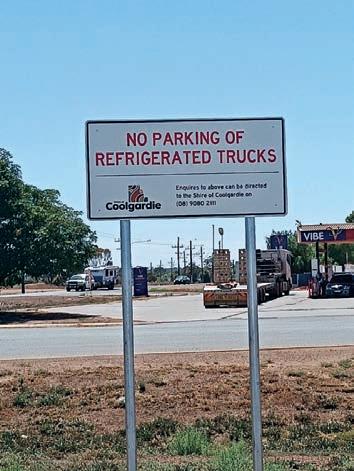
Truck drivers can now enjoy the freshly upgraded site, however if their freight is chilled and frozen, they’ll need to keep some new restrictions in mind.
A new sign that states “No parking of refrigerat-
ed trucks” and another sign listing rules for the rest area have been installed.
Big Rigs contacted the Shire of Coolgardie to find out what was behind the new rules at the site – and new signs – to clarify exactly what they mean.
A Shire of Coolgardie spokesperson has advised, “There is not a global ban imposed on refrigerated trucks. There is a new restriction on where refrigerated trucks are permitted to park within the facility, which are at the bays located furthest from the adjacent residential properties.
“The new measures are aimed to reduce the level of noise for nearby residents, to help mitigate impacts and
consider the needs of our local community.
“We ask all truck users to please adhere to the new measures in place and to park within their designated bays only.”
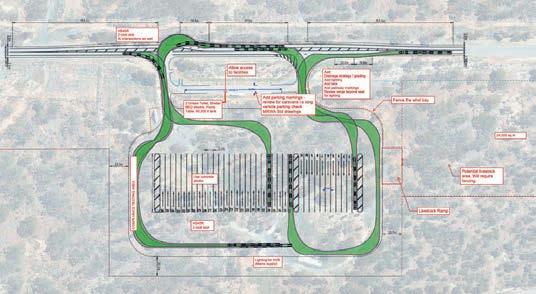
Meanwhile, less than two hours southeast of Coolgardie, a new road train assembly area is being proposed on the Eyre Highway in the town of Norseman.
Main Roads WA is currently in the design phase for the new site which, if it goes ahead, would include 36 bays for road trains of up to 53.5 metres.
Feedback is currently being sought on the proposed new site.
“As a part of the design
freight safely on the move.
“This new rest area at Salt Creek will deliver long-term safety improvements for all road users, while driving regional economic growth and freight efficiencies across the state’s south east.”
The site was funded on an 80:20 basis by the Australian and South Australian governments, as part of the Heavy Vehicle Rest Area initiative.
However, when Big Rigs shared the news online, numerous readers weighed in questioning the final cost.
Anthony Focaccia com-
mented, “$3.8 million for 2 dunnies, a pergola and picnic table on a slab for 5 trucks!” Russell Pope said, “What an absolute joke, how does something that simple cost so much?”
Bromley Nitschke added, “$3.8 million should’ve done 10 bays and all with a shower thrown in.”
And Bev King agreed, “Please explain why that cost so much! I assure any contractor than a govt one could do it better and for a bloody lot less. Most likely could get 10 done for that price.”
phase, Main Roads has consulted with industry bodies including Western Roads Federation and Livestock and Rural Transporters Association,” said a Main Roads spokesperson.
“Main Roads is seeking feedback on the proposal from operators who will utilise the facility. Any feedback
to the proposed road train assembly area can be sent to gereg@mainroads.wa.gov.au.” The new road train assembly area will complement the approved Mundrabilla Heavy Vehicle Rest Area and include a holding area should the highway be closed due to incidents such as bushfire or crashes.


WA trucking bosses have joined the growing push to stamp out ABN abuse by highlighting the impacts the illegal practice has on the wider public.
Western Roads Federation (WRF) CEO Cam Dumesny said sham contracting takes two forms: avoidance of true employment costs and avoidance of true operating costs.
Dumesny believes that by emphasising how the latter affects voters, the industry stands a greater chance of stirring authorities into finally taking action.
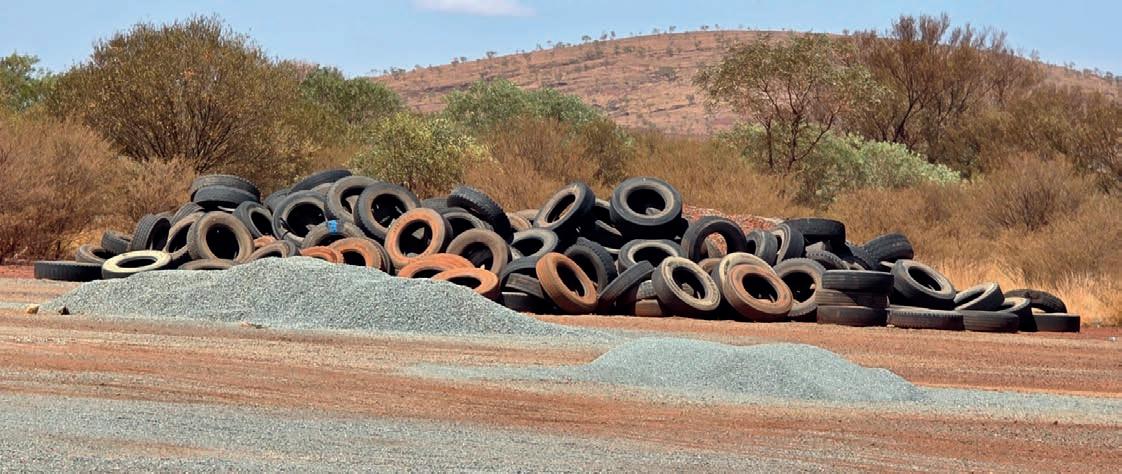
“Sham contractors have been misusing rest areas as free depots, illegally dumping tyres and oils, even abusing truck roadhouse provided parking bays,” Dumesny said.
“WRF has taken the message to the public that this means they, the voters, are paying for the clean-up, they are paying for higher road safety risks, they are being impacted because of illegal parking in their streets, and much more.
Dumesny said the WRF is now calling for an urgent multi-agency taskforce to crack down on these practices.
“Each regulatory authority has restricted powers but collectively they can take effective action.”
Heavy vehicle pilot Helen Keese said she’d reported
the illegal dumping of tyres at the Tin Dog Park Bay at the beginning of September last year and still nothing has been done about it.
She said the pile of tyres at the location had more than tripled in size since she initially raised her concerns and her supporting pictures also show large slabs of concrete had now also been dumped.
“It’s about time somebody took responsibility,” Keese said in an email to Big Rigs and state government authorities.
“It’s an environmental disgrace, defiles the landscape, and proves that lack of real consequences are creating a massive problem both in WA and nationally.
“Safe and clean truck parking bays are becoming like the proverbial unicorn.”
Keese said the Great Northern Highway has become a dumping ground from Wubin north.
“The perpetrators are no longer even trying to hide the refuse, are dumping on the edge of the highway, or turning park bays into rubbish tips, and nobody seems willing to do anything about it except pass the buck.”
A Main Roads spokesperson told Big Rigs the Department of Water and Environmental Regulation (DWER) holds the regulatory responsibility for investigating and enforcing offences related to illegal dumping.
Members of the community are encouraged to report incidents of illegal dumping directly to DWER through the Pollution Watch hotline [1300 784 782] or via pollutionwatch@dwer.wa.gov.au.
“Main Roads will continue to support DWER by providing site access, sharing relevant information, and assisting where required to help address unlawful waste disposal across the road network,” the spokesperson said.
“Main Roads Pilbara Region are continuing to undertake their investigations, working with authorities, and progressing actions towards resolving the matter.”
The Transport Workers Union (TWU) WA branch is echoing calls made by the industry for governments to step in now and put a stop to illegal sham contract ing spreading like wildfire throughout the transport in dustry.
R ather than focusing on abandoned heavy vehicle machinery and tyres in out back Western Australia, the union, however, said the real story is about the impact on workers.
Drivers are being pushed to work under an ABN while doing set hours, driving company vehicles and work ing overtime without proper pay — the exact same work an employee would do, just without the employment protections, the union said.
TWU WA State Secretary, Tim Dawson, said that now’s the time to weed these companies out or force them to do the right thing.
“Australia is already facing a serious driver shortage, yet instead of lifting standards to attract workers, some companies are racing to the bottom through sham contracting,” Dawson said.
“The companies that are abandoning trucks, tyres and equipment on the side of the road are likely the same companies that are cutting corners and driving down prices to operate through sham contracting.
“We need to ensure that the major clients, including large retailers, the mining industry and fuel companies are
policing their supply chains and stamping out this illegal practice, rather than driving rates down and creating supply chains that are not only unsafe, but operating outside the law.”
Dawson said regular hard-working people are being stripped of their entitlements, pushed into unsafe conditions and left without the legal protections every Australian worker deserves.
Canada has already taken steps to stamp out the problem there where it has been dubbed the Driver Inc. scam by the Canadian Trucking Alliance.
In the most recent budget, the federal government allocated C$77 million over four ars, starting in the next fi
nancial year, to crack down on the tax-evasion scheme there the trucking industry has long derided. Canada is also introducing steps to “effectively address” the issue of driver misclassification in the trucking industry.
“Strengthening compliance would address long-standing concerns raised over tax avoidance schemes and ensure proper contributions to the programs and services that Canadians rely on, said the Department of Finance Canada in a recent media release.
“Compliance with reporting requirements also helps level the playing field for responsible businesses and protects workers’ rights.”


SYDNEY
510 Victoria Street, Wetherill Park NSW 2164 Ph. 02 9756 6199, email: isri@isri.com.au, www.isri.com.au
BRISBANE
3/120 Gardens Drive, Willawong QLD 4110 Ph. 07 3275 2044, email: sales@isribrisbane.com.au, www.isribrisbane.com.au
BRISBANE NORTH
1/259 Cullen Av, East Eagle Farm QLD 4009 Ph 1300 11 4774, email: seats@isrinb.com.au, www.isrinb.com.au
MELBOURNE
Unit 1/569 Somerville Rd, Sunshine West VIC, 3020 Ph. 03 9311 5544, email: sales@isrisunshine.com.au, www.isri.com.au
MACKAY
110 – 120 Maggiolo Drive, Paget QLD 4740 Ph. 07 4952 1844, email: admin@isrimky.com.au, www.isriseatsmackay.com.au
PERTH
408 Welshpool Rd, Welshpool WA 6106 Ph. 08 9362 6800, email: info@mmtisri.com.au, www.mmtisri.com.au
DARWIN
Mobile Sales and Service
Ph. 08 8927 0986, email: info@isridarwin.com.au, www.isridarwin.com.au
NEWCASTLE/HUNTER VALLEY
Ph 02 4932 0600,
Unit 2/13 Hinkler Ave, Rutherford NSW 2320 email: sales@hvss.com.au www.isri.com.au


BY DANIELLE GULLACI
A vibrant pink vacuum tank er has hit the road in Roma, Queensland, in support of Small Steps 4 Hannah.
The foundation was estab lished following the horrific murders of Hannah Clarke and her children Aaliyah, Laianah and Trey in February 2020 – by Hannah’s estranged husband.
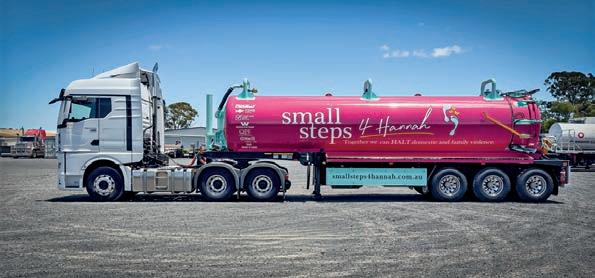
Following their tragic deaths, the Clarke family established Small Steps 4 Hannah. Its purpose: to HALT (Hannah, Aaliyah, Laianah and Trey) domestic and family violence.
Toowoomba based Compliant Asset Rentals – the asset hire arm of Pengelly Trucks and Trailers – unveiled the new 26,000 litre vacuum tanker during a special event on Tuesday, February 17.
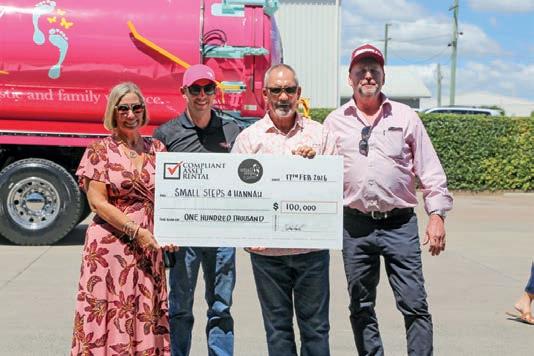
Compliant Asset Rentals was able to raise $100,000 for the charity through the tanker’s sponsors, donations and a raffle held on the day.
Hannah’s parents Lloyd and Sue Clarke were at the unveiling, where they were presented with the $100,000 cheque for the charity they set up in honour of their daughter and grandkids.
“Sue and Lloyd were amazed by how everything came together and were overwhelmed when we presented them with the cheque,” said Compliant Asset Rentals Operations Manager, Matt Cruickshank.
“There are many charities out there that get a lot of exposure and others that are very much under the radar. Sue and Lloyd were excited about the concept of the new tanker and the ongoing exposure it will provide.”
As Cruickshank continued, “Domestic violence is still a very taboo topic – you see stories on the news almost every night. And as a parent myself, when I heard of this story and the young kids involved, it re-
ally hit home.
“The resources sector is a very male dominated industry and there’s no denying that men represent a huge percentage of domestic violence offenders.
“I think this new Small Steps 4 Hannah tanker is a good way of starting the conversation about domestic and family violence, and coercive control.”
Since being launched, Small Steps 4 Hannah has developed a range of programs and resources – including the The HALT Program, a respectful relationships program designed to meet the secondary school curriculum, and the present needs of young people across Australia.
In 2025, the HALT Program was delivered to over 10,000 young people, at more than 30 schools across Queensland, New South Wales and South Australia, along with various sporting and community clubs.
The new Small Steps 4 Hannah tanker, produced by local Toowoomba based manufacturer ADR Welding, will be operated by Coho Resources in Roma. The company works in the oil and gas sector, specialising in complete fluid management and land spraying. It operates the largest custom fleet of vacuum trucks in Australia.
As Cruickshank explained, Coho Resources was quick to come on board in support of Small Steps 4 Hannah. “Coho is one of our larger clients and they have a lot of dry hire equipment from us. When we told them what we were hoping to achieve, they jumped on board straight away – and will also make the tanker available for charity events too.”
The special unveiling event was attended by staff from Compliant Asset Rentals and Coho Resources, along with representative from Small Steps 4 Hannah, and the
sponsors who helped bring the initiative to fruition.
Hayley Forbes, Coho Resources HSE Manager, was a mong those in attendance.
As she explained, “Coho Resources collaborated with Compliant Asset Rentals a few months ago for this new tanker. It’s come up beautifully and we feel really privileged to be a part of something like this, for such a worthwhile cause.”
Following the unveiling, the tanker was driven some 350 kilometres west to Roma by Coho drivers and put to work the very next day.
As Forbes added, “With this new tanker, our aim is to help
put the word out there about the impacts of domestic violence, help to spread awareness and get people out west talking about Small Steps 4 Hannah “You can’t help but notice a bright pink 40ft tanker. There is nothing like this in the Roma area – and with trucking being a male dominated industry, we believe the Small Steps 4 Hannah tanker spreads such an important message.”
To learn more about Small Steps 4 Hannah, visit the website at smallsteps4hannah.com.au.
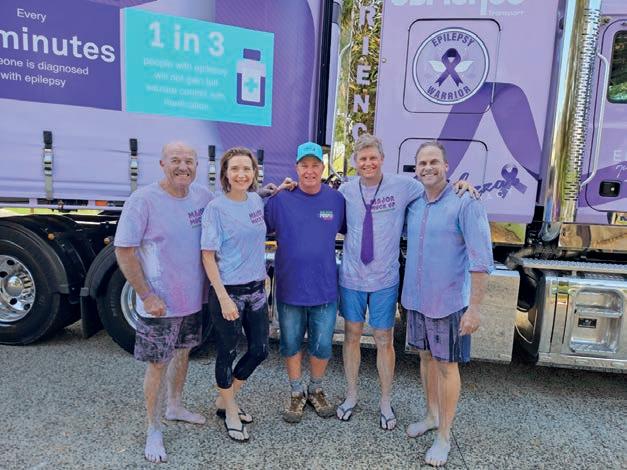
MARCH is shaping up to be ‘muckier’ than ever thanks to Toowoomba’s OBrienco Transport, who joined a host of TV and sporting legends to launch this year’s Epilep sy Queensland Make March Purple campaign.
The annual Make March Purple initiative sees partici pants take on a purple activ ity to generate awareness and raise funds for the 270,000 Australians whose lives are ‘mucked up’ by epilepsy.
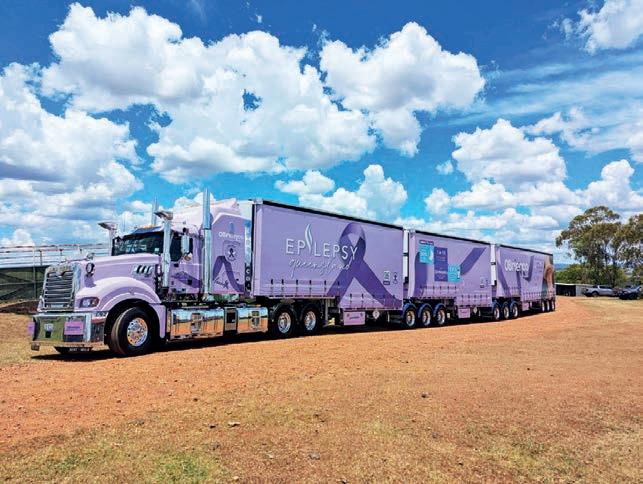
OBrienco Transport’s new combination is a moving trib ute to Lauren “Lozza” Smith, who tragically lost her life to SUDEP (Sudden Unexpected Death in Epilepsy) in April 2024. She was only 20 years old.
The truck and trailer set-up was put together by OBrienco Transport, with the support of its partners, dedicated to Lauren and Epilepsy Queensland. It features Lauren’s photo, information about epilepsy and the number of people impacted by the illness, a QR code
that people can scan to learn more or donate, the purple epilepsy ribbon and the words “Lozza’s legacy”. The entire combination is coloured purple, the official colour for epilepsy – with the back of the trailer set acknowledging all the businesses that helped put it all together.
With the help of OBrien-
co’s unmissable Lozza’s legacy truck, Epilepsy Queensland is bringing this devastating condition out of the shadows during March and raising vital funds to support the people and families affected.
OBrienco Transport’s distinctive purple truck and trailers rolled into Brisbane recently to mark the ‘mucking’
of rugby league icon and Patron of Epilepsy Queensland, Wally Lewis, and an all-star lineup including the Today Show’s Tim Davies, Nine News presenters Melissa Downes and Joel Dry, former Queensland Origin and Australia NRL representative Dallas Johnson, Brisbane Lions AFLW captain Breanna Koenen, Brisbane Broncos premiership winner Darius Boyd and former Brisbane Lions player and media personality ‘Richard ‘Champs’ Champion.
Almost 20 years after Lewis experienced an on-air seizure and was forced to publicly reveal his condition, he says that getting doused in purple muck is a small price to pay for better outcomes for the 50,000 Queenslander currently navigating the challenges of epilepsy.
“I was afraid and ashamed for a long time, and I don’t want anyone else to experience that. Epilepsy is just a medical condition – it
shouldn’t define us or prevent anyone from chasing their goals,” Wally said.
“The more we talk about epilepsy, the more understanding we build, and the better life gets for the people and families affected.”
Tamara Ridley, Epilepsy Queensland’s Head of Com-
the Queensland community to learn what epilepsy is and how it affects people – because its impact extends far beyond the seizures themselves.
“Get mucked, fundraise your way, or donate amd help us change the lives of the 1 in 25 Australians diagnosed in
Queensland livestock truckie Aaron Sutton is back at home recovering – but it could be a few months yet before he’s back behind the wheel, his family reports.
The 30-year-old Sutton Brothers Livestock driver, who was trapped for more than two hours on the Warrego Highway on February 11 after a rollover caused by a blown steer tyre, was left with a long list list of serious injuries. They included a sternum fracture, cracked rib cartilages, a T8 vertebrae fracture and various cuts and lacera-
tions, including one on his head that needed 18 staples.
“He’s going extremely well, but it’ll be at least three months [before he’s back driving],” said Aaron’s dad Ashley.
“He had a pretty tall encounter there – he never had anything going for him.”
Ashley said it was a miracle that Aaron came out of the crash alive, and credited the protective qualities of the Kenworth T909 ‘Queen of Hearts’ cab he was driving for saving the day.
“It had King bullbar, that took a hell of a beating, but it held the front of the truck together, more or less. We got
an extra strong one on that truck.”
Ashley and wife Helen also thanked the well-wishers who had called and sent texts and messages.
They said they’ll also always be indebted to the outpouring of people who were first on the scene to comfort Aaron and help him from the wreck.
“The people who assisted immediately after the accident,” they wrote on Facebook.
“The people who assisted with putting out the fire, Allycia who climbed into the truck with Aaron until emergency services arrived. The
people who called 000. The list is huge I can tell you.”
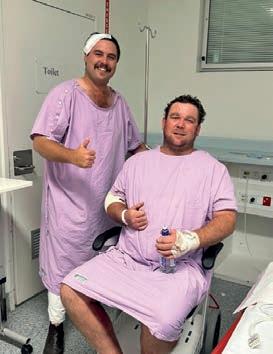
Helen said Aaron also got a boost from a surprise visit in hospital from long-time friend Kane Wenzel and shared a picture of their reunion.
Kane used to be a mechanic at RTA in Longreach, a company that Sutton Brothers does a lot of work with, before leaving in 2024 to start his own auctioneering business in Gracemere.
He was diagnosed with a brain tumour last year and was back at the hospital for treatment for an infection.
“Great to have him catch up with Aaron and Ashley and
they were able to have some laughs,” Helen told Big Rigs
“They were going to see who would have the biggest scar on their head, however, even
Kane said Aaron would win.”
Ashley said he’d now like to see an investigation into the quality of steer tyres in Australia.
“I think the Australian Government needs to get off their arse and start looking after the trucks,” he said.
“We’ve got to get better tyres and we’ve got to get better roads.
“It was unheard of in the old days of steer tyres blowing; now it’s an everyday event.”



EDITOR
JAMES GRAHAM

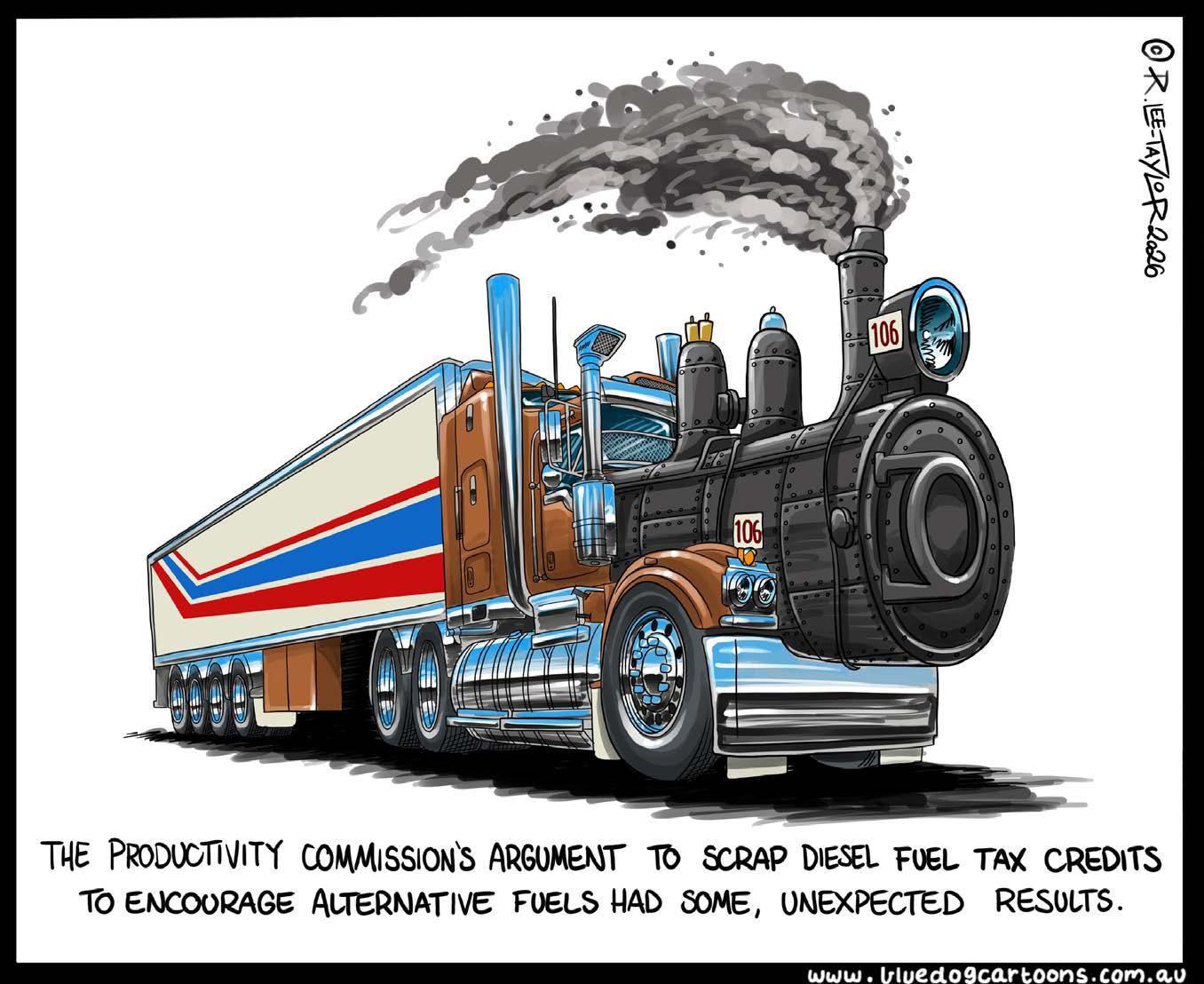
tivity Commission (PC) and its reasoning for scrapping trucking’s fuel tax credits (FTCs). As reported in the last issue, the PC argues that by eliminating FTCs, it will encourage more operators to adopt electric or hydrogen trucks.
What planet are these people from? The disconnect between well-meaning theories and the cold-hard realities of moving freight from A to B has never been more obvious.
You want more productivity in this country? How about kick off with an easy win and start fining and/or shutting down the ever-growing list of ABN rorters.
A quick search on Seek revealed more than 2000 ads for truckies with ABNs. Now, we’re not saying they were all illegal scenarios. But a large chunk sure sounded like they were flouting the employment laws.
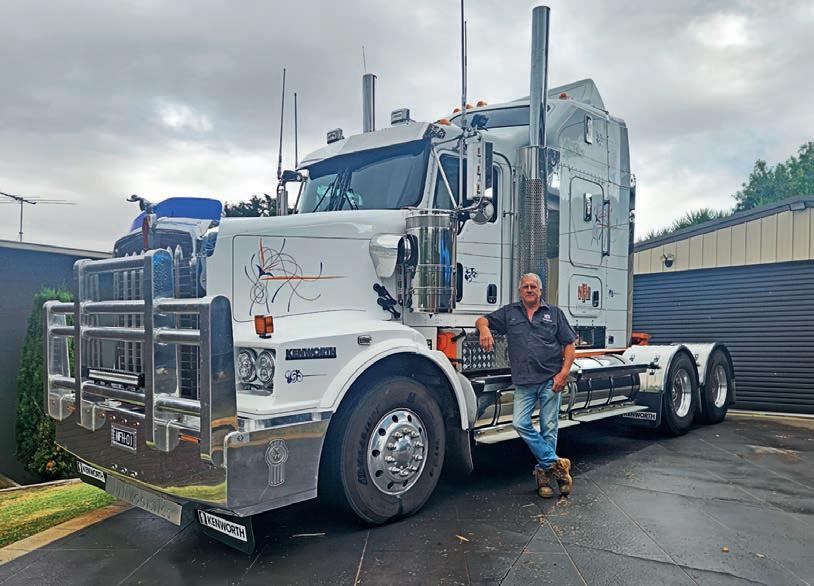
OUR story about truckie Noel Harris, 63, and his reasons for wanting to call it quits after 45 years on the road sparked a torrent of support online.
Readers wholeheartedly
endorsed Harris who said he believes the volume of experienced operators walking away and being replaced by inexperienced drivers is a “disaster waiting to happen.”
Yodie Sharp said most of us “old guys” learnt by going as passengers with dads, uncles, or the guy down the road.
“Learnt to rope, tarp and then drive,” he wrote. “The no passenger rules have a lot to do with no one learning now.
“I’ve heard of the apprenticeship scheme for years but it’s not viable, without government funding. What company is going to pay two drivers to drive to Melbourne (not two-up) but one driving and one instructing. When they reach the destination, who gets the bunk?
“Or does one get a motel? Okay, they could be at a depot, and both get rooms so who’s building more rooms? Are both drivers to be paid the same rate?”
Niell Graham believes it is the job of older drivers to teach the young ones coming through.
“When I started out over 25 years ago, I knew enough to get the job and do the job,
but I didn’t know all the little things and tricks to make the job easier. I was lucky enough to work for a smaller company with drivers who were old school and were taught the old school way.
“The guys that taught me the job were the types of blokes who were driving trucks at 13 and 14 years on farms and learning how not to grind gears by getting a stick across their legs every time they did grind a gear.
“I’m not saying we need to bring back the old days but I think there needs to be some
ers. We need to get more kids in the passenger seat helping older drivers and learning from those older drivers to have the same skill set as those who trained them.”
Graham believes insurance companies and distribution centres need to let younger children on site and in the passenger seat again.
“Like we all did, and if all us older drivers just throw our hands in the air and say it’s all too hard and hang up the keys then the industry will really go to shit even more than it is today. Don’t
fix what is wrong and broken and make the trucking industry awesome again.”
Kelly Hannam had to stop just over a year ago after 24 years behind the wheel.
“Even if you try help/give advice especially to the ones that have migrated here, end up being abused and telling me I’m racist!” Hannam wrote.
“Didn’t know explaining how to back trailer(s) in was being racist! The licence is too easy for them to get with no prior experience and they think they know it all.” coming more dangerous on
the road every day.
“You can actually feel your hand gripping the steering wheel harder because you do not know what is coming towards you.”
Chris Cross said that just because someone can drive a truck doesn’t mean they should.
“These days they get into a big rig with little driving experience in anything else. They don’t know how to load correctly and drive like cowboys.”
Added Greg Greg: “Said it before and I will say it again.
We were all young ‘n’ dumb before but the gear wasn’t so flash and the roads weren’t so good so we treated everything with respect.
“Now this entitled bunch think all roads should be A1 condition, no need to slow down for condition of the road and if the road isn’t up to scratch then it’s someone else’s fault and they will do 100 anyway.
“They should be able to drive at the same speed and manner as if they are driving a car with the same blasé attitude, just look straight ahead no need to check mirrors, anything on the side or behind is someone else’s problem.
“They didn’t load it or strap it so it’s not their fault if it falls off, they were “told” to hook up to a loaded trailer.
“Back when the speed limit was 80km/h you would still do 120 but you were wideeyed full concentration.
“Now it’s 100km/h cruise control, one hand on the wheel and a foot on the dash radio blaring.
“It’s a mindset, not experience that is the issue and until their attitude to driving changes and they start taking it seriously, things will only get worse.”
Tony Straycat, now in his 50th year, said he sold up everything after becoming tired of national companies just accepting the lowest rates from less experienced operators.
“They can have them – zero maintenance and tipping them over, or going bush,” he said.
“Just doing my own thing now.”
Simba Bass, a 40-year transport veteran who is now 65, said the industry has gone to the dogs.
“I think it’s time for me to throw the towel in myself,” Bass wrote.
“It’s a shame, something I love doing and I still have the stamina for it.
“Authorities are hell bent on destroying this country in the name of FKN GREED!! And today’s new-Gen drivers don’t have the gumption to unite and rebel!!
“I know truth bites hard!!”
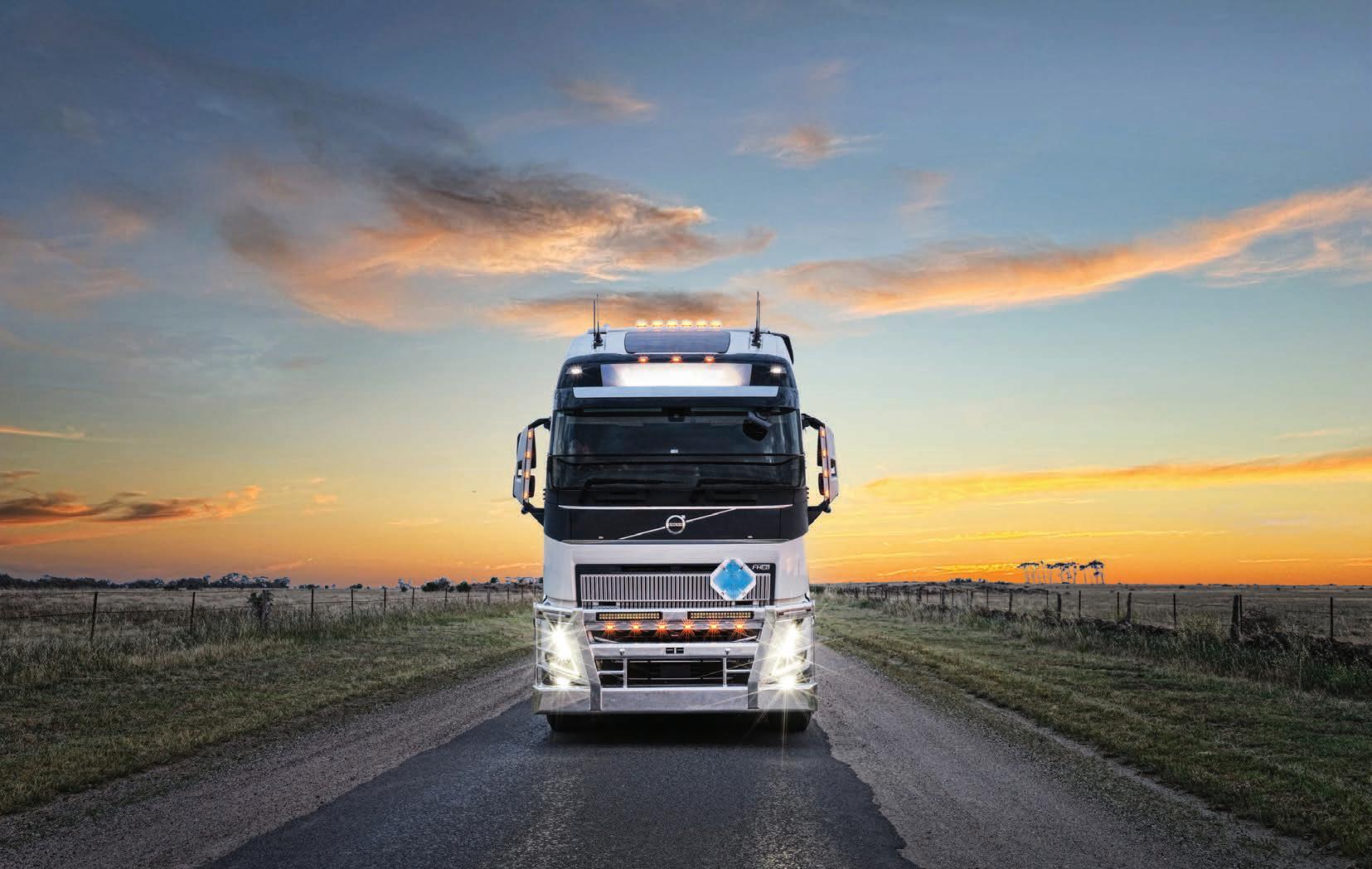
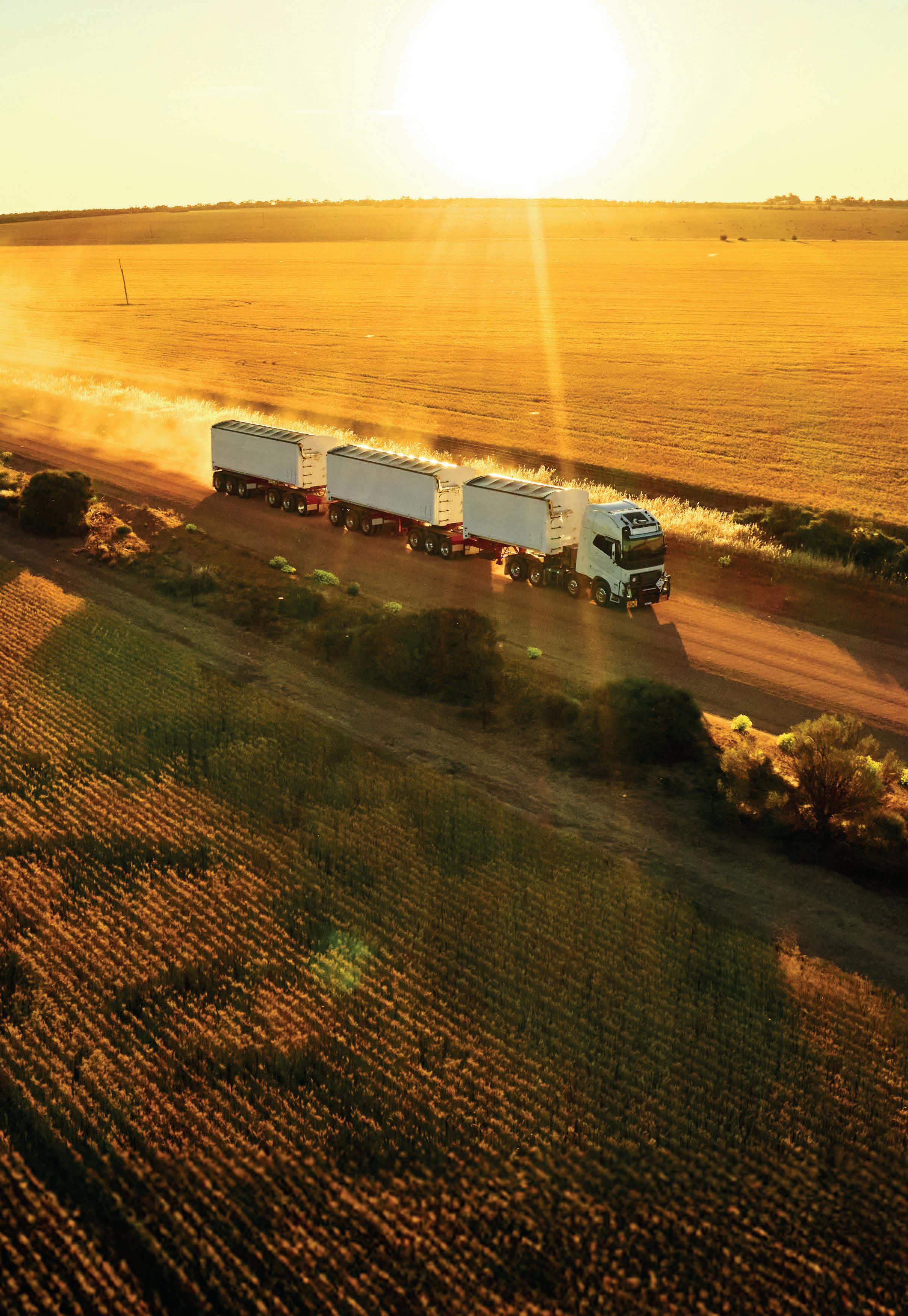
When loads are heavy and roads are long, the Volvo FH16 doesn’t back down because its Australian Made for our conditions. Powered by the new D17 engine with up to 780 HP and 3800 Nm torque, it conquers heavy hauls effortlessly.
But it’s more than just power, Volvo Action Service ensures you’re always connected with roadside support. Backed by our national dealer network, it means total peace of mind when far away from home.
Volvo Trucks. Driving Progress.
New permit system
A newly launched automated permit system for heavy vehicles in Victoria is expected to slash approval times from up to six months to just days.
The Heavy Vehicle Structural Assessment Permit System uses advanced digital technology to automate up to 85 per cent of structural assessments for Class 1 and Performance-Based Standards vehicles – eliminating the need for most manual bridge and culvert assessments.
The new system is also expected to slash costs that can reach up to $20,000 for manual assessments. The Victorian Government says that removing these fees will benefit a wide range of freight vehicles that previously faced longer assessment times due to their size variations.
Cunningham Hwy fixes
Long term fixes on the problem-plagued Cunningham Highway, between Tregony and Gladfield, are due to begin later this year.
Works will be delivered in stages, with priority given to the most damaged sections, following assessments of the highway’s condition after heavy traffic and extreme weather resulted in rough surfaces, reduced speed limits, and ongoing safety concerns.
Minister for Transport and Main Roads Brent Mickelberg said the Queensland Government was working to deliver a long-term solution.
Qube Holdings has accepted an $11.7 billion deal with Macquarie Asset Management (MAM), that would see it delisted from the ASX and under private ownership.
A consortium led by MAM has agreed to acquire 100 per cent of the shares in Qube through a scheme of arrangement.
Subject to approval of the scheme, Qube shareholders will receive $5.20 cash per share, reduced by the cash amount of any dividends declared or paid by Qube prior to the Scheme becoming effective.
The Qube Board has unanimously recommended that shareholders vote in favour of the scheme. However, this is subject to their approval at the scheme meeting, expected to take place around June, 2026.
Over recent weeks, the National Heavy Vehicle Regulator (NHVR) has been running a grape harvest movement blitz – targeting mass, load and fatigue offences.
Operation Fortified is a multistate operation across South Australia, Victoria and New South Wales focusing on heavy vehicles involved in transporting grapes.
According to the NHVR, this blitz comes after previous operations resulted in non-compliance rates of almost 40 per cent of the vehicles intercepted.
NHVR Safety and Compliance
Officers are undertaking roadside intercepts primarily focused on spillages, permit and fatigue offences.
THE duplication of Main South Road between Aldinga and Sellicks Beach opened to traffic in early February, marking the completion of the $810.4 million Fleurieu Connections Project.
The Main South Road duplication includes a new in-
terchange at Aldinga, with a new underpass and improved crossings to Aldinga and Willunga, as well as a dual carriageway between Aldinga and Sellicks Beach.
The first stage of the duplication of Main South Road between Seaford and Aldinga was completed in late 2023.
Stage 2 of the Main South Road duplication from Aldinga to Sellicks Beach was jointly funded, with $221.6 million from the Australian Government and $588.8 million from the South Australian Government.
Main South Road is an important link between Adelaide and the Fleurieu region and carries around 19,000 vehicles a day, with traffic volumes expected to grow to 26,000 vehicles a day by 2036.
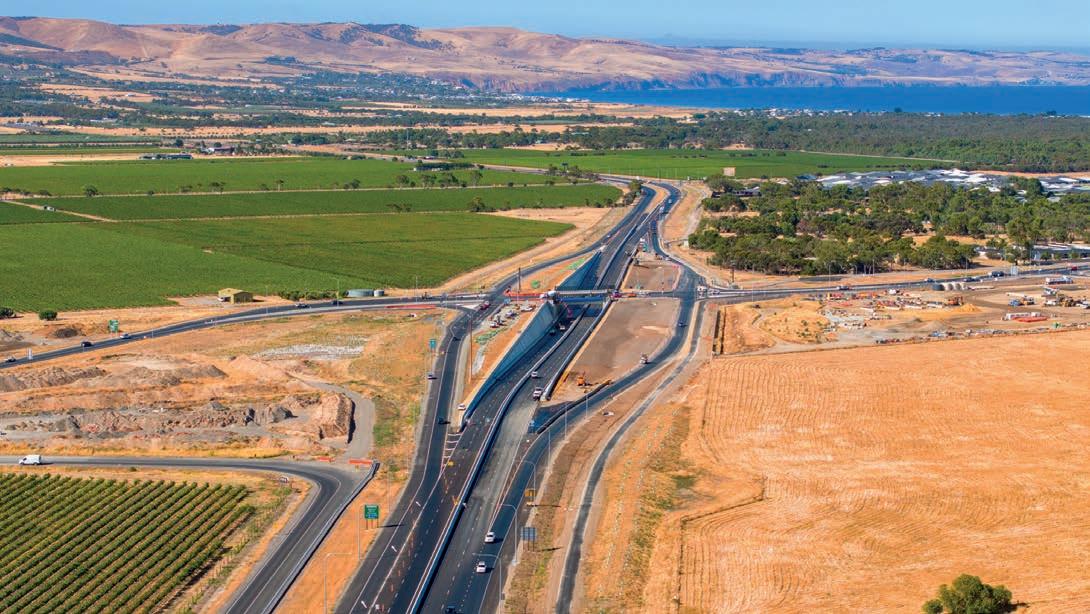
Along with the duplication, the installation of wide centre medians and wire rope safety barriers to separate northbound and southbound traffic have been incorporated into the design to help improve safety and prevent the risk of head-on crashes.
Other features of the project include two U-turn bays to facilitate local access, intersection upgrades at Hart and Colville Roads, Norman and Rogers Roads, and Hahn and Cox Roads, as well as upgrades at Perth Street and a realigned Sellicks Beach Road that improves sight lines and safety.
The project also includes the construction of a shared use path along the western side of Main South Road. Over 9000 tonnes of glass –the equivalent of 43 million recycled glass bottles including wine bottles from the region – was repurposed in the construction of the roadway from Aldinga to Sellicks Beach.
Speed restrictions will remain in place on the newly opened duplication and the underpass over the coming months as finishing works are completed.
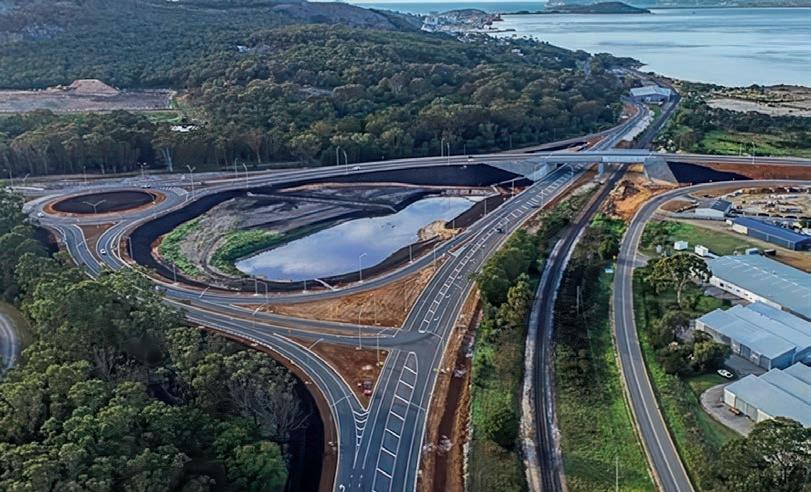
CONSTRUCTION of the final connection in the Albany Ring Road project in WA has the green light, providing heavy vehicles with a nonstop connection to the Port of Albany.
The new flyover at the intersection of Menang Drive and Chester Pass Road in Albany will help improve freight efficiency along the critical freight route by removing the need for trucks to queue in the turning lane before making a right turn across oncoming northbound traffic.
The $60 million project will feature a new grade separated interchange that allows southbound vehicles to exit Chester Pass Road via an elevated ramp, passing back over the top of Chester Pass Road via a bridge and connecting into Menang Drive westbound.
“This flyover is a major road safety upgrade for Albany, separating heavy vehicles from local traffic, making
travel significantly safer for families, freight operators and all drivers who use the Ring Road,” said Road Safety and Great Southern Minister Reece Whitby.
“Completing the final link of the Ring Road will
around the city, providing a non-stop connection to the Port and making Albany an even better place to live and work.”
The first phase of construction will include earthworks for the embankments of the
Chester Pass Road, with most of the works taking place away from the road to minimise traffic disruption.
$45 million for 16
OVER $45 million will help fund 16 new projects across NSW, aiming to create safer and more resilient roads for communities from Lismore to Wagga Wagga.
The funding comes from the latest tranche of the Australian Government’s Safer L ocal Roads and Infrastructure Program (SLRIP).
A mong the 16 NSW projects to be funded under the latest tranche of the program are:
• The NSW Government will receive $5 million towards the $30 million project to replace the existing Grawin Creek Bridge with a new bridge designed to improve heavy vehicle freight access
along the Gwydir Highway near Collarenebri.
• Parkes Shire Council will receive $5 million to seal three sections of the Cookamidgera Road, delivering a f ully sealed link between Parkes and Cookamidgera.
• A f urther $5 million has been allocated to Kyogle Council to design and upgrade 3.4 kilometres across three sections of the Clarence Way between Bonalbo and Urbenville.
The NSW funding is part of an approximately $86.2 million nationwide commitment under the latest tranche of the program.
Of this, more than $77.6 million will go towards proj-
ects in regional Australia.
The SLRIP was created by the Australian Government with over $200 million avail able each year. The aim of the program is to ease the ad ministrative burden on local councils, state and territory governments.
Minister for Regional De velopment, Local Govern ment and Territories Kristy McBain said the funding would help make roads safer.
“We recognise that regional councils often need addition al financial support to assist with meeting rising costs and increased pressure on trans port infrastructure due to climate change and extreme weather,” she said.
“Delivering the Albany Ring Road has been a game-changer for the Great Southern region, streamlining access toing safety for local road users,” said Transport Minister Rita Saffioti. “In its first 18 months of operation, the project has taken about 2000 vehicles per day out of the centre of Albany, including 800 trucks. As Albany’s population continues to rise and visitor numbers grow, a safe, streamlined and reliable heavy vehicle corridor is essential to service the region.”
Regional Development and Ports Minister Stephen Dawson said Albany is the region’s major industrial, commercial and retail centre, and is connected to the surrounding region by heavily utilised freight routes destined for the Albany Port: “The Cook government is delivering these important upgrades that will improve heavy vehicle flow to the port, enhance safety for road users and promote further investment in the Great Southern region,” he said.
Keep your truck on the road with a new lease on life.
Mercedes-Benz Trucks understands that down time is not an option. That’s why we created Mercedes-Benz Trucks RePOWER.
RePOWER gives your truck a new lease on life. By refreshing key components, you have the flexibility to choose what is right for you, saving you money in the long run, and keeping your operations running smoothly - all backed by the quality and reliability of Mercedes-Benz Trucks Genuine Parts.
What is Mercedes-Benz RePOWER?
Available on 13L and 16L Mercedes-Benz Trucks, RePOWER has been developed to extend the operational life of your truck by providing you with five different options to overhaul the truck’s key driving components.
With RePOWER you can have the reassuring certainty of continuing to operate the Mercedes-Benz truck you own today, with a re-powered version. For added peace of mind, our Mercedes-Benz Trucks two-year parts warranty1 is included for any parts fitted under any of the RePOWER packs (provided that the works are carried out at an authorised Daimler Truck dealership).
What are the RePOWER options?
With five RePOWER options to choose from, you’ve got the flexibility to choose a pack that’s right for you.
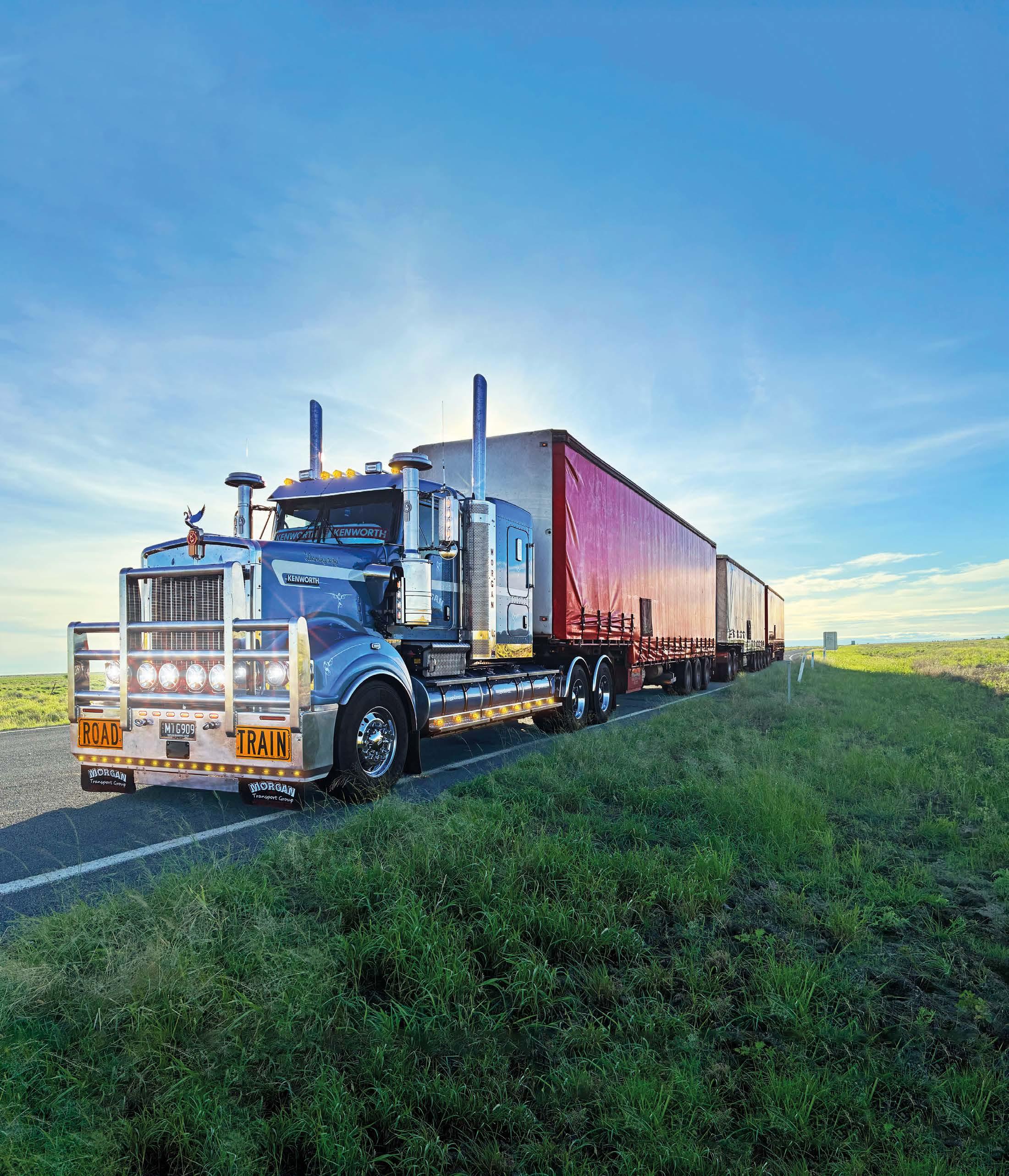
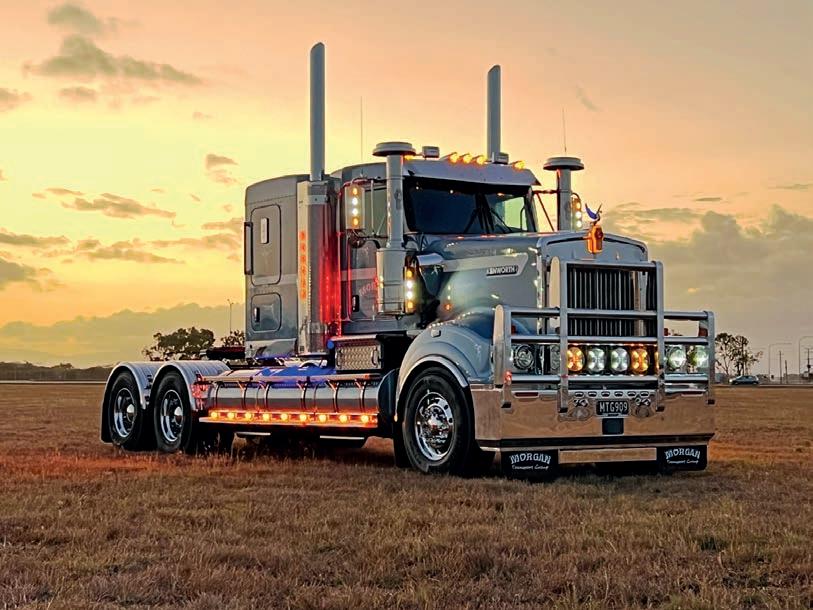
Morgan Transport Group’s new T909 isn’t just another truck, ‘Learning to Fly’ is dedicated to a much loved truckie who sadly passed away last year.
BY DANIELLE GULLACI
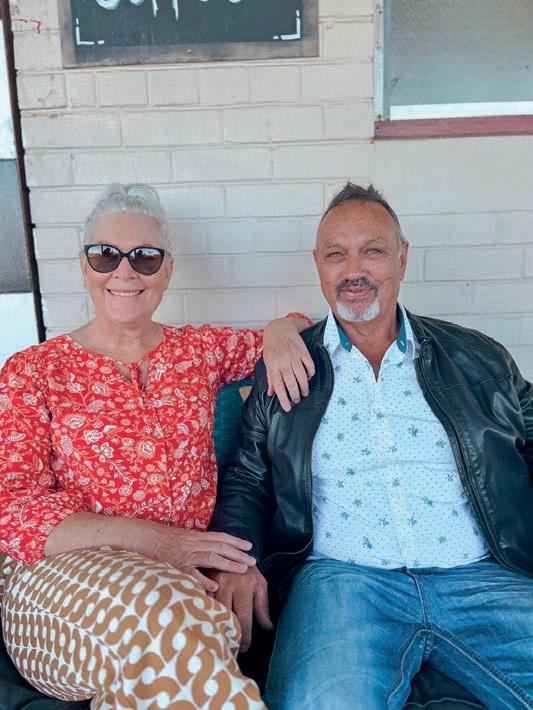
WHEN his driver and dear friend Alan ‘Red Rock’ Kimlin passed away in May 2025 at the age of just 62, David Morgan knew he had to do something special in his honour.
David Morgan runs Townsville based Morgan Transport Group (MTG), a business he started in 1999. His fleet of around 80 trucks can be seen travelling across Queensland, as well as into Sydney and Darwin.
Alan was originally from Kingaroy in Queensland but spent much of his childhood and early adult years in Alice Springs, hence the nickname ‘Red Rock’. He moved to Townsville in 1993.
Alan was a fitter and turner by trade but spent most of his career working in transport –both as a driver and in various management roles. Though as his wife Leone Lovegrove revealed, “He always loved truck driving. He loved the industry and just loved his trucks,” she said.
“Alan was one of five brothers, all of whom have held MC licences and have worked, or are still working as truck drivers. When he was a young fella, he went to live with his Aunty June and Uncle Ray in Kingaroy, Queensland. His uncle was driving trucks as well as managing the family farm. So that may have been where his love of trucks started out,” Leone added.
“Alan got his truck licence quite young. He drove into town with his aunty in an old farm truck that was loaded with peanuts and the officer said, ‘If you can drive that truck, you can drive anything!’
“He never liked driving along the east coast, so he would avoid those runs. He loved being able to go back to the Territory in the truck.”
David says he had known Alan for over 20 years. “Alan managed the Ascot’s Transport depot in Townsville, as their North Queensland Manager, so that’s when I met him. Then about six or seven years ago, he came to work for us as an Operations Manager,” explained David.
“Alan did that role for about four years but wanted to get back out on the road, so he started driving for us, doing road trains to the Tanami.
“Alan was just a really great
bloke. He was very knowledgeable and great at what he did – no matter what he did – because he was a jack of all trades.”
Alan was still doing that same run out to the Tanami when he received devastating health news. As Leone explained, “Alan was diagnosed with metastatic lung cancer – and he was a non-smoker. He died only five and a half months later. It was very sudden.”
W hat was also shocking was the lack of noticeable symptoms. “Alan had lost some weight but we put that down to the fact that he had been working hard. He was driv-
ing trucks over to the Tanami and really enjoying it. Then he developed this hoarse voice and that’s what led him to get checked.”
It was while at Alan’s funeral that David decided on the perfect name for a truck that would honour his mate. As he explained, “A lot of my trucks are named after songs by Tom Petty, because I listen to his music a lot. Alan’s memorial service concluded with the song ‘Learning to Fly’ by Tom Petty. I decided there and then that I wanted to do a tribute truck for Alan and it seemed fitting to name the truck ‘Learning to Fly’. I ordered the truck that same afternoon.”
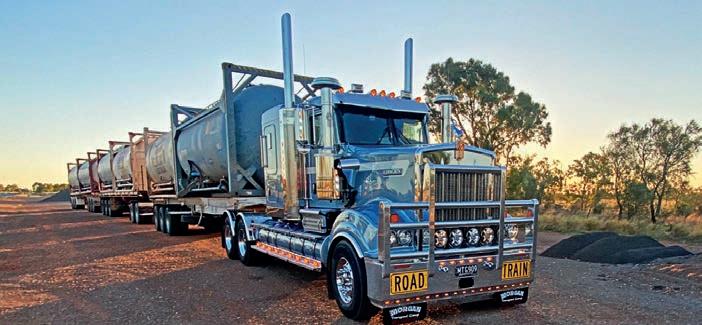
With about half of the fleet already being Kenworths, David decided on a T909 with 0-inch low-line bunk. “It’s more of an older, traditional look. None of my other trucks look like this one. I went with an older paint scheme that was common in America in the 1970s and 1980s. The truck is 18-speed, road train rated and has a 605hp Cummins engine.”
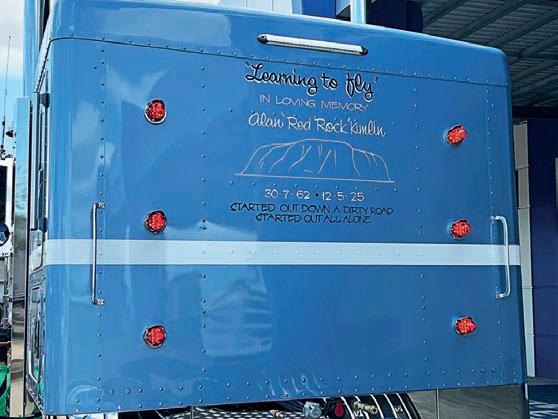
On the back of the truck are the words: ‘Learning to fly’ In loving memory
Alan ‘Red Rock’ Kimlin
30.7.62 – 12.5.25
And beneath that, the opening lyrics to the song: “Started out down a dirty road. Started out all alone.”
David is over the moon with how well the truck has turned out. “We had it painted locally at NQ Truck Bake. Rod Northey did all the sign writing and we did all of the stainless work in-house here,” he said.
Kept tightly under wraps, the truck was handed over on Saturday November 1.
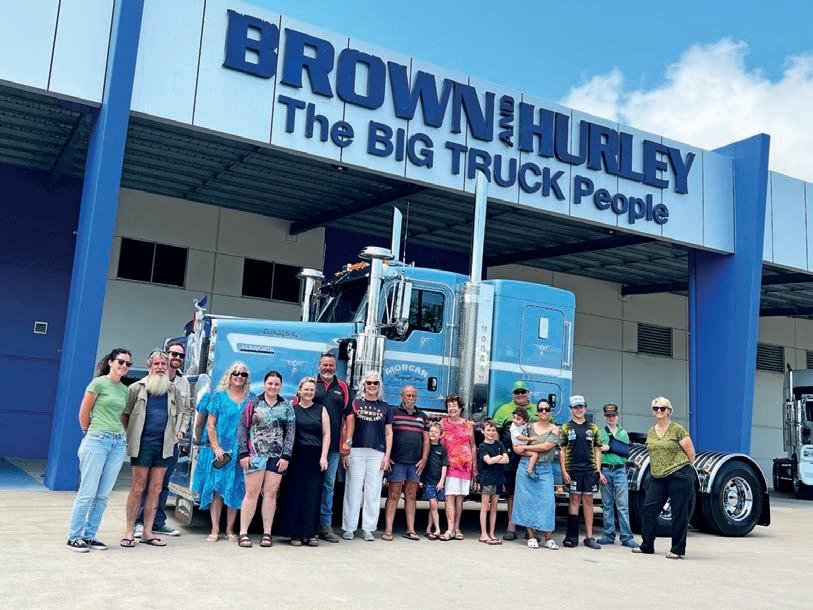
“We kept the truck a secret. I let his family and friends know we wanted to do something special and to come down to Brown and Hurley at Townsville,” said David.
Alan’s wife Leone, his kids, grandkids and other family members and close friends were there as the truck was unveiled.
When Leone got the phone call from David to say something was happening that weekend, she admits she went out to the dealership with no idea what to expect – but was blown away when she saw the tribute truck for her late husband Alan.
“It was really beautiful,” she
said. “Alan would have been so humbled by it. I think it’s reflective of the person that he was and the respect people had for him.
“He also had a lot of respect for David and Kelly Morgan. He worked with them both over a number of years and really had a lot of respect for them as professionals in the industry, and also as people.”
Speaking of the truck’s unveiling, David added, “There were a lot of tears and a lot of laughter, a whole range of emotions. I had a few tears myself.
“It’s funny that you don’t ever hear that song ‘Learning to Fly’ on the radio, and we actually heard it play on commercial radio right as we were leaving the dealership.
ALAN WAS JUST A REALLY GREAT BLOKE. HE WAS VERY KNOWLEDGEABLE AND GREAT AT WHAT HE DID – NO MATTER WHAT HE DID – BECAUSE HE WAS A JACK OF ALL TRADES.”
DAVID MORGAN
“Alan’s family were very impressed with the truck. They loved it and were so appreciative.”
The

BY DANIELLE GULLACI
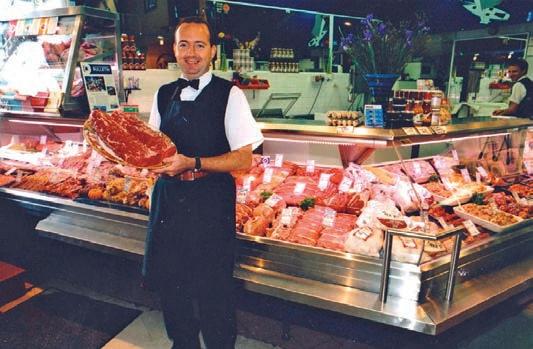
A butcher by trade, Larry Brewer, 61, has now been driving trucks for 17 years.
Larry says he had dreamed of being a truck driver since he was just eight years old, however life led him on a different path.
As Larry told Big Rigs, “I got my first job cleaning a meat room in a supermarket after school to earn some money but I really wanted to be a diesel mechanic. I applied for a diesel mechanic apprenticeship and a butcher apprenticeship. I got offered the job as a butcher and took it… then a few weeks later I got offered the diesel mechanic apprenticeship, but I’d already started working as a butcher.”
He eventually went on to manage a few butcher shops before starting his own butcher shops, which he ran for 25 years.
Then tragedy struck in 2008.
Larry and his wife Leanne lost their son Reece at just 13 years old. “He was sick for a couple of weeks. Then his lips turned blue and I tried to resuscitate him until the ambulance arrived. The ambulance came and worked on him for an hour but there was nothing they could do,” said Larry.
“Reece knew that one day I wanted to sell the butcher shop and buy a truck. After losing him, that gave me the drive to go out and do it.
“I had a brochure that was sitting in my drawer for a long time and then I went that’s it. The passion was always there for the big trucks. It was a passion burning inside. I thought stuff this, I’m going to get my licence, so I told the boys at the shop I was going for lessons each Thursday. It took me two and half years to work my way up to my MC.”
Larry said he was also lucky enough to have a great driver mentor too who took him under his wing. “Graeme Martin was a customer at the butcher shop and also Ryan’s school teacher. His brother used to have three trucks and for several years they did two-up together, before Graeme started teaching. He’d driven triple road trains from Brisbane to Perth. He was such a great mentor and I have the utmost respect for him.”
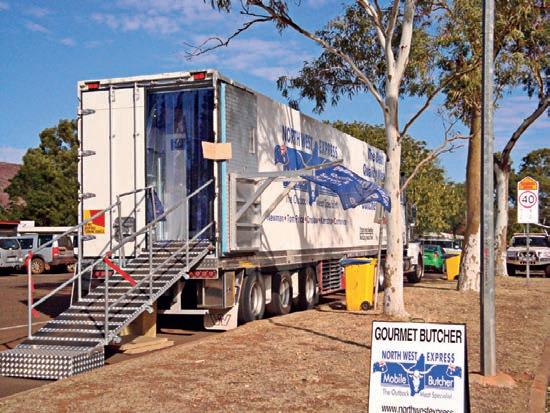
Larry and Leanne decided to put their butcher shop on the market and started their next venture, where he combined his butcher skills with trucking in a truly unique concept – a butcher shop on wheels that delivered and set up shop in some of the most remote areas of northern Western Australia.
“A lot of people thought I was crazy!” laughed Larry.
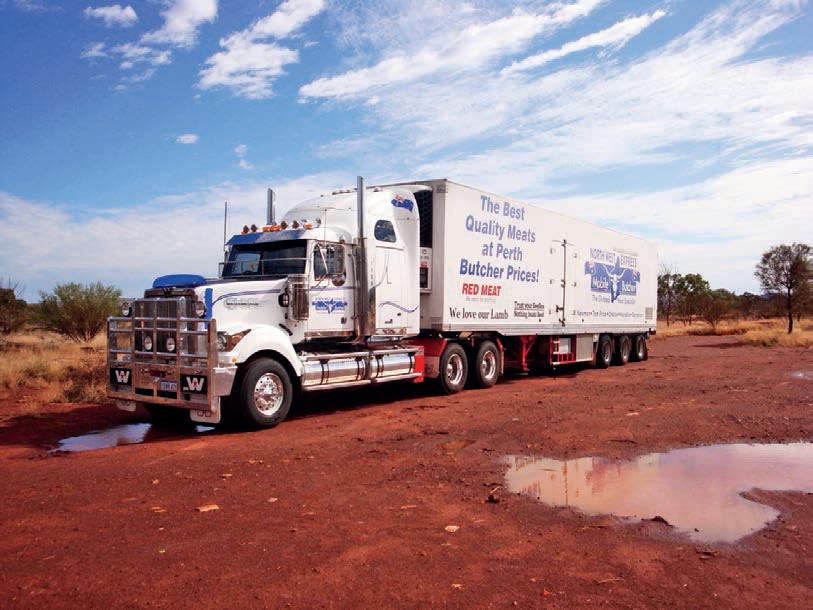
He purchased a Western Star 4900 FXC and had a custom refrigerated trailer built. It took around three years to get North West Express up and running, from developing the concept, to researching the best equipment for the task at hand to having it built
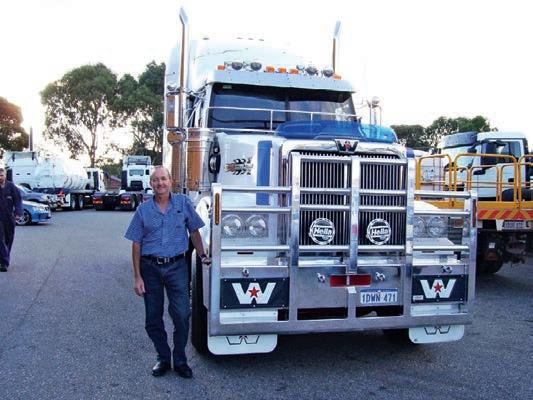
and hitting the road.
“I jumped in my car and drove to Port Hedland three times. It was stinking hot and dusty – and there were a lot of flies. So I figured I needed to be able to get people away from the heat and into the semi that would be set up as a shop. I started drawing with chalk on my garage floor to work out a plan of how the semi would work.”
The North West Express made its first run in July 2012. Once a month, Larry and his crew would set out in the truck to the outback. They’d spend two weeks cutting and preparing the meat, before heading off from Perth for eight to nine days on the road on a 4500-kilometre round trip.
They’d stop at Newman, Tom Price, Paraburdoo, Karratha, Roebourne, Wickham, and then finally, to Port Hedland, the furthest stop.
Larry quickly became known as the “outback butcher” – and many might also recognise him from his appearances in some of the earlier seasons of hit television show Outback Truckers.
Asked how he came up with the idea, Larry said it was after chatting with a customer who had visited his Perth butcher shop all the way from Karratha. “She said here’s an idea for you, we have a guy in a fish truck and he goes around the Pilbara every fortnight in a rigid. People line up waiting to buy his seafood. She said you should do something with meat because we’ve got no butchers up there,” recalled Larry.
“I went back to cutting up steak and I thought I reckon I could do something – I got home and told my wife Leanne. From that idea to doing the first trip, it took three years.”
Larry would travel with two butchers and the truck served as their home away from home.
“We had a double bunk put in the truck and then a foldout bed in the trailer which was air conditioned. My wife would prepare our meals which we took with us. We were self-sufficient while away.
“Leanne organised where we were going and my son Ryan managed our website and social media.”
Ryan, 37, has muscular
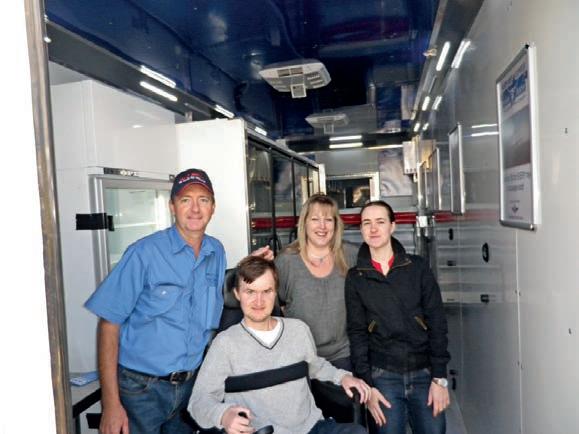
“We didn’t know much about it when he was first diagnosed. He’s been in a wheelchair ever since. Ryan is a real fighter. He’s actually written a book about his life and created a short movie too, which he plans to launch through a fundraiser for muscular dystrophy. I’m really proud of him.”
Though business was doing well for North West Express, Larry made the decision to give it up so he could be closer to home to help care for his son. He embarked on his final trip as the outback butcher in April 2019.
The trusty Western Star was easy to sell, however Larry revealed that he still has the trailer. “It frustrates the hell out of me. I’ve been trying to sell it since 2019 and have had lots of time wasters,” he said. Though he could have gone back to his trade as a butcher, Larry chose to stick with the trucks. “When I finished doing North West Express,
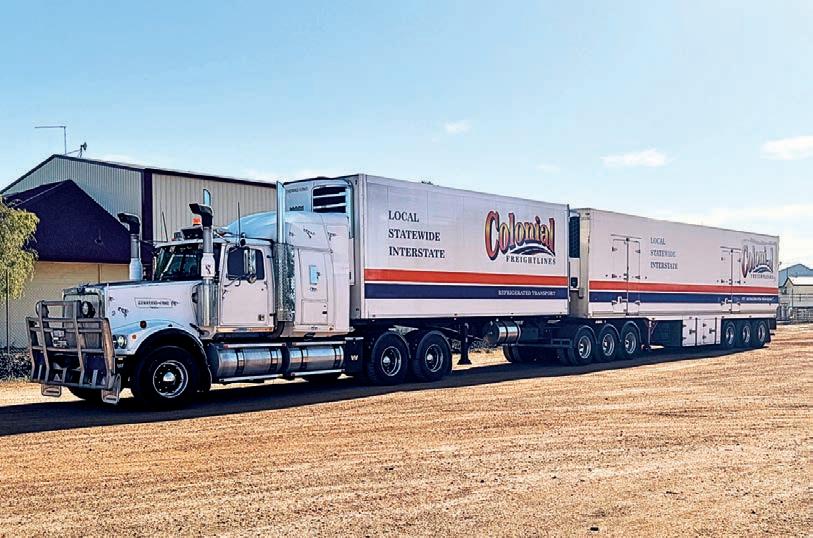
I thought, well I still love driving,” said Larry. “I wanted something more local so I rang Colonial Freight Lines and they needed a driver. They used to bring lamb over for me from Melbourne to Perth,” explained Larry, who will have been driving for the company for seven years this coming April.
It’s predominantly B-double work, including meat for A ldi stores, as well as produce and general freight. “The fur-
thest I’ll typically go is about 300-kilometres from Perth,” said Larry. “I’m in a 1998 Western Star – I call it the ‘Old Girl’ because it’s originally from the Northern Territory. It was a cattle road train and has probably done over 5 million kilometres, so it’s had a hard life. When I started, they asked if I wanted that truck and I said of course I want it, it’s a Western Star!”
Along with being behind the wheel, Larry is also helping to
train up new drivers as they come into the business.
“I really enjoy being in the truck. This last week I slept in the truck three nights. I have everything in the truck set up,” Larry said.
“For me it was an idea and a dream to get into trucks. A friend at the butcher shop always said if you don’t go, you’ll never know.”
And now, with 17 years of driving under his belt, Larry’s glad he took the chance.









We spent a day behind the wheel of a versatile day cab prime mover – and it delivered big-truck performance in a more agile, economical package.
BY GEOFF MIDDLETON
NOT everyone wants or needs the biggest truck in a manufacturer’s lineup. Indeed, sometimes it’s wiser to look at something a little more economical and budget-friendly in the stable.
Volvo has myriad models in its lineup, and due to the local manufacturing, most can be tweaked to meet an operator’s particular specifications.
Sitting just below the big FH range is the FM, a very versatile truck that can be had in either prime-mover or rigid forms with axle configurations of 4x2 or 6x4 in prime mover form, or 4x2, 6x4 or 8x4 in a rigid truck.
The FM range can be powered by either the Volvo D11 or D13 engines with a horsepower range from 380 to 460hp for the 11-litre or 460 to 500hp for the 13-litre engine. Torque is very impressive, ranging from 1800Nm for the 380hp engine right up to 2500Nm for the 13-litre 500hp version.
There is also an electric version on offer from Volvo which is rated at 666hp and 2400Nm of torque, but that’s a story on its own.
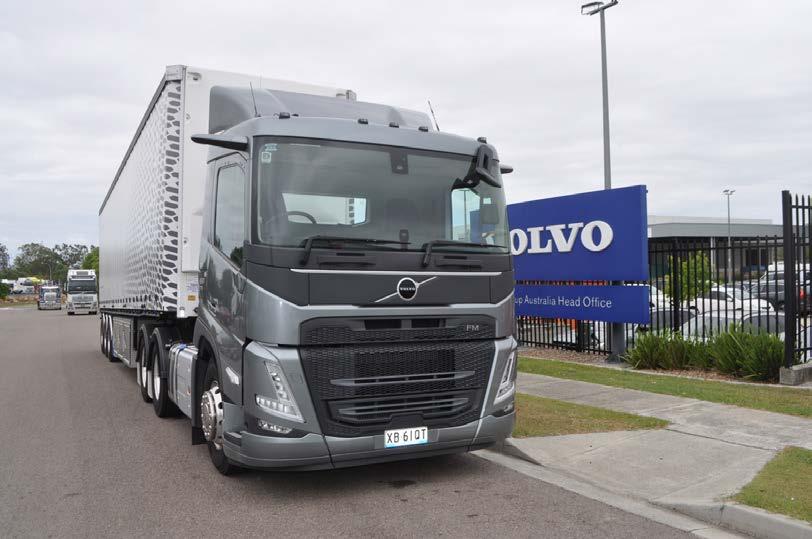
The truck we’ll focus on in this feature and the one that we spent some quality time with in and around Brisbane, is a 6x4 prime mover with a Day Cab, 11-litre Euro 6 engine rated at 460hp and 12-speed I-Shift transmission. The truck was hauling a single, loaded tri-axle trailer with a GCM of just under 40 tonnes.
Why Volvo FM
In prime-mover form, the versatile Volvo FM can be rated to 60 tonnes with the 11-litre engine or as much as 90 tonnes with the 13-litre engine. That’s good enough for B -double work.
Also, it’s agile and manageable around town. The cab is low, with just two steps up to the driver’s perch – great for
getting in and out multiple times a day.
However, just because it’s a bit smaller and lower than its big brother, the FH, it doesn’t scrimp on features or comfort for the driver. As I parked myself in the plush Volvo suspension seat, I found the layout instantly recognisable. The big wrap-around dash with its sensible layout was pretty much how I remembered the last FH I drove.
You’ve got all the driver-support and safety systems on the left, the HVAC pretty much in front and the big digital gauges are concise and easy to see. Our test truck was fitted with the Camera Monitoring System (CMS) which replaces mirrors with cameras and screens on the A-pillars.
Personally, I like this system for single-trailer setups. It’s very easy to get used to and provides excellent vision day or night and even in the rain. It increases peripheral vision because you don’t have big mirrors on the outside, and you don’t have to look as far to the right or left to get a good view of what’s behind.
And speaking of vision, the view from the driver’s seat is fantastic. The big, deep windscreen offers a great view ahead and the low-slung stance of the FM makes it easy to manoeuvre in the city.
Cab options
A s stated, our test truck was a Day Cab which is great cab for around town or limited country work, but Volvo offers a wide range of cabs for the FM including a sleeper cab which would be great for those overnight intrastate trips, or even the big Globetrotter cab that turns the FM into a true linehaul truck.
The Globetrotter cab offers masses of storage, accommodation for up to two people and full-height standing room on the flat floor.
Interestingly, even with the Globetrotter Cab, the FM still
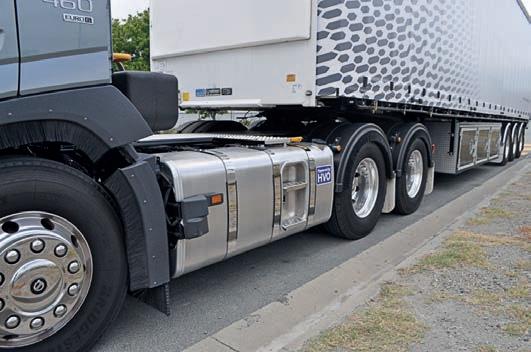
Engine: Volvo D11K six-cylinder, turbo-diesel
Power: 460hp at 1700-1800rpm
Torque: 2200Nm at 1050-1400rpm
Transmission: 12-speed I-Shift auto
Configuration: 6x4
Emissions: Euro 6
GCM: 60 tonnes
Cab: Day cab
has that low-slung stance with the two-step entry and exit.
On the road
We picked up our test truck at Volvo’s big facility at Wacol on the outskirts or Brisbane with the intention of spending a day with the truck doing what a truck of this spec would do on a typical day. A trip down to the docks, a rumble through the city, a bit of motorway work and then back to base.
At 40 tonnes, this 460hp 11-litre is in its element. It really feels like a bigger engine. The 2200Nm of torque hauls the load easily and the 12-speed I-Shift transmission is smooth and unfussed.
The FM has a three-position engine brake on the right-hand side of the steering column and it has a button on the end that, when pushed gives maximum braking with downshifts. Driven sedately using this, the driver barely needs to use the service brakes. It’s a great system that saves on brakes for both your prime mover and your trailers.
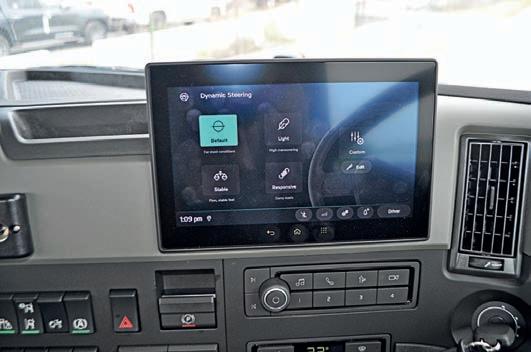
Our Volvo FM was fitted with the company’s new Volvo Dynamic Steering (VDS) which is an electrically-operated system that provides extra steering boost to the hydraulic system. It makes the steering easier and more precise leading
to fewer driver inputs. Basically, it makes the truck easier to handle and more direct to drive.
The trucks also had Pilot Assist which is enabled by the VDS. It uses the truck’s camera to read lane markings and provides drivers with continuous active steering support to keep course and stay in its lane. This results in more proactive support, designed for a safer and more relaxed drive.
Continued on page 18


Volvo FM 11 460 was fitted with Volvo’s new Safety Zones feature that can speed-limit trucks in specified areas.
For example, if you want to limit your trucks to 25km/h in your yard, you can specify that area and the truck will not exceed 25km/h in that zone.
Similarly, if you want to limit a truck to, say, 50km/h on a certain section of road, then you can specify that piece of road, set the limit, and even if the cruise control is on, the truck will not exceed 50km/h. In fact, the Safety Zone will override the cruise control and reset it to the requested speed.
The Safety Zone is programmed by the fleet manager using Volvo Connect and whole areas, like dock precincts, school zones and the like can be geofenced limiting the speed of the truck in that area.
If a driver knows of a certain dangerous curve or an area that has a safety risk or even a speed camera, that area can be pinpointed and speed limited.
When entering an area determined by Safety Zones, the driver receives information in the instrument cluster, the truck will not exceed the speed limity, then he or she is alerted when leaving the Safety Zone and the truck will resume normal operation.
Customised speed limits can be set between 20 to100km/h, and the manager can set up different zones for individual vehicles.
We tried this on a pre-set piece of road and it worked a treat, as we entered the zone, a warning came up on the screen and the truck slowed to the designated speed, the truck would then not exceed that speed.
The system can be overridden by the driver but if this is done, the events are presented in the Volvo Connect Map and in the Tracking Report with position and timestamps.
We reckon it’s a great idea that benefits drivers and businesses as well as the general public.
We understand that it comes free of charge if you have a Service Agreement with Volvo, or it costs a nominal monthly fee if you don’t.
BY DAVID VILE
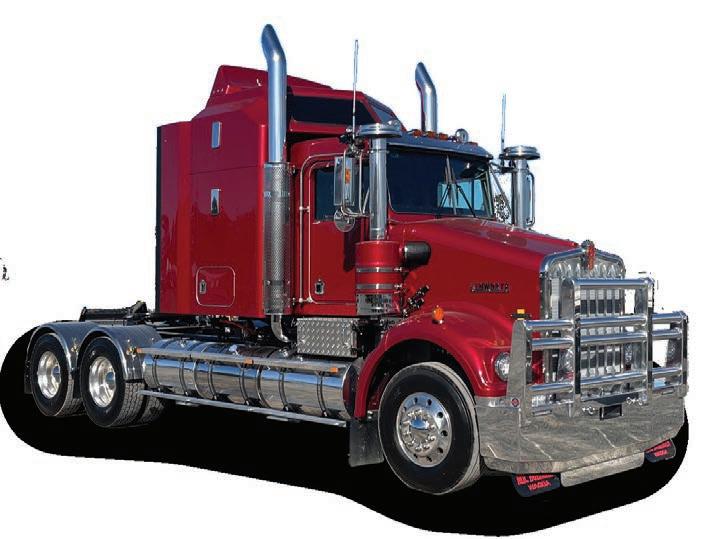
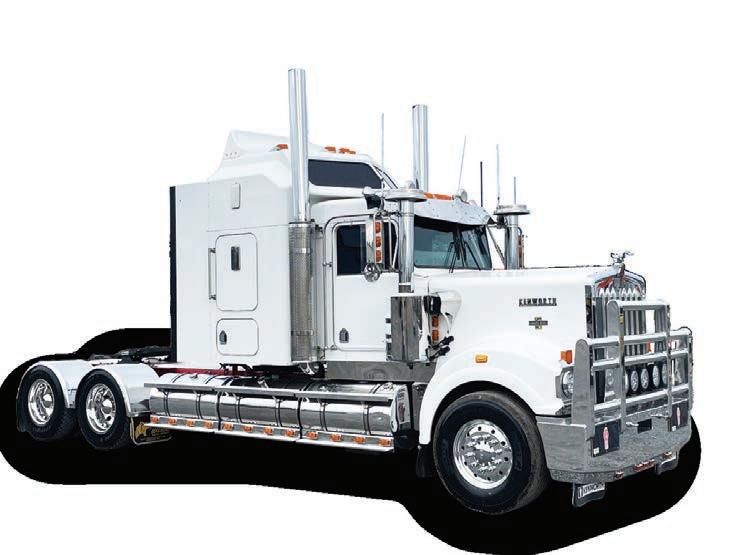
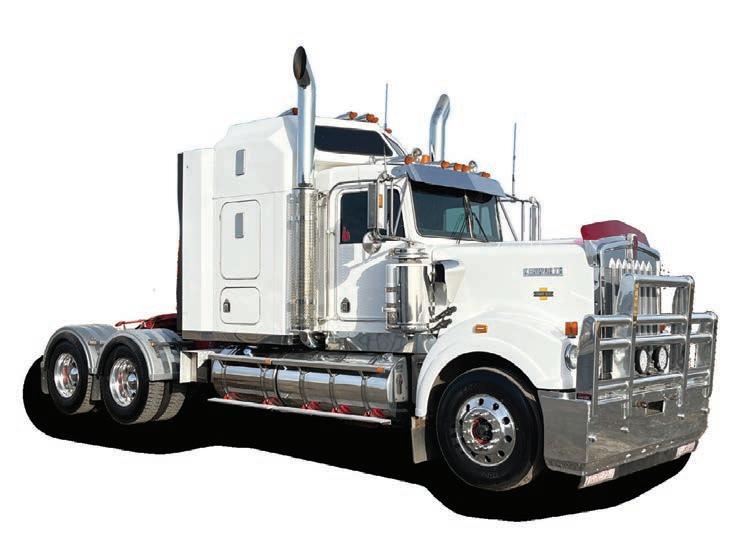
FOR over 60 years, Kenworth has had a storied history in Australia, with the brand at firmly at the top of the tree for many truck operators and drivers. Over that time the Kenworth model line has evolved, with the venerable K-series cabover a mainstay of the product line since the earliest days.
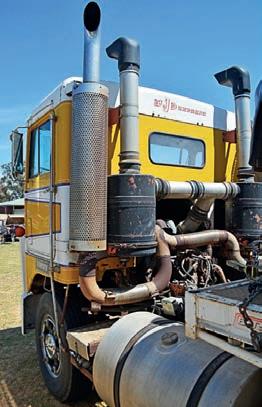
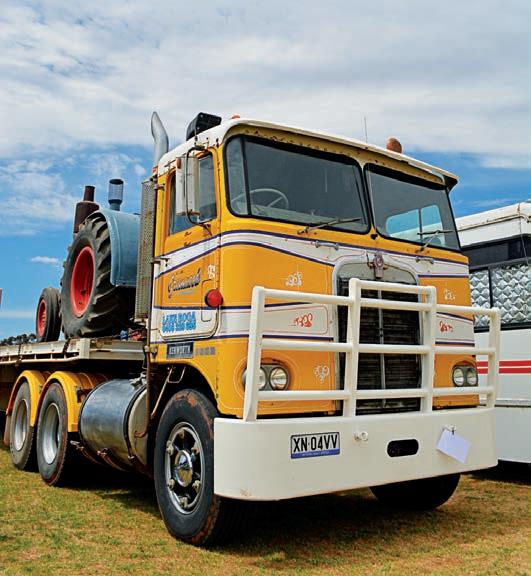
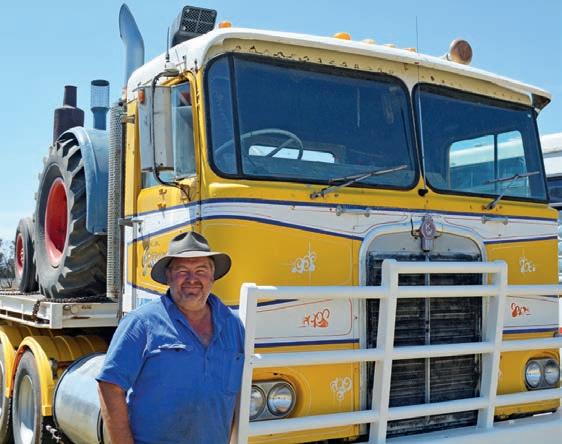
Prior to the Bayswater manufacturing facility coming online in 1971, all Kenworths were shipped out of Seattle in the US, and today it is rare to see a ‘Seattle’ Kenworth still out and about on the roads, much less one that is still regularly working. However, this is the case with Chris Greenwoods’ 1970 K125CR which today still earns its keep as part of the Greenwood farming operation at Coleambally in the New South Wales Riverina.
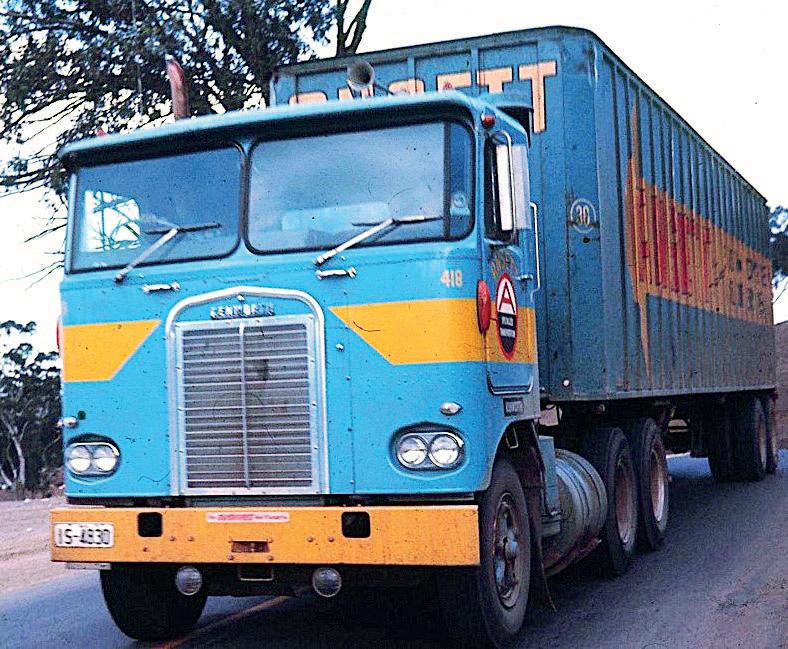
Chris’s Kenworth indeed has an interesting background, and it could be regarded as a ‘dual citizen’ in so far that it has both a US and an Australian Kenworth Build Sheet. Built in Seattle as Chassis 11969 complete as a sleeper-cabbed unit, it was shipped out to Australia as a dealer stock unit in 1969. At around the same time Ansett Freight Express
(AFE) had placed a large order for 30 Cab-overs. Given the time constraints of the period, Chassis 11969 was allocated to be part of the Ansett order, and consequently the cab was swapped over for a slimline one and the gearbox and diff ratios changed.
A s a result, it was also given an ‘Australian’ build sheet as a 1970 model, painted in its blue and yellow paint scheme, and is believed to have been designated as AFE unit 441 on express haulage.
Fast forward to today and the Kenworth is painted yellow and white, with Chris having owned the K125CR for over 20 years. Originally going to buy the trailer the Kenworth was attached to, Chris purchased the truck and trailer with field bins off another farmer at Tooleybuc in Victoria for $15,000. With that owner having had the truck for around 10 years, Chris still has some gaps in the truck’s history in the time between it working for AFE and its first farm owner.
“After AFE we don’t really know where it went after that,” Chris explained.
You can just make out ‘Altona’ on the passenger door
- we only saw that when my young bloke tried to polish it. I would say that he was a subbie or something and might have bought the truck with a bit of work and just worked it around Melbourne, it has had a few coats of paint over the time as it is pretty thick in places - it also has ‘MJD Express’ on the back of the cab.
“It has spent 30 years on farms but I would say before then it’s done the power of work as AFE would have worked her pretty hard, she has some pretty serious wear and tear on it.”
Originally fitted with a Detroit Diesel 8V/71 powerplant, today an 8V/92 rated at 435 horsepower stirs the Kenworth along, with a 10-speed gearbox and the original diffs still doing their thing at the back end.
Built to a similar specification as the famed TNT ‘Grey Ghosts,’ even today the Kenworth is not short of getting across the country at a good clip.
“If you can hang onto it, it will fly! It has been repowered
with the 8/92 by whoever had it at Altona and she makes plenty of noise. You can sit it on 100k at about 1600-1700 revs and it will just keep on going, though you need to make it work and drive it like you hate it. When I first got it doing harvest work, you would spend up to 14 hours a day in it and you would be trashed because you have to work it hard.”
The K125 was the first prime mover Chris bought, and it was replaced as the ‘primary’ farm truck a few years back with the purchase of an ex-Pickerings K104 Aerodyne. While the newer Kenworth does most of the hard yakka, the old one still serves as a backup and gets out at least a couple of days a month for a run.
“It’s on farm rego and it does a few longer trips - Whitton is 90k’s so we aren’t scared to get in it and go for a longish run in it - it really needs to get hot and made to work every so often anyway. It always gets kept in the shed and it gets a bit of money spent on it every year and gets what it needs,” Chris said.
Chris was using the Kenworth to tow about some old tractors he had on display at the Urana Machinery Rally and reckoned the Kenworth has got a few good years still ahead of it.
“I had a moment about five years ago I got pretty serious about selling it, but Hamish, my young bloke, loves it. He started polishing it up a bit and that inspired me to keep it so we gave it a bit of a tidy up - we were thinking about putting it back to the AFE colours but it has probably had this paint scheme for 40 years. For us it will be more a preservation rather than a full restoration as it still works a couple of times a month.”
Also adding to the truck’s rarity is the fact that it is a slimline cab configuration, with the vast majority of K-series Kenworths hitting the road over the years with
the larger sleeper or Aerodyne cabs.
“A lot of slim-lines ended up on farms back in the day… all the ‘cocky’ trucks you used to see about the place like the Atkinsons and so forth were slim-lines too as they generally didn’t need sleepers,” he said.
All decked out with up to four historic tractors on it, the Kenworth certainly looks period correct and Chris reckoned it will take a lot of thought for the old K125 to go anywhere too far out of
sight in the future.
“They were like HQ Holdens back in the day, once people bought them then sold them on again and nobody really cared - now you don’t seem them about too often, especially the slimlines. I don’t think we’ll part with it now, once you have had it 20 years you get a bit attached to it, so it’s earned its spot in the shed.”
*Special thanks to Darren Hingston for his assistance with this article.
From page 16
THE system isn’t fully-autonomous and requires the driver to keep hands on the steering wheel, but it cer-
tainly adds to the safety and efficiency of the truck. It is enabled using the adaptive cruise control and is basically another step up in the cruise control menu.
The Volvo FM is just brimming with safety and driver assist programs and these include Lane Keeping Assist, Stability Assist, Intelligent Speed Assist, Downhill Cruise Control, Active Emergency Braking, Driver Alert Support, tyre pressure monitoring and more. Add this to all the regular safety systems on all Volvo trucks and you really do have one of the safest trucks on the road.
But it’s also one of the easiest to drive. I had a ball driving the FM. It is so easy to get used to and very easy to place exactly where you want it on the road. And the big horsepower and torque make short work of the load.
On the hills, there is really no reason to switch from full auto in the transmission. I found that if I wanted a lower gear on a hill, it was simply a matter of pushing past the détente on the accelerator and it would almost instantly give me another cog.
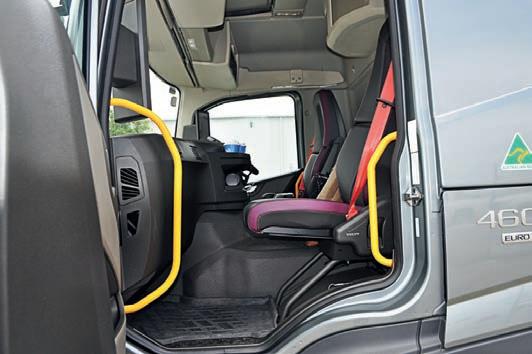
Driver comfort is up with the best of the Euro trucks which are renowned for being driver focused. The seat is up there with the best in the business, and the steering column is multi-adjustable so you can get a comfortable driving position no matter what size you are.
Over the course of our day with the Volvo FM, we drove through city, suburban and port traffic with a bit of mo-









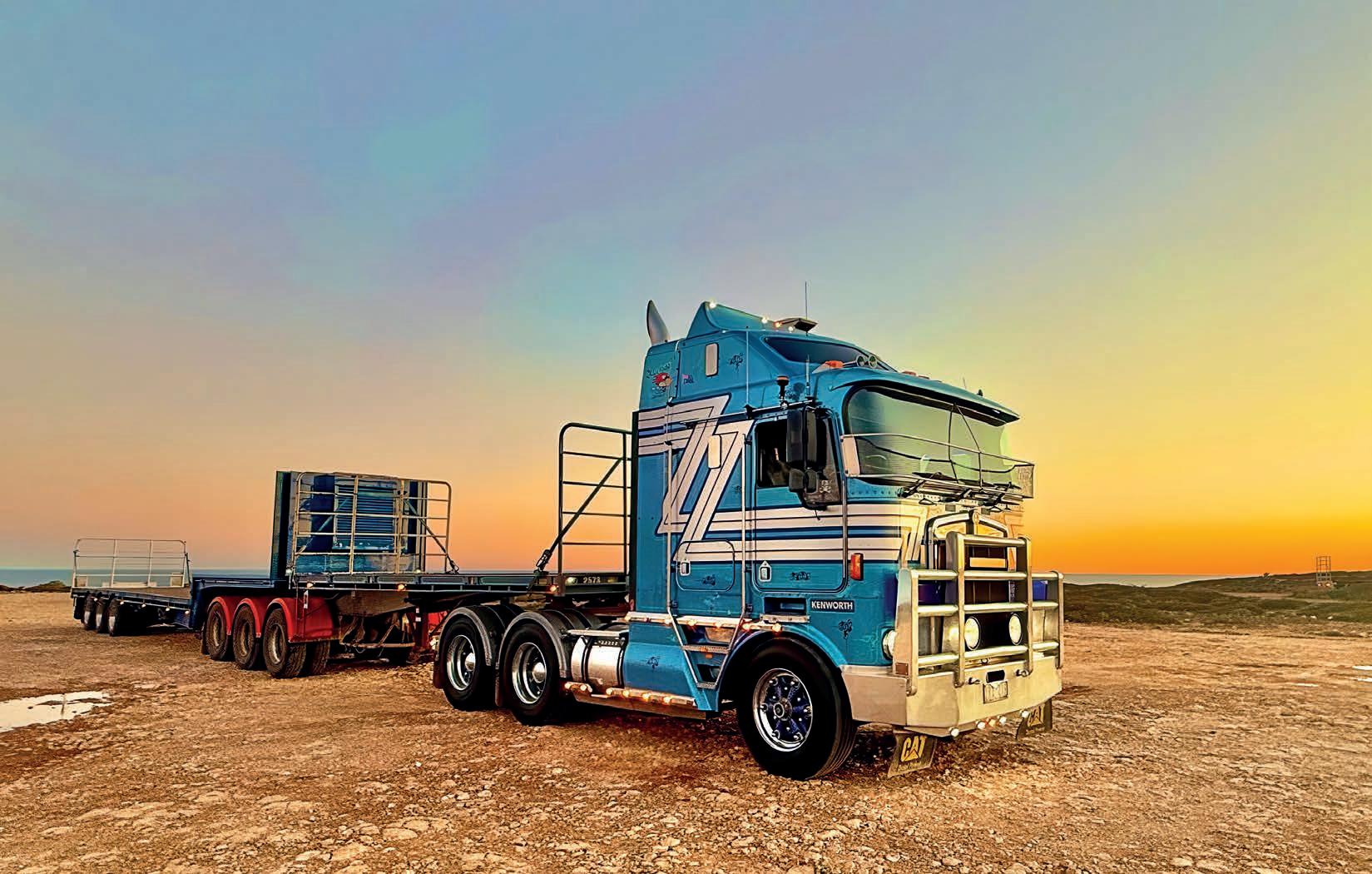
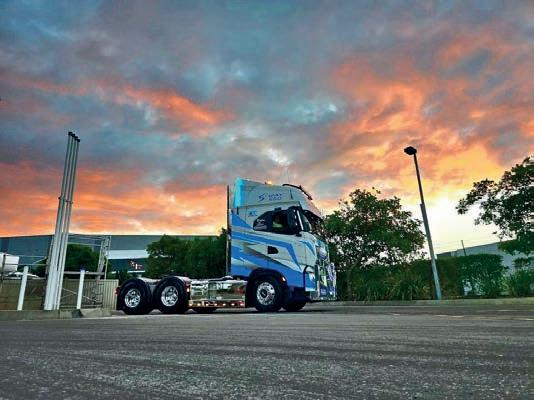
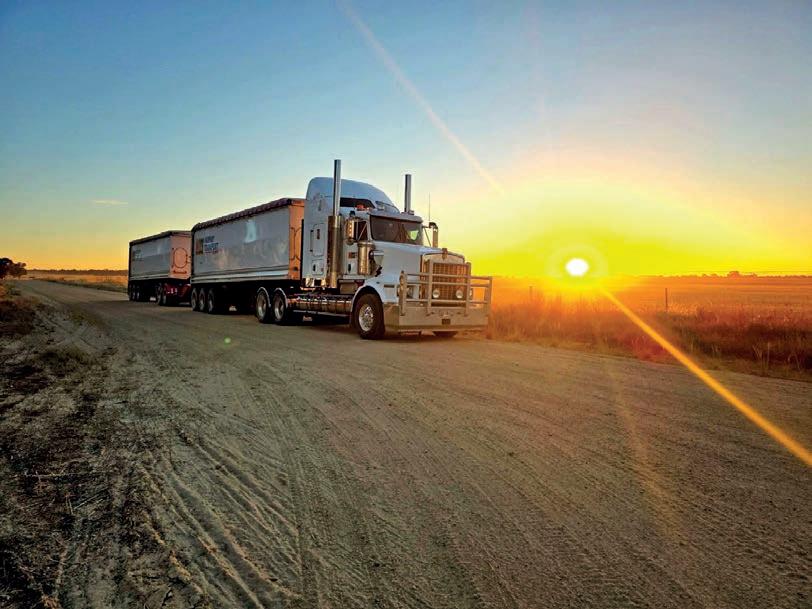
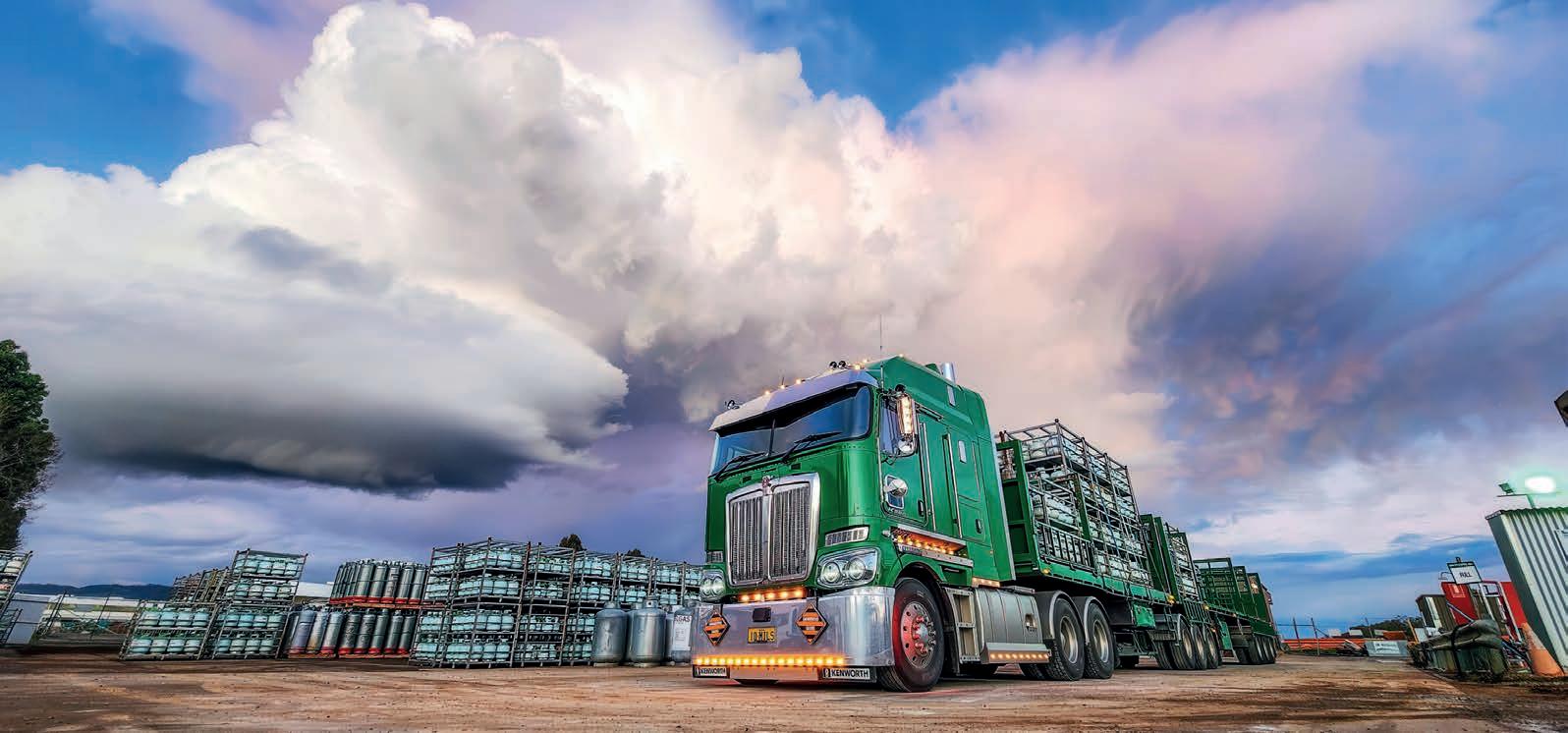
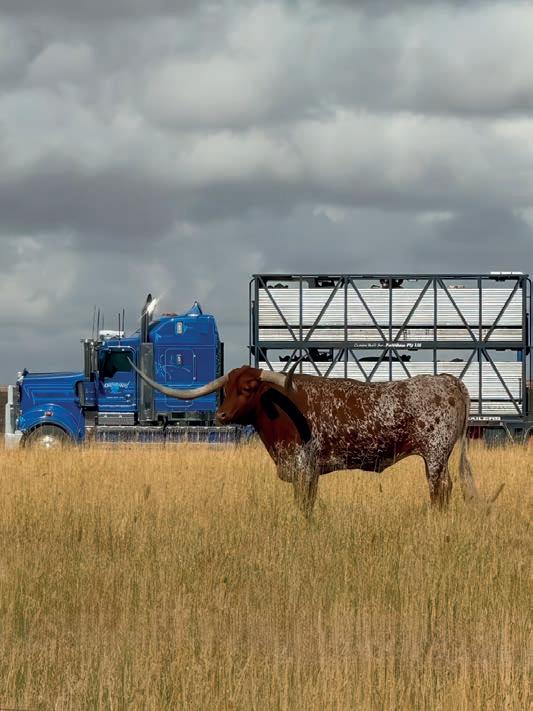
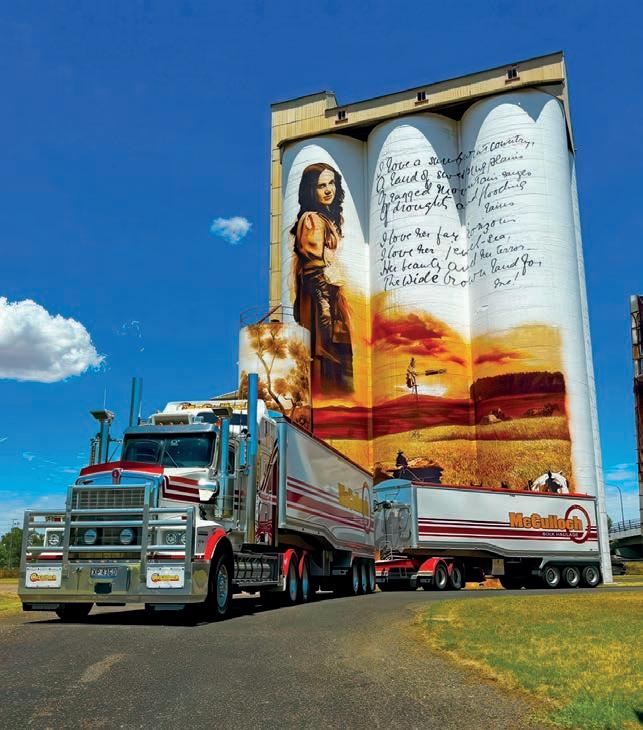
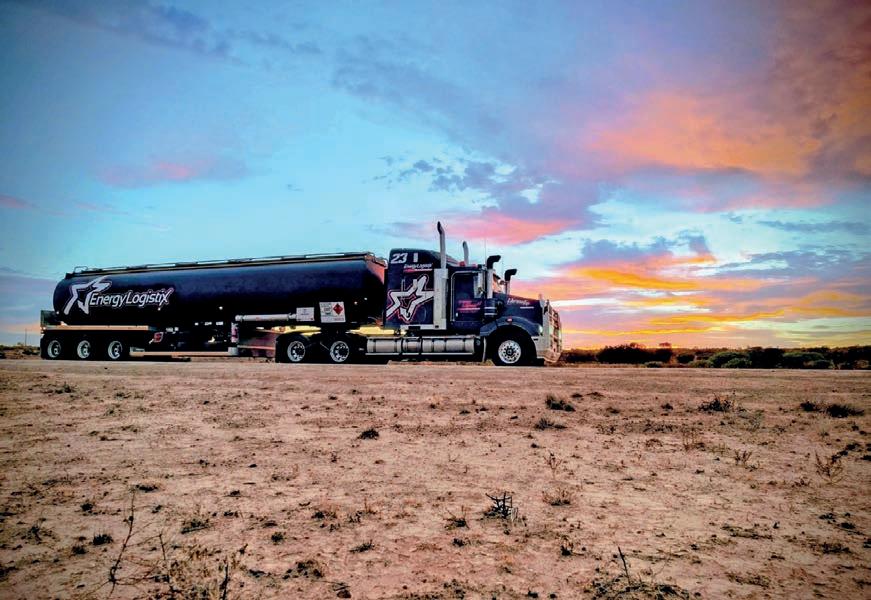
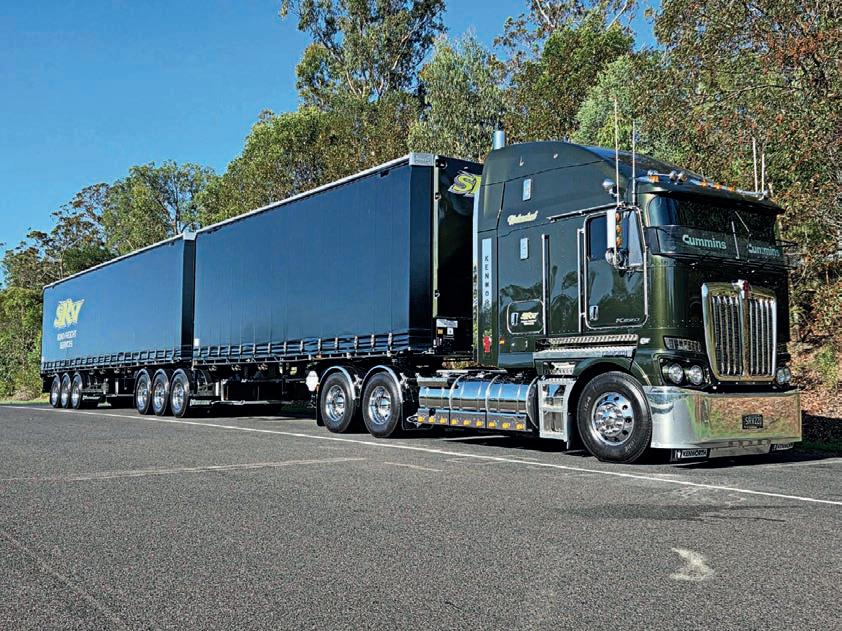
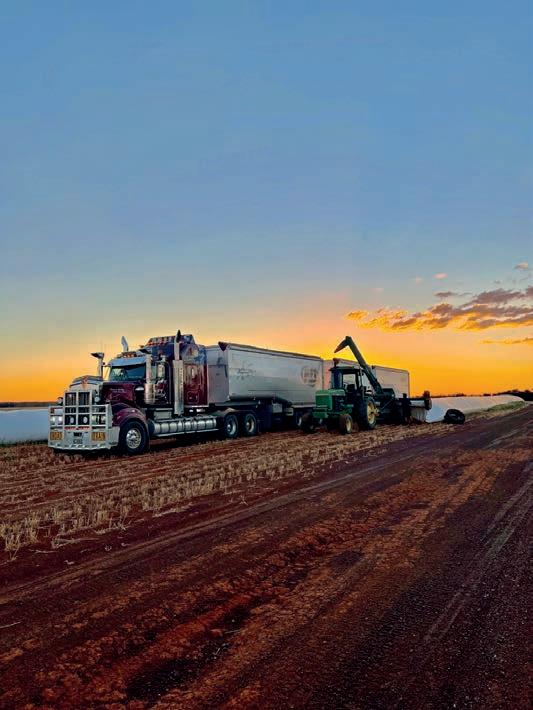
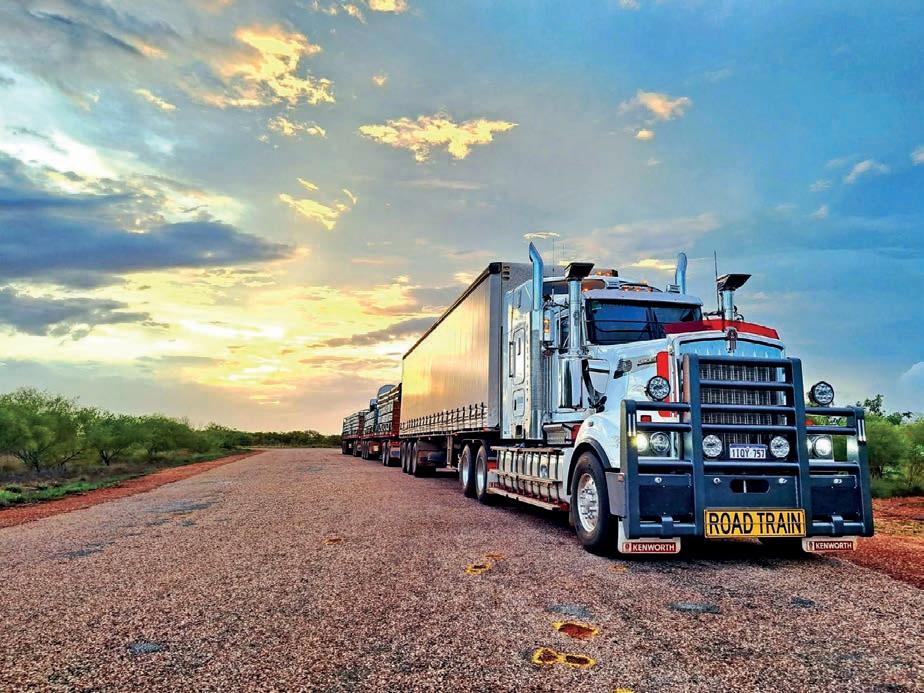
SHELL Rimula has partnered with Big Rigs in a big way – so there are even more reasons to send in your best truck shots.
Each month, the Big Rigs team will choose a #PicOfTheMonth, with the lucky winner receiving a $500 Shell Coles Express Gift Card.
Keep an eye out for our regular posts on the Big Rigs Facebook page, calling for your best truck photos and add yours in
the comments, or email them direct to danielle.gullaci@ primecreative.com.au for your chance to win the main prize.
Don’t forget to include a brief note about the truck and where the photo was taken. We’ll feature some of the best photos in each print edition of Big Rigs, with one winner announced each month.
Keep those amazing truck pics coming!
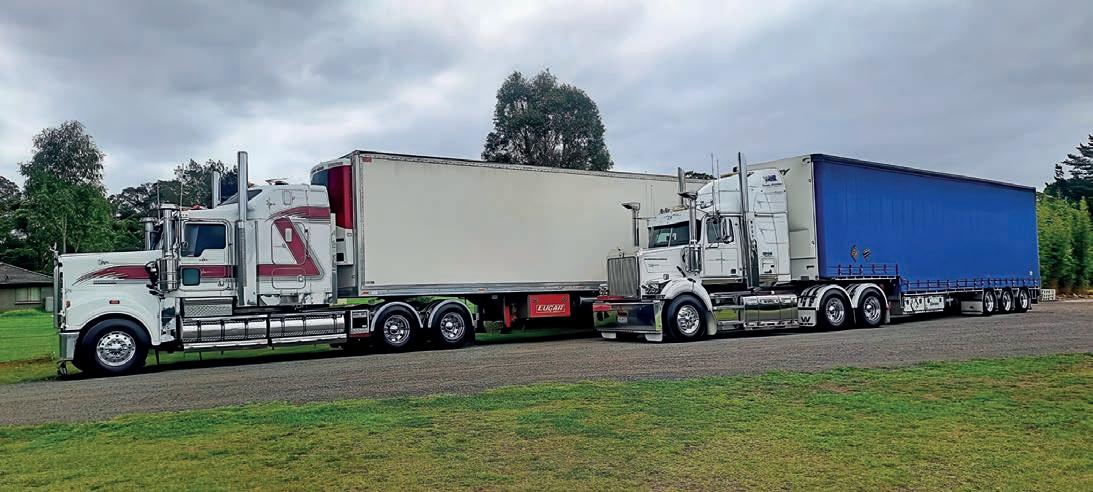
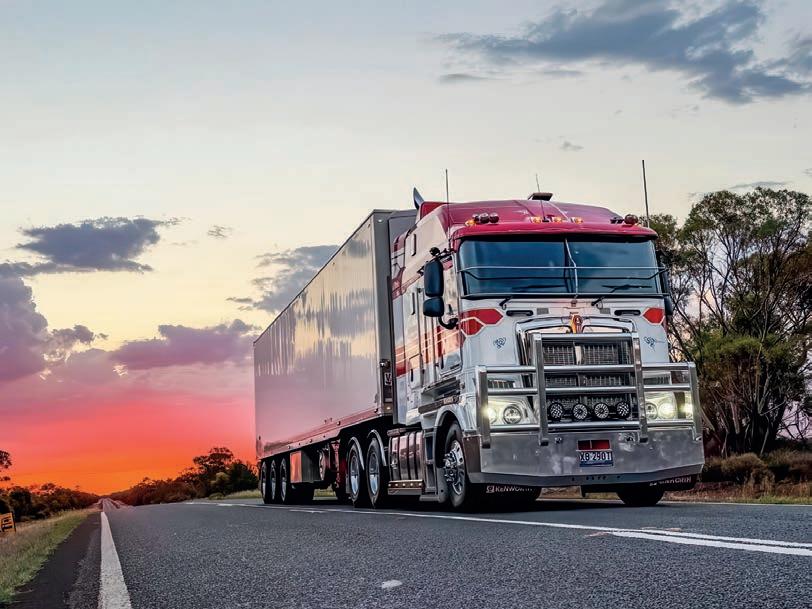
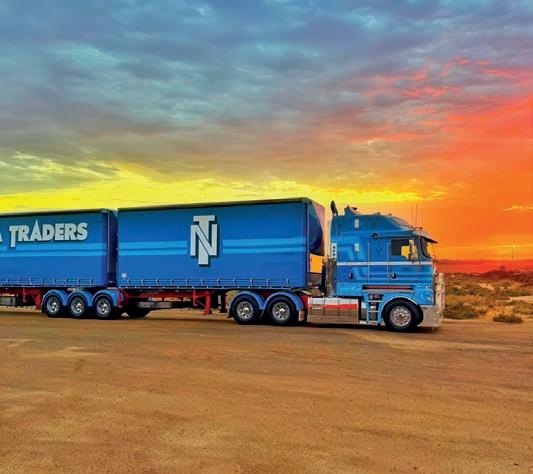
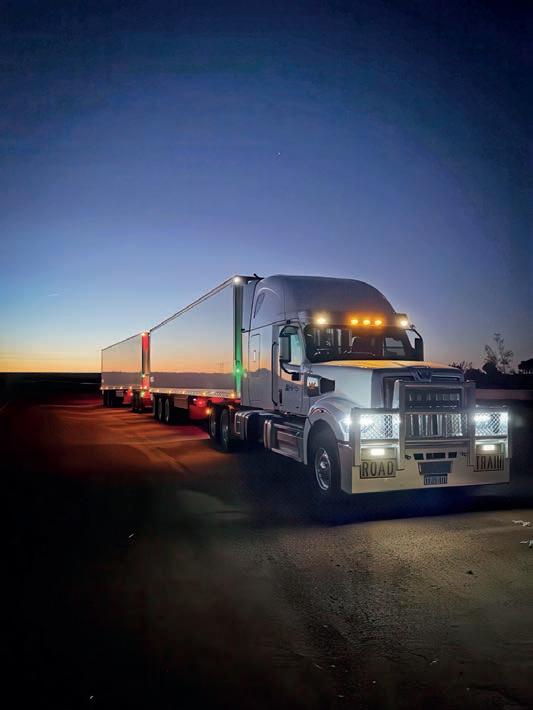
FAW
Trucks has used its latest
international
global partners conference to detail its
roadmap, with Australia among the markets in focus as the brand prepares to scale its local footprint.
FAW Trucks has reaffirmed its global expansion strategy following the company’s 2026 Global Partners Conference, held in Chengdu, China, in December. The event brought together government representatives, financial institutions and distribution partners from multiple regions to review recent international performance and outline priorities for the next phase of overseas growth.
Held under the theme “Intelligence Drives, Quality Thrives”, the conference highlighted what FAW described as steady progress in both the scale and quality of its international operations, against a backdrop of increasingly complex global market conditions.
Global systems, local execution
FAW Trucks said its international strategy is increasingly focused on building complete operating systems rather than competing on individual products alone. This includes
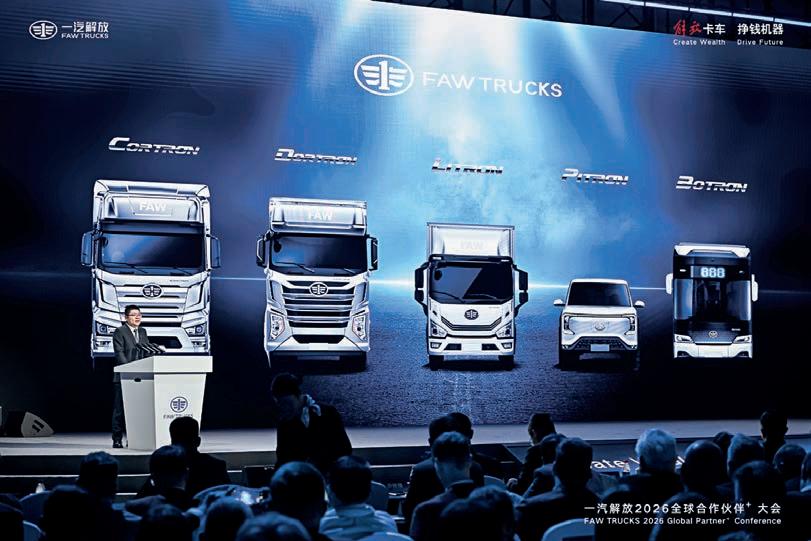
FAW Trucks also used the conference to outline broader elements of its international expansion strategy, including ongoing investment in product planning, brand consistency and market localisation.
According to the company,
Scale and performance in focus
At the group level, FAW reported total vehicle sales of 3,301,963 units in 2025, representing year-on-year growth of 3.2 per cent. Within that, FAW Trucks recorded sales of more than 280,000 vehicles during the year, according to the com-
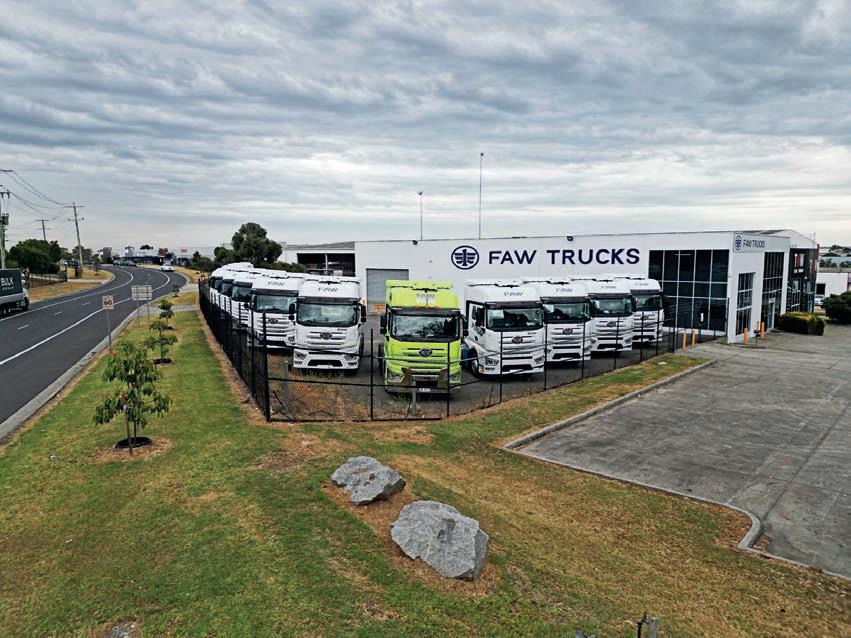
AW Trucks also highlighted its market position in hina’s commercial vehicle sector, citing the following performance indicators:
2.6 per cent market share in the medium and heavy segment, ranking number one in China
3 per cent market share in the prime mover market, also ranking number one
8.9 per cent market share in the rigid truck market, again leading the segment According to FAW, these figures underpin its confidence in exporting both roducts and operating models into international
Australia on the horizon
While the conference focused on FAW Trucks’ global strategy, the company says it is also advancing concrete steps in the Australian market as part of its longer-term international plans.
Ben Wang, Chairman of FAW Trucks Australia, said local development has reached an important milestone with the certification of FAW’s flagship Euro 6 prime mover for Australian conditions.
“The FAW J7 prime mover is now fully certified to the Australian Design Rules and is available locally in both 560hp and 660hp specifications,” Wang said. “This represents a significant step forward in our Australian product offering and reflects the work being done to align our vehicles with local regulatory and operating requirements.”
Wang said FAW Trucks Australia has established its head office and parts distribution centre in Hallam, Victoria, positioning the business within one of the country’s
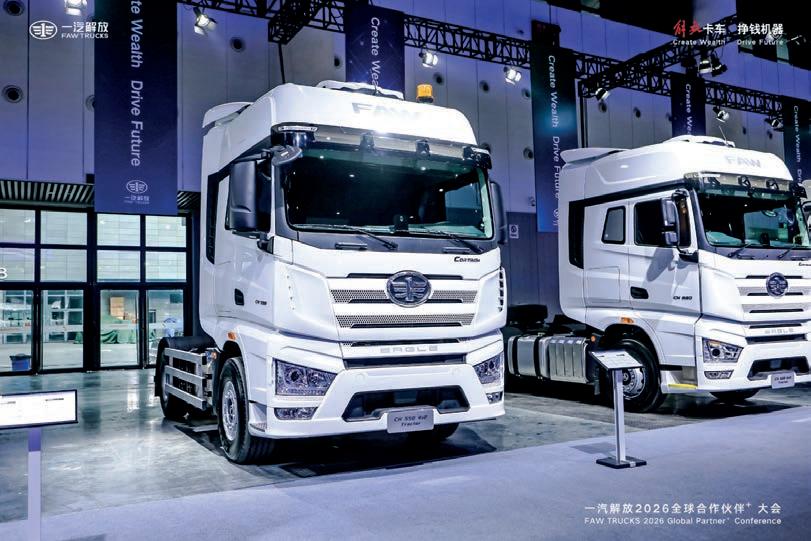
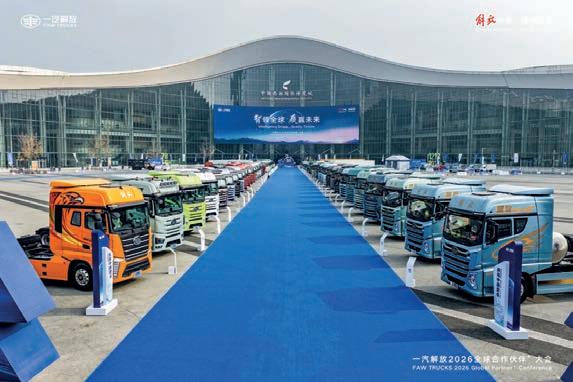
key heavy vehicle and logistics hubs.
“We’ll also be following the J7 prime mover with a full lineup for the Australian market,” he said. “Medium and light-duty trucks will join the range within the next 12 months.”
According to Wang, FAW Trucks Australia is taking a staged approach to market development, with an emphasis on network quality and longterm partner alignment.
“We are actively engaging
with prospective metropolitan and regional partners as part of our dealer network strategy,” he said. “Our objective is to work with partners who share our long-term view of the Australian market and who are committed to supporting customers throughout the vehicle lifecycle – not just the initial sale.”
For commercial enquiries, visit faw-trucks.com.au, call 03 7044 6611 or email info@fawau.com.
THE town of Leongatha, in Victoria’s South Gippsland region, is now home to a new truck and trailer parts store under the globally successful TRP brand.
The new store had its grand opening on February 3, and is owned and operated by Gippsland Truck Centre.
It joins the ever-expanding TRP store network throughout Australia and New Zealand, now standing at 26 stores in the region, and 365 outlets worldwide.
The TRP brand is positioned as an affordable all makes supplier of high-quality parts for prime movers, rigid trucks, and all types of trailers. The store stocks well-known brand consumables for all major truck brands and all TRP branded parts, which come with a minimum 12-month warranty.
Joe Harton, General Manager, Gippsland Truck Centre, said, “We are always striving to find more ways to better support all of our customers, and TRP Gippsland, with its access to all major brands of truck parts, will really com plement the South Gippsland region.
“The support we have had from our customers has been really positive and we are truly grateful for all of their support.
“We look forward to improv ing our relationships with all of our existing customers and building new relationships in the region as we continue to support the transport indus try across Gippsland; ensuring our customers have the best access to quality parts and in turn their trucks have maxi mum uptime.”
business offering an extensive range of proven, affordable and reliable quality parts. TRP parts are manufactured under strict quality control and backed by a minimum 12-month warranty, making sure customers can trust TRP to keep their trucks and trailers on the move.
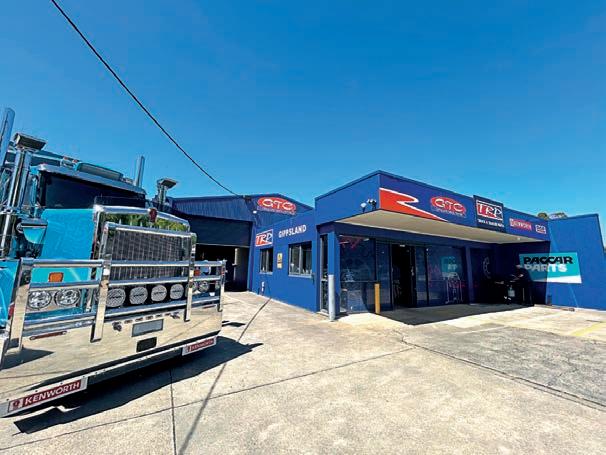
TRP is Australia’s fastest growing truck and trailer parts
The TRP Gippsland store is located at 36 Yarragon Rd, Leongatha, Victoria. Opening hours are from Monday to Friday 8:30am to 5pm.




MOST long-term industry relationships don’t begin with a plan. They begin with one truck.
For Compas Transport, that truck was a brand new Kenworth T909 at the end of 2023. Purchased through Force Enterprises, it already sported Armoury Wheels and Armoury Stainless accessories, but Colin and Marisa
Pasquale wanted to take it further. They liked the existing stainless and brought the truck back to add more and finish it the way they had pictured.
That build led to a bigger conversation. Compas had a group of new T610 SARs on order and wanted them presented consistently from the start.
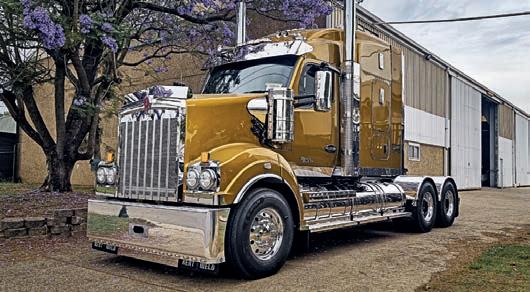
Rather than identical trucks, the goal was a fleet that shared a clear identity while still belonging to the drivers operating them. Each T610 SAR followed the same overall direction, with unique colours and accessories so the truck matched the person behind the wheel. The trucks sat together as one fleet without looking like copies of each
other. When drivers feel connected to the truck, they look after it as their own, and customers notice the difference. From there on, the relationship continued naturally, with further trucks added over time. Fourteen completed and counting, each one fitting-
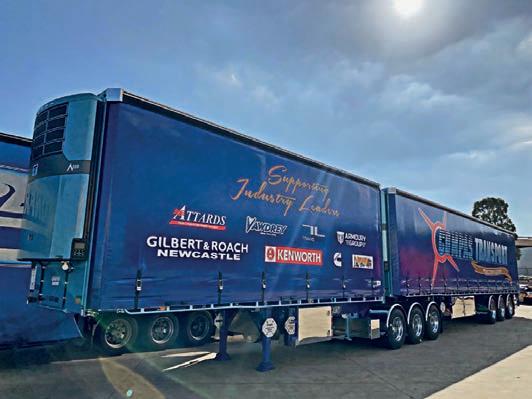
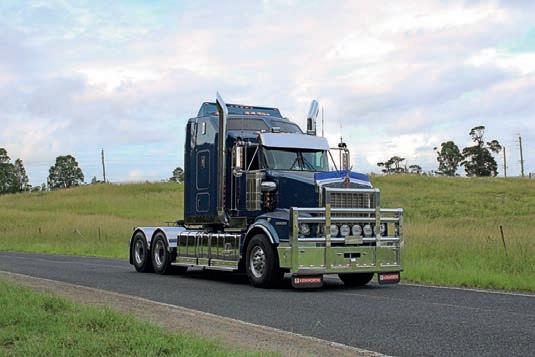
cause both sides wanted the same thing from the trucks.
Compas runs general freight, refrigerated and interstate work out of Newcastle, and their equipment spends its life moving. The trucks have to present properly but also stay practical day after day. The aim isn’t decoration, it’s pride in a working fleet of trucks. That shared approach made decisions straightforward. The focus stayed on durability, finish and consistency, and
the result is a fleet that turns heads.
We appreciate Colin and Marisa’s continued support and the way Compas approaches their builds. Clear expectations, and mutual trust keep projects moving, and the outcome is a lineup that represents both the company and the drivers operating it. What started as one truck has become a standard the whole fleet now carries.
GEOTAB, a global leader in connected transportation solutions, has unveiled the next wave of innovation on its telematics roadmap for Australian fleets at its flagship event, Geotab Connect in Las Vegas.
The company is introducing new AI-powered video safety tools, next generation vehicle hardware, and ruggedised tracking solutions for visibility beyond traditional coverage.
The Geotab Connect 2026 event serves as the global launchpad for a new generation of high-precision telematics and AI-driven hardware.
For Australia and New Zealand, the focus is on transitioning telematics from simple tracking to an “operational brain” that handles complex data to drive safety, efficiency, and asset visibility.
“Australian and New Zealand fleets operate in some of the most demanding conditions in the world. This next wave of innovation is about turning connected vehicle data into near real time intelligence that fleets can actually use to prevent incidents, sharpen decision making and maintain visibility across ve-

Geotab also unveiled a re-engineered next generation of its flagship GO and is launching the GO Plus telematics device, built on a new architecture designed for faster AI processing and higher integrity data. For Australian fleets managing mixed vehicle types and transitioning to electric vehicles, the new devices are designed to handle modern vehicle platforms with reliable diagnostics for fuel tracking and EV performance.
Key enhancements include:
hicles and critical assets, even in hard to reach areas,” said David Brown, Associate Vice President, APAC, Geotab.
Upcoming product priorities for Australia in 2026 include:
AI-powered video safety: GO Focus Pro
Geotab previewed GO Focus Pro, a new AI-powered expansion to the GO Focus family of video telematics designed to deliver 360 degree visibility and predictive risk detection. Built to support fleets facing rising safety concerns and es-
calating liability exposure, GO Focus Pro combines surround video coverage with in-cab AI alerts to help identify potential issues before incidents occur.
A standout capability for heavy vehicle operations is a zero latency backup monitor, providing a near instant video feed to support precise backing and docking, a major risk point for low speed incidents across high pressure environments such as worksites, depots and last mile delivery.
• GO: native Bluetooth connectivity and enhanced tamper protection with last gasp a lerting.
• GO Plus: satellite ready tracking and an integrated Wi Fi hotspot to help provide a trusted data stream for incident reconstruction and operational transparency.
Together, the new devices strengthen the foundation for fleets looking to cut through operational noise and drive measurable gains in safety, compliance and productivity.
GO Anywhere Plus
To tackle asset loss and underutilisation, especially across regional and remote Australia, Geotab introduced the GO Anywhere family of ruggedised asset tracking solutions for trailers, heavy equipment and non powered assets.
The GO Anywhere Plus asset tracker introduces the potential for satellite connectivity in Australia. This marks a significant milestone in the industry, merging mobile and satellite networks, in a commercial IoT device.
This innovation provides seamless coverage for high-value assets even in the most remote “dead zones”, at a fraction of the cost of traditional, hardware-intensive satellite connectivity.
Australian fleet recognised among 2026 Geotab Innovation Award winners
Geotab also announced the 2026 Geotab Innovation Award winners at Connect, recognising 19 fleets across commercial and public sector organisations globally for turning AI and connected
vehicle intelligence into real world impact across safety, smarter operations and sustainability.
This year’s awards highlight a growing shift toward tech forward fleet ecosystems, including new categories that recognise both advanced platform innovation and the essential role drivers play in improving road safety and operational excellence.
Collectively, this year’s winners delivered:
• More than 35 million safe miles driven
• Over $19 million in savings from reduced fuel, maintenance and insurance costs
• More than 8 million pounds of CO₂ removed Among the 2026 winners, Essential Energy was recognised as Safety Champion, highlighting Australian leadership in safety focused, data led fleet management.
With crews travelling an average of 35 million kilometres annually across regional and remote New South Wales, Essential Energy’s program has nearly halved accident claims, while also reducing maintenance costs, fuel consumption and CO2 emissions.

IN Australian trucking, tyres are no longer judged by brand recognition or sticker price. They are judged by one thing above all else: cost per kilometre.
How evenly a tyre wears, how long the casing lasts, and how many kilometres it achieves now matter far more than what logo is stamped on the sidewall.
As operating costs continue to rise, owner drivers and fleet managers are taking a more forensic approach to tyre purchasing. Fuel, labour, compliance and main
tenance expenses leave little room for inefficiency, and tyres – one of the highest ongoing consumables in a fleet – are under increasing scrutiny. The result is a shift away from traditional brand loyalty and toward measurable, repeatable performance.
Rather than asking, “what brand do we run?” more operators are asking, “what does this tyre actually deliver over its life?” Kilometres achieved before removal, casing condition at end of tread life, and the likelihood of unplanned replacement are

now central to the decision.
A tyre that looks competitive on price but wears unevenly or fails early quickly becomes an expensive option.
As well as chasing peak performance, many fleets are prioritising predictability. They want tyres that behave consistently across different routes and loads, not just under ideal conditions. In practical terms, predictability has become just as valuable as headline mileage.
It’s in this environment that value performance manufacturers are gaining attention
– brands that may not sit at the ultra premium end of the market, but offer dependable wear, strong casing life and competitive pricing.
One of those manufacturers is Giti Tire.
Founded in 1951, Giti has grown into one of the world’s largest tyre manufacturers, supplying tyres into more than 130 countries and employing more than 30,000 people globally. Headquartered in Singapore, the company operates manufacturing plants across China, Indonesia and the United States,

supported by a global research and testing network with a strong focus on commercial truck and bus tyres.
For Australian fleets, that scale translates into consistency. Large volume manufacturing and global testing allow Giti to control quality and supply while keeping pricing competitive – an important factor when cost per kilometre is under the microscope.
Giti’s credibility is reinforced through its OEM relationships. The company supplies t yres as original equipment on more than 565 vehicle models worldwide, including trucks and buses. OEM fitment requires tyres to meet strict benchmarks for durability, safety and performance – standards that closely mirror the demands placed on replacement tyres in everyday fleet operations.
But scale and credentials alone don’t determine whether a tyre makes sense on Australian roads.
The real test comes in day to day use. Australia’s transport task is rarely uniform. A single vehicle may run highways, regional roads and industrial sites in the same week, from Victoria’s snow to Darwin’s heat.
That’s why the tyre conversation has shifted from peak performance to predictable performance.
Operators want tyres that wear evenly, run cooler under load and come off the truck with casings still fit for another life. These factors reduce early removals, support retreading programs and make tyre costs easier to forecast.
As margins tighten and fleets look for efficiencies wherever they can be found, tyres are increasingly being treated as part of a broader operating system rather than a simple consumable. For Australian operators, this marks a more disciplined way of choosing the rubber that keeps their businesses moving.
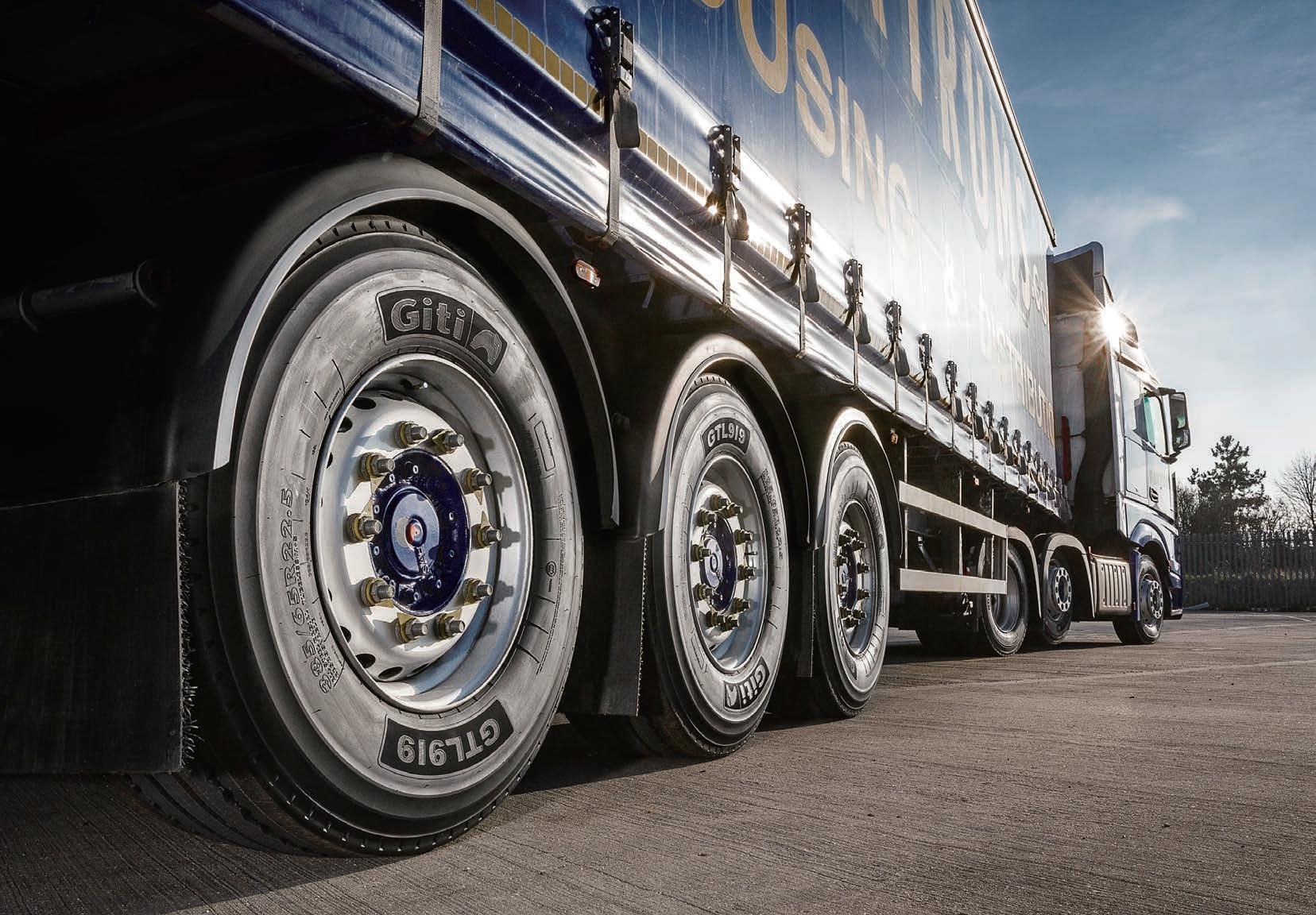
Trusted in over 130 countries and backed by
and fleets that demand
THE Queensland Trucking Association (QTA) has launched Think.Act.Drive, a free, industry led online program built to tackle the behaviours that influence truck drivers’ decisions on the road.
Designed as a series of short, scenario based quizzes, the initiative aims to improve safety outcomes by encouraging self reflection and reinforcing safer choices that reduce the risk of heavy vehicle incidents.
Accessible 24/7 at thinkactdrive.com.au, Think.Act.
Drive delivers bite sized modules that fit into drivers’ routines and operator training programs. Each module presents realistic, everyday driving scenarios – dealing with other motorists, managing distractions, choosing appropriate speeds and maintaining safe following distances – and prompts drivers to reflect on how their reactions shape outcomes. The program’s format is intentionally simple and practical: quick interactive quizzes, clear explanations of safer options, and repeatable content to support lasting behaviour change.
“Think.Act.Drive is a program for truck drivers to highlight how reactions to everyday experiences can impact the decisions they make on
can’t control other road users’ behaviours or decisions, so it’s critical we give our truck drivers the best possible knowledge and tools to keep themselves safe. This program is about recognising behaviour, not blame. It’s about understanding those moments that may influence driving choices and being able to make safer decisions in real time.”
The program aligns with key findings from the 2025 National Transport Accident Research Centre (NTARC)/ National Road Safety Partnership Program (NRSPP) report, which identifies human factors as the leading cause of major heavy vehicle crashes. That research singles out inat-
ry contributory behaviours –precisely the areas targeted by Think.Act.Drive’s modules.
Funded through the National Heavy Vehicle Regulator’s Heavy Vehicle Safety Initiative and supported by the Australian Government, Think. Act.Drive offers a credible, low cost tool for operators and drivers across Australia. Its online delivery removes barriers to access, enabling single drivers and large fleets alike to integrate the quizzes into toolbox talks, induction programs and ongoing professional development.
Practical by design, the quizzes use direct language and scenario outcomes to show why specific choices matter. The repeatable nature of the learning encourages drivers to move beyond awareness to adoption of safer habits. For operators looking to strengthen safety culture, the program provides a ready made resource to prompt discussion, identify risky behaviours and measure engagement over time.
QTA urges operators and drivers to try the free modules and make Think.Act.Drive part of their routine safety toolkit. “I encourage every operator and driver to try the free quizzes at thinkactdrive.
In an industry where split second decisions can determine outcomes for drivers and other road users, initiatives that focus on human factors and practical decision


Think.Act.Drive aims to contribute to fewer incidents, safer drivers and stronger safety cultures across the heavy vehicle sector.
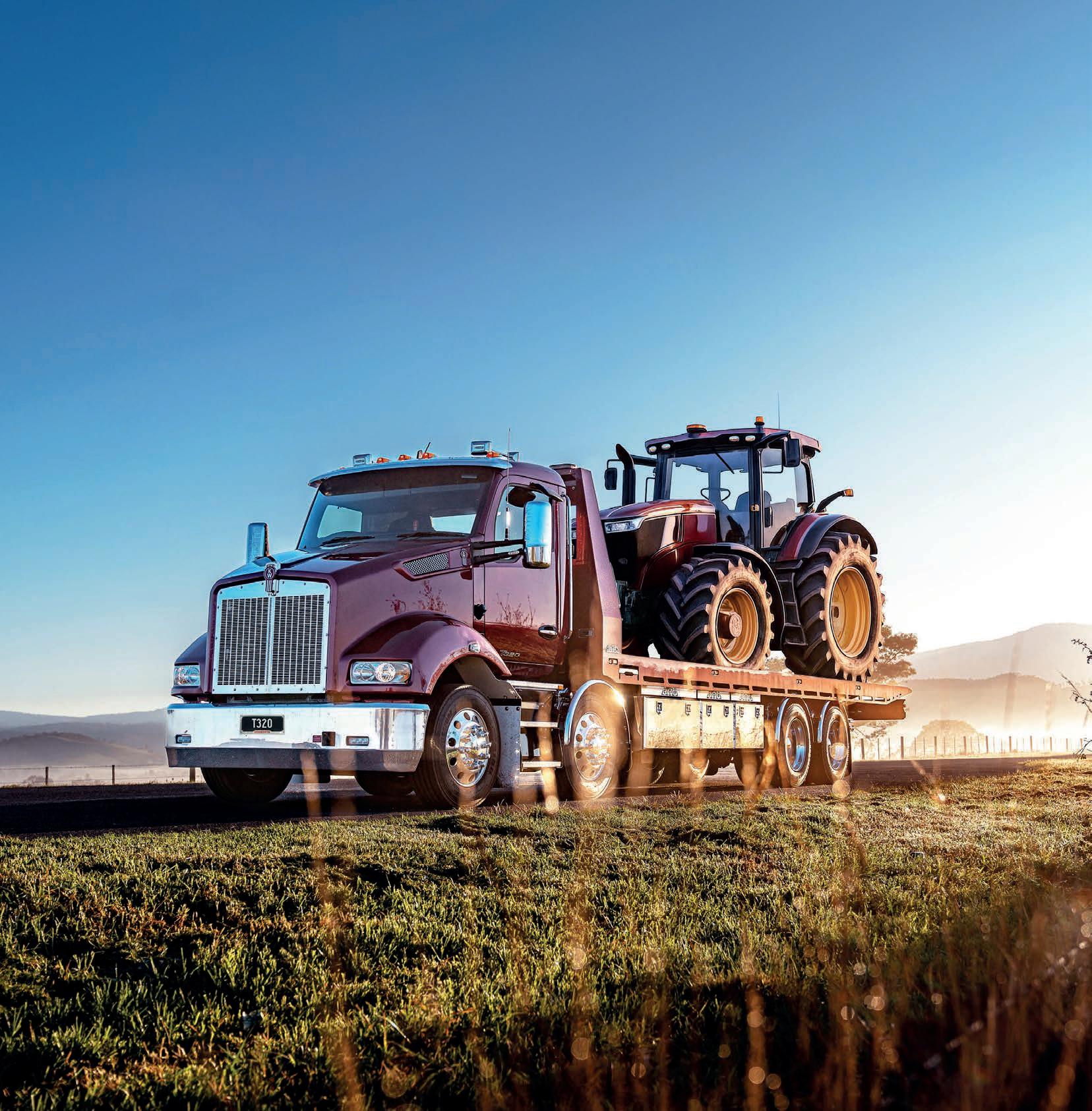

STRESS, anxiety and personal safety are three of the major issues impacting driver retention in the heavy vehicle industry. Truck Art has now introduced a new approach to tyre management to aid in managing these issues.
More focus on the road – Monitoring tyres at a glance Pressure on heavy vehicle drivers is enormous and monitoring tyre condition adds further to this stressful environment. Truck Art Group can now provide a tyre management system designed to significantly reduce the pressure on the driver and down time due to tyre related issues.
Linking the Vigia Automatic “tyre pressure management” systems to GPS is a game changer for drivers, workshop and fleet managers. The responsibility for t yre pressure management can now be shared across the office computer, mobile phone or through the vehicle onboard monitoring system. When combined with the system’s ability to isolate all tyres during a severe blowout, driver stress and fatigue are significantly reduced.
Sharing the load
Beyond automatic inflation, Vigia provides full connectivity and data visibility. Tyre pressure information, system events and vehicle data can
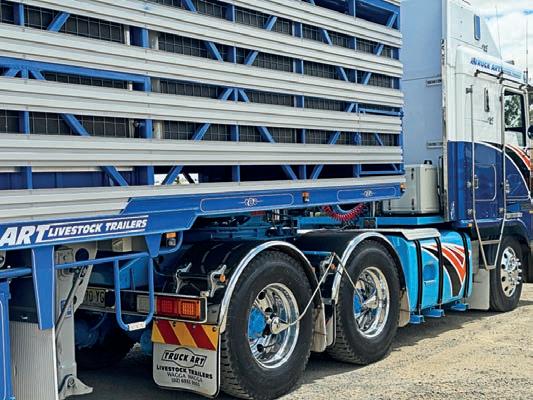
be transmitted to fleet management platforms in real time allowing operators to remotely monitor tyre conditions, receive alerts, analyse events and make data-driven maintenance decisions.
Safer vehicles, fewer unplanned stops
Monitoring vehicle tyres remotely allows office staff, workshop managers and business owners to plan ahead and address tyre issues, avoiding escalation, unplanned stops and downtime. A clear winner in the business’s driver fatigue management strategies.
Lower tyre costs, longer tyre life, fuel efficiency
As tyres are a major cost for all vehicles, operating with correct pressures is crucial to extending tyre life, maintaining safety and increasing f uel efficiency. Vigia’s automatic and autonomous tyre management systems have been proven to consistently extend tyre life by 20 per cent and reduce fuel usage by 5-8 per cent, representing significant savings. In addition, many Vigia users report that they no longer have to pay to have tyre pressures checked on weekends and in between trips. Another cost benefit of the Vigia tyre management systems.

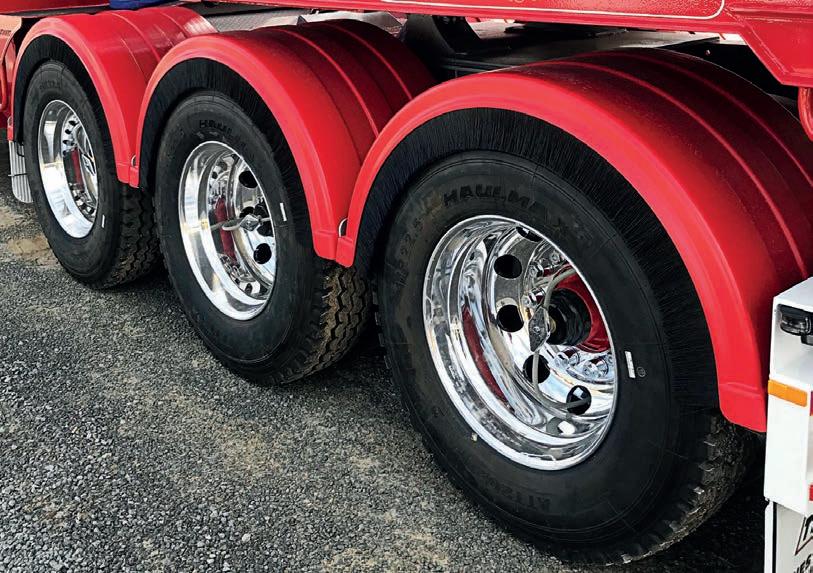
Tailored solutions for every application
Vigia caters to the differing transport and recreational needs, for example: prime movers, single to multi combination trailers, buses, off road caravans, horse floats and fourwheel drives.
• NM364 delivers real-time display of air tank and tyre pressures, colour graphics, touch screen interface, event memory and full compatibility with telematics and fleet management systems. Ideal
for linking trailers to office/ phone via GPS.
• NM464 inflate/deflate allows operators to select up to four preset pressure modes per circuit (loaded, half load, empty and emergency). Great for rough or muddy conditions and can be linked to the office or phone via GPS.
• NM247, a fully autonomous solution. Designed exclusively for trailers. Requires no electrical power, provides clear visual alerts to the driv-
er, ensuring 100 per cent automatic and safe tyre pressure control.
A competitive advantage for modern fleets
Vigia offers immediate value with improved safety, reduced tyre and fuel costs, fewer roadside incidents and full telematics integration via GPS. Operators focused on retaining drivers into the future will no longer consider automatic tyre inflation as an option. It’s a smart business move.
NO matter where you are in your working life, there are benefits to giving your super a little boost. But how do you know what the end goal should be and therefore, how much of a boost is needed?
In this article, our friends at Team Super look at average balances by age and how much you might need to retire.
A general rule of thumb is not to compare yourself to others, but when it comes to your super balance, comparison can be a very strong motivator. According to the Association of Superannuation Funds of Australia (ASFA), the mean super balance for a male aged between 40 to 44 years is about $108,0001. When you consider the current aged pension doesn’t kick in until 67 years and that a single person will need more than $54,2402 per year to live comfortably, the numbers speak for themselves. Check out the table below to see how your balance stacks up against others your age.
Team Super tip: Check out the Industry SuperFunds calculator at industrysuper.com
to see how much super you should have today to reach a comfortable retirement by age 67.
18 to 24 years$5,394$4,963
25 to 29 years$19,220$19,162
30 to 34 years
35 to 39 years
40 to 44 years
45 to 49 years
50 to 54 years
55 to 59 years
60 to 64 years
$41,268$36,016
$74,130$57,566
$108,344$79,445
$144,272$101,888
$177,194$122,150
$202,583$140,662
$219,773$163,218
65 to 69 years$217,954$199,006

How much money will you need Talk about a million-dollar question! There are lots of factors which influence what this magic number could be, such as what age you want to retire at, what sort of lifestyle you have or want to have, whether you own your home, or if you still have dependants. And of course, it also depends on whether you have any other assets outside of super and if you’re eligible to receive a (part) Age Pension. Generally, ASFA research2 suggests people will need the following balance for retirement at age 67. The balance needed for a modest lifestyle is relatively low, as it takes into consideration the Age Pension, as well as various pension supplements, and as a result both couples and singles would need the same savings. The balance required for a comfortable retirement assumes you’ll draw down on all your super and receive a part Age Pension.
How to boost your super If you want to grow your balance faster, there are a few ways to boost your super savings. It’s
also worthwhile to check if you have any lost super you’ve forgotten about, and think about combining your super if you have more than one account. You can also use online calculators or talk to your super fund to get general advice over the phone.
Already a member of Team Super?
You can view your balance and manage your account online. Simply grab your member number from your last statement and log in via teamsuper. com/login.
Not yet a member?
Learn about the benefits of joining Australia’s top specialist fund for transport, energy and mining.

1 Source: An update on superannuation account balances, ASFA, October 2025, page 7
2 Source: ASFA Retirement Standard, September quarter 2025 Team Super is Team Super Pty Ltd AFS licence 246864, the trustee for the Team Superannuation Fund. Refer to the PDS and TMDs on Team Super’s website at teamsuper.com when considering if their financial products are right for you. Any financial advice in this article does not take into account your financial situation, needs or objectives, and you should consider these factors before taking any action.






FOR the professional driver, a rig isn’t just a tool of the trade; it is a mobile office, a second home, and a rolling statement of pride.
We know that when you pull into a depot or roll through a weighbridge, you want your truck to look as professional as you are. That is why Lelox is proud to announce the expansion of our premium offering with a bold new lineup of mudguards that combine our legendary durability with aggressive new aesthetics.
We are excited to introduce a new range that is now available to the market. While standard smooth guards have served the industry well, we saw a demand for drivers who wanted to customise their set-up with something distinctive.
The result is the expansion of our acclaimed Signature Series, now featuring three exclusive, alternate groove patterns designed to catch the light and turn heads.
Signature Series range
The new range offers three distinct personalities for your truck:
• R acing Stripes: A sleek, dynamic design that implies speed and motion, perfect
for the driver who wants a modern, fast-paced look.
• The Foreman: A commanding pattern that exudes authority and structure, designed for the boss of the road.
• Wideboy: A broad, aggressive stance that maximises visual impact and road presence. These designs are exclusive to the Signature Series range, meaning you won’t find these specific groove patterns on just any run-of-the-mill guard.
Show-quality shine, heavy-duty strength
At Lelox, we believe that looking good shouldn’t mean sacrificing toughness. There is a reason these are part of the Signature Series. We haven’t just stamped a pattern into a piece of tin; we have engineered these guards to withstand the harsh realities of the Australian asphalt. Every guard in this new range is manufactured from premium 304 Grade Stainless Steel. This ensures superior corrosion resistance against road salts, grime, and the elements. Furthermore, we construct them to be robust and extra thick. Lelox guards are built to last the long haul.
However, the real showstopper is the finish. We uti-
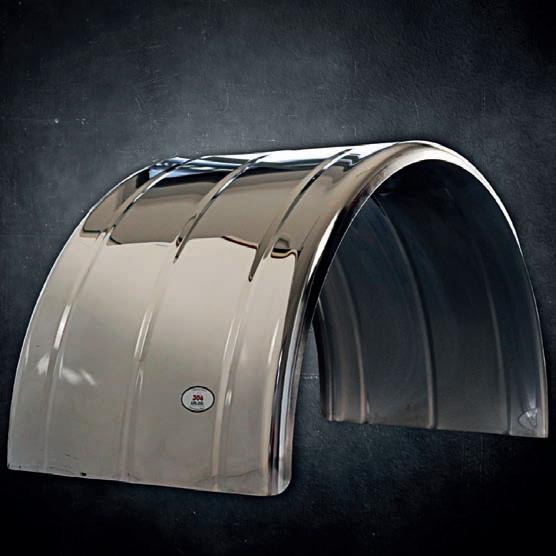
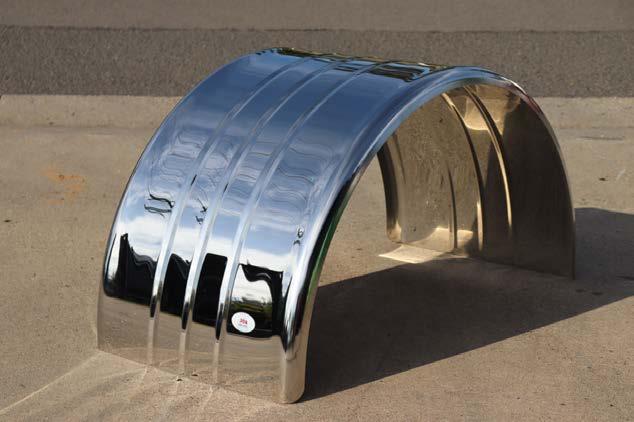
lise a True No. 8 Mirror Finish. This isn’t a dull polish; it is a flawless, reflective surface that offers a perfect shine for years. When you combine that high-grade mirror finish with the new groove patterns, the light refraction creates a visual depth that standard guards simply cannot match.
Upgrade your rig today W hether you are fitting out a brand new prime mover

or breathing new life into a trusty workhorse, these new guards offer the perfect blend of style and substance.
The new patterns – Racing Stripes, The Foreman and Wideboy – are now avail able for order. Check out our back-page ad in this issue to see the shine for yourself. Drive safe and keep it shiny. For orders and inquiries, call Lelox on 02 4577 2390 or email sales@lelox.com.
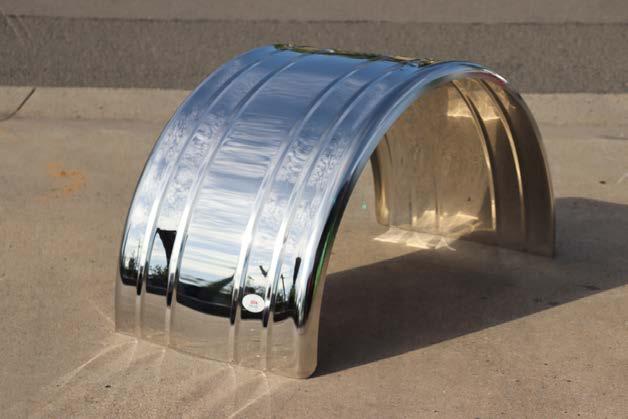


Did you know when you join NatRoad, you can get help to make managing your people easier?

NatRoad’s HR advisor helps our members with questions big and small – from wage rates and conditions to dealing with complicated staff issues. It’s just one of the benefi ts of NatRoad membership.


Join NatRoad today from just $26.95* per month to access expert advice, industry leading fuel, tyre, and roadside assistance discounts, plus partner offers, business resources and more.

Join online or call 1800 272 144 to become a member today.



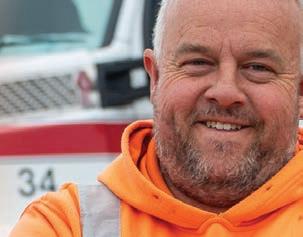


THERE’S a particular kind of satisfaction that comes with winning new work in transport. The fleet gets busier, the yard picks up pace and the effort you’ve put in starts showing up in volume. It’s what many operators are building toward.
Growth, though, has its own rhythm. Wages move straight away, fuel and maintenance follow, while client payments can take weeks. The business gets bigger overnight; the cash flow often takes its time catching up.
That’s not pressure. It’s expansion doing what expansion does.
As a fleet grows, the conversation shifts. It becomes less a
work and more about whether the business is structured to carry it properly. Volume alone doesn’t create stability; structure does.
In road freight, the gap between doing the job and getting paid for it is one of the biggest constraints on growth. You might be waiting up to three months after a job before cash comes in, while wages, fuel, insurance, rego and compliance costs continue on their own timetable. Even very profitable fleets can feel stretched when volumes increase quickly, simply because cash flow timing doesn’t always match operational momentum.
That’s where working capital
In an asset-heavy industry like transport, much of a business’s strength sits in outstanding customer invoices and equipment. On paper, the numbers can look solid, but unless that capital can be accessed when it’s needed, growth can stall at exactly the moment it should accelerate. Being asset-rich isn’t always the same as being agile, and agility is what allows operators to maintain momentum when opportunities start appearing.
Operators who treat their balance sheet as a working tool tend to move with more confidence. They look at how capital is structured, whether it aligns with contract cycles and whether they can respond quickly when a new lane opens

up or a customer increases volumes. That might mean bringing forward cash tied up in unpaid customer invoices or unlocking value sitting in owned assets to reinvest back into the business. None of that suggests something is wrong; it reflects a business that in tends to keep moving forward.
Market cycles also create openings for prepared opera tors. When conditions shift, equipment can come onto the market, competitors may retrench and new work can move unexpectedly. For fleets with capacity and liquidity, those moments are a chance to strengthen the business, improve efficiency or expand strategically. The ability to act decisively often comes down to whether capital is available at the right time.
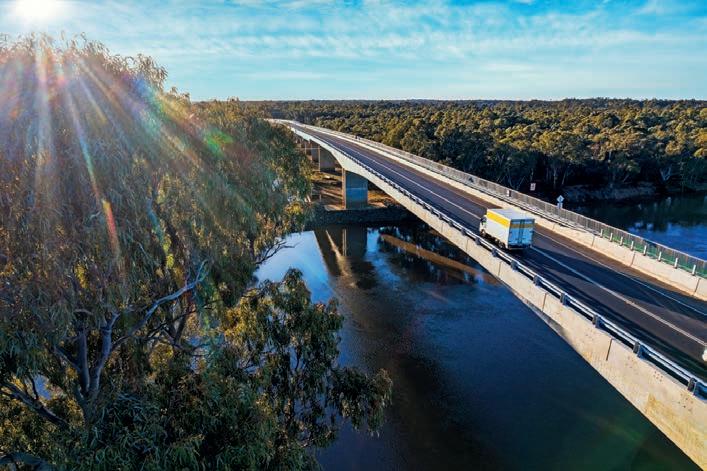
customers, rather than timing mismatches between invoices and expenses.
Working capital, used thoughtfully, creates options. It allows a fleet to mobilise quickly when a contract lands, absorb extended payment terms without strain and invest in equipment without unsettling day-to-day operations. It also provides something less tangible but just as important: confidence. Confidence to negotiate, to invest in staff and to focus on performance rather than constantly watching the calendar for customer payments to clear.
Growth should be exciting, not stressful. The right capital structure allows operators to focus on performance and
Many successful transport operators are using strategic working capital solutions like Invoice Finance, bringing forward cash tied up in unpaid customer invoices so they don’t have to wait 60 days to access money they’ve already earned. It keeps wages, fuel and suppliers moving in step with the work being done.
Alongside that, Equipment Finance supports growth in three practical ways, funding new or used trucks and trailers, refinancing existing equipment mid-term to better match the current size of the fleet, or unlocking capital from existing assets to release
value already sitting on the balance sheet and put it back to work.
The strongest transport businesses don’t wait for momentum to expose structural gaps. They plan ahead and make sure the way they’re funded keeps pace with the way they operate.
In transport, growth will continue to present itself through new freight demand, shifting supply chains and changing customer expectations. The question isn’t whether opportunity will knock, it’s whether you’re backed to answer it.
To learn more about working capital solutions, visit earlypay.com.au/transport.
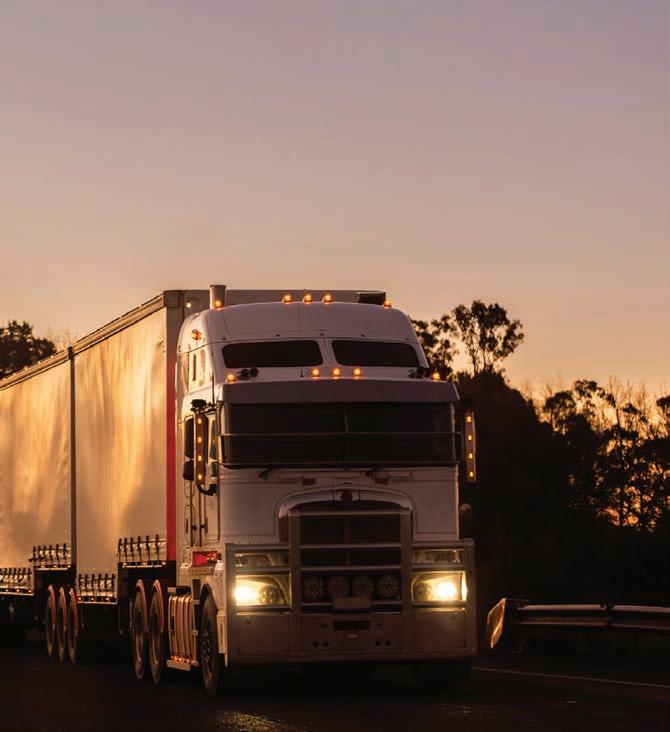


ENFORCEMENT officers
have been extremely active pulling trucks over at a rest area between Holbrook and Albury in NSW.
“I have been past there several times in the past week and saw police and what looked like inspectors stopping traffic in big numbers,” a NSW truckie said.
A regular traveller on the 60km stretch, he said they had never frequented there in such numbers.
Another complained about the heavy vehicle inspection station at Marulan along the Hume.
But truckies expect to be pulled over there as it is operational all the time on both sides of the highway.
Roadhouse hopping in the NT
Many drivers who were held up by bad weather along the Barkly, Stuart and Carpentaria Highways in the Northern Territory had to “roadhouse hop” when they could.
Spy spoke to several who had stopped at the popular Three Ways Roadhouse which sits at the junction of the Stuart Highway and Barkly Highway, about 25km north of Tennant Creek.
“I stayed there a while and then headed off and ended up at the Hi-Way Inn Daly Waters Roadhouse which is about 380km away,” one said.
Several of the lads were stuck there for more than a day as the nearby linking Carpentaria Highway was closed.
“I had a meal of crumbed steak, chips, salad and gravy for $28 which was good value.
I couldn’t eat it all,” a Mount Isa driver said.
However boredom was a problem for some drivers stuck there.
“I just went for walks and kept checking my mobile phone to see when the highway would reopen,” another said.
There are lots of roadworks along the highways in dry weather.
But with creeks rising and stopping traffic and then subsiding, drivers had to carefully check what sections were open.
Spy heard that trucks transporting cars were not allowed on some sections for fear that splashing water may damage
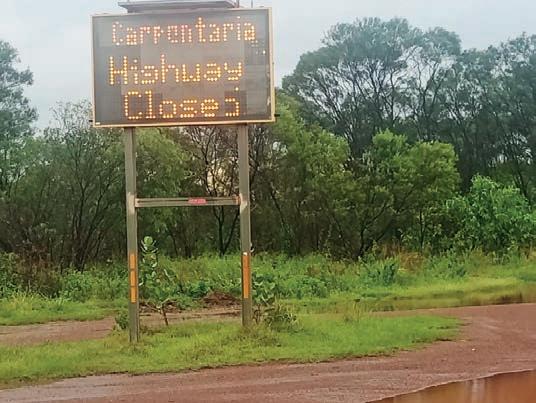
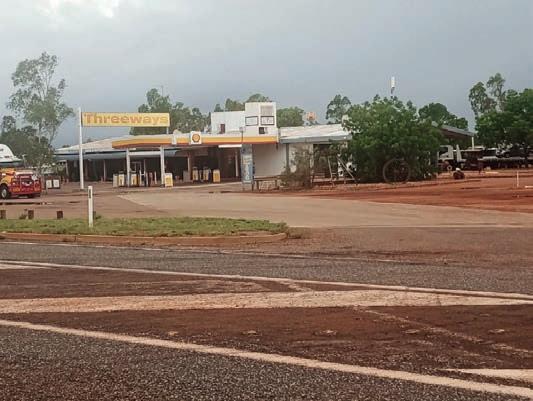
the expensive loads.
Bringing home the bacon
When a NSW driver told Spy he had a change of career and had become a livestock carrier I obviously thought he was talking about cattle.
This driver aged in his thirties had carted general freight for many years.
“I have just started a new job transporting pigs in NSW and Victoria,” he said.
One recent job involved delivering 320 pigs from Albury to Melbourne in a B-double.
“They were baconers and will end up on plates around the country,” he said.
He also delivered 840 wieners, which are very small pigs, from Albury to various farms in the region.
“They will be fattened up and later on sold to abattoirs,” he added.
Whilst the driver said he loved his new job, he said the pay was a bit less than before.
“But that doesn’t matter because I am at home on weekends,” he said.
dog” events at places like Clermont and Richmond in Queensland.
Hunters would bring feral pigs caught in the wild game chillers.
From there they would be dressed and sent to establishments which sold the meat and other parts for salami and other food.
Spy has extensive experience doing stories and pics about truck drivers who haul pigs.
For many years I covered drivers who would transport the dressed carcasses of large pigs. One who comes to mind was a driver named Doug Freese who was at the Clermont event in 2007.
Doug and his assistant Steve Collins loaded the dressed pigs into the refrigerated trailer behind a Kenworth for transportation to southern markets.
I have no idea where Doug is these days but would like to contact him if he sees this.
Tasmanian Midland upgrade update

one last year. So I reluctantly had to decline. But I was flattered to be honest.”
These days he keeps active daily by taking his dogs to a designated park in his country town.
But he did have a final say on the job offer and that involved his wife.
“She would have been glad to get rid of me for a month but not permanently,” he quipped with a laugh.
Meat price rise predicted
Several respected livestock carriers have told Spy they expect meat prices around the country to rise after stock losses in atural disasters.
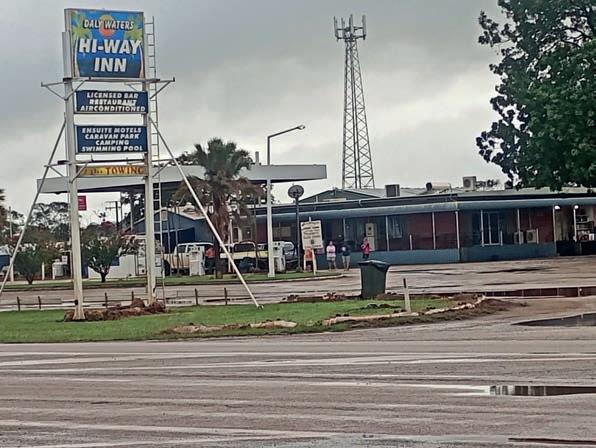
Town. Tenders were called for Section B last November and the upgrade will continue from there for 9.8km to Campbell Town.
The town centres of Campbell Town, Cleveland and Epping Forest will not be upgraded as part of this project due to their reduced speed limits, heritage restrictions and the proximity of buildings to the highway.
Works will include road widening, junction improvement, extending sealed shoulders, additional overtaking lanes, and installing a flexible safety barrier.
Construction for Part B is expected to start in March 2026.
Hotel heaven for drivers
The Mayfair Hotel at Emerald in Queensland has been receiving lots of good reports from truckies who have stopped there.
hampton. It is a major service centre for the region’s extensive agricultural and mining industries.
Pothole
Numerous drivers have contacted Spy with concerns over the number of potholes along the highway between Wodonga and Cobram.
One NSW lad said some of them were so big that damage to tyres and suspension was a real possibility if you drove on one.
“It is hard to miss them and as soon as they fill them in they re-appear,” he said.
That section of the highway is around 125km long and gets busy with trucks and other traffic.
An estimated 100,000 cattle were lost during flooding in the far north and west.
Also an undeterminable number perished during bushfires in the south.
There is a general shortage of stock being carried and what is available is in high demand by meatworks and for ive export,” he said.
Another operator said graziers can get a good price for hat is available.
“I would think meat prices will skyrocket in the next onth,” another said.
Spy hopes he is wrong.
Heat is on at Renmark
The temperature at Renmark, South Australia, reached a burning 46 degrees recently and a long time driver told Spy it affected some truck deliveries there.
“It was so bloody hot that some drivers decided to wait for a few hours before making deliveries, often in the sun. They stayed in their truck cabins with the air-conditioning on,” he said.
Renmark is in South Australia’s rural Riverland area, located 254km northeast of Adelaide, on the banks of the Murray River.
The Sturt Highway between Adelaide and Sydney runs through the town.
Fortunately, the heat eased in the following days, hovering around an average of 29 degrees.
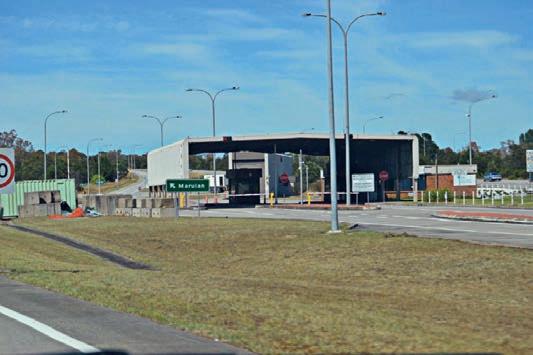
se were after “hog and
Work is expected to commence soon on Part B of the upgrade of Tasmania’s Midland Highway between Campbell Town and Epping Forest.
This is part of the 10-year Midland Highway Action Plan which commenced in 2015 and is being funded by the Federal and Tasmanian governments.
The Midlands is about 190km long and runs between Tasmania’s two biggest cities, Hobart and Launceston.
Section A was completed in 2024 and was along a 10km section from Epping Forest where there is a popular roadhouse towards Campbell
Whilst there is no major parking outside for road trains, drivers can park at the nearby roadhouse and get a ride on the hotel courtesy bus.
“I was stuck around Emerald for two days and just phoned the hotel and was picked up in their bus. The food at the Mayfair was excellent, the staff friendly and the drinks cold,” one WA driver said.
Another said he fuelled up at the roadhouse, had a shower there and caught a taxi to the Mayfair.
“It was a great place and I got to yarn to many other truckies who were there,” another said.
It is just 2km from Emerald in the Central Highlands region of the sunshine state, about 270km west of Rock-
Another driver told Spy that some unknown person or persons had drawn “the private parts of a male’s anatomy” around one of the biggest potholes.
Being a family paper readers will get the drift of how that would have looked.
“At least it will force authorities to check it out and hopefully do something about it,” he said.
Job offer at 87
A South Australian was offered a job driving trucks in the Northern Territory at the ripe old age of 87.
Spy spoke to the gent who was honoured to receive the offer in his twilight years.
“I had worked up there before driving trucks and still am very active and healthy for my age,” he said.
“I still have my car driver’s licence but handed in my truck
Heat shuts down fridges
On the subject of the hot weather affecting many parts of the country, it is causing problems for some truckies carrying refrigerated goods.
Spy has been told of fridges on trailers shutting down because of the heat.
“The temperature reached 47 degrees at places near the Victoria and NSW border and my fridge overheated after its motor shut down,” one driver said.
So he pulled over at a rest area and parked up for a while and restarted the fridge which worked.
“I was carrying produce and the temperature didn’t get below 15 degrees so I didn’t lose anything,” he said.
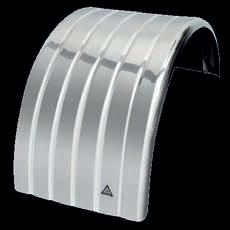

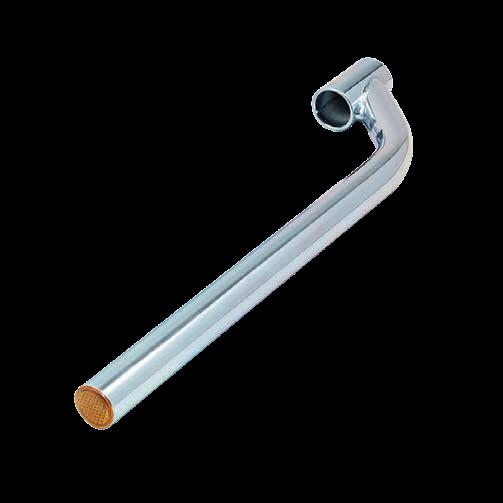
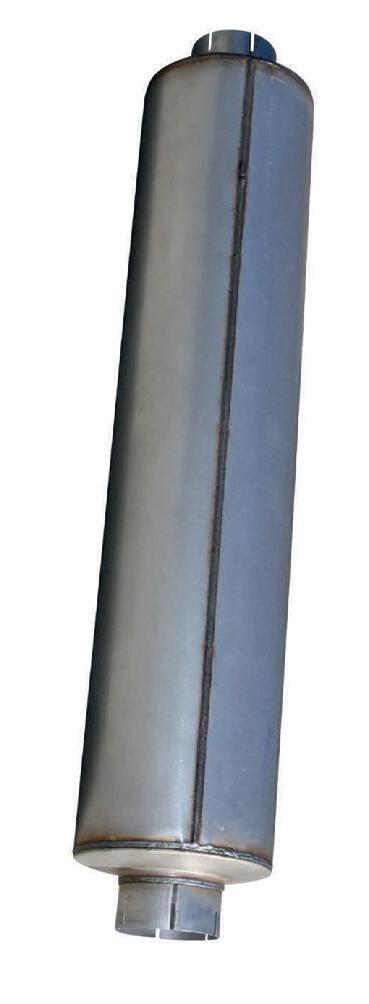


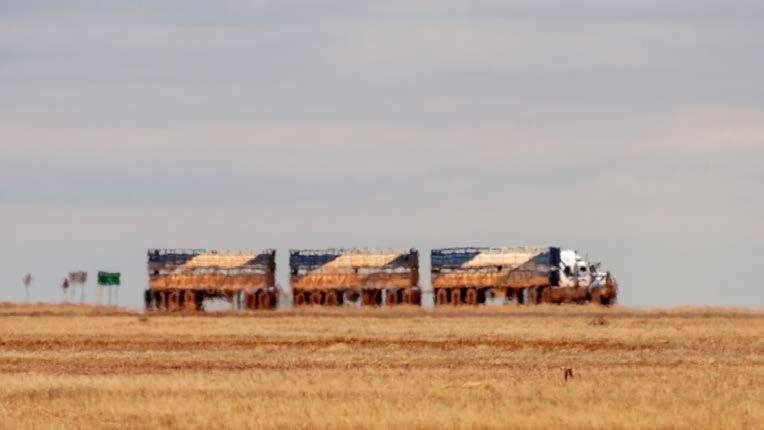

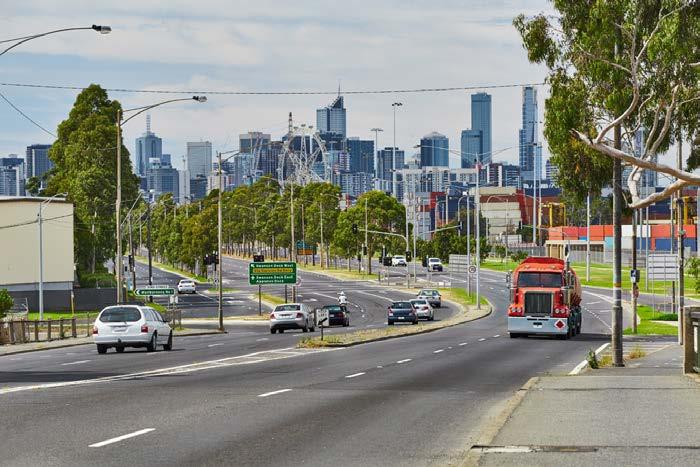
BASED in Benalla in northeast Victoria, Mick Strobel has been driving trucks for around three and a half years and is steadily building industry experience.
Most recently he’s been driving for Zuydam Transport, a local family-owned operator, doing a wide mix of work.
Like many drivers, Mick’s interest in trucking started young. He was always fascinated by big trucks and machinery, with his dad spending time around trucks and an uncle working at Kenworth. That early exposure stuck, and eventually he decided to get behind the wheel himself.
These days, no two weeks
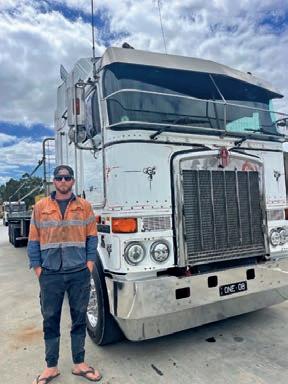
with seeing new places and meeting people across the industry.
One of the toughest parts of trucking, he says, is simply getting a start and finding employers who genuinely look after their equipment and their drivers, something that can take time when you’re new to the game.
next he could be helping move equipment as part of a certs or events. The variety is omething he enjoys, along
Most of Mick’s driving so far has been along the Hume Highway, a run he’s come to know well, and he says there’s plenty of good scenery once you get further north.
When it’s time to pull up, he rates a few stops around Gundagai, particularly the BP, which he says is always a re-
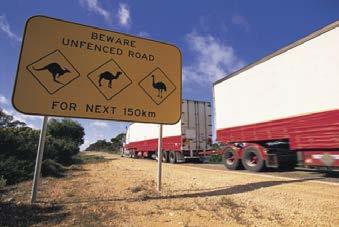
liable place for a decent meal. W hat keeps him coming back to trucking is the sense of freedom. Compared to factory or warehouse work, being on the road feels different & less repetitive, more open, and more rewarding.
Looking ahead, Mick hopes to keep learning from experienced drivers around him and eventually step up into doubles and road trains as his experience grows.
When asked about industry concerns, Mick points to the increasing pressure on operators. Customers want freight delivered faster and cheaper, often below sustainable rates, and that pressure flows down

through the chain. He believes it contributes to companies struggling to stay profitable and, at times, to accidents when people are pushed too hard.
His advice for new drivers is straightforward: don’t assume you know everything. Be willing to listen, take constructive criticism, and learn from drivers who’ve been around the block.
Outside of work, Mick enjoys tinkering with cars and motorcycles, in fact, anything with an engine tends to grab his attention. Like many truckies, he’s happiest when he’s building, fixing, or driving something mechanical.
has been driving trucks for around four years and is already well and truly enjoying the industry. He currently drives for Bradys Transport, hauling precast concrete, work that keeps him busy and moving between sites.
Ben’s introduction to trucking came early. Grow-
ing up around neighbours ho drove log trucks, he was
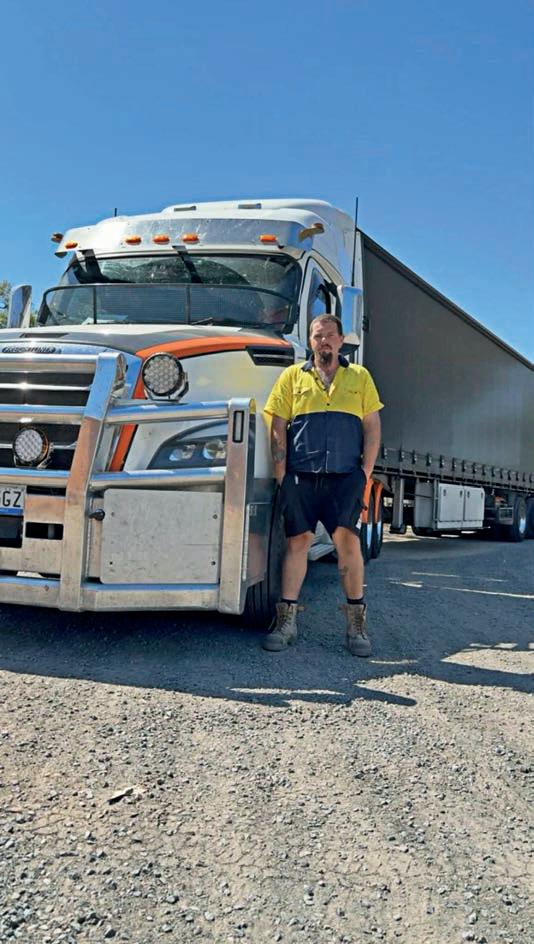
nce he got the chance to get behind the wheel him self, that was it, he knew it was what he wanted to do.
What Ben enjoys most about the job is simple: being behind the wheel. Like many drivers, it’s the time
on the road and the satisfaction of the work that keep him coming back each day.
Looking ahead, Ben already has a project on the go. He’s currently fixing up his own truck, an older K125, something he enjoys working on in his spare time and learning more about as he goes.
When it comes to indus-
try concerns, Ben points to lack of concentration on the roads as a growing issue. With newer trucks becoming more automated and drivers relying more on technology, he believes staying switched on behind the wheel is more important than ever.
His advice for anyone starting out in trucking is

YOUNG driver Harrison
Crane proved to be a cool character when called on to deliver a large drinks fridge to a packed café during peak hour business.
Harrison, 27, works for PFM
Logistics at the Townsville depot and answered an SOS to deliver the fridge to the busy
Coffee at Tiffany’s Café in the city.
He pulled up in the Sitrak truck along with offsider Dillon Galvin at around 10.30am.
More than 50 customers dining at the time and there was little space between tables.
Big Rigs was there and heard numerous customers and staff
saying it would be difficult to get the fridge in. One quipped it would be a “mission impossible”.
Harrison came in with a trolley and soon had the old fridge ready for exit without any disruption to customers.
Then with assistance from an employee of Coca-Cola (the
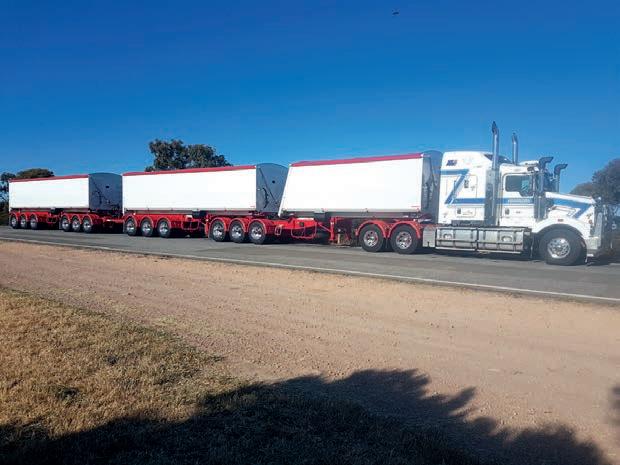
fridge owner), they set up the new fridge.
The entire delivery took about 30 minutes and then Harrison and Dillon drove off.
I could hear customers praising them for the efficiency in what was a difficult task.
PFM has 13 depots around
Australia but the Townsville one has just three employees, Harrison, Dillon and manager John Galvin.
“The lads travel as far away as Mackay and Moranbah and Harrison has been with us for two years,” John said.
The company also carries sensitive freight.
straightforward: listen and learn from everyone. Every driver does things a little differently, and there’s always something to pick up if you’re willing to take advice, says Ben. Outside of work, any spare time is usually spent working on his own project truck a nd enjoying anything mechanical.

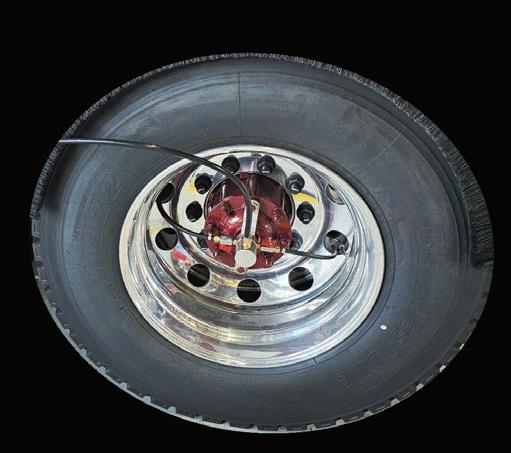


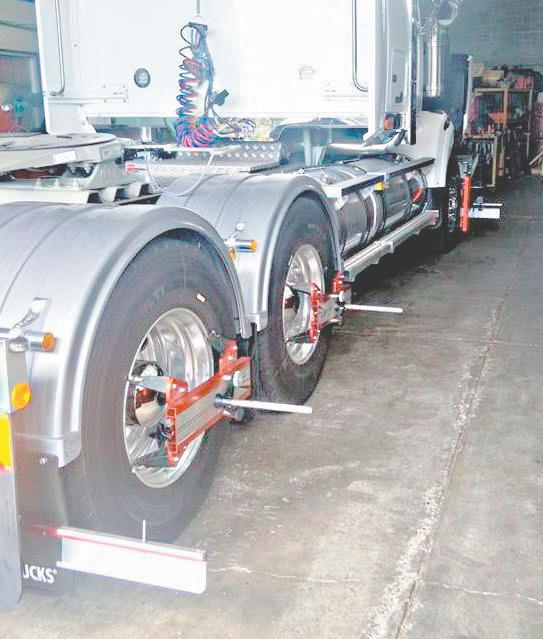



A safe and productive heavy vehicle industry is at the core of what we strive for at the National Heavy Vehicle Regulator (NHVR). One of the ways we prioritise this is by collaborating with industry to achieve better outcomes.
The Heavy Vehicle Safety Initiative (HVSI) is a program that empowers industry-led solutions, which enable innovation and improvement across Australia’s heavy vehicle sector.
To date, the Australian Government has invested more than $45 million across 181 HVSI projects since the program first started in 2016.
Submissions for Round 11 of the HVSI are now open,
and with an increased focus on future-ready solutions, the program will fund projects that deliver safer, smarter, and more sustainable outcomes for Australia’s heavy vehicle industry and road users.
Australia’s freight and logistics sectors are rapidly transforming, with electrification, automation and data driving pressure across the industry to evolve. Technology will continue to be a main driver of change for various industries, and it’s imperative safety evolves at the same pace. At the same time, the operating environment is becoming more complex. Mixed traffic conditions, urban densification, micromobility, new vehicle types and evolving infrastructure all present fresh safety considerations for industry, road managers and regulators alike.
The ultimate objective of this program is long-term transformation. Funded projects are expected to contribute knowledge, tools, frameworks or evidence that can influ-
ence industry practice beyond the life of the project itself. Emerging safety risks mean new opportunities to test, validate and de-risk innovation in real-world environments.
The program encourages forward-looking, scalable initiatives in Round 11 to ensure projects are ready for real-world application, so outcomes extend beyond individual projects. Shifting from reactive to predictive safety management with the use of analytics, modelling simulation and real-time data are things the program is looking for to inform longterm planning.
Organisations across Australia - from industry associations and local councils to innovators, researchers and businesses - are encouraged to bring forward bold, innovative ideas which address safety challenges and make a lasting difference on our roads.
Collaboration is the bridge between innovation and industry capability and by bringing together diverse perspectives, expertise and experience,
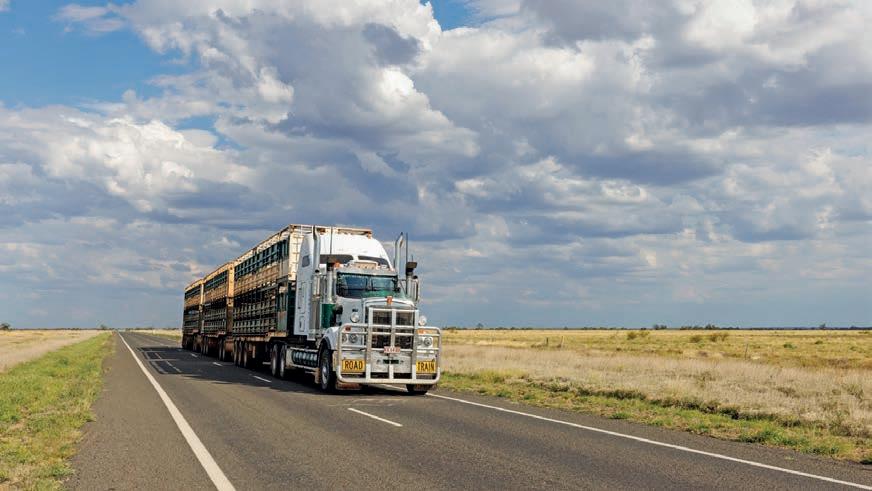
we can turn forward thinking ideas into practical solutions which improve freight safety outcomes.
I encourage anyone wanting to help shape the future of freight safety in a collaborative way to share their best ideas and work collectively toward solutions that are innovative and achievable. Submissions for Round 11 will close at 5pm (AEST) on March 16. Delivering lasting change and more resilient outcomes will be beneficial for all Australian road users, and we look forward to sharing the successful applicants once submissions are reviewed.
The application form and project guidelines can be viewed on the NHVR website (search HVSI), which outlines the submission process and eligibility.
For any enquiries on HVSI, please contact grants@nhvr. gov.au.

SHAM contracting isn’t a fringe issue in road transport; it’s a systemic problem that’s distorting competition, undercutting honest operators and putting drivers at risk.
Across Australia, some operators are engaging drivers as “independent contractors” under an ABN, while treating them like employees in practice. The practice is unlawful, and it can hand those who do it a 20–30 per cent cost advantage over businesses doing the right thing.
The damage goes well beyond the balance sheet
W hen drivers engage in sham arrangements, they often carry the risks without the protections. Some end up working excessive hours to stay a float. Others operate under financial pressure that can affect maintenance decisions and safety standards. Meanwhile, compliant operators who pay properly, meet their obligations and maintain safe equipment are squeezed by artificially low rates. Over time, this drives experienced operators and skilled drivers out of the industry. It also places downward pressure on rates across the board, devalues the work of professional drivers and erodes safety outcomes for everyone who shares the road.
A growing enforcement gap
One of the most concerning aspects of sham contracting is how difficult it c an be to detect and enforce against.
The se arrangements are often structured to look legitimate on paper. Audits are limited, investigations can be complex, and penalties do not always deter repeat offenders. The result is a d angerous message to the market: non-compliance can be more profitable than compliance.
Once that perception takes hold, it spreads. Law-abiding operators are forced to compete against businesses that cut corners, and the playing field tilts further out of balance.
What needs to change
NatRoad is calling on the federal government to take stronger action to address sham contracting in transport, including:
• Conducting targeted and comprehensive audits of high-risk operators.
• Introducing personal liability for company directors involved in sham arrangements.
• Excluding non-compliant businesses from government contracts.
• Strengthening whistleblower protections and properly following up on reports.
• Adequately resourcing the Shadow Economy Taskforce, with transport treated as a priority sector.
Transport is critical to Australia’s economy. It deserves a
regulatory environment that rewards those who comply, not those who exploit loopholes.
What owner-drivers and small operators can do
While stronger enforcement is essential, there are practical steps drivers and small businesses can take now:
• Review your agreements: Make sure your contracts genuinely reflect an independent contracting relationship and comply with workplace law.
• Keep thorough records: Track hours worked, payments received, maintenance schedules and safety checks. Good documentation can be vital if questions arise.
• Report concerns safely: Sus-
pected sham contracting can be reported confidentially to the Fair Work Ombudsman or via the ATO’s tip-off hotline.
• Be selective about contracts: If an arrangement compromises safety or appears designed to avoid legal obligations, think carefully before signing. An ABN provides flexibility - it should not expose you to exploitation.
• Stay informed. Employment law and compliance obligations evolve. Keeping up to date protects both your livelihood and your reputation. Sham contracting undermines fair competition, weakens safety standards and erodes trust in our industry. Government and industry must work together to restore a level playing field.

(7)


With over 30 years of experience in the Bullbar and Bumper Bar industry, we design bullbars that are technically more advanced than others on the market that can result in them being 25% stronger. We design our bars not only from our many years of experien ce but from customer and operator feedback, so that we can supply the industry with ultimate Bullbars, designed for safety, strength, aesthetics, and performance


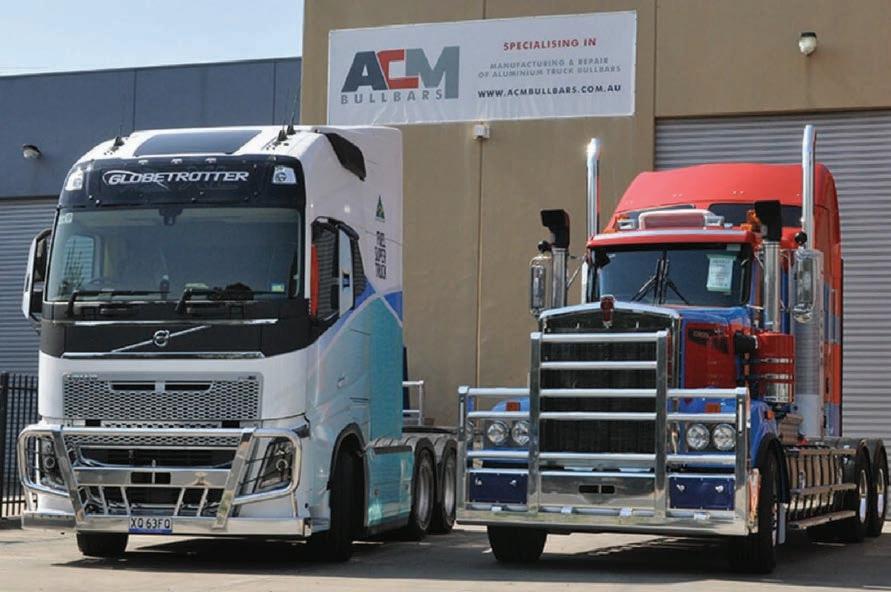
ACM BULLBARS SPECIALISE IN NEW BULLBARS, REPAIRS AND FITTING.
With over 30 years of experience in the
and Bumper Bar industry, we design bullbars
and
and

SCANIA Victoria’s Dandenong Top Team has progressed to the World Finals, after securing one of the two available spots at the Asia/ Oceania Regional Finals in Bangkok on Saturday, January 31.
The team, comprising Captain Chris Chilver, assisted by Danny Manak, Bede Hutchinson, Frank Jurinec and Kaelan Johnston, were challenged by rival Scania national winners from six other Asian countries, undertaking fault finding and other technical challenges against the clock.
The Dandenong team will travel to Sweden later this year to compete against 11 other regional winners, including a team from China, the second Asian regional winner in Bangkok.
In the Bangkok round, Team Dandenong took on teams from Thailand, China, Indonesia, Japan, Malaysia and the Philippines.
“Reaching the World Finals is a great success for us,” said Manfred Streit, Managing Director of Scania Australia, who watched the competition from the sidelines. “I am immensely proud that our team will be going to Sweden. It is wonderful recognition for our talented team within the Asian region.
“The Dandenong Team put a lot of hard work into honing their skills and improving their knowledge and drew on many decades of experience in order to achieve this result, guided, supported and well-prepared by their coach, Neil Henderson, and the Australian Top Team Coordina-

“Top Team is such an out standing competition, unique to Scania, which underlines our people-centric philosophy, valuing those who continually support our customers’ uptime.”
Team Dandenong Captain Chris Chilver has previous Top Team experience, narrowly missing out in Bang-
kok at the previous Regional Finals, but making sure of a berth in the World Finals this time.
“We went into this event a lot more confident and more prepared because we knew what we were dealing with after competing in the 2023 Regionals,” Chilver said.
“We spent a lot of time practicing, focusing primarily on teamwork and communica-
tion, which is ultimately what got us over the line. None of it would have been possible without the support of our coaches Neil and Jason.”
Liz Mistretta, Branch Manager at Scania Dandenong, added, “I’m incredibly proud of the team for their outstanding performance in winning a finals berth at the Top Team Regionals in Bangkok.
“Their focus, teamwork, and commitment secured an exceptional achievement that clearly demonstrates the expertise they bring every day in supporting our customers. This reinforces the high standards we uphold as a branch and reflects the premium level of service our customers expect from Scania.”
Scania Victoria Dealer Director Alan Hugo commented on the long-term benefit
for customers from the peak performance of the Dandenong team.
“In an environment with tough market conditions, where hyper competition is rife, it is essential for our customers to reduce the costs and risks associated with unplanned downtime. With one of the very best teams in the Scania world conducting routine and preventative maintenance and repairs on their vehicles, our customers benefit from the additional peace-of-mind that their vehicles are in the hands of proven experts. Team Dandenong epitomises the Scania philosophy of delivering dependability and reliability, allowing our customers to maximise the profitability of their fleet and operation through unbeatable uptime.”
PEAK road freight body, Transport Women Australia Limited (TWAL), is calling for nominations for its 2026 Driving the Difference Scholarship.
The scholarships provide unique opportunities for women working in – or aspiring to join – the transport and logistics industry to advance their careers through education and professional development.
Backed by Daimler Truck Australia Pacific and de livered by TWAL, the program supports women to undertake study that strengthens their current role, expands their skills, or opens the door to a future career in transport and lo gistics.
A pplications close on March 30, with the success ful recipients announced at




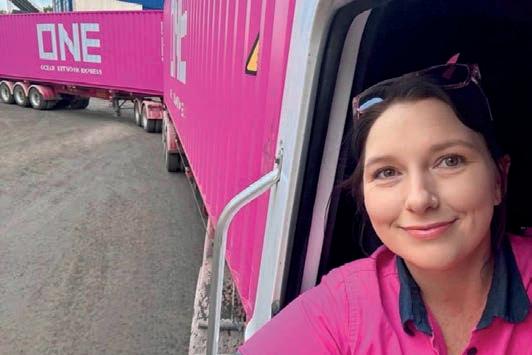

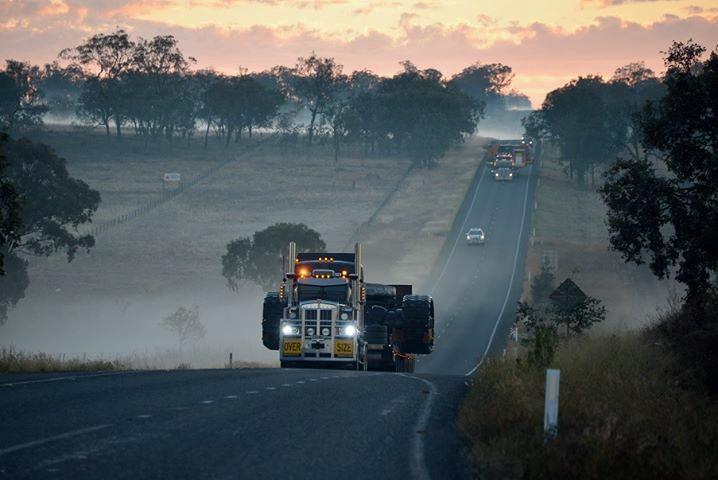











As
BY DANIELLE GULLACI
BILLY York, 34, says he has had a passion for engines for as long as he can remember. So, after returning home from time spent travelling, he decided a few years ago to bite the bullet and enrol with TAFE NSW as a mature-age apprentice.
“I took a job years ago when I was about 19 or 20 in the same sort of field and just fell in love with it. That’s what sparked the interest in taking it further,” said Billy.
“When the opportunity came around to study a heavy vehicle apprenticeship, I thought why not jump on it? It’s a good career and I love doing it. I love fixing things, I enjoy a challenge and what better challenge than working on big rigs.
“I remember dad telling me when I was young that if you can find a job you love, you’ll never work a day in your life.”
Billy is now almost fully qualified, working as a fourthyear apprentice at Coffs Harbour Hardwoods, a diverse hardwood processor that’s been going since 1961.
The company has two of its
would rather learn more about all the makes, than everything about one.
“I’m always working on something different. It’s different day to day. There’s the newer equipment and the older stuff, so you get a bit of both worlds. We work on everything from the trucks through to the company cars,” said Billy.
knowledge through my apprenticeship, but in who I am as a person.”
Through his training, Billy has developed skills across all areas of the trade, and is passionate about passing every challenge he encounters.
Billy’s goal after completing his apprenticeship is to continue building his qualifications.
own sawmills, a board plant and treatment centre, along with doing much of its own transport.
As a result, the role in the company’s workshop is diverse, seeing Billy work on everything from prime movers and rigids, to forklifts, loaders and excavators.
“The company does a bit of everything. We transport our own timber, cart our own stuff and only work on our own equipment,” Billy added.
The truck fleet is equally diverse, running Kenworths, Scanias and Western Stars, and Billy enjoys the variety. “I
Though Billy finds working on the older equipment the most rewarding. “With a lot of the newer equipment, you can plug it into the computer to diagnose the fault. I like the old school mechanical stuff best, where you need to work the issues out for yourself and be more hands on,” he said.
“To be able to look at something when I’m finished working on it and say I did that provides a real sense of accomplishment.”
Learning to diagnose an engine fault is a major part of the apprenticeship. “It’s a bit like tackling life’s challenges – identify the issue, trace it back to the cause, and work through a solution,” he added. “I think my biggest achievement has been self-growth, not only in my mechanical
“I plan to gain a second trade as a plant mechanic and maybe even complete my light vehicle qualification as well. Within the next 10 years, I would like to be running my own business and sharing my knowledge by teaching others,” he said.
Rise in apprenticeship and traineeship uptake
With National Apprenticeship Week this year being held from February 9-15, newly released national data shows long-term growth in apprenticeships and traineeships across Australia.
This data covers apprenticeships and traineeships from 1963 to 2025, offering a long-term view of how Australia’s training system has grown and changed over time.
According to the National Centre for Vocational Education Research (NCVER), total apprenticeship and trainee commencements in Australia increased from 22,600 in the early 1960s to 133,300 in 2025, more than quadrupling over six decades.
Today, more than 300,000 Australians are in training as apprentices or trainees, with the in-training workforce in NSW increasing from 33,435 in 1969 to 90,032 in 2025 – almost a three-fold increase.
NCVER reports a marked shift in the age profile of people starting apprenticeships. Last year, around 39,895 people aged 25 and over commenced an apprenticeship, compared with just over 5339 in 1995.
Automotive and engineering trade commencements more than doubled over six decades, rising from 9406 in the early 1960s to 19,982 in 2025.