




Address: 379 Docklands Drive, Docklands VIC 3008
Phone: 03 9690 8766
Email: editor@bigrigs.com.au
Web: bigrigs.com.au
Accounts: 03 9690 8766
Subscriptions: 03 9690 8766
Classifieds: 0403 626 353
Circulation and distribution
queries: 03 9690 8766
info@bigrigs.com.au
EDITOR
James Graham: 0478 546 462
james.graham@primecreative.com.au
SENIOR REPORTER
Danielle Gullaci 0478 844 797
danielle.gullaci@primecreative.com.au
DESIGN Alejandro Molano – Art Director
Daz Woolley – Art Director
GENERAL MANAGER
Peter Hockings: 0410 334 371 peter.hockings@primecreative.com.au
BUSINESS DEVELOPMENT
MANAGER
Treena Heit: 0403 626 353
treena.heit@primecreative.com.au
CLIENT SUCCESS MANAGER
Katharine Causer: 0423 055 787
katharine.causer@primecreative.com.au
CONTRIBUTORS
Truckin in the Topics/Spy on the Road: Alf Wilson, 0408 009 301
David Vile, Graham Harsant, Geoff Middleton, Tim Oakes and Jonathan Wallis.
Big Rigs National Road Transport Newspaper is published by Prime Creative Media. It is the largest circulated fortnightly truck publication in Australia with 22,500 copies per fortnight.
*Average circulation per issue in 2025
A truck driver is being praised for their quick-thinking actions, when the triple road train they were driving – carrying diesel – became engulfed in flames.
The incident occurred on Sunday January 25 at 9.48am, around 45 kilometres north east of the Roxby Downs township on the Borefield Road, Roxby Downs Station in SA.
The truck driver was able to disconnect the prime mover, keeping themselves and the truck out of harm’s way.
Fire crews responded to the incident, supported by Olympic Dam Emergency Services Officers and South Australia Police.
SA Country Fire Service said approximately 20 CFS firefighters and five fire trucks were at the scene battling the blaze.
With temperatures peaking
at 47 degrees, firefighters had to use breathing apparatus
Among those responding at the scene were Anthony Al
volved in the fire, we responded additional resources including Andamooka CFS, BHP ympic Dam emergency services and local contracting
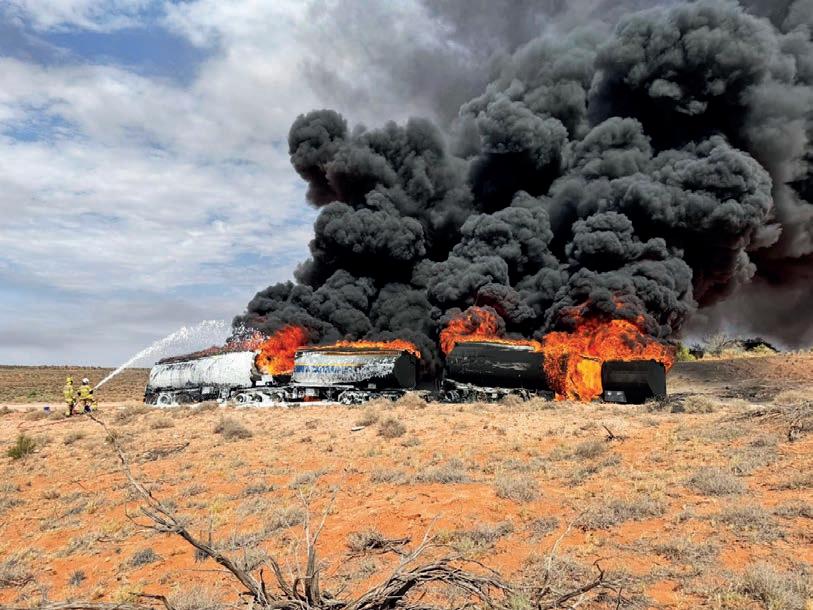
“On arrival we found all trailers heavily involved in fire but thankfully the prime mover had been disconnected and the driver safe.
“We quickly got to work but due to initial water limitations and the intensity of the fire we had to change tactics and allow the tanks to burn down to a safe level before completely extinguishing.
“BHP Water operations also supported our efforts by tapping into the M1 pipeline to provide water, setting up traffic management and providing radio comms.”
He added that the high temperatures, combined with explosions from the tyres, fire extinguishers and the rear tank made for very challenging conditions.”
The road was temporarily closed until the scene was cleared.
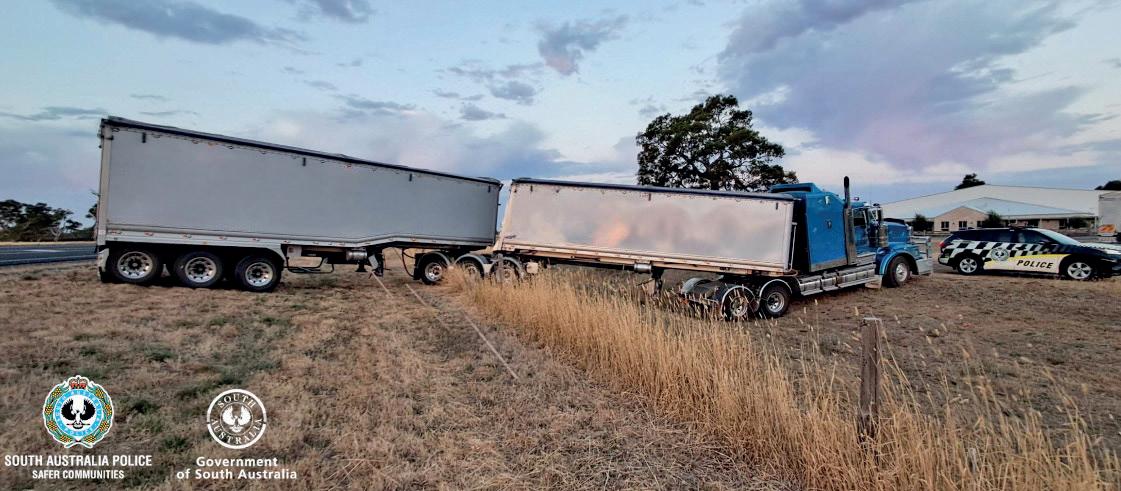
A truck driver has lost his licence after crashing his B-double at Penola in South Australia.
South Australia Police said the 56-year-old man from Queensland was not seriously injured in the incident. Police allege they witnessed the truck drive through a fence and into a drain on the Riddoch Highway at about 7pm on Friday January 23.
The driver was breath tested, with police alleging he was over the legal limit, returning a positive result of 0.187. He was arrested for drink driving, fail to comply with direction and issued a 12-month instant loss of licence notice. The d river was bailed to appear in the Mount Gambier Magistrates Court on March 24.
BY JAMES GRAHAM
FOR Geoff Crouch, the hardest part of calling time on Ron Crouch Transport was breaking the devastating news to his 120 loyal staff just prior to Christmas.
After battling for three years to keep the company afloat, Crouch said he simply ran out of options.
“That was one of the hard est things I’ve ever had to do,” Crouch said of the meeting held on December 8, when staff was informed the business had entered vol untary administration.
“I did the best I could, and eventually I just had to run the white flag up and just pull the pin,” Crouch told Big Rigs “I just had no choice. In the end, it was just too much.”
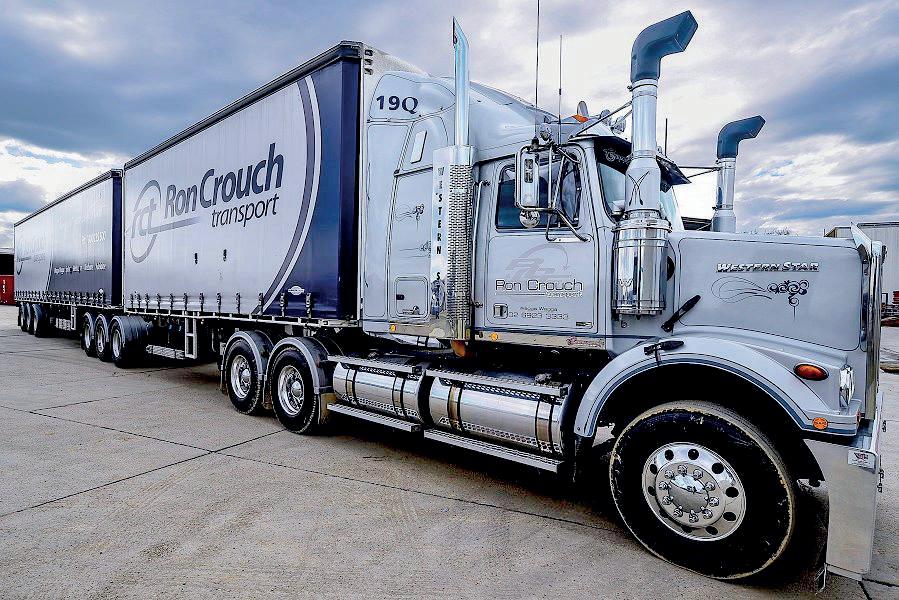
Crouch said the news last month that Ron Crouch Transport, the Wagga Wagga-headquartered business started by his parents Ron and Beverley in 1978, was being picked up as a going concern by Freight Specialists came as a huge, bittersweet relief.
“That was the one saving grace that the vast majority of jobs for my team members are being saved, that has been the main priority all along,” Crouch said.
Crouch, 60, said he’s happy to see Ron Crouch go to the family-owned Freight
Specialists, based in Sydney’s Wetherill Park.
He said he’s known both families behind the company for 25 years.
“It’s extremely pleasing to see a family company go to another family business and I’m confident that they will look after the legacy that they’ve purchased with care and respect.”
In a LinkedIn statement announcing the acquisition, Freight Specialists said it will transition the Ron Crouch
Transport sites and services in an “orderly and considered manner” over coming weeks.
“Our priority throughout this process is to ensure continuity of service and minimal disruption for customers,” the statement said.
The statement added that Freight Specialists is a family-owned Australian transport business with a long history of providing reliable, customer-focused freight solutions.
“Like Ron Crouch Trans-
port, the business has been built on strong relationships, operational discipline, and a commitment to doing the right thing by customers, employees, and partners. This shared heritage and approach were important factors in bringing the two businesses together.
“We look forward to continuing to support customers under the Freight Specialists banner while building on the strong foundations established by Ron Crouch Transport.”
Crouch told Big Rigs he’s now plans to take a couple of months off to “get his life back together again”.
“Then I’ll dust off my CV and go looking for a job,” said Crouch, who had been at the helm of the Wagga Wagga business for 30 of its 47 years.
Whether that will be back in the road freight industry, Crouch said that remains to be seen.
The former President of NatRoad and Chair of the Australian Trucking Association said he leaves with a ot of happy memories, such as the relationships with loyal customers, watching staff embers rise through the ranks and playing his part in launching Healthy Heads in Trucks and Sheds as a founding director.
“It’s the people that were there [at Ron Crouch], that’s what’s broken me more than anything else; the uncertainty that they’ve had over the last six, seven weeks or so.
“It’s been one hell of a ride, but the music has stopped.”
Crouch said he’ll always have hopes for the industry’s future, but he also has grave concerns.
“Until such time as the over-regulation is brought back under control, until such time as customers accept that a race to the bottom with rates is not the answer for a viable economy,”

Crouch said. “Until such time as the federal government pulls its head out of its arse and does something about sham contracting I’m still going to have concerns for the industry’s future.” Crouch said there wasn’t one single factor that led to him being forced to place Ron Crouch Transport into voluntary administration, but he’s highlighted the sham contracting issue because he knows the havoc it’s wreaked across the industry – and fears for the damage to come.
“I do know what’s happening out there and it’s a huge problem,” he said.
“The federal government needs to tell the ATO to do something. There’s going to be a few more [companies closing] over the next six months, make no mistake.”

TRUCKING bosses have been quick to slam the proposed abolishment of the Fuel Tax Credit (FTC) for heavy vehicle operators by the Productivity Commission (PC).
The PC argues that by lowering the cost of diesel for trucking operators the credits make it cheaper to burn fossil fuels, therefore reducing the incentives to switch to alternative, cleaner fuels.
South Australian Road Transport Association Executive Officer Steve Shearer has labelled that argument as “absurd”.
“The vast bulk of heavy vehicle freight movement is linehaul on intercity, rural and often remote routes,” Shearer said.
“Alternative fuel options for that linehaul freight task are simply not available and will not be available as sustainable and affordable options for many decades yet, if at all.
“Some 85 per cent of the road freight task is simply not contestable by rail as its logistically and economically impractical.”
Shearer said the commission’s proposal to abolish the FTC would instead increase the cost of road freight for every product, from food to clothing, bedding and house building materials.
“Resulting in unnecessary and unacceptable increases in
the daily cost of living without any gain in environmental outcomes.
“It is time the Productivity Commission performed its research and work in the real world, based on well-researched and proven facts to produce realistic, achievable and appropriate outcomes.”
The Australian Trucking Association (ATA) Chair Mark Parry said the tax on truck fuel would more than double under the Productivity Commission’s plan to hike truck taxes and phase out FTCs.
Under the FTC system, trucking operators pay an effective fuel tax rate of 32.4 cents per litre rather than the full rate, which jumped to 52.6 cents per litre from February 2.
The commission’s own figures show its plan would more than double the effective fuel tax paid by trucking operators to 66.1 cents per litre by 2035.
Speaking in support of the ATA’s 2026-27 pre-budget submission, which urges the government to reject the plan, Parry said the FTC system

already had to pay a 19 per cent increase in fuel tax over the last three years, as well as dealing with rising costs, extended payment terms, driver shortages and natural disasters.”
Parry said the PC’s plan would not achieve its goal of encouraging decarbonisation.
“The commission’s report does not analyse the effect of removing fuel credits on emissions, but I can save everyone the time and trouble,” he said.
“Its effect would be zero, because it would not address the real world barriers holding back the industry’s adoption of low emission solutions.
“It would not address the engineering reality that there is no single technology available to replace diesel engines.
reduced the cost of freight for everyone in Australia, as well as our rural exporters.
“Removing fuel tax credits would increase costs for industry and hard-pressed Australian households, who have a lready had to face a 21.5 per cent increase in electricity prices and an 11.2 per cent increase in childcare fees in 2025,” Parry said.
“Many trucking businesses would not be able to pay the increased fuel tax, which would go up by about 8 per cent each year.
“Trucking businesses have
Parry said many regional communities rely on trucking operators to move and deliver all their daily necessities.
“This requires diesel engines, so the commission’s approach would just be an unavoidable increase in tax.
“For those businesses that do have an alternative to diesel, the effective tax increase would reduce their financial capacity to invest in new vehicles and equipment.”
Parry said instead of taking up the PC’s advice, the government should implement a voucher scheme to reduce the up-front cost of electri-
fication or alternative fuel options for operators.
“A low carbon fuel standard to encourage the use of renewable diesel and support high productivity and low emission vehicles,” he said.
NatRoad CEO Warren Clark also called for no change to the FTC scheme until a viable Forward Looking Cost Base is developed with a resultant Road User Charge (RUC) applicable to all road users.
Fuel tax credits are one of the top 20 expenditure items in the budget and are forecast to grow by 20 per cent over the next four years.
The tax break will cost $10.8 billion this financial year and grow to about $13 billion by 2028-29, according to the budget papers, with just under half of that going to resources companies, including more than $1.4 billion going to iron ore miners and about $1.4 billion to coal miners.
The same commission report, however, recommended FTCs be retained for miners captured by the Safeguard Mechanism, Labor’s signature emissions reduction scheme.
That requires facilities producing more than 100,000 tonnes of CO² emissions each year to cut their output by 4.9 per cent annually or buy offsets to make up the difference.


BY JAMES GRAHAM
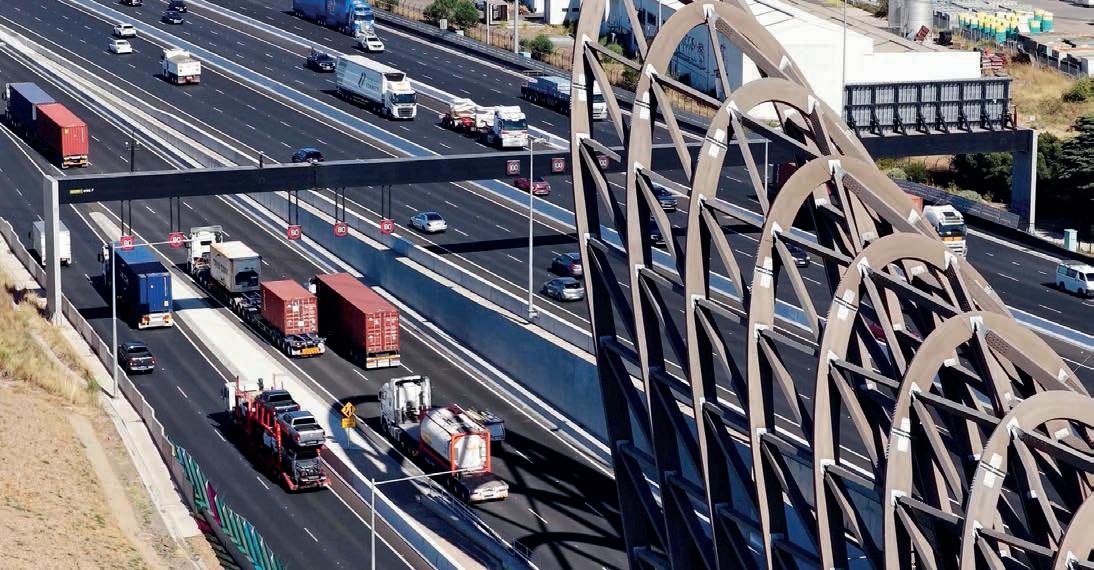
RISING toll costs linked to Melbourne’s new West Gate Tunnel are placing intense financial pressure on container transport operators, says the boss of one long-running family-run operation.
A s the Victorian Government tried to put a positive spin on the tunnel’s usage earlier this month, it was a different story for operators like Stefan Van Hoff, General Manager of Vantrans, the largest empty container operator in the port precinct.
Prior to the opening of the tunnel on December 14, Van Hoff and his team were rushed off their feet organising empty container bulk runs in and out of the container terminals on behalf shipping lines and Empty Container Park (ECP) operators.
But since the introduction of the no truck zones in the inner-west and a mandatory $20 each-way toll in the tunnel, long-running customers are already pushing back, threatening to shift their business closer to the wharf to avoid the mounting costs.
“We’re now at the case of potentially even losing customers because they don’t want to pay tolls,” Van Hoff said.
“They’re doing everything they can to avoid them, and we’re getting hit from both ends – it’s a nightmare.”
Van Hoff has also had the headache of hiring more staff to manage the added administration the tolls are causing.
Van Hoff explained that many of his clients are large multinational companies with head offices overseas, all under heavy pressure to slash costs wherever possible.
“With head offices in Singapore, Europe and Copenhagen, they’ve got huge pressure to reduce costs,” he said.
“I don’t blame these guys. If we were in their position, we’d be doing the same thing as well.
“We’ve been around for 30odd years and now it’s starting to take effect – potential ly losing some of our biggest c
Van Hoff said a semi-trailer now attracts about $20 one way, meaning a standard container delivery adds roughly $40 per trip.
“We’re only carting empties, so the margins aren’t great in the first place –there’s nothing in the container,” he said.
W hile some toll concessions exist for volume users, Van Hoff said they have created what he described as an “administrative nightmare”, forcing the company to take on extra staff simply to manage billing and compliance.
“We’ve got to check con-
overcharged,” he said.
“We’ve literally had to hire another head here and in the Philippines just to try and keep costs down.”
No-truck zones across parts of Melbourne are compounding the issue by effectively forcing heavy vehicles onto the toll road.
“The trucks can’t go on those roads, so they have to use the tunnel – incurring that toll,” Van Hoff said.
While travel times have improved slightly, Van Hoff said any time savings are insignificant compared to the rising costs.
– but nowhere near the cost increase,” he said.
Looking ahead, Van Hoff admitted the long-term future is uncertain.
“We don’t know what the future holds,” he said. “We’re just a small family business trying to do our best, and we’re getting nothing from the government.”
He urged authorities to recognise the unique position of empty container operators and introduce targeted concessions.
“They’ve got to consider the fact we’re moving empty containers – there’s nothing in
didn’t even know what the difference between an empty and full container was.
“With a full container, you’ve got more fat. We’re moving empty air. For the lines, it’s a dead loss as it is, and when you keep adding to that cost, of course they’re going to do something.”
Adding to Van Hoff’s frustration around the costs, is that the tunnel, which was closed for five hours on a peak January afternoon due to a sprinkler malfunction, appears to be running well below capacity, particularly in terms of truck usage.
SYDNEY
510 Victoria Street, Wetherill Park NSW 2164 Ph. 02 9756 6199, email: isri@isri.com.au, www.isri.com.au
BRISBANE
urban in a meeting and they
“I don’t know what the rationale was behind deciding this was the way to go – no one is using it,” Van Hoff said. Van Hoff’s claim was also backed up by several truckies on the Big Rigs Facebook page when we posted a story from Transport Victoria boasting of the tunnel recording a million trips in the first month, 20 per cent of those were supposedly trucks.
“Quite sure I’ve done a quarter of those trips as I’ve never seen anyone in the tunnel,” said truckie Filip Schubert.
Added John Wilson: “There is no way that is accurate. They have to be including the West Gate Freeway as well. The tunnel is empty all the time.”


3/120 Gardens Drive, Willawong QLD 4110 Ph. 07 3275 2044, email: sales@isribrisbane.com.au, www.isribrisbane.com.au
BRISBANE NORTH
1/259 Cullen Av, East Eagle Farm QLD 4009 Ph 1300 11 4774, email: seats@isrinb.com.au, www.isrinb.com.au
MELBOURNE
Unit 1/569 Somerville Rd, Sunshine West VIC, 3020 Ph. 03 9311 5544, email: sales@isrisunshine.com.au, www.isri.com.au
MACKAY
110 – 120 Maggiolo Drive, Paget QLD 4740 Ph. 07 4952 1844, email: admin@isrimky.com.au, www.isriseatsmackay.com.au
PERTH
408 Welshpool Rd, Welshpool WA 6106 Ph. 08 9362 6800, email: info@mmtisri.com.au, www.mmtisri.com.au
DARWIN
Mobile Sales and Service
Ph. 08 8927 0986, email: info@isridarwin.com.au, www.isridarwin.com.au
NEWCASTLE/HUNTER VALLEY
Ph 02 4932 0600,
Unit 2/13 Hinkler Ave, Rutherford NSW 2320 email: sales@hvss.com.au www.isri.com.au


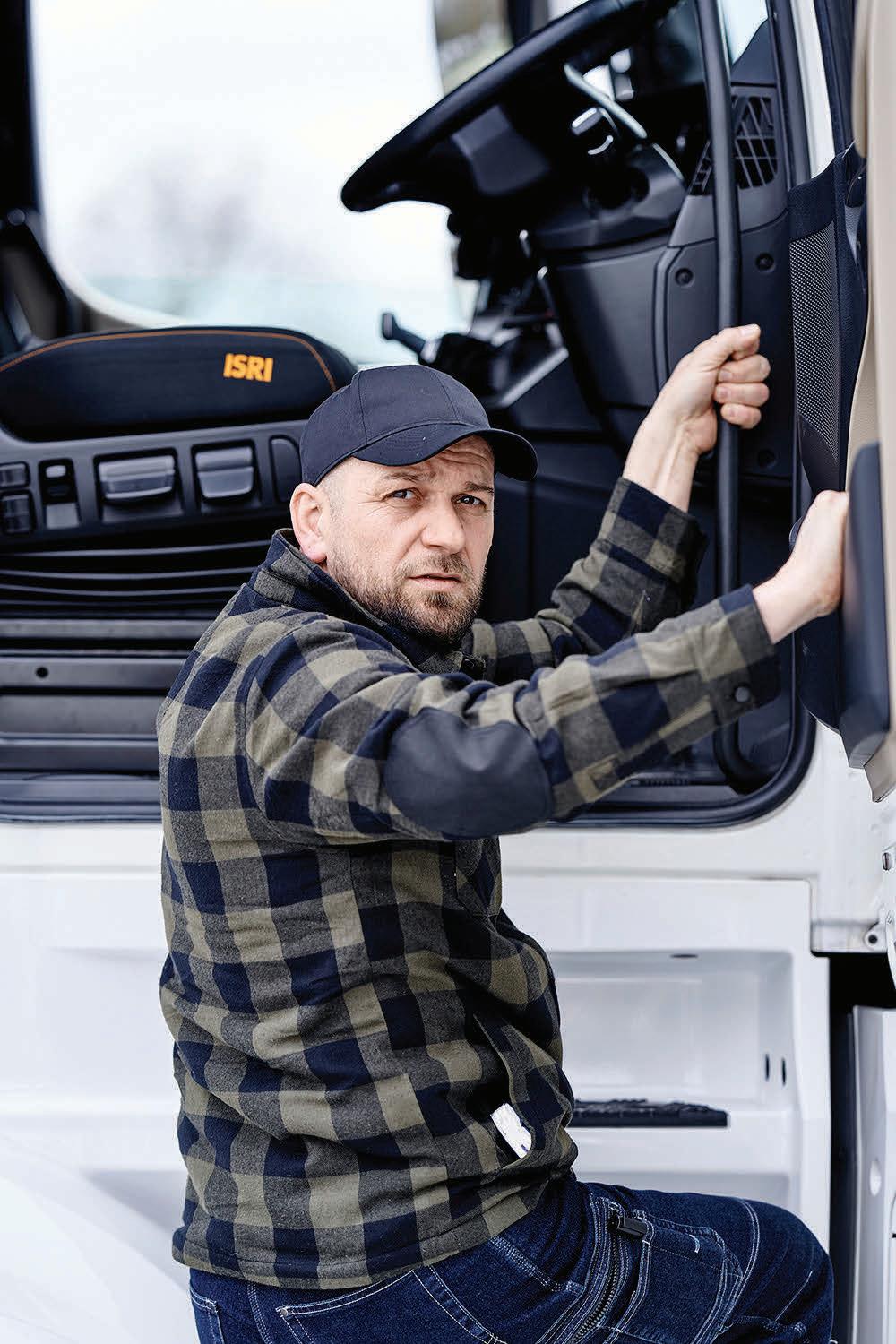
SOMETHING big is rolling into your neck of the woods in 2026 – and the whole in dustry is invited to take part.
Following the success of Truck Week held alongside the record-breaking 2025 Brisbane Truck Show, Truck Week returns in 2026 with a national focus, inviting businesses and organisations across the country to take part in their own communi ties and workplaces.
From May 11-18, Truck Week will be a nationwide celebration of Australia’s heavy vehicle, road freight and logistics industries – our people, our stories, and our role in keeping the country moving.
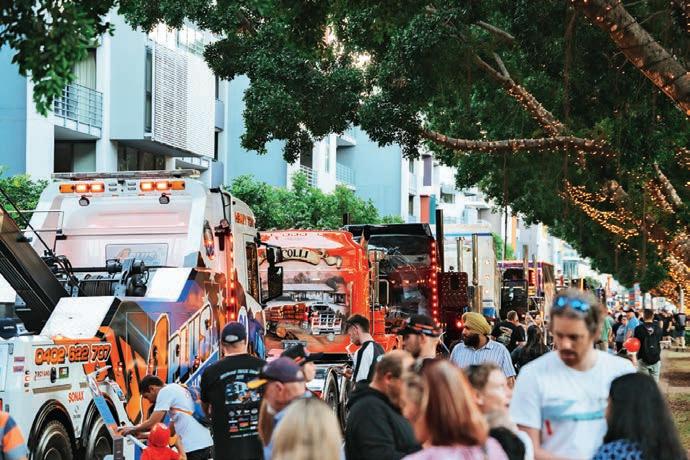
Events held during Truck Week can take many forms –from depot BBQs, school visits and safety demonstrations, through to conferences, innovation showcases, open days and community activities.
Whether it’s a small internal event or a major public activation, every event contributes to a broader national story.
At its core, the Heavy Vehicle Industry Australia (HVIA) initiative is built around three simple themes: people, safety and innovation. Together, they reflect the industry’s workforce and communities, its ongoing
commitment to safer roads and workplaces, and the technology and ideas shaping the future of freight.
Truck Week brings together businesses, drivers, workshops, manufacturers, suppliers, communities and schools
to recognise the people and innovations that underpin Australia’s economy and daily life. Participation is open to any business or organisation connected to the industry –large or small.
As Australian Trucking Association CEO Mathew Munro explains, Truck Week also plays an important role in shaping the future workforce of the industry:
“We’re excited to be partnering with HVIA on Truck Week 2026 to help promote trucking careers to young people and career changers. The trucking industry is an essential part of Australian communities, homes and businesses, and offers a variety of fulfilling, high paying and secure career pathways, including entrepreneurial opportunities,” he says.
National Heavy Vehicle Regulator CEO Nicole Rosie adds that Truck Week will provide an important national platform for recognising the critical role of the heavy vehicle industry.
“As Australia’s regulator for heavy vehicles, the NHVR is proud to support initiatives like Truck Week which highlight and celebrate the professionalism of the heavy vehicle industry, and our shared commitment to safer roads and a resilient freight network,” Rosie said.
“It’s an opportunity to recognise the people, safety, leadership and innovation that keeps freight moving right across our country, while helping communities better understand the modern heavy vehicle industry and the essential role it plays in our future.”
According to Steve Power, National Truck Week Coordinator at HVIA, that accessibility is central to the concept.
“Truck Week is about opening the doors of our industry – to communities, to future workers, and to each other,” Power said.
“Whether it’s a small team BBQ or a large public showcase, every event helps demon-
strate the pride, professionalism and innovation that define modern trucking.”
Truck Week 2026 is proudly supported by a growing group of industry organisations committed to advancing people, safety and innovation across road transport, including: Australian Trucking A ssociation; Healthy Heads in Trucks & Sheds; Heavy Vehicle Industry Australia; National Bulk Tanker Association; National Heavy Vehicle Regulator; National Road Safety Partnership Program; National Road Transport Association (NatRoad); Queensland Trucking Association; South Australian Road Transport Association and Transport Women Australia Limited.
With the official launch of Truck Week 2026, event registrations are now open, supported by event resource kits, promotional tools and national coordination.
Register your event or get involved at truckweek.com.au.
THE first month of truck sales numbers for 2026 were down 11.55 per cent on the same period in 2025, according to the latest numbers from the Truck Industry Council (TIC).
Based on the figures from OEMs who supply numbers to TIC, a total of 2464 vehicles changed hands, 322 less than in the same month last year. But it must be noted that 2025 got off to a flyer, just short of the 2024 record opening month.
January numbers are also historically subject to fluctuations and some inconsistencies due to the transition of supplying trucks from one year to the next and the sum-
mer holiday period. Dominant market leader Isuzu fluctuated more than most, dipping from 765 units in January 2025 to 537, a market share slide from 27.5 per cent to 21.8.
Most of the top 10 players also took a slight hit, with Hino and Fuso down from 10.4 and 9.9 in 2025, to 8.7 and 8.3 per cent market shares, respectively. In the heavy-duty section, Kenworth held its own to take its traditional top spot with 196 deliveries, down only slightly on its 2025 January total of 216.
Notable improvers among the heavies were Volvo which recorded 147 sales, up from 128 in the same month last
year, and DAF which soared from 22 units in January 2025 to 44 last month.
That was good enough for an opening 5.6 per cent market share for DAF, well up on the 2.4 number at the end of 2025.
The medium-duty sector felt the biggest dip last month with just the 292 sales in January. This is down from the 445 sales made in December and the 472 sales made in January last year. Isuzu accounted for more than half of the monthly sales with 148, more than doubling its closest competitors in Fuso, 63, and Hino, 51.
The Isuzu-dominated light-duty market held its
own last month with 703 sales made in January. While it’s well down on the 1183 sales made the month prior, it stacks up closer to the 728 sales made in January 2025.
Meanwhile, new data from Retain Media’s latest Truck Market Brand Consideration Report shows entrenched brand loyalty across much of the sector, with only selective movement among major players.
Based on more than 1.8 million search queries, the Q4 report found that eight manufacturers recorded zero quarterly change in brand consideration.
Those holding steady included Scania, Volvo, DAF,
UD, MAN, International, Hyundai and Dennis Eagle – a result Retain Media said points to a mature market where operator preferences have largely settled.
While the mid-tier remained static, Japanese manufacturers experienced a collective decline: Isuzu slipped 7.1 per cent, falling from a 14 per cent share to 13 per cent, while Fuso dropped 7.6 per cent to 8.5 per cent and Hino eased 3.2 per cent to 6 per cent.
The report notes the synchronised nature of the decline suggests broader market forces rather than brand-specific issues.
By contrast, Chinese brands continued to edge forward
from a small base. Foton recorded the strongest relative growth of the quarter, lifting 14.3 per cent to 0.8 per cent, while Sitrak grew 11.1 per cent to reach 1 per cent. Retain Media says the gains reflect gradual market penetration rather than a sudden shift in buying behaviour. At the top end of the market, Kenworth extended its lead to 20.5 per cent, growing steadily and holding more than oneand-a-half times the search share of second-placed Isuzu. Mercedes-Benz also rebounded strongly, lifting 9.4 per cent to reclaim third position, while Freightliner Trucks posted its strongest quarter of 2025 to round out the top 10.


‘It’s
BY DANIELLE GULLACI
WHEN Noel Harris was a kid, he had dreamed of one day driving trucks. Now aged 63 – with 45 years on the road – he can’t see himself in the job for much longer.
His passion for the industry is still strong and though he loves being in the truck, he’s fed up with the dangers he sees out on the road on a daily basis, fuelled largely by inexperience.
Harris believes the volume of experienced operators walking away and being replaced by inexperienced drivers is a “disaster waiting to happen.”
Based in Pakenham, Victoria, Harris got into truck driving when he was 18.
Since 2017, he’s worked as an owner operator, carrying fertiliser throughout Victoria and into southern New South Wales with his 2021 Kenworth T659 and B-double set of tippers.
“After 45 years of driving and owning my own business, I don’t understand why someone doesn’t listen to the experienced drivers like myself who are walking away or seriously considering it,” said Harris.
“This industry is being driven by people with less and less experience. I predict – but I don’t wish it – that there will be a big accident one day, even bigger than what we’ve already seen, because too many transport businesses are happy to put inexperienced drivers in their trucks.
“It’s forcing people who are truly passionate about the industry to get out of it. I’ve been a member of various organisations in the past. W hen you put your two bob in, you might get a response, but there’s never any action.”
Harris is one of many veteran operators who believes truck driving is a skilled occupation that should require a traineeship or an apprenticeship.
“I DON’T UNDERSTAND WHY SOMEONE DOESN’T LISTEN TO THE EXPERIENCED DRIVERS LIKE MYSELF WHO ARE WALKING AWAY OR SERIOUSLY CONSIDERING IT.” NOEL HARRIS
“You can’t tell me a twoday course is enough to be in charge of a road train. Look at Western Australia and the amount of road trains that get tipped over. New drivers need to spend time in the truck with an experienced operator – to show them everything we have to do, loading, under standing axle weights, how to tie down, and all under proper supervision.
“Things need to change. I don’t know how some truck drivers have their licence. In this industry there are good Aussie drivers and bad Auss ie drivers, and there are also good international drivers and bad international drivers.
“The issue is not about where a driver comes from, it all comes down to experience. There are truck drivers out there who get scared when an other truck approaches them, because they don’t know what to do.
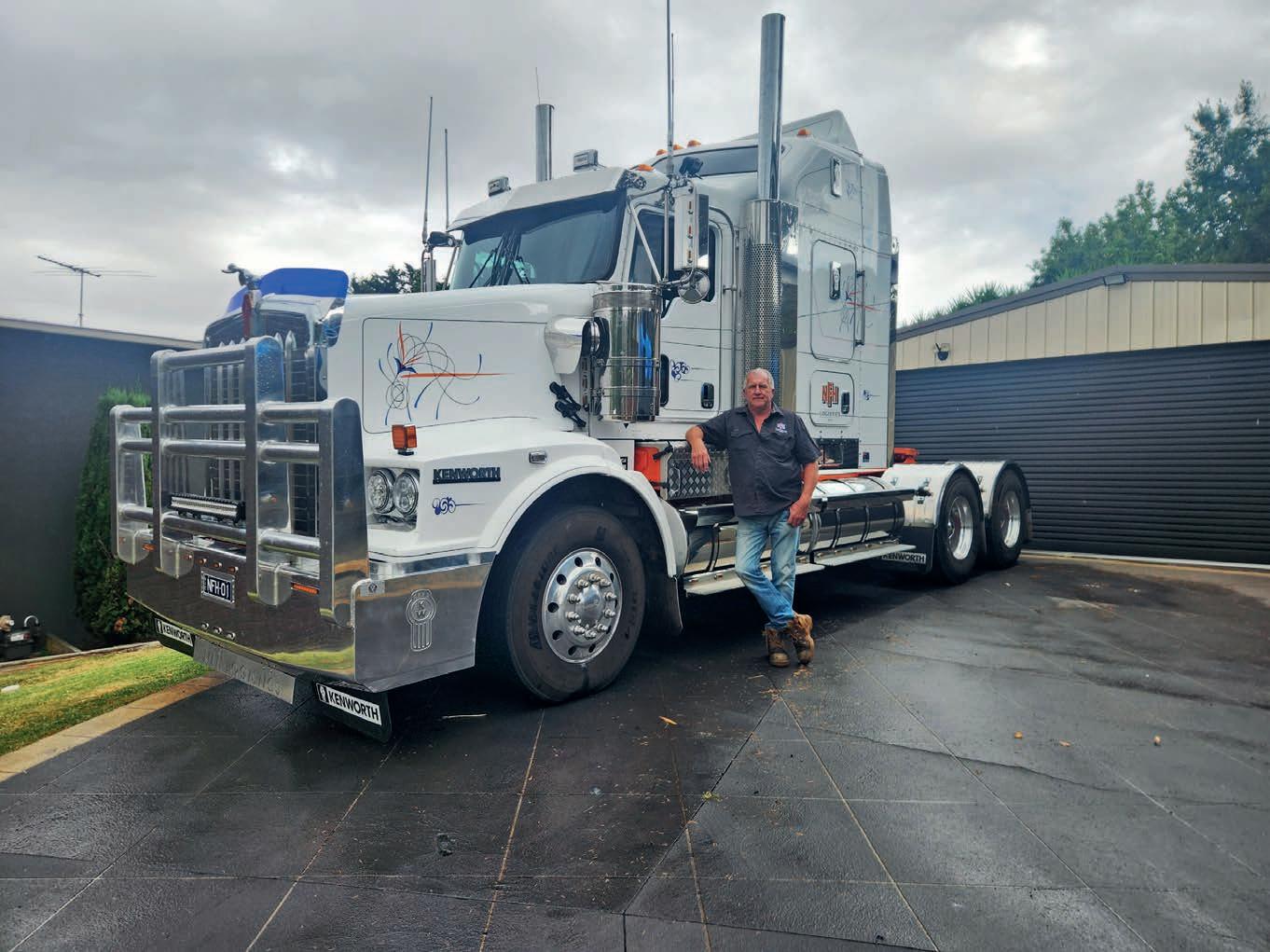
“These days, I nearly have an accident two or three times a week. People blame trucks, they want them out of the cities and off certain roads. But in a country like Australia there will never be a time where you don’t need trucks on the road.
“I’ve been brake checked that many times, because there are idiots out there who think if I run up the back of them, I’m going to be in the wrong. That’s why we need to have dash cams these days.”
Harris pointed to a recent example of what he saw on his travels. “There was a tanker with sparks coming out from the back of the trailer. I tried calling on the UHF and there was no response. He ended up blowing two more tyres. Years ago, if that happened, the driver would pull over and you’d pull over with them. That doesn’t happen anymore.”
Highly publicised issues
with driver shortages are being exacerbated by an ageing truck driver workforce – with so many experienced drivers leaving the industry, and not enough young people coming in.
Though Harris also believes that this job is not for everyone. “I really do love this industry but it’s a tiring role and it takes a toll on your life. Trucking and farming are among the few jobs where,
if you start at 18 and are at the same place 40 years later, you’re still working just as hard. Even at my age, you’re still doing the long hours, still loading and unloading,” he said.
“It’s not the kind of job you do just for the money, you need to have that passion. This is not your regular eighthour job. It’s hard work. And I need to get out of it before I lose that passion complete-
ly. I’d be shocked if I’m still doing this in the next 12-24 months.
“And I’d be walking away as someone who is passionate about truck driving and still loves being in the truck. It’s just become too dangerous.” Harris has already put his trailers up for sale, though says he plans to hold on to his truck for a little longer, as he decides on his future in the industry.



EDITOR
JAMES GRAHAM
month. You may recall the story in the last issue in which we spoke to his boss Stuart Devine and the driver who was first on the scene, Brian Wallder, who was convinced there was no way Mick could have survived. Well, we’re thrilled to report that Mick not only defied the odds, he’s now back at home receiving the best of care from his loving wife and eldest daughter, both of whom are nurses.
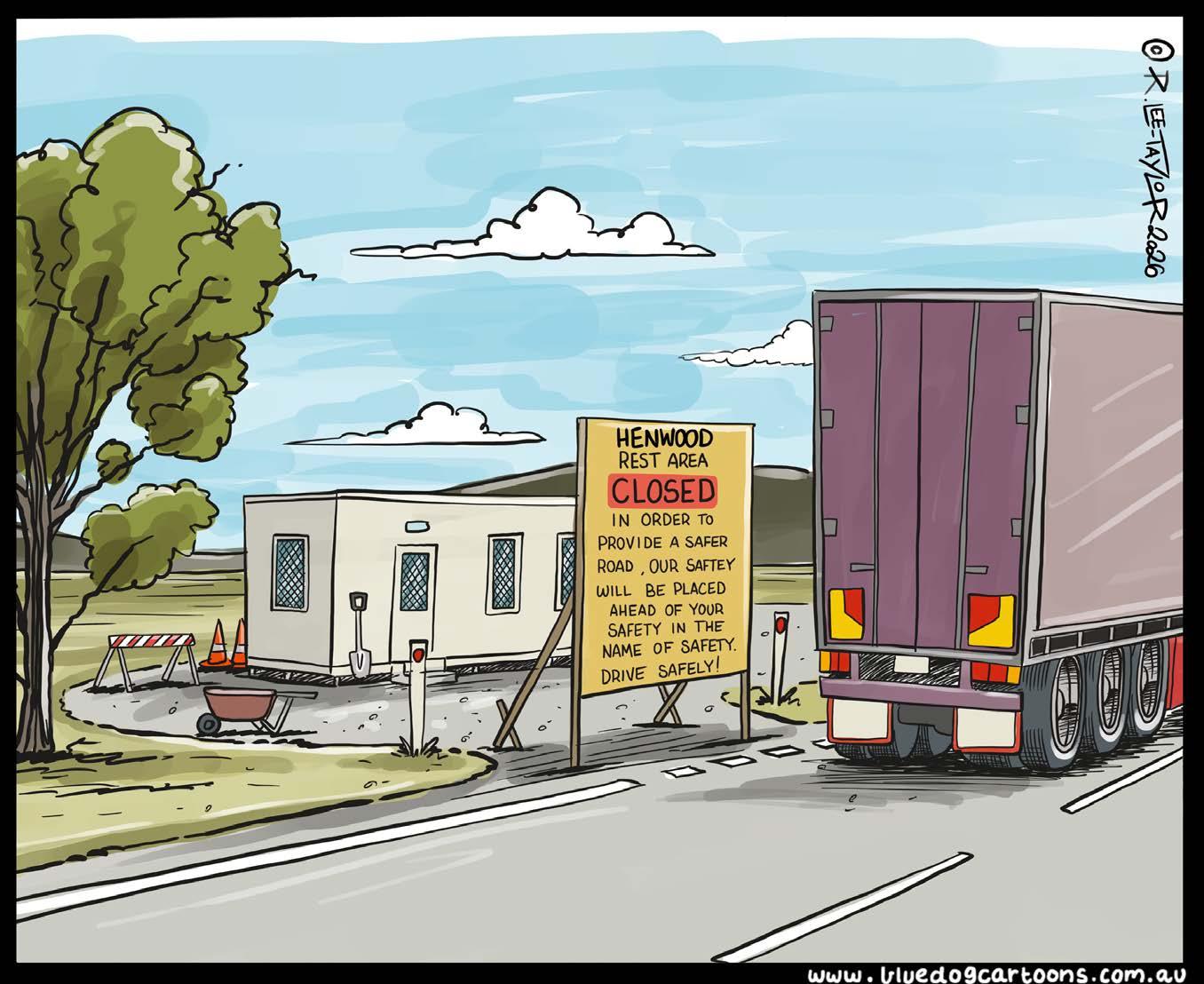
If you haven’t already, jump on to GoFundMe, search for ‘Victim of the Berrima truck accident’ and help give Mick a boost on the long road back. At the time of writing, $48,870 has been raised already. Meanwhile, over on the Newell, the Henwood Rest Area is closing until mid-April. The reason? They’re widening the highway to make it safer. Truckies left out in the cold yet again.
FACEBOOK commenters
agreed with the Victorian Transport Association that sham contracting has to be stopped but weren’t all convinced dobbing in offenders to the ATO was the answer.
“Not sure why we have to do the work of the ATO,” wrote Brad Warry.
“As an owner-driver, if I am late by so much as two days with a BAS payment, they’re onto me, threatening legal action.
“It’s the bean counters controlling this, if they in vestigate, it comes at a cost. They can fix it, and quite easily.”
sham contracting needs to be stopped as soon as possible.
“It is crippling to see some of the rates that work is being done for, knowing full well at those rates you can’t pay the driver the cor-
rect wages, nor maintain the gear to a safe standard so the driver can come home safely to his family every night/ weekend,” Thomas wrote.
“Working out if sham contracting is going on really isn’t that difficult.
As a small business and employer Chris Thomas said
“Any BAS statement that shows a ratio of company income vs PAYG payments greater than the norm would
“I compete for work and am happy to have healthy competition, but we all need to be on a level playing field, but more than that, to be able to afford to train the next generation of drivers and stop the carnage on our roads.”
L AST month’s wrap-up on Operation Overwatch, a joint Bruce Highway operation that revealed almost one in three intercepted heavy vehicles were found to be non-compliant, also triggered plenty of d iscussion.
“Can they do a compliance check of the Bruce Highway and send the fines and required repairs to the appropriate authority with a 30-day notice of enforcement please,” asked Matt Smith.
Darren Bell agreed that the condition of the roads was making it even harder for operators to stay compliant.
“You combine pathetic roads with the poorest of quality part we get now days, you have no chance of maintaining a perfect truck any more.”
Matt Williams added: “Over a third of the road network is non-compliant. Government takes the fuel and other relevant road taxes and uses the money elsewhere.”
Others were also critical of the lack of detail around what the defects were.
“In 55 years in this transport industry nothing has changed,” Kerry Griffiths concluded.
“Unqualified people checking trucks is as old as Adam,
same as an unqualified police officer checking logbooks. It wouldn’t be so bad if they had any integrity and knew what they were looking at but road transport will continue to be the scapegoat and the money pit.”
DRIVER-TRAINER John Skinner’s recent opinion piece arguing that industry needs to stop blaming individual drivers and focus on the system a nd those higher up pulling the strings sparked plenty of debate online.
Trevor Warner said licensing and training is working perfectly.
“It’s the assessment process that has been corrupted,” Warner said.
“Transport agencies need to regain control of the checks and balances within that system.”
Fellow truckie Niell Graham wants to see authorities take a closer look at those signing off on the licences.
“How much time have they had behind the wheel?” Graham asked.
“I see a lot of young people teaching younger drivers how to drive when in reality those driver-trainers have only been in the industry for a very short time and know nothing but how to pass a driving test.”
Ross Pfingst wants to see a progressive pathway introduced in which drivers must have 12 months on a HR and
12 months on HC before being able to upgrade to an MC, with real logged time.
“Simple really,” he said. Plenty of work out there to support the process. Plus, the big players have up and coming drivers through their systems – win-win.”
THE alarm sounded by leading invoice financing specialists Earlypay about the looming cashflow shock for transport companies when payday super reforms arrive on July 1 hit the mark.
“This pay day super change will hopefully make the big operators grow a pair and demand the customer to shove that 30-day terms where the sun don’t shine,” said Roberto Dodds.
“From here to July, the bets are on over who’s going to survive the mismatch. The biggest mobs may somehow handle but the mid-small sized operators will not.
Unless of course, the end
game is to send the small and medium-sized fleets to go broke. In which case, who’s going to do the hard jobs for the big mobs…?
If your business is running trucks that cost towards a mil lion for a combination today and you can’t pay 11 per cent of a driver’s base wage on time – get out, said Scott Savory.
“And if you don’t like it, thank all those businesses that didn’t pay super properly in the past for these reforms.”
Simba Bass said the government should have stepped in and stopped “this rort” long ago
“Just because larger companies want to invest their
monies into short-term interest bearing accounts to pay their bills through accrued interests, the smaller guys have to suffer the consequences.”
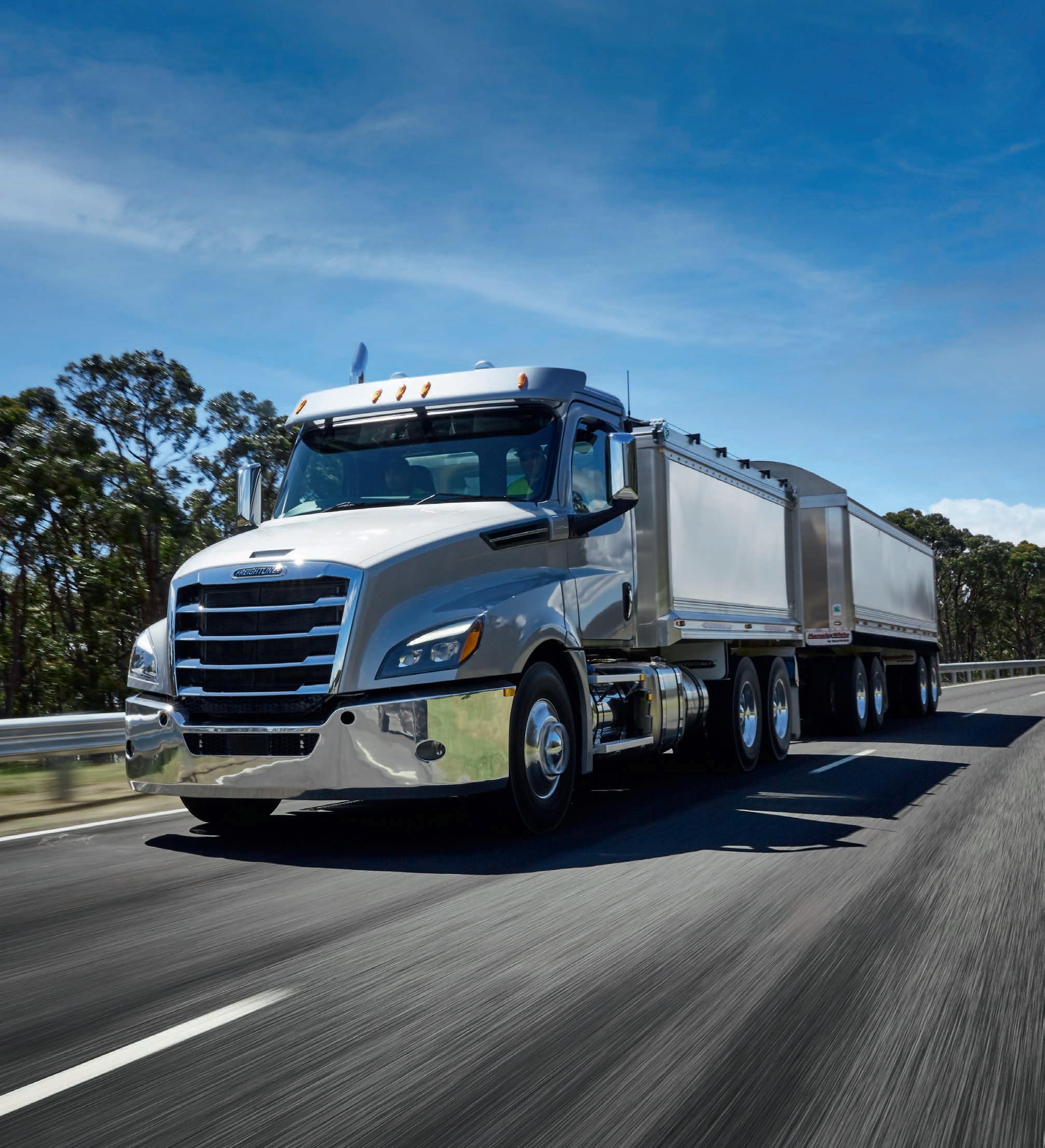
BECAUSE HAULING DIRT, ROCK, AND RUBBLE NEEDS SERIOUS MUSCLE.
A 16L Detroit engine delivering low-end torque is exactly what you need to get those heavy loads rolling. Paired with an aerodynamic design, the Cascadia is built to maximise payload and minimise running costs.
UNDERESTIMATE AT YOUR OWN COST
New safety program
Truckies can now access a free new industry-led online safety program addressing behaviours that influence choices made behind the wheel.
Devised by the Queensland Trucking Association, the Think.Act.Drive program is built around short, scenario-based online quiz modules that encourage drivers to reflect on their behaviours and actions in everyday driving situations.
Delivered in bite-sized units and accessible online at thinkactdrive.com.au, the program is free for truck drivers around Australia and available 24/7.
According to the QTA, the platform has been designed to be practical, simple to use and easy to integrate into existing driver routines and training schedules.
Rest area closure
Essential road work underway on the Newell Highway at Grong Grong, NSW, means truckies will be prevented from pulling into the Henwood Rest Area for the next few months.
Transport for NSW said the bay will be closed until midApril while single lane closures are in place between Gawnes and Connells to rebuild and widen the highway.
Truckies can instead stop at Firetail Rest Area or Narrandera truck parking bay.
Traffic control and reduced speed limits of 40km/h will be in place during the works.
Bypass on track
The $700 million Singleton Bypass is on track to open late 2026. A major project for the NSW Hunter region, it’s expected to divert up to 15,000 vehicles a day away from Singleton’s main street.
The 8-kilometre bypass starts near Newington Lane in the south and rejoins the highway past Magpie Street in the North.
The project features a full interchange at Putty Road and connections to the New England Highway at the southern and northern ends and at Gowrie.
Construction of all six bridges is now nearing completion, including the largest on the Hunter Floodplain, which is 1.6 kilometres long.
Roadhouse worker charged
A 22-year-old roadhouse worker was charged last month in relation to a serious crash near Stuarts Well.
The worker from Kadina, South Australia allegedly collided with a vehicle carrying two passengers after they failed to pay for fuel at the Stuart Wells Roadhouse.
The incident occurred on January 21, when a grey Mazda allegedly filled up at the roadhouse and didn’t pay for fuel.
According to a report by the Northern Territory Police, “His Toyota Hilux has allegedly collided with the right rear passenger side door of the Mazda, causing it to lose control and crash.”
The 37-year-old male driver of the vehicle suffered life-threatening injuries and his 38-year-old female passenger also received injuries.
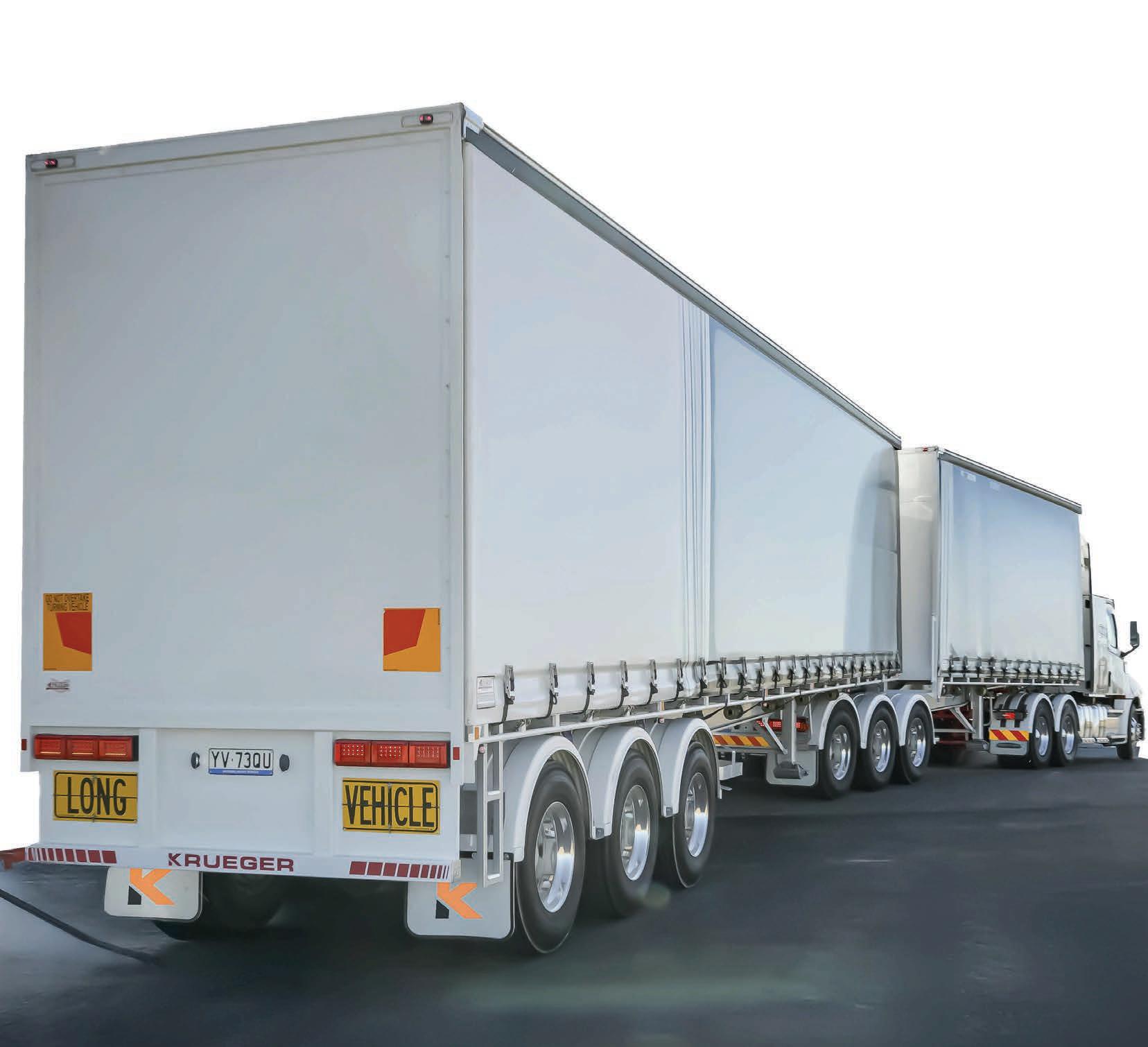
FOLLOWING a successful trial using a newly designed higher productivity combination, Arrow Transport says it’s increasing the efficiency of its container movements in and around the Port of Brisbane.
Arrow Transport is a wharf cartage and warehousing company that operates across Brisbane, Townsville, Melbourne, Sydney, Perth and Adelaide.
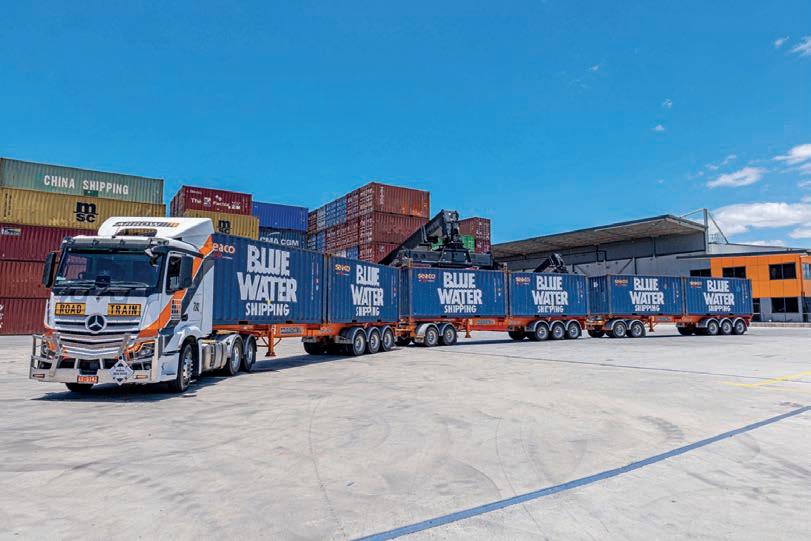
Wanting to “move more with less”, the company came up with an A-triple solution that’s capable of moving up to six 20ft or three 40ft containers at a time – both full and empty.
Heading up the new Arrow Transport combination is a road-train rated Mercedes-Benz Actros 2653. It uses a high efficiency 13-litre engine producing 530hp, teamed with a 12-speed Automated Manual Transmission (AMT), towing Vawdrey skel trailers.
Arrow Transport is the first operator to use an A-triple out of the Port of Brisbane.
NHVR Chief Engineer, Les Bruzsa, said the regulator worked with the Port of Brisbane and Arrow Transport to make the A-triple trial possible, conducting the engineering work required during a safety assessment.
“Recently, the Port of Brisbane requested the NHVR conduct a safety assessment for an 82.0-tonne A-triple combination with tandem axle dollies operating on its roads,” said Bruzsa, adding that the combination is a newly designed concept by Arrow Transport that now successfully operates on Port of Brisbane roads.
During the 2024-2025 financial year, over 1.6 million containers were handled through the Port of Brisbane.

NHVR Chief Engineer Les Bruzsa. Image: NHVR
“As Queensland’s population grows, so too will trade through the Port,” said a Port of Brisbane spokesperson.
“As Port Manager, one of our key roles is to work closely with customers and relevant stakeholders to support the safe and efficient movement of cargo within the port precinct.
“Higher productivity vehicles able to move more containers safely within the port are an important part of this.”
Arrow Transport says the new A-triple cuts the number of prime movers required for the task and reduces its carbon footprint, as the company looks to “move more with less”.
According to Arrow Transport Queensland State Manager, Jason Gadd, the trial demonstrated how improved productivity delivers real benefits. “This is a groundbreaking initiative we’ve developed to revolutionise efficiency across the port supply chain. It’s an amazing project.”
Gadd added that operating the A-triple reduces congestion and boosts efficiency, safely and reliably. “The trial showed how innovative high-productivity solutions can benefit the supply chain and the community.”
Arrow Transport thanked the Port of Brisbane, NHVR and York Engineering for helping facilitate the A-triple trial.
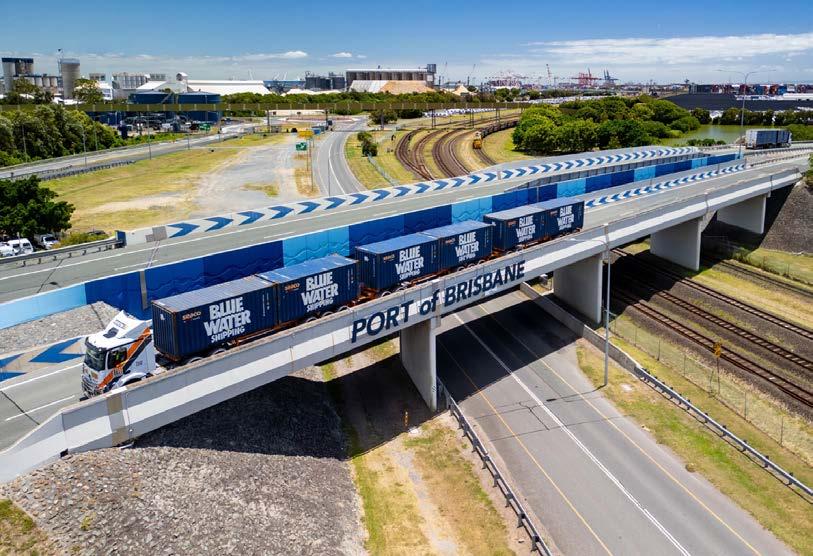
was pleased to have supported this on-road trial. “Pending regulatory approval from the NHVR, the high productivity vehicle will run on a defined route on Fisherman Islands under safety and operational conditions,” the spokesperson explained.
“We look forward to continuing to work collaboratively with our customers and the NHVR to support their innovation and increase productivity.”
Bruzsa says the NHVR team regularly performs detailed safety assessments to ensure innovative and high productivity combinations can operate on
roads without compromising on safety. “These function as evidence-based bridges between road managers, access and industry and will typically involve field testing, technical investigations or desktop simulations,” he said.
Many of these combinations have unique performance characteristics compared to conventional combinations and the NHVR’s work assists road managers with data, recommended operating conditions or network changes to support safe operating conditions.”
Bruzsa continued, “To facilitate these investigations, the NHVR developed custom in-
strumentation packages and sensors that can be fitted to vehicles on-site, causing less downtime for transport operators.
“This includes cameras and specialised instrumentation which measures and collects live operational data for technical analysis. This data is then incorporated into our advanced simulation comparisons for validation to ensure the computer modelling accurately reflects real-world operation.
“The NHVR will continue to support safe and productive combination tests moving forward.”
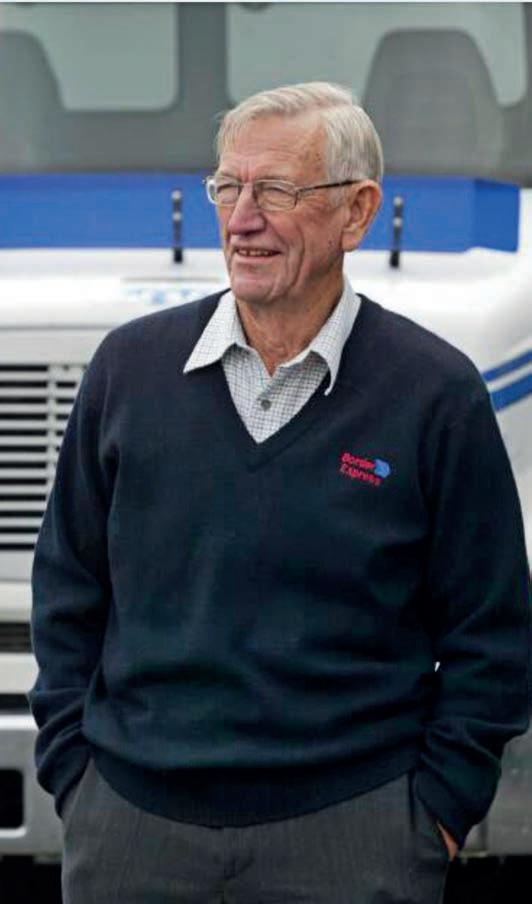
TWO revered names in the regional road freight transport sector – Max Luff and Gordon Simpson – were honoured with the Medal of the Order of Australia (OAM) in the Australia Day Honours List on January 26.
Luff, founder of Border Express, was recognised for service to the road transport industry and to the wider Albury-Wodonga community, and Simpson, the owner of Alexandra-based Simpsons Fuel, was honoured for his services to the local community.
Sadly, Luff passed away less than one week after receiving the prestigious honour, at his Albury home on February 1, aged 94.
Luff started Border Express on October 8, 1981, building the company from the ground up. Starting with just four employees in Albury, NSW, the business grew into a major player in Australian road transport, with a presence across every state and territory – employing a team of 1700 staff and contractors.
founded was sold to Freight Management Holdings Pty Ltd (FMH Group), a subsid iary of Singapore Post.
Australian Freight and Lo gistics Personality of the Year at the Victorian Trans port Association’s Australian Freight Industry Awards. And in 2012, he was a Hall of Fame Inductee of the Al
bury-Wodonga Chamber of -
ute to Luff, calling him a true pioneer of Australian freight and logistics. The company called the formal recognition of Luff’s contribution to the industry with an OAM “a fitting acknowledgement of a lifetime defined by hard work,vice to regional Australia and
the transport industry.”
Reflecting on his early days in the industry, Border Express shared on social media, “Max’s journey in freight began behind the wheel, where he developed a deep respect for the people and communities that keep Australia moving. In 1981, he founded Border Express with a clear vision built on reliability, strong relationships, and a genuine people-first approach.
“Beyond business, Max was a passionate advocate for lifelong learning and opportunity. Together with his wife Lynn, he established the Max and Lynn Luff Scholarship, reflecting his belief in education, personal growth, and giving back to the industry and community that shaped him.
“Max leaves behind an enduring legacy – not just in the business he built, but in the values he lived by; and the people he inspired along the way.”
Simpson’s many community contributions in Alexandra include a lifelong involvement with the Country Fire Au-
thority – he’s been a volunteer firefighter since 1976 and became a life member in 2024.
He’s also founding member of the Victorian Truck Drivers Memorial, a founding committee member and co-ordinator of the popular Alexandra Truck, Ute and Rod Show and 2013 inductee to the National Road Transport Wall of Fame.
Dr Gillian Miles was also honoured with an OAM for significant service to the transport and infrastructure sectors, including time spent at Roads Australia, Transport for Victoria, TAFE Victoria, the National Heavy Vehicle Regulator, the National Transport Commission and the National Women in Transport Network.
The other notable recipient from the road transport industry was former Tasmanian Transport Council president and Australian Road Transport Federation member Kevin Watkins who received a medal of the OAM in the general division for his service to the community of Launceston.

With one truck on the road and another two to follow, this former army diesel mechanic is proud to be having a go in a new industry while honouring those who have served and sacrificed.
BY DANIELLE GULLACI
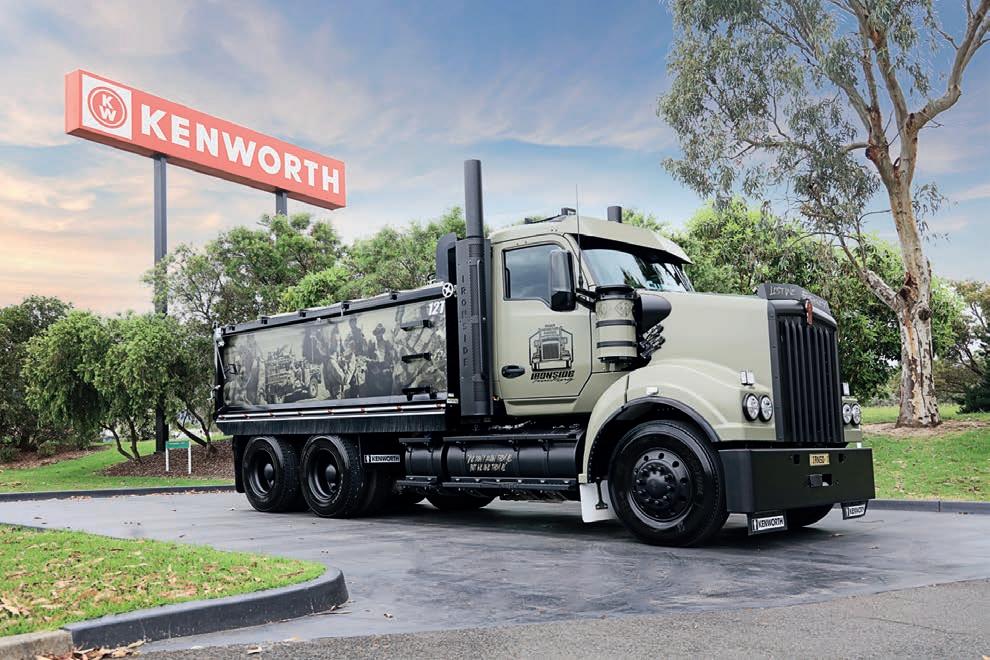
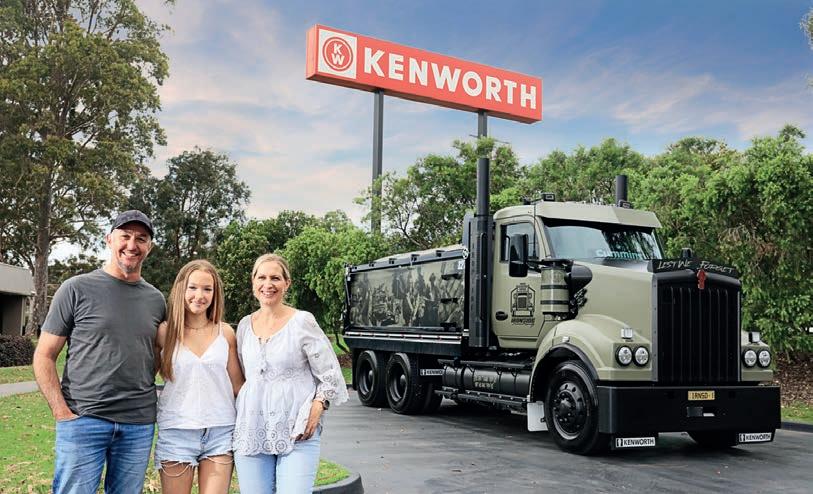
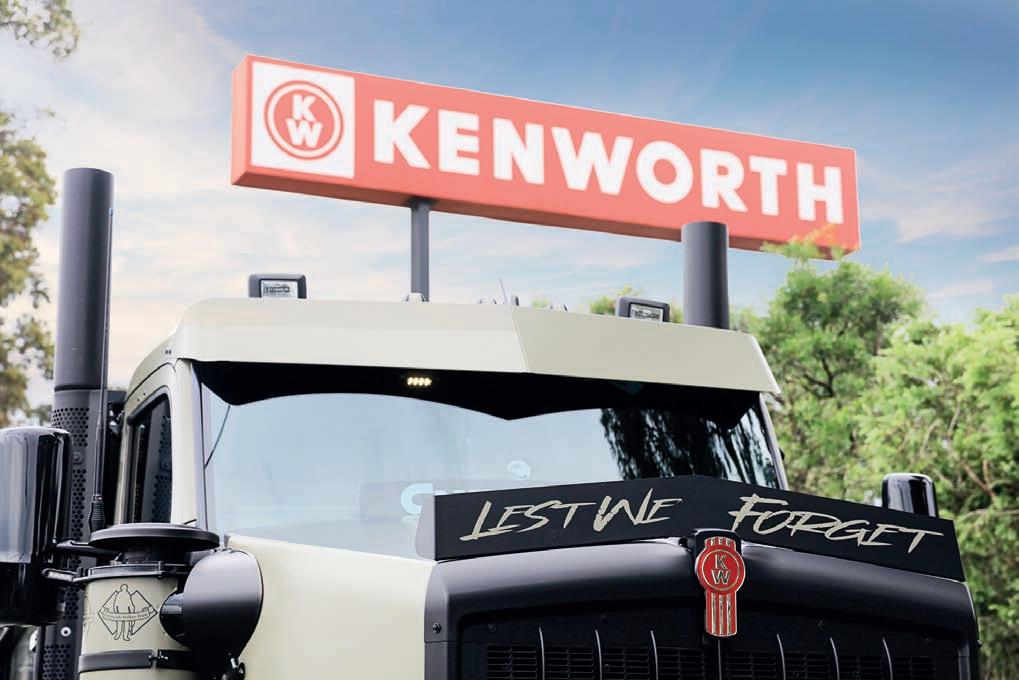
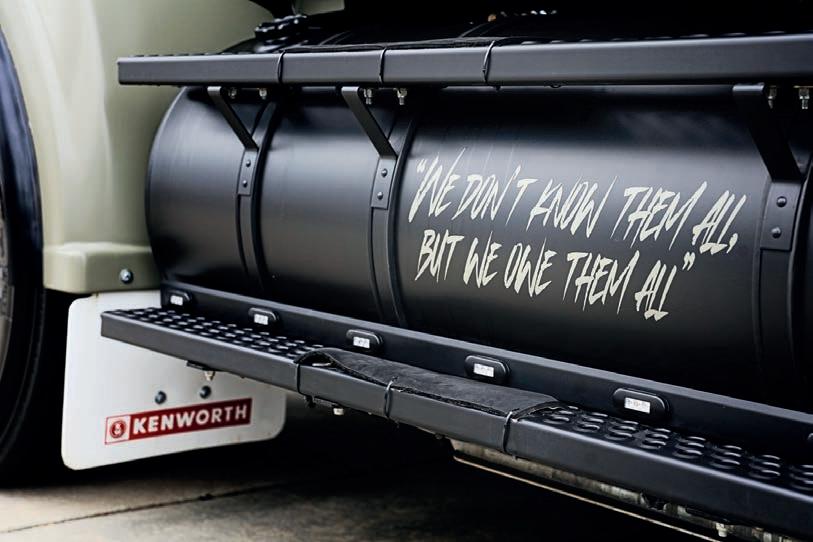
STARTED by Army Veteran Glen and his wife Rowena Ferrarotto, Ironside Trucking isn’t your average trucking business. Their first truck and each one that comes after it will serve as rolling tributes to Australia’s defence forces, veterans and their families.
Glen left the Australian Army in 2008 and during his time there served in Afghanistan as a patrol mechanic with Australian Special Forces. Since
One day I was talking to the people who were managing a major project as part of Victoria’s Big Build and I asked about how we could go about getting a truck working for them. He said if you get a truck, we’ll get you working on the project.”
And that’s exactly what he did. “There are a lot of heavy vehicle drivers coming out of the defence forces, so starting Ironside Trucking is another avenue to get veterans into employment once they leave the army,” said Glen.
Based in the Melbourne suburb of Wattle Glen, Glen and Rowena got the wheels turning on Ironside Trucking about 12 months ago, formulating a business plan and get-
choosing a truck.
After speaking with Hallam Truck Centre, they settled on the Kenworth T620 SAR with truck bodies built by Chris’ Body Builders (CBB).
The first of these, Ironside 1, is dedicated to Australian Special Forces who served in Afghanistan. It hit the road in November, with Glen behind the wheel, working on a major project as part of Victoria’s Big Build.
“As I served in Afghanistan, visually I knew what I wanted to achieve on the vehicle,” said Glen. “Hallam Truck Centre have been exceptional with their service and support, particularly knowing I was new to a ll of this. The truck was delivered to us in black and looked
because it already looked in credible,” he laughed.
“After searching on Google, I came across Hayden Ever ett at Fleeting Image in Wil liamstown – and I’m so glad I found him. He understood ex actly what I wanted to achieve and what he’s turned that into is really phenomenal. Hayden spent about a month working on the truck. It had to be com pletely stripped back, taking off a ll the chrome to paint it black.
“We wanted the truck to cover as many areas of the spe cial defence forces as possible – Commandos, Special Air Service, through to the work ing dogs who served. Hayden was instrumental in mapping out the images for the truck body to tell the story. What he has delivered is literally a piece of art.”
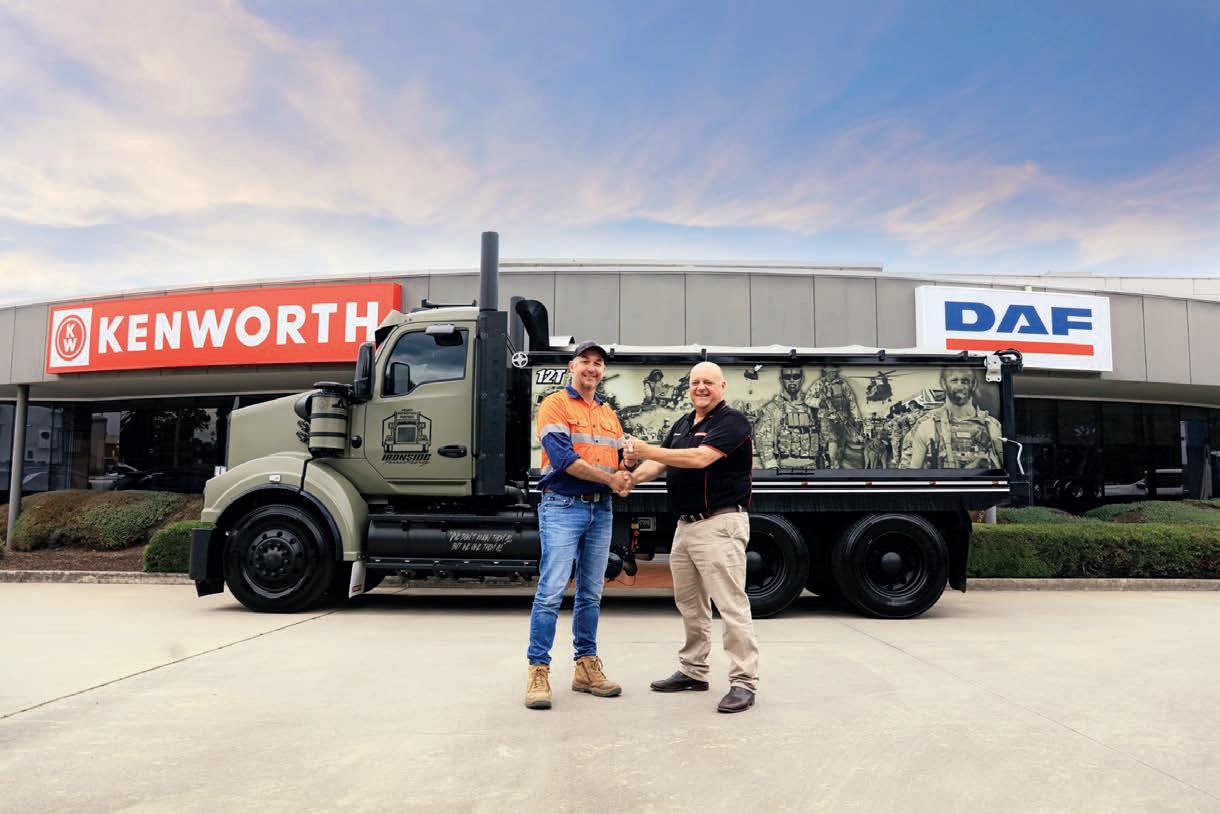
focus on the Light Horse and their sacrifice.”
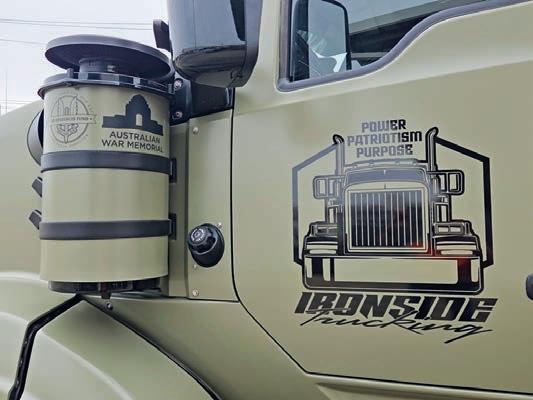
The Australian War Memorial has shown its support for Ironside Trucking and what they’re working to achieve.
Now, Ironside 2 and Ironside 3 will follow, with both expected to hit the road around April. The trucks themselves will all be identical, with a khaki green wrap and blacked-out chrome work completed by Hayden. As for the truck bodies, Glen explained, “Ironside 2 will be a tribute to Vietnam veterans, which I’m quite passionate about. I’m a life member of the Victorian Vietnam Veteran Association and those guys have offered to fund the artwork for that particular truck, which is just wonder-
“Rowena and I wanted to ensure we had as much credibility as we could in this space, as the trucks are a very public tribute to our veterans – so we connected with the Australian War Memorial and they’ve given us their support,” added Glen.
The first truck, and the two that will follow all feature the Australian War Memorial logo, along with the Commando Welfare Trust logo and Special Air Services (SAS) Resources Fund logo. “To have the support of those organisations is really important for us,” said
to delivering outcomes, employing people and providing something tangible. These trucks are a legitimate pathway for former defence personnel and their families to carve a new career in the trucking and civil infrastructure space.”
As Glen and Rowena continue to learn the ins and outs about working in the trucking space, they’re committed to doing it all the right way.
“We’ve invested a lot of money into this project and know that we won’t see a return for years, but we’re delivering a tangible pathway for those we employ.
We’re a family owned Aussie business having a crack in a very tough space. We know we’re starting a trucking business at a time when a lot of
grows. We don’t want to stop at three trucks. We’re committed to building this into something we can continue to be proud of. I’m hoping that one day we can secure opportunities to put trucks into Queensland and South Australia too – so who knows where we’ll go with all of that.
“Being able to establish a trucking business and drive our first truck is definitely a career highlight for me – and my wife and I are excited about where it goes from here. Who knows, maybe one day we’ll be able to have our trucks going from Melbourne to Darwin, having these dedicated trucks spreading the message of purpose, power and patriotism across Australia.”


















BY JAMES GRAHAM
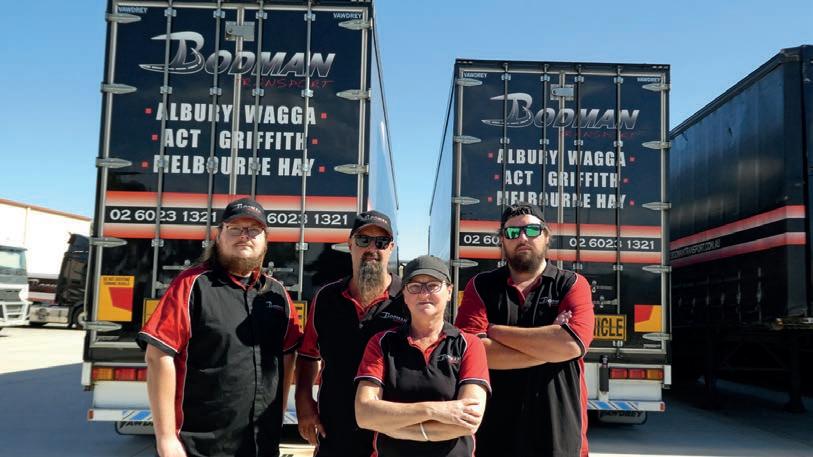
WHEN Mick Bodman bought his first truck in 2001, the plan was simple.
Tired of “working for the man”, he thought ‘bugger it, I’ll do something on my own’.
“I thought it’d be stress free – drive around, pick stuff up, drop stuff off, how easy,” laughs Mick down the phone to Big Rigs during a rare break at the bustling Bodman Transport HQ in South Albury, NSW.
Twenty-five years on, the hands-on boss at the regional express powerhouse is still doing exactly that – just on a much bigger scale than Mick, now 51, ever imagined when he rolled out with a single rig id and a desire to simplify life.
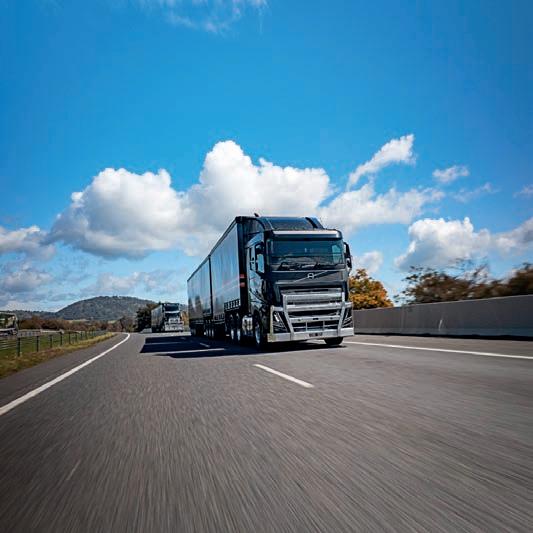
Today, you’d be hard pressed to drive through any part of North-East Victoria, Southern NSW, ACT, or in deed large swathes of metro Melbourne, without spotting Bodman Transport’s distinc tive black, red and grey livery.
Bodmans now boasts 24 trucks and eight vans, and a staff of 36 in all, most of whom are based at the main Albury hub, with four at the Griffith depot and a further three in Wagga Wagga.
“It’s been a hell of a journey – I started this to make life easy and simplify my life,” laughs Mick as he reflects on the 25th anniversary milestone.
“Looking at where I am now, for that goal, I went the wrong way. But it’s been a good run; working with people I like.
“The staff has been awesome – they are like our friends.”
In those early years, Mick was mainly subbing for Cement Australia carting all its bagged cement products, helping out on the second hydro system at the Dartmouth Dam, along with any smaller contracts he could pick up.
At the time, wife Kelly was working in the kitchen at the Bandiana army base, but before long she’d had enough of that role too.
“I said I’ll buy her a van so she could do all the ‘smalls’.
“So, she was doing all that while I was running around in the truck.”
The big turning point for Bodmans came when Mick was doing a pick-up job for a local depot on the day the manager got sacked.
“The owners came out and said, ‘Who are you?’…. well, you’re now the new manager’ of their Albury depot.
“They ended up getting taken over [around 2006] and that’s when we got introduced to Bluestar [long-standing blue-chip client Bluestar Global Logistics].”
As volumes grew, Mick expanded with a Volvo for Wagga Wagga and a UD which did the Canberra run every morning.
The UD, affectionately dubbed ‘Knackers’ by one of
its drivers because “it’s just got balls” is still going strong today with over a million kilometres on the clock.
“It’s been through the wars; it’s hit trees and I rolled it a couple of years back [a long story involving a priest stopped in the middle of the road], but it keeps bouncing back for more punishment.”
It’s been mainly slow and steady fleet growth since then.
Because of the Bluestar work and strong regional network, Bodmans was soon approached by other national carriers, such as VicTas, now known as VT Freight Express, TFM Express and Freight Specialists.
Mick, who won’t ask any of his staff to do anything he won’t regularly pitch in and do himself, also thrives on the adrenalin-fuelled, orderly “chaos” of the express sector.
Eighty hours a week is standard. The doors might shut late in the arvo, but then the night shift is up and running again by 10pm.
Mick’s phone is ringing day and night too – 15 phone calls between knocking off and starting up again is just an average day.
“You’re thinking on your feet, thinking on the fly – if it’s not flat out and everything is running smoothly, you’re not happy. You’re bored.”
Having the whole family working shoulder-to-shoulder is another big factor in the secret to Bodmans’ success.
Kelly takes charge of the admin side of things, alongside their son Shane, who
also runs the night shift, leaving Mick to be hands-on wherever he’s needed. Eldest son Jason helms operations, customer service and whatever else is thrown at him, all expertly assisted by Mick’s brother Dennis across operations and accounts.
“We always get along and for a long time even all lived together in the same house,” said Mick of working with family. “Come Friday, it was always, what pub are we going to?”
Jason, who started out washing trucks in the Bodman yard at just 14, is a chip off the old block when it comes to rolling up his sleeves and doing what it takes to get the freight delivered on time.
“We always say yes, and don’t expect our employees to do anything we wouldn’t,” said Jason, now 32, when asked what makes Bodmans the first call for those wanting fast and reliable express in their region.
“Every new run that we’ve started, either Mick or I have done that for the first couple of weeks, or a month, so when we go to tell a driver this is what you’ve got to do, we actually know what we’re talking about.
“There’s nothing worse than a boss telling you how to do your job and they don’t know how to do it.”
Preventative maintenance is another non-negotiable in the Bodmans’ yard.
“The freight’s got to get through, but now we have spare trucks and if we do have
a problem, it’s just a matter of launching another truck and bailing it out,” added Mick.
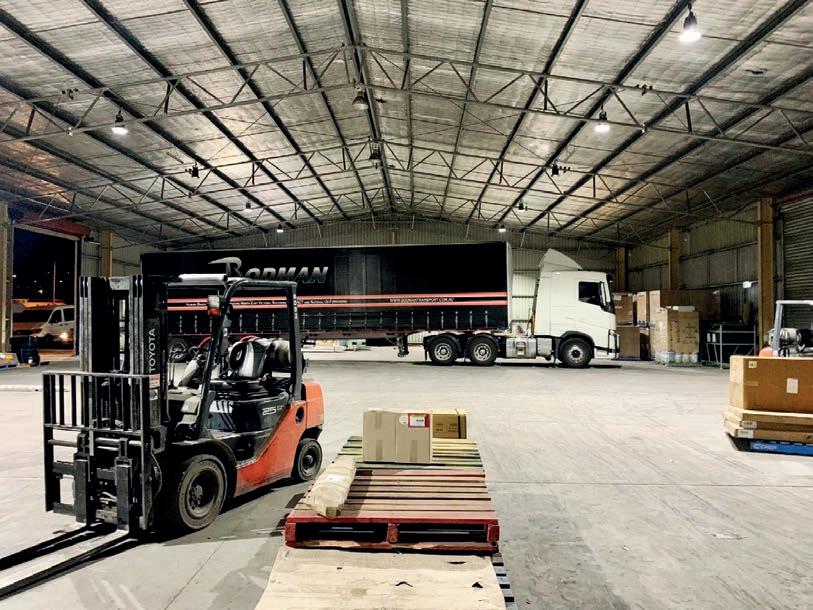
Warehousing is still a component of the Bodmans’ operation. The company has one 1400 square metre shed for storage and racking and another around 1000 square metres, both in Albury.
But that side of the business is not as big as it once was, especially during the manic days of Covid when consumer demand went through the roof, said Mick.
Although rigids were initially the backbone of the business when it focused solely on local work, since the first semi arrived in 2014 to do the Wagga run, there’s been a notable lift in the number of prime movers in the yard.
Today, there are 11 in all: two Macks and nine Volvos, the most recent being an FH 16 from CMV Truck & Bus Albury/Wodonga just before Christmas.
Bodman Transport’s rela tionship with CMV Truck & Bus goes back to 2007 when Mick was looking for their first larger new rigid truck. They now run 11 Volvos, two Macks and 11 UDs, all sourced from the dealership.
“We came up with a solu tion for them – a Volvo FM R igid which has now trav elled over 1.8 million kilo metres,” explains Andrew Thompson, CMV Truck & Bus Albury/Wodonga Key Account Manager.
“Going from one truck originally, we’ve been able to work with Bodmans for
many years. When they thought they wanted to see if prime movers would work for their business, we were able to introduce some used trucks that they purchased.
“Volvo, UD and Mack Trucks work really well for Bodmans as they’re extremely versatile.”
For Mick it also comes down to the customer service and relationship that has been built up with CMV Truck & Bus over the years.
“CMV Truck & Bus was pretty much the only company in the area that took us seriously,” Mick said.
“They actually looked after us with the first truck we were looking at buying, and through that experience, we’ve been there since.
“I think it’s been 25 trucks over the years and what I
value most about my relationship with Andrew now is honesty. If something goes wrong, he’s there.”
As for a special celebration for the big 25th milestone, Mick said don’t hold your breath waiting for the party invite.
The fact they’re still in business, working with passionate, loyal staff, while doing what they love is all that really matters.
“As Kel said, we’ve never tried to get big. We just find that we sort of get forced into it with customers saying they’re having trouble,” explained Mick.
“The last one was starting Albury to Echuca. Everyone was whinging that there’s no good service down there along the river – and now there is.”
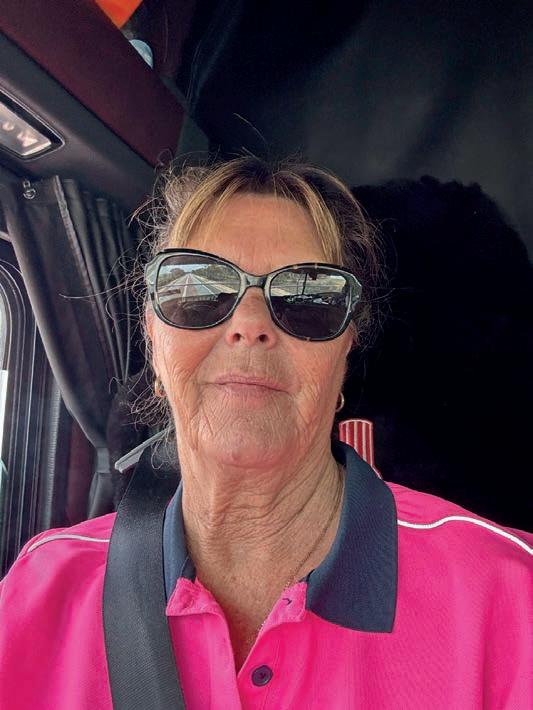
It’s been around six months since a terrifying health scare saw this truckie’s world come crashing down. Now she can’t wait to be back behind the wheel, doing the job she loves.
BY DANIELLE GULLACI
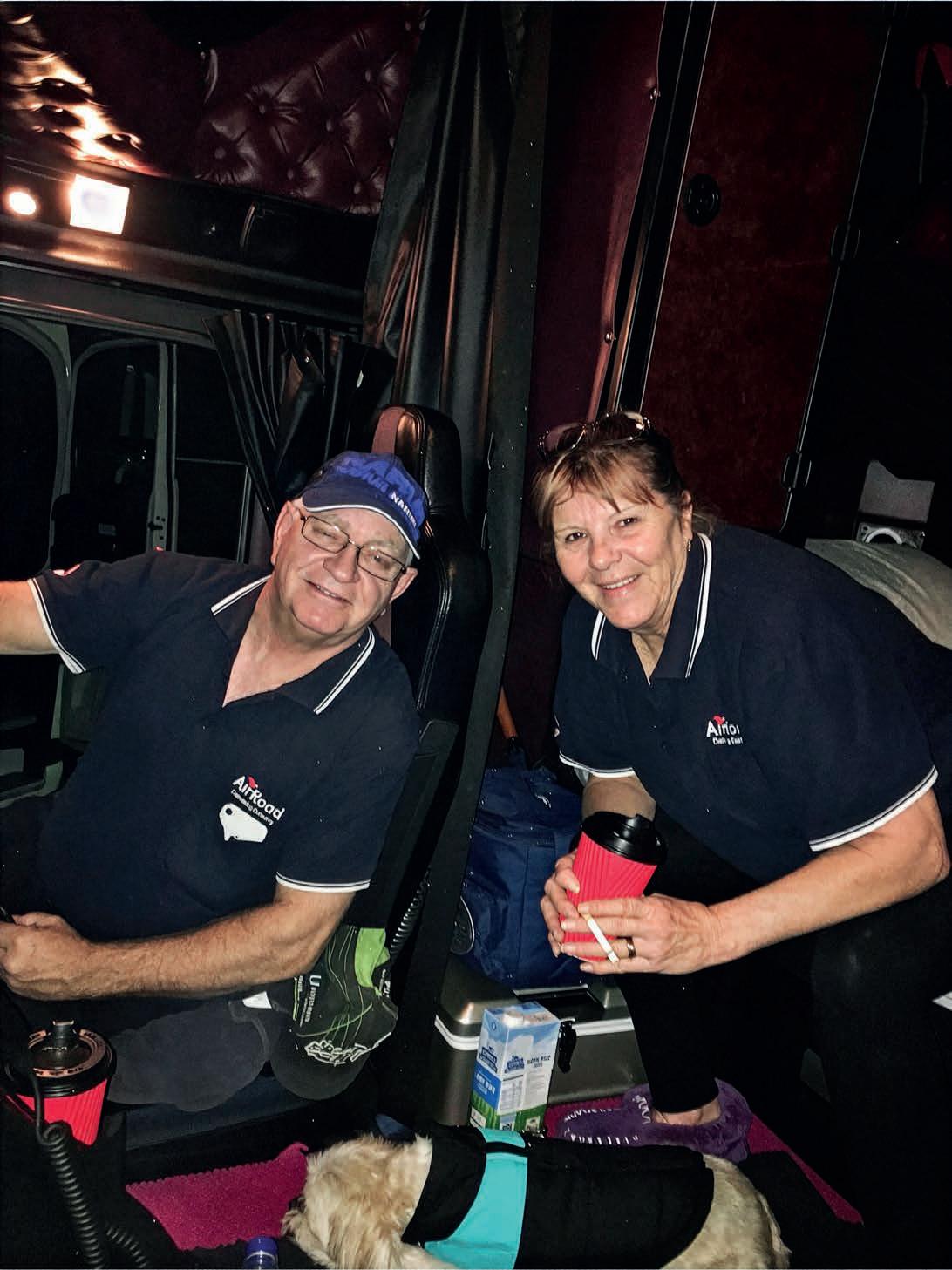
FOR Victorian truck driver Lynn Werchon Haysom, 67, what happened back in August came without any warning. Lucky to be alive and having made a remarkable recovery, Lynn is putting her terrifying ordeal behind her and hopes to soon be back doing two-up from east to west, together with her husband Tony Haysom, 66.
The long-time truckie has been in the job for 35 years and is super eager to be able to drive the big rigs again. “I see trucks out there and I get a tear, I just want to get back in there and get going again,” she said.
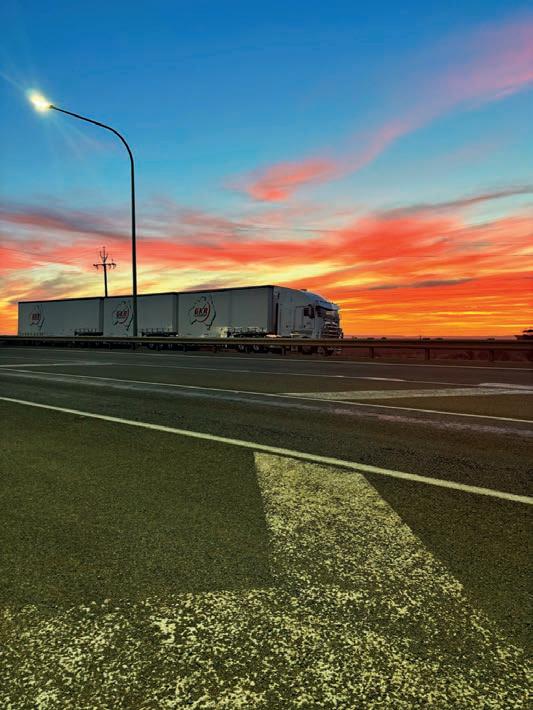
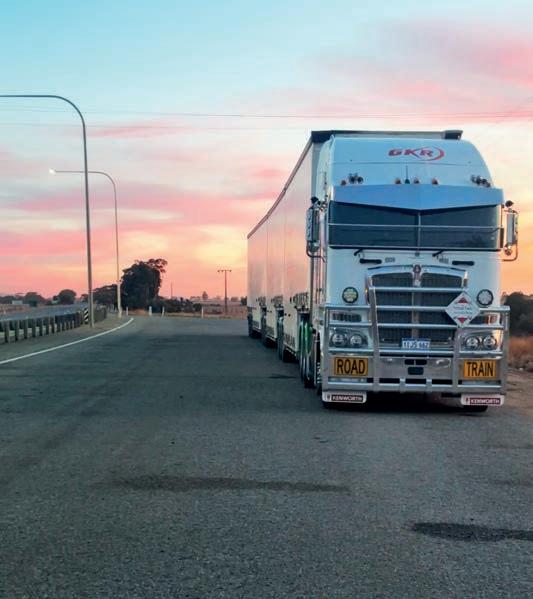
Working for GKR Transport, the Wangaratta based couple had arrived home from their usual Melbourne to Perth run one Sunday evening. Lynn was feeling a bit under the weather so did a Covid test and it came back positive. She had also been battling a headache in the days leading up.
feeling too good. I had head aches for a few days and was l to get me through,” she told Big Rigs massive headache at the back of my head. It was an awful pain that I’d never experienced before. I told Tony I was going
to have a lay down – and that’s the last thing I remember.”
As it turned out, the cause of that pain was two brain aneurisms. “Apparently I screamed out Tony’s name, but I don’t remember doing it. Doctors told me afterwards that the scream would have happened as they both burst, because it’s so painful,” she said. Tony rushed over to Lynn and found her unresponsive. “My mouth was blue and my eyes half open. He rang 000 and they said he needed to start CPR straight away. At that point, no one knew what it was,” Lynn said. Lynn was rushed by ambulance to Wangaratta Hospital. A fter a scan revealed the two burst brain aneurisms, she was air-lifted to the Royal Melbourne Hospital, where she stayed for 5.5 weeks, as the aneurisms were drained and coiled. She was also placed in an induced coma for three days. “I don’t remember any of it, not even being flown to Melbourne,” she revealed. “I ended up in ICU a couple of
happened to get her there, Lynn woke up and was unable to walk. “My legs were tired, I’d been laid up for 5.5 weeks so I couldn’t take big steps. I couldn’t walk properly and I felt quite disorientated at the beginning,” she said.
Tony continued, “When they’d ask Lynn if she knew where she was, she would shrug her shoulders and say, ‘I don’t know, up shit creek!’
“She’d often ask what had happened to her and why she was there. And it wasn’t until about three weeks in that she said, ‘You tell me that every day.’ That’s when I knew she was getting better, because she was starting to remember.”
As Lynn’s condition improved, she was taken back to Wangaratta Hospital, where she stayed for the next few weeks.
back into it,” and GKR is eager to have the couple back too, once they are ready.
“GKR Transport has been really, really supportive throughout it all. They’re all such beautiful people.”
Lynn and Tony had been with GKR just on 12 months last August when the unthinkable happened – however they’d also worked there for a three-year stint in the past as well.
Their life on the road has seen them travel all over this vast country – from Melbourne to Sydney, Brisbane, Adelaide, Perth and more.
Along with at one stage running their own fleet of three trucks for their business Mosyah Transport (their surname spelt backwards), they’ve worked for numerous other companies including AirRoad, KS Easter, as well as Nascatrans Express during a brief move to the west.

Tony gave up work to be Lynn’s full-time carer. He hopes to hit the road again soon, hopefully back doing triple road trains with Lynn for GKR.
As Tony added, “They said we were in for a rough couple of weeks and that we wouldn’t know until she comes out of a coma if she’d have full speech or any other issues. They don’t
Recalling the traumatic incident that could have killed her, Lynn said, “There were no real warning signs other than a headache. I went to sleep and I didn’t wake up.
“After going to sleep and that happening, it scared the hell out of me. For a while I
At GKR, the couple were handed the keys to a brand new 2025 K220, about six months into their role. “Before that we had a manual K200, whereas the K220 is an auto,” said Lynn. “These new ones are so different inside compared to the K200. They’re beautiful to drive. The first time I got put into an auto, I was trying to press the clutch and change gears, but I got used to it quickly and now I
Lynn underwent a driving test to get her car licence back on January 27 with both apational therapist, which she assed. She will now need to go through another driving test to get her MC licence back – and is hopeful of being back on the road next month.
“Trucking has been my life for a long time. It’s been one hell of a ride. I’m so happy to be here and more than ready to get stuck into it again!”


The industry-leading manufacturer of state-of-the-art engines and transmissions, Detroit sets the bar.
Specifically designed for integrated, optimised performance and efficiency inside Freightliner and Western Star trucks, the Detroit product portfolio has expanded to include advanced safety systems and telematics, delivering a total trucking solution.
Detroit – it’s loved by Aussies and trusted globally. DETROIT, SETS THE BAR. DetroitANZ.com | 1300 688 338
New emissions laws are here!
Rely on the platform that’s been trusted to meet them since 2019.

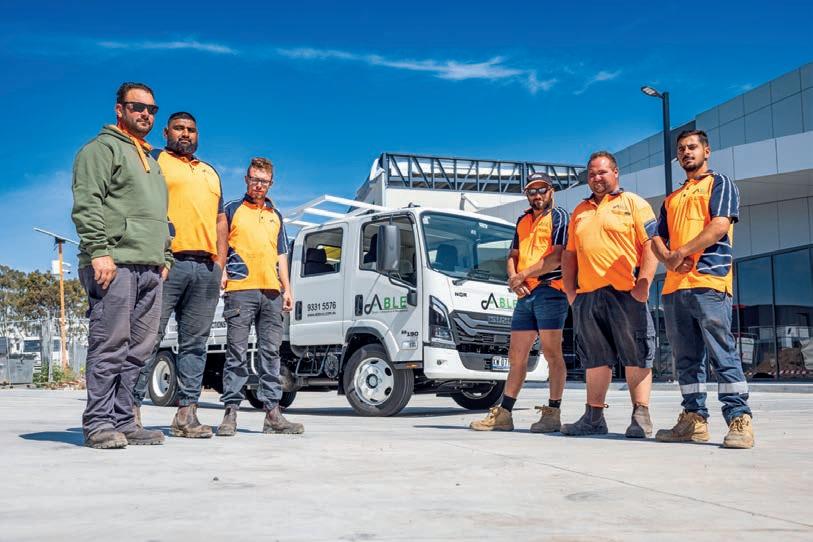
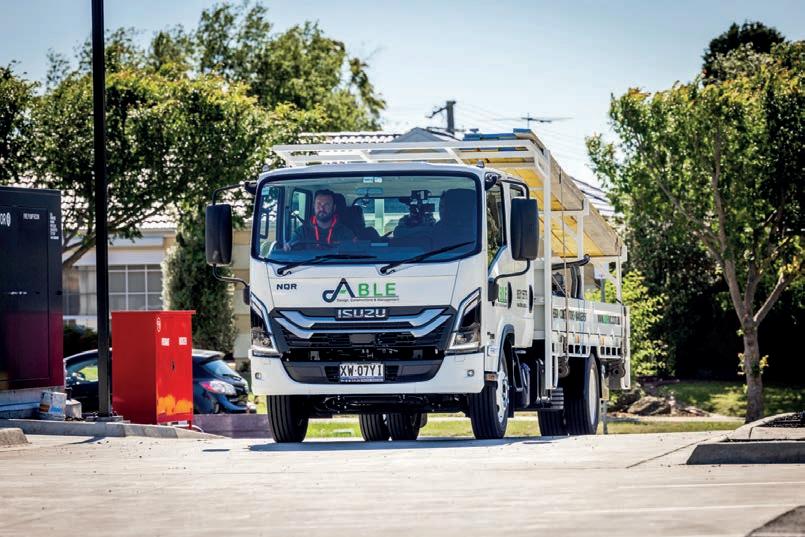
ISUZU Australia Limited (IAL) is celebrating the delivery of its 300,000th truck in Australia, delivered to family-owned Victorian business Able Constructions and Management.
Isuzu handed over the keys to the all-new MY25 NQR 88-190 Crew Cab, hot on the heels of its dominant 2025 sales result and the successful launch of its all-new MY25 range. These results mark 37 consecutive years of truck sales leadership in the country.
Started 25 years ago, Able Constructions has been a force in Melbourne’s growth corridors, evolving from shop fit-outs to a full-service operation tackling projects ranging from medical centres to high-rise developments.
Their choice of the 8800kg Gross Vehicle Mass (GVM) NQR Crew Cab was driven by a need for a vehicle that balances significant load capacity with agility for both sprawling greenfield sites and tight urban footprints.
“We’ve got the longest wheelbase you can get with the crew cab,” said Able Project Manager, known as ‘Fonz.’
“It was easy enough to just get a bigger truck, but being a light truck, it is a lot easier to manoeuvre in tighter spaces and the crew cab means I can bring the boys with me, and on rainy days, we can keep gear dry in the cabin.
“It’s the perfect tool for the job.”
The truck’s specification, including a 4500kg rated tow bar, aligns with Able’s diverse workload and transport requirements.
The Able team has been particularly impressed by the advanced standard technology, describing the experience as less like a work truck and more like “an advanced car.”
“The Full-Speed Adaptive
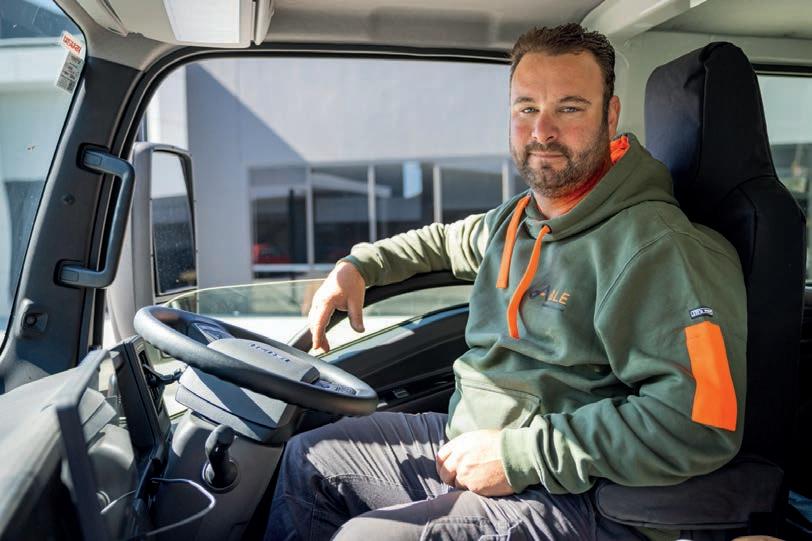
Cruise Control makes it very easy to drive. It’s like an autopilot airplane!” Fonz said, highlighting other features like Advanced Emergency Braking and Lane Departure Warning that are part of the MY25 model’s intelligent safety suite.
The Able Constructions story epitomises the fit-forpurpose philosophy that has propelled Isuzu to 37 consecutive years of truck market leadership in Australia.
According to the latest industry data, the national
heavy vehicle fleet continues to expand at an average annual rate of 2.7 per cent, with over 677,000 light through to heavy-duty trucks registered nationally.
In 2025, Isuzu captured a formidable 27.5 per cent of
the total truck market, selling a total of 12,420 vehicles.
The brand continued its domination in the light-duty segment as well, with a 50.6 per cent share and held 49 per cent of the medium-duty segment.
Craig White, Head of Sales at IAL, said the 300,000th Isuzu sale is a testament to decades of trust built with Australian businesses.
“Reaching 300,000 sales is a powerful reflection of the countless partnerships we’ve forged with hard-working Australian companies like Able Constructions,” White said.
“This milestone coincides with our latest and most impressive product offering now on sale across the country.”
The Able Constructions NQR 88-190 Crew Cab is powered by Isuzu’s 5.2-litre 4HK1-TCC engine, delivering 140 kW and 513 Nm of torque, paired with a 6-speed Automated Manual Transmission.
“Our all-new MY25 N Series, featuring our Euro VI
compliant 4HK1 engine and comprehensive safety technology, represents the next generation of Isuzu’s commitment to reliability, innovation, and driver comfort,” W hite said.
“It’s this relentless focus on delivering what our customers need that secures our position at the forefront of the industry, year after year.” For Able Constructions, the new Isuzu NQR is a mobile workshop, a team transporter, and a reliable partner for the future. “I’d definitely go for an Isuzu again,” added Fonz. “We’re extremely happy with them… if there is another option to buy another truck, we’ll definitely be going back.”
A s Isuzu Trucks looks ahead, the brand says this historic sale underscores the simple, yet proven formula of understanding the nuanced needs of Australian industry and providing the tough, intelligent, and dependable vehicles that help businesses, large and small, build their own success stories.
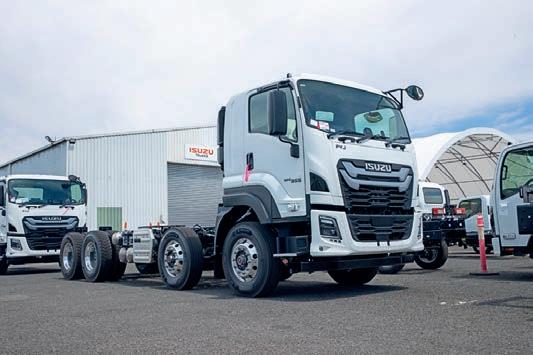
ISUZU’S popular MY25 FY Series line-up is officially on sale across Australia, consisting of six model variants under the FYH and FYJ badges.
Part of the brand’s second phase model roll-out, the new FY release rounds-out Isuzu’s heavy-duty offering, at up to 32,000-kilogram Gross Vehicle Mass (GVM).
With a range of wheelbase options, the versatile 8×4 FY line-up features a new Euro VI based powerplant meeting ADR80/04, a brand-new cab, a first-in-class safety package and more.
“Going back over a decade since its inception in 2012, the FY Series has gained a loyal following amongst a range of Australian industry, from concrete mixing to waste, utilities and excavation,” said Isuzu Australia Limited’s (IAL) Head of Sales, Craig White.
“It’s carved out quite a niche for itself over the years and continues to perform ad-
mirably against some of its heavyweight brand competitors in that market segment,” he added.
“With this release, we can say unequivocally that the FY Series offers a highly competitive spec at its pricepoint and presents a compelling value-proposition for heavy-duty operators.”
With the FYH, there’s two variants available in both 5.8 and 6.0 metre wheelbases – the FYH 320-355 R58 (5770mm) and FYH 320355 R60 (6010mm).
There are also four FYJ models in the group which include several wheelbase options, from a shorter 5080mm variant, up-to the extra-long wheelbase FYJ 320-355 R67 model at 6700mm.
Suitable for a range of tasks, all models within the FY lineup share a GVM of 32,000kg. Also found on the FV Series and common across all 2025 FY models, are the higher-capacity
Meritor MFS73 steer axle/s (with EBS disc brakes), delivering to an additional 500 k ilograms of legal capacity in accordance with recently introduced ADR 80/04 (Euro V I) emissions mass limits increase.
Across the FY range is Isuzu’s 6-cylinder, direct injection 6UZ1-TCC powerplant which has evolved in 2025, now with a new power and torque delivery of 259 kW at 2000 rpm and torque rating of 1437 Nm at 1400 rpm. This new Euro-VI 6UZ1 engine variant also has an advanced emission control system, deploying Exhaust Gas Recirculation (EGR), a Diesel Particulate Diffuser (DPD) and Selective Catalytic Reduction (SCR). All of this is combined to meet the new mandatory ADR80/04 emission levels now required in Australia.
In-line with market demand, all FY models are exclusively mated to the Allison HD4430 heavy-duty
Featuring a one-stage, three-element, polyphase torque converter for smooth power transfer, the HD4430 uses sixth generation electronic controls for adaptive shifting, superior acceleration, startability and vehicle control.
Combined with the new MY25 Isuzu electrical architecture and communication system, the engine and trans-
mission work seamlessly to interface the powertrain and provide an efficient drive and safe retardation control when needed.
The FY Series offers a complete safety ecosystem, integrating up to 12 active and passive systems for comprehensive driver confidence and occupant protection.
This is made possible thanks to Isuzu’s enhanced Advanced Driver Assistance
System – ADAS, which pairs a low-mounted windscreen camera with a bumper-integrated long-range radar. This powerful combination delivers a suite of intelligent features.
The camera independently handles functions like Lane Keep Assist and Adaptive Driving Beam, while the amalgamated dual optical sensor system data enables life-saving technologies like Advanced Emergency Braking and Full-speed Adaptive Cruise Control.
This proactive safety net is complemented by robust passive protection, including multiple SRS airbags, a crash-rated cab, and reinforced door bars, ensuring protection in just about every scenario.
“We have every confidence our customers’ needs and wants in the heavy-duty space will continue to be met and indeed exceeded with this latest release,” added White.





































Is your workhorse pulling its weight? If youʼre still driving a ute, nowʼs the perfect time for an upgrade. The all-new Isuzu Ready-to-Work range tows and carries more than your average ute. It also comes with a sleek new cab design, more advanced safety features and car-like comfort. With a wide choice of factory-built bodies designed to our exact specifications, Isuzu Ready-to-Work trucks are ready to get the job done. Are you ready to step up to a redefined workhorse? Head to isuzu.com.au or visit your nearest Isuzu Trucks Dealer today. The all-new Ready-to-Work range.






































































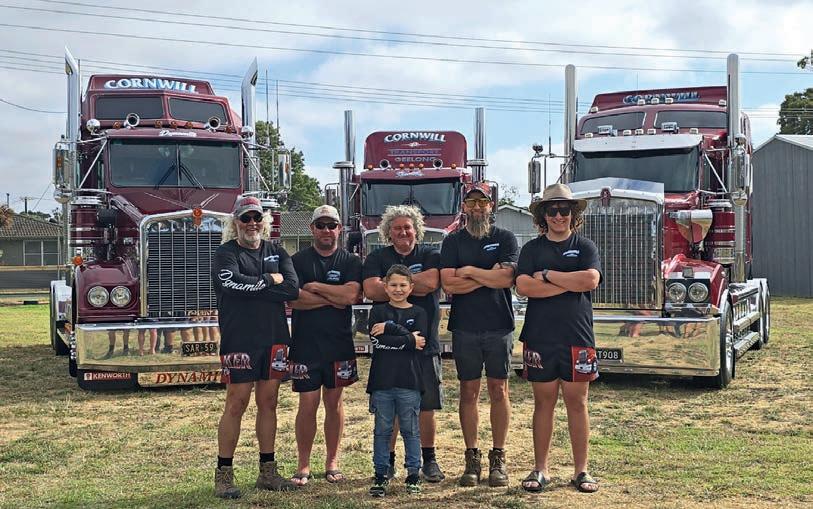
The mercury may have hit 42, but this regional show proved again why it’s among the best, with top gear, big prizes and a community that always delivers.
BY GRAHAM HARSANT
NO matter the effort and the months of preparation that go into staging a truck show, at the end of the day you are always at the mercy of the weather.
Saturday, January 24, was forecast to be a blistering 39 degrees at Koroit, a town normally known for its mild summers. As the day approached it went to 40, 41 and then to 42.
The result? Numbers were down in both trucks and public attending. And that is a shame for the effort that goes into making this truck show among my top 3 favourites.
That said, the quality of equipment on display, from the Cornwill’s three to Noel Lane’s fleet was as good as you’d find anywhere.
The other benefit for those attending was that the odds of winning a prize were considerably shortened. And, as I note every year, there is no other truck show that comes near Koroit as far as the prize pool is concerned.
Every award came with a $100 fuel card. Every award came with 20 litres of truck wash – and on and on it went.
‘The Roadie’ Roadhouse for example gave every winner $50 cash. In total there was $40,000 in cash and prizes given to the truckies who made the effort to attend.
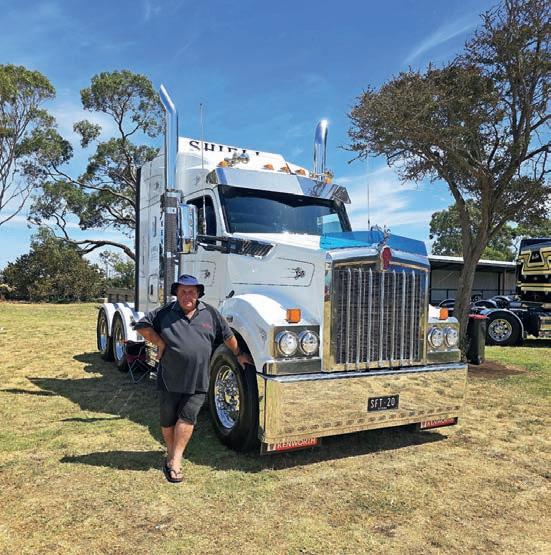
Phil Garrett lives back up the road away, at Colac and drives for Shiell Transport.
He has been supporting the event since day dot and had a smile on his face this year because his boss has given him a new drive in the shape of a Kenworth T410 SAR.
With Shiell Transport for seven years, this is Phil’s third truck with the company.
“I must be wearing them out too quickly,” he quipped.
“It’s actually six years old and I got into it last October after the boss did a rebuild on it. I’m very happy with it.
“It’s a 2020 model and runs a 530hp PACCAR motor, of which we don’t see too many. It’s an 18 speed auto which suits me just fine – particularly when in heavy traffic.”
Phil has a truck of his own sitting in the shed at home, in the form of a Cleveland’s cabover Kenworth (of course!). We can look forward to seeing that at Crawlin’ the Hume in April.
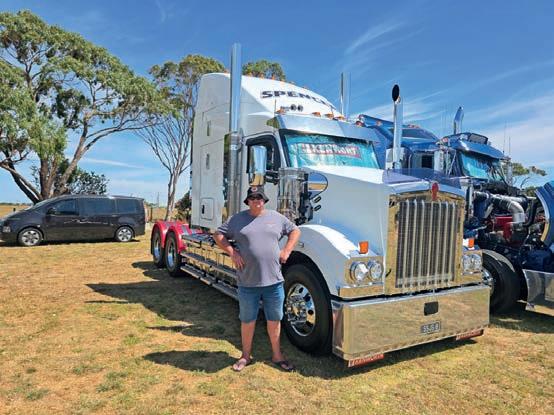
Next to Phil at Koroit is another SAR, this time the considerably bigger T610 which starkly illustrated the difference in size of the two trucks.
Brad McQueen has been with Spencer Transport for three years and hauls timber and general freight from Adelaide to Brisbane and all points in between.
With Cummins X15 power, a 50” bunk, TV, microwave, two fridges and Custom Air, The 610 is a comfortable place in which Brad spends most of his weeks. With only 60,000km on the clock, he says he didn’t
have to spend a lot of time bringing it up to scratch for the show.
“I had one of these prior and that was also a brilliant truck. I will tell you where you can stick those European jobs,” said this Kenworth-biased bloke.
Noel Lane also has a number of Kenworths, but is nowhere as biased as Brad, with his 42-strong fleet comprising a number of brands.
Based at Killarney, next door to Koroit, Noel has been a supporter of the show since its inception.
“The area gives to us and we like to give back,” he said while standing in front of 10 of his fleet. “We might live next door but the trucks were doing what trucks do, so had to be back home on the Friday to be cleaned and preened for the show. We had these all in here by 4pm that day.”
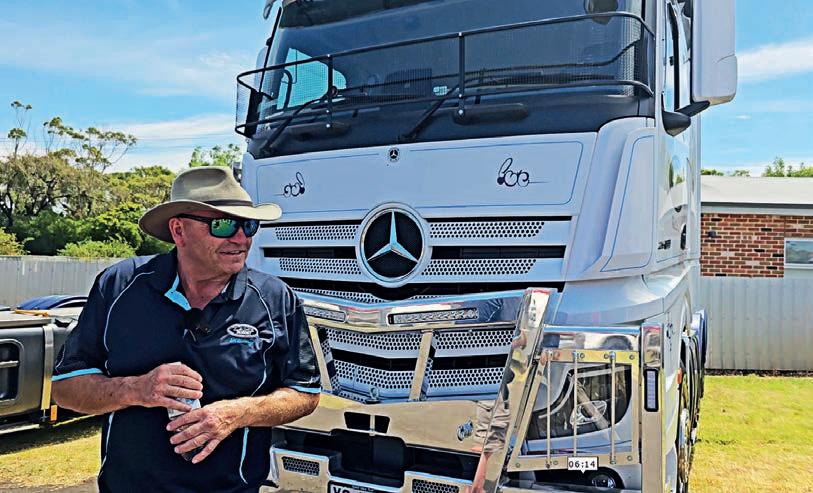
As mentioned, Noel is not a one-brand fanatic with the trucks on display covering a number of brands: Mercedes-Benz, DAF, Volvo and Kenworth stood side by side in the Lane display.
“We run a dozen Kenworth and have a big contingency of Benz and Volvo along with our new foray into DAF. We also run a few Cascadias. The Benz’s are really good on fuel and comfortable and the Volvo are a great all-round truck. We buy the XXL models which offer a bit more cab space.”
Like many others, Noel grew up on a farm growing produce and it had to be moved to market, “and it went from there.”
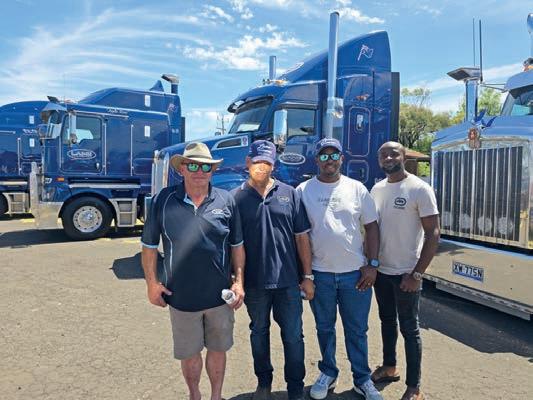
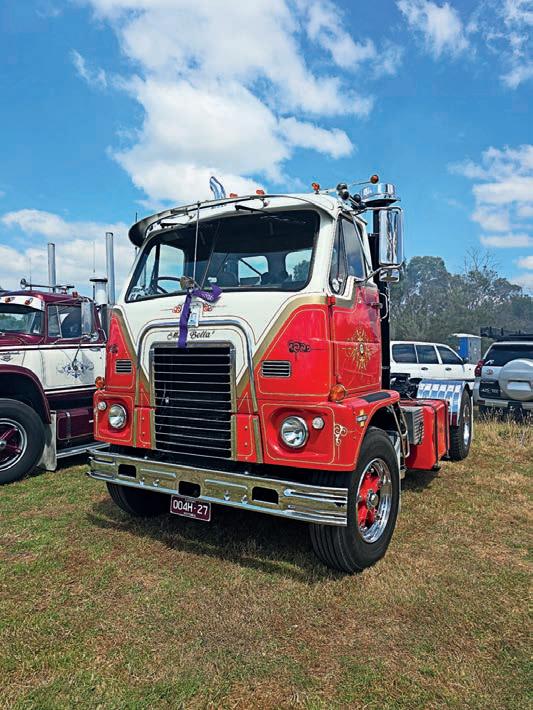
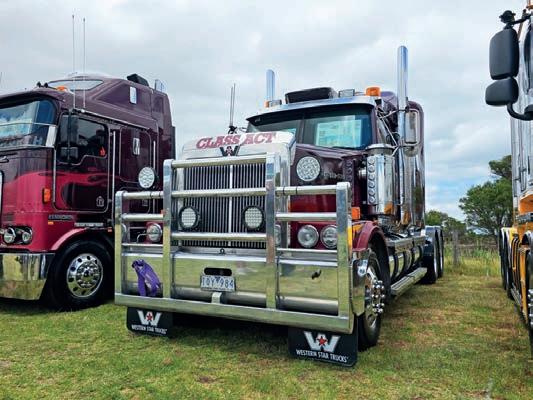
Noel went looking overseas to fill his needs. “Some people don’t like it, but we have to keep trucks moving.”
He then introduced me to three really nice blokes in Riaan Schmulling from South
da and Payne Mubaya from
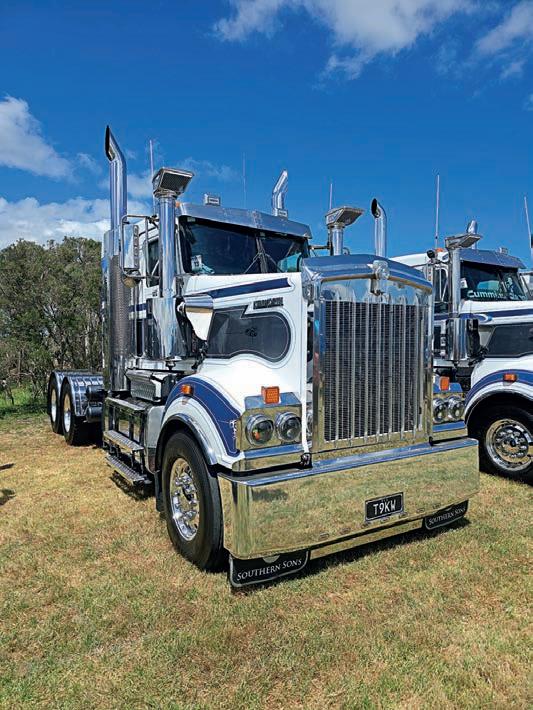
ly of their boss (Pablo gives Noel a 9/10 because no-one’s perfect), all three talked of the training they undertook before
the boss would let them loose with his trucks.
“We had to go through extensive training,” said Pablo. “I used to drive a B-double in South Africa but the rules and so forth are different here and Noel was not going to give us
the wheel until we understood all the local requirements.
Pablo has a claim to fame by appearing on Outback Truckers. “He’ll be signing autographs later,” laughed Noel.
Continued on page 24


16.5” x 7” Drive
RDPBSK4515Q
Q Plus 16.5” X 8 5/8”
RDPBSK4711QP
16.5” x 7” Drive Q-Plus
RDPBSK4707QP
16.5” x 5” Steer
RDPBSK4720QP
BPW BC36 Brake 95
RDPBSKBC3695
Q Plus MG2A 4515Q
RDPBSK24515Q
Q Plus MG2A 4707QP
RDPBSK24707QP RG2 Midland Style Valve
From page 22
MIDFIELDS was another company that turned up with a fleet to support the show –the company’s second time at the event.
Dave Noonan is one of their drivers who is moving from a T909 to a... T909. Of course he is. He’s particularly proud of the new name, ‘The Chief’. “Should sound good over the UHF.”
Dave who hauls cattle said, “Did a lot of the Birdsville track last year. We usually do two weeks at a time carting cattle down from Woolsthorpe up to the Birdsville track into Clifton Hills to put them on agistment.
“I’d not done cattle before this apart from working in the abattoirs when I was 16-and-a-half. Then I went away doing other jobs and started driving trucks. I decided I’d like to meet the beef while they were still breathing. This has been the best job I’ve ever had.”
Dave had just returned from the outback in his current drive and its presentation at Koroit was top notch, reflecting his pride in his truck and the Midfield Company.
David Whyte was also at the show. This Dave works as the Western District Salesman for Scania. His relationship with the company goes back to when he won that company’s Young Driver of the Year. The prize? A Scania!
“I had my own trucks for 10 years. Winning that Scania is what got me out of the American trucks.
“A couple of months in one of these and you wonder what you were doing wrong before. So ever since I’ve been a big fan of the product.”
So much so that Dave became a driver-trainer for the company for a period before going back to operating his own trucks again.
Then the opportunity came in the sales role which was too hard to resist given his love of the product. If you live anywhere west of the Calder Highway and are in the market for a Scania, Dave’s your man.
As well as the usual category awards, this year Koroit inaugurated the ‘Elite 5’ from which the Truck of the Show was announced.
Those five were: Trevor Davis – 1960 International AA150; Morris Transport – 2024 Kenworth C509; Andrew Derham – 1989 Mack Value-Liner; Cornwill’s – 2022 Legend SAR; and Whitehaul Transport (Dazza) – 2018 Kenworth T900 Legend.
From these a winner was announced and Troy, Wayne and Rick Cornwill walked away with the big one for ‘Dynamite’ (as well as category winners for their 2016 T909, ‘Paradise’ and 2014 T404 SAR driven by long-time employee, Hill Bill.
As if you thought the boys couldn’t do any more to Dynamite, this year they removed a steer wheel and propped up the hub with a stand (chrome of course) so that the public could get an even better view of the engine bay with its chromed sump,
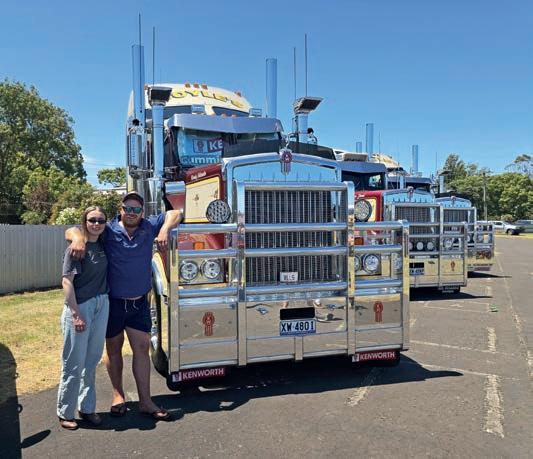
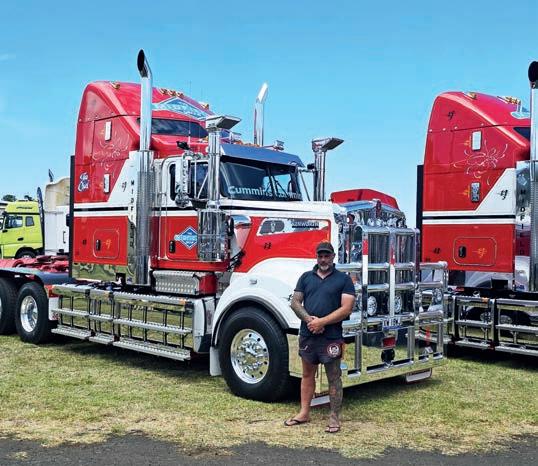
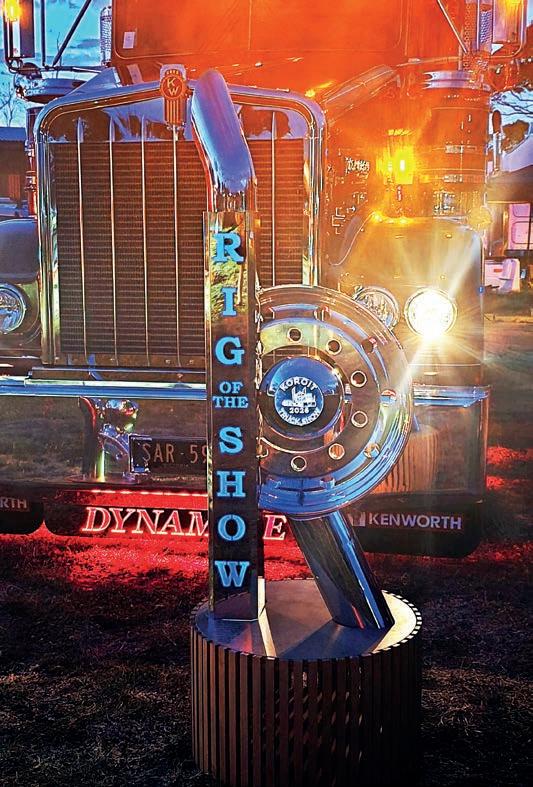
rocker cover and anywhere else capable of its application. Congratulations to the Cornwills, all who won prizes and all who braved the scorcher to participate. Also, congratulations to organisers Graeme Morris, Richard Allen and the crew for another superb show. And thanks to Graeme for organising the repair of our Ter-
ritory so we could get back home.
If you’re going to break down anywhere folks, do it at Koroit. You won’t find a more generous and helpful community.
• For the full list of show category winners, head to bigrigs.com.au and search ‘Koroit Truck Show’.
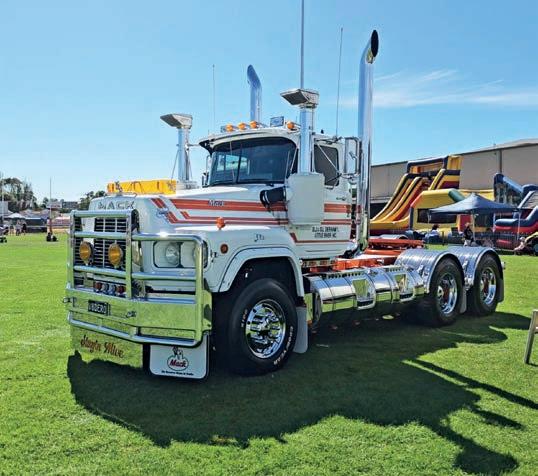
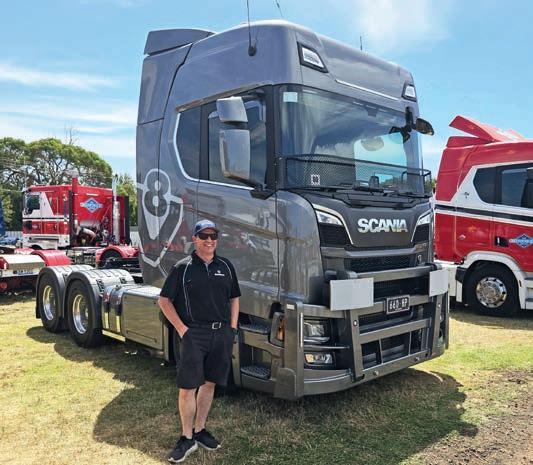
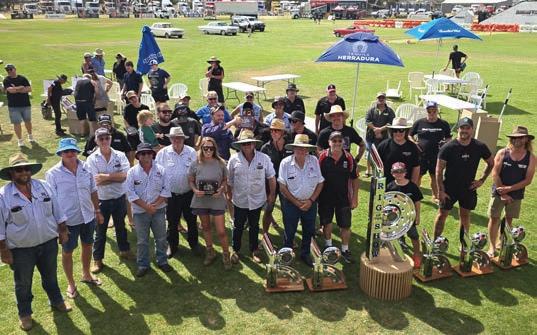
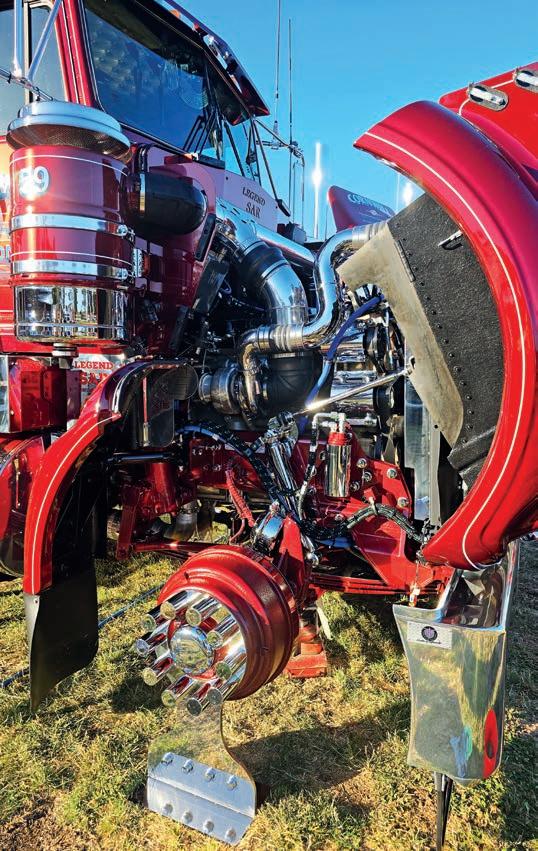
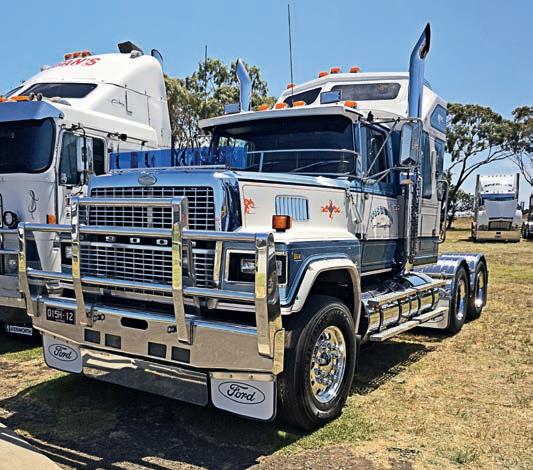
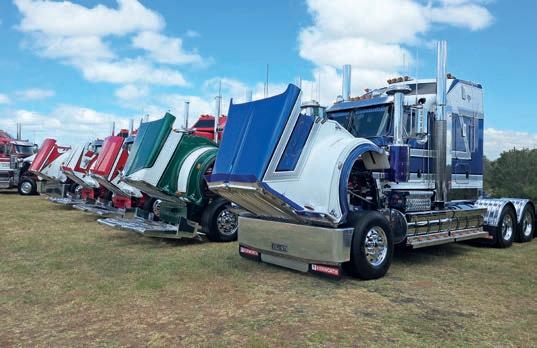
MORE POWER, MORE CAPABILITY, MORE SOLUTIONS TO KEEP YOUR BUSINESS MOVING.
The Hino 700 Series is engineered for operators who demand proven reliability, advanced safety, superior technology, and operational efficiency, all in a versatile heavy-duty truck. The expanded range now offers increased power, more transmission options, and greater adaptability across a wider range of applications. Featuring the most comprehensive Hino SmartSafe package ever, and the trusted, all-encompassing support of Hino Advantage, the 700 Series is the intelligent choice for fleets that work hard and want to stay ah ead. Find out more at hino.com.au
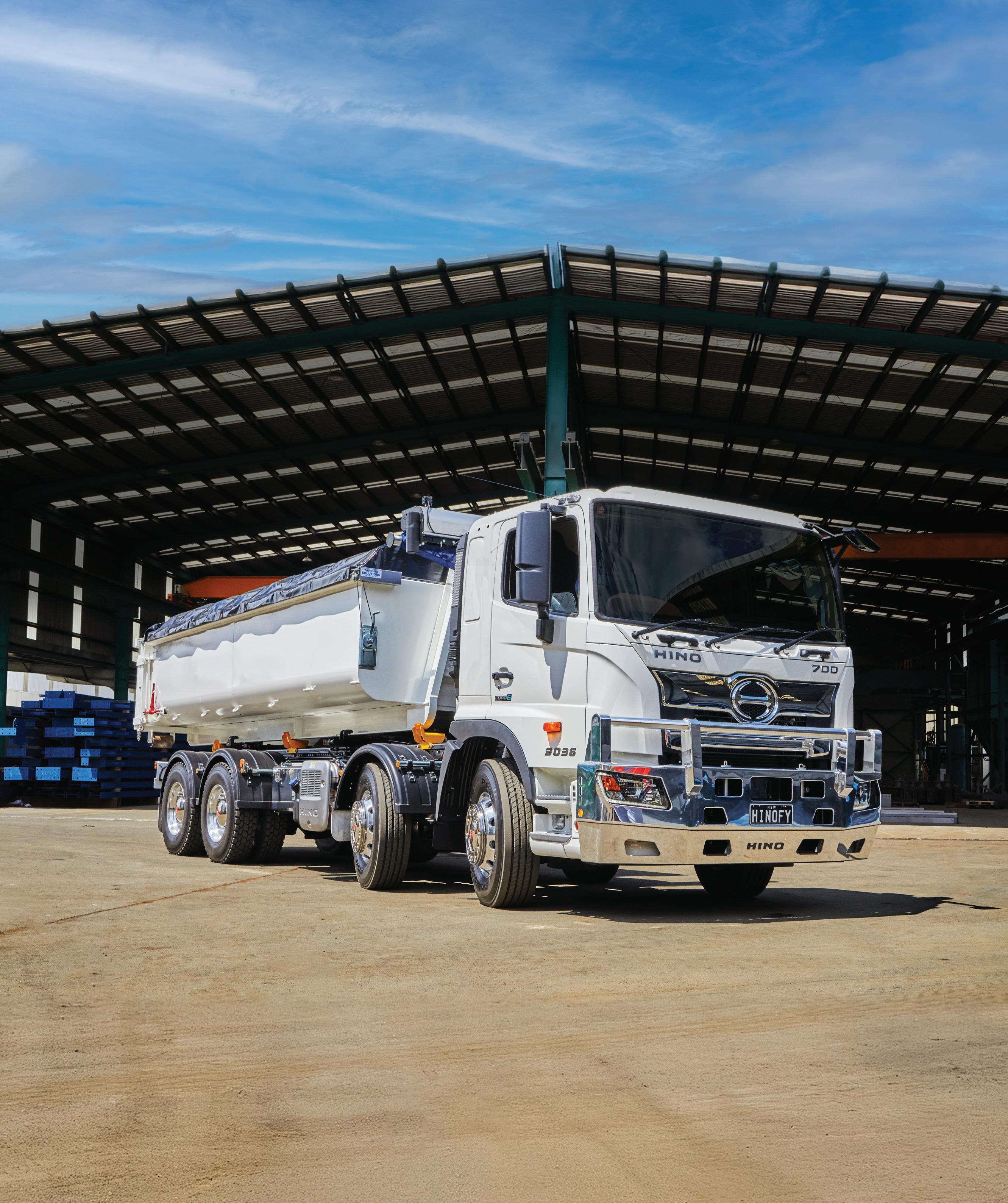

FROM grassroots truck shows to major industry conferences, 2026 is shaping up as a huge year for Australia’s transport sector. Whether you’re chasing chrome, industry insights or a good cause, these are the key trucking dates to lock in your diary.
If we’ve missed anything major, see the bottom of the listings for contact details. It’s free to have your event on the 2026 calendar and it will also feature at bigrigs.com.au.
Walcha Antique
Machinery and Truck Show
February 13-15
Walcha, NSW
Running across the weekend, this event will feature a tractor run on the Friday, a family on the Saturday, along with a swap meet throughout the three days. Camping is available, however powered sites are limited.
NRFA Annual Conference
February 21
Wollongong, NSW
nrfa.com.au
The NRFA Annual Conference will feature a program that’s jam-packed with industry updates from a variety of key speakers. Connect with industry experts, learn about the latest transport trends, and gain valuable knowledge to advance your career.
Camp Quality
Convoy Geelong
February 22
Beckley Park, Geelong fundraise.campquality. org.au/convoy/geelong
Camp Quality’s Convoy Geelong is more than just a drive sees participants travel a 40km circuit, that starts and finishes at Beckley Park, where an awards ceremony, free family fun festival, and show ‘n’ shine will take place. The event raises money for Camp Quality, supporting kids facing cancer.
NSW Rural Carriers’ Convention
February 26-28
Coffs Harbour, NSW
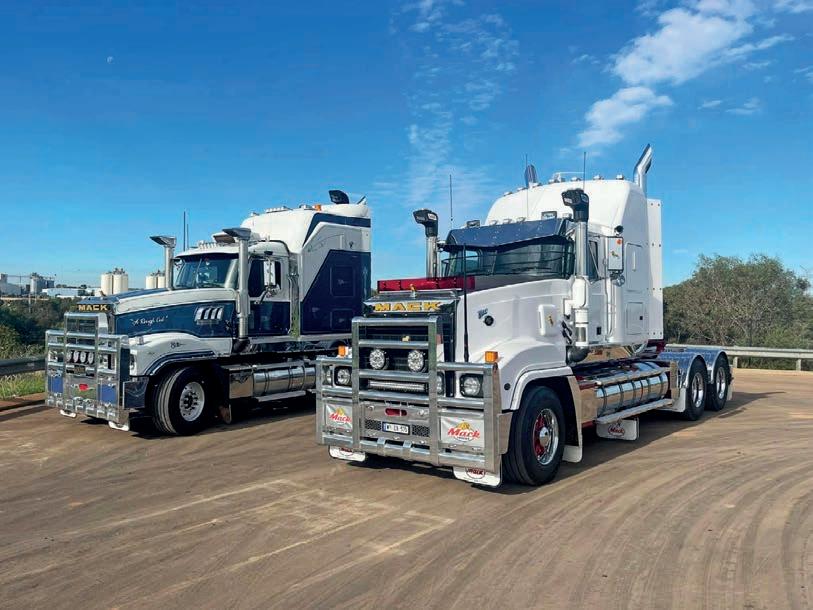
Tasmanian Truck Owners & Operators Association Truck Run
March 1
Longford, Tasmania
Jimboomba, Queensland
Featuring a stunning array of trucks, from state-of-the-art haulers to timeless classics, each with their own unique story to tell. There will also be live music, delicious food vendors, and family-friendly activities for all ages. All profits from the day go towards local charities.
JUNE
Trucking Australia Conference
June 3-5
Hamilton Island, Queensland truck.net.au
Returning to the Melbourne Convention and Exhibition Centre, MegaTrans is Australia’s largest integrated conference and exhibition dedicated to the logistics and supply chain industry. MegaTrans provides a unique platform to explore the innovations, equipment, and services that will shape the future of logistics.
Camp Quality Convoy
This annual truck run will depart at 9am, making its way to Longford Showground by 10.30am, where there will be a fun-filled day, including food and drinks, entertainment, face painting, a raffle, auction and more. Entry by gold coin donation.
White Hill Truck Drivers’ Memorial
March 7
Murray Bridge, SA whitehilltruckdriversmemorial.com.au
This year’s convoy departs from the White Hill parking bay at 10.30am with the service starting at 11am. There’s no truck show this year, instead the Bruze Custom Trucks Perpetual Trophy, usually awareded to Best Truck in Show, will go to the best convoy rig. Refreshments will also be served at the wall.
The Rock Show Society Inaugural Truck Show
March 7
The Rock Showgrounds, NSW
Head to the Rock Showgrounds for a truck show, food stalls, full catering, a
Shaping up to be the biggest Rural Carriers’ Convention yet, 2026 brings a new format. It will take place against backdrop of Opal Cove, Coffs Harbour. The program will feature industry-led panel discussions, updates on important industry issues, live competitions, including the Livestock Conversion Challenge, and more.
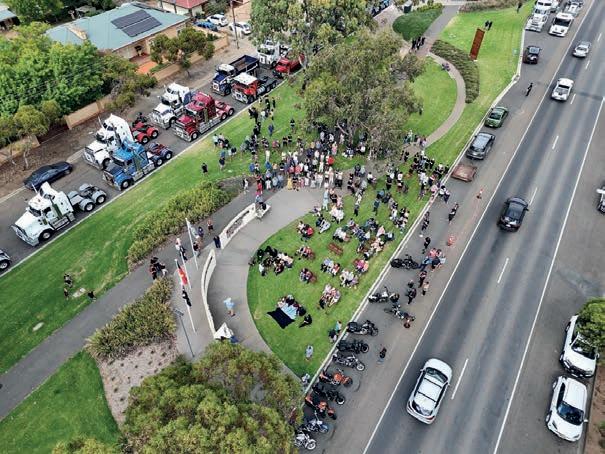
barbeque, kids’ activities and more. Raffle tickets will be sold on the day and drawn in the afternoon. Entry is $10, with free entry for children under 16.
Colac Truck & Ute Show
March 14
Colac Showgrounds, Victoria
The 2026 Land Transport Colac Truck & Ute Show will feature a show ‘n’ shine, live entertainment, a range of stalls and plenty for the kids. Entry is $10 for adults, and $5 for concession/pension/ kids 12-18. There are also family passes available for $20. Children under 12 receive free entry.
Sydney Truckfest
March 21-22
Clarendon, NSW sydneytruckfest.com.au
An ultimate celebration of the industry, Truckfest brings the trucking community together at Hawkesbury Showground for a weekend filled with truck displays, industry exhibits and innovations, mouth-watering food, live entertainment, and activities for the whole family.
WA Mack Muster and Truck Show
March 22
Quarry Farm, Whitby, WA mackmuster.com.au
Since its 2020 debut, this event has become an important fixture of Perth’s trucking calendar. Open to all truck makes and models, the WA Mack Muster and Truck Show raises funds for vital cancer research at the Harry Perkins Institute for Medical Research.
LRTAQ 2026 Annual Conference
March 26-28
Townsville QLD
Taking place at The Ville Resort in Townsville, the 2026 Livestock and Rural Transporters Association of Queensland Conference will bring the industry together for three days of networking, insights, and social events –including the Bull Carter’s Ball where the winner of the Young Person in Transport Award will be announced.
JT Fossey Trucks 2026
Volvo & Mack Truck Show
March 28
30 Dampier St, Tamworth, NSW
jtfosseytrucks.com.au
The local dealership promises a great day of coffee, food trucks, kids’ activities, and of course Volvo and Mack trucks everywhere. JT Fossey says it’s looking for a display of everything Volvo and Mack. A ‘cool’ fridge from Blingman HQ is also up for grabs.
Bredbo Truck and Machinery Show
April 4
Bredbo, NSW
From vintage trucks, engines and tractors to modern-day vehicles, the Bredbo Truck and Machinery Show will have vehicles of all ages on display. There will also be a vintage tractor pull, stalls, a jumping castle, live music and more.
Crawlin the Hume
April 11
Wallan East to Albury
The convoy will depart from Commercial Drive at Wal lan East and make its way to the Albury Race Club for a special dinner (bookings es sential). The convoy will also stop along the way at Chil tern Racecourse for lunch, before a grand parade along the main street.
MAY
Truck Week
May 11-18
Held nationally
truckweek.com.au
Truck Week returns in 2026 with a national focus, invit ing businesses and organisations across the country to take part in their own communities and workplaces. It will be a nationwide celebra tion of Australia’s heavy vehi cle, road freight and logistics industries.
TruckShowX
May 18-19
This major industry event will feature interactive workshops, case studies and interactive discussion on driving solutions for the industry’s future. It will provide an opportunity to connect with peers and industry leaders, to help build relationships and create new opportunities beyond the conference.
JULY
Casino Truck Show
July 31-August 1
Casino, NSW casinotruckshow.com.au
Held over two days, the Casino Truck Show is a community event that showcases the transport industry, held in the heart of Casino’s CBD. The 2025 event attracted an estimated 40,000 people on the Saturday who got to see 550 trucks.
Megatrans
September 16-17
Melbourne, Victoria
Newcastle November 8 Maitland Showground, NSW fundraise.campquality.org. au/convoy/newcastle Raising money for Camp Quality, the convoy starts and finishes at Maitland Showground, where a free family festival will be held, packed with entertainment and experiences for the whole family.
Dane Ballinger Memorial Truck Show
November 14 Bathurst Showgrounds, NSW bathursttruckshow.com.au
This event brings together truck enthusiasts, families, and the local community to remember Dane Ballinger and celebrate the trucking industry he loved. Come and see the huge range of trucks on display, from old classics to custom rigs.
Have you got an event you’d like included in the next Save the Date? Email all the details to editor@primecreative.com.au.
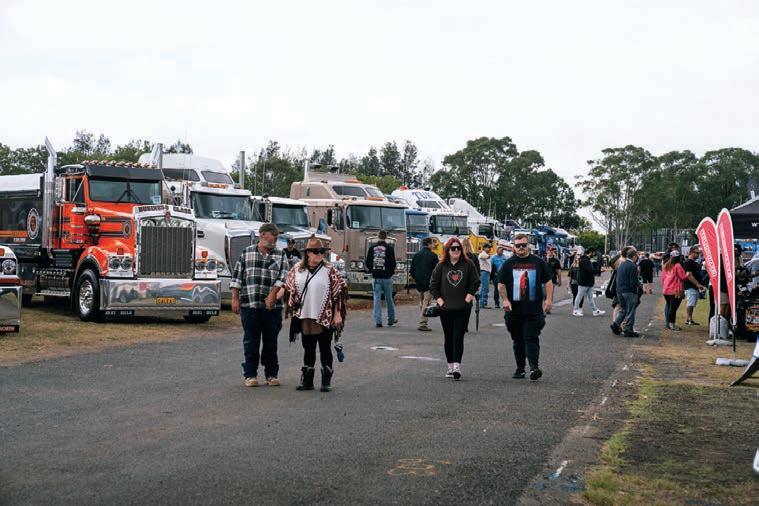
Hunter Valley, NSW
Taking place at Rydges Re sort in the Hunter Valley, TruckShowX will centre around the theme ‘Driving the Future’ and build on the key trends emerging from the recent 2025 Brisbane Truck Show, especially the potential for technology and innovation to boost produc tivity, efficiency and safety outcomes.
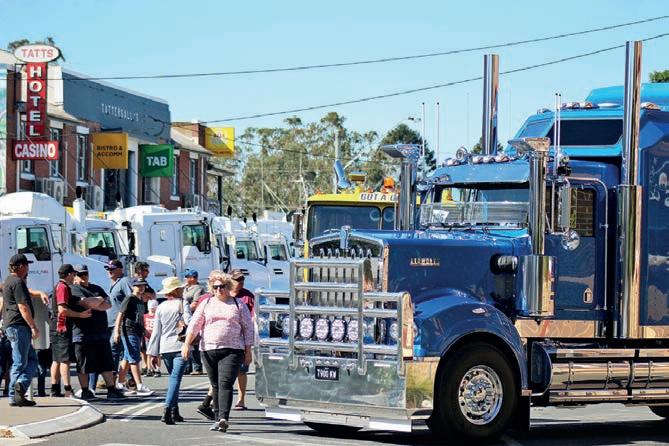
Scenic Rim Truck Show
May 30
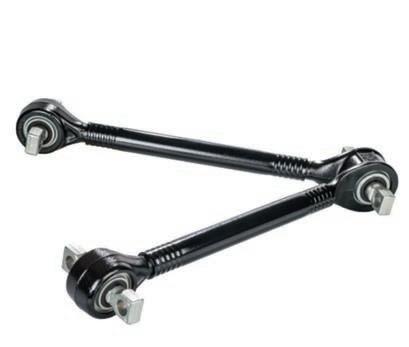


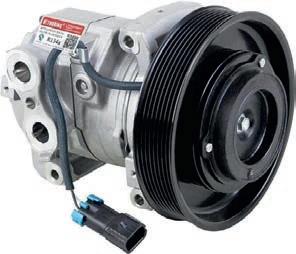
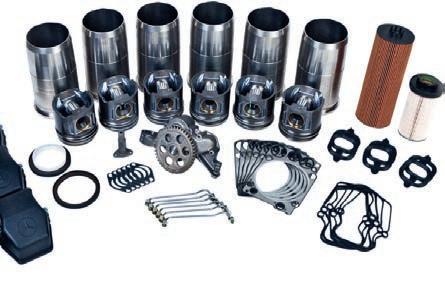




Share your truck pics to win with Shell Rimula
SHELL with there are even more reasons to send in your best truck shots.
team will choose a #PicOfT heMonth, with the lucky winner r Coles Express Gift Card.
ular posts on the book page, calling for your best tr
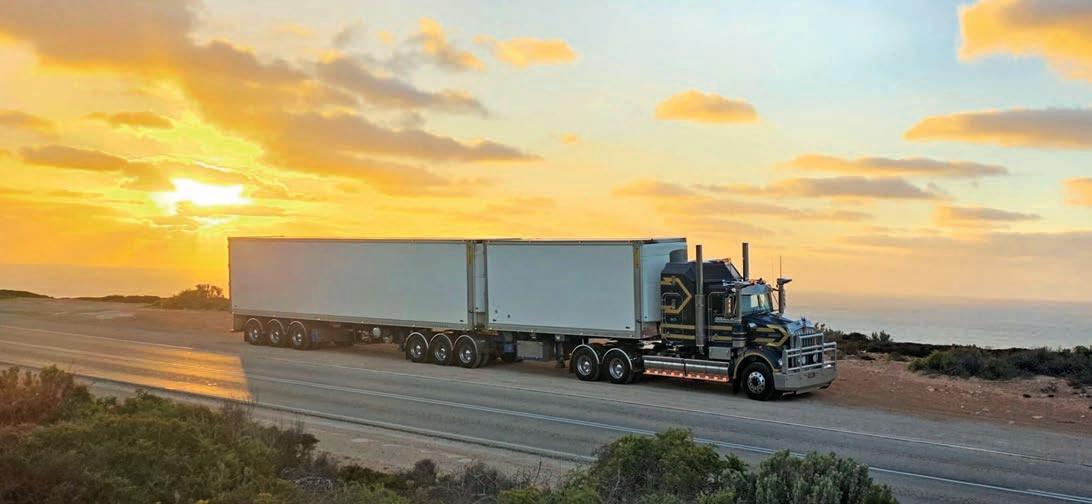
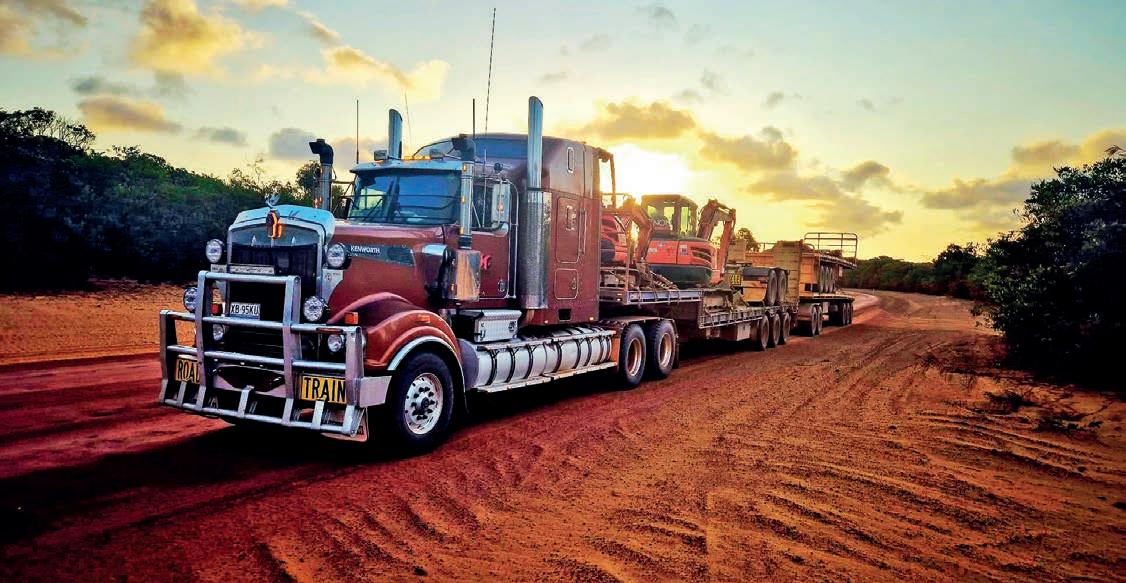
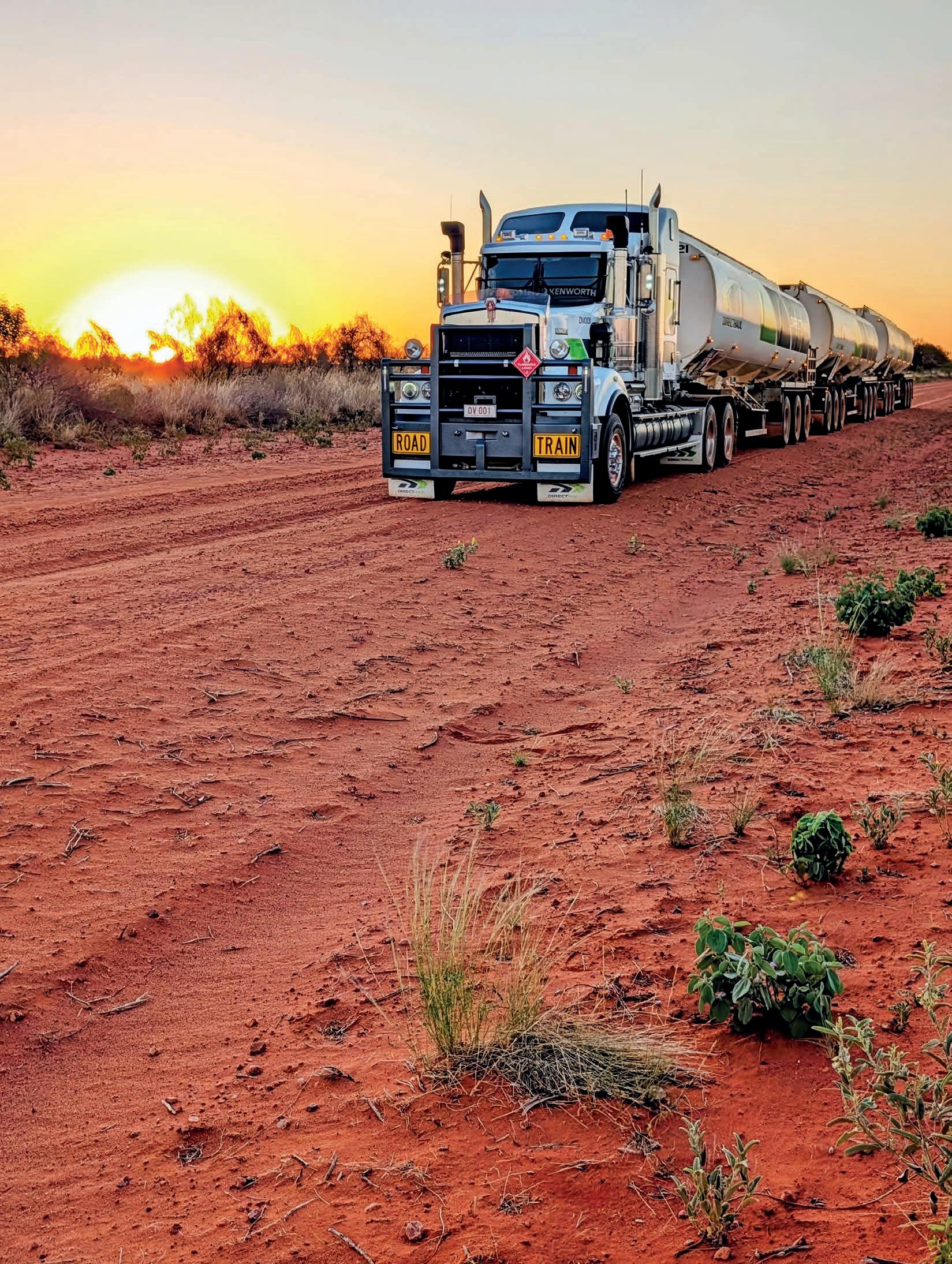
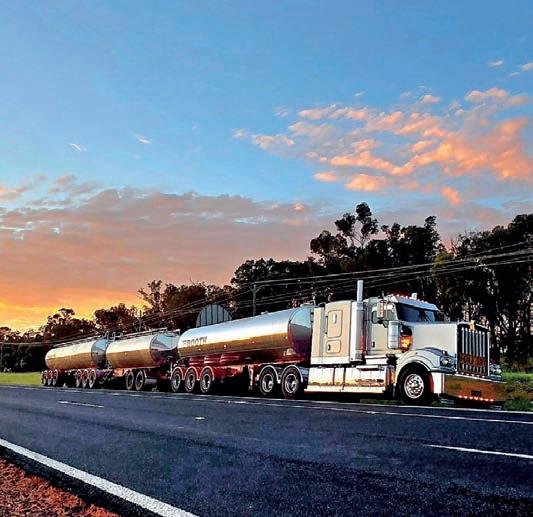
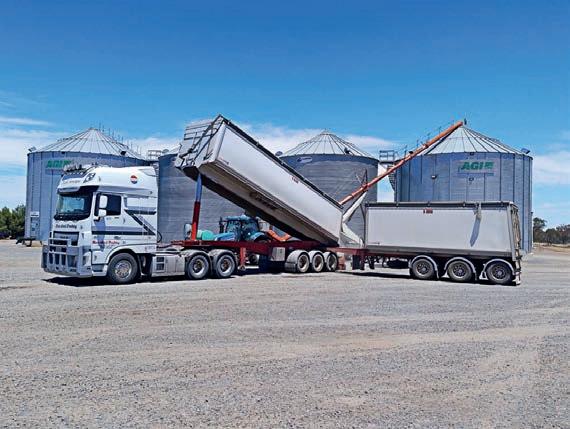
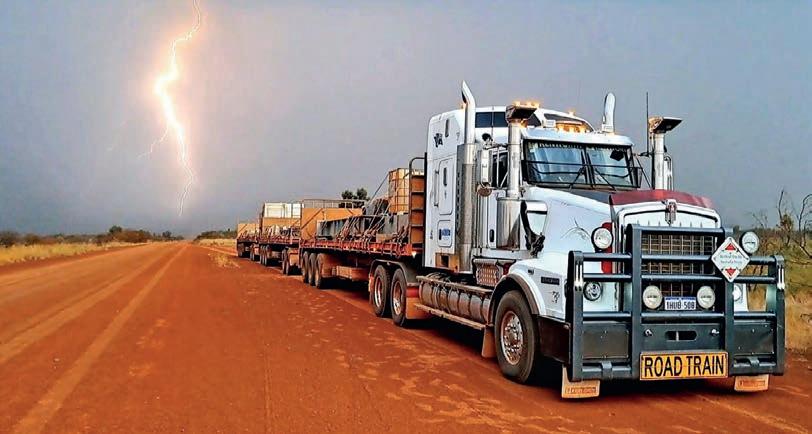
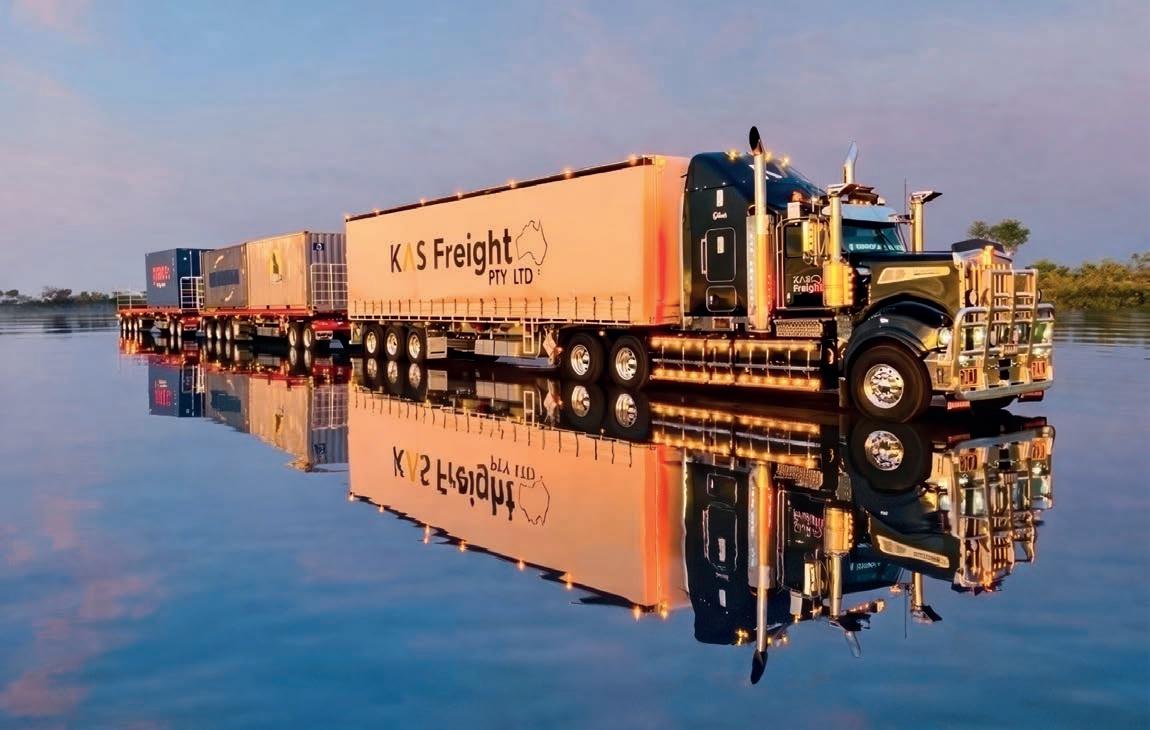
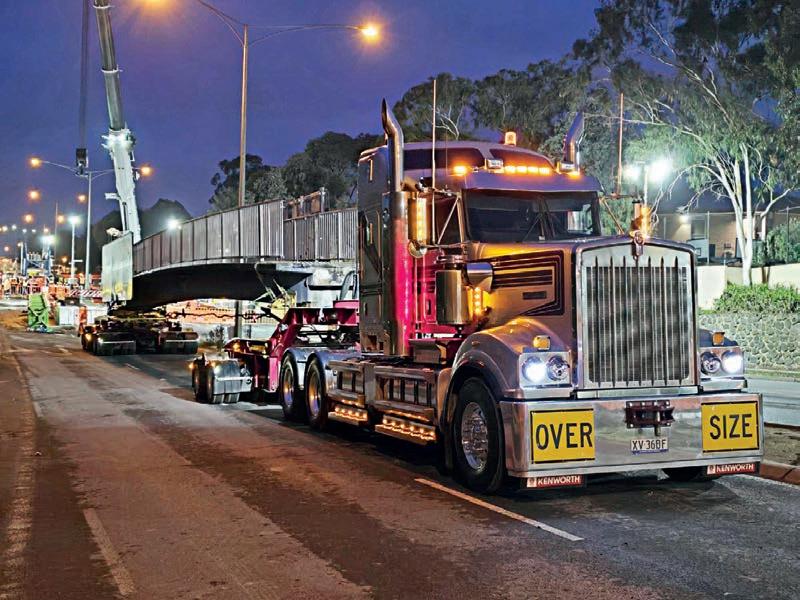
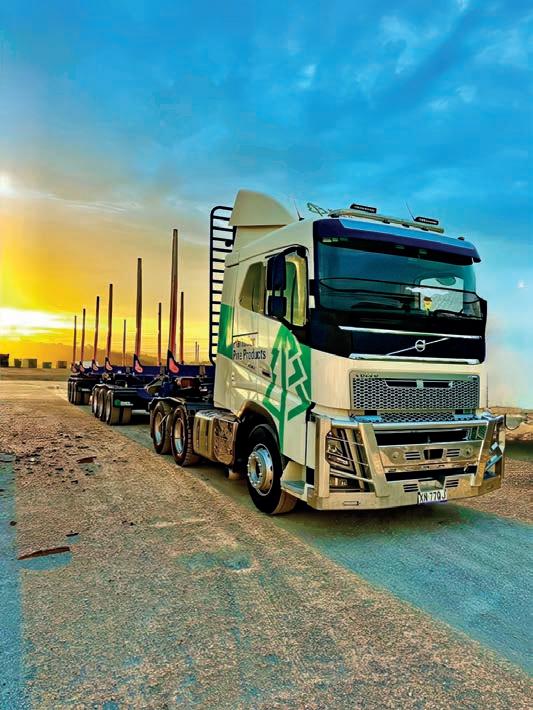
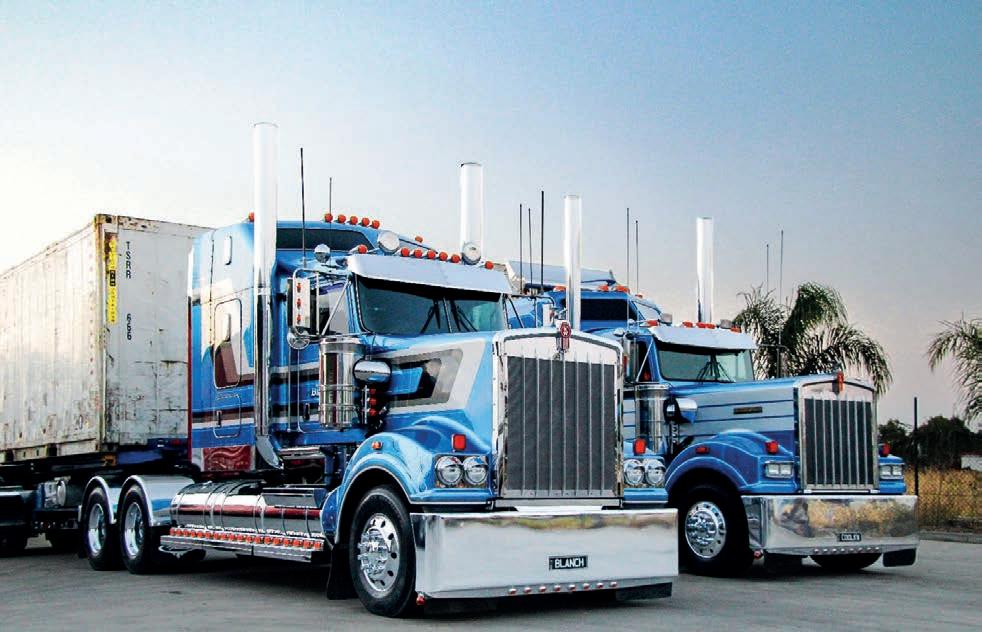
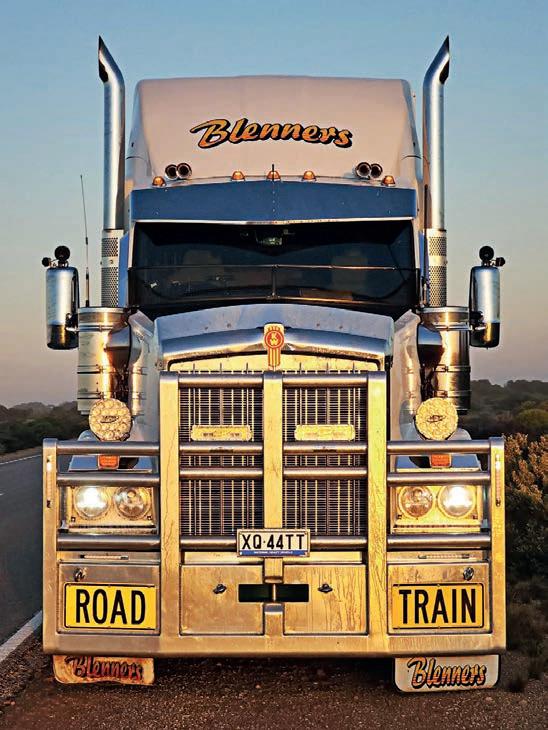
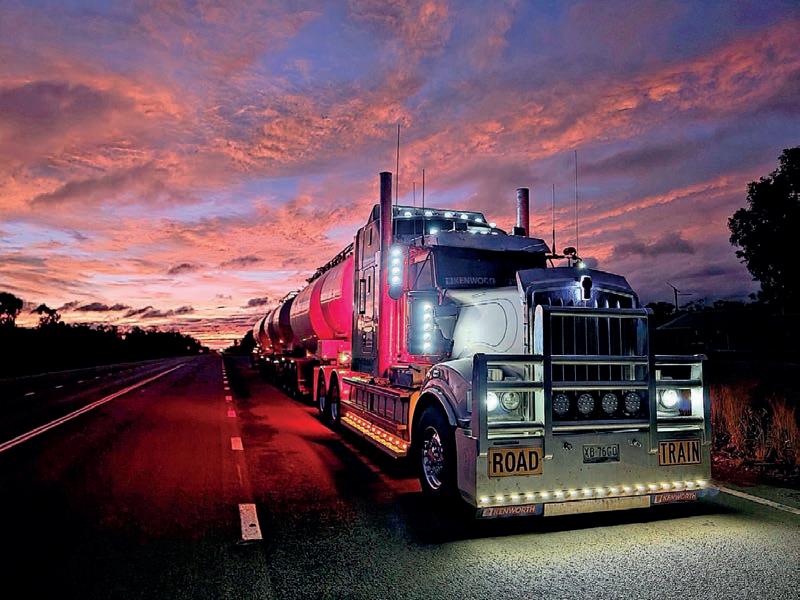
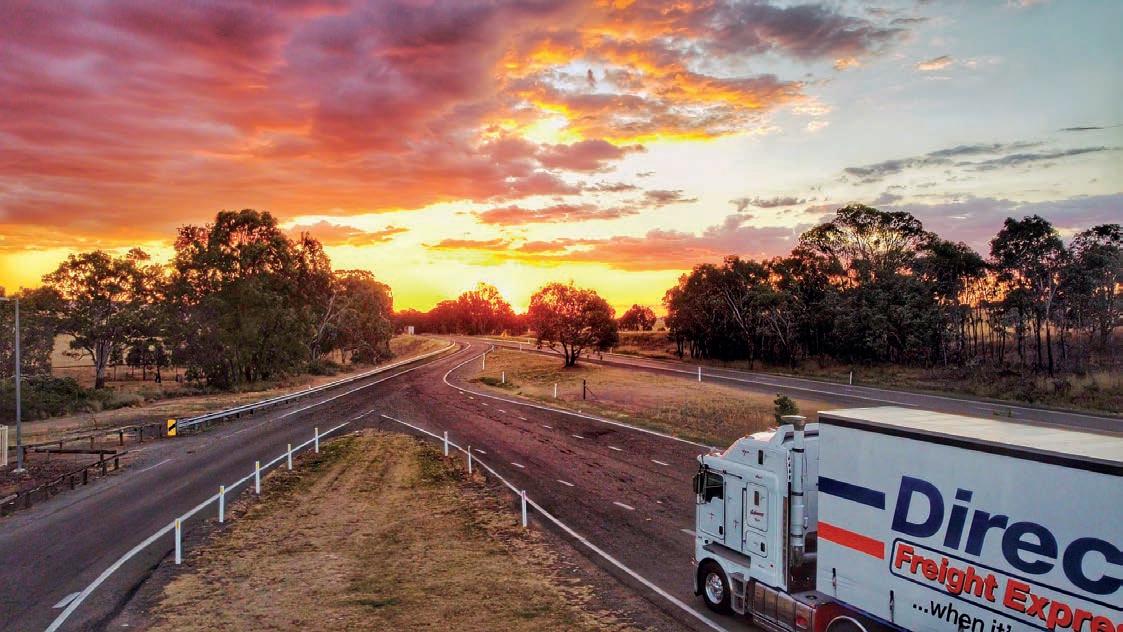
AN incredible chance to win your choice of a brand new Kenworth T909 or K220 is up for grabs, through a local footy club’s $1000 a ticket truck raffle.
The competition is being run by the Hepburn Football and Netball Club in Victoria – and it’s the sixth time they’ve raffled off a Kenworth. With sales capped to just 1200 raffle tickets, those who take a punt are in with a 1 in 1200 chance of taking home a brand new Kenworth.
The first prize is either a Kenworth T909 or K220, valued at almost $500,000, including on-road costs. Two runners-up will receive a $10,000 prepaid fuel card.
“The $1000 raffle ticket price is not a huge outlay in the scheme of things, being about the cost of a tank and a half of fuel for a truck – which gets you a 1 in 1200 chance to win this amazing prize,” said Jason Dooley.
Jason grew up around the club, from playing junior footy as a kid to being part of the committee; and currently runs his own transport business called Oz Trans.
The truck raffle draw is now less than two months away. Raffle tickets will be on sale until April 2, 2026 (strictly limited to 1200 entrants), with the winner drawn on April 6, 2026.
At the time of print, the raffle was around halfway sold.
“This sort of competition isn’t something we do all the time, it only comes around every three to four years,” said Jason.
“Our previous raffles have sold out early, so it’s best to get in quick to avoid missing out. We know that things are tight out there, however this is an amazing opportunity with amazing odds at winning a prize worth half a million dollars. The prize is absolutely massive – and we really appreciate everyone’s support.”
Jason added that fundraisers are an important part of keeping community clubs going strong. They also allow kids to continue playing the sports they love, without their families having to spend an exorbitant amount on fees.
The Hepburn Football and Netball Club first began its popular truck raffles back in the 1990s, where it raffled two Kenworth T900s and a T950. Then when Kenworth launched the Legend 900 in 2017, it saw the return of the club’s truck raffles, with the Legend SAR raffled off in 2023.
“The truck raffles are a huge fundraiser for our club. They’ve meant we can build a lot of infrastructure for the local community at our headquarters – including new changerooms and an electronic scoreboard. The next step will be to upgrade
the social rooms – that’s where we’re planning on spending the money from this raffle,” added Jason.
For these latest trucks up for grabs, Jason worked closely with Ron Ludbrook at PACCAR to get them fully specced up.
The “winner’s choice” element was a decision made by the club, in conjunction with PACCAR. As a result, two trucks have been built.
“One of the trucks will go to the raffle winner and then Kenworth Derrimut will sell the other one from the dealership,” said Jason.
Both the T909 and K220 have longer wheelbases with extra tanks, along with custom interiors. And the seats have Hepburn Football and Netball club stitched into the leather.
Tickets can be purchased at www.kenworthraffle.com or by calling the raffle co-ordinator Colleen on 0475 383 292.
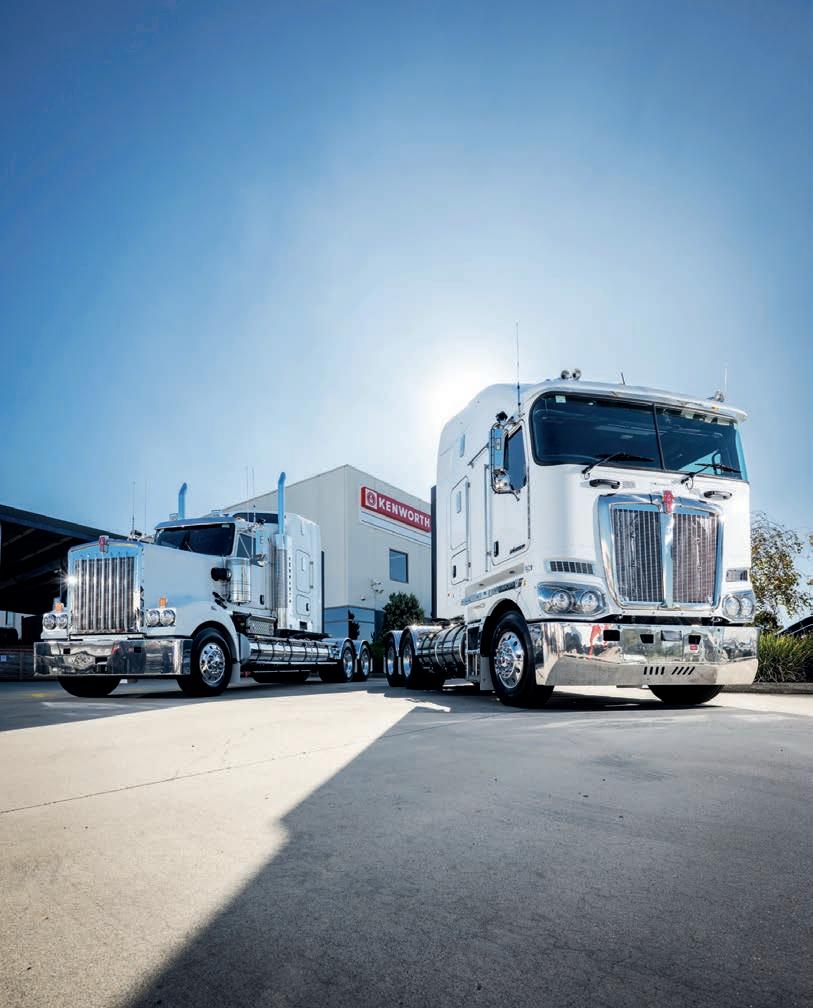
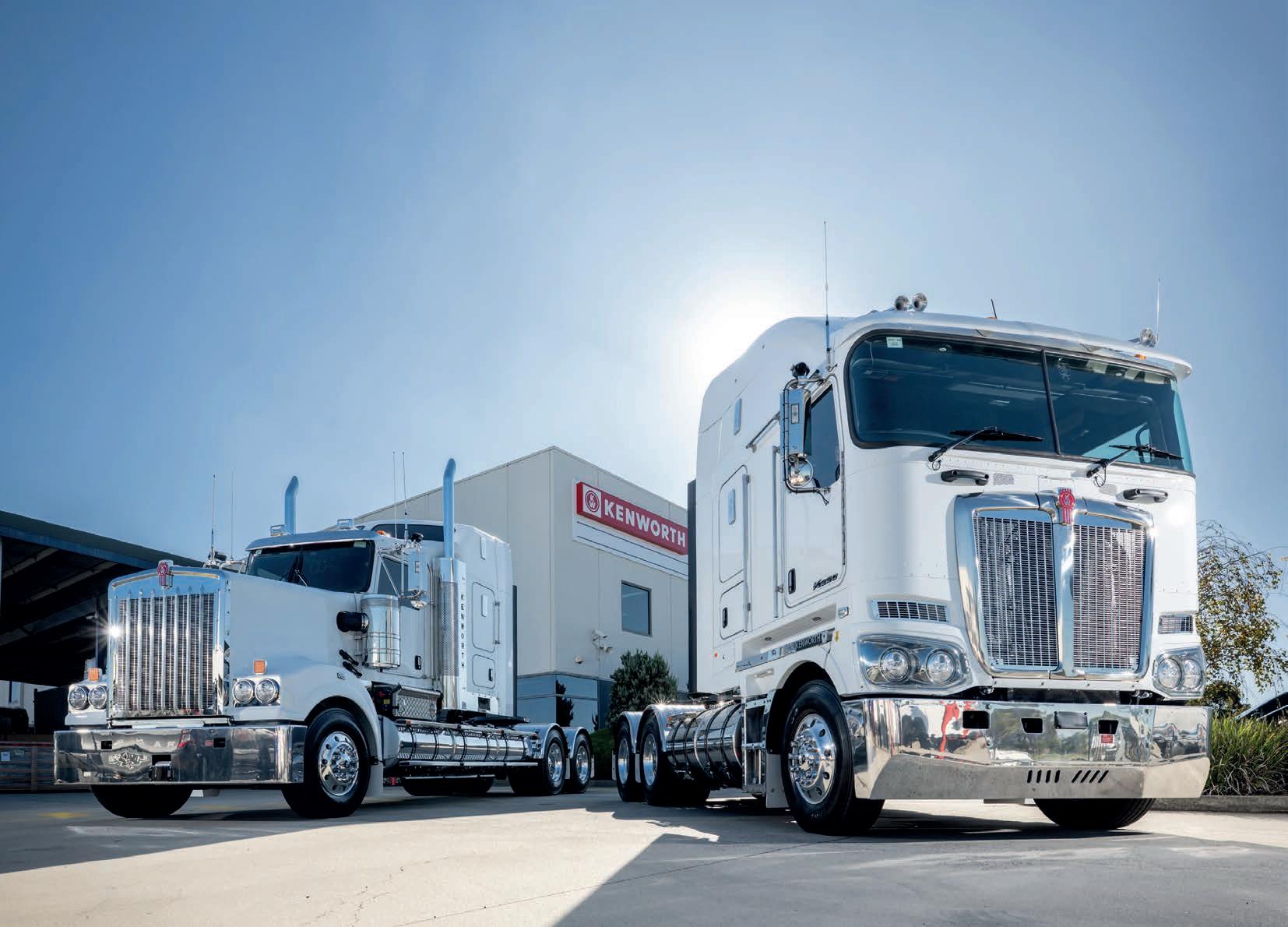
Marcus Prillwitz’s Super-Liner may be a ‘bitser’, but with Detroit Silver ‘92 power and 12 years’ racing experience, the #31 Hi-Tec Oils truck remains a Super Trucks crowd favourite.
BY DAVID VILE
WHILE a Mack Super-Liner with a Detroit Diesel Silver ‘92 powerplant is not your everyday truck and engine combination, it is one which has served Marcus Prillwitz well.
His #31 Hi-Tec Oils Racing truck has been a regular fixture on the Australian truck racing scene for over a decade.
At the final round of the 2025 Super Truck Racing Series, held at the Winton Raceway in Victoria, Marcus had the Mack wound up in search of some sharp lap times and race results.
It would be fair to say that the Mack is not a full-blown pedigree Bulldog, with the truck having been built out of a number of different components into a race unit.
In between a busy weekend of qualifying and racing Marcus gave a background to both the Mack and the overall truck racing scene.
“I have been racing it for 12 years; it is the only truck I have ever raced and it’s somewhat of a bitser – it was built out of spare parts,” Marcus said.
“It has Mack CH chassis rails and the Super-Liner cab was an offset left-hand drive cab off a Fijian garbage truck.
“I gutted it and got a Super-Liner bonnet made up for it. It has a DAF rear axle and a Meritor front axle which was originally in a Freightliner Argosy – and of course to see a Detroit in a Mack is pretty rare in Australia.”
Under the large square bonnet the Detroit powers the Mack down the track and having had many years’ experience with the Silver ‘92 derivative, it was an obvious choice for a powerplant when Marcus was piecing the Mack together.
“I owned a company called Victorian Diesel Servies, and I used to work on a lot of touring coaches back in the day when the Detroit Silver ‘92 was the most common engine.
“This 8-92 has a twin turbo and it’s also a bitser of all the go-fast Detroit stuff – that same motor in a boat would put out about 750-800 horsepower so that’s not a bad start-
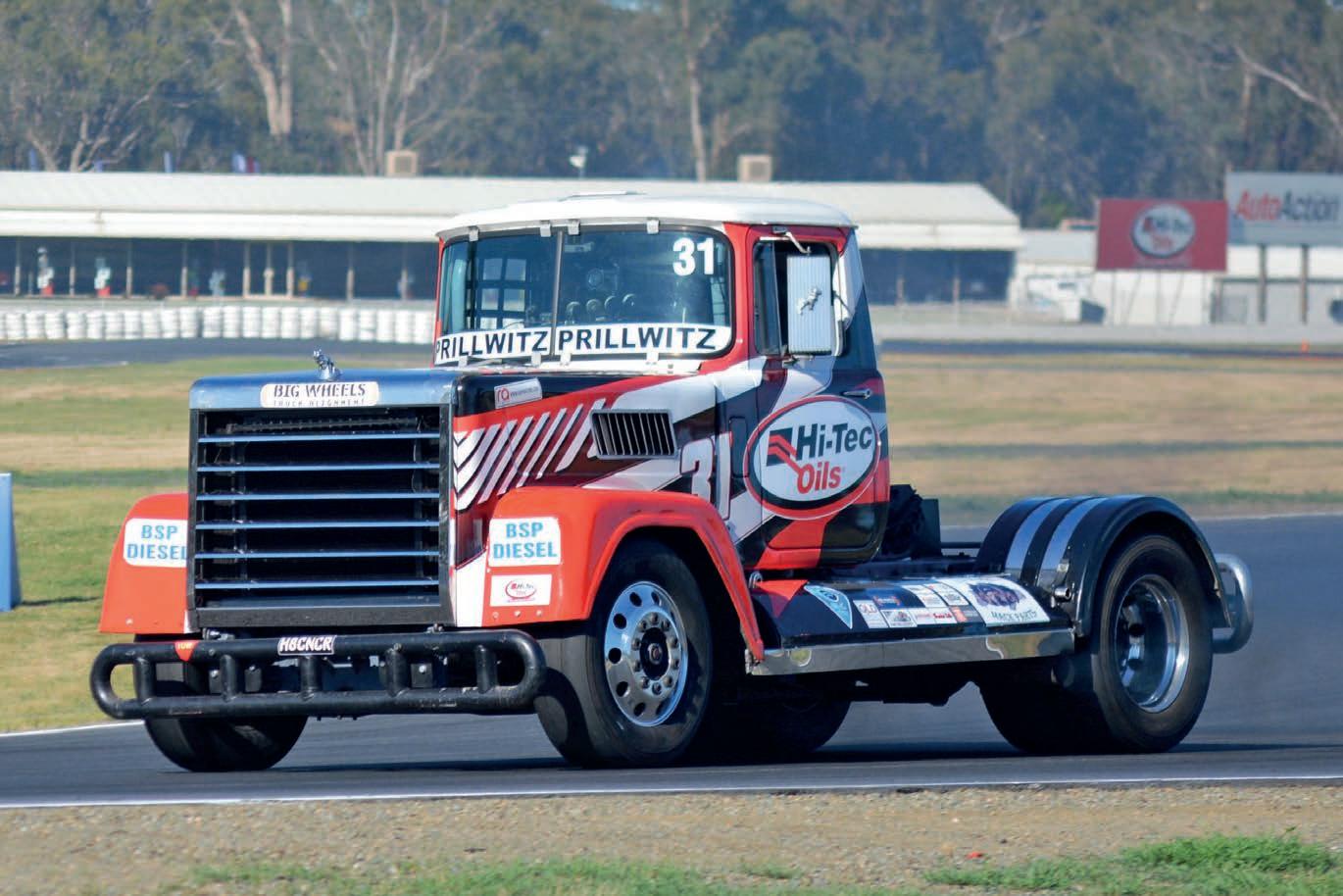
forth, so we are up around the 1200-1300 horsepower mark.”
Originally the Detroit was coupled up to a Roadranger gearbox, but Marcus made the switch to an automated driveline a couple of years ago.
Running an auto ‘box puts the Mack on an equal footing with most other competitors and Marcus reckoned that the move had been a smart one.
“Over the years we have broken three crankshafts in the motor and we have just put the fourth one in it.
“I would like to think it was due to the Roadranger in it, there is a lot of shock going through it when you are racing with the Roadranger behind it compared with the auto.
“I don’t think it’s made it any faster, but it is certainly easier to drive! It was really good fun with the Roadranger, I miss that but on the flip side it’s probably a second or two quicker – there is a lot less to think about as you’re going around the track.”
The truck racing fraternity is
tive out on the track, all help each other out once the racing stops, and Marcus reckons it’s a good way to go racing.
“My only other motorsport experience was I crewed on a sprint car and the guys in the pits on the teams wouldn’t talk to each other as it was so competitive,” he said.
“Super Trucks is definitely not like that, if it was, I wouldn’t be doing it. With [fellow competitor] Frank Tringali’s International, we built our motors together, that’s the sort of camaraderie we all have. When we are here at the track for the weekend everyone is all happy to help, it’s a great family environment and everyone gets along – the social aspect is priceless.”
With new trucks taking to the track in 2025, and the addition of new circuits such as Queensland’s Morgan Park to the calendar, the Super Truck racing scene is in a good place.
For long-term competitors such as Marcus, the Super
“Going to Morgan Park for the first time last year was really good, it is a great circuit to drive with the uphill and downhill aspects, and I really did enjoy that.
“The racing fraternity is opening its arms up to the truck racing again – we are under new management, so to speak, with a new committee and some fresh ideas.
“In the past we were probably a bit notorious for a bit of ‘crash and bash’ but that has been tidied up a bit and that’s good for the racing and also for our sponsors and exposure. Crashing and bashing about is not race craft, and there’s no fun trying to load your racetrack back up with a forklift.
“A good meeting is one where you can drive it back up onto the trailer – and a great one is when you go home with a trophy also. The series is starting to become recognised again and it’s a great time to become involved with it.”
The first round kicks off at Mallala in South Australia
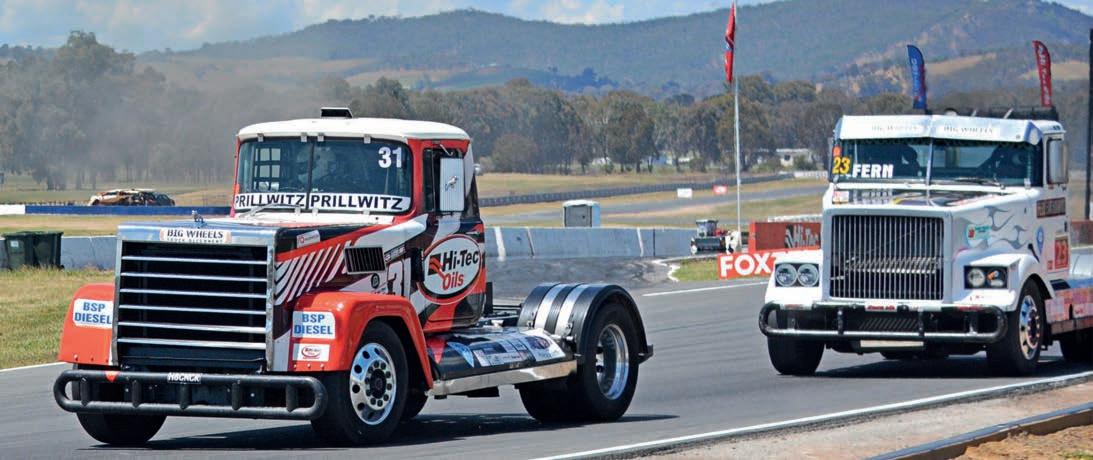
and Winton again locked in for rounds in 2026.
For more information about the 2026 championship, check out the website at truckracing.com.au.
• Big Rigs would also like to acknowledge the recent passing
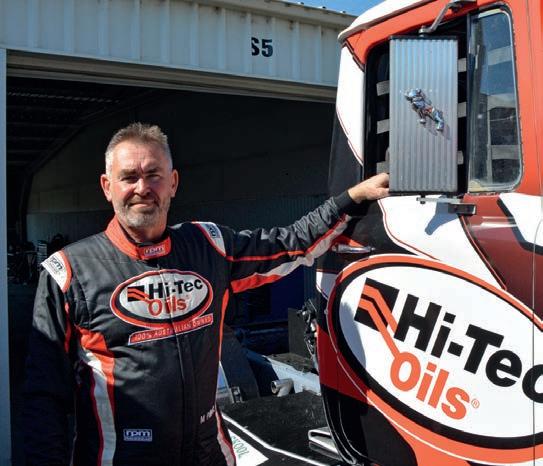
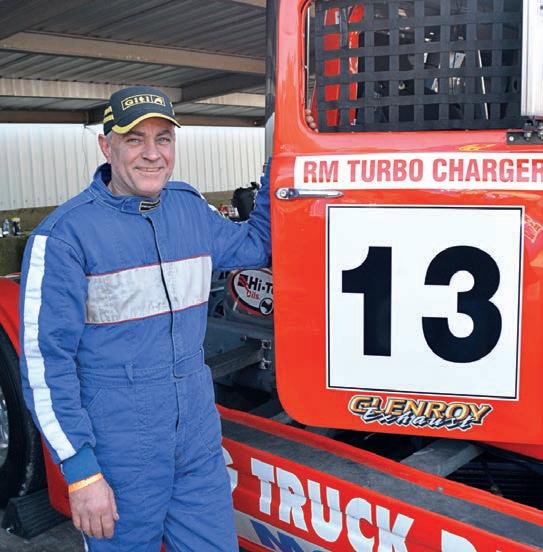



With five dedicated repairer networks across heavy motor, trailers, light vehicles and now plant and equipment, NTI makes it easier to get you back on the road and back to work faster. Our repairers share our values, meet strict quality standards, and have automatic authority to start repairs straight away. It’s all part of how we keep our customers moving.
Keeping you moving with trusted repairers, nationwide.
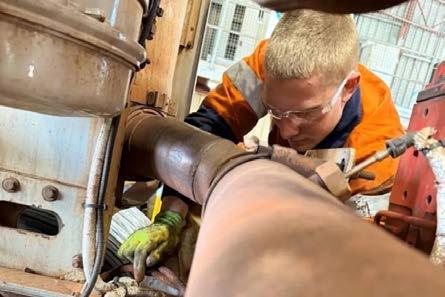
NTI’S network of repairers are committed to making the process of getting vehicles and equipment repaired simple and straightforward.
As Ben Johnson, National Manager – Repair Management at NTI explained, it’s about getting vehicles back on the road as soon as possible, containing costs, and ensuring the customer is informed every step of the way.
“Our network of repairers have automatic authority to begin work on vehicles and equipment immediately, if not a total loss. As soon as they have an NTI claim number, work gets underway to
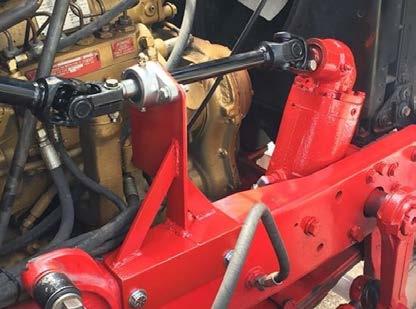
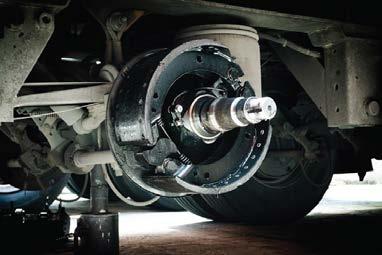
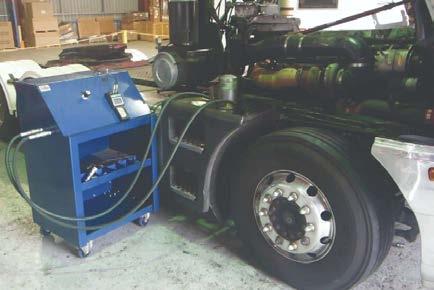
get the customer back on the road,” he said.
NTI operates several repairer networks:
• Premium Repairer Network: NTI’s flagship repairer network has been setting the benchmark in heavy vehicle repairs for more than 20 years. Purpose-built for the transport industry, this national network connects truck owners and operators with experienced repairers. With a focus on exceptional workmanship and fast turnaround times, every repairer is regularly audited to ensure they meet NTI’s high standards.
TRUCK drivers know that control isn’t optional – it’s everything. Whether you’re hauling across the country or navigating tight depot corners, your steering system is the quiet workhorse that keeps every journey safe and predictable. Yet it’s also one of the most overlooked parts of a truck’s maintenance routine. truck power steering special
ist, and our workshops can play a crucial role in keeping your heavy vehicles responsive, reliable and road-ready.
What a professional workshop like Hydrosteer brings to the table
What makes truck power steering so important? Heavy vehicles place enormous strain on their steering components. Unlike passenger cars, trucks
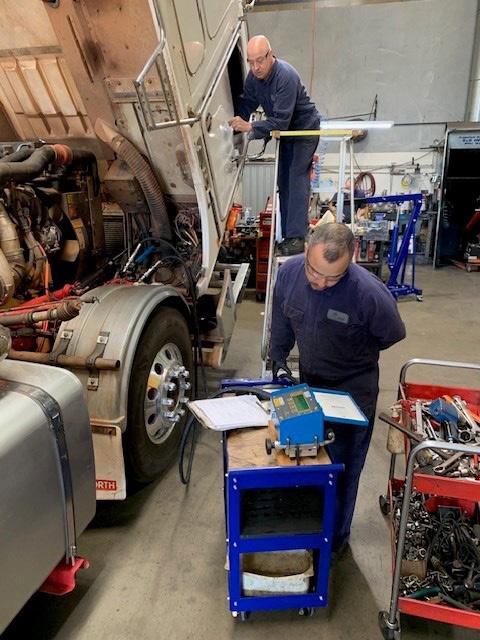
• Trailer Repairer Network:
Designed specifically for transport operators, this network recognises the importance of trailers in keeping freight moving. Accredited repairers understand the unique requirements of trailer repairs and are committed to minimising disruption for operators.
• Mobile Plant and Equipment Repairer Network: Ensures that owners of machinery and specialist plant can access the same trusted level of service that truck and trailer operators have come to expect from NTI.
• L ocal Repairer Network: Specialists in light repairs, still held to meet strict quality standards, providing service in both metro and regional areas.
NTI’s network nears 100 repairers. The term “national reach” is more than merely a buzzword, NTI backs it up with its ability to insure and assess right across Australia.
“We pride ourselves on operating and assessing claims nationally, so our people will travel to wherever they’re needed. Even in response to a natural disaster, we’ll have people on the ground as soon as it’s safe to do so,” Ben added.
That commitment was displayed during Victoria’s January 2026 bushfire emergency, when an NTI team member travelled from New South Wales to fire-affected areas and spent three days on the ground supporting clients who had suffered damage to heavy vehicles and equipment. “In these sorts of events, as soon as it’s safe for someone to be there, we will get boots on the ground – as quickly as we can.”
Another example involved an incident response in a remote part of Australia, where the NTI team were able to inspect 44 damaged vehicles for their client in just two days.
“NTI is outcome-focused when it comes to settling claims, with a strong emphasis on getting insured items repaired where possible, keeping customers informed, and understanding their position throughout the entire process,” Ben explained.
“Customers also have a choice of repairer, but we’ll work with them to ensure the best outcome. A recent example was when a client in north Queensland required a vehicle to be repaired, and they took it to their chosen repairer. However, after we reached out
rely on high-pressure hydraulic systems to manage weight, articulation, and long hours on the road.
A healthy power steering system ensures:
• Smooth, predictable handling even under heavy loads
• Reduced driver fatigue on long hauls
• Improved safety in emergency manoeuvres
• Lower wear and tear on suspension and tyres
• Better fuel efficiency thanks to reduced mechanical drag
When something goes wrong – stiffness, whining noises, fluid leaks, or wandering steering – it’s not just inconvenient. It’s a safety risk.
What a professional power steering workshop does Hydrosteer’s specialised workshops don’t just “fix” steering issues. They diagnose, restore, and optimise the entire system. That includes:
1. Comprehensive system diagnostics
Technicians use advanced testing equipment to assess pumps, hoses, steering boxes, and fluid condition. Early detection prevents costly breakdowns.
2. Power steering pump re-
builds and replacements – Genuine and aftermarket
The pump is the heart of the system. Hydrosteer can rebuild worn pumps or supply high-quality replacements designed for heavy-dut y use.
3. Steering boxes – Rebuild, repair, remanufactured and new Hydrosteer’s precision repairs restore steering accuracy and eliminate play or drift – essential for safe highway driving.
4. Drag link assemblies and steering slip shafts
Custom-made, off the shelf or replacement components ensure perfect fitment and long-term reliability, especially for older or specialised trucks.
5. Fluid flushing and maintenance
Clean, high-quality fluid keeps the system cool, lubricated, and protected from internal wear.
6. Emergency repairs
Breakdowns happen. Hydrosteer has fast turnaround times to keep your truck earning instead of sitting idle.
Why choose Hydrosteer instead of a general mechanic?
Trucks aren’t oversized cars – they’re engineered for extreme loads and long-distance performance. Power steering

finish, we can closely monitor costs and potentially reduce the overall impact on our insured.”
In addition, NTI has its own parts strategy, where it can directly source parts from
pairs, inside and outside the etwork, so that repairs are carried out using genuine parts. “This ensures items aresible, with the right parts,”
To learn more about NTI,al information only and you-es. NTI bears no responsibility, and shall not be held liable, for any loss, damage or injury arising directly or indirectly from your use of or reliance on the information in this article.
systems in heavy vehicles require:
• Higher pressure handling
• Specialised diagnostic tools
• Technicians trained specifically in heavy-vehicle hydraulics
• Access to commercial-grade quality parts
Hydrosteer’s dedicated workshops understand the unique demands of transport operators, owner-drivers, and fleet managers.
The bottom line: Steering safety starts with proper care
Your truck’s power steering system is one of the most critical components for safety and performance. Regular inspections and expert repairs don’t just prevent breakdowns – they protect drivers, cargo, and your business.
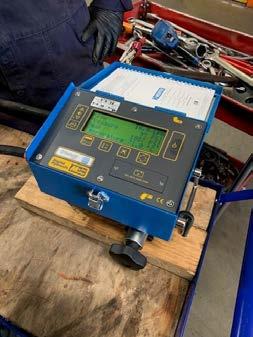
If your steering feels off, your wheel is getting heavy, or you’re seeing fluid leaks, it’s time to book in with Hydrosteer. A well-maintained steering system keeps your rig responsive, reliable, and ready for whatever the road throws your way.
For all your truck power steering needs contact Hydrosteer on 1300 010 338,
Hydrosteer, Australia’s largest heavy vehicle power steering specialists, carrying Australia’s largest range of heavy vehicle power steering and commercial vehicle power steering products. The range includes the following:
• New and re-manufactured power steering gears, R.H. Sheppard, TRW/ Ross, ZF Steering Systems, Bosch, JKC, Aisin Seiki and Koyo
• Steering pumps to suit all makes and models. (ZF, TRW, Vickers and more)
• IMMI (Formerly VIP) steering wheels

• Steering slip shafts
• Australian Made Mitre boxes and R.H. Sheppard.
• Drag link assemblies that are made to OEM`s stringent quality specifications.
• Oil reservoirs, filters and parts
Hydrosteer have 4 fully equipped workshops in Bayswater Victoria, Laverton Victoria, Maddington W.A., and Wetherill Park New South Wales*. Workshop services include steering system diagnosis, steering system optimisation, full driveway service*, steering gear remanufacturing, pump refurbishment, Dual Control Conversions, LHD to RHD conversions, Road-Rail Vehicles. All completed by qualified technicians with years of experience in heavy vehicle power steering systems. Whatever your heavy vehicle steering system needs are Hydrosteer has you covered, and all our products and services come with a 12 month “No Argument” warranty

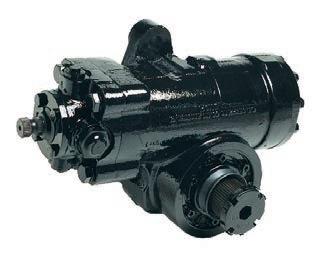
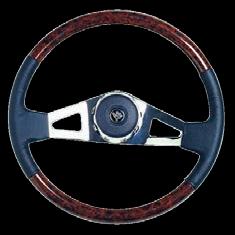
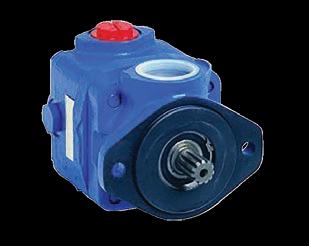
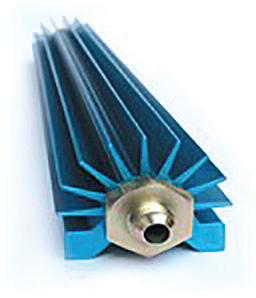
PROUD AUTHORISED

AS modern air brake systems evolve, workshops are quietly facing an old problem of contamination inside air reservoirs that refuses to disappear. While compressors and dryers have improved dramatically over the years, contamination made up of water, emulsified oil, carbon and sludge continues to accumulate in tanks and migrate downstream into valves and braking components.
Workshops that are servicing late-model trucks and trailers
control systems. These systems depend on extremely clean, dry air to function correctly. What might have been a minor maintenance nuisance on a 1990s fleet can now trigger diagnostic faults, actuator delays or unplanned downtime. For operators working in harsh climates, high duty-cycle applications or mixed trailer pools, the issue compounds quickly. Reservoir draining remains the most reliable line of defence. Yet manual draining
cle, opening the drain cocks and dealing with oily discharge. In practice, it is inconsistent and often neglected especially on hire trailers and low loading trailers. Workshops also point to OH&S considerations. With many yards now operating under strict environmental and safety guidelines, technicians are less keen on scrambling under chassis rails or dealing with slippery pads. Some fleets have removed manual draining from driver checklists entirely to avoid
This is where automatic draining has re-entered the conversation. Automatic drain valves first appeared decades ago, but newer-generation units have been engineered to deal with sludge, oil-rich condensate and the higher contamination loads produced by long service intervals. Several Australian fleets report units still performing after more than 14 years in service, which suggests the technology has reached a maturity point that workshops are becoming comfortable with.
Service managers list two main benefits: reduced contamination and reduced interruptions. Cleaner tanks lead to cleaner downstream air, and that means fewer valve replacements, longer dryer cartridge life and fewer nuisance faults. Some operators have also seen efficiency improvements during seasonal peaks, where workshops traditionally feel the strain of reactive maintenance.
“We started looking at automatic drains after noticing how much heater element corrosion and cartridge fouling we were getting during winter changeovers,” said one fleet maintenance supervisor from western Sydney. “Once
the tanks stayed dry, our ABS faults dropped noticeably, and we were not pulling trucks in for minor issues during peak delivery months.”
Products such as the DumpMaster XD-30 and EXT-50 are among the automatic solutions now used across Australian road transport fleets and in Australian and UK rail. GP
Truck Products has emerged as a market leader in this space, supplying both governor-actuated (XD-30) and electronically actuated (EXT-50) units that purge accumulated water, oil, carbon and sludge without driver input. Their role is to complement dryers and remove the human variable from reservoir draining.
As braking and safety systems continue to advance, the air that feeds them needs to be held to higher standards. Preventative maintenance now extends beyond filters and cartridges, and workshops are increasingly recognising reservoir draining as a critical and often overlooked step in the chain.
Automatic draining may not be the most glamorous upgrade on a truck, but in a workshop environment where uptime is currency, small preventative measures can deliver outsized returns. For many operators, eliminating contamination before it becomes a fault is simply becoming good maintenance practice.





FEW business owners expect to face a total operational wipe-out just eight months after taking the reins. Yet for the new owners of All Fleet, that became reality when the March 2022 Brisbane floods devastated their Rocklea facility. Despite the scale of the challenge, the team had little time to dwell on the setback. Instead, they rallied together,
prioritised their customers, and returned to business as usual in record time.
Today, All Fleet has not only recovered but evolved. The business has relocated, expanded, and upgraded, now operating from a modern facility in Richlands. Fully equipped to support heavy vehicle fleets across Brisbane and
new site provides enhanced capability – and importantly, peace of mind, being located in a flood-free zone.
Founded in 1991 by Norm Holman, All Fleet has built a strong reputation over more than three decades. In 2021, ownership transitioned to Jade Lewis, a mechanic by trade and an experienced fleet owner. Jade brought hands-
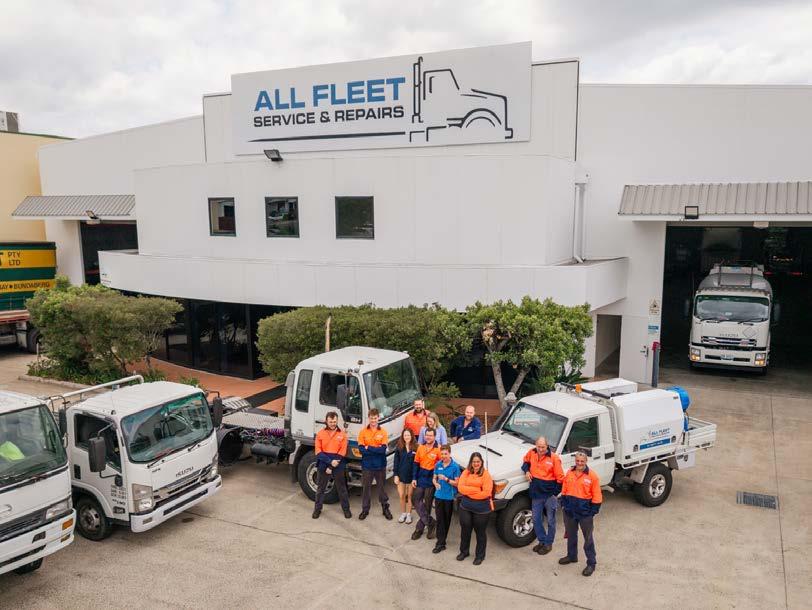
on leadership, renewed energy, and a clear vision: to grow the business while preserving the strong customer relationships and reputation already in place.
Over the years, All Fleet has earned the trust of major transport operators and has maintained Authorised Inspection Station status. Its reputation is grounded in technical expertise, practical problem-solving, and consistent delivery – whether the task is routine maintenance or complex fleet repairs.
Equally central to All Fleet’s success is its people. The team is close-knit, with many mechanics choosing to build long-term careers within the business. Workshop Manager David Holman is a testament to that culture, having completed his apprenticeship at All Fleet before returning full circle to lead the workshop. Another qualified mechanic began as a parts driver, progressed through an apprenticeship, and now enjoys the rewards of being fully trade-qualified – a clear example of the company’s commitment to developing talent from within.
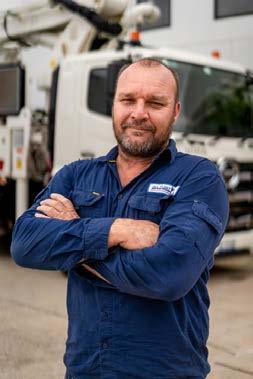
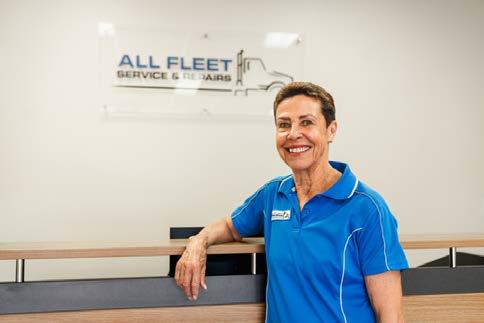
The Rocklea floods stand as a defining chapter in All Fleet’s history. Faced with one of its greatest challenges, the business did not pause – it pushed forward, emerging stronger, more resilient, and better positioned for the future.
All Fleet’s vision is clear: to be Brisbane’s leading independently owned heavy-vehicle workshop. The business is committed to industry-leading standards, ongoing investment in its people, and fostering a team-focused environment built on credibility, knowledge, and a strong sense of belonging. Its workforce remains its great-
est strength – experienced, skilled, and empowered to meet the demands of an ever-evolving industry. With its expansion complete and demand continuing to grow, All Fleet is currently seeking experienced Heavy Diesel Mechanics to join the team for the long term. Successful applicants will work in a modern, fully equipped workshop alongside professionals who value teamwork, skill, and pride in workmanship. Applications can be submitted via email. All Fleet’s story is still being written –and the road ahead has never looked brighter.
• All Truck & Trailer brands accepted
• Scheduled servicing & advice
• Express Servicing available
• Pick up & delivery available
• Complex mechanical repair skills
• Engine, Gearbox & Diff Rebuilds
• Diagnostic Expertise
• Auto electrical services
• Fabrication, welding & engineering services
• Interstate defect rectification
• Approved Inspection Station WORK WE DO
• Complete truck & trailer refurbishments
• Full electrical work from minor bulbs to full rewires
• Clutch repairs
• ABS/EBS systems servicing
• Engine, drivetrain & exhaust systems
• Brake, steering & suspension systems
• Fuel and cooling system repairs
• Air-conditioning service & repairs
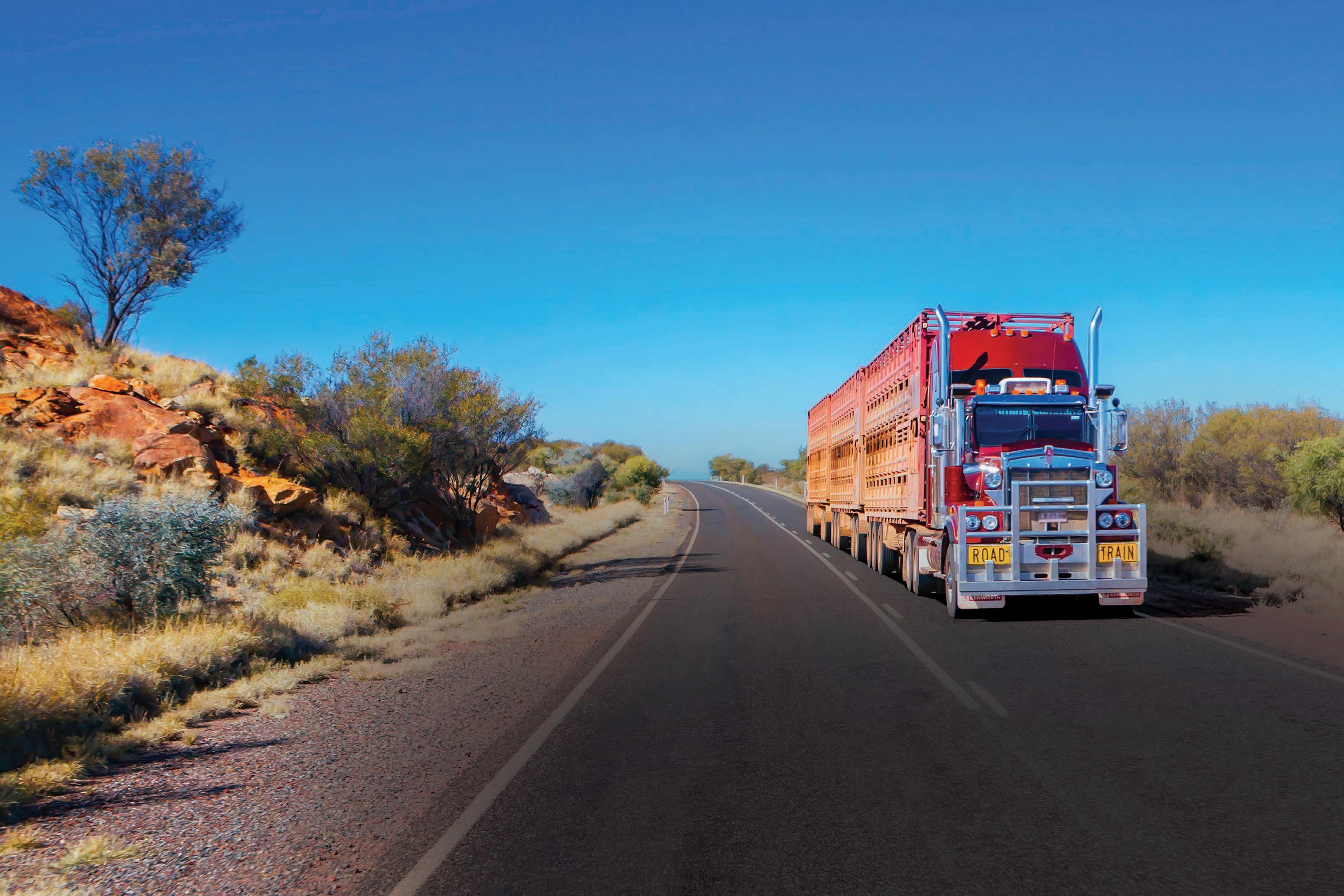

ENSURING semi-trailers remain safe, compliant and roadworthy has never been more important, especially as national regulators increase roadside inspections and enforcement activity.
According to Shane Myers, Head of Aftermarket at K rueger, operators are now facing a landscape where safety obligations are stricter, fines are higher, and compliance expectations are growing year on year. For transport businesses, keeping trailers in peak condition isn’t just good practice –it’s essential.
Krueger has invested heavily in building strong roadworthy inspection capabilities across
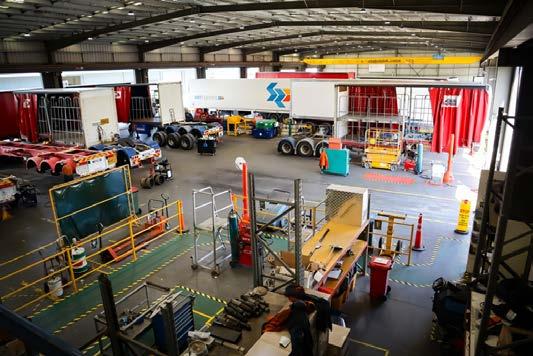
credited staff in all three operating states, including two licensed inspectors in Victoria, one in New South Wales, and an accredited subcontractor
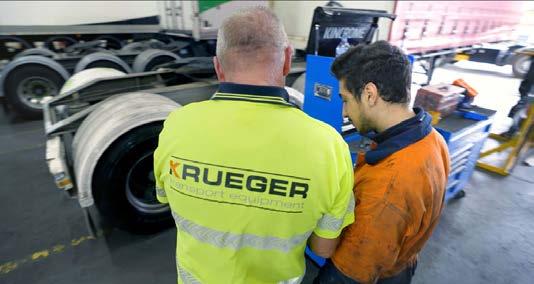
in Queensland. This coverage ensures customers can access efficient, trusted and fully compliant inspection services wherever their fleet operates.
Shane says the increasing focus on safety makes regular inspections non-negotiable in today’s transport environment. Ensuring trailers remain roadworthy protects all road users and helps operators avoid costly penalties, defects and unexpected downtime. A properly certified trailer reduces the risk of mechanical failures and accidents, and in many cases also preserves or improves the as-
set’s market value. “Customers need confidence their equip ment is compliant,” Shane ex plained. “A roadworthy trailer builds trust – whether you’re putting it back to work, selling it, or operating across high-risk freight corridors.”
But Krueger’s value extends well beyond the roadworthy inspection itself. A visit to any Krueger National Service location opens the door to a complete suite of aftermarket support. Customers can access spare parts, repairs and maintenance, wheel alignments, accident and insurance repairs, full trailer refurbishment, rental trailers, and both new and used trailer options. This makes Krueger a genuine onestop shop for all semi-trailer requirements, with the added advantage of technicians who specialise in the Krueger product range and understand the unique requirements of high-performance PBS equipment.
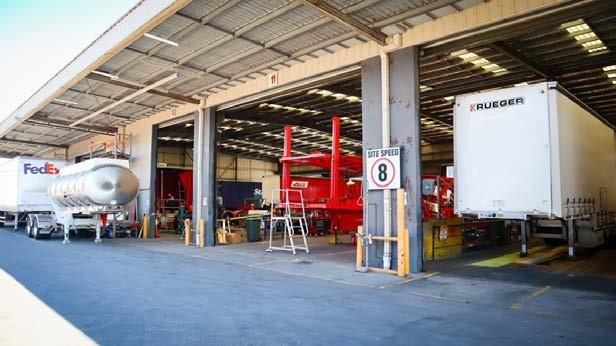
efficiency and reduce downtime with industry-leading parts and technology.
“In today’s compliance environment, operators need more than just a certificate,” Shane said. “They need a service partner who understands the equipment, can identify issues early, and can support them with repairs or parts on the spot. That’s what we deliver.”
Shane also highlights the benefit of Krueger’s access to products through Krueger National Spare Parts, giving operators the option to upgrade components, improve trailer
With safety standards tightening and fleets under increasing scrutiny, Krueger’s fully accredited roadworthy and inspection services give operators the assurance they need to stay
compliant, stay safe and stay on the road.
Krueger National Service is your trusted semi-trailer specialist. Our experienced technicians service all makes and models of heavy-vehicle semi trailers. With service centres in Melbourne, Sydney and Brisbane, plus accredited dealer networks through Brown & Hurley, Transquip Services, Hancock & Just, Transmech, and Westrans, we’ve got you covered nationwide.
For more information, please visit krueger.com.au.
COMPLETE Steering Aus-
tralia’s innovative new Sector
Lash Adjustment Kit is making sector lash adjustment easier and more efficient for workshops around the country.
In a first for the trucking industry, it’s a tool designed with the aim of making the sometimes overlooked job of lash adjustment much simpler – challenging the longheld assumptions about what constitutes “routine” steering maintenance.
Sector lash adjustment is a maintenance task that workshops know they should be doing, but often it’s also a task they’d prefer to avoid. Why you ask? Because access challenges make the procedure time-consuming, labour-intensive, and often economically impractical.
Traditional methods require the steering gear to be fully removed, setting off a cascade of disassembly work that burns labour hours and disrupts workshop flow. As a result, fleets push the job down the priority list. Independent mechanics sigh and schedule it for “another day.” And trucks, meanwhile, continue to rack
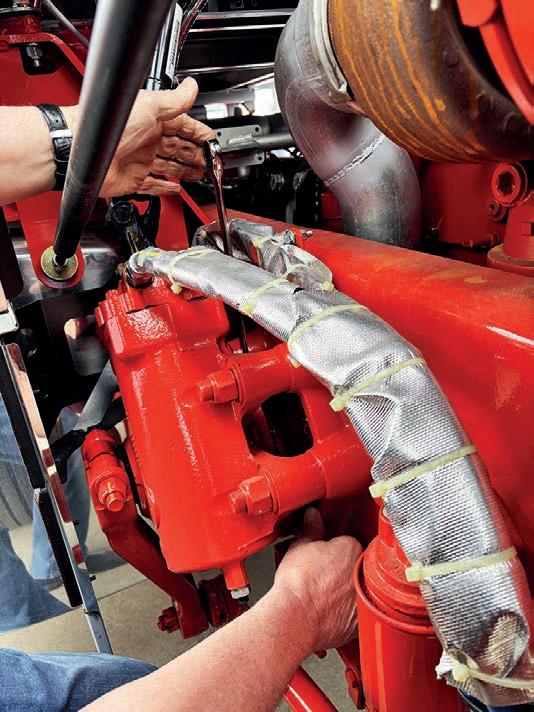
up kilometres with accumulative steering wear that subtly erodes performance and inflates long-term costs. Designed, made and engineered in Australia, the Sector
Lash Adjustment Tool offers a quiet revolution.
This specialty tool provides direct access to the adjustment mechanism without the need to remove the steering gear
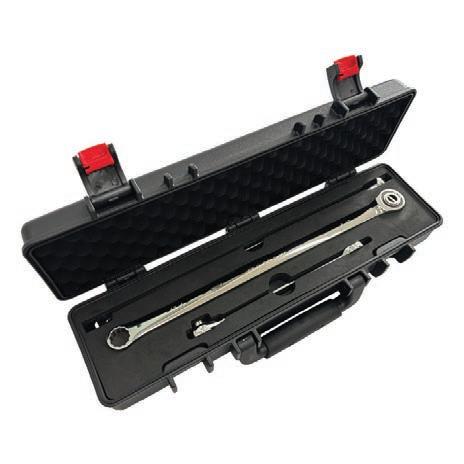
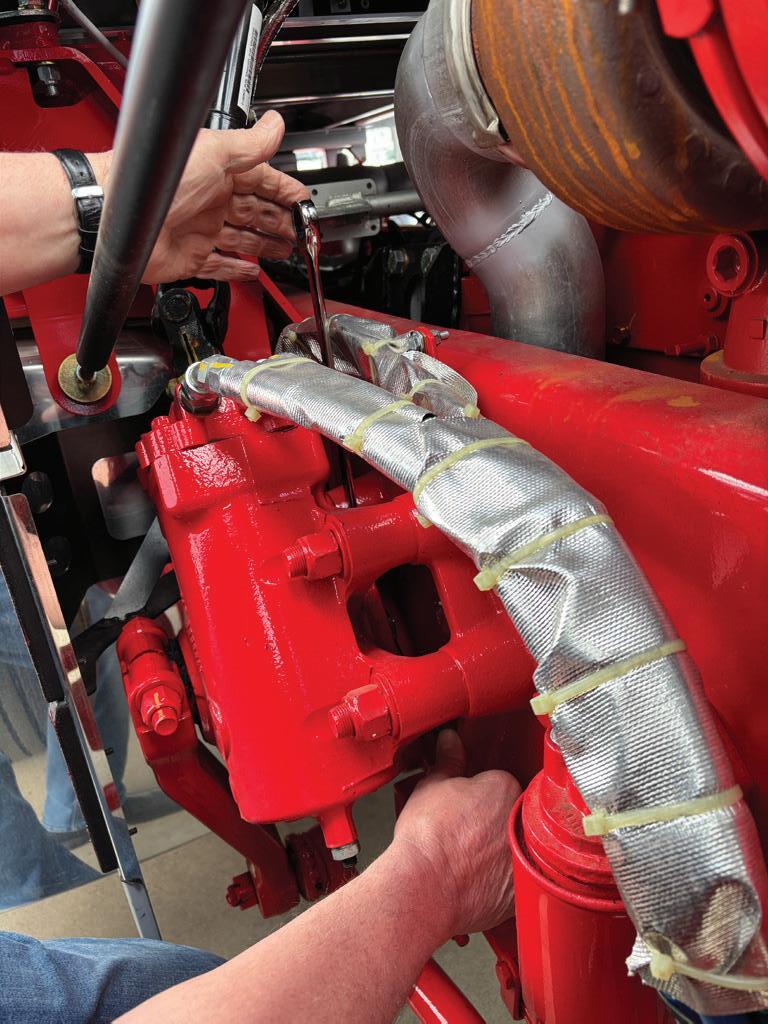
at all. In one move, a maintenance job that once triggered downtime and heavy manual handling becomes quick, controlled and highly efficient.
It begs the question, why wasn’t it invented sooner!
The benefits of proper lash adjustment are substantial –and often underestimated. Restoring steering precision doesn’t just help a truck track straighter; it improves driver confidence, enhances road feedback, and significantly reduces fatigue. For long-haul drivers, that difference can be the margin between ending a shift alert and ending it exhausted.
Mechanics know the ripple effects well: tighter steering means better tyre wear patterns, less wandering, and reduced stress on the gear components themselves. It translates into fewer expensive repairs and safer vehicles on Australian roads.
Complete Steering Australia’s Sector Lash Adjustment Tool doesn’t just streamline the process; it completely transforms it.
Workshops that once avoided lash checks due to time
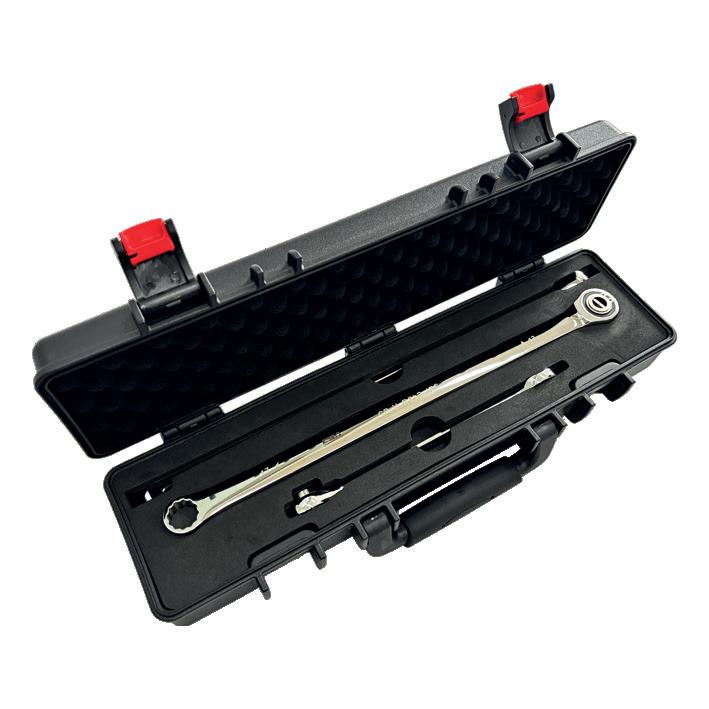
pressure can now incorporate this as part of their standard servicing.
For freight companies looking for operational efficiency, measurable savings will be seen in both labour hours and longterm fleet maintenance. For owner-drivers, it offers another way to protect their most valuable asset – their vehicle.
The kit works with major steering systems found across Australian fleets, including Kenworth, Western Star, Freightliner, and ZF/TRW TAS gears. And with the inclusion of clear instructions and a
barrier to adoption is minimal. This is a tool designed for the real world: straightforward, practical, and ready to use. In a market crowded with “innovations” that promise much but deliver little, the Sector Lash Adjustment Tool stands out by solving a problem that anyone in the industry will immediately recognise. It’s smart, it’s efficient, and above all, it makes routine maintenance truly routine again. Sometimes, the right tool doesn’t just do the job – it changes it.



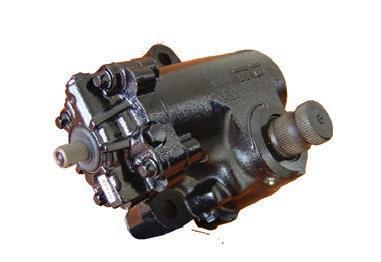
OFF-ROAD recovery in Australia requires equipment that can cope with soft sand, deep mud, uneven ground and remote conditions. While traditional lifting tools such as Hi-Lift jacks have their place, they are not always well suited to modern four-wheel-drive recovery, particularly on unstable surfaces.
Air jacks offer a different approach. Rather than lifting from a single point, they use compressed air to raise a vehicle from underneath, spreading the load across a wide base. This design delivers greater stability on both hard and soft ground, making air jacks a practical recovery solution for Australian offroad conditions.
Selson Air Jacks, brought to you by Airbag Man, are engineered to raise and lower vehicles efficiently with minimal physical effort. Their design, safety, reliability and speed make the air jacks suitable not only for off-road recovery, but for workshop tasks such as underbody servicing, wheel alignment, tyre replacement service and body repair work.
The air jack design has been proven in tough envi ronments both in Australia
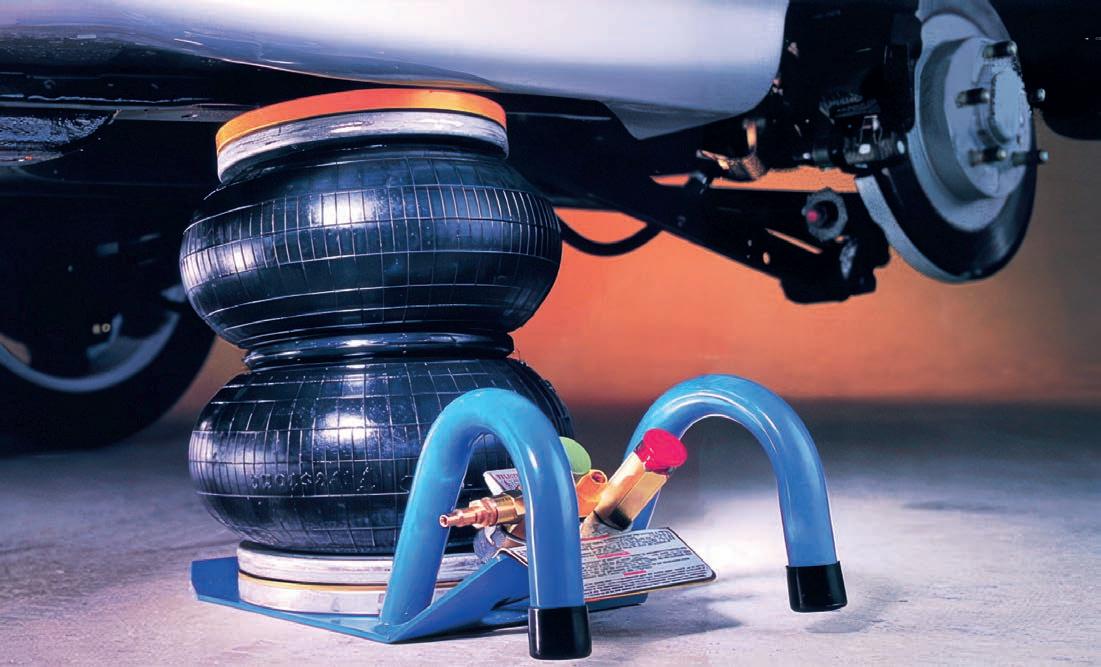
and overseas. Each design has been cycle tested 10,000 times at 100psi without failure. Selson air jacks are also approved for NATO use and are regularly employed by the
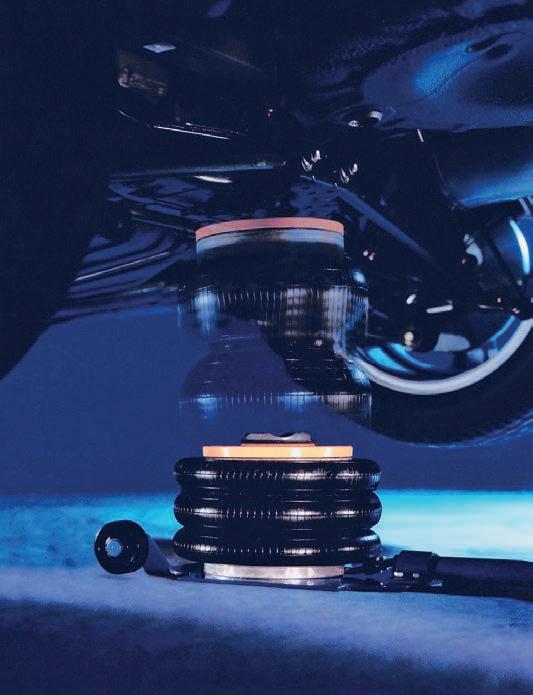
United States Armed Forces, a strong endorsement of their reliability and performance.
Operation is straightforward. Two push-button valves control raising and lowering. Compared with conventional mechanical jacks, the rapid operation can significantly re duce vehicle lift time. Despite their high lifting capacity, the jacks remain relatively light weight, improving portability for roadside service vehicles and mobile applications. Safety is addressed through controlled operating pres sures and built-in protection.
Selson air jacks operate at a working pressure of 690 kPa (100 psi) and are fitted with a factory-set overload safety valve. Set at approximately 20 per cent above standard work ing pressure, this valve pre vents accidental overloading and overinflating. Each air jack is supplied with assembly and operating instructions ensuring safe work practices, lasting performance and lon gevity of the product.
The maintenance costs as
sociated with the air jacks are kept to an absolute minimum as they consist of very few moving parts. The Selson
backed by a comprehensive service and replacement parts network. An air jack with its long and trouble-free service
THE AIR JACK DESIGN HAS BEEN PROVEN IN TOUGH ENVIRONMENTS BOTH IN AUSTRALIA AND OVERSEAS.”
Selson Air Jacks suit most applications, with varying lift capacities and different heights. The handheld models that are easily stored and portable are ideal for use on alignment and frame racks and in road service vehicles. The roll-around Hustler models, with long reach handles are best suited to service bays and workshops. Since 1995, Airbag Man has been Australia’s trusted leader in air suspension. We design and manufacture high-quality air suspension systems for thousands of light vehicles (including 4x4 and 4x2), heavy vehicles, trailers, caravans, motorhomes, and more –helping customers all over the world tow safer, smoother, and smarter.
Partner with us and help
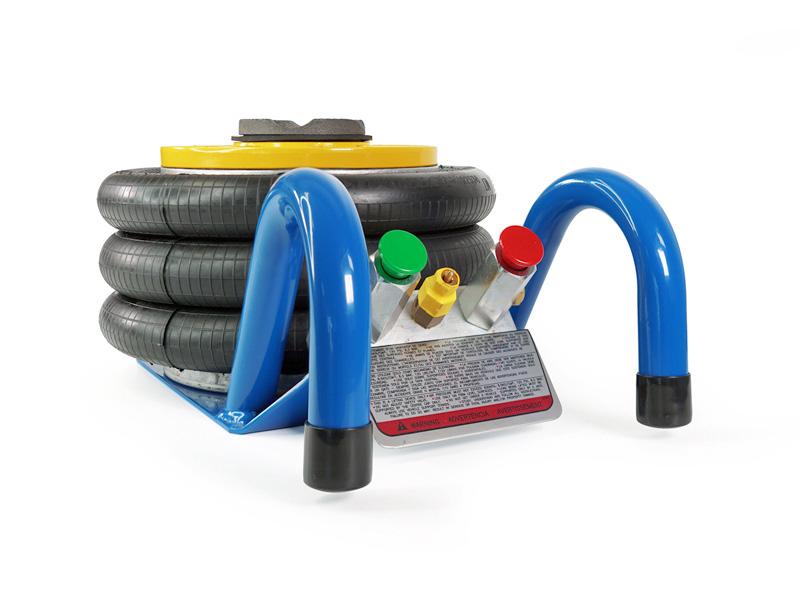
• Internal telescopic rod providing 'lifting arc' stability
• Instant inflate/deflate push button control
• Integrated non slip protection pad
• 2.5 to 7 tonne capacity offering heavy duty versatility
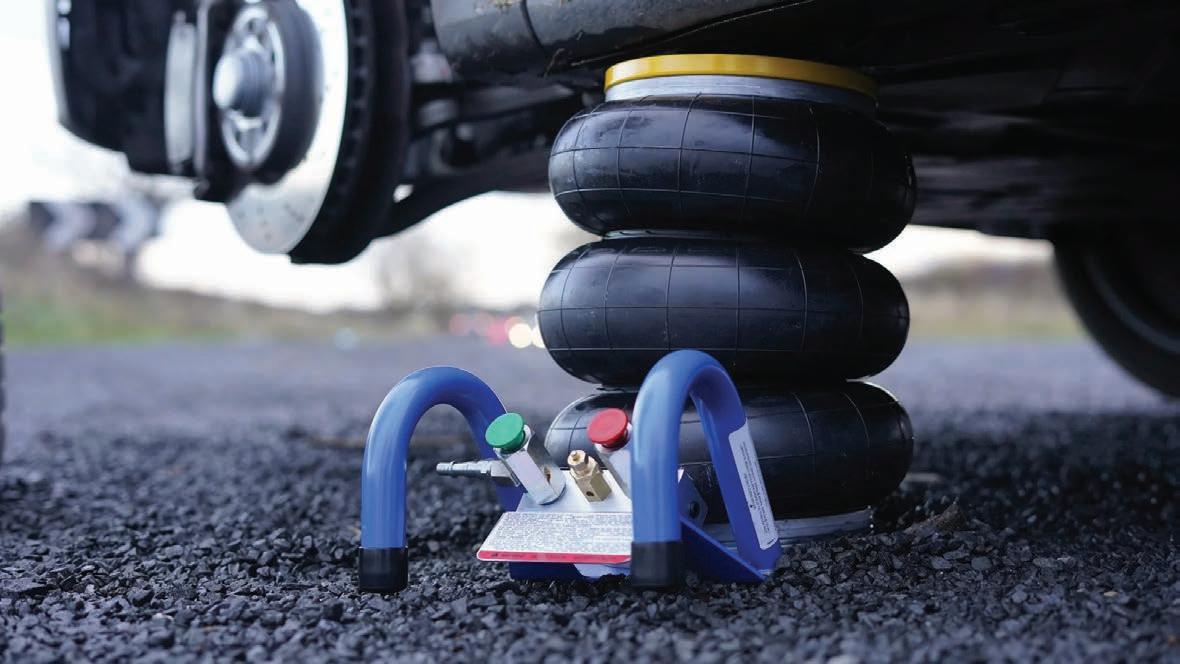

ECS Project Logistics has been operating across the country for over 18 years. Operating a large national transport fleet in Australia demands an uncompromising approach to mechanical compliance, reliability, and planned asset management. With increasing regulatory oversight, higher operating costs, and greater customer scrutiny, mechanical capability is no longer a support function – it is a critical control point.
As ECS CEO Alan Leslie explained, “ECS recognised this early and made a deliberate and sustained investment in industry-leading mechanical workshops and in-house technical capacity to support our growing fleet and meet the high standards expected across the Australian transport sector.”
As the fleet expanded in size, complexity, and geographic reach, it became clear that reliance on third-party repair networks alone would limit control over maintenance quality, compliance consistency, and vehicle availability.
“Early recognition of this risk drove the development of purpose-built mechanical facilities designed to manage preventative maintenance, heavy re pairs, component rebuilds, and
compliance inspections under a unified framework,” added Alan.
“This capability ensures consistent application of standards and vehicle configuration.”
The post-Covid operating environment has reinforced the importance of this approach. Significant increases in new truck pricing, extended OEM delivery lead times, and sustained parts cost inflation have fundamentally changed fleet replacement economics.
In parallel, supply chain volatility has increased the risk associated with outsourced maintenance and just-in-time parts availability. In response, ECS accelerated investment in self-sustaining mechanical operations and “con-stock” systems to strengthen cost control, reduce exposure to external delays, and protect fleet availability under increasingly constrained market conditions.
The strategy strongly promotes a structured preventative maintenance and asset life extension programme. Vehicles are maintained to strict service intervals aligned with manufacturer recommendations, NHVR accreditation, nd real-world duty cycles.
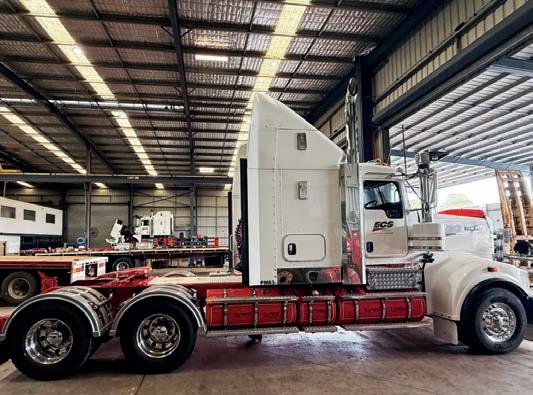
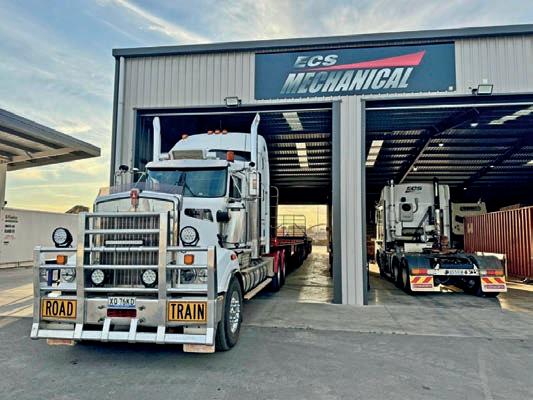
tion, planned intervention, and balanced condition-based maintenance, we are able to keep assets operational in prime condition for longer while maintaining full mechanical compliance and efficiency,” said Alan.
“This approach not only improves reliability and safety but increases return on investment across the entire fleet by a scaled reduction in premature asset replacement.”
ECS has developed service support capability in Perth and Roma with substantial workshops in Brisbane and Adelaide. “Whilst our Brisbane workshop is increasing its capabilities, the Adelaide workshop operates as the technical centre for planning and managing major mechanical repairs, and engine and drivetrain rebuilds,” Alan added.
“The facility is supported by spare engines and ready-replacement arrangements, a llowing rapid component change-outs when required. This significantly reduces lead times for mechanical events, limits secondary damage,
to service quickly and safely. The result is increased fleet reliability, improved uptime, and reduced exposure to unplanned failures.”
Mechanical compliance is a core focus of all workshop operations. Maintenance activities are documented, scheduled, and auditable through the latest advanced software.
“It’s an impressive system supporting compliance with NHVR requirements, HVNL obligations, and internal and client driven safety management systems,” said Alan. “Defect identification, rectification, and verification processes are embedded into workshop workflows, ensuring vehicles meet roadworthiness standards at all times. This disciplined approach strengthens our overall safety performance.”
Continued investment in in-house mechanical capability has also delivered measurable benefits in driver retention and engagement. Reduced breakdowns and faster repair turnaround directly decrease downtime, providing drivers with more
creased confidence in their equipment. Importantly, workshops also serve as a feedback loop between drivers and technical teams. Driver-reported issues are investigated early, allowing emerging faults to be addressed before they escalate into compliance or safety risks. This collaborative approach improves equipment reliability and reinforces a safety-first culture across the operation.
“For customers, our mechanical facilities provide visible assurance of our commitment to safe and compliant operations,” said Alan.
“Customers can visit and inspect workshops, review maintenance programmes, and see compliance systems applied in practice. This transparency is particularly important for customers operating under strict governance, safety, or project-based requirements, where confidence in fleet condition and reliability is essential.”
Currently, complete national coverage with technical depth is a short-term goal strongly driven by management. Continued growth in
THIS APPROACH NOT ONLY IMPROVES RELIABILITY AND SAFETY BUT INCREASES RETURN ON INVESTMENT ACROSS THE ENTIRE FLEET.”
ALAN LESLIE
part of the bigger picture for national success.
ECS has plans to support more advanced workshops in Roma and Perth within the next 12 months. These developments will further strengthen regional coverage, reduce reliance on external providers, and support continued fleet growth while supporting the already high standards nationwide.
“Ultimately, our investment in mechanical services reflects a long-term commitment to compliance, reliability, and operational control,” said Alan. “By embedding mechanical capability at the core of our business, we ensure our fleet remains safe, compliant, and dependable – supporting our drivers, protecting our customers, and meeting the -
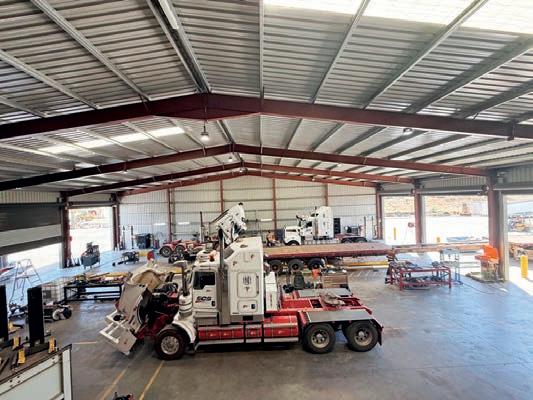
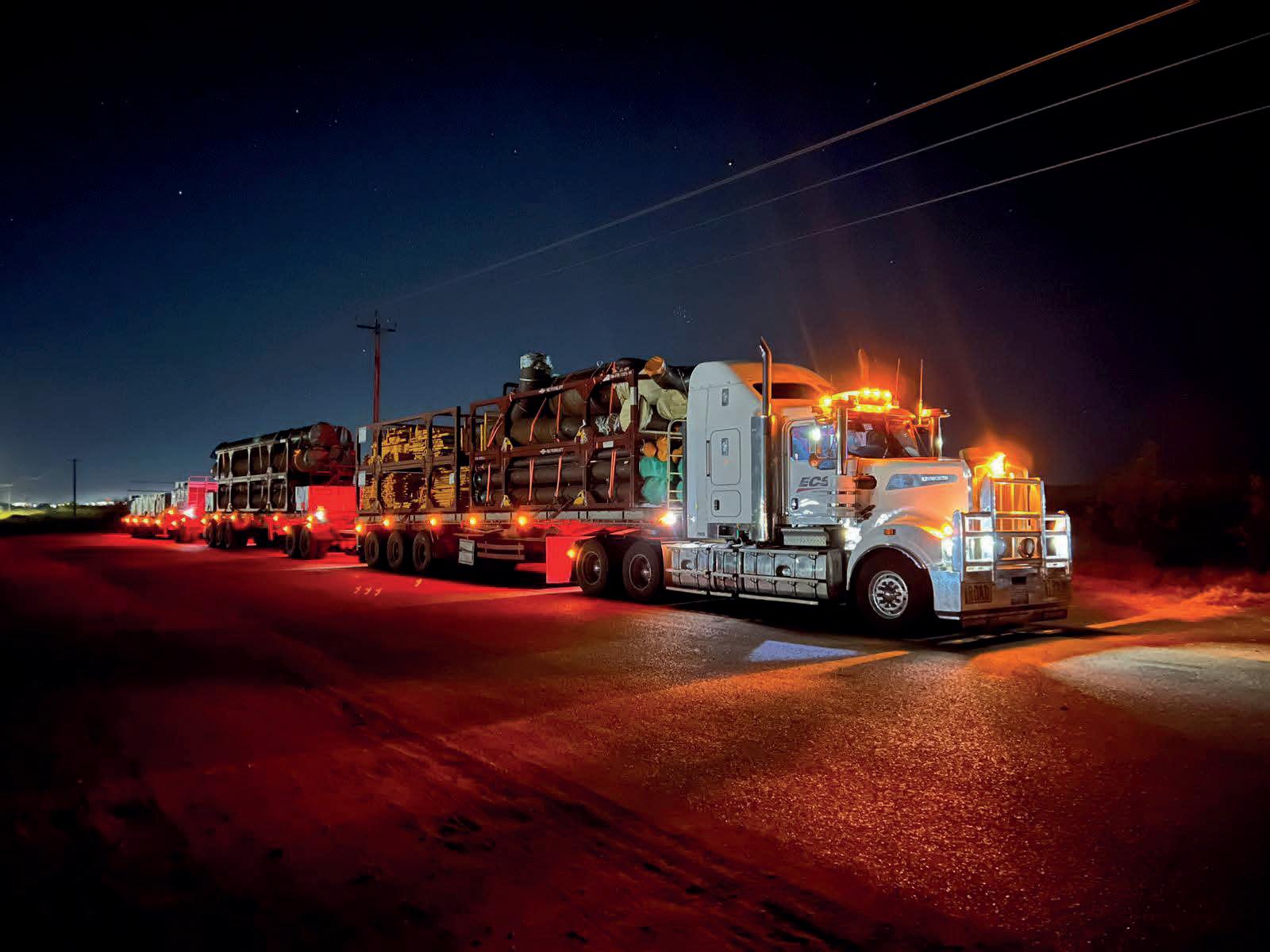
FOR livestock operators across Australia, balancing productivity, compliance and workforce pressures is becoming increasingly complex. R ising operating costs, constrained access and ongoing driver shortages are forcing businesses to look for smarter ways to move more freight without increasing fleet size or risk.
For Bloomfield Livestock, based in regional Victoria, the solution was found through a structured move into Performance-Based Standards (PBS) and accreditation under the LRTAV High Productivity Livestock Vehicle (HPLV) Scheme, supported by targeted engineering and compliance guidance.
To support the process, the business engaged BTT Engineering. Acting as a single point of contact, BTT Engineering coordinated the entire HPLV application and com pleted the HVLP Accredita tion Scheme audit, ensuring that vehicle configurations,
operational systems, and documentation aligned with scheme requirements. This streamlined approach reduced the need to work with multiple consultants and made the process more manageable.
Moving to higher productivity combinations
Bloomfield Livestock operates a modern, well-maintained fleet focused primarily on livestock transport. During peak harvest periods, the business also undertakes grain haulage, transporting locally grown cereals from farms to grain bunkers and resellers.
Before moving into PBS and the HPLV Scheme, Colin Bloomfield says the main challenge was staff shortages, reflecting the difficulty of managing personnel and resources efficiently within the existing operational setup. Instead of adding trucks
move more freight per trip, reducing truck movements and easing operational pressures.
To operate under the LRTAV High Productivity Livestock Vehicle Scheme, vehicles and operations must meet several requirements, including:
• Approved reference vehicle designs with prescribed axle spacings and dimensions
• Minimum vehicle standards, such as road-friendly suspension, compliant braking systems, correct road train signage and ADR 80/02 emissions compliance
• Participation in Road Infrastructure Management (RIM) or a Telematics Monitoring Application (TMA)
• Operation under an approved maintenance management scheme
• Compliance with all LRTAV HPLV operating standards and conditions
place, rather than changing how the business operated day to day.
Since gaining approval to operate B-triple combinations, Bloomfield Livestock has seen clear improvements.
Colin explained, “You can get two loads done in one trip,” highlighting the efficiency gains and reduced number of truck movements.
Higher payloads and fewer trips have helped ease pressure on drivers, improved sched
uling, and delivered cost efficiencies across fuel, maintenance, and labour – all while maintaining strong compliance, maintenance, and animal welfare standards.
When asked about the support he received from BTT Engineering’s compliance and audit team, Colin said, “It’s saved me a lot of headaches… dealing with BTT has been very good – Paul always an
When asked what advice he would give other livestock operators considering PBS or HPLV accreditation, Colin said, “I would highly recommend anyone to get it, because it saves on labour and frees up a truck as well.”
His experience demonstrates that operators with strong compliance and maintenance systems can achieve significant productivity gains by taking a structured and well-
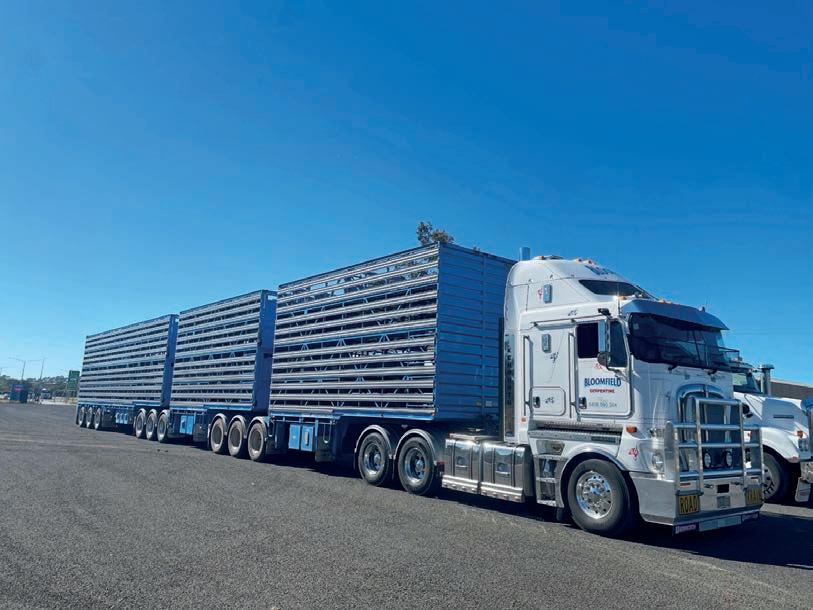
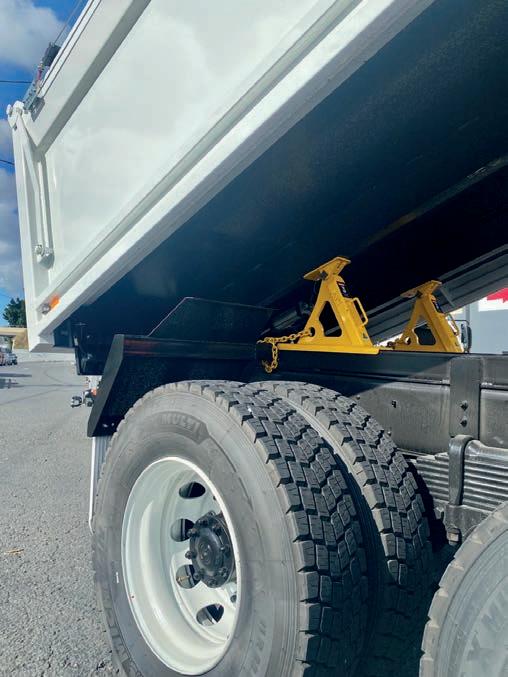
For Bloomfield Livestock, the process largely involved strating systems already in
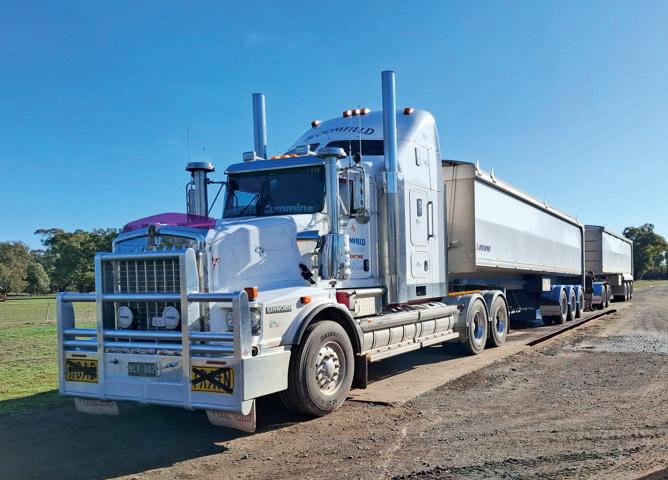
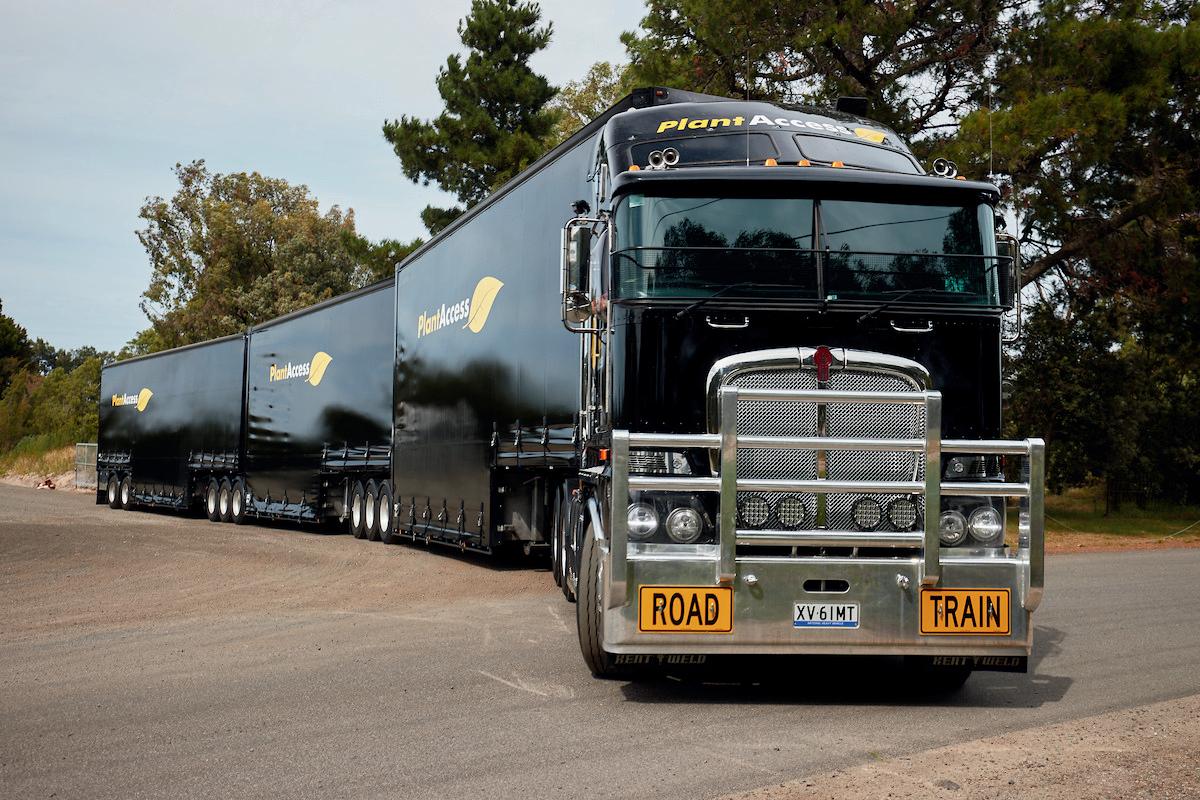
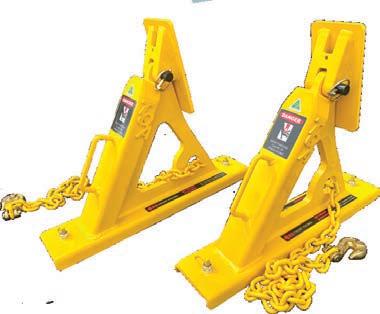






BASED at Caboolture in Queensland, the experienced team at Northside Diesel are committed to providing top-quality truck servicing, repairs and maintenance for trucks of all makes and models.
The business was taken over by husband and wife team Michael and Chris Sage just over t wo years ago – and in that time the couple has worked on continual improvements, to better serve the needs of its customers.
As Michael told Big Rigs, “Over the past two years, we’ve updated all of our workshop equipment, have updated and improved our internal practices, have invested in workshop upgrades to improve workplace health and safety, and have increased employee resources, with the introduction of our employment assistance program.”
Northside Diesel operates on a one-acre site, with 1000 square metres of undercover workspace. Along with catering to the needs of all truck makes and models, Northside Diesel is also the only service agent for Volvo, Mack and UD Trucks between Brisbane and the Sunshine Coast, ideally sit-
uated to cover the needs of the entire Moreton Bay region.
More recently, Northside Diesel has been doing more within the tyre space too, covering truck tyres, steer tyres, trailer tyres and tyre balancing; along with investing in the latest in fleet diagnostic equipment.
Northside Diesel caters to transport businesses of all sizes, from large scale national fleets to small and medium businesses, through to single truck owner operators.
Michael and Chris are supported by their highly skilled and knowledgeable Manager
and build the business,” said Michael, “we’re reinvesting in not just our equipment but our people as well. We understand that without the right people you can’t build a successful business. A business is run on the quality of the staff – and Dirk is the linchpin of that. His rapport with customers and technical knowledge is second to none.”
Dirk’s team of professionals includes Volvo Master Technician Ajeet, Ashley who completed his heavy vehicle diesel mechanic apprenticeship at Northside and is now a fully qualified technician, Brandon who previously served as he parts and service advisor and now works as a qualified
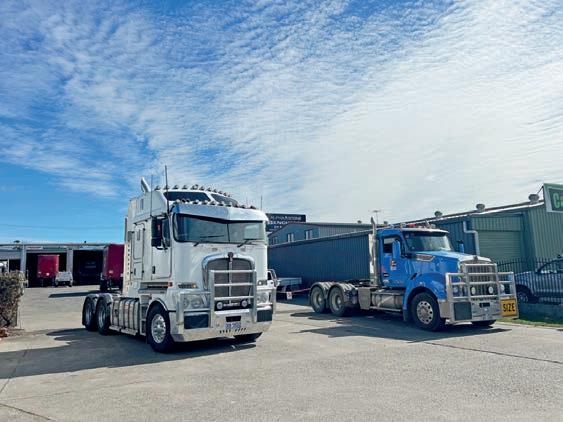


wart breakdown technician A ndrew.
At Northside Diesel the team abides by their slogan: “Keeping You Moving”.
“We recognise that commercial vehicles are the tools our customers use to make money for their businesses,” said Michael. “We also realise that when your truck is in the workshop, it’s not out there making money, so our aim is to get our customers back on the road.
“We’re also committed to sourcing the best parts we can get our hands on, using genuine parts wherever possible. The team at Northside Diesel will do everything we can to get the wheels turning again as quickly as we can.”
And in the event of a breakdown, Northside Diesel’s 24/7 truck roadside assistance is only a phone call away, ensuring you’re never left stranded. The company’s fully equipped emergency response vehicle can provide swift and accurate diagnostics, resolving common issues on the spot, saving customers from additional downtime.
For more information, visit
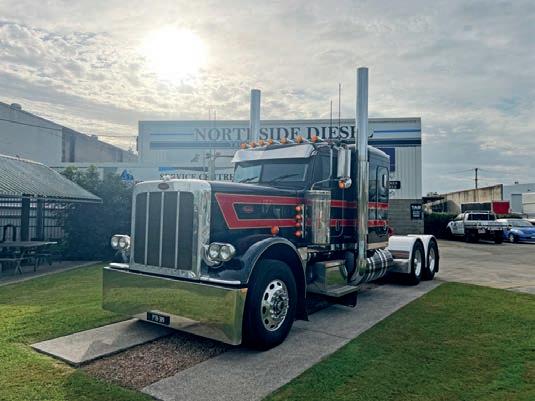
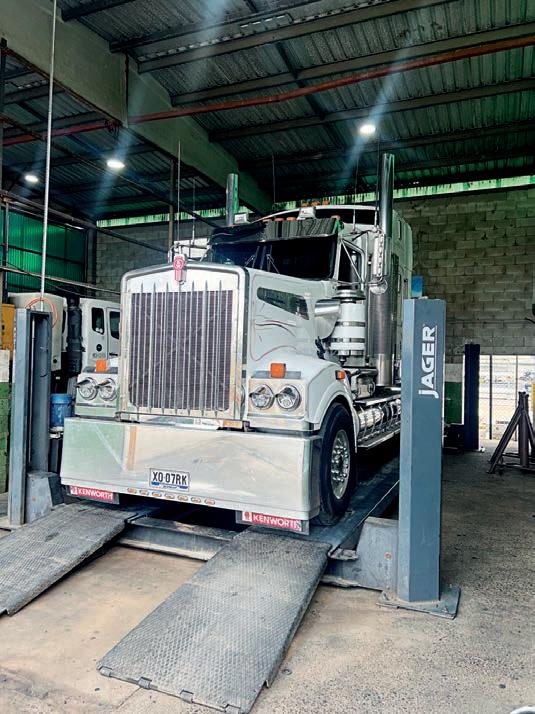







THE new year has begun and what a vital year it’s going to be. Transport authority figures from truck manufacturers to fleet owners, acknowledge that everyone has been running without a breather since Covid, so 2026 will be a year of reshaping, with better use of technology. There may be more time to focus on emissions reduction and improved driver welfare, and proactive maintenance rather than reactive repairs to reduce downtime and tighten cost control. Infrastructure investment is exciting. Queensland’s pipeline investment is reaching a record $127 billion, along with 2032 Olympic preparations and Western Australia rolling out a $38 billion program, and substantial investment in health and regional development throughout the country.
At Atlas Balance Company, we are well placed to serve the industry, with leading edge balance technology working for our customers for nearly 10 years. We know the sav
ings in tyres and diesel contribute to a smaller carbon footprint, and reducing the fatigue and wellness for drivers operating balanced vehicles is well documented.
Savings on ‘ BLACK’ products, make for GREEN credentials
It’s not rocket science to understand that with all wheels balanced together and running in harmony, no matter how rough or smooth the highway, road or paddock; there is less friction in the driveline components, less wear and tear on the chassis, not to mention the driver sitting up front controlling the action.
Less tyre wear, less component wear, less diesel needed to pull the rig, means less rubber wasted on the road, and less black smoke trailing behind, and a proven greener result.
Large Fleets like SRV Road Freight have been able to apply for more contracts based n their greener credentials.
ONE OF THEIR K200S ACTUALLY REACHED 500,000KM ON ONE SET OF DRIVE TYRES!”
dreds of Atlas Balance rings over the years, and are now fitting out drives and trailer axles.
CEO Errol Cosgrove reported tyres that had been averaging a life of 120,000km, are now achieving 250,000km on the steers, running Bridgestone steer tyres. That’s an easy 50 per cent saving on tyres. One of their K200s actually reached 500,000km on one set of drive tyres!
Most Australian roads are unsealed Australia’s vast road network has more country and local roads than major highways, over 800,000km in otal, including hundreds of thousands of kilometres of
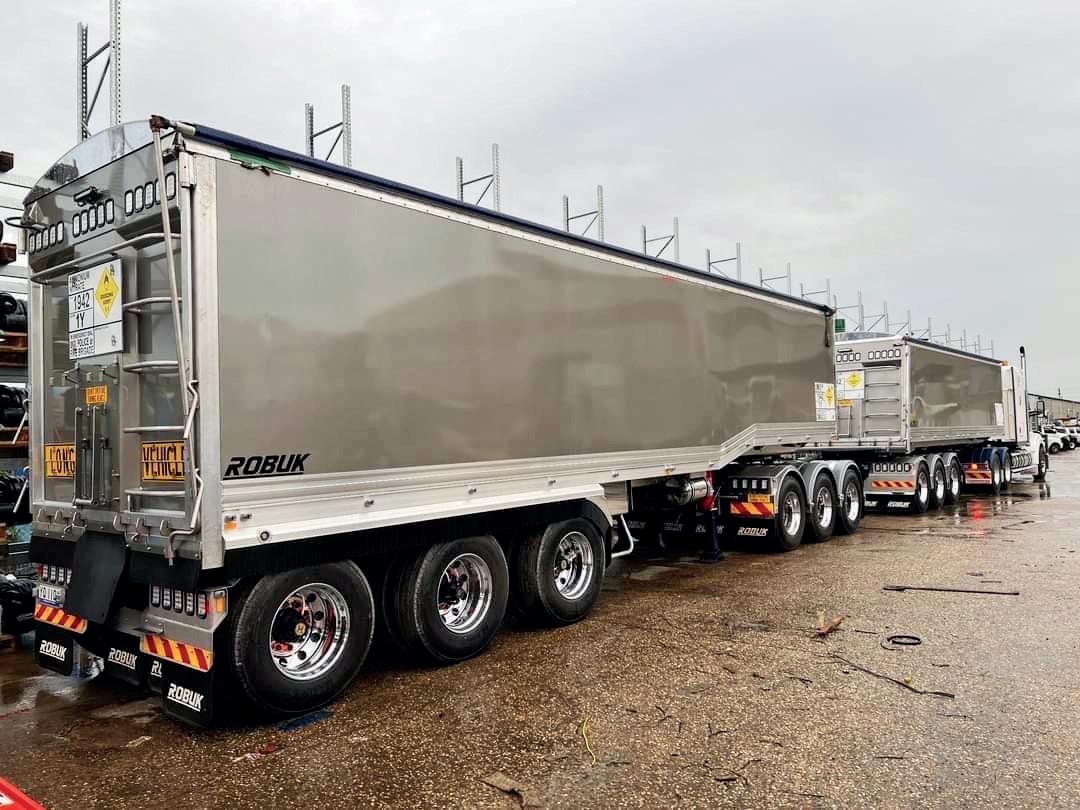
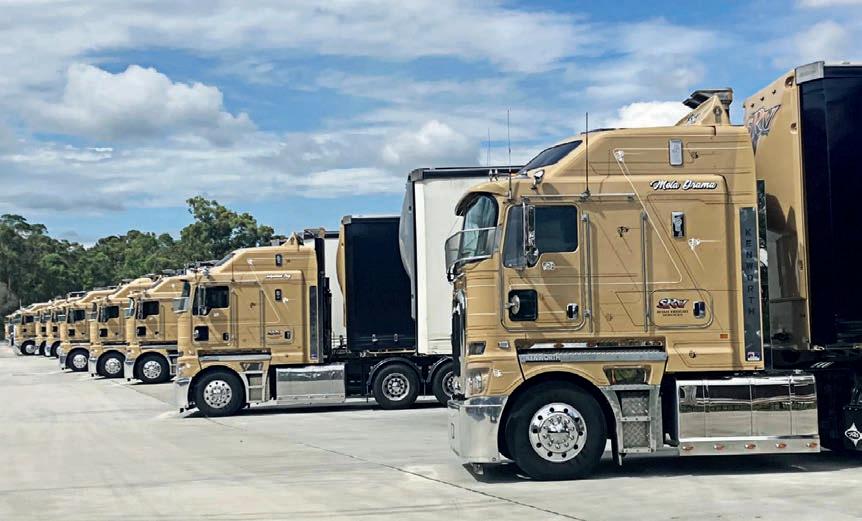
unsealed dirt/gravel roads compared to the smaller, sealed national highways and arterial routes such as the world’s longest national highway, Highway 1, at around 14,500km.
Even running on good highways, tyres and fuel are the industry’s biggest cost centres. Smart operators like Marty Murphy have made significant cost savings, even though like most Australian drivers, he drives very rough roads. In his case, the beaten tracks of Central Queensland. He drives the Bowen basin; from Dingo to Nebo via the Fitzroy Developmental Road, usually referred to as the “Beef Road”.
It is a critical inland freight route in Central Queensland, roughly spanning 250km. Due to its importance to the mining and cattle industries, it is generally open, but conditions can change rapidly due to weather. Marty’s operators drive rigs one way full, and the other way empty –but they still get 400,000km
on his tipper tyres – not surprisingly every single axle is fitted with Atlas Balance Rings!
Same driver benefits, versus hot seat operators
Fleet operators notice significant savings on tyres and maintenance when they have the same driver and not a hot seat driver. There’s more pride, the rig is cleaner, inside and out – the repairs are smaller, mostly oil and filter changes only. We find unbalanced tyres are worn or scuffed on the same side every time. However, just one balancing exercise is required, and with Atlas Balance Rings fitted, the careful driver, plus the fully balanced rig win the savings every time.
Our customers tell the story best
Nothing makes us happier than an unsolicited five star review. Muhammad Hamza Amir said, “I placed my order on Sunday, and the
balance rings were delivered by Tuesday. They were installed immediately on the steer axles of my Mack tipper, and the results have been phenomenal. From the first drive, the steering felt noticeably smoother than before, with all steering wheel vibrations completely eliminated. At highway speed (100 k m/h), I briefly released the steering wheel to assess the effectiveness of the rings, and the truck tracked perfectly straight with no vibration whatsoever. The improvement in ride quality is significant – the truck now drives so smoothly that I can place a coffee in the cup holder without it spilling. Based on my experience, I highly recommend Atlas Balance Rings to every owner-operator and mud carter looking to improve ride comfort, steering stability, and overall driving performance.”
To learn more, please visit atlasbalance.com.au or call 1300 228 527.
THE National Heavy Vehicle Regulator (NHVR) has released details about upcoming changes to the Directional Stability Under Braking (DSUB) standard.
The changes, coming into effect on July 1, 2026 will apply to newly built vehicles and existing in-service vehicles entering PBS for the first time.
“The Directional Stability Under Braking (DSUB) standard is being updated to modernise braking requirements under the Performance Based Standards (PBS) scheme,” said the NHVR.
“Vehicles that were PBS-approved prior to 1 July 2026 are unaffected, except for limited connectivity requirements when operated in combinations with DSUB-compliant vehicles.
“The revised DSUB stan-
dard will improve safety outcomes by increasing the use of advanced braking and stability technologies.
“The new braking standard does not apply even if you re-certify or add that vehicle to a new or existing PBS Vehicle Approval (VA) after 1 July 2026.”
The changes mean that firsttime PBS trailers and dollies must meet the revised DSUB requirements, including the fitment of Trailer EBS with full roll stability functionality. Under the revised DSUB standard, load proportioning valves (LPVs) will not be permitted.
The NHVR is also currently reviewing currently reviewing three high-speed and stability standards within the PBS Scheme: the Static Rollover Threshold (SRT), Rearward
Amplification (RA) and High-Speed Transient Off tracking (HSTO).
“These standards play a crit ical role in ensuring the safety of PBS vehicles. The review aims to modernise the stan dards to better reflect contem porary vehicle technology and ensure we can maintain a safe heavy vehicle industry,” said the NHVR.
A consultation period was held for these standards, which closed in late January. The aim of the consultation was to confirm whether the existing standards remain fit-for-purpose, understand impacts of current standards on industry participation, explore potential updates to reflect modern vehicle tech nology, and ensure continued safety benefits while enabling productivity improvements.
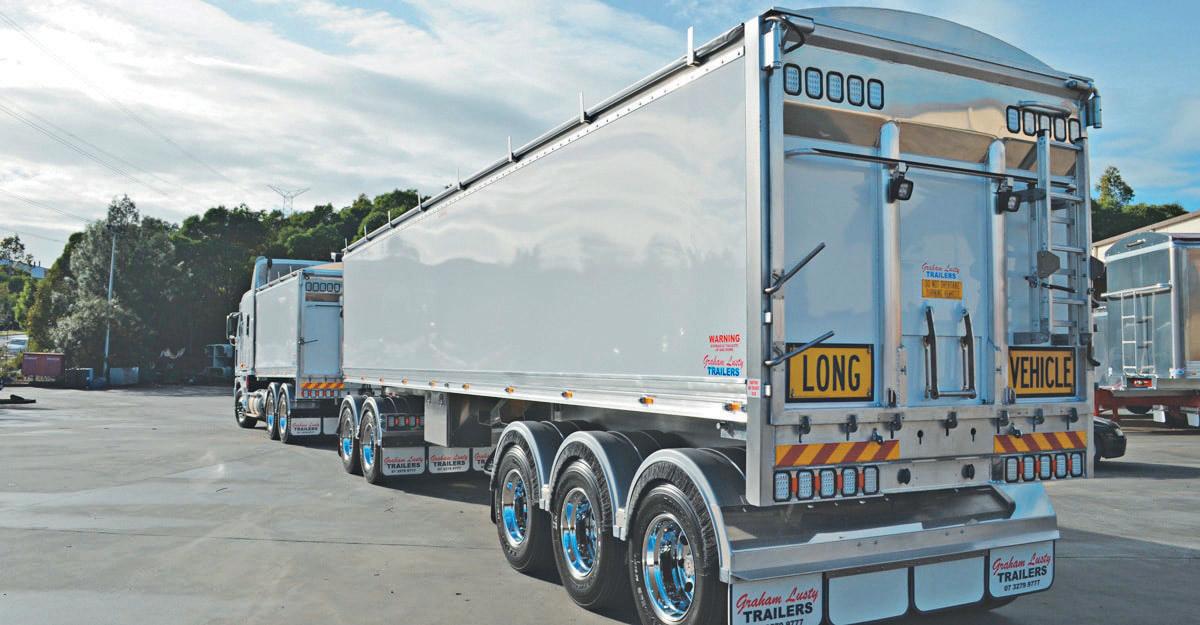
BY PETER HAUSTEIN
THE passage of the Heavy Vehicle National Law (HVNL) Amendment Package in November 2025 marks a turning point for the heavy vehicle industry.
Due to commence in mid2026, the reforms introduce a new two-tiered accreditation framework, General Safety Accreditation (GSA) and Alternative Compliance Accreditation (ACA), to replace and eventually phase out the long-standing National Heavy Vehicle Accreditation Scheme (NHVAS).
For operators, this change is not merely administrative. It represents a fundamental shift in how compliance, safety, and productivity are balanced.
The reforms embed safety management systems (SMS) into accreditation, harmonise auditing standards, and expand duties such as the new ‘Unfit to Drive’ obligation.
While regulators herald these changes as modernising the law, operators must grapple with what this means for their day-to-day business.
From NHVAS to the new framework
The NHVAS was designed as a voluntary scheme, allowing operators to demonstrate compliance in specific modules – Fatigue Management, Maintenance, and Mass Management – in exchange for productivity concessions. Participation was often driven by the desire to access higher mass limits or flexible fatigue arrangements.
However, NHVAS was criticised for inconsistent auditing across jurisdictions and for encouraging a ‘tick-box’ mentality.
Operators could meet the minimum paperwork requirements without necessarily embedding a genuine safety culture.
For many, accreditation was a transactional exercise: a way to unlock concessions rather than a driver of systemic safety improvement.
The new framework seeks to address these shortcomings. By embedding SMS into accreditation and introducing the National Audit Standard (NAS), regulators aim to ensure consistency and elevate safety outcomes.
Operators will no longer be able to rely solely on documentation; they must demonstrate proactive risk management and continuous improvement.
Greater administrative burden for smaller operators
For large fleets with established compliance teams, embedding SMS into accreditation may be a natural extension of existing practices.
Smaller operators, however, may struggle. Developing, documenting, and auditing a comprehensive SMS requires resources, time, expertise, and money that smaller businesses may not readily have.
Where NHVAS allowed operators to focus narrowly on modules relevant to their operations, GSA requires a base-

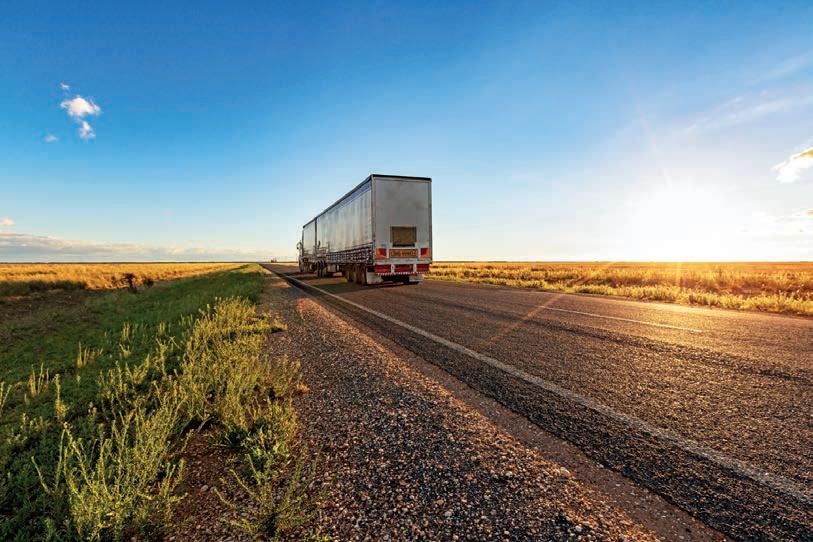
line safety framework across the board.
This could mean new costs for consultancy, training, and system development. Operators who previously relied on minimal paperwork will need to invest in more robust processes.
Consistency in auditing: A double-edged sword
The NAS promises to eliminate the inconsistencies that plagued NHVAS audits. For operators, this means greater predictability: the same standards will apply regardless of jurisdiction or auditor. This is a welcome development, particularly for national fleets operating across multiple states.
Yet consistency also means less room for leniency. Under NHVAS, some auditors were more pragmatic, recognising operational realities. NAS may impose stricter uniformity, leaving operators with less flexibility.
While fairness improves, the risk is that audits become rigid, potentially penalising operators for minor deviations that previously would have been overlooked.
Transition periods and compliance pressure
Operators accredited under NHVAS will have up to three years to transition to the new framework.
This phased approach provides breathing space, but it a lso creates uncertainty. Operators whose accreditation expires shortly after commencement may face complex renewal processes under the new system
Compounding this is the absence of a grace period for penalties. Once the amended HVNL takes effect in mid2026, operators must comply immediately.
NHVR promises extensive education and guidance, but the reality is that operators will need to adapt quickly. Those who delay preparation risk compliance breaches and penalties.
Shift in motivation: Safety over productivity
NHVAS was often seen as a pathway to productivity benefits. Operators joined to access higher mass limits or flexible fatigue arrangements, with safety compliance as the price of admission.
The new framework shifts the emphasis squarely onto safety. Productivity concessions remain, but they are secondary to demonstrating a robust safety culture.
For operators, this means accreditation is no longer simply about gaining operational advantages. It is about embedding safety into the DNA of the business.
This cultural shift may reduce the attractiveness of accreditation for those motivated primarily by productivity, but it aligns with broader societal expectations that safety must come first.
Impact of the new ‘Unfit to Drive’ duty
The reforms expand the duty not to drive while fatigued into a broader obligation not to drive while “unfit.” This applies to all heavy vehicles over 4.5 tonnes, not just fatigue-regulated vehicles.
takes could attract disproportionate penalties. The new framework recognises that paperwork errors are not equivalent to safety breaches.
However, with 71 penalties changing, 21 reducing and others increasing, operators must carefully review their compliance obligations. The simplification of record-keeping requirements may ease administrative burdens, but the heightened focus on substantive safety risks means operators must ensure their systems are watertight.
The reforms also adjust mass and length limits, increasing General Mass Limits to those currently available under Concessional Mass Limits, and extending Euro VI concessions to road trains. For operators, this means greater productivity potential, particularly for long-haul freight.
Yet these benefits are contingent on compliance with the new accreditation framework.
Operators who fail to transition effectively may miss out on these concessions, placing them at a competitive disadvantage.
For operators, this creates new responsibilities. They must ensure drivers are fit to drive not only in terms of fatigue but also in relation to physical and psychological health. This aligns with Work Health and Safety principles, but it also introduces operational challenges.
Operators will need to develop policies and procedures to assess driver fitness, provide support, and manage situations where drivers declare themselves unfit.
This could mean increased downtime, staffing pressures, and costs. Yet it also empowers drivers to prioritise safety, reducing risks of incidents and liabilities for operators.
Penalties and recordkeeping simplification
The reforms reduce penalties for minor administrative errors, reflecting a shift toward focusing on genuine safety
For operators, the accreditation reforms present both opportunities and risks. On one hand, the new framework promises consistency, fairness, and a stronger safety culture. Operators who embrace SMS and adapt proactively may find themselves better positioned to access productivity benefits and demonstrate industry leadership.
On the other hand, the reforms impose new bur dens. Smaller operators face r may become more rigid, and the absence of a grace period heightens compliance pres
sure. The expanded ‘Unfit to Drive’ duty introduces operational complexities, requiring new policies and support systems. Ultimately, the reforms demand a cultural shift. Operators must move beyond viewing accreditation as a transactional exercise and embrace it as a cornerstone of safety and risk management. Those who resist may struggle, but those who adapt stand to benefit from a safer, more productive industry.
The transition from NHVAS to the new accreditation framework under the HVNL is more than a regulatory change, it is a transformation of industry culture. For operators, the impacts are profound: greater administrative demands, stricter audits, new duties, and immediate compliance expectations.
Yet the reforms also offer opportunities: streamlined governance, reduced penalties for minor errors, and enhanced productivity concessions. The challenge for operators is to navigate this transition effectively, embedding safety into their operations while maintaining competitiveness.
In comparing the old and new systems, one truth is clear: NHVAS was a product of its time, focused on compliance and productivity.
The new framework reflects contemporary priorities, safety, consistency, and innovation. For operators, success will depend not on resisting change, but on embracing it as the foundation of a safer, more resilient industry.
• Peter Haustein is a seasoned professional with 15 ears’ experience in heavypliance, and government egulation across multiple-
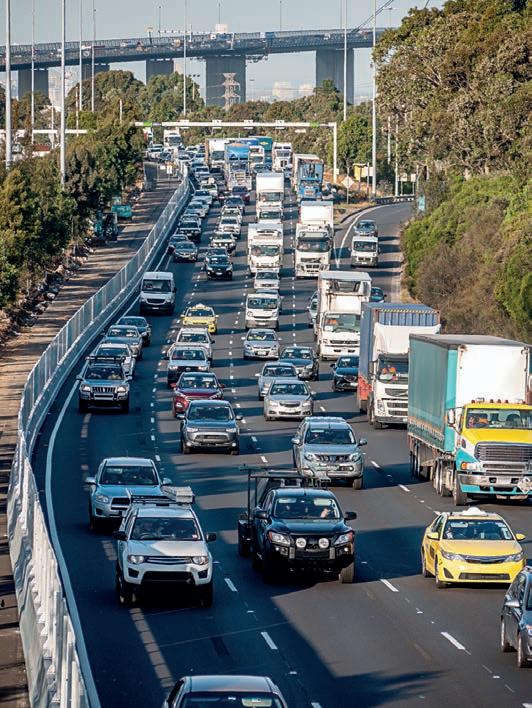
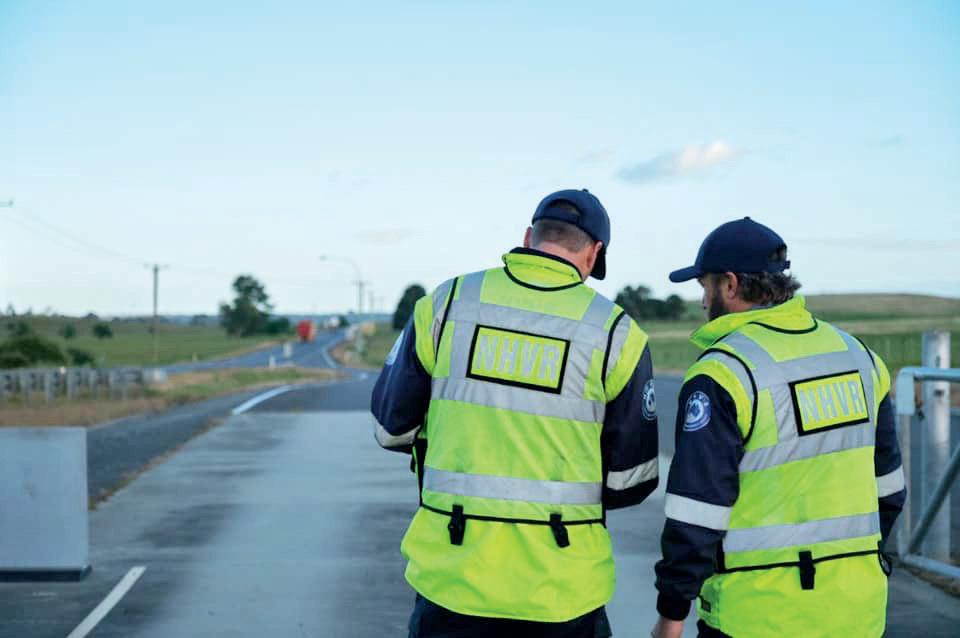
THE road transport industry is facing a hard truth: the way we’ve been operating is no longer sustainable.
Every time diesel prices spike, roads flood, or fire cuts off a region, the same pattern follows. Operators absorb the cost. Drivers wear the pressure. And eventually, the industry lines up asking government for relief.
That should be a red flag.
A mature, professional industry should not rely on subsidies to survive normal commercial risks. Cost increases, delays and environmental disruptions are not anomalies, they are foreseeable operational realities. And under modern chain of responsibili-
ty laws, pretending otherwise is no longer acceptable.
Cost is a risk and risk must be managed
The Master Code of Practice makes one thing clear: safety and compliance are not separate from commercial decisions. Pricing, scheduling, contracting and allocation of work are all “transport activities” that directly affect risk.
If a contract doesn’t allow fuel increases to be passed through, it creates pressure.
If delivery times and payment ignore flood detours or fire restrictions, they create pressure.
If rates don’t support lawful pay, training and safety, they create pressure. And pressure is one of the most consistent root causes of unsafe outcomes.
Cost is not an excuse for failing to manage risk. In fact, the Code is explicit: cost alone is rarely a valid reason for not implementing controls, unless it is grossly disproportionate to the risk.
For serious risks, fatigue, speed, vehicle conditions and safety the expectation is clear. The control must be applied.
That means the commercial model must support the safety model.
Passing costs to customers is not optional
No airline absorbs fuel volatility. No construction company eats material price hikes. Yet road transport has been conditioned to accept that rising input costs are just “part of the job”.
They shouldn’t be.
Fuel, insurance, compliance systems, training, audits and lawful wages are inputs. When they increase, those increases must be passed directly to the customer as a standard contractual mechanism, not as a special request or an emergency negotiation. Fuel levies and escalation clauses should be normal. Contracts that don’t allow them are not just bad business, they are unsafe.
Pricing risk where risk exists
The same principle applies to freight into regions regularly affected by floods, fires and extreme weather.
These are not unpredictable events anymore. They are known external hazards. The Master Code recognises environmental and infrastructure risks as part of the operating context that must be planned for, communicated and managed.
If servicing a region regularly involves detours, delays, recovery risks and driver welfare impacts, then freight into that region must attract a premium. That is not profiteering, it is risk-based pricing.
Expecting operators to carry those costs silently only ensures one outcome: either unsafe pressure or eventual withdrawal of service.
If customers want resilience, they must pay for it.
Minimum standards must apply to everyone
Alongside fair pricing, the in-
dustry must draw a hard line on who gets access to work.
No freight should be allocated to operators who cannot demonstrate minimum safety standards — including verified driver competency, lawful pay arrangements, fatigue management, vehicle maintenance and effective safety systems.
The Master Code is clear that working with other businesses is itself a risk that must be managed. Choosing a cheaper, non-compliant operator is not neutral. It actively introduces risk into the transport task.
Customers, brokers and prime contractors cannot outsource safety by turning a blind eye. Allocating work is an act of control and with control comes responsibility.
Contracts must support safe outcomes
Unrealistic delivery times, penalty clauses for delays caused by events outside the driver’s control, and rates that only work if corners are cut are
no longer just poor practice, they are prohibited territory. Chain of responsibility requires that commercial arrangements do not create safety risk. Any request, schedule or contract term that would reasonably be expected to encourage unsafe behaviour — including through pricing or time pressure — is prohibited. If a job can’t be done safely at the agreed rate and schedule, then the problem isn’t the driver or operator — it’s the contract.
Leadership inside businesses matters
None of this happens by accident. Safe, sustainable operations don’t emerge from policy documents alone. They require someone inside the business who understands how law, safety, operations and commercial decisions intersect and who has the authority to challenge unsafe arrangements before they become incidents.
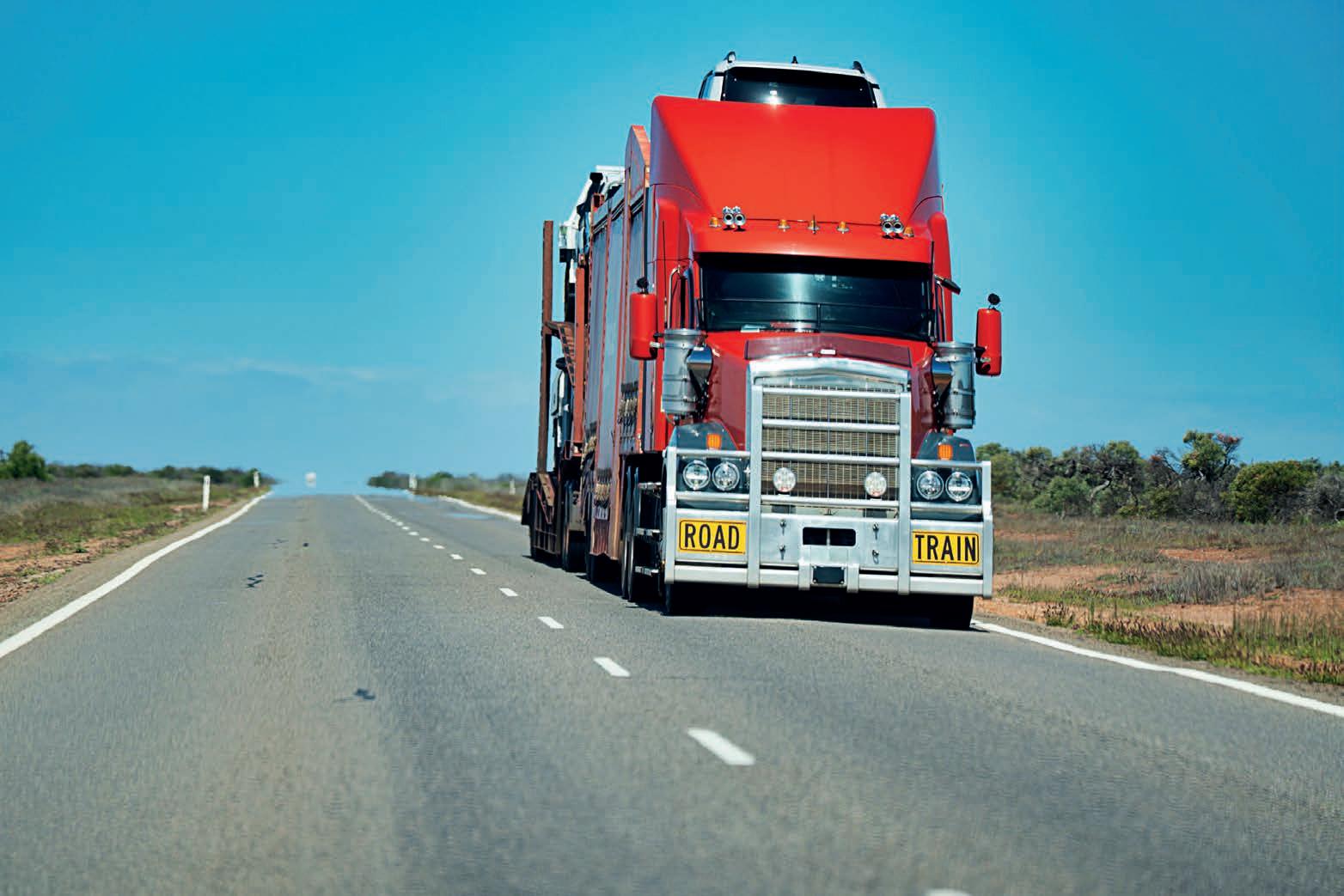
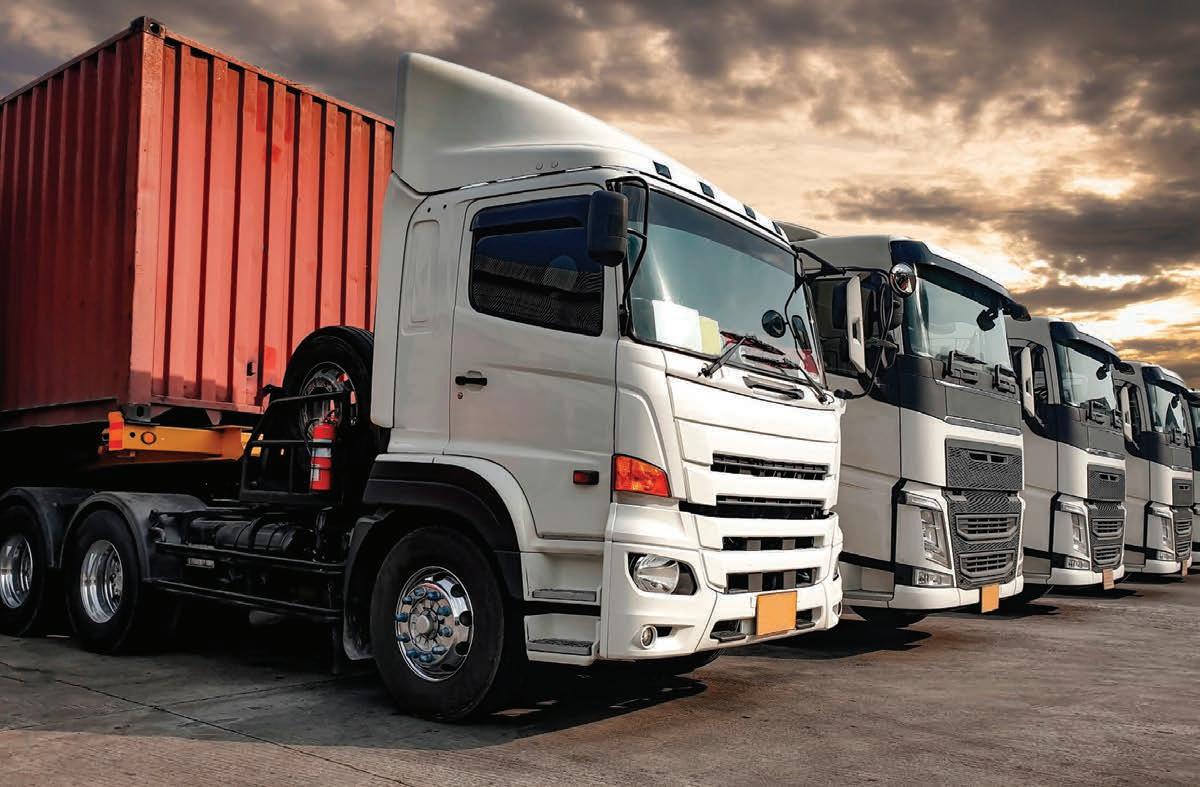
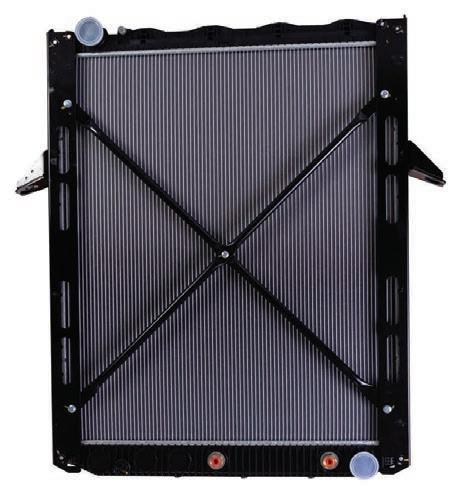
The Master Code repeatedly points to the need for capability, oversight, verification and ontinuous improvement. That doesn’t happen without deliberate leadership and ccountability embedded into everyday decision-making.
This is a collective reset
No single operator can fix this alone. Anyone who tries will
But if minimum standards, fair pricing mechanisms and risk-based contracts are applied consistently across the ndustry, the dynamic shifts. Customers adapt. Rates normalise. Unsafe operators are And government stops being asked to patch holes that the industry has the power to fix
We already know what needs
The question is whether we’re ready to stand together and reset the rules — or keep absorbing costs, risks and pressure that were never ours
Glyn Castanelli is President of the National Road Freighters Association, a TruckSafe board member, interstate truck driver, and transport compliance auditor with frontline industry
Nowhere is this more evident than in the southwest of Victoria, where recent announcements from the Albanese and Allan Labor governments highlight the profound difference targeted upgrades can make.
INFRASTRUCTURE investment has always been one of the most important enablers of economic growth, supply chain efficiency and transport industry sustainability.
For freight operators, the quality of the roads, rail lines and intermodal connections we rely on every day has a direct impact on our productivity, emissions profile and business viability.
As operating conditions become more complex and the freight task continues to expand, the ongoing commitment of both the Victorian and Commonwealth governments to maintaining, renewing and rebuilding our transport corridors could not be more important.
Funding that goes beyond basic maintenance is critical for lifting capacity, improving safety and future proofing our transport network.
Victoria’s freight volumes continue to grow, driven by population, consumption and industry expansion.
A rising freight task means more heavy vehicles, more rail demand and more pressure on existing networks.
W hen governments invest strategically in these corridors, the benefits extend far beyond transport businesses: efficiency improvements through reduced delays, smoother journeys and reduced incident risk flow into every sector that depends on reliable freight.
Significant works are underway across key freight routes that underpin Australia’s largest dairy production area, including six kilometres of upgrades along Cobden–Stonyford Road, Bullaharre and sections of the Princes Highway West at Pirron Yallock.
These upgrades include new road surfaces, enhanced safety barriers, and improved signage and line marking, simpler interventions that collectively deliver safer, more resilient and more productive freight lanes.
The southwest region is not only home to some of the nation’s most productive dairy operations — with 392,000 cows producing over two billion litres annually across more than 1000 farms — it is also a crucial corridor for timber, agricultural commodities and a wide range of regional manufacturing.
When roads in these regions are improved, it lifts the productivity and safety of entire supply chains.
Fewer breakdowns and delays, reduced vehicle wear, and improved access for High Productivity Freight Vehicles all contribute to stronger, more competitive primary industries.
These upgrades also support expected growth in passenger and freight vehicle volumes, with projections indicating that freight volumes a lone could rise by 20 per cent over the next 25 years across Victoria’s southwest.
That level of growth simply cannot be supported by age-
ing infrastructure. The investments being made today are foundational for meeting tomorrow’s freight needs efficiently and sustainably.
For transport operators, whose margins remain under sustained pressure, these productivity and emissions gains are not abstract concepts — they translate into lower operating costs, more reliable scheduling, better workforce safety and improved competitiveness.
W hen operators spend less time stuck in congestion or navigating degraded surfaces, they spend more time moving freight.
Infrastructure is, in effect, one of the most important levers we have to keep transport businesses viable and sustainable.
It is important to acknowledge the leadership shown by both the Victorian and Commonwealth governments in continuing to fund these major upgrades, including the $37.7 million Dairy Supply Chain Road upgrades jointly backed with near equal contributions from both levels of government.
These investments at a federal and state level demonstrate a clear recognition of the road freight sector’s importance to the Victorian economy and the wider communities it serves.
A s the freight task grows, the Victorian Transport Asssociation will continue advocating for long term, coordinated infrastructure planning across both road and rail networks.
A strong transport system is the backbone of a strong economy and the work being done today will help ensure Victorian operators remain productive, competitive and sustainable for decades to come.
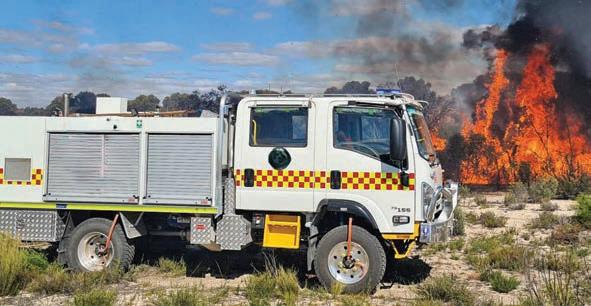
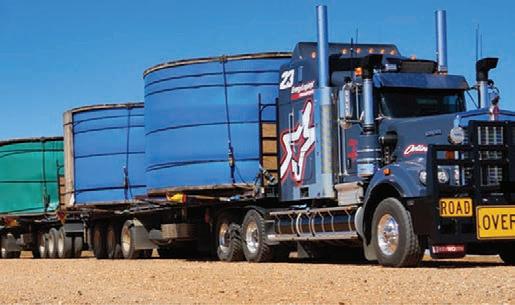
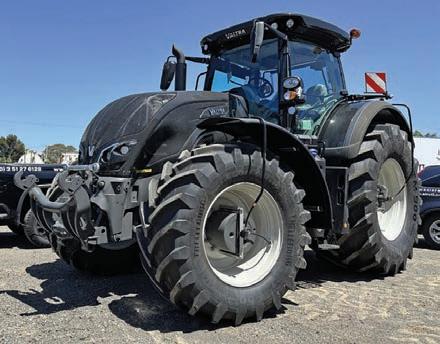
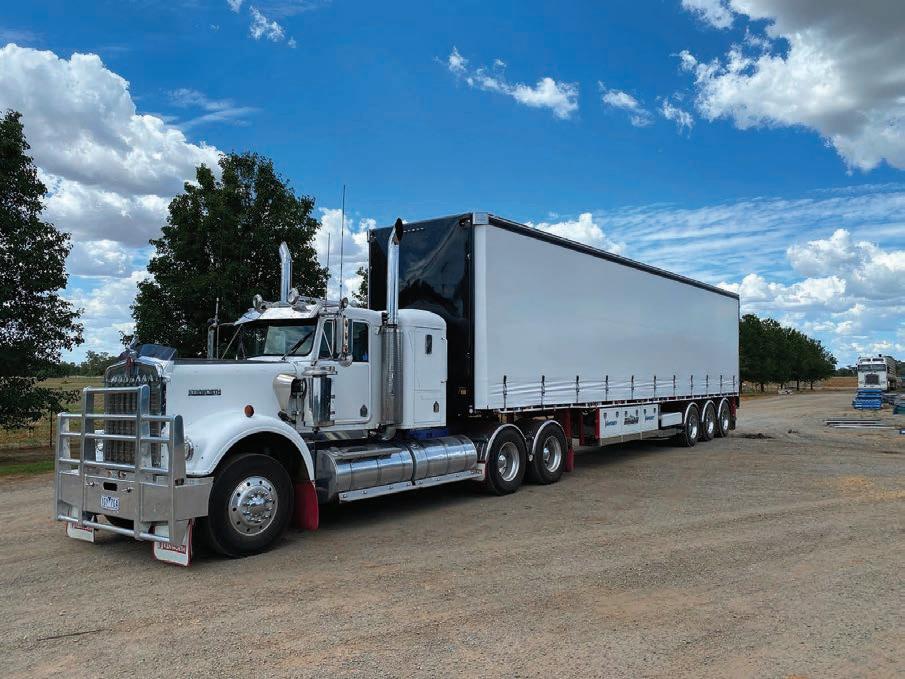

MOST operators understand fines.
Many understand prosecutions.
Very few fully appreciate the impact of a Supervisory Intervention Order (SIO) until one lands on their desk.
And right now, I am seeing more of them than ever.
Under the Heavy Vehicle National Law (HVNL), SIOs were designed as a compliance tool for persistent and repeat offenders.
In practice, they are becoming a routine add-on to prosecutions including permit and dimension offences with conditions that can cost thousands of dollars to implement.
What is a Supervisory Intervention Order?
A Supervisory Intervention Order is a court-imposed compliance regime made under section 600 of the HVNL.
It allows a court, at sentencing, to place a business under active regulatory supervision for up to 12 months. In plain terms, it means:
The National Heavy Vehicle Regulator (NHVR) is given power to monitor, audit, demand reports, require training, and impose structural reforms on how your business operates.
Why courts and the NHVR use them
SIOs exist for one reason:
To force systemic change where a regulator believes “business as usual” is unsafe. They are typically sought where:
• There is a serious risk breach
• The regulator alleges systemic failure
• There are repeat issues
• Management systems are weak
• Permit, loading, fatigue or dimension breaches suggest poor controls
The new trend: SIOs for permit and dimension offences
Traditionally, SIOs were reserved for more serious offences.
Increasingly, I am seeing them sought in permit and dimension matters.
Cases involving overwidth, over-length, or permit non-compliance are now being treated as “systems failures”, not isolated mistakes. That changes everything. What used to be a fine and a warning can now become 12 months of regulatory supervision.
What conditions can look like in practice
A recent matter illustrates just how far these orders can go.
In that case, the court imposed extensive compliance conditions, including mandatory reporting, staff disclosure, compulsory training, fleet registers, subcontractor controls, and installation of monitoring systems.
The order required, among other things:
• Full disclosure of all staff and contractors
• Ongoing reporting to the NHVR
• Mandatory training in mass, dimension and loading

Typical hidden costs include:
• External consultants
• Training providers
• Audit firms
• New IT systems
• Monitoring equipment
• Staff time
• Compliance managers
• Legal oversight
• Reporting administration
• Lost productivity
Over a 12–month period, it is not uncommon for compliance costs to exceed the original fine several times over.
Why these orders are so powerful
SIOs matter because they change the power balance.
Once imposed:
• The NHVR gains ongoing visibility into your business
vidence of attendance and competency
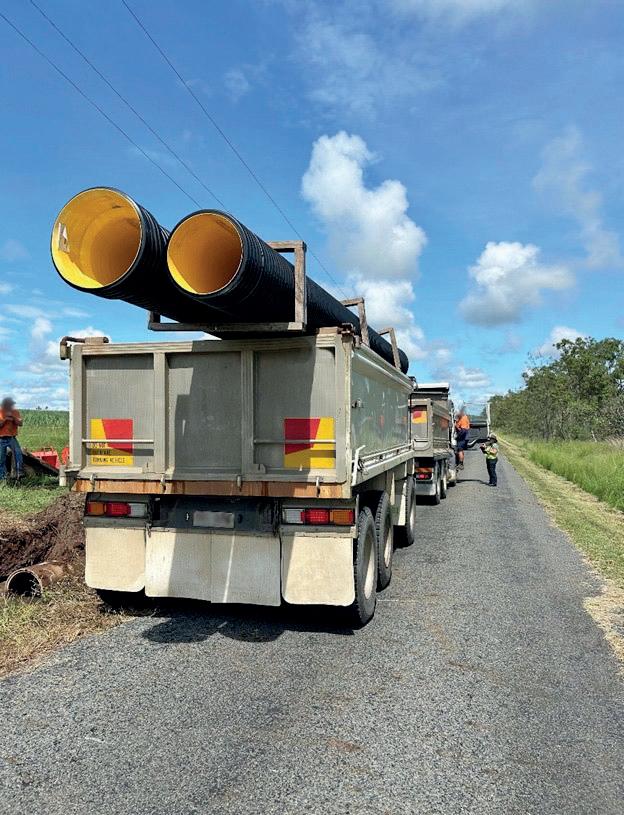
• Fleet and vehicle registers
• Accreditation requirements
• Installation of dimension monitoring systems
• Pre-departure and in-route checking regimes
• External training providers
• Compliance audits
• Record-keeping systems
• Notification obligations for operational changes
All flowing from a single offence.
The real cost of an SIO Operators often focus on the fine. The real cost of an SIO is operational.
• Non-compliance becomes a fresh offence
• Minor breaches can trigger further prosecution
The strategic risk: “Consent orders” without negotiation
Another emerging issue is how these orders are obtained.
In many cases, they are presented as “reasonable”, “standard” or “rehabilitative”. SIOs are discretionary. They are not automatic. Courts must be satisfied they are:
• Necessary
• Proportionate
• Linked to the offending
• Capable of improving safety outcomes
THE DIFFERENCE BETWEEN A FINE AND 12 MONTHS OF SUPERVISION IS OFTEN DECIDED LONG BEFORE SENTENCING.”
• Not oppressive That requires proper submissions, evidence, and negotiation. If you do nothing, the regulator’s draft order usually becomes the court’s order. If your company is facing prosecution, permit issues, or regulatory scrutiny, get advice early. The difference between a fine and 12 months of supervision is often decided long before sentencing.
• Hughes Law specialises in HVNL defence, regulatory strategy, and compliance design. Visit hugheslaw.com.au or email belinda@hugheslaw. com.au
Important notice
This article provides general guidance only and is not intended to cover every circumstance or provide specific legal advice. Each case turns on its own facts and operators should seek independent legal advice.
Liability limited by a scheme approved under Professional Standards Legislation.
The National Heavy Vehicle Regulator is proud to share a revised Master Code – a vital resource providing guidance on managing hazards, risks, risk assessments and risk controls across the heavy vehicle industry.
Developed with extensive input from industry and stakeholders, the revised Code is significantly enhanced to serve as a robust information source for parties in the Chain of Responsibility and their executives to manage transport safety.
Containing practical, modern content, the new Code is a key safety tool to assist business and individuals meet their primary duty obligations under the Heavy Vehicle National Law.
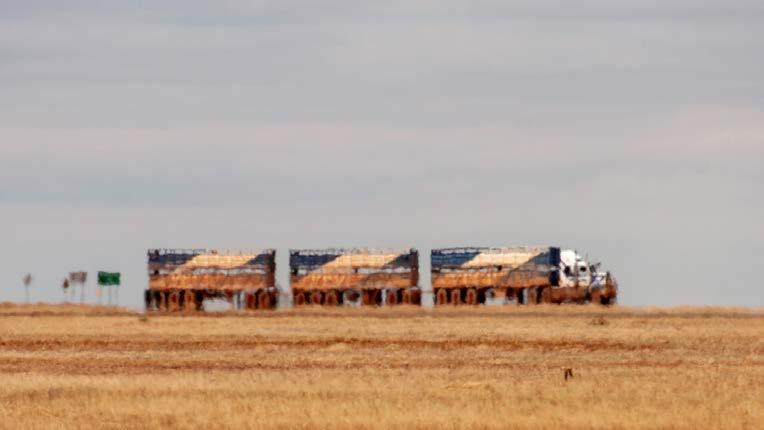
SIX months into her trucking career, Rachel Burr is already finding her feet and enjoying the change.
Based in Victoria, she’s currently driving with Dyers Distribution, and says getting behind the wheel has been something she wanted to do for a long time.
Before stepping into the driver’s seat, Rachel spent years in warehousing loading and unloading trucks and working around transport every day.
Watching trucks come and go sparked the interest, and once she finally got the chance to have a go, she knew it was where she wanted to be.

Since then, she’s been upgrading her licences and has her sights set on going bigger in the future.
When Rachel caught up with Big Rigs recently, she was hauling yoghurt and says one of the things she enjoys most about the job is the variety.
No two days are the same, which keeps things interesting. Like many drivers, the toughest part can be not having a set finishing time, but it hasn’t taken away from her enthusiasm for the work.
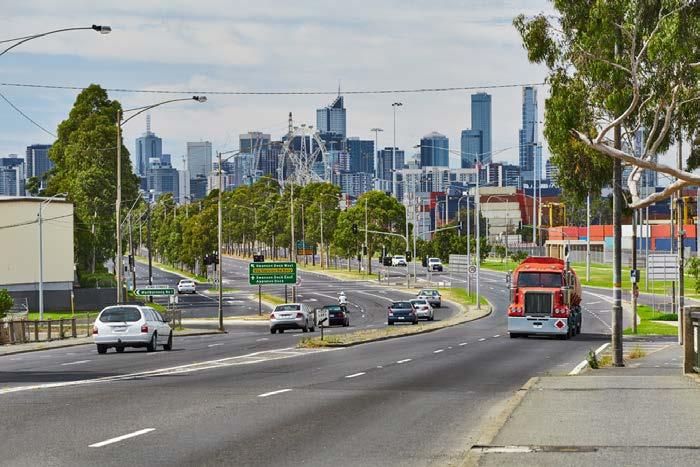
When it comes to industry concerns, Rachel points to driver distraction and unsafe behaviour on the roads as the biggest issue facing drivers right now.
It’s something she sees regularly and says it’s always in the back of her mind when sharing the road.
Her advice for anyone thinking about getting into trucking is simple and encouraging – give it a go.
WATCHING TRUCKS COME AND GO SPARKED THE INTEREST, AND ONCE SHE FINALLY GOT THE CHANCE TO HAVE A GO, SHE KNEW IT WAS WHERE SHE WANTED TO BE.”
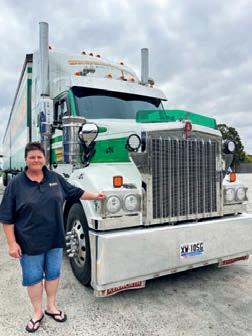
One of her regular stops is the Shell at Nar Nar Goon, a spot she rates as a good place to pull in when she’s passing through.
R achel says breaking into the industry can be slow at times, especially waiting for someone to give you a chance, but once you do, most people are supportive and willing to help you learn.
Still early in her journey, Rachel is enjoying the challenge, building experience, and looking ahead to the next step in her trucking career.
KIM Pettitt has been driving for about three and a half years, based out of Maffra working for Bedggood’s Transport. There’s no family trucking background, just something that’s been on the list since childhood.
“I always said I wanted to drive trucks,” Kim says. “I got
to a point where I thought, if I don’t do it now, I never will.”
Before getting into trucking, Kim worked as a sawmill manager, plenty of pressure, long days, and constant targets.
Eventually it was time for a change. A local start led to a job with Millers, and later a
walk-in introduction at Bedggoods turned into steady work. The job now involves a bit of everything. On the day we spoke at the Officer BP it was salt to Morwell, with the same week also taking in Sydney, Newcastle and Adelaide runs.
Some of the toughest parts of the job are familiar to most
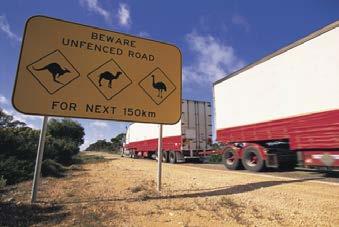

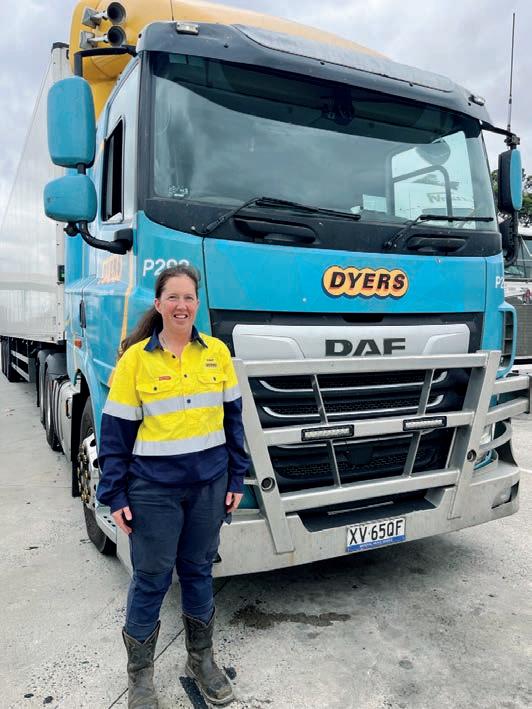
drivers, tight delivery sites for B-doubles and logbook rules that leave little room for simple mistakes.
When it comes to stopping, Kim prefers the basics done well, clean facilities, good food and a safe place to park. Jerilderie BP gets a mention. Time at home matters. There
are a couple of Harleys in the shed and not a lot of spare time to ride them but being home on weekends makes the job work.
When asked if anyone is thinking about giving trucking a go, the advice is simple: “Be keen, get started, and learn as you go.”




THE BP Cocklebiddy Roadhouse is located on the Nullarbor Plain in WA and is a popular stop among truckies.
Some drivers who stop there said they enjoyed the friendly staff, so I phoned the roadhouse and spoke to Jolina Gass.
I asked how many trucks would pull up there and she consulted with other staff about the question. “It would be at least 1000 weekly that pull up here,” she said.
I double checked with Jolina asking if she indeed did say 1000.
“Yes, and some weeks it would be many more,” she added.
Cocklebiddy is located 1157km east of Perth and 438km east of Norseman via the Great Eastern and Eyre highways.
Asked about the favourite food truckies ordered, Jolina said, “It would have to be toasties and steak sandwiches.
She added, “We have truckies-only showers and toilets which they like.”
Jolina hails from Germany and is one of 16 staff employed there. “Most of the roadhouses along the Nullarbor have overseas backpackers working there,” she said.
A sign at the roadhouse indicates that the population of Cocklebiddy is eight, but it also has 25 budgies, seven quails, one dog and more than a million kangaroos.
The roadhouse is open from 6am until 8pm daily.
NT truck delays
Trucks were held up near Cape Crawford in the NT for two nights recently to enable roadworks to be carried out on sections of the Tablelands Highway after flood damage.
It was a boring stay for the lads as is the case any time roads are closed after bad weather.
One of the drivers there sent Spy a pic.
There were also delays on other parts of the highway at Playford Creek, Creswell Creek and McArthur River bridges.
Dangerous overtaking
Spy was amazed at the number of car and 4WD drivers who risked life and limb by dangerously overtaking long trucks on the Flinders Highway.
Whilst heading back from Charters Towers after attending Australia’s biggest cricket carnival, the Goldfield Ashes, I saw numerous incidences of such behaviour.
Some decided to overtake triple road trains or even quads carrying minerals.
On three occasions they almost had a head-on collision with vehicles approaching from the opposite direction.
The truck drivers who were abiding by the speed limit slowed down and there was

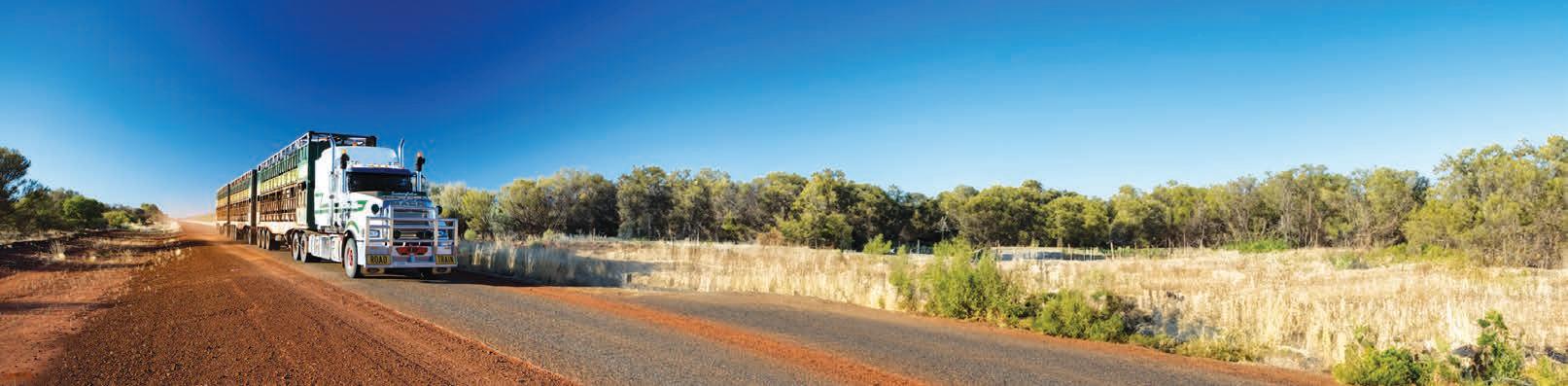
There was a donation tin near where he would grab a -
I know they have to pay for the coffee beans, milk and cups and was happy to
But on one recent occasion the driver went to get his coffee fix to go with a meal he purchased there, but alas
So he walked out to his truck and grabbed a cup and got his coffee but was challenged by a roadhouse
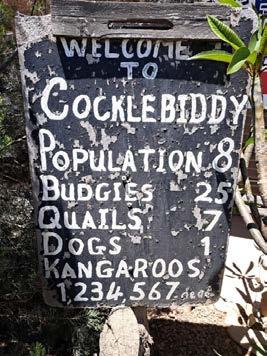

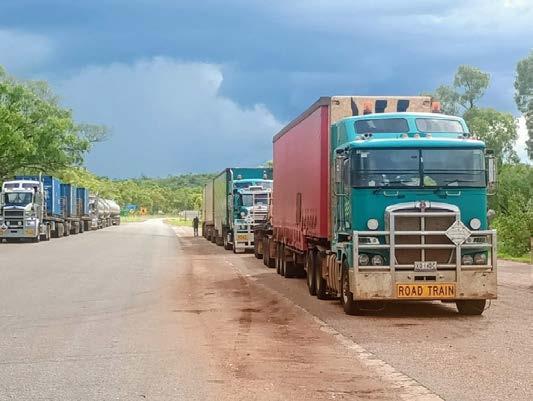
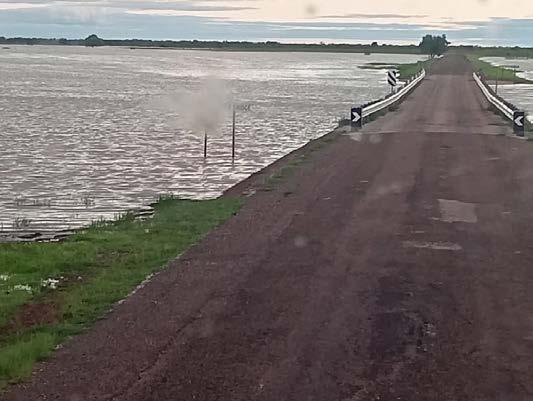
only a second or two from a head-on, which could have resulted in deaths or serious inury.
Mingela Hotel closed
It was sad to drive through Mingela recently on a Saturday to see the local hotel had closed.
Mingela is just off the Flinders Highway about 47km from Charters Towers and the pub there was once a hive of activity on weekends. Truckies used to stop there for a yarn to long time publi can Ivan and his wife.
However Ivan died a while back and soon after the hotel closed.
Mingela once used to be a thriving small centre with a police station, a school and shops but these days it’s al most a ghost town.
The day I visited the emu population outnumbered residents.
A group of Emus wandered near the road about 200m from the pub.
Coffee dilemma
For years a veteran driver had been stopping at a WA roadhouse for a meal and one bonus was that it provided free
“You have to pay for that,” he said. It was a hefty asking
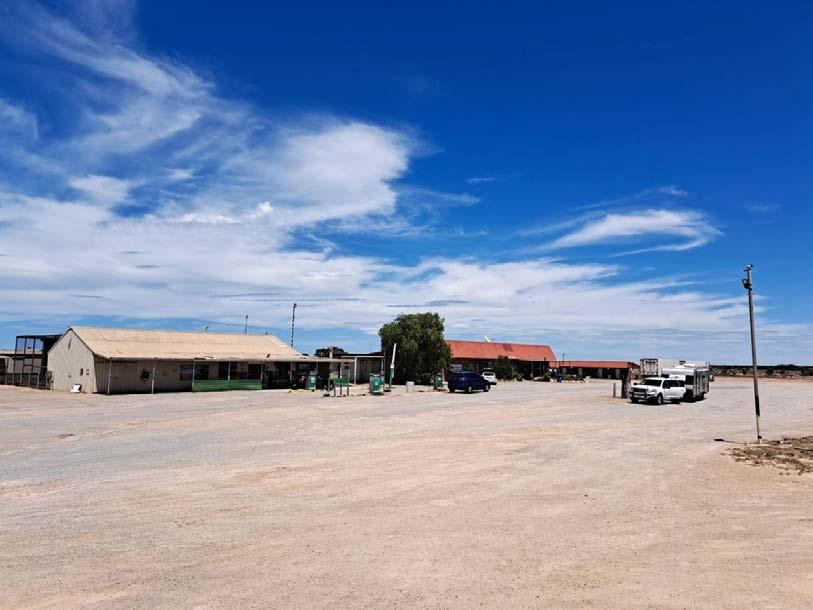
When he questioned the worker the reply was simple, “It is on instructions from the boss.”
This may sound menial to some readers but the driver wanted to get his message across.
“I have been getting free coffee there for yonks and it is only for truckies. And I always put coins in the box,” he said.
Tasmanian news
Drivers are calling for the highway between Detention River and Marrawah in Tasmania to be urgently upgraded.
“It is as rough as guts in places and also has narrow sections and for years authorities have been promising to fi x it but it hasn’t happened. All they do are band-aid solutions,” one lone time transport operator said.
He added that it had rained heavily through to January but was generally clear now.
The main town along the route is Smithton which is a scenic centre in the Circular Heads area.
Meatworks
On the subject of Smithton there is a meatworks there which processes cattle from around the region.
Some of the stock comes on weekly vessels from King Island and it is highly sought a fter beef.
Spy hears the meatworks there will be upgraded in the not too distant future.

Happy toilet
Several truckies who stop at the Calcium Roadhouse along the Flinders Highway have sent Spy a pic of a sign on the door of the male toilet.
“Don’t worry PEE Happy,” it read.
These lads found a fair bit of humour over the sign.
“The other day I stopped there and was busting for a piddle and it did make me happy using the facility,” one said.
Cheap pluggers
Rubber thongs or plug gers are preferred footwear for many of our champion truckies.

At least that is what Spy has gleaned after decades of snapping pics of many.
W hilst they are available at many roadhouses and other establishments, the price of a pair does vary.
Spy has seen some costing $23 with most averaging in the $16 to $18 price range.
Now Spy has found a place with a big supply of them in various sizes which sell for the bargain price of $10.
It is called Higgo’s Bait and Tackle, located on Boundary Street in Townsville, not far from the port.
These are double pluggers which last for ages so Spy purchased several pairs.
Winners are grinners
A road transport worker from Normanton in the Gulf of Carpentaria region ventured to a big coastal city after floodwaters ravaged his hometown.
He went into the gaming room of a large hotel and nearby patrons heard an almighty scream of happiness. This lucky lad had won a $25,000 jackpot and soon after texted some mates and relatives who lived in the city to advise of his good fortune… which turned out to be a bad idea.
Within an hour about five of them had arrived asking him to shout drinks and hand out a small “tithe”. Luckily for the winner the pub could only hand over $2000 after he showed his identification.
The rest was to be paid into his bank account the next day.
So the message here is – if you have a big win, zip your mouth or don’t boast about it on the phone or social media.
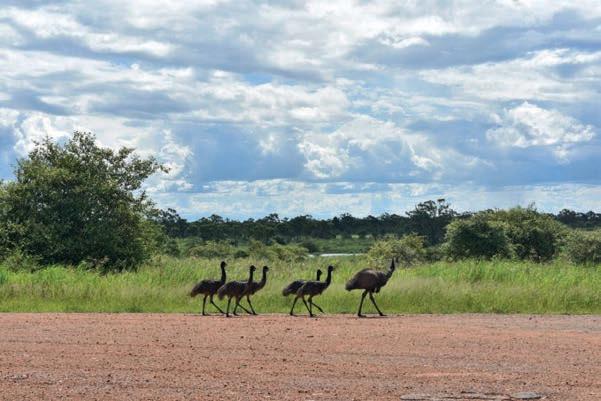
“Australian Truck Radio is my trucking radio station. So many great trucking tunes with loads of industry news. I lock it on and leave it on all day long!”
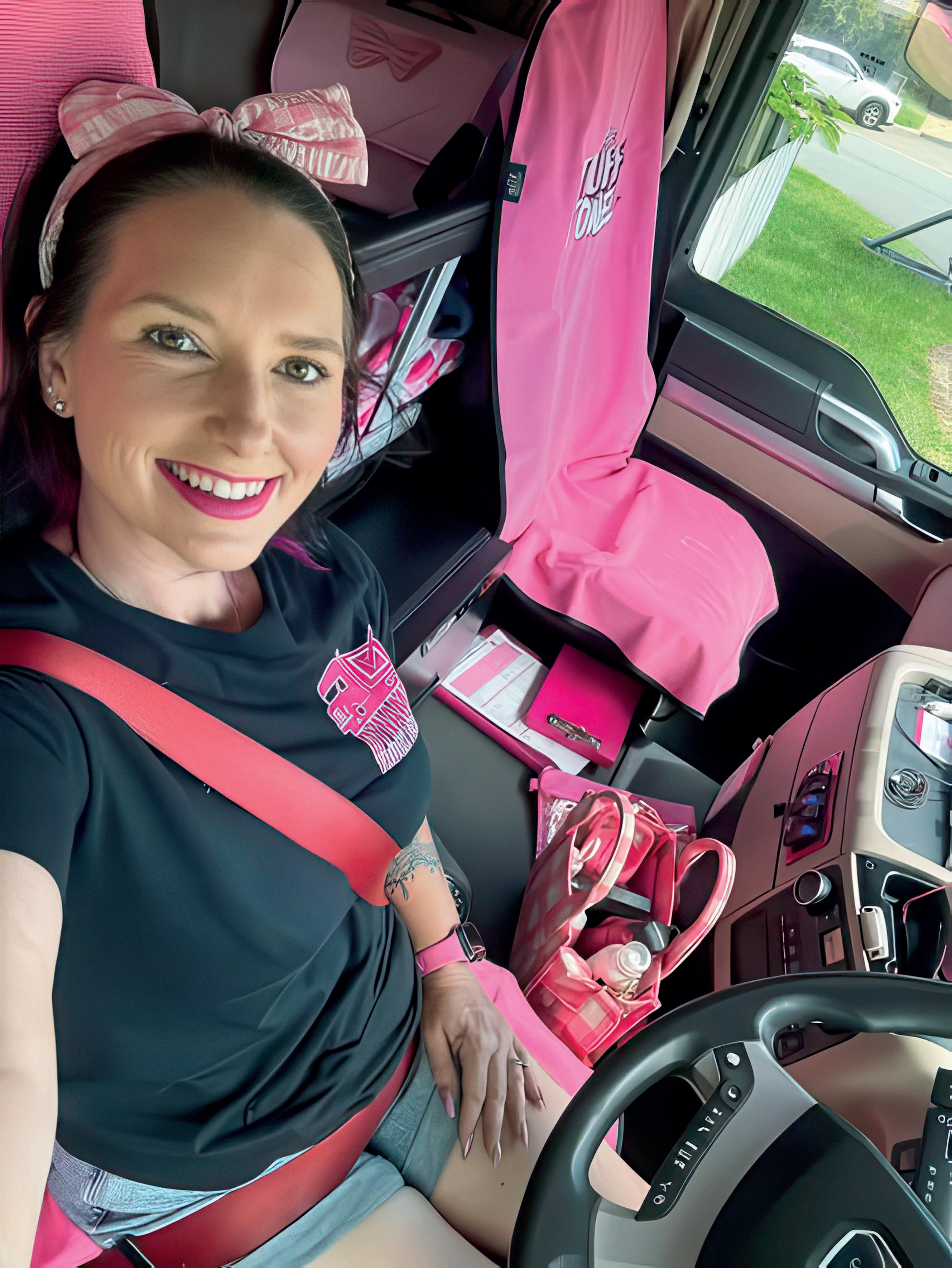




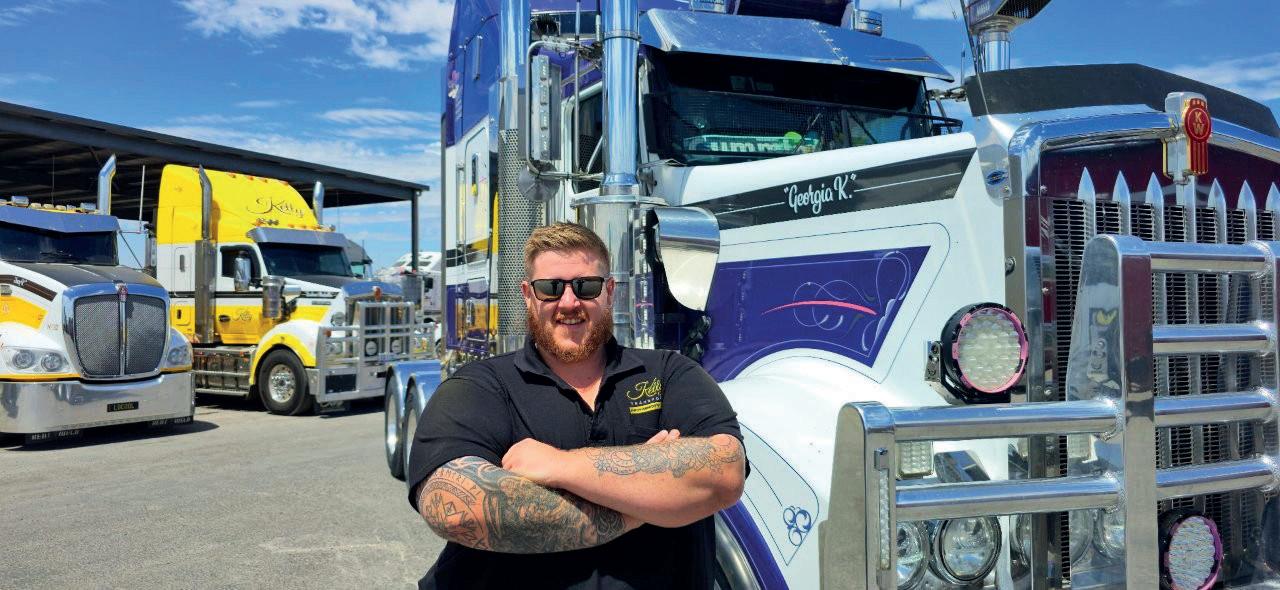
WHEN he was 18, Reece Bruce wanted to join the police force but fell in love with truck driving soon after. Ever since then, Reece has been a happy truckie and for the past five years has worked for Kelly Transport out of their Toowoomba depot.
Reece mainly does the Brisbane to Adelaide run, carrying general freight in a Kenworth T909, powered by a 600hp motor and with an 18-speed gearbox.
“I got involved with trucks back then and gave up wanting to be cop. My father Lynton who is a long-time truck driver has been a great influence for me and has a great knowledge of the industry,” Reece told Big Rigs
In a stroke of good timing, Reece had been in Bowen on January 10, a day before Cyclone Koji struck near there.
The system made landfall near Ayr, north of Bowen, early on January 11, and it didn’t take long before the Bureau of Meteorology (BoM) issued warnings about intense rainfall.
Areas around Ayr and Bowen received the heaviest downpours, which led to flash flooding throughout the day.
“I was at the roadhouse just out of Bowen and followed the weather reports about the cyclone. I was glad to leave before it hit,” he said.
Reece’s favourite stop-offs are the Olary Hotel in SA
VETERAN South Australian driver Lynton Bruce, 57, has held a truck licence for four decades.
“I had my truck licence at 17 years old due to my family being primary producers. It was a special licence,” he explained.
Lynton works for Lewiston Haulage based at Two Wells, SA and drives a Kenworth T909.
“I mainly go to Perth and
Lynton added that his favourite roadhouse is the Mundrabilla Roadhouse in WA for numerous reasons. “It is a great family owned business. Awesome people, great meals and clean facilities,” he said. One of Lynton’s dislikes is seeing people leaving behind rubbish and other things at parking bays. “Stops in SA don’t have long drop toilets so seeing faeces in the park bays I asked Lynton about some
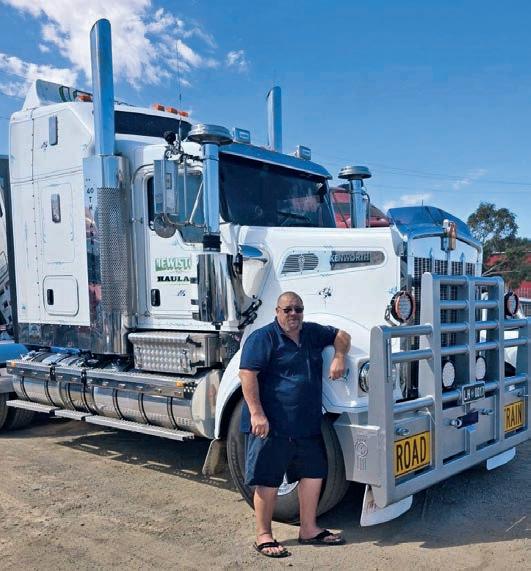


of the trucks he’d driven in the earlier years. “I was driving farm trucks around our property since I was 13-14 years old – an International Butterbox and another Acco, both V8 petrol. Then Dad got a 16-speed, 290hp G88 Volvo. It was a big lorry then,” he said.
“My first full time job as a professional driver was with Trans Australian Livestock out of Milang, SA at age 23. I’ve been in the saddle since then really,” he said.
Lynton added that he enjoys taking food along, packed by his lovely wife.
“She packs me food to go away with like a rump steak and vegetables which are nice. My wife is a truckie’s daughter so she loves me coming home, and loves me going out after a couple of days home!” he said.
Lynton enjoys nothing more than getting home to spend time with his family, and is proud of his son Reece who is a chip off the old block and has also become a truckie.
“Reece was around trucks from a young age,” he said.

WHEN Big Rigs saw Mick Emslie on a hot afternoon, he was ready to leave Townsville carrying general freight for Charters Towers, 130km away along the Flinders Highway.
Mick, 48, was driving a Fuso for CNQ Freight Services in Townsville.
“I get as far away as Cairns up north and like the job. The truck is good to drive,” he said.
Before this job Mick had
driven various other trucks including tippers.
Mick said more rest areas are needed for drivers which have facilities, and as for roadhouses, he added that the best he has ever stopped at was in Parkes, NSW. “It had good food and service,” he said.
Outside work, Mick leads an idyllic life and has a small farm at Bluewater which is 20km north of Townsville. “I have about 20 cows which I
and the Northam Roadhouse in WA. “I had a great meal at the Olary Hotel the other day – it was a chicken parmigiana,” he said. He says the worst road he gets along is between Walgett and Moree in NSW. “It has been bad since the floods of 2021. I try and dodge it if I can.”
Reece added that more rest areas suitable for truckies are needed especially in the western states.
“There are a lot of pull off areas but not enough rest areas where we can get a peaceful sleep,” he said. Outside work Reece loves hockey and used to play competition games in South Australia where he was born and bred.
tend to there.” Mick has a relaxed outlook on life because he loves his work and farm. “I just poke along with life,” he said.
CNQ Freight Services is a family owned and operated business providing daily services from Brisbane to Far North Queensland. It has depots in Brisbane, Rockhampton, Mackay, Proserpine, Townsville and Cairns.
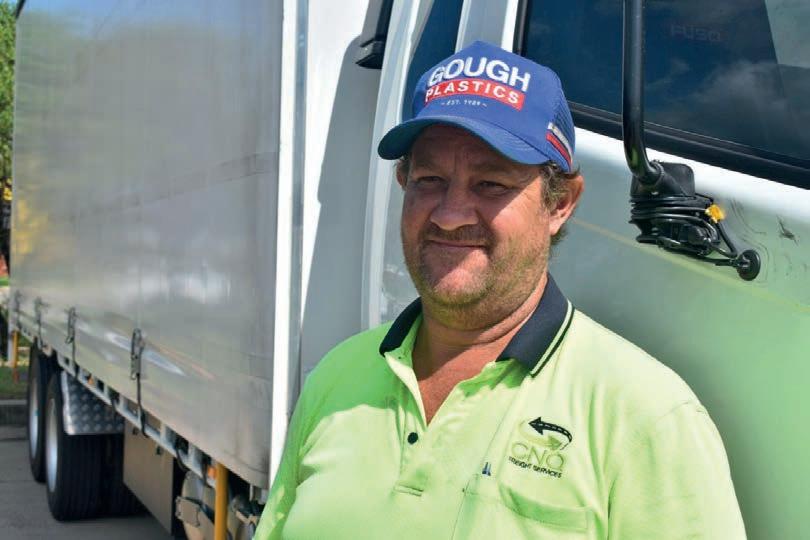
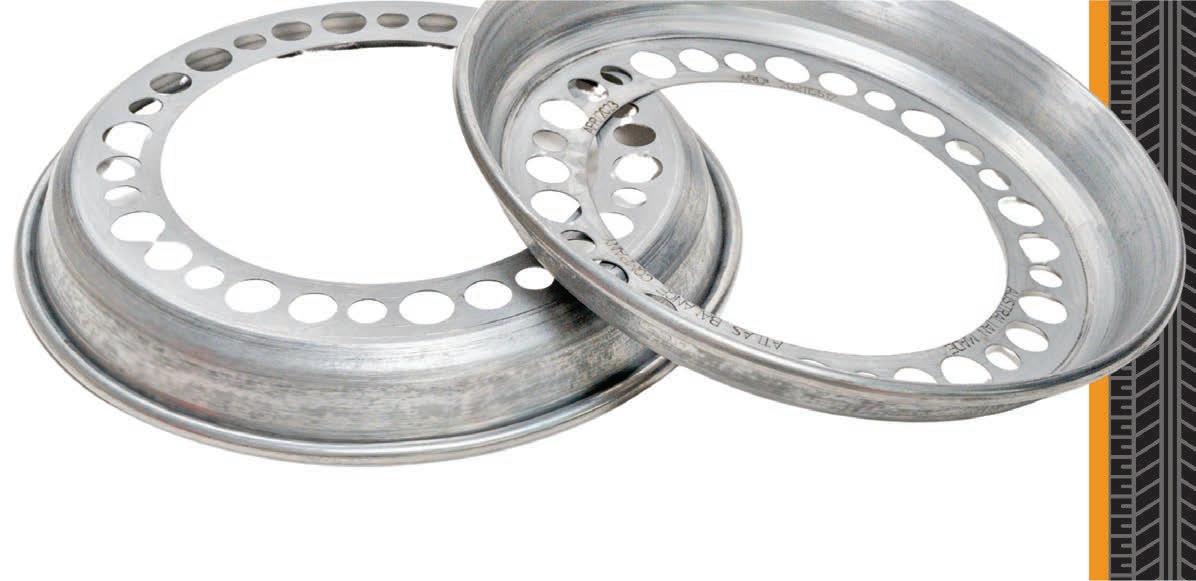
period (7)
12 Name a large drinking cup (7)
13 What might we call one who continues after interruption (7)
14 What are flags of a country (7)
15 What is the act of accumulating in the course of time (7)
16 Which term means “of a similar amount” (7)






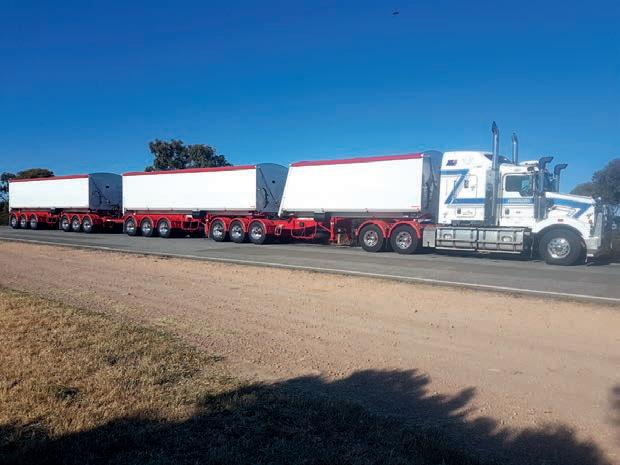
BY JAMES GRAHAM
FOR Townsville-based transport operator Tayla Connolly, the idea behind Careers in Gear came from a simple realisation: the industry is so busy trying to fill vacancies that it has stopped looking far enough ahead.
“I still look at myself as a young person in transport,” Tayla, 33, said.
“But I can see that our workforce, our own and the industry’s, is absolutely ageing. We’re all really busy working in our businesses, covering empty spots where we can’t get people employed – and then we’re not fixing the problem because we’re too busy working on the problem.”
Careers in Gear, which Tayla launched last year and currently operates as a not-for-profit, is her attempt to change that narrative by starting at the source –school students who may not yet understand just how many career paths exist within transport
The program is designed to introduce students to the diversity of roles across the transport sector, from entry-level positions through to trade-based and degree-qualified careers, by giving them firsthand exposure inside real transport businesses Tayla, who is the business manager at Oakdare and a

director of Careers in Gear, is a second-generation transport operator. Her parents, Wes and Kristein Connolly, started Oakdare in 1990, and she was born into the industry two years later.
“I was very fortunate to be born into transport. It’s been around me my whole life, and it’s something I hold a great deal of respect for,” said Tayla, who is also on the Queensland Trucking Association’s board of directors.
“If you’re not born into it, then you probably don’t know a lot about it.”
Oakdare today runs around 23 prime movers, primarily in road train configurations, hauling quarrying materials and servicing major road construction projects within six to eight hours of Townsville.
Like many operators, Tayla
16–17 SEPTEMBER 2026
said the business has seen a sharp decline in job applications over recent years.
“Five years ago, I might have received 50 applications in a year and only needed 10 drivers,” she said. “Now we might be lucky to receive 25 applications a year, and sometimes I could put on 10 drivers and we just don’t get the knocks on the door from school kids.”
Her first step into education engagement came through a tour for vocational teachers. Tayla hosted 19 teachers from the Townsville region, taking them through seven transport businesses in one day last year.
“The big takeaway for me was that they don’t know what they don’t know,” she said. “They turned around at the end of the day and said, ‘I’ve never thought about talking to some of my kids about these career paths because I just didn’t know they existed.’”
THEY TURNED AROUND AT THE END OF THE DAY AND SAID, ‘I’VE NEVER THOUGHT ABOUT TALKING TO SOME OF MY KIDS ABOUT THESE CAREER PATHS BECAUSE I JUST DIDN’T KNOW THEY EXISTED.’”
That response helped shape Careers in Gear’s approach, which now includes fullday industry tours covering multiple businesses and job roles, as well as 60-minute in-school sessions and careers expo appearances. The student tours followed a similar pattern, with three groups of around 15-20 students drawn from public, private and distance education schools in Townsville.
“The reaction from the kids was really good,” Tayla said. “Very similar to the teachers – they don’t know what they don’t know.”
valuable outcomes was show
ing students how varied working environments can be, even within the same trade.
“Working at a dealership like Brown and Hurley or Gilbert and Roach is very different to working in the workshop of a transport depot,” she said. “It opens their eyes to how many different options there are within one career.”
Brown and Hurley and Mick Murray Welding Townsville were among the first businesses to support the program, committing from
operators. A key message Tayla delivers to students centres on the role transport plays in everyday life.
“In North Queensland we joke that kids think bananas grow on the shelves in supermarkets,” she said.
“Nobody explains the process – planting the tree, picking the fruit, forklifts, packers, transport to distribution centres, and the distance that one banana travels.”
Her go-to question during school presentations is simple: “Tell me something that’s not delivered by a
Careers in Gear targets students from Years 7 to 12,
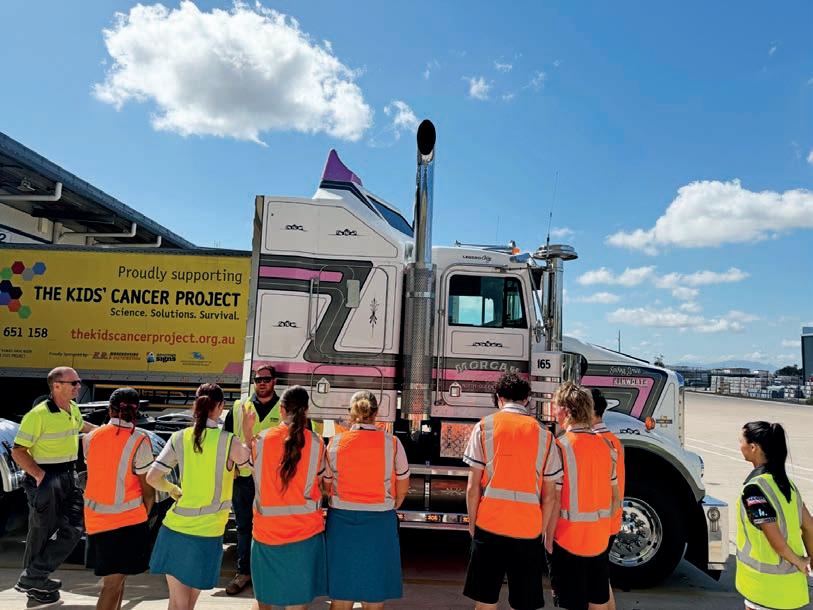

with early engagement focused on awareness and later years aimed at connecting students with employers for work experience and “try before you buy” opportunities
Looking ahead, Tayla said 2025 has been about building the foundations, with many businesses contributing support in kind through their time and access to worksites.
In 2026, the focus will shift to securing sponsorships and expanding into regional and remote areas including Mount Isa, Hughenden and potentially Cairns.
“My message to businesses
is that not everyone has the capacity to host work experience or take on entry-level roles, but there is some way every business can contribute,” she said.
“Whether that’s financial support, loaning a truck for a day, or providing merchandise – it all helps spark interest. It’s just really turning our mind to we have to be solutions-based. We can’t keep just saying there’s a problem. We’ve got to start somewhere.”
Tayla’s 60-minute career and safety information sessions within the North Queensland region are
available by request. She hopes the program can act as a blueprint and expand, rather than stay as the one-person operation it is today.
“There’s plenty of room for growth. My vision isn’t to personally roll this out in Sydney or Melbourne,” she said. “It’s to inspire other businesses or people in their regions to duplicate it in a way that’s relatable to their local kids.”
Tayla believes transport is too often overlooked in the training sector. She sits on a couple of employment boards and groups in Towns-
ville and is constantly frustrated at the lack of financial support transport gets in comparison to other industries.
“Transport is taken for granted,” she said. “Every other industry depends on it, yet it’s not always prioritised. If nobody else is doing anything, then we have to start somewhere – and Careers in Gear is that start.”
• For more information about Careers in Gear, including school tours and partnership opportunities, contact Tayla by emailing sheisreal@outlook.com.
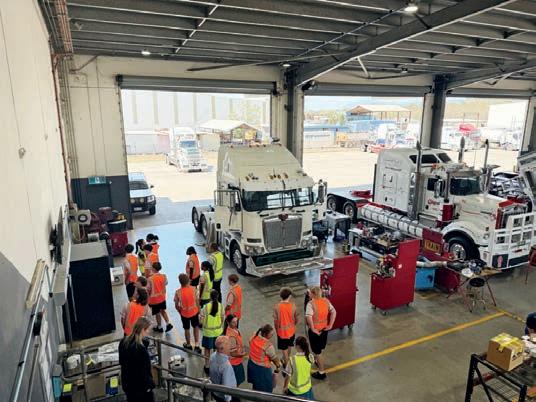
AN established workforce development initiative aimed at tackling skills shortages in North Queensland’s transport and logistics sector kicks off again in Townsville in April.
Registrations are now open for the accelerated 10-day Driving Futures program developed by the Queensland Trucking Association (QTA).
Similar courses are planned for Mackay from July 13-24 and in Cairns from August 31 to September 11.
The Driving Futures program is designed to create a direct entry pathway into the transport and logistics industries, delivering job-ready candidates for employers.
The QTA said the idea came from extensive industry intel-
ligence gathered from road freight operators and fleet owners, which identified a lack of entry-level training and clear career pathways into transport and logistics roles.
Driving Townsville’s Future has been designed to help address ongoing workforce shortages by equipping participants with accredited, industry-relevant skills that can be built on through further training and employment.
The course delivers accredited units from the Certificate III in Driving Operations (TLI31222), with crossover units that also apply to the Certificate III in Supply Chain Operations (TLI30321).
Participants will complete the unit TLIF0009 – En-
sure the safety of transport activities, covering Chain of Responsibility requirements, while eligible participants will also be offered training in unit TLIC1051 – Operate Commercial Vehicle.
On completion, participants will be able to apply for Recognition of Prior Learning (RPL) for completed units, allowing credits to be carried over into a full qualification.
This includes the option to continue training through a workplace-based Heavy Vehicle Apprenticeship, Bus Driver Traineeship, or the Certificate III in Supply Chain Operations.
The program is open to job seekers looking to enter the transport and logistics industry, as well as employers wish-
ing to nominate employees who are new entrants or seeking to upskill and progress toward heavy vehicle driving roles.
The 2026 delivery of the Driving Townsville’s Future Program will run from Monday, April 20 to Friday, May 1, operating from 8am to 4pm, with the Townsville training location to be confirmed.
Participants must meet employer employment standards, satisfy working-in-Australia eligibility requirements, and undertake any required screening, including medical, fitness-to-drive, and drug and alcohol testing, said the QTA. Participants must also have their own transport and be available for the full 10-day program.
The project is funded by the Queensland Government through its Growing Workforce Participation Fund.
• For more information on how to get involved, please visit qta.com.au/driving-futures-project.

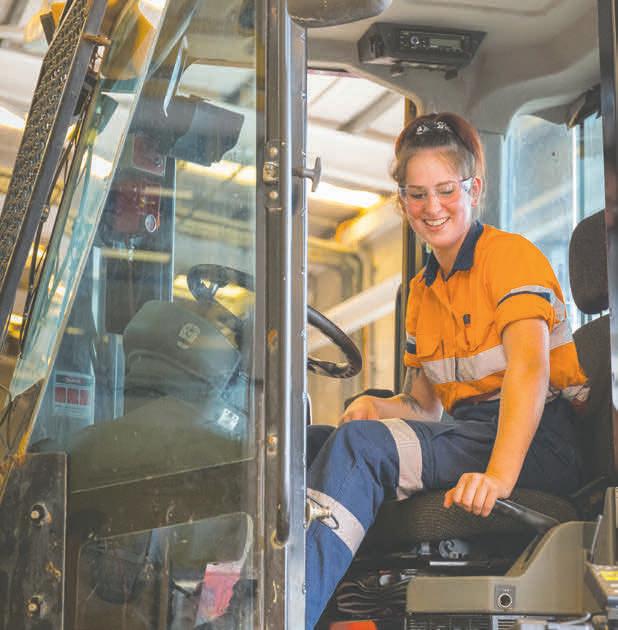
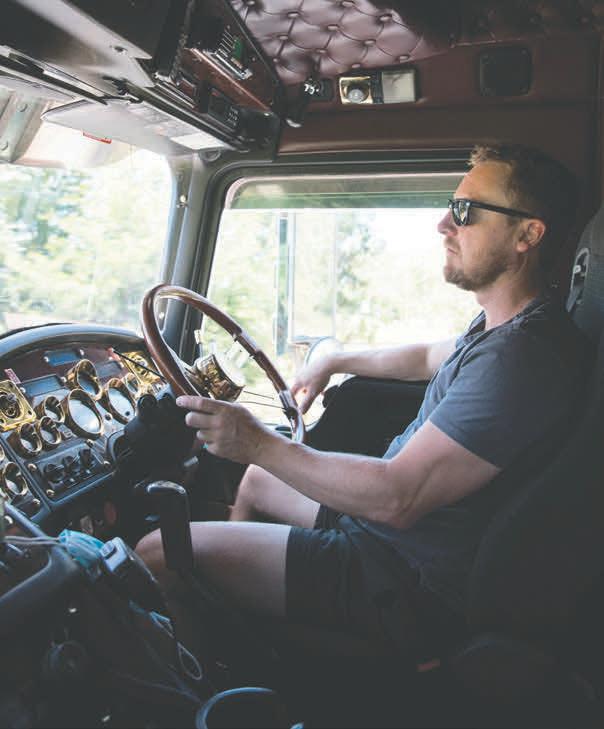
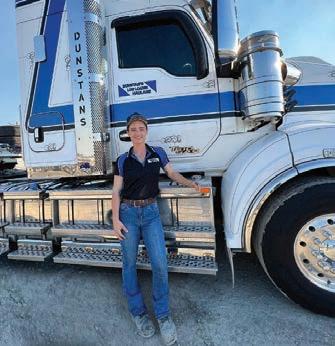
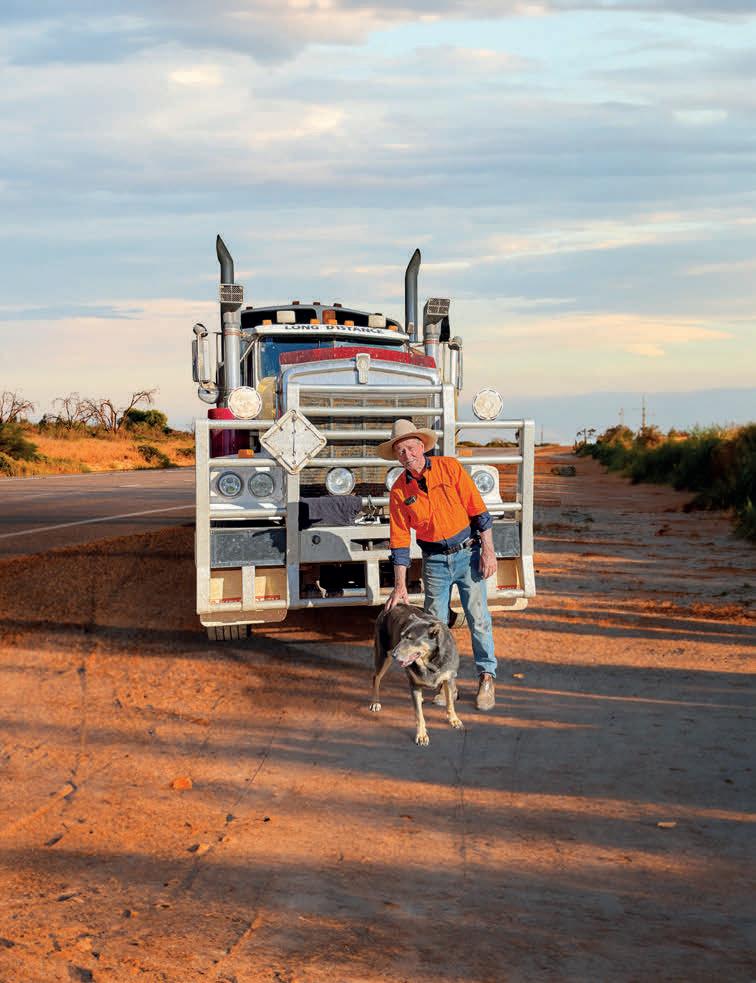







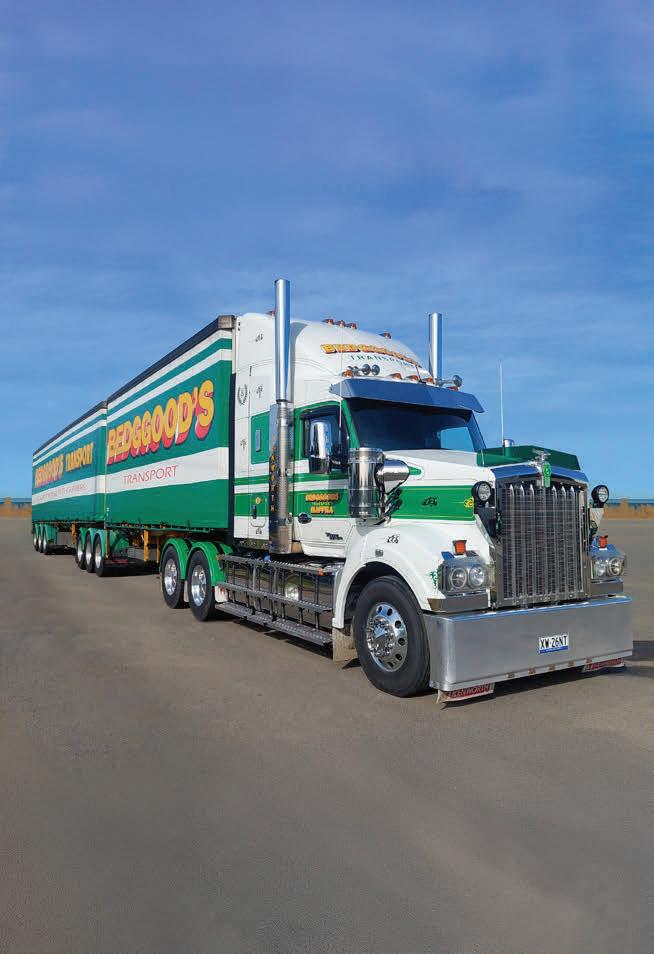


Meritor’s range of heavy-duty shock absorbers are engineered to deliver durability, consistent performance, and superior driver comfort for today’s demanding fleets.
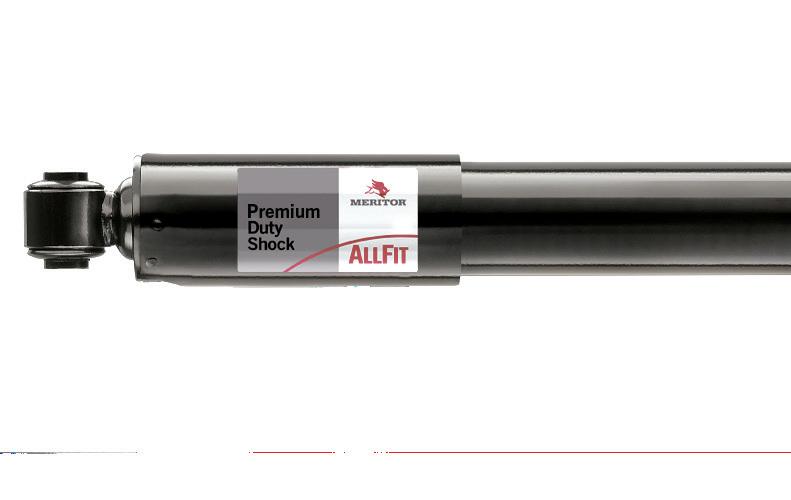

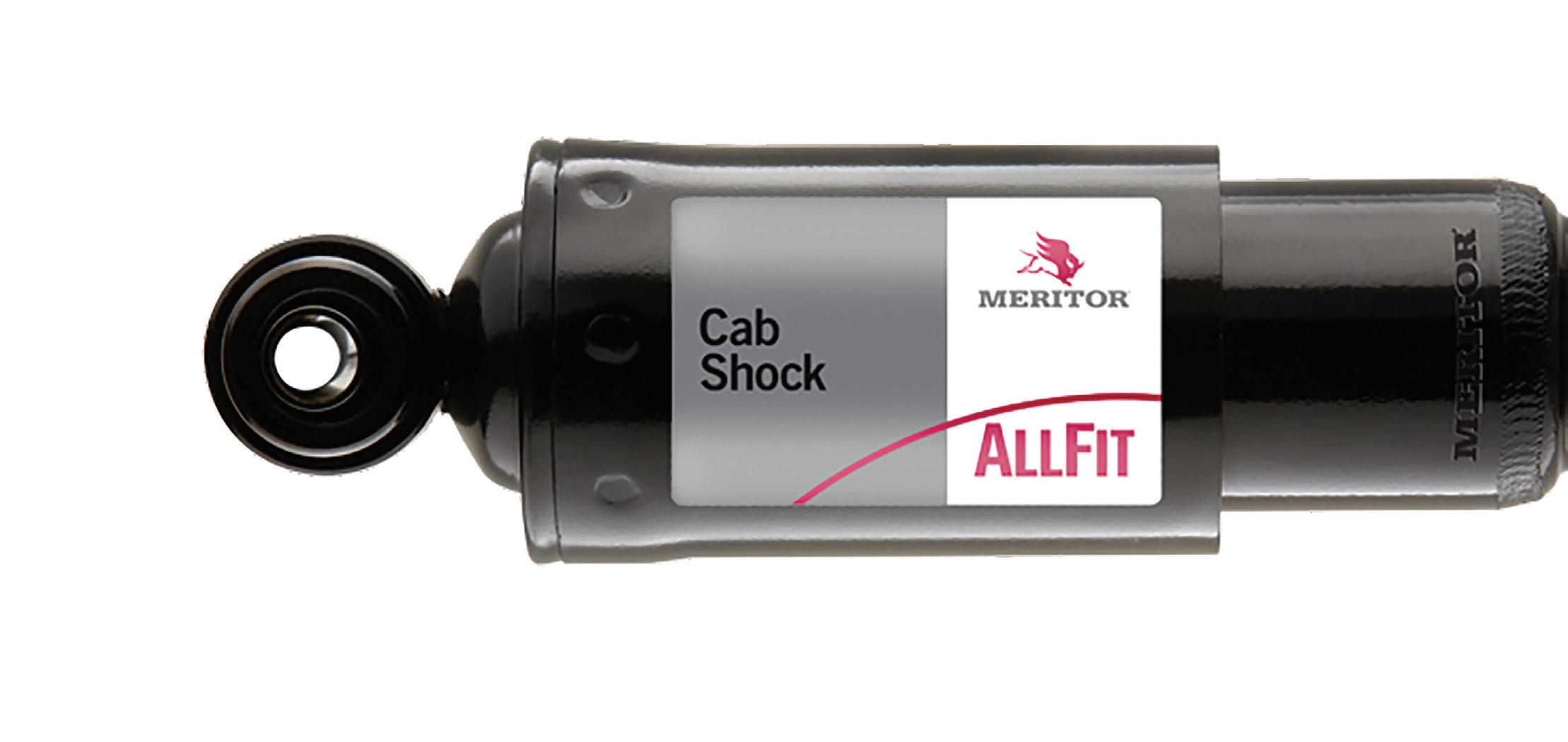
www.meritorpartsxpress.com/aftermarket/suspension