First-in-Australia
First-in-Australia
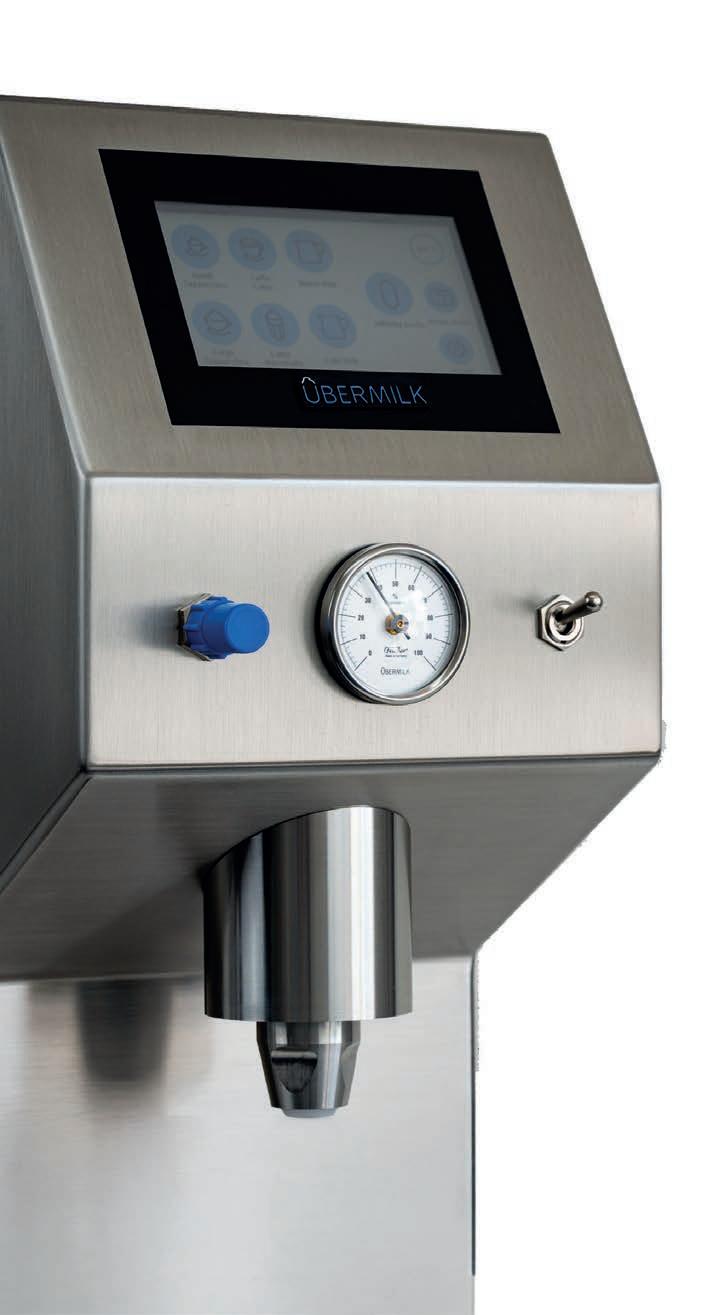
Footprint. Same compact footprint as Übermilk One.
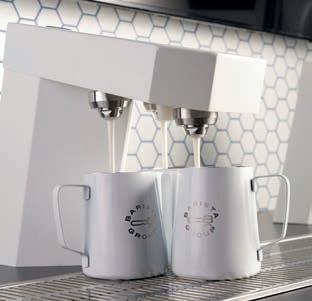
Uncompromised. Consistent microfoam for oat, soy, almond, more.
Trusted. Over 100 trusted venues in Australia & NZ.
Unifying Workflow. Streamlined workflow reduce steps, speed up service.
Reliable. Proven technology, trusted by cafés worldwide.
Evolved. Purpose, built for plant-based milk service.
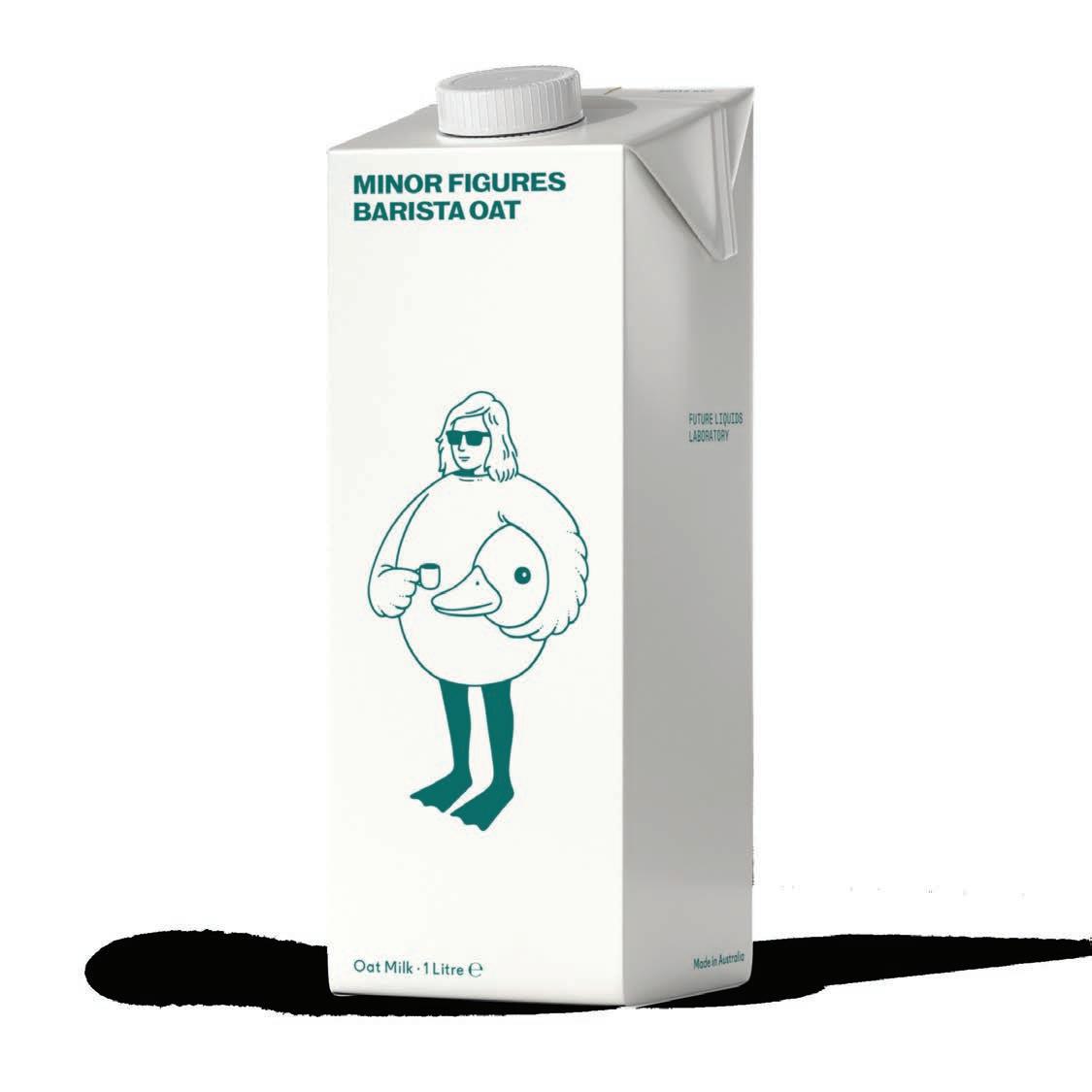
The all-new Übermilk PB: Barista-trusted engineering, now made for plant-based milk.
With a single touch, Übermilk PB delivers flawless microfoam from oat, soy, almond, and more no workflow disruption, no compromise on quality.
Engineered for reliability and simplicity, Ubermilk PB streamlines your plant-based service so your team can focus on serving, not steaming.
Hundreds of Australia’s best venues trust Übermilk’s technology. Now it‘s ready for your plant-based menu.
Designed for the next generation of café

Book your demo: www.baristagroup.com.au sales@baristagroup.com.au
16 BEHIND THE WORLD BARISTA CHAMPION
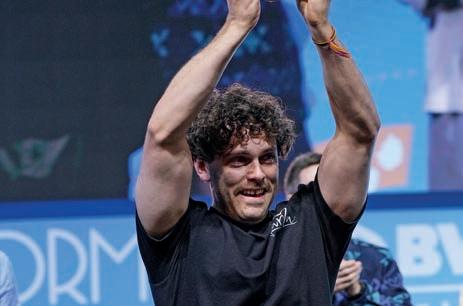
ere’s more than meets the eye to Jack Simpson’s historic 2025 WBC victory.
21 GOING FOR GOLD
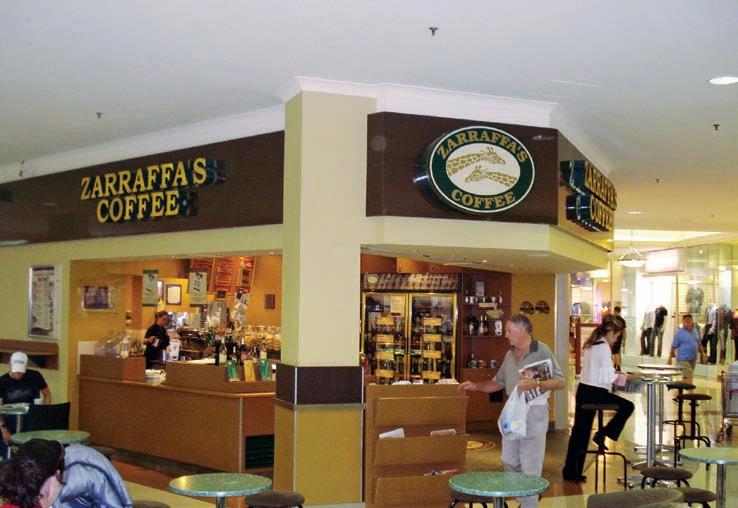
Zarra a’s Co ee Co-Founder Kenton Campbell on the specialty co ee brand’s lo y expansion target.
26 INDISPENSIBLE LIQUID DISPENSER
Peeking behind the curtain at “the next essential technology for cafés”.
30 GROWING LOCAL
Why some of Australia’s best places for co ee are o the beaten track.
35 COFFEE DOING GOOD
Hospitality as a social platform for new opportunities.
74 CAFÉ SCENE
Discover new venues across the region.
78 GET TO KNOW
Nèmo Pop is about to represent Australia on the world stage, just months a er arriving in Sydney.
38 LOCALS DELIVERING GLOBAL GOODS
e vision behind Minor Figures looking local for a sustainability solution.
42 PHONE, WALLET, KEYS, KEEPCUP
e fashion statement boosting sustainability and helping master the cold cup conundrum.
45 RAISING THE BAR
Celebrating a historic Aotearoa Barista Championship 2025.
46 NEW SUMMER STYLES
Picking the next big move in the new summer of specialty drinks.
48 EMBRACING THE COLD RUSH
Meet the machine pushing the boundaries of cold brew.


Barista Group
20 Prospect Highway Pemulwuy New South Wales, 2145
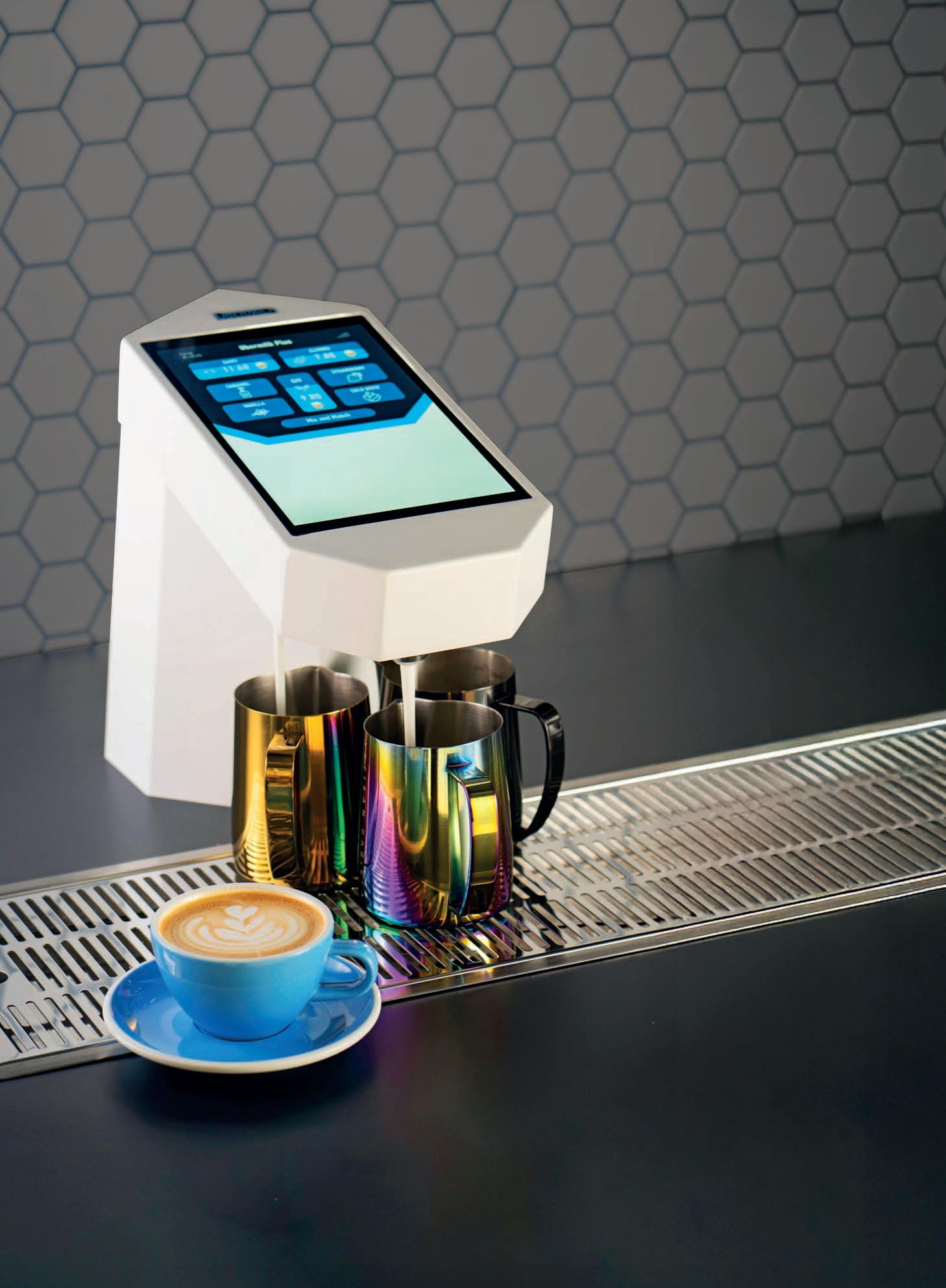
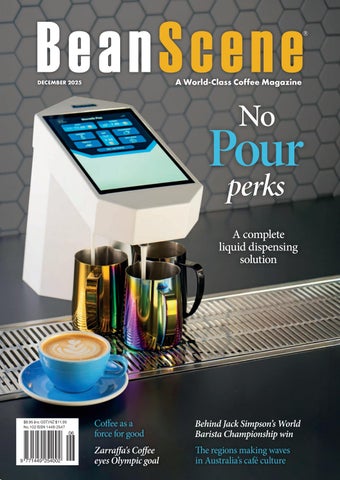
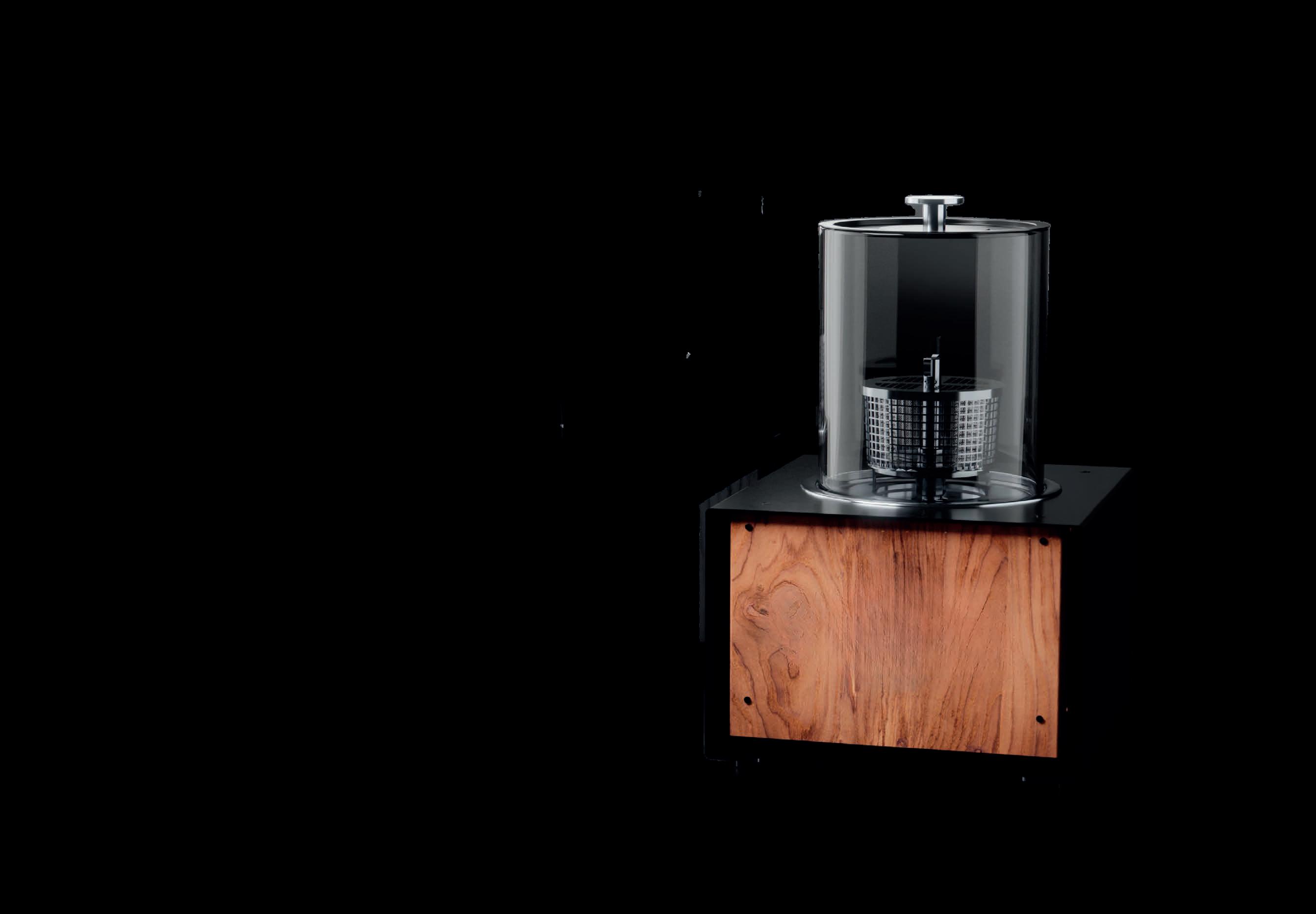
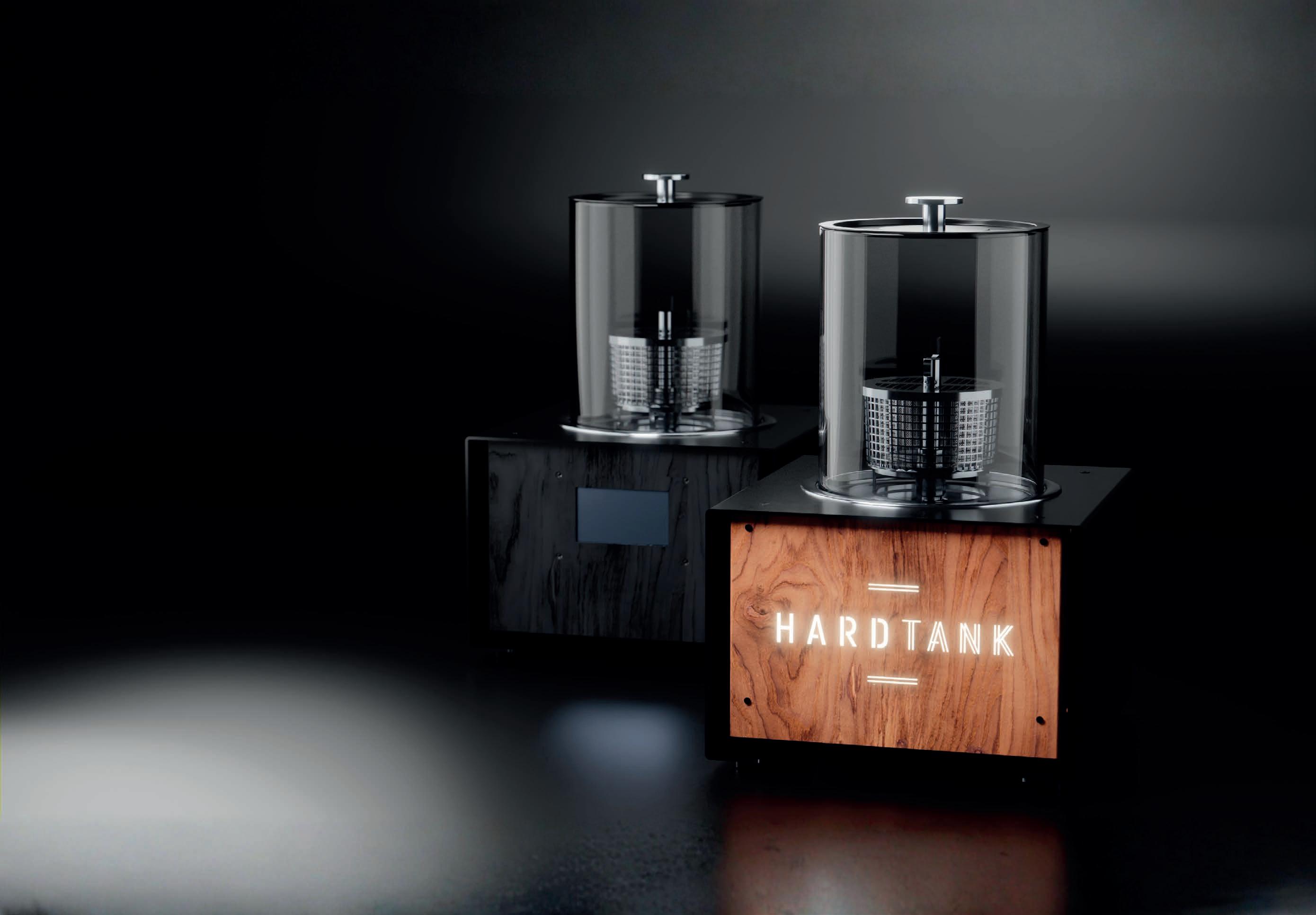
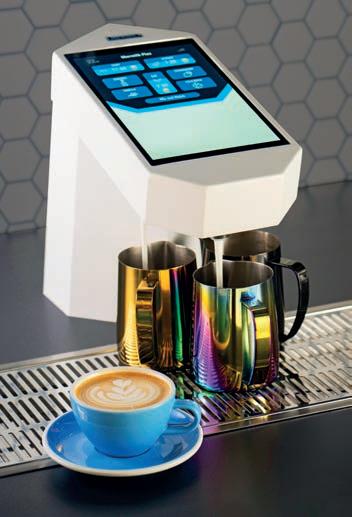
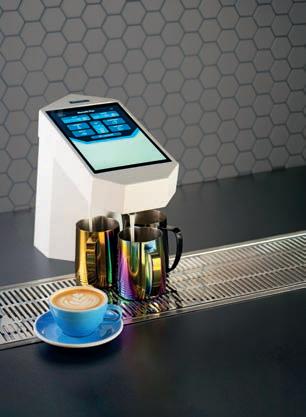
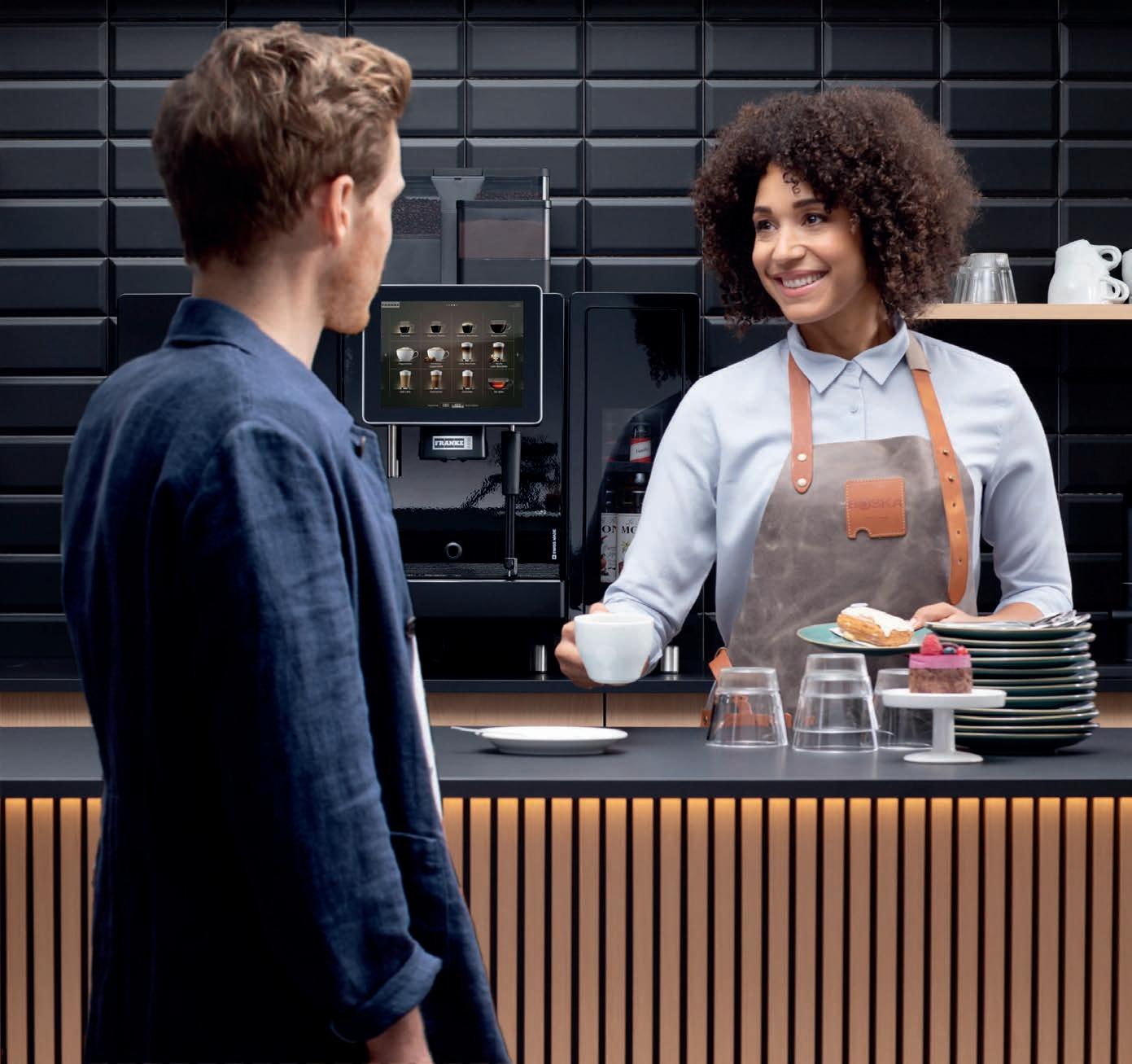
For BeanScene’s December 2025 cover, Barista Group hosted photographer Cassandra Hannagan at its headquarters in Western Sydney to showcase the capabilities of the Übermilk Plus. e showroom was the perfect place to capture the Übermilk Plus at work in a similar fashion to how it will soon be used in cafés around the country.
In an o ce lled with some of the newest and most exciting co ee industry technologies, the capabilities of the Übermilk Plus stood out, with Barista Group Owner Joe Chalhoub electing to highlight the machine because of its potential to change the café landscape.
“For me, it’s all about the value this product can add to a café,” says Joe, Owner of Barista Group. “ is is the next essential technology that is needed in a café … we have a waiting list of people like you wouldn’t believe.”
“Being able to experience how the Plus works and what it’s capable of was very exciting to see,” adds Sarah Baker, Publisher of BeanScene
“Its sharp, futuristic design made it a brilliant subject for our nal BeanScene edition of 2025, and it really stands out against the backdrop of the Barista Group testing space.”
In the December cover story, we dive into how this complete liquid dispenser is, as Joe puts it, has the potential to alter the Australian café landscape –and how 2026 could be the year of the Übermilk.
For more information, visit beanscenemag.com.au
CHIEF EXECUTIVE OFFICER
Christine Clancy christine.clancy@primecreative.com.au
PUBLISHER
Sarah Baker sarah.baker@primecreative.com.au
GROUP MANAGING EDITOR
Myles Hume myles.hume@primecreative.com.au
EDITOR
Sarah Baker
sarah.baker@primecreative.com.au
JOURNALIST
Daniel Woods daniel.woods@primecreative.com.au
ART DIRECTOR/DESIGN
Daz Woolley
HEAD OF DESIGN
Blake Storey
BUSINESS DEVELOPMENT MANAGER
Charlotte Murphy charlotte.murphy@primecreative.com.au
CLIENT SUCCESS OFFICER
Caitlin Pillay caitlin.pillay@primecreative.com.au
CONTRIBUTORS
Andrew Feldon, Victor Vu
HEAD OFFICE
PRIME CREATIVE PTY LTD
379 Docklands Drive, Docklands, Victoria 3008 p: 03 9690 8766 info@primecreative.com.au beanscenemagazine.com.au
SUBSCRIPTIONS 03 9690 8766 subscriptions@primecreative.com.au BeanScene magazine is available by subscription from the publisher. e rights of refusal are reserved by the publisher.
ARTICLES
All articles submitted for publication become the property of the publisher. e Editor reserves the right to adjust any article to conform with the magazine format.
COPYRIGHT

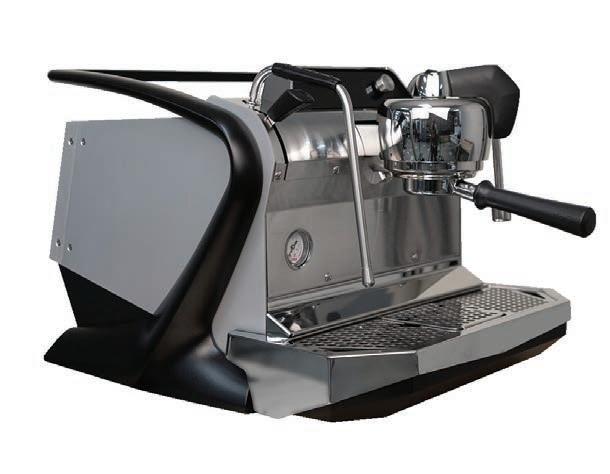
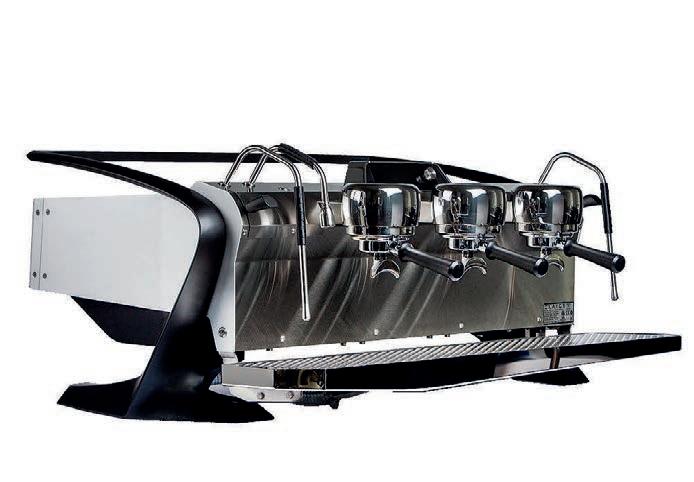
The Steam Single brings all of the beloved features of SLAYER’s popular Steam LP into a smaller footprint. Easily pull manual shots while shifting between flow rates to ‘record’ your favorite shot and ‘playback’ all day. A dedicated pre-infusion circuit lets the barista more gently saturate the coffee bed for more balanced, consistent extractions.


Each issue of BeanScene we pro le a few of our talented contributors.

Victor Vu is the three-time ASCA Australian Latte Art Champion. He placed seventh in the 2024 World Latte Art Championhip (WLAC) in Denmark. Born in Vietnam, Victor worked for three years in hospitality before coming to Australia to perfect his latte art skills. He won the 2018 MILKLAB Barista Battle and the 2020, 2024, and 2025 ASCA Australian Latte Art Championships. He currently works at Ona Coffee Melbourne.

Jessica MacDonald is the General Manager for the NZSCA. Her career has taken her to Auckland, Melbourne, Sydney, and London. She’s worn many hats but remains a roaster at heart. Jessica has volunteered on the Rules and Regulations Committee for World Coffee events and judges in barista competitions and Cup of Excellence programs. Her favourite thing about the industry is the passionate people who care deeply about coffee and the growth of its community.

Attending the biggest co ee tradeshow in the world is like running a marathon. Both take careful planning and preparation to maximum the on-the-day experience. Both involve stamina of the mind and body, and both release adrenaline as you pound the pavement and walk hundreds of kilometres to the end destination. Only at this year’s Host Milano in Italy, there was no medal for capturing ve days of industry discussions, interviews, and social media. e experience, however, was far better than any prize I could have received.
part of a revitalised Café Education schedule at the 2026 Melbourne International Co ee Expo, with a line-up of speakers and panel discussions set to excite, debate and inspire our café owner audience (see page 68).
Looking for a great Christmas pressie idea? A ticket to MICE has you covered!


Like us on Facebook @BeanSceneCo eeMag
Follow us on Instagram @beanscenemag
Follow us on LinkedIn @BeanSceneMag
A er two years working as the publisher of Prime Creative Media, I was honoured to put my journo skills back to the test while Editor Kathryn Lewis is on maternity leave. Much like riding a bike, I was soon in the thick of podcasts and discussions about new equipment that has the potential to take the industry to new heights. Matcha madness, signature drink curation, tea combinations, and 100 per cent automation are four themes that dominated product o erings across the 2050-strong exhibitor list. I handed a cup to a robot arm that perfectly dispensed a shot and textured milk before giving the pitcher a little swirl and produced better latte art than some baristas I know. I also made my selection of a strawberry iced matcha that was dispensed via a vending machine within mere seconds, and for the rst time, I had con dence that quality beverages delivered at speed could be the next phase of the ‘automation fascination’. is topic, amongst 22 others, will form
Also momentous at Host Milano was the crowning of new World Barista Champion, Jack Simpson of Axil Co ee. Watching Jack’s routine was an emotional experience. His theme was considered, his message was sincere, stage setup inventive, and timing spot on. e winner’s announcement was like watching the crowning of a reality TV star, but Jack already was, the world just didn’t know it. Now they do.
As Australian ags uttered and streamers descended from the sky, tears owed, and the Australian, Colombian, and Panamanian contingent Jack represented were nothing but proud.
I may not have physically raced a marathon at this year’s Host Milano, but I watched Jack cross the nish line in rst place. It’s not just Jack who will bene t from his newfound title, it’s the Australian and global industry at large whom will be richer for his humble contribution and voice for the producing community.
And just as the expo ended, lights dimmed, and forkli s started stripping the space apart, I watched Jack walk through the exit doors into the night, with his trophy in hand, into his new life as a barista champion.
SARAH BAKER PUBLISHER
BeanScene Magazine

A report analysing 180 cities has ranked two Australian capitals among the world’s top 10 most a ordable places to drink co ee daily.
e report from Chef’s Pencil – using data from the Numbeo crowd-sourced database that tracks cost-of-living and wage data around the globe – looked at the price of co ee as a share of the average local salary in each city.
Swiss cities Geneva and Bern came out on
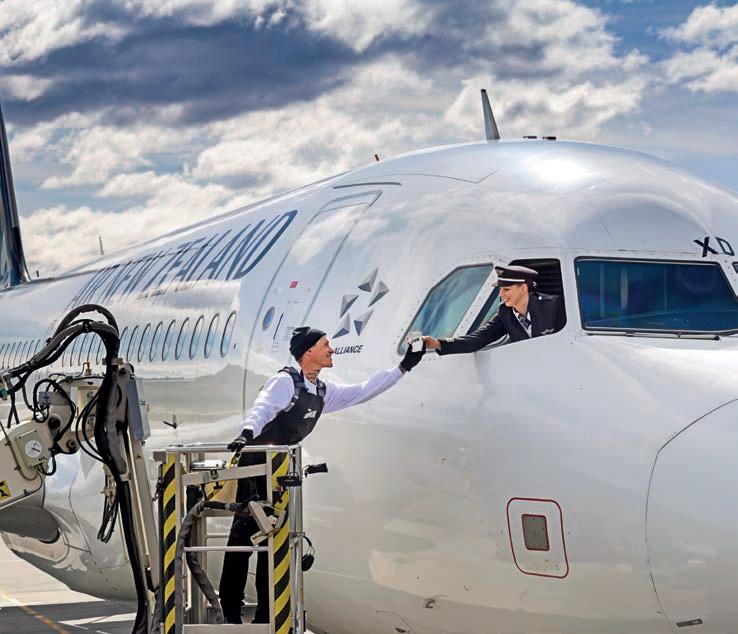
e international trend of airlines partnering with co ee companies to provide better inight o erings has hit Australasia, with Air New Zealand partnering with local co ee roaster Co ee Supreme to boost its service.
To celebrate the launch, the two businesses executed a perfect pour straight through the ight deck window at Queenstown Airport in a world- rst moment.
Co ee Supreme has been served in Air New Zealand lounges across New Zealand, Australia, and the Paci c Islands, as well as onboard in premium cabins, from the end of October, while November saw the launch of the partnership in economy and the airline’s domestic network.
Air New Zealand Chief Customer and Digital O cer Jeremy O’Brien says the partnership is another way to expose a highquality local product to the world.
“ ere are few things that saw ‘New Zealand’ quite like a great cup of co ee,” he says.
“Partnering with Co ee Supreme means we’re not just serving co ee onboard – we’re o ering the very best of New Zealand to our customers.
“Air New Zealand has a unique opportunity to showcase New Zealand products and brands wherever we y around the world.
“It’s a privilege to back a local business
top as the most a ordable compared to wage. Despite the average cappuccino costing $9.08 AUD and $9.23 AUD respectively, enjoying a daily co ee accounted for just 2.4 per cent of the average monthly wage. Rom in Italy also came out at 2.4 per cent, but with an average cappuccino price of $2.72 AUD.
Sydney placed eighth, with an average cappuccino price of $5.14 AUD, with a daily co ee representing 2.6 per cent of monthly
wage. A er Boston in the United States, Melbourne followed in tenth place with an average cappuccino coming in at $5.45 AUD and a daily co ee representing 2.7 per cent of monthly wage.
e authors of the report said that while co ee is o en most a ordable in high-income countries such as Switzerland, social norms also in uence a ordability.
“While Italy doesn’t have the highest wages in the world, its strong café culture keeps prices low and daily co ee highly accessible,” states the report.
“Australia and New Zealand also stand out, with Sydney, Melbourne, Brisbane (2.7 per cent), Perth, Auckland, and Wellington (all 3 per cent) making co ee a relatively accessible everyday treat.”
In emerging countries where co ee is seen as a more luxury item the a ordability declined steeply. In Lagos, for example, a daily co ee would represent 57 per cent of the average monthly income.
that shares our passion for quality, care, and innovation, and together we’re proudly pouring a taste of home for our customers around the globe.”
Co ee Supreme will be serving its bespoke ‘Carry On’ blend for Air New Zealand. e brand says the co ee has “notes of dark chocolate, malt biscuit, and maple” and is
“smooth, full-bodied, and designed to hold its own long a er take-o ”.
Other recent international partnerships of a similar nature include JDE Peet’s with Southwest Airlines in the United States, Lavazza with American Airlines, and Bootlegger Co ee with FlySafair in South Africa.
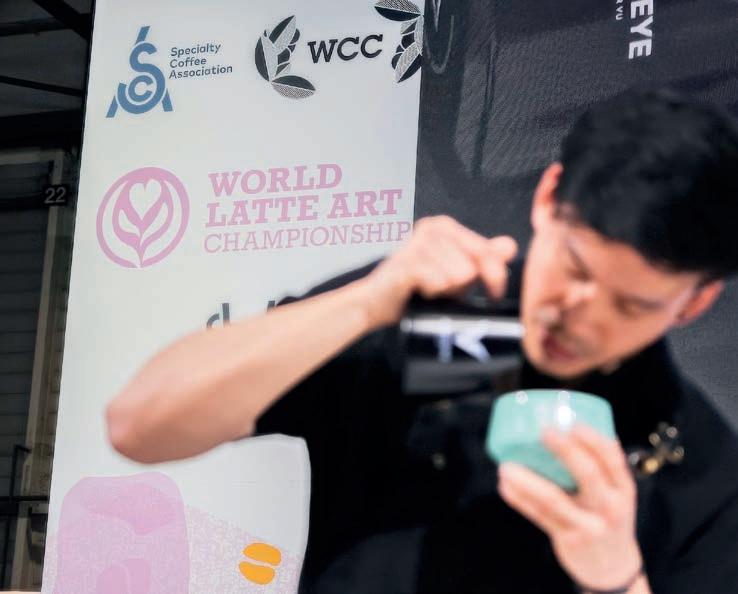
e World Co ee Championships (WCC) has released its 2026 World Latte Art Championship (WLAC) Rules and Regulations for its 20th year of the competition.
According to the WCC, the updated 2026
WLAC Rules and Regulations introduce “ exible round con gurations” to enable more competitors to participate within the limits of the tradeshow within which the competition is hosted.
e updated regulations also include
clari cation around the penalty for not serving beverages in the correct order. What’s more, the Art Bar will now operate as a separate contest judged by the audience, with mandatory participation for all competitors.
Competitors may now also use cooling tools to adjust the temperature of the provided milk, however, altering its composition remains prohibited.
ese rule adjustments aim to ensure the competition supports the specialty co ee community while reinforcing the competition’s role as a global stage for artistic excellence and technical precision.
e 2026 World Co ee Championships will take place in San Diego from 10–12 April, Bangkok from 7–9 May, Brussels from 25–27 June, and Panama City from 23–25 October.
Since 2005, the WLAC has aimed to celebrate the artistry and technical mastery of baristas who transform milk and espresso into intricate designs.
According to the WCC, each performance is evaluated for visual quality, symmetry, contrast, and originality, highlighting the fusion of precision and creativity that de nes specialty co ee’s most visually engaging competition.
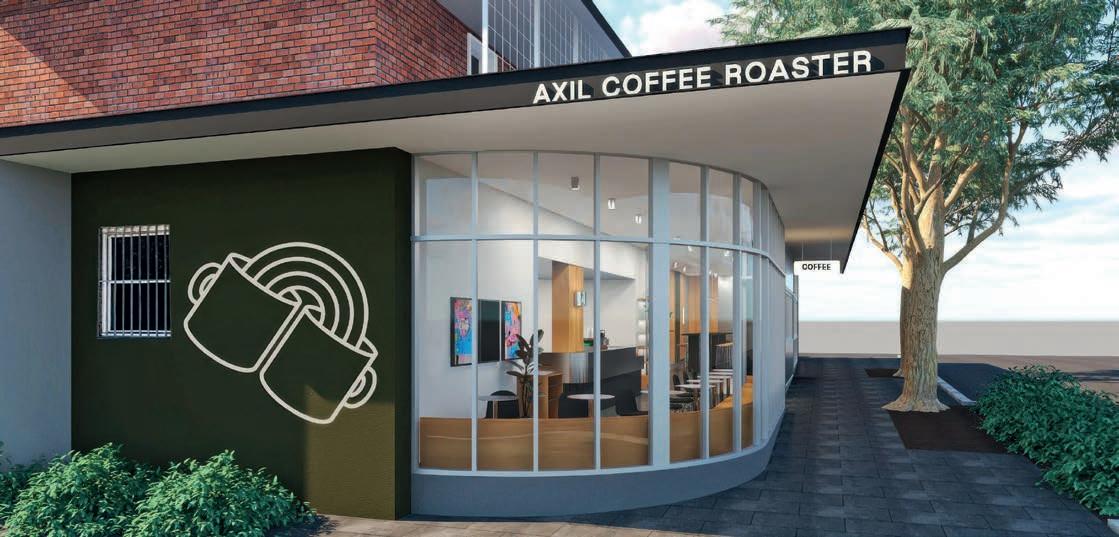
One of Melbourne’s most iconic co ee brands is set to make its mark in Sydney, with Axil Co ee Roasters’ agship Sydney location set to open in Surrey Hills in November.
e 50-seat location at 365 Crown Street, Surry Hills, will open its doors for the rst time on 7 November, and will serve as the brand’s NSW wholesale hub.
Axil has a long and storied history of producing some of Australia’s nest barista competitors.
Its representatives have achieved seven
Australian Barista Championship titles, and now two World Barista Championship titles a er Axil’s Head of Innovation Jack Simpson took out top honours at the recent Host Milano in October 2025.
Axil Co ee Co-Founder Dave Makin says the new Sydney location will prove a crucial hub in the brand’s support of its partners.
“We’re bringing the same approach to Sydney that we use in competition and training,” says Dave.
“ e café gives us a base to support our
wholesale partners across NSW while creating a space where people can experience co ee served at competition standards.”
e Surry Hills space will feature a dedicated brew bar to enable customers to further connect with producers, processing methods, and tasting notes in a format typically reserved for training sessions and barista competitions.
Axil says the café will also host regular cupping sessions, barista workshops, and industry training events.
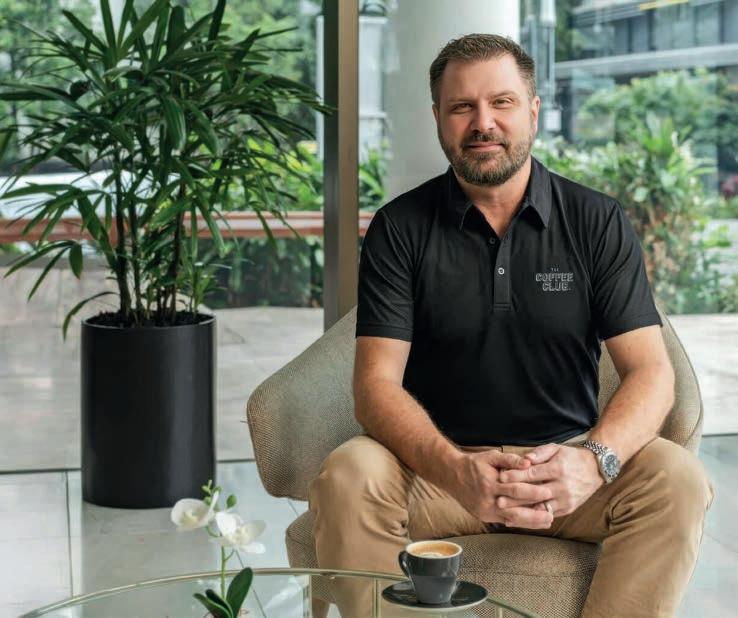
Minor DKL Food Group has appointed Richard Hinson as its new CEO, a move it says “signals a new era” focused on customer service for its e Co ee Club brand.
With extensive experience across Australia’s food, retail, and franchising sectors, in his new role Richard hopes to strengthen partnerships across e Co ee Club network, raise service standards, and drive a customer experience- rst culture.
“I’m thrilled to join Minor DKL at such an exciting time for e Co ee Club – a moment of renewal for Australia’s most iconic co ee brand,” says Richard.
“At the heart of every great café is the people – our franchise partners, their teams, and the customers who make e Co ee Club part of their daily ritual. I’m committed to strengthening those partnerships, building a culture centred on collaboration and innovation, where franchise partners thrive and every customer experience is personalised and memorable. is is how we will continue to build a café network that Australians love and trust for generations to come.”
As well as using his experience at Retail Food Group to “renew and deepen” franchise relationships at e Co ee Club, the new CEO
will also focus on the launch of the ree Stories Cafe brand and store rollout. e grab and go concept recently opened its rst venue in South Brisbane, o ering co ee, quick lunches, and treats.
Sydney brand creating a “new category of coffee for women”
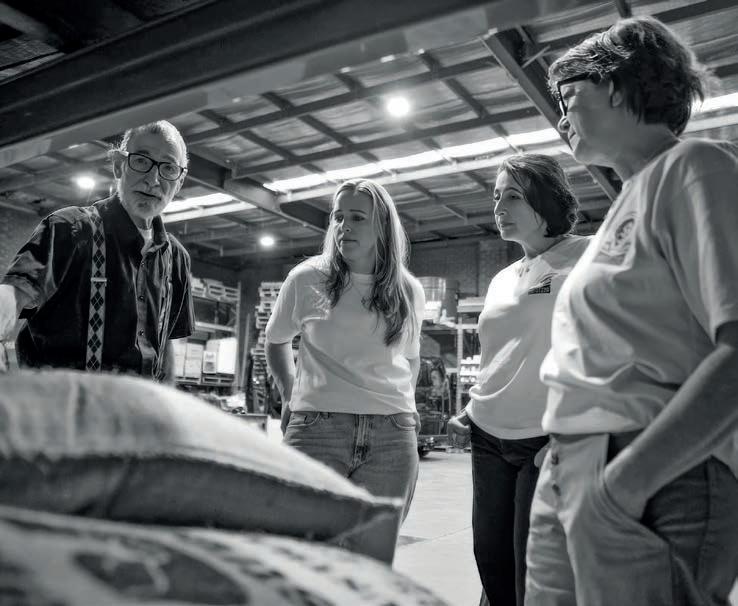
A new brand with a trio of signature blends, Café Bellezza, has launched out of Sydney with its co-founders uncovering a “missing market in co ee” by catering to women’s heightened taste pro les.
Café Bellezza was unveiled during an event at Panetta Mercato, Marrickville Metro, on Saturday 11 October “determined to shake up the market” with its investment
in the preferred avour pro les of female co ee drinkers.
Launching globally with three blends inspired by the southern Italian way of life – Simply Smooth, Beautifully Bold and Delightfully Decaf – the brand is selling co ee blends designed by women, for women.
For Co-Founder Rosa Gallo, the idea took shape while on holiday in Sicily a er a simple
Minor DKL is one of Australia’s largest retail food franchisors and parent company of e Co ee Club and Nomad Co ee Group. It currently operates more than 350 cafés and restaurants across 13 countries.
greeting from a local barista: “Ciao Bellezza, dimmi” (loosely, “Hello beautiful, tell me, what would you like?”) planted the seed.
“ e way he welcomed everyone, was so warm and e ortless – that memory le a lasting impression,” says Rosa.
But frustration with the status quo led to a conversation with a friend, and eventual Café Bellezza Co-Founder, Danielle McMaster.
“Our shared experiences were truly a lightbulb moment, and one that drove us to rethink our relationship with co ee,” says Danielle.
“Our research showed that women possess heightened sensitivity to taste, especially bitterness, spice, and sweetness, which can make traditional co ee blends taste harsh or overpowering. Yet, the industry has long overlooked these nuances, instead presuming one blend should satisfy all.”
Guided by insights, rigorous tasting, and a focus on naturally sweeter beans, they teamed up with third Co-Founder, Claire O’Donnell, and set out to create blends shaped entirely by women.
Female focus groups were involved at every stage, from bean selection to roast pro le, brand aesthetic, and packaging design.
“Café Bellezza is about creating a new category of co ee for women. is brand is about giving women a choice in a space that’s long overlooked their preferences,” Claire says.
Increasing wages are a pressure point for café owners. Image: PeopleImages/ shutterstock.com

New official data reveals how much baristas are taking home each year, prompting calls for cafés to take stock of their pricing structure.
Australia’s baristas and café workers have earned an average seven per cent pay bump, contributing to rising operational costs – yet many café owners are still reluctant to li their prices.
According to the Australian Restaurant and Café Association (ARCA), overcoming this “irrational fear” is one of the keys to a thriving and sustainable business in today’s hospitality climate.
e comments from Wes Lambert, CEO of Australia’s peak hospitality body representing the nearly 56,000 restaurants and cafes, come as new Australian Taxation O ce (ATO) data for the 2022–23 nancial year shows the average taxable income for baristas rose 6.5 per cent to $32,447, while café workers saw an eight per cent rise to $28,474. Café and restaurant managers recorded the largest jump – up nine per cent to $59,938.
At the same time, the barista and café worker workforce has expanded signi cantly by around 8000 workers.
e workforce growth, detailed in the ATO data, aligns with ARCA’s own monitoring of industry vacancies.
“ARCA has also been tracking the barista job listings on Seek for years. In the past 12 months, open job listings have dropped from nearly 10,000 to around 2000 on average,” Wes says.

Wes Lambert, Australian Restaurant and Café Association CEO, believes fears around price increases are unfounded. Image: ARCA.
“We’re getting into a much better position when it comes to baristas, servers, and bartenders. But we’re seeing a huge de cit in managers.”
e latest ATO gures show 41,920 Australians now list ‘barista’ as their job title, and 59,540 as ‘café workers’, up from 38,800 and 54,800 respectively the year prior.
e majority – around three-quarters – are female, and the average barista’s income now sits at roughly 43 per cent of the national average taxable income of $74,240.
Wes says these relatively low annual incomes don’t re ect low pay, but rather the casual nature of the workforce.
“More than 60 per cent of the hospitality industry is casual,” he explains. “Many baristas and café workers are working holiday makers or are students still living at home working part-time while studying at uni or TAFE. at’s why their yearly income appears modest – but their hourly rate is actually quite high.”
According to the job search website Indeed, the average barista wage is $31.37 per hour, which would equate to a $61,554 salary if
working full time. e current minimum wage is $24.95.
With wage costs rising, Wes says it’s time for café operators to confront the uncomfortable conversation around co ee price increases, if they haven’t yet.
“ e ABS (Australian Bureau of Statistics) recently published that menu prices in restaurants and cafés rose 3.3 per cent yearon-year for the month of August,” Wes says. “In the previous quarter ending 30 June, menu prices were only up 2.3 per cent. e ABS said the spike was mainly due to wages and the cost of goods.”
ose costs, Wes notes, are rising on all fronts – but a more radical approach is needed.
“Cafés are under a lot of pressure now, with co ee bean prices skyrocketing due to weather issues in Brazil and Vietnam. at’s making its way through the system, putting pressure on the price of a cup of co ee – which, in some places, is now over $8, including airports and premium locations.”
But industry gures report a small at white and cappuccino still hover under $5.50 (o en under $5 in Sydney). To sustain a thriving co ee culture, it’s thought café owners may need to get to $5.50 for a small co ee as soon as possible. But there are many operators continuing to resist passing on costs to consumers, even as their overheads climb.
“We’re getting into a much better position when it comes to baristas, servers, and bartenders. But we’re seeing a huge deficit in managers.”
Wes Lambert CEO, AUSTRALIAN RESTAURANT AND CAFÉ ASSOCIATION
“It’s why insolvencies in the hospitality industry remain at record levels month over month. Cafés are under a lot of pressure when the going rate increases so quickly, and while consumers are still in a cost-of-living crisis, many café owners don’t feel they can pass on all their wage increases directly,” Wes says.
“I o en quote this: a barista on a public holiday or Sunday in FY25 can make nearly $70 an hour – more than a rst-year registrar, an engineer, or even a lawyer. at puts a lot of pressure on the hospitality industry.”
But Wes and ARCA believe that hesitation is misplaced. Ultimately, the only real solution to increasing wages and expenses is price
increases. Cutting business costs is much harder and risks compromising quality.
“With all due respect to café owners, we consider it to be an irrational fear – this idea that if you raise your prices to cover your cost increases, you’ll lose customers,” he says.
“ e average customer won’t walk more than one block le or right from their main route to change cafés. Ultimately, it’s a worry that your co ee prices are going to be too high and you’ll lose customers to competitors. But when everyone has the same irrational fear, it keeps prices down – and that hurts everyone.”
Wes points out that in many co eedrinking countries, consumers are paying far more than Australians – as much as $9 AUD to $15 AUD.
“Yet we’re still seeing some co ees here in Australia sold for as little as $3. at’s fascinating, and unsustainable.”
Elsewhere in Australia’s hospitality sector, the ATO reports a bar attendant’s average taxable income was $39,353, around $11,000 more than a drinks waiter at $28,885. e data did not include the average taxable income of a café owner.
e statistics for the 2022-23 income year were sourced from 2023 individual income tax returns processed by 31 October 2024. e data does not stipulate whether people are employed in a full time, part time, or casual capacity.





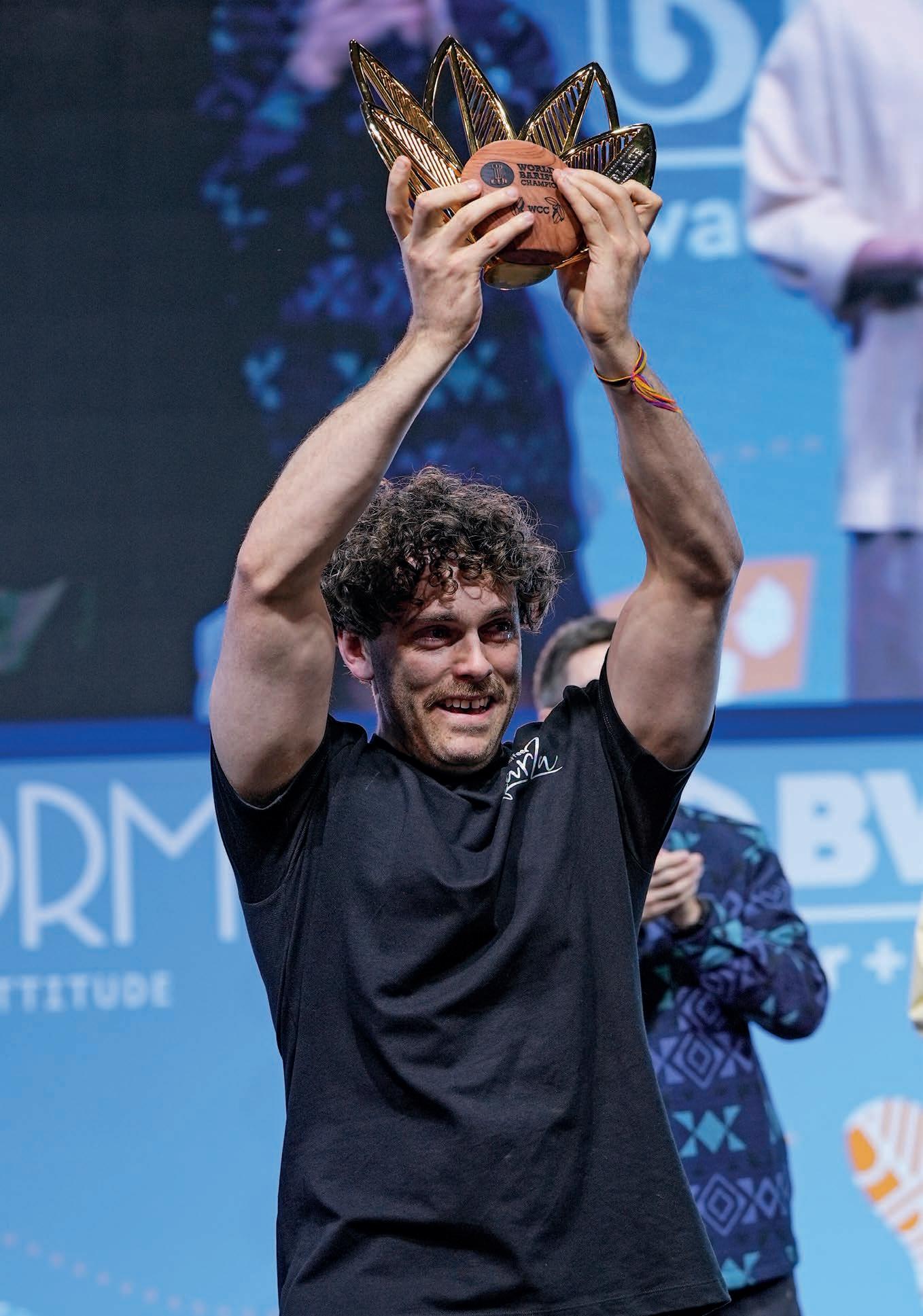
Jack Simpson has become the fourth Australian to lift the World Barista Championship with his 2025 victory in Milan, but there’s more to his win than meets the eye.
There aren’t many occasions when an industry stops to witness history, but the co ee world was a orded that opportunity within the hallowed halls of the Fiero Milano earlier this year.
An entire community stood still and watched as Jack Simpson rallied to have another crack at the World Barista Championship (WBC) a er falling at the nal hurdle in the two years before.
A er a third-place nish behind Brazil’s Boram Um and Italy’s Daniele Ricci in 2023, and then a runner-up nish to Indonesia’s Mikael Jasin in 2024, Jack himself had openly discussed his doubts about competing again in 2025 – but he found himself back on stage to, this time, experience the ultimate success.
His 2025 competition journey started with a third consecutive Australian Barista Championship win back in June, where he once again competed against ve of Australia’s top baristas.
en, he was back on the world stage in Milan, competing against an immensely talented eld of national champions and former WBC nalists including the likes of China’s Simon SunLei and Canada’s Ben Put, who rounded out the podium.
When Jack was announced as the winner, the outpouring of emotion was palpable.
Mikael, in his rst act as former World Barista Champion, was on hand to present the trophy to his successor a er narrowly defeating him by one solitary point in 2024.
He says Jack’s desire to keep competing a er those heartbreaking losses has proven an inspiration among the co ee competition community.
“Jack is a really nice person, that’s why people really love that he won,” says Mikael.
“ e story of resilience also really inspires people. He has this tenacity to go back year a er year and always make the nal. He’s a great competitor and a great co ee professional.”
Jack spoke to BeanScene amongst the chaos of the immediate a ermath of his victory. He praised the e orts and support of the wider Axil Co ee Roasters team in helping him achieve his dream.
“I’ve been thinking about it for years and years, but one your name gets called it’s almost like a relief,” he says.
“We’ve had the same team for a number of years now. With the guys – Dave (Axil Founder Dave Makin) and Matt (Axil Head Roaster Matt Crowley) and my partner Gabby,
we’re a very strong group that challenges each other a lot. I think that’s been the key to success.
“Having done three competitions in a row, I’m really happy I won with this performance.”
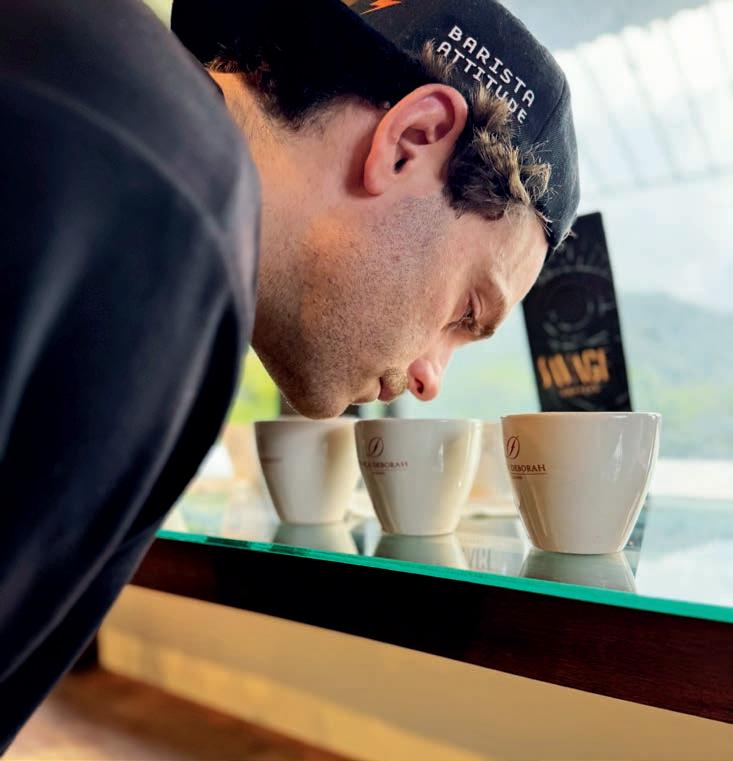
Jamison Savage was one of two suppliers of beans – along with Jonathan Gasca – to Jack for the 2025 World Barista Championship. His farm, Finca Deborah, has a rich history in the competition having supplied all three podium nishers with beans in 2024, including Mikael with its ELIPSE beans.
Overall, Fincah Deborah has supplied beans for three WBC wins, and has been active in the competition space for more than 16 years.
“When I rst decided to compete this year I was visiting Jamison and I was visiting Jonathan,” says Jack.
“To do this with them behind me, this is a win for them as much as it is for me.”
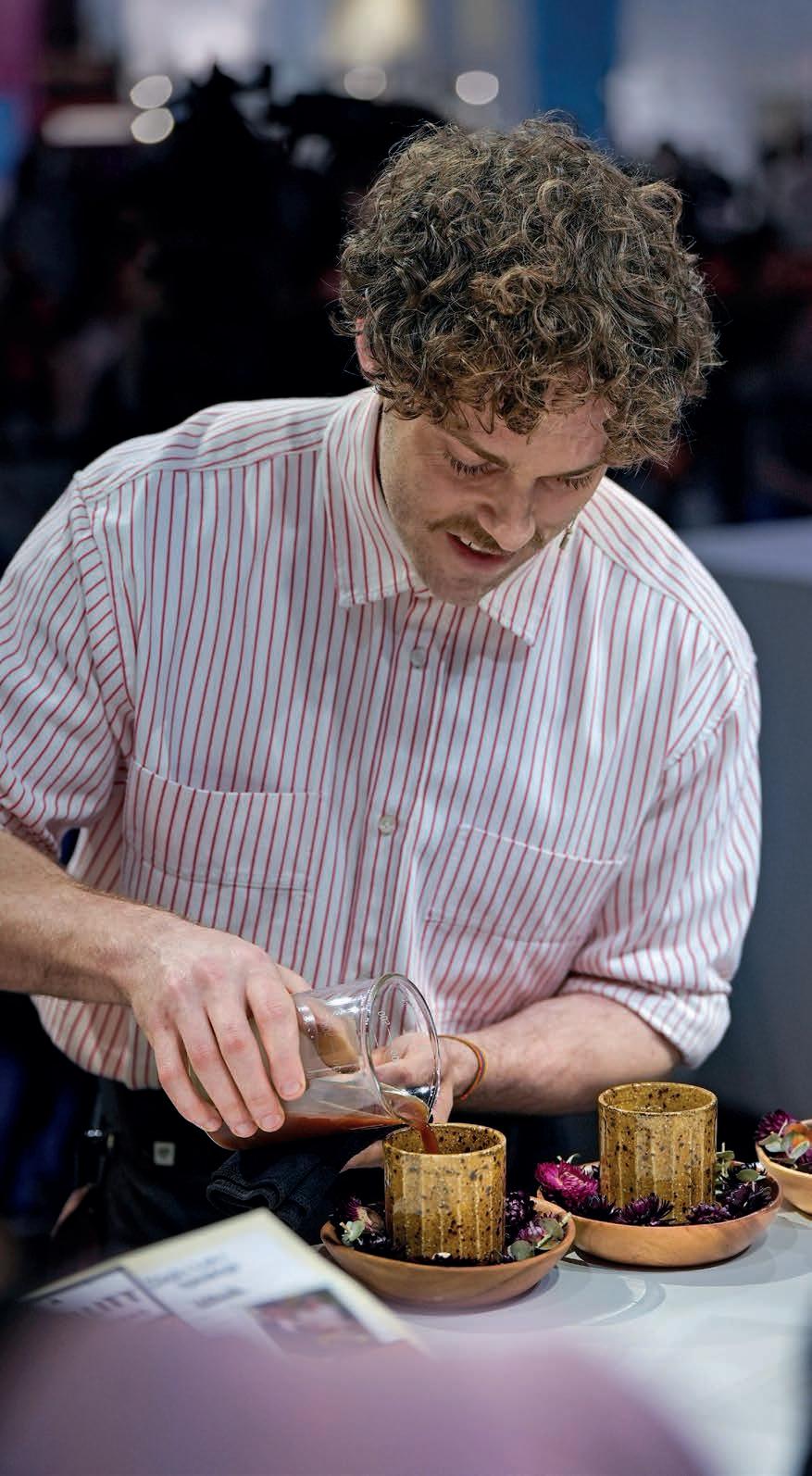
e newly crowned champion used a natural Panamanian co ee from Jamison
at Finca Deborah and a natural Colombian co ee from Jonathan of Finca Zarza.
He travelled to Finca Deborah earlier this year, where he and Jamison toured the co ee plantation and masterminded a plan to help Jack conquer the world of co ee.
Jamison says Jack’s desire to push co ee origin to the forefront of his routine is an immensely rewarding aspect of the win.
“Aside from his talent, Jack’s gracious spirit was one of the reasons I was intent on working with him,” says Jamison. “His deep respect for our cra at origin and appreciation for those surrounding him are magnetic and genuine.
“ at, for a producer, is a winning element in a competitor. Watching Jack and Jonathan together in Milan was magical – their longstanding relationship is testimony to this, and on the world stage that means so much to the Savage Co ee team.
“When a challenger displays character like Jack’s, people naturally gravitate towards it. It’s a frequency, a higher vibration that we
all seek as humans. He is focused, attentive, and passionate, and this bleeds through every thought and decision he makes.
“He’s a winner, and these character traits shine through in him.”
Jack started his 2025 WBC campaign in a similar fashion to 2024 – by recording the highest score of the rst round.
Of the 51 baristas taking part in the opening stage of the competition, just 16 progressed to the second round. Jack nished with a score of 671.5, a full 22 points clear of second-ranked Simon SunLei, with Philippines’ Michael Harris registering the third highest score of the round with 631 points.
In the semi- nal only South America was unrepresented as a continent, showcasing the truly global nature of the WBC.
Scoring across the board dropped in the second round, with Jack registering the third highest total. Simon topped the charts with a score of 604.5, while Malaysia’s Jason Loo nished on 593.5. Jack then followed with 583 points along with representatives from Japan (Hiroki Ito), Denmark (Christopher Sahyoun Ho ), and Canada (Ben Put) to make up the group of six competitors who would contest the nal.
Mikael praised the standard of the 2025 competition and believes as time goes on, it will only be more competitive year a er year.
“I always think the competitors of today are better than the competitors of yesterday, but the competitors of tomorrow will be better than the competitors of today.
“Every year the level continually increases. Next year, the WBC will be better in a lot of ways too, and the year a er will be better again.”
Eventually, a er a full four days of competition in the middle of the packed Host Milano tradeshow, Jack was crowned champion. He nished with a score of 643 points in the nal – well clear of Simon in second (628) and Ben in third (592.5).
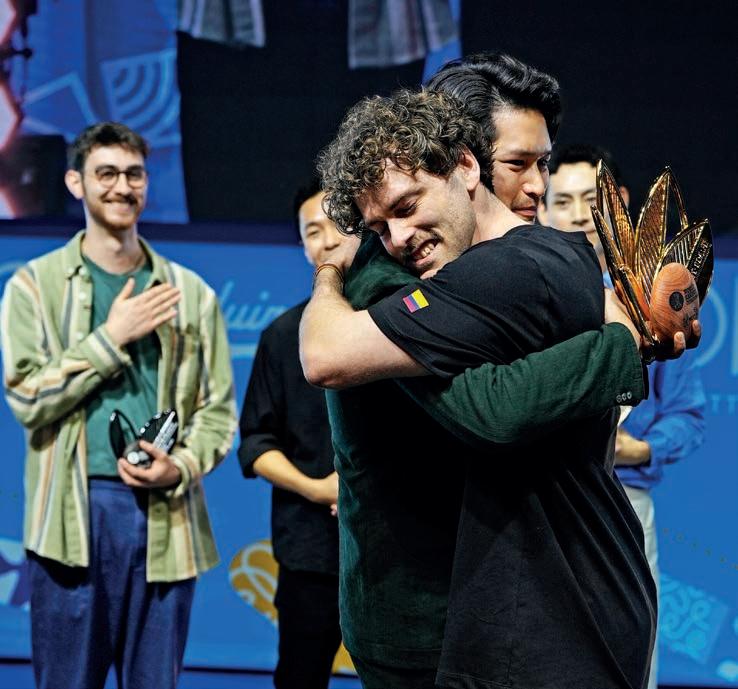
When Mikael presented Jack with the trophy, the two shared a warm embrace in front of a packed crowd.
e 2024 champion says he experienced a range of emotions due to holding personal relationships with many of the top six, but it was special to share in such a moment with his competitor and friend.
“Obviously, I have a lot of friends who were in the top six, so there were very mixed feelings – especially with Ben (Put) being up there as well since he is such an inspiration,” Mikael says.
“I was crying on the side waiting to give Jack the trophy. A er last year Jack and I became good friends, we went on a few trips together to Tokyo and Brazil, and I met him in Melbourne as well.
“When Jack won, because of our personal history and standing next to each other in Busan, where I was proud I won but could see how crushed he was, I was really happy I could pass him the trophy.”
Using the Finca Deborah beans, Jack registered a run of perfect scores in the espresso course – the second ever perfect score in its class and the rst since Berg Wu in 2016 who, incidentally, was also using a Geisha from Deborah.
With the routines of high-level barista competitions utilising and incredible blend of science and creativity to cra the perfect cup, Jamison has revealed how the co ee Jack used from Finca Deborah, named AETHER, was created.
“AETHER is an argon gas natural macerated, washed nished Geisha. I refer to this process as a hybrid as both natural and washed techniques are used to create this intensely fruit forward yet clean cup,” Jamison says.
“It builds upon my years working with nitrogen and carbon dioxide, and we’ve unlocked something special with this novel process.”
It was the rst time Jamison had used argon in the co ee washing process, and the beans were created especially for the competition.
Jack says the tasting notes were very citrusy, with notes of naval orange, stone fruits, peaches, apricots, jasmine, and bergamot, and he switched from the Nirvana beans, which he used in his Australian Barista Championship win, “at the last minute”.
Mikael praised the routines of not only Jack, but the entire group of competitors, and believes 2025 marked a shi in how routines are presented on the world stage.
“Rather than trying to do more and more, Jack actually stripped his routine back and was really vulnerable on stage, and that makes him very, very relatable to people, and it’s the right message for the time we have now,” says Mikael.
“Obviously he knows how to make really good co ee, but by changing his approach and being vulnerable and relatable, he could deliver that co ee better, and I think that’s how he won this year.
“If you look at the top six this year –and even outside of them – that style of presentation seems to be on the rise, and it was the right kind of presentation to win.”
It only takes a glance through the list of former World Barista Champions to know it represents a who’s who of the co ee world.
From an Australian perspective, there’s already industry legends like Paul Bassett (2003) who has since featured in the 2004 television series Living Co ee, started his own roastery – Bassett Espresso – and grown his brand of Paul Bassett co eehouses in Japan and South Korea to more than 100 stores.
Sasa Sestic (2015) has grown Ona Co ee almost exponentially, to the point where it has locations in Australia, the Middle East, and Asia, while operating sister company Project Origin trades green beans.
en, Anthony Douglas (2022) –Melbourne’s rst champion who, like Jack, was representing Axil Co ee Roasters –
“I was crying on the side waiting to give Jack the trophy. After last year, Jack and I became really good friends.”
Mikael Jasin
2024 WORLD BARISTA CHAMPION
co-founded Homebody Union Co ee, and has previously been a brand ambassador for the likes of La Marzocco and been heavily involved in co ee research and development.
It’s an achievement that has hit the mainstream Australian media too, with major news outlets, radio shows, and talk shows all covering Jack’s success in Milan.
Mikael experienced something of a media storm when he became Indonesia’s rst ever World Barista Champion in 2024. He says success in the competition highlights the strength of the barista cra as a career, rather than its perception a part-time job or side hustle.
“When you have a world champion in co ee from your country, it’s amazing to see the impact it has on the industry,” says Mikael.
“It is a great representation to the mainstream public that there is a whole di erent world to the barista profession. It allows them to see it’s not just something
people do while they’re studying and waiting to get a ‘real job’. “
For the next year or so, Jack will be the reigning World Barista Champion. World of Co ee Panama has already been con rmed as hosting the next edition of the competition and, as of yet, it remains to be seen who will be taking to the stage for Australia.
But for now, at least, Jack sits clear of not only all other baristas in Australia, but all other baristas in the world. It’s an achievement that, by his own admission, has been a decade in the making.
Mikael has just nished the “crazy” 12 months where, by the end of the year, he expects to have been on 100 ights to more than 20 countries.
Jack is set to embark on his own journey as world champion, and Mikael believes the new champion is set to experience a year full of opportunities all around the world.
“It’s up to Jack what he wants to do with the title, but most competitors want to make something out of it. With the win comes a lot of spotlight and an incredible platform. He’ll talk to a lot of people, he’ll talk to a lot of camera lenses and make lots of videos of making co ee for thousands of people,” says Mikael.
“Speaking from experience it’s crazy and overwhelming and tiring, but that’s what all of us work hard for.
“My advice is to enjoy the circus and enjoy the craziness, then when he passes on the trophy he can sit back and see what he wants to do next. It’s going to be crazy, it’s going to be amazing, but he’s worked so hard for this and he deserves all the attention he’s getting.”

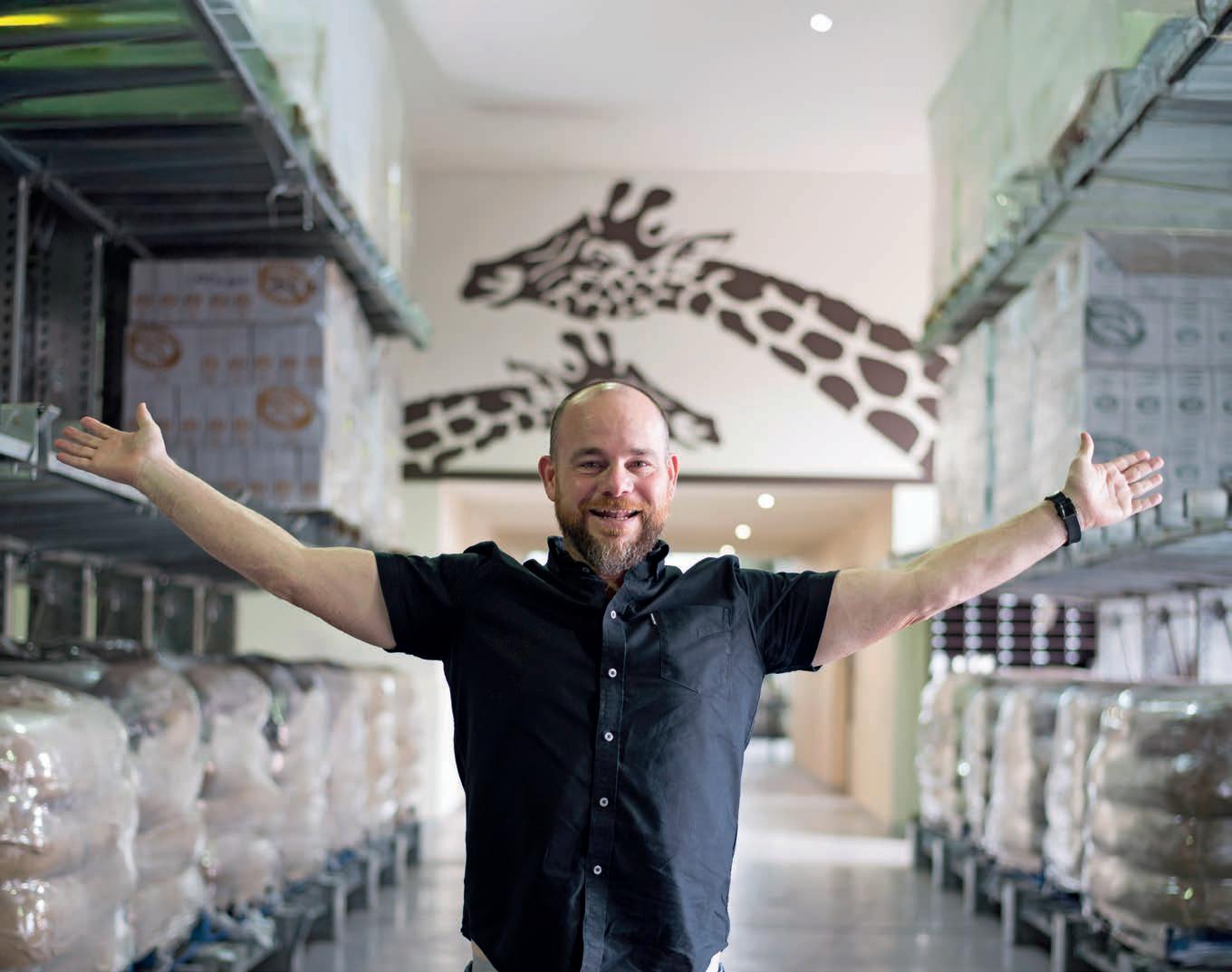
From a roastery in the backstreets of Southport, Queensland to a specialty coffee chain with a national presence, Kenton Campbell discusses how Zarraffa’s Coffee is primed to take over the Australian convenience coffee niche.
The 2032 Brisbane Olympics may seem a world away for some, but for Zarra a’s Co ee Founder and Managing Director Kenton Campbell, it’s a milestone of Australian sport he has long earmarked to coincide with a milestone of his own.
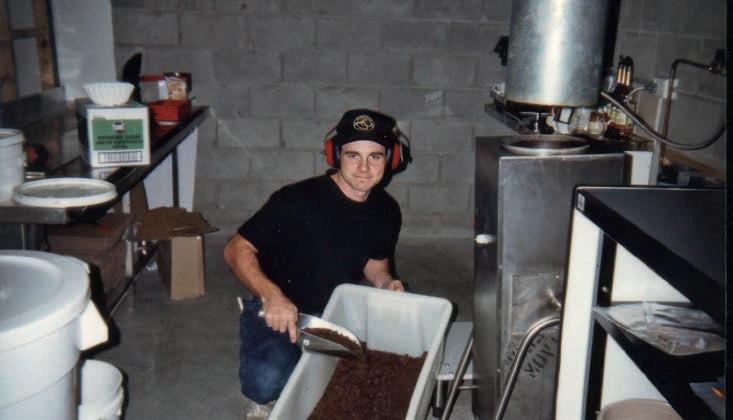
Kenton and Rachel Campbell started Zarra a’s as a roasting house in Southport in 1996, where customers would sit on hessian bags of beans while enjoying a cup of co ee. It has since evolved into a franchise model with more than 90 locations across Australia. By the time the Olympics roll around, Kenton hopes that number will be more than double.
“It was 10 years ago when we came up with the Brisbane Olympics target as a KPI, and that’s because it’s a huge event that will be in our backyard,” Kenton tells BeanScene.
“We want to be iconic in Australia, that’s our ‘gold medal’. e strategy was to look for a number that was achievable, but a big target
at rst. We’re still looking at opening about 15 stores a year to reach it, but that 200 puts us out there as being able to take that mantle.
“ ere aren’t many brands that make it to that size unless they’re a big US chain coming here. To be an Australian-built brand to have done it would be more than a token, it would be something to be celebrated.”
While Zarra a’s itself was born in Queensland, Kenton arrived in the Sunshine State in 1995 from the United States (US) at the invitation of a co ee company to become a consultant. is was a er engaging with representatives of the business from his co ee cart in Seattle.
A er an inauspicious start to his time in Australia – he was in a car accident on his very rst day – he opened the rst Zarra a’s in 1996. He and Rachel still operate a singular
corporate store within the brand’s many franchises, but it hasn’t all been plain sailing.
“We had as many as 20 of our own stores at one point, especially during the consolidation of our stores in the shopping centres where we helped franchisees into stores or would buy them out and close them up when the lease term nished. We did that because that’s what needed to be done,” he says.
As a brand, Zarra a’s has been expanding away from its Queensland base in recent years – expedited by the acquisition of First ings First Co ee in South Australia earlier this year.
Within the space of a week in October 2025 it opened its rst stores in Adelaide (Munno Para) and Melbourne (Packenham South) and is continuing to consolidate a nationwide presence.
Both these new sites have been opened by existing franchisees, and that model of
enabling known quantities from within the business to stretch themselves with their own locations, Kenton says, has been critical for not only the progression of Zarra a’s, but its survival.
“More than two dozen of our stores are owned by previous store managers and we help them expand into franchising with our manager program,” he says.
“We nancially help our managers that have been running a store for three to ve years, and rather than lose them to the brand we’re losing them into the brand by helping them set up their own stores.
“What that means is they know what’s going on and how we operate, and utilising a knowledge pool like that makes so much sense. It’s fundamental to our success.”
With 2026 marking a full 30 years of operation for Zarra a’s, Kenton says this desire to keep everything in-house has now, in fact, extended to keeping it in-family.
“We’ve now got second and third generation franchisees, the kids are taking over and they’re hungry for it. We remember when they were little and running around the store, but now they’re pumped up and running it,” says Kenton.
“Our current franchisees are using it as a succession plan for themselves, and it’s working. Any new franchisees must be vetted – they usually come in and do a two week trial and a er that there’s about three months of training in a franchise partner store, and they can say if they don’t think they’re a t for the business.
“If you’ve got a franchisee that’s recalcitrant or not wanting to follow a system, it’s better to end it there. All our franchise partners are congruent, they all care, and they’re all excited for the brand and where it’s going.”
e new Adelaide site, although part of the First ings First acquisition, is the perfect example of Kenton’s desired franchisee and family succession. e location is operated by Bill and Claire Zavos, who have held locations in Queensland but since returned home to Adelaide.
Alongside them are their sons, Sam and Dillon.
“We’re blessed to have options and
opportunities now where we probably won’t have to look outside the brand for franchisees in the coming years, that would be my goal,” says Kenton.
“We’re very much looking at New Zealand to be part of our portfolio even though it’s international. It’s closer to a lot of Australia than Perth is. e market has nothing but growth in it.
“In the next few years, we’ll be in the Northern Territory – Darwin is begging for it. I just have to nd a franchise partner that wants to go up with us.”
The convenience kings e scope of Australia’s café and co ee scene is incredibly broad. From espresso bars to Italian cafés, service stations and a er
dark restaurants, it’s a packed and hyper competitive market.
Kenton believes saying you work in co ee is comparable to saying you’re a lawyer – it gives people an idea of what you do, but there’s a huge spectrum of specialties you could actually be working in.
With a signi cant personal background in co ee and hospitality, both in the US and Australia, Kenton has built Zarra a’s on the promise of high-quality products and service, and has doubled down on the convenience factor.
“We know what is best for our brand in what is a very big industry. We t a niche, and we t it well,” he says. “We’re not going to be challenged easily by anyone who comes along. We’re not one of the really big guys, but those big international players don’t scare us.
“It’s all about the o er, but I think the drive thru for our industry is fundamental for convenience.
“We’ve got people who come through daily, twice a day, or more, and you want to make it as easy as possible for them to do that. It’s the ultimate convenience for a customer.”
While drive thru co ee is extraordinarily popular in high density regions of the US, it’s a concept that is still nding its feet in Australia. Competing brands like Soul Origin are getting involved and has recently launched its rst drive thru in Melbourne, along with countless small operators and independent businesses making moves in the space.
en, of course, there are the major global players like McDonald’s and Hungry Jack’s to compete with.
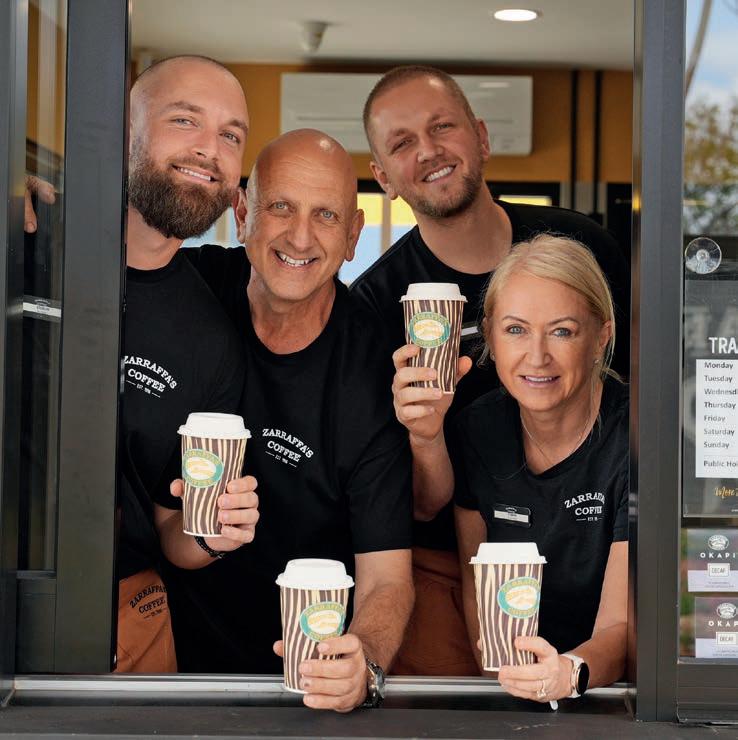
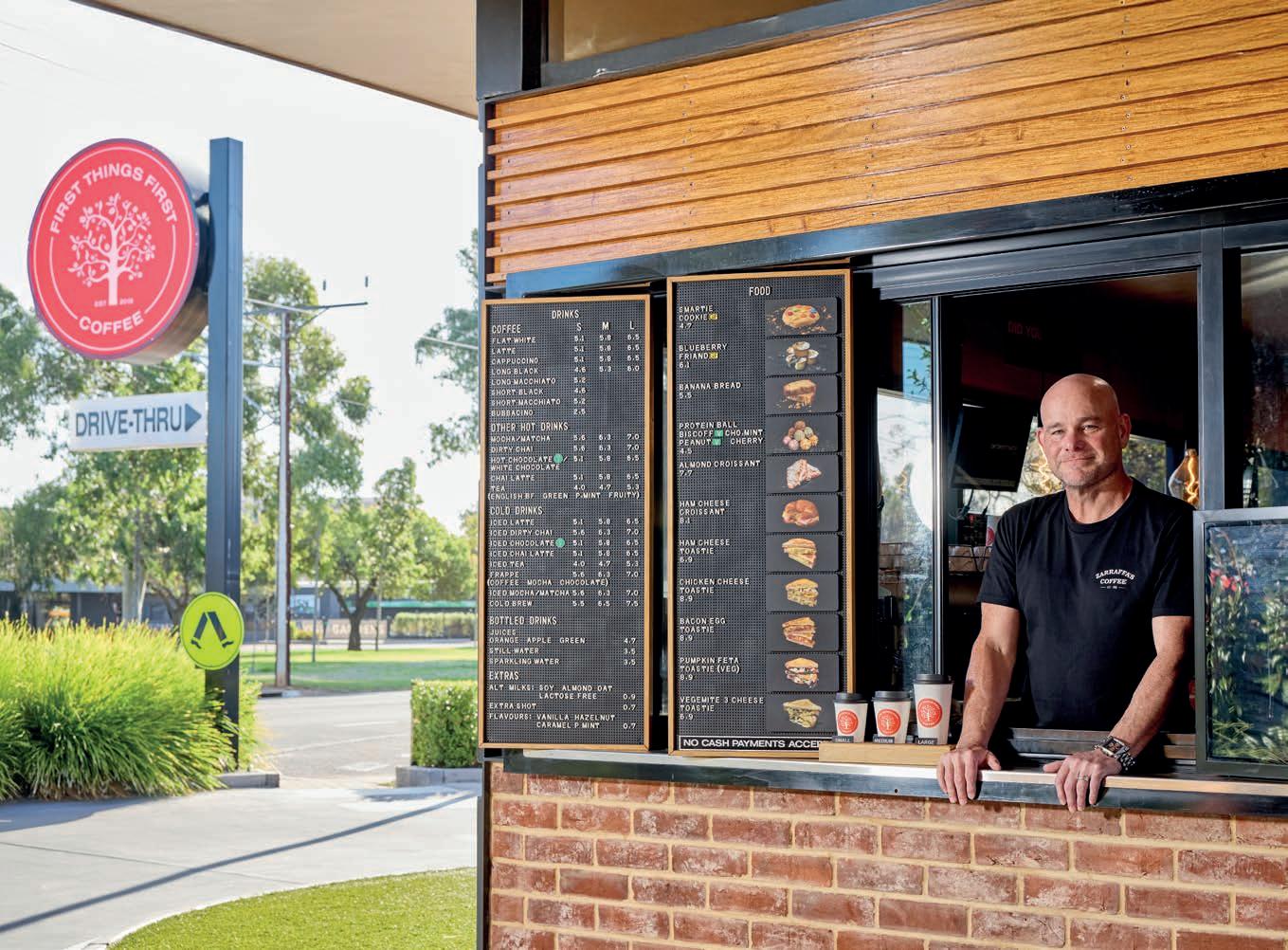
Kenton believes Australia’s drive thru co ee market isn’t necessarily playing catch-up to the US but it, in fact, exceeds it in key service areas.
“ e drive thru model is probably what saved the brand, to be quite honest. If we were in centres alone, we probably would have sold up a long time ago. e smartest thing we ever did was getting into drive thrus in 2009, it’s what set the brand up for many years of expansion,” says Kenton.
“Are we behind the States? No, I think we’re actually on the forefront of convenience when it comes to quality of service and product. I think Australia and New Zealand are world leaders in this space and I haven’t seen or heard anything di erent.”
When looking at a Zarra a’s cup, storefront, or uniform, it’s hard not to be drawn to the gold and green logo featuring the long necks of a pair of gira es stretching across the centre.
“When I was looking at what the brand could be, I would write everything I needed to have a specialty co ee company in a little Filofax Rachel had given me,” says Kenton. “ e rst thing on it was brand, and I had monkeys, a rhino, and a gira e, which on its own didn’t make sense. I went to a library and saw in a book that ‘Zarafa’ was Arabic for gira e, and that was the start.
“It sounds cultural, it sounds signi cant, and it’s di erent and identi able.”
“I think we’re actually on the forefront of convenience when it comes to quality of service and product. I think Australia and New Zealand are world leaders in this space.”
Kenton Campbell FOUNDER AND MANAGING DIRECTOR, ZARRAFFA’S COFFEE
at alignment and a liation with wildlife extends beyond marketing though, it’s weaved into Kenton’s ethos as an entrepreneur and feeds into how the brand operates.
Kenton – and Zarra a’s – have partnered with Australia Zoo and Wildlife Warriors pledging vital funds for global conservation e orts. A dream partnership alignment since he met the late Steve Irwin and his father, Bob, in the early 2000s.
In addition to supporting Australia Zoo’s conservation e orts, Kenton and Zarra a’s support co ee cooperatives around the world, whether that be through consistent sourcing of beans, or limited-edition single origins like its recent Ethiopian Sidamo release.
“We’ve supported the Meru Co ee Cooperative, Ntongoro, in Kenya for more than a decade, and Rachel and I are preparing to go to Kenya to look for another cooperative to support,” he says.
“It’s a unique opportunity to have a brand that can do the very thing people are looking for, and gives hope that these iconic animals all around the world, including here in Australia, can have the ability to live amongst us if we just let them.
“It’s cool we have an opportunity as a brand to do this and it’s real, it’s not fake – it’s right there in front of us. e partnership with Australia Zoo is very important to us and they do an incredible job with what they do, so we’re very aligned. Now as a brand we’re not just there to make money, we’re there to make a di erence in the long run.”
It’s clear Zarra a’s has come a long way from Kenton’s dream almost 30 years ago. What started out with a $9000 personal loan back in 1996 has turned into one of the largest Australian-owned and operated specialty co ee businesses in the country.
“It’s been a rollercoaster, but that’s business. e advice I give people is when having your own business there is going to be sacri ce, and if you’re not willing to take that on, stick to working for someone else and do your part there, you can go home and rest easy and have your weekends,” says Kenton.
“It started with trying to get the business
Kenton Campbell and Zarraffa’s are heavily involved in conservation projects around Australia and the world.

to a point where I could replace $300 a week so I could pay myself out of the business, meaning I could work on it, rather than in it, and not have to do jobs like payroll in the evenings.
“It’s taken a lot of time and sacri ce to get where we are today, and most of that has been worth it looking back at how incredible the business has become.”
With Queensland all but conquered, and that 200-location goal still within realistic reach, Kenton hopes Zarra a’s can keep carving that same niche in its new markets.
“I would say of those about 100 stores [to get to 200], 90 will be outside Queensland,” he says. A signi cant amount of those, the way it’s looking right now, will be in Victoria, South Australia, and New South Wales, and we have another push coming in Western Australia.
“We’ve just done a deal where late next year we’re looking to develop in the ACT, and when I was in Tasmania recently I was driving from Launceston to Hobart and sending all sorts of messages to leasing agents. We’re looking at being truly national in the next few years, as well as potentially in New Zealand.
“Because we’ve got a lot of di erent models now, we can be versatile so we’re ready to take opportunities whether they come up in centres, in kiosks, or drive thrus, reverse drive thrus, or elsewhere.”
Now, with the toes dipped into some of those new markets, Kenton says everyone involved at Zarra a’s is ready to build the brand into what he hopes will be one of the largest and most iconic in Australia.
“We fit a niche, and we fit it well and we’re not going to be challenged easily by anyone who comes along.”
Kenton Campbell FOUNDER AND MANAGING DIRECTOR, ZARRAFFA’S COFFEE
“In Melbourne people are pronouncing ‘Zarra a’s’ incorrectly. A lot of people are calling it ‘Za arelli’s’, but that’s good because they don’t know us yet. It’s awesome, and it’s an opportunity. Once they all know it, you know you’ve done a good job,” he says.
“ e coolest part is, yes, Zarra a’s is something we created, but it’s its own entity now. We’re on this ride with a bunch of other people, but now we’re the oldies in the back, the boomers looking at these young people coming in – and they’re more excited than I ever remember us being.
“ at’s the future of our brand.”

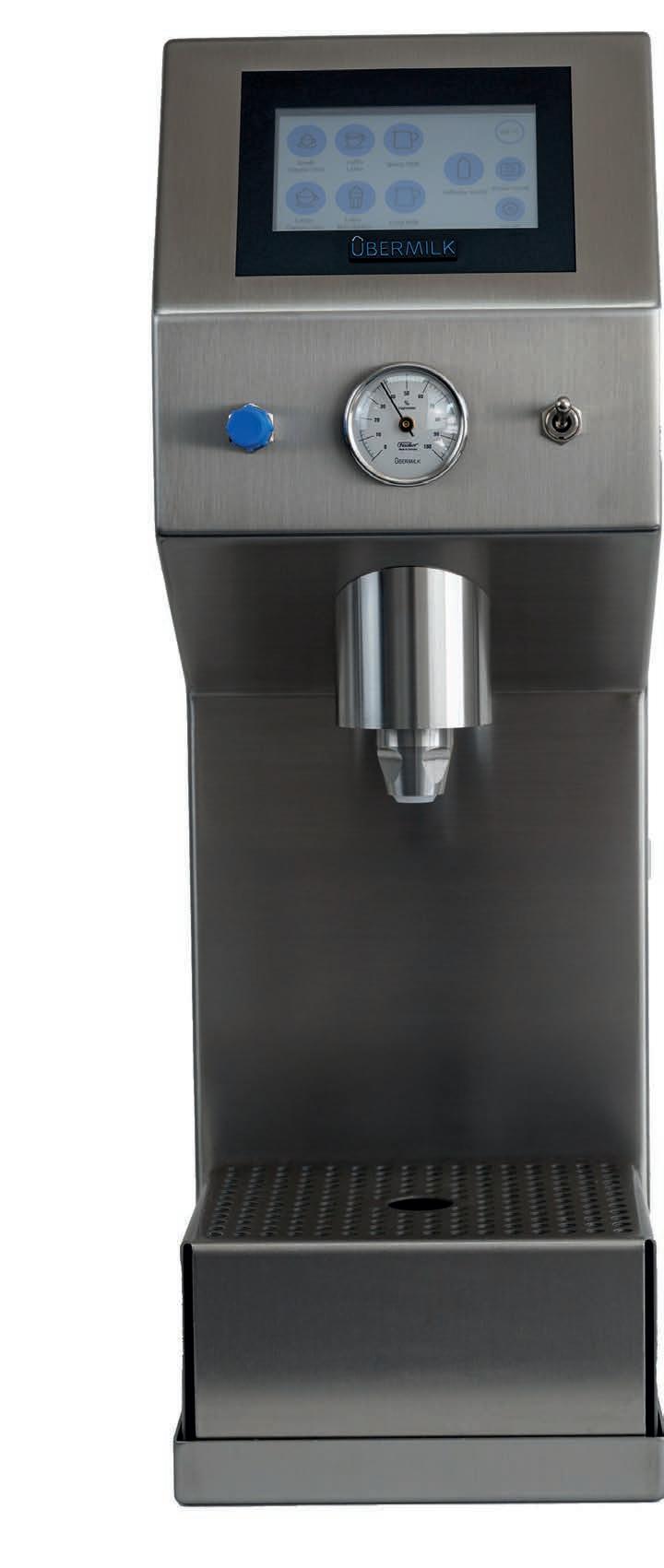
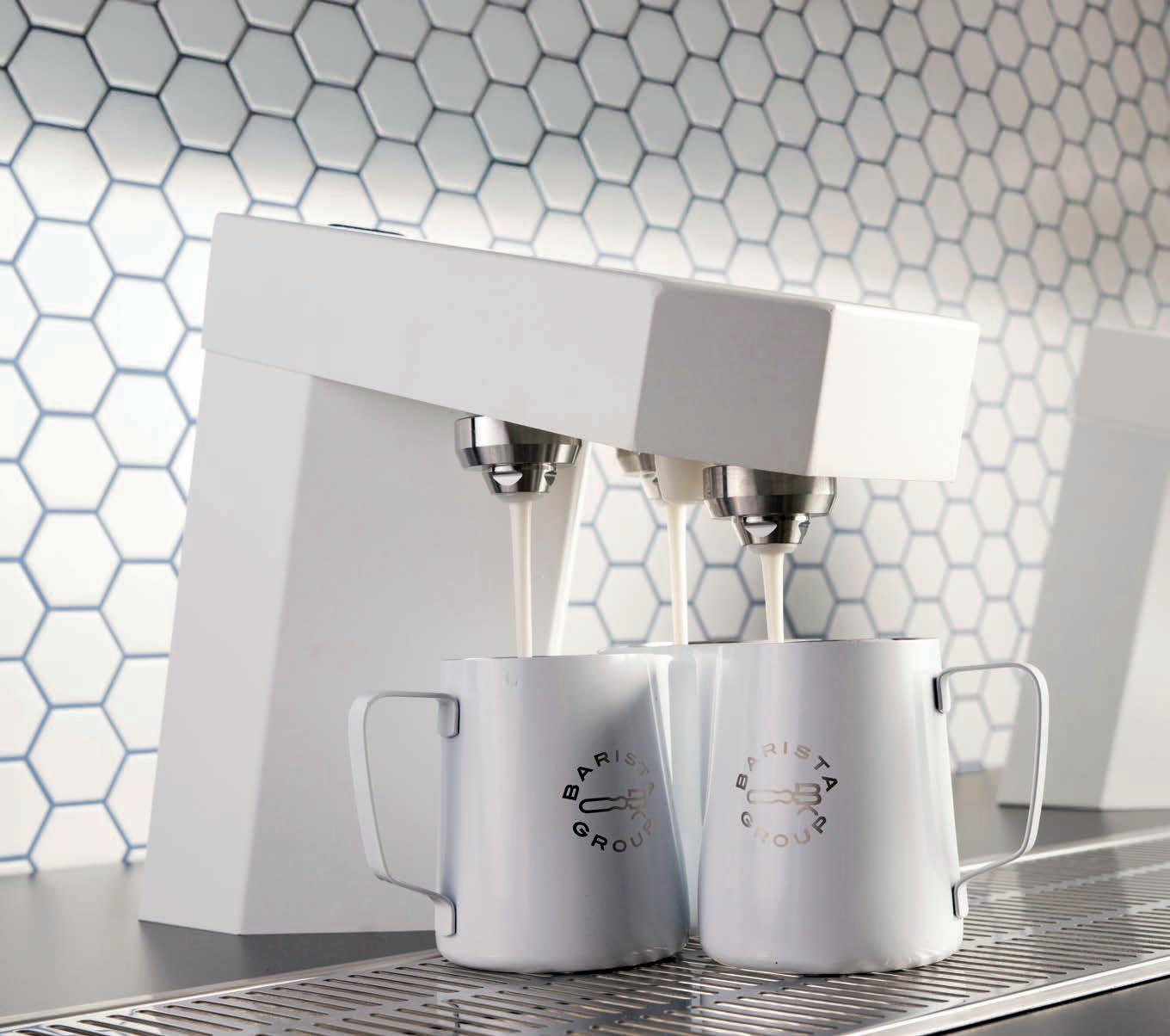
Despite its name, the Übermilk can dispense far more than just milk.
The latest edition of Übermilk technology has hit Australian shores. With the rollout starting in November 2025, just how much could it change the face of the national café market?
“
The next essential technology that is needed in a café”. at’s how Barista Group Owner Joe Chalhoub describes the Übermilk Plus.
A er originally launching in the Australian market in 2023 before an updated version became available in 2024, the latest evolution of the Plus not only turned heads at Host Milano, but has the potential the rede ne just how a café works.
“People were queuing up to look at the Übermilk Plus at Host Milano in October,” says Joe. “I can con dently say no competitor was able to display anything like it.
“ is is because it can dispense more than milk. e market has been begging for a solution that can dispense other
liquid products in the same, simple fashion, and providing that solution was a basic requirement.
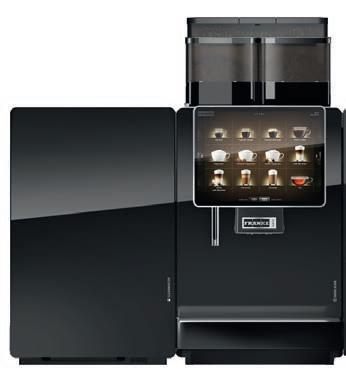
“ ose three dispensers on the old Übermilk have been expanded to seven –three can dispense textured hot and cold foam, and four can cold dispense liquid that has nothing to do with milk or grow the range of alternative milks on o er.”
Australia, by and large, loves milk-based co ee drinks – and the quality of the milk and its preparation is o en a make-or-break detail for consumers.
Research commissioned by Norco, an Australian dairy cooperative, released in 2025 states 29 per cent of Australians state milk quality was the most important aspect
of their co ee, while cappuccinos, at whites, and lattes make up 65 per cent of Australian co ee orders.
Golden Bean Australasia released its own data set in 2022, with its Café Pulse survey indicating 96 per cent of retail co ee-based beverages sold in Australia were milk-based. But even with that long-held and growing love for milk-based co ee in Australia, the market is shi ing, and key demographics of consumers are demanding more than a simple at white or latte. ey want to plus their experience up.
Übermilk? Über-anything
While all seven units can, theoretically, be used for expanding the range of dairy and
dairy alternative milks a café could o er, Joe says the most powerful way to take advantage of these additional spouts is the use of di erent ingredients that have become critical to café menus.
“ ere are two outlets at the back and one at the front which can dispense the hot and cold milk foam, all of which can hold di erent milk types. en, there are four more in the middle for cold dispensing liquid,” he says. “ ese can be non-dairy, or other liquids like syrups. We’re even testing whether it can dispense matcha.”
While the user interface and spouts of the Übermilk Plus sit above the bench, all the liquids that run through the machine are stored underneath. e result? An uncluttered bench, a sleek, almost spaceship-like machine that grabs attention, and more space for the baristas to operate.
Joe says the way in which the liquids used in the Übermilk are contained out of sight and in the same place help enable the machine to rede ne how cafés operates.
“ ink of a typical work ow,” he says.
“Imagine all the mess you have opening onelitre cartons of alternative milks and having all those boxes and cartons all over the place.
“ en, when adding the milk to the co ee you put liquid into the jug – it might be too much or too little – then it’s steamed – it might be too hot or too cold – and then served.
“For me, it’s all about the value this product can add to a café. It helps reduce staffing needs since it can do a lot of the work you might need multiple baristas rostered on to do. It’s super easy to operate.”
Joe Chalhoub GENERAL MANAGER, BARISTA GROUP
“With the Übermilk Plus you get the luxury of control in dispensing quantity which means no wastage, e ciencies in reducing movements behind the counter, and saved labour costs.”
He says the same limitations on workspaces are only exacerbated by the sheer number of syrups, liquids, and other ingredients now needed for a competitive menu.
“You have a pump for all types of syrups and liquids, you have to take the cup to the
pump, create mess, go back and forth and froth the milk manually.
“Reducing product waste is a huge advantage and having the luxury of being able to dispense four liquids from one outlet, it adds e ciency in moving from point A to point B with the least number of actions.
“All you have to do is grab your cup, go to the Übermilk Plus, press a button, and the drink is ready.”
e Übermilk Plus’ ability to deliver not just co ee, but a range of co ee-based specialty drinks – and even beyond – see it well suited to the current Australian café market.
With Generation Z looking beyond traditional milk and co ee-based drinks – however their popularity remains strong in other generations – and instead leaning towards trending products, aesthetic beverages, teas, and sweeter concoctions, the added versatility Übermilk Plus a ords is crucial for modern café environments.
e Mix and Match function of the Übermilk Plus, Joe says, totally eliminates the ine ciencies in this process and makes the most of its multi-liquid functionality.
“Mix and Match is the outstanding feature of the product. With the four cold modules, you have the option of ‘single dose, double dose, or triple dose’,” he says.
“Take something like a caramel oat latte. Traditionally you’d have to grab the milk, steam it, pump the syrup in, create all that
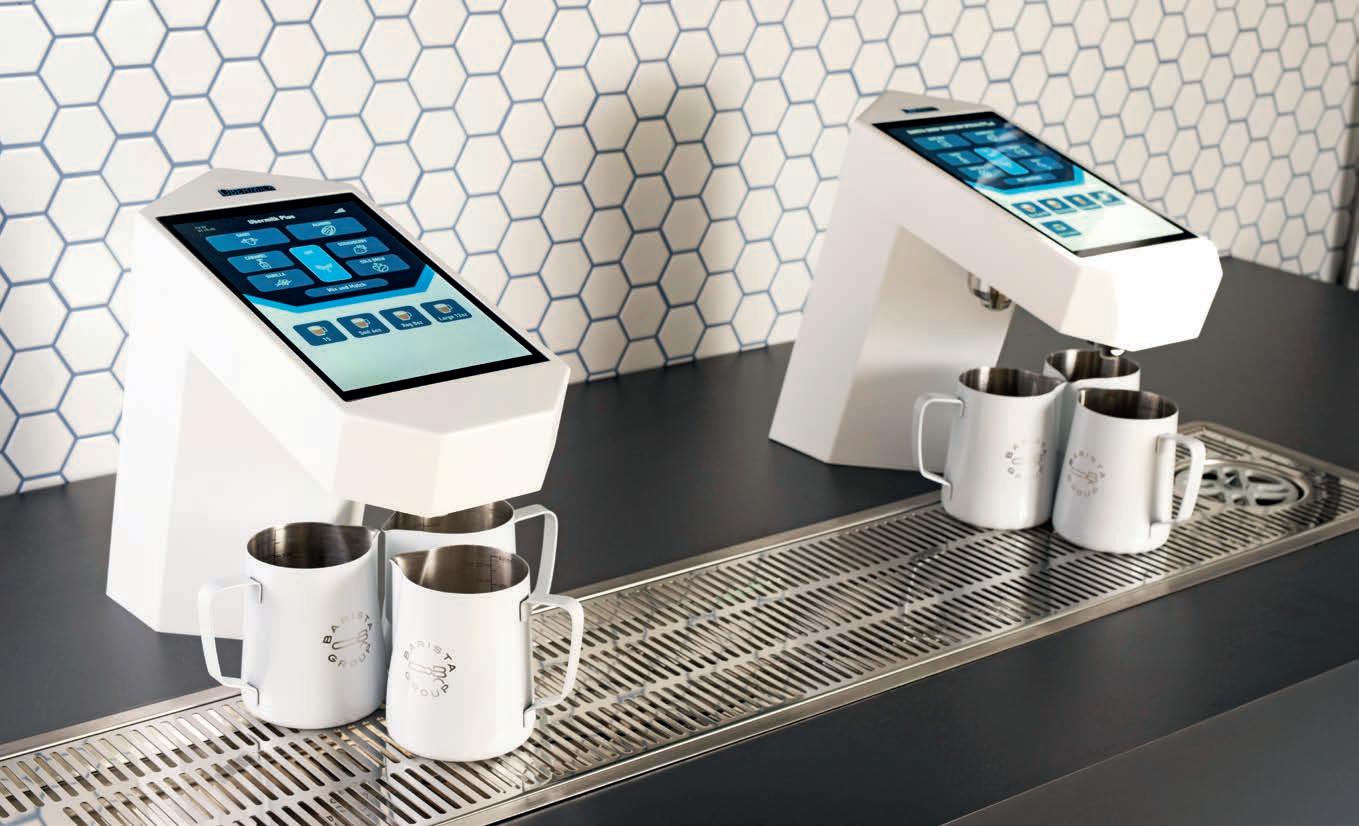

Barista Group will begin installing the machines all over Australia in early 2026. Image: Cassandra Hannagan.
mess, add time, and potential product wastage. Here, you can create recipes for mixed drinks and store them on the machine.
“You pick an icon to save it under, you name it, and you programme the machine by manually starting and stopped the dispensing, and then you simply press done. You can use Mix and Match for hot or cold foam, and with the four cold liquid dispensaries.
“ e whole process of now creating the drink by adding to the extracted espresso takes just a few seconds.”
In a live demonstration to BeanScene, the process of adding new products to the user interface, creating new recipes, and saving them takes Joe a matter of seconds.
Beverages ranging from strawberry matcha, to Mont Blanc, hot chocolate, oat cold brew, chai or root teas, and anything in between can be programmed in with just a few pushes of a button – and it’s easily changed if a café
“This is the next essential technology that is needed in a café ... Technology like the Übermilk Plus may take a bit of up-front investment, but at the end of the day that investment will be returned massively.”
Joe Chalhoub GENERAL MANAGER, BARISTA GROUP
wants to replace ingredients or mix and match options on a whim.
Joe says the Übermilk Plus’ ease of use is a strength that will enable any barista to integrate it into their work ow without any fuss.
“It’s an incredibly intuitive display and it’s very straightforward to use,” he says.
“For me, it’s all about the value this product can add to a café. It helps reduce sta ng needs since it can do a lot of the work you might need to have multiple baristas rostered on to do, and it’s super easy to operate,” he says.
An ongoing evolution
e Übermilk name is by no means new to Australia, nor is it new to Barista Group.
e Western Sydney-based equipment supplier rst introduced the Übermilk One to the market some eight years ago a er rst importing it in 2017. is workhorse of a
machine is still going strong in cafés around the country, according to Joe.
“ e Übermilk One still works and is incredibly reliable,” says Joe. “It helped Barista Group establish itself as a pioneer of milk foaming technology in Australia and enabled us to grow more and sell more,” says Joe.
To cater for the existing group of businesses that continue to bene t from the Übermilk One, Barista Group has also introduced the Übermilk Plant-Based to Australia to complement the existing technology.
“ e Plant-Based is like the Übermilk One, which we introduced eight years ago. It has a specialised pump to cater for speci c types of plant-based milks,” he says.
“It’s the same machine mechanically and it can use one type of milk per machine.
“ at was created for people who already have an Übermilk One and want to provide an alternative dairy alongside it.” e prototype of the Plus was so launched at Melbourne International Co ee Expo (MICE) 2024, but since the release of the One almost a decade ago, parent company Beyond has had to evolve the solution quickly to meet the demands of the market.
“ ere have been a few di erent versions of this machine. e V1 was a prototype that was never launched,” says Joe. “It was a triple milk solution, but the market moved on.
“ is is where the Übermilk Plus in its current state comes in. What started as a simple milk foaming product has become a complete liquid dispensing solution.”
At the time of writing, Barista Group is in the midst of an intensive internal testing phase for the machine, where Joe and the company’s technicians are putting the new Übermilk Plus through its paces to ensure it can meet the rising demands of cafés around Australia. ese testing and trial phases are not only critical to understanding the limitations of the machine, but to advise how they can best be used by those taking the leap.
“We’re a really responsible importer and we need to make sure everything works perfectly. I’m fully comfortable in saying the Übermilk Plus is ready to go in terms of the hot and cold modules,” says Joe.
“We have a waiting list of people wanting to use this technology like you wouldn’t believe. e rst 50 machines are going into cafés around Sydney, and the rollout across the rest of Australia will begin in early 2026.”
Whether it be the Übermilk One, PlantBased, Plus, or any other machine Barista Group supplies to the Australian market, Joe says both he and the entire brand look to their ‘why’ as to whether it is worth their time to import it.
“Barista Group is not a supermarket; we’re not selling all di erent kinds of grinders or co ee machines. We have a ‘why’ and we stick to that,” he says.
“Our ‘why’ is people wanting to eliminate steps in their work ow, for people that want to save money, that want to have consistency.
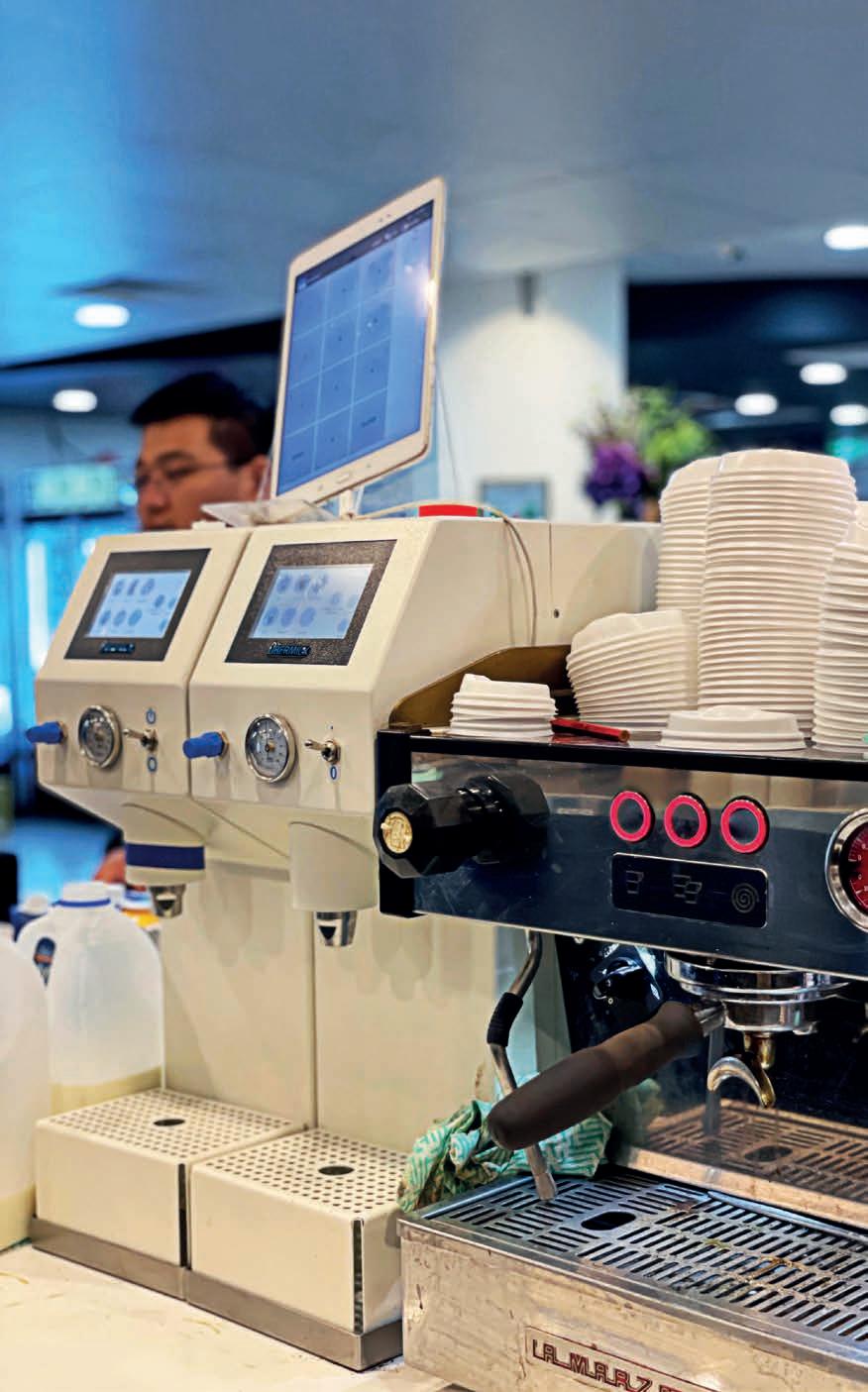
“When people buy Barista Group, they know the product is going to make a di erence for their business. We’re selling a feeling, at the end of the day – and that feeling is the customer is going to feel much better because they’re going to feel less starved when using our products.”
e debut of the next evolution of the Plus ties back into Joe’s own personal mission of nding solutions to solving issues that Australian café owners face daily, whether they’re technical problems, easing work ow issues, or nding the best-looking, functional piece of gear.
Selling that feeling and looking back on that ‘why’ Joe speaks so passionately about is the reason he believes the Übermilk Plus is bound
for success in Australia. He believes it upholds all three pillars.
“People need to start re-evaluating work ow because things are getting incredibly tight. Costs are increasing, but cafés are scared to increase their prices,” he says.
“Technology like the Übermilk Plus may take a bit of up-front investment, but at the end of the day that investment will be returned massively through the saving of labour, limiting product waste, and improved processes.
“ is is the next essential technology that is needed in a café.”
For more information, visit baristagroup.com.au
More Australasian towns and cities, such as Wagga Wagga, are emerging as coffee hotspots. Image:1xpert/stock.adobe.com.
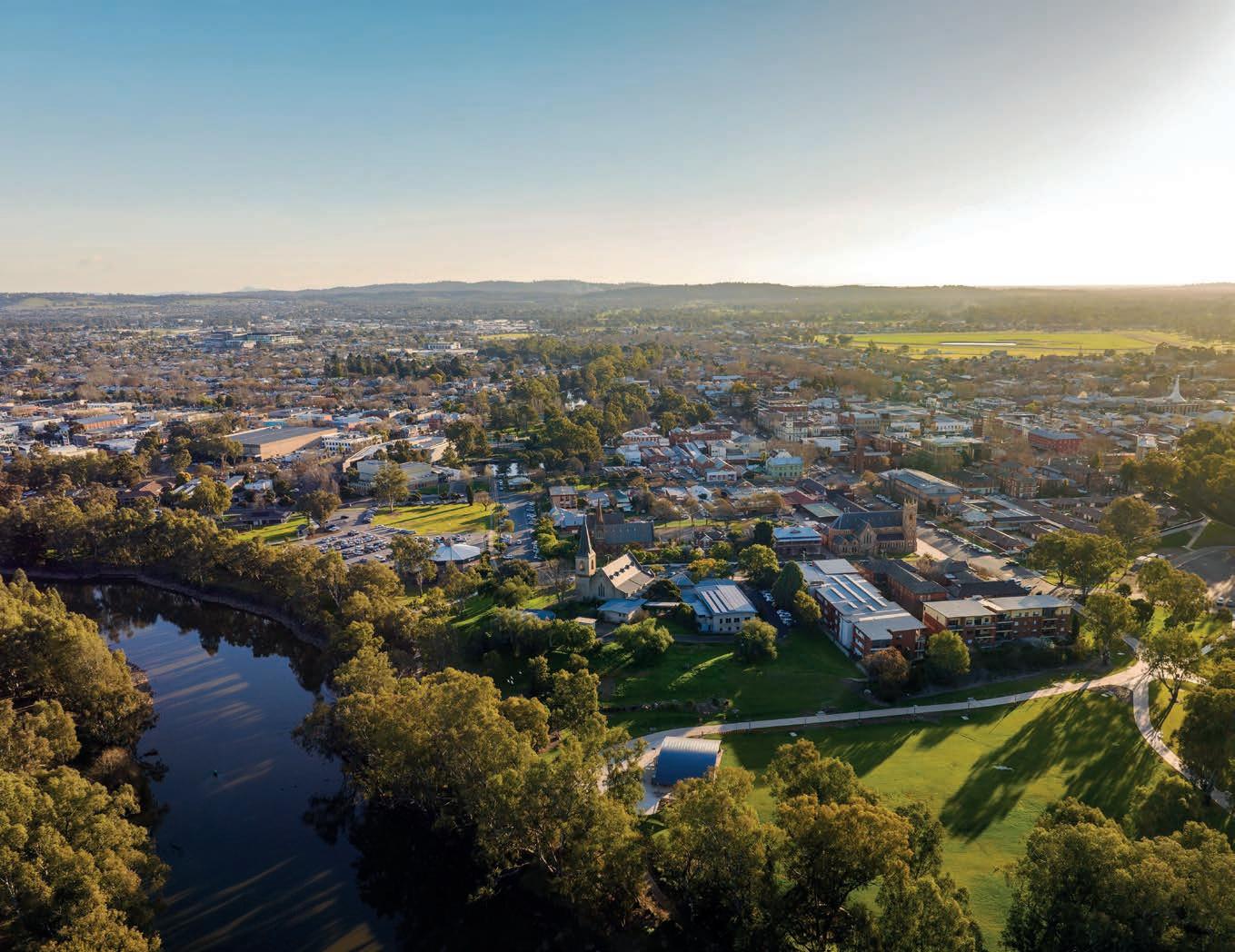
Australia’s standout café culture is no longer confined to the major capitals – vibrant new coffee pockets are emerging nationwide, from booming regions to small towns and everything in between.
One of the great things about co ee is it isn’t gatekept. e knowledge and cra of roasters and cafés from around the world can be replicated, honoured, adopted, and changed anywhere, at any point.
One of co ee’s greatest strengths is its openness. e knowledge and cra of roasters and cafés from all over the globe can be honoured, adopted, replicated, and altered anywhere, at any point.
e universal nature of co ee culture, at least in Australian terms, the third wave specialty movement is by no means limited to the nation’s major metropolitan locations.
While Melbourne and Sydney typically vie for the crown of the nation’s co ee capital, other major cities like Brisbane, Perth, and even Darwin are cra ing their own unique co ee cultures and experiences consumers are seeking out.
And beyond the city limits – along country roads, across rivers, and in regional centres – new co ee hotpots are emerging across Australia. No longer are they towns to pass through to get from point A to point B, they’re serious destinations for all kinds of connoisseurs.
Tasmania can o en be forgotten by the ‘mainlanders’ of Australia. As the country’s smallest and least populous state, the parochialism that borders on patriotism it’s known for has ltered through to its co ee scene.
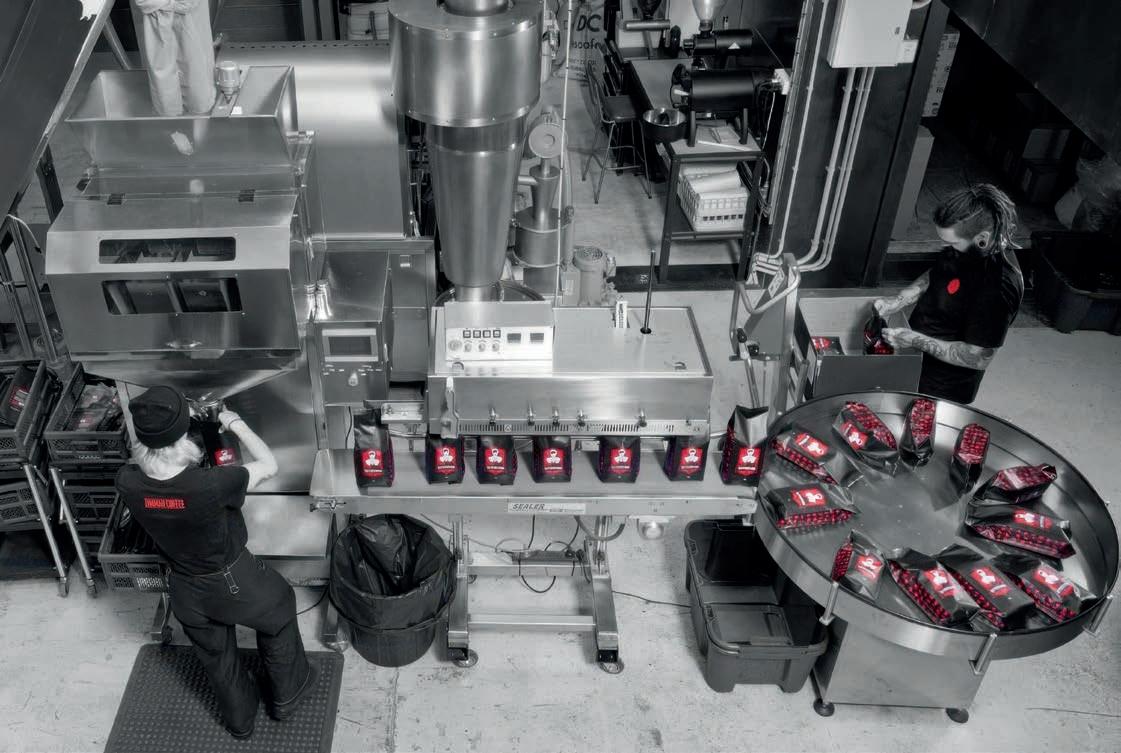
Zimmah Co ee, a Tasmanian roastery founded in 2011, has seen rsthand the evolution of the Apple Isle’s co ee industry.
Operator James Murdoch says Tasmania’s co ee culture is underestimated.
“Tassie is better than what a lot of people on the mainland would think,” says James. “I think the average co ee I get in most good cafés in Hobart is on par with the co ee I get in Melbourne.
“We really bat above our grade compared to how our co ee culture is perceived. ere are some very good roasters and very good cafés down in Tassie, and there has been a progression. e skill level of the baristas is always improving, and now every café is looking at using top quality machines.
“ ere’s been a gradual increase in the quality of equipment, the quality of the co ee, the quality of the milk, and support for the
food industry. Tasmania is a strong player in the national hospitality market.”
Tasmania has become something of a nal frontier for a number of large scale roasters operating in the likes of Sydney and Melbourne, running frequent ‘tours’ to the state to dip its toe into the local market.
James says the quality of local roasters and that famous parochialism make the market a tough nut to crack for mainland businesses.
“ e Tasmanian customer wants Tasmanian co ee, and the Tasmanian café owner that is in touch with their customers knows this. ey want Tasmanian milk, Tasmanian ice cream, Tasmanian beef,” he says.
“ ere is an incredibly large percentage of Tasmanian cafés that use Tasmanian-roasted beans, and there’s an immense level of local support that happens here that you wouldn’t see in many other places. e biggest cities don’t seem to care quite so much where they’re getting their co ee from.
“Tasmania has that unique colloquial market of cafés and co ee roasters, but I think that’s something that is re ected in more regional areas around Australia, and even within Tasmania.
“If I go to Eaglehawk Neck, there’s probably a roaster from that region that is supplying most of the cafés there, and it’s the same if I go to somewhere like Dandenong in Victoria.”
Tasmania – and Hobart’s – elevation as a tourist hotspot has also promoted further growth within the region’s entire hospitality sector, according to James.
“I think we’ve had a boost to our hospitality industry because of the attraction of MONA (museum of old and new art) and the tourism associated with that,” he says.
“Our state was originally on the map as a destination for hiking, bush walks, and other nature-based activities, but now it’s become a destination for people with a range of interests including good food, and that’s re ected in the café industry.”
When a regional Victorian town is dubbed ‘North Northcote’, there must be some alignment with the trendy and artistic inner northeast Melbourne suburb.
Castlemaine – about 1.5 hours northwest of Melbourne’s CBD – is one of the premier indications of a regional town pulling bits and pieces from di erent parts of the world to create its own unique avour of co ee culture.
It’s a town that has bene tted from the exodus of seniors and young professionals from metropolitan hubs into regional areas, with its population booming in the past ve years.
Edmund Schaerf and Elna Schaerf-Trauner were early adopters of the Melbourne tree change, moving from Northcote to Castlemaine in 1997.
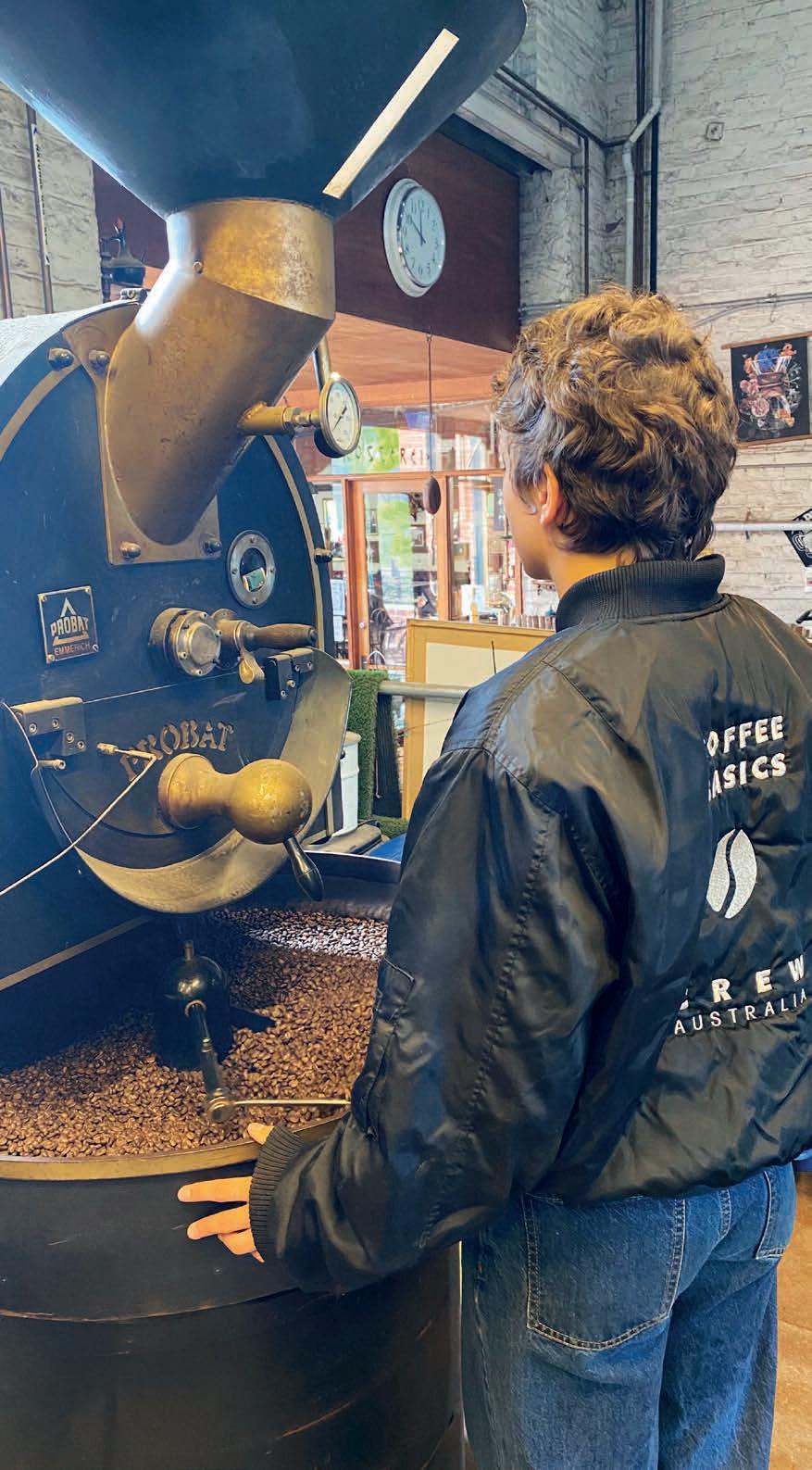
ey’ve run small lot roastery Co ee Basics since moving to the town, and also operate one of its most popular cafés, Das Ka eehaus. ey have aligned their Austrian heritage with the best parts of Melbourne’s co ee scene, to create something almost totally unique to the Australian co ee landscape.
“We branded ourselves as a Viennese co eehouse. With our tenancy at e Mill we managed to transform a 130-year-old, dilapidated industrial shed into a fusion of hipster Melbourne warehouse, third wave café, and the soul of our 500-year-plus Viennese co ee heritage,” says Edmund.
“Co ee culture as we know it globally has its origins with the Ottomans, and subsequently with the Viennese. With Das Ka eehaus, we managed to bring our knowledge of Melbourne’s co ee scene into a harmonious marriage with our heritage as Austrian and Viennese blow-ins to this beautiful and eclectic town.”
While co ee roasters now operate in just about all far ung corners of every state and territory, that wasn’t always the case.
Edmund says Co ee Basics was one of the rst businesses to bring Melburnian third wave specialty co ee culture away from its metropolitan hub and into less populated areas.
“When we started there was one other small batch roaster in Central Victoria, and a few
others including Grinders – which was still owned by Giancarlo Giusti and his wife,” Edmund says.
“Convincing the punters of small batch roasting was a challenge and took us about ve years, but we focused on carving a niche for ourselves in Central Victoria and went far and wide in our region. We ended up with a customer radius of about 300 kilometres.
“We built up a good, strong client base to the point where we were wholesaling close to 50 tonnes of co ee per year. We’ve always stayed true to what we set out to be, and continue to do so.”
Co ee Basics and Das Ka eehaus moved from its original location at the old Castlemaine hospital crematorium to become an anchor tenancy of e Mill which, over the past decade, has turned into one of the town’s key attractions.
A er starting its life as a woollen mill in the 1800s, the repurposed industrial site reopened in 2014 as an artisan leisure destination. Now, it houses more than 40 small businesses including Das Ka eehaus, a microbrewery, art spaces, a vintage bazaar, and a chocalatery.
Edmund says the appeal of trying something di erent – like a Viennese co eehouse in country Victoria – has helped elevate e Mill site and turn Das Ka eehaus into a destination venue.
“Over the rst 12 months at e Mill we attracted more than 100,000 visitors,” says Edmund.
“We managed to create a resonance that spread far and wide. Now the whole site has
“We managed to create a resonance that spread far and wide. Now the whole site has become a destination spot.”
Edmund Schaerf FOUNDER, COFFEE BASICS
become a destination spot for people from around Victoria, but also places like Sydney, Perth, Brisbane, Adelaide, and beyond.
“We have a really healthy cross-section of eclectic visitors. We are very proud of what we have managed to create with our legacy business.”
e ‘combination venue’ operating as a café during the day and a bar at night is growing in popularity around Australia. at need to diversify and desire to evolve is bene tting Australia’s café scene, both in established hubs and new frontiers.
Wagga Wagga is a town that has long been known for the quality of its cafés. With about 70,000 people, it’s a regional hub between Sydney and Melbourne, and there are new and exciting ideas popping up in the region.
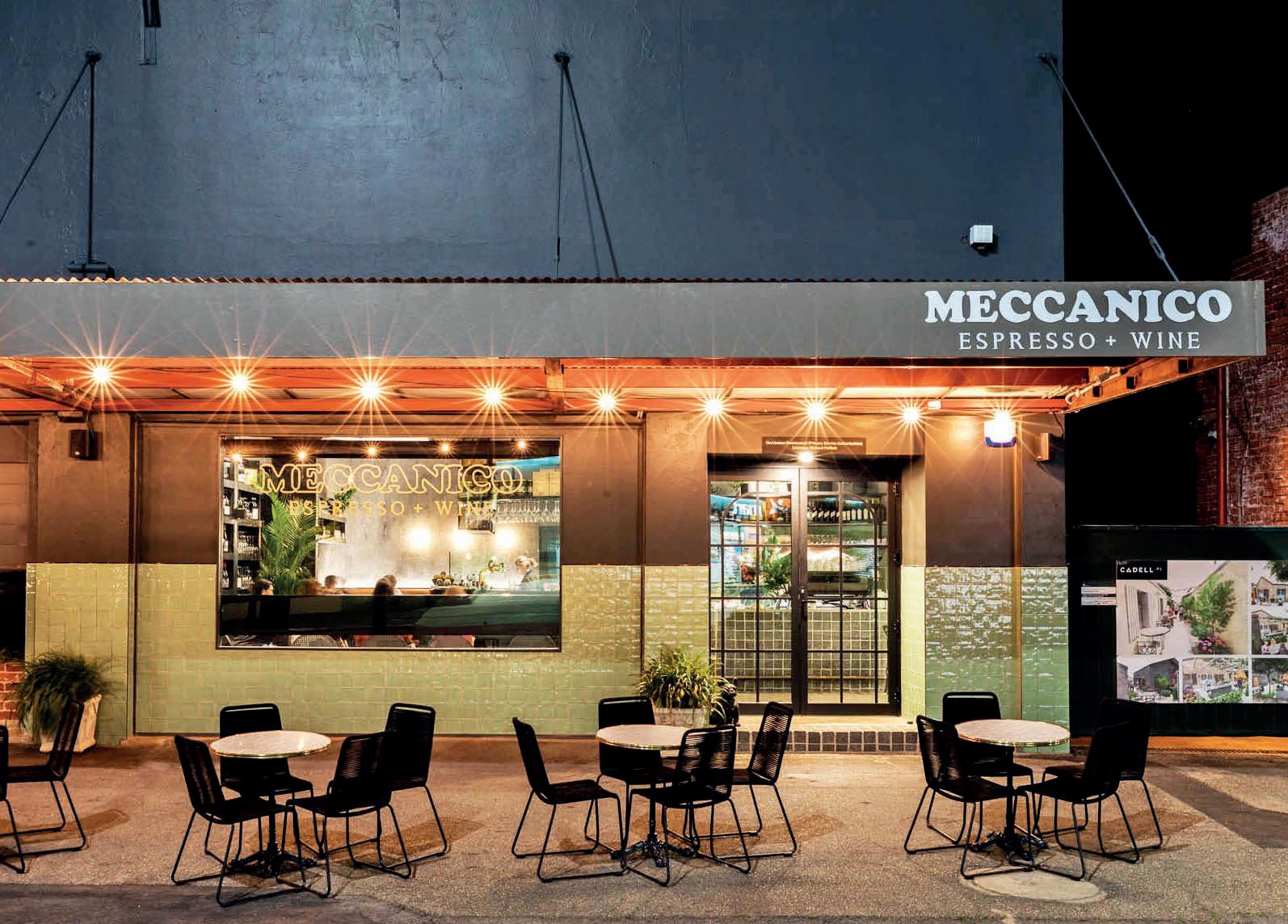
Meccanico Espresso & Wine has been
operating in Wagga for about six years. French expat Katy Hodson joined the business not long a er it was opened, which was cofounded by business partner Karl Hulford.
Katy says the location of Wagga – a half-way stop point between Melbourne and Sydney, and not even an hour o the main highway –along with its growing popularity as a tourist and living destination have evolved how people view the town’s hospitality scene.
“We have a lot of people here who are from Melbourne or Sydney, people have chosen to move here because it’s a nice place with everything you need,” says Katy.
“People are simply wanting better co ee these days, for the price you pay for it, it needs to be up to standard.
“Wagga is quite a big place when it comes to regional destinations, and there’s people who want the knowledge or have the knowledge to make better choices for their co ee.”
From its Art of Espresso beans from Young, biscotti from Gri th, and French pastries from in town, Meccanico aims to showcase some of the best local products in its menu.
“We have customers that come in every single day, sometimes two co ees a day, that still haven’t come in for dinner, but we have customers that come in every day for a co ee and then come in for dinner or our wine nights regularly,” says Katy.
“All our products are sourced locally, and that makes a big di erence. It really shows o the town.
“Wagga is becoming a destination for people, and to have all that money going back
into the community is really powerful.”
Katy believes it’s important to continue to challenge what people know in regional destinations to continue to progress not just the café sector, but the entire hospitality industry, in a growing town like Wagga.
“Years ago, there would not have been a sushi restaurant or a Vietnamese place here, but now there are, and they are incredibly popular cuisines. ings that used to be foreign to people become familiar, we need more of that,” she says.
“ is wine bar concept was harder for people to really latch onto, and sometimes
today it’s even still a bit di cult but we have found success with a European-style venue that isn’t ‘just a café’ or ‘just a bar’.”
Now, more so than when Meccanico opened, there is more competition in the café space in not only Wagga, but in similar regional hubs around Australia.
While Katy says she does see elements of what has made Meccanico successful in other, newer venues around the town, she’s proud of the in uence the venue seems to have had on hospitality in the region.
“I would say we are still unique, of course we’re going to say that, but we were de nitely
the rst venue of our type to open up and encourage people to do the same with a cool little café around the corner, or a speakeasy style of bar,” she says.
“We can see there’s a lot of inspiration that has been taken from Meccanico to open other places around Wagga, and it’s rewarding to see.
“I think people having a crack and opening more cafés and building with their own ideas will keep making the culture even better. Venues need to open, there is enough to go around, and they need to be di erent to broaden peoples’ minds. at will create more.”
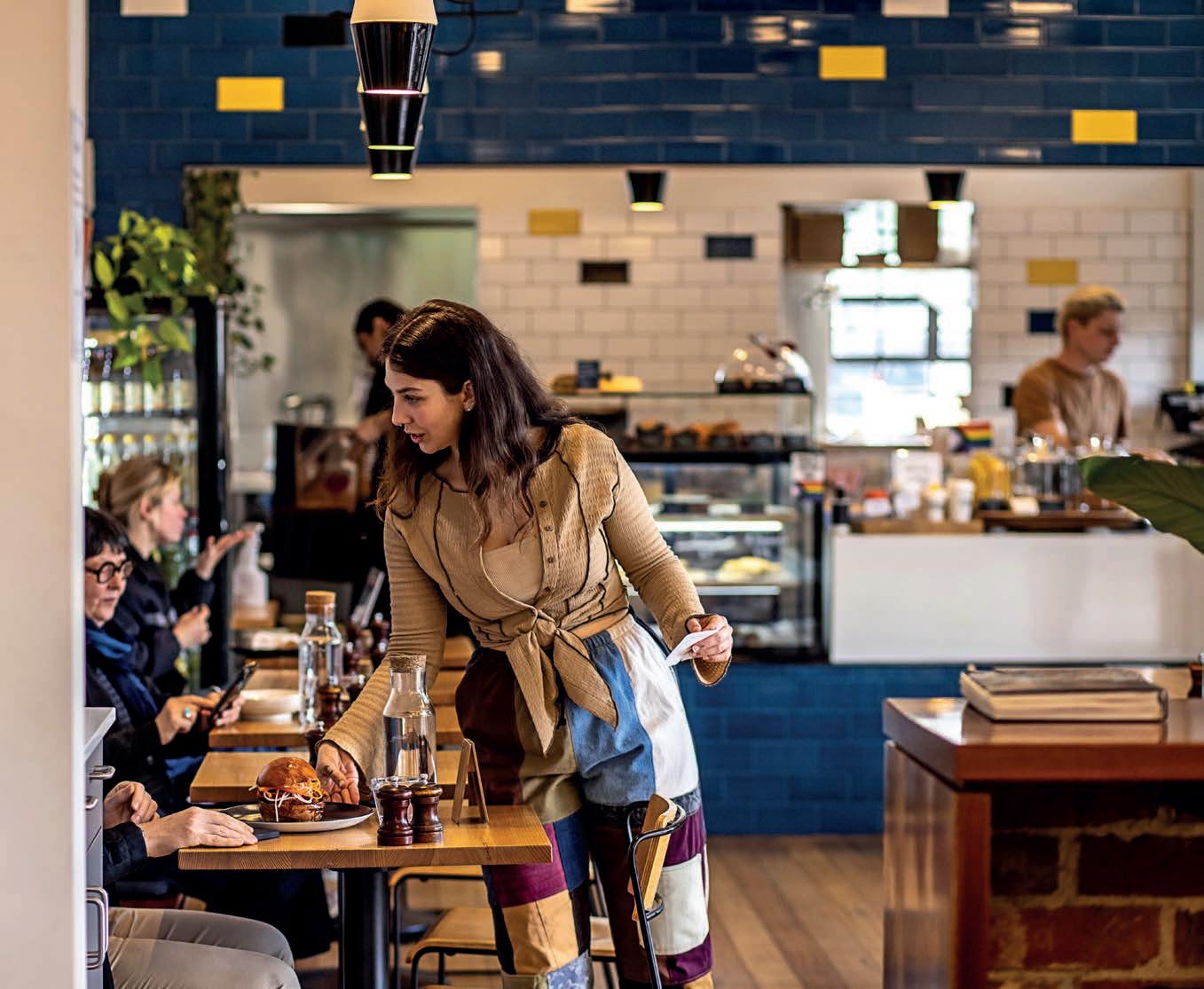
Social programs around Australia draw on the hospitality industry to improve outcomes for people, but what makes coffee such a potent tool for change?
Co ee has the power to change lives – from origin all the way to the end customer.
Australasia – with a high standard of co ee consumer culture and competitive café and roaster landscape – presents an opportunity to tap into that potential and enrich the lives of people all around the country – regardless of their background.
ere are several social enterprises using hospitality as a way to improve outcomes for people facing barriers to employment whether it be disability, incarceration, or individuals from migrant communities.
One of these, e Little Social, has expanded to operate four venues around Melbourne, all of which work to embolden the lives of the initiative’s participants.
“Our social enterprise began in 2014 as a little hole in the wall café on Hosier Lane,” says e Little Social Head of Social
Enterprise, Celeste Norris. “Our goal was to use co ee as a vehicle to create a holistic model of support for young people.
“Our organisation is extremely proud of building a social enterprise that has sustained a viable model for 11 years.
“ e growth of e Little Social across four locations in Melbourne is a direct result of our 3P model (pro t, purpose, product), partners, and social procurement. It’s driven with the head of a commercial business and the heart of a charity.” at 3P model along with a commercial head has seen locations at the Paula Fox Melanoma and Cancer Centre, Victorian Pride Centre, and e Alfred Hospital open.
Celeste says the co ee community has rallied around the cause and enabled e Little Social to place its focus on its charitable core and broaden its scope.
“Our partners, including La Marzocco
and Reverence Roasters, provide discounted stock, gi equipment, and o en peppercorn rent to support the nancial viability of the enterprise and allow us to redirect resources into social impact.
“Our commercial kitchen then unlocked our second revenue stream – catering, which has reduced reliance on café turnover while increasing exposure to social procurement opportunities. It’s also introduced a new training environment for young people who prefer back-of-housework.
“ e Little Social is successful because we have built a commercially viable business model that happens to create social impact, not the other way around – and now we get to prove that great co ee can change lives.”
STREAT, also based in Victoria, is harnessing hospitality to create change too, but in a di erent way.
STREAT has 12 Melbourne CBD locations
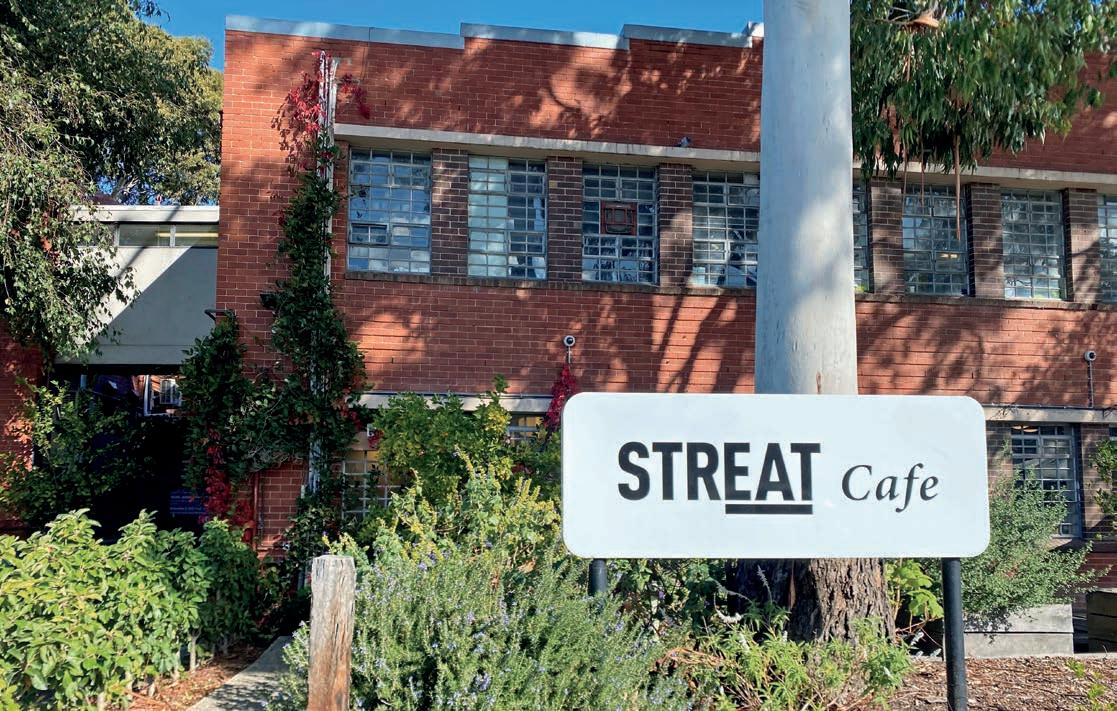
– all with the purpose of on-the-job training for vulnerable young people aged 16-24 years. Not only does STREAT run hospitality businesses, it also has a team of allied health pro essionals as part of its integrated team.
One of it’s venues , is in the suburb of Parkville, where incarcerated youth at the Parkville, Malmsbury, and Cherry Creek Youth Justice Precinct work and train are provided the opportunity to be part of the STREAT program.
It also operates other youth programs, including its STREATwise knowledge, innovation, and consulting arm, a catering company, a co ee roastery and a range of other cafés with similar societal goals.
Deputy CEO Elise Bennetts says with so many of STREAT’s participants having come into contact with the youth justice system it made sense to expand to the Parkville site.
“Since 2020 STREAT has operated a beautiful café at the Parkville Youth Justice Precinct to create pathways for young men and women exiting custody at the Parkville, Malmsbury, or Cherry Creek Youth Justice Precincts. Over the last ve years this program has provided more than 10,000 hours of support and skilling to incarcerated young people,” says Elise.
“We are seeing more and more contact with justice as part of our cohort and we know that STREAT’s team are able to support the most complex issues associated with these young people.
“We spent almost 10 years trying to nd a way of working closely with youth justice, beginning our work bringing young people to Collingwood but knowing that if we could
“Young people just need an inclusive space to grow and thrive, mentorship can be lifechanging, and they simply need someone to take the time and show them the ropes.”
Celeste Norris HEAD OF SOCIAL ENTERPRISE, THE LITTLE SOCIAL
work with young people whilst incarcerated, we can build trust opening up more opportunities upon release.”
“Our programs aim to create e ective transitions of young people into STREAT’s programs or further employment or study. Young people are o ered shi s in the Parkville café alongside STREAT’s experienced baristas, chefs, and hospitality sta ,” says Elise.
“Hospitality is not the only outcome for these young people, but it provides them with an opportunity to set goals and challenges their options upon release. We use our 15 businesses to introduce work-readiness, but if a young person’s goal is to start studying or move back home, our transitions team will work with them.
“STREAT has recently opened its Purpose Precinct at Queen Victoria Market – this precinct includes a café, pantry, retail stores, and an innovation kitchen. It’s our next step into jobs pathways on-site. It needs funding, but we see it as a next step in providing more opportunities for those who need it most.”
Celeste and e Little Social have also seen rsthand the power that skills gained in a café environment can have on improving the longterm prospects for young people – even away from the industry.
“It may sound simple, but having a new skill under their belt and feeling a sense of belonging to a team can see young people’s con dence skyrocket,” she says.
“ e hospitality skills they learn are an engagement tool. e real impact comes from learning routine, social connectedness, transferrable skills, con dence, and building and creating an identity.”
Many of the young people coming through the program are experiencing barriers to work including homelessness, mental health challenges, caregiving responsibility, or drug and alcohol use.
“ ey have not experienced a positive workplace, and in some cases have not experienced a workplace at all,” Celeste says.
“Even if hospitality is not their favoured industry, the program is a safe step on the pathway into employment.”
e proof of these programs is in the pudding. Both e Little Social and STREAT report huge personal changes in participants.
Elise says respect and patience create the conditions for progress.
“We see traumatised young people come
into our programs and within a short time they can be working their rst jobs. e con dence shi is incredible. ese huge changes need to be at the speed required, it needs to be individualised, and we need to build trust – o en with people who live in a world without it,” she says.
“We hear it from their quotes every day, where they tell us they feel comfortable in an environment without judgement, that it’s teaching how good men behave, that the kindness comes from the start and they’re made to feel welcome, and that it’s good for keeping them out of prison.”
“STREAT now has more than 80 fully quali ed baristas, bakers, chefs, and kitchen hands from all over the world. Together with our social workers and youth workers, they’re the mentors to our young people,” says Elise.
“Our young people are on shi with two quali ed workers and are provided with the time and patience to learn at their pace in a real-life work environment. It’s an expensive way to run a hospitality venue but its changing lives with every co ee poured or meal made.”
Whether it be through nationwide initiatives like CafeSmart, or more localised services like Perth’s Healthy Hospo, few industries can be a force for social good like the café scene.
Celeste has called on every café around the country to implement some sort of social initiative into its operations not only for the
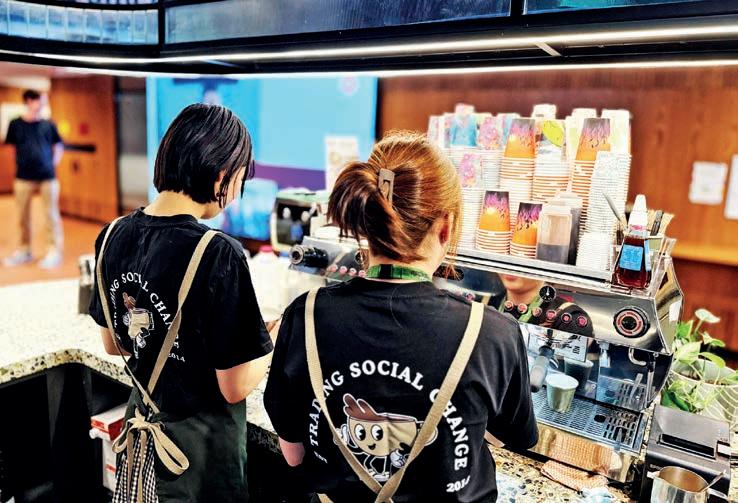
bene t of individual sta members, but for everyone involved.
“I believe employers just need to give young people a crack. Sometimes it may require an extra level of support but imagine if all hospitality businesses found ways to embed a small level of social impact in their business models,” she says.
“We would see young people build independence and identity in the workforce,
which then contributes back into the economy. Employees also feel a sense of purpose in a workplace that contributes to something bigger than making money.
“Young people just need an inclusive space to grow and thrive, mentorship can be lifechanging, and they simply need someone to take the time and show them the ropes. en, they can contribute back to the business tenfold.”
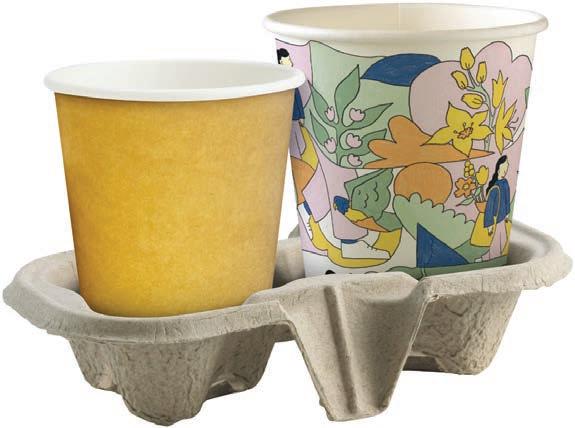
Minor Figures uses locally-sourced oats for its plant-based milk.

Oat-based milk brand Minor Figures shares how local Australian production strengthens quality, sustainability and its connection with the country’s coffee community.
From its early days in the UK, Minor Figures began as a cold brew co ee company, focusing on the aromatic avours of co ee. With the barista in mind, the company set out to create oat milk that complemented co ee rather than overpowering it.
“Co ee is the hero; we are the ‘Minor Figure’ in your cup,” explains General Manager Henry Catts.
Henry has spent the last 15 years in the fast-moving consumer goods industry and has been in the plant-based milk game for nearly ve years. During this time, he has had a box seat view of the rapid growth in popularity for plant-based milk both globally and here in Australia.
“Minor Figures launched its Barista Oat milk in Australia during the Melbourne International Co ee Expo in 2018, making it the rst barista oat milk into the country,” he says.
“Since then, plant-based milks have become a permanent xture in cafes and households particularly over the last ve years.”
Minor Figures is an independently owned business started by a couple of Australians.
“We’re not a big corporate like most of our competitors,” Henry says. “We understand how tough this market can be for the little guys, which is why we are all about supporting local businesses and communities.
“Our ethos is to create quality products, while giving back as much as possible to the Australian market.”
e rst Minor Figures products launched in Australia were imported from the UK. Since then, Henry and his team have worked tirelessly to bring production to Australia.
While they succeeded, there were still di culties in producing locally.
“At the time, there were no facilities for creating an oat base in Australia,” he adds.
“We had to ship Aussie oats to Asia to be processed into a syrup which was then
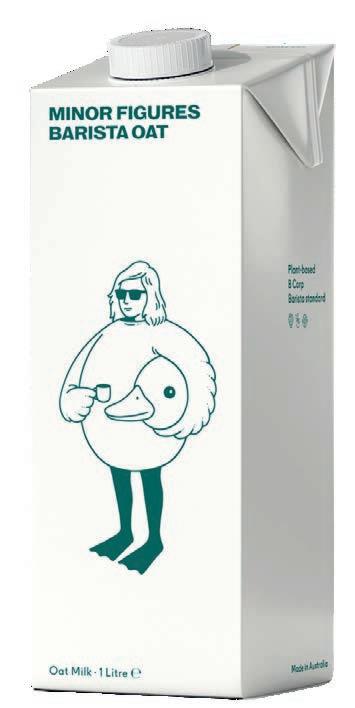
After countless trials, a new flavour profile has been developed for Minor Figures Oat Barista.
shipped back to our production facility near Ballarat.
“ e environmental impact of shipping parts of our product across the globe didn’t sit well with us, which spurred us on to nd a more sustainable solution.”
e big sustainability breakthrough for Minor Figures came in 2024 due to a three-way partnership with its manufacturer Slades Beverages and one of Australia’s leading plantbased ingredient providers Essantis.
Minor Figures became the foundation partner that paved the way for Essantis to setup an oat processing facility just outside of Ballarat in Victoria.
is helped establish domestic infrastructure for local processing, allowing oats grown in Australia to be processed and turned into oat milk within the same region.
e output from this facility is an oat base rather than a highly processed syrup, aiming to enhance both taste and nutritional value while reducing production emissions.
In short, Essantis creates the oat milk base sourced from local and long-term oat grower partners. is is then sent to Slades for the nal stages of production and bottling.
Essantis CEO Andrew May says the lack of local processing capability has long been a barrier for the category.
“Previously, products had to be manufactured, further concentrated, shipped around the world and then reconstituted,” he says. “With local processing, the supply chain is shorter, less carbon intensive and much more scalable for milk companies.”
Founded in the 1850s, drinks manufacturer
Slades Beverages was predominantly a so drinks and water business. e company invested in advanced machinery to expand into new beverage categories including plantbased milk.
Managing director George Tan says plantbased milk quickly emerged as an area of signi cant growth.
“We were seeing trends in supermarkets where people were moving away from dairy, and o en a good beverage brand may not necessarily have the manufacturing capabilities,” he says.
rough its facility at Cottonwood Springs, Slades now supports Minor Figures in both manufacturing and supply chain management, creating a seamless process from raw oats to the nal product. Essantis and Cottonwood Springs are approximately 20 mins apart, signi cantly reducing the end-to-end supply chain of Minor Figures products and further improving their sustainability credentials.
is partnership has created a local production ecosystem that has reduced the environmental impact of Minor Figures products and supports the entire value chain, from growers to manufacturers. is ecosystem has also created employment opportunities for a number of regional Victorians in the Ballarat region.
Supporting Australian growers
Minor Figures, in partnership with Essantis, works closely with more than 300 Australian oat growers across Victoria and New South Wales. Andrew says the bene ts go beyond sustainability, with quality also improving when oats are freshly processed.
“ e quality of the products using freshly produced oat-based milk is also much higher,” he says.
Sourcing locally ensures high standards, while giving back to the farming communities that support the brand. It also provides stability for growers facing increasing environmental challenges such as droughts and oods.
e partnership works to raise awareness among farmers about the rapid growth of plant-based milks and the demand for Australian oats.
“ e growers buy into the desire for Australians to consume oat milk and they’ve been really supportive of the fast-growing plant-based milk category,” says Andrew.
“Supporting Australian farmers is not only about a strong supply chain but about fostering long term resilience in local agriculture. As the demand for plant-based products grows, the value of a secure domestic supply chain becomes even more critical.”
Andrew believes further growth in Australian manufacturing will rely on openness to partnerships between businesses, government and research organisations.
“In a country of our size, there are times when the market is not big enough to do everything by yourself,” he adds. “ ere’s a need to nd partnerships to navigate growth.”
e journey for Minor Figures to deliver these fully Australian made products wasn’t without its challenges.
“Plant-based milks aren’t the most straight forward products to make,” says Henry. “Any slight adjustment can have a huge impact on the products.”
He mentions that changing the base meant the company had to do a lot of work to ensure they were delivering the best possible product for the consumers. With countless trials during the past year, the company has now nalised the formula for Minor Figures Oat Barista.
“We are really happy with the new avour pro le and performance of this product and so are our partners in the co ee community,” Henry says.
“I’m getting weekly calls from people who are just trying our new formula for the rst time and the feedback has been overwhelming. If you haven’t tried our oat barista in the last few months, I highly recommend giving it another go and tasting the di erence for yourself.”
Minor Figures ensures sustainability and social responsibility are not compromised in the chase for success, despite the challenges of operating in a highly competitive market. Minor Figures holds B Corp certi cation outside of Australia and is in the process of achieving this certi cation in Australia as well. Every area of the business is evaluated to ensure it meets high standards of social and environmental performance, accountability, and transparency.
“B Corp certi cation is a real statement by a brand that they care about more than just making money. We’re committed to achieving
this and working with other B Corp certi ed companies to make our future world a world worth living in,” says Henry.
On top of all the recent sustainability improvements of the Minor Figures product ecosystem, there are other clear environmental bene ts of oat milk. On average oat milk requires approximately 48 litres of water over the product lifecycle to make one litre of oat milk. is is compared to 628 litres for one litre of dairy milk, according to Statista. Oat milk also requires approximately 10 times less land per litre of milk than dairy.
e Minor Figures journey perhaps re ects a broader movement towards local, sustainable production. Sourcing from Australian farmers, with both processing and manufacturing localised near Ballarat. is local ecosystem aims to deliver fresher, higher quality products while reducing the brand’s environmental footprint. Henry explains the local vision extends to community as well.
“Whether it’s our farmers, your local café or one of the various charity organisations we support, Minor Figures are committed to doing things right and supporting everyday Australians,” says Henry.
“We want everyone to know that when you buy Minor Figures, you’re not only getting a quality product, but you are supporting independent Australian businesses from the farm right through to your latte.”
Henry is inviting cafes to grab a free sample of the new avour pro le Barista Oat by emailing hey@minor gures.com.
For more information, visit minorfigures.com
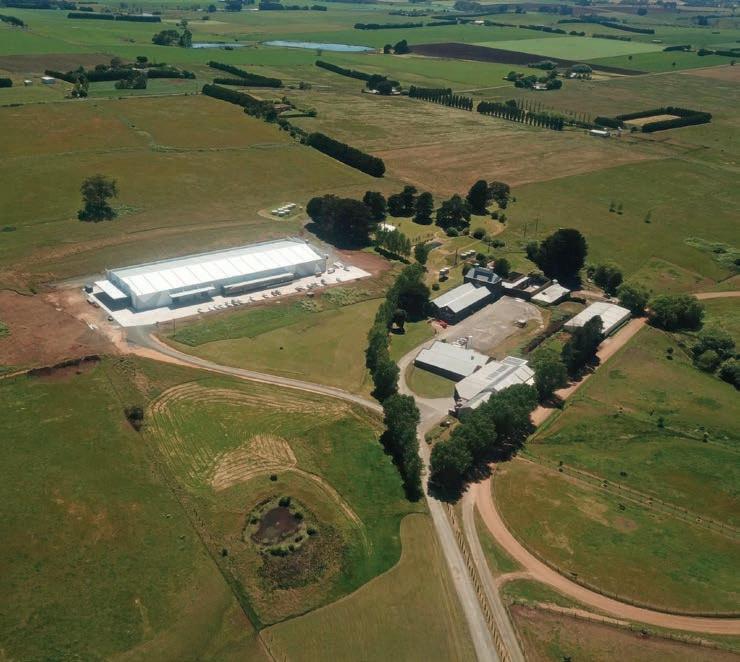
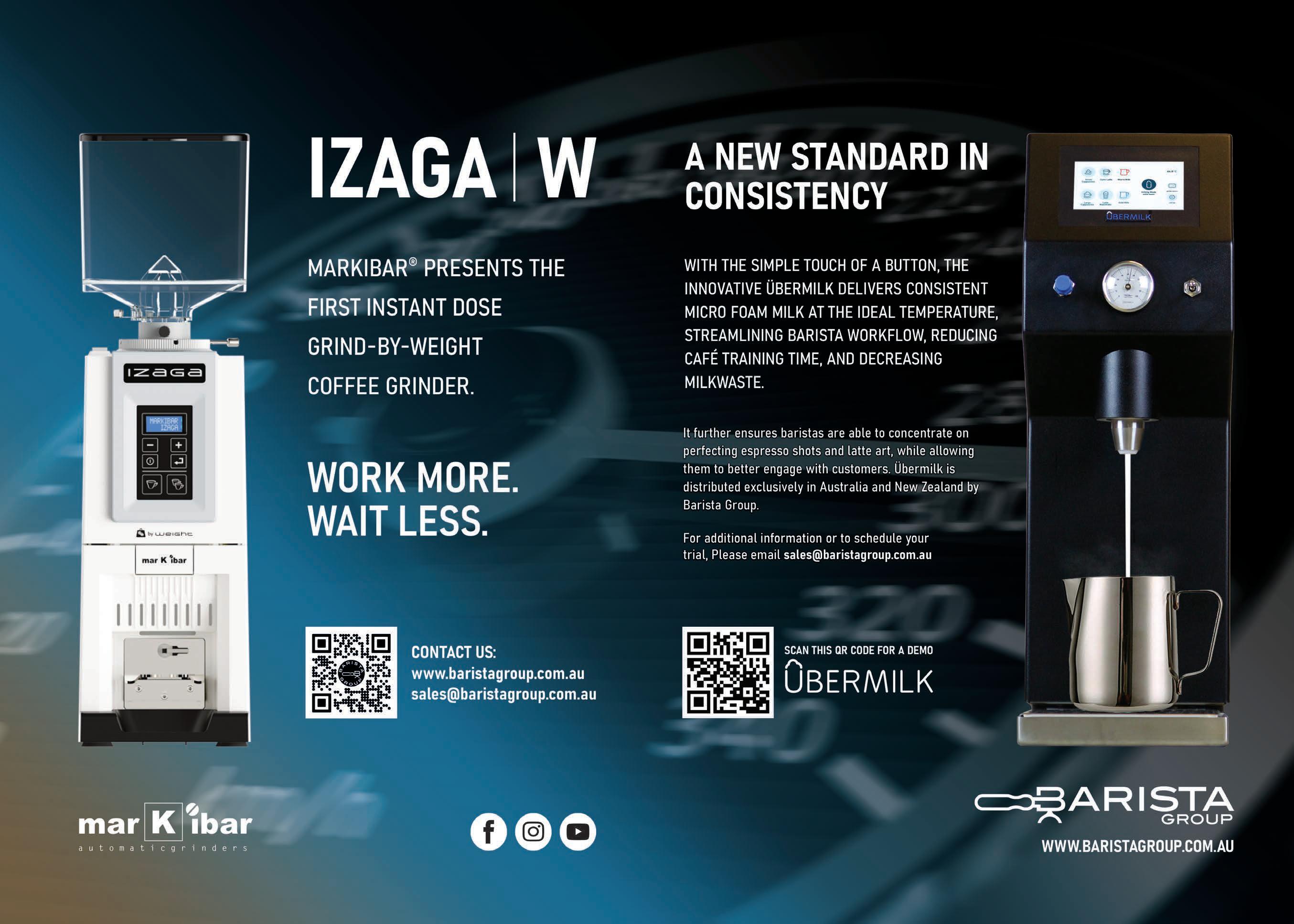
KeepCup is synonymous with sustainability and reusability in the coffee space. Now, with a new campaign and refreshed approach, it’s shifting the narrative on what a reusable cup can be.
When KeepCup launched in 2009, it was one of the rst real movers and shakers in the reusable cup space. As social consciousness around the individual’s impact on the environment around them has grown, it’s an industry that has expanded – and KeepCup, the original mover in the space, has remained a leader.
Now, it’s an industry is chock full of competitors all preaching messages of the bene ts of sustainability. Reusable cups and bottles have become more than just accessories. Now, they’re full-blown fashion statements.
e brand is doubling down on the accessorisation of the humble KeepCup with its new campaign Sip Check, which spotlights KeepCup’s Cold Cup, designed for iced drinks, and reframes reusables as not just a tool for sustainability but for style.
As Co-Founder and Managing Director, Abigail Forsyth has been helping steer the ship since the start of KeepCup’s journey. She says this evolution into seeing KeepCups as more than just a reusable cup builds upon the brand’s heritage between sustainability and café culture.
“KeepCup has been around for 16 years. We started as an innovation that targeted sustainability and encouraged people to reuse, and we’re still very strong on that message,” says Abigail.
“Sip Check is really tapping into a new, younger audience. is is an audience that already knows reusing and sustainability are incredibly important, so this campaign focuses on when you leave the house you check if you have your phone, wallet, keys, and KeepCup.
“It’s a play on ‘ t check’ where you check your style before you go anywhere, and it helps de ne a KeepCup as a fashion accessory that is part of your out t that you can’t leave behind, rather than something optional to take with you.”
is targeting of a younger audience coincides with the growth of the specialty and signature drinks space – where the drink itself is seen as much as an opportunity to post on social media and t someone’s aesthetic as it is an actual beverage.
It’s a phenomenon that has swept the world, with some indicating it could be the start of the fourth wave of co ee consumption.
Whether it be through the creation of clear cups with straws, modular products like the Helix system, food containers, or receptacles that are equally as capable at keeping a beverage cold as hot, Abigail says the new campaign is the latest step for a business that has had its

nger on the pulse for well over a decade.
“Sip Check is something as simple as if you’re having an iced co ee or other kind of iced drink, you want to be able to see it, so grab your clear KeepCup that has been created to give that consumer the same experience but in a more sustainable fashion,” says Abigail.
“ e message of KeepCup is really just about rethinking what you need – having beautiful things but not too many of them, or just uniting them. It’s more a philosophy
of not having too many things to protect the natural world and manage the future. e less we have, the more we keep.
“We started with design and a solution to a problem, and that has advised every decision we’ve made for the past 16 years. at’s attracted people who believe in us and want to take part in it to join us on our journey.”
It hasn’t all been smooth sailing for KeepCup, or the sustainability space over the past few years, with Abigail believing larger,
more world-scale impacts on sustainability in uenced the everyday individual that their e orts at keeping the world green may have been in vain.
However, she says people looking inward at what is most important to them is turning the tide, and the peoples’ power in sustainability is making itself felt around the world.
“In the 2010s sustainability was really starting to go mainstream, and there was a real sense of optimism that individual behaviour could change the world – that if we all adopted particular practices we could change the world.
“Recently there’s been a real sense of disconnection to that, but people are returning to their own values and what is important to them.”
Although whether a customer brings a KeepCup into a café mostly relies on the customer themselves, and Abigail says this type of sustainability action relies more on the consumer than the venue, she believes cafés still have a signi cant role to play in promoting sustainability.
While takeaway cups are part of the industry, Abigail says the openness for consumers to change o en comes back to the environments they nd themselves in.
“ e role of the café in the community is to be place where people can meet and discuss ideas. A lot of change starts in cafés – apart from the serving of amazing co ee and great food. It’s those things that pull people together, and it’s that vibrancy that makes it such an important part of our community,” says Abigail.
“It starts at independent cafés. ey were
Check campaign targets

the ones that supported us when we rst started, and something as small as a barista saying ‘that’s a cool KeepCup’ to a customer totally opens up the perception that it wasn’t just accepted that you brought a KeepCup to a café, it was encouraged.
“Baristas can be so in uential to a café’s customers, and cafés are places that perform such an incredible role in our community. KeepCup is a huge part of that.”
For now, continue to watch this space. As Sip Check continues to gather traction on social media, Abigail teases there are
still more exciting developments to come from KeepCup in 2026 and beyond.
“We’ve always been known for a single style of product and innovation, and it’s been a really exciting challenge for KeepCup to expand more into the lifestyle space and align with the modern consumer,” she says.
“But we’ve got lots of new products we’re preparing to launch that really get back into the co ee.”
For more information, visit keepcup.com.au
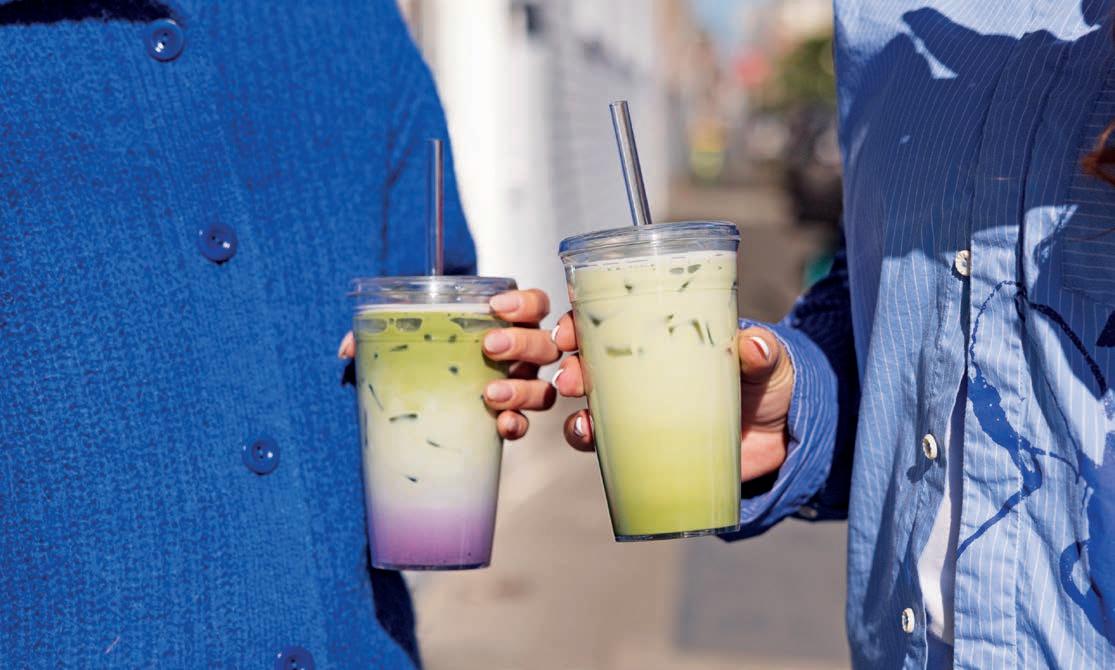

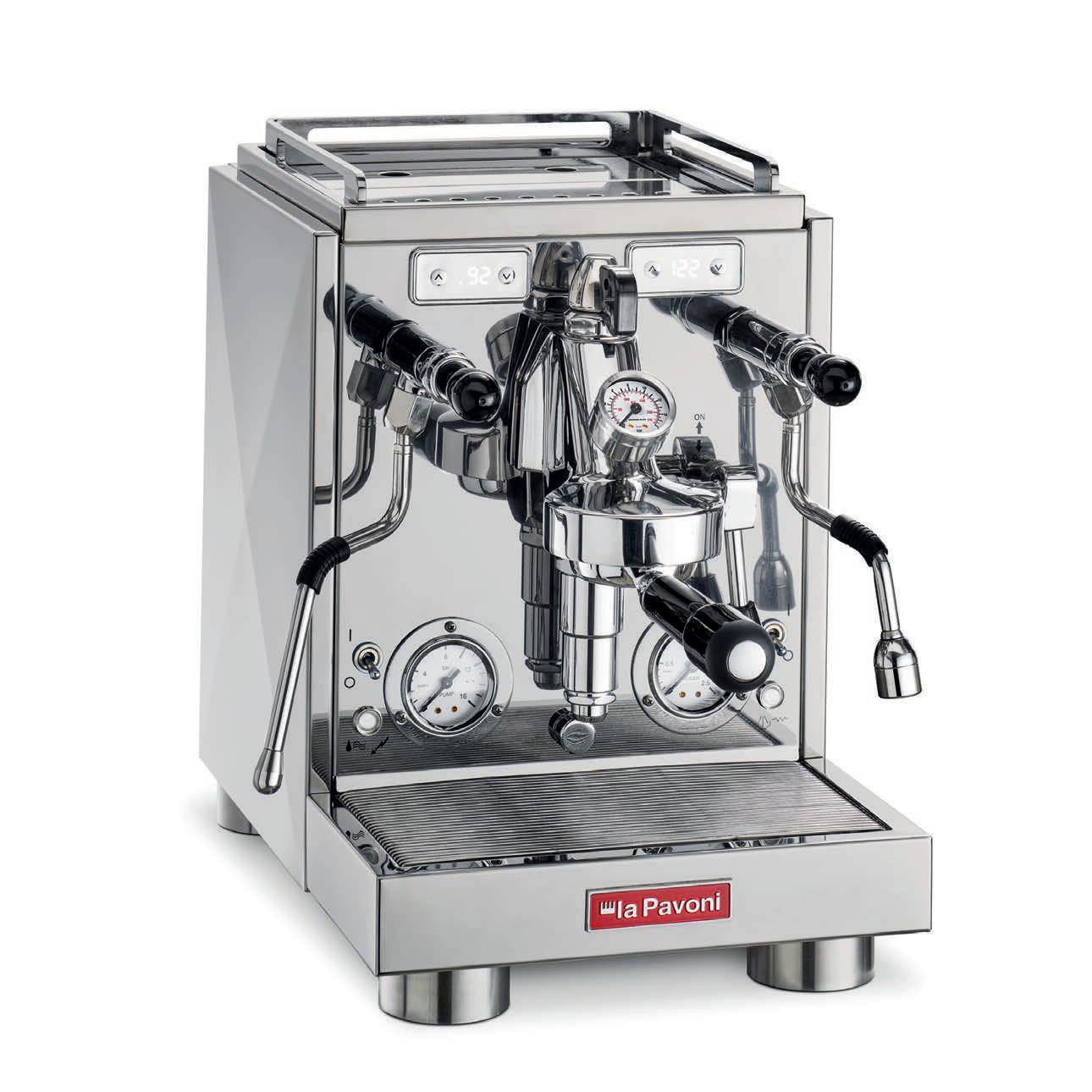



Meet the Botticelli Specialty — for those who demand more from their coffee. Dual boilers, advanced temperature control, and pre-infusion brewing put professional precision at your fingertips. Because great coffee starts with control. au.lapavoni.com # lapavoni_au


Hiroko Hanna Teramoto has been named Aotearoa Barista Champion for the third time, but the quality of competition showed the strength of New Zealand’s barista scene.
The buzz from the Aotearoa Barista Championship 2025 is still present, even months a er the event. Held at Whirinaki Whare Taonga in Upper Hutt, this year’s event delivered one of the most emotional and inspiring weekends in New Zealand co ee history.
All the baristas brought unmatched skill, creativity, and hear to the stage as a reminder that in Aoteraroa co ee isn’t just brewed –it’s performed.
With a phenomenal 629 points, Hiroko Hanna Teramoto of Mojo Co ee, Auckland claimed her third national title following wins in 2014 and 2022. Her routine, steeped in introspection and emotion, asked one powerful question: ‘Who am I?”
Born in Japan, raised partly in Australia, and now proudly calling Aotearoa home, Hiroko’s performance was as personal as it was precise. From a Lego display that symbolised her history and whānau to heartfelt re ections on her father’s in uence, she captivated the audience and more than a few reached for tissues before her time was up.
Hiroko chose a co ee from Finca Los Flores, grown by Jhoan Vergara, a hydro-honey processed lot bursting with passionfruit and yoghurt notes.
Her signature beverage was built around ltered cascara, candied pineapple, yoghurt drops, and juicy plums. Her milk course was a nostalgic nod to childhood memories of her dad giving her avoured milk, with avours of ripe banana, crème brûlee, and coca. Her espresso tied it all together, bright with passionfruit, pineapple, and raspberry.
“ is routine was about connection –between the people who grow the co ee, the people who serve it, and the people who share it,” says Hiroko.
It was an honest, emotional, and technically immaculate performance that summed up why she remains one of New Zealand’s most respected baristas.
e nal scores were the closest in recent memory, proof that Aotearoa’s talent pool is deeper than ever.
Each competitor brought something unique, from bold new avour concepts
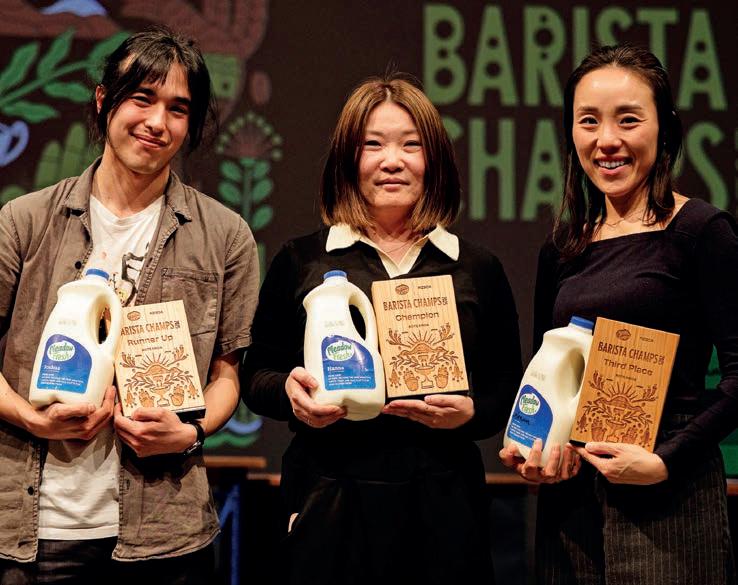
First place (629 pts): Hiroko Hanna Teramoto: Mojo Co ee, Auckland
Runner-Up (572 pts): Joshua Peacocke: Mojo Co ee, Auckland
Third Place (572 pts): Heesun Lee: Atomic Co ee Roasters, Auckland
Fourth (570 pts): Matt Ross: Kindred, Tauranga (supported by Grey Roasting Co.)
Fifth (554 pts): Alan Bruce: Acme Cup Co, Wellington
Sixth (520 pts): Bonnie Lam: e Co ee Dojo, Wānaka (supported by Flight Co ee)
to heartfelt storytelling. eir collective performances raised the standard for barista competitions nationwide.
Since the competition, Hiroko has continued to shine, preparing to represent Aotearoa at the Monin Cup and next year will see her head to the World Barista Championships in Panama in October 2026.
A People’s Champion
Community was at the heart of this year’s event, and the People’s Champion award captured that spirit perfectly.
Congratulations to Tufele Timothy Tavite of Strictly Co ee Roasters, Dunedin, whose warmth, authenticity, and aroha earned him votes from across the country.
Chosen by friends, whānau, and co ee lovers alike, this award recognises the people who pour more than co ee. ey pour connection.
e 2025 championships reminded us why New Zealand’s co ee community is so special. It’s full of people who care deeply about cra , connection, and each other.
anks to all the competitors, sponsors, judges, volunteers, and organisers who made it happen.

For more information on the New Zealand Specialty Co ee Association, or to join, visit nzsca.org
The strength of a café’s cold menu is crucial to remaining relevant in today’s market.
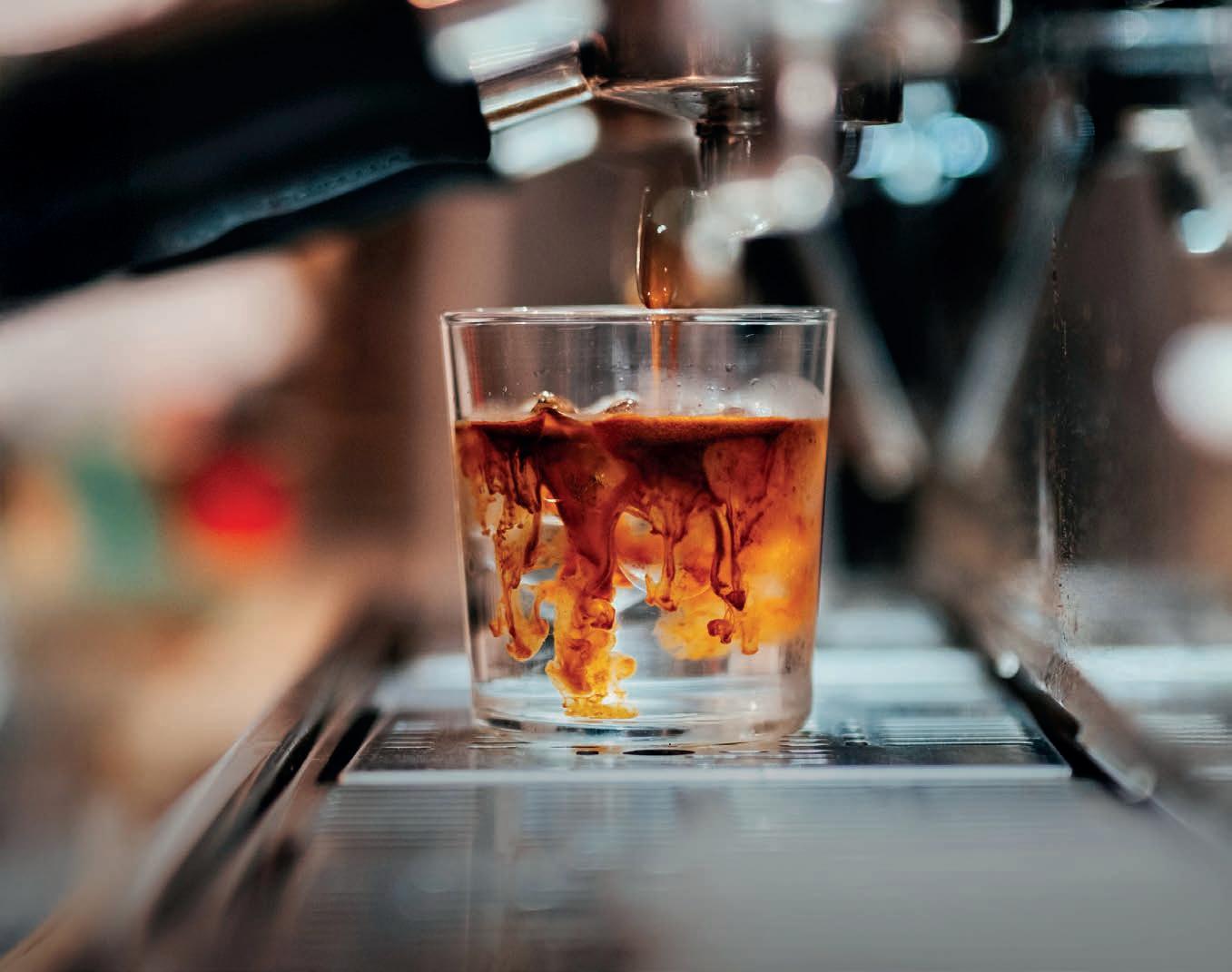
Each year, a new summer specialty seems to become a staple of Australia’s café landsdape. How can venues be prepared to take advantage of next favourite summer flavour?
Finding the next great café trend is a powerful di erence-maker for cafés.
Achieving social media virality with the next hit beverage is a goal plenty of venues may set themselves, but few actually achieve.
Underneath those globally successful, viral trends is a movement within the co ee landscape. e prevalence of avours, powders, sweet sauces, and alternative ingredients has given rise to a whole new subsector of the café world. No longer, it seems, is a strong co ee o ering enough to stay on top of the current market.
With its roots in Sydney’s Sutherland shire, roaster White Horse Co ee supplies co ee to hundreds of cafés in the region, along with operating ve of its own. It has its nger on the pulse of one the trendiest metropolitan demographics in Australia.
Head Co ee Trainer Adam Blake has been with the business for a decade and has seen rsthand the di erence to the market highquality specialty and signature beverages has made.
“In the 10-year span I’ve been with White Horse, the industry has changed heaps,” says Adam. “In terms of consumer tastes and how they’ve changed over time, there’s a far bigger appreciation for variety and choice in general.
“ is is re ected in the growth of alternative milks as well, when I started there was only soy and almond, but now there’s
oat, macadamia, and lactose-free across a range of competitors and that is now seen as the standard.
“ e same trend is happening now in specialty and signature drinks, and it’s even happening in co ee with new methods such as cherry or mango co-fermented co ee.
“It’s re-awoken a consumer market looking for di erent avours and ingredients in their drinks.”
While Adam says co ee is still being used in the same way it has always been, new takes on old techniques are changing the way cold drinks are consumed.
“Everything that is old is new again. ings like frappe, dalgona co ee, and Japanese cold brew a rising in popularity,” says Adam.
“Australians have not traditionally been accepting of chilled co ee drinks, but it’s becoming far more accepted, which allows us to put more energy into brewing chilled drinks that express di erent avour nuances in the cup.”
Flavour meets fashion
e rise of specialty drinks and demand for colourful, sweeter options is seen as a potential competitor to the established co ee scene in some corners, but the assumption that Generation Z has formed vastly di erent habits to older consumers is more than backed up.
Recent data from an alternative dairy brand has found almost half (46 per cent) of Gen Z consumers are motivated to photograph or video their dinks based on appearance.
While taste (30 per cent) is still the main motivation for trying something new for this surveyed cohort, it’s not as important as one might think. Novelty (29 per cent), and aesthetic (26 per cent) barely trail what is typically seen as the main reason for trying something new.
Adam believes while the younger generation may be steering away from traditional co ee beverages, co ee-based specialty drinks that
take advantage of ingredients such as avours and powders o er these consumers a gateway into traditional co ee consumption.
“What you’re doing by o ering these di erent options for people is you’re creating more access to di erent drinks and promoting inclusivity of tastes. Someone might be ready to drink a caramel latte – which is where I started before I really got into co ee,” he says.
“In a few years’ time these people who are being introduced to co ee through these di erent drinks could be drinking an espresso or a lter, and that’s a transition I’ve seen happen.”
e importance of co ee alternatives and cold beverages as an opportunity to appeal to a broader audience and indulge existing customers is not lost on Adam.
“It’s a gateway, and that choice is a gateway into appreciating other things. Anything that draws the guest into the café and enables them to feel comfortable and understood, that’s really the care of hospitality,” he says.
“It doesn’t matter what the choice of the individual is, just that it’s available for when they want it.”
Whether it be drinks such as matcha that have become staples of the modern café scene, or banana lattes and cloud co ee that burn bright, but burn fast on social media, locking in on the virality of new and popular beverages is a critical aspect of the modern café landscape.
“If you can’t pivot onto a trend when it’s happening and if you’re not an early mover, you’re not moving at all,” says Adam. “Now there are businesses that are built purely o matcha. ere’s one in Cronulla called Maker’s Daily – their whole business model is matcha rst and co ee second, so they’ve inverted what we would do.
“If you don’t o er those specialty sweet drinks now you risk fading into obscurity. You don’t just want to blend in with every other café, and everyone has that challenge of trying to di erentiate themselves and stand out.”
As a large-scale co ee roaster that runs ve cafés, White Horse is in a di erent situation than many of Australia’s venues, but Adam says the business has still been able to bene t from hype around these viral hits.
“As a co ee roaster it’s important to remain aware of these trends, but as a business that operates cafés we serve co ee in, it’s critical to be able to jump on those trends when they pop up,” he says.
“ ere’s incredible potential in it. With how the younger generations have had this huge uptake of these signature drinks and how they trend on social media, it’s almost selfpromoting, because when the in uencers get behind them it creates this huge momentum. at momentum can really shi those forces in the market quite easily.
“Our previous summer menu had a drink called a Salted Caramel Surprise. We used salted caramel sauce with a shot of espresso, it was steamed with milk and then poured
over ice. It was a super textural and it was awesome. We’ve also used matcha powder and strawberry sauce to make our own highquality version of the heavily trending iced strawberry matcha drink.”
White Horse has partnered with Naked Syrups since before the turn of the decade to help cra drinks such as the Salted Caramel Surprise. Adam says the partnership between the businesses has been so successful because of the alignment of their values.
“We’ve been with them pretty much from the start back in 2019. ey’re really forward thinkers, and the quality and consistency of their product and diversity of their range speaks for itself,” he says.
“It’s honestly rare to nd another business that shares so many similar core values to what you have, such as good service, great product, and exceptional quality, the same sorts of things we would strive for as a co ee roastery, they seem to have nailed.
“Natural avours and colours, being Australian-made and gluten-free, those are important to people too, and they’re a company that just nails it.”
With the height of summer approaching in the Southern Hemisphere, what cements itself as the new great summer trend is yet to be seen. Will iced matcha continue its rise as a popular co ee alternative, or will cold pressed juices and functional beverages prove a bigger hit with health-conscious consumers?
Adam says while he’s not sure what the
Flavours and sauces help open the door to a wider range of customers. Image: Naked Syrups.
future holds, it’s worth looking at how past trends have evolved to identify some of the next great market movers and shakers.
“Even a year or two ago in summer, cold pressed juices were the biggest sellers for us, and now I see that shi ing into more avourbased drinks. With iced tea and matcha, it’s a pretty even split now,” he says.
“I can see the real, tangible success of those drinks. If we only sold one or two a week, they wouldn’t be on the menu because they wouldn’t justify their position. Seeing more ingredients on a café menu, including things like pistachio, is awesome as not everybody enjoys co ee.
“It’s self-evident because those drinks are on menus they’re still gaining traction, they’re gaining momentum. People aren’t just buying them, they’re appreciating them.”
What’s on the horizon, though, could be anybody’s guess – but Adam is predicting the continuing popularity of matcha to make further waves in café and retail markets.
“We saw a huge trend of cold RTD drinks in supermarkets trend recently, and those iced co ee brands were really cool when they hit the shelves, and grab and go options in cafés became more popular,” he says.
“ ese grab and go products style of products are something that gains momentum easily. It will be interesting to see what the future holds, but there’s a lot of potential for change.”
For more information, visit nakedsyrups.com.au
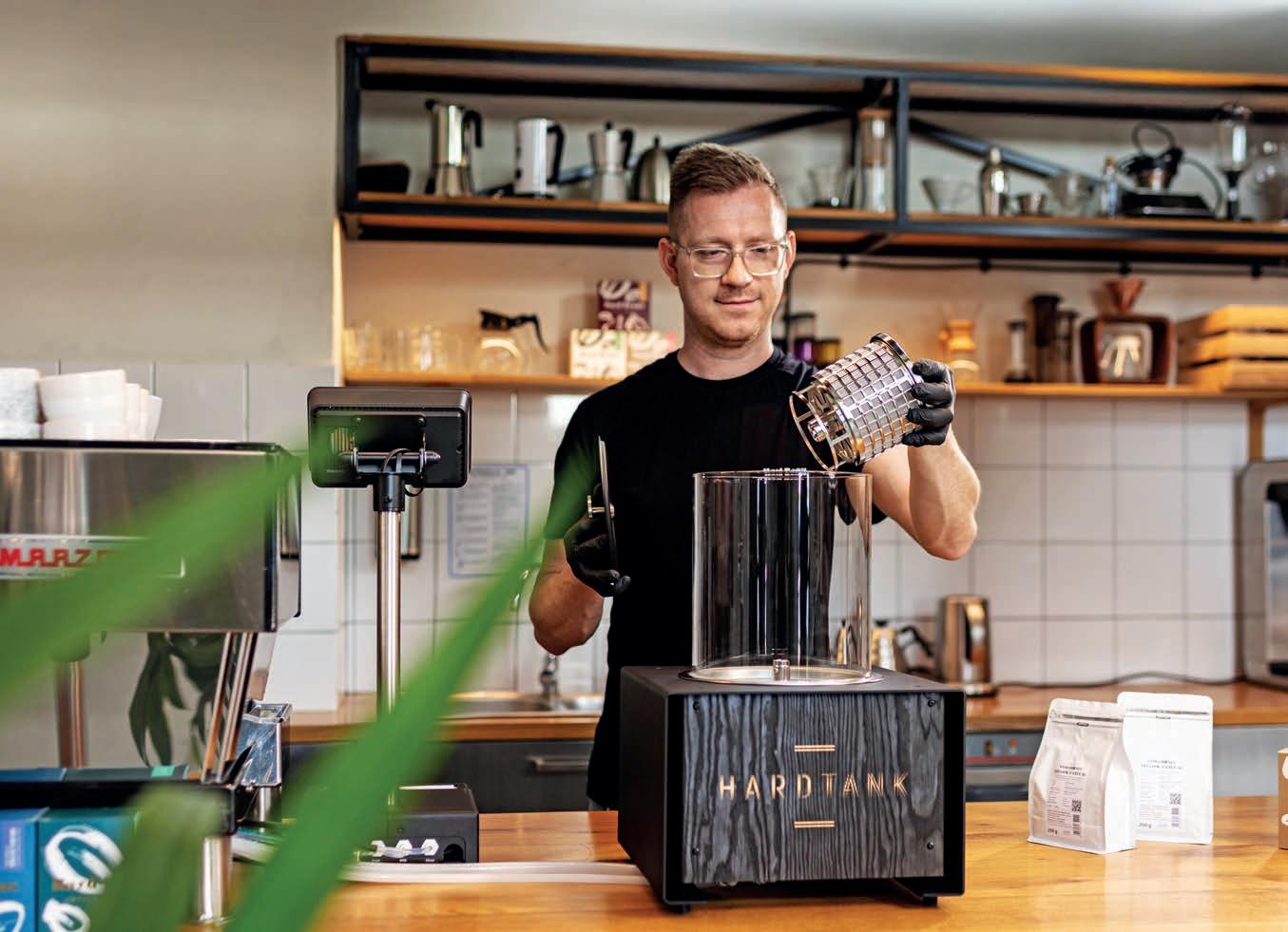
Barista Equip has sourced a new machine CEO Brett Bolwell expects will help Australian venues boost their margins in the surging cold coffee category.
Margins of up to $7 – or 70 per cent – per sale. e potential to recoup ROI within two years by selling just three co ee-based drinks per day. ey’re the kind of numbers that’ll turn the heads of even the most seasoned café owners.
ey’re also the sort of gures that Barista Equip CEO Brett Bolwell believes are possible thanks to a new cold brew innovation that he believes can help Australian cafés harness, and even lead, the chilled beverage boom in their communities.
As the Australian distributor of some of the industry’s most well-known machine brands, it’s Brett’s job to keep watch for boundary-pushing technologies Barista Equip can bring to Australian shores. But he’s particularly excited about the Baby Hardtank and opportunities for more cafés to embrace drink diversity, create new signature beverages and boost their bottom line.
Baby Hardtank is manufactured by Polish cold co ee solutions manufacturer Hardtank, established by a trio of co ee enthusiasts wanting to help businesses of all sizes prepare “amazing cold brew in a fraction of the
usual time”. e company rst released its technology in 2018, and has also developed the Hardtank 20 for high volume venues requiring up to 300 litres of cold brew a day.
e Barista Equip-Hardtank partnership has been brewing for a couple of years, but with so much local interest in cold brew and
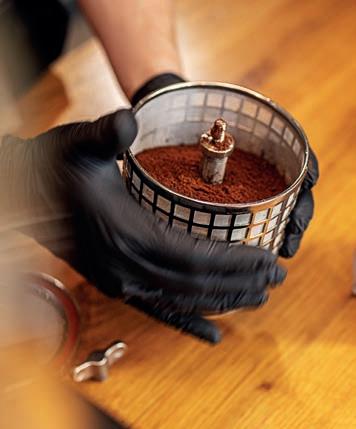
Hardtank – including among high-pro le specialty roasters with their own cafés – Brett feels now’s the ideal moment to unleash this technology.
At the time of writing, he had pre-sold 11 units, with enquiries also coming from a range of venues beyond cafés and roasters.
“In the last couple of years, Barista Equip has really focused on cold co ee technology, because if you look at cafés now, baristas are becoming more like mixologists. You’ve got the rise of matcha, pistachio, cold brew – all these drinks that have really taken o especially with Gen Z,” he says.
In fact, the National Co ee Association’s (NCA) 2023 annual report shows the number of people who said they drink cold brew on occasion had increased by 73% since 2019, with a further 60% increase among those who reported drinking it regularly.
“With cold co ee alone, you can do 30 to 50 di erent variations of that one product. In fact, you could build an entire business around it. And that’s exactly what we’re seeing; cafés now building whole brands purely on cold,” Brett adds.
e big selling point for Baby Hardtank is
its ability to compress the cold brew process down to as little as 40 minutes, with minimal barista preparation time.
For a process that traditionally can take up to 24 hours, that o ers signi cant advantages in reduced labour costs and the purity of the nished product. is is all achieved with a sleek benchtop unit occupying just 340 x 340 x 490 mm, in a clean, no fuss fashion.
Above all, Brett has discovered that despite its more e cient steeping process, it doesn’t compromise the avours that make cold brew such a big attraction. If anything, it enhances them.
“ e quality of cold brew that came out of this machine in a 40-minute brew cycle was nothing short of insane,” he says.
“We thought, this is amazing – let’s start showing people. We systematically invited everyone we knew – roasters, in uencers, anyone who came through for a trial and demo. Every single person said the same thing: it was the best cold brew co ee they’d ever had.
“ at’s when we knew we were onto something. We asked them, ‘What do you like about it?’ and they’d say, ‘ ere’s this avour note, and that avour note – but it’s the clarity and freshness that stand out’.
“ ey all said the same thing: ‘It’s a game changer’. And that’s exactly what we think too.”
The business case
e reduced labour costs per cup, and the myriad of boutique drink options, is the big opportunity Brett sees for cafés investing in Baby Hardtank.
With lengthy traditional cold brew cycles, he says the preparation time, steeping process and a messy clean down all add up to a labourintensive process that can create a margin of $1.25 to $1.50 for a cup priced between $7.50 to $9.
Much of this is negated with Baby Hardtank that requires three minutes’ preparation time for the barista, before starting the cycle with a simple touch of an LCD touch screen. Once completed, more time is saved through automatic cleaning and sanitation modes.
Brett says one of the big trends in cold co ee is an appetite for “something a bit decadent”, with cafés elevating their drinks with creambased toppers and cold foam.
“All of a sudden, you’ve now got a $10.50 drink with a COGS (cost of goods sold), well under $3 with labour with Baby Hardtank. And it makes for, in my opinion, a highmargin drink (around 70 per cent), while also giving you access to a whole new demographic of customers.”
A single Baby Hardtank batch has capacity for up to 350g of ground co ee and creates four to ve litres of cold brew. rough multiple cycles, cafés can serve up to 300 portions per day.
He says cafés nancing the machine on a rent-to-own basis would breakeven a er two years selling just three cups per day. “I don’t think there’s any cafés we deal
A single Baby Hardtank batch can deliver up to five litres of cold brew.
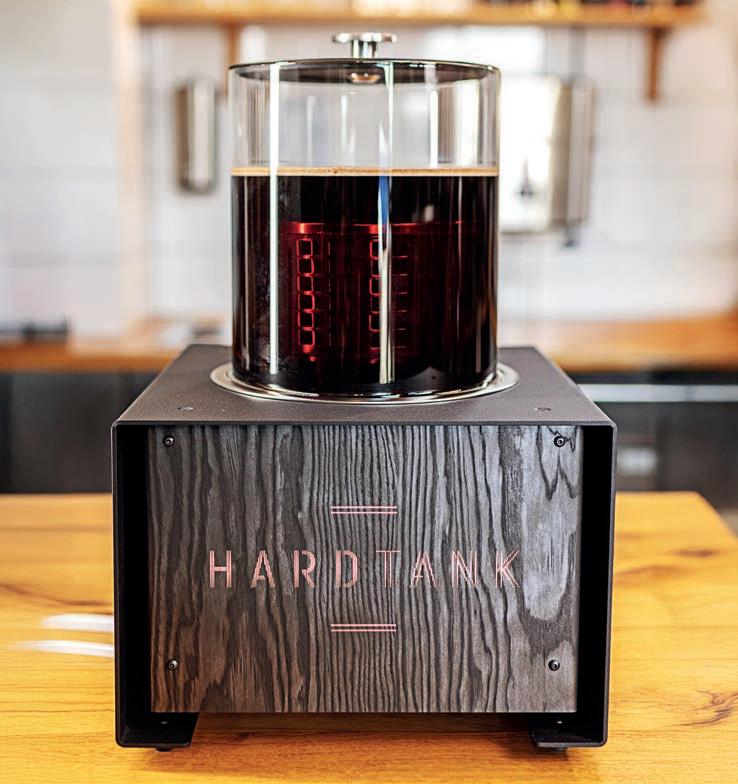
with that couldn’t do that,” he adds. When e ciencies are gained, the obvious question becomes: what’s the trade-o ?
But Brett says Hardtank is having its cake and eating it too – a streamlined cold brew steeping process without impacting the avour pro le. e manufacturer has developed accelerated cold extraction technology based around recirculation. at water is constantly circulated and pushed through the extraction basket meaning the co ee, tea, or infusion ingredients are constantly agitated.
It also features a unique basket design that the company says “creates an extremely clean brew” without the need for additional ltration.
“ e thing I like is Hardtank has simpli ed the process all into one unit, with a high yield basket for the extraction,” Brett says.
“At the end of the cycle, the nished cold brew is automatically fed into a sealed ve- or 10-litre keg. What I love is that the co ee never touches air at any point – there’s no risk of degradation once it’s pushed into a sealed keg with nitrous and served straight from the tap.
“It also broadens the customer appeal, because now cafés can say their cold brew is brewed on site, and that it’s brewed fresh every hour. Fresh is very big these days, no additives, no preservatives, no pasteurisation.”
For Brett, experimentation, and the chance to create signature drinks, with Baby Hardtank is where the untapped potential lies for café owners.
One of the system’s standout features is
an ability to infuse natural avours during brewing. Users can add botanicals, sliced oranges, dried fruits, and more, to the top of the basket before sealing it in the system. By running a slightly longer cycle – around 50 minutes – the brew can take on subtle notes all derived naturally.
Cold brew style matcha and exotic teas are other possibilities for cafés, as well as negronis, espresso martinis, and infused gins and vodkas for licenced venues.
“ e beauty of it is that you can experiment with di erent co ees and recipe settings until you reach that point where you go, wow –that’s our signature brew.”
For Brett, there’s no question about the value proposition of the chilled beverage category. Baby Hardtank represents more than an access point, but a way for cafés to create that ‘wow factor’ and a go-to venue in their communities.
ese possibilities are perhaps best encapsulated by this anecdote involving a Brisbane roaster who put a premium espresso bean through the Baby Hardtank – unsure how it would perform.
“He remarked on how the avour dimensions in this co ee far exceeded what he can taste in the espresso version,” Brett says. “He was picking up ve or six avour notes, compared to two or three.
“All of a sudden, you’re opening up a whole new avour dimension, and new boundaries with co ee, which excites me most – and is something I think was only possible through the Baby Hardtank.”
For more information, visit baristaequip.com.au
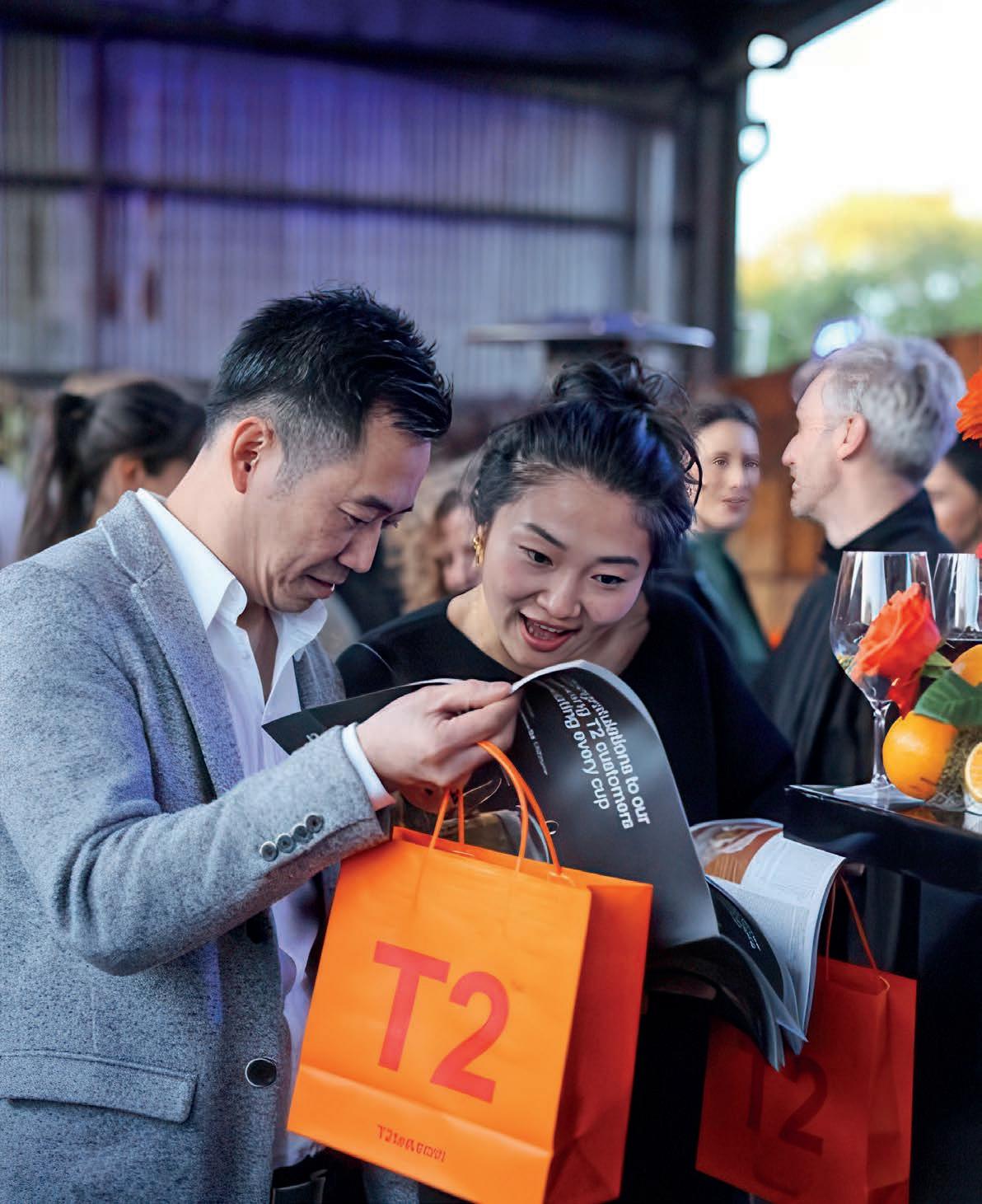
Hojicha? Teasecco? Yuzu matcha? There are plenty of different teas that could be next to take Australasia by storm. Image: Dion Georgopoulos & Good Food.
What’s next for the world of tea?
From cocktails and alcohol-free alternatives to seasonal drinks and the continuing matcha madness, what direction will the tastes of tea consumers take this summer?
Whether it be co ee drinkers looking for a lower ca eine option in the a ernoon, younger consumers looking for the next aesthetically pleasing brew to post on social media, or people just looking to try something new, tea is being positioned as a key growth category on café drinks menus.
Matcha is, of course, a market leading product in tea, but with an extensive and evolving range available to cafés and restaurants – including the popular green powder – T2 is constantly looking ahead at where consumer demands will lead the industry.
As T2’s Head of Tea, Sally Morris is responsible for determining the well-known brand’s entire product direction, from sourcing to developing, and experimenting with new blends to nd exactly what the modern consumer wants.
She reveals some of the emerging trends in tea, and what could be next to take the Australian and New Zealand markets by storm.
With international competitions like the World Co ee in Good Spirits Championship bringing attention to the use of co ee as a cocktail ingredient, it makes sense that tea also holds signi cant opportunities within the specialty drinks space.
e evolution of many cafés into genuine day/night venues means business owners must design two dynamic menus to attract customers. A strong list of unique cocktails and alcohol-free alternatives is a powerful tool with which to stand out from the crowd.
Sally suggests looking to tea pioneers in Japan, South Korea, and Hong Kong for inspiration.
“We’re seeing a growth in tea cocktails across the Asia-Paci c region, with a lot of bars popping up in Japan, South Korea, and Hong Kong pioneering some really interesting combinations that go far beyond the predictable green-hued matcha creations that we expect to nd these days,” says Sally.
“I was recently in Seoul at Bar Tea
Scent, who use a range of delicate teas as a base for building really beautiful cocktails that honour the more delicate notes of specialty teas, like Silver Needles, which can be challenging as tea is a lot easier to overwhelm than co ee as a avour pro le.”
T2 is also modelling the possibilities of tea as an ingredient in alcohol-free alternatives.
“Teasecco was something our team developed for this year’s Good Food Guide Awards in Sydney and Melbourne to showcase rare and special tea as an exciting, alcoholfree alternative to prosecco or champagne,” says Sally.
“It’s not something that we sell, but simply a di erent way of preparing premium specialty teas. To make this, we brewed a concentrated version of our classic Buddha’s Tears and new Phoenix Honey Orchid oolong, which we then chilled and topped with sparkling water.
“ ey both tasted absolutely phenomenal, and will be a staple at my dinner table this festive season.”
Although hot and iced tea varieties have been popular among café frequenters for years, the rise of matcha and its varietals has changed the beverage landscape forever.
Matcha has now grown to become a café mainstay. From venues themed around the drink to the growth in the syrup and avouring space to complement the traditionally prepared powder, demand only seems to be growing.
Sally believes a similar drink to matcha could be the next great tea frontier in Australia’s cafés.
“Matcha won’t be going anywhere anytime soon– it’s solidly cementing itself as a part of our everyday drinks repertoire– but I think we’re soon to see a rise in popularity of matcha-adjacent drinks,” she says.
“Powdered hojicha is the most obvious that comes to mind– it’s a roasted green tea that’s ground just like matcha, but has a more earthy, almost chocolatey taste with no bitterness that lends itself beautifully to creative drinks.”
A key di erence between how hojicha and matcha are created is the roasting process. Hojicha is distinct from other Japanese green teas because it is roasted in a porcelain pot over charcoal to prevent oxidisation.
Sally says it is a great step into the tea world for co ee drinkers who may be looking for a more similar pro le.
“With a avour more akin to co ee than matcha, co ee lovers tend to like hojicha quite a bit as a lower ca eine option.”
Strawberry matcha quickly became the go-to fashionable drink of last summer and still maintains strong consumer interest today. In the coming year, Sally believes there could be demand for a pivot to a new avour pro le alongside matcha, rather than a whole new drink.
“Other trends that are evolving from the matcha family tree include creamy, fruitforward drinks,” she says.
“Strawberry matcha will forever be remembered as the drink of 2024 and 2025, but we will see more fruits such as banana and yuzu come to join the party in the coming months.”
Sally spoke to BeanScene o the back of a sourcing trip in Europe, the results of which she hopes will be revealed to market during 2026.
She o ered a sneak peek as to what may be coming down the line, saying a key focus has been combining Western and Ayurvedic herbal knowledge to create new teas for T2’s wellness portfolio.
She says while she doesn’t expect anything to so rapidly take the world by storm in the way matcha has, seasonality and growth over time advise what could be next to boom in the market.
“While matcha has been the biggest trend in recent memory in the tea industry, it’s rare
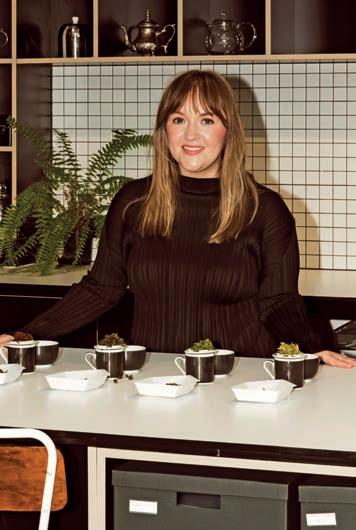
to nd a trend with such urgency to deliver to market,” she says.
“Trends tend to err towards general categories of growth that evolve over time with the odd addition of a trendy avour or ingredient that we can choose to partake in if we think it’s right for our customers. Tea can involve a lot of ingredients, so it can involve a complex and lengthy procurement process for new and unique blends.
“Seasonality is very important in the Australian market for the establishment of new cold drink trends. We’re a lot more seasonal here than somewhere like the United States where cold drinks are more quotidian year-round in tea and co ee than hot options.”
With the summer sun now beating down on Australia, she expects to see a range of new fruit-based drinks hit the market in the coming months.
“We tend to see a natural rise in popularity
for these drinks from late September through to late March, so the season is certainly long enough to establish new trends.
“It’s important to both time this right with good foresight and ensure that we’re being judicious about what is a fad versus what’s something that our customers actually really want to drink.”
is approach to sourcing and product creation also allows T2 to discuss emerging market demands with café partners to ensure the best result from procurement to customer.
T2 aims to drive a shi in how specialty tea is perceived and prepared in cafés. e brand says, a er engaging with countless baristas and café owners, it is clear venues and their customers are seeking greater variety, improved work ows, and better access to knowledge on optimal brewing techniques.
Sally says this movement towards tea is not a trend, and that growing appetite for understanding more about origins, processing, and preparation ties into cafés wanting to showcase their commitment to quality through T2’s premium o erings.
“It is about having meaningful conversations with our partners about the products that are truly desired in the hospitality industry. It might be a new format that will make tea-making easier for baristas or a bespoke development for a renowned institution,” says Sally.
“ ese are seldom purely trend-driven, as all our customers have longevity and sustained growth in mind.
“Our wholesale team does a brilliant job of nurturing these partnerships so that we have a great two-way communication that tells us where to head next.”
For more information, visit t2tea.com
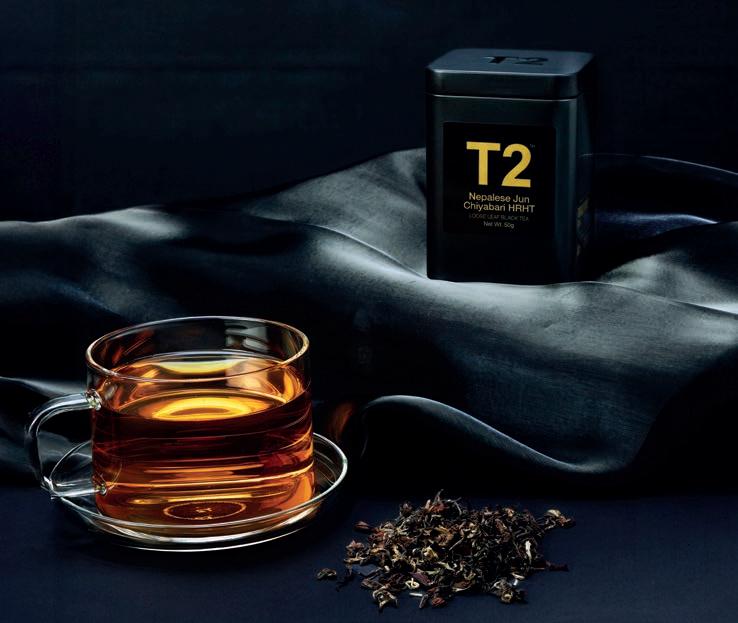
BioPak’s compostable products are certified to Australian standards.
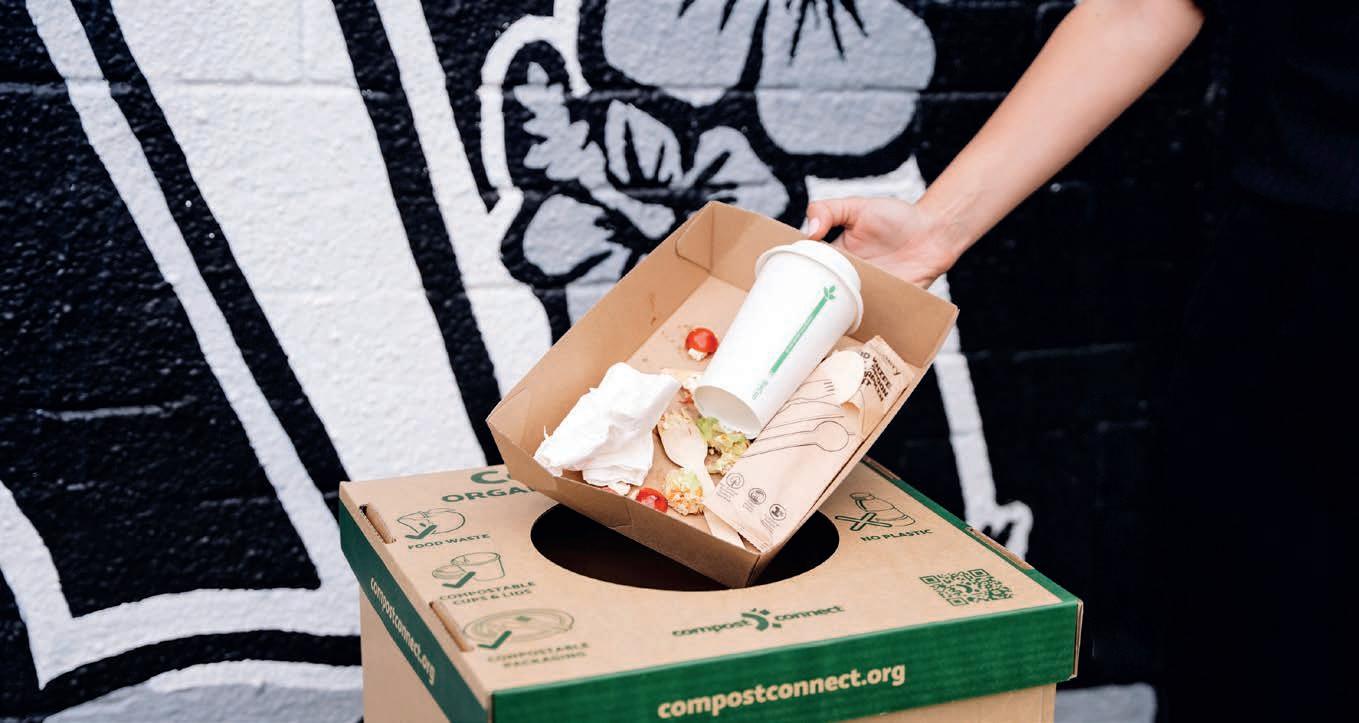
As sustainability becomes mainstream, BioPak calls for proof over promises and outlines how transparency and circular design can drive real change.
Coined in the 1980s by environmentalist Jay Westerveld, “greenwashing” used to describe a hotel policy encouraging guests to reuse towels with the underlying motivation to save on costs by appealing to guests’ environmental sensibilities.
Fast forward to 2025, and the term has become part of everyday language.
Today, greenwashing has opened the door to an array of confusing claims which make it nearly impossible to assess sustainability credentials – and help customers make the best choices. Terms such as “sustainable”, “eco-friendly”, and “ethical” are now common examples.
Rather than being a business imperative, Richard Fine, Co-Founder of BioPak, says there’s a concern sustainability has become a thematic trend and marketing tool, rather than one focused on genuine progress.
“Some companies wouldn’t try to appear green if people didn’t care about sustainability,” he says.
“But the problem is that a lot of the claims are vague or misleading without any real scienti c backing.” is confusion is especially common in packaging. Labels may claim recyclability, but most food packaging is contaminated with residue, making it unsuitable for that purpose. For small cafés, the risk may be reputational rather than legal. When customers who discover a brand’s claims don’t add up, this can threaten brand trust.
“And for larger brands, the stakes are higher, with the potential of nes or enforcement from the Australian Competition and Consumer Commission (ACCC),” says Richard.
Ultimately, greenwashing slows the transition to genuine sustainability.
With a broader picture in mind, Richard says that BioPak’s vision – grounded in honesty, integrity, authenticity and transparency – supports businesses to serve food conveniently while driving positive environmental and social impact.
“We have a simple but ambitious vision to eliminate single-use plastic packaging and replace it with sustainable alternatives that are better for people and the planet,” he says.
Richard says sustainability was far from mainstream when the company was founded in 2006.
Learning from the past to develop futurebased solutions, the company today aims to prove that convenience and environmental care can coexist, creating products that enable circular economies rather than contribute to waste.
Foodservice brands and cafés can still earn consumer trust and strengthen their reputation without risking accusations of greenwashing.
Head of sustainability Lea Maguero, who has been with BioPak for seven years,
highlights how the company o ers solutions through its veri ed products across cups, containers, cutlery and more.
“For our products that are compostable, we ensure they are certi ed to Australian or European standards,” she says.
BioPak o ers products that are either recyclable, home compostable (AS5810) or industrially compostable (AS4736) to Australian Standards.
Among its portfolio of takeaway co ee cups, lids, bowls and containers, it also provides reusable options like Huskee Cups which are cra ed from materials like waste co ee husk and repurposed post-consumer plastic and steel.
rough independently audited and veri ed third-party credentials by trusted organisations such as the Forest Stewardship Council (FSC), BioPak ensures every environmental claim it makes is veri able. Products that are labelled compostable or recyclable are tested and certi ed accordingly. BioPak’s B Corp certi cation further con rms its commitment to ethical and transparent business practices.
“Transparency is key,” Lea says. “We want to be able to communicate clearly about the materials used for our products, the certi cations we have, and the end-of-life options.” Each new item is evaluated against strict environmental and social benchmarks by the company’s sustainability team before it enters the market, part of its broader
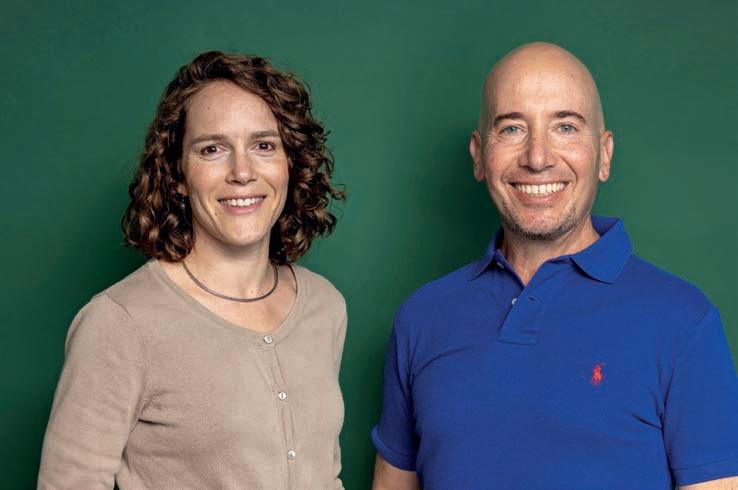
commitment to ensuring compliance for the foodservice and co ee industry.
“With a team dedicated to sustainability, we can show that our claims are accurate, science-based, and compliant with the evolving regulations,” she says.
Equally important is education. rough clear labelling, customer resources, and events such as trade shows, BioPak helps businesses and consumers understand their environmental impact and how to dispose of products correctly.
As the industry grows more complex, many café owners and foodservice operators struggle to keep up with changing packaging regulations.
Richard notes that what is considered sustainable in one state may not be in another.
South Australia, for example, has extensive composting infrastructure, while other states rely more on recycling systems.
“Each state and territory seems to have slightly di erent requirements, and it can be confusing,” he says. “Our goal is to ensure our products and material choices align with available end-of-life recovery and recycling solutions across di erent regions.”
BioPak provides tailored guidance to help customers make informed choices based on their local waste facilities. is localised approach recognises that sustainability is not one-size- ts-all and depends on both material design and the systems that handle it a er use.
e company also collaborates with governments and industry bodies, including the Australasian Bioplastics Association and the Australian Packaging Covenant Organisation, to inform policy and support a uni ed approach to circular economy goals.
“Sustainability isn’t just about what something is made from, but what happens next,” adds Richard.
Ultimately, BioPak wants to simplify pain points through streamlined solutions. Lea says that sustainability should be simple and credible, not confusing or performative.
“Education and clarity are essential if we want people to make the right choices,” she says.
While retaining customer trust through veri ed products helps businesses in the short term, Richard sees a longer-term goal for the industry.
“Part of the company’s long-term project is focused on uniting the foodservice industry around a shared vision where packaging isn’t seen as waste,” he says. “It’s part of a circular solution, one that contributes to the health of people and the planet.”
Richard says that every material leaves behind a footprint. Even renewable materials like paper or bioplastics have impact through energy use, water consumption, and transportation. For BioPak, sustainability means reducing that impact across the entire lifecycle from raw material sourcing to endof-life processing. erefore, sourcing the right material with a lower footprint that is also regenerative as part of a circular solution is encouraged.
“ e ideal product is one that ts in with the local waste and recovery systems,” he says.
While compostables remain central to its range, the company also works to ensure recyclability where composting access is limited.
Compostable packaging, when processed with food scraps, can return valuable nutrients to the soil. Even where composting isn’t available, renewable, bio-based materials lessen dependence on fossil fuels and can reduce production emissions.
“Materials matter, they shape our environmental impact, but so do the systems that recover them. Building both is key to a truly circular future,” he says.
Looking to the future, BioPak’s Science Based Targets initiative (SBTi) commitments aim to achieve net-zero emissions by 2050.
“We want to transition to renewable energy wherever possible,” says Richard. “We’re closely working with our suppliers to embed sustainability in every business decision.”
BioPak’s broader vision hopes to unite the foodservice industry around a shared goal where packaging is no longer seen as waste but as part of a regenerative system. To achieve this, the company continues to invest in research, education, and collaboration. Its strong environmental and social values are re ected in everything from product design to customer education and public advocacy.
“We set high-level goals to motivate us to make a change in the world,” Richard says. “We want to add value to the environment rather than just extract from it.”
Its mission remains as relevant now as it was in 2006: to create packaging that supports the planet, not just convenience. In an era of marketing buzzwords and greenwashing, BioPak’s approach reminds the industry that genuine sustainability is built on proof, not promises.
“We live our values,” says Lea. “What we create and communicate re ects the change we want to see in the world.”
For more information, visit www.biopak.com/au/
The company collaborates with governments and industry bodies to support a unified approach to circular economy goals.
The relationship between Beraldo Coffee and Franke has progressed over the past eight years.
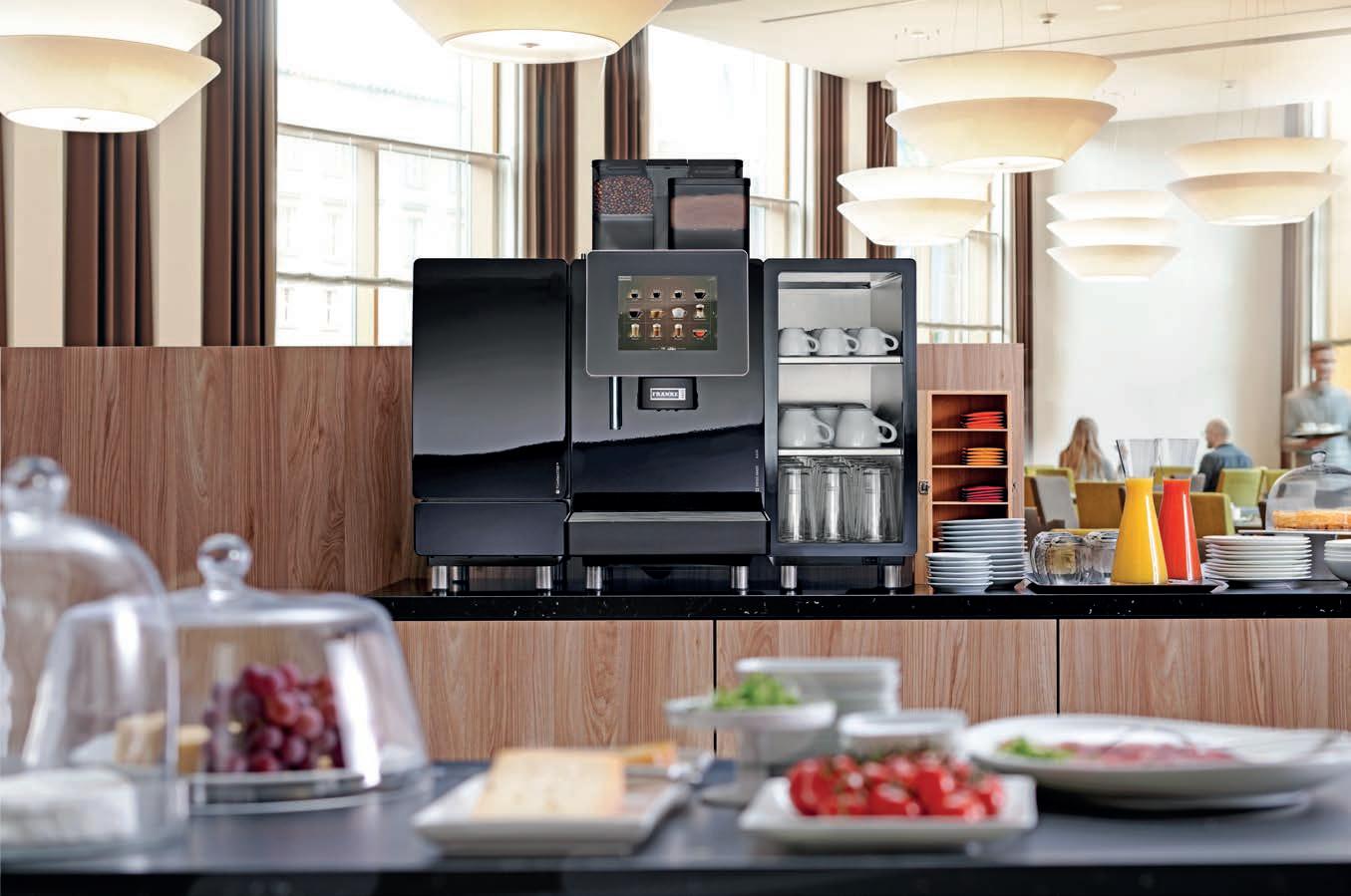
Beraldo Coffee Managing Director Daniel Beraldo discusses one of the keys to crafting consistency when sending coffee all over Australia.
With the incredibly competitive Australian co ee roasting landscape, there are few businesses that can claim to be fully national, and fewer still that have remained family-owned for their entire journey – let alone both.
Beraldo Co ee is one of these handful of rare roasters. A er initially opening in Northcote in the early 1990s, it turned its original roasting site into a café. Now it roasts in the northeastern Melbourne suburb of Heidelberg where it has become a staple of the city – and the state’s – co ee scene.
Founder Paul Beraldo is no longer in charge of the business, but he still works hands-on within the company at the age of 77. Instead, it’s his son, Daniel, who took the reins about 17 years ago, who now leads the business.
“Dad purchased a co ee roaster and we started from there in September 1993,” says Daniel. “We initially started with ah 60-kilogram Petroncini roaster, and everything was hand packed back in the day.
“We’re still family owned. ere aren’t many family-owned co ee roasters anymore, we’re in our second generation and the third generation is growing up very quickly and ready to come in. We’re probably few and far between among our competitors.
“Being a roaster that’s been dedicated to
the business for more than 30 years, the key with the company is providing consistency to our customers, which is obviously places like cafés, bakeries, restaurants, and hotels.”
Since its foundation, Beraldo has grown to establish a national footprint, sending its beans to every state in Australia. In addition to supplying to all commercial Pancake Parlour locations in Melbourne, the business also works with cafés and bakeries, and non-traditional co ee spaces like o ces and car dealerships.
With such a broad reach, scaling that consistency Daniel says has been a key part of Beraldo’s o ering to customers becomes more di cult to manage. From hand-packed bags and a single 60-kilogram roaster to now managing fully national operations, maintaining quality is the goal.
In modern co ee, though, there are new technological avenues that can be explored to help regain some of that bespoke control. Namely, fully automatic machines.
“When you’re making a co ee through a fully automatic machine, it will provide you with that consistency week in, week out. If the baristas are chopping and changing it doesn’t matter, the result will be the same,” says Daniel.
“We’ve got a couple of café customers
that are going down the fully automated track, as well as pubs and clubs that don’t have the time or knowledge to operate traditional machines.”
As part of the range of automatic machines it provides to wholesale customers and o ces, Beraldo o ers the Franke A300, A600, and BeyondTraditional Mytico line to suit di erent needs and touts.
e relationship with Franke was started with Daniel at the helm of the business, and it’s a partnership that has since continued to grow over the course of almost a decade.
He says providing quality fully automatic machines has not only o ered more versatility in what Beraldo can o er clients, but it’s helped the brand gain footholds in other, less traditional co ee service areas.
“I introduced Franke into the business about eight years ago, and it’s a relationship that gets stronger and stronger every year,” says Daniel.
“With Franke machines, the consistency they give is key. It means there’s less reliance on the barista to create the exact same cup every time in cafés or bakeries.
“Our reach also extends into hotels, gaming venues, car dealerships, and service stations.
ey’ve really helped us gain a foothold in those sorts of industries, where there isn’t
necessarily going to be a trained barista on sta who can make a good co ee.”
O ering the compact A300, the more commercially sized A600, and the professional Mytico, Beraldo aims to cover all bases of what clients may need in a fully automatic co ee machine, but Daniel says he has a clear favourite of the three, due to one key function that has become a hallmark of Franke’s A Line range.
“I would lean towards the A600 as my favourite choice,” he says.
“ at’s because of the FoamMaster system that can be included. It’s a di erent milk foam system that allows users to customise temperature and consistency of milk foam.”
Daniel was on hand at Host Milano to see the unveiling of Franke’s New A Line, which will start with global distribution of the New A600 and A800 models in 2026, and represent a new era of fully automatic machines from the manufacturer.
e FoamMaster feature Daniel discusses so positively will come as standard in the new line of machines, along with a range of other new technological functions.
It utilises technologies like ultrasonic ow measurement and optimised temperature control to produce foam without steam,
preserving the natural taste of milk and milk alternatives.
For now, though, he strongly believes in the potential of fully automatic machines in both traditional and non-traditional environments and says they remain critical to driving consistency co ee roasters and cafés seek.
“ e great thing with Franke machines is as long as they’re cleaned and maintained
correctly, the consistency is second to none,” he says.
“We’ve also got a good reputation with our own technical team that does our servicing and support across the network, and that covers all preventative maintenance with Franke.”
For more information, visit coffee.franke.com
Daniel Beraldo says Franke machines offer unparalleled consistency when they are maintained correctly.
As cafés balance convenience and compliance, Pakchain is helping venue owners fill many important sustainability gaps with their takeaway service.
As consumers grow more conscious of the downstream e ects of their purchasing decisions, they are choosing to buy from businesses prioritising sustainability. From the switch to paper straws, to discounts for customers who bring reusable cups, the co ee industry is embracing this trend – cognisant that it’s good for business and the planet.
e shi from plastics – to compostables and recyclables – has not been without resistance. Right or not, some consumers initially viewed new alternatives as inconvenient or less durable. Over time, however, acceptance has grown, particularly as bans on single-use plastics have become standard across several states. Many now recognise that small trade-o s in convenience contribute to broader environmental bene ts.
But what if there was a company helping to bridge this gap?
Understanding this is Paul Rayner, Founder of Pakchain, an Australian sustainable packaging solutions company that works closely with cafés.
“Not everybody is willing to carry around a reusable co ee cup,” he says. “ ere’s a convenience factor around takeaway packaging.
“Pakchain is able to ful ll customer and market requirements with our broad range of products suited from eco-minded café owners through to more budget-conscious operators.”
Despite the barriers, Paul highlights the importance of having the customer in mind as the rst step in tackling environmental issues. is means nding realistic sustainability solutions that exceed quality expectations while remaining a ordable – a
tough balancing act, but one he believes he has achieved a er founding the company in February 2024.
For more than a decade prior to this, Paul has worked to help the foodservice industry with extensive experience operating Vegware Australia, a compostable packaging brand. He has guided cafés, restaurants and businesses towards packaging that balances practicality,
Pakchain’s products include paper cutlery, compostable cups, and recyclable alternatives.
compliance and environmental responsibility. is experience was the impetus for Pakchain – to ll product gaps and respond to speci c needs in Australia. e company provides a broad mix of packaging options, from compostable cups and paper cutlery to recyclable alternatives, allowing café owners to nd the right t for their operations and budgets.
Even with a shi to reusables, not all businesses can or wish to rely entirely on one solution, and Paul recognises that exibility is key.
“ ere’s room for both reusables and singleuse packaging,” he says.
Pakchain’s products are designed to meet these di ering needs, creating space for both reusables and compostables to coexist.
Whether it is a café serving high-volume takeaway co ee or a caterer managing single-use requirements at events, the company focuses on providing compliant and eco-friendly solutions that avoid compromising performance.
Navigating the challenges of singleuse products, Pakchain’s compostable solutions are designed to be processed in industrial composting facilities together with food waste.
Made from plant-based materials, they replace conventional plastics – and can also be composted at home. By using compostable bioplastics such as polylactic acid (PLA), plastic in co ee cup linings or deli containers can be eliminated. Another example is bagasse, a reclaimed sugarcane bre. is by-product of sugar manufacturing replaces plastic or polystyrene for takeaway packaging.
Paul explains that compostables are a sustainable way for cafés and roasters to meet consumer demands while balancing regulations and brand reputation. By having the end life of the product in mind, Pakchain aims to elevate the industry through solutions that serve both the brand and the environment.
“We have an a ordable solutions-based product backed by outstanding service,” Paul adds.
Tackling
A critical challenge in packaging disposal is contamination from food residues. Plastic or mixed-material packaging requires consumers to rinse or separate components, which o en does not happen in practice. Contaminated waste can disrupt both recycling and composting streams, resulting in incineration or land ll.
With compostables, food contamination is no longer a barrier – it becomes part of the composting process.
“We have Australian certi cation home compostability for products like our ‘Gallery’ Single Wall co ee cups,” says Paul, adding that the company also manufactures Double Wall cups.
Pakchain’s certi ed home-compostable materials are designed to break down alongside organic matter, including food waste. By mitigating contamination where possible, it simpli es separation at the end of service. As mentioned, the company’s singlewall co ee cups feature a water-based lining rather than plastic, making them suitable for home composting under Australian certi cation standards.
By investing in improved materials such as aqueous coatings, Pakchain aims to create products that are easier to return to the environment safely.
Reducing contamination risks within the waste system is part of the company’s commitment to considering the product’s end-of-life, contributing to a circular and sustainable economy.
Although the use of these materials is bene cial, there is room for improvement through broader composting infrastructure, clearer labelling and education for both baristas and consumers.
Paul says the company works to educate customers about its products through trade shows and insights shared across its website and social media. e aim is to push the foodservice industry forward in a sustainable direction.
“As far as education goes, we use many platforms to bring awareness of our compostable products,” he says.
He notes the packaging industry has matured considerably since the early days of compostables. What was once a niche o ering has now become mainstream, driven by legislation, innovation and changing consumer expectations. Paul expects compostable products to continue improving in quality and accessibility.
“ e technology around the materials –such as aqueous lining and other coatings being developed or tested – will continue to progress and improve from an environmental standpoint,” he says.
e next frontier, he says, lies in re ning coatings and materials to ensure durability without compromising compostability, as well as expanding infrastructure for organic waste collection. As technology advances, products will degrade faster and more completely, supporting a stronger circular economy.
flexible
But that doesn’t mean recyclables have lost their relevance. While compostable materials are surging in popularity, Pakchain o ers
recyclable packaging such as RPET cups.
“One of the reasons we started Pakchain was to have a product mix suited for businesses that lacked the budget for compostables,” Paul says.
Australia already has an established recycling system for materials such as RPET used in so drink bottles and other consumer goods. For many customers, recyclable products can be a more accessible starting point when budgets or local composting options are limited. is dual approach allows Pakchain to meet customers where they are, as the company recognises that sustainability is not a single path but a collection of options that reduce environmental impact.
In practice, that exibility is vital. For Paul, the goal is not to choose between one or the other but to provide a range that keeps pace with market and regulatory demands.
is means that in states where both PLA and RPET cups are banned, sustainable paper o erings are also available. e diversi cation of its product range, in turn, creates a resilient system.
e packaging landscape is in constant ux, guided by compliance, shaped by innovation and supported by consumer acceptance –making it a challenging world to navigate for café owners and the foodservice industry. With real, everyday solutions for the foodservice industry, Paul says Pakchain’s mission is practical rather than theoretical. Its approach recognises that sustainability is a process of transition rather than a single leap. rough an expert team and extensive knowledge, the company is well placed in supporting the industry through the journey of sustainability.
“Compostables are expected to become a standard in the foodservice industry,” says Paul. “Our compostable and recyclable solutions are there to help businesses switch to eco-friendly packaging.”
For more information, visit www. pakchain.com.au
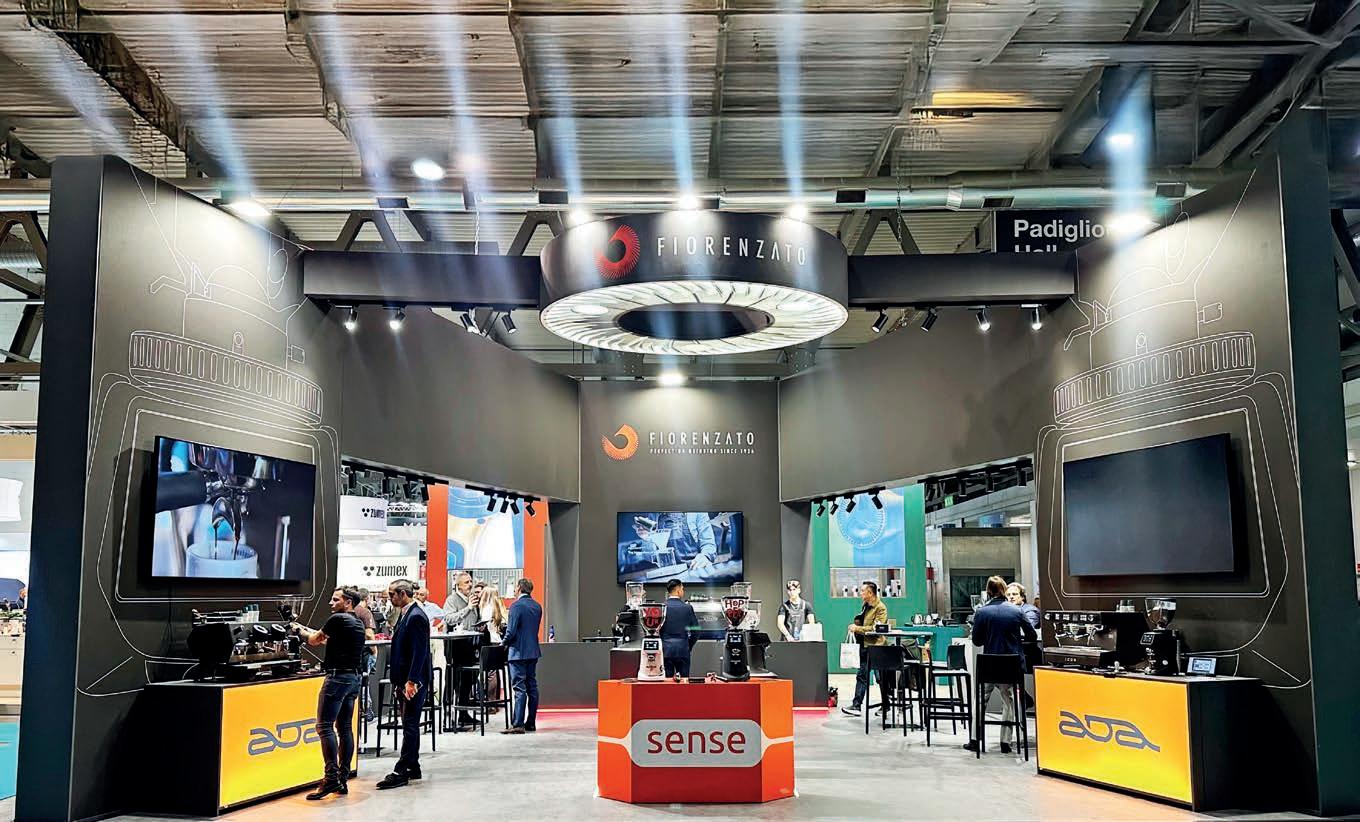
Coffee Machine Technologies previews some of the most exciting technological innovations on display from Host Milano that will soon be hitting Australian shores.
Like most of the co ee world, Co ee Machine Technologies (CMT) was embedding itself in the global industry at Host Milano in October – not only as attendees, but also as exhibitors.
e equipment supplier sent a team of four representatives over to Milan to meet partners, strengthen relationships, and gain valuable insights into how the next generation of co ee equipment technology can bene t Australia’s café and roaster industry.
General Manager Gianluca Colangeli was one of those four representatives walking through a crowded Fiera Milano in October. He’s a seasoned attendee of the enormous show yet is always surprised at the sheer level of innovation on display.
“ e size of Host Milano is just astronomical,” says Gianluca. “Seeing the technology evolve to what it is now is just mind blowing.
“Even two years ago when I went, I thought ‘how much further can the technology go? It can’t get better than this’, but it has. Almost every co ee equipment manufacturer was there, and I don’t think any segment –grinders, automatic machines, traditional machines – overpowered the rest.
“ ere was a great blend of everything which is a great sign for the market here, because it will give cafés, roasters, and other places that serve co ee extra versatility to operate how they want.”
With hundreds of exhibitors spanning
almost the entire hospitality sector, bearing witness to everything Host has on o er is always an incredible e ort, but Gianluca discussed some of his insights into the most exciting pieces of equipment on show that will be available in Australia soon.
As the sole distributor of Fiorenzato grinders in Australia for more than a decade, CMT has a close relationship with the Italian manufacturer, but even with that intimate knowledge of each other, Gianluca says he’s “never seen anything like” the new grinder technology set to hit Australian shores in mid-2026.
“ e most exciting thing I saw was the Fiorenzato ADA, which uses the grinder’s existing sense technology but also connects to the ow meters of a co ee machine to assist the barista by telling them if their grind is out of size for a recipe,” says Gianluca.
“It’s still a grind by weight grinder, but because it’s connected to the ow meter it knows exactly what the co ee machine and the extraction are doing. If it’s out of sync with your recipe it will tell you to adjust the grind ner or coarser to x it.”
Fiorenzato also unveiled its new Ready. Set. Grind (RSG) ring, which has been designed to even further enhance usability. Its silicone grip, spring-assisted motion, and more re ned internal gearing is aimed to
support speed even in heavy use.
Together, ADA and RSG represent Fiorenzato’s vision for the future of grinding, and are key to the brand’s goal of creating the consistency all baristas crave.
“With this grinder, your co ee extraction is not going to be di erent to what the recipe speci es,” says Gianluca. “You’re going to get the best out of every extraction because it’s giving you real-time knowledge of what’s happening.
“If you’re super busy and using a di erent grinder, you won’t even be looking at if the grind is out – that means you could be making bad co ee a er bad co ee without even realising.”
According to Gianluca, Fiorenzato is currently preparing to start widespread manufacturing of the grinder early next year, but not before CMT is o ered one nal opportunity to contribute to its design.
“Before they start manufacturing the ADA, they’re going to send us the rst ever unit produced which was on display at Host, so we can test it and help them improve it before they put the hammer down,” he says.
“ e relationships we have with our suppliers like Fiorenzato is unlike anyone else in Australia. ey lean on us for information and feedback on their products, then bringing them into our market helps everyone grow together.
“We toured the factories of several of our suppliers, including Fiorenzato. Seeing the
way they make their machines, the way they make their blades in-house, the way they’ve set up their production line was amazing.
“ ey’re such a huge operation, them coming to us and asking for advice for what would work in Australia is really rewarding, because it means they trust us. What is usually released in new products comes as a direct result of that feedback.”
While engaging with trusted, high-level suppliers like Fiorenzato was a key part of CMT’s presence at Host, the Australian business was also in Milan to display some of the latest leaps forward in its own machine and equipment brand – Viper.
e new line of Viper espresso machines was previewed to great fanfare, but Gianluca says it was the brand’s automated milk texturing system that proved a real hit with attendees.
He says it provides a critical point of di erence from competitors also looking to take on the milk texturing market.
“We had a lot of positive feedback from people coming to look at it, and even though there are competitors on the market in this space, the Viper sets itself apart with size and price,” he says.
“It has a small footprint, is super compact, and is simple to clean while still delivering incredible results.”
Using advanced sensors to manage aeration and heat, the Viper is designed to deliver consistent results across a range of milk types while staying low maintenance. at consistency, Gianluca says, means whether cafés are training new baristas with the machine, or more seasoned professionals are incorporating it into their processes, the nal result is more likely to stay the same. “ is technology means you won’t need
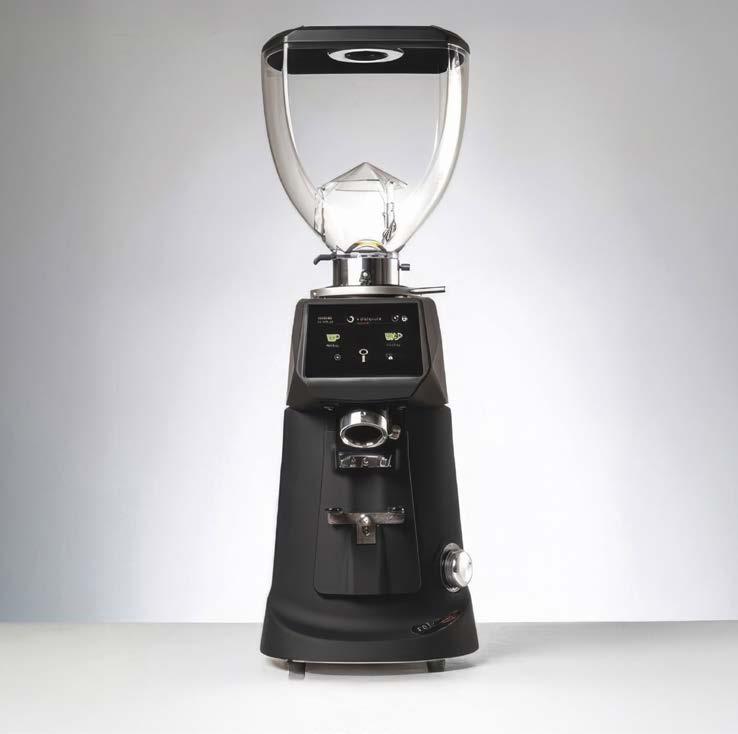
a really trained and high-quality barista foaming milk, and even if you have that it helps and assists them to speed up and maintain a really high level of consistency,” he says.
“It’s the same with the Viper co ee machines, the steam pressure and advances within the machines is going to help baristas have more consistent extractions.”
Some of the most exciting innovations in the co ee space at Host were not restricted to the
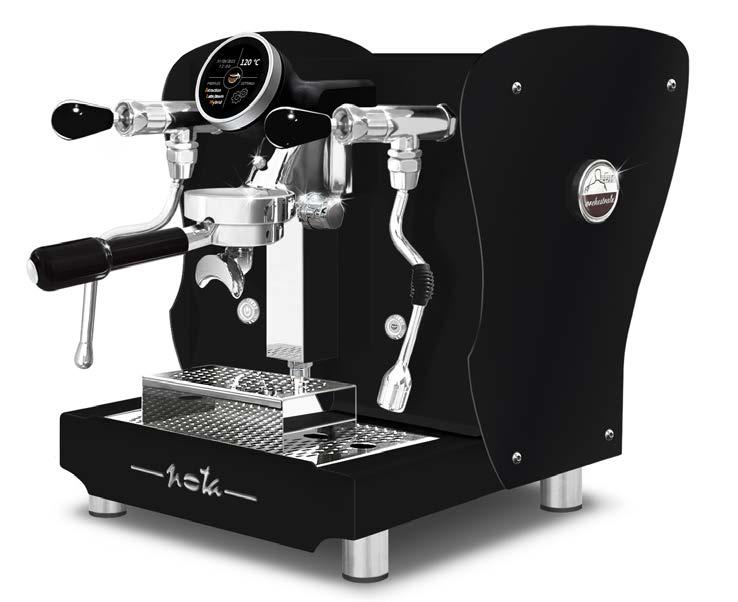
commercial machine and equipment space. Popularity of home machines continues to boom across Australia and the world, and Gianluca highlights a pair of products to keep an eye on. e Orchestrale Nota Evo, and the Elektra Jolie.
“We’ve supplied machines for the home market ever since we started the sales side of our business, and it’s always been incredibly popular. e market is evolving, and people are wanting better equipment for home,” says Gianluca.
“Orchestrale have been making the Nota line for about 15 years now, but they’ve now launched a new machine for home.
“ ey’ve evolved it into this model which has a ow meter, solenoid valve, and gear pump, which means you can play with the pressure pro ling and pump pressures through the machine.
“It also has a really cool, round display on the grouphead that doubles as a touchscreen and a dial. I’ve never seen anything like it for the home market, which is incredibly exciting to see.”
Elektra, on the other hand, has targeted simplicity of use in the home kitchen with its new Jolie.
“ e Jolie comes with a E61 group and an integrated app. It’s a great example of the advancements in style and adaptability machine manufacturers are coming up with to suit home barista needs,” says Gianluca.
“It’s super easy to use with its app interface, and it can connect to Alexa and similar devices to help speed up that co ee-making process. It gives the barista full visibility over every stage of extraction.”
For more information, visit coffeemachinetechnologies.com.au
Regular coffee machine maintenance is vital to ensure cafés run smoothly without any downtime. Coffee Works Express shows why good habits and training matter.
What’s better – a visually striking at white that leaves a bad a ertaste or a simple long black with no faults in its avour? Most choose the latter.
At the heart of any café beats a good co ee machine. Keeping that pulse steady is a barista, cra ing consistent and aromatic cups of co ee. Marketing manager at Co ee Works Express (CWE) Natalie Kollar identi es the elements that make or break the experience.
“To consistently make fantastic co ee, there’s a formula,” she says. “Well maintained equipment, a well-trained barista, superb water quality, and the perfectly roasted beans.”
But, according to Natalie, a single missing element a ects the quality of the cup. While co ee-making skills are essential to delivering satisfaction for daily customers, the foundation lies in a healthy machine.
“Regular co ee machine maintenance is a critical element to making great tasting co ee,” Natalie adds.
Despite this, maintenance can slip down the list of priorities once the morning rush takes over. For the team at CWE, that’s a habit worth breaking. With nearly three decades in the co ee industry – from barista and café owner to trainer and café ow designer – Natalie takes pride in knowing that clean machines make better co ee.
She says a well-maintained machine produces co ee that is balanced, smooth and consistent. Neglecting maintenance can lead to problems.
“A dirty, unmaintained co ee machine leads to bitter, burnt, ashy tasting co ee,” she says.
Not only does poor maintenance change the avour of co ee, it can also a ect milk quality and hygiene caused by contaminated boilers. Bitterness and sourness are warning signs that something inside the machine is not working as it should.
Beyond avour, poor maintenance can put strain on a machine’s performance. When group heads leak, boilers clog, or temperature uctuates, consistency su ers – and damaged machines can become irreparable. For cafés that pride themselves on quality and reliability, those small technical issues quickly become expensive and reputational ones.
To love the cra means to care for the tools that sustain it. For baristas, it means taking a genuine interest in the machine and getting to know it. By staying attentive through regular checks, the delivery of quality co ee can remain consistent. A single lapse can lead to
Frequent maintenance is key to making great tasting coffee,
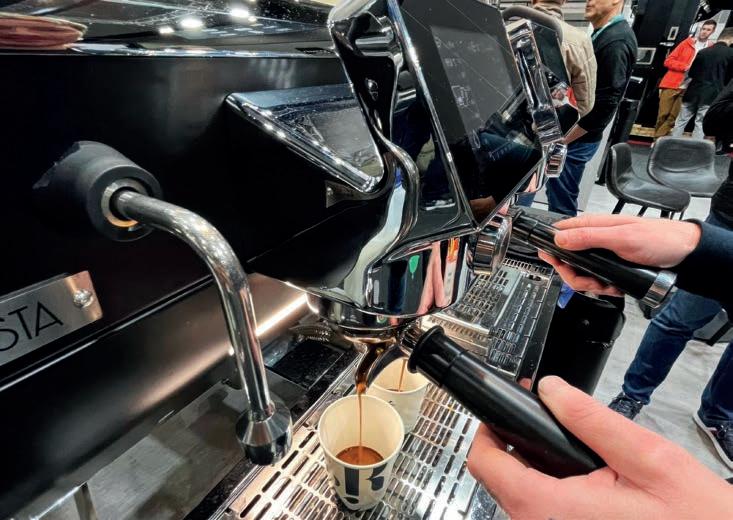
common mistakes such as not changing water lters at the correct intervals or skipping daily chemical back ushing.
When these small routines are skipped, the build-up is gradual but damaging. Oils, milk residue and scale can accumulate, making the system work harder and altering temperature stability. Over time, extraction becomes unpredictable and co ee loses its clarity of avour.
“A good barista is in tune with their machine, and they know the e ect that good maintenance plays on in-cup quality,” Natalie says.
She notes that poor-quality water, and neglecting grinder cleaning and calibration, are o en overlooked. Natalie encourages baristas and café owners to have a consistent plan to prevent further damage. With a strong understanding of machine care, even the smallest act of maintenance goes a long way in safeguarding the business.

“From intermittent back ushing, wiping down the steam arms, to end-of-day group head cleaning, the barista knows what is needed to produce great co ee time and time again,” says Natalie.
But what happens when equipment breaks down?
The driver and the mechanic
Natalie paints a picture: the barista as the driver and the co ee machine as the vehicle. No matter how well trained and knowledgeable the driver is, they still require a mechanic who can replace worn parts and help the engine run again.
“A technician is like the mechanic,” she says. “ ey know what to do when something goes wrong and can x the problem.”
As part of CWE’s sales and service support team, Michele Cavina adds that the barista is the “ rst line of defence” in every café. Supporting the baristas are the technicians who handle the deeper work, from water ltration checks and internal descaling to pressure calibration and replacing worn parts. While a barista can keep a machine running day-to-day, a technician ensures that it continues running for years.
However, in too many cafés, CWE nds that service calls only happen once something breaks. Waiting until failure costs far more than scheduling preventative maintenance. Michele says reactive habits are the main reason cafés face unnecessary downtime. By the time these symptoms appear, deeper cleaning or part replacement is usually needed.
For CWE, the partnership between
barista and technician is at the heart of quality assurance.
“Proactive maintenance is always more coste ective than emergency repairs,” Michele adds. “When both roles work together, machines last longer and perform better.”
CWE has built its reputation on taking a complete service approach. From importing premium co ee systems and installing them through to a er-sales care, the company o ers preventative maintenance schedules, rapid response times and guidance on correct ltration systems for each location.
e company’s network of trained technicians and contractors operates across Australia, o ering on-site servicing and a er-hours technical support. at reach means café owners can depend on assistance wherever they are located.
In tandem with fast service response, CWE has access to premium authentic spare parts and manufacturer support across Wega, Astoria, Storm, Mazzer, BNZ, Isomac, Frake, Slayer and CMA-made espresso machines and grinders.
e company also invests in training and education. For cafés that want to implement best practice, training is just as crucial as good equipment. A barista who understands how the machine works can identify issues early and prevent them from escalating. is
practical knowledge saves money and ensures that maintenance becomes part of daily work ow rather than an a erthought.
Technicians at CWE work alongside baristas and managers, showing them the right cleaning methods and maintenance schedules. Drawing on Natalie’s long background in barista training and Michele’s technical expertise built in the co ee industry,

the team understands the operational pressures of a busy café and delivers solutions for speci c needs.
Natalie says that if baristas and café owners care for their co ee machines through daily care routines and regular service bookings, their co ee quality will remain high and operations will thrive.
“Our goal is to keep machines performing at their best so customers can serve consistent, high-quality co ee every day,” says Michele.
As the industry continues to evolve, cafés that prioritise maintenance will stand out for all the right reasons. Well-cared-for machines deliver stable pressure and temperature, which in turn deliver the perfect espresso shot.
“Great co ee doesn’t just come from great beans, it comes from well-maintained equipment,” says Michele.
“Treat your co ee machine like the heart of your business, because it is.”
For more information, visit www.coffeeworksexpress.com.au



With Australians continuing to double down on specialty coffee in non-traditional settings, how can semi-professional machines in office spaces and homes actually be a boost to cafés?
Australia’s espresso culture has long been lauded as one of the best in the world, and now that culture is extending from the nation’s famous cafés and co eehouses and into homes, o ces, and nontraditional settings.
From co ee-loving households investing in grinders and home machines and o ces looking to boost convenience for their employees to venues seeking a better co ee o ering – and everything in between –there’s signi cant demand for machines that deliver café-grade co ee without a full-scale professional setup.
La Pavoni is the latest manufacturer to o er a machine that straddles simple domestic and professional machines with its Botticelli Specialty Dual-Boiler. While it’s designed to be capable of matching those in traditional cafés, Head of La Pavoni Australia, Leon Wolf, says machines like the Botticelli are actually advantageous to elevating the broader spectrum of co ee.
“We can’t replace café culture and we can’t replace community with domestic use, says Leon. “But what the Botticelli allows domestic users and home brewers to do is master the cra and lean into their local cafés and baristas as educators.
“With our expanding co ee culture in this country and now being crowned the best in the world again with Jack Simpson’s World Barista Championship (WBC) win, that’s just showing the evolution of the home user.”
Leon believes co ee-discerning users are looking to recreate some of the themes that led Jack to victory at the WBC, and the Botticelli will help them add some added personal air to their brew.
“You look at what Jack talks about with the beans and the growers, the processes, the avours and personal touches to co ee, people are trying to create that in their own homes and without the right equipment they are unable to achieve these goals,” he says.
“ e Botticelli li s up the skill level and expectations of those home users, which can only be positive for the local market.”
“It can be implemented for home use, but also commercial applications like offices and showrooms for people looking for that café quality coffee in their work or home environment.”
Leon Wolf HEAD OF LA PAVONI AUSTRALIA
Leon says the Botticelli is not a simple consumer appliance. Rather, it is a semiprofessional unit engineered for precision use.
Its dual-PID boilers are a major point of di erence, with the Botticelli having separate PID control for the steam and brew boilers to enable users to dial in and hold more exact temperatures for both milk steaming and espresso extraction.
“Many machines in this class rely on a single mains switch that powers both boilers at once,” explains Leon.
“With the Botticelli, users have the exibility to control each boiler independently – so if you’re just pulling espresso shots, you only need the main switch on. But if you’re steaming milk or drawing hot water, you can choose to activate only the relevant boiler.”
is granular control over each boiler is geared towards growing that inner co ee connoisseur and promoting di erent settings for di erent beans.
Lower brew temperatures highlight acidity and oral notes, while higher temperatures emphasise body and sweetness. is means users are more likely to get the best out of a light Ethiopian roast, a dark South American roast, and everything in between.
“Dual PID (Proportional-Integral Derivative) boilers lets you customise steam and brew temperatures independently, which is crucial when you switch between light and dark roasts,” says Leon.
“ e purpose for us as a brand is to have those products that get people into becoming the best barista possible. Having dual PIDs means they have control over temperature not just for brew, but for steam.”
e Botticelli can also be plumbed directly into mains water for workspace and highuse home applications, which removes the need to re ll a reservoir and making it more practical for shared use.
It also features competition shower screens and an all-stainless-steel chassis.
Where it sits in the market
e Botticelli is aimed at a niche looking for more tactile control than entrylevel machines but want more reliable performance and advanced features like pressure pro ling and adjustable PIDs
without stepping into a full commercialscale setup.
“ is is the top end of the consumer market for domestic use,” says Leon. “It can be implemented for home use, but also commercial applications like o ces and showrooms for people looking for that café quality co ee in their work or home environment.
“We look at it in the context of the Cellini Mini, this is our entry point for the user who is coming from a more generic domestic machine, then this machine enables people to become more of a barista and have more manual control.
“As they start to learn their cra of making great espresso and lattes, it gives great exibility to explore di erent types of extraction for co ee.”
Leon says another commercial string to the bow of the Botticelli is how it can t into the rising popularity of gelato amongst younger consumers.
“We’re seeing a lot of small gelato bars looking to have the ability to pull shots to support their gelato making rather than serve co ee,” he says.
“But for the home user or the o ce worker, it gives that exibility to create their own cup of co ee.
“Whether it be macchiatos, piccolos, lattes, espresso, or anything else, the variation of co ee this machine can create is really giving people the tools to boost the skill level of all types of co ee consumer.”
For more information, visit au.lapavoni.com
LA PAVONI BOTTICELLI SPECIALTY DUAL BOILER
Key features
Dual PID boilers; Brewing Pressure Pro le Control (BPPC); competition shower screen and baskets; option to connect to mains water (plumbable); ability to switch o steam boiler if not required
Shaun Kumar, JDE Peet’s Coffee Ambassador for Australia, gives some top tips for choosing the right blends for your café.
Knowing your core customer is the secret to every café’s success, according to Shaun Kumar, JDE Peet’s Co ee Ambassador for Australia. Everything boils down to this, and armed with this vital knowledge, you can con dently progress to choosing the right co ee blends to match your clients and your café’s vibe.
“ e rst thing is to know your customer and it’s really important to know your core clients,” Shaun says. “Are you in the CBD and they’re o ce workers who want a fast, consistent takeaway co ee, a casual grab and go place?” Shaun says.
“Or are you in a suburb where people have more time to sit and chat, enjoy more of a café experience and a meal which might come with repeat co ees?”
A second important component is knowing what vibe the café owner wants and how they want their sta to run the co ee program.
“Is it going to be a quick takeaway which means you might o er one really good milkbased co ee, and that same blend you would do as milk in a black – so that’s your vibe,” Shaun says. “Or are you going to o er single origins, lter co ee, a batch brew?”
Shaun believes café owners should avoid making the mistake of copying what everyone else is doing. “When it comes to choosing your blend, there needs to be a bit of di erentiation to help a customer choose your café over someone else’s,” he says.
Sustainability and recyclability also come into the mix, he adds. Some may want to feature an origin blend like Guatemalan, Central American or African.
Clients of cafés in youthful dynamic suburbs such as Sydney’s Newtown or Melbourne’s Fitzroy, for example, may prefer beans that are responsibly sourced. He advises cafés to proudly display this information to let consumers know they are doing something good by buying this blend. JDE also provides cafés with display materials to showcase this information.
“Beans sourced through JDE’s global program, Common Grounds, can be part of various community projects,” Shaun says. “For a café in these areas, this would be part of the vibe you’re going for.
“ ese things can make your café stand out; if you have signs showing your $5 co ee is being responsibly sourced and helping communities in Africa, versus a $5 co ee in the next venue with no mention of that and no compostable cups, where are people more likely to buy their co ee from?”
JDE is big on sustainability and was the only co ee company ranked in Time
magazine’s top 500 most sustainable companies worldwide in 2025.
Another thing to consider when choosing blends is cup type.
“Are they aqueous biodegradable takeaway cups or porcelain cups because co ee tastes di erent in certain vessels?”
e same co ee will taste di erent in four di erent cup types, he adds.
Roast pro le, blend components and the base should be considered when making blends. While darker co ees are generally designed to blend with milk better because they have more cut through, lighter co ees are better served as black co ee.
Brazilian co ee, for example, is generally a base and gives the rich pro le of a chocolate, nutty avour. A medium to dark roast blended co ee would be suited to cut through the milk.
“If you’re serving 90% or 80% milk-based co ees, you need to cater for a blend, as opposed to a single origin,” he stresses.
“JDE’s Campos, Piazza D’Oro and L’OR are predominantly designed as a blend because they’re designed for milk-based co ee drinkers.”
Campos Superior, JDE’s agship superior blend, is what Shaun recommends for milk co ees, but it can also be used for black co ee. Piazza D’Oro’s Mezzo is the most popular Piazza D’Oro blend, and single origin Colombia and Dolce blend can be used for black or milk co ee.
“We’ve got a whole range between blends and single origins so we can cater to everyone, depending on what the café is looking for,” he says.
Most cafés generally have milk orders going
to a blend and black co ee orders coming out of the single origin. e milk co ee range normally stays the same to maintain consistency as clients keep coming back for a consistently good co ee, Shaun says.
Black co ee origins change regularly with seasons and harvest cycles which keeps customers engaged. Currently JDE has six single origins such as Tanzania, Kenya and Colombia. e taste pro le for Piazza D’Oro’s Mezzo is milk chocolate, caramel and to ee, all through the milk while for Campos Superior it’s rich caramel butterscotch and sweet red fruits.
“Both of these co ee blends are responsibly sourced and part of Common Grounds,” Shaun adds. “ e choice might come down to taste testing by café owners and baristas.”
A new blend launched at the start of 2025 – L’OR Intense – which JDE is looking to expand, brings something a bit di erent. It’s an intense espresso roast and a full-bodied blend with chocolate and butterscotch.
“ is L’OR blend is popular with clientele who prefer a bit more of a robust co ee to sit on and perhaps just have one at breakfast,” Shaun explains. “O ce workers prefer medium to dark co ee and this is where cafés need to pick their blends, because if you have someone who enjoys two co ees, you want to give them a mellow kind of pro le.
“ ey might have one before they order breakfast and another later. It’s all about maximising your returns, so you want to be able to sell each person two cups of co ee.”
When it comes to keeping co ee as fresh as possible once bags are open, Shaun advises ensuring the hopper is lled rst thing for the morning trade which is better for work ow. Come the mid-morning lull, baristas should
not top it up as much, perhaps only doing half top-ups, so the co ee stays fresher every time it is ground. Around 3pm, he advises lling the hopper again for the a ernoon rush.
Once a co ee is ground, within 10 seconds it starts to lose its aroma and become a bit atter, Shaun says.
“It’s important to ensure your hopper is lled, but not full throughout the day, to manage your ows,” he says. “Also important is storing your co ee a er you close. JDE partners with Airscape stainless steel canisters which seal tight, so no air gets into the co ee beans. ey should be kept in a cupboard or dark place. e number one issue for co ee is oxygen.”
JDE’s co ee is also nitrogen ushed when it goes through packing and this is part of its standard o er across all products to keep them fresh. As nitrogen is heavier than oxygen, ushing it when the co ee
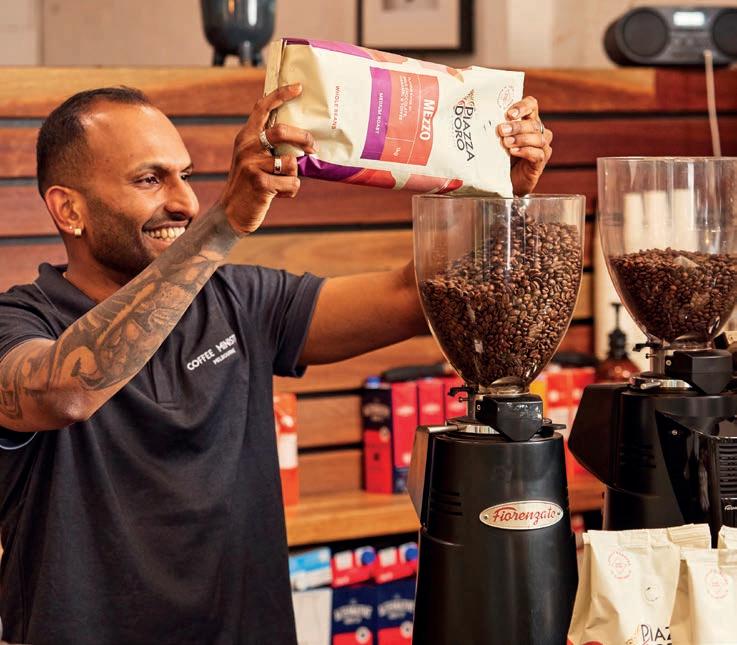
goes in helps protect it from oxygen.
“It’s similar to opening potato chips which are crisp at rst but become soggy and stale if the packet’s le open,” Shaun says.
While there are many dairy alternatives, Shaun recommends having four milk/nondairy options: a staple cow’s milk, an oat milk, soy milk, and another alternative such as an almond milk.
Having too many milk alternatives makes it too hard to match them with co ee blends, he says. “You’ve got to work out what works for your co ee. is is important because if you get co ee that’s too light, sometimes it’ll react with oat milk or alternative milks,” he adds. Lighter co ees have more acidity, making the co ee react to the milk and split.
“Do a taste test and work out what works for you. is is where JDE can assist; we can advise what partners well with our co ee,”
Shaun says.
“We’ve got a team who is constantly testing because it’s seasonal and we’ve got customers nationwide. ey’ve all got di erent choices, use di erent brands, and we want to make sure that the co ee is coming through more prominently than the milk.”
Marketing is also key and JDE provides umbrellas, A-frames, wind barriers and tailors bespoke loyalty cards.
Bene ts of choosing blends that can be provided year-round, rather than special releases, create consistency because customers want that repeat, great tasting co ee. Stock simplicity is essential for running a café, as is training, and both assist speed of service. e barista who is trained on milk knows what the co ee tastes like, but if it keeps changing, they’ll need to keep retraining.
Again, avour notes depend on your customers. If the café is in a gym, most co ees will be black, as they might have a protein shake added.
“ e beauty of JDE,” says Shaun, “is that we have a range – you can pick and choose to suit everyone.”
For more information, visit piazzadoro.com.au
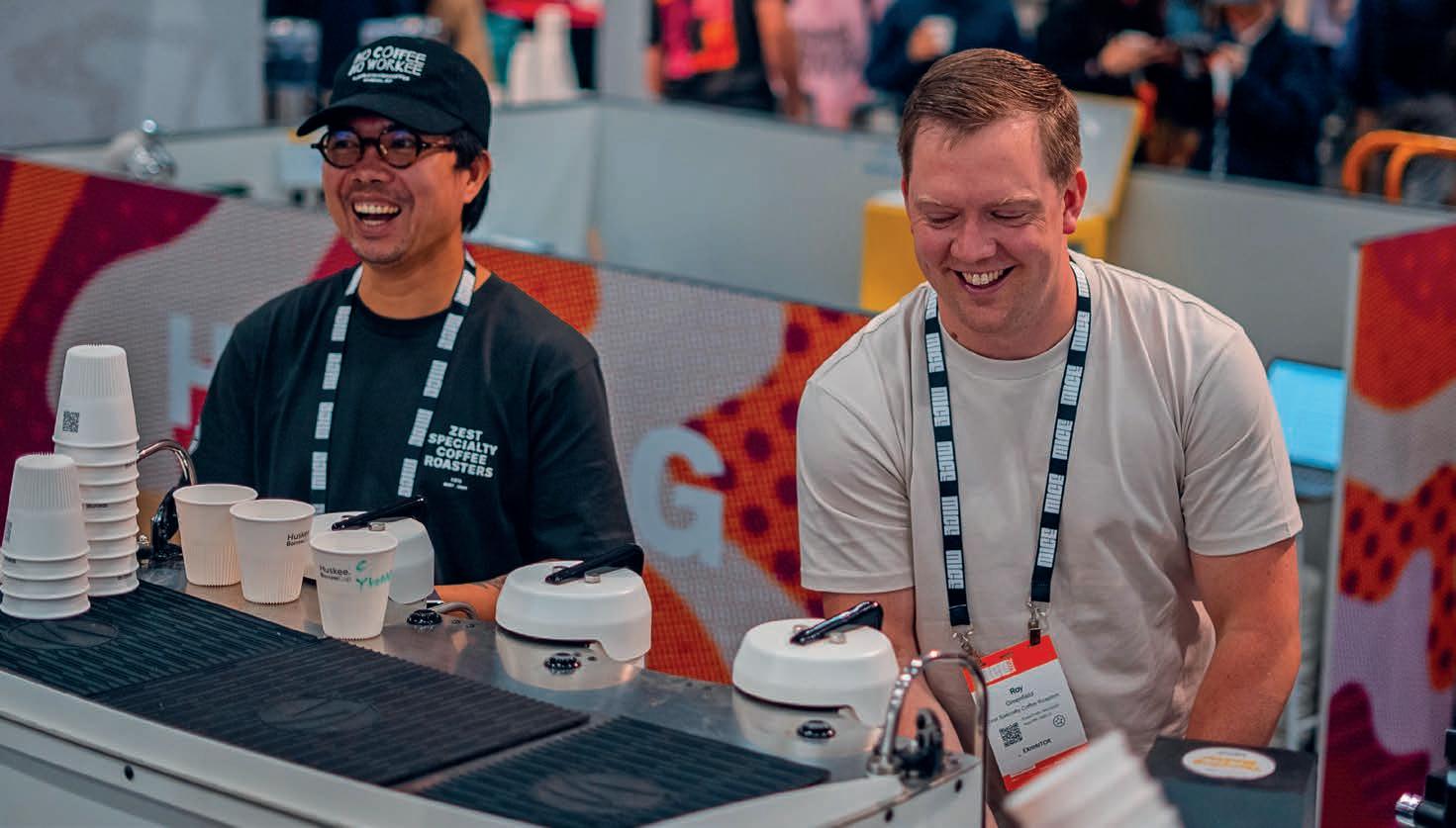

register now
26–28
MARCH 2026
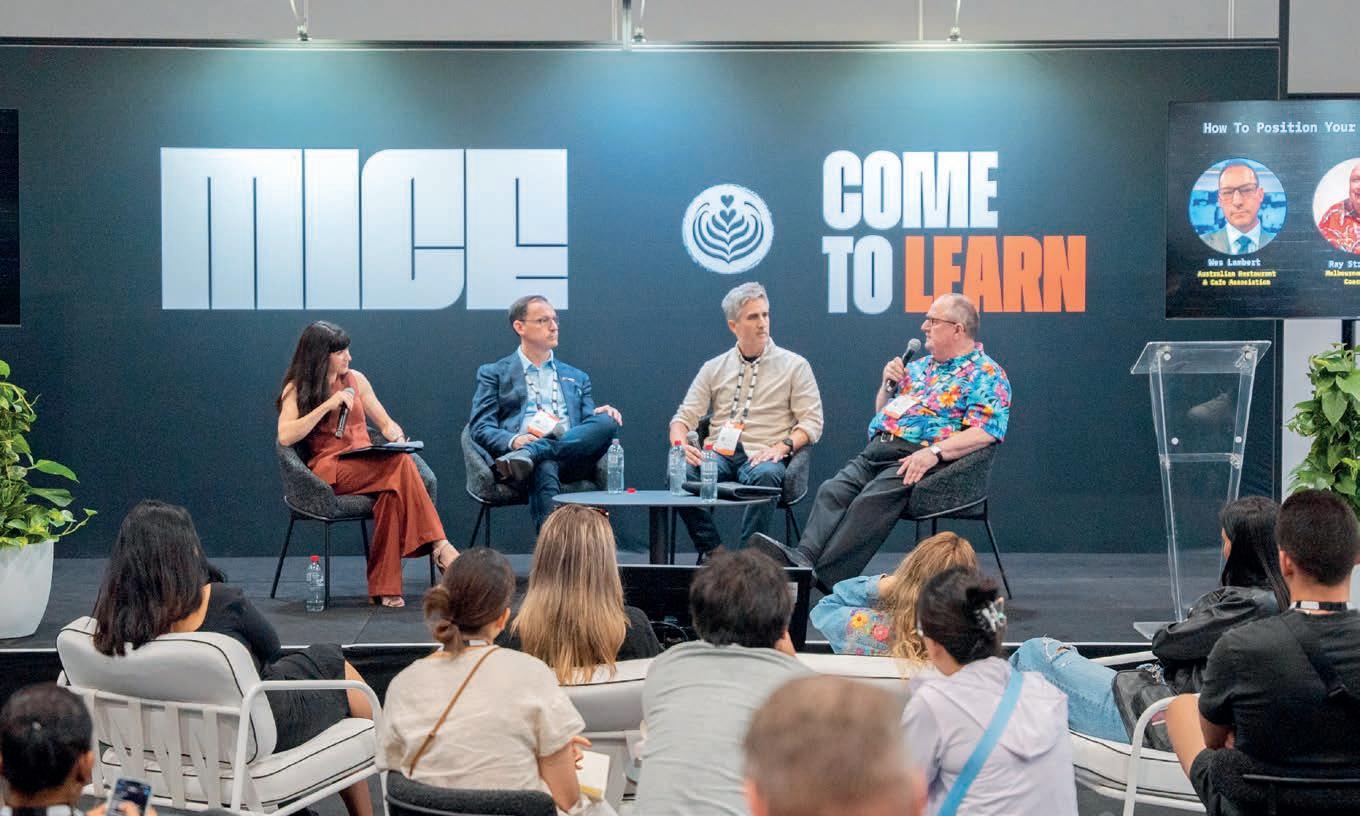
Organisers of the Melbourne International Coffee Expo have released the full education series program designed solely with café owners in mind.
etween chasing trends, managing sta , ensuring consistent co ee quality, and trying to work on the growth of a business, café owners o en wear a dozen hats at once.
at’s where the Melbourne International Co ee Expo (MICE) 2026 comes in. It wants to show its support as a resource for the thousands of café operators around the country with a dedicated education platform for three full days at next year’s event.
While many café owners will head to the co ee industry’s marquee tradeshow from 2628 March at the Melbourne Convention and Exhibition Centre to consider new equipment, suppliers and services for their business, many will head to the Café Owners Education Stage
for discussion on industry issues, trends, challenges, and solutions.
Participation and entry to the 22-session program is included in the price of all MICE tickets, which has been designed to bene t all operators regardless of size or experience.
“MICE is where ideas meet practicality,” says MICE Moderator Sarah Baker, who has curated the 2026 Café Owners Education Series and considers it MICE’s most comprehensive and relevant program to date.
“It’s where café owners can step back from the day-to-day and see the bigger picture of where the industry is headed, while learning actionable tips they can implement tomorrow to ensure their business isn’t just existing but thriving. MICE is where the café community
comes together and the Café Education stage is a place where café owners can connect on shared industry topics.
“Our goal is to create an environment where owners feel empowered, inspired, and ready to take their business to the next level.”
Abdullah Ramay, CEO of Pablo & Rusty’s Co ee Roasters, is one of the panellists returning to the stage in 2026.
At MICE2025, he participated in an informative debate on the co ee price crisis and how cafés can have a conversation with customers to increase what they charge. Next year’s session will involve part two of the discussion on e Co ee Value Gap, and delve deeper into the disconnect between low local co ee prices, the higher costs of production and international pricing.
Abdullah says educational, knowledgesharing opportunities such as MICE’s panel discussions are vital, explaining that “co ee evolves when people share what they’ve learned”.
“Events like MICE give us the space to pause, re ect, and exchange ideas that move the industry forward,” he says.
“Australia’s co ee scene exists because people before us were generous with their knowledge. ey were willing to dream big and brave enough to make it a reality. Now it’s our turn to do the same – by challenging assumptions, testing new ideas, and shaping a better path for the future of co ee, the people that make it possible and those that love to enjoy it.”
Several topics in the 2026 MICE Café Owners Education Series excite Abdullah.
He’s especially looking forward to conversations that dig deeper into reshaping the future of co ee, as well as understanding how the industry can better value Australia’s renowned co ee culture through pricing.
“Re ecting on specialty, where we’ve come from and where we go next will also be of interest. So will exploring which principles in hospitality never change, even as everything else does. Discussing how AI and automation can enhance, not replace, the café experience. And unpacking why leases have become such a major source of pain for cafés, and what owners can do to get smarter about them,” Abdullah says.
“I’m also excited to explore the café and co ee trends that will de ne 2026. From new formats and technology to shi ing consumer habits. ese aren’t just topics to present; they’re conversations to have together. e real value of MICE comes from those moments of shared insight that make us all see things di erently.”
Before a café can thrive, its foundation needs to be solid. Many operators spend years learning lessons the hard way, from commercial leases to retail laws and employee visas.
Café Management 101 kicks o the series, with this session designed to give owners the clarity they need on everything from P&Ls to legal rights, with practical tips that prevent costly mistakes.
Similarly, the session titled How to Establish Your First Café and Be Pro table builds on this foundation by exploring nances, independent versus franchise models, supplier networks, and operational planning.
Jamie Wolf, co-owner of Obi Co ee and Slow Daze Co ee in Western Australia, is a con rmed panellist for this session that will discuss everything aspiring business owners need for their rst café venture.
“ e more we share as an industry and relate to others through the challenges and successes we’ve experienced, the stronger we can move forward together. ese opportunities help us learn from each other, build community, and continue to evolve collectively,” he says.
“I’m looking forward to discussing the way we run our spaces to ensure they’re safe, inclusive, and pro table all at the same time, and how we can strike that balance sustainably.”
Once the basics are secure, strategic sessions like How to Scale Smart and Longevity in the Café Market will focus on future-proo ng café businesses.
Menus: Diversification and trends
For café owners, menus are more than a list of drinks and food; they’re a tool for growth, customer retention, and pro t.
Sessions such as Curating the Ultimate Café Menu and e Wellness Era of Co ee will help owners discover trends to di erentiate their food and drink menus, balancing creativity
“Australia’s coffee scene exists because people before us were generous with their knowledge. They were willing to dream big and brave enough to make it a reality. Now it’s our turn to do the same.”
Abdullah Ramay CEO, PABLO & RUSTY’S COFFEE ROASTERS
with commercial viability. From functional beverages and protein co ee to smaller portions and emerging health trends, can cafés meet evolving consumer expectations without losing their essence?
e Cold Co ee Revolution session will continue in a similar vein, asking whether Australia has nally caught onto the chilled beverage boom? It will explore iced drinks, cold brews, matcha beverages, sparkling tonics, and other chilled innovations that can drive o -peak sales and diversify revenue streams.
Signature drinks and menu innovation will also feature in sessions like Matcha Madness and Signature Drink Takeover, teaching operators how to integrate trending beverages and ensure they become a secret ingredient to extra café revenue.
Meanwhile, Beyond Co ee – How to Create the X Factor will prompt operators to think bigger than beverages. Community events, wellness activations, a er-hours programming, and multipurpose spaces all help cafés build loyalty, engage sta , and stand out in a competitive market.
“Innovation doesn’t just happen in the
One-on-one demonstrations at MICE help café owners make informed purchasing decisions.
kitchen or behind the espresso machine,” moderator Sarah Baker notes.
“It’s about creating moments, experiences, and connections that keep customers coming back. e cafés that succeed in the long term are the ones that can innovate without losing the essence of what makes them special. I’m excited for some prominent Australian venues to share the secrets to their success and hopefully inspire the audience to nd their own niche that could be the key to unlocking more customers and more nancial opportunities.”
For many owners, the biggest headaches can come from managing people and processes.
Sessions like How Can Automation Deliver a Premium Experience? and AI in the Café Space will explore how technology can ease operational pressures without sacri cing the human touch. From invisible work ow tools to AI-driven e ciency, these talks will show how cafés can improve consistency, reduce stress, and free up sta to focus on the customer experience.
Similarly, Has the Art of Customer Service Disappeared? will remind operators that, even in a high-tech world, the essence of hospitality remains unchanged. Exceptional service drives repeat business, sta satisfaction, and long-term pro tability.
“Australia’s food and co ee standards are high, but are we living up to expectations when it comes to hospitality standards? We felt it was important to include this session to discuss customer service, how it’s evolved and whether it really matters to a café’s bottom line,” Sarah says.
MICE2026 will also celebrate the cra side of café operations. Learn from Australia’s Best Baristas will give attendees insight into the lessons top baristas have learned beyond the competition stage, while How to Turn a Hobby into a Career – targeted at master home baristas – will hear from industry experts who
have turned their passion into a career.
Sessions like Five Non-Negotiables From Leading Australian Cafés, e Great Specialty Co ee Debate, and Cafés of the Future will combine lessons on core principles, category education, and forward-looking predictions.
“What is specialty co ee, and do consumers really care? e importance of the specialty co ee category will take centre stage, while also considering the art of education, and whether top-priced co ees can sustain their place on café menus,” Sarah says.
“What does the co ee industry look like in 10 years’ time? We’ll also hear from industry leaders about how beverages, consumption and technology will revolutionise the market and what café owners need to do to be ahead of the game.”
It wouldn’t be a complete co ee program without dedicated discussions around sustainability.
Sessions such as Sustainable Co ee Solutions will unpack how environmental responsibility can coexist with pro tability at every stage of the value chain.
From regenerative farming at origin to energy-e cient roasting, waste reduction at café level, and consumer education, panellists will explore practical ways to make sustainability part of daily operations rather than an a erthought.
Meanwhile, e Future of Australian-Grown Co ee will highlight how local producers are responding to global supply challenges through innovation and resilience. With new hybrids under development and fresh insights from multi-varietal trials, the session will explore how Australia’s emerging co eegrowing regions could become a powerful contributor to the specialty scene.
For café owners, that means the opportunity to connect with growers closer to home, champion local beans, and tell an authentic story that resonates with sustainability-minded customers.
ose eager to look deeper into the forces shaping the global industry can participate in the concurrent educational program, the Global Co ee Report (GCR) Leaders Symposium.
Running before doors open for general admission on day two, the exclusive series will see international thought-leaders and roasters share their experiences and perspectives on where the market is headed, and what it means for those doing business in Australia and New Zealand.
Of course, learning at MICE2026 isn’t limited to the live stage. Across the threeday event, exhibitors will bring education
to life through hands-on activations, from cupping sessions and tastings to smackdowns and sensory experiences that celebrate every corner of the co ee world.
“MICE is your chance to make the most of knowledge transfer from some of the industry’s more renowned personalities,” Sarah says.
“Any café owner should maxmise their experience to MICE with as much education as they can. It’s a once-a-year opportunity and could be the key to unlocking one single idea that can elevate their business to the next level.
“Come for the co ee, but stay for the education. I guarantee it’ll be worth it.”
For more information, visit internationalcoffeeexpo.com
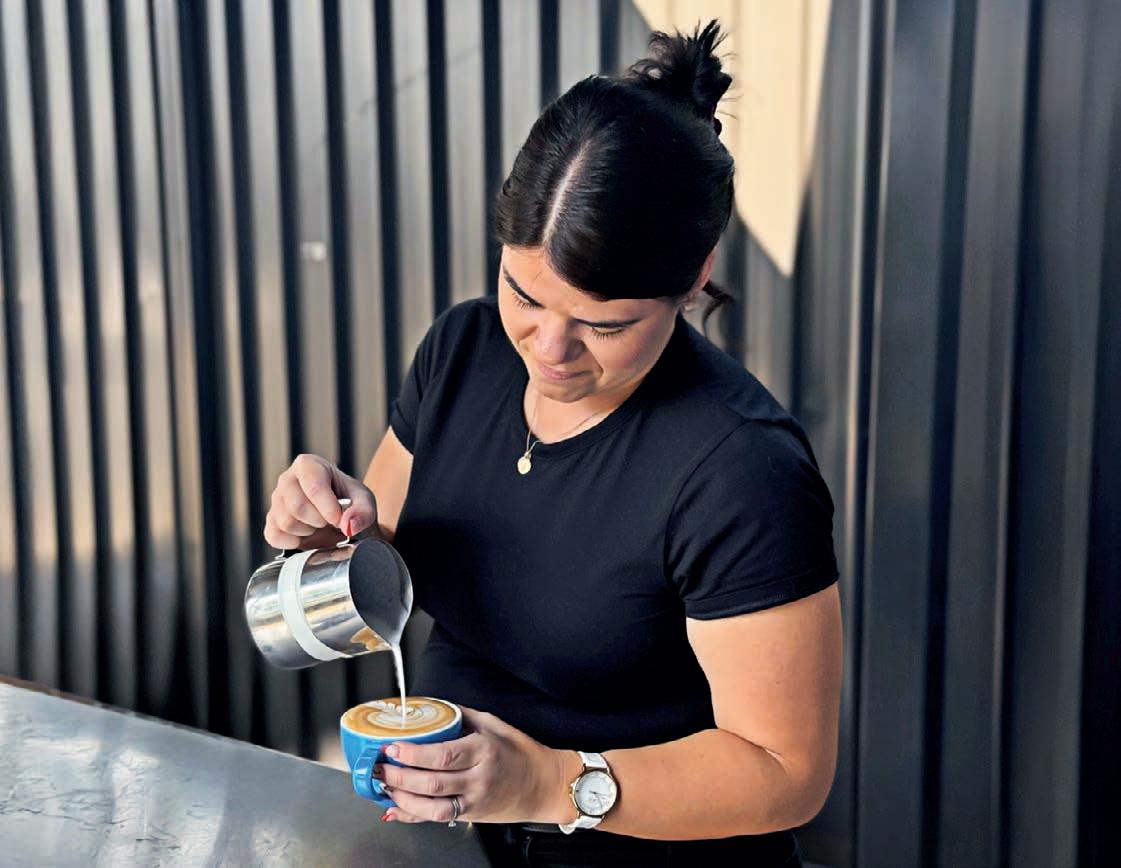
From latte art to tasting notes and everything in between, Merlo has a new-look approach in helping its partner cafés make the best possible cup.
Don’t gatekeep anything in co ee.”
It’s a rule Merlo Wholesale Co ee
Trainer Nikki Spoor lives by when it comes to co ee training – a mindset fully embraced and encouraged across the roaster she represents.
Nikki has a long history with Merlo and the Queensland co ee community. A er cutting her teeth in retail and as a barista and store manager, she was a crucial cog in the opening of its Victoria Point café. Now, she’s the mastermind that helps Merlo’s partner cafés across Queensland and beyond.
She travels around the regions these partners operate in – helping baristas and café workers upskill to not only ensure they get the most out of Merlo’s beans, but to improve their barista cra .
For those cafés further a eld, like in Victoria, New South Wales, or the Northern Territory, Merlo o ers online classes with the goal of achieving the same outcomes.
“For anybody that has a café and uses Merlo, we o er training on-site so they can learn the ‘Merlo way’,” says Nikki. “It’s a great opportunity. I have extensive training, so to be able to pass those skills and knowledge on to everyone else out there is great.
“If they hire people who have never touched or thought about co ee before, or if they have managers that may not have the capability or con dence to teach, that’s where we come into play and teach them ourselves.
“It’s another way of creating really good relationships with customers. Knowing you can call your roaster and say ‘we’ve just hired a lot of new sta and not many of them have experience, can I send them to you or can you come out here’, is a point of di erence.”
While the word ‘training’ may suggest a regimented or long-term program, Nikki doesn’t walk around the café with a steely look and a marking sheet.
Instead, she gets stuck into demonstrations
and answers anything about how to make the best cup of co ee, from grind settings to latte art and everything in between.
“When I come out, people think it’s going to be this formal session where I’m walking around with a clipboard, but I just rock up and we do the session,” she says. “It’s really relaxed, and I think that’s the way people learn.
“It can be something as – dare I say – simple as the best way to brew and serve the co ee, but if there are baristas who have been making co ee for a while but haven’t nailed latte art, I can teach them the basics and help them learn.
“If they don’t understand how a grinder works, I’ll go in and teach the di erence between how a co ee is under-extracted or over-extracted.”
In addition to its wholesale training, Merlo also o ers online consumer training through its Brew Guides blogs, with topics ranging brewing tips for di erent methods, to knowledge around types of co ee beverages
and machine cleaning and maintenance.
Nikki says the most common questions Merlo trainers are asked relate to steaming and frothing milk, and how to dial in and get the perfect texture.
“A lot of it comes down to the positioning of the milk jug,” she says. “Once they get it you do o en see that lightbulb moment. Just being able to show people the di erence rather than tell them is really powerful.”
From imparting the knowledge for new baristas mastering the basics, to helping more experienced sta members improve their game, Nikki says each educational building block adds a critical element to cafés that prioritise improving the customer experience.
From there, forming a knowledge base about the beans themselves creates a powerful selling point for baristas to pass on their education to discerning customers.
“ e co ee industry is always changing and growing, so it’s important to keep up with the trends and make sure your skills are up to scratch,” says Nikki.
“Being able to teach the avour pro le of the beans is important because it’s a point of di erence. If someone goes into a café and is met by a single origin, they might not know what that is, but to have a barista be able to explain it well is enticing, it’s education, and it’s a reason to come back.”
e co ee and café landscape in metropolitan Queensland where Merlo’s
“The coffee industry is always changing and growing, so it’s important to keep up with the trends and make sure your skills are up to scratch.”
Nikki Spoor
WHOLESALE COFFEE TRAINER, MERLO
headquarters is based is similar to that in and around other major hubs across Australia and New Zealand.
Competition is high and everyone is looking for ways to di erentiate in what they o er to keep customers coming back.
e barista is o en the rst and last impression a café can give its potential customers, and one bad experience could mean that customer never comes back.
Nikki says the results of training sessions she and Merlo provide – whether it be teaching new skills or touching up old ones –are o en seen within a matter of weeks.
“You can walk down James Street in
Brisbane and within a few minutes you’ll have walked past 12 or more cafés, and they’re all doing what they do to the best of their ability,” she says.
“If you don’t know how to extract co ee properly, or froth milk properly, you’re going to lose people coming through your door.
“I o en go back a couple of weeks later just to check in, and the feedback is always really good, they’ve bene tted from my time, and they’ve taken something away. Sometimes they say their co ee sales actually improve because they know how to make a better cup of co ee than they did the week before, and that’s the goal.”
Nikki urges café owners to never be afraid to ask for help.
“If you’re a café and you’re struggling, and you think it’s because your co ee isn’t where it should be, take the tools you have to x that and use them,” Nikki says.
“Education is key. It’s important – it’s power. If your sta know from the get-go how to extract a decent cup, texturise milk nicely, you’re going to be in for a good time.
“Co ee is fun, it should be fun to learn and to make, and even though there is far more to it than just putting milk and co ee into a cup, that is, in reality, what you’re doing, so at the end of the day have fun with it.”
For more information, visit merlo.com.au
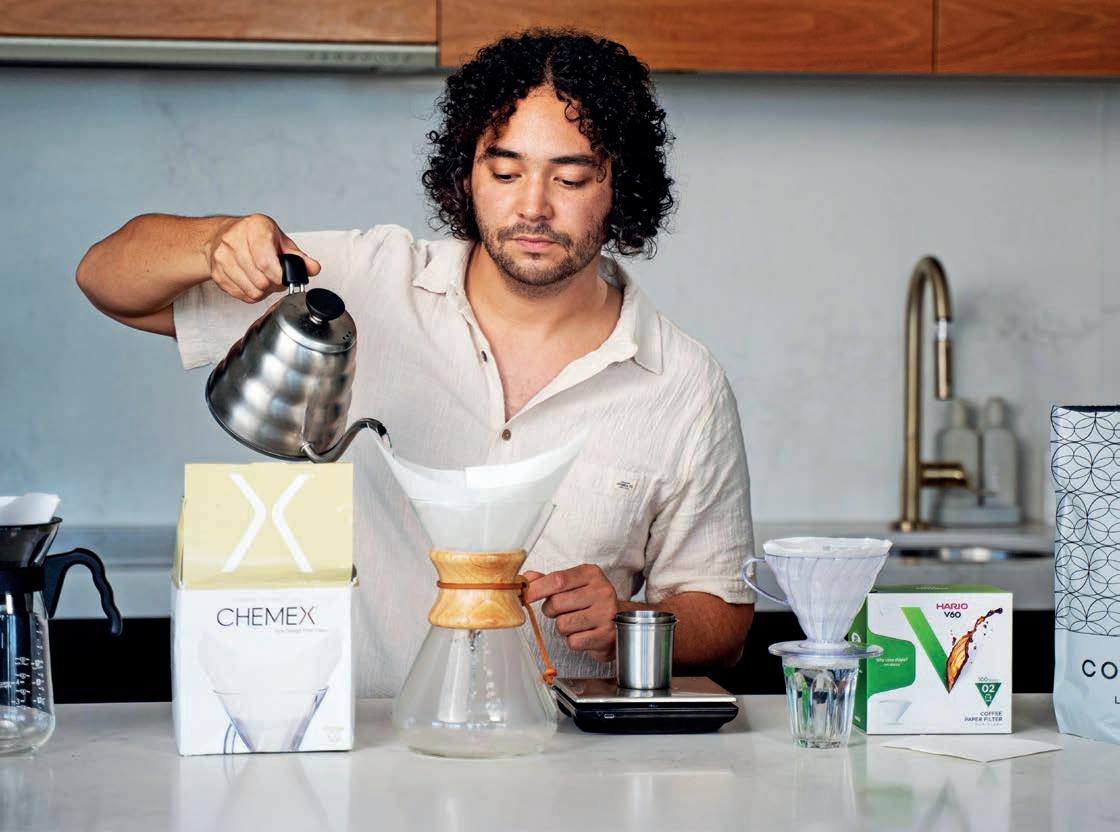

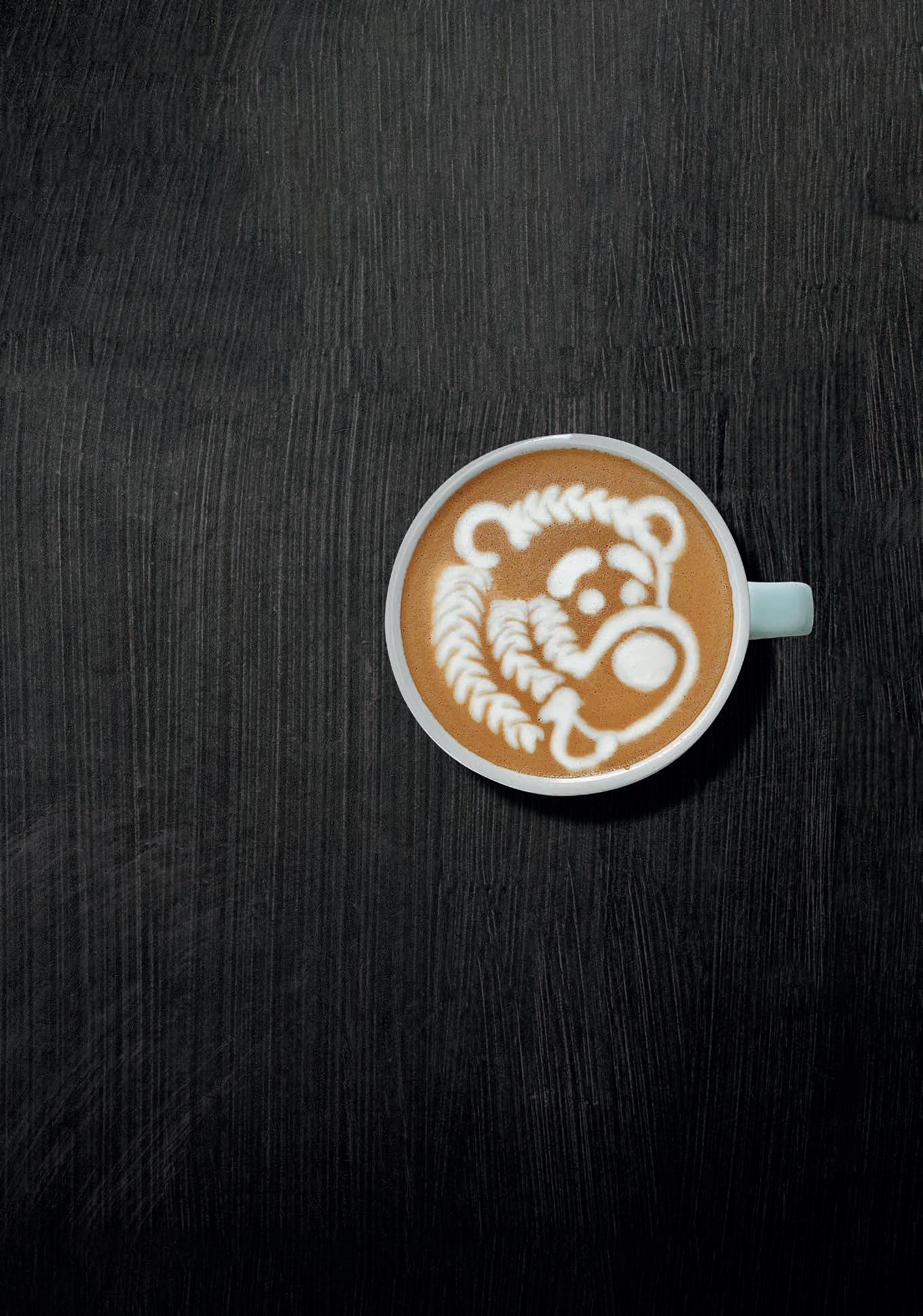
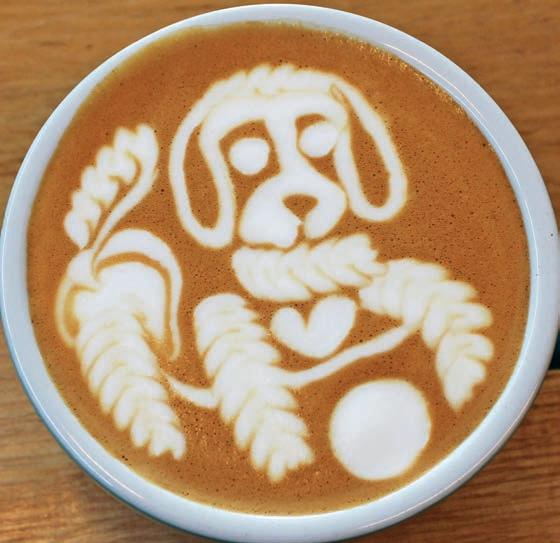
Three-time Australian Latte Art Champion Victor Vu shares his step-by-step guide to recreating the playful puppy design.
According to Victor, this puppy design is one of the most challenging latte-art designs out there because of the many techniques required to bring it together.
“This is a really advanced design. It uses a lot of techniques, including rosettas, tulips, dragging, and drawing with dry foam,” he says.
“What makes it even harder is that all the elements are executed at different angles, but it all comes together in the end to create a really cute and life-like puppy.”
For difficult designs such as this, Victor recommends finessing the pattern on paper before trying to recreate it in the cup. If you can’t work it
out yourself, he suggests joining one of his regular latte art masterclasses hosted at Ona.
This design was originally created by Yuanyi Zhang, known as Zking, who was crowned Chinese Latte Art Champion in 2025. Victor says he’s learnt a lot from Zking’s videos and has met him several times over the years.
“He’s been in the industry for more than a decade and creates some amazing designs. I’m really happy that he won the recent Chinese Latte Art Championship,” he says.
“I’m looking forward to competing against him in the World Latte Art Championship in San Diego next April.”

From the bottom of the tulip, pour a seven-leaf rosetta down the lefthand side of the cup to form the back leg. To the right of the first rosetta, pour an eight-leaf rosetta to form a front leg. Then, at the end of the line, pour a six-leaf rosetta at a slight curve to form the other front leg.
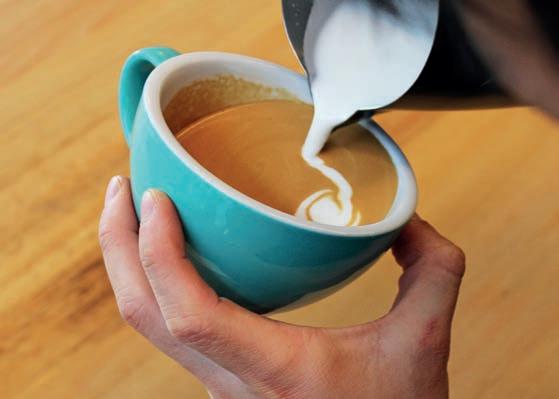
With the handle at the two o’clock position, pour a two-stack tulip on the left-hand side of the cup at nine o’clock. To form the belly, from the bottom of the tulip drag a fine curve towards the handle.
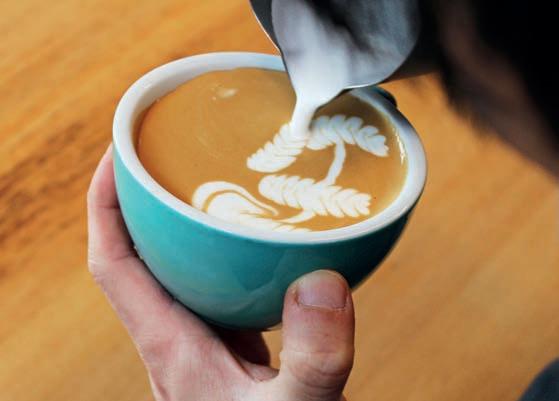
Turn the handle to four o’clock. To connect the front legs and create the collar, pour a small six-leaf rosetta.
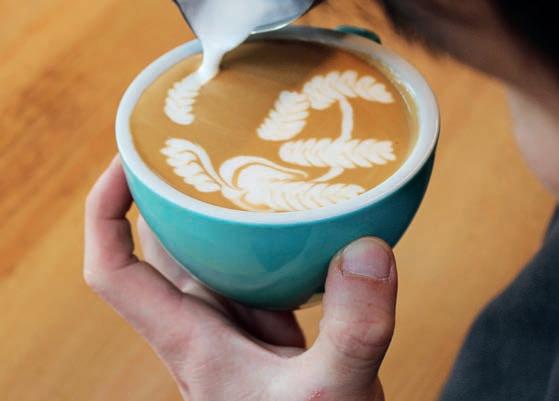
Turn the handle to three o’clock. In line the collar towards the top of the cup, pour a small five-leaf rosetta to form the top of the head.
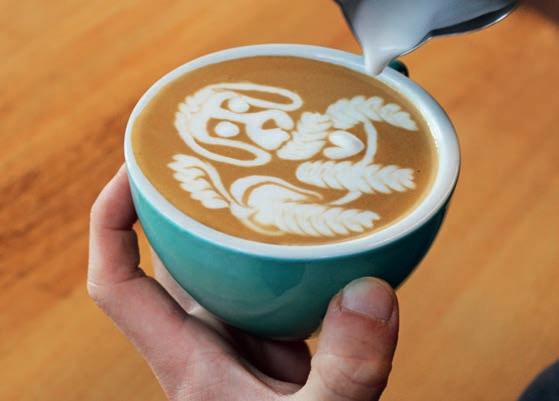
Shop 1, 20-30 Mount Warren Boulevard, Mount Warren Park, Queensland 4207
Open Monday to Friday 5am to 3pm, Saturday and Sunday 6am to 1pm
There are cafés and coffee bars dotted all around Australia opened due to the founders’ inability to find a cup of good, local coffee –and that’s exactly how Coffee Cube came to be more than a decade ago.
Since opening in 2012 in Mount Warren Park, nestled between Brisbane and the Gold Coast, Coffee Cube has become a fi xture of its local community. For its entire existence, the espresso bar has used Merlo’s espresso blend – after all it was coffee from the familyowned Queensland roaster that planted the seed for the venue’s Founder Roz North in the first place.
“My sons were rowing down at Surfer’s Paradise, and in the meantime I would go and get a coffee that would be made with Merlo beans,” says Roz. “When I got back into town, I couldn’t find anywhere to get a decent cup of coffee – nothing could match that experience.
“My only background in hospitality was growing up. My father used to manage pubs, where he would put me to work when I visited him in the school holidays.
“I just thought about it and wondered how difficult it could be to make a good cup of coffee, so I jumped in and started Coffee Cube.”
The setup of the espresso bar was unique to the Mount Warren Park region when it
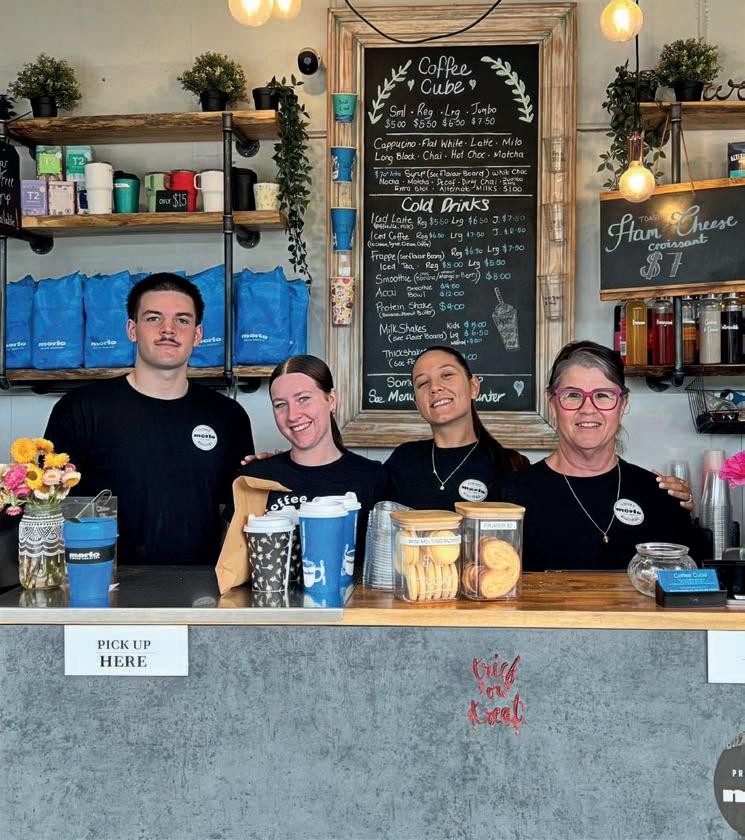
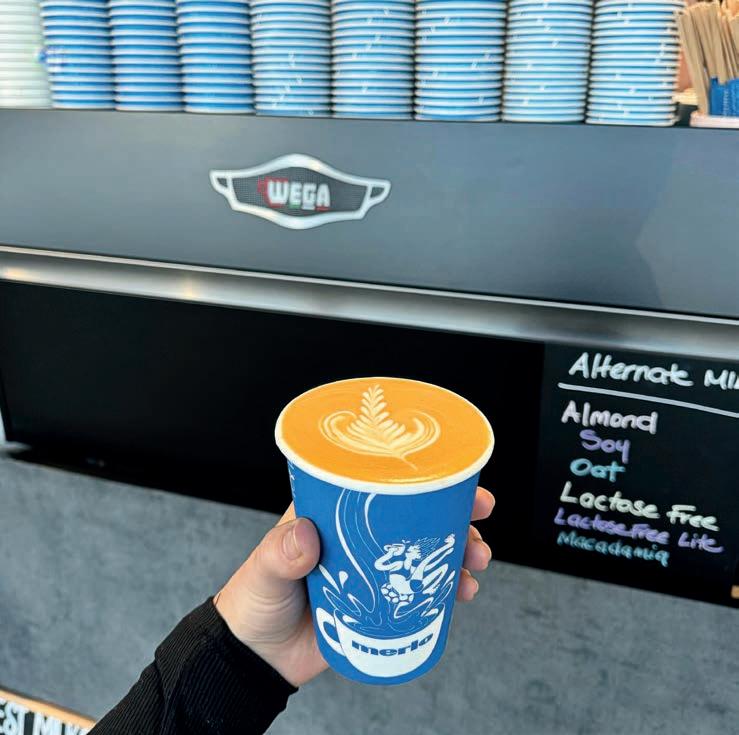
opened. Roz says there still isn’t another venue in the area operating in the same way, and with such a distinct focus on the coffee.
In the 13 years since, Roz has had to contend with poor reputations of venues before it and frequent flooding in the region, but she says the popularity of the venue has steadily climbed.
“There were two venues at our location before us that really struggled, so it took a little bit of time to really get off the ground,”
she says.
“When we started, the demographic was largely elderly people who were set in their ways, but we kept up with consistent hours and used social media to our advantage.
“Then, when there was flooding, a lot of people had to close but we managed to stay open. This meant more people were exposed to what we were doing when before they might not have known we were here, and then they kept coming back.”
She says there are three things that are consistently praised about the venue, all of which are crucially important to running a successful espresso bar.
“We now get a lot of different customers in, but the praise directed to us is almost always one of three things,” she says.
“The coffee is consistently great, the speed at which they are served is good, and our staff are really friendly.”
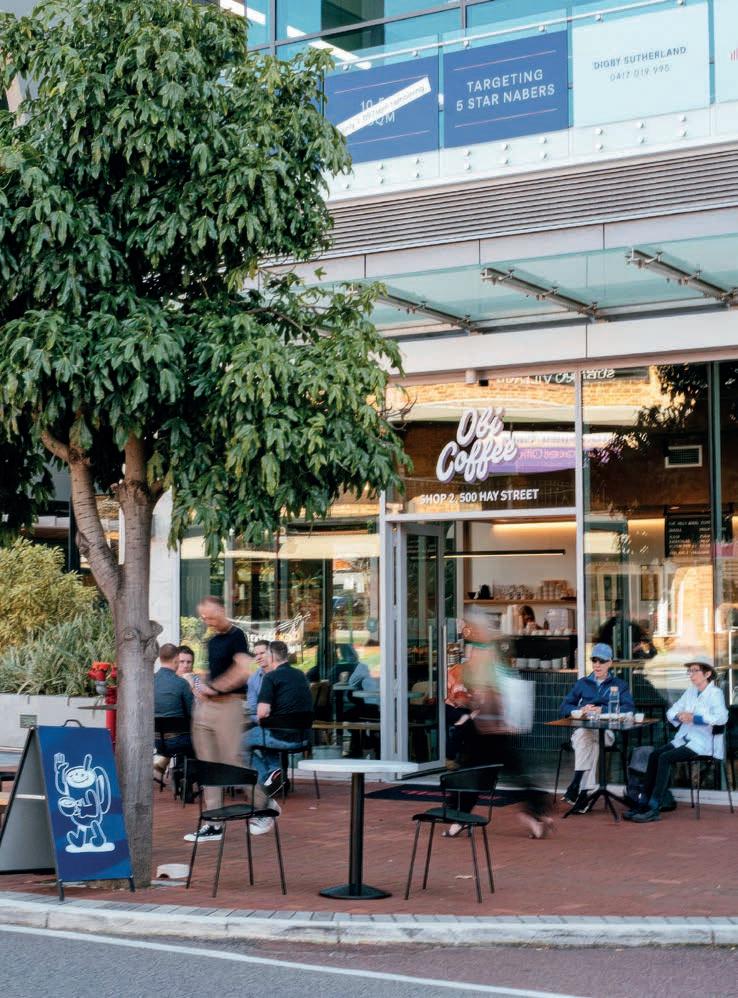
Shop 2, 500 Hay Street, Subiaco, Perth, Western Australia, 6008
Open Monday to Friday 6:30am to 2:30pm, Saturday 7am to 1pm
Good hospitality is at the heart of everything at Obi Coffee, according to Venue Manager Dennis Kurniawan.
Situated in the middle of the high-rise offi ce blocks of the western Perth suburb of Subiaco, it’s a café that often serves the fast-paced takeaway demands of blue-collar and whitecollar workers in the area.
Dennis believes placing the heart of true hospitality at everything Obi Coffee does has been crucial to its success since it opened in 2023.
“I feel like hospitality as a term is something that has been taken too lightly in Australia recently,” says Dennis.
“Yes, we’re a café, but you need to be able to show genuine hospitality to a customer, and I think that’s the key to running a successful business here in Australia.
“When customers are paying $6 of their hard-earned money every single day, the least you can do is give them a warm welcome and thank them with a smile when they walk away.”
That desire to create an environment built on a strong foundation of customer service has led to one critical point of difference Dennis says is well received by Obi’s customers.
“I think 90 per cent of our staff know 80 per cent of our customers’ names,” he says. It’s
insane, because we do 600 coffees per day in a fast-paced corporate building.
“We’re really lucky in that all our customers are really nice and down to earth, and they’re always up for a chat, and that’s one of the most pleasant things about this place.”
Dennis says it usually takes three visits for the front-of-house staff to begin to recognise customers and, before long, the order will be in the process of being made before the customer has even opened their mouth.
“It’s always fun to see the surprise on the faces of the customers who have suddenly become known and remembered among the staff,” says Dennis.
“Often, they’ll show up and their name and order are already on the screen and waiting for them.
“It’s one of the most powerful tools we can use, to be personal with customers in such a large setting, and it’s really rare.”
“That’s something we’re really proud of, being that busy café that still remembers the each of our customers and their orders.”
Dennis says there are a few menu highlights worth trying at Obi Coffee – and it won’t take long to add the next face to the list of regulars visiting the venue.
“If you’re looking for something savoury, the breakfast wrap with halloumi, eggs, and sriracha sauce is pretty bang on,” he says.
“If it’s something sweet, I think it has to be the chocolate banana bread we recently started making in-house.
“For coffee, we offer tasters of the batch brews we have on to make sure the customer gets exactly what they want. Otherwise, you can’t go wrong with a long macchiato topped up.”
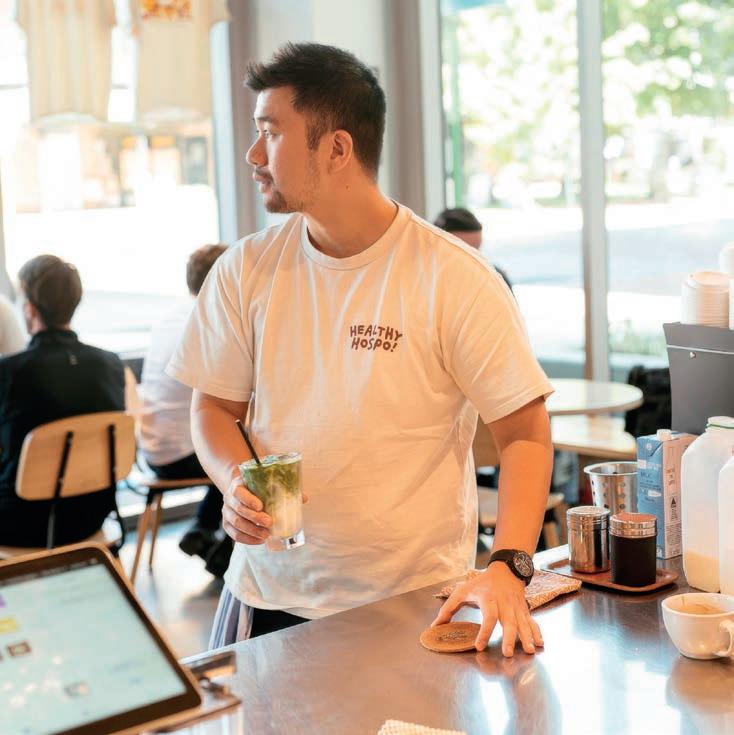
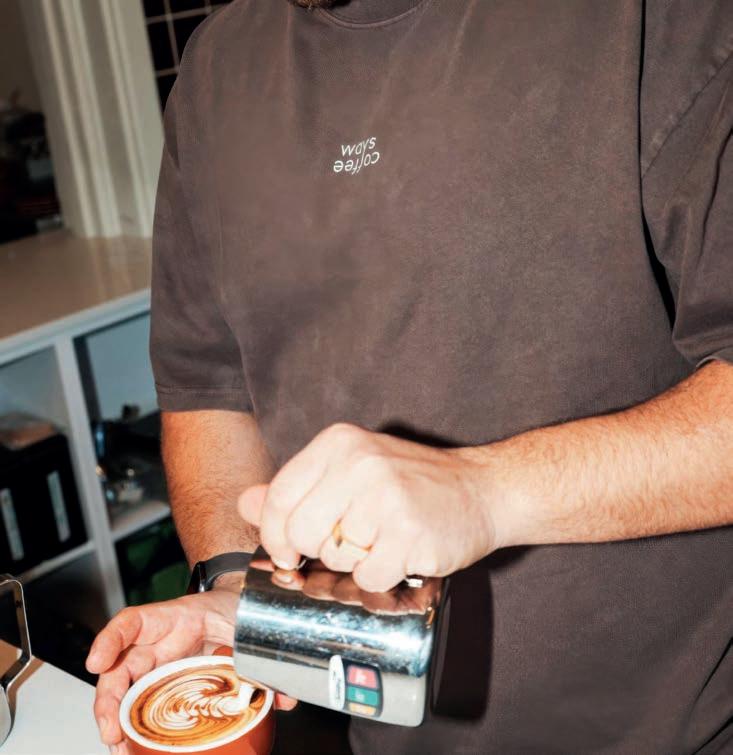
Unit 1/19 Ways Road, Hampstead Gardens, South Australia, 5086
Open Monday, Tuesday, Wednesday, Thursday and Friday 7am to 2.30pm, Saturday 7am to 2pm, Sunday 7.30am to 1pm
In a suburban pocket of Adelaide, where polished modern cafés have become the default aesthetic, Ways Coffee has taken a different route – one paved with a chocolatebrown colour palate, stainless steel tables, textured walls and oversized tees behind the counter.
The venue’s retro-inspired fit-out, matched with jazz playlists and a laid-back energy, has struck a chord with locals hungry for something new.
Stefan Iannace founded Ways in May 2025, starting the venture with business partner David Girolamo who was a customer at Stefan’s well-established Cheeky Grin Coffee business 10 minutes across town.
That original business just celebrated fi ve years, but Stefan wanted to take Ways in a different direction, differentiating it from his existing venture as well as other coffee shops in the Hampstead Gardens postcode.
“A lot of places have the same look now –bright colours, polished and modern,” he says. “We wanted something different. Something with brown subway tiles, stainless steel accents, and burlwood – materials you don’t really see here.”
That vision came from an unexpected place in Stefan’s wife, a marketing professional who
had never designed a venue before. The result is a warm, nostalgic space that appeals to a wide demographic. Families, retirees, laptop workers, weekend brunch crowds are all seeking out Ways for its coffee, but also its food menu.
Stefan says the café is building an identity through its sandwiches, which he cites as one of the venue’s biggest areas of growth.
“Everyone’s doing hot honey chicken sandwiches, everyone’s doing Reubens,” he says. “We’re trying to do flavours you’re not getting everywhere else.”
A prosciutto-filled sandwich, a nod to both owners’ Italian heritage, has already become a cult favourite. Meanwhile, rotating specials are fast becoming the brand’s innovation engine.
“We’ve done a house-made pork and fennel sausage muffin, and now we’re bringing in a classic deli-style chicken sandwich – think homemade aioli with Greek yoghurt, onion, celery, avocado, tomato. Light and fresh, not your standard toasted chicken sandwich.”
More ambitious offerings – slow-cooked pork sandwiches, for instance – are on the horizon as foot traffic builds.
“There are amazing sandwich shops out there, so it’s hard,” Stefan says. “But we want to be the place people go to try something new.”
For Stefan, Ways is about community and craft as much as it is about seeking out a new challenge beyond Cheeky Grin.
“We were comfortable – things have been going well. But we wanted to push ourselves, bring something different to the area,” he says.
Six months in, the neighbourhood response has been heartfelt. Locals dropping off welcome notes. Regulars forming. Saturday mornings buzzing.
“Seeing the community embrace us has been the most rewarding part,” Stefan says. “It makes you feel like you’re bringing a bit of joy and happiness to people’s day.”
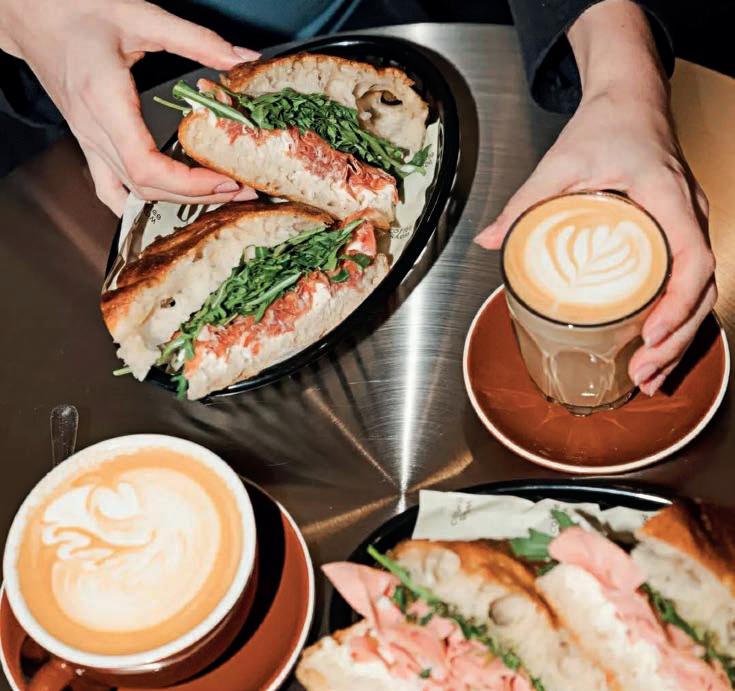
77A Hesse Street, Queenscliff, Victoria, 3225
Open Wednesday 6.30am to 11am, Thursday & Friday 6.30am to 3pm, Saturday & Sunday 6.30am to 4pm, Monday 6.30am to 3pm
When Carrie Silke left a 20-year nursing career, she trusted a feeling more than a plan. “I believe everything happens for a reason,” she says. “If something’s meant to be, it will happen for you – I’m very strong on that.”
That intuition led her from hospital wards to an interest in café ownership – and ultimately to Ziggy + Kit, the Queenscliff café she now runs alongside her daughter Riley.
It wasn’t a conventional hospitality entrance.
Until two years ago, Carrie was somewhat an industry outsider, working in cafés through university, and wasn’t seriously looking for a café to buy. Until she stumbled across a listing on Facebook.
“I came and looked at it, it was completely different to what it looks like today, but I could see the bones were there.”
The lease transfer fell into place quickly, reinforcing that sense of timing and fate. It was meant to be.
Two years on, that feeling remains. Ziggy + Kit is doing better than Carrie could have hoped. It has carved out a niche in a highly competitive coastal market – no small feat in a town with nine other cafés. Standing out meant doing espresso well, but thinking beyond it too.
“We needed to have a point of difference,” Carrie says. “We lean into specialty coffee and do things a little differently. We have a strong matcha offering, and we invested in
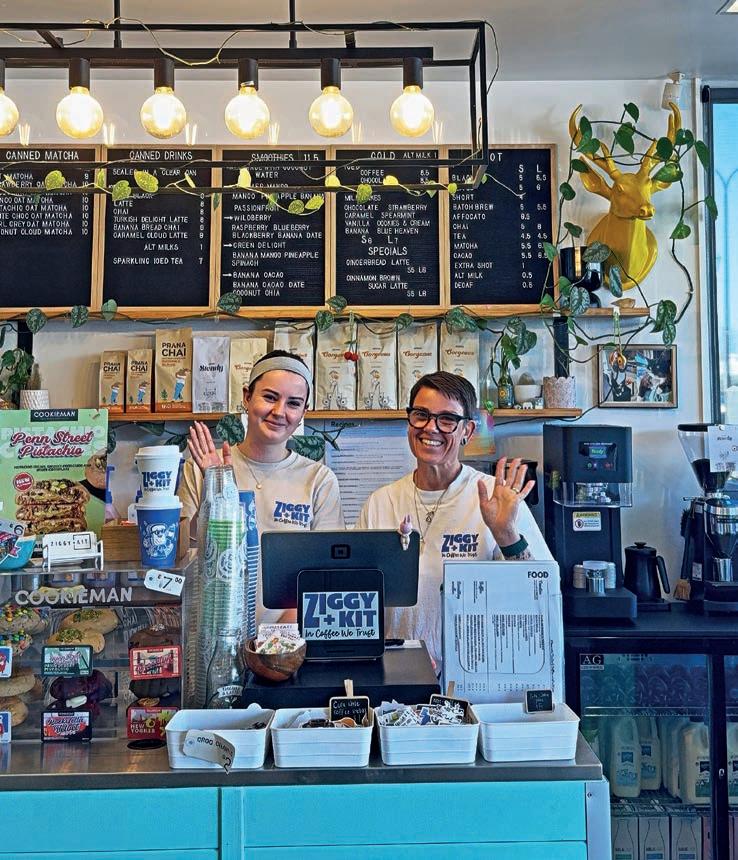
a canning machine for takeaway iced lattes and matcha.”
The shop has also evolved into a hybrid café–retail concept. A curated pantry and small-batch homewares range out back showcases makers Carrie admires and supports – particularly small and local producers.
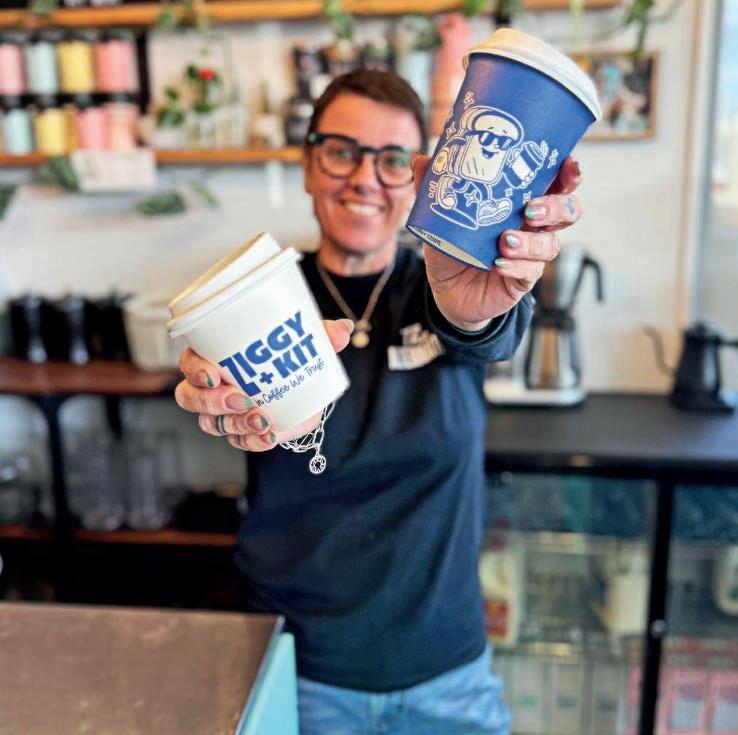
“It’s things you won’t fi nd anywhere else in Queenscliff,” she says. “It’s all the things I love.”
Growth has come quickly – so quickly, in fact, that upgrading equipment became an operational necessity. Ziggy + Kit recently installed a La Marzocco machine and Anfi m grinder built for heavier demand. The business initially partnered with a major roaster and received excellent training, but recently switched to one with more of a regional focus, and has been extremely happy with the new partnership.
“One of my strengths is my ability to deal with change, it’s something I embrace. We tried a few different coffees on our regulars, and this one stood out by far,” says Carrie. “We also needed equipment and coffee that could work harder for us and deliver better quality, faster.”
But beneath the strategy and investment lies something more personal – family.
Running Ziggy + Kit with Riley has strengthened the mother-daughter bond. Plus, Carrie’s son and husband also chip in as needed, making the 20-minute trip from St Leonards where they live.
“It’s another point of difference for us. Because we’re family, we represent the business strongly. We’ve all got a part in it, and we want every customer that comes into our shop to feel like they are part of our family as well.”
The most rewarding aspect is seeing the café become a social anchor for locals, including those who may not have community elsewhere.
“We give them that safe space,” Carrie says. “People can sit for 10 minutes or half the day. Sometimes they talk, sometimes they don’t. But slowly, they’ve created their own network inside the café walls.”
From Paris, to Sydney, to Seoul, BeanScene caught up with Némo Pop before he headed to South Korea for the World Aeropress Championships.
Name: Némo Pop
Venue: APAX Lab
Instagram: @nemo.pop
What made you interested in Aeropress and coffee competitions?
I was a student studying physics and chemistry in Paris. At the time I wasn’t into co ee, but I stumbled upon an Aeropress ad and decided to buy one to see if I could make it work. I owned it for about six months while I was still studying, watched YouTube videos and learned about it.
It introduced me to co ee and co ee culture, so I got a job in a specialty co ee shop in e Fi h in Paris on the weekends and learned the basics, and then I really improved when I got to work at KB Co ee Roasters for two months.
I ended my two months there training for Aeropress championships a er one of my colleagues told me I should try competitions. I was starting work at 6am, nishing at 12pm, but leaving the place at 8pm because I was practising Aeropress.
I had the opportunity to take a gap year and internship for my school for 2025, and I decided to do it. Because I was so interested in co ee, I decided I wanted to be a barista in ‘the co ee country’ because I wanted to learn.
I also go the opportunity to do a paid internship with APAX Lab, which produces mineral concentrates to help baristas customise their water. It’s the perfect middle point between my studies and the co ee industry.
It was very interesting for me to move here for a year and learn as much as I can.
Did you arrive expecting to compete in Aeropress, and then to represent Australia?
I’m so lucky, and the whole pathway to winning in Australia is just crazy. When I arrived on Australian soil, all I wanted to do is learn a lot and compete in Aeropress. I was constantly refreshing the page on Instagram hoping they would announce the Australian championship because I was so desperate for it to happen.
e competition was announced about a month before it was scheduled, but the whole year before I was hoping it would happen. I wasn’t expecting to win because I know all competitions in Australia are so intense, but the whole process is so much fun.
at’s the beauty of Australian specialty co ee culture, there are so many people from so many di erent places that add to it and bring their own things to the culture, it’s great.
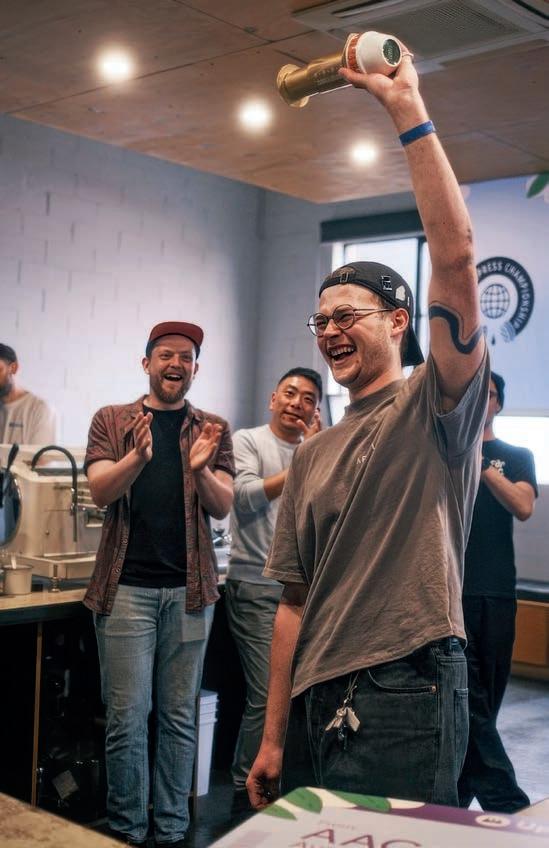
What’s the secret to making a good Aeropress coffee?
e secret is simplicity. e whole recipe we made is just 18 grams – the maximum dose, always a coarse grind size, and we focused on what was most impactful on the end cup.
Simon from Apax was helping me with my recipe. e whole pour was around the idea that all the patterns we had set would not impact the outcome a lot, we were just going to change the water recipe and use new technology, and that was enough to put me through.
What are you most looking forward to about competing in Seoul?
It still hasn’t really sunk in that I’m going to Korea. It’s crazy. I’m just excited to be in this crowd and competing with so many other national winners. I don’t even know how to picture this event.
ere are going to be so many incredible recipes and competitors, and I’m just excited to taste what everyone comes up with and hear everyone’s reasoning about why they came up with the recipe they did.