BUS & COACH


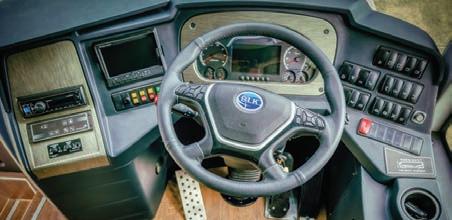
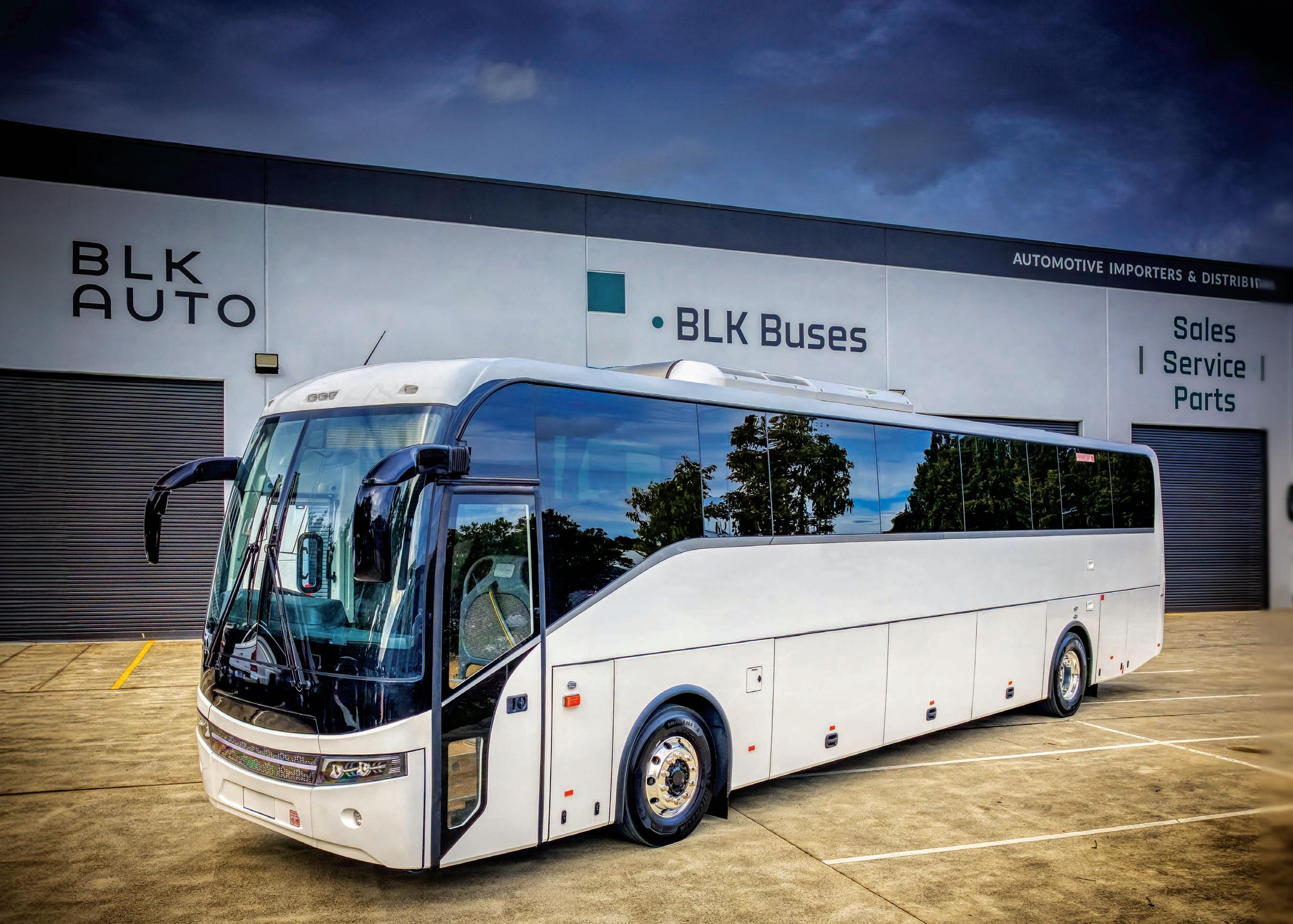
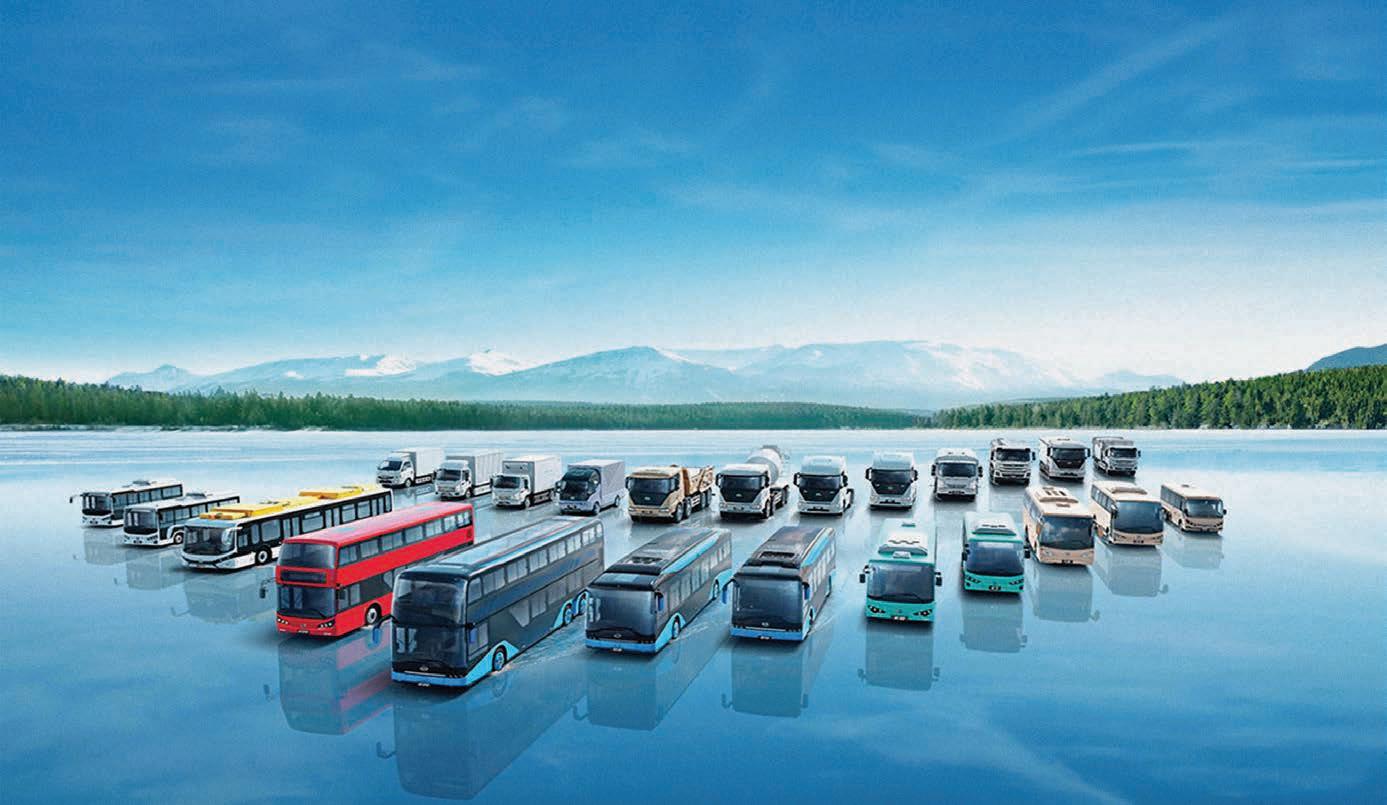
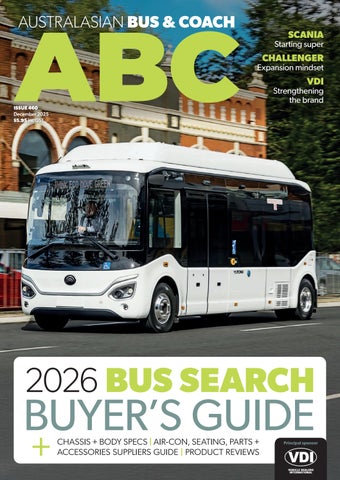
Technology is central to BYD’s DNA, and its ongoing research & development ability is vital to BYD’s rapid development. BYD’s cutting-edge technology can transform lives and improve the world thanks to “technology-based, innovation-oriented” development philosophy. BYD has successfully built an industryleading suite of platforms, and its world-leading advanced technologies are tried and tested in the world’s most demanding environments before market launch.
BYD’s dedicated Commercial Vehicle Research Institute engages in extensive R&D of the whole vehicle and chassis for the pure electric bus and vehicle fleet use in public transport globally.
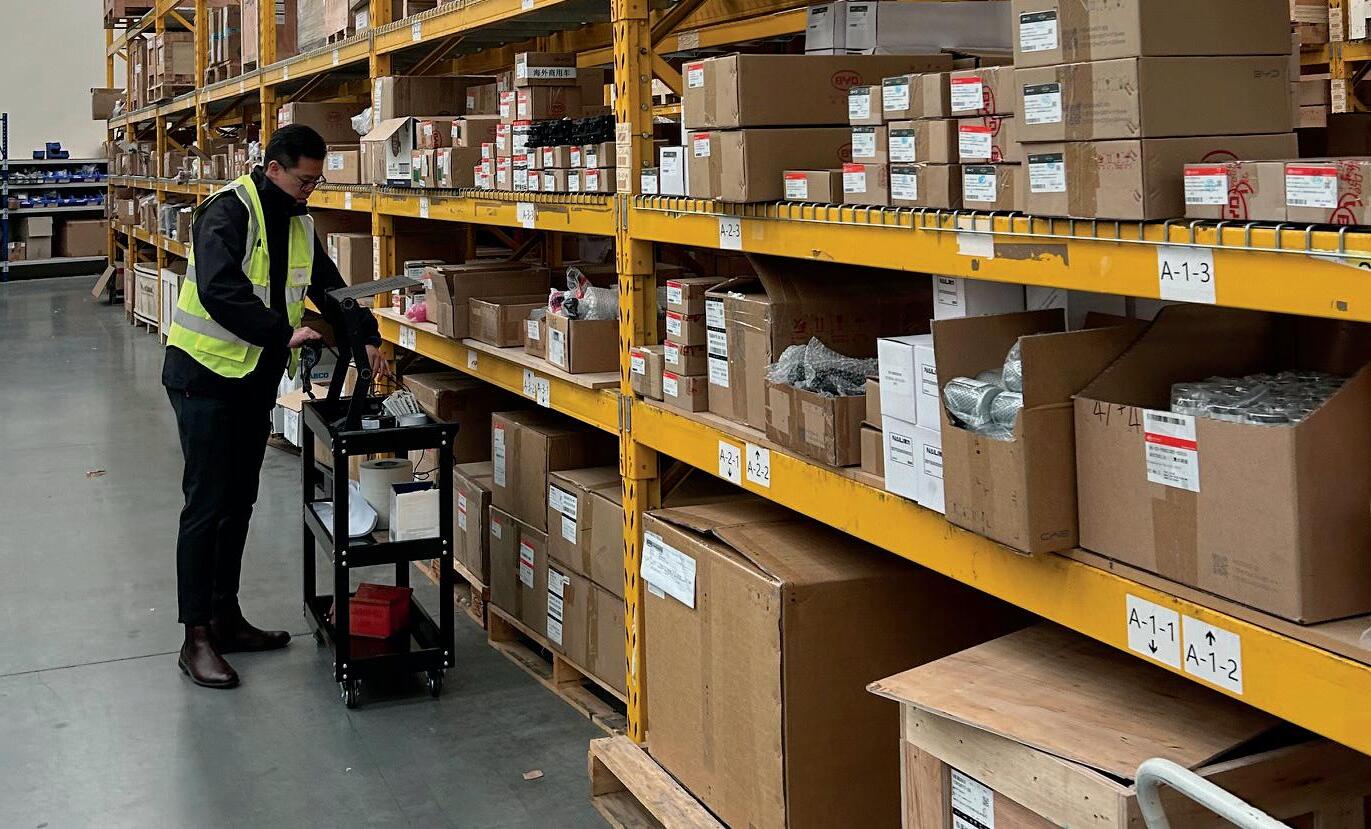
BYD Commercial Vehicles are available in Australia, sold and distributed directly by BYD.
BYD Commercial Vehicles has streamlined service and support to keep your fleet running with minimal downtime. Our industry-leading electric buses and trucks are backed by BYD’s global expertise and innovation.
Change is the best way of describing 2025 – from leadership to regulation and technology, the industry isn’t staying still as it heads towards another hectic Expo year
This time last year it felt like 2024 had come to a rapid close. Fast forward 12 months and 2025 has set new records for pace, with the latter months of the year rushing upon us. While for many it may lead to feelings of anxiety or panic, for the bus industry this means we’re all closer to another edition of ABC ’s Bus Search Buyer’s Guide. And here it is for 2026.
It comes at a fine time, for one theme that’s defining the Australasian bus and coach industry as of late is change. From changing regulations on the way in 2026 to evolving technologies across the board and an improving number of people boarding bus services across the country, there’s no standing still. Throw in a new-look operator launching in November and there’s plenty happening in bus and coach as we speak.
We look forward to a bright collaborative future!”
To add to the changes, new National Heavy Vehicle Regulator CEO Nicole Rosie has outlined her latest approach to regulation and enforcement, with risk-based approaches set to be the flavour of her tenure at the body. In the same breath, leadership changes at the likes of Ventura in Victoria and Busways in NSW throughout 2025 highlights perhaps a changing of the guard within the industry at a variety of levels.
There’s plenty happening in bus and coach as we speak
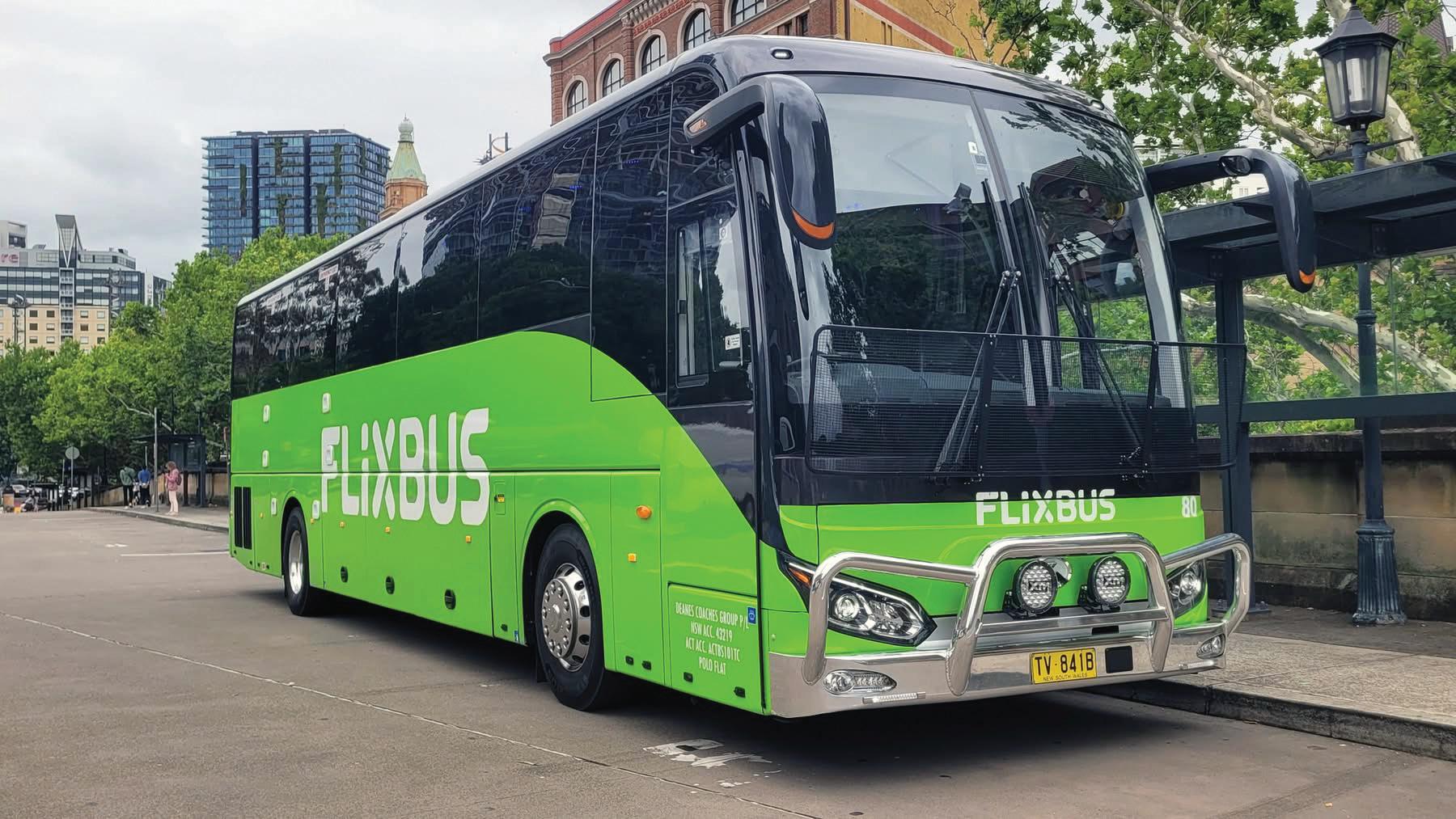
It’s a fun exercise to imagine what the industry may look like in a year’s time. In just the past couple of months, Australasia’s largest operator in Kinetic has been acquired, its subsidiary SkyBus has launched in various new states, global force FlixBus has started its maiden runs across the country and new public transport ticketing systems are being developed, implemented and switched on across numerous states’ services.
All of this occurred around the Bus Industry Confederation’s (BIC) National Conference to end the year, with a major story hidden within these proceedings. The return of the Bus Association of Victoria (BusVic) to the BIC fold as a state association member allows for the harmonising of the major bodies, ensuring the theme of unity is in practice for the sector.
“We’re just pleased to be in the BIC camp again,” recently announced BusVic executive director Peter Kavanagh told ABC
“We plan to participate fully to support the national bus industry in all of its endeavours.
One thing that hasn’t changed drastically is our Bus Search Buyer’s Guide. It’s always a wholesome exercise to chat to the numerous vehicle manufacturers, HVAC, seating, door and parts suppliers at the turn of every year to recap their latest and greatest achievements within the local industry and cast our eyes ahead to 2026. With a milestone Bus & Coach Expo set to get underway mid-year in 2026 in Sydney, there’s a greater sense of urgency than ever before when it comes to product innovation and releases.
It all poses as a breakneck yet blossoming time for the sector. We hope you enjoy this year’s Bus Search Buyer’s Guide – a definitive bible for bus lovers. Stay safe over the holiday period and we’ll see you again in 2026, thanks for supporting ABC
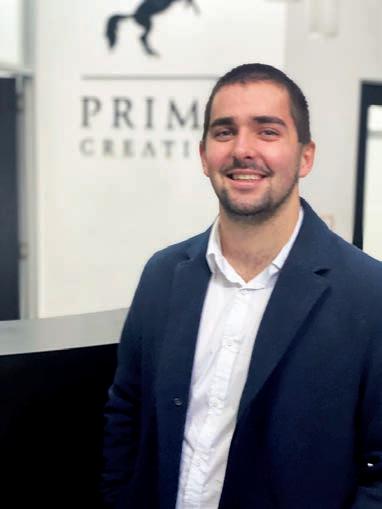
Sean Mortell EDITOR, ABC

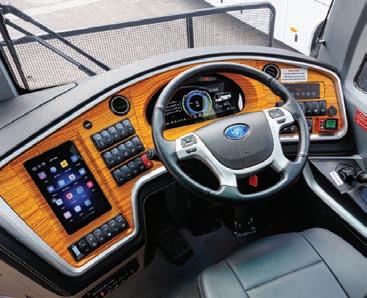
06. editorial | year in review RESOLUTE FOCUS
Change is the best way of describing 2025 – from leadership to regulation and technology, the industry isn’t staying still as it heads towards another hectic Expo year
11. column | bic POWERING ON
In the wake of a busy BIC Conference and AGM in Perth, BIC is preparing for a milestone year in 2026
bus search buyer’s guide
12. overview | bus search buyer’s guide WELCOME TO BUS SEARCH 2026
This year’s Bus Search Buyer’s Guide continues to grow, with an exciting twist of the latest bus and coach technology on display
14. chassis | byd BUILDING MOMENTUM
After a year that involved numerous milestones and a special initial electric bus delivery to a Victorian operator, BYD is continuing to evolve its local commercial vehicles division
18. chassis | man MAN-AGING GROWTH
After a productive 2025 that saw the brand grow both in market and internally, MAN Truck & Bus is ready to launch in multiple spaces in 2026
24. chassis | scania SUPER FUTURE
From growing its hybrid-electric and alternative fuel options to releasing an exciting new engine range, Scania is continuing to evolve its bus and coach technology for local operators
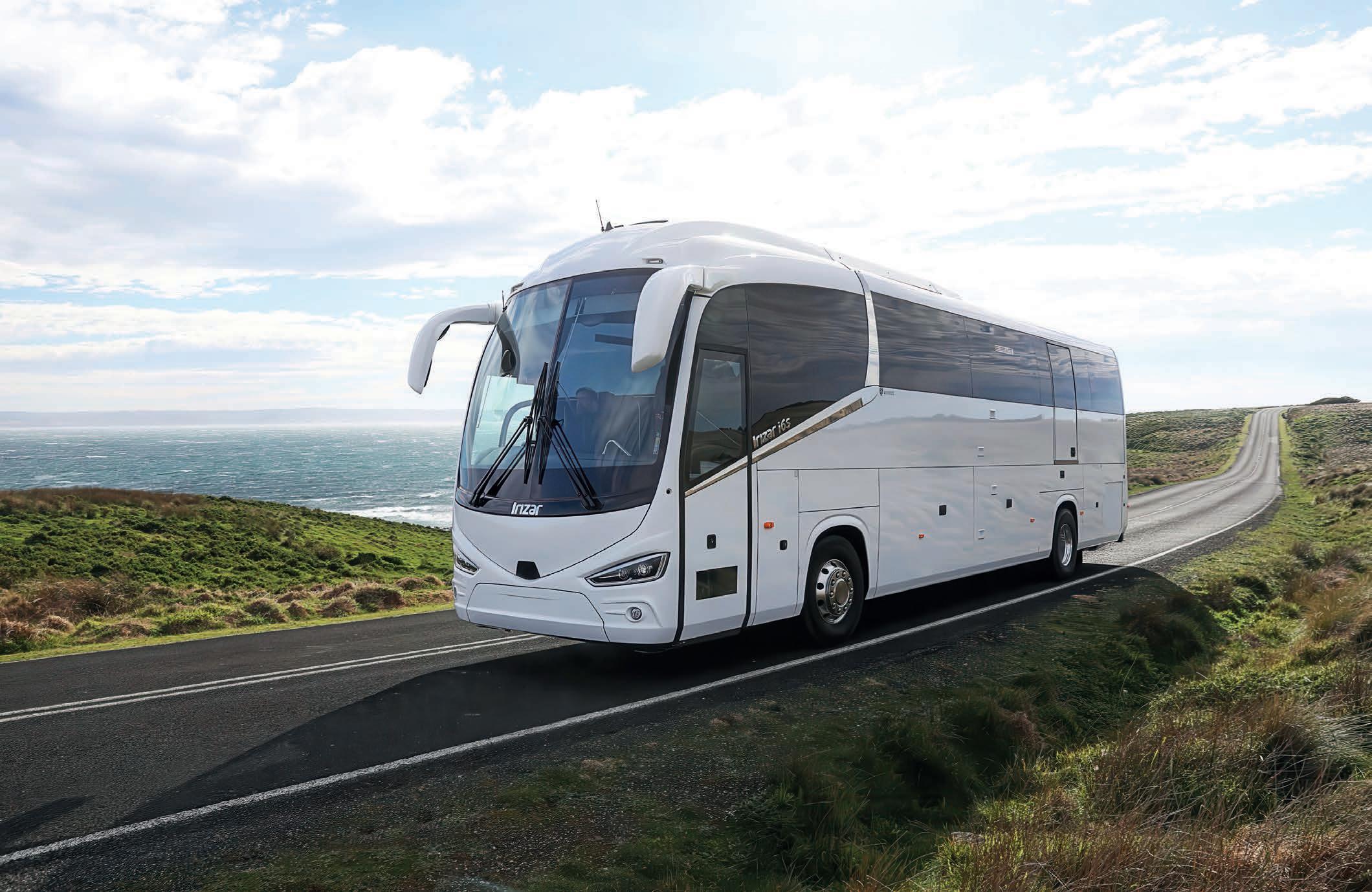
32. bodies | irizar GROWING ACROSS THE BOARD
The past year has seen Irizar emerge in more bus and coach body markets locally, with the global company preparing for another hectic year in 2026
34. chassis & bodies | challenger BUILDING SUCCESS
After another positive year that included the appointment of a new general manager, Challenger is preparing for a milestone 2026 with new products on the way
40. chassis & bodies | fuso REVOLVING AROUND THE ROSA
It might be a new year, but the same practical benefits of the FUSO Rosa remain
42. chassis & bodies | yutong BUILT TO LEAD
After a year of building its product range and expanding its national network, VDI Australia is preparing to continue strengthening the Yutong brand in the local market in 2026
48. hvac | qtk COVERING ALL OPTIONS
QTK has evolved its diesel HVAC products in 2025, with the refreshed brand looking to reinvigorate the zero-emissions space in 2026
50. hvac | spheros
COOLER SERVICE AND SUPPORT
As operators shift to electric bus air conditioning, Spheros says the real differentiator won’t just be cooling capacity, but the strength and reliability of the service wrapped around it
52. seating | sege STRIVING FOR SUCCESS
A year of innovating and enhancing the brand will see Sege Seats tease an exciting new bus seating concept in 2026
54. seating | styleride SUPERIOR SERVICE
After a year spent focusing on its internal processes, StyleRide is now looking to grow once again in the local bus and coach seating market
58. doors | ventura VISIONARY FUTURE
Having grown its presence in Australia, Ventura Systems is now looking to lead the way in door technology and set the tone for industry regulation
60. parts | tranzmile TRUSTED PARTNER
Through an expanded bus parts catalogue and new fleet management software, Tranzmile is increasing its standing as an important bus and coach parts supplier
62. feature | custom auto glass KEEPING IT LOCAL
In a market where bus, coach and motorhome parts are often turning to overseas supply, Custom Auto Glass and BCM Windscreens are ensuring tailored glass manufacturing remains close to home
64. feature | busable LAYING THE FOUNDATIONS
Innovative technology is central to the future of the bus and coach industry, with Busable’s software reshaping bus operations with intelligent software
66. feature | australian car audio AUSSIE PUSH
In just over a year since the North American tech was released in Australia, several local operators have already installed the Ready2Talk range onboard their buses
68. feature | spartanlync SAFETY SPECIALISTS
As an important modern piece of bus safety technology, SpartanLync’s tyre pressure monitoring system is leading the way locally
EXECUTIVE GROUP
CEO: Christine Clancy Chairman: John Murphy
Head of Customer Experience: Regina Fellner
EDITORIAL & DESIGN
Managing Editor: Geoff Crockett
e-mail: geoff.crockett@primecreative.com.au
Editor: Sean Mortell
e-mail: sean.mortell@primecreative.com.au ph: 0468 577 166
Art Director: Daz Woolley
Designer: Apostolos Topatsis
PRINTING
Brougham Press
ADVERTISING
Sales Manager – South:
Courtney Burton ph: 0481 736 890
e -mail: courtney.walker@primecreative.com.au
Business Development Manager – Bus: Sylvie Hanlon ph: 0466 545 664
e-mail: sylvie.hanlon@primecreative.com.au
SUBSCRIPTIONS
www.busnews.com.au/subscribe ph: +61 (0)3 9690 8766
Mon-Fri 8am-4.30pm (EST)
e -mail: subscriptions@primecreative.com.au mail: 379 Docklands Drive, Docklands VIC 3008 Australia
Annual subscription rates (12 issues): Australia: $99*
Overseas: $A170 (Australian air-mail only) *price includes GST
Cover image: VDI
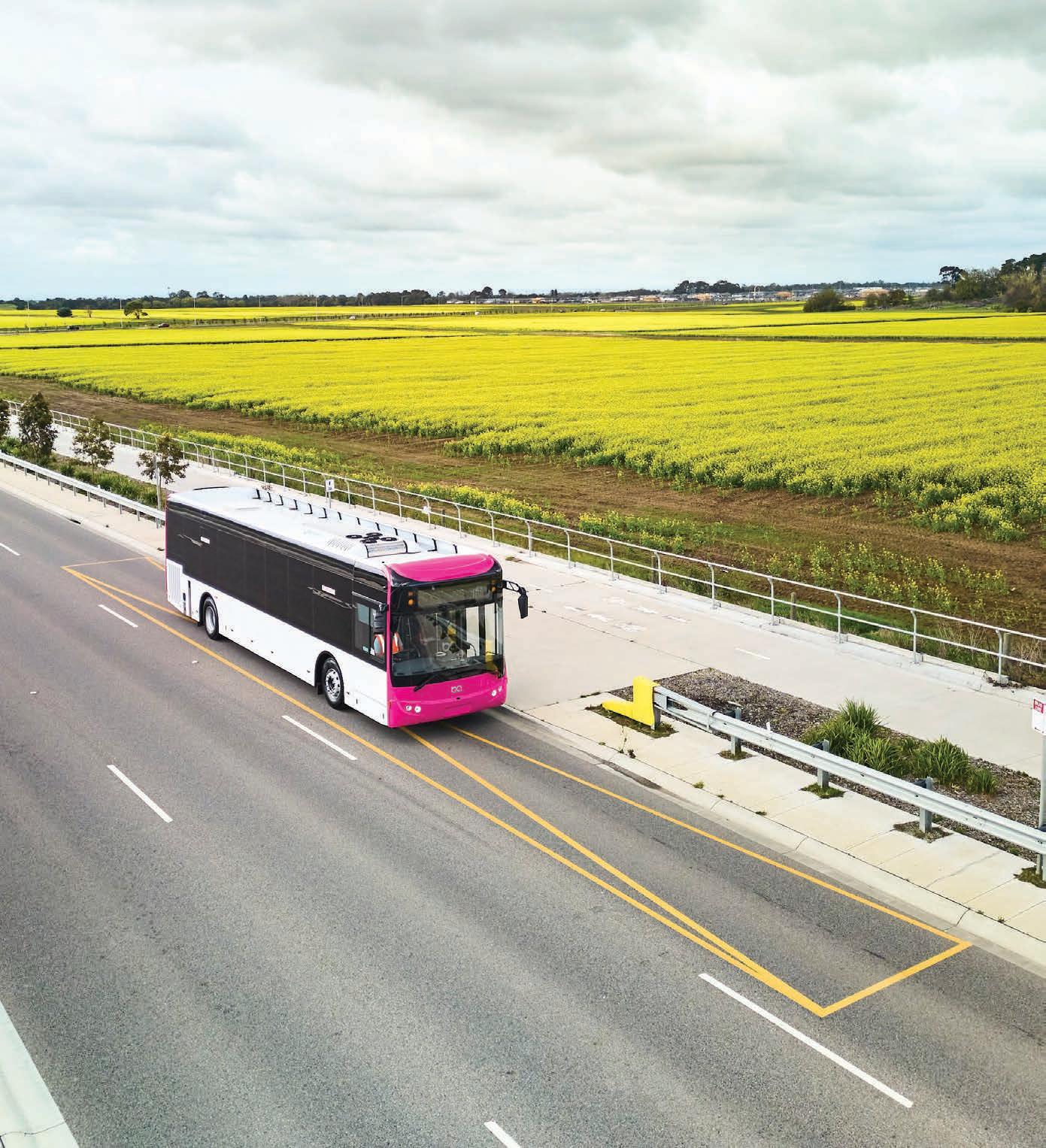
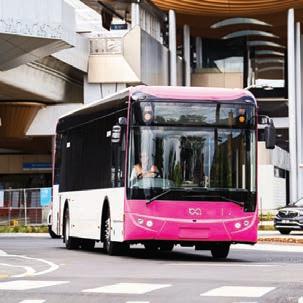
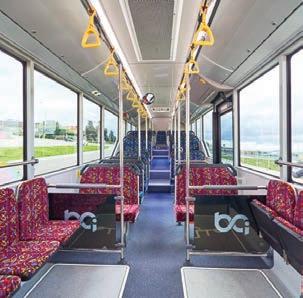
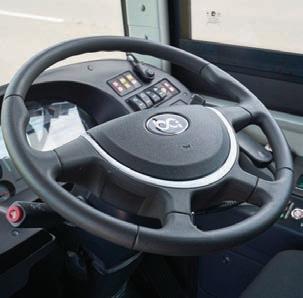
Empower your city with our next-gen buses – available in both diesel and EV versions. Built for safety, innovation, and reliability, our BCI Citiriders come equipped with the most advanced features to ensure a smooth, secure ride for every passenger. With a streamlined production and logistics system, we deliver faster than anyone else –because your city’s progress can’t wait.
Contact our team for further information on 1300 289 224 or visit bcibus.com.au
Melbourne: 03 8787 2100
Brisbane: 07 3275 6900
Adelaide: 08 8182 3888
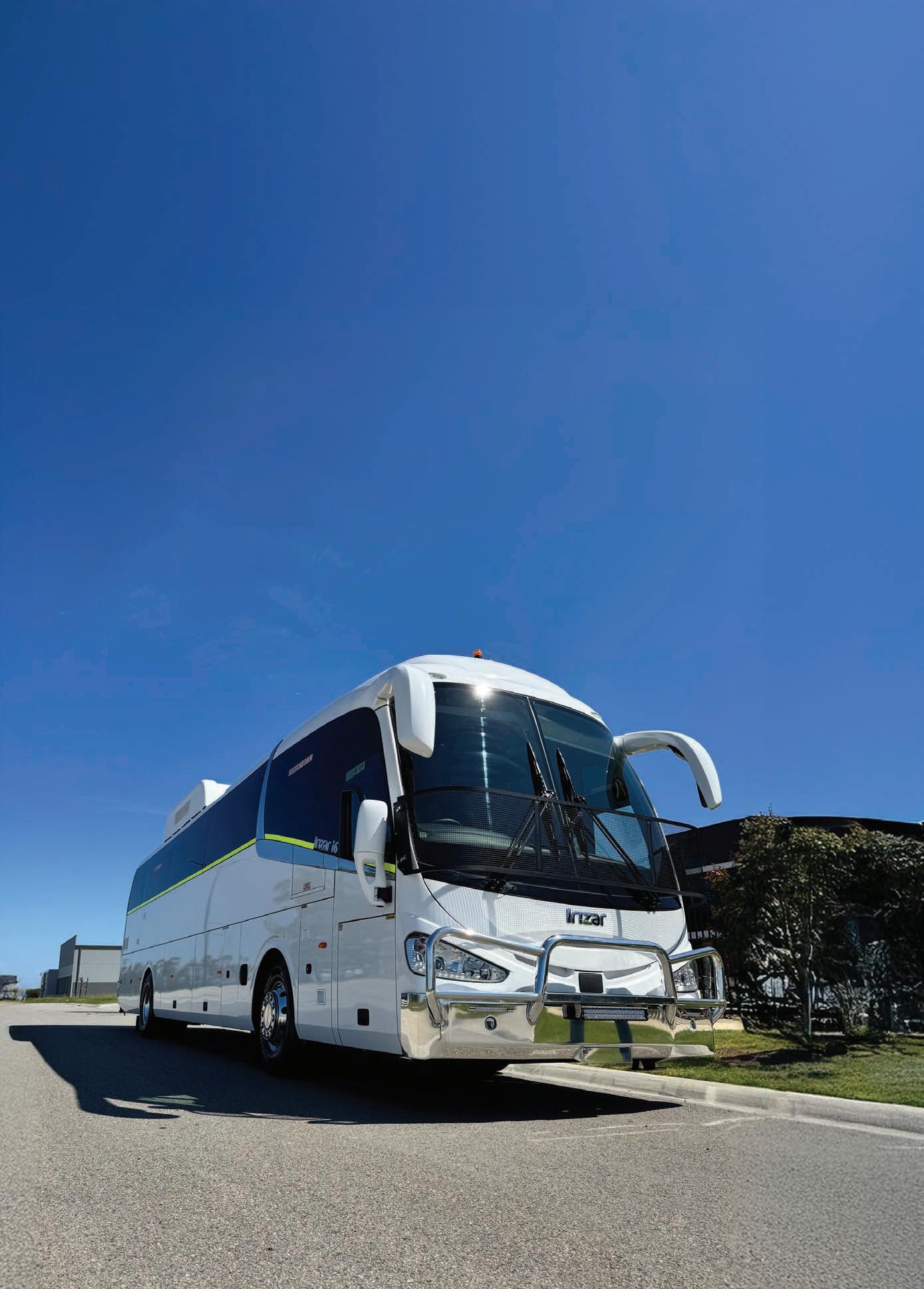
Secure the safest coach chassis, powerful and quiet hybrid-electric drive, and reduce CO2 emissions by up to 92%.
The Scania Irizar i6 Hybrid offers the best of both worlds, providing a low-emission solution that reduces your carbon footprint without requiring costly infrastructure investment or range restrictions.
Switch between battery and diesel
360 hp (265kW) Euro 6 engine
12-speed Scania Opticruise Gearbox
Alcoa Durabrite alloy wheels
Ideal for:
Remote regions with limited grid access
Mining operations requiring robust, low-emission solutions
Long-distance travel where range and refuelling flexibility are critical
In
the wake of a busy BIC Conference and AGM in Perth, BIC is preparing for a milestone year in 2026
ost organisations use this time of the year to power down.
However, the Bus Industry Confederation (BIC) continues burning the midnight oil right across the east to west. The annual AGM, held on October 29, 2025 ahead of the BIC National Conference in Perth, returned the official announcement that a new Constitution was endorsed by the membership. In addition, the change to a Company Limited by Guarantee was also formally adopted.
The new Constitution – representing a major step forward in strengthening the governance, accountability and operational integrity of the BIC –offers a comprehensive framework for the effective management and oversight of the new Board’s activities. It replaces the previous governing document and reflects the evolving needs and priorities of the organisation and its stakeholders. BIC Council members for 2026, as well as the Chair and Vice Chair, were also locked in for the year ahead at the AGM.
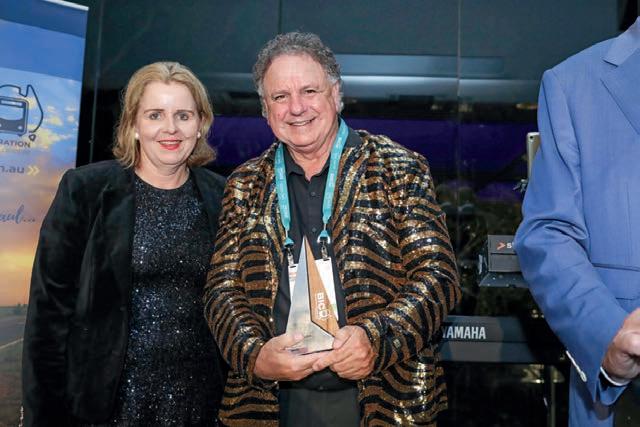
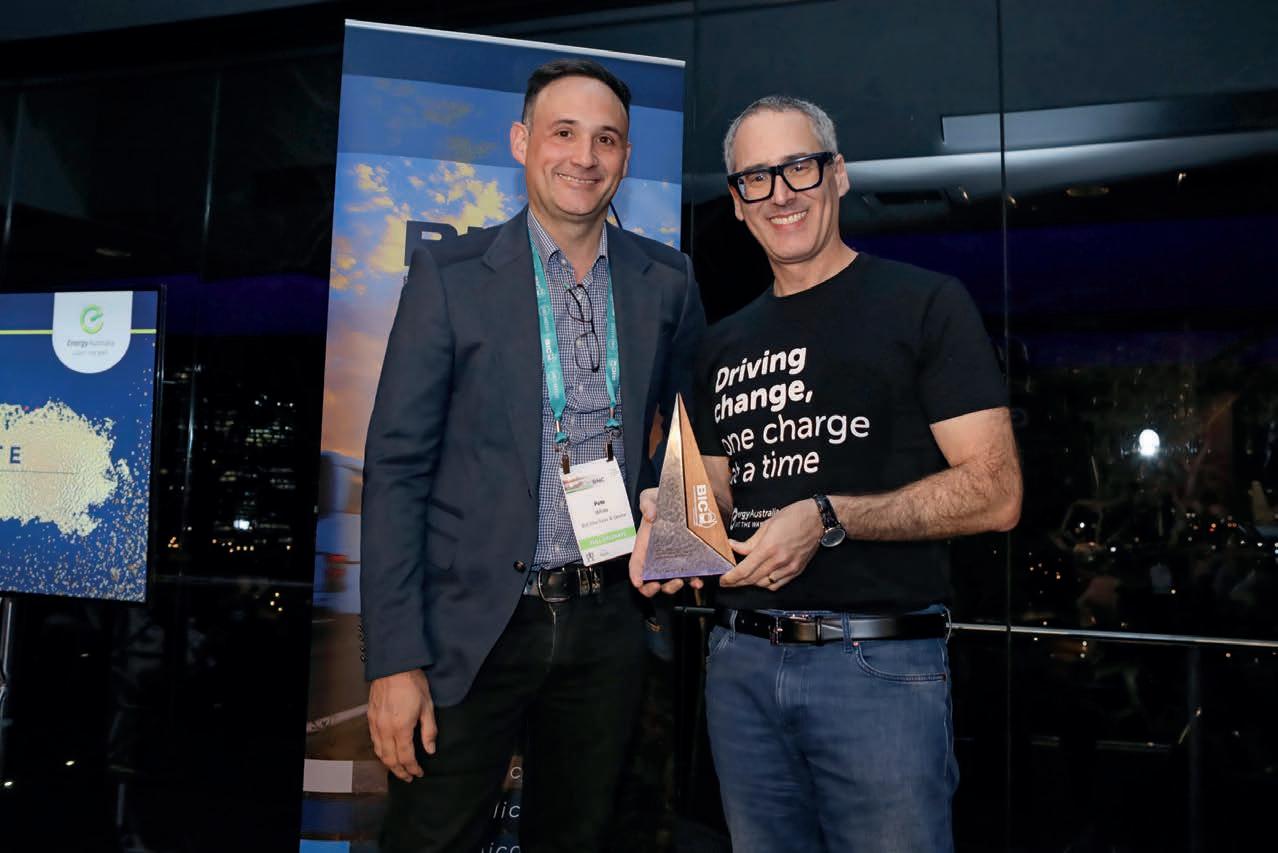
reviews from those present. Check out the key takeaways online on Day one concluded with a scenic dinner and entertainment at Kings Park, which also played host to the 2025 National Industry Awards presentation. As a member benefit for BIC members, along with those from the individual state bus associations,
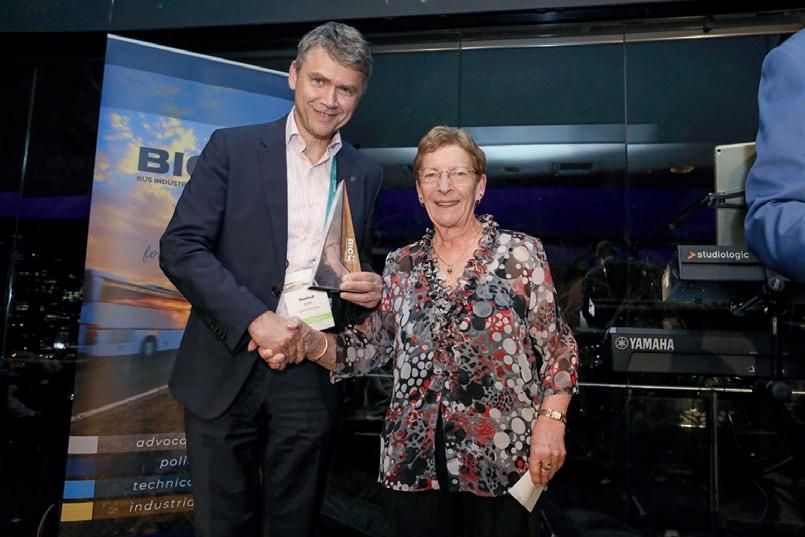
Below: Award winners included Bus Stop’s
One of the biggest highlights was the return of the Bus Association of Victoria (BusVic) as state association members of BIC, setting the year ahead up for long-awaited progression and productivity as a wholly unified industry in 2026.
An industry-wide contingent of over 450-strong attended the biggest bus and coach event of the year, the BIC National Conference (BNC25), in Perth, with new faces turning up to register on day one.
This year’s proceedings included a mini expo which attracted positive comments from supplier members, operators and delegates, as did the Scan2WIN QR code hunt. The collection of keynotes and special guests also received impressive
As one of the biggest conferences and successive overall wins in recent years for the BIC, be sure to keep a keen eye out for the full details on

CHASSIS DIMENSIONS:Length(m)
Wheelbase(mm)
FrontOverhang(mm)
Overhang(mm)
ChassisFrontOverhang(mm)
ScaniaDC09140
....and read about manufacturers and brands. Find out what has changed with the latest chassis, bodies and completely built vehicles, as well as air-conditioners, seats, doors and parts as we head into 2026
or years, the ABC Bus Search Buyer’s Guide has been a leading guide when it comes to the latest bus and coach products, providing in-depth details on existing and fresh chassis and body models. After last year becoming more than just a bus and coach vehicle guide, the 2026 edition includes a wider range of vehicle technology than ever before.
Last year, the Bus Search Buyer’s Guide included specifications on
certain HVAC, seats and door models, widening its scope to include more than just chassis and bodies. At the turn of every year, the guide now features products from various emerging and solidified markets. The 2026 edition of Bus Search Buyer’s Guide continues down this path, maintaining the focus on chassis and bodies, as well as completely built units, while also featuring an even broader range of HVAC, seating, doors and parts. Now,







after this section, enjoy some of the latest software and technological innovations that are leading the way in bus and coach evolution in Australia.
Starting with the chassis section, the guide then drifts to the body area before transition to completely built chassis and bodies models. Outside of vehicles, the HVAC and seating sections are covered, as is the door side of the industry, while parts also come into play in another major edition of the Guide.




After a year that involved numerous milestones and a special initial electric bus delivery to a Victorian operator, BYD is continuing to evolve its local commercial vehicles division
For BYD, 2025 has been all about milestones. After committing to its customer base in the Australian bus industry with an investment in its aftersales servicing processes and staff, the manufacturer enjoyed numerous local and global achievements.
In July, the international brand celebrated 60,000 vehicles delivered in Australia, while its continual focus on its global prowess and capabilities resulted in the delivery of BYD’s 5,000th electric bus in Europe in late September.
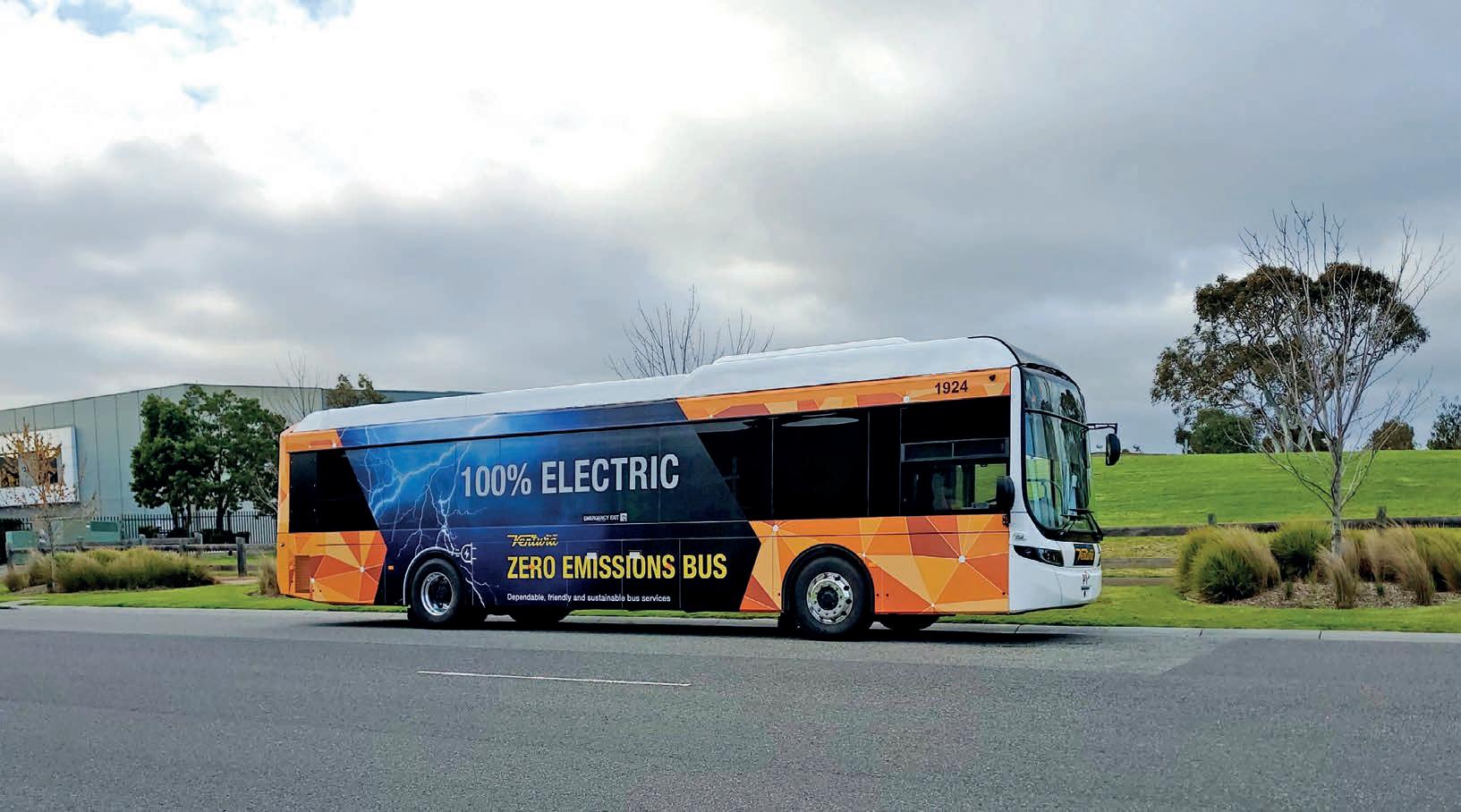
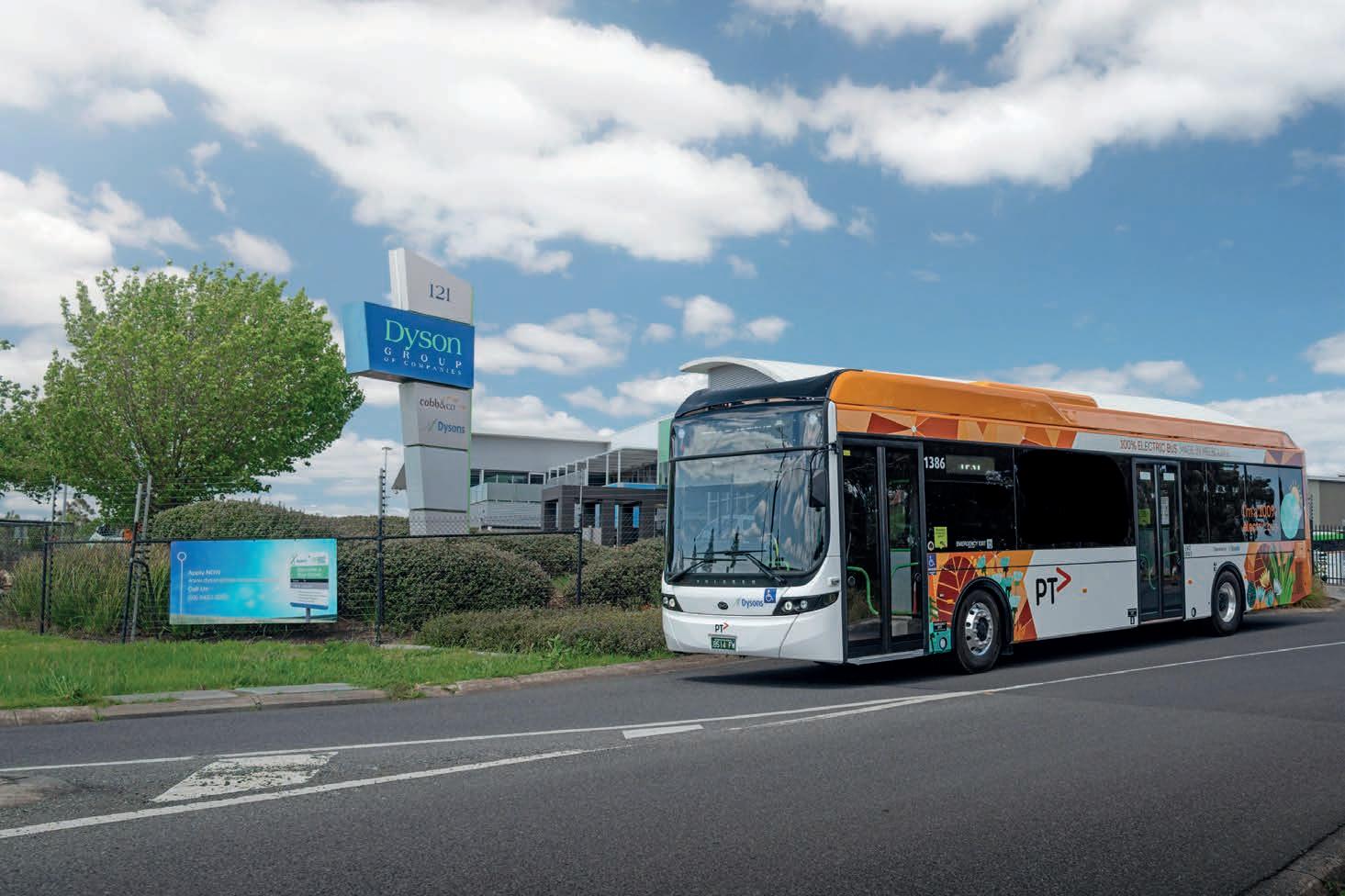
By the end of the year, the very first BYD electric bus as part of a new wave of zero-emissions vehicles was delivered to Dyson Group in Melbourne’s north.
“There’s been plenty of changes made since we first formed the commercial vehicles division in Australia,” BYD commercial vehicles director Jon Tozer told ABC “We first sought to repair our reputation in the local sector as
a respected bus manufacturer, investing in our aftersales team and product support to help local customers.”
These milestones came in short time, as BYD decided to establish its own commercial vehicles division in Australia just under three years ago. This move to build its own full factory backed commercial vehicle division for buses and trucks in Australia and New Zealand is paying off, with Dysons’ milestone electric bus order
Above: With improved servicing behind the scenes, BYD is continuing to evolve in Australia
heralding a new era for the local transport sector.
During this period in 2025, BYD’s commercial vehicles team has grown, bolstered by spare parts and aftersales staff, while BYD also established its very own national parts distribution centre in Melbourne alongside a Sydney parts centre.
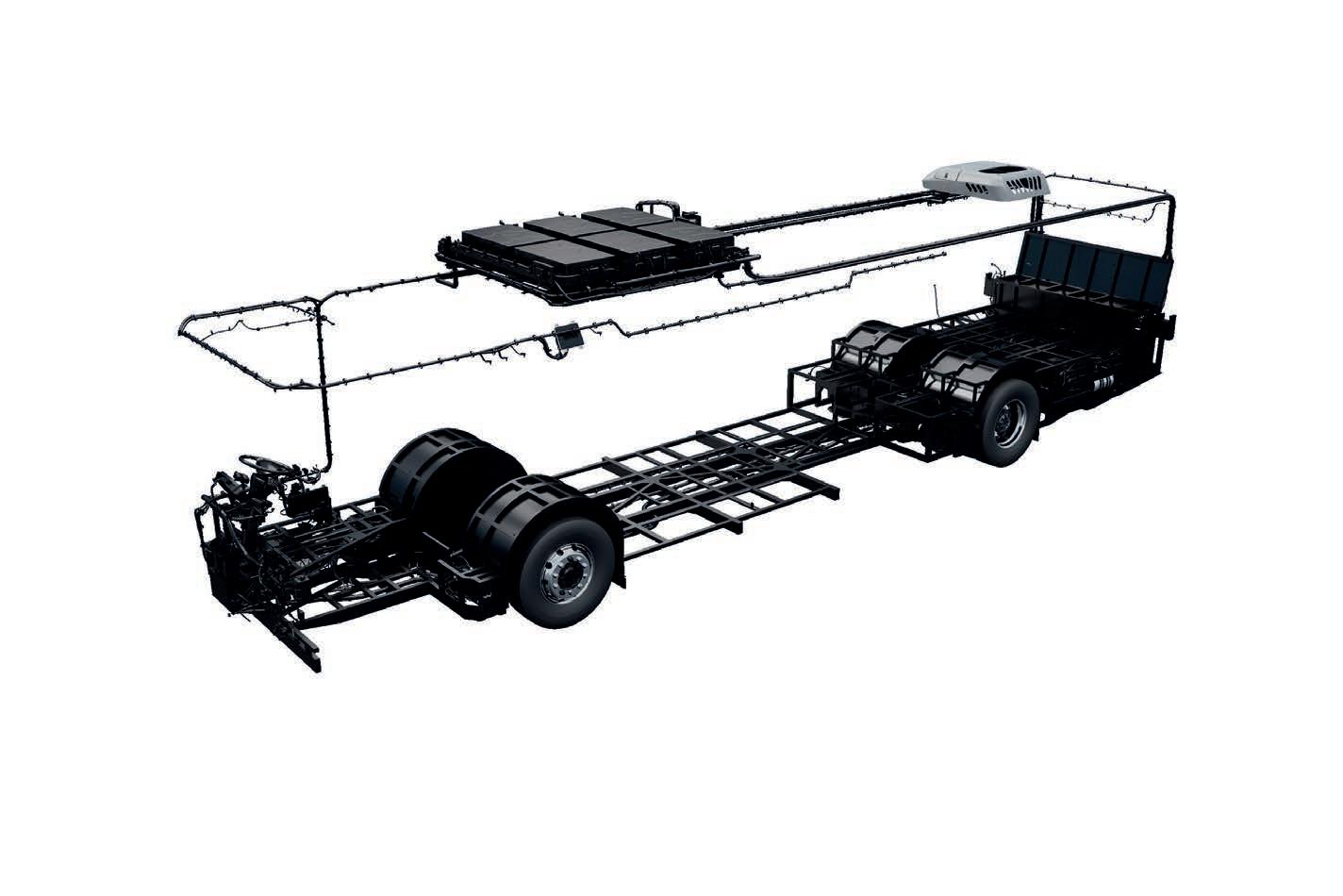
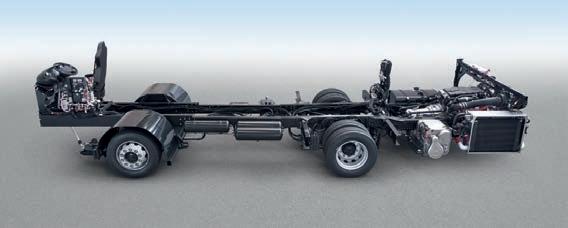
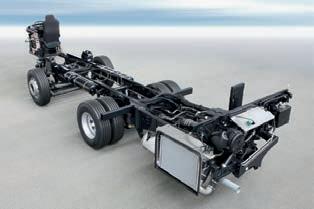
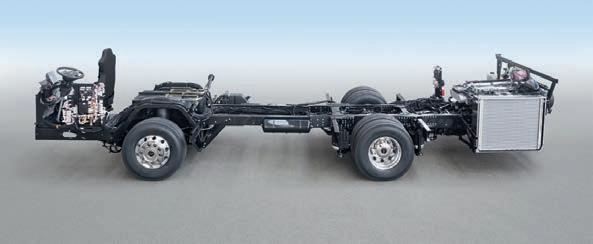
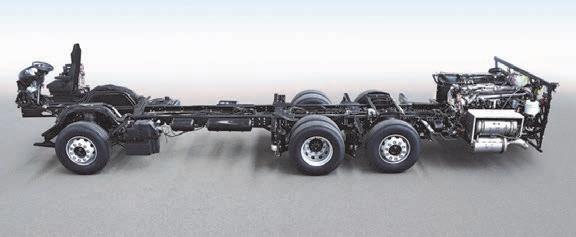
“The BYD chassis is the only electric chassis on the market with a fully integral E-driveline – we’re the only manufacturer that manufactures the
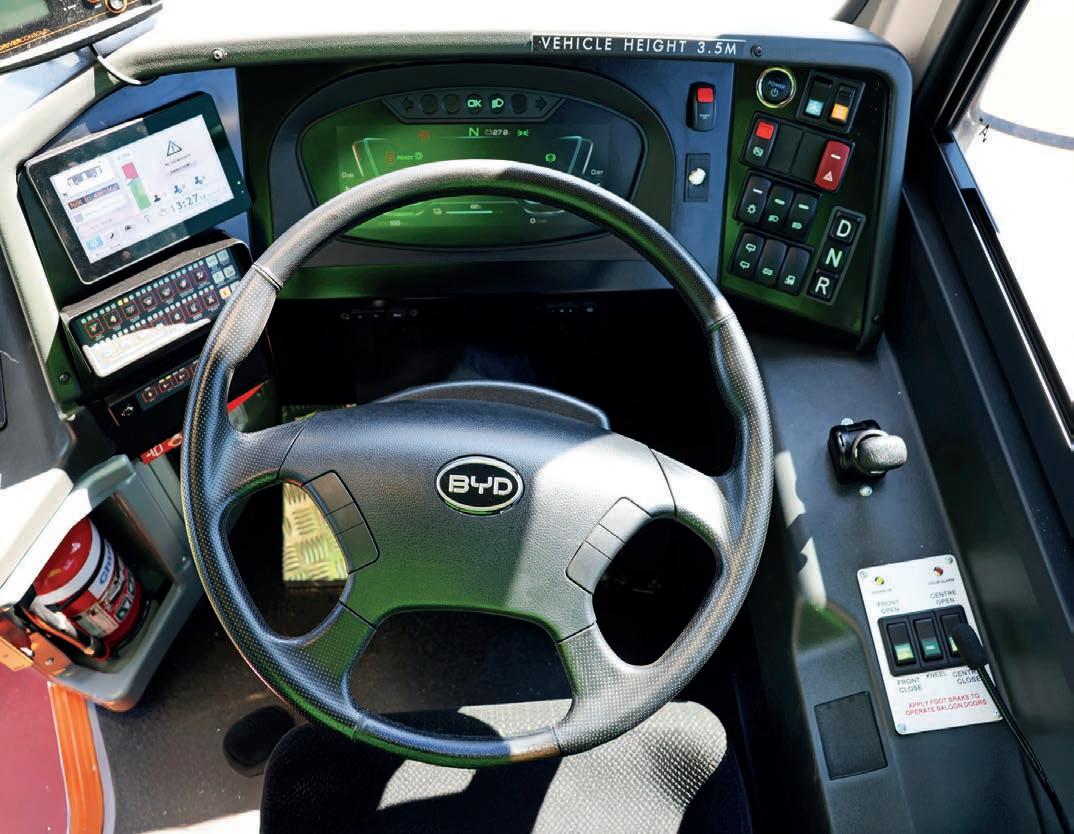
full drive system from the electric batteries, motors and the control systems for our chassis,” Tozer says.
“It means the chassis is a one-stop shop solution.”
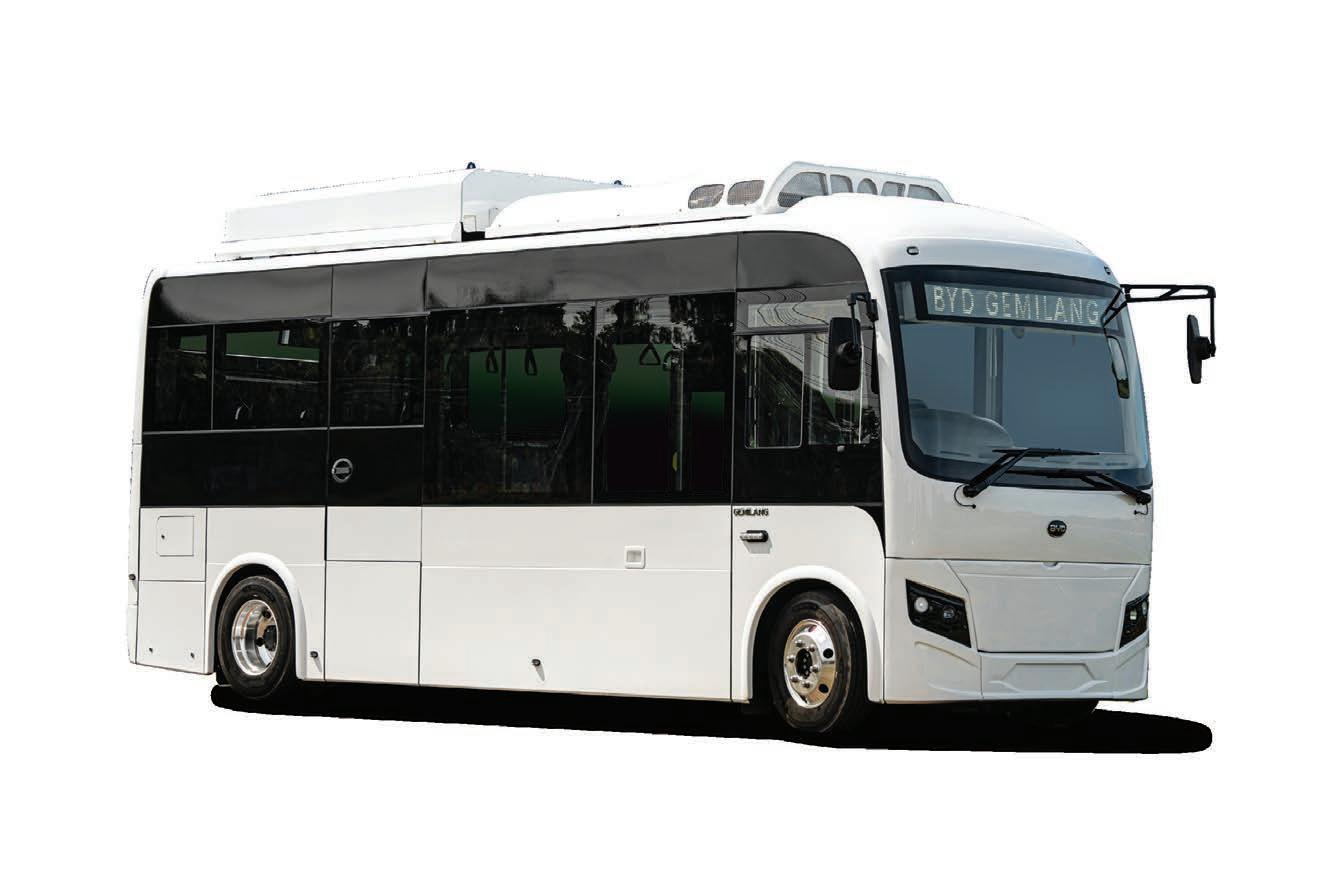
Throughout 2025, the brand built on its existing electric bus chassis range. This included the release of its articulated electric bus model, innovating the longer-bus market. Alongside this, the recently unveiled B70 and revamped BC12B1 are highlights of BYD’s local commercial vehicles department.
In a market first, BYD now offers 10-year/3,300 cycle greater than 80 per cent of original capacity warranty on the BC12A05 city bus chassis, providing operators with greater surety on battery life expectations.
These developments in the commercial vehicle sector added to BYD’s overall vehicle dominance in Australia, with the manufacturer surpassing 60,000 vehicles sales in Australia in just under three years throughout 2025. In June, the brand finished in a record fifth place as one of Australia’s highest-selling automotive brands.
Globally, the delivery of its 5,000th electric bus in Europe resulted in a special ceremony, as BYD members converged on Danish public transport operator Umove to unveil the BYD eBus B12.b.
The manufacturer says the BYD eBus B12.b is a groundbreaking model, equipped with BYD’s industry-leading Blade Battery integrated with CTC (Cell to Chassis) technology, specifically tailored for the European market.
The best milestone for BYD was left until last from a local perspective, as Dysons’ first major step in its large-scale transition to zero-emissions transport, which includes a redeveloped new depot, was to receive the first of its BYD electric buses.
These vehicles form the first of more than 168 electric buses that will enter the operator’s Melbourne network over the next nine years, with training programs already underway to familiarise staff with the new technology and maintenance teams preparing workshops for electric vehicles.
What to look forward to in
With an Expo on the horizon, 2026 serves as another important year for BYD. Despite market challenges, the global manufacturer is looking to continue enhancing its spare parts and aftersales development locally while also delivering more electric buses to innovative operators like Dysons in Victoria.
On the product side, Tozer is teasing the introduction of new bus models across the market ahead of the Expo in Sydney, with the industry set to benefit from the global OEM’s latest technology in the coming year.
“We have so many products to get excited about, but we’re also focusing on continuing to improve our aftersales service offerings,” Tozer says.
“There’s plenty more to come from us, including the introduction of BYD trucks into Australia and New Zealand, so stay tuned.”
ADDRESS:
PHONE: 0407 048 097
WEB: www.bydglobal.com/en/ CommercialVehicle.html
EMAIL: jon.tozer@byd.com
ADDRESS:
WEB: www.bydglobal.com/en/ CommercialVehicle.html EMAIL: jon.tozer@byd.com
DIMENSIONS
(mm)
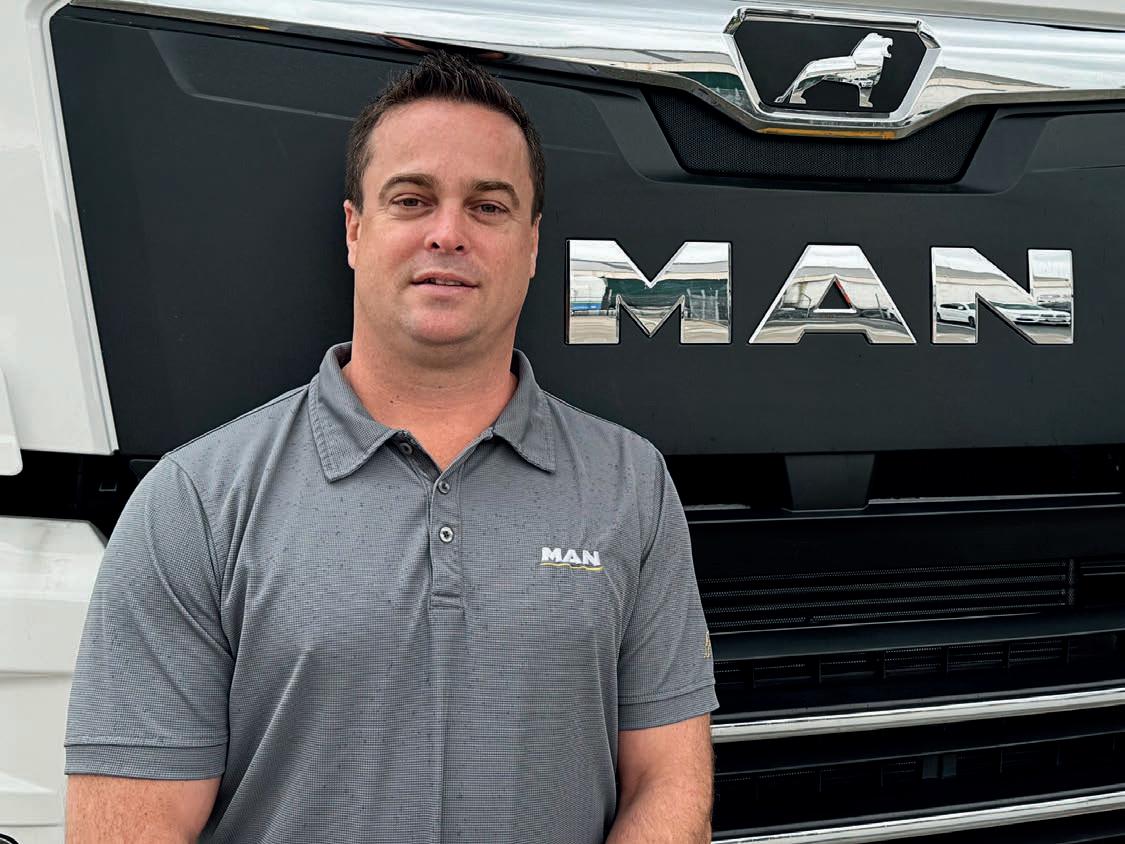
After a productive 2025 that saw the brand grow both in market and internally, MAN Truck & Bus is ready to launch in multiple spaces in 2026
Imported and distributed by Penske Australia, innovation is an apt descriptor for MAN Truck & Bus’ 2025 as the brand has come out the side of plenty of change. Both internal and product evolution has headlined the year, with MAN welcoming staff changes while engaging in exciting developments with its product range.
“It’s been an exciting year for MAN,
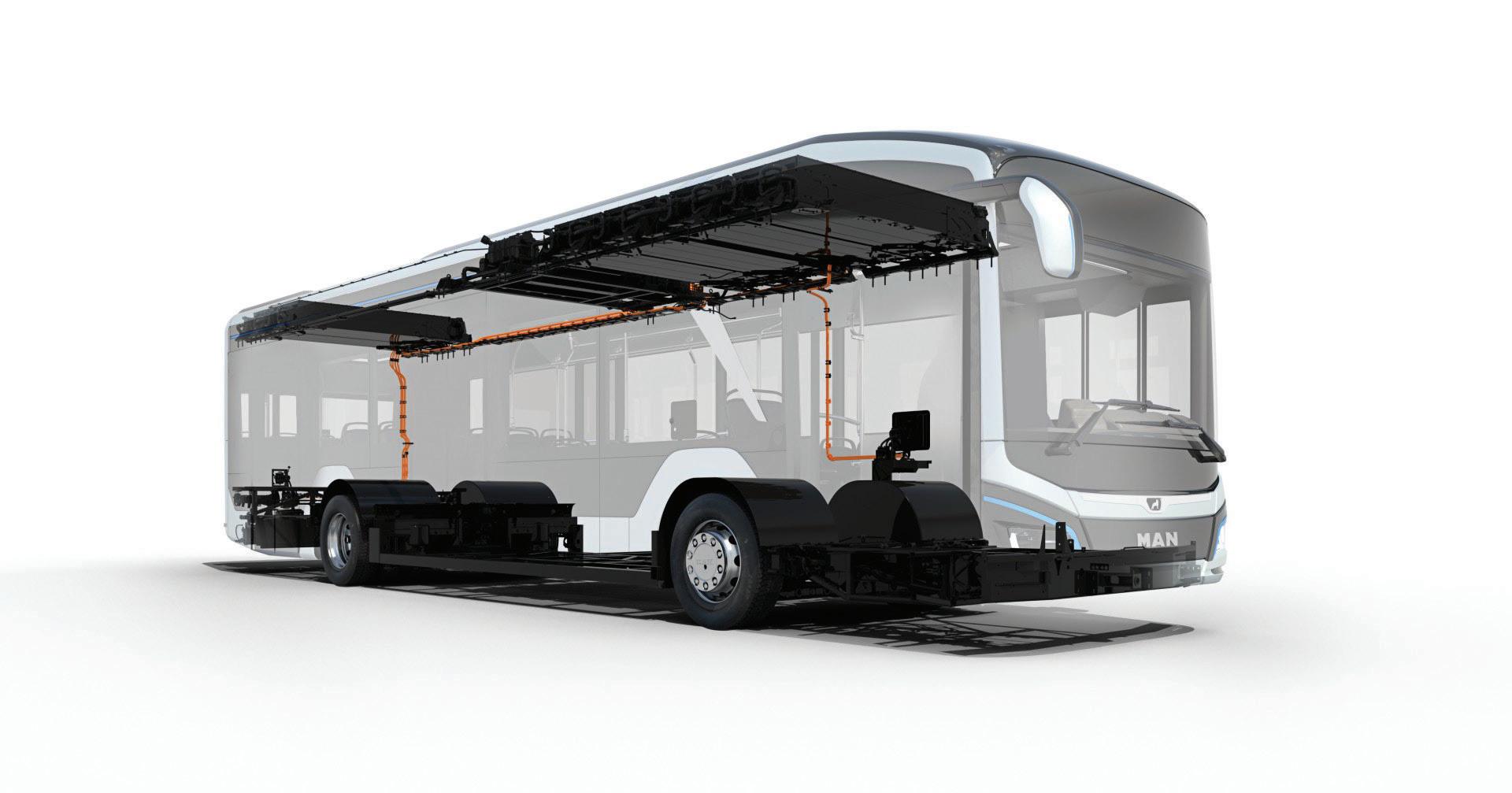
with our first two battery electric buses in build,” MAN Truck & Bus head at Penske Australia Derek Schroff told ABC
“One is in build at Gemilang in Malaysia that will head to the New Zealand market, while one is with Global Bus Ventures to come over to Australia once it’s done the final stages of build. We expect this model to be shipped before the end of the year.”
For the Global Bus Ventures-bodied model, MAN is on the front foot, having opened the unit to pre-sale for local customers. Schroff says MAN is excited to bring these new electric models out to the local market and demonstrate their capabilities in both Australia and New Zealand.
“These are also models that we have ready to purchase, readily available in the local market today,” he says.
“We’re keen to get our footprint in the battery electric vehicle side of the business involved in Australia.
“It’s been a good year overall for our bus business – while we have gone through some internal changes within the business, we have a fantastic bus team ready to support the product.”
The tweaks to MAN’s staff include the addition of Warren Young as the New South Wales and Victorian account manager, while Jason Jovanovic has joined the team to look after Queensland sales.
“We’re very excited to have both of them join us, they’ve integrated into the business so well,” Schroff says.
“Jason has been with Penske for a period of time and has experienced down to the production of our chassis. Both he and Warren, who is well known in the industry, bring plenty of passion to the business.”
Adding to these two staff boosts is Jesse Smith, who is in charge of bus supply as national fleet delivery manager. These appointments come at a critical time as MAN’s focus is primarily on increasing its customer engagement to support the new generation of products entering the local bus market.
From a sales perspective, Schroff has been left impressed by the growth seen within the city bus market segment as MAN continues to drive vehicle sales.
“Heading into 2026, we’re going to have our largest order intake for MAN buses since Penske took over the distributorship of MAN more than a decade ago,” Schroff says.
“We’re focusing more now on the coach side of the business, as we want to engage or re-engage with customers on that side. We believe diesel coaches are a great fit for that market, and we’ve experienced great success in that space before, so we want to regain that customer engagement that we had previously.”
German engineered product being appreciated in Australasia,” he says.
“It features the latest German technology and is the latest and greatest battery electric bus on offer to the market – we’re very fortunate to be able to bring that product to Australia.
“The quality is second to none –operators understand our reliability and quality and should expect the same with this electric product too.”
From the Penske side of the partnership, Schroff is looking to expand on a long and storied history with MAN buses in Australasia.
Central to this is the new-look team that is pushing the brand to new heights locally.
“Our major focus is all about the customer – it’s a major part of what we’ve tweaked in the past year, so we’re now ready to push this approach to market,” he says.
On the city bus side, Schroff says the global MAN battery electric chassis will become the focal point of the brand’s line-up in the local market.
“We’ll follow the same MAN battery electric chassis that is popular worldwide, with the
Much like 2025, Schroff admits there’s “a lot on the go” for MAN and Penske in the year ahead. The primary focus may be about customer engagement, but on the product side, Schroff is expecting the brand to display some exciting innovations at the upcoming 2026 Bus and Coach Expo in Sydney.
“We’re in the works of finalising some plans – unfortunately we missed out on showcasing our latest products at the
last Expo, so we’re now in great shape to showcase our units in Sydney,” Schroff says.
“We have our new model range that we’re welcoming and our new wiring architecture that’s a nice upgrade to better integrate with our bodybuilder partners. We’ve also brought in the D15 engine for the MAN chassis, so we’re excited to have a couple of different things in market in both the diesel and zero-emissions space.”

YEAR: 2026 MAKE: MAN APPLICATION: CITY – ROUTE
LE 19.330 RC2 AND LE 19.290 RC2
DIMENSIONS
Circle Diameter (m) Dependent on wheelbase. 52 degree front inner wheel cut angles.
ENGINE
Make/Model MAN/D1556 LOH17 E6e MAN/D0836 LOH91 E6e Configuration Inline 6-cyl.
YEAR: 2026 MAKE: MAN APPLICATION: CHARTER, SCHOOL, MINING
MODEL: IC 19.330 RR8 AND IC 19.290 RR8
DIMENSIONS
(mm) 4,000 Buggy form Front Overhang (mm) Provisional Rear Overhang (mm) 3,400 (3,250 opt) 3,150 (3,400 opt)
Turning Circle Diameter (m) Dependent on wheelbase. 56 degree front inner wheel cut angles.
ENGINE
Type – Front
7,200kg. Cast cranked rigid front axle with stabiliser and steering damper. Type – Rear MAN/HY1350-B03/13,000kg. Stabiliser bar. TRANSMISSION
SUSPENSION Type – Front Air (ECAS) Type – Rear Air (ECAS) AXLES
Service Brakes Air/Disc Retarding Brake System Integrated hydraulic retarder EBS Yes
FUEL TYPE
TRANSMISSION
AXLES
Type – Front MAN/VOS-08-B-01/ 8,000kg. Rigid front axle (opt: Independent Inter City or Inderpendent Coach).
Type – Rear
SUSPENSION
MAN/VOK-08-B/8,000kg. Rigid front axle.
MAN/HY1350-B03/13,000kg. Stabiliser bar.
Type – Front Air (ECAS)
Type – Rear Air (ECAS)
BRAKES
Service Brakes Air/Disc
Retarding Brake System Integrated hydraulic retarder
EBS Yes
ELECTRONIC SYSTEM
Alternator 2 x 120A
WHEELS & TYRES


72 Formation Street, Wacol, Qld, 4076 Queensland: (07) 3271 7777
RR2 APPLICATION: CHARTER, COACH , LONG DISTANCE, MINING YEAR: 2026 MAKE: MAN
DIMENSIONS
Length (m) 11.0 to 13.2
Wheelbase (mm) 4,000 Buggy form
Front Overhang (mm) Provisional
Rear Overhang (mm) 3,400
Turning Circle Diameter (m) Dependent on wheelbase. 52 degree front inner wheel cut angles.
ENGINE
Make/Model MAN/D2676 LOH52 E6e
Configuration Inline 6-cyl. 12.5ltr turbo. Up to 520hp available. Power (kW) 316/353/382 Torque (Nm) 2,200/2,450/2,650
Capacity (L) 42
FUEL TYPE
Type Diesel E6, Bosch EDC 17 common rail
Capacity (L) 480 (opt: 2 x 220)
TRANSMISSION
Auto Model / Type ZF/MAN Tipmatic 12OD automated with retarder 12-speed. Opt: ZF 6AP2520 Ecolife 2 (440/480hp only) 6-speed
AXLES
Type – Front
MAN/VOS-08-B-01/8,000kg. Independent front axle with stabiliser (opt: Rigid axle).
Type – Rear MAN/HY1350-B03/13,000kg. Stabiliser bar.
SUSPENSION
Type – Front Air (ECAS)
Type – Rear Air (ECAS)
BRAKES
Brakes
ELECTRONIC SYSTEM
Alternator
WHEELS & TYRES

CO
WEB: man.com.au EMAIL: bussales@man.com.au YEAR: 2026 MAKE: MAN MODEL: CO
COACH, LONG DISTANCE , DOUBLE DECKER
RR4
DIMENSIONS
Length (m) 12.8 to 14.5
Wheelbase (mm) 4,000 Buggy form
Front Overhang (mm) 2,005 mm temporary
Rear Overhang (mm) 1,470 mm + 3,100 mm
Turning Circle Diameter (m) Dependent on wheelbase. 52 degree front inner wheel cut angles.
ENGINE
Make/Model MAN/D2676 LOH52 E6e
Configuration Inline 6-cyl. 12.5ltr turbo. Up to 520 hp available.
Power (kW) 316/353/382
Torque (Nm) 2,200/2,450/2,650
Oil Capacity (L) 42
FUEL TYPE
Type Diesel E5, Bosch EDC 17 common rail
Capacity (L) 480
TRANSMISSION
Auto Model / Type ZF/ MAN Tipmatic 12OD automated with retarder 12-speed Opt: ZF 6AP2520 Ecolife 2 (440/480hp only) 6 speed.
AXLES
Type – Front
MAN/VOS-08-B-01/8,000kg. Independent front axle with stabiliser.
Type – Rear MAN/HY1350-B01/13,000kg. Stabiliser bar.
SUSPENSION
Type – Front Air (ECAS)
Type – Rear Air (ECAS)
BRAKES
Service Brakes Air/Disc
Brake System Integrated hydraulic retarder EBS EBS
ELECTRONIC SYSTEM
Alternator
WHEELS & TYRES

x 120A
x 12V 225Ah
From
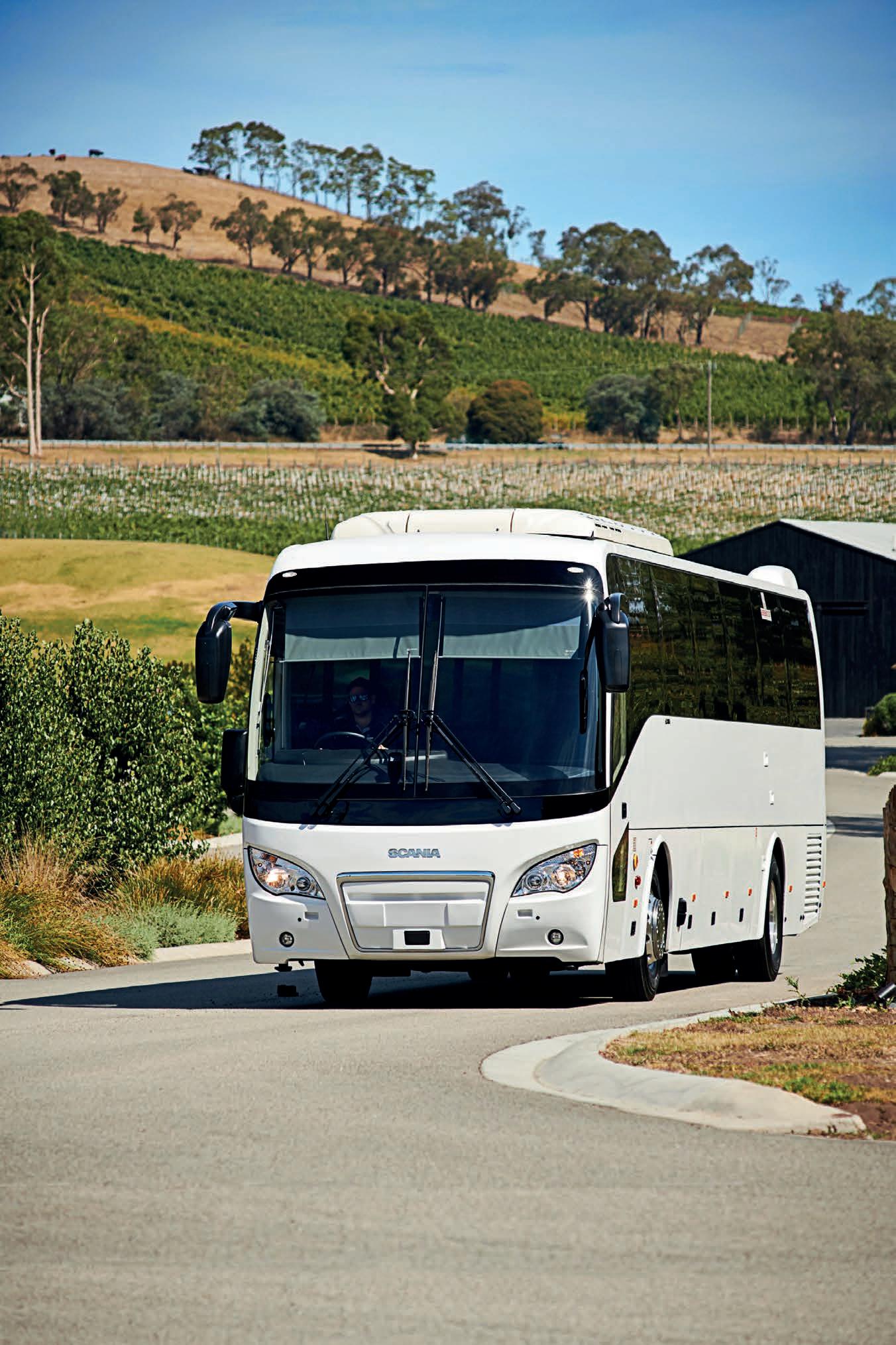
growing its hybrid-electric and alternative fuel options to releasing an exciting new engine range, Scania is continuing to evolve its bus and coach technology for local operators
The past year has been a time of difference for global heavy vehicle manufacturer Scania. Historic forays into electric hybrid bus and coach deliveries headlined 2025 for the European powerhouse, with plenty of innovation on the way for the local market in the near future.
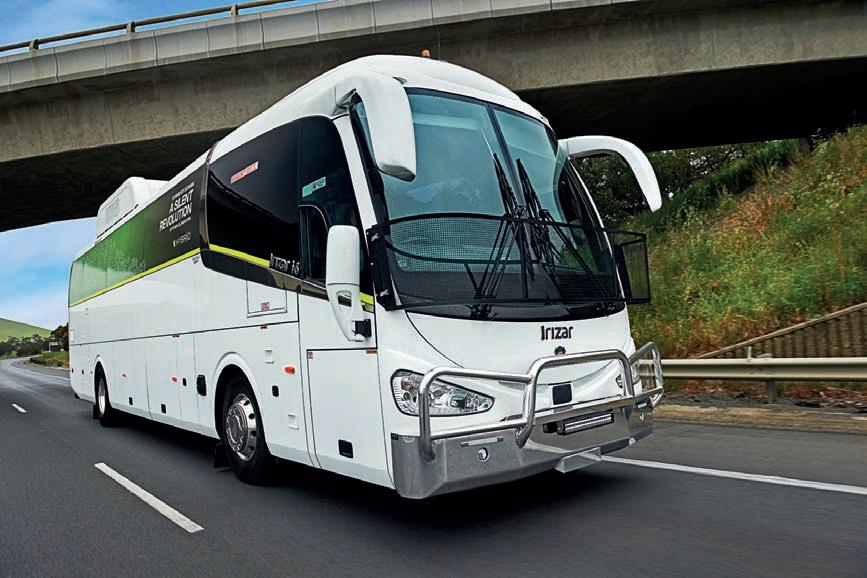
The achievements for 2025 culminated in Scania’s first self-charging electric hybrid powered coaches, featuring an Irizar body,
arriving in Australia. Already the first two models are in service in Western Australia, with further stock on hand.
The self-charging electric system means operators don’t need to invest in more expensive charging infrastructure for more location work, as the electric-hybrid system can deliver greater range than pure diesel and use electric-only operation when required.
While Scania has offered this powertrain successfully on route
Above: Scania has further enhanced its technology in multiple spaces
bus products for several years, the brand is now working with Irizar to offer the technology in a luxury coach configuration.
“Scania continues to offer a range of modern and efficient vehicles through its bus and coach range that are configured to meet the needs of Australian operators,” Scania Bus and Coach national sales and contracts manager for WA, South Australia, Victoria and Tasmania Jamie Atkinson says.
“Our commitment to our customers through our expansive network of company-owned and independent workshops provides a confidence that we can keep our customers moving. Our long-standing promise of maximum uptime puts dollars in the bank for customers who are able to deliver uninterrupted service to their customers.”
This innovation also includes the phased introduction of the updated Scania Touring and Scania-Higer
A30 school and charter coach alongside a range of electric and electric-hybrid route buses fitted with locally assembled bodies. The phased introduction of these models reiterates the benefits of these popular, mass-produced and affordable vehicles, all coming with the latest generation of safety focused Advanced Driver Assistance Systems. A highlight of this technology is the new digital dashboard that allows for easier manipulation of these extended safety and convenience features.
Within the route bus range, local assembly at Volgren for Scania’s electric-hybrid chassis is now well established with a good flow of vehicles emanating from the Dandenong factory. Fully electrified chassis are also in build, answering the demand from government fleets for zero-emissions vehicles.
A major focus for 2025 has also been to enhance Scania’s parts stock and maintenance capabilities to ensure Scania customers all over Australasia continue to enjoy the benefits of these models without any disruptions to uptime.
“With our newly expanded parts warehousing and our preventative maintenance knowledge that comes from a connected global fleet of more than 700,000 vehicles, we are reducing the potential for unplanned stoppages, which in the public transport world means more people reach their destinations on time,” Atkinson says.
“We have decades of experience operating in Australia providing the back-up that operators in big cities and smaller towns rely on for their day-to-day operations.”
This culminated in Scania’s 2025 Busworld Expo stand that included
new solutions on display like the PHEV plug-in hybrid model that serves as a new powertrain option for Europe.
“If there is demand, we can investigate adding it to our local offerings,” Atkinson says.
While this depth and range is more than sufficient for a large-scale OEM looking to continue evolving in
Australasia, Scania has no intentions to apply the brakes. Instead, its development is only set to fasten in the coming year as Scania Australia powers into 2026 with a modern and fresh range of fully-imported coaches in the Scania Touring and A30 alongside electric and electric-hybrid buses with locally assembled bodies.
The big news for Scania in the year ahead is the introduction of a range of new-generation six-cylinder SUPER diesel engines that promise at least an eight per cent improvement in fuel efficiency. This benchmark has been more than achieved by these engines when used in Scania trucks in Australia over the past couple of years, offering plenty of promise for local bus and coach operators.
The focus for 2026 will be on the roll-out of the new SUPER generation engines while also further enhancing its fully electric route buses, providing additional supplies of electric hybrid buses and coaches and fulfilling market demands for the Scania Touring and A30 coaches alongside its array of trusted Euro 6 emission diesel chassis. Where market demand exists, Scania is also looking to supply battery electric chassis as well as other alternative and renewable fuel vehicles from its wide range of options, including diesel engines that can run on B100
renewable diesel offering a more than 80 per cent reduction in CO2 emissions.
“For those running high horsepower engines in charter and touring routes, the new generation 13-litre six-cylinder SUPER engines will make a significant impact on their daily running costs, as well as a welcome reduction in exhaust emissions,” Atkinson says.
“We see the arrival of the SUPER engine as a significant step forward in efficiency, but also continuing Scania’s legendary reliability and durability, and importantly, driveability, also.
“As we look to the future, our colleagues in Sweden have been developing further alternative and renewable fuel solutions for public transport, many of which will in time have direct application for Australian operators. But for the here and now, the solutions we are offering meet the needs of our customers, particularly with regard to commercial viability.”
ADDRESS:
PHONE:
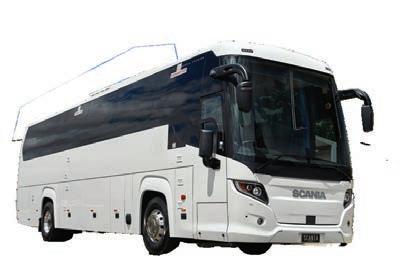
VEHICLE DIMENSIONS:
Chassis Length (m) 12.3
Chassis Wheelbase (mm) 5850
Chassis Front Overhang (mm) 2810
Chassis Rear Overhang (mm) 3350
Chassis Turning Circle Diameter (m) 25
ENGINE:
TRANSMISSION:
Make / Model Scania 12-speed gearbox with Opticruise and Retarder; ZF Ecolife 2 6-speed automatic gearbox
ABS & ADAS
Retarding Brake System Scania retarder / ZF retarder
EBS Yes
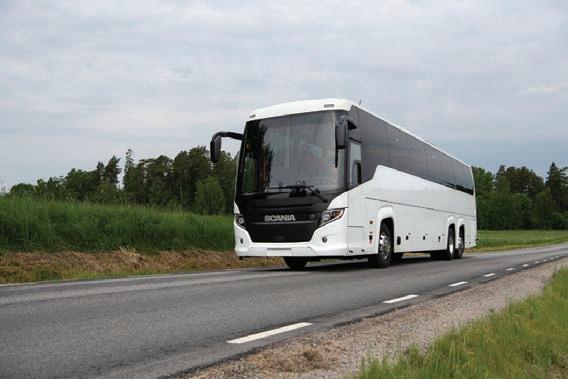
APPLICATION: CHARTER - LONG DISTANCE
CHASSIS DIMENSIONS:
Chassis Length (m) 13.3
Chassis Wheelbase (mm) 5925
Chassis Front Overhang (mm) 2810
Chassis Rear Overhang (mm) 4565
Chassis Turning Circle Diameter (m) 25
ENGINE:
Make / Model Scania / DC 13 165
Configuration 6 cylinder Power (HP / kW) 500/368 @ 1800 ( SCR ONLY)
Torque (Nm) 2550 @ 925-1340 Oil Capacity (litres) 43
FUEL SYSTEM:
Type / Max Speed (km/h) Diesel /1 00 Capacity (litres) 410 (usable volume)
TRANSMISSION:
Make / Model Scania 12-speed overdrive gearbox with Opticruise and Retarder / GRSO895R
AXLES:
Type - Front Scania AMI580SA Independent Type - Rear Scania AD400+AM661
SUSPENSION:
Type - Front Independent - 2 x airbags
Type - Rear 6 x airbags
BRAKES:
Service Brakes Disc brakes with EBS, ABS & ADAS
Retarding Brake System Scania retarder
EBS Yes
CLUTCH:
Model/Type K432/ Pull
Diameter (mm) N/A
Control SACHS
ELECTRONIC SYSTEM:
Alternator 2 x 150 A
Starter 5 Hp Batteries 2 x 12v 230aH
ADDRESS:
Scania Australia 212-216 Northbourne Road, Campbellfield, VIC, 3061
PHONE: 03 9217 3300
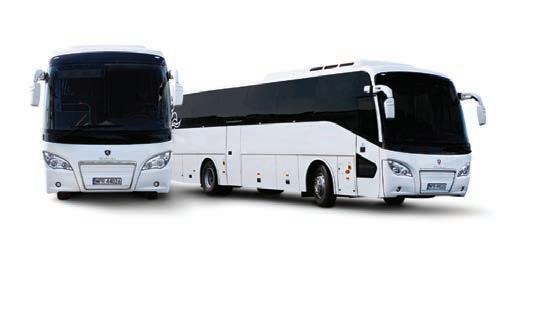
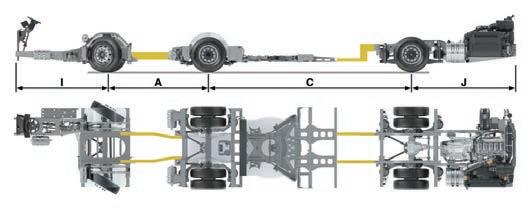
MAKE: SCANIA MODEL: K360C
SERIES: A6X2/2LB
APPLICATION: CHARTER - SCHOOL
CHASSIS DIMENSIONS:
Chassis Length (m) 12.3
Chassis Wheelbase (mm) 5850
Chassis Front Overhang (mm) 2810
Chassis Rear Overhang (mm) 3550
Chassis Turning Circle Diameter (m) 25 MAKE: SERIES:
ENGINE: Make / Model Scania DC 09 140
FUEL SYSTEM:
TRANSMISSION:
Make / Model ZF Ecolife 2 6-speed automatic gearbox/ ZF 6AP1620B
Type / Max Speed (km/h) Diesel, HVO / Diesel, HVO, Biodiesel/100 Capacity (litres) 275 (usable voume) AXLES:
Type - Front Scania AM660S I-Beam
SUSPENSION:
Type - Front I-Beam - 2 x airbags Type - Rear 4 x airbags
& TYRES:
Durabright polished alloy
BODY SPECIFICATIONS:
Seating Capacity Up to 57 seated No. Of Doors 1 Passenger Capacity 57
BODY DIMENSIONS:
Seating Make Customer choice
Seating Model NS Seatbelt Yes
Length (m) 12.3
Body Floor Height (mm) 1317 Body Weight (kg) NS
STORAGE:
Internal 7 m3 thru bins, manual operated pantograph doors External Open overhead luggage racks
AIR-CONDITIONING:
Air-Conditioning Standard Yes
Air-Conditioning Make Konvecta
Air-Conditioning Model SL800
OPTIONS:
Cd-Pa-Radio, Dvd-Tv, Individual Reading Lights, Individual Ac Vents, Reverse Camera Yes Additional Body Options NS
APPLICATION: CITY – ROUTE
CHASSIS DIMENSIONS:
Chassis Length (m) 9 (transport)
Chassis Wheelbase (mm) 3000 (transport)
Chassis Front Overhang (mm) 2500
Chassis Rear Overhang (mm) 3080
Chassis Turning Circle Diameter (m) 25
ENGINE: Make / Model Scania DC 09 141 Configuration 5 cylinder
(HP / kW) 360/262 @ 1900 (SCR only)
Torque (Nm) 1700 @ 1050-1475 Oil Capacity (litres) 31
FUEL SYSTEM: Type Diesel, HVO, Biodiesel
(litres) Body Builder
TRANSMISSION:
/ Model
AXLES: Type - Front
SUSPENSION:
Type - Front I-Beam - 2 x airbags Type - Rear 4 + 4 x airbags
Retarding Brake System
CLUTCH:
ELECTRONIC SYSTEM:
WHEELS & TYRES:
ADDRESS:
PHONE: 03 9217 3300
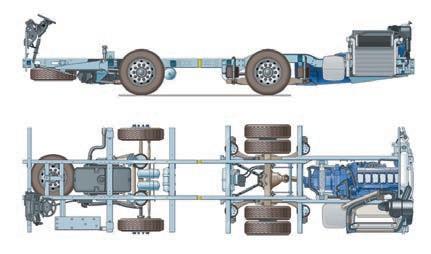
MAKE: SCANIA MODEL: K320C / K360C / K370C SERIES: B4X2NB
APPLICATION: CHARTER – LONG DISTANCE, SCHOOL
CHASSIS DIMENSIONS:
Chassis Length (m) 9 (transport)
Chassis Wheelbase (mm) 3000 (transport)
Chassis Front Overhang (mm) 2075-2500
Chassis Rear Overhang (mm) 3280
Chassis Turning Circle Diameter (m) 25
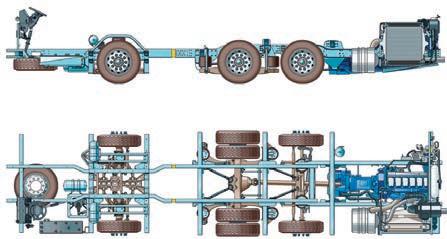
CHASSIS DIMENSIONS:
Chassis Length (m) 10 (transport)
Chassis Wheelbase (mm) 3000 (transport)
Chassis Front Overhang (mm) 2075 - 2500
Chassis Rear Overhang (mm) 4385
Chassis Turning Circle Diameter (m) 25
TRANSMISSION:
TRANSMISSION:
AXLES:
SUSPENSION:
BRAKES:
ADDRESS:
Scania Australia 212-216 Northbourne Road, Campbellfield, VIC, 3061
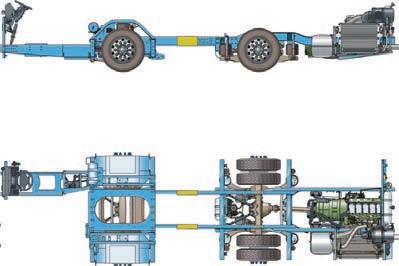
PHONE: 03 9217 3300
Chassis
(mm)
Chassis Front Overhang (mm) 2500 - 2700
Chassis Rear Overhang (mm) 3280
Chassis Turning Circle Diameter (m)
FUEL SYSTEM: Type Diesel, HVO, Biodiesel
AXLES: Type - Front Scania AM 580 I-Beam
- Rear Scania AD400
CLUTCH:
WEB: www.scania.com.au
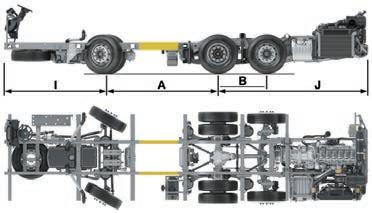
MAKE: SCANIA MODEL: K410C SERIES: B6X2NB
APPLICATION: LONG DISTANCE
CHASSIS DIMENSIONS:
Chassis Length (m) 10 (transport)
Chassis Wheelbase (mm) 3000 (transport)
Chassis Front Overhang (mm) 2075 - 2500
Chassis Rear Overhang (mm) 3990
Chassis Turning Circle Diameter (m) 25
ENGINE:
Make / Model Scania DC 13 163
Configuration 6 cylinder
Power (HP / kW) 410/302 @ 1800 (SCR only)
Torque (Nm) 2150 @ 900 - 1340
Capacity (litres) 43
FUEL SYSTEM:
Type Diesel, HVO, Biodiesel Capacity (litres) Body Builder
TRANSMISSION:
Make / Model Scania 12-speed gearbox with Opticruise and Retarder
AXLES:
Type - Front Scania AM660 I-Beam
Type - Rear Scania AD400 + A450
SUSPENSION:
Type - Front I-Beam - 2 x airbags
Type - Rear 6 x airbags
BRAKES:
Service Brakes Disc, ABS, ADAS
Retarding Brake System Yes EBS Yes
ELECTRONIC SYSTEM: Alternator 2x 150 amp Starter 5 Hp
2x 12 volt 230Ah
WHEELS & TYRES: Type Polished Alloy Rim
Size 8.25 x 22.5
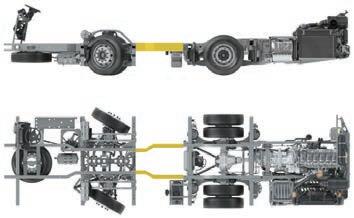
MAKE: SCANIA MODEL: K360C / K370C
SERIES: B4X2NI
APPLICATION: CHARTER – LONG DISTANCE
CHASSIS DIMENSIONS:
Chassis Length (m) 9 (transport)
Chassis Wheelbase (mm) 3000 (transport)
Chassis Front Overhang (mm) 2075 - 2500
Chassis Rear Overhang (mm) 3280
Chassis Turning Circle Diameter (m) 25
ADDRESS:
PHONE: 03 9217 3300
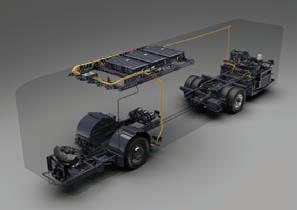
MAKE: SCANIA MODEL: K240E SERIES: B4X2LB
APPLICATION: CITY-ROUTE
DIMENSIONS
Chassis Length (m) 9 (transport)
Chassis Wheelbase (mm) 3000 (transport)
Chassis Front Overhang (mm) 2500 - 2700
Chassis Rear Overhang (mm) 3280
Chassis Turning Circle Diameter (m) 25
ENGINE:
TRANSMISSION:
SUSPENSION:
BRAKES:

















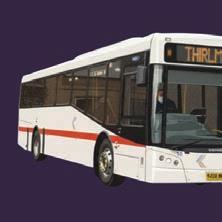








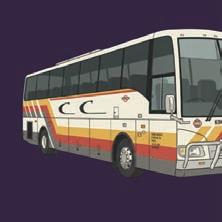








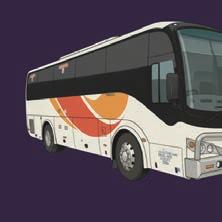


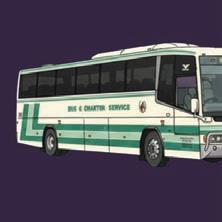






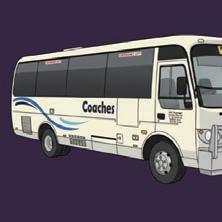


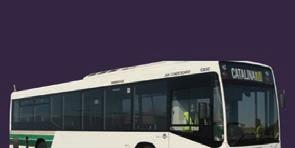


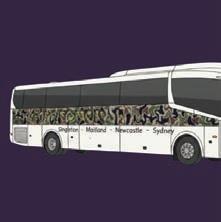







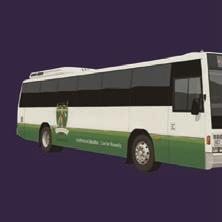


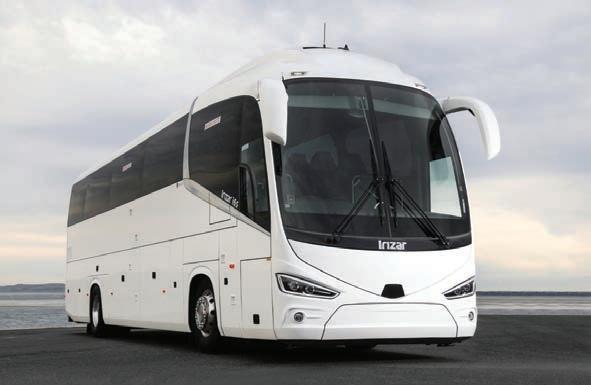
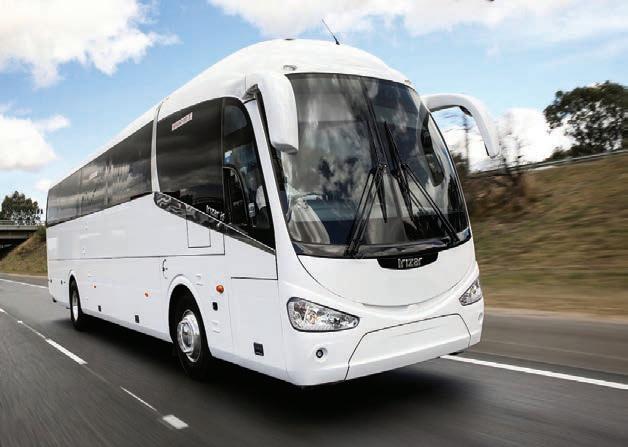
The past year has seen Irizar emerge in more bus and coach body markets locally, with the global company preparing for another hectic year in 2026
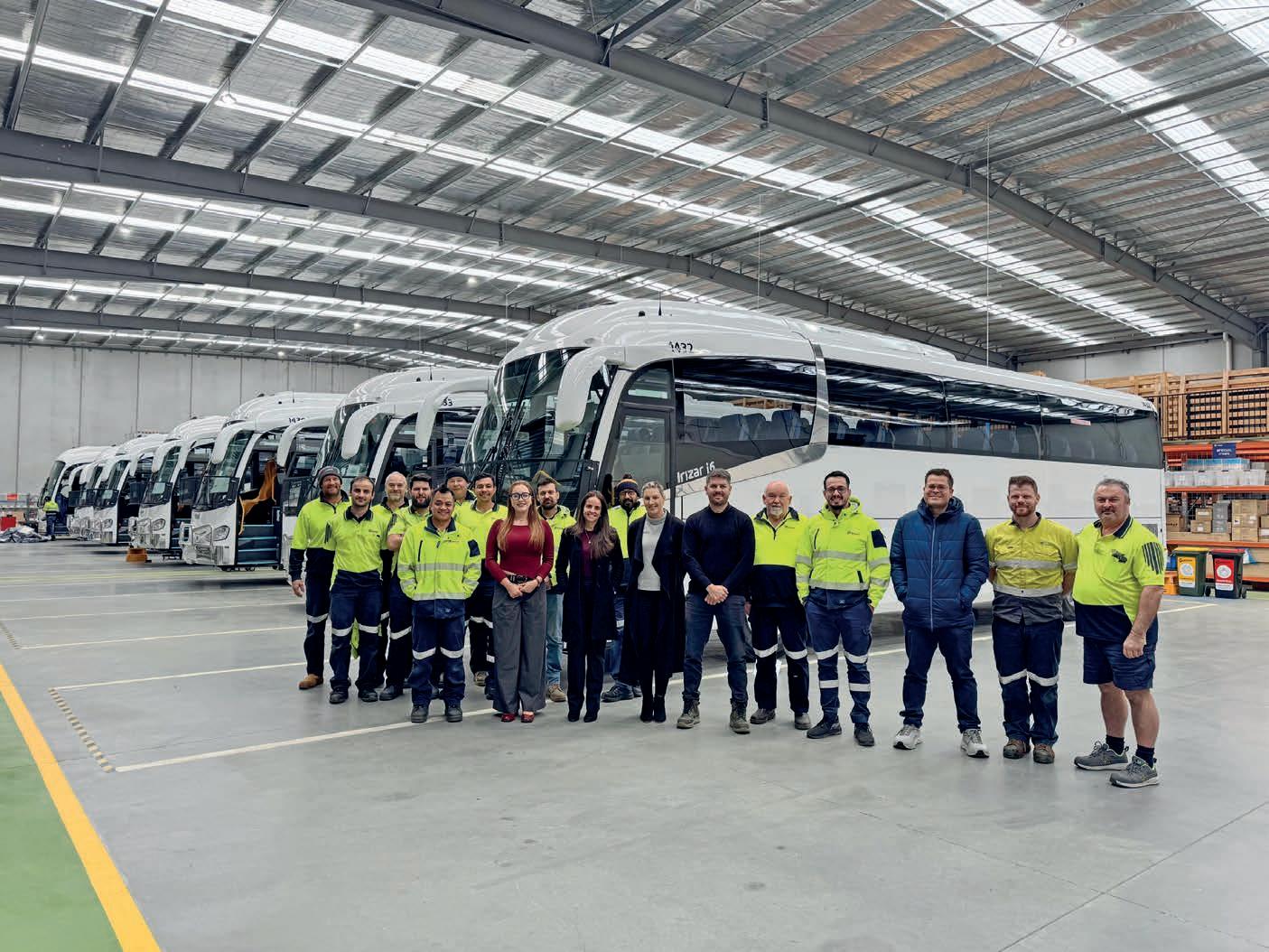
In the aftermath of its new site opening in 2024, Irizar has continued to build its presence in the local bus and coach market. With another impressive bank of consistent deliveries and growing success in various sectors, Irizar’s numerous highlights from 2025 include ongoing orders under New South Wales’ Panel 4.
“2025 has been another solid year for Irizar with good deliveries and a solid order bank in place going into 2026,” Irizar Asia Pacific managing director Steve Heanes told ABC
“We’ve gone well with Panel 4 in NSW in 2025 and will continue to grow that side of the business. Our coach segment is also going strong, while our mining sector in Western Australia has been going well too.”
The building popularity under Panel 4 has allowed Irizar to make an impact on NSW’s school bus network, with Irizar delivering up to 16 high-floor i6 3700 school buses over a couple of months in the back half of 2025.
A further 12 rolled out prior to the end of 2025, forming an impressive milestone for the bodybuilder.
“The i6 3700 is a workhorse and has proved itself in many applications and
remote areas,” Heanes says.
“We’ve worked hard to really position the product into the TfNSW panel contracts. As we all know, it’s the highest spec and has the most stringent supply conditions for a school bus in the country.”
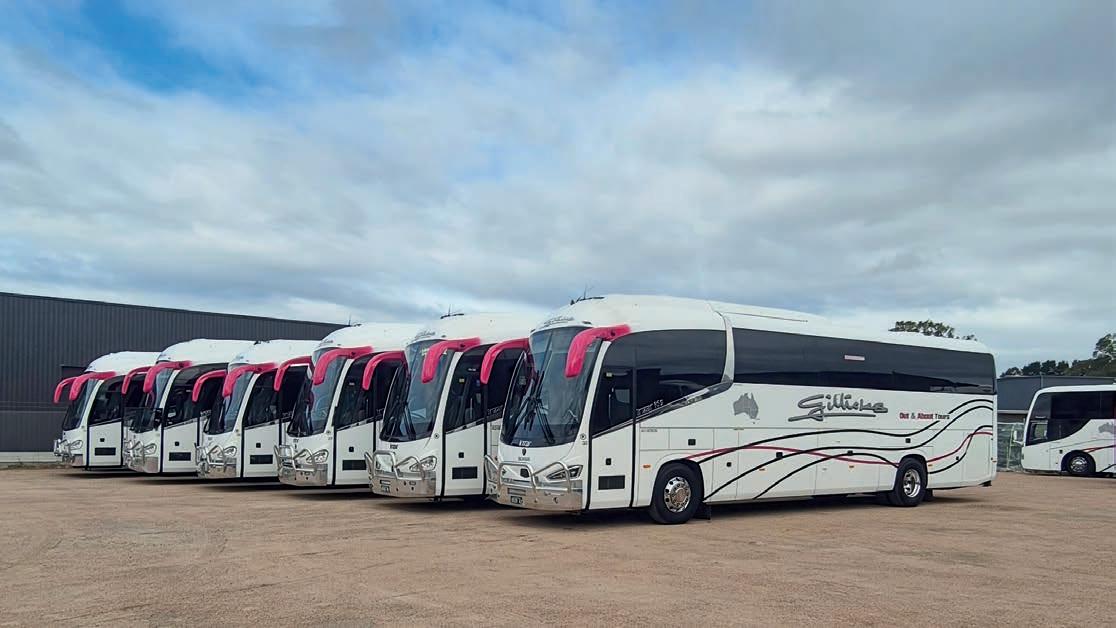
Outside of the NSW procurement program, Irizar’s coach segments have also grown courtesy of a new entrant to the nation’s tour and charter market. With international operator FlixBus launching its very first Australian services alongside Deanes Coaches Group and Sunbury Coaches, Irizar has been able to provide bodies for the new coaches entering these innovative services.
“The other major part of growth for us is our business with Flix –we’ve managed to score a fair bit of their business as part of the brand’s introduction into Australia,” Heanes says.
On the service side of the business, Irizar has continued to evolve through its service vehicle network. However, a recent update to its iService portal has led to Irizar offering a one-stop shop for Australian customers.
“Customers love the iService portal because it makes their lives easier
Above: Service and leading product have defined Irizar’s 2025. Image: Irizar
What to look forward to in 2026
when it comes to maintaining their buses,” Irizar procurement and spare parts manager Luke Walker told ABC
“It’s basically a one-stop-shop for them, providing them with maintenance, technical and parts information in one place.”
While there has been plenty of innovation made to Irizar’s diverse range in recent years, Heanes and the Irizar team are remaining tight-lipped about what 2026 has in store for the fleet. Ahead of what is set to be a popular 2026 BusNSW Bus & Coach Expo in Sydney in July, Heanes is teasing some product updates that will be made clearer in the new year.
Outside of the excitement, the brand will maintain its focus on escalating its customer service capabilities across the country.
“On the product side, we’ll be launching updates at the 2026 Expo – we’ll have a fairly big stand on display,” Heanes says.
“We’ll also continue to grow our service team and have recently added a second person to our service network in Western Australia. We’ve started completing service contracts with customers for body servicing and we want to grow that part of our business.”
ADDRESS:
WEB: www.irizar.com.au EMAIL: sales@irizar.com.au
After another positive year that included the appointment of a new general manager, Challenger is preparing for a milestone 2026 with new products on the way
side, the addition of a maiden general manager revitalised the brand’s future aspirations.
“Our biggest change in 2025 saw Challenger employee Paul Fagg become our very first general manager, which was a real turning point,” Challenger Bus and Coach CEO Greg Sloan told ABC
“Having Paul on board has provided the team with an even greater skillset and has seen each of our sales team members grow.
“We are always evolving and finding ways to ensure that we can provide the best service possible. Paul has demonstrated a real passion for the bus industry after multiple decades in the truck industry, so we couldn’t be happier that Paul has joined the team.”
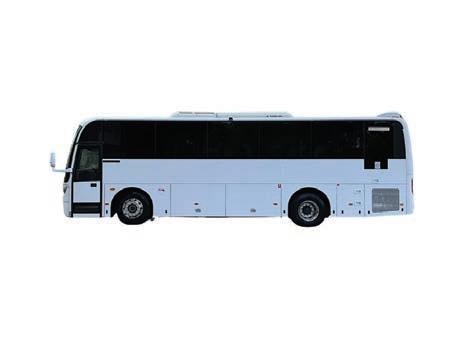
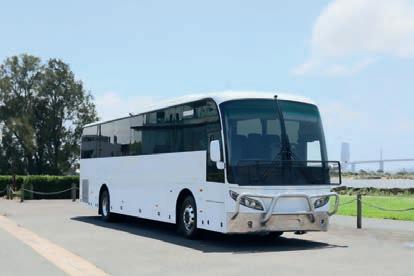
When it comes to Challenger’s premier fleet options for Australasian operators at the end of 2025, the ever-popular V12 and V10 continue to lead the way. As soon as the V12 lands in the country, it is quick to leave the depot and head off to eager new owners.
“The V12 is our premium workhorse – it’s one of those buses that fit straight into the fleet and keeps on going,” Paul Fagg told ABC
“Its strong stainless steel frame, flat glass panels and windows, as well as a premium Cummins engine, make it a lucrative option for many operators around the country.
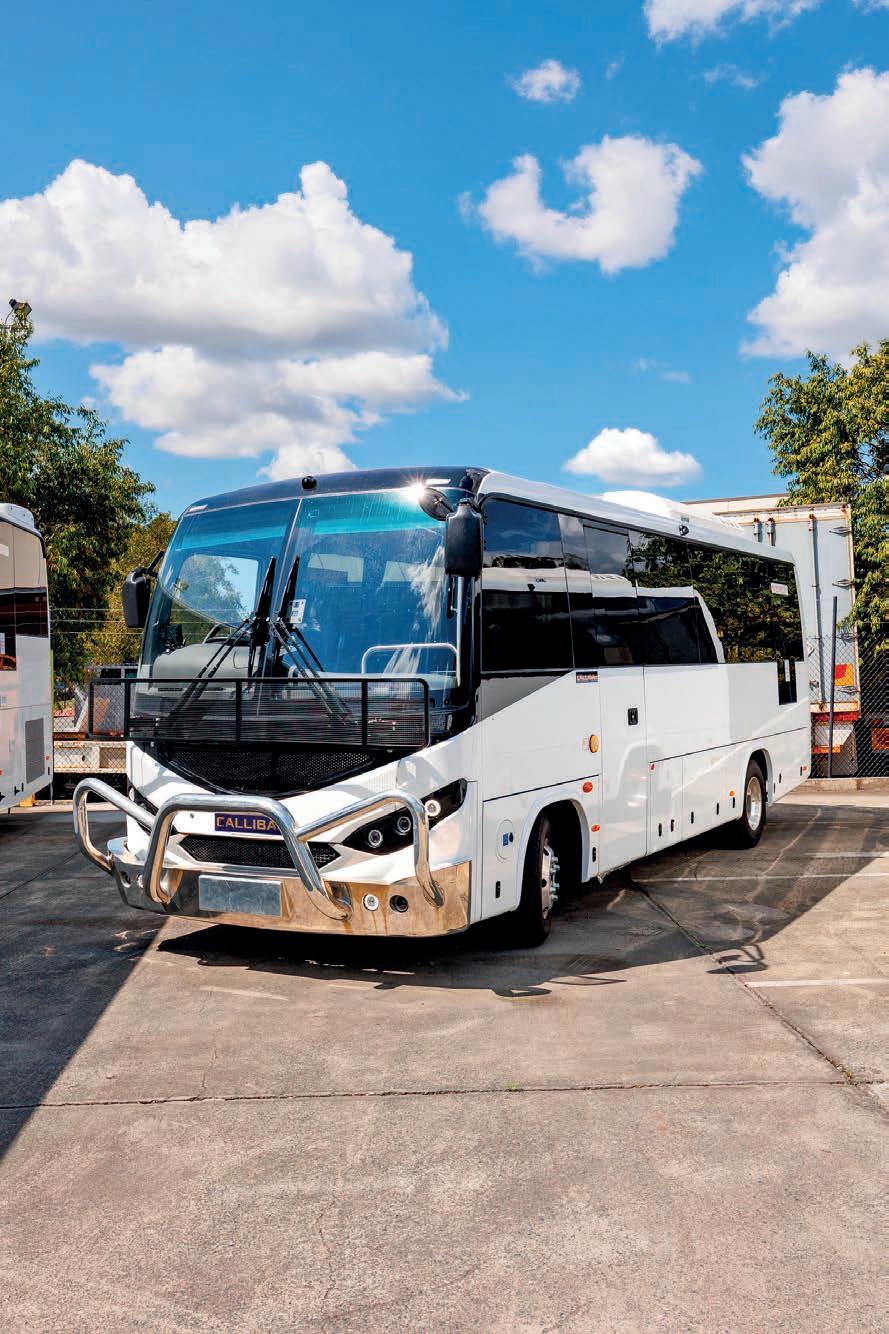
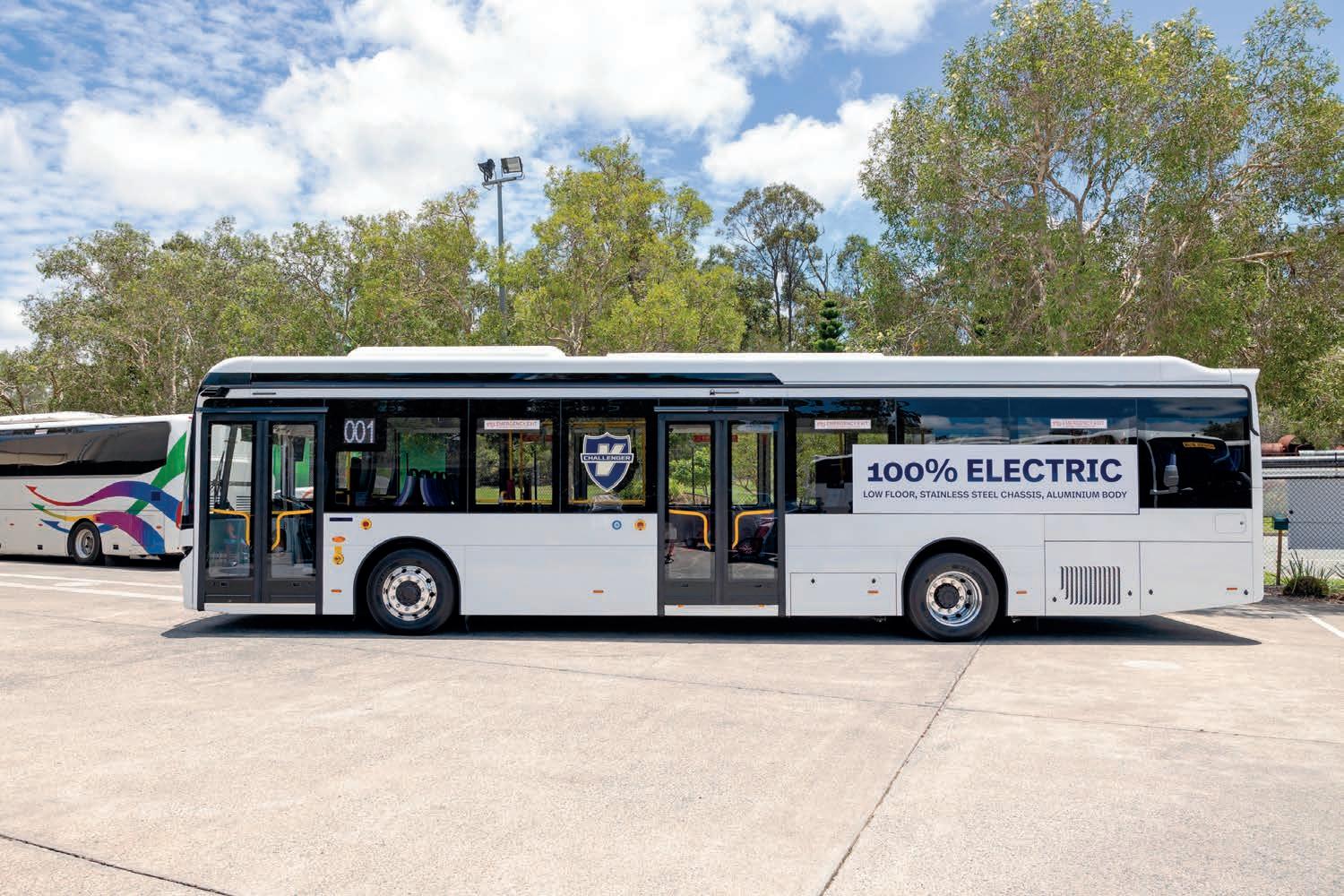
As another year has passed for emerging supplier Challenger Bus and Coach, more milestones continue to tick over. Just a couple of years ago, the brand’s fleet included two primary models in the V10 and V12. Fast forward to the end of 2025 and Challenger has added
the Callibar and electric low-floor bus variants to its suite while also upgrading and refining its initial two leading models. Outside of enhancing its trusted V10 and V12 and developing new models for the local market, the main highlight for Challenger in 2025 was delivering its 50th unit. On the team
“A few new features have been upgraded on the V12 in 2025, including fitting a new multimedia touch screen system and a new saloon style door, and these have all been a real hit.”
Being one of the smaller manufacturers in the local bus and coach market, Challenger’s major focus has been on growing its brand and its identity. While people may have heard of Challenger, Fagg says
sometimes people may not know exactly who or what the brand is about. Spreading its identity has been a primary move for Challenger in 2025 as the emerging force continues to show customers the design flexibility it has when compared to other manufacturers.
“We’re able to customise the vehicle to exactly what the customers wants. If someone needs a wheelchair lift, toilet or kitchenette, we can include it,” he says.
“If someone wants to use the bus as a teaching classroom or convert it into a premium corporate coach, we can do any of these things to any of our models.”
Heading into a defining year that should see continual expansion, both in terms of vehicle range and market coverage, Challenger’s message is simple. Challenger is an Australian brand, suited perfectly to the local market’s needs for the future.
“We aren’t a dealership –Challenger Bus and Coach owns all of our own intellectual property for the design and construction of our vehicles, so we’re an Australian bus and coach manufacturer,” Fagg says.
“Yes, we build in China, but that doesn’t mean we are a Chinese bus. We’re an Australian bus, built the Australian way and to the Australian standard.”
Above:
It’s bright horizons for Challenger in the next year as the ever-growing bus and coach brand continues to search for evolution and development. The brand is ready to have a major presence at the 2026 Bus and Coach Expo in Sydney, showcasing its latest developments to its four-vehicle strong fleet.
What to look forward to
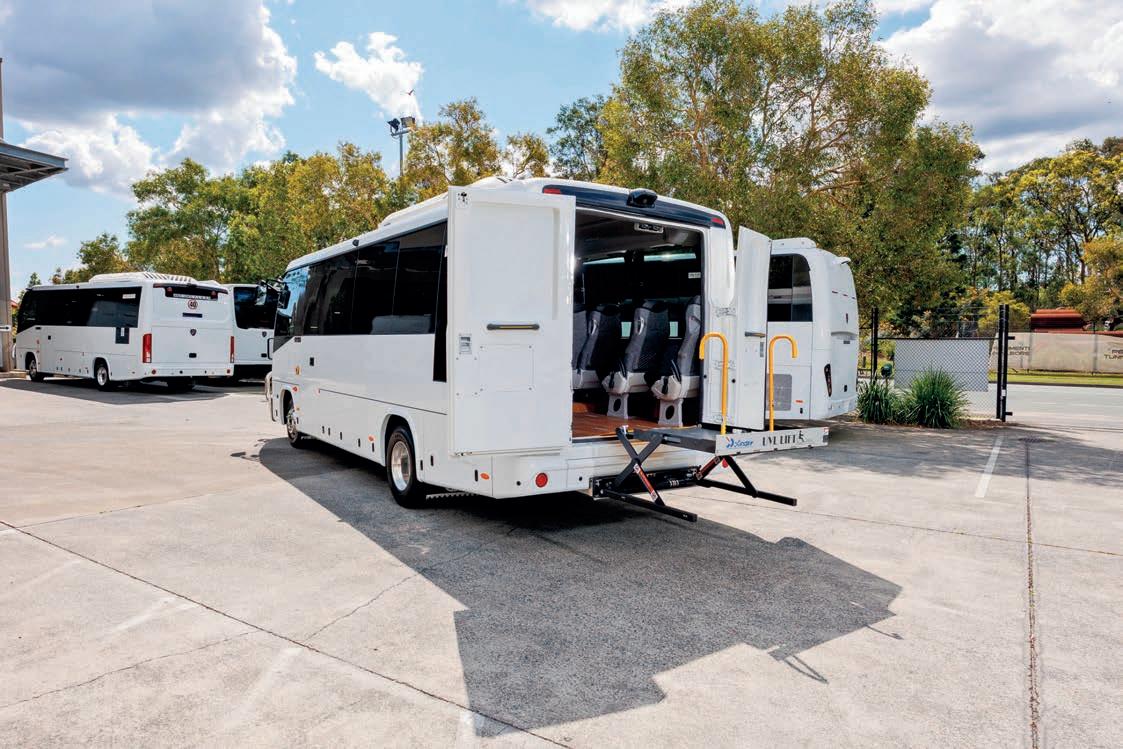
This includes two new models that are slated for a 2026 release in a three-axle coach and a tweak to the small and dynamic Callibar model that will be built on a four-wheel drive chassis. While this is enough to excite the industry, Fagg teases that this may only be the tip of the iceberg for Challenger in 2026 and beyond.
“The three-axle coach is built to the impressive Challenger standards, and it comes equipped with 52 passenger seats, a wheelchair lift, toilet and two disability friendly spaces,” he says.
“The Callibar on a four-wheel drive chassis is one of a kind in the market and is highly sought after. The option came as there was a gap in the market, with lots of regional tour operators and mine sites using a truck cab with a ‘cabin’ on the back, while our vehicle will be an all-in-one unit with a 4.5L Cummins Euro 6 engine.
“We’re also evolving our electric range in 2026. Watch this space, we’re saying that anything is possible.”
ADDRESS:
39A Chelmsford St, Williamstown, VIC, 3016
WEB:
www.challengerbusandcoach.com.au
EMAIL: sales@challengerbusandcoach.com.au
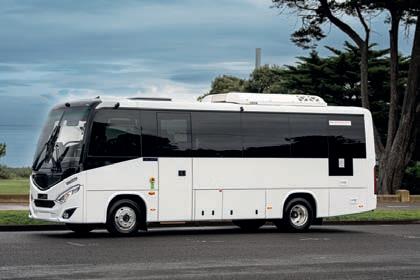
MAKE: CHALLENGER MODEL: V12
APPLICATION: SCHOOL/CHARTER/DAY TOUR
CHASSIS DIMENSIONS:
Chassis Length (m) 11.88
Chassis Wheelbase (mm) 6550
Chassis Front Overhang (mm) 2030
Chassis Rear Overhang (mm) 3300
Chassis Turning Circle Diameter (m) <24
ENGINE:
/ Model / Fuel Type Cummins L9 EVIE340
(litres) 26 Emissions Euro 6
TRANSMISSION:
ADDRESS:
39A Chelmsford St, Williamstown, VIC, 3016
WEB:
www.challengerbusandcoach.com.au
EMAIL: sales@challengerbusandcoach.com.au
DIMENSIONS:
TRANSMISSION:
CHASSIS DIMENSIONS:
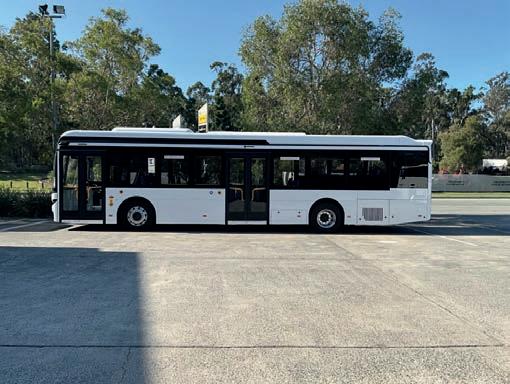
Chassis Length (m) 12
Chassis Wheelbase (mm) 5900
Chassis Front Overhang (mm) 2695
Chassis Rear Overhang (mm) 3395
Chassis Turning Circle Diameter (m) 22.5
Description/ Battery
TRANSMISSION: Auto Trans Make/ Model/ Description Automatic ELECTRIC BUS SPECIFICATIONS:
SUSPENSION:
BRAKES:
BODY
BODY DIMENSIONS:
Body Length (metres) 12
Body Width (metres) 2.5
Body Height (metres) 3.3
Body Weight (GVM) 18000 (Gross)
BRAKES:
ADDRESS:
39A Chelmsford St, Williamstown, VIC, 3016
WEB:
www.challengerbusandcoach.com.au
EMAIL: sales@challengerbusandcoach.com.au
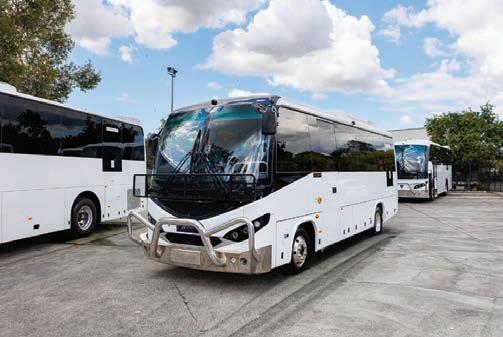
MAKE: CHALLENGER MODEL: 4WD CALLIBAR APPLICATION: CHARTER/ TOURING/ MINING
CHASSIS DIMENSIONS: Chassis
Chassis
(mm) 4200
Chassis Front Overhang (mm) 1350
Chassis Rear Overhang (mm) 2200
Chassis Turning Circle Diameter (m) 20
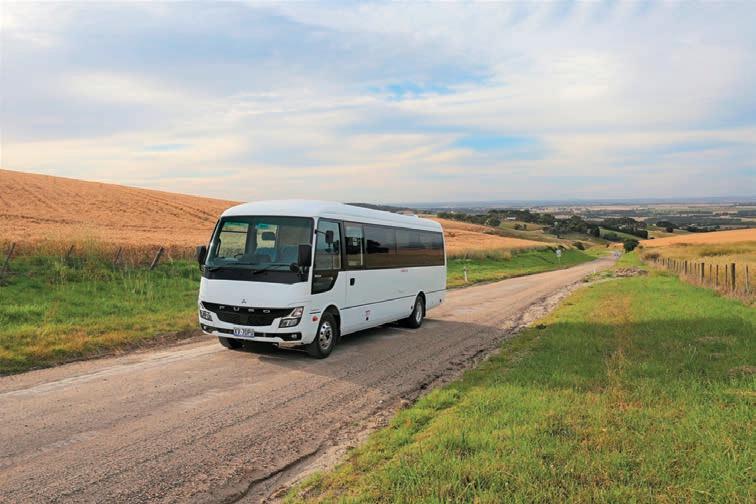
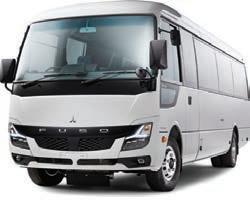
It might be a new year, but the same practical benefits of the FUSO Rosa remain
he Rosa’s steadfast dependability and flexibility has made it an icon on Australian roads.
The FUSO bus boasts unmatched flexibility with both 22-seat and 25-seat variants available. It is the only Japanese light duty bus with 25 seats. Given the average primary school class size in Australia is 23, it’s a very important fact.
With buses often operating in high pedestrian traffic areas, safety of buses is paramount and something that FUSO and its parent company, Daimler Truck, takes very seriously.
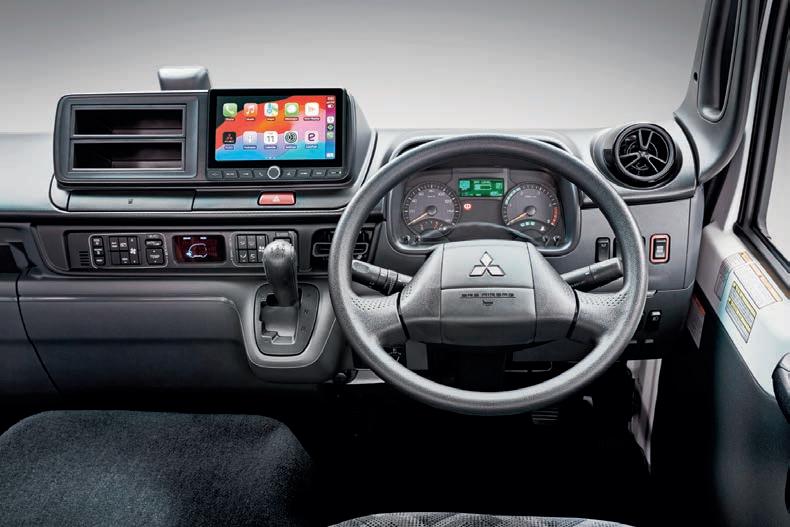
The Rosa has the advantage of a fully integrated active safety system. The Advanced Emergency Braking System uses both radar and a camera, while it can perform full emergency braking in the event of a potential collision. This advanced radar-based system can even detect, and begin braking for, moving pedestrians.
Rosa also has a Lane Departure Warning System as standard, along with Electronic Stability Program, driver and front passenger airbags, height adjustable LED headlights, Hill Start Assist, disc brakes all round and a reversing camera.
There are also four exits and three-point lap sash seatbelts for passengers in the Deluxe model. The latest generation Rosa also features a transom window on the passenger side to further enhance its excellent visibility.
Part of the latest Rosa offering is the upgraded eight-inch multimedia unit with Apple Carplay and Android Auto compatibility. A reverse camera is also fitted as standard, with the option available to install five additional cameras.
FUSO has a reputation for strong
customer support and is backing the recently upgraded Rosa with a generous five-year/200,000km warranty, giving owners real peace of mind.
It has also introduced longer service intervals, now 15,000km, which, when combined with the added assurance of a guaranteed buy back, help increase the time the bus spends on the road.
The Rosa features an efficient 3.0-litre four-cylinder turbo diesel common rail engine with the most power and torque in its class – 129kW and 430Nm. This advanced unit, which features a variable geometry turbocharger, is light but powerful. The Rosa has also been Euro 6 compliant since 2020, when it became the first
light duty bus to do so. It has since proven the durability of this technology out on the road.
FUSO also boasts an advanced DUONIC Automated Manual Transmission that features six gears. This advanced dual clutch transmission delivers fuel efficiency improvements as well as fast and smooth shifts. It also features a handy creep function for easy low-speed manoeuvring.
A new flat-floor design not only makes it easier for passengers to get in and out of their seats, but also allows for simpler aftermarket wheelchair lift installations.
FUSO says one of the things Rosa buyers appreciate is how easy it is to drive and part of this is due to its independent front suspension for optimum comfort and handling is complemented by a class leading turning circle of 12.6m (22 seat) and 14.2m (25 seat) that helps navigate tight spots.
FUSO recently freshened the interior and exterior design of the Rosa, giving it a stylish and modern look due to new design language.
It is available in Standard and Deluxe trim levels to help customers have the ability to choose the Rosa that is right for them.
fuso.com.au
MAKE: FUSO MODEL: 25-SEAT SERIES: ME OMNIBUS
DIMENSIONS:
ENGINE:
BRAKES:
SCHOOL, CHARTER VARIANTS
After a
year of building its product range and expanding its national network, VDI Australia
is preparing to continue strengthening the Yutong brand in the
Sometimes, the best way to express growth is through numbers, cold hard data, facts and figures. In recent years, VDI and Yutong have emerged as a leading partnership in Australia’s bus and coach market. Reaching the milestone of 2,000 Yutong buses in service marked a significant moment in the brand’s local expansion.
“From a product point of view, VDI and Yutong are in the strongest position we have been in since entering the market,” VDI Australia national sales manager Sara Clark told ABC
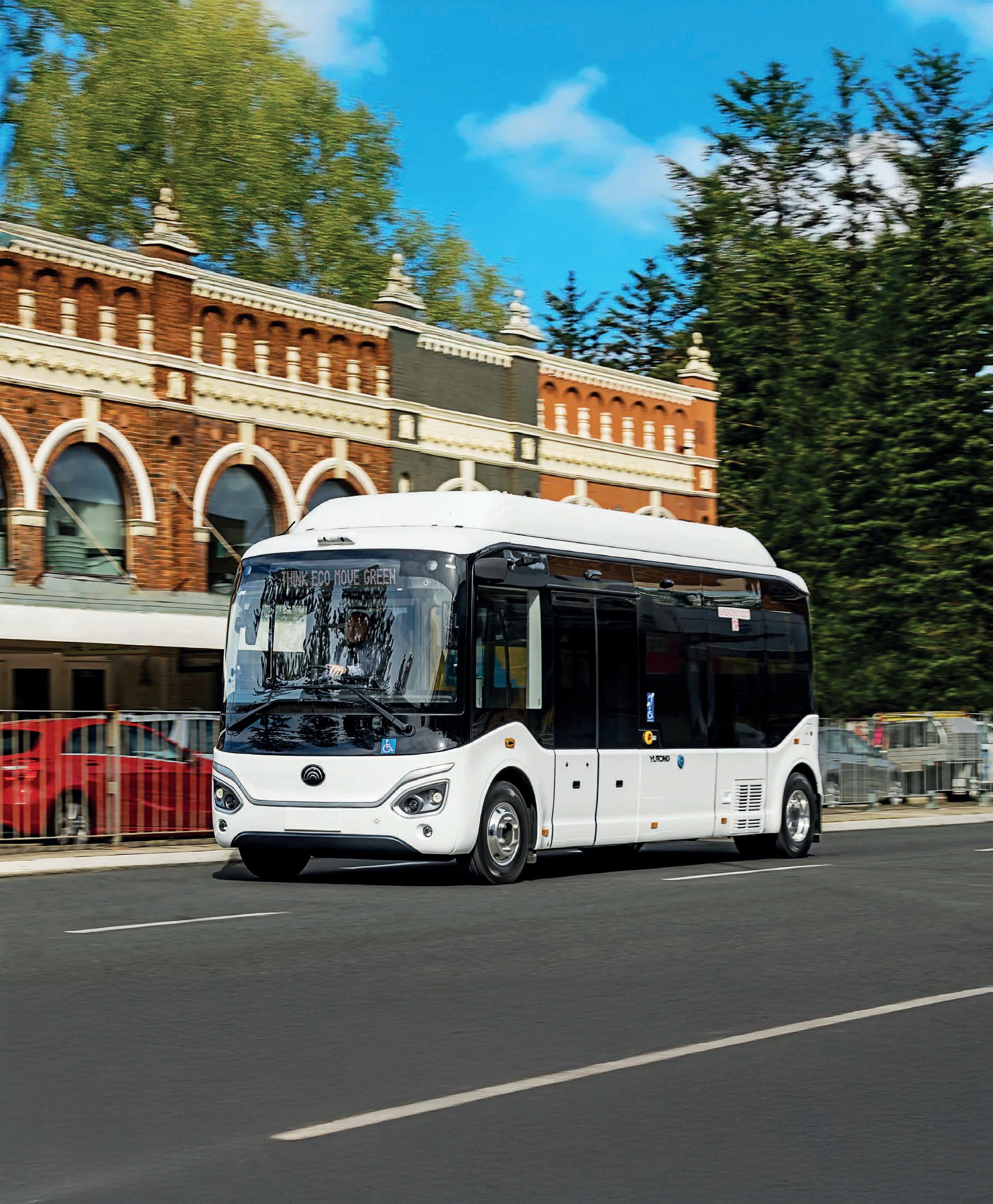
VDI now offers a model range across small, mid and large size buses, spanning Euro 6 diesel and battery electric options in both high-floor and low-floor applications. With multiple interior layouts and safety configurations, the line-up reaches far beyond the core bus industry, supporting schools, community transport, mining operations and local government fleets. Backed
by Yutong’s global engineering capability, the brand is confident in its ability to meet the needs of diverse operators across Australia.
Outside of its vehicle range, VDI has continued to build its national team, growing staff numbers by more than 30 per cent throughout the past year to now employ 125 bus professionals. Over the past two years, the supplier has strengthened its sales and aftersales capability in every state while investing in a Brisbane hub to match its Western Australian presence.
Alongside deepening its technical support for both diesel and electric fleets, VDI’s culture remains grounded in its family ownership and long involvement in Australian transport. However, now it sits on top of a much larger fleet and a more mature national network.
“In simple terms, we finish 2025 with a milestone moment in our heritage – 2,000 Yutong buses on the road, a strong pipeline of product development and a team
local market in 2026
that understands the local conditions those buses operate in. That is a good platform for the next phase of growth,” Clark says.
To create this blossoming picture, Clark says 2025 has been a “very solid year” of growth and consolidation for both VDI and the Yutong Australia brand. The focus has been on turning a growing national fleet into long-term value for operators rather than chasing new model headlines.
This has resulted in a fleet that is diverse in applications and capabilities, reflecting where Australian operators are seeing the most demand and where Yutong’s global platforms, adapted locally by VDI, add the most value.
On the smaller end, the D7 and D7E remain key products for school, community transport, mining villages and regional route work. Clark says they give operators the choice of proven Euro 6 diesel or battery electric on familiar Yutong underpinnings, with options such
as two for three seating, CCTV, 360 degree cameras and school bus safety packages.
“The newer E7S sits slightly differently again,” Clark says.
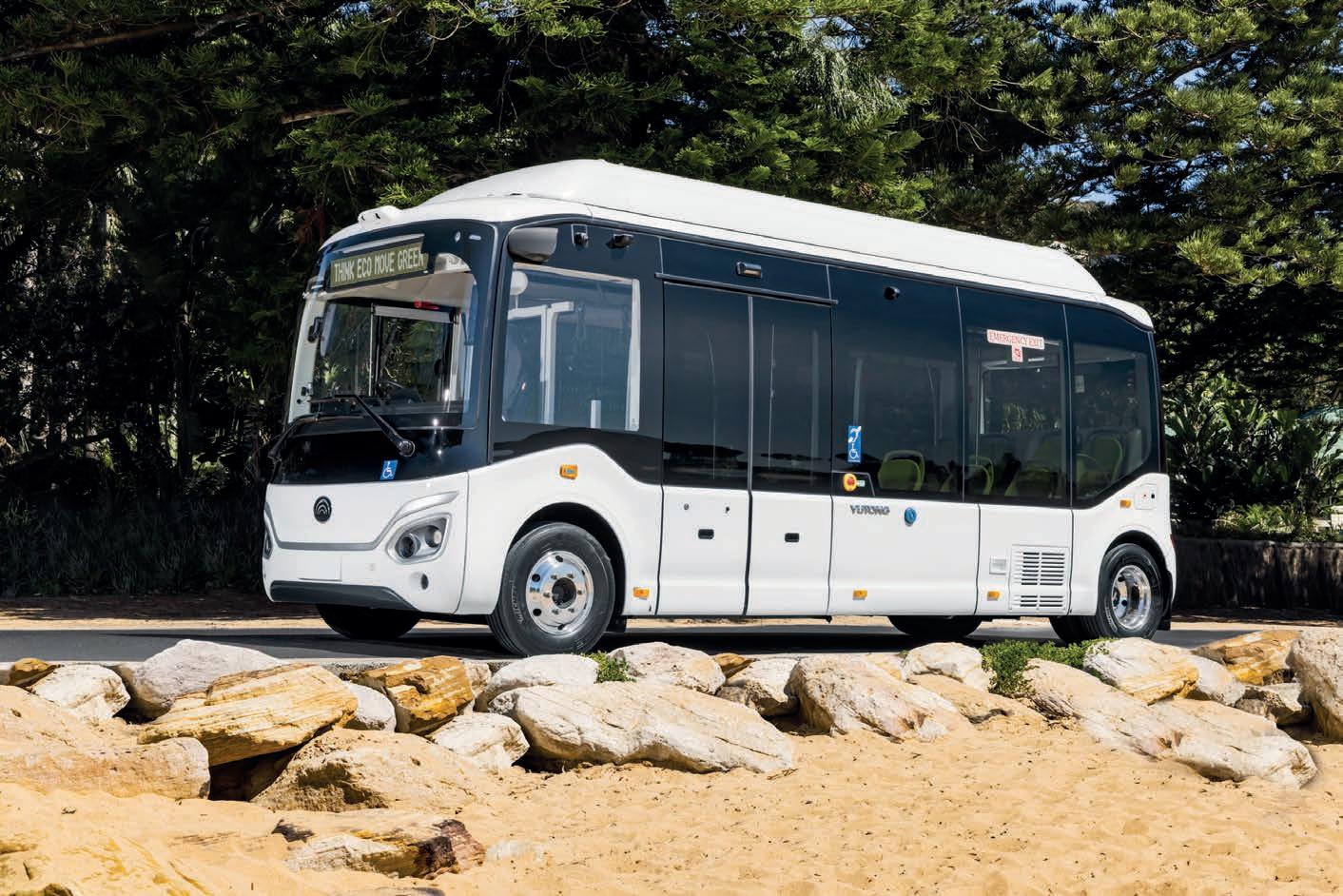
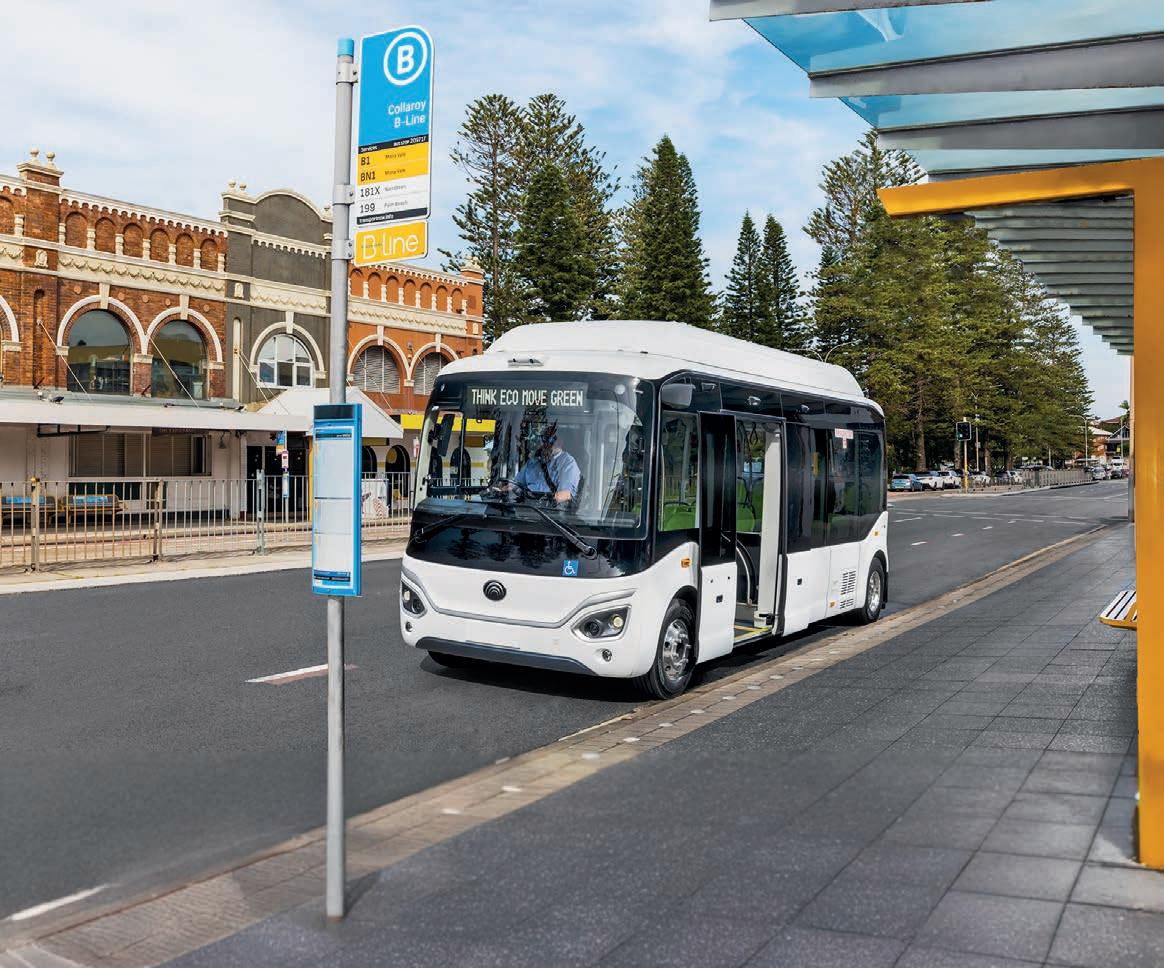
“It is a compact, purpose built solution for demand responsive, last mile and local shuttle work where zero-emission operation, tight turning circles and good accessibility are all important. It shows how Yutong’s electric experience globally can be tailored very specifically to Australian use cases.”
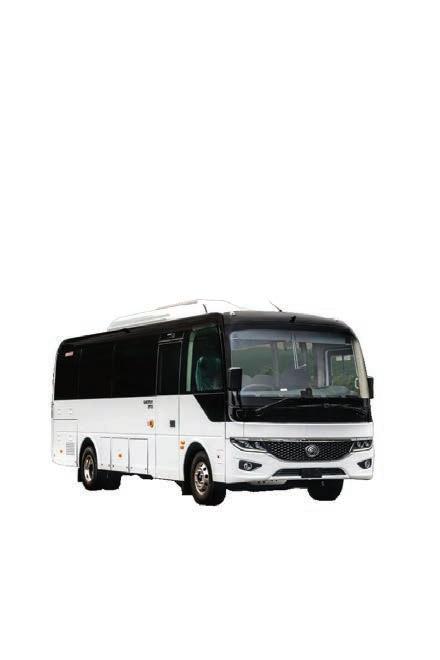
On the larger end, the C12 and C12E continue to anchor VDI’s school, charter and mining offering. The C12 gives operators a robust Euro 6 coach platform with the kind of luggage, seating and safety options local fleets expect. The C12E builds on that with a full electric driveline, long range capability and the flexibility to be specified for school, mining or touring work, all while backed by the same parts and service network.
While 2025 saw VDI strengthen its current offerings and support network around the nation, 2026 should see VDI strengthen the whole Yutong model range in Australia and prepare for new local introductions.
“This includes refining both our Euro 6 and battery electric ranges for specific use cases and giving operators clearer pathways through the line-up,” Clark says.
“It also includes preparing for the Australian introduction of the Yutong U18, a high capacity articulated electric bus that will sit at the top end of the range for busy routes where additional capacity is required.”
When it comes to the 2026 Expo, Clark says the emphasis will be on reinforcing the broader fleet story, establishing a strong presence that reflects its model range and support capabilities without giving away too much in advance.
“There will be plenty for operators to see first-hand at the event,” she says.
“Across the wider calendar, operators can expect to see more targeted trials, regional events and customer partnerships. The aim is to give fleets practical, local evidence of how Yutong products, delivered
and supported by VDI, perform in their environment, whether that is a compact bus on a town shuttle or a high capacity coach working hard in demanding regional conditions.”
Clark acknowledges the industry is under pressure on multiple fronts – to reach the milestone of 2,000 deliveries takes loyalty and plenty of commitments to help customers long into the future.
“With the delivery of our 2,000th Yutong in Australia, the main message is one of appreciation. None of those milestones happen without operators who are willing to try new product, give honest feedback and hold suppliers to account,” Clark says.
“Our commitment, as Yutong’s long term Australian partner, is to stay focused on practical, reliable solutions that work in real fleets, backed by local people who understand the environments those buses operate in.
“If we keep working together in that way, we think the next few years can deliver real benefits for passengers and operators, whether they are running a single school bus or a large mixed fleet.”
“Across all of these, the common story we want to highlight is choice,” on, Clark says recent highlights include broadening the range in service, refining the existing models to improve performance and reliability, and introducing standard enhancements such as telematics across the line-up. We listen to our customers and use their feedback to continually improve our offerings.
“Euro 6 and battery electric Yutong models are now working in school, route, charter, mining and community transport applications right across the country,” she says.
“Independent reviews and operator feedback have reinforced what we see internally, which is that the combination of Yutong’s global product depth with local Australian assembly and support is resonating in
“Alongside the product story, 2025 has also been a year of investing behind the scenes in parts, service, telematics and training. That work is less visible than a show stand, but it is critical to supporting a large and growing Yutong fleet in daily operation and making sure existing customers feel just as supported as

MAKE: APPLICATION:
CHASSIS DIMENSIONS:
Chassis Length (m) 7.73
ADDRESS:
ELECTRIC ELECTRIC
Chassis Wheelbase (mm) 4350
Chassis Front Overhang (mm) 1250
Chassis Rear Overhang (mm) 2130
Chassis Turning Circle Diameter (metres) ≤ 16
ENGINE:
Make / Model Yutong TZ330XSYTB56
Configuration Full Electric
Power (HP / kW) 161/120
Torque (Nm)
BATTERY:
Description Lithium Iron Phosphate
Capacity 175kWh
Location Under vehicle
Charging System CCS2
Charging Voltage 750v
TRANSMISSION:
Automatic Trans N/A
Manual Trans N/A
CLASS: SMALL BUS CLASS: LONG DISTANCE CHARTER BUS
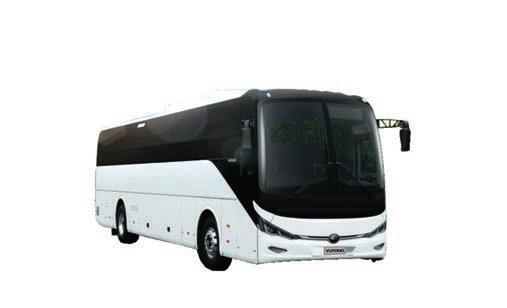
MAKE: YUTONG MODEL: C12E FULL ELECTRIC APPLICATION: SCHOOL/CHARTER/TOUR/MINING
CHASSIS DIMENSIONS:
Chassis Length (m) 12.37
Chassis Wheelbase (mm) 6450
Chassis Front Overhang (mm) 2600
Chassis Rear Overhang (mm) 3320
Chassis Turning Circle Diameter (metres) ≤ 24
ENGINE:
Make / Model Yutong TYZ400XSYTB49
Configuration Full Electric Power (HP / kW) 288/215
Torque (Nm) 1260 Continuous / 3200 Peak
Emissions ZERO
BATTERY:
Description Lithium Iron Phosphate
Capacity 350kWh
Location Under vehicle
Charging System CCS2
Charging Voltage 750v
TRANSMISSION:
Automatic Trans N/A
Manual Trans N/A
ADDRESS:
ELECTRIC

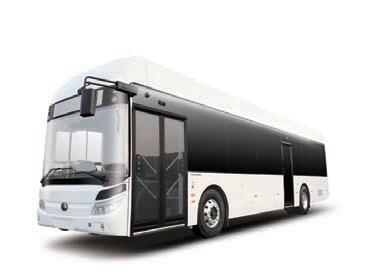
MODEL: E12 FULL ELECTRIC APPLICATION: CITY ROUTE
CHASSIS DIMENSIONS:
Chassis Length (m)
Chassis Wheelbase (mm) 6300
Chassis Front Overhang (mm) 2740
Chassis Rear Overhang (mm) 3430
Chassis Turning Circle Diameter (metres) ≤ 23
BATTERY:
Description Lithium Iron Phosphate Capacity 434kWh/399kWh
Location Roof & Rear lower of vehicle
Charging System CCS2 & Pantograph
TRANSMISSION: Automatic Trans N/A Manual Trans N/A
CLASS: LOW FLOOR CITY BUS
CLASS: SMALL BUS
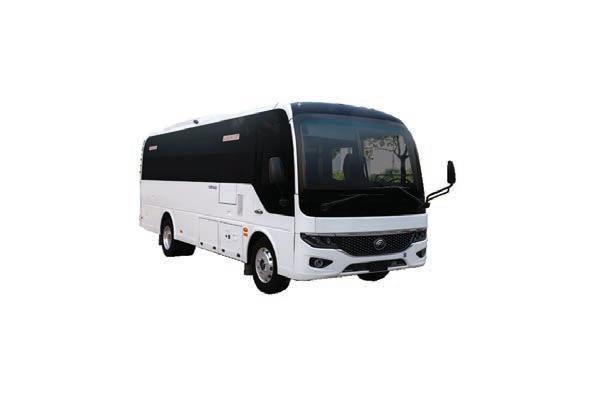
MAKE: YUTONG MODEL: D7 APPLICATION: SCHOOL/CHARTER/TOUR/MINING
CHASSIS DIMENSIONS:
Chassis Length (m) 7.73
Chassis Wheelbase (mm) 4150
Chassis Front Overhang (mm) 1250
Chassis Rear Overhang (mm) 2330
Chassis Turning Circle Diameter (metres) ≤16
ENGINE:
Make / Model Cummins D4 .5EVID190
Configuration Turbocharge, Intercool Power (HP / kW) 188 / 140
Torque (Nm) 700 @ 1200RPM
Bore and Stroke 107/124
Compression Ratio 17.1 : 1
Fuel Capacity (litres) 150
Oil Capacity (litres) 21.6
Emissions Euro VI
TRANSMISSION:
Automatic Trans Make/ Model/ Description Allison - 2100 5 Speed (optional 6 speed)
Manual Trans Make/ Model/ Description N/A
SUSPENSION:
Type – Front Parabolic leaf spring
Type – Rear Parabolic leaf spring
BRAKES:
Service Brakes Disc, ABS, ASR, ESC
Retarding Brake System Yes
EBS Standard
BODY DIMENSIONS:
Body Length (m) 7.73
Body Width (m) 2.41
Body Height (m) 3.17
Body Floor Height (mm) 710
Body Weight (kg) N/A
WHEELS AND TYRES:
Tyre Size 235/75
Rim Size R17
ADDRESS:
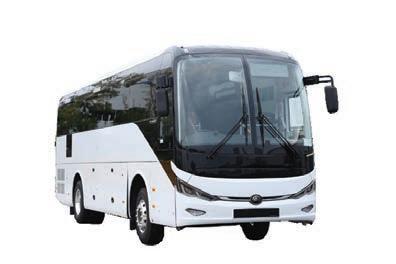
CLASS: MIDI BUS
CHASSIS DIMENSIONS:
Chassis Length (m) 9.985
Chassis Wheelbase (mm) 4830
Chassis Front Overhang (mm) 2290
Chassis Rear Overhang (mm) 2865
Chassis Turning Circle Diameter (metres) ≤ 18.5
ENGINE:
Make / Model Cummins D6.7EVID290
Configuration Turbocharge, Intercool
(HP / kW) 286 / 213
Torque (Nm) 1100 @ 1100-1600RPM
Bore and Stroke 107/124
Compression Ratio 17.1 : 1
Fuel Capacity (litres)
TRANSMISSION:
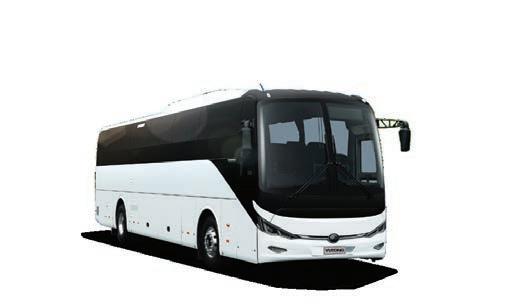
CLASS: MIDI BUS CLASS: LONG DISTANCE CHARTER BUS
CHASSIS DIMENSIONS:
Chassis Length (m) 12.37
Chassis Wheelbase (mm) 6450
Chassis Front Overhang (mm) 2600
Chassis Rear Overhang (mm) 3320
Chassis Turning Circle Diameter (metres) ≤ 24
ENGINE:
Make / Model Cummins L9EVID340
Configuration Turbocharge, Intercool Power (HP / kW) 337 / 251
Torque (Nm) 1600 @ 1000-1500RPM
Bore and Stroke 117/144.5
Compression Ratio 17.1 : 1 Fuel Capacity (litres) 400 Oil Capacity (litres) 32 Emissions Euro VI
TRANSMISSION:
Automatic Trans Make/ Model/ Description Allison T390R 6 speed Manual Trans Make/ Model/ Description N/A
SUSPENSION:
ADDRESS:
WEB: www.vdiaustralia.com.au
EMAIL: sales@vdiaustralia.com.au
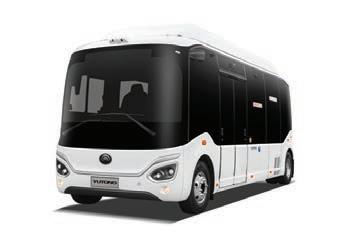
CLASS: ULTRA LOW FLOOR MICRO BUS
CHASSIS DIMENSIONS:
Chassis Length (m) 7
Chassis Wheelbase (mm) 5190
Chassis Front Overhang (mm) 940
Chassis Rear Overhang (mm) 870
Chassis Turning Circle Diameter (metres) ≤ 17
ENGINE:
Make / Model Yutong TZ220XSYTC65
Configuration Full Electric
Power (HP / kW) 134/308HP / 100/200kW
Torque (Nm) 230/470
Emissions ZERO
BATTERY:
Description Lithium Iron Phosphate
Capacity 176kWh
Location Roof Mounted
Charging System CCS2
Charging Voltage 750v
TRANSMISSION:
Automatic Trans Make/
Model/ Description N/A
Manual Trans Make/
Model/ Description N/A
SUSPENSION:
Type – Front Two Spring Electronically Controlled Air Suspension - ECAS
Type – Rear Two Spring Electronically Controlled Air Suspension - ECAS
BRAKES:
AVAS, TPMS, LDW, DDAW
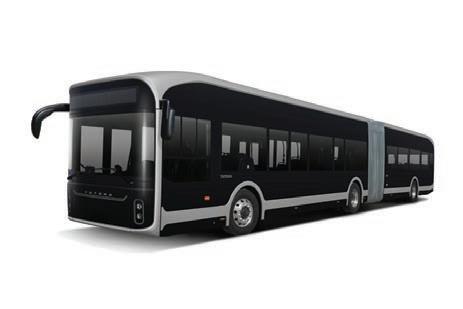
CLASS: ARTICULATED LOW FLOOR CITY BUS
CHASSIS DIMENSIONS:
Chassis Length (m) 17.97
Chassis Wheelbase (mm) 5900+5900
Chassis Front Overhang (mm) 2740
Chassis Rear Overhang (mm) 3430
Chassis Turning Circle Diameter (metres) ≤ 21.5
ENGINE:
Make / Model Yutong TZ330XSYTC33
Configuration Full Electric Power (HP / kW) 168*2 / 335*2HP 125*2 / 250*2kW
Torque (Nm) 1200*2 / 2400*2
Emissions ZERO
BATTERY:
Description Lithium Iron Phosphate
Capacity 528kWh
Location Roof & Rear lower of vehicle
Charging System CCS2 & Pantograph
Charging Voltage 750v
TRANSMISSION:
Automatic Trans Make/
Model/ Description N/A
Manual Trans Make/ Model/ Description N/A
SUSPENSION:
Type – Front Two Spring Electronically Controlled Air Suspension - ECAS
Type – Rear Four Spring Electronically Controlled Air Suspension - ECAS
BRAKES:
Service Brakes Disc, ABS, ASR, EBS Retarding Brake System Regeneration Braking EBS Standard
QTK has evolved its diesel HVAC products in 2025, with the refreshed brand looking to reinvigorate the zero-emissions space in 2026
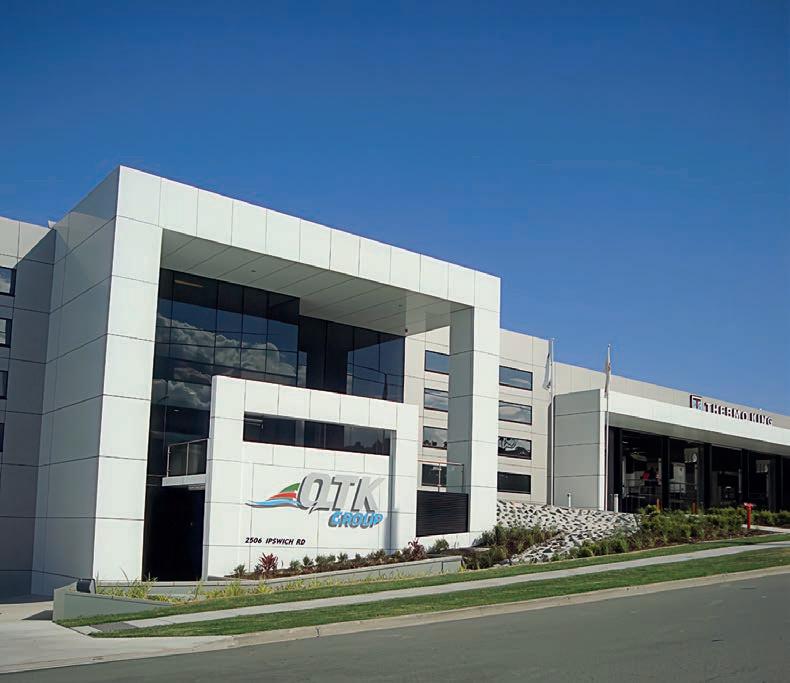
When Queensland Thermo King customer solutions manager Allan
Lowes talks about how 2025 has been for the bus and coach HVAC brand, the word that first comes to mind is collaboration. Having spent the year working closely with bus and coach operators and suppliers, QTK has ensured its air-conditioning systems deliver not just comfort, but also operational efficiency and dependability.
This has come into the focus as the Australasian bus and coach market has undergone plenty of change.
“With uptake in zero-emissions buses slower than first expected, we’ve focused on reinvigorating our diesel unit offering to help our customers balance passenger expectations with energy efficiency and cost certainty,” Lowes told ABC “2025 has been a year of strong collaboration for us, balancing passenger expectations with the energy efficiency and cost certainty of our models.”
This industry investigation has resulted in the development and release of QTK’s new CF range of HVAC units for diesel buses. While models like the CF-1100A were first launched at the 2024 National Bus and Coach Show in Brisbane, these variants have offered a welcome new product for regional diesel buses and coaches.
“This one-piece unit is more compact and incorporates a full aluminium frame to remove the installation issues seen in other models,” Lowes says.
“It has a lower operating current and includes a weight reduction of 45kg, or 25 per cent. All of this means less power draw and load to the engine, therefore resulting in lower fuel consumption and operating costs.”
While variants of the range, like the
Despite QTK Group focusing its research and development on the CF range and its variety of diesel HVAC models, Lowes says the supplier is set to turn back towards the zero-emissions market in 2026. Ahead of the Bus and Coach Expo in Sydney, Lowes is teasing some new products that offer alternatives for operators wanting to veer towards the decarbonisation side of transport.
“We have some exciting things in development in readiness for the evolution of electric vehicles,” Lowes says.
“We recognise the important part that our systems and components play in this space, all with the view to enhance vehicle performance and operator uptime.”
CF-1100A, are ideal for regional diesel bus and coach operators offering a variety of services, the broader CF range is suited to buses and coaches running in urban, city, school and route bus operations.
“Our CF range is a great offering
In a broader space, QTK is looking to also proudly affirm its unwavering commitment to the local bus and coach industry. Lowes acknowledges that the QTK team has evolved over all times, but, like most leading businesses do, he says QTK’s focus has never shifted away from “this wonderful industry”.
“Our customers remain at the heart of everything we do – every innovation we introduce is done so with the full support of Thermo King with our customers front of mind,” he says.
“As we look ahead, our promise is simple – QTK will continue to be a trusted partner, providing dependable climate solutions that keep fleets future ready and passengers comfortable on every journey.”
Above: QTK is growing its local focus with its CF range. Image: QTK
for a variety of bus operators, while our flagship KRS models, which are popular in the coach market, never seems to waver,” Lowes says.
“The KRS unit’s slimline profile maintains the coach’s aesthetics while delivering first-class performance.”

PHONE: 07 3712 7777
EMAIL: sales@qtk.com.au
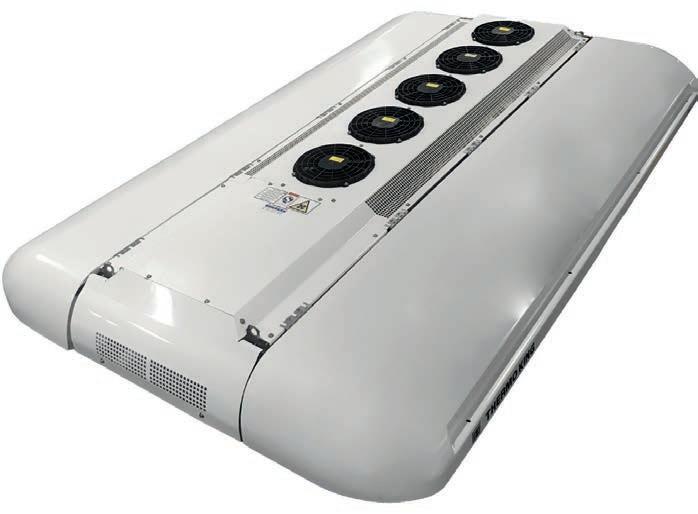
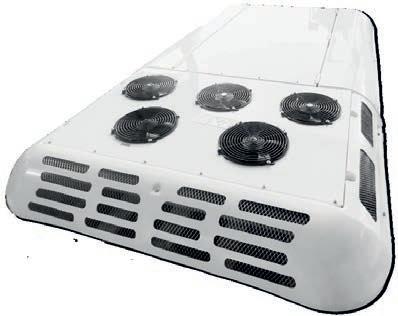
MAKE: THERMO KING MODEL: CF1100A / CF1200A
MAKE: THERMO KING MODEL: E-1200LW
STANDARD INFORMATION
Compressor
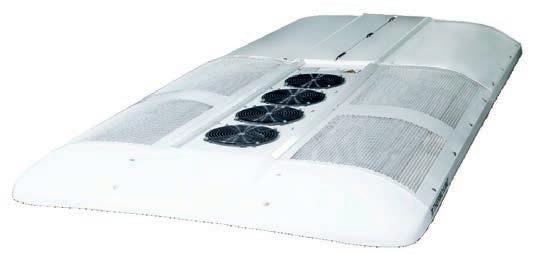
MAKE: THERMO KING MODEL: KRS BRUSHLESS / KRS TROPICAL
Rated Capacity (kW) 29 /36
Capacity (kW) 35 /42
Consumption (kW) 87A / 107A (maximum)
Heating Capacity (kW) 30
(m3/hr) 5100 Condenser (m3/hr) Variable speed
Unit weight & dimensions Weight (kg) 188
(mm) 4287 / 4274 Width (mm) 1827 /1900
As operators shift to electric bus air conditioning, Spheros says the real differentiator won’t just be cooling capacity, but the strength and reliability of the service wrapped around it
Electric bus air conditioning has advanced rapidly in the past few years, but Peter Mercer says the technology story is only half the picture. For Spheros’ technical sales manager, the real pressure point for operators is finding long-term, consistent support in a sector where skilled technicians are increasingly scarce.
After years “on the tools” before moving into sales, he knows the strain firsthand.
“Honestly, the biggest thing is support,” Mercer told ABC “Industry-wide, it’s struggling. Everybody is struggling to get the work done.
“You need to find the right technical people with the knowledge to sort it out. Higher-level technicians are very scarce on the ground.”
He says that “while customers can select any brand of air conditioner to install on a new bus”, the real test comes years later.
“With some units currently on the market, there is a risk that spare parts will be difficult to obtain once production ceases or the supply contract expires,” he says.
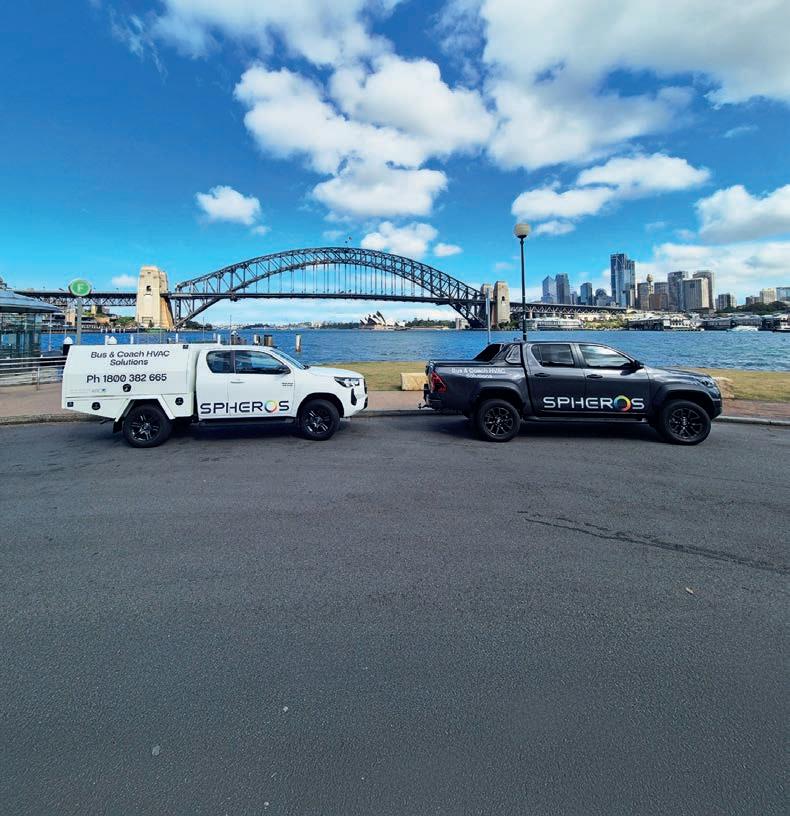
That scarcity is shaping Spheros’ strategy in Australia. While the company is known globally for its electric bus air conditioning systems, Mercer says Spheros has deliberately expanded its local presence to ensure operators are never left without help.
The company has established a new service department in Sydney and is building in-house capability rather than relying solely on third-party agents.
“We’re taking the steps to actually take the personal Spheros leap into the service world,” he says.
“We’re a relatively small team,
but by focusing solely on Spheros products, we’re making sure we’re not spreading ourselves too thin.”
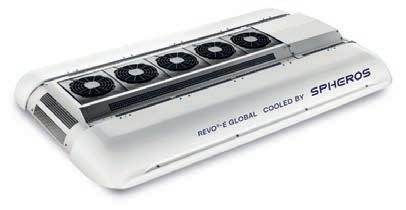
premium brushless fans, accessible components and an upgraded electric compressor.
“It’s easier to work on. Even something like changing a dryer doesn’t need welding,” Mercer says.
Mercer and technicians travel statewide, and interstate when needed, stepping in for issues that “you can’t solve over a phone call”. Training also plays a major part in Spheros’ support model once vehicles leave warranty. Mercer says customer technicians are encouraged to take over servicing when appropriate, backed by systems designed for simplicity.
“Our units are quite simple overall. They do the job they’re intended to do,” he says.
Fault codes can be read directly from the unit’s control display and, in some cases, from the chassis instrument cluster or telematics when connected to CAN.
Parts availability is another area where Mercer feels operators need more confidence as the national fleet electrifies. Spheros stocks parts across Australia to minimise downtime.
“It’s a high priority to have spare parts readily available. We can generally get parts anywhere within Australia, overnight between Sydney, Brisbane and Melbourne,” he says.
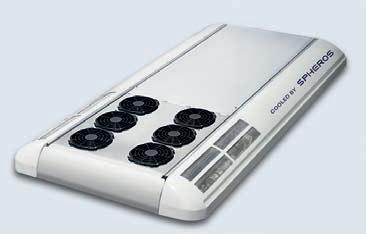
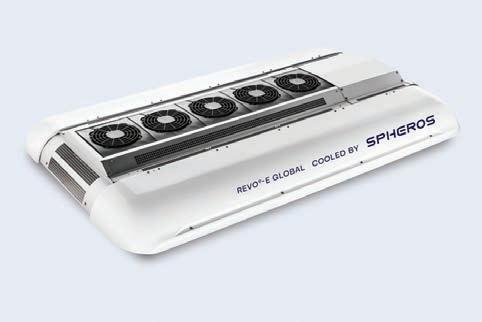
The company’s electric bus air conditioning units are engineered for both performance and maintainability. The latest REVO-E global generation uses a single refrigeration circuit to reduce complexity, with
Long-term parts support, Mercer says, is where operators need to be particularly vigilant. Because Spheros engineers and manufactures its own units globally, components remain available well after a model’s lifecycle ends.
Unlike others in the market, where there is no direct link between the retailer in Australia and the factory producing the AC systems, Spheros owns its factories internationally, engineers and produces its units worldwide. This shows that Spheros is fully committed to the bus and coach air conditioning market in Australia now and into the future.
With major metropolitan electrification programs gathering pace, Mercer sees the next decade as a turning point, one where reliable support will matter as much as technology.
“Depots need to understand what an actual electric air conditioner is. They operate differently from diesel systems. They need to be treated with the respect that comes with an electric machine,” he says.
For Mercer, that’s the heart of the shift ahead: not just newer systems, but stronger support wrapped around them.

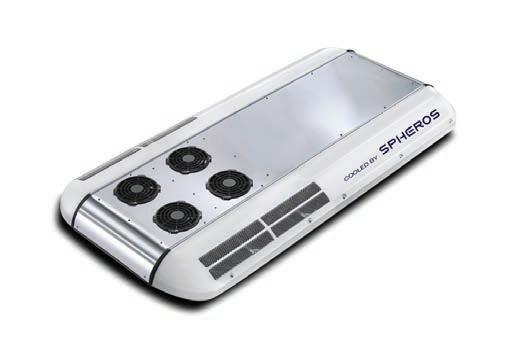
MODEL: CC355
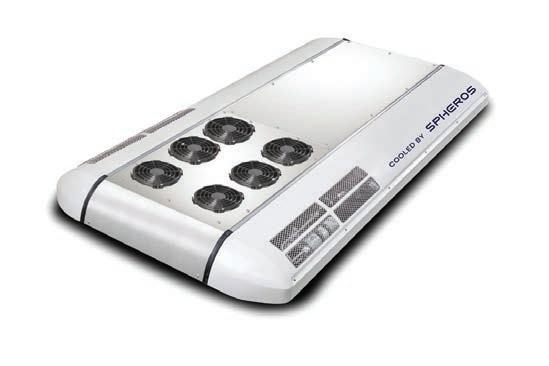
MODEL: CC450-490 STANDARD
MODEL: REVO®-E GLOBAL GEN 2
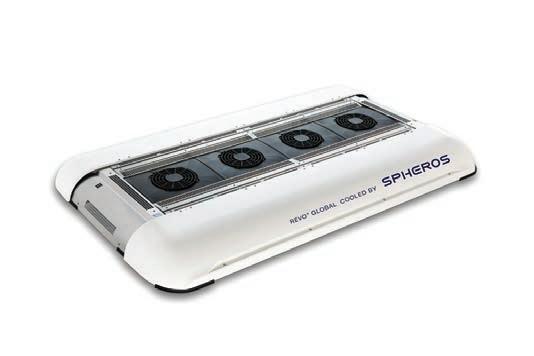
MODEL: REVO GLOBAL 400 STANDARD
A year of innovating and enhancing the brand will see Sege Seats tease an exciting new bus seating concept in 2026
The past few years have been both busy and productive for Sege Seats, with the global seating manufacturer and supplier expanding across numerous regions. Now selling bus and coach seating models into more than 30 countries, the Australian division of Sege Seats has welcomed updates across both its product range and customer service capabilities.
“This year has been great for Sege Seats – we’ve worked with major suppliers and have welcomed more talented team members onboard,” Sege Seats managing director Lance Taskin told ABC
“Our same range has continued to shine in Australia. Our seats can suit everybody, from school buses to luxury coaches, purely depending on customer choice.
“Our customers love the flexibility, comfort, safety and appearance of our seats.”
A particular highlight for Sege Seats came globally, with Taskin and his team spending time in Belgium for Busworld at the back end of 2025.
While attending to witness Sege’s latest developments being unveiled on the international stage, Sege Seats also used the opportunity to bring supplier partners to its Turkish factory.
“It was good for partners like Irizar to come and see our factory in person – it blew their mind,” Taskin says.
“Everyone thinks Sege has a small factory, but when they see the size of it, the large amount of staff we have and the number of seats we can produce each month, people never expect it.
“We can produce 40,000 seats a month, so being able to showcase our production line and engineering prowess to local partners was a pleasure.”
Central to Sege’s capabilities in the local bus market has been its flexible approach to producing seats. Sege’s versatility ranges from various models, including its popular Sege Passenger 4036 model and 4020F, and allows customers to tailor the seats to meet any particular needs.
It’s this approach that will continue to launch Sege towards a bright future
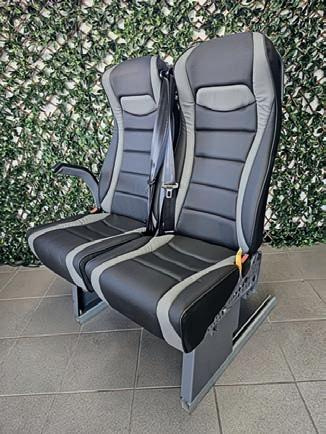
Left:
Expect some exciting new models from Sege in the next year
in the Australasian bus industry.
“There is no better advertisement than word of mouth,” Taskin says.
“That’s why we have really honed our focus in on providing excellent service that will leave customers happy and wanting to share their stories.”
What to look forward to in 2026
One thing about Sege is that the brand is well known for unveiling exciting models at the Australian Bus & Coach Expos. In Sydney next year, Taskin and his team are already preparing to tease Sege Seats’ latest technological developments for the local audience.
“A modular generation two seating range is coming up next year, and we’re looking forward to showing this off to the industry soon,” Taskin says.
“Next year will see us explode with our product designs and styles, so keep an eye out on what Sege Seats will be showing off in 2026.”
ADDRESS: 12 Normanby St, Fairfield East NSW 2165 AUSTRALIA MOBILE: +61 2 9727 0440
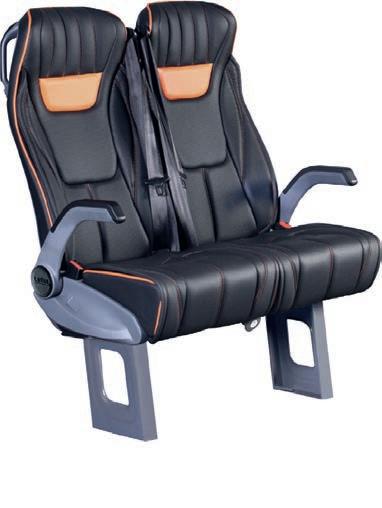
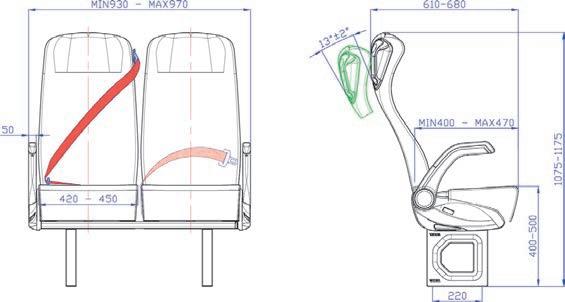
PHONE: 0414 882 520
EMAIL: info@segeseats.com.au
EMAIL: segeseats.com.au
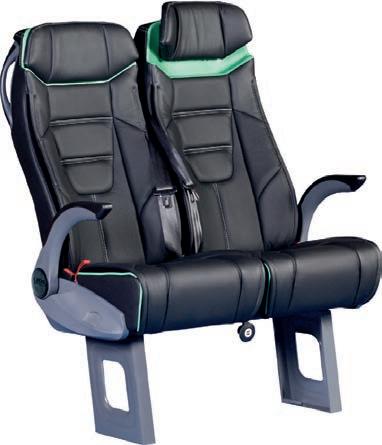
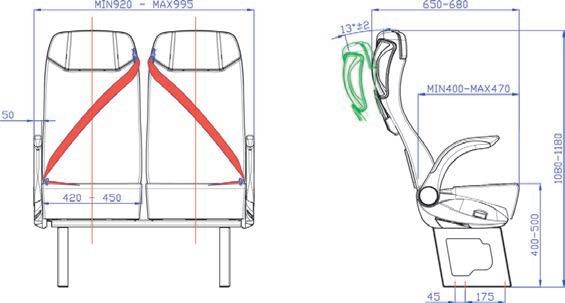
YEAR: 2024 MAKE: SEGE MODEL: PASSENGER 4020F
After a year spent focusing on its internal processes, StyleRide is now looking to grow once again in the local bus and coach seating market
Sometimes a steady year of business is a stabilising force. In this current economic climate, a steady year can even be the perfect tonic for future success. This premise is best displayed by StyleRide in 2025, with the seating supplier enjoying a year of growth to solidify its place in the local bus and coach market.
“It’s been a good year for StyleRide, not our best year ever but a very productive year for growing the brand,” StyleRide Seating Systems national business development manager Troy Wells told ABC.
“We have maintained our focus on our existing customers and have managed to keep them all happy moving forward. We’ve also built on this fresh approach with any new customers coming onboard.”
For many in the industry, it’s easy to point to new products or innovations as key highlights within a year.
However, Wells is instead looking internally at the local StyleRide team to shine a light on the hard work being done behind the scenes to re-establish the StyleRide brand in Australasia’s bus and coach sector.
“The major bits we’ve achieved this year are within ourselves – our production improvements and our staff changes,” he says.
“We’ve changed how we go about our day-to-day business, and seeing plenty of growth from this alone.”
Internally, StyleRide production manager Brad Roycroft has been front and centre in streamlining the seating supplier’s workshop processes. Wells has praised him for his “fantastic job” in influencing the quality of product that is coming out of the factory.
With industry experience under his belt, Roycroft has been able to come in and have an instant impact on how StyleRide improves its day-to-day works on the production
line, leveraging his relationships to re-imagine the StyleRide way.
“The biggest change for us throughout the year has been how
Below: StyleRide’s internal processes have been revamped
Brad has been able to bring his experience and expertise to StyleRide and tweak our processes,” Wells says.
“He’s done this through a variety of
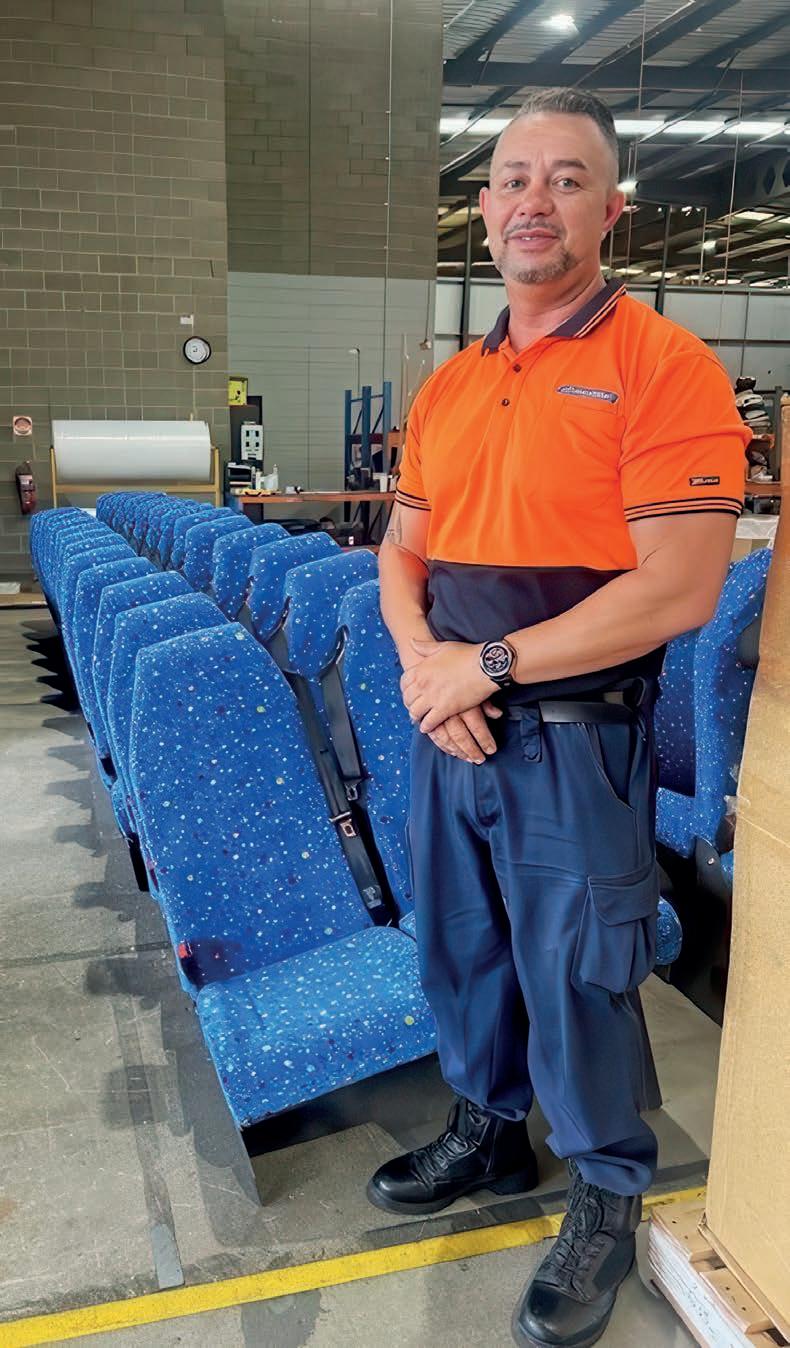
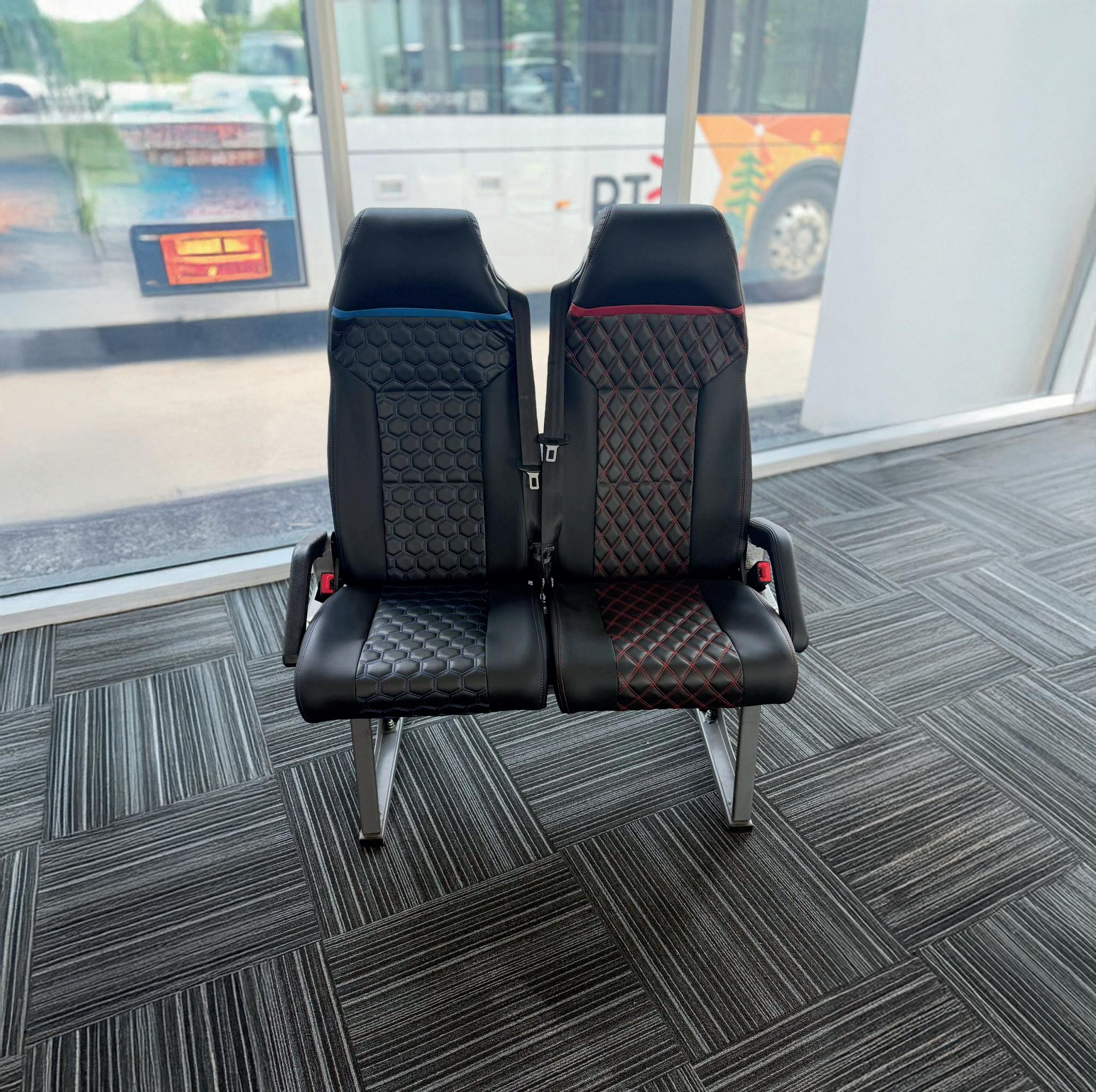
2026 will dive deeper into StyleRide’s service and quality processes to ensure even more value continues to be added to the customer experience.
“In 2026, we’ll continue offering more in-house installations and maintenance work so we can supply and fit spare parts for customers,” Wells says.
and navigate.
“We’ve worked hard to develop a strong team within the organisation and we’re achieving fantastic results. We can now once again focus on our growth, and we’ll be even more strident in our approach to supporting our customers and the genuine value that comes from StyleRide’s seating solutions.”
coach seating range to cover a wealth
value reclining seat for school and charter work.
“It’s similar to our standard Aquarius seat model but we’ve managed to pull more savings within the design, and we’re offering it with the Vegas material. We’re offering it as an entry level recliner seat with the armrests included.”

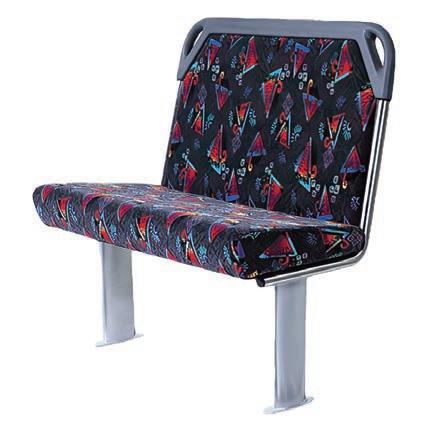
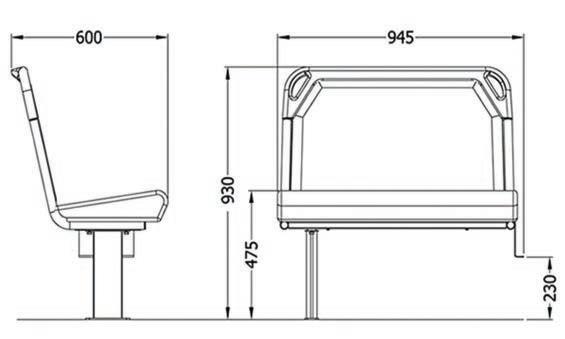
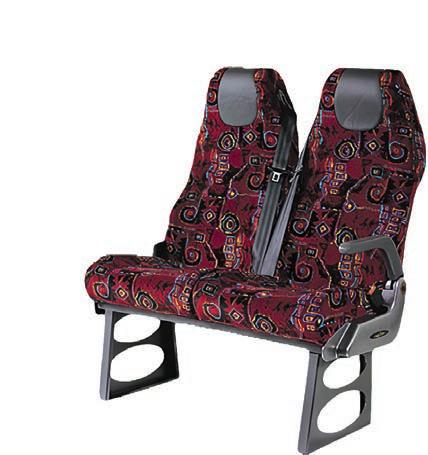
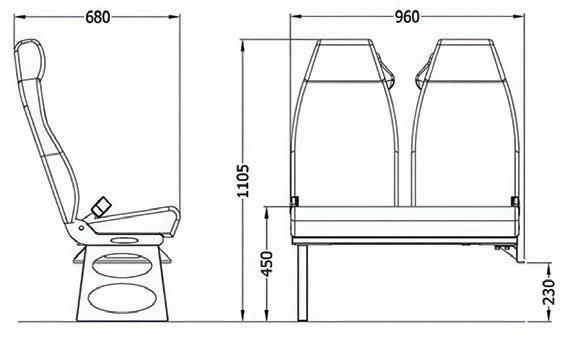
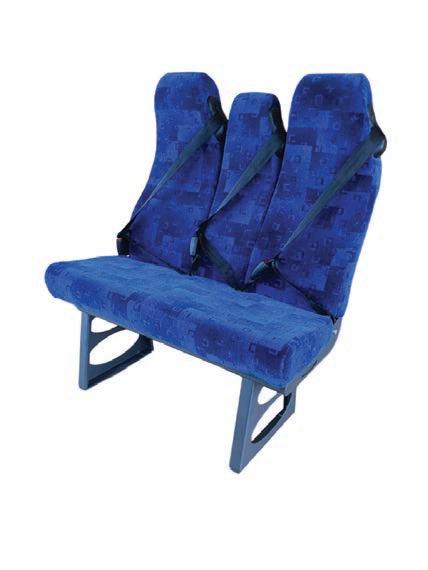
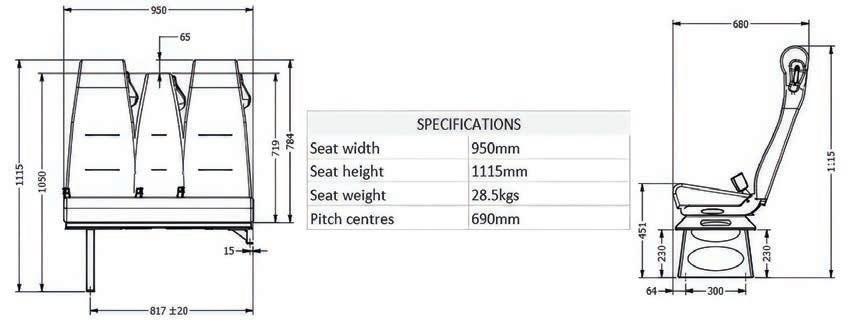
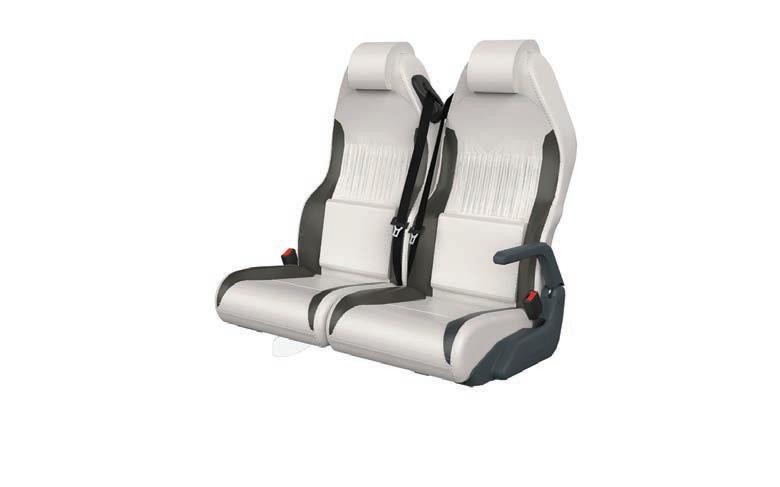
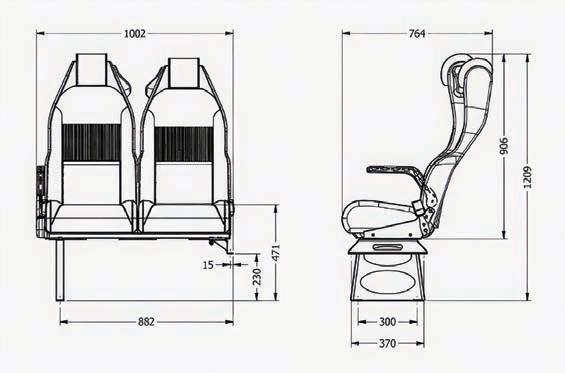
YEAR: 2025 MAKE: STYLERIDE MODEL: SOVEREIGN APPLICATION: COACH
FEATURES
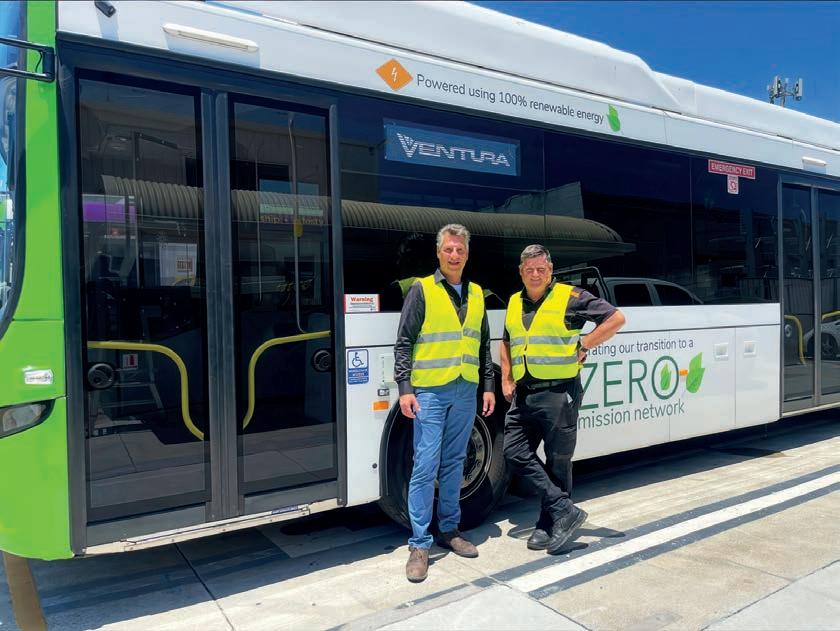
Having grown its presence in Australia, Ventura Systems is now looking to lead the way in door technology and set
the tone for industry regulation
A clear example of this technology is on the new-look Brisbane Metro, with 60 vehicles on the network featuring Ventura doors. As the Metro expands with new routes, Ventura’s latest systems are continuing to allow more passengers to enjoy the futuristic vehicles.
“While we offer outward sliding doors, we also still focus on our all electric inward glider variety,” Meijerhof says.
Doors. When the bus pulls up to a stop, it’s the first part of the vehicle that passengers encounter.
A seamlessly sliding, smoothopening door sets the tone, offering passengers a safe, effortless and welcoming entry onto the bus. As the established leader in the local bus door scene, Ventura Systems Australia is leading the way when it comes to the latest door technology gracing Australasian passenger vehicles, with 2025 allowing the global supplier to enhance its offerings to the market.
“It’s been a good year for Ventura, the same as what 2024 was like for the brand,” Ventura Systems general manager Wolter Meijerhof told ABC “There’s a lot of customers who are starting to know the brand really well in Australia, with governments and
operators continuing to use Ventura door systems.
“Highlights this year have been promoting our outward sliding doors and attending both the BCA New Zealand show in Hamilton and the BIC conference in Perth.”
In recent years, Ventura’s doors have evolved from the traditional market favourite of the inward gliding variety to the newer technology of outward sliding doors.
“Compared to traditional inward gliding doors, an outward sliding door may have a higher initial cost, but it delivers clear long-term advantages in total cost of ownership, passenger experience and safety,” Meijerhof says.
“That’s why Ventura Systems developed a single outward sliding door as a front door: the rapid sliding door.”
Alongside its collaboration focus, Ventura is also strengthening its local footprint.
“We’re getting a new warehouse, which will increase our support and parts availability. Also, we’ll be attending the BusNSW Expo in Sydney to showcase our range of systems and safety features,” Meijerhof says.
“While some of our upcoming developments remain under wraps, we’re excited to announce the launch of our next-generation Door Control Unit (DCU2.0). Developed in compliance with ISO 26262 (functional safety) and related standards, the DCU2.0 incorporates advanced safety and
To match its rapid rate of product development, Ventura Systems also used the recent BIC Conference to start a conversation on industry door standards. Now in discussions with the BIC technical team, Meijerhof is looking to change New South Wales’ Technical Specification (TS) 160 on door safety systems to improve the performance of door systems across the industry. From field experience and feedback from the industry, TS 160 restricts the performance of door systems, especially on in-/ declines.
“We’re busy with the team to see what we can do to change the technical specification to make it better for operators in regards to product performance,” he says.
“Based on industry feedback and comparing TS 160 with global regulations and specifications, hopefully it can become a door safety system (ADR).”
cybersecurity measures.
“We’re looking forward to working with the industry to ensure a brighter future. If we can get these improvements sorted, it’ll help all door systems, whether they’re imported or built locally, pneumatic or electric. It’s a really important thing for us and the wider industry.”
ADDRESS:


PHONE:
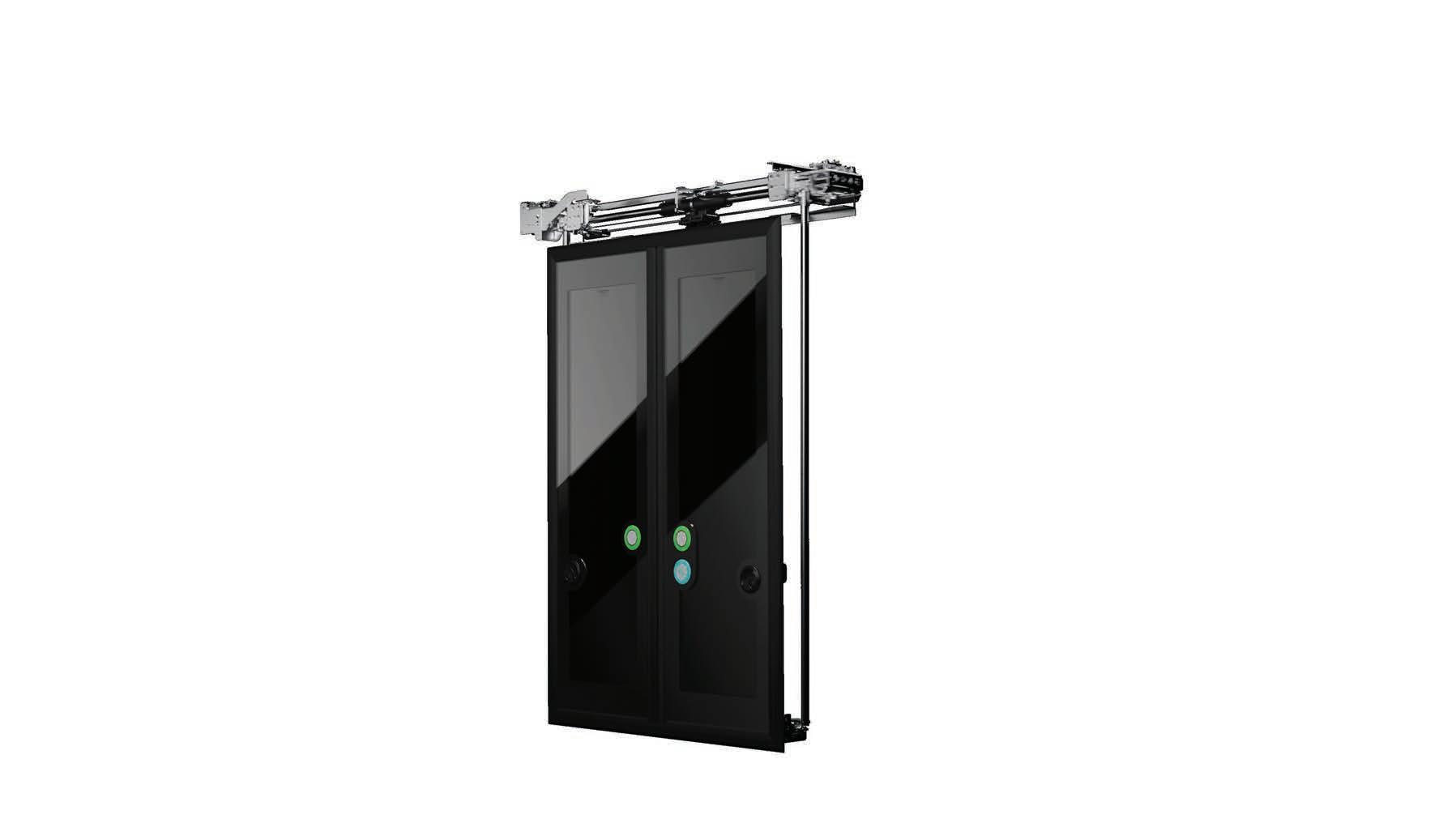

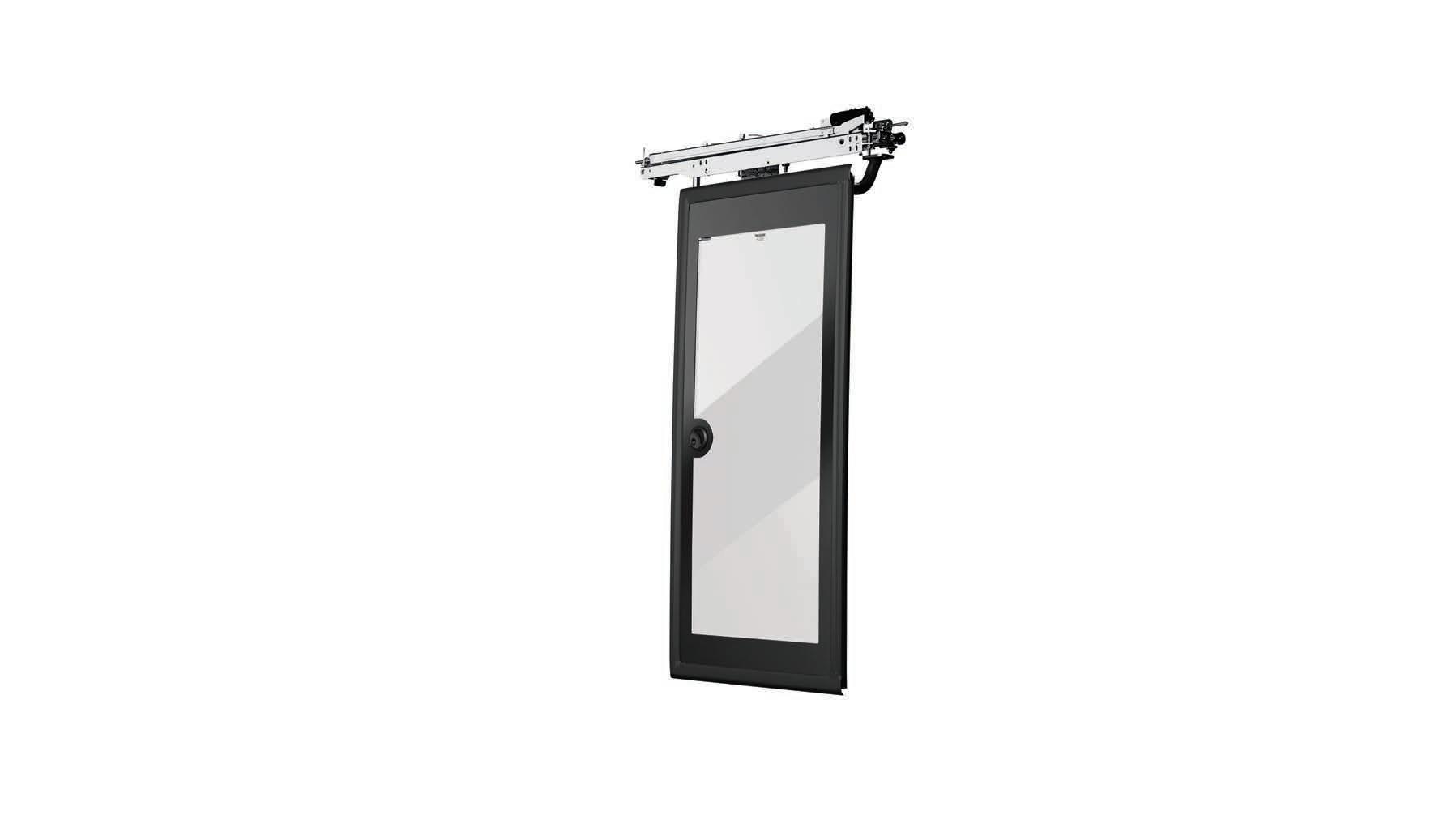
Opening direction Outward
Number of door leaves 2
Range for portal dimensions (mm) 1000 mm (min) – 1500 mm (max)
Drive system Electric (24V/12V)
Control options Ventura Door Control Unit
Door opening options Both leaves / Individual leaf
Glazing options Single glass / Double glass / Heated glass / Tinted glass
Passenger interface options Wide range of button types
Wide range of colour and pictogram configurations
Visibility, audio and tactile options
Touchless interface LED boarding status communication
Obstruction detection sensors Sensitive edge / Speed obstruction/ Overcurrent protection / Time out protection
Drag detection sensors Sensitive edge
Passenger detection sensors Infrared light barrier / Horizontal beam / Vertical beam
Compliance ECE R 107 / ECE R 118-3 / ECE R 10 TS 160 / ISO 26262-QM (Ventura DCU)
Designed for 1.500.000 opening and closing cycles
Opening direction Outward
Number of door leaves 1
Range for portal dimensions (mm) 860 mm (min) –1100 mm (max)
Drive system Electric (24V/12V)
Control options Ventura Door Control Unit
Glazing options Single glass / Double glass / Heated glass / Tinted glass
Passenger interface options Wide range of button types Wide range of colour and pictogram configurations Visibility, audio and tactile options
Touchless interface LED boarding status communication
Obstruction detection sensors Sensitive edge / Speed obstruction / Overcurrent protection / Time out protection
Drag detection sensors Sensitive edge
Passenger detection sensors Infrared light barrier / Horizontal beam / Vertical beam
Compliance ECE R 107 / ECE R 118-3 / ECE R 10 TS 160 / ISO 26262-QM (Ventura DCU)
Designed for 1.500.000 opening and closing cycles
Additional information Our RS door is an ideal modern upgrade for replacing the single-leaf Inward Gliding door, offering improved speed, safety, and reliability. For applications currently using doubleleaf IG doors, the Plug Sliding door system provides an excellent alternative, delivering maximum interior space, enhanced passenger experience and reduced maintenance needs.
Through an expanded bus parts catalogue and new fleet management software, Tranzmile is increasing its standing as an important bus and coach parts supplier
For a parts supplier like Tranzmile, 2025 has been a year of building stock holdings and expanding its range. However, the key highlight for the Australian and Asian supplier has been introducing new software to benefit local bus and coach operators.
“Bus operators have been experiencing significant cost and operational savings through the use of our industry-first TranzMate software,” Tranzmile managing director Cameron Black told ABC What is TranzMate? The fleet management software allows operators to build a detailed asset list and then track and manage all servicing, renewals, pre-starts and parts and purchasing related to running a fleet of buses and coaches.
“Collectively, this provides a fleet management system that saves money and gives complete visibility on costs by vehicle,” Black says.
“This means bus operators can clearly track the cost of running each and every bus in their fleet.”
Outside of the venture into bus fleet management, Tranzmile has still excelled at supplying a wide range of bus and coach parts. Through various catalogues and increased stock holdings, 2025 has collectively been a transformative year for the supplier.
After such a whirlwind year in the bus market, Black says 2026 is expected to be similar to 2025 – “exciting”.
“But it will also be challenging, as inflationary costs and a slowing economy are going to put more pressure on operators,” he says.
Black and the Tranzmile team are looking at ways to proactively manage costs, with the active fleet management software being pivotal to the supplier helping operators to accurately track costs.
“2025 was an exciting year for Tranzmile as we built on the experience and history of Whites Diesel, who we purchased in 2020, and continued to build our bus parts experience and range,” Black says.
“This year we increased our stock holding of genuine Daewoo bus parts significantly, ensuring we can continue to support the hundreds of Daewoo buses still operating here in Australia.
“We also released five dedicated bus parts catalogues – Mercedes O500, Volvo B7-B12, MAN SL202, MAN Coach and Scania K230.”
The first point is one of great significance for Tranzmile in the local bus and coach industry, with Whites Diesels truck and bus parts
“The pressure of increased safety and compliance will make proactive fleet maintenance even more important – that is where we believe Tranzmile can add a lot of value,” Black says.
“Our systems and technology enable us to be more than just a parts supplier. We can and will work with bus operators to understand where the hidden costs are in their maintenance and work to reduce them – resulting in increased efficiency and reduced costs.”
genuine and aftermarket bus parts since 1991. As part of the Tranzmile Group, these branches now supply parts for Mercedes, Volvo, Scania and MAN buses.
Alongside the evolving bus-specific parts catalogues being put to market, Tranzmile is using this industry experience to build its standing among Australian bus and coach operators.
Below: Tranzmile unveiled eight dedicated bus parts catalogues.
“These catalogues have proven to be very popular with operators throughout Australia as they included detailed schematics as well as indicted part numbers, making the job of identification very easy,” Black says.
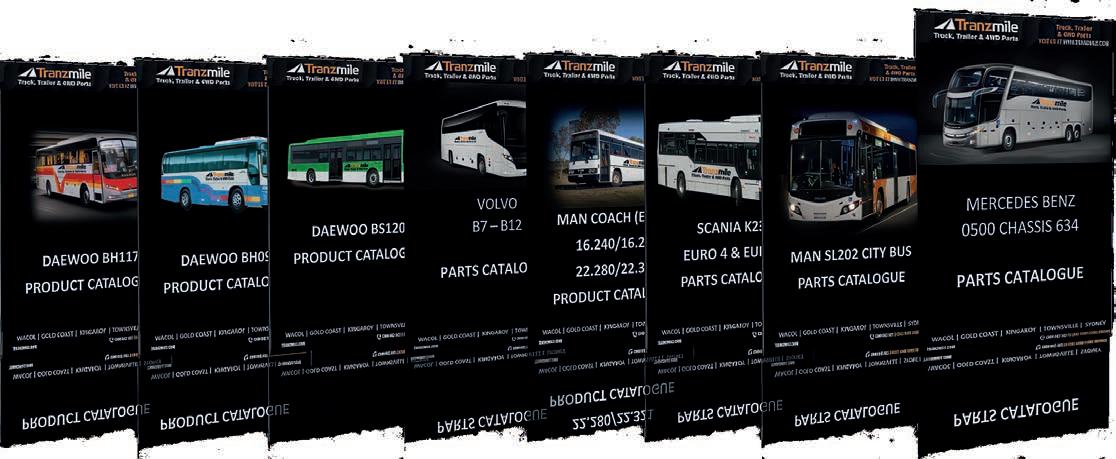
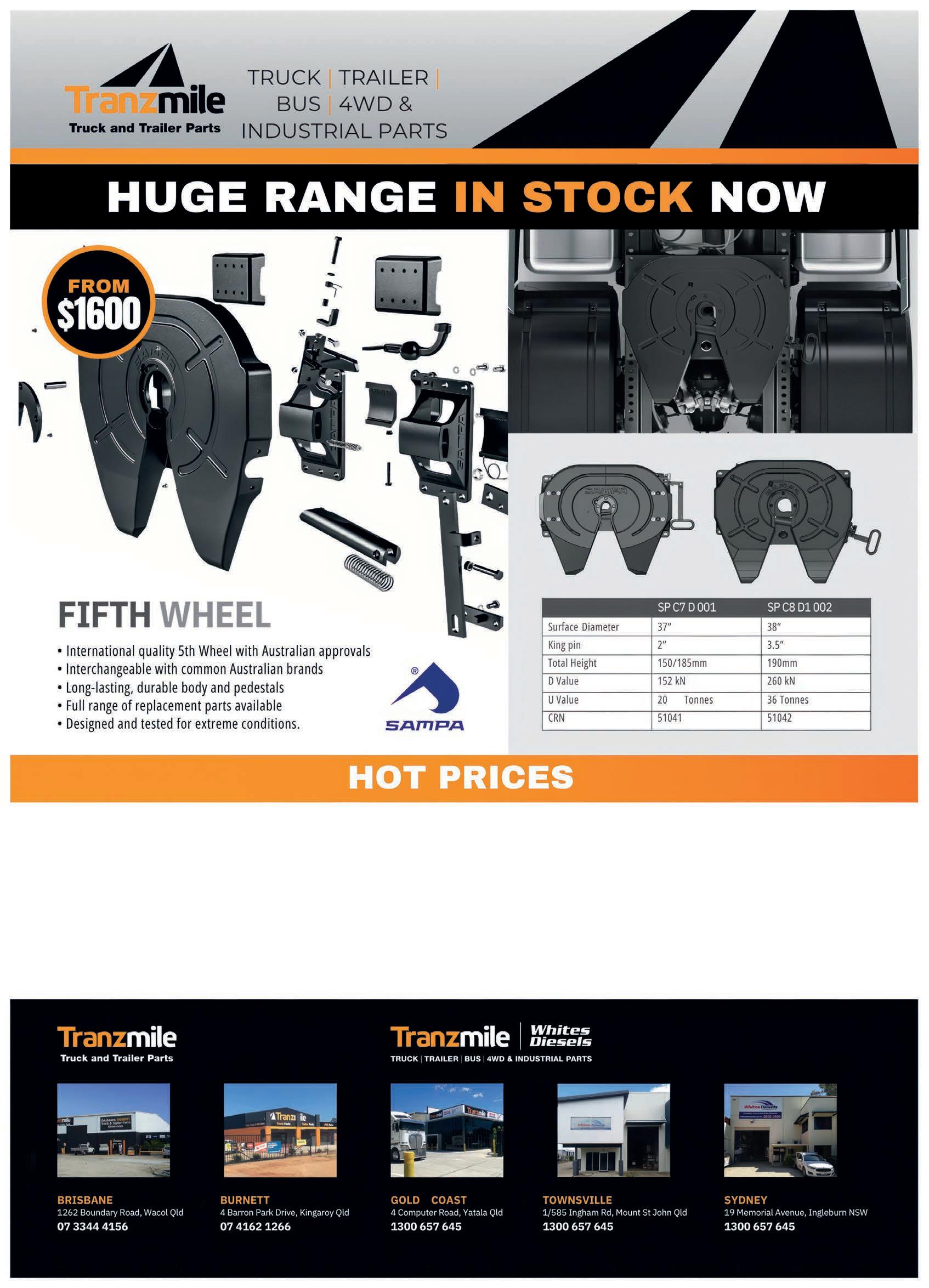
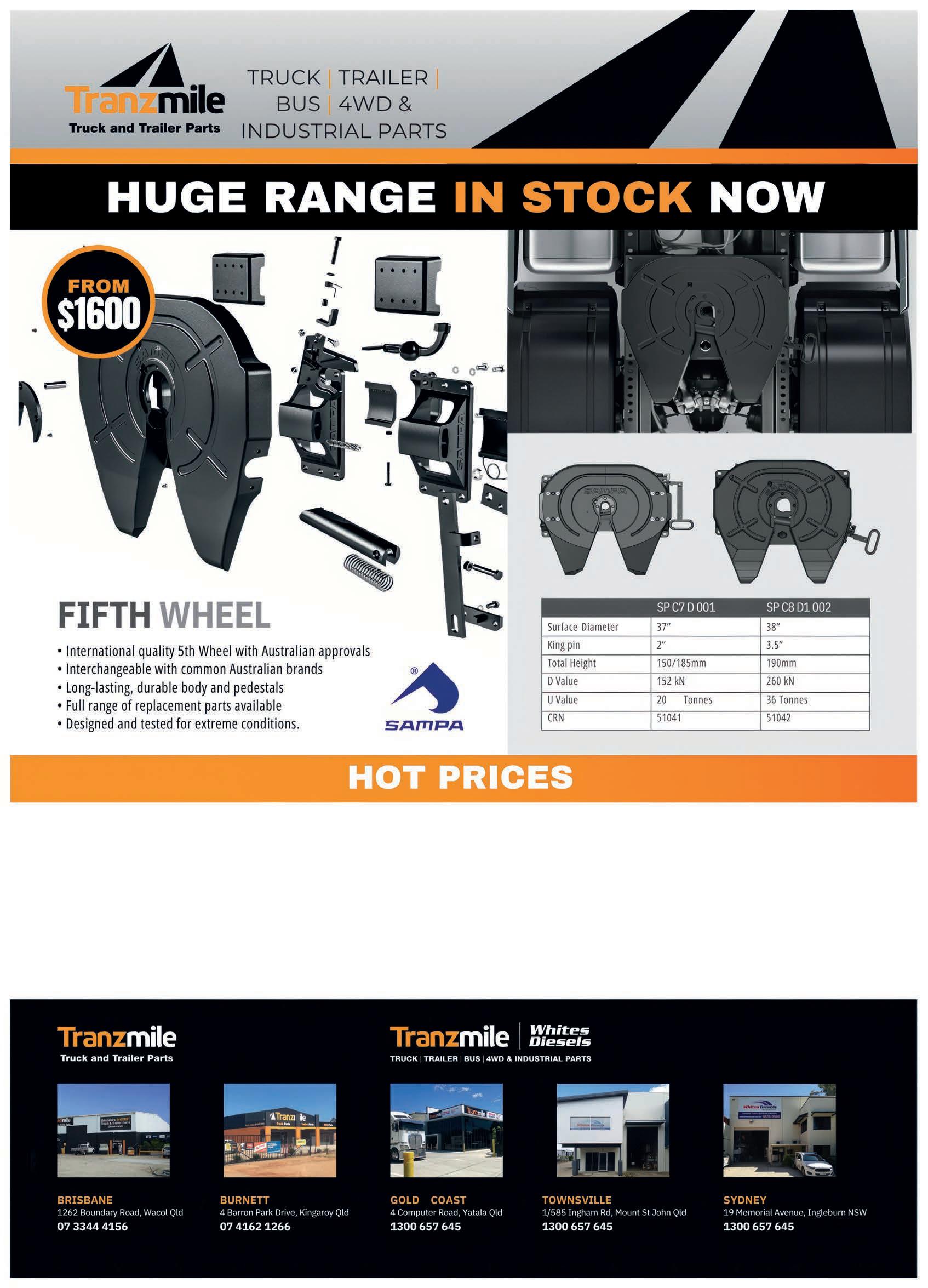
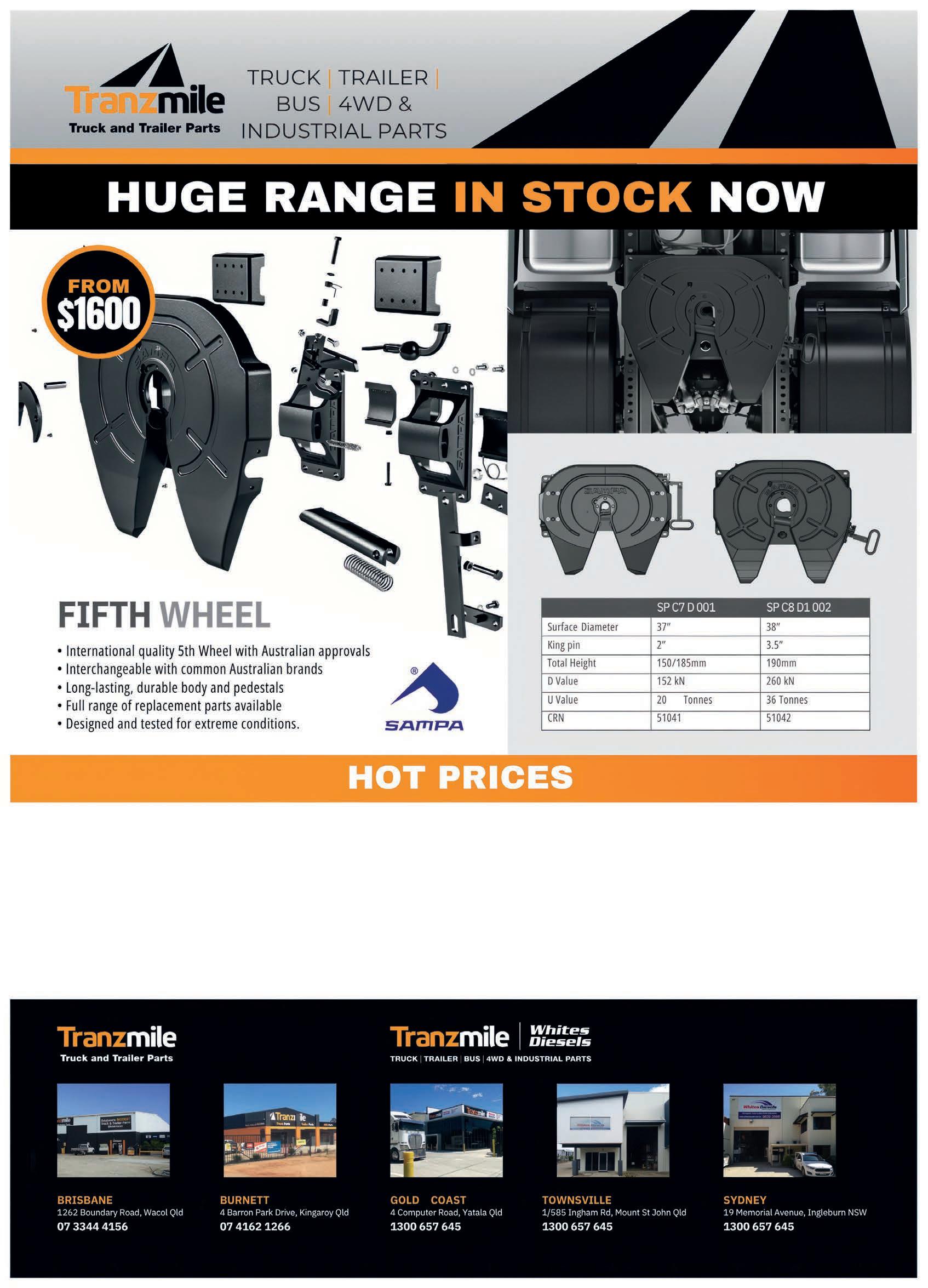
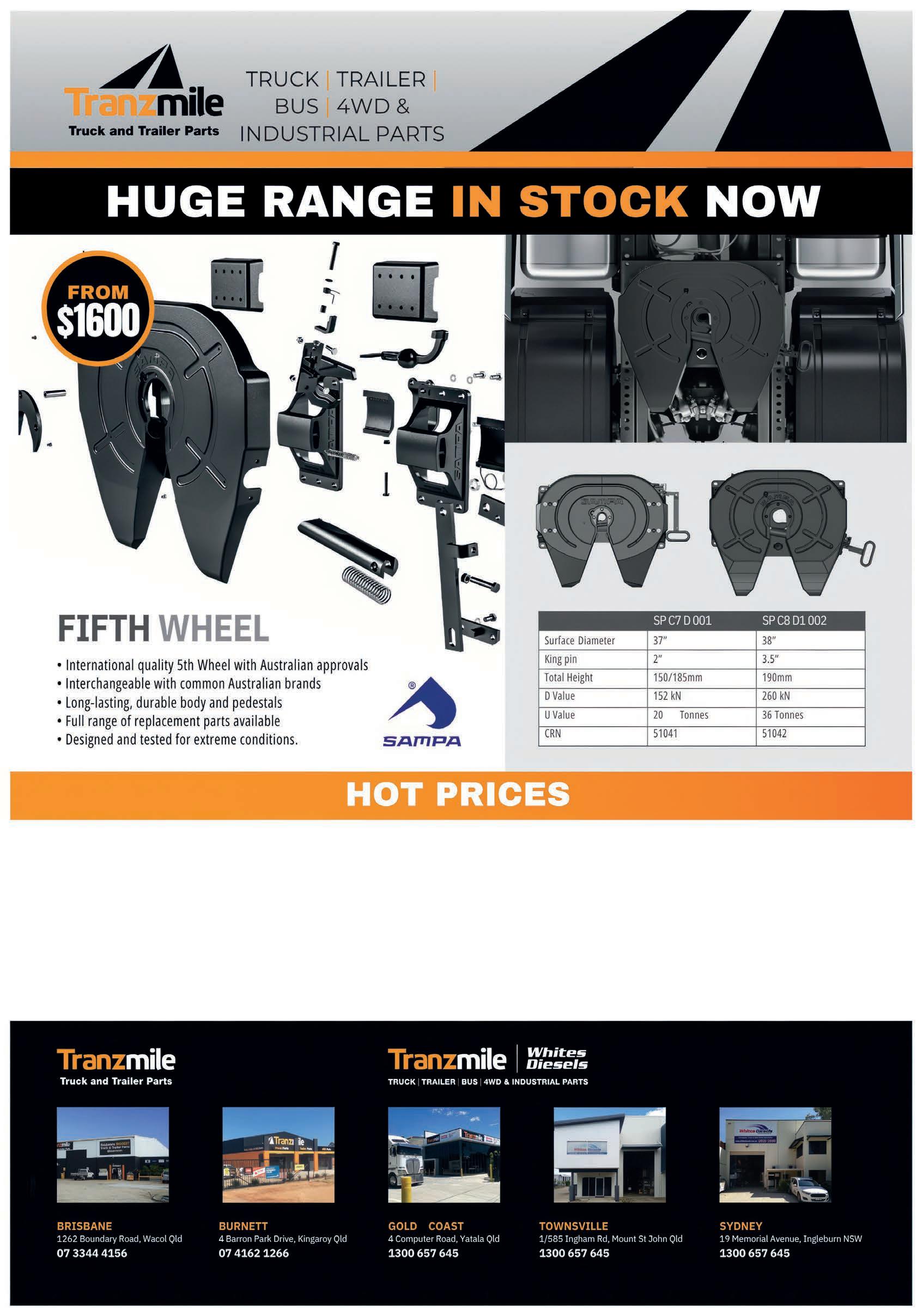
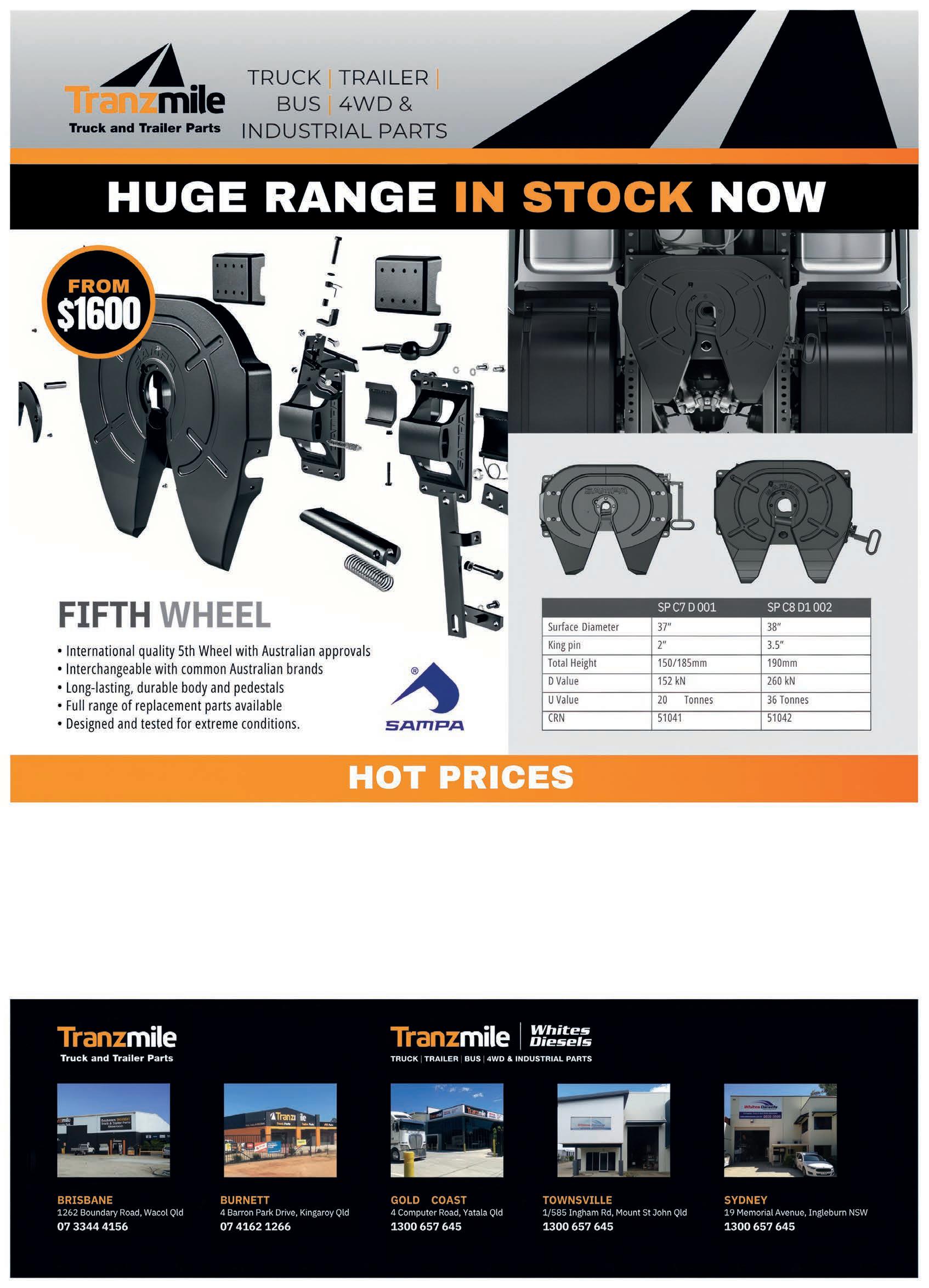


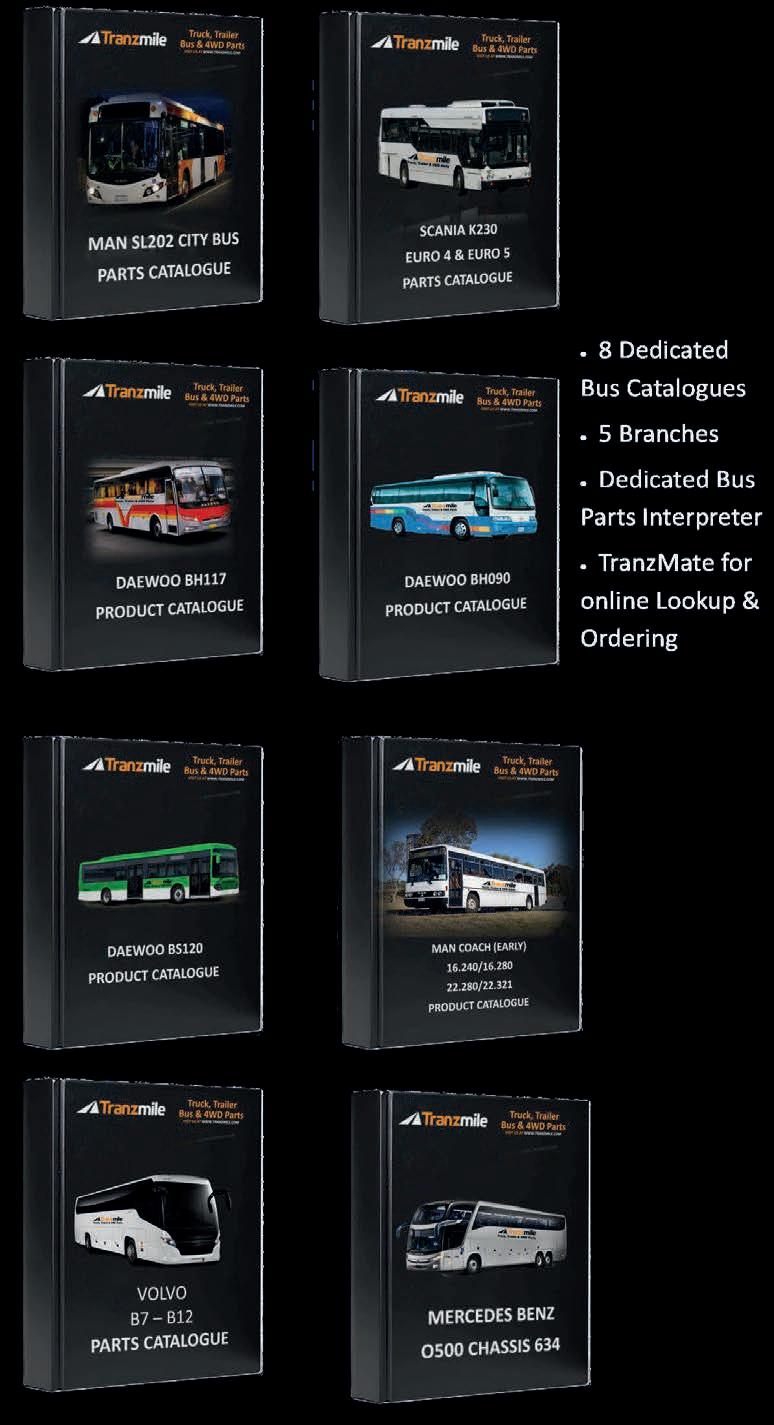
In a market where bus, coach and motorhome parts are often turning to overseas supply, Custom Auto Glass and BCM Windscreens are ensuring tailored glass manufacturing remains close to home
It’s been a tick over four decades since Ron Hodgson and his family established Custom Auto Glass.
Back in the ‘80s, the business was founded to service all types of vehicle windscreen replacements as well as side and rear glass jobs. In the years since, the family-owned company has grown in importance for the Australasian bus and coach industry.
“We specialise in the manufacture, import, supply and installations of all types of automotive glass for coach, motorhome, classic, exotic and bespoke vehicles,” Hodgson told ABC “This especially leads to the custom manufacturing, importing and exporting of all types of vehicle glass.”
Throughout the decades, Hodgson has become all too familiar with customers over the years who have had major problems having their motorhome/bus and coach glass replaced. When a car windscreen needs replacing, it can be a frustrating exercise to organise. When the same happens to buses and coaches, the added element of vehicle downtime and the impact this has on an operator comes to the fore.
As a specialist in producing custom glass across the automotive sectors, Hodgson has developed a business that can alleviate the issues of a bus and coach glass issue with flexible local production. He works out of his Auckland homebase to remain fully mobile across New Zealand’s north and south islands for any bus, coach or motorhome glass requirements.
Hodgson has found his services have only become more popular.
“In the past 10 or so years, the bus, coach and motorhome industry has gone through many changes,” he says.
“Traditional coachbuilders in both Australia and New Zealand are now but few compared to decades ago.
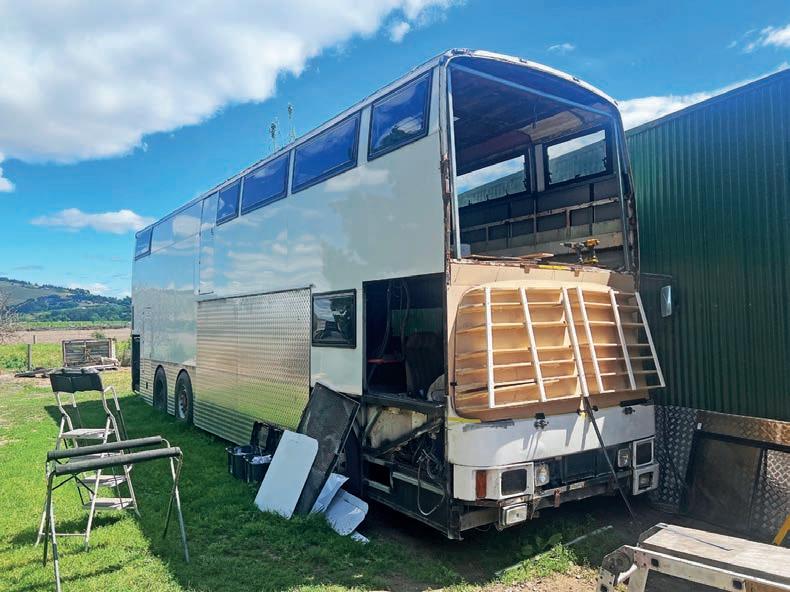
parts were easily either manufactured in each respective country or kept in stock on the shelves.
“Nowadays, there’s still a presence of Australian and New Zealand builders, but most motorhomes are either imported new or used from Europe, Asia and America. These models may be a marvel of everything modern in design and technology, but they still require everyday parts and servicing, with glass being among it.”
This change in market trends means sourcing custom glass for windscreens or side and rear glass isn’t as simple as it once was for Australian and New Zealand customers. Hodgson has noticed that some companies have maintained an impressive stock of replacement windscreens and glass, but many now rely on minimal stock, only ordering in parts as per customer demand.
“An even greater issue is if you own a particular make or model of bus, coach or motorhome that is unique and maybe older in years,” Hodgson says.
“A lot of windscreens for these models are no longer available in Australia or New Zealand. This
is able to cater to any custom glass needs.
Image:
Custom Auto Glass
manufacture for customers – we’re increasingly getting more and more enquiries out of Australia for this.”
Earlier in 2025, BCM invested in a modern and up-to-date vehicle glass factory that ticks all the boxes in supplying or custom manufacturing all types of bus and coach glass.
“You can have the speediest offshore import parts system in place to bring in windscreens and glass, but you can’t beat having windscreens and side glass on the shelf, in stock and ready to go,” Hodgson says.
“BCM Bus Coach and Motorhome windscreens and glass provide custom tailored fleet windscreens and glass management solutions.
“You can also deal directly with us and we can organise everything with you for the supply and distribution of any bus or coach glass. We’re also happy to work with Australian glass installers, they’re all very well versed.
“We have stock and logistics bases in Melbourne, Brisbane and across New Zealand, so we’re looking forward to keeping the custom glass market moving locally.”
Custom tailored fleet windscreens and glass management solutions to cover any broken glass eventuality, keep your bus and coach fleet working on the road.
CUSTOM MANUFACTURING IS OUR SPECIALTY
COMPLETE GLAZING SYSTEMS AND SOLUTIONS
STOCK AND LOGISTICS BASES IN MELBOURNE, BRISBANE AND NEW ZEALAND
WE SHIP TO YOUR DOOR
There’s nothing quite like the relief of knowing your depot is under control. Buses running on time, the board all green and live updates reassuring you that every service is exactly where it needs to be.
This level of control is exactly what Busable and its co-founder Heroly Chour are working towards. A future where every operator can run confident, predictable services. Upon sitting down with Heroly, it’s instantly clear he has a burning passion to fulfil this dream.
“We want to build the world’s most intelligent and trusted platform for bus operations, to support every depot and community,” he told ABC
“It’s such an essential service for the community – not everyone can afford a vehicle. Especially in regional and remote areas, underprivileged people rely on the public transport system. We want to bring down the cost of running transport and make it safer and more accessible.”
It all sounds lovely in theory, but how can an emerging bus and coach technology company achieve such lofty aspirations? Heroly says buses are only one piece of the puzzle to create a cohesive environment for operators. The other half lies in the software.
Heroly says operators “can’t run efficient and compliant operations without software”, and has learned that many bus operators nationwide are constrained by fragmented systems that make it harder to run reliable services, support their teams, meet compliance and grow their business.
“It becomes very quickly apparent that it’s a disjointed and fragmented environment that these operators work in,” he says.
“Smaller operators may use archaic bits of software that don’t connect
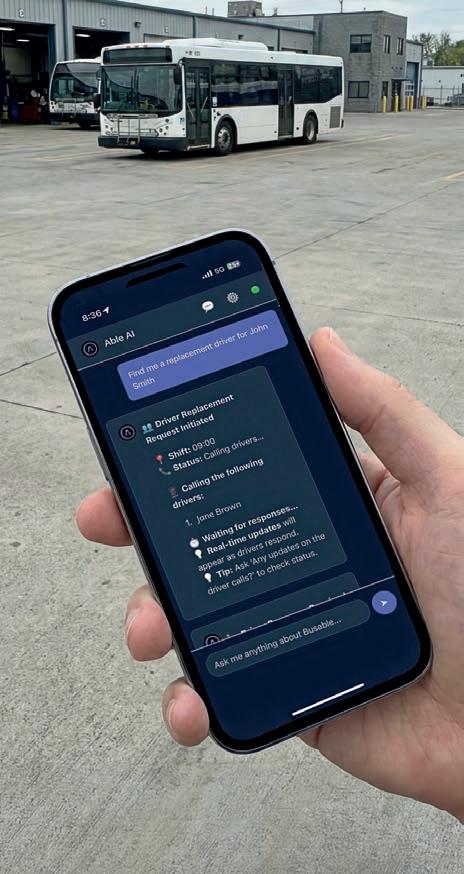
Innovative technology is central to the future of the bus and coach industry, with Busable’s software reshaping bus operations with intelligent software
who come from the transport world, with decades of experience developing highly connected, mission-critical systems for government transport agencies and operators.”
Together with a growing team of transport and engineering specialists, they’ve been focused on building integrated ecosystems that solve the deeper operational challenges facing bus and coach operators. Over the years, this team has been co-designing and developing a unified, intelligent platform purpose-built for the industry.
or communicate with each other. It means information can pour through the cracks and human errors become more consistent. Down the line, this leads to compliance and safety issues, which nobody wants.”
When these same issues occur at larger operators who run hundreds of buses each day, the end result is more fragmented and difficult to manage.
As Heroly puts it, “teams are needed” to bring this chaos into control. This is where Busable’s technology is simplifying the process and easing organisational concerns.
“Our mission is to look at unifying bus operations into one cohesive intelligent platform – it’s what we’ve been building out now for the past four years” he says.
“This takes deep industry knowledge and complex engineering to build. My co-founder, Graham Webber, and I are software engineers
The platform is designed to be flexible, fitting neatly into the technology that environments bus and coach operators already use. Its modules cover the full spectrum of industry needs, ranging from public passenger and school transport to coach, charter, emergency and rail replacement services. Each module is purpose-built for its segment and evolves over time as operators’ needs grow.
This flexibility extends to how Busable integrates with existing business systems.
“We work with customer payments using Stripe all the way through to invoicing and payroll fully integrated with Xero Accounting, bringing in platforms outside our sphere that are leaders in what they do,” Heroly says.
“When it comes to accounting, nine out of 10 operators use Xero, so we plug the gaps by connecting to their existing systems and ensuring everything works seamlessly.”
On the school bus side, the particular module allows operators to manage student manifests so that parents can ensure children safely enter and exit the bus service. Added in is a turn-by-turn navigation feature that addresses the primary pain point drivers have – knowing the routes.
“We try to make it easier for drivers
We want to build the world’s most intelligent and trusted platform for bus operations, to support every depot and community.
to do their job better, and it gives the depot manager the eyes and ears on how the service performs in real time,” he says.
“Some of our school bus operator customers love the software as, when they present to prospective schools, they can provide technology that parents can use to see where and when their kids tap on and off.
“Through our software, operators can also publish their running timetables online so everyone has full transparency.”
Outside of this, Busable’s modules are highly flexible. A single platform manages all driver rosters and schedules with built-in intelligence for fatigue compliance and enterprise award calculations. Busable’s mission is to unify these capabilities into one complete easy-to-use system while expanding the ecosystem
with additional connected services such as tap-on/tap-off account-based ticketing. A major part of this evolution is leveraging new technology to bring all these benefits together seamlessly.
As Busable continues to evolve, Heroly says the company has partnered with technology partner AWS to power its next wave of intelligent software.
“I presented at the BusNSW Young Leader’s Forum on how AI is shaping the future of the industry – there are so many use cases on how AI can bring efficiencies, clarity and control to a busy bus operator,” Heroly says.
“Projecting into the future, we’re entering a new era of artificial intelligence. As early pioneers, we’re collaborating closely with
Below:
operators to shape intelligent tools that transform the speed, clarity and efficiency of bus operations while maintaining safety and security.”
Heroly walks me through Busable’s new Able.AI mobile app, describing it as an assistant in your pocket. It supports teams by answering questions, surfacing insights and smoothing out scheduling and compliance tasks at a tap of a finger. It’s in these areas where Busable can continue excelling as an enticing new option for bus operations around the nation looking for software built for the future.
So where does the future lie for Busable? Heroly says his vision is for Busable to be the central piece of technology that unites the industry, operators and passengers alike. With the power of modern technology and artificial intelligence, he wants to change the industry’s mindset on how technology can work with people to make buses better than ever before.
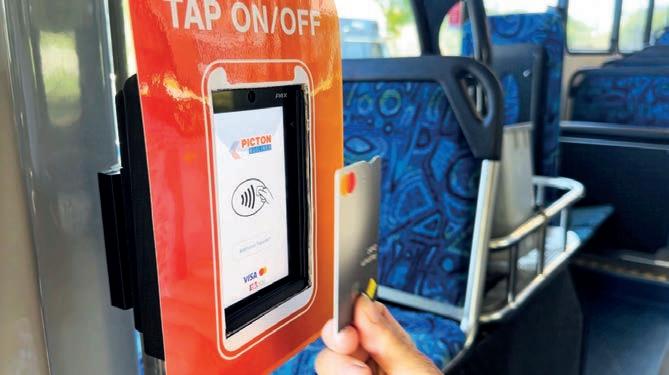
“Our mission is to build the most intelligent and trusted bus operation software platform for the industry –we want to make anywhere Busable for anyone,” he says.
“We will use our technology to do that, and we can’t wait for the industry to experience the importance of using this software to help with every single aspect.”

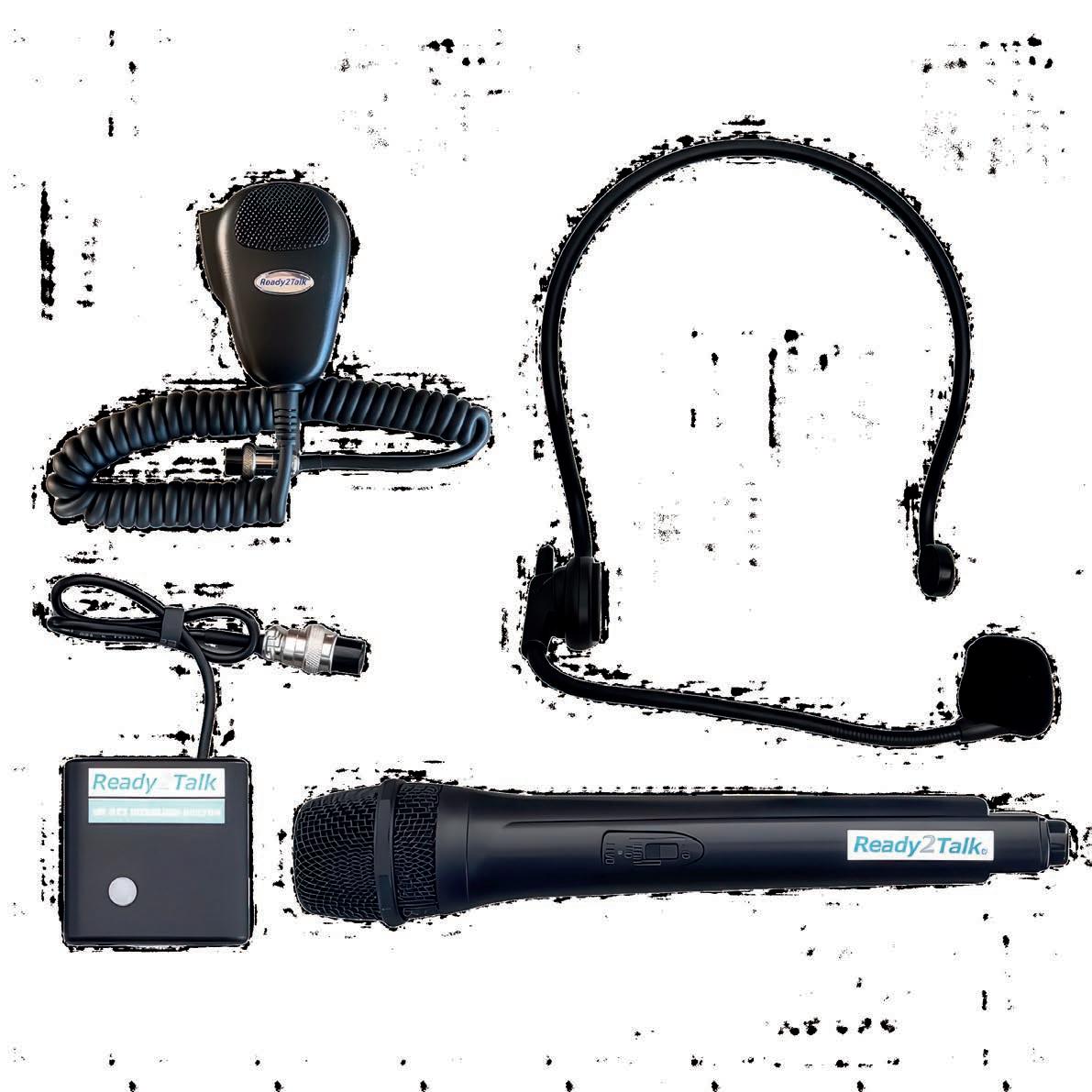
In just over a year since the North American tech was released in Australia, several local operators have already installed the Ready2Talk range onboard their buses
Being on the other side of the world, the bus and coach market in North America is quite different to that of Australia. Be it size, brands or the way operations are run, it takes a high quality product and a stringent support network to release a system that succeeds in both markets.
Before it made the decision to release its popular product suite into the Australian bus and coach industry, Ready2Talk’s range was put through the ultimate test. Disneyland.
“Disney has a transit network behind the curtain to move staff around,” Ready2Talk founder Jack Dubberley told ABC
“These carts are fitted with
Ready2Talk’s leading systems, proving they can handle the highest-pressure situations, like Micky knows this is his right place to be. This is so important that the PA needs to work all day, every day.”
Now, riding on the wave of this success, the Ready2Talk product suite is now available in Australia courtesy of Australian Car Audio. Ready2Talk’s systems are designed for use in any sized fleet, whether for using vans, mini or school buses, motorcoaches and trams, with its products being widely installed and used across Northern America on various fleets. They are also hugely popular outside of Canada and are sold all over the US and have become the standard
Above: The Ready2Talk range has passed stringest tests to be ready for bus communications
PA system by many leading tour bus companies such as Holland America, Roberts Hawaii and a growing number of Gray Line locations.
Ready2Talk has finally reached Australia and is available from Australian Car Audio. In the space of just a year, the range has proven to be a hit for several local bus and coach operators, including Rottnest Express, Wine Hop & Coastal Tours, Longitude 131, Great Private Tours, Discover Adelaide, Experience Daintree and Southern Ocean Lodge.
The main product Ready2Talk recently launched for the Australian tour bus and coach industry is its PA64 amplified PA system. Made to provide the best quality audio
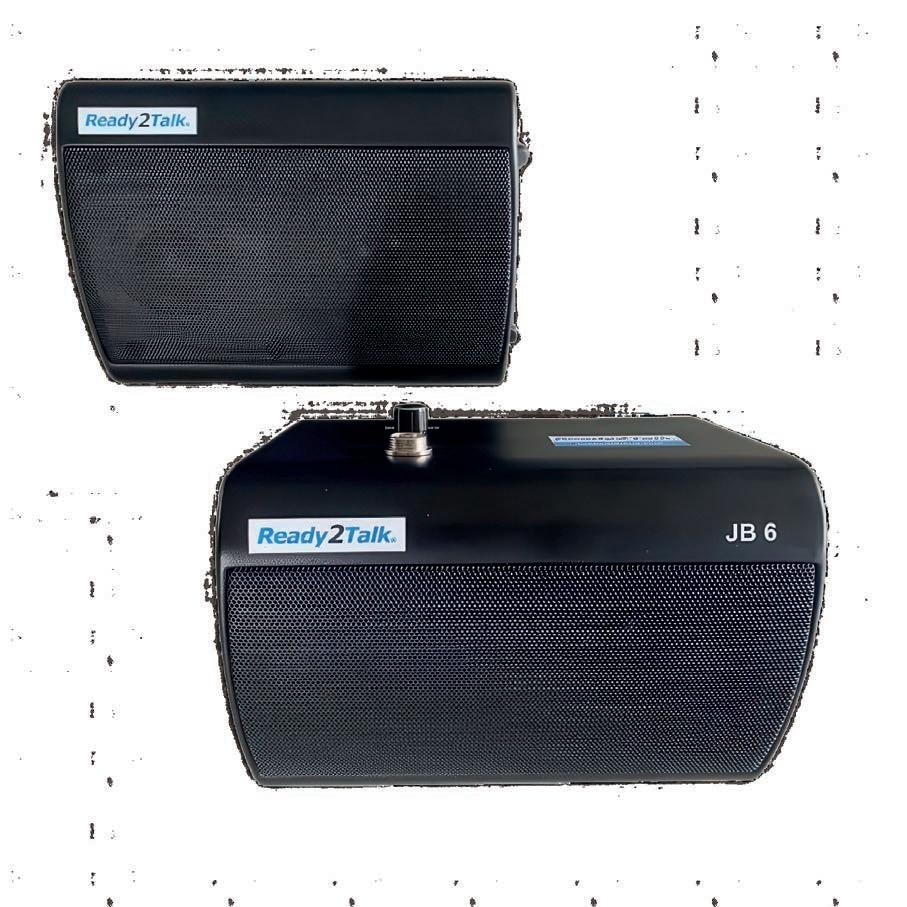
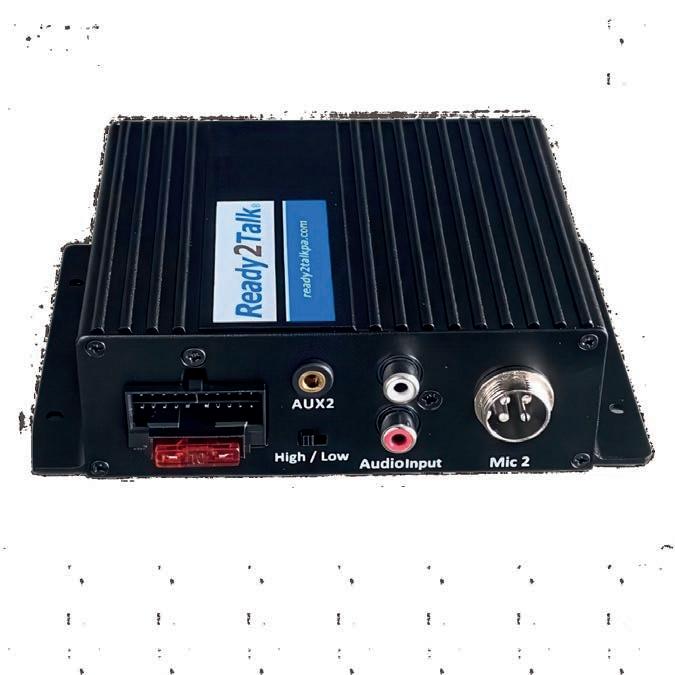
The PA64 includes two microphone inputs and can be configured as a two-way intercom system so tour guides can offer an interactive tour experience, or it can be used for communication between passengers and drivers on disability-access buses. On top of this, the PA 64 has multiple audio inputs so transit buses and trams can amplify their automated messages and play the audio track from onboard video players, making it the perfect party bus accessory for karaoke set-ups.
Another popular model that has landed with Australian Car Audio is the JB 6, a fully self-contained pair of amplified speakers with a built in PA and BT receiver, perfect for when operators need a great sounding PA in minutes for almost any need.
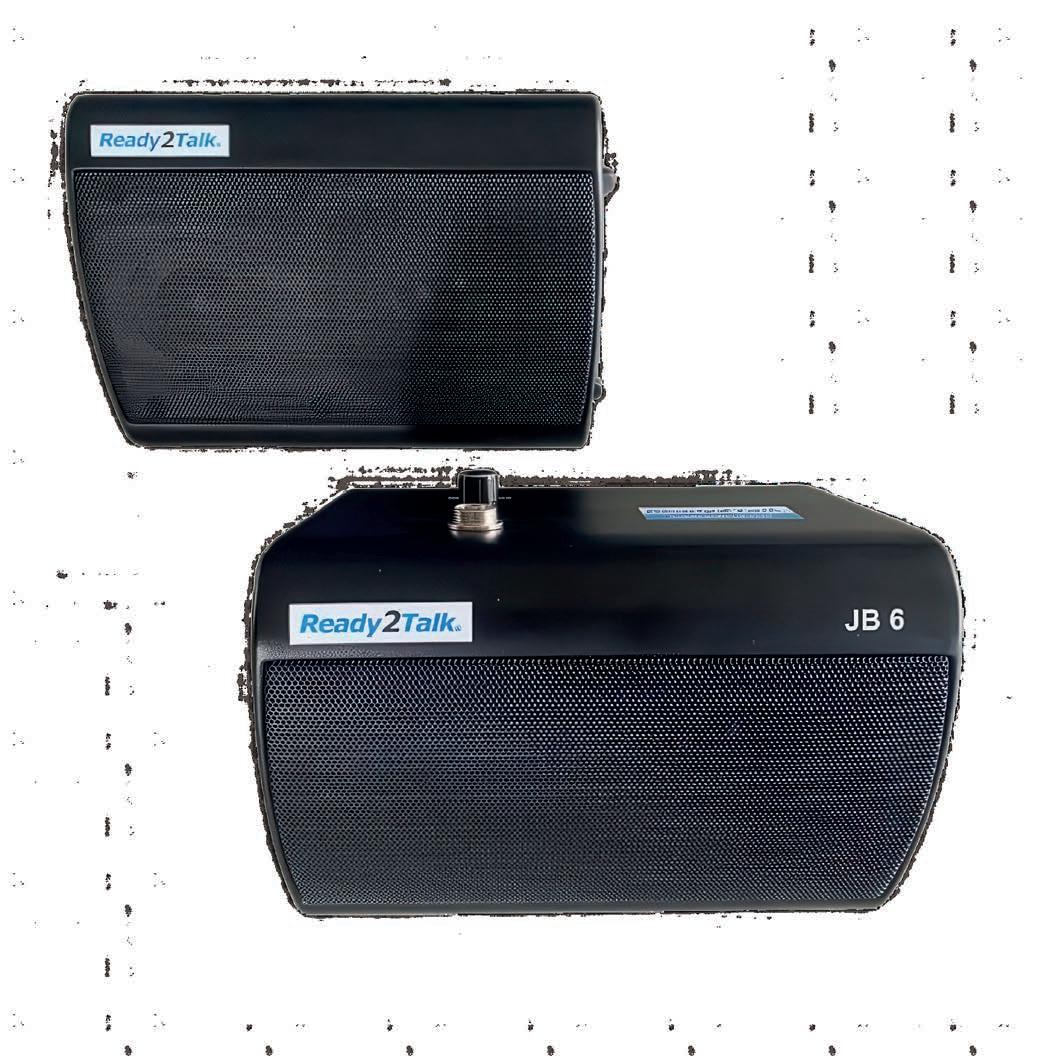
Ready2Talk says its goal is to rethink what a PA system is, and what it can do for operators regardless of their fleet size, services on offer or vehicles used. No longer do operators have to be tied to the basic hand mic – Ready2Talk offer hand mics to headsets, wired and wireless and all plug and play into its systems.
For further enquiries on where to purchase or have Ready2Talk products installed in your vehicle, please contact Australian Car Audio via email at solutions@australiancaraudio.com.au or by calling their office during business hours on (03) 8870 4100. See the full range of Ready2Talk products at: australiancaraudio.com.au



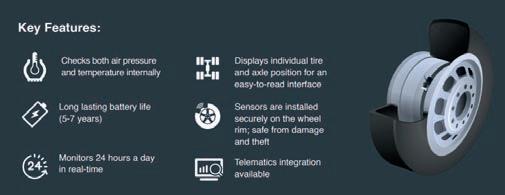
SpartanLync’s
Tyre
Pressure Monitoring System is proving to be a popular choice for Australian operators when it comes to proactive fleet management
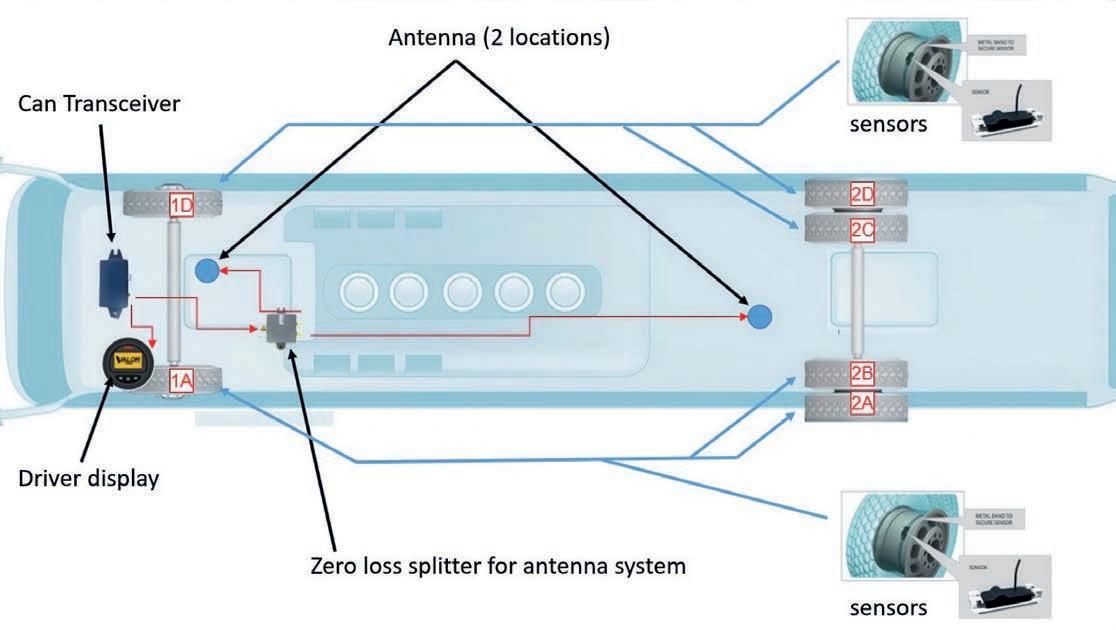
As a crucial element of modern bus and coach safety and efficiency, SpartanLync’s Tyre Pressure Monitoring System, or TPMS, branded as TyreTemp, is setting the benchmark for proactive fleet management in Australia.
Just a few years ago, TPMS solutions were often categorised as optional fleet enhancements– a “nice to have” for maximising cost efficiencies. Today, that perception has shifted. Global regulatory movements, such as the UN ECE Regulation R141 in Europe, which mandates TPMS fitting on all new heavy vehicles and trailers, reflect the critical necessity of this technology. With local industry members expected to harmonise with these global standards by 2028, TPMS is rapidly transitioning from a luxury to a baseline requirement.
“TPMS used to be a ‘nice to have’
piece of technology, but now it’s a must-have for safe and profitable operation,” SpartanLync technical manager Alex Lopez told ABC
Technology built for precision
Founded in Canada approximately 16 years ago, SpartanLync Technologies distributes a TPMS product manufactured by BH SENS, one of the world’s leading suppliers. A key competitive advantage of the SpartanLync system is its commitment to using internal sensors, rather than the external sensors prevalent in the market.
“Our system is one of the few that utilises internal sensors,” Lopez says. “A core feature of our technology is continuously checking the tyre’s temperature to identify potential issues with adjacent components, such as brakes or bearings. If the sensors were external, this critical temperature reading would be compromised by environmental interference.”
Above: TyreTemp’s system monitors a crucial element of the tyre – its temperature
Below: SpartanLync technical manager Alex Lopez
This dual monitoring capability, which Lopez sometimes refers to as a Tyre Temperature Monitoring System, or TTMS, has been key to SpartanLync’s successful global expansion, covering North America, China and Australia. The company maintains manufacturing and development facilities in Shanghai,

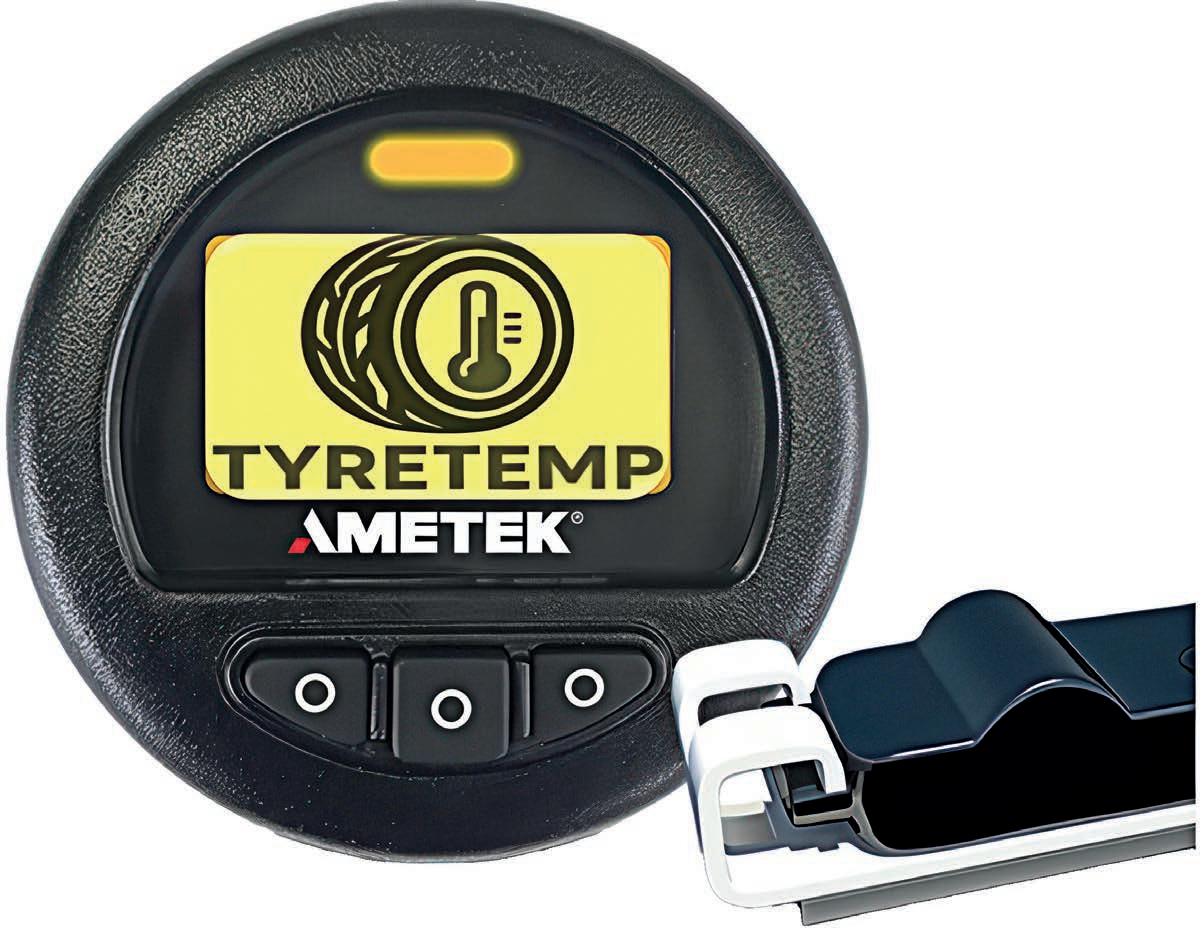
China, Burlington, Canada and Brisbane, Australia.
The dual impact on fleet costs
For heavy vehicle operations, including bus and coach fleets, the two most significant variable expenses are fuel consumption and tyre replacement.
“Our system addresses both factors simultaneously,” Lopez says.
“By ensuring correct inflation pressure, we not only significantly extend the life of the tyres, but also keep them safer for longer, directly reducing rolling resistance and fuel burn.”
SpartanLync first introduced its
Remodelling conversion or retrofit transformation solutions
Wheelchair accessibility install
Seating arrangement solutions
Electrical & audio visual upgrades

T (07) 3344 4544
E coachworks@royans.com.au www.royans.com.au
technology to the Australian bus market in 2018, supplying systems to OEMs such as BCI and Irizar. Today, the company also directly supports major transport operators, including Kinetic in Queensland and GoWest, who utilise the system for their remote mining fleet operations in Western Australia.




Restroom facilities Vehicle accessories












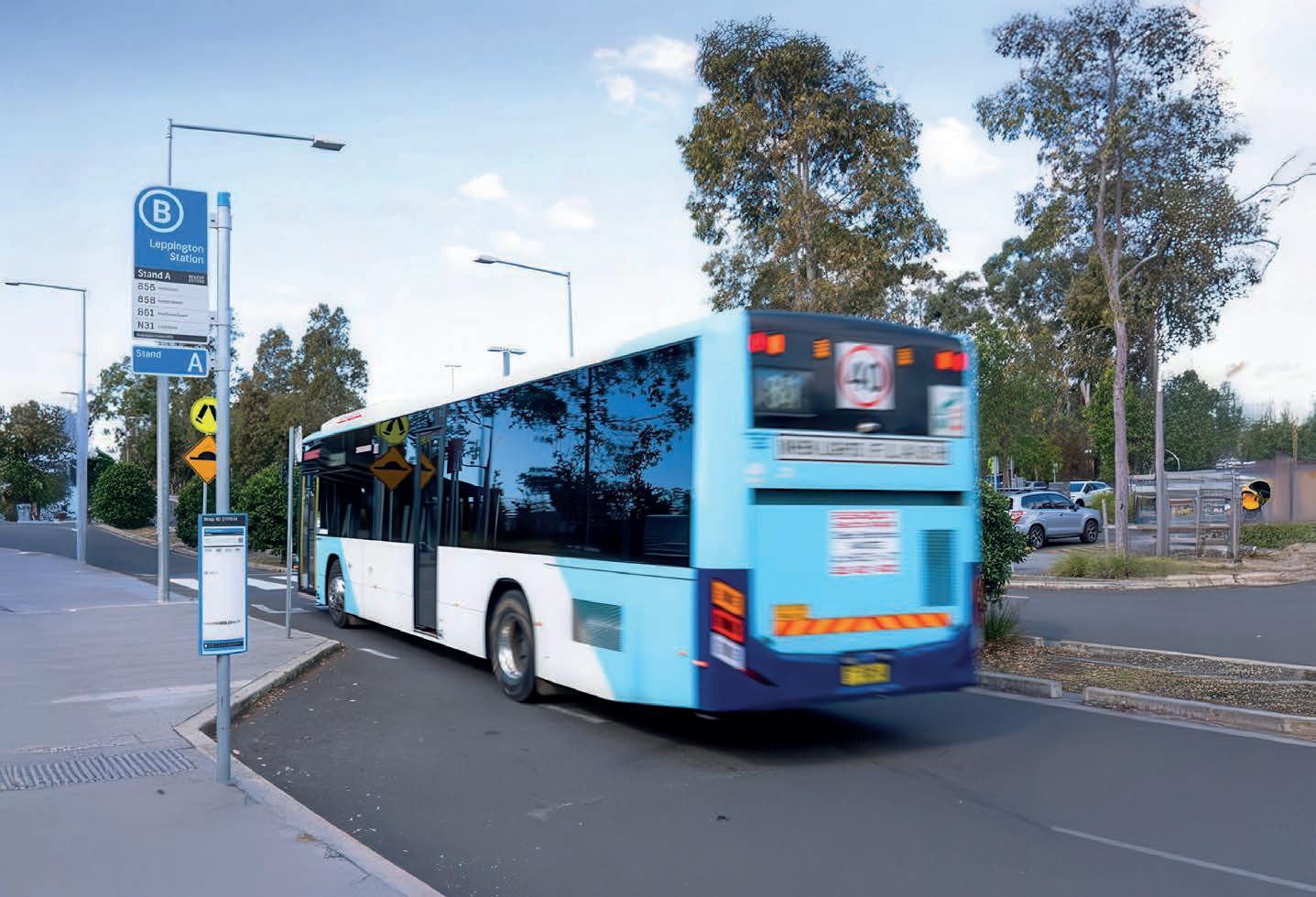
BusNSW was one of 12 to receive funding as part of the $4.2 million round of heavy vehicle safety investments
State association BusNSW has been awarded funding through a national safety initiative for its project on preventing bus rollaways.
BusNSW was awarded the funding under the latest round of the National Heavy Vehicle Regulator’s (NHVR) Heavy Vehicle Safety Initiative (HVSI) that is also supported by the federal government.
BusNSW executive director Matt Threlkeld says he’s pleased to see the project selected as part of this important national program focused on delivering safety improvements for the heavy vehicle industry, other road users and the broader community.
“Bus rollaways are one of the most common and serious safety incidents in the bus and coach sector, posing real risks to drivers, depot staff, passengers and the public,” he says.
“This project will promote proactive safety behaviours among operators and drivers through a targeted safety awareness campaign built around
an engaging animation and practical educational materials.
“Our goal is to strengthen industry-wide compliance by highlighting critical safety procedures that prevent rollaways and keep people safe.
“By engaging with other bus associations, unions and government agencies, this initiative will provide free safety resources to more than 3,500 operators and 40,000 drivers nationwide, ensuring the benefits extend well beyond NSW.”
NHVR CEO Nicole Rosie says BusNSW is one of 12 grantees that will receive funding as part of a $4.2 million investment towards HVSI projects.
“The NHVR is pleased to continue supporting critical projects such as Preventing Bus Rollaways through our HVSI program, which are providing tangible improvements to heavy vehicle safety and helping reduce road trauma across Australia,” Rosie says.
Above:
The project is focused on safety education for buses. Image: Transport for NSW
“Round 10 projects include a targeted safety awareness campaign to reduce the risk of bus rollaways, a real-world trial with a national freight carrier using evidence-based insights to demonstrate the effectiveness of wearable fatigue management solutions, and the development of technology that will identify overhead and at-height hazards in real-time.
“These innovative new initiatives provide solutions to key issues in the transport and logistics sector, delivering safety benefits for the heavy vehicle industry and wider community.
“The NHVR looks forward to continuing to engage with safety-focused groups such as BusNSW, towards a shared goal of a more productive and efficient heavy vehicle industry, and safer roads for all.”
For more information on the HVSI program, visit: www.nhvr.gov.au/hvsi
Over the next 12 months,
Educated and develop, actively
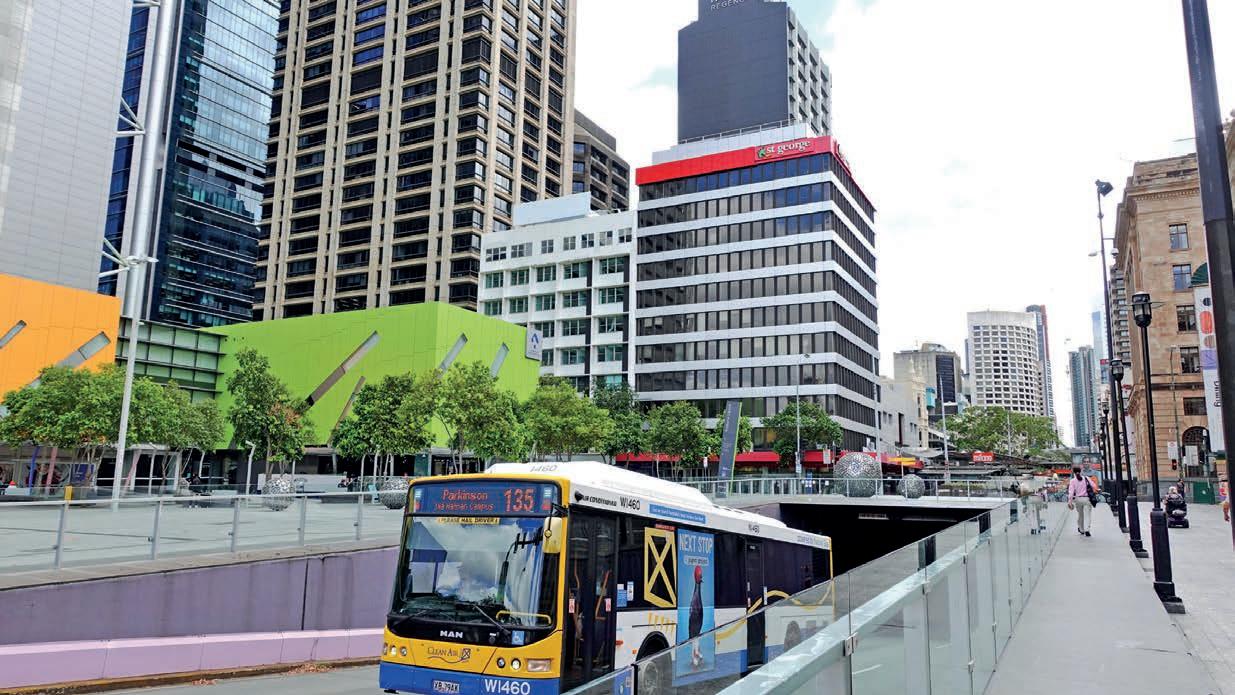
their operations are safe. Unlike prescriptive compliance models of the past, the Safety Duties regime is outcome focused.
At the national level, changes to the National Heavy Vehicle Law and the revised Master Code of Practice are also due to take effect in 2026. These reforms aim to better align operator obligations with modern compliance expectations, particularly around maintenance, fatigue, driver health and training. Industry is working hard with NHVR to ensure the code represents the broad nature of operations but some concerns from industry remain particularly concerning jurisdictional duplication.
In recognition of the unique risks and operating models of passenger transport, commitments have been made between industry and the NHVR to develop a dedicated Code of Practice for the bus and coach industry.
Bus Industry Confederation (BIC), state associations and key stakeholders – will provide tailored, practical guidance for bus operators.
The regulatory culture is also evolving. The appointment of Nicole Rosie as CEO of the NHVR marks a renewed emphasis on education, compliance and enforcement.
Speaking at the BIC National Conference in Perth, Rosie emphasised that the NHVR will increase its focus on evidence-based compliance. That means greater attention to whether operators can demonstrate that they’ve identified their risks, put controls in place and checked that those controls actually work.
With 2026 fast approaching, operators should use the next six to 12 months to prepare – not panic. Here are some practical steps to start with:
Above: 2026 serves as a defining year for the Queensland bus industry. Image: arliftatoz2205/ stock.adobe.com
• Engage your team. Safety culture isn’t paperwork. Make sure every driver and mechanic understands their role in managing risk.
• Stay informed. Keep an eye on updates from the NHVR, your state regulator and your industry association as the new Codes and regulations are finalised.
The bus industry has always placed passenger safety at its core, but the shift toward evidence-based regulation will require renewed attention to detail. Compliance will no longer be about having the right documents; it will be about showing the right decisions.
By using the next six to 12 months to strengthen systems, investigate what data to collect, review the data and act on it, operators can ensure they are not only compliant, but leading the way in safety excellence.

endeavourawards.com.au



NInnovation in Transport is one new award category that forms part of the 2026 Endeavour Awards program
holds a senior person (executive, manager, director or equivalent) in a private, not-for-profit or government organisation who has effectively shaped their business’ success, delivered financial growth, significantly and positively impacted the business’ culture and championed the industry widely.
• M anufacturer of the Year –Sponsored by Weld Australia: Manufacturer of the Year is chosen from the winners of the other Awards categories. This category is not open for nomination.
ominations are now open for the 2026 Endeavour Awards, Australia’s premier celebration of excellence and innovation in manufacturing.
Presented annually by Manufacturers’ Monthly, and held in collaboration with Australian Manufacturing Week, the Endeavour Awards honour the achievements of individuals and organisations who are driving Australian manufacturing forward.
The annual gala dinner will take place on May 13, 2026, during Australian Manufacturing Week at the Westin Brisbane.
Recognised as the manufacturing industry’s night of nights, the Endeavour Awards bring together leaders, innovators and rising stars to celebrate success, share stories and connect with peers shaping the future of Australian manufacturing. Awards will be presented across the following categories:
• Advanced Manufacturing Excellence Award: Celebrates outstanding achievement in precision engineering, automation or digital manufacturing technologies.
• Innovation in Aerospace: Celebrating advancements in aerospace technology, this category is for companies driving innovation in aircraft, space and defence aircraft manufacturing.
• Innovation in Health Technology: Recognising technologies that improve healthcare and medical manufacturing.
• Innovation in Food & Beverage Manufacturing: Recognising advancements that enhance food and beverage production, this category is open to businesses developing innovative processing, packaging, automation or sustainability solutions for the industry.
• Innovation in Transport: Highlighting innovation in transport, this category is for businesses enhancing vehicle manufacturing, public transport or sustainable mobility solutions.
• Outstanding Start-Up Award: Recognising an Australian manufacturing start-up that has introduced a new product to market, filling a market gap.
• Leader of the Year – Sponsored by BDO Australia: A leader who
For the first time in the event’s history, the Endeavour Awards will also feature a new Advanced Manufacturing Excellence Award, celebrating outstanding achievement in precision engineering, automation, or digital manufacturing technologies. Alongside this in the new award categories include the Innovation in Aerospace, Innovation in Health Technology, Innovation in Food & Beverage Manufacturing and Innovation in Transport awards.
The awards will also feature two other new awards including the Rising Star of the Year Award, recognising an emerging leader who has demonstrated exceptional talent, innovation and commitment within Australia’s manufacturing industry in the early stages of their careers (under 30 years of age) and the Excellence in Sustainability Award, celebrating a manufacturing business that has demonstrated leadership and innovation in environmental sustainability.
Companies and individuals from across the sector are invited to submit their nominations and showcase the projects, technologies and people making an impact on the industry’s growth and resilience.
Nominations are now open. Visit the awards website to learn more and submit your entry.