Inquiring Minds
News from Primary Ethics

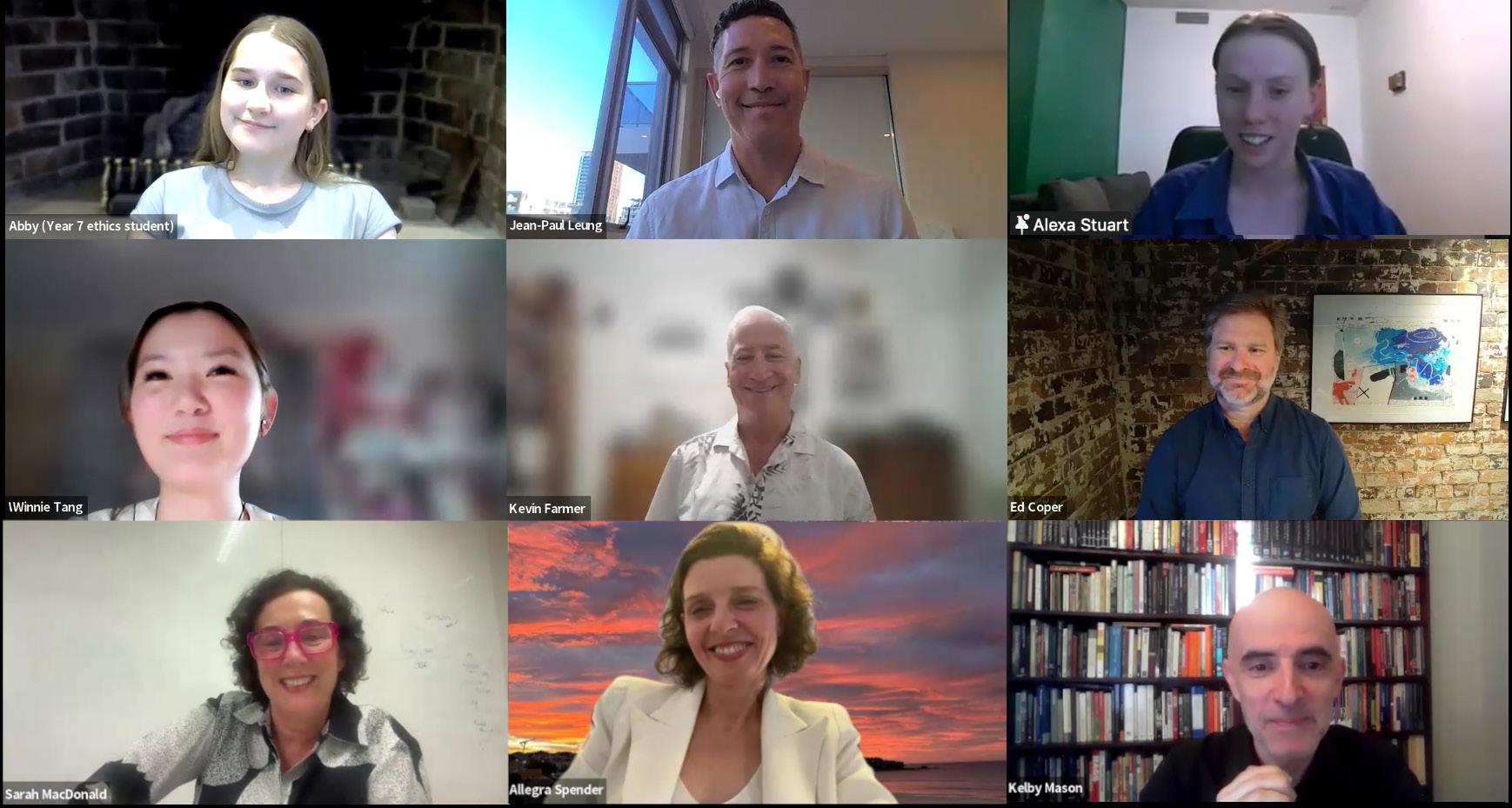
We celebrated Global Ethics Day 2025, 15 October, with a webinar featuring an ethics class mainly composed of adults - also including one current high school student of ethics. The class discussed one of our high school lessons – on misinformation and fake news.
Radio journalist Sarah Macdonald was our host and Primary Ethics philosopher-in-residence and curriculum author Kelby Mason facilitated the lesson – an edited version of a lesson that is currently taught in secondary schools by our volunteer teachers.
Our special guest students included Allegra Spender MP (Member for Wentworth), Ed Coper (strategic communications specialist and author of Facts and Other Lies), Primary Ethics volunteer teachers Alexa Stuart (Bob Brown Young Environmentalist of the Year 2024), Winnie Tang (aeronautical engineer), Jean-Paul Leung (ethics team coordinator) and Kevin Farmer (corporate social responsibility consultant), plus current Year 7 ethics student Abby Webb.
This is the first time we have marked Global Ethics Day –the time felt very right! This is a moment for individuals and organisations to explore their values and the
principles that shape ethical decision-making. The Day highlights ethics as a process for finding solutions in the collaborative and respectful manner that’s often missing in today’s world.
Ethics is not about getting everyone to agree on a single set of values. It’s about how we learn to live together, respect our differences and together face the global challenges of today and tomorrow.
This webinar was an excellent demonstration of the value of ethics education. The ability to think critically about what we’re told in the ‘old’ media and on social media is crucial as today’s children grow up into a world full of challenges that have to be met at breakneck pace. Feedback after the webinar has been overwhelmingly positive. It has certainly inspired us for future events.
Watch the webinar at primaryethics.com.au/ webinar-misinformation-fake-news/ or scan the QR code.
Alokita Shankar has been an ethics volunteer in northern Sydney for the past seven years.
I started teaching ethics when my daughter began Kindergarten at our local public school at Hornsby. At the time there weren’t enough volunteers, so I decided to train as an ethics teacher. Since then, I’ve had the joy of teaching Kindergarten, Year 1, and Year 2 and yes, even the special experience of teaching both my children along the way.
Teaching ethics opens up a window into how children think about the world which is both humbling and enlightening. Hearing their perspectives reminds me to stay curious, patient and open-minded. It has given me so much. In addition to being a weekly circuit breaker to my job, it has helped me grow as a parent and member of the community, reinforcing the importance of listening to understand, not just to respond. And I can say, there have been many funny and heart-warming moments with the children along the way, which I also cherish!
Some people say Kindergarten is too early to start ethics, but I have seen firsthand that it’s never too early to nurture curiosity and respectful discussion. At our school, teachers can choose to move up with their cohort and I’ve done that; from Kindergarten through to Year 2. Watching the children develop not only in confidence but also in their ability to listen, question and consider others’ viewpoints is a big benefit of the program.
Ethical decision-making is more important now than ever. The world is changing rapidly and that includes socially, environmentally and technologically, with developments like AI reshaping how we live and work.
As technology moves faster than we can sometimes process, helping children develop curiosity, empathy and critical-thinking skills becomes essential.
Alokita Shankar
Through ethics, they learn that there is no right answer but that they can get to a good answer by asking thoughtful questions and weighing consequences and then make decisions that consider different perspectives.

‘The benefits are numerous and profound’
Lawyer William Mitchell has been a volunteer in inner-west Sydney for the past 11 years – and he’s only 32.
My journey with Primary Ethics began after learning about a friend’s experience as an ethics facilitator, I was immediately convinced to volunteer. I’m currently teaching Stage 1 students at Taverners Hill Infant School in Petersham.
Unlike many volunteers, I don’t have children or grandchildren of my own. Rather, philosophy was the focus of my undergraduate degree, so I thoroughly enjoy having the opportunity to help children engage in the types of thinking and skill development I’m passionate about but didn’t get to explore until much later in my life.
The benefits I derive are numerous and profound. As a lawyer by profession, it provides a refreshing contrast to my daily work (though there are surprising overlaps between the skills required to ensure the children keep discussion respectful and on track and running meetings as a professional). The program allows me to connect meaningfully with my local community and gives me a sense of accomplishment in helping children develop crucial life skills. The children’s unfiltered, creative responses serve as a reminder of the importance of maintaining open and innovative thinking in adult life – something we often lose touch with as we reach adulthood.
The curriculum has significantly influenced my own ethical framework and daily behaviour over the past decade. Preparing for classes requires deep personal reflection on the same questions we pose to the children.
William Mitchell
The process of truly engaging with their responses often challenges my own beliefs and introduces me to perspectives I hadn’t considered. This continues to enrich my understanding of ethical reasoning and subjects which, as the curriculum is designed to do, apply routinely to what is going on in my everyday life.
By enabling the next generation to identify and meaningfully engage with ethical questions that are inherent in everyday life, we’re investing in the development of better societies of which we are all a part. As a staunch believer in this mission, I volunteer my time to help children develop these crucial capabilities so that they can go on to help the world and achieve far greater accomplishments than I could ever hope to achieve as an individual.

In the October 2025 We Are Actuaries podcast, Bianka Grange discussed how she puts her ethics facilitation skills to work in her position as an actuary. Bianka was interviewed by another actuary, Martin Mulcare, who is also a Primary Ethics volunteer!
As Martin says at the outset, it might not be obvious how dealing with kindergarten children can have in common with your business role, so Bianka takes him through some of the lessons she’s learnt in the classroom that can be applied at work. In their discussion, Bianka shares:
how practising neutrality as a facilitator creates safe spaces for diverse perspectives
how creating space between reaction and response improves workplace communication, and how low-stakes presentation practice builds confidence for high-pressure moments.
I didn’t undertake ethics volunteering in order to gain professional or business skills –it has been a happy coincidence as part of that process and an eyeopening experience for me about how learnings from outside of work are applicable at work.
Bianka Grange
“Not only does Bianka highlight the importance of selfreflection, she also provides some practical guidance on how to more regularly implement it,” said Martin. These are certainly skills that can be usefully applied in many types of jobs.
Bianka Grange is Executive Manager for VERO SME Packages, where she leads a team focused on delivering insurance solutions for small and medium enterprises, and an Associate of the Institute of Actuaries.
Bianka is known for her vibrant personality and passion for volunteering. She is a Primary Ethics teacher who enjoys exploring both personal and professional ethics. She was Co-Chair of the Actuaries Institute Diversity and Inclusion Working Group, leading the Associates Edition and contributing to the Associates Advisory Task Force. She firmly believes in being the change you wish to see and making meaningful progress in areas that personally matter.
Podcast host Martin Mulcare is also a qualified actuary. Formerly the facilitator of the Professionalism Course, Martin is a member of both the Australian Institute of Company Directors and the Ethics Centre and is Chairman of the Board of The Growth Project.
Listen to the podcast or watch it on YouTube at: primaryethics.com.au/putting-ethics-skills-to-work/

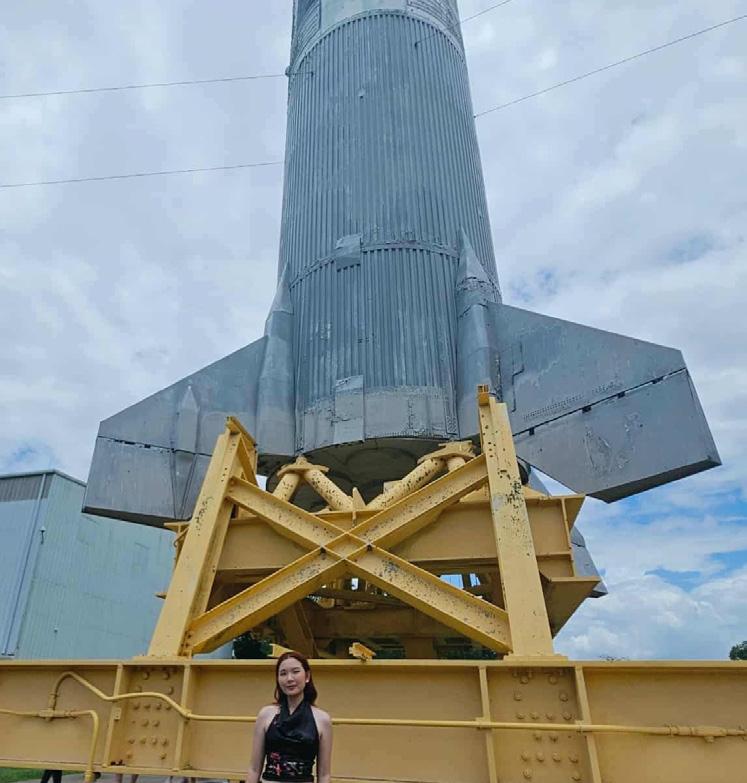
Inspired by our ethics curriculum, Winnie Tang, aeronautical engineer and volunteer ethics teacher, wrote a paper for the International Astronautical Congress in Sydney, October 2025, on integrating the ethics of space exploration into science education for primary children.
Over the past few years, we’ve seen how fast space activity is accelerating. Commercial launches, lunar missions and talk of settlements in space are no longer science fiction. This raises major ethical questions that our community is currently talking about.
Teaching in primary classrooms convinced me that young people are ready to grapple with these questions, if we give them the right tools. So I wrote Inspiring Ethical Minds: Integrating Space Exploration Ethics into Early-Stage Education. [See https://primaryethics.com. au/wp-content/uploads/2025/10/WinnieIAC-2025.pdf]
My paper proposes a practical case for introducing space ethics into Stage 3 (Years 5–6) classrooms. It focuses on three themes that are already shaping international policy and industry practice: planetary protection, resource allocation and human settlement (space colonisation). No one knows what the right answer is! We are currently still debating what kind of laws should exist in that domain. The growth of the industry opens up many ethical dilemmas that we are yet to catch up on. Topics surrounding sustainability and AI are no longer just applicable on Earth, these concepts surround space too. Bringing space ethics into primary classrooms connects science learning with real-world decision-making and helps students see themselves as participants in those conversations.
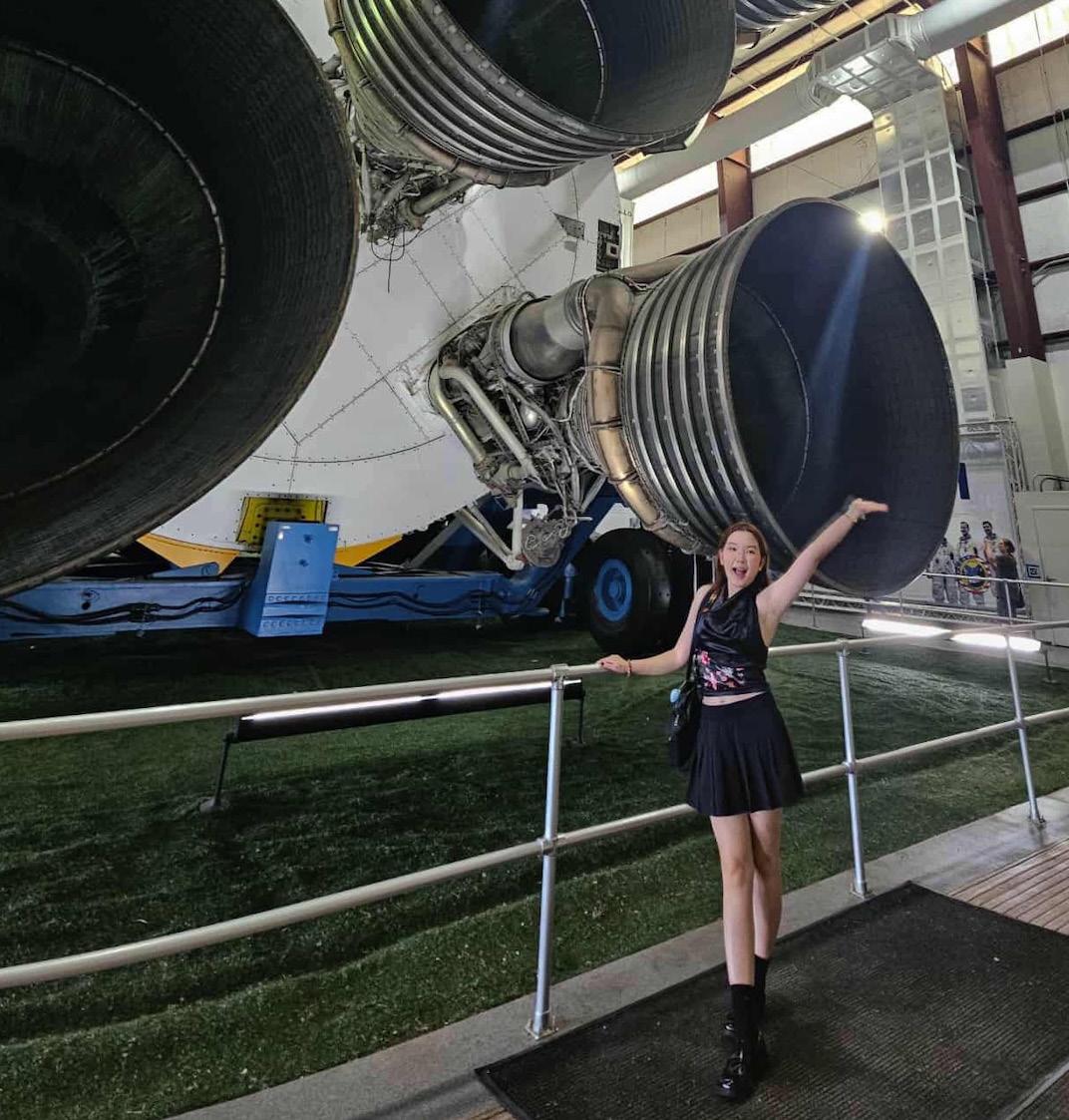
So rather than telling students the ‘right answer’, the aim is to build reasoning, dialogue and civic awareness, skills they’ll need as future voters, scientists, engineers, leaders and aware citizens.
I have proposed classroom implementation following the proven Primary Ethics pedagogy. Each theme comes with a short, concrete scenario and structured questions. These activities are deliberately openended. Students learn how to think by giving reasons, listening respectfully, changing their minds when a better argument appears, rather than being led to a predetermined conclusion.
The next step is collaboration with curriculum specialists (Primary Ethics) and teachers to refine lessons, pilot them and share resources.
The goal is simple and ambitious: equip young people to reason well about the choices humanity faces as we become a spacefaring species.
Winnie Tang

Primary Ethics is the sole provider of ethics education in NSW public schools. While our program is powered by volunteers, the generous support of our philanthropic partners and community donors makes our work possible, enabling us to:
• develop and maintain a rigorous and contemporary curriculum; and
• deliver training and high-touch support to empower 2000+ volunteer teachers across NSW.
Your donation will help us shape the next generation of decision-makers.
“In time, not very much time at all, it will be the decisions of the children we teach today that will shape the world.”
Dr Simon Longstaff, The Ethics Centre CEO and Primary Ethics Board
Donate now: primaryethics.com.au/support-us/ Donations of $2 and over are tax deductible.
For more information please contact: Georgie McGrillen Fundraising Manager
Email: georgie.mcgrillen@primaryethics.com.au
Phone: (02) 8068 7752
Stay connected
Facebook: www.facebook.com/primaryethics
Insta: @primaryethics
LinkedIn: www.linkedin.com/company/primary-ethics/
W: primaryethics.com.au
E: helpdesk@primaryethics.com.au
P: (02) 8068 7752
Legion House, Level 2/161 Castlereagh St, Sydney NSW 2000