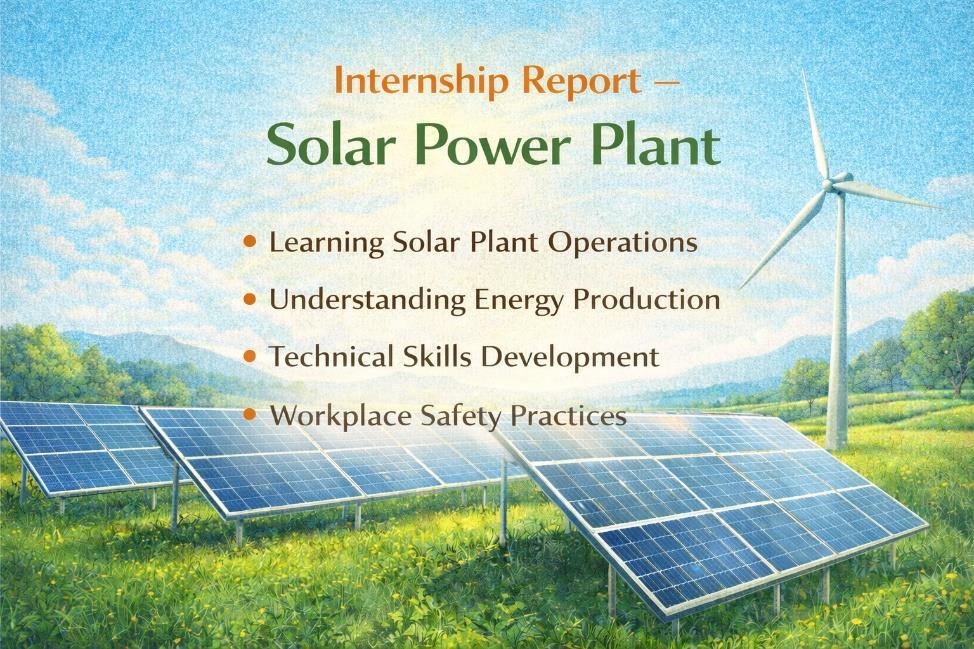
This internship report presents a structured analysis of operational, technical, and management practices observed at a utility scale Solar Power Plant. The primary objective of the internship was to understand the practical implementation of Solar Energy systems, performance monitoring mechanisms, maintenance strategies, and the overall contribution of Renewable Energy infrastructure to sustainable development.
The global transition toward Solar Power is redefining the energy landscape. Solar plants are no longer experimental installations but large scale power generation units contributing significantly to grid stability and carbon reduction. This report documents the learning outcomes, technical exposure, and professional insights gained during the internship tenure.
Overview of Solar Power Plant Operations
A Solar Power Plant converts sunlight into electricity through large arrays of Solar Panels installed across open land or rooftop infrastructure. These photovoltaic modules generate direct current electricity, which is converted into alternating current through centralized or string inverters.
The plant observed during the internship operated as an On Grid Solar System, supplying electricity directly to the distribution network under regulatory energy policies.
Major operational components included
Photovoltaic module arrays
Central inverter systems
Step up transformers
Switchyard and grid interconnection unit
Supervisory Control and Data Acquisition system
The SCADA system played a crucial role in monitoring real time power generation, voltage parameters, and system performance indicators.
Technical Learning and Practical Exposure
During the internship, detailed exposure was provided to various technical processes involved in Solar Installation and commissioning. Understanding the engineering design of the plant enhanced clarity on how Energy Efficient Solar Systems are structured to maximize output.
Key technical observations
Module tilt angle optimization for maximum sunlight absorption
String configuration design for voltage stability
Inverter synchronization with grid frequency
Cable sizing and protection mechanisms
Earthing and lightning protection systems
Performance analysis indicated that proper alignment and routine inspection significantly improve plant efficiency and reduce transmission losses.
Plant Design and Capacity Planning
One of the critical aspects studied was capacity planning for large scale Solar Energy Systems. Load forecasting, irradiation assessment, and shadow analysis were conducted during the planning stage of the plant.
The following factors influence plant design
Geographical solar irradiance levels
Land utilization efficiency
Module efficiency rating
Ambient temperature impact
Transformer capacity selection
Design optimization ensures consistent generation while minimizing energy loss. Advanced Solar Power Solutions integrate performance simulation tools before project execution.
Operation and Maintenance Practices
Efficient operation and maintenance are essential for sustaining long term plant performance. The internship involved understanding preventive and corrective maintenance practices adopted at the plant site.
Core maintenance activities
Cleaning solar panels on a regular basis to get rid of dust buildup
Thermal imaging to detect hotspot formation
Routine inverter inspection and firmware updates
Electrical cable testing and insulation checks
Transformer oil level monitoring
Preventive maintenance significantly improves plant reliability and extends the lifecycle of renewable assets.
Performance Monitoring and Data Analysis
A major learning area during the internship was performance monitoring using digital analytics platforms. Modern Renewable Energy Solutions rely heavily on data driven management systems.
Performance parameters observed
Daily energy yield
Specific energy generation per kilowatt
Performance ratio
Grid downtime analysis
System efficiency percentage
Through continuous monitoring, deviations can be detected early, enabling quick corrective actions. Data analytics enhances decision making and improves return on investment.
Environmental and Economic Impact
Large scale Solar Power Plants contribute significantly to reducing carbon emissions and fossil fuel dependency. The plant observed during the internship generated clean electricity without producing harmful pollutants.
Environmental contributions
Reduction in greenhouse gas emissions
Conservation of natural resources
Promotion of sustainable development goals
Economic contributions
Stable power supply to the grid
Long term cost efficiency
Employment generation in renewable sector
Support for national clean energy targets
By implementing structured Renewable Energy infrastructure, governments and private sectors can accelerate energy transition objectives.
Challenges Identified During Internship
Despite its advantages, operating a Solar Power Plant involves technical and environmental challenges.
Common challenges include
Dust accumulation affecting panel efficiency
Weather variability impacting generation output
Grid fluctuations and voltage instability
Land acquisition and infrastructure development
Initial capital investment requirements
Understanding these challenges provided practical insight into risk management strategies within Solar Energy Projects.
Future Scope of Solar Power Plants
The renewable energy sector is expected to witness exponential growth driven by policy support, technological innovation, and sustainability commitments.
Emerging trends in Advanced Solar Power Solutions
Integration with battery energy storage systems
Hybrid solar wind combinations
Artificial intelligence based performance analytics
Smart grid synchronization
High efficiency bifacial modules
The future of Solar Energy lies in intelligent infrastructure that optimizes production and distribution with minimal environmental impact.
Learning Outcomes and Professional Development
The internship enhanced technical knowledge related to Solar Installation, grid integration, and plant performance management. It also developed practical skills in teamwork, safety compliance, and operational planning.
Key professional outcomes
Improved understanding of photovoltaic system design
Knowledge of power plant safety standards
Hands on exposure to monitoring systems
Analytical approach toward performance evaluation
Awareness of sustainable engineering practices
This practical experience strengthened the understanding of how large scale Energy Efficient Solar Systems operate within real world conditions.
Conclusion
The internship at the Solar Power Plant provided comprehensive exposure to technical, operational, and environmental aspects of renewable energy infrastructure. From plant design and commissioning to performance monitoring and maintenance, every stage demonstrated the growing importance of Solar Energy in modern power generation.
As global demand for clean electricity increases, Solar Power plants will continue to expand their role in achieving sustainable energy goals. Structured engineering practices, data driven monitoring, and efficient system design remain critical for maximizing the potential of Renewable Energy Solutions in the years ahead.