COASTAL PHYSICAL MODELING
AND TESTING CAPABILITY FOR THE U.S. ARMY CORPS OF ENGINEERS

The U.S. Army Corps of Engineers (USACE), an international leader in coastal engineering and science, is dedicated to civil works missions including coastal navigation, storm risk reduction, and environmental restoration, as well as military missions that support national defense infrastructure, installations, and readiness. A critical tool for the USACE and the Nation in evaluating solutions for both civil and military project designs is coastal physical modeling and testing.
Physical modeling creates scaled-down cost-effective representations or models of real-world systems, structures, or processes.
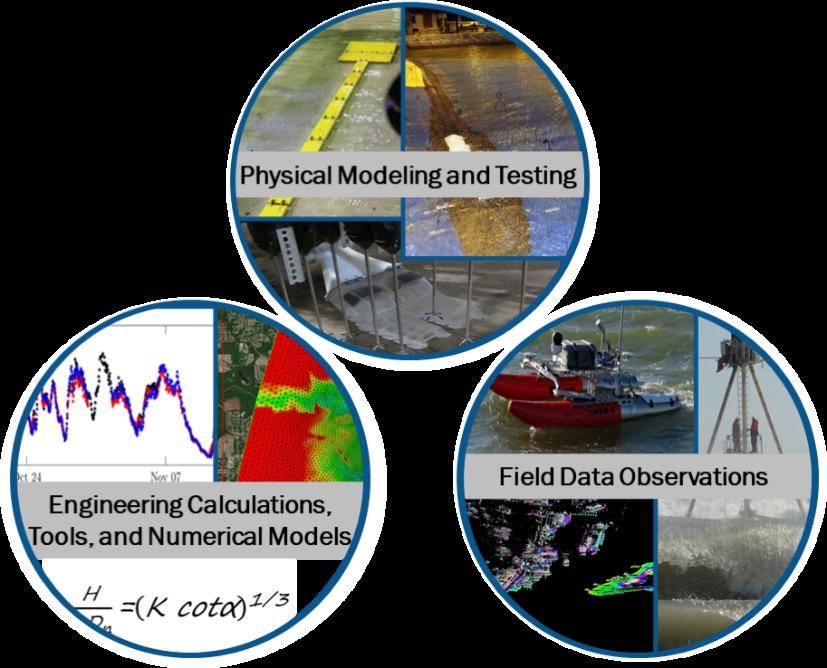
Physical modeling creates scaled-down, costeffective representations or models of realworld systems, structures, or processes. The requisite for physical modeling is capturing the essential physics of the original system while minimizing material, time, and financial resources. It serves as a practical tool for experimentation, analysis, and validation, enabling engineers and designers to iteratively refine their concepts before committing to full-scale construction. Physical modeling and testing are one of three general categorizes of tools typically used to perform engineering and design in the coastal environment. Field data observations, ranging from traditional surveying or site analysis to more advanced buoy networks or autonomous data collection efforts, are a critical component of coastal engineering design with research efforts continuing to advance new techniques. Traditional engineering calculations coupled with more advanced
tools and numerical models represent a third component of coastal engineering design, with increasing computational power and improved mathematical descriptions allowing for more accurate simulations. Together, these three categories complement one another and, when combined, enable the USACE, the U.S. Army, and the coastal engineering community to make well informed design decisions with confidence in their performance. Depending on the project scope and risk, engineers and their teams may determine which tools to use, as all three may not be necessary.
The USACE Engineer Research and Development Center (ERDC) – Coastal and Hydraulics Laboratory (CHL) has a longstanding history in coastal physical modeling and testing. It is dedicated to conducting innovative research in coastal engineering, evaluating USACE and industry designs, and implementing cutting-edge improvements and upgrades to enhance capabilities. These efforts not only advance the science of coastal engineering but also provide critical tools and solutions that support both military and civilian projects, enhancing the resilience and sustainability of coastal infrastructure across the Nation.
ERDC’s Coastal and Hydraulics Laboratory began conducting coastal engineering studies for the Nation in the 1930s. During this time, laboratory wave generation and data techniques were in their infancy, and few problems had analytical solutions. With the advent of World War II, ERDC-CHL transitioned to finding coastal engineering solutions to support the war effort. Due to limitations in knowledge, almost all studies were executed with physical modeling. Notable studies during this
With the population increase into the coastal zones in the 1980s-1990s, ERDC’s physical testing facilities began investigating more complex coastal processes, including the impacts of erosion, storm surges, and sedimentation.
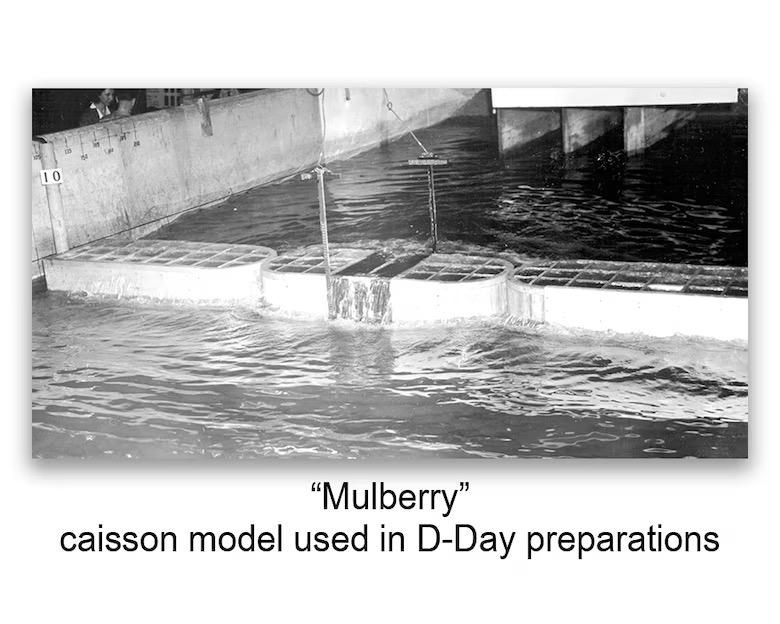
development of the Nation’s largest port.
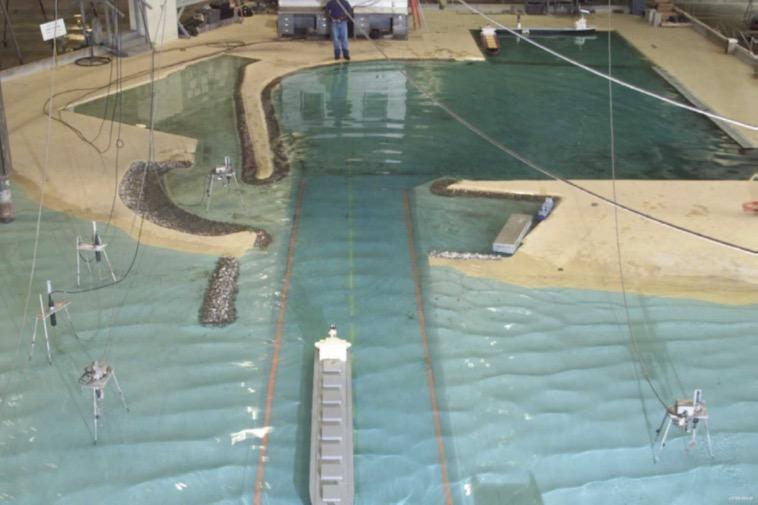
patenting of the CORE-LOC Concrete Armoring unit, which is utilized worldwide. Secondly, in 1998, the ERDC constructed a littoral zone (beach) testing facility known as the Large-scale Sediment Test
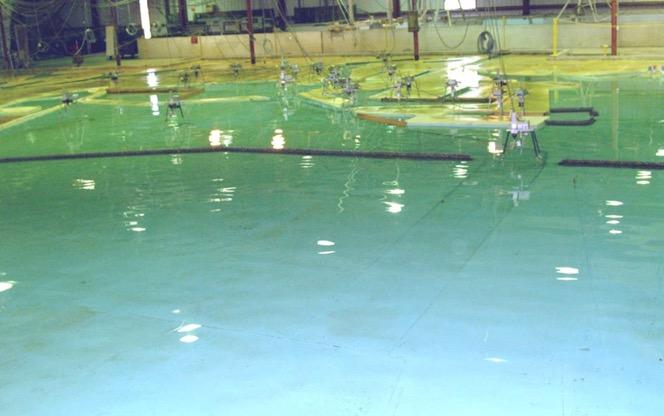
Facility (LSTF). The LSTF provided unparalled testing capability and valuable knowledge to the transport and movement of sediment in the surf zone. The explosive growth in computing power through the 1980s-1990s also lead to the development and expansion of numerical tools and models for coastal engineering. These numerical tools eventually replaced the need for some types of coastal physical models, as advancements in computational power improved the efficiency and speed of simulations, while also enhancing validation through modernized and more accurate wave generation and data collection methods.
During the 2000s, numerical simulations and physical modeling were often seen as unrelated fields competing for resources. However, by the 2010s, this approach began to shift as ERDC-CHL started integrating numerical simulation with physical modeling, enhancing our understanding
The HICERF remains a leader in nearshore research and testing of natural and traditional infrastructure, while advancing military readiness in coastal environments.
ensuring the effectiveness and reliability of flood control products and barriers, which contribute significantly to national safety. By rigorously testing flood barrier systems across various static water levels, waves, currents, overtopping scnearios, and impact tests, ERDC helps developers refine their designs and ensures that both authorities and consumers can have confidence in the effectiveness of available flood mitigation solutions. This initiative not only enhances flood resilience but also fosters innovation in flood defense technology across the industry. To date, ERDC’s testing services have led to the approval of 16 industry-certified products.
Today, ERDC continues to be a world leader in physical testing capabilities, with the development of the Hudson Integrated Coastal Engineering Research Facility (HICERF) as a key component of the ERDC 2020-2030 Strategy and the Coastal and Hydraulics Laboratory Strategy. Located in Vicksburg, MS, this facility integrates coastal physical modeling and testing efforts under one roof. The HICERF, named in honor of renowned USACE coastal engineer Robert Y. Hudson, is the largest coastal facility in the U.S. by square footage and remains a leading research laboratory for civil works and military missions.
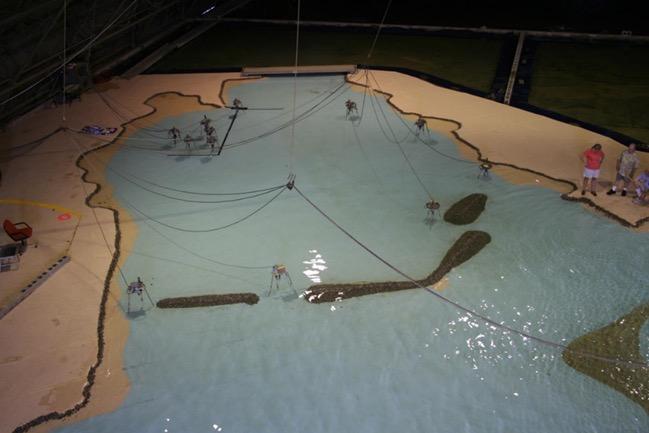
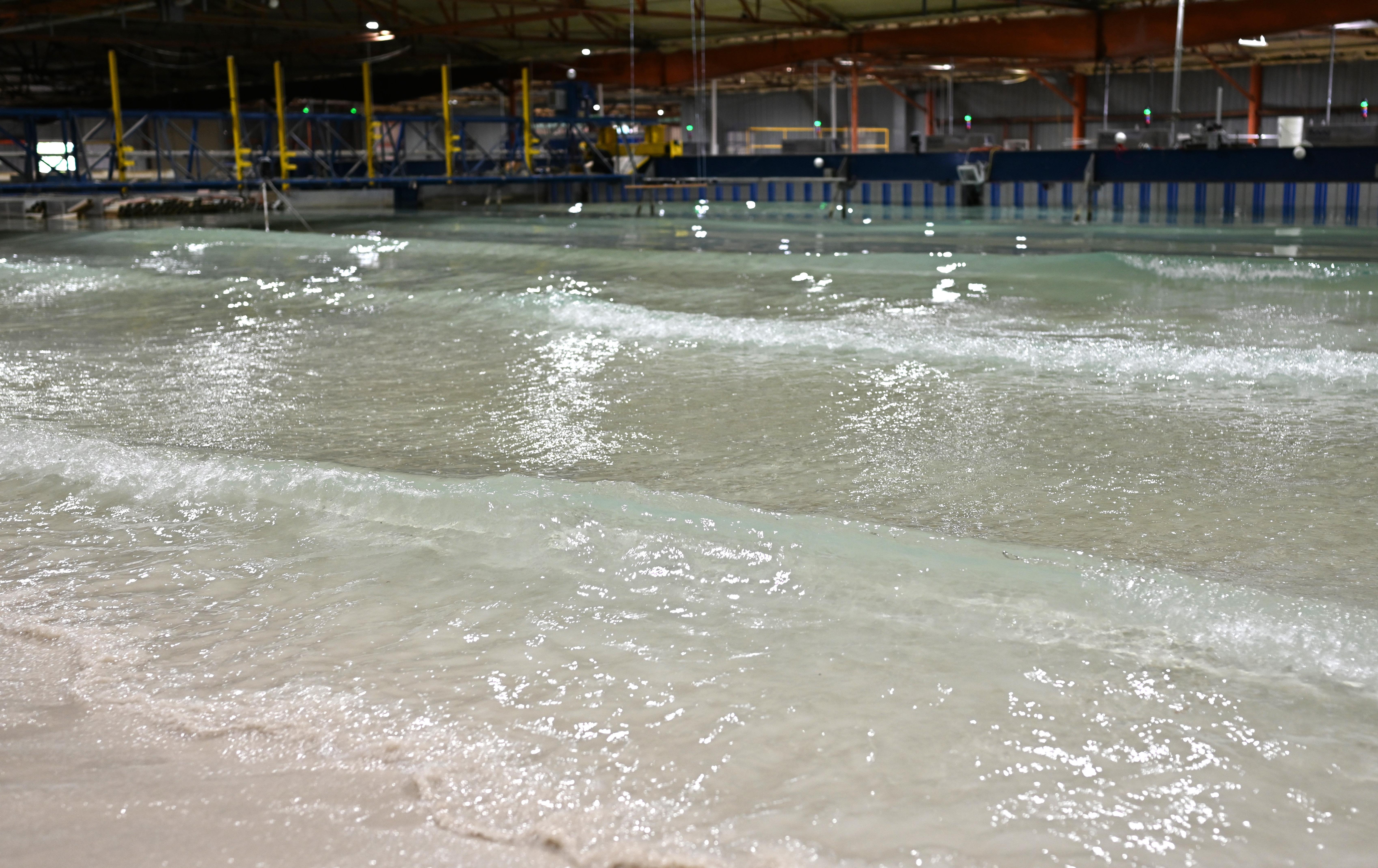
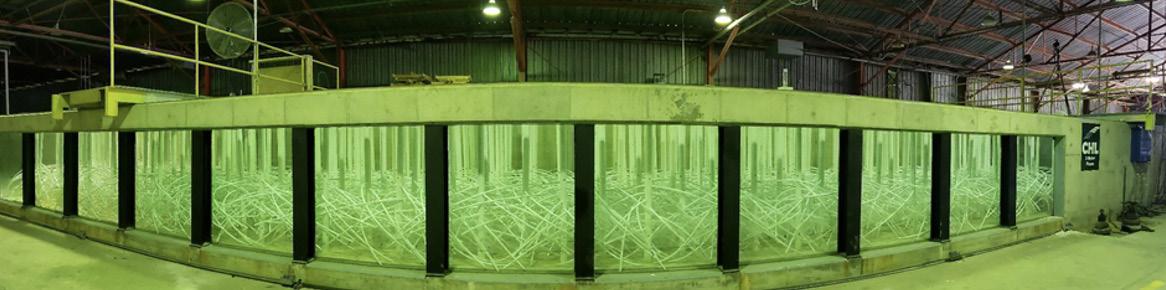
ERDC-CHL currently conducts coastal physical modeling and testing in the HICERF, a 50,000 square foot indoor facility that houses worldclass coastal engineering capabilities. The largest of those capabilities is the HICERF Basin. The HICERF Basin allows for the discovery, development, and delivery of fundamental research and operational needs in the coastal environment by reproducing littoral and nearshore hydrodynamics. With a footprint of 260 ft by 97 ft (25,000 sq ft.) and a depth of 4.75 ft, the HICERF Basin is the largest coastal engineering basin in the Nation. The HICERF Basin’s configurable setup and application addresses both civilian and military needs in physical modeling including coastal infrastructure, coastal processes, sediment transport, wave hydrodynamics, and natural infrastructure.
The HICERF Basin, in combination with a multi-element wave generator (MEG), supports transformative research and site-specific studies for government and non-government organizations, including academia and the private sector. The original concept for the HICERF Basin comes from a 1995 USACE Waterways Experiment Station communication (Vol CERC-95-2) that detailed a large basin being used for both littoral zone (beach) research as well as general basin studies such as harbors or breakwater designs.
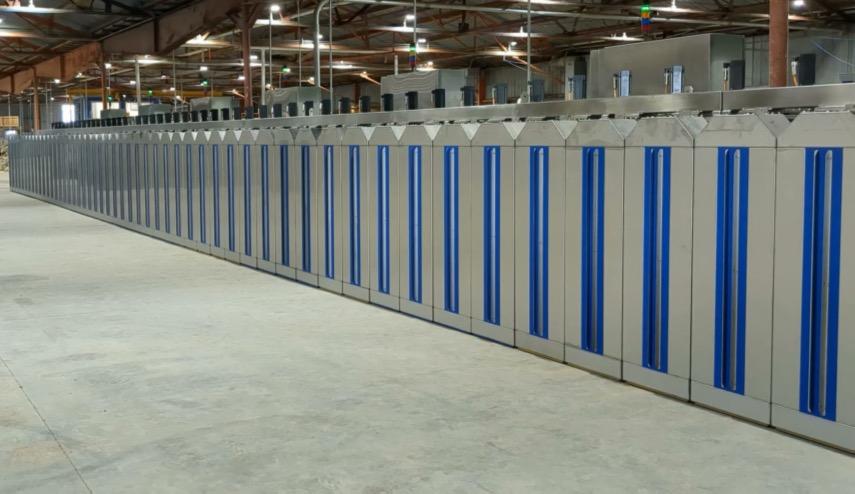
While the 1995 design concept was partially completed, limitations in wave generation capabilities and technology kept the general basin from being implemented. Despite this, ERDC leadership recognized the value of a more modular approach, which became technically available in the late-2010s. In 2021, ERDC awarded a contract for the design and acquisition of the new multi-element wave generator, with installation and commissioning in June of 2023. At just under 92 ft long, the multi-element wave generator can generate directional waves to realistically simulate coastal process for infrastructure and asset design. Additionally, the basin generator can be moved and setup for testing anywhere within the basin in under three days, leading to greater utilization and multi-project support.
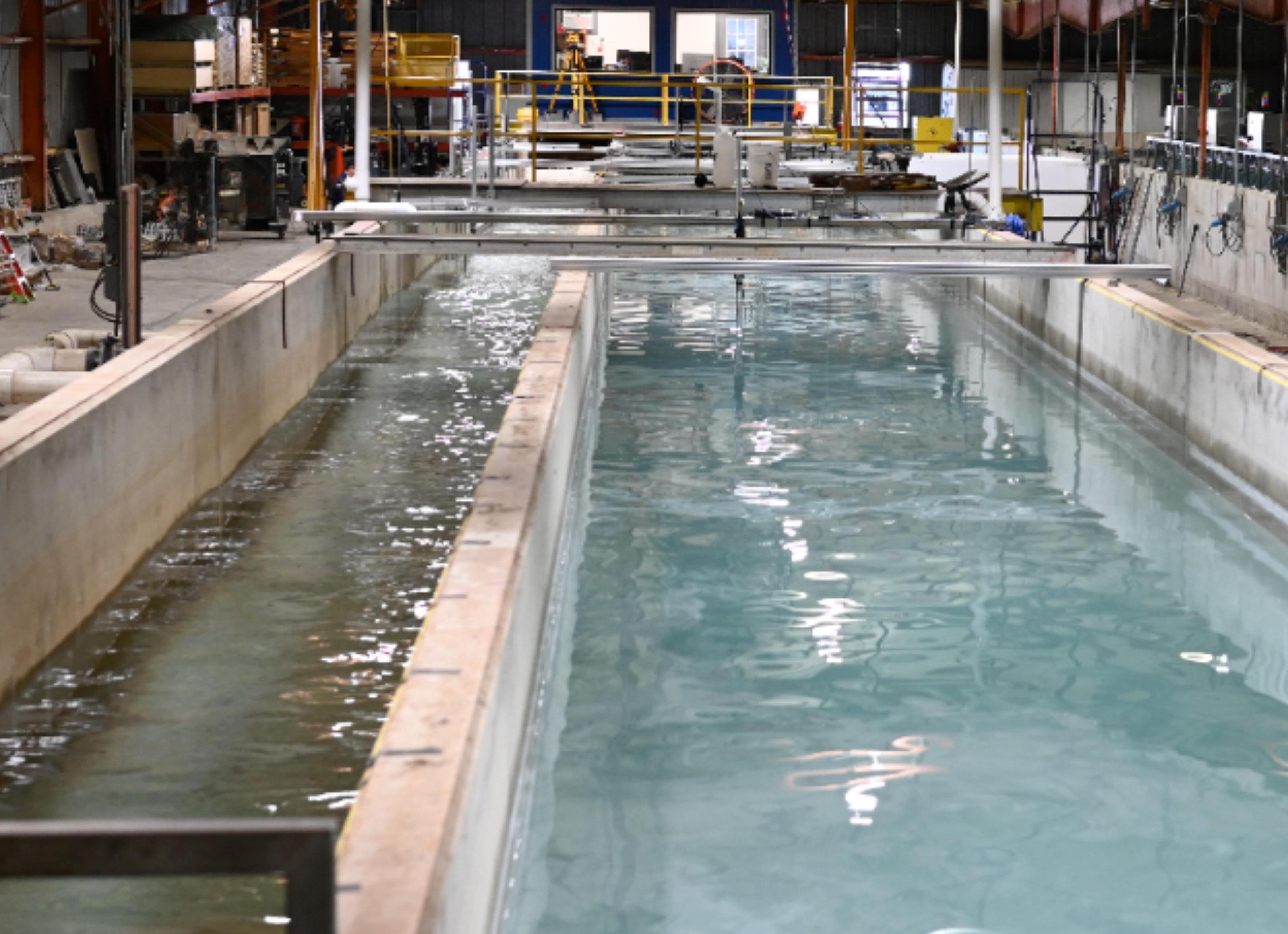
The HICERF also houses three state-of-the-art wave flumes for addressing a wide range of applications. The wave generators for these flumes were upgraded in 2022. The flumes are ideally suited to test both conventional and natural infrastructure. Two of the flumes measure 206 ft long, with differing widths of 5 ft and 10 ft. The third flume measures 150 ft long and 3 ft wide. Depending on the project objective, flumes can be more cost-effective
tools for evaluating design and research exploration. Also, wave flumes are often much simpler to reconstruct in a numerical simulation, reducing the computational time and effort required to implement and validate model physics.
The wave generators at ERDC, both the flume and multi-element wave generators, can create a range of wave conditions including regular waves, irregular waves for commonly used wave spectra and user-specified spectra, and solitary waves. Lastly, all the wave generators have active wave absorption capabilities which allow for the absorption of reflected waves.
The HICERF also incorporates a variety of measurement technologies. Wave heights are measured using capacitance wave gauges, and velocities can be measured at any location using acoustic Doppler velocimeters (ADV). Additionally, pressure and force measurements can be included as needed. The laboratory also includes a particle image velocimetry (PIV) system, underwater and surface motion tracking, and terrestrial LiDAR. A key component of ERDC is the DPW Research Shops that include world-class master builders, machinists, and welders to assist with model building. The research shop capabilities include custom model bathymetry, 5-axis CNC machining for plastics, wood, and metal, 3D printing, and acrylic molding. ERDC can build models at unprecedented detail, unrivaled by any hydraulic or coastal laboratory in the Nation.
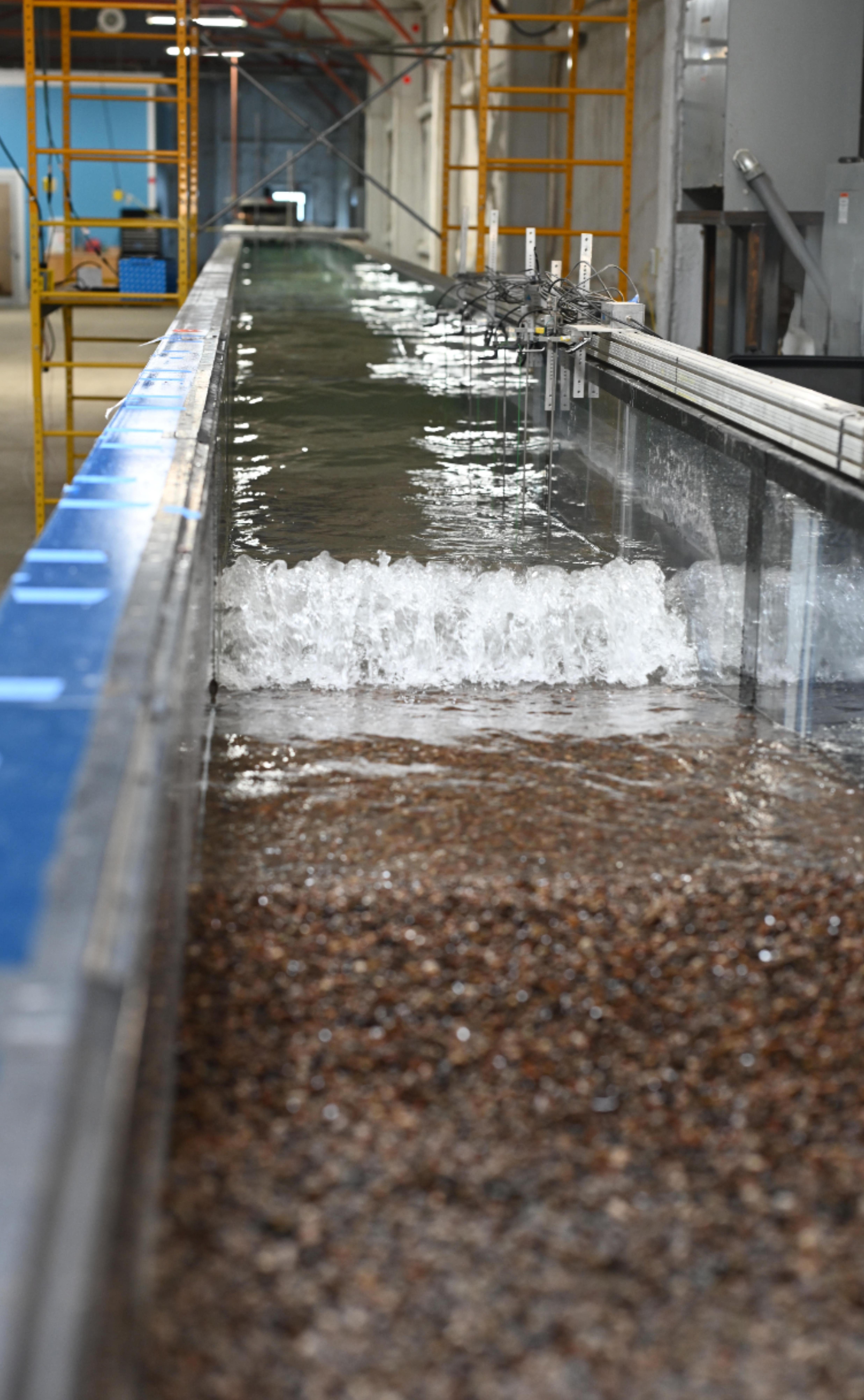
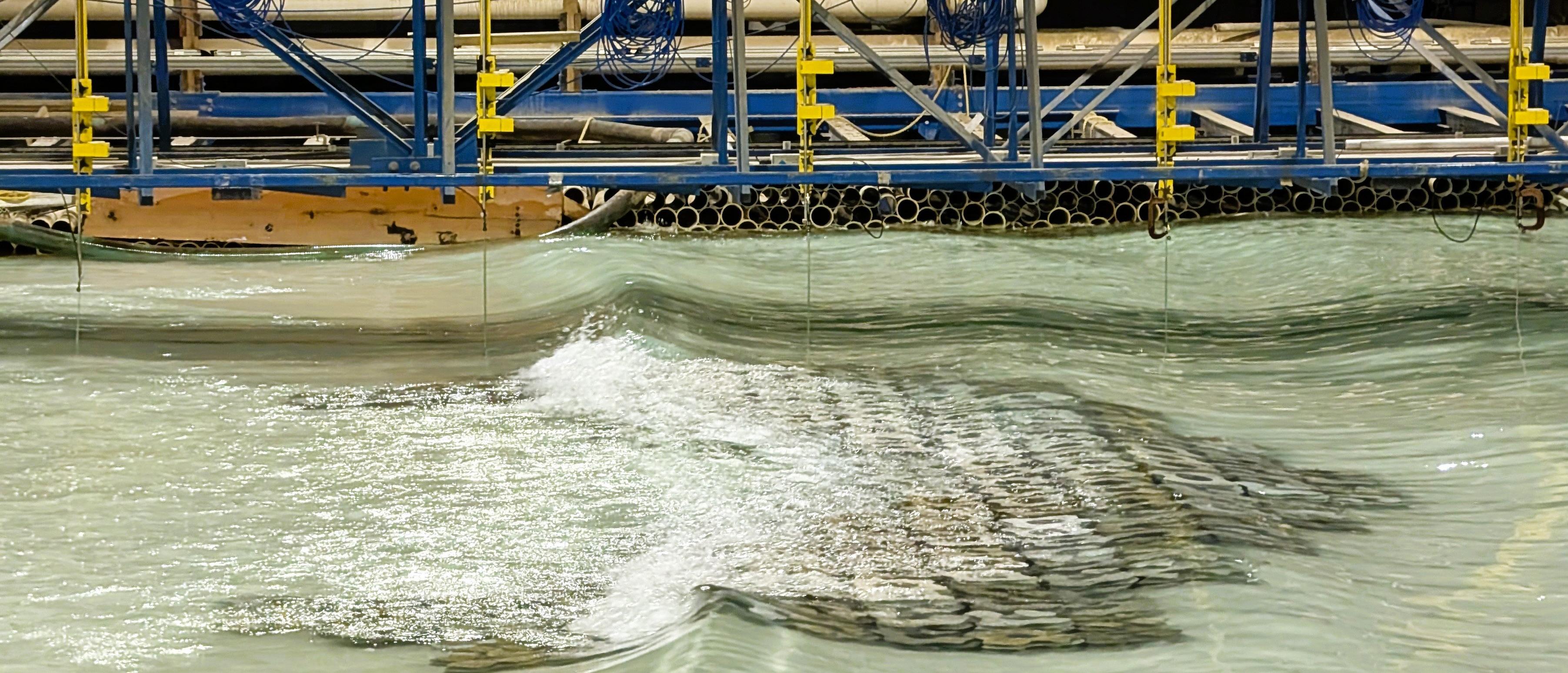
ERDC continues to support the USACE Districts and the Nation through traditional coastal engineering physical modeling and testing. Typical projects address infrastructure needs such as breakwater and jetty stability for design or repair, seawall performance, and harbor resonance. ERDC is comitted to providing testing services for the Flood Mitigation Program to improve and grow certified products. Furthermore, ERDC is focused on its mission to conduct cutting-edge research that discovers, develops, and delivers new capabilities across the USACE, US Army, and DOD. Two selected examples of recent research topics include Natural Infrastructure and Floating Body Dynamics in the Littoral Zone.
The USACE’s incorporation of natrual infrastructure into project designs continues to expand, with growing demand for increased knowledge and guidance. The HICERF is particularly well suited for studying the performance of natural infrastructure in reducing wave heights, which directly affect flood inundation and sediment transport. Engineers and scientists utilize the HICERF to study the engineering performance of coastal wetlands, dunes, mangrove forests, and reefs. These studies provide valuable engineering data and theoretical understanding of critical phenomena. The results of these studies are accessible to Districts and the coastal engineering community through ERDC technical reports and peer-reviewed journal papers, with the gained knowledge integrated into numerical simulations for practical application in USACE projects. This demonstrated leadership in natural
infrastructure led the Defense Advanced Research Projects Agency (DARPA) to bring ERDC onboard as a member of independent verification and validation for the Reefense program, which aims to build artificial reefs to protect DOD installations from wave-driven coastal hazards.
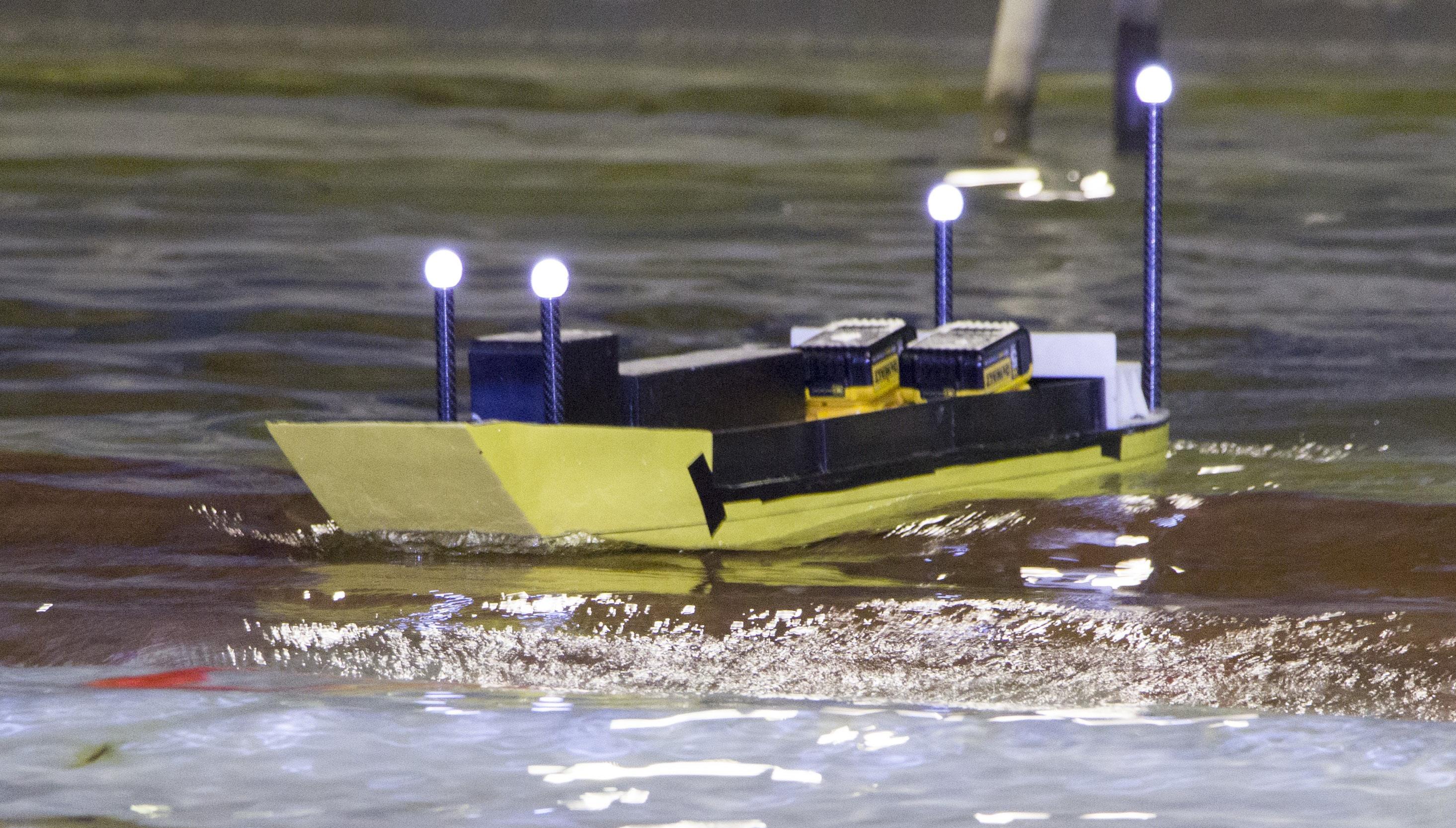
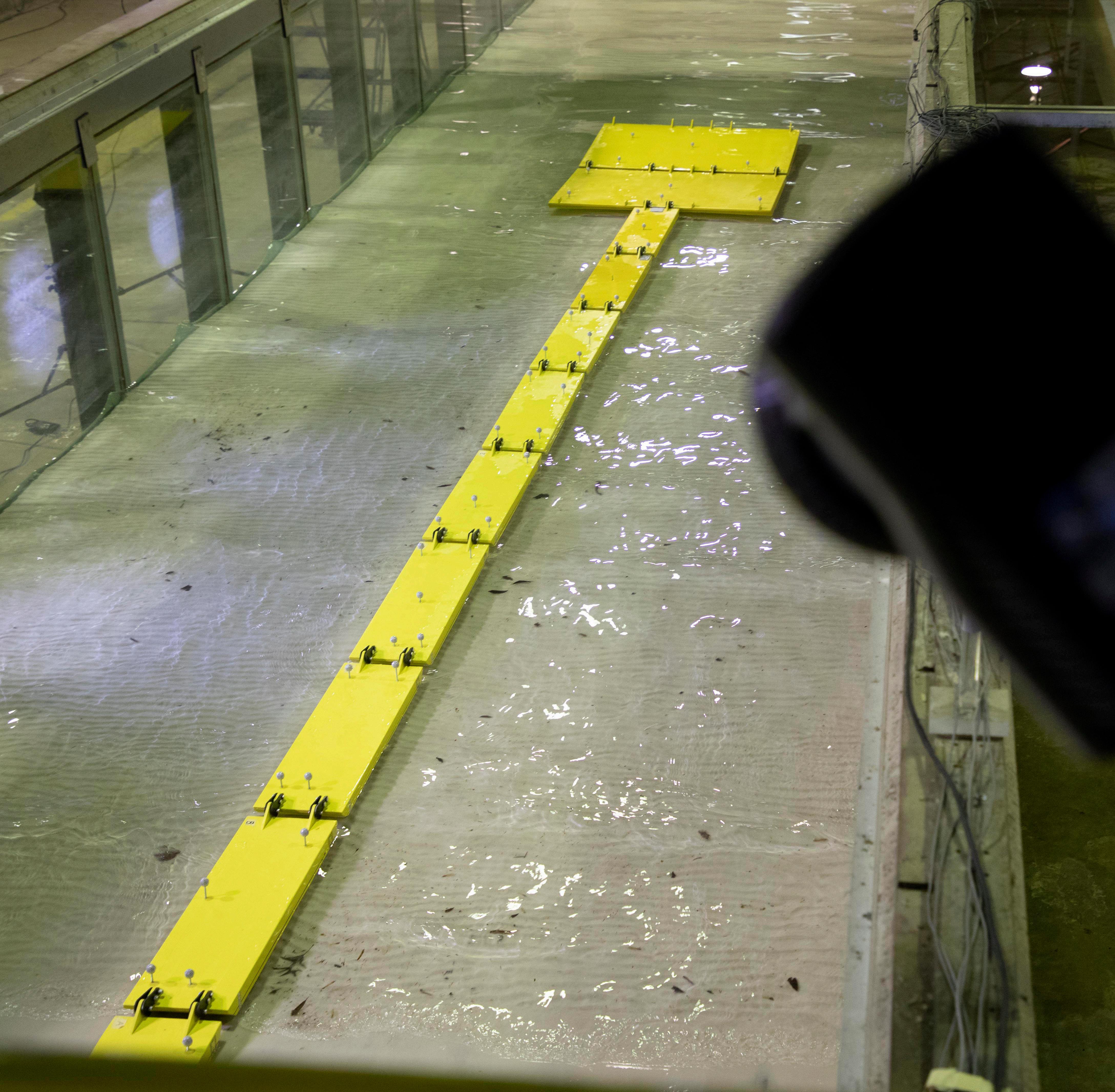
As the DOD’s expert in nearshore physics, ERDC has continuously grown our ability to provide research and testing facilities for shipto-shore logistics. Over the past 7 years, ERDC conducted three first-of-their-kind experiments with realistic beaches using model vehicles, vessels, and floating pier systems. These studies are essential to disaster response when ports are compromised and are equally critical to improving the U.S. military’s readiness in the littoral zone. No other facilities in the US can provide detailed hydrodynamic and response data on a realistic beach. Given the HICERF capabilities, this research area continues to grow to support the US Army, US Navy, and US Marine Corps.
Since the 1930s, ERDC has conducted fundamental and applied research in coastal engineering. While areas of interest have evolved, physical modeling and testing remain essential tools for solving tomorrow’s challenges. Physical model studies not only inform design, but they are also cost-effective - typically accounting for no more than 1% of total project costs (historically ranging from 0.1% to 0.5%).
As coastal hazards intensify, communities across the Nation are increasingly seeking solutions to nuisance and storm-driven flooding. This is reflected in the growing number of USACE coastal storm risk management (CSRM) projects designed to manage future flood risks. Examples include Sabine Pass to Galveston Bay, TX (SWG); Charleston Peninsula, SC (SAC); Norfolk and Virginia Beach, VA (NAO); and the New York–New Jersey Harbor and Tributaries, NY/NJ (NAN). To address escalating coastal threats, the ERDC HICERF is prepared to provide research-driven solutions and testing of engineering designs for the Districts and the Nation.
The ERDC HICERF will also continue its role in conducting research to improve designs and design tools. Near-term research for civil works will continue to focus on natural infrastructure and more specifically, hybrid green-gray infrastructure. The combination of natural and gray infrastructure is often viewed as a more viable and resilient approach, addressing community protection needs while lowering initial and maintenance costs, and providing ecological and social benefits. To date, unknowns regarding design and performance have restricted the intentional combination of green-gray infrastructure. The HICERF’s size and scale makes it an ideal facility to perform testing and research to solve this problem.
Lastly, the ERDC HICERF is dedicated to advancing innovation and fostering collaboration with partners across universities, government, and industry. A prime example is the US Coastal Research Program’s SEDCOLAB experiment, a multi-academic study hosted at
HICERF that investigated sediment transport and morphological change. Industry partners can engage with ERDC through Testing Service Agreements (TSAs), which enable access to HICERF facilities for evaluating coastal engineering solutions. Looking ahead, ERDC recognizes the need for expanded coastal engineering laboratory capabilities that support evolving partner requirements, including testing non-structural flood-barrier products up to 12 feet. In addition, the ERDC HICERF is broadening its role to support the development and testing of technologies essential to future littoral military missions.
The ERDC’s nearly 90-year history of coastal engineering is highlighted by many pioneering discoveries, but it is our contribution to coastal science and knowledge that is unrivaled in the world. ERDC will continue to support the growth and resilience of the Nation’s ports, coastal communities, and infrastructure, protecting them from weather-related impacts and threats while ensuring the success of military operations for the foreseeable future.
HICERF Websites
https://www.erdc.usace.army.mil/Media/Fact-Sheets/Fact-Sheet-Article-View/Article/3643660/ hudson-integrated-coastal-engineering-facility-hicerf/
https://www.erdc.usace.army.mil/Media/Fact-Sheets/Fact-Sheet-Article-View/Article/476707/erdcwave-flumes/
Videos
https://www.dvidshub.net/video/768487/coastal-hydraulics-laboratory-modeling-capabilities
References
“Coastal & Hydraulics Laboratory – Strategy,” US Army Engineer Research and Development Center, https://www.erdc.usace.army.mil/Portals/55/10_pg_CHL_0220web.pdf
“The Power of ERDC – ERDC 2020 – 2030 Strategy,” US Army Engineer Research and Development Center, https://issuu.com/poweroferdc/docs/power_of_erdc_2020-2030_strategy.
Anderson, M. E., and Smith, J. M. 2014 “Wave Attenuation by Flexible, Idealized Salt Marsh,” Coastal Engineering, 83, 82-92
Briggs, M. J., Lillycrop, L. S., Harkins, G. S., Thompson, E. F., Green, D. R. 1994 “Physical and Numerical Model Studies on Barbers Point Harbor, Oahu, Hawaii,” US Army Corps of Engineers Waterways Experiment Station, Technical Report CERC-94-14, Vicksburg, MS
Bryant, D. B., Bryant, M. A., Sharp, J. A., Bell, G. A., Moore, C. 2019 “The Response of Vegetated Dunes to Wave Attack,” Coastal Engineer, 152, 103506
Bryant, M. A. Bryant, D. B., Provost, L. A., Hurst, N., McHugh, M., Wargular, A., and Tomiczek, T. 2022 “Wave Attenuation of Coastal Mangroves at a Near-Prototype Scale,” US Army Engineer Research and Development Center Technical Report-22-17, Vicksburg, MS.
Cotton, G. A. 1979, “A History of the Waterways Experiment Station 1929-1979,” US Army Corps of Engineers, Waterways Experiment Station.
Fowler, J. E., Rosati, J. D., Hamilton, D. G., and Smith, J. M. 1995 “Development of a Large-Scale Laboratory Facility for Longshore Sediment Transport Research,” The CERCular, Vol CERC-95-2, US Army Corps of Engineers, Waterways Experiment Station
Hamilton, D. G., Ebersole, B. A., Smith, E. R., Wang. P. 2001, “Development of a Large-Scale Laboratory for Sediment Transport,” US Army Engineer Research and Development Center, Technical Report-01-22, Vicksburg, MS.
Hughes, S. A., Cohen, J., Acuff, H. F. 2007 “Physical Model Study of Wave Action in New Thomsen Harbor, Sitka, Alaska,” US Army Engineer Research and Development Center Technical Report-08-02, Vicksburg, MS
Pinkard, F. Pratt, T., Ward, D., Holmes, T., Kelley, J., Landris, T. L., Sills, G., Smith, E., Taylor, P. A., Torres, N., Wakeley, L., Wibowo, J., 2007 “Flood-Fighting Structures Demonstration and Evaluation Program: Laboratory and Field Testing in Vicksburg, Mississippi.” US Army Engineer Research and Development Center, Technical Report-07-3, Vicksburg, MS
Provost, L. A., Bryant, D. B., Bryant, M. A. 2022 “Army Modular Causeway System-Floating Causeway Using a Motion Capture and Tracking System,” Journal of DOD Research and Engineering, Vol. 5 (2), 2-12. Distribution B
Turk, G. F., Melby, J. A. 1997 “CORE-LOC Concrete Armor Units: Technical Guidelines,” US Army Corps of Engineers, Waterways Experiment Station, CHL-97-6, Vicksburg, MS.