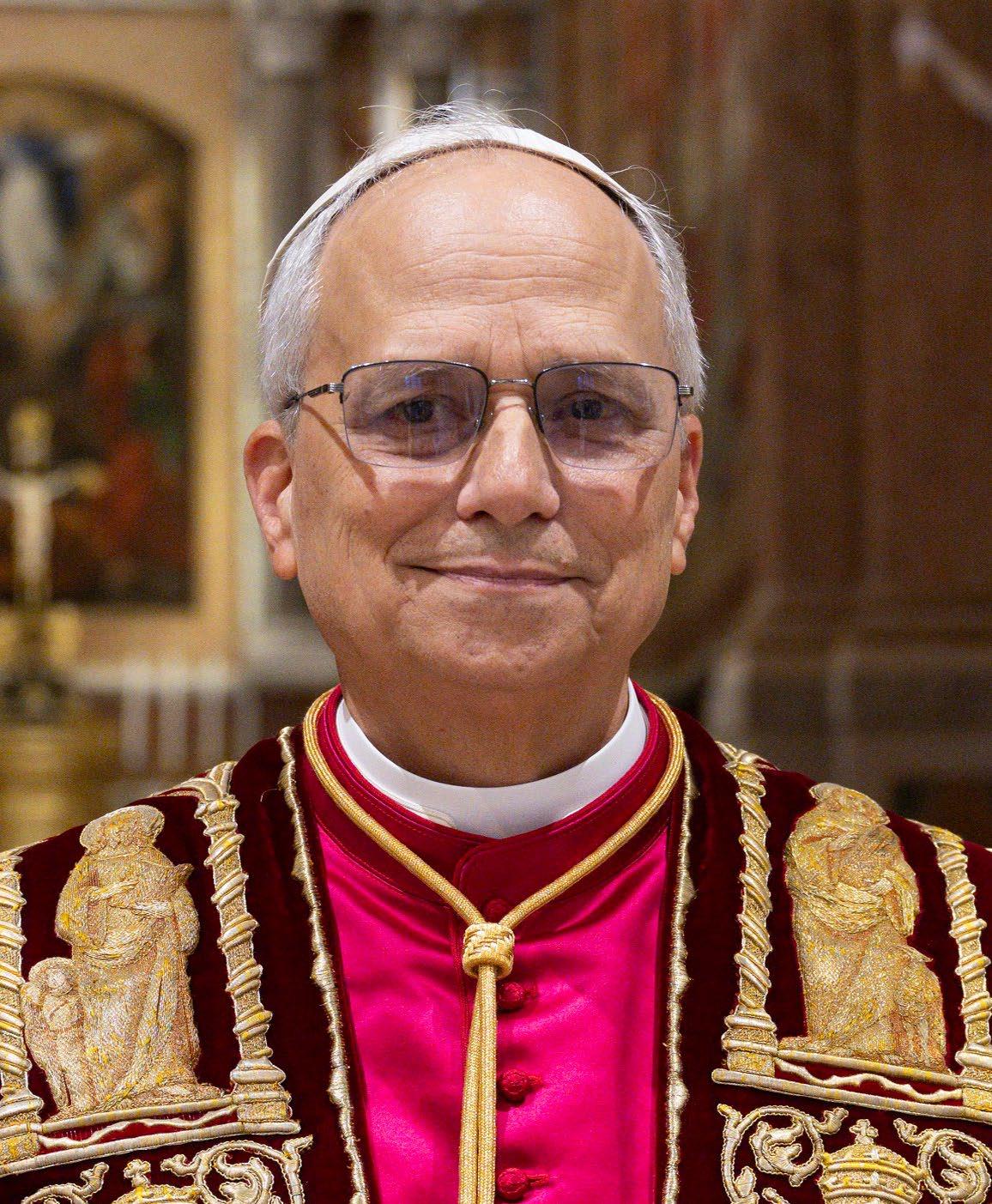
POPE LEO XIV
1st Italian American Pope 1st Sicilian American Pope
1ST EDITION 2026
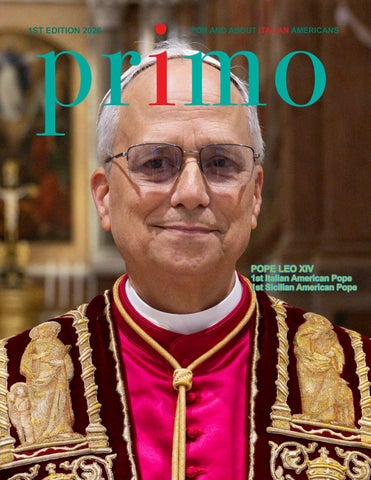
POPE LEO XIV
1st Italian American Pope 1st Sicilian American Pope
1ST EDITION 2026
Cover: Pope Leo XIV
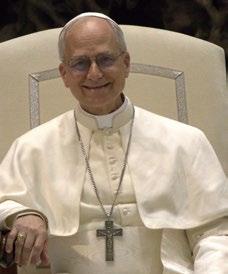
SICILIAN AMERICAN POPE
We trace the Sicilian lineage of the new pope—Pope Leo XIV
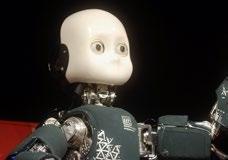
A Letter from the Editor 5 Fight Back—Chicago
Travel/Hidden Treasures 8
Milan’s Loggia dei Mercanti Language 10
PUBLISHER
Reem Nourallah
EDITOR
Truby Chiaviello
PUBLISHERS EMERITUS
Herve van Caloen
Francis L. DeFabo
CIRCULATION MANAGER
John Desaro
DESIGN & LAYOUT
Thomas Jenkins
Nixon’s “Silent Majority” Speech Wine & Spirits 16
Amaro Dente Di Leone Readers’ Corner 18
Italian Women of the Silent Film Era 50 Armani Ristorante 54 Food Recipes 58 Straccetti Rucolo Parmigiano, Spaghetti con Broccolini e Acciughe, Pasta e Ceci, Pizza Bianca, Crostata di Cillegie, Torta di Spaghetti Dolci Reviews 60
24 44
MEET THE NEW ITALIAN
Named iCub, Italy’s new robot is one of the most advanced in the world.
How and when the Viking invaders took control of Southern Italy. 30
38
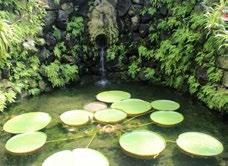

VIKINGS TAKE ITALY
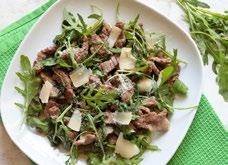
58
CONTRIBUTING WRITERS
Michael A. Benedetto
Rami Chiaviello
Truby Chiaviello
Alfonso Guerriero
Joseph Longo
Reem Nourallah
Michael Ranieri
ADVERTISING SALES
Truby Chiaviello
2125 Observatory Place, N.W. Washington, D.C. 20007
202.363.3741 editor@flprimo.com
Ask about our print and online advertising packages.
The magazine F&L PRIMO, (USPS 019-892), (ISSN 15361543), 1ST EDITION 2026, Volume 26, Issue One, is published by Potomac Media. Six issue subscription is $27.95. Periodicals’ postage paid at Washington, D.C. and at additional mailing offices. Copyright F&L PRIMO 2026. All rights reserved. Mail editorial and letters to: PRIMO, 2125 Observatory Place, N.W., Washington, D.C. 20007, editor@flprimo.com. Subscription inquiries: Call 202-3633741 help@flprimo.com.
POSTMASTER: Send address changes to F&L PRIMO, 2125 Observatory Place, N.W., Washington, D.C. 20007. Mailing label should accompany request. Subscribe by logging on to www. primomagazine.com or call 202-363-3741.
Printed in the United States.

We offer a great lineup of Italian themed books. Always Free Shipping! Please mark the book(s) you want to purchase and mail in your order today in the enclosed business-reply envelope.
Ancient Romans & Their Neighbors. The perfect book to teach your children and grandchildren about the greatness of Ancient Rome. Please buy this book today!
___ $23.95
Verdi for Kids. The biography of Giuseppe Verdi provides special depth on how the best operas in history were created. Please buy this book today!
___ $23.95
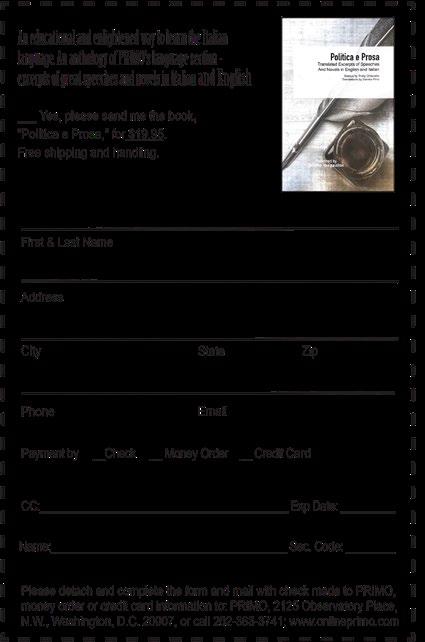
Politica e Prosa: Translated Excerpts of Speeches & Novels in English and Italian. New translations from English to Italian of the best in American and English prose. Please buy this book today!
___ $19.95
Galileo for Kids. The book recounts the extraordinary life, inventions and discoveries of the father of physics. Please buy this book today!
___ $23.95
Early Italian Painting. A large book of Italy’s greatest works of art: Giotto di Bondone, Guido da Siena, Giovanni Cimabue, Pietro Cavallini, Tadeo Gaddi and many more. Please buy this book today!
___ $32.95
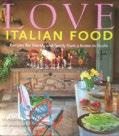
On sale: Love Italian Food. A large coffee table size book to convey 250 pages of incredible meals served at a rustic country villa in Asolo, 100 miles northwest of Venice. Please buy this book today!
___ $29.95
_______Order Total (More books, dvds, and CDs for Sale: Call 866-677-7466; www.onlineprimo.com)
First & Last Name: ____________________________________________________________
Address: ___________________________________________________________________
City: ____________________________________ State: _____ Zip: ____________________
Phone: _______________________________ Email: ________________________________
Payment made by: ___ Check ___ Money Order ___ Credit Card
Credit Card #: _______________________________________ Security Code: ___________
Cardholder Name: ___________________________________ Exp. Date: ________________
Please complete the form and mail with check, money order or credit card information to: PRIMO Magazine, 2125 Observatory Place, N.W., Washington, D.C. 20007. We love to hear from our readers. Contact us any time at 866-677-7466 or sales@flprimo.com
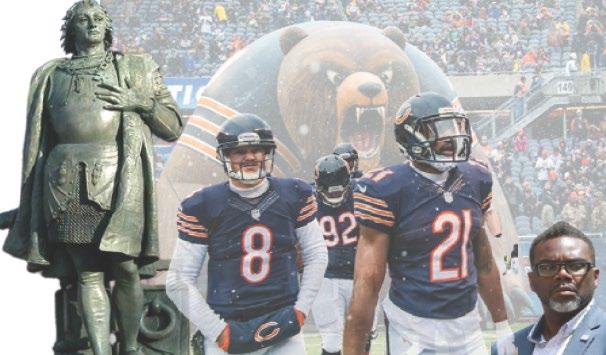
My kinda town… Not if you’re an Italian American or a Chicago Bears fan.
Two symbols of Chicago’s spirit of rugged determination and resilient innovation seem all but lost.
On February 20th, the city of Chicago confirmed the statue of Christopher Columbus was not returning to Arrigo Park.
Meanwhile, the Chicago Bears seem likely to abandon Soldier Field, where they’ve played home games in Chicago since 1926. The team is ready to move to Indiana, where they’ll have the best of deals for an outdoor arena there.
Credit Brandon Johnson, Chicago’s mayor for going 0 for 2. He lost Columbus and likely the Chicago Bears. He did this all in one day!
It will be a statue of Frances Xavier Cabrini, America’s first saint, who will rise in Arrigo Park.
Mother Cabrini will replace the long-standing monument to Christopher Columbus there.
In 2020, the statue was one of three ot the great Italian explorer removed in the dead of night by then mayor, Lori Lightfoot.
She went back on her promise to Italian American leaders. The statue was supposed to stay in Arrigo Park. Her turnaround came when rioters invaded her neighborhood. The mayor’s fortunes declined rapidly after she flipped on Columbus. She got destroyed in reelection, not even surviving a primary challenge. The political message was as clear as dawn over Lake Michigan: You disavow Columbus, you lose.
The decision to erect a statue of Mother Cabrini in place of Columbus raises questions about Italian heritage, identity, and who gets honored in the civic landscape.
Do Italian Americans get to choose their hero? Do Italian Americans get to keep their heritage, their artwork, their legacy? Non a Chicago!
The Windy City once had three Columbus statues: one in Arrigo Park in Little Italy, one in Grant Park, and another on the South Side. All were removed in 2020 when riots broke out in America’s major cities after George Floyd died while in police custody in Minneapolis.
In 2025, the Chicago Park District initiated a public selection process for a replacement figure of Italian heritage. Voters had the choice of Cabrini, Enrico Fermi, Philip Mazzei, Maria Montessori, Florence Scala, Renato Dulbecco, Antonin Scalia, and Amerigo Vespucci. Not Columbus!
Why was that, you ask. Because—no doubt— Columbus would’ve won in Chicago.
Don’t think the removal was a neutral historical reassessment. This is politics. As it stands now, Italians don’t count in Chicago’s current power structure.
The city had framed the process as forward-looking— choosing a new honoree rather than revisiting the old one. In other words, when it comes to public artwork about a heroic Italian, Italian Americans—you don’t count.
After roughly 3,900 votes were cast, Cabrini received the largest share.
The Park District has opened an artist selection process, beginning with a request for qualifications. A final design of the Cabrini statue must be chosen, fabricated, and erected.
Installation is likely sometime in late 2026 or into 2027, though no official date has been announced.
What will happen to the Columbus monument? The statue is likely to be displayed indoors—somewhere, as part of an Italian American heritage or immigration history context. In other words, the founder of the New World will become nothing more than a footnote in America’s third largest city. He will be an afterthought—nothing more than a quaint relic of past days when Italian Americans first served deep dish pizza in the Windy City.
Don’t think the removal was a neutral historical reassessment. This is politics. As it stands now, Italians don’t count in Chicago’s current power structure. To change that, they need to speak up.
What can Italian Americans in Chicago do?
They can “appeal” the decision. They can do what George Bochetto, Basil Russo, and the Italian Americans of Philadelphia did. They can fight back. They can recruit the best of lawyers to take on the park district. They can lobby City Hall. They can press their aldermen. They can organize new petitions and public forums. They can advocate for a dual monument. They can do something— anything—but let this awful decision stand. Wake up, Chicagoans! Wake up Italian Americans! You’re losing your hero. You’re losing your team. You’re losing your city.

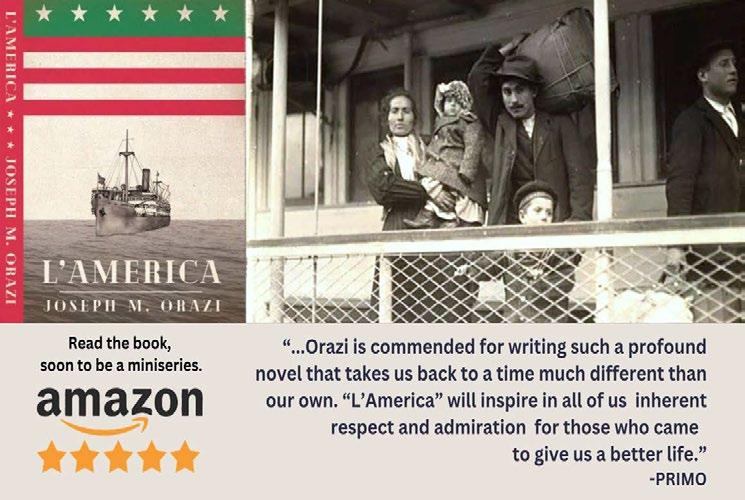
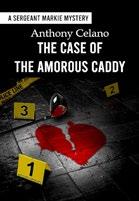
Anthony Celano delivers a smart, unsettling, and finely crafted noir that lingers long after the final page. It’s a cautionary tale about delusion and desire—and a reminder that beneath the quiet surface of ordinary life, danger often lurks in the most unexpected places.
primo magazine
By Joseph C. Polacco
Reem Nourallah
In the heart of old Milan lies an architectural curiosity for those who pause, listen, and speak softly. The Loggia dei Mercanti, within the compact Piazza dei Mercanti, conceals an elegant acoustic secret: A whispering gallery formed not by grand intent, but by medieval geometry and stone.
The loggia appears modest—an open-air portico supported by sturdy columns and arches worn smooth by centuries of footsteps and weather. The acoustics, however, are anything but ordinary. When a person stands close to one of the internal columns and murmurs quietly, the sound clings to the curvature of the stone to glide along the arches to arrive—clear and intelligible—at a column across the portico. The effect feels uncanny, as if the building itself has chosen to carry the message.
This effect is the result of the loggia’s gently rounded arches and proportional symmetry. Sound waves don’t scatter, but, rather, follow the curve of the masonry, much like light reflecting inside a polished mirror. Similar whispering galleries exist beneath domes and elliptical halls around the world, but the Loggia dei Mercanti is unusual in that it is open to the air, not enclosed.
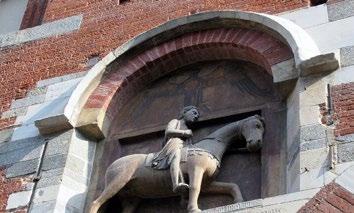
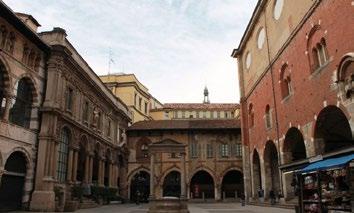
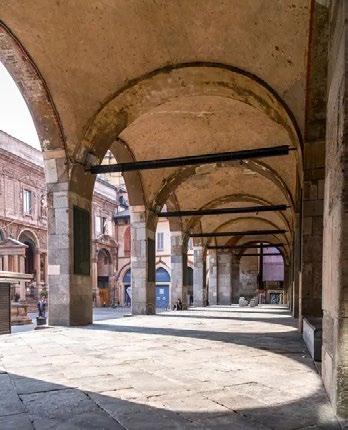
Despite centuries of exposure, the stone still performs its acoustic trick with remarkable precision. Historically, the loggia was not designed for romance or espionage. Built in the Middle Ages as part of Milan’s commercial infrastructure, it functioned as a sheltered meeting place for merchants, notaries, and officials. The surrounding square once pulsed with economic life—contracts negotiated, debts settled, disputes arbitrated beneath the watchful presence of civic authority. In such a noisy environment, the ability to communicate discreetly, above the din of bargaining voices and clattering carts, was invaluable.
It was said medieval and Renaissance merchants used the whispering gallery to exchange sensitive information—prices, alliances, or rumors—without alerting rivals standing only a few steps away. Another story claims that spies took advantage of the acoustics, passing intelligence beneath the arches while appearing to converse casually or not at all.
More tender anecdotes also circulate. According to local lore, shy lovers—perhaps divided by social rank

or family obligation—used the columns to murmur affectionate words across the portico, maintaining the illusion of distance while remaining intimately connected by sound. Whether true or imagined, these stories add a human warmth to the cold stone, reminding visitors that architecture once shaped not just commerce and power, but emotion.
Today, the Loggia dei Mercanti remains a quiet pocket within bustling Milan, overshadowed by grander landmarks yet deeply atmospheric. Tourists who know where to stand can still test the phenomenon, delighting in the way a breathy whisper arrives intact on the opposite side. Others linger unsuspectingly beneath the arches, occasionally startled to hear a disembodied voice drift toward them from across the square.
In a city known for fashion, finance, and speed, the loggia invites a slower kind of engagement— one that depends on patience, proximity, and curiosity. It is a reminder that Milan’s medieval past survives not only in facades and foundations, but in a hidden treasure of subtle sensory experiences.
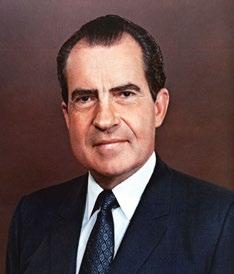
BBefore he was elected president in 1968, Richard Nixon spent a number of years in what he called his political wilderness.
He was stunned by his loss to John F. Kennedy in the election for president in 1960. Two years later he was defeated by Pat Brown for California governor. Nixon knew the time had come to temporarily withdraw from politics. He worked as a lawyer and doted on his wife and children. He sought inspiration. He wanted to change his reputation as a tough, hard hitting anticommunist to a kinder, gentler maverick of statecraft. Hence, he traveled to Italy in 1963 to tour the birthplace of Saint Francis of Assisi while attending the coronation of Pope Paul VI in Rome.
This was not the first—or the last time—Nixon visited Italy. He admired the country for its rich history and culture. Italy was near the top of his list of European destinations. His visits there were to shore up the peninsula to resist falling to the communists.
Nixon took the oath of president in January 1969. Active in a number of areas, he won a huge landslide four years later in his reelection. Arguably, one of our most powerful presidents, Nixon was forced to resign in 1974. The Watergate break-in and cover up was the scandal that broke him.
Four figures came forward in the Watergate saga— one of them was Italian and the three others were Italian Americans.
The political crisis that gripped the nation’s full attention was named after the burglary location—the Watergate apartment and office complex. Completed in 1971, on the banks of the Potomac River, the buildings were designed by Luigi Moretti. A leading figure in postwar Italian modernism, Moretti brought to Washington a distinctly European sensibility—curving forms, theatrical massing, and a rejection of rigid symmetry. The Watergate stood apart from the capital’s neoclassical sobriety. Ironically, this structure, conceived by a Roman architect, became the physical stage for the most consequential political scandal in American history.
Five men who were employed by the White House were arrested after they broke into the Watergate. In the dead of night, they had tried to photograph files in the offices of the Democratic Party but were caught by the police.
The suspects were to stand trial in a courtroom presided over by John J. Sirica. Son of Italian immigrants, Sirica was chief judge of the U.S. District Court for the District of Columbia. Dissatisfied with the trial testimony, he pressured the accused to tell the truth.
The White House cover up soon unraveled. Sirica embodied a certain old-world Catholic rectitude, a belief that authority carries moral responsibility.
From evidence presented in the trial, Congress convened a special committee that eventually moved a full impeachment vote against the president. Peter W. Rodino Jr., longtime congressman from New Jersey, was the son of Italian immigrants. He served as chairman of the House Judiciary Committee during the impeachment hearings. His calm, measured demeanor contrasted with the more emphatic members of the committee.
Connecting the president to the burglary rested on a hierarchy of top officials who planned the crime. One such figure was G. Gordon Liddy, who was Italian from his mother’s side. Loyal to the president, Liddy was jailed for contempt. After serving a reduced sentence, he reemerged as a folk hero and radio personality.
Before his resignation, Nixon redefined American foreign policy. He brought an end to the Vietnam War in a mix of military assaults and diplomatic overtures. He made a famous televised address to sell his proposal. He called for support among America’s “silent majority.” In the pages to follow is an excerpt of that speech in English and Italian.

Ihave chosen a plan for peace. I believe it will succeed. If it does succeed, what the critics say now won’t matter. If it does not succeed, anything I say then won’t matter.
Iknow it may not be fashionable to speak of patriotism or national destiny these days, but I feel it is appropriate to do so on this occasion. Two hundred years ago this nation was weak and poor. But even then, America was the hope of millions in the world. Today we have become the strongest and richest nation in the world. And the wheel of destiny has turned so that any hope the world has for the survival of peace and freedom will be determined by whether the American people have the moral stamina and the courage to meet the challenge of free-world leadership. Let historians not record that when America was the most powerful nation in the world, we passed on the other side of the road and allowed the last hopes for peace and freedom of millions of people to be suffocated by the forces of totalitarianism.
AndAn outstanding documentary that recounts the invasion of Gaul by Julius Caesar and his Roman Legions.
___ Yes, please send me the dvd documentary, "The Gallic Wars," for $19.95. Free shipping and handling.
so tonight, to you, the great silent majority of my fellow Americans, I ask for your support. I pledged in my campaign for the presidency to end the war in a way that we could win the peace. I have initiated a plan of action which will enable me to keep that pledge. The more support I can have from the American people, the sooner that pledge can be redeemed, for the more divided we are at home, the less likely the enemy is to negotiate at Paris.
Letus be united for peace. Let us also be united against defeat. Because let us understand: North Vietnam cannot defeat or humiliate the United States. Only Americans can do that. Fifty years ago, in this room and at this very desk, President Woodrow Wilson spoke words which caught the imagination of a war-weary world. He said: “This is the war to end wars.” His dream for peace after World War I was shattered on the hard realities of great power politics, and Woodrow Wilson died a broken man.
Payment by __Check __ Money Order __ Credit Card
CC:_________________________________________ Exp Date: _________
Name:_______________________________________ Sec. Code: ________
Please detach and complete the form and mail with check made to PRIMO, money order or credit card information to: PRIMO, 2125 Observatory Place, N.W., Washington, D.C. 20007, or call 202-363-3741; www.onlineprimo.com
AsPresident I hold the responsibility for choosing the best path to that goal and then leading the nation along it. I pledge to you tonight that I shall meet this responsibility with all of the strength and wisdom I can command in accordance with your hopes, mindful of your concerns, sustained by your prayers.
President Richard M. Nixon
Hoscelto un piano per la pace. Credo che avrà successo. Se avrà successo, ciò che dicono oggi i critici non conterà. Se non avrà successo, allora non conterà nulla di ciò che dirò in seguito.
Soche, di questi tempi, può non essere di moda parlare di patriottismo o di destino nazionale, ma ritengo che in questa occasione sia appropriato farlo. Duecento anni fa questa nazione era debole e povera. Eppure, già allora, l’America era la speranza di milioni di persone nel mondo. Oggi siamo diventati la nazione più forte e più ricca del mondo. E la ruota del destino ha girato in modo tale che ogni speranza che il mondo nutre per la sopravvivenza della pace e della libertà dipenderà dal fatto che il popolo americano abbia la forza morale e il coraggio necessari per affrontare la sfida della leadership del mondo libero. Che gli storici non registrino che, quando l’America era la nazione più potente del mondo, voltammo lo sguardo dall’altra parte e permettemmo che le ultime speranze di pace e di libertà di milioni di persone venissero soffocate dalle forze del totalitarismo.
Ecosì, questa sera, a voi — la grande maggioranza silenziosa dei miei concittadini americani — chiedo il vostro sostegno. Durante la mia campagna per la presidenza ho promesso di porre fine alla guerra in modo da poter vincere la pace. Ho avviato un piano d’azione che mi consentirà di mantenere quella promessa. Quanto maggiore sarà il sostegno che riceverò dal popolo americano, tanto prima quella promessa potrà essere mantenuta, perché quanto più siamo divisi in patria, tanto meno è probabile che il nemico negozi a Parigi.
Siamo uniti per la pace. Siamo uniti anche contro la sconfitta. Perché comprendiamolo bene: il Vietnam del Nord non può sconfiggere né umiliare gli Stati Uniti. Solo gli americani possono farlo. Cinquant’anni fa, in questa stessa stanza e a questa stessa scrivania, il presidente Woodrow Wilson pronunciò parole che catturarono l’immaginazione di un mondo stanco della guerra. Disse: «Questa è la guerra per porre fine a tutte le guerre». Il suo sogno di pace dopo la Prima guerra mondiale si infranse contro le dure realtà della politica delle grandi potenze, e Woodrow Wilson morì come un uomo spezzato.
Come Presidente, porto la responsabilità di scegliere il percorso migliore verso questo obiettivo e di guidare poi la nazione lungo quel cammino. Vi prometto questa sera che assolverò a questa responsabilità con tutta la forza e la saggezza di cui dispongo, in accordo con le vostre speranze, attento alle vostre preoccupazioni, sostenuto dalle vostre preghiere.
From the author of “Mussolini Did Some Good”
“...relying on a large amount of research reinterpreted in the light of some brilliant personal insights. In this way the author retraces the short parable of Italian colonialism.”
L’indicie dei libri del mese
“Filippi’s... book warns us against ‘prejudice’ from believing we know when we don’t know…”
Giovanni de Luna, La Stampa
“I applaud Cusmano for his luminous rendering of Filippi’s incendiary truth telling.”
George Elliott Clark, Accenti Magazine
Please buy today
BUT WE BUILT ROADS FOR THEM

Distributed by IPG
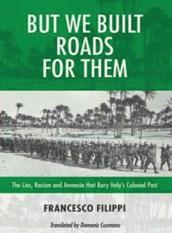
Francesco Filippi is a historian of mentalities and an educator who has specialized in the relationship between memory and the present. "Mussolini Also Did A Lot of Good" is his first book to appear in English. He lives in Trento, Italy.

What does it take for an Italian to find the American Dream?
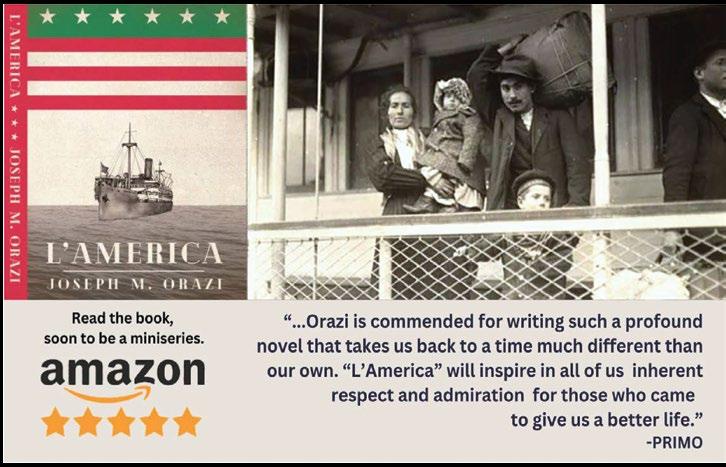
“Giovanni: Street Urchin of Naples” is a decades’ long saga for the Italian immigrant experience to coincide with key historical events such as World War I, the 1929 Stock Market Crash, The Great Depression, World War II and the social turmoil of the Cold War years, up to 1969.
Can a man truly escape his modest origins, no matter how far he climbs? An extraordinary saga to give us the soul-stirring answer. “Giovanni: Street Urchin of Naples” is awesome and inspiring.
primo magazine
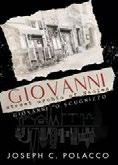
“Giovanni: Street Urchin of Naples Buy it today Avilable at Amazon.com


YYou can make an amaro out of anything—including dandelions.
The pervasive weed—found almost everywhere in the United States—is also a persistent sight in Italy. Indeed, the dandelion is native to Italy and elsewhere in Europe, but not the United States. The plant was introduced to America in the late 160ss.
The dandelion amaro is rare. In the vast family of liqueurs, Amaro al Dente di Leone, produced in Northern Italy, is arguably the least known. The amaro is distilled by the small Italian house—La Volontane. Their blue labeled bottle stands out as unique in comparison to the more elegant designs of other amaros.
Dente di leone—the common dandelion—has grown wild across the Italian peninsula for centuries. The plant was harvested by peasants, monks, and herbalists who understood bitterness was not a flaw but a virtue. Dandelion roots and leaves were brewed into tonics. They aided digestion to support the liver, particularly after the long, heavy meals that defined rural Italian life. This was medicina povera— the medicine of ordinary people—practical, austere, and deeply tied to the land.
As distillation became more common in the 18th and 19th centuries, alcohol offered a way to preserve these herbal infusions. Roots were dried, chopped, and macerated in neutral spirits, with only a restrained addition of sugar or honey. What emerged was not a fashionable liqueur but a bitter tonic, taken in small doses, often at home, and rarely commercialized. Unlike Campari or Fernet, dandelion amaro never found an industrial champion. It remained regional, seasonal, and largely invisible.
Rather than inventing a new flavor profile, La Volontane relies on traditional recipes. The distillery is a custodian—to maintain how dandelions were once made into a digestivo in kitchens, monasteries, and countryside cellars. Their Amaro al Dente di Leone is built around dandelion root, supported by complementary herbs, and finished with a firm, drying bitterness that resists modern sweetness. It is unapologetically old-world in temperament.
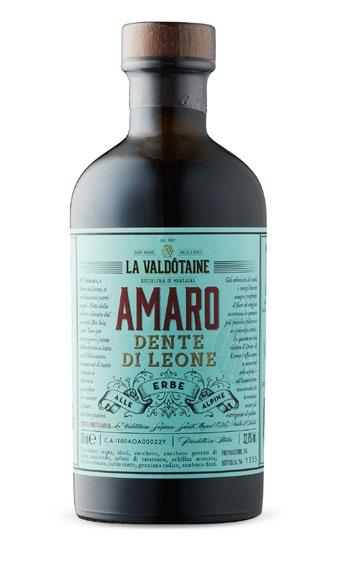
The name La Volontane, drawn from the Italian word for will or intention, reflects this philosophy. In an era of aggressive branding and novelty spirits, the choice to bottle a humble, bitter amaro is itself an act of defiance. There is no attempt to soften the flavor or dress it in nostalgia. The amaro asks the drinker to meet it on its own terms.
To sip Amaro al Dente di Leone is to encounter a different Italian history—one shaped not by commerce but by necessity and restraint. It is a reminder that bitterness, when understood, can be nourishing. And that some of Italy’s most enduring traditions survive not because they were profitable, but because they were essential.

DiCesaris writes with cinematic sweep and emotional precision, grounding his Western landscapes in the hard dust of experience and the grace of forgiveness. For readers who miss the classic frontier novel, this complete collection is a triumph of storytelling and spirit.
Ride the trail with a man haunted by the past and driven by faith to make things right. Courage. Love. Forgiveness. The West has never felt more real—or more human.
By Eugene J. DiCesaris Buyiton Amazon.comToday!

Yes, please send me the book, “Italian Horror Cinema,” for $19.95, with free shipping and handling
the above
and
the
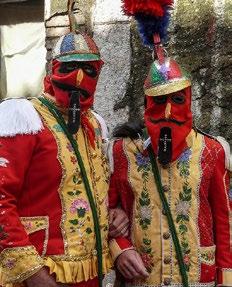
It was during Holy Week in Sicily that something quietly but powerfully struck me.
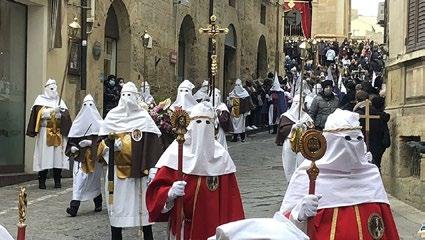
I witnessed, in Sicily, several Easter processions—slow, solemn, and deeply moving— and what stayed with me was not only the religious imagery, but the many Sicilians who walked to mourn the crucifixion of Jesus Christ and to celebrate His resurrection.
Marching together were groups of local professionals— police officers, firefighters, civil servants—clearly representing
By Michael Ranieri
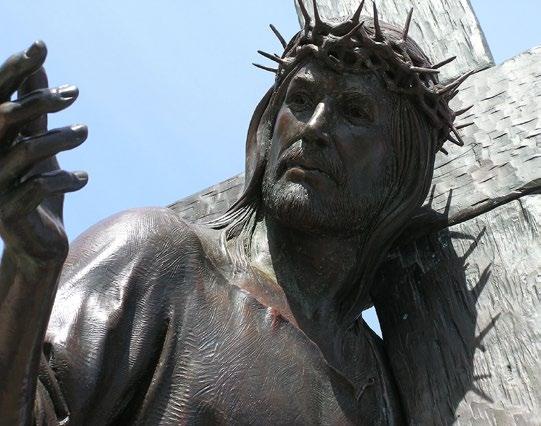
their towns and vocations. They were not spectators. They were participants. Their presence felt intentional, communal, and deeply rooted in tradition.
Standing there, I was reminded of something often said about Italy— that while regular Sunday Mass attendance may be modest, Italians turn out in large numbers for religious processions and feast days.
Watching those Sicilian streets fill with quiet reverence, I began to understand why. Faith here is not confined to the interior of a church. It belongs to the piazza, the neighborhood, and the shared memory of the community. These processions were not performances. They were acts of public devotion—faith carried through the streets where daily life unfolds.
From
Sicilian villages to Mulberry Street—and from one generation to the next—perhaps that has always been the point.
Statues of Jesus Christ and the Madonna moved slowly past homes and shops, blessing the town itself. Many in attendance may not have been weekly churchgoers, but they were unmistakably present. They were united in something older and deeper than routine.
Author Maria Laurino captures this tradition beautifully in The Italian Americans, noting that Italians have long been most comfortable living life outdoors. She noted how peasants brought their faith into public spaces, routinely holding processions— or feste—to honor saints and venerate the Madonna. With so many patron saints to honor, often shared by more than one town, the contadini lovingly carried them through their villages.
The honoring of saints weaved belief into everyday life rather than confining the tradition to church interiors.
As I watched Holy Week processions in Sicily, I realized I had seen this before—not only in Italy, but on the streets of New York’s Little Italy during the Feast of San Gennaro, the patron saint of Naples.
Over the years, I witnessed that annual procession many times: the statue of San Gennaro carried down Mulberry Street, surrounded by prayer, music, and devotion, even amid the noise and bustle of the city. That same sensibility lived quietly in my own home growing up. My mother, like so many Italian American women of her generation, always seemed to be praying to a saint—most often
St. Anthony or St. Jude—turning to them for help, comfort, or guidance. It was a faith that was personal, familiar, and woven into daily life.
What I witnessed in Sicily, in Little Italy, and in my own family was not a contradiction of faith, but its continuity. In southern Italy especially, belief has long been expressed through presence rather than obligation, through tradition rather than instruction. Saints are protectors, the Madonna is personal, and faith is something you walk with together every day.
Sometimes it seems that Italians celebrate faith more outside than inside a church. From Sicilian villages to Mulberry Street—and from one generation to the next—perhaps that has always been the point.
By Joseph Longo
I started working at the grocery store when I was 15 and stopped when I was 17.
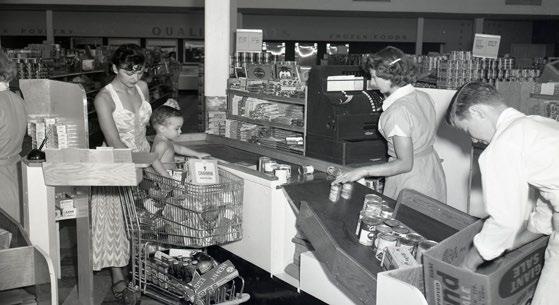
From1954 to 1956, I worked as a delivery boy for an Italian grocery store on Westchester Avenue in the Bronx.
My father got me the job. He and the owner, Luigi, were paisans. They played poker together and fished for eels in the Bronx River. I was paid about twenty bucks a week, and the tips were generous. However, I didn’t like Luigi. He was always angry and very gross. He had his tonsils removed when he was in his fifties and kept them in a glass jar behind the counter for everyone to see. I was waiting for the day he would give the jar by accident to a customer.
His son Sal also worked in the store. He was okay but only talked about the New York Yankees.
Luigi’s wife, Lilly, also worked there, always cooking something aromatic in the kitchen in the back of the store. She was sweet, was slowly going blind, and let me sample what she was cooking. One of her specialties was a meatball sub with a deep red sauce served on crusty Italian bread.
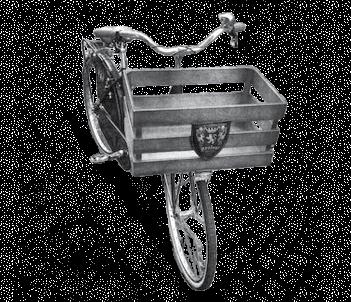
The store was always busy. The clientele was mostly the first and second generation Italians. I had to stock the shelves and wait on customers. My most important task was to deliver orders on a bike with a basket attached to the front. I named the bike Silver, after the Lone Ranger’s horse.
I liked delivering orders. I got to explore and wander the neighborhood.
I always took longer to make deliverers than I should have. When I returned to the store, Luigi always asked, “Did you get lost?”
One of my first stops everyday was the corner candy store where comic books were sold. The owner was a short, pudgy guy with thin wisps of gray hair he combed to hide his bald spot. He was alway nervous. He was sure kids were stealing from him.
And kids were stealing from him. There was this baby faced kid who filched comics regularly. He always had with him a loose leaf notebook. He’d slip comics within the binder when the owner wasn’t looking. I often watched him steal, and he would watch me watch him. The stoic expression on his baby
She gave me a bottle of Coke. She held a small box covered in black velvet. Inside was a purple heart. “This is all I have left of Joey,” she said.
face never changed.
I, on the other hand, paid for my comics. I especially like Superman because he lived a double life. Donald Duck was another favorite of mine. I was always angry that he was upstaged by Mickey. I also loved Classic Comics. The series encapsulated classic novels. My favorite was The Man in the Iron Mask. I was also a fan of movie magazines, like Photoplay, Movie Land and Movie Pix. I loved to leaf through them to see how movie stars lived.
The apartment buildings in my neighborhood were built before the war in the glory days of art deco. Entering a lobby was like walking into the ante-room of a once luxurious palace. However,
they weren’t maintained and were always dirty.
Every floor of every building had a different smell emanating from the apartments. Those belonging to the Italian families always had the best aromas.
I remember one hot August day when I had to deliver an order to Mrs. Santoro. I trekked up five flights of stairs. She was sort of related to my family. Her son Joey had been married to one of my aunts. Joey was killed in the Pacific in the war. Mrs. Santoro, a strongwilled matriarch, did not want my aunt to take another husband. But, my aunt remarried and moved to another state.
After that Mrs. Santoro did not speak to anyone in my family. She
said we were dead to her. So the first time I delivered groceries to her, I was nervous.
I didn’t know how she would treat me. I knocked and she opened the door. She was a small woman with hard dark eyes. The expression on her face did not change when she saw me.
The first thing I noticed when I entered her apartment was a large oil painting of a young man in an army uniform. He was maybe twenty-two.
“That’s Joey, my son,” she said. “He has the same name as you.”
She gave me a bottle of Coke. She held a small box covered in black velvet. Inside was a purple heart. “This is all I have left of Joey,” she said.
The Story of a Village in Abruzzo
Bruno’s writing is both evocative and accessible, painting vivid pictures of both the Italian village and the American steel town... Readers will find themselves immersed in the sights, sounds, and emotions of the era, fostering a deep connection to the characters and their experiences.
primo magazine
We enjoy the benefit of hindsight... the luxury of looking back with certainty at a journey our ancestors undertook with great uncertainty!
By Louis G. Bruno, Jr. Buyiton Amazon.comToday!
Vercessi’s novel is a thoughtful and well-crafted mystery anchored by a memorable protagonist and enriched by the author’s firsthand knowledge of the naval world. It’s a smart, grounded entry into military crime fiction—and a promising start to what could be a compelling series.
primo magazine
NCISAgentJerzyShore
By George Vercessi
BuyitonAmazon.comToday!
The book serves a most valuable service. The rapidly changing times make it increasingly harder for families to stay together. As we travel farther away from home, we lose our roots and risk losing our legacy. Mary Gordon guides us in the journey ahead with a timeless book on how to keep our family identity for posterity.
PRIMO Magazine
This is important book ... Gordon provides numerous suggestions on how to conduct family oral histories, preserve and use them, protocols to consider, and recording techniques.
Prof. Clifford E. Trafzer, UC Riverside
Nothing defines the Italian American experience more than the cherished attribute of family.
Discount code 25AFLY1 at checkout. Good to end of June 2025 www.routledge. com/9780367654801


Grand Lodge of Virginia Italian Heritage Lodge of Fairfax #2517 was chartered in 1981. Our monthly events are mostly held at the Knights of Columbus Hall (behind St. Leo the Great Catholic Church) 3702 Blenheim Blvd, Fairfax, VA 22030. New members are always welcomed!
Visit our website at https://italianheritagelodge.org
President: Dawn Falsinotti falsinotti@yahoo.com (703) 362-1724
Past State President: Joseph Scafetta Jr. joseph.scafetta.jr@gmail.com (703) 533-8064

defi,nes the ltalin.n
By Rami Chiaviello
No country has a better robot than Italy does with iCub.
Italy leads the way in embodied AI, and yet, few people know it.
That’s because top figures in Italian science, government, and even commerce have all but agreed to keep this new technology hidden—or, at the least—excluded from the public.
Uncanny when you think about it: Italian scientists and engineers have brought to life an actual robot in iCub, yet, they have chosen to keep this sentient being locked up inside a lab in Genoa.
iCub—coming soon to a store near you? Not!

iCub remains one of the world’s most advanced humanoid robots. Its purpose—not to assist you and me in our daily tasks. Rather, its one mission is to further explore how intelligence develops when a mind has a body.
Created at the Italian Institute of Technology in Genoa, iCub is a child-sized humanoid designed to learn through touch, movement, imitation, and interaction. iCub does not simply process language or images. It explores. It fumbles. It adjusts. It exists entirely in a laboratory. For all its promise, iCub remains almost entirely invisible to the public.
iCub is publicly funded. The open-sourced robot is internationally respected. Researchers from around the world come to Italy to study iCub in real time. They are fascinated by the robot. They revel at its cognition, perception, and interaction with people. Philosophers cite it. Neuroscientists model with it. Ethicists debate it.
Consumers never see it. Italy—and the European Union—has chosen restraint. Where Silicon Valley asks “Can we scale this?” Italy asks “Should we?” The caution is admirable. Yet, there is a cost to this virtue. By confining embodied AI to research institutions, Italy has unintentionally limited the effectiveness, relevance, and social impact of its own breakthrough.

Laboratories cannot replicate everyday life.
iCub does not encounter how people live, work, and play. It never visits our homes. It never engages with us. It sees not our varied differences. It hears not our contemporaneous words, speech, and gestures.
iCub does not roam in our cities and towns. The laboratory has become its cage. The robot is kept away. The sentient being is kept from interaction.
iCub may learn about humans—but never with them.
History is clear on this point. Transformative technologies do not mature in isolation. The personal computer, the internet, even television only became socially meaningful when they entered homes, schools, and public life.
If this technology is destined to shape how humans live with machines, then shielding it from the public delays understanding, concentrates power elsewhere, and forfeits cultural leadership.
Critics say consumer robots are dangerous, invasive, or premature. They said the same thing about the washing machine. Not to mention, also, the airplane, automobile, and the fire in the cave.
Yes, advances in technology and machinery can be scary. But, they are also liberating and empowering. They help much more than they hurt.
The best way forward for Italy— and the world—is to allow public
access to iCub. Conditions can be in place to ensure the robot is not autonomous or exploited by commerce.
iCub can be a transparent, inspectable machine. The robot can be a companion for the young and old: To help, to educate, to assist. iCub can be more than a robot servant. It can be our friend. iCub can further democratize advanced AI, keep ethics visible, and ensure that values are shaped by society—not retrofitted after market dominance.
The real danger is not that embodied AI reaches consumers too soon. The danger is that it reaches them too late—only after its values are set elsewhere.
Italy has already done the hard part. The country’s greatest minds have built a robot grounded in humanism, transparency, and restraint. These men and women of science are to be applauded throughout the land. Yet, to keep iCub confined to research is to risk turning Italy’s leadership into footnote.
Italy once shaped the modern world not through scale, but through ideas. iCub belongs in that lineage.
The question now is not whether iCub should be commercialized. It is whether Italy wants to help society learn with this technology—or watch others decide what embodied AI becomes.
The right path is simple. The call is heard. Come out iCub! Come and join the human race!
Nothing about iCub is exotic or mystical. Its materials are ordinary.
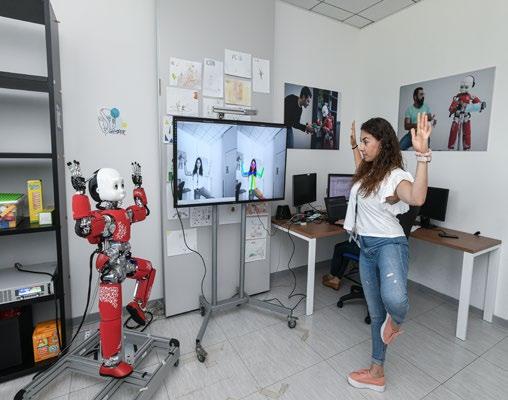
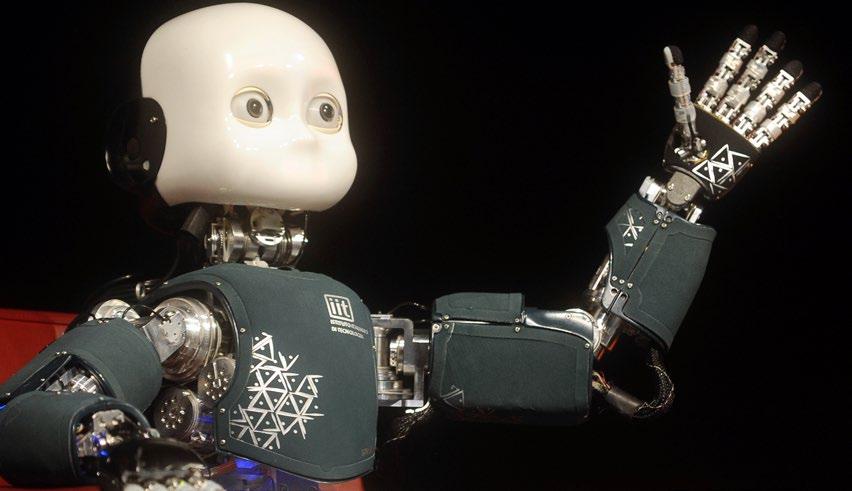
iCub stands just over three feet tall, roughly the size of a four-year-old child. Its proportions are intentional. Researchers are not trying to replicate adult performance, but human development.
Physically, iCub is a careful fusion of biology and engineering:
• Skeleton: aluminum alloys and steel, mirroring the role of human bone
• Muscles: electric motors and tendon-like cables that route force through joints
• Joints: precision bearings and harmonic drives for smooth, controlled movement
• Eyes: stereo cameras mounted on independently moving “eyeballs”
• Skin: flexible silicone embedded with thousands of pressure sensors
• Brain: Linux-based computers running open-source learning software
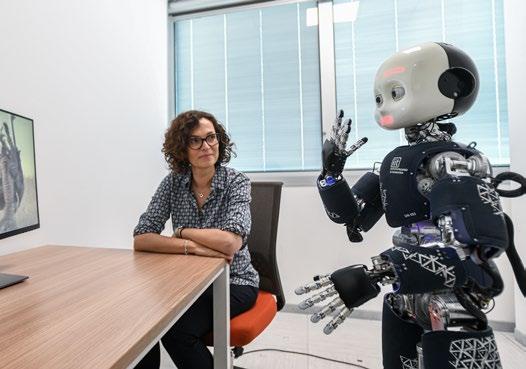
The short answer is no.
The more honest answer is: it depends what we mean by consciousness.
iCub does not experience emotions, self-awareness, or subjective inner life. There is no “someone home” inside the machine. But iCub does possess something far more interesting than scripted intelligence: embodied learning.
When iCub grasps an object, it integrates vision, touch, motor feedback, and memory. When it imitates a human gesture, it builds internal models of bodies—its own and others’. When it explores an environment, it does not simply calculate outcomes; it develops expectations.
This places iCub at the frontier of a growing idea in cognitive science: that intelligence is not just computation, but something that arises from a body moving through the world.
Will iCub ever be conscious? No one seriously claims that it will. But it may help us answer a far more important question: Which parts of intelligence truly require consciousness—and which do not?
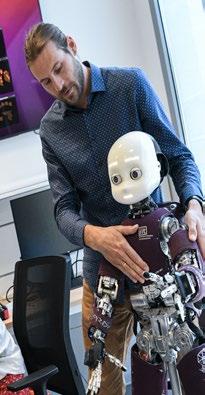
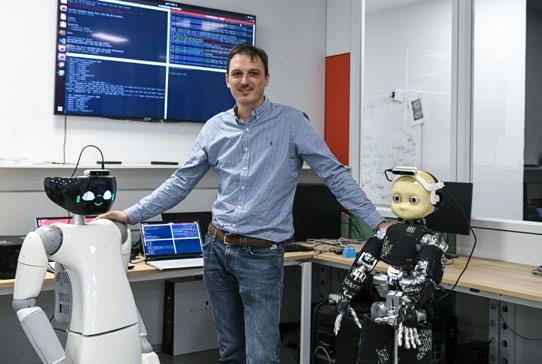
There is something distinctly Italian about iCub. It reflects a tradition that values craft over spectacle, depth over scale, and humanism over automation. iCub is not a shortcut to artificial general intelligence. It is a long road—patient, embodied, and reflective.
In a world racing to disembodied AI, iCub stands quietly for a counter-idea: that intelligence begins not with language or data, but with touch, movement, and presence.
And that may turn out to be the most human insight of all.
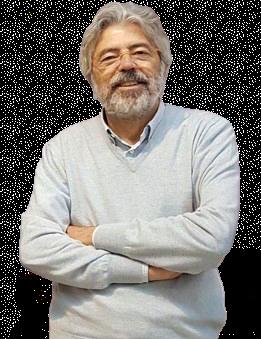
Scientific director, conceptual founder Sandini is the intellectual force behind the project. A neuroscientist by training, he pushed the radical idea that you cannot study intelligence without a body. iCub exists largely because Sandini insisted that cognition, perception, and movement must be studied together.
Think of him as iCub’s philosopher–scientist.
Based in Genoa, the institute provided the funding, lab, and longterm vision for iCub.
iCub was born out of a large EUfunded collaboration of Italian, German, British, French, and Spanish labs. iCub isn’t a singlecompany product—it’s a shared European intellectual project.
Unlike Silicon Valley robotics— often driven by founders, valuations, and demos—iCub emerged from universities and think tanks
There is no “Steve Jobs of iCub.” There is no founder mythology.
Instead, there is craft, patience, and collective intelligence—a model closer to Renaissance workshops than modern startups.
That’s also why iCub hasn’t been rushed to market.
Lead engineer, robotic architecture
Metta is the hands-on architect of iCub—the person most responsible for how it moves, senses, and learns. His work bridges robotics and neuroscience, with a focus on developmental robotics: machines that acquire intelligence through interaction rather than pre-programming.
If iCub feels physically “right,” then that’s largely due to Metta.
By Truby Chiaviello
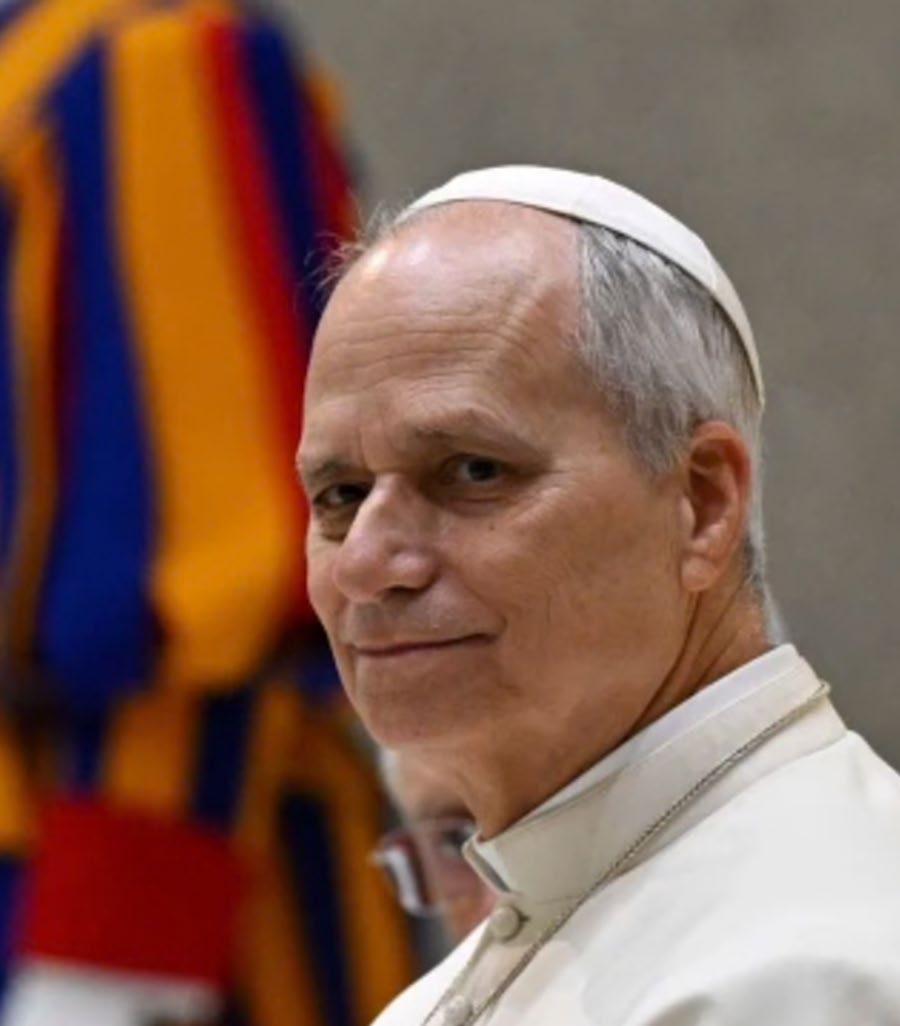
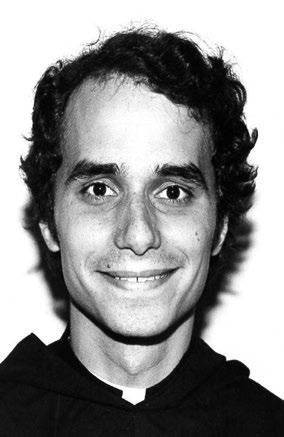
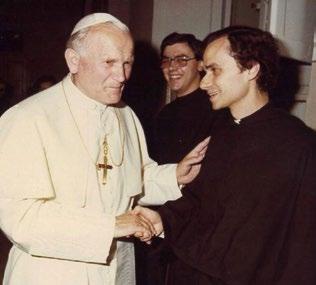
Robert Francis Prevost was born in Chicago on September 14, 1955. He was elected pope by the College of Cardinals on May 8, 2025. The first of the Augustinian Order to reach the papacy, he took the name Leo XIV. His ascent marked a moment few had imagined—and many are still absorbing.
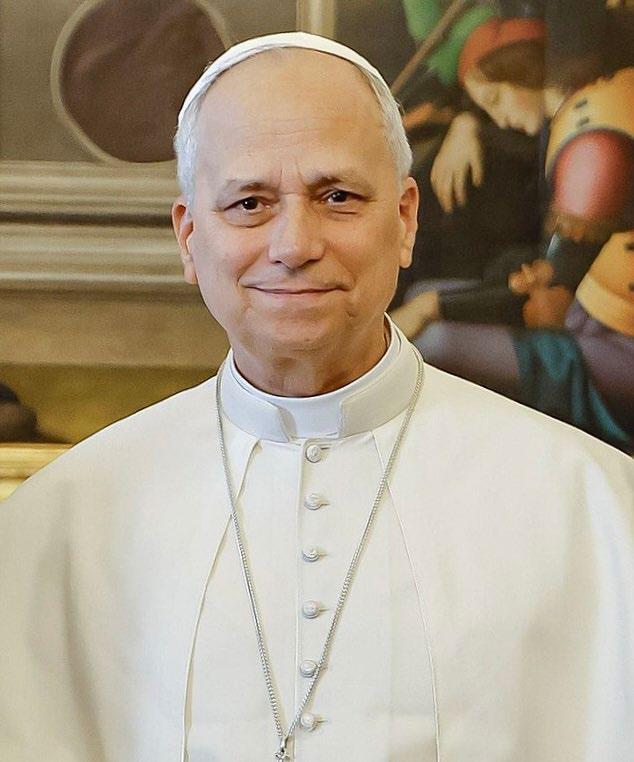
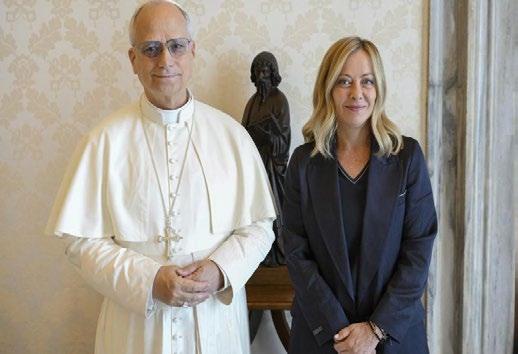
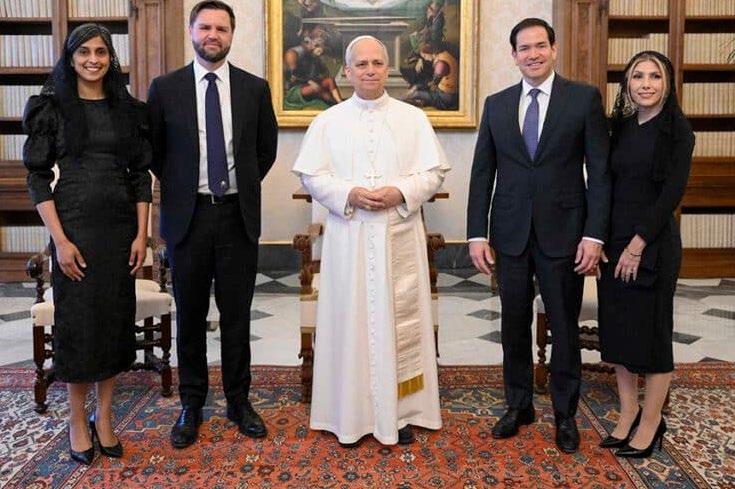
As he approaches the first anniversary of his election to the Chair of Saint Peter, Pope Leo XIV stands as a historic figure—not only for the Roman Catholic Church, but for all Americans, and especially for Italian Americans.
He is our first American pope. Our first Italian American pope. Our first Sicilian American pope.
Robert Francis Prevost was born in Chicago on September 14, 1955. He was elected pope by the College of Cardinals on May 8, 2025. The first of the Augustinian Order to reach the papacy, he took the name Leo XIV. His ascent marked a moment few had imagined—and many are still absorbing.
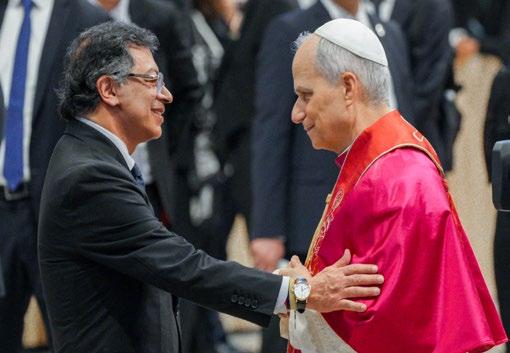
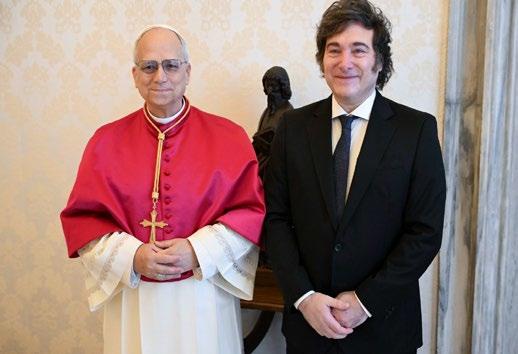
Now is the time for Italian American leaders to reach out to our new pope. Let us lead the way for a stronger bond between America and the Vatican.
The moment arises—now—to invite the Holy Father home. Il Papa—come back to Chicago!
Let us celebrate you: the first of our own to ascend to the throne of St. Peter.
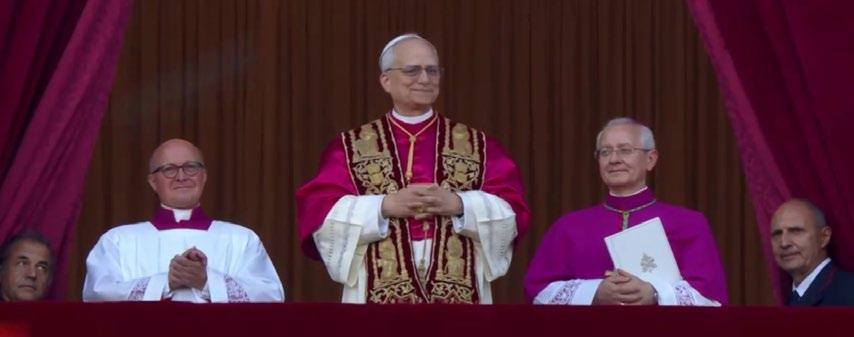
Less than a year ago, few outside ecclesiastical circles knew the man who became pope. When Pope Leo XIV stepped onto the balcony overlooking St. Peter’s Square in Rome, greeting tens of thousands of faithful, the international press scrambled for answers.
Who was he? Where did he grow up? Where did his family come from?
Italian journalists moved quickly—and confidently—but in the wrong direction.
Major media outlets in Italy reported that the new pope was of Piedmontese origin. His grandfather, they claimed, was Giovanni Pietro Felice Provosto, born in a village northwest of Turin in 1877.
The problem? That person died a year after he was born.
The story was wrong.
Into the void stepped American genealogists—working independently, meticulously, and without Vatican assistance. They came not from a single organization. There was no formal roster of researchers. They were not from a university or think tank. Theirs was an informal, decentralized effort from different parts of the United States. They were genealogists and amateur historians.
They worked together, or were parallel of each other, utilizing the latest technology to communicate what they found and didn’t. They worked fast. Their goal was simple: uncover the truth.
What followed was an extraordinary investigation of the genealogical background of Pope Leo XIV.
Researchers combed archived records, ship manifests, census data, newspaper clippings, and immigration files. By the time their investigation was completed, in about 10 days, they knew more about the ancestry of Pope Leo XIV than did many inside the Vatican. Ironically, their original focus was not the pope’s father—but his mother.
The maiden name of the pope’s mother was Matilda Agnes Martinez. Her identity drew immediate media attention. Born in New Orleans, she was of Spanish and Creole heritage, with family roots in Haiti. She was Latina. She was African American. She was news. Her story fit the modern media narrative—and once it was told, the press moved on.
The pope’s paternal lineage, however, was largely ignored.
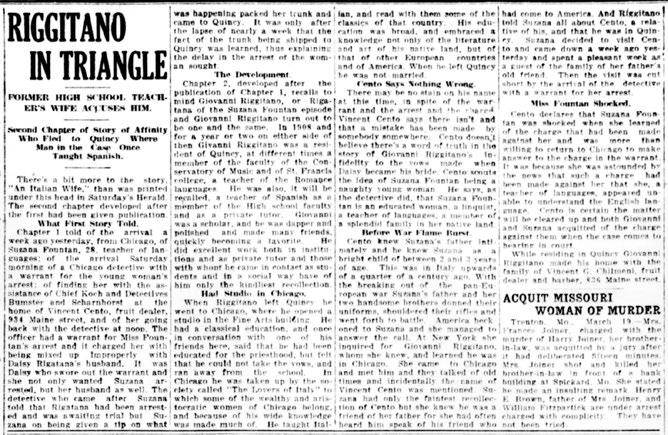
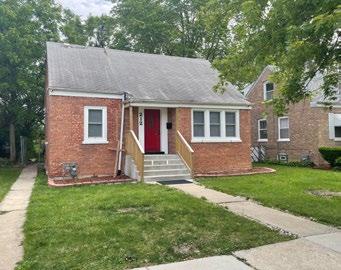
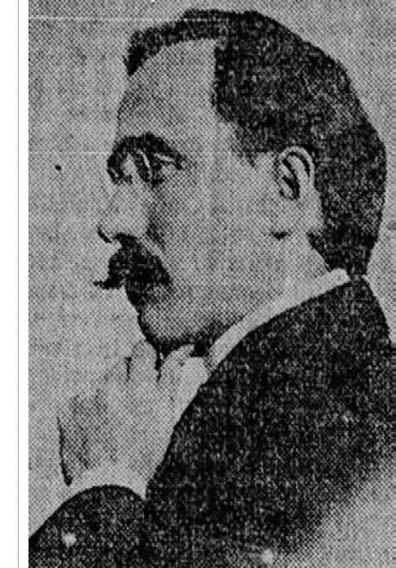
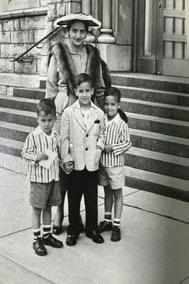
Above, a newspaper clipping on the scandal involving the pope’s grandparents; right, a college yearbook photo of the pope and, below right, his childhood home in Chicago.
American genealogists were not satisfied.
They sought to find the identity of the pope’s true grandfather.
They came up with Salvatore Giovanni Gaetano Riggatano, born June 24, 1876, in Milazzo, Sicily, in the province of Messina.
To uncover that truth required unraveling a century-old mystery.
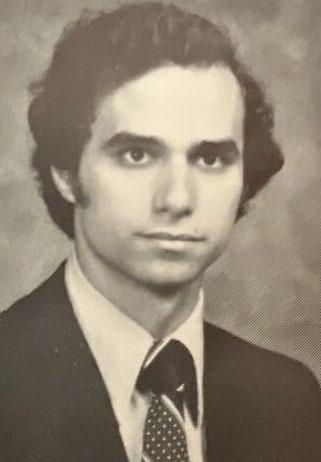
The Vatican offered almost nothing when American genealogists and amateur historians started their research. Few, if any, of them could speak, read, or understand Italian. Records were missing. Names didn’t match. Documents contradicted one another.
All they knew was this: the pope’s grandfather was known in the United States as John R. Prevost. They knew he was married to Suzanne Fountaine, a woman of French origin.
Except—no marriage certificate could be found. There were no census records before 1950. There was no Ellis Island documentation.
Yet, they did exist. In Chicago. The conclusion became unavoidable: the grandparents had used aliases.
Where lived the pope’s father—Louis Marius Prevost— so too must the grandfather.
The elder Prevost was a teacher of language.
Knowing the pope’s father was raised in Chicago—as was the pope—researchers attained a foothold to start their investigation.
Newspaper archives—often overlooked—proved decisive. Their focus extended beyond Chicago to encompass the entire state of Illinois.
Within days, one researcher uncovered a 1934 newspaper clipping from Quincy, Illinois. The page displayed an advertisement in the classified section of the newspaper for the RiggitanoPrevost School of Language.
Riggitano—That name unlocked everything.
Documents were readily available on the background of Salvatore Riggitano.
Originally, researchers saw him as nothing more than the business partner of the pope’s grandfather—John R. Prevost.
Genealogical investigators examined Riggitano’s background hoping he might provide information on the elusive Prevost.
They found considerable archived records to show that Riggitano was a Sicilian immigrant who came to the United States in 1903 aboard the steamship Perugia. He was fluent in Italian and French. He taught languages throughout
Illinois, not to mention Iowa and New York.
In 1914, Riggitano married Daisy Hughes.
What researchers then uncovered was a scandal involving Riggitano.
Three years after their marriage, Daisy Hughes accused him of adultery. The allegations were serious. Riggitano was accused of not only breaking God’s law, but also state law. Back then, adultery was a crime in Illinois. Riggitano was arrested and charged in Chicago.
So was his mistress.
She was named “Suzana Fountan” by local police, as reported in a 1917 edition of The Quincy Herald.
Both man and woman were paroled.
Riggitano remained in Illinois to face the consequences while his lover, Suzana, disappeared.
That woman, researchers concluded, was the pope’s grandmother—Suzanne Fountaine.
The pope’s father, Louis R. Prevost, had one sibling, an older brother named John.
Researchers obtained John’s birth certificate. The pope’s uncle
was born on July 23, 1917, in Lackawanna, New York, in a hospital for unwed mothers, a Catholic charity managed by Our Lady of Victory.
Researchers found the birth certificate riddled with anomalies. The baby’s mother was listed as Suzanne Fibra. Yet, she crossed out the full name with pen or pencil. In her handwriting, she wrote “Suzanne” only. She listed the father as John C. Prevost, a man she claimed shared her country of birth—France.
Working backwards with available documents, genealogists quickly verified, what they had all along suspected, that Suzanne Fibra wasn’t the real name of the mother on the boy’s birth certificate.
What they concluded was that the true identity of the woman was the pope’s grandmother, Suzanne Fountaine.
The group of genealogists and amateur historians began to search through a database of federal records.
They had acquired a number of available aliases and names— Fibra, Fontan, Fountaine, Riggatano, and Prevost. They knew Chicago was where the pope’s father Louis and his uncle, John, grew up.
Their database search was
What is clear is what Pope Leo XIV inherited from his grandfather: a gift for language.
rapidly effective. They were able to verify the identities of the pope’s grandparents from review of records kept under the Alien Registration Act of 1940.
After France was conquered by Nazi Germany, the U.S. government wanted records on all people residing in America who were born in France.
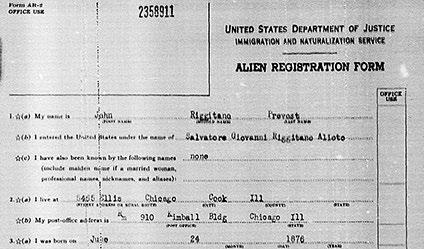
The pope’s grandmother was one of many residents who had to fill out the Alien Registration Form at the local police department in 1940. On the questionnaire, she wrote her identity as Suzanne Fontaine. The address she gave—5465 Ellis Avenue, Chicago—was where the pope’s father and uncle grew up.
Spouses of French born residents were also required to complete the same form. On the first line, Suzanne’s husband wrote his name as John Riggitano Prevost. On the second line, he provided his birth name—Salvatore Giovanni
Riggitano Alioto. (The name “Alioto” referenced his mother, Alana Alioto). His address was the same as Suzanne’s and the pope’s father and uncle. In section three of the form, he wrote his birthplace as Milazzo, Messina Sicily. He was born there on June 24, 1876. On a line near the end of the form’s first page, he listed the SS Perugia as the sailing vessel that brought him to the United States in 1903. His father’s name was listed as Sante Riggitano.
Researchers uncovered a second document to give added proof to the Sicilian identity of Pope Leo XIV. Like his grandfather, Uncle John was a professor of language. Retired, in 1983, he applied for a Social Security card. Uncle John had to list his parents on the form. He wrote his mother as Susan
Fontaine from Havre, France, and his father as Giovanni Salvatore Gaetano Riggitano from Messina, Sicily. Due to aliases used by the pope’s grandparents, errors occasionally recurred in subsequent public documents. When the pope’s father, Louis Prevost, died of colon cancer in 1997, the death certificate listed his mother as Suzanne Fabre, not Suzanne Fountaine. In the late 90s, databases were linked without information properly vetted. The death certificate was completed by a hospital administrator from misaligned records in a computer. What is clear is what Pope Leo XIV inherited from his grandfather: a gift for language. Giovanni Riggitano spoke Italian, French, and Spanish. Pope Leo speaks all of these languages, plus Latin, Portuguese, and German. Today, Pope Leo XIV speaks to the faithful in many tongues. His is a voice handed down from a Sicilian immigrant who crossed the Atlantic in 1903, built a life in America, and left a legacy far greater than he ever imagined. Oh, and as for the name— Prevost. This was the name of Eugenia Prévost, the mother of the pope’s grandmother.
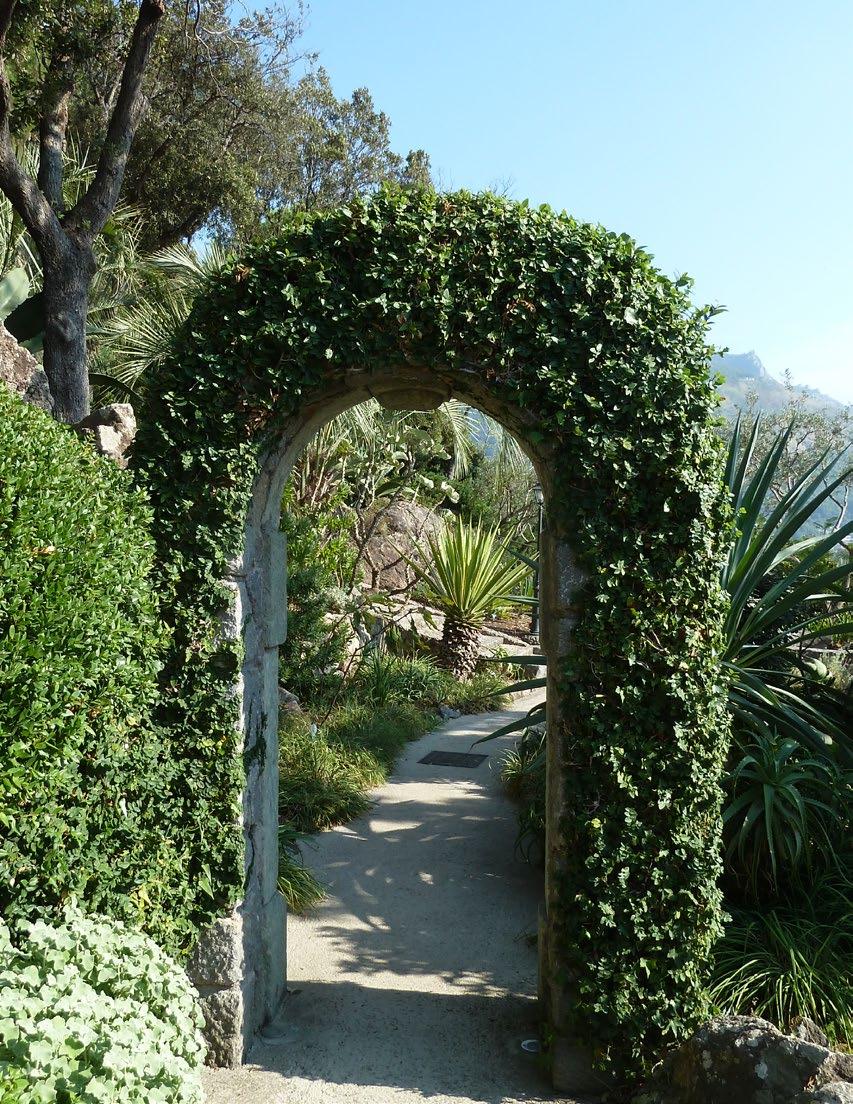
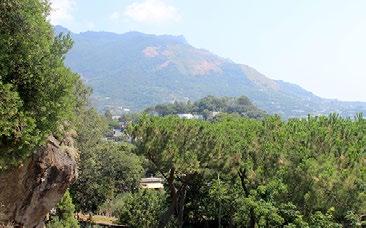
On the volcanic island of Ischia, where the earth once burned and hardened into black lava cliffs, a composer built a garden. Not a formal Renaissance parterre, not a Medici display of geometry and power — but something more intimate, more lyrical. A place where music took root in stone.
S
pread across five volcanic acres, La Mortella feels less like an estate and more like a landscape revealed in movements — intimate below, expansive above, always framed by sea and sky.
Created in 1956 by British composer William Walton and his Argentine wife Susana, La Mortella rose from what had been an abandoned lava quarry.
The name comes from the wild myrtle (mortella) that once grew on the island of Ischia, off the coast of Italy.
What Walton and his wife imagined was not simply a retreat but a living composition — a landscape shaped as carefully as a symphony.
To bring that vision to life, Walton and Susana enlisted the celebrated English landscape architect Russell Page, one of the great garden designers of the 20th century. The rigid symmetry of the land was to be re-imagined and restructured. However, Walton was moved by the earth. He listened to his Italian surroundings. His new home was to be designed with music in mind.
Walton collaborated with Page to allow the volcanic contours to guide the terraces, the pathways, the placement of fountains and shaded grottos.
People come from all over the world to tour the estate today. Their reaction is one what they might have after a night of opera in Milan or Naples. They are moved by the symphony, the orchestration, the melodies of flowers, shrubs and trees
La Mortella unfolds like a musical score.
The lower garden is intimate, enclosed, almost secretive — shaded by palms, tree ferns, cycads, and exotic species gathered from Asia, Africa, Australia, and South America. Water glides through channels and pools, softening the black rock beneath. The air is humid, scented, and unexpectedly lush. La Mortella feels like stepping into a subtropical overture. Then comes the ascent.
Climbing upward, the garden opens wide to embrace the Italian sun. Terraces rise toward the Mediterranean light. The views widen to sea and sky. The composition crescendos.
Where the lower garden whispers, the upper garden sings.
Unlike the disciplined geometry of the Renaissance — such as Verona’s Giusti Gardens — La Mortella embraces organic flow. The massive garden is structured, yes, but never stiff. The landscape is guided, not imposed. The volcanic foundation remains visible, a reminder that beauty here is not denial of nature but a collaboration with it.
Why Ischia?
Walton was a celebrated composer after the Second World War. Yet, he was dissatisfied. England had stifled him. He needed to escape the land where he was born and raised. He sought a different place for his music.
Walton found in Italy something England no longer offered him: warmth, light, and creative renewal.
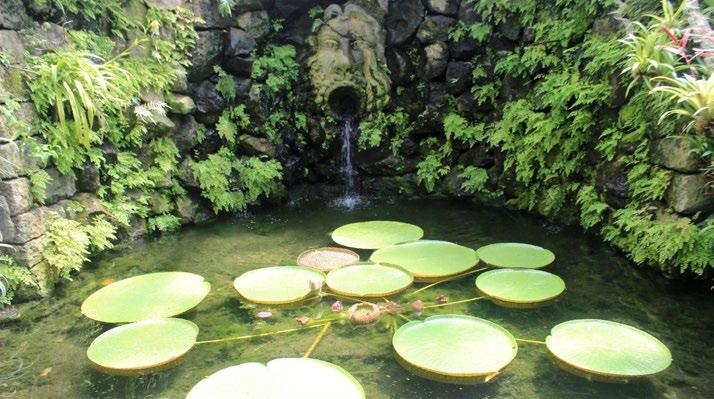
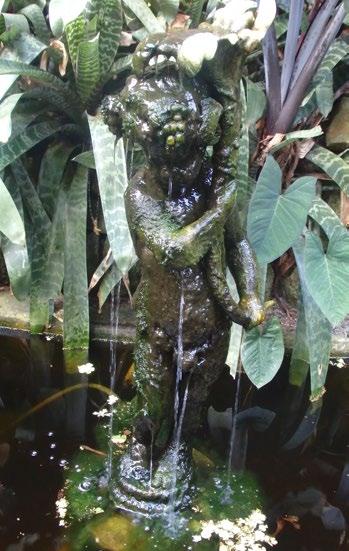


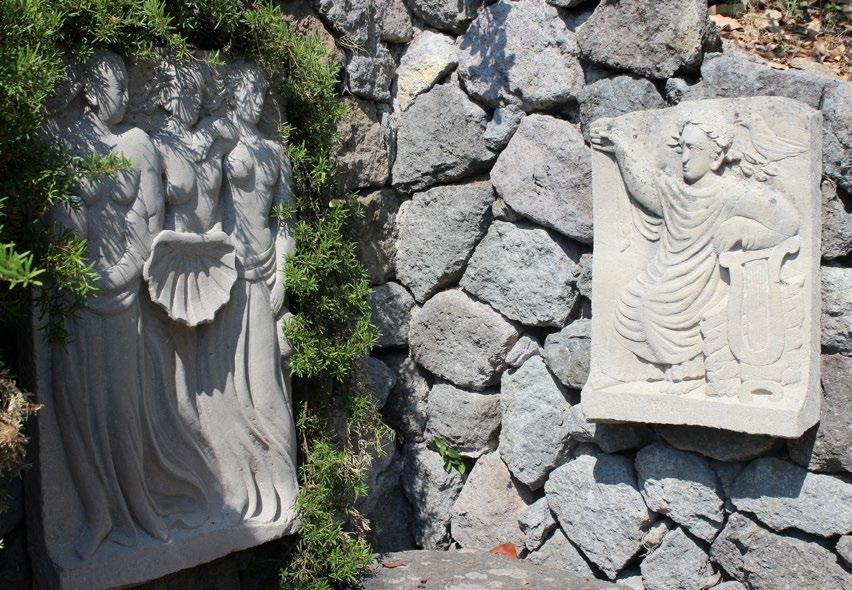
Like so many artists before him, Walton gravitated to southern Europe. The cloudy skies of England had to be abandoned for the bright sun and seas of the Italian peninsula.
Italy had long served as a sanctuary for foreign genius — a place where northern restraint could soften into Mediterranean amplitude. Walton did not seek retirement. He did not want a place of exile. He did not yearn to remain still while taking in the calming spirits of the sea air. What Walton wanted was to rekindle his spirit of creativity. What he sought was a place for rejuvenation.
In La Mortella, Walton found his musical refuge. Here, he could compose new works.
The garden became both backdrop and catalyst. He heard the music while surrounded by water, thick foliage, and volcanic rock.
The metaphor is irresistible: from hardened lava — the residue of ancient violence — springs cultivated harmony. From exile comes renewal. From stone, song.
The garden is a maze of pathways and fountains. They come together to command the eye in straight lines.
We’re invited to journey through the thick foliage. La Mortella is different than Renaissance estates.
La Mortella’s fountains murmur. Water slips over volcanic stone, gathers in reflective pools, and cools shaded grottos — less performance than accompaniment.
Curving along volcanic stone, climbing toward the sea, they reveal La Mortella in passages — intimate below, expansive above. La Mortella is not frozen in time. The looming estate remains a living cultural institution. Concerts are held among its terraces. Young musicians perform beneath the same sky that once inspired Walton.
The garden is not a monument; it is a continuation. Visitors do not simply stroll through botanical collections — though the rare orchids,
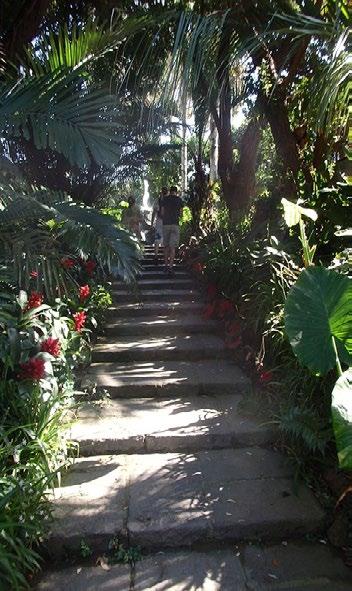


water lilies, and cycads alone would justify the journey. They experience atmosphere. Layered sound. Light shifting through leaves. The quiet interplay of water and wind. In an age of spectacle and noise, La Mortella offers something rarer: cultivated stillness.
Walton was especially prolific in British cinema. He composed the musical scores for such films as Hamlet, Henry V, and Richard III, all starring Lawrence Olivier. He wrote the music for the BBC drama Christopher Columbus and the documentary, Battle of Britain.
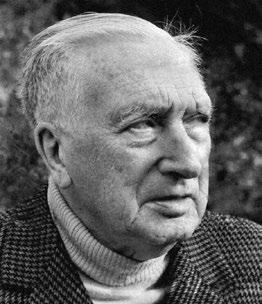
Pictured, here, circa 1976, Walton wanted La Mortella to be different than other gardens in Italy. The many great Renaissance gardens often expressed order, hierarchy, and power. They remain a celebration of geometry and organized nature.
La Mortella was meant to express something different — intimacy, artistry, and refuge. The garden reminds us that Italian beauty is not confined to the 16th century. Each generation brings a new effort to be one with the earth.
Walton died in 1983 while his wife Susana lived on until her passing in 2010. The couple are buried on the grounds of La Mortella. Walton did not merely compose in Italy; he remained there. Beneath Mediterranean light and volcanic stone, he and Susana rest in the garden they shaped — their final movement set to the sound of water and wind.
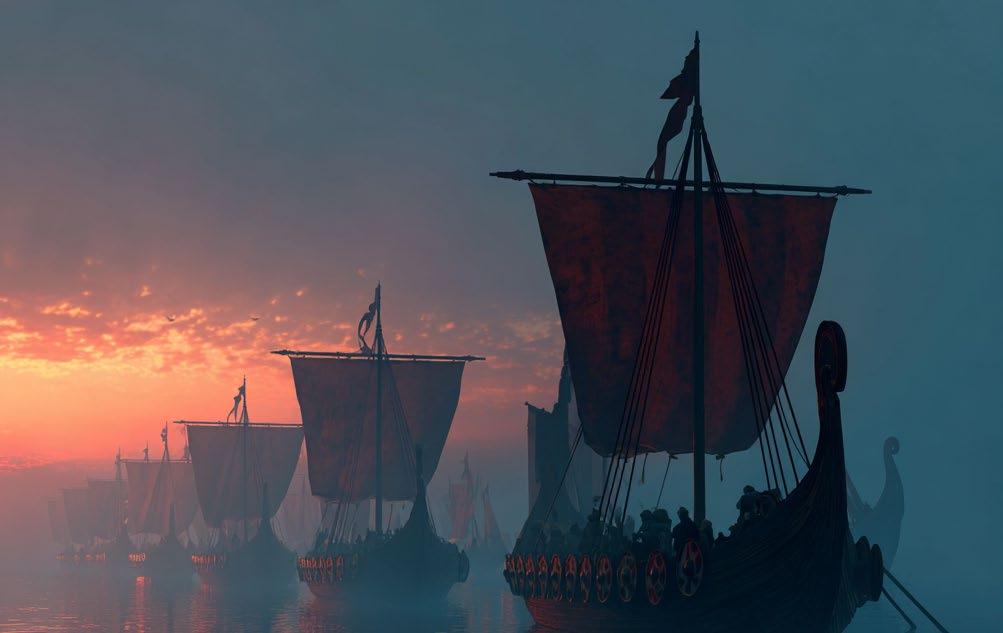
The first Vikings appeared in Italy in 1016. They numbered less than forty. They were “Christianized” Vikings from France who arrived in the Pugliese town of Monte Sant’Angelo to pay their homage at a cave site, believed to have once been visited by the Archangel Michael in 493 AD.
By Michael A. Benedetto

Melus, a Lombard nobleman from Bari, had been driven into exile by Byzantine occupiers after an unsuccessful insurrection against them. To recapture his land, he immediately proposed joining forces with the Normans to drive away his enemy.
Seeing the opportunity to occupy more territory with little cost to them, a force of about 50 to 60 mounted Vikings along with Melus’ army, drove the Greeks out of Puglia and Bari in 1018. Soon a massive army of Byzantines (mainly Greeks), who had themselves hired Norman warriors, totally defeated Melus’ combined forces. Melus escaped but his family and son, Argyrus, were captured and sent to Constantinople. He died there while in asylum under the protection of the Holy Roman Emperor Henry II.
The Greeks, again with Norman help, took the Lombard citadel of Monte Cassino, a papal territory. Pope Benedict VIII allied with Henry II to retake the fortress.
By 1021 a force of an estimated 60,000 men had been assembled to capture the town of Capua, just north of Naples. The effort was made much easier thanks to a contingent of Vikings who opened the city’s gates to the invaders. But beset by malaria, Henry’s forces were required to turn back to Germany in June 1022.
Two years later, both Henry and Benedict died; leaving open the possibility of the recapture of Capua by the Byzantines. Their leader, Pandulph, the so-called “Wolf of the Abruzzi” (le fortissime lupe), enlisted a Norman, Rainulf, to help take Capua. They captured Naples in the winter of 1027-28 with very little resistance.
In no time, the Normans did a complete reversal. The Viking Rainulf sided with Duke Sergius of Naples to reconquer the city in 1029. The duke rewarded Rainulf with the fiefdom of Aversa and Sergius’ royal sister in matrimony. Rainulf and his fellow Normans were now members of Southern Italian aristocracy. They began to set up fixed and fortified settlements to continue their objective of taking control of Italy’s south.
These aims were advanced by the continuous fighting to take place in Italy between the Eastern and Western Empires, both contingencies employing a substantial number of Norman forces.
To break the impasse, a prince from Salerno, Gaimar V, enlisted Rainulf to his side. He appealed to the leaders of both empires for help. It was the Western Emperor Conrad II, successor of Henry, who heeded the call. In early 1038 his imperial army had won back much of the Byzantine territories in Italy. In appreciation of the help of the Vikings, the emperor gave full investiture to Rainulf and the official backing of the Western Empire.
Owing to a civil war between the Arab population in Sicily, and under the guise of coming to the aid of one of the belligerents, the Byzantine empire decided to conquer the island. Again, the Normans saw it in their best interest to unite with their Greek foes. In 1038, a large fleet, including the armies of Gaimar, Rainulf and Norse legend, Harald Hardrada, were gathered. In less than two years they had subdued the eastern end of Sicily. But then internal fights over the “spoils” of the war caused the Norman contingents to return to the mainland.
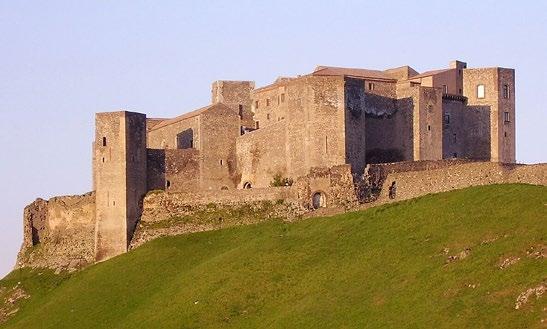
In 1040, another Norman, Arduin, was appointed by the Byzantines to rule Melfi, a strategic town between Foggia and Salerno, to retake Apulia. Instead, he repatriated its citizens and along with 300 knights, under the command of the de Hauteville clan, annihilated the Byzantine occupiers in three decisive battles. Afterwards, Agryrus, son of Melus, formerly imprisoned in Constantinople, returned. He was made ruler of the entire region from Taranto to Brindisi, Italy’s “heel.”
In 1042, the Greeks advanced on Apulia again. This was countered by a siege of Trani by Agryus.
Either bribed or for political reasons, Agryus “flipped” allegiances to call off the siege. This betrayal caused the Normans to unify their forces under William de Hauteville, the “Iron Arm,” who regained their territory. Gaimar made himself Duke of Apulia, Calabria, all previously conquered lands and all they “might” conquer were divided among the various Norman chiefs.
By 1046, a host of Normans descended into the south of Italy; including the de Hautevilles, Richard and Robert, the latter known as “Guiscard, the Cunning.” Using his family contacts, Robert was given command of a garrison in Calabria at Scribla where the Normans had built a fort in 1044. Richard too achieved success through those contacts and became Count of Aversa after Rainulf’s death in 1045. The Normans reverted to their old ways of pillaging and looting. They raised the ire of Argyrus, the pope, and the old Lombardian aristocracy.
These animosities culminated in the battle of Civitate in Puglia in 1053; considered as important as the Battle of Hastings, in England, in 1066. The forces of Richard and Robert decisively defeated those of Pope Leo IX; who might have won if Argyrus’ forces had arrived on time. In a total departure from the past, the Normans kept Leo safe for nine months until they obtained his imprimatur to legitimate all lands they had previously conquered.
In July 1054 the Eastern and Western churches underwent a schism when each permanently excommunicated the other. With little, if any, resistance Robert took “the heel” of Italy back from Argyrus as well as inheriting virtually all the south. He made himself the Count of Capua.
In 1058 another split occurred in the Church with opposing factions having each elected their own pope (Benedict X, Nicholas II). The Nicholas faction chased Benedict from Rome but was concerned about keeping him out. Nicholas asked for help from the Vikings. They captured Benedict and unfrocked him.
Nicholas, a reformer, then installed what is now the present system of electing a pope from among the cardinals. In gratitude, he invested Robert de Hauteville with his previously conquered lands and threw in the whole of Sicily. Only Bari was occupied by the Eastern Empire, now threatened by the Seljuk Turks.
The opportunity arose for Robert to take Bari in an operation greater than any Norman had undertaken in the 50 years since arriving in Italy.
The Normans had abandoned their “longships” for sailing vessels (cogs) capable of transporting horses and many more fighters. This formidable navy encircled the Barese promontory to begin a lengthy siege. Defeating Byzantine relief convoys, the siege lasted from August 1068 to April 1071 when Roger de Hauteville arrived from Sicily with men and ships. A final naval battle with the Byzantine ensued in which most of their ships were sunk and their leader captured. The Barese forces surrendered for Byzantine power in Italy to come to an end.

The Norman conquest of Sicily now began in 1060 with an unsuccessful foray by Roger de Hauteville across the straits of Messina. Upon returning to the mainland to assemble a larger force, he was approached by Ibn alTinmah one of three powerful emirs in Sicily.
Tinmah wanted to destroy his enemy, another powerful emir, Ibn al-Hawas. He promised Roger dominion over all of Sicily.
Once again, being invited, the Vikings landed in Sicily with 160 knights, hundreds of foot soldiers and a herd of horses. They took Milazzo and Messina, only for the inhabitants there to regroup, rearm, and resist. Fearing the possibility of Emir Hawas entering the battle, Roger retreated. He was met by a Saracen fleet that almost destroyed his forces.
Undaunted, in May 1061 with 270 horsemen, 500 soldiers, and 13 ships, Roger returned to Sicily to catch the Saracens at Messina off guard
to slaughter most of them.
With Messina in hand, joined by his brother, Richard, and with fortifications set up, Roger and the Vikings took control of the western shores of Calabria.
In the meantime, the emir, Hawas, led an army of some 15,000 against a reported Norman force of less than one thousand at the battle of Enna in central Sicily. By the end of the day, only about 5,000 enemy soldiers remained with only negligible losses by the Normans. Roger then began a siege of Hawas’ heavily fortified castle, but believing it impossible to continue the siege, he contained the Saracens by building the first Norman fortress in Sicily amid the ruins of Aluntium.
Roger returned to Sicily in the summer of 1062 to take the island’s central mountaintop town of Troina where he was initially welcomed by its Greek inhabitants. Believing he had achieved victory there he left for additional conquests only to be informed that the Greeks and Saracens had rejoined forces to take control of the area. With little choice, Robert began a siege that lasted four months. Now, with little provisions during a harsh winter at 4,000 feet above sea level, Roger engineered a silent march through the snow, surprised the sleeping Saracens and retook Troina.
Yet, the Saracens were not to be easily defeated. Ultimately, they reconciled their differences with the Saracens of North Africa. The two groups landed in Palermo and Agrigento in 1063 with a force in the tens of thousands. The combatants met in Cerami where Roger was able to muster up only a reported 100 knights aided by 500 soldiers. Despite the odds, the highly disciplined Normans held their line to seize the Saracen camp. They took untold booty including camels to present to Pope Alexander II in Rome. To show his gratitude, the pope presented the papal banner to Roger and gave absolution to the Normans for delivering a Christian
land from the “heathens”.
Having seized most of eastern Sicily, it was now time to take on the greatest prize of all--Palermo, a city with an estimated 250,000 residents and 300 mosques. Joined now by Robert and about 2,000 warriors, their advance was slowed by swarms of tarantulas (!) and the mountain chain Conca d’Ora. They camped in Petralia after which there was a four-year lull, perhaps due to many of the Norman force being reassigned to assist William in his conquest of England.
In 1071, the forces of both Robert and Roger crossed into Sicily to take Catania as their base. Roger’s army set up camp a few miles from Palermo while Robert began a naval attack to destroy the Sicilian fleet. In January 1072, Roger attacked a weak spot in the city’s defenses.
He led 300 of his forces to take Palermo’s administrative hub. Rather than massacring the population, Robert entered a truce whereby looting was prohibited. The Saracens had to pay an annual tribute to him, and, in return, they were allowed to practice Islam and retain their laws and culture.
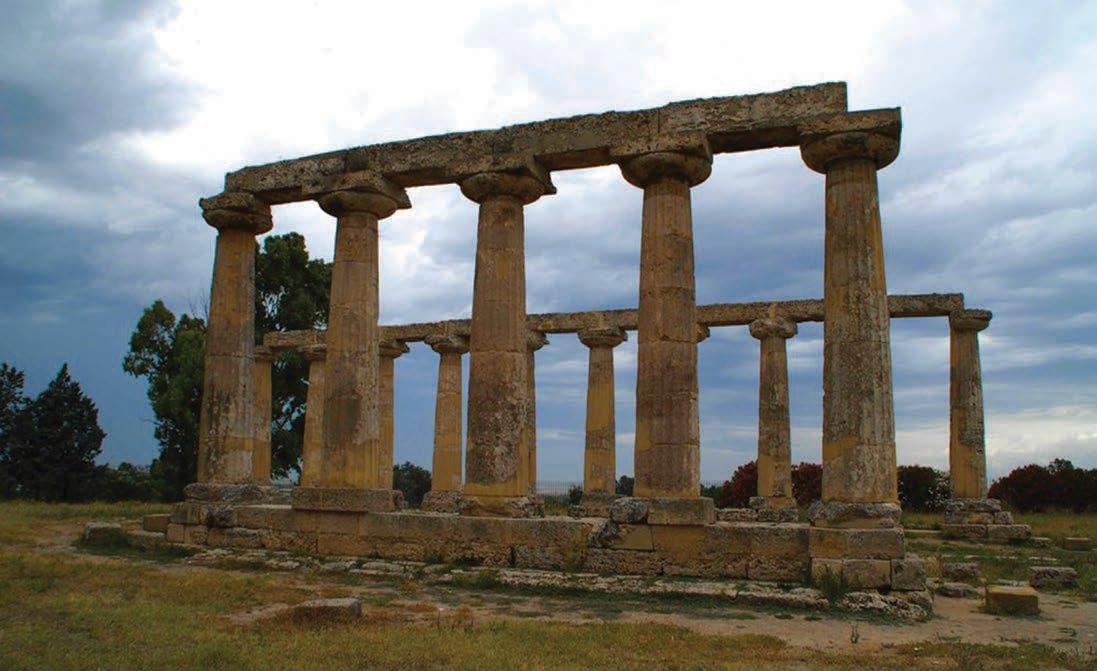
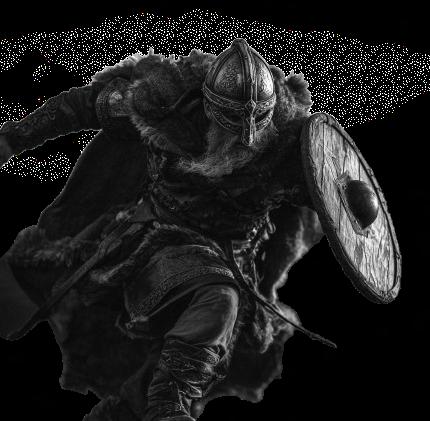
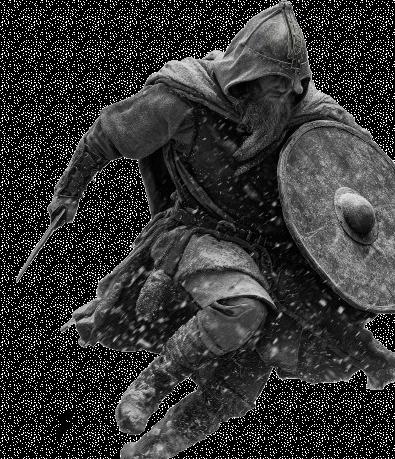
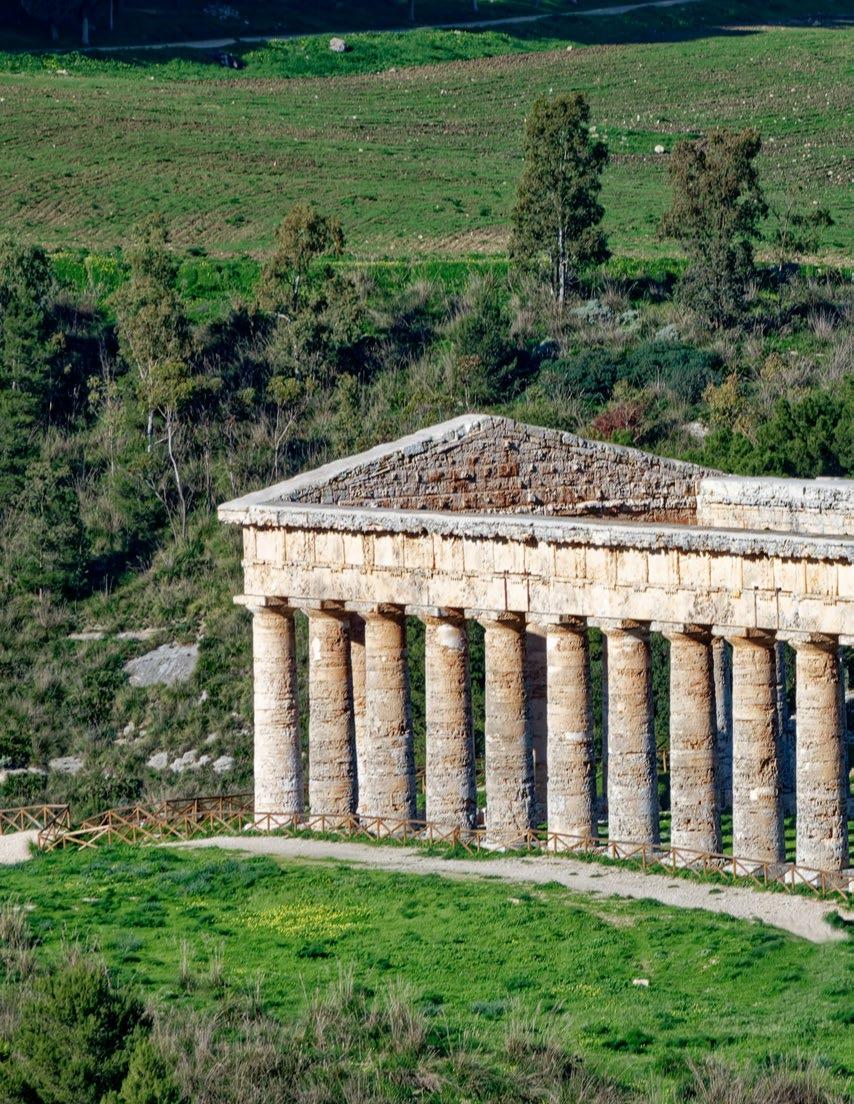
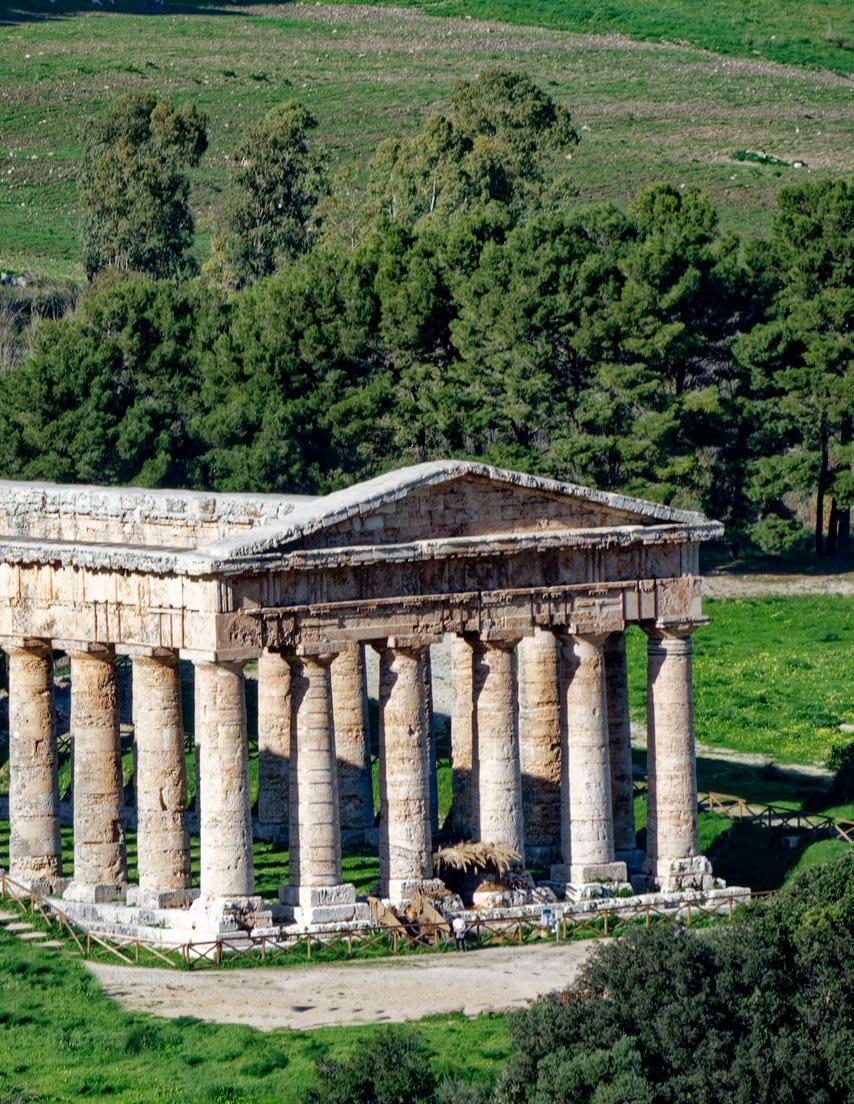
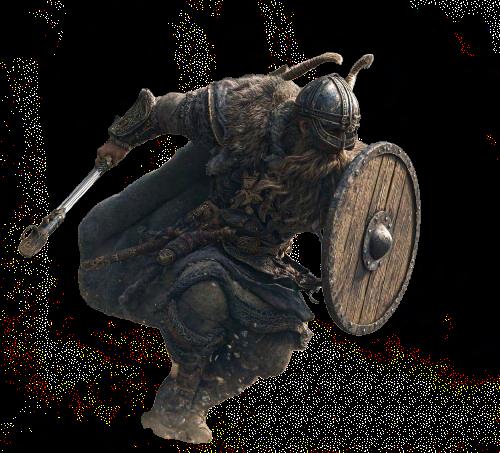
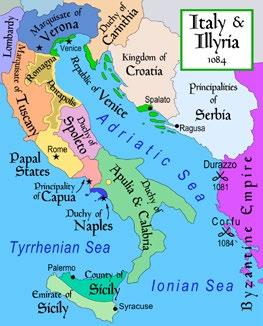
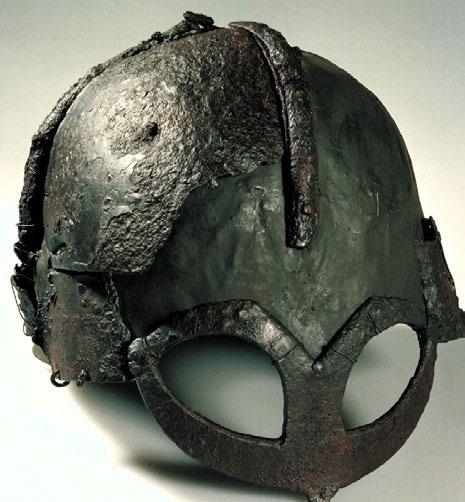
The photographs and illustrations depicted in the article begin with attacking Vikings in the foreground of the Doric Temple of Segesta in Sicily followed by an illustration of Viking ships and a vector map of Italy under Viking rule in the South. There is a recent photograph taken of the Viking fortress at Melfi followed by an illustration of a Viking warrior and a Viking helmet, below, unearthed in Norway.
The Italian Cultural Institute, in partnership with Cinecitta, hosted an exhibition about women in Italy’s silent film era of the early 1900s. Female pioneers were presented to highlight their incredible contributions to Italy’s movie industry.
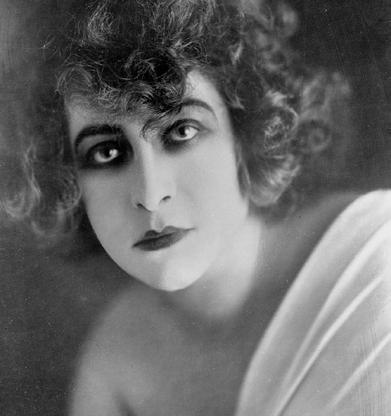
Very little is known about the actress who performed under the stage name Astrea. Scholars believe she may have been Countess Amalia Barbieri (1890–1974), of Venetian origin. She played the opposite of a super hero in four films. She was a celebrated and admired forzuta—a strongwoman whose physical power was matched by grace and beauty.
Astrea starred in only four films, three of which were directed by Ferdinand Guillaume. On screen, she embodied an elegant, feminine counterpart to Maciste—not unlike Superman, a protector of the weak. Her chosen name—Astrea—was drawn from the Greek goddess of justice. The film Justitia achieved international success and elevated Astrea to true stardom. Then, in 1922, as mysteriously as she had emerged, she withdrew from cinema, guarding her privacy for the rest of her life.

Elvira Giallanella emerged as both director and producer, working alongside Aldo Molinari to make Mondo baldoria, a futurist-inspired film loosely based on Aldo Palazzeschi’s manifesto Il controdolore
In 1919, she directed her first—and likely only—film, Umanità. A powerful pacifist statement on the Great War, she insisted on shooting in Gorizia and the Karst region, actual sites of wartime devastation, in northeast Italy.
Despite its artistic ambition, the film struggled to find distribution and was likely never screened during its original era. Only in recent years has Giallanella’s work received renewed attention. Umanità has now been restored and shown internationally, thanks to the efforts of Italian film historians.
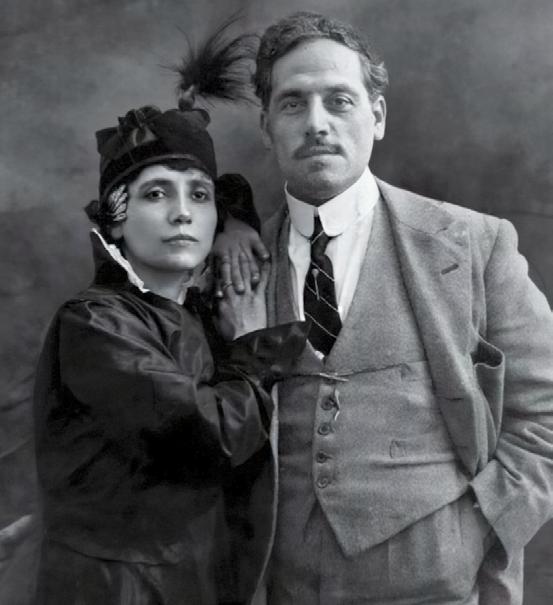
Ginevra Francesca Rusconi began her career in theater at a very young age before moving into film in 1915, signed by Milano Films. An eclectic artist, she enjoyed a brilliant acting career—appearing in roughly ten films, though only one survives today.
In 1916–1917, she founded her own production company, Raggio Film, giving her the freedom to pursue projects less constrained by commercial demands and more aligned with artistic exploration, often drawing inspiration from theatrical traditions. Under the name Elettra Raggio, she was described as “the bold Amazon of cinematic art,” consciously distancing herself from the star system of the era. Instead, she embraced a strikingly modern collaborative approach, rooted in intellectual exchange, with the goal of creating cinema as a truly artistic endeavor.
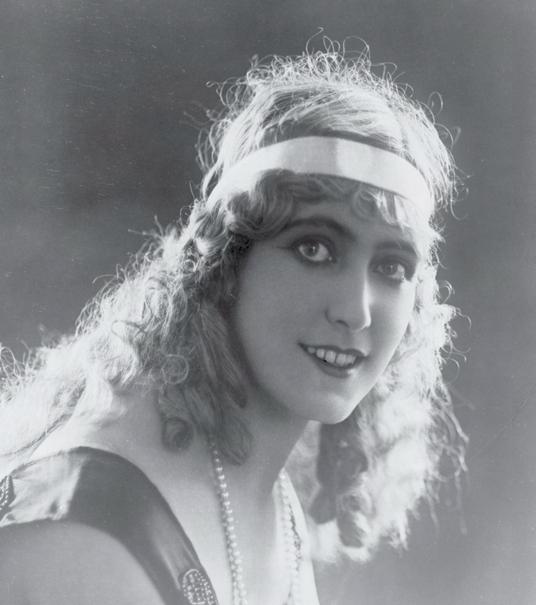
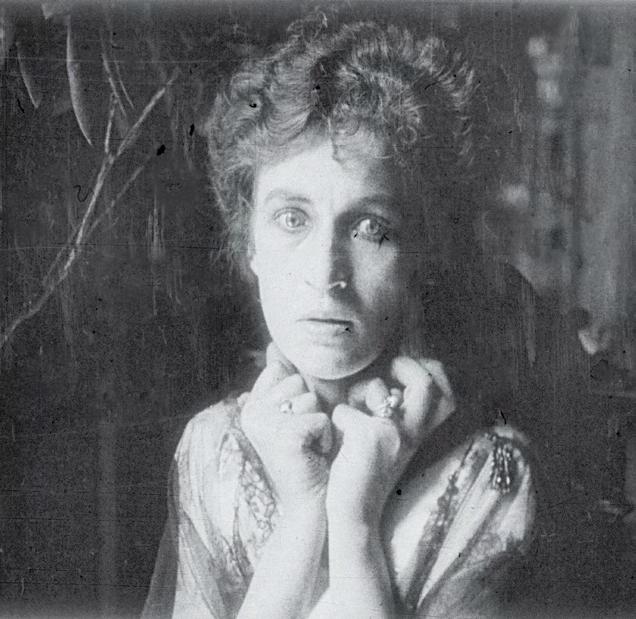
Born in Nice to a Piedmontese family, Maria Roasio was drawn to cinema at an early age. She came to prominence in the role of Onoria in Attila (1918). She was the leading star of producer Arturo Ambrosio, appearing in a remarkable number of films during the height of Italy’s silent era.
In 1924, Roasio ventured into production with Bambola vivente. She starred in the film, ahead of its time with science fiction elements. The film became entangled in accusations of plagiarism related to the 1919 German film Die Puppe Bambola vivente was intended to launch a series centered on Roasio herself, but the project was never realized. Abandoning her aspirations as a producer, she went on to star in her final film, I rifiuti del Tevere (1927). With the decline of silent cinema, Maria Roasio faded from the public stage.
These women were not marginal figures. They founded production companies, directed films that challenged social norms, and shaped cinematic narratives with a boldness that still resonates today. Their place in film history conveys a fresh and compelling perspective on the origins of cinema—and on the women who helped invent it.
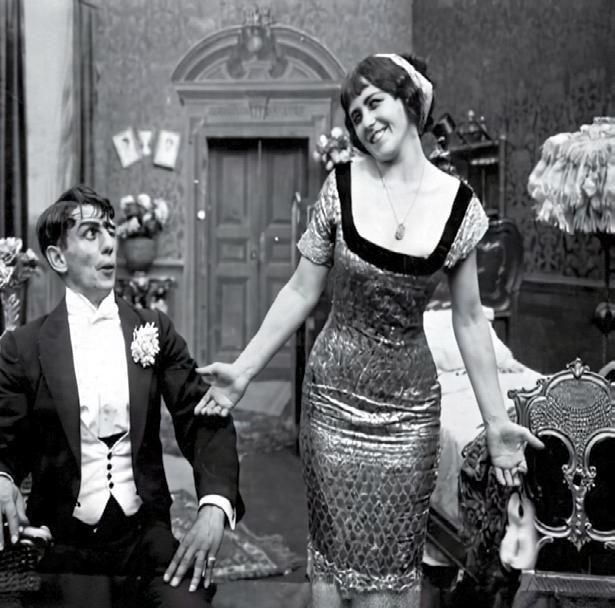
Nilde Baracchi: Tweedledee
Nilde Baracchi was a stage actress in France and Italy before she joined her partner, Marcel Fabre, into the emerging world of cinema in 1911. On screen, she played Robinette, a comic character paired with Fabre’s Robinet.
In 1913, Baracchi appeared as Misora in Le straordinarie avventure di Saturnin Farandoul, adapted from Albert Robida’s novel I viaggi straordinari di Saturnin Farandoul. A weekly serial of some 18 episodes, the production was later re-edited as a feature film.
By late 1915, Baracchi and Fabre relocated to the United States, continuing their collaboration under new character identities: Robinet became Tweedledum, known as Tweedy, while Robinette became Tweedledee. Their partnership ended in 1919, after which Baracchi returned to Italy and retired from cinema.

Esternino Zuccarone was attracted to the mechanics of cinema, not the glamour. She began her career in 1917 in the editing department of the film company, La Positiva. There, she mastered projectors and technical equipment.
After 20 years, working in film editing, she started teaching the craft to a new generation of movie technicians such as a young Franco Cristaldi, who eventually became a producer, his most famous film, Cinema Paradiso
Esterina was entrusted with designing and organizing a new documentary department for FIAT. During this period, she also met Walt Disney in person, who praised her technical skill and professional expertise—a moment she would later recall with pride.
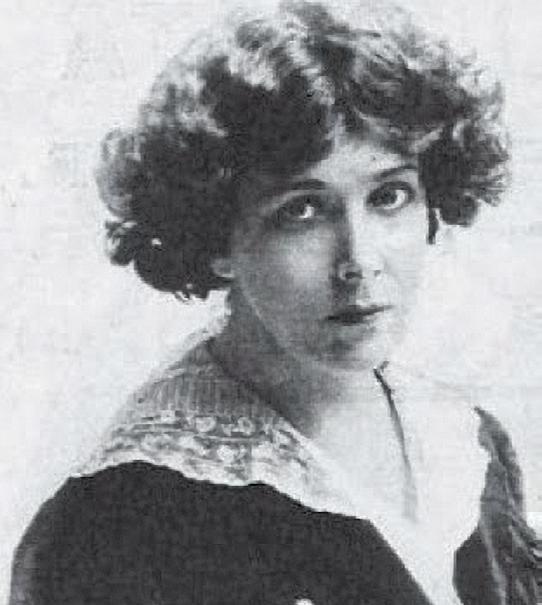
A renowned poet and author, Annie Vivanti had relocated to Ireland with her husband, John Chartres, to aid the cause of Irish independence. While there, she wrote Circe (1912), a novel inspired by the controversial Ukrainian countess Maria Tarnowska, a femme fatale accused of murdering one of her lovers.
In 1921, Circe sparked a sensational courtroom battle in Rome between Vivanti and Francesca Bertini. He was accused of plagiarizing the novel with the film La Piovra (1919). The court ordered a comparison between book and film to yield no definitive verdict, and the dispute ended in an “equitable settlement.”
A year earlier, Vivanti and Bertini had collaborated in the release of Marion artista di caffè-concerto, adapted from Vivanti’s 1891 novel.
In 1941, as a British citizen, Vivanti was placed under house arrest in Arezzo; only Mussolini’s personal intervention allowed her to return home to Turin.
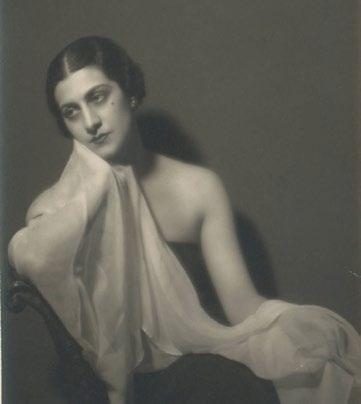
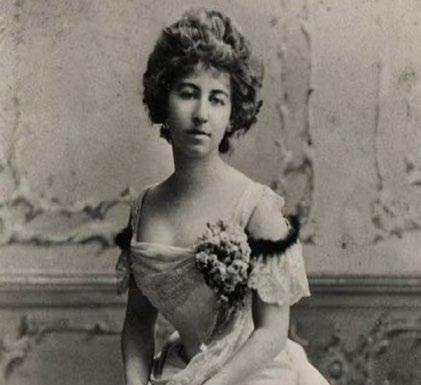
Gifted with a refined voice of deep, velvety resonance and distinguished by the theatrical inflection known as birignao, she began her career in dubbing in 1932. From then through the mid-1940s, she reigned as the undisputed leading lady of Italian voice acting, lending her voice to the greatest divas of Hollywood’s golden age.
Her Italian interpretations brought new life to the screen personas of Joan Crawford, Greer Garson, Myrna Loy, Rosalind Russell, Rita Hayworth, Marlene Dietrich, and, above all, Greta Garbo. Beyond live-action cinema, she became a commanding presence in Disney animation, often voicing formidable antagonists: Queen Grimilde in the original Italian dubbing of Snow White and the Seven Dwarfs (1938), Lady Tremaine in Cinderella (1950), the Queen of Hearts in Alice in Wonderland (1951), and the sorceress Maleficent in Sleeping Beauty (1959).

Aprince of Italian fashion gave New York one of its finest restaurants before he died in September 2025. Armani/Ristorante is the place to dine at 760 Madison Avenue.
By Alfonso Guerriero
Less than a year before he died, Giorgio Armani opened a new restaurant—Armani/ Ristorante. The fashion designer, originally from Piacenza, established a sophisticated addition to Manhattan’s dining scene, blending high-end Italian cuisine with the elegance of the Giorgio Armani brand.
Armani/Ristorante has quickly become a landmark for luxury dining, appealing to both fashion aficionados and food enthusiasts. My experience at the chic restaurant was nothing short of exceptional.
I arrived early on a Saturday afternoon, right after work, before the decibels of the lunch crowd became too overwhelming. I wanted to have a cocktail and a quick bite before returning home. A friend had to cancel our original lunch plan, so I found myself walking toward the Upper East Side of Manhattan. I remember reading about an Armani restaurant within the vicinity. I thought visiting the restaurant would be an interesting experience.
The newly designed flagship building, which also houses luxury boutiques and private
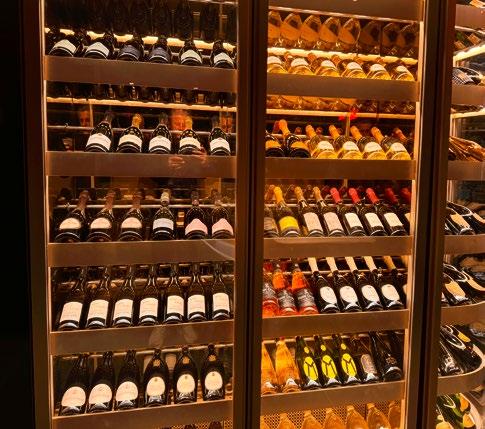
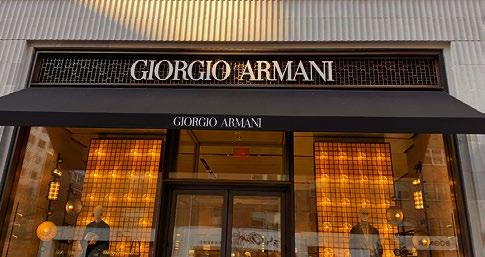
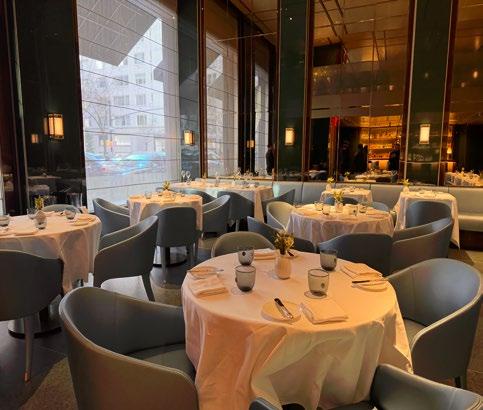
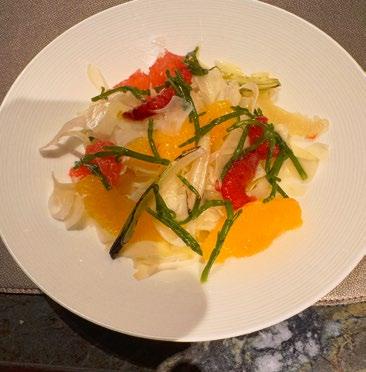
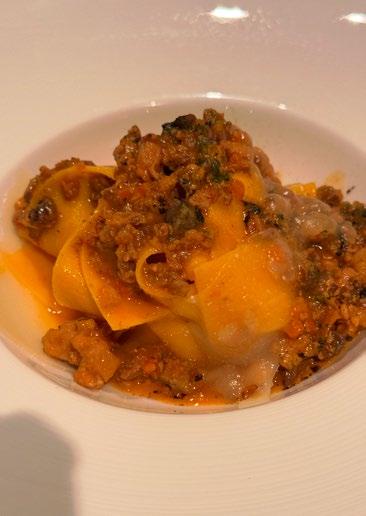
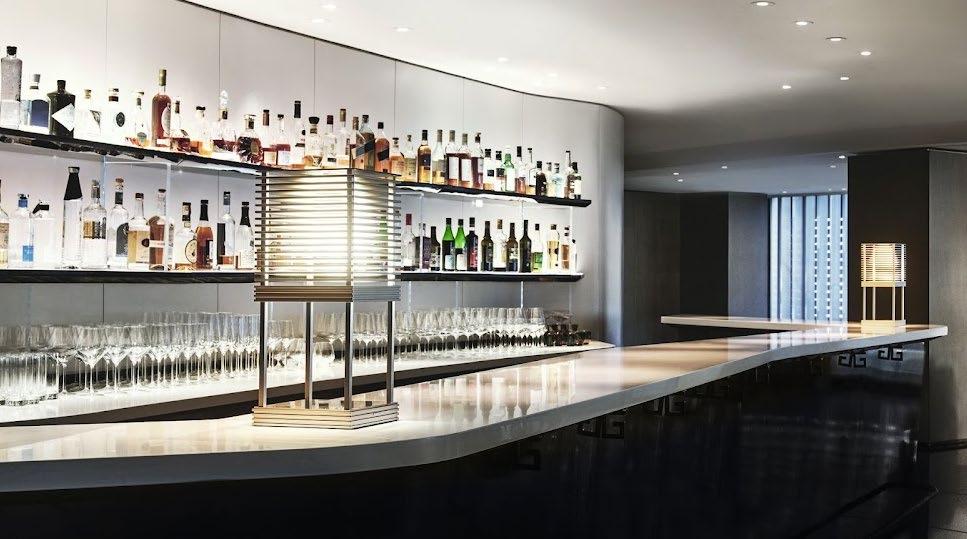
residences was a personal project for Giorgio Armani. Supposedly, the sartorial nonagenarian was to occupy one of the penthouse suites above the restaurant when completed. The global brand has many restaurant locations, but New York City remained a place where Armani wanted to extend his renowned blend of high fashion and fine dining. He sought to offer a luxurious ambiance paired with exceptional cuisine. The construction of the complex took Armani several years before his vision finally came to fruition.
“Giorgio Armani was personally involved with every decision of the New York City location,” remarked Steve Drewery the restaurant manager. Steve has been with the Armani brand for a long time. He managed the Armani restaurant in Tokyo before he was called to assist with the opening and managing of Giorgio’s pet project. There are more than 20 Armani restaurants throughout the world; in such cities as Mumbai, Cannes, Munich, and Milan. His completed project created a curious buzz around New York.
I did not make a reservation, which is necessary for the highly coveted spot located on Madison Avenue between 65th and 66th Streets, so I sat at the bar. The top, made with Italian marble, immediately caught my
attention. Its interior design embodies Armani’s minimalist aesthetic, featuring green lacquer surfaces, eucalyptus wood, and soft banquettes. In addition, the gray bar stools have a luxurious fabric and metal frame, creating a minimalist yet opulent atmosphere.
At the bar, I ordered a Manhattan. Ricky, the bartender, made the drink, much to my delight. We chatted for a while, as I sipped and absorbed the atmosphere. He is from Bogotá, Colombia, and worked in other Italian-owned restaurants. He realizes what an opportunity it is for him to work at a worldwide brand, a stone’s throw away from Central Park.
Whether it’s contemporary Italian dishes, impeccable service, or chic interiors reflecting Armani’s signature style, the experience is designed to impress. Perfect for a special occasion or a refined dining experience. While Ricky was attending to the orders of other patrons, I looked over the lunch menu against the soft lighting that enhanced the warm and inviting feel of the space.
I ordered the insalata di arancia, finocchio, salicornia, and pappardelle, ragu di cortile pecorino. Before my orders arrived, I was given crostini sticks, an ample size of sourdough bread, and parmesan wafers. Ricky poured into an oval-shaped plate an olive oil imported from
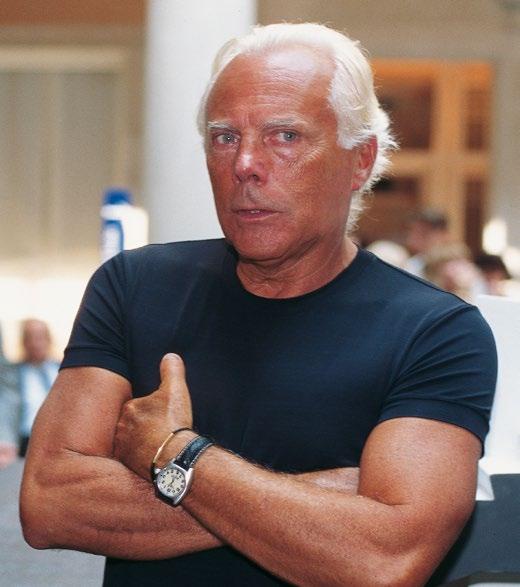
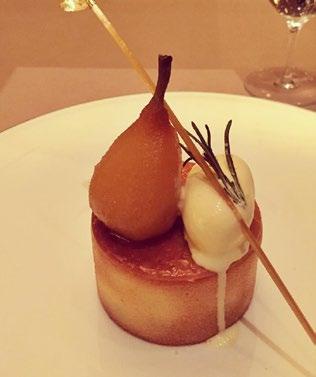
The article opens with photographs of the wines, food, the interior and exterior of the Armani Ristorante in Manhattan. The left page features a shot of the bar inside Armani, and on this page, the fashion titan, Giorgio Armani, and a dessert served at his restaurant.
Sicily. I dipped my piece of sourdough bread into the olive oil, and the taste brought me back to my visit to Italy this past summer.
The restaurant offers meticulously crafted Italian dishes, including classics like Maine lobster with grapefruit and sabayon, trufflelaced pasta, and saffron-infused steak tartare. Guests can choose from a prix-fixe lunch menu or an à la carte dinner menu, complemented by unique cocktails like the bourbon-based Madison Rubino or the citrusy Garibaldi in Love. Inside the restaurant, there is a second level reserved for private parties. Upon arrival to the mezzanine level, there is an impressive storage of the best Italian and French wines.
My pappardelle, ragu di cortile pecorino did not disappoint. The portion was typical to the Italian palette, with no gluttony of food portions found in many Italian American restaurants. Each dish looks meticulously crafted. Executive chef Antonio D’Angelo, a Neapolitan, prides himself
on authentic Italian-made dishes.
Ricky explained that during their daily staff meetings, one of the chefs expressed his disdain for a patron who requested Tabasco sauce for a dish. The bartender said, “It is highly emphasized that the dishes offer an authentic Italian experience not American.”
After I finished my very satisfying lunch at Armani restaurant, there is a door inside the establishment that led to the boutique. I decided to peak into the clothing store. Even though I was surrounded by cashmere sweaters, silk shirts, and the aroma of the finest Italian leather, I could not escape my pleasant and delicious experience at the restaurant.
Dining at Armani Ristorante was a delightful experience, where exquisite flavors, impeccable presentation, and sophisticated ambiance created an unforgettable culinary journey. Every detail, from the innovative dishes to the warm, attentive service, leaves you feeling pampered and inspired, making it a destination worth savoring again and again.
The tables are set. Our kitchens glow late into the winter evening. We say goodbye to the past. We clink our glasses. We cherish our time together. The hard work begins. We renew ourselves. We prepare meals to celebrate new beginnings. A New Year is upon us.
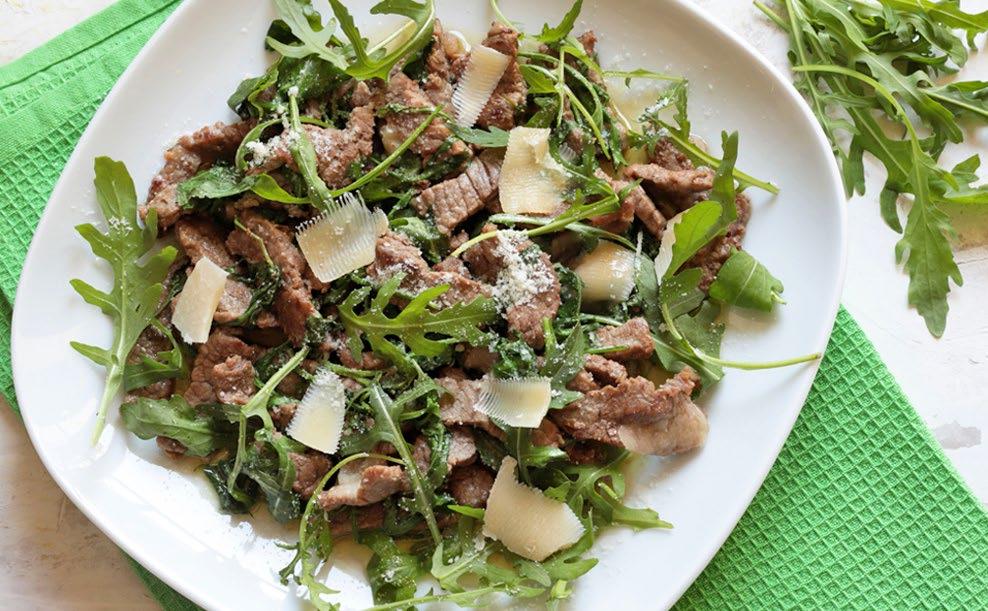
Ingredients: 1 lb. beef sirloin or flank steak, sliced thin against the grain, 2–3 tbsp extra-virgin olive oil, 1 clove garlic, salt & freshly ground black pepper, juice of ½ lemon, 2 cups fresh arugula, 1 cup Parmigiano-Reggiano shavings
Instructions: Pat dry beef and season lightly with salt and pepper. Use a wide skillet over high heat. Add olive oil until shimmering. Add beef in a single layer. Cook 30–45 seconds per side—no more. You want to sear the meat. Remove from heat. Add lemon juice, toss meat with arugula so it just wilts. Serve topped with Parmigiano shavings and a drizzle of olive oil.

Ingredients: 1 lb spaghetti, 2 bunches broccolini, trimmed and cut into 2–3 inch pieces, 4 tbsp olive oil, 2 anchovy fillets, 2 cloves garlic, thinly sliced, ½ tsp red pepper flakes (or to taste), ¾ cup pasta cooking water, ½ cup ricotta salata, finely crumbled, freshly ground black pepper.
Instructions: Bring a large pot of slightly salted water to a boil. Add broccolini to cook 2–3 minutes until just tender. Remove with a slotted spoon. Add pasta to the boiling water and cook until al dente. Reserve at least 1 cup of the pasta cooking water before draining. In a wide skillet, warm the olive oil. Add anchovies until they dissolve into the oil. Add garlic and red pepper flakes and cook gently until fragrant. Add the blanched broccolini to toss to coat. Add pasta directly to the skillet with a splash of pasta water. Toss, adding more water as needed. Remove from heat. Season with black pepper. Top generously with crumbled ricotta salata and a final drizzle of olive oil.
Ingredients: 1 lb dried chickpeas, soaked overnight (or 2 cans chickpeas, drained and rinsed), 4 tbsp extra-virgin olive oil, 1 small onion or 1 shallot, finely chopped, 1 carrot diced, 1 clove garlic, lightly crushed, 1 sprig rosemary (or a bay leaf), 4–5 cups vegetable broth, 8 oz short pasta (ditalini, tubetti, small shells), salt to taste, freshly ground black pepper.
Instructions: If using dried chickpeas, drain and simmer in fresh water until tender (about 60–90 minutes). Reserve cooking liquid. In a heavy pot, warm the olive oil over medium heat. Add onion, carrot and cook gently until soft and translucent. Add garlic and rosemary; cook briefly until fragrant. Add chickpeas and enough broth (or chickpea cooking liquid) to cover by about 1 inch. Simmer 15–20 minutes. Using the back of a spoon, mash about one-third of the chickpeas directly in the pot. This creates the soup’s signature creamy texture—no cream involved. Bring to a steady simmer. Add pasta and cook until al dente, stirring often. Add more broth as needed—the soup should be thick but spoonable. Season with salt. Remove garlic and rosemary. Finish generously with black pepper and a final drizzle of olive oil.
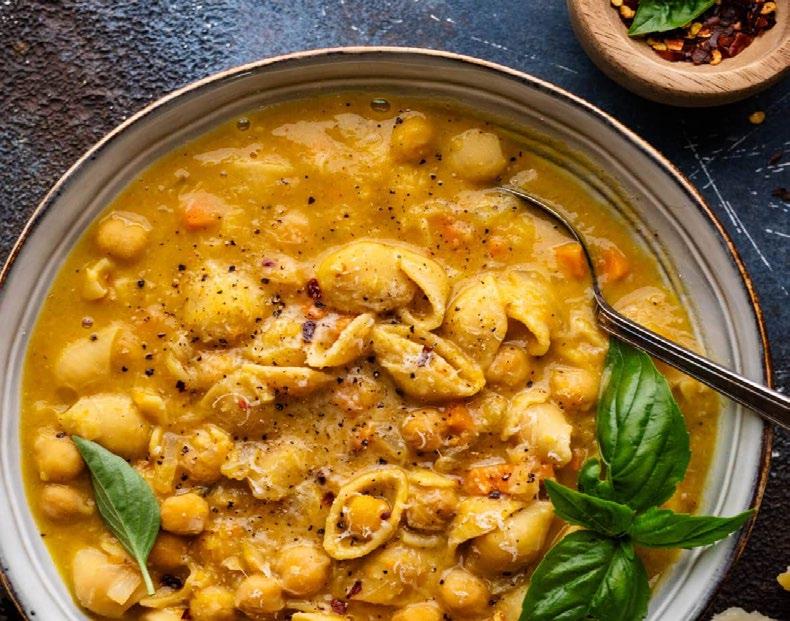
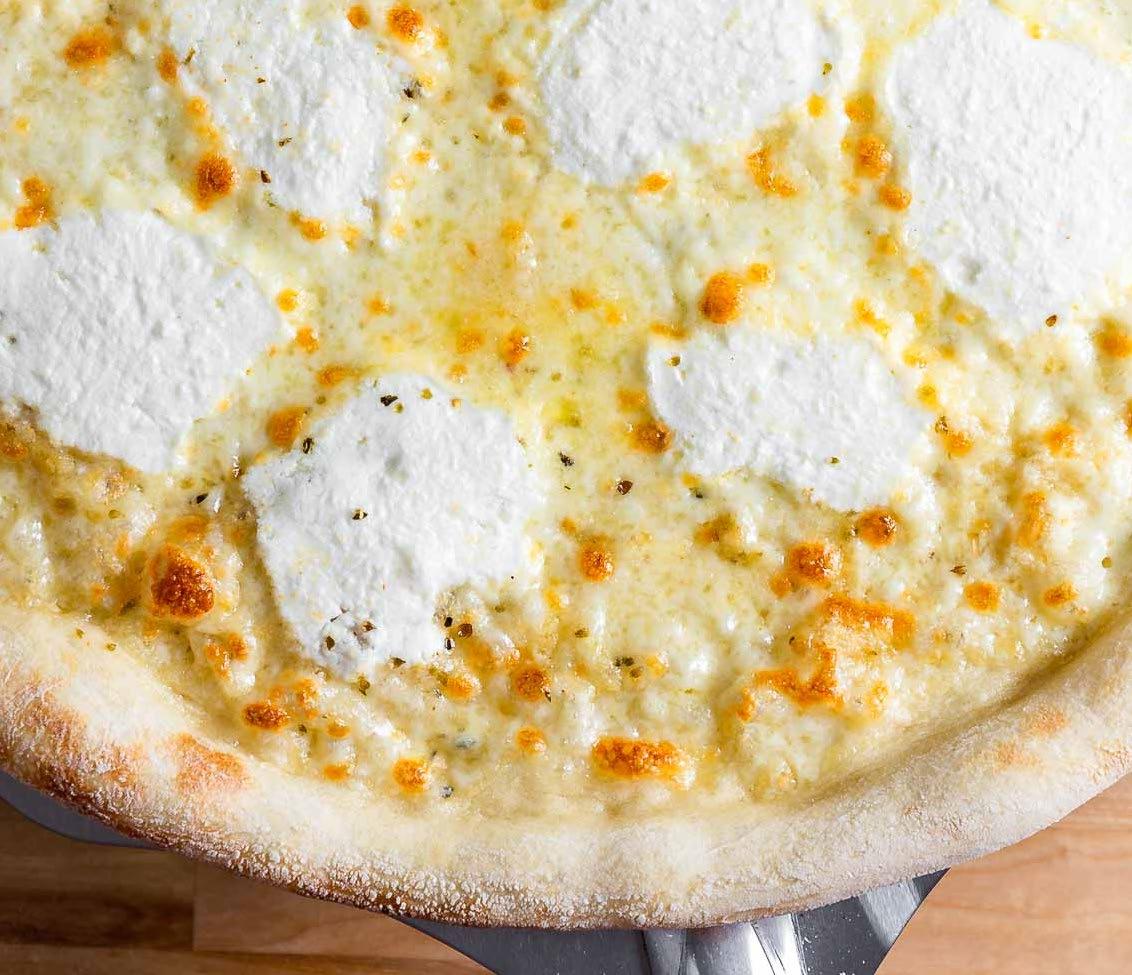
Ingredients: 1 lb pizza dough (room temperature), extra-virgin olive oil, ¾ cup whole-milk ricotta, 6–8 oz fresh mozzarella, fine sea salt, freshly cracked black pepper, fresh rosemary or thyme
Instructions: Preheat oven to 475–500°F. If using a pizza stone or steel, heat it for at least 30 minutes. Stretch dough into a 12–14 inch round. Transfer to parchment or a floured peel. Brush lightly with olive oil and sprinkle with a pinch of salt. Add the cheese—spoon small dollops of ricotta evenly across the dough and then add the mozzarella. Bake 10–14 minutes until crust is blistered and golden. Remove from oven. Drizzle with olive oil, add black pepper, and scatter herbs if desired.
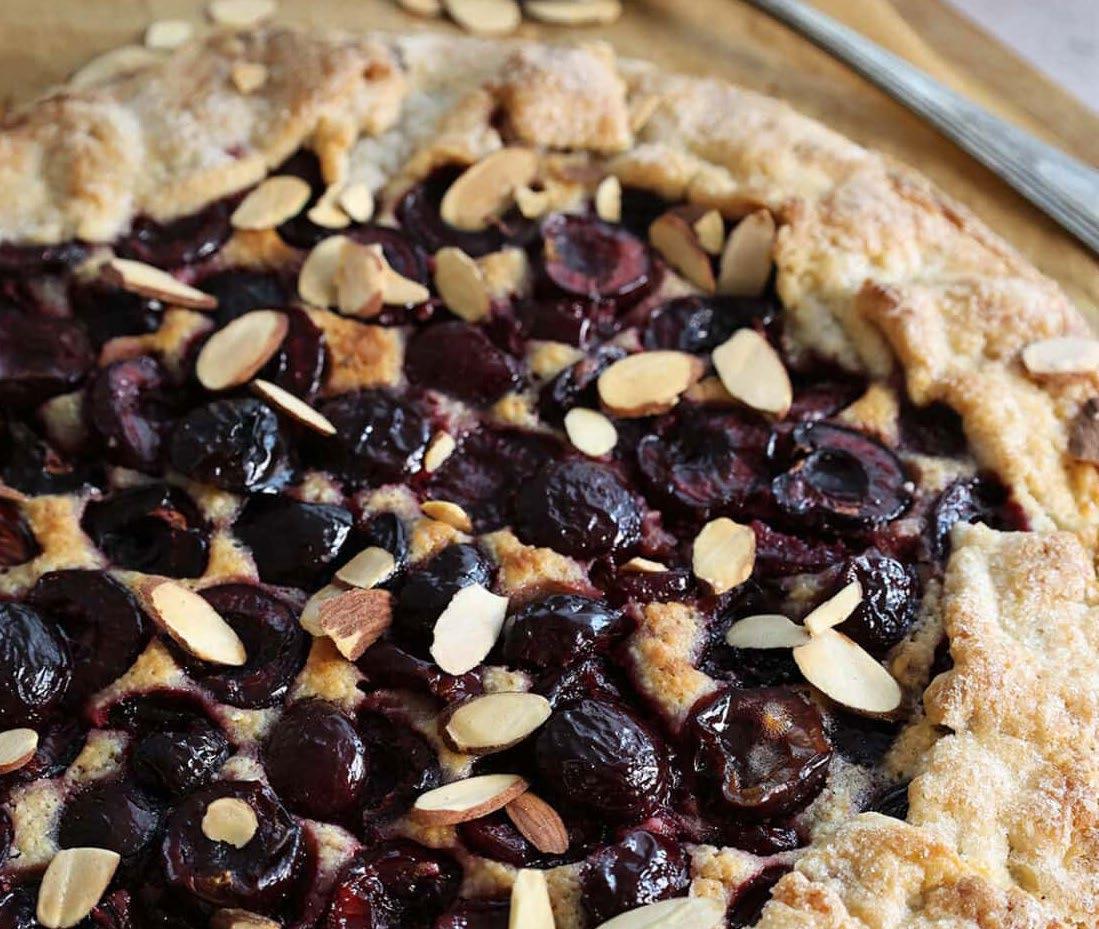
Ingredients: For the Pasta Frolla (Italian Shortcrust)—2½ cups all-purpose flour, ½ cup sugar, 12 tbsp unsalted butter, cold and cubed, 1 large egg, 1 egg yolk, zest of 1 lemon, pinch of salt, 1/4 cup sliced almonds. For the Filling—2½–3 cups cherry preserves or pitted sour cherries (amarene). (If using fresh cherries: add 2 tbsp sugar and 1 tsp cornstarch)
Instructions: In a bowl, combine flour, sugar, salt, and lemon zest. Cut in the butter until crumbly. Add the egg and yolk and mix just until a dough forms. Shape into a disk, wrap, and refrigerate 30–60 minutes. Preheat oven to 350°F (175°C). Roll out about ⅔ of the dough and line a 9-inch tart pan. Trim edges. Spread cherry filling evenly over the base. Press edges gently to seal. Bake 35–40 minutes, until golden and fragrant. Top with sliced almonds. Cool completely before slicing—this is essential.
Ingredients: 12 oz spaghetti, 4 large eggs, ¾ cup granulated sugar, est of 1 orange (or lemon), ½ tsp vanilla extract, 3 tbsp unsalted butter, melted, pinch of salt, candied cherries (for topping), butter and breadcrumbs (for the pan), powdered sugar (for finishing)
Instructions: Boil the pasta in lightly salted water until just al dente. Drain well and let cool slightly. Butter a 9-inch round pan and dust with breadcrumbs (or fine sugar). In a large bowl, whisk eggs with sugar until pale. Add citrus zest, vanilla, melted butter, and salt. Add spaghetti to the egg mixture and toss gently until fully coated. Transfer to pan, smoothing the top. Decorate with candied cherries. Bake at 350°F for 35–40 minutes, until set and lightly golden. Let cool 10 minutes. Invert onto a plate. Cool completely. Dust with powdered sugar. Slice like a cake.
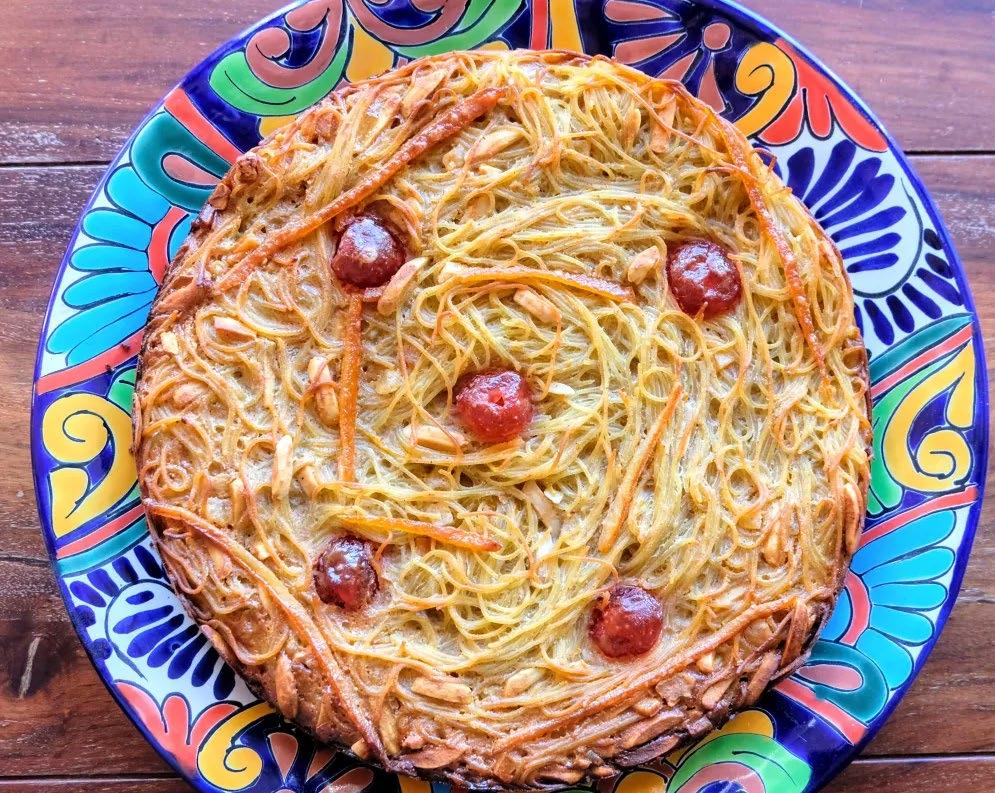
By Nino Provenzano
Translated by Gaetano
Cipolla
Published by Arba Sicula
https://arbasicula.org
Available at Amazon.com
Stairs and ladders appear everywhere in Italy, in Sicily, and in America. We make our ascension stepping on rungs of wood, concrete and marble in churches, in courtyards, in old houses worn smooth by generations.
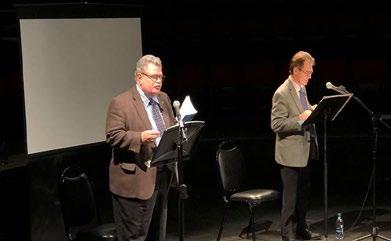
Stairs and ladders are architectural, yes — but they are also symbolic. In La Scala Magica (“The Magic Ladder”), Sicilian poet Nino Provenzano transforms such images into meditation on memory, identity, and cultural ascent. His new book of poems is a tribute to the spirit of Sicily.
In an interview with PRIMO, Provenzano explained how the “ladder” in his anthology title serves as a metaphor for humanity’s instinct to reach higher — toward knowledge, progress, and the “high fruits of life.” The ladder is rooted in lived experience.
Provenzano remembered how his grandfather climbed a ladder that leaned against a fig tree, in order to gather the fruit to share with Nino and others in his family. The recollection underscores the communal and humble experience of many Sicilians and Sicilian Americans. The ladder was a means rather than an end. Provenzano contrasts this ideal with what we see today inn our technological age. The balance has shifted. The means have become the end, now concentrated in the hands of a few.
The “magic” of the ladder, then, is not merely aspiration, but a reminder to restore purpose to our own striving.
Much of Provenzano’s work is written in Sicilian. Professor Gaetano Cipolla was responsible for the English with translation.
For Provenzano, Sicilian is not a dialectal embellishment but the essential vessel of identity — “the first and instinctive language” through which imagery flows most vividly. In La Scala Magica, as in his earlier collections, the vernacular carries history, humor, social commentary, and ancestral warmth. The rhythms of Sicilian evoke kitchens, processions, and intimate conversations. Even for readers who do not speak the language, the musicality of Italy’s largest region communicates something deeper than literal meaning.
The bilingual structure is central to Provenzano’s mission. English translations open the poems to
second- and third-generation Sicilian Americans who may no longer speak their grandparents’ tongue but still recognize the sound. Provenzano notes how the power of Sicilian — in its idioms, tonal inflections, and humor — will inevitably soften in translation. Yet the emotional core remains.
Provenzano says that readers often tell him that in the English versions they glimpse “their grandparent’s world.” That is no small achievement.
The featured poem, “Hello Sicily, I’ve Returned” (“Ti Salutu Sicilia, Riturnavi”), beautifully illustrates this duality of belonging and estrangement. The speaker returns to Sicily only to realize he is no longer recognized — yet he still recognizes her mountains, skies, winds, and sacred rituals. In one of the poem’s most poignant turns, the living faces at a procession feel distant, but the cemetery offers recognition and intimacy. Memory resides most vividly among the ancestors. The poem closes not with triumph, but with tears — an acknowledgment that cultural return is emotional, not merely geographical.
Provenzano’s long involvement with Arba Sicula and the Sicilian literary community clearly shapes this collection. His work stands within a continuum dedicated to preserving language and culture. Yet La Scala Magica is not backward-looking nostalgia alone. It is an appeal to younger generations. Sicily, he reminds us, has always been a crossroads of civilizations — Europe, Asia, Africa. To preserve its vernacular is to support the “linguistic biodiversity of the planet.”
At this stage in his evolution, Provenzano writes with tonal control and seasoned authenticity. Irony and gentle sarcasm appear alongside reverence. The ladder he offers readers is not ornamental. It invites ascent — step by step — toward memory, justice, family, and cultural continuity.
THEY MADE ALL THE DIFFERENCE
By Ray M. Vento www.rayvento.com
Available at Amazon.com
In every community there are individuals whose influence quietly shapes the lives around them.
For Ray M. Vento, the community is his hometown of Los Angeles, as he conveys in his outstanding new book, They Made All the Difference.
The community consists of family—parents, grandparents, aunts, uncles, and cousins. Friends and neighbors extend the network. They may not always appear in history books or headline the evening news, yet their example leaves a lasting imprint on all of us.
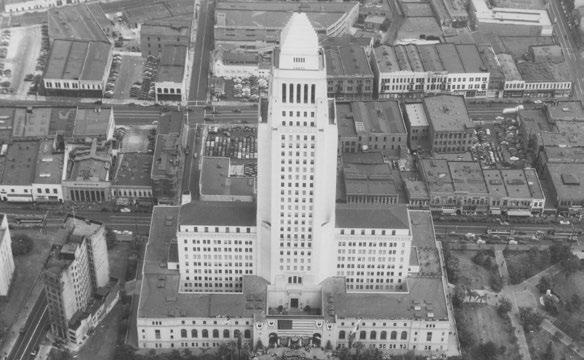
Vento pays tribute to such individuals—men and women whose character, generosity, and leadership elevated the lives of others. His focus is on the first ten years of his life. He writes: “My family constituted the foundation of this experience. I was raised in a large Sicilian American family where love manifested in myriad unspoken ways: a reassuring hand on the shoulder, a plate served without inquiry, and the lively resonance of laughter in a crowded room.”
Vento’s book is both a celebration and a reflection. Through a series of portraits and recollections, he introduces readers to people whose stories illuminate values often associated with the Italian American experience: perseverance, devotion to family, faith, loyalty, and a deep sense of community responsibility. He shines a light on the kinds of people who shape a life through personal example— family members, mentors, civic leaders, friends, and relatives whose quiet acts of kindness and courage ripple outward across generations.
Not only people, Vento pays tribute to Los Angeles. The city rises from a collection of small towns to dominate America’s postwar landscape. He writes: “Los Angeles in the 1940s was a city wide awake, restless, and alive with the relentless hum of industry. The sweet fragrance of orange blossoms wafted through the air, intertwining with the sharp scent of machine oil, creating a unique aroma that embodied the spirit of resilience.”
The strength of the book lies in its sincerity. Vento writes with a personal voice that suggests these stories are not distant historical sketches but lived memories. The individuals he profiles are presented not as abstract heroes but as real people—who faced challenges and made sacrifices.
Vento is an excellent writer. His book is a poetic retrospective of what makes a city great. The steadfast nature of people who are committed to one another remains the true character of a metropolis; not the buildings, landmarks or sprawling highways. He reminds readers that greatness often appears in humble circumstances.
Many of the figures described in the book embody the spirit of the immigrant and second-generation Italian American journey. Their lives reflect a tradition of hard work, cultural pride, and moral responsibility that has long defined Italian communities in the United States. Vento captures this sensibility with warmth and respect, emphasizing how family values and a sense of heritage helped shape the character of those he celebrates.
Yet the book is not merely nostalgic. At its heart, They Made All the Difference carries a message for the present. In an era when public life can seem dominated by spectacle and division, Vento’s portraits remind us that the real foundations of society are built through integrity, compassion, and personal example. The people he writes about did not seek fame. What they sought instead was to live well, help others, and contribute to the communities that shaped them.
Readers will likely find themselves thinking about the people in their own lives who made a difference: a teacher who offered guidance, a parent who sacrificed quietly, a neighbor who extended generosity in a time of need. In that sense, the book becomes more than a collection of stories—it becomes an invitation to remember.
Ultimately, Vento’s work serves as a testament to the enduring power of character. By honoring those who shaped his life and community, he reminds us that the most meaningful legacies are often the ones built through everyday acts of decency and devotion.

By Anthony Celano Available at Amazon.com www.anthony-celano.com
Anthony Celano’s The Case of the Deadly Diary represents the seventh installment in his Sergeant Markie Mystery series.
The novel’s first victim: A retired NYPD captain, Johnny Bronco, found murdered—shot and stabbed—in the parking lot of a Bronx golf course. His death sets the tone for a dark yet fascinating tale of obsession, betrayal, and revenge. The case turns on whether Sergeant Al Markie and, his partner, Detective Oliver Von Hess, can piece together the threads before the body count rises higher.
At the heart of the story is Esther Trumbell, a young woman cursed by bad love. She takes her own life after one too many failed romances. Unbeknownst to her, the landlord of the building, where she lives, is her biological father, Cosmo. When he discovers her diary and the list of lovers, including the police captain, he sets on a path of murderous revenge.
Celano, a former NYPD detective and squad commander, writes with an insider’s authority. His 22 years experience on the force included work in organized crime units, DEA Joint Task Force, and multiple detective squads. He brings rare authenticity to the procedural details. Police work is far from glamorous as the novel shows the unfiltered efforts of detectives following leads, interviewing suspects, and balancing inter-precinct dynamics. The mobsters who circle the case are not caricatures but real-life schemers. Their ruthless ambitions make up for much of the back drama in the story.
As always, Sergeant Markie emerges as a compelling lead. He is tough yet vulnerable. Readers see him wrestling with personal heartbreak while trying to maintain professional focus. Detective Oliver Von Hess remains his able foil. Together, they form a partnership to carry the novel forward.
Celano takes readers on a tour of the five boroughs of New York. The Bronx is the setting for much of the action in The Case of the Deadly Diary. The diary becomes a record of desire and despair. The troubled spirit of Esther lives on to drive the characters to their darkest ends. Celano conveys a personal depth to ensure a compelling narrative. The novel is both a satisfying crime fiction and a poignant meditation on love, loss, and vengeance.
The Case of the Deadly Diary is a sharp, authentic, and engrossing mystery that proves Anthony Celano’s credentials as both a storyteller and a veteran of the world he describes. Fans of gritty police procedurals will find themselves hooked, while long-time followers of Sergeant Markie will welcome another gripping chapter in his journey. The Case of the Deadly Diary is another outstanding work by Anthony Celano.

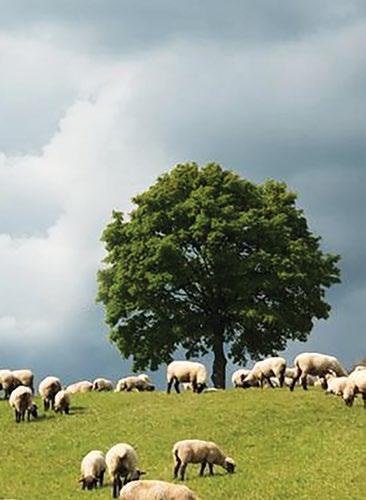
The story of Fransesca and her close friendship with the family donkey Asinella.
A beautiful children’s book to transport readers, both young and old, to the good country life of Italy..."
The book is a celebration of the pack animal in Italy’s culture. While tending sheep in mountain fields, Francesca and her father face the dilemma of a recent arrival of new lambs. Finding a way to transport the babes back down to the farm calls for Asinella to make the needed journey.
Buy This Book Today. Available at Amazon.com www. joannerussoinsull.com