
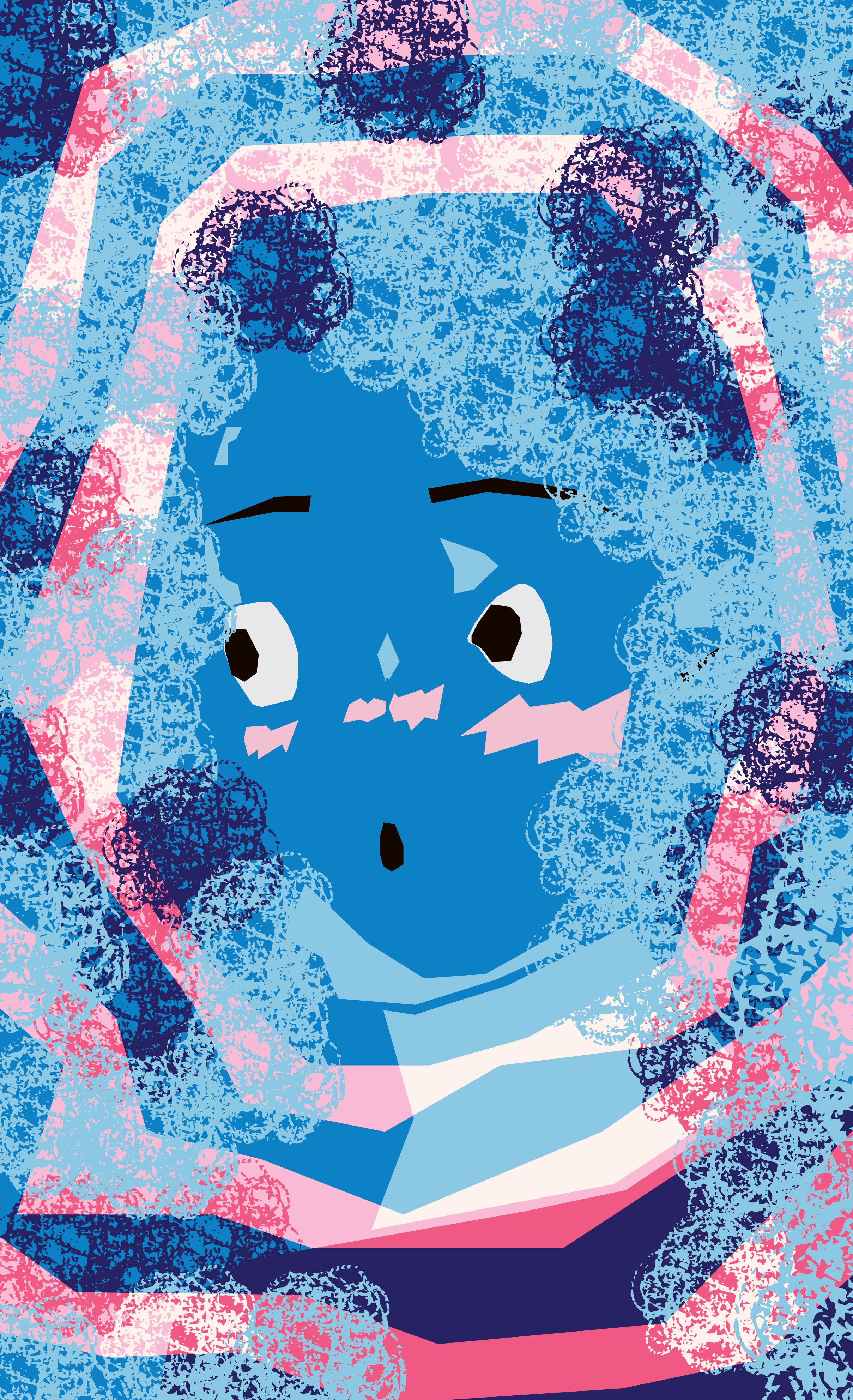
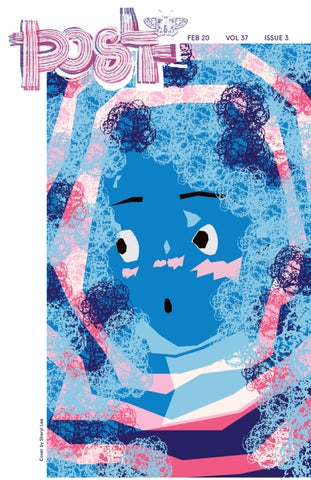
Cover by Sheryl Lee

Dear Readers,
I don’t know about you, but I could certainly use another four-day weekend. ASAP. I went into this holiday weekend feeling excited and hopeful about using the abundance of extra time to get my life together and catch up on all of my overdue readings and tasks. But in a (not-so-) shocking turn of events, the time absolutely flew by and I only managed to accomplish about half of the items on my pesky to-do list. Between homework and club commitments and everything in-between, I fear I may be a bit overcommitted this semester. Not to mention, this semester has had the added emotional weight of everything going on in the world right now. I’m grateful to have had even a couple days to stop and reset and take a breath, but I’d be lying if I didn’t admit that my heart has been feeling extra heavy as of late.
Thankfully, amidst all of the darkness, post- continues to be a bright
light full of creativity and wonder. In this week’s issue, our writers bring a delightful array of pieces that can help take your mind on a journey to another world. In Feature, Michelle writes about the ebb and flow between her past memories and future dreams, while AnnaLise draws on the similarities between Greek life and D3 fencing. In Narrative, Christina ruminates on her relationship with the piano and Coco reflects on alone time after breakups. In A&C, Alyssa connects her experiences with OCD to Dora Jar’s “Timelapse” and Jack brings us some hard-hitting journalism with an interview about eras of popular music. In Lifestyle, Maria shares about the hidden treasures that lie inside the Lindemann, and Merissa reflects on December 13 and her experiences at Brown as a RUE student. And last, but certainly not least, make sure to take some time to enjoy Ina’s crossword and April’s comic strip.
To put it lightly, there’s a lot happening in our world right now. There’s the beautiful little joys of life, like frolicking in the snow and handing out flowers on Valentine’s Day and carving out the time in your day to do something whimsical… and unfortunately, in just the past couple of months, we’ve also faced more than our fair share of recent tragedies as a community. If there’s anything I’ve taken away from it all: Go give your friends an extra tight squeeze, grab a sweet treat, or do whatever little thing might bring you joy and remind you of everything we love about this campus and this community and this place we call home.
Taking it one day at a time,
Jessica Lee Copy Chief
by Michelle Bi Illustrated by Minglu Du (@duminglu_art)
I know the path to the beach by heart.
The main road of my hometown runs south all the way down to the Pacific, just a halfhour ride from California chaparral to open water. Once you leave my house, it only takes 10 minutes for the houses and buildings to fall away—The rest of the drive snakes through the Santa Monica Mountains, scrubby green brush draped over rock and sand, blunted peaks soaring into blue sky.
As a kid, I’d nod off in the backseat, trusting the rhythm of my dad easing the car along the hills’ curves. Now I’ve taken to being the one who sits behind the steering wheel, windows down, sunroof cracked to let in the salty breeze. I blast Maggie Rogers and Remi Wolf when I’m with my friends; I hold soft conversation when I’m with my mom.
My college friends have complained time and time again that I embody all the stereotypes: West Coast through and through, the Californian who never stops talking about it. But I’d like to think that if they ever visited the shores of my home, they’d change their minds. Once you’ve nestled your body into a hollow of sun-warmed sand—paddled out into crashing waves and seafoam—turned around to look at a suddenly-distant shoreline, wondered at the smallness of the things you left behind there, there is no going back to who you were before. There is no going back.
When I visited the shoreline as a kid, my favorite activity was always tidepooling—I’d dip two stubby fingers in and squeal at the coldness of bright bat stars creeping their way slowly across the rocks. Red urchins waved a thousand slender spikes with an overwhelming
leisure in the saltwater current I stirred up. Even the turban snails seemed to acknowledge my presence—although I could only see their pyramidal shells jutting up into the shallow pools, I’d picture their antennae waving inside, saying hello to me. I imagined what it would be like to be that small. Sunbeams shafting through the water, your whole world cupped in the arc of a rockfall.
I liked that I was steady-footed enough to hold my balance while investigating the tide pools, even perched on moss-slicked rocks. I liked that while the waves crashed ceaselessly behind me, I could sit there and study the stillness of my own little world, the way the sunlight played off of the eddies and whirlpools, the way a million blades of grass swayed under the clear blue surface.
Mostly, I think I liked that I felt big. I towered over all the tide pool creatures; each one fit in my hand. I lorded over my own tiny realm. If I angled my body right, I could cast the whole thing in my little-girl shadow. * * *
My mother is not a sentimental person, but she does keep a plastic box full of the seashells my sister and I brought home from the coast over the years. As kids, we’d pluck them from the sand, study them with delight, and then promptly forget about them.
A few years ago, I’d been searching in the cabinet for batteries and came upon the box instead. I rooted through the shells, felt their solid weights shuffle through my fingertips. I picked up a dark mussel shell, its insides gleaming white, opalescent.
My mom watched with amusement from the corner as—out of some deep-seated
childhood instinct—I cupped the shell to my ear.
“Can you hear the water yet?” she said.
In seventh grade, I traveled with the rest of my class to Catalina Island off the coast of Long Beach. As I dissected a squid with the girl who would become my best friend, some other girls started a whispered dare that if you ate a squid eye, the boy you liked would confess to you tomorrow. My almost-best-friend popped one of them in her mouth, and I the other—small dark pearls, with a surprising firmness—and we both giggled and rolled the tiny orbs on our tongues; they tasted like rubber and salt. I imagined tentacles sprouting in my stomach and the slouchy, tousle-haired boy in social studies holding my hand the next morning.
The teacher gave us instructions for dissecting the squid: how to tease out the long strings of its intestines, how to scalpel off its fins, how to locate and retrieve its three oncealive hearts from the dark slime of its insides. A breakdown of a body. A manual to life.
Later that night, we swam out into the Pacific, trembling when the freezing waves licked at our wetsuits. I remember that I couldn’t quite figure out how to fit the snorkel between my lips. Each time I dipped my face in the water, salt water flooded into my mouth, and I shivered at the taste.
Our group of teens chattered and paddled into open water. We beamed our flashlights down and around, searching the sand below for interesting fish, but all we caught were rocks and the flash of a singular garibaldi’s tail as it raced away. Quickly, we began to grumble with disappointment.
Instead, our guide told us to turn off our flashlights. Begrudgingly, we did, and when we dipped our faces into the dusk-dark water, it glowed. A million glowing flecks of silver, drifting around and through our bodies. My mouth full of salt, I gasped at the depths of the ocean, the light it contained.
Later, our guide explained to us that it was bioluminescence, and those dots were dinoflagellates, and the phenomenon was driven by light-emitting chemical reactions within the plankton’s bodies. I didn’t care; I just called it magic. I still do.
* * *
Part of me thought that I might stay with the first boy I ever kissed, all broad palms and soft fingers. We’d journey from coast to coast to see each other, and the hours would be arduous, and we’d fight over FaceTime, but it’d be worth it in the end, when we found our way back—back to each other.
Part of me thought that my mouth would never unlearn any of the names of my hometown best friends. Over the breaks, we’d fit back together as if nothing had ever changed; I’d know the intimate details of their new and loose lives, and they mine. The idea of “growing apart” would be something that we only ever heard adults commiserate about, and we’d laugh at the absurdity of that concept. Things would be easy—for us, for the relationships we’d fostered with each other.
But time and distance have a funny way with these things, and now I’ve seen both of those stories through. Now I’ve finished my first year of college, and I’m walking along Zuma Beach with my friend—a senior at my old high school—and she’s asking, “Did you always want
to leave California?”
Tide pools, and sweaty summer days, and UV indices of eight. Sunroofs down, and salt air, and first kisses under pomegranate trees at dusk. The sound of my sister laughing. The sound of calling gulls.
“Maybe part of me did,” I said. “Just to see what’s out there.”
“And what’s out there?” she asked. * * *
In August, before school starts, we go to Narragansett. We’re all nervous for classes, and for leading orientation—the 17 new souls we each are about to be tasked with. But as soon as we step out we know today will be anything but relaxing. The beach teems with people, and the sand is gravelly. In the distance, the waves are roaring.
It’s warm and only two of us had the foresight to wear the proper swimwear. The picnic blanket is too small for the rest of us and my denim shorts get sandy instantly and the sunlight is so hot, it feels like we’re baking.
I squint my eyes, and my vision is more bright than black. For an hour, I doze in and out of sleep as ABBA floats from my friend’s speaker and gulls scuttle around our blanket.
Somebody passes around a rock, and we each carve our initials into it with a particularly sturdy woodchip. I’m the last one to get it; when I flip it into my palm, it’s already warm.
Back in Providence, the humidity is almost oppressive. I track sand all over my dorm room—so new that the walls are still bare and the shelves empty. My suitcases yawn from the floor, dripping clothing and paraphernalia that I hadn’t bothered to unpack yet.
I roll up my sleeves and get to work.
What’s out here: icy winters, and parkas, and weeks on end without the temperature rising above freezing. Long delirious hours in the library, and twin-sized beds, and a severe lack of fresh fruit.
And also: a crown-molded fireplace in my room, and perfect scarlet autumn, and musical theater. Snow angels, bus rides downtown, late nights spent crying, late nights spent crylaughing. Fairy lights and red walls, green grass and guitar music. The feeling of loving a class. The feeling of a hand fitting into mine.
Trauma and tragedy and grief. Healing, too. New people. New homes, new dreams. Seawater. Shorelines. That’s what’s out here, I sing back through time, and now I imagine these words traveling like ripples, like plankton glowing in the watery dark.
* * *
At night, I dream myself away from this winter, back to Leo Carrillo Beach, where I dig my heels into the sand, feel it shift beneath me. I clamber over tide pools and clutch mussels in my hands. I sink into low tide.
And in the days I inhabit this life, and this life, too, is the shoreline. I’m looking for little wonders, starfish and tide pools. I’m walking myself away from the ground I knew.
Now the waves rush around me, pound in my ears, swallow my body whole. Now I swim out into the open ocean and the current takes me with it, and all the weird and wonderful things of the world shine to me from the depths. Mom, I hear the water now. I’m plunging into it.
Rush is an endurance event.
Or, at the very least, like a tournament of sorts. For comparison, my freshman year of college, I’d spend weekends getting up early, meeting my teammates, groggily boarding the bus with all my gear, and driving several hours to compete as a D3 fencer. Now, once a year, there’s a different kind of stamina test: a weekend spent in nonstop conversations.
Instead of rounds of fencing, there are rounds of interviews. Girls line up outside the doors of sorority houses (Sears,
what fencing and greek life have in common
by AnnaLise Sandrich
Illustrated by Yoonseo Lee
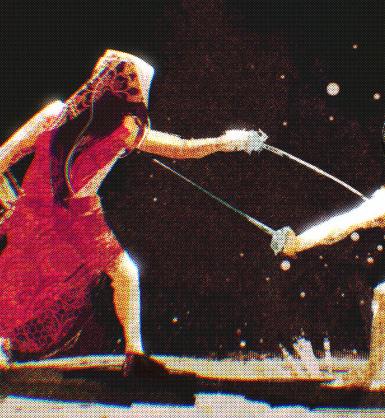
Harkness, Goddard, and Diman on Wriston and Patriots Court) for three days of continuous, organized mutual judgment. There is no gear, but there are coordinated outfits. I’ve swapped a silver fencing lame for a purple sweater, a blade for a red carnation.
I am aware of the fact that rush at Brown is tame in comparison to many schools. At Brown, Greek
Life comprises a small percentage of the student population, and chapters are substantially smaller than at other schools, with our sororities ranging from 50 to 70 members, even as involvement has been increasing in recent years. There are only four officially recognized National Panhellenic Council sororities at Brown—Kappa Alpha Theta (Theta), Kappa Delta (KD), Delta Gamma (DG), and my own, Alpha Chi Omega (AXO). Compare
that with Dartmouth, which boasts 11 in spite of a smaller student body, or the infamous University of Alabama, which has 18.
My brother’s girlfriend is an AXO at UT Austin. Her rush process looks a lot different from mine, involving showing up a full week before classes (and paying to do so). And I’m sure her chapter looks different too—at almost 300 members, it is about six times the size of mine.
But Brown Greek Life involvement has been on the rise. This semester, more than 250 Potential New Members (or PNMs, as sororities call them) participated in Spring formal recruitment—record numbers for Brown rush.
I remember thinking about my first ever fencing tournament—This is literally a nightmare
I did not mean it idiomatically. You know those dreams where you end up in a situation in which you are completely and totally unprepared and unqualified to do the things expected of you? Somehow, I found myself at a collegiate competition at Vassar for a sport I had maybe a month or two of experience in. I struggled to put the equipment on quickly. I forgot to salute the refs and my opponent before starting a bout. I barely understood the rules. I was defeated time and time again.
Fencing is a unique and niche sport, and Haverford’s was a unique and niche team. At
Haverford College, there is a physical education requirement. Though I initially figured I would just fulfill mine with independent running, at the last second, I signed up for a fencing class, hoping that I could meet some new people. At the end of the six-week class, the coach of the varsity team invited me and a few others to walk on. Because the sport is so small and so specific, at the D3 level, there was room for a few beginners. Also because the sport is so small, occasionally D3 teams will compete at the same tournaments as D1 schools and even club teams.
It is the only sport I can think of in which a person with maybe two months of experience can wind up competing against a nationally ranked opponent, directed by a ref with a silver Olympic medal.
It felt like one of the greatest boondoggles of all time to devote myself to practice five days a week and tournaments that ate an entire day on the weekends, all for a sport I had no prior experience in. But high off the “do it for the plot” mindset that had carried me through my gap year, I figured that if it all went terribly wrong, I could always quit. It seemed like a grand adventure, the opportunity to do something interesting. And I’d been looking for a source of community on campus, and they all seemed so tight-knit, so friendly, so welcoming.
As usual, the amount of attention paid to sororities—and Greek life in general—spikes in February and will probably dissipate again come March when the snow melts and people realize that Brown is no Bama. Candidly, many of the people I’ve met on this campus have told me they know nothing about Brown’s Greek Life when I tell them I’m in a sorority. Some have even said that they didn’t know we had sororities here. In my experience, while I’m a huge advocate for Greek life, at Brown, it doesn’t seem to have a huge influence on those not involved in it. It’s not the worst setup in the world. Those who feel called to Greek Life here can pursue it. Those who don’t feel it is right for them don’t have to feel pressured to participate due to large percentages of Greek affiliation or the dominance of Greek Life over the social scene. This, however, does not stop fits of Sidechat hysteria. My sorority, in particular, tends to get a lot of hate. We’re not the only ones, though—I have seen maybe dozens of posts attacking KD, DG, and Brown Women’s Collective (BWC). One post depicted a scared dog in front of an aggressive dinosaur, reading “going to axo for pref without a septum or a subaru.” Another,
with over 700 upvotes, said, “walking by KKKD in harkness and seeing they’re setting up a screening of the turning point halftime show.” Perhaps the reputations of the four sororities can be summed up from one post summarizing, “What I learned last night is that KD and DG think they’re in the confederacy, AXO is full of gay women who will touch me (����) and Theta is irrelevant to the conversation.”
Others noted the strange and sudden obsession with Greek Life ranking, given its limited role in Brown’s social culture. One states, “No b/c why has each new freshman class gotten more obsessed with Greek life? If you wanted a college experience where 80% of the social scene revolves around frats/soros, you should have went to Dartmouth.” Truthfully, parts of the message resonated with me. If you’re looking for a more traditional sorority experience, there’s nothing wrong with that, but you might be at the wrong school.
Rush is not just strenuous for the conversationally inept or frustrating for those weary of the (admittedly somewhat accurate) “Gay-Chi-O” reputation. It’s also ludicrously time-consuming. This year, call time for recruiters was over seven hours on Saturday and Sunday each, and about five on Monday. Bid day, in which all the new members discover which house they are joining, happens Tuesday evening. Sisters must also sign up for a two-hour cleanup and setup session at some point during the weekend—I adore the way our clothes match all the decorations of the room, but switching the themes for each day does take some work. At least during fencing tournaments, they give you breaks. Recruitment rounds are spaced out by fifteen-minute gaps, but you spend the first five writing comments about the girls you talked to, and the next ten lining up. Snacks are provided, but lunch or dinner is not, and honestly, there wouldn’t be much time for either anyway.
It’s a time-intensive labor of love, but it’s worth it for the community.
Eventually, I got better. I started winning a few bouts here and there, figured out what I was doing, and developed a true love for the sport. But it wasn’t the victories that made me love fencing or the team.
I remember one tournament in particular, fumbling as I stepped onto the fencing strip and awkwardly plugging my cord into my sabre, facing my squad leader as she gave me some advice for the upcoming bout.
It was the last match of the day, and what a day it had been. The Penn State Invitational hosted some of the best D1 schools in the country, and us, the only D3 school there. Though our team did include some A-ranked fencers, there were also new walk-ons like me, who had been playing the sport for less than three months. I had been losing all day. Right before this match, my nose had started bleeding. Beneath my mask, there was a tampon up my left nostril.
My opponent and I met each other in the middle of the strip, tapped our blades against each other’s masks, waited for two lights to flash on the scoring box indicating our equipment works, saluted the ref, and prepared for battle behind the en garde lines. The ref raised his arms.
This particular team was one of the best, and had the egos to match. With every other touch that we scored on them, they demanded to check our equipment again, and argued with the ref’s calls.
“En garde. Ready, fence!”
I scored the first touch with one light— objectively mine—and sure enough, my opponent tapped her blade against me to check. Even after my equipment passed, she continued arguing with the ref.
“I know I hit her. If I hit her, why didn’t the light go off?”
She finally accepted it, scored the next five touches, and won the bout.
But with each touch I scored, my squad, and often other members of my team, erupted into cheers. After each bout, regardless of whether I lost or won, I was congratulated on smart actions and counseled on how to improve. When my teammates weren’t fencing bouts of their own, I could be certain they were watching somebody else on the team’s bout, possibly even taking videos for later careful analysis. At the end of each tournament day, we toasted to each other’s successes. Everything was always framed positively, with honest feedback, but unconditional support.
In fencing, a supportive and healthy team culture is not a given, but at Haverford, new close friends fostered just that. I would never have been able to face such challenging opposition as a beginner had I not known that my team would be behind me no matter what, cheering on my victories and ready to help me turn my losses into growth.
The moment I stepped off the strip, I was eagerly awaiting my teammate’s next bout, excited to cheer her on the same way my team cheered for me.
Rush at Brown is organized into three days—Open House, in which PNMs tour all the chapters; Philanthropy, in which the sororities wear the color that represents their cause and talk about their philanthropic involvement; and Preference, the last night in which you’re supposed to have the most meaningful conversations before both parties make their final decisions and Panhel determines who goes where. As recruiters, we all wore red dresses and black heels, matching one of AXO’s colors as well as the carnations dotting the room that would be used in a ceremony later that night.
I was ready for it to be over, sick of spending hours and hours talking to new people (not one of my strong suits, as someone who used to be extremely introverted) just to read unkind words on Sidechat. Going into the night, my mind was on the PSETs I hadn’t gotten the chance to do, the runs and rehearsals I skipped to be there, and the fact that I don’t think I look that great in red.
I started talking to my first girl of the night, and before I knew it, it was time for a few sisters to give speeches about what AXO has brought them and why PNMs should join. My friend Katie, who has studied with me for hours in the IAPA classes we’ve taken together, talked about AXO preparing her for her first date. Clarissa— the girl whose dress I was borrowing because I

transferred, I’m still in touch with a few people from the team. They tell me about the ways it’s changed—a new coach, more practices,

I was terrified that there was something not right with me and that I’d never feel like I belonged anywhere. Transferring was a lastditch effort to prove myself wrong.
“I’d been a member of Haverford’s fencing
at your orchestra concerts with a specially curated bouquet, the people who get you through breakups and breakdowns, nights out, nights in, days spent sledding in the snow, cups of hot chocolate, and Arcane watch
always have that one year at Haverford, that one year as a fencer and student-athlete, as a piece of me. I like to think that the connections and memories I’ve formed through sisterhood aren’t going anywhere anytime soon, either.
by Christina Li
Illustrated by Julie Sok
Under the moon, I do not sleep. I gnaw at my fingernails. I fix my sights on an indifferent body. I invent words for myself that will never leave these walls. I recite them, letting each syllable linger a second longer than necessary. I put ink to paper, which is to say I dream with my eyes wide open. And I think: Let me begin again.
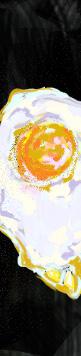
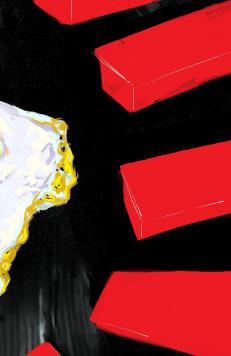
When I was four years old, my mother introduced me to a new friend. First name: Piano. Last name: Forte. Back then, my legs dangled limply off the bench, toes barely reaching the step stool placed below. My eyes scanned over the massive creature before me, a thing of wood and wire. How grand, indeed. My teacher, a lovely lady who introduced herself as Meg, lifted the fallboard to reveal a pattern of black and white that stretched out from left to right. She reached around my shoulders and gently held my elbows. Now, bend your arms so they’re at the same line as the keys. Keep the top of your arms straight and at your sides—there you go. Then, her hands cupped over mine and guided them closer to the teeth. She placed my finger down on a single tooth. When you play, hold your hands like this—never let your wrists drop below the keys. Imagine an egg cradled in your palm, nestled there. Let your fingers relax. Don’t use them to grip the egg. Good. Now try pressing down here.
I did. I did, and suddenly I could feel the creature’s heart beat with each hammer that came down on a string, one part of an intricate network of veins that ran through its body. My fingers danced along three black steps as Meg hummed “Hot Cross Buns” in tune with the notes. Every organ breathed and thrummed; every note rang out into the air. It was alive. It was glorious.
That night, I became an egg-handed girl. II. ESPRESS. DOLCE
In between books of arpeggios, scales, and theory, I found a personal scripture. Every month, Meg would receive copies of Piano Explorer, a serialized publication written for young piano students across the country. After each lesson, I would grab a Werther’s from the little dish Meg always left by the door for her students, then dash to the car, copy in hand. While most focused on the magazine’s national competition for “most days practiced in a row,” frantically flipping through the pages to find their names among that month’s highlights, I dove into the pages headlined with a singular name in bold lettering. I was, admittedly, horribly pretentious, yet infatuated—with history, with composers, with the world that
contained and had composed all the sheet music around me.
Every month, I feverishly studied the biographies of each issue’s spotlit composer: birth date, death date, nationality, musical era, distinct style, stories upon stories. I chewed and savored the words, unfolding the composers behind the notes and the music. I memorized each one, spellbound in a self-imposed ritual, then eagerly regurgitated the details to Meg at my next lesson. There was Ravel and his dead princess and his mirrors. There was Mussorgsky and his bald mountains and his Pictures at an Exhibition. There was Holst and his winged messenger and his mystic and his magician. There were the Baroques and the Classicals and the Romantics and the Modernists. There were the impressionists, my personal favorites, but I always secretly returned to the Romantics— Chopin and Liszt and Rachmaninoff, whose measures seemed to bend and twist and feel.
And so I collected composers. I collected their stories. I added them to my mental encyclopedia. I wanted to know and know and know. It is all that remains.
III. CRESCENDO
In my bedroom, there is a metal creature or, alternatively, a keyboard. We got it not long after my first lesson, something practical and affordable. It is unlike the grand one in Meg’s house—there are buttons, for one. A square button sits amongst the others off to the left. When you press it, a melody— sweet yet pensive—swells from the speakers embedded onto the surface. The recorded notes are carefully measured, marked by waves of restraint and release, accompanied by a steady, consistent flow. It is a single piece, a nocturne, building and flourishing.
Growing up, whenever I slept in too late on school mornings, my mother would enter my room and repeatedly call my name. Exasperated, she eventually turned to my keyboard and pressed down. Those same notes in E-flat major would emanate out and loop in a perpetual cycle. I would wake up to the last remnants of night, at the height of its meeting with day, the culmination of their dramatic romance.
IV. POCO RUBATO
Moon,
I play for you tonight, once again. I play the same progression over and over again—not just to perfect my fingering, but also in the interest of music itself. How fascinating it is. How fleeting it is. For one moment, one note at a time, it exists. It fills rooms, bodies, hearts, only to disappear in the next minute. How immortal, to be reborn again and again over centuries. We play music to relive it, to revive the hands that wrote it. Allow me more hours. Allow me to live in this darkness a little longer. How many times have you been the sole audience to this magic? Stars, guide me. Let me breathe you in—bathe in your company—swallow you whole. Do not look on impassively. Let me hear that nocturne once more. That perfect melancholy.
V. SEMPRE
There is an old legend. Like all legends, it is likely equal parts myth and truth (though I’ve always liked mine to be more myth). They say that in 1830, a 20-year-old Frédéric Chopin left his beloved native Warsaw in pursuit of his musical career, seeking the western lands of composers before him. They say that in his final
hours in Poland, he bent to the earth, reached out his hand, and grasped the soil beneath. He lifted his hand to his chest, dirt breaking from ground, and breathed in the night—his last night home. As he carefully stored that little handful of Polish dirt in a jar among his trunks, he vowed to carry the soil of his motherland with him for the duration of his travels. When I pass, scatter this soil over my coffin. Bury my heart in Poland. The next day, he cast a final look back as his feet left the ground for the last time. One month later, Polish rebels incited an ultimately unsuccessful insurrection against Russian rule,
launching years of turmoil. Chopin would never return to his homeland again. The jar of soil would sit in his Parisian residence. A fleeting memory. A limb detached from the body. A lost love.
VI. CON FORZA
I haven’t touched a piano in years.
The day I quit came and went. It only took one email to Meg, and then I never saw her again. I had stopped practicing. I couldn’t reach the octaves in my new pieces, my hands stretched thin and just short of a comfortable span—stupid,
knobby
hands. Practice had turned into a nuisance, and so our nine-year relationship ended. Months afterward, my sheet music still lay open atop my keyboard, a waltz from my first Chopin book. There was a brief stint with the cello afterwards, when I got randomly placed in middle school orchestra for a year (not as overcrowded as the violins, no new clef to learn as with the violas, not too big like the double basses). Like clockwork though, as soon as the year wrapped I never went back.
I don’t remember any pieces anymore. I only sit with the ghost of a Kuhlau sonatina in my right hand, quietly drumming the opening notes along my leg. I let my wrists drop. The eggs crack open.
VII. STRETTO
Sometimes, it feels like I can only ever write at night. Illuminated by a lone light, my fingers dance across a different keyboard. The world outside my window is dark and unformed. It twists at one point, then weaves around another. It is unknowable. It is everything.
Sometimes, I worry that one day—slowly, quietly, achingly—my writing will follow my piano. I try to hold onto the eggs. I cannot sleep. I take all the previous stories I’ve read, the nights I’ve consumed, the hours I’ve stolen, and pour them out onto the pages before me. I press down the keys one by one, one after another—a quieter movement, a bolder rhythm. At night, no human watches me. At night, no human hears me. It is music to my ears.
Sometimes, I consider Chopin at twenty, alone in Paris. Under the moonlight, he releases his restless mind into the night. The city slows to a low hum beyond his four walls, but the moon sways his sullen heart—sways him into action. He does not shy away from the pain, the struggle. He creates under only his own eye and that of the stars above. It is not the type of night for a lullaby. As such, he writes.
VIII. CODA
WhenI was 19 going on 20, I returned home for break.
As I unload my carryon in my bedroom, I reorient myself with my surroundings. Here I am: a teenage girl in my teenage-girl bedroom for the last time. Against one wall, my keyboard stands dormant as usual, a thin layer of dust across the keys. I cannot express why or what, but something told me to sit down on my bench once more. Off by the corner, my ancient pile of Piano Explorers rests, now long discontinued.
I never threw them out.
I brush off the square button—it feels smaller against my fingertip when I press play this time. It takes a beat, then that familiar B-flat note rings out. I now recall: “Nocturne Op.
9 No. 2,” published with Chopin’s first collection of night music in 1832, but likely written sometime in 1831. My hand hovers above the keys. Another beat, then: We are reborn.
i wrote this a long time ago, after a breakup
by Coco Kanders
Illustrated by Angelina Feng
Everybody’s walking in twos.
I used to be quite good at being alone. I almost preferred it—yearned for it, even. It bewilders me now, the ease with which I once sought solitude. During the world's most ungodly period of isolation (the pandemic), I managed, perversely, to intensify it. While the rest of my family huddled around the television for the nightly rotation of communal joy, I retreated upstairs to the tight, pink borders of my room. Although I did manage to sit through the entirety of The Godfather trilogy with them, I still preferred the reliability of my own company, the geometry of solitude. Oh boy, how that has changed! After my first true breakup, yes, I was emotionally taxed, but more viscerally. The cadence of my existence seemed to reject aloneness outright, as though my body itself had grown allergic to singlehood, conjuring a heat flash at the idea of seeing a movie alone.
“The double” is biological, something prior to will or preference. Nature itself seems unable to bear the thought of solitude. Geese migrate in pairs; whales breach together; even the smallest insects, those fragile citizens of the air, die within hours if they do not find a mate. The entire animal kingdom conspires toward symmetry, as if existence itself requires a mirrored form to confirm it is real. To be alone is not simply to be without another; it is to fall out of step with the choreography of species, to miss the beat of some cosmic metronome that keeps time for everyone else.
This rhythm was never all that apparent to me. I was like a cat or a storm or a mountain—self-contained, self-referential, sovereign. But after stepping out of this aforementioned pair, I began to feel the gravitational pull of the double everywhere. The world, it seems, was built for twos. Even atoms bond to achieve stability, and I, as it turns out, am no exception. Nevertheless, I returned and learned life as one.
Return to walking.
When I was in a pair, walking alone felt like an act of public humiliation. I imagined strangers seeing me and whispering, She’s missing something. Someone. How sad. She must be unlovable, boring, probably cold! I felt incomplete, half-visible, half-pitied. I even walked fast, like speed could disguise
the vacancy beside me.
Now that I am indisputably not in a pair, I walk differently. No longer haunted by the shadow of a missing other, I inhabit my own outline; I don't feel the expectation of someone by my side, just the occasional want. Which, believe it or not, is far less taxing than the old humiliation ritual of being in transit without my other.
know. The app turns physical space into a kind of living diorama of affection—everyone neatly locatable, luminous, within reach. Technology, in this way, has transformed solitude into a performance.
And yet, for reasons I can’t quite justify, I still have my old partner’s location. The blue dot remains—steady, uninvited, and seemingly impossible to delete. You may be wondering,
Return to Find My.
Ah, Find My Friends. Frankly, this app is a dream for me, an anxious romantic with a cartographer’s instinct. Little circling dots of people I love, orbiting across my screen in real time, making the absence of a partner feel almost manageable. Who to eat lunch with? Solved. Is anyone at the library? I
Why do you still have your ex on Find My? I wonder too.
Regarding them, these days I use it to track the delicate geography of avoidance, always easily telling me where not to be. Sometimes I think it's also sentimental, a way of keeping their pulse faintly visible on the map of my day. There are days when I tell myself it’s about self-
preservation, unready, unwilling. But there’s also the more difficult truth: I don't quite know how to completely be without being in a pair. Subsequently, their location may remain until I find my next.
Return to Reels.
I maintain that Instagram, at its core, is meaningless without someone to share it with. By my own estimation, I spend 65
people who have no need to speak. Romantic love, at its most absurdly modern, might just be the alchemy between a “hope core” clip and a “Wendy Williams Top 10 Moments” video. Return to TV and movies.
Like most people, I love them! TV and movies. But alone, they feel suspiciously indulgent, procrastination disguised as leisure. Why should I rewatch Fantastic Mr. Fox , just
percent less time on the app now that I’m single. Reels, for me, became not a mere form of entertainment but a medium of intimacy.
I can, of course, send a funny video to a friend or my brothers, sure, but that’s community, not communion. A reel achieves its highest form when exchanged in bed, under the soft hum of a radiator, between two
because it’s October, or The Holiday , because it’s the holidays? There is homework to be done. There are dishes in the sink. There are people I’ve been meaning to call.
A pair sanctifies idleness, a mutually recognized right to recreation. Alone, I am an overworked horse who keeps circling the same small field, not because anyone is whipping her forward, but because she doesn’t know what else to do. Alas, perhaps I am learning the rhythms of stillness without waiting for someone else to match my pace.
Return to sleeping.
My bed is cleaner now, decidedly so. I tuck myself in, diagonal, luxuriating in all that space for about five minutes. Then I wish there were less of it.
Waking up.
This is the hardest part for me. I wake in a kind of existential panic most mornings, 20 minutes before my alarm, certain I’ve forgotten to set it. There’s no one to confirm the day’s beginning, no witness to my reentry into consciousness. Just me, the light streaming in from my irresponsible blinds, and the terrible thought that I have to make meaning from scratch again.
And yet, while I may no longer know how to behave, or quite frankly, survive alone, I find myself learning, which is undoubtedly positive. My mom likes to remind me: “At the end of the day, you're all you've got.” This always sounded unbearably grim, but now feels almost merciful. To be alone is, after all, to be one's own proof of life. I suspect I will always be drawn to twoness, but there is something almost thrilling about discovering how I occupy a singular form. But morning still comes, and I get up anyway—at least half in love with the fact of it.
on maybe, maybe not, i don’t know, and i don’t need to figure it out right now!
by Alyssa Sherry
Who am I?
Dora Jar is asking and I don’t have an answer. January and the sky is huge. Twilight and the snow is on fire. Twenty-two and I’m wrong about everything. There’s ice crusted on the hem of my jeans. The wind wraps its fingers around the backs of my eyes. My fingers blush. I have to pay attention to these things. I have to catalog all the details in order to feel them. So it’s bitterly cold in New Jersey and yet I’m out in the forest behind my neighborhood wearing far too few layers, letting the cold bite me. I’m listening to Dora Jar’s “Timelapse” on loop, her slow question fading into guitar, a strumming pattern that feels like afternoon sunlight on a windowsill. My old Uggs, waterproofed back in 2015, slip against the snow. My cuticles are bleeding.
Wonder, wonder, who am I? She keeps asking, and it’s too big to keep inside my head. I try saying aloud, “Who am I?” which isn’t enough, so I try shouting it to the empty woods. Then: “What do I want?!” The trees don’t have an answer either. They’re so obstinate, still and
quiet. I feel, stupidly, like I want to cry. But for a moment, I pause to watch the sun burn neon between their silent trunks, slipping towards the horizon, amber slicing divots into the bark. And that’s the best answer I get all afternoon.
*
Knowing myself used to come so naturally. Whenever I’m home in New Jersey, I sit in my childhood bedroom—still so purple, still so decked in fairy lights—and read my middleschool journal, which overflows with confident assertions about exactly the kind of girl I was, exactly the kind of girl I was going to be: I was going to get out of my hometown, I was going to get the best grade on my geometry test, I was going to write a bestselling novel, I was going to get the boy who sat in front of me in English class to ask me out because my friends liked boys so I should, too. I never seemed to have any doubt or room for ambiguities; I was certain about what I wanted, and I was hellbent on getting it. I was bright and optimistic, tough and headstrong and blunt and selfrighteous.
Knowing myself feels so challenging now. My OCD makes sure of that. It’s nearly impossible to know which thoughts really belong to me—nearly impossible to tell the difference between a comically unrealistic intrusive thought (My hand is itchy because a bat got into my room and bit me in my sleep and now I’m going to get rabies) and a good gut instinct (My hand is itchy because it’s winter and my skin is dry). Nearly impossible to know what I meant to think.
In “Timelapse,” Jar sings, “Don’t stop twinkling, red light blinking / Break my mood ring, friendship sinking / Keep on going like a worm in the dirt, don’t give up now.” Break my mood ring. I always liked that phrase, hoping that one day I would be able to trust myself rather than depending on something external for guidance—that I alone could dictate how I thought, felt, and responded. I wouldn’t need reassurance from a mood ring or the Internet or a sign from the universe. I wouldn’t over-assign meaning to every little detail I encountered. I would simply know myself.
I’ve lived with OCD my entire life, but it always gets louder when I’m standing on the precipice of something massive. What if I’m making a terrible mistake? What if it’s forever? What if one choice ruins everything?
I struggle to draw a distinction between what I am afraid of and what I simply do not want. And so I am always looking for something and never finding it.
* I started going to exposure therapy last fall. Early on, my therapist says that learning to tolerate uncertainty is my only way out. She says that whenever I feel like something awful might happen, I should tell myself, Maybe that will happen, maybe it won’t. I don’t know, and I’m not going to try to figure it out right now.
I drive home after that appointment, back up I-95 to Providence. October and wet red leaves are plastered on my tires. October and the interstate is soaked blood orange. Earlier, I had touched a door handle—not even with just a finger but full palm splayed out, fingers curling around the cool metal like it was the hilt of a sword, like it was something dangerous—and it set my hand on fire.
My playlist has already looped through
when Spotify decides that Indigo Girls’ “Closer to Fine” is next. I let its familiar tune wash over me as I switch lanes—there’s a familiar tune to switching lanes too, the click of the blinker and the rhythm of the car. That’s when I hear it, right there in the chorus, lines I’ve listened to a thousand times and never thought twice about: “There’s more than one answer to these questions / Pointing me in a crooked line / And the less I seek my source for some definitive / Closer I am to fine.”
More than one answer: Maybe, maybe not. The less I seek my source for some definitive: I don’t know, and I’m not going to try to figure it out right now. Closer I am to fine.
Once I get home, I touch everything. With all of my fingers, both of my palms.
*
Two Aprils ago, I watched I Saw the TV Glow and first heard yeule’s cover of “Anthems for a Seventeen-Year-Old Girl” on the film’s soundtrack. It would later become my #1 most played song of 2024 (just as “Timelapse” became my #1 song of 2025). I kept coming back to the moment when the bass and synth kick in for the central refrain, and suddenly the quiet song gets loud:
Park that car
Drop that phone
Sleep on the floor
Dream about me.
I lied earlier, when I told you that my middle-school journal was full of confident assertions about exactly the kind of girl I was. I can be a bit of an unreliable narrator. It’s true that many entries were brave and unencumbered. But for each entry like that, the next day, the tone would shift: “I threw out my lunch today because I was afraid it had E. coli.” “I almost made Mom pick me up because I was too scared to use the school bathroom.” “I panicked during my field hockey game because my mouth guard fell on the locker room floor, so I played like shit.” Afraid, afraid, afraid. I had been so sure that my OCD was protecting me, keeping me in control of my own life, yet it really only made me feel lost.
But then I look at the girl I’ve become in spite of being afraid. I moved to Providence and later to Copenhagen completely on my own. I eat eggs again now, even though they fundamentally freak me out, because I also really like them. I write for this magazine, and I play club field hockey, and I am running my second half-marathon in April, a few days after I present my honors thesis. I drive my friends to get frozen yogurt, and they make me laugh. I go on adventures with my girlfriend to random cities like Milwaukee and Columbus, and these places turn out to be pretty cool.
I once told her, “I don’t think I’m the kind of person who leaps. I think I’m the kind of person who looks for reasons not to do things.” I think now that was a deeply unfair assessment of myself—I am constantly leaping. Doing anything at all is a total leap of faith when you can never be quite sure of what will happen next. So I know that my 17-year-old self could only dream that I would become exactly the person that I am now, scared shitless but doing it all anyway. Sleep on the floor, dream about me. She was so afraid yet so, so fearless. I am so afraid yet so, so fearless.
* Knowing myself feels so complicated now.
Not only am I trying to figure out what I want as I face one of the greatest transitions in my life, but I am also learning to disentangle who I am from what I fear. Yet there isn’t any urgency: I don’t know exactly what it is I’m looking for, and that’s okay—I don’t need to figure it out right now. Things can change. Things will change. Things have to change. Maybe it’ll be great, maybe it’ll be terrible, but either way, I’ll survive it, just like I always have. As I was once told, “The only thing worse than coping is not coping.”
*
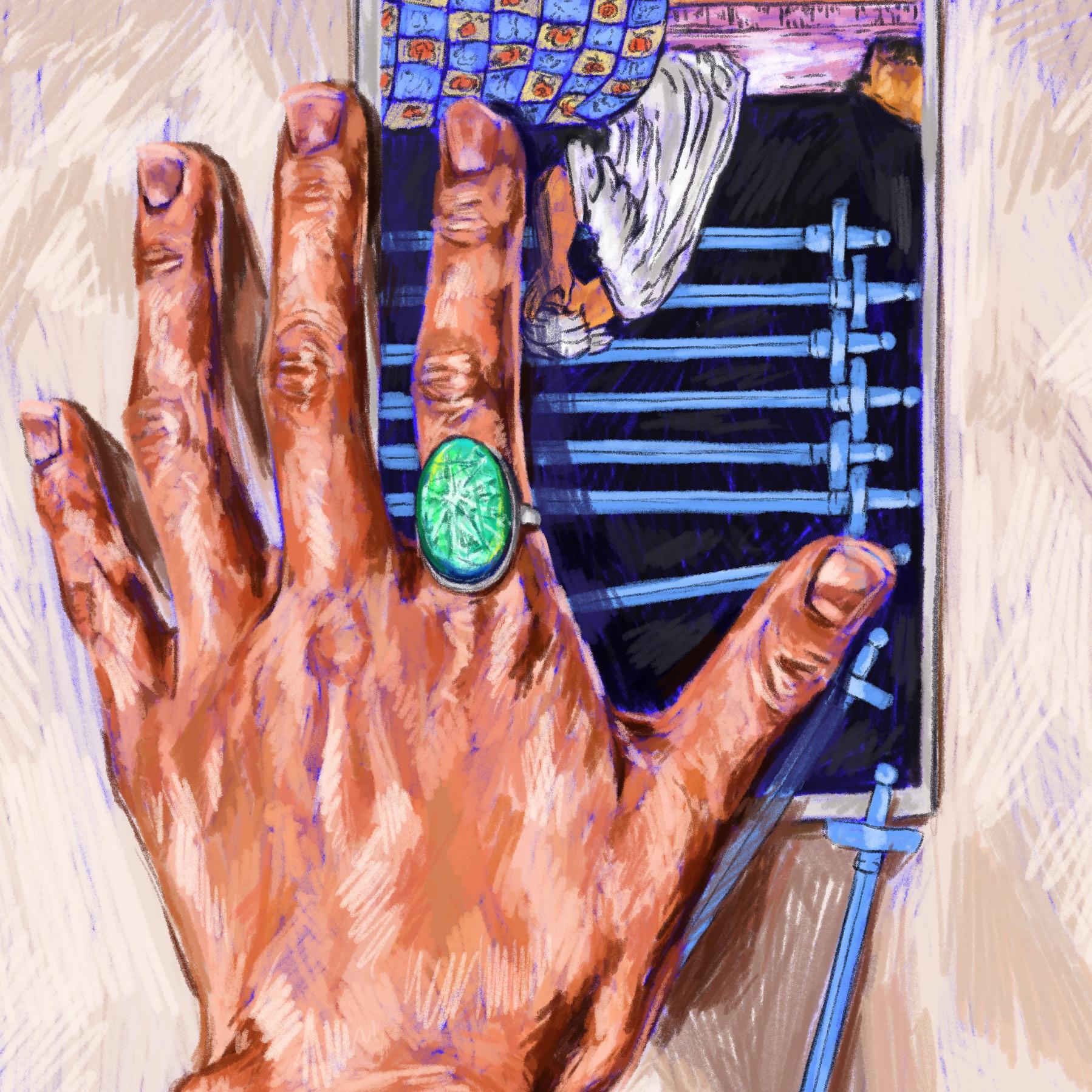
On my 22nd birthday, my mom and I are in New Orleans to celebrate. November and Louisiana is humid and alive. November and my hair is frizzy, curls like wires. One of the shops near Jackson Square has a tarot vending machine, dispensing a card in return for a quarter. I don’t know much about tarot, but I know lots about soliciting a sign from the universe, so I pay the quarter, crank the handle. Out comes the Nine of Swords, upright. The card displays a woman, face in her hands, sitting up in bed against the backdrop of nine swords. Six of them seem to cut right through her. She is immortalized, eternally impaled.
Oblivious, I look online to find its meaning, and I’m instantly confronted with: “Fear, anxiety, terror, negativity, deep unhappiness, stress, burden, overwhelmed” (thetarotguide. com). “This is the card of 3 a.m. anxiety, racing thoughts that won’t stop, and the mental torture we inflict upon ourselves through worry and catastrophic thinking” (theselfgazer.com).
I read these descriptions out loud, take one look at my mom, and instantly we burst into laughter at the sheer absurdity of it all—what an awful omen for my twenty-second year! When I get back to my apartment in December, I FunTak the card to the wall right above my desk as a reminder: Don’t become the Nine of Swords
Each day that I look at it, though, it unsettles me. It reminds me of all of the times I’ve been awake at 3 a.m., stuck in the loop of my fears: What if I get nauseous? What if I have brain cancer? What if I wake up tomorrow and accidentally make a decision that ruins my life? I might not quite know who I am yet, but I do know that I am not someone who has ever let my fear govern me, or who has held back from chasing whatever it is I think I want.
Dealt upright, the Nine of Swords is a terrible omen. But a friend taught me that tarot cards take on new meanings when they are dealt reversed, flipped upside down. When the Nine of Swords is reversed, it inverts the ominous message, instead symbolizing a release from worry, the light at the end of the tunnel, “overcoming shadows” (elliotoracle. com). Trusting yourself, embodying yourself, knowing yourself.
So I flipped the card, Fun-Tak’d it back to the wall, this time reversed. Break my mood ring. I don’t care how the card was dealt to me, I don’t care about the fate it imposed upon me, I don’t care if the universe was trying to freak me out. Sometimes there is no higher purpose encoded in the signs we receive: Sometimes things are just fucking random. The Nine of Swords now hangs on my wall upside down, the woman sitting up in her bed dangling suspended like a bat, the swords ready to drop straight down and out of frame.
from recession pop and millennial earnestness to the sound of gen z’s cynicism by Jack
diprimio
Illustrated by Awele
Chukwumah

Jack DiPrimio in conversation with Duncan Nofsinger.
Duncan Nofsinger has worked in New York City’s independent music scene, including as an NYC Artists and Repertoire Representative with an indie record label and as a production intern in the live venue sector. He is currently pursuing his M.A. at NYU, focusing on the modern music industry and experiential musicology.
As an undergraduate at American University, he spent nearly four years on staff at WVAU Radio and interned at (Le) Poisson Rouge and FilmNation Entertainment. He earned his bachelor’s degree in Communication and Media Studies from American University in 2023. Jack DiPrimio and Duncan Nofsinger met at American University in 2021 as

undergraduate students.
Hip-Hop and New York’s Enduring Pull as a Music Capital
Jack DiPrimio [JD]: Would you say that New York City is still a really important place to be in the music industry now? A lot of people move to Los Angeles to pursue that world, but New York has such a long history too.
Duncan Nofsinger [DN]: New York has long been a hub of forward-thinking music. You could go back to the CBGB era—with bands like Talking Heads, Television, and Blondie—and, of course, to the birth of hip-hop. That spirit of innovation has not disappeared. There are still strong bands emerging from the city. Los Angeles has an incredible scene as well, but groups like Geese feel distinctly New York— there is an energy to their sound that makes their origins unmistakable. Geese has sort of a frenetic energy, and they break a lot of the rules and conventions of other indie bands. They’re having a big moment right now.
JD: As hip-hop became the dominant genre in the 21st century, do you think it changed in terms of how political it was? Some critics argue that SoundCloud rappers pushed the genre away from political critique and more toward angsty aesthetics and vibes.
DN: I think rap is mainstream now in the same way that rock was in the 20th century. And with that comes more surface-level material. SoundCloud rap was definitely more aesthetically driven than politically driven, but that doesn’t make it invalid. Hip-hop doesn’t always have to be “fight the power.” I still think hip-hop can play a role in many emotional, political, and protest forms. It can break out of that box—it doesn’t always have to stay in it.
JD: Do you think Drake played a major role in pushing rap further into pop territory?
DN: Historically, Run-D.M.C. did that with “Walk This Way,” but in the modern sense, yeah, Drake has been the most influential. He’s constantly chasing trends, whether that’s dance music or electronic sounds. As producer Rick Rubin (who produced for Run-D.M.C. and Public Enemy) often explains, an artist’s deepest work comes from self-understanding rather than trend-chasing. Kendrick’s catalog feels aligned with that philosophy. That difference explains a lot of their tension.
Commercialism vs Anti-Establishment Ethics
JD: Kendrick Lamar is often seen as a counterweight to that more commercial instinct. How do you see his role in political music?
DN: Yeah, I mean, country music definitely leaned patriotic. Pop, I think, less so. But protest music has always existed. Kendrick Lamar is a really good example of that. You know— To Pimp a Butterfly; good kid, m.A.A.d city; DAMN.—there’s a layer of political messaging there. Some
of it is subtle; some of it is very overt. He even directly incorporated Fox News criticism into his work. That kind of back-and-forth opened the door for younger artists to speak out politically.
JD: Would you say that Beyoncé followed a similar path to Kendrick in prioritizing authenticity over metrics?
DN: Yeah. I think she realized she could pursue capitalism elsewhere and let the music itself be fully authentic. Since her self-titled album, she’s really been doing exactly what she wants. She has an audience that trusts her enough to follow her, which is rare.
9/11 and the Turn of the Country “Era”
JD: If we move to the moments right after 9/11, there was a dramatic surge in overt patriotism and nationalism across American culture. In country music specifically, songs like Toby Keith’s “Courtesy of the Red, White and Blue (The Angry American)” and Alan Jackson’s “Where Were You (When the World Stopped Turning)” became massive hits. Do you think 9/11 marked a turning point in mainstream music, particularly in country?
DN: Yeah, I mean, country music is Black music. It started as such and it came out of blues, folk, and gospel/spirituals. And I think particularly since 9/11, you see kind of the turn from country as outlaw, working man’s, bluecollar-type music into kind of what the collective consciousness sees it as now: the yee-haw guns and trucks and beer and women. I also think 9/11 was a big shift. Other people have made that observation; that's not new. The country mainstream packaged the working man’s plights into nationalism and pride for a country that fell in line with conservatism rather than antiestablishment sentiment.
JD: In that context, now, how do you see artists like Lil Nas X and Beyoncé entering country spaces?
DN: Beyoncé is a great example of a response to that. There have always been people staying true to how country initially came to be. Not that Beyoncé is now working class, but there is a reclamation to her album. She's doing it in a way only she could, with Black songwriters helping her out and being featured. Like Rhiannon Giddens playing banjo—she’s iconic and her flowers were long overdue.
I also think Lil Nas X is a good example because there’s a lot of the same discourse that was happening with him as with Beyoncé. It sounds different than what we were talking about with bro-country in the mainstream, but I think people might say, oh, this doesn’t sound like what I know country to be. But that doesn’t warrant the racially charged responses. People should be ready to accept that genres move forward. No genre ever stays static. It’s easier to point a finger when the artist performing it doesn’t look like the ones who have always been popularized.
Recession Pop, the Digital Era (2008–2012), and 2016 Nostalgia
JD: You’ve mentioned before the idea of “recession pop.” How would you describe that era, especially from around 2008 to 2012?
DN: I think that era was really the dawn of the digital age. Sonically, pop music leaned much more electronic and hedonistic. Artists like Lady Gaga and Kesha really embodied that “nothing
to lose” energy.
JD: Why do you think there’s so much nostalgia right now for 2016 in particular?
DN: I think 2016 was just a fantastic year for music. We’re far enough away from it now that people can romanticize it. Trends resurface faster because culture moves faster. And I think people also miss an earlier digital world that felt less dark and less sinister than the one we’re in now.
JD: Do you think artists like Charli xcx are bringing back some of that earlier energy?
DN: Yeah, I think Charli xcx is bringing it back, but in a very Gen Z way. There’s a lot more self-awareness and irony. She’s building a character, but there’s still emotional truth underneath it.
JD: At this year’s Grammys, there seemed to be overt religious symbolism in several performances; artists like Jelly Roll and Alex Warren leaned heavily into that imagery. Do you think we’re seeing a new wave of conservatism or religious influence in mainstream music?
DN: I would agree. There is sort of a new wave of conservatism and religious pandering. Pandering might be a little strong, but I don't know. I think of Alex Warren’s set where he was basically lifted up like Jesus. I mean, that was pretty clear with the gospel choir and all that too. And of course, Jelly Roll's speech was, you know, he looked like a pastor on top of that stage preaching the good word.
TikTok, Gen Z Cynicism, and the Pressure of Visibility
JD: Do you think Gen Z’s music reflects a different outlook than the optimism of the early 2010s?
DN: Yeah, definitely. Early 2010s music had a kind of earnest optimism to it. After 2016, music became more introspective and painful, reflecting political instability and then COVID. The COVID-era pop was much more intimate and singer-songwriter focused. That lack of hedonism and expression of emotional pain really shaped Gen Z’s sound and how they engage with music.
JD: What do you think about TikTok and its role in shaping music today?
DN: I think TikTok has the [making air quotes] potential to be democratizing, but it’s also made things a lot harder. Everyone is competing with everyone else globally now. A few artists break through, but for most people, it’s more difficult than it used to be.
JD: Do you think that pressure changes how artists make music now?
DN: Yeah, definitely. There’s this added pressure to constantly perform and be visible. And especially with Gen Z, there’s such a fear of being “cringe,” which shapes how people present themselves and their work.
One Last Word
JD: Last question. What worries you most about the future of music?
DN: AI really worries me. Companies are debating things like fair use and licensing, but platforms like Spotify see massive monetary potential in AI-generated music. It fits really well into passive listening models. And if companies don’t have to pay artists for training data, that’s a serious problem.
by Merissa Underwood
“Be careful, it will be extremely hot. Let the vegetables sit a while so they cook fully,” the server cautioned as he turned up the hot plate between me and my partner, Ansis.
“I can’t believe you’ve never had hot pot!” Ansis exclaimed. “I guess it’s usually not very vegan-friendly, is it?”
The pot of water began to boil as we plunged various vegetables into it. Mushrooms, bok choy, tofu, a hole-filled root vegetable I’d never seen before: lotus root.
We arrived at Lamei Hot Pot in Downtown Providence just before the dinner rush on a quiet, chilly Saturday. It was 4:21 p.m. on December 13, 2025. The sun had just dozed off in the distance. Ansis and I were celebrating the near-completion of my first semester at Brown. All of my assignments were nearly done, and I had no in-person exams—the luxury of studying the humanities. The only persisting task was a daunting 10-page paper on Arthur Schopenhauer, the infamous pessimist philosopher of the early 19th century known for his disheveled hair and bleak perception on life. Schopenhauer argued
that human existence is endless suffering and that tragedy is inescapable. Inside the walls of the centuries-old George Corliss house, the lectures on philosophical theory felt too great a distance to conceptualize. Now, the idea haunts the wrought-iron gates that surround the campus. No longer distant theory, but something embedded in aging stone and grand buildings.
In the restaurant, the vegetables had only just begun to soften when my phone rattled. After months of spam phone calls, I had installed an app that blocked unfamiliar numbers and funneled them to an automated screener to determine whether the caller was friend or foe. The call transcript displayed on my screen: “Please state your name and reason for calling, and I will see if the person you have dialed is available,” the automatically generated voice of my phone guardedly announced. “This is Brown University. There is an active shooter near Barus and Holley Engineering…”
A jolt of electricity pierced through my heart. “There’s a shooter at Brown!” I gasped, my throat catching onto the shock of my own
words.
“It’s probably not on campus—I bet it’s nearby, and they’re just being cautious,” Ansis, a coolheaded man who always errs on the side of caution and reason, reassured gently. “It’s probably similar to that Citizen app where they have to share anything dangerous in the area—most likely it’s a domestic dispute near campus, but not actually on campus.” Usually, I believed him. This time, it felt different.
My phone continued to tremble as official texts flooded in, confirming what I feared. They offered step-by-step guidance on remaining hidden, and what those in the area should do. It cautioned: Run, hide, and as a last resort…fight. My group chats exploded. “Where is everyone?” “Like this message so we know you’re safe.” “I’m hiding in the bathroom right now…I saw what happened…”
“I just saw the news, where are you? Are you safe?!” My good friend Steph, from 2,500 miles away, reached out in alarm. “I see your location isn’t on campus, but please answer this right away,” another message poured in.
In a frenzy, Ansis and I rushed to pay the bill and charged to the exit. The other
patrons continued to clink glasses and savor their steaming bowls, oblivious to the violence a couple miles up the road. Ansis grasped my hand and pulled me in close, preparing for the blistering outdoors. A native Michigander, he despised the cold, and sped for the car. My cheeks flushed to a dark cherry, but I could not register the temperature. I could only think of what news was to come.
Inside the car, my group texts continued to ping. “It sounds like nine people have been shot. Two have been confirmed dead.” My stomach writhed in a sharp twist, churning the vegetables in my stomach upside down. Two students had been confirmed dead on a campus that boasts compassion, curiosity, and care. Violence is antithetical to Brown. It’s a place of refuge. Home to a community grounded in openness and empathy. I couldn’t come to terms with it. Two students taking part in a study review session wouldn’t feel the embrace of their family again. They wouldn’t see their aspirations fulfilled or parade through the Van Wickle Gates on Graduation Day. The events of December 13 will leave a mark that can never heal, a jagged end to a journey that, for me, had only just begun.
I had arrived in Providence four months prior, almost to the day, to begin my time at Brown as one of the eight nontraditional students selected to the RUE program. I traveled from the Westernmost point in the contiguous United States to what felt like the Easternmost tip, to a little city I first heard of in Gossip Girl.
During orientation, RUE students and traditional transfers were molded into one singular unit: TRUE. Despite the lengthy calendar of activities, I only attended the required academic events. Activities like “Pilates on the green” or “cookie decorating” felt aimed at a type of student that I, a decade older than the gaggle of incoming transfers, did not embody. My free time was spent dissolved into the slouchy couch of my desolate offcampus apartment. The walls were covered in a cool, dreary gray that echoed the grim fall skies. I browsed MCM, philosophy, and gender studies courses while foraging online for local organic produce that wouldn’t enrich the coffers of Lord Bezos.
As classes began, I felt an abrupt and consuming desire to shrink. Back home, no one would have ever accused me of self-conscious behavior, but on this Ivy League campus, I suddenly wanted to disappear entirely. A body too tattooed to blend in with the generation born at the turn of the century, and opinions too seasoned to be mistaken for Gen Z. My six-foot limbs were smooshed into petite desk chairs, knees clashing with the bottom of the flimsy classroom apparatus, like a parent at a studentteacher conference for their kindergartener. When I spoke, I pleaded with my sonorous voice to relent as it overwhelmed lecture halls, students craning their necks to catch a glimpse of the unusual dialogue echoing from behind them. With every word I uttered, it felt clear that I was different from them.
On campus, I shied away from the student social calendar and rushed to the RUE lounge for shelter between classes. I never dared to set foot inside the dining halls. The communal
spaces didn’t feel like mine. Something about them felt off-limits, as if a yard duty would lurch from the building, shove me outside, and yell: “ You’re not supposed to be here.”
In one class, I sat catty-corner at a desk with a young gender studies student. I attempted to drum up small talk. We’re both tattooed and hold a fascination with the hypocrisy of Candace Owens’s anti-feminist rhetoric, but when I would pass her in the hall, she’d divert her eyes and offer a meekish hello. Perhaps she was generally shy. Yet, I could not discern whether this behavior stemmed from social anxiety or a genuine disinterest in me . Beyond our shared pursuit of academic greatness, what could we possibly have in common?
The feeling never waned, though my isolation was sporadically alleviated by the companionship of other nontraditional students—athletes, musicians, and mothers fulfilling childhood dreams. Some just on the cusp of their mid-20s; others nearing mid-life. Together, we recounted anecdotes of practical life, like paying taxes or learning to text via T9 on a flip phone. We talked of our alienation, and how younger students relegated us to the label of “unc,” whatever that means. We made a group chat to laugh off the discomfort.
But when I was off campus and alone, I succumbed to volleying justifications back and forth in my mind, desperate to explain why my path was so unorthodox. I’d rehearse lines: I couldn't read until I was 20! or There are no computers where I come from! But the answer was simpler: College just hadn’t been part of my life until now. At 18, I couldn’t be contained by brick-and-mortar walls; I chased experiences, discomfort, and dreams. Stages, runways, and competition arenas. I came to Brown to put those adventures onto paper.
The fall semester passed in a rush, and on the morning of Saturday, December 13, as my final assignments neared completion, I stood in my kitchen absentmindedly swiping butter over burnt toast when a tinge of sadness crossed my chest. Though I was a student at one of the most prestigious universities in the world, I couldn’t shake the feeling that I had failed. As I bit into stiff sourdough, I wondered how much camaraderie I had missed by concealing myself in my small offcampus apartment. I thought of the collective exhaustion of midnight essays constructed in the Rockefeller Library. The shared cups of coffee sipped in the Underground. The rigorous study sessions with classmates, commiserating under high stress and boundless aspirations. I yearned for the kind of community forged in the pursuit of greatness. On the morning of Saturday, December 13, 2025, I had wished to be on campus with my peers. It feels so foolish now. That night, Ansis flew out on a red-eye for an immovable work trip. He traveled often, and I usually welcomed a few evenings of alone time to binge old chick flicks or gorge on overpriced takeout. But that night, I was desperate for his comfort. I fashioned my childhood blanket painted with buckskin
horses into a makeshift body double, clutching onto it and wishing it were him. With eyes rimmed red and raw, I drifted in and out of sleep to the wail of sirens and the thrum of helicopters. I awoke to Providence’s first snow of the winter and an unexpected knock at my front door. I never had guests. No one knew where I lived, and with the shooter still at large, every news anchor in Rhode Island cautioned audiences to keep their doors locked and remain indoors. Dressed in pajamas, with frazzled hair emulating Schopenhauer himself, I stared down my front door handle. Another knock. I didn’t know the proper process for how to handle a potential criminal at my door. I thought of the text sent from the University. Run. Hide. Fight. I clenched my fists together, forgetting the first two steps, and slowly opened the door, bracing myself for whatever was on the other side. Delivery driver. Wrong door. Package for my neighbor. I went back to sleep.
A few days later, I forced myself off of the slouchy couch, ran a brush through my unkempt hair, and made my way to campus. I approached the Van Wickle Gates that I gleefully marched through only months before during Convocation—now closed, somber, and petalled with bouquets and plush Bruno bears. On the sidewalk, news cameras imposed on every available space, reporters probing for a viable morbid spectacle in a city-wide competition for ratings. There again, I avoided the lens, bowed my head, and hid behind cheap, dark sunglasses. Even in mourning, I questioned if my presence was admissible. Was I allowed to pass through the frame of a news channel documenting student grief? Turning away from the cameras, I trudged across the campus. A light layer of snow draped the bronze Bruno. Every griever walking the sidewalks was slumped and silent. The air was unmoving— clenched in a shallow breath until a helicopter tore by, or a siren blared in the distance. I made my way to Barus and Holley. A man propped up a full-scale wooden cross in front of the building alongside dozens of bouquets of flowers. There were cameras. Reporters. Students. Professors. Locals. All bearing silent witness. There, I saw a familiar face. My corner desk partner—weeping and wrapped in an embrace. She looked over at me, nodded her head, and flickered a small hello. I offered a gentle bow of my chin in return and held back swells of tears.
Schopenhauer, in all of his gloom and chaotic bitterness, does believe that even in all of life’s devastating and unexplainable tragedies, we must continue on. And we must do this rooted in compassion for each other, acknowledging that suffering does not care for age, gender, or background. It doesn’t respect campus perimeters or delineate between degree holders. No one is immune to the horrors of the living. Tonight, as I write the final edits on this piece, my phone is once again illuminated with news alerts. Four people have been shot at a local high school hockey game, just over a mile from my home. Two have been confirmed dead. A helicopter bellows by. Ansis is out of town— I’m home alone. I lock the doors and reach for my blanket painted with buckskin horses.
by Maria Kim Illustrated by Angelina So
A building that one passes nearly every day, just on the commute to South Campus from North Campus, to North Campus from South Campus. One that many students (myself included) seem to use solely as a tool to check their reflection before heading to class, sneaking that furtive glance and playing it off as if it hadn’t happened. There are two buildings on campus where this check-yourself-in-the-mirror-but-pretend-not-to occurrence appears, but the one I am writing about is not the side of BioMed that one passes going toward Page-Robinson Hall after climbing the dreaded incline from Em-Wool up to Brown Street (one that has rubbed me the wrong way a few too many times, especially after struggling, huffing, and puffing up the hill, when I am already late for class). Instead, I am writing about the Lindemann Performing Arts Center: a jewel of a building humbly tucked away a couple blocks north from the heart of campus. One that, despite its lustrous, shining silver hue and extraordinary architecture, seems to be no more
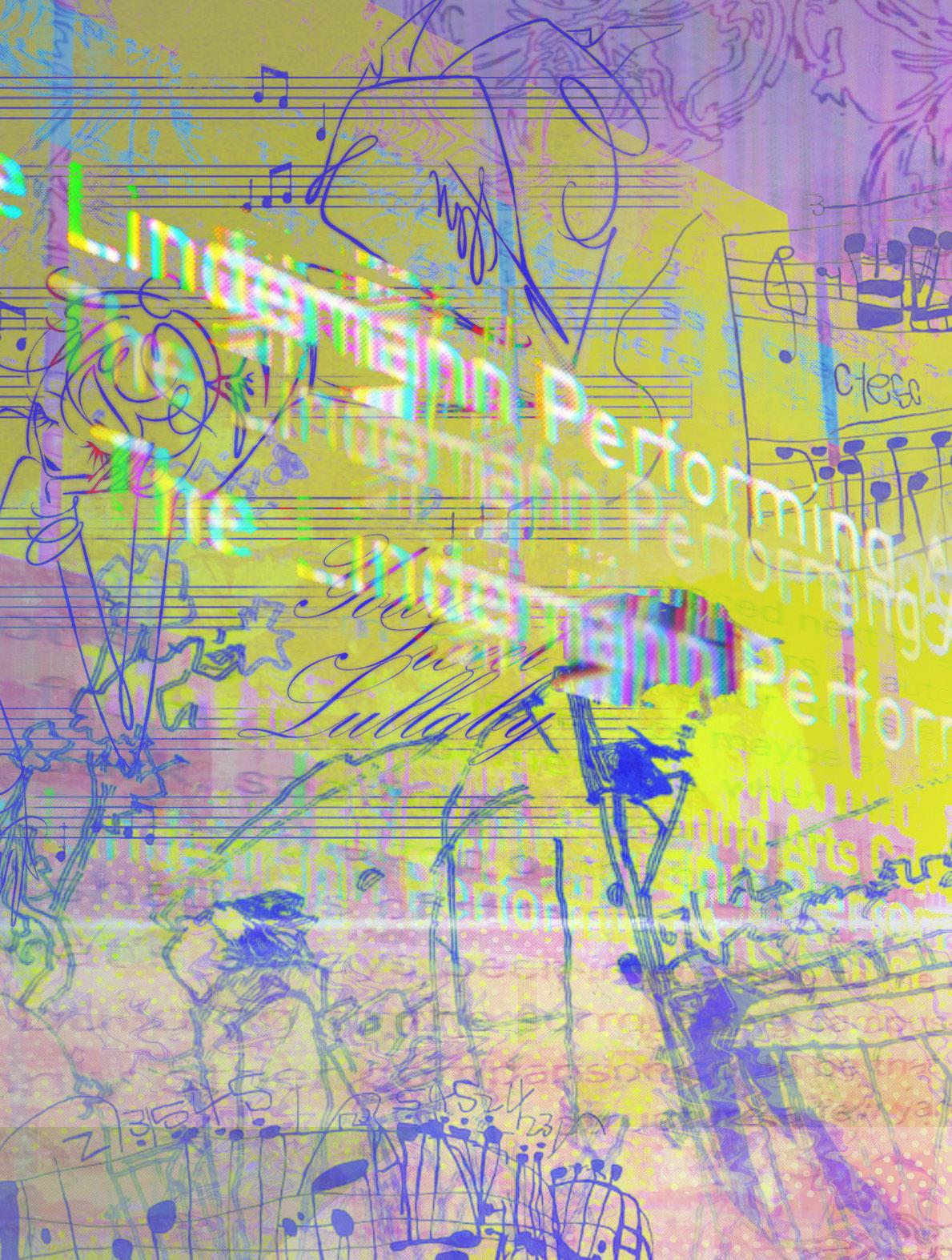
than a mirror to most—save for all the music students on campus.
When entering Lindemann Performing Arts Center from its main entrance, it feels as if one has exited Brown’s quaint, studious atmosphere and entered somewhere reminiscent of a crystal palace. Maybe I am just saying that because its exterior strikes me as too illustrious to constitute that of an ordinary building—I’m not entirely sure. Entering requires one to climb a stone staircase beside grandiose silver blocks and walk through two pairs of automatic glass sliding doors. Funnily enough, these doors seem more fitting for ones leading to a security vault housing crown jewels, or maybe an opening to some billionaire’s front door. Sometimes, when evening hits and the sky turns dark, spotlights appear in little radiant circles on the ground from the top of the building, illuminating the concrete like shadows of miniscule stars one can walk over. In my opinion, the only other structure on Brown’s campus that can compare to Lindemann’s luminescence is the dancing tinfoil men structure a few yards away. Maybe the two were placed strategically? As if the dancing men are a material representation of what is going on in the equally lustrous building that faces them? I sometimes wonder if Brown’s campus was constructed with things like this in mind.
I mainly go to Lindemann to practice and prepare for my weekly piano lessons. After climbing the stairs and entering the glass doors, I usually take the elevator down to LL2, where four individual practice rooms lie waiting.
Here, musicians fill the space—a quartet of violin, viola, cello, and piano players packed into a single practice room, piano and oboe players practicing their solos, and sometimes even people singing together in the stairwells. The floor’s walls and doors are painted white in a hue that is almost blinding the first time one steps into it. Even the scheduling process for practice rooms here seems to be top-notch—scheduling a practice room requires a formal Google Calendar invitation, with each schedule displayed digitally next to each room.
One of the main highlights of Lindemann, however, is not related to music at all—admittedly, it is the bathrooms one level above the practice room floor. A contrast from LL1’s surprisingly orange hallway, the bathroom has a sterile, hospital-like nature. Funnily enough, the first time I used this pristine bathroom I was almost scared to death. This was due to the voices—yes, real voices, that sounded as if multiple people were talking in an empty bathroom—that constantly echo throughout the room. The first time I used it, I didn’t read the sign next to the door that read “Canned Audio: A Restroom Audio Experience,” so I was shocked when voices above, next to, and below me started spewing lines of poetry. I still remember the distinct lines of poetry—those I committed to memory while panicking and trying to find a source of the strange but oddly calming voices that I’d never expected to hear in an empty bathroom. They were a mix of rhetorical questions: “How long is your tail? Is the opposite of a firefly a waterfall? How long would it take to walk to the moon and back?”
Needless to say, it was a relief to find out that this Canned Audio Experience was an actual implementation within the building rather than something I hallucinated in my midway-through-practicesession haze. After
Googling “canned audio experience lindemann bathroom,” I came across the audio experience’s description: “Welcome to Canned Audio. Thank you for taking a moment out of your busy day to experience this space in a new way. These audio installations play on an indefinite mono loop in the restrooms on LL3, LL1, and Balcony Level 3 in the Lindemann Performing Arts Center at the discretion of BAI staff. This activation aims to transform a utility space into something new/ unexpected. We hope you enjoy it.”
What is the process of turning an old space into something new? What are its motivations, and who is the intended audience of such a renovation? Does it take viewing something as “new/unexpected” to fully appreciate its beauty? As each week passes and each semester draws to a close, it may seem as though the more familiar Brown becomes, the easier it is to take for granted. The unique academic department buildings one passes every day, the majestic Van Wickle Gates in front of the Rock and Hay, the Main Green that manages to exhibit a homely feel despite the grandiose lecture buildings that rest on top of it—after a while, all seem to fade into the background. From what I’ve learned being a student at Brown for three semesters now, it is almost laughably easy to turn something one once thought was exciting and unattainable into the new norm. Case in point: Being a student at Brown, now, often evokes no more excitement than the fact that there are bathrooms in Lindemann, or the fact that Andrews serves dry noodles on Tuesdays and Fridays. Maybe the point of the Canned Audio Experience in Lindemann is to remind students and performers alike of this paradox. Maybe it is there to keep evoking the sense of wonder and excitement that once surged through our veins the first time we stepped onto campus. This sense is one that exists in anything we choose to find delight, comfort or pleasure in—even something as random or quirky as a canned audio experience in the performing art building’s bathrooms.
The Lindemann bathrooms are just another one of Brown’s many quirks, one that seems to make Brown even more of an embodiment of Brown than it already is.
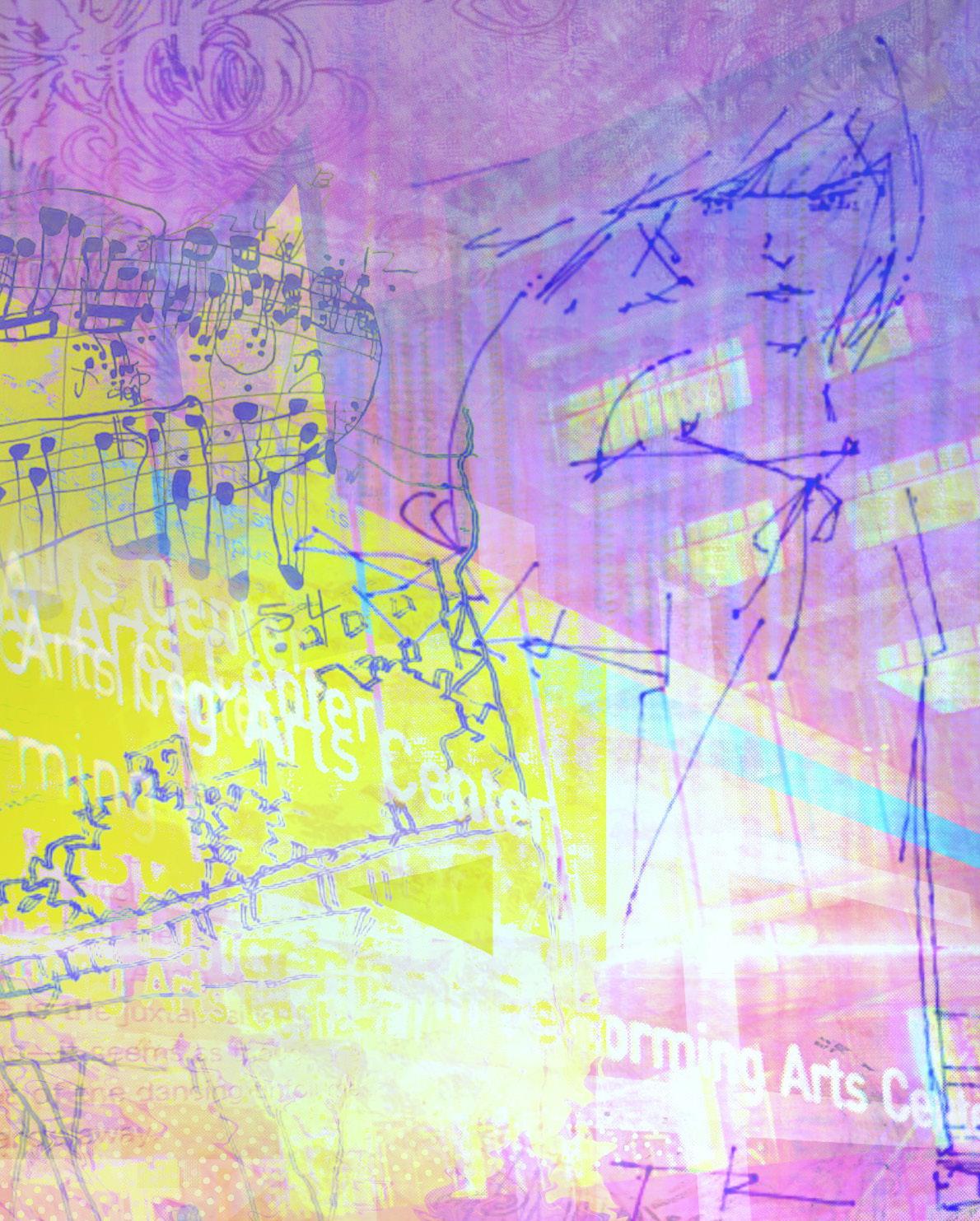
by April Wang
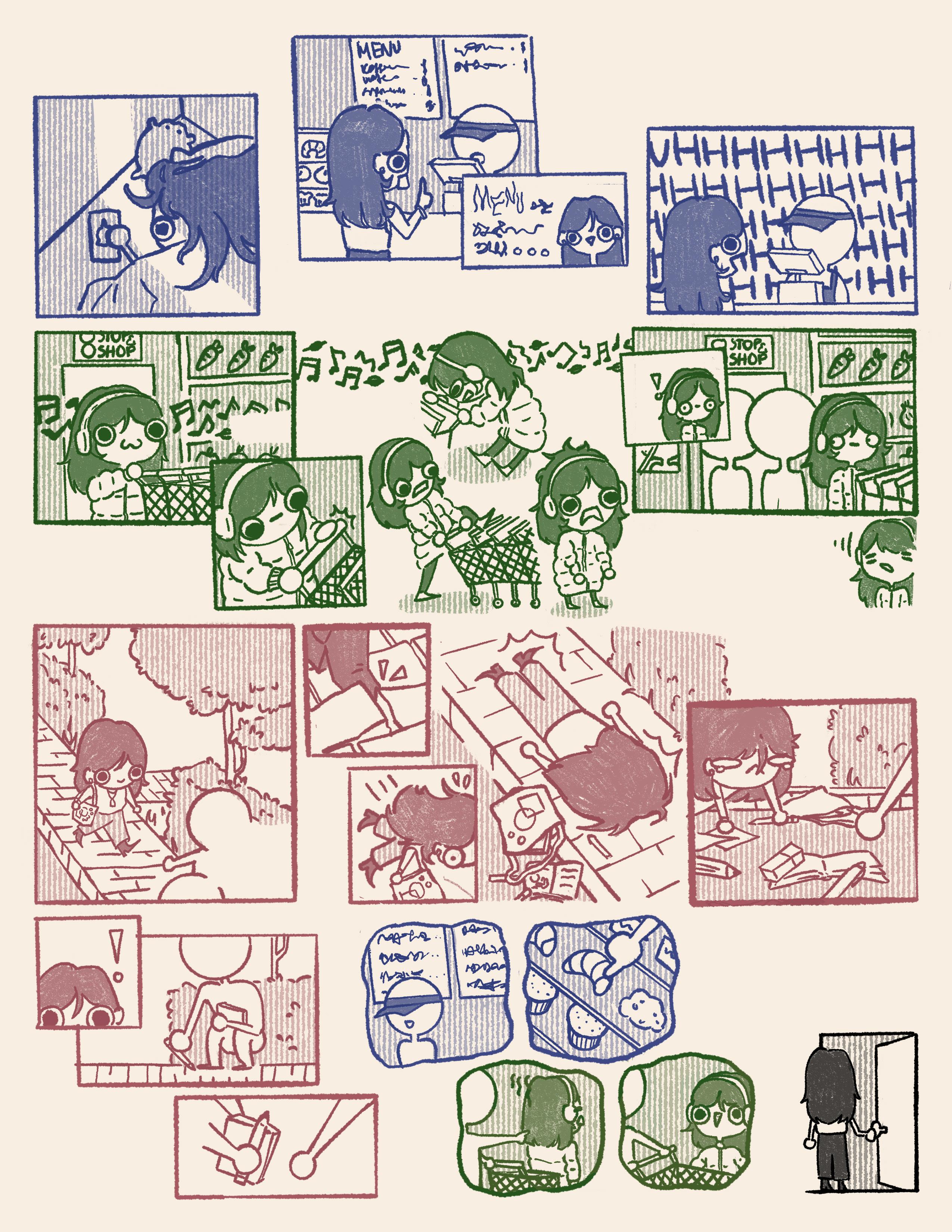
I hate going out. I always make a fool of myself.
a large hot mocha please!
Oh, we’re out of that.
Did you want anything else?
I don’t have my glasses. I can’t See Sh*t.
I can’t See SH*T. The cart is stuck...
I need to lower my music volume. The weather is nice today!
I’m never leaving my room again. Come to think of it...
Maybe it isn’t so embarassing at all.
post- mini crossword
by Ina Ma illustrated by Julia Park
Disorder
Buddhist monk
“In the beginning, Delta Airlines created a 10 a.m. flight to Los Angeles. And I arrived early at my gate, enveloped in a net of peace, anticipating a night in my childhood bed back home, and the sun rose over Providence. But then the intercom said, Let there be a $1,500 airline voucher for any travelers willing to transfer to the 5 p.m. to Los Angeles through Detroit, and I awoke.”
— Elsa Eastwood, “paranoid in detroit”

“Her naked, injured form is not that of a monster or animal but simply a girl without a towel. The blood on Carrie’s hands is not from any act of violence or injury but a sign of healthy puberty. Carrie’s form is reduced to something disgusting and animalistic.”

— Isa Marquez, “a bloody good scare”
EDITOR-IN-CHIEF Elaina
Section
Section
LIFESTYLE
Section
POST-POURRI
Managing
Section
HEAD
COPY
Copy
LAYOUT
Layout
SOCIAL