01 JUNE, 2024
ABOUT THE ZINE:
This zine is a method, a catalyst, a lens through which we diffract ideas and stories around care, specifically care in academia, which we have co-created and co-written together with colleagues during our experimental, asynchronous online writing session at the European Conference for Qualitative Inquiry in January, 2024. We reread these generous, emplaced, affective stories full of concern and care, through each other, through posthuman theorizations of care, and through our own experiences of vulnerability, precarity and response-ability, in order to explore ‘What is care in academia?’ and ‘What does care in academia involve?’ beyond the normative, hegemonic practices of care currently performed in academia.
ACKNOWLEDGEMENT
We would like to thank the participants of our ECQI experimental writing session for sharing, thinking and becoming together in different, new, more care-full ways that hopefully open up new possibilities for doing academia otherwise. Furthermore, we would like to thank thinkers and colleagues, such as Carol Taylor, Nikki Fairchild, Jayne Osgood, The Bag Ladies, the Common Worlds Collective and the Bodies Collective whose work has inspired us, challenged us and made our inquiries and encounters possible.
How do we render each other capable*?
Carolyn Cooke

*from Late Latin capabilis "receptive; able to grasp or hold,"
To render is to resurface…
To render is to gift or give back…
To render is to melt or fuse….
To render is to version…
To render is to stick or glue….
To render is an act, a doing, a process in which we cause to ‘become’.
Re-storying ‘office’: At a soft play centre, at a café, on a walk, by my father’s hospital bed… “working away from my desk just now”, … entangled with noises, smells, people, materials, environments, colours, light, nature, ideas, words… thinking-with my work+life+space
Re-storying ‘work’: On my phone /computer /ipad in a café, my garden shed, the hospital… entangled but trying to ignore the distractions of the noises, smells, people, materials, environments, colours, light, nature, ideas, words…thinking-with my work+life+ space
Re-storying ‘home life’: Playing with my child at the soft play centre, drinking coffee at a café, in my garden shed looking at the seeds to be planted, by my father’s hospital bed listening to him breathing, in the car with the radio on, on my bed resting… entangled with noise, smells, people, materials, environments, colours, light, nature, ideas, words…thinkingwith my work+life+ space?
There is a Ghost in Your Pocket
Petra Vackova
Responsibilities left behind echoes of places (hi)stories untold unfinished sentences hidden identities or memories of people on our mind
These ghosts walk with us, accompany us in our homes, on trains, at conferences. They fit in the hollows of our rooms, spread across our desks, and fill the air with desire for what could be, worry about what is, quilt for what may not become, and affection towards what was. Ghosts hold spaces open while making boundaries of our enactments of care visible.
– Have you thought about your hauntings today? Walkingwith, moving-with and bringing-with, we take our ghosts everywhere we go. Ghosts entangle in our pockets and our bags as we walk, and sit, and type, and eat.
– Have you met your ghosts? Ghosts are not tall. They are not noisy. They are not at all. “They need some care” I heard the other day. How do you care for a ghost? Do you feed it?
Do you wash it? Do you make it warm? My hands are cold today from all the typing. But I care and so I listen to my nagging ghosts.
I connect with them - across the room, across the town, across the world - but their voices flow around me, undisturbed.
– How does one chat with a ghost, and…. what is sellotape doing here? A feather in my pocket?! [A note of care for my fingertips from my son who knows no boundaries; once, I found a small rubber hippo making his way up the kitchen faucet!] The feather’s surprising texture makes me wriggle. I stand up with the ghosts’ stories echoing. They do not draw attention to themselves. The intensity of their voices is low. I can’t hear them.
– Can you hear them? We won’t hear them at all. To intercept their inaudible sound emissions, we must listen with our body, let themreverberateour pores, sink intothepits of our stomachs, and make our blood boil.
Your ghosts are yours; they make you belong. Caring [for them] is not a natural disposition. It ain’t easy. Caring for them is (a)cross, a struggle, and a bridge where you and your (ghostly) others march towards each other.
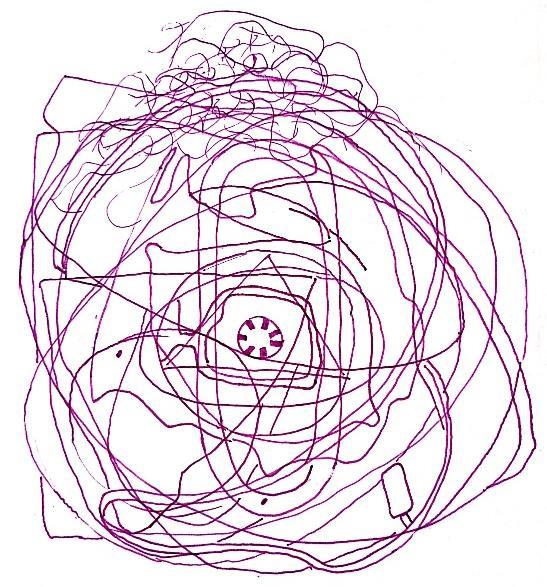
Untitled Emily Dowdeswell
Untitled Donata Puntil
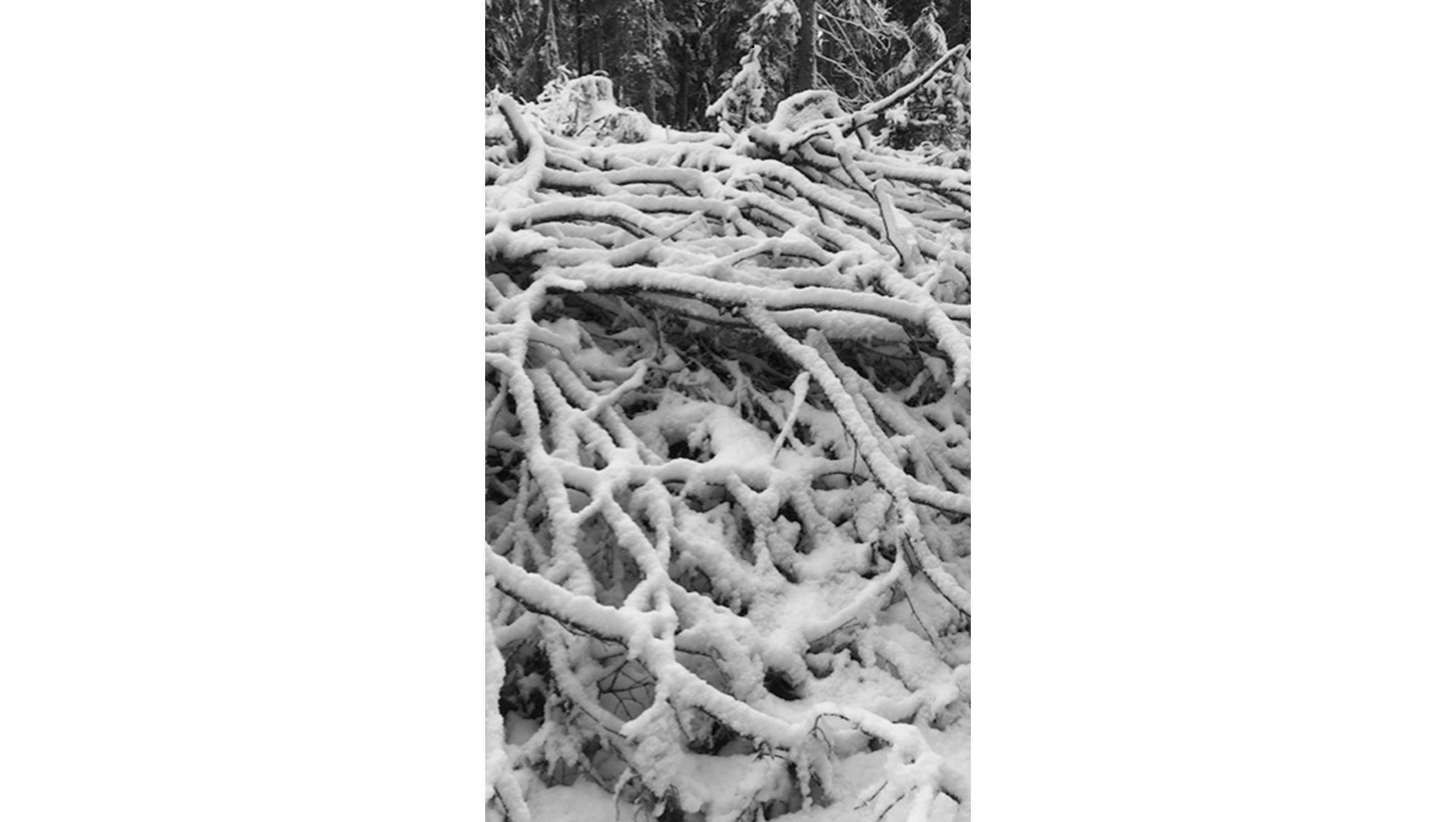
Inside, outside, liminal space we all inhabit, crossing borders, bodies, places, territories, nomadic belongings. I am here and there. I write with you, always, in my mind and in my body. Writing is a collective act, always, with present, past and future in the here and now. Always relational. I am here now in this room, but somewhere else at the same time and my writing too. When we write we think with our ghosts, with our memories, entangled with their presence and with their absences. I am thinking of you in this snowy Nordic landscape, yet you are not here, you will not be here, you cannot be here, you do not belong to this world any longer, yet you do. I take care of you in my writing, in our collective experiences of sharing stories, stories of absences and of belonging within and outside academia. In this snowy Nordic landscape, here and now, yet not here. Writing brings you back and brings us together in this collective liminal space where inside-outside is not a binary reality, writing is taking care of you, of each other, of our shared stories. I can do do this in this academic space, where we do care for each other, in this room, at this conference, with this collective writing. Bodies, places, stories, belongings…There is snow outside the window, there is snow in my memories, always, white, soft, cold, luminous snow where you and I belong, where my writing always goes back to; the snow I take with me everywhere, in my body, in my memories, here in this writing where there is snow outside. I do belong.