A proud partner of Issuu, House On Third U.S. Polo Assn., The Impression and Mixam
GRAND CHAMPIONS
USPA North American Cup
USPA National 20-Goal
Legends of Polo International Cup
LA PALMERAIE MOROCCO
The Autumn Cup
CORTINA
Snow Polo World Cup
NATIONAL POLO CENTER
Joe Barry Memorial Ylvisaker Cup
U.S. Open Women's Polo Championship
The Gauntlet of Polo
SCOREBOARDS & COCKTAILS
ST-MORITZ SNOW POLO
POLO LIFESTYLES EDITORS & CONTRIBUTORS
Joey
What do you actually meme? page 100
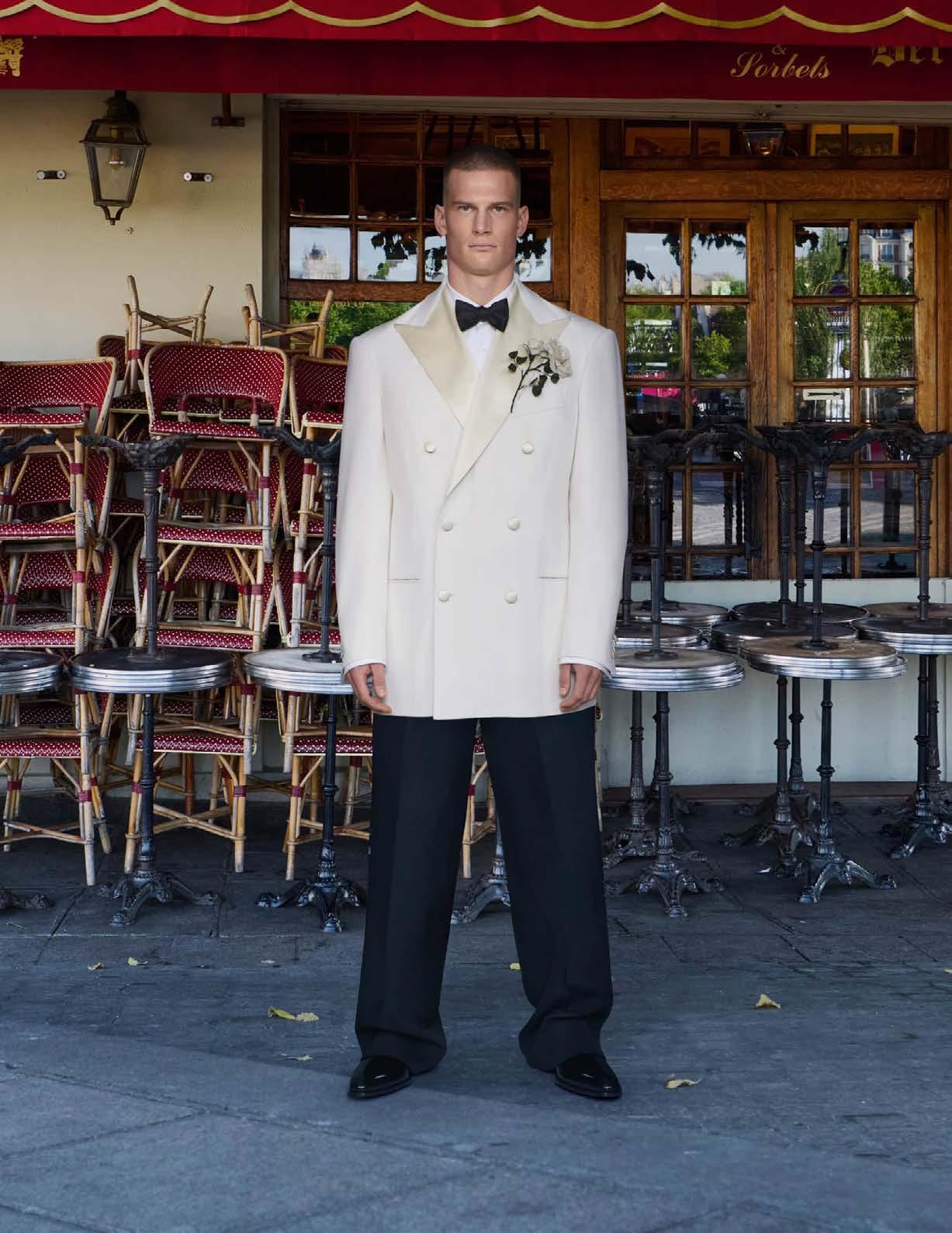
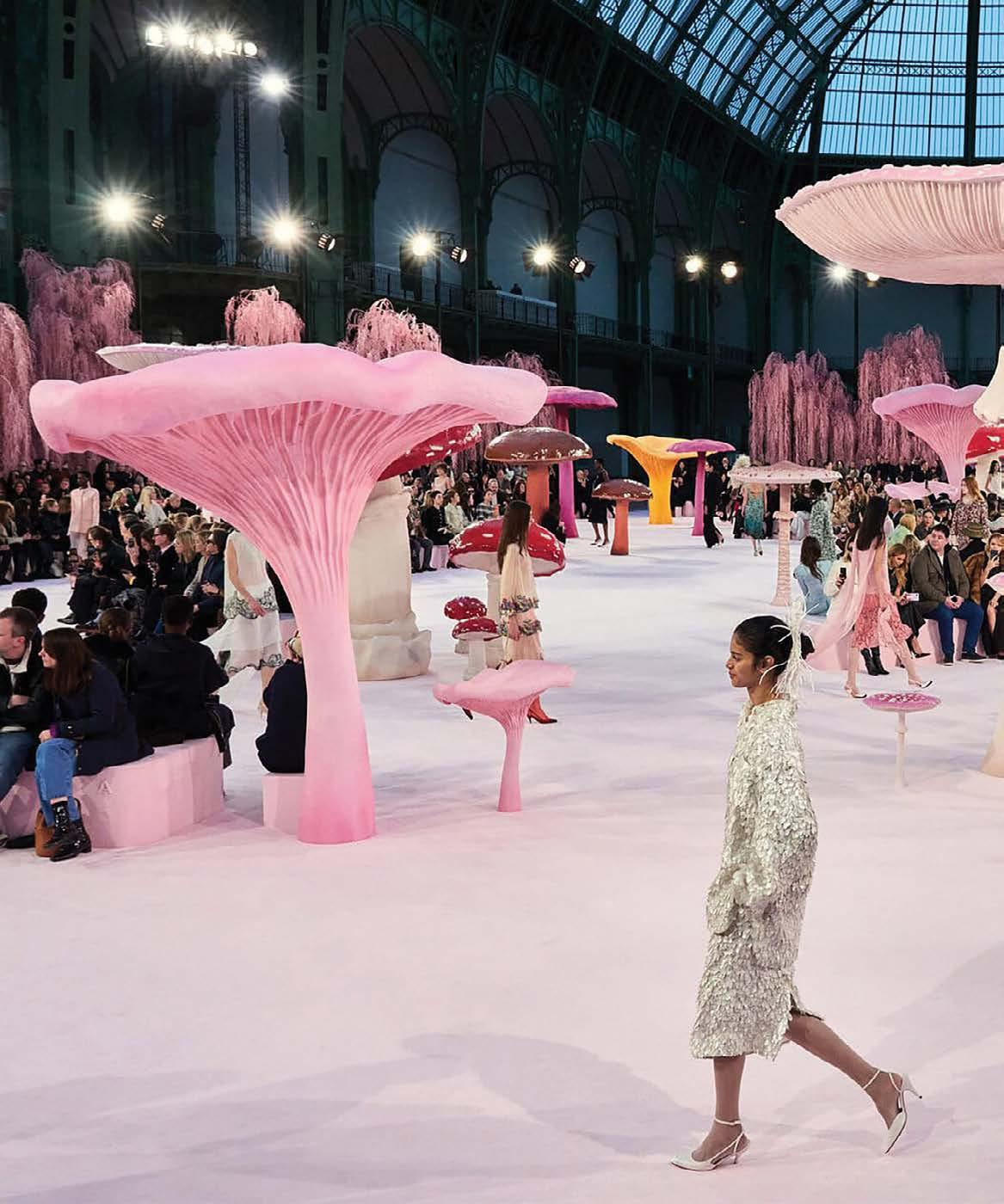
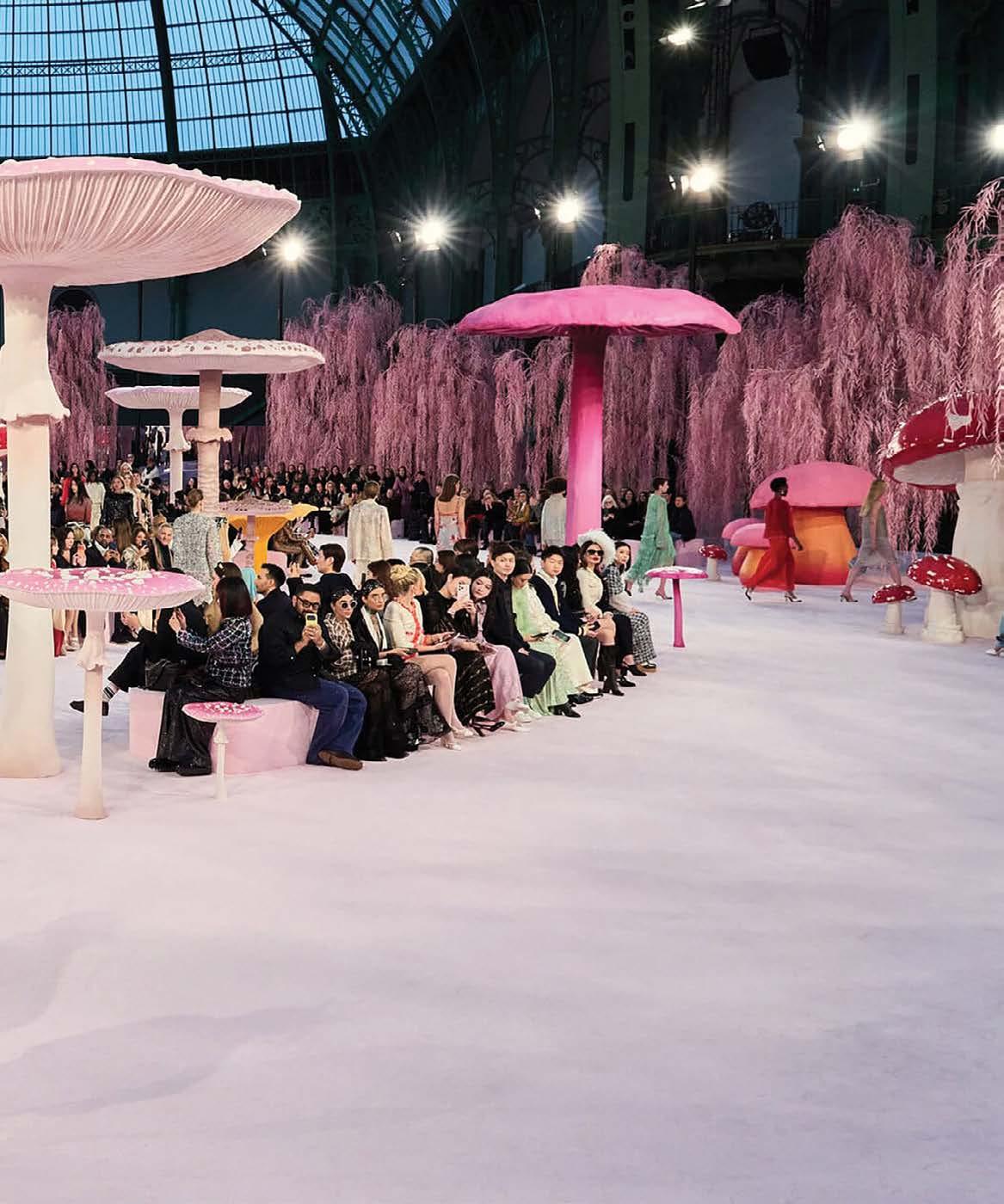
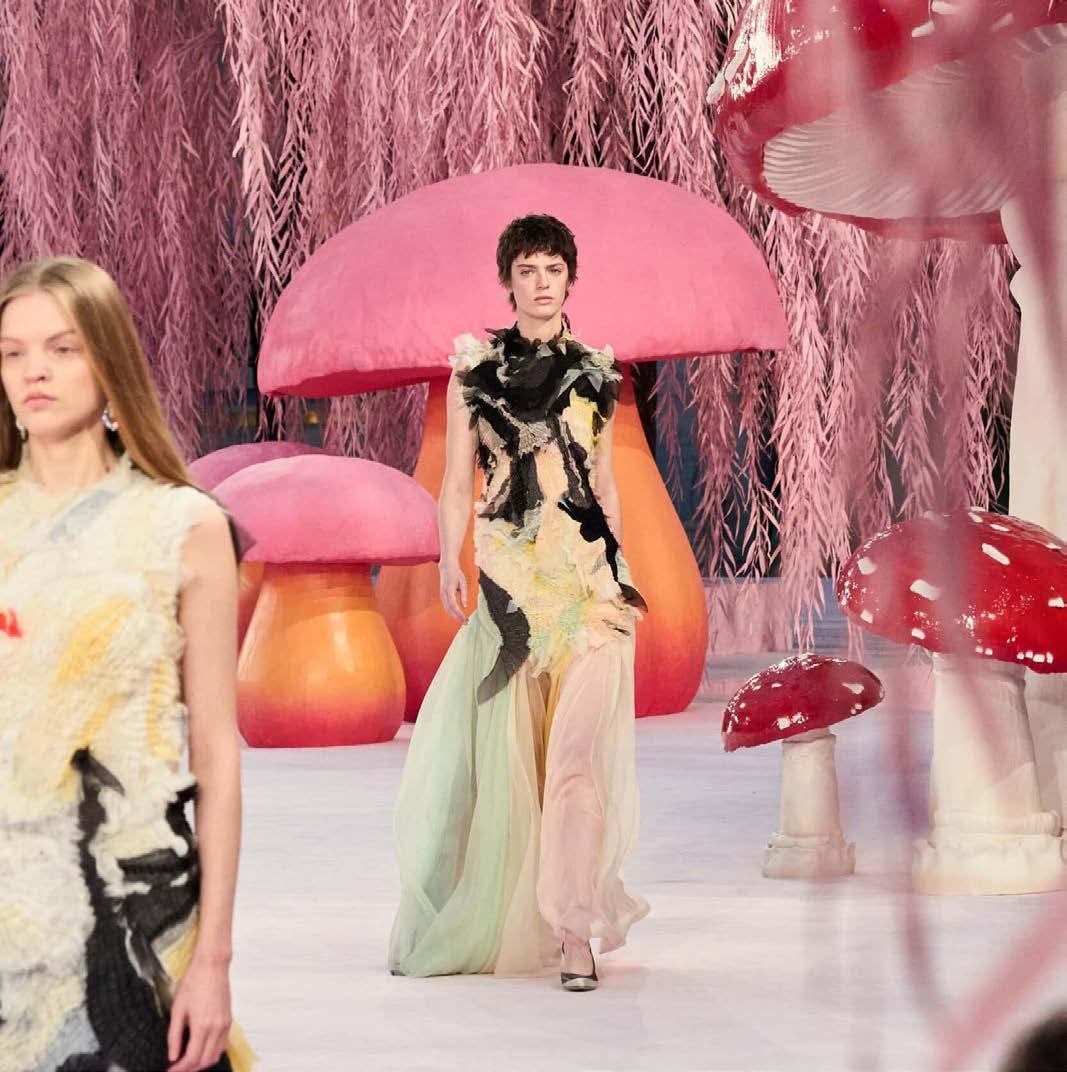
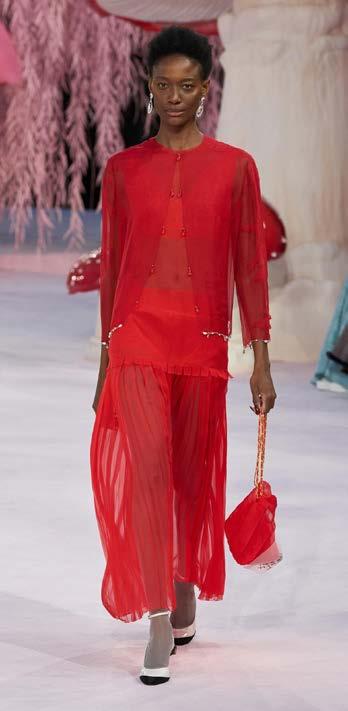
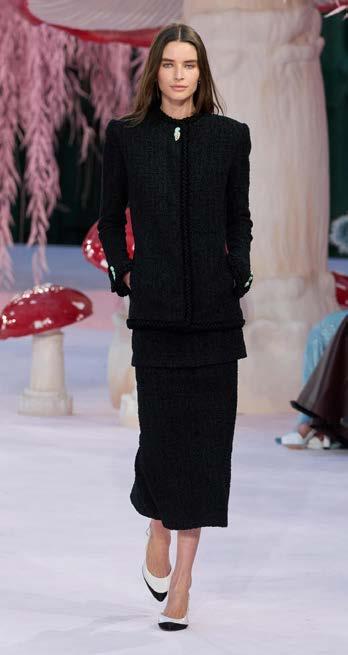
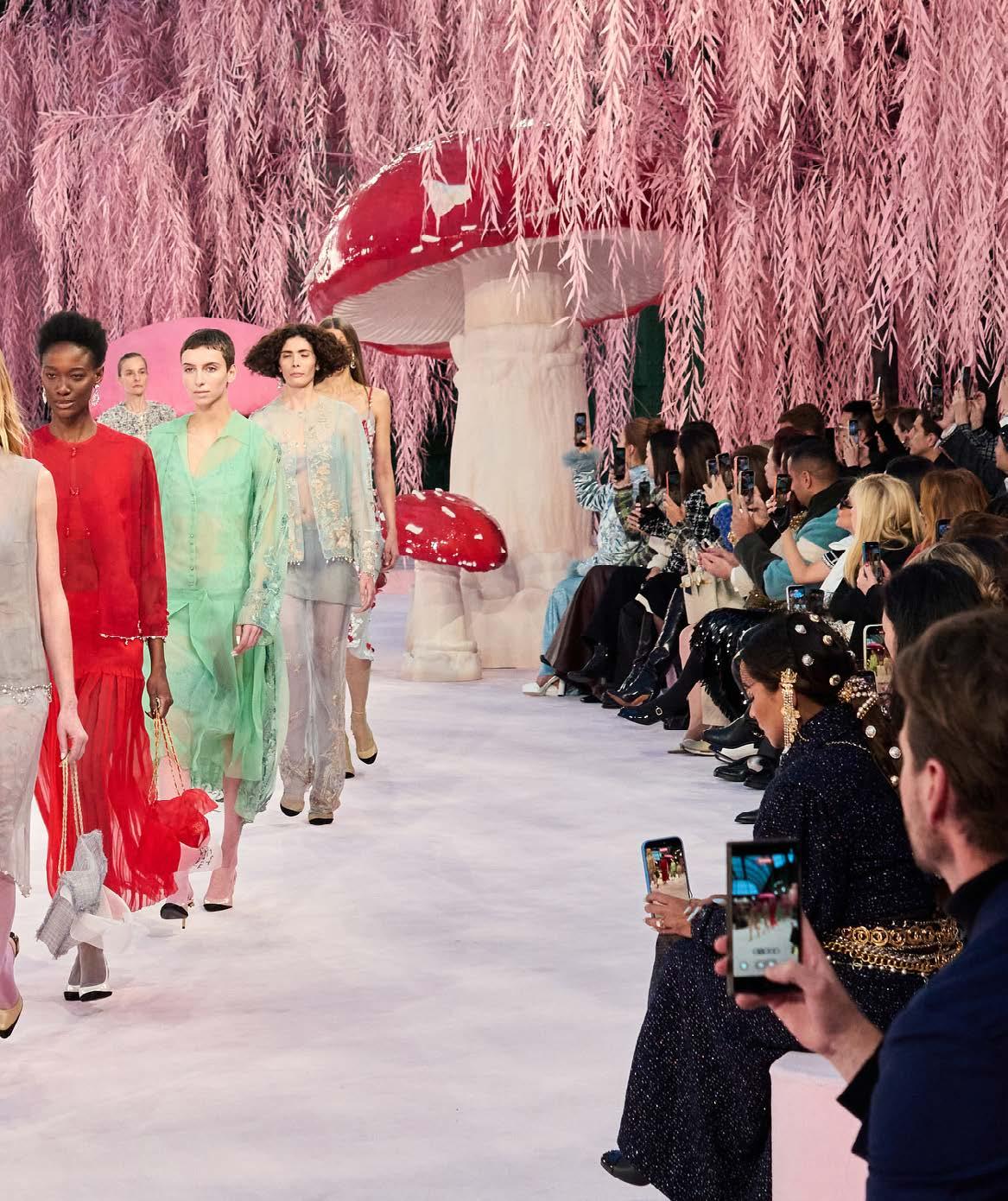
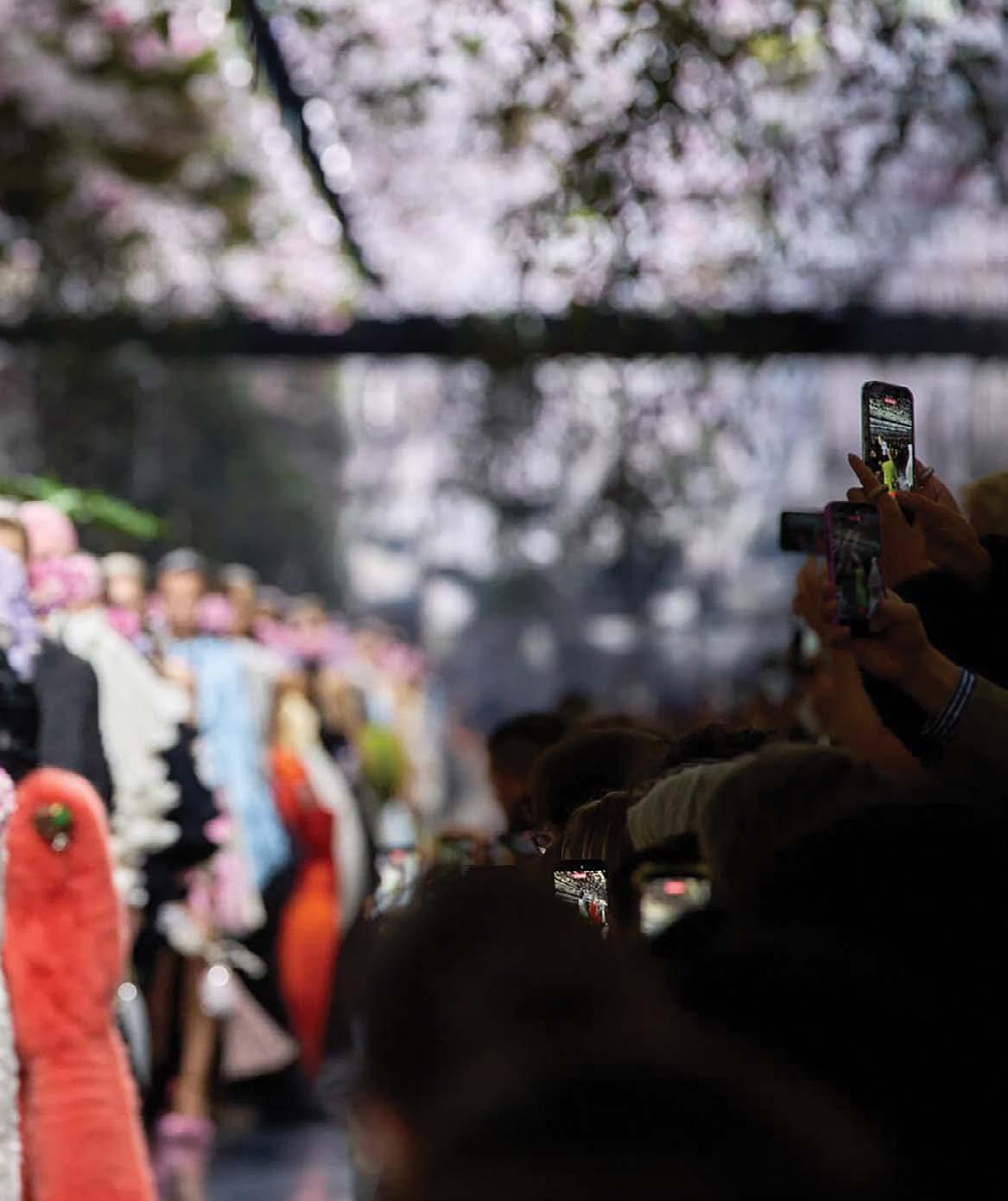
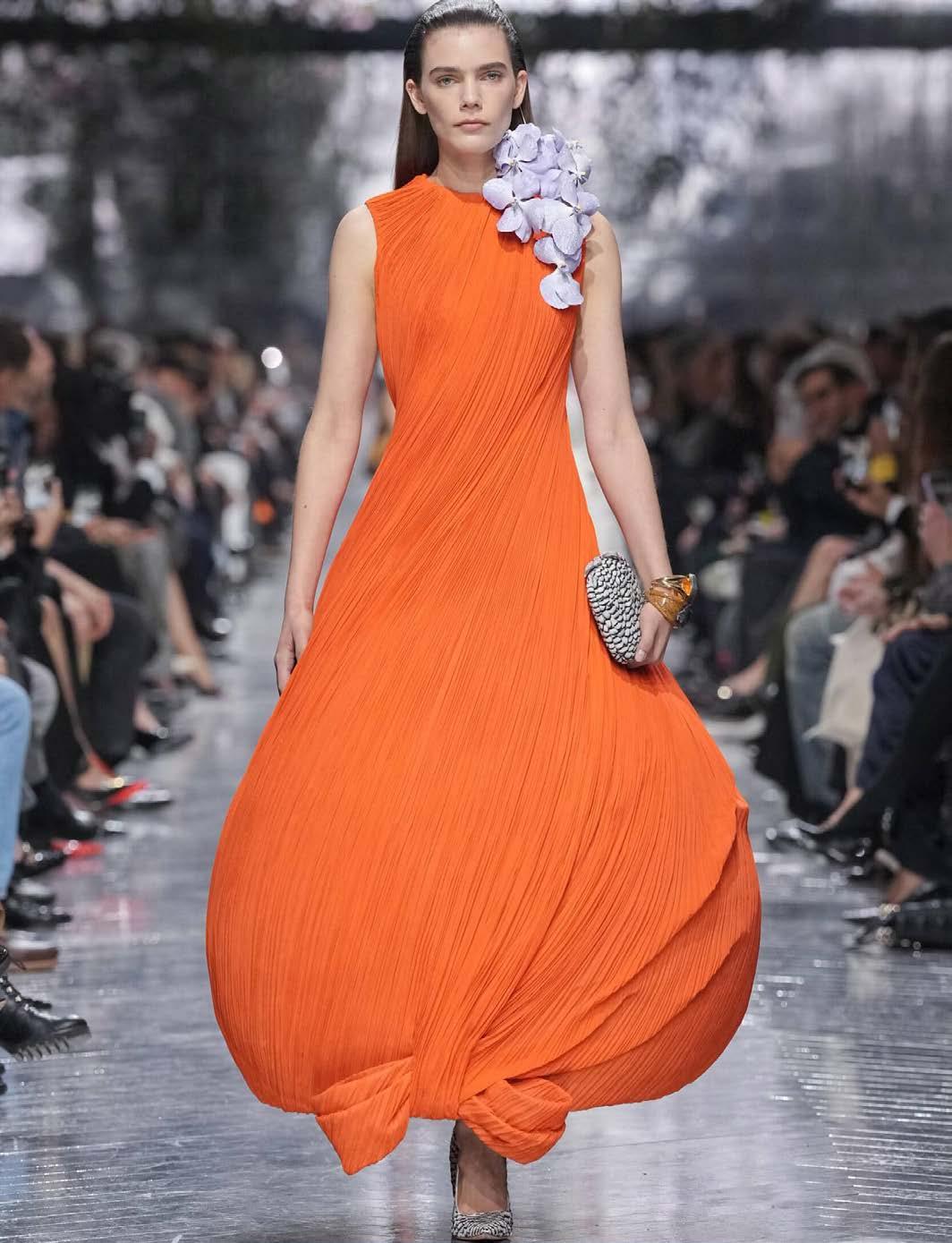
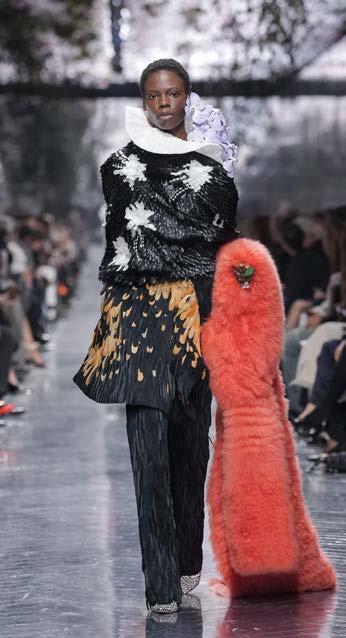
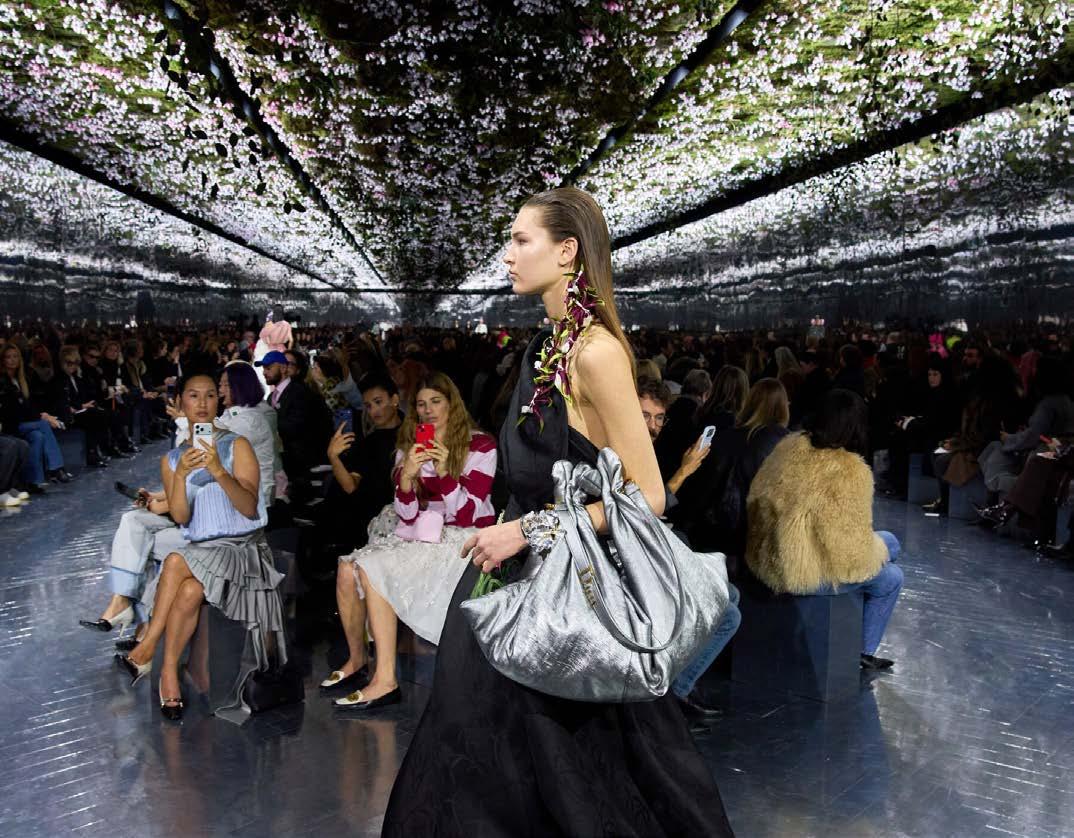
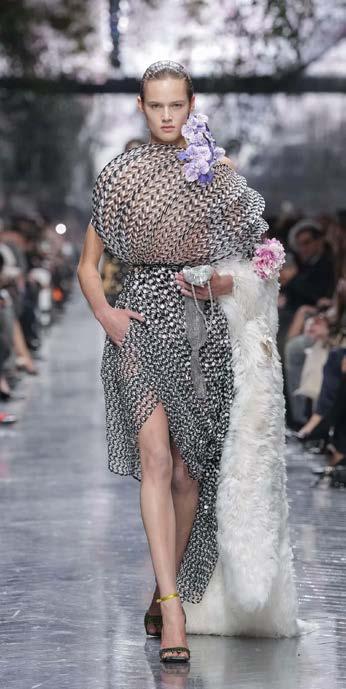
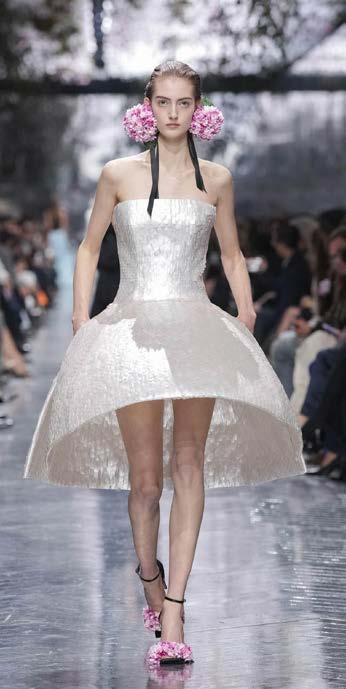
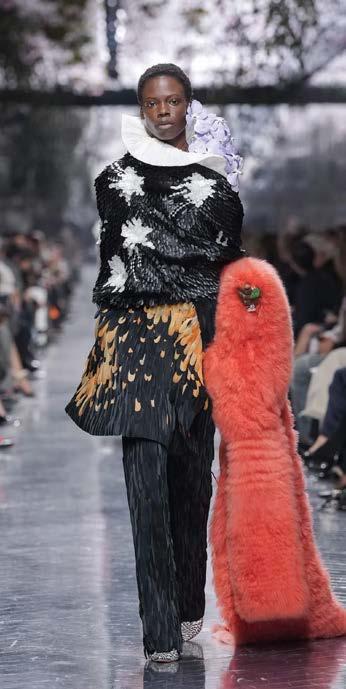
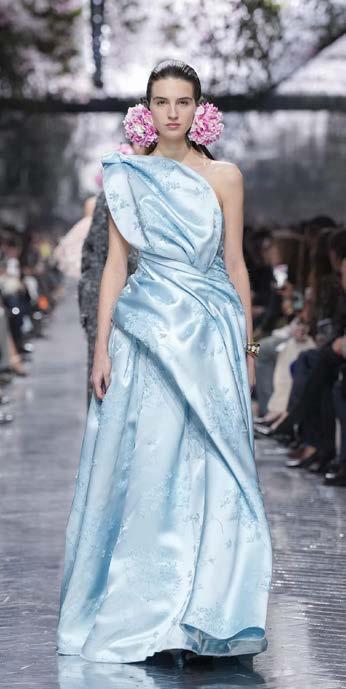
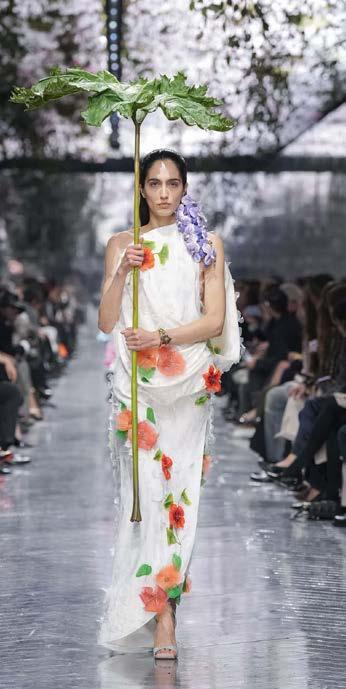
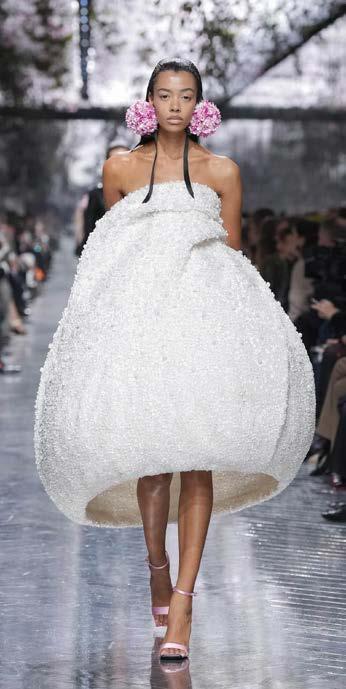
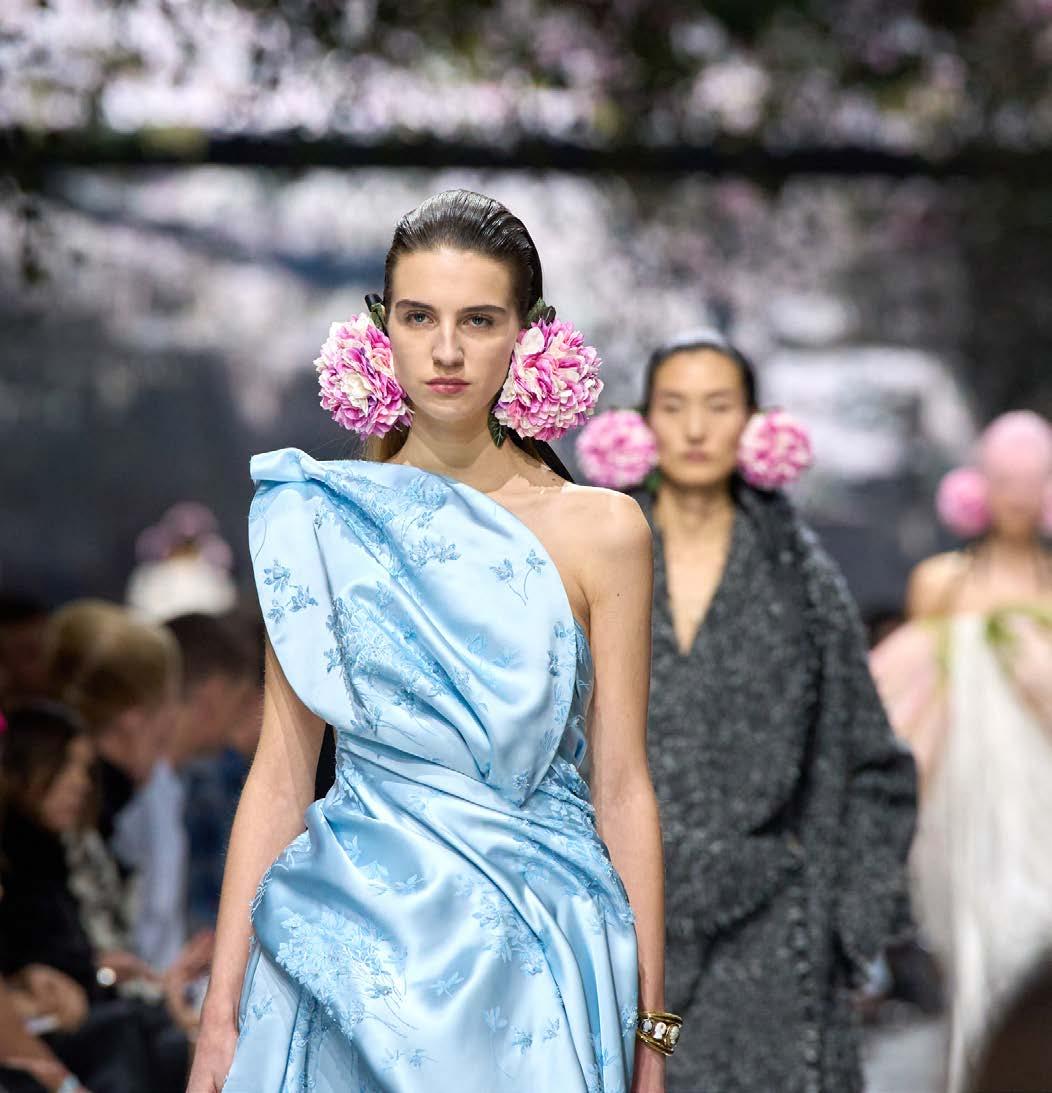
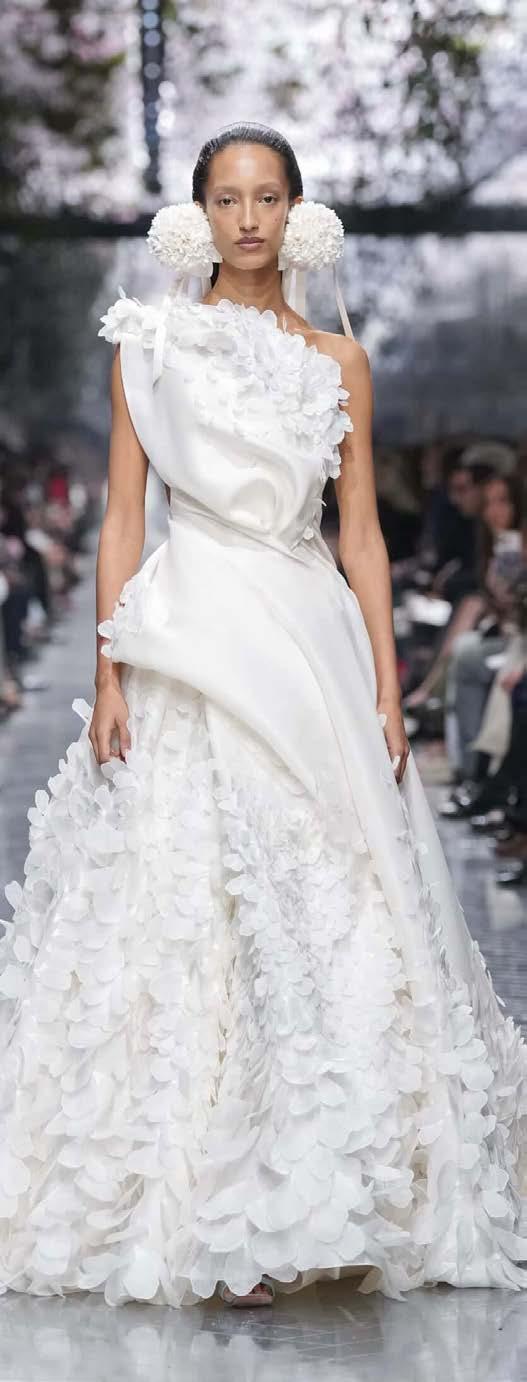
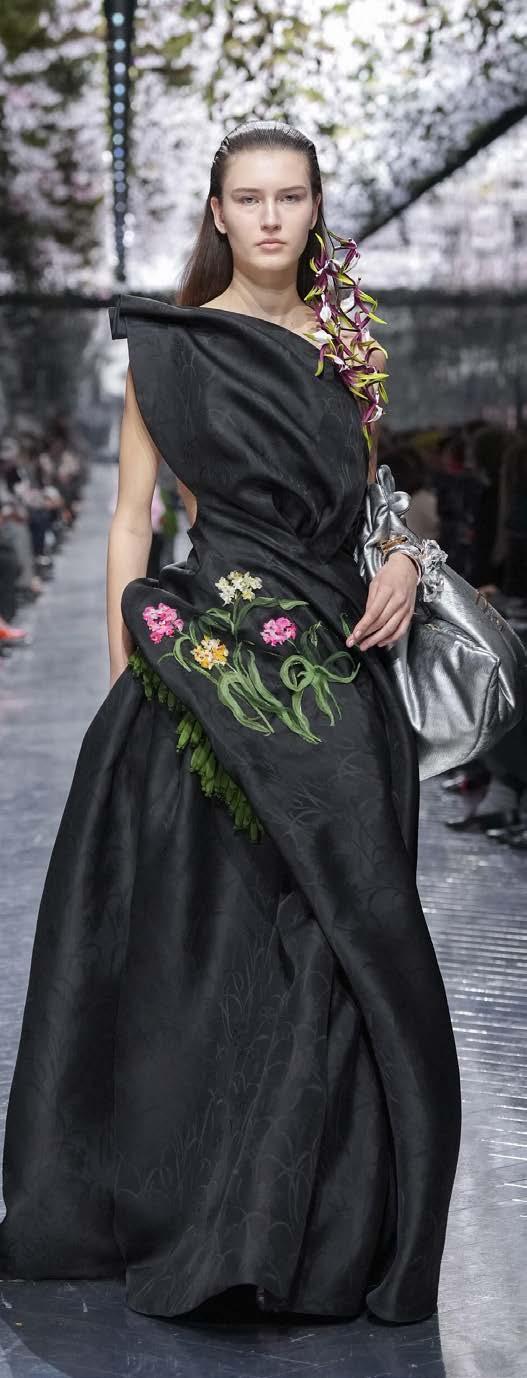
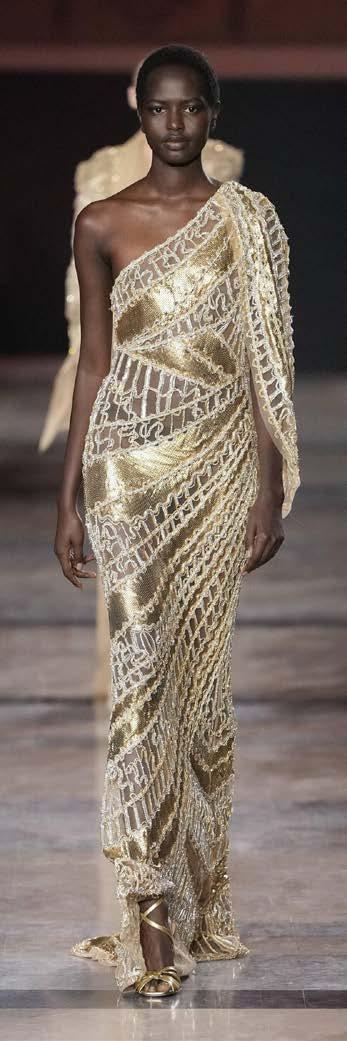
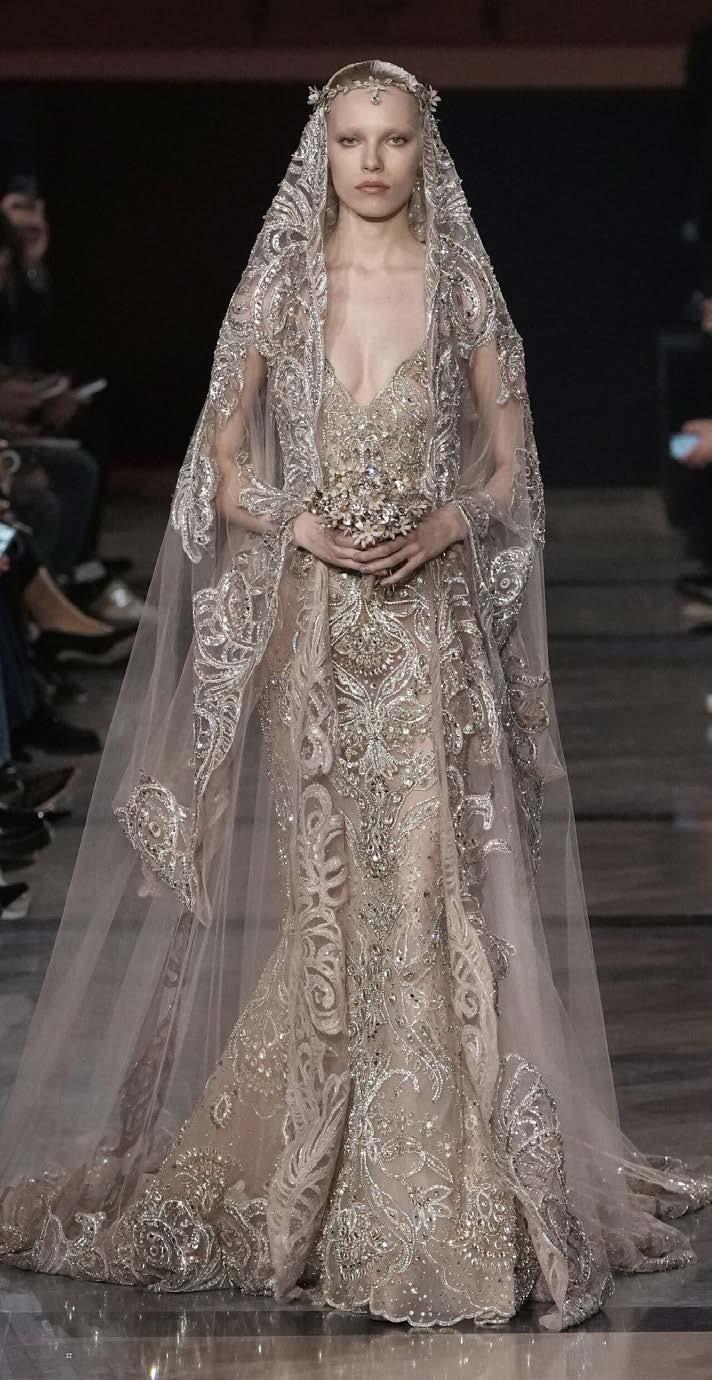
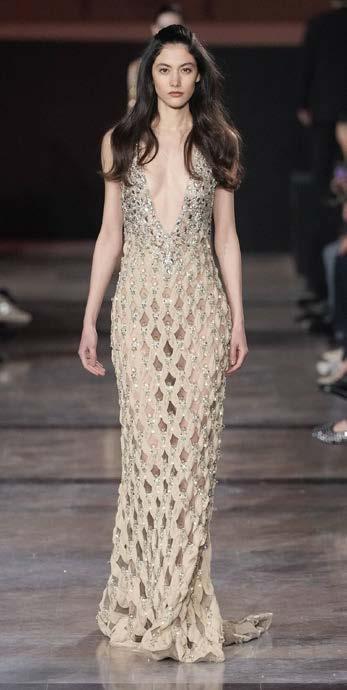
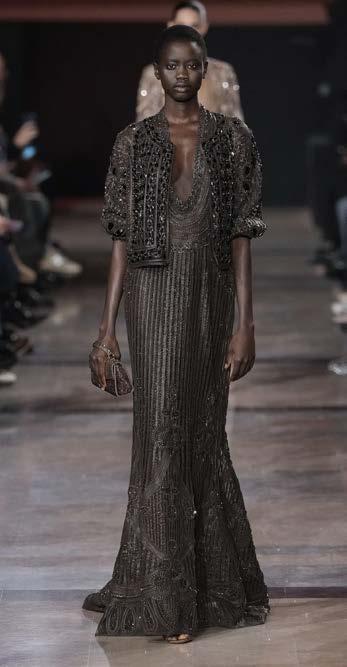
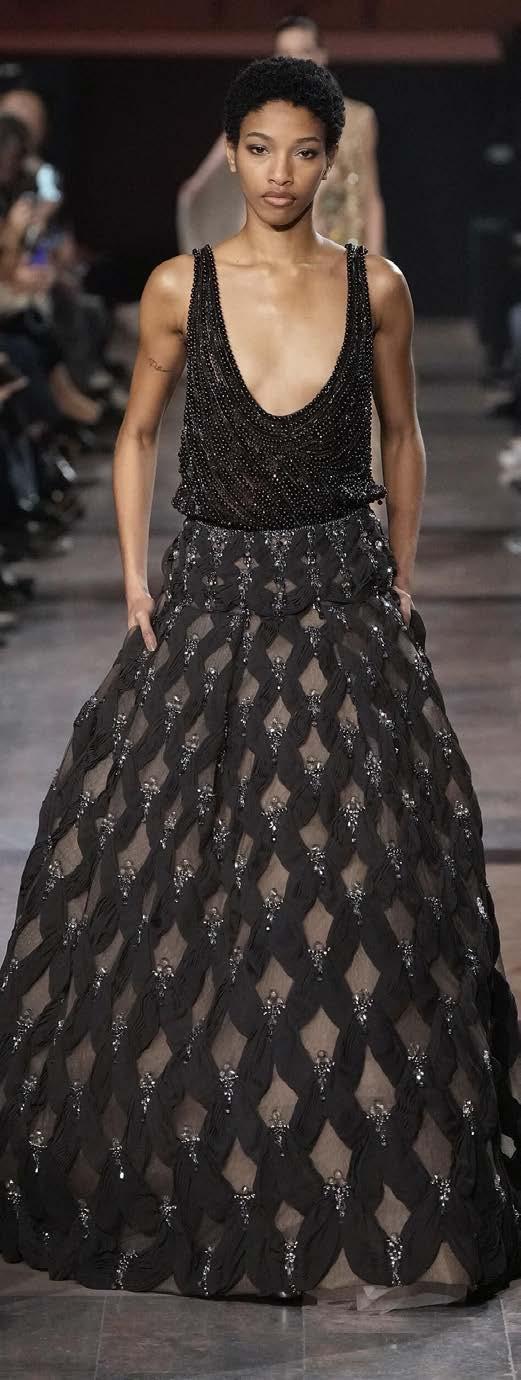
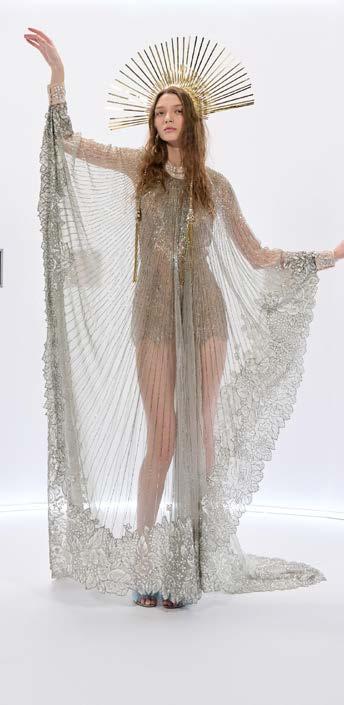
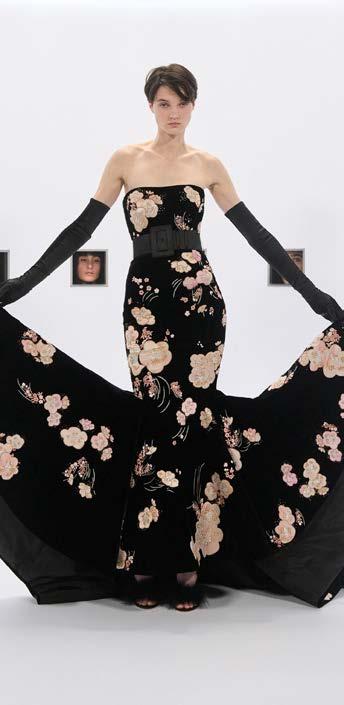
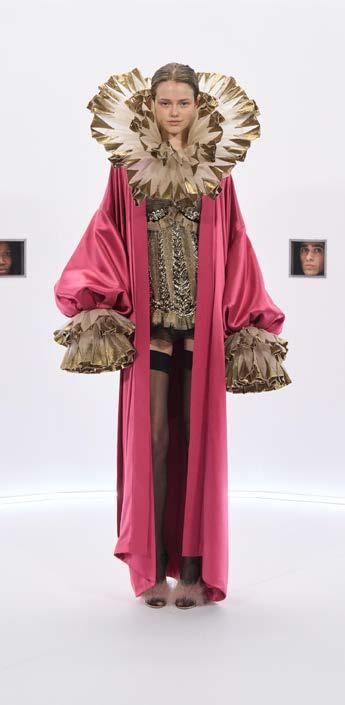
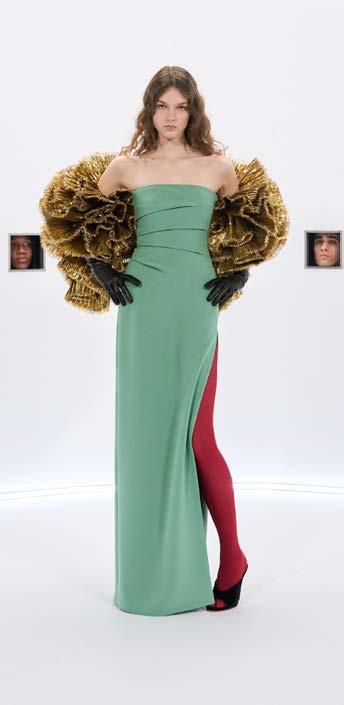
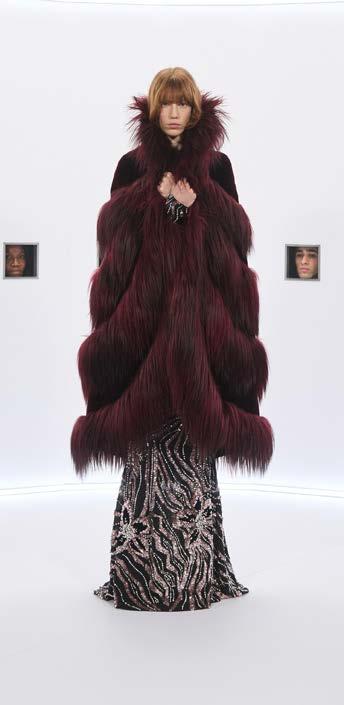
Chanel presents at Paris Haute Couture, page 118
Cortina d'Ampezzo beckons, page 74
Hermes new nautical tableware collection, page 90
FEBRUARY 2026 MEANS BLACK HISTORY MONTH, THE WINTER OLYMPICS, THE SUPERBOWL AND BAD BUNNY HALF-TIME SHOW, THE GRAMMYS AND SNOW POLO. FEBRUARY ALSO MEANS THE POLO LIFESTYLES ANNUAL LOVE ISSUE, AND EVEN THOUGH IT WAS DIFFICULT TO FOCUS ON LOVE AS WE ASSEMBLED THE CONTENT FOR THIS MONTH’S ISSUE, I FOUND MYSELF NEEDING THE LOVE ISSUE MORE THAN I KNEW. MAYBE YOU NEED IT, TOO.
Assuming that’s the case, you’re in luck because we have some great features, including 11 ways to show your love without saying a word, the correlation between love, hate and obsession (trust me, it’s worth the read) and, naturally, how big is too big? Because who doesn’t love a slight unclear innuendo on the cover of the Love Issue.
So, set your DVRs and streaming service reminders for the wild ride that is February.
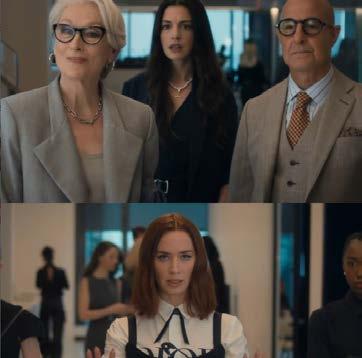
Click and comment on our choices... Tag @pololifestyles . We will share noteworthy comments with you next month.
@moethennessy
@robsgk
@perrierjouet
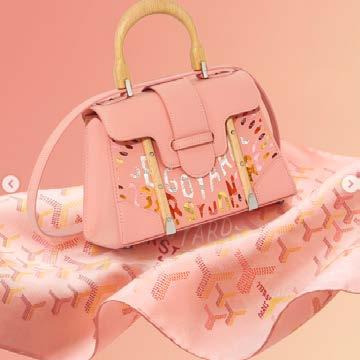
@goyardofficial
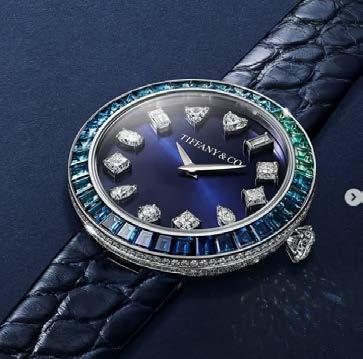
@tiffanyandco
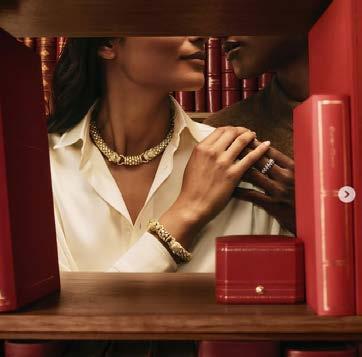
@cartier
@dendy.au
ST-MORITZ SNOW POLO
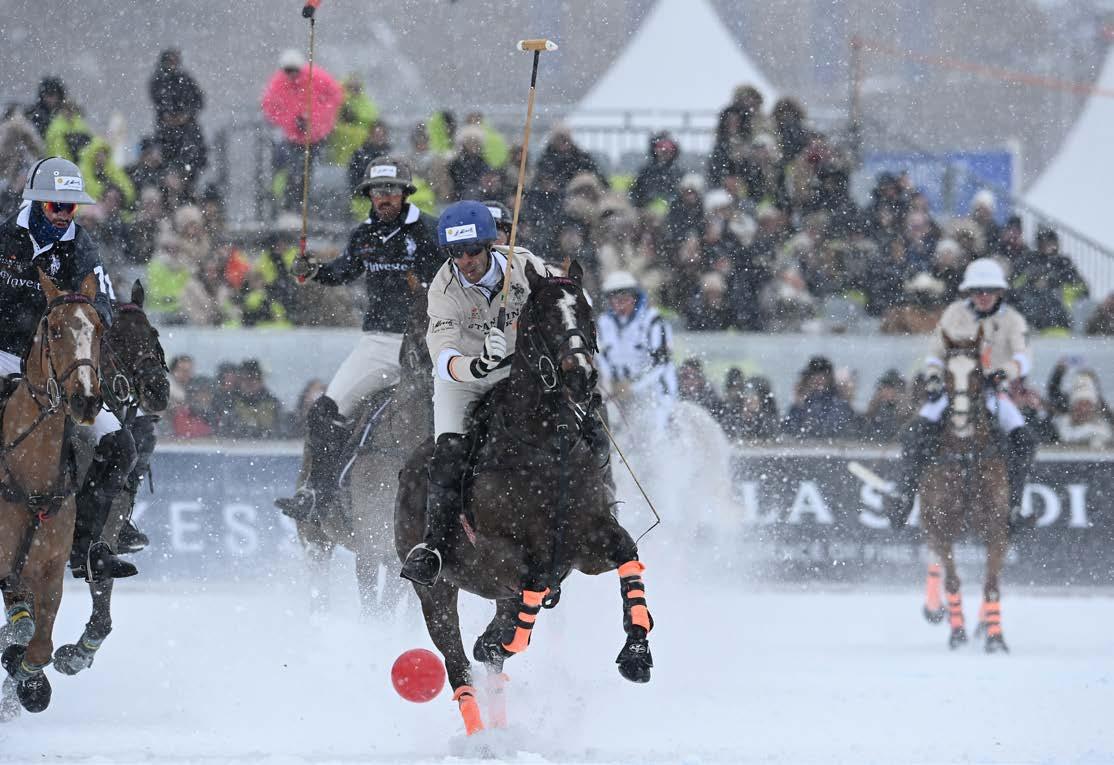
After a night of sparkling celebrations across the über chic resort of St. Moritz – from the sold-out Gala Dinner at Badrutt’s Palace Hotel, to dancing until dawn with polo friends in King’s Social House – the stage was set for Finals’ Day today – the sporting summit of this truly unique tournament, the world’s oldest and best snow polo event. This truly is snow polo at its most iconic: glamorous, gripping and gloriously unforgettable.
Finals’ Day is not just three matches, but a magnificent moment in the winter calendar – a celebration of sport, spectacle and pure excitement which truly has to be experienced to be believed… and once is never enough. 26,000 spectators certainly agreed, with sellout crowds over the course of the weekend and an impressive 2,400 tonnes of infrastructure placed upon the frozen Lake St. Moritz.
As the players made their way on to the arena, the atmosphere was electric. Designer clad spectators filled the stands, Perrier Jouët champagne glasses clinked as the sun tried to peek through the snow clouds and the cheers of the thousands of spectators rang out across the frozen lake as every world-class chukka brought fresh drama and excitement. High goal polo skill, horsepower and Swiss efficiency and hospitality combined power in perfect partnership – all set against the unforgettable St. Moritz backdrop.
Game 1: The Casablanca Cup: Azerbaijan-Land of Fire vs. MACKAGE The first match of the day saw AzerbaijanLand of Fire and Mackage battle for fifth and sixth place, with intensity and passion on display as they competed for The Casablanca Trophy. A fast-paced opening chukka saw Mackage strike first, but 2022 and 2023 winners AzerbaijanLand of Fire quickly responded to level the score at 1-1.
ST-MORITZ SNOW POLO CHAMPIONSHIPS
The remaining three chukkas were just as tight, with fast, flowing, end-to-end polo throughout. A penalty conversion for Azerbaijan-Land of Fire opened the fourth and final chukka to give them a 5-4 lead, and although Mackage fought hard to equalize, time was not on their side. Azerbaijan-Land of Fire stepped onto the podium to receive The Casablanca Trophy from Villa Sandi’s Diva Moretti Polegato, who presented the winners with a Casablanca helmet, a silver-framed team picture and a bottle of Villa Sandi, whilst runners-up Mackage received Casablanca knee pads, a silver-framed team picture and a bottle of Villa Sandi.
Game 2: The Mackage Trophy for the Subsidiary Final: Investec and St. Moritz-Top of the World The Subsidiary Final for the Mackage Trophy saw open, clean and fluid play, with minimal whistle from the umpires which resulted in easy to watch polo with thrilling end-to-end action. An injured Nico Pieres was replaced by Manuel Fernández Llorente, who jumped into the saddle, hot from a strong performance in the previous match and Manuel did not disappoint in his role as substitute.
Investec’s all-Brazilian line-up had well and truly found their feet and snow polo rhythm today, challenging St. Moritz-Top of the World every step of the way for possession, with their efforts rewarded in the third chukka as they gained the lead for the first time, 4-3½. Robert Strom worked relentlessly for St. Moritz-Top of the World – as always, efficiently reading the play and pushing hard to regain the advantage.
But despite his and his teammates’ best efforts it was not to be and the white-shirted ‘Boys from Brazil’ for Investec ran out the winners with a closer than close final score of 5-4½. Tanya Golesic, CEO of Mackage, presented Mackage vouchers to both teams and a silver-framed team picture; while the winners also received a bottle of Beluga Vodka presented by Dmitri Nasalskiy, Noblewood Marketing Director. Game 3:
The 41st Snow Polo World Cup Final Trophy: Flexjet and Standing Rock Both finalists, Flexjet and Standing Rock, had impeccable pedigrees and the sold-out grandstands were packed for the Final. National pride was running high with two Swiss players taking part: Team Captain Philipp Müller for Standing Rock, competing for the second time in the tournament and Tito Gaudenzi, back-to-back winner in 2022 and 2023.
Five-time winner Max Charlton opened the scoring for Standing Rock to neutralize Flexjet’s half goal handicap advantage, but Flexjet found their cruising altitude, weaving through the defensive lines to find the posts right on the bell, 1½-1.
ST-MORITZ SNOW POLO CHAMPIONSHIPS
It was edge-of-the-seat stuff as tensions mounted and the ball was lofted from end to end of the arena, with tight marking making it hard for either team to pull conclusively ahead. Uruguayan David ‘Pelon’ Stirling, the non-Argentine with the most Argentine Open wins, was in formidable form for Flexjet, showing his experience and talent with assertive possession of the line and accurate play.
However, in response Standing Rock were so solid that at half-time they still retained a narrow half goal lead, 3-2½, thanks to a last-minute dash to goal by Charlton, playing like a man possessed. After a quick half-time break and pony change, the teams returned to the arena with added pace, with a blisteringly fast chukka.
A penalty for Flexjet swung the lead in their favor again, but Standing Rock’s determined offensive teamwork combined with Nacho Gonzalez’s rock-solid defense soon resulted in another lead change, 4-3½. And so, the final ball of the chukka, of the final match of the 41st Snow Polo World Cup was thrown in. Pelayo Berazadi converted a penalty opportunity for Flexjet, 4½-4, could they hold onto the lead for the last five minutes?
Not on Standing Rock’s watch – a converted penalty from Most Valuable Player Raul Laplacette swung the lead in their favor once again, followed by Raul scoring a further goal with less than 30 seconds left on the clock, securing the title safely in Standing Rock’s possession. This win sees Max Charlton achieve his sixth Snow Polo World Cup titles; whilst Nacho Gonzalez now has an impressive five; Raul Laplacette his third and for Philipp Müller, his first time lifting the prestigious trophy.
The Snow Polo World Cup St. Moritz Trophy was presented by FIP President Dr. Piero Dillier. The Standing Rock players were each presented with a Jaeger-LeCoultre Reverso Tribute Monoface by Mrs Anne Schaal, Brand Director Switzerland of Jaeger-LeCoultre.
ST-MORITZ SNOW POLO CHAMPIONSHIPS
ST-MORITZ SNOW POLO CHAMPIONSHIPS
ST-MORITZ SNOW POLO CHAMPIONSHIPS
ST-MORITZ SNOW POLO CHAMPIONSHIPS
DUBAI GOLD CUP 2026
The 17th edition of the Gold Cup tournament brings six elite teams to the iconic grounds of Al Habtoor Polo Club, competing at the highest level until 14 February 2026.
The highly anticipated opening match of the Gold Cup 2026 delivered a thrilling spectacle as UAE Polo faced off against Bangash Polo in an electrifying showdown. Bangash came out firing, with Federico Von Potobsky striking early and netting the first two goals of the match in the opening chukker.
Maintaining relentless pressure, Bangash Polo showcased a strong defensive line anchored by Potobsky alongside Alfredo Capella. UAE Polo responded with determination, as Salvador Jauretche broke through the defense to score their first goal. Bangash quickly answered back, equalizing before the end of the first chukker and carrying their momentum through the second and third chukkers with a series of sharp, well-executed plays.
Chukker four marked a dramatic turning point. UAE Polo regrouped, raised the intensity, and surged ahead with a two-goal lead. With confidence and cohesion, UAE Polo seized control of the match and went on to secure a commanding and well-earned victory—once again proving why they remain a formidable force in every tournament they contest.
A spectacular start to the Gold Cup—if this opening clash is anything to go by, fans are in for an unforgettable tournament.
DUBAI GOLD CUP
DUBAI GOLD CUP
PHOTOGRAPHY BY THE POLO PAPARAZZI
BENDURA BANK
SNOW POLO WORLD CUP KITZBUHEL
BENDURA BANK SNOW POLO WORLD CUP KITZBUHEL
BENDURA BANK
SNOW POLO WORLD CUP KITZBUHEL
HOW BIG IS TOO BIG?
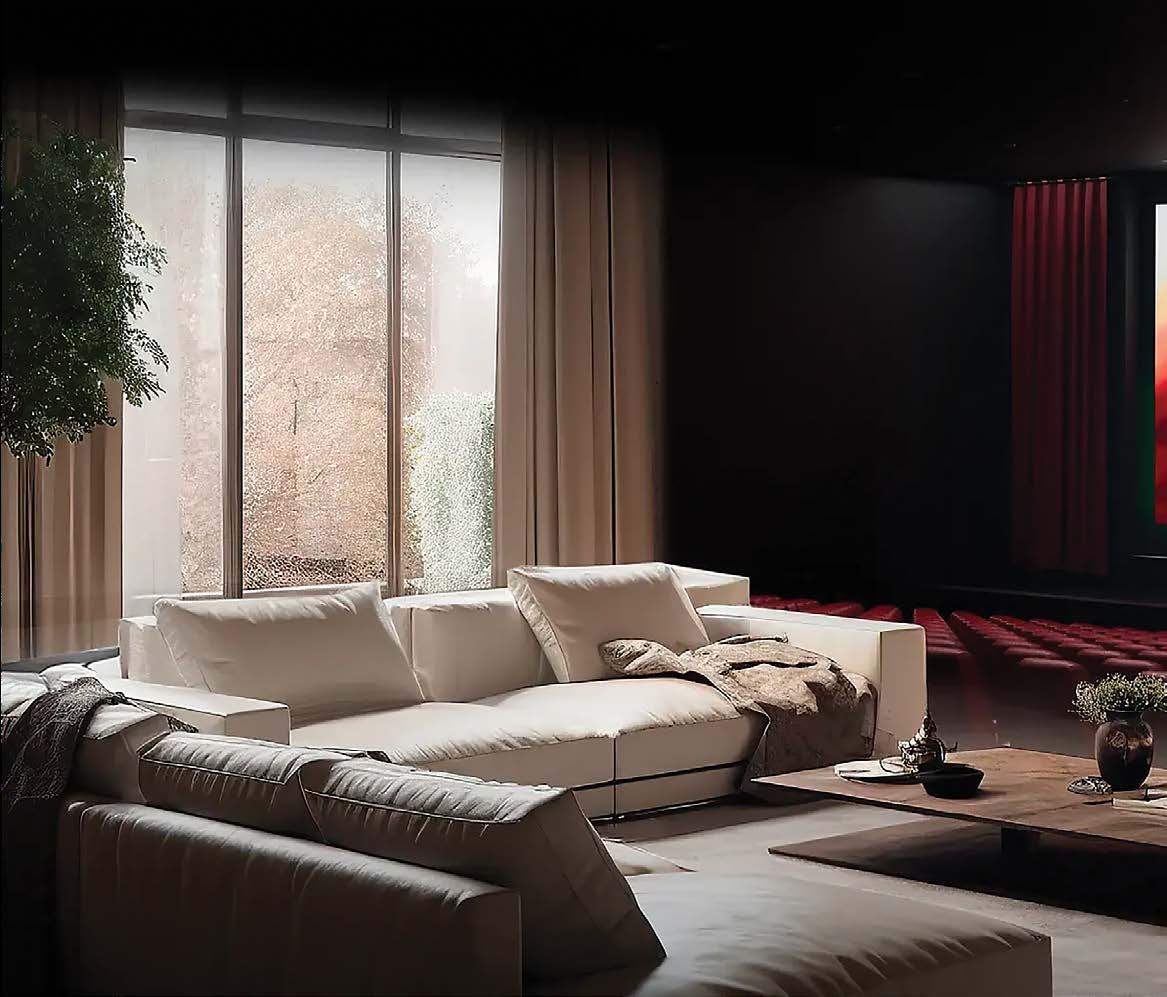
WHAT SIZE TV SHOULD YOU GET?
HERE’S HOW TO FIGURE OUT THE PERFECT TV SIZE AND HOW CLOSE YOU NEED TO SIT
WITH THE PRICES OF HUGE TVS DROPPING EVERY FEW MONTHS, IT’S UNDERSTANDABLE IF YOU’RE ITCHING TO GET SOMETHING BIGGER FOR YOUR HOME.
Only a few years ago a 65-inch TV was considered “big.” Now, 85- and even 100-inch TVs are surprisingly affordable. There are even TVs that are the size of a wall and even some TVs that are a wall.
The question becomes, how big is too big? Or if you’re more practical, what’s the right size TV for your room? Our advice is simple: The best TV for you is the biggest one you can afford. The longer answer? Well, that depends on your room, your seating distance and the acceptance factor of any cohabiting co-deciders. Here’s how to figure out how big you can go.
If you ask TV and theatrical industry groups, they’ll tell you to measure your seating distance to determine the ideal screen size. The farther away you sit, ob-
viously, the smaller your TV appears. The ideal is to have a screen that fills a certain amount of your field of view, though how much is “ideal” is up for debate.
THX recommends, for example, that you multiply your seating distance (in inches or centimeters) by 0.835. This gets you the recommended screen diagonal. If you’re like most people and you’re sitting about nine feet from your TV (108 inches), THX recommends a screen roughly 90 inches diagonal. So yeah, that big 65-inch TV you’re looking at is not “too big,” at least as far as THX is concerned.
They also recommend not mounting the TV too high, something we strongly agree with.
The Society of Motion Picture and Television Engineers recommends (pdf)
“The observer’s nominal distance from the center of the reference display should be 3 to 3.2 picture heights.” This is quite a bit less than THX and also for reference displays, not specifically a TV in a living room. It does give us another distance recommended by experts to give us an overall idea though. To match SMPTE’s recommendation, multiply your seating
distance by 0.625. So given our ninefoot example, that means a TV around 68 inches. So, you’re good to go with that 65-inch TV after all.
While these are all good guidelines, don’t take them as steadfast rules. Ideally, you want some sort of compromise between the two extremes. It’s far too easy to get caught up in a numbers game when the reality is far more complex. There are additional factors in play.
Nearly all new TVs are Ultra HD 4K resolution. A small, and shrinking num-
ber, are 8K. Only the smallest and least expensive models are still merely HD (1080p or 720p).
To see all the detail available in a 4K or 8K resolution image you either need to sit very close, or have a very large TV. In fact, if you’re sitting nine feet away, even “big” TVs are still too small for you to see all the resolutions for which they’re capable. Or to put it another way, the resolution of your next TV is going to be plenty unless you’re sitting very close, or are getting an exceptionally large TV (over 100 inches). So yeah, you don’t
need an 8K TV. If you want to know how far away you need to sit before you can no longer see individual pixels on a 4K TV, then Sony offers the above chart.
The flip side is that with lower-quality content a big TV will expose more flaws. If you find yourself noticing blockiness, video noise or other artifacts when watching shows and movies on your current TV, a larger model will show those issues even more. You should make sure you’ve enabled (or paid for) 4K content on your source device, streaming service or cable/satellite.
The other major factor to consider is something I’ll call “room domination.” How big does a TV have to be before that looming black rectangular slab seems to be the only thing in the room? This factor is definitely subjective. As someone who’s had a 12-foot-wide projection screen in his house for over a decade, and has also reviewed large TVs, I’ll take the big projection screen over a TV any day (not least because when the “TV” is off, a projector’s screen is white or gray, a TV is glossy black). An 80-plus inch TV can easily just dominate a space. Wall mounting can help a bit, but your TV room risks becoming the TV’s room. If you have any doubts, try taping off or cutting out cardboard the size of the TV you’re thinking about, and seeing how it fares in your room. You might want to paint it or put some black cloth over it, too. That’s what it’s going to look like when it’s turned off (models like Samsung’s Frame TV notwithstanding). Maybe that’s not a concern for you,
but it will be for some. Know that once the TV is actually in there, it will be way more awesome than cardboard, and probably brighter. It will also seem way, way bigger. It certainly depends on your room, décor and the opinions of others who share that room.
I’ll be honest, I don’t subscribe to any of the established “rules” for viewing distance and screen size. I think the SMPTE and the lesser THX numbers are too TV-biased. I think they vastly underestimate what’s easily possible with modern technology, for those who want more.
I sit nine feet from a 102-inch screen. That’s just the 16x9 portion. The full screen is 2.35:1 and 128 inches diagonal. I can just barely make out pixels when I expand a 1080p projector to the full width of the screen, but in standard 16x9 viewing, I can’t. 4K looks amazing. Watching TV this size is addictive, and I love it.
I mention this as proof you can go much larger than most people assume is possible. Check out how inexpensive, and bright, projectors have gotten. We’ve reviewed a bunch lately and have lists of the best projectors overall and the best 4K projectors.
Do you want to go that big? Well, that’s a different question. I find larger screen sizes easier on the eyes, as more of your field of view is taken up with the roughly uniform brightness of the screen. In an otherwise dark room, your pupils are more naturally closed to the amount of light thanks to the big screen.
That said, projectors are far dimmer than any TV. Conversely, I find watching a small screen in a dark room more fatiguing, as your pupils are more open (because of the dark room) with this one annoying pinprick of bright light (the TV). Many people complain about headaches when they watch TV in a dark room. One possible cause is the hundreds of nits from an HDR TV taking up a tiny fraction of your field of view. Think about when someone shines a flashlight in your eyes when you’ve been in the dark for an hour. With a projector, you’ve got far less light than what a TV produces, and it’s spread out over a huge swath of your vision.
True bias lights, leaving the room lights on and turning down an LCD’s backlight or an OLED’s overall brightness, can minimize fatigue as well or better than a big screen, but I like watching TV in a dark room. To each their own.
The ultimate decision is one of personal preference. My goal here was to point out a rough idea of what’s possible or recommended. For me, I would always err on the side of “too big.” An old boss of mine used to say that no one regretted buying a TV they thought might be “too big.” My opinion is that a 50-inch TV is too small for most rooms. That’s not to say I think everyone should get a 102-inch screen, but the reality is a 50-inch flat panel is really not that much larger than the 36inch CRTs of the old days. Since 65-, 75-, and even 85-inch TVs are now far more affordable, they’re worth considering if you’ve got the space.
YOU CAN HEAR “I LOVE YOU” A THOUSAND TIMES AND STILL WONDER HOW SOMEONE REALLY FEELS. WHAT OFTEN SPEAKS LOUDER IS HOW THEY MOVE AROUND YOU, WHAT THEY NOTICE AND WHAT THEY QUIETLY DO WHEN NOBODY IS WATCHING.
I remember sitting on the sofa after a long day, too tired to explain what I needed. The person next to me did not say much. They just got up, dimmed the lights, brought me water and put my favorite show on. In that moment I felt more loved than any long speech could have made me feel.
That is the power of quiet love. It hides in small choices and soft gestures. It looks very ordinary from the outside, yet it can change how safe and wanted you feel on the inside.
These are not grand romantic movie scenes. They are the everyday actions that slowly build trust, comfort and a sense that you are truly on the same team. As you read, notice which behaviors already show up in your life. You might realize
that someone has been saying “I love you” for a long time, just in a different language.
1. THEY NOTICE WHAT YOU NEED BEFORE YOU ASK
One of the clearest quiet “I love you” messages is simple. They see you. Not just your face or your outfit, but your mood, your energy and the subtle signs that you are not at your best. Think about the person who hands you a glass of water when you start coughing, or opens a window when they notice you keep tugging at your collar. They do not wait for you to spell it out. This kind of emotional temperature check tells you that your comfort is always on their radar.
Often, they read patterns. They know that if you had a long day at work, you will probably want something easy for dinner. So they suggest takeout before you even think about cooking. That is not mind reading. It is paying attention and remembering what usually helps you. On your side, you might notice how your body relaxes around them. You do not have to perform or pretend. You do not need to keep asking for the same things over and over. Feeling understood in this quiet way can be more soothing than any big romantic speech. Over time,
these moments of being seen add up. They teach your nervous system that you are with someone who looks out for you, even in the tiny moments that most people ignore.
2. THEY REMEMBER THE TINY DETAILS YOU SHARE
Everyone remembers birthdays and big holidays. Love often shows up in the small details that seem unimportant to anyone else. The song you liked as a kid. The snack you always avoided in school. The way you hate when your socks get wet.
When someone files these details away and uses them later, it is a quiet kind of magic. They might surprise you with that exact candy from your childhood. Or they avoid planning a date that includes your least favorite activity, without making a big deal about it. What makes this powerful is not the item itself. It is the message behind it. They are saying, “I listen when you talk and what you say matters to me.” That feeling of being remembered helps build deep tiny details that connect your inner world to theirs. Sometimes this shows up in language. They copy your favorite phrases, inside jokes, or the way you name things. It be-
comes a private code between you. Only the two of you know why a certain word can make you both smile. You might not notice how rare this is until you talk to someone who forgets everything you share. When someone remembers those “little” things, it quietly tells you that you are not little to them at all.
And the best part is that you can do this too. You do not need a perfect memory. You just need to care enough to write things down or circle them in your mind when your person shares them.
3. THEY QUIETLY FIX PROBLEMS IN YOUR WAY
Real love often looks like this. You go to do something and find that the annoying part has already been handled. The gas tank is full. The broken zipper is fixed. The bill you kept putting off is now paid. This is the world of invisible labor. It is the work that makes life smoother but rarely wins attention. When someone loves you, they often step into this space
and look for ways to lighten your load behind the scenes.
Maybe they notice that the squeaky door keeps bothering you, so they oil the hinges while you are out. Or they see that your email inbox stresses you, so they sit with you and help you sort it, one folder at a time. They are not trying to control you or take over. The heart of this behavior is simple. They do not like watching you struggle with things they can easily help with. So they take action and do not expect applause.
When you realize this is happening, it helps to name it. A simple “I saw you took care of that, thank you” can turn invisible help into a shared moment of warmth between you.
4. THEY SAVE THE BEST PIECE FOR YOU
Love often reveals itself at the dinner table. Someone who cares will push the crispiest roast potato toward your side
of the plate. They will leave the last bite of dessert for you, even if they secretly wanted it too.
At first, this might seem like simple politeness. But repeated over time, it becomes a pattern of thoughtful generosity. They do not keep score. They just like seeing your face light up when you get the nicest part. It can show up in other ways as well. They might give you the comfiest side of the bed or the seat with the best view. Or they offer you the better umbrella when it starts to rain.
These small sacrifices send a clear message. Your joy is their joy. Your comfort matters more than their momentary wish. They are not losing. They feel like they are winning when you are happy. Next time you see this, pause for a moment. Let yourself take it in. You are watching love in action, shared through cake slices, blankets and the “good” pillow. And if you catch yourself doing the same, that is love speaking too, quietly and consistently.
5. THEY REACH FOR YOUR HAND IN SMALL MOMENTS
Physical touch is one of the clearest nonverbal ways to say “I am here with you.” Not every person loves touch in the same way, but for many people gentle, respectful contact feels like home. It might be a hand on your shoulder when you are nervous, a quick squeeze under the table, or a hug that lasts just a few breaths longer than usual. These tiny touches can lower stress and help your body feel safer.
Researchers have found that affectionate touch in close relationships is often linked with stronger feelings of love and connection across many cultures. A large cross-cultural study found that simple touches can communicate care even when people do not use many words. In daily life, someone who loves you will often reach out without making a show of it. They take your hand when you cross the street. They brush hair away from your face. They rest their knee against yours on the couch.
What matters is not how dramatic the gesture is. What matters is that the touch respects your comfort level and feels safe. When it does, each small contact becomes another quiet promise that you are not alone.
6. THEY PROTECT YOUR TIME AND ENERGY
In a world that is always busy, love looks like someone who guards your rest. They do not push you to do “one more thing” when you are already drained. Instead, they help you say no to extra demands.
Sometimes this means they run interference. They might tell others, “They cannot make it tonight, they need a quiet evening,” without making you feel guilty. They understand that your time is not endless and your energy matters. This is a form of healthy boundaries. They do not want to own your schedule. They simply want you to have space to breathe, sleep and enjoy life, not just rush through it.
You may notice this in how they react when you are tired. Instead of taking it personally, they suggest a slower plan.
Maybe movie night instead of a big party. Maybe a walk instead of a long trip. It is easy to say “I love you.” It is harder to respect someone’s limits and still stay close. When they do, it shows that they love the real you, not just the version of you that never gets exhausted. Over time, this care makes your relationship feel like a safe place to land, not another item on your to-do list.
7. THEY SHOW UP WHEN LIFE FEELS HEAVY
Big words are nice, but during hard times you usually remember who actually came. Who sat with you when you were scared. Who checked on you when the news was bad. Who stayed a little longer even when things were awkward and sad.
Someone who loves you will often appear without being asked. If you get bad news, they might show up with soup, tissues, or just a quiet presence on the couch. They are not there to fix everything. They are there so you do not have to face it alone. This kind of showing up can look very ordinary from the outside. A ride to an appointment. Help filling out paperwork. Sitting with you while you call a difficult number.
What makes it loving is consistency. They do not disappear when things are no longer fun. They stay close, even when you are not at your most charming or social. Sometimes the most healing sentence is silent. It is the feeling that if you reach out your hand in the dark, someone will be there to take it.
8. THEY SHARE COMFORTABLE SILENCE WITH YOU
A lot of people feel pressure to fill every gap with conversation. Real closeness often starts when you no longer feel that need. You can sit together in silence and it does not feel strange. It feels peaceful. Maybe you both read different books at the same table. Maybe you drive without music for a while, each lost in thought. The key sign is that the quiet does not make you anxious. It makes you feel more like yourself. This is the gift of comfortable silence. It says, “I enjoy your
presence, even when nothing is happening.” You do not have to entertain each other or perform. You can rest.
In these moments, small gestures still speak. A shared smile. A foot brushing against yours. A mug of tea placed by your elbow without a word. Love does not disappear when talking stops. When you notice that silence feels easy with someone, take that as a gentle sign. Your nervous system is telling you that this is a person you can relax around.
9.
THEY PLAN AROUND YOUR COMFORT, NOT THEIR CONVENIENCE
Planning is one of the least romantic words, but it is one of the strongest love signals. Someone who cares about you thinks ahead about how plans will feel for you, not just what works fastest for them. They might choose a restaurant that fits your diet, even if it is a little farther away. Or they suggest meeting earlier in the day because they know you get tired at night. They remember that loud bars make you anxious and find a calmer spot instead.
This is not about control. It is about respect. Your comfort is part of the decision, not an afterthought. You become a real partner in their mind, not just a passenger in their schedule. Love looks like checking in. “Is this time okay for you?” “Do you want to sit by the aisle?” When someone asks these kinds of questions often, you learn that your needs belong in the plan.
Over time, this creates a strong sense of safety. You do not have to fight just to be considered. You know that when they map out the day, they automatically include you and your limits. That simple shift from convenience to care is a quiet way of saying, “Your well-being matters to me, every single day.”
10.
THEY BRAG ABOUT YOU WHEN YOU ARE NOT THERE
There is a special kind of love that shows up when you are not even in the room. It is how someone talks about you to their
friends, family, or coworkers. Maybe you hear later that they told a friend how proud they are of your new project. Or someone repeats a kind thing they said about your character, not just your looks.
When a person is excited to share your wins, they are showing that your success feels like their success too. They are not trying to take credit. They are simply happy that you shine.
This quiet bragging is different from showing you off for status. It usually focuses on your effort, growth, or kindness, not just what you can “offer.” It sounds like, “They worked really hard for this,” or “They have such a big heart.” Knowing that someone defends you and speaks well of you when you cannot hear them
creates deep trust. It tells you that you are loved both in public and in private.
11. THEY KEEP CHOOSING YOU IN EVERYDAY DECISIONS
Love is not just one big yes at the start of a relationship. It is hundreds of small yeses, repeated over time. Who they text back first. Whose needs they factor in. Which promises they keep, even when no one would blame them for forgetting.
You see this when they choose to check in with you before adding a big new commitment. Or when they leave a party slightly early because you are tired. They might turn down an extra plan if they have not had real time with you all week.
This is the heart of choosing each other. Not because they have to, but because they want to build a shared life, not just two parallel ones. You are part of their inner circle of priorities, not an optional extra. It will not be perfect every day. There will be times when work wins, or when they misjudge what you need. What matters is the pattern over months and years. Do their choices make you feel like you matter, or like you are always last in line.
When someone keeps folding you into their decisions, they are saying “I love you” without a speech. They are telling you, quietly and clearly, “I see a future with you and I want you in it.”
WILL DEPARTMENT STORES EVER BE FUN AGAIN?
SAKS FIFTH AVENUE’S BANKRUPTCY FILING HAS REVIVED DEBATES ABOUT HOW THESE ONCE-CELEBRATED SHOPPING EMPORIUMS CAN REGAIN THEIR LUSTER
IN 1976, THE CBS CORRESPONDENT MORLEY SAFER WENT TO BLOOMINGDALE’S TO FILM A SEGMENT FOR “60 MINUTES” ON THE HYPNOTIC EFFECT THE STORE HAD CAST OVER MANHATTAN’S CONSUMER PSYCHE.
More than a century old, Bloomingdale’s had become a culture, a routine — drawing 300,000 people a week, many of whom lined up on Saturday mornings before the store opened at 9:45, to spend the day there.
“You’ve got stockings, brassieres, tickets, brie cheese, I mean you’ve got everything you want in Bloomingdale’s,” a young Village Voice reporter named Blair Sabol exuberantly explained to Safer, who seemed mystified by all the things people were buying: a small sneaker to be worn as a pendant around the neck, a big bed in the shape of a sneaker, ceremonial masks from New Guinea, 146 kinds of bread.
Bloomingdale’s was hip both to the emerging culinary revolution and the
change in the country’s erotic habits that preceded it. The store was second only to the Metropolitan Museum of Art as the city’s “sexual meeting ground,” Safer reported in a manner that seemed at once dubiously speculative, preposterously insular and probably right. It is impossible to argue with a vibe.
The recent news that Saks Global — the operator of Saks Fifth Avenue, Neiman Marcus and Bergdorf Goodman — entered Chapter 11 bankruptcy has revived questions about the fate and experience of department stores, the slow depletion of energy, the loss of heat — something for which “everyone is responsible and no one is responsible,” as Isaac Mizrahi framed the upending.
Even some of the most devoted have fallen away. Tracked down in Scottsdale, Ariz., where she has been for years, Ms. Sabol, the onetime Village Voice reporter who used to live near Bloomingdale’s solely for the proximity, has not been to a department store in 10 years, she told me.
The internet was not at fault — “Amazon? Please. No. Cruising reels? No,” she said, as if offended by the suggestion. It
was what she considered the sterilized atmosphere of the department store itself that kept her away, the lack of possibility and chance, the alienation produced by ever higher pricing. As a “psychological boost,” department stores were, as she put it, “no longer hitting it.”
Like so many students of recreational acquisition, Ms. Sabol remarked on how indistinguishable luxury department stores had become from one another as they consolidated around the world’s biggest and most expensive labels. During her long period of infatuation, “every store had an identity,” she said, “and you aligned yourself with that identity in the way that a man would align himself with a football team.”
Stores can and do emerge from bankruptcy, but periods of financial turmoil only solidify the reliance on the most commercially exalted brands because independent designers, there to provide the lure of character, back away from relationships with companies that cannot or will not pay them.
A lawyer specializing in distressed debt, Joseph Sarachek, is representing 30 small vendors who are each owed between
$100,000 and $10 million from the Saks corporation, he told me. “My office was in Rock Center for 20 years, and I would often go across the street into Saks to look for a unique gift for my wife,” he said. “I’d run into a bunch of other guys just like myself. We were not there to buy Chanel.”
When you walk through the doors at the Saks flagship in Midtown these days, you are no longer greeted by the humble $30 lip oil but rather by a European village worth of handbags, each costing thousands of dollars — Chanel, Valentino and so on. This onslaught of leather is a relatively recent development. In 2019 Saks tripled the space it allotted to handbags as part of a $250 million renovation and what the company announced was a “new business model” that “re-imagined the department store concept with the revolutionary migration of beauty to the second floor.” This transition marked a significant switch in messaging. For decades, cosmetics had occupied the ground floor at Saks and most department stores, welcoming the shopper whose budget might not have surpassed expenditures in the two digits.
Eight months after the shift, Nordstrom opened its first major store in New York City. With 320,000 square feet of space seven blocks north of Saks, the store sticks to the idea of keeping makeup and perfume at the point of entry.
On a recent tour of Manhattan department stores — after an admittedly long absence — I found Nordstrom, which posted more than $15 billion in revenue during the last fiscal year and returned to family ownership, to be the busiest, liveliest, the most inviting. Rather than stop for lunch at L’Avenue at Saks, which serves a Dover sole for $85, I ate at Wolf, one of Nordstrom’s four restaurants, where a kale salad costs about what it would at Sweetgreen and no one is taking a picture of it.
The first visible sign that Saks was in the sort of trouble occasioning mission drift came four and a half years ago, when the department store devised, with WeWork, SaksWorks, which turned over the 10th floor of the company’s flagship store to rentable co-working space. The walls were covered in moss; the scent of pepperwood was pumped into the air; the venture lasted under two years.
If you are in your 20s, department stores have been dying ostensibly for the whole of the time you have been conscious. “Lackluster upon lackluster,” an analyst at Piper Jaffray described the sector in a New Yorker article in 2003 — seven years before Instagram ignited our scrolling addictions, 16 years before the closure of Henri Bendel, 17 before the end of Lord & Taylor and Barneys.
The decline might be traced further back, sometime around 1989, when B. Altman shut down on Fifth Avenue. By then, Bloomingdale’s had been abandoned as an urbane meeting ground in romantic comedy (see “Manhattan”), replaced by The Sharper Image (see “When Harry Met Sally”).
Retail buying had already begun to lose its allure as a profession for ambitious young women with great taste, bringing its own reverberations, as Marvin S. Traub, who led Bloomingdale’s in the 1970s and ’80s, argued toward the end of his life. Between 1972 and 1990, the percentage of women completing MBA programs multiplied by a factor of eight. A talented Wellesley graduate who might have once gone to Bloomingdale’s to
work as a buyer for women’s wear — as J.D. Salinger’s sister, Doris, had been in the 1960s — now had the option to go work as a retail analyst at JP Morgan.
If the outsize success of Bloomingdale’s during the Traub era was attributed to the store’s embrace of the modern, he and his merchants had also gone deep into the past. The notion of selling everything to everyone — the notion that Amazon adopted — was rooted in the emergence of the department store in the late 19th century. In the 1880s, a store of this kind might have had 15 small departments; by 1925 it would have had 125. In addition to clothes and furniture, Siegel-Cooper on Sixth Avenue, for example, sold cameras and pet monkeys. Wanamaker’s in Philadelphia was thought to have the best bookstore in the country.
The founder, John Wanamaker, made his store a center of the city’s social life, the ultimate “third place,” 130 years or so before the term was coined. In 1909, he bought the organ that had been built for the Louisiana Purchase Exposition of the 1904 St. Louis World’s Fair. When
the organ made its debut at Wanamaker’s in 1911, President William Howard Taft was among the 40,000 who showed up. Concerts and other spectacles became a regular feature of department stores around the country.
Printemps New York, which opened in the Financial District last year, seems to be toeing closest to this line, with a wine shop and five places to eat and drink, one of which brings in a singer every Monday night to sing French songs. The store occupies the old Irving Trust building, where the intricate red mosaics designed by the artist Hildreth Meière in the 1930s for what was then the bank’s lobby, remain and seem to draw people on their own.
Entering Printemps from Broadway, you see a coffee bar as you would in many bookstores. There was a time when book stores were thought to be dead. But over the last five years, the number of independent booksellers around the country has increased, however unpredictably, by 70 percent. Last month Barnes & Noble confirmed that it would
open 60 new stores this year. Analysts examining this trend have credited the sense of community the stores have built and their sensitivity to local tastes — those tastes often belonging to an affluent knowledge class, happy to spend $30 on the latest Ian McEwan novel, unable to spend $2,500 on a tiny Chloe satchel.
In his television segment 50 years ago, Safer pointed out that Bloomingdale’s had become so popular because it functioned as a neighborhood store on the Upper East Side, “probably the largest congregation of upper middle-class affluence gathered anywhere in the world.”
The spending power of that group has shrunk, and it is precisely this group — the merely well-off — that luxury department stores have ignored, a retail consultant suggested to Reuters recently. To survive, the demographic targets would have to change, he believed. Saks and its competitors will “need to compete better for the affluent, not just the wealthy.”
CORTINA THE SPARKLING WINTER OLYMPICS BECKON
ENCIRCLED BY A CROWN OF SNOWY PEAKS, THE ‘QUEEN OF THE DOLOMITES’ IS GEARING UP TO HOST THE 2026 WINTER OLYMPICS, WHICH WILL BRING EXTRA SPARKLE TO THIS RITZY ITALIAN MOUNTAIN TOWN.
IS THIS THE MOST SPECTACULARLY SET TOWN IN THE DOLOMITES? THERE IS FIERCE COMPETITION BETWEEN THE EIGHT NORTHERN ITALIAN DESTINATIONS CHOSEN TO HOST THE WINTER OLYMPICS, BUT ONLY THE WIDE AMPEZZO VALLEY SURROUNDING CORTINA ALLOWS FOR EPIC STREETTO-SUMMIT VIEWS OF THE CRAGGY MASSIFS, RISING LIKE SHEER WALLS FROM SURROUNDING FOREST.
Big-name fashion stores like Dior, Prada and Moncler line its Corso Italia, but even beyond this pedestrian artery the town has glitz. As a favored retreat among Italy’s old money — and, increasingly, plenty of new — the town has attracted investment since long before the 2026 Olympics.
The Games were also held here in 1956, and a revamp of existing infrastructure has seen an overhaul of its Olympic Ice Stadium — retaining the original wooden seating, to create a cozy wood-cabin vibe for the curling events. The stadium is also a great spot to try an introductory lesson to the idiosyncratic sport, or to catch a hockey game. The town’s ski
jump, meanwhile, remains a monument to Cortina’s mid-century Olympics; this February’s jumping events will instead be held in the town of Predazzo, two hours southwest.
Just above the stadium, snaking up the hillside like a giant Scalextric track, the new Eugenio Monti Sliding Centre — named after an Italian Olympic champion — will host the bobsleigh events, plus its close cousins skeleton and luge. The project has been controversial because of its environmental impact and cost — estimated at €118m (£103m) — but its legacy should include public access, for the brave.
The Freccia nel Cielo cable-car, just behind the stadium, offers aerial views of the track’s extreme-angled sidewalls and vertiginous incline. This 30-minute, three-stage trip ascends from 1,216m (3,990ft) to the 3,244m Tofana, Cortina’s loftiest peak, climbing above dense forest and over the ridges of the Tofane massif.
Hop off at Col Druscié station for lunch at Masi Wine Bar, where dishes are served with a side of epic mountain views. Standout orders include potato gnocchi with a roe ragout, enriched with local Fojaneghe red. There are hundreds of other regional wines, served by the glass. In the center of town, there’s a new branch of Milan’s food emporium-deli Le
Eccellenze di Esselunga, which showcases high-end local and Italian products, from blu di capra goat cheese and Lagrein red wine to house-made pasta and gourmet panettone. Its smart cafe with mountain views is a great spot for lunch; alternatively, pick up some treats for a picnic on the piste.
More fast-tracks to the piste: the brandnew Apollonio-Socrepes cable-car reaches the summit of Cinque Torri (‘Five Towers’), named for its distinctive rock formations, while Faloria cable-car, built in 1939, and its summit rifugio (mountain hut) are being modernized.
Hotel de Len is the place to soothe skiworn muscles, a chic, treehouse-like spa atop a cool, wood-clad hotel. Finnish and salt saunas, a steam bath, sensory showers and a part-outdoor hot tub all
have panoramic views of the peaks, while the signature massage is fragrant with local Alpine herbs. Private night-spa sessions come complete with a threecourse dinner, while downstairs in Len’s low-lit restaurant, chef Andrea Ribaldone serves up a tempting menu of refined local dishes including the likes of bigoli pasta with guinea fowl ragu, plus multicourse traditional breakfasts — also open to non-residents — that fuel you up for a day on the slopes.
Apres-ski in Cortina is more refined than a ski-boot stomp to a pub. At enrosadira — local Ladin language for the ‘turning pink’ of the peaks at sunset — it’s time to hit Corso Italia for the evening passeggiata, or stroll. During Advent, the street hosts Christmas market stalls, but local crafts including intricate silver filigree jewellery and inlaid wood boxes can be found year-round at Artigianato Artistico Ampezzano, a shop near the town’s lofty white bell tower. Just opposite, head to the American
Bar at Hotel de la Poste, where Ernest Hemingway once supped. Its signature drink is the mimosa-like Puccini, named after the Italian composer.
And sure to raise the bar for cocktails, the super-luxe Mandarin Oriental is slated to open in the palatial, art nouveau-style former Hotel Cristallo, on the outskirts of town, later in 2026. However, the sunset spot of choice is Corso Italia, so head to the verandah of Hotel Ancora, a landmark hotel recently revamped
by former Soho House designer Vicky Charles and new owner, Diesel fashion empresario Renzo Rosso. With a sweeping terrace overlooking the Corso — aka ‘Italy’s red carpet’ — this is the place for an aperitivo and a spot of people-watching. Try a Count Lucano with Campari, Amaro Lucano, Fernet Branca or gin and orange bitters, and continue the party inside at Ancora’s New York chic-style cocktail bar or bijou Club Brave, which bans phones, but not exhibitionism.
Chic new bar-bistro The Roof Cortina, above swanky department store Cooperativa, serves jeroboams of topnotch prosecco from the surrounding Veneto region to a backdrop of DJ sets. The dinner menu features dishes from Michelin-starred sister restaurant Tivoli, including the flavors of Venice, two hours south, with the likes of red tuna tartare and fritto misto (mixed fried seafood).
WHOA!
A FRESH LOOK, NEW OS, BIGGER SCREENS... AND IT’LL REMEMBER WHERE YOUR LOCAL POTHOLES ARE
NO GENERATION OF MERCEDES
S-CLASS HAS EVER HAD SUCH A MAJOR MID-LIFE FACELIFT AS THIS.
It’s not just about the face, wherein departing design chief Gorden Wagener’s preferred embiggening of grilles and ensparkliment of LEDs reach their apogee. The engineering has had a significant go-over as well. If they’re positive changes, that’s quite something because the S-Class was already the best saloon in the world.
The new grille visually smears into the headlamps. Those lamps themselves deliver more fine-tuned illumination according to the conditions, and then the grille is spangled with Mercedes stars. In most countries you can have an illuminated bonnet emblem too. Not in the UK, since circles in the middle of the front-end are banned because of possible confusion with a motorbike.
The car’s whole electrical operating system is new. It’s the same basic system as introduced in the electric CLA. That’s a rare example of trickle-up at Mercedes – usually the S-Class gets new tech first.
We’ve found the CLA’s interface to be easy to operate and graphically satisfying.
The new OS’s connected systems also allow more refined ADAS, and indeed, in China, something resembling autonomous driving. That too is prevented elsewhere by the laws.
More useful in Britain is that the adaptive air suspension, standard fit, sends a note to the Mercedes cloud when you hit a pothole or big dip or crest.
Then the next new S-Class to drive down that road – or you when you pass
that way again – will have its damping set-up to best cope with the disturbance beneath.
In other chassis news, the UK-spec S-Class will now have four-wheel steering as standard.
The engines have been marginally tweaked for urge and refinement, but the basic range is likely, when it goes on sale around March, to be as before. In the UK it’s all straight-sixes: the diesels will be S350 and 4WD S450d, then petrol 4WD S500, and PHEVs S450e and 4WD S580e.
The PHEV ones have an electric range of around 60 miles.
For a V8 you need to wait for the AMG, and for a V12 the Maybach or, if you think someone really doesn’t like you, the armored one.
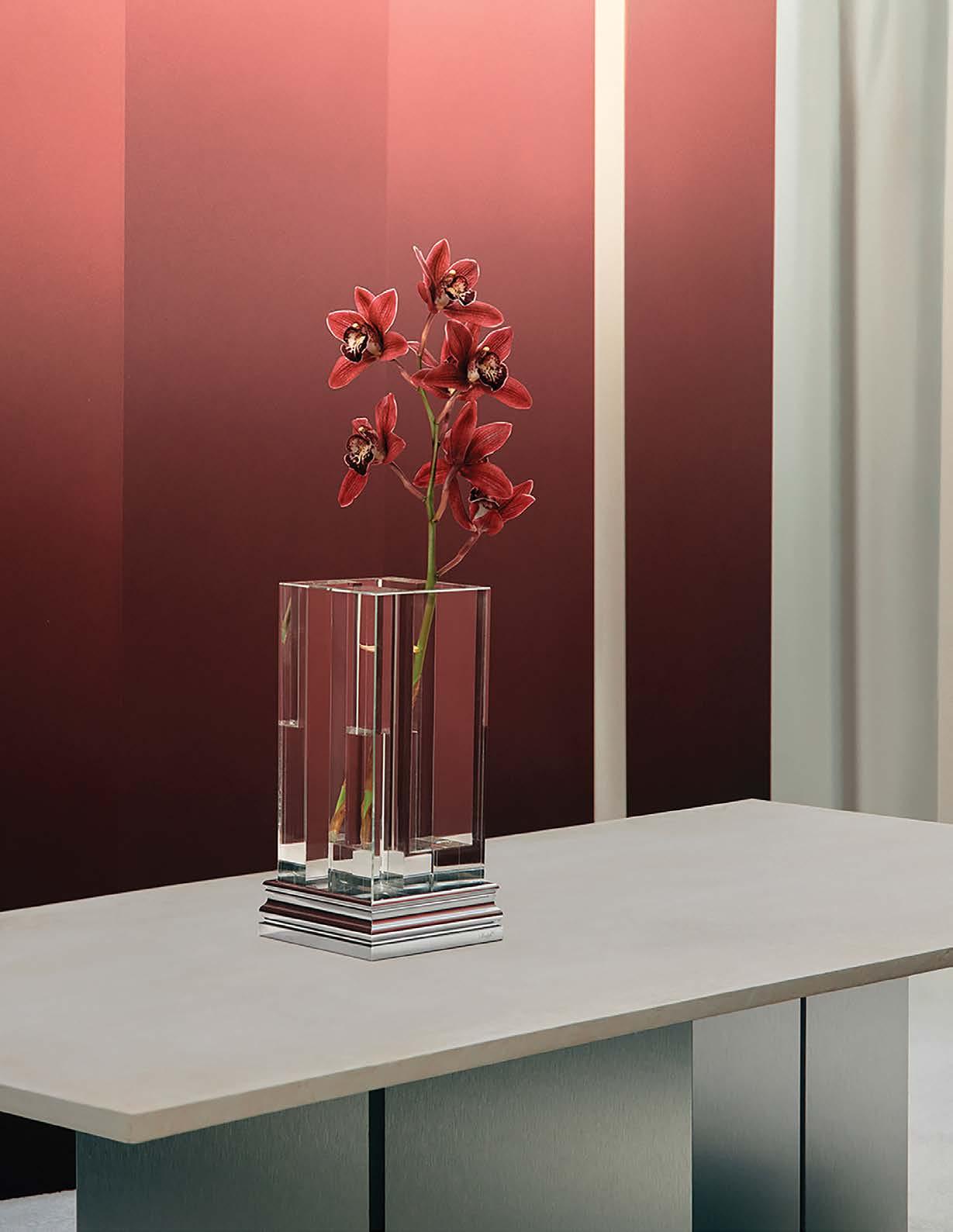
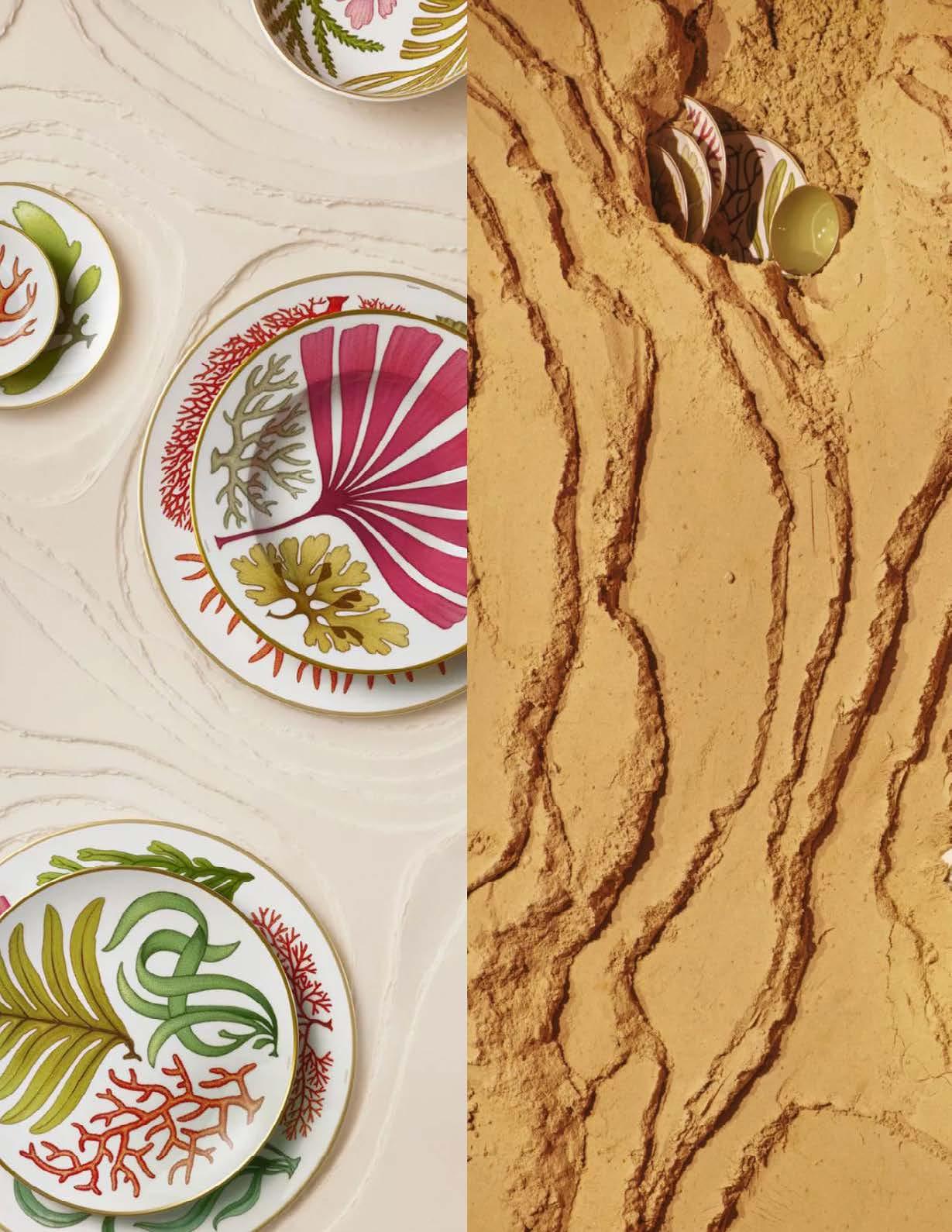
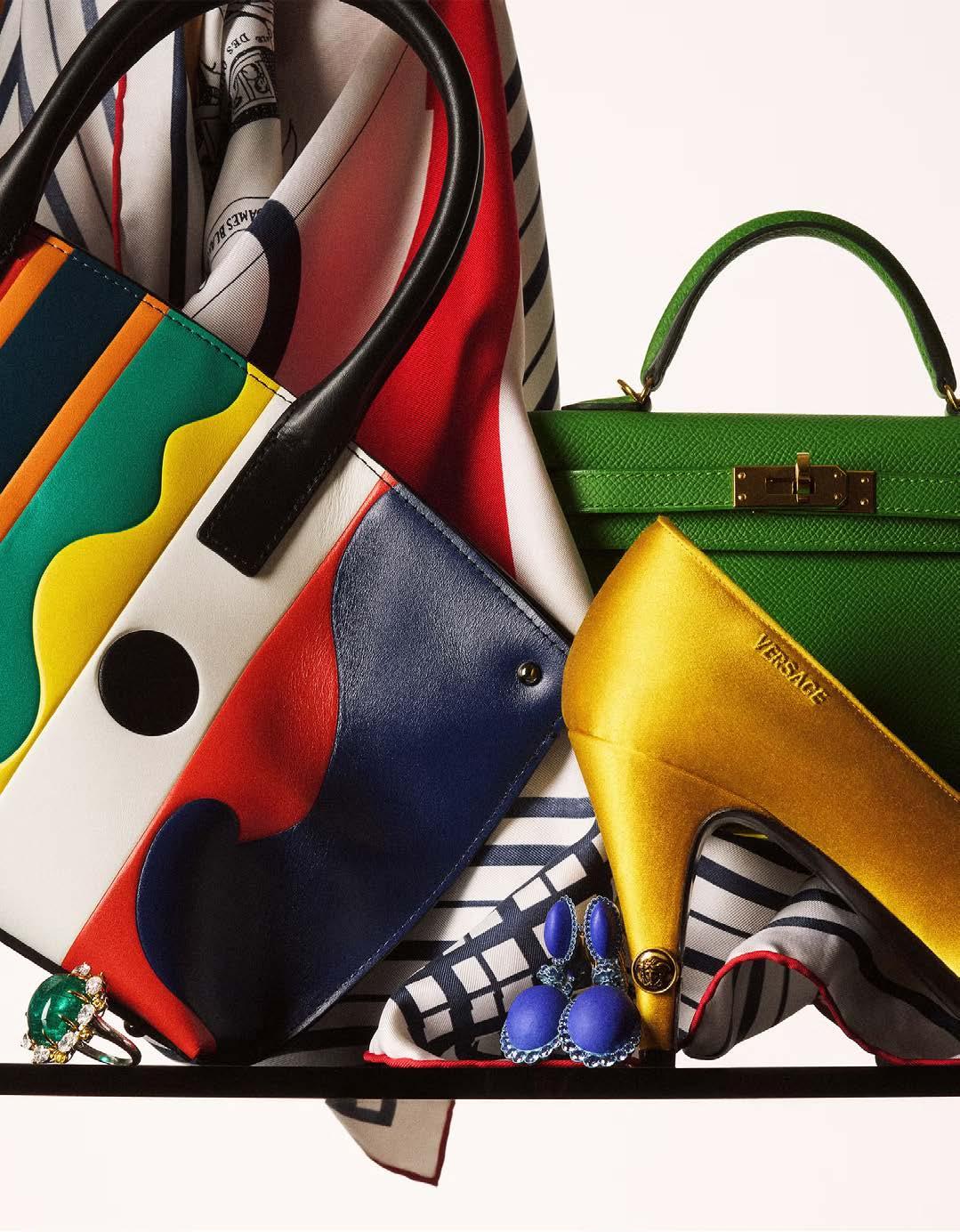
HERMES PRESENTS 'NATURES MARINES' TABLEWARE
THE NEWEST PORCELAIN TABLE SERVICE FROM HERMÈS, NATURES
MARINES FEATURES HANDDRAWN BOTANICAL ILLUSTRATIONS BY BRITISH ARTIST KATIE SCOTT
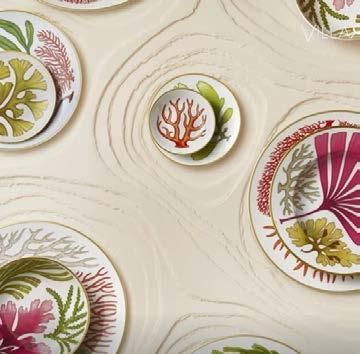
At Paris Design Week, Hermès presented their new porcelain table service: dubbed Natures Marines, the 34-piece collection
made its debut inside an old carpentry workshop on a tidal landscape formed of sand on the cement floor.
For this tableware collection, Hermès’ Artistic Directors of Home Universe Charlotte Macaux Perelman and Alexis Fabry turned to Brighton-trained and London-based illustrator Katie Scott, who imagined a marine landscapes beneath the sea.
DISCOVER HERMÈS’ NATURES MARINES
Four years in the making, the original brief was broadly referencing marine life, but the artist narrowed the focus down to only sea plants, after visiting the marine herbarium at London’s Natural History Museum – a collection dating back to the 17th century of more than 60,000 dried marine algae specimens. It was there that Scott got to study algae, seaweeds and
other marine life, pressed into books like flowers, and the way some seaweed samples were ‘as long as a room’ once unfolded from the books, inspired the way Scott drew them and eventually placed them on the porcelain shapes.
Working originally with pen on paper, Scott’s sketches were then scanned and digitally colored. Each of the 34 pieces is decorated with up to five individual elements, such as sea algae, wakame, kallymenia, samphire and sea fans, and not one is repeated. Dinner plates, dessert plates and bread plates come with between two and four decors each, so you can have fun setting the table as no two pieces are the same.
Even though the collection revolves around just three main colors (pink, green and sand), to achieve the same depth of tone found in the original pressed samples, the full palette includes about 30 different shades. Scott credits the collaborative nature of working with Perelman and Fabry for this perfect translation onto the porcelain. ‘We wanted to remain true to the original drawings, and the plates end up as close to the possible original drawing,’ say Perelman and Fabry.
No stranger to Hermès, Scott’s collaboration began in 2018 with her first scarf design, and she has also created blankets, beach towels and some fashion accessories. Perelman and Fabry were attracted to Scott’s ‘very rigorous approach, where the figurative becomes very geometrical’ as well as the ‘right degree of formality and the right approach to composition’.
FOR HIGH-NET-WORTH INDIVIDUALS AND COMPANIES, PRIVATE AVIATION IS A WAY TO SAVE TIME, INCREASE FLEXIBILITY, AND ENSURE THE HIGHEST LEVELS OF COMFORT WHILE TRAVELING FOR EITHER BUSINESS OR PERSONAL PURPOSES. HOWEVER, WITH A VARIETY OF WAYS TO ACCESS PRIVATE JETS TODAY, ONE QUESTION REMAINS: IS IT MORE COST-EFFICIENT TO CHARTER OR OWN AN AIRCRAFT?
Flying private provides many advantages and is a privilege for those who are able to pay premium prices for the service. It
isn’t, however, as straightforward as might be expected. The world of private aviation requires many considerations in terms of finances, crew, maintenance, insurance, availability, and more. In this article, we will break down the costs, benefits, and trade-offs of ownership and chartering to help you understand which option makes the most financial sense.
The primary difference between chartering and owning a private jet is that the first offers the service without commitment. At the same time, ownership requires the buyer to take care of all aspects of flying, such as maintenance, crew, facilitation, insurance, and many more.
In many ways, owning a private jet can be compared to managing a business and ensuring all regulatory requirements are met. On the other hand, chartering a
jet might be much more accessible and easier to accomplish. While prices per flight hour will be much higher, there is also much less to worry about for the passengers and much less responsibility. Unfortunately, according to Forbes, around 80% of privately-owned aircraft end up being underutilized, meaning capital can be wasted if the plane doesn’t fly enough. As there are many non-variable costs, ownership becomes efficient only after a certain number of hours are flown.
There are many companies that offer charter services, such as NetJets, XO, or VistaJet. Many also provide hybrid options such as Jet Cards or fractional ownership, splitting costs and responsibility while maintaining flexibility and freedom.
The key benefit of chartering an aircraft is little to no upfront costs. Some companies might require a deposit, membership, or minimum annual commitment, but the fees are not remotely close to prices related to buying an aircraft.
Doug Gollan, a private aviation analyst in conversation with PrivateFly, said: “If you’re flying less than 50 hours per year, chartering is almost always the smarter move.” Further highlighting the importance of knowing what to expect and individual flying needs.
The hourly cost of chartering a plane ranges greatly depending on the size, model, aircraft age, and other variables. Typically, the prices are between $3,500 and $18,000 per hour. For example, according to Claylacy, a trip between New York City and Los Angeles on a Gulfstream 450 will cost approximately $102,000.
The cost of chartering usually includes using the jet with the ability to go almost anywhere the range permits, including crew members, fuel, and all related costs. Some additional costs, however, such as overnight parking, customized catering, and international fees, might be put on the client. Generally, this will be the better option for those flying less than 100 hours annually, even including the extra fees. Charter clients will only pay for the time spent in flight and can cater the aircraft size to what they currently need.
Despite being very expensive both in purchase and upkeep, private jets offer unique advantages that cannot be matched by any other type of transport. Buying your own aircraft grants you full control and authority over configuration, interior design, amenities, and sometimes even personalized exterior, making for a top-level travel experience. While charters might not always be available on notice, ownership guarantees that the aircraft is at the owner’s disposal.
Owning an aircraft is most cost-efficient when used more annually as it splits non-variable costs between the hours flown. However, when that’s not the case, owners have the ability to offset some of the operational costs by offering their
aircraft for charter via third-party companies. This can allow for extra income but brings up other considerations, such as increased tear and wear and regulatory compliance.
It’s also important to remember that an aircraft depreciates annually by around seven to 10%, depending on the market. This means that most often, the value and selling price will be much lower than the purchase. In addition to annual fixed fees, which vary between $500,000 and $1 million, and variable costs of operations per hour - $2,000 to $5,000, this should be taken into account in all financial assessments.
People who fly often might see that options such as fractional ownership or
jet cards are more cost-effective than standard chartering services. On the other hand, for those looking for private occasional flights, on-demand chartering will most likely be the best option. The frequency of flights is the key element in terms of cost-effectiveness between chartering and owning.
It is generally understood that the line should be drawn in the 200-hour annual range, and for those flying under 50 hours, an on-demand charter will be the best option. It allows you not to have to worry about fixed costs, such as hangars, maintenance, crew, or planning. For those who fly between 50 to 200 hours annually, options such as jet cards or fractional ownership are growing in popularity. Operators such as NetJets or Flexjet have
programs aimed especially at those individuals, taking into account their needs and expectations.
It is also important to note that some operators offer flexible packages for fixed hours. This allows for a more individual approach to the service while not needing to go the ownership route. In cases of commercial uses, frequent fliers can also consider buying the jet as a long-term strategy, taking advantage of tax incentives and the ability to depreciate the aircraft as a business asset. At the end of the day, however, everything comes down to the question of: How many hours a year do you actually spend?
The price of the aircraft and initial costs are not everything. There are plenty of other non-financial factors that influence the decision to choose between chartering and buying a private jet. Many owners take advantage of the tax benefits that these jets bring. In the United States, buying a jet for business can allow very beneficial write-offs, saving large amounts of money. Additionally, the
ability to leverage depreciation can make much more financial sense.
Not without meaning is also the flexibility that these services offer. Owning an aircraft means full control over the schedule, crew, interior, and systems. On the other hand, charters give more freedom in aircraft selection, catering to immediate preferences, such as the number of passengers or needed range, without worrying about the logistics.
Cost-effectiveness remains popular in discussions regarding chartering and ownership of private jets. However, the image and environmental angles are also becoming increasingly popular. Private flights are constantly under the public’s eye, with the “flight shaming” movement growing in popularity. For both companies and well-known individuals, using a private jet can mean taking the risk of affecting reputation, no matter if it’s chartered or owned.
For those considering private flying, a good approach is understanding their
own flying habits. Whether it’s required sporadically, they are looking for a bespoke experience or simply a way to get from point A to point B. Recognizing these needs and factors will be the best guide in the decision-making process, helping assess the cost and general requirements.
As the private jet industry continues to evolve, with much effort into sustainability, manufacturers and operators are investing in sustainable aviation fuel and the next generation of aircraft designed for lower emissions. In the next couple of years, convenience will most likely be as crucial as environmental impact, making these considerations important while making the final choice. Middle grounds like jet cards will possibly grow in popularity, allowing travelers to enjoy the benefits of private aviation, such as flexibility, time-saving, and comfort, without the financial and operational burden of buying an aircraft.
WHAT DO YOU MEME?
AS A THERAPIST, HERE’S HOW I THINK MEMES HAVE CHANGED THE WAY WE COMMUNICATE
MY INSTAGRAM INBOX BECKONS ME WITH ITS RED NOTIFICATION, MORE MESSAGES TO READ.
Some are actual messages, of course, but if your inbox is anything like mine, it’s also chock-full of memes sent by friends. A representative peek into my inbox right now shows memes ranging from representing life with ADHD to showing
dogs as trash compactors. And as another popular meme conveys, you can be trading deep memes about mental health on one platform while talking about your lunch in the group chat.
Memes get trivialized and disparaged, yet, they’re an important social currency and way of communicating online in this day and age. These small, often funny pieces of content1 are important
for their ability to share ideas quickly and succinctly as well as foster a sense of connection and feeling seen.
As a millennial therapist, I found myself weirdly excited the first time a client sent me a meme. (You never forget your first.) It felt like an honor to me. As someone who considers humor and sarcasm her love language, I received the meme as a sign of trust.
Sharing a joke or having a similar sense of humor illustrates having a similar perspective, and this person was taking a gamble that I would think similarly to them about this being funny. I wrote back with an answer that showed that I also found the meme funny, and I could tell that it strengthened our connection.
Sometimes a meme from a friend will hit my inbox, and I’ll feel a bit of surprise. “Wait, you feel that way too?? I never would have guessed.” There are a few people in my life who have outwardly enviable lives, but the memes we exchange show me that their inner lives are not quite as desirable.
Although memes are packaged in quippy sayings or observations, at their core, they are still an exchange of ideas, just in a very easy-to-digest format. Whether you love ‘em or hate ‘em, memes are an important part of modern discourse. As both a therapist and “regular” human, I’m glad that we have this way of communicating.
In our increasingly digital and always-on world, many of us are feeling more alone and isolated than ever. While many of us refer to the offline world as IRL (“in real life”), our digital personas are a part of our “real lives,” too.
Being a therapist can be more isolating than I ever wanted to believe it would be. I can’t talk much about what happened at work to people in my life, other than in incredibly broad strokes. I am tremendously lucky that people pay me their hard-earned money to share both their biggest fears and traumas—as well as their highs.
I carry with me a lot of admiration for the resilience of the human soul as well as a deep sorrow of knowing how terrible humans have the capability of being to each other. While there are other therapy meme accounts, the OG one I’ve been following since at least 2020 is Psychotherapy Memes.
I really feel like I’ve found “my people” when I read the comments there. The therapy profession can be very old-fashioned in many ways, but this
account attracts therapists who have more modern takes on what therapy is or “should” be. I so wholeheartedly trust the type of people attracted to this content that I am participating in a therapy group for therapists, run by the founder of this account.
I’m grateful that my friends and clients have used memes to communicate with me in order to say the hard things—to make jokes about their traumas or an element of dealing with chronic depression, for example.
Typically one might think that sharing memes about depression might be… depressing? And, perhaps, to people not dealing with those melancholic feelings, they might be.
But research supports3 that memes which address typically difficult-to-communicate themes like suicidality or isolation give people a safer—and even socially sanctioned—way to unload some of the burden of their heavy feelings. Also, finding the humor in tough situations can take some of the power away from these otherwise taboo feelings.
If you were trying to save $100,000 but only focused on making big deposits, you’d miss out on the ability to build up your money over time. The same holds true in relationships—they’re not just built in the big moments, but it’s the smaller moments that help us build emotional capital.
For example, my best friend moved from living in the same apartment building as me to the opposite coast. I went from seeing her daily to now only seeing her every few months. Our lifestyles have also dramatically diverged, as she’s since become a mom to two tiny humans, while I’m still just dog momming out here.
We do text most days, but I also know that I can depend on waking up in the morning, knowing there’s inevitably some kind of meme she shared with me. It’s a tiny reminder that she’s thinking of me and still feels connected. These moments help us keep building our emotional capital, rather than waiting
until one of us has something important enough to pick up the phone about.
Think of a time you felt excluded from a group, because it felt like they were speaking an entirely different language with references you didn’t understand. Or, on the contrary, think of a time where you were the one to clue in a group about a popular meme that they somehow didn’t know about. If you felt a small rush of power, you’re not petty. (Or at least no more petty than me.)
Having more information is historically what kept us alive, so there’s an evolutionary reason for feeling that small amount of power.5 Knowing that a tiger was coming when someone else didn’t could have meant the difference between life and death.
I also find memes a helpful tool for communication because they can provide validation. Sometimes, no matter how many ways I phrase something or ask something to a client, they still have a hard time wrapping their head around the fact that they’re not The Only Person Who Has Ever Felt That Way. (I’m guilty of this, too—of telling my own therapist why, no, it’s so much different or worse for me than for anyone else, ever.)
But while, yes, each person’s exact situation is different, feelings are largely universal. That is, while the exact grief of losing my specific mom, Carol, is not the carbon copy of your grief of losing your mom, we’ve probably had relatively similar feelings.
Memes feel particularly validating for the not-so-charitable feelings. Am I grateful for people’s well wishes after my mom died? Absolutely. Do I understand that people meant well when they said they were here for me, even if they didn’t follow up? Mostly? But also, does it sometimes really annoy me? Yes! And acknowledging that, and that I’m not alone in it, can help me move on.
LOVE, HATE & OBSESSION
THE DARING CORRELATION OF LOVE, HATE & OBSESSION
PSYCHOLOGICAL, PHILOSOPHICAL, AND SOCIOLOGICAL PERSPECTIVES
THE INTENSE FIXATION ON SOMEONE – EVEN IF EXPRESSED AS HATRED – OFTEN PUZZLES OBSERVERS. PSYCHOLOGISTS, PHILOSOPHERS, AND SOCIOLOGISTS HAVE LONG NOTED THAT LOVE AND HATE CAN ENTWINE. CLINICIANS
STRESS THAT OBSESSIVE HATRED IS NOT A CASUAL DISLIKE BUT A PATHOLOGICAL ATTACHMENT.
Psychiatrist Willard Gaylin, for example, calls genuine obsessive hate a “quasi-delusional” mental disease – a “sick flip-side of love” because it demands an object of attachment . In practice, a hater stays glued to their target just as a lover would. As Karla McLaren, a psychotherapist, notes, when we hate, we do neither run nor walk away – instead, we remain obsessively focused on the other person.
In other words, intense hate behaves like a distorted form of infatuation: it “attaches ourselves in an obsessive way” to the hated object. Clinicians have grouped hateful fixation with other “obsessive emotions” (alongside jealousy and unreciprocated love) that share low serotonin, high dopamine brain profiles like obsessive-compulsive disorder. This neurochemical overlap – and the brain
imaging findings of Semir Zeki – suggest love and hate literally engage similar circuitry. Zeki’s study found that viewing a hated face activates a distinct “hate circuit” (involving motor-planning and aggression centers), yet shares two key regions (the insula and putamen) with romantic love. In short, psychology sees obsessive hate as an attached, passionate state – often irrational and driven by our inner world.
AMBIVALENCE AND PROJECTION (PSYCHOANALYSIS)
Freud coined “ambivalence” for love and hate coexisting toward one person. Children, for example, love their mother’s breast but simultaneously want to bite it – showing how attachment and aggression mix.
Later thinkers like Melanie Klein extended this “battle of love and hatred” throughout life. Jungian analysts add that the qualities we despise in others often reflect traits we disown in ourselves (“shadow” projection). McLaren observes that hatred and adoration involve identical intensity of projection – only the emotion differs. We attach to people who live out our unacknowledged drives, whether through adoration or contempt.
In either case, “we’re attaching ourselves in an obsessive way and asking our targets to live out our repressed, ignored, [or] unlived shadow material” . Thus,
psychology suggests obsessive hate often hides displaced admiration: we hate what we secretly envy or once loved, reflecting inner conflict more than the hated person’s reality.
PATHOLOGY OF HATE
Clinical experts emphasize that only pathological hate is truly obsessive. Gaylin stresses that most of us never feel a “genuine clinical hatred” – it’s a rare, pathological obsession.
Such hate “seeks the humiliation and destruction of” its object and takes joy in it – unlike ordinary anger or prejudice. By Gaylin’s view, obsessive hate’s choice of target often comes from the hater’s own history (“the choice of the victim is more often dictated by [the] unconscious needs and personal history of the hater”). In effect, an intense hater is often fixated on the wrong person; the real battle is within.
OBSESSION, ATTACHMENT, AND HIDDEN AFFECTION
If obsessive hate looks like a twisted form of love, can it actually mask repressed affection or unresolved attachment? Many theorists say yes.
One common idea is that hate keeps us tethered to the other person – a sure sign we’re not over them. As McLaren colorfully put it, even strong adoration
can “drop into hatred – into a fierce and shadowy attachment” (think stalkers or internet trolls) . In other words, one extreme can flip into the other without losing the emotional bond. From this perspective, hating someone can be a perverse way of holding onto them.
Psychologist Berit Brogaard groups hate and unrequited love in the same category of “obsessive emotions.” Her research notes that jealousy, obsessive love, complicated grief – and hatred – all involve intrusive, compulsive thinking. Neurologically and behaviorally, a jilted lover and a fanatic hater look very similar: low serotonin (obsession) and high dopamine (compulsion) are found in both. Both can even lead to violence. Brogaard cites numerous cases where unreciprocated love or jealousy spirals into murder – the same fate as extreme hate. These parallels suggest that being fixated on someone through hate often goes hand-in-hand with having loved or cared for them intensely at some point.
Freud’s concept of ambivalence also implies hidden affection. He observed that when a loved object is lost or betrayed, the outpouring of hate can mask deep mourning. In melancholia, for example, the withdrawn love turns inward as self-hatred. Similarly, when someone we cared about hurts us, we sometimes hate them even while still longing for them. Popular wisdom captures this: “the opposite of love is not hate, it’s indifference”. If hate still involves a vibrant emotional reaction, it implies the person still occupies a central place in our psyche.
From a developmental standpoint, attachment theory suggests we bond deeply with certain caregivers or partners. Even if those bonds sour, the attachment can linger. Society often teaches us that hating someone means letting go, but psychologically the opposite can be true: hate keeps the bond alive. We watch the hated person “in sickened awe” as they do the very things we felt forbidden to do. In a twisted way, hating someone lets us vicariously experience the qualities we fear or deny in ourselves. This vicarious fascination is eerily similar to being a fan: we can hardly turn away from someone
who enacts the life we never allowed ourselves.
In sum, many clinicians see obsessive hate as a form of “disguised love.” Karla McLaren bluntly asserts, “Hatred is a twisted form of adoration.” The intensity and enmeshment with the target are identical to infatuation; only the emotion has flipped. Hatred, then, often signals unresolved affection or a desire still being acted out – albeit through outrage instead of devotion.
PHILOSOPHICAL REFLECTIONS: THE THIN LINE BETWEEN LOVE AND HATE
Philosophers and writers have long noted how love and hate can blend or reverse. As far back as Catullus (1st century BC), the Latin poet declared “odi et amo” (“I hate and I love”) describing his inner turmoil. In modern times, William Hazlitt observed that love easily decays but hatred can outlast it: “Love turns, with a little indulgence, to indifference or disgust; hatred alone is immortal”.
In other words, according to Hazlitt, love is fragile while hate can burn on. Emil Cioran went further, claiming we only truly die when we cease hating, not when we stop loving. These views suggest that both passions are fierce and intertwined.
On the other hand, some thinkers emphasize their unity rather than opposition. In Eastern philosophy, for example, desire (whether for love or vengeance) is often seen as a source of suffering, implying that love and hate can both be ends of the same craving. The existentialists noted that intense emotions point to how we seek to possess or annihilate the Other.
One proverb captures this: “the opposite of love is indifference,” implying love and hate are two sides of emotional engagement. From this angle, loving hate (or hating love) may simply mean a failure to achieve true neutrality.
Contemporary authors also remark on the love–hate nexus. Psychologist Robert Sternberg, who famously theorized love’s components, later argued that extremist hate often mirrors love’s structure (e.g.
passion, commitment, but twisted toward destruction). Sternberg even suggested that hate can be “brainwashed” love channeled through ideology – though his work focused more on group violence than personal obsession. Still, his view reinforces a philosophical intuition: love and hate both involve deep narratives and commitments, whether toward a person or an idea.
Some modern ethicists note the existential link: we may hate those who thwart or betray our love. In a blog, philosopher C.B. Robertson illustrates this poignantly: when a lover destroys the future we cherished with them, “we are torn between loving them for their role in this vision and hating them for threatening to separate us from it”. (In other words, the love was really for the future we imagined, and the person came to represent both that hope and its loss.)
The idea resonates: philosophical accounts often see love and hate as driven by very similar needs – the desire for connection and meaning – but in opposite directions.
At bottom, many philosophers would agree with the adage that “there is a thin line between love and hate.” Both emotions show how deeply we feel about another’s identity and fate. When one part of our affection turns sour, the other can flare up. While indifference means the bond is truly broken, love and hate keep us linked in an intense, often painful loop.
EMPIRICAL STUDIES AND EXPERT OPINIONS
Modern research provides some concrete evidence on the love–hate relationship. A 2008 neuroimaging study by Zeki and Romaya, for instance, confirmed that romantic love and visceral hate activate overlapping brain areas. Both ignite the putamen and insula – regions tied to strong emotion and motivation – even as love tends to deactivate higher judgment areas and hate mobilizes them for action.
This biological overlap suggests our brains are wired to process love and hate as closely related impulses.
More recently, psychologists have directly tested the “thin line” notion. In one experiment, participants imagined loving or hating different potential partners. After inducing a slight betrayal scenario, researchers found a surprising result: the more similar and beloved the person, the stronger the coexisting feelings of love and hate.
In short, “the deeper the love, the deeper the hate” turned out to be true under the circumstances. In this study, people still reported more love than hate for the one they loved most, but for targets they cared about less (moderate similarity) hate could even exceed love after a grievance. Such controlled evidence supports the common-sense view that very close relationships can yield a volatile mix of emotions.
Clinical case studies also abound. Therapists report many clients who oscillate between adoring and despising ex-partners. One Psychology Today author describes counseling a man in a bitter divorce who simultaneously felt intense love and hatred toward his wife – a confusion that deeply disturbed him. This reinforces what analysts teach: in addition to ambivalence, the combination of love and hate toward one object is often bound up in unresolved dependency or betrayal.
Experts further note that society sometimes glorifies or exploits this mix. For example, popular music and movies frequently depict lovers who turn vicious when spurned, reflecting a cultural narrative that love’s end naturally breeds hate. In social psychology, attachment researchers point out that any powerful dependence (on a person, idea, or cause) can reverse direction if the object fails us – the more we needed them, the more we may feel enraged by their rejection.
At the same time, not everyone agrees that obsessive hate is hidden love. Some commentators caution that equating hate with love can romanticize dangerous behavior. Willard Gaylin warns that labeling pathological hate as “love” glosses over its destructiveness. He emphasizes
that true obsessive hatred is not a simple reflection of past affection but a separate malady that usually stems from deeper psychological wounds. In other words, while hate may arise in a context of attachment, it becomes its own irrational force.
Despite such caveats, the preponderance of psychological opinion is that intense hate often signals a continued fixation on the other person. Infatuated stalkers, jealous exes, and political fanatics all show that hatred can keep someone at the center of your mind. As one analyst puts it, even in hating “we’re playing games” with the object – projecting personal fears and desires onto them. Our focus on a person who “lives out our unwanted material” reveals that, on some level, we are not free of them.
SOCIOCULTURAL CONTEXT
From a broader sociological view, societies also recognize the entanglement of love and hate. Group identities often foster both ingroup love and outgroup hate in parallel.
For instance, patriotism (a form of collective love) frequently carries a counterpart in xenophobia (hatred of outsiders). Social psychologists note that strong solidarity and affection for one’s community or leader can slide into obsessive hostility toward perceived enemies. In this sense, communal hate can mirror communal love: both require an “other” to fixate on.
Culturally, media and myths abound with love–hate narratives (think of the celebrity who has both raving fans and bitter haters, or family feuds in literature).
Sociologists of emotion remark that societies often institutionalize powerful emotions. A cultural norm might either channel a scorned love into a vendetta (as in honor cultures) or condemn open hate. In either case, the social scripts connect the two passions: stories of betrayed love turning deadly are universal. While this report focuses on individuals, it’s worth noting that the same psychological dynamics likely play out on the larger stage of politics and culture.
CONCLUSION
In the end, the idea that “obsessive hatred is really hidden love” remains an open question – but one with a strong basis in theory. Psychologically and philosophically, love and hate are seen as two poles of attachment. Intense hate often arises in the wake of deep feelings, unresolved bonds, or unmet needs. Studies show the two emotions can co-occur and share mental and neural mechanisms, and clinicians frequently observe hate masking loneliness or betrayal.
However, experts also caution that not all hate is love in disguise – sometimes it is a distinct pathology. The difference is subtle: real love involves respect and empathy, while pathological hate involves dehumanization and a thirst for destruction. If hatred is obsessive, therapists urge addressing the underlying issues (self-worth, past trauma, unmet longings) rather than dismissing it as “just love turned sour.”
Nevertheless, the insight is clear: when someone obsesses over another person –even out of hatred – they remain emotionally entangled. As old proverbs and modern science alike suggest, the bond of emotion does not vanish overnight. Many psychologists would agree with this wisdom: one rarely hates a person she truly could ignore. In that sense, obsessive hate often reveals that the love was never entirely gone.
FASHION & STYLE
PARIS HAUTE COUTURE: CHANEL, DIOR, VALENTINO
A MODERN GUIDE TO PRIMARY COLORS
PARIS HAUTE COUTURE
CHANEL HAUTE COUTURE
MATTHIEU BLAZY’S HAUTE COUTURE DEBUT CARRIED HIGH EXPECTATIONS. HE IS ONLY THE FOURTH DESIGNER IN CHANEL’S 116-YEAR HISTORY, MAKING SPRING 2026 A MILESTONE FOR THE OLDEST CONTINUOUSLY OPERATING COUTURE HOUSE.
Yet with two jubilant collections, spring 2026 ready-to-wear and 2026 métiers d’art, already behind him, Blazy embraced the moment with playfulness rather than solemnity. Early clues hinted at fairytale whimsy, drawing on the iconography of classic Disney films.
A short, animated teaser clip on Chanel’s Instagram showed birds, chipmunks, rabbits, and other forest creatures lending the petits mains a helping hand in the atelier, like the mice who finish Cinderella’s ballgown. Even the invita-
tion, a silver pillbox pendant shaped like the magic mushroom Alice samples in Wonderland, promised enchantment.
The show set under the glass-vaulted ceiling of the Grand Palais did not disappoint. A fairy ring of giant mushrooms in bubblegum pink, fuchsia, sunny yellow, and other cheerful shades circled the runway, evoking some of Karl Lagerfeld’s most memorable nature-inspired fantasias. The Amanita muscaria in particular seemed a subtle nod to a rare Lagerfeld-era mushroom-shaped quilted bag, its distinctive red cap dotted with white CCs, which Claudia Schiffer carried in the spring 1992 show. And then, of course, there were the delightful clothes. The opening look was a classic— but not so classic—Chanel suit, done in transparent silk mousseline instead of bouclé. This luminous reinterpretation felt like a memory of the house’s layered histories.
The palimpsest became a leitmotif of the collection, with layered transpar-
ency playing out in candy-spun pastel tunic tops worn under cropped jackets and over wide-leg pants or pencil skirts. Chanel’s other icons—N°5 perfume, red lipstick, and, of course, the 2.55 bag— were also rendered in silk mousseline or re-imagined as jewelry. Nature-inspired details appeared throughout the collection, from the heels of two-tone pumps shaped like mushrooms to billowing pleated tops that recalled the gills on their undersides.
Birds were another subtle callback to the house’s legacy, from Coco Chanel’s gilded birdcage at 31 Rue Cambon to the iconic ’90s perfume ad starring Vanessa Paradis and Riley Keough’s later interpretation of “When Doves Cry” atop a giant swing in Chanel’s spring 2025 show. Featherwork has long been a hallmark of couture, and here avian-friendly plumage emerged through embroidery, layering, pleating, and weaving, culminating in a sense of nature renewed.
DIOR HAUTE COUTURE
THE DIOR SPRING/ SUMMER 2026 HAUTE COUTURE SHOW
TAUGHT US BOTH THE SPAN OF JONATHAN ANDERSON’S IMAGINATION AND THE SCOPE OF HIS AMBITION FOR THE HOUSE. “IT’S THIS IDEA THAT COUTURE CAN BE MORE THAN A SHOW,” HE SAYS
Perpetual youth, predictable futures, a circadian rhythm sufficiently off-kilter to show summer dresses in a frozen January and winter coats in broiling July. Haute couture is nothing if not an unnatural state, excelling in the illusory. That was, in part, the idea behind Jonathan Anderson’s debut haute couture collection for Christian Dior – a house that made its name with flower women, but also with its founder’s self-declared dream to save women from nature. In
the Dior studio, flowers were massed on dresses, over dresses, into dresses; at the Musée Rodin, they clustered overhead, a cyclamen-scattered meadow inverted to hang above. “Some things are real and some things are fake,” Anderson said. “I like the juxtaposition of these things.” Reality and fantasy. As he spoke, his wedding dress, the traditional culmination of a couture show, was being worked on in a glass cabine that resembled a terrarium, or the smoking area in an old-fashioned airport, to preserve its unsullied whiteness.
It’s got to be said, as usual chez Dior, fantasy won out. Under that surrealist meadow, in a Louis Quatorze hall of artificially age-worn mirrors, Anderson showed his re-imagining of what Dior could stand for, re-configuring its past and recalibrating its future. The first few dresses, plissé gowns with belling crinolines bore the trace of the New Look (duh) alongside the influence of the ceramic work of artist Magdalene Odundo,
who would serve as one inspiration underlying the entire show. They recall an alembic, an alchemical device used to distil. Fittingly, they also represent a distillation of Anderson’s vision for Dior – sculptural, feminine form present, yet precisely minimized, a gesture of a bow hanging at the hem. The second look in white was, Anderson said, the first couture dress he ever made. It set the tone, of Dior sublimated to its essence. Then Anderson could start to gild his lilies.
That interplay of real and fake was fascinating to observe in its unpredictability. The softness of Christian Dior’s dresses were often contradicted by their formidable internal structure, iron fists in velvet and silk-faille gloves. Anderson’s strong, curvilinear Dior shapes were, by contrast, weightless, technical masterpieces bowing away from the body
through cut and technical fabrication. Feathers were made to look like everything but feathers – cloisonné enamelwork, reptilian scales, mother-of-pearl, or a perfectly-frayed edge to dresses of massaged silk flounces. The only things that did look like feathers were actual shards of organza, in an aerobic work-out of the possibilities of Dior’s ateliers, and a multitude of specialist ateliers around Paris. And of course, there were flowers – the already well-told narrative of this show is that it was triggered by a bunch of cyclamen given to Anderson by former Dior artistic director John Galliano, a floral baton passed, laurels heaped. Like that chapter in À rebours where Jean des Esseintes cultivates a garden of tropical flowers that look unreal, and has material ones created to reproduce nature with alarming verisimilitude, Anderson crowned his models with
fabric and leather foliage. One carried a leaf as a parasol, crafted from silk and brass. “There’s a vase that pretty much looks just like this by Magdalena,” said Anderson of another look, a severe black coat defying gravity in a wave at the neck. It presented the model’s face as a bloom.
So that’s the fake – let’s get real. Couture, really, is about the one-off, the handmade and unique today. It’s also a window into history, a connection back to the way fashion was born, methodologies that predate industrialisation and our valorisation of the mass. Anderson pushed that idea to an extreme: jewellery was embedded with fragments of meteorites, antique cameos or, in once instance, an 18th century miniature by the Venetian artist Rosalba Carriera, while shoes and bags were made from fragments of silks from the court of Louis XV. Each will be
entirely unlike any other – real fragments of history, reconstituted for tomorrow. Anderson’s vision is both micro and macro. While the world’s few hundred couture clients cajole their vendeuses for their first choice of looks, a selection of garments will be installed for public view at the Musée Rodin for the next week, presented in dialogues with looks from the archive – ghosts of Dior past
– and works by Odundo. “It’s this idea that couture can be more than a show, Anderson says. “It can be an education.” Quite. What this debut taught us was both the span of Anderson’s imagination and the scope of his ambition for Dior. The ideas were ricocheting off the mirrored walls. It certainly felt like a re-energisation of the house, as well as a shift of couture from a made-to-measure
side piece for a hyper-wealthy niche to an engine of inspiration and experimentation. That first couture dress had already been distilled into the first look of his ready-to-wear show. And it’s easy to imagine the wealth of ideas here spinning out across the entire cast Dior ecosystem, inspiring clients to buy, and – naturally –people to dream.
ELI SAAB HAUTE COUTURE
ELIE SAAB DELIVERED A VISION OF GILDED ESCAPISM FOR SPRING SUMMER 2026, DRAWING ON THE HEDONISTIC JETSET CULTURE THAT ONCE DRIFTED BETWEEN MILOS, MARRAKECH, AND THE MEDITERRANEAN’S MOST DECADENT HIDEAWAYS IN THE 1970S.
The collection embraced glamour as fantasy and release, proposing couture as a vehicle for sensuality, movement, and the desire to be seen. It was a familiar Saab universe, yet one sharpened by historical references and a notably confident sense of mood.
The palette was saturated with metallic golds, bronzes, and milk-chocolate browns, forming a continuous, sunlit glow across the runway. A single accent of purple cut through the warmth like a
sudden nocturnal flash, adding depth to an otherwise monochromatic scheme. These tones were not merely decorative; they reinforced the idea of clothing as light-catching surfaces, made to shimmer under evening skies and dance floors alike.
A MODERN GUIDE TO
PRIMARY COLORS
IT’S NO COINCIDENCE THAT SEVERAL SPRING 2026 COLLECTIONS RESEMBLED A CRAYOLA BOX—BUT HOW, EXACTLY, SHOULD A GROWN WOMAN MEET THIS MOMENT?
THE TIGHTLY COILED ANTICIPATION AHEAD OF THE SPRING 2026 FASHION COLLECTIONS CANNOT BE OVERSTATED. BEFORE A STITCH HIT THE RUNWAY, THE SEASON WAS HISTORIC FOR ITS NUMBER OF CREATIVE DIRECTOR DEBUTS AT MAJOR FASHION HOUSES (15), INCLUDING MATTHIEU BLAZY AT CHANEL, DEMNA AT GUCCI, SIMONE BELLOTTI AT JIL SANDER, AND JACK MCCOLLOUGH AND LAZARO HERNANDEZ AT LOEWE. PLUS, JONATHAN ANDERSON’S FIRST WOMEN’S COLLECTION AT DIOR.
Surely a tectonic shift in the way women dress would result. Indeed, one of the definitive messages to come off the runways was blinding color, often worn in loud combinations. It was bigger, brasher, bolder than anything in recent memory.
To convey the scope of vivid hues on display, it’s helpful to consult a box of Crayolas: Scarlet and Vivid Violet at Jil Sander; Caribbean Green, Canary, and Mango Tango at Loewe. Wild Strawberry, Outrageous Orange, and Tropical Rainforest—all in one look—at Fendi. Radical Red, Orchid, Vivid Tangerine, Inchworm, and Screamin’ Green at Prada. Perhaps it was a coincidence that The Devil Wears Prada 2 was filming all summer, but cerulean was everywhere, representing millions of dollars and countless jobs, and ready to trickle down into some pile of stuff. But we’re not there yet!
Spring’s technicolor awakening feels like a fresh injection of joy, energy, and light— it’s fashion’s very own peptide. In the words of the late Iris Apfel, the rainbow incarnate: “Color can raise the dead.” Or at the very least it can lift the spirits.
“Color induces emotion,” Linda Fargo, SVP of the Fashion Office at Bergdorf Goodman, tells T&C. “Neutrals leave you with, well, a rather neutral feeling, while black and white leave room for interpretation. I would argue that the world needs the upbeat lift of color.”
If not an overt attempt to stand out from the crowd, perhaps designers’ effusive use of their palettes was a way of forcing people to look on the literal bright side, an antidote to the global gloom that has defined the past several years. Or maybe it’s a classic case of fashion as a mirror of the times. It’s not a quantum leap to con-
nect today’s stratified society to another colorful and bloated time. “There’s a throughline from Reaganomics and ’80s hedonism that’s playing out right now,” says Jess Graves, the founder and editor of the Love List on Substack.
Graves predicts that Blazy’s subtle use of a primary hue, a diminutive red Chanel monogram embroidered at the waistline of crisp Charvet shirts, will be one of the most popular pieces of the season. “It’s going to inspire an absolute explosion of colored monograms,” she says, “from somebody getting a bright monogram on a white shirt they own to splurging on the $4,350 one from Chanel.”
At Prada, Miuccia Prada and Raf Simons presented a broad spectrum of colors and references, ranging from East Bloc uniforms to oversize shirts in peach, green, and red worn open over bloomers and bras. At Loewe the paintings of Ellsworth Kelly were McCollough and Hernandez’ big inspiration. The master American colorist’s Yellow Panel with Red Curve, on loan from a collector friend, was installed at the entrance of their show, and Kelly’s graphic tonal play was obvious in the collection’s pairings: a buttery yellow monogram V-neck sweater worn over a red collared shirt, layers of windbreakers, and shirts in all shades of blue.
Meanwhile, Michael Rider’s new vision for Celine flaunted a distinctive point of view clearly molded by two of fashion’s foremost visionaries: Ralph Lauren, where Rider spent six years as creative director of Polo women’s, and Phoebe Philo, for whom he worked for a decade. In Rider’s hands the sporty Ralph-isms and the modernist Franglais bourgeois of Philo were reborn as color block rugby shirts and horsey silk scarves in red, blue, and yellow reimagined as draped separates.
Historically, color has been subject to the swing of the pendulum. Valerie Steele, director and chief curator of the museum at the Fashion Institute of Technology, points to the early 20th century, when Paul Poiret wiped clean the slate of pale mauves and pastels that had dominated. “He was sick of all these nuances of nymph’s thigh,” Steele says. “He wanted to bring in bright orange, emerald green, cherry pink—brilliant peacock colors. A few years after that Chanel said all the bright colors made her nauseous.” She ushered in an era of beige, black, and navy.
As of now, things seem to be at Poiret’s end of the spectrum. “I think people are tired of beige and
brown,” says Margaret Austin, a co-owner of Outline in Brooklyn, who bet big on pink, orange, and purple from the spring collections of Dries Van Noten, High Sport, Colleen Allen, and Auralee.
“Color is many things,” says Ramya Giangola, founder of the retail and brand consulting firm Gogoluxe. “It’s our need for some optimism in this crazy world. It’s a stark reaction to quiet luxury. It’s also a resurgence of personal style, instead of all of us looking the same and wearing a uniform.”
But if you embrace too much of the rainbow, you risk looking like a five-year-old. For those who are curious but unsure how to proceed, Fargo suggests using a bright hue as an element of surprise, such as a red shoe or a green bag.
“For the less risk-averse, unexpected mixes are the most interesting, but tempered with at least a streak of a safety color,” she says. “Personally, I would wear a maximum of two primary or secondary colors at a time. Three takes me back to school.”
Speaking of, could this all just be a cry for a return to simpler, more innocent times? Graves has found herself gravitating toward more color and texture because she finds it comforting. “I will never abandon the Row,” she says. “But I might punch it up with a wonky Bottega bag that unlocks my inner child.”
VALENTINO HAUTE COUTURE
THE SPRING 2026
VALENTINO HAUTE COUTURE SHOW BEGAN WITH THE WORDS OF MR. VALENTINO GARAVANI, JUST DAYS AFTER HIS PASSING.
“You always dream, dream, dream,” he mused. He was looking back to his entry into fashion, to the days when he first fell in love with clothing by watching women on the silver screen as a boy.
Alessandro Michele’s second couture collection for the house, paid homage to Mr. Garavani’s original inspiration in deeply cinematic form. Michele presented a vision of grand characters; guests sat around carousel-like wooden circles looking into narrow windows to take in their looks one by one. The models walked into the center of the circles as Kirsten Dunst, Tyla, and Dakota Johnson looked through the viewing windows.
The optical device is more than just an unusual runway set—it’s a reinvention
of a forgotten moving-image mechanism from the late 1800s called a Kaiserpanorama. In recreating the long lost cinematic device, Michele sought to slow down our gaze and give each look a solitary, delicate moment of concentration. In an age of overexposure and constant swiping, contemplation and total focus is a rarity, one that takes on all the more meaning in the weeks following Mr. Garavani’s departure.
Once we peer through the windows, Michele’s sirens, in all their theatricality, come into view. In typical Michele fashion, the characters were full of all the lush drama we’ve come to associate with the dreamlike world-builder. The cast included: a statuesque model in a plunging red gown, Cher in Bob Mackie meets Dynasty in 2026; angelic figures in handbeaded numbers and ornate crowns; Elizabethan starlets with collars taking on wild proportions or appearing in gold jewelry form. A deep violet gown with shoulder pads and a statement choker channeling the ’80s by way of a Medieval
moment sat alongside a fairytale-pink organza gown full of hand-sewn sparkles. A salmon silk two-piece skirt suit had a shell-like construction with a spectacular headpiece straight out of 1940s Hollywood. Every look was a spectacle meant for worship. These are not garments for shy women.
Michele has always been a master of showmanship and emotion, and today’s couture offering was no different. We’ll see this fashion on red carpets and on the bodies of particularly bold and glamorous private clients. The gowns were stitched, embroidered and draped before Mr. Garavani’s passing; still, the show was a tender tribute. “For me, Mr. Valentino has been a mythological figure,” wrote Michele, referring to the legendary designer’s attention to body and the form. “Being called to guard this legacy, if only for a time, summons me.”
$99,950,000 USD
MANSION OF THE MONTH
EXPERIENCE THE PINNACLE OF LAVISH SPLENDOR AND QUIET COMFORT AT LA FIN, OR THE END, APTLY NAMED AS THE ULTIMATE, FINAL EXAMPLE OF MODERN DECADENCE AND REFINEMENT; THE BE-ALL AND END-ALL EXPERIENCE IN ONE OF THE WORLD’S MOST FAMOUS AND EXCLUSIVE ENCLAVES.
Sited on a two-acre parcel, this magnificent residence offers 12 spacious bedrooms, 17 bathrooms, remarkable amenities, and brilliant panoramic views of Los Angeles.
Just beyond the gated motor court, proceed down to the oversized glass entryway to one of the most beautiful and opulent homes the globe over. A spiral staircase surrounds a stunning 44-foot chandelier made of 55,000 crystals, a showstopping centerpiece yet just one of the impressive custom lighting sculp-
tures throughout the home. The main level features a custom stone bar that flows into the formal living area with a massive hand-carved stone latticework fireplace. All furniture was custom-made for La Fin by Italian luxury brand La Contessina.
Motorized Fleetwood pocket doors open to the infinity-edge pool with a striking 23-foot LED screen that rises at the touch of a button and a 30-person lounge area with fire pit. The lower level provides a 6,000-square-foot entertainment area
with lofty 18-foot ceilings, custom bar, commercial-grade catering facilities, 1,000-bottle wine cellar, cigar lounge, icecold vodka tasting room, and a jaw-dropping automated six-car vehicle elevator display.
Additional amenities on the lower level include an outdoor lounge area, luxury fitness center with rock climbing wall, spa, steam room with backlit onyx, massage room, and sound-proof cinema. The
second level features a grand primary suite with Italian hand-crafted floor-toceiling oak cladding, lounge area, coffee bar, spa-like bathroom with Calacatta Gold marble, massive 100-square-foot shower, solid marble vanity, dual showroom-style walk-in closets, and private wraparound balcony with sweeping views, spa, fire pit, and TV.
The rooftop deck offers additional outdoor/entertainment space with built-in
seating, fire table, video screen, elevated spa, and even more incredible vistas. Staff residences and a detached guest suite offer ample space.
Fingerprint technology and security command center provide the utmost privacy and safety. The meticulously designed and curated La Fin is a once-ina-lifetime Bel Air estate that can only be admired but never replicated.
MANSION OF THE MONTH
MANSION OF THE MONTH
$23,000,000 USD
BEDROOMS 6 | BATHROOMS 6 FULL AND 2 PARTIAL | INTERIOR
Located in the gated Gros Ventre North subdivision, in the heart of Jackson, Wyoming, is this newly constructed architectural masterpiece. Boasting exquisite craftsmanship and attention to detail, this home offers an unparalleled living experience amidst the breathtaking backdrop of the Teton Range.
At the heart of the main level is the expansive Great Room adorned with vaulted ceilings and exposed steel beams. Gather around the floor-to-ceiling stone fireplace or express your culinary creativity in the chef’s kitchen, outfitted with top-of-theline appliances, tailor-made finishes, and a butler’s pantry.
Floor-to-ceiling windows and telescoping doors flood this room with natural light and provide seamless access to the expansive deck, complete with a covered outdoor dining area, a built-in grill, and an outdoor fireplace, perfect for entertaining against the backdrop of Wyoming’s natural splendor.
Step into opulence as you enter the spacious Primary Suite. Featuring his and her walk-in closets and a spa-like bathroom complete with a double vanity, double showers, a freestanding bathtub, and an outdoor shower, this retreat boasts privacy and comfort.
Relax and unwind on the private deck, offering a sweeping panorama of the Teton Range, or enjoy the warmth and comfort of the double-sided fireplace perfectly situated in front of a built-in reading nook. There is a private office located between the Primary Suite and the Great Room, designed for productivity and inspiration. With a private covered deck offering sweeping views of the surrounding mountains, this office becomes a private retreat within the expansive home.
Adjacent to the office is the mudroom, a transitional space crafted with custom millwork and thoughtful design elements. Here, gear, jackets, and shoes find a styl-
ish home, keeping the main living area pristine and clutter-free. Adjacent to the mudroom, is the upstairs laundry room and an additional coat closet to meet all your storage and cleaning needs. At the center of the home where the main level and lower level meet is a causeway flanked by expansive two-story windows which saturate the home with natural light while providing endless views of the surrounding wilderness.
Located on the lower level is the entertainment and media room. Unwind in the sprawling Media Room, equipped with a full-sized wet bar featuring a wine fridge, ice machine, and dishwasher.
Built-in shelves offer ample space for entertainment, books, and art. Indulge in recreation and relaxation within the gym and sauna, with seamless outdoor access to the meticulously landscaped backyard and built-in hot tub, creating an oasis of luxury and relaxation.
Additionally, attached to the Media Room is a spare Flex Room with an en-suite bathroom that is perfect for supplementary accommodations for guests. The south wing of the lower level is the dedicated guest wing, with four en-suite bedrooms, each offering incredible wilderness and mountain views.
The garage is a haven for recreation enthusiasts, with expansive storage solutions ensuring that every vehicle, tool, recreational equipment, or seasonal gear finds its designated place. This six car garage bay designed to provide maximum utility and with over 1,500 square feet this space can easily house all of your standard and recreational vehicles.
BLENDED WITH NATURE IN THE HEART OF SAGAPONACK
A STORYBOOK ESTATE IN THE HEART OF SAGAPONACK
Set on three enchanting acres in Sagaponack, “Whimsy Farm” is a one-ofa-kind estate blending Hamptons farmhouse charm with French countryside elegance and Palm Beach flair. From the
original barn-turned-great room to the lush, sculpture-filled grounds, saltwater pool, dual kitchens and separate guest quarters, every detail invites relaxation, celebration and timeless style.
PROPERTY DETAILS
790 Sagg Road, Sagaponack, New York
5 Bedrooms | 6 Bathrooms
$6,995,000
Listed by Douglas Elliman Adam Hofer adam.hofer@elliman.com 631.236.8659
In Search of Solace Vine Finds
WHY I SAID NO TO DRY JANUARY
WILLIAM
SMITH
@willismith_2000 COPY EDITOR & CONTRIBUTOR
IKEEP WONDERING ABOUT THE CONFLUENCE OF A FEW THINGS THIS PAST MONTH, AMONG THEM, THE CONVERGENCE OF WHAT FEELS LIKE A WORLD ON FIRE WITH THE OBSERVATION OF DRY JANUARY.
come with a warning label. Hear, hear. The mere thought of forgoing wine this past month felt like the cruelest of jokes concocted by puritanical teetotalers.
But I have also typically rejected Dry January because it feels like a corrective action for having done something wrong over the previous 11 months – namely, the overconsumption of alcohol.
Cabernet from a favorite producer –thanks Charles Krug – to accompany our grass-fed filets, that bottle of wine was also an incredible accompaniment to some quality time of friendship and laughter and sharing.
There are a number of reasons I have typically jettisoned embracing Dry January, but this year the tumult in the world order ranks newly and highly among them. The words of CNN journalist Kaitlan Collins in a recent
There is no doubt that many people who drink too much alcohol benefit immensely from taking a break from imbibing. And maybe that break even opens an aperture to reconsider falling back into that same pattern as February commences. It’s a worthy challenge that can benefit some people.
social
media post resonate: January should
But as I gathered with friends for dinner in late January and three of us shared an impeccable bottle of Napa
The new wave of anti-booze evangelism has its place, but like the door-to-door evangelists that show up at my home and disrupt a beautiful weekend afternoon, please go away. The stressors of life are a bit too much as of late and if I choose to enjoy a glass of quaffable rosé in the afternoon or a glass of opulent red burgundy with the braised short ribs over which I labored for many hours, please let me be. I am celebrating existence in the midst of what at times feels like existential dread. Or in better moments, relishing in frivolity and the love of dear ones over elevated sustenance.
WILLIAM SMITH / POLO LIFESTYLES
At the same time, there is an undeniable and demonstrable shift in consumer preferences toward low- and no-alcohol cocktails, wine, beer, and spirits. We ought not deny it, and we certainly shouldn’t cast shade on those producers seeking to create new products that respond to consumer preferences. In fact, specifically for wine, failing to respond in some way to this monumental shift would be folly given the precarious state of the industry.
But as a wine lover, I don’t want to push wine out of my life for a month because some study generalizes about alcohol consumption, failing to appreciate the nuances of different types of alcohol. For example, plenty of competing studies demonstrate the health benefits of drinking a glass of red wine each day. But it’s on me to drink responsibly and in moderation, recognizing this is easier for some than for others.
And so… Dear Dry January… sayonara. And as we usher in February, and
celebrate Valentine’s Day, allow me to participate in my own permutation of evangelism and recommend a few wines that I fell in love with and offer for your consideration. May they sustain you and lift you up, dear readers, in these tempestuous times.
As always, Salud!
CHARLES KRUG 2023 NAPA VALLEY CABERNET SAUVIGNON
This is truly one of the last great values to be found when it comes to 100 percent Napa Valley Cabernet Sauvignon and frankly, it’s a conundrum as to how they can continue to create such a stellar bottling year after year at this price point. However, we ought not complain. I recently found the 2021 vintage at a local grocery (with an impeccable wine buyer) for just over $30 and the 2023 vintage is available at charleskrug.com/ shop for $42. It has also become a favorite of restaurant wine programs as a by-the-glass option, delivering the Napa pedigree but way above the price point.
Fruit from five of the Mondavi family’s estates in Yountville merge wonderfully in this wine, which of course can be cellared away, but really is meant to be drunk upon release. Opaque and deeply hued in the glass, aromas of ripe blue and black brambles emerge as do hints of oak, eucalyptus, and forest floor. On the palate, restrained tannins with layers of that same fruit and judicious aging in used French Oak deliver exactly what you want from a Napa Cab. Enjoy with friends and a perfectly prepared Steak Frites – as I did in the above referenced dinner!
MCCOLLUM 2023 HERITAGE 91 ROSÉ
A new-to-me producer in 2025 was Oregon-based McCollum Heritage 91 when they poured at the annual Santa Fe Wine & Chile Fiesta (and on whose
Board of Directors I serve, for full disclosure). McCollum Heritage 91 was founded in 2020 by professional basketball player CJ McCollum along with his wife Elise and while he was still playing for the Portland Trailblazers (McCollum currently plays with the Atlanta Hawks). They established an early partnership with Adelsheim Vineyard and in 2021, the couple purchased a 318-acre vineyard in Yamhill-Carlton AVA of the Willamette Valley.
The 2023 Rosé is not your average rosé. A deep salmon color hints that we have some prolonged skin contact with 100 percent Pinot Noir fruit from the Chehalem Mountains. Aromas of strawberry and a bit of earth on the nose, flavors of tart pomegranate arils, cranberry, bursting ripe strawberries, and bright acidity with a long finish, this was easily one of my favorite rosés of 2025. Enjoy on its own or a perfect match to stand up to a shrimp cocktail with a piquant, spiced cocktail sauce.
MONARCH VISIONARY HEAL
YOURSELF AND HEAL THE WORLD
SPIRITUALITY FAITH
QUESTIONS GROWTH · FOCUS
LIFE AFTER LIFE
“Success means giving more than you ever thought imaginable: the opportunity to believe again – to be happy again – to see differently – to feel a fullness of sense because you are capable to deliver and realize your true potential.”
YOU KNOW OZEMPIC NOW ENTER THE WORLD OF NEUROPEPTIDE REGENERATION
In an age when science becomes alchemy and wellness becomes art, an elite new paradigm of health is emerging – one that treats the body not merely as biology, but as a cosmically coherent temple of light and consciousness.
Zenity Biolabs (Zenity), a science-led longevity house, exemplifies this fusion of cutting-edge biochemistry with ancient wisdom, redefining modern wellness by supporting the body’s natural intelligence to enhance vitality, clarity, and graceful aging.
Imagine supplements formulated as sacred elixirs: each capsule a convergence of laboratory innovation and the mystic’s intuition, crafted to ignite your inner radiance and align your physical being with
the Astral Lightbody – that subtle, luminescent energy field spoken of in yogic and Gnostic traditions. This is spiritual luxury at its finest: bespoke molecules that heal, transform, and elevate, allowing you to experience wellbeing as profound serenity, longevity, and spiritual fulfillment.
Modern science now illuminates pathways once hinted at in Ayurveda and Taoist alchemy. With elegant precision, advanced peptides and molecules serve as gateways to awakening, healing, and restoration. These formulations might appear as capsules in an amber glass jar on your shelf, but they echo the ancient Rasāyana tonics of Ayurveda and the golden elixirs sought by emperors –each one an invitation to renew
the body, release stagnant trauma and toxic emotions, and transcend limitations. As you partake in these daily rituals, you’re not merely “taking a supplement”; you are engaging in a holy communion of science and spirit, nourishing chakras and cells alike, and fortifying your ability to fulfill your Dharma –your soul’s purpose – with a vibrant body and clear mind.
Zenity’s signature products offer a living bridge between modern clinical insight and sacred energy medicine, to inspire awe, healing, and inner resonance.
As a special gift, use coupon code MonarchVisionary for 5% of all purchases to restore your vitality as you realize your optimized embodiment of life at www.zenitybiolabs.com
RENEWAL
AMRITLAL
ASCENSION
CONTRIBUTOR
@monarch_visionary
THE SACRED HEALER OF BODY AND SOUL (BPC-157)
BPC-157 IS REVERED AS A PENTADECAPEPTIDE WHOSE VERY ORIGINS FEEL MYSTICAL – DERIVED FROM THE STOMACH’S PROTECTIVE JUICES, IT IS AS IF THE BODY DISTILLED ITS OWN HEALING NECTAR.
Known in science as Body Protection Compound, it functions like an innate healer within, orchestrating the repair of tissues with an almost supernatural efficiency. Researchers have found that BPC-157 boosts growth and angiogenic factors (vital for tissue regeneration) while reducing inflammatory cytokines, accelerating the healing of muscles, bones, tendons, and ligaments.
In essence, it awakens the body’s dormant repair pathways, acting through increased growth hormone receptors and gene expression to knit flesh and bone with unprecedented speed. Preclinical studies show this peptide can even restore gut lining integrity and protect organs from stress – offering cytoprotection across the alimentary canal, liver, heart and beyond. Little wonder ancient healers spoke of a uni-
versal elixir like BPC-157 that embodies that ideal in modern form, promoting whole-body regeneration without noted adverse effects in studies.
Yet beyond the clinical, BPC-157’s essence is deeply spiritual. Consider how wounds and pain – whether from in-
tense physical training or life’s traumatic incidents – carry emotional imprints. As BPC-157 mends torn fibers and soothes inflammation, it is also creating space for emotional release. The tightness held in an injured muscle or the guarded tension around a scar can gently dissolve, much like how compassionate energy
MONARCH VISIONARY HEAL
YOURSELF AND HEAL THE
WORLD
SPIRITUALITY FAITH
QUESTIONS GROWTH · FOCUS
work releases a trauma from the aura, as if harmony was being restored from the inside out. Indeed, BPC-157’s gut-healing prowess means it settles the Astral plexus, the chakra of inner strength and gut intuition. By strengthening the gut-brain axis and calming internal inflammation, this peptide helps restore confidence and stillness at one’s core.
In metaphysical terms, BPC-157 could be viewed as life-force in molecular form – prana or Qi directed specifically to areas of need. It stimulates blood flow (angiogenesis) to injury sites, essentially directing vital energy there for renewal. It is akin to the laying on of hands by a healer, but at the cellular level: growth factors surge, new vessels form, damaged cells rejuvenate. Picture your body bathed in a gentle golden light of healing; BPC-157 is the biochemical equivalent, urging your physical form to remember its divine blueprint of wholeness. With daily use, as part of an elegant wellness ritual, even those with the most demanding lifestyles – polo players nursing
strained ligaments or jet-setters recovering from travel – find that recovery becomes a graceful process rather than a struggle. This is sacred embodiment: being fully in your body, free of pain, energized and aligned, so your Lightbody can shine through your physical being.
Key Transformations with BPC-157:
• Rapid Regeneration
• Anti-Inflammatory Relief
• Gut & Tissue Protection
In short, BPC-157 is the GuardianHealer, a peptide that merges science and spirit by healing the body at root levels. It allows you to move through the world unburdened, with the resilient grace of someone whose very cells are suffused with light.
THE PURIFIER OF INFLAMMATION AND INNER HARMONY (KPV)
Where BPC-157 regenerates, KPV purifies. This unassuming tripeptide carries
an anti-inflammatory potency that belies its small size. Think of KPV as a cooling balm or the moonlight to BPC’s sunlight: it targets the body’s inflammatory pathways with exquisite specificity, silencing the overactive signals that give rise to pain, redness, and imbalance. In biochemical terms, KPV binds to melanocortin receptors to block NF-κB, a key switch of inflammation, thereby lowering the release of pro-inflammatory cytokines like TNF-α and IL-6. In doing so, it prevents the uncontrolled “fire” of inflammation from consuming our wellbeing. Studies suggest KPV’s benefits ripple across the system: it soothes the gut, alleviating colitis and inflammatory bowel conditions; it aids skin repair, improving conditions like eczema and psoriasis; and it lowers systemic inflammation without suppressing the immune system’s wisdom. In effect, KPV is immunomodulatory: it teaches the immune response to return to balance, much as a meditation brings the mind back to center.
For the high-net-worth individual juggling intense business, travel, and social commitments, chronic inflammation is a silent enemy – linked not only to disease, but to the subtle erosion of vitality. KPV acts as a guardian of inner harmony, ensuring that the body’s equilibrium is maintained. If inflammation is metaphorically an excess of yang (heat) energy in Traditional Chinese Medicine, KPV is the yin counterbalance: restorative coolness.
One might liken KPV’s effect to the Ayurvedic concept of pacifying excess pitta (the fiery dosha) – it quells the internal heat that could manifest as acidity, irritation, or rash. Indeed, when the gut is inflamed, we often feel it emotionally as irritability or anxiety; when the skin is inflamed, it reflects internal stress. By healing the gut lining and strengthening epithelial barriers, KPV not only prevents physical discomfort but also supports that feeling of being at peace within. Users have described a newfound daily comfort with KPV, noting “a
calmer, more balanced overall feeling” as digestion improves and lingering aches subside – as if the body’s constant background noise has quieted.
Spiritually, we can think of KPV as clearing the subtle channels (nā īs) of the body. In yogic terms, an excess of heat or inflammation could block the flow of prana in certain chakras – particularly the Astral plexus (Manipura), which governs digestion and willpower, and the sacral chakra (Svadhisthana), linked to immunity and flow. KPV’s action in the gut can be seen as clearing and cooling Manipura, restoring your personal power center to its radiant gold without the smoke of inflammation. This translates to renewed confidence and trust in one’s “gut feelings”. Similarly, by calming systemic inflammation, KPV may ease the heart and mind; the heart chakra (Anahata) flourishes when not weighed by inflammatory stress. Emotions that run hot – anger, impatience – find gentle relief, and one can respond to life with more equanimity and compassion.
In practical luxury terms, KPV helps you wake up feeling light and clear. After nights of rich dinners or days of high stress, instead of bloating or joint stiffness, you find your body surprisingly resilient and calm. It’s as if KPV instills a fortified serenity in your physiology. Consider it a daily ritual of purification: two capsules in the morning, and you’ve performed an inner yoga, an invisible acupuncture session that aligns your immune system with perfect balance. Inner peace becomes your baseline, a true luxury in a fast-paced world.
Key Transformations with KPV:
• Inflammation to Illumination
• Gut Harmony & Immunity
• Radiant Skin & Recovery
As a purifier and protector, KPV ensures that the flame of life in you burns steady and bright, never in excess. With inflammation quelled, your body hums in quiet contentment – a state of stillness
MONARCH VISIONARY HEAL
YOURSELF AND HEAL THE
WORLD
SPIRITUALITY FAITH
QUESTIONS GROWTH · FOCUS
that allows your spirit’s light to shine through unimpeded.
ILLUMINATING THE MIND’S INFINITE HORIZON (DIHEXA)
If BPC-157 heals the body and KPV calms the inner fires, Dihexa dietary
supplement opens the doors of the mind – like a sacred lamp lighting the corridors of thought. This remarkable neuropeptide, born from advanced medical research, holds almost mythic status among cognitive enhancers. While many nootropics offer a fleeting
spark, Dihexa is different: it is designed to rewire the brain’s very fabric, stimulating synaptogenesis – the formation of new synaptic connections – as if one were growing new branches on the tree of the mind.
By uniquely crossing the blood–brain barrier and activating the HGF/c-Met pathway, Dihexa can induce brain cell growth and connectivity at a scale that astonishes scientists. Indeed, preclinical data show Dihexa to be millions of times more potent than BDNF – the brain’s native growth factor – in driving the growth of synapses. Such potency hints at profound cognitive renewal: improved memory, accelerated learning, sharpened focus, and resilience against neurodegenerative forces. It is as if Dihexa were the philosopher’s stone for the brain, turning back the entropy of aging neurons and rekindling the bright fires of youth in our neural networks.
To the discerning mind, this translates into clarity and depth of thought that border on the transcendent. Regular patrons of Zenity’s Dihexa report subtle yet powerful shifts: the mental fog lifts, memory feels more fluid, creativity flows without the old blocks, and even mood finds a sunnier baseline. It’s not a stimulant buzz – rather, it’s an awakening. “I feel my focus lasts longer, and learning comes easier, as if my brain is breathing in more light,” one user shared, echoing the experience of many. Such accounts evoke the image of the third eye (Ajna chakra) opening – Dihexa’s enhancement of cognition could be seen as polishing the Ajna, seat of insight and intuition, until it gleams. With a clearer mind, one perceives truth more directly and can engage with life’s complexities from a higher perspective.
Dihexa’s effect on neuroplasticity – the brain’s ability to adapt and form new connections – has spiritual resonance too. In the Gnostic tradition, to gain new insight is to grow in inner gnosis, literally forming new “connections” in understanding the divine. Dihexa facilitating new neuronal links is a beautiful parallel: it’s expanding the mind’s capacity to know and experience. Imagine meditating with a brain that is continually rejuvenating its neural circuits; deep states could become more accessible, learning from each meditation and building upon it. For the ultra-high-achiever balancing philanthropy, innovation, and personal growth, this means more mental stamina and adaptability. Jet lag, aging, or stress fog cannot hold back the mind tuned by Dihexa – it operates on a higher octave, maintaining clarity across time zones and through life’s demands.
We must also consider emotional intelligence: as Dihexa may help the brain encode and recall information better, it can assist in learning emotional patterns too – helping break old habits and form healthier responses. This manifests as a kind of emotional transcendence, where you find yourself less triggered by old woes, more capable of compassion and patience. By strengthening brain circuitry for positive habits and memories, Dihexa supports you in transcending mental limitations that once felt fixed. It’s the biochemical ally of a growth mindset – a catalyst for inner transformation as much as for sharp intellect.
Key Transformations with Dihexa:
• Cognitive Awakening
• Neuroprotection & Longevity
• Creative Focus & Inner Vision
In sum, Dihexa is a lantern for the path of consciousness. It merges the highest tech of Western neuroscience with the age-old quest for expanded awareness. With each dose, you nurture a brain that is not only sharper, but more soulful – capable of brilliance with heart, intellect with intuition. Under Dihexa’s gentle illumination, knowledge turns to wisdom, and that is perhaps the greatest luxury of all.
THE ELIXIR OF LONGEVITY AND RADIANT LIFE-FORCE (NMN)
From the peaks of the Himalayas to the courts of ancient China, seekers of wisdom pursued the secret to longevity – sometimes in herbs and minerals, sometimes in spiritual practice. Today, that quest continues through molecules like NMN, a cutting-edge longevity compound that bridges modern science and ancient aspiration.
Zenity’s NMN is a distillation of this pursuit: a clean, clinical formulation that serves as a daily fountain of youth for your cells. How? NMN is the direct precursor to NAD , a coenzyme present in every cell, often dubbed the “molecule of life.” NAD is responsible for a constellation of vital processes: cellular energy production (ATP), DNA repair, metabolic regulation, and mitochondrial function – essentially the maintenance of life and health at the cellular level. As we age, NAD levels naturally decline, like a battery slowly losing its charge, leading to fatigue, slower repair, and signs of aging. By supplementing with NMN, we effectively recharge that battery, raising NAD levels and thereby supporting the foundational engines of vitality. In doing so, NMN helps sustain
youthful metabolism, robust energy, and resilient cellular function – the hallmarks of graceful longevity.
The effects of NMN can be both subtle and profound. Many notice a steady increase in daily energy – not a jolt, but a return of enduring vitality, as if one’s cells remember how to be young again. Work days feel less draining, workouts become more effective, and even skin and hair exhibit a healthier glow (since NAD aids in repair and collagen synthesis). Internally, NMN is activating sirtuins and other longevity pathways, which ancient yogis might equate to stoking the inner fire of life.
In Ayurveda, there is a concept of Ojas, the vital essence that nourishes body and mind, reflected in radiant health and immunity. One could say NMN builds Ojas in a modern way – by ensuring cells have the energy and resources to function optimally, it cultivates that inner nectar of vitality. Likewise, in TCM, Jing (essence stored in kidneys) is responsible for longevity; preserving Jing leads to a long, vigorous life. NMN, by restoring cellular NAD , in effect protects your Jing, slowing the leakage of life-force that comes with aging. The outcome is holistic rejuvenation: not just living longer, but living brighter and more present in each moment.
There is also a spiritual luxury in knowing one is taking an active hand in one’s destiny. With NMN as part of your ritual, each morning’s capsule is an affirmation: “I invest in the longevity of my body and purpose.” The ultra-affluent often realize that time is the ultimate currency – and NMN is an elegant tool to potentially extend healthspan, the years of life in full health. Consider the
MONARCH VISIONARY HEAL
YOURSELF AND HEAL THE
WORLD
SPIRITUALITY FAITH
QUESTIONS GROWTH · FOCUS
implications: more years (and quality years) to fulfill your Dharma, whether that’s guiding your family empire, contributing to humanitarian causes, or deepening your spiritual practice. As NAD fuels your neurons and muscles, fatigue dissipates, making space for stillness and reflection because you’re no longer fighting against cellular exhaustion. Your evening meditation might go deeper when your cells aren’t crying out in tiredness. Your creative endeavors blossom when your brain has abundant energy molecules to burn. Even emotional resilience can strengthen, as balanced NAD levels support better stress responses and repair of stress-induced damage.
Zenity, true to its ethos of “where science meets serenity”, has crafted their NMN to be exceptionally pure and bioavailable. It’s minimalist yet potent – much like the concept of a Zen tea ceremony, where a simple cup of tea holds profound significance. The NMN capsules arrive in beautiful, sustainable packaging – a glass apothecary jar that bespeaks refinement – encouraging you to make this supplement a mindful daily ritual. As you unscrew the lid each morning, perhaps after a few sunrise stretches or pranayama breathing, you partake in a ceremony of renewal. In that moment, science becomes sacred: a man-made molecule becomes the means by which you honor the gift of life given by nature. You might even offer a quiet word of gratitude or affirmation with each dose – aligning intention
with action, which amplifies any supplement’s effect on the subtle level.
Key Transformations with NMN:
• Cellular Rejuvenation
• Graceful Aging
• Holistic Wellness & Radiance
NMN is thus more than a supplement; it is the modern-day Amrita, the ambrosial nectar of the gods, translated into the language of science. By integrating it into your life, you affirm that longevity is not merely about adding years to life, but life to years – more opportunity to love, to create, to seek enlightenment, and to savor the exquisite journey that is human existence.
THE ZENITY EXPERIENCE: A RITUAL OF SPIRITUAL LUXURY
Consider incorporating Zenity’s elixirs into a daily “Elevation Ritual”. Morning light filters through your window as you sit in quiet meditation. Before you, the day’s regimen is laid out: perhaps Blue, Zenity’s methylene blue nootropic, to sharpen cognition and imbue your cells with antioxidant resilience – its indigo hue reminiscent of the throat chakra’s color for expressive truth. Then NMN, the longevity tonic, which you take with a mindful sip of water, envisioning it infusing every cell with youthful light.
Later in the day, if you engage in intense exercise or return from a long flight, you open the vial of BPC-157 – per-
haps whispering a personal mantra of healing as you ingest it, knowing it will swiftly attend to micro-tears or strains, preserving your body as the strong temple of your soul. If stressors have accumulated, an evening dose of Calm (a Zenity botanical blend featuring a GABA-pathway modulator) helps gently melt tension away, aligning you with a state of serene equilibrium before sleep. And at any sign of inflammation or imbalance – be it a flare of gut discomfort or the hint of a headache – KPV is your ally, a reminder that you hold within reach the means to restore inner peace and order.
Such is the promise of these peptide gateways. Healing, transformation, and inner radiance are no longer distant ideals but daily realities, as accessible as an elegantly packaged dietary supplement on your shelf. In embracing them, you affirm a life of regeneration and stillness amidst luxury, walking the path of longevity not just in years, but in wisdom and inner light. This journey – your journey – is the ultimate statement: the convergence of worldly excellence and spiritual fulfillment.
Zenity invites you to step into this new era of wellness, where every cell shines, every emotion finds calm, and every day is another step toward the full flowering of your Dharma. Embrace the radiance within – your Astral Lightbody awakened – and live as the luminous being you are meant to.
MOLD YOUR MIND
"THE MENTAL BREAK-DOWN" PODCAST IS NOW ON ALL STREAMING PLATFORMS
ILOVE VEGETABLES. I DO NOT REALLY HAVE A FAVORITE, BUT VEGETABLES ARE A FANTASTIC ADDITION TO ALMOST ANY MEAL: STEAK AND ASPARAGUS, CHICKEN AND BROCCOLI, AND EVEN A GOOD SALAD. HOWEVER, I WAS NOT ALWAYS LIKE THAT.
As a child, vegetables were disgusting. If you are a parent, maybe this resonates with you as you recall what it was like to get your child to eat vegetables. You can say that “they are good for you,” but as a child you do not really care. You can say that “if you do not eat your vegetables, then you do not get to play,” or “if you eat them, then you can have ice cream.”
As parents, you try different tactics to get your child to eat vegetables and build this new daily habit, but the same goes for us as adults. There are days when I wake up and do not want to mow the lawn or clean the house, but
they still have to get done. The key to getting these tasks done is to develop long-lasting habits.
BUILDING NEW HABITS
When it comes to building new habits, there are three layers at which change can occur. One, you change your outcomes, or what you want to receive. A common outcome habit that people look at, especially at the start of a new year, is losing weight.
Another layer you can change is through your process, which is what you get. For example, if my outcome is to lose weight, then the process would be developing a new workout schedule or implementing a new diet. The final layer is your changing your identity which is what you believe in.
Most people begin the process of changing their habits by focusing on what they want to achieve, or outcome-based habits, which makes sense because that is where we want to end up. The problem is the outcome does not help you establish solutions, so people will move on to process-based habits. The problem here is that, while I have a solution or plan in place to achieve the desired outcome, the underlying beliefs that led to your previous behavior remain unchanged. Therefore, it is better to start with identity-based habits.
For example, lets say you smoke cigarettes and you want to quit. Having the goal of quitting is an outcome-based habit. If someone were to offer you a cigarette, you would probably respond with “No thanks, I am trying to quit”.
The problem with this statement is that the underlying belief that you are a cigarette smoker is still present. If you were to change your response to an identity-based response, you would respond with “No thanks, I am not a smoker.” While the change seems small, the second statement now attacks the belief behind smoking as opposed to the outcome of smoking, but the impact can be major.
Now what does this look like if you are trying to get your child to eat vegetables? “Eat your vegetables so you can play,” is an outcome-based habit, whereas “Eat your vegetables so you can be more healthy,” sounds quite different.
Rewards have a place in society for getting certain tasks done, no doubt, but if you are trying to build new, better long-term habits, a change to more identity-based statements will provide a lot more benefit in the long run.
BUILDING BETTER HABITS
There are two ways you can change your habits to be more beneficial, and one
THOUGHTS MATTER
of those ways is to change the underlying beliefs behind your actions. For example, telling yourself that the reason you make your bed in the morning is because you want it to look nice when you come home can only go so far.
Eventually, you will reason with yourself by saying, “well it is going to get messy at night, so what is the point,” or, you can say to yourself, “I am making my bed because I am an organized person.”
Aligning your tasks with who you are as a person will allow you to complete the most mundane tasks more effectively because it is in direct correlation with who you are as a person.
The other way is through creating implementations: If I do X, then I get Y.
This makes your habits more attractive, and your bad habits more unattractive by pairing an action you want to do with an action you need to do.
For example, “If I eat my vegetables, then I will give myself ice cream for dessert,” or “If I go run two miles, then I will celebrate with a cookie.”
What this does is reframe your mindset to make these new habits more of the norm, but still giving yourself some grace and completing the old habit.
Both of these strategies will also reprogram your brain to see the value in the new, desired habits, and will eventually help you let go of the older, less valuable habits.
FINAL THOUGHTS
Creating new, better habits is challenging, especially since you have done something a certain way for so long. But these older, less valuable habits are not impossible to change, but they take work and may take some time. Each time you get yourself to implement a new habit, the repetition builds so that it will eventually become more natural to you.
You may need to start with a reward system at first, but being able to identify with the new habit will help you make the change much more effectively in the long run.