
Starting on third base
The care economy
Money stories:
Unequal pandemic, unequal recovery
Money stories:
Unequal pandemic, unequal recovery
How Resource Members’ families accumulated wealth
Katherine Scott / 15
Resource Movement members / 15
The pandemic wreaked havoc on hotel workers
Exposing the myth of meritocracy
Alice Mũrage and Michelle Travis / 21
Sheila Block earns prestigious award
Nova Scotia’s minimum wage: far too low
Sheila Block / 12
Daniel Cerdas Sandí and Christine Saulnier / 10
Free contraception a win for all Katherine Scott / 13

Far from being wasteful, Canada Post is doing more with less Ryan Romard / 12
Viewpoints
From leader to laggard
Daniel Hoyer / 20
Niall Harney / 25
Extreme wealth is deactivating our democracy
Scott Marentette / 22
When “survival” jobs become “essential” work
Catherine Bryan and María José Yax Fraser / 27
What if we viewed tax time as a harvest festival?
Mohini Athia / 24
Running on empty— the care economy / 28
A timeline: The pandemic’s impact on women in the workforce
Illustrating extreme wealth in Canada / 26
Katherine Scott / 32
The $1 trillion question: Why we are asking you to tax our inheritance
Lindsay Wiginton / 28
Hennessy’s Index
Canadian cities could raise tens of millions of dollars with one tool: a local income tax
Trish Hennessy / 29
David Macdonald / 5
Solidarity philanthropy
Tax cuts favour men
Martina Ulrichs / 30
Jess Klassen / 6
Street smarts:
Lessons from Sesame Street
Faster internet as slowly as possible
Randy Robinson / 7
Erika Shaker / 32
The landlord class
Why a capital gains tax on the rich makes sense
Ricardo Tranjan / 34
David Macdonald / 8
ESTABLISHED BY OTTAWA POLICE
FEBRUARY 18, 2022
Policy innovations
Front
Trish Hennessy / 10
Federal-Alberta MOU doesn’t make sense
Marc Lee / 6
CCPA BC’s Ben Parfitt retires Ben Parfitt / 11
The consulting trap: When AI meets big consulting firms
Simon Enoch / 8
Lessons from Minneapolis
HIGHWAY 417
Peggy Nash / 9
Canada’s failure to adequately address the Israel/Palestine crisis
Clare Mian / 39
Insurance industry’s fingerprints on Alberta’s two-tier health care system
How to fix Canada’s housing crisis
Andrew Longhurst / 13
Kirsten Bernas and Shauna MacKinnon / 42
Bolder moves needed to tax the rich
U.S. Supreme Court complicates—but does not end— Trump’s trade war
Stuart Trew / 14
Marc Lee and DT Cochrane / 44
source of progressive policy ideas. The CCPA began publishing the Monitor magazine in 1994 to share and promote its progressive research and ideas. The Monitor is published four times a year. The print version is mailed to all supporters who give $60 or more a year to the CCPA.
Artist uses photography and visualization to bond with her Indigenous ancestry
Don’t fear the rupture
Stuart Trew / 36
Emily Zarevich / 45
Omatsu Files: Canada treats immigration as charity
Changiz Vargis / 37
Inside trade
Stuart Trew / 38
Donald Trump’s “Board of Peace” is anything but that Alex Neve / 38
Gutting our civil service for consultants undermines democracy
Fade to grey: Asbestos’ cruel legacy
Simon Enoch / 50
Dean Herd / 41
Corporatization of cannabis allowed profits to trump public health
The case for publicly owned grocery stores
Bruce Campbell / 51
Summertime and the reading is easy: What we're reading this summer / 53
Raj Patel, Aaron Vansintjan, Anna Paskal, Errol Schweizer / 43 Privatization by stealth Noah Schulz / 46
Science fiction author coins term for online digital decay + solutions Amanda Emms / 55
The burdens of the female body throughout the centuries
E.R. Zarevich / 49
From the Editor 1 / Letters 2 / New from the CCPA 3
We must find a way to break down barriers between people
Hennessy’s Index 37 / Get to know the CCPA 48 / CCPA Donor Profile 49
The good news page by Elaine Hughes 56
Cover illustration by Sébastien Thibault
Miriam Edelson / 50
From the editor 2 / Letters 3 / CCPA in the spotlight 4 / Get to know the CCPA 47 / CCPA donor profile 48 / The good news page by Elaine Hughes 52
Based in Matane, Quebec, Sébastien Thibault creates illustrations that provide ironic or surrealist visions of political subjects or current news. He uses graphic shapes, simplified forms, and intense color to create symbolic images for publications like the New York Times, The Guardian, and the Economist
Cover illustration by Dave Murray
Centrespread design Joss Maclennan, illustration by Dave Murray
Founded in 1980, the Canadian Centre for Policy Alternatives (CCPA) is a registered charitable research institute and Canada’s leading source of progressive policy ideas, with offices in Ottawa, Vancouver, Regina, Winnipeg, Toronto and Halifax. The CCPA founded the Monitor magazine in 1994 to share and promote its progressive research and ideas, as well as those of like-minded Canadian and international voices. The Monitor is is published four times a year by the Canadian Centre for Policy Alternatives and is mailed to all supporters who give more than $35 a year to the Centre. Write us at monitor@policyalternatives.ca with feedback or if you would like to receive the Monitor
UNIVERSITY OF OTTAWA
You can gift the Monitor to a friend or family member, view previous issues, and read more free, timely content at www.policyalternatives.ca
The opinions expressed in the Monitor are those of the authors and do not necessarily reflect the views of the CCPA.
ISSN 1198-497X
Canada Post Publication 40009942
The opinions expressed in the Monitor are those of the authors and do not necessarily reflect the views of the CCPA.
Editor: Trish Hennessy
Associate Editor: Jon Milton
ISSN 1198-497X
Canada Post Publication 40009942
Senior Designer: Tim Scarth
Layout: Susan Purtell
Editor: Trish Hennessy
Associate Editor: Jon Milton
How to contact the CCPA
Senior Designer: Tim Scarth
Layout: Susan Purtell
Letters to the editor monitor@policyalternatives.ca
CCPA National 141 Laurier Avenue W., Suite 501 Ottawa ON K1P 5J3 613-563-1341
Editorial Board: Catherine Bryan, Lisa Akinyi May, Simon Enoch, Sabreena Ghaffar-Siddiqui, Jon Milton, Jason Moores, Trish Hennessy, Erika Shaker
1-844-563-1341
ccpa@policyalternatives.ca
CCPA BC ccpabc@policyalternatives.ca
CCPA National Office 141 Laurier Avenue W, Suite 1000 Ottawa, ON K1P 5J3 613-563-1341
ccpa@policyalternatives.ca
www.policyalternatives.ca
CCPA Manitoba 204-927-3200
CCPA BC Office 604-801-5121
ccpamb@policyalternatives.ca
CCPA Nova Scotia 902-943-1513
ccpabc@policyalternatives.ca
CCPA Manitoba Office 204-927-3200
ccpans@policyalternatives.ca
HIGHWAY 417
CCPA Ontario ccpaon@policyalternatives.ca
ccpamb@policyalternatives.ca
CCPA Nova Scotia Office 902-240-0926

CCPA Saskatchewan ccpasask@sasktel.net
ccpans@policyalternatives.ca
Dave Murray is a Toronto-based illustrator and coffee drinker. When he’s not in his studio, Dave can be found playing hockey, walking his dog, and cheering for the Montréal Canadiens.
Centrespread design and illustrations by Jamileh Salek and Joss Maclennan Joss Maclennan is the creative director of Joss Maclennan Design. She combines a passion for clear, simple language with a strong visual sense. Her background is mainly in design, but includes painting, drawing and illustration as well. Decades of experience help her find the central message and the way to convey it.
CCPA Ontario Office
ccpaon@policyalternatives.ca
CCPA Saskatchewan Office 306-924-3372
ccpasask@sasktel.net
Jamileh Salek is an Iranian-Canadian artist, writer and illustrator. Pattern, colour and art making was part of her childhood and life in Tabriz and Tehran. This rich Persian heritage shows in all her work. Themes of migration, culture, and the shape of women's lives are woven into her painting, textile art and books.
Joss Maclennan is the creative director of Joss Maclennan Design. She combines a passion for clear, simple language with a strong visual sense. Her background is mainly in design, but includes painting, drawing and illustration as well. Decades of experience help her find the central message and the way convey it.
Located east of downtown in the Vanier neighbourhood, the Coventry camp was established by the end of the first week of the occupation. It quickly became a fortified encampment and home of the infamous saunas. It was not removed until February 20.

Ann Douglas
Thank you to everyone who was able to join us for the first-ever Monitor Huddle back in late January. We are thrilled that so many of you were able to log on that night. The conversation—about digital sovereignty—couldn’t have been more timely or more relevant and we really appreciated your many insightful and heartfelt questions.
Thanks also to CCPA writer and editor Jon Milton, who edited the January issue and played a key role in planning the event, as well as to our three guest panelists: Paris Marx, host of the Tech Won’t Save Us podcast; Kaylie Tiessen, chief economist at The Canadian SHIELD Institute for Public Policy; and Gabriel Rojas Hruska, an Ottawa-based public ethicist and policy researcher. We are so grateful for your many contributions.
Do you love reading the Monitor?
Join us for a live chat about what you’ve read!

Host Ann Douglas will facilitate a warm and engaging conversation with key contributors to the Monitor and, of course, Canadian Centre for Policy Alternatives (CCPA) experts.
We hope you can join us for our next Monitor Huddle—on Friday, May 22 at 2 pm ET. We’ll have guest speakers who contributed to the April Monitor, which focuses on wealth inequality and its solutions.
Sign up now to reserve your spot for our next chat!
At $35, gifting the people in your life with an annual subscription to the Monitor is a win-win—we make gifting easy and you help to enlighten loved ones while supporting the CCPA.

Thank you for your continued support. We are living through a tumultuous time and the only way to get through it is together.
P.S. Know someone else who might like to be part of an upcoming Huddle? Please encourage them to subscribe to the print edition of the Monitor.
When: Friday, May 22, 2026 at 2 pm ET
Where: www.policyalternatives.ca/huddle
Gift the Monitor here: policyalternatives.ca/givethemonitor or contact Patrick Hoban at 1-844-563-1341 x309 or phoban@policyalternatives.ca
Ann Douglas is the author of 26 non-fiction books including, most recently, Navigating The Messy Middle: A Fiercely Honest and Wildly Encouraging Guide for Midlife Women. She is also a long-time fan of, and occasional contributor to, The Monitor. Ann and her husband Neil live in the Ottawa Valley, where she is hard at work on her first novel.
By Trish Hennessy
During this year’s World Economic Forum in Davos—where the rich and powerful gather annually—a group called Patriotic Millionaires did their best to put extreme wealth on the agenda.
Their call was as simple as it was straightforward: tax the super rich.
“As millionaires who stand shoulder to shoulder with all people, we demand it,” they wrote in their Time to Win open letter, signed by almost 400 millionaires and billionaires from 20 countries, including 25 Canadians.
“And as our elected representatives—whether it’s those of you at Davos, local councillors, city mayors, or regional leaders—it’s your duty to deliver it,” they wrote. “So tax us. Tax the super rich.”
They also released results of a poll of 3,900 millionaires and billionaires in all G20 countries:
• 62 per cent of respondents said extreme wealth concentration is a threat to democracy.
• 61 per cent said our political leaders should do more to tackle extreme wealth.
• 65 per cent said very wealthy individuals should be taxed more heavily to provide better public services.
They are not the only ones who care about wealth inequality. In this edition of the Monitor, we collaborated with the Resource Movement, a youth-led community of upper-middle class and wealthy people who are working toward the redistribution of wealth, land, and power.
In this Monitor, it’s their voices that you will hear. It’s their ideas that you will read. And, hopefully, it’s their passion—and compassion—to reduce inequality that you will share.
The Resource Movement describes itself as people who were born on third base, acknowledging the privileges that come with wealth. In the opening of our themed section, Tackling Wealth Inequality, you will learn some of their personal stories about how they became wealthy—and the responsibility they feel to redistribute their wealth.
They write thoughtfully about the rise of inheritocracy and the myth of meritocracy.
As Daniel Hoyer writes: “The Canadian Promise is fading. Reversing the spiralling inequality we have allowed to accumulate over the last two generations is the only chance we have to even approach ‘a system where individuals succeed based on their abilities, efforts, and achievements—not their background or social status’.”
They call for radical solidarity. They attempt to reframe taxes as a civic duty and a source of pride. And they call for an inheritance tax in Canada.
“When we starve the state, we don’t liberate the individual, we raise the cost of living,” Mohini Athia writes. “We replace progressive taxation with regressive user fees, tuition hikes, and private insurance premiums. We trade a bill based on ability to pay for a bill based on need—a trade that always punishes the poor and working class.”
Concentrated wealth is dangerous to our democracy, Scott Marentette warns. “When wealth
is this concentrated, democracy becomes a hollow shell. We are living through a feedback loop where extreme wealth buys political influence (through lobbying and media ownership), which then secures policies (tax cuts and deregulation) that generate even more wealth.”
We are caught in a feedback loop instead of looking at the root cause of the problem, Marentette writes: “the distribution of power and wealth itself.”
Our annual Alternative Federal Budget (AFB) shares a similar vision. It outlines a plan to make Canada’s taxes more progressive, including proposing a tax on extreme wealth. Last year’s AFB noted:
“Currently, the 20 richest Canadians have over $239 billion in wealth, equivalent to over 10 per cent of Canada’s GDP. This level of wealth concentration gives individuals outsized influence over our society. A progressive wealth tax on net worth over $10 million would redistribute wealth and power, while raising over $37 billion in the first year; 99.4 per cent of Canadians would not be affected by this tax.”
This Monitor invites us to consider changing the rules of the game. The conversation is led by a group of young people who, to their credit, are trying to be the change they wish to see. I hope it inspires you, as it does me.
I would like to thank the members of the Resource Movement who contributed to this issue of the Monitor, sharing their personal stories and their vision for a more equal Canada. I would also like to thank Umair Muhammad for co-editing the themed section with me—including coordinating the work of each contributor.
We love to hear from our Monitor community. Please send your letter to the editor (250 words or less) to monitor@policyalternatives.ca
We must stick together Alberta is just supporting the OPEC lies, probably to prop up Smith’s hope for re-election. I grew up in Alberta and know some reasons why the west does not trust the east, due to past actions. We must stick together to fight the USA, not the time for our differences to rear their head. Mr. Ford of Ontario has said that the support that Carney is thinking of giving the farmers after China’s action on canola, he thinks any help must go to the workers in Ontario. Remember when the east moved all of the small businesses to Ontario under the excuse of centralization?
J.A. Anderson (Pat) Saskatoon, SK
gap over transfer payments
The elderly gentleman in your aunt’s senior home, in my opinion, has forgotten a lot of the time he was young. I’m 73 and (not quite elderly!) and when my family moved from Vancouver to Edmonton I’d not yet turned six…but at THAT time, Alberta was receiving transfer payments from the wealthier provinces, such as B.C. and Ontario. I don’t recall hearing ANY whining about that from my (Conservative) father or mother or any of our family and friends.
I’m certain that Saskatchewan was receiving larger per capita transfer payments at that time. I
think the transfer payments started in 1956 and Alberta stopped receiving them in the early ’60s as the oil industry grew.
I suspect that the elder who was attacking Pierre and Justin Trudeau, if he was in Saskatchewan at the time, would’ve been on the receiving end for some time after Alberta stopped receiving them.
Peter Lake North Cowichan, B.C.
Tax the super rich for a healthier society
Re: “Canada’s top CEOs made an average of $16.2 million in 2024,” Victoria Times-Colonist
It’s not surprising that Canada’s top corporations are making out like bandits, while “average workers” struggle to pay rent and buy food for their families.
After all, monopoly concentration, while a boon to corporations, is widely considered a prime cause of high prices in Canada (think: Loblaws, Sobeys, and Metro).
What is surprising is that more Canadian politicians (think: Liberal and Conservative party leaders), aren’t focused on a key solution: raising taxes on the extreme wealthy.
For, as the Canadian Centre for Policy Alternatives (CCPA) report also noted, “tax rates on Canada’s richest are close to all-time lows.”
CCPA concluded that a one-percent “wealth tax” on Canadians with assets of more than $10 million— rising to three per cent a year for those with assets of more than $100 million—would raise more than $20 billion a year in additional tax revenues.
That could, as the report reveals, “fully fund both our national child care plan and eliminate wait times in emergency rooms.”
Shouldn’t Canada’s super rich want to pitch in a bit extra to improve their nation’s quality of life?
Extreme wealth inequality is, of course, not just a Canadian problem.
Zohra Mamdani won the New York City mayor’s race, promising to address the crisis.
And Spain and Brazil are leading a United Nations initiative to tax the world’s super-rich, as a way to combat extreme global inequality. Instead of continuing to hand out tax breaks to massive corporations, and allowing the ultra rich their offshore tax havens, Canada’s political leaders should put their “elbows up” and help create a fairer, healthier society.
Ira Shorr Victoria, B.C.
I disagree with most of Christine Cooling’s muddled article (“On Airwaves and Algorithms”) in the Winter 2026 edition of the Monitor In some ways, her disparagement of the Online Streaming Act echoes the criticism of libertarians and other believers in Internet exceptionalism. In fact, the Online Streaming Act confirms the pre-existing powers of the CRTC in regard to the regulation of digital platforms and gives the Commission the tools necessary to oblige the web giants (overwhelmingly of U.S. origin) to contribute to Canadian cultural and social objectives. Invoking some vague, unspecified notion of participation “from below”, as Christine Cooling does, will not ensure Canadian digital sovereignty. An activist Canadian government agency could contribute immensely. For broadcasting, the current problem lies in the absence of any meaningful cultural background at the uppermost levels of the CRTC (notably the chair and vice-chair) who are trying to learn by doing, but not succeeding…
Robert Armstrong Montreal, QC
The latest from the CCPA
Introducing the CCPA’s new health policy desk!
Long wait times. Crowded ERs. Struggles to find a family doctor. These are challenges experienced by Canadians across the country. We’re also seeing creeping privatization in several provinces—with Alberta leading the way. That’s why the CCPA has created a new health policy desk.
Senior Researcher Andrew Longhurst will be examining federal, provincial/territorial developments on health care policy. Starting with Alberta.
Alberta’s Bill 11, which legislates two-tier health care and private health insurance for medically necessary services, means the end of Canadian medicare as we know it and the beginning of U.S.-style health care in Canada.
In The end of Canadian medicare? Alberta legislation opens the door to U.S. health care, Longhurst and Research Manager at the Parkland Institute Rebecca Graff-McRae find that Bill 11 creates a private insurance market for publicly insured

care, which violates the Canada Health Act.
“Alberta is creating a system where doctors can work in the public system and the private-pay market at the same time—that’s going to lengthen wait times in the public system and allow the richest to pay to get to the front of the health care line,” says Longhurst.
Bill 11 creates a private insurance market for publicly insured care and degrades the public system by encouraging doctors to focus on privately paid work. They’ll be incentivized to spend less time in the public system. That will increase public health care wait times and increase public health system costs.
Will Saskatchewan remain committed to non-profit child care?
Saskatchewan built its child care system on the idea that children come before profits. That principle is now being tested by Saskatchewan’s renewed child care agreement with Ottawa, CCPA Senior Researcher Simon Enoch wrote in a Troy Media oped that circulated among Saskatchewan newspapers.
The Canada-Saskatchewan child care agreement was extended last November for five more years, and while we haven’t seen details yet, comments by Saskatchewan Minister of Education Everett Hindley suggest that the deal will allow for the expansion of for-profit child care provision within the province. In his words, “there would be some public dollars in the form of grants available to for-profit centres.”
“This may sound minor,” writes Enoch, “but it is a worrying departure that should concern all advocates for a quality, affordable and accessible child care service in the province.”
Saskatchewan’s child care system is currently 96 per cent non-profit. This has been a deliberate policy choice of past Saskatchewan governments that refused to allow
for-profit providers access to public money. But Saskatchewan is an outlier in Canada in this regard; in other provinces, for-profit child care providers can represent up to 70 per cent of existing services.
“For-profit child care providers are not shy about the kind of child care system they want, a return to the unaffordable, inaccessible and byzantine system of the past,” Enoch writes. “The people of Saskatchewan need to know who the government is inviting in the door with its decision to allow for the expansion of for-profit child care in the province.”
Nova Scotia child care at a crossroads
In Nova Scotia, significant challenges remain to realize affordable parent fees, enough regulated child care spaces in all communities throughout the province, and strong wages for Early Childhood Educators (ECEs).
The Roadmap is Clear, Detours are Risky, a report published by the CCPA Nova Scotia office, documents five key issues the province needs to address to deliver affordable child care:
• Insufficient funding: Current operational funding does not cover the true cost of quality care.
• Affordability Challenges Persists: Some families continue to pay $5,000-$8,000 annually for child care.
• Limited Access: Only 30 per cent of communities have reached the bilateral target of providing enough spaces for 59 per cent of children.
• Workforce Challenges: Early childhood educators continue to face low wages, pay inequities, and limited training supports, which are major barriers to recruitment and retention.
• Weak accountability: The current legislative framework and regulations do not guarantee that public
funds support public and non-profit expansion and prevent the growth of lower-quality private for-profit services.
“The province committed to building a universal public good,” says Christine Saulnier, co-author and CCPA-Nova Scotia director. “If we stay the course and follow the evidence, Nova Scotia can build a high-quality early learning and child care system. Any detour risks depriving children of the opportunities they deserve. It will require extra public funding that should be part of the upcoming Nova Scotia budget, especially since the return on investment is substantial– for every dollar invested in early childhood education, the broader economy gains between $1.05 and $6.00 in return.”
Child care: last mile?
Canada has just hit the five-year deadline to create a national affordable child care program, but as we enter this last mile, CCPA Senior Economist David Macdonald finds too many provinces are falling short on their promises.
Macdonald has created an exclusive database tracking child care space creation and fee reduction. His unique analysis shows we’re not creating enough $10-a-day non-profit child care spaces—though it looks different in every province.
For-profit centres are cashing in: More spaces are being created, but more than half are in for-profit centres—and they charge more.
Provinces behind on promises: The provinces agreed to create over 284,000 new spaces, primarily in the non-profit and public sector, by March 31, 2026. But six months before that deadline, they had created only 194,000 new spaces.
Too many child care deserts still exist: Regardless of whether new space targets are achieved, the most important outcome for parents is finding a space near where they

live. The federal government is targeting 5.9 licensed child care spaces for every 10 non-school aged children.
• As of the third quarter of 2025, only two provinces achieved that interim federal goal—P.E.I. and Quebec.
• British Columbia and New Brunswick are on their way to having five spaces per 10 children but aren’t there yet.
• The rest are not on track to reach this target.
This inadequate coverage will continue to put political pressure on the program. There will be a substantial communications gap this spring as government press releases celebrate met targets while parents on the ground see a much different reality.
While public money is now the primary funding source for licensed child care, the expansion of spaces has been overwhelmingly in for-profit centres, counter to the agreements the provinces signed with the federal government. If expansion continues along this path, it will lock in a child care system that is more expensive than it needs to be, with lower quality.
“As we move into the second half decade of a national child care plan and a second set of agreements, the federal government and the provinces must redouble their efforts to expand the number of licensed spaces,” Macdonald says. “The push is now on to meet the
new demand for child care with the high quality, low fee, non-profit spaces that parents deserve.”
Manitoba’s child care desert has shrunk over the past six months, with more than 1,000 additional licensed spaces now in operation, according to The Last Mile: Provincial child care expansion at the five-year deadline.
The $10-a-day child care system agreement set targets for the number of licensed child care spaces needed across provinces. The CCPA has been tracking the progress as the end of the first fiveyear agreement nears this year.
Manitoba had the building blocks for a $10-a-day child care system. The fixed-rate operating funding model for child care in place before the $10-a-day agreement with the federal government meant that the transition to $10-a-day child care for existing licensed infants and preschoolers was completed in 2023.
Last year, the provincial government met its commitment to school-aged child care at $10 per day, year-round.
The $10-a-day bilateral agreements have provided the momentum and resources to boost Early Childhood Educators’ wages by $5 per hour in Manitoba, an important step forward that will aid retention and recruitment for the profession.
However, space creation remains a problem because Manitoba, like all the other provinces, has not changed its capital expansion model for non-profits away from an application-based system. In addition to making it easier for non-profits to start up or expand, the province must begin creating publicly owned and operated child care facilities, using public bodies such as school divisions to meet the need for child care, and fulfill its commitment to the $10-a-day agreement.
Federal-Alberta MOU doesn’t make sense
Marc Lee / 6
The consulting trap: When AI meets big consulting firms
Simon Enoch / 8
Lessons from Minneapolis
Peggy Nash / 9
Nova Scotia’s minimum wage: far too low
Daniel Cerdas Sandí and Christine Saulnier / 10
Far from being wasteful, Canada Post is doing more with less Ryan Romard / 12
Insurance industry’s fingerprints all over Alberta’s health care
Andrew Longhurst / 13
U.S. Supreme Court complicates—but does not end—Trump’s trade war
Stuart Trew / 14
Marc Lee
Adetailed memorandum of understanding (MOU) between the federal and Alberta governments looks like a political game-changer but is most likely an economic loser. The short-term beneficiary is the oil and gas industry, which got everything on its wish list to roll back federal climate and environmental policies.
Wrapped in the political boosterism of Canada becoming an “energy superpower,” at the highest level, the MOU is for mutual support of a new bitumen pipeline from Alberta (over the B.C. government’s objections) to the West Coast, paired with the oil industry’s Pathways Alliance CO2 Transportation Network and Storage Hub Project.
This plan is more than an environmental or climate disaster. It simply does not make economic sense and would require massive capital costs that the industry itself does not want to pay.
Currently, there is no private sector proponent proposing to spend $30-50 billion on a new pipeline. The Alberta government itself is identified as a proponent and may commit provincial funds. The MOU also fancies First Nations stepping up to take equity stakes (likely through federal loans).
We can only hope that the federal government does not repeat the blank cheque exercise of the TMX pipeline, at a staggering cost over-run of $34 billion. That pipeline was the result of the last time the feds tried to woo Alberta in exchange for signing on to climate action plans.
Indeed, a new bitumen pipeline to the coast would be a massive step in the wrong direction. In addition to incremental emissions from oil and gas production in Canada, the combustion of exported fuels in importing jurisdictions would represent hundreds of millions of tonnes of carbon emissions.
The costs of a new bitumen pipeline are more than the capital costs of its construction. Building it over several mountain ranges to the coast will inevitably cause environmental disturbances to local ecosystems. And once built, the threat of spills on land or off the B.C. coast will loom over every shipment of diluted bitumen.
Pathways is billed as a $16.5 billion investment in a pipeline network and underground storage. Based on an investment tax credit of 37.5 per cent, the feds have already committed billions should it go forward. Additional 12 per cent tax credits from the Alberta government would push public subsidies to about half of the total capital cost.
However, Pathways does not include the actual carbon capture that would need to happen at member companies’ own production sites. This would run to many billions more in capital expenditure, with federal subsidies of 50 per cent available as an investment tax credit. Federal subsidies for carbon capture, utilization and storage (CCUS) in recent years have also come through the Canada Growth Fund and Canada Infrastructure Bank.
For all of that cost, Pathways would capture only a modest 10-12 million tonnes (Mt) of CO2 per year as a first phase. By comparison, the Alberta oil sands pumped 86 Mt into the atmosphere in 2023 and the oil and gas industry as a whole 154 Mt.
Even worse, the MOU commits the federal government to extend CCUS tax credits to “enhanced oil recovery”, which uses the CO2 not for long-term storage but to boost well pressure to extract more from older wells.
On the demand side, the world is changing fast. The economics of renewables are much more favourable for Asian countries, which also makes them less dependent on imported fossil fuels. Many are projecting global demand for oil to drop, or at least peak, around 2035. And Alberta remains a high-cost producer of heavy oil in that competition.
The real action of the MOU is to immediately clear the slate of climate and energy regulations facing the

industry that were introduced in the Justin Trudeau era. These include not moving forward with a proposed oil and gas emissions cap and a five-year delay (to 2035) of regulations on methane emissions.
While the MOU makes reference to the federal and Alberta governments continuing to support net zero emissions by 2050, this is clearly disingenuous. There is no plan that Canada will get even close to that even after the slippery “net zero” language, which is code for loopholes that enable business as usual.
If anything, the MOU muddies the waters of the public conversation by eliminating the recent anti-greenwashing legislation that required companies to demonstrate that their claims are factually correct. Expect more deceptive advertising in favour of fossil fuel expansion as a result.
Some have argued that the MOU commits Alberta to the federal industrial carbon pricing schedule of increases to 2030, but this battle was already won at the Supreme Court. The federal government already has an enforceable “backstop” or minimum carbon price, so Alberta is just agreeing to obey the law of the land. Commitments to discussions of an industrial carbon price pathway after 2030 are not worth much. If anything, the industrial carbon
pricing system is way too lenient, in the name of “competitiveness”, with oil and gas companies paying only a teeny $6 per tonne of emissions.
Electricity features in the MOU in some problematic ways. The MOU exempts Alberta from federal Clean Electricity Regulations (CER) that were finalized a year ago. The regulations are imperfect but have a core objective of achieving a net zero grid by 2050. They don’t even take effect until 2035 but were to be an organizing framework to guide provincial electricity investments.
Alberta has the most polluting electricity system in Canada, and the province was to be the source of about 60 per cent of the emissions reductions from the CER. Now, we can expect other provinces, like Saskatchewan, to follow Alberta and withdraw from the regulations.
Nuclear power also figures into the long-term vision of the MOU, providing power for industry and carbon capture, but also data centres for artificial intelligence. Again, there’s not much of a real plan here, nor any sense of what public subsidies might be required to pay for new nuclear generation. The MOU speaks to new transmission lines connecting electricity grids from Alberta to B.C. and Saskatchewan, which could be a positive development, but needs to be part of a more
coherent vision for energy and resources in Western Canada.
The industry has been on a winning streak all year, starting with the One Canadian Economy Act, passed in the summer. The key feature of the legislation was the creation of the federal Major Projects Office, with a mandate to accelerate projects deemed in “the national interest” by bypassing regulatory reviews. So far, it’s mostly a list of mining and oil and gas projects.
While the MOU speaks about consulting First Nations, it falls well short of the language of free, prior and informed consent. Instead, the MOU seeks to bring in First Nations as equity partners to cleanse these projects— likely through federal loans that could put Indigenous Peoples on the hook if these projects fail to unfold as planned due to cost over-runs or changes in energy markets.
On the surface, the MOU is a grand bargain that ends a political battle between the feds and Alberta. But with opposition in B.C. and terrible economics, there’s a strong likelihood those pipelines never get built. Nonetheless, by killing climate and energy regulations, the MOU must have the oil and gas industry feeling like a kid on Christmas Day.
Marc Lee is a senior economist with the Canadian Centre for Policy Alternatives.

Simon Enoch
The Government of Newfoundland and Labrador paid private consulting firm Deloitte $1.6 million for a Health and Human resources plan that contains fabricated sources—reminiscent of the hallucinations of Artificial Intelligence (AI).
This would be scandalous enough if it was a first-time offense, but it’s actually the second high-profile incident where one of the big four consulting firms has been accused of such practices. Deloitte was forced to refund the Australian government after admitting it used generative AI to produce a report “riddled with fake citations, phantom footnotes, and even a made-up quote from a Federal Court judgment.”
While critics have rightly used the incidents to call for greater oversight
over the use of AI in government-commissioned reports, perhaps a more important question is why governments are forced to rely on private consultants like Deloitte to research and design public policy in the first place.
Authors Chris Hurl and Leah Werner argue that governments increasingly find themselves in “the consulting trap.”
Decades of downsizing and outsourcing of public services—often on the advice of private consultants— have left governments bereft of the expertise and capacity required to design and deliver public policy on their own. Instead, these functions are outsourced to private consultants like Deloitte.
As governments come to rely on these firms more and more for even basic functions like policy research, they can become ‘trapped’ in a cycle of dependence.
In comparison to our hollowed-out civil service, private consulting giants claim to possess insider knowledge and specialized expertise that governments simply cannot replicate. Consultants’ expert advice usually hinges on some carefully guarded formula or metric that simply cannot be revealed to the public, lest these firms
lose their commercial advantage over rivals. However, these metrics are often deeply flawed.
For example, consulting firms use secret ‘risk assessments’ to calculate how much governments should pay private firms for assuming the risk of cost overruns in public-private partnerships (P3). When actually revealed to the public via government audits, these amount to little more than “blue-sky” sessions where private-sector bidders merely imagine any possible cost overrun with no regard for evidence, inflating the risk premiums that government must pay to the private partner. Similarly, the use of standardized, cookie-cutter reports by consultants that are shopped to different municipalities, with no regard for local context or history, is yet another example that there often isn’t much substantive research or analytical rigour behind the curtain.
The recent AI incidents are only further confirmation that consulting firms—for all their pretense of specialized knowledge and expertise—are more concerned with executing their government contracts in the cheapest, most cost-effective way possible, regardless of its impact on the quality of the final product.
Consulting firms are big boosters
The deep irony here is that consulting firms like Deloitte are some of the biggest boosters of AI in government, with dedicated units offering their paid advice to transform public services and government operations through AI.
Yet these recent incidents in Newfoundland and Labrador, as well as Australia, betray a fundamental misunderstanding by Deloitte of what certain AI tools can and cannot do. The kind of large language model that Deloitte admitted to using in the Australian case (Azure OpenAI GPT–40) is designed to predict the probability of words in sequence, not to distinguish between facts and non-facts. It is programmed to produce an answer, even if it doesn’t have strong evidence for the correct answer—hence the tendency to hallucinate or fabricate.
People treat LLMs (large language models) like infallible search engines retrieving facts from their data repositories rather than the word prediction machines they actually are. While we can excuse the ignorance of the general public as it grapples with this novel technology, it is difficult to be as sympathetic to a multinational consulting firm that has staked its future on supposedly knowing more than the rest of us about how AI can be deployed.
The only possible conclusion we can take from these incidents is either Deloitte doesn’t understand how LLMs work and used it to create a government-commissioned report without fact checking, or it knew full well that there was the possibility that the LLM might fabricate parts of the report and it did not care to check. Either conclusion is equally damning for the consultancy.
Is this the kind of expertise we want our governments to rely on as we navigate a technologically uncertain future? Perhaps this incident will be the wake-up call needed for our governments to take a good look behind the curtain and break free from the consulting trap.
Simon Enoch is a senior researcher at the Canadian Centre for Policy Alternatives.
Peggy Nash
Events in Minneapolis, with the murder of Americans by federal officers, have shocked the world.
That the American state is turning against its citizens, unprovoked, is a dark turn. Deportations continue, but even Donald Trump seems to sense that ICE has gone too far.
Against this backdrop, the extent of community organizing and resistance in Minnesota is inspiring. People from all walks of life have stepped forward to help neighbours who might be targeted by Immigration and Customs Enforcement (ICE) officers, the country’s heavily militarized secret immigration police. Alerting the neighbourhood when ICE officials are in the area, serving as escorts, shopping for food, picking up kids from school, are just some of the daily tasks neighbourhood organizations help with.
Minnesotans are standing up to ICE agents, braving bone-chilling cold to come out, in the thousands, to send the message that ICE is not welcome in Minneapolis. Facing pepper spray, batons and police brutality, they have not been deterred. They have grown in ever more determined numbers.
One such person was emergency room nurse Alex Pretti, who was assisting another protester when he was attacked without provocation and shot and killed by ICE agents. Pretti was full of empathy for others, which led him to want to defend those community members who were under attack. Federal officials have tried to brand him as a terrorist, but many others have countered that falsehood with the truth.
Pretti’s murder comes after that of Renee Good, mother of three who was shot, point blank, as she tried to steer her car past the ICE agents. She was also accused of being a radical leftist. The outrage following these two deaths—and the dispensing of rule of law—reaches around the world.
A history of organizing Minneapolis has a long history of community organizing and protest, from labour strikes to the more recent protests over the murder of George Floyd. It is a city with a memory of organizing and standing together, standing up for one another. That solidarity pushed through labour law reforms and accountability for racist actions.
What community members are standing up to in Minneapolis is a federal government that is using its institutions to exert authoritarian control over Democratic-voting communities in the U.S. It seems that the plan of the government is to overwhelm local communities, so as to be able to operate with impunity while rounding up people without checking their documents, without a warrant, without a hearing, and holding them without cause.
This is not just about problems with the U.S. immigration system. This is about a political ideology whereby a dictatorial leader imposes his view of nationalism. With the support of a military-like organization in ICE, the government tries to suppress opposition and impose its will.
This is fascism— and it is terrifying Democracy is imperfect and also frail. What the people of Minneapolis are doing is standing up to authoritarianism in support of their communities and in support of democracy.
Alex Pretti didn’t intend to give his life in defending his neighbours, but the state took that from him. Renee Good intended to return home to her family but the state put a bullet in her head. In response, community members have come out in even greater numbers to push back.
Autocratic rulers can evolve practices gradually, chipping away at rights and pretending that they are normal. They can pretend that when they say vaccines are bad and guns are good that they are convincing people. Or they can spring into action and overwhelm people, rounding people up on the streets and deporting them,
separating families, flagrantly disregarding the law.
We can feel powerless just witnessing all this on video. The impulse to do something is strong. What can we in Canada do to help? I can think of a few ways.
Saying nothing is not an option
We can use our voices, by sending messages of support to those brave community members. Knowing that the world is with them means a lot. We can organize solidarity demonstrations, record them and send messages of encouragement to Minneapolis. We can call out what is happening for what it is.
We are seeing in the U.S. how the consolidation of extreme wealth undermines democracy. Billionaires shape policy and isolate themselves from an increasingly unequal society. Their growing control over a more and more concentrated media landscape enables government officials to shut down the questions they don’t like and ignore reporters who ask tough questions. In Canada, we are far from the U.S. situation. However, the use of
the notwithstanding clause to deny trans rights or collective bargaining rights are dangerous examples of that autocratic trend. Whether in Alberta, Ontario or Quebec, that these governments are turning their back on basic rights is disturbing. It should serve as a warning to us all not to take our democracy for granted. To hold our elected officials to account.
The federal government’s decision to push through Bill C-5, the One Canadian Economy Act, sidestepping consultation and approval processes to rush through development and resource extraction projects, also raises alarm bells. Democracy thrives on transparency and due process.
We can see what happens when inequality and resentment grow into an authoritarian regime. It is a cautionary tale that we need to ensure does not take root here.
Meanwhile, our solidarity is with the people of Minneapolis, who are just trying to go about their daily lives and find themselves living in dystopia.
Peggy Nash is the executive director of the Canadian Centre for Policy Alternatives.

Daniel Cerdas Sandí and Christine Saulnier
Employers will have to pay minimum wage workers 50 cents more per hour in 2026, with a 25-cent increase effective April 1 and another 25-cent increase in October.
The government is following the legislated requirement and recommendation of the Minimum Wage Review Committee to increase the minimum wage based on the average of 2025 (January to November) Consumer Price Index (CPI) plus one per cent. This 50-cent increase represents a 2.9 per cent increase, which is based on the 1.9 per cent CPI plus one per cent.
The announced increases are critical, but fall short of what people need, leaving them struggling to make ends meet.
The base adjustment does not accurately capture the reality of rising costs for low-wage workers. Even if the formula was based on the Nova Scotia CPI, it would be slightly higher (three per cent). More importantly, the increase should consider rental costs (seven per cent) and food cost inflation (five per cent). We know that the lack of affordable housing means that shelter costs consume a significant portion of the budgets of minimum-wage workers, as well as other essentials.
Nova Scotia’s minimum wage rate falls far short of the provincial living wage rate (the provincial weighted average is $27.60 per hour). This difference is more pronounced for workers in Halifax, where the living wage is $29.40 per hour—one of the highest in the country.
As the living wage analysis reveals, the gap between what people need to earn and the minimum wage has almost doubled since 2018. In Nova Scotia, approximately 50 per cent of
workers earn less than a living wage, with more women than men below that threshold. We also know that over 30 per cent of Nova Scotia workers earn less than $20 an hour.
Nova Scotia’s economy is systemically and structurally based on a low-wage labour market, which is unsustainable. By lifting minimum wage earners, we begin to address these challenges, benefitting these workers primarily and also level the playing field for all employers.
As we recommended in our recent labour standards report, the government should:
• Significantly raise the minimum wage with a plan to reach $20 an hour and continue decreasing the living wage gap.
• Continue to ensure the minimum wage is adjusted annually for inflation plus one per cent to protect the floor from erosion. This adjustment should consider provincial inflationary costs, particularly for rental and food inflation.
• Remove exemptions and ensure no worker can be paid less than the minimum wage.
Governments can do more to address the costs of living. The minimum wage does need to be increased. Governments can also expand access and increase the amount of income support available to low-waged workers (such as through the NS Affordable Living Tax Credit or the Nova Scotia Child Benefit), as well as enhance public services, including access to $10-a-day child care, prescription drug coverage, non-market affordable housing and more affordable transit options.
As the Better Way Alliance of businesses has said, governments can help small businesses by, for example, improving the commercial rent process so that “business owners don’t need to choose between paying staff and paying rent.” As they also argue, “businesses depend on workers who can afford to live, raise families, and retire with dignity in Canada. When our workers do well, we can focus on fixing the real issues facing our enterprises.”
A stronger minimum wage is not only about numbers. It is about ensuring people can cover the basics without constant stress. They are healthier, more stable, and more able to participate in their communities; that stability also benefits small businesses. A fair economy is one where both workers and small businesses have the conditions they need to thrive.
Daniel
Our experts are in high demand as media commentators, promoting solutions that unite, rather than divide, Canadians. Both politicians and policymakers turn to CCPA research when they need credible non-partisan analysis.
“Between social media presence and our website traffic, the CCPA hosts the biggest platform for progressive voices in all of Canada. We’re growing our audiences and always pursuing new strategies to ensure our research and public education initiatives reach policy-makers, journalists, influencers, progressive movements, and a broad public audience.”
—Erika Shaker, CCPA National Office director
2K TELEVISION APPEARANCES IN 2025
30% INCREASE OVER 2024
6.7K RADIO SPOTS
28% INCREASE
6.7K ONLINE AND PRINT STORIES IN THE MEDIA
11% INCREASE
18K LINKEDIN FOLLOWERS
78% INCREASE
11.2K INSTAGRAM FOLLOWERS
38% INCREASE
9K BLUESKY FOLLOWERS OUR FIRST YEAR ON THIS PLATFORM
45K FACEBOOK FOLLOWERS OUR BIGGEST FOLLOWING
2.9 MILLION VISITS TO OUR WEBSITE, POLICYALTERNATIVES.CA
367% INCREASE

Ryan Romard
Far from being wasteful, Canada Post is already doing more with less
Canada Post’s financial crisis is often blamed on a costly and outdated pre-digital delivery model.
But a look at the numbers tells a different story.
When Canada Post is compared with postal services in other high-income countries, it emerges as one of the most cost-effective systems.
And when we look at what has happened elsewhere, we find that cutting spending on postal services is not a path to financial sustainability. Instead, it is a recipe for long-term decline.
We looked at designated postal operators with some form of universal service obligation in 20 peer countries, including Canada, and compared operating costs on a population-adjusted basis.
In 2023, the average postal service in this group spent about $252 per
resident per year, or about 70 cents per person for each day of the year. Canada Post spent just $198 per person—54 cents per person per day.
That means Canada Post’s operating costs were roughly 22 per cent lower than the average among peers— despite the enormous challenge of serving a sparsely populated country spread across one of the world’s largest land masses.
The same picture emerged when we looked at costs per item mailed. Adjusting operating costs for the total number of domestic letters and parcels handled showed that Canada Post spends about $1.23 per item. Among comparable countries, the average was $2.36 per item, nearly double Canada Post’s per-item costs.
These numbers challenge the claim that Canada Post’s financial problems stem from excessive spending. The truth is, there is little fat left to cut without damaging the core service Canadians rely on.
More importantly, international experience shows that cost-cutting often backfires. According to research by the Universal Postal Union (UPU), the UN agency that supports postal systems globally, the key to success for modern postal services is diversification of services while preserving the integrity of the core postal network.
The UPU’s study concluded that postal services that responded to falling letter volumes by closing offices to cut costs had greatly reduced revenue performance compared to those that diversified but maintained their networks.
Closing post offices and reducing service may lower costs in the short term, but it also drives customers away and diminishes the revenue base needed to stabilize finances over time. To the extent that mail and parcels share the same universal network, cuts to mail services could hamper efforts to pivot to parcel delivery.
Our analysis supports those findings through our tracking of changes in inflation-adjusted operating costs and revenue, again related to mail and parcels only, among Canada Post’s peer group over the last decade.
We found that most operators in the group engaged in aggressive cost-cutting yet were worse off financially due to poor revenue performance. Among the cost-cutting services, for every $100 in spending saved, roughly $124 in revenue was lost. There were no operators in the peer group that succeeded in cutting their way to profitability on core services.
On the other hand, the few operators that succeeded in growing their revenue in that time—in Australia, Ireland, New Zealand, Sweden and Switzerland—all had also increased their spending, with mixed results on overall financial performance.
All of this offers a lesson to Canada Post: there is no pathway to prosperity by cutting services, only a route of managed decline.
Instead of cuts that jeopardize the integrity of Canada’s postal network, we should be discussing necessary investments in Canada Post for it to diversify and expand its business, exploring options in sectors like banking, insurance, logistics or telecommunications.
Beyond that, there is ample opportunity to leverage the nationwide infrastructure of the postal network to provide new and better public services to Canadians.
Ryan Romard is a data analyst and researcher with the Canadian Centre for Policy Alternatives.
The biggest threat to Canadian medicare arrived last December, to surprisingly little scrutiny: Bill 11 will implement a two-tier system and create a private health insurance market in Alberta for medically necessary care—a shocking first in Canada, where such care is provided to residents for free under the Canada Health Act. Less shocking, perhaps, is the insurance industry’s interest in, and possible contribution to, Bill 11. Indeed, the Canadian private health insurance lobby association appears to have had direct access to the provincial government in the development of Bill 11, which overhauls the Alberta Health Care Insurance Act.
The lobby group revealed on the public record that it is part of a working group with the provincial government
to implement Bill 11, but that may not be widely known by Albertans.
They should know this: Bill 11 creates a duplicative, private health insurance market for physician and hospital services—care that we normally receive without being billed. Under the new legislation, however, providers can charge for these same services, and this industry lobby is undoubtedly interested in the potential to shift billions of dollars in public health care spending into their private hands.
That will be possible because Bill 11 allows “dual practice physicians” to work in both the public system and private-pay market at the same time, a category of practice that doesn’t exist anywhere else in Canada. These Alberta doctors—and the corporations they work for—will be able to decide, on a case-by-case basis, whether outof-pocket payment is required.
Imagine you inform your surgeon that you can’t afford thousands of dollars for a medically necessary procedure, so you’re shown the door and sent to the back of the line.
By introducing this legislation, the Alberta government is encouraging the growth of U.S.-style two-tier health care dominated by private health insurance and for-profit health care providers. Public wait times will increase as doctors and nurses move into the private system.
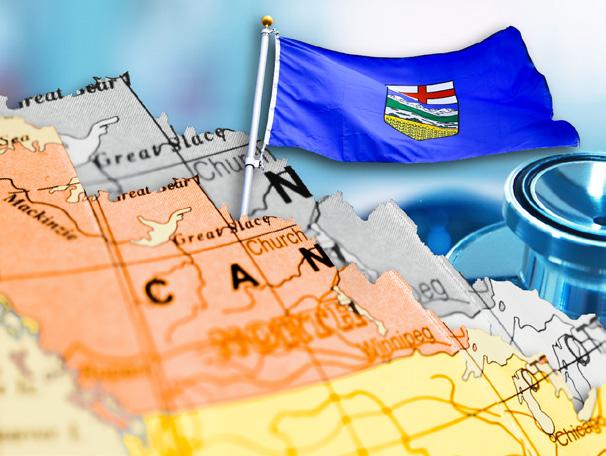
And Canadians can expect two-tier health care to spread if other provinces introduce similar legislation. Saskatchewan Premier Scott Moe, for one, is already signalling that his province may follow suit.
Until now, Canada has only had a private health insurance market for extended health care, often sponsored by employers.
This changes that: Employers and individuals may be forced to buy private health insurance to get the care they need and avoid out-of-pocket payments.
This is uncharted territory for Canada. Thanks to the cost-efficient public insurance plans that enable us to get the care we need, we have not had to buy private health insurance. It’s part of what makes Canada different from the U.S.
While Alberta’s legislation likely contravenes multiple sections of the Canada Health Act, there is serious risk, too, that Alberta’s new health care market will attract U.S. investors. This couldn’t come at a worse time: A small, but vocal number of Alberta separatists are soliciting the financial support of the Trump administration. Canada is about to renegotiate the Canada-United States-Mexico trade agreement.
Will Alberta separatists and the Trump regime be looking to use U.S. investment in Alberta’s health system as a back door to begin annexing the province?
The rest of the country should pay attention. If Alberta’s efforts to establish a two-tier health system—based on private health insurance and for-profit providers—is successful, it is likely to attract U.S. investors. This is not farfetched, U.S. investment interest has already been documented.
If we start to see U.S. health care investment move into Canada via Alberta, we won’t have U.S.-style health care, we will have U.S. health care.
Andrew Longhurst is a senior health policy researcher at the Canadian Centre for Policy Alternatives. He is the co-author of a new report The end of Canadian medicare? which analyzes Alberta’s two-tier legislation.
Held: IEEPA does not authorize the President to impose tariffs. With these nine words, the Supreme Court of the United States of America has voided the legal basis for the Trump administration’s socalled reciprocal tariffs on international imports. Only Congress has the power to enact tariffs, the court ruled.
Trump’s trade team will now have to come up with other justifications for the president’s counterproductive and increasingly unpopular border taxes, enact them through legislation, or ditch the reciprocal tariffs completely. It’s likely the president will try a bit of options one and two.
The illegal tariffs are those imposed by Trump under the International Economic Emergency Powers Act (IEEPA), a tool used previously to sanction countries or individuals deemed to pose an emergency security risk to the United States.
Shortly after taking power last winter, Trump justified IEEPA tariffs of 25 per cent on all Canadian and Mexican imports based on the alleged threat to the U.S. posed by fentanyl and migration. Then on “Tariff Liberation Day,” April 2, 2025, Trump announced a pile of IEEPA tariffs ranging from the teens to upwards of 50 per cent on about 90 countries.
These tariffs were paused after financial markets started to creak then reimposed later last year in the middle of a race by the United States Trade Representative (USTR) to sign one-sided deals with a number of countries. These deals lowered reciprocal tariffs on imports into the U.S. but did not eliminate them in most cases.
Perhaps recognizing the harsh impact Canadian and Mexican
tariffs, in particular, would have on the U.S. economy, Trump exempted imports that complied with the Canada-U.S.-Mexico Agreement (CUSMA), triggering a mad dash from U.S. importers and Canadian companies to certify as such. In August, Trump raised Canada’s “reciprocal” tariff rate covering non-CUSMA-compliant imports to 35 per cent.
Meanwhile, Trump hit key Canadian and Mexican export sectors, including automotive goods, steel, aluminum and later copper products, with high national security tariffs justified under Section 232 of the Trade Expansion Act of 1962. These tariffs, which continue to do significant damage to Canada, including from factory closures and firms shifting production to the United States, are not affected by the IEEPA decision.
Earlier this year, United States Trade Representative Jamieson Greer said there was a continuity plan, or Plan B in Treasury Secretary Scott Bessent’s words, should the Supreme Court agree with earlier U.S. court decisions denying the legality of tariffs under the IEEPA.
That plan involves replacing many of the reciprocal tariffs with Section 232 tariffs, and tariffs under sections 301 or 122 of the Trade Act of 1974, the latter granting the President the right to impose tariffs of no more than 15 per cent for no more than 150 days.
The Trump administration may also introduce legislation granting the president the power to impose tariffs in a wider range of situations, but this would have difficulty passing both houses and may become a lost cause if the Democrats win the House of Representatives in this year’s midterms.
There is also the question of rebates to U.S. importers. Trump has collected an estimated US$175 billion through IEEPA tariffs. Refunds “would exceed the combined fiscal 2025 outlays from the Department of Transportation at $127.6 billion and the Department of Justice at $44.9 billion,” writes Reuters.
So where does this leave Canada? Basically, we’re in the same boat as we were at 9:59 a.m., before the Supreme Court ruling was published.
The President is still trying to drain manufacturing work out of Canada and Mexico into the U.S. and still threatening to do more damage outside of the IEEPA.
CUSMA-compliant goods continue to cross the border tariff free if they are not captured by Section 232 “national security” tariffs on steel and aluminum products (and their derivatives), copper, automotive goods, trucks and buses, timber and lumber (see the full list here). And we are awaiting (dreading) possible new sectoral tariffs on pharmaceuticals, aircraft and semiconductors and their components—all important export sectors for Canada.
It’s possible the IEEPA ruling will give a bump to Canadian and Mexican leverage in CUSMA review negotiations just getting started. It was good to see Minister Dominic LeBlanc saying Canada and Mexico would coordinate in these talks during his trip to Mexico City this week.
But overall, it does not appear today’s Supreme Court decision substantially affects the possible CUSMA review scenarios I outlined earlier this year. The U.S. demands of Canada and Mexico are known and could, in some cases, significantly compromise our sovereign economic and security policy.
The kinds of deals the Trump administration is agreeing with other countries facing now-illegal IEEPA tariffs are extremely one-sided. The USTR just released its Indonesia agreement, which commits that country to never taxing digital services and never asking U.S. streaming service providers and media companies to contribute to Indonesian cultural or domestic news content.
If the Supreme Court decision contributes to American doubts about the effectiveness of Trump’s trade wars, which it almost certainly will, Canada and Mexico will benefit from time. If the Trump administration responds by withdrawing from CUSMA, we’re into a different conversation—one that will benefit from much deeper economic cooperation with Mexico in the short term.
Stuart Trew is director of the CCPA’s Trade and Investment Research Project (TIRP).


Keat
Welsh
I’m a privileged disability activist with a complex family past
We are living through an “AI moment”—a period of dizzying change in the field of artificial intelligence that is sowing fear, hope and confusion in equal measure.
I grew up in the United States thinking I was middle class. It wasn’t until much later that I began to untangle the complex threads of my family’s history—a history shaped by class privilege, colonization, and chattel slavery.
My father’s family is a mixture of British and French ancestry. They settled in the U.S. in the late-1700s and actively participated in the system of enslavement. On my mother’s side, the narrative was different. There are stories of hard-working, dairy farmers in upstate New York. Yet the unspoken reality is that we have been landowners for generations.
Both sides of my family have a history of military involvement, and family lore admits that my father’s side “fought in the civil war on the wrong side”. Crucially, being in the military provided a springboard for wealth accumulation, paying for education and securing high-ranking jobs rather than frontline risks. Even my Armenian grandfather, who fled two genocides, was able to access the GI Bill for schooling after joining the U.S. military.
These generational advantages crystallized in my own upbringing. My parents, who had me while in medical and grad school, were eventually able to buy a large home in a wealthy neighborhood with the help of a loan from my grandparents. While we had the “smallest house on the block,” I had access to well-funded public schools, numerous road trips, and a safety net that many lack.
My relationship with money started to shift drastically when I became chronically ill as a teenager. I moved to Canada after high school and became a permanent resident, a process where I benefitted from an immigration system that favours
white English speakers. Today, being chronically ill and disabled shapes my financial reality. As a disability activist, I see clearly that while I am unable to work a full-time job, I am shielded from the worst effects of capitalism. In contrast, a lot of my friends and community—many of whom are also disabled—are deep in legislated poverty.
My income from contract work is between $40,000 and $55,000 annually, but this does not tell the full story of my financial security. I possess a level of net wealth that is high for someone in my position, accumulated almost entirely through gifts and inheritances. My family sends me monthly financial support to supplement my income. I also benefit greatly from living in affordable, accessible co-op housing.
Joining Resource Movement allowed me to move from haphazardly giving away money to a more disciplined “praxis” of redistribution. I now aim to give away over 10 per cent of my income every month to mutual aid campaigns, movements, and folks in my community. I have also begun moving my money from traditional banks to credit unions to divest from war. For me, redistribution is about acknowledging that my safety net was built on centuries of extraction, and actively using those resources to support the survival and autonomy of local communities.
But I know that personal redistribution, on its own, is not the answer. While I view my giving as an act of solidarity rather than charity, it can’t fill the gaps left by the state. That’s why I fight for the end of legislated poverty. We need a society where disabled people are not forced to rely on family luck or private benevolence just to survive. True justice means safety, housing, and care are guaranteed rights for everyone, not just lucky privileges for those with the right lineage.
IWam part of the 0.01 per cent of wealthiest people in Canada. I am a sixthgeneration shareholder in a family business, and someday I will control over $200 million worth of shares. In the meantime, I live a life of immense privilege, which has included a private school education, two debt-free degrees, and the financial freedom to pursue a career in the arts. A tax-free gift from my parents paid for my house, my cottage, and the renovations for both.
For a long time, I didn’t understand the scale of this. My mother lived as an anonymous philanthropist, and secrecy—rooted in guilt—was the family norm. It wasn’t until I was older that I grasped the magnitude of our wealth. While my family tells stories of leadership and hard work, I came to see the other side: how neoliberal policies accelerated our wealth, how corporate power translates into political influence, and how we have benefitted as settlers on this land for generations.
This realization created a deep cognitive dissonance, especially as I pursued my academic interests. During both my undergrad and graduate degrees, I spent a lot of time exploring how the very economic systems that made my family rich were simultaneously deepening inequality and accelerating climate change. I realized I couldn’t live in secrecy anymore. I wanted to model a healthy relationship with money for my children and find alignment between my resources and my values. I am now much more transparent about my situation with the people in my life. This openness makes it possible to support others with less mystery, and it has allowed me to feel more seen and understood. My partner and I also worked to create a concrete redistribution plan for the approximately $1 million we have access to annually.
We now give half of our annual income to groups organizing for political, economic, and climate justice. We prioritize organizations that don’t issue tax receipts, because often the most important work happens outside the non-profit
industrial complex. As the button says, “the revolution will not be registered as a charity.”
Beyond this political giving, we support friends and family to help with life milestones, from down payments to fertility treatments. These conversations can be awkward, but the resulting stability for the people we love is deeply gratifying. We are also building a portfolio of ethics-aligned investments that sits outside the traditional market, aiming to add $100,000 to this annually.
We live on the remaining 20 per cent, which also includes an ad-hoc fund for emergencies that come up in our community. It’s not lost on us that living on $200,000 is still an exceptionally comfortable existence. Transparency has made us more accountable, but we know we have further to go. We are already reimagining how we can reallocate a larger percentage of our wealth next year to the grassroots organizations doing the work we believe in.
Emma Davis
I’m suddenly rich: does that change everything?
My financial situation has changed a lot in the last few years, and I’ve had to unlearn much of what I thought I knew about money.
I grew up in an “eat-the-rich” family. My parents were immigrants to the U.S. from Western Europe, artists who were deeply involved in the anti-apartheid movement. The family lore was that my father got into Oxford despite being poor simply because he was smart. They left out the part about him being white and male.
While we drove rattly second-hand cars and I lacked the brand-name clothes my peers had, my upbringing was rich in cultural capital. We prioritized music lessons, books, and international travel over home electronics. We talked about books and languages. We travelled overseas and there was a never-ending stream of people from all over the world traipsing through our house. I see now that this specific kind of upbringing allowed me to fit in with wealthy people in a way my classmates—especially kids of colour—could not.
The explicit money message in our house was practical: “Get a secure job, don’t be a starving artist like us.” The implicit message was that there are more important things than money, like following your passions, and art, justice and community. I learned how to make do, to save and be thrifty, to hustle. I’ve used these skills every day in my career in non-profit administration.
I met my husband when we were teenagers. His family was middle class—we had different relationships to money. His parents’ academic jobs meant his tuition was free, and they had enough money to give him a safety net, allowing him to take the risk of starting a tech company. The venture capitalists my husband pitched to were exclusively white men, and often Jewish like him—a reminder of how affinity-bias lubricates the wheels of capital.
He sold his startup to Twitter, which led to a lucrative career in Silicon Valley. Those were the early days of social media, and we are still wrestling with the fact that the source of some of our wealth comes from a platform whose impact on democracy has been, to put it mildly, messy.
Over the last few years, we’ve been able to sell enough tech stock and startup options to find ourselves suddenly part of Canada’s ultra-wealthy 0.1 per cent. The survival skills I learned—how to navigate the world without money—are no longer the ones I need.
Getting involved with Resource Movement has helped me figure out how to reconcile my new reality with my old values. I’ve found the words for some of the questions I have been wrestling with, and a community of like-minded people who
share those questions. That’s freed up energy to tackle the challenge of redistributing my wealth in ways that are aligned with my priorities. I’m finding ways to use my privilege to ensure a more equitable and sustainable society, and to address the root causes of inequality, including as a board member of Patriotic Millionaires Canada—a group of wealthy Canadians who believe the rich should be paying more in taxes.
IWimmigrated to Canada with my family at a very young age, and I watched our rapid financial ascent happen in real-time. We moved from a small rented apartment, to a rented townhouse, to homeownership in the suburbs, and finally to a much larger home in an affluent neighborhood by the time I started high school.
My political awakening happened in tandem with this stability, sparked by two distinct ruptures.
The first was in a Labor Studies class. My professor displayed a graph of tech workers immigrating to Canada in the 1990s, showing a massive spike followed by a precipitous drop after the dot-com crash. I suddenly saw how much my family was a beneficiary of a specific government policy window designed to serve their economic interests. I realized how much of our stability was based on luck and timing.
The second rupture happened the year I co-founded a Chinese Canadian community group. I watched, horrified, as conservative Chinese Canadians organized an Islamophobic protest on Parliament Hill alongside white nationalists. I realized then that “representation”—simply being around people who look like you—was not enough.
Driven by these realizations, I moved to Los Angeles for graduate school in Urban Planning. I didn’t just go for the degree. I wanted to immerse myself in the rich lineage of progressive Chinese and Asian American activism. While I was there, I got involved in labour, abolitionist, and housing justice movements, while being faced with the sheer intensity of wealth inequality in the U.S.
After graduating, I moved to San Francisco to work as an Urban Planner in Chinatown, and I also got involved in Resource Generation, the American sibling to Resource Movement. My own privilege as an international student supported by family wealth was laid bare. I began to rethink what wealth meant for me, especially after discovering that my parents had acquired single-family homes as “investment properties” back in Canada—an echo of the gentrification dynamics I was witness to in Chinatown.
Having access to wealth means I can’t just advocate for structural changes (like decommodifying housing) in the abstract. I have to look at my own bank account. I have to reckon with the fact that my stability is built on systems that have extracted from others.
This work is deeply personal and often terrifying. As a queer person, my relationship with my family is complex. I sometimes wrestle with the fear that I could be cut off, emotionally and financially. That fear fuels a scarcity mindset, urging me to hoard money to ensure my own independence.
But I am trying to choose interdependence instead. I’ve stopped trying to hide my values. I am now trying to talk to my family about why I do this work, bringing my full self to the table despite the risks. Redistribution, for me, is about turning toward my family rather than away, using mutual aid as an act of love to build a future that benefits us all.
Daniel Hoyer
While America has long been styled the ‘land of opportunity’, Canadians similarly like to think of ourselves as a just and fair society with equality of opportunity. This ‘Canadian Promise’ is a bedrock of Canadian identity, heralded by leaders from all sides of the political spectrum. But it is becoming harder to believe.
Over the past three or four decades, Canada has seen skyrocketing inequality, coupled with a growing ‘stickiness’ in wealth and opportunity across generations. A 2021 report published by Statistics Canada found that later in life, earnings have come to depend more and more on parental income.
This ‘rich get richer’ dynamic can intensify disparities across generations and amplify the importance of being born into the right circumstances; quite the opposite of a meritocracy.
Canada’s inequality of opportunity extends beyond just income and career prospects. Access to top positions in industry, politics, and other prestigious fields also remain largely closed off to those lucky enough to have the right identity and background, which in Canada has historically favoured white men.
The sort of disparities that we see in Canada today don’t happen by accident; they are the result of systemic forces that play out across generations.
My colleagues and I at Societal Dynamics (SoDy)—the ‘historical policy lab’—together with our partners at the Seshat Databank, have explored hundreds of historical and contemporary societies from all parts of the world. In too many
cases, we find stark inequalities and social disparities akin to what Canada is experiencing today, often with disastrous consequences like civil warfare or even societal collapse.
We call this process the wealth pump; the institutions, rules, and structures of society that allow the lion’s share of wealth and prestigious positions to flow into the hands of a small minority of the population.
This often starts small: a few lucky individuals get hold of coveted positions in business, government, and other fields. This gains them social prestige and, typically, substantial wealth. These individuals can then afford the best schools and tutors for their children, who inherit not only their parents’ material resources but also family connections and insider cultural knowledge about how to succeed (often called ‘hidden curricula’).
As long as the wealth pump keeps flowing, these advantages accrue one generation after the next until a relatively small initial gap in success becomes a huge chasm in life outcomes. Unfortunately, Canada’s wealth pump has been gushing for decades—since at least the early 1980s.
If not a meritocracy, what are we?
A true meritocracy, where opportunity and prosperity are blind to identity, wouldn’t exhibit the disparities we see across age, race, sex and gender, and other aspects of social status and identity.
So what kind of system does Canada have? One where opportunities are shrinking and quality of life is diminishing for a large segment of the population, while the means to secure life success and fulfillment are largely passed on intergenerationally.
Perhaps ‘inheritocracy’ is the appropriate label.
Without shutting down Canada’s wealth pump, little progress can be made
Housing offers a clear illustration of this. Owning a home not only provides stable, long-term shelter, it has also traditionally been a key mechanism of upward social mobility. As housing prices have risen in recent years, though, this opportunity has disappeared for large numbers of people.
Even renting is becoming increasingly challenging. This is felt acutely by the younger generations. Property values among homeowners was recently shown to be significantly tied to parents’ home values especially in urban areas, highlighting the pull of intergenerational wealth in securing valuable housing.
One exception to this is found in our universities. Canada has one of the best public post-secondary education systems in the world. Many of our top schools have been making small, but notable, gains in diversity and inclusion in student representation.
Yet the wealth pump undermines the impact of post-secondary education on life success. Having a degree from a prestigious program is not the guaranteed path to upward social mobility that it once was.
One 2025 report notably found that 41.2 per cent of bachelor’s degree holders are “underemployed,” meaning they work in roles that typically do not require a degree, while another found a growing mismatch between rising graduation rates and a shrinking number of vacancies in degree-requiring jobs.
These trends make it both more important and more challenging to be among the lucky few able to grab hold of one of these rare spots, because the risk of not having them on life quality keeps getting more pronounced. The wealth pump churns along.
the Canadian promise
Problems as deep, systemic, and long-lived as these offer no easy fix. Still, many solutions have been offered to address these challenges, including from the pages of this magazine (see, notably, the Monitor’s 2023 special issue on ‘Canada’s Inequality Problem’).
Policies like (re)introducing progressive taxes on capital gains, on ultra-high household wealth, on large intergenerational transfers through inheritance or gifts, and on high-end corporate earnings can help break the cycle. Such fiscal measures can be made even more
effective if introduced alongside efforts to reinvigorate collective bargaining procedures and strengthen policies around fair and inclusive hiring practices.
The revenue gained from such reforms can help level the playing field for securing high quality of life through, for example, affordable housing initiatives, public health care, and education reform to close the gap between the students we produce and the (lack of) secure jobs available to them.
One thing, though, is clear: without shutting down Canada’s wealth pump—the engine that drives so much of the dynamics discussed here—little progress can be made. The Canadian Promise is fading. Reversing the spiraling inequality we have allowed to accumulate over the last two generations is the only chance we have to even approach “a system where individuals succeed based on their abilities, efforts, and achievements—not their background or social status”.

Daniel Hoyer is founder and director of SoDy (Societal Dynamics), a research scientist at SocialAI Lab at the University of Toronto, and associate faculty at the Complexity Science Hub Vienna.
Share of wealth
Share of income

Scott Marentette
We must address the root of the problem: the distribution of power and wealth
“We face a defining moment.”
“Tighten your belt.”
“We need to cut wasteful government spending.”
“We need to do more with less.”
“We need to lay the foundation for future prosperity.”
Blah, blah, blah, blah.
These dead phrases form parts of such a well-worn story that they can no longer be taken seriously. And yet, they are deadly serious. These
phrases define the mainstream political framework that limits discussion, imagination, and choice around possibilities for policy.
In what has become the signature message of his tenure, Mark Carney has signalled that Canadians must prepare for ‘sacrifices’ to transform the economy. But we must be clear: in our current framework, ‘sacrifice’ is a code word for the further concentration of wealth.
When the elite call for ‘belt-tightening’ and ‘productivity gains,’ they
are not asking the billionaires to sacrifice their capital gains; they are asking the working class to sacrifice their public services, their wages, and their time.
By framing these choices as a natural weather pattern that we must simply endure, the technocratic elite are prepping Canadians for a form of managed austerity that doesn’t just ‘include’ inequality—it requires it.
It is a plan to secure the future for those who already own it.
A policy framework that allows wealth to concentrate at the top while more and more Canadians struggle to meet basic needs isn’t just an economic failure, it is a democratic one. When everyday life is defined by the constant pressure of the cost-of-living crisis, the ‘shared citizenship’ required for a healthy democracy begins to dissolve.
As of early 2026, the gap has reached a historic breaking point: the top 20 per cent of Canadian households now control 65.5 per cent of the country’s total net worth, while the bottom 40 per cent—the people who keep our communities running—account for a mere 3.1 per cent.
When wealth is this concentrated, democracy becomes a hollow shell. We are living through a feedback loop where extreme wealth buys political influence (through lobbying and media ownership), which then secures policies (tax cuts and deregulation) that generate even more wealth.
This loop doesn’t just “harm” democracy, it deactivates it. We know this because we can see what’s happening south of the border.
High levels of inequality are historically linked to the erosion of social trust—the basic glue of any functioning democracy. When the life experiences of the wealthy diverge so radically from regular people, a sense of common purpose becomes untenable. This instability creates a fertile ground for polarization and anti-democratic movements, which thrive on the disillusionment that follows when the social contract is broken.
We are witnessing a structural crisis in governance that cannot be solved by simply adjusting the dials of the current system. Rather than continuing to catalog the assaults on our public life, we must begin shaping constructive solutions that break out of this oppressive framework.
To move forward, we must investigate and implement an alternative model that addresses the root of the problem: the distribution of power and wealth itself.
We should be calling for federal policies that reduce inequality, to safeguard our democracy. But really, we should be approaching this issue from the other way around: we need to build democracy in order to challenge economic inequality.
Ultimately, the most fundamental solution to this crisis is not found in “ticking a box” once every few years, but in reimagining the political process as an active, daily practice. This requires a structural shift from working people being governed to governing themselves—a transition from a passive citizenry to an empowered one.
At the heart of this alternative framework is the democratization of wealth through community
We are living
ownership. Models like worker and consumer cooperatives ensure that the wealth created by regular people remains in the hands of the many rather than being extracted by a few. When workers are also owners, they gain a direct democratic stake in the decisions that shape their lives, effectively neutralizing the “political inequality” created by concentrated capital.
This democratic control can also extend to the land through Community Land Trusts (CLTs), which remove housing and property from the speculative market to preserve them for long-term community benefit. By stewarding land democratically, CLTs help ensure communities stay intact, preventing the displacement that fuels social instability.
Coordinated through federated networks of workplace and community councils, these strategies build new, tangible bonds of solidarity. They do more than just “address” inequality. They inoculate society against authoritarianism by fostering a sense of shared purpose and agency. By democratizing power at the source, Canadians can begin to build a liberatory democracy that is as robust as it is equitable.

Scott Marentette is a governance consultant who also serves as a member of the Finance and Strategy Working Groups at Resource Movement.

Where we collectively gather the resources to support one another
Every spring, a collective groan rolls across Canada. As the April tax-filing deadline approaches, the prevailing cultural mood is one of dread, resentment, and strategic avoidance. We are conditioned to view this annual ritual as a loss—a subtraction from our personal wealth, confiscated by a faceless bureaucracy.
This reaction isn’t accidental. It is the product of a 40-year rhetorical project that has successfully branded taxation at federal, provincial, and municipal levels as a “burden.” We have normalized the idea that money in our pockets is “ours” and money in the public purse is “wasted”—or at least “inefficiently” spent.
This narrative is not just cynical. It is corrosive to the very idea of democracy.
It’s time to reframe taxation. Taxation is not a penalty. It’s the practical mechanism by which we establish an architecture of care. It allows us to extend compassion beyond our immediate family to people we will never meet, ensuring that care is not a luxury product, but a common right. It is also something we do for ourselves, so we can have access to care when we need it.
The language of “relief” Language shapes reality. For decades, politicians across the spectrum have campaigned on promises of “tax relief.” The metaphor is powerful because it is visceral: you need relief from a headache, a disaster, or a heavy weight. By framing taxes as an affliction, the logical conclusion is that the goal of good governance must always be less of them.
When we obsess over “taxpayer rights” rather than “civic responsibilities,” we erode the solidarity required to fund universal programs. We forget that the “relief” of a tax cut often results in the “burden” of crumbling infrastructure, longer ER wait times, and underfunded schools.
Public spending buys us freedom from fear. It buys us the freedom to move through a safe city on public transit. When we pool our resources, we can purchase things together that even the wealthy could not afford alone: a national park system, a pandemic response strategy, a universal pension plan. When we starve the state, we don’t liberate the individual, we raise the cost of living. We replace progressive taxation with regressive user fees, tuition hikes, and private insurance premiums. We trade a bill
based on ability to pay for a bill based on need—a trade that always punishes the poor and working class.
For too long, we have viewed the economy as a machine that produces widgets, while viewing care— health, education, child care, as well as disability and elder support—as a drain on that machine. In reality, care is the economy. It is the soil in which all other productivity grows.
Taxation is how we pool our resources to fund this care at scale. It is not merely paying for a nurse’s shift; it is funding the vast, invisible infrastructure that makes their work possible. It is the medical school that trained them, the publicly funded research that developed the treatments they administer, and the hospital network that stands ready for any emergency. This level of coordination—building systems rather than just buying services—is something that private charity or individual wealth simply cannot replicate.
These things are not “government waste.” They are acts of solidarity operationalized by the state. When we underfund them, we are not “saving money.” We are engaged in an act of collective neglect. We are choosing to let our neighbours slip through the cracks so we can keep a slightly larger percentage of our paycheque.
Of course, asking progressives to embrace taxation encounters a hard reality: not every tax dollar buys care.
For many on the left, the reluctance to defend taxation isn’t born of selfishness, but of profound distrust. It is difficult to feel a swell of civic pride when we see public funds diverted to expand defence spending, subsidize fossil fuel pipelines, or cover the costs of corporate handouts.
This skepticism is valid, but it requires a reality check.
While headlines rightly focus on controversial spending, the vast majority of our federal budget still serves the public good. It is true that current spending plans mean defence spending is projected to rise significantly. Yet even with the aggressive pivot toward military spending, transfers to persons (like Old Age Security and the Canada Child Benefit) and transfers to other levels of government (primarily for health care and education) make up more than 50 per cent of all federal spending.
For every dollar that goes to a project we oppose, many more go directly to keeping our neighbours housed, healed, and fed.
If we withdraw our moral support for taxation because we dislike specific line items, we are throwing the baby out with the bathwater. The cruel irony of “starving the beast” is that the “beast”—the militarized, corporate-aligned aspects of the state—is rarely the part that starves. When revenue drops, fighter jets are
rarely the first item cut. The first casualties tend to be libraries, schools, transit, and health care.
We must learn to hold two difficult truths at once: our democracy is deeply flawed, captured by interests, and often disappointing—but it remains our best bet. Collective spending is the only lever powerful enough to push back against the privatization of everything. We cannot cede the terrain of revenue to those who want to dismantle the state. We pay taxes not to endorse every decision of the government of the day, but to keep the lights on in the public sphere so that we have a democracy left to fight for.
How do we shift this narrative? It requires a change in culture.
We need to stop apologizing for taxation. Progressive rhetoric often falls into the trap of framing taxes solely as a correction for extreme wealth. While taxing the one per cent is an economic and moral imperative, relying exclusively on this framing risks validating the idea that taxation is, at its core, a penalty. We cannot build a supportive tax culture if we treat the contributions of working and middle-class people as a tragedy. Regardless of the bracket, we need to stop viewing these payments as a loss, and start defending them as the necessary architecture of a fair society.
Calls to “tax the rich”’ ring hollow in a society that inherently distrusts the state. The wealthy know this. They rely on general anti-tax sentiment to stall reform, knowing that so long as the average citizen hates the taxman, the billionaire remains safe. To break this deadlock, we must change the narrative for everyone, not just the top bracket. When everyone embraces taxation as a tool for collective care, we remove the social license the wealthy use to opt out.
Imagine if we viewed tax season not as a government raid, but as a harvest festival. A moment where we collectively gather the resources required to educate the next generation of children, to heal our sick, to house our neighbours, and to transition our economy away from fossil fuels.
There is a profound dignity in contributing to the common good. There should be pride in looking at a new library, a functioning hospital, or a protected green space and saying, “I helped build that.”
The next time a federal, provincial, or municipal politician promises you “relief,” ask them what part of our care infrastructure they plan to dismantle to pay for it. And when you file your return this year, try to view that final number not as a loss, but as your stake in a fairer, kinder, and more robust Canada.

Mohini Athia aims to learn and act with others, in the service of economic and all forms of justice. She is a Resource Movement member living in Toronto.




When it comes to wealth inequality, the playing field isn’t level. Some families are shut out from owning a piece of the wealth pie. Some families—the rich ones— start on third base. They’ve got the advantage.


The richest 20 per cent of families hold 69 per cent . The richest 10 per cent of families hold 53 per cent .
The richest one per cent of families—that’s 169,400 families—hold 24 per cent of total net wealth in Canada. Each has at least $7.4 million in net wealth.
The poorest 40 per cent of families hold only 3.3 per cent . The middle 40 per cent of families hold 27.6 per cent .
The Canadian Centre for Policy Alternatives’ annual Alternative Federal Budget proposes a solution: tax extreme wealth. A progressive wealth tax on net worth over $10 million would redistribute wealth while raising over $37 billion in the first year—99.4 per cent of Canadians would not be taxed under this measure.
“The outcome of a system that increasingly concentrates income, wealth and power among a select few can be seen south of the border right now. Canadians made clear in the 2025 federal election that they do not want to go down that path. Building a sustainable democratic society in which we can all thrive will require mobilizing Canada’s vast resources. The tax system is a powerful tool that can be used to free up Canada’s resources to fund the important projects laid out in the rest of this platform.”
—CCPA’s Alternative Federal Budget 2026.
Lindsay Wiginton
We are currently witnessing the largest transfer of wealth in Canadian history, with an estimated $1 trillion moving from the bank accounts and real estate portfolios of the Baby Boomer generation into the hands of their children.
I am among those children. I was born into the kind of financial safety net that most Canadians can only dream of. My access to education, housing, and opportunity was paved by money I did not earn. And now, as this giant wealth transfer accelerates, I stand to inherit a significant windfall simply because of the lottery of my birth.
In almost any other G7 country, a transfer of the magnitude I will be receiving would trigger a mechanism to return a portion of that private fortune to the public good. It
Worth repeating:
“While Canadians at almost every income level pay a substantial portion of their incomes in tax, billionaires do not.”
—Linda McQuaig and Neil Brooks, Cancelling Billionaires
would be taxed. But not in Canada. Here, I will receive this wealth tax-free.
From a purely self-serving perspective, this is a triumph of estate planning. But from the perspective of a citizen concerned about the fraying social fabric of this country, it is a disaster.
As a member of Resource Movement—an organization made up of people with wealth and class privilege—I am asking the federal government to do something that might seem counter-intuitive to my self-interest: Tax my inheritance. Without an inheritance tax, the ongoing wealth transfer acts as an inequality multiplier. It further calcifies a class system in which social mobility has already become difficult to achieve.
Canada: The G7 outlier Opponents of inheritance taxes often frame them as radical, socialist interventions that would destroy the economy. But this is a peculiarly Canadian delusion.
The United States—the global bastion of free-market capitalism—has an estate tax. The United Kingdom, France, Japan, Germany, and Italy all have inheritance or estate taxes. Among the G7 nations, Canada stands alone as the outlier that allows dynastic wealth to accumulate entirely unchecked at the point of transfer.
We have allowed our tax system to become regressive at the very top. We tax income from labour—the money you wake up and go to work for—at a much higher effective rate than we tax income from wealth. An
inheritance is the ultimate form of unearned income. It is the receipt of massive purchasing power without a single hour of labour attached to it.
Why should a nurse or a teacher pay 30 per cent or 40 per cent of their earnings in income tax, while we could receive a million-dollar bequest and pay nothing?
“family
myth
Whenever we raise this issue, the defence is immediate and emotional: “What about the family farm? What about the family cottage?”
This is a straw man argument used to protect the ultra-wealthy. Those who advocate for an inheritance tax are not interested in coming for your grandmother’s modest bungalow or a working family farm. We are advocating for a high-threshold inheritance tax. Imagine a tax that only kicks in on assets exceeding $5 million or $10 million. Or a progressive tax that targets the top 10 per cent of estates. There are countless policy mechanisms—exemptions for primary residences up to a certain value, distinct carve-outs for active farmland, and so on—that can protect the middle class while still addressing the accumulation of dynastic wealth.
An inheritance tax is also about addressing historical wrongs. We have to be honest about where much of our wealth comes from.
In Canada, “old money” is often inextricably linked to the colonial
extraction of resources, the displacement of Indigenous Peoples, and systems that favored white, settler families.
Redistribution is a form of repair. It is an acknowledgement that we live in a society, not an economy of isolated individuals.
The revenue from a modest inheritance tax would not transform our society overnight, but it could contribute to us making inroads toward a better future. An inheritance tax could help fund a proper National Housing Strategy. It could underwrite a Green New Deal. It could ensure that long-term care is a public guarantee, not a luxury good.
The choice before us
We often hear that wealthy people will leave Canada if we tax them. But where will they go? To the U.S., where they face an estate tax (and would have to live in the U.S.)? To Europe, where taxes are higher?
I am not leaving. This is my home. And because I love this country, I want to see it thrive. I do not want to live in a gated community surrounded by poverty. I do not want my financial security to come at the expense of my neighbour’s dignity.
The $1 trillion transfer is underway. We can let it deepen the cracks in our foundation, widening the gap between the haves and the havenots until it becomes unbridgeable. Or, we can use this moment to choose a different path.
We can choose to view inheritance not as a private right, but as a lucky windfall that should be shared. We can choose to invest in the living, rather than just protecting the assets of the dead.
I am ready to pay my share. I am asking the government to send me the bill.
By Trish Hennessy
400
In 2006, America had 400 billionaires.
$1.25 trillion
That was the total net worth of America’s 400 billionaires in 2006.
$53 billion
That was Microsoft Founder Bill Gates’ fortune in 2006, when he topped the Forbes magazine list as the richest person—for the 13th year in a row.
46
In 2006, Canada had a record number of billionaires: 46.
$24.41 billion
The Thomson family—of the media empire—topped the list as the richest billionaires in 2006, at $24.41 billion.

Lindsay Wiginton is an organizer with Resource Movement in Toronto.
900
According to Forbes, the number of America’s billionaires had grown to 900 by 2025—up from 400 almost 20 years ago.
+452%
That’s the net worth increase of those 900 American billionaires—up from $1.25 trillion almost 20 years ago to $6.9 trillion in 2025.
76
In 2025, Canada had 76 billionaires—up from 46 almost 20 years ago.
$359 billion
That’s the total net worth of those 76 billionaires in Canada in 2025, according to Forbes magazine.
$91.3 billion
That’s the net worth of Changpeng Zhao, co-founder and former CEO of Binance, the world’s largest cryptocurrency exchange. Zhao is the wealthiest Canadian on Maclean magazine’s 2025 “The Rich List”.
$90.2 billion
The Thomson family’s net worth in 2025, which placed that in Maclean’s “The Rich List” #2 spot. Old money (legacy media empires) meets new money (tech empires).
x248
The pay that Canada’s richest 100 CEOs pocket is now at an all-time high: they now make 248 times more than the average Canadian worker.
$205.5 million
Tobias Lütke, the co-founder and CEO of the e-commerce company Shopify, was the highest-paid CEO in Canada in 2024. Lütke made $205.5 million that year—the highest CEO pay in Canadian history.
Martina Ulrichs
Like many people working in the non-profit sector, it has been difficult not to feel despair when seeing the trends in Canada: rising extreme wealth concentration sitting side-by-side with food insecurity and a housing crisis.
Compounding this, higher cost of living has eroded the disposable income of middle-class households which has fundamentally altered the landscape of charitable giving. As smaller donations evaporate, charities are pivoting aggressively toward wealthy donors and foundations, who are seeing record numbers of funding requests.
While charitable giving has long been framed as a mechanism for redistributing wealth toward social good, the ‘charitable industrial complex’ is structurally unsuited to solve systemic problems. Driven by an entrenched fixation on rapid, measurable impact, the sector forces non-profits to compete for funding by promising immediate results. This traps organizations in a cycle of short-term, project-based interventions, preventing them from addressing the deeper policies and power structures that perpetuate social, economic, and environmental crises.
As a result, charitable dollars often sustain band-aid service delivery models, while reducing public revenues through tax exemptions and tax-sheltered philanthropic endowments, limiting the state’s ability to fund durable, systemic solutions. In 2024 alone, the federal government lost an estimated $3.8 billion tax revenue due to charitable donation tax credits.
I have seen this dynamic from the inside. Having worked at a private
foundation managing multi-million dollar grant portfolios, I can tell you that the cognitive dissonance of philanthropy is hard to ignore. You want to believe your desire for systems change aligns with your grantees, yet you operate within an organization that is itself a symptom of the economic system driving the concentration of wealth.
The philanthropic sector has shifted recently—particularly during the pandemic and following the racial reckoning after George Floyd’s murder. Incentivized by this momentum, many progressive foundations in Canada made funding applications more inclusive, transparent and participatory to reach equity-deserving, underfunded communities.
What was exciting about this time was that it made me realize how much freedom philanthropic funders have when deciding how to give and that most of the barriers to giving more flexibly are self-imposed.
Yet we need to go further and challenge progressive funders to look beyond merely changing how they grant money. The real task is to use our power to support social movements in achieving systemic shifts.
This is the essence of solidarity philanthropy. It invites us to critically examine our complicity in the very systems we aim to change. Funders currently incentivize charities to deliver services that only cushion the human cost of inequality. Solidarity philanthropy demands we stop maintaining the status quo and start resourcing the long-term work of social equity by funding social movements.
Social movements are the most effective, yet underfunded, actors in
promoting solutions to structural inequalities. Throughout history, they have been central to major societal advances, including movements for Indigenous sovereignty, civil rights, women’s suffrage, and the recognition of same-sex marriage.
More recently, climate movements have been critical in shifting public discourse and creating the political tailwind for climate legislation. In fact, a cost-benefit analysis by Giving Green found that funding climate activism is significantly more effective at reducing greenhouse gas emissions than traditional interventions like carbon offsetting.
In 2025, tenant organizing achieved important wins across the country in blocking renovictions, holding landlords accountable, and, in Ontario, halting legislative changes that will facilitate tenant evictions.
Social movements and grassroot organizations are critical actors in promoting long-term, systemic solutions to the social issues many progressive funders are concerned with. Yet they are not considered ‘usual suspects’ for donations.
What if funders saw social movements as critical actors to achieve their missions? What if funders supported tenant rights movements as part of their strategy to reduce homelessness? What if funders supported land defence and environmental rights advocates as part of their strategy to address climate change? What would need to change?
Supporting social movements requires significant unlearning by both individual and institutional donors about what effective social change funding looks like. Traditional
philanthropic practices—short-term, restricted grants tied to narrowly defined outputs and a preference for established organizations—are poorly suited to the dynamic, non-linear nature of movement building.
First, you don’t need to be the expert. I spent 10 years working as a specialist in one specific area: cash transfer programs in the Global South. Yet the moment I moved into the philanthropic sector, I was suddenly expected to judge the effectiveness of programs I had little expertise in—ranging from newcomer integration in Canada to nutrition projects in Guatemala.
It was a stark lesson in how our sector works: we conflate wealth with wisdom. The power to decide ‘what works’ is skewed toward the person holding the chequebook, rather than the communities holding the actual expertise.
I felt quite stressed out about the expectation to know it all until I spoke with a phenomenal Indigenous leader who told me: “You don’t need to know it all. No one does. You just have to trust communities having the solutions, because they are living the consequences of the problem.”
Admitting you don’t know it all is uncomfortable. But setting up rigorous due diligence processes just to give yourself a sense of control undermines your mission.

Second, change your perception of risk. For funders, risk equals reputational damage if investing in the ‘wrong cause’ or in the misuse of funds. But foundations rarely get the bad press when there is a scandal—it’s the grantee that does (unless you make really bad decisions, like renting your warehouse to ICE or being Epstein’s friend).
Funders need to be less risk averse and invest in the potential of organizations, rather than in their track record of success.
Fund social movements like you want them to win and like you have nothing to lose—because you don’t. The funds were not meant for your financial gain. They are resources designated for the public good that would otherwise have been collected as tax.
Third, invest your time to become an ally. Shifting to flexible funding models frees up funders’ time to do the work that really matters. When I worked at a foundation that slimmed down its reporting requirements, I quickly realized I now had the time to do the real work: going into the community to listen to partners, supporting learning and network building, and advocating for change among my peers.
Philanthropic donors are uniquely positioned to use their access and platforms in favour of movements. Giving with no strings attached does not mean stepping back. It means stepping up as an advocate to change the system that created the need for philanthropy in the first place.

Martina Ulrichs is a consultant working with philanthropic donors, non-profit organizations, and policymakers to drive systems change and social equity through equitable funding practices, data-driven programs, and sustainable strategic planning. Include the CCPA in your will and help bring
If you’d like to learn more about including the CCPA in your will, call Katie Loftus at 1-844-563-1341 or 613-563-1341 extension 318, or send an email to katie@policyalternatives.ca.

Erika Shaker
AGen-Xer to the core, I grew up with (pre-Elmo) Sesame Street; a televised fictional inner city neighbourhood where a diverse crew of adults, children and puppets worked, sang, learned, and played together, with millions of viewers of all ages (my mom adored the smoking jacket-clad Alistair Cookie hosting Monsterpiece Theatre’s production of “Me, Claudius”).
In between “one of these things is not like the other” and songs about the alphabet, we also learned about “the people in your neighbourhood”—doctors, lawyers,
firefighters, teachers, postal workers—some of whom lived on or frequently visited “the Street.” You could sit on your front stoop to talk to passing neighbours, or walk to Mr. Hooper’s grocery store, visit Luis’ Fix-it shop, and learn about music from Bob or nursing from Susan.
Throughout its existence, Sesame Street prioritized and was rooted in community—what it looked like, how it worked, and the people who kept it running smoothly. It continued to break new ground on representation for race, gender, and inclusion for kids (and families)
around the world. It also brilliantly satirized those who behaved in decidedly un-community-like ways (ahem: Donald Grump)—so perhaps it’s not a mystery why the show drew the ire of the Trump administration.
The authoritarian pushback against real or idealized community isn’t recent or limited to Trump— witness the furious right-wing conspiracy-based campaign against the “15 minute city” initiative where “you should be able to access essential services within a 15 minute radius from your home” was torqued to mean “you are not
allowed to travel more than 15 minutes from where you live.”
No one should doubt the significance of what Sesame Street—the original 15 minute city—represented, and the challenge to authority that representation posed.
Recent events in Minneapolis underscore exactly why communities are under attack, and why they’re the epicentres of resistance. It’s because they hold the greatest opportunities for authentic connection, and are, therefore, the most immediate threat to authoritarianism.
It’s also why we need to protect the people and infrastructure they require to function effectively and compassionately, and we need the funding required to make that happen.
More than three decades of relentless neoliberalism and an increasingly regressive tax system has gutted that infrastructure here in Canada—and recent federal and provincial policy priorities suggest that won’t change any time soon.
The effects of this deliberate neglect are all around us—underfunded public schools, untenable strain on our hospitals and health care system, and the ongoing deprioritizing of public transportation.
Affordable housing is insufficient, and rents far outpace wages. Public spaces are often left in a state of disrepair. Local media coverage is in steep and accelerating decline, and the mandate of and funding for our public broadcaster continues to be whittled away. Headway has finally been made on child care affordability but spaces are still lacking.
Cutbacks to our public postal service will close post offices, reduce delivery standards and eliminate home delivery. Public libraries raising the alarm about how the predicted increase in the costs of postage will prove so cost-prohibitive for inter-library loans that some may have to shutter too.
The playbook is straightforward: defund public schools to the breaking point and offer a handout for parents who are in position to choose private options. Cut health care to the bone and then suggest a twotiered option will “reduce pressure” on the system. Close supervised injection sites and criminalize addiction and homelessness. Sell off, privatize or limit access to public spaces. Cut back on the communication and transportation infrastructure that facilitates connection between neighbours and communities. “Encourage” competition with “innovative” private options while limiting what the public system is in a position to provide. Replace human engagement and interaction with the people who staff the systems on which we rely with AI. And then cancel even limited attempts to make the tax system—which generates the revenue that allows us to look after each other—modestly more progressive, ensuring that the scarcity narrative becomes a permanent reality.
This is not how you encourage or ensure that communities thrive, and that inhabitants connect with all the people in their neighbourhood—or in other neighbourhoods. And against the backdrop of record-breaking rates of CEO pay underscoring growing inequality, it’s a recipe for disillusionment, angry individualism and isolation.
It’s how neoliberalism sets the table for authoritarianism. And it’s why, no matter how eloquent it sounds or how well-cut its suit, we need to expose and reject it—as well as the “common sense,” “doing more with less” and “empowering the individual” narratives that translate it into election slogans.
It’s no wonder that the backbone and infrastructure of our communities are under attack: community engagement and cohesion is radically revolutionary. Communities are where we can see, in real time, how much our society prioritizes how we get to know, and how we look after, each other. They’re where connections are built, where compassion is fostered, and where resistance to authoritarianism begins.
A divided and isolated population cannot easily empathize with neighbours they know, let alone ones they’re distanced from because their kids no longer go to the same community school. Or because of a work commute that’s several hours and three bus transfers. Or because rents require parents to work multiple shifts while juggling child care due to insufficient spaces.
We, in real time, are bearing witness to the need for community as a support network. In the midst of horrific police violence and what is effectively a military siege, Minnesotans are coming together to protect and support each other, even—tragically—at the cost of their own lives. This is community organizing at its most fundamental.
In a ‘post-Carney’s Davos speech’ world, we must remember: neoliberalism is not just the devil we know—it’s an on-ramp to the devil we like to tell ourselves is confined to the U.S.
Defending our communities, the infrastructure that grounds them, and the people who staff and deliver the services on which we depend, before it’s entirely eroded by the relentless drip of neoliberalism, is how we inoculate ourselves from the rising tide of authoritarianism.
That’s the word on the Street.

Erika Shaker is director of the Canadian Centre for Policy Alternatives’ national office.

Ricardo Tranjan
Will the latest wave of AI technologies transform the world for the better, ushering in a new era of robot-assisted leisure? Are we on track for a dystopian future where all our jobs are replaced and any benefits accrue to an increasingly small number of global corporate overlords? Or will reality fall somewhere in the middle, with a great technological upheaval creating benefits for some and destitution for others—a more familiar historical pattern?
At the onset of the COVID-19 pandemic, before the Canadian Emergency Relief Benefit (CERB) launch, the Canadian Centre
for Policy Alternatives (CCPA) published a report showing that nearly half of tenant households relying on employment income had only up to one month’s worth of income in savings. The report argued that these households would not be able to weather the economic hardships of lockdown measures. With historically high unemployment rates and no indication of when the economy would reopen, thousands of tenant families risked eviction during a global health crisis. Following the report’s release, I filled numerous media requests where I argued that Canada needed a national rent forgiveness program. A common
reaction to that argument was, “But what about the landlords?”
The reason why the well-being of landlords is equated with that of tenant families—even during a pandemic—is that landlords are seen as individuals, families, and “mom and pop” shops whose financial security depends on their rental income. The widespread notion of “struggling landlords” is a grave mischaracterization of the rental market. In fact, Canada’s landlord class comprises wealthy families, small businesses, corporations, and financial investors. Rent revenue increases their wealth and political influence, allowing them to extract more
income from more tenants, amass more wealth, and do it again.
An estimated 38 per cent of tenants rent homes not specifically built for renting but that serve that purpose, including detached single-family houses, semi-detached houses, townhouses, condos, duplex and triplex apartments, basement units, and other types of secondary units
This is the group the media commonly portrays landlords as families whose financial security is on par with their tenants. Since, in many cases, rental income complements earnings from employment, pensions, investments, and other sources, it is perceived as money that families depend on to get by. This view misses that private landlords use the rental market to amass wealth. They charge tenants more than it costs to maintain a rental unit and keep the profit for themselves.
A family that pays the mortgage on a second home with the rent collected on it ends up with two homes. This is not only legal but something that is praised in Canadian culture. People who put a down payment on a second home, only to rent it and have tenants cover their mortgage costs, are seen as astute and entrepreneurial. The problem is that entrepreneurial, profit-making, wealth-growing investments must be accurately portrayed. A family that owns multiple homes is wealthy; it is not scraping to get by. In 2023, the average net worth of multiple-property-owner families in Canada was $2.3 million, excluding mortgage debt.
Small businesses own roughly 22 per cent of rental units in the country. They are often called “mom and pop” landlords, a positive, almost endearing characterization that reinforces the idea that these landlords are struggling families. In urban centres, apartment buildings owned by this type of landlord have 44 units, on average; in Toronto the average is 151 units. Even if a landlord owns a single, average-size building in Vancouver, that business’s gross annual revenue in 2021 was close to $800,000. In Toronto, “mom and pop” landlords collected nearly $3 million in rent for each average-sized building. (Mom must have a large purse!)
These businesses also hold assets worth millions and millions of dollars, which increase in value fast. This is not to say these business owners don’t carry debt, incur depreciation costs, have unexpected revenue losses and cost increases, and sometimes go into the red. The point is simply they are not families, they are businesses, and should be discussed as such.
In turn, corporate landlords are irrefutably large and profitable firms. Some hold hundreds of buildings
and tens of thousands of apartments. They own an estimated 20 per cent of all rental units in Canada. More economically and politically powerful than private landlords and small businesses, but subject to less transparency requirements than financial landlords, corporations are tough adversaries for tenant movements. And they are growing fast.
In the capitalist logic of profit and accumulation, the bigger a corporation, the bigger it grows over time, through new acquisitions and mergers. Take Hazelview Investments (formerly Timbercreek), for example. Its portfolio grew from 16,055 to 21,580 units between 2015 and 2020, a 34 per cent increase in only five years. Starlight Investments bought 500 units in Victoria in a single acquisition during the COVID-19 pandemic. That’s how they roll.
Financial landlords make other landlords look good in comparison. They represent the extreme of capitalism: the world transformed into one big casino, where investors play with people’s lives, trying to make big money. With a keyboard stroke, an investor on one side of the globe can sell the homes of hundreds of families, transferring their fates to yet another investor, neither of whom has ever set foot in the neighbourhood where those families live.
Every day, thousands of individual investors move money between portfolios according to the latest financial advice. For large, small, corporate, and private investors, these are merely figures moving from one computer screen to another. Yet, somewhere in the world, an eviction notice is printed and slipped under someone’s door because of these transactions. The soon-to-be-evicted family was not playing money games but now stands to lose the most.
The characterization of landlords as struggling families and “mom and pop” shops is central to this depoliticized view of housing. It helps to advance the idea that solutions need to consider the allegedly fragile financial situation of landlords as much as the well-being of tenants. Designing and implementing these solutions is not easy; it requires time, moderation, and many, many consultations. But the fact is that landlords are businesses. Businesses reduce costs as much as possible while raising prices as high as the market will bear to maximize profit. That is what they do. Tenants are cogs in the rental market money-making machine; if they stop producing cash, they are replaced by new cogs.

CCPA Senior Researcher Ricardo Tranjan is author of The Tenant Class; this is an excerpt from that book with some updated information.
Stuart Trew
The actions of the U.S. government under the second presidency of Donald Trump have accelerated the unravelling of global trade rules. Prime Minister Mark Carney, in his January speech to the World Economic Forum in Davos, Switzerland, referred to a “rupture” in the international rules-based order.
In its place, the prime minister wants Canada to make more of what we import, shrink our export dependence on the U.S., and deepen interprovincial trade and supply chains. All good ideas. Unfortunately, the trade deals Canada is pursuing are more likely to get in the way of this new agenda than to support it.
Certainly, governments should help Canadian businesses find new customers and investors abroad. This can be done through targeted trade assistance and export promotion. Canada’s standard free trade agreements, on the other hand, offer small and, in some cases, insignificant gains for a few export sectors while exposing Canadian manufacturers struggling under Trump’s trade war to even more pressure.
Planned deals with the Mercosur bloc (Brazil, Uruguay, Paraguay, Argentina), Thailand and the Association of Southeast Asian Nations could easily imperil Canadian agricultural and manufacturing sector jobs by displacing production with lower-cost imports, for example.
The problem isn’t trade but the rules in free trade deals that contradict industrial strategies, get in the way of expanding public services and the care economy, and obstruct careful regulation of foreign investment in sensitive energy, mining and infrastructure projects.
Canada’s trade-based public procurement commitments already hamper federal, provincial and municipal “Buy Canadian” policies that favour Canadian goods and services (e.g., food, construction materials, information technology). We should be revisiting these restrictions rather than expanding them to cover more countries.
The same caution needs to be brought to the question of investment, both inward and outward. Not all investment is equal, let alone enriching, for host countries. Targeted foreign investment in Canadian renewable energy and infrastructure projects can benefit the country, so long as these projects have public backing, including and especially the backing of First Nations, Métis and Inuit Peoples.
But we shoot ourselves in the foot by signing investment treaties and trade deals that grant foreign investors extraordinary leverage over governments in relation to such projects.
Investor-state dispute settlement (ISDS) is under intense scrutiny globally by trade justice and climate activists, governments, lawyers, human rights advocates and Indigenous voices. ISDS lets foreign investors bypass domestic courts to sue countries for billions or tens of billions of dollars when the decision of a government, court or other public body affects their expected profits.
In December 2024, two Australian coal investors brought an ISDS case against Canada under the Comprehensive and Progressive Agreement for Trans-Pacific Partnership (CPTPP) related to Alberta’s planned coal mining phaseout. The Alberta government reversed course in June
2025, announcing it was approving new coal mines because of the high cost of these and other domestic lawsuits from coal companies.
Canada is facing a $1-billion lawsuit from U.S. investors under the legacy ISDS rights in the Canada-U.S.-Mexico Agreement (CUSMA) for Quebec’s decision to deny a liquefied natural gas project in the Saguenay, based on the environmental impact, poor business case and impact on Indigenous rights.
Yet the government continues to sign new treaties that make us, and our partner countries, vulnerable to such corporate extortion. Why? There is no evidence the treaties increase the flow or quality of investment into countries.
Canada should remove these corporate courts from all Canadian treaties, including recent deals with Indonesia and Ecuador, and take ISDS off the table in future trade negotiations. A recently signed bilateral investment treaty with the United Arab Emirates (UAE) should be abandoned.
It is astounding that the government is considering a free trade deal, as well, with the UAE, given the dictatorship’s support for war and genocide in Sudan and its wider imperial aggression in the region.
Canada and its trading partners are rediscovering the need for industrial strategy and more interventionist economic policies in the face of the chaos in the rules-based trading order. We needn’t fear the rupture, but we can’t successfully move past it while clinging to outdated corporate trade and investment rules.
Stuart Trew is director of the CCPA’s Trade and Investment Project.
Changiz M. Varzi
Prime Minister Mark Carney won praise at the Davos conference in January for criticizing countries that build high walls around themselves using economic isolationism and hard power. The message played well. The problem is that since taking office, his government has also been busy building higher walls around Canada.
Since March 2025, Ottawa has committed $1.3 billion to send more forces to the U.S. border and expand surveillance using drones and helicopters. In May, Carney confirmed talks with Washington about joining Donald Trump’s Golden Dome missile defence plan. At the NATO summit in The Hague, he agreed to raise Canada’s military budget to $150 billion and push defence spending to five per cent of GDP over the next decade. These choices come as Canadians face one of the hardest economic periods in years.
At the same time, the government has tightened its immigration policy. As a result, between July and October 2025, Canada’s population fell by 76,068, the largest quarterly drop since 1946. The federal government may frame it as an immigration policy success. But the question is not whether people are leaving, it is about who is leaving.
Those leaving are largely skilled immigrants, many of whom studied, worked, and paid taxes in Canada before deciding their futures were better elsewhere. According to the Institute for Canadian Citizenship, “one in five immigrants leaves Canada within 25 years of landing.”
Those with doctorates leave at nearly twice the rate of those with bachelor’s degrees. The report,
published in November 2025, concluded “Canada’s immigration system is doing a good job of attracting talent, but not keeping it.”
This should not surprise anyone. Skilled immigrants, myself included, know that migration often comes with loss of status, networks, and professional standing. We accept it, believing it will be temporary. In Canada, it often becomes permanent. Studies on labour underutilization and deskilling among immigrant workers in Canada show that highly educated immigrants routinely struggle to find work that matches their qualifications. Expertise is wasted, not because it does not exist, but because Canada does not know how—or chooses not—to use it.
Let’s put morality aside and look only at the economic consequences. Canada faces a shortage of nearly 25,000 doctors, yet an October 2025 report by the Institute for Canadian Citizenship shows that foreign-trained physicians are working as cashiers or delivery drivers. Neurologists with decades of experience are retraining as massage therapists in Canada.
Keeping skilled immigrants requires more than jobs; many of those jobs are already insecure. It requires livable conditions, respect and humane policies. As an immigrant recognized by Canada since 2022, I am still unable to secure a simple tourist visa for my parents. Fourteen months after applying, they are still waiting.
This is not an isolated story. I know several educated immigrants from Mexico, Algeria, Tunisia, and elsewhere asking the same question: why invest in a country that refuses to see them as whole people?
The deeper problem is that Canada treats immigration as charity. Politicians speak as though the country is doing immigrants a favour, forgetting that many arrived with careers, social standing, and, more importantly, dignity. In Canada, many of us are reduced from “somebody” to “nobody.”
Canadian leaders know this reality, but they avoid saying it aloud. They do not want immigrants, at least not in the way their rhetoric suggests, yet they love the image of moral leadership because it benefits Canada’s global reputation. That silence also misleads immigrants who believe speeches delivered in Davos.
Other countries have been more honest. In 2014, when I was living in Lebanon, covering the spillover of the Syrian civil war, the Danish government ran ads in Arabic-language newspapers in Lebanon warning Syrian refugees not to consider Denmark, because they would not be welcomed. Later, when I lived in Denmark, I saw the result firsthand: the majority of Syrian and Afghan refugees walked through the country on foot to reach Sweden, never considering staying in Denmark.
Canada does not need to copy Denmark. But it could learn from their honesty. If Canadian officials no longer want immigrants as neighbours, colleagues, and citizens, they should say so. Perhaps it is time for Canadian officials to find the same courage and to tell immigrants what they truly think.
Changiz M. Varzi is a journalist and photographer covering the direct and indirect impact of conflicts around the world.

Alex Neve
You may have heard that there’s a new Board of Peace in town. Sounds appealing, at least if you go no further than the name. After all, couldn’t a new body with a compelling title devoted to peace help address what is so urgently needed in these fractured and conflict-riven times.
Peace, yes please. Our world craves it.
If only that is what this board was about. To the contrary, it could not be further from what it claims to be. Instead, we are faced with a Donald Trump greed-and-vanity project, rooted in colonialism, designed and intended to further institutionalize the racist double standards that have long eviscerated the fundamental, internationally guaranteed right of Palestinians to self-determination, and denied them their most basic humanity.
And that is just the first phase. It is now abundantly clear that this initiative extends far beyond entrenching subjugation of the Palestinian people. This is a key element of Donald Trump’s determination to decimate the international laws and institutions which have brought some semblance of stability and regard for the rule of law to our world. This reflects his drive to replace those global norms and safeguards with something that is perverse in its disregard for peace and human rights, and which he intends to dominate, personally, beyond any basic notions of transparency and accountability.
The board burst onto the world stage, with the imprimatur of a UN Security Council resolution, on November 17, 2025; a resolution
which—remarkably in these toxically divided geopolitical times—passed without any veto being wielded. Endorsing Donald Trump’s 20-point Comprehensive Plan to End the Gaza Conflict, the Security Council welcomed the “establishment of the Board of Peace as a transitional administration with international legal personality that will set the framework, and coordinate funding for, the redevelopment of Gaza.”
The Board of Peace was deeply problematic from the outset, perhaps most fundamentally in that it entirely disenfranchised Palestinians. There was no Palestinian to be appointed to board membership, leaving the people with the most at stake outside looking in at this new international body that had been empowered to oversee their lives and given responsibility for decisions about the measures to be taken to rebuild their communities after the unimaginable carnage and devastation of more than two years of genocide.
A ceasefire was, of course, urgently needed (though has proven to be a cruel illusion as Israeli military strikes in Gaza have continued, unabated, since the ceasefire began, killing over 500 Palestinians, including at least 30 people on January 31st alone). But a peace plan that continues to sideline Palestinians does nothing to lay the ground for Palestinian statehood, sovereignty and well-being. It is essentially reinforcing the Palestine Exception status quo: rights are universal, except for Palestinians.
Then, as the Board of Peace was “launched” by Trump at the World Economic Forum, it became clear
that there is more to this venture, with far-reaching and insidious global consequences beyond extending and profiting from genocide in Gaza. As if this was the cover of a comic book, this increasingly looks like a blatant play for global empire and global domination. We know that is how Donald Trump sees the United States and, even more significantly, how he sees himself in the world. So why should we be surprised?
It first became evident as the roll call of confirmed or possible “members of the board” started to appear in news reports. Several things were immediately clear. All were sycophants and camp followers of Donald Trump. There were no women in the mix (consistent with Donald Trump’s undeniable misogyny and, one assumes, the fact that women see this dangerous charade for what it is). And none of those signing up had a reputation for peacemaking (quite the contrary, it seemed as if a notorious record of violating human rights or of expressing contempt for international law was a prerequisite for membership). As such, quick to join were the leaders of Argentina, El Salvador, Hungary, Saudi Arabia, Turkey and Uzbekistan. And invitations have been extended to Vladimir Putin, Xi Jinping, Benjamin Netnyahu and Narendra Modi, among a wide cast of rogues and thugs spanning the globe. Conspicuously absent—either having turned down or desperately trying to ignore invitations in their inboxes—are longstanding U.S. allies in Western Europe, as well as Japan, Australia and New Zealand.
There were early reports that Prime Minister Mark Carney was close to accepting an invitation to join and would draw Canada into this debacle. The invitation was later rescinded when Donald Trump took umbrage with Carney’s global rupture speech in Davos. One assumes the prime minister likely sighed with relief.
Here’s the rub though. Now that it has been launched, and the board’s charter is public, there is no denying that this is well beyond Gaza. In fact, the words Palestine and Israel do not appear anywhere in the charter. There is not a single reference to reconstruction and peace in Gaza. What we see, instead, is a body clearly being positioned to compete with and undermine the United Nations. Consider the first article:
The Board of Peace is an international organization that seeks to promote stability, restore dependable and lawful governance, and secure enduring peace in areas affected or threatened by conflict. The Board of Peace shall undertake such peace-building functions in accordance with international law and as may be approved in accordance with this Charter, including the development and dissemination of best practices capable of being applied by all nations and communities seeking peace.
Sounds very similar to core aspects of the UN’s mandate; only the UN is completely absent from how the Board of Peace sees the world.
And what of membership? Clearly not the global approach to membership at the United Nations, with every state having an equal voice and vote. Membership is limited to those invited by the “chairman” and the charter names the “inaugural Chairman” to be Donald J. Trump. He is to remain in that role indefinitely unless he voluntarily resigns or “as a result of incapacity.” And his replacement is not selected by vote or any
sort of public appointment process, but is designated by the chairman, i.e. by Trump.
Also notable is that membership comes with a price tag. The initial membership term is for three years. However, that three-year limit is waived for those leaders who pay US$1 billion “in cash funds.” Interested in knowing more about oversight of those funds and how they are to be used? Good luck.
Let us not forget that Trump is pushing ahead with this brazen power grab, which screams corruption by its very architecture, at the same time as he has launched a full assault on the United Nations and global multilateralism. U.S. funding cuts have unleashed a funding crisis that is imperiling vital UN humanitarian, human rights and peacebuilding agencies and activities. UN Secretary-General António Guterres has warned that the UN is on the brink of “imminent financial collapse”.
Where does this leave us?
No one who relies on international legal frameworks and engages with the UN and other multilateral institutions would pretend they are anywhere close to perfect. They are plagued by internal deficiencies and bloat and, more significantly, are undermined at every turn by governments intent on advancing their own greedy interests and propensity for violence over the global good.
Even then, though, the UN has made immeasurable contributions to this being a better world. We need it, desperately so. Our attention and energy, therefore, must be focused on improving and strengthening what we have painstakingly created and built up over the past 80 years. We do not do so by establishing a parallel structure, with no accountability, that is patently nothing more than a global playground for Donald Trump’s narcissism and tender ego.
The Board of Peace is being positioned to compete with and undermine the United Nations
Mark Carney should not have given a second thought to joining this perverse Board of Peace. Now that Donald Trump has petulantly told him he is not welcome, he should stay far away. He should instead work with other countries who see Trump’s power grab for what it is, as well as the middle-power countries the prime minister called out to in his Davos speech, to shore up what a truly multilateral approach to securing peace in Gaza and all corners of our world looks like and what it necessitates.
To use the prime minister’s framing from that speech, that means recognizing that the “pragmatic and principled” way forward is one that seeks at every turn to deliver universal human rights, and to do so transparently, consistently and unconditionally. That will require strong and courageous resistance to Donald Trump’s desire to rule the world. There is no other option.
Alex Neve is a Canadian human rights activist and international human rights lawyer. He served as the secretary general of Amnesty International Canada from January 2000 until October 2020.

Dean Herd
There are some things you cannot unsee.
If you’re lucky, they curl at the edges over time, the vivid colours fade, the details dull. But the central images are hard to erase. Scorched into memory, they stubbornly remain.
A small home on the east coast of England in the 1990s. The doorbell rings. Two men from the Ministry, dour, business-like. Small, inconspicuous men in a small, inconspicuous town. How perfect.
Pleasantries performed. Armed with questions and notepads and knowledge we do not share, they begin to assess. Assessors often begin with the premise of a false claim.
The processes, the questions, the investigators leave people feeling confused, anxious, dehumanized.
A series of questions and tests determine his ability to function. Can you still cook for yourself, feed yourself, bathe yourself?
How far can you walk? How much weight can you carry (before your lungs are pushed past breaking and your body gives way again)?
Probing, testing, prodding, like examining an oddity in a traveling circus or a roadside zoo.
Questions answered. Forms filled. They say little. Perfunctory. What is there to say?
They know he is dying.
I know he is dying.
My Dad knows he is dying. Nobody speaks about dying.
I watch on helplessly. The Decision Maker will have the final say. The difference between a Grade 1 and a Grade 5 will determine the money we have to survive.
A Glaswegian of few words, and a dry sense of humour, my Dad never acknowledged his diagnosis or his dying. There was so much in that silence. Fear, regret and anger. His best years taken, his life-partner broken and widowed too young, his children shattered, his grandchildren unknown. What could he say? So, there was no real chance to say goodbye. We watched him leave us, over months, then days, then hours. We carried on as normal because that’s all there was. No deep conversations. No grand
resolutions. Just the daily routines that shaped our remaining time.
For him, occasionally drinking a whisky, numbing the pain and heartbreak and raising a glass to his beloved team while he still could. For us, taking on chores, paying the bills, watching the soaps. Living and dying side by side, in silence.
We watched him rot and fade to grey. The breath stolen from him: coughing, wheezing and rattling as his body failed.
A shell of the strong and caring father I adored in childhood. My Dad.
My Dad…grips me tight as he flies me to the sky.
My Dad…smiles as I twirl the dark, bushy hairs on his arms.
My Dad…smells of paint and turpentine, tea and biscuits.
Rewind, again
A labourer in his youth, working the railway yards in Derby. Long days. Busy days. Helping out where needed. Fetching and carrying. Clearing and lifting. Scrubbing and sweeping.
The air thick with industrial snow. Clouds of powder swirling around. Cloaked in it, choking on it. Wiping it off and getting on with the job. A day’s pay to make.
One of many young men at the start of their lives. Set to work with little training and less protection. Cheap. Disposable. The seeds of a silent epidemic to come.
Like Manchester, York and other cities, Derby became known as an “asbestos hotspot” within the British Rail network. Starting from the 1930s, for around five decades, asbestos was used extensively for insulation and fireproofing.
Workers followed instructions to tightly pack the white fibers into every available nook and cranny. Despite the risks being known since at least the 1950s, they were rarely provided safety equipment, labourers even less so.
For Dad, this led to mesothelioma, a particularly aggressive and highly fatal cancer caused by occupational exposure to asbestos. Although the disease can take decades to develop, median survival rates are extremely low, with only around eight per cent of those diagnosed living a further five years and median survival typically less than one year, depending on location, stage and subtype.
A final image that will not shift. Walking through the car park, another hospital visit completed. An overwhelming compulsion, a calling to stop and look back. Many floors up, a failing figure in hospital gowns pressed against the window. Carefully, slowly, waving a hospital towel back and forth above his head.
A white flag of surrender, a way to say goodbye when he couldn’t find the words or a last act of parenthood, a touch of gallows humour to raise the spirits?
Working class people tend to die quietly, on the margins, out of sight. No recognition, no pageantry and no one to tell their story.
Well, this one, although it’s many years too late, is for My Dad. And for all his colleagues and all the workers like him. People who, after learning a shocking diagnosis, must also make sense of the reality that employers, regulators, legislators and others knew about the dangers, but never warned them enough, never protected them enough and, ultimately, never cared about them enough.
Uneven progress and action still needed
Strong, durable, fireproof—and, most importantly, cheap—asbestos was a near-ubiquitous miracle product for many years. A staple in building, industry and vehicles, it was even used as artificial snow in classic films such as The Wizard of Oz and White Christmas. Usage declined around the late 1970s as awareness of its deadly nature increased and stricter government regulations were introduced.
Despite previously ending the mining of asbestos, it wasn’t until 2018 when the Canadian government finally banned the import, manufacture, sale, trade or use of asbestos and asbestos-containing products, with some exceptions. However, legacy asbestos remains in many older homes and buildings and in infrastructure, including water pipes, creating ongoing risks for Canadian workers. Indeed, through both historical and more recent exposure, asbestos continues to be the leading occupational killer in Canada. It is responsible for more than half of work-related occupational disease deaths since 2000 and roughly one-third of work-related deaths overall.
In recent years, some provinces have implemented further protections. For example, in January 2024, British Columbia became the first province to institute a licensing requirement for employers and workers handling asbestos. Meanwhile, in December 2025, the Manitoba government announced a strict certification program to ensure that workers who handle this dangerous material are adequately protected, and that employers who break the law are punished. Most provinces still do not provide adequate protections for workers.
As the recognition of Global Asbestos Awareness Week (April 1-7, 2026) shines a light on the issue, there is still much more to do in Canada, and elsewhere, to better educate the public and workers about the dangers of asbestos, to advocate for tighter legislation and stronger enforcement, to support the individuals and families who are impacted and to ban the mining, manufacturing, and use of asbestos worldwide.
Dean Herd is an independent researcher and writer focusing on poverty, welfare and health. He is based in Toronto and can be reached at herddean@gmail.com.
Raj Patel, Aaron Vansintjan, Anna Paskal, Errol Schweizer
Chances are you spend some of your holiday gatherings talking about the price of food. Costs to consumers have increased by almost 30 per cent since 2020, while mega-grocers doubled their profit margins, and total profits ballooned by over 120 per cent. The growing distrust of Canada’s oligopolistic food retail system, where five large chains control 80 per cent of the market, has prompted thinking outside the corporate big box store. One headline-grabbing proposal that has gained prominence over the past year is to open government-run low-cost grocery stores. New York City Mayor Zohran Mamdani popularized the idea
when he campaigned on city-run stores in every borough. Meanwhile, here in Canada, the NDP’s Avi Lewis made a “public option” for groceries a centerpiece of his leadership campaign, and a Food Secure Canada analyst partnered with The Breach to make a viral video about public grocery stores. What recently seemed like an obscure proposal is rapidly becoming a topic du jour. The public’s response to the idea has been largely positive, although some national media voices have been critical. What we need now is solid modeling.
A close look at international approaches and retail economics
points to some helpful facts and lessons. Millions of people are already shopping at public grocery chains in Mexico and the United States. Our analysis shows that a public grocery network across Canada could save families approximately 30-45 per cent off their grocery bill, depending on where they live. The price tag is reasonable, and our governments have the experience to make it work.
Recent examples have shown that small-scale approaches are problematic. In Florida, Kansas, and Illinois, municipal governments
opened grocery stores after they had been abandoned by large chain grocers. All ceased operating within a few years.
This isn’t very surprising. Small public grocery stores in underserved areas struggle with the same challenges faced by independent family-run grocery stores and corner shop depanneurs in Canada: they rely on the distribution systems used by big retailers. As individual stores they have no comparative purchasing power, so they are easily priced out.
Large-scale public food provisioning tells a significantly different story. Mexico’s SuperISSSTE chain is a public grocer owned by the Mexican government that began in 1953 and is being reinvigorated after years of neglect. It currently runs 46 stores in urban centres nationwide, operating at volumes that give them the negotiating leverage needed to deal with suppliers. They prioritize Mexicomade goods, providing much-needed stability to local producers. Mexico also runs 24,000 Tiendas del Bienestar (Shops for Well-Being) servicing rural areas and run by the local community, supplied by a network of 300 warehouses, offering savings for staples of at least 15 per cent.
The U.S. military commissary system is a successful publicly owned global food retailer: it serves eight million shoppers through 235 supermarkets on bases worldwide, offering savings of 23.7 per cent compared to commercial grocers. These savings are so high that U.S. veterans will often choose to live close to a military base after retiring so they can keep shopping at the publicly run grocery store. Not only do they provide well-paying jobs, but suppliers love them, as they guarantee fair prices and stable contracts. This is particularly valuable for small- and medium-scale local food providers who are encouraged to invest in their businesses by the predictable demand. This wellfunctioning model uses scale to drive down costs and build food system resilience.
Similar to the U.S. commissary model, a more ambitious large-scale “Costco-plus-local” approach could work in Canada. This could be a warehouse-style chain (or network of smaller stores) that guarantees fair contracts with local and national suppliers, uses highvolume buying power to bring down wholesale costs, and further reduces prices through publicly subsidized labour and overhead. This could reduce grocery prices by approximately 30-45 per cent, depending on where people live. It could be rolled out relatively quickly and have a modest price tag. The key is that scale matters.
Based on our initial estimates, a scaled-up network of public grocers across the country would need a moderate up-front investment—one that would be well within what governments are used to spending on public projects.
It would cost approximately $350 million for initial infrastructure to open 50 stores (40 in urban centres, 10 in remote regions), six distribution hubs, and run associated logistics. Annual operating costs, with government covering labour and overhead like rent, would be an additional $290 million—less than half the lifetime cost of one F-35 fighter jet. Canada recently cut a deal with the U.S. to buy 88 of them.
The network could use direct purchasing from local food hubs and producers, competitive bidding to secure “everyday low pricing” from packaged food suppliers, centralized distribution, and logistics best practices.
All the benefits could be passed on to the consumer, leading to reductions of between approximately 25 and 30 per cent in consumer prices in urban areas, and approximately 45 per cent for northern communities (where groceries currently cost double or triple southern prices).
A family could save between $2,500-10,000 annually, depending on where they live. For example, with 210,000 families shopping per year (200,000 in urban centres, and 10,000 in the North), this would result in $600 million in savings.
In other words, after the initial modest investment in the buildout, for every dollar the government puts in annually, Canadian shoppers could save $2 in return.
A crucial strategy would be to combine the grocery network’s purchasing power with institutional procurement.
Canada’s five year $1 billion investment in the National School Food Program—recently made permanent with a $216 million annual commitment—will fund significant quantities of food, but procurement currently relies largely on highly concentrated distributors. By partnering on some purchases with hospitals, universities, and other public and non-profit facilities, the network could have greater leverage and cost savings.
The benefits of a public option for groceries would also extend to other sectors of the Canadian economy. It would support Canadian farmers, fishers, ranchers, gatherers and businesses with stable contracts. It would be welcome in a trade war when shoppers are looking to buy Canadian. And more unionized, wellpaid jobs raise standards across the country.
In return for a modest government investment, the benefits to Canadians would be immediate and significant, as well as helping to build resilience into our food system for the long term.
Governments can do this
Canada already has public retail options. Provincial liquor stores generate billions in revenue and show that governments can successfully run retail operations at scale. Notably, these liquor stores have become a bulwark against U.S. bullying by taking U.S. products
off the shelves, giving Canada a bargaining chip in trade negotiations. A public grocery store could do likewise.
Meanwhile, provincial-run cannabis stores demonstrated the government’s ability to roll out new retail infrastructure—and new supply chains—with remarkable speed. Within a year of legalization, provincial governments opened dozens of brick and mortar public cannabis stores across the country.
We also have precedents for rapidly dealing with Canada’s jurisdictional issues, such as territorial agreements and budget transfers. In under a year after the initial budget announcement, the federal government signed National School Food Program agreements with all provinces and territories. These laid out combined federal/ provincial commitments to shared national school food policy values and visions, where federal funding would go, who was responsible for management, and the number of meals to be served.
We have the experience to pull this off with speed and at scale.
The most common argument against public grocery is that it sounds like the government is taking control of food sales. This misunderstands the proposal, as private grocers would still operate. Instead, public grocery stores would add a competitive public option alongside existing stores, to address market failures. What we have now—five chains controlling most of the market—is far from a competitive marketplace. A public grocery option would add another retailer to the mix, increase competition, and expand choice for consumers.
Another objection is that other policies would work better. The Globe and Mail suggested strengthening the Competition Act and easing barriers for international grocers to enter Canada. Yet the Competition Bureau hasn’t
successfully blocked any of the 27 food supply chain mergers since 2001, and it’s hard to see how bringing in more mega grocers from abroad would fix the fundamental market failure of corporate consolidation. While more robust competition policy is a key part of the picture going forward, for-profit grocers will not deliver the kind of price cuts that a publicly subsidized option can.
There’s also the critique that, since large retailers have low profit margins, the price savings in a public option for consumers would also be low. In reality, a company like Loblaws, even with a profit margin of three to four per cent, still makes total profits of over $2 billion that could be passed along to consumers as price savings.
Additionally, a large-scale public grocer, with subsidized operating costs, good wholesale prices, and no shareholders to pay dividends to, could pass along even steeper discounts to families across the country.
The bottom line
We are caught in a system where food is treated as a means for profit rather than as a human right, with wealth and power concentrated in the hands of a few mega corporations, leading to spiraling prices.
Canadians are fed up with insufficient and ineffective government approaches to fix the situation. Meanwhile, families continue to face impossible choices at the checkout, and affordability is the defining issue of our times.
A public option for groceries offers real action. The $290 million annual cost is less than one per cent of Canada’s defence budget, and just over one per cent of what the federal government invests annually in infrastructure—yet it would likely reduce grocery prices throughout a network of stores by 30-45 per cent. As seen from examples in other countries, it can be done, and it is already being done.
Public grocery stores aren’t a panacea. They won’t solve food insecurity, which is caused by inadequate income and requires urgent government action. But they can help with food affordability, strengthen local food production and Canadian food supply chain resilience, and provide well-paying jobs.
The question we should be asking isn’t whether this could work in Canada—it’s why it hasn’t been tried yet? And who is going to step up and make it happen?
Raj Patel is a research professor in the Lyndon B Johnson School of Public Affairs at the University of Texas, Austin. He is a member of the International Panel of Experts on Sustainable Food Systems a member of the council of Progressive International, author of Stuffed and Starved: The Hidden Battle for the World Food System among other books and articles, and co-director with Zak Piper of the award-winning documentary The Ants & The Grasshopper.
Aaron Vansintjan is policy manager at Food Secure Canada and has worked as a consultant for non-profits and governmental bodies. He holds a PhD from Birkbeck, University of London and an MSc at McGill University and has written two books on environmental politics.
Anna Paskal is a food systems consultant who has worked with the United Nations, governments, national and international civil society, think tanks, philanthropy, academic institutions, and research institutions. Currently, she is senior advisor with UNDPs new Food and Power Initiative, leading workstreams with IPES-Food, and volunteering as strategic advisor for Food Secure Canada.
Errol Schweizer has over 25 years of experience in the grocery industry, starting out as a clerk at Whole Foods, to scaling the national grocery department to US $5 billion, to working on municipal food policy in Austin. He publishes The Checkout Grocery Update, contributes to Forbes on food pricing, market dynamics and labour economics and is a member of IPESFood.
Noah Schulz
Privatization by stealth occurs in many ways within our public health care systems across Canada.
For Manitoba, reliance on private, for-profit agencies to fill staffing vacancies in the public system is one of the most significant forms of this phenomenon.
This practice funnels public dollars into private, for-profit companies
For nursing alone, the cost of using private agency staff has risen sharply over the past few years, from $26.9 million in 2020-21 up to $80 million in 2024-25. By the end of October, another $34 million had already been spent on agency nurses for the 2025-26 fiscal year.
This is money that could be better spent investing in the public system, through educational subsidies, workplace safety improvements, increased staffing ratios, and efforts to boost retention and promote recruitment. Importantly, relying on these private agencies does not add capacity to the system overall or provide better service to Manitobans. It just redistributes that capacity from the public to the private, for-profit provision of care.
Using public health care funding to support for-profit, private agencies has other costs as well—with evidence consistently showing that worse patient outcomes result from reliance on such private agencies.
Although they have made many public commitments to combat privatization, the NDP have only recently begun to take concrete steps to reduce reliance on private, for-profit agency spending.
The main focus has been on reducing reliance on agency nurses. The province initially reduced the number of private nursing agencies
they will work with from almost 80 down to just four.
Despite inadequate planning, this change was implemented on January 15, quickly causing chaos in some rural hospitals that have come to rely on agency staffing to fill vacancies in the public system. As a result, the government has backtracked—allowing for health regions to continue to contract with other agencies in the short term.
This is not a sign privatization is necessary—only that it has become deeply integrated into our public system. Successfully eliminating privatization requires investment in the public system and must be carefully planned and executed. It is crucial that rural and remote communities are not left without the health-care services they need while the government moves away from costly and ineffective reliance on private, for-profit agencies to fill the gaps.
To ensure the transition away from agency use is successful and does not leave patients without full access to care, resources must flow to public solutions like the Provincial Travel Nurse Team. Incentives to work in rural and remote communities, and greater educational opportunities are also needed for all health care workers. Better co-ordination for travel nurse teams, greater flexibility in scheduling, and improved working conditions and culture are some of the key efforts that are needed to draw nurses and other workers back into the public system.
It is also crucial that this work does not stop with nursing or lead only to the consolidation of privatization through ongoing reliance on a smaller set of private agencies. Eliminating reliance on for-profit
agencies to fill staffing vacancies in health care must extend to other health care staff, including healthcare aides, paramedics and home care workers.
This government must ensure that there are opportunities for workers to be educated and trained to fill vacancies. This would enable people to stay within their existing communities and fill gaps in care, no matter what part of the province they live in.
At the Manitoba Health Coalition, we want to keep profit out of health care and believe public dollars should be used to strengthen our public system, not pad the profit margins of private companies. Reducing reliance on agency staffing for nursing is a good step—but it must go further. The goal should be to eliminate all public funding to support private, for-profit delivery of health care across all regions and health care professions.
Privatization cannot become the new normal, or accepted simply because it enters the public system by stealth. We need public solutions, not private stopgaps that create greater downstream costs in terms of worsened health outcomes and turn public dollars into private profits.
As other provinces like Alberta open their doors for privatized, twotier medicine, Manitoba must stand firm and do more to invest in our public system, not private profits.
We cannot allow further privatization to take root and threaten the public health care system we all rely on.
Noah Schulz is a researcher and advocate. Previously published in the Winnipeg Free Press January 29, 2026.
POSITION: RESEARCHER YEARS WITH THE CCPA: THREE
What drew you to the CCPA?
I’m a sociologist at heart. To me, the crux of sociology is “understanding the world, so we can work together to change it.” I can’t think of a better place to put that into practice than the CCPA, which has been on my radar since my days as a student activist back in Nova Scotia.
In the student movement, the alternative provincial budget produced by the CCPA’s Nova Scotia Office was an essential tool for us. At the time, I thought “how amazing would it be to work with an organization like the CCPA?” So when I saw a chance to join the organization as an intern a few years ago, I jumped at the opportunity.
You’re a bit of a data geek. What do you like about digging deep into databases and emerging with a story to tell? It appeals to me for a few reasons. The first is the simple satisfaction of starting with something raw and often chaotic and working on it until it is orderly enough to be interesting or useful. Like a sculptor starting with a block of stone and bringing an image to life, it’s a creative process that can be quite rewarding. Beyond scratching the creative itch, I am taken with the importance of data in helping us understand the world and build credible proposals for change. In the age of digital capitalism, bosses and corporations have become very adept at using data to enhance their exploitation of people and the planet.
I believe that it can go the other way as well, that in the hands of

workers and social movements, data can be a powerful tool in the struggle for a better world. The thought that my research can be useful to people fighting the good fight is so motivating, it really keeps me going.
Lately it has mostly been non-fiction books on topics like data science or political economy. One recent read that I’d highly recommend to anyone in the policy world is Data Action: Using Data for Public Good by Sarah Williams. I think the book’s front-cover blurb says it all: “how to use data for a tool of empowerment, rather than oppression.”
I love science fiction when I have time to read for leisure. Over the last few years I have read everything I could get my hands on by Kim Stanley Robinson. It was his Mars
trilogy that opened my eyes to the power of the genre, imagining other worlds to help us think about reshaping our current reality.
When you’re not at work, how do you decompress? Staying physically active is important to me. I like to lift heavy weights, so I have a squat rack in my home office. The rest of my leisure time is split between PC gaming and playing guitar, not in a band, just for my own enjoyment.
What I look forward to the most every year is going back home to Cape Breton, Nova Scotia, to be with my family and long-time friends. I try to go there as often as I can, being near the ocean and taking in the natural beauty of the highlands can be really therapeutic.
What gives you hope? When things seem dire, I try to get some perspective by taking a longer view of history. Doing that helps me to remember that no matter how bad things get, people will never stop trying to build a better world. That impulse is actually one of the driving forces of history.
One of my favourite authors, Ursula LeGuin, put it perfectly: “We live in capitalism. Its power seems inescapable. So did the divine right of kings. Any human power can be resisted and changed by human beings.”
The
Tell us about someone you find inspiring. This might sound fantastical, but remarkably, I met Dr. Martin Luther King Jr. when I was 17 years old, just as I was starting to imagine who I might become as an adult. Dr. King delivered an extraordinary sermon at my college, a version of which he also gave just before his assassination, only six months later. The sermon was entitled, “Remaining Awake Through a Revolution”. I was stunned, enthralled, captivated as I’d never experienced before. What I heard was his urging for each of us to heed his call for our own self-awareness, not to miss our role in making change happen for a better society. We needed to attend to social transformation to keep up with rapidly advancing technology and science. Our own inner conscience must recognize the morality of society and our obligations to all people. In spite of setbacks and slow progress, we must not turn away from this personal call to action. As I look back on choices I made as a young person that led to others throughout my life, I think what Dr. King fortified in me was an inner courage to step up, to join in social change, no matter how shy or reticent I might feel. It wasn’t enough to admire those others taking action; I needed to see clearly enough to step up whenever and however I could. Understanding my own social

privilege with humility and appreciating the strengths of a pluralist society have never left me. Acting on social responsibility has become hard wired into how I greet every day. As I grow old now, this is where I find my greatest pleasure.
Tell us about someone who was a big influence on you early in life. My parents always prepared their charitable donations as a ritual on New Year’s Eve. My father kept the checklist of “good causes”, my mother carefully wrote out cheques with a fountain pen, and we kids helped address envelopes and fix postage stamps. This counterpart to our Christmas gift exchange was a chance to reflect on the past year and recommit to campaigns for human rights, social justice and environmental causes. Monetary amounts were not large, but they were dependable for the same

organizations, every year, without fail. Pleasure from this family ritual rubbed off on me, and so I have carried on throughout my life with loyal annual year end donations. CCPA is just the sort of organization that my parents would have admired and supported. Giving really does feel at least as good as receiving.
What has the CCPA done lately that’s made you feel proud to be a supporter? In the early days of the Alternative Federal Budget (AFB), my husband and I happened to visit Ottawa at just the right time to join other non-expert people to talk about social aspirations and governance. It was an exciting and energizing discussion among committed citizens, led by policy experts. Since then, each year’s Alternative Federal Budget reminds me of CCPA’s impact on democratizing policy formation and demystifying government budgeting.
Name one policy that would make people’s lives better. The greatest threat to democracy and social well-being is accelerating extreme wealth disparity. A single policy change cannot fix it all but targeting greater taxation on the wealthiest one per cent, with revenue improving access for lower income household to secure housing would be a good start.
A life insurance gift is a charitable donation that you can arrange now to help the CCPA in the future. Making a life insurance gift is not just for the wealthy or the elderly. It’s a legacy gift that makes a special impact. To ask about how you can leave a gift of life insurance to the CCPA, or to let us know you have already arranged it, please call or write Katie Loftus, Development Officer (National Office), at 613-563-1341 ext. 318 (toll free: 1-844-563-1341) or katie@policyalternatives.ca.
E.R. Zarevich

ANDREA MACPHERSON
Book*hug Press, October 2025
Historically, society has not been gentle with its womenfolk, and Canadian poet Andrea MacPherson retaliates by not easing into the subject of mandatory childbearing gently. She pointedly ignores the squeamishness of the sensitive, policing faction of readership who are the same crowd who wants Margaret Atwood’s The Handmaid’s Tale banned from all schools and libraries. MacPherson will have her say because generations of grandmothers, great-grandmothers, and beyond were shamed into silence about the battering to their bodies on a daily, monthly, and yearly basis.
MacPherson starts her 2025 collection Reckless with a powerful poem, quoted above, titled “reproductions, or before the pill.” This fearless starter verse outlines a typical married woman’s condition before the sexual revolution of the 1960s—and the miraculous birth control it brought—provided any sort of relief: being legally unable to refuse intercourse with your
husband, birthing too many babies in rapid succession, being run-down to sheer exhaustion by childrearing and housework, and losing your youth and health to the expectation that this is what a woman’s body is supposed to endure.
Reckless goes on from here to display a full tell-tale museum of instances where a woman possessing a woman’s body is a lifelong struggle that never ends. The author finds inspiration everywhere, from personal experiences, from magazine and newspaper articles, from history books, and from stories passed between women, on the telephone, or preparing family meals in the kitchen. In “accident, girl: age fifteen,” a teenager menstruates for the first time and suffers not only the humiliation of soiling her underwear, but also the physical pain that accompanies her new scheduled cycle. It’s a shock. It’s a trauma. MacPherson’s girl doesn’t “blossom” like a flower, she’s anxious and trembling like a leaf about what might come next.
“She does not think the word baby— too foreign and too familiar at once, wrong and sticky and sour in her mouth,” MacPherson writes. Abortion. Medical negligence. Exploitation. Work discrimination. Suicide. Pedophiles targeting prepubescent girls. Lonely grief from losing loved ones. MacPherson covers it all like an investigative reporter, not deterred by tragedy in her quest to present unsanitized reality. Her narrative voice is enterprising and blunt. Her poetry is, appropriately, angry. She invokes the right to be fed-up and outraged. Readers who are unprepared for or indifferent to female rage will likely find the tone preachy. Those who have faced similar situations will recognize themselves instantly, as if the poems are their own unspoken testimonies. But there are also moments of reprieve in the collection, where MacPherson gives herself the opportunity to talk about women’s cooperation, women’s peace, something clement. In “unveiled” she
“Her heartbeat strummed no more babies no more babies no more babies. Sex a danger, a fault line; easier to close her legs, forfeit pleasure. The pattern of blood in her underpants: floral. Did it count if no one witnessed it?”
describes a group of nuns tending to a garden and contemplates the societal rejection or spiritual revelations that brought them to live permanently at St. Claire’s Monastery in British Columbia. But although the circumstances of their cloistered lives aren’t perfect, in the community they have routine, a connection to nature, and privacy within their own cells where their bodies are, for once, unobserved.
MacPherson also explores how a woman’s creativity is mandated as much as her body. Women’s art is dangerous; women artists say too much. In “conversations with a female poet,” a literary woman is actively discouraged from writing about women’s anatomy and is steered towards safer, more publicly palatable topics instead. “Do not write about ovaries or choices or coat hangers,” MacPherson’s promising poetess is warned. “They say, write about something worthwhile, if you must write at all.”
Reckless is the kind of publication meant to be an audio book, because it’s the sort of writing that best has an impact through oral delivery. It has the fierceness and force of a politically charged feminist speech. As one reads, one can easily imagine MacPherson passionately reciting her work from the podium, at women’s conferences, at rallies, at poetry nights in dimly lit cafes, and at universities, full of ambitious young women with big plans for their futures. MacPherson, through the medium of her radical poetry, speaks directly to every woman reader and delivers a universal message that has never been more relevant. Women must, at all costs, reclaim their own bodies.
E.R. Zarevich is a journalist and cultural critic from Burlington, Ontario. You can find her work published regularly on Local News Burlington and Jstor Daily.
Miriam Edelson
University of Manitoba Press, May 2026
It is a time of great social, economic and political change. Democracy is at stake and Canada is not immune to its potential demise. From the impact of tariffs on workers and small businesses, to the backpedalling by successive governments on women’s and gender equality issues, to the more brazen appearance of Neo-Nazi fight clubs and adoption of deleterious environmental policies, our country is facing difficult problems. The thought architecture of the far right poses dangers to Canada’s economy and social fabric. Fascism is on the rise and Canadian civil society has enormous challenges with which to contend.
In addition, several significant events have emboldened the
resurgence of the right in Canada. The re-election of U.S. President Donald Trump in 2024 is perhaps most noteworthy—and dangerous. We are well into his second mandate and his readiness to circumvent Congress while attacking courts, universities, and DEI (diversity, equity, and inclusion) programs, detaining citizens and deporting people without due process is evident. Extreme right ideology is upending democratic norms, laws and institutions very quickly and unsavory practices impact Canadian politics and society. For example, Robert F. Kennedy Jr., Secretary of the U.S. Health and Human Services Department and the Centre for Disease Control and Prevention, has embedded anti-vaccine disinformation in public health policy. That type of health policy is spilling over to Alberta, and it certainly fuelled the trope of individual freedom manifest in the 2022 “Freedom Convoy”.
In late January of that year, I was arriving in Ottawa to visit friends when we encountered traffic wrangles and were rerouted by the car’s GPS. We could hear the rumble of trucks rolling into town in the near distance. The noise turned out to be from the self-described “Freedom Convoy” as it entered the city. Later that day, when I saw on television the trucks draped with Confederate flags and Nazi symbols, I felt a deep stirring of emotion, as a Jew and a woman.
Like many Canadians, I was shocked, even horrified, to see
swastikas and other symbols celebrating racial injustice displayed so brazenly. I was both fascinated and utterly repelled by what I saw. My response was visceral, a combination of fear and anger at seeing displays of hate strut so unashamedly.
Back home in Toronto, I asked myself what I could do to combat the right-wing politics and conspiracy theories motivating that odd conglomeration of people converging in Ottawa. Wanting to understand more about the right, its history in Canada and elsewhere, and its deepening impact on our politics and society, I felt compelled to act and recognized it was not something I could do on my own. I decided to ask people who study the right and those who militate against it—from several different perspectives—what they thought.
Two related questions propelled this project: (a) how to understand the resurgence of the right in Canada, and (b) what paths of resistance can workers and communities adopt to counter the far right? I believe some meaningful answers to these questions are offered in the various essays in the resulting book. The point is not to claim the “truth” but to spark conversations that challenge reckless conservatism. Going forward, we need to find a way to work together, to build coalitions in civil society, and to expose and counter the regressive forces that spew hate.
Confronting the Resurgent Right represents a unique approach in which intellectuals and organic intellectuals (activists) have come together to investigate a serious societal problem. It provides a combination of perspectives that shed light on the complexity of the subject in ways that give academic ground to activism and a militant voice to objective analysis.
It examines the impact of far-right movements primarily in English Canada, both in and outside of Parliament. It explores the right’s origins, strategies online and off-line, and the consequences of its discourse. As the authors in the volume passionately identify, the rise in far-right activities, including hate crimes, violent attacks, and the proliferation of extremist ideologies online, have dangerous implications for Canadians. Most often, these groups target marginalized communities, and particularly Indigenous Peoples, women, Black and Brown people, immigrants, Muslims, Jews, and 2SLGBTQIA+ people.
In addition to their extremist vitriol and worse, these groups seek to undermine our social cohesion, democratic institutions, and values of inclusivity and pluralism. The resulting destabilization to social, political, and economic systems creates fertile ground for extremist political movements to gain momentum, as Canadians’ confidence in our institutions is undermined. The extent to which some of these right-wing activities and narratives change the civil discourse, and, essentially, give permission
for viewpoints and activities that were previously unthinkable, demonstrates the normalization and mainstreaming of the right-wing program.
The February 2022 self-described “Freedom Convoy” constituted a significant turning point in the trajectory of this country’s right-wing forces. Capturing national media for over three frigid winter weeks, it also captured the imagination of many Canadians. Not the majority, but a substantial number of people, many of whom were previously disinterested in politics and feeling disenfranchised, gleaned a sense of empowerment from the proceedings in Ottawa. This feeling ought not to be ignored by those of us committed to building a society characterized by social justice rather than the pursuit of individual aims. That dynamic political moment is touched upon in several essays in this collection, analyzing its trajectory and legacy.
In Ottawa, Toronto, Winnipeg, and other locations, community solidarity movements have developed and are active. Involving labour councils and civil society organizations, as well as community residents, the movements are attempting to counter the right’s venom. Communities are organizing to ensure that residents’ voices are heard and anti-trans movements at schools are curtailed. Examples of successful organizing against the right are included in several chapters.
It is important that we understand concerns and fears voiced by the right and address their grievances with evidence-based argument and alternate perspectives. Moreover, we must not overlook root causes. Focusing solely on the symptoms of far-right extremism, such as hate speech or violence, without addressing the underlying factors that contribute to its rise will not lead to long-term solutions. We need to understand and address the social, economic, and political grievances the far-right exploits in order to understand and confront the cartography of their power.
In a time when the right is becoming mainstream, we must find a way to break down barriers between people and communities that compose the broad left and centre. With hopeful hearts, we must reach out to others and provide a vision of the society we wish to live in. Often when the right comes to the fore, we allow them to define the agenda. Instead, together, we must offer an economic and social alternative that builds community and collective power. Unity empowers. We need to reclaim the agenda based on our own political programs. And, unlike past attempts to fight fascism, we must not fall prey to division. We have an opportunity to organize differently, to welcome a broad range of movements to a united effort toward social justice. That is now certainly our most important collective task.
Compiled by Elaine Hughes
Here are breakthroughs for the climate and nature in 2025 that you might have missed. Targeted action in clean energy, conservation, and Indigenous rights has led to some tangible positive results for the climate and nature. Globally, the rate of growth in renewable power capacity is accelerating in more than 80 per cent of countries.
According to the International Energy Agency, overall renewable power capacity is on track to double by 2030 compared to today’s levels. BBC, December 31, 2025.
Zanzibar’s ‘solar mamas’ trained as technicians
Tatu Omary Hamad is one of dozens of ‘solar mamas’ trained in Zanzibar to become a technician. The program selects middle-aged women, most with little or no formal education, from villages without electricity and, over six months, trains them to become solar power technicians. So far in Zanzibar, it has lit 1,845 homes.
The Associated Press, November 13, 2025.
Toronto wetland restoration brings to life seeds dormant for a century
Creating a thriving ecosystem after 100 years of industrialized land use, Toronto wetland restoration is bringing buried seeds and organisms back to life. The project required removal of the contaminated materials, such as lead, mercury and petroleum products, which
had saturated the soil. Workers transported this hazardous material to approved disposal sites before bringing in clean sediment.
Happy Eco News, December 29, 2025.
Meet five new species discovered in 2025
From high up in the mountains to the deep sea, here are five new species discovered in 2025: an ancient sea cow in the Persian Gulf, a mini marsupial in the Andes Mountains, an undercover spider in Northern California, a smiley snailfish from the deep sea, and live-birthing toads in Tanzania. NPR, January 5, 2026.
The 2025 CNN Hero of the Year is Quilen Blackwell, whose non-profit project transforms vacant lots on Chicago’s South Side into flower farms that employ at-risk young people to grow, arrange, and sell the flowers. Online voters selected him from last year’s Top 5 CNN Heroes—everyday people who are recognized for taking action to solve problems in their communities. MSN, December 22, 2025.
Tunisian startup has an answer to expensive EV charging
Every type of EV charging comes with a price tag, but a North African startup, Bako Motors, has a simple workaround: just let cars charge themselves. Bako’s ultra-compact cars and fun-sized cargo vans have solar panels on the top. SlashGear, November 16, 2025.
France’s ban on “forever chemicals” now in force
Following mounting concern about the adverse health impacts of persistent pollutants, France’s ban on ‘’forever chemicals’’ (PFAS) has
come into effect. Per- and polyfluoroalkyl substances (PFAS) are a group of more than 10,000 synthetic chemicals that take thousands of years to degrade naturally. The bill will also require French authorities to regularly test drinking water for all kinds of PFAS and take steps to fine polluters that emit these chemicals into the environment. Euronews.com, January 9, 2026.
Indigenous artifacts returned to Canada from the Vatican
After many years of advocacy and under the guidance of Knowledge Keepers and Elders, sacred First Nations items have been returned to Canada. They will be repatriated to their rightful communities of origin. The items include embroidered gloves, a kayak, and a sling for carrying a baby. Some Indigenous leaders say it’s about bringing home memories, bringing home the dignity and power that was taken from their ancestors.
National Native News, December 19, 2025.
The Cowessess First Nation’s 200-megawatt Bekevar wind farm project near Broadview, Saskatchewan is now complete, delivering enough renewable electricity to power approximately 100,000 homes. The project received funding of $173 million from the Canadian Infrastructure Bank and Natural Resources Canada, and debt financing was received from Hanover, Germany-based Norddeutsche Landesbank. The Cowessess First Nation holds a 17 per cent equity stake in the project. The Energy Mix, January 12, 2026.





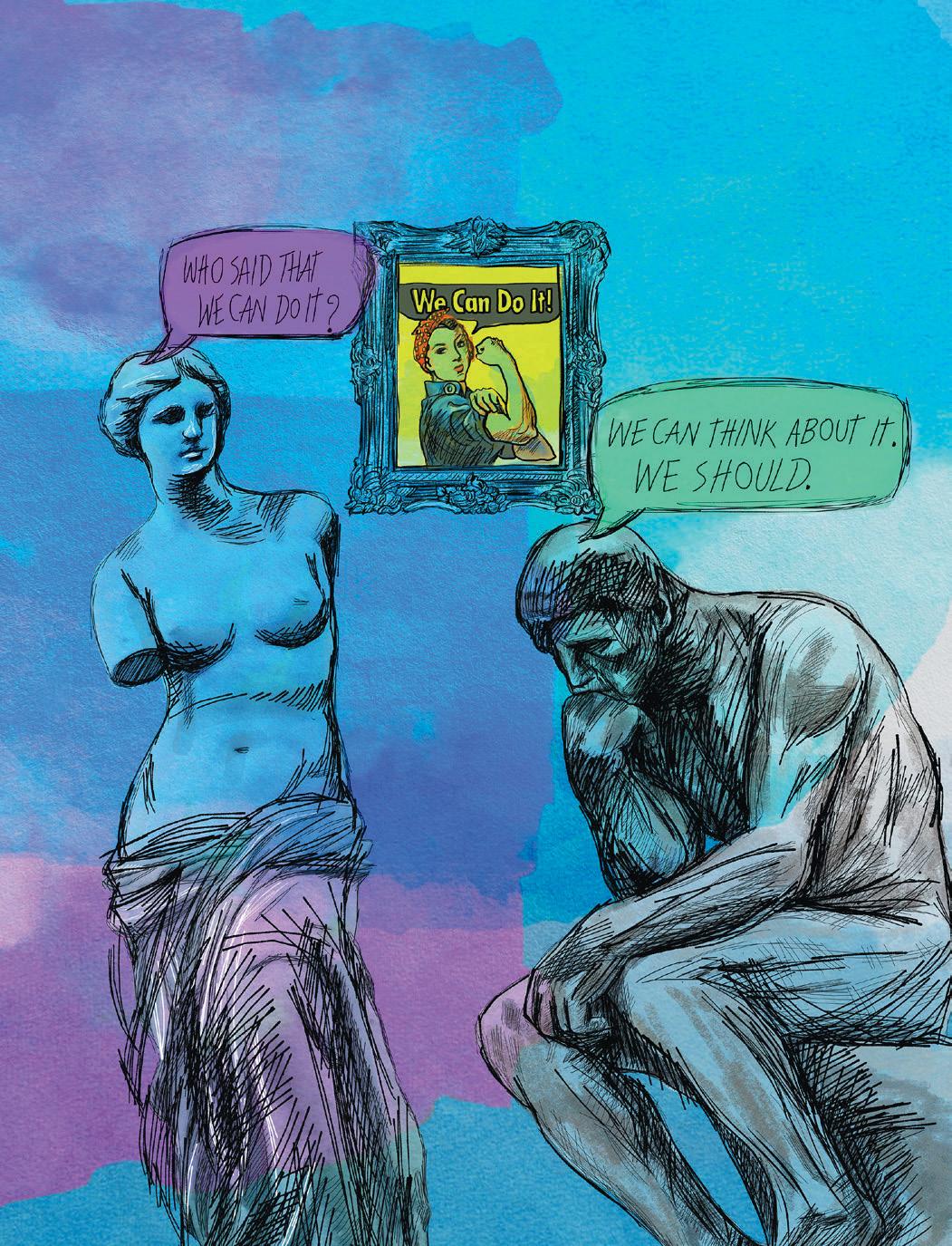


“Why an inheritance tax? Simply put: every other G7 nation has one, except for Canada. We think that’s wrong. Inheritance taxes help to curb the transfer of wealth from one generation to the next, helping to reduce inequality and pay for necessary social services in the process. We think Canada should be more fair. And it’s not fair when some kids (like many of us) get to start the game on third base.”