

HOMICIDE









Benefit from the strength of our association with Better Banking.
Police Credit Union has been proudly offering superior financial products and services to Police Officers for over four decades.
No monthly account keeping fees for your everyday banking and savings accounts
Unlimited FREE direct debits and branch withdrawals
No application fee on any home loan, personal loan or overdraft
Receive 0.50% off our standard variable home loan rate
Same day access for personal loans


Earn 0.25% above our standard term deposit rates



reGuLarS
10
Homicide
n ew possibilities for Major crime to solve coldcase murders have Detective supt Des “Doc” Bray speaking of a “pretty exciting year ahead”.
He and his ops inspector tell the Police Journal about the section’s new structure and strategies, and five other detectives give candid interviews about homicide investigation.
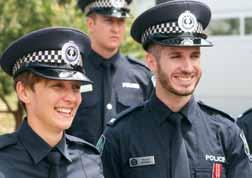
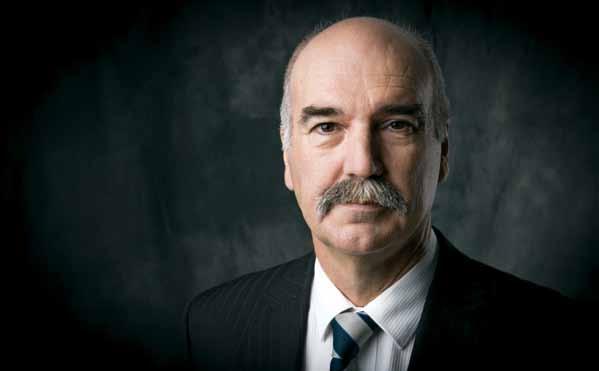
COVER: Detective supt Des “Doc” Bray (centre), Detective insp greg Hutchins (far right), Detective sgt cameron georg (second from left), detective brevet sergeants Rod Huppatz and erin Vanderwoude (far left and third from left), campbell Hill and Justin ganley (third and second from right).
Photography by steve Mccawley

Brett Williams editor (08) 8212 3055

Dr Rod Pearce Health Writer
Publisher: Police Association of south Australia (08) 8212 3055
Advertising: Police Association of south Australia (08) 8212 3055

Jim Barnett Motoring Reviewer
Design: sam k leidon 0417 839 300
Printing: finsbury green (08) 8234 8000
t he Police Journal is published by the Police Association of south Australia, 27 carrington st, Adelaide, sA 5000, (AB n 73 802 822 770). contents of the Police Journal are subject to copyright. Reproduction in whole or in part without written permission of the Police Association of south Australia is prohibited. opinions expressed are not necessarily those of the editor. t he Police Association accepts no responsibility for statements made by advertisers. editorial contributions should be sent to the editor ( brettwilliams@pj.asn.au).

Police Association of South Australia
POLICE AS S OCIATION OFSOUTH AUSTRALIA
Committee
Allan cannon Vice-PR esiDent
trevor Milne DePU ty PR esiDent
ContaCt Details
Level 2, 27 Carrington St, Adelaide SA 5000
P: (08) 8212 3055 (all hours) F: (08) 8212 2002
Membership enquiries: (08) 8112 7988

Mark carroll PR esiDent 0417 876 732
DeLeGateS
METRO NORTh BRANCh
elizabeth glenn Pink
Henley Beach Matthew k luzek
gawler David savage
Parks sonia giacomelli
Port Adelaide k im Williams
salisbury taryn trevelion
northern Prosecution t im Pfeiffer
COuNTRy NORTh BRANCh
Port Lincoln .................... Lloyd Parker (chair)
ceduna ............................ Anthony taylor
coober Pedy................... Jeff Page
kadina Ric schild
Mundy Julian snowden
tom scheffler sec R etARy 0417 817 075
nuriootpa ........................ Michael casey
Peterborough nathan Paskett
Port Augusta Peter Hore
Port Pirie gavin Mildrum
Whyalla Michael Ball
CRiME COMMAND BRANCh
Major crime campbell Hill
Adelaide .......................... Dac t homas
DociB Dwayne illies
forensic services Adam gates
fraud Jamie Dolan
Holden Hill narelle smith
intelligence support kevin Hunt
Port Adelaide .................. Matthew t homson
south coast Jason tank
sturt Brad scott
METRO SOuTh BRANCh
Sturt ................................. Michael Quinton (chair)
Adelaide .......................... Melissa eason
Adelaide Daniel Wray
netley
Mark Williams
south coast.................... Peter clifton
south coast Russell stone
southern traffic Peter tellam
southern Prosecution .... Andrew Heffernan
Mitch Manning
samantha strange chris Walkley
Daryl
David Reynolds


COuNTRy SOuTh BRANCh
iNDuSTRiAL
organizer
Bernadette
Zimmermann
grievance officer
Matthew karger
FiNANCE
Wendy kellett
Mount Gambier ............. Andy McClean (chair)
Adelaide Hills Joe McDonald
Berri John gardner
Millicent nick Patterson
Murray Bridge kym cocks
naracoorte grant Baker
Renmark Dan schatto
OPERATiONS SuPPORT BRANCh
Dog Ops ......................... Bryan Whitehorn (chair)
Police Academy francis toner
AcB george Blocki
ExECuTiVE SECRETARiES
Anne Hehner, Jan Welsby, sarah stephens
Police Band neil conaghty
comcen Brenton k irk
firearms leonie turner
HR David Wardrop
traffic David kuchenmeister
transit Michael tomney
WOMENS BRANCh (no delegates)
ATSi BRANCh
Shane Bloomfield (chair) (no delegates)
OFFiCERS BRANCh
Alex Zimmermann
POLiCE JOuRNAL
editor
Brett Williams
MEDiA AND COMMuNiCATiONS
nicholas Damiani
RECEPTiON
shelley furbow
rePreSeNtatiVeS
co H sWAc .........................
Bernadette Zimmermann
Housing Bernadette Zimmermann
leave Bank
legacy .................................
Bernadette Zimmermann
Allan cannon
Police Dependants fund tom scheffler
superannuation
Bernadette Zimmermann tom scheffler
Michael kent
Jim tappin
PreSiDeNt
Mark Carroll
Why the judge said Hoy case not in public interest
S EN i OR
Constable Norman h oy stood in the District Court last month accused of aggravated assault on businessman yasser Shahin. The jury found hoy not guilty.
t he Police Association had always held the view that snr c onst Hoy was innocent of any wrongdoing and no one should ever have launched a criminal prosecution against him.
Widely reported on, the incident occurred back in september 2010 when, for the purpose of an inspection, snr c onst Hoy directed Mr shahin to pull over the Rolls Royce he was driving.
Prosecutors alleged snr const Hoy exceeded his lawful authority in the subsequent interaction with Mr s hahin in 2010.
After a two-week trial, the jury of eight women and four men took just 75 minutes to find snr const Hoy not guilty of assaulting Mr shahin.
“Merely because someone said something happened in a particular way is not sufficient reason for it to proceed … ”
Judge Paul Rice said the case had wasted two weeks of court time because it had no reasonable prospect of ever convicting snr const Hoy.
He added that a “proper assessment” of the evidence before the trial would have shown that.
“Merely because someone said something happened in a particular way is not sufficient reason for it to proceed if there is no reasonable prospect of conviction, and that’s certainly my view,” he remarked.
“it was not in the public interest to pursue this matter in this court.
“ i wholeheartedly agree with the verdict … it’s a verdict i would have had no hesitation arriving at had it been up to me.”
i n a rare move, Judge Rice asked DPP-contracted prosecutor nick Healy to pass on his thoughts about the case to the Director of Public Prosecutions.
“o bviously i accept that you are prosecuting on instructions from the (DPP), but i ask that it be conveyed, to those that instruct you, my views about this case,” he said.
c omments such as these from an experienced judge are extremely telling and illustrate the absurdity of this four-and-a-half-year saga – one which has deeply affected snr const Hoy and his wife and family.
so how did it come to this?
it is quite disturbing to think that a police officer –who grabbed the shirt of a person repeatedly refusing to follow lawful direction – would end up charged with aggravated assault.
t he Police Association urged DPP Adam k imber – more than two years ago – to use the powers available to him to terminate the prosecution.
He rejected our urging.
t he resources of the office of the DPP are finite and should not be wasted pursuing cases which are not appropriate and not in the public interest. t his is not a statement of the Police Association – it is the DPP’s own policy.
still, in a two-page DPP media statement well after the jury had handed down its verdict, Mr k imber defended his decision to prosecute.
“… i came to the view that there was a reasonable prospect of conviction,” the statement quoted him as saying.
“Where a police officer has a good disciplinary record, proceeding by way of disciplinary proceedings alone where the alleged conduct is at the lower range of seriousness will sometimes be appropriate.”
“Where there have been previous complaints, a criminal charge might be appropriate.”
of course, none of the disciplinary action previously taken against snr const Hoy involved criminality.
How could the DPP allow these supposed transgressions to influence the due process involved in criminally prosecuting an individual?
And how could prior disciplinary proceedings – not of a criminal nature – be used as a justification to prosecute this alleged offence?
there was never a suggestion that previous complaints were relevant to the charge, so why were they relevant to the decision to prosecute?
t he DPP has left these questions unanswered.
the time, input, resources and funding which went into this trial – and the lead-up to it – have amounted to a lamentable waste.
Decisions like this can undermine police confidence in the DPP and impact on police officer morale.
Many association members and, indeed, members of the public, have contacted the association to offer support for snr const Hoy.
s ome thought s A Police was responsible for prosecuting him, but that was not the case. indeed, senior s AP ol executives argued that he should not be criminally prosecuted.
But, again, the DPP rejected those arguments.
t he time, input, resources and funding which went into this trial – and the lead-up to it – have amounted to a lamentable waste.
t hat funding came from the taxpayer.
o r course, the critical funding for s nr c onst Hoy’s defence came not from taxpayers but from the members of the Police Association.
it is the association view that the most thorough scrutiny should be applied to the actions of every person involved in the decision to prosecute snr const norman Hoy.
t hat includes how and why confidential information about s nr c onst Hoy’s complaint file was disclosed to a complainant by the Police c omplaints Authority.
t hat action affects every single association member.




The Major Crime investigation Section was never more serious about bringing long-evasive murderers to justice. But who are the cops behind the investigations, and do they pay a price for their dedication to solving homicides? By Brett

Williams







uNSOLVED murders were
among many challenges in his thinking when he accepted the job of Major Crime boss in 2013. t hat was because Detective supt Des “Doc” Bray bristled at the thought of smug murderers getting away with their crimes.
He knew that that kept justice out of reach for homicide victims’ families and exacerbated their suffering. And, back then, he was still to discover that 114 of south Australia’s murders of the last 60-odd years remained unsolved.
“f or me,” Bray says, “the frustration is that you can’t deliver the same outcome for everybody, and that we have any unsolved murders at all. And you can never take away the pain that families have.
“ to not be able to (solve murders) is just terrible. t he community has given us responsibility to do it; government expects us to do it; we want to do it; your wife and kids want you to solve it. e verybody wants us to solve it.
“it’s understandable why some murders aren’t solved. But it’s completely unacceptable that people could commit murder, the most serious crime, and not be held to account.”
Bray, now 58, went to Major crime as the former head of the crime gangs task force. He had not only set up gangs from scratch but also shaped it into a world-renowned operation.
t hat capacity for innovation went with him to Major crime where, soon after he arrived, he launched an internal review.
He knew the section already enjoyed “a wonderful reputation” around the nation but wanted to make it an even more dynamic outfit.
With his operations inspector, greg Hutchins, Bray thought it best to look at the practices of modern homicide squads both nationally and internationally.
“We thought: ‘let’s see if we can make our Major crime the best in Australia,’ ” he recalls. “it had already had enormous success over the years and had a good reputation with the public, the DPP and the courts.
“But, as part of our review, we talked to everybody in the section to see how we could make it better.”
f rom the review came the Bray report which made a number of recommendations and ended up with senior police management. its most significant, and perhaps ambitious, proposal was to increase the number of Major crime staff.
t he report indicated that such an increase would bring greater scope for the section to clear up more of its unsolved murders.
Bray had looked at the staffing and operations of cold-case units around the world and recommended the establishment of a special operations team within Major crime. He proposed that such a team’s detectives investigate, but not be restricted to, cold cases. Ultimately, c ommissioner g ary Burns agreed to add substantially more staff to Major crime. t he section wound up with an extra six detectives, two detective sergeants and, for the first time, uniformed officers (six).
t he full-time role of the two detective sergeants is to guide local ci B detectives in the investigation of tier-one homicides. t hese are generally cases in which police have, or know the identity of, the offender and face few complications in the ensuing investigation.
says Bray: “t hose cases, even though they seem simple because the person’s been caught, can have a lot that goes into them.
“ s o, when there’s a murder now, those detective sergeants go out to it, work with the lsA, help establish the case management and (deliver) quality assurance.”
of the six new uniformed officers, two belong to each of the three main teams of Major crime investigators.
“ t here’s a role for uniformed people in Major c rime,” Bray insists. “ t he people we thought ideal for it were those who’d done ciB courses, worked in tac units and wanted a career in the ciB.”
After the special operations team became functional it took on a particularly high-profile job as its first. it was the alleged conspiracy to murder two District court judges and destroy the home of a police officer.
Although not a cold case, the alleged crime was one of a range of others Bray established the sot to investigate.

t he Major c rime practice now is to review all cold cases which are more than 12 months old and have not unearthed any suspects. A panel consisting of Bray, Hutchins and five sergeants then decide on a course of action for each reviewed case.
it might be that exhibits associated with a certain case failed to yield any clues years earlier but could do so now through state-of-the-art technology.
“We’ve sent exhibits to the n etherlands,” Bray says, “and we’re going to send some to new Zealand soon for some work that can’t be done in Australia. And where you couldn’t get fingerprints before, you can now for some things.
“t hese cold-case jobs will all get prioritized and we’ve committed, in this coming 12 months, to review the exhibits on every outstanding case.
“We’ve got 114 going back to the late 1950s, and there’s already a number of cases where there’s biological material which might assist us. so there’s a glimmer of hope again for a number of people.”
t he Major crime plan to review cold cases and examine old exhibits forms part of a new, holistic approach developed over the past 12 months.
Another part of it will involve new means of drawing information from the criminal underworld.
says Bray: “We are properly resourced; we have the right people; and we can take advantage of the advances in forensic science. And we’ve learned from experts around the world, so it’s a pretty exciting year ahead of us.”
Behind much of the Bray optimism about future success are his highly skilled investigators, who rank among the best in the nation. to his delight, each one belongs to Major c rime by choice and values the section’s reputation.
Bray highlights the collective experience of, and range of strengths, his investigators bring to their intense workplace.
“it’s a place where you don’t want everybody of the same personality type,” he says. “ you want your team to be a blend of people with a blend of skills – the analytical people, the people who are meticulous…
“ you want people who have been exposed to financial investigations, undercover operations. you want older people who have been in the
job for 40 years, young people who are across social media.
“We have people who have come out of the suburbs and people who have worked in human sources, c rime gangs, o rganised crime and at the Acc. t hat’s really good for our branch.”
But Bray appreciates the extent to which the demands of murder investigation can impact on the personal lives of the people he leads.
t here are the calls to return to duty in the middle of the night after the discovery of a murder. And, for a Major crime detective, casting all thoughts of an investigation from his or her mind after hours is pretty much impossible.
Bray describes as “nonsense” the proposition that a detective could investigate the brutal murder of a grandmother and not give it a single thought out of hours.
“i t’s not the sort of thing you switch off just because you’ve gone home,” he says. “ you need the maturity to get the work-life balance right. Home life is just so important but, when the job’s on, you have to be there.”
Detective supt Des “Doc” Bray



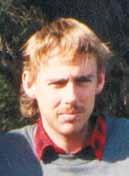
From top: Allison nitschke (image courtesy the Advertiser), lynette nitschke, Mark Woodland
GREG
Hutchins was deep into the investigation of the strangulation murder of 18-yearold Allison n itschke when the office phone rang. it was Allison’s mother, lynette. Hutchins had seen but not spoken to her the day before at st Mark’s college, where he had found her daughter’s killer, Alister t hompson.
now, for lynette, he would have to confirm that Allison was indeed dead, and that police had found her dumped naked body in the Adelaide Hills.
“it was the toughest phone call i ’ve ever had in my life,” he remembers, after almost 24 years. “it was just the absolute hurt coming from lynette.
“it wasn’t the time to go into the intimate details, and i can’t remember the exact conversation anyway: it’s a long time ago. But it was an absolutely unthinkable pain (for her), and there’s nothing that you can do about it.
“Homicide is always going to be really painful. it’s always the extreme.”
lynette, who still keeps in contact with Hutchins, remembers his approach as “very professional, caring and understanding”.
“t he thing i remember with greg,” she says, “is that he really explained to me why he couldn’t tell me things, and that was really important to me.”
Hutchins never slept that sunday night after the phone call. “ t hat’s what it does to you,” the now Major crime operations inspector says, “and i might not be the only one.”
i n another phone conversation with lynette, Hutchins had to tell her that t hompson had scored bail after his arrest for murder.
“He said: ‘look, i’m really sorry to have to tell you this, but he’s been granted bail,’ ” she recalls. “i could tell by his voice that he was really upset about it; and, obviously it was terrible for him to have to tell me that.”
Allison, a country girl, had boarded at st Mark’s when, on a friday night, fellow boarder t hompson entered her room and strangled her. soon after his sexually motivated crime, he used a friend’s car to transport her body up into the hills for dumping.
And, on his way back to st Mark’s, he deposited clothes, likely belonging to Allison, into various bins.
the next morning (saturday), with Allison reported missing, Hutchins and his colleagues attended the college and started asking questions of anyone who might have known of her whereabouts.
t hompson gave him some clearly nervous responses before confessing: “ s he’s dead! i murdered her!”
says Hutchins: “it ended up quite a significant murder investigation, close to 300 statements. We had to interview everyone at the college. it went for weeks, day in, day out, just going there from morning ’til night, taking statement after statement.
“in the end, Alister pleaded not guilty but, just prior to trial, he pleaded guilty. He got 18 years.”
t he n itschke murder investigation is one of 50-odd in which Hutchins has played a part as either a ciB or Major crime detective. Many have concluded with a guilty verdict and heavy sentence and left him and his colleagues with a “huge” measure of job satisfaction.
“even though your best witness is dead,” he says, “you can generally piece the jigsaw puzzle together so everyone knows what’s happened.”



But no joy comes from unsolved cases and, naturally enough, Hutchins, 53, describes them as “the ones that play on your mind”.
“Because,” he says, “there’s no closure for the family. you want to be able to solve it for them because, without it being solved – or an arrest made – it’s a story without final chapters.”
o ne of Hutchins’ unsolved cases is that of 36-year-old Robert Mark Woodland, whose body a passer-by found in the south Parklands in 2004. someone had beaten him savagely about the head with a blunt object.
His parents and younger sister survived him but his father died a year ago. Hutchins, who considered them a “wonderful” family, is “not without hope” of finding their son and brother’s killer.
“We’re looking at a whole raft of strategies,” he says. “obviously, one of them is forensic science. What it could do two years ago is different from what it could do five years ago and 10 years ago. it’s just changing so fast in the Dn A world.”
A veteran in his field, Hutchins can recall any murder investigation he has ever worked on, even if it goes back as far as the late 1980s. Details of each one have stayed with him.
t here was the murder of 17-year-old Peggy lee schasko, whose brother, Robert, bashed, stabbed and strangled her in 1988. she had reported him to police for allegedly raping her. He dumped her body in a drain next to the gawler rail line at smithfield. in 1994, Hutchins worked on the investigation into the murder of christine Jenkins, whose boyfriend, Robert Andrews, strangled the 44-year-old in her ferryden Park home.
t he unsolved shooting murder of taxi driver Andrew Mordowicz was another investigation Hutchins undertook. Mordowicz had responded to a pre-dawn call at fife st, k lemzig, in september 1996, when an unknown killer shot him. He later died in hospital.
i n 2000, there were the execution murders of 16-year-old prostitute Rhiannon e llul and her 22-year-old pimp, faraz Rasti, in a north Adelaide apartment. Hutchins, as one of the primary investigators, arrested their killer, Jamil kamleh.
in 2004, he investigated the murder of cancersufferer Dennis Busson, who had suffered 56 stab wounds as he lay in his bed. Busson’s wife, June, had taken part in the attack, carried out by her then lover, James slade.
t hen, in 2007, Hutchins and his colleagues investigated the murder of 30-year-old mother natasha Jones. she died at the hands of sadist and former Rebels bikie edward yost. He had for years inflicted physical torture on his sometimes bound victim – and some of it he videotaped.
“o ne person may end up doing the arrest with a partner, and they generally get all the kudos,” Hutchins explains. “But, in reality, it’s a huge team involved.
“And, if you get a murder to investigate you live and breathe it for the next two to three years. two years down the track you’re going to be in trial, getting scrutinized.
“And, once you start on a murder, if it’s unsolved 10 years down the track, you could still be working on it.”
Hutchins has come through all his years of
murder investigations emotionally unscathed. But he concedes that dealing with child killings is an intensely tough task.
one of two cases he took on was that of a fouryear-old boy smothered to death by his mother in the late 1990s. t he other was an eight-month-old baby whose mother had shot him in the head with a shotgun before killing herself.
Hutchins attended the autopsy of the four-yearold, whom he found a far more confronting sight than that of the virtually headless baby. “it was a very upsetting PM (post mortem),” he recalls.
“He was a gorgeous-looking kid and beautifully dressed in his pyjamas. it (the issue) was not being able to see anything wrong with him (bodily). it upsets people. Whereas the baby didn’t affect me because i could see why he’d died.”
n ow, as the Major crime ops inspector since he returned to the section in 2013, Hutchins has a management role. His responsibility, under the leadership of Detective supt Des “Doc” Bray, is to manage the various Major crime functions.
Among them are, of course, the investigation of declared major crimes (homicide, kidnapping), missing persons, police shootings and deaths in police custody. c oronial investigations are also a function of Major crime.
And, still, Hutchins loves playing a part in the job he felt drawn to as a young detective 27 years ago.
“i’ve loved the Major crime journey,” he says, “the team work, the challenges, and working with the DPP, forensics and pathologists towards a common goal. it really does create an environment that you remember for the rest of your life.”
Detective insp greg Hutchins









iT iSa murder trial and the jurors have just finished their deliberations. t hey file solemnly back into the courtroom to reveal their verdict. the assortment of spectators in the public gallery fixes its collective gaze on them and finds the tension palpable.
t his is the climactic, movie-like scene which plays out time after time in the supreme court. And whenever Major crime detective Justin ganley, 44, has a connection to the case and is there in court, watching, he can feel his heart pounding.
“so,” he says, “i couldn’t imagine the nerves the person in the dock would be going through. At the end of the day, i’m walking out of the court and going home, whereas, he might be going to jail for the rest of his life.
“ t here’s nothing better than when you get a verdict and it comes in as guilty. it’s a great result for the family (of the victim), and it’s a bit of a reward (for Major crime) for a fair bit of hard work.
“g etting through a s upreme c ourt trial is very hard, especially for murder. e veryone should have to work one to see how hard they are, just dealing with witnesses, exhibits and requests from defence. t here’s a lot of strain.”
ganley found plenty of that strain in a trial last year, after an investigation he and his colleagues had begun into the killing of 19-year-old christopher Hatzis in 2012.
Hatzis had wound up with 15 stab wounds after a brawl outside the savvy nightclub in light square. All but two of the 70 witnesses connected with the killing were what ganley describes as “extremely reluctant”.
Detective Brevet sergeant Justin ganley
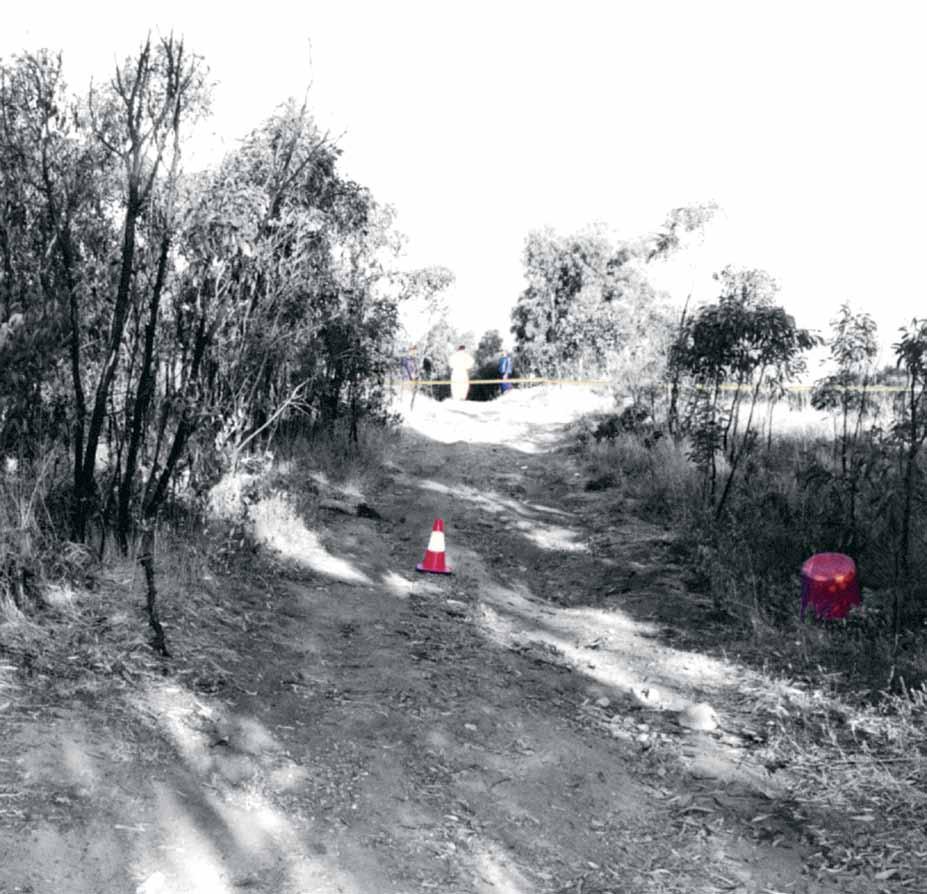
Top left: Jose enzo omonte- e xtrada; top right: Jasinta- leigh fullerton; centre right: the fullerton murder scene and vehicle; above: a drag mark in dirt at the scene where omonte- e xtrada left Rebecca Wild
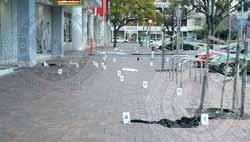


t hat left him with a weeks-long nightly routine of making phone calls – from home – to witnesses to plead with them to attend court to give evidence. His understanding wife, Annabel, simply left him to it as he sat in front of the t V making call after call. in the end, David Zefi, Rrok Jakaj, Dario stakaj, and a man who was a juvenile at the time of the attack, faced murder charges in the supreme court. Up to 30 Hatzis family members turned up every day to follow the trial. t hey all looked to ganley and other detectives for briefings and explanations of the intricacies of the court proceedings. “We got quite close with them,” ganley remembers. Ultimately, the jury found the defendants innocent of murder but guilty of manslaughter, and all four got custodial sentences. t he result left g anley deeply disappointed, particularly given that Zefi admitted that he had stabbed Hatzis. ganley had drawn far more satisfaction from an earlier supreme c ourt murder trial, which ended with a life sentence for axe-murderer Jose e nzo omonte- e xtrada.
t he Bolivian national forced 16-year-old Port Pirie resident Rebecca Wild into an ses utility he had commandeered and stabbed her 29 times. His attack came after she had rejected his advances and, as she bled profusely, he drove her to Quorn. o monte- e xtrada pulled over on a dirt road about three kilometres out of the town. Moments later, 22-year-old Quorn resident Jasinta- l eigh fullerton, who was driving home, stopped her car behind the utility.
she walked up to it and saw the injuries to Wild and moved to help her. t hat prompted o montee xtrada to strike and kill fullerton with blows to her head with an axe. And, with that same weapon, he then went on to kill Wild with blows to her head as well.
ganley, as the primary investigator, would soon hear o monte- e xtrada admit his guilt and, in the process, find him “completely detached” and “very strange”. “He stared at (me) the whole time,” he says.


When the story of the double murder later screened on free-to-air t V show inside story, it featured a video recording of an appropriately calm ganley questioning the killer.
that led “a lot of people” to ask him how he could be so restrained. s ome asked how he was even able to “stand next to such a monster and talk to him like that”. “i would have shot him!” some exclaimed. “i would have punched him,” others said.
says ganley: “i’m really not rude to (murderers) because their comeuppance is coming at the hands of the court: they’re about to donate 25 years of their life.
“i was just focused on getting it right. you don’t have confessions to double murders very often. When he made his confession it came out of the blue, and there were a million things going through my mind.
“We were very conscious of giving him his rights and making sure he realized how much trouble he was in. And we were trying to nail down all these crime scenes and get all the evidence.“
ganley never applied an emotional thought to the murders until days later, when he read a transcript of his interview with omonte- e xtrada.
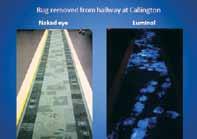
“i realized then how truly horrifying all the details were,” he says, “and that’s when it sort of sickens you, really. it was just horrendous and probably sits right up the top as one of the worst.” of course, ganley rates other homicides he has investigated as among the worst as well. one was the 2010 murder of 63-year-old Pirjo kemppainen. i n a seeming thrill killing, a 14-year-old boy stabbed the pensioner more than 100 times and bashed her with a piece of concrete in her callington home. ganley, in the course of his investigation, took a statement from the sociopathic young killer.
“He was chilling,” he says, “a frightening person. His lifeless eyes just stared at you; and his role models were things like gangster rap and violent video games. i have no doubt that he
would do something like that (murder) again.”
Justice Margaret n yland sentenced the boy to life, while a 14-year-old male accomplice he undertook the murder with won an acquittal.
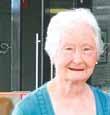
Another murder ganley rates as one of the worst is that of 87-year-old Anne Redman in her seacliff home in 2011.
in the dark of a summer night, one of two teenaged boys punched her with enough force to break her nose and a vertebra. He then slashed her throat several times with a blunt hunting knife.
i n 2012, Justice n yland sentenced the two killers to life, a minimum of 20 years.
o ne of them, who ganley arrested, provided a lengthy statement. “it had some of the truth in it,” ganley says. “But he certainly downplayed his own role and tended to blame the other guy, as they always do.
“everyone lies to the police. even good witnesses lie to the police. t hey hide little things. s o when you get a statement from someone, hardly ever will you get 100 per cent truth.”
But ganley, who always had a fascination with homicide investigation, enjoys his work too much to allow its frustrations to distract him. He relishes not only those guilty verdicts but also the first 48 hours after the discovery of a murder, when “it’s all hands on deck”.
“ t hat’s when everyone’s going flat out to get the same result,” he explains. “And the arrest has a certain amount of satisfaction, too, putting the bracelets on. t hey should always get the cuffs for murder.
“you definitely have to be thorough and you have to be empathetic. you’ve got to put yourself in the victim’s mind and think about what happened. And you have to put yourself in the crook’s mind to try to interpret a crime scene.
“ t here’s nothing more serious to work on, and i guess you have to try to speak for the dead.”
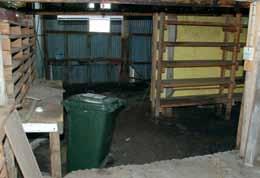
Top left: the Hatzis crime scene; top centre: christopher Hatzis; top right: cct V shot of savvy nightclub; far left: luminol showing footprints on a rug in Pirjo kemppainen’s callington home; second from left: Pirjo kemppainen; left: the power box interfered with at the Redman home; above: Anne Redman




Mu RDER
investigations are not jobs that Major crime detectives simply stop thinking about after they finish their shifts. Detective sergeant cameron georg, 51, knows well the impossibility of blocking out thoughts of one aspect or another of an investigation.
“While you’re in the hot phase of an investigation – when the murder’s just occurred – your mind’s ticking over 24-7,” he says.
“t here’s no doubt about that.
“And in the trial phase of an investigation your mind is constantly ticking over as well. outside of those two times, it’s not in your mind all the time. But you probably think about one aspect of one job, outside of work hours, at least once a day.”
one supreme c ourt trial which, for threeand-a-half weeks, had georg constantly thinking work thoughts was that of Jason Bucca and tristan castle. t he pair stood accused of the 2013 Parafield car-wash murder of Adrian McDonald, castle’s former partner.
lured to the Big Bucket carwash by his killers, McDonald got into a car with castle not initially knowing that an armed Bucca was hiding in the boot. After he realized his attacker was there he tried to flee, but Bucca fired three shots at him.
t he third and fatal shot was to McDonald’s head.
Among the issues that kept georg thinking about the case after hours was the pre-trial death of a witness who had supplied an invaluable statement implicating Bucca. “ t he moment he died really changed how that job ran and how it played out in court,” he says.
Another problem was proving that Bucca was with his phone at the time of the murder, when records showed it was at the car wash. t he quality of cct V footage, at the car wash and elsewhere, was also problematic for the prosecution.
Ultimately, the jury found the pair guilty but georg had had plenty of concerns on which to cogitate.
“ you can guarantee that, every night, it was on my mind – nothing less,” he says. “it was on my mind every night when i got home and, when i got
up in the morning, that’s what i was thinking about.”
it was that way when g eorg investigated the brutal bashing murder of g lenys Heyward in 2007. Her estranged husband, neil Heyward, used their son Matthew to lure her to a vacant Mt gambier childcare centre in which he bashed, bound and gagged her.
Aided in his crime by farmhand Jeremy Minter, Heyward then stuffed g lenys into a wheelie bin which he loaded onto a utility. He drove her to a property in Victoria, fewer than 50km from Mt gambier, and bashed her to death.
four months later, police found her body on that property in a septic pit. georg and his colleagues arrested Minter and neil and Matthew Heyward, as well as older son t homas Heyward, and charged them with murder.
t he investigation had taken several months and came with bitter disappointments. o ne was that n eil Heyward killed himself before the case went to trial and so never had to answer for his crime.
A s upreme c ourt jury found Minter and




Matthew Heyward guilty of murder and Justice
Michael David sentenced each to a 23-year nonparole period.
l ike his colleagues, g eorg maintains total dispassion when he deals with murderers, even if, in the back of his mind, he is “not thinking too nicely” about them.
“you just push that to the back (of your mind) and, for me, it doesn’t come to the fore,” he explains.
But, long after cases have closed, georg does bring his thoughts about killers and their sickening brutality to the front of his mind. He hesitates on the question of hatred for murderers but concedes that, on a personal level, he holds them in absolute contempt.
“ you don’t feel any sorrow or pity for those people,” he says. “ you could probably get close to hatred, but you take some satisfaction when they aren’t getting out (of jail) for another 30 years.
“i’m a big believer in the karma bus. it drives around and just looks for targets, and it gets people a lot of times.”
After that bus does strike and delivers long sentences, g eorg is “always thinking” of victims’ families. His concern is for their emotions and their degree of satisfaction with the outcomes.
“And, as has happened in the past,” he says, “when we’ve had (acquittals), you always think: ‘How’s that now playing out on the family?’ t hey’re going to spend the next 20, 30 or 40 years constantly thinking about the what-ifs.”
Acquittals might frustrate Major crime detectives but g eorg still relishes the investigation process. it was what drew him to join the ranks of homicide investigators in the first place.
n ow, with different levels of involvement in 50-odd murder investigations over 12 years with Major crime, he reckons investigators need “enquiring minds” and a “dogged approach”.
“no matter how many hurdles are thrown up and how many dead ends you come to,” he says, “you just come back to the beginning and start again. you keep going and going and don’t stop.
“investigating murders is not a one-man job. there is not a lot of room for egos. sometimes you need to sit back and say to yourself: ‘i don’t have all the answers.’
“ you listen to your colleagues and take on what they have to say because it’s such a big job to investigate murder. n o one person could do it on their own, and you’re just crazy if you try.”
georg, whose role now is investigations supervisor with Major c rime’s s pecial o perations team, thinks of each stage of an investigation as “a battle”.
“you win the first one about solving who did what and where,” he says. “ t hen you get it to court and
keep them (suspects) inside if they come along for bail.
“t hen you win the next battle when it gets to the actual trial and, then, in the end, the verdict. And i see that as the final battle, where you win the war, as it were. that, for me, is the most satisfying.”
But, in those murder trials, the standard practice of highly-paid defence barristers is to work ferociously at destroying detectives’ credibility under cross-examination. g eorg fronts up to their attacks but he rates that aspect of his job as the worst.
“ i nvariably,” he says, “your integrity or your professionalism is called into account, notwithstanding that you’ve done the very best you can with all the best intentions.
“ you’re really put on the spot a lot of times, and you know you’ve got the family sitting in there watching and listening to everything that’s happening. And you don’t want to let them down.” for georg, 12 years of murder investigations has emphasized the value of human life. A case that causes him to reflect on that is the murder of a man he had taken a statement from in connection with another murder.
“ you reflect on that,” he says, “and think: ‘i was just dealing with that bloke the other day. now he’s dead.’
“you go home and ponder about these things and sometimes you think: ‘enjoy your times while you’ve got them. you don’t know what’s going to happen tomorrow. you could lose someone close to you.’ it just shows you how fleeting life can be.”
Detective sgt cameron georg
Far left: Adrian McDonald at the Big Bucket carwash; top left: the house from which glenys Heyward was abducted; top centre: the wheelie bin in which Heyward was transported into Victoria; above: glenys Heyward; left: the Heyward burial site







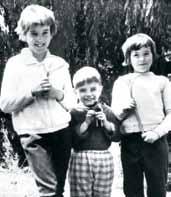
ThEfirst presence Detective Brevet s gt Rod Huppatz had at a major crime scene might well have been when he was just four. if his mother is right about an old family photo, it shows him and his siblings and father at glenelg beach on Australia Day, 1966. from that place, on that day, the three Beaumont children mysteriously disappeared.
if Huppatz was on the scene that day, it might seem ironic that he now works with Major crime, which still has the book open on the disappearance.
“i tend to think at home a lot about historic murders,” he says, “even the Beaumonts; k irstie gordon and Joanne Ratcliffe (who disappeared from Adelaide o val in 1973)…
“ you’d be fairly confident that, today, the offenders in those cases would have been caught. t he cct V probably would have got them, both at glenelg and around Adelaide o val.
“But why the historic stuff keeps going over and over in my mind i ’m not quite sure.”
Huppatz, 53, thinks in his downtime about his current murder investigations, too, and often conceives new angles by which to approach them.
Detective Brevet sergeant Rod Huppatz
o ne case that demanded particularly critical thinking by its investigators was the stabbing murder of 21-year-old t hea k heav at Parafield gardens in 2007.
for Huppatz, it was his first job at Major crime as primary investigator. t he scene was an eighteenth birthday party which had descended into a front-yard brawl. it wound up with k heav dead from a stab wound to his liver, diaphragm and left lung.
Huppatz, who responded in the early hours of the morning, could in no time see that he and his colleagues were facing an enormous investigation. And it came with a range of obstacles, such as the initial refusal of every partygoer to admit he or she had seen the crime.
s ays Huppatz: “Most of them, victims and offenders, were of Asian descent, so i ’m sure there were cultural beliefs that held them back.
“eventually, one person did come forward to say that he saw the stabbing. t hat was the brother of the victim.
“His (silence) probably came about because, in the first 24 hours, he was absolutely terrified, in fear for the safety of himself and his family.”
Another complication to emerge at the outset of the investigation was the multiple names of the partygoers. it was common among many of them to use not only their birth names and nicknames but also their anglicized names.
“With some of them,” Huppatz says, “we thought we were looking at three people, when we were only looking at one.
“ t hat had the effect of multiplying through the crowd on both sides – witnesses and offenders. so from the 70 or so people that were actually there, we had about 150 different names and possibilities.”
But Huppatz and his colleagues worked their way through those obstacles, and others, to charge three offenders with murder. t hey were chansyna Duong, tuan k iet David Huynh and Rotha sem, all in their early 20s. And, in 2010, a supreme court jury found them guilty.
Justice chris kourakis sentenced each of them to life with a 20-year non-parole period.
Huppatz, in his seven years with Major crime, has had a role in more than 20 murder investigations. t he ones in which he has acted as primary investigator have led him to arrest and charge around eight murderers.
o ne of those was Daniel troy Ames, who shot and killed his uncle, Allan Ames, in a cavan workshop in 2009.
it appeared obvious to Huppatz that the two were involved in the drug trade and had had a dispute which led to the killing. investigators had to pore over low-quality cct V footage and recreate the movements of which they suspected Ames on the night of the murder.
“no person could be seen moving (in the footage) but we knew there was movement because of the activation of security lights,” Huppatz says.
“so we just followed the paths that the accused would have taken on the night. We did that to recreate what happened in a manner that the court would accept.”
Huppatz interviewed Ames and found him a “very cocky, confident person”. But, regardless of how outrageously one killer or another behaves, Huppatz never struggles to maintain a measured exterior.
And he works hard not to give suspects the scope to read him by virtue of his comments or body language. “you’d be upset as an investigator if you said something or gave something away that shut a suspect up,” he insists.
“internally you might be thinking: ‘i don’t like this bloke,’ but i like to be as friendly to them as i can. t hey might open up to you. A classic example of that was Justin ganley with omonte- e xtrada.
“(With Ames) he was going to try to talk his way out of it and convince us that he had no involvement in the murder.
“But we caught him out lying on several occasions and, when presented to the court, lies are, in some way, almost as good as admissions of guilt. so this fellow brought himself unstuck.”
Justice David Peek, who heard the case alone, convicted Ames and sentenced him to life with a non-parole period of 24 years.
from convictions like that and others, Huppatz draws immense job satisfaction, regardless of whether he plays a major or minor role in an investigation.
He speaks of the success his hardworking teammates enjoyed just last December when, on the basis of their investigations, two murder trials ended with three convictions. one was the Big Bucket carwash murder of Adrian McDonald.
t he other was the 2012 murder of drug-dealer Michael Varehov. A s upreme c ourt jury found Adelaide man Patrick Mc carthy guilty of beating his victim to death in a Beaumont garage.
says Huppatz: “ t hat moment, waiting for that verdict to come through, is extremely stressful. But it’s an exciting stress. When it all comes together it’s a really good feeling.


“if you’re hanging around the court leading up to that verdict, you can see everyone who’s waiting goes a bit quiet. t he whole range of emotions is running through your head.”
naturally, a murder investigation that ends with a killer sent to jail delights Huppatz. But that euphoria never blinds him to the realities of his job. He knows what is to come when his phone rings at home, or at the office.
“you get a job,” he says. “someone’s been killed under these circumstances at so-and-so. you go: ‘o kay, here’s another job,’ and you always know one’s going to come. And the expectation of that often plays on your mind.”
And, like all of his Major c rime colleagues, Huppatz finds the murders of children the most gut-wrenching tasks to confront. in his time, he has watched several autopsies performed on murdered children’s bodies.
t hose graphic procedures have always made him reflect, with some intensity, on his own children.
Huppatz enjoys invaluable support from his “brilliant” wife, Mandy, who grasps the realities of her husband’s work and never complains about them. even when he calls her to say he has had to travel to some far-flung place to investigate a murder, she understands.
“i talk to my family about my work without giving away too much,” Huppatz says. “ t hat’s just so they’re not completely isolated from what i do, so that they have an understanding of it. And i’d say it probably does harden you a bit.”
Above: Joanne Ratcliffe and k irstie gordon, who disappeared from Adelaide o val; right: t he Beaumont children, Jane, grant and Arna, who disappeared from glenelg beach (images courtesy the sunday Mail)




hiS FELLOW
Major crime
detectives call him tyf it stands for t he young f ella. And Detective Brevet s gt campbell Hill, 31, takes it in good humour. He was, after all, just 27 when he scored his job with Major crime back in 2011.
But right at the start of his now threeand-a-half years with the section, Hill wound up thrust into the high-profile Anne Redman murder investigation. He had already assisted with it on secondment from sturt ciB, just before his permanent appointment to Major crime.
“ f or a first ‘hit-out’, it’ll be a job that’ll stay with me forever,” he says. “i was involved in the arrest of one of the juveniles. it was good to be included in the start of the investigation and, then, right through to the result at the end in 2012.”
A particular surprise to Hill was the sight of Redman family members embracing the family of one of the offenders in court. “t hat,” he says, “was something i didn’t really anticipate: empathy for offenders’ families.”
of course, the Redman case ended in success: life sentences for her two killers. But, in 2014, Hill came to experience the

pain of an acquittal. it came at the end of the supreme court trial of t imo Pasanen, who stood accused of the 1991 murder of 25-year-old yasmin sinodinos.
Her dumped, and almost bloodless, body – found at tea tree gully – showed that the mother-of-three had taken a savage beating. it also appeared that her attacker had washed and re-dressed her body after killing her.
Hill had the cold case assigned to him in 2012, after a Dn A hit emerged. semen found in the body of s inodinos proved a match for then-teacher Pasanen. Hill arrested and charged him with murder – the first cold-case arrest since 2005.
Pasanen admitted that he had had sex with s inodinos, a drug-user, but denied that he had murdered her. And in court, that sexual encounter – and no other specifics – was all he claimed he could remember.
the jury took fewer than five hours to find Pasanen not guilty. Hill, along with members of the sinodinos family – including son and daughter steven and stacey – was in court to hear the shattering verdict. And, after that, Justice Anne Bampton released Pasanen.
“ t he biggest thing was the disappointment for the family,” Hill says. “i sat in court with them when the verdict was announced. it was six o’clock on a friday night and we’d been in trial for a few weeks.
“t here were tears and some pretty choice words shouted at the jury. you sort of go from being an
investigator and almost turn into a bit of a social worker. And it’s a hard thing to have to explain other people’s decisions.
“to explain, and deal with their (family members’) frustrations with the system and their despair, can be a pretty taxing sort of job.”
still, the acquittal never prompted Hill to simply file the investigation. He continues to work on it and maintains contact with the sinodinos family. And his commitment is too strong to distract him from the task. “ t here were media reports which said: ‘Well, if it’s not him, who is it?’ but i won’t buy into that for a minute,” Hill says.
“i’m quite satisfied with what our evidence was, and it’s just a matter of keeping on, to see what else is out there. you just never know what’s around the corner.” i n line with the conspicuously strong team culture of Major crime, some old hands moved to reassure Hill after the Pasanen acquittal. Among them were Detective supt Doc Bray and Detective sgt Brian swan.
“i got text messages from them,” Hill says, “just saying: ‘Bad luck. it happens. Just roll on. keep going.’
“for us it’s not a personal thing, it’s a professional thing. But you don’t get down on yourself about it because, at the end of the day, you know you’ve done everything you can.”
o ther investigations Hill has worked on likely justify his perception, which is that “everything here

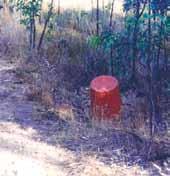
at Major crime is unique”. He assisted colleague fred Van der stelt with his arrest of a suspect in a now decades-old abduction case.
And one of his ongoing investigations is that of the 2012 shooting murder of 33-year-old Jason De ieso in his Pooraka paint-and-panel workshop. the business operator died after nine disguised men, some with handguns, approached the workshop entrance, fired shots and fled.
s ays Hill: “ t hat job i ’m now on full-time. i t’s just day in, day out chasing it down. We still make public appeals for help but, for a bikie-related murder, you’re certainly not flush with first-hand witnesses.
“it’s going to take a lot of hard work. And it’s not going to be through your absolutely conventional methods that you lock them up.”
f or success with the De i eso investigation, and others, Hill knows he has to practise patience. He even quotes remarks former Major c rime detective sergeant John keane contributed to a 2012 Police Journal story (Major crime, major memories) about patience.
And one of his colleagues, Detective Brevet sgt Paul Ward, uses a sports analogy to illustrate that homicide detectives have to adapt to a certain pace.
“He accurately describes it as being test cricket,” Hill says. “it’s not a one-dayer. We take on the jobs with either no suspects identified or when it’s a complex investigation.
“And, like Wardy says, it’s test cricket from that point of view. i t’s not necessarily the quickest of games but, when something works out, it’s fantastic.”
While he understands the need for patience, Hill still suffers intense frustration when he gets tantalizingly close, but not quite close enough, to making an arrest. And, then, the tiny but critical piece of evidence he lacks becomes a major part of his thinking away from work.
“People i’ve worked with over the years know that i love doing this sort of work,” he says. “i’ll sit there at home, or lie there at night, wondering: ‘How can we get around this (problem) and get that evidence?’
“ t hat’s at a peak in an investigation, when things are running red-hot. you’re always trying to forwardthink so you can hit the ground running back at work the next day.”
in his dealings with suspects, Hill never finds himself consumed with hatred for them. t hat was evident when, as an expectant father, he attended the scene of the 2011 death of Brooklyn Park four-month-old ebony napier. she had suffered more than 50 fractures to her ribs, arm, hand, fingers and toes. And, in the supreme court in 2013, her young father pleaded guilty to the criminal neglect of his child, as did ebony’s mother. t he pair had initially faced murder charges.
Hill had seen the re-dressed child lying dead in her cot and found the vision “surreal”. ebony had died a week earlier.
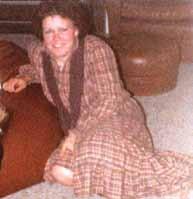
“if there was a time that i was likely to jump on that (hatred) train, it would have been then,” he says. “But there’s no point. it’s counter-productive.
“My empathy was more with the baby and the baby’s family, like grandparents and aunts and uncles. it just never ends for them. so my thinking is more towards those people than towards offenders.”
And Hill reinforces just how seriously Major c rime takes its responsibility to track down killers. “We play for keeps,” he says. “it’s the most serious of offences; and, when murderers go away, they’re going away for a maximum of life.”
Detective Brevet sergeant campbell Hill
Top: part of a track at tea tree gully sealed off where yasmin sinodinos’s body was found; centre left and right: a bin to the side of the track marks the location of sinodinos’s body; above: yasmin sinodinos




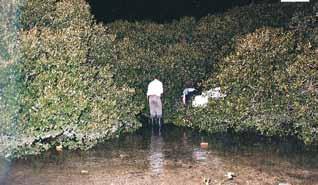


Detective Brevet sergeant erin Vanderwoude
Top left: giovanni focarelli; top right: a ford pertinent to the investigation at Dry creek; centre: the garden island scene of the discovery of Rosemary Brown’s body; above: Melissa Brown; right: Rosemary Brown
iT WAS
not a murder but rather an alleged conspiracy to commit murder. t he alleged targets were husband-and-wife District court judges Paul Rice and Rosemary Davey. And no case like this one seemed to exist in south Australian history.
Major crime took on the investigation – on the same day Detective Brevet sgt erin Vanderwoude turned up for her first-ever shift with the section last year. And, had she expected to ease into her new role, she would have been wrong.
Her detective superintendent, Doc Bray, who knew her from crime gangs task force, assigned Vanderwoude to help investigate the alleged murder conspiracy.
“i didn’t mind at all,” she remembers. “i like to take charge of things, so i wasn’t afraid to get that investigator (role).
“We had a lot of people seconded in for the job as well, so we did around-the-clock work on that one.
“for probably eight weeks we ran all three shifts –day, night and afternoon shift – which isn’t a general thing for Major crime. But we had alleged victims and witnesses who we needed to monitor or respond to.”
t he alleged plotters, frederick Bernard Walkuski and gysbertus Van schaik, are set to stand trial in July.
Vanderwoude, 38, is not yet a member of one of the three main teams of Major crime investigators.
s o she has not, so far, looked into the eyes of a murderer from across a table in an interview room and questioned him or her about a killing.
of course, that will come, and she is ready to take her opportunity to ply her craft. But, right now, she belongs to the Major crime special operations team, which is dedicated to the investigation of cold cases.
With a view to future work with crime stoppers and the media, Vanderwoude recently completed
a particularly labour-intensive task. she examined, and prepared a report on, every unsolved sA murder from as far back as 1956. t hey totalled 114. in some cases she had to read through two full boxes of archived files to write a one-page synopsis of a murder.
“What was the same for all of them,” she says, “was that investigators had exhausted all avenues (of enquiry).”
But, in her report, Vanderwoude did not include every unsolved homicide. “Because,” she says, “either we know who the suspect was and he or she is dead or we’re not sure that it was a murder.”
Among the murders the Vanderwoude report details is the 1999 Wright s t bikie shooting, in which Rebels members g raham n ixon, sinibaldo Palombi and Hubert Weston died.
i n 2000, Hells Angels members g eorge Petropoulos, faoud chaptini and Peter t hreadgold each faced three counts of murder over the shootings. But, as Rebels members refused to give evidence against the trio, the case went nowhere.
Another murder the Vanderwoude report details is that of 22-year-old g iovanni f ocarelli at Dry creek in 2012. Also detailed is the 2000 murder of 33-year-old Rosemary Brown.
Brown and her daughter Melissa, 15, disappeared after leaving a Blair Athol address in the early hours of May 13 that year. t he murder of Brown came to light with the discovery of her body in mangroves at g arden i sland two months later. Melissa remains missing.
o ne cold-case investigation Vanderwoude has worked on goes back to 1976 and involves the drowning of a child. A phone call from a family member to crime stoppers had implicated the child’s mother in the death.
first to look back at the incident was Detective Brevet s gt Michael n ewbury who gathered and studied information such as the autopsy report. When Vanderwoude joined the investigation, she worked on tracking down cops who had responded to the drowning.
“it was interesting,” she says, “going out and talking to coppers about something that happened in 1976 when they were 19 years old. i ’d say: ‘What do you remember about it?’ t he resounding answer was: ‘i’ve got no memory of it at all.’ still, it’s a current investigation.”
Whatever frustration comes with it, Vanderwoude is “quite pleased to be doing the cold-case work”.
“it’s a really good fit for me,” she says. “it would be nice to get people who think they’ve gotten away with something, especially for something that’s 10 to 15 years old. t hat’s when they must think that there’s nothing coming back on them.”
After only seven months with Major c rime, Vanderwoude already spends a lot of her after-hours time thinking about investigations. s pecific thoughts come to her on her bus ride home from work or at home in conversation with her detective husband.
“in the middle of one investigation,” she explains, “i thought about things and would ring someone after hours and say: ‘Have we done this?’ or ‘What about that?’ ”
Another task that causes Vanderwoude some out-of-hours thinking is the assignment Detective s upt Doc Bray gave her to write a Major crime manual. Her objective is to make it a how-to guide covering every aspect of homicide investigation. it will begin with the moment Major crime gets notice of a murder through to the courtroom finale, and more. “so,” she says, “when you get a murder, whether you’re new to Major crime or you’ve been there for 20 years, you’ll manage it in the same way.
“i don’t mind doing it (the manual). it’s good for me too because i won’t be in this position forever. t here’ll be a day that i move out onto the floor (to join a team).”
Despite the challenge her work on the new manual represents, Vanderwoude aims to complete it by her deadline of April 1.
she has had to apply herself as solidly to the task as homicide detectives apply themselves to their investigations. And Vanderwoude recognizes the personal traits that murder investigations demand of detectives.
tenacity and drive are the first two she lists, along with perseverance and strong intellects. “But you don’t have to be book-smart,” she says. “s ome people we perceive not to be the smartest come up with the better ideas. t hey think a little left-field.
“ t here are people here (at Major c rime) who think a little bit differently, and come up with stuff about which you then think: ‘ t hat’s logical.’ ”
Vanderwoude expects to suffer the frustration of acquittals and the unease of some contact with the grieving relatives of murder victims. she thinks of death messages as one of the hardest jobs in any field of police work.
But she does not expect the realities of the human condition, in the form of brutal killings, to diminish her faith in humanity.
“Put it into perspective,” she says. “Murder is what a minority does. t here are 20 murders in south Australia in a year and there are 1.6 million of us (in sA). And the majority of murders happen in an instant. t hey’re not planned or thought out.
“ t here are always going to be people (who commit murder). you just have to remember all of the good people.” PJ

Reunion illustrates lifelong friendship
Members of course 39 reunited at the Police club last December to celebrate 43 years since they began at fort largs and 40 years since their graduation.
t he reunion kicked off at midday with pre-event drinks before an à la carte lunch in the dining room. War stories were still going after 8pm and members still didn’t have enough time to catch up with every old mate to reminisce.
Many former course members – who had either retired or ventured into other careers – came from the country or interstate to be at the reunion. including partners, a total of 34 people attended; and, of the 36 members who graduated, 12 are still serving.
t he course has held several reunions which, in the last two years, have been at the Police club – and highly successful.
t he continuing camaraderie and mateship of the course is outstanding, a real illustration of lifelong friendship.
Glenn Angus
Inspiration to reunite
twenty members who graduated from f ort l args with course 23 in December, 1970, gathered with their partners for a reunion last n ovember. it was a fantastic opportunity for course members to get together to relive, or remind each other of, the good and bad of our early careers.
t he close bonds that developed way back in 1968, when 43 of us started, still endure today, and it’s always a great pleasure to catch up.
s ince that beginning at the academy, course members have either stayed in sAPol for at least 45 years or gone on journeys of their own.
o ur inspiring course mentor, Peter Walsh, attended the reunion; and no one had forgotten the close mateship of those early years, first at the academy and later in other fields.
We hope our reunions continue and that they inspire others to get together with their course mates.
Bruce hartley sergeant east Adelaide traffic letters to the eDitor
Can be sent by:
Regular mail Police Journal, Po Box 6032, Halifax st, Adelaide sA 5000
Email editor@pasa.asn.au
Fax (08) 8212 2002
internal dispatch
Police Journal 168
Thankful for police courage
i recently travelled to bushfireaffected areas in the Adelaide Hills and the state’s lower s outh- e ast to thank the many police officers, emergency service workers and volunteers on the ground.
As part of a briefing on the tantanoola fire in the s outh- e ast,

liberal member for Mt gambier troy Bell and i met with s uperintendent trevor twilley, officer-in-charge at limestone coast lsA.
t he selfless effort that we have witnessed from so many in the face of great personal danger in fighting these fires makes me very proud
to be a south Australian.
t he courage and dedication shown by those on the ground has been remarkable and i thank all those who have rallied behind the residents who have lost their homes.
Steven Marshall state liberal leader
Back: Gary McGrice, Bruce Kenyon, John Parsons, Tom Scheffler, Phil Betts, Peter Schar, Paul Maschgan, Fred Trueman, Reg Pollard. Centre: Mick Parker, Bob Preuss, Brian Devitt, Phil hilderbrandt, Glenn Angus, Paul Gross, Kevin hunt, Rick huckstepp, Phil Vincent. Front: Trevor Fallon, Mick Sweeney, Mark Williams, Robert Webb, Vern Leng, Gavin Ramsey, Peter Jaensch, ian Downey.
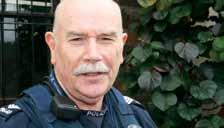

Sergeant Bruce Hartley
eastern Adelaide traffic
i have lived through at least five traffic restructures and this is another one based on inaccuracies and biased data. f or instance, looking at the comparison percentage between general patrols and traffic is flawed.
t he percentage is taken from sAcAD which can only reflect 603s recorded on sAcAD. Data from my own team sheds a different light on this matter.
t he north/south locations are yet to be decided and there is no mention of the roster, except where it emphasizes the need to run 24-7, but then states that the high crash times are between 8am and 6pm.
We seem to have to explore all these things over and over again but end up implementing something with a lack of resources and, usually, lack of staff.
i t has happened before and i see it in this proposal. i have been a proud member of traffic for over 40 years.
Snr Sgt Nils Uellendahl
traffic operations section
traffic policing is a specialist area of operations. low-level traffic offences and basic traffic control can be done by general-duties officers. However, more complicated matters require specialist, trained and experienced traffic officers to police and investigate those offences and be deployed in such a way that relevant traffic offences are detected.
if there was no need for specialist traffic police, why hold a traffic course, a heavy vehicle policing course and a vehicle defect course?
e very other Australian state, as well as most western countries, has specialist traffic police units, sections or whole commands.
traffic is a specialized field requiring specialist officers.
Sergeant Garry Stewart
sturt traffic
i t is necessary for s AP ol to review how it conducts its business, so as to provide an effective, efficient service delivery to our community.
But we have to be careful that any restructure does not have an adverse effect on service delivery to our community, and that it does not create an impost on the front-line operational members.
i don’t believe this review and these proposals are beneficial to the front-line operational personnel.
t he front-line personnel continually seem to be burdened with a heavier workload in any restructure and their numbers are never increased. t hey are stretched and under-resourced now.
o perational supervisors have an enormous workload and are constantly under pressure. t he proposal seems to indicate that their workload is to increase by 30 per cent or more.
t he figures in the proposal need further scrutiny.
From top: sergeant Bruce Hartley, snr sgt nils Uellendahl and sergeant garry stewart.

Nick Damiani
Traffic law enforcement set to suffer under proposals
T RAFF i C
policing requires specialist knowledge which usually exists outside the general skill set of patrol officers.
And the enforcement of traffic laws will suffer if some of the current sAPol restructure proposals go ahead.
t hese views have come from several Police Association members with a wealth of experience as traffic police. t hese members have provided extensive feedback to the association regarding the recent sAPol traffic review consultation paper.
t he paper became a priority on the association’s agenda after sAPol released it last november.
Association president Mark carroll, in the leadup to the paper’s release, said the union would not support a review that did not intend to make police “more efficient, more productive, and better able to serve the community.”
He also highlighted the significance of this review in respect of the upcoming round of enterprise bargaining.
i n the executive summary section of the consultation paper, s AP ol indicated that the objectives of its review were to:
• Review current metropolitan l ocal s ervice Area traffic enforcement section’s functionality and activity.
• i dentify an enhanced operating model that is highly flexible and agile providing a state-wide focussed approach to policing road safety.
• identify an improved operating model that better utilises available resources to match public demand for services.
After s AP ol released the paper, the association commissioned the Australian Workplace innovation and social Research centre from the University of Adelaide to assess the sAP ol proposals. ( t he full paper is available on PAsAweb.)
Authors simon Molloy and John s poehr, from the research centre, highlighted issues with the sAPol objectives.
“ t he second and third objectives would seem to be … reiterations of the objective of resource allocation to achieve efficient policing…” Molloy and spoehr highlighted.
“i t is not clear why there is an emphasis on ‘enhanced operating model’ and ‘improved operating model’ in the second two objectives.
“ i t is worth pointing out that there is the possibility that more efficient resource allocation may be achievable without new operating models.” t he preferred review option sAPol outlined in its consultation paper is the creation of a Road s afety Policing Unit (R s PU) within o perational support services.
Molloy and s poehr concluded that there was insufficient evidence presented in the s AP ol review to demonstrate that this option is preferable. t hey highlighted reasons for this conclusion:
1. More detailed data is required about the current absolute relative demands on resourcing for traffic and general-duties policing – without such data it is not possible to say which of the two groups is most resource constrained at this time.
2. t he distribution of different activities across the two groups, and the time intensiveness of these activities, needs to be estimated. this is necessary to determine the resourcing demands on the two groups because it is likely that the distribution of various tasks is quite different for the two groups.
3. Data on the resourcing demand from non-core activities that have been accumulated by traffic police need to be estimated.
4. t he level of unreported tasking activity by traffic police needs to be estimated, for example, 603s that are not booked.
5. s ome of the advantages and disadvantages of the various options are simply asserted with no supporting data or rationale and these need further analysis and validation.
6. the extent to which structural change in resourcing and management is required to respond to the need for greater resourcing flexibility has not been clearly established. it would seem to be possible to create improved geographic and scheduling resource flexibility simply through a change in policy, rostering procedures and management without the need to incur the risks and costs associated with restructuring.
7. significant aspects of the preferred option have not yet been determined: what will the proposed rostering arrangements be? What proportion of traffic police will be allocated to the new unit and what proportion reallocated to general duties? How do these reallocations fit with the expected task loads of the two groups? Until such questions are answered, we believe that it is not possible to determine which of the options is likely to be the most efficient and cost effective.
Police Association member g arry s tewart is well qualified to comment on the matter. t he sturt sergeant has 34 years’ experience in traffic policing and agrees that the s AP ol preferred outcome is concerning.
“i don’t believe option three will give the outcomes sAPol is seeking,” he warned. “it appears a reshape of several old restructures.
“i believe that the proposal is based on a perceived view of what traffic enforcement is. i think that view is divisive and is assumption-based.
“i have been involved in a few traffic restructures in my career which have brought us to this point.”
s gt s tewart asserted that operational supervisors are focused on delivering an effective service in the area of crime and community safety
and view traffic enforcement as a secondary role.
He said a one-size-fits-all approach to police work was fraught with danger.
“sAPol seems to want a police officer who fits all positions,” he said. “i don’t think this is achievable.
“We have to be careful that we don’t see new and advanced technology as the answer to our problems, rather than looking at that technology as simply a useful tool to enhance our service delivery.
“ t he motoring public is not foolish and, over time, they adapt their driving to our enforcement strategies. t his can be a good thing and results in better driving behaviour but, for the motorist who chooses to flout the law, it brings a new set of problems.”
sgt stewart said he endorses the association paying such close scrutiny to the paper, and agreed with the stance that it should form part of the discussions in the upcoming round of enterprise bargaining.
“if a higher productivity for the operational members is required, they should be justly rewarded for it through the eB,” he said.
the one that sAPol relies on to reduce road trauma.
“ t he consultation paper basically portrays the 150 traffic members as redundant and suggests they could be used in the execution of other duties.
“ t he media has even portrayed in their reporting that (traffic) members will be returned to front-line duties.
“i thought that was what traffic members were (already) doing.”
Mr carroll shared similar views, indicating that the review had left several questions unanswered.
“ t he comparisons between general-duties members and traffic members are meaningless and divisive,” he said.
“We seem to have to explore all these things over and over again but end up implementing something with a lack of resources and usually a lack of staff.”
Association member sergeant Bruce Hartley, a 40-year veteran of traffic policing, agreed that some of the data in the sAPol review was concerning.
“We seem to have to explore all these things over and over again but end up implementing something with a lack of resources and usually a lack of staff,” sgt Hartley lamented.
“it has happened before and i see it again in this proposal.”
sgt Hartley warned that traffic policing required a specific skill set which police from general patrols usually did not possess.
“ t he expertise that traffic officers gain through specific courses will not be translated to general patrols,” he warned.
“the specific skill set attained by traffic members is
“We’re also concerned that the paper suggests sAPol will cut resources in traffic policing.
“out of 4,600 sworn police, there are only 150 metropolitan lsA traffic enforcement officers.
“ s AP ol has a legislative responsibility to regulate road use and prevent vehicle collisions, and that is the priority of metropolitan and country traffic police.
“Road safety might be everyone’s responsibility but it isn’t everyone’s priority.”
Mr carroll said the review lacked academic rigour.
“t he generalizations contained within it to justify metropolitan traffic resource reduction should cause all members to question the veracity of the proposals,” he insisted.
“We’re also concerned that the key aspects of the paper could cause division between different groups of our membership.
“ t hat’s why we immediately commissioned the university research centre to analyse the report and the data contained in it.
“We’ll be presenting those findings to s AP ol , as well as discussing some of our own concerns based on member feedback.”





Police Journal
15% off the recommended retail price at any three House & Garden outlets in South Australia.

Spend $30 or more in store and receive a twin pack of Kabanos for free.

20% off Quicksilver’s online store – including Roxy, DC shoes, Quicksilver men’s, women’s & youth.
25% off giftware, including liquor, gourmet oils and vinegars.
Membership to Campbells Wholesale – cheaper than retail prices, buy in bulk and save even more.

Save 5% on Romeos Foodland and IGA stores in South Australia with your PASA discount card.
t he Members Buying guide
Another exclusive money-saver the Police Association delivers its members. Save on homewares, groceries, wine, clothes, cars, restaurants, dry cleaning, photography, paint, accountancy services and more. Log onto PASAweb to find it.


HeaLtH
Dr Rod Pearce
Any swig of raw milk potentially lethal
Even the idea of treating skin conditions with raw milk calls for scepticism
ThE
bacterium e . coli is thought to be the cause of the death of a Victorian toddler after the child drank raw milk last December.
e. coli is commonly found in human and animal faeces as well as the human gut. in there, however, it is mostly harmless but some might produce toxins which can cause disease.
s higa toxin damages the kidney (haemolytic uremic syndrome), later causing death, but if treatment and dialysis starts early enough it is possible to survive.
t he farm environment is a reservoir for diseasecausing bacteria (pathogens), some of which might be shed directly into the milk from a cow or goat, especially if the animal has a disease such as mastitis.
Bacteria might also contaminate milk during the milking process, or during transport, processing, packaging, and storage. Poor hygiene practices increase the risks.
e ight outbreaks occurred in Australia between 1998 and 2003, with over 100 cases of illness, linked to the consumption of raw cows’ milk.
four outbreaks were a result of drinking raw milk on school camps, while other outbreaks implicated a community setting, a school, and unpasteurized milk consumption on farms.
Drinking milk other than cows’ milk does not eliminate the risk: faecal matter can still get into other milk, so the need to reduce the bacterial risk remains. it is still necessary to remove pathogens and, so far, that is best done by pasteurization.
typical pasteurization conditions used for milk do not affect the nutritional or functional properties of milk fat, protein, lactose, minerals, and fat-soluble vitamins.
Despite continual talk about the merits of raw milk, there is usually no scientific evidence for its alleged benefits.
if you believe drinking raw milk to be a good source of beneficial bacteria, you are wrong. in fact, you might become ill from harmful bacteria which can contaminate raw milk.
t he important message about types of yogurt and other fermented products, such as kefir, is that they are made from pasteurized milk. t his eliminates harmful bacteria before adding the bacteria to make the product.
Despite continual talk about the merits of raw milk, there is usually no scientific evidence for its alleged benefits.
Pasteurization is not intended to kill all bacteria in the food. instead, it aims to reduce the number of viable pathogens so they are unlikely to cause disease, assuming the pasteurized product is stored properly and consumed before its use-by date.
o ther benefits of milk are still being explored but little evidence exists to suggest that pasteurization diminishes those benefits.
A fatty acid known as conjugated linoleic acid (cl A) found in milk fat was found to have beneficial anti-carcinogenic properties around 20 years ago.
Any claim that a skin condition such as psoriasis (an altered immune skin condition with inflammation) is better with milk must be treated with scepticism.
some believe that consuming raw milk comes with health benefits not found in the consumption of pasteurized milk. t he suggestion is that raw milk is easier to digest – particularly for people who are lactose-intolerant – because pasteurization
inactivates enzymes present in raw milk.
However, there is no lactase (the enzyme) present in fresh milk. l actase might be present in lactic acid bacteria which are added to milk for fermentation or from airborne or other contamination.
e nzymes used to digest food are found in the mouth, stomach and, primarily, in the human intestines. e nzymes present in the food play an insignificant role in their digestion.
the suggestion is that the pasteurization process changes the nutritional properties of milk fat, protein, lactose, vitamins, and minerals. typical pasteurization conditions used for milk do not affect the nutritional or functional properties of milk fat, protein, lactose, minerals, and fat-soluble vitamins. t here is a small reduction in the quantity of heat-sensitive water-soluble vitamins. Milk is an insignificant source of vitamin c, so the small reduction that occurs during pasteurization is not important in the overall diet.
Ultimately, there are risks to drinking milk which has not been processed in some way to reduce the bacteria. Pasteurization is the preferred way to do this. no changes occur in that process to significantly alter the nutritional value of milk or the supposed benefits to skin or complexion. claims of effective benefits of milk are overrated and unproven, and raw milk increases risks without benefit – even to the point of being lethal.

motoriNG
Jim Barnett
So big for a little car
And with its extra space come plenty of driver comfort and storage options
ThE third-generation Honda Jazz pushes the boundaries of space and flexibility in a small car.
DESiGN
increased body rigidity, a new chassis and a longer wheelbase provide new Jazz with improved driving dynamics and more interior space. And its new body has a youthful, athletic appearance.
Jazz is so big for a little car it will amaze any observer. front seats provide good comfort and plenty of adjustment, including a height adjuster for the driver. And drivers will appreciate the reach- and rake-adjustable steering wheel with its function buttons for audio, phone, trip computer and cruise control.
Although narrow, the 60/40 rear seats provide more space than expected with ample head,
shoulder and leg room for two adults. t hese seats can be configured in 18 different ways, providing cargo capacity of up to 1,492 litres.
the deep cargo bay has a flat floor and is generous for a car of this size. Beneath the floor is additional storage and an emergency-style spare wheel.
VALuE FOR MONE y
t hree models, V t i (manual or cV t ), V t i- s (cV t ) and V t i- l (cV t ) are priced between $14,990 and $22,490. Metallic paint adds $495. standard features across the range include:
• leD head and tail lights.
• s even-inch colour touch-screen audio with Bluetooth phone and audio connectivity.
• UsB and HDMi inputs.
• siri eyes- free mode.
• cruise control.
• trip computer.
• Air conditioning.
top-spec V t i- l comes with extras such as:
• leather trim.

Ultimately, Jazz delivers a firm but comfortable ride and confident cornering.
• Heated front seats.
• Rear parking sensors.
• smart-entry.
• Push-button start.
• climate-control air conditioning.
• Alloy wheels.
SAFET y
All Jazz models feature:
• six airbags.
• Multi-angle reverse camera.
• Anti-lock brakes with emergency stop signal.
• traction and stability control.
• Hill-start assist.
STATS
t he only engine is an improved 1.5-litre so H c four-cylinder petrol unit producing 88kW of power.
Honda claims combined fuel economy of 6.2 litres/100km (V t i manual) and 5.8 litres/100km (all cV t models). co2 emissions are 144g/km and 135g/km respectively.
ON ThE ROAD
no sports machine, Jazz is equally at home around town as it is on the highway. t he engine provides strong performance even though it’s a little noisy at high revs.
t he paddle-shifter c V t transmission works in perfect harmony with the engine except during harsh acceleration when the engine can sound like its over-revving. But it’s not. t his is just a trait of small engines with c V t transmissions. i n reality, they provide excellent flexibility and improved economy over conventional automatics.
Ultimately, Jazz delivers a firm but comfortable ride and confident cornering.
VERDiCT
An efficient, flexible small car, Jazz is well equipped and fun to drive.
Hard to fault
Smart looks, volumes of space and up to any task

ThE Holden cruze sportwagon fills the gap nicely between the likes of the Honda Jazz and the ever-growing small sUV brigade.
DESiGN
Although it shares the same wheelbase as c ruze s edan and Hatch, s portwagon is slightly longer and taller. t he end result is a smart-looking compact wagon which provides just a little more headroom and volumes more cargo space.
With rear seats in use, cruze sportwagon has 686 litres of cargo space compared to 413 litres in the Hatch and the sedan’s 445 litres.
t he flat cargo floor measures more than one square metre, increasing to around 1.8 metres long with rear seats dropped. t his configuration delivers 1,478 litres of cargo space.
Under the floor sits a 16-inch emergency spare wheel and lots of space to store small items.
in line with modern wagon design, cruze sportwagon has a low profile and sloping roofline. t he interior boasts enough room for a family of five, or four adults. it is well laid out and comfortable with plenty of storage bins and pockets.
VALuE FOR MONE y
c ruze s portwagon is available in two equipment grades (cD and cDX) with a choice of 1.8-litre petrol or 2.0-litre diesel engines. All feature a six-speed automatic transmission with manual mode. cD petrol ($24,090) features:
• Auto headlights.
• trip computer.
• steering-wheel controls for Bluetooth, cruise control and audio system.
• Height- and reach-adjustable steering wheel.
• Heated mirrors.
• s even-inch touch screen audio system with s martphone integration, Bluetooth audio, s iri
e yes- f ree, voice control, U s B with iPod connectivity and auxiliary input.
• cargo blind.
• Manual air conditioning.
• Alloy wheels.
At $2,500 more, cDX also has:
• Push-button entry and start.
• Reversing camera.
• Heated front seats.
• leather trim.
• Auto climate control.
t he diesel engine adds $4,000 to either model.
SAFET y
cruze sportwagon comes with a five-star AncAP safety rating. t he expected six airbags, antilock brakes, traction and stability control systems all feature as well as rear parking sensors and a collapsible pedal-release system.
STATS
t he 1.8-litre petrol engine produces 104kW of power and 175 n m of torque with combined fuel economy of 7.4 litres/100km. t he 2.0-litre diesel is the pick with 120kW, a massive 360 nm of torque and combined fuel economy of 6.7 litres/100km.
ON ThE ROAD
Petrol cDX is a pleasant car to drive. t he engine is smooth and generally quiet. it’s up to any task and makes the most of the flexible six-speed automatic transmission.
Ride and handling are good and the car is exceptionally quiet compared to many small fours. Rear seat legroom is a little tight for adults but acceptable in light of the car’s impressive cargo space.
VERDiCT
As far as compact wagons go, cruze sportwagon is hard to fault.

Understand cops? I sure do
Paul Modra Executive Manager – Member Value and Distribution, Police Credit Union
it’s hard not to understand police when they’re part of your own family
iT M i G h T
be rare, even close to impossible, for cops to find business people with a real grasp of police life and culture. But they do exist! Police credit Union personal banker nathan fisher is one of them - thankfully.
Policing has had a presence throughout his entire life, first through his father, firearms Branch detective inspector Mick f isher. t hen there’s nathan and his two sisters’ godfathers – all cops –and nathan’s younger sister, lauren, who became a police officer back in 2011.
And n orwood-based l auren’s partner, Josh Head, is also a copper. so when they all turn up to the f isher parents’ place for sunday dinner, they could probably establish their own mini lsA. And, of course, one police issue or another is a frequent topic of discussion.
like other children who are not cops themselves but have parents who are, n athan was always
“A lot of the stAR group guys came through our office here and up onto the Police credit Union rooftop.”
going to come to a sound understanding of police and police work.
o ne of his earliest insights into the job came when he was just 10. He saw his dad, now a Police c redit Union board member, launch into action off duty.
“ l auren would have been seven and my older sister 12,” he says. “We were on our way to the c hristmas pageant in the morning and there was a drunk who took a lunge at a lady in carrington st.
handled the siege was just outstanding. i t was just something you’ve got to respect as a person of the general public.”
“they go out and deal with some horrible people, like a man who’s beaten his wife.
it’s a credit to them that they can keep their heads up and not let that consume them.”
“Before you could even blink, Dad got him and held him on the ground until the police came.
“it was that split-second decision that happened right before our eyes as kids. it was that jump into action straight away.
“And, more recently, we had the (c lavell) siege on k ing William st. A lot of the stAR group guys came through our office here and up onto the Police credit Union rooftop. “ t he professionalism of the way they
n athan even attended one of the two Adelaide convention centre lectures delivered by renowned U s psychologist and former police officer Dr k evin gilmartin last year.
t he wisdom of gilmartin, who authored the book emotional survival for law enforcement, reaffirmed for n athan that his father and sister survive police life “really well”.
And he marvels at the way other cops stand up to both the emotional and physical challenges of frontline police work. “it’s a massive job they do,” he says.
“t hey go out and deal with some horrible people, like a man who’s beaten his wife. it’s a credit to them that they can keep their heads up and not let that consume them.
“i just have a huge respect for them and all the work they do.”

And n athan carries that immense respect he has for police into his personal-banker role. He bothers to consider how best to communicate with cops and reckons that, on that score, he knows where others fail.
“ t he mistake a lot of people make is they forget that (police) are human and they focus on them only as authority figures,” he says. “i f you do that, you’re not talking to them as a person.
they don’t say: ‘Here’s that credit Union guy trying to sell me stuff.’ ” he says.
“What they do say is: ‘Here’s n athan and he’s going to help me.’
“if you over-promise and under-deliver, you’ll never have a good relationship with anyone – especially cops.”
“it’s about relating to them on a personal level and understanding at least a little about what they do as police.”
Much of the satisfaction nathan gets from his interaction with cops comes from their directness: he always knows exactly where he stands with them. so the idea of failing to live up to a commitment to a police officer just never enters his mind.
And, after seven years with Police credit Union, he seems to have the strong endorsement of the police he has served as a personal banker since 2013.
“i’m lucky that, when i turn up to a police station,
“ i ’ll come out on the weekend; i ’ll go and see them (police) after hours. i ’ve been down to the police academy at 7:30 in the morning to service a member.
“And Platinum Advantage provides huge benefits to police: no fees on any credit facility, an at-call personal banker, and discounts on home-loan rates and insurance.
“it’s a package tailored for police. We understand the job; we understand the hours. What this delivers to police is unique.”
o ne of the key areas in which n athan provides personal service to police is home loans. He understands the expectation of him to organize the formalities and provide answers to applicants quickly.
“ you don’t want to have to wait three weeks or have to call the bank or credit union to get the answer,” he says. “i’m proactive in that regard.
“i tell them: ‘it will take x-days to get an answer and you’ll need these documents.’ i f you overpromise and under-deliver, you’ll never have a good relationship with anyone – especially cops.”
t he Police credit Union proudly offers superior financial products and services to police officers with special benefits. As a police officer, you can access the Platinum Advantage membership, which provides you with exclusive benefits. to find out more about how nathan can help you and the benefits of the Police credit Union Platinum Advantage membership, call Nathan on 0468 987 791 or e-mail nfisher@policecu.com.au
t he information provided herein does not take into account your personal needs, objectives and financial circumstances. Please consider your circumstances before deciding if the product is right for you.
nathan with his sister l auren and father Mick


Free Legal Service for Police Association Members, Their Families & Retired Members.
Leading Adelaide law firm, Tindall Gask Bentley is the preferred legal service provider of the Police Association, offering 30 minutes of free initial advice and a 10% fee discount
To arrange a preliminary in-person or phone appointment contact PASA on (08) 8212 3055.


Have you or a family member been injured in a car accident?
Tindall Gask Bentley acts in more motor vehicle accident claims that any other law firm in SA. Gary Allison & Richard Yates can provide free preliminary legal advice on your entitlements to compensation. They can also help with Workers Compensation, public liability & medical negligence claims.
Family Law
Matrimonial, De Facto & Same Sex Relationships
• Children’s Issues
• Child Support matters
• Property Settlements
• “Pre Nuptial” style Agreements
Appointments with Wendy Barry (Accredited Family Law Specialist) & Dina Paspaliaris.
Commercial Law
• General business advice
• Real estate & property advice
• Business transactions
• Commercial disputes & dispute resolution
Appointments with Giles Kahl & Michael Arras.
Wills & Estates
• Wills & Testamentary Trusts
• Enduring Powers of Attorney
• Enduring Guardians
• Advice to executors of deceased estates
• Obtaining Grants of Probate
• Estate disputes
Appointments with Michael Arras & Rosemary Caruso.


When offenders allege excessive force
Rachael Shaw Senior Associate, Tindall Gask Bentley Lawyers
The courts might sympathize with police to some extent but the law still applies
ThEnature of police work means that police officers regularly find themselves in situations in which they are required to use force in effecting an arrest. i am sure many police officers are required to use force daily in order to effectively carry out their job.
t he difficulty arises when there is an allegation that excessive force has been used.
i t is important to remember that there is no blanket justification for the use of force when exercising the power of arrest. Whether the use of force is justified in any given case must always depend on the facts and circumstances of that specific case.
it is fair to say that, whenever a police officer resorts to the use of force in an arrest, the force used may be closely scrutinized and he or she could be answerable to the law.
Being charged (or the prospect of being charged) with assault, as a result of executing your duties as a police officer, is a harrowing experience.
As police officers are in positions of authority, they are at risk of being charged with the offence of aggravated assault. if found guilty, the maximum penalty is three years’ imprisonment.
and without consent applied force directly or indirectly to the alleged victim.
s ubject to the matters set out below, the use of force to defend oneself does not amount to an assault. i n addition, subject to the matters set out below, the use of force to make or assist in the arrest of an offender does not amount to an assault.
the courts have recognized that police officers carry a number of duties to the community, to fellow officers and to accused persons with whom they are dealing.
• t he offence or offences that the suspect is said to have committed.
for the purposes of self-defence, it is a defence to a charge of assault if you genuinely believed the force that you used was necessary and reasonable and in the circumstances as you believed them to be, reasonably proportionate to the threat that you believed to exist.
if a weapon is involved or injuries are sustained, the maximum penalties increase to four and five years’ imprisonment.
if a weapon is involved or injuries are sustained, the maximum penalties increase to four and five years’ imprisonment. it is a very serious matter.
i n order to be found guilty of the offence of assault, the prosecution must typically prove beyond reasonable doubt that you intentionally
for the purpose of the use of force to execute a lawful arrest, it is a defence to a charge of assault if the force was used to make or assist in the lawful arrest of an offender or person unlawfully at large and the force was, in the circumstances that you reasonably believed them to be, reasonably proportionate to the threat you believed to exist. o nce either or both of these defences are raised, the prosecution must exclude them beyond reasonable doubt. i n other words, it is for the prosecution to disprove self-defence and/or execution of a lawful arrest.
When considering what is “necessary” and “reasonable” force as applied by police officers in effecting an arrest, the courts will often have regard to:
• Whether the suspect had a propensity to be violent and the police officer was aware of this.
• t he behaviour of the suspect at the time.
• t he risk that the suspect posed to the safety of others.
• t he risk that the use of force posed to the safety of the suspect and others.
• t he other options available to the police officer at the time.
t he courts have recognized that police officers carry a number of duties to the community, to fellow officers and to accused persons with whom they are dealing.
t he courts have also recognized that a police officer might be confronted with any number of different scenarios in effecting an arrest and which require them to make immediate decisions about the course to adopt in situations of turmoil, high tension, violence (real or apprehended) and disorder.
t he circumstances of an arrest might call for the immediate resolution of a conflict between various duties of a police officer with little opportunity being given to him or her to consider calmly the potential ramifications of his or her chosen course of action.
continued page 41

The Prophecy of Bees
Author Rs Pateman
Publisher Hachette Australia
RRP $29.99
Moving to stagcote Manor was meant to be a fresh start for lindy and her teenage daughter, izzy. A chance at a new life in the country after things went so wrong in london. But, for izzy, it’s a prison sentence.
there’s something about the house that she can’t quite put her finger on – something strange and unnerving.
As izzy begins to explore the manor and the village beyond its walls, she discovers the locals have a lot of bizarre superstitions and beliefs. Many of them related to the manor… and those who live there.
After i zzy begins to investigate the history of the estate, her unease deepens to fear as the house’s chilling past finally comes to light.
Revival
Author stephen k ing
Publisher Hachette Australia RRP $32.99
in a small n ew england town, in the early 1960s, a shadow falls over a small boy playing with his toy soldiers. Jamie Morton looks up to see a striking man, the new minister, charles Jacobs.
s oon they forge a deep bond, based on their fascination with simple experiments in electricity.
Decades later, Jamie is living a nomadic lifestyle of bar-band rock and roll. n ow an addict, he sees Jacobs again – a showman on stage, creating dazzling “portraits in lightning” – and their meeting has profound consequences for both men.
t heir bond becomes a pact beyond even the Devil’s devising, and Jamie discovers that revival has many meanings.
Rich and disturbing, Revival spans five decades on its way to the most terrifying conclusion stephen k ing has ever written.
Chase Your Shadow: The Trials of Oscar Pistorius
Author John carlin
Publisher Atlantic RRP $29.99
e verything changed for o scar Pistorius after he shot his girlfriend, Reeva steenkamp, dead in the early hours of february 14, 2013. o vernight, his status as a role model was replaced by tales of erratic behaviour and a violent dark side.
John c arlin followed his sevenmonth trial and the drama inside the courtroom, which included Pistorius’s wrenching emotional breakdowns, the merciless interrogation to which he was subjected by the prosecutor, and the highly controversial judgement.
c arlin had unique access to Pistorius and his family and friends in the aftermath of the tragedy.
He paints a portrait of a complex personality, a man whose life story reveals extremes of courage and insecurity, ambition and vulnerability, generosity and dangerous hot-headedness.

The Burning Room
Author Michael connelly
Publisher Allen & Unwin RRP $32.99
A bullet has taken 10 years to find its mark… but Bosch is on the case. i n the l APD o pen-Unsolved Unit, not many murder victims die almost a decade after the crime. so when a man succumbs to complications from being shot by a stray bullet 10 years earlier, Bosch catches a case in which the body is still fresh, but any other evidence is virtually non-existent.
soon Bosch is embroiled in what turns out to be a highly charged, politically sensitive case.
starting with the bullet, which has been lodged for years in the victim’s spine, the unit must pull new leads from yearsold information, which soon reveals that this shooting might have been anything but random.

Taking the Low Road
Author John Murray
Publisher John Murray (via Hardshell Publishing)
RRP $29.95
When boys disappear from Adelaide streets in the 1980s, it’s personal for Detective John s cobie. He sees links to the unsolved murder of his school friend, Rosie, decades before in scotland.
to understand s cobie, and his vendetta against sex offenders, you have to go back to his glasgow childhood, when he was abused by men in authority, and tutored in morals by a former gangster.
When he migrates to Australia and joins the police he rebels against the injustice of paedophiles walking free. it takes him 30 years to solve the mystery of Rosie’s disappearance but no time at all to do something about it. And it doesn’t involve the legal system.
Storm Clouds
Author Bronwyn Parry
Publisher Hachette Australia
RRP $29.99
life is falling into place for n ational Parks ranger e rin taylor. s he has a job she loves, she’s falling for her colleague, simon – and she is finally leaving the past behind. Until a woman is murdered.
But the victim is not just any woman – she’s simon’s wife, Hayley. t he wife he’s not mentioned to erin. t he wife he’s not seen in 14 years.
o n the edge of the national park, alternative lifestyle community simple Bliss denies knowing Hayley, but simon and erin suspect otherwise.
As s imon uncovers shocking details about the group, erin is drawn into its midst and finds a web of lies, and a charismatic but dangerous cult leader who will let nothing and no one stand in his way.
Win a booK! for your chance to win one of these books, send your name, location, phone number and despatch code, along with the book of your choice to competitions@pj.asn.au
from page 39
often cited in cases dealing with an allegation of assault against a police officer is a passage from the case of Mcintosh v Webster (1980) 43 flR 112:
i think it would be altogether unfair to the police force as a whole to sit back in the comparatively calm and leisurely atmosphere of the courtroom and there make minute retrospective criticisms of what an arresting constable might or might not have done or believed in the circumstances. for myself i am disposed to take a broad and somewhat sympathetic attitude towards members of the police force who are called upon in critical situations to preserve public order.
there is no doubt that the courts are sympathetic to the difficult job that police officers undertake as well as the split-second decisions that must be made. However, the law as it relates to assault and the various defences must still be applied.
if you find yourself the subject of an assault investigation, you should seek immediate assistance from the Police Association which can put you onto a lawyer.
t indall gask Bentley l awyers provides free initial advice through a legal advisory service to Police Association members and their families, and retired members. to make an appointment, members should contact the association (8212 3055).

Human Universe
RRP $29.95 2 discs
t his is the story of humanity, told through the greatest questions we’ve ever asked. Where are we in the universe? What is the destiny of us and our planet?
How did the human brain arise and why did we develop consciousness? Will our search for alien life be successful, or are we alone?
t he answers revealed in this landmark series offer an original new perspective on human life, combining dramatic specialist photography with innovative cgi all set in spectacular locations across the world as we explore the ultimate wonder of the universe around us.



The Immigrant
SRP $29.95 1 disc
i n 1921, e wa c ybulski (Marion c otillard) and her sister sail to n ew york from their native Poland in search of a new start and the American dream.
When they reach e llis i sland, doctors discover that Magda (Angela s arafyn) is ill, and the two women are separated. ewa is released onto the mean streets of Manhattan while Magda is quarantined.
Alone, with nowhere to turn and desperate to reunite with her sister, ewa quickly falls prey to Bruno (Joaquin Phoenix), a wicked man who takes her in and forces her into prostitution.
t he arrival of o rlando (Jeremy Renner) – a dashing stage magician who is also Bruno’s cousin – restores her self-belief. He sweeps her off her feet and becomes ewa’s only chance to escape the nightmare in which she finds herself.
Doctor Who Last Christmas
RRP $19.95 1 disc
t he doctor and clara face their last c hristmas. trapped on an arctic base and under attack from terrifying creatures, who are you going to call? santa claus!
t his is the tenth christmas special since the Dr Who show’s revival in 2005, and the first full c hristmas special to feature the twelfth doctor.
t he episode stars Peter capaldi and Jenna coleman, with nick frost, natalie gumede and Michael troughton guest starring.
A Walk Among the Tombstones
SRP $39.95 1 disc
Matthew scudder ( liam n eeson) is a former cop and now unlicensed private investigator. He is hired by a drug kingpin to find out who kidnapped and murdered his wife, even after he paid the ransom.
An action-thriller based on l awrence Block’s bestselling series of mystery novels, A Walk Among the tombstones also stars Dan stevens and David Harbour.
Win a Dv D! for your chance to win one of these DVDs, send your name, location, phone number and despatch code, along with your choice of DVD, to competitions@pj.asn.au

A Country Road: The Nationals
RRP $19.95 1 disc
Hosted by Heather e wert, herself a girl from the bush, the nationals is a rollicking political history of the n ational Party featuring larger-thanlife characters such as Bob katter, clive Palmer, Pauline Hanson and Barnaby Joyce as well as old-timers such as Doug Anthony and Malcolm fraser.
t his three part series tracks the party from its origins in the 1920s though to social media and trying to survive in 2014. t here is no other political party like it in the world.
A country Road: the nationals is a must-watch for anyone who is interested in Australia and who wants to have some fun along the way.
The Second Best Exotic Marigold Hotel
Season commences february 26
the second Best exotic Marigold Hotel is the expansionist dream of sonny (Dev Patel). He has his eye on a promising property, now that his first venture, t he Best e xotic Marigold Hotel for the e lderly and Beautiful, has only a single remaining vacancy – posing a rooming predicament for fresh arrivals guy (Richard gere) and lavinia ( tamsin greig).
e velyn and Douglas (Judi Dench and Bill n ighy) have now joined the Jaipur workforce, and are wondering where their regular dates for c hilla pancakes will lead, while n orman and carol (Ronald Pickup and Diana Hardcastle) are negotiating the tricky waters of an exclusive relationship, as Madge (c elia i mrie) juggles two eligible wealthy suitors.
Perhaps the only one who knows the answers is newly installed co-manager of the hotel, Muriel (Maggie smith), the keeper of everyone’s secrets.


Fifty Shades of Grey Season
commences february 12
fifty shades of grey is the hotly anticipated film adaptation of the bestselling book that has become a global phenomenon.
since its release, the fifty shades trilogy has been translated in 52 languages worldwide and sold more than 90 million copies in e-book and print — making it one of the biggest and fastest-selling book series ever.
stepping into the roles of christian grey and Anastasia steele, who have become iconic to millions of readers, are Jamie Dornan and Dakota Johnson.
When literature student s teele goes to interview young entrepreneur g rey, she encounters a man who is beautiful, brilliant, and intimidating. erotic, amusing, and deeply moving, the fifty shades trilogy is a tale that will obsess, possess and stay with you forever.
A Most Violent Year
Season commences february 26
A Most Violent year is set during the winter of 1981 – statistically one of the most crime-ridden in n ew york city's history.
i t is a drama which follows the lives of an immigrant and his family as they attempt to capitalize on the American Dream. But, at the same time, the rampant violence, decay, and corruption of the day drag them in and threaten to destroy all they have built.
A Most Violent year stars o scar i saac, Jessica c hastain, David o yelowo, Alessandro n ivola and Albert Brooks.
Win a movie pass! for your chance to win an in-season pass to one of these films, courtesy of Palace Nova Eastend Cinemas, send your name, location, phone number and despatch code, along with your choice of film, to competitions@pj.asn.au










Shingleback Wine
McLaren Vale, SA www.shingleback.com.au
2014 Haycutters Salmon Rose
t his is perfect for summer drinking and a winner from day one. only released in mid-2014, this Provence-style rosé has already won Best Rosé trophies and gold medals at last year’s national Wine show of Australia and the Royal Queensland Wine show. it also earned a gold medal at the Royal Melbourne Wine show.
As the name suggests, the wine is a delicate coral pink in colour. Aromas of freshly picked summer raspberries and strawberries are pierced with fragrant lemon rind.
nuances of rose petals and a hint of dusty minerality tease the senses. A compote of red berry flavours flows over the finely textured palate which is defined by a lingering natural acidity and savoury “moreishness”.
2012 Davey Brothers Shiraz
t his was awarded 2014 Best Value Wine of Australia across all categories under $20 ( Winestate magazine n ovember/December 2014).
from the exceptional 2012 vintage, this first release of s hingleback estate-grown Davey Brothers shiraz is an inky purple-red. it has aromas of mulberries and blackberries, violets and white pepper, with just a hint of cedary oak and freshly turned earth. flavours of dark cherries and chocolate are finely framed with silky tannins and fresh acidity. fine-grained American and french oak are the thread that runs through this full-bodied shiraz, tying together the opulent mid-palate and long, lingering finish.
2012 Davey Estate Shiraz
During the 1990s, brothers kym and John Davey brought their combined expertise in winemaking, farming and business to continue to develop the Mc l aren Vale estate first farmed by their grandfather in 1957.
t heir goal was, and remains, to produce affordable, quality wines which express the true character of Mc laren Vale.
o ver the years they have earned a reputation for providing consistently greatvalue, award-winning wines.
Winner of six gold medals, the Davey estate shiraz is vibrant, pigeon-blood ruby in colour.
f resh blackberry aromas are entwined with hints of espresso, roses, spice and dark chocolate.
full-bodied, with a luscious dark berry mid-palate and seamlessly structured with fine but firm tannins and a balanced acidity that ensures a long, lingering finish.



The Police club Functions








Book your next function at the club using your Police Club membership card and save:
• Group lunches and dinners
• Training days
• Conferences and meetings
• Cocktail functions
• Work lunches
• Weddings
• Birthdays
• Reunions
• Wakes
• External catering
Pre-order facilities available
• Cheese
•







My God… iamond sounds like me

ave Freeman presents a tribute to one of the greatest singer/song writers of all time: Neil diamond.
“When I close my eyes,
“I'm not an impersonator, like neil, I’m a story teller. Difference being, the story is about neil. It’s an intimate journey into his music.”
2

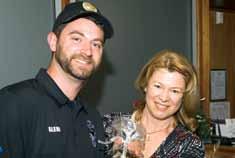
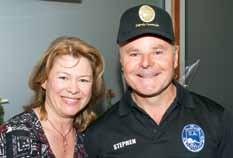
Police Club captains awards 2014
“It’s all a bit of fun really, I don’t take myself too seriously.
It’s the fringe & I only have an hour with my audience to explore the music of Neil Diamond.
“It’s all a bit of fun really, I don’t take myself too seriously. It’s the fringe & I only have an hour with my audience to explore the music of Neil Diamond.
With the success of his last show,
Besides my therapist recommended I do the show to find myself & help others discover the Truth that …It’s just me !”
Besides my therapist recommended I do the show to find myself & help others discover the Truth that …It’s just me !”
“The Singer Sings His Songs, The Neil Diamond Story” Dave Freeman delivers a more humorous take on …… just who sounds like who …..
With the success of his last show, “The Singer Sings His Songs, The Neil Diamond Story” Dave Freeman delivers a more humorous take on
So shut your eyes and be taken away to a time when Cherry Cherry, Brooklyn Roads, I am I said, Crunchy Granola and Love on the Rocks were household names.
You will leave the show having learned so much more about neil’s life but also amazed at how much “neil Diamond sounds like Dave Freeman”.
Shows Only Live at the Police Club … Friday 20th Feb & Friday 6th March
Ten participants in the inaugural Police Club captains programme emerged as clear winners in d ecember. But Police Credit Union personal banker Glenn Lewis and h arcourts VennMillar principal Stephen Venn secured the titles of Police Club commissioner and deputy commissioner respectively.
Police Association president Mark Carroll announced the winners at a special awards function at the Police Club and paid tribute to all the captains.
“We’re delighted to be able to recognize and thank those captains who have thrown their weight behind this programme,” he said.
scanned at the bar throughout the year.
The club can then identify the proceeds of the events the captains have organized and add them to those scanned from members of their nominated network.
2 Shows Only
friday february 20 and friday March 6 at 7:30pm

Open Monday to Friday for lunch and Friday nights
“With their support we can help ensure our club thrives and prospers in the future.
“And we’re particularly pleased that all 10 have captains have once again agreed to take up the mantel of Police Club captain for 2015.”
Club captains all receive a gold membership card which is
Available for private functions, conferences, boardroom lunches, cocktail parties, training facilities and more
The funds are collated at the end of the year and announced at the awards function.
Club captains receive rewards and prizes commensurate with their efforts.
For nomination forms and further information on the programme go to the Police Club website (www.policeclub.com.au) or contact Bronwyn at the club (8212 2924).

Competitive food and beverage packages – use your Police Club membership card and save even more.
karen tamm congratulates glenn lewis and stephen Venn
Police Club captains David Reynolds, Barry Blundell, John Winkworth, Glenn Lewis, Steven Dolphin, Stephen Venn, Peter Jackson, Peter Shanahan and Darryl Millikan
The Last Shift
BRAD FLAhERT y (1)
GRAhAM FOx (2)
GRAhAM K ALiSCh (3)
NE iL SMiTh (4)
MARK WiLLiAMS (5)
MARK S WiLLiAMS (6)
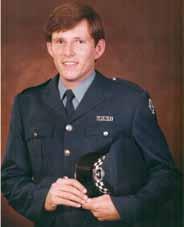
SuPERiNTENDENT
BRAD FLAhERT y
Regional Executive
38 years’ service
Last Day: 08.02.14
Comments…
“i had some ups and downs as everyone does, but i still loved the job. i left feeling good about where i had been, who i had worked with and what i had achieved.
“i have created a new job out of nothing and now work in upstream oil and gas out of Port l incoln. it’s about as far away from policing as you can get.
“ i f i could pass on a message for the young people of s AP ol i would say: hang in there when it’s tough, love the grand times that
you will experience and cherish and look after your mates.
“Above all, maintain your integrity, ethics and honesty and look after your people if you achieve rank.
“We belong to a very exclusive and special culture. s ome will knock that culture but that’s because they are not part of it.
“t he flahertys in policing will continue: my son, shane, has joined Victoria Police and will carry on the tradition.
“i thank my many colleagues for the great times and thank the Police Association for its hard work in representing our members.”
Detective Brevet Sgt Mark (S) Williams
Victor harbor CiB
37 years’ service
Last Day: 11.12.14
Comments…
“i have seen a lot of change in the job and learned a great deal from the challenges policing presents. i have some great memories and made some lifetime friendships. i enjoyed my career and it’s now time to enjoy life from a different perspective.
“i thank the Police Association for the ongoing assistance it is providing members and for its work in gaining the best possible pay and conditions. i hope it has continuing success for members in the times ahead.”
Left: Williams in the early 1990s






SENiOR CONSTABLE
GRAhAM FOx
State Traffic Enforcement
41 years’ service
Last Day: 03.11.14
Comments…
“i thank the Police Association for all its help over the years in assisting its members with pay rises and improving workplace conditions.
“ i especially say goodbye to all those currently serving and retired members with whom i worked in raffic since 1978.
“goodbye and all the best to those who continue to keep everybody safe.”
SNR CONST 1C
GRAhAM KALiSCh
Netley Police Station
42 years’ service
Last Day: 05.01.15
Comments…
“i thank the association for all the achievements made not only with regard to remuneration but with improving the working conditions of members.
“i have worked with some really good people and shared a few laughs along the way. these are the memories that i will take with me as i move on.”
SERGEANT
MARK WiLLiAMS
hills Fleurieu intel
43 years’ service
Last Day: 24.12.14
Comments…
“During my 40 years since graduation i can recall many conversations about how the government, the courts and even s AP ol management might have made mistakes.
“ i can't remember many conversations about mistakes the association might have made.
“ i thank all members who have supported the association, particularly in the tough times in the 1980s and during the early eB negotiations.
“ i have met many inspirational people and i will miss the camaraderie but not the bureaucracy.”
Assistant Commissioner Neil Smith
Regional Executive
38 years’ service
Last Day: 04.12.14
Comments…
“i can honestly say that i have really enjoyed every day at work. t here have certainly been challenges along the way but i have always been supported by a group of good people who have worked hard to keep the community safe.
“i am taking with me great memories of people and events from across the state.
“ i thank everyone i have worked with, for their professionalism, dedication, friendship and support.
“ t he association executive and representatives have worked very hard to support their members and have secured excellent pay outcomes for everyone, including me.
“t hank you and i wish you all well in the future.”
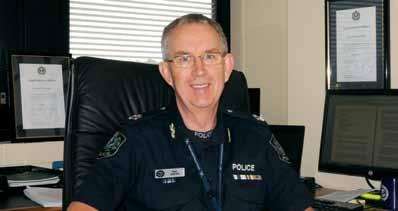
Course 3/2014 Graduates’ Dinner
Fenwick Function Centre
Saturday, December 13, 2014






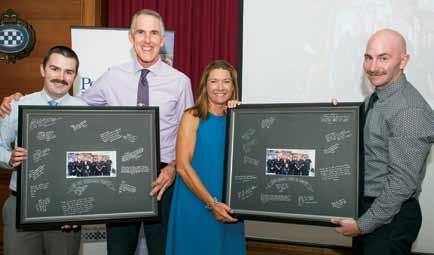



Amanda Francis, Sarah Forrest, Kristen Vos and Andrew Mcintyre
Graduation: Course 3/2014
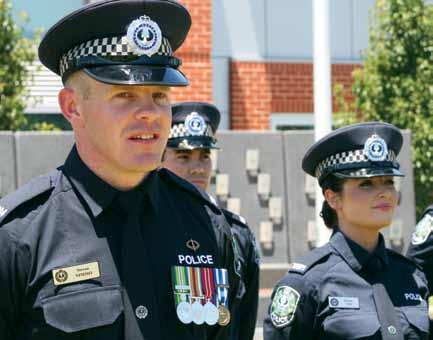
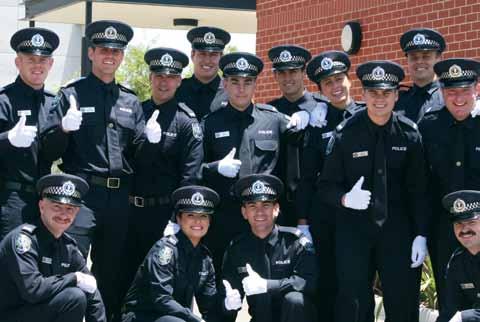
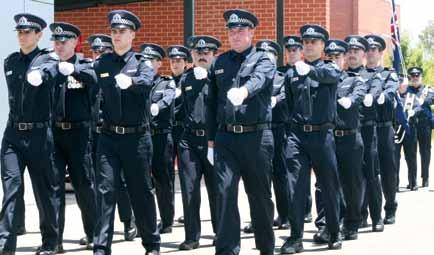
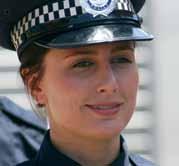
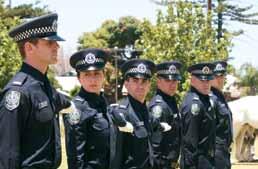
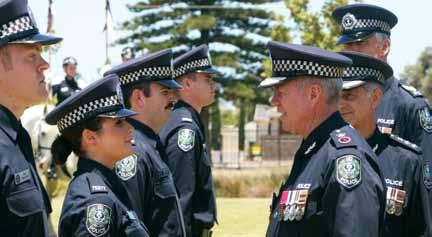
Steven Nimmo
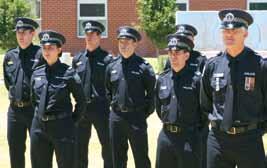

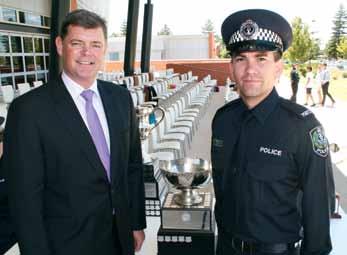
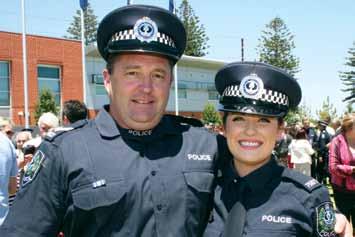
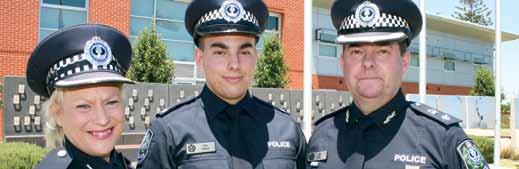
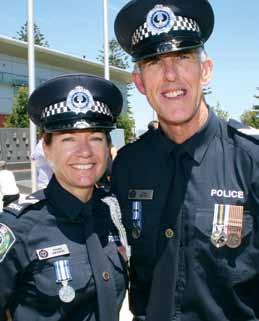




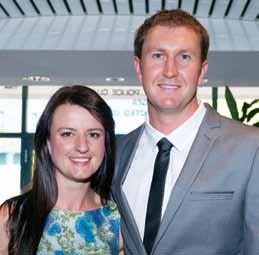






Nick Portolesi presents John Rodgers with a gift
Graduation: Course 4/2014
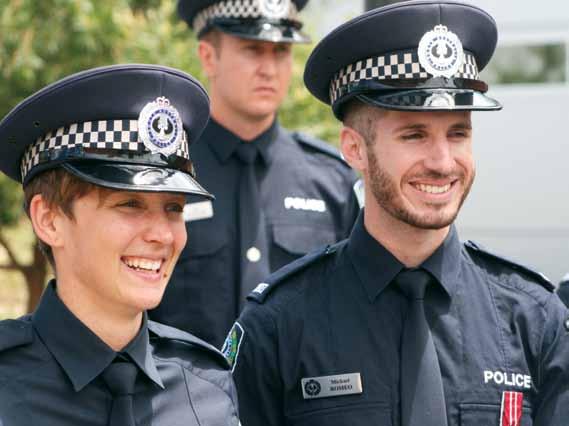
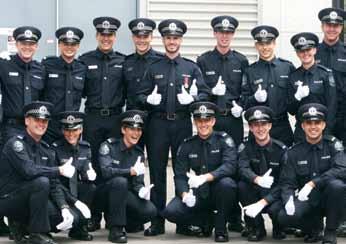
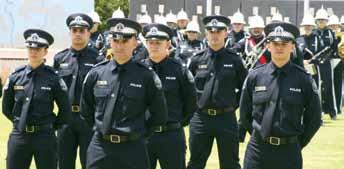
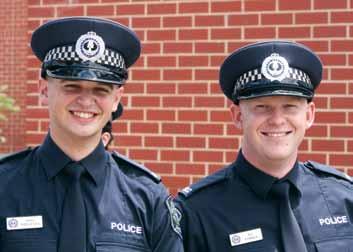
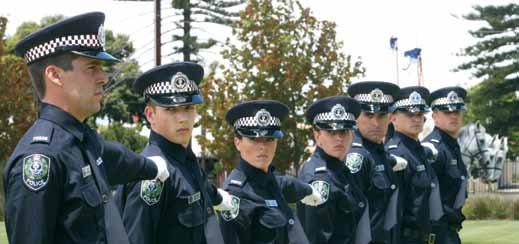
Danni Senior and Michael Romeo
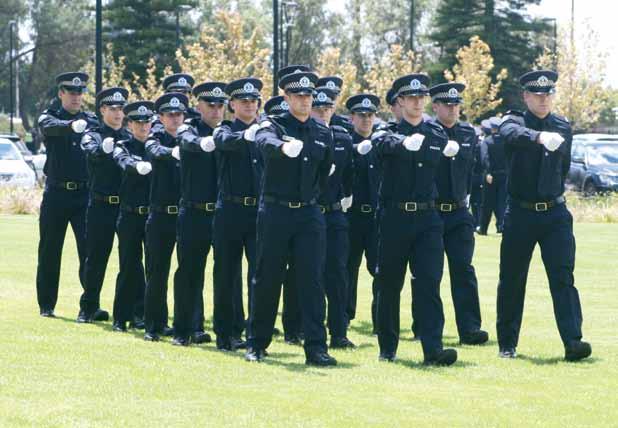

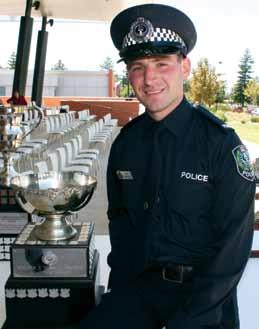
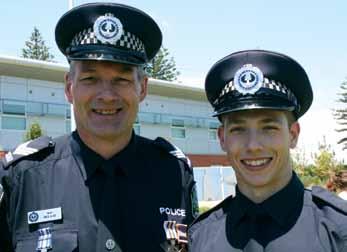
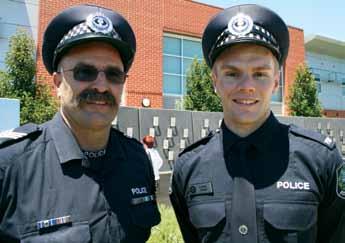
1 course members on the parade ground
James Relenza and Ben corbin 3 graduates gathered before the parade
graduates line up on the parade ground
naomi Roberts
Bob and Braydon Delaat
Police Association Academic Award winner Daniel schulz 8 kym and lachlan Webb
luke orometer 10 Joseph Hynes delivers a speech on behalf of the graduates
JaCK ie mcDonalD Senior Constable Elizabeth Crime Prevention
Playback
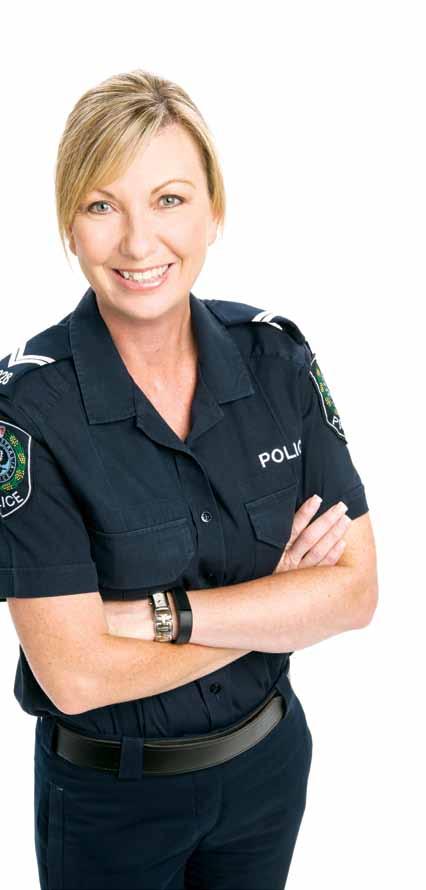
STORy criminalizing a cop
iSSuE May 1998 POSiTiON front cover
she was the 23-year-old police officer who stood falsely accused of assaulting a crazed, blood-spitting prisoner in the elizabeth police cells in 1994. And not until she had suffered more than two-and-a-half years of stress did she get to prove her innocence at the Police Disciplinary tribunal.
“i wasn’t sleeping; i wasn’t eating; i lost dramatic amounts of weight; and my hair was falling out in clumps,” she told the Police Journal. “i ended up having to go see my doctor because i couldn’t cope with it anymore.”
of her eventual exoneration, Brett Williams wrote: “Perhaps not surprisingly, McDonald’s acquittal brought her no instant relief. she cried and felt ‘completely numb’. not until days later did the impact of vindication take effect.”
NOW
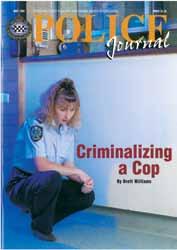
“The reaction to the story was very positive. t here was a lot of support from the people i worked with at the time. i got e-mails from complete strangers in the job offering support and saying: ‘ t hank you for speaking out. it’s happened to me.’ s omeone from way down south came all the way to salisbury just to talk to me about the article.
“i told my story to the Police Journal as a way of saying thank you to the Police Association for its support. And that was not only emotional support a lot of the time but also financial support. i also wanted to highlight those who had actually stepped up and stood by me instead of pushing away. no regrets about giving my story.
“i ’m not bitter at all now about what happened. At the time it was an awful thing to go through, but my life kept going forward and, eventually, you get back on an even keel. When we did the article i was pregnant with my first child. When she was born a whole new life started and it was a pretty good one from there.
“My three beautiful children are my greatest achievement in life. t hey are my entire world, and more. like most parents, i can’t put into words what they do actually mean to me. it’s extraordinary. you have a life before children and then a life after children. you think the life before is excellent, but the life after is absolutely amazing.
“After the story, when i was on light duties at Salisbury, i went to work at Family Violence at Elizabeth. t hen, from 2005 to 2010, i got a position doing work-fromhome adjudications. And, in 2010, i started at elizabeth crime Prevention and i ’ve been there since. i love it. t he thanks you get from members of the public is extraordinary.
“My advice to anyone who goes through the police complaints process: don’t let it get the better of you. Don’t be afraid to put your hand up and say: ‘i need a bit of help.’ And go to the Police Association. to this day, i’m still eternally grateful for the support they gave me. no matter how many times i called, i was never dismissed.”
To read the story Criminalizing a cop, go to PASAweb at pasa.asn.au






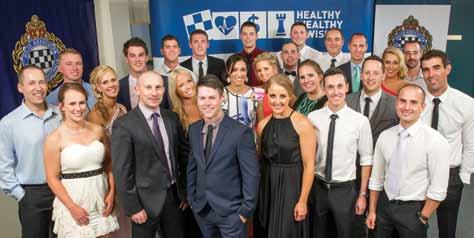

Police Health, Police Credit Union and the Police Association are the cornerstone of the police family. These three long-standing service-providers jointly run the Healthy, Wealthy & Wise initiative to bring special benefits to all police and their families.
HW&W delivered two outstanding presentations by US behavioural sciences and management consultant Dr Kevin Gilmartin last year.
A joint initiative of


And the Graduates’ Dinner, funded and staged by the HW&W initiative since 2012, is another success story. Together, your expert service-providers are bringing you more benefits than ever.