




It was a truck-crash fatality that looked like manslaughter, and three specialist sections working together helped prove it – twice.
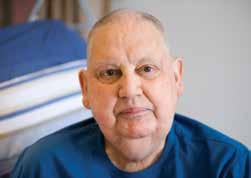
Suffering from terminal cancer, former detective Seamus Flynn makes the effort to caution cops against complacency when it comes to prostate health.
The prize was exceptional, the timing was perfect, and the generous deal that followed the win satisfied everyone.
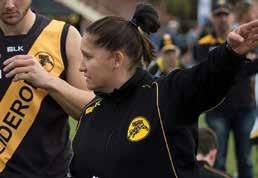
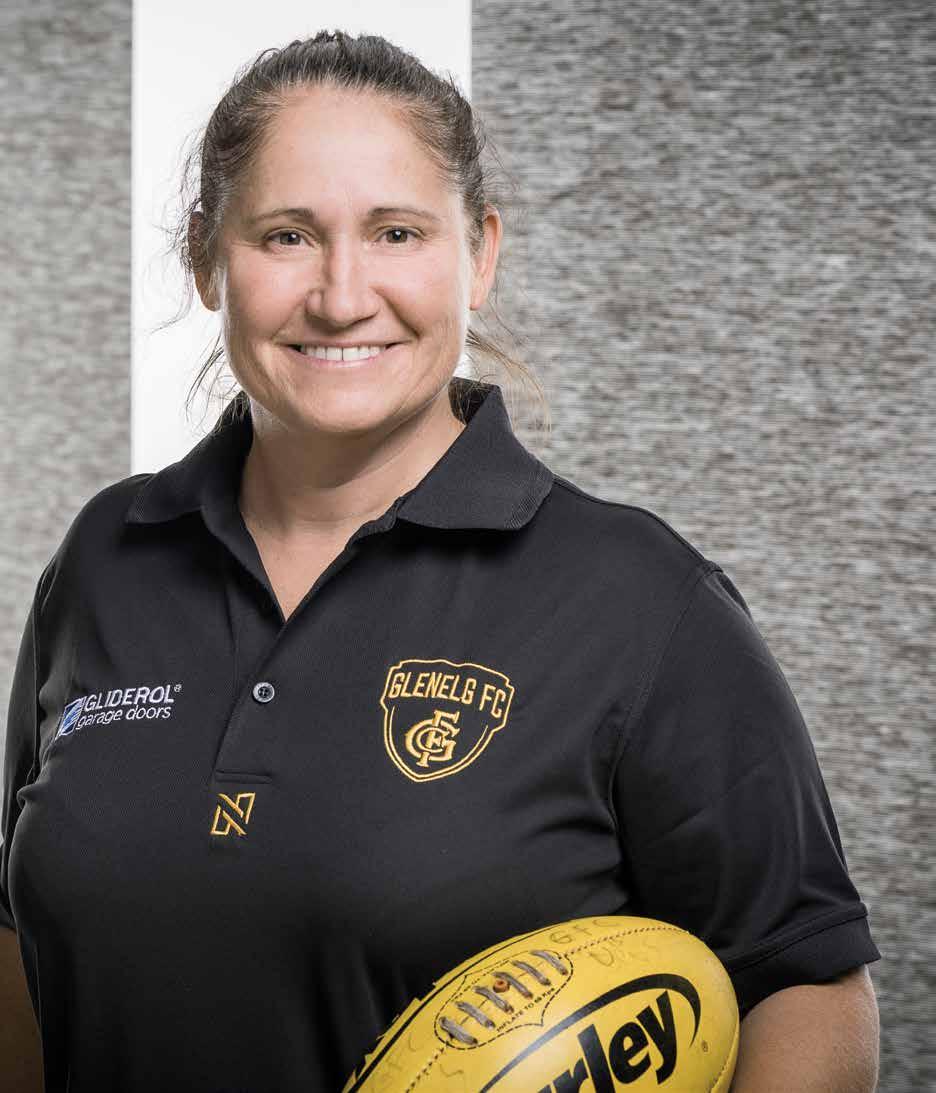
As well as her full-time job as a detective, Narelle Smith is “kicking goals” as the first female coach in the SANFL.
Major Crash brevet
Publisher: Police Association of South Australia (08) 8212 3055 Editor: Brett Williams (08) 8212 3055
Design: Sam Kleidon 0417 839 300 Advertising: Police Association of South Australia (08) 8212 3055 Printing: Finsbury Green (08) 8234 8000
The Police Journal is published by the Police Association of South Australia, 27 Carrington St, Adelaide, SA 5000, (ABN 73 802 822 770). Contents of the Police Journal are subject to copyright. Reproduction in whole or in part without written permission of the Police Association of South Australia is prohibited. Opinions expressed are not necessarily those of the editor. The Police Association accepts no responsibility for statements made by advertisers. Editorial contributions should be sent to the editor ( brettwilliams@pj.asn.au

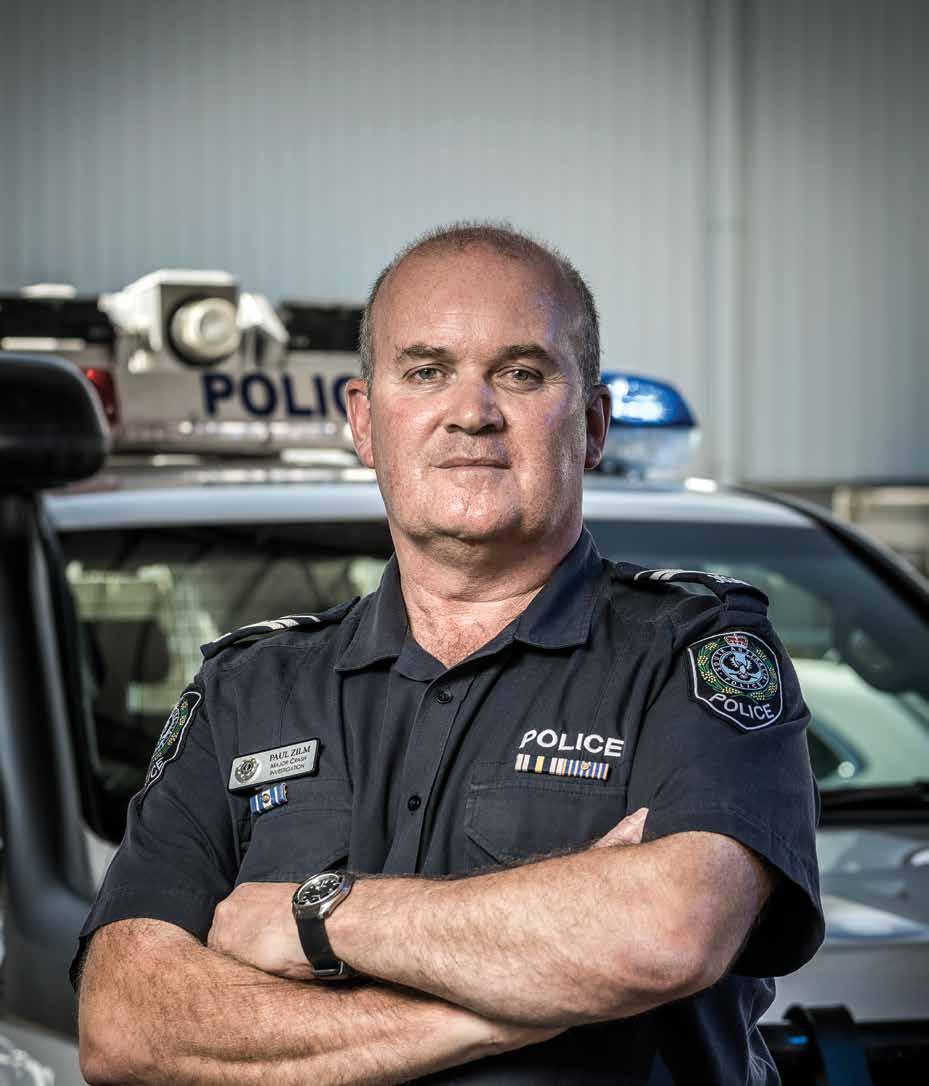
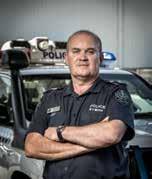
We knew the manslaughter conviction in the Happy Valley truck-crash case was a great win for Major Crash, Major Crime and Heavy Vehicle Enforcement members. Brevet Sgt Paul Zilm (Major Crash) and Detective Sgt Justin Ganley (Major Crime) agreed to have a chat to me about it.
Neither of them had dealt with a case quite like it before; and because the offender won an appeal, they and others had to go through two trials.
When we heard that terminally ill former detective Seamus Flynn wanted to tell his story to the Police Journal we responded with an instant “yes”. I interviewed him at his home last month and found his courage inspiring. He was willing to give up precious moments of the time he has left to convey a health message to cops. It was a grand gesture.
Police Association delegate Narelle Smith talks frankly about her coaching role with Glenelg, as well as the job she missed out on with the Adelaide Crows.
And, in this issue, we begin our new last-page feature: Cop’s Creatures. First up is Brevet Sgt Robyn Buller who owns multiple horses. We’re hoping to see some quite different kinds of pets throughout the year.
Enjoy this first issue, and the rest, for 2017.
Brett Williams
0417 876 732

0417 817 075

METRO NORTH BRANCH
Port Adelaide................. Kim Williams (chair)
Henley Beach .................. Matthew Kluzek
Holden Hill Nigel Savage
Gawler David Savage
Golden Grove Stuart Smith
Parks ................................ Sonia Giacomelli
Salisbury Taryn Trevelion
Northern Prosecution Tim Pfeiffer
COUNTRY NORTH BRANCH
Port Lincoln Lloyd Parker (chair)
Ceduna David Bourne
Coober Pedy Jeff Page
Kadina Ric Schild
Nuriootpa Michael Casey
Peterborough Nathan Paskett
Port Augusta ................... Peter Hore
Port Pirie Gavin Mildrum
Whyalla Les Johnston
CRIME COMMAND BRANCH
Fraud ............................... Jamie Dolan (chair)
Elizabeth Ben Horley
Adelaide .......................... Alex Grimaldi
Forensic Services Adam Gates
Holden Hill Narelle Smith
Intelligence Support Kevin Hunt
South Coast Jason Tank
Sturt Brad Scott
METRO SOUTH BRANCH
Sturt ................................ Michael Quinton (chair)
Adelaide Ralph Rogerson
Netley Toby Shaw
South Coast Andrew Bradley
Southern Traffic .............. Peter Tellam
Southern Prosecution .... Andrew Heffernan
COUNTRY SOUTH BRANCH
Mount Gambier ............. Andy McClean (chair)
Adelaide Hills Joe McDonald
Berri John Gardner
Murray Bridge Kym Cocks


Naracoorte Grant Baker
Renmark James Bentley
OPERATIONS SUPPORT BRANCH
Dog Ops Bryan Whitehorn (chair)
Police Academy Paul Manns
Police Academy .............. Rhett Vormelker
Police Band Neil Conaghty
ACB Jo Curyer
Comcen Brenton Kirk
Firearms Brett Carpenter
HR Kelly Lavington
HR Ian Upton
Mounted Ops Melanie Whittemore
STAR Ops ....................... Daniel Willetts
State Tac/Op Mandrake Mark Buckingham
Traffic David Kuchenmeister
Transit Richard Hern
WOMENS BRANCH
Kayt Howe (chair) (no delegates)
ATSI BRANCH
Shane Bloomfield (chair) (no delegates)
OFFICERS BRANCH
Les Buckley
COHSWAC Bernadette Zimmermann
Housing Bernadette Zimmermann
Leave Bank ......................... Bernadette Zimmermann
Legacy
Allan Cannon
Police Dependants Fund Tom Scheffler
Superannuation
Bernadette Zimmermann
Tom Scheffler
SOGII Matthew Karger
PRESIDENT
Mark Carroll

JIMMY is 37, short and nuggetty with sandy, closecropped hair. His face is already a bit crinkled from being out in the sun and squinting through the windscreen of a patrol car, notwithstanding the obligatory sunglasses. When he talks he leans forward in his chair.
“I’ve been a copper now for a little over 15 years. Started on patrols, did a bit of time on the bikes. Then I did a CIB course and I’m now in the Drug Squad.
“I love my job and I don’t want to do anything else but it can be pretty stressful. Plenty of times I take a headful of barbed wire home with me. It’s not good for me, I know.
“I also know it’s not good for the missus and the kids. I don’t quite know what to do about it but I do know I can’t go on feeling like this.”
Jimmy stands out because he is prepared to talk about how he feels. Most of his workmates aren’t.
A “Suck it up, Princess” culture prevails – predictable but not very helpful.
It seems that much of the damage is done, probably unconsciously, by the organizational and managerial cultures in which policing is done.
A mental-health issue doesn’t mean you’re soft. It means you’re human.
Jimmy again. “Being a copper is, in many ways, a state of mind. The job’s all-consuming and it comes with adrenaline spikes which can be really addictive.
“Everything you do demands your full attention if you want to make it to the end of your shift in one piece.
“You rely on your mates and your mates rely on you in ways ordinary people just don’t get. Your workmates become your family and unless you’re very careful, your real family can slip into the background.
“You can be with your family but absent from them at the same time. Then things can start to unravel badly.
My wife got progressively madder with me because neither of us understood what was going on. I’d go to work sometimes wondering if I was going to have a marriage to come home to.”
Sound familiar?
The Police Association is critically aware of the mental-health challenges confronting our members. Depression, anxiety, acute stress reactions, PTSD, social phobias and substance abuse disorders are just the tip of the iceberg. And at the end of the road, there’s suicide.
The findings of a research project conducted recently in the UK will surprise lots of people. This research project found that it’s not always police work itself that contributes to psychological injuries and mental-health issues.
Almost half of the UK police officers who reported a mental health issue and/or a psychological injury to the system cited management’s response as either the direct cause of their problems or a significantly aggravating feature.
It seems that much of the damage is done, probably unconsciously, by the organizational and managerial cultures in which policing is done.
Police officers know that by declaring a mentalhealth issue to the system they risk the loss of operational status, the diminution of their personal and professional reputation and what can be an indelible stain on their careers.
The bitter irony here is that it’s well known that the earlier someone puts his or her hand up for help, the faster and more complete the recovery.
Attending to mental health in the workplace is about humanity and compassion. But it’s also good business. Mental ill health costs Australia over $20 billion a year.
How much is lost when a well-trained, dedicated police officer goes off sick with a
mental-health problem and doesn’t come back? Much more than we imagine.
Growing awareness and understanding of mental health – and doing away with the stigma that surrounds mental ill health – will require a significant cultural change right across our profession. And this won’t happen in a week, a month or even a year.
This sort of cultural change will require a comprehensive, sustained and integrated programme of work.
Unfortunately, organizational and management responses to mental health in the workplace are sometimes confined to a PowerPoint presentation and a box of brochures in the typing room.
Senior managers can then tick a box – but nothing will change.
The Police Association is working with the Police Federation of Australia to develop and implement the sort of national campaign we need. Again, this campaign has to be comprehensive, sustained and integrated but its objectives are clear:
• Everybody must understand and accept that mental-health conditions are diseases – not weaknesses: acute stress reactions and PTSD, particularly, are honourable injuries acquired on active service.
We’ll need political support; we’ll need the support of senior managers and departments; we’ll need the support of our families; and we’ll need to support each other.
• Everybody must understand that stigma and isolation are unacceptable responses to someone suffering from mental ill health.
• Police officers, their friends and families must be able to recognize the signs and symptoms at an early stage both in themselves and their colleagues on the force – and understand the importance of early intervention.
• Police officers must be confident that reporting well-being and mental-health issues (including psychological injuries) to the system will not, in any way, terminate or limit careers. This promise must be kept and seen to be kept.
This is a big job. It will take a long time and it won’t be cheap. To this end, we’re seeking the support of our politicians for funding – the Proceeds of Crime Act 2002 is a good place to start.
We’ll need political support; we’ll need the support of senior managers and departments; we’ll need the support of our families; and we’ll need to support each other.
A journey of 1,000 miles starts with a single step. This is an important journey for all our members and it starts now.
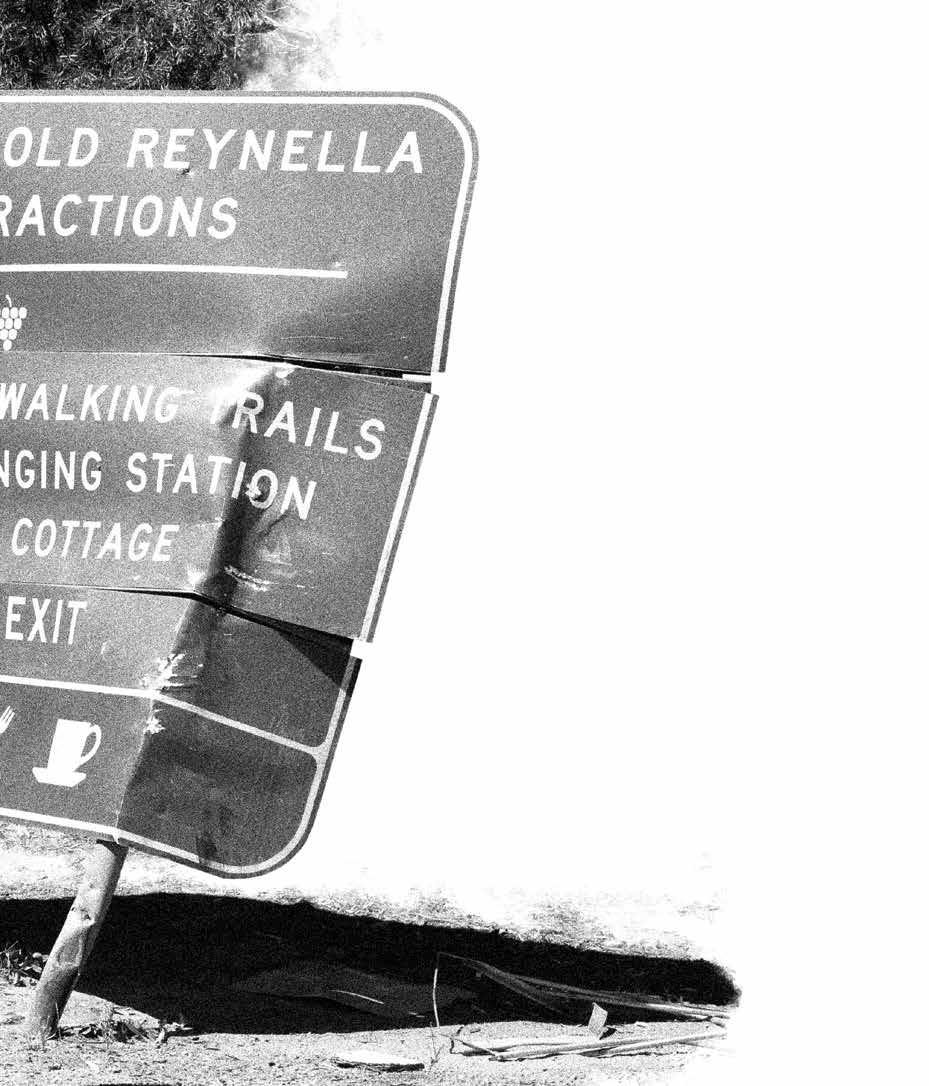
The compelling last words of a truckie killed in a crash came to light on a dash cam police found after the fatality. The commentary – and vision – was highly emotive but it helped win a manslaughter conviction.

By Brett Williams
ANair-pressure alarm sounds! The brakes fail! The desperate truckie
twice pumps the brake pedal, all the way to the floor of the 14-tonne Mitsubishi tautliner, but there’s no resistance!
Ahead of him, he can see traffic banked up in the southbound lanes of Main South Road, Happy Valley. Lane closures and speed restrictions have caused the congestion. And Robert Brimson, 45, knows he cannot stop the truck, which is loaded with timber doors.
Now frantic, on that March morning in 2014, he bellows: “Oh, f--king brakes! Oh, f--k off: no f--king brakes!”
Unable to stop, or even slow the truck down, he veers to the left, onto the eastern shoulder of Main South Road. That evasive action prevents him from crashing into stationary vehicles in which drivers and passengers are waiting for the congested traffic to clear.
Brimson spares those late-morning travellers fatal injuries and even death but gains no advantage
for himself. He yells: “Where am I gunna f--king go!” and repeatedly pumps the brake, before finally exclaiming: “I’ve got nowhere to f--king go!”
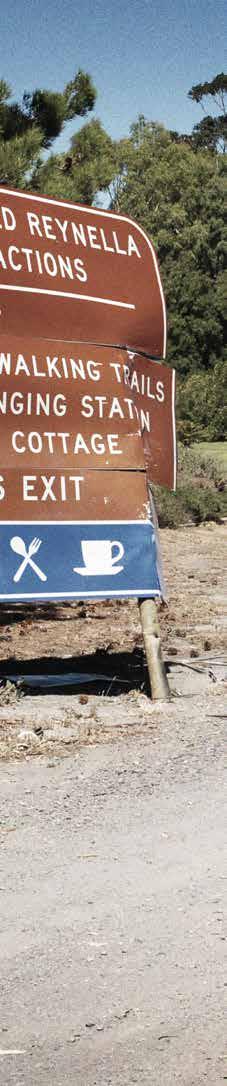
Careering along the eastern shoulder of the road, the out-of-control tautliner takes out an information sign and, after that, a speed restriction sign. Then it hits, and ends up caught on, a steel guard rail but continues rocketing forward like a train on a railway line.
Brimson now cannot stop, slow or even steer the truck – and it is heading straight for a gantry pole. The innocent, hard-working husband, father and grandfather is about to die.
There is simply nothing he can do to save himself as the tautliner slams into the pole. The driver’s side of the cabin takes the bulk of the impact, and the crush damage is too extensive for Brimson to survive.
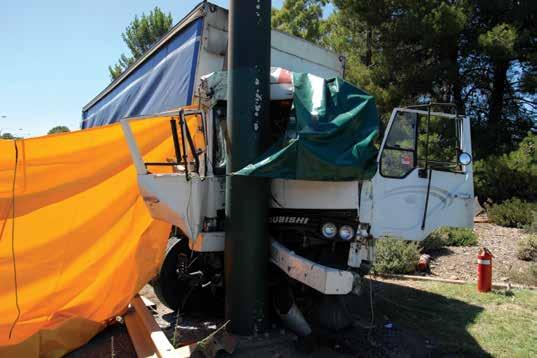
“The pole was embedded into the cabin, right into the front of the driver.”
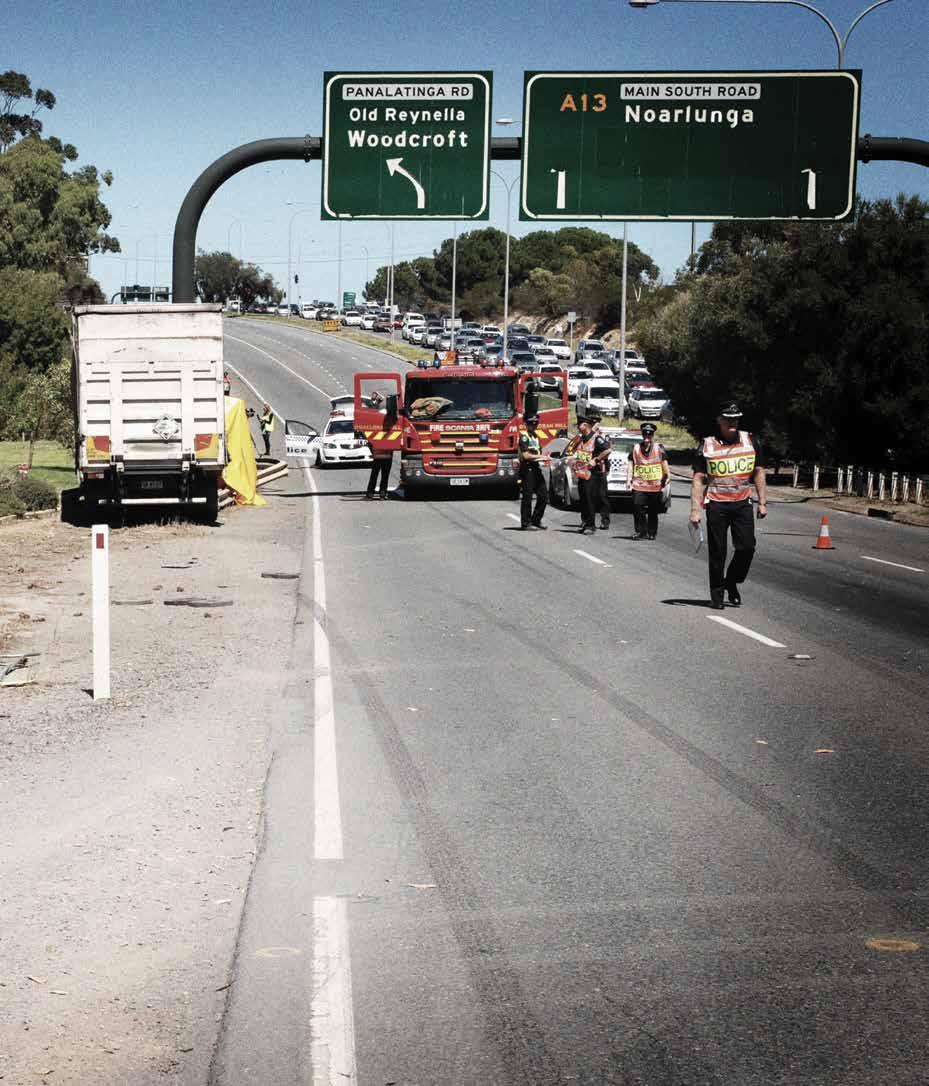
Major Crash brevet sergeants Paul Zilm and Shelly Henderson arrived on this confronting scene around an hour after the crash.
“The scene itself was pretty chaotic because roadworks were in place for the new Southern Expressway extension,” Zilm recalls.
“Traffic was being diverted into two lanes and it was then banked up right back past where this truck had come to rest.
“Firies were already there. They’d covered up the cabin area because, obviously, he (Brimson) was still in there.”
“But every man and his dog were stopping, taking photos from the northbound traffic.”
Sturt Traffic officer Senior Constable Paul Nunn had been first to respond to the crash. Zilm drew information from him and started a preliminary inspection of the scene.
Among his observations were those of paint and swipe marks on the flattened road signs, and rolling tyre imprints which showed that the tautliner wheels had not locked.
Zilm also studied aspects of the truck, such as its position and the massive impact it had absorbed.
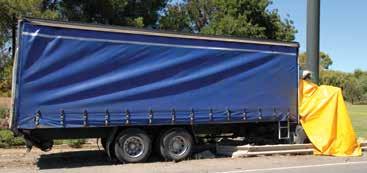
“The pole was embedded into the cabin, right into the front of the driver,” he says. “The force of the impact, the crushing of the cabin, was right back against him (Brimson).
“And the cabin sat over the top of the engine, so he basically bore the full brunt of the impact.”
As part of his inspection, Zilm came to see just how brutally that impact had claimed its victim. He removed a yellow tarp covering the driver’s side of the wreck and saw Brimson’s ravaged body in virtually a standing position.
The crushing of the cabin had forced the driver’s seat, in which Brimson had remained, directly upward.
“I think his own momentum would have kept him going forward,” Zilm says. “Because of the sudden stop against the pole and the cabin crushing in on him, he was just forced towards the windscreen (and) upward as well.
“He had a lot of blood over his face and his eyelids were very swollen and bruised. There was a lot of bruising present around his face, too.”
The task of extracting Brimson’s body from the wreckage would present a physical challenge and reveal a tragic sight. The tautliner was jammed so tightly against the pole that it was immovable.
Zilm called for a tow truck which turned up and dragged the wreck away from the pole. Firefighters then yanked the driver’s door off and used spreaders to push the caved-in front of the truck slightly forward.
Ever professional, the police and firies afforded the dead man a dignified exit from the wreckage.
Before the extraction, the steering column and foot pedals had obscured Birmson’s legs and feet from view. So only now could Zilm see them.
“We didn’t know just how bad they were going to be,” he says. “But it was obvious when we got him out that his legs were broken.”
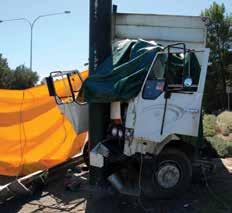
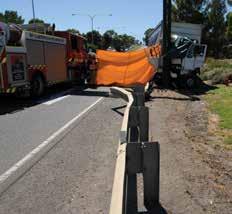
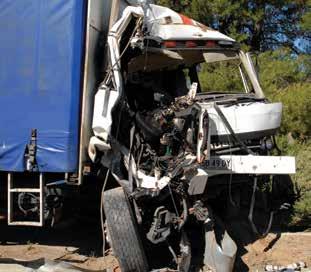
From his initial observations, it was clear to Zilm that Brimson had deliberately veered left to the eastern shoulder of Main South Road. Entirely unclear, however, was why he had made that manoeuvre.
“You’re trying to think about the possibilities all the time,” Zilm explains. “You’re probably already thinking he was trying to avoid the traffic for whatever reason. Maybe he’d lost his brakes and then swerved.”
The mystery did not last long. Major Crash technical vehicle examiners Eliot McDonald and Troy Sage had arrived on the scene around 1:30pm. They undertook an examination of the truck and established that its brakes were simply inoperative.
Says Zilm: “When he (McDonald) said: ‘It’s got no brakes,’ that fitted in with what we already knew about the veer to the left to avoid the traffic. There was nothing he (Brimson) could’ve done.
“He did everything he could to avoid colliding with other people. If he’d hit other traffic who knows how many vehicles would have been involved? He was a hero, really, (given) what he did.”
Zilm, who knew of other brake-failure crashes, thought it “disappointing” that trucks as dangerously defective as the tautliner were travelling SA roads.
Meanwhile, he and Henderson remained on the scene until close to dusk. Under some pressure, they took
measurements and almost 90 photos of the scene, the truck and other areas relevant to the crash.
“It was a big job,” Zilm says, “more so because of the location. And you had constant pressure from people saying: ‘How long is the road going to be closed? We’ve got all this traffic building up!’
“But you can’t do anything about that. We’ve got to do the job properly.”
Toward the end of their six hours on the scene, Zilm and Henderson watched over the removal of the tautliner. A tow truck carried it away to the police vehicle compound at Ottoway.
Back there, during a search of the tautliner, Henderson found a dash cam on its passengerside floor. Like a black box recorder, the camera had captured the entire lead-up to the crash and the moment of impact.
The footage would prove a huge benefit to the investigation but also a highly confronting piece of sound and vision. Zilm watched it several times.
He saw and heard the truck, including its brakes, functioning normally as it approached the last intersection before the crash.
“When he (Brimson) gets down near Candy Road you can hear him go to pump the brakes and an audible alarm comes on,” Zilm explains. “Then you can hear him pressing the brake pedal numerous times.”
All the desperate, expletive-laden shouting that follows from Brimson is clearly audible. Clear, too, is the compelling vision of his attempt to spare other motorists and save himself.
Says Zilm: “You can see the traffic banked up and he deliberately veers to the left to avoid all the stationary vehicles.
“That’s when the side of the truck collides with an information sign and there’s the noise of that impact. Then there’s a heap of roadwork signs. He just flattens that stuff, and then hits the guardrail.
“That’s where the truck moves to the right a fraction but follows the guardrail around. And the footage shows the pole coming straight up, straight toward the cabin – and then there’s silence. The dash cam fell to the floor and that was it.”
A key consideration for Major Crash was that whoever owned the tautliner had a responsibility to keep it roadworthy. And the truck belonged not to Brimson but to a company, Colbert Transport.
So Major Crash figured that, if the company had neglected to maintain the truck, its owner, Peter Colbert, should face a charge of manslaughter.
That strategy brought not only Major Crime into the investigation but also officers from the Heavy Vehicle Enforcement Section.
Major Crash and Heavy Vehicle officers launched a raid on Colbert Transport and found a fleet of trucks with faulty brakes and other serious mechanical failings.
“And the footage shows the pole coming straight up, straight toward the cabin – and then there’s silence.”

“It’s just so confronting that it’d be tough to make a rational decision after that.”
Colbert had himself worked as a driver for the same company he now owned. He had assumed control of it only two months earlier and lived on-site in a caravan.
The whole operation struck police as “dodgy” and the raid ended with almost all of the Colbert Transport fleet defected.
Then, with the fatal March 7 crash declared a major crime 10 days after it had happened, the Major Crime-led investigation was well under way.
And to score a conviction against Colbert, the investigators would have to prove him to be “so grossly negligent” that his offence “warranted criminal sanctions”.
Responsibility for that task fell to Major Crime detective sergeant Justin Ganley – whose role was admin sergeant – and Brevet Sergeant Tamara Day, the investigating officer.
“He had a duty of care to his employees,” Ganley says. “We looked at the lack of any maintenance schedule and the lack of any experience of the drivers, or the lack of any induction or training.”
As they strove to gather that evidence, Ganley and Day were never short on support and expert input from their Major Crash and Heavy Vehicle colleagues.
“These folks were just bloody fantastic to work with,” Ganley recalls. “They just did a brilliant job and just had infectious enthusiasm for going out there and getting it done. Nothing was too hard for them, and we (at Major Crime) handed out a lot of actions.”
Detective Sergeant Justin Ganley
Building the case against Colbert relied, of course, on technical evidence but also the accounts of current and former Colbert Transport employees. From them, investigators took around 100 statements over a five-week period.
Says Ganley: “We spoke to the drivers who had driven a variety of trucks out there (at Colbert Transport), anyone who had worked there; anyone we could find.”
Most of the drivers spoke of Colbert failing to respond to their repeated complaints about serious mechanical problems with various trucks. That included complaints about faulty brakes.
One of several drivers who had driven the tautliner was lucky to survive a close call in it just days before the Brimson death.
“It was down at Lonsdale Road at the top of Cement Hill,” Ganley says. “He lost the air in the brakes and had to take an emergency side road and work his way down through gears to stop the truck.”
After many hundreds of man-hours had gone into the investigation, Tamara Day arrested Colbert and charged him with the manslaughter of Brimson. She also charged him with endanger life in respect of the driver who had had the near miss on Lonsdale Road.
Colbert faced the charges in the Supreme Court in June 2015 and pleaded not guilty. And this was not the first time he had had to answer serious charges. In 1998, a court sentenced him to nine years’ jail for the rapes of two women.
Now, dressed down and highly odoriferous, he showed little regard for the proceedings, particularly when he fell asleep as witnesses, including Zilm, gave their evidence.
“He was sitting basically in front of me and I couldn’t believe he slumped forward and fell asleep,” Zilm recalls. “Just ignorant.”
Among the witnesses the jury heard were police, truckies and expert mechanics. But, when it came to the compelling dash-cam footage, the jury never got to see it – or hear Brimson’s last desperate words.
“Prosecution and defence, in the end, agreed not to show it,” Ganley explains. “It’s just so confronting that it’d be tough to make a rational decision after that.
“You don’t see a guy die, you hear a guy die. You hear his voice and you can see how he made pretty valiant attempts to (manoeuvre) around so he wouldn’t hit these other cars. He hits the pole, and that’s it.”
But, from a transcript, Zilm got to read to the jury exactly what Brimson had exclaimed in the last moments of his life. And the jurors’ reactions did not escape him.
“They were concentrating on what I was saying,” he says. “And then, when I got to the last part, it was almost like they had viewed it, and almost like they’d given a gasp, as if to say: ‘Hell! Really!’ It was a shock (to them).”
Colbert maintained that none of his employees had ever complained to him of faulty brakes on the tautliner. In the end, however, the jury found him guilty of both charges and, in August 2015, Justice David Peek sentenced him to 12-and-a-half years’ jail.
But, after an appeal before the Court of Criminal Appeal, Colbert won the right to a retrial, which went ahead last September. The jury in that trial took barely an hour of deliberation time to find him guilty, although he wound up with a reduced sentence.
In October, Justice Malcolm Blue sentenced Colbert to 10-and-a-half years’ jail with a non-parole period of seven years and five months.
Says Zilm, who gave evidence in both trials: “You had 24 independent people who heard it (the evidence) and found him guilty, so that was brilliant.”
Of course, those left with the most suffering were Brimson’s wife, Agnes, and two daughters.
Ganley met the family during the investigation. “Agnes is lovely,” he says, “just a nice lady who was a bit naïve to the whole (justice process). But she never once complained, grizzled, or made life hard for us.”
Zilm, after 15 years at Major Crash, thinks of a death like Brimson’s as an injustice. “This,” he says, “is a bloke just going about his normal day’s work, but he’s not coming home.
“In the morning, his wife (likely) said: ‘See you tonight,’ but she never did.” PJ
“You had 24 independent people who heard it (the evidence) and found him guilty, so that was brilliant.”
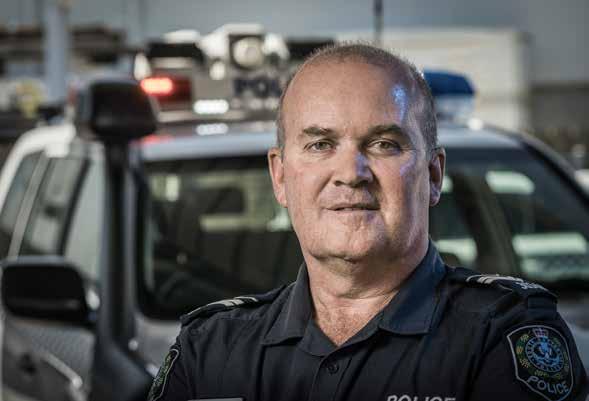
Brevet Sergeant Paul Zilm
Even as he languishes in the unyielding grip of prostate cancer, Seamus Flynn has his mind on a life-saving message for cops.
By Brett Williams
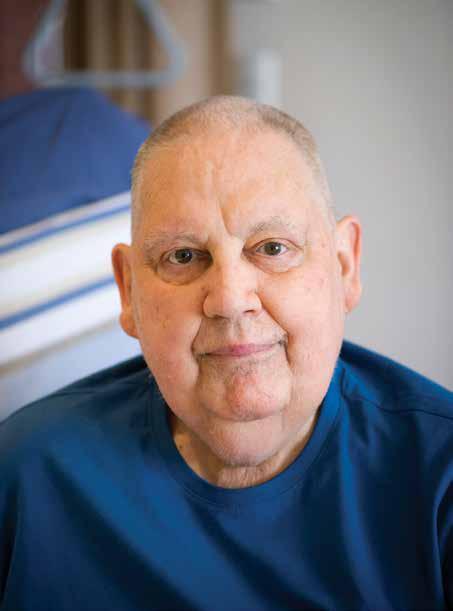
would blame terminal cancer sufferer Seamus Flynn (pictured above) if he opted for seclusion and left others to deal with their own problems. He has to cope with his ever-weakening body, walk with a frame, and sleep in a hospital bed set up in his own living room.
On some bad days, when his prostate cancer is at its most aggressive, the 65-year-old ends up back in hospital.
His is the ultimate burden. But, far from shunning anyone, this former Port Adelaide and Special Crime Squad detective is determined to reach out – to cops.
He wants them to learn from his misfortune; he wants to turn them into men who make their prostate health an absolute priority. And the way he figured was best to do that was simply to tell his story.
“I just thought of the Police Journal,” he says. “It’s a great forum for us (serving and retired police) to get to people.
“Now if I get one person to go and start getting (his prostate) checked, we’re in front. Obviously I won’t be here, but if you get people to start to think about it…
“It’s critical that we do something about it and not become complacent. We can improve (our understanding of prostate cancer) by becoming more aware of what the medical fraternity’s telling us.
“Just in my small circle, the number of blokes who have had it, or died from it, is unbelievable. It’s almost like an epidemic, and you think: ‘It can’t be right!’ But it is. It really is.”
Flynn was never himself complacent about his prostate health, or his health in general. He had undergone triple bypass surgery in 2000 and suffered post-traumatic stress disorder during his police service.
With that history of ill health, Flynn wisely underwent biannual medical check-ups. Naturally, his heart and cholesterol levels came in for scrutiny, as did his PSA (prostate-specific antigen) level every 12 months.
His blood samples always indicated that his PSA level was within the normal range, and he had none of the symptoms of prostate cancer.
“Except,” he says, “one morning (in 2015) I found some blood in my urine, so I booked in to see the GP.”
“He did a biopsy virtually straight away and then told me: ‘This isn’t good.
I’ll send you to an oncologist.’ ”
After that consultation, and a full blood test, Flynn got a phone call from the GP’s surgery. “You’ve got to get in here real quick!” was the message.
Says Flynn: “The PSA was really high, too high, and I got referred to a urologist. He did a biopsy virtually straight away and then told me: ‘This isn’t good. I’ll send you to an oncologist.’ ”
The urologist rightly suspected that Flynn had fallen victim to advanced prostate cancer, which is incurable.
Flynn wound up on Firmagon, a drug designed to reduce the level of testosterone (male hormone), which promotes the growth of prostate tumours. He took the medication by way of injections in his abdomen and, for four months, it worked well.
After that, however, Flynn came to feel pain in the back of his leg and so consulted his oncologist. The reality was that the cancer had spread to his pelvis. So, in the last days of December 2015, Flynn began a course of chemotherapy.
“It worked for a little while,” he says, “but (the cancer) was just too far advanced. Whenever I get the pain now, they take me in and give me a blast of radiotherapy. It seems that I respond better to radiotherapy than I do the chemo.
“But the last chemo they gave me made me anaemic so I had to have a few blood transfusions in that time. Just after the last blood transfusion, the oncologist said to me: ‘Look, I don’t think we can do much more.’
“It was surreal. I thought: ‘Oh, shit, there’s your number.’ You don’t wish to hear those words but I’d had a fair idea of what was going on.”
Flynn, a father of two and grandfather of two, asked how much time he might have left. His oncologist thought it unwise to speculate.
“He said that was because some people will fall over in a bundle and (die), while other people will stretch it out,” Flynn recalls.
“They (medicos) also ask you the question: ‘If worse comes to worst, do you want to be resuscitated?’ Nuh! (I don’t.)”
Flynn kept up the radiotherapy until last month, when he noticed that he was “starting to lose all power” in his lower body.
In whatever time remains for him, he does not intend to just “roll over”. He aims to “enjoy my time with family and friends”.
And those friends have shown their high regard for Flynn by the numbers in which they have rallied around their mate. Cops he used to work with and old schoolmates have “inundated” him with visits and phone calls.
“They just come out of the woodwork,” he says. “I had a phone call from a bloke who I think was the last bloke I worked with in uniform and Task Force before I went to the CIB. I haven’t seen him since then, and it was like yesterday. And that’s over 40 years ago.”
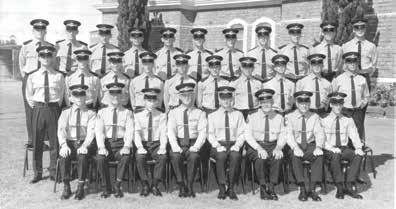
Another old copper who turned up to visit was one with whom Flynn had begun his career at the police academy. “The camaraderie in those days got you through,” Flynn reflects.
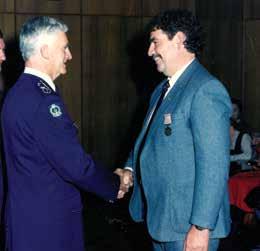
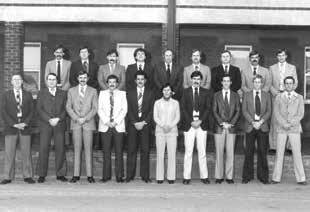
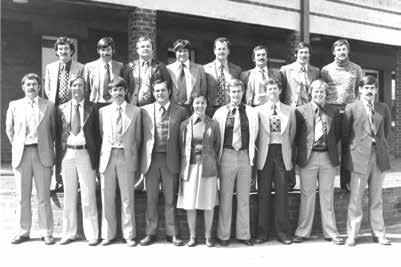
Retired detective senior sergeant Mick Lyons remembers those days, too. He speaks of a time when he and his coursemate, Flynn, were “young and free” and thought of themselves as bulletproof.
So, when he visits his old mate now, he finds the scene “pretty confronting”.
“When you go to see him you can see he’s in pain and you can’t imagine what he’s thinking emotionally,” Lyons laments. “But he makes the effort to talk to you, and you talk about old times.
“At least face to face with people, he’s doing his best to connect with them and just revisit the friendships and relationships of the past.
“He’s been highly regarded within and outside of SAPOL; and the effort he’s making to tell his story to help others is testament to his character.”
Police Association president Mark Carroll spoke of his deep gratitude to Flynn for telling his story directly to the police community.
“Seamus didn’t have to perform this act of benevolence but he did, and I salute him for his courage.”
“It’s just so important for our members to understand the need for vigilance where prostate health is concerned.
“And this is precisely one of the reasons the association introduced free health checks for retirees.
“Not that anyone should wait until his retirement to undergo a prostate examination, but all retiring
“… the effort he’s making to tell his story to help others is testament to his character.”
members should take advantage of the health check.”
Flynn, born in Adelaide to Irish immigrant parents, was one of six siblings and had attended Marist Brothers High School and St Michaels College before he joined SAPOL.
But his first job after leaving school was a brief stint with the Public Trustee, where the plan was to pursue a career in accountancy.
“That wasn’t for me,” he says. “In those days, the Public Trustee was in Victoria Square. I walked out the door one day and there was police headquarters on my left, so I joined up as a cadet: Course 27, 1969.”
After graduating, Flynn served as a city and Port Adelaide patrol officer and a member of Task Force,
which later became the STAR Force. As that transition from one unit to the other played out, Flynn undertook detective training and wound up at Port Adelaide CIB.
After three years there, he went to work with the Special Crime Squad for another three years before taking a transfer to the Riverland. Flynn enjoyed police work but found that, in the country, it came with an overwhelming emotional impact.
“I still remember one morning, on my way down to Berri, I came across an accident,” he recalls. “It was the young daughter of a mate of mine. She’d been killed crossing the road.
“All of sudden, you’re not just a detective or a police officer in the town. You’re a friend, or you’re a companion. You’re connected to (the tragedy); and it was the same thing in quite a few cases we had in the late ’80s, early ’90s.
“It took a toll on me so I got out in ’94 with post-traumatic stress and went into business for myself in sport stores.”
Those workplace tragedies added to a personal one Flynn had had to confront in 1976. One of his younger brothers, a police cadet on his way home one evening, died in an accident.
After a marriage breakdown in 2003-04, and the sale of his businesses, Flynn found work as an investigator with the Australian Building and Construction Commission. He retired from that role last October.
Although he does not now speak of his terminal illness with bitterness, the question is whether it has left him feeling cheated.
“Yes and no,” he says. “If it wasn’t going to be me it’d be someone else. But, if I got cheated, let’s see if we can help someone else not to be cheated.” PJ


By Nick Damiani
POLICE Association member Jason Vasey couldn’t believe his luck when Secretary Tom Scheffler telephoned him late last year.
The Road Policing Section cop had won first prize in the 2016 Police Lottery – a brand new Holden Commodore.
The timing couldn’t have been better: Senior Constable Vasey and his wife had talked of getting rid of their 15-year-old car.
“I said about three weeks before winning the car that we’re going to get a new car by the end of the year or early next year,” he said. “I’d had enough of it!”
There was one small problem though – with five people in SC Vasey’s immediate family, something bigger than a Commodore was on his mind.
But Holden allowed him to swap his model for a new Captiva.
“We just asked them what they could do for us, and they said: ‘Yeah, we’ll buy (it) and your old car as well,’ ” he said.
“So it basically cost us $4,000 for the new Captiva LTZ, which is the top model.
“I’ve never owned a new car before. I’ve always had second-hand, third-hand.
“It’s just nice to have a brand new car. It’s all ours, no problems.”
SC Vasey paid tribute to Holden and the Police Association.
“I’d like to thank them sincerely,” he said. “I actually got somewhat emotional on the day. I rang up my wife straight away and I had a few tears.
“We’d been out the week before and my wife had won a meat pack and we thought that was fantastic. We were happy with the meat pack!”
The association – through the lottery and also the Melbourne Cup luncheon – has provided children’s organization Novita with a donation of $55,000 last year. The association established the lottery in 2011, with proceeds helping Novita provide therapy, equipment and family support to more than 2,000 specialneeds children.
Police Association president Mark Carroll said the association’s support of Novita reflects the compassion of its members.
“Police will always have a strong sense of community,” he said.
“We are thankful to our members, the wider community and, of course, Holden for making the lottery a success yet again.” PJ
Smith made history when she won the position of assistant coach of the Glenelg footy club’s reserves side for 2016. The detective senior sergeant first class became the first woman to occupy a senior SANFL coaching role. She symbolized the emergence of women as players and coaches in professional and semiprofessional football.
It was all positive for footy-loving Smith and seemed likely to get even better. Sports commentators had pointed to her in late 2015 as the favourite to win the job of head coach of the inaugural Adelaide Crows’ women’s side. And few, if any, questioned her favouritism.
Smith, after all, was and is one of the nation’s most highly credentialed women in Australian Rules football. So it shattered her when the Adelaide footy club did not appoint her to its coveted coaching gig last August.
The job went to Australian Federal Police officer Bec Goddard.
“There was a lot of expectation that I would be in that role,” Smith says. “When it didn’t come to fruition there was a lot of embarrassment because the outcome of the (hiring) process was pretty public.
“I’d worked so hard in the female (footy) space for such a long time that I kind of felt aggrieved when I didn’t actually pick up a role.
“It’s just a matter of accepting that and moving on, but it was definitely a really difficult time.”
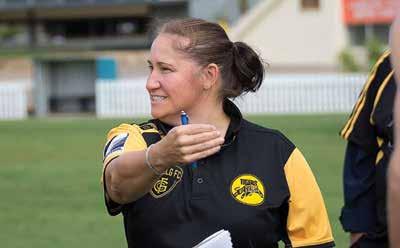
As hard a time as it was, Smith never suffered any loss of passion for coaching or footy in general. Had she lost her trademark enthusiasm she would hardly have won her recent reappointment as assistant coach of the Glenelg reserves side for 2017.
Smith, 47, revels in the role; and, in her time with the club, she has felt totally at ease in the male footy environment. She speaks of the players’ response to their female coach as “really good”.
“I think having been in SAPOL my whole adult life, I have a really good understanding about how to function as a female in a male-dominated area,” she says.
“There was an incident really early on where one of the guys was really disrespectful and I gave him a really big spray.
“I was doing a quarter-time address at (Norwood Oval) and he was just being a smart alec, speaking out of turn.
“I just made no bones about it – that it was unacceptable behaviour and I don’t accept it as a coach.
“It was a really good learning point, and that’s the one and only time that’s ever happened.”
Smith knows of only one protest against her occupancy of the assistant-coach role. It came via social media.
“It was someone banging on about how they’d never come to another game,” she says. “We had a bit of a laugh about it; and I totally understand the resilience that’s required.”
By contrast with that social-media gripe, Smith – who received the Honorary Football Woman of the Year award in 2014 – remains as revered as ever in footy circles.
The former half-back flanker, who racked up 130 games over 12 years, played in six premierships with Edwardstown, Woodville-West Torrens and Greenacres women’s footy clubs.
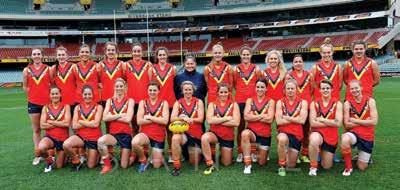
Smith, an Edwardstown best-and-fairest winner in 1998, played in the SA Women’s Football League state side five times and won all Australian selection twice (1998-99). She later captained Greenacres in its 2009 premiership, her retirement match.
“I think having been in SAPOL … I have a really good understanding about how to function as a female in a maledominated area.”
The next year, with a level 1 coaching accreditation from the AFL, she reluctantly accepted an offer to coach Greenacres women’s footy club. And, in the seven years since then, Smith has never been out of the coaching game.
In women’s footy, she has led teams at both junior and senior levels to five grand finals, resulting in two premierships (2014-15). And from 2013 to 2016, Smith coached the SA senior women’s side after serving as its assistant coach in 2011.

By Brett Williams
In Victoria, she played an assistant-coach role for the Melbourne footy club when its women’s team took part in exhibition games from 2014 to 2016.
Surprisingly, however, she rates her earliest coaching performances as “horrendous”.
“One of my biggest failings in my first year was that I wanted everyone to play like I had played,” she recalls. “I was a pretty tough player, pretty fearless and physical.
“If (as a coach) I had outside players that couldn’t get in and get a hard ball, they used to get a fair spray from me if they pulled out of a contest.
“So, over my years of coaching, I’ve learned that you have to really focus on people’s strength to get them to be better players. I recognized, probably in my second year of coaching, that not everyone’s going to play like me.”
And Smith certainly played hard. She still remembers the day she knocked out an opponent when she leapt up to spoil a mark in a home game for Edwardstown. But her confident style that day was vastly different from her first performance on a footy field.
She was playing full back on Kilburn Oval when she realized a pack of opposition players was bearing down on her.
“I just threw the ball over the goal line,” she says. “I wasn’t used to having that physical pressure of people being able to just run at you and throw you to the ground.
“And coming from a netball and basketball background I just threw the bloody thing instead of handballing.
“So I gave away a free kick in the forward line and, basically, (the opposition) laughed in my face. I never did that again.”
Smith was likely always destined to play footy. She was a “super tomboy” who was far less inclined than her sisters were toward reading. Her preference was to kick a footy around with all the boys who lived on her Dernancourt street.
She kicked the ball around at primary school, too, but not at Kildare College. There, the nuns seemed to think the combination of a young girl and a football was unladylike. They confiscated the ball Smith had brought to school.
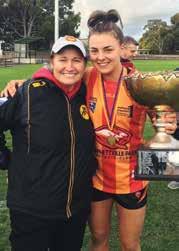
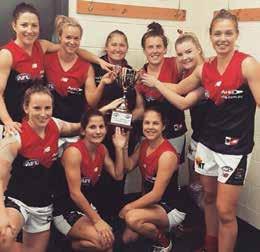
Before her foray into footy, Smith had dabbled in a range of other sports, including netball. She played for Contax and, despite standing only 163cm tall, had a particularly good leap.
But in a conversation not meant to be overheard, a netball coach described her height as “a pity”. When that got back to Smith, she took it as “a bit of a hit” to her netball dreams. She accepted that she was too short to play the game at the highest level.
Smith went on to play not only more netball but also basketball. But, when she wound up with a transfer to Whyalla, she found that a fellow detective was coaching the North Whyalla footy club.
“I went out as a water-runner,” she says, “and that was probably my real first taste of being involved in a footy club as an adult. That’s probably where my actual drive (to play footy) came from.”
So, at the age of 26, Smith made her footy debut playing for Edwardstown. And now, two decades later, she fills more than just her assistant-coach role with the Glenelg reserves. For some league games, she takes a place in the coaches’ box or on the boundary line.
“I did some work on the headphones (relaying messages from the senior coach) last year, which was excellent,” she says.
“I’m still learning about strategy; and spending last year with (Senior Coach) Matt Lokan and all the assistant coaches… it’s just amazing how much you can learn.”
And Smith sees clear parallels between her two jobs, as footy coach and detective, “all the time”.
“It’s all about people,” she insists. “If you don’t put time into your people at work (in SAPOL) you won’t get the output you need to function as an organization.
“It’s exactly the same with footy. As a coach and as a manager in SAPOL, you have to show genuine care for your people. If you don’t, you won’t be able to build those relationships to be able to function in either of those spaces.”
Although totally committed to the Tigers, Smith still keeps one eye on the future. Among her goals is to score a stand-alone senior-assistant role with either a men’s or women’s league side.
“I’ve got a lot of drive in the football space and I’ll see what opportunities present,” she says. “Hopefully, one day, there’ll be a SANFL women’s competition, a stand-alone competition.” PJ
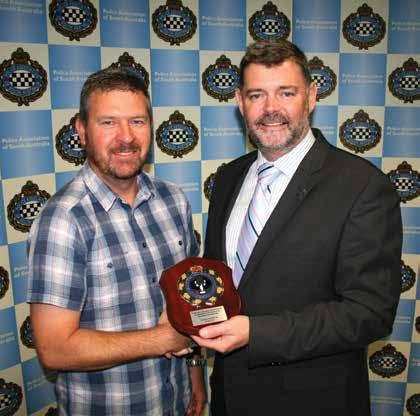
The Police Association recently received a plaque in recognition of its long-time support for the South Australian Police Golf Club.
SAPGC captain Paul Manns presented the inscribed tribute to association president Mark Carroll.
“The SA Police Golf Club values the support of sponsors like the Police Association,” Paul said. “Police Credit Union and Police Health also offer support.
“The golf club provides many benefits and encourages all members to join. Information about the club is available at www.sapgc.com.au.”
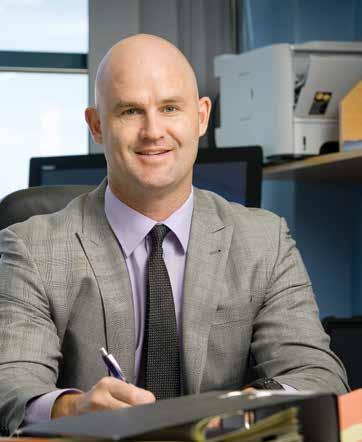
Grievance officer Matt Karger came to the Police Association in 2013 with a wealth of union experience. A born problem-solver, he’s right at home taking on association members’ issues – and he does it with infectious enthusiasm. If you have a grievance, you can expect the best in representation, support and information from Matt.
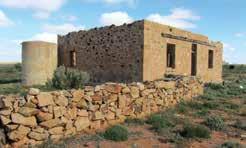
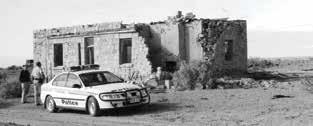
A special campground for outback travellers lies at Farina Station, 650km north of Adelaide between Lyndhurst and Marree.
Farina was a thriving remote town settled in the 1870s as it became a significant railhead for livestock transport and a stop for the old Ghan train.
Police were posted to this settlement from 1875 until 1950, when Leigh Creek was established.
Volunteers who belong to the Farina Restoration Group (FRG) have been actively involved in preserving the ruins at Farina, particularly the former police station buildings.
In July 2016, I enlisted with the group and spent a week helping out at Farina, working on the first stone building used as a police station and residence.
During that week I witnessed hundreds of tourists flock in and was astonished by their curiosity, and that of the volunteers, concerning our police history.
Other buildings have story boards which provide some history of not only those buildings but also the lives of those who lived in them.
TO
EDITOR CAN BE SENT BY:
Regular mail Police Journal, PO Box 6032, Halifax St, Adelaide SA 5000
Email editor@pasa.asn.au Fax (08) 8212 2002
Internal dispatch Police Journal 168
Sadly there is nothing to honour and acknowledge our pioneering police colleagues.
My goal is to raise sufficient funds to provide the FRG the ability to erect some story boards at the two police sites to explain the lives and adventures of police and their families during this period.
It is hard to imagine how they survived in such a harsh environment given the lack of what we consider basic amenities today such as electricity, refrigeration, motor transport and efficient communications.
The resilience and courage of our former colleagues and their families ought to make us all proud of our past and our achievements to date.
The story boards are large timber structures with laminated boards protected with an overhead gazebo, built to withstand the test of time. The cost of each structure is $2,000.
I urge anyone with an interest in the outback and a curiosity of our police history to give a few dollars toward this project. Your donation is tax deductible.
Police Journal readers can contribute by accessing a government-approved body known as the Foundation for Rural and Regional Renewal (frrr.org.au) and following the prompts.
Or readers can access farinarestoration.com for its official donation form: Policing Pioneers Appeal
Anyone who contributes should e-mail me so that I can acknowledge their support personally. Every donation, no matter how small, will help restore the buildings and promote our proud history.
Dave Roy Senior Sergeant IC Barossa LSA
This year is the 40th anniversary of Course 60 from 1977. Beginning on March 17, it was the first two-year cadet course.
Twelve members are still serving. One rose to the rank of superintendent while another, Michael O’Connell, became the commissioner for victims’ rights. Sadly, three members died. Kym Godfrey was killed in a police car on South Road, Thebarton going to an alarm in the early 1980s. Nick Dorsey was killed riding a cycle to work at Nuriootpa, also in the 1980s. John Giles died of cancer in the 1990s.
A reunion is planned for March 17, 2017 at the Police Club. I still have some members I’m trying to reach. If they become aware of the reunion through this letter I would ask that they contact me.
Greg Hill
Brevet Sergeant Elizabeth Prosecution Unit 8207 9416
Is public expectation realistic when it comes to the action front-line police can and cannot take in high-risk situations?
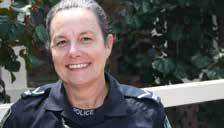
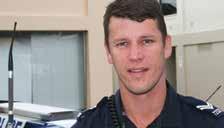
Public perception is swayed by what people see on television and a lot of that is American. Everything from police department structure to police response general orders is varied between the American states and all of those vary from what happens in Australia.
The public are often unable to differentiate between what is happening in front of them in reality and what they see on American television shows, which makes their expectations unrealistic when it comes to what action Australian front-line police can take in high-risk situations.
They’re quick to interject with advice but are often slow to appreciate the difference between television and real life. In my experience, public expect immediate and visible responses that immediately reduce the risk to zero. As first responders, we’d love to be able to deliver that.
We are not an infinite resource, not invincible and not free from litigation should things go belly-up.
No. People generally make conclusions based on their own experiences and for the majority their only exposure to a high-risk situation would be from a television show, Hollywood movie, or following the news.
In my opinion news reporting displays a bias against the police and their handling of such incidents. I think this bias influences their subscribers and affects how they believe police should handle such incidents.
It is comical to pore through the hundreds of general comments to such related news articles on platforms such as Facebook from the “keyboard warriors” and “arm-chair experts” that seem to have all the answers. I would like to give them a uniform for a day.
I think it’s high time for some fair and realistic news coverage from our media outlets.
Broadly speaking, no, it isn’t, but public scrutiny and accountability has and will always be a factor in everything we do – and rightly so.
High-risk situations are not something the public will generally be exposed to, and we deal with these situations on their behalf.
So, the public is right to have a level of expectation on their police, but the onus is on us to ensure those expectations are based in reality. As the threat and policing landscape change over time, so will the public’s expectations.
So, it is incumbent upon us as an organization to remain agile and ensure we are providing the service the public expects commensurate with the threat.
Our front-line members should be adequately equipped and trained to respond, and we must ensure openness and transparency to act as the medium between ignorance and knowledge.

Mark Carroll President, Police Association of South Australia
2009. Oruzgan Province, Afghanistan. Following an operation that went horribly wrong and resulted in the deaths of civilians, including five children, two Australian commandos were charged with manslaughter.
The prosecutor, who wasn’t actually there, asserted that the soldiers “… knew for certain that women and children were present…” prior to the deployment of two hand-grenades.
The two soldiers, who were actually there and being fired upon, were absolutely adamant they had every reason to believe that all civilians had been removed from the operational area.
It’s hard to imagine that two highly trained Australian soldiers would have thrown the grenades otherwise.
Eventually, the charges were dismissed but the case is still one of the most gut-wrenching and disputed chapters in the history of the Australian Army.
Police officers around the country had immense sympathy for these two soldiers. We know only too well what it’s like to be involved in horrific, adrenaline-fuelled events during which you have to make split-second, life-and-death decisions.
We know only too well what it’s like to then have your actions scrutinized and second-guessed before being subjected to disciplinary and/or criminal proceedings.
Like all Australians, our members were absolutely gutted by what happened in Bourke St on January 21. Psychological resilience is absolutely necessary in police work but there were plenty of tough coppers here in South Australia who “teared up” when we heard that little Zachary Bryant, three months old, died in hospital from his injuries. I was one of them.
We can only imagine how our police brothers and sisters in Victoria feel right now. Over and above the idiocy of the Victorian bail process, wave after wave of questions and criticisms will continue to crash on the shore of their police professionalism.
One of the most dangerous aspects of police work is pursuits and, unhelpfully, there is no consistent national policy with regard to high-speed chases.
Ask
yourself, for instance, whether you would want to intervene to stop or prevent violence being perpetrated knowing that you could be charged with criminal assault.
“Why didn’t they just shoot him?” “They should have rammed him. If it were me, I would have…” “Somebody needs to take responsibility…”
There will be fingers pointed at the police from all points of the compass. Nothing is surer. There’ll be coronial inquiries, internal Victoria Police investigations, external investigations, parliamentary investigations and, inevitably, trial by social media. Monday’s experts.
Watching from the sidelines with a mobile phone camera, it’s certainly easier to accuse police of using excessive force than it is to be in the thick of it yourself.
In the context of this sort of scrutiny it’s useful to review the purpose of police. In summary, the Police Act 1998 requires that our members protect the community by upholding the law, preserving the peace, preventing crime, assisting in emergencies and regulating road use to prevent vehicle collisions.
If a pursuit is undertaken, the danger to the public is multiplied by two vehicles, not one, driving at high speeds on our roads.
If, on the other hand, the officers make the judgement that a pursuit is unsafe and the fleeing driver then has an accident and hurts innocent bystanders and/or himself or herself, we are held responsible. It’s a “lose-lose” situation.
I suspect the community would be staggered to learn just how many agencies oversee police activities. Equally, I suspect that fair-minded members of the community would be staggered at some of the criticism of officers made by these agencies.
A couple of years ago, police had just started to pursue a vehicle which had sped off from police. Moments later, literally, the fleeing driver lost control on a bend and ploughed into a wall, killing himself and the passenger.
This was hardly the fault of the officer involved; nonetheless, the deputy coroner was critical of police action and questioned the appropriateness of police pursuits across the board.
Damned if you do. Damned if you don’t.
Then there are the violent altercations, domestic and otherwise, in which we find ourselves involved.

Bernadette Zimmermann Assistant Secretary, Police Association
discussion about national security is today common in the social, private and professional settings of Australia.
Australians have felt the tragic outcomes of terrorist incidents both here and overseas.
Police officers are usually the first members of the emergency services on the scene after deadly attacks.
This applies irrespective of where terrorism occurs, be it in private environments or crowded public places.
It is obvious that, to be operationally prepared for a terrorist incident, police must be outfitted with the best available safety equipment. Insufficient equipment reduces their capacity to defend the public and maintain its security.
This is a critical issue affecting all Australian police.
The ballistic vest remains one of the most crucial tools of trade for both uniformed and plain-clothes police officers.
No doubt some members still remember the early types of ballistic vests, or “flak jackets” as we sometimes called them.
The vest forms part of the daily range of safety equipment issued to members who perform a vast range of operational duties. It is as important in the daily kit as handcuffs, firearms and other operational safety equipment.
The association encourages members to submit a HIRS for each shift on which they are unable to access a vest of appropriate size.
Police Association members have recently reported a shortage of appropriately sized ballistic vests, particularly in the range of small sizes.
This is now an issue in cases in which members, particularly patrol officers, are unable to secure ballistic vests in their sizes at the start of their shifts. An ill-fitting vest is often all that is available.
This usually occurs when a member requires an extra small size – often none are available – and he or she is issued with a vest much larger than required.
… members have recently reported a shortage of appropriately sized ballistic vests …
They were lined, back and front, with dense ceramic plates. Not only were these old vests absurdly heavy but also incredibly cumbersome to wear and difficult to don.
The wearer often needed the assistance of another person to get the vest over his or her head and, then, to assemble and strap down various protective panels.
While the composition of ballistic vests might have changed over the years, nothing has changed in respect of the need for police to access them.
Some members have been required to attend other workplaces to try to find an appropriately sized ballistic vest.
This becomes a serious issue when members are required to wear the vest during high-risk incidents.
Members have reported that wearing ill-fitting vests, particularly ones larger than required, becomes a safety hazard and restricts their movement. The vests tend to rise and press into the jawline causing discomfort and further restriction of movement.
The association notified SAPOL and raised the issue with the commissioner’s Occupational Health, Safety and Welfare Advisory Committee in September 2016.
I advised the committee of the emerging problem and the associated risks it posed to members.
SAPOL is now aware of the problem and will assess the need to stock appropriately sized vests across all LSAs to ensure that multiple sizes are available to all members – for each shift of a 24-hour roster.
The association also suggested to SAPOL that members be measured and fitted before graduation to ensure that suitable vests are available to them when they undertake their duties as police officers for the first time.
It should not be hard for SAPOL to do this, given that recruits:
• Complete a 12-month course before graduating.
• Get fitted for a general-duties uniform during their 12-month course.
• Complete a course in operational safety training and techniques.
• Complete a course and are trained in the use of all forms of safety equipment, including the use of ballistic vests.
The association encourages members to submit a HIRS for each shift on which they are unable to access a vest of appropriate size.
And whenever this situation arises, members should also advise their workgroup health and safety represetative (HSR).
The association is aware of the positive active involvement of some HSRs in workplaces in which there has been a notification of this type.
Their input and the action they have taken on behalf of members are commendable.

Policing is all about looking out for other people. Which is why it’s important to have someone look out for you.
At Police Health, not only do we stand by the force, we stand with it as well.
We’re run by police for police and their families, which is why we have a unique understanding of a unique job.
And why over 50,000 members trust their welfare to us Australia-wide.
For more than 80 years we’ve served police and their families, and only police and their families; it’s how we all want it and how it will stay.
To find out more call us on 1800 603 603 or go to policehealth.com.au
If you had an ordinary job, all you’d need is an ordinary health fund. But you don’t, and that’s why you have us.

Dr Rod Pearce
Be it “text neck” or “texting thumb”, either can cause mobile-phone users permanent damage
pain is a common condition and affects most people at some point in their lives. It has many causes but they do not usually indicate more serious conditions.
Common among those causes are awkward sleeping positions, tension, injury (such as a muscle strain), arthritis, and wear and tear on neck bones (a normal part of ageing). The most common cause, however, is poor posture.
Mobile-phone use is an increasingly common reason for that poor posture. Looking down and dropping your head forward changes the natural curvature of your neck. It’s known informally as “text neck” and, over time, that misalignment can strain muscles.
When you drop your head, your neck moves forward and your shoulders round forward or lift up toward your ears. The muscles in your neck and shoulders spasm and cause discomfort.
Because we change our neck position to either look at, or talk on, the phone, the neck muscles come under pressure. Muscles holding the neck in a different position start to ache. Then, as they either spasm or lose their co-ordination, other muscles also start to feel pain.
Chronic irritation and pain sets up a cycle of nerve irritability and associated muscle soreness. New studies suggest that pain can actually cause inflammation.
Existing problems such as osteoarthritis (wear-andtear degeneration of the joints) might become worse.
If your neck pain comes with numbness or loss
of strength in your arms or hands, or if you have shooting pain into your shoulder or down your arm, you should consult your doctor.
So-called “texting thumb” is a similar but slightly different cause of pain. The opposable thumb is very good at performing opposing actions to the hand and fingers (gripping).
The thumb acts as the lower half of a pair of pliers. It is much better at this than dexterous three-dimensional motions like typing, which puts a lot of repetitive stress on the thumb joint and the muscles and tendons attached to it.
The thumb is sufficient to press a key on a phone’s keypad without much stress being placed on it. It is mainly the travelling the thumb tip does over the keypad, which is often a couple of square inches.
This is a lot of work on a joint that isn’t designed to move that much in those directions.
Phones with standard number pads have been associated with some problems, but the smartphones have accentuated the situation. While they do have full keypads to make input easier they have larger surfaces for the thumb to travel over and can often involve both thumbs.
The ease of input actually makes it more likely for you to type in real words instead of the texting shorthand that has developed owing to the limitations of number-pad entries.
Texting thumb can be a form of tendonitis, tenosynovitis or a combination of both disorders. In either case, it means something is irritated, inflamed and swollen.
The chronic pain becomes selfperpetuating and, paradoxically, it hurts to do less (rest) and hurts with more activity.
Whichever part of the anatomy is irritated and
inflamed, it squeezes the tendons and constricts their ability to slide within the sheaths that cover them.
The inflammation results in swelling and pain that can run from the tip of the thumb all the way down to the wrist and even the upper portion of the forearm.
In texting thumb, you often feel the pain when you turn or flex your wrist or when you make a fist or grab something.
If left untreated, texting thumb can worsen and the repetitive inflammation and irritation of the tendon or synovial sheaths causes them to thicken and degenerate.
This can result in permanent damage leading to a loss of grip strength and/or range of motion as well as constant pain. The severe form of texting thumb is known as De Quervain’s syndrome.
The inflammation in the tendon or synovial sheath leads to swelling and enlarges a portion of the tendon making it difficult for the tendon to pass through the opening in the wrist.
The severity and persistence of text neck or texting thumb is sometimes hard to believe when it can start from seemingly trivial actions.
The chronic pain becomes self-perpetuating and, paradoxically, it hurts to do less (rest) and hurts with more activity.
Awareness of the problem and prevention remains by far the best way to avoid pain. But, by noting how you are standing or what you are doing as soon as you feel soreness, you might be able to prevent a permanent problem.

Jim Barnett
And, with the GT-Line, Renault has exceeded expectation in the areas that count
GT-Line is part of the revamped four-door Renault Megane hatch line-up. It boasts a new body, a wider track, more interior space and a sportier appearance.
GT-Line has heated front sports seats trimmed in black Alcantara upholstery, and a thick (reach/ rake adjustable) leather-bound sports steering wheel with trip computer and cruise control buttons.
Standard fitment is a central seven-inch touchscreen which controls the eight-speaker audio system and displays satellite navigation and reversing camera. The front seats offer excellent support and comfort.
While the 60/40 split-fold rear seat is comfortable too, it could be a little tight for taller adults.
Cargo space is generous and quite deep with a full-size, temporary spare wheel underneath.
Power comes from a lively 1.2-litre turbocharged petrol engine driving the front wheels through a slick seven-speed dual-clutch automatic transmission.
Five different drive modes vary engine response, transmission changes, steering effort and engine tone.
GT-Line carries a manufacturer’s list price of $32,490. Standard features include:
• Dual-zone climate control.
• Trip computer.
• Tilt and slide electric sunroof.
• Keyless entry and push-button start.
• Satellite navigation.
• Auto (walk-away) door-locking.
• Cruise control and speed limiter.
• Parking-assistance system.
• Seventeen-inch alloy wheels.
A $1,990 Premium option adds an advanced 8.7-inch “pinch and zoom” (tablet-style) touch screen with portrait orientation, upgraded Bose 12-speaker audio system with subwoofer and LED headlights. With this option, a tyre repair kit replaces the spare wheel.
In addition to the usual six airbags and electronic stability and traction control systems, GT-Line has:
• Automatic electronic parking brake.
• Front and rear LED daytime running lights.
• Auto headlights.
• Auto wipers with rain sensor.
• Front, rear and side parking sensors.
• Tyre pressure monitor.
• Reversing camera with gridlines.
• Blind-spot monitoring.

It remains smooth and extremely quiet at all but the highest of revs.

The modest 1.2-litre turbocharged petrol engine produces 97kW (4,500rpm) and 205Nm of torque (2,000rpm). According to Renault, 0-100km/ h takes 10.3 seconds and combined fuel economy is 5.6 litres per 100km (premium unleaded required).
Renault offers a five-year unlimited-kilometre warranty with roadside assistance and capped-price servicing.
GT-Line performs better than its stats suggest. Acceleration, particularly in Sport mode, is brisk, gear changes are fast and precise and the car handles corners with ease.
Renault has done a great job with its overall drivability. GTLine delivers a good balance between power and economy and ride comfort and agility. It remains smooth and extremely quiet at all but the highest of revs.
A sharp-looking, wellequipped hatch, GT-Line drives better than expected and provides excellent fuel economy.
In fact, with a giant leap forward Colorado now looks to be a “real challenger”
Holden’s updated Colorado comes with claims of better ride and handling, increases in safety and technology and a refreshed appearance.
Colorado is available in Single, Space and Crew cab (dual cab) variants with either two- or four-wheel drive. Of the 4x4 models (LS, LT, LTZ and Z71) the new LTZ Crew cab is a smart-looking proposition.
The new front end is complemented with chrome highlights, daytime LED running lights and fog lights.
Chrome door mirrors incorporate turn lights. Chrome door handles, an alloy sports bar and lockable tailgate also feature.
New alloys are fitted with 18-inch 265/60 tyres, a size which might be harder to find in the bush.
The standard tonneau cover looks smart but is a little difficult to operate.
Colorado’s new dash layout is much neater than it was in previous models. Central is an eight-inch colour touch screen which features satellite navigation, DAB+ (digital radio) and a reversing camera with gridlines. Apple CarPlay and Android Auto with voice control also feature.
Drivers score six-way power seat adjustment but, like many utes, the steering lacks telescopic adjustment.
Front seats are comfortable and the rear reasonably comfortable for a ute.
Colorado’s glove box and console bin are smaller than some of those of the opposition.
LTZ 4x4 Crew cab manual is priced from $50,490. The six-speed auto adds $2,200. Standard items include:
• Auto climate control (single zone).
• Remote vehicle start via keyfob (auto only).
• Heated mirrors.
• Auto lights and wipers.
• Cruise control.
• Electronic power steering.
• Trip computer with digital speed readout.
Colorado LTZ scores a five-star (ANCAP) safety rating. Its safety features include:
• Seven airbags (including driver’s knee).
• Hill-start assist.
• Hill-descent control.
• Trailer-sway control.
• Rear-view camera with gridlines.
• Front and rear parking sensors.
• Forward-collision alert.
• Lane-departure warning.
• Tyre-pressure monitor.
Colorado’s 2.8-litre four-cylinder turbo-diesel produces 147kW of power and 440Nm of torque (manual) with 500Nm available on autos. Combined fuel economy varies between 7.9 litres/100km (manual) and 8.7 litres/100km (auto).
Braked towing is up to 3,500kg with a maximum payload (depending on towed weight) of 1,029kg.
The reworked Colorado is far superior to its predecessor. Its chassis and suspension tune provide a more comfortable and compliant ride on all surfaces. Cornering is sharper but, like most utes, it can become unsettled at the rear when unladen.
Thanks to improved noise suppression and engine mounts, the cabin is a quieter place to be. Its Duramax diesel is sweet and powerful. The auto variant provides bags of torque for long hills and heavy towing.
The engine never seems stressed and the six-speed auto provides smooth shifting.
New Colorado LTZ takes a giant leap forward and is now a real challenger for Ranger XLT and HiLux SR5. Its strong points are sharp pricing, new high-tech and safety equipment and impressive torque with the auto.
The group life insurance cover provided by the Police Association covers members 24 hours a day, seven days a week, regardless of the cause of death while members remain in Australia.
The insurer may specify certain geographical exclusions and restrictions on the coverage due to increased risk.
If members travel to areas of the world considered to be at increased risk, an increased insurance premium may apply or coverage may cease entirely.
Members who intend to go overseas for six months or longer, or who are travelling to or via a war zone are advised to contact the association beforehand to confirm whether or not coverage will be affected.
Got a comment about a story you’ve read? Do you have strong views on a police issue?
Is there someone you want to acknowledge? Know of an upcoming social or sports event? Whatever the subject, put it in a letter to the editor.
Regular mail Police Journal, PO Box 6032, Halifax St, Adelaide SA 5000
Email editor@pasa.asn.au
Fax (08) 8212 2002
Internal dispatch Police Journal 168
Are you currently working part-time? Are you commencing or ceasing part-time work?
If your hours change, it is important that you advise the Police Association. Your subscriptions may be affected. Please phone (08) 8112 7988 or e-mail membership@pasa.asn.au to advise of a change in hours.
The Police Association of South Australia needs your change- of-address details.
If you have moved, in either the recent or distant past, please let the association know your new address. Its office does not receive notification of changed addresses by any other means. The association will need your new address, full name, ID number, telephone numbers (home, work and/or mobile). Members can e-mail these details to the association on pasa@pasa.asn.au or send them by letter through dispatch (168).
Owing to a Supreme Court decision, the Police Association no longer uses the GLI beneficiary forms. Existing forms held at the association have been destroyed. Now, in the case of the death of a member, the GLI benefit (currently $300,000) will be paid to his or her estate.
Accordingly, the association’s strong advice is that you ensure that your estate is well-administered. This is best achieved by having a valid will.
Tindall Gask Bentley Lawyers provides a free legal advice service to Police Association members and their families, and retired members. To make an appointment to receive free preliminary legal advice covering all areas of law, particularly families and wills, members should contact the Police Association (08 8212 3055).

Paul Modra Executive Manager – Member Value and Distribution, Police Credit Union
And it pays to get critical input from a financial-planning expert
SOyou made another New Year’s resolution: spend less and save more for your future. You work hard for your money and want to know that you will be able to enjoy the lifestyle that you deserve as you get older.
That’s a great resolution to have. But what is a New Year’s resolution without a plan? Your good intentions might not amount to much but, so that you can turn those plans into a reality, we have some money tips ideal for building and preserving your wealth in the years to come.
Pay day. We all love seeing that money hit our accounts. But rather than just going ahead and spending it, or even being tempted to do so, make sure that you regularly set aside some of
your income in an account that you won’t touch.
Do this regularly and before long you’ll have enough to consider a range of investment options.
Steer clear of investments with unrealistically high returns and most of the highly tax-driven investments, they’re often much riskier than they appear.
Growth investments, such as shares, should give you a better overall return over the long term, compared to cash-type investments. Of course, you have to select good value investments and always expect some volatility. It is just the name of the game.
You know what they say: “If it sounds too good to be true then it probably is.” Steer clear of investments with unrealistically high returns

Financial planners
Harry Baumeister, Mark Tyminski and Linda Ginever.
and most of the highly tax-driven investments, they’re often much riskier than they appear.
Remember that money invested in Australian shares or managed share funds can earn you imputation or franking credits. These effectively reduce your tax payable, leaving you with more after-tax income.
With good advice, you could also consider borrowing modestly for investment.
Superannuation is still the most tax-effective form of retirement saving for most people. Because of the lower rate of tax, your superannuation investments generally grow faster than non-super investments.
Understanding the huge variety of options available can be confusing, particularly for police, as you have a unique set of benefits and superannuation schemes that come with a variety of options.
Police Credit Union, through its joint venture with Bridges Financial Services, has a dedicated team of financial planners who can offer you the information, clarification and education you need.
Linda, Mark and Harry understand the particulars of both Super SA’s Triple S scheme and the Police Super defined-benefit pension scheme, and have built strong relationships with police officers and the staff at Police Super.
Continued page 37
Leading Adelaide law firm, Tindall Gask Bentley is the preferred legal service provider of the Police Association, offering 30 minutes of free initial advice and a 10% fee discount.

To arrange a preliminary in-person or phone appointment contact PASA on (08) 8212 3055
• Motor accident injury compensation
• Workers compensation
• Public liability
• Superannuation claims (TPD)
Matrimonial, De Facto & Same Sex Relationships
• Children’s Issues
• Child Support matters
• Property Settlements
• “Pre Nuptial” style Agreements


BUSINESS & PROPERTY
• General business advice
• Real estate & property advice
• Business transactions
• Commercial disputes & dispute resolution


WILLS & ESTATES
• Wills & Testamentary Trusts
• Enduring Powers of Attorney
• Advance Care Directive
• Advice to executors of deceased estates
• Obtaining Grants of Probate
• Estate disputes Michael Arras Rosemary


Rosemary Caruso Senior Lawyer – Tindall Gask Bentley
To take advantage of it is to ensure your wishes are carried out in the event of your death
in the line of duty carries unique risks, which means it’s vital you have an up-to-date will and clear wishes in place for what happens to your estate. As police officers your superannuation is with Super SA, and recent changes mean you might want to reconsider your estate planning.
Previously, you will have been told by your lawyer or financial advisor that, if you were to die, you had no choice in how your death benefit would be distributed. It would be paid to your spouse and, if you did not have a spouse, to your legal personal representative (executor/administrator of your will).
Now, under the changes, it’s possible for Super SA members with Triple S Flexible Rollover Product and the Income Stream option to nominate their legal personal representative to receive their benefit in the event of their death.
If a member chooses to pay his or her benefit to his or her legal personal representative, the payment will be made to the member’s estate and distributed in accordance with the terms of his or her will.
Don’t forget to get legal and financial advice about the consequences of such a change to your will.
Making a nomination is particularly important for members who are separated but not divorced and have not had a property settlement with their spouses.
If no nomination is made and there has not been a Family Court property settlement between the parties, Super SA will make payment to the previous spouse even if the member is separated, as he or she is legally still married.
Super SA specifies that in order for a binding nomination to be valid and effective:
• It must be signed and witnessed by two people over the age of 18.
• The member’s legal personal representative cannot be a witness to the signing of the nomination.
• It must be completed and received by Super SA. If you die before the completed nomination form is received by Super SA it will not be valid.
Making a nomination is particularly important for members who are separated but not divorced and have not had a property settlement with their spouses.
This gives you greater flexibility and choice when planning your estate. For example, if you are part of a blended family and want to split your superannuation between your spouse and your children you now can by preparing a binding nomination and amending your will.
If you have not provided Super SA with a binding nomination, proof of identity documentation will need to be provided at the time the nomination is made. Subsequent nominations can be made without having to provide ID.
Super SA nominations expire three years from the date they are signed. So it is important to make sure you extend the binding nomination by filling out another form prior to the three years passing.
If you want to ensure your loved ones are taken care of, and your wishes are honoured after your death, it is vital you get legal advice.
If you do not make a binding nomination, your death benefit will automatically be paid to your spouse – including a putative spouse. If you do not have a spouse, the benefit will be paid to your estate and distributed in accordance with your will.
This Super SA change gives you more choice over your estate than ever before. If you want to ensure your loved ones are taken care of, and your wishes are honoured after your death, it is vital you get legal advice.
Tindall Gask Bentley Lawyers provides free initial advice through a legal advisory service to Police Association members and their families, and retired members. To make an appointment, members should contact the association (8212 3055).
Tindall Gask Bentley offers association members and their immediate family members a 10% discount on their wills.
Author Mick Herron
Publisher Hachette Australia
RRP $19.99
You don’t stop being a spook just because you’re no longer in the game.
Banished to Slough House from the ranks of achievers at Regent’s Park for various crimes of drugs and drunkenness, lechery and failure, politics and betrayal, Jackson Lamb’s misfit crew of highly trained joes doesn’t run ops, it pushes paper.
But not one of the crew joined the Intelligence Service to be a “slow horse”.
A boy is kidnapped and held hostage. His beheading is scheduled for live broadcast on the net.
And whatever the instructions of the service, the slow horses aren’t going to just sit quietly and watch.
First published in 2010, Mick Herron’s Jackson Lamb thriller series includes Slow Horses, Dead Lions, Real Tigers and the soon-to-be published Spook Street
Author Daniel Cole
Publisher Hachette Australia
RRP $29.99
One body! Six victims! And a horrifying deadline…
A body is discovered with the dismembered parts of six victims stitched together like a puppet.
The press quickly nicknames the perpetrator the “Ragdoll Killer”.
Assigned to the shocking case are Detective Wolf Fawkes, recently reinstalled to the London Met, and his former partner, Detective Baxter.
Every news bulletin and headline is obsessed with the killer. The stakes increase when the Ragdoll Killer taunts the police by releasing a list of names to the media and the dates on which he intends to murder them. The last name on the list is Wolf Fawkes.
As bodies start dropping, despite the assigned police protection, the pressure on Fawkes and Baxter increases. Can they catch a killer when the world is watching their every move?
Author Saul Black
Publisher Hachette Australia
RRP $32.99
Troubled San Francisco homicide detective Valerie Hart is planning a rare weekend away from the job when she gets the call. A body has been found. A woman brutally murdered. And the cryptic note left by the body is addressed to Hart.
The victim is unknown to her, but as Hart analyses the scene, the clues begin to point in a deeply disturbing direction: to a maximum security prison where a woman called Katherine Glass is awaiting execution for a series of gruesome killings.
And Hart was the cop who put her there.
The last thing Hart wants to do is re-enter Glass’s twisted world but, when a second body is discovered, with another puzzling clue, she realizes she has no choice.
Glass holds the key to the killings and Hart needs to find out what she knows before the murders come even closer to home.
Author Mick Herron
Publisher Hachette Australia
RRP $32.99
Twenty years retired, David Cartwright can still spot when the stoats are on his trails.
Radioactive secrets and unfinished business go with the territory on Spook Street: he’s always known there’d be an accounting. And he’s not as defenceless as they might think.
Jackson Lamb worked with Cartwright back in the day. He knows better than most that this is no vulnerable old man. “Nasty old spook with blood on his hands” would be more accurate.
“The old bastard” has raised his grandson with a head full of guts and glory. But far from joining the myths and legends of Spook Street, River Cartwright is consigned to Lamb’s team of pen-pushing no-hopers at Slough House.
So it’s Lamb they call to identify the body when Cartwright’s panic button raises the alarm at Service HQ.

Author Joy Fielding
Publisher Zaffre RRP $29.99
The dark and twisted new psychological thriller from the New York Times bestselling author.
The Girl on the Train meets Rear Window in this gripping novel from a queen of psychological suspense.
Bailey Carpenter is a smart and savvy private investigator, until a horrific attack leaves her trapped at home in her Miami high-rise apartment, crippled by paranoia.
Everywhere she looks, she sees the face of her attacker. Including in the apartment directly opposite her –where someone is watching.
A tour de force from a master of psychological suspense.
Author JP Delaney
Publisher Quercus RRP $32.99
Enter the world of One Folgate Street and discover perfection. But can you pay the price?
Jane stumbles on the rental opportunity of a lifetime: the chance to live in a beautiful ultra-minimalist house designed by an enigmatic architect, on condition she abides by a long list of exacting rules.
After moving in, she discovers that a previous tenant, Emma, met a mysterious death there – and starts to wonder if her own story will be a rerun of the girl before.
With twist after twist, Emma’s past and Jane’s present become inexorably entwined in this tense portrayal of psychological obsession.
WIN A BOOK! For your chance to win one of these books, send your name, location, phone number and despatch code, along with the book of your choice to giveaways@pj.asn.au
From page 33
Don’t put all your eggs into one basket. Maintain a balanced approach to investment.
It is generally a good idea to spread your investments across a number of different asset classes such as shares and property, fixed interest and cash.
Often, if one asset class performs poorly, another might perform strongly. A diversified approach can keep your investments growing steadily.
Feel like a bit of a novice when it comes to planning your finances? Don’t worry. You’re not alone.
Many people can be overwhelmed by the options and sometimes all you need is a little helping hand to make the decisions that will be right for you.
Bridges has been providing professional financial planning services to credit union and building society members since 1985 and the team of Bridges financial planners at Police Credit Union are ready to help you.
Plus if you happen to be a Platinum Advantage member of Police Credit Union there are some great savings available.
Personal loans and mortgages are long-term financial commitments. To help you plan better for your future you are entitled to a complimentary consultation with a financial planner valued at up to $500.*
They also hold a range of free financial planning seminars throughout the year. Give them a call on (08) 8208 5700 to find out more. It’s a phone call that will help secure your financial future.
Some seminar topics include:
• Wealth – how to create it, protect it and use it.
• Make your salary go further – package it.
• Women – your finances, your future.
• Federal budget brief – its impact on future planning.
• Take control of your retirement strategy.
Bridges Financial Services Pty Limited (Bridges). ABN 60 003 474 977. ASX Participant. AFSL No 240837.
This is general advice only and does not take into account your objectives, financial situation and needs. Before acting on this advice, you should consult a financial planner. In referring members to Bridges, Police Credit Union Ltd ABN 30 087 651 205 AFSL/Australian Credit Licence 238991 does not accept responsibility for any acts, omissions or advice of Bridges and its authorised representatives. *Complimentary Consultation valid for the first initial consultation, offer expires 31/03/2017.
From page 26
Watching from the sidelines with a mobile phone camera, it’s certainly easier to accuse police of using excessive force than it is to be in the thick of it yourself.
A number of our members have been pursued in the courts, charged with criminal assault.
This is not to say that police shouldn’t be scrutinized. We are empowered by legislation in ways that other members of the community are not and it’s fair, reasonable and important that we are held to account.
However, I would urge individuals, agencies and certain sections of the media to reflect carefully before criticizing and making comments.
Ask yourself, for instance, whether you would want to intervene to stop or prevent violence being perpetrated knowing that you could be charged with criminal assault.
It wouldn’t be a bad thing if the agencies that oversee police activity looked to blame the offenders before rushing to blame the police officers.
Police officers should feel confident that the system will protect them if they make a mistake in the heat of the moment.
Each time we’re criticized, justly or unjustly, we become a little more risk averse. It’s human nature. Month by month, year by year, our willingness and our capacity to take the sorts of risks necessary to protect the community will erode.
Then everybody loses.
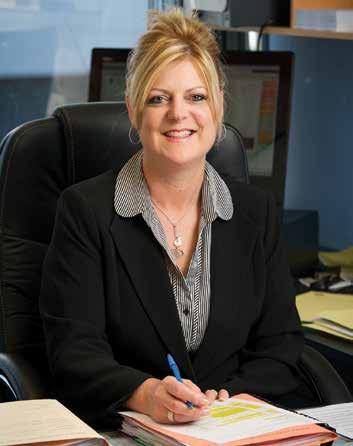
She had occupied some of the most important roles in police unionism when she took on the job of Police Association organizer in 2013. Now, as assistant secretary and a former patrol sergeant, Bernie Zimmermann uses her vast experience to work with and advocate for association members. To them, she gives her full focus, care and determination.




Season commences March 2
This is the hotly anticipated next Wolverine film starring Hugh Jackman and Patrick Stewart.
In 2024, mutant births are severely in decline, and people aren't sure why. A government-type operation is turning mutant children into killing machines. From this, Logan emerges as a mentor to a mutant girl, who has two claws instead of his three.
Season commences March 2
In the high-stakes world of political power-brokers, Elizabeth Sloane (Jessica Chastain) is the most soughtafter and formidable lobbyist in DC.
Known equally for her cunning and her track record of success, she has always done whatever is required to win.
But, when she takes on the most powerful opponent of her career, she finds that winning might come at too high a price.
Directed by John Madden, Miss Sloane stars Gugu Mbatha-Raw and John Lithgow.
Season commences March 30
Based on the internationally-acclaimed sci-fi property, Ghost in the Shell follows the Major, a special-ops, oneof-a-kind cyborg, who leads the elite task force Section 9.
Devoted to stopping the most dangerous criminals and extremists, Section 9 is faced with an enemy whose singular goal is to wipe out Hanka Robotic’s advancements in cyber technology.
Directed by Rupert Sanders, Ghost in the Shell stars Scarlett Johansson, Michael Wincott and Michael Pitt.
The Fate of the Furious Season commences April 13
Now that Dom and Letty are on their honeymoon and Brian and Mia have retired from the game – and the rest of the crew has been exonerated –the globetrotting team has found a semblance of a normal life.
But when a mysterious woman (Charlize Theron) seduces Dom into the world of crime he can’t seem to escape and a betrayal of those closest to him, the crew faces trials that will test them as never before.
From the shores of Cuba and the streets of New York City to the icy plains off the arctic Barents Sea, our elite force will crisscross the globe to stop an anarchist from unleashing chaos on the world stage – and to bring home the man who made them a family.
For your chance to win an in-season pass to one of these films, courtesy of Palace Nova Eastend Cinemas, send your name, location, phone number and despatch code, along with your choice of film, to giveaways@pj.asn.au

SEPTEMBER 2016
SEPTEMBER 2016
By becoming a Winestate Member you will receive one complimentary ticket to all of our events listed below upon request!*
By becoming a Winestate Member you will receive one complimentary ticket to all of our events listed below upon request!*
By becoming a Winestate Member you will receive one complimentary ticket to all of our events listed below upon request!*
By becoming a Winestate Member you will receive one complimentary ticket to all of our events listed below upon request!*
APRIL 2017
2017
SEPTEMBER 2016
APRIL 2017
ADELAIDE - Winestate ‘Wine of the Year 2016’ Subscribers Tasting
ADELAIDE - Winestate ‘Wine of the Year 2016’ Subscribers Tasting
ADELAIDE - Winestate ‘Wine of the Year 2016’ Subscribers Tasting
2 September 2016 - National Wine Centre Adelaide 6pm – 8.30pm (Tickets available June 2016)
2 September 2016 - National Wine Centre Adelaide 6pm – 8.30pm (Tickets available June 2016)
NOVEMBER 2016
NOVEMBER 2016
ADELAIDE - Cabernet & Bordeaux tasting
ADELAIDE - Cabernet & Bordeaux tasting
ADELAIDE - Cabernet & Bordeaux tasting
Friday 7th April 2017 - National Wine Centre Adelaide (Tickets available early 2017)
2 September 2016 - National Wine Centre Adelaide 6pm – 8.30pm (Tickets available June 2016)
ADELAIDE - Cabernet & Bordeaux tasting Friday 7th April 2017 - National Wine Centre Adelaide (Tickets available early 2017)
Friday 7th April 2017 - National Wine Centre Adelaide (Tickets available early 2017)
Friday 7th April 2017 - National Wine Centre Adelaide (Tickets available early 2017)
APRIL 2017
APRIL 2017
APRIL 2017
Italy - Wines of Australia - Vinitaly
By becoming a Winestate Member you will receive one complimentary ticket to all of our events listed below upon request!*
APRIL 2017
NOVEMBER 2016
Member you will receive one complimentary listed below upon request!*
Member you will receive one complimentary listed below upon request!*
Italy - Wines of Australia - Vinitaly
8.30pm
p/p
QUEENSTOWN NZ - Wine of the Year Awards Lunch
QUEENSTOWN NZ - Wine of the Year Awards Lunch
18 November 2016 - Gantleys of Queenstown (NZ)
QUEENSTOWN NZ - Wine of the Year Awards Lunch 18 November 2016 - Gantleys of Queenstown (NZ)
18 November 2016 - Gantleys of Queenstown (NZ)
Winestate Subscribers - NZD$95 p/p, Non-Subscribers - NZD$180 p/p
SEPTEMBER 2016
Winestate Subscribers - NZD$95 p/p, Non-Subscribers - NZD$180 p/p
APRIL 2017
APRIL 2017
9 -12 April, 2017 - Veronafiere, Verona, (Italy)
Italy - Wines of Australia - Vinitaly 9 -12 April, 2017 - Veronafiere, Verona, (Italy) Contact sales@winestate.com.au regarding tickets (Tickets available early 2017)
9 -12 April, 2017 - Veronafiere, Verona, (Italy)
Contact sales@winestate.com.au regarding tickets (Tickets available early 2017)
Contact sales@winestate.com.au regarding tickets (Tickets available early 2017)
Winestate Subscribers - NZD$95 p/p, Non-Subscribers - NZD$180 p/p
ADELAIDE - Wine of the Year Awards
APRIL 2017
Italy - Wines of Australia - Vinitaly 9 -12 April, 2017 - Veronafiere, Verona, (Italy) Contact sales@winestate.com.au regarding tickets (Tickets available early 2017)
ADELAIDE - Wine of the Year Awards
ADELAIDE - Cabernet & Bordeaux tasting
ADELAIDE - Winestate ‘Wine of the Year 2016’ Subscribers Tasting
ADELAIDE - Wine of the Year Awards
ADELAIDE - Cabernet & Bordeaux tasting
MAY 2017
24 November 2016 - Adelaide Convention Centre (Trade only)
24 November 2016 - Adelaide Convention Centre (Trade only)
2 September 2016 - National Wine Centre Adelaide 6pm – 8.30pm (Tickets available June 2016)
MAY 2017
ADELAIDE - Cabernet & Bordeaux tasting
MAY 2017
MAY 2017
Friday 7th April 2017 - National Wine Centre Adelaide
ADELAIDE - World’s Greatest Shiraz Challenge XII
ADELAIDE - World’s Greatest Shiraz Challenge XII
ADELAIDE - World’s Greatest Shiraz Challenge XII
Friday 7th April 2017 - National Wine Centre Adelaide (Tickets available early 2017)
24 November 2016 - Adelaide Convention Centre (Trade only)
(Tickets available early 2017)
Friday 7th April 2017 - National Wine Centre Adelaide (Tickets available early 2017)
JANUARY 2017
JANUARY 2017
PERTH - Best of the West
JANUARY 2017
Friday 26th May 2017 - National Wine Centre Adelaide (Tickets available early 2017)
Friday 26th May 2017 - National Wine Centre Adelaide (Tickets available early 2017)
APRIL 2017
Friday 26th May 2017 - National Wine Centre Adelaide (Tickets available early 2017)
ADELAIDE - World’s Greatest Shiraz Challenge XII Friday 26th May 2017 - National Wine Centre Adelaide (Tickets available early 2017)
APRIL 2017
PERTH - Best of the West
NOVEMBER 2016
APRIL 2017
PERTH - Best of the West
SEPTEMBER 2017
SEPTEMBER 2017
SEPTEMBER 2017
Italy - Wines of Australia - Vinitaly
QUEENSTOWN NZ - Wine of the Year Awards Lunch
Friday 20th January, 2017 - Perth Hyatt Regency Hotel, Riverside Ballroom (Tickets available late 2016)
Friday 20th January, 2017 - Perth Hyatt Regency Hotel, Riverside Ballroom
SEPTEMBER 2017
Italy - Wines of Australia - Vinitaly 9 -12 April, 2017 - Veronafiere, Verona, (Italy)
ADELAIDE - Winestate Wine of the Year Australia & NZ
ADELAIDE - Winestate Wine of the Year Australia & NZ
(Tickets available late 2016)
Italy - Wines of Australia - Vinitaly 9 -12 April, 2017 - Veronafiere, Verona, (Italy)
18 November 2016 - Gantleys of Queenstown (NZ)
9 -12 April, 2017 - Veronafiere, Verona, (Italy)
Friday 20th January, 2017 - Perth Hyatt Regency Hotel, Riverside Ballroom (Tickets available late 2016)
Contact sales@winestate.com.au regarding tickets
Winestate Subscribers - NZD$95 p/p, Non-Subscribers - NZD$180 p/p
(Tickets available early 2017)
Contact sales@winestate.com.au regarding tickets (Tickets available early 2017)
ADELAIDE - Winestate Wine of the Year Australia & NZ Friday 1st September 2017 - National Wine Centre Adelaide (Tickets available mid 2017)
ADELAIDE - Wine of the Year Awards
MAY 2017
MAY 2017
Contact sales@winestate.com.au regarding tickets (Tickets available early 2017)
Friday 1st September 2017 - National Wine Centre Adelaide (Tickets available mid 2017)
Friday 1st September 2017 - National Wine Centre Adelaide (Tickets available mid 2017)
ADELAIDE - Winestate Wine of the Year Australia & NZ Friday 1st September 2017 - National Wine Centre Adelaide (Tickets available mid 2017)
*This applies to paid members only, on a first in/first served basis. Numbers strictly limited.
*This applies to paid members only, on a first in/first served basis. Numbers strictly limited.
24 November 2016 - Adelaide Convention Centre (Trade only)
MAY 2017
*This applies to paid members only, on a first in/first served basis. Numbers strictly limited.
*This applies to paid members only, on a first in/first served basis. Numbers strictly limited.
ADELAIDE - World’s Greatest Shiraz Challenge XII
ADELAIDE - World’s Greatest Shiraz Challenge XII
JANUARY 2017
ADELAIDE - World’s Greatest Shiraz Challenge XII
Friday 26th May 2017 - National Wine Centre Adelaide (Tickets available early 2017)
Friday 26th May 2017 - National Wine Centre Adelaide (Tickets available early 2017)
Friday 26th May 2017 - National Wine Centre Adelaide (Tickets available early 2017)
PERTH - Best of the West Friday 20th January, 2017 - Perth Hyatt Regency Hotel, Riverside Ballroom
SEPTEMBER 2017

Ebden, Victoria discovervin.com.au
12% alc $83
Jeeper Cuvée Grand Assemblage is the Jeeper flagship champagne that finely balances power and delicacy.
This assemblage is a painstaking blend of 60% chardonnay, 25% pinot noir and 15% pinot meunier, blended from 37 parcels (including grand cru and premier cru vineyards) with more than 20% reserve wine which has been aged in Burgundian oak barrels.
It is a light yellow gold colour with the lifted nose opening up to subtle stone fruit aromas, mineral and light toasty brioche notes.
The tantalizing palate shows seductive, creamy softness and extremely refined bubbles.
It has a delicately balanced flavour profile exhibiting freshness with great persistence and a lingering delicate fruit note.
It is champagne that unashamedly exhibits complexity and textural richness.
12% alc $95
Jeeper Cuvée Grand Rosé has a beguiling, comehither, pale pink colour. It is based on 88% Jeeper’s blanc de blanc, some of which has been aged in oak and blended with 12% Jeeper’s own old vine pinot noir.
This alluring pink champagne is rich, subtly persistent and refined. The elegant stream of bubbles ascends through its blushing hue to delicately burst in a gentle, fruity and floral aroma reminiscent of peony roses and orange blossoms.
In the mouth, its generous, creamy palate is supple and fresh with hints of strawberry and red stone fruit (black cherries) finishing with a subtle length and pronounced elegance.
It is mouth-wateringly full-bodied and bursting to be unleashed from its distinctive bottle in celebration of life.


12% alc $95
Jeeper Cuvée Grand Réserve Chardonnay has a powerful start and a long finish. This is a refined and lithe blanc de blanc that typifies a seductive style which is so frequently the choice of serious champagne fanciers.
This is beautifully crafted to perfectly match food, as well as impress as an aperitif.
The 100% chardonnay grapes are sourced from 11 of the finest chardonnay vineyards in Montagne de Reims, the Côte des Blancs and Vitryat regions in the Champagne district, and aged in oak for as long as two years before starting the champagne process.
A light gold colour, it boasts fine mineral and floral aromas, touched with hazelnut and brioche overtones.
In the mouth it is silky and lively with fresh, crisp, citrus and green apple notes delivering a long satisfying finish.








Mother’s Day week half-price meal and free bubbles!



Bring mum to the Police Club for a half-price meal and complimentary glass of sparkling wine!
Lunch: Monday to Friday, May 8 – 12. Dinner: Friday, May 12.
Bookings essential: 8212 2924 PoliceClub@pasa.asn.au
Police Association members who book retirement functions at the Police Club will receive a twin pack of Macaw Creek Cabernet Shiraz 2009 (RR value $36, conditions apply)
OPENING HOURS Mon – Wed 10am till 3.30pm | Thurs 10am till 5pm | Friday 10am till late HAPPY HOUR 4.30pm till 6.30pm every Friday POLICE CLUB PARTNERS


Vine2you is a proud wine partner of the Police Association and exclusive SA supplier of Wine in a Glass.
Ideal for picnic, travel or community events, Wine in a Glass is a 187ml single-serve, pre-filled wine glass made from high quality, food grade PET plastic.
The product has the look, feel and weight of a real wine glass filled with six varietals to cater for every taste, including:
• Sauvignon Blanc
• Shiraz
• Cabernet Sauvignon
• Merlot
• Chardonnay
• Moscato
Gavin and Lynda from Vine2you, in conjunction with the Police Club, is offering Police Association members an exclusive introductory price of $5 per glass (in 12 or 24 packs). Packs can be mixed.
Orders can be collected from the Police Club at no cost, or delivered in SA for $15.
For orders or to discuss your requirements contact Gavin Cook on 0409 625 642 or at gavin@vine2you.com.au

Free WiFi | Private function rooms available | Free entry into weekly meat tray
ROBERT CLOSE
IAN DRUMMOND (1)
PETER FUSS (2)
CHRIS GILL (3)
BRUCE JAMES-MARTIN (4)
BILL KIERNS (5)
GREG LANE
ROY LISMAN
JILL PEARCE
SUPERINTENDENT BRUCE
JAMES-MARTIN
Awards, Marketing and Events Branch
53 years’ service
Last Day: 09.09.16
Comments…
“I thank the association for its efforts over the last 53 years and wish you all the best for the future.”
SERGEANT CHRIS GILL
Elizabeth
43 years’ service
Last Day: 22.11.16
Comments…
“The past 43 years seem to have gone past so quickly. So many mates, people, places and great memories. I wouldn’t change much at all.
“I thank all the association committee members, management team and delegates for working so hard and diligently during that time. The outcomes achieved, I truly appreciate, as it made the job enjoyable and rewarding in so many ways.”
BREVET SERGEANT PETER FUSS
South Coast Prosecution Unit
40 years’ service
Last Day: 30.11.2016
Comments
“I thank all past and present members of SAPOL. It has been a wonderful journey with many memories.
“I thank the Police Association for its assistance, support and service to me and the ongoing support to current members.”



Sturt Police Station
29 years’ service
Last Day: 16.12.2016
Comments
“I have enjoyed my time within SAPOL and wish all my friends and colleagues well and to keep safe.”
SERGEANT IAN DRUMMOND
Holden Hill Crime Prevention
30 years’ service
Last Day: 19.12.2016
Comments
“I thank the association for its support following work-related injuries and referrals to TGB, and for the much-improved pay and conditions I’ve seen over the years.
“And my personal thanks to Bully Reynolds and Matt Karger for their support over the last few years, after being diagnosed with a neurological condition.
“Unfortunately, my illness was not handled well by SAPOL but Matt was always available to help when needed, even if just for a bit of advice.
“Despite the last few years, I have enjoyed my journey in the job. The variety of postings always kept it interesting and gave me an opportunity to work with some terrific people along the way.
“Thanks again to the association for all it does for the members.”
Road Policing Section
43 years’ service
Last Day: 28.12.2016
Comments
“I have seen many changes, from manual typewriters (some will remember them) to computers. I’ve seen changes in how the job was to be done, some for the better others not.
“I thank the association for all it’s done for the members and also its assistance with my injuries. I believe it has done a great job in representing the members as a whole.
“To all those I have worked with and those I am acquainted with, I wish you all the best and it’s been a privilege working with all of you.”

SENIOR SERGEANT GREG LANE
Fingerprint Bureau
41 years’ service
Last Day: 15.01.2017
Comments
“To all Police Association committee and staff, past and present, a big thank you for your service to make the association the professional organization it is today.
“My career, mostly in Forensic Services, had me involved in many front-line investigations, major and minor, and – due to the specialist fire investigation unit (a new model) – that required my travel all over the state.
“I did enjoy the challenges that change threw up over the years.
“The greatest change I saw, and it is still evolving and the subject of much scrutiny, is DNA collection and interpretation, where crimes from the past are likely to be reinvestigated.
“Good luck for all those changes to come and, hopefully, with the guidance and perseverance of the association, only changes for the better are adopted.”
SERGEANT ROBERT CLOSE
Port Adelaide Police Station
33 years’ service
Last Day: 04.02.2017
Comments
“I sincerely thank the Police Association, particularly Mark Carroll, for their help when it was needed.
“I urge all members to continue to support the association.”
Adelaide Prosecution
42 years’ service
Last Day: 25.11.16
Comments…
“I sincerely thank the association for the efforts and outcomes over the last 42 years. I have no doubt that the association is the best union in Australia and the results for members over the years support that.
“In the last couple of years in particular the support of the association has helped me get through a stressful and anxious period.
“I thank all the people I have worked with over the years, from Holden Hill to Ceduna, Port Adelaide uniform and CIB, Whyalla, Hindmarsh, Adelaide Prosecution and ENB.
“It has been an amazing ride and I have been lucky to have been places and seen and done things that could only happen as a police officer.
“I have no regrets although, if I had my time again, I would do some things a little differently.
a 1987 newspaper article about
had rescued a driver whose vehicle had gone into the Port River; above: with colleagues depositing exhibits in the Whyalla police station property room in 1986; above right: with Detective Gary Griffin in the ward room of a visiting Royal Australian Navy ship at Port Adelaide in 1987.
“I remember Peter Cooling, one of the Course 47 mentors, telling us that we had joined a brotherhood, that we must always support our mates and look after each other.
“While that feeling of brotherhood was very apparent in my early years in the job, I don't think it has been very strong over the last 20 years or so.
“The job has changed; attitudes have changed; scrutiny has changed. I wish the younger generation of police officers all the best in what is now a more difficult and demanding environment.
“To those police who are not members of the association, I say join up and pay your dues. Unity is strength and has been the linchpin of the association’s success over many years. Don’t just take what the association wins for you. Give a bit back so that strength continues.”



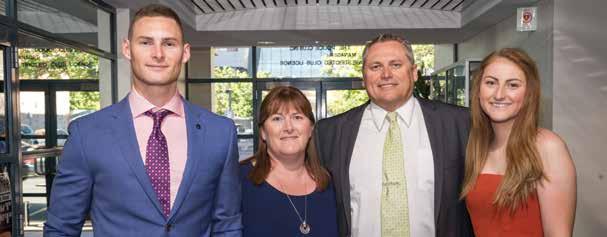
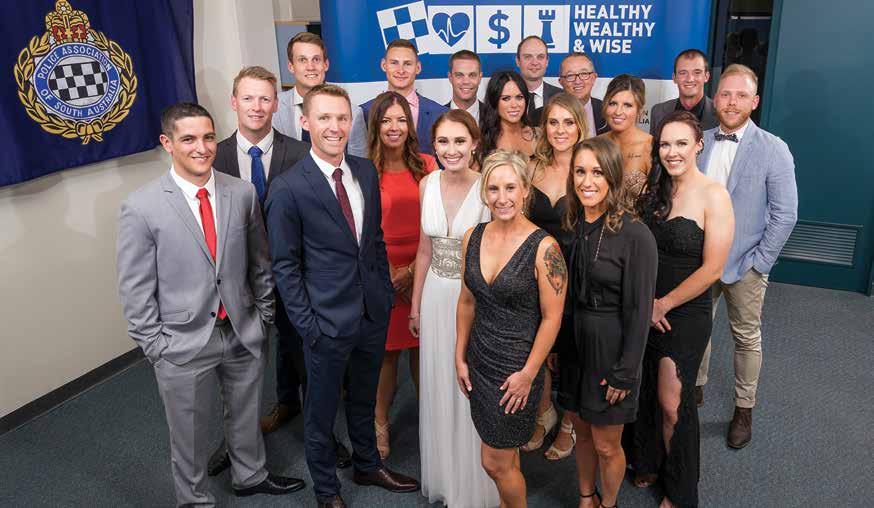
1. Travis and Kathryn Black
2. Belinda Eldridge and Edward Czuchwicki
3. Aimee-Jo Easterbrook and Peter Finlay
4. Heather, Rachel and Garry Bagshaw
5. Catherine, Tarryn and Michael Battersby
6. Joshua, Kelly, Paul and Keely Clonan
7. Joel Morley and Jessica Nicks
8. Guests applaud a speech
9. Stephen Paulovich and Rhiannon Penhall
10. Emma and Christian McIntyre
11. Sam Mills and Cameron Joyce
Wednesday, February 1, 2017
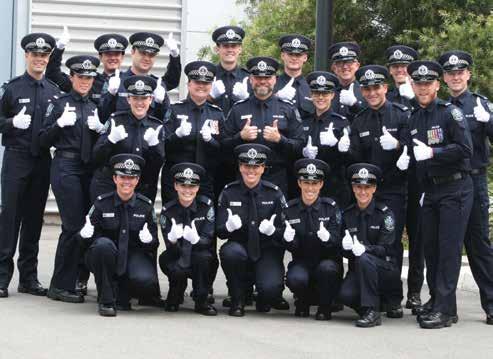
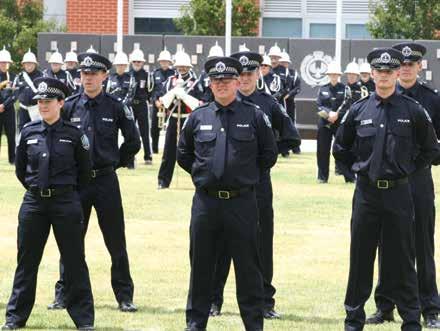
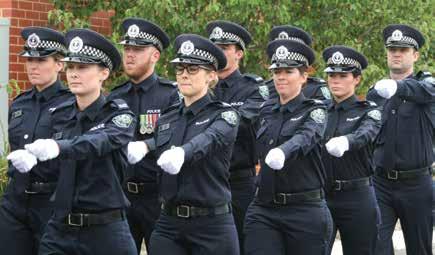
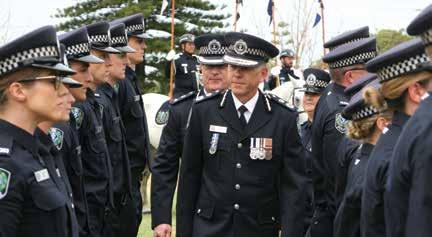
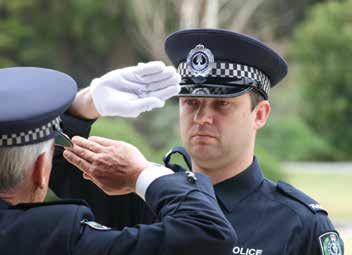
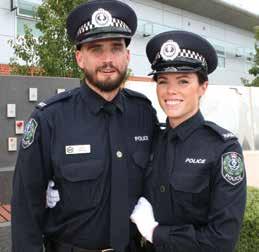
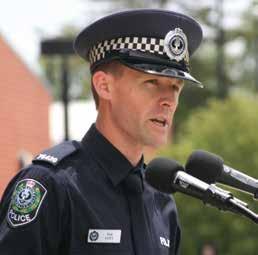
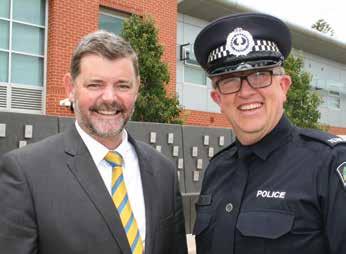
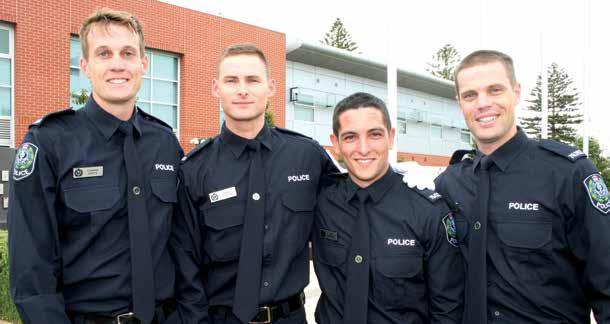
the course
6. Jamie Van Den Hoorn
7. Tom Lott delivers a speech on behalf of the course
10. Police Association president Mark Carroll with Academic Award winner Grant Archer
11.
ROBYN BULLER
(Forensic Response) and horses HOFF and ALBERT
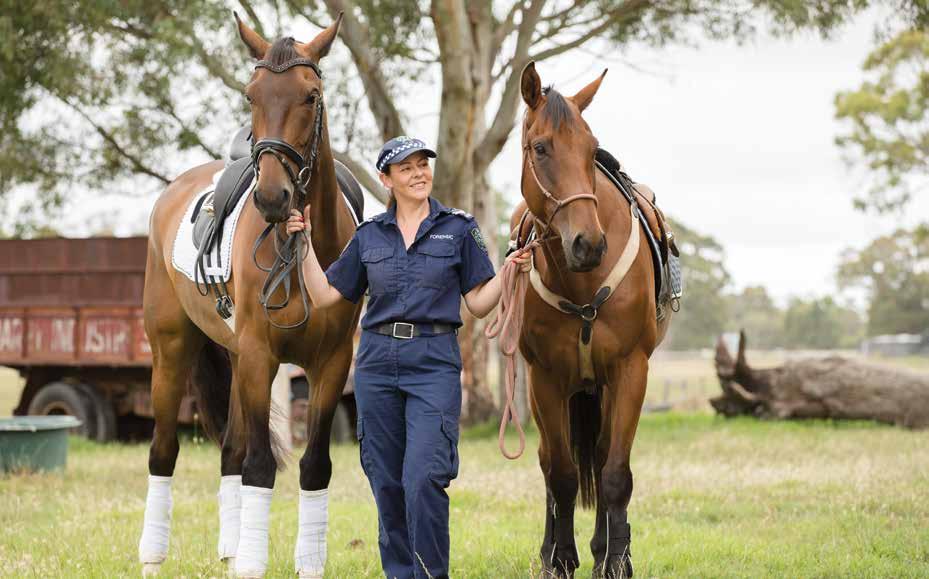
An equestrian and owner of multiple horses, Robyn Buller loves her majestic creatures and supports them with time and effort – but also a heap of money.
My family wasn’t from a long line of equestrians. I’ve somehow just always had a passion for horses. I currently own four: Oasis, Odie, Albert and Hoff. To me, my horses are my teammates and my companions. I don’t see them as pets. Horses are, at times, my therapy. Without them I’d have a lot more money but I doubt I’d be as happy.
These are animals that weigh more than 10 times my bodyweight and have minds of their own. To have one of them be completely with you and lock onto a fence and take you confidently over it without fear is an amazing feeling. That ability to put your trust in an animal that could kill you, without even breaking a sweat, is a remarkable relationship.
Odie is a big gentle giant. He stands about 176cm high. I was always taken aback at how gentle he was when you weren’t riding him, especially with children. He lowers his head to their height and lets them pat his face and brush him. I’m starting jumping again with Albert and he helps break up the seriousness of competing with Hoff. He’s a fun horse.
I don’t dare think how much my horses cost me but they cost everything! All of it! There’s agistment or rent, farrier for shoes every six weeks, worming every three months, annual injections, feeding twice a day, rugs and tack and repairs, annual dental, physio treatments, vet bills, entry and annual membership fees, insurance, float up-keep, travel costs… I really don’t want to know.
My horses all get along and they’ve sorted out who is who in the pecking order. However, with the risk of injury I don’t paddock them all together. I also have a red heeler and a Jack Russell. The heeler at times snaps at their heels but the Jack Russell thinks they are huge fun to try to play with. One horse tolerates it more than the others.
They get physio and chiro treatments – often more than I do – as part of their training and management regime. They’re happy, healthy horses, and that shows in their willingness and friendly natures, so I think they’re happy enough with what they get. But Hoff would eat a whole packet of sugar cubes or bag of carrots if I let him.
Hoff is proving to be a very talented and special horse. Since his first training began under saddle, a little over 12 months ago, we’ve competed at two unofficial and three official dressage competitions. He has a young, inquisitive mind so he’s cautious of new people but, at the same time, he can’t help himself and needs to investigate.
Oasis now lives out his days at one of my instructor’s agistment centres teaching beginners the art of riding. He also teaches some more experienced riders how to do the fancy stuff. He’s happy and healthy and still has that character at the age of 25. The time will come when he’ll let me know that he’s ready to go. A sad day indeed.
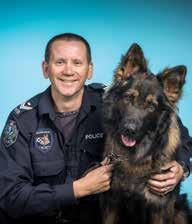
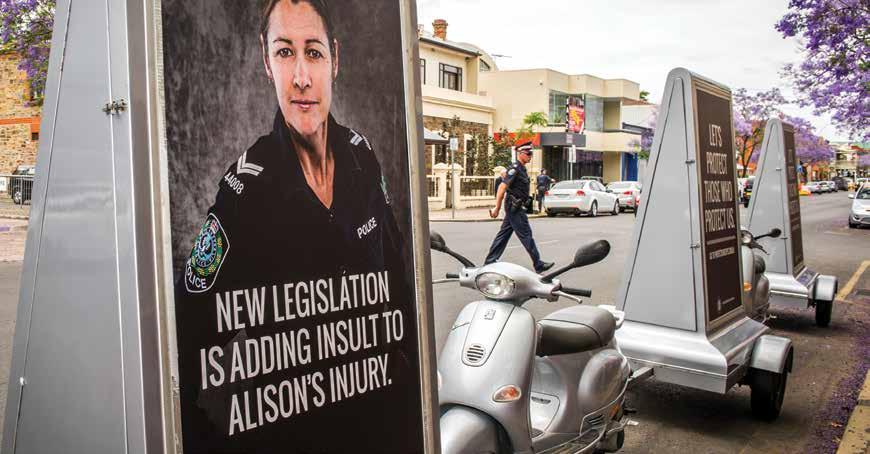
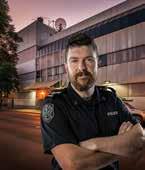
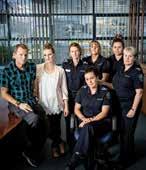
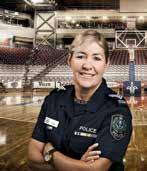

Tuesday, April 4 | 7pm – 9pm Adelaide Convention Centre
Three-time Olympian and winner of seven Commonwealth gold medals (swimming), Lisa Curry is one of Australia’s most successful athletes.
Now, in her role as a health and fitness advocate, she brings a special POLICE HEALTH AND WELLNESS SEMINAR to Adelaide.
A wife, working mother, author, and public speaker as well, Lisa motivates and inspires audiences of all ages and from all walks of life.
In fact, her seminar could well deliver a message or two which could save your life. Lisa has spoken with and formally addressed police before and understands the demands of police work.
That makes her tips and guidance for cops invaluable.
This seminar is FREE for Police Association members and their families.
Don't miss out on this rare opportunity to benefit from the expertise of one of Australia’s best regarded sportspeople.
Go to www.trybooking.com/258213 to secure your place.