“And our members are dropping like flies. It’s distressing to watch my friends and colleagues try to keep coming to work to fight an endless battle with no relief in sight.”

“And our members are dropping like flies. It’s distressing to watch my friends and colleagues try to keep coming to work to fight an endless battle with no relief in sight.”

Time catches up to you
For many people, somewhere in the 30s, priorities around health change.
While our waistline used to dictate what we put in our mouths, as we get older, good health becomes the priority.
Sometimes, this mindset shift is a diagnosis. And there’s one that starts to become more common in the 40s: type-2 diabetes.
Type 2 diabetes is the result of your body producing insulin, but not using this pancreatic hormone effectively, as the body intended.
The wide range of symptoms include thirst, headaches and weight gain.
Being over 45 and having a history of heart disease are risk factors. But what’s more important to know is what you can control.
For example, weight control, healthy diet (with low cholesterol), and physical activity.
The daily biological rollercoaster of policing
But for shift-working police, this is harder. According to ex-officer and acclaimed author, Dr Gilmartin: “police experience an elevated adrenal cortical sympathetic stress response, causing the liver to release glucose. The pancreas responds by secreting insulin to allow glucose to enter the cell.”
Police officers need to focus more on eating well to manage blood glucose levels. Regular exercise will complement this, helping to lower blood pressure and weight.


Chronically elevated levels of insulin start a string of problems that make up metabolic syndrome, including type 2 diabetes.
Gilmartin advocates going to the root cause: keeping insulin levels under control.
While no cure, a healthy lifestyle controls it
You must manage type-2 diabetes because it's progressive. Diabetes Australia notes that sufferers are four times more likely to suffer heart attacks and strokes.
It’s also the leading cause of preventable blindness. Amputations are 15 times more common and mentalhealth disorders affect 30 per cent of people with diabetes.
Police officers need to focus more on eating well to manage blood glucose levels. Regular exercise will complement this, helping to lower blood pressure and weight.
Medication is often required to support the body’s processes.
Specialists can make eating plans and exercise programmes that are realistic to manage. Blood glucose monitoring habits are important to solidify with police officers who experience fragmented work settings. Open communication with colleagues and departments can ease the pressure of “finding time” or private areas to test levels. Speaking with a dietitian will help improve your diet and nutrition.
Police Health understands the unique health needs of the police community, because we’ve been looking after them for 90 years.
Whether you’re already a member, or interested in becoming one, call us to find out how to get the most out of our cover and benefits. We’re here to help.

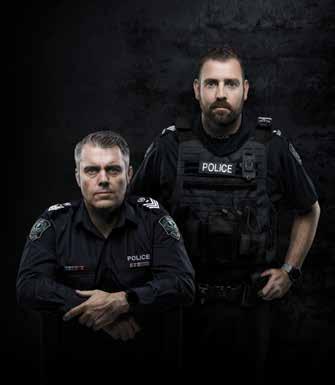
It seems undeniable that frustration and mental ill health are rife among country and regional police prosecutors They speak of deep failings in the SAPOL response to the staffing crisis in their prosecution units, and the massive, unmanageable workloads.
We spoke with one recently resigned and two serving country prosecutors. They told us not only of their experience at the coalface but also the strain on their colleagues. One prosecutor describes those colleagues as under so much pressure as to be “dropping like flies”
A significant warning to come out of our interviews was that, if the staffing crisis continues, the prosecution workforce is set to “implode on itself” And, in the meantime, prosecutors express no confidence in SAPOL to resolve the crisis in either the short or long term
The reality of mental ill health in the military and policing has been around since the days of shell shock in World War I Now, however, Police Association members have Aussie Frontline to turn to whenever they find themselves in a seemingly inescapable dark place
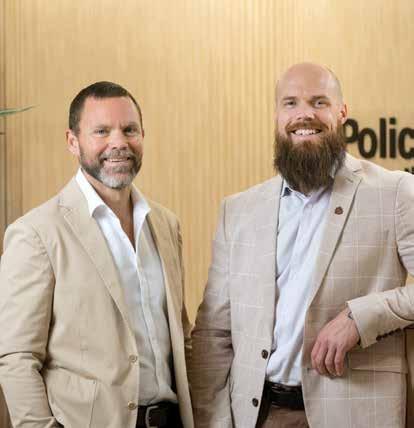
Detective Brevet Sergeant Mali Briggs and Dr Dan Pronk, a former member of the elite SAS, own and run the organization. And each has an abiding interest in member well-being and mental health.
Police Association assistant secretary Steve Whetton reveals a staffing crisis beyond the one in country prosecution units He exposes disastrous circumstances in Coober Pedy: a “dangerously understaffed environment” and exhausted members responding to “volatile incidents without backup”
Dr Rod Pearce looks at the problem of deep vein thrombosis; lawyer Daniel Weekley urges members not to “go it alone” in cases of deaths in custody; Jim Barnett road-tests the Jeep Avenger battery electric vehicle and updated Nissan Qashqai
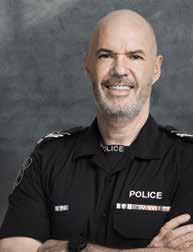
Police Association president Wade Burns looks at the seemingly out-of-control crime in Victoria and calls it “a cautionary tale for South Australia”.
Brett Williams
brettwilliams@pj asn au
Publisher: Police Association of South Australia Level 2, 27 Carrington St, Adelaide SA 5000 T (08) 8212 3055 Editor: Brett Williams (08) 8212 3055 Design: Sam Kleidon 0417 839 300
Advertising: Police Association of South Australia (08) 8212 3055
Printing: Finsbury Green (08) 8234 8000
The Police Journal is published by the Police Association of South Australia, 27 Carrington St, Adelaide, SA 5000, (ABN 73 802 822 770). Contents of the Police Journal are subject to copyright. Reproduction in whole or in part without written permission of the Police Association of South Australia is prohibited. Opinions expressed are not necessarily those of the editor. The Police Association accepts no responsibility for statements made by advertisers. Editorial contributions should be sent to the editor (brettwilliams@pj.asn.au).
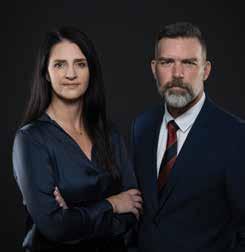
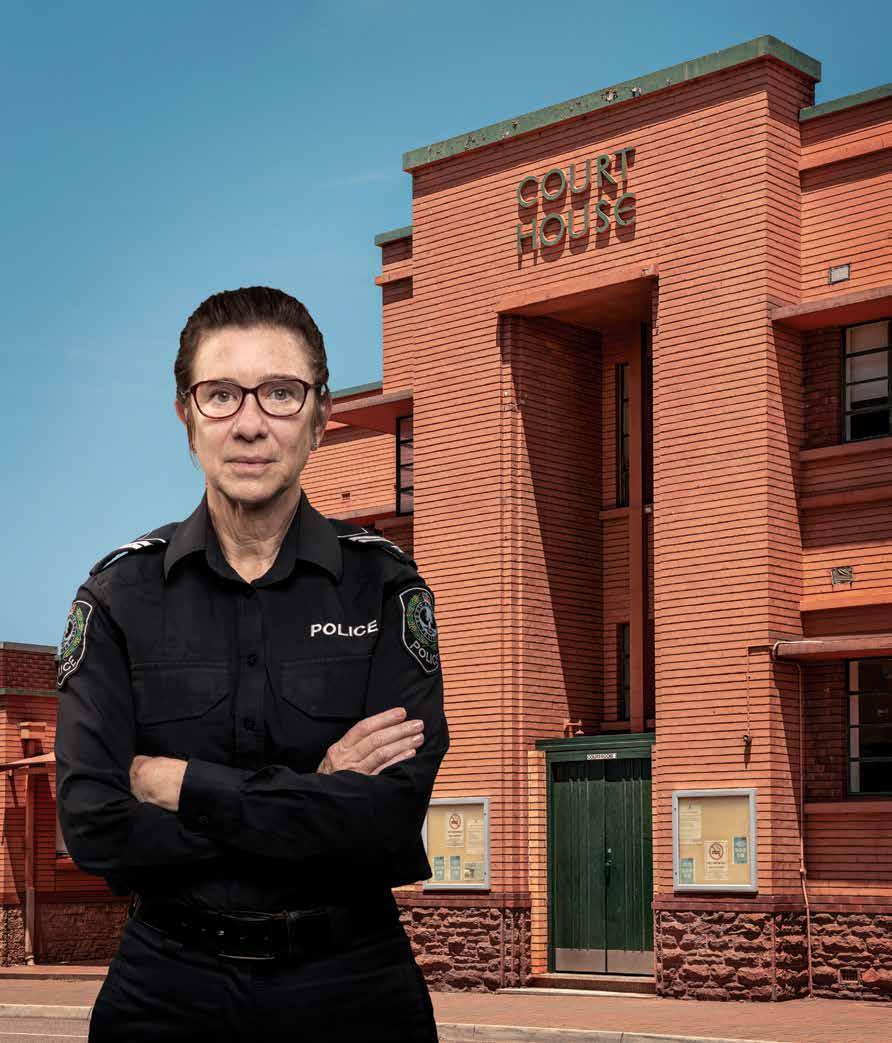
COVER: Brevet Sergeant Deanna Holdrich. Photography by Steve McCawley and Astyn Reid.
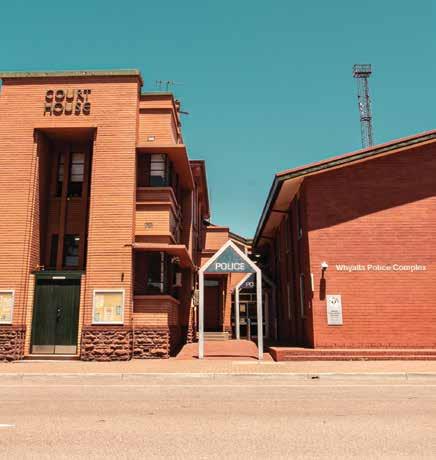
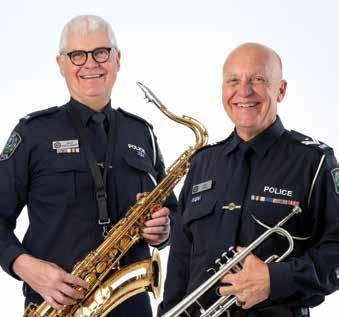
Beleaguered country police prosecutors are speaking out: they’re trapped in an ongoing crisis and are clear about who they consider responsible
Cops and soldiers, whose mental health is always at risk, now have two of their own to help get them back on track
Another international journalism award to the Police Journal – this time for the feature story First responders at their best (autumn issue, 2024)


EXECUTIVE ASSISTANTS
Level 2, 27 Carrington St, Adelaide SA 5000
www.pasa.asn.au
P: (08) 8212 3055 (all hours)
E: pasa@pasa.asn.au
Membership enquiries: (08) 8112 7988



MEDIA AND COMMUNICATIONS


POLICE A S S OCIATION OFSOUTH AUSTRALIA
REPRESENTATIVES
Superannuation
Leave Bank
Wade Burns and Michael Kent
Andrew Heffernan
Country housing Andrew Heffernan
Commissioner’s Office Health Safety & Welfare Advisory Committee Steven Whetton
Legacy
Sexual Orientation, Gender Identity & Intersex members
DELEGATES & WORKPLACE REPRESENTATIVES
Metro North Branch
Elizabeth
Gawler
Golden Grove
Henley Beach
Holden Hill
Northern Prosecution
Northern Traffic
Parks
Port Adelaide
Port Adelaide Investigation
Salisbury
Country North Branch
Ceduna
Coober Pedy
Kadina
Peterborough
Port Augusta
Port Lincoln
Haydn Evans
Rob Mowday
Darren Quirk
Alan Pagac
Adam Knoll
Tim Pfeiffer
Neil Hastie
Edward Matias
Paul Blenkiron
Andrew Winterfield
Philip Proctor
Samuel Priest
James Cochrane
Gavin Moore
Nathan Paskett
Jake Whenan
Ian Baker
Whyalla Paul Velthuizen
Crime Command Branch
Adelaide Investigation
SOCIB
Forensic Services
Intel Support
Major Crime
Serious Fraud
Metro South Branch
Adelaide
Christies Beach/Aldinga
Hindley Street
Robert Clark
David Furniss
David Bowman
Shaun Blundell
Phil Buttfield
Robert Plenderleith
Stuart Mee
Gary Craggs
Michael Montgomery
Julian Snowden
Nadia Goslino and Andrew Heffernan
Metro South Branch continued
Netley
Southern Prosecution
Southern Traffic
Sturt
Country South Branch
Adelaide Hills
Berri
Millicent
Mount Gambier
Renmark
Operations Support Branch
Academy
Academy
ACB
Band
ComCen
ComCen
Dog Ops
Firearms
Human Resources
Mounted Ops
PSSB
STAR Operations
State Ops Support Branch
Traffic Services
Traffic Services
Robert Brelsford
Sallie McArdell
James Evans
Richard Hoar
Jason Blucher
Tamara Day
Tanya Payne
Owen Wales
James Bentley
Melanie Smith
Peter Koulianos
Tony Boots
Adam Buckley
Glenys Moriarty
Mark Dearman
Levi Struthers
Brett Carpenter
Eugene Wasilenia
Sonia Wellings
Mark Staples
Craig Murphy
Duncan Gerrie
Benjamin Bowey
Joshua O’Dwyer
Youth & Street Gangs Taskforce Ian Kilpatrick
Officers Branch Constantinos Kyriacou
Craig Terlikowski



Wade Burns PRESIDENT
Across Australia we’re witnessing a troubling shift in the landscape of crime and public safety
It’s most starkly visible in our neighbour, Victoria — a state now recording crime figures that should alarm us all.
The circumstances unfolding across the border represent a cautionary tale for South Australia.
The most recent figures from the Crime Statistics Agency Victoria (CSA) show that in the 12 months to June 2025, Victoria logged around 483,583 criminal incidents, an increase of 18 per cent from the previous year
The CSA reports that these numbers represent the highest figures since records began
Other stats reveal some alarming trends: car thefts surged 42 per cent, retail theft was up 41 per cent and breaches of family violence orders increased by 16 per cent. Aggravated burglary has reached
a record high, rising by 26 per cent in the past year alone
Victoria’s metropolitan areas, especially Greater Melbourne, remain the hardest hit
It wouldn’t surprise police officers anywhere to know the offending is highly concentrated. Just 5,400 people — roughly 0.07 per cent of the population — were responsible for nearly 40 per cent of all crime in the state.
When the same people cycle through offending, police officers become intensely frustrated and public trust begins to erode
So, what went wrong?
Regular Victorians have often flagged a disconnect between community expectations and sentencing or bail outcomes
It’s obvious now that offenders perceive they can reoffend with minimal, if any, consequences. This destroys any deterrence factor and damages public confidence in the justice system.
But the breakdown in trust extends well beyond the courts
The Victorian government’s handling of enterprise bargaining with its own police workforce last year — characterized by delays, dismissiveness and a lack of genuine engagement — has sent a demoralizing message to the very people who hold the line on community safety.
Trust has fractured not only between the government and police, but also between those two institutions and the public
Many Victorians no longer believe their leaders are on the same side as the law-abiding public That’s a dangerous place for any society to be
Victoria’s government and senior police leadership have now openly acknowledged the crisis, but some of the solutions have been comical
The “machete disposal bins”, for example, have attracted widespread ridicule.
Those disposal bins are, in reality, a perfect symbol of a failed political class and a dysfunctional criminal justice system
For too long, priorities have been upside down: resources poured into bureaucracy and political messaging instead of front-line capability and community safety
The state has embraced policies driven by political ideology that too often protect offenders rather than victims.
Perhaps the most insidious aspect: the risk that communities begin to see high crime as the new normal
What happens in Victoria should be a concern to every jurisdiction, including ours SA is not immune to the underlying pressures: economic stress, regional disadvantage, youth disengagement, organized crime and policing resources stretched well beyond capacity, with a measurable human toll on officers
The SA government must be careful not to repeat Victoria’s misplaced priorities.
The crisis in Victoria also underlines that policing alone is not enough . Consequences like bail laws, sentencing
frameworks and rehabilitation systems must align with the community’s expectations of safety
Public safety is not solely achieved through arrests and convictions It relies on community trust When people perceive their safety is threatened and responses are inadequate, the social contract weakens.
Data out of Victoria shows how quickly that trust declines
The judiciary and bail systems must also reflect community expectations of safety And our government must show respect for the men and women who serve on the front line, through fair industrial outcomes, safe staffing levels and open dialogue
The pressures facing police officers in a rising- crime environment are immense. Fatigue, stress, wear and tear — they all accumulate.
Victoria has sent us a clear and ominous message. When crime rises, when offenders act with impunity, when public trust erodes… the price is paid by citizens, victims and the police officers who protect them
We recently reached another decisive industrial breakthrough with the state government on key conditions contained in Schedule 2 of the Memorandum of Administrative Arrangement.
The result is a set of improvements that will have an immediate and meaningful impact on members’ working lives
For years, sergeants have faced an artificial barrier to progression, with advancement often dependent on arbitrary or inconsistent criteria
Now, every sergeant with five years of service at rank (including periods of formal relieving) will progress to sergeant first class and receive a 3 per cent allowance forming part of their annual salary for all purposes — including superannuation, leave and award entitlements
We have also secured a 10 per cent allowance for senior sergeant positions within metropolitan districts and country regions
Perhaps the most transformative reform is the 23 per cent allowance for general-duties officers serving in regional 24/7 stations. Commencing in November 2025, this measure is designed to address one of our most pressing challenges: the attraction and retention of officers in country policing
For too long, members stationed in regional South Australia have carried an unequal burden
They work under intense operational pressure, often without the support or resources available in metropolitan areas
The new allowance replaces the patchwork of shift penalties that existed before — a system that was neither equitable nor sustainable — with a clear, predictable and fair recognition of the realities of country policing.
If the industrial victory shows what can be achieved through engagement, the worsening staffing crisis in regional South Australia shows what happens when leadership fails to act
Across our state’s remote and rural stations, officers are being placed in untenable situations. They are working dangerously long hours, responding solo to volatile incidents and facing severe fatigue
In some cases, their safety, and that of the public, has been compromised beyond acceptable limits
Coober Pedy, Ceduna, Port Lincoln, Port Pirie — the list is long and growing
Coober Pedy, in particular, has become the epicentre of the crisis
With a vacancy rate above 40 per cent and repeated hazard and incident reports ignored, officers there are operating at what can only be described as a critical breaking point.
Continued …

Wade Burns
One officer was forced to complete an 18-hour shift that included a return trip to Oodnadatta on treacherous roads. Another worked nine consecutive night shifts.
These are not isolated accounts . They represent a systemic failure to maintain safe staffing levels When an officer must choose between arresting an offender and leaving the town uncovered, something fundamental has gone wrong
In Ceduna, the practice of rostering officers alone on night shift — including probationary and community constables — exposes them to unacceptable risk
In Port Lincoln, Eyre Western CIB and regional prosecution offices across the state, workload intensification has reached unsustainable levels.
In some regions, SAPOL’s response to the crisis has been to deploy community constables as first responders, effectively using them to fill numbers on patrols
This is not what the community constable role was designed for
We’ve taken the Coober Pedy dispute to the South Australian Employment Tribunal, a necessary escalation after every attempt at resolution was ignored
We’ll keep members and the public updated on the outcome.
At our annual conference in October, Premier Peter Malinauskas announced new laws to make it a criminal offence to threaten, harass or intimidate police officers or their family members
These laws carry a maximum penalty of 10 years’ imprisonment and have received bipartisan political support
I drove this reform after presenting evidence to the government of members being followed, harassed, and targeted — not just on duty, but off duty, and in their private lives
In one instance, an officer’s child was followed home from school
In another, an officer’s family was targeted by known offenders.
The premier, to his credit, treated this evidence with the seriousness it deserved and acted swiftly in the interests of SA police officers
Our members accept risk as part of their duty, but their families do not
The right of officers and their loved ones to live free from harassment isn’t negotiable
The SA government deserves recognition for taking these concerns seriously
the injury management system
I’ve recently pushed for a review of SAPOL’s self-insured injury management system
Too many members have told us the system designed to support them in recovery has, instead, caused further harm
Member submissions revealed stories of frustration and despair — officers left isolated by poor communication, entangled in unnecessary bureaucracy and made to feel like adversaries rather than employees in need of care.
When an injury management process adds to the stress and anxiety of an injured officer, something is profoundly wrong
Our goal is clear: a system that supports recovery, not one that compounds trauma
The current audit by ReturnToWorkSA, and recommendations of the Select Committee on Support and Mental Health Services for Police, represent a vital opportunity to reset that system and create a culture of genuine rehabilitation
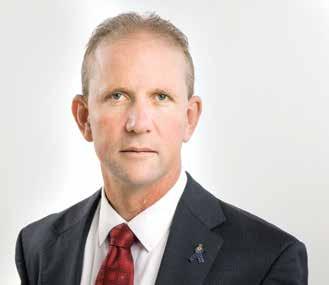
Throughout his career, he never hesitated to challenge any side of government, defend his members or speak his mind.
The Australian police community was shocked and deeply saddened in November by the sudden loss of Ian Leavers, the long-serving former president of the Queensland Police Union and a towering figure in the Australian police union landscape.
I had the privilege of getting to know Ian over the last few years What I learnt was that he was much more than a police union leader He was a voice for every police officer who ever felt unheard
Throughout his career, he never hesitated to challenge any side of government, defend his members or speak his mind.
His leadership was instrumental during times of national crisis and his influence extended well beyond Queensland’s borders As president of the Police Federation of Australia, he also championed police industrial issues and officer welfare nationwide
Tributes from across the country — from commissioners, premiers, police union leaders and members alike — reflect not only his impact but the enduring importance of strong representation
On behalf of Police Association of SA, I extend our deepest sympathies to Ian’s family, friends and colleagues in the Queensland Police Service and the Queensland Police Union
Explore fleet pricing available today.



With a Hyundai Hybrid, excellent efficiency meets outstanding performance. The SANTA FE Hybrid, TUCSON Hybrid and KONA Hybrid have been awarded top honours across multiple Car of the Year Awards in 2025, proving that efficiency, innovation and style all come as standard.
Hyundai Australia thanks the South Australian Police for their support to the community. In appreciation, National Fleet Pricing is now available across the entire Hyundai model range (excluding N Models).
Contact your local Hyundai Dealer today.

BY BRETT WILLIAMS

Country and regional police prosecutors continue to suffer as understaffing and mammoth workloads overwhelm them. They consider their prosecution units to be in crisis and SAPOL without a solution.
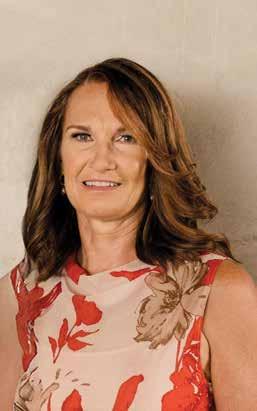
IT BROUGHT ON CHEST PAINS, a suspected heart attack, an ambulance response, and a trip to Whyalla hospital The terrified victim was Whyalla police prosecutor Brevet Sergeant Deanna Holdrich, and she remembers the episode as “just horrific”
It was not a case of an aggrieved defendant lashing out at her in the courtroom, or even a simple fall in the police station.
Rather, it was the ongoing burden of chronic understaffing, an impossible workload, and no solution coming from SAPOL At least not one that
country prosecutors could see, either then or now
In March 2022, Whyalla Prosecution staff numbers, a sergeant and three, were down by 50 per cent One vacant position and one prosecutor on annual leave had brought about the shortfall
But staff shortages like that, and worse, were nothing new to Holdrich and her fellow country prosecutors.
The intensity of the pressure on Holdrich, in the week she suffered her suspected heart attack, might have caused any police prosecutor to crack . Just parts of the week seemed enough to do psychological damage
“Have we got any more staff coming?” The answer was: “No. There’s no one coming.”

What Holdrich faced in court on the Monday was the usual long list of domestic violence matters and weekend arrests
“And for me,” she says, “DV court is the most important thing because we’re dealing with women and children’s lives I have to do it properly ”
On the Thursday, she was back in court, prosecuting in a trial. Then, on her task list for Friday was a staggering 36 pre-trial conferences, each of which requires prosecutors “to basically prepare for trial”.
“So you need to know every one of those files inside out,” Holdrich explains, “and we had hardly anyone there (at Prosecution) I think there was only (Sergeant) Adrian Bellamy and me
“What happened to me was I got in (to court) and I hardly knew any of the files at all, never mind inside out
“And I think that's why I had what we thought was a heart attack: because I'd been so busy all week . How was I meant to prepare properly?”
She had tried, before stepping into court, to get her head around how she would manage that long list And that was when the chest pains and feared heart attack struck her
“Adrian had to pick it up on that day and, of course, he didn't know anything about the (PTC) files,” she says “The magistrate was very good about it We’re lucky that we get very good magistrates ”
Holdrich was also lucky to discover that she had suffered not a heart attack but rather the first of two panic attacks.
While on leave and soon to return to work in April 2023, she contacted her office to ask: “Have we got any more staff coming?” The answer was: “No There’s no one coming ”
“I just felt like I was going to vomit,” she recalls “I thought: ‘What am I going to do? I just can’t go back there ’ So that was when I went on WorkCover ”
Her eventual path back to duty was via a return-to-work agreement to work four-hour days, three days per week and build up to eight-hour days.
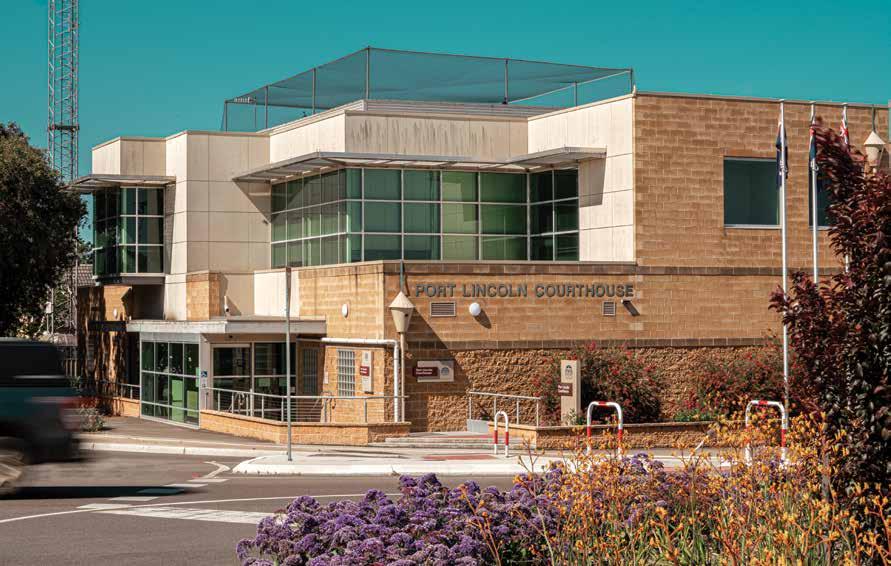
Among many others to suffer the effects of inadequate staffing was former Port Lincoln police prosecutor Sonya Shillabeer That was until the pressure became unendurable and prompted her to resign from SAPOL in July.
With her, she took 38 years’ experience and a reputation as an excellent prosecutor
She recalls an evening from a few years ago when she was still in court at 7pm, prosecuting in an assault trial The ongoing stress of her “immense workload” finally shattered the outward composure she had long maintained
“I burst into tears in the courtroom,” she says. “I was actually in tears and walked out. I’d run a lot of trials before, but I think this one was just the straw that broke the camel’s back It was a build-up (of stress) ”
Also a few years ago, Shillabeer twice came down with shingles, an illness linked to stress As well as that was “high anxiety” she suffered in the last three years of her service. She could see she needed a “circuit breaker” and so took months off on long-service leave. In those last few years in which she served, her suffering was obvious, particularly to her concerned children “You’ve just got to get out (of the job),” was the message they made clear to their mother
SAPOL had allowed Shillabeer to struggle as a country prosecutor right from the time she first took on the role For the two years to 2012, she did the occasional stint with Port Lincoln Prosecution as a reliever, but with little prosecution experience. The expectation of her was to undertake some of that relieving as the sergeant of the unit
“But from upper management, there was no accountability. They would do a bit of a look at what the issues were, but nothing was resolved.”
But, besides occasional support from Adelaide, she had zero staff. So, despite all the experience she lacked, she at times constituted the whole of Port Lincoln Prosecution
“So that nearly burnt me out,” she says “And that’s before I even got a permanent spot in Port Lincoln In a prosecution unit of two or three (prosecutors) in the country, if one or two go (on annual or sick leave), you’re down by 33 per cent or 50 per cent.
“But from upper management, there was no accountability. They would do a bit of a look at what the issues were, but nothing was resolved I just don’t think they made much of an effort to connect with the regional prosecutors They’re negligent ”
Shillabeer served 10-odd years with Port Lincoln Prosecution She estimates that only for a few months in that entire time did the unit ever have a full complement of staff.
And she always knew that her unit was never the only one stuck with skeleton staffing and massive workloads. She saw many of her fellow country prosecutors struggle
not to buckle under the weight of “such a systemic problem”.
“This has happened for years,” she says “And I’ve seen the impact on the physical and mental health of lots of prosecutors ”
That impact on country prosecutors is obvious to Holdrich too
“When you talk to other prosecutors, (you can see) there’s no joy in our job anymore,” she says “There’s no satisfaction It (the impossible workload) just doesn’t stop
“And our members are dropping like flies. It’s distressing to watch my friends and colleagues try to keep coming to work to fight an endless battle with no relief in sight
“Sonya Shillabeer left the job, which is a huge loss She was an excellent prosecutor She’d just had enough ”
Some country prosecutors might yet follow Shillabeer Others might just regret joining the prosecution fraternity or, indeed, SAPOL
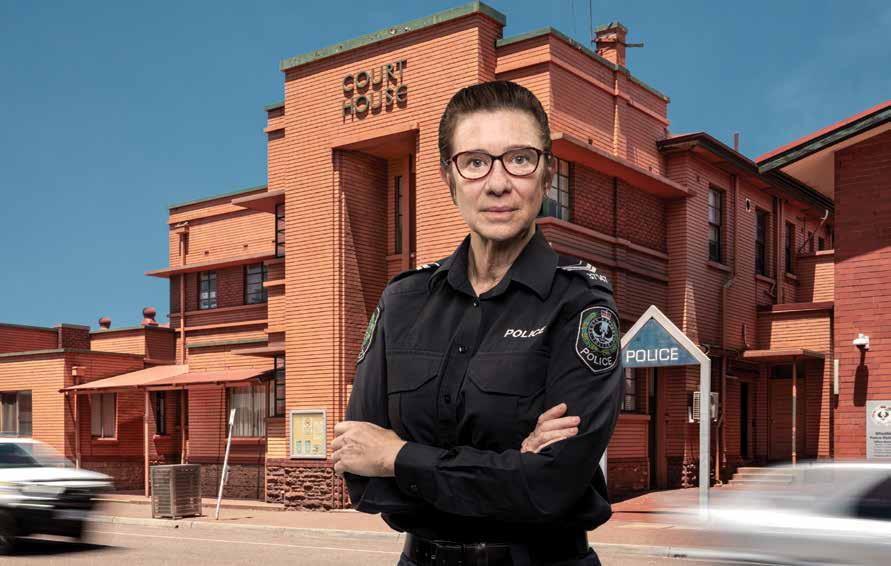
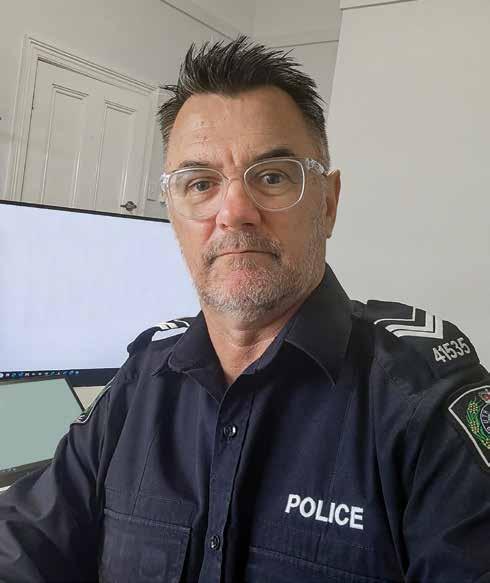
Mount Gambier Prosecution brevet sergeant Darren Keding, 58, came to policing from the field of business analysis at age 30. A prosecutor since 2011, he would not, with his time over again, necessarily join SAPOL
“I speak to a lot of prosecutors during the course of the week,” he says “They’re all under the pump I see it when we get e-mails on a fairly regular basis, looking for people to fill spots
“If it’s an in-court week at the Barossa, Berri or Kadina, they’ll send out (these e-mails). They were coming out constantly on a Thursday or Friday looking for help. It’s like a patchwork quilt.
“If you have someone on holidays, a PDO or sick leave, you get inundated You just can't see the forest for the trees It's endemic
“Berri recently this year had absolutely no one and they were pulling people out of Adelaide CJS to go and work there for a month at a time
“And that’s the thing that’s frustrated me in the last five or six years: seeing these constant e-mails come out about vacancies, speaking to other prosecutors who are just drained ”
“So that left us with two people to run the whole of the northern region: the APY Lands, Coober Pedy, Roxby, Leigh Creek, the whole area. That was horrendous.”
Holdrich knows that drained, exhausted feeling well She has endured it right throughout her time as a prosecutor
In 2000, she fronted up to Far North Criminal Justice for her first stint as a country prosecutor based at Port Augusta. Her two years there came after she had served three years with Elizabeth Prosecution.
“I did two years there (at Port Augusta) and that was a nightmare,” she says “No staff There were only three positions, a sergeant and two senior connies And the sergeant went out on stress pretty much after I got there
“So that left us with two people to run the whole of the northern region: the APY Lands, Coober Pedy, Roxby, Leigh Creek, the whole area. That was horrendous.
“So I was running the unit with only three years' experience in prosecution. I did the best I could but ended up really, really sick
“My hair was all falling out; I would have nightmares and wake up in the middle of the night vomiting. My brain didn't function after three o'clock in the afternoon – if it functioned at all during the day ”
After those two years, Holdrich quit prosecution to make a return to patrol work in Coober Pedy She stuck with that until heading back to Elizabeth, where she resumed the role of police prosecutor
In the time that followed, she became pregnant, took maternity leave, returned to Coober Pedy and, there, wound up back on the road full time.
In 2006, however, Prosecution Services Branch made a request of her to return to life as a prosecutor, based in Coober Pedy and covering the APY Lands
“I didn’t want to do it,” she says, “because I knew that I would need to work more, and I had a young child In the end, they sort of guilted me into it and I did it for nearly a year I ran the Lands and Coober Pedy, which was a challenge. ”
Later, Holdrich ended up back at Port Augusta Prosecution where she served for several years before a two-year stint back on the road at Roxby Downs And then came a PSB persuader who wanted her to fill a prosecution vacancy in Whyalla in 2021
She at first rejected the pitch, which she still recalls: “It was like: ‘No, no, it’s really good Really good staff there There’s an LE3 (prosecuting solicitor) on maternity leave, but she’ll be back soon. There’s another LE3 and a sergeant. ’
“So, I was like: ‘Okay.’ They talked me into it I went back, and it was just a shit show right from the beginning And it just got worse and worse It never got any better One of the LE3s left (and) one came back but only on 6 ”
Today, the Whyalla Prosecution team – which should be a sergeant and three – is down by 50 per cent After the departure of an LE3 and an LE2, the unit is just Holdrich and an acting sergeant.
But, as Holdrich sees it, even that establishment of a sergeant and three is, in any case, “just not near enough”
“They don't care about their prosecutors, and I've always understood and accepted that. But, now, they don't care about anyone.”
In correspondence to the Police Association earlier this year, a desperate Holdrich outlined the worsening situation She explained that her only colleagues in the Whyalla prosecution unit at that time were an LE3 as acting sergeant and an LE1 .
In a broader sense, she wrote of numerous prosecutors out on stress, solicitors resigning, and other prosecutors transferring out of PSB
She also detailed what she knew of the status of other country prosecution units
Berri Prosecution, for example, had a sergeant out of action, two LE3 positions vacant, and an LE1 – who could not attend court – filling an LE3 position
Port Pirie Prosecution had a vacant sergeant position, one LE3 out of action and another headed for 12 months’ maternity leave. And, before that leave, she had run the unit by herself, so Port Pirie was about to descend into zero-staff status
Port Augusta Prosecution was at crisis point too Its sergeant and senior sergeant were out of action and two LE3 positions were vacant To carry the load, with such extreme understaffing, was one brevet sergeant and one LE3 working off site from Adelaide
Port Lincoln Prosecution, from where Shillabeer was soon to resign, consisted of a sergeant and, owing to another resignation, a vacant LE3 0. 5 position. And soon to become vacant was the brevet sergeant position owing to a requested transfer out of prosecution

Out of action at Barossa Prosecution was an LE4 in the sergeant position That left a brevet sergeant as the only prosecutor – working 0. 5 – to stand up to the workload.
Two other brevet sergeant vacancies existed at Kadina and Murray Bridge prosecution units, and Mount Gambier was also down one prosecutor
Holdrich kept up her communication with the association and, in August, sent an update of the information she had supplied six months earlier
“It has been bedlam here,” she wrote “The situation has not settled If anything, it has deteriorated further ”
She went on to explain the deterioration at Port Lincoln – from where Shillabeer had now resigned –Ceduna, Port Pirie, Whyalla, Port Augusta and Berri.
Port Pirie Prosecution, for example, was down to just one solicitor working
two days per week Berri Prosecution was down to just its sergeant
In the SAPOL executive leadership team, Holdrich, Shillabeer and others see no understanding of the demands on the country prosecutor.
Holdrich highlights responsibilities like the adjudication of arrest and report files, the judgement of evidence, the decision-making on laying charges and opposing bail
Then there are solicitors to negotiate with, variations to make to intervention orders, and PD207Bs (victim requests for no action) to assess
Holdrich also points to duties in the courtroom: trials in which prosecutors act for the public against defendants and their seasoned solicitors. And the pressure in those trials to win – for individual victims as well as the community
“There are certain timelines with arrest and report files,” Holdrich says “But, when someone's in custody over the weekend or overnight, we have to treat those as a priority.
“I’m always the first in the office in the morning and I generally go to the cells to find out what custodies we’ve got On a Monday, we could have 10 It’s busy We’re under pressure Everyone’s under pressure ”
An added pressure comes from dealing with files relating to major indictable offences Prosecutors have to interact with the DPP, take instructions on what to charge, and organize complex files
“We're here to fight the good fight,” Holdrich says, “but I don't think that's valued in any way by SAPOL . They don't care about their prosecutors, and I've always understood and accepted that. But, now, they don't care about anyone ”
To talk to country prosecutors is to understand how and to whom they apportion blame for what Shillabeer calls “such a systemic problem”
She stresses the need for the ELT to understand how the pressure –brought about by understaffing –is crushing the will and spirit of the collective of country prosecutors
“It’s just like out of sight, out of mind,” she says “That connection is lost, and they just don’t have an appreciation of how hard you work ”
Holdrich points directly to where the buck stops: Commissioner Grant Stevens
“It kind of breaks my heart what he's doing to SAPOL,” she says “I never expected that we would ever end up in a situation where I'm not proud to be a police officer anymore. Instead, I'm embarrassed, and that makes me feel sick
“Really, what is he doing to us? What has he allowed to happen to the people who do this job with such passion, care and thoughtfulness? Where’s his gone? How can he sit in that position (of commissioner) and not know what is going on for his people?”
Holdrich also asks, as the news media did, how SAPOL could ever have lacked so much care in its treatment of shooting victim Sergeant Michael Hutchinson She read his account of that treatment in the Police Journal cover story So close to a second death (winter issue, 2025).
“I read that and cried,” she says. “How can that happen to him? How can that happen to Hutchie? What is going on? What have we come to?
“I’ve given my whole adult life to this job, and I’ve done it with passion, loyalty and care Where’s mine (in return)? When do I get some of that back?
“I just can’t comprehend that we could be treated so badly It breaks my heart because I’ve always been so proud, but now I’m just not ”
Shillabeer agrees that the buck stops with Stevens and calls executive management “super negligent” for its failure to resolve the long-running country prosecution staffing crisis
“You get lip service,” she says “Things like: ‘We know you’re loaded up but we can help We’ll get other prosecutors to do overtime and help you with adjudications ’ That was always the regular line they’d give you There’s just no effort
“They’d rob Peter to pay Paul They’d say: ‘I’ll send someone from Whyalla to do Port Augusta,’ and it was just plugging the holes of a sinking ship. In my last few months, we had four or five units that were just sinking. The issues are just growing.
“And it impacts on results Coppers do this hard work and we’re the grand finale for these people, trying to get some great results for operational police Yet SAPOL isn’t being responsible, so we can’t put the time and effort in to get good results from members’ pinches ”
As Shillabeer discusses “the issues in regional prosecution”, she poses a twopart rhetorical question: “This has been going on for how many years? And what’s been done about it?”
“I first started in prosecution 15 years ago and we haven’t improved,” she says “We’ve actually got worse ”
Mount
“The whole time they've been unable to keep staff there. I would say it's an indictment (on SAPOL) that they haven't done anything about it.”
For Keding, and others, the SAPOL wheels of change turn far too slowly. And his perception of senior management is that it does not “have a vested interest in you as a person”
“If people cared,” he says, “they would really do something and give an answer and show some action But there doesn’t seem to be any ”
And he suggests that of all the country prosecution units SAPOL has failed, some have suffered more than others
“I know that Port Augusta has been on skeleton staffing since 2010 or 11 when I first started prosecuting,” he says. “The whole time they've been unable to keep staff there I would say it's an indictment (on SAPOL) that they haven't done anything about it
“It’s just seeing the lack of action that just disturbs me so much You can see that there’s no support from management, (no) coming up with ideas as to: ‘How are we going to attract people to the role? What are we doing?’
“I’m just seeing no influence whatsoever over staffing. Well, you can’t keep doing that. The workforce will implode on itself, and they’ll have no one ”
Police Association president Wade Burns warns that no one should overlook the importance of well-supported prosecutors and their expertise
“It’s refreshing to hear the truth of a situation directly from our members on the ground,” he says “But it’s beyond disappointing that what that truth reveals is a complete lack of regard for skilled, indispensable workers.
“Here you have members who dedicate themselves to country and regional prosecution So, to allow them to suffer, as we know they are, is to bring discredit on the SAPOL leadership
“The fact is that, if you compromise country prosecution units, you risk outcomes for victims of crime
“We have clear lines of communication with our overwhelmed prosecutors We’ve taken up their fight for proper levels of staffing and we don’t intend to let this issue rest. ”
The Police Association wrote to Grant Stevens in February with questions about prosecution vacancies, absences, relievers and selection-process
“I need to end my working life on something that feeds my soul, not crushes it.”
timeframes The key question, however, was: “What action is SAPOL taking to address the issues within (country) prosecution units?”
A written response came two months later, although not from Stevens It was a wordy, three-page letter from a senior officer, in whose writing the term crisis never appeared
The officer instead wrote simply of “staffing pressures” at Whyalla, Port Augusta and Port Lincoln prosecution units, and asserted that they were “proactively managed”
That was despite a Port Augusta LE3 vacancy which the writer conceded had existed since 2021 . No concession, however, when it came to just how long country prosecutors had suffered chronic understaffing
Shillabeer, whose evidence comes from the coalface, speaks of a crisis of at least 15 years In the letter the officer penned was the claim that most vacancies had occurred within the preceding six months
It also claimed that Kadina, Mount Barker, Murray Bridge, Barossa and Mount Gambier prosecution units were “appropriately managing the impact of staffing vacancies”.
The letter went on to outline all the ways in which SAPOL was supposedly supporting its country prosecutors and resolving the “staffing pressures”
Holdrich rejects what the letter claims out of hand
“They’re doing f--k all!” she exclaims “And how can they not be doing anything about our mental health when you’ve got so many prosecutors out on WorkCover? I didn’t do that lightly. I fought and fought to stay at work . ” And SAPOL assurances of care for the health and welfare of its employees are far from convincing to Shillabeer. She labels such assurances “absolute rubbish”
Shillabeer has moved on to a new career with a federal government agency. Obvious to her now is a chasm between her new employer and SAPOL, specifically where the treatment of employees is concerned
“(At the agency) I can't believe the way they treat us,” she says “People are looked after and cared about I was sick for a couple of days and got three messages One was my manager to ask how I was People are just valued It’s how people should be treated
“So I'm just so grateful that I've left SAPOL . It was just absolutely appalling. ”
Holdrich made clear back in August that she too intended to “look for other employment”. She explained why in a message to the Police Association
“I need to end my working life on something that feeds my soul, not crushes it,” she wrote
So, during some recent annual leave, she considered whether she would indeed follow Shillabeer out the door or hang on until retirement at age 60
“I deserve for them (SAPOL) to look after me enough to get to my 60th birthday and retire properly,” she says. “But I still don’t know if I can get through the next 12 months. ”
The stress of the prosecution workplace has injured Holdrich in a way others might not know She had prepared herself to donate a kidney to her ailing cousin But the psychological injury she suffered left her unfit to proceed with the surgery
“And, because of that,” Holdrich says, “she (my cousin) didn't get the kidney transplant, and she passed away a couple of months ago.
“And that's my biggest regret: that I didn't keep going with that process because I wasn't in a fit state I made that choice because of this job, and it wasn’t worth it ” PJ

BY BRETT WILLIAMS
Police continue to face the scourge of mental ill health arising out of life on the front line. But one special duo – a cop and an ex-SAS soldier – has had more success than most in lifting first responders out of the void.
Some of the wounded soldiers
Dr Dan Pronk could not save on the battlefield were his close mates He knows it sounds dramatic to say that some of them died in his arms, but that was the fact. That was part of his every-day life throughout four tours of duty as a member of the SAS Regiment in Afghanistan
There, even with his elite medical and military skills, it was just not possible for him to save every casualty he responded to in “forward environments” So, as enemy bombs and bullets left some soldiers to fade away into death, Pronk was the closest witness to their last moments of life
But those deathly forward environments never came with the psychological impact the outside observer might have expected. Indeed, Pronk reflects on his time in the high-performance SAS Regiment and Special Operations as “so protective”
“It was so busy, so fast-paced,” he says “There was always a distraction so there wasn't a lot of time to process things that had happened So, it was a very protective environment that I feel stopped the full impact of those events from hitting me at the time
“If anything, those events drove me to train harder, to train my medics harder, to be better, to try to prevent further (deaths). But, of course, sometimes they were unpreventable ”
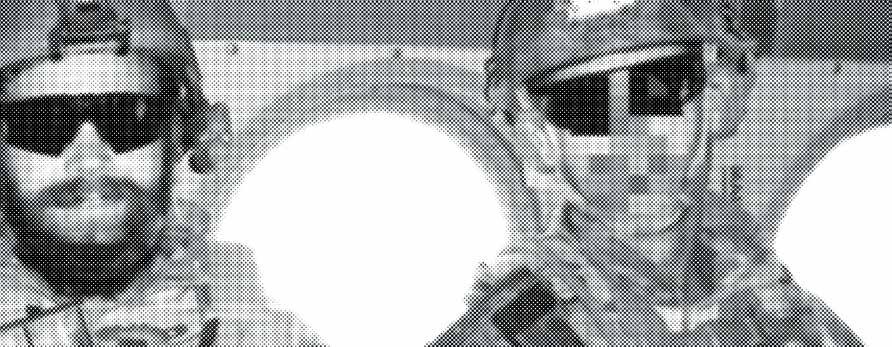
A psychological impact was to come, however, once Pronk had left the military in 2014 after 13 years’ service As he made the transition from the battlefield to civilian life, the hostilities, bloodshed and lost lives “started to come back”.
He had escaped the peril of the battlefield, was back with his family, and had a high-paid civilian doctor role But none of that kept him free of the effects of his former military life
“What I didn't see coming, and what ended up happening, was a complete loss of identity,” he explains “I didn't really appreciate how much I'd invested in my military identity
“I'd undergone what I now know to be identity fusion, which is a psychological concept where you see yourself as your job: it's not what you do, it's who you are.
“We see this only in highinvestment roles like cops, firies, ambos, military members When you move out of that role you lose that identity, and that's very destabilizing ”
The first civilian job Pronk took on, after his separation from the military, was as a fly-in, fly-out doctor serving on a mine site He undertook routine medicals and considered the work important. But he struggled to feel that he was making a “meaningful contribution” and best use of his skills.
“There was a massive sense of dislocation from tribe,” he says “I had
become so ingrained in that culture of the military, and the people around me, where it was so protective to be with them
“They understood what it was like. They knew what it was like to do what we did. They had similar experiences. So, there's a real resilience you can get from being around other people who get it
“When I was around civilians, there was no way I could interact on that level I didn't feel I could talk about my experiences with them So that drives a real sense of social isolation, and we see this with police officers ”
Indeed, Pronk recently encountered a retired police officer who, “in such a bad state”, had planned to commit suicide. In a lucky break for the retiree, he attended a 2024 presentation on surviving the front line and completely changed his thinking
His circumstances were relatable to cops like Christies Beach detective brevet sergeant Mali Briggs, who had himself confronted mental ill health
He had taken on his police career as a 21-year-old in 2009 Among his posts after graduation were the Hindley Street beat and Norwood police station before a 12-month stint in Ceduna from mid-2011 .
After he returned to metro policing in 2012, Briggs served with Operation Mantle (Christies Beach), CIB Tac and the Crime Gangs Task Force
“They understood what it was like. They knew what it was like to do what we did. They had similar experiences. So, there's a real resilience you can get from being around other people who get it.”
Behind his psychological suffering was not that one devastating critical incident but rather an accumulation of issues There was, of course, the ongoing pressure of police work, but also the 2017 suicide of a friend, colleague and former soldier
Also an impact on his mental health was the near suicide of another workmate on whom he kept a true mate’s close, ongoing watch. And personal challenges, like a painful divorce, came to plague his psychological well-being as well.
“I was absolutely depressed,” he says, “there's no question about it I had thoughts of suicide, (and) I've been open about that in my bio
“Trying to operate in the police environment while going through (those personal issues) was probably what got me to that point (of suicidal thoughts) ”
But, with the support of friends and colleagues, Briggs found his way out of the abyss. And what he came to feel, once back on stable ground, was genuine concern for others trapped in that same dark, torturous place
Briggs could see that people like him – with intimate knowledge of the front line and its impact – were the ones best placed to help So, he turned his thoughts into action: he created a support community for first responders – of all kinds – in 2022
He called it Aussie Frontline and set out to provide potentially life-saving services to struggling front-liners That included police, firefighters, ambos, paramedics, military personnel, and corrections officers
And what Briggs saw in Special Ops veteran Dan Pronk was the perfect codirector to run Aussie Frontline with him.
He knew of Pronk and his work, such as his medical directorships of both the SA Prison Health Service and private medical company TacMed, which he co-owns Pronk had also worked as a ship’s doctor and as deputy medical superintendent of a regional hospital
There were the books he had written too, such as The Resilience Shield and The Combat Doctor
“I came across a mate of Dan and was talking to him about Aussie Frontline,” Briggs recalls. “I'd just started it, and he thought there'd be some synergy there with Dan, so I reached out to him.
“We started a conversation, and it just grew from there. With me in the police family and Dan coming from the military family, it just made sense It made sense to come at it with this collective understanding of what everyone's going through ”
Pronk, who was aware of Aussie Frontline, speaks of the approach from Briggs as “brilliant”
“I find the whole service support organization space, be it military or first response, difficult to negotiate,” he says. “It's difficult to work out where money is going, what the agendas are, what services are actually being delivered to the operator on the ground
“My interest has always been on how you help the people on the ground So, when I started to look at resilience and joined forces with my brother and another guy, Tim Curtis, both ex-SAS guys, we built a company called Resilience Shield
“We built a resilience model, and it was a very military lens that we looked at it through initially. But, fairly quickly, we realized that this wasn’t just applicable to the military. The brand of resilience we were looking at was applicable to the (police) first-response community ”
And it was a community Pronk knew well He had, while in the military, run medical training for police tactical groups Then, in his post-military career, he ran not only medical training for cops but also resilience sessions.
Among the services Aussie Frontline offers are free counselling packages, which are available to anyone in the first-response community Neither Briggs nor Pronk do the one-on-one counselling but instead leave it to Frontline Mental Health counsellors Narelle Mason and Matt Newlands
Both are level 2 registered counsellors with the Australian Counselling Association But the critical ingredient they bring to Aussie Frontline is the experience of their former careers as police officers Also on the Mason résumé is 10 years’ service with the Royal Australian Air Force.
All that experience is important to Briggs and Pronk, who share a concern about the backgrounds of other providers of counselling
“A lot of these (counselling) services are being offered by people who have never done these front-line jobs,” Briggs explains
“For a member to have confidence in the person who's listening to their story, and offering advice, they need to know and feel like that person gets it.
“When you've only studied a course or a degree and never walked a day in the shoes of any of these (first-response) people, it's very hard to build that trust ”
Briggs also emphasizes the importance of fast responses to front-liners who make the call, often a desperate call, for support
“We can generally get them in, or they can get themselves in, through Frontline Mental Health within the week,” he says “Quite often, people are waiting a lot longer to access psychological support. They’re waiting months.
“If they're asking for help, you can't then tell them: ‘Sure, just wait three or four months and then you can see someone ’ If they're asking for help, they need it now ”
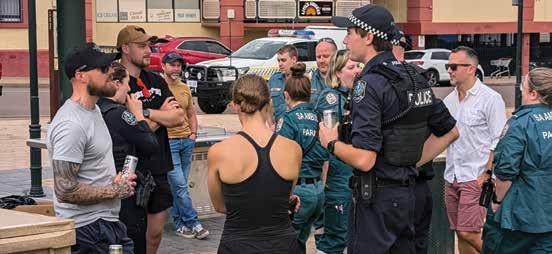
And what first responders need help with are conditions like hypervigilance, post-traumatic stress, anxiety disorder, depression, insomnia, bruxism (teeth grinding) and alcohol misuse. Briggs, Pronk and the Frontline Mental Health counsellors see the suffering first-hand.
The worst they see is the sufferer whose circumstances end in suicide
It is, of course, the outcome Aussie Frontline strives hardest to prevent
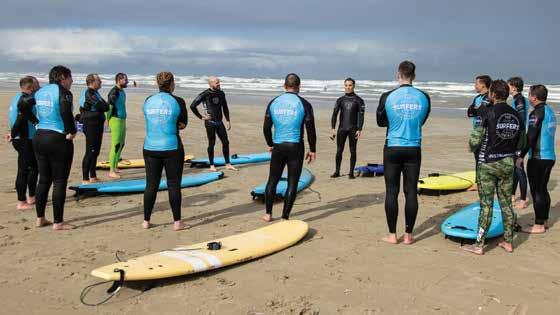
Besides counselling sessions, Aussie Frontline provides programmes like surf therapy, which it promotes as “an ideal way to boost physical and mental health”
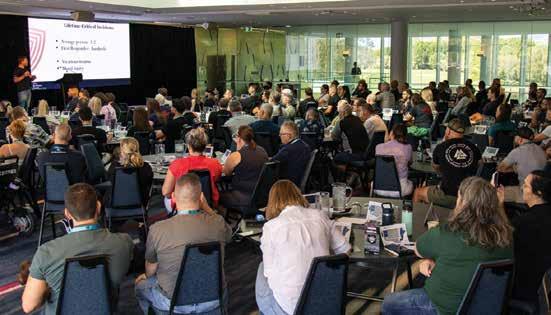
It also offers online courses on sleep optimization and how to thrive in the transition out of first-response roles and back into civilian life. Other offerings include conferences and presentations, like Thriving on the Frontline, and visits to first-response police in regional areas
“When you've only studied a course or a degree and never walked a day in the shoes of any of these (firstresponse) people, it's very hard to build that trust.”
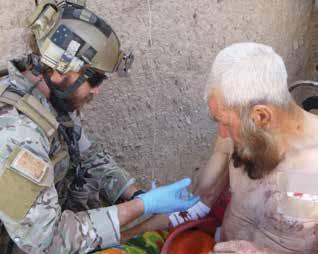
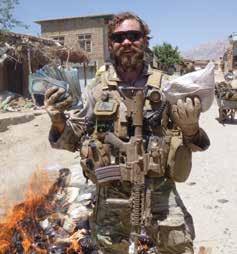
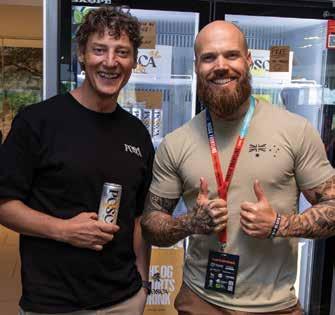
1. A Thriving on the Frontline conference on the Gold Coast in March. 2. Dan Pronk treating a wounded villager in Afghanistan in 2011. 3. Burning seized heroin and Taliban drug money on joint operations with the DEA. 4. Mali Briggs with Merrick Watts at the Thriving on the Frontline conference. 5. Surf instructor Ryan Baohm (SAMFS) talks to participants at the Aussie Frontline Reset surf programme at Middleton Beach in 2024. 6. An Aussie Frontline regional barbecue at Port Augusta in 2024.
Both Briggs and Pronk speak of the success of Aussie Frontline based on the feedback each has had – and still gets – from first responders
Says Pronk: “They get in touch and say: ‘I was heading in a bad, bad direction and something you said or blogged about resonated. I've turned the corner. ’
“We've had that to the point of ex-members of first-response military basically saying: ‘The content you put out stopped me from killing myself ’ ”
Briggs too remembers a serving police officer who turned from killing himself through the simple gift of a T-shirt The turnaround came about through an initiative Aussie Frontline calls Pay it Forward, and it has played out more than 600 times
It begins with a member of the firstresponder community buying an Aussie Frontline T-shirt for a deserving but, at the time, unknown colleague. Aussie Frontline then calls via Instagram for the nomination of a recipient of the T-shirt
Once selected, that first responder, who might well be struggling with mental ill health, receives the T-shirt as a mark of his or her colleagues’ full support
Depressed and caught up in alcohol misuse, the member Briggs recalls was off work and considering suicide
“That moment (when he received the T-shirt) created time, and that time created a turning point,” Briggs says. “Now, I believe, it’s a case of nine months sober, he’s working happier, and his future looks bright ”

“That drives often a sense of moral injury, a sense of betrayal from the organization. That, in my experience, is the most damaging psychological aspect.”
In some cases, a T-shirt and note might land with a member who has served for 20 years Then comes a common response to Aussie Frontline: “It was the first time anyone had said ‘good job’ or ‘we're proud of you’ The organization (SAPOL) has never done that ”
Pronk asserts that, where the contributions of first responders are concerned, employers like SAPOL, the military and others are “never going to reciprocate”.
“That drives often a sense of moral injury,” he says, “a sense of betrayal from the organization That, in my experience, is the most damaging psychological aspect It's not the turning up to dead kids and car crashes and use of lethal force, it's the sense of betrayal by an organization ”
Observers can argue about whether police, military and other chains of command truly care about their members’ well-being Pronk suspects that first responders are sceptical and perceive much of what they hear about care as “lip service”.
While Aussie Frontline enjoys much success, it still faces the ongoing
challenge of member reluctance to seek help The long-existent inclination of the troubled cop to remain silent and stoic demands, according to Briggs, a “culture shift”
“Proof of that,” he says, “is the number of partners who (contact us) to say: ‘My partner is a cop, and this is what’s going on I really want them to get help, but they don’t want to talk to anyone Have you got any advice?’
“The flip side of that is that we have people reaching out to us directly, saying: ‘Oh, it's probably time I spoke to someone. I’ve (had this issue) going on for years and I’ve not dealt with it ’
“That's when we get a personal win From what we've created, someone's felt comfortable enough to say: ‘I’ve never gone to EAS but I’m reaching out to you I think it’s time ’ ”
In 2024, Aussie Frontline directors Briggs and Pronk established the Aussie Frontline Foundation It is a registered charity, equipped to receive donations from individuals and organizations. The plan is to use whatever funds it raises to cover the costs of the programmes Aussie Frontline provides
The Police Association has partnered with the foundation, as has podcaster and former paratrooper Sam Bamford, who served in Afghanistan. Association president Wade Burns believes strongly in the concept of support from those who have themselves lived life on the front line.
“When you see the mental strain that afflicts some first responders,” he says, “you know instinctively the kind of support they need
“There’s no question that it’s best coming from people like Mali and Dan, with 29 years of police and military experience between them
“Who better to understand the plight of struggling first responders and oversee an initiative like Aussie Frontline and the Frontline Foundation.
“They’ve proven themselves in any case by the way they’ve used Aussie Frontline to bring first responders back from despair and even self-destruction ”
And both Briggs and Pronk intend to keep fighting for those first responders Pronk sees what he does as “almost an obligation”
“To save just one life,” he says, “you can't put a dollar value on that; you can't put a time investment on that.
“To sit on the sidelines and watch people continue to commit suicide at unprecedented rates is just not an acceptable thing for either of us ” PJ

“Those members I interviewed, and the others who responded to the job, can rightly claim equal credit for the win.”
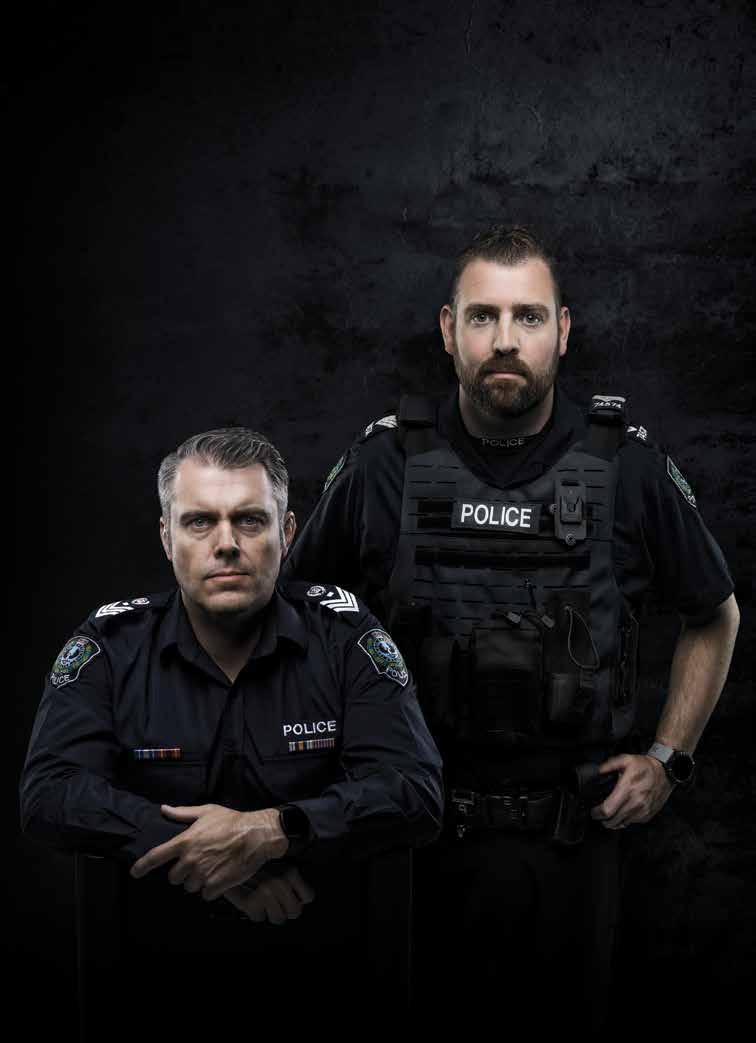

BY NICHOLAS DAMIANI
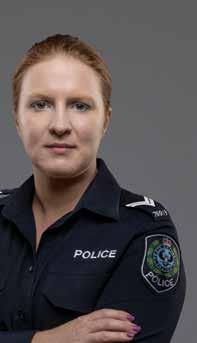
THE POLICE JOURNAL HAS CONTINUED TO HOLD AND ENHANCE ITS PLACE ON THE WORLD STAGE WITH YET ANOTHER INTERNATIONAL JOURNALISM AWARD. This time the prize was a bronze award in the United States It came in the Feature Article category at the 2025 Tabbie Awards for the 2024 autumn issue cover story First responders at their best
News of the win came out of Cleveland, Ohio on August 15 Judges for Trade, Association and Business Publications International (TABPI) outlined their high regard for the story
“Police Journal has outstanding features, and this one is wonderful as well,” one judge wrote. “The layout draws readers into the feature, and the top-notch writing keeps the audience engaged. ” Police Journal editor Brett Williams wrote the powerful nine-page story about Police Association members who responded to the 2020 Mount McIntyre double murder
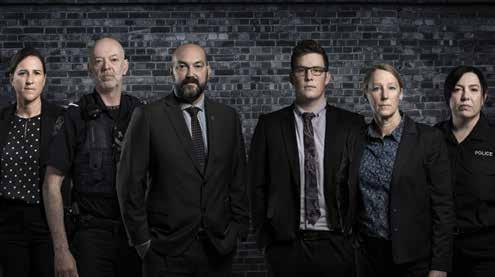
Three of the seven members involved in the response took part in interviews in which they spoke openly of the crime scene and the dangers they faced
Their most dangerous task was the arrest of the offender who was not only still on the scene but also armed with a shotgun.
What came with equal risk was their subsequent search of the two-storey house in which the killings had taken place. It was never certain that no other offender was in the house – and armed
For some members, the response had been their first to a murder scene and, for all of them, the job came with a personal impact
“There’s such a value in the Police Journal, with our members’ stories, having a regular place on the world stage,” Williams says “It brings a kind of universal understanding and appreciation of the impossibly hard work our members perform
“So I’m always grateful when members trust me to tell their stories accurately and responsibly In this case it was Nick Patterson, Matt Hirlam and Kim Wilson.
“Listening to their individual accounts of the job, in face-to-face interviews, reinforced the respect and admiration I already had for what they’d achieved
“And telling a story like First responders at their best is such a benefit to other members who might one day face a similar situation. We hope they don’t but, if they do, they have this as a reference
“I don’t consider myself the sole winner of the award Those members I interviewed, and the others who responded to the job, can rightly claim equal credit for the win ”
Williams had last scored Tabbie wins in 2022 and 2023 – gold for Best Focus/Profile Article and silver in the Feature Article category The stories were The Crows’ own detective (October 2021) and The other pandemic (February 2022).
This year, the Gold and Silver awards went to US magazines The Transmitter and Focal Point respectively.
As well as the US and Australia, the Tabbies drew entries from Canada, the UK, New Zealand and India
Other recognition the Police Journal received was an honourable mention in the category of Best Single Issue It came as recognition of the summer 2024 issue which, on its cover, featured the state funeral for Brevet Sergeant Jason Doig
The Police Journal has now won five gold, three silver and four bronze Tabbie awards And, at the International Creative Media Awards in Germany, the journal has won one gold, one silver and two bronze design awards.
Police Association president Wade Burns spoke of the confidence he had always had in the journal to score more international wins in 2025
“This,” he says, “makes 17 international awards the journal has won in just the past 11 years For a police union magazine to achieve this much success on a global scale is exceptional
“But, as I’ve said before, it’s only possible with the co-operation and trust of our members They continue to rely on the journal team to relate both their professional and private stories
“And, that way, the world gets to know about, and appreciate, the dynamics, pressures and impact of police life.
“And for as long as the Police Journal shines a light on police issues, it’ll always have industrial and political clout ” PJ

Retired Police Dogs SA is dedicated to supporting the welfare of retired SAPOL police dogs. Due to the nature of their work and high rate of pre-existing injuries, retired police dogs are ineligible for pet insurance. With some facing significant medical expenses after retirement, their families often struggle to bear the cost. Your support helps ease that financial burden and ensure these loyal animals receive the best possible care. DONATE NOW

Steve Whetton Assistant Secretary Police Association

The Police Association is intensely concerned about critical staffing shortages and operational risks in remote regional communities
Coober Pedy is a case in point And, despite the exchange of more than 20 letters between the association and SAPOL over the past 14 months, the situation there has reached a critical tipping point
Members continue to operate in a dangerously understaffed environment, and the station consistently reports significant vacancies.
Members are frequently required to respond to volatile incidents without backup, to manage detainees while simultaneously acting as the only patrol unit, and to work excessive shifts that result in dangerous levels of fatigue
The association has lodged a formal industrial dispute with the South Australian Employment Tribunal We have documented SAPOL’s continued failure to address an ongoing, unacceptable risk of serious injury at the station.
Members are exhausted, exposed, and increasingly unsupported They have submitted more than 27 individual hazard and incident reports (HIRs)
These reports provide detailed accounts of situations in which members have faced high-risk callouts, either solo or with inadequate support:
• Violent confrontations
• Arrests in remote locations without backup
• Incidents requiring extended emergency response while colleagues remain tied up managing detainees.
A member on one occasion worked an 18-hour shift without rest,
undertaking long-distance travel to respond to a volatile incident Naturally, the member was decidedly unfit for the next shift
Among many other examples are those of a member who, after a 15-hour shift (overnight) had to stop on the side of the road owing to fatigue This was in the course of responding, solo, to a domestic violence incident involving a knife at Oodnadatta.
These examples run counter to the corporate road safety message.
The RAA Driver Fatigue fact sheet makes particularly relevant points under the sub-heading Fatigue and road crashes :
“… fatigue increases the chances of a crash being fatal from 3 in 1,000 to 1 in 100
“It’s believed that driver fatigue contributes to as many as 35 per cent of fatal crashes
“This figure may even be as high as 50 per cent in fatal single-vehicle crashes. Being awake for 17 hours has the same effect on your driving as a BAC (Blood Alcohol Concentration) of 0.05, doubling your risk of crashing After 24 hours your risk of crashing is a staggering seven times higher, which is like driving with a BAC of 0 1 ”
The risk is even greater for solo members when driving in poor conditions on unsealed country roads, in areas with no government radio network And this can occur at times when those members would normally be asleep
Staffing is clearly inadequate for members to respond to urgent taskings or take affirmative action at scenes because of the lack of backup and/or off-duty on-call police
Management has suggested that what might come with increased staffing is a negative impact on members’ access to courses, training, or programmed time off. Clearly, these should not be mutually exclusive.
Safety is a mammoth concern to members, and the need is for a minimum number of officers to be on duty
Management has suggested that what might come with increased staffing is a negative impact on members’ access to courses, training, or programmed time off Clearly, these should not be mutually exclusive
What exacerbates understaffing further are the apparent attempts of SAPOL management to discourage legitimate hazard reporting. This raises serious concerns under the Work Health and Safety Act 2012
The imposition of a “consequences template” (applied exclusively to Coober Pedy) and remarks from local management, which question the validity of HIRs, indicate a corrosive culture of deflecting or downplaying genuine safety concerns rather than actively working to resolve them
This issue comes with not only an impact on operational safety. It undermines the cultural role of SAPOL community constables, many of whom get diverted from their intended liaison and community engagement roles to fill front-line patrol gaps
This misuse of community constables erodes the trust these members work hard to build with their local communities




Dr Rod Pearce

Deep vein thrombosis (DVT) occurs when a blood clot forms in a vein located deep within the body, usually in the legs Unlike superficial (surface) veins close to the skin, deep veins lie within the muscles and carry the majority of blood back to the heart When a clot develops here, it can obstruct normal blood flow, causing pain, swelling and tissue damage
The main concern is not just the clot itself but what happens if a fragment of that clot breaks away. A piece of clot can travel through the blood stream, lodge in the lungs and cause a pulmonary embolus (PE) PE is a medical emergency that can cause chest pain, shortness of breath, collapse and, in severe cases, sudden death
So, DVT is not simply a leg problem It can become a life-threatening event if left undiagnosed or untreated
DVT is relatively common in the general population, perhaps around one to two cases per 1,000 adults and the risk increases with age but can occur in otherwise healthy and active people. Untreated DVT leads to a PE in about a third of cases
Police officers face increased risk from long shifts spent driving or observing in cars This reduces circulation in the legs and is similar to the risk in long-haul flights Also, shift work can cause disrupted routines and long periods without standing, stretching or hydrating properly
During operational duties, an injury to the lower leg can cause bruising, altered blood flow and clot formation. Wearing heavy protective gear, belts and body armour might impair circulation, particularly during long patrols
When police work puts officers in positions in which a clot can occur, they should stand, walk or stretch at least every two hours.
Also, we know that stress and lifestyle factors – smoking, poor sleep and inconsistent exercise – might contribute indirectly to clot risk and formation While clots can form in the arms, pelvis or other locations, the classic DVT is a blood clot in the leg veins
The classic symptoms of DVT in the leg include swelling of the calf or thigh, usually in one leg, causing legs to be different sizes. Pain or tenderness, or perhaps a cramp or ache, will occur as the clot irritates the vein. Redness and increased warmth might be a sign of altered circulation or the injury which has cause altered blood flow and a clot formation
A blood test is now available to give a reliable estimate of clot formation somewhere in the body if there are no outward signs The usual way to get a diagnosis, however, is with an ultrasound of the leg or affected limb
In the case of DVT, the ultrasound will be able to measure the size of the clot, how deep it is, and which veins might be affected. The ultrasound can also detect possible causes, such a muscle tear, infection or tumour, which might be the trigger for the clot
The first sign of DVT might be when it has already gone to the lungs and the sufferer presents with sudden shortness of breath, chest pain, coughing up blood, dizziness, fainting or collapse
Early diagnosis will lead to treatment which now involves safe and easyto-administer drugs Wearing a compression stocking will not dissolve a clot once it forms but might be useful in reducing the chance of developing DVT and help the swelling go down afterward
When police work puts officers in positions in which a clot can occur, they should stand, walk or stretch at least every two hours
Proper hydration is important because the blood will thicken if slowed or dehydrated Leg exercises like ankle flexing, wriggling toes or gentle calf raises can improve circulation during long periods of sitting.
If you have an injury, it helps to walk and return to activity as soon as possible as lying around in bed is a perfect way to precipitate clot formation
DVT is serious but preventable Occupational factors such as long shifts in vehicles, injuries and demanding work patterns make awareness especially important
Recognizing the symptoms, seeking medical assessment promptly and adopting practical prevention strategies can significantly reduce risk Leg pain or swelling is not always just a strain but might just be DVT.


Model Nissan Qashqai 1. 3-litre CVT from $34,665 (ST) to $48,165 (Ti-L), e-POWER from $47,165 (Ti) to $54,365 (N-Design).
Powertrain 1. 3-litre (110kW/250Nm) turbo-charged four-cylinder petrol engine with CVT automatic transmission. e-POWER 1. 5-litre turbo-charged three-cylinder petrol generator, electric motor (140kW/330Nm) with reduction drive automatic transmission
Safety All models, seven airbags, full suite of crash-avoidance and driver-assistance technologies, tyre-pressure monitor, reversing sensors and rear camera (upper models have additional equipment)
Fuel/economy 55-litre tank, 91 RON (minimum), 95 RON (recommended), 1 3-litre (ICE), 6 1 litres/100km, e-POWER 4 8 litres/100km (combined test)
Cargo Between 404 and 1,447 litres with second-row seats folded (model dependent) Temporary spare wheel (all but Ti-L e-POWER which has repair kit)
Warranty/service Up to 10-year/300,000km service-activated warranty and roadside assist Five years flat-price servicing
Avenger is Jeep’s first battery electric vehicle (BEV) in Australia. It ticks many boxes but might struggle against others on price, safety rating and range
Designed and built in Europe, Avenger has retained Jeep’s DNA including the renowned seven-bar grille It’s available in three equipment grades (Longitude, Limited and Summit) with prices ranging from $49,990 to $60,990 (plus ORC)
Although small in stature (just 4 08 metres long) this compact SUV stands out in a crowd with its bulging mudguards and optional two-tone paint jobs.
Avenger has a 54kW battery powering a 400-volt electric motor driving the
front wheels. Jeep claims a driving range of up to 396km (WLTP test procedure). Inside, it appears bigger than its outside dimensions suggest with comfortable front seats and good visibility Dual 10 25-inch screens feature with a central infotainment screen offering satellite navigation, DAB+ radio and wireless Apple CarPlay and Android Auto
Up-front storage is good with a decent glove box, door bins, two console bins and cup holders In the back there’s no storage save for two map pockets . Although the 60/40 split-fold rear seat is reasonably comfortable it’s tight on leg room for tall adults.
Top-spec Summit provides a rewarding driving experience. Its poweradjustable driver’s seat (with massage function) offers stacks of leg room and good visibility The small sports steering wheel also provides plenty of adjustment for the best driving position
Gear selection is via four push-button switches at the front of the console, and the electric park brake engages/ disengages automatically Most car functions can be accessed via steeringwheel buttons or switchgear near the central screen, negating the need to scroll through menus. While not the most powerful electric SUV on the market, Avenger provides more than enough power to make it
The updated (MY25) Nissan Qashqai (urban crossover SUV) offers an expanded choice of models along with claimed improvements in design, technology and connectivity
Five trim levels feature across the range with two different powertrains. ST, ST-L, Ti and Ti-L are also offered with a 1 . 3-litre turbo-charged fourcylinder petrol engine driving the front wheels through a conventional CVT transmission
Ti and Ti-L also feature Nissan’s e-POWER powertrain while top-spec N-Design is exclusively fitted with e-POWER Best described as a series hybrid, e-POWER uses a 1 5-litre threecylinder turbo petrol engine purely as a generator to charge its battery which in turn powers the front axle via an electric motor.
External changes deliver a revised front end with new grille and lighting assembles (front and rear), three new
paint colours, revised alloy wheels and optional black roof on Ti and above
All models score dual-zone climate control, a decent 12 3-inch central colour touchscreen with DAB+ radio and wireless Android Auto and Apple CarPlay
New materials feature on the console, dashboard and glovebox while upper models score ambient lighting, Alcantara trim and a larger 12 . 3-inch TFT instrument display
Nissan nailed the brief with top-spec N–Design e-POWER Inside it feels spacious and airy Its eight-way poweradjustable heated driver’s seat and heated multi-adjustable sports steering wheel provide the perfect driving position and good visibility. Push-button entry and start along with an auto on/off park brake and walkaway auto locking all make life easier.
The multi-around camera view is crystal clear making manoeuvring in tight spaces easy
Drivers will likely appreciate the high-quality 12 3-inch digital instrument cluster which displays a myriad of information, much of it duplicated on the 10 8-inch head-up (windscreen) display which is one of the few that works well with polarized sunglasses
Most impressive is how Qashqai e-Power drives . Essentially its drive characteristics are more akin to an EV than a hybrid. The engine is almost undetectable because of great sound insulation and no driveline vibration as the petrol motor has no physical connection to the wheels
The electric motor produces a credible 140kW of power and 330Nm of torque When pushed, acceleration is brisk enough There’s an e-pedal button which provides increased regenerative braking for single-pedal driving and a ProPILOT button that provides a level of semi-autonomous driving on the highway (steering, braking, and acceleration).
engaging. Weighing just 1,520kg and with 115kW of power and 260Nm of torque on tap, acceleration is reasonably brisk from any speed (0-100km/h in nine seconds, according to Jeep)
Owing to its size, Avenger is nippy around town, has a good turning circle and is easy to park On the highway it’s no slouch with more than enough power for hills and overtaking Its steering is light but never vague, ride comfort is good, and its generally quiet inside, except for some tyre and wind noise depending on conditions.

Model Jeep Avenger Electric SUV
Charging Five hours 34 minutes (0-100% 11kW AC), 24 minutes (20-80% 100kW DC).
Safety Three-Star ANCAP (mainly owing to performance of its AEB system detecting pedestrians, cyclists and motorcyclists and no rear AEB), six airbags, reverse camera with gridlines, traffic-sign recognition, lane-keep assist, blind-spot assist (not on Longitude). Cargo bay 355 litres (increases substantially with rear seat folded), tyre repair kit in lieu of spare wheel
Warranty/service Five years/100,000km, eight-year/160,000km battery warranty, 12-month/12,500km service intervals at $250 first five services


For many homeowners, a home
is more than just a place to live, it’s their most valuable financial asset
But what if you could put that value to work? That’s where your property’s equity comes in
Equity is the difference between your property’s current market value and how much you still owe on your mortgage
According to PropTrack's Property Market Outlook Report December 2024, house prices in Adelaide increased by 14.6% in 2024. This means, depending on when you bought your home and how much you have paid off, you could be sitting on thousands of dollars in equity
The good news is you might be able to unlock your home’s equity to invest in those dream renovation plans or make your next big purchase
Here’s how you could use your equity and how to grow it faster
Renovate or improve your home
You can use the equity in your home to invest in renovating or extending your home to not only increase its resale value but also make it into your dream home
Consider refreshing your kitchen, adding another bedroom or office, creating an outdoor entertaining area or improving your energy efficiency by installing solar panels or insulation. These will all enhance your comfort now while being attractive features to potential future buyers.
Fund a big purchase
If you’re in the market for new wheels, you could use your equity to buy yourself a new or used car Looking for adventure instead? Your equity could be the key to a caravan or boat
Your equity can be used as a deposit for a second property – be it an investment property or a holiday home Saving for a deposit can be difficult and take a long time, but with your equity you might be closer than you think to purchasing that next investment
Help your kids enter the property
You might choose to use the equity in your home to help your child enter the property market. As a guarantor, you can use part of the equity in your home as a security for your child’s home loan.
Police Credit Union is an award-winning credit union, offering highly competitive home loan and personal loan rates with exclusive perks for police officers through our Platinum membership.
Make
If you can afford to, increasing your repayment amounts means you’ll build equity more quickly If you move from monthly to fortnightly repayments, you are adding an extra repayment to the year than if you pay monthly (26 repayments a year versus 12 repayments). Every extra dollar you pay works towards reducing your loan principal, reducing the amount you owe and saving you interest
An offset account can help you reduce the amount of interest charged on your loan This means you might be able to pay off the principal amount faster, building more equity over time Police Credit Union offers flexibility with 100% offset accounts with most of our variable home loans.

Leading Adelaide law firm, Tindall Gask Bentley is the preferred legal services provider of the Police Association, offering 30 minutes of free initial advice and a 10% fee discount.
Leading Adelaide law firm, legal services provider of the Police Association, offering minutes of free initial advice
& DISCIPLINARY
• All criminal matters
• Intervention orders
• Commissioner’s Inquiries

• Intervention orders
• Significant Incident Investigations

• Internal investigations (misconduct/discipline)
• Internal investigations (misconduct/discipline)
• Coronial Inquiries (deaths in custody)
• Coronial Inquiries (deaths in custody)
• Significant Incident Investigations
• ICAC (corruption) investigations
• ICAC (corruption) investigations
• Reviews of workplace decisions (suspension, admin orders, working restrictions)
• Reviews of workplace decisions (suspension, admin orders, working restrictions)
• Work injury compensation
• Work injury compensation
• Motor vehicle accident injury compensation
• Motor vehicle accident injury compensation
To arrange a preliminary in-person or phone appointment contact PASA on (08) 8212 3055


• Public liability
• Public liability
• Income Protection and Superannuation (TPD) claims
• Income Protection and Superannuation (TPD) claims
Matrimonial, De Facto and Same-Sex Relationships
Matrimonial, De Facto and Same-Sex Relationships
• Property settlements
• Child Support matters


• Property settlements
• Children’s issues
• Children’s issues
• Wills & Testamentary Trusts
• Wills & Testamentary Trusts
• Enduring Powers of Attorney
• Child Support matters
• Pre-nuptial style agreements
• Pre-nuptial style agreements


• Advice to executors of deceased estates
• Advice to executors of deceased estates
• Advance Care Directives
• Enduring Powers of Attorney
• Advance Care Directives
• Obtaining Grants of Probate


• Obtaining Grants of Probate
• Estate disputes
• Estate disputes
& PROPERTY
& PROPERTY
• General business advice
• General business advice
• Real estate & property advice
• Business transactions
• Business transactions
• Commercial disputes

• Conveyancing
• Real estate & property advice
• Conveyancing
• Commercial disputes


Adelaide | Reynella | Salisbury | Gawler | Mt Barker
Semaphore | Murray Bridge | Port Lincoln | Mannum | Whyalla Perth (WA) | Darwin (NT) | Brisbane (QLD) | Canberra (ACT)
Adelaide | Reynella | Salisbury | Gawler | Mt Barker Semaphore | Murray Bridge | Port Lincoln | Mannum | Whyalla Perth (WA) | Darwin (NT) | Brisbane (QLD) | Canberra (ACT)
tgb.com.au | (08) 8212 1077
tgb.com.au | (08) 8212 1077

Daniel Weekley Senior Associate Tindall Gask Bentley Lawyers

Hardly a week passes without headlines somewhere around the country screaming the news of another death in police custody The outrage is instant So too are the calls for heads to roll, and for sweeping reform
From the outset, early media reports often point the finger at police But behind every headline lies complexity, and the truth is rarely black and white. Deaths in custody happen in a wide variety of circumstances and it's usually not until the coroner conducts an inquiry that the nuances of the matter come to light
Even after a lengthy inquest, a coroner will often not be able to define a cause of death with certainty In recent inquests, previously wellknown concepts such as positional asphyxia have been challenged Vague and nebulous causes such as overexertion can sometimes arise as the main contributing factor to a death.
Every death is tragic . But recent inquests reveal a sobering truth: blame is rarely clear-cut, and police actions are not always the culprit, no matter how loud the outcry
A death in custody sets off a chain reaction – a flurry of investigators, interviews, and internal scrutiny In the eye of the storm stands the officer, suddenly at the centre of an unfolding tragedy It is vital that officers are aware of their professional obligations and rights immediately following a death
The definitions are broad, and sometimes overwhelming . “Death in custody” can mean almost any fatality linked to a police encounter. A “critical incident” casts the net wider
still, encompassing any serious injury or death stemming from police action For the officer involved, the terminology might be less important than the fact his or her life just changed in an instant
Speak to officers who’ve lived through it, and the stories are harrowing Some deaths feel inevitable – a drug-fuelled driver determined to crash through anything in his or her path . Others unfold in seconds –a suspect with a hidden injury collapsing moments after arrest. These moments haunt even the most experienced cops. Then comes the paperwork Mountains of it Hundreds – even thousands – of pages across acts, regulations, general orders and internal procedures Each one detailing what “should” happen In reality? It’s near impossible to get it all right
As a sample, any or all of the Coroners Act, the Police Act, the Police Complaints and Discipline Act, their regulations, and general orders Custody Management, Deaths and Deaths in Custody, Operational Safety – Operational Equipment, Operational Safety – High Risk Driving, Significant Incident Investigations and commissioner's inquiries, and notebooks all frequently apply when there is a death in custody
One of the cruellest ironies is this: the cause of death is often unknown for weeks, sometimes months, after the incident Yet the officer involved must answer questions from the very first night.
So, what happens next? Well, to protect themselves, there are some things all officers should expect, and should know
The association exists for this very reason: to stand by you when the worst happens. If you're involved in a death in custody, don’t go it alone. Call. Get a lawyer. Protect your rights, and your future.
First: you’ll be pulled from the case immediately That’s not punishment, it's protection Someone else will take the reins of the investigation
Second: immediately following the death, multiple units might descend Major Crime, Major Crash, and Internal Investigations can all be involved, each probing from a different angle You need to know who’s asking, and why It is advisable to seek advice before providing a formal version of events.
Third: if there is any uncertainty about whether police action has caused the death, don’t guess, don’t assume. Call for immediate advice The Police Association has a 24-hour service for exactly this reason
Fourth: understand your position Are you a witness, or under suspicion? If there’s any doubt, protect yourself Assume the latter All the various laws, regulations, and orders can be dealt with after you have considered your fundamental right against selfincrimination.
The association exists for this very reason: to stand by you when the worst happens If you're involved in a death in custody, don’t go it alone Call Get a lawyer Protect your rights, and your future
Roland Perry Allen & Unwin
August 6, 1945: the United States launches the world's first nuclear attack on Japan J Robert Oppenheimer will be remembered as the father of the bomb, but it was Australian physicist Sir Mark Oliphant, and his lab, who discovered how to build it
With Hitler determined to acquire atomic weapons, Oliphant shares his secret research with Oppenheimer and helps him build the first nuclear bomb. It is a decision both will come to regret. Oliphant's brilliance extended to the development of radar, an innovation that saved Britain from Nazi invasion
After the war, amid a slew of KGB scandals enveloping his team, Oliphant's push against US nuclear dominance drew suspicion from the CIA He came under surveillance and was banned from entering the USA, the country he had given so much Oliphant traces the man’s life from his humble beginnings in Adelaide, early academic triumphs and collaboration with Sir Ernest Rutherford, his crucial involvement in radar and the Manhattan Project, to establishing the Australian National University and serving as a highly controversial Governor of South Australia.

For your chance to win a book, an in-season movie pass (courtesy of Wallis Cinemas), or a DVD, send your name, phone number, work location and despatch number, along with your choice of book, movie and/or DVD to giveaways@pj.asn.au
Travis
Boak Pan Macmillan Australia
Travis Boak is one of the most talented and tenacious AFL players of the era
Three-time All-Australian and a former Port Adelaide captain, he's renowned for his football IQ and his physical endurance In 2024 he played his 350th game, cementing his status as an elite champion
Travis is known as the best trainer and preparer in the AFL, showing the importance of mindset and focus. And this focus on emotional and psychological health has been a hallmark, not just of his football but also his life.
After losing his father to cancer at a young age, Travis blindly carried his grief and trauma for far too long It was not until he was finally able to reckon with this weight that he was able to give life – and football – his all
From one of the game's most respected and impressive players, this is a story of the hard work of living with vulnerability, and the power it can give us all

Michael Brissenden Affirm Press
John Taylor with Heath O’Loughlin
Pan Macmillan Australia
The thrilling memoir of Victoria Police Special Operations Group bomb squad veteran John Taylor
The Special Operations Group is an elite police unit which responds to crises like shoot-outs, armed robberies, terrorism. And when the threat gets explosive, enter the Bomb Response Unit.
John “JT” Taylor has seen it all, from backyard blowups to the largest bomb ever to go off in Australia He became the force's longest-serving bomb disposal expert and one of its most distinguished members
Between handling unpredictable homemade explosive devices, daring driving manoeuvres and swapping bullets with hostage-takers, JT has stared down death He's an adrenaline addict, having scaled some of the highest peaks in the world, including Mount Everest
From armed robberies to counter-terrorism, bombs and booby-traps, this memoir reveals details of chilling true crime stories.
Lake Heddon, a once-thriving community, now lies in the shadow of a nearly dry lake. The town, like the water, is evaporating and its residents are left clinging to what little remains
When Aaron Love discovers a fresh corpse near the cracked lakebed – along with evidence his missing father is alive and linked to a web of organized crime – he is thrust into a world of deception, injustice and betrayal.
With the town on the brink of collapse, Heddon and haunted detective Martyn Kravets uncover a web of conspiracy that reaches far beyond the small community
Dust is a dark, gripping thriller that explores the complexities of identity, a search for truth, and the unyielding forces of corruption in a world where lives are lived on the fringe, and nothing is as it seems.
Crow Rhonda McCoy Ventura Press
When gentleman farmer Harold Crow dies after routine surgery in rural Tasmania, his death exposes a web of forbidden love, secret offspring, and devastating betrayals that will tear two families apart
Local GP Dr David Boyd fears his secret affair with Harold will surface at the inquest. His wife Morven hides her own hurtful truth. Nurse Nathan Wentworth fears his actions might have killed Harold and that he will be charged with negligence But he's not the only one with blood on his hands
When Harold’s daughter Primrose comes home to Albert Falls for the funeral, she inherits more than her father's business – she inherits his secrets and has to confront harsh truths
As a marriage crumbles and alliances shift, the Boyd family will use any weapon to protect their lies and reputations.
David Riley Signs Publishing
In the winter of 1925, Nevill Westwood and Greg Davies, both 21, left Perth headed for Darwin in a small, bright yellow Citroen, which they nicknamed “Bubsie” The two-seater, French-made vehicle had less horsepower than a modern-day lawnmower.
There were no serviced roads in the great outback, and nobody had ever driven the northern route from Perth to Darwin. The boys had to rely on the generosity of cattle station managers for food and fuel
This already sizeable endeavour became much greater when Bubsie and the boys decided to race two other faster vehicles around the Australian continent
The boys glimpsed the triumphs and tragedies of life in early 20th-century Australia, met memorable characters and ultimately found themselves in a race to be the first to lap the continent.
Travelling most of the same route Westwood and Davies travelled 100 years ago, David Riley chronicles the original story of the first car to circle Australia


The global cinematic phenomenon continues as the story of Elphaba and Glinda reaches its epic, electrifying, and emotional conclusion Now demonized as the Wicked Witch of the West, Elphaba lives in exile in the Ozian forest, while Glinda resides at the palace in Emerald City, revelling in the perks of fame and popularity
As an angry mob rises against the Wicked Witch, she'll need to reunite with Glinda to transform herself, and all of Oz, for good Wicked: for Good stars Cynthia Erivo, Ariana Grande and Jeff Goldblum

November 20
Sisu: Road to Revenge is a sequel to the original sleeper hit SISU
Returning to the house where his family was brutally murdered during the war, “the man who refuses to die” (Jorma Tommila) dismantles it, loads it on a truck, and is determined to rebuild it somewhere safe in their honour

When Red Army commander Igor Draganov (Stephen Lang, Don’t Breathe), who killed his family, comes back hellbent on finishing the job, a relentless, eye-popping cross-country chase ensues – a fight to the death

Fire and Ash
December 18
Avatar: Fire and Ash goes back to Pandora in an immersive new adventure with Marine turned Na’vi leader Jake Sully (Sam Worthington), Na’vi warrior Neytiri (Zoe Saldaña), and the Sully family.
Jake and Neytiri’s family grapples with grief after Neteyam’s death, encountering a new, aggressive Na’vi tribe, the Ash People, who are led by the fiery Varang, as the conflict on Pandora escalates and a new moral focus emerges

December 26
Doug (Jack Black) and Griff (Paul Rudd) have been best friends since they were kids and have always dreamed of remaking their all-time favourite movie: the cinematic “classic” Anaconda When a mid-life crisis pushes them finally to go for it, they head deep into the Amazon to start filming
But things get real when an actual giant anaconda appears, turning their comically chaotic movie set into a deadly situation The movie they’re dying to make might just get them killed
360 minutes, $34 95
DI Max Arnold and DS Layla Walsh return, delving once more into the darker side of Chelsea lurking beneath its glossy façade Series 3 of the hit crime series finds the team investigating the tragic death of a 2000s popstar, an ex-soldier buried in an allotment, the brutal murder of an antiques dealer, and a climate scientist found dead in a stolen car.
With four new thrilling cases taking the team from intrepid mudlarks on the Thames foreshore to the formidable power of the US Embassy, this series presents the team with its toughest challenges yet.

Season 3
370 minutes, $34 95
The third season picks up six months after the events of season 2. It follows Lt Joe Leaphorn (Zahn McClarnon) and Jim Chee (Kiowa Gordon) as they investigate the disappearance of two boys, with only an abandoned bicycle and a blood-stained patch of ground left in their wake
Meanwhile, Bernadette Manuelito (Jessica Matten) attempts to settle into her new life 500 miles from home with the Border Patrol, but stumbles across a conspiracy involving human and drug smuggling with far-reaching implications.



Season 2
287 minutes, $29.95
Lt Joe Leaphorn reunites with Jim Chee, his former deputy turned private eye, when their separate cases bring them together in pursuit of the same suspect They find themselves in the high desert of Navajo Country chasing a killer who’s turned his sights on them to protect a secret that rips open old wounds and challenges Leaphorn’s moral and professional code.
Season 1
261 minutes, $29.95
On a remote outpost of the Navajo Nation near Monument Valley in 1971, Lieutenant Joe Leaphorn of the Tribal Police is besieged by a series of seemingly unrelated crimes The closer he digs to the truth, the more he exposes the wounds of his past He is joined on this journey by his new deputy, Jim Chee, who has his own old scores to settle Together, the two men battle the forces of evil, each other and their own personal demons on the path to salvation.

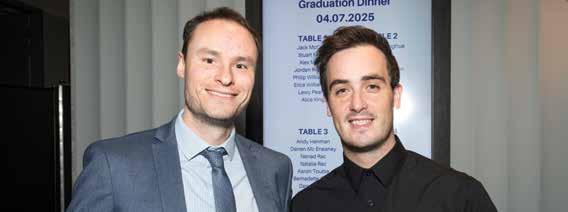
















SkyCity Southwest Suite September 13, 2025




SkyCity Southwest Suite October 18, 2025
1.
2.
3.
4.
5.
6.
7.
8.
9.







From page 31
The Standard Operating Procedure (SOP), Aboriginal Community Constables (Regional), Traditional Community Constables and Police Liaison Officers details that community constables’ authorities, responsibilities and legislated immunities are subject to limitation imposed by the commissioner and detailed in their associated instrument of appointment
In respect of community constables (CCs) and traditional community constables (TCCs), the SOP stipulates that: “CC and TCC training, despite aligning to components of a police officer’s training, is substantially less both in time and content. As a result they are not to be used as first response frontline operational police officers. CC’s (sic) and TCC’s (sic) are to be deployed as a specialist resource for police interactions within their cultural scope and are not to be deployed as an extra resource to be absorbed onto patrol duties ”
Community constables find themselves despatched solo, with no additional backup, despite the SOP This forces them to police family members and damage cultural relationships rather than perform their community liaison role.
The association advocated for members in the South Australian Employment Tribunal and is awaiting the recommendation
From page 37
Refinance to Police Credit Union
Police Credit Union is an awardwinning credit union, offering highly competitive home loan and personal loan rates with exclusive perks for police officers through our Platinum membership By switching to us you could save thousands as we don’t charge any of the monthly or annual fees that most banks do PLUS, as a Platinum member you pay $0 on package fees, saving you $420* when you switch
Talk to your Platinum relationship manager, Glenn Lewis, today to receive personalized advice. This will include a free RP Data property report which will provide an estimate on the current value of your property From there, you can meet one-on-one to discuss your options to ensure you can make your home loan and equity work for you
Contact Glenn on 0421 243 741 or e-mail platinum@policecu.com.au.
You can also visit policecu.com.au to view our competitive loans and find out more about Platinum benefits or visit your local branch.
Police Credit Union Ltd (PCU) ABN 30 087 651 205 AFSL/Australian Credit Licence 238991. Terms and Conditions, fees, charges, lending and membership criteria apply. Full details upon request. Information correct as at 01/08/2025 and subject to change. *Excludes Business Banking &/or Commercial Loans and loans to a Trust or Self-Managed Super Fund. Please consider your circumstances before deciding if the product or advice is right for you. PCU reserves the right to withdraw offers or amend product features at any time. Property reports are guides provided by CoreLogic Asia Pacific Pty Ltd ABN 67 087 759 171, please refer https://www. policecu.com.au/free-property-report/. No further discounts apply.
Working part-time?
Are you currently working part-time? Are you commencing or ceasing part-time work?
If your hours change, it is important that you advise the Police Association. Your subscriptions may be affected.
Please phone (08) 8112 7988 or e-mail membership@pasa.asn.au to advise of a change in hours.
1.
2.
4.
5.
6.
7.
For the full version of The Last Shift, go to PASAweb at www.pasa.asn.au
Andrew Beaufort
Marita Holyoak-Tarrant
Martin Mazik
Steven Mikajlo
Shaun O’Rielley
Mount Gambier CIB
17 years’ service Last Day: 22 .07. 25
Comments…
“After 17 years in policing, this has not been an easy decision My career has been incredibly challenging at times, both personally and professionally, but I have always been proud to serve the community
“Throughout those years, the support of the association has been valued and appreciated, particularly during periods when that backing made a real difference.
“Thank you for the support provided during my time as a member (especially Nadia) ”
Martin Mazik
Southern District
45 years’ service Last Day: 30 07 25
Comments…
“I take this opportunity to thank all those who I have worked for and with. Forty-five-plus years has seen me enjoy the variety of work offered within SAPOL and I leave much richer
in life's experiences, both good and bad, believing I made a difference in my part of the world.
“Police Association, I thank you for your tireless efforts in looking after and protecting your members From the day I started in 1980 I have been privy to the benefits of the association committee and executive in what they have achieved This makes retiring a lot easier to manage
“I leave with fond memories and, most important, to the current SAPOL members, take care and look after each other. ”
Steven Mikajlo
Southern Property Store
40 years’ service Last Day: 24 07 25
Comments…
“I feel honoured to have worked with so many great individuals and groups within SAPOL over my long career
“A big thank you to the Police Association and to my SAPOL friends over the years in assisting me to gain the conditions and pay for which I will forever be grateful
Got something to say?
Got a comment about a story you’ve read? Do you have strong views on a police issue?
Is there someone you want to acknowledge? Know of an upcoming social or sports event? Whatever the subject, put it in a letter to the editor. Regular mail Police Journal, PO Box 6032, Halifax St, Adelaide SA 5000 Email editor@pasa.asn.au Internal dispatch Police Journal 168
“I hope that I have left the organization with improved technology to policing the front line, such as the City of Adelaide CCTV Network, SEMS TV, SA GRN and the SAPOL fibre network
“To those members at IS&T, Police Communications and Southern District: thank you. It was a pleasure to serve alongside you. ”
Andrew Beaufort
Limestone Coast
21 years’ service Last Day: 03 07 25
Comments…
“I joined up with SAPOL almost 21 years ago and have loved almost every minute of it, starting with my time at the academy and Course 61 .
“I have joined up with Victoria Police and commence with them shortly.
“A large part of my reason for enjoying the job so much was the conditions I was provided, and I thank the association for its hard work
“I remained on patrols for my entire career and the amount of work required from patrol officers now is enormous compared to what it was when I started The expectations placed on them can often be overwhelming
“I see that the association is pushing hard to change the amount of work placed on police from other agencies such as SA Health and DCP, and also the amount of work involved in many coronial investigations
“I think that, if you can succeed in these changes, it will make an enormous difference and allow patrol officers to get back to what they should be doing Anything that can be done to increase the efficiency/effectiveness of patrol officers should be a priority for SAPOL
“I have also witnessed the terrible toll that protracted internal investigations can take on police officers and I see that the association is also fighting hard to see changes in this area and anything that can be done to speed up the process should be encouraged
“Thanks very much for all your hard work and I hope that you keep up the good fight ”
“To all my colleagues over the years: thanks for all your friendship and support You truly are what makes this job so special ”

Shaun O’Rielley
Operations Admin Section 41 years’ service Last Day: 11 07 25
Comments…
“In 1984, as a 19-year-old graduate, I joined SAPOL . Policing then was simple: typewriters, revolvers, 5-litre V8 Commodores, and – most important – great teams and partners
“By the 1990s, I moved into the CIB, where policing became serious business I was involved in major investigations and trials – work that was often stressful
“My career took me to Holden Hill, Adelaide, Port Adelaide, Elizabeth, SCIB Within those areas, working in tactical teams like NCRD, UTT, Operation Mantle, provided some of the best times of my working life.
“I’ve been fortunate to work alongside – and to lead – some outstanding people. Across four decades, I’ve seen enormous changes in policing, not all of them for the better
“I loved being a detective, but somewhere along the way we shifted from being decision-makers to a production-line style of policing
“Many of the leaders and colleagues from my earlier days were among the toughest, most reliable people I’ve ever known.
“As I now move into retirement, I do so with gratitude for the career I’ve had, the people I’ve worked with, and the friendships made along the way
“I also leave with the amazing benefits that come from years of representation and hard work behind the scenes by the Police Association – something I’m truly thankful for
“I’ll always be proud to say I served 40 years in SAPOL ”
The Police Association of South Australia needs your change- of-address details.
If you have moved, in either the recent or distant past, please let the association know your new address Its office does not receive notification of changed addresses by any other means
The association will need your new address, full name, ID number, telephone numbers (home, work and/or mobile) Members can e-mail these details to the association on pasa@pasa asn au or send them by letter through dispatch (168)

The Police Association Members Buying Guide offers members and their families massive exclusive discounts on a wide range of goods and services. The easiest way to access all the discount codes is to join the private Facebook Group at facebook.com/groups/membersBuyingGuide