Cellar Door the
Shop Local, Globally with Jones & Company Wine Merchants
Tuscany
2026 – May 2026

Shop Local, Globally with Jones & Company Wine Merchants
2026 – May 2026

Buying or selling a home is one of life’s biggest decisions. You deserve more than a listing — you deserve strategy, negotiation, and guidance every step of the way.
“We could not have had a better realtor help us find our new home. Becky and The Parkes Team were so special. The respected our pace (slow) and NEVER said no to showing another home. The communication was excellent: direct, honest, and accurate. We really appreciated that Becky could accommodate our silly schedule! Thanks again!”















Red or White... the price is right.


Ricki-Lee Podolecki offers us an overview of one of the most popular, exciting (and confusing!) regions in the world.
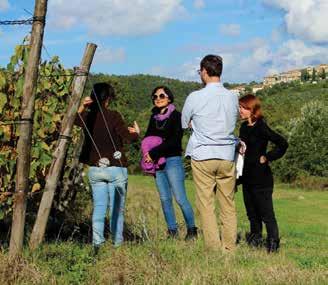
Mike Muirhead introduces a new way to enjoy wine travel in laid back, rural escapes.
Sylvia Jansen explores the Super Tuscan wines that changed the Tuscan wine scene.
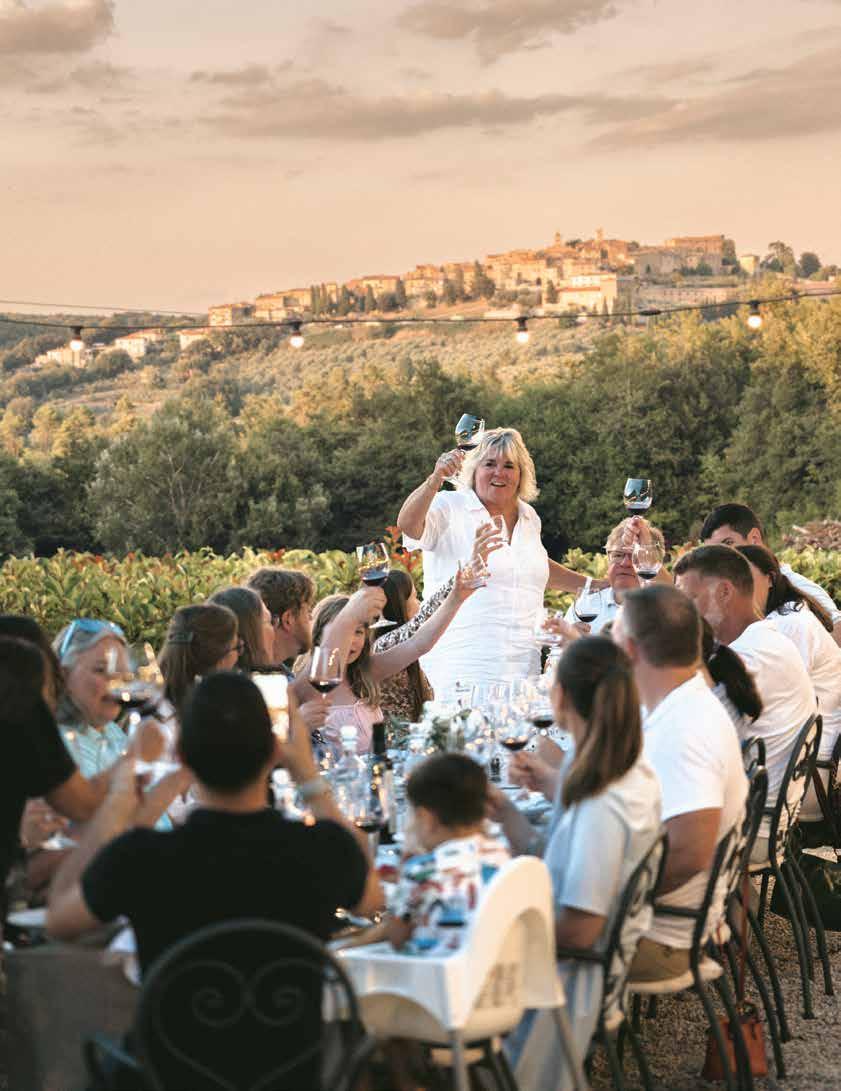
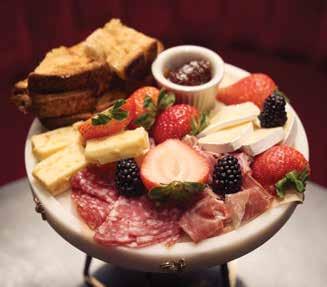
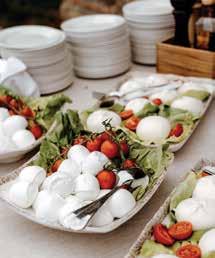
Tina Jones invites us to the Tuscan table with dinner at the estate of Donnatella Cinelli Colombini.



$4,000,000
$3,500,000
$3,000,000
$2,500,000
$2,000,000
$1,500,000
$1,000,000
$500,000
$3,695,490 As of 12/31/2025
*Since Inception Date 05/26/2015
*Returns prior to joining RJ were obtained while registered through another CIRO member firm.
We welcome the opportunity to connect for a confidential and personalized conversation.
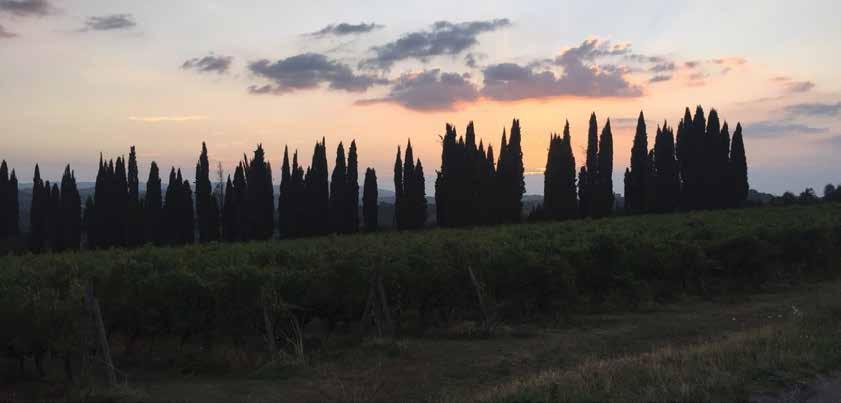
We are all drawn to beauty. And when an entire region offers beauty in every corner, it becomes a global destination. Tuscany is one of these, with rolling landscapes and cypress trees, mountains and sunny beaches, and medieval towns rising from the landscape. Tuscany’s culinary traditions and delicious wines give us beauty at the table. Its cities redefined art and architecture centuries ago and invite us to discover these treasures again and again.
Even with the tremendous number of visitors each year, somehow Tuscany has preserved its identity. Yes, there are throngs of people around Florence’s Duomo and Uffizi Gallery, and in Siena around the Piazza del Campo. But take a walk around the corner, and there is inevitably a quieter alley with an amazing artisanal gelateria or a small place to grab a snack and an aperitivo—quiet moments of beauty. To travel into the Tuscan countryside is to experience yet another part of this amazing region, with its diverse and beautiful sprinkling of towns and villages. There is great hospitality in winery or farm accommodations (agriturismo) and inns, and restaurants that offer high standards for food and wine. With so much to see, so much to do, and so much to taste, Tuscany feels like several regions in one.
In this issue of The Cellar Door, Ricki-Lee helps unravel this complicated wine region, and Sylvia traces how Super Tuscans have changed the landscape of Tuscan wines. Mike takes us into the country for a sloweddown experience at agriturismo destinations, and I share an incredible culinary experience at the Donatella Cinelli Colombini winery in Siena. Some other highlights in this issue: Jill introduces some of our favourite new wineries, Gary enters the touchy conversation around tariffs with some historical context, and Ricki-Lee makes a case for the effects of the lunar calendar on our palates. All in all, we offer a roving and interesting experience, right in your own living room!
Salute!

Tina Jones

Publisher and Editor Lisa Muirhead lisa@poisepublications.com
Editorial Board
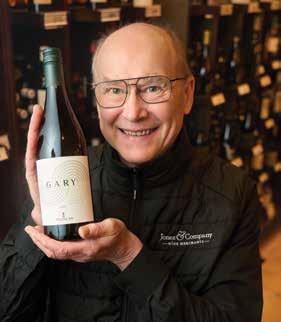
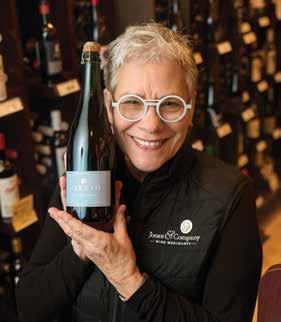
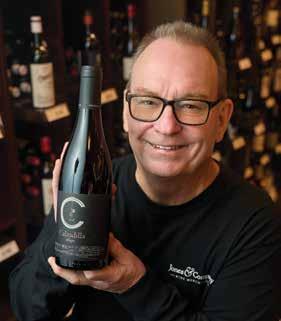
Tina Jones, Sylvia Jansen, Gary Hewitt, Jill Kwiatkoski, Mike Muirhead, Ricki-Lee Podolecki
Graphic Design Garfield Street Media info@garfieldstreet.ca
Contributors
Todd Antonation, Andrée-Anne Boisvert, Mindy Friess, Francesco Giorni, Gary Hewitt, Sylvia Jansen, Tina Jones, Liz Kaye, Megan Kozminski/Media Spur Inc., Jill Kwiatkoski, Ian McCausland, Saralyn Mehta, Mike Muirhead, Tom Penner/Firefly Communications Experts, Ricki-Lee Podolecki, Malcolm Roberts, Jenny VanDenDriessche, Dylan Watkins, Rick Watkins
Published for Jones & Company Wine Merchants by Poise Publications Inc. www.poisepublications.com
For advertising information, email lisa@poisepublications or visit poisepublications.com/the-cellar-door.
In 1999, Tina Jones had the vision of opening Banville & Jones Wine Co., a fine wine boutique in Winnipeg, Manitoba that specializes in promoting wine education and lifestyle. In 2020, we changed our name to Jones & Company to reflect our team and focus on shopping local, globally.
1616 St Mary’s Rd. Winnipeg, MB R2M 3W7 204-948-9463
JonesWines.com | @joneswinemerchants
© 2026 Poise Publications Inc.
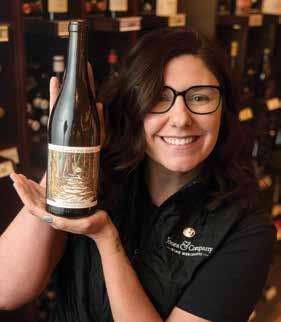
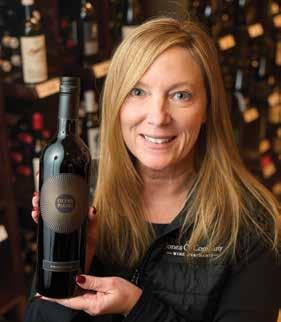
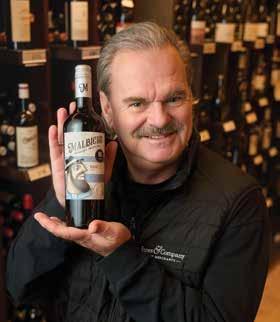
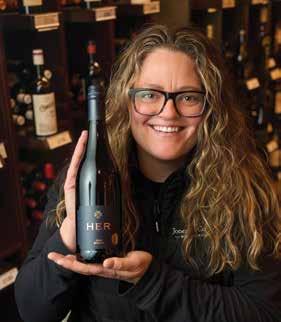
By Sylvia Jansen, DipWSET, CSW, Sommelier
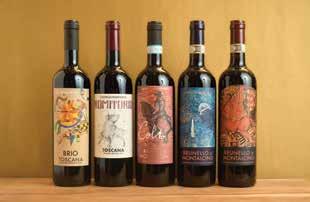
Sandro Chia, the founder of Castello Romitorio, is a leading Italian artist, celebrated internationally with exhibitions in some of the world’s most important museums, including the Guggenheim and Tate Modern. His artwork graces the labels for a remarkable visual impact. However, it was not the labels that connected us to this great producer, says Tina Jones—it was the wine.
“It was a small local restaurant in Montalcino where I asked our Sommelier for a few local favourites. He mentioned Castello Romitorio, and when we tasted their Rosso di Montalcino, it was easily the best wine we had all summer!” From there, Tina put our buyers in touch with the Romitorio team, and we are now delighted to bring them to Winnipeg.
Our whole team see ourselves as custodians of this land. Together, our single, most important goal is to craft wines that express the spirit of this rugged and singular corner of Montalcino.
The sheer beauty of the land and the rugged character of the ancient castle inspired Sandro to purchase Castello Romitorio in 1984. “With its sweeping view of the Val d’Orcia and Montalcino, Romitorio evoked something ancestral within him,” says Filippo Chia, Sandro’s son and the current proprietor of the winery. When Sandro acquired it, most of the surrounding vineyards had been abandoned. However, as he came to know the people who worked the vineyards and produced beautiful Brunello di Montalcino, the idea of building a winery took shape. Sandro painstakingly reclaimed the land from the brambles and replanted it.
“Romitorio was once a monastery, and where there are monks, especially in Montalcino, there is spirituality and, inevitably, good wine,” says Filippo. Their belief in this land was well founded, and the winery has flourished with a focused line of beautiful wines.
Filippo joined the company in 2005. “Some of my earliest memories are of my father restoring the castle and working on the land. Seeing his dedication became a foundation for my

own passion to be a good custodian of Romitorio.” Filippo has continued his father’s vision while working with the team to step back from using fertilizers, reduce mechanization in both vineyard and cellar, and embrace the philosophy that less is more. “If wine is an art form, then its creation starts with planting and nurturing vines that adapt to the soil and climate, but also to the care they receive.”
Their new cellars allow each vineyard plot to vinify separately. “It is like keeping the colours on an artist’s palette distinct, so that when they finally come together on the canvas, they create a wine that is as expressive and nuanced as possible,” explains Filippo. Wine ageing focuses on stainless steel, cement, and bottle aging, rather than barrique influence, to preserve and highlight the pure fruit character of the wines.
In addition to Castello Romitorio, the family has an exciting project in coastal Maremma, southwest of Montalcino, called Ghiaccio Forte. Both Castello Romitorio and Ghiaccio Forte offer limited, focused production, with fewer than 100,000 bottles in total. Filippo explains that Ghiaccio Forte is, “our way of exploring a new frontier. Winemaking is about curiosity, courage, and a willingness to push boundaries to understand where great wines can be born. Our conviction that the wilder territory of the Maremma could yield great wines proved true: today we believe that the wines from Ghiaccio Forte stand proudly on the world stage.”

By Ricki-Lee Podolecki, DipWSET
Tuscany is truly one of Italy’s most iconic wine regions. But what makes Tuscany so iconic that we chose to dedicate this entire issue to it?
The region has deep-rooted traditions in wine production. Its vines produce some of the most notable DOCG and DOC wines in the country, from Chianti and Brunello to renowned wines outside of these top designations, like the Super Tuscans. When you consider its breathtaking landscapes and rich history, it is no wonder this region, though not the largest in Italy, is among the most celebrated.
To dive into the world of Tuscan wines, we offer you an overview of Tuscany’s landscape, its prominent grape varieties, and a few Tuscan wine choices that express the beauty of the region.
Recent sources show that Tuscany has 11 DOCGs and 41 DOCs. We say “recent” because the number has changed over time due to the country’s evolving wine laws. The changes normally occur when evaluating what the market is looking for. In the map, you will notice that IGT Toscana covers the entirety of the region; this classification covers both entry-level and truly remarkable wines. There are quality wines made all through Tuscany but the most notable regions are the DOCGs. Chianti and Chianti Classico are each their own DOCG; Chianti has seven subzones, while Chianti Classico has 11 subzones that have been recently recognized as distinct and are just now starting to show up on wine labels. (I know, confusing, right?). You can tell you are drinking a Chianti Classico by the region’s Black Rooster (Gallo Nero) seal. Each DOC and DOCG has its own rules that must be followed in order to be classified, making each style of wine unique to its area.
Our map of Tuscany highlights some of our favourite regions, represented by the wines we carry at Jones & Company.
Chianti
Chianti Classico
San Gimignano
Montepulciano
Montalcino
Montecucco
Bolgheri
Maremma Coast IGT
Toscana IGT (for more on IGT, see Sylvia Jansen’s article on page 46)
What are DOC and DOCG? These terms describe the top two tiers of Italy’s classification system: Denominazione di Origine Controllata and Denominazione di Origine Controllata e Garantita. They guarantee where the grapes are grown and that the producer adhered to the production standards designated for that region (or subregion). DOCG is the highest standard with the most stringent rules, analysis, and testing.
Tuscany is for red wine lovers. Only about 15% of Tuscany’s vineyards is planted to white varieties; the other roughly 85% is dedicated to red grapes.
(60%–65% of production)
Sangiovese is Italy’s most planted grape and is grown across the country. Over centuries of winemaking, different Sangiovese clones have been planted and given different names based on region and clonal variation. As a result, it is known by a multitude of names, including Prugnolo Gentile, Sangiovese Grosso, Brunello, Morellino, and Sangioveto. It is also the predominant grape in Chianti, Montefalco Rosso, and Vino Nobile di Montelpuciano.
Although it holds the title of “most planted variety” in Italy, the region where it shines brightest is Tuscany. Tuscany has the perfect landscape of slopes and rolling hills, is drenched in sunlight, and features a range of soils. The different terroir pockets throughout Tuscany allow Sangiovese to express distinct differences in how it ultimately presents itself.
(22% of production)
In addition to Sangiovese, a handful of other indigenous grapes are produced within the region, including Canaiolo Nero, Ciliegiolo (which means “little cherry”), Mammolo, and Pugnitello. Many of these wines do not reach the international market, as locals tend to be their largest consumers. These varieties are also commonly blended with Sangiovese, so finding them on their own is rare.
Merlot: (5%–8%); Cabernet Sauvignon: (4%–6%)
Although Merlot and Cabernet Sauvignon are not indigenous to the region, they are very important to its history. In the 1970s, strict production regulations were making producers increasingly frustrated— they felt a lack of freedom to create innovative blends. Bolgheri was the perfect starting point for these two grapes, as the region has a climate and soils similar to those of Bordeaux. After the success of Sassicaia’s first vintage (85% Cabernet) in the 1970s, winemakers were encouraged to keep experimenting with international grapes. These wines were the first of what became known as “Super Tuscans”—wines that are produced outside the DOCG/DOC rules. For more on Super Tuscans, see Sylvia Jansen’s article on page 46.
Trebbiano Toscano (4%–5%), Malvasia, Vermentino, Vernacchia, and others
Trebbiano and Malvasia were part of the historic Chianti blend. Today, often blended, they make light, fresh varietal white wines and unctuous, sweet Vin Santo. Vermentino is the modern darling grape of coastal Tuscany, and Vernacchia is grown around the famous fortress town of San Gimignano.
At Jones & Co., we know how much the world loves Tuscany! We do too—so we have carefully selected wines from across diverse regions (and across the Toscana IGT). Here is a selection of wines from these regions that we think are very special.
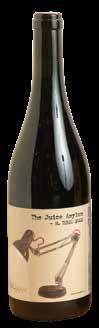
The Juice Asylum 2023 Il Terzo Grado Rosso IGT Toscana ($33.99) is made from Sangiovese grapes grown in Montepulciano blended with Merlot and Colorino grown in Cortona DOC in eastern Toscana.
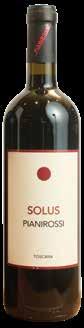
Pianirossi 2019
Solus Rosso
IGT Toscana ($39.99) is made from Sangiovese blended with a small amount of Alicante grown near Grosetto on the Maremma Coast.

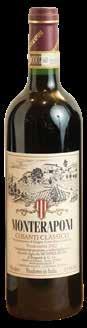
Monteraponi 2023
Chianti Classico DOCG ($56.99) is 100% Sangiovese from Chianti Classico DOCG.
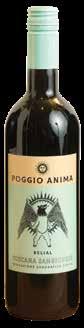
Poggio Anima 2023
Belial IGT Toscana ($21.99) is 100% single-vineyard Sangiovese grown near the city of Siena.
Ormanni 2022
Chianti DOCG ($24.99) is 100% Sangiovese planted in vineyards in Chianti DOCG that date back to the 14th century. Over the past 200 years, generations of the Brini Batacchi family have brought sustainable and organic approaches into the vineyards.
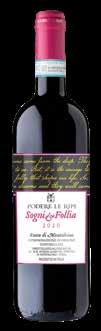
Podere le Ripi 2020
Sogni & Follia Rosso di Montalcino DOC ($55.99) is 100% Sangiovese grown in Montalcino DOC on a biodynamic farm where vineyards grow alongside vegetable gardens, fruit and olive trees, bee hives, and animals.


Gallagher combines global insurance expertise with local knowledge and industry-specific capabilities to help clients thrive. With over 95 years of experience, we offer innovative solutions and service excellence in more than 150 countries.
Our expert team can help you face the future confidently with:
Commercial Insurance Solutions:
Tailored for businesses of all sizes, from small enterprises to multinationals.
Benefits and HR Consulting:
Customized plans to invest in your people’s health, talent, financial wellbeing, and growth.
Connect with us to discuss your professional or personal insurance needs today.
Commercial and Personal Insurance (204) 925 8550
Group Benefits and HR (204) 956 9860
Gallagher’s main Winnipeg office has relocated from 100 Scurfield Boulevard to 146 Commerce Drive, Winnipeg, MB R3P 0Z6.
Personalized Protection:
Insurance options for your car, home, or family.






By Jill Kwiatkoski, Sommelier (CAPS)
2025 seems to have come and gone quicker than a heist at the Louvre! Even so, our buyers at Jones & Company
diligently throughout the year to bring in some incredible wines. Working in the wine industry means we have the opportunity to explore wines from a host of different countries. We take pride in the amazing global wines we source, made by hard-working people who, in the end, just want you to sit back and enjoy a beautiful glass of wine.
These are some of the incredible wines we discovered in 2025. Along with these wines, we also value the new relationships we have made with the wineries, families, and friends in the process. We welcome them to Manitoba, our little corner of the world.
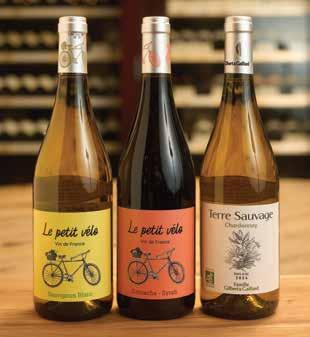
In 1989, Dr. François Gilbert (a geology professor specializing in viticultural terroir) and his friend Philippe Gaillard (born into a family of winegrowers) quit their jobs and joined forces to follow their dream of becoming wine writers. Together, they founded their publishing house, Gilbert & Gaillard, which produces dozens of books, magazines, and guides to French terroir and the best wineries in France. In 2012, they took all their knowledge and passion for wine to the south of France, where Château Gilbert & Gaillard was born. Today, along with François’s daughter, Caroline; Philippe’s son, Matthieu; and their amazing team, the winery builds on the passion and legacy that created it.
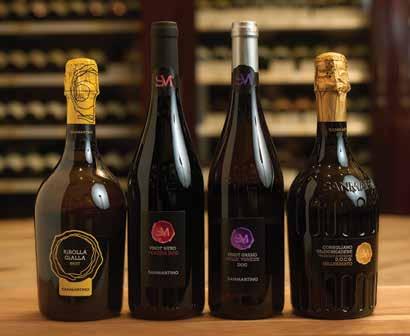
We pride ourselves on finding the best family-run wineries— and being introduced to the fun and fresh wines from San Martino winery was a delight. Brothers Giovanni Cescon (the winemaker) and Walter Cescon (the sales manager) work with their team to carry on the legacy of their grandfather, who founded the Veneto winery back in the 1960s. Fun, fresh, bright, modern, and unique—these wines are not only eye-catching on the shelf, but their quirky little Ribolla Gialla Brut (a staff favourite), Prosecco, and Pinot Grigio will truly find a place in your heart and your home. Simply marvelous!
When we discovered Quinta da Pacheca, our palates sang with joy for these uniquely Portuguese wines. Portugal was the European destination in 2025. If you didn’t go there yourself, you know someone who did. Jones & Co. is proud to support female winemakers, and Quinta da Pacheca has an amazing woman winemaker at the helm. Encouraged by her grandfather, who founded the winery in the 1980s, Dr. Maria Serpa Pimental was among the first women winemakers in the Douro. She is also a professor at Universidade de Trás-os-Montes e Alto Douro, mother of two, and the only woman on the board of the Instituto dos Vinhos do Douro e Porto (Port and Douro Wine Institute), which assesses Port wines and assigns their designations. A leader in many fields!
South Africa has one of the most beautiful national anthems in the world: Nkosi Sikelele’ iAfrika. It is sung in the country’s 12 official languages, celebrating its many different cultures and its people. We are excited to introduce the South African HER Wine Collection to our customers—a winery owned and operated by a team of inspiring young black women bringing their knowledge, skills, passion, and creativity together to make amazing wines. This all-female winery is not only extremely successful but also determined to support the success of other young women winemakers: 2% of the winery’s profits are committed to bursary funds that enable young South African women to further their education and their careers. Simply incredible!
Taking the saying “it takes a village” to its creative extreme, Grupo Sonsierra is Rioja’s first winemaking cooperative, made up of 240 grape growers whose motto is: alone we cannot do great things, but together we can This is the first cooperative in Rioja to produce its own wines that reflect both its identity and the terroir. Their dedication to quality wines earned them the distinction of being twice named the Cooperative of the Year—in 2019 and 2021—by renowned British wine critic and Master of Wine Tim Atkin in his annual report on Rioja.
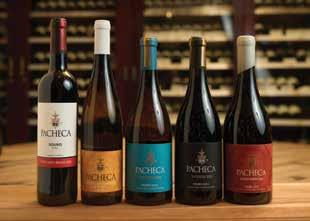
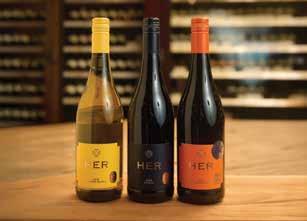
Photo by Ian McCausland

By Gary Hewitt, DipWSET, CWE, FWS, Sommelier
The sheer value of revenue associated with the wine trade makes it a target in trade wars, often through the imposition of tariffs. Governments impose tariffs to raise government revenue, to protect domestic industries and correct trade imbalances, and as a political tool for negotiations. All three reasons are highly relevant today, but wine history tells many stories about tariffs and how they have altered the wine industry.
One is about the Methuen Treaty. Trade relations between France and England in the 17th century were, to say the least, volatile. In a series of actions, Charles II imposed tariffs on French wines to raise funds for his own purposes, independent of parliament. Then, in 1679, the English parliament totally banned French wine importation. The ban was lifted in 1687, reinstated in 1688, and morphed into a 1697 treaty with punitive tariffs on French wines. Oh là là! Finally, in 1703, as French–English relations deteriorated, England and Portugal signed the Methuen Treaty, an accord that promised tariffs on Portuguese wines would never be more than two thirds of those levied on French wines. Over the ensuing eight decades, Portuguese wine accounted for a staggering two thirds of total wine imports into England.
Economics aside, the whole Port trade and style of wine was dramatically affected. Britain was already buying wine from Portugal despite a lack of enthusiasm for the thin, light coastal wines of the Minho. The Douro’s hot, dry climate promised fuller wines, even if the small production was pretty crude stuff. English merchants began adding aguardente (distilled grape spirit) to wines to stabilize the dry wine shipped in barrels to England. Over the next 100 years, the practice of adding spirit to wine before the end of fermentation, thereby creating a sweet fortified wine, became common. This stronger, more aromatic Port proved irresistible to the English consumer. In a sense, the development of the upper Douro, the English domination of the market, and the very style of Port can be traced directly to the tariffs associated with by the Methuen Treaty.

The signing of the 1703 Methuen Treaty (illustration by Alfredo Roque Gameiro [1864-1935])
In modern times, tariffs continue to target our wines. In 2019, the United States imposed a 25% tariff on certain European wines in response to a dispute with the European Union and the United Kingdom over aircraft subsidies. At the time, Bordeaux wines accounted for 48% of the United States fine wine market; by the end of 2020, Bordeaux’s share fell to 33%, and Burgundy’s share declined from 13% to 8%. Conversely, demand for regions exempt from the tariffs rose significantly. Tariffs resulted in shifts in the United States wine market and a redistribution of French wine exports.
In 2020, China imposed tariffs greater than 218% on Australian wines as punishment for political grievances. China went from Australia’s biggest export market to dropping a whopping 97%! Reinstatement of duty-free trade in 2024 allowed Australia to recover some market share, but France and Chile, having filled the void, have secured ongoing placements for their wines.
In Canada, on-again, off-again tariffs on Canadian goods entering the United States, combined with casual talk of annexing Canada as the 51st state, incited nine Canadian provinces to immediately stop sales and importation of American liquor, including wine. Historically, Canada is the United States’ biggest wine export market, larger than the next three markets combined. Over the ensuing months, Canada’s boycott resulted in a drop in American wine imports of 97%. It remains to be seen how the boycott will affect long-term consumer buying patterns.
Who are the winners and losers? It is really hard to tell. As the wheel of fortune turns, some fortunes rise as others fall. If tariffs make imported wines prohibitively expensive or boycotts make them unavailable, consumers will turn to other regions or domestic products. Exactly where consumers turn in a battle of tariffs, countertariffs, and jurisdictional protectionism may come down to unpredictable, unintended consequences.
Ongoing tariff uncertainty threatens the range and diversity of wine available to consumers, but only time will tell how today’s trade war will impact international wine trade, wine styles, and our local market.

Many business owners incorporate at a certain stage –and then don’t revisit the structure again for years. As the business grows, changes in income, ownership, or longterm goals can quietly create inefficiencies.
An incorporated structure that once made sense may no longer align with how the business operates today. Compensation planning, retained earnings, and future plans all play a role in determining whether adjustments should be considered.
Regular review helps ensure the structure continues to support the business rather than limit flexibility. Even small refinements can improve clarity and help owners make more informed decisions.
At Rawluk & Robert CPAs, we work with incorporated businesses to review their structure and planning strategies as circumstances evolve—helping owners move forward with confidence and purpose.
Schedule a consultation today: ph: 204-237-6053 | www.accountants.mb.ca
Your Trusted Partner in Tax Planning




BLUESTONE
PRAIRIE’S EDGE
Prairie-inspired

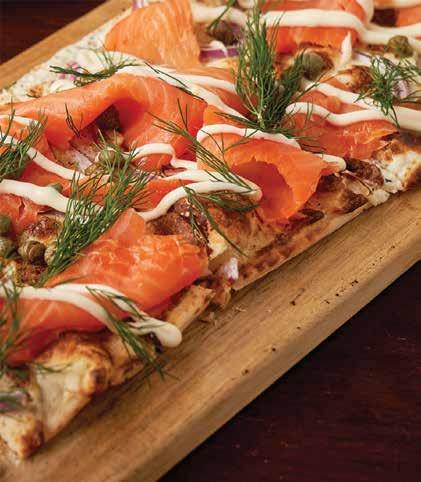
Good for the soul, made from scratch recipes feature local ingredients.
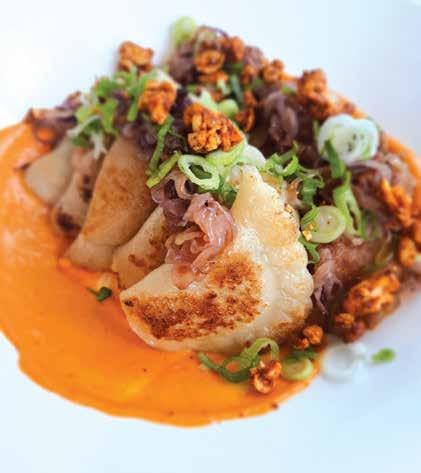

Stellar soups, salads, sandwiches and bowls celebrating Manitoba’s multi-cultures.


By Ricki-Lee Podolecki, DipWSET
Sitting in our monthly wine tasting meeting, something seemed off. Our team members furrowed their brows with the same thought: why are these wines not better? The lineup was full of well-made bottles—clean, balanced, technically flawless—yet they were all missing… something. Gary Hewitt caught my eye; I caught his. Without saying a word, we both looked up the lunar calendar and sure enough, it was a Root day.
When I was first introduced to the topic of biodynamics, I admit, it made me roll my eyes a bit. The notion that the moon being in a certain position determined what a farmer should do seemed like lunacy. But after working with some biodynamic winemakers and jumping down the deep rabbit hole of biodynamics, organics, and moon cycles, I now pay a bit more attention to where the moon is, how I feel, and how the wine in my glass tastes. Wine geeks everywhere have been studying this phenomenon, and it turns out that—anecdotally anyway—it can make a difference. Wine Folly ’s Madeline Puckette did an 8-year study and came to this conclusion: “For some beyond-logical reason, wine does seem to taste better on a ‘Fruit’ day.”
“What the heck does the moon have to do with my wine?” you may ask. Lunar cycles affect living organisms, including vines. Biodynamic farmers and vineyard managers use the lunar calendar to choose the best times for their practices and processes, and wine lovers can use it to decide when to open that special bottle of wine.
The moon’s cycles (there are three) can influence both plant growth and our experience of the products they yield. The moon phases (new to full) are the most wellknown but are thought to affect plants the least. The moon’s tropical cycle (what we talk about when we say
“ascending” and “descending”) refers to the distance between the moon and the Earth and can affect processes like sap flow in a plant, which affects ideal times for grafting or harvesting fruit.
The third cycle, the sidereal cycle, is the one that affects our wine tasting palate. The moon’s position is related to the four elements (air, fire, water, earth), and each element connects to different parts of the plant: flower, fruit, leaf, and root.
Going back to our lacklustre tasting on that Root day: Root days favour the underground parts of plants—roots and minerals—because the moon is in orbit with the Earth signs. As a result, wine can taste more closed off, earthy, or muted.
Does this seem a bit, you know, “out there”? Well, the same lineup of wines suddenly tasted much better the next day, which just so happened to be a Fruit day, which supports more aromatic, lively tastings. To test this phenomenon, we even pulled out a “calibration wine”—one we knew well, that always shows good amounts of fruit. On Root day, it tasted oddly dull, but it too showed much better the next day!
Leaf days should also be avoided. On these days, the plant focuses on producing chlorophyll—a great day to water your garden because the moon is aligned with Water signs. Wines will typically come across dull or vegetal on Leaf days.
On Fruit days, when plants are focusing on their fruit, the moon passes through the Fire signs. On Flower days, when plants focus on—you guessed it—flowers, the moon passes through Air signs. On Flower days, focus on wines with pronounced aromatics, like Riesling, Torrontes, and Viognier. On Fruit days, just about all wine will taste a bit better.
We are professionals at Jones & Company, so we give wines the benefit of the doubt—and we also want to give them the best conditions for tasting. If we have a choice, we choose Fruit days to taste new (and previously enjoyed) wines. The moon moves the Earth’s oceans, and we have all experienced a little extra lunacy on nights with a full moon. In addition, many hobby gardeners and commercial farmers swear by the lunar calendar. Is it so outrageous to think that our palates are just as influenced by heavenly forces as our moods? Try your own little experiment at home. Crack that bottle of wine on a Root or Leaf day and then give it another try on the next Fruit or Flower day. Let us know what your lunar experiments yield.


Planning starts with a focus on the bigger picture.
At Lawton Partners, we guide our clients with insight and experience. We believe it’s important to be leaders in our community as well as in business.
You belong in the company of leaders. lawtonpartners.ca


Menopause is not the beginning of decline—it is a critical window for prevention.
Did you know that cardiovascular disease is the leading cause of death in women? Yet it is still widely misunderstood and under-screened—especially during perimenopause and menopause. Understanding the links between hormone fluctuations and cardiovascular health empowers us to make timely, critical decisions that can positively influence the trajectory of our heart health as we age.
Estrogen plays a critical protective role in the cardiovascular system, affecting everything from blood vessel elasticity and cholesterol metabolism to inflammation and insulin sensitivity. As a result, as estrogen declines during perimenopause and menopause, women often see increases in LDL cholesterol, triglycerides, blood pressure, visceral fat, and insulin resistance—all key cardiovascular risk factors. It is important to understand that these changes are not inevitable or simply due to “aging”; they are hormonally driven and often accelerate during the menopausal transition.
Menopause: A cardiovascular tipping point
Women may experience subtle or atypical cardiovascular symptoms, underscoring the importance of proactive assessment. Traditional risk calculators often underestimate cardiovascular risk in women because they fail to account for hormonal status, pregnancy history, or menopause timing.
Several symptoms that emerge during perimenopause and menopause are also red flags for cardiovascular health. For example, the drop in estrogen levels during menopause reduces nitric oxide production, leading to stiffer blood vessels and impaired blood flow. Another parallel indicator is where women carry fat. When estrogen levels are normal, women’s bodies typically store excess fat in the breasts, butt, hips, and thighs. A drop in estrogen can cause this extra fat to be redistributed around the abdomen—an indicator of increased visceral fat around the organs and one of the strongest predictors of heart disease in women.
Hormone therapy has many evidence-based benefits during perimenopause and menopause. An outdated fear surrounding menopause hormone therapy (MRT) has led many women to miss a critical window of opportunity for prevention, as some of MRT’s benefits are time-sensitive—including benefits for cardiovascular health. Estrogen therapy during perimenopause and early menopause can improve lipid profiles, reduce visceral fat accumulation, improve insulin sensitivity, and support vascular function. Cardiovascular health should be part of every informed MHT discussion—not treated as a separate issue.
A multifaceted approach to assessing cardiovascular health is critical. Body composition, fat distribution, and lean body mass are far more meaningful indicators of metabolic and cardiovascular health than scale weight or body mass index (BMI) alone. The more information you have about your body, the greater your chance of identifying unfavourable trends early and planning timely intervention before disease develops.
The Menopause Practice team takes a preventative, data-driven approach to cardiovascular health during perimenopause and menopause. DEXA body composition scans provide precise measurements of visceral fat, lean mass, and fat distribution—key indicators of cardiometabolic risk. And unlike standard imaging or basic metrics, the DEXA scan allows clinicians to track subtle but meaningful changes over time.

Following your DEXA scan, Registered Dietitian services translate this data into personalized nutrition strategies that support heart health, insulin sensitivity, and healthy lipid profiles. Nutrition guidance is tailored to your hormonal status, body composition, and cardiovascular risk—it is not generic diet advice! In concert with appropriate hormone therapy, this integrated approach helps women protect their hearts while improving energy, strength, and longterm health.
Cardiovascular disease in women is often preventable when hormones, nutrition, and body composition are addressed together. At The Menopause Practice, we empower women with accurate information and advanced diagnostics to change their health trajectory into midlife.

Photos by Ian McCausland
At the age of 10, Kieu Nguyen was already envisioning herself as a restaurateur. Her approach to the industry has been methodical with long-term vision. After high school, she completed Red River College’s Hospitality Management program and gathered experiences in a range of restaurants, from coffee and donut shops to familyowned and fine-dining restaurants. She eagerly drew from her experiences, learning what worked (and what didn’t), drawing lessons from each experience until she was ready to build her dream restaurant. After months of searching for the location that would fit into her specific vision, Kieu settled on a raw space (formerly Antiques and Funk) on the corner of Main and Bannatyne and built it into her dream restaurant—a one-woman show where Kieu curates (and prepares) the food, creates (and pours) the drinks, and hosts her guests in a one-of-a-kind intimate space.
What can people expect at Rosé?
I do everything, so I focus on quality and freshness in my menus. We change the menus twice a year: for the warm season, I focus on fresh, simple, cold dishes, and for the cold season, we have heartier dishes and sauces. We serve local beer and house-made cocktails, and I have a wine menu that is paired specifically with our current menu.
What is your secret ingredient?
I think that my secret ingredient is love. I put so much love and thought into everything. And also, salt—for both food and drink.
Was food important in your family?
My Mom is a foodie. She took me out a lot, and it inspired me very early. She was also a businesswoman, and it was very good for me to see how she handled business, especially when things weren’t successful. It was important to see how she could turn that around.

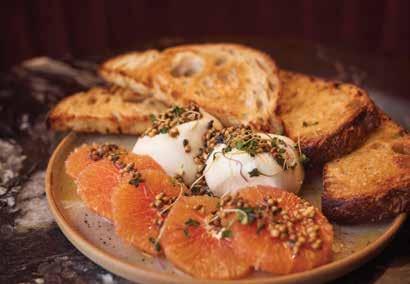
Do you have a favourite food destination?
I am planning to go to Japan next year to experience the food. They are very proud to use the best ingredients and develop specific cooking techniques. I would like to explore how they use egg and dairy ingredients, which is different from how they are used in the rest of the world.
Do you have a guilty pleasure?
When I go to a restaurant, I order all of the desserts.
What wine are you drinking?
When Todd from Jones & Company showed me the Ka Tahi Sauvignon Blanc (New Zealand), I was so surprised. It really stands out. It is savoury—I could taste a little jalapeno and salt. It complements the food so well, and it is really good with spicy food.
If you could cook for anyone, alive or dead, real or fictional, who would it be?
I would want to cook for the food critic from the movie Ratatouille, Anton Ego. He is so honest, and he is not scared that people will hate him for it. I need his opinion. If I could host him, I would love it.
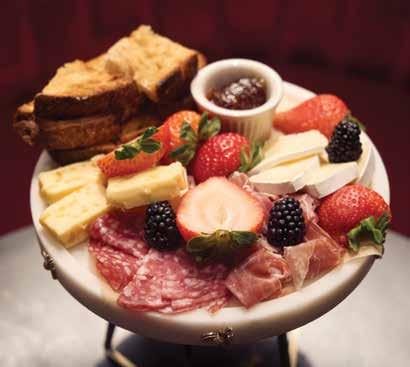



Welcome to Sagewood Estates by StreetSide, Sage Creek’s first bungalow condominium community. Featuring 2 and 3-bedroom duplex condos with attached garages, 3-season sunrooms and modern finishes.
Sagewood Estates is ideal for those seeking a low maintenance lifestyle without having to compromise on privacy, quality or comfort.
Learn more at sagewoodestates.ca

Welcome to The Banks by StreetSide, our first ever luxury riverfront condominiums at 1924 St.Mary’s Road. Enjoy designer finishes, large windows and open concept layouts, including a spacious outdoor balcony or terrace. Residents will also enjoy fantastic amenities including underground heated parking & fitness facility.
Learn more at thebankscondos.ca


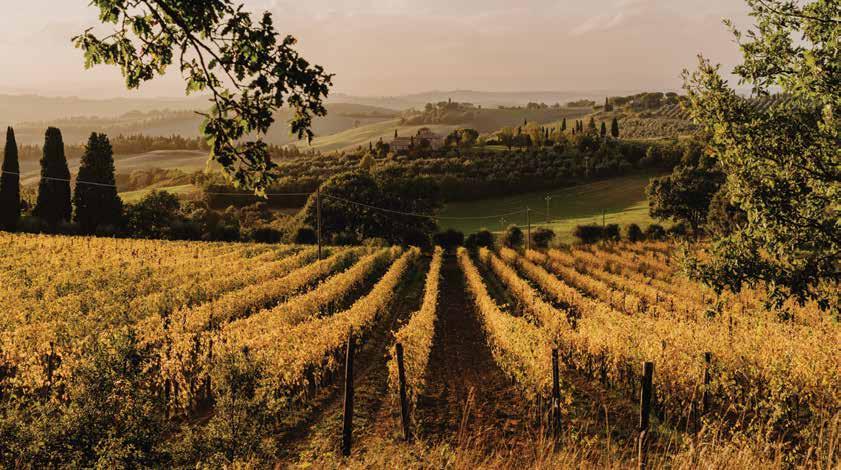
By Mike Muirhead, Sommelier (ISG), CMS
Italy is home to some of the most iconic cities in the world: Milan, Rome, Florence, Venice. And while culture and nightlife are dense in these cities, I would argue that your next trip to Italy should focus on the agriturismo experience in the Italian countryside.
Agritourism is a way of travelling that reconnects you with slower, more rural ways of living—and Italy is the ideal. Italy’s countryside is dotted with centuries-old farmhouses. Stone buildings that were once utilitarian barns and farmhouses have now been converted into guesthouses that somehow
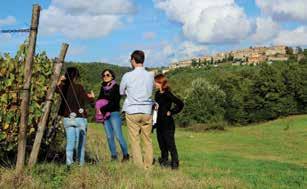
Nestled perfectly between the regions of Chianti and Montalcino is the Orcia Valley, best known for its truffles (and some wine). Our long-time partners and friends at Donatella Cinelli Colombini have transformed the farmhouse in this 16th-century hamlet into one of the most relaxing and picturesque agriturismo destinations in Italy. You know the place is special when the Grand Duke of Tuscany himself used to stay here to get away from it all. In addition to amenities like the pool and tennis courts, a stay at their apartments offers additional diverse experiences: cooking classes, a restaurant, seasonal truffle hunting, seasonal grape harvesting, and wine tours, just to name a few reasons to visit and stay. (See Tina’s culinary adventures at Fattoria del Colle on page 52). @donatellacinellicolombini
balance the latest amenities with a distinctly rustic experience. Whether you are booking a romantic getaway for two or a food and wine tour for a dozen of your closest friends, agriturismo is Italy’s stylish approach to country living.
Because vineyards are, by their nature, agricultural, wineries across Tuscany are natural agriturismo destinations. With our global reach and close ties to the region, we are excited to share these incredible destinations. And don’t worry—you’ll be able to find their wines at Jones & Company when you come home!
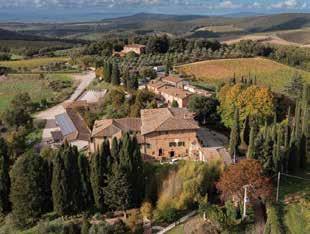

Looking for a getaway to wine country with some friends? Rocca di Montegrossi’s accommodations in the heart of Chianti Classico offer accommodations for 10, including a converted farmhouse, a guest house, and a gorgeous suite in the main house. The villa has a kitchen and fireplace, opening onto a pool and a stunning garden. In addition to Rocca di Montegrossi’s tastings and winery tours, you can spend a week tasting some of the best wines the region has to offer and digging into the history of Chianti Classico or enjoy the pool, gardens, and tennis courts on the property. @roccadimontegrossi
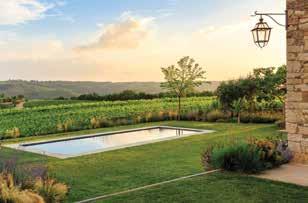
Couples in love are increasingly looking to romantic European locations for their nuptials. Why not spend your wedding in a country where the wine is as gorgeous as the scenery?
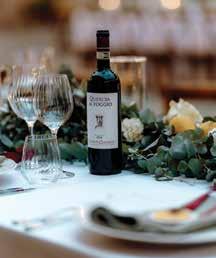
We love connecting our customers with wineries where we know the people (and the wine) will make the event extra special. Quercia al Poggio is just such a place!
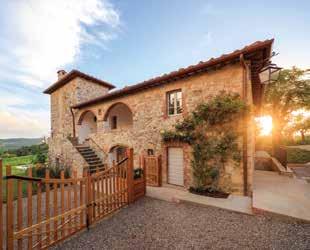
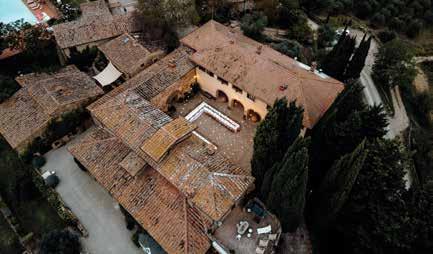
Set in a quiet, bucolic corner of Chianti Classico, Quercia al Poggio is located in a village of restored farmhouses and a former Vallombrosan monastery that houses a winery, two apartment buildings, and everything you need to host an incredible week of celebration and fun for both adults and littles. Enjoy the outdoor panoramic swimming pool; courts for tennis, football, basketball, bocce, and beach volleyball; a children’s play area with toys, table tennis, and table football; and two wood ovens and a large space reserved for outdoor barbecues. @quercia_al_poggio_weddings












By Sylvia Jansen, DipWSET, CSW, Sommelier
It all began as a small side project.
The gravelly Tuscan coastal area west of Siena was, until the mid-20th century, better known for estates that raised racehorses than for wine. On one of those few wine estates grew a few plots of Cabernet Sauvignon and Merlot
vines—the owners were inspired by the similarity of the soils and terroir to Bordeaux. Those wines, having been created in household quantities, were initially poured only for family and friends. When the decision was made to release the wines on the market, it was a sensation. Super Tuscans were born.
In many ways, Tuscany was ready for a seismic shift. The early part of the 20th century had brought regulatory changes that many producers saw as straitjacketing them into mediocrity. The Tuscan region of Chianti was a case in point. Originally, Chianti wine could come only from a small defined area between Siena and Florence. However, in 1932 the Italian government changed the boundary without changing the name. In establishing official regions, they extended Chianti’s boundaries into much of Tuscany, resulting in a “Chianti” that included many different terroirs and, sadly, variable quality. The original Chianti zone received the add-on “Classico” to distinguish it from the now-huge area (Classico producers worked hard to keep the distinction clear, using their special Black Rooster trademark). Meanwhile, the brand “Chianti” suffered from a lack of identity and serious variances in quality.
As if the boundary expansion had not been enough to hurt the region’s reputation, the European tendency in post-WWII had been to lean into high-yielding vine
The Most Important Brunello di Montalcino (That Isn’t)
varieties and clones. The volume of production was high, but quality was undistinguished. Moreover, in the late 1960s, the rules locked in an older “recipe” for Chianti (dating from 1872!), which meant that (red) Chianti was required to contain 10% to 30% white grapes. (If you are old enough to remember those woven-basket Chianti fiasco bottles that, when empty, became candle holders on tables of restaurants and university dorm rooms, you are old enough to remember the candle was usually the best thing about those wines.)
Many producers complained, with good reason. Even if they preferred to use Sangiovese only, or to avoid white varieties, or used non-specified ageing barrels, their wines did not qualify for the “quality wine” designation (which was DOC at the time). The downgrade was to the lowliest wine category vino da tavola (VdT )—table wine.
When the first few Super Tuscan wines were released in the early 1970s, they were classified exactly that way: vino da tavola. Yet, they were significantly pricier than
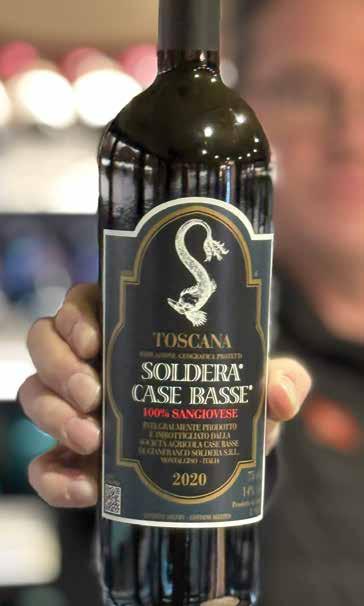
Gianfranco Soldera stands among the winemaking giants of Montalcino. This entrepreneurial insurance broker found one of Montalcino’s most important tracts of vineyards untended and overgrown in the 1970s and turned it into one of Italy’s greatest wines.
For over 2 decades, Gianfranco produced Brunello di Montalcino DOCG and Riserva DOCG. He was passionate about researching what he felt was the one true grape variety of Brunello di Montalcino: Sangiovese. He believed in Sangiovese in its purest form—one that does not require heavy oaking in French barriques or blending with other grape varieties.
However, not all in the DOCG agreed with Gianfranco. In 2012, a brazen break-in lost him nearly $6 million in product when the perpetrator flung open the taps on the tanks, draining years of juice destined to be one of the greatest wines in the Old World. Under pressure from the governing body, Gianfranco pulled out of the Consorzio (governing body) and has labelled his wine 100% Sangiovese ever since.
Want to try the most important vino di tavola in Toscana? Contact us at wine@joneswines.ca to enquire about our spring pre-order.
classified Chianti or Chianti Classico. These were showy, impressive, and intense wines, with deep, dark fruit character, woven with oak notes from barrique ageing. Other producers began to offer a new, pure signature of their best Sangiovese, showing dramatic depth and pedigree. Some wines were blends of Sangiovese and Bordeaux varieties. The wine-loving public cared not an iota that these were not formulaic “Chianti,” and in fact, the separation was a sensation. Throughout the region, there was a new sensibility that invited experimentation, fuelled investment, and launched an array of international varieties in that ancient region.
da tavola. Regulations have also progressively focused on quality; for example, white grapes are no longer required for Chianti and are disallowed for Chianti Classico.
The success of these vini da tavola was encouragement enough for the government to reconsider the rules. In 1992, the new IGT (Indicazione Geografica Tipica [IGT]) category between VdT and DOC/DOCG was established. IGT allowed greater flexibility in varieties used in winemaking and could provide more information on the label than a vino
While the Super Tuscans were the most ostentatious examples of defiance, they were not alone. For the past half-century, producers throughout Tuscany have consistently raised the bar. Sangiovese has achieved to a new level of excellence. Ancient varieties such as Canaiolo, historically present in the Chianti blend, are also gaining attention. In winemaking, small barriques are not the only game: fruit is encouraged to shine by using larger casks, older oak, and more neutral vessels. As well, other Bordeaux varieties—Malbec, Petit Verdot, and the like—are showcased with Cabernet Sauvignon, Cabernet Franc, and Merlot. It all adds to an amazing array of interesting Tuscan wines.
This is a good time for Tuscan wine. In fact, we could say this is a super time.


A Little Art Boutique brings contemporary art and creative gifts together showcasing local works made in Manitoba and from artists across Canada. We specialize in unique gifts for all agesfor family, friends, colleagues, employees, clients and more. Drop in or visit us at Instagram.com/alittleartboutique/
Little Art Boutique 807 Corydon Avenue kelly@alittleartboutique.com www.alittleartboutique.com

Wines from first pioneers, including San Guido’s Sassicaia and Antinori’s Tignanello, are still produced, but are rarely available. The good news is that several top producers offer iconic Super Tuscans!
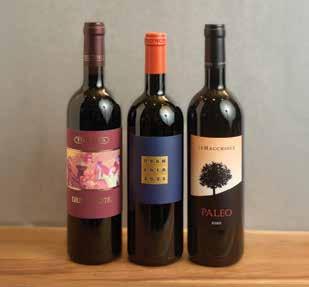
The Icons: Tua Rita 2021 Giusto di Notri Rosso IGT Toscana ($191.99); Brancaia 2021 Rosso Il Blu IGT Toscana ($179.99); Le Macchiole 2020 Paleo Cabernet Franc Bolgheri DOC ($271.99)
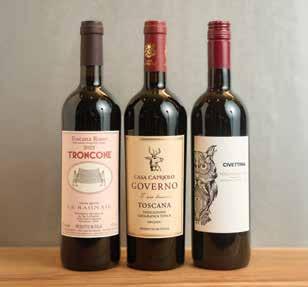
Sangiovese-Forward: Le Ragnaie 2022 Troncone Rosso IGT Toscana ($35.99); Casa Capriolo 2024 Governo Rosso IGT Toscana ($ 21.99); Civettina 2022 Rosso IGT Toscana ($22.99)
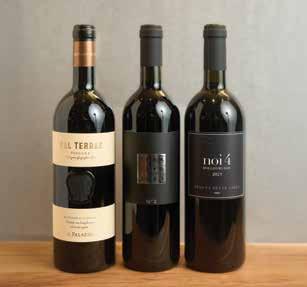
Taking a Cab in Tuscany: Il Palazzo 2020 Sal Terrae Rosso IGT Toscana ($61.99); Brancaia 2023 No 2 Cabernet Sauvignon IGT Toscana ($56.99); Tenuta Sette Cieli 2023 Noi 4 Rosso IGT Toscana ($67.99)
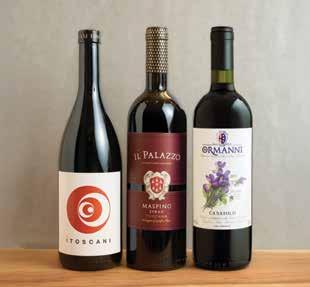
Wild Thing, I Think I Love You: Toscani 2023 iToscani Syrah IGT Toscana ($32.99); Il Palazzo 2022 Maspino Syrah IGT Toscana ($34.99); Ormanni 2024 Canaiolo IGT Toscana ($39.99)
Where there is a will, there is a way
There are certain people you meet in life that you know will get things done, purely out of will, grit, and determination. This perfectly describes Winemaker and CEO of Tenuta Sette Cieli Elena Pozzolini. Her obsession with the vineyards, their soils, and their souls has made her a leader and visionary in Tuscany’s Bolgheri subregion, crafting a new kind of Super Tuscan on vineyards that she willed into existence.
The vineyards are terraced and separated so that each can give a true expression of the varieties chosen for the estate: Cabernet Franc, Cabernet Sauvignon, Malbec, Merlot, and Sangiovese. Each variety is picked meticulously, fermented separately, and used as colours on Elena’s palate to create an experience almost as unique and breathtaking as the estate itself.
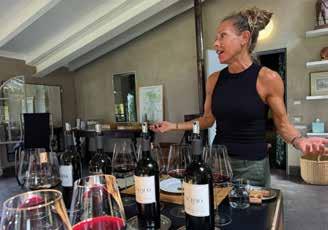
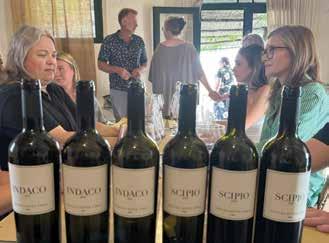
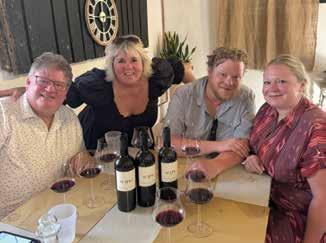
Sette Cieli’s four wines stand out as spectacular examples of what a clear vision can create. Tina Jones and her family had the opportunity to taste Elena’s incredible wines—Scipio, Noi 4, and Yantra— on a visit to the winery.

We get it.
Many things in life are better when paired with a glass of wine. Pairing it with reading your insurance policy…not so much. Like wine however, insurance is good to have.

JONES & CO'S LADIES-ONLY MENOPAUSE SERIES
Let’s talk, ladies! We are celebrating mid-life women (and women in wine too)!
Dr. Denise Black, Gynecologist, MD, FRCSC, will answer all of your questions about perimenopause and menopause in a science-based presentation. Sommelier Jill Kwiatkoski will host the event with a feature tasting of wines produced by some of our favourite women in wine! Charcuterie will be served.
Tuesday, March 3
A more in-depth presentation for those who have taken the previous seminar—or if you just want to learn a lot more about perimenopause. Dr. Black will answer all your questions during this informative presentation.
Wednesday, April 1
Created for those who have taken the previous seminars—or if you just want to learn a lot more about menopause. Dr. Black will take you on a more in-depth, interactive exploration and answer all your questions.
• Cost for each event is $65
• Events run from 7:30 p.m. to 9:30 p.m.
• All events will include wine tasting with a cheese and charcuterie board
• All events will be held upstairs in the Tuscan Room at Jones & Company Wine Merchants.
Sign up online: click on the “Events” tab at JonesWines.com


By Tina and Mike Jones & family
Photos by Francesco Giorno Fotografia
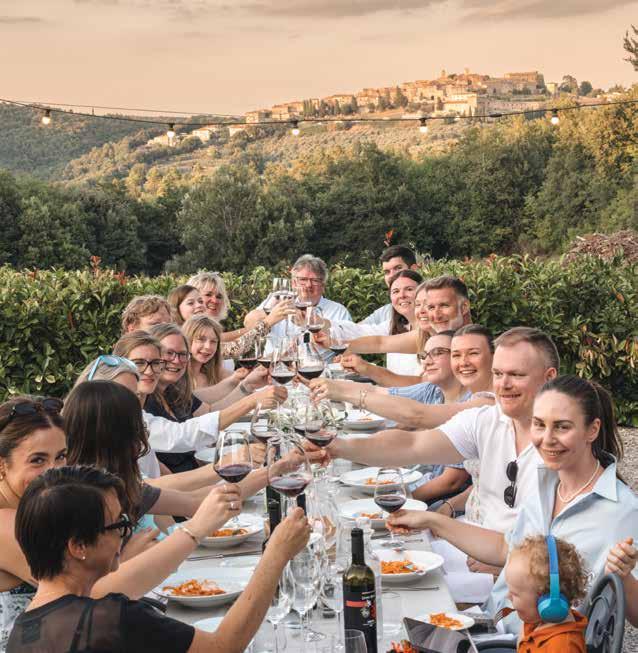
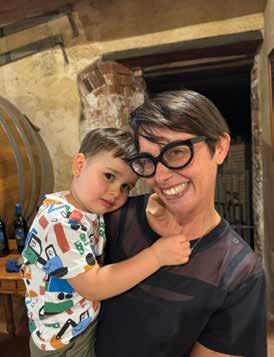
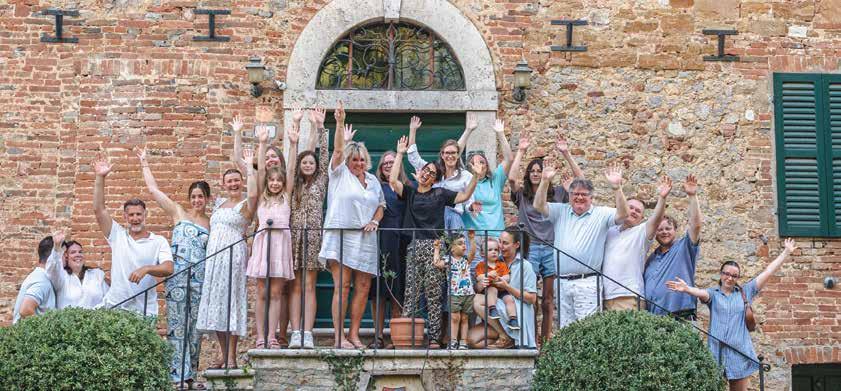
In August 2025, Tina Jones and her extended family took the trip of a lifetime to Tuscany. They spent one amazing day at the Donatella Cinelli Colombini winery in Siena, Tuscany. Donatella is a wine leader and pioneer in Italy. She has been a driving force in marketing, education, tourism, and mentoring and promoting Italian women winemakers, leading several national and regional boards and receiving top awards for both winemaking and her tireless promotion of Italian wine within the country
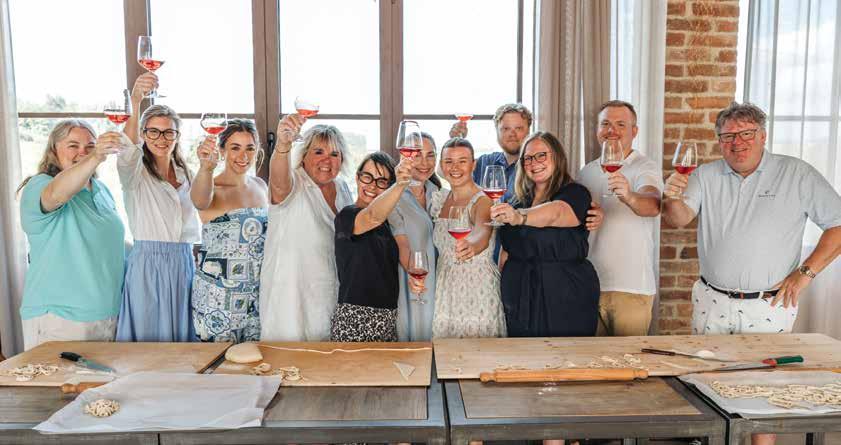
and internationally. Donatella’s daughter, Violante, hosted Tina and her family for a day of wine tasting and cooking classes.
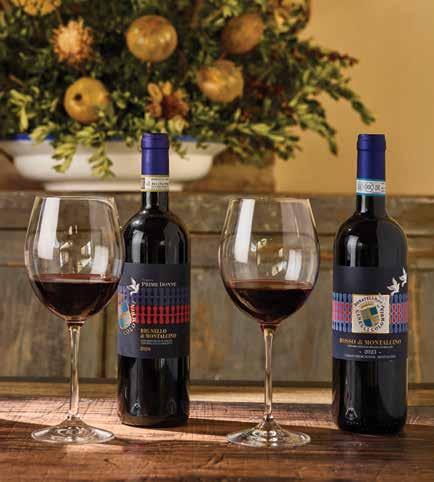
Here, Tina shares the Tuscan recipes they prepared that day, along with three very special Donatella Cinelli Colombini wines: 2018 Prime Donne Brunello di Montalcino, 2022 Rosso di Montalcino Sangiovese, and the extra special 2015 IO sono Brunello di Montalcino.
Serves 4
The meal started with a rustic Tuscan tomato soup made with simple, fresh ingredients.
2 tbsp extra virgin olive oil
½ cup onion, diced
2 medium garlic cloves, minced
1 28 oz can San Marzano tomatoes
5 slices day-old rustic bread
1 cup vegetable stock
2 large basil leaves, plus more for garnish
1 tsp sea salt
½ tsp freshly ground pepper
Heat the olive oil in a skillet on medium. Add onions and sauté until translucent, about 8 minutes. Add garlic and sauté for an additional 2 minutes. While onions are cooking, strain the tomatoes into a bowl and reserve the tomato juices for later. Crush the tomatoes with your hands, removing any hard ends. Add the tomatoes to the cooked garlic and onion and simmer until almost all of the liquid has evaporated.
Tear your bread into smaller chunks, removing the crusts. Using a day-old rustic bread, like sourdough or a crusty bread, will yield the best results.
Add the reserved tomato juice, vegetable stock, two basil leaves, bread, salt, and pepper and simmer for 10 more minutes, stirring regularly to break up the bread. Serve warm with a sprinkle of basil and a drizzle of olive oil.
Serves 4
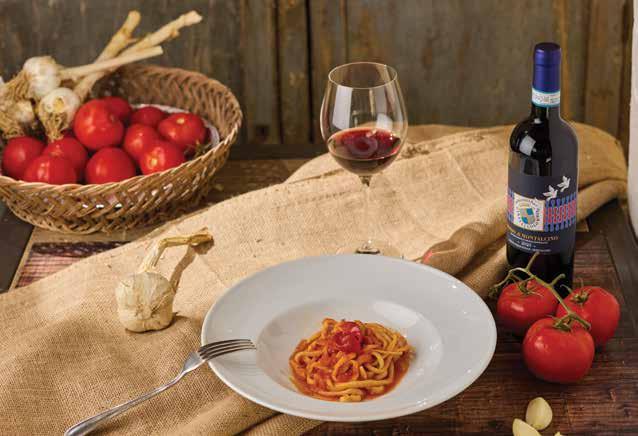
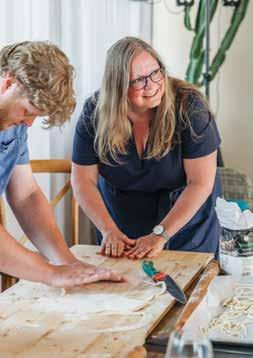
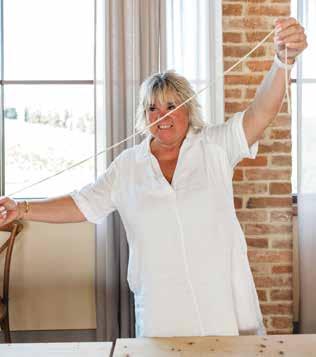
This pasta is a simple combination of pici, a local handrolled pasta (meaning “rope”), and garlic tomato sauce. Giant garlic (typical of the area) adds flavour without weighing down the breath—so-called “kiss-proof garlic.”
Hand-Made Pici
1 egg
2 tbsp extra virgin olive oil
Pinch salt
13/4 cups warm water
3½ cups flour, plus more to toss
Put the flour on a clean surface and create a well in the centre. Mix the egg with the water, oil, and salt and pour the mixture into the flour a little at a time, blending it with your hands. Once it has the consistency of a shaggy dough, knead it by hand or with a mixer and dough hook until it reaches a smooth consistency, about 15 minutes. Let it rest covered with a clean tea towel for at least 60 minutes (or it can be made the day before, wrapped in plastic, and stored in the fridge).
Slice off a bit of the dough and, on a well-floured surface, roll the dough into a rope about 1 cm in diameter using your hands. If it is a very long rope, cut it in half. Put the rolled pici onto a plate covered in flour. When you have
rolled all of your pici, cook it in boiling salted water. The pasta is done when it floats to the surface. Drain the water and toss the pasta in the sauce.
3–4 cloves elephant garlic*
¼ cup extra virgin olive oil
cup white wine
1 28 oz can whole plum tomatoes
1 tsp salt
Pinch red pepper flakes
*If you cannot find the milder (and larger) elephant garlic, use 6–8 cloves of smaller garlic cloves (purple-skinned if you can find them).
Heat olive oil in a skillet on medium. Peel and smash garlic cloves with the flat side of a knife, placing them in the skillet and cooking them slow and low for about 5 minutes, taking care not to brown them. Add the chili flakes and cook for 30 seconds before adding the white wine. Cook the wine for 2 minutes and add the salt and tomatoes with all the liquid from the can. Bring the sauce to a simmer and cook for an hour, periodically breaking the tomatoes up with a wooden spoon. You can serve the tomato sauce chunky or blend it with an immersion blender for a smoother consistency.


Serves 4
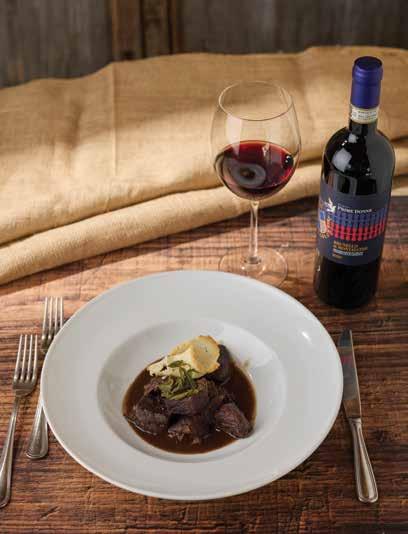
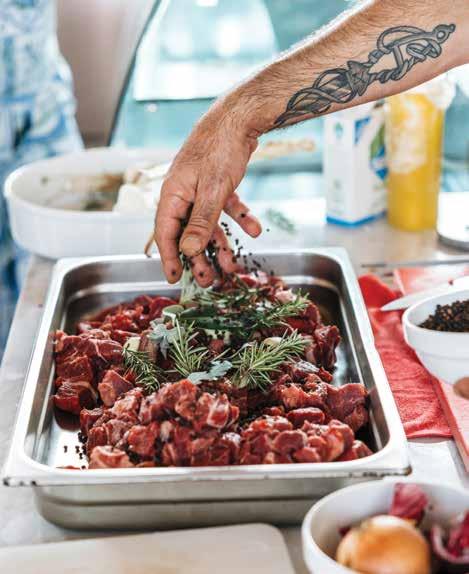
The meat course was a traditional slow-braised beef dish that is simple and delicious—the sauce is rich and thick, and the meat is fall-apart tender.
800 g beef chuck, cubed
2 tbsp olive oil
8 garlic cloves
1 small red onion, quartered
1 bottle of Chianti
1 tbsp tomato paste
1 tbsp whole black peppercorns
5 sprigs fresh rosemary
2 large bay leaves salt and pepper to taste
This dish can be braised in the oven at 325°F or simmered on the stove. Heat the olive oil on medium-high in a Dutch oven. Working in batches, sear the beef cubes on each side to get a nice char. Put all the seared beef into the Dutch oven with the rest of the ingredients, adding the wine last. If the meat isn’t covered by the wine, add water until it is. Bring to a simmer, then cover the dish and put it in the oven or reduce the heat to medium-low and simmer on the stovetop. Braise the peposo for 3 hours. After 2 hours, add more water if the liquid level is too low. The meat is done when it is fork-tender and falling apart. Serve with rice or mashed potatoes.



• FREE DELIVERY within city limits for orders over $250 (before taxes), including East St Paul and Headingley
• Delivery charge for orders under $250 (before taxes) is only $12
• NEXT DAY DELIVERY if you place your order by 6 pm
ways to order:
Text our Sommeliers at 204.400.0499 Call your favourite wine nerd at 204.948.9463
Email us at wine@joneswines.com
Order online at joneswines.com

The perfect gift for someone you love—and the perfect treat for
Two bottles, once a month. No guesswork required.
Each month, our Wine Experts choose two wines that are simply too good to ignore—bottles we love for their balance, character, and drinkability. You choose your tier:
Everyday Explorer
Two bottles between $20 and $30 per bottle, perfect for weeknights, dinners, and sharing.
Sommelier Select
Two bottles between $40 and $50 per bottle, for when you want something a little more serious in the glass.
Delivery or pick up available. Ask in-store what new selections we are pouring this month. To subscribe: email wine@joneswines.com or call us at 204.948.9463


The Menopause Practice is teaming up with Poise Publications to bring a wealth of menopause knowledge and experience to the pages of PAUSE magazine.
PAUSE magazine gathers Winnipeg’s menopause experts to create a community of learning, curiosity, and knowledge. Our diverse voices will include experts on hormone therapy, nutrition, sexuality, fitness, bone health, and mental health, as well as voices from you, our community.
PAUSE’s articles cut through the noise to bring you cutting edge-research grounded in evidenced-based science.
Are professional women between the ages of 40 and 75 your target demographic? Scan the QR code for the PAUSE media kit for sample pages, information on distribution, and special introductory ad pricing.

Want to talk about the magazine? Email publisher Lisa Muirhead at: lisa@poisepublications.com.


Join us for our ongoing series of wine and perimenopause and menopause information sessions hosted by Sommelier Jill Kwiatkoski and led by Dr. Denise Black, Gynecologist, MD, FRCSC. For more information, see the ad on page 51.
Perimenopause Plus:
Tuesday, March 3, 7:30 PM | Tickets: $65
Menopause Masterclass:
Wednesday, April 1, 7:30 PM | Tickets: $65
Get a guided tour of South African wines and styles from Paul and Shirley Martens, Winnipeggers who have made a second home in South Africa for over a decade. Discover unique styles from some truly amazing small producers.
• A curated lineup of regional wines
• A charcuterie board to balance and elevate your palate
• The ultimate treat for the wine lover in your life
Do you know all the grapes? Stuck in a Pinot Grigio and Cabernet rut? Our Sommeliers will guide you through new varieties with styles and flavours you have yet to experience. Snacks included!
• Guided flight of fun wines to explore
• Expert coaching from certified tasters
• Best for those with open minds and excited palates
Event Date: Thursday, March 12, 7:00 PM
Tickets: $90 per person (only 24 seats available)

Event Date: Thursday, April 30, 7:00 PM | Tickets: $100 per person (only 24 seats available)
Every sip you take, every pour you make, there’s a Message in a Bottle, and it says that Sting’s wines are now at Jones and Company. Don’t Stand So Close to Me—just stand close to the wine section.
Sting and Trudie Styler purchased Il Palagio in 1997. The Tuscan-based, organic-certified winery is now crafting some truly beautiful wines named after Sting’s most popular songs.
If you can’t make it to Tuscany to taste the wines (and hopefully get a glimpse of the famous leather pants), Jones & Co will be transporting its guests to the Tuscan Room to try all of the wines while playing Sting’s hits. (Despite our repeated requests, Sting will unfortunately not be in attendance.)
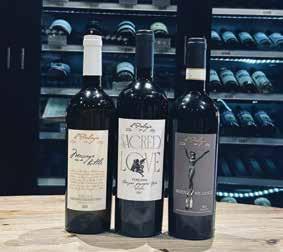
Don’t be So Lonely! Come taste through wines from Il Palagio and treat yourself to a Little Something Bring on the Night of great wine and snacks, you will be Walking on the Moon
• Sting and Police songs all night
• Flavourful small bites to pair with your pours
• A guided pun-filled tasting
Event Date: Friday, June 26, 7:00 PM | Tickets: $100 per person (only 24 seats available)
Northern Italy has a large number of unique grapes and beautiful dishes. Learn about this fog-kissed landscape and its rich history while we guide you through some of our favourite producers.
• Guided tasting of Piedmont reds, whites, and dessert wines
• Flavourful small bites to pair with your pours
• A great way to create a staycation!
Event Date: Friday, May 22, 7:00 PM
Tickets: $100 per person (only 24 seats available)
What better way to celebrate National Rosé Day than to have a patio party? Come sip and celebrate pink wines from around the world!
• An exciting mix of brand new and favourites rosés
• Tunes on the rooftop patio to set the summer vibes
• Grazing snacks to accompany each glass
Event Date: Friday, June 12, 7:00 PM
Tickets: $75 per person (only 40 spots available)

By Sylvia Jansen, DipWSET, CSW, Sommelier
That is not white hair on my head—that’s professional credibility. Yes, it is a sign of age: I might not want to see the sun rise after a long party, but I have nonetheless seen a great deal. I am not about to bungee jump off a bridge, but I have managed to survive other moments of questionable judgement.
Grape vines, like people, survive to a good old age with a bit of good luck, good health, and a good family. There is no legal definition, but “old vine” generally refers to vineyard plots where most vines are older than about 35 years. Broadly speaking, a vine produces well, quantity-wise, over the first couple of decades of life. At about 30 years, growth and production slow. The vine regulates itself in its environment, digging its roots deeper and resisting the effects of drought and other threats. This marks the period when the vine truly reflects its environment, and the fruit can become quite special and distinct. The combination of care, terroir, and age results in expressiveness, nuance, and interest. I am not saying that young vines cannot produce beautiful fruit: a couple of winners in the 1976 Judgment of Paris tasting were from very young vines. However, it is generally true that old vines offer something special.
For a vine to survive to old age, it needs to live past disease, regular wounds from pruning, and environmental hazards. It also needs to live past its greatest threat: humans. The ageing vine usually produces a smaller quantity of fruit, which needs to be justified by a higher price on the bottle. Human business judgement can (and often does) dictate a vine pull because of that higher price tag. Only when the people involved are committed to these old vines will they survive and become treasures.
Some of these treasures are hidden in plain sight. A 120-year-old vineyard plot of an ancient grape variety— Pinella—produces OP!, an elegant sparkling wine by Reassi from Colli Euganei, Italy. Diego Bonato says his
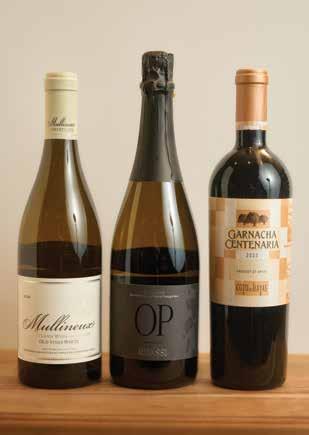
Mullineux 2024 Old Vines White Blend Swartland, South Africa ($59.99); Reassi 2019 OP! Zero Dosage Metodo Classico Veneto, Italy ($49.99); Aragonesas 2023 Centenaria Garnacha Campo de Borja, Spain ($31.99)
grandfather had a childhood memory of helping plant those vines in the early 1900s. In Spain’s Campo de Borja, Bodegas Aragonesas values the old by paying growers a premium for old vine fruit: the concentrated Centenaria Garnacha is from—you guessed it—100-year-old vines. On the back labels, the vine age is recorded in small print, in their languages of origin. With other wines, “old vine” might be more prominent. The Mullineaux Old Vines White leaves no guessing. In addition to the name, the wine is registered with the South African Old Vine Project. In Australia, Barossa producers highlight old age with their own Charter. But mostly, “old vine” is just another identifier on a label, or it is a side mention. And despite the fact that it is legally defined exactly nowhere, it is quite meaningful everywhere.
Opening and tasting an old-vine wine supports those who tend these gnarly, ancient, stingy plants. It celebrates a rich heritage, and incidentally, it means receiving the gift of those decades of experience in our glass.
So, here’s to you, for good health, good luck, a good family, and a good old age.