How Scan to CAD Conversion Services Transform Your Projects?
In today’s digital age, the ability to quickly and accurately convert paper-based drawings into digital formats is essential for architects, engineers, and designers alike. Scan to CAD conversion services bridge the gap between traditional drafting methods and modern computer-aided design (CAD) techniques. This blog post explores what scan to CAD conversion is, how it works, and why investing in professional conversion services can be a game-changer for your business.
What Is Scan to CAD Conversion?
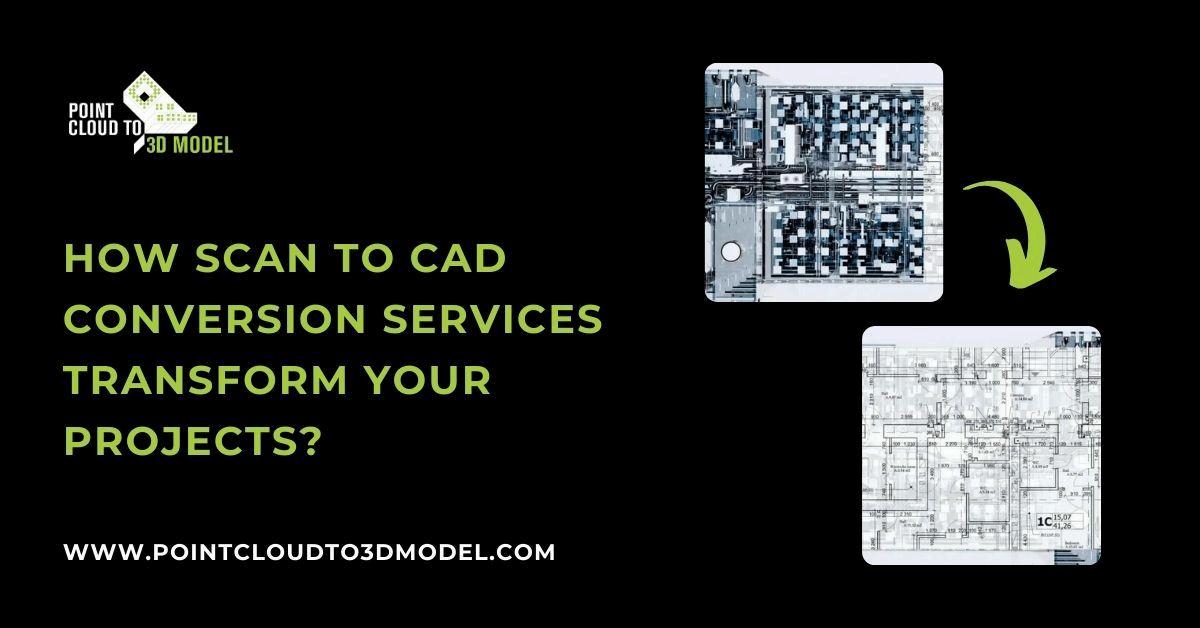
Scan to CAD conversion is the process of transforming scanned images—such as hand-drawn sketches, blueprints, or printed plans—into editable and scalable CAD files. Using specialized software and expert techniques, professionals can convert even complex drawings into formats like DWG or DXF This digital transformation not only preserves the integrity of the original drawing but also enables efficient editing, modification, and storage.
5 Benefits of Scan to CAD Conversion Services
Investing in professional scan to CAD conversion services offers numerous advantages:
1 Enhanced Accuracy and Precision
Manual redrafting of scanned documents can be error-prone and time-consuming. Professional conversion services ensure that every line, arc, and measurement is accurately captured. This precision is crucial in industries where exact dimensions can mean the difference between success and failure.
2 Improved Efficiency and Time Savings
Reworking paper-based designs into digital formats manually is labor-intensive. By outsourcing the conversion process to experts, you can significantly reduce turnaround times. This efficiency allows your team to focus on higher-level design tasks and project management, ultimately speeding up the overall workflow.
3 Cost-Effective Solutions
The reduction in manual labor not only cuts down on time but also reduces costs. With digital CAD files at your disposal, you eliminate the need for repeated redrafting and costly revisions. Additionally, digital files are easier to update and modify, ensuring that your designs remain current without incurring substantial additional expenses.
4 Easy Collaboration and Communication
Digital CAD files facilitate seamless collaboration among teams. Multiple stakeholders, including architects, engineers, and contractors, can review and modify designs simultaneously This collaborative approach minimizes miscommunication and ensures that everyone is working with the most current version of a design.
5 Preservation of Valuable Data
Paper documents are vulnerable to wear and tear, loss, or damage over time. Converting them into digital CAD formats ensures that your valuable designs are preserved indefinitely. Digital storage not only safeguards your data but also simplifies retrieval, sharing, and backup processes.
How Does Scan to CAD Conversion Work?
The conversion process typically involves several key steps:
1. Scanning the Original Document
The first step is to scan the physical drawing using high-resolution scanners. This ensures that even the smallest details of the original document are captured. High-quality scans form the foundation for a successful conversion, so attention to detail at this stage is critical.
2. Image Cleaning and Preprocessing
Once the drawing is scanned, the image is processed to remove any unwanted artifacts, such as smudges or faded lines. This step is essential for ensuring that the conversion software can accurately interpret the drawing. Preprocessing may involve adjusting brightness, contrast, and resolution to optimize the image for conversion.
3. Vectorization
During vectorization, the cleaned image is converted into a digital format composed of lines and curves rather than pixels. Specialized software identifies the geometric shapes in the drawing and translates them into vector data. This step is fundamental to creating a file that can be easily edited in CAD programs.
4. Manual Correction and Verification
Even with advanced software, some drawings may require manual correction to ensure complete accuracy. Skilled technicians review the converted file, compare it to the original scan, and make necessary adjustments. This human touch guarantees that the final CAD file meets industry standards and client specifications.
5. Delivery of the Final CAD File
The final step involves delivering the CAD file in the required format, such as DWG or DXF Clients can then integrate these files into their design workflows, making further modifications or directly using them for production.
Why Invest in Professional Scan to CAD Conversion Services?
While there are numerous software tools available for DIY conversions, professional scan to CAD conversion services offer distinct advantages:
● Expertise: Trained professionals have years of experience interpreting and converting complex drawings, ensuring accuracy and reliability
● Quality Assurance: Professional services implement stringent quality control measures, meaning the final product meets all necessary industry standards.
● Time Efficiency: With their expertise and advanced tools, professionals can complete conversions faster than in-house teams attempting to learn new software.
● Customization: Professional service providers can tailor their approach to meet the unique requirements of your project, ensuring that specific details are accurately captured and represented.
Applications Across Industries
Scan to CAD conversion services are indispensable in various fields. For architects, digitizing historical blueprints or hand-drawn designs facilitates renovations and restorations. In the engineering world, converting paper-based schematics into digital CAD files can streamline the process of reverse engineering and product development. Similarly, the construction industry benefits from having accurate digital representations of building plans, reducing errors during construction and improving project management.
Conclusion
In an increasingly digital world, scan to CAD conversion services are more than just a convenience—they are a vital tool for modernizing your workflow. By transforming paper-based drawings into precise, editable CAD files, these services not only enhance efficiency and accuracy but also help preserve valuable data for future use. Whether you are an architect, engineer, or designer, embracing scan to CAD conversion can significantly improve collaboration, reduce costs, and ultimately lead to better project outcomes.
By leveraging the expertise of professional conversion services, you can unlock the full potential of your designs and keep your projects ahead of the competition. Embrace the digital transformation today and discover how scan to CAD conversion services can streamline your processes and enhance your creative capabilities.
Also read: Point Cloud to BIM Conversion Services