Schools & Colleges Outreach Faculty of Health healthoutreach@plymouth.ac.uk
University of Plymouth Drake Circus Plymouth Devon PL4 8AA United Kingdom
Follow us @PlymUniApply
Podiatry Edition
SUBJECT
It’s never too early to start thinking about what you would like to do after school or college, or if you are thinking of a career move! At Plymouth, we know that choosing a university and course is a big decision. While you may have an idea of a profession, career or industry that you’re aspiring towards, if you’re unsure of exactly what you want to do or are keen to find out more – this is where our handy subject guide comes in.
Meet some of this issue’s contributors: Visit us at an Open Day
tells us about her charity work with homelessness charity Forgotten
EXPLORE YOUR FUTURE HOME
Start exploring –take a virtual tour
FEATURES:
P. 4 10 reasons to Study at Plymouth
P. 8 Stepping into the course with Lucy Gregory
P. 10 Where will your degree take you?
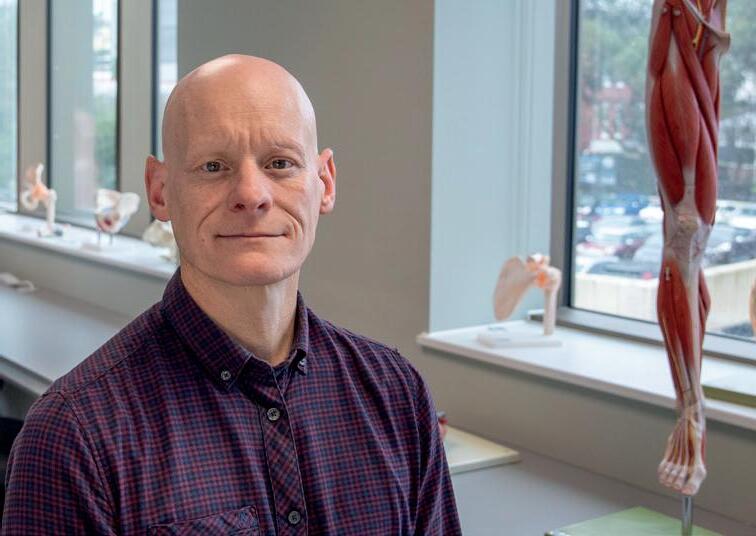
P. 12 Academic Lead Phil Hendy discusses his experiences in podiatry
P. 16 The power of placements
P. 22 Changing careers with Rob Lowe
P. 18 Podiatry myths and misconceptions
P. 20 Forgotten Feet
P. 24 InterCity Place
When it comes to finding out if university feels right for you, nothing compares to an open day. Talk to current students and quiz lecturers about your course. You can register to attend here: plymouth.ac.uk/open-days
Our virtual tour allows you to experience firsthand what it is like to be on campus and explore the environments and facilities that inspire and shape our learning every day. You can take a virtual tour here: virtual.plymouth.ac.uk
P. 26 PIHC – the Plymouth Integrative Health and Social Care Education Centre
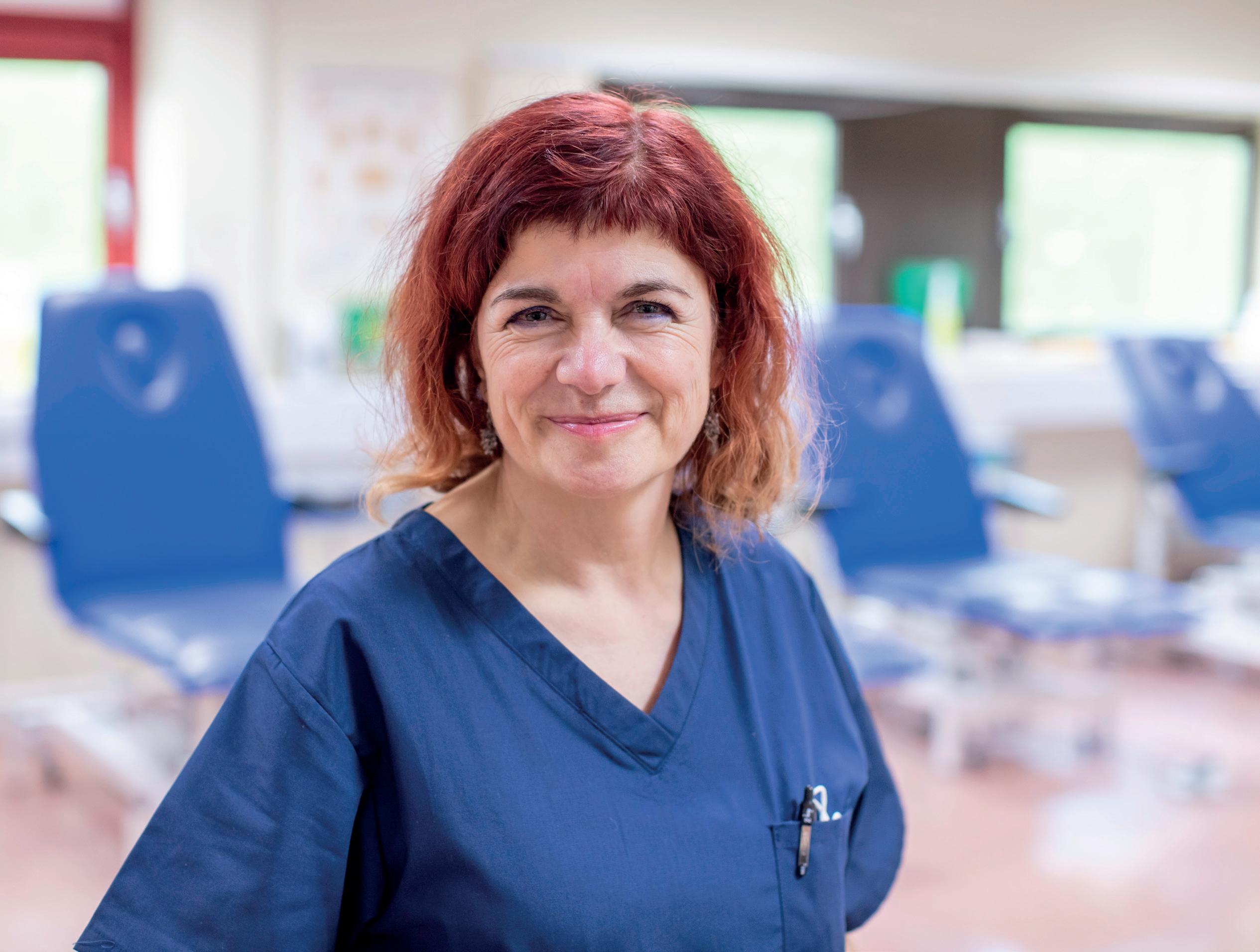
Jo Podiatry lecturer Jo Bower
Feet. P. 20
Lucy Podiatry student Lucy Gregory tells us about her experiences on the course so far! P. 8
Phil Academic Lead Phil Hendy breaks down the myths of podiatry. P. 12
10 REASONS TO STUDY AT PLYMOUTH
“One thing I love with podiatry is the problem-solving, working out why a patient is experiencing a particular problem, which can often be due to seemingly innocuous occurrence, but a slight tweak to behaviour, activity or footwear can make a huge difference and potentially solve their problem.”
Claire, Podiatry graduate
“Studying at the University helped me to not only obtain the knowledge and hands-on experience for my profession, but also to gain valuable personal and professional skills that have allowed me to develop away from the field of podiatry. I met some great colleagues on the course who to this day still offer insight and advice.”
Aaron, Podiatry graduate
“Studying at Plymouth has been invaluable in allowing me to get to where I am now in my career. Both the lecturers and the other students on the course gave, and still give, a great support base.”
Jack, Podiatry graduate
1. COMMUNITY
We have a strong podiatry identity with solid relationships with podiatry and podiatric care agencies and providers across the entire South West peninsula. We pride ourselves on an inclusive learning community involving students, service users, carers, practitioners and staff into the continued development of our courses, ensuring that our graduates meet the needs of the future workforce.
2. PLACEMENTS
You will gain invaluable, real-life experience with placements across all years of your degree. Giving you the opportunities to apply your knowledge and skills, we have a wealth of diverse placements across the South West. More information on placements is provided on pages 16–17.
3. SUPPORT
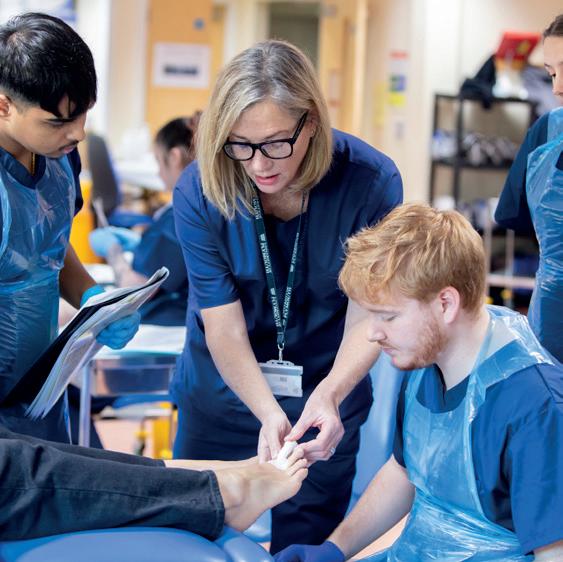
We pride ourselves on our friendly and supportive learning environment, and are driven by our dedication to student-centred learning. Throughout your time here, you have a personal tutor who supports you individually and has an open-door policy so you can meet them whenever you need to. You also have access to a wealth of support and wellbeing services through the Student Hub.
4. KNOWLEDGE
Our staff are active practitioners and researchers; their expertise feeding directly into our curriculum and what you learn. We have regular external speakers and associates, ensuring our teaching is current and relevant, enabling you to develop as a confident practitioner.
6. CULTURE
Plymouth is a stunning seaside location with a rich cultural heritage. Our students are given the unique opportunity of really immersing themselves in the local culture, through placement experiences and guest
lectures. The South West has a rich and diverse population, which offers varied cultural experiences and opportunities to practise skills learnt over the duration of the course.
5. LEARNING WITH OTHER HEALTHCARE PROFESSIONS
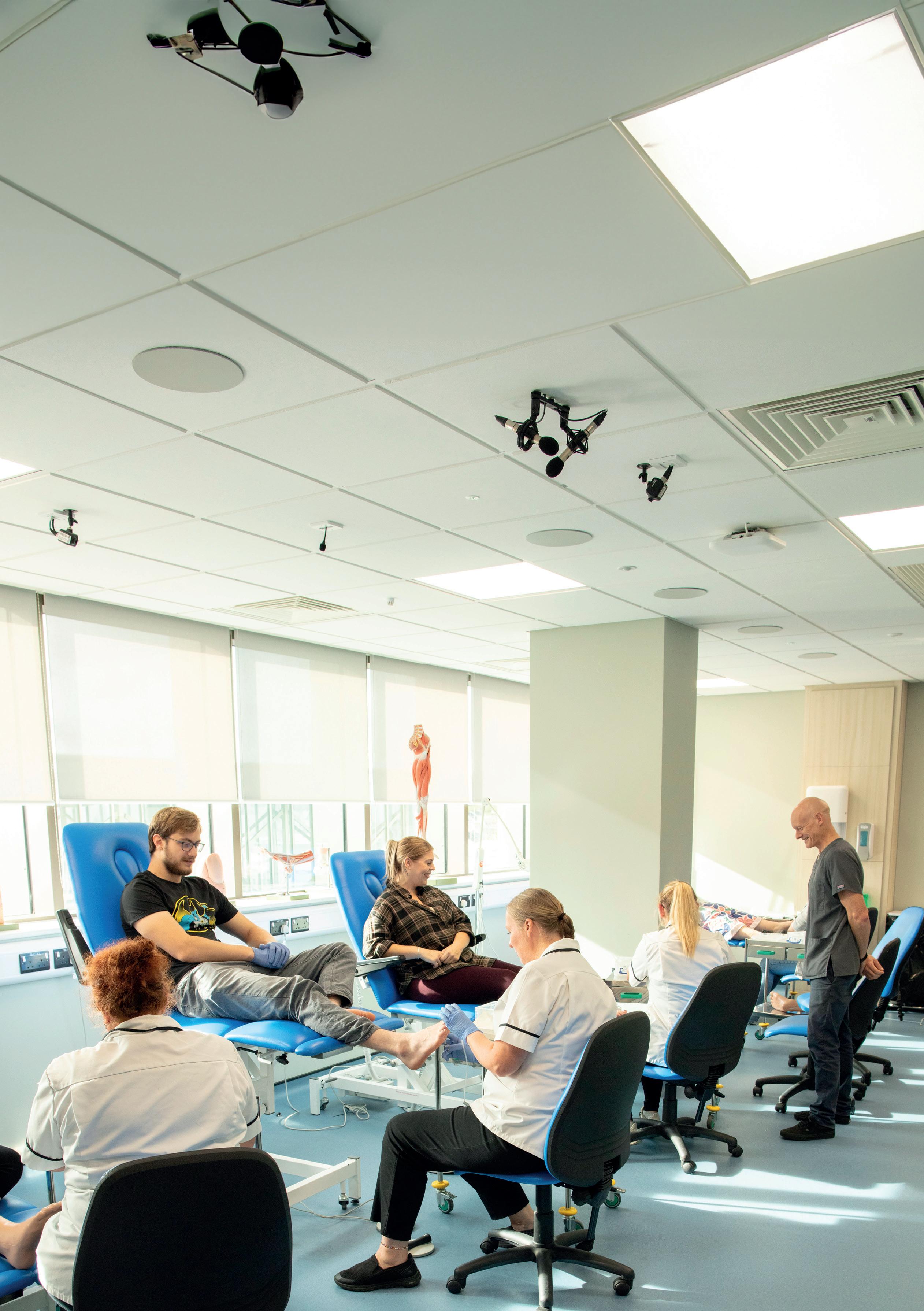
Our team has expertise spanning the whole range of podiatry settings, so you will have a grounding in the full range of podiatry roles. Whatever your future plans, we will give you the skills to build your podiatry career through practical placement-based learning, and classroom-based lectures and study groups. Our department is part of an interdisciplinary school, so to prepare for varied careers, you will learn alongside students from other allied professions, and in our new purpose-designed learning spaces at InterCity Place.
7. CAREER OPPORTUNITIES
Following successful completion of the BSc course, the skills which you will acquire open up a variety of employment options to you. Your skills will be highly sought after in roles such as NHS podiatrist, public health, health promotion and occupational health, research and development and education.
9. TEAMWORK WITH THE PLYMOUTH INTEGRATED HEALTH AND SOCIAL CARE EDUCATION CENTRE (PIHC)
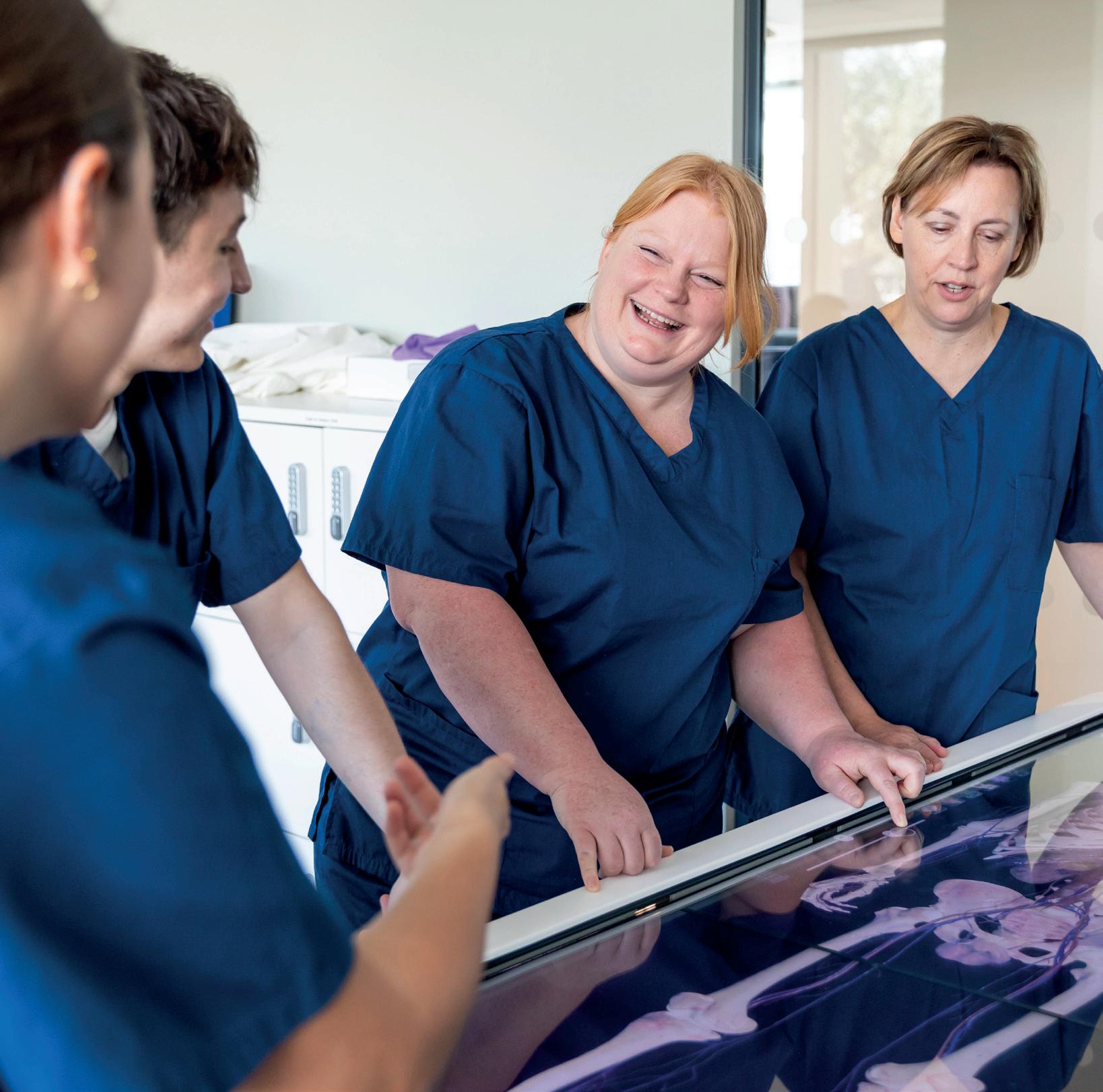
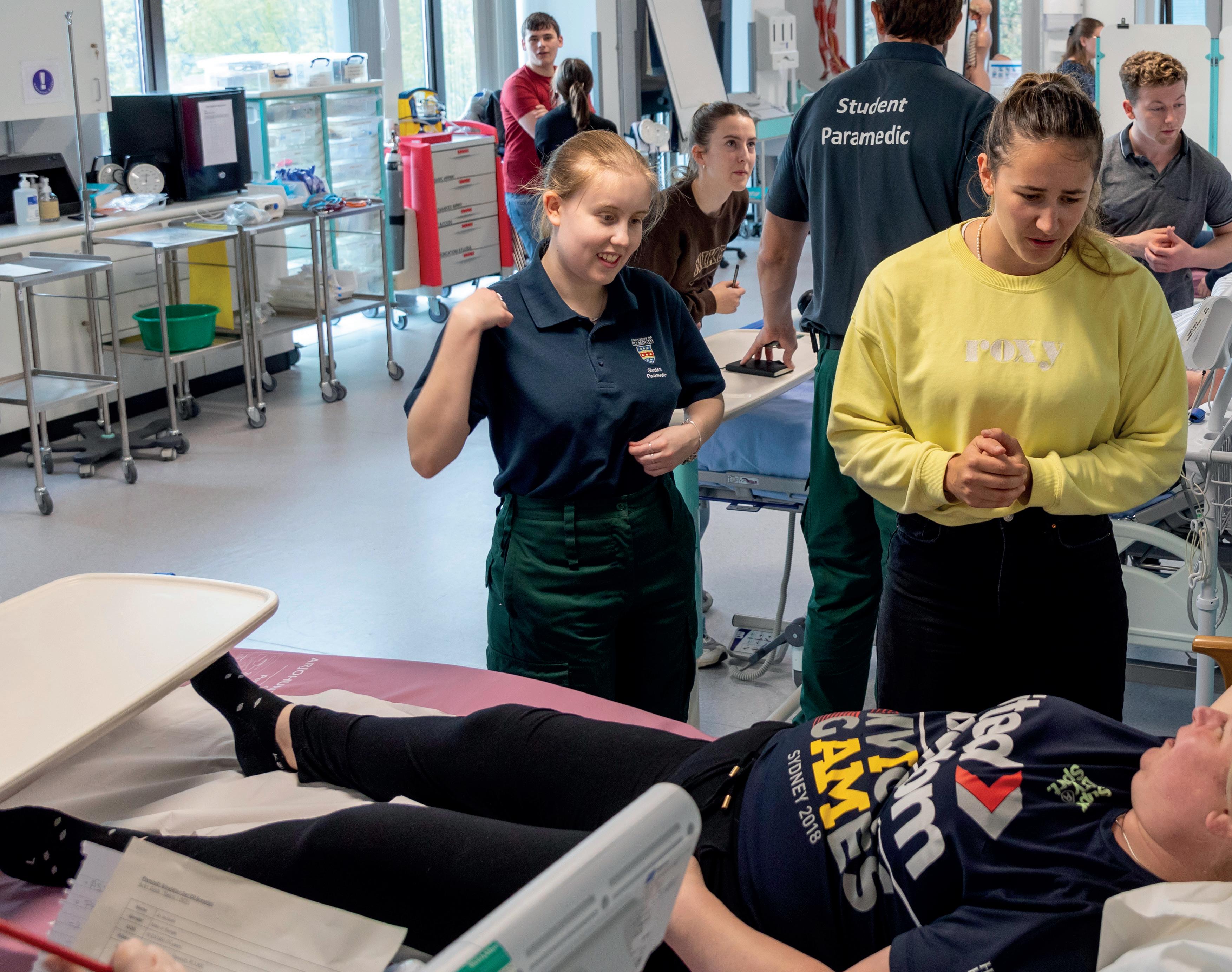
As one of our Faculty of Health students, you’ll have the chance to benefit from important teamwork, where students across different healthcare courses come together and work as a team. From emergency simulations involving multiple professions to group projects, you are given opportunities to learn with, from and about each other. See page 26 for more about PIHC.
8. FACILITIES
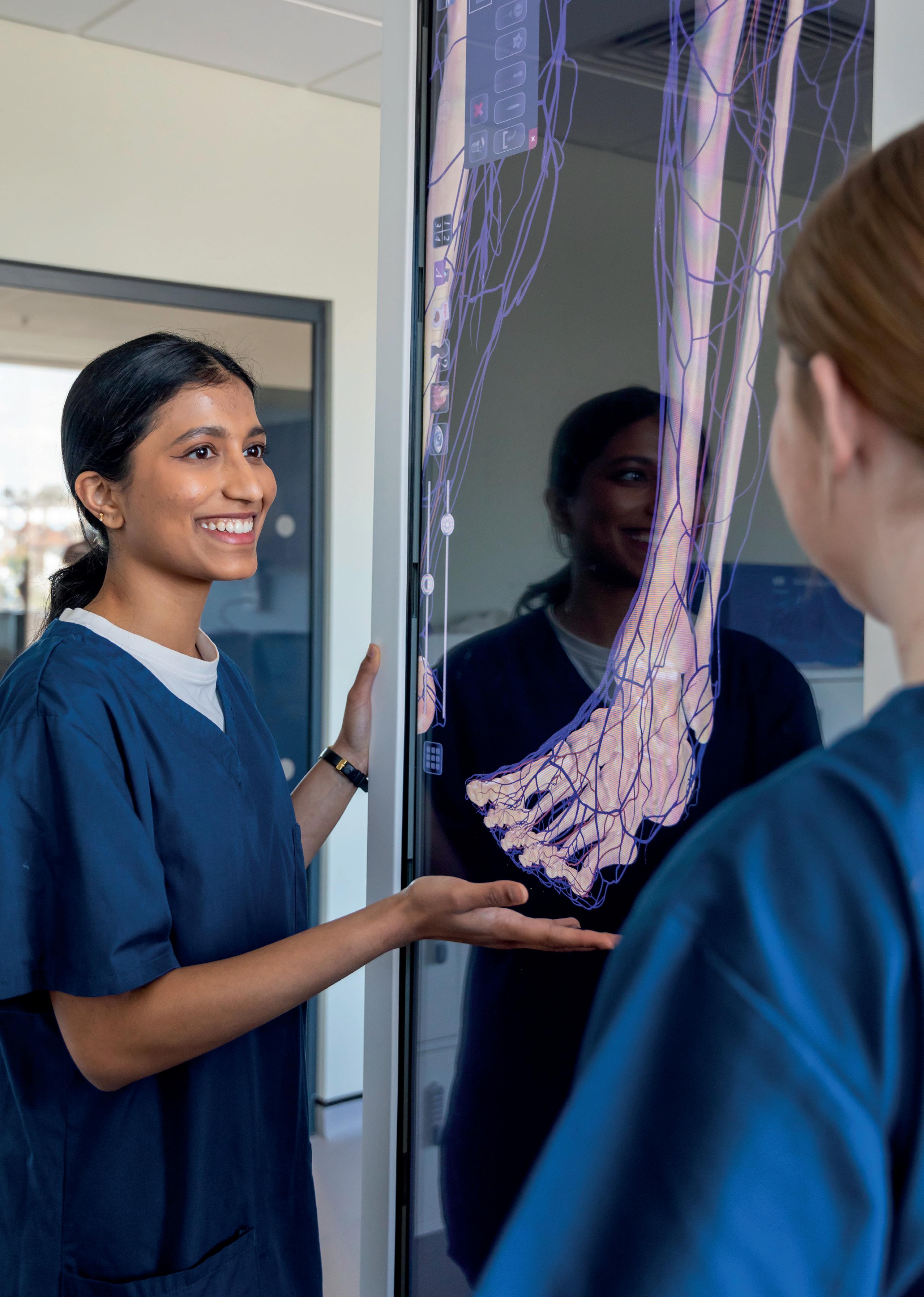
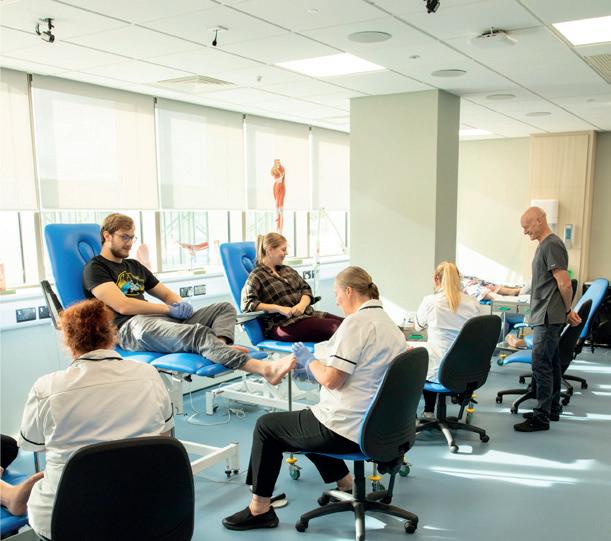
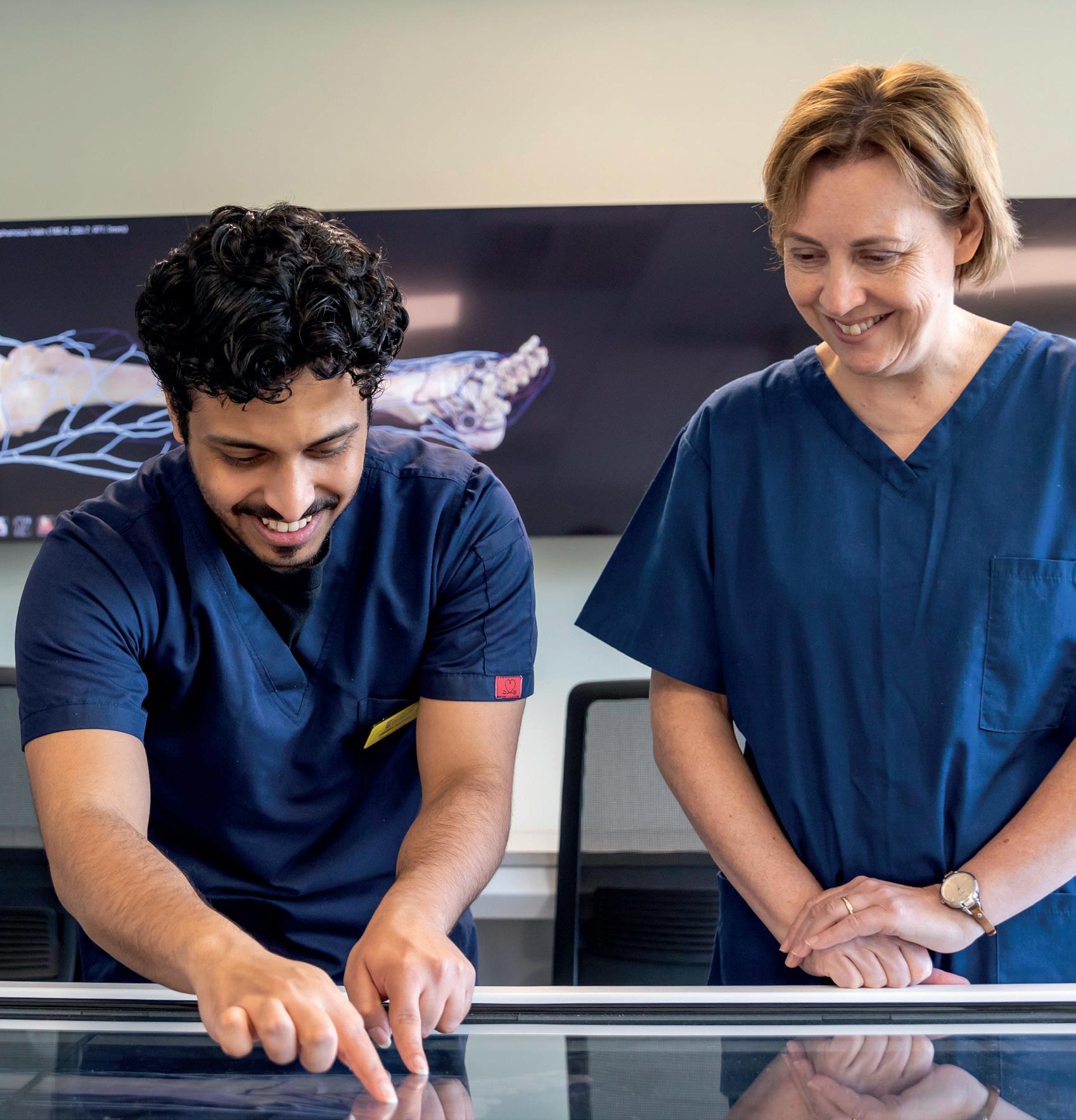
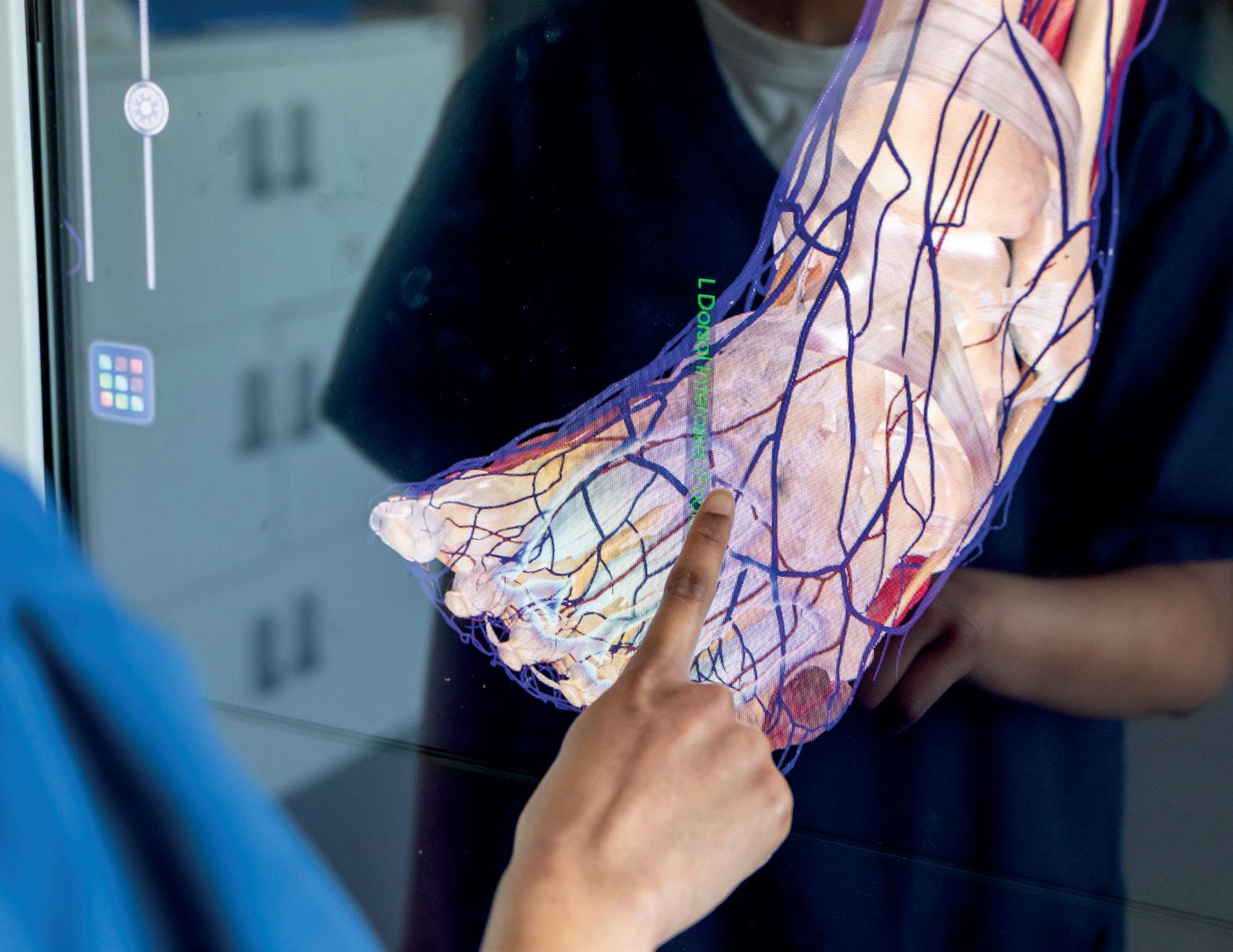
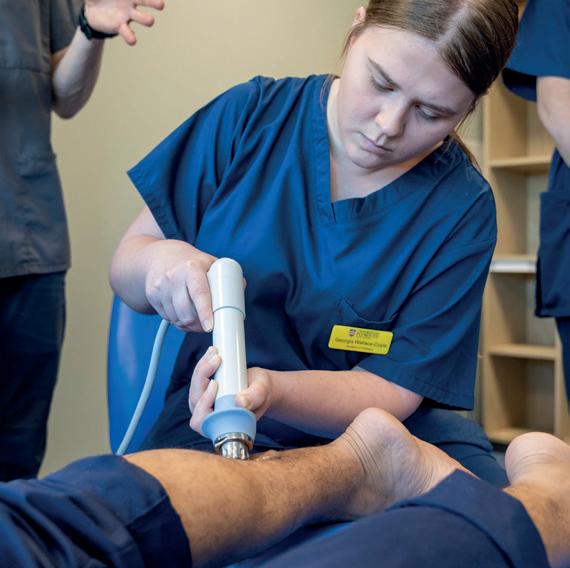
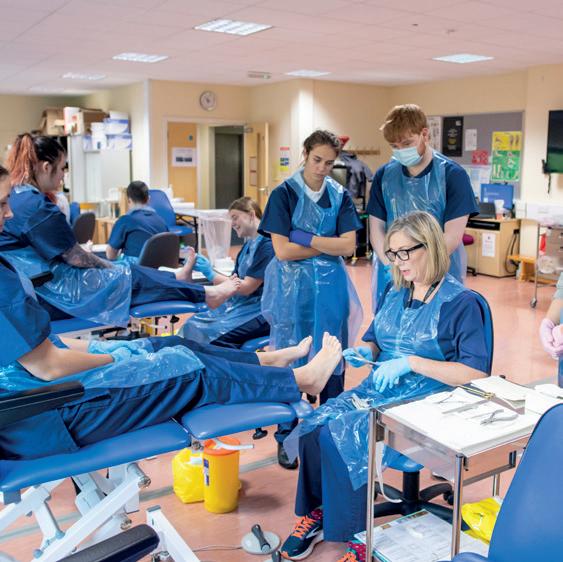
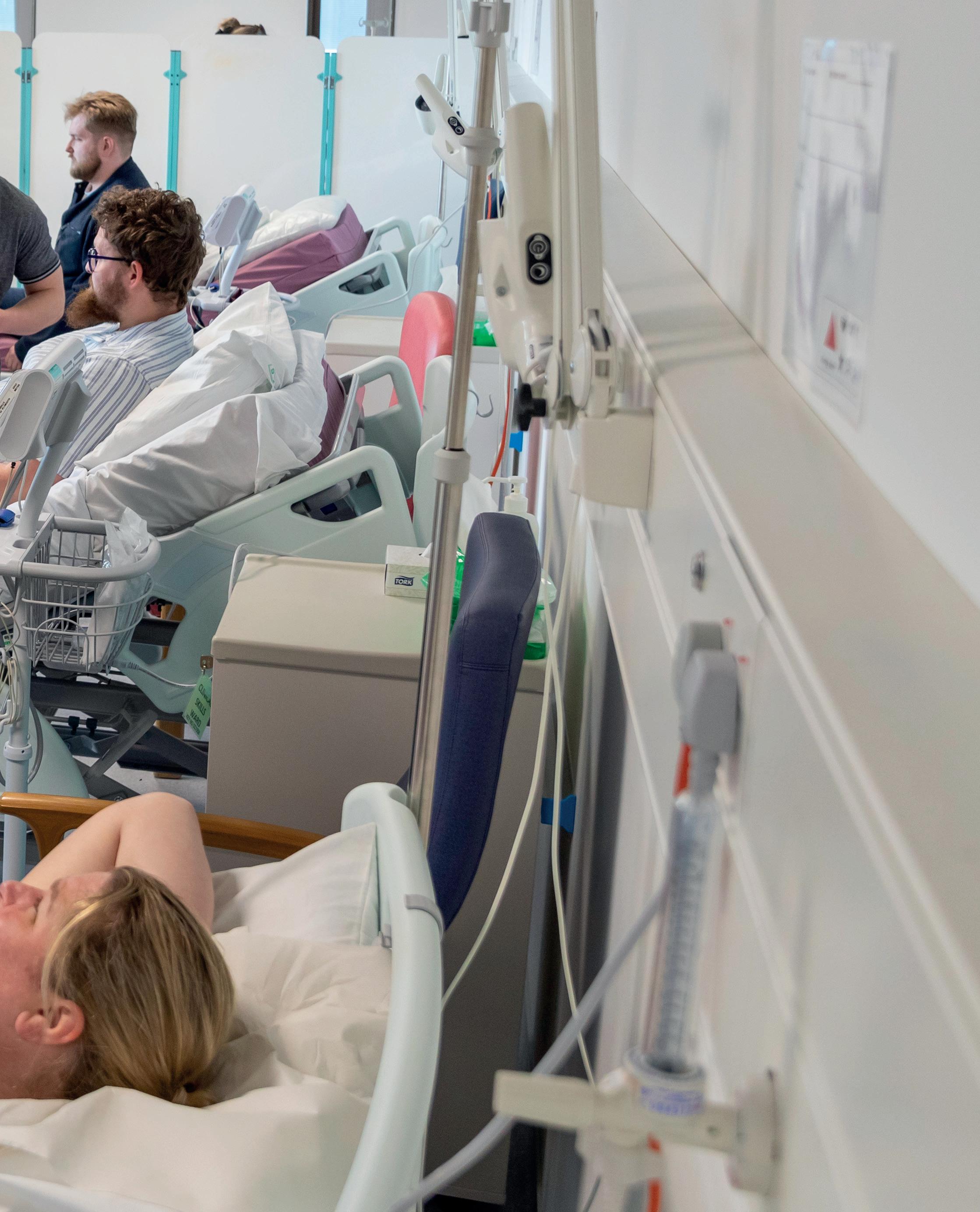
You’ll have opportunities to study in our brand-new building, InterCity Place, using state-of-the-art clinical facilities. InterCity Place has fullyequipped learning suites featuring a range of anatomical models, and an array of equipment used in all aspects of the working life of a podiatrist, to help you become fully practised in your profession. You also have access to all of our campus facilities such as the Charles Seale-Hayne Library, open 24/7 for all students, cafes and sports opportunities.
10. BECOME A QUALIFIED PODIATRIST
Our degree is accredited by the Royal College of Podiatry and following successful completion of the course, leads to Health and Care Professions Council (HCPC) registration. Employability is very high, and our podiatrists are sought after worldwide.
STEPPING INTO THE COURSE WITH
LUCY GREGORY
Podiatry student Lucy talks about her experience on the COURSE
I HAVE FELT REALLY SUPPORTED DURING MY TIME ON THE COURSE
I initially wanted to become a primary school teacher, but unfortunately that didn’t work out for me, so I was a bit lost as to what I wanted to do. I work in a supermarket, and while I was speaking to a colleague, she mentioned she’d been to see her podiatrist, and that was the first time I’d ever heard of the profession. I went home and researched the role, and I thought it was something I’d really enjoy. I swapped work experience to a private podiatry clinic, and I was instantly hooked. Everything just felt right there. I loved how friendly it was, and I very much enjoyed interacting with all the different patients. It was just lovely.
I decided to undertake a full-time, threeyear BSc programme after speaking with Phil Hendy, the course lead, over a phone call which helped me weigh up the pros and cons of doing a degree apprenticeship versus the full-time degree. After seeing first-hand what Plymouth had to offer, I knew I made the right decision. Every one of my peers is so encouraging and friendly. The lecturers are always there when you need support too. There is a familial feeling to being at the University.
LOTS OF PEOPLE THINK PODIATRY IS JUST CUTTING TOENAILS, BUT IT’S SO MUCH MORE THAN THIS
I do think I’d like to go down the route of private practice eventually, having got my initial experience in private practice. However, coming on to placements made me realise how different NHS podiatry is and has made me want to work for the NHS when I graduate. Watching the multidisciplinary teams work has made me want to try public healthcare due to the sheer variety you can experience daily, as well as the support, different perspectives, and knowledge you can gain from other practitioners from your own profession as well as other professions.
I FIND THE COURSE TO BE A GOOD BALANCE BETWEEN PLACEMENT AND THEORY
I have absolutely loved my placements, and I can’t wait to get stuck into the next one! In our first placement, me and my friend were given the opportunity to go to Bath and assist with nail surgery there. We didn’t help with the actual surgery itself, being very early on in the course, but we got to assist by passing the swabs and things like that.
I love that when we’re not on placement, we are afforded the time to pursue other opportunities – for example, this weekend I’m going to Torbay Hospital to sit in on an MSK (musculoskeletal) clinic in order to further my own understanding of that area in my own time.
In our theory sessions we also get guest speakers, for example recently we had a call with a podiatric surgeon, and another time we had three speakers come and talk to us about how podiatry ties in with sports medicine.
I definitely feel like the course is preparing me to enter the workforce as a trained podiatrist. All of our lecturers have handson experience, so if we have any questions whatsoever, they are always happy to help. Some are even still practising, so they are able to draw from both past and current experiences when they are teaching.
YOU CAN’T DO MUCH WITHOUT HEALTHY FEET SO YOU WILL ALWAYS BE IN DEMAND
If you are considering applying for Podiatry, I would say definitely do it – come along to an open day to speak with the lecturers about the course.
There is a national shortage of podiatrists, and I still don’t understand why – it’s a 9 to 5 job, and if you go private, you can even choose your own hours. It will be a very rewarding career as you are helping people with their foot issues. The profession is also recognised in many countries such as Australia and New Zealand, so if you are interested in working abroad, you can take your degree with you!
WHERE WILL YOUR DEGREE TAKE YOU?
Once you graduate, you can become a qualified podiatrist and register with the Health and Care Professions Council (HCPC). We aim to empower you to follow your passions and create a future-ready, highly skilled workforce for podiatry.
DEVELOPING EMPLOYABILITY
At the University, we have excellent working relationships with local NHS trusts, offering potential for both hospital or community posts and private podiatry clinics. We have opportunities for careers fairs in your final year, where you get to meet employers and see first-hand the employment possibilities available to you and gain inciteful advice from fellow podiatrists. Many of our students gain offers of work following successful placements in the third year.
CAREER OPTIONS
• NHS podiatrist hospital or community setting
• Private practice
• Home visits
• Industry such as occupational health education
• Research and development
• Orthotic laboratories
• Trade
• Health promotion
“Being part of the University of Plymouth family has really kept me focused, dedicated and devoted. With the support and guidance of my lecturers, I graduated with a first class honours degree, proving that the 'language barrier' was never a barrier!”
Fani, Podiatry graduate
ACADEMIC LEAD
PHIL HENDY
DISCUSSES HIS EXPERIENCES IN PODIATRY
WHAT MADE YOU WANT TO BECOME A PODIATRIST?
Podiatry wasn’t a career or profession I had aspirations of from a young age. I had completed a degree before I studied to become a podiatrist. After I finished my first degree, I took some time out to travel the world, which I did for about five years. It was upon my return to the UK, that I started looking at what my options were. I contacted various universities, which is how I found out about the BSc (Hons) Podiatry degree with the University of Plymouth. I spoke with the Admissions Tutor at the time, and I was sold on the varied scope of practice of a podiatrist and the high employment rates postgraduation, which remains the same today.
WHAT DOES A DAY IN THE LIFE OF A PODIATRIST LOOK LIKE?
That is a difficult question to answer! Most of my work was done within the NHS, although I did dip my toe (see what I did there?!) into private practice as well. Irrespective of NHS or private practice, you are still dealing with people who have lower limb pathologies. The most rewarding part of the job from my perspective, is helping people who are in pain, reduce their pain levels, or eliminate it completely. Nothing beats the feeling of helping your patients improve their quality of life. We deal with so many different clinical presentations, from skin and nail pathology to systemic conditions, neurological disorders, sports injuries and minor surgery cases. Not forgetting the complexities of dealing with patients who have
challenging lives for a number of different reasons. Podiatrists within the NHS generally don't work weekends or shift patterns. A podiatrist working within private practice can be more flexible in their work to suit the needs of their business.
CAN YOU TELL US ABOUT A TIME YOU FELT YOU REALLY MADE A DIFFERENCE AS A PODIATRIST?
I remember working in a hospital clinic on a Friday afternoon (things always seemed to happen on a Friday afternoon!). It wasn’t long after I had started working as a newly qualified podiatrist in the NHS. A patient came into clinic for a routine appointment. The patient had diabetes and profound lower limb neuropathy (loss of feeling). During the consultation they reported an
"The most rewarding part of the job from my perspective, is helping people who are in pain, reduce their pain levels, or eliminate it completely. Nothing beats the feeling of helping your patients improve their quality of life."
odd pain in their foot, which is unusual for someone with profound neuropathy. Considering their medical history, this started to ring some alarm bells in my head. Following further examination, I diagnosed a suspected Charcot foot (a very serious condition that if missed or not managed correctly could leave the patient with a lifelong lower limb
deformity). I managed to get the patient in for an x-ray and my initial diagnosis was confirmed. Working in collaboration with the multidisciplinary team, we were able to put a suitable care plan in place for the patient. When I got home from work that afternoon and reflected upon my day, I felt really lucky that I had dealt with the patient in the right way – a testament to the training I had received during my time at university and the fantastic clinical educators that helped with my clinical training. That experience gave me real boost to my confidence and clinical abilities.
DO YOU HAVE ANY ADVICE FOR AN ASPIRING PODIATRIST?
If you are looking for a rewarding career where you can have a real impact on people’s quality of life, podiatry may
be just what you are looking for. I have thoroughly enjoyed my career since graduating with my podiatry degree. The possibilities within the profession are vast, with great job opportunities in the NHS, Ministry of Defence, private practice and abroad. I’ve met some great people along the way. I wouldn’t hesitate in recommending it to anyone.
Yes, podiatrists do cut toenails, but we do a whole lot more than that!
THE POWER OF PLACEMENTS
Placement provides a rich learning experience allowing students to develop clinical skills and knowledge.
Placement learning is an integral part of the experience of training to become a podiatrist.
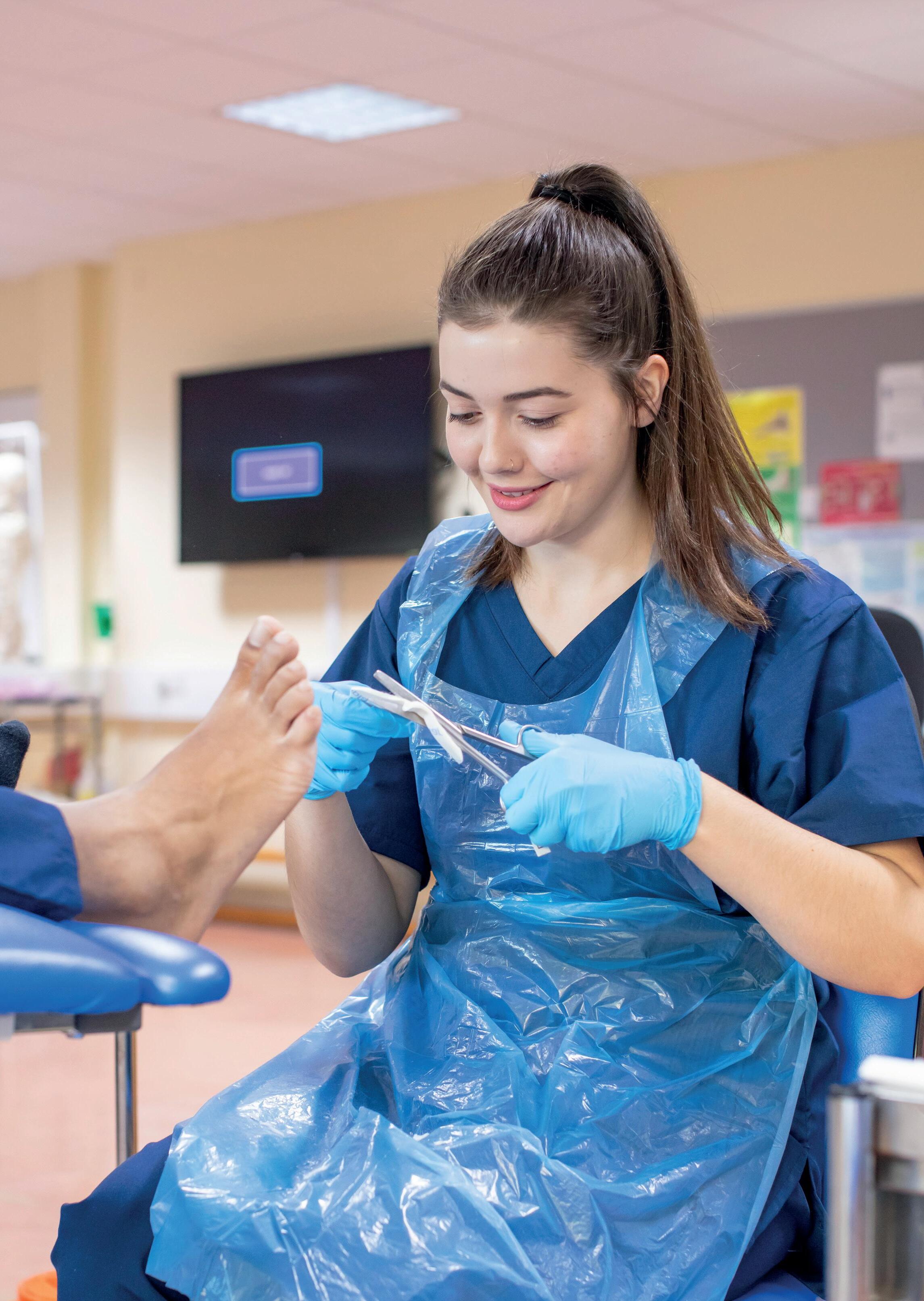
Your placements have two blocks in the first year – four weeks and three weeks, a five-week block in the second year, and two blocks in the third year – one of three weeks and the other of five weeks.
The placements usually take place in the South West (Devon, Cornwall, Somerset, Dorset, Gloucestershire and Wiltshire).
The experience you gain will be in a range of different settings:
• community clinics
• acute hospital settings
• patients’ own homes
• GP surgeries.
For the short duration of your placements, you may need to relocate to get the most out of your experience. Students are invited to put forward their three preferred placement locations, and the placement team will aim to allocate each student a preferred placement.
It is recommended that you select different placement locations to increase experience of different ways of working.
Please note: additional travel/ accommodation costs may be incurred during your placement. Advice on financial support available for healthcare students on placement can be obtained from the NHS Business Services Authority website.
YEAR 1
Four-week placement
You'll build confidence in communicating with patients and gain an awareness of the diverse role of the podiatrist, and start to build you clinical skills.
Three-week placement
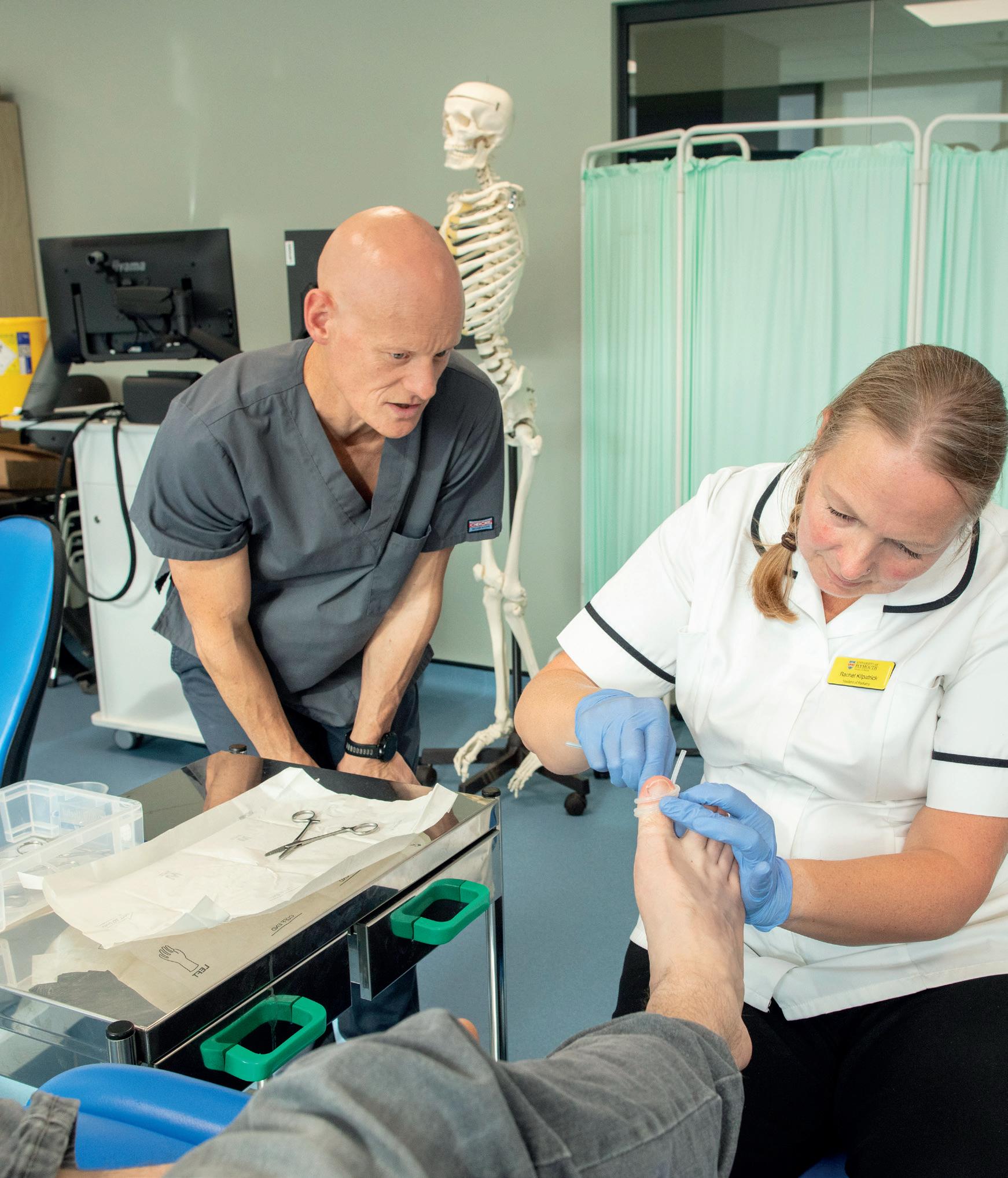
You’ll continue to build on your communication skills with patients, alongside the wider multidisciplinary team. There will be a focus on interprofessional working and developing key skills and attributes of a professional. You will continue to develop your assessment and diagnostic skills and clinical skills, including scalpel debridement.
YEAR 2
Five-week placement
The placement focus will be on musculoskeletal podiatry and increasing your confidence in history taking, assessment and treatment planning for patients with musculoskeletal problems. You will also have the opportunity to continue consolidating your clinical skills, including advising patients on how to safely manage foot conditions.
YEAR 3
Three-week placement
The placement focus will be on developing your skills in delivering local anaesthesia and performing minor surgery, in particular nail surgery to manage ingrowing toenails and other painful nail conditions.
Five-week placement
You’ll become competent in translating theory into practice and demonstrate the range of skills needed to work as a newly qualified podiatrist. The placement focus will be around managing the complex patient, where you’ll utilise a range of clinical skills including motivational interviewing to optimise outcomes for patients. You’ll work with a range of clinical specialities, such as diabetes, vascular, renal, dermatology and rheumatology.
“Placements were an excellent way to get experience in clinical situations, allowing me to really develop my clinical skills and knowledge. Being able to work in a number of different trusts also meant that I got to see lots of different types of practice and observe different ideas, which I was then able to learn from and use myself when I started working.”
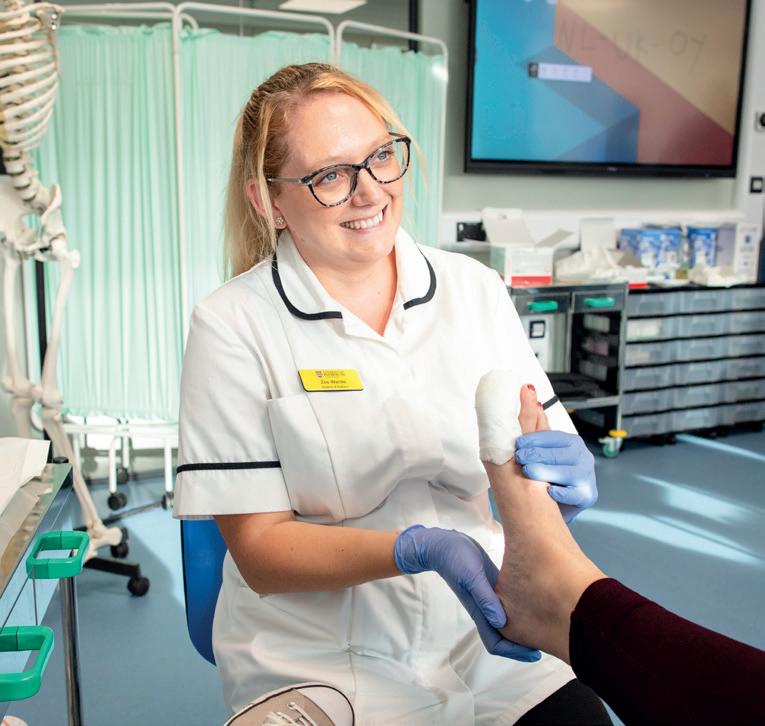
Zoe, Podiatry graduate
PODIATRY MYTHS AND MISCONCEPTIONS
1. PODIATRISTS JUST LOOK AFTER FEET
Podiatrists actually deal with prevention, diagnosis, treatment and rehabilitation of conditions of the feet and lower limbs. Podiatrists might assess/treat conditions including sprained ankles and chronic knee pain. A podiatrist cares for the feet, ankles and lower limbs. They are an expert in the structure, function and health of these parts of the body.
A podiatrist’s patients can range from babies to older people. They specialise in helping patients with high-risk, long-term conditions, particularly diabetes, rheumatoid arthritis and peripheral arterial disease. They also treat osteoarthritis, dermatological and neurological disorders, amongst others.
Podiatrists often work in teams with other healthcare professionals. They liaise between GP surgeries, patients’ homes, care homes, A&E departments and hospitals to make sure patients get the best care wherever they are.
Podiatrists can prescribe medicines, which used to be something only doctors could do. There’s a lot more to podiatry than many people realise. Most podiatrists start their professional life working in general clinics. As their career progresses and their clinical skills develop, many identify areas of practice that really interest them and so they steer their career in that direction.
Maybe one of these areas of clinical practice would interest you:
• Diabetes
• Wound care
• Paediatric biomechanics
• Sports injuries
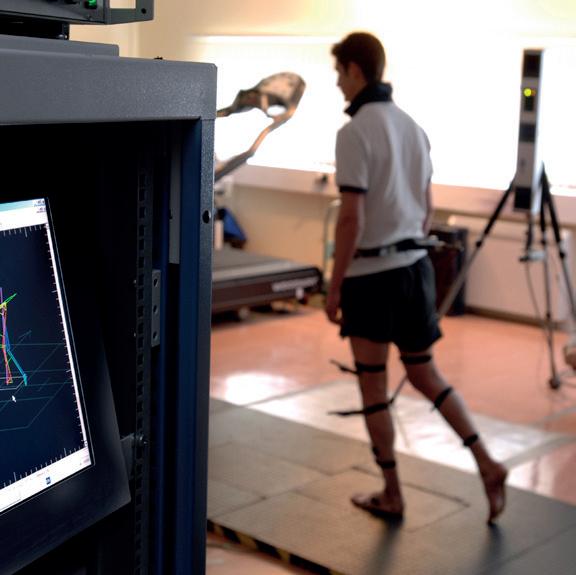
• Gait and pressure analysis
• Rheumatology
• Orthotic manufacture
• Nail surgery
• Rehabilitation.
2. ONCE YOU QUALIFY AS A PODIATRIST, YOU ARE STUCK IN THE SAME JOB FOR THE WHOLE OF YOUR CAREER
One of the great benefits of podiatry is the flexible and varied career opportunities. A podiatry degree is a golden ticket that can lead to a wide range of roles and a lifetime of opportunities!
As a qualified podiatrist the following are all possible:
• NHS employee working as a hospital or community clinician or in a management role
• Business owner running a private practice
• Medical sales representative
• Lecturer or researcher working in a university
• Self-employed locum working in private practices and private hospitals
• Clinician working overseas
• Representative or technician working with one of the associated trade organisations
• NHS consultant podiatrist
• Specialist practitioner working in podiatric surgery.
Many practitioners work in a combination of these different roles to give them greater job satisfaction and flexible working hours to suit their home life!
Another great benefit of being a podiatrist is that many of the roles provide very clear career progression. For example, the following shows the structure of NHS Podiatry and a potential career path. This structure is also used in a number of other clinical working environments:
• Entry level Podiatrist
• Specialist Podiatrist
• Team Leader, Advanced Podiatrist
• Specialist Registrar in Podiatric Surgery
• Consultant Podiatrist.
3. THERE IS NO FLEXIBILITY IN WHERE YOU CAN WORK WITH PODIATRY
A degree in podiatry can be a ticket to spend some great adventures both in the UK and around the world. Many podiatrists spend some of their career working overseas.
While there are some limitations on the transferability of your qualification to various countries, there are still plenty of opportunities for you to use your podiatry degree to work overseas in countries like Nepal, Singapore, New Zealand, Australia, Canada and many more.
Podiatrists can choose NHS work, private practice, academic work, or even a combination. Podiatry generally pays well. Many podiatrists work sociable, routine hours. Working part time can be an option. With people living longer, and more people experiencing the long-term conditions podiatrists specialise in, you’ll probably always be able to find as much work as you want.
4. I WILL NOT BE ABLE TO GET A JOB ONCE I GRADUATE
There is a national shortage of of podiatrists across the UK. Podiatry is a profession that continues to be needed within both the NHS, private practice and abroad. Many countries are also seeking podiatry practitioners, so your prospects have never looked better.
FORGOTTEN FEET
Podiatry lecturer Jo Bower talks about her work with Forgotten Feet, a charity set up to give homeless people access to basic footcare.
For the rough-sleeping homeless person in our area, basic footcare is a daily struggle. Homelessness presents a myriad of challenges that directly affect foot health. Exposure to harsh weather conditions, limited access to clean and dry socks, and inadequate footwear contribute to a range of foot ailments. Homeless adults are more likely to experience poor health than homed persons, with deterioration often exacerbated by alcohol and or drug misuse. They spend a considerable amount of time walking in poor weather, with often little protection from inclement conditions, and do benefit from interventions and healthcare at the point of need. These challenges underscore the importance of podiatrists playing a key role in addressing not only the physical, but
also the emotional wellbeing of this vulnerable population.
As podiatrists, there is an opportunity to make a profound impact on the lives of the homeless by providing compassionate and specialised care for feet. I am able to offer my time to work with the charity in the outreach clinic, and this has facilitated the University linking with the charity 'Forgotten Feet' to further help in delivering this service.
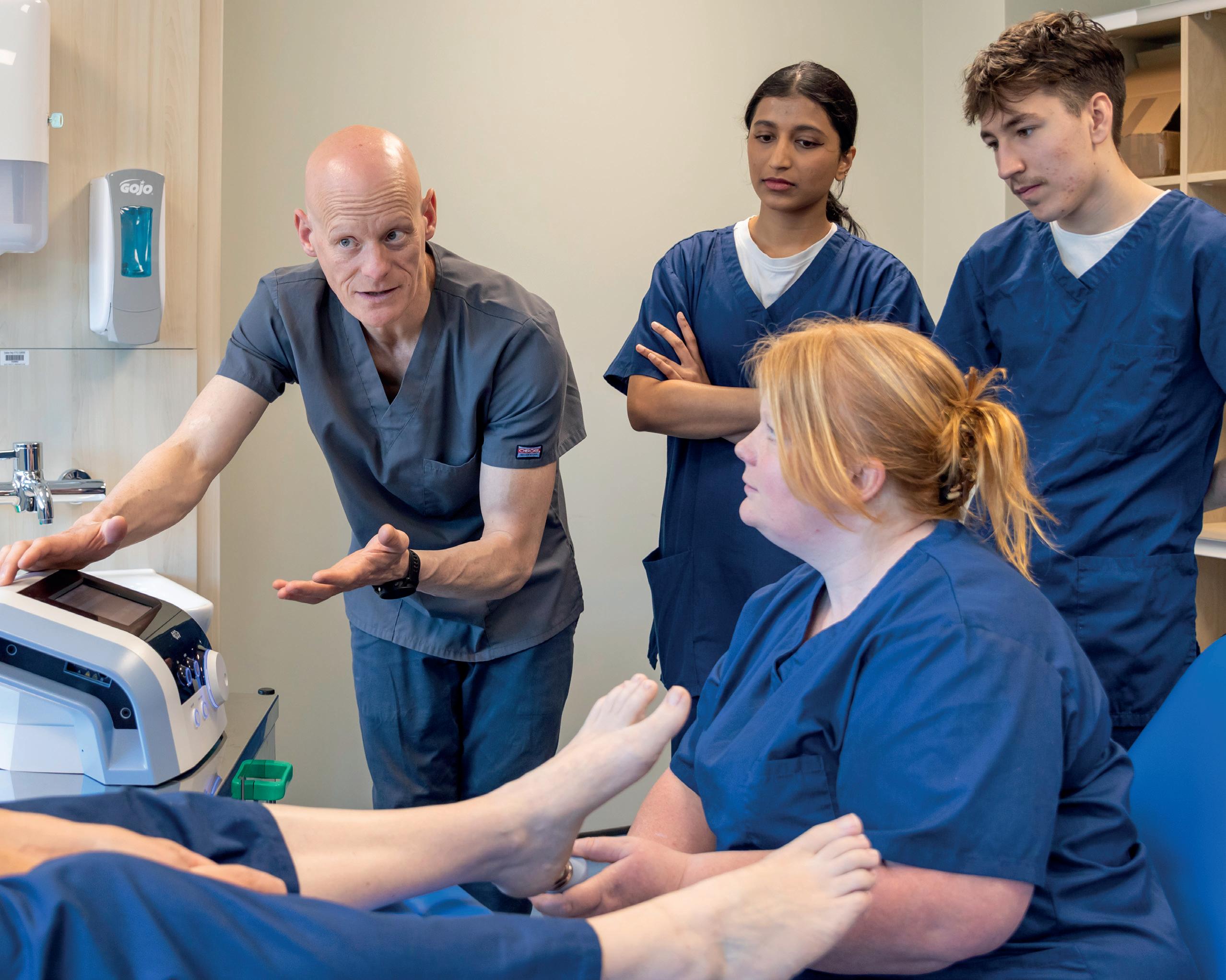
Working alongside the charity group in Plymouth, the students from all three years of the course are invited to come along to the outreach centre and shadow podiatrists in the voluntary work they undertake. The students working with us can spend some time talking with the adults who attend the
centre and see the complex podiatry care in operation that is often needed, supporting the podiatrist and outreach staff in the process.
Working with the homeless requires a unique approach that goes beyond traditional clinical settings. Establishing trust is crucial, as many individuals experiencing homelessness may have had negative encounters with the healthcare system in the past. Building rapport through active listening, empathy and a non-judgmental attitude lays the foundation for effective podiatric care. This is a valuable learning opportunity for our students.
In addition to providing immediate care, podiatrists working with the homeless population can empower individuals by offering basic footcare education. This includes guidance on proper hygiene, the importance of regular foot inspections and the selection of suitable footwear. Education is a key tool in preventing future foot issues and promoting long-term wellbeing and again reinforces the learning from the course modules in a very practical manner.
We also look to show the students how collaboration with other professionals and organisations in interprofessional working is essential for holistic care. Podiatrists can work alongside health professionals, shelters, and other organisations to address not only the immediate foot-related concerns but also the broader issues that contribute to homelessness. This collaborative approach ensures a comprehensive and sustained impact on individuals' overall health.
The students that have attended the podiatry sessions have reported to us many emotions arising from the experience, including those of sadness and concern for the patients seen. However, they also enjoy the opportunity to make a small but significant difference to this group and feel that moving forward, they have started to develop an understanding on the care and support that this vulnerable group require.
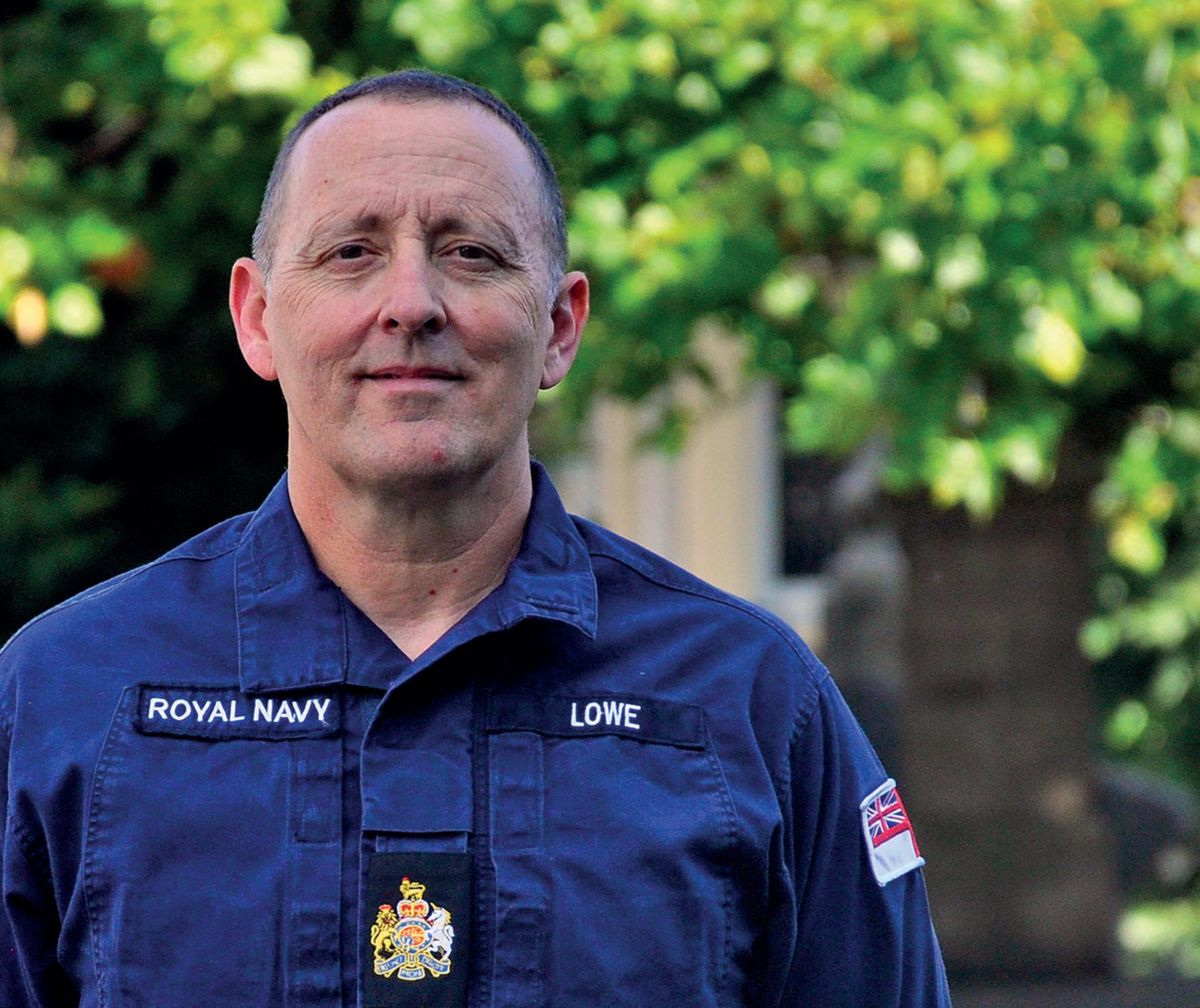
CHANGING CAREERS WITH ROB LOWE
After a career in the Royal Navy, Rob decided his passion for healthcare had not been fully realised, and embarked on a mission to become a highly skilled health professional by studying podiatry as a mature student. Rob gives an insight into how the University helped him find the perfect journey into civilian life.
CHARTING A NEW PATH OF SERVICE
I was working as a full-time Navy exercise rehab instructor, looking after the rehabilitation of injured service personnel. But after completing 27 years of service, I knew that I had to look for something else. I’d already completed a degree in Sports Rehabilitation previously, so I was looking for something similar that would give me some security as a more mature person and as a mature student. I had to look for something that was going to be suitable for me. The University of Plymouth offered that nice transition from military environment into civilian environment.
TICKING ALL THE BOXES
I was drawn to podiatry predominantly through my previous career being musculoskeletal based, I really enjoy working in that kind of environment. I wanted to work for myself straight away as soon as I finished university
and podiatry offered that option. I was also drawn to the variety of options within the field, such as rheumatology, paediatrics, musculoskeletal, diabetes and minor surgical procedures, general footcare – all of those things. It ticked all my boxes, not being sat in an office doing the same thing day in, day out. I've lived in Plymouth for over 30 years now. I loved the fact that the University had the course I wanted to do, and was within cycling distance from my home. Everything just folded into place.
SUPPORTED FROM THE START
As a mature student the support was there from the academic staff without a doubt, and certainly among my cohort. I think with previous and current cohorts of podiatry there’s a really strong mix of youth and more maturity of age. I think on our course the oldest was over 50 years old, and the youngest had just come straight from finishing their
A levels, so this meant that we had a really diverse range of experience. What also helped me was that my wife was on the exact same course, so we both left employment to study at the same time. This was a very beneficial thing for both of us as we were able to share our experiences at home later.
DEALING WITH REAL PATIENTS IN REAL CLINICAL ENVIRONMENTS
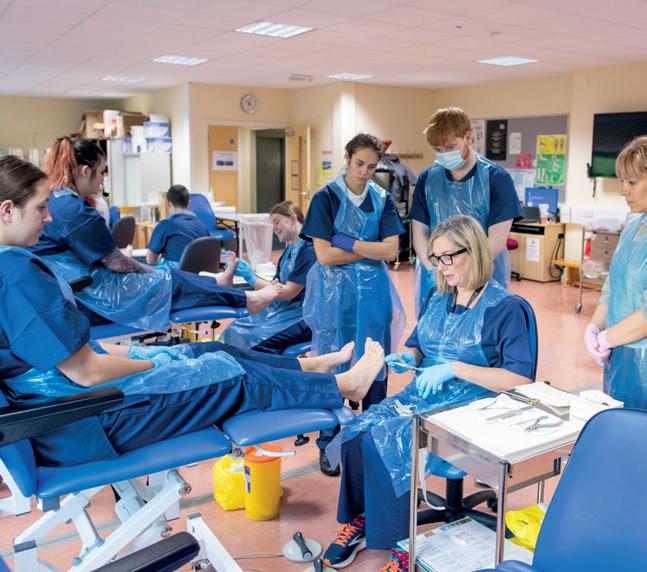
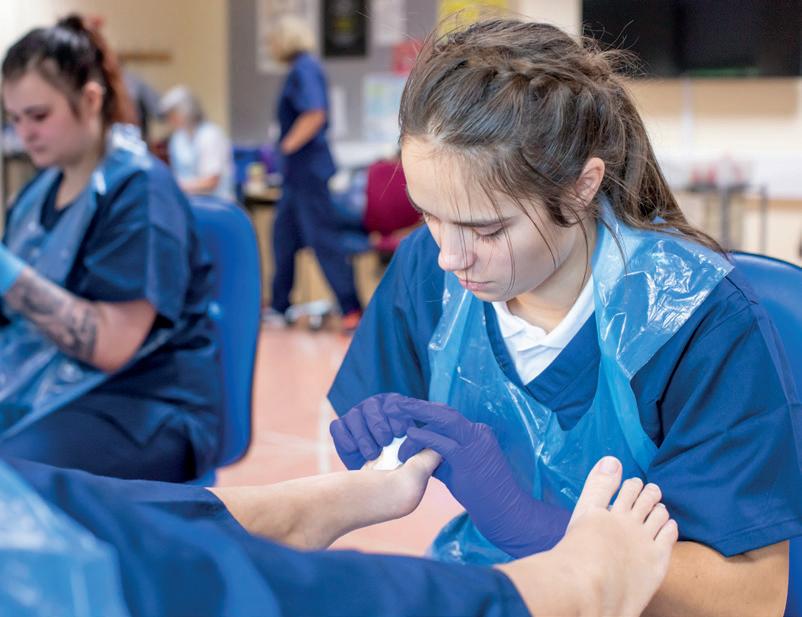
The placements themselves were fantastic. I was placed in Plymouth, Gloucester and Bristol, and my wife also went to Bournemouth. All of them offered lots of variety, the opportunity to try different things, and most importantly lots of support from the staff at each placement. I learned so much, and it was a really great opportunity to transfer all that learned knowledge I acquired through my lectures and seminars into realworld scenarios, dealing with real patients in real clinical environments.
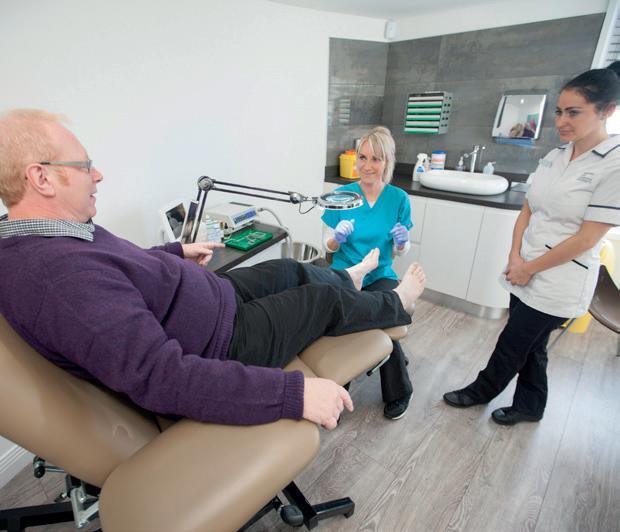
As part of the course, we were placed at a local hospital. There were four clinic spaces with a walkway in between with clinical staff able to walk up and down supervising what you’re doing, but you were working with real patients. You had ownership of the patients assigned to you. There were always a couple of you in the clinic, maybe one of you treating a patient and the other one writing notes. It was a fairly early course experience for me, but it was the first that made me go “this is what podiatry is all about”.
BECOMING SELF-EMPLOYED
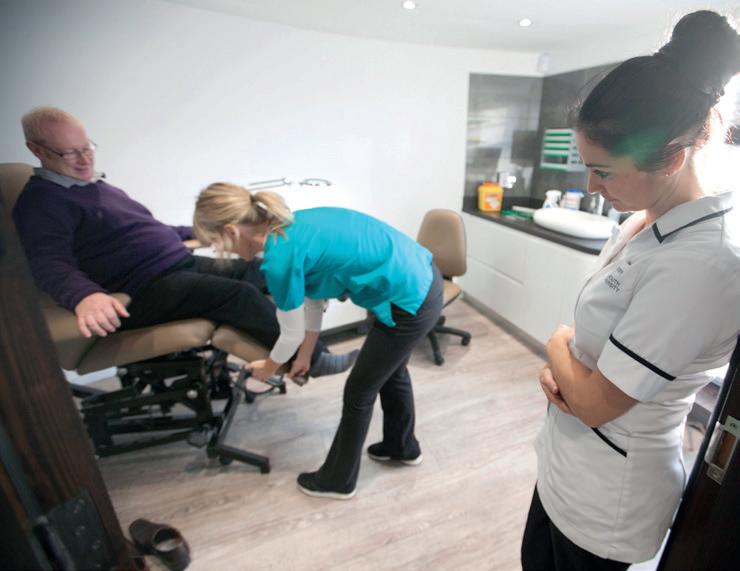
Being a self-employed podiatrist is exactly what I wanted. I wanted that flexibility of being able to run my own day and take charge of my own destiny. When I first started private practice I actually bought an old ambulance, and that was my clinic for a while. I also joined lots of business networks. From my experience, not many clinical people
tend to go and network in this way, but it proved a very valuable resource for myself. It was the freedom to go and do whatever I wanted to do – run my own day, run my own diary. If I wanted to finish early, I finished early. If I wanted to take a day off when I wasn’t booked in, I could do just that.
PREPARED FOR THE FUTURE
If I were to speak to anyone who was considering the course, the first thing I would say would be to look at what it says on the website as to what the academic requirements are. If there are any that you think you might not meet, certainly as a mature applicant, then I would get in touch with the Admissions Tutor. Have a chat with them, tell them what your life experiences are and certainly draw from any skill sets you may have developed over your life that you feel would be transferable, and how they can be brought into effect.
A lot of people say to me “I don’t know how you can touch feet”, but I’ve spoken to a lot of people who, in the same breath, say “Oh, I couldn’t deal with eyes”. There are lots of other professions out there that deal with a lot more gruesome stuff than us. Yes, you may get into a situation where you are dealing with probing ulcers and things like that, but the opportunities in podiatry to see a broad range of patients is quite substantial. When I left university, I certainly felt ready to deal with the majority of situations quite clearly. Don’t let that put you off at the first hurdle, just keep going and you will probably find thing that you excel at, and you may even surprise yourself.
INTERCITY
The building offers outstanding interprofessional clinical skills facilities to prepare you for a career in health and social care.
Students will graduate with the knowledge and skills needed for 21st-century healthcare, and the experience of working alongside other practitioners, just as they will in their future careers.
InterCity Place has a wide range of teaching areas, study places, a cafe and social learning spaces, so there is always somewhere to study, learn, socialise and relax.
After a lesson at InterCity Place, take a short walk to the rest of campus where there is a hive of activity including social spaces, cafes, lecture theatres, the Students' Union and easy access to the library and support services.
InterCity Place is adjacent to the train station, near to the bus station in the city centre, travelling to placements and days out is easy for our students.
INTERCITY PLACE
FIND OUT MORE
InterCity Place: facilities for health professions, nursing and midwifery. Discover the new learning environments that will give students the knowledge, skills and experience to build careers in healthcare.
PIHC
The Plymouth Integrative Health and Social Care Education Centre
Most of you will have had some form of experience with the healthcare system in your lifetime. While our courses at Plymouth are designed and delivered with a single goal in mind – be that to become an adult health nurse or an occupational therapist, for example – your experience will have shown you that healthcare is a collaborative, interprofessional environment.
PIHC, or the Plymouth Integrative Health and Social Care Education Centre, is an initiative within the Faculty of Health that supports interprofessional learning (IPL) across our suite of healthcare courses, so that our students are given opportunities to learn with, from and about each other.
IPL is an effective tool in equipping students with transferrable skills that are valuable for their future careers. We want the next generation of healthcare professionals to step into the workforce as confident practitioners from day one. Drawing on the diversity of courses within the faculty allows us to facilitate this by putting various disciplines together – from Diagnostic Radiography to Dietetics, Dental Surgery to Clinical Physiology, and from Psychology to Child Health Nursing.
PIHC embeds these opportunities for all year 1 students studying our health and social care courses, and continues to develop the initiative throughout your degree. PIHC ultimately allows you to feel supported and valued, and develop cross-collaborative skills in a safe and risk-free environment.
In addition to embedded IPL, PIHC supports further opportunities for students across the faculty to come together such as:
• Schwartz Rounds: a confidential forum for students and staff to talk about the emotional impact of their work and studies
• C4CHEd: an international collaboration promoting compassion in health and social care education
• Tea-Time Teaching: a series of student-led sessions where students present to their peers on a topic of their choice
• Ad hoc events, including a simulation day for midwifery and paramedicine students.
“The webinar allowed attendees to have an understanding not only of the processes that they may encounter in their career in medicine, but also the experiences of other professionals involved.”
General Medical Council feedback for Synergy: Oral Cancer with year 1 students
“It was so interesting to hear about healthcare roles outside of medicine and what other members of the MDT do.”
Year 1 Medicine student
“Healthcare systems always require improvement, it’s easier to know how to improve your area if you know how other areas work too.”
Year 1 Adult Nursing student
“It is great to know how to ensure all of our professions can work effectively together. This benefits the service user and staff.”
Year 1 Adult Nursing student
Find out more About PIHC
IT’S YOUR FUTURE MAKE IT COUNT
Over 95% of our graduates are in work or further study*