It’s never too early to start thinking about what you would like to do after school or college, or if you are thinking of a career move! At Plymouth, we know that choosing a university and course is a big decision. While you may have an idea of a profession, career or industry that you’re aspiring towards, if you’re unsure of exactly what you want to do or are keen to find out more – this is where our handy subject guide comes in.
Meet some of this issue’s contributors:
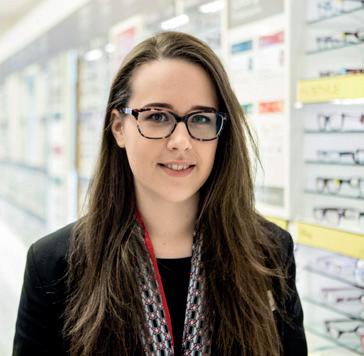
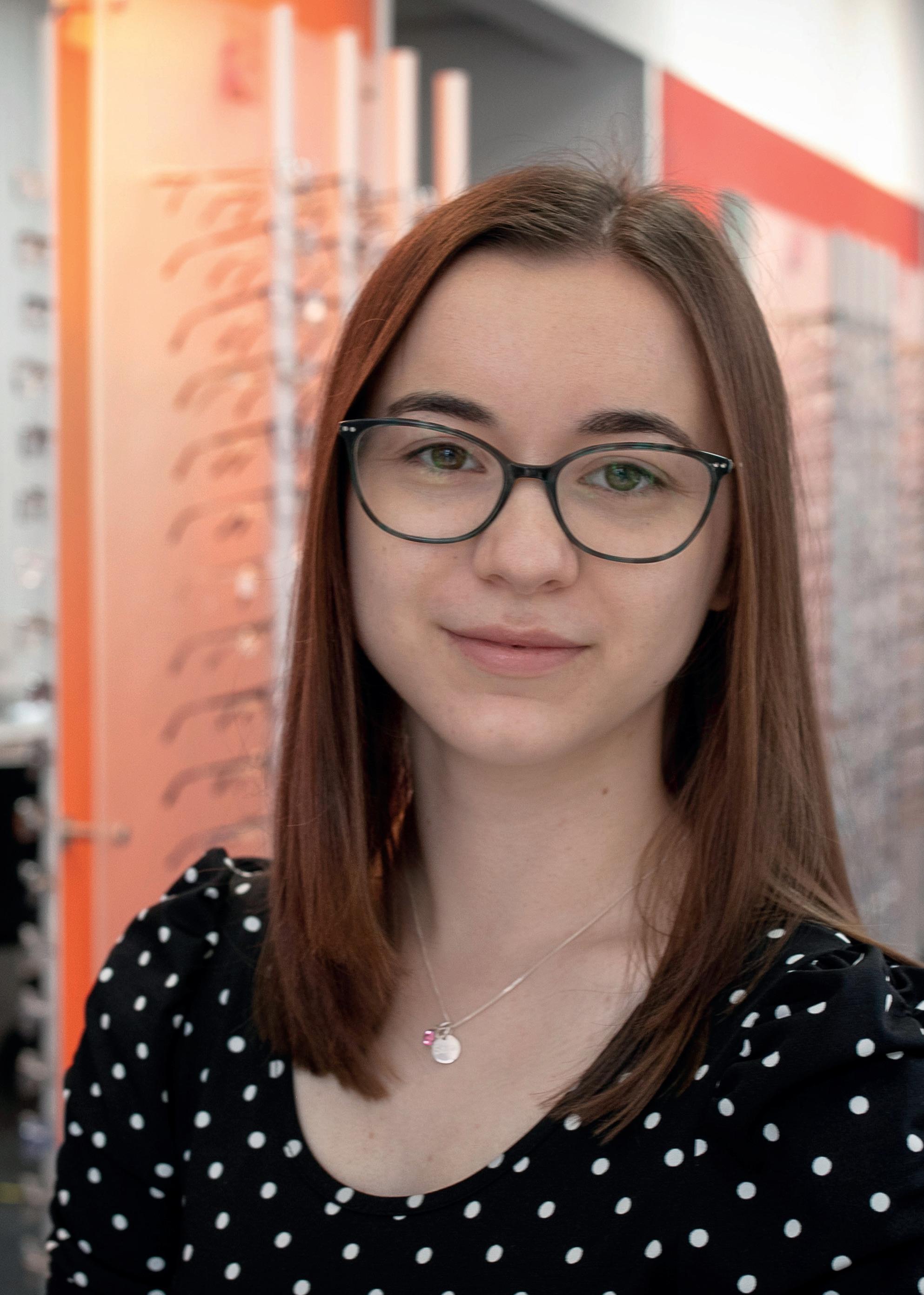
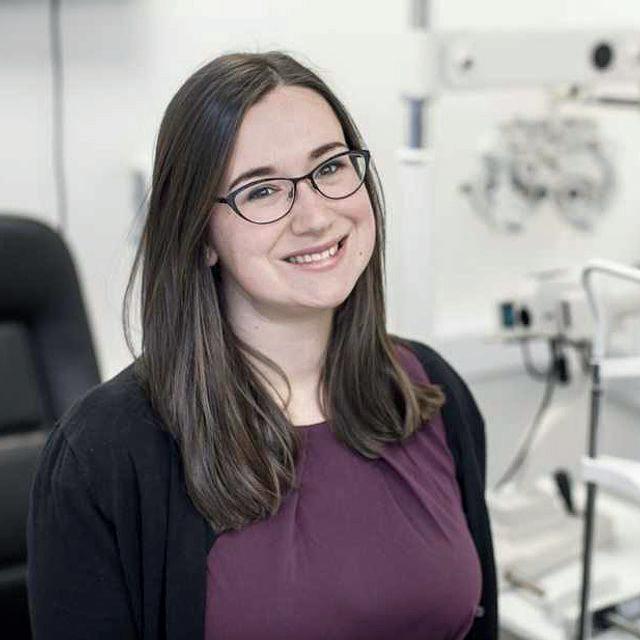
Sara First year Optometry student
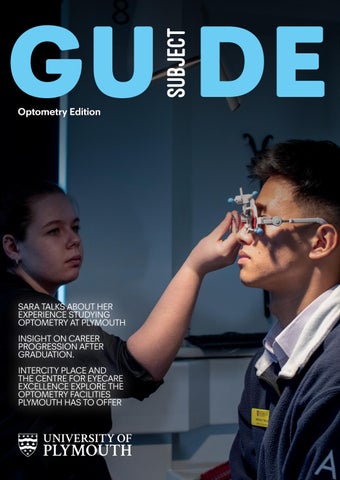
Sara talks about her experience studying optometry at Plymouth. P. 12
Dr Hetal Buckhurst
Associate Professor in Optometry Optometry academic Hetal Buckhurst tells us what inspired her to teach optometry. P. 22
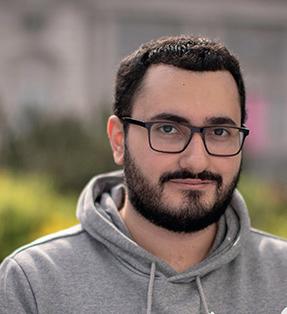
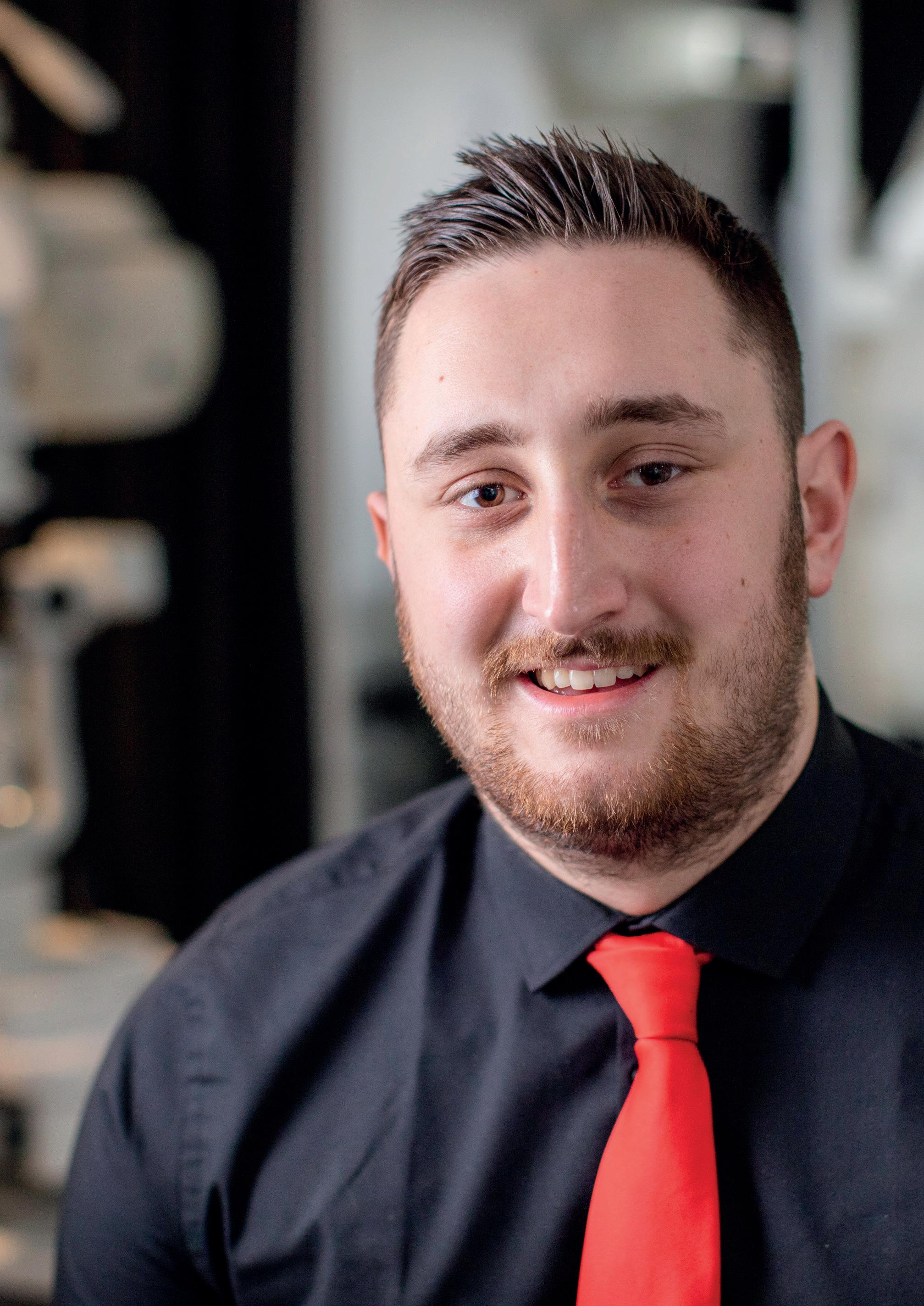
Luke Optometry alumnus
Luke talks to us about his studies at the University of Plymouth and gives an insight on career progression after graduation. P. 26
EXPLORE YOUR FUTURE HOME
Visit us at an Open Day
When it comes to finding out if a university feels right for you, nothing compares to an open day. Talk to current students and quiz lecturers about your course. Register to attend at plymouth.ac.uk/open-days
Start exploring –take a virtual tour
Our virtual tour allows you to experience first-hand what it is like to be on campus and explore the environments and facilities that inspire and shape our learning every day.
Inside...
HOT TOPIC:
P. 8 What is the MOptom degree? Learn about the Optometry course at Plymouth
FEATURES:
P. 10 Where will your degree take you? Learn more about what careers are available in Optometry
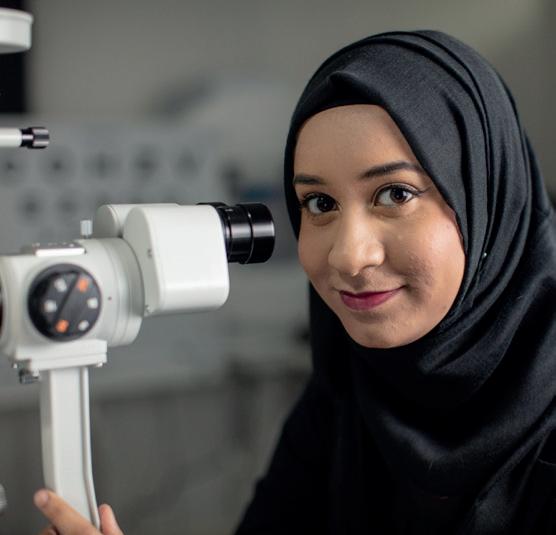
P. 14 The placement experience Mahmood talks about placement
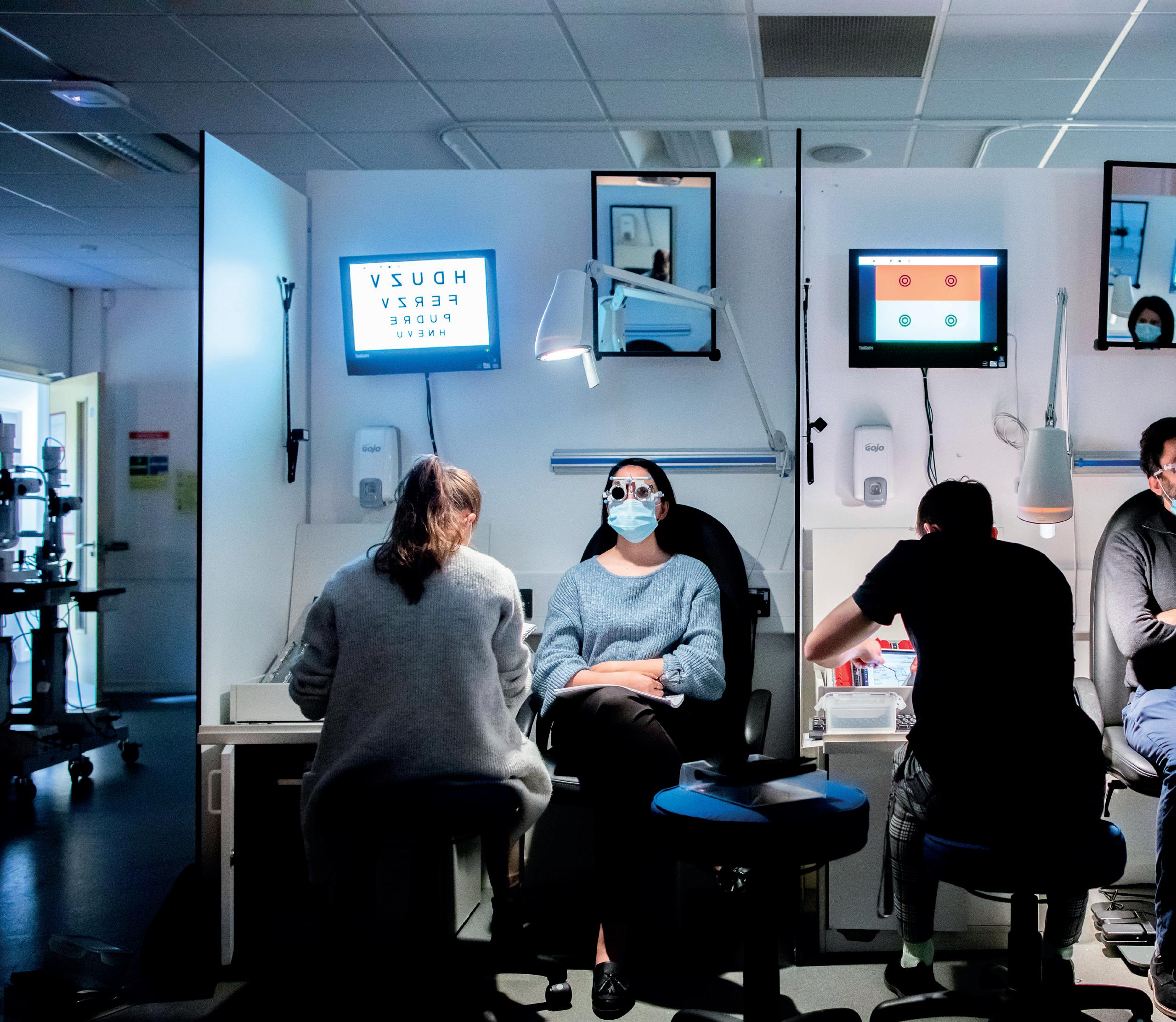
P. 16 A practical session in optometry Alisha and Izzy talk you through an Optometry practical session
P. 18-21 InterCity Place and the Centre for Eyecare Excellence
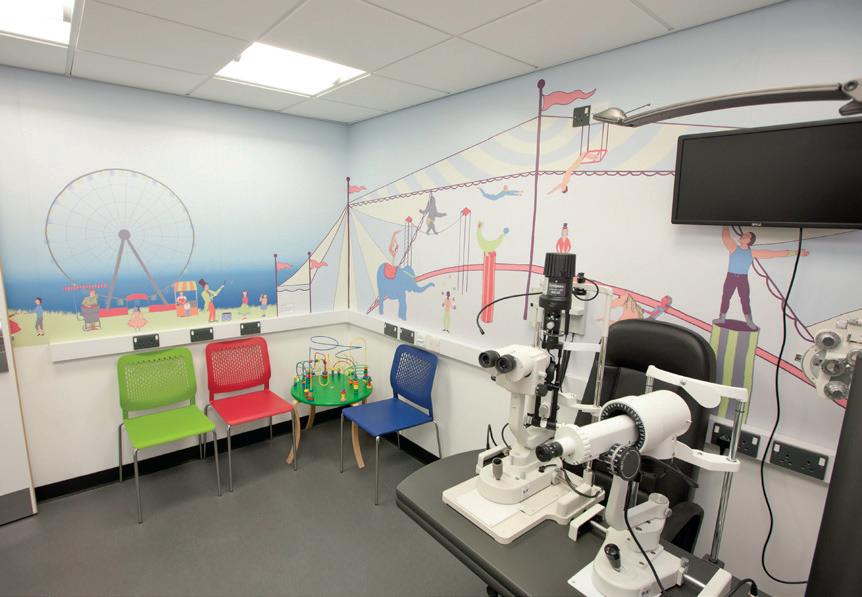
Explore the optometry facilities Plymouth has to offer
10 REASONS TO STUDY AT PLYMOUTH
Do you want to pursue an exciting career as an eyecare professional? Here at Plymouth you will benefit from a forwardthinking clinically focused degree.
1. QUALIFICATIONS
Optometry is a rapidly evolving and expanding clinical healthcare profession and we want all of our graduates to be at its forefront.
Graduate with the scientific and clinical knowledge, as well as the professional training, required by the General Optical Council (GOC) to practise as an optometrist.
4. EXPERT LED TEACHING
At Plymouth, our team of researchactive and clinically engaged staff are dedicated to ensuring you maximise your potential. As a student on our
MOptom (Hons) Optometry degree, you benefit from a forward thinking, research-informed curriculum that equips you with the clinical ability and confidence needed to be a successful optometrist at the forefront of your profession.
2. PROFESSIONAL RELATIONSHIPS
Expert optometrists and other healthcare specialists have strong relationships with the teaching staff at the University.
“Optometry, as a profession, is expanding dramatically. We are delighted to be associated with the University of Plymouth Optometry course by giving every third-year student a placement in a South West hospital. This is a wonderful introduction to hospital optometry and many Plymouth optometry graduates are now working part time or full time in hospital.”
Dr David Adams, Head of the Optometry Department, University Hospitals Plymouth NHS Trust
3. SUPPORT
Learn at every step of the way from expert, accessible and supportive staff who will provide you with personalised feedback and guidance on all aspects of your performance. There is also the Peer-Assisted Learning Scheme (PALS) where you can learn alongside other students on your course helping you to broaden your knowledge, gain confidence and make friends.
5. BEYOND THE CLASSROOM
Follow in the footsteps of some of our previous students and volunteer to work with charities such as Vision Aid Overseas or take the opportunity to join us over the summer and immerse yourself in cutting-edge research alongside our postgraduate students and academic staff.
6. PLACEMENTS
Gain valuable insight into your future profession with a variety of practice placements and hospital experience throughout your studies, allowing you to engage with your future profession and put your learning into a real world
context. This combined with the fantastic hands-on clinical experience you gain at our Centre for Eyecare Excellence (CEE) throughout the third year, helps to ensure that you graduate with the clinical ability and confidence required to be a successful clinician.
7. FACILITIES
InterCity Place is the first-class new home for healthcare teaching and research, equipped with an optometry practice lab to help support and develop your skills and learning.
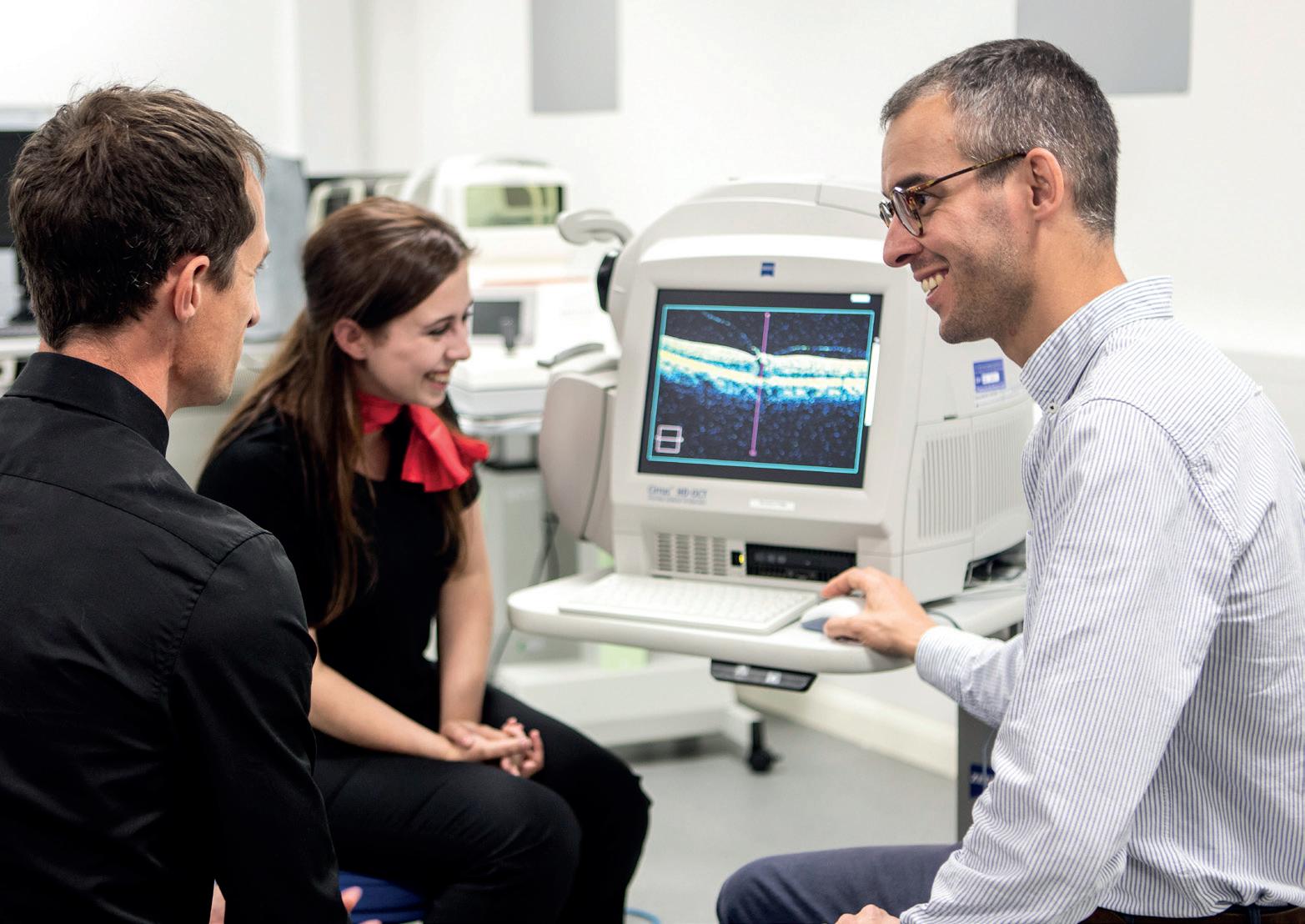
Our state-of-the-art Centre for Eyecare Excellence (CEE) provides you with access to the latest diagnostic and imaging technology.
9. LOCATION
Benefit from a work-life balance in Britain’s Ocean City. You will be spoilt for choice with the thriving nightlife within walking distance of our city centre location, sandy beaches of Devon and Cornwall and swathes of Dartmoor’s picturesque countryside and landscapes. Study with us to enjoy a health quality of life surrounded by the ocean and the moors.
8. PEOPLE
We are a close-knit team of staff and students, and our Optometry Society (OpSoc) is a fantastic way of bringing everyone together. Led by our students, OpSoc organises regular social and educational events, including the annual ‘Eyeball’, which provides you with a great way to get to know your fellow Optometry students from across all years of the course and interact with staff.
“We’ve all had such a good time enjoying all of the events throughout my degree. The end of year optometry ‘Eyeball were always a laugh, and it was good to talk to the lecturers and tutors outside of the teaching environment.”
Chantelle PlymouthOpSoc
10. STUDENT SATISFACTION
Proud to be ranked in the TOP 2 OPTOMETRY SCHOOLS IN THE UNITED KINGDOM (for student satisfaction for the last three years (National Student Survey 2020 –2022)
By choosing to study Optometry at Plymouth, you join a pioneering clinical degree that was the first to bring optometry to the South West.
WHAT IS OPTOMETRY?
OPTOMETRY IS AN ENGAGING CLINICAL HEALTHCARE PROFESSION CONCERNED WITH ALL ASPECTS OF THE EYE AND EYE HEALTH.
As an optometrist, you are trained to examine eyes to look for the presence of ocular disease, such as glaucoma and cataracts, as well as general health problems, such as diabetes or high blood pressure. You also play an important role in detecting and correcting defects of vision in children and adults, and you have the opportunity to make a real difference to people who suffer from sight loss or visual impairment.
What is the MOptom degree?
Our Master of Optometry degree is fully accredited by the General Optical Council (GOC). The four-year course provides you with the scientific and clinical knowledge, as well as the professional training, required by the GOC to practice as an optometrist.
WHY STUDY THE MO ptom
Optometry is a rapidly evolving and expanding clinical health care profession. For this reason, our MOptom degree has been developed in consultation with experts in the field. Right from the start, the course builds your professionalism, core clinical skills and theoretical knowledge. Our course allows you to engage in the industry while equipping you with the core clinical skills, professional training and confidence required for a successful career as a Registered Optometrist.
Study optometry at Plymouth
• Learn at every step of the way from expert, accessible and supportive staff. we pride ourselves in offering a wide variety of teaching and learning activities, including clinical simulations, problem based and peer assisted learning, as well as interdisciplinary engagement.
• Clinical placements provide you with exciting opportunities to engage with your future profession - in both practice and hospital settings. This engagement continues for the duration of your studies and encourages you to explore all employment avenues open to you
• Graduate with the clinical ability and confidence required to become a successful clinician, capable of thriving within the evolving and expanding world of optometry.
WHERE WILL YOUR DEGREE TAKE YOU?
Studying Optometry at Plymouth will open a long-term, successful career for you. Graduates tend to go on to become fully practising optometrists.
SOME COMMON CAREER DESTINATIONS FOR OUR GRADUATES INCLUDE:
• Many optometrists work in a corporate/high street setting undertaking eye examinations, providing relevant advice to patients/clients and prescribing spectacles/contact lenses accordingly.
• Optometrists also find themselves working for the NHS in hospital environments alongside ophthalmologists and orthoptists, providing specialist support for an array of eye conditions.
• Alternatively, a role as a domiciliary optometrist suits many, allowing them to get out and support those who cannot reach an examination room to receive sound eye healthcare.
WHAT SKILLS WILL YOU GAIN?
• A wide range of skills to enable comprehensive eye examinations through a variety of methods, including contact lens fitting, using advanced technology and equipment.
• The ability to problem-solve and make effective clinical decisions based on your findings.
• Interpersonal skills, the ability to communicate effectively with patients to discuss their eye care needs and any appropriate management plans.
• Companies offering laser refractive surgery also employ optometrists for consultation and follow ups, before and after these operations, respectively.
• Continuing Personal Development (CPD) is a requirement for many optometrists, to make sure they keep their practice up to date.
• Many go on to also run their own business or manage the retail aspects and/or develop areas of the practice they work for.
• Some also take their skills and qualifications to work in other parts of the world. Within the NHS, it is possible to work your way up to become a consultant optometrist.
• With so much still to learn about the eyes, and detecting and treating eye conditions, some Optometry graduates go on to become researchers and have careers in academia or working for lens and ophthalmic instrument manufacturers.
“Since qualifying I have achieved Level 1 and Level 2 accreditation from the Welsh Optometry Postgraduate Education Centre in both glaucoma and minor eye conditions. This enables me to provide various enhanced optical services in community practice. As past of an NHS commissioned scheme. I have also achieved the Level 3 Certificate for Professionals from the Institute of Leadership and Management and completed the Specsavers Pathway course which prepares potential joint venture partners for leadership and running their own business. In September 2018 I bought the practice I was working at and I am now the Ophthalmic Director of Specsavers in Launceston, Cornwall.”
Rachel, Optometry graduate
“Since completing my degree, I moved to London to pursue my career in the field of optometry. Graduating from university and stepping into the working world is a huge leap. I gained a great deal of independence over the three years I lived and studied in Plymouth which is one of the reasons why I believe I was ready to move to a bigger and busier place like London.”
Priya, Optometry graduate
“Having researched and applied at numerous organisations during my final year of university, I found that it was ideal to have a job lined up from the moment my final exams finished. It allows you to concentrate on getting the best grade possible without having to think about whether or not you will find employment.”
Gagandeep, Optometry graduate
FIND OUT MORE
SARA, A 1ST YEAR OPTOMETRY STUDENT
“Optometry is a very rewarding course as you’re consistently getting to practice your skills and realise how much you know as you apply the theory within the practical. I have really enjoyed my time at Plymouth so far; the University is very supportive and provides help where/if you need it.”
WHY DID YOU DECIDE TO STUDY OPTOMETRY AT PLYMOUTH?
Being a glasses wearer myself, visiting optometrists has been a large part of my life. I wanted to be able to help others and give them a better quality of life. The University offered placements in every year of the course and the ability to work in CEE, building on knowledge and skills, along with a paediatric week to gain experience with paediatrics.
FAVOURITE MEMORY OF THE COURSE SO FAR?
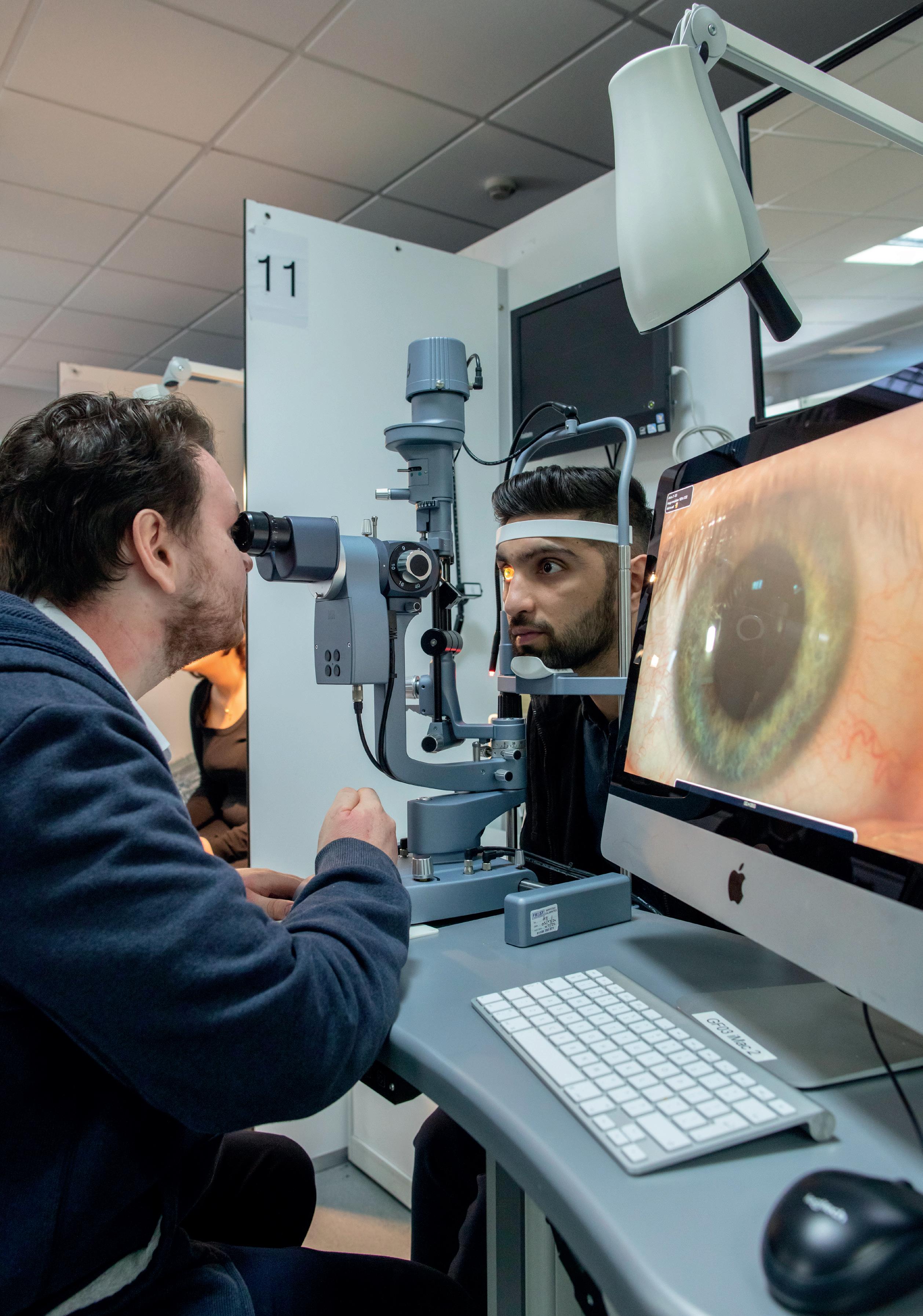
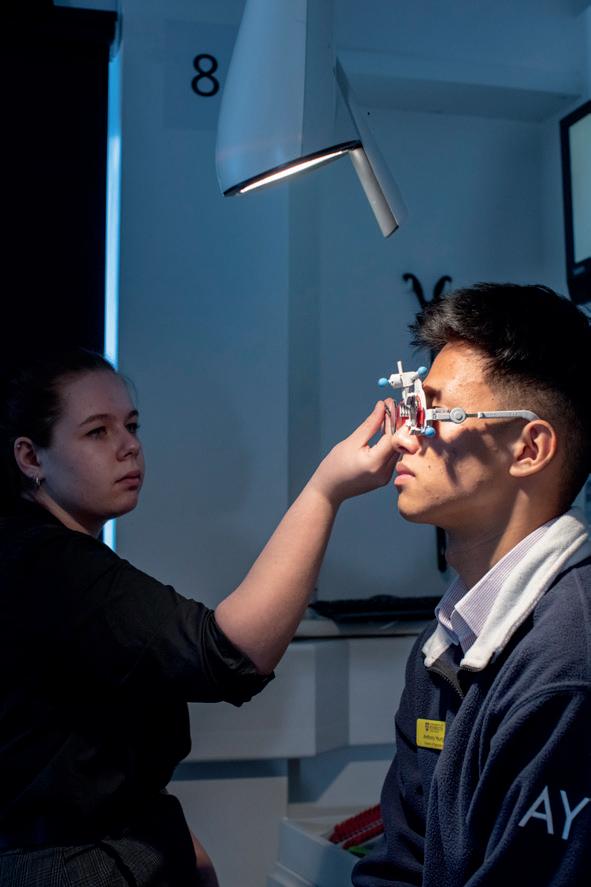
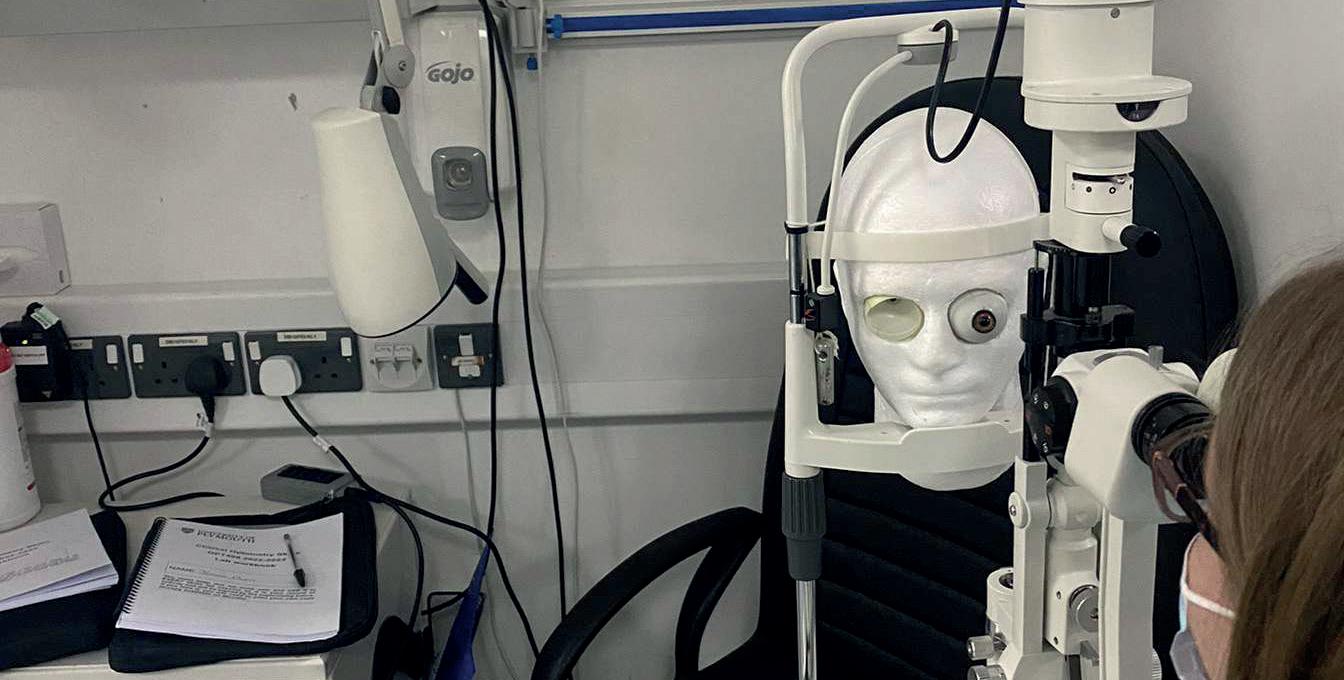
My favourite memory so far was my first clinical session, we were doing binocular indirect ophthalmoscopy (or VOLK) on the model plastic eyes. It was great to be in the testing room and start to practise skills. We were shown a short video and demonstration on how to use the equipment then in pairs began using it. Lecturers came around each group and gave advice where it was needed and answered any questions anyone had.
STRUCTURE OF THE COURSE
Practicals
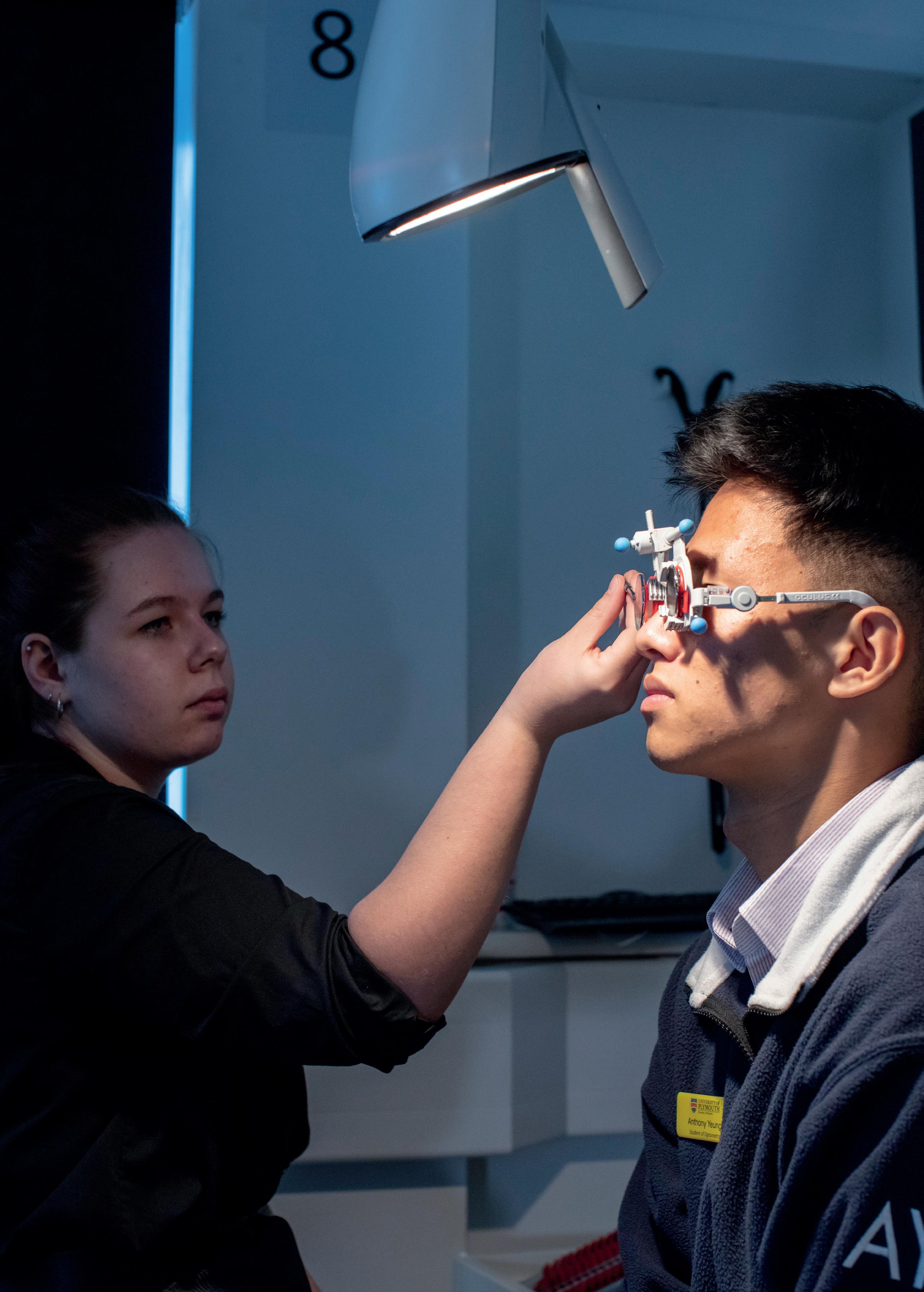
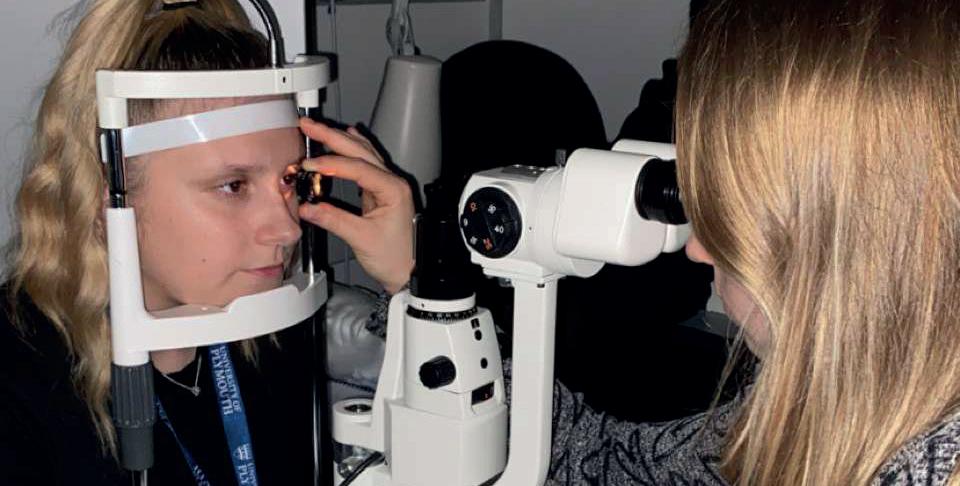
In practicals we will start learning new skills by first practising on a fake plastic eye and then moving on to practise on a coursemate to gain experience performing each skill on a real person. Almost every other week
we will learn a new skill that is part of an eye test and by the end of the year we will be able to start putting these skills together to form a practical routine.
Some of the practicals I have done include lasers, hand neutralisation to find the power of spectacle lenses and a practical on contrast sensitivity. So, there is a wide range of skills to learn that will aid in understanding the lectures and preparation for exams!
Clinical skills
In clinical skills we practise the skills needed to become an optometrist. There is a variety of skills that we learn and there are always academics around to help in these sessions if we are unsure or need guidance.
Lectures
Lectures introduce us to new ideas about the eye and the theories around it, we are starting to look at spectacle lenses and how these can aid the eye. We’ve previously looked at the optics of the eye and anatomy of the body. So, the content of lecturers is extremely varied.
How have you found the mix of theory to practical work?
There is a brilliant mix of theory and practical work with practical work every week along with a couple
of days of lectures. There can be a lot of work, but if you plan and keep organised the mix is easily manageable. I feel all of the skills I have learnt so far on my degree have really improved my knowledge of the eye and I feel I have learnt so many key skills that will support me in an optometry career already!
SERVICES AVAILABLE
There are different study spaces throughout campus and the library which have helped support my learning as they provide a quite space to study and keep focused.
The student services are easy to access whenever I need help, they can be contacted online or in the library.
Making friends
There are lots of opportunities to make friends while studying at Plymouth. You can join societies or sports clubs where you can meet people with similar interests on different courses.
You will definitely make friends with people on your optometry course, there are many group exercises in the first few weeks and each week in practical sessions you are partnered with someone different, allowing you to get to know your cohort really well.
THE PLACEMENT EXPERIENCE
“Placement has greatly improved my ability to easily communicate with patients and gauge a better understanding of their personal experiences, needs and feelings during their time at the hospital and in the optical practice”. - Mahmood
We introduce you to working with patients and encourage you to start thinking like a health care professional right from the start. Practice placements in the first, second and fourth year, and hospital experience in the third and fourth year provide you with the exciting opportunity to engage with your future profession and put your learning into a realworld context. This, combined with the fantastic hands-on clinical experience you gain at our state-of-the-art Centre for Eyecare Excellence (CEE) throughout your third year, helps to ensure that you graduate with the clinical ability and confidence required to be a successful clinician, capable of thriving within the evolving and expanding world of optometry.
MAHMOOD AHMED – THIRD YEAR OPTOMETRY STUDENT
Throughout my time at university, I am experiencing the process which continues to mould me into a competent and successful optometrist.
WHAT DO YOU DO ON PLACEMENT?
The purpose of the first placement was to understand a patient’s journey in an optical practice and to observe how an optometrist conducts sight tests. I attended a local optical practice, and it was beneficial to have useful conversations with all members of staff from the receptionists, dispensing
opticians, and optometrists seeing how they all worked together in a team.
I then attended a hospital placement that performs ophthalmological surgical procedures. During this placement I was able to interact with the patients a lot more and observe the patient’s journey from the receptionist to the ophthalmologist. I was also able to watch cataract surgery as it happened in the operating theatre.
HAS PLACEMENT LED YOU TO THINK DIFFERENTLY ABOUT YOUR FUTURE CAREER?
Going on placement at an optical practice reinforced my career goal of becoming an optometrist director. This placement showed me the value of being able to provide vital eyecare services to the local community. Seeing how you are able to shape and decide the level of support an optical practice can provide to the local community is a strong factor leading me to this ambition.
WHAT SUPPORT DOES THE UNIVERSITY OFFER WITH PLACEMENT?
I am very pleased with the level of support the University has provided me with during my placements. Not only does the University provide the placement for you, but they also try to ensure that it is either within walking distance of
main campus or a close travel proximity.
The Optometry team also provide us with a detailed itinerary for the placement, which has made the process of going to placement and being on placement so much more stress free.
WHEN DID YOU FEEL LIKE YOU WERE BECOMING AN OPTOMETRIST?
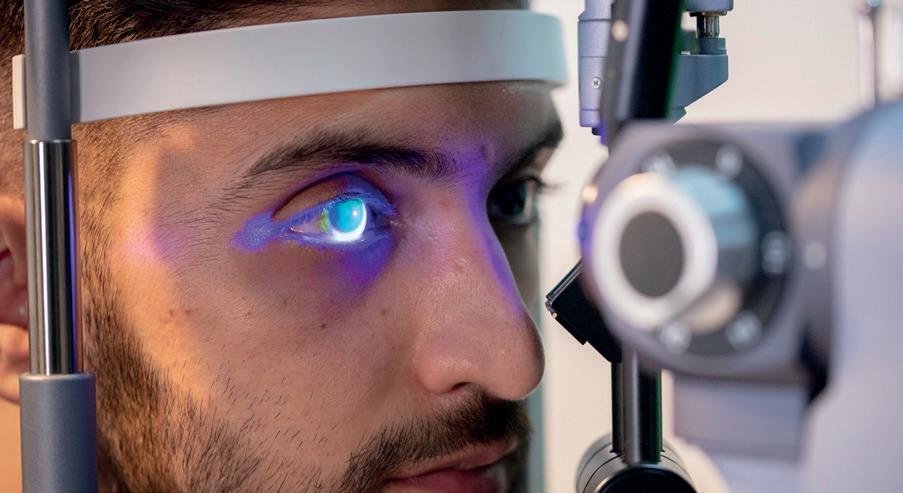
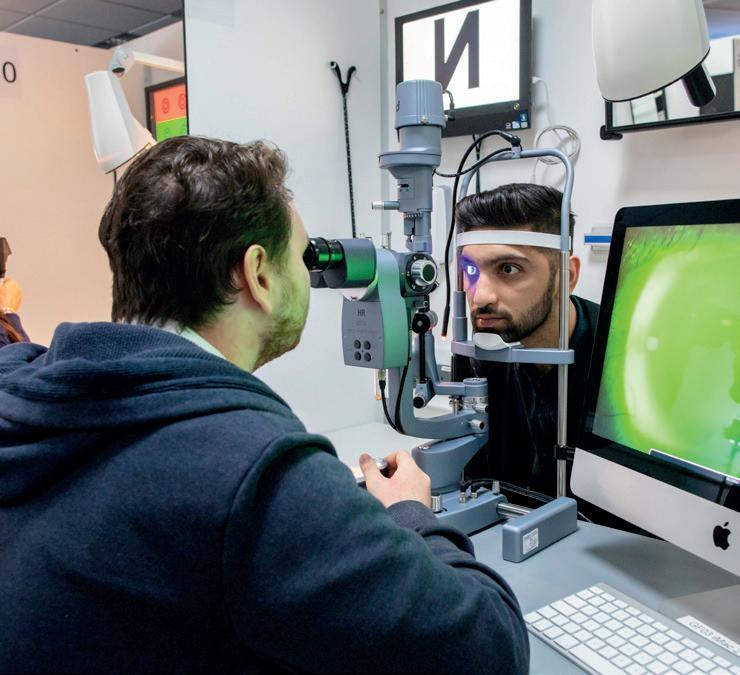
I really felt like I was becoming an optometrist during my hospital placement, when I was able to sit in the optometrist’s chair and observe a patient’s eye using a slit lamp. I was able to correctly identify the type of cataract the patient was set to get removed and while looking at the fundus, I was able to correctly identify that the patient had a choroidal nervus in an accurate and swift manner, successfully applying the knowledge and theory I had revised from the course on an actual patient.
FIND OUT MORE
Our dedicated Careers Service provides you with several opportunities to gain work experience either via internships, placement years, part-time work, mentoring and more.
A PRACTICAL SESSION IN OPTOMETRY
COME ALONG TO A SECOND YEAR OPTOMETRY
CLINICAL SKILLS SESSION OPT505, CLINICAL SKILLS AND REFRACTIVE MANAGEMENT
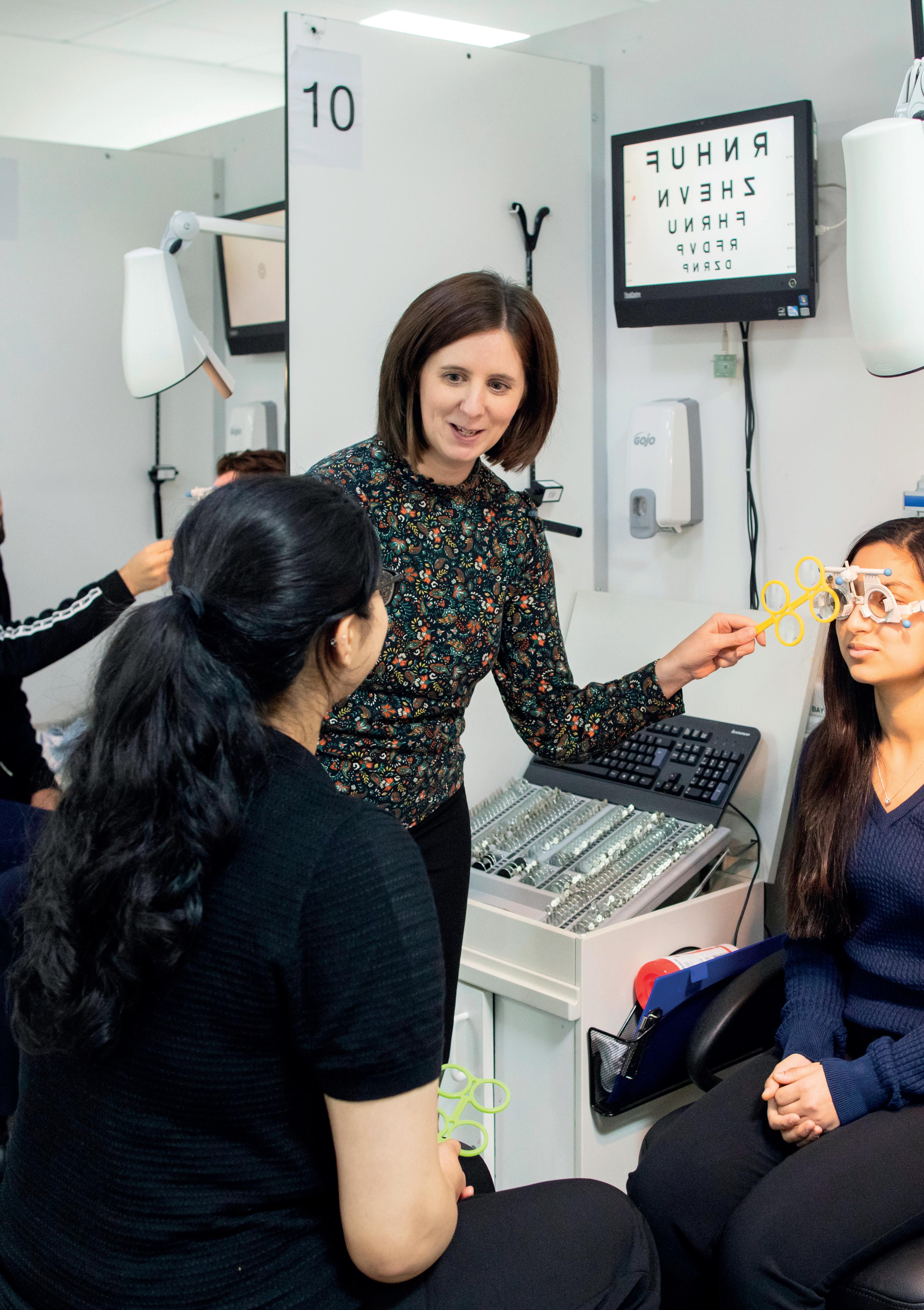
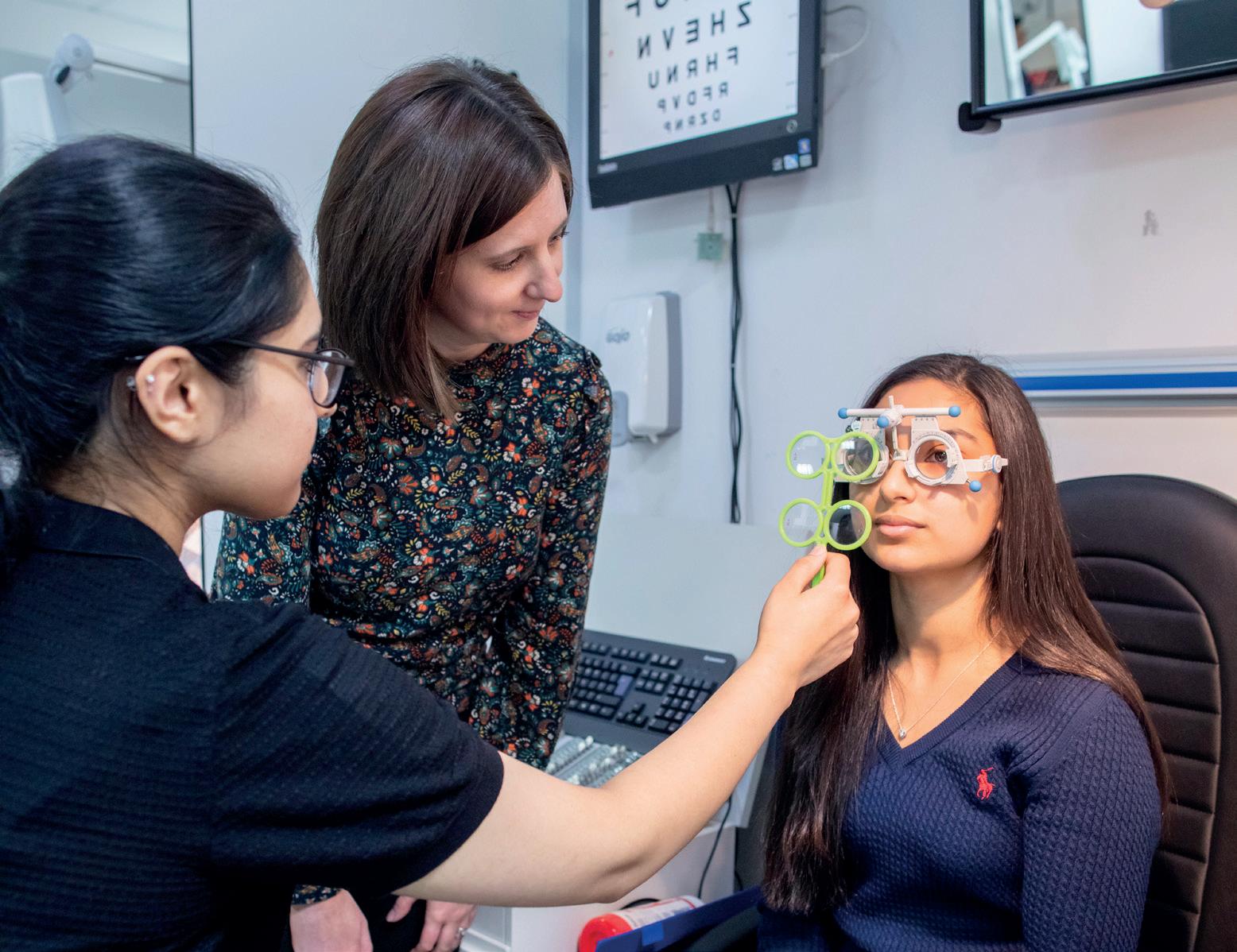
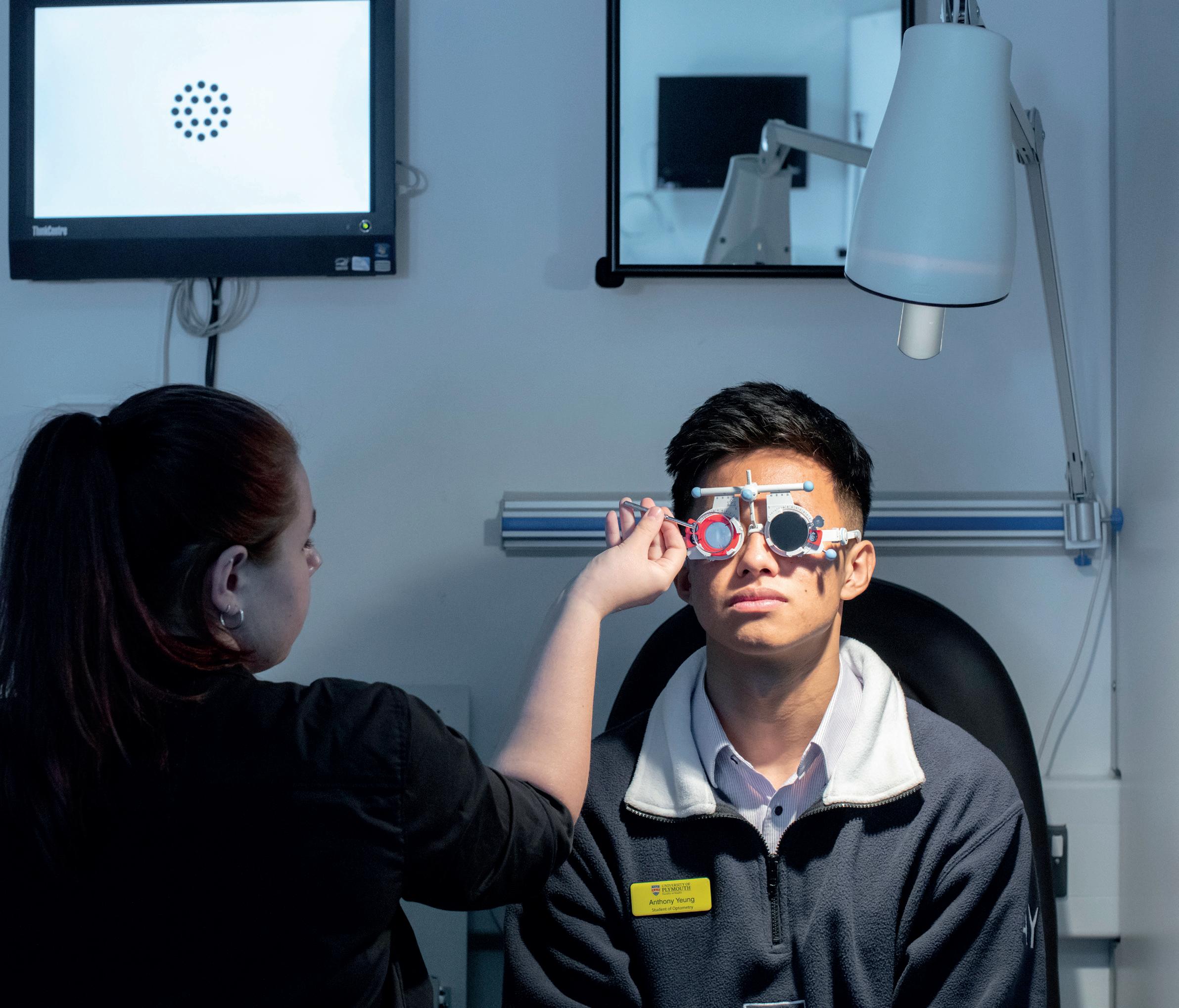
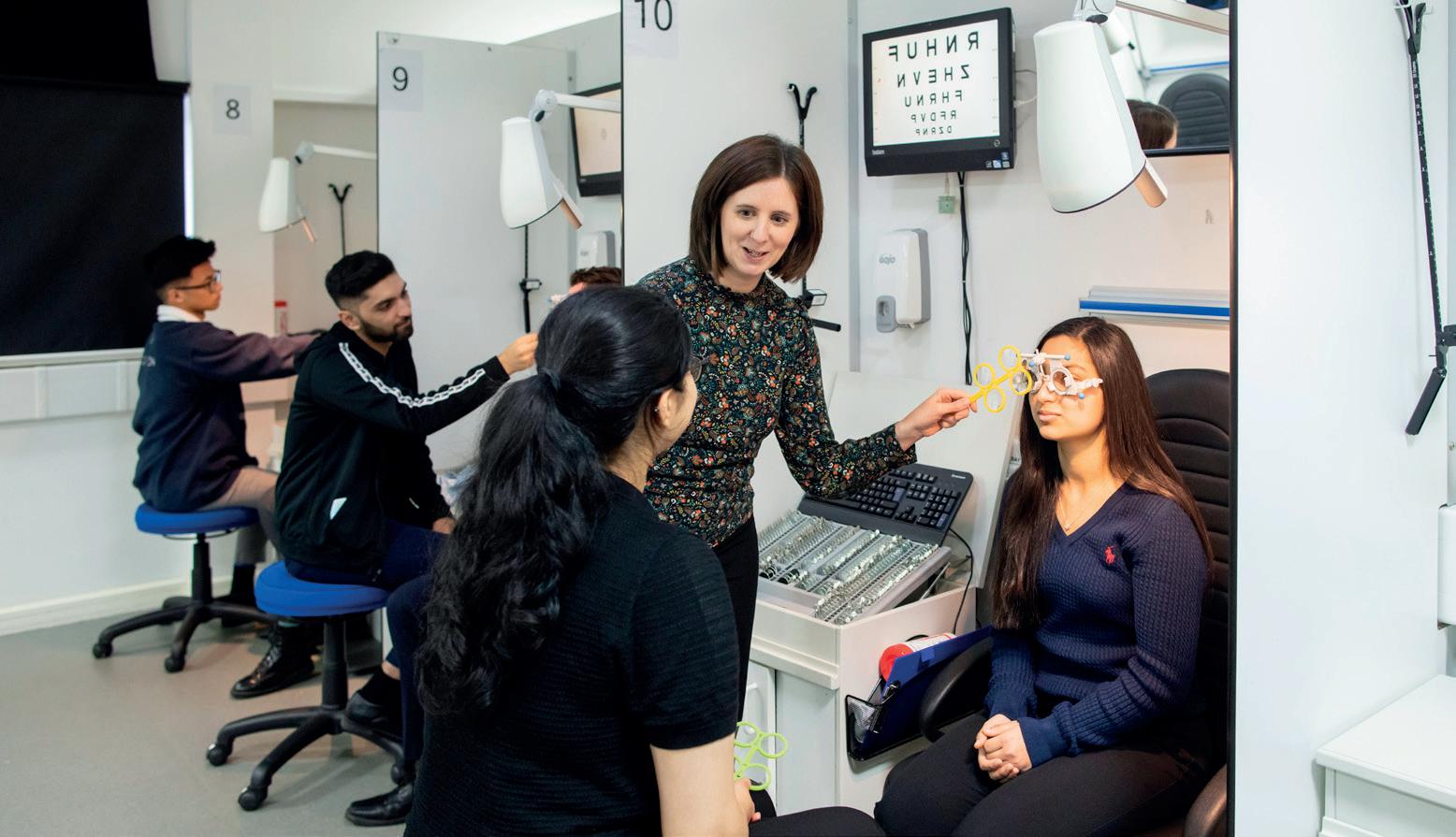
“During this session we were undertaking our first routine eye test which involved carrying out different methods to determine a prescription.”
Alisha
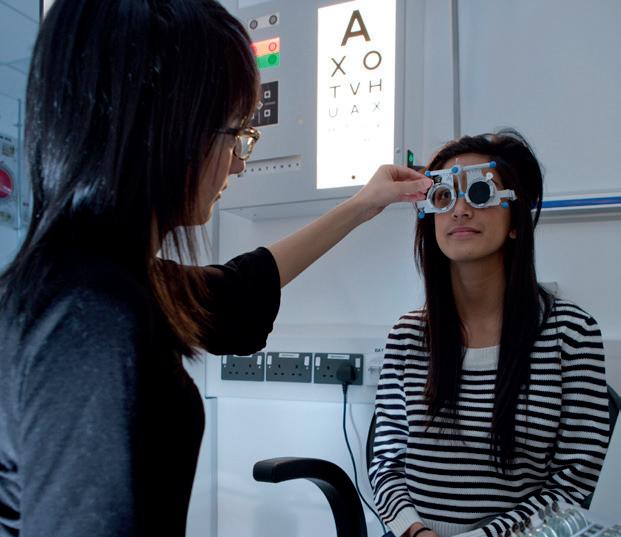
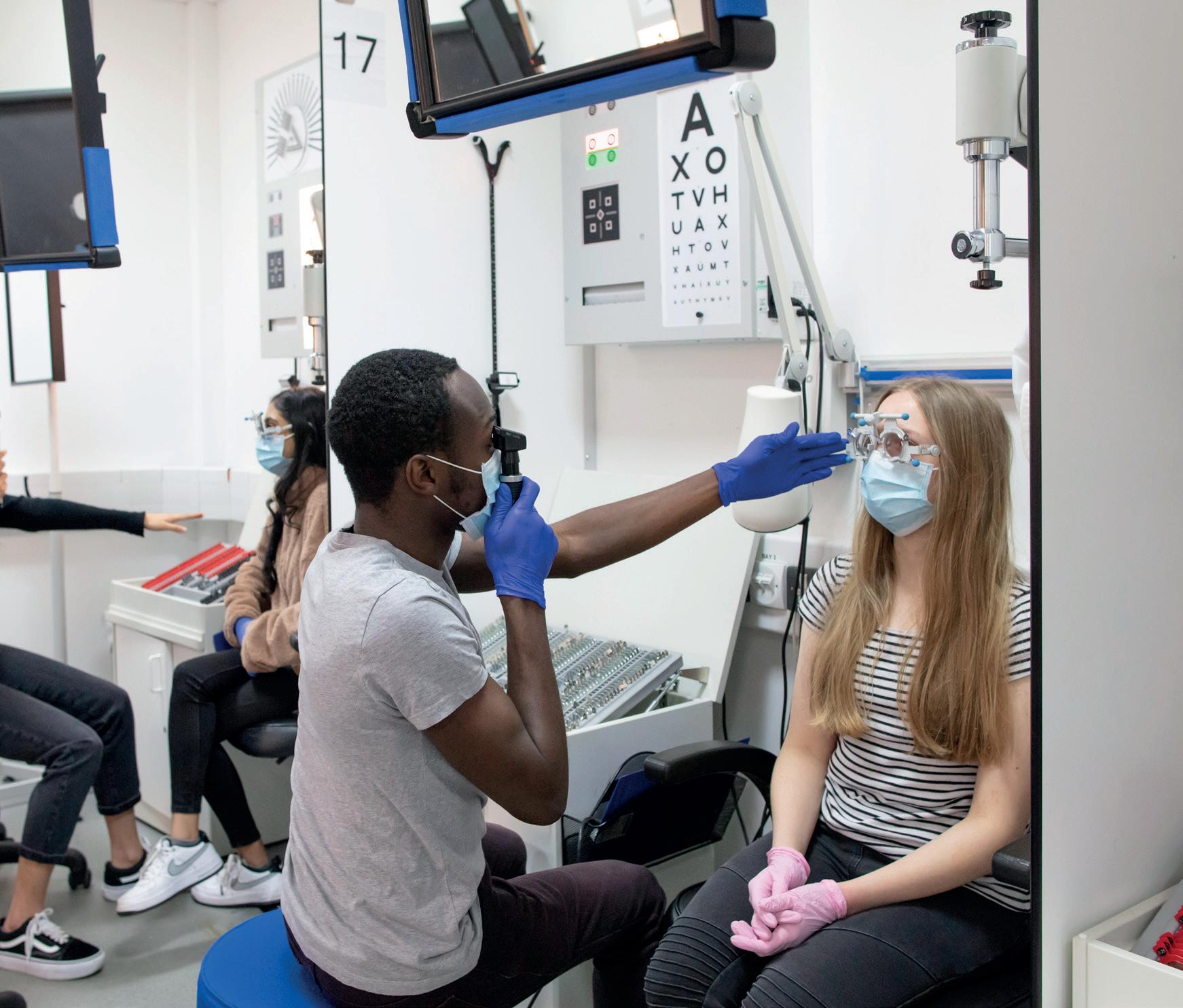
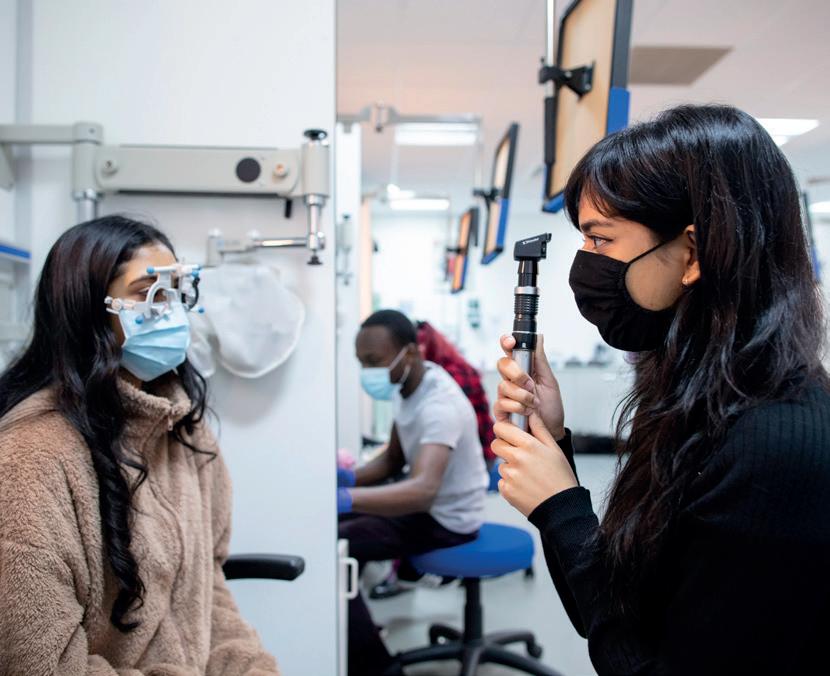
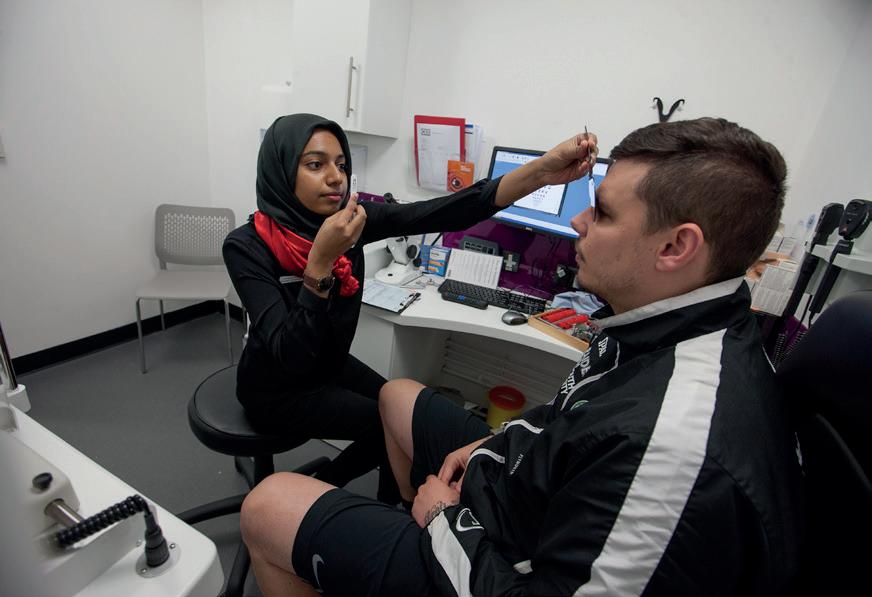
“We were practising objective and subjective refraction; this tells us what someone’s prescription would be. To determine this, you would start by doing something called retinoscopy.”
Izzy
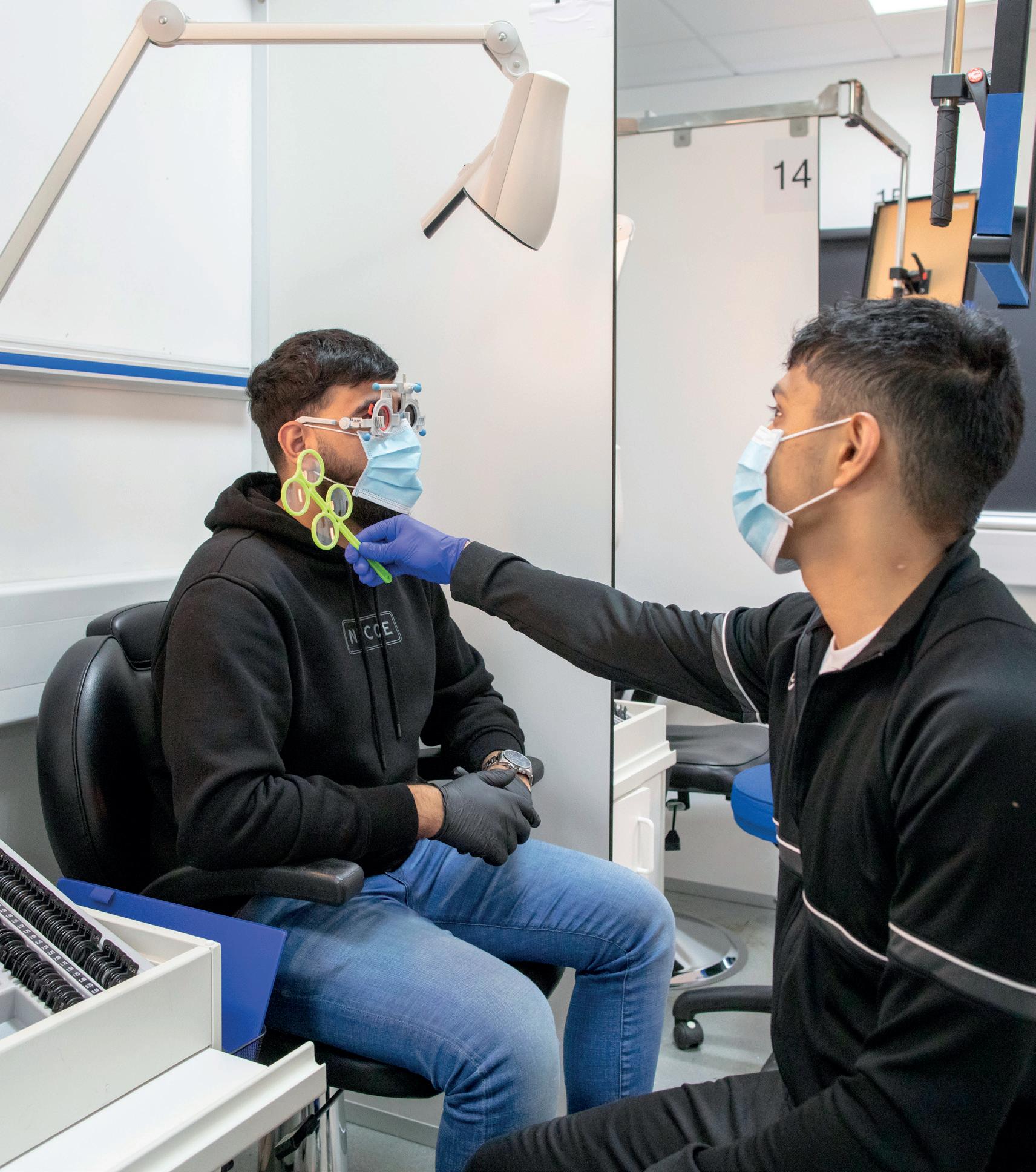
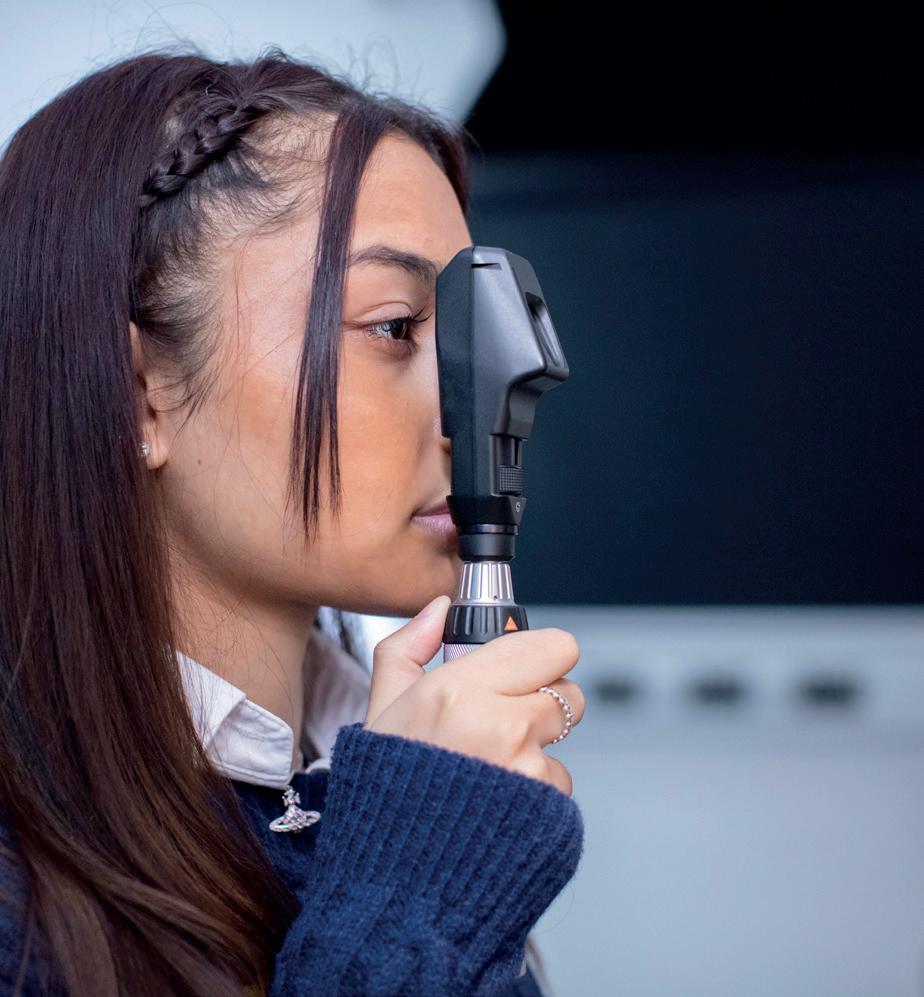
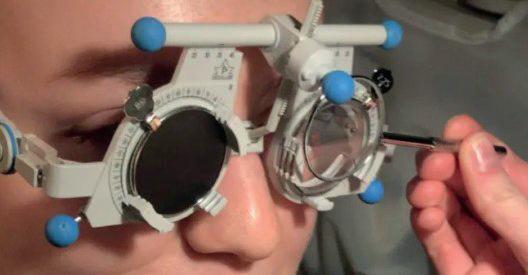
“Retinoscopy is looking at a patient’s refractive error, so you shine a light into the patient’s eye and see how it reflects back to you. According to this you will put in a positive or negative lens, depending on the patient’s prescription.”
Alisha
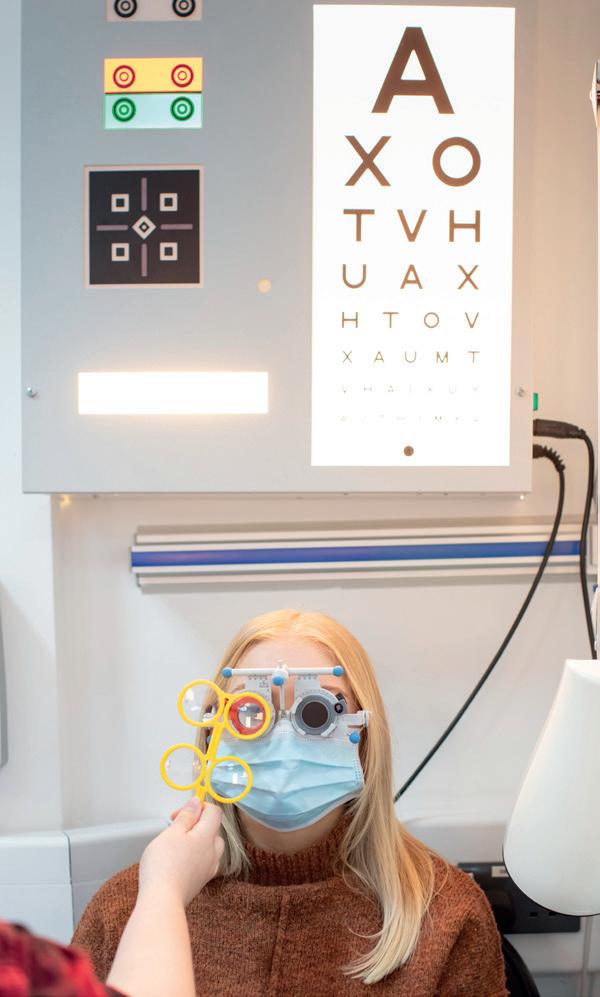
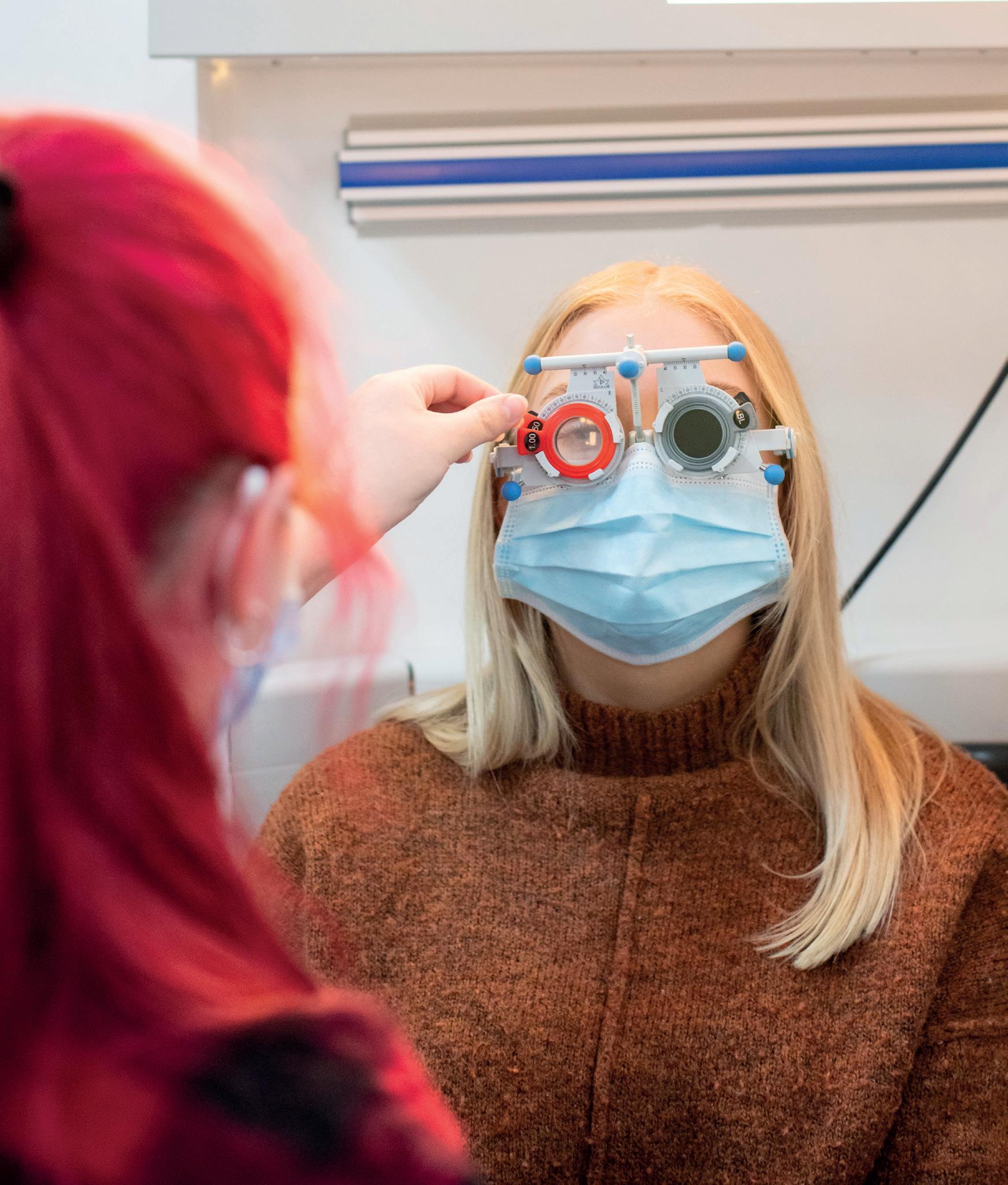
“Once this has been adjusted so you can’t really see any movement of light, you do something called Best Vision Sphere (BVS) which is where you put the lenses in front of the eye, and you ask the patient whether they can see the chart better or worse.
“After you have done that, you would use something called a Jackson Cross Cylinder (JCC) which are little lenses on a
stick with two different axes where one is positive and one is negative. You hold it up to the eye and you flip it to try and define the axis that an astigmatism would be at.”
Issy
HOW DO THE FACILITIES AT PLYMOUTH HELP YOU IN YOUR PRACTICAL SESSIONS?
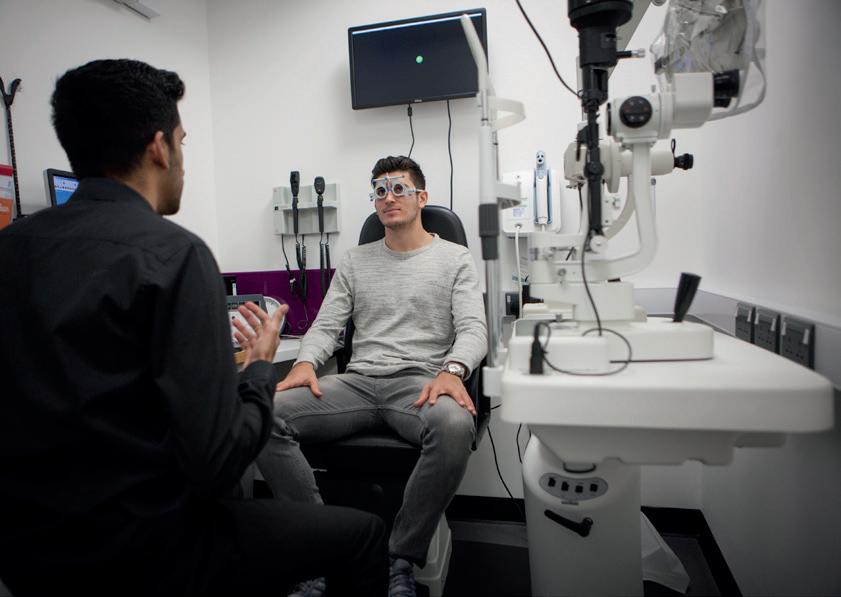
“The optometry equipment here at the University is really good because it is exactly what we are going to use in practice. It is a bit daunting to look at but once they teach us how to use it, and what each part means, it all makes sense and comes together.”
Alisha
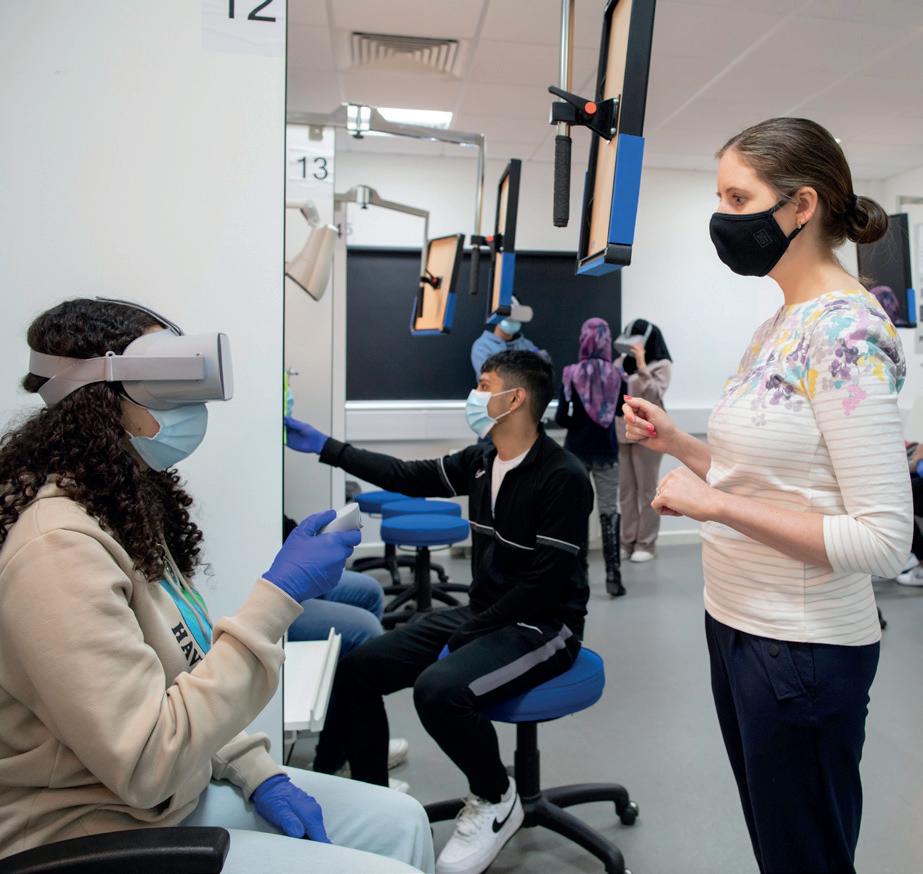
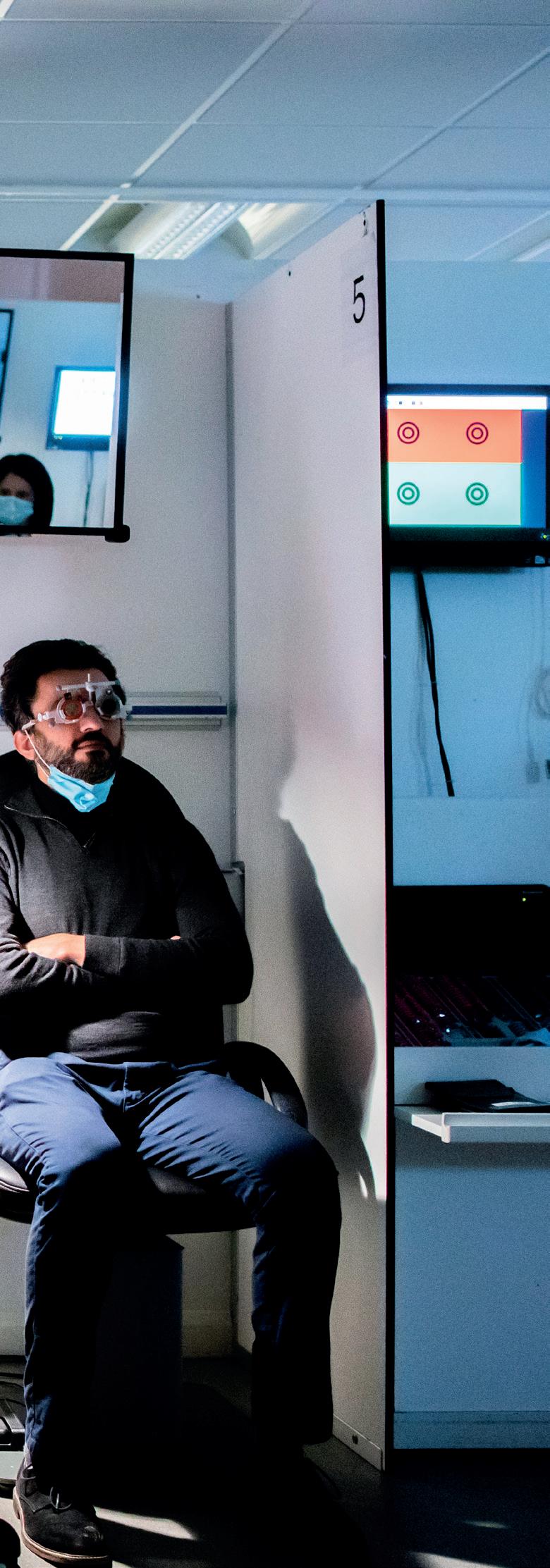
“There are a bunch of booths where we can practise on each other. The Optometry department has all different types of equipment that can be used for the same job, so you get to try the different models that are available. This ensures we gain experience with everything before being released into the world and having to deal with whatever your practice has.” Izzy
INTERCITY PLACE
InterCity Place is our brand-new space to train and develop the next generation of nurses, paramedics and allied health professionals.
Optometry at InterCity Place
Optometrists will benefit from the expanded Clinical Skills and Optics labs that will enable students to hone their clinical skills and deepen their understanding of the optics of the eye and the link between vision and the brain.
Our Optometry students will benefit from studying in new facilities that have state of the art equipment to ensure they are experienced in using current and future ophthalmic technology. Being located in InterCity Place will strengthen students links to our patient led Centre for Eyecare
Excellence, helping them gain a thorough understanding of patient care.
Claire Gorman Lecturer in Optometry
InterCity Place has a wide range of teaching areas, study places, a café and social learning spaces, so there is always somewhere to study, learn, socialise and relax.
After a lesson at InterCity Place, take a five-minute walk back to the main campus where there is a hive of activity including social spaces, cafés, lecture theatres, the Students’ Union and easy access to the library and support services. InterCity Place is right next door to the train station and with just a short walk to the bus station in the city centre, travelling to placements and days out is easy for our students.
FIND OUT MORE
InterCity Place: facilities for health professions, nursing and midwifery students. Discover the new learning environments that will give you the knowledge, skills and experience to build careers in healthcare.
CENTRE FOR EYECARE EXCELLENCE (CEE)
Throughout the third year of the course our students benefit from exposure to a vast variety of clinical experiences at our state-of-the-art Centre for Eyecare Excellence (CEE) on our Plymouth campus.
Find out more about CEE a real optical setting based at the University where our students practice on the public:
“The experience at CEE can at first be a little nerve-racking, however after a short time these sessions become immensely rewarding and I think you really get a lot out of this practical setting. Seeing real patients and getting real exposure to pathology helps to consolidate and put your knowledge into context. What’s more the professional clinic setting offers a real opportunity to develop your clinical and communication skills while working in a close-knit team of staff and fellow students.”
Ross, Optometry graduate
WHAT OUR PATIENTS SAY
“I was really impressed with how welcoming the team were and how thorough the eye examination was. The student who carried out my examination was confident and had excellent support from the supervising optometrist.”
“I recently attended the CEE opticians for a contact lens check and eyesight test. From the very first contact I found the students and Optometry team to be welcoming, friendly, efficient and professional. I wouldn’t hesitate to recommend CEE.”
“At CEE we offer a unique learning journey for our students. We are fully equipped to develop and promote their skills and knowledge to the highest standard so that they can deliver the best optometric care in our ever-growing communities. The pioneering establishment at our Wellbeing Centre gives us a great platform to provide excellent patient care and offers our students a taste of how both optometry and healthcare is moving forward.”
Dr Leanne Smewing, Optometrist and Clinical Lead, CEE and the Wellbeing Centre)
“Funny, caring and dedicated. These are just some of the words that begin to describe what CEE is. But to me, CEE is more than just about clinics – it gives you the best opportunity to get hands-on experience with testing the eyes of the public. There is never a dull moment in CEE as the range of patients allows you to not only develop your primary care skills but pushes you to further understand pathologies and meet a large variety of patients.
However, none of this would be possible without the help of the amazing staff at both the Wellbeing Centre and CEE who not only teach, but inspire you and make you fall in love with optometry. With unique teaching styles and passionate supervisors, you are guaranteed to develop and grow your knowledge to be the best for the public.
Jumanah, Optometry graduate
Associate Professor in Optometry
Dr Hetal Buckhurst
WHY DID YOU GET INTO OPTOMETRY?
At school, I always enjoyed science and maths the most, and I knew I wanted to pursue a career in which these topics would be at the forefront. I also liked the idea of going into a healthcare career in which my work would be impactful and make a difference to people. Optometry ticked all these boxes, and it is a highly regarded profession with brilliant employment prospects too.
TELL US ABOUT YOUR CAREER BEFORE YOU BECAME A LECTURER?
After becoming a Registered Optometrist, I spent three years in a busy high street optometry practice. Once I felt comfortable in this role, I was craving something else, a new challenge. It was then that I decided to pursue a PhD in Optometry. During my PhD, I continued to work in clinical practice as a locum, and also taught and supervised undergraduate students.
WHY DID YOU DECIDE TO TEACH OPTOMETRY?
During my PhD, I really enjoyed supervising the undergraduate students and feeding back into clinics that I had been in only a few years before – I could empathise with those students on what they were struggling with. Those three years of reallife experience of working as an optometrist had helped to make me a confident practitioner and enabled me to help students with tricky skills or theoretical concepts that, in the training phase, can seem challenging. I also loved the research aspect of my PhD. I was fortunate enough to work with some really inspiring researchers, and I knew I wanted to continue in this area of work.
WHAT HAS MOST INSPIRED YOU AS A LECTURER?
I was lucky enough to have some inspiring teachers at school and university. I was always in awe of these people and how they could make learning fun and engaging. But, what inspires me now is seeing
students who we trained at the University become successful optometrists who are out there contributing to providing eyecare to the UK population. Some of these optometrists have even embarked on becoming supervisors or lecturers themselves, and it’s inspiring to see what a difference being in academia can make to individuals and consequently the communities they work in.
TELL US ABOUT A TIME YOU FELT YOU MADE A DIFFERENCE
As an optometrist, every eye examination is an opportunity to make a difference. What we do can make a huge difference to a person’s quality of life. As a lecturer, each interaction with a student is an opportunity to make a difference, helping them learn and develop their skills and understanding of this multifaceted vocation. This might sound a little cheesy, but personally, I find being an optometrist and a lecturer an incredibly rewarding job.
Our
graduates Mariam
“I am now a fully qualified optometrist working in an independent practice. My future plans are to carry out extra qualifications in glaucoma and medical retina and also independent prescribing.”
WHAT IS THE BEST THING YOU HAVE DONE IN YOUR CAREER SO FAR?
The best thing is being able to help somebody see better. Sight is a precious sense which we take for granted and to be able to help somebody see more clearly or picking up a certain eye condition which can help save somebody’s sight is extremely rewarding.
HOW DID STUDYING AT PLYMOUTH HELP YOU?
The Optometry degree at Plymouth really focuses on enhancing clinical decisionmaking and clinical skills, especially in the third year where we worked in clinics examining eyes most days. Preparing me for work in a clinical environment.
HOW DID UNDERTAKING PLACEMENTS BENEFIT YOU?
Each year we undertook a week’s placement at an opticians. There, we observed the optometrists
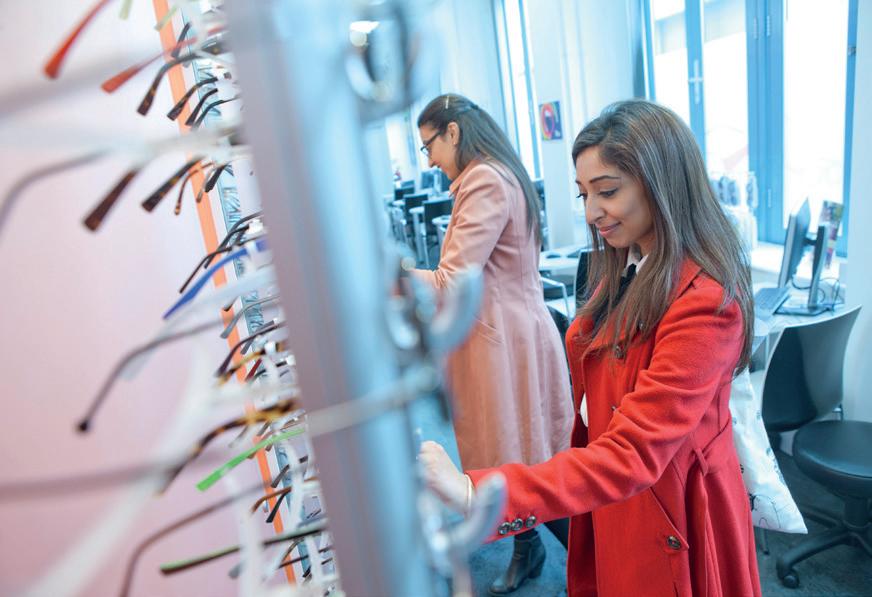
in practice, worked on the shop floor, and helped dispense patients’ glasses. It gave us an insight into what we would be doing in the future and what kind of working environment we would be in. In the third year, we also undertook a hospital placement for a week. I really enjoyed this as I was able to observe various eye surgeries in theatre and also gauge how different the work of a hospital optometrist is compared to a community optometrist.
WHAT ADVICE WOULD YOU GIVE TO ANYONE WANTING TO GO INTO THE SAME LINE OF WORK?
Enjoy your degree and make sure you love what you do. Work hard and smartly, and be sure that this is what you want to do for the rest of your life. Make sure you are also aware of what other further options are available out there as a graduate.
WOULD YOU RECOMMEND UNDERTAKING A COURSE WITH THE UNIVERSITY?
Yes, I would definitely recommend studying at Plymouth. The University is great, the surrounding areas are beautiful with the sea so close. I feel that the University has helped me to become the confident, well-rounded person I am today.
FIND OUT MORE ABOUT MARIAM
“The O ptometry degree and team at Plymouth are fantastic. The quality of teaching and the clinical supervision are excellent and matched with the superior and quality equipment and clinical facilities.”
Luke
Studying at Plymouth made me a well-rounded optometrist. The course enhanced my interpersonal skills and helped me develop clinically, academically and professionally to be able to offer the best standard of eyecare to my patients.
TELL US ABOUT YOUR CAREER PATH SINCE GRADUATION?
After qualifying as an optometrist, I began working at a large, busy high street optometry practice. Day to day I would conduct eye examinations, contact lens appointments, emergency appointments, referral refinements and follow up appointments on a diverse patient base.
I then took on a representative position with Specsavers’ head office, as a Clinical Forum Representative for Wales. I worked alongside other clinicians and the Specsavers Senior Clinical Team and Board to shape the clinical strategy and direction of the organisation.
Recently I have relocated to Malta and have begun working as an optometrist for a leading independent group of opticians on the island. The role is similar to my practice role in the UK in that I examine a variety of patients for eye examinations,
contact lens appointments and emergency eyecare. I am thoroughly enjoying my time here so far.
WHY WOULD YOU RECOMMEND UNDERTAKING THE OPTOMETRY COURSE WITH THE UNIVERSITY?
The Optometry degree and team at Plymouth are fantastic. The quality of teaching and the clinical supervision are excellent and matched with the superior and quality equipment and clinical facilities. The University is an outstanding environment to develop as a well-rounded and career ready optometrist.
What’s most refreshing about the course at Plymouth is that the team sees students as partners, working with them to create the best environment possible.
WHAT IS THE MOST EXCITING THING YOU HAVE DONE IN YOUR CAREER?
I’d say relocating to Malta, a country I have loved and visited
for over 15 years to work as an optometrist. Also working for the Association of Optometrists at 100% Optical in London, the largest optical conference in the United Kingdom.
WHAT ADVICE WOULD YOU GIVE TO SOMEONE STARTING THE COURSE?
Embrace it and enjoy every moment of it- the time flies by and there are so many opportunities to meet new people, develop new skills and try new activities.
This course will provide you with the resources and environment to grow and develop into a well-rounded individual and optometrist. Work hard, stay organised, learn from experience and be determined to be the best you can be!
PIHC
The Plymouth Integrative Health and social care education Centre
Most of you will have had some form of experience with the healthcare system in your lifetime.
While our programmes at Plymouth are designed and delivered with a single goal in mind - be that to become an Adult Health Nurse or an Occupational Therapist, for example - your experience will have shown you that healthcare is a collaborative, interprofessional environment.
PIHC, or The Plymouth Integrative Health and social care education Centre, is a new initiative within the Faculty of Health that supports interprofessional learning (IPL) across our suite of healthcare programmes, so that our students are given opportunities to learn with, from and about each other.
IPL is an effective tool in equipping students with transferrable skills that
are valuable for their future careers. We want the next generation of healthcare professionals to step into the workforce as confident practitioners from day one, so by drawing on the diversity of programmes within the faculty allows us to facilitate this by putting various disciplines together - from Diagnostic Radiography to Dietetics, Dental Surgery to Clinical Physiology, and from Psychology to Child Health Nursing.
PIHC embeds these opportunities for all stage one students studying a health and social care programmes, and continues to develop the initiative throughout your degree. PIHC ultimately allows you to feel supported, feel valued and develop cross-collaborative skills in a safe and risk-free environment.
In addition to embedded IPL, PIHC supports further opportunities for students across the Faculty to come together such as:
• Schwartz Rounds: a confidential forum for students and staff to talk about the emotional impact of their work and studies
• C4CHEd: an international collaboration promoting compassion in health and social care education
• Tea-Time Teaching: a series of student-led sessions where students present to their peers on a topic of their choice
• Ad hoc events, including a simulation day for midwifery and paramedicine students.
“The webinar allowed attendees to have an understanding not only of the processes that they may encounter in their career in medicine, but also the experiences of other professionals involved.”
General Medical Council feedback for Synergy: Oral Cancer with stage one students
“It was so interesting to hear about healthcare roles outside of medicine and what other members of the MDT do”
Stage 1 BMBS student
“Healthcare systems always require improvement, it’s easier to know how to improve your area if you know how other areas work too”
Stage one adult nursing student
“It is great to know how to ensure all of our professions can work effectively together. This benefits the service user and staff”
Stage 1 adult nursing student
Find out more About PIHC
KATY’S FIRST YEAR
I am Katy, a first-year student studying optometry at the University of Plymouth. I have had so much fun throughout the year learning new things, meeting new people and settling into Plymouth. Here are the top four things I love about being an optometry student at Plymouth.
1. LEARNING NEW PRACTICAL SKILLS
Having practice sessions supervised by lecturers really helped me put what I learnt in lectures into practice. Once I started using trial lenses to find someone’s glasses prescriptions, I really felt like I was starting to become an optometrist! I’ve had fun with my friends in these sessions too, like doing a ‘musical retinoscopy’ game as practice before an exam.
2. THE EYEBALL
Going to this event hosted by the optometry society was amazing! I loved getting dressed up for this event, the food was so tasty and the venue was decorated nicely, it was great to let off some steam with my friends from my course before our exams. It is
also a great change to meet everyone studying optometry from each stage of the course and also spend time with the academics.
3. GROWING MY CONFIDENCE
Going to University really made me come out of my shell. I’ve always been quite a shy person, and living with new people in halls definitely helped me with this, but the course has developed my confidence the most. From being put with different people each week for practical sessions, to doing a group presentation, you soon make friends on your course and gain confidence in meeting and working with new people.
4. EXPLORING PLYMOUTH
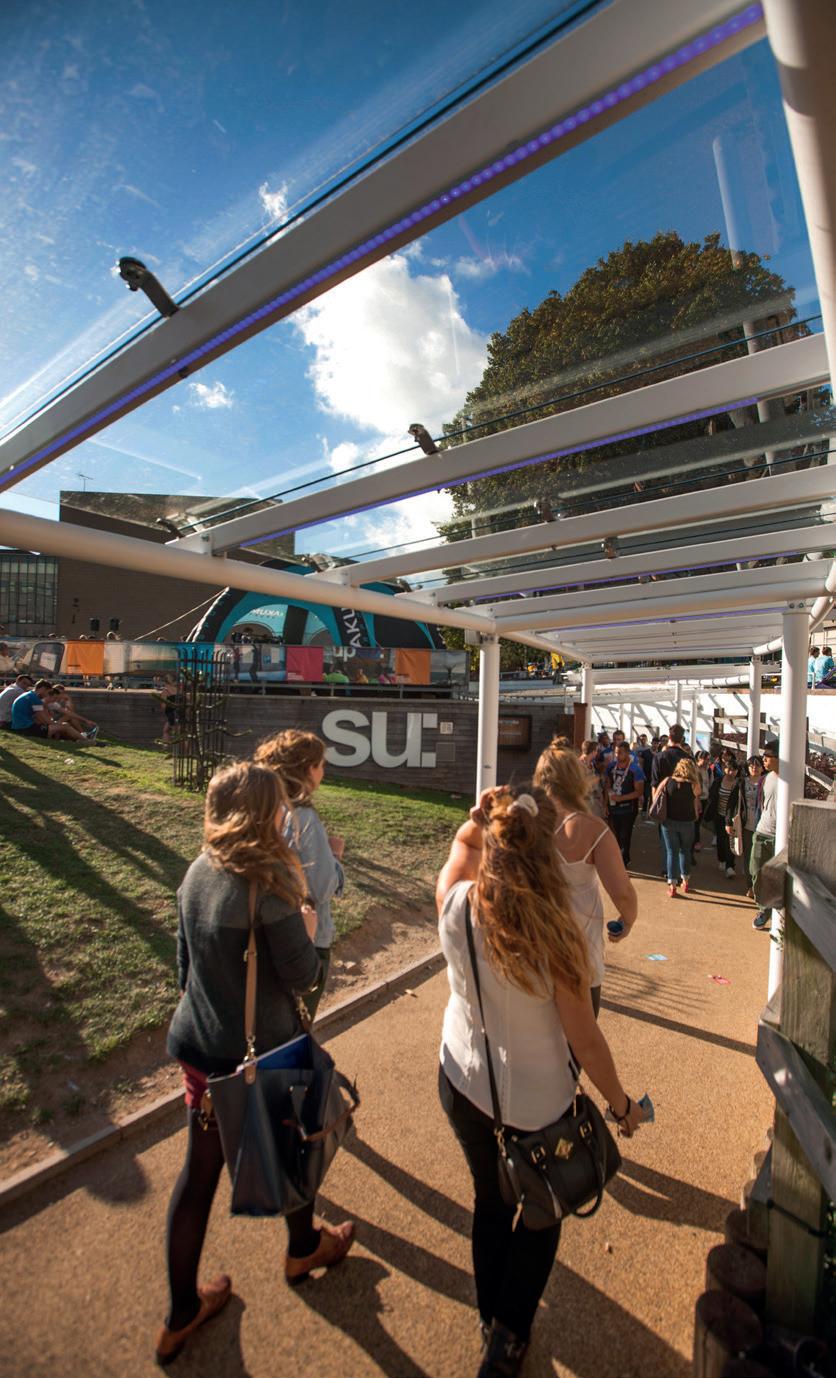
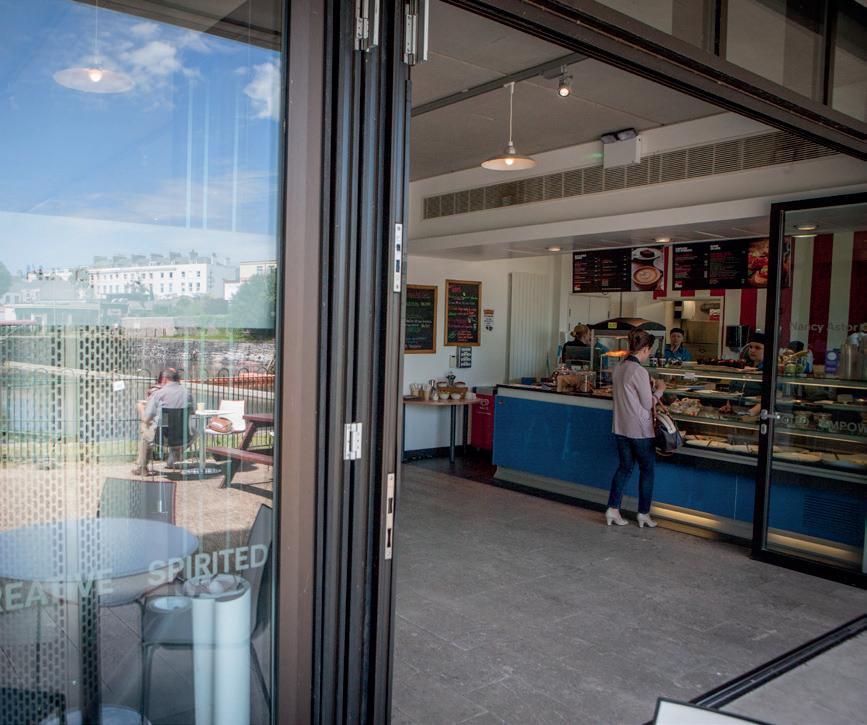
Going for walks in exam season really helped me to focus and stay motivated. There are so many beautiful spots both on campus and across Plymouth. From the Barbican where there are some little quirky shops which are great to have a browse in, I especially love walking around this area in the evenings and have managed to get some great photos when the sun was setting! The bars by the waterfront are such a nice place to have a catch up with friends. Then there is the Hoe which always has a great atmosphere with people having barbeques and swimming in the lido. On campus I love going for a workout at the SU gym and also visiting the Reservoir café, it is a lovely spot to have some lunch or a coffee between lectures.
IT’S YOUR FUTURE MAKE IT COUNT
Over 95% of our graduates are in work or further study*