Faculty of Arts, Humanities and Business foabhoutreach@plymouth.ac.uk
University of Plymouth Drake Circus Plymouth Devon PL4 8AA United Kingdom
Follow us on social media @PlymUniApply
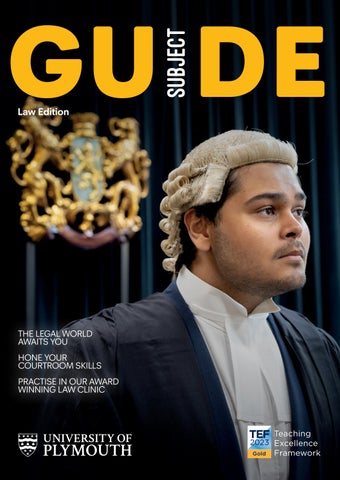
Law Edition
SUBJECT
It’s never too early to start thinking about what you would like to do after school or college, or if you are thinking of a career move! At Plymouth, we know that choosing a university and course is a big decision. While you may have an idea of a profession, career or industry that you’re aspiring towards, if you’re unsure of exactly what you want to do or are keen to find out more – this is where our handy subject guide comes in.
Meet some of this issue’s contributors:
EXPLORE
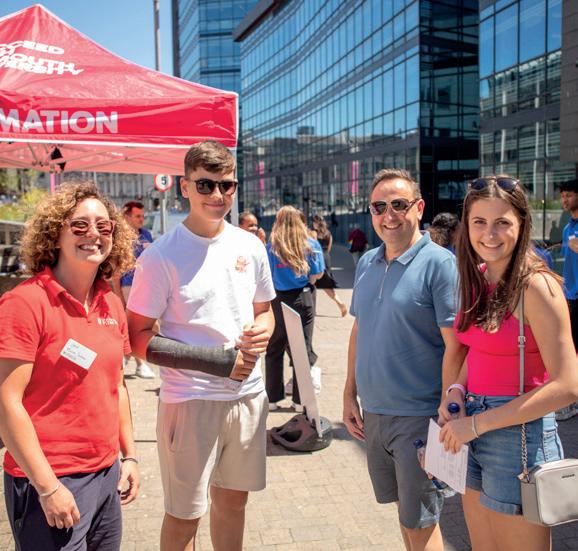
When it comes to finding out if university feels right for you, nothing compares to an open day. Talk to current students and quiz lecturers about your course. You can register to attend here plymouth.ac.uk/open-days
Our virtual tour allows you to experience first-hand what it is like to be on campus and explore the environments and facilities that inspire and shape our learning every day.
Inside...
HOT TOPIC:
P. 34 Conserving sharks through legal governance
Discover how Lydia’s PhD on shark governance is helping one of the most threatened groups of species in our oceans.
FEATURES:
P. 12 Find the right route for you via our foundation course
Grow academically and personally in a university environment.
P. 14 Jasmine takes centre stage
Discover how Jasmine’s love of acting led her to law.
P.16 The Foulston Room Moot Court
Find out how our facility in The Box provides first class court room experience for aspiring lawyers.
P.18 University of Plymouth Law Clinic
Learn about our award-winning law clinic and the opportunities on offer to our students.
P. 24 Where will your degree take you?
What skills will you develop and what career options are available?
P. 26 Eleanor’s graduation story
From a law degree to building a successful fashion business, graduate Eleanor shows how doors are opened by studying a degree at Plymouth.
P. 30 Henry’s harrowing journey
How Henry’s journey from Sudan led to him helping others navigate immigration law.
P. 32 Overcoming adversity through learning
Katherine shares how she used her University degree as a recovery method to empower others.
P. 38 Preserving Endurance
Lecturer Jason Lowther’s research into the preservation of one of the greatest shipwreck discoveries in history.
P. 46 Your next steps
Explore the road to higher education.
Donna LLB (Hons) Law graduate Donna puts forward a fair case for the power of empathy and studying law at Plymouth. P. 42–45
Jasmine LLB (Hons) Law student Performing – from the arts to a Law degree, Jasmine tells us of her experiences. P. 14–15
Lexi Climie Admissions Tutor – Law Lexi shares her top 10 reasons why studying at Plymouth is special. P. 4–9
10 REASONS TO STUDY AT PLYMOUTH
Welcome to law at the University of Plymouth, where your journey towards becoming a skilled, confident, and forward-thinking legal professional begins.
Our dynamic curriculum blends theoretical knowledge with practical experience, empowering you to navigate the complexities of modern law. Taught by industry experts, you will have a unique opportunity to work with real clients in our Law Clinic; develop your critical thinking and presentation abilities in our mockcourtroom; as well as cultivate a deep understanding of justice in society.
Join us at Plymouth, where your ambition is met with the opportunity to shape the future of law.
Lexi Climie, Law Admissions Tutor
1. CHOOSE TOPICS THAT MATTER TO YOU
Tailor your degree to your own interests and career ambitions throughout your study. You will study traditional subjects such as criminal law, contract law and property law in the first two years, alongside learning dispute resolution skills and a range of optional modules which include legal subjects such as family, employment, environmental, intellectual property, business, immigration, human rights or cybercrime.
3. NETWORK FOR SUCCESS
Graduating with a strong professional network behind you can help you pursue your future career path.
Join the University of Plymouth Law Society (UPLS) and your network is ready made. As a member, you’ll gain experience in mooting, debating, negotiations and client interviewing as well as participation in mock trials allowing you to better understand what it takes to be a lawyer. UPLS opens the door to the legal
industry by holding networking events throughout the year. You will develop transferable skills – just what employers are looking for.
“I really enjoyed the various law competitions that the UPLS held. I won the Client Interviewing Competition with my partner, and this really helped to enhance my client skills. I also enjoyed my time as a Negotiation Officer for the UPLS as I networked with many legal professionals which enhanced my reputation within the local legal sphere.”
Rhianna, LLB (Hons) Law graduate
2. BE SUPPORTED
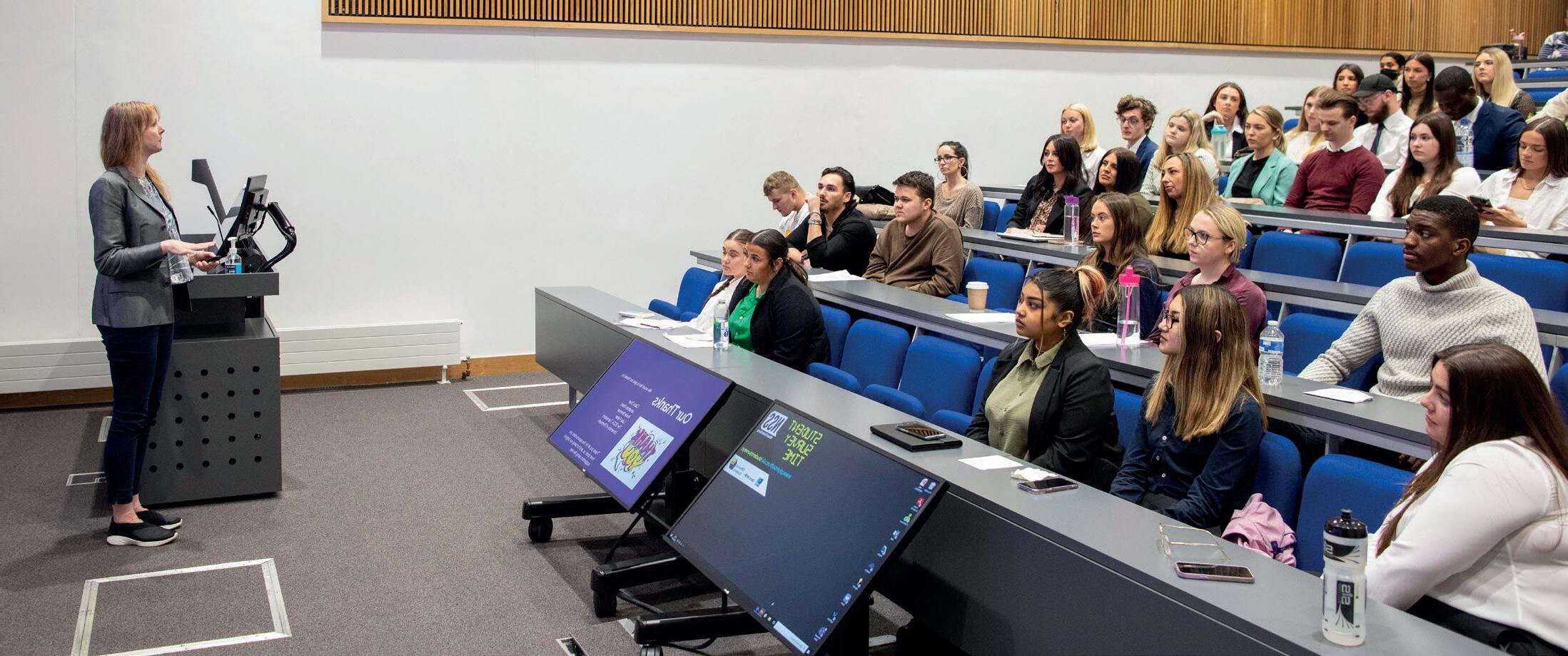
We pride ourselves on our friendly and supportive learning environment run by internationally recognised staff. We are driven by our dedication to student-centred learning. Throughout your time here you have a personal tutor who supports you individually, and every tutor operates an open-door policy, meaning you can see them outside seminars, workshops and lectures to talk through your work in person.
“The lecturers and personal tutors always went the extra mile for their students, and this proved invaluable. I always felt fully prepared for my exams due to the quality of teaching and thorough learning and revision resources provided by the lecturers. My dissertation supervisor really pushed and supported me to produce a first class piece of work.”
Jennifer, LLB (Hons) Law graduate
5. COMBINE YOUR PASSIONS
By taking different options, you will gain a thorough grounding in your areas of interest – whether it be law related or from a completely different subject such as criminology, English, history
4. GAIN REAL EXPERIENCE AT THE LAW CLINIC
Our award-winning Law Clinic offers an unrivalled hub of opportunities for students to give legal advice to those who cannot afford it and to learn vital professional skills that are transferable across all sectors. Our students learn the skills needed by practising lawyers to make a real impact on people’s lives.
The Law Clinic offers legal information and assistance to clients in Plymouth, across a range of legal areas. Coordinated by law students and supervised by staff, the clinic provides handson experiences for our students and is a vital service to the local community.
“The Law Clinic gave me the opportunity to put into practice the law I was studying. Applying the law and developing the necessary skill set and awareness for dealing with extremely vulnerable people cannot be taught in a book. I am now a confident adviser having been afforded the opportunity to work independently under supervision developing my knowledge in more complex areas.”
Katherine, LLB (Hons) Law graduate
Learn more about the Law Clinic:
or sociology, alongside your legal studies. Whatever your passion, you will have the freedom to explore it here. See full course details on page 10 and follow the QR code for more information.
6. PRACTISE REPRESENTING CLIENTS IN COURT
Our moot court facility is situated in The Foulston Room inside The Box, Plymouth’s vibrant cultural hub adjacent to the University. Students experience the courtroom first hand with interactive teaching, courtroom simulation and ‘mooting’. It’s the perfect space to develop courtroom skills and grow your confidence when preparing for your legal career.
7. PREPARE FOR FUTURE EXAMS
Law at Plymouth is accredited by the Bar Standards Board for the purpose of a Qualifying Law Degree.
Study a degree that prepares you for the updated Solicitors Qualifying Exam. Our LLB (Hons) course also allows you to pursue training as a barrister, with our students regularly winning major Bar Scholarships from the Inns of Court. If you have a foundation degree in law from one of our partner colleges, you can study your final year at the University to top-up your qualification to a full BSc (Hons) or LLB (Hons) degree.
You can also secure a placement and work experience boosting your experience and CV.
8. DEDICATED TO YOUR SUCCESS
Benefit from small class sizes, providing you with the encouragement and support you need to excel. By joining a close-knit community of like-minded students and staff, you will benefit from a supportive community and learning environment, with a dedicated personal tutor system and strong alumni links.
9. IT’S AN UNBEATABLE LOCATION
Benefit from a work–life balance in Britain’s Ocean City. You will be spoilt for choice with the thriving nightlife in walking distance of our city centre location, sandy beaches of Devon and Cornwall, and swathes of Dartmoor’s picturesque countryside and landscapes. Study with us to enjoy a healthy quality of life, surrounded by the ocean and the moors.
“Plymouth is such a great place to live – especially as a student. It has everything you will ever need including umpteen gyms, bars, nightclubs, restaurants, cafes, and transport options – all cheap or luxurious.”
Megan, LLB (Hons) Law graduate
10. EXCELLENT RESOURCES
Our library is open 24 hours a day, 7 days a week, 365 days a year, enabling you to access a wealth of resources whenever you need them, including online journals, subject-specific databases, online archives and, of course, books! There’s also specialist support on hand when you need guidance, and our enthusiastic subject librarian is always happy to help.
“I used the library services on multiple occasions for coursework, as well as for the completion of my dissertation. My dissertation is now published and without the help from the library staff and the vast resources available in the University library, I very much doubt that would have happened.”
Shannen, LLB (Hons) Law graduate
WHICH DEGREE IS RIGHT FOR YOU?
LLB (Hons) LAW
Build a deep understanding of how law works and apply this in the real world with support of our expert teaching staff, the majority of whom are expert legal practitioners and trained solicitors, with some currently practicing.
Find out more LLB (Hons) Law
LLB (Hons) LAW WITH FOUNDATION
Use the foundation year to become more confident, regardless of your educational background. Your tutors, resources, skills training, and the community of students you’ll be part of will ensure you are prepared to progress from your foundation year to your chosen degree.
Get ahead with a course designed to help you stand out with employers, whatever your career goals. Study modules with an emphasis on developing your legal and employability skills as well as professional practice.
Find out more LLB (Hons) Law with Foundation
LLB (Hons) LAW AND CRIMINOLOGY
Combine studying the law with asking broader questions about why people commit crime and how society deals with criminality to understand the social justice system better, working with partners like Victim Support and Devon and Cornwall Police.
Learn from our experienced academics who are leading researchers, practising lawyers and who have worked in the justice system. Benefit from our extensive contacts across the sector so you can be ready to make a difference in society.
Find out more LLB (Hons) Law and Criminology
FIND THE RIGHT ROUTE FOR YOU VIA OUR FOUNDATION COURSE
A foundation year forms part of a four-year degree and provides the understanding and basis needed to embark on the full degree. It offers students from a variety of backgrounds and skill sets an avenue into a wide variety of degrees that have traditionally been out of reach.
Whether you are returning to education after a break or if you come with qualifications other than A levels, a foundation pathway enables you to:
Build your confidence, regardless of your educational background.
Grow academically and personally in a university environment.
Develop research, utilise digital resources, essay-writing, academic argument, presentation, independent study and referencing skills.
Be supported via tutors, resources, and subject-specific skills training to prepare you for progression onto your chosen degree.
Join a community of like-minded students and make friends for life.
Law degrees draw students who want to make a mark on the world through debate, negotiation and advocacy. We believe that law can make a real difference in the community, whether you specialise in family, employment, environmental, intellectual property, business, immigration, human rights or cybercrime law.
Join our LLB (Hons) Law with Foundation course to:
• discover your inner academic
• undertake an individual project
• study crime and deviance
• explore human rights and social justice.
“Undertaking the foundation year course was the best decision I made. It gave me time to realise my own strengths and weaknesses within this environment, and to develop my skills further. The support and encouragement I received was fantastic; without the tutors from the foundation year, I really believe that I would have just run a mile.”
Emma, LLB (Hons) Law with Foundation student
JASMINE TAKES CENTRE STAGE
Sharing how her love of acting led to law
My
name is Jasmine, I’m an aspiring lawyer. My path to law isn’t one you might expect.
SCHOOLED ON THE STAGE
Until the age of 18, the stage was my home. Before uni, I’d dedicated my whole life to singing, acting and dancing. My experiences as a performer developed my confidence, and gifted me the ability to communicate, collaborate and speak publicly. I didn’t know it at the time, but I was laying solid foundations for my future in the legal world.
PERFORMING IN A LEGAL ENVIRONMENT
Speaking to Plymouth’s law academics at an open day, I realised that the performance skills I’d gained could also be applied to the courtroom. The sectors of law and performing arts may seem a million miles apart, yet the transferrable skills needed to thrive in both worlds cross over greatly. I always knew I wanted to be centre stage, but with Plymouth I’ve learnt how to perform in legal scenarios.
SUCCESS AND SUPPORT
Throughout my journey as a Plymouth law student, I’ve been supported by incredible lecturers and enjoyed many successes. I’ve won mock trials and client interviewing
competitions; and built an extensive network with professional lawyers, as President of the University of Plymouth Law Society.
Building industry connections with established barristers, solicitors and judges, I’ve gained work experience opportunities as a solicitor, and also undertaken a mini pupillage in a real barristers’ chamber. In my third year, I’ve worked in the University’s Law Clinic and offered free legal advice to clients.
THE JOBS ARE LINING UP
As a people person, it’s been rewarding to use my knowledge of the law to help others. Nearing the end of my studies with a full and varied CV, I’ve landed multiple job offers before graduation. I couldn’t be prouder of my achievements to date.
I don’t know for certain what the future looks like. I want to be a lawyer, want to work with people, I know that where I end up is where I’m meant to be.
THE FOULSTON ROOM MOOT COURT
Hone your courtroom skills
Situated inside The Box, Plymouth’s £40 million cultural hub, the University uses The Foulston Room as its moot court facility.
Through mock case scenarios, you have the ability to practise a variety of legal roles in this space. The room has been authentically configured and furnished to simulate a real court environment.
WHAT IS MOOTING?
Mooting is a competition in which members are presented with a fictional legal problem and simulate a court proceeding. There are two teams, each side made up of two individuals, one taking the role of Senior Council and the other Junior Council.
Together, you must analyse the problem given, research the relevant law required and present your oral argument on behalf of your client to persuade the judge that your submissions are correct and that those of your opponent are not. At the end, the judge will determine who has won.
There is no better way to learn the law as mooting forces you to prepare, cover every angle possible and anticipate every question. It is not just about your ability to argue persuasively, but to demonstrate a good understanding of the law and how it should be applied.
“The Foulston Room gives our students hands-on, real-world experience of the courtroom. Setting foot in this Grade II listed building, walking up its grand staircase and into a historic room that looks and feels just like a real court is thrilling! With interactive teaching, court room simulation and ‘mooting’, our students get to experience what it is really like to represent clients in court. It is the perfect space to grow confidence and develop craft, and it’s the best possible preparation for future success in their legal careers.”
Dr John Matthews Head of the School of Society and Culture
UNIVERSITY OF PLYMOUTH
LAW CLINIC
WORK WITH REAL CASES AND CLIENTS IN OUR AWARD-WINNING PRO BONO LAW CLINIC
‘It was inspiring to see the great work that is taking place at the University of Plymouth Law Clinic. It was clear how the clinic had not just helped provide access to justice for the community, but also opened up many invaluable opportunities for the University’s students. The students in attendance had a clear passion for law and it was
inspiring to see them leading the way in encouraging the next generation of legal professionals to enter the sector and pursue a fulfilling and rewarding career in law.’
Will Graves
The Law Society’s of England and Wales, Membership and Engagement Manager
The Law Clinic is situated on the main city centre campus and offers a welcoming professional space in which to meet
clients. There are soundproof booths available for clients to discuss their concerns with you in a confidential and safe environment and there is a large modern space for teaching, community events and workshops.
The Law Clinic provides hands-on experience for law students enabling them to put theory into practice while providing a vital service and making a positive contribution to the local community.
The work is led by law students, closely supervised by experienced staff and legal practitioners. You don’t need to take time out from your degree to work at the clinic. You’ll gain credit towards your degree, or work as a volunteer.
Clinics you may work with:
Family Law Clinic – providing information and practical guidance for those facing divorce or Children Act proceedings.
Welfare Law Clinic – focusing on claims for Personal Independence Payments (PIP) and welfare rights.
Employment Law Clinic – offering legal advice to employees experiencing problems in the workplace. Also running workshops for small businesses looking to meet legal employment requirements.
Immigration and Refugee Law Clinic
– giving information and assistance on issues of family life, long residence
and naturalisation, and registration for British citizenship. The clinic also includes the Refugee Family Reunion project running in partnership with the British Red Cross seeking to reunite refugee families separated due to persecution, war and conflict. This project was set up to help those affected by loss of legal aid services in the city.
Environmental Law Clinic –considering policy issues affecting the environment of Plymouth and the surrounding area. Members of the Environmental Law Foundation. Enabling students to work on subjects such as the marine park, maritime environment, and environmental protection against issues such as pollution and fly tipping.
Whichever clinic you work for, you’ll gain skills that employers are seeking:
• practical experience and application of the law
• good communication skills
• enhanced problem solving skills
• a developed sense of professionalism
• insight into ethics
• legal research and writing skills
• an understanding of real-life issues
• valuable feedback and professional development.
“The Law Clinic enabled me to find a practice area I was always passionate about. I have always been incredibly grateful for the transferable skills I gained. I cannot recommend volunteering at the clinic highly enough. Not only did it open doors into my career, I also made friends and contacts who still offer support and encouragement.”
Jasmine Galvin LLB (Hons) Law student
UPLS
UNIVERSITY OF PLYMOUTH LAW SOCIETY
YOUR LAW STUDENT COMMUNITY
HOW DO YOU FIND OUT ABOUT UPLS?
Your University lecturers will be very quick to promote UPLS to first years. There are so many opportunities offered by the society, not only in the short term but the long term too. It’s a society you’ll want to join.
WHAT KIND OF ACTIVITIES ARE THERE?
A whole range, from legal competitions, social events to networking opportunities and sports teams.
The society hosts six legal competitions throughout the year with each offering members a plethora of new skills that can be used throughout their studies and into their legal career. The competitions are:
• Negotiations
• Client Interviewing
• Mooting
• Debating
• Mock Trials
• Legal Triathlon
If you reach the final rounds of these competitions, you can compete in front of legal professionals who write and judge the rounds. It is a great way to network with future employers and get your name out there.
UPLS is also very proud to host an award-winning wine and cheese event every year when a range of over 100 legal professionals in the local area spend a whole evening speaking with members, offering advice, and telling their story of how they got to where they are. There are some instances where work experience is offered! This event is in high demand and one all members are encouraged to attend if they can get a ticket.
TAKE A BREAK FROM WORK
It’s important to take a break from your studies now and again to have fun and meet new members. That’s why UPLS hosts regular social events. These might be fancy dress nights out, quizzes, games nights or movie nights. They’re fantastic ways to get to know your classmates as well as students in other year groups.
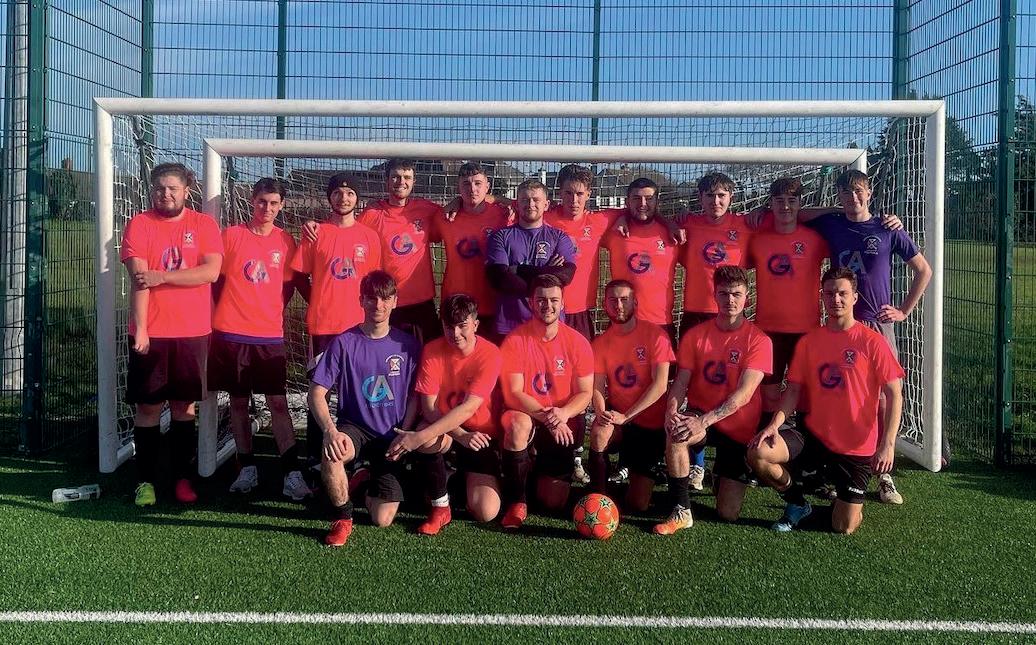
We also offer you the chance to play for our football and netball teams. Training takes place once a week and we play matches against other societies. This is a fantastic way to destress, meet other members and have fun. Sport is a great way to take
a break away from studying. We have our own kits!
Keen to become a barrister? We also have trips to one of the Inns of Court in London.
GETTING INVOLVED
You’ll be encouraged and supported all the way. There are 14 committee members, each with a different role within the society. If you’re interested in joining the UPLS committee, you’ll soon get to know the committee members and learn more about what their positions entail. There’s nothing to lose by applying and we’re just like one big family, helping each other out.
By being organised you can balance your committee role alongside your studies and just ask the committee for help if work needs to take priority and you need someone to step into your role for a bit.
WHAT SKILLS WILL I LEARN?
Taking part in the competitions, you’ll learn so many new skills – how to effectively negotiate and obtain the best deal for your client as well as maintain a good relationship with the other party; how to lead a client interview and how to ask the right questions at the right time. These skills are not something that you are taught during lectures but are
so important when you have a legal career.
The skills you can obtain from being a part of the UPLS are what employers look for when you apply for a job. They are practical skills, used every day by lawyers.
CONSIDERING JOINING UPLS?
UPLS is more than just a university society, it’s a family. It is where you meet new people, share your best university experiences, whether that’s by attending the socials and having a fun night out, progressing through the competition rounds
together or going through a season with one of the sports teams.
It makes the university experience. You’ll meet so many people you wouldn’t meet otherwise, and they’ll remain your friends after you graduate.
You get out of it what you put in, and the more active you are as a member the more doors that will open for you. You learn skills that are different to those you’ll gain in lectures, and you meet professionals and create professional relationships that are not offered anywhere else.
Join UPLS, it’s the best decision you’ll make!
FIND OUT MORE
WHERE WILL YOUR DEGREE TAKE YOU?
Graduation marks the end point of your undergraduate degree. It is a wonderful occasion to celebrate for you, your family, your friends and your tutors. We want to make sure that, while you have been working towards your degree, you have also been preparing for the next phase of your life.
We aim to empower you to follow your passions, to develop lifelong skills in reading, writing and research, to help you realise your potential as a public speaker and advocator for change, and to prepare you for a variety of career opportunities.
DEVELOPING EMPLOYABILITY
At Plymouth, we have excellent opportunities for developing employability skills and gaining work experience in a range of graduate careers. Employability is at the forefront of our Law degree. Our Law Clinic gives you an insight into law in practice and gives you the chance to see how the law works in real-life settings by managing real cases. The Law Clinic allows you to develop valuable skills, knowledge and experience, enhancing your employability and confidence going into the real world.
• Collecting and organising varied source material via seminar work and independent assignments
• Evaluating and interpreting complex information (and explaining this to others)
• Time management through juggling different module assessment requirements and work-based learning alongside your studies
• Attention to detail via preparing assignments and participating in pro bono work/work experience
• Concise and clear oral communication
“In my interview at Nash & Co I was able to state that I can meet with clients, take telephone calls, draft documents and other such tasks because it was something that I had done during my time at the Law Clinic. They were very impressed in my interview that I was able to do so much, and I would not have had these skills had I not been a part of the Law Clinic.” Rhianna, LLB (Hons) Law graduate
CAREER OPTIONS
• Lawyer
• Civil litigation paralegal
• Legal assistant
• Legal intern
• Paralegal
• Insurance broker
• Law tutor
• Police officer
• Banking litigation paralegal
• Advocacy caseworker
WHAT SKILLS WILL YOU DEVELOP?
• Critical thinking and the ability to make ethical judgements
• Problem solving and flexibility
• Verbal questioning, reasoning and negotiation
• Written communication through report writing
• Teamwork and leadership skills via group projects and work experience
• Resilience and ability to reflect on experiences and challenges
• Planning and project management through independent research tasks
“During my final year at Plymouth, I successfully applied for the Pricewaterhouse Coopers (PwC) graduate scheme in Cyber Security and Risk. Before I had even graduated, I found myself in London on a training course and I have stayed in London ever since. My role has developed significantly while with PwC, having travelled globally to consult with clients on their cyber security arrangements, developed tools and methodologies for managing cyber risk, and presented at leading cyber security conferences worldwide.”
Alex, LLB (Hons) Law graduate Senior Associate, Cyber Security and Risk
“After leaving Plymouth, I completed the Legal Practice Course, where I was fortunate enough to secure a training contract with a small finance law firm in London called Wilde & Partners. I was able to start early with some paralegal work. My practice area is restructuring and insolvency, and I act mainly for financiers, corporates and insolvency practitioners. In 2010 I was promoted to a partner in the Hammonds LLP. Hammonds subsequently merged with a US law firm called Squire Sanders and then again with Patton Boggs more recently. The firm is now a large international law practice with 44 offices in 21 countries and has over 800 partners.”
“After graduating I volunteered in Nepal for three months in 2016 to help work towards one of the UN’s Sustainability Development Goals –clean water, sanitation and hygiene. I fundraised for Raleigh International, who were the first charity group ever to volunteer in an earthquake hit area. Working in a village where we did not have many essential facilities showed me that we take things for granted in this country. We resorted to writing letters to get running water, sanitation and facilities. To achieve my fundraising target, I did various activities, such as a four temple walk in one day with my parents, trekking 28 kilometres. We also held a car boot sale and sold hand decorated candles to raise funds. Being able to help others who are in need has been the most fulfilling, memorable, rewarding and satisfying experience. At the end of it all, I earned the International Citizen Service Certificate signed by former Prime Minister, The Rt Hon Lord Cameron of Chipping Norton. Upon my return from Nepal, I worked as an operations administrator at Kier Highways. While I was working at Kier, I was able to secure work experience with a law firm. I am now working as a paralegal.”
Dhanisha, LLB (Hons) Law graduate Paralegal
Did you know we have a podcast that discusses some of the most common career paths for students studying law?
FIND OUT MORE
Get in touch!
GRADUATION STORY Eleanor’s
Eleanor shares how a Law degree from Plymouth has allowed her to realise her dream career as she builds an exciting and successful business in fashion.
“Compared to other universities that I have studied and taught at, Plymouth has an unrivalled sense of community.”
Find out more about our LLB (Hons) Law degree
TELL US WHAT YOU HAVE BEEN DOING SINCE COMPLETING YOUR STUDIES.
After graduating with a first-class Law degree from Plymouth, I began an MA in Fashion Design Management at London College of Fashion. Using my knowledge and experience from studying law, I then started Rockett Fashion, a business consultancy company, in January 2020. I also now work part time at the University of the Arts in London as an Intellectual Property Educator.
WHAT WAS YOUR MAIN REASON FOR CHOOSING TO STUDY YOUR COURSE AT PLYMOUTH?
I actually joined the University through the Clearing process on results day, as I didn’t achieve a place on the dentistry course I initially applied for – I know, things have completely changed since then! I loved the University and the city when I visited for an open day, so my decision to apply through Clearing was a quick one. The leap from the sciences to a law degree felt scary at first, but it soon turned out to be one of the best decisions of my life – I couldn’t have loved my time at Plymouth more.
HOW DID STUDYING AT PLYMOUTH CHANGE YOUR CAREER ASPIRATIONS AND PLANS?
I spent the first two years of my degree absolutely convinced that I wanted to be a solicitor and it wasn’t until I started working on my dissertation – “Trashion”, which explored intellectual property and copying in the fashion industry –that I considered an alternative career in fashion. I had so many opportunities during my time at Plymouth which exposed me to various career options, and I was both Vice-President of the Law Society and Chair of the Fashion Society. I think my experiences are testament to the fact that a law degree can prepare you for so many different careers, and it is always highly regarded by employers. The research skills that I gained through my law degree have set me up very well for the academic work that I am now involved with part time, and I hope to undertake a PhD in Fashion Innovation in the next few years.
“The leap from the sciences to a law degree felt scary at first, but it soon turned out to be one of the best decisions of my life – I couldn’t have loved my time at Plymouth more.”
WHAT IS YOUR FAVOURITE MEMORY OF STUDYING FOR YOUR DEGREE AT PLYMOUTH?
Freshers’ Week and my graduation day will always stand out in my memory and living by the sea was a huge bonus when choosing Plymouth. Still, I would say that the last months in the run up to final exams form some of my favourite memories at university; I would spend my days in the library with a big group of law students, revising together and finalising our last few pieces of coursework. We knew that our time would be up soon, and everyone would be moving to different parts of the country, so we wanted to squeeze everything out of those last few weeks together. After a long day of revision, we’d head to the SU open mic nights or Wednesday sports socials; I still don’t know how I managed to cram so much into our last few weeks!
HOW HAVE THE FUNDING OPPORTUNITIES AT PLYMOUTH HELPED YOU?
The funding opportunities offered by the University have been invaluable to my growth as a businesswoman over the last two years, and my brand would not be what it is today without the opportunities provided by The Cube (a business support facility offered at Plymouth).
In an effort to gain pitching experience and meet business experts, I entered as many competitions for funding through The Cube as I could, and I was lucky enough to win a few too. I found the free legal and accounting advice offered by The Cube particularly valuable, especially for those areas of business in which I lacked experience.
WHAT HAS BEEN THE MOST EXCITING MOMENT IN YOUR CAREER SO FAR?
A few weeks into running my consultancy business, one of my clients launched her brand at London Fashion Week. It was so exciting to see how her brand had evolved from idea to reality in such a short space of time, and then get to support her during her brand’s first showcase. Of course, waiting backstage, knowing that the seats lining the runway were filled with celebrities, buyers and fashion icons, was incredibly nerve-racking, but I’ll never forget that experience. Since then, my client’s successes have only continued; she has dressed celebrities including Kanye West, and her designs have been stocked at Browns, a top London store.
WHY WOULD YOU RECOMMEND UNDERTAKING A COURSE WITH THE UNIVERSITY?
I can’t recommend the University enough. I had an incredible three years and part of me wishes I could do it all over again. There were more opportunities than I can count through sports and societies within UPSU, and the Law staff were dedicated and inspiring as they helped me to explore my routes into the fashion industry through my law experience. Compared to other universities that I have studied and taught at, Plymouth has an unrivalled sense of community.
“Even now, when I am running a business and beginning my career as an educator, I continue to receive outstanding careers and enterprise support from the University of Plymouth team.”
HENRY’S INSPIRING STORY
HENRY WORKS AT THE LAW CLINIC HERE IN PLYMOUTH, GIVING GUIDANCE ON IMMIGRATION TO OTHERS.
SEEKING SAFETY FROM SUDAN
I was born and raised in South Sudan. My father, a liberation soldier, fought in the civil war, which meant we were targeted by the brutal and underhand Sudanese Secret Service.
I was beaten, battered and catastrophically injured, but fortunate not to have ‘disappeared’ like friends and family members I had known. I was forced to flee to Syria. I still wasn’t safe.
I managed to navigate my way across Europe: through Turkey, Greece, Italy, and France.
STRUGGLING FOR SURVIVAL
I was seeking legal asylum and wanted to escape war and my daily struggle for survival. I risked my life, in pursuit of building a better one.
When I made it to the UK, I turned myself into a police station and was formally granted asylum from war, as a refugee under the Geneva Convention.
PURSUING EDUCATION
I was sent to Plymouth, I knew no-one, but sought solace in my love for learning and self-educating. I would visit public libraries to teach myself, making the most of resources available to me.
I completed my functional skills qualifications, passed GCSEs, completed an access course, and finally made my application to the University.
PROUD TO GRADUATE IN LAW
There was only one course for me. I chose to study law. During my studies, the support, mentorship and compassion I received from my lecturers was incredible.
I graduated, proud of my journey and my accomplishments, but above all, grateful to those who had helped me along the way.
HELPING OTHERS TO NAVIGATE IMMIGRATION LAW
Now, I work as a member of staff in the University’s Law Clinic. Offering free legal advice and guidance on immigration law to anyone who needs it. I help people navigate the same legal systems that I’ve been through and give back to my community in this way.
Through good fortune and education, I have found success and an ability to help those who need it most.
My history is one of struggle and challenge, but my future is one of hope.
ADVERSITY THROUGH LEARNING OVERCOMING
LLB (Hons) Law graduate Katherine shares how she used her University degree as a recovery method to empower others.
Legal jargon can silence the most vulnerable in our society. With a lack of pro bono legal advice, many people are isolated because of their background and access to assistance. Becoming a lawyer enables me to make a difference to many different people from different walks of life. As a domestic abuse survivor, I have used my university journey as a recovery method to overcome the adversity that I faced. My lived experiences help me to empower people to change for the better too, which is very rewarding and fulfilling.
Completing my degree was the biggest achievement of my life. The course gave me an abundance of legal knowledge in many areas from criminal and civil to administrative law. The Law Clinic provided opportunities to put into practice what I was studying. Applying theory and developing the necessary
skill set for dealing with extremely vulnerable people can’t be taught in a book. Experiences like this allow you to imagine your future with all the possibilities that lay ahead.
By the time I completed my degree, I was committed to developing a career within the immigration, asylum and protection sector. During my studies, I dedicated voluntary hours to the Shekinah Mission assisting the homeless and the British Red Cross as a volunteer caseworker in the refugee family reunion team. I also undertook work to educate young schoolchildren on the signs that someone is being mistreated, the importance of selfreflection of our own behaviours and the legal requirements for a criminal conviction of such abuse –to influence the next generation. I am now working as an Office of the Immigration Service Commissioner (OISC) Level 1 Immigration Adviser
in the Law Clinic. My aspiration is to become a fully qualified practitioner to carve a career within a sector that is in heavy demand for professionals like myself.
I will always be eternally grateful for my time at the University and the relentless support they have given me and continue to give. Plymouth has become a symbol of security and focus for me in my dark times. It’s offered me more than just an education; it paved the way for me to become a better lawyer and make a difference, big or small, to those that need it most.
CONSERVING SHARKS THROUGH LEGAL GOVERNANCE
Discover how Lydia Koehler’s PhD on shark governance is helping one of the most threatened groups of species in our oceans.
Conservation has always been a part of me. When I was eight years old, I said to my mum, “I want to study fish” and it never changed. I guess you can call it a ‘calling’. I was, and still am, fascinated by oceans – the life within them, how everything connects, and how we try to protect it.
After graduating with my first masters degree in marine science, I worked for a small non-governmental organisation (NGO) in Egypt that focused on reef conservation, and I received my qualification as an official Reef Check trainer and became a dive instructor.
After working in marine science and coral reef conservation, I shifted my focus towards law and policy making because I enjoyed it, and I thought I could make more of a difference at this level.
My masters degree in ocean governance brought me to law and made me realise that I quite like legal research and law in general.
The reason why I came to Plymouth is that I met Jason Lowther on a boat trip in Malta, as part of the EU-LIFE/Bahar project. I sent him a proposal and one year later he became my supervisor.
‘Sharks’ – the term I use to refer to all elasmobranchs – are one of the most threatened groups of species in our oceans and many are disappearing due to overfishing.
It has been a privilege working with him. My PhD at Plymouth focuses on shark governance in the Mediterranean. Shark governance is a combination of legal obligations, policies and on-the-ground actions for shark conservation and management.
My research compares international and regional action – what countries have done and what they can do to fulfil these responsibilities.
‘Sharks’ – the term I use to refer to all elasmobranchs – are one of the most threatened groups
of species in our oceans and many are disappearing due to overfishing.
Other pressures include pollution, habitat degradation, and climate change. We have a responsibility to act to ensure that we halt biodiversity loss and prevent further population declines, to support the recovery of marine life and habitats.
We need common standards and goals to work towards, which are set through laws and policies. We need action to protect threatened species from these pressures, to ensure a sustainable approach to
fishing, reduce bycatch, and make countries, companies, and individuals liable for harmful actions.
Governments need to show political will to protect sharks within their jurisdiction and determine priorities at national level, then act and enforce. Ultimately, we need to manage fisheries better, reduce fishing pressure on vulnerable species and consider actions that contribute to the recovery of species and marine ecosystems.
Moving forward, I would like to continue my research and expand on my skills in all things legal. I hope to work closely with the IUCN’s (International Union for Conservation of Nature) World Commission on Environmental Law and gain more experience in legal research, but also continue work on sharks to help improve their management and conservation.
Endurance
Get to know your lecturer Jason Lowther through his research into the preservation of one of the greatest shipwreck discoveries in history.
Hailed as one of the greatest shipwreck discoveries in history, Endurance, the lost vessel of Antarctic explorer Sir Ernest Shackleton, has been located more than a century after she was holed by sea ice and sent to the bottom of the Weddell Sea.
For decades, scientists, historians and mariners have speculated as to the ship’s final resting place, with only the calculations of Shackleton’s filmmaker Frank Hurley and
the unproven but ultimately accurate calculations of her Captain, Frank Worsley, to support their hypotheses.
That was until a project mounted by the Falklands Maritime Heritage Trust located the vessel more than 3 kilometres below the surface, off the coast of British Antarctic Territory.
Using a South African icebreaker and submersibles, the team were able to navigate through
the sea ice to the search area and peer into its freezing depths. In so doing, they obtained remarkable video footage of the vessel, which, befitting its name, has endured incredibly well. Preserved in an upright position and with its timbers intact, it’s been proclaimed as “the finest wooden shipwreck ever seen” by marine archaeologist Mensun Bound.
And that is the way that Endurance will remain, thanks to the work of environmental law experts at Plymouth, who, three years ago, helped to create a groundbreaking policy that provides protection for underwater heritage in the region –even that which is unlocated.
“Protecting underwater heritage has, historically, been something of an afterthought,” explains Jason who is Associate Professor of Law in the School of Society and Culture. “Until recently, it has been extremely unlikely that anything lost in deep water could be found again, particularly in an environment like Antarctica. But with the march of technology, the situation has flipped, and there has been a growing call to safeguard underwater sites containing objects of historical and cultural importance.”
“And it is gratifying that Plymouth is developing a reputation as the go-to institution for legal expertise in underwater heritage. To see the pictures and the state of preservation – and know it is going to stay like that – is something of which we can feel very proud.”
That was the situation in 2018, when the Maritime Archaeology Sea Trust (MAST) approached Jason and Mike Williams, a Visiting Professor and Research Fellow and renowned expert in the field, to seek their expertise in law. MAST had already been in discussion with the Foreign and Commonwealth Office (FCO) about undertaking an assessment of underwater cultural heritage in British Antarctic Territory, precipitated in part by the then proposal to search for Endurance
Jason and Mike’s recommendation was that the 1959 Antarctic Treaty needed a new policy that specifically addressed such underwater cultural heritage.
Jason and Mike began to draft the policy that would be incorporated into the 1959 Treaty, introducing this underwater archaeological dimension. It was a process not without its quirks, not least because the rules governing British Antarctic Territory are not the same as those for the UK’s territorial waters. The government at that time had modified and adopted rules established by a 2001 UNESCO convention on underwater heritage – though it had also refused to sign that convention.
“It was probably a bit of a niche subject for the British Antarctic Territory to take on,” adds Jason. “They had a heritage policy, but it extended to things you could see on land – old huts and whaling stations. So, that step into the icy waters was a big one for them – but we overcame it.”
The draft policy drew upon the UNESCO and British Antarctica Territory documents and was accepted without amendments. In 2019, Endurance was added to the schedule of historical monuments even though its location was still not known at that time.
“The trick was to make it flexible enough to be able to protect that which is unlocated,” said Mike. “And there are countless other ‘unknown’ wrecks out there – those ships that sailed south but disappeared, with no radio to tell anyone that they were there.”
This would subsequently be demonstrated in 2021, when Spain also used the policy to designate as underwater heritage, the wreck of the San Telmo – though it has never been located following its loss in 1819 somewhere around Livingston Island.
The policy also enshrines the concept of ‘preservation in situ’ – leaving things where they are if they’re stable, and only seeking to remove them if that changes.
The issues with preserving iconic wrecks such as the Mary Rose and the Vasa have ensured that Endurance will only be explored through visual technologies such as virtual and augmented reality. Jason and Mike’s work became a case study within the University’s submission to the 2021 Research Excellence Framework and was, for the first time, included as part of the University’s History and Heritage module. The pair are currently editing a book on cultural heritage perspectives across the world, and Jason has subsequently joined Mike on the Joint Nautical Archaeological Policy Committee for the UK.
“It’s great to have been part of something so foundational as this,” Jason reflects. “And it is gratifying that Plymouth is developing a reputation as the go-to institution for legal expertise in underwater heritage. To see the pictures and the state of preservation [of Endurance] – and know she is going to stay like that – is something of which we can feel very proud.”
RESILIENCE, EMPATHY AND PASSION
WHAT ELSE DOES IT TAKE TO BE A LAWYER FOR THE PEOPLE?
Donna, a University of Plymouth graduate and solicitor at Beers Solicitors, puts forward a fair case for the power of empathy.
People are always a little nervous when they come to see a lawyer. Whatever they are dealing with, it is going to be something which is quite emotional. Whether that is moving house, someone’s death, getting divorced. It’s about making them feel at ease.
If you can bring that human element in, people relax. So much of our job is building this rapport, showing empathy and communicating clearly.
EVERY FILE IS A HUMAN BEING
If a lawyer can avoid walking through that court door, that’s better for the client. Just because someone comes in with a problem, it doesn’t mean it is in their best interest to pursue it. Once you start that rollercoaster and issue proceedings, the court takes over and it becomes everything you live and breathe.
“I enjoy seeing my mentee’s confidence grow and helping to prepare them for the competitive nature of securing the training contract.”
I explained to my trainees that every file in the office represents a human being.
During your degree, you learn all about the law, but you also need to know how to translate that in a way that the client will understand. It’s about reading people and ensuring they understand what you are explaining to them.
QUALITIES TO SUCCEED
You need empathy, regardless of the practice area. You need resilience. You need to juggle client expectations with your workload and third parties. It’s important you develop the aforementioned poker face, to withhold your gut reactions. In prison law and criminal matters, you hear a lot of shocking things. Some of the time they want a reaction from you, so then it’s about not reacting.
At times, particularly in prison law, you have to put to one side any moral judgement. You are a lawyer, there to do a job. It’s the client’s right. It’s not up to me to make a judgement– that’s down to the court or parole board.
COPING WITH PRESSURE, PEOPLE AND PAPERWORK
There is always pressure, but it’s about effectively managing this, for yourself and your team. It’s not just being aware if your client doesn’t understand what you’re saying but spotting whether a colleague is looking stressed and asking them if they need any help.
As a graduate, Donna continues her strong relationship with the University Careers Service and is a mentor under the Careers Mentoring Scheme, being paired annually with a Law student to
provide guidance, advice and support about the legal industry.
“I signed up to be a mentor under the University’s Mentoring Scheme as I believe it is a great opportunity for students to find out about the reality of the legal industry but also to provide my mentee with guidance, advice and to be a general sounding board for their next steps into the legal world. I enjoy seeing my mentee’s confidence grow and helping to prepare them for the competitive nature of securing the training contract.”
There is a lot to consider on your student journey, from deciding to study a higher education course to having your application accepted. Explore our top tips below to help you prepare.
RESEARCH COURSE OPTIONS
At Plymouth, you can choose between different law courses. The emphasis of your degree depends on your interest. You can opt for a straight law degree or combine this with criminology.
Look into the detail of each course you are interested in.
• What tariff points and subject profile do you need?
• Does the course include modules you are interested in?
• Will it forge a career in an industry you aspire towards?
EXPLORE OUR COURSES
CHOOSE THE RIGHT A LEVELS OR EQUIVALENTS
Some courses require you to have obtained certain entry subjects or grades. Make informed choices when choosing your options.
Don’t worry if you didn’t have an idea when you were deciding as hopefully, you will achieve a strong set of grades across a range of subjects to maximise your options.
GET ORGANISED
Make a pros and cons list and discuss them with your family and friends. Undertake additional research by looking at course webpages, professional body websites or ucas.com for further information.
“The sense of community I felt on open days and during visits made me want to attend and dispelled any nerves that I had about starting my further education away from home. In hindsight, I was right in how I felt during those visits; Plymouth has the strongest student community I have seen at any university that I have since visited or studied at.”
Shannen, LLB (Hons) Law graduate
VISIT AND CONNECT WITH US
Find out more about our courses, facilities and support services at one of our open days held throughout the year!
BOOK YOUR PLACE
IT’S YOUR FUTURE MAKE IT COUNT
Over 95% of our graduates are in work or further study*