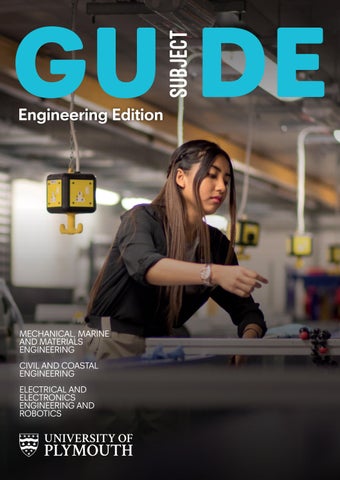
Engineering Edition
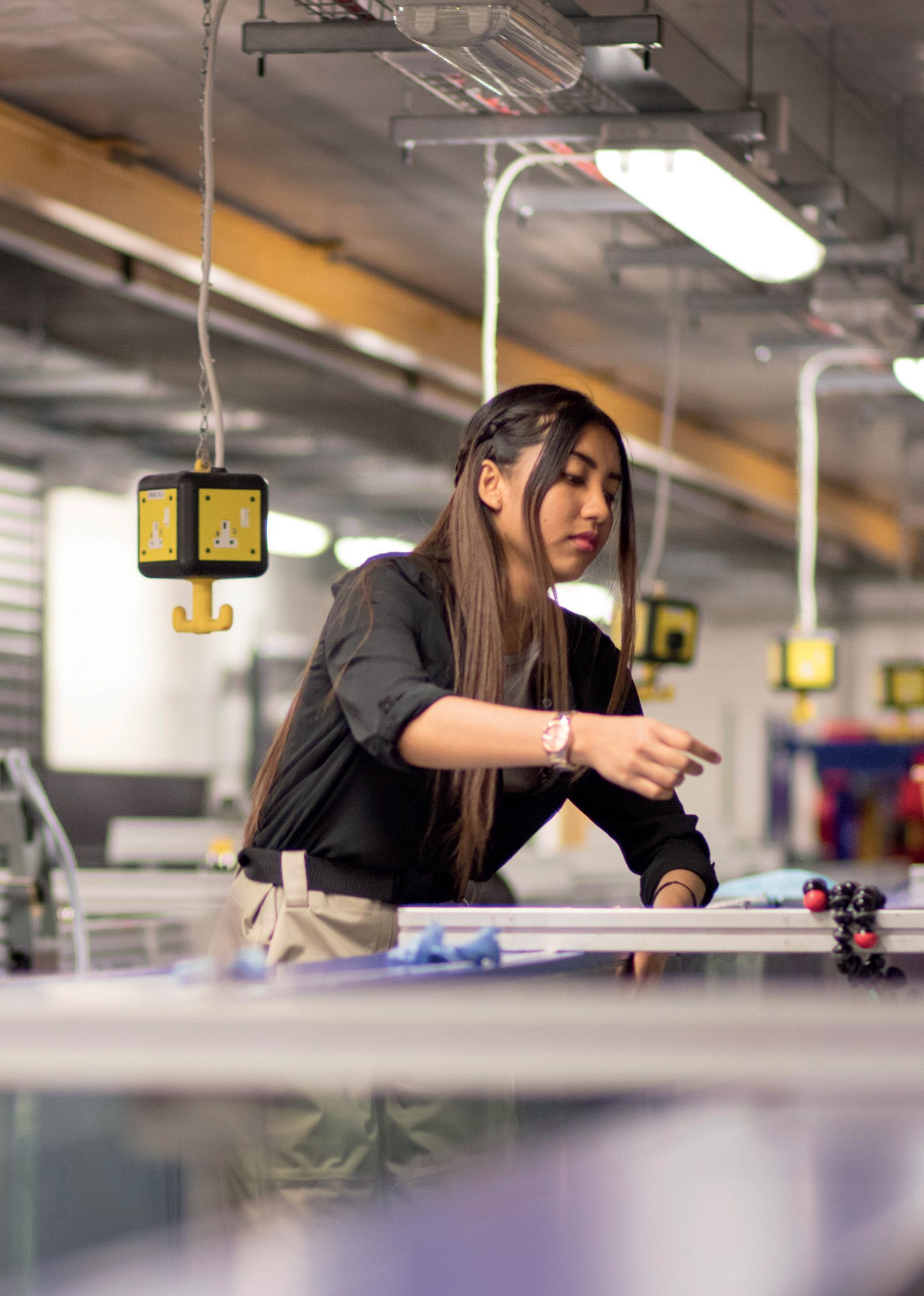
MECHANICAL, MARINE AND MATERIALS
ENGINEERING
CIVIL AND COASTAL
ENGINEERING
ELECTRICAL AND ELECTRONICS
ENGINEERING AND ROBOTICS
Admissions
+44 (0)1752 585858 admissions@plymouth.ac.uk plymouth.ac.uk
Schools & Colleges Outreach outreach@plymouth.ac.uk
University of Plymouth Drake Circus Plymouth Devon PL4 8AA United Kingdom
Follow us on social media @plymuni
Engineering Edition
SUBJECT
It’s never too early to start thinking about what you would like to do after school or college, or if you are thinking of a career move! At Plymouth, we know that choosing a university and course is a big decision. While you may have an idea of a profession, career or industry that you’re aspiring towards, if you’re unsure of exactly what you want to do or are keen to find out more – this is where our handy guide comes in.
Meet some of this issue’s contributors:

EXPLORE YOUR FUTURE HOME
Visit us at an Open Day
When it comes to finding out if university feels right for you, nothing compares to an open day. Talk to current students and quiz lecturers about your course. Register to attend at plymouth.ac.uk/open-days
FEATURES:
P. 8 Which degree is right for you? Discover our courses on offer.

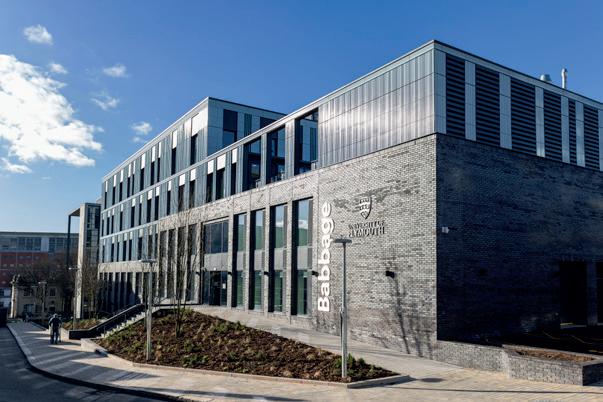
P. 14 Our Home of Engineering
Find out more about Babbage, our state-of-the-art facility for collaboration.
P. 23 The Power of Placements
Find out how a placement can enhance your graduate prospects and what it’s done for our students.
P.35 Career Support
See what our careers service can offer you during and after your time with us at Plymouth.

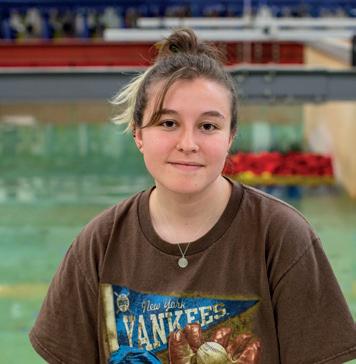
Lilly-Mae
BEng (Hons) Civil Engineering Lilly-Mae tells us about her experience while studying with us. P.31
Dr Jon Miles Lecturer in Mechanical Engineering Jon shares his top 10 reasons why studying at Plymouth is special. P. 4
Nilesh MEng (Hons) Civil Engineering Nilesh discusses his placement experience with us and how it’s helped him moving forward. P.26
10 REASONS TO STUDY AT PLYMOUTH
If you’ve picked up this brochure, you’ve probably already started considering your future and perhaps asking yourself if studying engineering is something you would like, and if the University of Plymouth is the right place for you. I know from experience this leads to a mix of emotions as you’re going through this process: one perhaps of excitement, maybe nervousness or worry. This may not be the first brochure you’ve looked through, so to cut through all that information and help you make your choices, let’s see if I can help you!
Here is my top 10 list for starters.
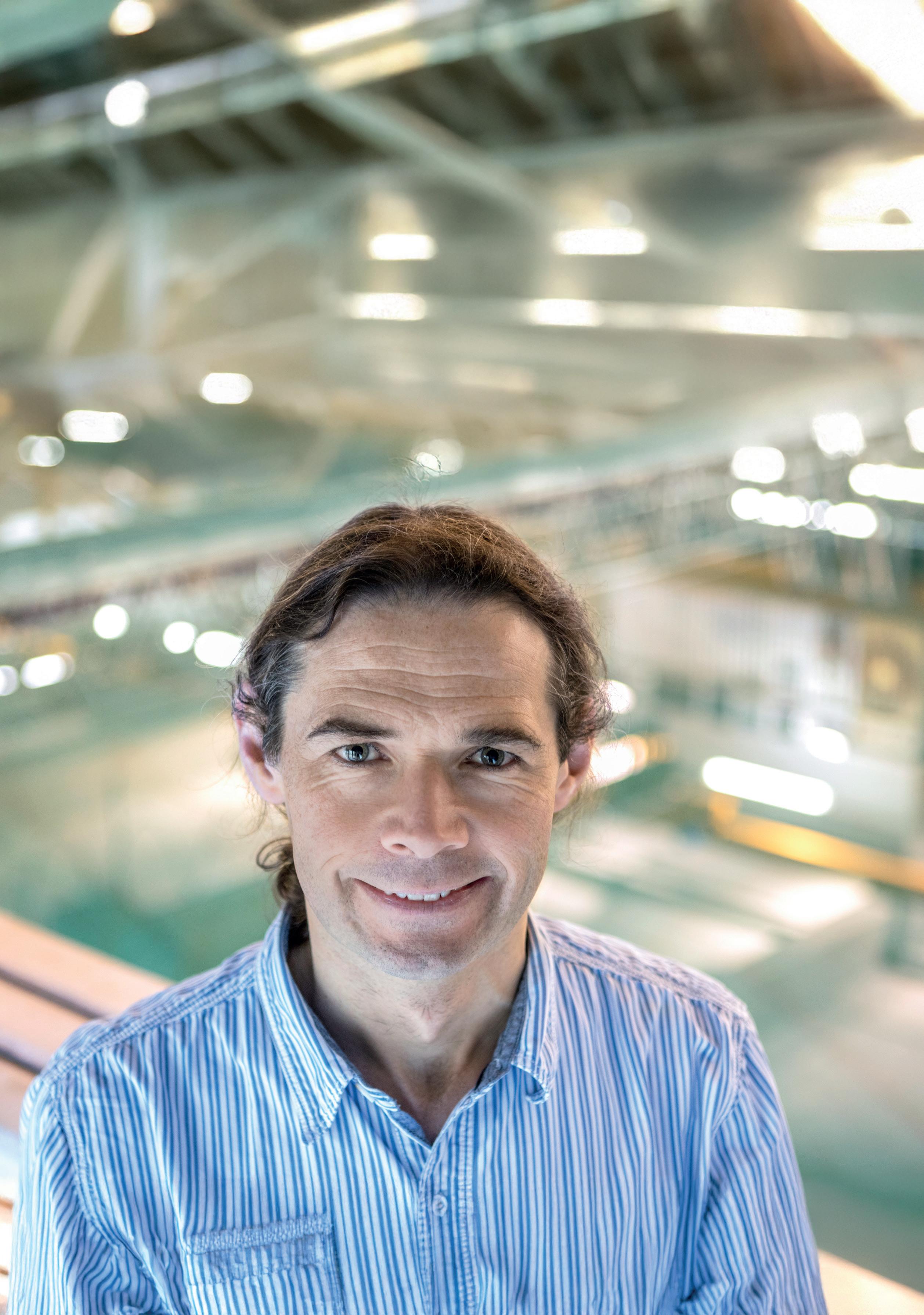
Dr Jon Miles Civil and Coastal Engineering
1. PREPARE FOR A GREAT JOB WHEN YOU GRADUATE
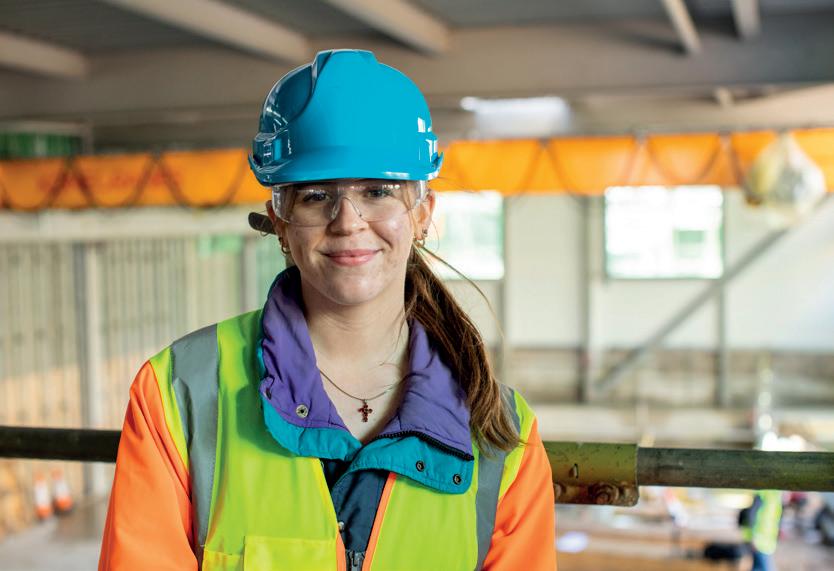
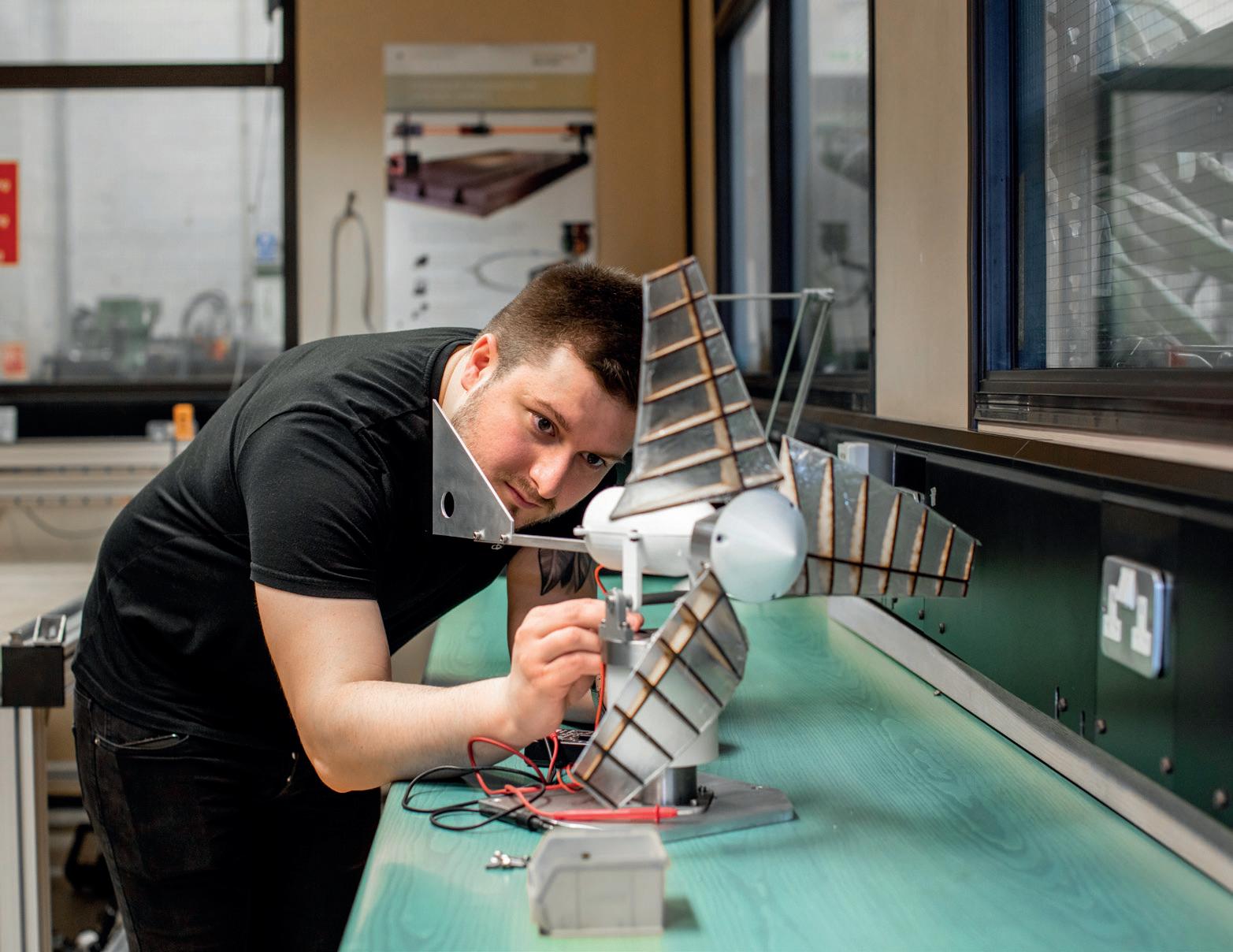
Our emphasis is on getting our students great jobs. You won’t just gain valuable qualifications –you’ll develop your skills through hands-on learning, with multiple subjects working together in real-world environments, thanks to our relationships with a range of industries. We meet for regular discussions with our Industry Advisory Group of local engineering employers to ensure that our taught courses are relevant to the industry’s needs.
2. GAIN PAID WORK EXPERIENCE DURING YOUR STUDIES
We have extended global networks to help you get a placement. Our graduates have completed placements and found employment all over the UK and Europe. Between your second and third year, you can opt to apply for a paid year’s placement. You do real engineering work and earn real pay – typically between £14£18.5K. Sometimes placements lead to financial support for your final year and, when you graduate, you may get a job offer from the placement company. A placement year gives you the work experience that proves your value to employers and makes you a sought after graduate.
3. BABBAGE, THE HOME OF ENGINEERING
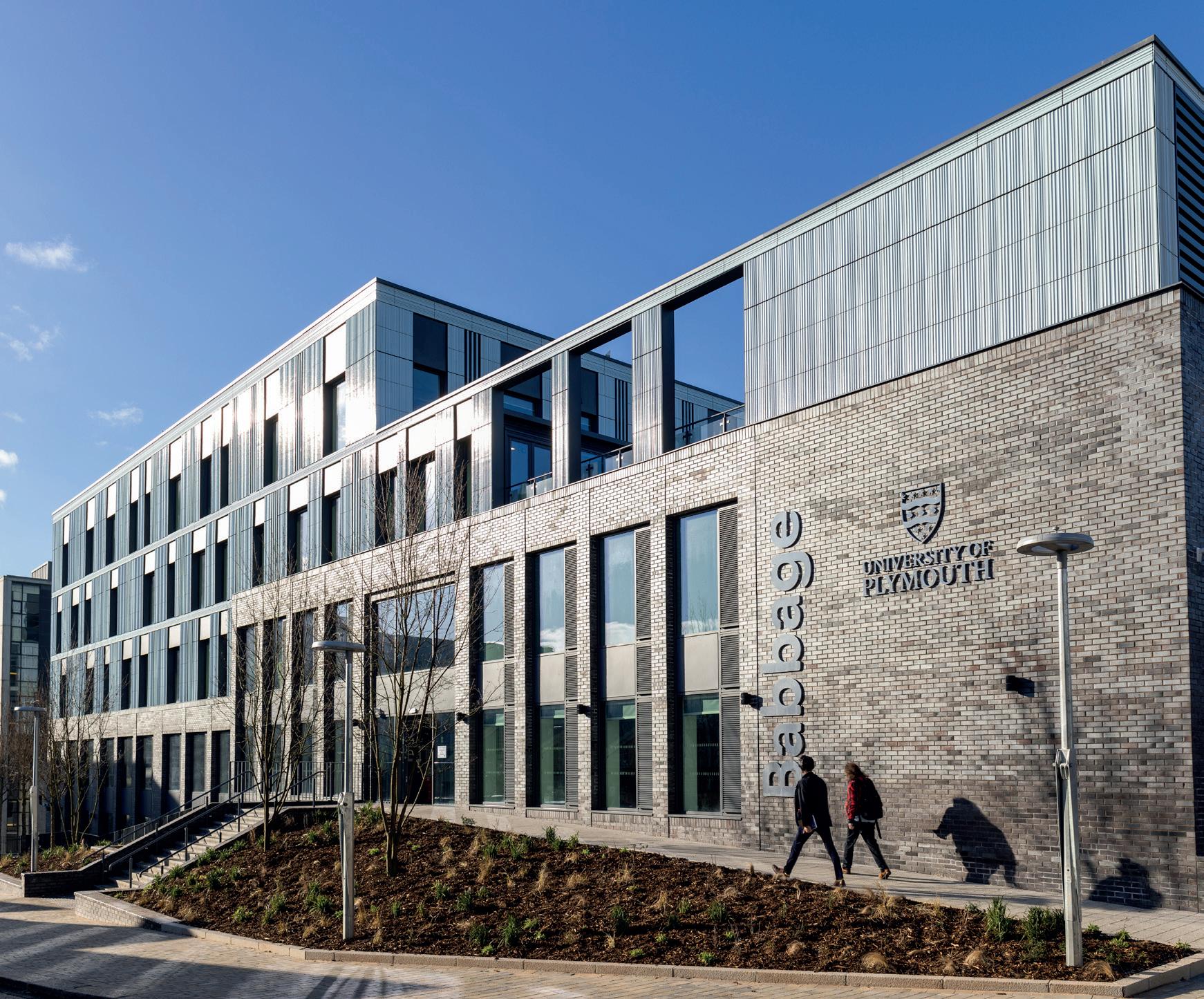
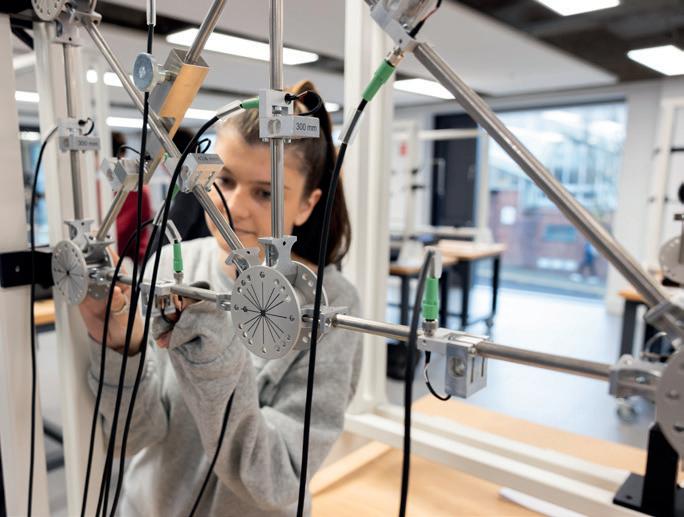
Located on our city centre campus, this building has transformed the learning and research experience for Plymouth’s engineers of the future. We’ve packed it with specialist equipment sourced from world-leading global companies. This includes a sub-sonic wind tunnel, an autonomous vehicle test laboratory, an energy and sustainability laboratory, high performance computing facilities, a digital fabrication laboratory, virtual engineering suites and much more. See P.14 for more information.
4. COAST LAB
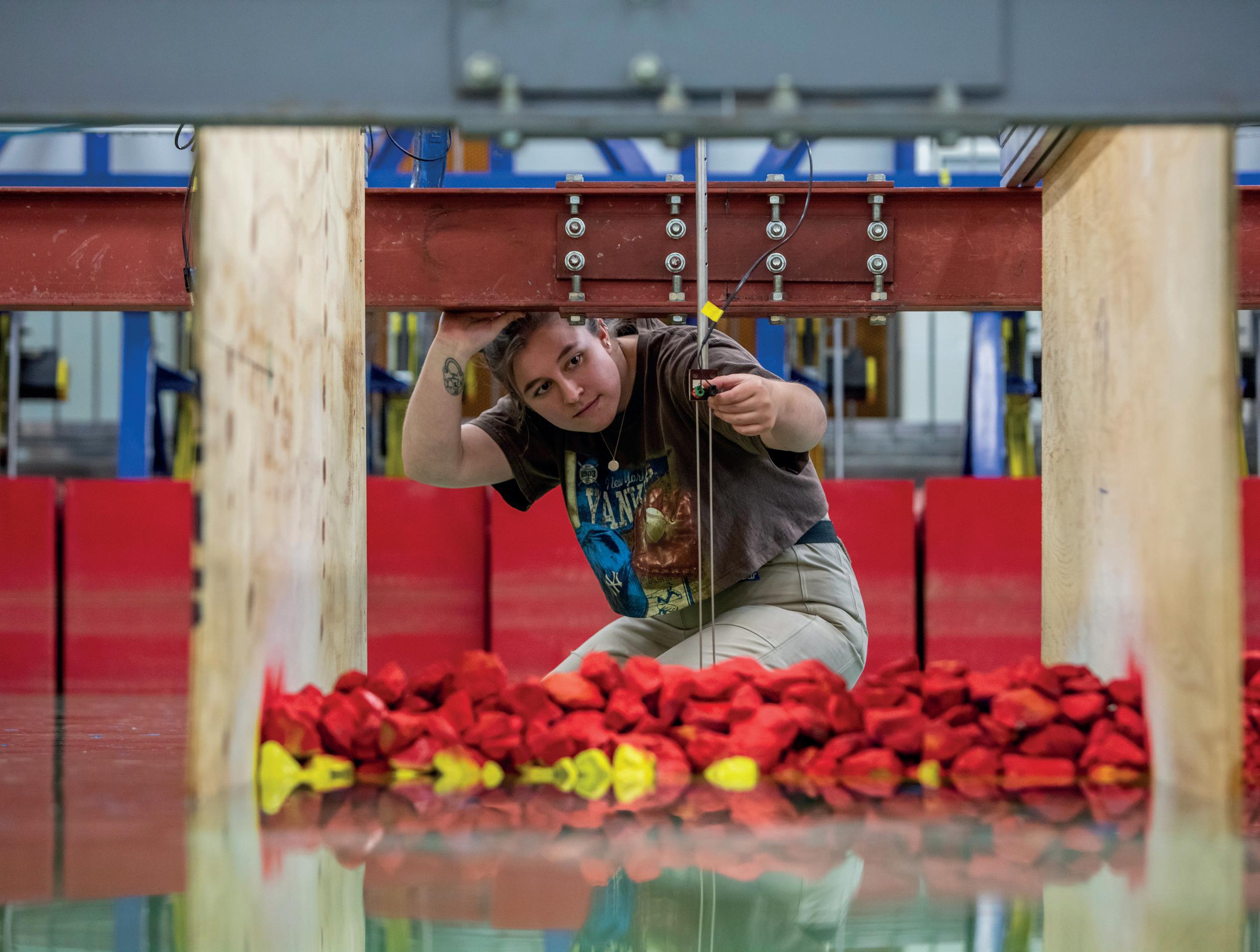
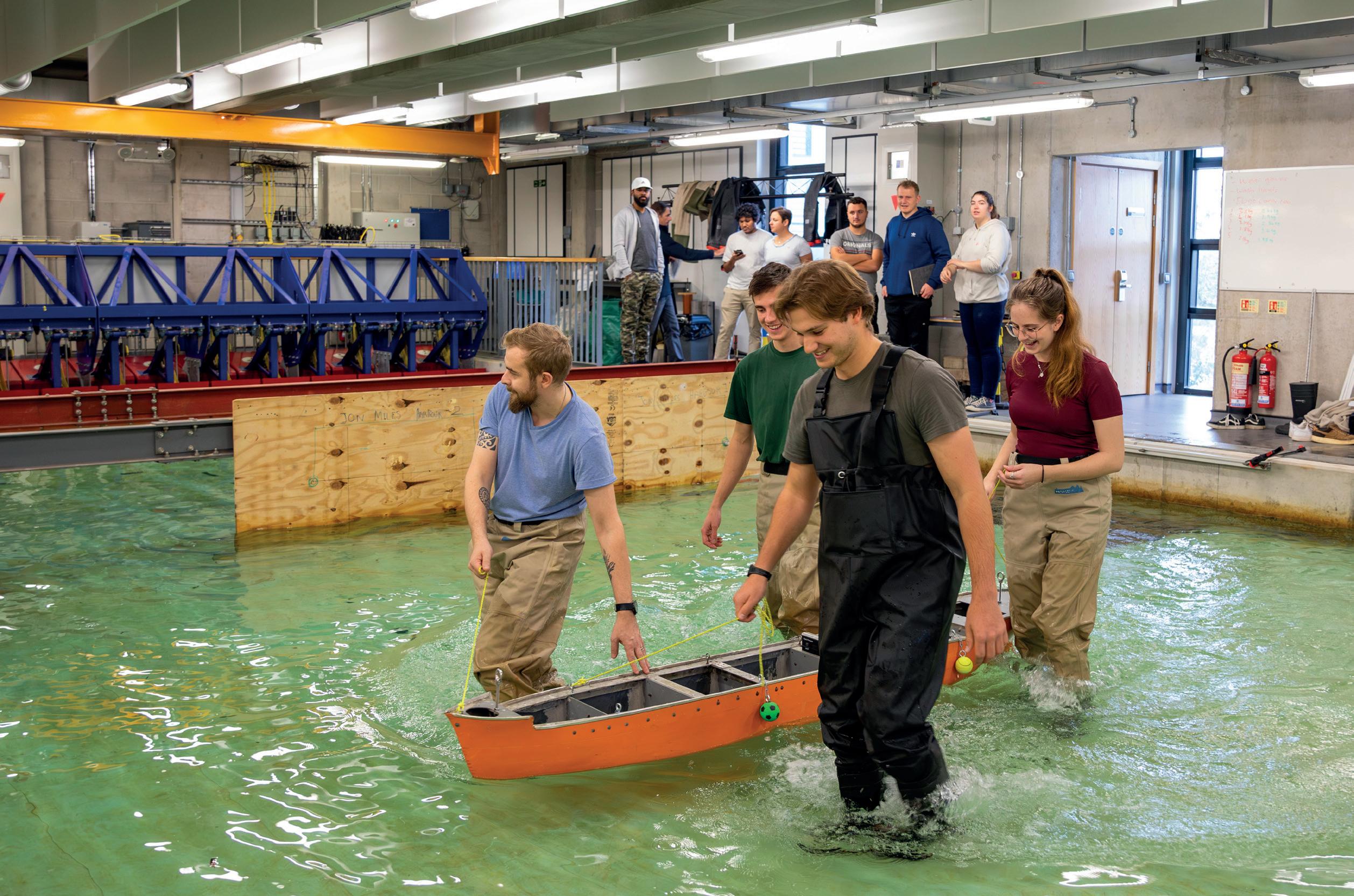
Our COAST Lab houses some of the most state-of-the-art facilities that will be used throughout your degree, where relevant, to enhance your learning. Some of the key features include coastal and ocean basins, a 35-metre wave and current flume and a light fluid teaching area. You’ll have full use of these facilities especially for your final-year projects. See P.18 for more information.

5. ELECTONICS, ENGINEERING & ROBOTICS LABS
For a hands-on student experience, we provide a suite of laboratories equipped with a range of power supplies, test equipment, soldering stations and computers with specialist software, all of which will be
essential to your learning. These include: Labcenter Electronics ‘Proteus Design Suite’ CAD package, National Instruments’ ‘LabVIEW’ and Altera ‘Quartus’. See P. 20 for more information.
6. FLEXIBILITY
In your first year, you can try everything to see where your passion lies. Course content is common across certain courses, which allows for flexible transfer throughout and at the end of your first year.
7. ACCREDITATION & CERTIFICATION
All courses are accredited to appropriate levels of professional status, and all offer excellent preparation for developing or continuing a professional career in design, manufacturing, research and development, and project management, among others.

9. ENJOY THE PLACE YOU’LL CALL HOME
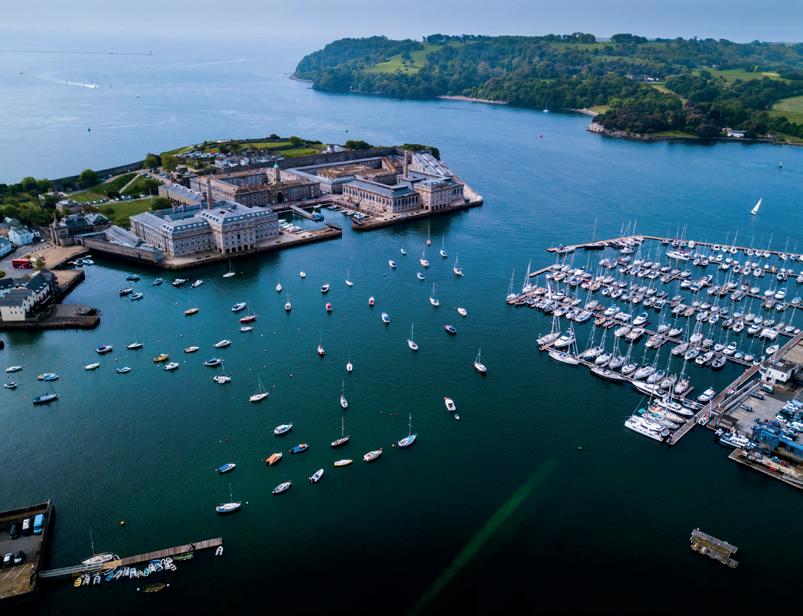
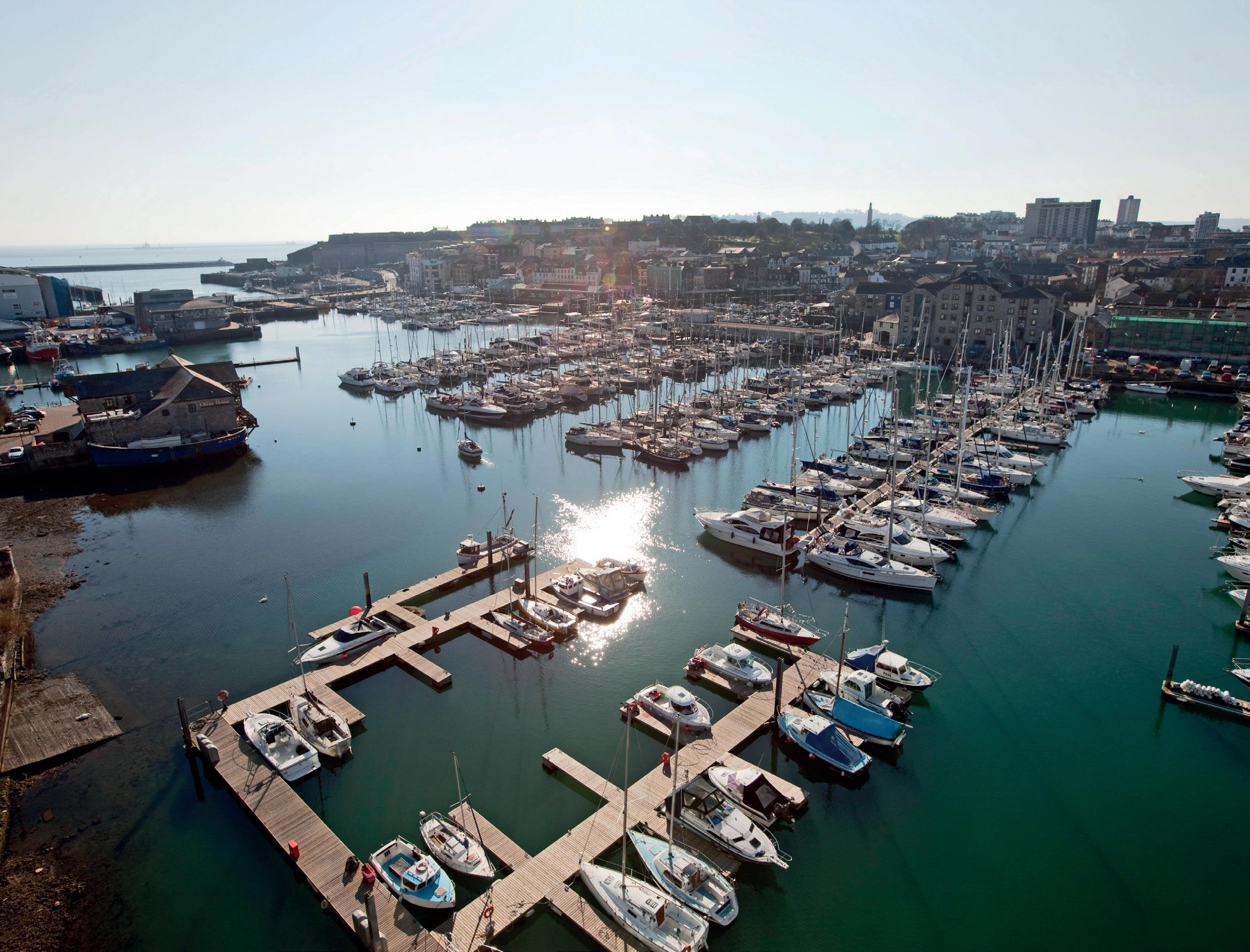
Plymouth is made up of a diverse mix of city, seafront and coast. We use this in our teaching which makes Plymouth the ideal place in which to study and live. Our location – and the sheer variety of environments close by – means you not only learn about the theory of the subject, but you also live and breathe it in Plymouth.

8. INDUSTRIAL MENTORING SCHEME
Many of our industry partners offer placements and visits, support and sponsorship for project work, and, of course, graduate employment. Several of the industry representatives are Plymouth graduates who are now expert mentors themselves.
10. BE SUPPORTED BY THOSE AROUND YOU
You are allocated a personal tutor within the first two weeks of enrolment who you will get to know well over the course of your studies. You’ll meet regularly to see how your studies are going and receive guidance to achieve your best. As well as this, we have dedicated wellbeing and careers staff to help you whenever you need them. At Plymouth there are plenty of clubs and societies to welcome you as you join our engineering community!
WHICH DEGREE IS RIGHT FOR YOU?
Civil and Coastal Engineering
BEng (Hons) CIVIL ENGINEERING
Do you dream of building a suspension bridge or designing earthquake-proof buildings that save lives? Civil engineers imagine, design and create structures, and the technical approaches necessary for realising large-scale projects that provide shelter, clean water, safety from natural hazards and much more.
FIND OUT MORE about our BEng (Hons) Civil Engineering programme
BEng (Hons) CIVIL AND COASTAL ENGINEERING
Do you want to protect coastal communities from the threat of flooding? Graduate with the skills and knowledge of a civil engineer combined with specialist skills for designing and creating infrastructure that functions in the coastal environment.
MEng (Hons) CIVIL ENGINEERING
Do you want to design large structures or be involved in projects that have great benefit to societies around the world? This accredited four-year integrated masters degree provides all the further learning required for you to progress to becoming a Chartered Civil Engineer.

FIND OUT MORE about our BEng (Hons) Civil and Coastal Engineering programme
FIND OUT MORE about our MEng (Hons) Civil Engineering programme
MEng (Hons) CIVIL AND COASTAL ENGINEERING
Are you fascinated by the designs of large coastal structures such as seawalls and breakwaters, and how these withstand attack by the sea? Our MEng graduates are trained as civil engineers with specialist knowledge in the realisation of projects that are essential to the functioning of coastal societies.
FIND OUT MORE about our MEng (Hons) Civil and Coastal Engineering programme
BEng (Hons) CIVIL ENGINEERING WITH FOUNDATION YEAR
Do you want to become a civil engineer but lack the entry requirements for one of our honours degrees? This route incorporates a foundation year and includes a project and introductory engineering topics. On successful completion, you’ll be eligible to progress onto year 1 of one of our BEng (Hons) engineering degrees.
FIND OUT MORE about our BEng (Hons) Civil Engineering with Foundation Year programme
One of the unique things that we offer as a university is common course content within your first year of study. For example, Mechanical, Marine and Materials Engineering and Civil and Coastal Engineering modules will be common in the first year. Electrical and Electronics Engineering and Robotics will share common modules. This gives you flexibility to experiment between all our courses. You can transfer between courses at the end of your first year, to suit your interests and passions ready for your second year.
Mechanical, Marine and Materials Engineering
BEng (Hons) MECHANICAL ENGINEERING
Are you fascinated by technology and design? Build a solid foundation in the principles of mechanical engineering on this exciting professionally accredited course.

FIND OUT MORE about our BEng (Hons) Mechanical Engineering programme
BEng (Hons) MARINE ENGINEERING WITH NAVAL ARCHITECTURE
Develop a comprehensive understanding of both marine engineering and naval architecture on a course that grounds you in ship design and hydrodynamics.
MEng (Hons) MECHANICAL ENGINEERING
Advance your professional skills with this four-year integrated masters degree. You develop your skills and broaden your opportunities to become a professional engineer. This course extends our BEng (Hons) by incorporating a masters-level final year with provision for advanced study of industrially relevant topics.
FIND OUT MORE about our MEng (Hons) Mechanical Engineering programme
MEng (Hons) MARINE ENGINEERING WITH NAVAL ARCHITECTURE
Advance your understanding of marine engineering and naval architecture to a higher level, following the course structure of the BEng (Hons) degree.
BEng (Hons) MECHANICAL ENGINEERING WITH FOUNDATION YEAR
Do you want to become an engineer of the future, but don’t have the traditional entry requirements to start a degree? This four-year course provides you with the skills needed to enter the first year of one of our BEng (Hons) degrees.
FIND OUT MORE about our BEng (Hons) Mechanical Engineering with Foundation Year programme
FIND OUT MORE about our BEng (Hons) Marine Engineering with Naval Architecture programme
FIND OUT MORE about our MEng (Hons) Marine Engineering with Naval Architecture programme
WHICH DEGREE IS RIGHT FOR YOU?
Electrical and Electronic Engineering and Robotics
BEng (Hons) ELECTRICAL AND ELECTRONIC ENGINEERING
Do you have the ambition to develop the electrical power systems and renewable energies of tomorrow? Whether focused on embedded microcontrollers, power converters, or high frequency communications, you’ll be developing your understanding of the high-level aspects of electronics on this BEng (Hons) course.
FIND OUT MORE about our BEng (Hons) Electrical and Electronic Engineering programme
BEng (Hons) ROBOTICS
Whether you are interested in mechatronics, artificial intelligence or the possibilities for biosensors, this degree will encourage you to push your limits. Our emphasis on high-level robotics, including mobile and humanoid automation, and our focus on the electronics and hardware that support industrial and service robotics is complemented by the hands-on approach you’ll develop in our specialist laboratories.
FIND OUT MORE about our BEng (Hons) Robotics programme
MEng (Hons) ELECTRICAL AND ELECTRONIC ENGINEERING
Do you want to lead society towards a more energy efficient future, enhance your business acumen, and further develop your technical and design ability? This course, which meets the full academic requirements for Chartered Engineer status, is accredited by the Institution of Engineering and Technology (IET).
FIND OUT MORE about our MEng (Hons) Electrical and Electronic Engineering programme
MEng (Hons) ROBOTICS
The field of robotics is very dynamic and constantly changing. The course introduces fundamental concepts in the area of robotics, as well as specialist topics, preparing you for a future career in industry. The course digs deep into the robotic technologies that are shaping the future and adopts a hands-on approach which you’ll develop in our specialist laboratories.
FIND OUT MORE about our MEng (Hons) Robotics programme
BEng (Hons) ELECTRICAL AND ELECTRONIC ENGINEERING WITH FOUNDATION YEAR
Develop a solid grounding in electronic and electrical engineering and set yourself up for success. This route covers applied mathematics, physics and electronic engineering. Successful completion of the foundation year enables you to progress onto year 1 of any of our electronic engineering or robotics degrees.
FIND OUT MORE about our BEng (Hons) Electrical and Electronic Engineering with Foundation Year programme
BEng (Hons) ROBOTICS WITH FOUNDATION YEAR
Develop a solid grounding in robotics and electronics and set yourself up for success. This route covers applied mathematics, physics and electronic engineering, and successful completion allows you to progress to any of our degrees in robotics or electronic engineering. This course is suitable if your qualifications don’t allow you to enter the first year of our robotics degrees, or if you’ve been out of formal education for some time.
FIND OUT MORE about our BEng (Hons) Robotics with Foundation Year programme
BSc (Hons) Electronic and Computer Engineering
Do you want to design smart applications and complex technologies? This joint degree in electronic engineering and computer science equips you with the skills to meet global demand for expertise right at the intersection of computing and electronics.
FIND OUT MORE about our
BSc (Hons) Electronic and Computer Engineering programme
Integrated Engineering
BEng (Hons) INTEGRATED ENGINEERING
This course has been developed to provide students with an appreciation of the fundamental principles of engineering and technology, and how these influence the economic wellbeing and future development, of the country.
Our course has been carefully developed to respond to the ever growing need and change within industry and is for engineers who understand the interconnectivity of engineering principles demanded in the modern digital age of the fourth industrial revolution (Industry 4.0).
The enhanced benefits and key features of studying this degree, in contrast to single discipline courses, are:
• the development of key transferable critical-thinking skills and the synthesis and integration of engineering competencies
• the acquisition of greater interdisciplinary knowledge leading to greater engineering creativity
• the opportunity to undertake worthwhile project work across traditional engineering discipline boundaries
• enhanced and consolidated understanding developed from the blending of ideas associated with different engineering disciplines, so leading to better problem-solving skills and increased professional flexibility.
Studying on this degree will help you gain and develop these necessary professional attributes. So where will this degree take you? Below are just a few potential employment possibilities:
• Automotive Engineer
• Building Services Engineer
• Control and Instrumentation Engineer
• Research and Development Engineer
• Commissioning Engineer
• Electric Systems Support Manager
• Production Engineer
• Software Engineer
• Electronic Design and Test Engineer
• Cyber Analyst
• Application Engineer
• Computer Technician and Embedded Programmer
• Robotics Developer.
Many other possible professional career pathways exist, with the range only being limited by your vision and future career aspirations.
“Studying in Plymouth has been the perfect setting for a marine technology degree, the quality of the facilities and teaching has really made it for me. Moving forward, I’m excited about my career after graduation”
Alex, BEng (Hons) Marine Technology (Now BEng Marine Engineering with Naval Architecture)
“I’ve really enjoyed my first year of my mechanical engineering degree and I’m looking forward to my second year. Having the Babbage Building at our fingertips is really exciting.”
William, BEng (Hons) Mechanical Engineering
“I’ve just come back off placement and have been getting back into university life. Being back on campus has been so nice, and being back in lectures preparing for my final year project has been challenging but with all the new facilities and the new experience I’ve gained in the last year, I’m excited to see how it goes.”
Amelia, BEng (Hons) Robotics
FIND OUT MORE about our BEng (Hons) Integrated Engineering programme

STUDENTS ON THEIR SUBJECTS
MECHANICAL ENGINEERING:
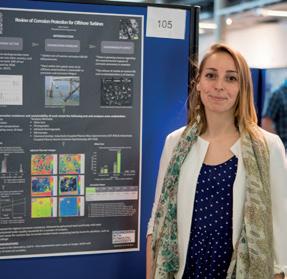
“The engineering course has shown me how to deal with juggling lots of work and deadlines effectively. It built my confidence, and the ability to think on the spot and defend my arguments through assessed debates, which is useful in a work environment. We were taught to consider environmental and ethical issues that we may meet in our careers, which is really important and eye opening.
The University has incredible facilities, research and academic brilliance. The campus has a really laid-back vibe, with great down-to-earth lecturers, a location begging to be explored and lots of fun societies.
After having worked on the University’s organic allotments and learning a lot from that, I want to give garden maintenance and design, using organic methods and that is beneficial for wildlife, a go. I plan to combine this with working for renewable energy companies, who I was lucky to do two summer internships with, to gain experience.”
Katie, BEng (Hons) Mechanical Engineering graduate

MARINE ENGINEERING WITH NAVAL ARCHITECTURE:
“Choosing Plymouth provided me with a fantastic understanding of the industry, knowledge of practical engineering design and naval architecture. My time living and studying at Plymouth has developed my professionalism and my work ethic. Possibility drives creativeness and studying at Plymouth provided me with endless chances to prove to myself that I can achieve targets and beat expectations placed on me during my past learning.
Originally I was unsure if the maritime industry was the right career path to take. The structure of the course though meant it was easy to move between mechanical and marine engineering. Thankfully, I enjoyed the syllabus and teaching methods, keeping my attention within the marine world and improving my marine knowledge. One day I hope to be as well respected as the lecturers are at Plymouth and get to the top of the industry. My goal is to travel with my work, contribute to shipping projects for international companies, and to help future designs meet the ever-expanding efficiency and pollution targets.”
Christopher, BEng (Hons) Marine Technology graduate (Now BEng Marine Engineering with Naval Architecture)

CIVIL ENGINEERING:
“I found the staff to be incredibly welcoming at the open days and I was encouraged by the overall quality of the course, particularly the links to industry when it comes to securing a placement during the sandwich year.
The lecturers’ open door policy was the most useful support, as it meant that I could deal with queries outside of lectures and in my own time. Tutorial sessions were also useful for the same reason, while also encouraging consolidation of learning.
I found that my masters year had the most bearing on my career plans, as I was properly introduced to 3D modelling, which is now a large part of my job. I’ve always had an interest in CAD and knew that I wanted it to be a part of my career, but until the masters year, I hadn’t really dealt with 3D modelling. It was in the interdisciplinary project that I first gained exposure and went on to produce a 3D model along with a rendered walkthrough of the building we designed.”
Elliot, MEng (Hons) Civil Engineering graduate

COASTAL ENGINEERING:
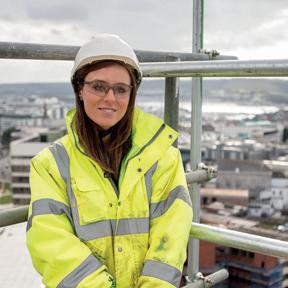
“Plymouth is a great place to study. The Marine Building provides a great facility to undertake practical sessions on civil engineering courses. The atmosphere and development of the campus is great, and the course was enjoyable. The city is experiencing a boost in its economy with major projects underway, many of which I have been involved with as a site engineer.
The course was varied and the range of modules covered was great, which prepared me for entering the engineering industry. With hindsight, I would have liked to have learnt more about the physical building process and materials involved in construction, but the journey after graduation is always a learning curve. I spent a lot of time in the library and also made use of the CV writing advice service in the Student Hub; however, in hindsight, I would have used the services much more and I encourage students to make the most of what the University has to offer.”
Chloe, BEng (Hons) Civil Engineering graduate
ELECTRICAL AND ELECTRONIC ENGINEERING:
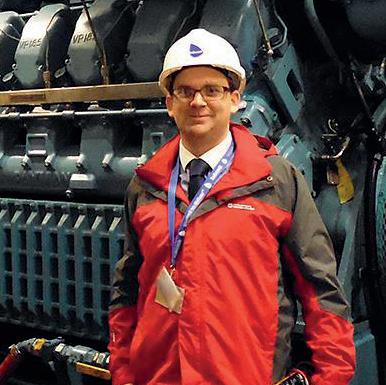
“The course has been structured to meet the needs of businesses with a focus on practical, hands-on experience underpinned by a theoretical basis. The key project during the final year of the bachelors degree offered the chance to handle an engineering project, providing an excellent talking point at graduate interviews.
The course was structured to suit industry with key topics including digital signal processing, communications, embedded systems programming, engineering mathematics, and control engineering. These skills, combined with the nature of studying on a degree, have shaped me for my engineering career.
My favourite memory of studying at the University was carrying out practical work within a laboratory environment. This sparked an interest in programming embedded systems and communications – something which I did not have before I attended university! These interests have aided my selection of a technical role with my employer.”
Darren, MEng (Hons) Electrical and Electronic Engineering graduate
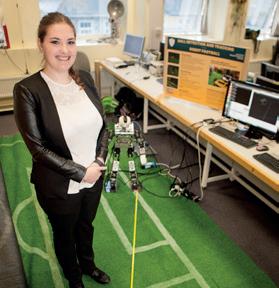
ROBOTICS ENGINEERING:
“Plymouth is the best in the UK for robotics engineering, offering an IET accredited degree with an extra masters-level year option. The modules offered were the most interesting that I’d seen, along with Plymouth being a desirable location. It was a no brainer!
During my degree, I used the library for studying and for books during my individual project. In my foundation year, I regularly used the SUM:UP service in the library, which helped me massively with getting the hang of all the maths work. The robotics course has the advantage of a large laboratory, where there are always technicians available to help you with project work.
Studying at Plymouth has made me feel more confident in my abilities, as I never achieved amazing grades at school. The course has developed my skills in various areas, more than just theoretical and practical, focusing on good technical reports and presentations, as well teamwork. All of these skills are very important in an engineering career.”
Jane, MEng (Hons) Robotics graduate
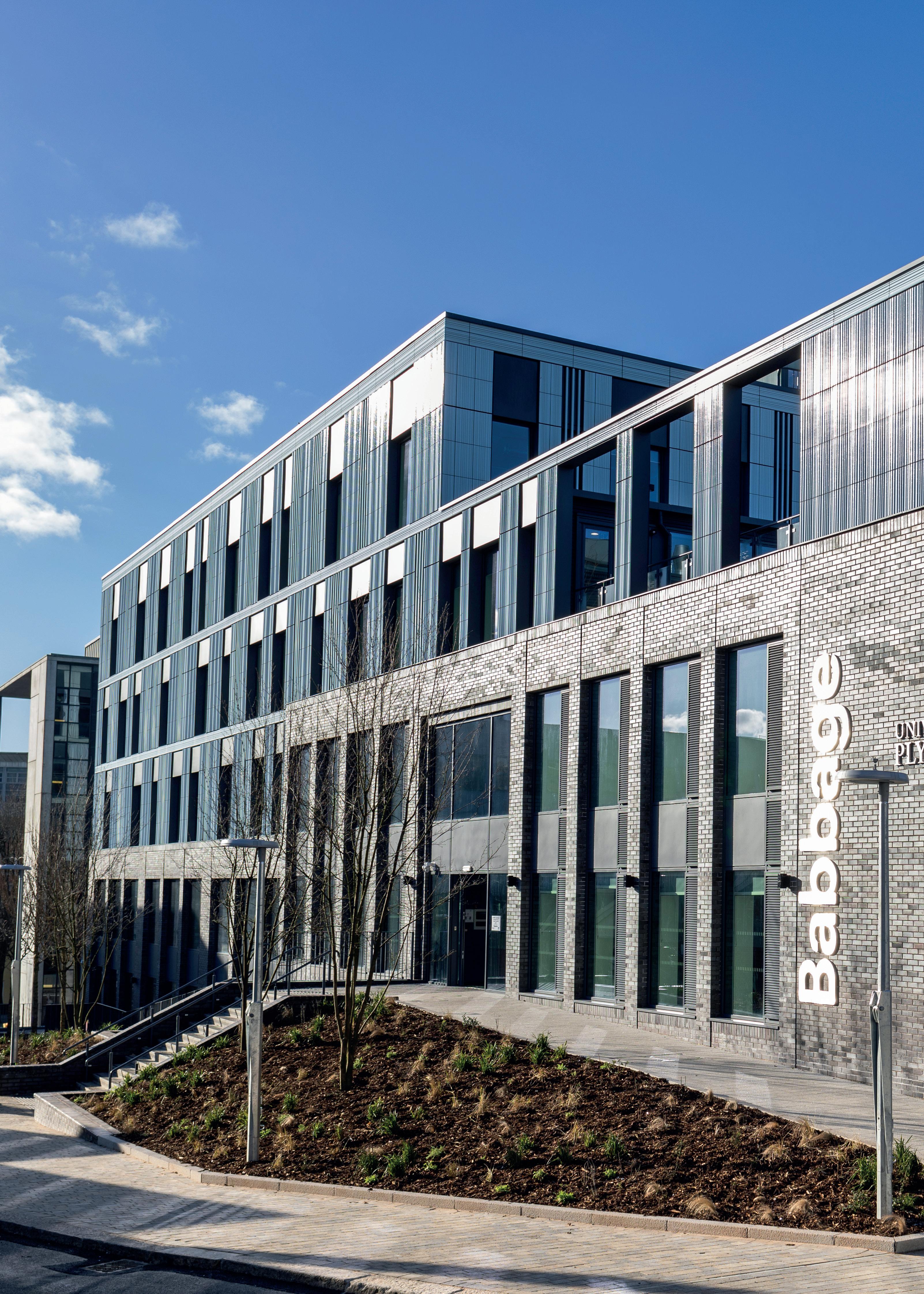

OUR HOME OF ENGINEERING THE BABBAGE BUILDING
We are living in a rapidly advancing age of interconnectivity, smart automation and technological change, where the answers to global challenges are found at the intersection of specialisms. Engineers of the future require a facility that transcends traditional disciplines; a space where diverse perspectives can come together to create innovative solutions.
The Babbage Building offers you a state-of-the-art facility for collaboration – with industry, experts and peers – across science, technology, engineering, arts and mathematics (STEAM). With an extensive number of cutting-edge laboratories attracting a rich network of minds, Babbage offers you a highly diverse and creative environment to learn in.
You’ll explore the boundaries of what’s possible, through inquiry-based learning, in 11 highly specialised laboratories that harness the latest technologies. Through hands-on experimentation, you’ll graduate as a well-rounded engineer, able to work with and draw upon the expertise of multiple disciplines, ready to pioneer sustainable futures in a digitised world.
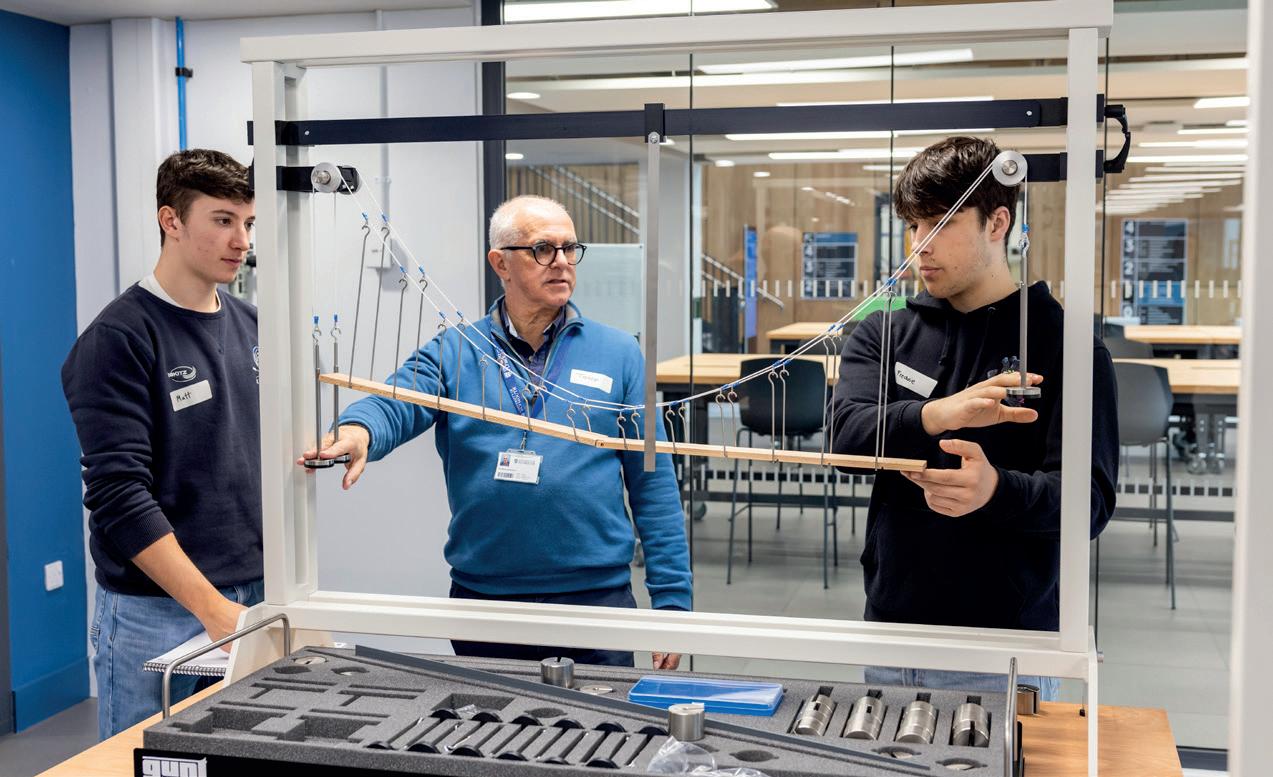
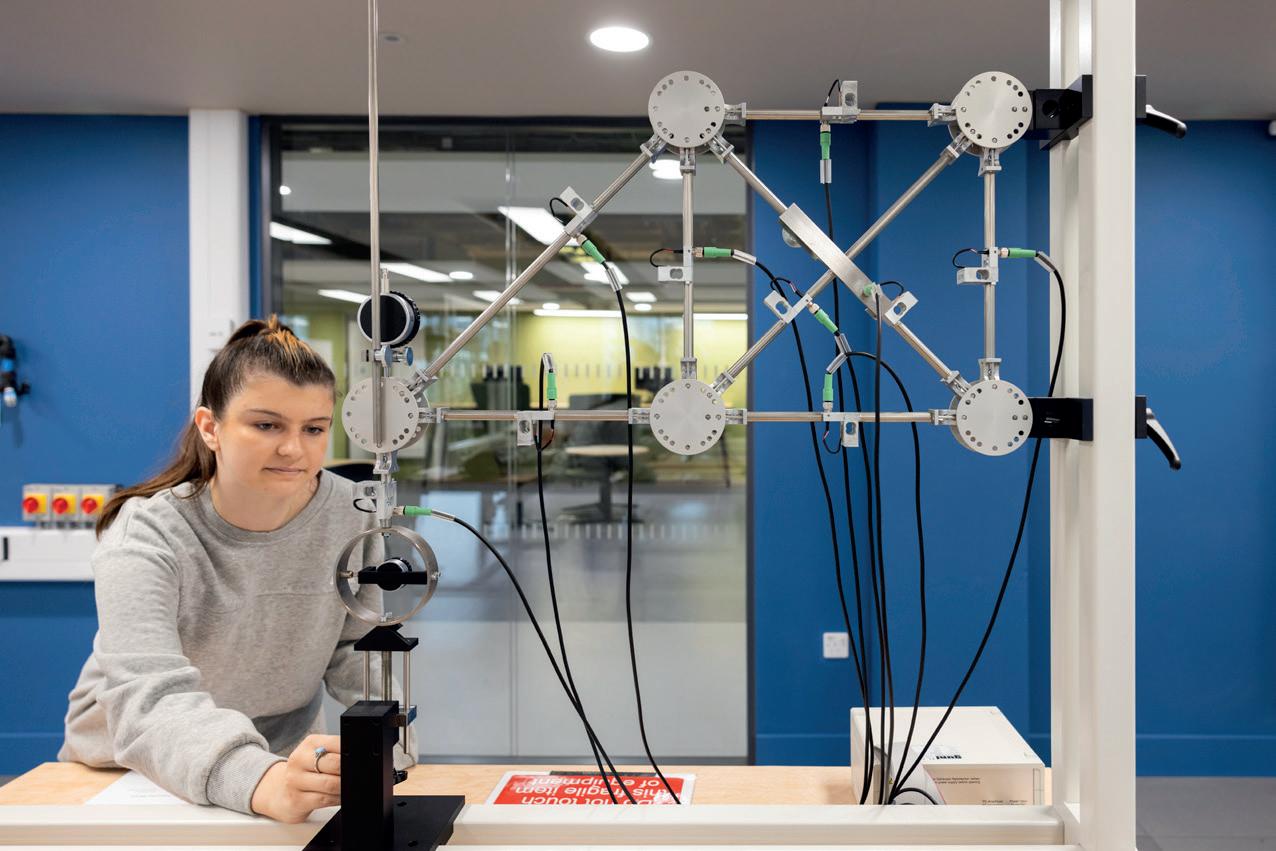
The STEAM Laboratories are active learning spaces for groups of students to work together and learn the fundamental principles of engineering science, structures, fluid mechanics and materials testing through experimentation, observation and analysis. These labs are equipped with a diverse range of experimental resources designed to encourage you to learn by asking practical questions and trying things out, giving you autonomy over your learning.
WITH FULL USE OF BABBAGE, OUR ENGINEERING STUDENTS BENEFIT FROM THE FOLLOWING RANGE OF FACILITIES: DIGIFAB LABORATORY
Offering a practical introduction to digitally driven manufacturing processes, the lab enables you to fabricate functionally robust components from a range of thermoplastic materials. This lab complements the manufacturing processes available in the Precision Manufacturing Laboratory. Together, these labs provide you with the ability to fabricate engineering components to a high level of precision for use in other specialist and experimental labs in Babbage.
IMMERSIVE VISUALISATION SUITE
This features a hybrid, virtual reality enabled visualisation system that supports a diversity of users from across the University and the wider industrial community. Three large high-definition display panels enable simultaneous viewing of both 2D and 3D data and information. Small groups of people can immerse themselves in the middle of the data through a free-roving virtual/augmented reality experience. The lab is integrated with other campus facilities and acts as a hub for the mutual exchange of live data.
HEAVY STRUCTURES AND GEOTECHNICS LABORATORY
The lab provides the facilities for structural testing of large engineering components, fabricated from a range of engineering materials. Equipped with both universal test machines and configurable reaction frames, this lab enables you to evaluate the behavioural response of a diverse range of engineering components to externally applied static and dynamic loads. The data collected from these experiments enables scientific theory and numerical simulation to be compared with the realities of observed operational behaviour.
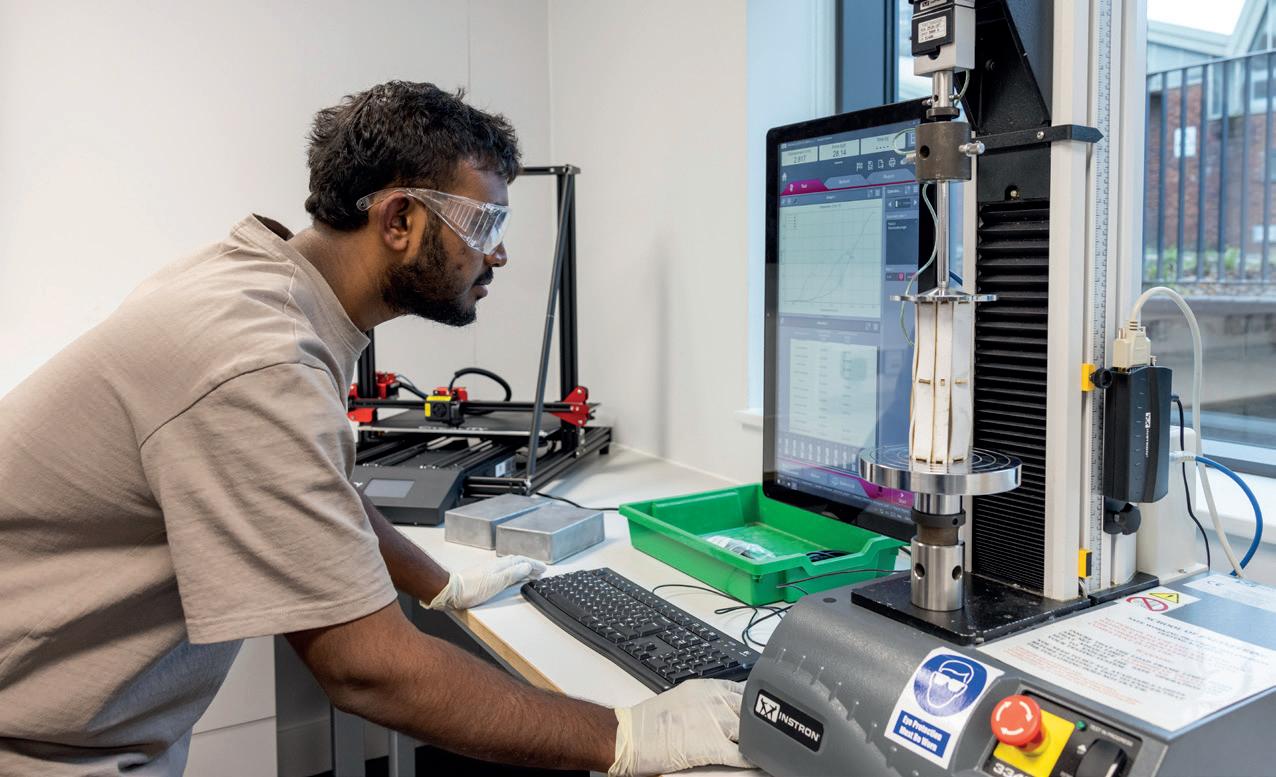
MATERIALS ANALYSIS AND CHARACTERISATION LABORATORY
The lab provides hands-on experience of materials characterisation and analysis techniques using industry standard equipment and testing methods. This lab allows you to learn about the micro-structure of technical materials and understand its influence on the overall mechanical properties
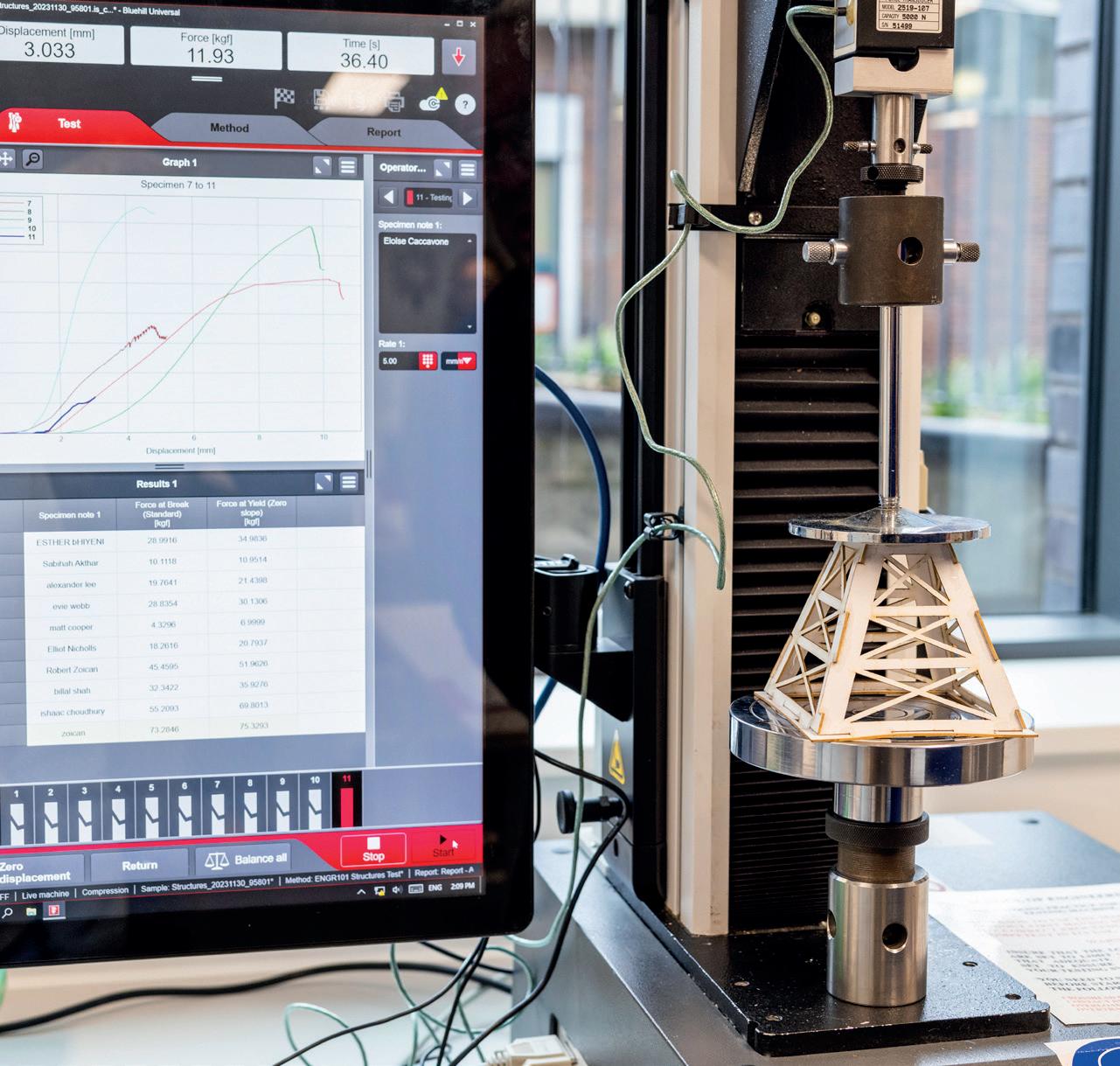
of the material, which are measured through standardised coupon and small component testing.
“My first impression of Babbage is how big it is, the scale of the building and all the new facilities within it are so exciting. The high-tech equipment is going to be great for students.”
Ely, BEng (Hons) Civil and Coastal Engineering student
COMPOSITES ENGINEERING LABORATORY
This lab provides manufacturing and evaluation engineering components with thermoset composite materials using industry standard equipment
and testing methods. This lab also has a facility for the development of novel composite materials and small-scale components for student projects and research purposes.
AUTONOMOUS SYSTEMS TEST LABORATORY
Supporting teaching, learning and research in robotic vehicles and control systems, this lab allows you to operate and evaluate individual robotic systems working under remote control or autonomously, or several robotic systems operating simultaneously as a single integrated autonomous system. This is integrated with other campus facilities, such as the Immersive Visualisation Suite, by the mutual exchange of live data.
ENERGY AND SUSTAINABILITY LABORATORY
This lab allows for experimentation and analysis in thermodynamics and fluid mechanics, using modern laboratory equipment, instrumentation, and data capture techniques. A 180 kph

sub-sonic wind tunnel, rolling road dynamometer and numerous other test rigs allow you to evaluate several different engineering systems and then compare scientific theory and numerical simulation with the realities of observed operational behaviour.
ENGINEERING
COMPUTING LABORATORIES (CAD/CAE)
These labs provide access to specialist software for Computer Aided Design (CAD) and Computer Aided Engineering (CAE) where you can develop essential digital design skills, as well as an understanding of physics-based, numerical simulation software. Mastery of these tools will enhance your learning, as well as greatly improve your professional employment prospects.
PRECISION MANUFACTURING LABORATORY
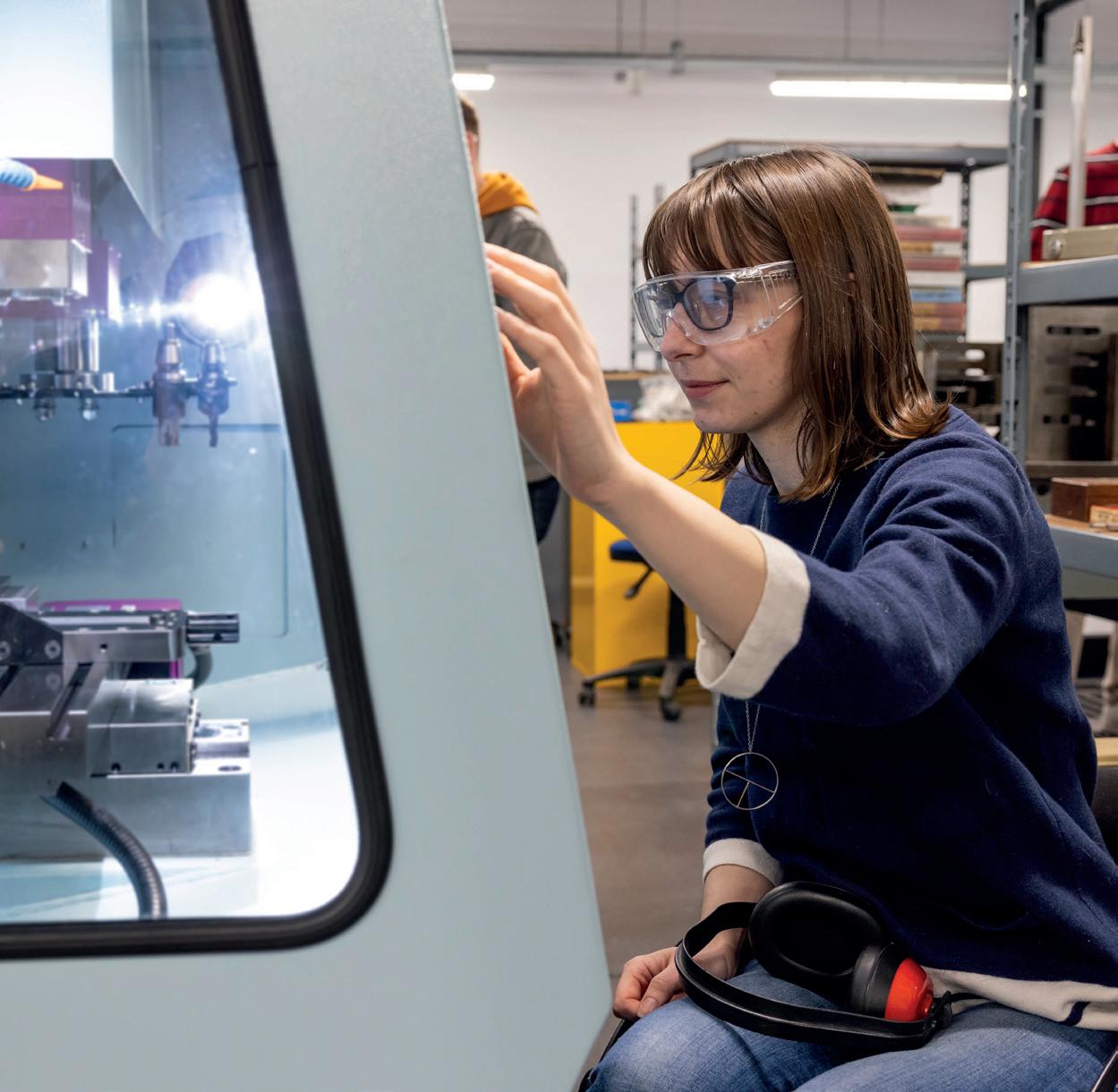
Providing a hands-on introduction to manufacturing processes, this lab enables the fabrication of components in a range of engineering materials
“The Babbage Building is the new home for our STEAM undergraduate and postgraduate students on campus. Its superb spaces and facilities encourage the creation and exchange of ideas between students across all disciplines, reflecting 21st-century working practices and the expectations of today’s employers.”
Professor Kevin Jones, Deputy Vice-Chancellor, Research and Innovation
using forming, shaping, joining and machining processes. You’ll have direct access to Computer Numerically Controlled (CNC) machine tools and support from our skilled manufacturing technicians, enabling you to fabricate engineering components to a high level of precision for use in other specialist and experimental labs in Babbage.
NANOMATERIALS AND DEVICES
LABORATORY
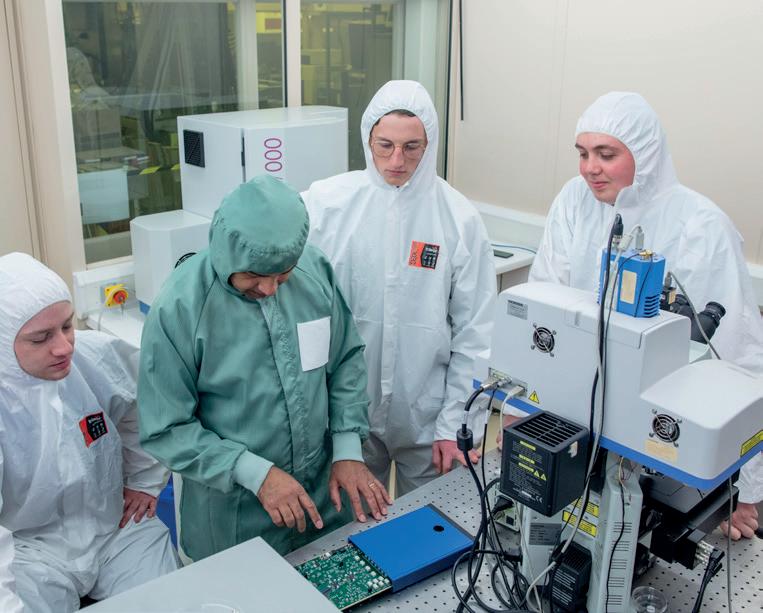
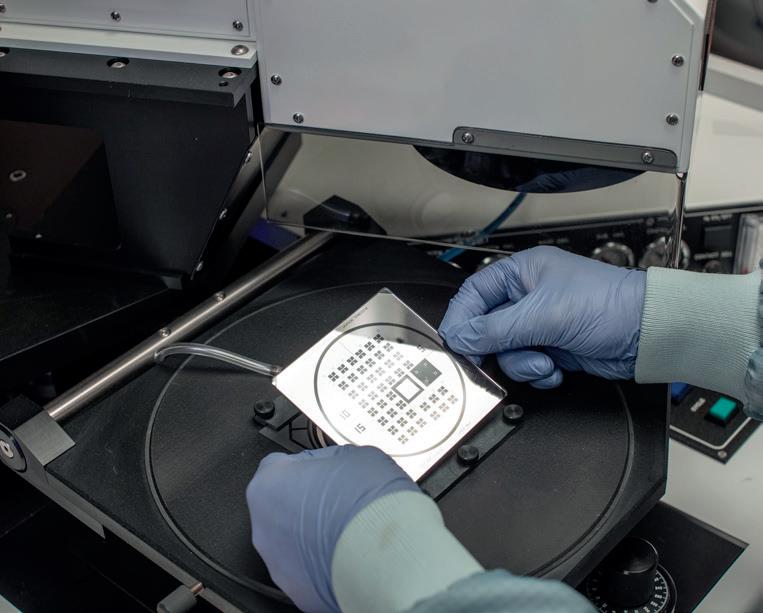
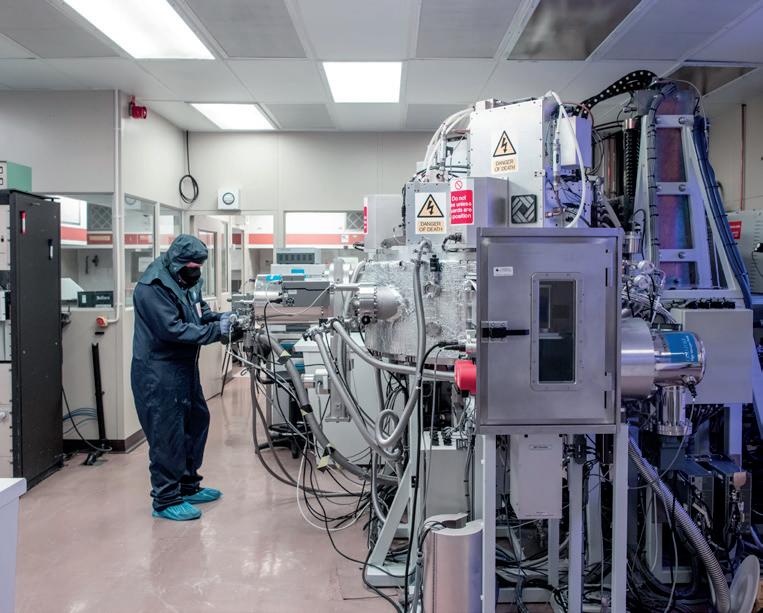
This clean room-based laboratory is used for leading-edge research in
nano-spintronics, computer memory and data storage technology, nano-functional materials and biosensors. The lab includes a range of thin film deposition, micro fabrication facilities and magneto-transport as well as nano-scale metrological characterisation instrumentations. It is fully equipped for the exploration of leading-edge science and technology, with a wide range of applications in sectors such as communications, defence, aerospace, security and photonic surgery to medical and analytical instrumentation.
FIND OUT MORE about Babbage, please scan the QR code below
RESEARCH FOR REAL-WORLD SOLUTIONS
THE COAST LABORATORY
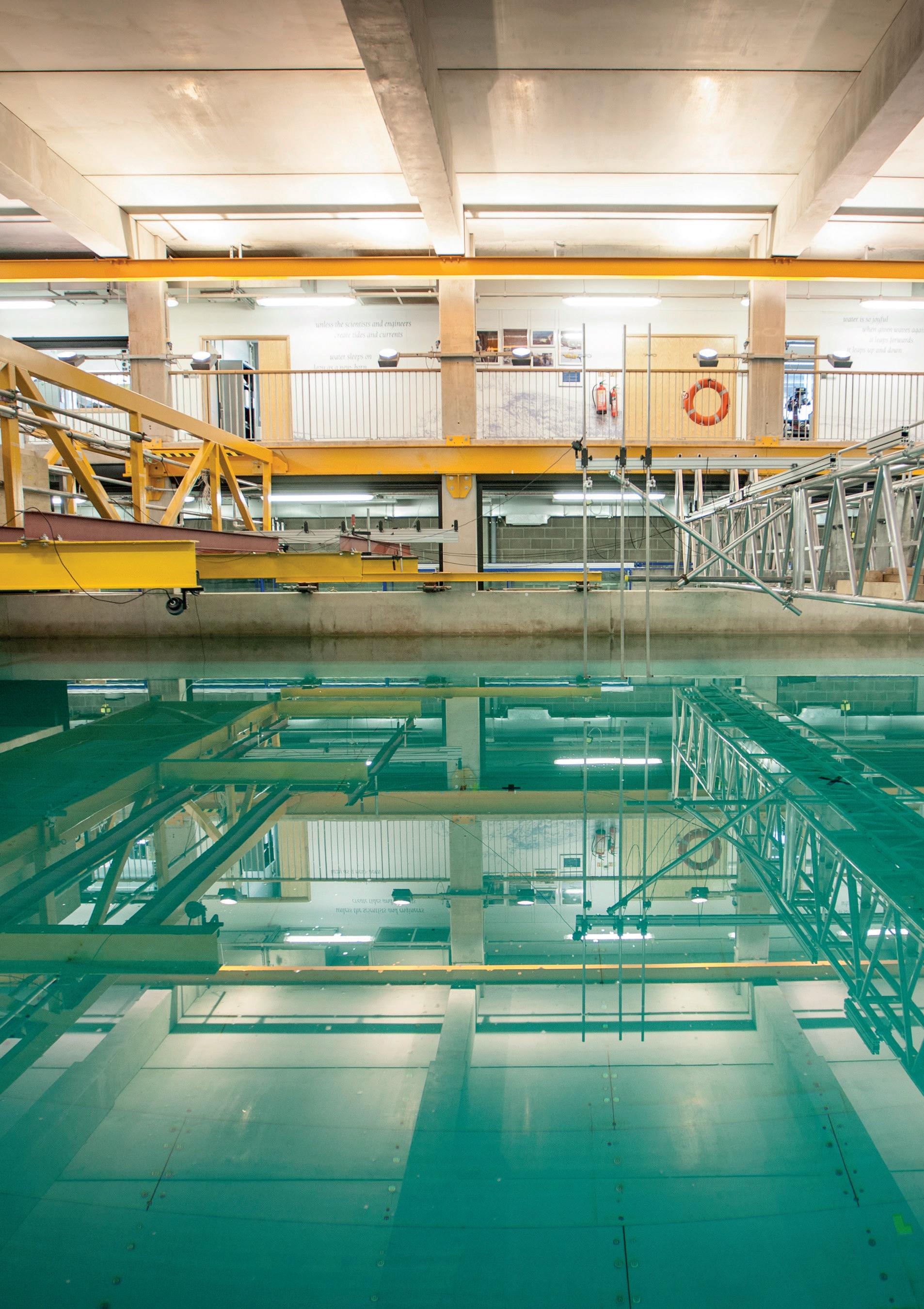
Housed in the Marine Building, the Coastal, Ocean and Sediment Transport (COAST) laboratory provides physical model testing with combined waves, currents and wind, offered at appropriate scales for device testing, array testing, environmental modelling and coastal engineering.
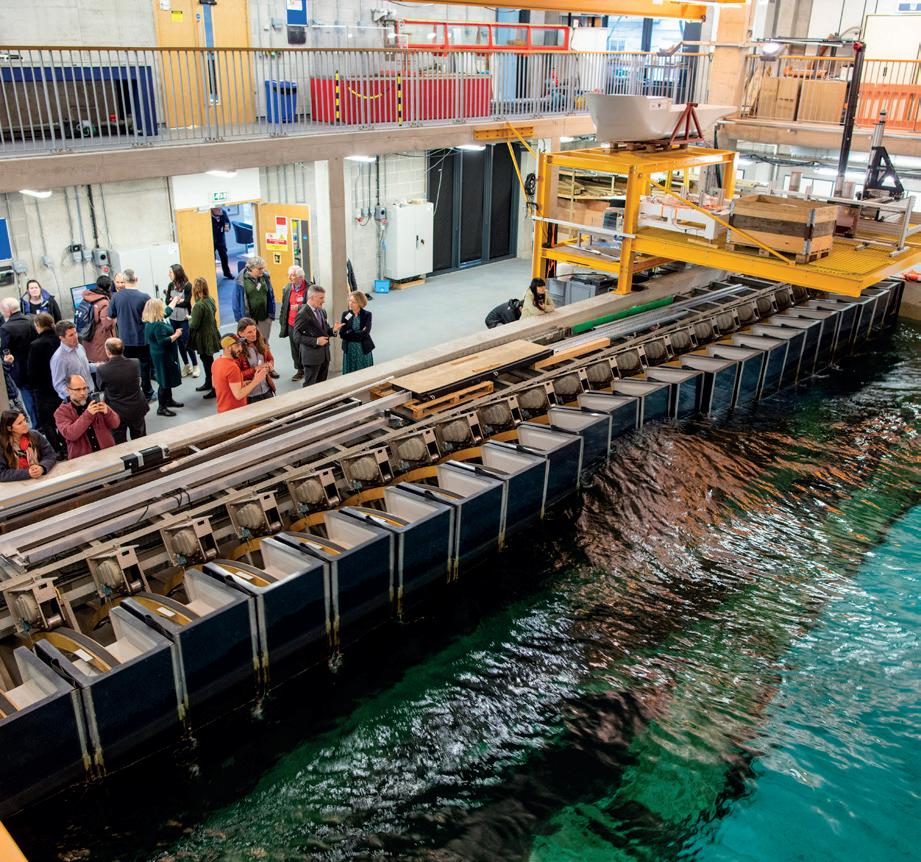
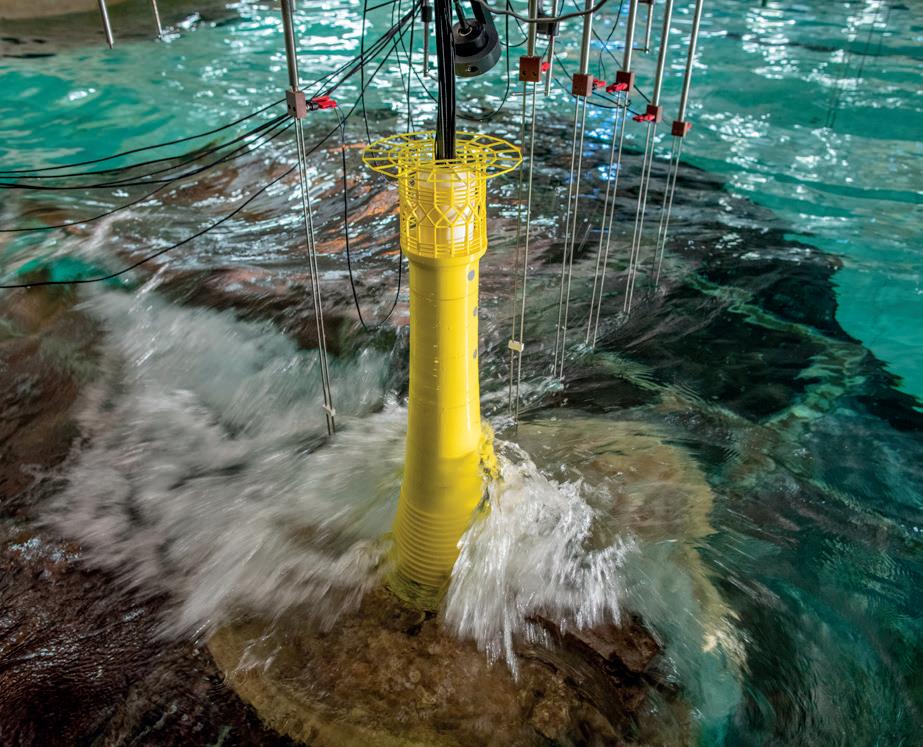
This is a flexible facility with the capability to generate short and long-crested waves in combination with currents at any relative direction, sediment dynamics, tidal effects and wind. Facilities include:
THE OCEAN BASIN
A unique facility that allows waves and currents to be generated at any relative orientation and can be run at different water depths. This basin can be used to create unidirectional and directional wave fields, regular waves, wave spectra and currents putting it at the forefront of testing for marine renewable energy arrays.
THE COASTAL BASIN
One of the key features of the COAST lab is its flexibility and this facility allows sediment
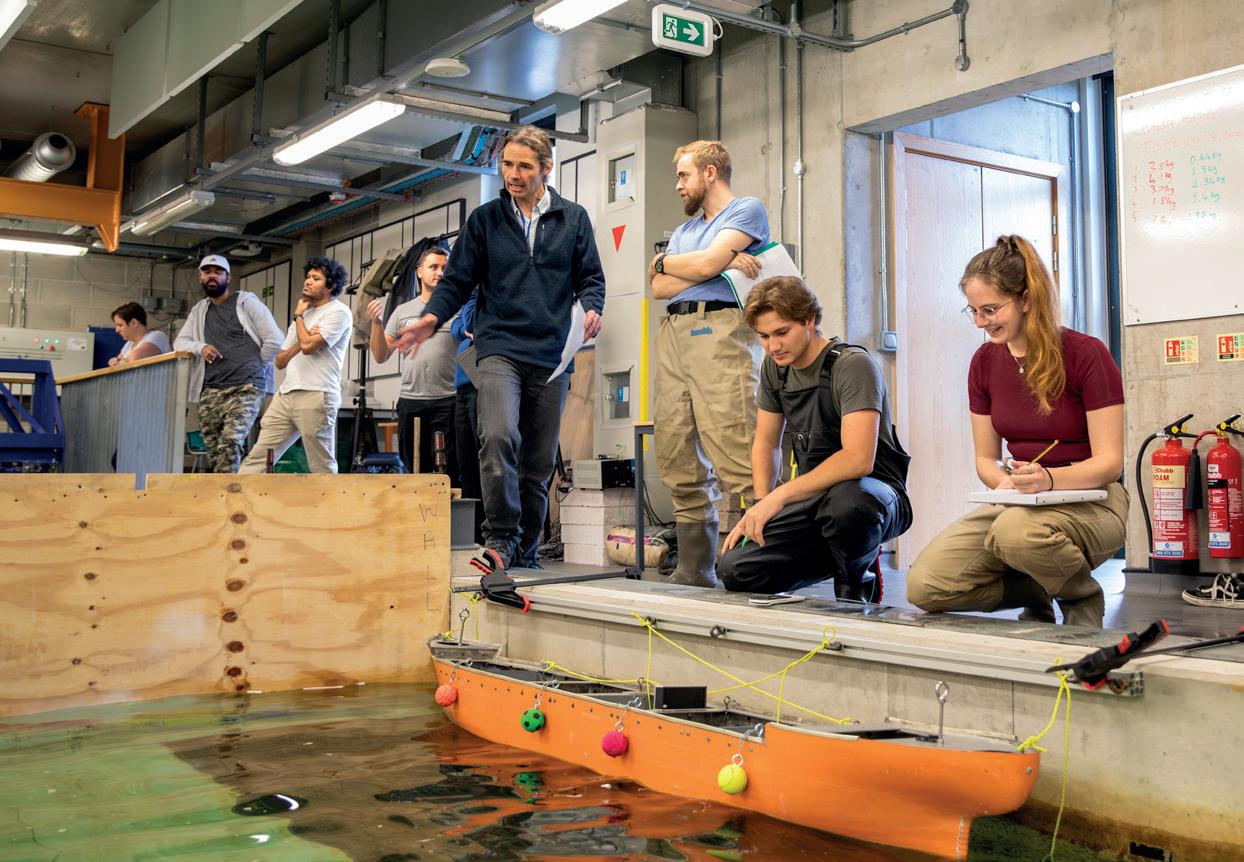
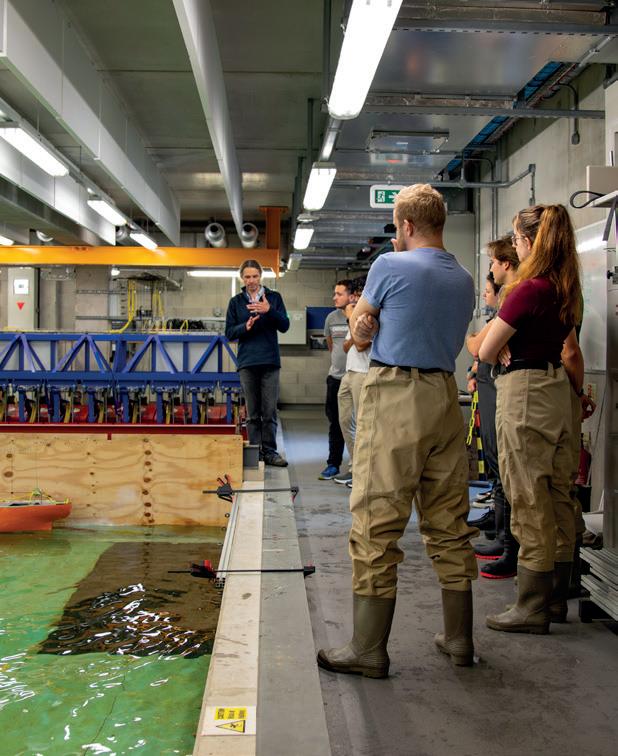
“The University’s COAST lab facilities are very comprehensive and easy to access. The whole process is supported by great staff. Just simply fill out a request form with the details of your project, discuss your requirements and you will soon be beginning the magic of your research.”
Nur, Engineering graduate
transport and coastal structures to be studied at a scale in a controlled environment. The basin can simulate a fixed-bed beach and support sediment and cement beach models.
FLUMES
The COAST lab houses two wave and current flumes: a 35m flume and a 20m fume, both with sediment capability which can also be tilted. The inclusion of current
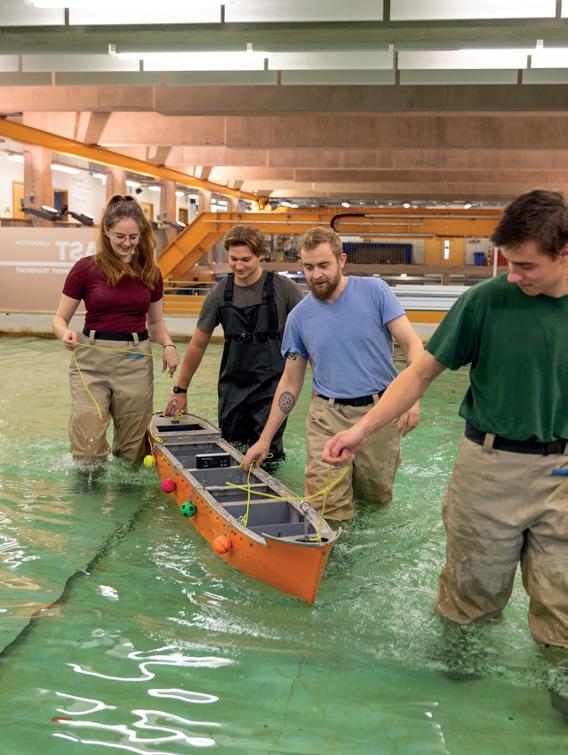
circulation allows tidal energy to be studied as well as wave energy technology. The novel current circulation technology enables a smooth current to be modelled with minimal disturbance to the wave signal facilitating the controlled study of wave-current interaction and wave current-device interaction.
THE COAST LAB
The lab boasts a large range of instrumentation and data acquisition hardware and software. The equipment is maintained and operated by a dedicated team of engineers, Equipment includes data acquisition hardware, motion capture cameras, pressure transducers, and waterproof load cells.
ELECTRICAL AND ELECTRONIC ENGINEERING AND ROBOTICS FACILITIES
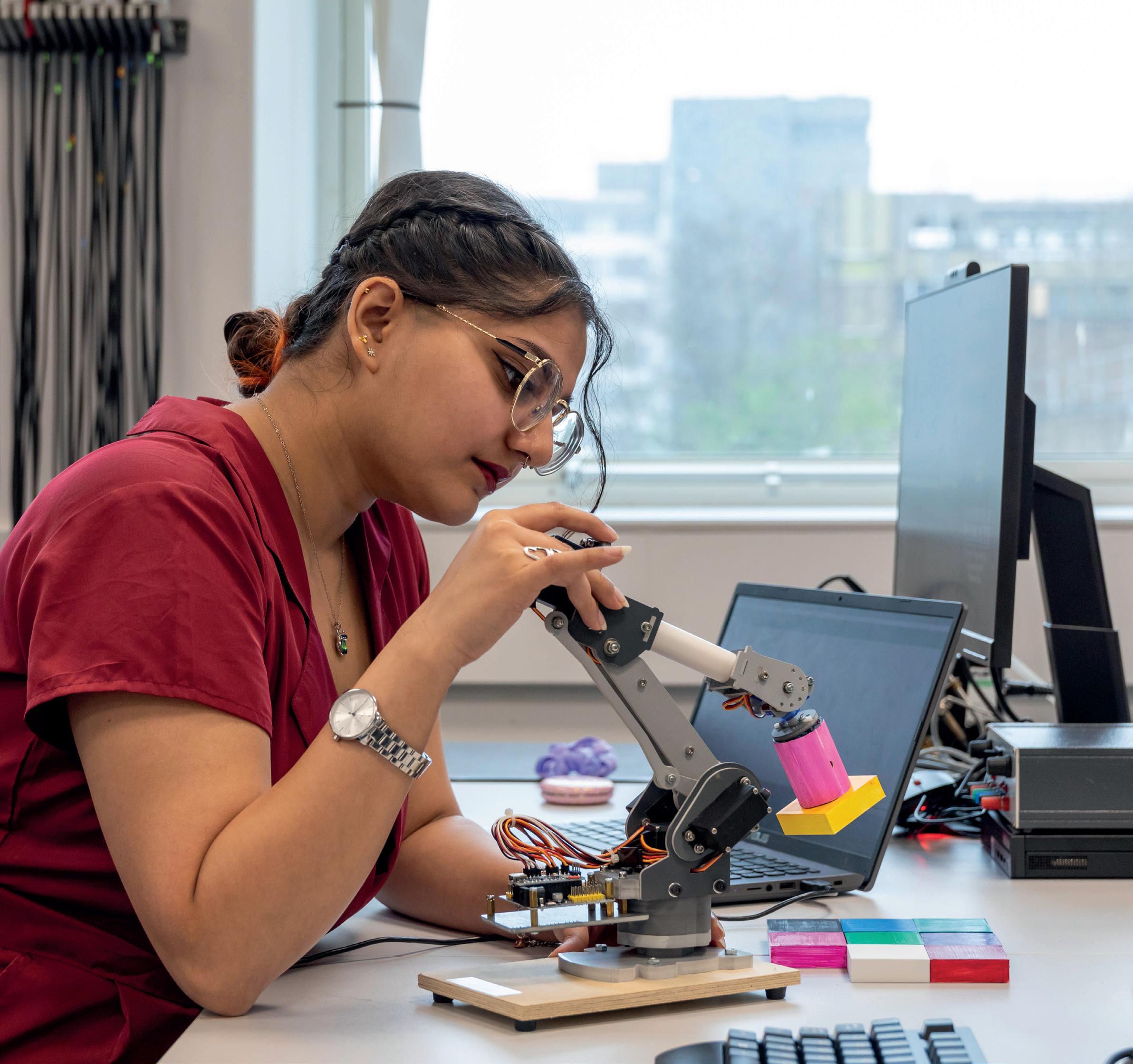
As part of our offering to you as a student, we have a range of facilities to enhance your learning experience and provide you with the ability to focus on industrial and intellectual robotic systems and high frequency electronics.
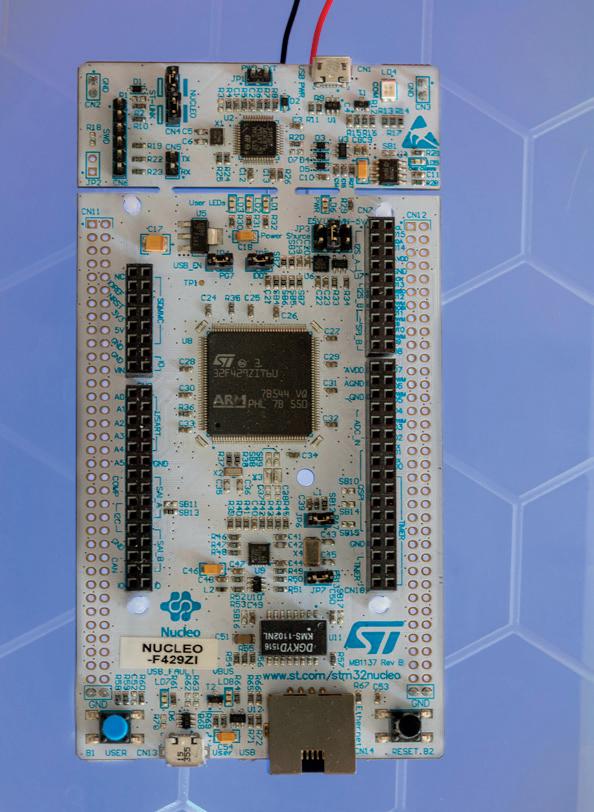
LABORATORY FACILITIES INCLUDE, BUT ARE NOT LIMITED TO:
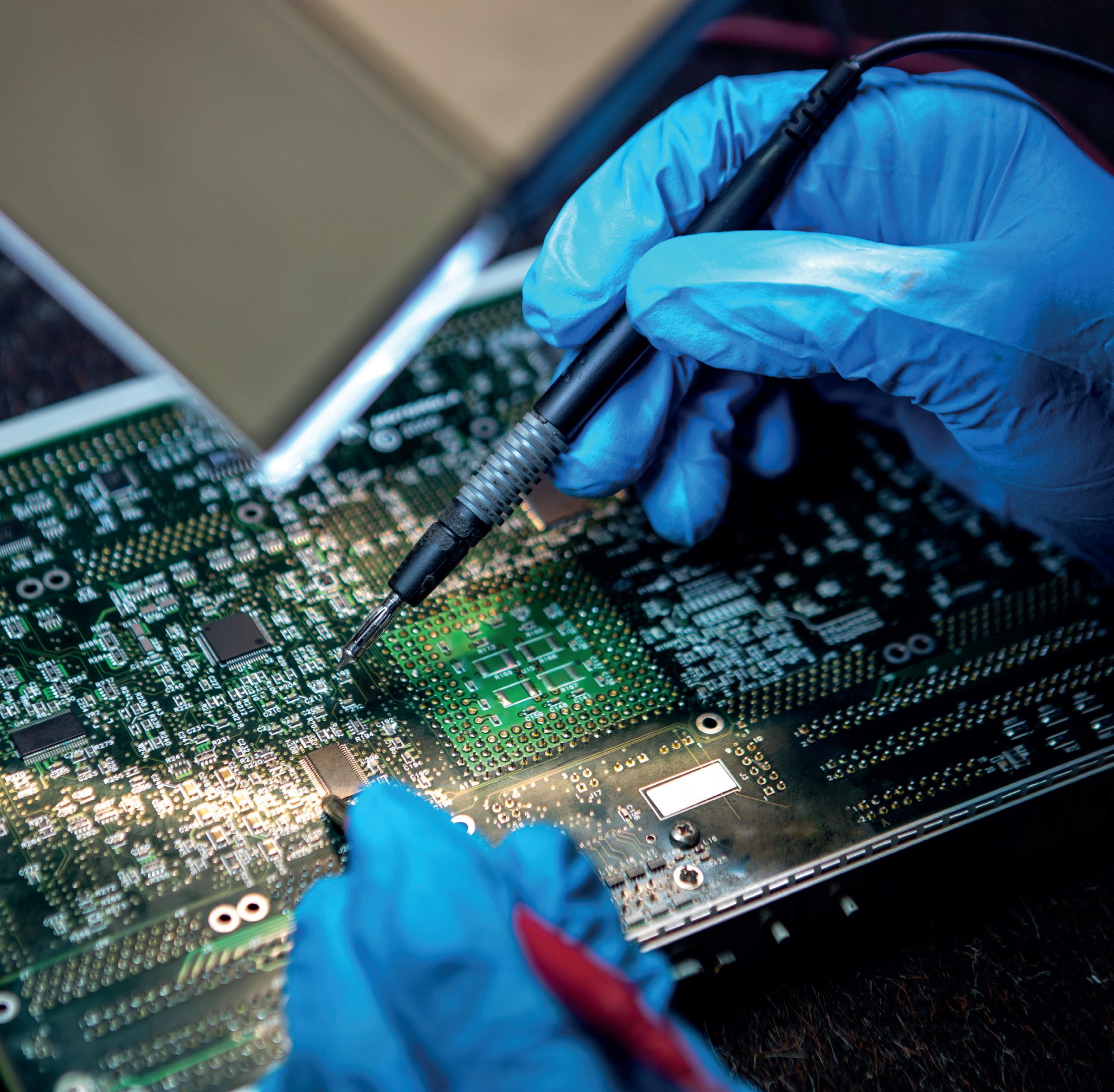
• Printed Circuit Board (PCB) manufacturing with surface mount facility in-house allowing you to construct professional quality sixlayer boards with stateof-the-art components.
• A class 100 and a class 10 Clean Room forming the Wolfson Nanomagnetics Laboratory, a clean roombased laboratory for research and student projects in spintronics, nanotechnology, multifunctional material/ devices and biosensors.
• A communications laboratory with full range of industry standard high frequency (HF) test equipment. You’ll be able to build and test HF systems from discrete component level through to the interfacing multiband communication chipsets (Wi-Fi, Bluetooth) commonly used in consumer electronics.
ROBOTS USED IN TEACHING INCLUDE, BUT ARE NOT LIMITED TO:
• 25 x Plymouth Nanobot – FPGA, Arduino, Pi controllable 2-wheeled robot for the first and second years.
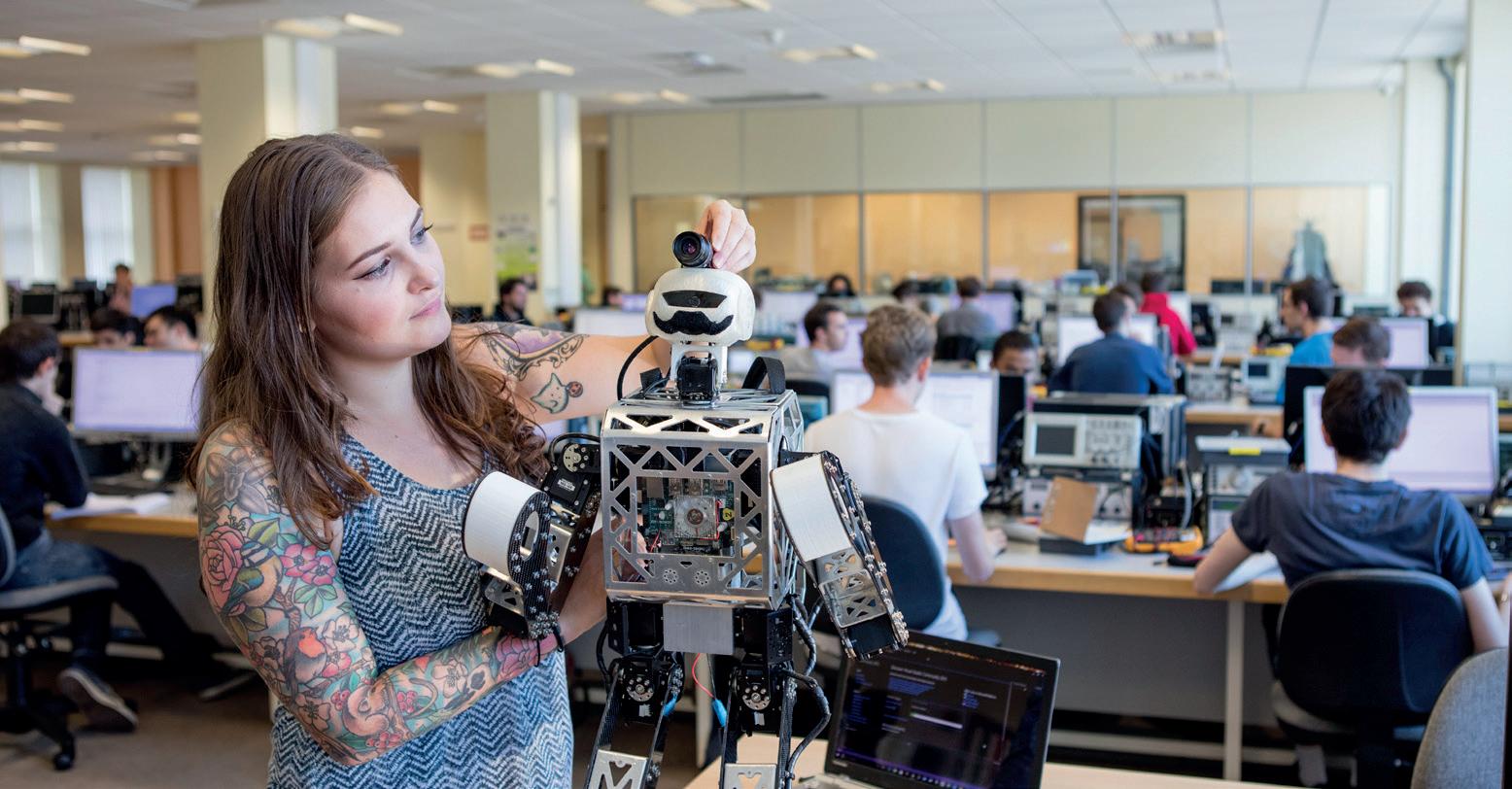
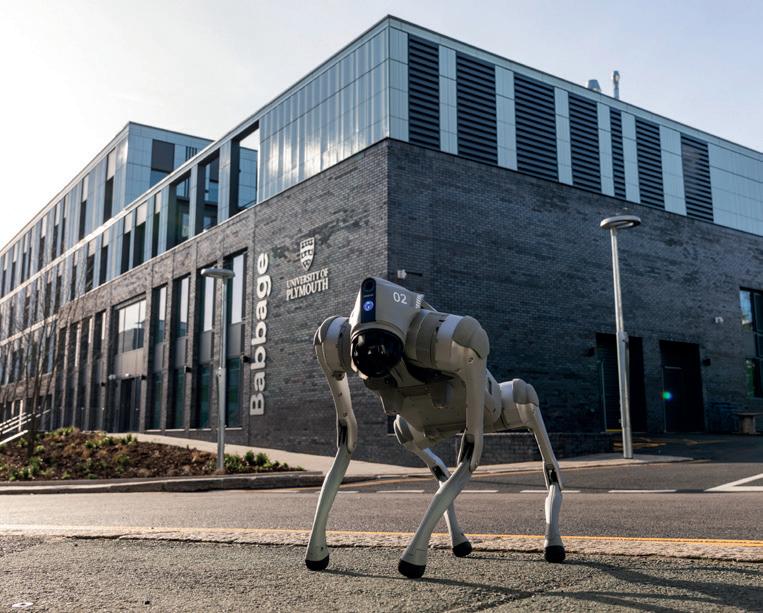
• 12 x Plymouth Humanoids –18 DF humanoids with Odroid 64-bit quad core processors, running own robot framework under Linux Ubuntu with OpenCV vision, and Atmel processor R/T gait controller, IMUs, mono camera, wifi link. Used for gait kinematics, and computer vision for second and third year undergraduate and MSc postgraduate study.
• 21 x Plymouth OWL robot – stereo vision using Raspberry Pi computer
board with twin OV5647 cameras. Links to host for vision analysis and servo control. Used for servo control, stereo vergence, disparity and saccadic eye modelling for third year undergraduate study and MSc Robotics.
• 10 x NAO robots for HRI for third year undergraduate study.
• 20 x complete Dynamixel 5-axis robot arms used for robotics teaching.
WHY YOU SHOULD DO A PLACEMENT
Placements can be incredibly beneficial for undergraduate students studying our Engineering courses. A placement provides valuable, hands-on experience outside of the classroom and can prove to be a great networking opportunity.
Many of our students have gone on to either be offered graduate employment by their placement organisations or have used a placement to help them decide their career routes.
A placement is the perfect opportunity to refine and enhance your CV, put theory into practice and hone valuable skills that will be attractive to employers after you graduate.
WHAT COULD YOU DO ON YOUR PLACEMENT YEAR?
Placements can provide a deeper, working level understanding of the career paths that that are available following a
degree. For example, a student interested in civil engineering may choose to pursue a placement in application planning within the private sector, while another student who is more interested in mechanical engineering may opt to do a placement with an agency that offers manufacturing and design services to the public.
Placements can help to highlight you as a candidate for a role, giving you valuable experience and specialist skills.
WHY SHOULD YOU UNDERTAKE A PLACEMENT?
While we equip you with as much hands-on experience and opportunity to put theory in practice as possible, a placement can provide you with that little bit extra to make you stand out from the crowd. A placement also exposes you to a professional environment where you’ll be expected to work with a team, communicate and collaborate with others in that setting. Being able to bounce off the people around you and gain direct experience of working in industry can be invaluable to your career path and your final years in university.

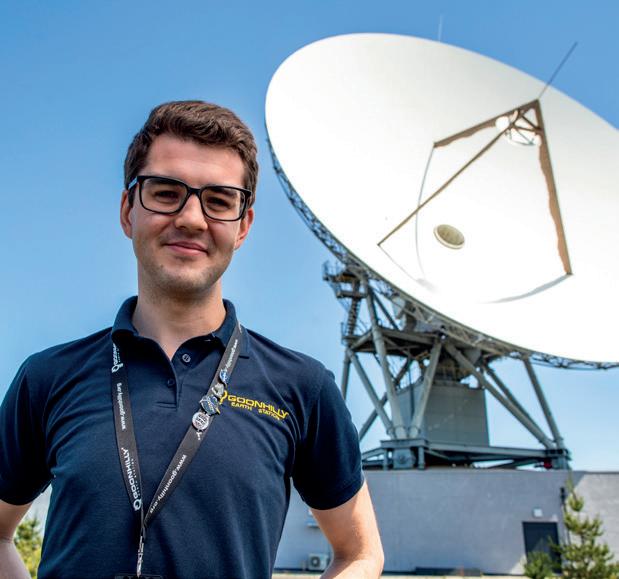
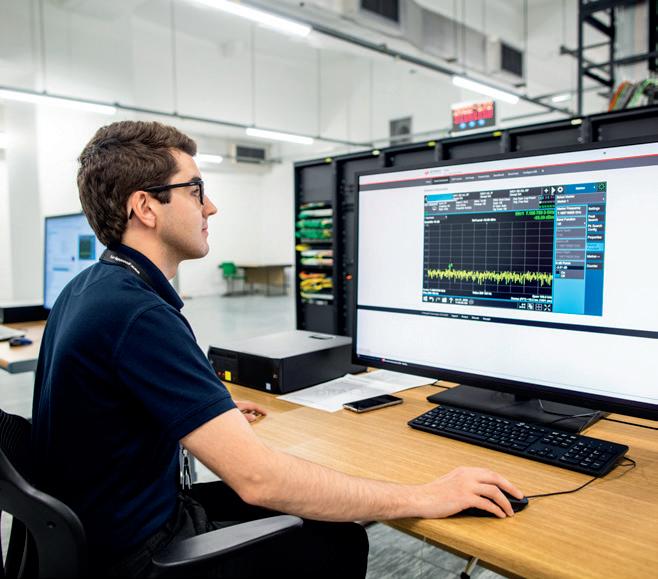
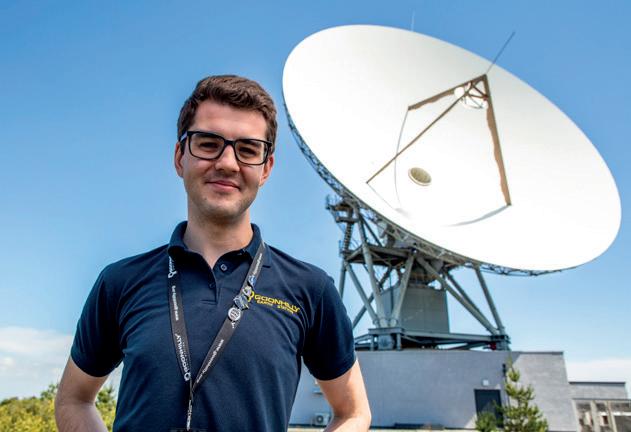
Jamie was able to secure a placement with Goonhilly Earth Station Ltd, the world’s most famous satellite communications company and home to the world’s first and only commercial deepspace antenna.
THE POWER OF PLACEMENTS
CIVIL ENGINEERING
Harriette studied BEng (Hons) Civil Engineering and started her placement with Aecom designing an underground station. After a successful placement, Harriette accepted a job offer, which she began after five months of travelling.
COASTAL ENGINEERING
Charlie studied MEng (Hons) Civil and Coastal Engineering and completed his placement with Hochtief. Charlie received sponsorship from his placement company for the final year of his degree.
ELECTRICAL AND ELECTRONIC ENGINEERING
Alex studied BEng (Hons) Electrical and Electronic Engineering and started his paid placement at Rolls Royce (Controls and Data Services) as an Electronics Engineer and completed a summer placement at Gtech. Going into his third year, he was able to hone that experience to refine his CV which helped him to
They were so impressed, they offered him a role after graduation. Here, Jamie talks about his placement experience...
“If you’re able to, carry out a work placement or work experience to get a first-hand feel for the job and industry, this will allow you to apply knowledge learned from study and apply it to real word applications.
My main role is in deep space communications, using the world’s first and only commercial deep space communications antenna, called GHY-6. Our team is the world’s only deep-space operator doing this commercially, outside of a government-owned Deep Space Network (DSN).
focus on the end goal of securing a role in industry after graduation.
ROBOTICS
Max studied MEng (Hons) Electrical and Electronic Engineering and completed two placements during his time at the University. The first one was between his first and second year at National Instruments, and the second between his third and fourth year at CERN – both times as an application engineer. He found the vast amount of practical experience he gained on the course helped him to secure those positions.
MECHANICAL ENGINEERING
Russell studied BEng (Hons) Mechanical Engineering and spent a year working with Plymouth-based Fine Tubes, a manufacturer of precision for a wide range of industries including aerospace, medical and oil. He was able to put what he learnt at university into a real-world situation and as a result, the company
A typical day might involve an operational mission for the European Space Agency, downlinking and uplinking to their Mars Express spacecraft or to ESA’s Integral spacecraft. Ensuring the station is configured correctly is critical. Also allowing them to send commands through our dish to their spacecraft. If one setting is wrong, it could result in the commands not reaching the spacecraft, or the spacecraft not being able to decode the signal.
I was fortunate enough to find my path into the space industry through engineering events and speaking to people who work in these incredible and innovative companies. My advice would be
sponsored his final year of university. Furthermore, he secured employment directly after graduation.
MARINE ENGINEERING WITH NAVAL ARCHITECTURE (FORMERLY MARINE TECHNOLOGY)
Neil graduated from the BEng (Hons) Marine Technology course with a wealth of knowledge and experience gained through his studies and placement. He found himself playing an integral role with Princess Yachts International. His key roles led him to work with the naval architecture team, involved in production, development and design on a wide range of projects. This informed his third-year project, where he designed a tender rigid inflatable boat (RIB) for Princess Yachts.

to pursue something you’re most passionate about. If you’re fortunate enough to find a job you love and enjoy, it doesn’t feel like work at all. “
PLACEMENT EXPERIENCES

ALEX ROWE
MEng (Hons) Robotics graduate
Alex worked as part of a large team designing and testing Electronic Engine Controllers for Airbus aircraft.
“Lead engineers at Rolls-Royce commented that the fundamental electronics knowledge that I and another Plymouth student working there possessed were far better than that of students from other universities.”
WHO WAS YOUR PLACEMENT WITH AND WHAT WAS YOUR JOB TITLE?
I completed two placements while at Plymouth. I spent a year in industry at Rolls-Royce between the second year and third year, where my job title was “Industrial Placement – Electronics”. I worked as part of a large team designing and testing electronic engine controllers for Airbus aircraft.
After the third year I spent two months working for Thatcham Research with the job title “Summer Intern – Track Team”.
I was part of a small team testing advanced driver assistance systems on cars.
HOW DID YOU GO ABOUT SECURING YOUR PLACEMENT AND WHAT WAS THE PROCESS FOR THIS?
The two placements had very different application processes. As one would expect, there were a huge number of applicants for the Rolls-Royce placement scheme, therefore they had a very structured application process – a CV only online application (extremely rare for large corporations, they usually also have a number of online tests), followed by an assessment centre consisting of a presentation, group exercises to test teamwork and a technical interview. In contrast, I telephoned Thatcham Research at the start of my summer

holidays explaining that I thought their work was very interesting and that I would like to do a summer internship with them. They were not advertising for an intern, but kindly agreed to give me an interview anyway. About a week later I was interviewed by the chief technical officer of the company, who is also the head of Euro NCAP.
HOW DID THE CAREERS SERVICE (PLACEMENTS TEAM) SUPPORT YOU BEFORE YOUR PLACEMENT?
The team was very good at going through my CV and pointing out areas to alter, which I suspect made all the difference with me getting an interview at Rolls-Royce.

HOW DID YOUR PREVIOUS STUDIES ENABLE YOU TO BE SUCCESSFUL DURING YOUR PLACEMENT?
The analogue and digital fundamentals learned during my first year were all tested during my technical interview. I thought this had been a trivial test to see if the candidates knew the basics, but apparently many candidates only managed 20–30% of the questions.
I applied control theory knowledge gained during my third-year project to tune the robot controlling the accelerator pedal of cars on the Thatcham Research test track. My colleagues there were mostly young graduates from either a mechanical or motorsports engineering background, so it was interesting to see the different approaches we had to tackling
problems. Coming from an electronics/ robotics background, I found it easy to interpret the datasheet of a piece of sensing equipment we were using for a particular experiment.
HOW WILL YOUR PLACEMENT HELP YOU WITH THE FINAL YEAR OF YOUR DEGREE?
After my first placement, I found that my work ethic at university was much improved. After doing at least a 40-hour week every week for a year, it is much easier to crack on and get university work done, rather than leaving it to the last minute, which I’ll freely admit I used to do in my first and second years.
I also found that my technical writing skills improved significantly and that I understood more about designing
production ready products, rather than just prototypes.
IN TERMS OF YOUR CAREER DEVELOPMENT SO FAR, WHAT HAVE BEEN THE BENEFITS OF UNDERTAKING THIS PLACEMENT?
Being able to give real-world examples of engineering experience is much better than describing small university projects when talking to a prospective employer. Before my placements, my list of professional contacts had precisely zero names on it. However, now I have had a lot of contact with senior people in several companies, both from being employed by them, and from dealing with other companies during my placements.
WHAT WOULD YOU SAY TO A PROSPECTIVE STUDENT THINKING ABOUT UNDERTAKING A PLACEMENT YEAR?
Do it! More specifically, don’t stop applying. I have seen a lot of students apply for four or five highly competitive placements and get extremely dejected when they didn’t get an interview for any of them. Apply for everything that looks interesting – simultaneously. Do not fall into the trap of applying, then waiting to see if you get the placement before applying for another. It doesn’t matter that they aren’t advertising for an intern, a lot of companies are extremely receptive to a phone call from a student fascinated by their work. I have had offers of paid internships from three different companies that I cold called because their products looked interesting. Have a CV ready to send to them, but always call them first, as a phone call is very difficult to ignore. Then, when they ask for a CV, you can send it immediately.
PLACEMENT EXPERIENCES

NILESH JEETAH
MEng (Hons) Civil Engineering
Nilesh worked as part of a largely skilled team to successfully deliver a complete design package whilst serving as both project manager and design engineer.
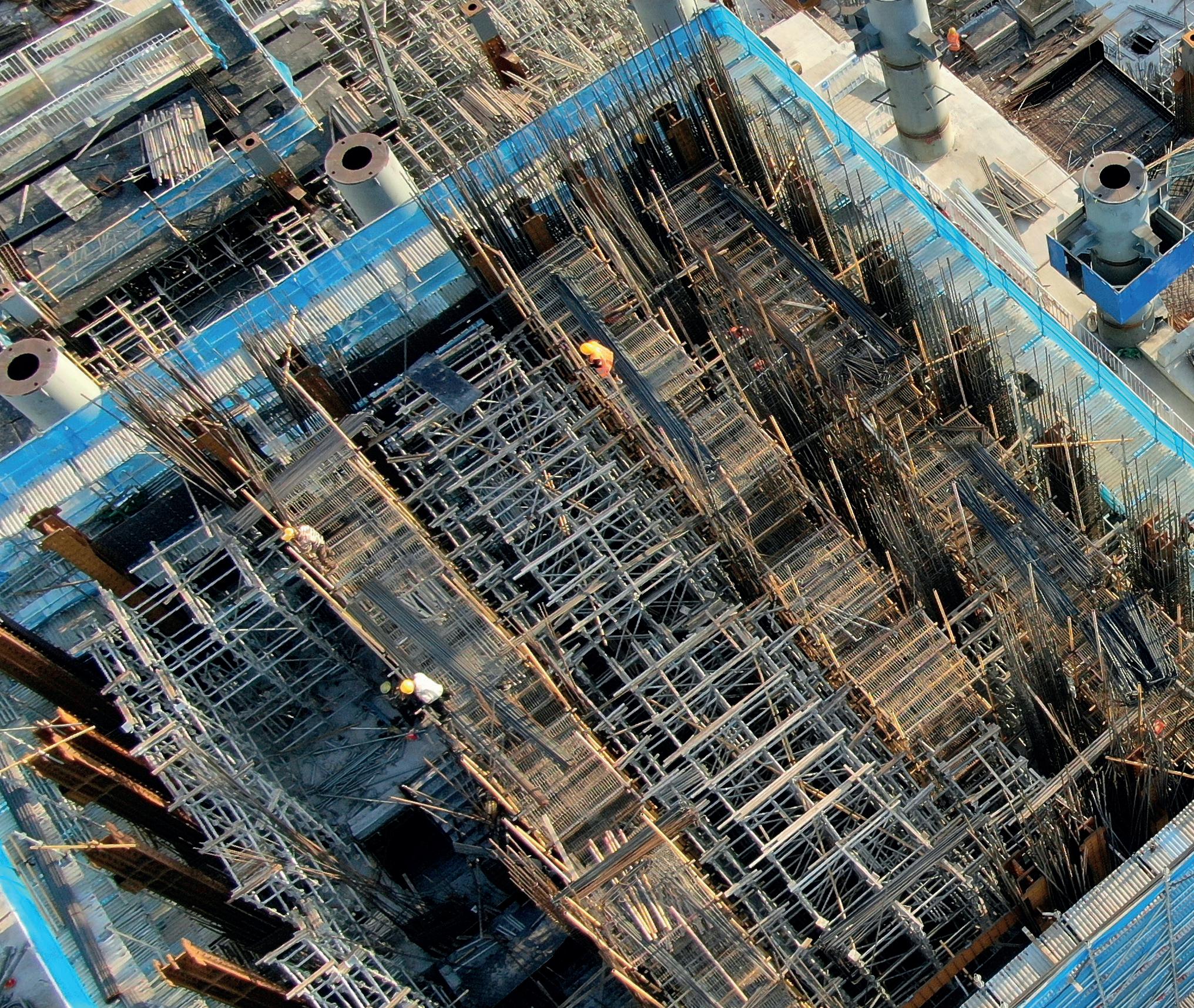
These new skills and experiences enhanced his final-year project research, that led to his win of a regional engineering competition for a research project which could have important implications for the future development of floating offshore wind energy.
WHO WAS YOUR PLACEMENT WITH AND WHAT DID YOU DO?
I did my placement year at 48.3 Scaffold Design Ltd, a design consultancy specialising in scaffold design and part of the Richter group of companies. When I started as an undergraduate design engineer, I was primarily involved in producing design drawings. As I progressed, my technical skills grew, and I began assisting with pricing projects and writing quotations for senior colleagues. I also helped the design team meet urgent deadlines by taking on additional tasks.
As my role expanded, I began liaising with clients to answer design-related queries and provided updates to the design team. In addition, I was responsible for conducting preliminary design calculations and took on project management roles, eventually delivering a full design package for a small scheme at a London hospital.
WHAT SKILLS DID YOU GET THAT WILL HELP YOU IN YOUR FUTURE EMPLOYMENT?
I had the privilege of contributing to a diverse range of projects, spanning from simple designs to large, complex ones located in the heart of London. Through these experiences, I considerably developed my communication skills through liaising with the client. I was able to sharpen my technical abilities in design drawing and risk assessment, while
also cultivating valuable commercial skills, including design quotations and project budgeting. By maintaining projects within budget, I further strengthened my business acumen and ability to deliver successful outcomes.
Working in a professional environment provided me with numerous opportunities to develop my soft skills, including teamwork, time management, leadership, discipline, accountability, dependability and problem-solving. In particular, I valued the experience of working under pressure and meeting urgent project deadlines, which helped me develop my ability to thrive in challenging situations. By maintaining a high level of discipline and focus, I was able to complete tasks efficiently and effectively, even when faced with tight timelines or complex assignments.
As a result, I have become more confident in my problem-solving abilities and more adept at delivering high-quality work in a timely manner.
HOW DID IT FEEL PUTTING THEORY INTO PRACTICE?
Putting theory into practice was an exciting and rewarding experience. It allowed me to apply the knowledge and skills I had learnt at university in a real-world context and see the impact of my work. It can also be challenging as I encountered unforeseen obstacles and complexities with modifications from clients or large-scale complex projects that were not present in theoretical scenarios. However, this challenge was an opportunity for growth and development, as it helped me to identify areas where I needed to improve and adapt to changing circumstances. Overall, putting theory into practice was a valuable
learning experience, helping me to gain confidence and build a deeper understanding of my field of study.
HOW HAS THIS HELPED YOU GOING INTO YOUR FINAL YEARS AT UNIVERSITY?
During my placement year, I developed several skills which served as a catalyst for my final years at university. These are communication, time management, prioritisation, organisation and building discipline. As a result, I was able to manage my research project which was a demanding module while balancing my time with other coursework deadlines.
The real-world experience I gained during my placement allowed me to better understand the practical applications of the structural engineering design module I completed in my third year of
university. Thanks to the design skills I acquired, including drawing and analysis, I was able to deliver coursework drawings reflecting industry standards.
Additionally, my placement year helped to increase my confidence and self-assurance, which enabled me to approach my final years at university with a more positive and proactive mindset.
FIND OUT MORE if you’re interested in studying Civil Engineering with us
PLACEMENT EXPERIENCES

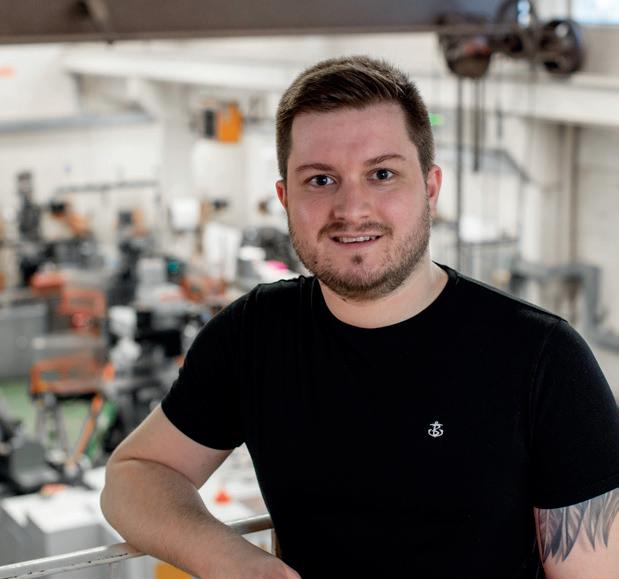
JACK MASON
MEng (Hons) Mechanical Engineering
PLEASE CAN YOU EXPLAIN WHAT YOU DID FOR YOUR PLACEMENT?
During my industrial placement year at Babcock International Group in Devonport, I undertook three fourmonth rotations, each in distinct roles. Initially, I assumed the role of a Facilities Design Engineer, designing upgrades to dockyard infrastructure to enhance future submarine capabilities.
In my subsequent placement, I joined the project team overseeing maintenance for an SSN submarine. Here, I managed the overall project, as well as taking responsibility for specific work packages, such as coordinating all onboard surveys and overseeing the management of the
tank work package. Due to my involvement in the project, I transitioned into the role of Commissioning Group Package Manager for my final placement.
HOW DID THE UNIVERSITY PREPARE YOU FOR YOUR PLACEMENT?
The University provides modules in years one and two of the degree to prepare you for placement. In year one, the module sets you to think about placements, explore options and determine which companies you are interested in applying to. The year two module then guides you through the process of applying: firstly, assisting you with the writing of your CV and applications, interview preparation and finally, detailing the
support available to you while on placement. The modules also include guest speakers from past placements including students and company representatives, giving you further insight into the placements available.
The University’s Careers Hub also provides lots of support and resources, such as online CV builders and checkers, one-to-one sessions with the career’s advisers and direct connection to companies.
HOW HAS YOUR PLACEMENT PREPARED YOU FOR WHEN YOU GRADUATE? KEY BENEFITS, FUTURE EMPLOYMENT ETC.
I think the key benefit of the placement is the experience gained.
Having completed the first two years at university plus a further year in industry and meeting competencies, I met the application requirements to register as an Engineering Technician with the Institution of Mechanical Engineers (IMechE) giving me access to further career development and recognition for my accomplishments during the first years of my degree.
Having completed the placement year, I was able to apply for sponsorship with Babcock International Group to join the graduate development scheme. When applying for placements, a daunting thought was the added year to the degree by completing the placement. However, the year’s experience gained can
count towards the experience years required for professional registration and the advantages for future employment make the year extremely worthwhile.
HOW DID YOUR PLACEMENT HELP WITH YOUR FINAL YEARS AT UNIVERSITY?
Personally, I thrive in understanding theory when I can apply it practically or employ systems thinking. Industry experience enabled me to link what I’d observed and to use it to understand theoretical concepts during my final academic years. I could also draw upon examples to explain problems or make informed decisions.
My year in industry provided invaluable professional experience. This exposure established a consistent work routine and enhanced my work ethic, thereby sharpening my focus on university studies upon my return. Furthermore, it fostered vital interpersonal skills such as effective presentation, communication, and time management.
WHAT ADVICE WOULD YOU GIVE TO ANOTHER MECHANICAL ENGINEERING STUDENT THINKING ABOUT DOING A PLACEMENT?
• Speak to previous placement students, discuss what they did and what they gained from it. I learnt so much from the year in industry in all aspects of life as well as assisting me in my final academic years.
• While the additional year might deter some from embarking on a placement, the advantages it brings with the experience, earning and the skills you develop enhance your final academic years, making it undeniably rewarding. If you are interested in Chartership, the year’s experience counts towards the required years for professional registration after graduating.
• When applying, try to apply as early as possible. This maximises your chances of getting accepted at some of the major companies. But take your time to ensure your application is professionally written before applying.
• Finally, the best advice I can give when on placement is don’t be shy to ask for work or to help on a project. Get involved as much as possible! This is your chance to gain as much experience, learning and proving the skills you’ve already learnt.
FIND OUT MORE about studying Mechanical Engineering with us, please scan the QR code
WHAT IS A FINAL YEAR PROJECT
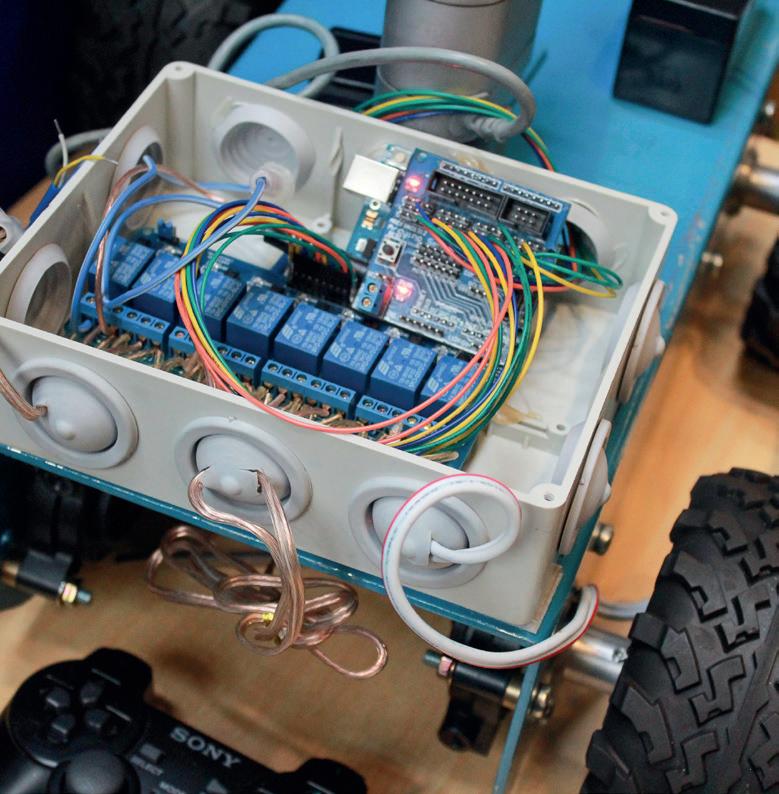
At the end of your degree, you’re required to complete a Final Year Project, which you will demonstrate and discuss with others at a project showcase.
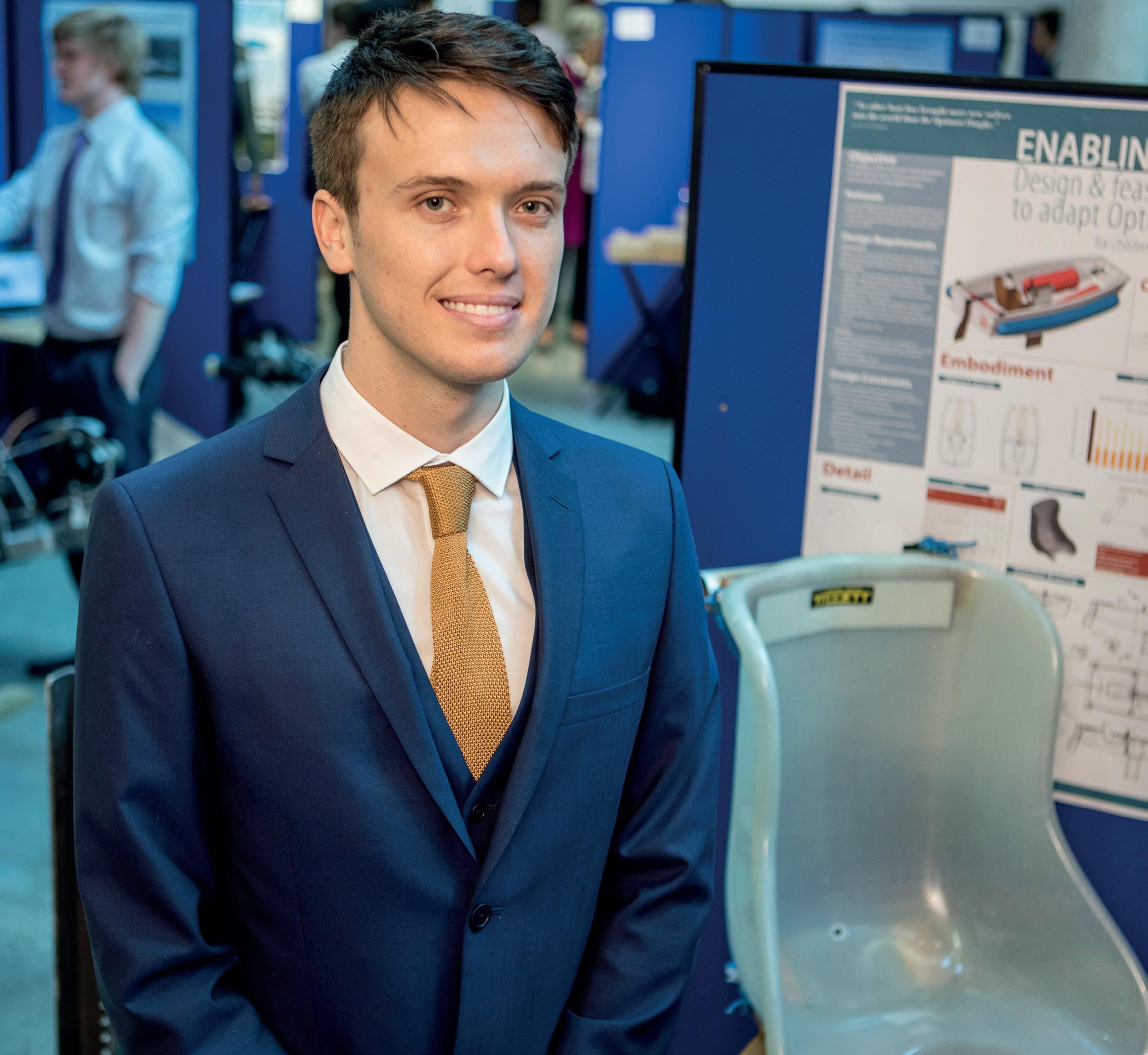
This is a culmination of all the skills and academia that you have learnt during your time at university. You‘ll be given the opportunity to pick a project that draws upon your interests and ambitions and build a project reflective of these.
Dependent on your chosen area for your project, you’ll be supported by the relevant lecturers and will be assigned a project supervisor who will help to guide you through the process of planning and structuring your project so you can achieve what you set out to do.
This is important as there are a number of project prizes that are sponsored by numerous employers that attend these Project Showcases, these have included Babcock Marine, HSBC, Rapid and RS Components. As well as these, many other employers attend and the showcase can prove to be an invaluable networking event, where you demonstrate your interests and abilities when looking for that high-level job.
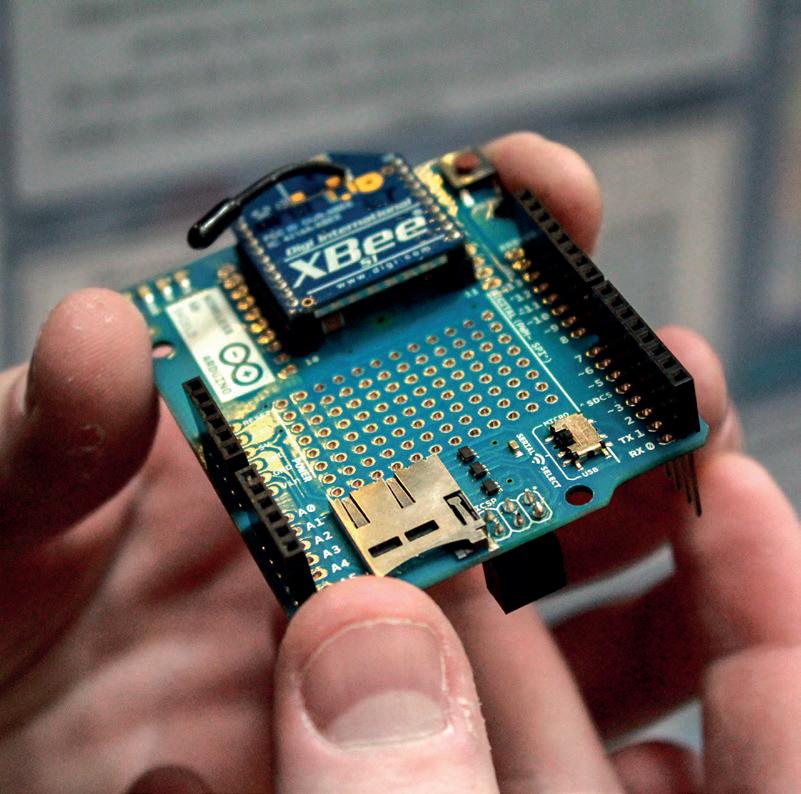
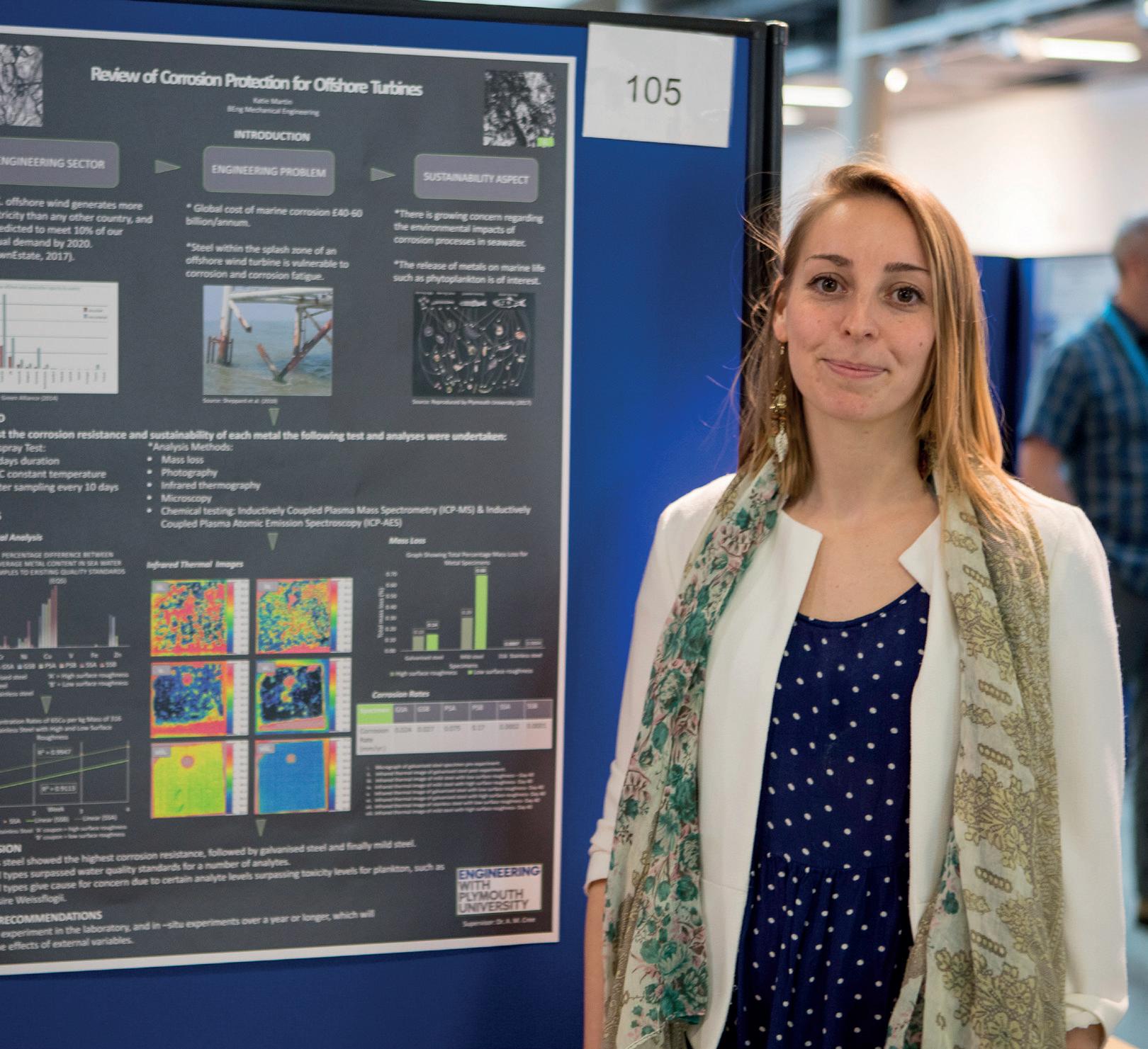
“It is truly rewarding to see our students take the three years of experience and knowledge gained on our degree courses and produce research and designs that could be published, patented or sold commercially. It is no wonder industry values them so highly and that many students get jobs on the day.”
Dr Toby Whitley, Electrical and Electronic Engineering and Robotics Admissions
Tutor and Lecturer in Analogue and Digital Electronics

LILLY-MAE
My project is all about investigating an Oscillating Water Column (OWC) which is a maritime device that harnesses renewable energy. The OWC uses the pressure of air created by the vertical oscillations of waves within the chamber of the structure to spin a turbine to create energy. I investigated the optimum geometry of the structure through physical modelling in the 35m flume in the laboratory.
All my data was collected using specialised software and equipment within the laboratory. This was all compiled into understandable graphs using Matlab, ready to become part of my report.
The most challenging part for me was analysing my data as the equipment recorded data every 128th of a second for every test, meaning there were a lot of numbers to go through and pick out the ones that could be of the most relevance to my investigation.
I’m glad I chose this project as renewable energy is important to me and everyone on this planet. I feel like my project is worthwhile and I hope the research I have conducted will help inspire other engineers to think greener when it comes to their own projects.
INDUSTRIAL MENTORING SCHEMES
Enabling Talented Students to Succeed
As a university focused on employability, we’ve developed relationships within the industry that can help provide you with connections and opportunities you’ll need to begin your career.
There are multiple mentor schemes that are available to our students, all of which can help you to gain unique insights into your desired careers, network, increase your skills and undertake mock interviews, giving you a competitive advantage in the job market. Support you could receive include:
• top tips for your sector
• CV writing help
• cover letters and applications
• networking and introducing contacts
• personal development.
We also have strong links in industry with Babcock International. Babcock is a leading provider of complex critical
engineering services across four key sectors: marine, nuclear, land and aviation. Participants will benefit from one-to-one mentoring sessions, a Babcock led insight day and a mock assessment centre.
Benefits of the Babcok Mentoring Scheme:
• A mentor, chosen specifically to help you gain relevant skills, knowledge and experience, will offer four flexible mentoring sessions covering a variety of useful topics.
• A Mock Assessment Centre with preparation given beforehand and an Insight Day panel of interesting and knowledgeable speakers, bespoke to Babcock Mentoring Schemes.
• A supportive and passionate team, comprising of mentors, the University’s Careers Service, the academic team and staff from Babcock International.
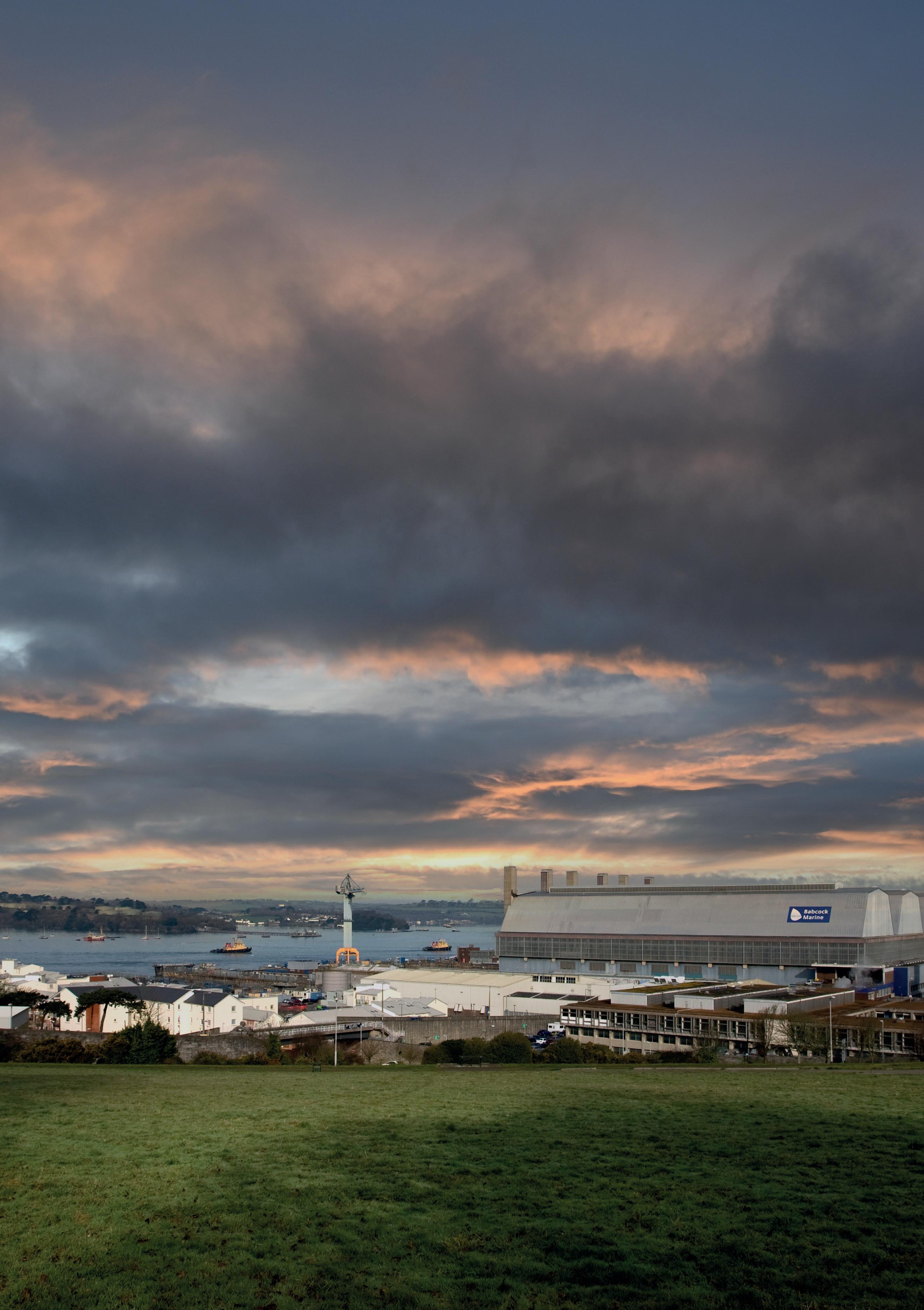
• The scheme provides you with transferable skills that can be applied in employment and within your CV. It also provides an understanding of the application process and behind the scenes knowledge of Babcock International.
“Mentoring is a great opportunity to engage with employees and hear their experiences and advice for employment in the engineering sector. Thanks to my mentor’s help with my CV and interview skills, this summer I have managed to get some work experience with an engineering firm.”
Alex Webb, BEng (Hons) Mechanical Engineering
THE TAMAR ENGINEERING PROJECT
Enabling Talented Students to Succeed
How can we inspire a new generation of talented engineers? Is there a means to overcome the growing costs of undertaking a degree? How can we nurture that all-important sense of wonder in creative engineering minds, whatever their background or circumstances?
The Tamar Engineering Project (TEP) transforms the lives of talented and ambitious students whose background or circumstances might be a barrier to higher education advancement and success. It provides one-to-one mentoring from an industry professional, a financial award of £3,000, and a £1,500 course fee waiver (per year of study) to successful applicants.

“The bursary has allowed me to focus entirely on my uni work without the need to take a part-time job to support myself, so I have been able to ensure that the work I submit is the best I can possibly do.”
Sebi
“I would love to sincerely thank everyone involved with this amazing scholarship; it has truly made a hugely favourable impact on my studies.”
Ben
“Through meeting regularly with my mentor, I learned about the types of civil engineering, the problems engineers face, and about an engineer’s career path. This gave me a much needed insight into what possibilities there are for me as a civil engineer after I have completed my degree.”
Lisa
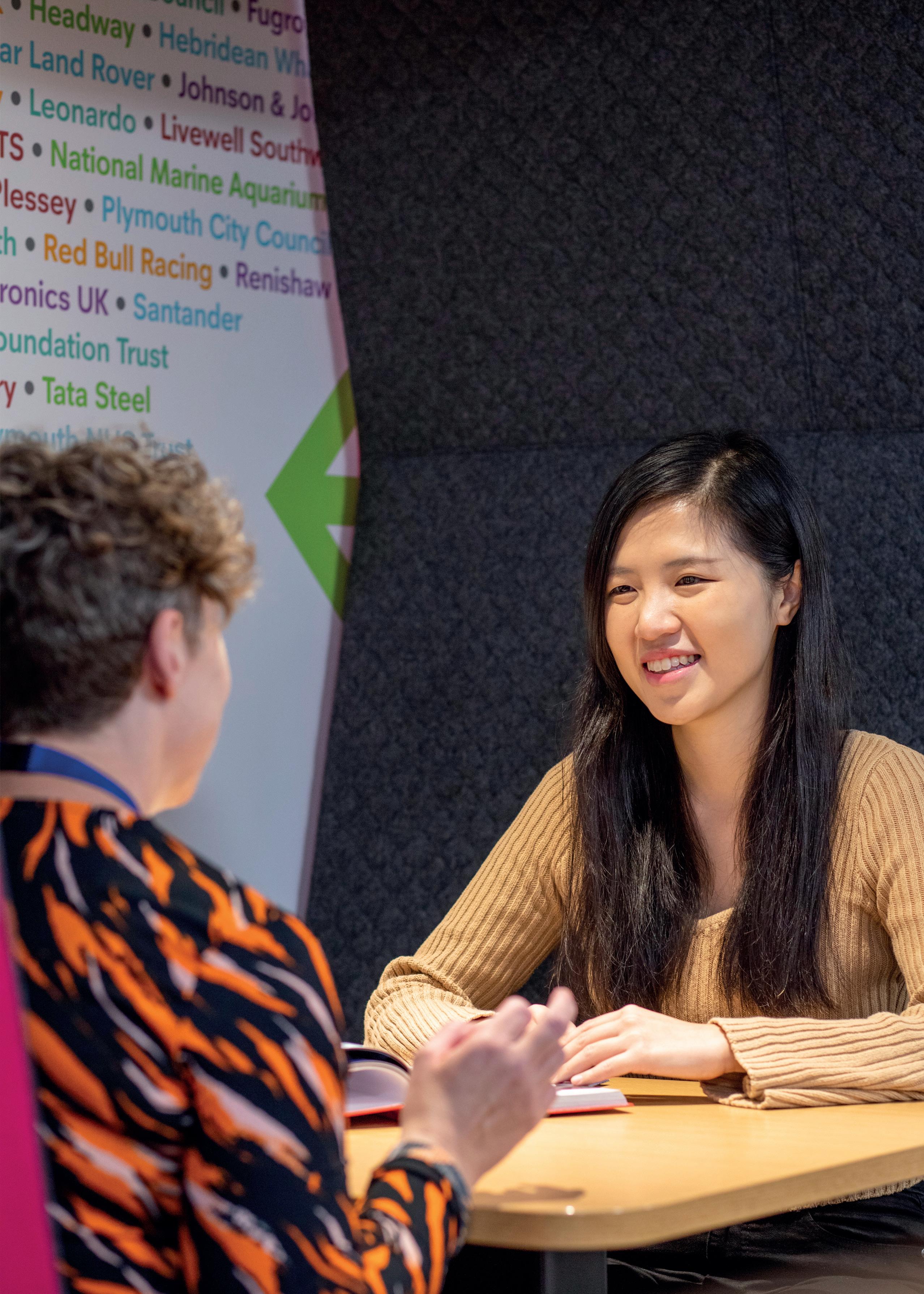
“The service I received from the Careers Service during my degree was imperative to my applications for graduate roles. From finding a part-time job during my studies, attending mock interviews and the CV workshops they provided, all of which helped me secure a role in my dream field after graduating.”
Sam, BEng (Hons) Robotics
CAREER SUPPORT
One of our main goals when it comes to our students, is helping them to find employment after university.
Our Careers Service offers bespoke guidance for both students and graduates which aims to support and encourage their development, networks and job applications.
You may come into your degree with a career in mind. In that case, the Careers Service offers you the opportunity to delve deeper to understand your chosen career more and to utilise what we have to enhance your applications. However, if you are unsure on your career path (which is completely normal), there are plenty of resources to help you explore, plan and compete for opportunities. You’ll go through university and graduate, equipped with the skills and support to be ready for employment.
HOW DO WE SUPPORT OUR STUDENTS’ CAREER PROSPECTS?
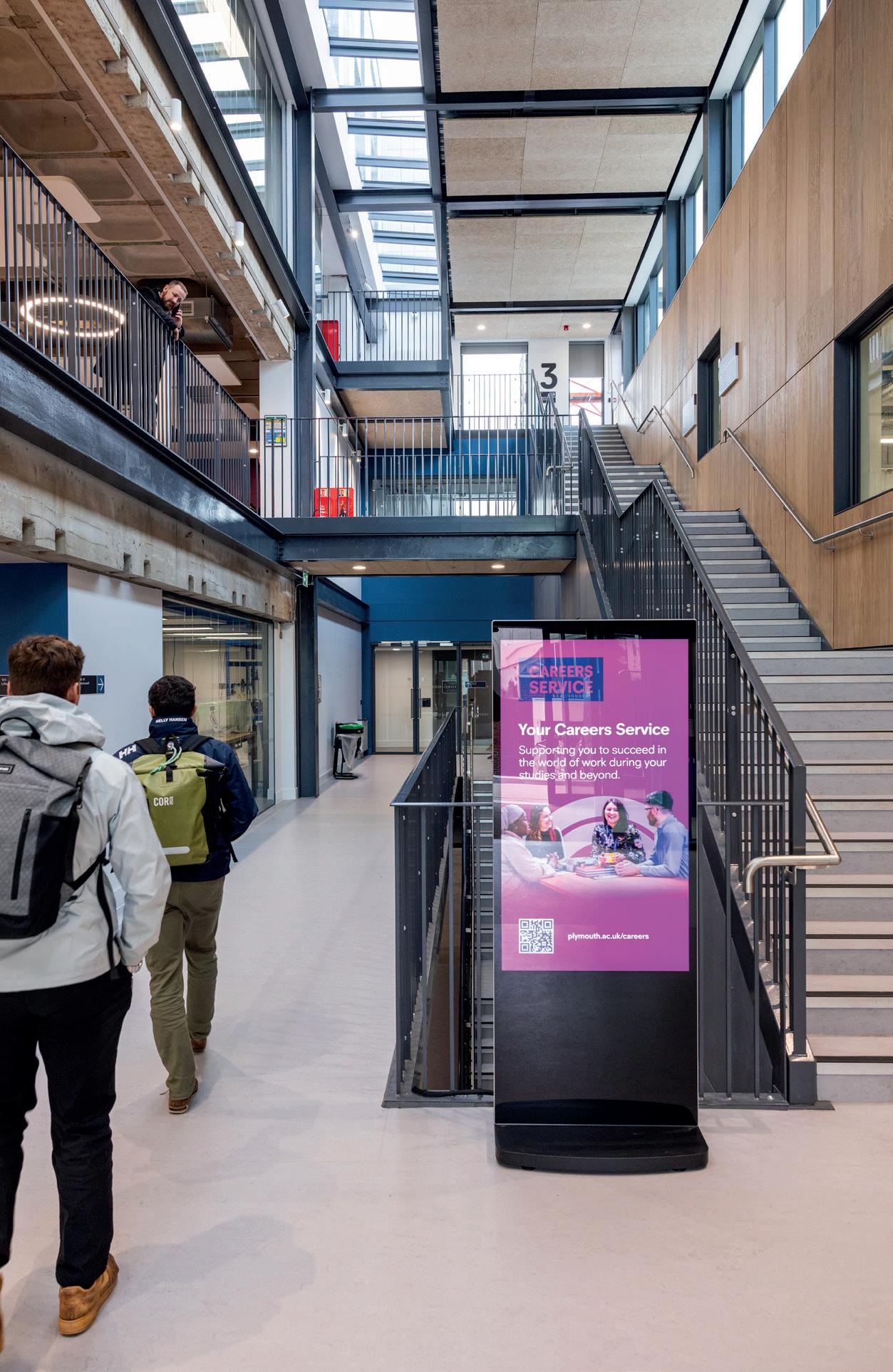
Our engineering students are exposed to the industry possibilities from day one with talks from industry professionals and our own graduates. Our lively, immersive “Enhance Your Future” programme equips you with the tools you need to research and formulate your career ideas.
“Since graduating, I have been able to access the Careers Service and was able to find my current role through this. I think having that support once you’ve graduated is invaluable.”
Alex, BEng (Hons) Civil Engineering
Focused work experience preparation sessions bring you into contact with employers to gain an understanding of selection and recruitment processes. Alongside these are sessions with your placement adviser that are dedicated to helping you make effective applications and increasing your confidence in interview and assessment centre settings.
WHAT CAREER SUPPORT
SERVICES
DOES THE UNIVERSITY OFFER?
As well as our bespoke career development programme within the curriculum, we also offer a range of services including the following.
• Support with job hunting, application writing, CVs, networking and interview skills.
• On-campus careers fairs, where you can explore career opportunities and develop your professional networks.
• Individual placement support, both before and during the placement as well as internship opportunities.
• A paid work placement programme using our extensive industry contacts and an industry mentoring scheme. The latter matches students with a specific industry individual who will meet with them regularly to provide incredibly valuable insights into a specific sector.

• University of Plymouth alumni who now work for employers who are keen to spot future talent usually host the mentoring scheme.
• Our myCareer internet platform hosts an extensive vacancy database of graduate, placement and part-time opportunities. myCareer allows students to sign up for events such as employer panels, enterprise competitions or mentoring. It also holds a range of highly specialised digital tools such as a CV builder, an interview simulator, online courses and video resources. Access to myCareer is available to our graduates at any time in the future.
GET IN TOUCH
Follow us on , @uniplymcareers
Contact us or visit our website for more information.
careers@plymouth.ac.uk
+44 (0)1752 587456
plymouth.ac.uk/careers
GRADUATE STORIES

CONNER KEARY
MEng (Hons) Civil Engineering
“Plymouth is a really interesting place to study civil engineering, with lots of new developments going on.
I applied for the BEng (Hons) Civil and Coastal Engineering course because of the excellent facilities and the fact that Plymouth was the only place that offered a civil and coastal course.
As we progressed through the course, I found I preferred the civil side, so I switched over to the MEng Civil Engineering course, which was an easy transition. I thought it would be harder to move, but it was just a request. The lecturers were really helpful and had no issue answering my questions.
On the Civil Engineering course, I worked hard enough for the first three years to get to the grade boundary to move up to the master’s course, which was a great feeling.
I didn’t have a lot of industry work before last summer, but I didn’t want to do a year’s placement, so I applied through a group called CECA, which is the Civil Engineering Contracting Association.
That led to part-time employment with Glipin Demolition Group. I’m classed as a junior engineer with them and I’m responsible for temporary work design. Gilpin is mainly a demolition company, but they are also involved in

environmental projects, such as removing asbestos. I also do a bit of site engineering, material take-offs, and go on site to make sure they are handling projects correctly.
I now work with Gilpin more than perhaps I thought I would, and I’ve really enjoyed it – they have been really flexible.”

ALEX PARSONS
BEng (Hons) Civil and Coastal Engineering
“I feel as though I couldn’t be more prepared for life outside of University”
During my postgraduate experience I used the Careers Service to help with my first CV used for jobs relating to my degree. I found this to be very helpful when I was stressed trying to get work after university.
My university experience was a very positive one. I found that the lecturers I had supported me and also challenged me to be better. The social side of uni was great as well. I joined a football team within my faculty which helped me make friends with other
students further on in their degree than me. This was very helpful for asking for advice with work or just building a network within the industry.
My best memory at university was doing my dissertation and being able to use the wave machines to turn my questions into answers. I chose Civil and Coastal Engineering at Plymouth because of the facilities and expertise in the field compared to other universities. I would recommend my degree because I feel there is nothing like it which combines both structural, civil and coastal engineering into one course.”
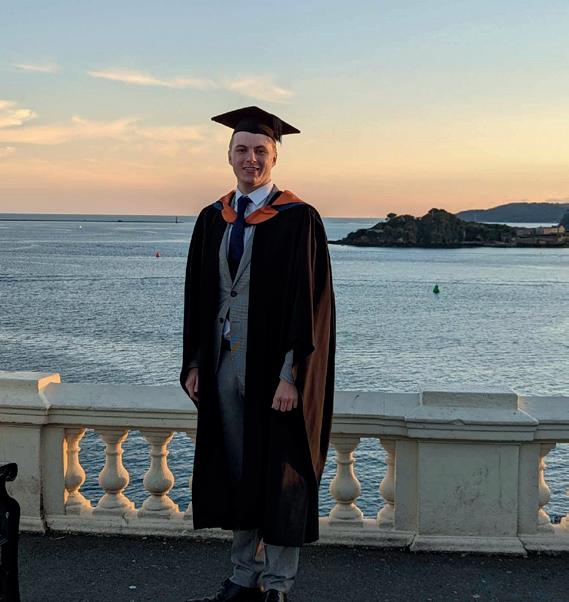
“I now work at Cornwall Council working with other likeminded, experienced engineers across the county. I have worked on many projects across the county from new roads for big housing developments to more local projects such as designing new parts of the local road network. My job has allowed me to become a rounded engineer as I have also done work within drainage design and project management. I really like my job, each week I’m tasked with something different so I’m continuously learning day to day.”
GRADUATE STORIES

JESSICA HIRST
BEng (Hons) Mechanical Engineering
“Completing my engineering degree at Plymouth has prepared me well for the future. Particularly, the various presentations required have massively improved my confidence, and working with many different people has improved my teamwork skills. Make the most of every opportunity. I wouldn’t have done anything differently but know it could be easy to put things off and miss out on some amazing experiences, especially with moving somewhere new, where you know very few people. Just make the most of it!
The library service was key in helping me achieve my degree along with the help and support I received from lecturers on the course, particularly during my dissertation. Ultimately, the most helpful thing the University did was making it possible for me to go part time for my final year, allowing me to achieve the best I could and gain work experience at the same time.
Being part of the Motorsport Club was a highlight of university. I would encourage those starting university to find a club or society they are interested in and join it!
There is a great balance. You will be sure to have a great time but everyone

works hard when they need to. Especially in group work – which there is a lot of on the mechanical engineering course.

NICHOLAS PARKES
BEng (Hons) Marine Technology (Now BEng Marine Engineering with Naval Architecture)
“The course content has been very applicable to the real world. After my placement, I have been able to bring the new skills that I learned from working back to university with me which has helped my understanding of the course much more.
The University offered this course which is only available at a few universities in the country. The facilities for the course are at a much higher standard than those of other universities, which we’re encouraged to use for our final-year projects.
The Careers Service helped me tailor my CV to a high standard aimed specifically at engineering employers
which helped me gain employment for my placement year at a ferry operator in the engineering department. It has encouraged me to aspire to achieve more. In the future I would like to start up my own business within the engineering industry.
My dissertation project involved designing on CAD software a trimaran ferry and being able to 3D print it to a high degree of accuracy to use it as a test model for the wave tank. Then testing the model and analysing the motion experienced from a passenger perspective.
In my experience of my placement, the course content has been very

applicable to the real world. Since my placement, I’ve brought the new skills that I learned from working back to university with me which has helped my understanding of the course much more.
The city is incredibly student friendly, and the campus has been renovated over the past few years making the campus feel contemporary. This is very important for me as I feel the way the campus is designed makes the student experience so much better!”
CHIARA RIVETTI
BEng (Hons) Electrical and Electronic Engineering
“The final-year project was an incredible learning process and an experience that tightened the relationship and friendship with all my course mates.
Being an international student, I could not be present at the open day because of travelling restraints, but the guidance that the course leaders gave me was fundamental for making Plymouth my firm choice. I felt welcome from the very start. Finally, living by the sea makes the whole place special.
During my studies, I benefitted the most from the employability counsellor as I was supported step by step in the
writing of an effective CV. The library is one of the University’s strengths, providing access 24/7 and with a rich selection of books and articles supporting my studies. The University organised employment fairs were an incredible platform from which to start creating a professional network and to find inspiration for my future after graduation.
Studying at Plymouth involves a lot of group work, one of the most dreaded projects some people might say. On the contrary, I say! Group work is probably one of the best opportunities – students get an experience of the real-life challenges. Working with a team, making the tasks flow and work

for the best possible result, are skills to learn, constantly develop and treasure.
I have moved to Switzerland to start a masters programme in Management, Technology and Economics.
There are many international support groups and events run by the University. I have personally always felt at ease and welcome in the community. Living in halls in my first year was fundamental to meeting UK students, experiencing the culture and getting used to the new lifestyle. Clubs and societies supported by the University have been another incredible opportunity to blend in and start feeling part of the community.”
MATTHEW PRESTON
MEng (Hons) Robotics
“Don’t be afraid of what you don’t know; engineering is a vast subject and is used in many different ways in the modern world, from your car to your oven. Use the experience of your new colleagues in your field to your advantage.
Studying Robotics at Plymouth gave me a vast area of knowledge and an excellent foundation to use a wide range of robotic engineering applications, from walking robots to assembly line arm robots.
My favourite memory from my time at Plymouth is my graduation ceremony. My MEng project team and I won first prize for best embedded solution, and
we got a special mention at the ceremony.
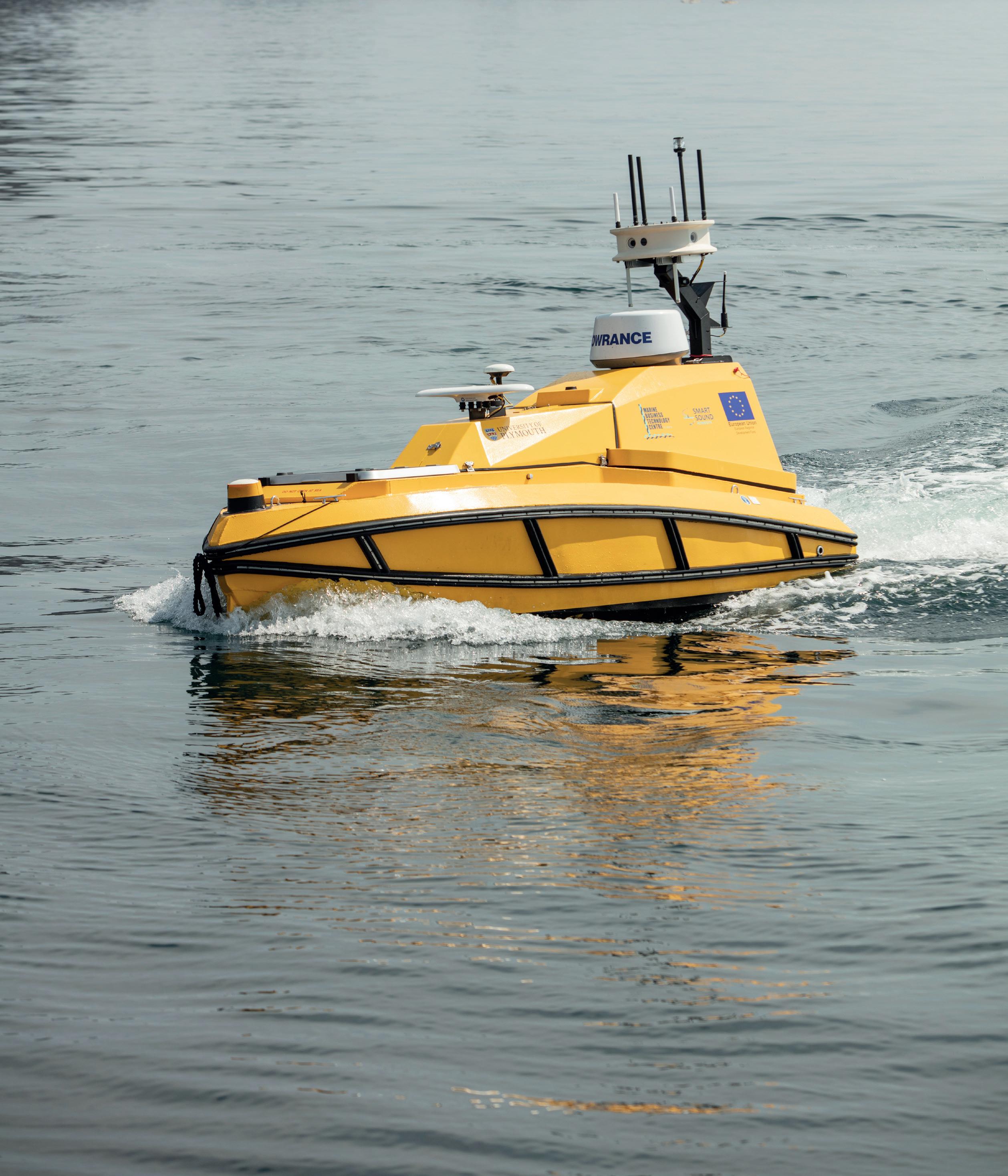
I have been involved in many exciting, full-scale industry projects in tandem with different companies. One of the vessels I am currently working on starts its sea trials soon, in which I personally get to take the craft out with a team and test it in the ocean.”


JOIN THE FOURTH INDUSTRIAL REVOLUTION
The School of Engineering, Computing and Mathematics is a collaborative and interdisciplinary community of world-leading academics and researchers focused on creating knowledge and innovative solutions that positively impact society. Aligned with the Fourth Industrial Revolution, the School is home to an extensive portfolio of research from offshore renewable energy, coastal engineering and robotics to cybersecurity, artificial intelligence, and marine autonomy. All of this contributes to our teaching methods, with every engineering programme taught by research-active staff.
Engineering forms the core work of several of our research centres of excellence, including:
CENTRE FOR DECARBONISATION AND OFFSHORE RENEWABLE ENERGY (C-DORE)
C-DORE brings together a critical mass of leading research and expertise from across the University of Plymouth. Through co-creation and collaboration with partners from business, government and key communities from across the globe, it aims to be a beacon for the University’s whole-system transdisciplinary approach to solutions-oriented research, accelerating sustainable developments in decarbonisation and renewable energy.
Find out more about our renewable and low-carbon energy research:
CENTRE FOR MARINE AUTONOMY, MARITIME CYBER SECURITY AND TECHNOLOGY (CMAST)
CMAST is founded on the achievement of research excellence across autonomous maritime technology and systems, and the cyber security of these technologies and systems. The Centre blends these areas of research excellence holistically, understanding the systems of technology, people, and processes in unique surface and underwater environments. This mirrors the complex microcosm of industry and defence in the South West, but also nationally and (because of the nature of our oceans) internationally.
Find out more about our marine technology and cyber security research:
CENTRE OF RESEARCH EXCELLENCE IN INTELLIGENT AND SUSTAINABLE PRODUCTIVE SYSTEMS (CRISPS)
CRISPS brings together a vibrant community of transdisciplinary researchers, working towards addressing the challenge of sustainably feeding a global population of 9 billion. Founded upon research excellence in aquaculture, agricultural technology and soil health, and underpinned by investment in cutting-edge facilities, the Centre will create the critical mass required to ensure impactful research and real-world deployment in the UK and beyond.
Find out more about our sustainable and productive systems research:


IT’S YOUR FUTURE MAKE IT COUNT
Over 95% of our graduates are in work or further study*