Education Edition
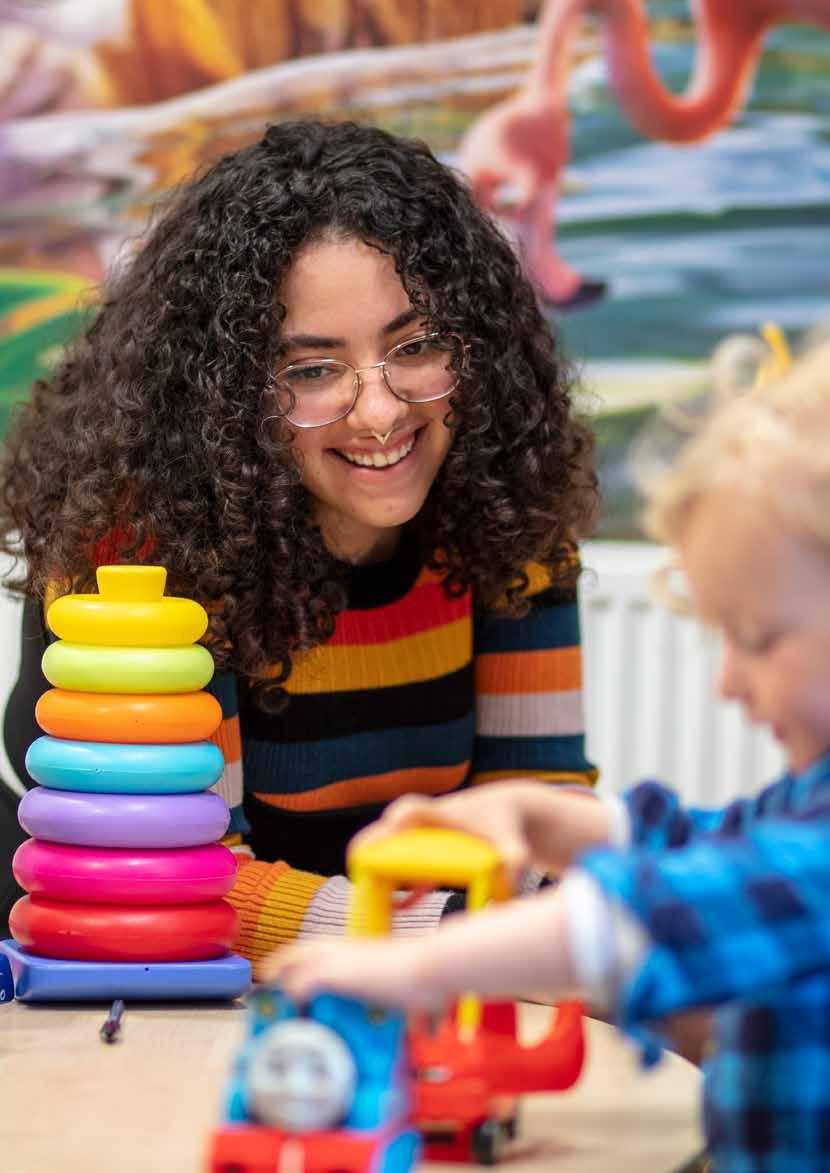
CHANGING THE NARRATIVE TO CREATE AN INCLUSIVE SOCIETY
EARN AS YOUR LEARNOUR PARTNERSHIP WITH FRESHLINGS NURSERY
EXPLORING CHILDREN’S MUSICALITY!
Education Edition
CHANGING THE NARRATIVE TO CREATE AN INCLUSIVE SOCIETY
EARN AS YOUR LEARNOUR PARTNERSHIP WITH FRESHLINGS NURSERY
EXPLORING CHILDREN’S MUSICALITY!
Admissions
+44 (0)1752 585858 admissions@plymouth.ac.uk plymouth.ac.uk
Schools & College Outreach
Faculty of Arts, Humanities and Business foabhoutreach@plymouth.ac.uk
University of Plymouth Drake Circus Plymouth Devon PL4 8AA United Kingdom
Follow us on social media @PlymUniApply
It’s never too early to start thinking about what you would like to do after school or college, or if you are thinking of a career move! At Plymouth, we know that choosing a university and course is a big decision. While you may have an idea of a profession, career or industry that you’re aspiring towards, if you’re unsure of exactly what you want to do or are keen to find out more – this is where our handy subject guide comes in.
Meet some of this issue’s contributors:


HOT TOPIC:
P. 10 Education for social justice
Dr Suanne Gibson, Associate Professor in Education examines how inclusive education can build equality in our societies.
FEATURES:
P. 14 Which degree is right for me?
P. 20 Where will your degree take you?
What skills will you develop and what career options are available?
P. 22 Earn as you learn Early Childhood Studies students share how Plymouth’s partnership with Freshlings’ Nursery has boosted their CVs.
P. 26 Making the most of your time at university
BA (Hons) Education graduate Charlotte shares her top tips for preparing for life after your degree.
P. 30 Find the right route for you via a foundation year course
Rubi explains how she grew academically and personally in a university environment.
P. 34 A home away from home Education student Anna, originally from the United States, explains how she found her place in Plymouth.
P. 44 More than bindis, bangles, bhajis and bhangra Explore the complexities around multiculturalism in primary schools.
P. 54 Your next steps Discover the road to higher education.
When it comes to finding out if university feels right for you, nothing compares to an open day. Talk to current students and quiz lecturers about your course. You can register to attend here plymouth.ac.uk/open-days
Our virtual tour allows you to experience first-hand what it is like to be on campus and explore the environments and facilities that inspire and shape our learning every day. virtual.plymouth.ac.uk

THE GUIDE:
P. 50 What is education for sustainable development?
Discover how you can enable future students to acquire the knowledge skills, attitudes and values needed to shape a sustainable future.
Education unlocks the imagination and opens a world of opportunities. Are you ready to start your journey to create a more equitable, inclusive and empowering educational landscape, ensuring a brighter future for all?

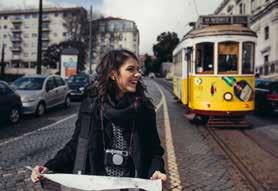
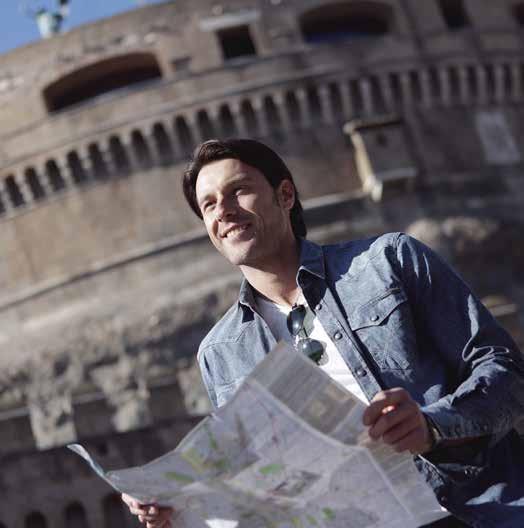
We support exploration, not only within our international student community in Plymouth but also further afield. Throughout your course, you’ll have opportunities to expand your understanding of education in diverse cultures and environments including residential trips and study abroad opportunities for select courses. You will enjoy time spent learning from peers and in different environments together, sharing innovative ideas and knowledge, travelling and making new international friends, developing expertise and attending sporting and cultural events.
Our degrees introduce you to new education principles that you will have never encountered before, in addition to themes you thought you knew from another angle. While we give you the space and tools needed to develop your voice, critical insight, and knowledge, we encourage you to engage with different ideas and views about socially just, inclusive, meaningful forms of education for individuals, communities, different societies and our planet. We are a community, an environment where all feel they belong.
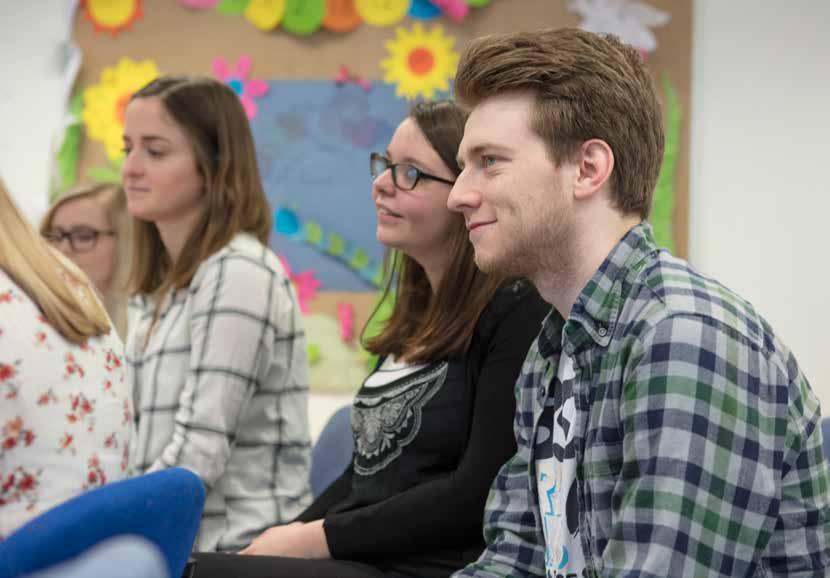
There are many opportunities to enrich a flourishing student experience such as attending talks by guest speakers and free public lectures, performances, receiving Makaton training, teaching English as a second language, obtaining safeguarding qualifications, and exploring various volunteering opportunities and placements within schools and the community – all giving you sought-after skills ready for employment.
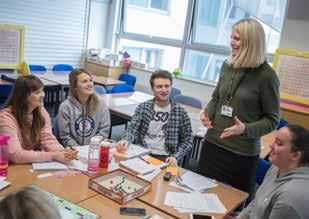
Our degrees are powered by our research. We are changing the world around us, from Professor Jocey Quinn’s research on how music can help communication and wellbeing in those who struggle to be understood by words, to Dr Ulrike Hohmann’s work on changing people’s views of the childminding profession. This research underpins all our teachings – while some students arrive to pursue careers in teaching and social work, often new opportunities arise as you catch the research bug.
When you come to Plymouth, you too will become a researcher in your final-year dissertation. You will spend a year completing your own chosen research project with guidance from an expert lecturer. Conducting research builds confidence and valuable skills that you can apply in your career.
We have long-standing active partnerships with over 100 schools and education settings across the South West and beyond, giving you valuable opportunities to learn from real industry experience. These include primary and secondary schools, further education settings, Special Education Needs and Disability (SEND) providers, early childhood settings, nurseries, charities, community organisations, alternative education providers and many more. You will have the opportunity to network with a range of professionals to build your industry contacts and expertise.
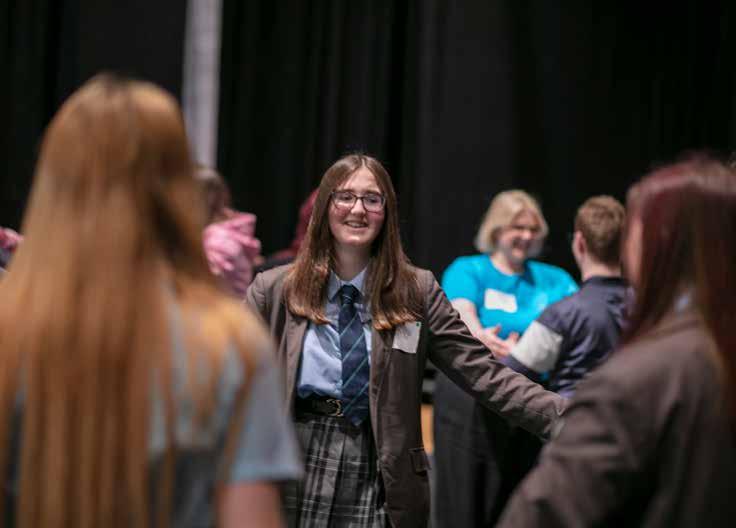
“We are given freedom by the dedicated team of lecturers to decide on the pathway we deem most significant to our world and progression, and allowed to flourish and find ourselves. This degree has allowed me the space to pursue my interest in outdoor education and delve into gender education. I now step into the world with new perspectives, increased confidence, and a burning desire to continue to learn. I have gained more from this degree than I ever dreamed I would, and I cannot recommend it highly enough to do it justice.”
Katie, BA (Hons) Education graduate


Working to nurture, challenge and encourage personal growth and development is one of our foremost priorities. Your journey is at the heart of the course, and we provide you with the enthusiasm and knowledge you need to make a positive impact on the world around
us. We promote a learning environment that encourages you to expand your knowledge and understanding of yourself and others, to develop confidence in personal beliefs and opinions and to have these challenged, giving you the courage to step outside their comfort zones and embrace new things.
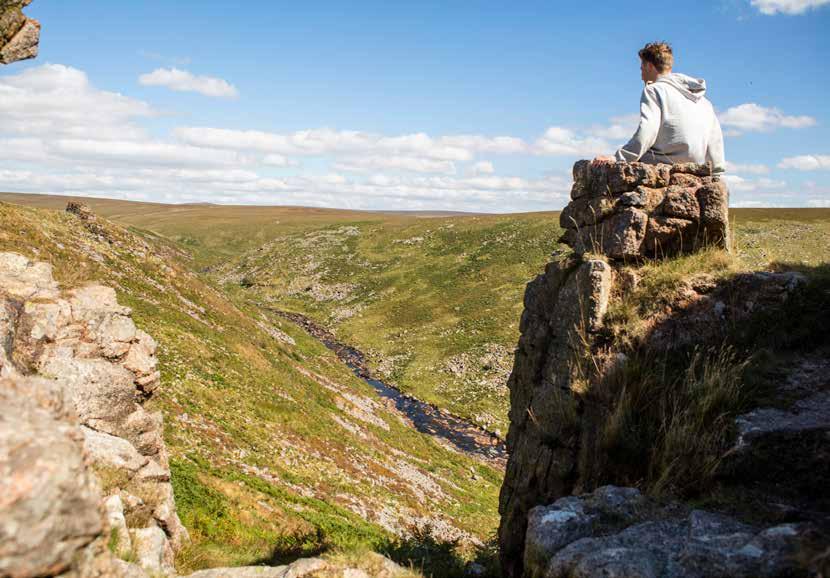
Our city is in a stunning seaside location and has a rich culture of learning and exploration. Our students have the unique opportunity to be in a vibrant student city yet surrounded by beautiful coastal and moorland landscapes. With beaches and Dartmoor on the doorstep, there are plenty of activities to get stuck into.
Education in the South West is as rewarding and challenging as anywhere in the country, with a diverse set of education needs, whether inner-city or rural, to understand and impact. You will benefit from key skills training in responding to the challenges that this unique area can bring.
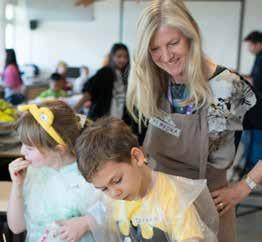
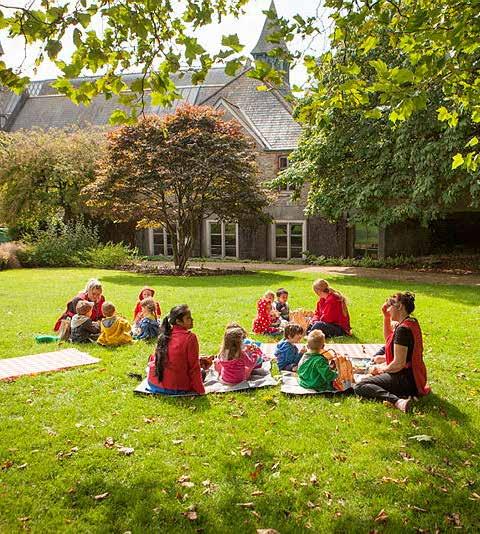
An Education degree is an enriching experience. It is not just about theory but becoming intimately familiar with the practical elements of the discipline. Take advantage of paid or unpaid work-based learning modules to help you stand out when starting your career in early years settings, schools, community projects, museums, wildlife parks and many more. You can also engage in education-relating volunteering, or delve into the wide range of opportunities available to all students on our city centre campus.
“This experience not only helped me to boost my self-confidence but also made me realise how I was more capable of facing challenges. Being able to choose my own placement related to the career path I wanted has allowed me to not only gain confidence in how I can achieve my goals but also expand my knowledge. It allowed me to explore my options, finding different places where I could work and jobs I did not know existed, testing out how comfortable I would be in a role. It has made me more confident in the route I want to go down by having experience in that field.”
Nina, BA (Hons) Early Childhood Studies student

We pride ourselves on our friendly and supportive learning environment run by internationally recognised staff. We are driven by our dedication to studentcentred learning. Throughout your time here you will have a personal tutor who supports you individually, and every tutor operates an open door policy, meaning you can see them outside seminars, workshops, and lectures to talk through your work one-to-one. Many of the course lecturers have received Student, Staff Teaching and Representation (SSTAR) Awards in categories such as ‘Most Inspirational Teaching’ and ‘Outstanding Personal Tutor’ as voted for by the students.
We also offer writing workshops and other kinds of writing support, so that you have lots of opportunities to improve your work with guidance from experts. For example, you can drop into the Writing Café, a unique and creative space where you can have a conversation with a member of the Learning Development team, work with one of our trained writing mentors, or take part in one of our many events and writing activities.
Learn more about the writing café

“The tutor support on the course has been the most accepting and inspiring academic support that a student could wish for. From my experience, the tutorial team want you to succeed whatever your aspirations are. Tthey are there to offer advice, support and just a chat with a cuppa if that’s what you need!”
Ben, BA (Hons) Education graduate
We are a friendly department in a big diverse school. You can tailor your degree to focus on what fascinates you. By taking different options, you will gain a thorough grounding in your areas of interest – whether it be history, English, law, criminology, sociology or education. Alternatively, you can take part in one of our common challenge modules by utilising the United Nations Sustainable Development Goals to create change. Whatever your passion, you will have the freedom to explore it here.


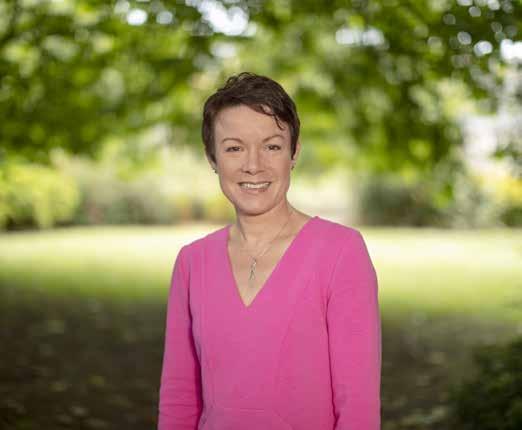
Associate Professor in Education and Special Educational Needs specialist, Dr Suanne Gibson, examines how inclusive education can build equality into our societies and communities to ensure students are heard, understood, educated, and allowed to succeed.
Education, both formal and informal, plays many important roles in our society. It is something many of us take for granted, but for some, it is completely inaccessible. Inclusive education allows students of all backgrounds to learn and grow side by side, to the benefit of all.*
“Education’ is the world’s most powerful tool, which if used wisely can make socially just differences in our world, enable sustainability, progression for all and achieve equality. At Plymouth Institute of Education, we believe that to be educated and in turn to be an educator, gives us the power to achieve social justice and to make changes happen for equality.”
Dr Suanne Gibson
EDUCATION EXCLUSION
The universal right to education is rooted in the United Nations Declaration of Human Rights and more recently in the United Nations Educational, Scientific and Cultural Organization, yet it is still not realised on an operational level. It is clear from the research that individuals excluded from education result in a lack of tools needed for self-progression, and this, in turn, impacts family dynamics and our communities.
Within Plymouth Institute of Education, we consider the impact of this – locally, nationally and internationally and ask, how do we practically change this?
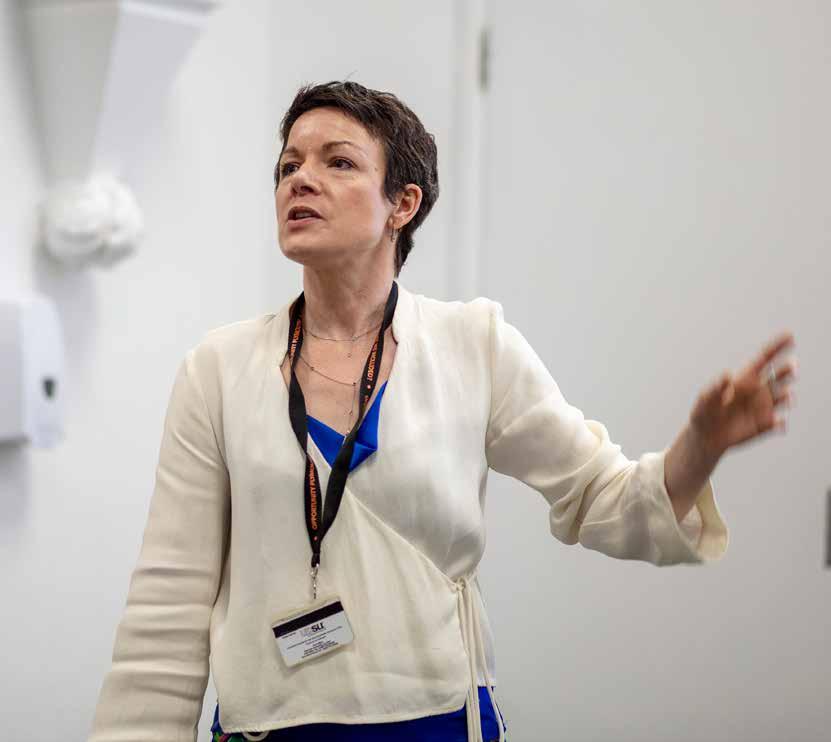
When considering the challenges of education exclusion, students from Plymouth Institute of Education learn about the experiences of disabled learners, and/or those with special educational needs (SEN).
“Data for this is clear: the progression rate, measuring the number of pupils progressing from school to higher education, was 47.5% for pupils with no identified SEN). However, progression rates for pupils with SEN ranged from 20.8% for pupils receiving extra or different help in school (SEN support) to just 8.4% for pupils which a statement of SEN or Education, Health and Care plan (EHCP).”
Lord Chris Holmes, Ex-Paralympic swimmer and current member of the House of Lords
Suanne, working with Lord Chris Holmes, has contributed to government policy change on the higher education Disabled Student Allowance.
Opportunity Plymouth is a studentled mentorship project in schools for post-16 pupils and is committed to the growth, empowerment and future progression of young people whose learning and progress had been negatively affected by the pandemic. Dr Suanne Gibson, Student Engagement Officer, Annette Goddard, and BA (Hons) Education student, Liz Staples, developed the project.
Following a successful pilot year, funding was approved to roll the model
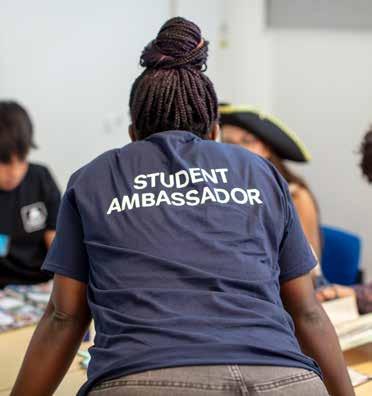
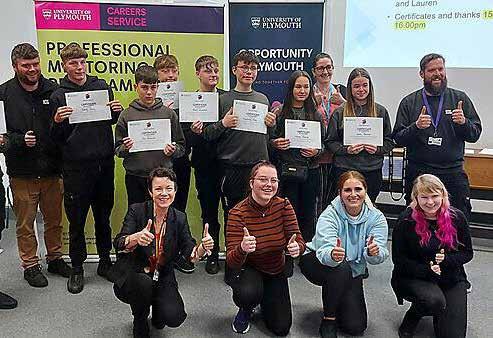
out across ten Plymouth secondary schools in the 2022/2023 academic year.
“This mentoring programme has positive impacts on all stakeholders with empowerment at its core. Our work champions collaboration, choice and personal growth, while recognising and celebrating that success is personal and individual.”
Liz Staples, BA (Hons) Education student
HIGHLIGHTED AS AN EXAMPLE OF NATIONAL BEST PRACTICE
The Opportunity Plymouth mentoring model has been highlighted by the Department of Education and Disability Rights UK as an example of national best practice, being noted as a progressive model of
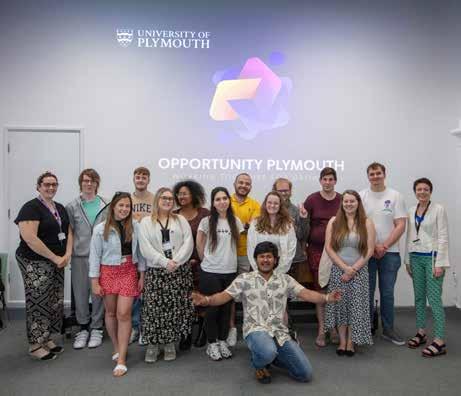
student mentoring in the Speaking from Experience, Getting it Right for Disabled Apprentices report.
It was recognised that our mentors gain valuable skills, and school pupils gain both confidence and opportunities that help with future aspirations.
Education degree students were given the opportunity to become mentors. Working closely with the Careers Service, mentors received professional mentoring training and received a digital badge in recognition of their training and professional experience. The mentoring model was based on the theory of Possible Selves (Harrison, 2013) where an emphasis is placed on building self-esteem and raising aspirations.
During the project, our student mentors worked with a select number of Year 10 school pupils, providing small group sessions over eight weeks.
“The experience has helped me gain a level of professionalism and provided me with an opportunity to be a source of information and guidance.”
Student mentor
“They helped me to find work experience and to speak to people I did not know.”
Student participant
“I felt that it was a good experience because it helped me with my understanding of work experience.”
Student participant
LEVELLING UP
“This work is really important right now, at a time when we are working to level up in Plymouth and address the growing challenges that we as a society face in education.”
Dr Suanne Gibson
“I personally want to thank all at the University for allowing us to come and see what you do. It’s highlighted a real need for our kids and establishments like the University to come together to give children a real focus for their future. It has really helped their selfesteem.”
Matt Treeby, school teacher
Early childhood studies, education and primary teaching are related to the study of education and child development, but they have distinct features and prepare students for diverse careers. All are essential to making a difference to the lives of others and promoting a better and more inclusive learning environment.
BA (HONS) EARLY CHILDHOOD STUDIES
Early childhood studies is a multidisciplinary field that primarily focuses on the study of children from birth to approximately eight years of age. Our course explores various aspects of child development including cognitive, social, and emotional development during the early years. You will utilise a sociological, psychological, historical and philosophical lens to develop effective strategies for supporting growth and wellbeing on this degree.

“Meeting all the different lecturers was enjoyable. They’ve all come from different specialist areas but essentially are all working towards one goal - making us better practitioners when working with children.”
Charles, BA (Hons) Early Childhood Studies student

“Plymouth offers a high-quality education experience that supports a diverse range of students to achieve their very best. The University is very friendly, and I have made many friends during my time here.”
Rachel, BA (Hons) Early Childhood Studies graduate
the fundamental questions and issues related to the society you wish to live in such as – ‘What attitudes and values underpin past, current and future education communities?’ Education degrees inform, support and promote those looking to become leaders of societal change. Educators can have a lasting impact on people’s lives, whether you want to become a teacher, work in the social or care industries, or as an educator in community development.

BA (HONS) EDUCATION
Do you wish to become a driving force for a better and more just world? Education is a broad field that encompasses the study of learning, teaching and educational systems from children to adults. You will be encouraged to start thinking about some of
“It’s helped me become a critical thinker and has inspired me to become a change maker. If you want a push in the right direction towards your dream career, or if you’re unsure of what you want to do in the education world, the BA (Hons) Education course is for you!”
Emily, BA (Hons) Education student

“This course gave me the opportunity to learn about myself as a person, how people are motivated, the complexities of wellbeing and life for all individuals as they learn throughout life, from compulsory education and adulthood.”
Jasmin, BA (Hons) Education graduate
are prepared for a wide range of careers through work-based learning modules in various early years and primary school settings, including learning outside of formal education.

Degrees in this field enable you to acquire the knowledge and skills needed to promote sustainable development - to enable sustainable lifestyles, human rights, gender equality, global citizenship, cultural diversity and to promote of a culture of peace and non-violence.
BA (HONS) PRIMARY EDUCATION
This course will prepare you for a rewarding career in education, including teaching. They focuses on children aged 3-11 years old. Degrees in this area provide specialist training within special education needs and disability (SEND), education for sustainable development, childhood and child development, and equality, diversity and inclusion. Graduates are skilled in curriculum enhancement, teaching methodologies, classroom management, assessment and understanding the specific needs of children. On completion, you
“Teaching is not for everyone. It is not an easy job, but it is by far one of the most rewarding careers you can go into. I love being a teacher! You can be as creative as you want to teach your children. Studying at Plymouth helped me to become so much more independent and adventurous, everyone is so friendly. The Primary Education course is also very good: we had lots of placements to prepare ourselves for the real world and the assignments were always interesting.”
Rhiannon, Primary Education graduate

“Our innovative course prepares graduates to make a positive impact on the world and communities around them via engagement with all 17 of the United Nations Sustainable Development Goals. Through hands-on research-informed interdisciplinary learning, students will develop sustainable education leadership and benefit from our extensive community partnerships to launch a rewarding career in issues that matter to them.”
Verity Campbell Barr, Director of Plymouth Institute of Education
BA (HONS) EDUCATION FOR SUSTAINABILITY
Sustainable education is needed more than ever to solve some of the world’s greatest challenges.
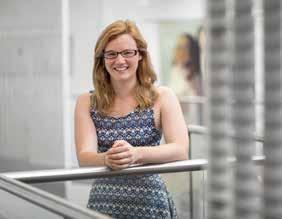
PhD student Katherine completed her undergraduate studies on the BA (Hons) Education in 2015, where she was first introduced to the world of research in special educational needs inclusion. She has been pursuing this area of study ever since.
The BA (Hons) Education course included areas of education such as global education, future education, and sustainability, world issues that Katherine felt were more relevant and useful to her as a person learning to live in an inclusive society.
“This I how I found my passion through inclusive education.”
CATCHING THE TRAVEL BUG
While studying, Katherine seized multiple opportunities to travel abroad which confirmed her two passions: inclusive education and exploring the world.
It was through these two interests
that Katherine discovered her perfect masters degree, and with the support of her University lecturers, she applied for the Erasmus Mundus programme to study special inclusive education. During her degree, Katherine studied in London, Prague and Oslo, alongside 15 other students from all around the world.
“I went to Norway for six months to do my dissertation and lived in an international student village in Oslo where I mixed with students from all around the world. I learnt what it was like to live in another country and attend a university as an international student.”
While studying, the students had numerous visits from scholars who would come and talk about their research.
“The more they came, and I heard about what they were doing, the more I realised this is what I want to do.”
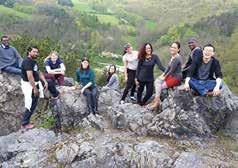
Katherine started looking at the experiences of teaching assistants in mainstream primary schools, and how the role is more complex due to supporting children with special educational needs
Katherine’s brother, Tom, has Williams Syndrome, and while raising awareness for Williams Syndrome Awareness Month, Katherine ran a small project. She spoke to parents whose children have the syndrome to gain a better understanding of their perspectives on the condition.
Katherine discovered that the parents liked to concentrate on the positive aspects of the syndrome, whereas a lot of the existing research was quite negative. From this, Katherine wrote a series of articles on this topic where she aimed to emphasise the positive and steer away from people seeing disability as a deficit or an abnormality, but just as a difference.
This research confirmed to Katherine her choice of dissertation subject: parents perceptions of social inclusion for children with Williams Syndrome.
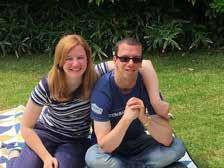
Katherine and her brother, Tom
After her masters, Katherine worked for a year to save up before beginning her PhD.
“I didn’t even consider doing a masters until I was encouraged by my lecturer to apply. Some people know what they want to do already. I felt like I was finding my journey as I was going along.
I was doing my masters dissertation, then talking about PhDs and it felt like the next step to continuing my journey.”
Katherine’s PhD focuses on the experiences of children with Williams Syndrome in mainstream primary schools. It explores involving the children themselves in research to gain insight from their perspective of their experiences in daily life, rather than using a more traditional approach of conducting it via computer tests in a laboratory.
“I wanted to do something more naturalistic and more from their perspective. So instead of researching them, I invited them to do the research with me.”
Spending a month in different classrooms with children who had Williams Syndrome, Katherine spoke to the children, their parents, and teachers, and asked them to show her around the school and participate in activities such as videos of writing or speech and language interventions with a teaching assistant, taking photos of their school and then talking about the photos they had taken and whether they liked them or not.
“I wanted to use different methods to capture their perception, which is sometimes more difficult with children with disabilities, but it’s still really important.”
Katherine has completed all her fieldwork and has created photo books for each of the children, which include the photos they took and photos she took of them.
“I wanted to show them what they contributed to the research. For example, as researchers we have to write a final report, so as the children were researchers in this study it felt right for them to have a physical item for them to show their work.
It helps them see themselves as actively participating in the research and can be shared with their families, friends and teachers at school. And I was keen to give something back.”
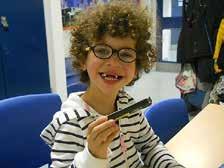
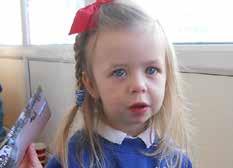
Alongside her research work, Katherine is actively involved with two charities. One of them is the Williams Syndrome Foundation, a charity she has a personal connection with as it is one her family worked with while she was growing up, and where she is now
the regional coordinator for Devon and Somerset alongside another volunteer.
The other charity is Hosanna House and Children’s Pilgrimage Trust (HCPT). This organisation supports 1,000 disabled children and adults, along with around 500 carers, who visit Lourdes in France each Easter. This provides respite for the families and the children have an amazing time as well.
“The children I have had the pleasure of looking after over the years, have varied from having complex severe disabilities to a history of domestic violence, family bereavement or various special educational needs.
For many children, it is an opportunity to be cared for, listened to and enjoy a fun holiday in another country. On the other hand, their families and caregivers have respite where they have spent time with other siblings, had a holiday themselves or moved house. The children in our group taught me an array of lessons such as the importance of listening to one another; helping each other and making each other smile, despite their various difficulties.”
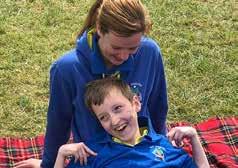
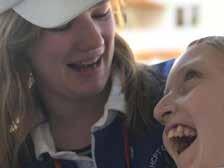
In 2019, Katherine received an award from the Roland Levinsky Memorial Fund to help pay for the costs to cover her fees and some of the fees for the two children she was accompanying.
“Through spreading awareness of the charity, I hope that others may learn more inclusive values. I’d like to promote an inclusive society, where individuals are celebrated for their differences and achievements despite illness or disability. It is hoped that charity work like this will help reduce the stigma and highlight the joy and positive impact of working with young people with disabilities.”
WHERE IS KATHERINE NOW?
Katherine is currently a lecturer and tesearcher at the University. Her work focuses on early years, inclusion and special educational needs and/or disabilities. Her ongoing PhD explores innovative methodological approaches towards researching young children to explore their support in mainstream provision. Her research interests include children’s rights, equitable provision and promoting social justice.
“I would like to promote an inclusive society, where individuals are celebrated for their difference and achievements despite illness or disability.”
Katherine’s life has been shaped by her decision to pursue an education degree.
“The BA (Hons) Education course has changed my life. It gave me the starting point, as I sat in the classroom at the start of the inclusive education module, and a general idea of the different ways you can work in education, and the in-depth research you can do.
The tutors are always there for the students; they really want the best for you and for you to succeed.”
Graduation marks the end point of your undergraduate degree. It is a wonderful occasion for you, your family, your friends and your tutors. We want to make sure that, while you have been working towards your degree, you have also been preparing for the next phase of your life.
We aim to empower you to follow your passions, to develop lifelong skills in reading, writing and research, to help you realise your potential as a critical and creative communicator, and to prepare you for a variety of career opportunities.
At Plymouth, we have excellent opportunities for developing employability skills and gaining work experience in a range of graduate careers. We work with local early years providers, charities, forest schools, sporting events, summer camps, SEND teaching teams, youth groups, museums, wildlife parks, and community projects to offer internships and work experience opportunities throughout the undergraduate degree. We run bespoke Careers Days to allow you to meet employers and speak to successful education graduates about their journeys in their chosen careers.
WHAT
• Excellent communication and interpersonal abilities
• Consideration and sensitivity towards the needs of children
• Emotional intelligence and negotiation skills
• Resilience and self–discipline
• Development of critical thinking and understanding of theory
• Problem-solving and flexibility within work-based learning and related experiences
• Teamwork and leadership skills through group projects
• Researching, analysing and evaluating data via seminar work and independent assignments
a nursery, spent a few weeks in a school, and undertook training to become an online mentor for BeatBullying. The University has a fantastic volunteering service which I used.”
Charlotte, BA (Hons) Education graduate, Key Stage 1 Teacher

• Written communication through report writing and presenting
• Planning and project management via independent research tasks

We also offer a range of workshops and one-to-one sessions throughout the year, to give all our students individually tailored advice and ensure that they get the most out of their degrees.
CAREER OPTIONS
• Community Education Officer
• Early Years Practitioner
• Family Support Worker
• Health Service Advisor
• Learning Mentor

• Local Government Advisor
• Outdoor Learning Coordinator
• Preschool Manager
• Play Therapist
• Primary School Teacher
• Primary Supply Teacher
• Safeguarding Officer
• Student Engagement Officer
• Special Educational Needs Coordinator
• Teacher
• Teaching Assistant
• Youth Worker
“The course allowed me to explore different perspectives of education, teaching and learning which shaped my core values as an educator. I am now working as a Day Care Educator for an international school in Luxembourg, working with primary school children from all over the world.”
Maria, BA (Hons) Education graduate, Day Care Educator

“Experience is key. Make sure that you take the time to gain lots of experience within schools and working with children as this will help you to confirm whether or not it’s definitely what you want to do. This process will also give you the necessary experience to take with you into your career. Personally, while at university, I worked in America as a camp counsellor for a summer; I took a placement in
“I gained a thorough understanding of the early development of infants on the course. I also learnt a lot about theories and the psychology underpinning early childhood development. The course also allowed me to pursue my interests in optional modules which focused more on additional needs.
Since graduation, I’ve worked as a supply teaching assistant in a school for children and young adults with severe, profound and/ or multiple learning difficulties. I have worked with children from many backgrounds and with a range of special educational needs. I have always enjoyed the variety in my job, which has meant that I can learn from other practitioners as I observe them working with children of different ages and with different disabilities. I love my job because I love making a difference to children’s lives and seeing them learn and develop is really special.”
Charlie, BA (Hons) Early Childhood Studies graduate, Teaching Assistant
Get in touch! Follow us on @uniplymcareers careers@ plymouth.ac.uk +44 (0)1752 587456 plymouth.ac.uk/careers for more information.

Early Childhood Studies
students share how Plymouth’s partnership with Freshlings Nursery has boosted their CVs.
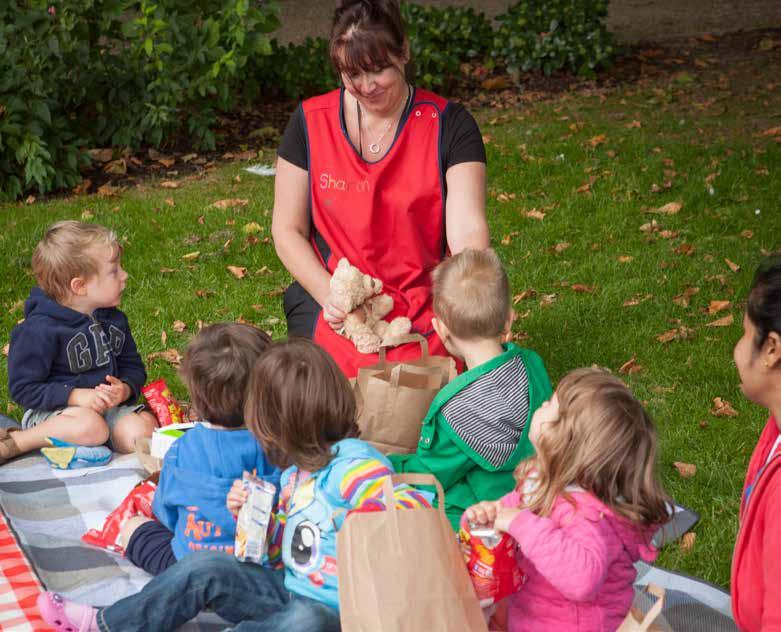
Our Early Childhood Studies course enjoys close links with the University nursery, Freshlings. Together, we have devised an Earn As You Learn scheme offering students with a Level 3 Early Years Educator qualification an opportunity to work at the nursery and balance paid employment with their university studies.
This also enables our Early Childhood Studies students to link their developing early years knowledge and theories to their practice. Successful applicants are offered a contract, access to staff development and hours that fit around their course.

“The Earn As You Learn scheme has been a very mutual programme for us at Freshlings Nursery. Not only do our current students have the opportunity to put their theory into practice, but our staff and children also get to benefit from the latest teachings at Plymouth Institute of Education.”
Sarah Cain, Operations Director at Freshlings Nursery
HOW HAVE OUR STUDENTS FOUND THE EXPERIENCE?

“I heard about the scheme because it was discussed in one of our lectures. It interested me immediately because it meant I could work alongside my studies quite flexibly, all while developing and keeping my practice up to date. There have been many enjoyable moments, so many that it’s difficult to choose just one, but watching the children develop and grow is probably my favourite so far. I’d recommend the scheme to anyone who wants to earn money and learn more about the early childhood setting while studying.”
Rachel, BA (Hons) Early Childhood Studies student
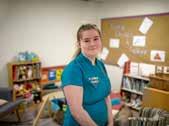
“I decided to take part in the scheme because I missed working in an early years setting and this was the perfect opportunity to earn money alongside gaining experience; it seemed perfect. I’ve enjoyed getting to know the children and forming connections with them, and the scheme has allowed me to gain more experience outside of the course and my placement.”
Nina, BA (Hons) Early Childhood Studies student
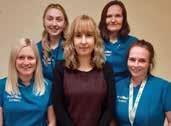
“The students have been a great help to our setting. They are enthusiastic, creative and have childcare experience. I am glad we have been able to support them to earn as they learn.”
Hayley
“Having the students in the room has helped to support staff with the daily running of the room. They have helped to support the children with their learning activities and have been great play partners during free play opportunities.”
Jade

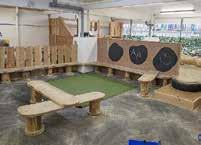
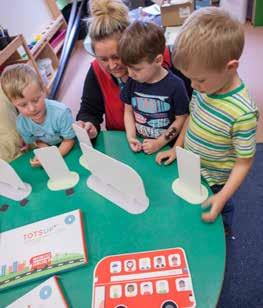

“This is a mutually beneficial scheme for both students and the setting. The students can put their theory into practice in a childcare environment, learning to work with experienced practitioners, who in turn gain up-to-date information from the students. The benefits of sharing knowledge and experience are creating a stronger team.”
Marion
Benefits of undertaking work experience:
• Build several key employability skills
• Put the theory of your course into practice
• Get a taste for your chosen career, helping you to make informed decisions
• Expand upon your professional network
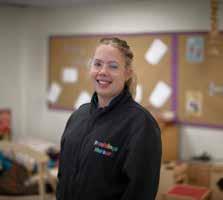
STUDENT SPOTLIGHT - EMILY, BA (HONS) EARLY CHILDHOOD STUDIES
• Why did you decide to take part in the Earn As You Learn scheme? I wanted to earn some extra money while studying and to gain more experience in childcare so it would benefit my future career.
• How has the scheme benefitted you?
I’ve been able to earn money while doing my studies and apply my experiences in the nursery to my course subjects; I feel this has helped me improve as a practitioner.
• Potentially earn money around studies
• Learn skills you cannot develop on your course.
Our dedicated Careers Service provides you with several opportunities to gain work experience either via internships, placement years, part-time work, mentoring and more. Find out more about how they can help you on your professional journey.
• What’s been your favourite moment so far while working at Freshlings? I don’t think I could pick just one! I really enjoy working here and I feel like every day I could pick something new that would be my favourite moment. No two days are the same and the children never fail to make me laugh!
• Would you recommend the scheme to future Early Childhood Studies students? If so, why? Yes, without a doubt! The staff are lovely and welcoming and more than happy to accommodate hours that suit your needs, and it’s on campus so is easy to get to when you’re at uni. It provides you with lots of experience in a childcare setting and will look good on your CV, as in the childcare sector a wide range of experience is very valued. It helps with your studies because what you learn about children, you can observe firsthand in this setting, and it also helps you to grow as a practitioner and develop your skills and abilities as someone who wants to work with children in the future.
After graduating with a BA (Hons) Education, Charlotte went straight onto the MA Education programme where she is currently studying part time while also working in the inclusion department of a secondary school in the South West. She shares her top tips for making the most of your university experience and preparing for life after your degree.
Although it may seem bizarre to think about what life will be like after your degree before even starting, it can help in your decisionmaking and during your time at uni. Firstly, the most crucial thing is to not stress it too much! University is such a unique, fun, exciting, and crazy experience. Spend time enjoying yourself and fully embrace everything that comes with being here. Trust me, it flies by!


Similarly, try and focus on yourself. I remember being so consumed by what everyone else was doing – seeing their acceptance to different job roles, finding new places to live or applying to postgraduate programmes –and feeling overwhelmed that I had no clue what I was going to do! However, the extra time is just what I needed to both fully concentrate on finishing my degree and doing my absolute best, as well as allowing me to explore my options at a slower pace. Embrace the uncertainty!

The additional soft and hard skills you end up gaining can massively enhance your CV and future job applications, making you stand out that little bit more against other applicants. In addition, this is the perfect chance to practise networking and getting your foot in the door. Finding out about those in your industry can provide you with invaluable information, but also allows you to try out and be involved in your potential career without commitment; I so wish I could have done that!
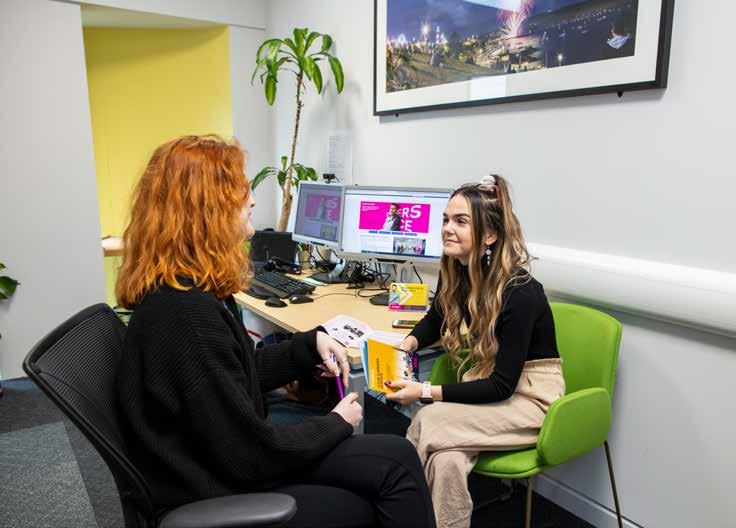
The freedom, flexibility, and spare time you have at university puts you in such good standing, so taking this opportunity to get some good work experience can benefit you in the future.
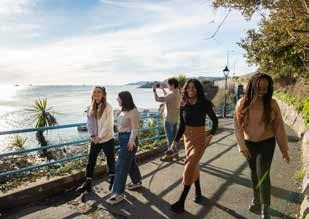
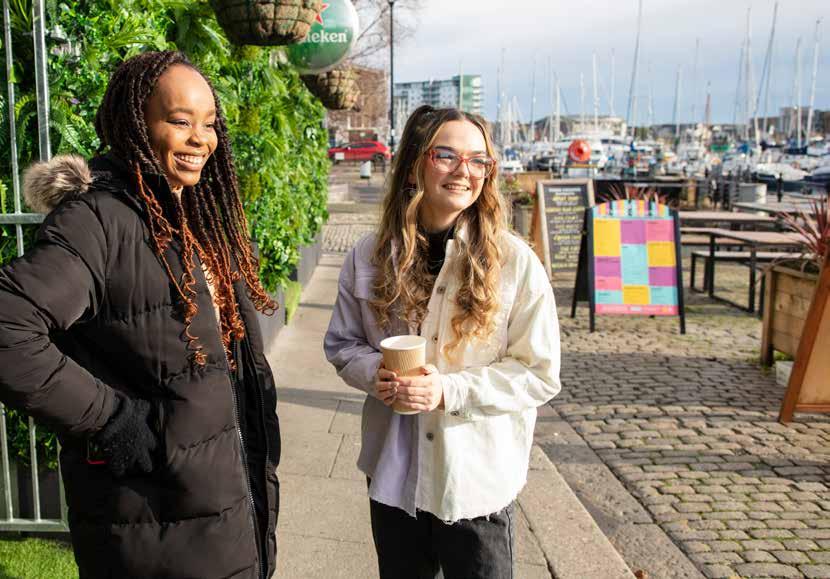
Lastly, the University and other providers hold many training events, so take advantage of them! As well as being informative and great for your CV, many are either free or heavily discounted for students.
A foundation year forms part of a four-year degree and provides the understanding and basis needed to embark on the full degree. It offers students from a variety of backgrounds and skill sets an avenue into a wide variety of degrees that have traditionally been out of reach.
Whether you are returning to education after a break or if you come with qualifications other than A levels, a foundation pathway enables you to:
Education degrees draw students who are passionate about learning and committed to making a positive impact in the field of learning.
Whether you choose to specialise in education or early years, you will join a stimulating learning environment and supportive community.
Join one of our foundation courses to:
• explore your passion for education and get the support you need to become an educator of tomorrow
• expand your options beyond traditional teaching to open further career opportunities in education social care, community work, psychology, management, and research
• learn from experienced lecturers and tutors who are actively engaged in national and international research projects
• choose from a wide range of placements including children’s centres, beach schools, art workshops, charities, and community projects.

CHOOSE THE RIGHT COURSE FOR YOU!
BA (Hons) Education with Foundation

“It’s a really good course for mature students, especially for people who haven’t been in education settings or learning settings for a long time.”
Antonio, BA (Hons) Education with Foundation student
BA (Hons) Early Childhood Studies with Foundation

“Having qualifications that were quite out of date, and not having been in education myself for so long, it was really helpful to join the foundation year course and be taught the skills that are needed to progress to the full Early Childhood Studies degree.”
Lisa, BA (Hons) Early Childhood Studies with Foundation student
Upon successful completion of your foundation year, you will progress to the full degree.
EARLY CHILDHOOD STUDIES WITH FOUNDATION STUDENT RUBI EXPLAINS WHAT HER EXPERIENCE WAS LIKE STUDYING HER FOUNDATION YEAR.
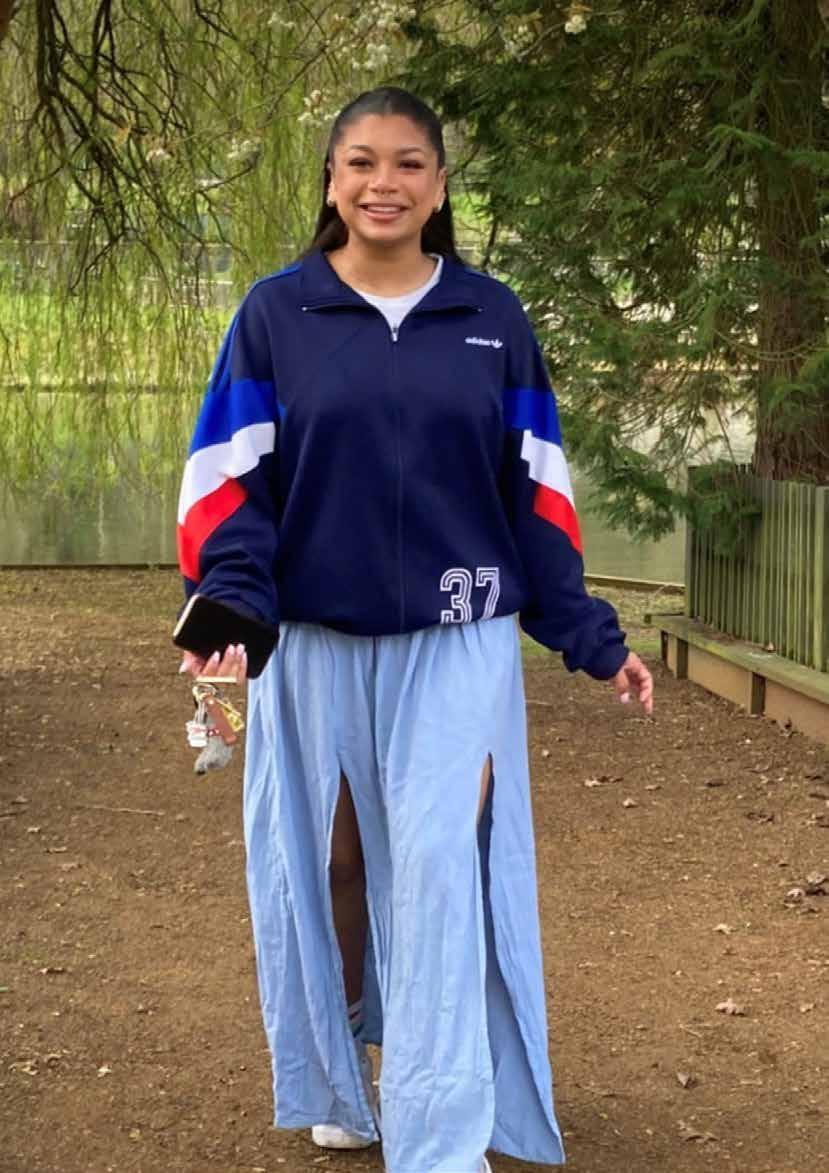
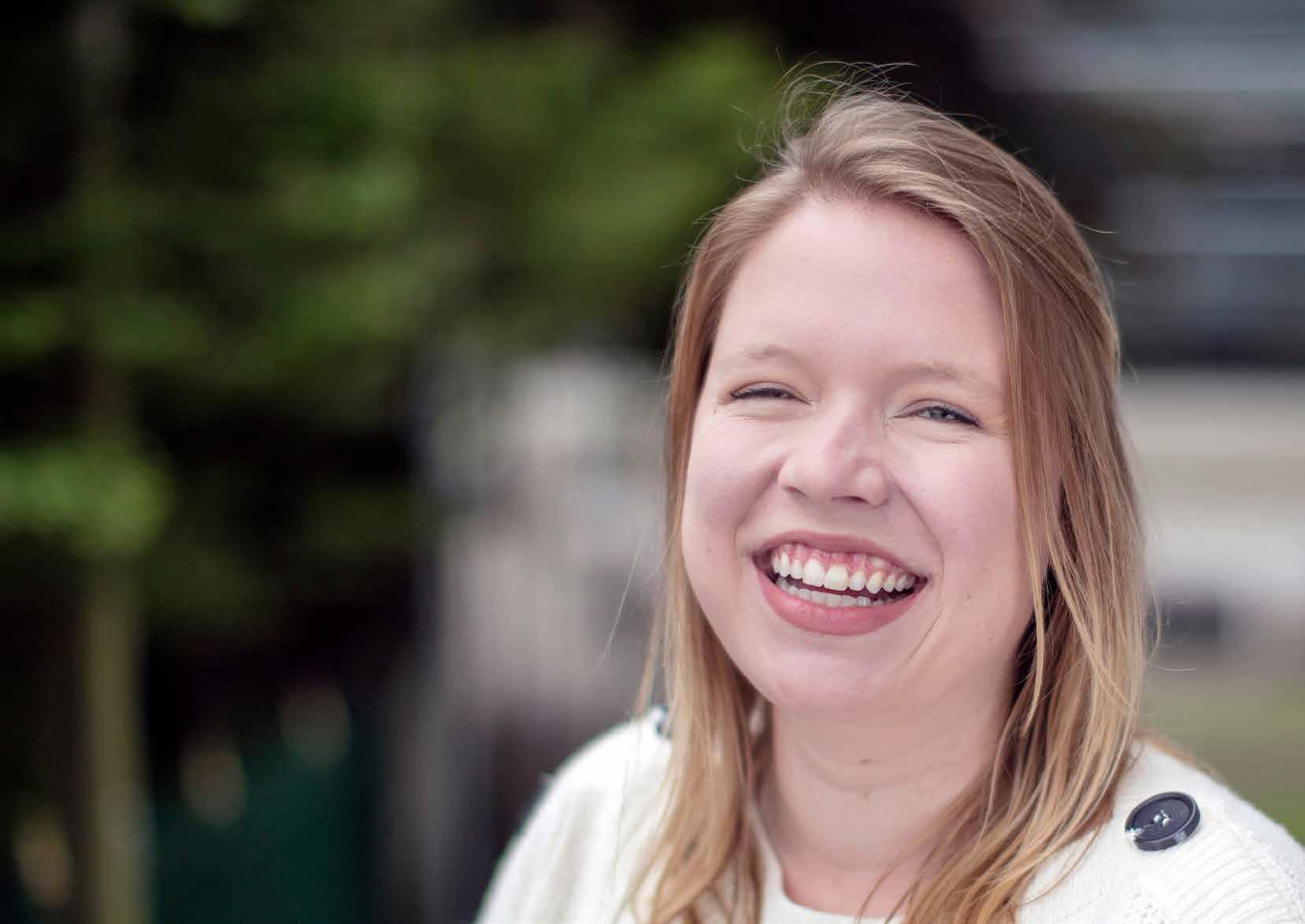
“Plymouth is beautiful. I’ve honestly met some of the most wonderful people. I feel safe, supported and confident, as though God intended for me to be here. The campus is in a great area and the lecturers are incredibly genuine. Moving to Plymouth gave me a fresh start and I couldn’t be happier.”

WHY DID YOU CHOOSE TO GO TO UNIVERSITY?
Having never really enjoyed education, I was never set on university. However, after seeing my friends go off and experience a different side of life, I became intrigued. I found a course that was important to me and that I felt motivated to get up and learn about.
ARE THERE ANY MISCONCEPTIONS ABOUT FOUNDATION YEAR COURSES THAT YOU THINK EXIST?
I didn’t receive enough UCAS points to go straight into the first year which left me feeling quite disappointed in myself and as though I didn’t deserve to be at university at all. I almost felt stupid compared to my friends that were accepted into the first year of their course. However, after taking part in the foundation year course, I realised the advantages it came with.
WHAT SKILLS OR KNOWLEDGE DID YOU DEVELOP DURING YOUR STUDIES?
I have learnt how to reference, how to write academically and how to meet criteria throughout assignments. Doing this degree enables you to be a year
“I went from hating school and wanting nothing to do with it, to being more involved than ever and helping others to love education too.”
ahead of the students who join in the first year and gives you an extra year to settle into a new environment and lifestyle –and an extra year to party!
WHAT SUPPORT DID YOU RECEIVE TO PROGRESS ONTO YOUR DEGREE?
The lecturers are incredibly friendly and inspiring and always happy to chat. They have provided excellent communication and support to students frequently throughout the module, offering one-toones, as well as in-depth feedback on coursework. On campus, there is lots of support such as the Writing Café, which offers the opportunity to have your feedback on your writing skills, and the student hub which offers support around mental health, learning difficulties, careers and finance.
WHAT WAS YOUR MAIN REASON FOR CHOOSING TO STUDY YOUR COURSE AT PLYMOUTH?
I was originally aiming to go to a different university. However, due to my UCAS situation, I had to change plans. I’m a true believer that everything happens for a reason, and I couldn’t be happier with where I ended up. Plymouth is a beautiful
city, full of life, with beautiful places and cheap bars! The course I chose allows room for discussion and is constantly keeping me on my toes. It challenges me and allows me to challenge others.
WHAT IS YOUR PROUDEST MOMENT OF STUDYING FOR YOUR DEGREE?
Becoming a student rep for my course because I can communicate with people higher up in the uni and be a voice for my peers. I am appreciated by my course friends and have excellent relationships with them due to this role, as well as the staff at the university, including my lecturers.
WHAT ARE YOUR PLANS AFTER GRADUATION?
I’d like to lead towards a career in play therapy, but first I would like to go travelling. Once I’ve got my degree, my opportunities are endless! I’d like to see the world, volunteer in different countries and meet new people. I’ve just written my own children’s book! I am learning to help others and be part of a team that will help shape a future generation.
Education student Anna, originally from the United States, explains how she found her place in Plymouth.
Plymouth is different from what people think is ‘typical’ England. The city has a different pace to London, but it is not as slow as a small town, and the University really cares about using the natural resources to their advantage.
My first journey from the United States to Plymouth was by myself in September 2018. I had not visited the campus before, so I
had no idea where anything was at all, but Plymouth’s location is amazing. Everything is close by, so travel is incredibly easy.
I came to study at the University because it was somewhere I had never heard of before and I found that exciting. I also have a love for travel and a love for education, and the University offered me a chance to do both.

I booked myself an Airbnb for a week to give myself a chance to find housing. I thought Plymouth was so beautiful and the campus was amazing. I found housing easily the first day I got here and was all moved in by the next weekend.
I wish I had known more about what to expect with the visa process and had more information on how to find housing, such as how long it would take, where accommodation is in relation to the campus and how far of a walk it is, what is a typical rent price, etc.
In some respects, I feel like I went in blind with these things, but I lucked out and everyone was super helpful once I got here. The lecturers made you feel like they are on your level, not above you, which makes asking questions less stressful. Everyone was super helpful.
Being an international student here feels very welcoming. I have made friends from all over the world due to the high international population. I have had the chance to learn about different cultures and world views. I never would have met these back in the States, it feels cool to be part of a community. I purposely chose an English-speaking country to make the transition here easier, but there is still that language barrier, which has been fun to navigate.
Put yourself out there to clubs and you will meet so many amazing people. Don’t think you have to hide out because you don’t know anyone. Everyone here is looking for new friends and new experiences, so you are not alone.
EXPLORING
I have also found it far less expensive to travel around Europe than around the USA, which has been incredible when trying to explore on student funds.
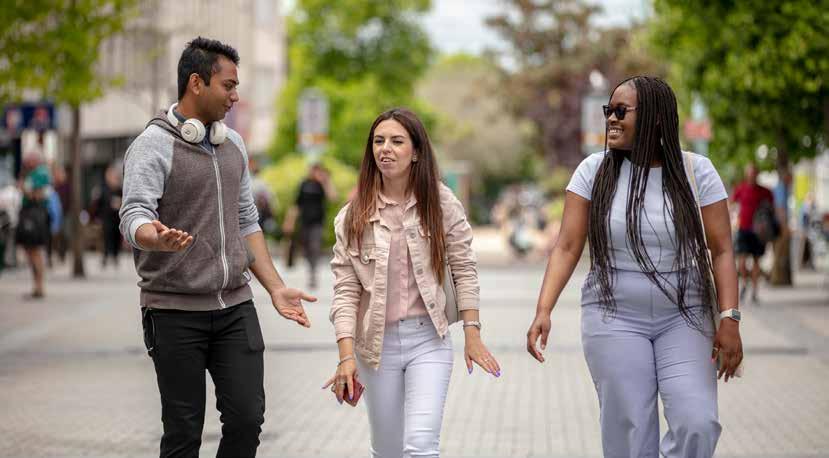
“I have also travelled to new countries and had time to explore the South West and all the history it has to offer. I have had the chance to make lifelong friends and pursue new opportunities I never thought I would get to do.”
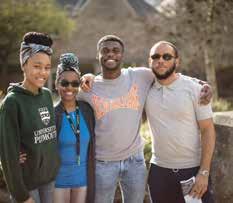
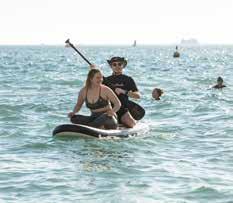
Also, they drive on the other side of the road which has been challenging to remember at times. There is always support if you need it. The International Office is always there for a quick question, and you should never be afraid to ask about anything, even if you think it is silly.
I really like catching the train to a new little town for the day and exploring. My favourite place so far has been Looe because it is right on the water and very traditional.
MY TYPICAL WEEK IN PLYMOUTH
I found it easy to meet new people because my housemates are super friendly, and they all have friends I have met and become friends with myself. Everyone on my course is nice as well, very welcoming.
I love getting food at The Stable and Nandos, but my favourite would be The Bank. They have the best mac and
cheese, and the atmosphere is relaxing and fun. The Stable does have cider floats, which is an awesome way to expand your taste buds.
A typical weekend for me would be going to dinner with my friends on a Friday and sometimes going out on Union Street for a night out. On Saturdays, I walk around town and run errands, and maybe walk up to the Hoe, Barbican, Wembury and Jennycliff. Sundays are for catching up on coursework and preparing for the week.
MY TOP TIPS FOR INTERNATIONAL STUDENTS
• Look right when you cross a street, not left.
• Pedestrians do not have the right of way, cars do.
• Don’t be afraid to socialise and go to events.
• The library is your new best friend and they have lots of helpful resources to utilise.
• The SU (Students’ Union) is a nice place to study if you like some noise
• Join a club to meet new people.
• Introduce yourself to expand your friend base and boost your confidence.
• Don’t forget a copy of your passport, a rain jacket, outlet adapters and waterproof shoes.
READY TO START YOUR NEXT ADVENTURE IN A NEW PART OF THE WORLD? JOIN OUR INTERNATIONAL STUDENT COMMUNITY!
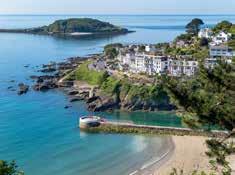
EXPLORE LOOE!
Looe is a historic seaside fishing harbour in Cornwall, famous for its day-caught fish and wide sandy beaches. Things to do:
• Relax and enjoy the sunshine at Looe Beach.
• Enjoy a traditional British Sunday roast dinner at one of the many pubs.
• Discover the beautiful landscape by walking along numerous coastal paths.
• Visit the Monkey Sanctuary to meet some of its amazing residents and wildlife inhabitants.
• Explore the coastline by kayak or paddleboard.
45 minutes by car or an hour by bus from Plymouth

BA (Hons) Early Childhood
Studies student Chloe and PhD
Music student Rachel discuss how working with real children transformed their understanding of early years musical abilities.
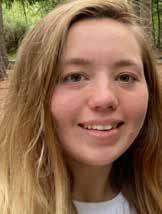


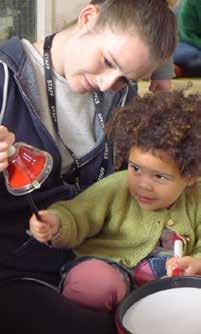
The SoundWaves Network is a threeyear early years music education programme led by Somerset Arts Organisation ‘Take Art’. The project brings together the current and future early childhood workforce to explore children’s musicality. Each week, Early Childhood Studies students, education practitioners and musicians learn alongside one another to musical experiences for children.
Academics at the University provide many opportunities in and beyond the curriculum for education and music students such as work-based learning, student internships and knowledge exchange activities.
Chloe: I believed that the adults would ‘lead’ sessions and the children would follow, for example by sitting in a circle singing with the adult leading the songs. I also



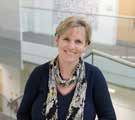
“Both Chloe and Rachel have changed how they perceive children, now seeing them as powerful and capable individuals who can take the lead and be a partner in music making. These collaborations are so important for our Early Childhood Studies students, as they grow personally, academically and professionally.”
Dr Louise Webber, Lecturer in Early Childhood Studies
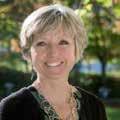
“Just as the students need to have the opportunity to connect with a wider community of early childhood music practice, it is also beneficial for academics and arts and cultural organisations to collaborate. These partnerships are not static, but dynamic powerful opportunities for reflection and change.”
Dr Karen Wickett, Lecturer in Early Childhood Studies
assumed that children need to play with musical instruments or to sing for it to ‘count’ as a musical activity.
Rachel: I had zero experience in an early childhood music setting and absolutely no idea how to interact with children. I had always believed that children’s music consisted of singing rhymes in a circle and clapping; because how would children be ‘good’ at music if they were not trained?
Chloe: During the first session, I found myself play partnering with children, rather than showing them how they should be playing with the objects – something I at first struggled with. It was clear that the children are the leaders and adults follow their direction.
Rachel: The first session left me feeling amazed at how naturally musical children are. I was fascinated by how the musical rhymes helped children with their speech and language development, movements and listening skills.
Find out more
Chloe: Children are natural musicians and we do not give them enough credit for the amount that they can do. My understanding has gone from thinking music is sitting in a circle singing songs, to posting objects through a tube and noticing the sounds the children create.
Rachel: Collaborating with Chloe enabled us to combine our knowledge and learn from, and with each other. Going forward, I want to research how music contributes to the experiences of very young children, early years practitioners and musicians.
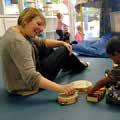
“We wanted to support students in growing their conviction and understanding of the value of musical play. Babies and young children should have the very best musical opportunities to learn and develop. It is important to recognise that the key to the very best early childhood music practice, is for musicians, practitioners and children to be partners in designing the curriculum.”
* Jane Parker, Early Years Practitioner
Graduate Cara shares how her BA (Hons) Education degree springboarded a career in lecturing and research.

TELL US WHAT YOU HAVE BEEN DOING SINCE COMPLETING YOUR STUDIES.
After completing my BA (Hons) Education, I went on to complete the MA Education, and I am halfway through my PhD Education through a fully funded Doctoral Teaching Assistant post. This means that alongside my PhD studies, I have the pleasure of lecturing on the BA (Hons) Education course – the most surreal experience!
HOW DID STUDYING AT PLYMOUTH CHANGE YOUR CAREER ASPIRATIONS AND PLANS?
The BA (Hons) Education course felt perfect since it provided a wellrounded perspective on education without focusing too much on one
field. The versatility made it the perfect option for someone like me who wasn’t 100% sure what I wanted to do but made me qualified enough for a teacher training degree in the future if I wanted to pursue this.
The course made me realise that I loved learning, exploring complex issues and researching them, and it provided me with the tools, knowledge and skills to gain my current teaching, research and education experience.
WHAT WAS YOUR FAVOURITE MEMORY OF STUDYING FOR YOUR DEGREE?
The opportunity to take part in work-based learning within my course enabled me to develop skills to enhance my employability and expose me to new experiences. The lecturers make the degree enjoyable; their passion and enthusiasm are contagious, and their support is second to none.
This experience gave me the confidence to utilise it in my career. I have been part of the Researcher Team for an Erasmus-funded Transnational Research Project called ‘Education Knowledge Transfer’ and attended a two-day meeting in Vienna as part of this role.
HOW DID CAREERS SUPPORT AT PLYMOUTH HELP YOU?
The team provided an open-minded perspective and a safe space to discuss uncertainty when trying to think about the future. They shared options for future careers that I hadn’t realised I could do; BA (Hons) Education is such a versatile degree!
WOULD YOU RECOMMEND UNDERTAKING A COURSE AT THE UNIVERSITY?
The University of Plymouth is a supportive and collaborative higher education institution that values the student experience. There are vast opportunities for involvement outside of your studies, from volunteering, paid work, societies and sports clubs, truly making it a home away from home. During your studies, lecturers are supportive and value your aspirations, helping you to shape your degree in a way that works for you, and exposing you to opportunities that can enhance your experience along the way.
“Plymouth’s location, being equal parts coastal and city made it feel like the best home away from home. I was able to speak to the teaching team at the open day. They were welcoming and enthusiastic, and this continued throughout my education journey.”
Teaching assistant Suparna Bagchi explores the complexities around multiculturalism in primary schools.
FOLLOWING THE BLACKLIVESMATTER movement, important questions related to cultural diversity, race equality and community cohesion are apparent more than ever. A revision of the National Curriculum is desperately needed to represent the lived experiences and identities of students from ethnic minority backgrounds. The curriculum is currently a reflection of the dominant social group in Britain which has paved the way for a narrow, monocultural expression of the world in which the ‘others’ in the society are sidelined.
WHAT IS MULTICULTURALISM?

How can teachers play an active role?
• Inclusive curriculum – by including diverse perspectives, histories and cultures into the curriculum students can see themselves reflected in their education. Teaching materials and resources should reflect this.
• Intercultural awareness – students should be encouraged to develop empathy and respect others’ cultural backgrounds. This can be achieved through activities, discussions and projects that highlight cultural similarities and differences.
• Culturally responsive teaching –teachers can adopt practices that consider the diverse backgrounds and experiences of students. This approach helps to create a supportive and engaging learning environment for all learners.
• Parent and community involvement – engaging the local community in school activities fosters a sense of partnership and strengthens connections between diverse communities.
It is essential to answer questions about the inclusivity of the education system for children belonging to ethnic minority communities in the UK. This issue is particularly pertinent in areas of historically low diversity like Plymouth, which has more recently experienced a rise in its minority population and where inclusive growth was highlighted as a challenge in two consecutive Plymouth reports of 2014 and 2019.
REVISING THE CURRICULUM
Multiculturalism in schools refers to the recognition, appreciation and celebration of cultural diversity within the learning community. It involves creating an inclusive and supportive environment that values the various cultural backgrounds, traditions, languages and experiences of students, staff and families. The goal is to foster mutual respect understanding and acceptance among students, promoting a sense of belonging and social cohesion – a reflection of what Britain is.
While the National Curriculum today is the centre point of the educational enterprise, teachers put the curriculum in motion inside the classroom so they can be the starting point for change. An equal importance should be placed on how a task is taught, in addition to what and why it is being taught. Teachers can use the curriculum as machinery to break stereotypes, to enable ethnic minority students to see themselves represented as important characters to create a common identity. A sense of belonging fostered amongst students of diverse backgrounds can boost self-esteem and confidence.
• Language support – in multicultural schools, efforts should be made to support students that speak languages other than the dominant one. Providing resources, language support programmes and bilingual education can help students to maintain their mother tongue while learning the dominant language.
• Cultural celebrations – schools that organise events and celebrations that recognise and celebrate various cultural festivals and traditions help students to learn about the customs of their peers.
• Anti-discrimination education –addressing issues of prejudice, discrimination and bias educates students about the harmful effects of stereotypes and promotes respect for all individuals, regardless of their cultural background.
Multicultural education creates an inclusive school environment where all students feel valued and respected. It enriches students’ learning experience by being exposed to diverse perspectives and cultures to foster critical thinking and a broader understanding of the world. By promoting intercultural awareness, multicultural education helps reduce prejudice among students and cultivates global citizens who can engage with people from different backgrounds. Fostering a culture of acceptance and appreciation for diversity contributes to a harmonious and cohesive school community.
Overall, multiculturalism in schools is vital for creating an inclusive learning environment that prepares students to thrive in a diverse and interconnected world.
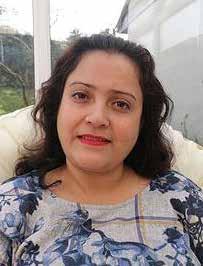
Role Doctoral
Research expertise
• Exploring attitudes of students, practitioners, and parents towards multiculturalism in primary schools across Plymouth, through a sociocultural lens.
• Discovering how the aftermath of the pandemic has caused ethnic minorities to live in an ‘invisible state’.
• Utilising research to guide policymakers and lead educational professionals to generate intervention programmes to create change.
Background
• Suparna is a trained compassionate ambassador, a community champion and a certified faith speaker. She is passionate about humanitarian causes involving cultural diversity and race equality.
• As a member of the University’s Race Equality Charter, Suparna volunteers as a dignity and respect advisor.
• Moreover, she is a member of the Plymouth and Devon Racial Equality Council where she completed race equality training.
• Outside her work, Suparna is a trained Indian classical dancer and singer who has performed professionally across two continents.

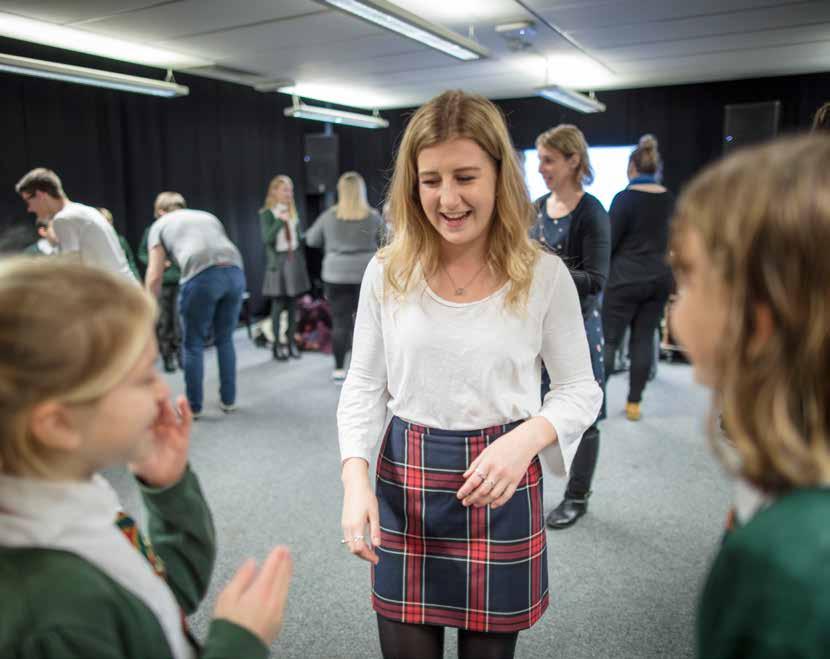
Get
to know our primary education graduate who is influencing the next generation from her classroom. WITH
WHO ARE YOU AND WHAT IS YOUR PASSION?
My passion for teaching has stemmed from my family’s background. My dad teaches mathematics in China, while my brother and sister-in-law are both primary teachers in the UK.
“I want to inspire, motivate and encourage children, to stimulate their imagination and to learn from them, as they will learn from me.”
Teaching is a rewarding career, and I aim to become a strong female role model for the next generation. Every student must be treated as an individual, and I want to help children grow into well-rounded young people.
I believe teachers lay the foundations for children on which future careers are built, and I’m confident I possess the capability to be an excellent educator.
My dad has always been very enthusiastic, caring and humble about his job. His support for me, and his passion for the profession, plus his love of mathematics, has rubbed off on me.
I’ve always loved maths because of the challenge. It’s a puzzle. And once you’ve cracked it, it’s magic.
HOW DOES PLYMOUTH LEAD THE WAY IN PRIMARY EDUCATION?
A great benefit of my course was the opportunity to gain first-hand experience through placement, providing me with a range of skills including time management of lessons and differentiation.
I have experienced placements in a range of schools and have taught both Key Stage 1 and 2. This has enhanced my ability to teach a wide range of students in the future because I am confident with the curriculum in all year groups.
WHAT FEAR DID YOU WANT TO CONQUER?
I had no fears going into teaching because Plymouth has fully equipped me with the skills and competencies, I require for a teaching position.
“Despite being slightly nervous beginning my university journey, I
feel excited and confident about the prospect of becoming a fully qualified teacher.”
This has been because of great support from lecturers throughout my course, who have always been on hand to assist me when needed.
HOW DO YOU RESPOND WHEN FACED WITH A PROBLEM?
With young children, just as with adults, communication is always key.
As a teacher, or in my home life, I deal with a problem straight away. Resolving an issue before it gets too big and uncontrollable. Unfortunately, not every child has a positive role model at home, or someone to talk to when they really need to. I want to be a positive role model in the classroom for our next generation of learners, to help prepare them for a future of solving problems.

“Every new experience helps you grow as an individual, and as a teacher, too. This means you become more experienced, more empathetic and prepared to do your best for the children in your class, wherever you are in the world.”
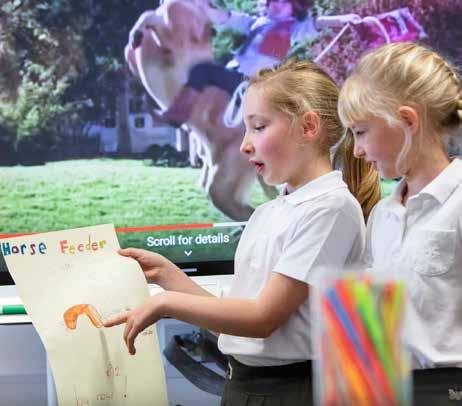
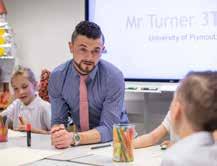

After a few years in the UK, I would love to follow in my dad’s footsteps and have a teaching adventure abroad. After years of working as a deputy head teacher in Devon, he now thoroughly enjoys being a deputy head teacher in an international boarding school in China.
Travelling has always been an interest of mine, so to be able to combine a career with living a different lifestyle would be a wonderful experience. I am up for the challenge of teaching in different countries and learning about different cultures and communities.
“Every new experience helps you grow as an individual, and as a teacher, too. This means you become more experienced, more empathetic and prepared to do your best for the children in your class, wherever you are in the world.”
WHAT DO YOU BELIEVE COULD REALLY CHANGE OUR WORLD FOR THE BETTER?
Anything that brings people together, which is joyful and positive, builds selfesteem. This is especially important for children, whom we need to nurture to become caring, curious, and courageous individuals.
For me, my love of dance has brought me a lot of joy and helped shaped me to be an optimistic and passionate adult. I have performed at the Royal Albert Hall and been a modern and tap champion in the All England Dance national finals – I’m so proud to have won so many trophies.
“Dancing since the age of four has given me so much confidence. My dream is to have an after-school club and transfer this to my teaching – using the power of dance to build a child’s confidence and mental health.”
Years of dancing have taught me the importance of discipline, hard work and self-motivation. I’ve brought this to Plymouth and it will follow me into my classroom.
As I balanced dance with my study, I continued to develop great friendships.
I was part of the University cheerleading team, finishing 2nd and 3rd in competitions at the Birmingham Arena and the Olympic Park in London.
It would be wonderful for my pupils to discover their passion to complement their learning.
WHAT DO YOU WANT THE WORLD TO LOOK LIKE IN TEN YEARS?
“I want teachers to continue to have the opportunity to do what they are best atto teach and inspire children.”
Any developments in funding and technology need to support and keep
teachers in the classroom. We need to ensure we have adequate resources for every child – from teaching materials to teaching assistants. Every child should have the best possible opportunity to learn and the platform to reach their full potential.
Whether aspiring to be a maths teacher or a professional dancer, a positive school experience is imperative.
IF YOU HAD THE CHANCE TO SHARE ONE MESSAGE WITH THE WHOLE WORLD, WHAT WOULD IT BE? My message would be for individuals to be kind to one another. Part of this can be achieved by caring and educating our children to become considerate, inquisitive, and well-rounded adults.
This message only reinforces why teaching will always be such an important vocation. Teachers can make a real difference to every child’s life.

Discover how you can enable future students to acquire the knowledge skills, attitudes and values needed to shape a sustainable future.
7 in 10 pupils want an education that helps them tackle the climate crisis, research shows. *
Secondary school pupils feel the climate change education they receive is too focused on passing exams and doesn’t equip them with the skills they need to tackle the climate crisis. 14–18 year olds believe climate change is the most important issue that needs to be addressed if their lives are to be improved in the future.
More than seven out of 10 pupils stated they would welcome the opportunity for broader lessons about climate change in school, rather than simply learning facts and associated impacts. A similar amount believed climate change education should be included across all subjects, in addition to science and geography where most learn about the climate and how it is changing.

WHAT IS SUSTAINABLE EDUCATION PRACTICE?
Often referred to as Education for Sustainable Development (ESD), the United Nations Educational, Scientific and Cultural Organization (UNESCO) defines it as:
“Education for Sustainable Development allows every human being to acquire the knowledge, skills, attitudes and values necessary to shape a sustainable future.
Education for Sustainable Development means including key sustainable development issues in teaching and learning; for example, climate change, disaster risk reduction, biodiversity, poverty reduction, and sustainable consumption.
It also requires participatory teaching and learning methods that motivate and empower learners to change their behaviour and take action for sustainable development. Education for Sustainable Development consequently
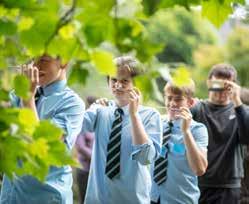
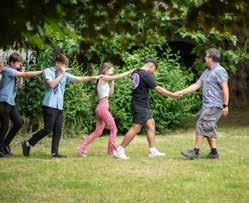
promotes competencies like critical thinking, imagining future scenarios and collaboratively making decisions.
It requires far-reaching changes in the way education is often practised today.”
Within Plymouth Institute of Education (PIoE), we are growing our international reputation as a centre of excellence in sustainability teaching and learning. We have an exciting team of staff, students, alumni and community partners helping to continue this pioneering work.
TEACHING SUSTAINABLE EDUCATION Research shows that young people believe the current approach to climate change education contributes to a sense of climate anxiety and does not inspire hope. They expressed a desire to be taught in more detail about ways they can affect positive societal change. *
There’s no ‘correct’ method to teach sustainability, but it is widely agreed that it requires a shift towards active, participative, and hands-on learning
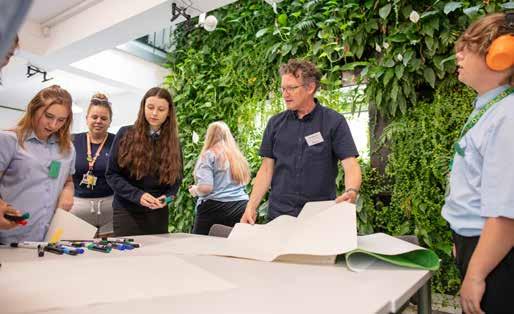
methods to make a real difference in the student’s understanding, thinking and ability to act.
We’ve identified five educational approaches that cover a variety of teaching methods that teachers and lecturers can adopt to bring sustainable teaching into the learning environment.
1. Critical reflection – include reflection in traditional lecturers or lessons, but also newer approaches such as reflexive accounts, learning journals and discussion groups.
2. Systemic thinking and analysis – utilise real-world case studies and critical incidents, project-based learning, stimulus activities, and the use of the campus or environment as a learning resource.
3. Participatory learning – put emphasis on group or peer learning, developing dialogue, hands-on learning, action research or learning to act, and developing case studies with local community groups and businesses.
4. Thinking creatively for future scenarios – apply role play, real-world inquiry, future visioning, problembased learning, and providing space for emergence.
5. Collaborative learning – incorporate contributions from guest speakers, work-based learning, interdisciplinary and multidisciplinary working, collaborative learning and co-inquiry.
EMBEDDING SUSTAINABLE EDUCATION INTO OUR COURSES AT PLYMOUTH
We aim to embed ESD across all our courses within the Plymouth Institute of Education, ensuring that all students benefit from an education where social, economic, and environmental sustainability is woven into the very fabric of their learning experience. This produces graduates who are forward-thinking individuals, capable to embed their learning into their teaching practices.
We have an established core of excellence in the field of sustainable
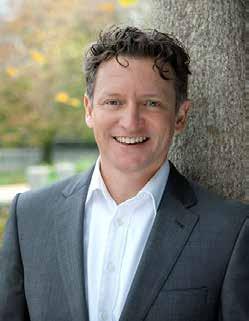
“I am interested in researching experiential educational approaches that attempt to draw out from students the capacity to be ‘critical creatives’ able to collaboratively lead change towards sustainable futures.”
Dr Paul Warwick, Associate Professor in Education
education at the University. Our team of champions are keen to extend their knowledge and expertise across our diverse range of courses, supported by Dr Paul Warwick, the lead for the University’s Centre for Sustainable Futures (CSF).
Tackling global challenges isn’t just a problem for environmental scientists to solve. Our degrees empower educators, advocates and critical thinkers to all play their part in shaping a better tomorrow.
At Plymouth, we’re tackling global issues by exploring how and why people learn, to better inclusion, policy and family outcomes. Are you ready to pursue your passions, expand your thinking and realise your ambitions with us? Apply now to start your journey to creating a sustainable future through education.
Research expertise| Paul has worked for 12 years in higher education taking a leading role in developing a variety of educational innovations.
• Sustainability education - I am interested in researching experiential educational approaches that attempt to draw out from students the capacity to be ‘critical creatives’ able to collaboratively lead change towards sustainable futures.
• Citizenship education and social inclusion - I am interested in exploring effective teacher education processes within citizenship education and educational strategies for social inclusion.
• Student voice and students as partners - I have been involved in several research projects drawing from the insight, perspectives and concerns of students about educational change.
Discover more

At Plymouth, you can choose from a variety of English courses. The emphasis of your degree depends on your interests. You can opt for mostly literary studies, mostly creative writing, or a more even blend.
Look into the detail of each course you are interested in.
• What tariff points and subject profile do you need?
• Does it include modules you are interested in?
• Will it forge a career in an industry you aspire to?
EXPLORE OUR COURSES

Some courses require you to have obtained certain entry subjects or grades. Make informed choices when choosing your options.
Don’t worry if you didn’t have an idea when you were deciding, hopefully, you will achieve a strong set of grades across a range of subjects to maximise your options.

Make a pros and cons list and discuss them with your family and friends. Undertake additional research by looking at course webpages, professional body sites or ucas.com for further information.

“Everyone was so friendly and answered any queries we had. This helped me to pick Plymouth because it gave me a great eye opener to the support I would get while studying.”
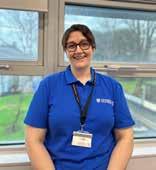
“It is the best way to explore the campus. There is always a great atmosphere and plenty of students and staff to talk to.”

VISIT AND CONNECT WITH US
Find out more about our courses, facilities, and support services at one of our open days held throughout the year!
BOOK YOUR PLACE

Over 95% of our graduates are in work or further study*