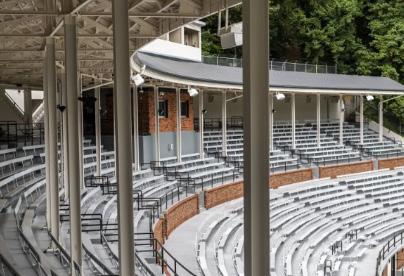
Spectator seating is an important asset within a city or region for a variety of reasons. Whether one is talking about a professional franchise or the local high school team, community events and the locations in which they are held have a galvanizing effect on communities.
Throughout this guide you will find information regarding the many options in spectator seating, in order to help build the type of facility to meet your community’s specific and unique needs. In addition to design considerations and applications, the text reviews standards and criteria, planning, seating types and accessories, purchasing and maintenance, and how to engage the community in the project. In addition, several case studies are offered to highlight specific communities and their applications. While there are many considerations outside the scope of this publication, such as cost, timelines, permits, and building codes, it is our hope that this guide familiarizes the user with the myriad of options available today in the field of spectator seating.
The purpose of this resource is to provide an educational overview and to raise awareness about some considerations for planning, purchasing, and installing grandstands and bleachers; it is not to be considered as an all-encompassing resource. Please refer to the manufacturer specifications and warnings supplied with the product purchased, and continue with normal inspections. Safety goes beyond these comments, requires common sense, and is specific to the environment involved. While the intent is to provide general information, PlayCore, its companies, and its contributors to this work disclaim any liability based upon information contained in this publication. PlayCore and its divisions provide these comments as a public service in the interest of safety while advising of the restricted context in which it is shared.
A HISTORY OF SPECTATOR SEATING
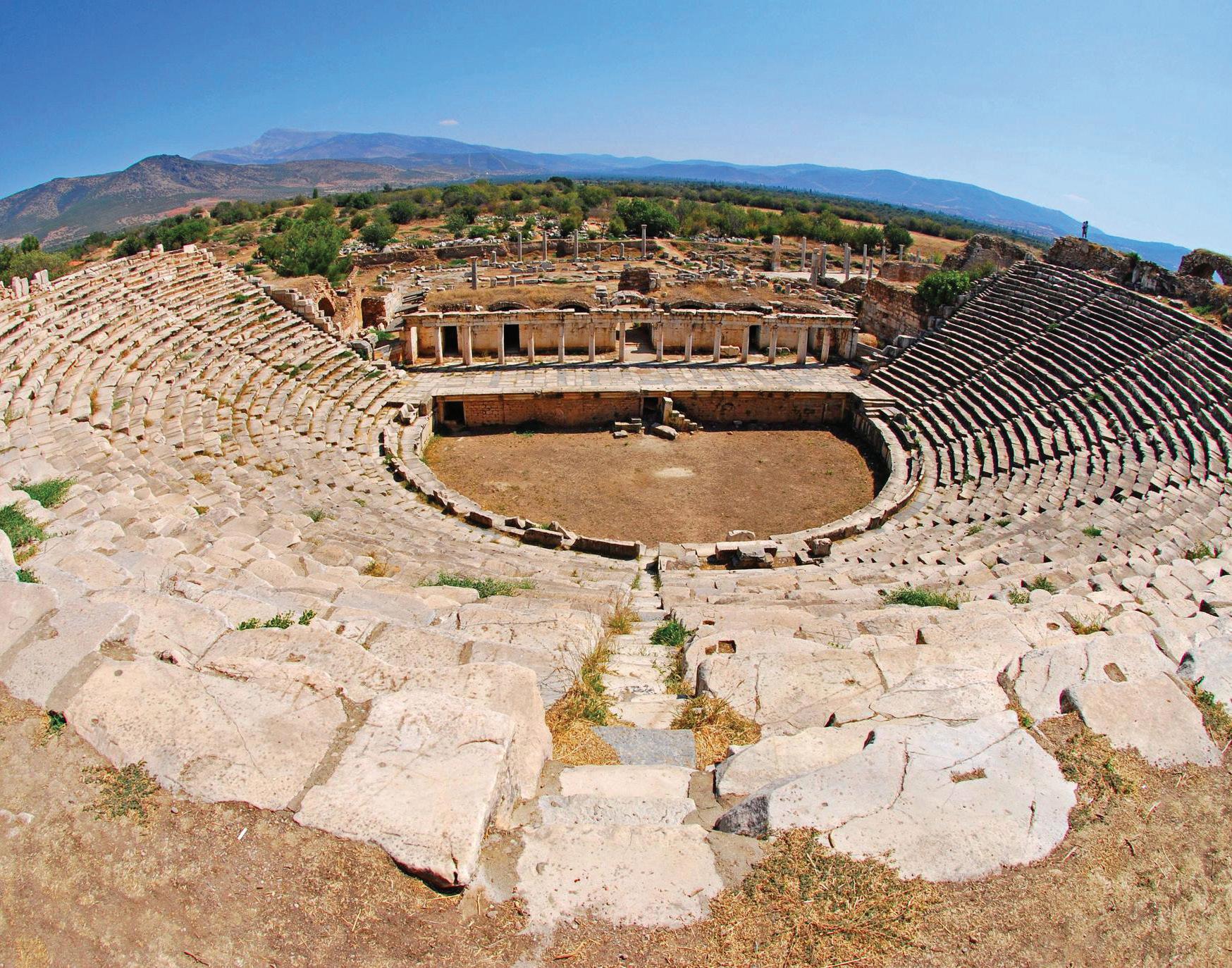
The history of stadiums extends from the mythological era when people would gather to witness heroes such as Heracles (or Hercules according to Roman mythology) prove how strong and powerful they were. Even the term stadium – originating from the Greek word “stadion” for a unit of measurement equaling the length of 600 human feet – comes from ancient Greece where Olympia stadiums grew in popularity. It has been said that the first stadium originated in the 8th Century B.C. Stadiums in ancient Greece could welcome up to 45,000 spectators while the Coliseum in Rome, built in the 1st Century A.D., could accommodate over 50,000 spectators.
The earliest stadiums involved stands built in a horseshoe around a field. Romans are credited with building stands into hillsides while others used stone – or even marble – to provide spectators a stair-stepped view on an elevated level; Romans are said to have given stadiums a monumental shift to what we know today starting with amphitheaters used for performances. While the amphitheater provided maximum seating by utilizing seats fully enclosing the field, the circus style of stadium featured seats in a horseshoe configuration with one end open in order to focus on chariot racing. In the 4th century A.D. the church abolished the Olympic Games stating the Games were pagan rites contrary to
religious rites, causing many sports buildings to be abandoned. Following this development and during the Renaissance, running events and equestrian events were reintroduced and held in open spaces fitted with wooden tiers and temporary structures to seat the most important spectators. Stadium design remained largely unchanged for over 1,000 years, although jousting fields generally used a design open at both ends to facilitate access and the egress of horses.
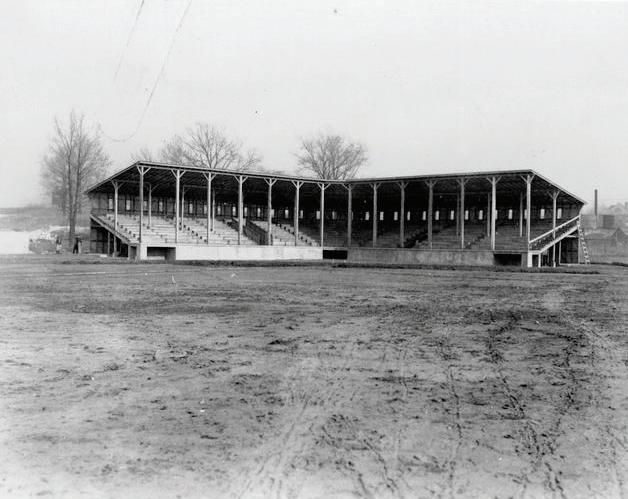
The late 1800’s saw a rise in wooden stand construction, and with the increase of sporting events in America (i.e., horse racing and boxing) and after the Civil War, there was continued growth of wooden high capacity bleachers, mostly at horse racing arenas. In the early 1900’s, modern stadiums continued to host large amounts of spectators in an age where there was no television. At this stage, stadiums were uncomfortable and facilities only offered basic amenities such as standing areas, small seating stands, and small roofed-areas for key audiences.
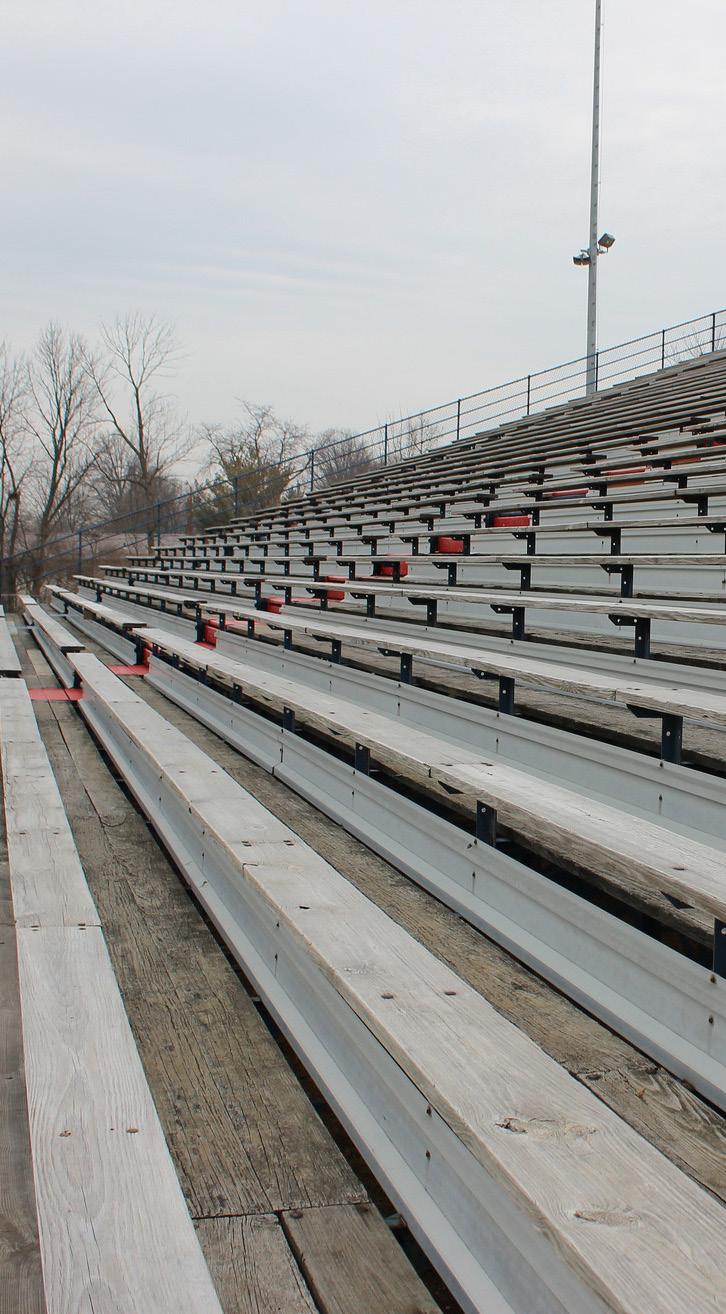
The evolution of stadiums and high capacity bleachers developed through the years. In the 1930’s, wood platforms gained popularity especially in football stadiums, however, it is important to note that as early as the first decade of the 1900’s concrete stadiums
Wooden grandstands like this one in Central City, KY, were common through the late 20th century.
Photo courtesy of Goodman-Paxton Photographic Collection.
Greco Roman Theatre, Aphrodisias, Turkey, 1st Century AD.
Photography by Mark Hemingway, courtesy of Imgur.
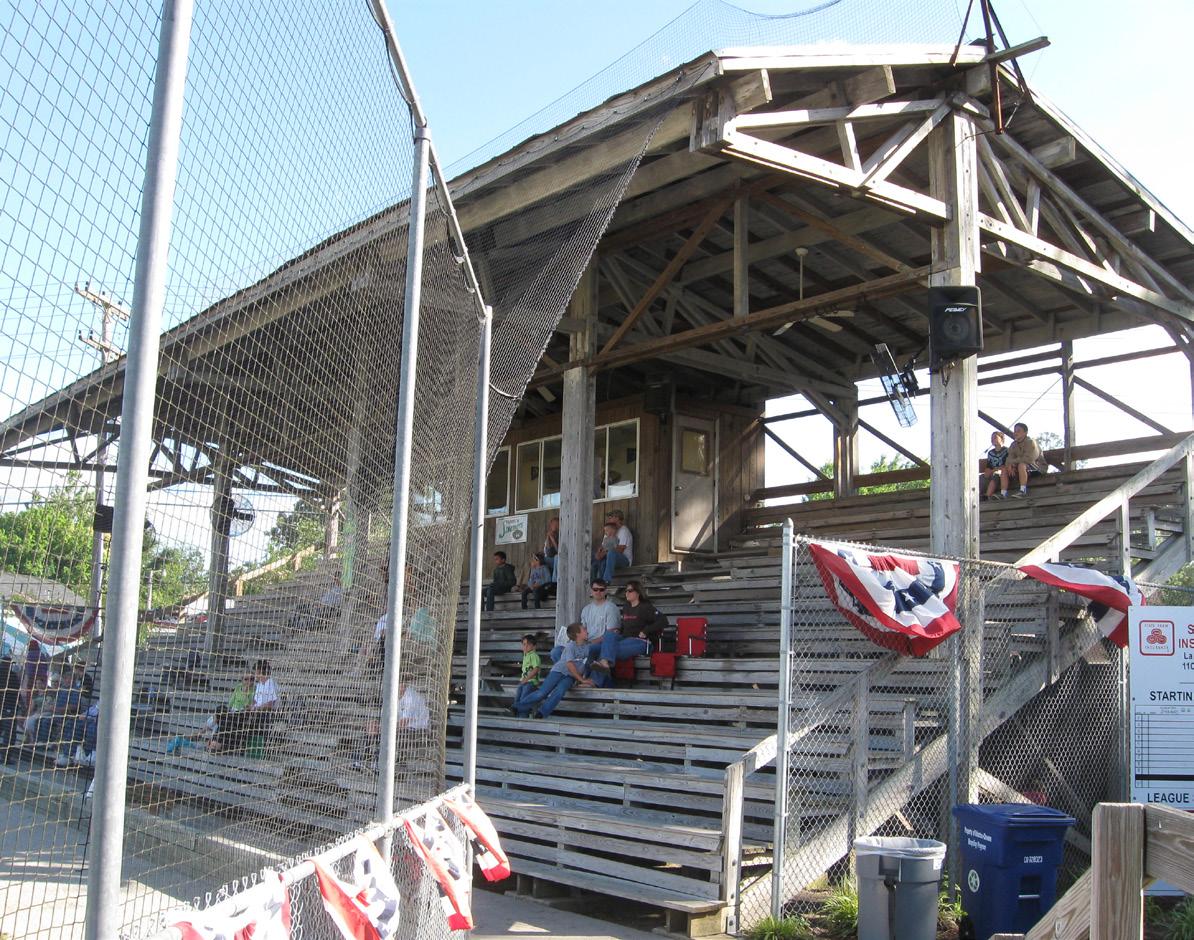
began to emerge. In 1903, Harvard Stadium opened, and is now the nation’s oldest permanent concrete structure for college sports. In the 1930’s, the Works Progress Administration built 2,500 high capacity bleachers with a combined seating capacity of 6,000,000. Most were concrete and are still in use today.
By the 1950’s, stadium design was leaning toward more multiuse design with the goal of attracting a variety of event types. A good example is O.co Stadium in Oakland, CA, one of the last remaining venues to host both NFL and MLB teams. With the rise of suburbia in the 1950’s, bleacher seating began to find its way outside the city. During this same decade, steel high capacity bleachers with wood planking were introduced. The 1960’s saw the birth of the first domed stadium, the Astrodome, which created the need for artificial turf, as grass would not grow in the enclosed environment. The first aluminum seat board was also invented, providing a way to replace rotting wood seats on existing high capacity bleachers. With the welcoming of broadcasting and new amenities such as food and beverage, crowds at stadium events started to increase. By the 1970’s, the industry was building permanent I-beam high capacity bleachers with aluminum decking and seats, and the 1990’s witnessed further improvement with the introduction of welded decking systems and interlocking
decking systems that required less maintenance and were a more economical option compared to concrete high capacity bleachers. By the 2000's, the interlocking deck system was introduced as the new technology for the industry.
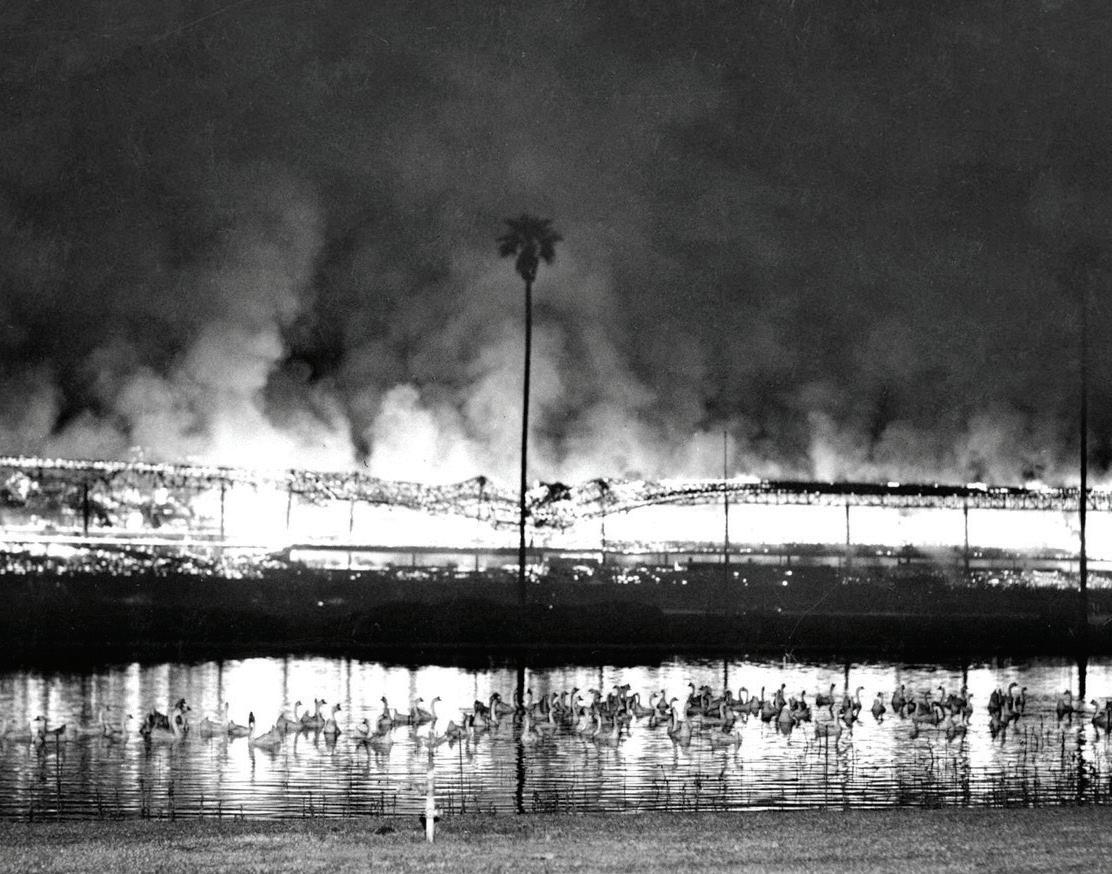
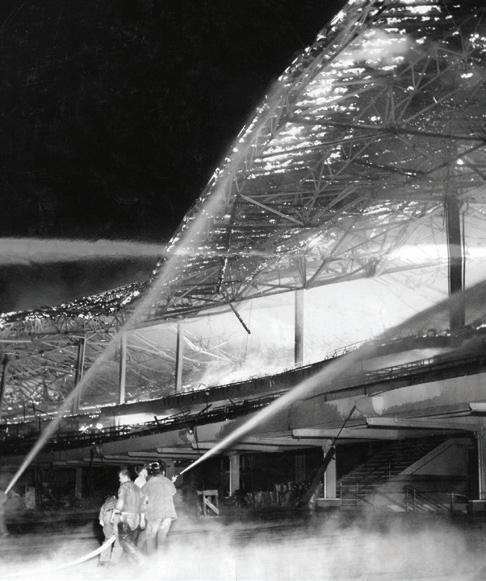
Interestingly, until the 1990’s, wood plank stands were still quite common. Unfortunately, several catastrophic fires in wooden stadiums killed hundreds of people, changing the view on spectators’ safety and promoting recommendations to change the materials used. It was concluded that all stadiums needed to be constructed of non-flammable materials. As a result of the new safety regulations, which also specified that stadiums should provide seating for all attendees eliminating “standing only” sections, facilities became more accessible, safe, and comfortable, drawing a more diverse and heterogeneous spectator group. The process of upgrading stadiums gave the opportunity to introduce even more new and improved amenities, such as merchandise sales, museums, boxes, and restaurants.
In the new century, we continue to see improvements like one-piece platforms, beveled thresholds, hardware that doesn’t penetrate through decking, seat upgrades that don’t require changes to the structure, and leading edges on stairs.
The WPA built 2500 grandstands in the 1930’s like this one in Edenton, NC.
Photo courtesy of Careeringcrawdad’s Blog.
Fire, such as this one at the Hollywood Park Race Track in Southern California eventually spelled the demise of wooden grandstands. Photo courtesy of The Associated Press.
A HISTORY OF SPECTATOR SEATING
Today, spectator seating comes in all shapes and sizes – from the single bleacher at a local park to large professional sports venues, but they all have one goal in common – to provide a comfortable place to watch a favorite event.
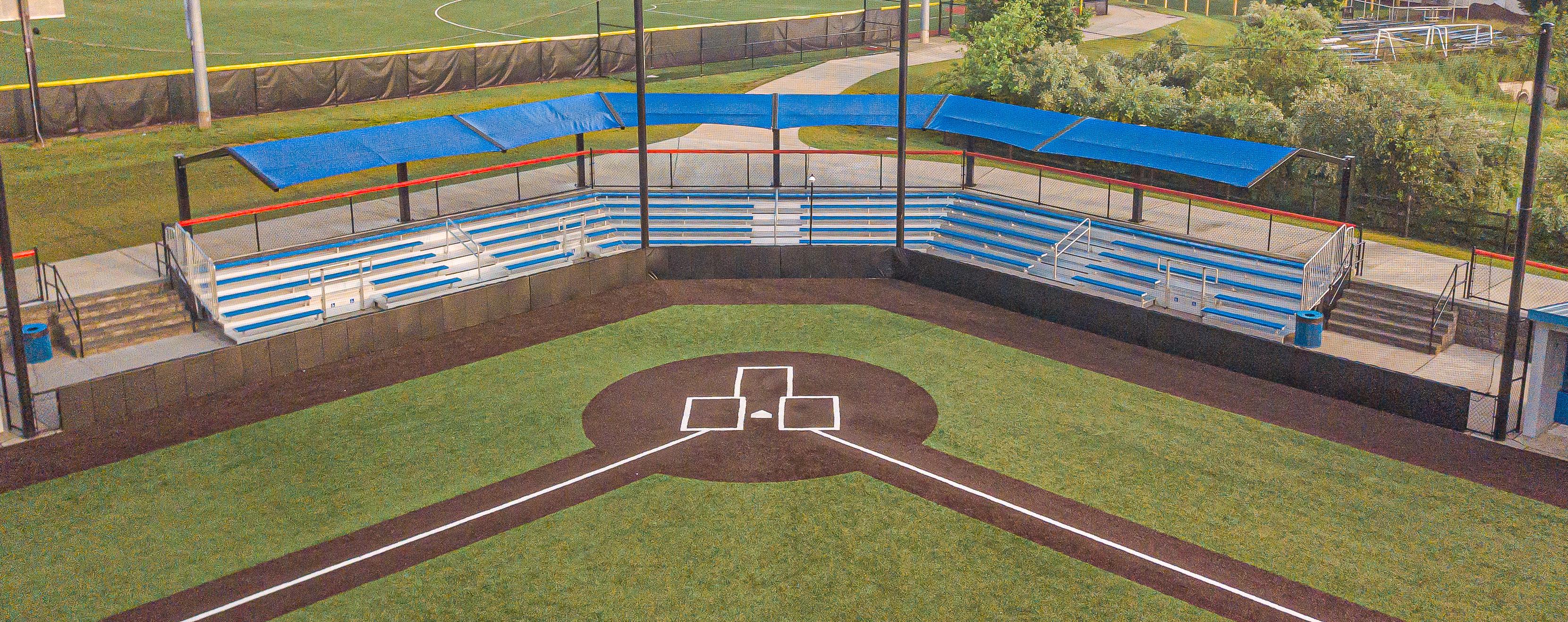
Mitered bleachers feature angled seating sections designed to optimize sightlines and seating capacity. The angled, or "mitered," configuration allows for better viewing experiences and more efficient use of space, making them ideal for sports venues, auditoriums, and other large gatherings. These are most often seen at baseball and softball stadiums and fields.
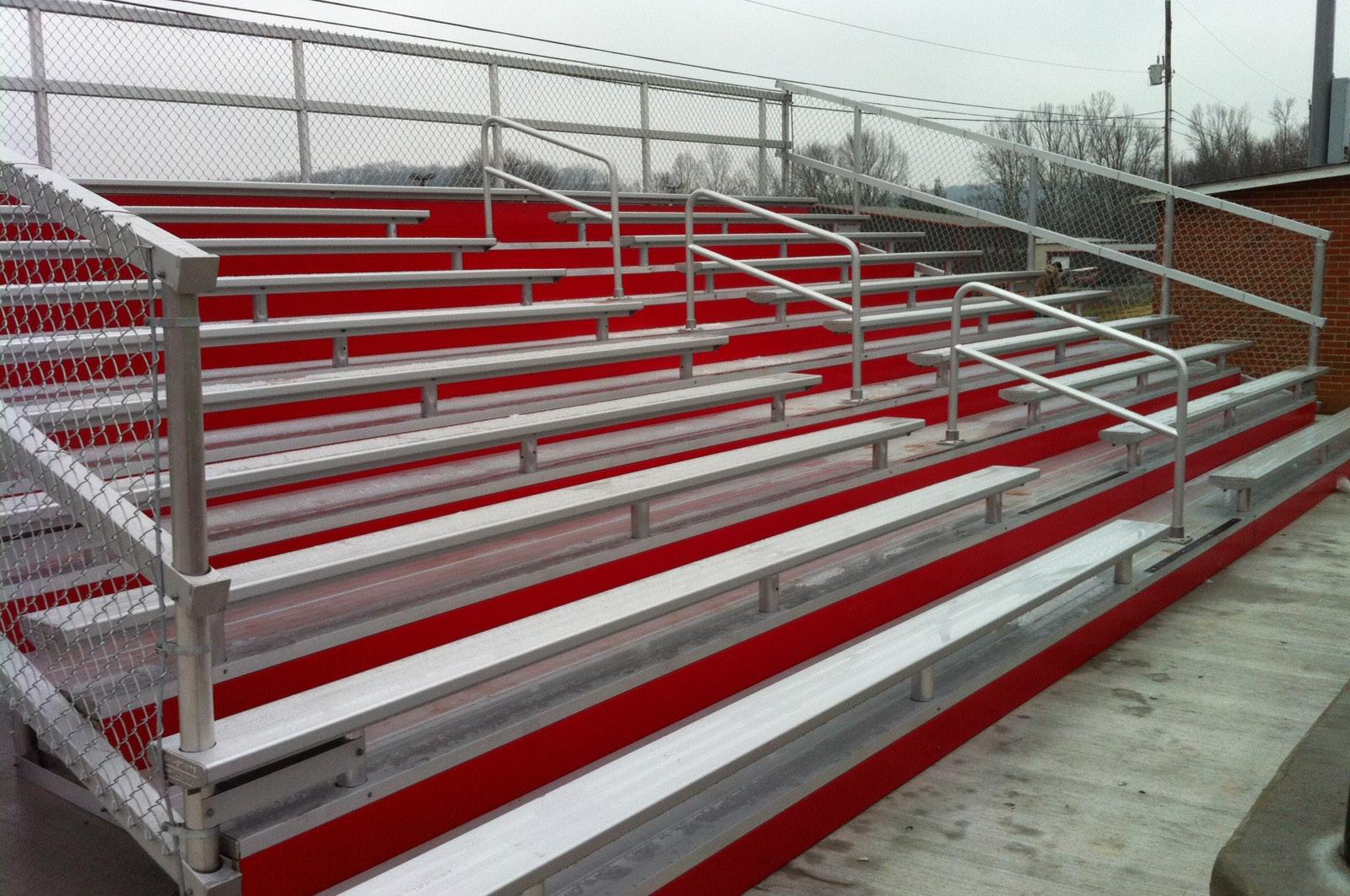
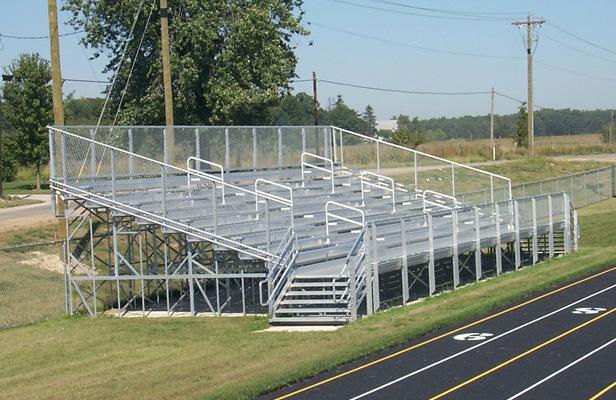
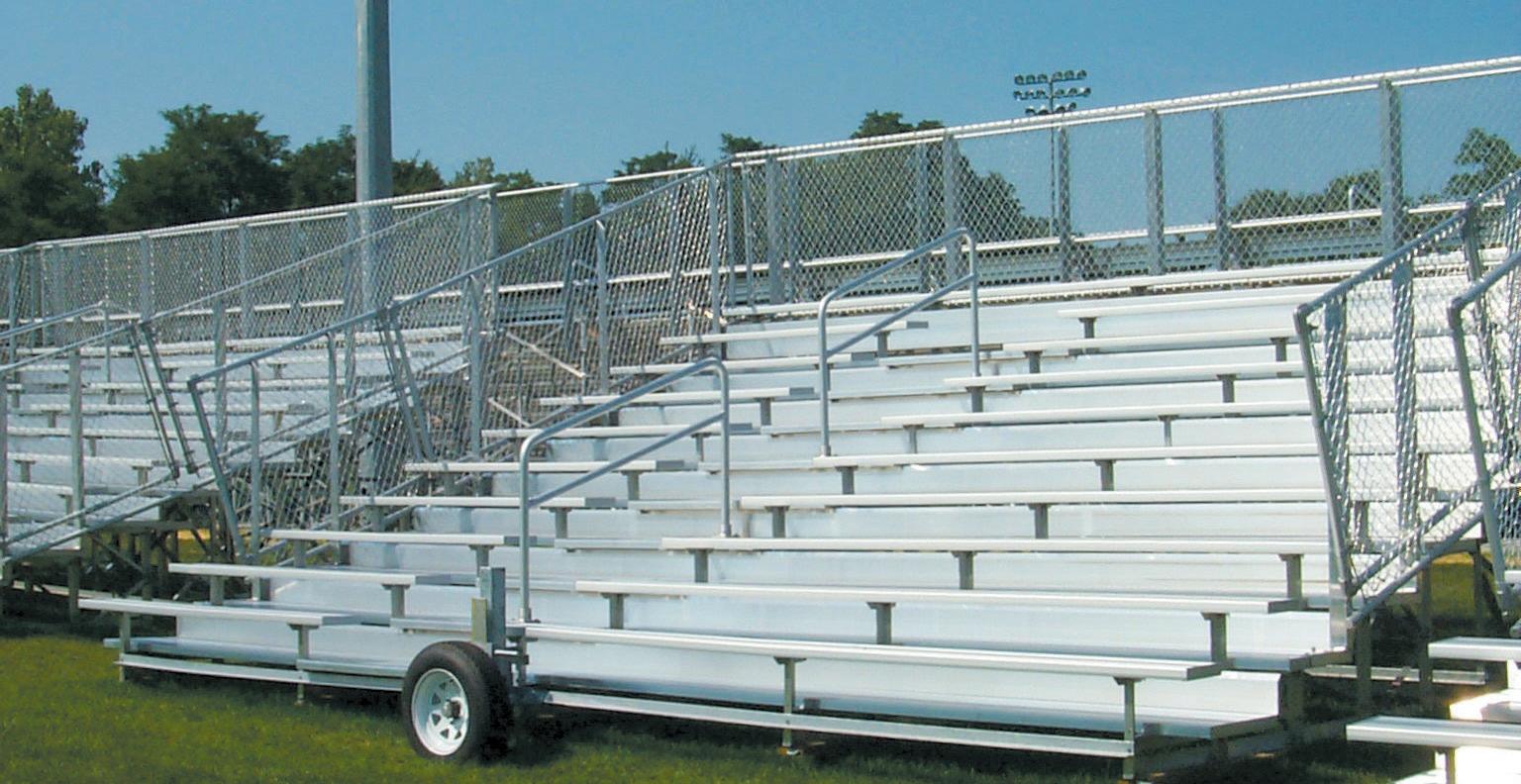
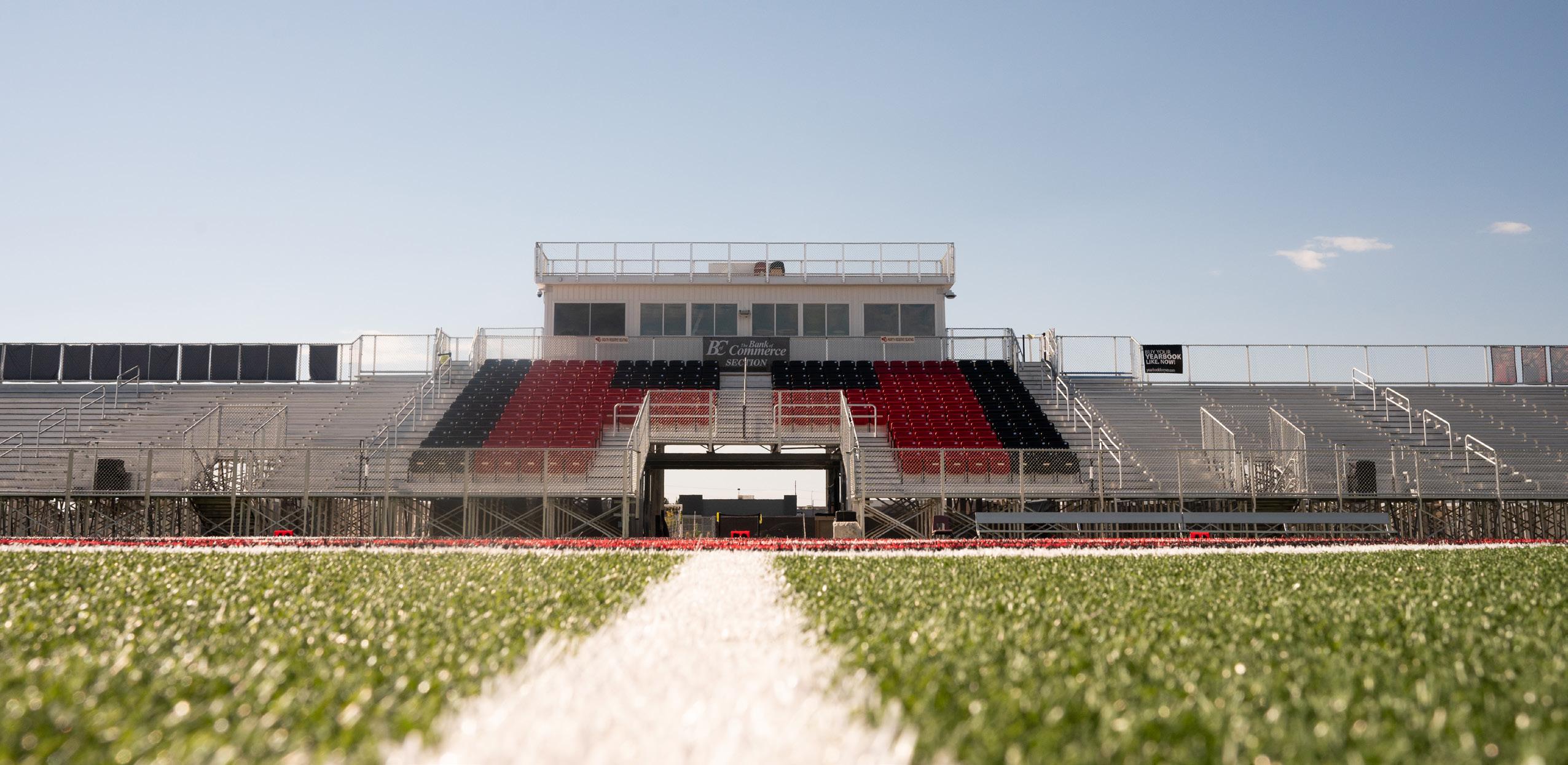
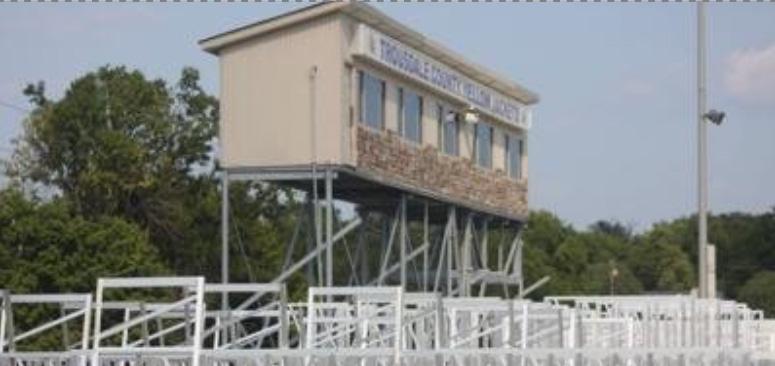
High Capacity Bleachers, defined as those over 33’ long, provide an efficient and cost-effective solution to the challenge of seating large crowds in stadiums, arenas, and outdoor event spaces. These bleachers are designed with safety and comfort in mind, featuring sturdy construction and optional enhancements like backrests and contour seats to ensure a secure and enjoyable experience for spectators. Incorporating a press box on one side of the high capacity bleachers is ideal for high school and college football fields. Press boxes offer an unobstructed view for essential game day operations, including media coverage, coaching, commentating, timing, scoreboard controls, and lighting. They provide a convenient workspace for managing teams and deliver numerous benefits to schools and organizations.
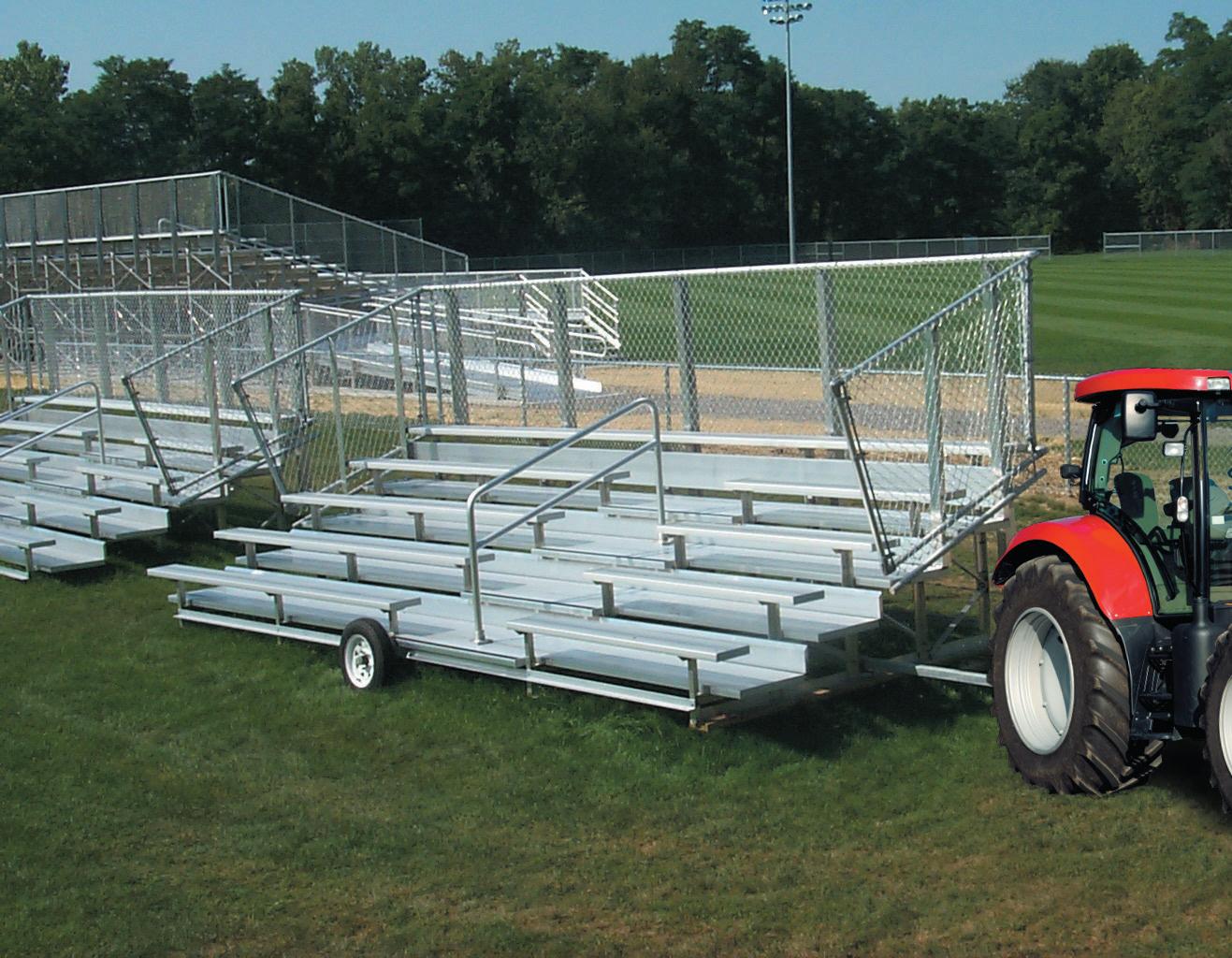
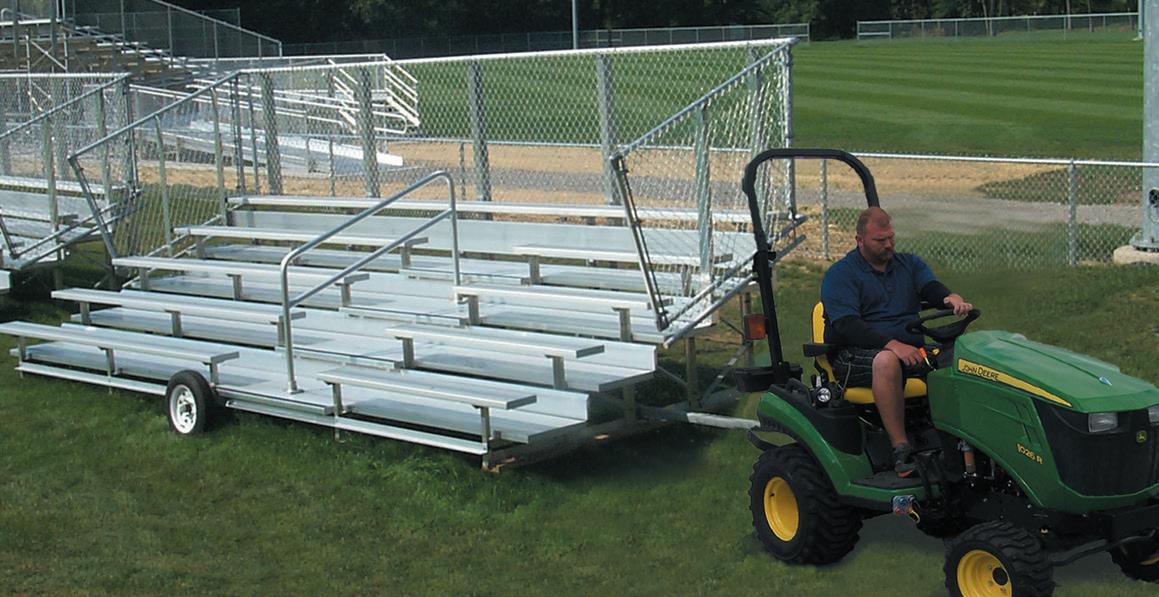
Transportable bleachers are the ideal solution for fairgrounds and similar venues that require flexible seating arrangements across multiple areas at different times. These bleachers offer the convenience of mobility, allowing event organizers to quickly and efficiently relocate seating to accommodate various events and
crowd sizes. Designed with durability and ease of transport in mind, transportable bleachers ensure a comfortable and safe experience for spectators. Their versatility makes them perfect for accommodating diverse events, from concerts and shows to sporting events and exhibitions, enhancing the overall functionality of fairgrounds.
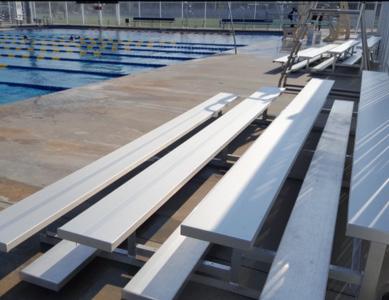
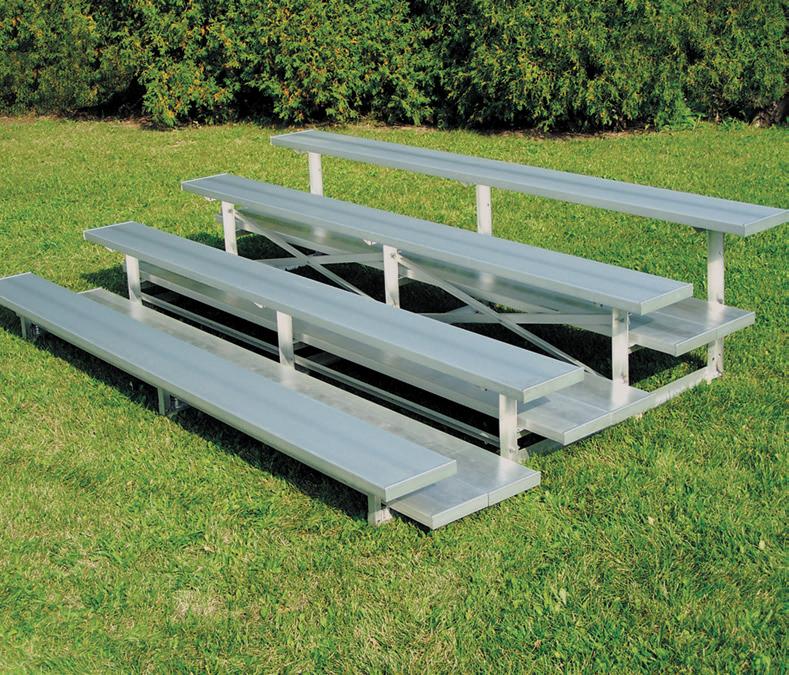
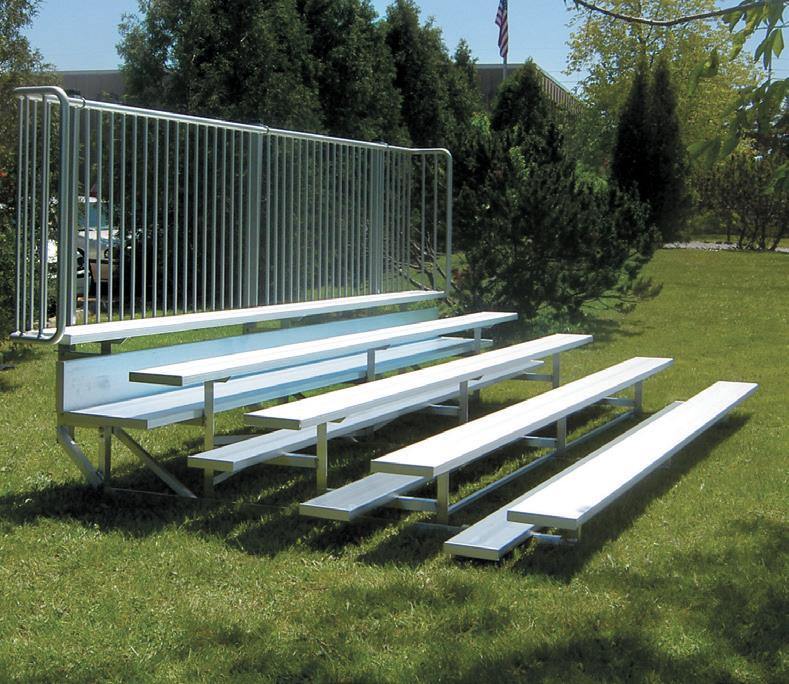
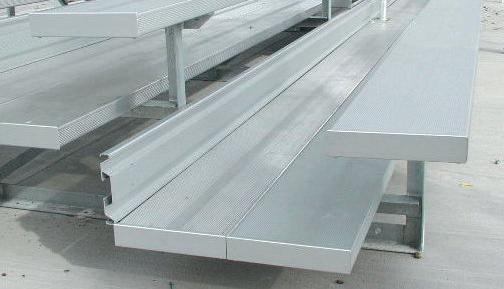
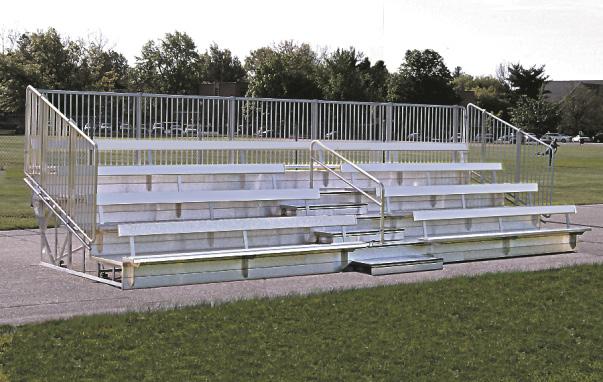
3, 4, or 5-row aluminum bleachers are the perfect seating solution for multi-field venues such as soccer complexes. Their compact design provides ample seating while maintaining a low profile, ensuring unobstructed views of the action on multiple fields. Lightweight and durable, these bleachers are easy to install and reposition as needed, making them ideal for dynamic environments.
Stadiums today can seat between 15,000 to 100,000 people, with some, like the Indianapolis Speedway, accommodating up to 250,000 spectators. They serve as architectural and technological hubs for communities, often designed for multiple sports such as football, soccer, and track. For example, Washington State’s Qwest Field & Event Center hosts not only sports but also job fairs, concerts, trade shows, and more. While traditionally open-air, modern stadiums may feature dome roofs or movable roofs to protect against weather, and smaller venues may use independent shade structures.
No matter the design style, building a spectator venue can be a substantial undertaking in planning, funding, building, and promotion to help the venue generate revenue. Additionally, these spaces have evolved from the simple u-shaped track to more complicated structures with a wide range of facilities. Modern designers take into account the following when planning for a new venue:
• Long-term financial viability by designing the stadium as a multipurpose facility
• Aesthetics and architectural interest
• Reduced energy use
• Minimal disturbance to ecology
• Environmental sustainability
• Retractable roofs to be used in any weather
• Security and anti-terrorism measures
• Providing an environment that will include individuals of all abilities
Mitered Bleachers (Broughton High School, Baseball Field)
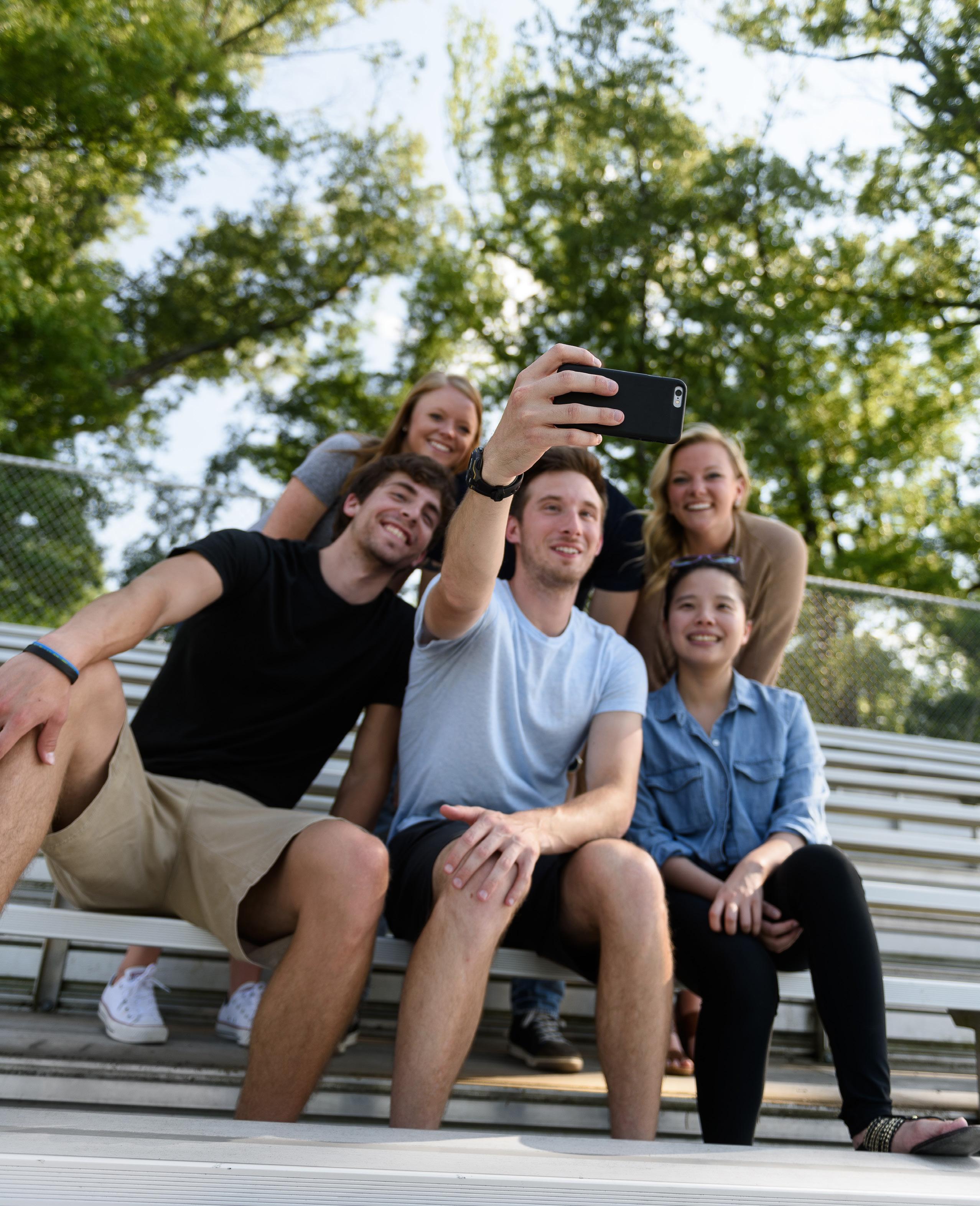
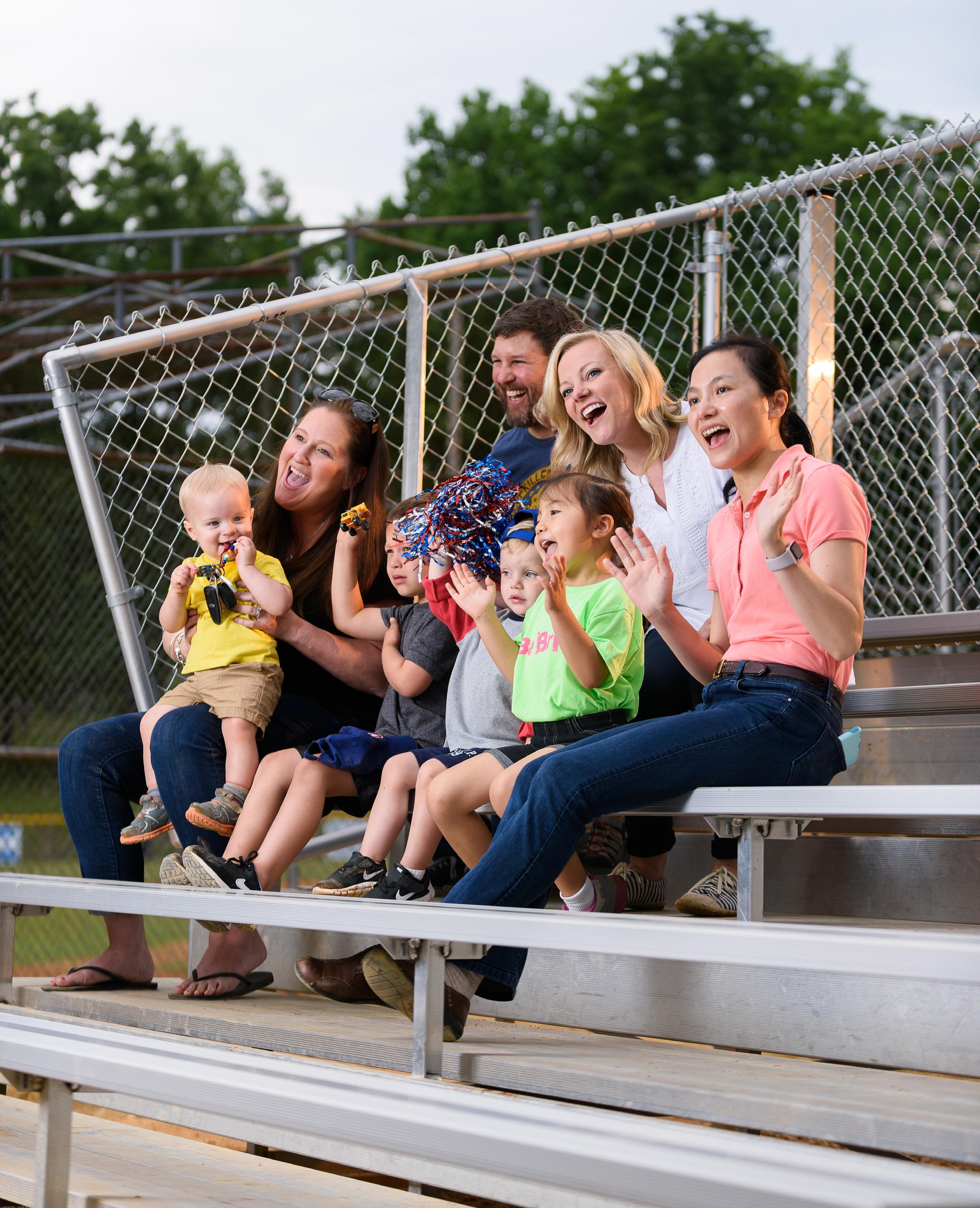
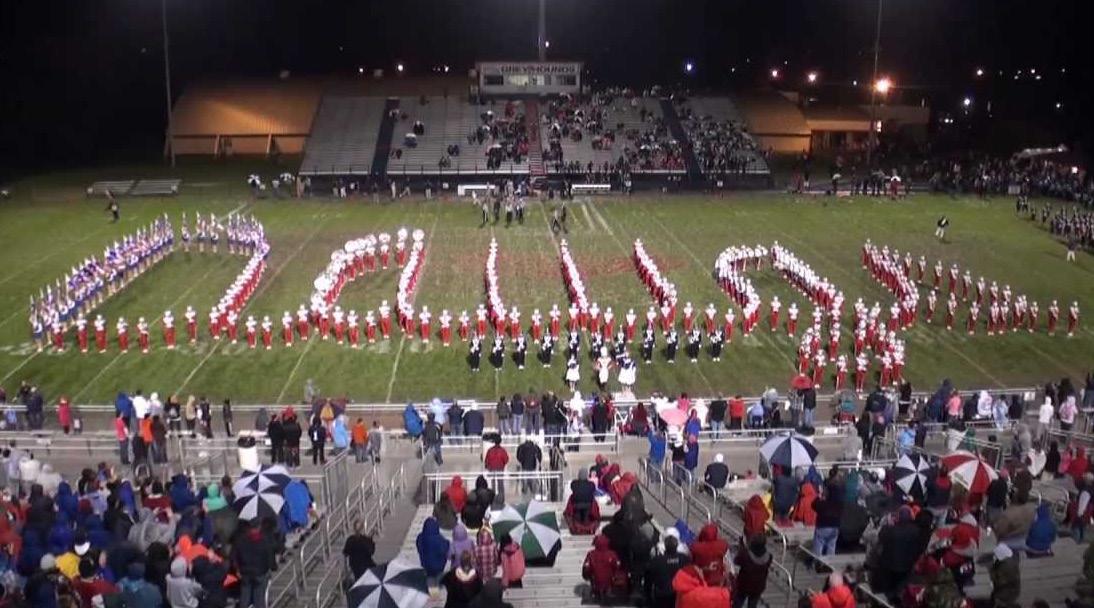
Bleachers and grandstands bring people together, build a sense of community, and are a valuable asset to a venue, team, or school.
GRANDSTAND AND BLEACHER APPLICATIONS
Bleacher designs vary by location, so it is certainly accurate to say that there are bleacher designs for a variety of locations and/or purposes. From the large structures found at racetracks and major sports stadiums to the small tip and roll models used to cheer on the local little league team, bleachers have taken spec tator seating to a new level when it comes to watching a favorite pastime.
Most people can easily recall a favorite memory about a game or event where they cheered along with the people seated around them, united in a common cause. Bleachers bring people together, build a sense of community, and are a valuable asset to a venue, team, or school.
Beyond these super-facilities are countless schools and universities, gyms, recreation facilities, sport fields, pools, and parks which are also utilizing bleachers, depending upon their needs and available space.
From small sporting events to daylong festivals in parks, there is often a need to provide temporary seating that assembles quickly and moves into storage after the event. While many events encourage people to bring folding chairs and blankets for seating, providing a bleacher can offer additional comfort, as well as accommodate more people in a smaller space, especially if having
a view of a stage or event is an important part of the gathering. Bleachers are a great way to create camaraderie among spectators, uniting them in a common event.
Go to any game or event, and it is often as much fun to watch the people in the stands as it is the game itself. They cheer together, shout together, and express dismay as a unit when their team fails to score or is beat. They make huge posters to hold up, they do the “wave,” and other fun activities meant to unite the people seated as a whole. If you have an event where people come to watch, the appeal of bleacher seating as a unifying force cannot be denied.
The use of spectator seating is growing in municipalities, which often have the need for transportable bleachers that can be used for parades, public concerts, and pop-up events throughout the community. One myth of spectator seating design is that if a venue cannot afford large permanent structures to augment their facility, there are no affordable options.
As this guide will demonstrate, there are a number of both transportable and permanent bleacher options that can seat people for smaller events, and a variety of seat styles and material options to consider as well. The best option is to contact a supplier, discuss your project needs, and let them offer recommendations that will accommodate both your needs and your budget.
Bleacher seating is a common feature at children’s centers, golf courses, and other venues that need to provide "seating with a view" for gatherings.
According to the 2024 State of the Managed Recreation Industry Report, bleachers and seating continue to be a top priority for facility planning. The report indicates that bleachers and seating are among the top 10 planned features, with an increasing number of respondents planning to include them in their facilities.
This trend underscores the significance of spectator seating across various applications beyond the traditional stadium setting. From temporary bleachers for parades and park events to permanent structures for open-air venues and sports gatherings, the demand for spectator seating in public spaces is undeniable.
LOCATIONS WHERE BLEACHERS CAN BE USED TO ACCOMMODATE SPECTATORS
Parks Fitness Centers
Sports Centers Fraternal Clubs
Municipal Leagues Pop Up (temporary) Parks
Walking Trails Colleges/Universities
Multipurpose Fields Golf Courses
Primary Schools Horse Parks
Secondary Schools Church Grounds
Clubs Beaches
Parade Routes Open Air Festivals
Day Care Centers Race Tracks
Fairgrounds Picnic Areas
Campgrounds Team Facilities
Rodeo Arenas Spor ts Training Facilities
Fieldhouses Concert Arenas
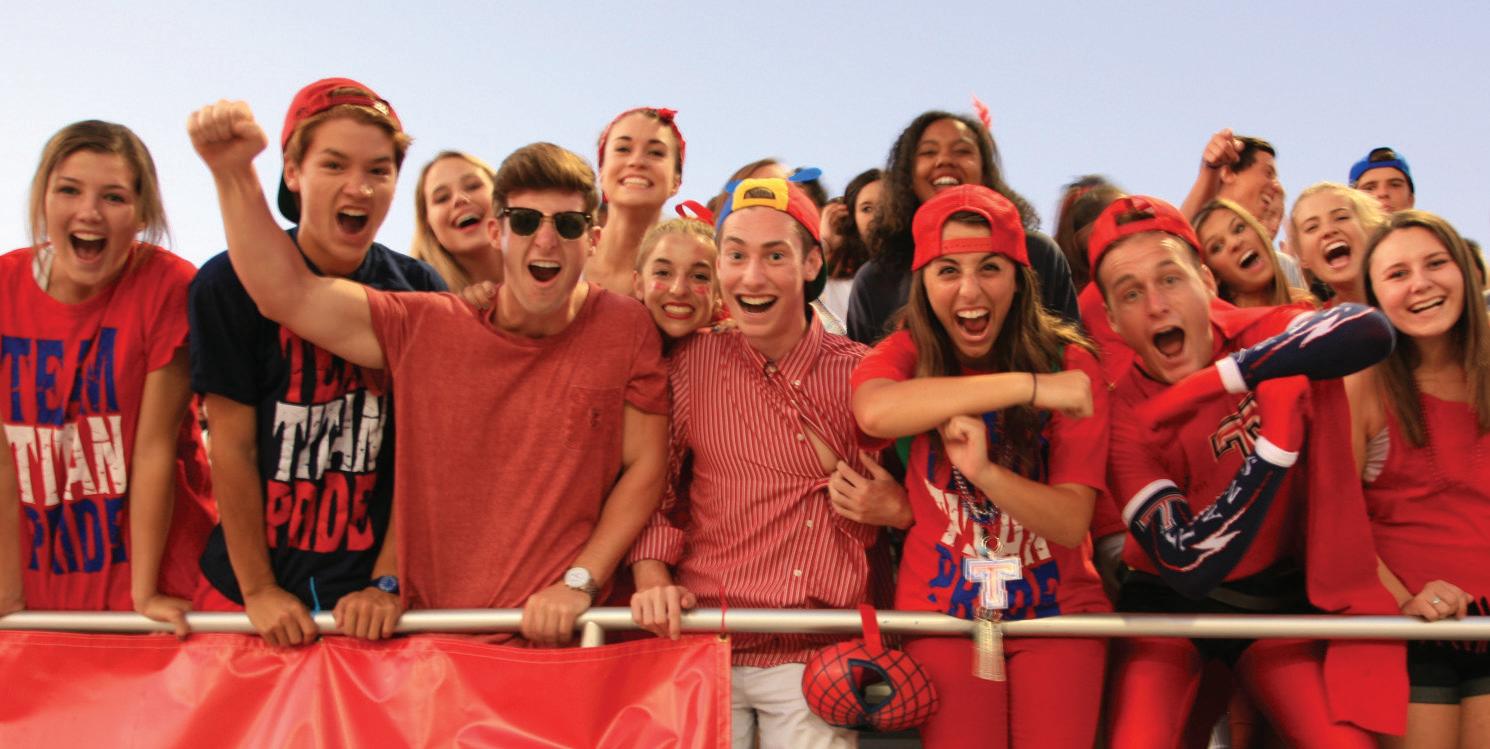
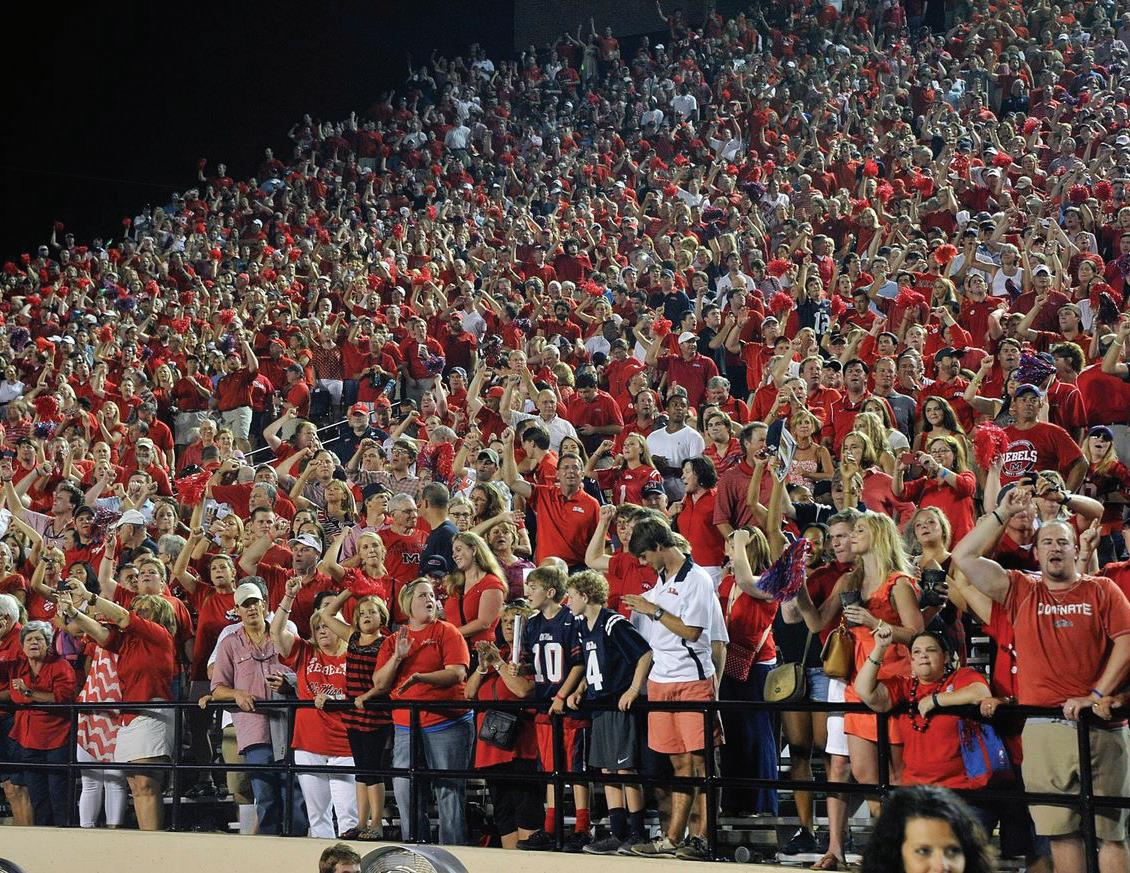
Above Photo: People seated in bleachers cheer as one voice, united in a common cause. Photo courtesy of www.infinitiofmissionviejoblog.com. | Below Photo: Students watching their favorite team from a football stadium grandstand. Photography by Frederick Breedon, courtesy of www.redcuprebellion.com.
Tip and Roll bleachers are one option for configurable site design.
STANDARDS AND CRITERIA
Tohelpensure project success, it is critical to understand and address a variety of federal, state, and local guidelines, as well as considerations for safety and performance. Since state and local recommendations may vary, it is best to check with government agencies in your area to obtain a complete list of applicable codes and standards.
Building Codes and Related Considerations
The codes applied to the design for spectator seating are determined by the governing body of that specific location. It could be at the state, county, or city levels. Furthermore, the assembly could be ruled by other types of governing agencies such as a school board that will have jurisdiction. That leading body is responsible for establishing what code (and what edition of that code) will apply in their jurisdiction.
For decades, the major regional building codes have been used to evaluate the safety of various building components making up the primary elements of means of egress to include stairways, ramps, small changes of elevation, and level surfaces.
However, the last Standard Building Code (SBC) was published in 1994, the last Uniform Building Code (UBC) was published in 1996, and the last BOCA National Building Code was published in 1997.
In most cases, the latest edition of the International Building Code (IBC) is the primary basis of design. In 2000, the IBC launched a stand-alone subsection of its code in order to clarify issues pertaining specifically to assembly seating in accordance with ASTM guidelines in establishing codes.
That document was first released in 2005 and has been updated in 2007, 2012, 2016, 2019, and most recently 2023. The International Code Council (ICC) works hand in hand with the IBC and in some instances may even be redundant. The ICC 300 highlights the standards for bleachers, folding and telescoping seating, and high capacity bleachers.
Inclusion
The Americans with Disabilities Act (ADA) is a federal law that administers how facilities provide access and accommodations to
persons with disabilities. Some governing agencies will be specific to how they want to apply this law and will provide plans for review during the approval/permitting process accordingly, while others will rely on the design professionals to incorporate ADA.
In either case, each new facility providing assembly seating in the United States should comply with the ADA and its guidelines. The ADA has several items addressing assembly occupancies and what must be provided to accommodate those with disabilities.
While it is not the intent of this resource to identify all of the specific requirements of the ADA, there are four prominent issues relating to the design of grandstands that should be understood: 1)quantity, 2) location, 3) access and, 4) sightlines. For more information, refer to the resources section in the back of this guide.
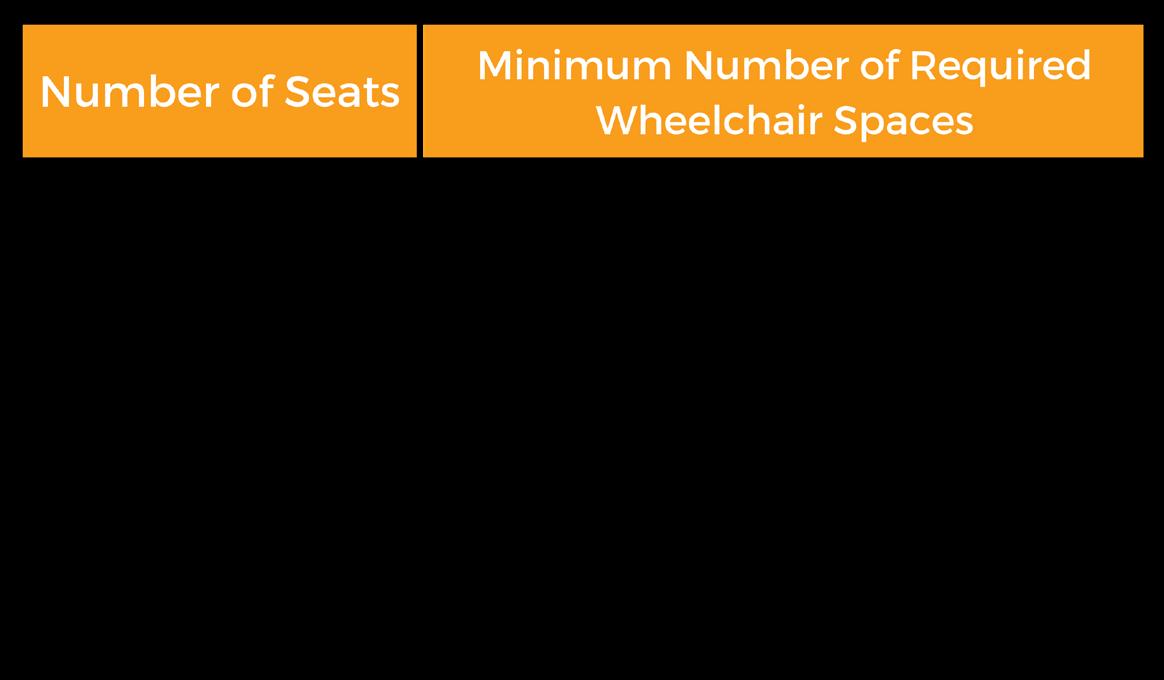
1. Quantity — The number of wheelchair accessible spaces required are based on the following chart.
2. Location — Number and location of wheelchair spaces must be an integral part of the seating plan so people using wheelchairs are not isolated from their companions.
3. Access — Accessible seating must be on an accessible route that provides access from parking and connects to all public areas.
4. Sightlines — Wheelchair spaces shall provide lines of sight complying with the guidelines. In providing lines of sight, wheelchair spaces shall be dispersed. Wheelchair spaces shall provide spectators with choices of seating locations and viewing angles that are substantially equivalent to, or better than, the
choices of seating locations and viewing angles available to all other spectators so that their experience is substantially equivalent to that of other members of the audience.
Ensuring ADA compliance in spectator seating goes beyond meeting legal requirements; it enhances the overall experience for all attendees. Key considerations include providing multiple wheelchair-accessible spaces, integrating these spaces throughout the venue, and including companion seating to avoid isolation. Good sightlines for wheelchair users are crucial to ensure an equitable viewing experience. Investing in ADA and inclusive seating not only fulfills legal obligations but also boosts community engagement and venue reputation, potentially increasing attendance and revenue.
ADA Ramp Requirements
To ensure accessibility, ramps must comply with both the Americans with Disabilities Act (ADA) and the International Building Code (IBC). According to the ADA, ramps must have a slope not steeper than 1:12, meaning for every inch of height, there must be at least 12 inches of ramp run. The IBC generally aligns with this requirement, mandating a maximum slope of
1:12 for ramps used for wheelchairs. Ramps should also include landings at the top and bottom with a minimum length of 60 inches to provide maneuvering space. Handrails are required on ramps with a rise greater than 6 inches, and they must meet specific height and clearance guidelines to ensure safety and ease of use. Compliance with these standards ensures that ramps are both func tional and safe for all users.
EXCEPTION: Wheelchair spaces in team or player seating areas serving areas of sport activity shall not be required to comply.
Life Safety
The National Fire Protection Association (NFPA) has issued the NFPA 102 Standard for Grandstands, Folding and Telescopic Seating, Tents, and Membrane Structures to address life safety concerns for spectator seating in relation to fires, storm, collapse, and crowd behavior.
Life Safety is mainly associated with egress and guard railing, the single most critical factor addressed by the codes. Both normal egress and emergency evacuation requirements are used in the process of establishing the code criteria. A life safety plan is
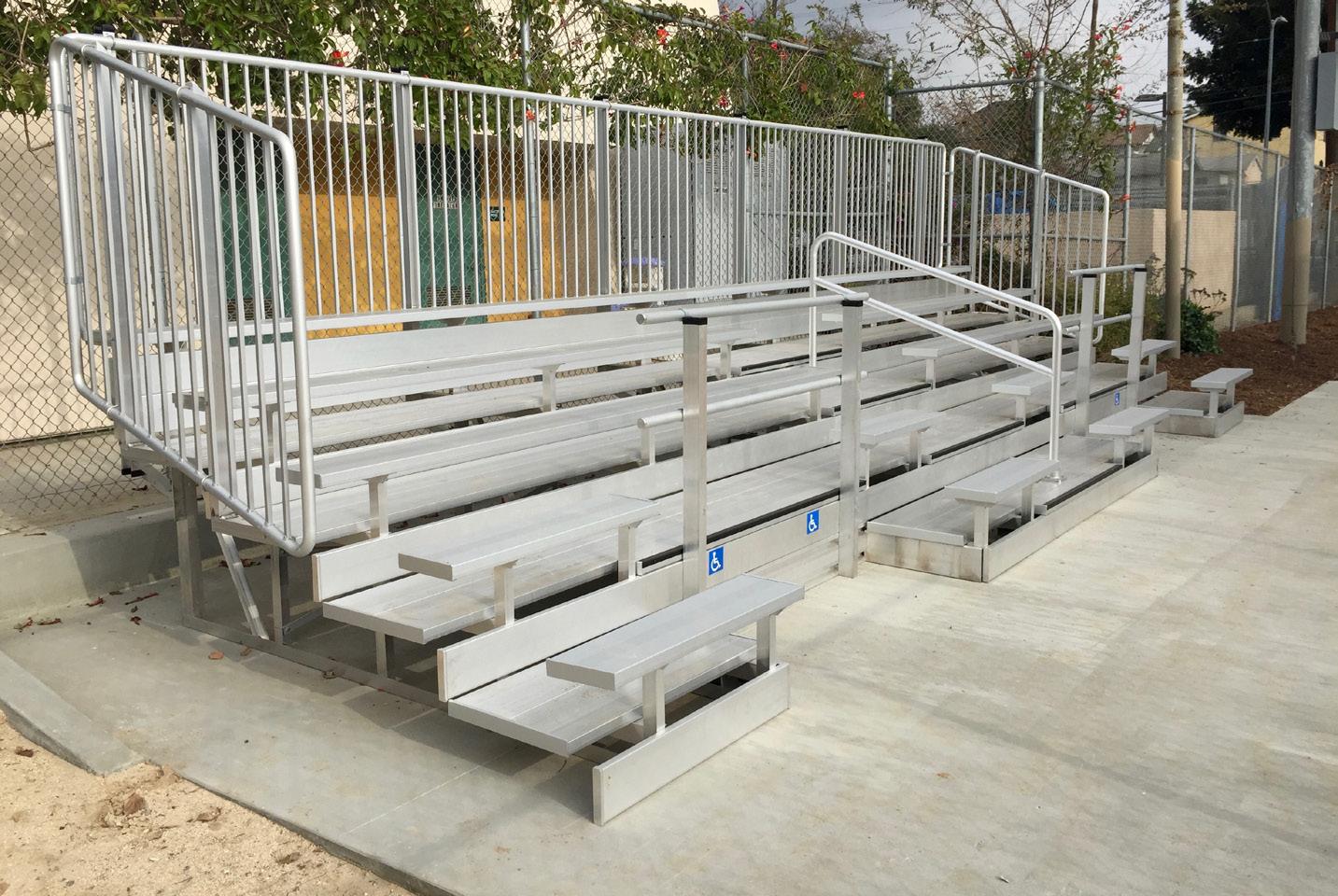
This image illustrates an accessible bleacher. The ramp provides access to the elevated structure, the center area allows a person in a wheelchair to comfortably sit in the center of the action, and it offers a great line of sight.
Drawing of Top Down Elevated ADA Unit
STANDARDS AND CRITERIA
often required during the plan’s review process to illustrate the path of egress and corresponding code compliance with issues such as aisle width, safe travel distance, and exit locations. The criteria required to properly create a life safety plan and additional information on maintenance and safety can be found in the NFPA 101, 102, and 5000.
Loads & Load Combinations
Design loads such as Live Load, Wind Load, and Seismic Load and the combinations including Dead Load are also established by the applicable codes. The engineer of record, typically a structural engineer, is responsible for compliance of the grandstand design in accordance with these loads and load combinations. The engineer of record will seal the design drawings in accordance with the requirements of the local agency.
Some agencies may require load calculations to be provided along with the structural drawings. The load calculations will illustrate load paths and load combinations and the material and/or connection capacities used to properly address those loads.
Slip Resistance
Aluminum bleachers are popular for providing maximum seating and visibility at sporting events and outdoor venues. However, wet surfaces can lead to accidents, making bleacher safety a priority. Understanding standards to reduce slips, trips, and falls is crucial.
Static Coefficient of Friction (SCOF)
Previously termed "slip index" in withdrawn ASTM standards F1677 and F1679, the National Floor Safety Institute (NFSI) now uses SCOF to measure slip resistance.
With no current ASTM standards, the NFSI adopted the ANSI B101.1 – 2009 standard. SCOF measures the friction needed to prevent slippage: a higher SCOF indicates more friction, greater traction, and reduced risk of slips, trips, and falls on bleacher surfaces.
Testing for SCOF on Wet Surfaces
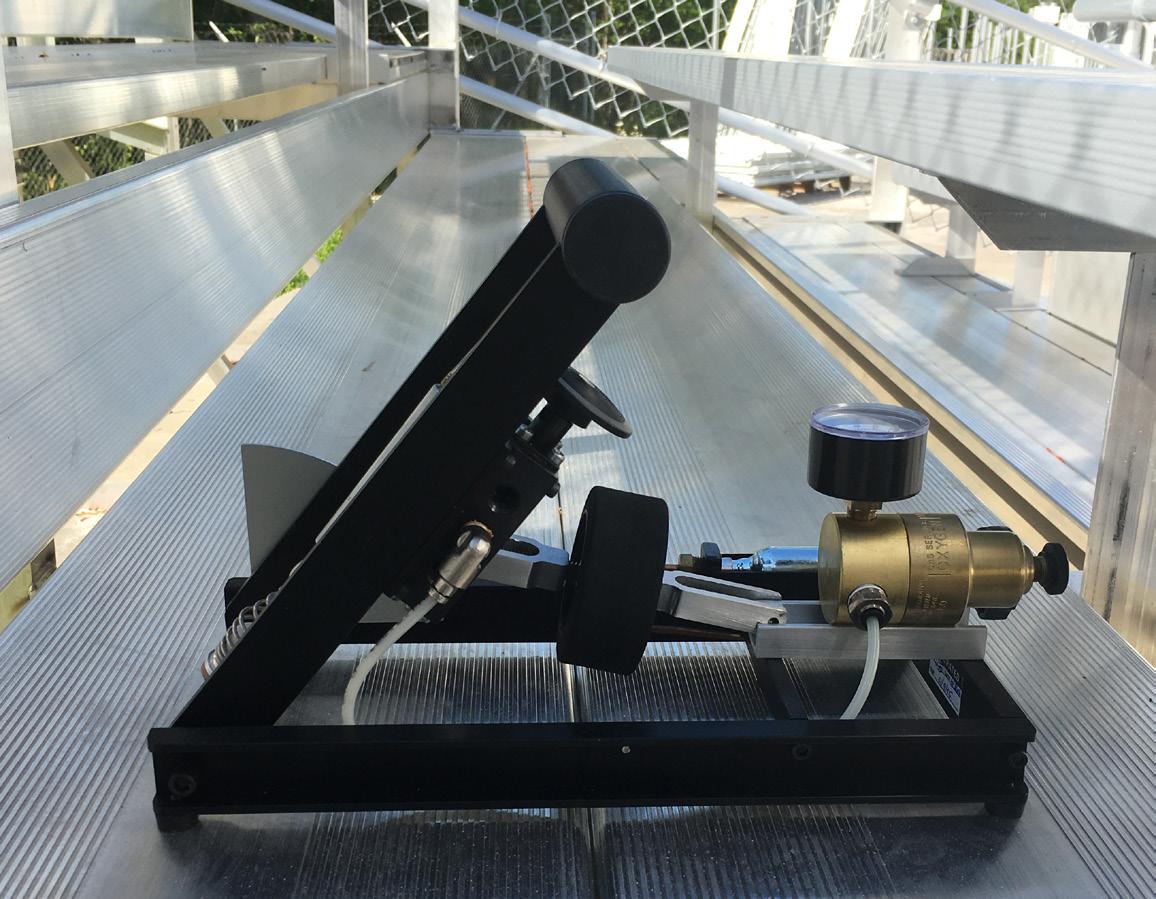
The National Floor Safety Institute (NFSI) is the expert source for testing walking surfaces, utilizing a state-of-the-art variable incidence tribometer to determine the Static Coefficient of Friction (SCOF). This tribometer, engineered for wet testing, mimics the heel strike of a human walking by using a leg operating mechanism that replicates the angle, velocity, and acceleration of a person slipping.
The NFSI, following the ANSI B101.1 - 2009 standard, categorizes wet SCOF into three levels: "High Traction" (SCOF ≥ 0.60), which significantly reduces slip-and-fall incidents; "Moderate Traction" (SCOF 0.40-0.59), which presents a higher risk; and "Low Traction" (SCOF < 0.40), which requires immediate corrective action.
When specifying a decking system, ensure the manufacturer has undergone NFSI's phase 2 (field) testing and has obtained a "high traction" certification. This certification incentivizes manufacturers to meet high safety standards. Always inquire about the SCOF rating and prioritize products with high traction ratings to minimize the risk of slips, trips, and falls.
The Tribometer shown here is representative of the tool used to measure SCOF.
Standards and codes are essential in safeguarding spectators from accidental falls and injuries, ensuring a safer environment for everyone.
PLANNING AND DESIGN
Spectator safety should be a main concern when planning for bleachers. In addition to finding a manufacturer that can provide you with a design that meets or exceeds all recognized national standards for construction, be aware that there are a variety of options in design and finishes, as well as accessories and amenities to help promote usage and comfort.
Seating Types, Systems, and Finishes
There are several seating types, systems, and finishes to consider when planning your project. Choosing the right combination to meet your needs will depend on the number of people to be accommodated, as well as the type of events to be held. In past years, the industry has made several attempts to define the differences between bleachers and high capacity bleachers. Some give consideration to the type of seat – backrest or not, individual chairs or bench seats, portable or permanent. Other assumptions have been made based on the type of support structure, such as structural steel or angle frame.
Some consider high capacity bleachers to be larger roofed structures open to one side with individual seats, while bleachers are open to the sky with seats that consist of planks. Size and venue are other criteria the industry has used to establish a difference. With the variety of options that are available, it is hard to define either by their features. Most commonly today, the industry refers to bleachers as smaller, simple structures while high
capacity bleachers are larger and/or more complicated structures.
Generally, high capacity bleachers are located at bigger venues (e.g., stadiums, racing tracks) and seat a larger number of individuals while bleachers are located in smaller locations (e.g., high school fields and gymnasiums) and seat no more than 3,000 individuals. For code purposes, there is no difference between the two. Life safety and structural integrity are the critical objectives of the codes and the same rules apply in either case. The International Code Council (ICC) 300 mentioned previously uses the same definition for both words which is ”tiered seating supported on a dedicated structural system of two or more rows high and is not a building element.”
The following is a basic primer on types of systems to consider; your manufacturer can assist with even greater detail to help make your choice the right one.
Spectator Seating Types
Bleachers can be either permanent or moveable and come in a variety of sizes to suit your needs.
Permanent High Capacity Grandstands
Also known as I-Beam or Beam and Column bleachers, permanent high capacity bleachers are custom-built to specific requirements and considerations such as seating capacity, sightlines, spectator flow, space available, and applicable building codes. They offer the
There are many choices to make in planning a well-designed, efficient facility.
greatest design flexibility and can be designed to accommodate a number of varying site conditions such as hills or uneven terrain. Often recommended for venues of more than 3,000 seats, permanent high capacity bleachers offer the most options for customization and finishing. This type of seating also provides the most finished and spacious understructure, suitable even for buildings, such as locker rooms. This type of seating is common to racetracks, college campuses, baseball stadiums, and other large spectator venues nationwide.
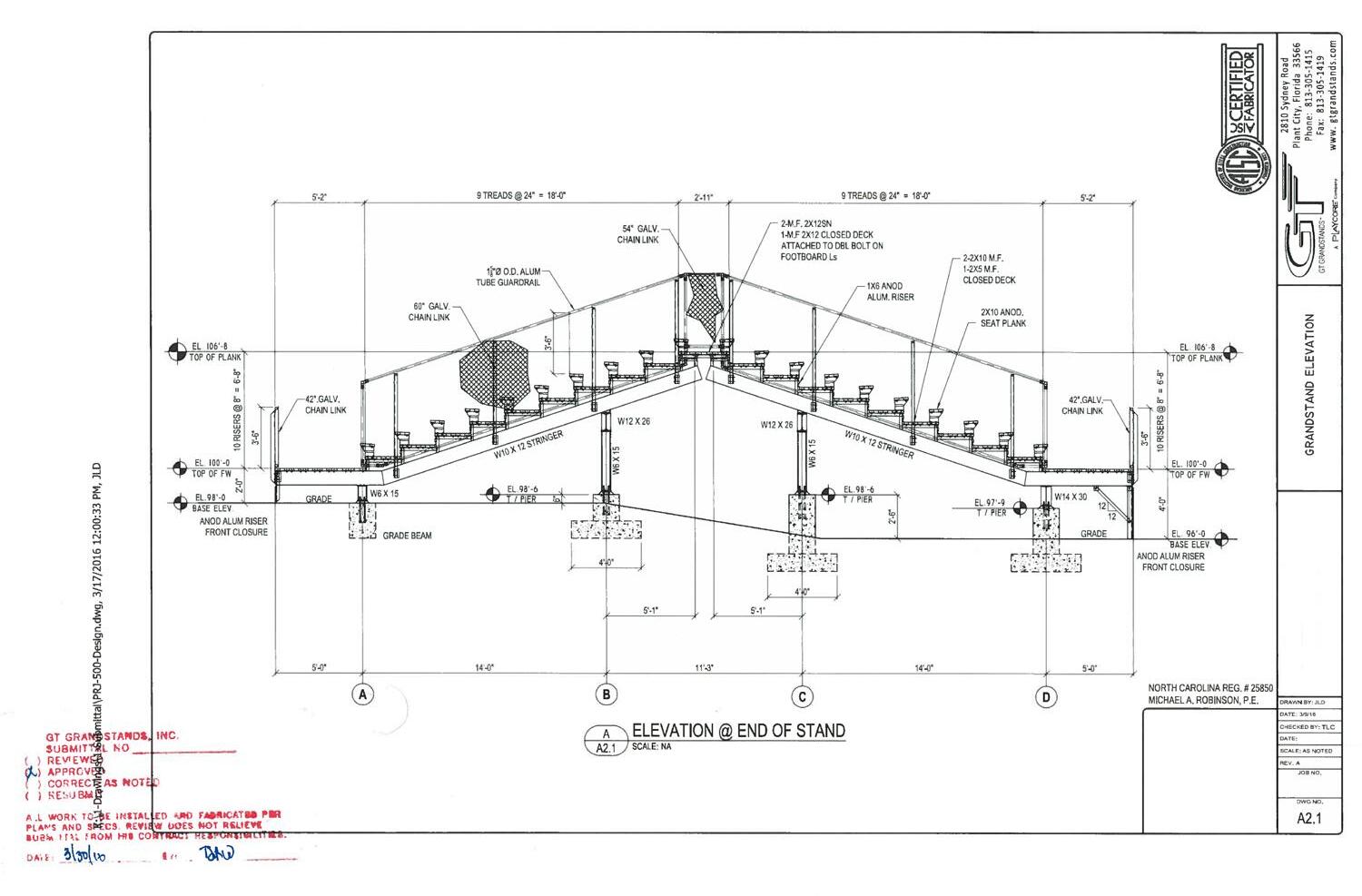
High-capacity bleachers are considered custom projects, typically taking about 10 to 12 weeks to complete the entire planning process. The process begins with sales drawings, which are preliminary drawings created to generate a quote. Once the dealer’s purchase order is received based on these drawings and the quote, the 10-12 week cycle begins. Next, submittal documents are used by the customer to verify that the designed product matches the requested specifications and site compatibility. Customer approvals are required on all submittal documents by the date listed on the drawings. For an additional fee, stamp and seal drawings, often done by a thirdparty structural engineering firm, are highly recommended. After structural markups are reviewed and final adjustments made, the bill of materials (BOM) is compiled and sent to production. Finally, production involves purchasing, fabricating, and packaging all parts listed on the BOM for on-site assembly.
Permanent and Moveable Bleachers
Bleacher is the generic term given to spectator seating options that do not fit within the “permanent high capacity bleacher” category. There are fewer options to customize, though the
systems available in this classification do offer a variety of alternatives. Bleachers can be permanently affixed to the site or remain portable to facilitate movability. See additional information on bleachers in the Resources section of this guide.
Bleacher Systems
Non-elevated Systems
Non-elevated bleachers are a simple structure with a first row seat height of 17", so people seated here will have their feet on the ground, eliminating the need for additional walkways or stairwells. They are generally used outdoors and should be anchored in place to protect them against adverse wind situations.
Elevated Systems
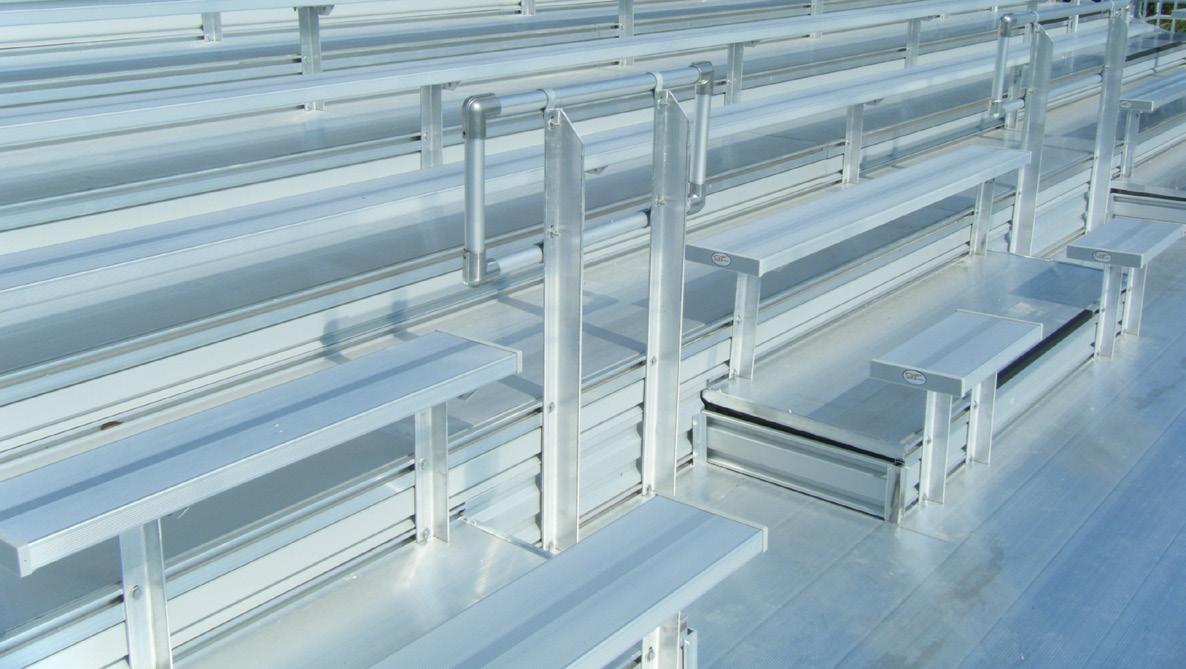
This structure was designed to elevate the spectators’ line of sight to improve overall event viewing. An elevated system would generally include an elevated front walkway platform with front guardrails, entry stairs and/or accessible ramps, aisle(s) with handrail, a riser plank, and a double foot plank on all rows.
Angle Frame Bleachers
Angle frame construction can be a more affordable design for large seating structures. These can be made permanent by anchoring to a concrete slab or left portable for movement on a park property for different settings. Typically, deciding between permanent high capacity bleachers or bleachers depends on the desired seating capacity. Due to the cost associated with the slab foundation for a 1,200+ seat angle frame bleacher, the overall price approaches that of a permanent high capacity bleacher (about a 25% difference in cost).
Non-elevated systems are designed so people in the bottom row are seated with their feet on the ground.
Elevated systems improve spectators' line of sight and overall event viewing.
PLANNING AND DESIGN
Low Rise Systems
Created to allow more rows of seating without the need for aisles or guardrails, this structure has a lower first row seat height at 12", a 12" seat plank (deeper than standard 2" x 10" for added comfort), and a 6" rise per row. The 3 and 4 row low rise systems are under the 30" benchmark, and require no aisles and guardrails according to ICC300. Low rise systems are also available in a tip and roll model to allow for flexibility and transport.
Tip and Roll Systems
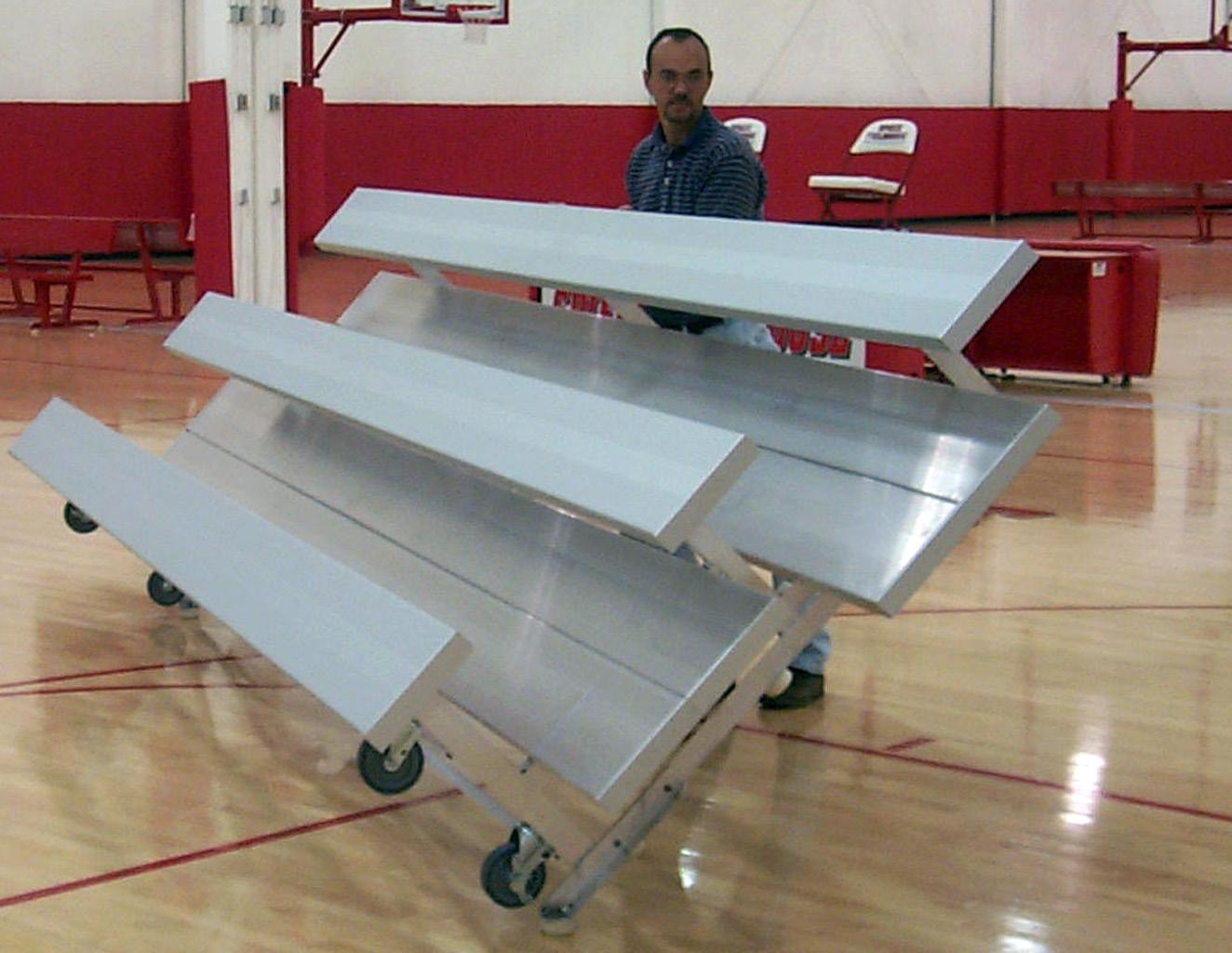
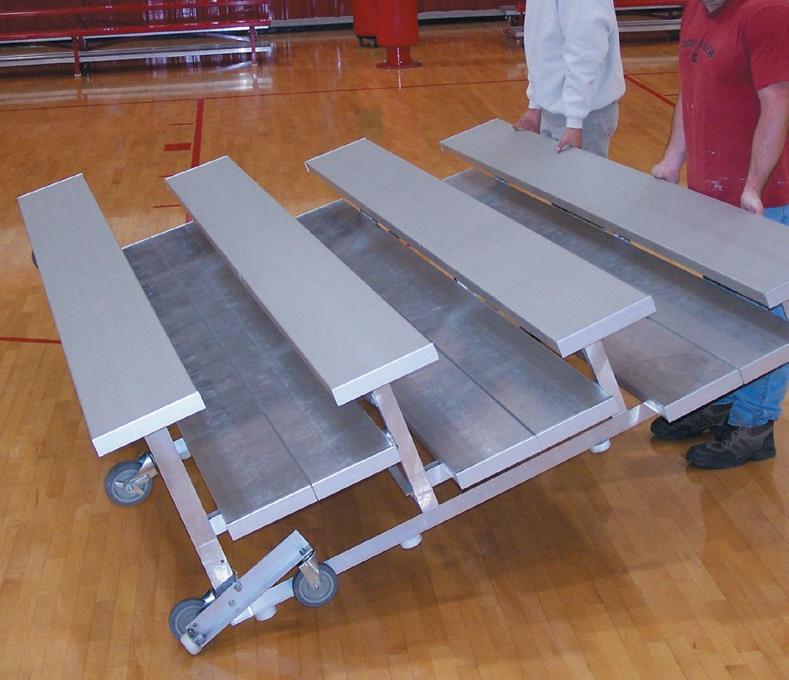
This system is an excellent option for indoor auxiliary seating. This versatile system can be tipped up and rolled away for convenient storage when not in use. It is available with 2, 3, and 4 rows and can be ordered as a low rise system.
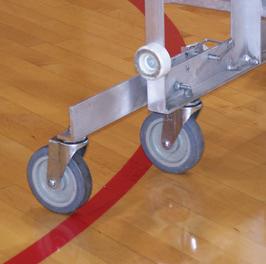
The system comes standard with a lighter aluminum understructure to make lifting to an upright position easier. Heavy non-marring rubber foot pads positioned underneath the frame protect indoor flooring. When tipped up it rests on durable 5" caster wheels for easy movement. A locking rear wheel restricts
movement when it is stored. The 4 row configuration has a folding outrigger for added stability and safety. Because of the height restrictions, the 4 row models are only available in a low rise option.
Transportable Kit
Often, seasonal events held at multiple fields located at the same complex do not require permanent bleachers. Transportable kit systems are an affordable and alternative system to permanent bleachers that can be used at multiple fields. They are designed with additional frame bracing to withstand the rigors of movement. A transport kit is required and includes the wheel assembly, tongue assembly, and optional lifting jacks. One transport kit can be used for multiple transportable bleachers.
These structures are available in 5 and 10 row models. The kit is often a good solution for budget minded individuals. It is important to note that transporting speed should not exceed 5 MPH, and use on public roads is prohibited.
Low rise system, shown with and without guardrail.
Tip and Roll System.
row transportable system.
row transportable system.
Low rise system, show with backrail.
Bleacher Models
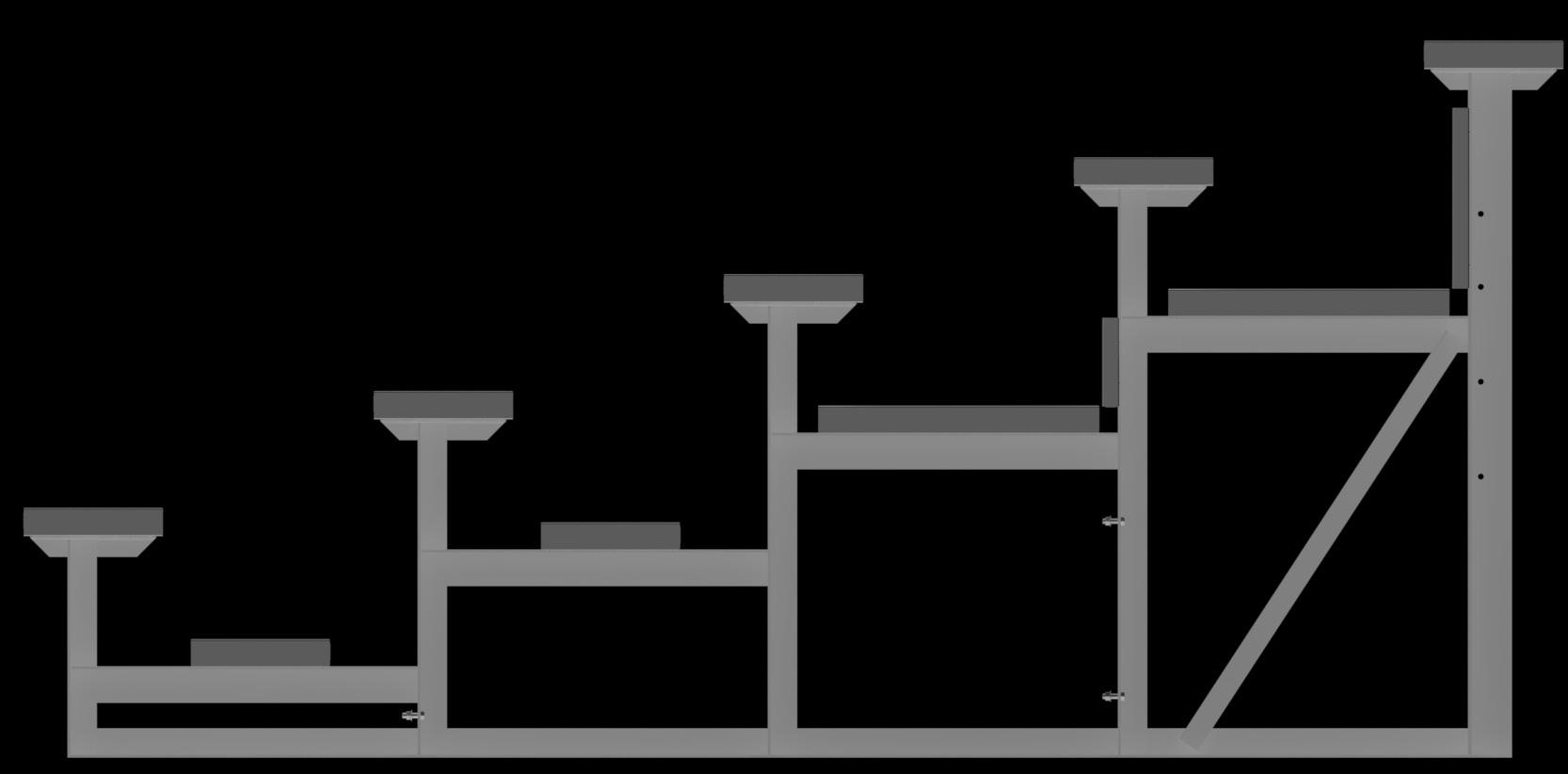
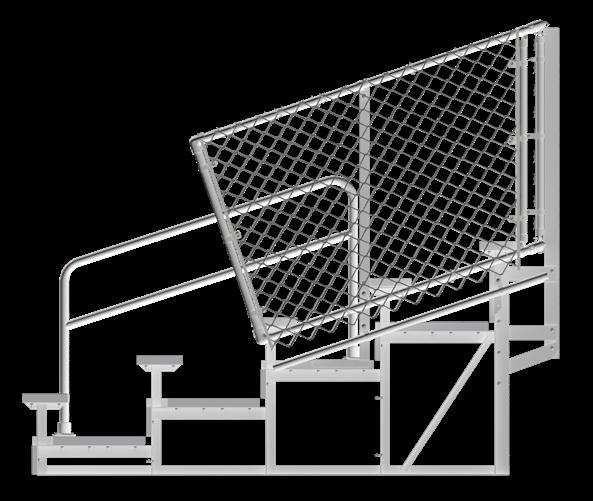
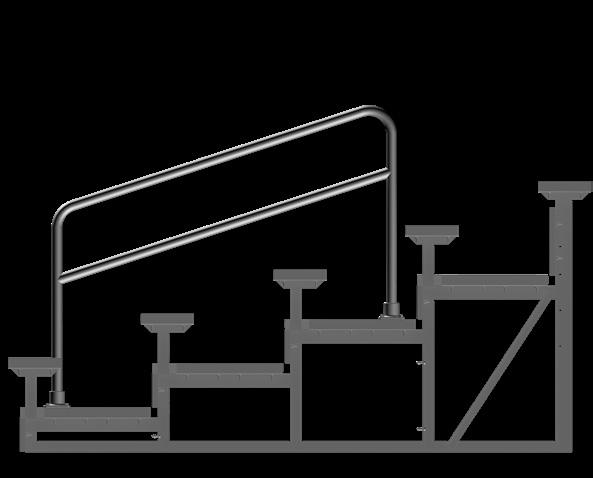
All bleacher models are made up of components, including seats, foot planks, and guardrails, as shown in the illustration below. Each model has its own requirements for safety regulations, and many offer variations to promote comfort and usage.
Please see the Glossary section in the back of the guide for a list of component descriptions corresponding to this illustration.
Standard Bleacher Model
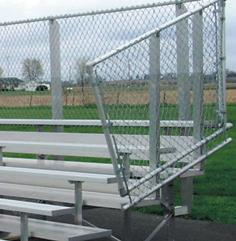
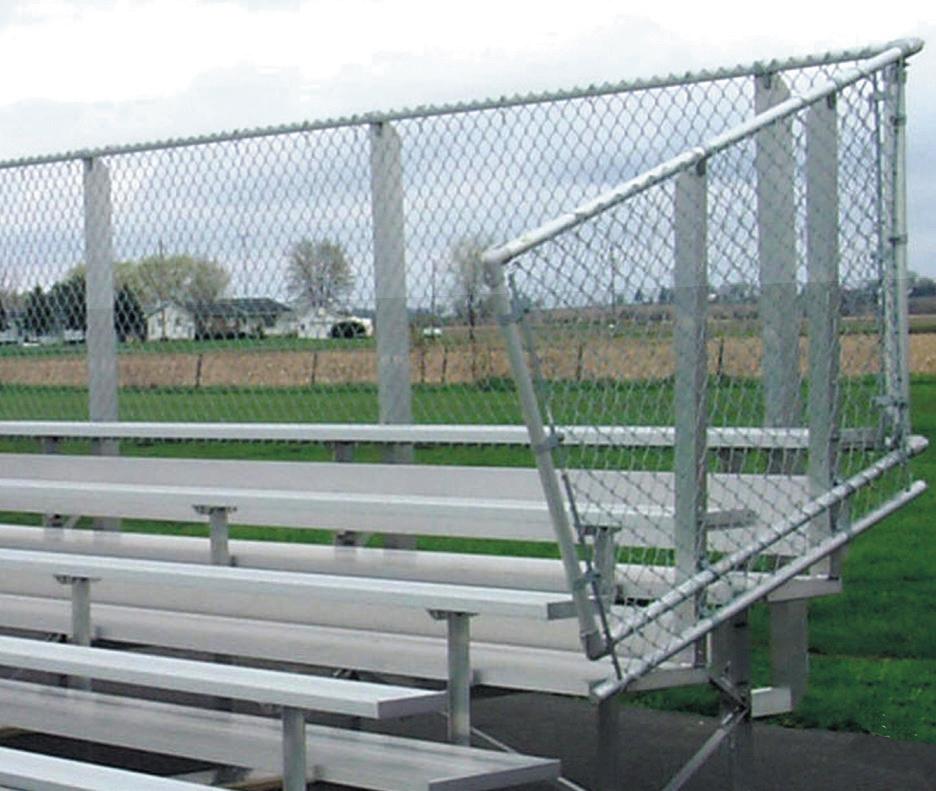
Designed to meet guidelines and maximize affordability, this streamlined model offers single foot planks on row 2 and 3, and double foot planks and riser planks on rows 4 and up (excluding low rise bleachers). Guardrails are required when seating is 30” or more above the floor or grade below, as per Section 408 Guards ICC 300. For systems with 4 rows or more, a chain-link or
vertical picket guardrail is available. The standard model is usually available in 2 to 10 row systems in most lengths.
Preferred Bleacher Model
Double foot plank on all rows, riser planks on rows 4 and up (excluding low rise bleachers), and chain-link or vertical picket guardrail on systems with 4 rows or more.
Deluxe Bleacher Model
The deluxe bleacher model is available in 3 to 10 row systems in most lengths but are not available in low rise or tip and roll.
They offer riser planks and double foot planks on all rows, aisle(s) with handrail(s), and chain-link guardrail or vertical picket on systems with 4 rows or more.
Perimeter Guardrail
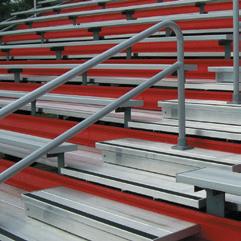
Mid-Aisle Grabrail
PLANNING AND DESIGN
Design Options
Decking System: Semi-Closed, Closed
The semi-closed decking system has an opening no greater than 4" anywhere on the deck of the unit. In the case of the closed decking system, there are no openings anywhere on the deck of the unit, so any debris or trash can be cleaned from the top side of the bleachers.
Bleacher Skirting Options
Skirting refers to the covering or fencing that encloses the area beneath bleachers. It serves multiple purposes, including enhancing safety, improving aesthetics, and reducing maintenance. By covering the framing of bleachers, skirting helps prevent unauthorized access, keeps debris and vegetation out, and maintains a clean, orderly appearance. Skirting can be made up of either riser plank, PBU metal panels, or chain-link.
A Beam and Column grandstand show with 12' wide vomitories.
Seat Types: Bench or Chairs
Seats can either be benches (seat planks) or chairs. Adding a backrest also promotes comfort. When designing with chairs, it is important to note that individual chairs can be fixed or they can fold depending on needs.
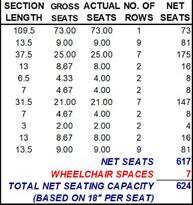
In regards to seating capacity, there are two terms used— “Gross Seats” and “Net Seats.” A seat is defined by 18" of “space” when using a bench or plank seat, or 20" for a chair with armrests.
Gross seat count is the capacity of the grandstand without aisles, ADA cutouts, or vomitories where seats would be removed, and is determined by taking the length of the grandstand, dividing by 18" and multiplying by the number of rows.
Net seat count is the same calculation minus the area where seats would be removed for aisles, ADA cutouts, and vomitory locations.
When deciding on the type of seat to be used, there are a variety of questions to address. Plank seats are generally more affordable, and will take up less space than a chair. Chairs provide fewer seats in a linear space, as they are based on a 20" wide calculation, as opposed to 18" for plank seats.
Chairs also require a greater tread depth (generally 30"), as the tread must accommodate both the chair and the space needed for a person to comfortably pass in the row.
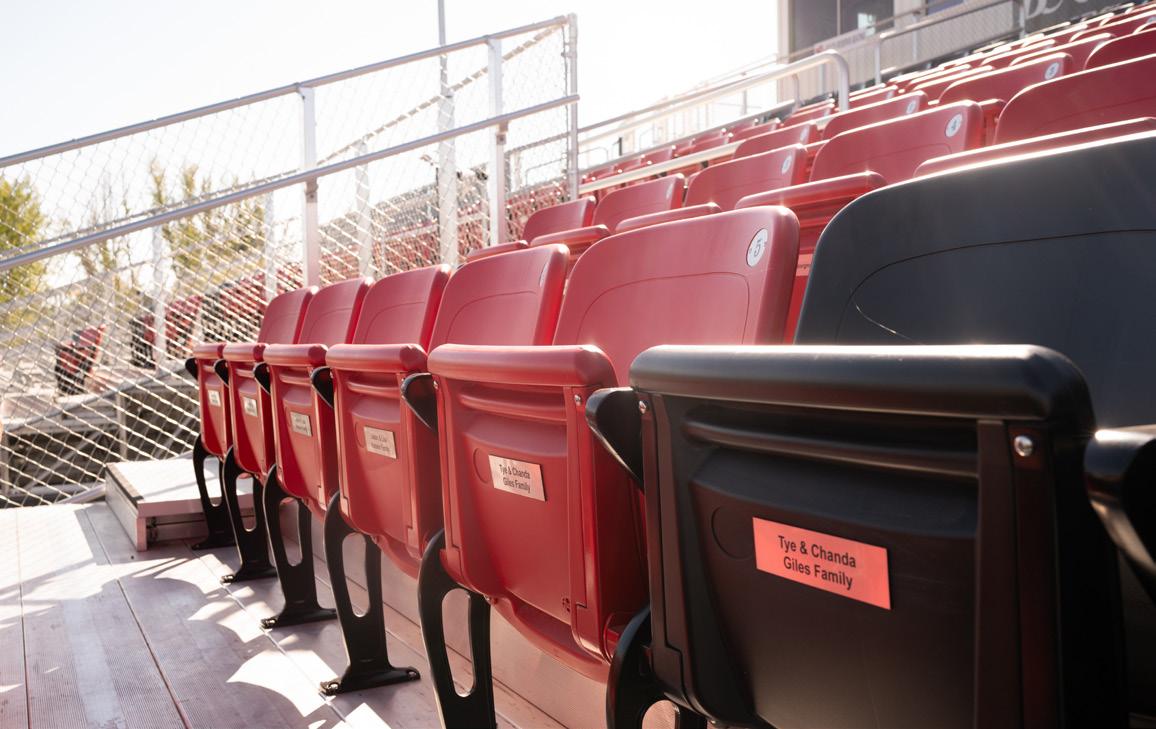
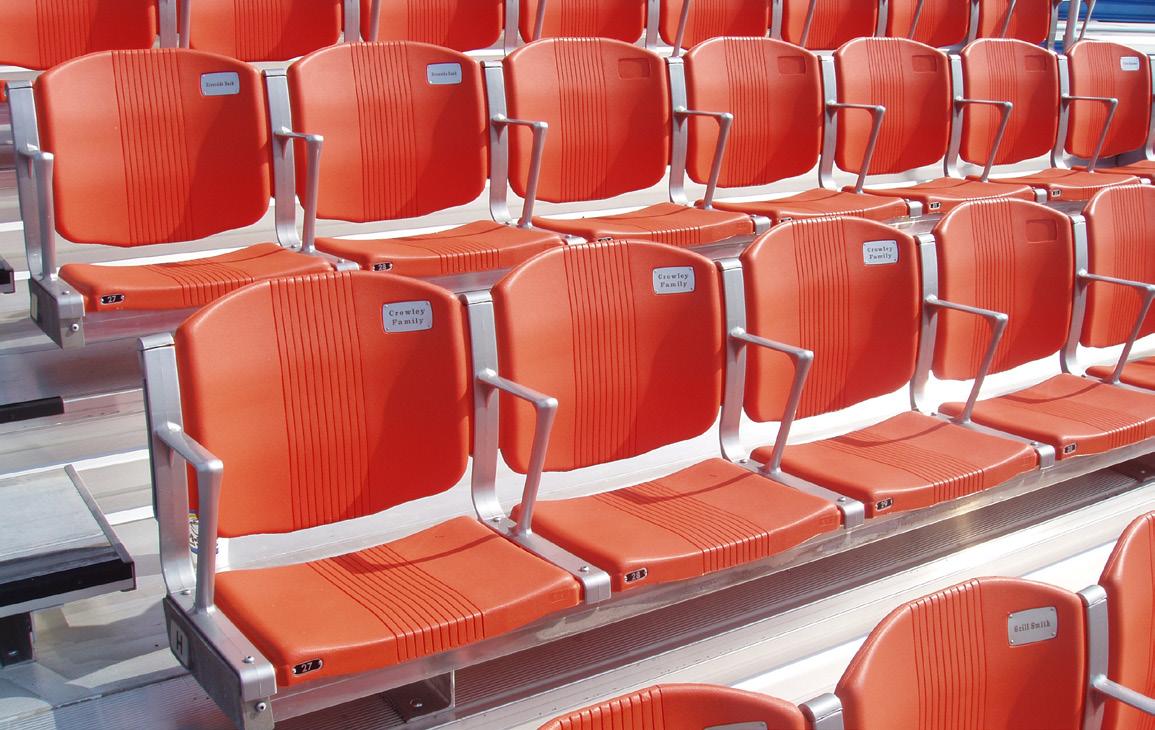
Fixed chairs will require more tread depth (minimum 33") than folding chairs. Folding chairs can be designed with “gravity lift” or “spring loaded” hardware so that they fold when the person stands. Typically, folding chairs have a deeper seat area for greater comfort. Both chair types typically come with seat number plates and aisle letter plates, and can be ordered with optional cup holders.
Folding Individual Chairs
Comfort Seat with Back Rests
PLANNING AND DESIGN
Finishes
There are a variety of options available when considering the finish that is most appropriate for your project.
Anodized Aluminum
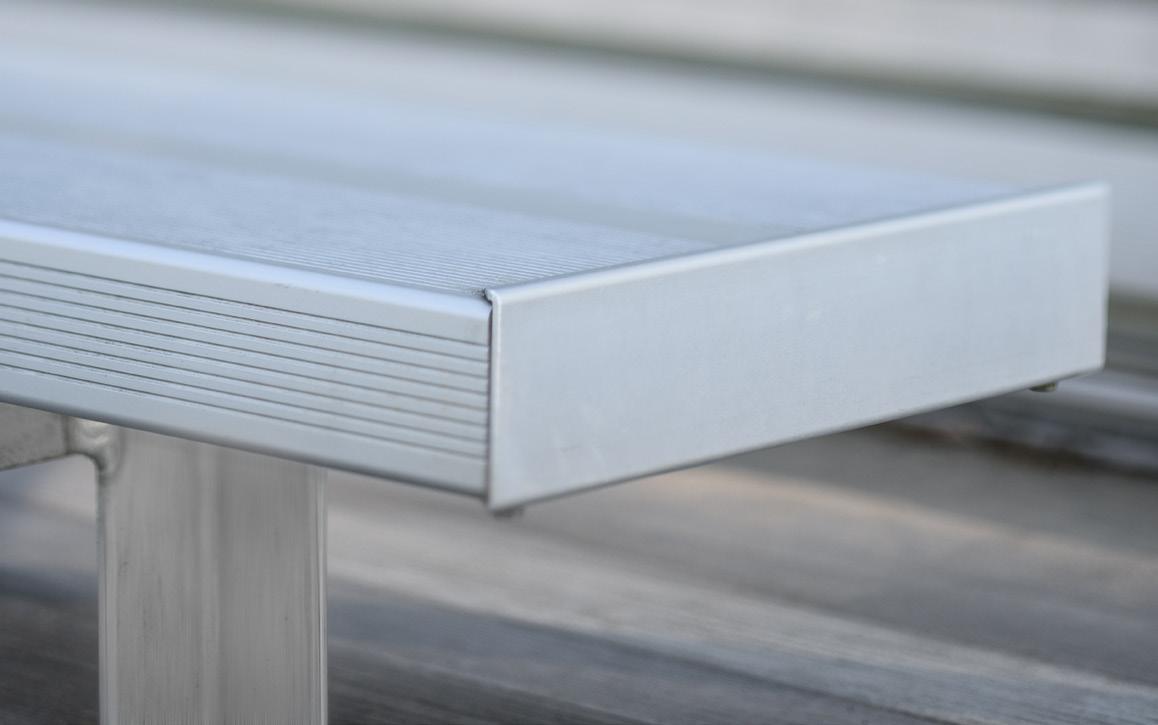
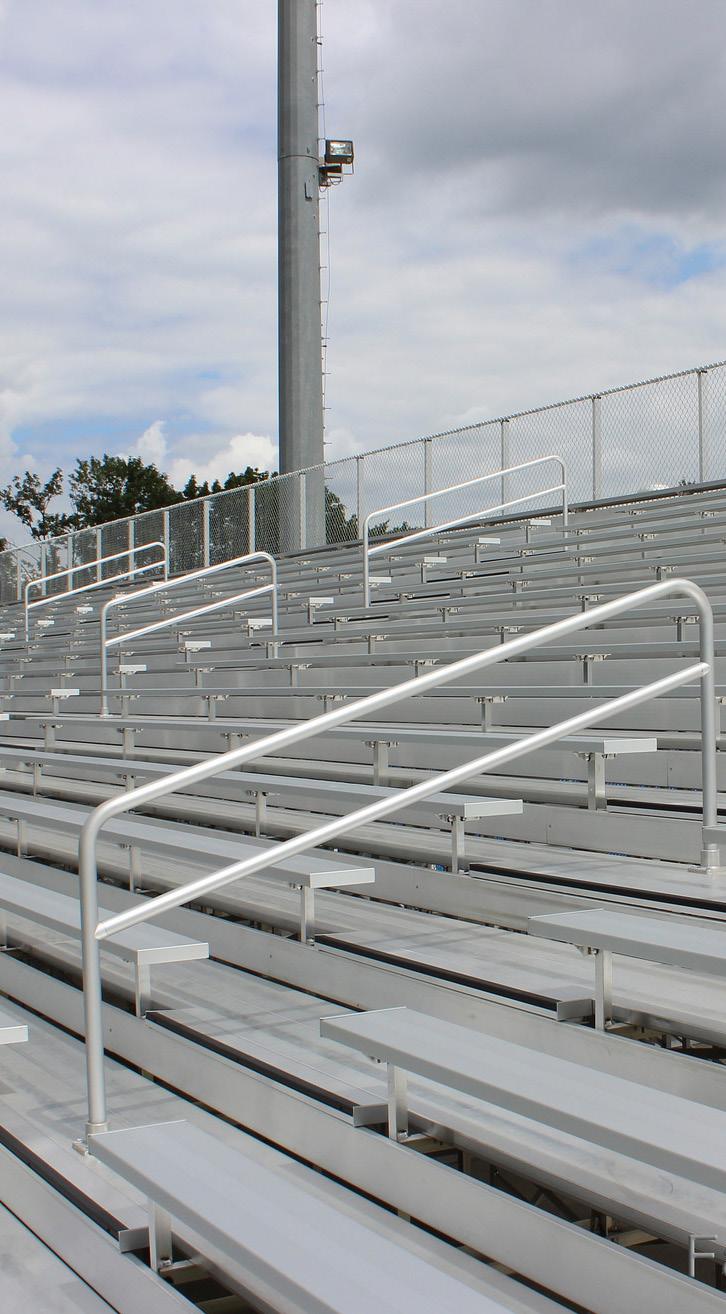
Anodizing is an electrochemical process that converts the surface of aluminum into a decorative, durable, and corrosionresistant anodic oxide finish. This process involves creating a thick, porous oxide layer that fully integrates with the aluminum substrate. Unlike coatings that can flake or peel, the anodized layer becomes part of the aluminum, providing a resilient surface that maintains its integrity even if scratched. The anodized finish has a highly ordered structure that can be further treated for coloring or sealing, offering a range of finish options to suit different needs. Common finishes include satin clear, brite-dip clear, and various colors, tailored to the project's specific requirements and environmental conditions:
• 15-minute satin clear: An economical choice for costconscious projects.
• 30-minute anodize: Standard for inland projects, offering several years of durability.
• 60-minute anodize: Ideal for environments within a mile of saltwater, treatment plants, or other harsh atmospheric conditions.
Benefits of Anodized Finish Aluminum:
• No Staining: The anodized surface resists staining, maintaining a clean look.
• Heat Resistant: Capable of withstanding high temperatures without degrading.
• Easy Maintenance: The smooth surface is easy to clean and maintain.
• Durable: The anodized layer increases the aluminum's hardness and resistance to wear.
• Corrosion Resistant: Highly resistant to corrosion, even in harsh environments.
• Environmentally Friendly: The anodizing process is ecofriendly and extends the aluminum's lifespan.
• Food Safe: Suitable for food contact, making it ideal for kitchen equipment and food storage.
With a life expectancy of 20 to 30 years with proper maintenance, anodized aluminum offers a reliable and long-lasting solution for a wide range of applications.
Hot-Dip Galvanized Steel – Zinc Finish
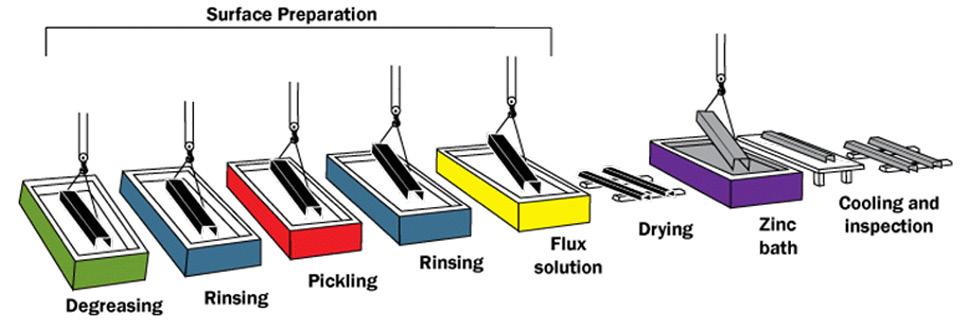
Hot-dip galvanizing (HDG) is the process of dipping fabricated steel into a kettle or vat containing molten zinc. The process is inherently simple which provides a distinct advantage over other corrosion protection methods. While the steel is in the kettle, the iron in the steel metallurgically reacts with the molten zinc to form a tightly-bonded alloy coating that provides superior corrosion protection to steel.7
HDG Process:
The hot-dip galvanizing process consists of three basic steps: 1) surface preparation; 2) galvanizing; and, 3) inspection. Below, is an illustration of these steps:
Benefits of Hot-Dip Galvanizing:
• Lowest initial cost
• Protects steel against corrosion
• Good option for harsh environments
• Low maintenance over life of product
• 25+ year life expectancy
Powder Coated Aluminum
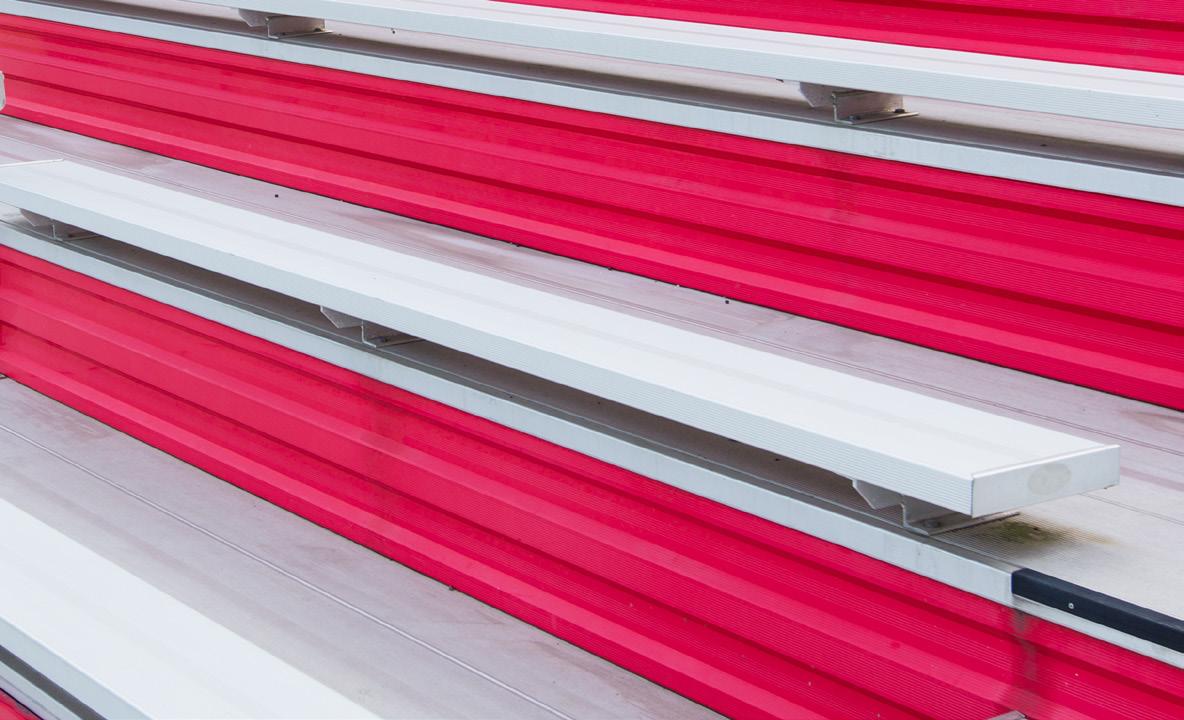
Powder coated aluminum involves pre-treating, then applying a dry powder paint, consisting of finely ground pigment and resin, to an aluminum product by way of electrostatically charging the powder and then spraying it onto the product.
The charged powder particles cling to the electronically ground surface until the powder is heated and fused into a smooth
coating in the curing oven. Examples of powder coated aluminum products are aluminum windows for residential and commercial projects, playground equipment, appliances, and furniture. About 90% of materials that are powder coated are steel, aluminum, or metal.
Benefits of Powder Coating:
• Provides an array of color choices
• Offers protection from harsh environmental conditions, including UV exposure, salt spray, and environmental pollution
• Easy to clean
• More resistant to chipping and cracking than other painted surfaces
• Life expectancy depends on colors and site conditions, consult your supplier for warranty information
Hot Dipped Galvanized surfaces provide durability and minimal maintenance.
Anodized aluminum provides an aesthetic appearance and a greater long-term value.
Powder coating provides a colorful finish that is more durable than paint.
The array of color choices can match the overall stadium design.
Mill Finished Aluminum
PLANNING AND DESIGN
Mill finish refers to the surface or texture of the aluminum after it exits the mill, extrusion die, or drawing process. It usually lacks luster and can have oxidation spots present.
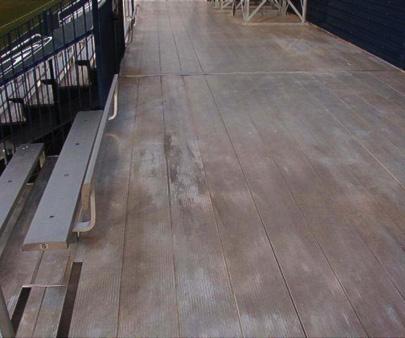
When exposed to the outside environment, a mill finished plank will generally “oxidize” to a uniform gray appearance. If a mill finished plank is used as a foot board, the coating exposed to foot traffic will wear off over time.
The finish would not be uniform as the plank will not experience the same level of foot traffic uniformly across the plank. The oxidation of a mill finish aluminum plank has no negative impact on the strength of the extrusion.
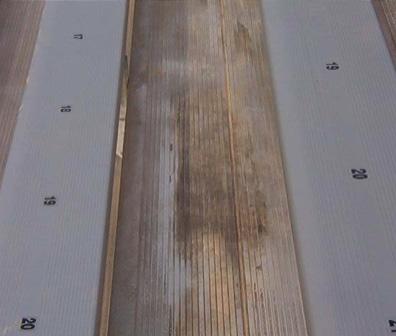
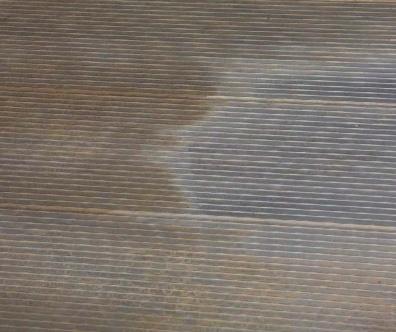
Mill finish aluminum will stain when moisture is trapped against it. This moisture entrapment can occur at several stages of material delivery to a jobsite. The stages include packaging, shipping, and storage at the site. These stains can occur at any time and, depending on the environmental conditions, can develop rapidly. The stains can be erratic and vary in color from light bronze to black to chalky white. The stains will generally blend in overtime and in many cases disappear
almost completely when exposed to the sun.
All aluminum bleacher manufacturers experience the same challenge with regard to mill finish aluminum and have, in the past, attempted to clean the foot boards after the bleacher has been erected. This has proven to be unproductive as the cleaning process makes the deck of the bleacher look worse than prior to the cleaning since the “cleaned” product is splotchy in appearance. For that reason, the industry typically recommends allowing nature to take its course and letting the sun “bleach” the plank to a uniform gray appearance. It is also important to note that staining will occur immediately after the first event due to spillage by the spectators. When water becomes entrapped between warps of the aluminum surface, the aluminum can be stained a chalky white color. This may pose problems for the contractor or distributor, who may be surprised to find out that the mill finish aluminum is no longer bright and shiny, but exhibits a white, chalky stain.
Benefits of Anodized Aluminum:
• Inexpensive
• Low maintenance, but owner must be willing to accept stains and natural appearance of the product
The bitterness of poor quality stays far longer than the sweetness of a low price.
- Ben Franklin
Design Considerations
Maximizing Your Space
In angle frame structures, space underneath the seating is nonexistent in that the framing and cross bracing required for this type of structure utilizes that space.
Good designers are skilled at maximizing space in sites with tight space requirements, and will know how to make adjustments to meet the needs of each facility.
Seating Capacity
As mentioned earlier, seating capacity for the grandstand/bleacher industry is typically identified by 18" per seat. This is an industry standard and not necessarily what customers may view as ideal. In chair seating with armrests, 20" per chair is typically used.
In some states, for high school playoff games, 24" per bench seat is required for seat widths. It is recommended to check the local high school rules association for specific determination of required seat capacity.
ADA Compliance and Accessible Seating
To maintain ADA compliance, it’s essential to provide the required number of wheelchair-accessible spaces based on your stadium's total seating capacity:
• 1 space for 4-25 seats
• 2 spaces for 26-50 seats
• 4 spaces for 51-150 seats
• 5 spaces for 151-300 seats
• 6 spaces for 301-500 seats
• For 501+ seats, 6 spaces plus 1 additional space per 150 seats
Additionally, ensure these accessible seating areas are distributed throughout the bleacher system, offering various viewing angles and making it easier for all attendees to find suitable seats.
This not only enhances accessibility but also improves the overall experience for everyone in the community.
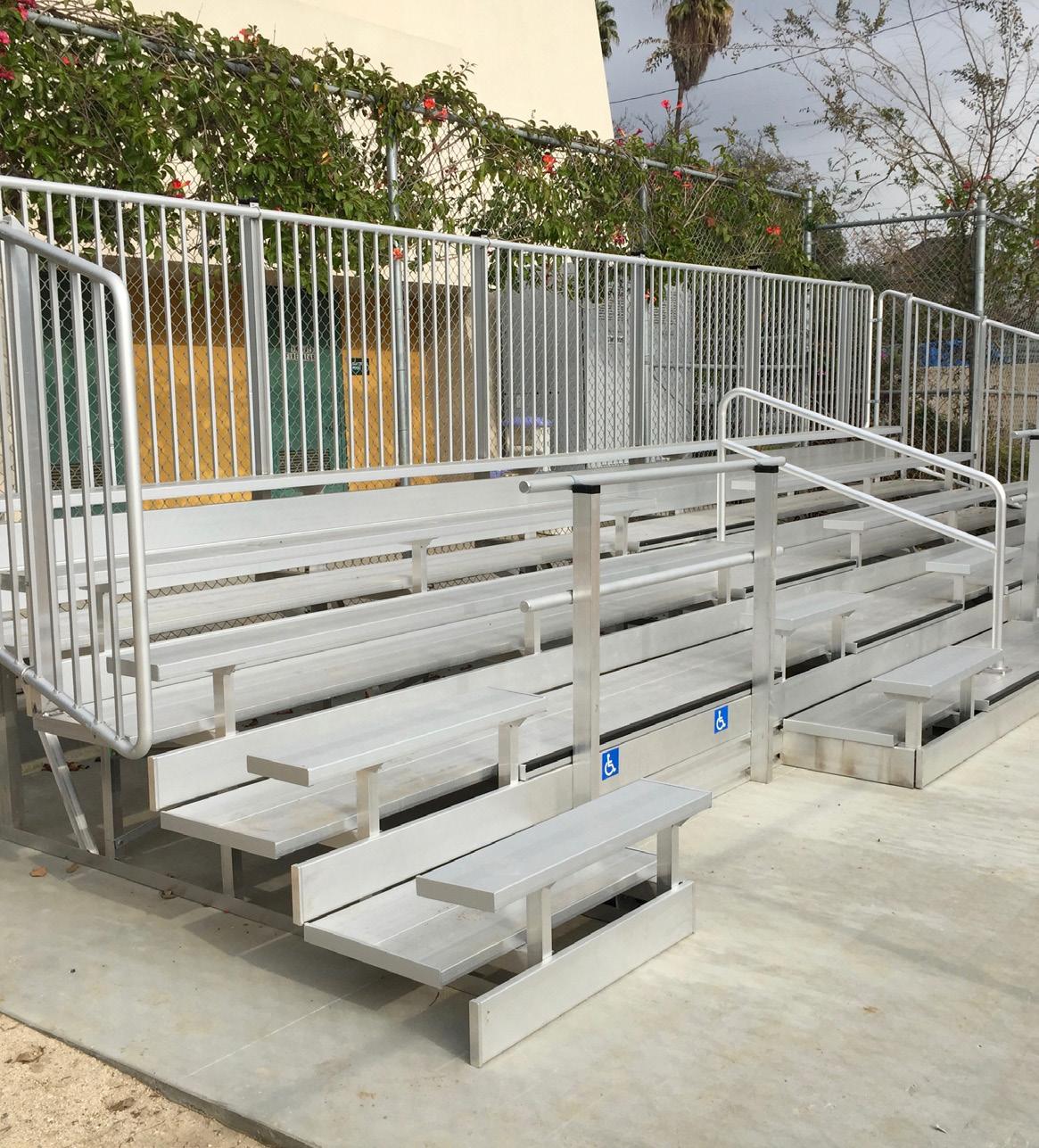
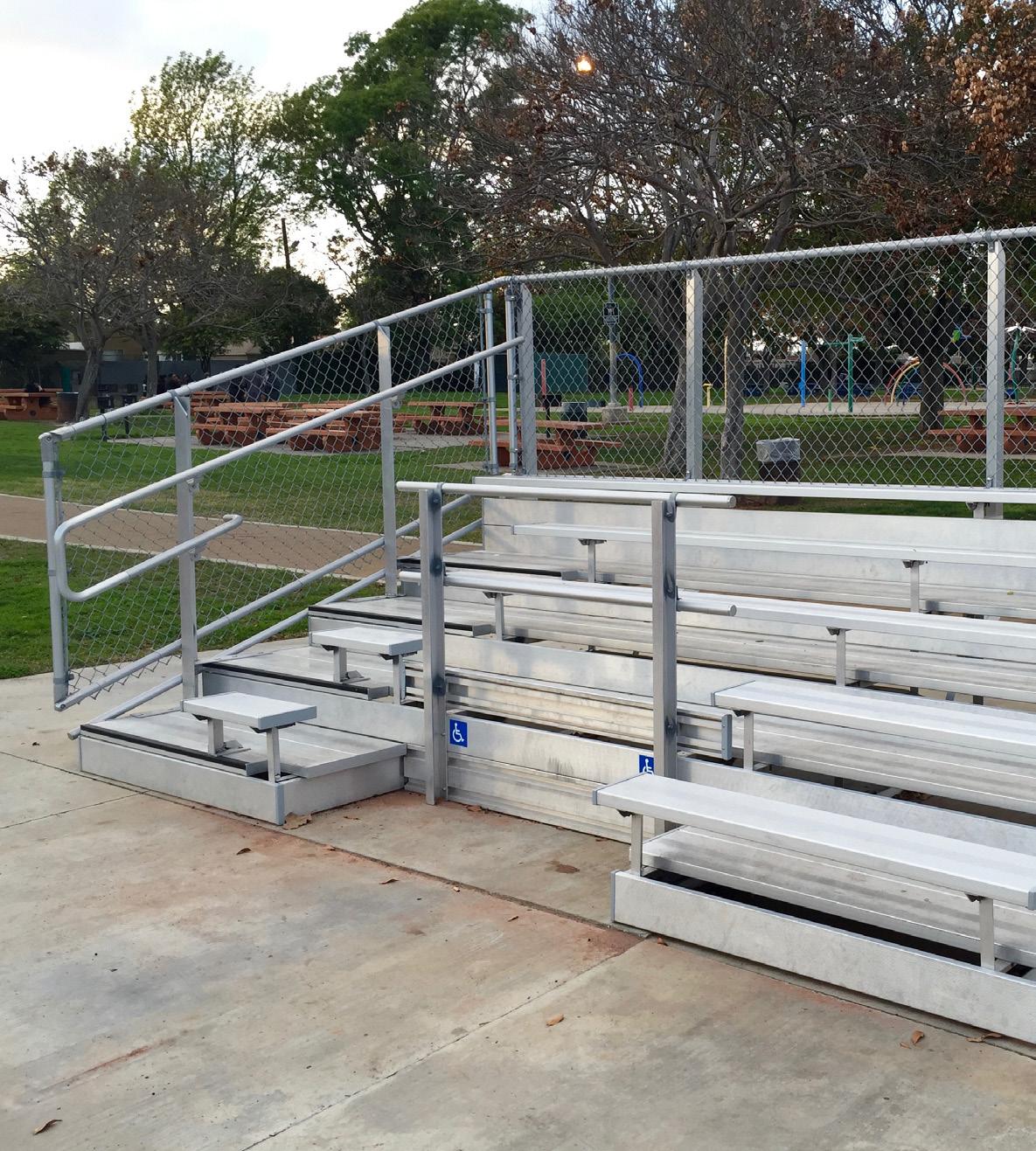
Smaller accessible seating unit at Evergreen Recreation Center, part of the City of LA project.
Close-up of the ADA section at Hillcrest High School.
PLANNING AND DESIGN
Sightline
“Sightline” is a term used in the seating industry to determine the spectator’s ability to see the field of play from their seat over the head of the spectator in the row in front of them. Sightlines can be enhanced through a steeper pitch of the seating rows, lowering the front row elevation, or increasing the distance of the focal point on the field from the actual seating rows. When selecting a bleacher or grandstand, take sightline into consideration when designing your space. Knowledge of the factors involved in sightline allows fans to have the ultimate experience and clear viewing at every venue.
LEED Environmental Stewardship and Recyclability
The LEED™ (Leadership in Energy and Environmental Design) Green Building Rating System promulgated by the U.S. Green Building Council is a voluntary, consensus-based national standard for developing high-performance, sustainable buildings. LEED provides a complete framework for assessing building performance and meeting sustainable site development, water savings, energy efficiency, materials selection, and indoor environmental quality. LEED recognizes achievements and promotes expertise in green building through a comprehensive system offering project certification, professional accreditation, training, and practical resources.
Be sure to let your manufacturer know if LEED certification is a goal. For more information on LEED, check the Resource section in the back of this guide.
Sightlines for (8" x 24") treads
Sightlines for (10" x 24") treads
Aluminum bleachers, like the ones shown here, are often high in recycled content.
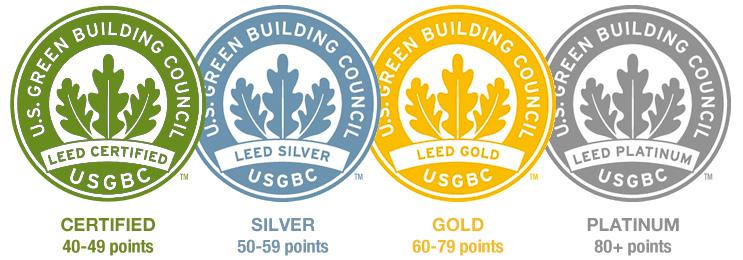
Projects pursuing LEED certification earn points across several areas that address sustainability issues. Based on the number of points achieved, a project receives one of four LEED rating levels.
PLANNING AND DESIGN
Amenities and Accessories
There are a variety of site amenities and accessories that should be considered when planning spectator seating venues to help promote function, comfort, transportation, sanitation, and even gathering spaces and family activities to help retain visitors and spectators. Enhancing the overall user experience can greatly impact visits.
Team Benches
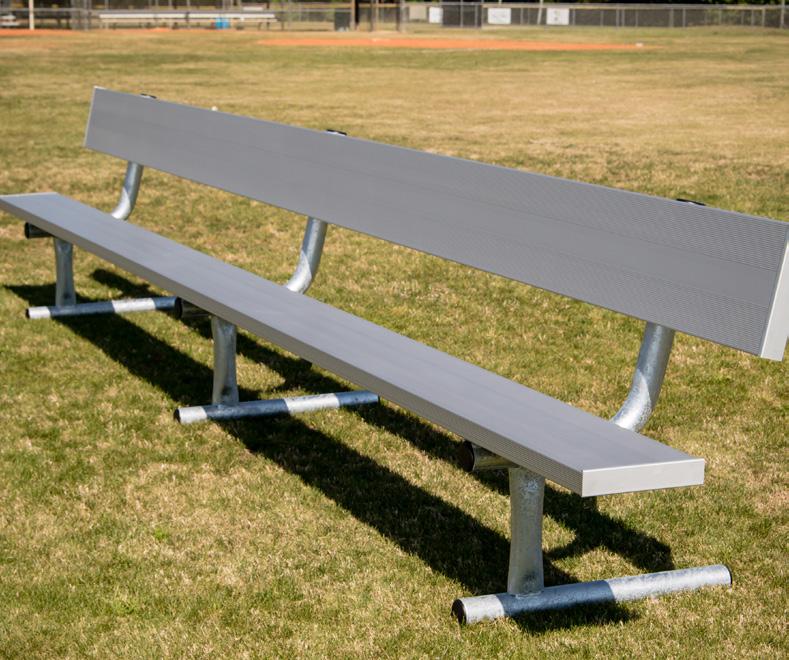
Team benches come with a galvanized or aluminum angle surface mount frame or a galvanized in-ground mount frame. Seats are usually 2" x 10" or 2" x 12" with optional backrest of 7". Standard lengths are 7'-6", 15', and 21' but can be customized as needed.
Press Boxes
Press boxes can be custom designed to meet finish and layout needs. They can include HVAC, camera deck, slider windows, security shutters, interior rooms, and custom exterior colors.
The standard depth is 8' with standard widths beginning with a 12' minimum, and growing in 6' increments. These can also be customized depending on needs and space available. There are two framing options, wood or metal studs, while the exterior siding can be vertical vinyl panels or steel rib panels.
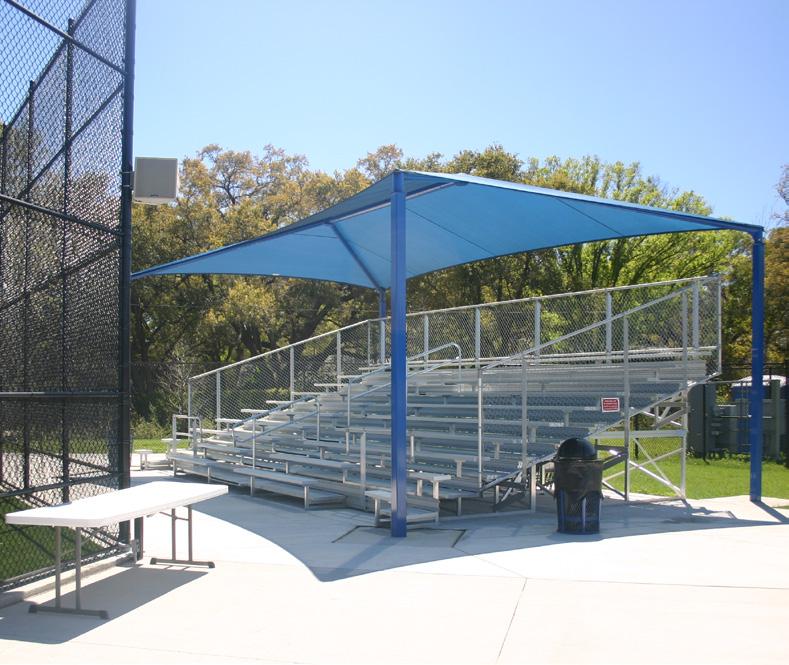
Shade
For games or events held during the day, shade structures can help protect players and attendees from the sun’s rays. There are two types of shade structures found in the grandstand/bleacher industry.
The first one is a self-supported “fabric” shade structure made up of steel support columns and colored fabric shade materials. This structure type is built for sun protection rather than moisture and may need to be removed in extreme weather.
Another shade structure option is designed to be incorporated into the grandstand. It can be “cantilevered,” with columns only at the rear of the stand to maximize sightlines, or it can have columns toward the front of the structure, depending on the seating area depth.
Typically, supports are made of the same steel as the grandstand structure. The “cover” of this system is typically steel “R” panel and can be finished in Galvalume® or Kynar painted finish. The shade and the grandstand together would be required to meet all wind/ snow/live loads for the area.
Team
Bike Racks
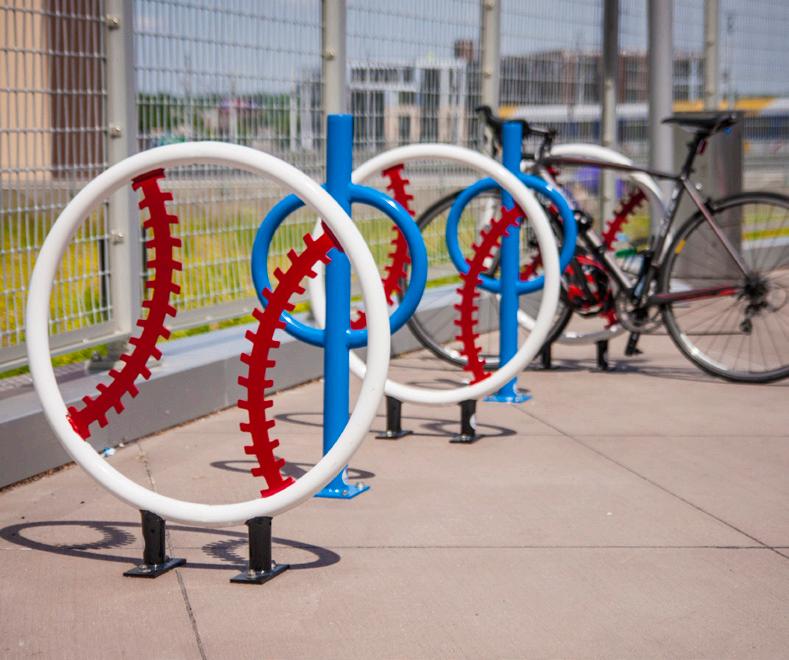
Consider that some attendees may choose to bicycle to the event, so be sure to provide bike racks that provide a way to lock the frame and at least one wheel to the rack. According to a leading bike rack manufacturer, assume 5-10% of attendees will arrive by bike, but this may depend on how bike-friendly the community is. There are also “event racks” available, which can be stored when not in use, and are a great idea if the stadium will host different types of events that have fluctuating interest from bicyclists.
Trash Receptacles
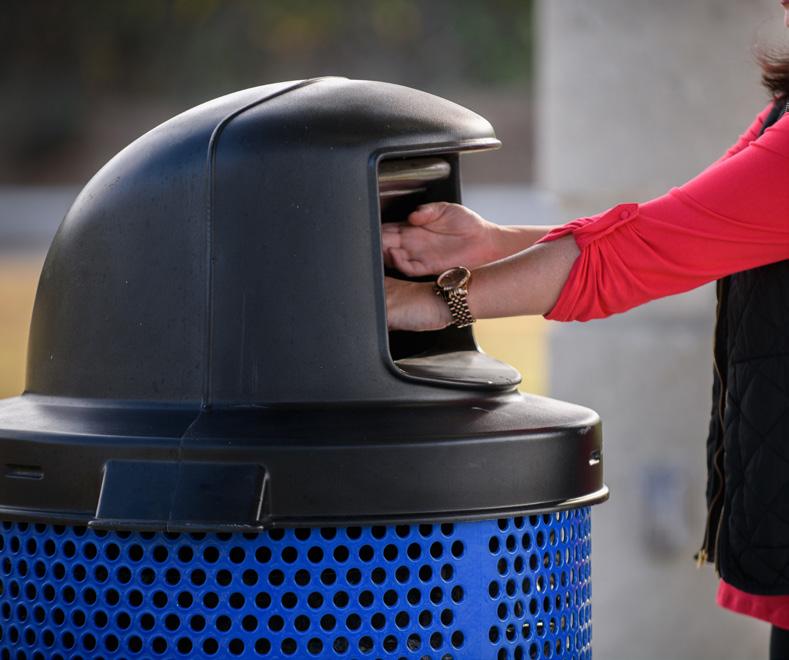
It is critical to offer receptacles for trash and recycling to ensure the facility remains clean and to help reduce the cost of onsite maintenance. Locate them near the entrances to the grandstand/bleachers, and around other areas like concession stands, restrooms, and parking lots.
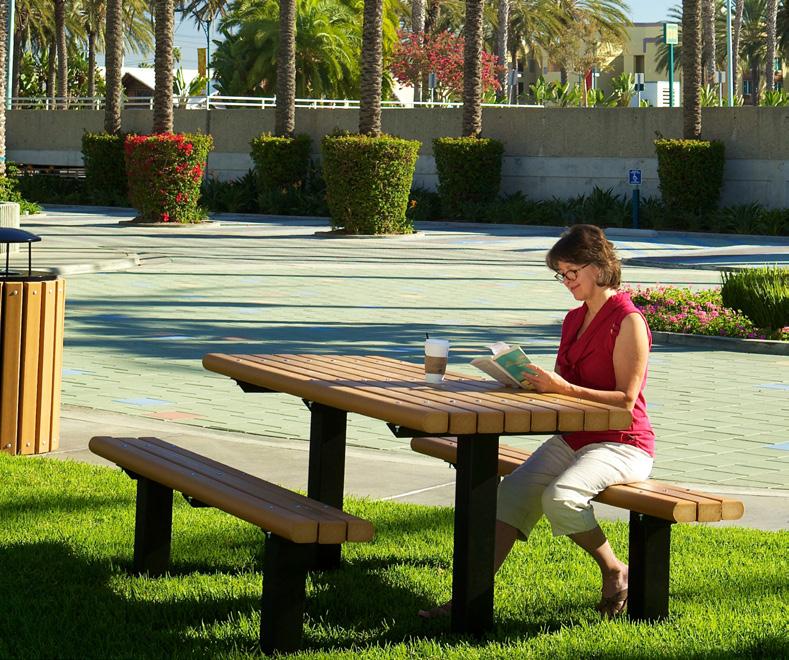
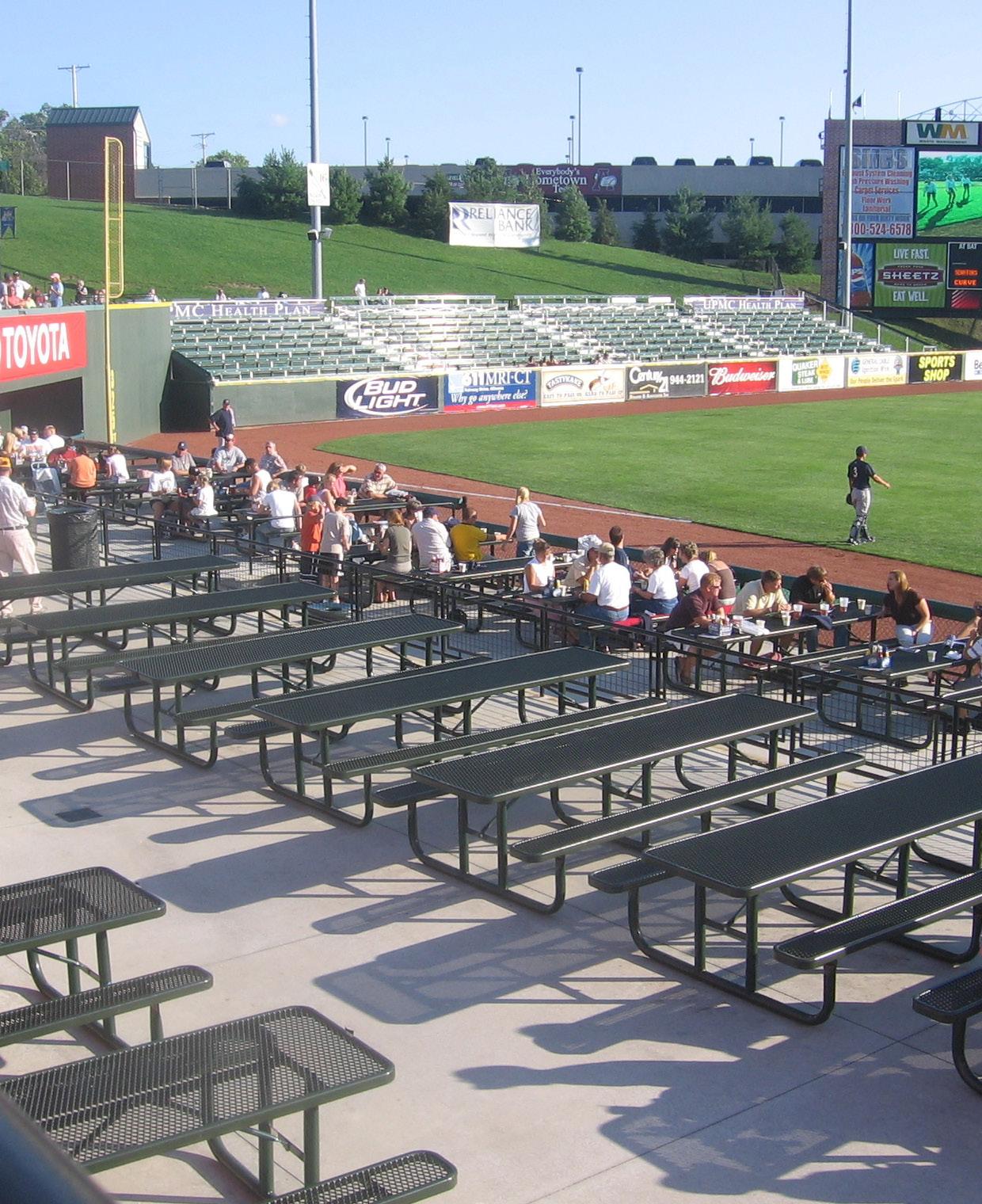
Picnic Tables
For events where concessions will be sold, offering picnic tables ensures that guests have a comfortable place to sit and place the food they are eating, as opposed to walking back to the stands and balancing it on their lap. Picnic tables also help control waste, as people can dump their food waste and recycling in containers located near the picnic tables. Do not forget event attendees who may eat and drink in the grandstands; providing additional waste receptacles near the access/egress points will also help control litter and minimize clean up time after an event.
Scorer’s Table
These tables are specifically designed to accommodate persons keeping score. Depending on the sport, more than one may be needed for each team, and/or in multiple areas along the sidelines.
Benches
Benches can increase accommodation when strategically placed in gathering areas. Consider placing them near restrooms, concession areas, ticket booths, and alongside the playing field to accommodate athletes, coaches, and scorers.
Playgrounds
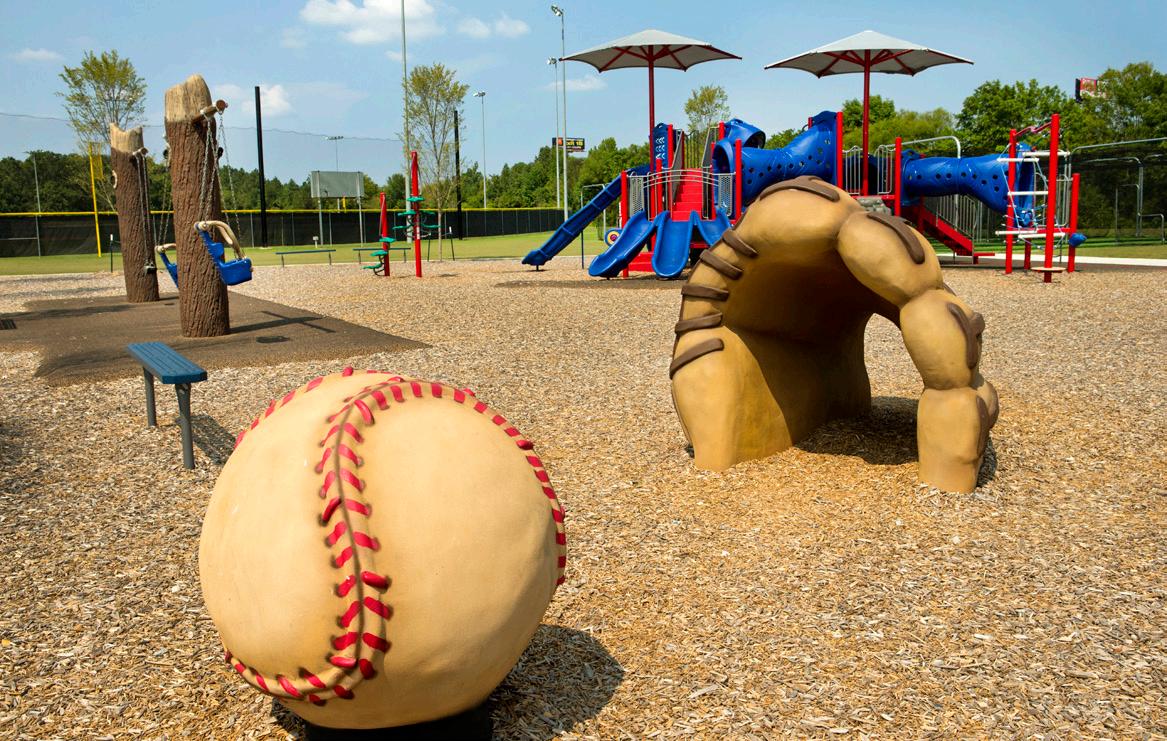
Sporting arenas, especially those that draw large crowds, are increasingly adding fun amenities like playgrounds to help provide additional activities to engage young children. With a variety of theming options available, they can be designed to create an extension of the arena’s theme, sport, or architectural features.
Restrooms
While restrooms can be incorporated into permanent grandstands, they need to be considered in all applications to ensure spectators have access to them while attending events. If permanent restrooms are not an option, temporary facilities can be brought in to handle the crowds. A general rule of thumb is one portable toilet for every 50 people attending the event. Do not forget to consider accessibility when planning these facilities.
Offering trash receptacles for trash and recycling ensures the facilities remain clean.
Offering tables and trash receptacles near concessions helps control litter and post-event maintenance.
PLANNING AND DESIGN
Training Rooms
In today’s competitive team landscapes, great facilities are an expectation. Facilities with great training rooms elevate their appeal, and they can be designed to meet a variety of budgets and room size specifications.
Turf Fields
Synthetic turf systems can help reduce maintenance, increase aesthetic appeal, and optimize the performance of athletes. Look for turf systems made in the USA, in fully integrated manufacturing processes, to help promote quality and serviceability.
Surfacing
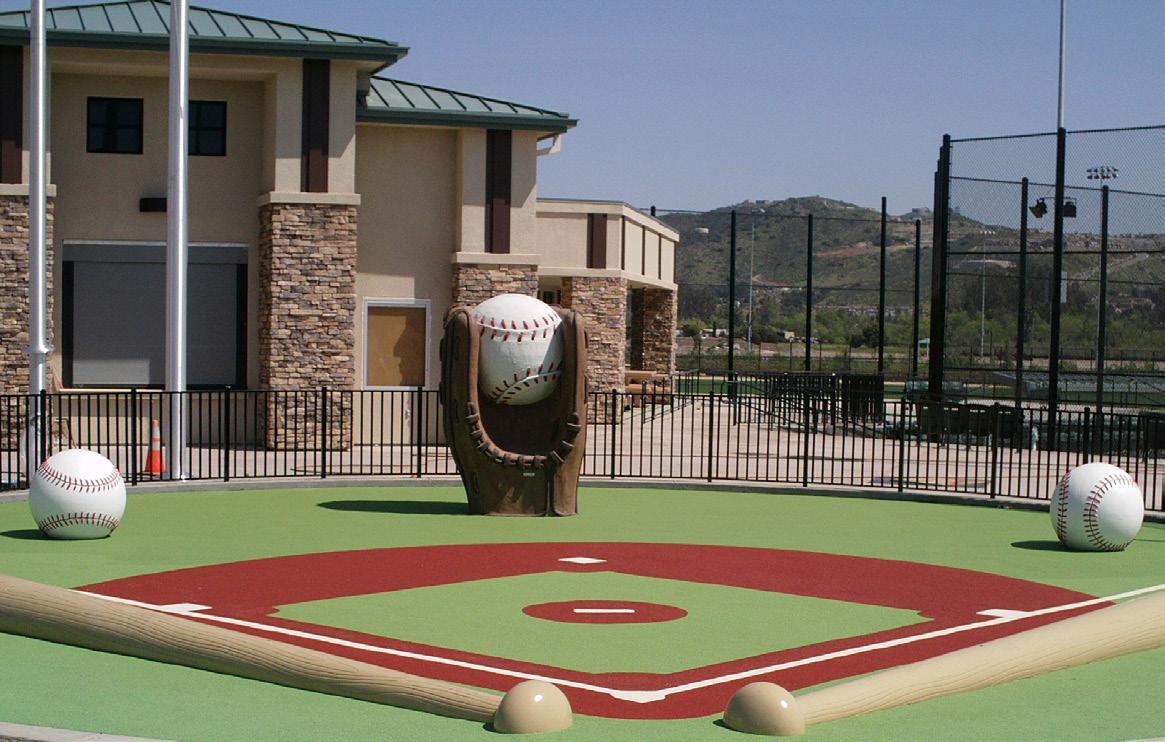
A variety of surfacing options are available for multiple areas throughout the facility. Besides the playing field, surfacing can be used to create recreation areas, or to provide visual cues to assist attendees in finding concessions, eating areas, or
other designated areas. Surfaces can be made of compressed rubber, artificial turf, colored concrete, or other materials.
Concessions
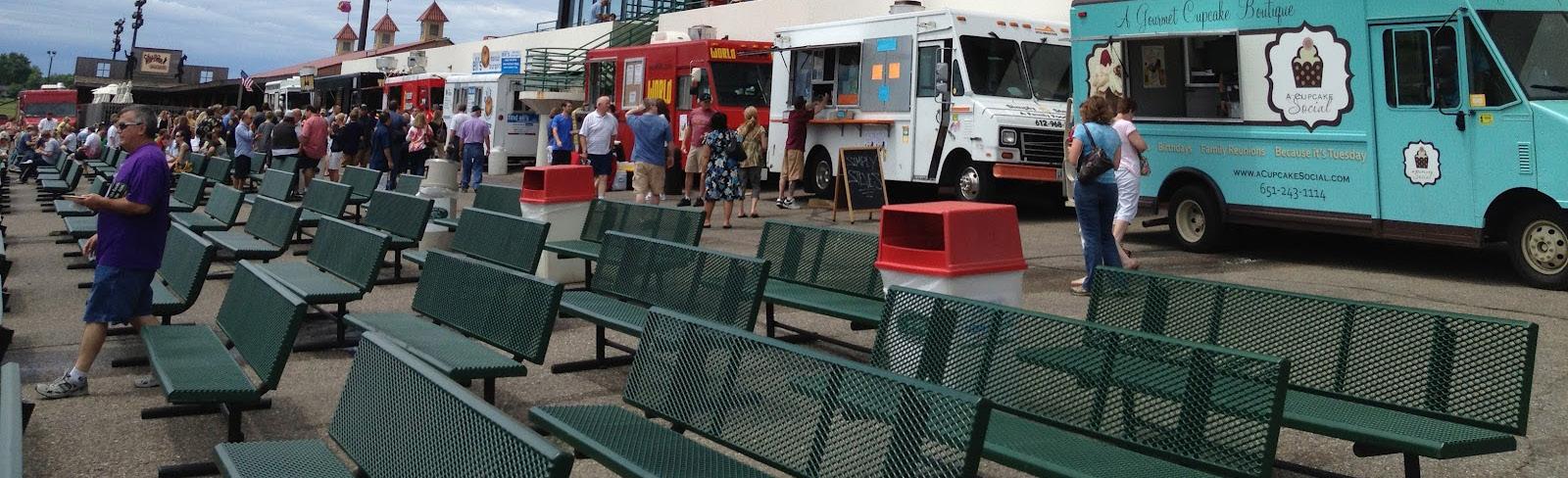
Concession stands are generally included in permanent grandstands. For bleacher facilities, consider allowing licensed vendors and food trucks to provide beverages and nutrition. This can also be a great opportunity for a fundraiser for the school, team, or facility.
In summary, there are a wide variety of spectator seating options, finishes, and considerations in creating a facility that is comfortable, accessible, and enjoyable. Utilizing the checklist following this section will help you to identify the basic needs, provide your manufacturer with an outline of your goals to properly align the budget and timeline, and help to ensure a successful partnership!
Themed play spaces like the one shown can provide additional fun for young fans while encouraging sports participation.
In the photo above, poured rubber surfacing was used to create a themed gathering area just behind the playing field.
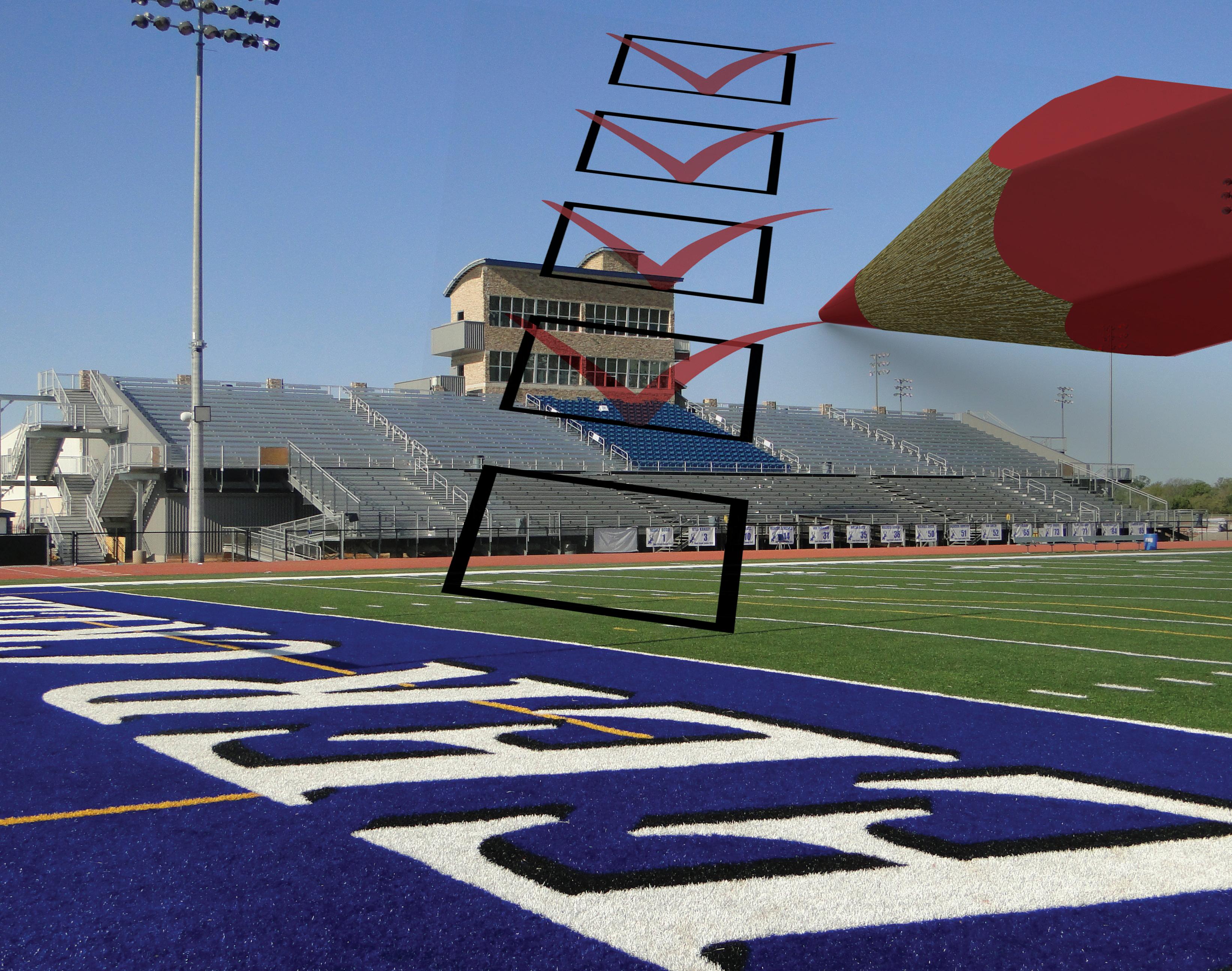
Planning and Design Checklist
When planning for new or replacement bleachers or grandstands, it is a good idea to start with a checklist to help identify needs and priorities. The checklist on the next page is a great place to start, see the Glossary session in the back of the book for definitions of unfamiliar terms. Your bleacher or grandstand manufacturer can be a great asset in this part of the process, as they can assess your site, listen to your
needs, and help design the correct type of structure to meet your particular applications and priorities.
Organizing a committee of stakeholders to help drive the project forward can be very helpful. For larger projects, this may consist of several committees in charge of oversight, planning, steering, funding, logistics, and marketing. Ensure that the public is involved in the process to promote community engagement, buy-in, and long-term support.
PLANNING AND DESIGN
Planning and Design Checklist
We suggest following a basic checklist with key stakeholders before beginning the design process. Be proactive and carefully consider your specific site needs, goals, and the vision for your project.
Site Considerations
How will the facility be used? (List all event/sport types.)
What are the overall dimensions of the site where the facility will be built?
Are there topography issues (hills, uneven ground) that need to be addressed?
What is the bearing capacity of the soil?
Codes and Requirements
What building code has jurisdiction over your project?
NFPA
BOCA
UBC
What labor regulations must be observed?
IBC
Other
Seating Applications
What is the desired seating capacity?
What is the desired footprint (width and depth) of your seating application?
What are the required sightlines for the seating application?
Side setback Rise and run
Front elevation
What is the desired spectator flow pattern for the application?
Front exits
Rear exits
Vomitory/portal exits
What types of seats and/or amenities do your spectators desire?
Seats with back rests
Arm rests
What type of seating system is needed?
Semi-closed deck
Closed deck
How will you meet the ADA requirements in this project?
Access to equal quality of seats usually defined by different price levels
Must be distributed throughout the seating area
Sightlines must not be blocked by standing spectators
What type of understructure is desired for your project?
I-beam grandstand
Angle frame (Requires grade to be flat)
Press Boxes
Is a press box required for your project? Yes No
If yes, then answer the following:
• What size? (Standard Depth is 8' x Increments of 6' in length)
Combustible Construction
Non-Combustible Construction
• Access to roof for filming? Yes No
• Is A/C and/or heating required?
A/C Heat Both
• Are interior partitions required? Yes No
What additional amenities are required?
Concession Area
Restrooms
Shade Structure Trash Receptacles
Recycling Receptacles Bike Racks
Playground
Scorer's Tables
Scoreboard
Stadium chairs
Custom colors
Picnic Tables
Benches
Other
Enhancing the overall user experience can greatly boost engagement and drive repeat visits by attracting new visitors and fostering loyalty among existing ones.
THE PURCHASING PROCESS
Once you have determined the budget, goals of the project, and the overall scope, it is important to take into account some key considerations to support the purchasing process of your grandstand or bleacher.
• Are there any cooperative purchasing contracts you can utilize for this project?
• Are design drawings and specifications required for your project?
• Do you have a list of competent vendors to build your vision?
• Do you want (or need) to allow multiple manufacturers to bid your project?
• Is licensing required by the state for your project?
• What warranty statements, bonding, and past project references should be required from potential suppliers?
• Is the recommended decking system certified “high traction” by the National Floor Safety Institute?
• Does the design meet the current building code for your area? (Typically this is ICC300 for grandstand/bleacher seating).
• Is funding available and in place for your entire project? If not, what steps are needed to secure funding?
The Bid Process
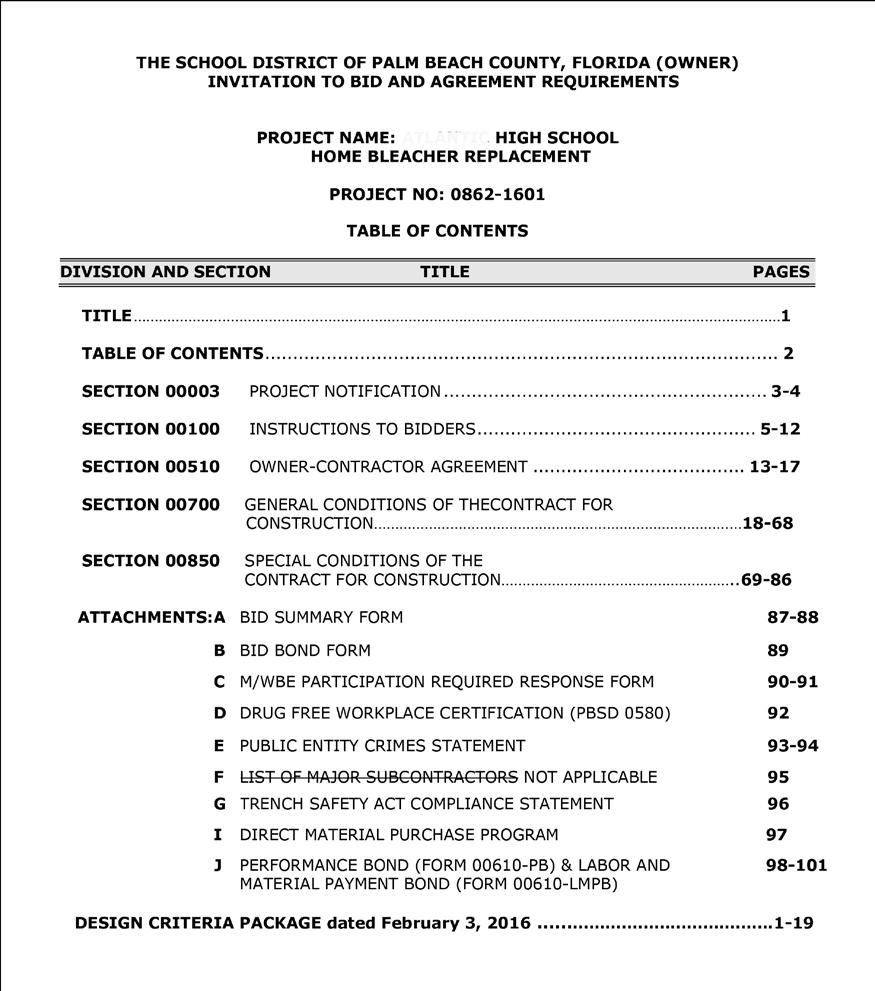
It is important to understand how and why to develop a bid document as it will help ensure the products are received as expected and work is done appropriately. Bid documents are normally created by planning departments, engineering firms, architects, or landscape architects. These documents provide the customer with protection while collecting information from only those bidders that meet the customer expectations. Bid documents provide a process to safely step through the public purchasing procedure.
Customers may utilize bid documents to specify the exact (not limited to) product, site, legal considerations, wages, safety criteria, and payment requirements. This document serves as a guideline to successfully complete the project as per the expectations. Clear and concise bid documents will protect the customer and allow them to define and address any issues that may occur during the process.
The following considerations can help inform the bid process or document:
• Instructions and notice to bidders
• Information required of bidder
• Bonding requirement
• General specifications
• Process to approve/substitute equals
• Location
• Schedule
• Site requirements
• Local permits and licenses required
• Wages and labor expectations
• Installer or product certification/licenses
• Safety considerations
• Changes of scope/work processes
• List of procedures if issues arise
• Conduct a final inspection
• Obtain a copy of manufacturer’s warranty/guarantee
• Testing criteria
• Payment requirements
• Claims and disputes procedures
• Insurance/hold harmless requirements
• Clean-up and waste procedures
• Any other special provisions unique to the project
Procurement
Cooperative purchasing networks can be a helpful resource for excellent services at competitive prices under each contract if it is decided not to send the project out to bid.
These networks offer their members opportunities to save on the products required to fulfill a successful project. They will work on your behalf to secure volume-pricing contracts that meet or exceed expectations. For bleacher projects, Sourcewell ( https:// www.sourcewell-mn.gov/ ) serves K-12 schools, higher educational institutions, local governments, and other eligible non-profit
organizations. Membership is free, providing easy access to competitively solicited contracts and quality products.
Some of the benefits of becoming a member of a cooperative purchasing network include:
• No administrative fees or surcharges assessed to members
• Volume discount pricing on quality products and services
• Bidding on behalf of members eliminates duplication of the local bidding process
• Saves time and the cost of the individual bid process
• Streamlined procurement
• Dedicated vendor representatives who assure satisfaction
• Notifications of additional discounts and savings programs
If chosen, a cooperative network will help overcome budget constraints with pre-negotiated pricing in the contract.
You will be working with pre-vetted, experienced manufacturers and builders that understand the project while eliminating a time-consuming bid process involving potentially inexperienced vendors.
As a result, you will be working with knowledgeable industry leading manufacturers and service providers to complete the project.
The cooperative purchasing network you select will likely conduct the following steps in bidding and awarding contracts for products and services that meet your purchasing needs:
• Will issue Invitations For Bids (IFB) and, as needed, Requests for Proposals (RFP)
• All contracts will be publicly and competitively bid
• Will evaluate sealed bid responses
• Contracts will be awarded to the lowest responsive responsible bidder
INSTALLATION AND MAINTENANCE
Once your bleachers/grandstands order has been placed, it is important that they are installed and maintained properly to ensure longevity and enjoyment for years to come. Consider the following general guidelines in the installation and maintenance of your project and be sure to ask your manufacturer for any additional information required.
Installation Guidelines
It is essential to ensure the products are installed correctly and to specification. This will require communication with the manufacturer throughout the project to ensure compliance and documentation of the work completed. The following recommendations will help protect your investment:
• Ensure that installation is being followed per manufacturer recommendations
• Maintain good files and photographs for the project from inception to finish
• Ensure the project meets all specifications
• Ensure you receive what you paid for and sign-off on it
• Discuss maintenance scheduling and inspection
• Secure all paperwork and documentation
• Obtain a letter of compliance
• Obtain a project-specific warranty
• Conduct routine safety inspections and ADA compliance inspections
• Conduct a final inspection
• Obtain a copy of manufacturer's warranty/guarantee
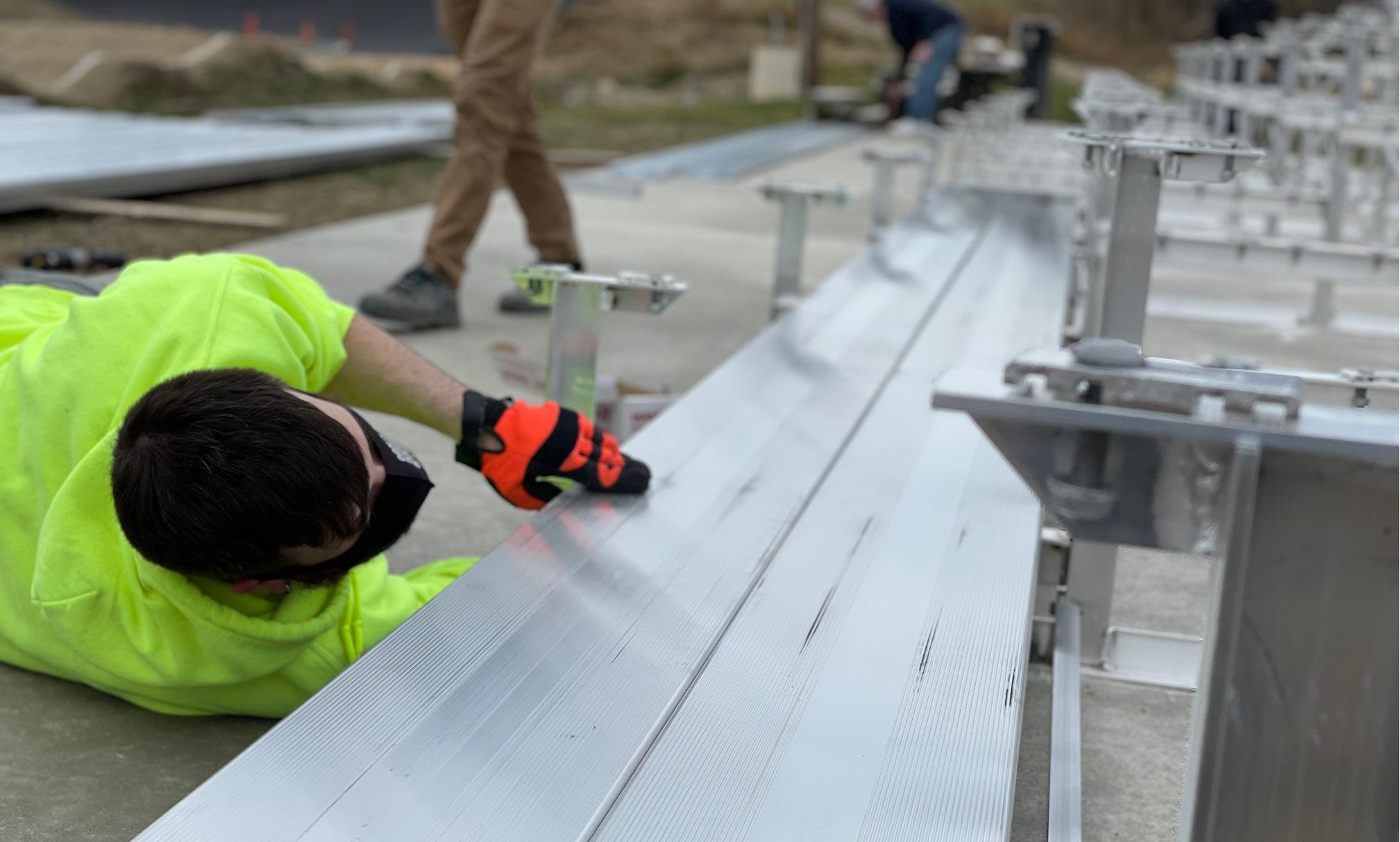
The bleachers and grandstands manufacturer is essential to the installing process to ensure the structure is installed correctly and meets the compliance.
Inspection and Care
Inspection
A general guideline for bleacher inspections is to perform them at least quarterly or seasonally, or if available, to the manufacturer’s specification. The checklist on the next page may provide a good starting place, but before undertaking an inspection and maintenance schedule, it is a good idea to check with your local building inspector to learn which building codes the city follows and if they have specific guidelines in regard to inspections. The frequency may depend on state laws, local ordinances, or the manufacturer’s warranty specifications. According to the ICC300 standards, existing tiered seating shall be maintained structurally sound as follows:
Structural
1. Components or fasteners shall not be broken, damaged, badly deteriorated, or missing.
2. Adequate bearing shall be provided. The structure shall bear uniformly on the floor or ground in a manner so as to safely support the structure.
3. All components and systems shall be in proper working condition.
Durability
Materials used in the construction of outdoor installations shall be weather-resistant. Where wood is used, it shall be naturally durable or preservative-treated wood as defined in the building code or other approved material. Where ferrous metal is used, it shall be protected from corrosion. Fasteners shall consist of aluminum or other approved corrosion-resistant materials or shall be provided with approved corrosion-resistant coatings such as copper or zinc.
Interior Corrosive Environments
Installations located in interior corrosive environments, such as those located in conjunction with indoor pools, shall be corrosion resistant.
Spaces Beneath Seats
Spaces beneath seats or adjacent to seating structures shall comply with the fire code.
Cleaning
For the most part, cleaning will consist of removing any trash, leaves, or debris, and sweeping if necessary to remove smaller particulates and residual dirt. The guidelines below address anodized aluminum, but generally can be used for all metals used in bleacher manufacturing, just be sure that the cleaning agents used are appropriate for the type of metal used.
Maintenance of anodized finish
1. Wash with mild dish soap; rinse with water.
2. If there are stains, try a 50/50 mix of water and “alumabrite,” an acid-based aluminum cleaner commonly used in marine and trailer applications. Always add the acid to water, and be sure to follow instructions on the label. Rinse well.
3. Never use a degreaser or any cleaner that is not suitable for anodized aluminum (see #4) as this will break down the anodized finish and stain it permanently.
4. Always look at the Material Safety Data Sheets (MSDS) when using a cleaner on anodized rail.
Using corrosion-resistant materials in an indoor pool environment is an important consideration.
INSTALLATION AND MAINTENANCE
Inspected By:
STRUCTURAL - GENERAL
Is adequate bearing provided? (The structure must bear uniformly on the floor or ground in a manner so as to safely support the structure )
Are all components and systems in proper working condition?
When walking on the bleachers, do they feel unsafe in any way?
Are there any signs of corrosion or rot on structural supports, floorboards, or seating?
Are materials used in the construction of outdoor installations weather-resistant?
Where wood is used, is it naturally durable or preservative- treated wood?
Are fasteners made of aluminum, copper, zinc, zinc-coated, or other corrosionresistant materials?
If indoor installation, is it corrosionresistant? (Installations located in interior corrosive environments, such as those located in conjunction with indoor pools, shall be corrosion-resistant )
Are components or fasteners broken, damaged, badly deteriorated, or missing?
*DISCLAIMER: NRS does not conduct annual inspections and bears no responsibility for oversights by inspectors. Per ICC-300, tiered seating must undergo yearly evaluation by a qualified individual. This document is for educational and customer use; inspections are solely the customer's responsibility NRS advises engaging a qualified person to complete this form annually NRS assumes no inspection responsibility unless explicitly stated.
GUARDRAILS
Are guardrails present along open-sided walking surfaces, cross aisles, stepped aisles, ramps, and landings of tiered seating areas which are located more than 30 inches above the floor or grade below? Exception: When bleachers are used adjacent to a wall and the space between the wall and the seating is less than 4"
Is the top surface of the guardrail at least 42" above the leading edge of the footboard, seat board, or aisle, whichever is present?
Are guardrails provided for the full width of the aisle where the foot of the aisle is more than 30" above the floor or ground below?
OPENINGS
Are open guardrails constructed of materials such that a 4" diameter sphere cannot pass through any opening?
Are the guardrails and the handrails designed to resist a load of 50 pounds per linear foot (pound per foot) and a single concentrated load of 200pounds, applied in any direction at any direction along the top? (May need the services of an engineer or architect to determine)
Where an opening between the seat board and footboard is located more than 30"above the floor or ground below, is the opening closed with construction such that a 4" diameter sphere cannot pass through? (Exception: Where the uppermost seat is located less than or equal to 55 inches above the floor or ground below )
Case Study: Enhancing Recreation Across a Metropolis
City of LA Project
Los Angeles, founded in 1781, has grown into a major economic and cultural force. The city's Department of Recreation and Parks, established in 1889, has been instrumental in this transformation by developing numerous parks and recreational facilities, fostering community engagement, preserving natural resources, and providing diverse recreational opportunities. Key milestones include the establishment of Griffith Park in 1896, the first municipal Playground Department in 1904, and numerous recreational centers and camps throughout the early 20th century.
In 2022, the City of Los Angeles Department of Recreation and Parks embarked on a significant project to upgrade and enhance recreational facilities across the city. This initiative aimed to replace outdated bleachers with modern, ADA-compliant bleacher systems at 29 different parks and recreation centers. This was part of the city’s broader efforts to improve safety, accessibility, and enjoyment for park patrons.
Upgrading dozens of bleacher systems across 29 different parks and recreation centers, each with unique requirements and constraints, presented a significant challenge. This required a manufacturer with extensive experience and the capability to
design and implement customized solutions tailored to each site's specific needs. The primary objectives of the project were:
• Enhancing Safety and Accessibility: Installing ADA-compliant bleachers to ensure facilities are accessible to all residents, including those with disabilities.
• Modernizing Facilities: Replacing outdated bleachers with new, durable systems to improve the overall experience for park users.
• Supporting Community Engagement: Upgrading facilities to better serve the recreational and social needs of the community, encouraging greater use and participation.
The project scope included designing, manufacturing, and installing various 5-row 15' to 8-row 45' non-elevated bleacher systems with ADA and vertical picket guardrail systems. Each installation was customized to fit the specific layout and requirements of the 29 locations, ensuring compliance with safety and accessibility standards.
The new bleachers were installed at the following locations: Banning, Bogdanovich, Boyle Heights, Branford, Cypress, Glassell
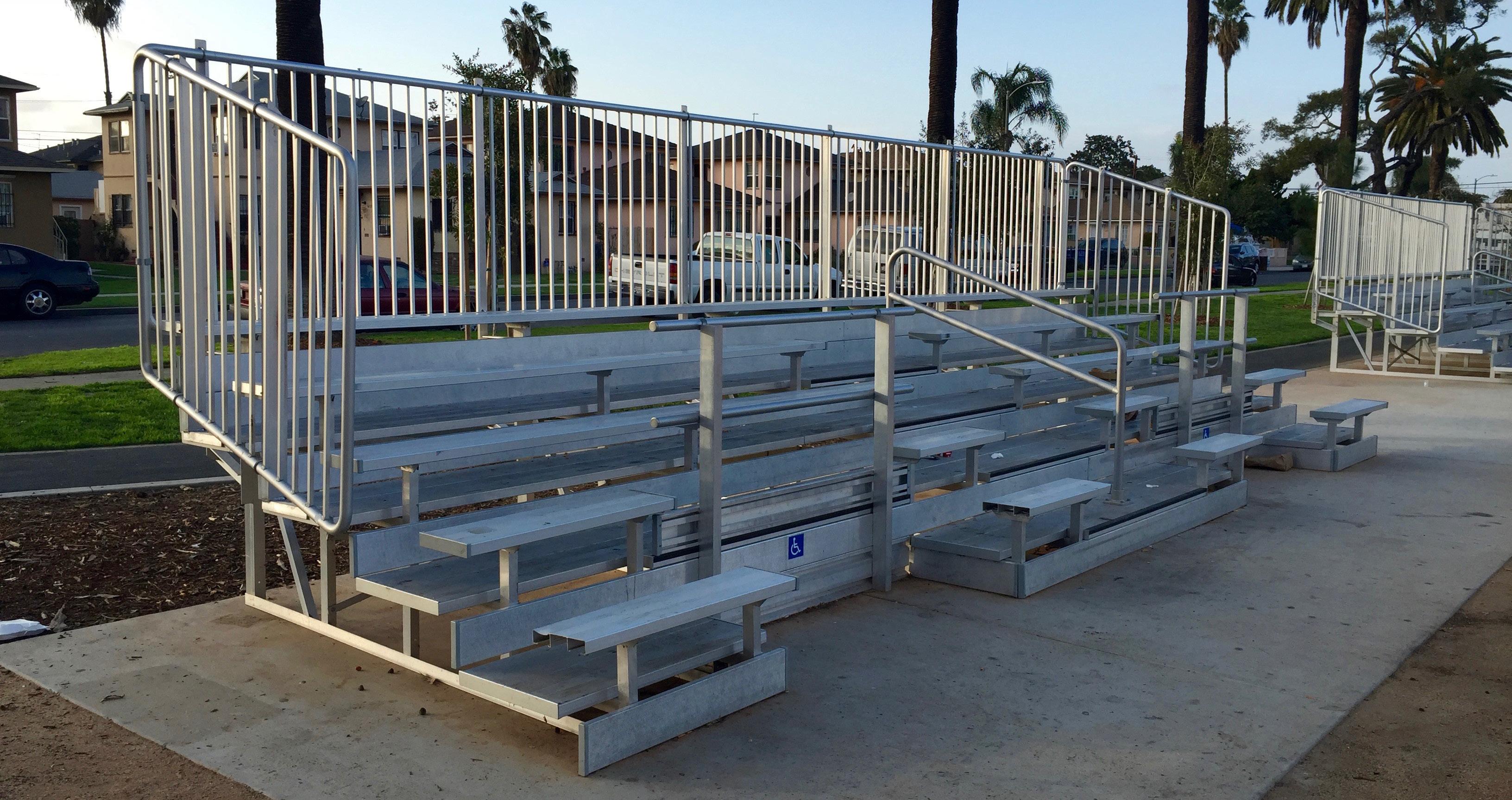
Enhanced, ADA-compliant bleacher systems.
Park, Harbor City, Hollywood Rec Center, Montecito Heights, Mt. Carmel, Oakwood, Pecan Rec Center, Penmar, Queen Anne Rec Center, Ramon Garcia, Richie Valen, Rio de Los Angeles, Rosecrans, Rustic Canyon, Shadow Ranch, Slauson, State St, Stonehurst, Sun Valley, Wabash, West Hills, and Yosemite.
The project was funded under Proposition K, a measure that allocates funds for various recreational improvements throughout the city. Of the total $298,850,000 generated over 30 years, a portion was dedicated to this and other similar projects to enhance parks, recreation facilities, athletic fields, and outdoor improvements. Working with a manufacturer renowned for its expertise in large-scale projects was crucial. Their ability to provide tailored design solutions and manage the installation across varied sites ensured the project's success. The successful completion of this project brought several benefits to the community:
• Improved Accessibility: The new ADA-compliant bleacher systems ensure that all community members, regardless of physical ability, can comfortably enjoy recreational events.
• Enhanced Safety: The modern bleacher systems are safer and more secure, reducing the risk of accidents and injuries.
• Increased Usage: The upgraded facilities have attracted more visitors, fostering greater community engagement and participation in recreational activities.
• Positive Community Impact: By investing in high-quality recreational facilities, the City of Los Angeles has reinforced its commitment to building healthy communities through people, parks, and programs.
The City of Los Angeles Department of Recreation and Parks has made significant strides in enhancing the city’s recreational infrastructure. The 2022 project to replace outdated bleachers with modern, ADA-compliant systems across 29 parks and recreation centers reflects the city’s dedication to safety, accessibility, and community well-being. This initiative not only improves the quality of life for residents but also ensures that Los Angeles remains one of the most livable cities in America, with top-notch recreational facilities that cater to the diverse needs of its population.
In 2022, the City of Los Angeles upgraded recreational facilities at 29 parks with modern, ADA-compliant bleachers, enhancing safety, accessibility, and community engagement across the metropolis.
Case Study: A Study in Design and Community Collaboration
Kiggens Bowl, Vancouver, Canada
A 95 Year Tradition
Kiggins Bowl stands as a cherished symbol of Vancouver's sporting heritage, tracing its roots back to the vision of Mayor JP Kiggins, who, in 1930, transformed a plateau within the newly donated Leverich Park into a thriving athletic complex. By 1933, it had become a sprawling venue capable of accommodating three football fields, surrounded by a half-mile running track and a baseball diamond, nestled within a natural amphitheater. The ambitious construction of the stadium commenced in 1937 and culminated in the grandstand's completion in 1939, a project costing $200,000, equivalent to $4 million today.
Despite its grandeur, Kiggins Bowl faced initial skepticism, with a National Recreation Association Representative branding it a "monstrosity" ill-suited for sporting events. Yet, through perseverance and community support, the stadium underwent successive rounds of renovations. In November 1945, lights were installed, and the bleacher section received an extended roof, transforming the stadium's amenities. However, challenges persisted, such as inadequate drainage, earning the venue the notorious nickname "the soup bowl" by 1967. Yet, the resilience
of the community shone through in April 1968, as a grassroots fundraising effort revitalized the stadium, installing new lights and a modern drainage system.
The evolution of Kiggins Bowl continued into the modern era, marked by milestones such as the installation of artificial turf in the summer of 1997, making it the country's first artificial turf field. Later renovations, including replacing turf in 2008 and renaming the stadium to "Boggs Field" in 2011 in honor of Coach Boggs who led the local high school team the “Trappers” from 1965 to 2000, further cemented its status as a cultural landmark.
“Once I learned about the scale of renovation that was planned, I said, ‘Why don’t we just tear it down and start from scratch,’” Chuck Stiller, Vancouver Public Schools Projects Manager, said, “And the reaction I got was like I had just killed someone’s dog.”
While renovating historic sites like Kiggins Bowl may not always be the most cost-effective solution, it is crucial for preserving community heritage and maintaining cultural landmarks. Following decades of service, Kiggins Bowl recently underwent a monumental transformation, representing the most significant
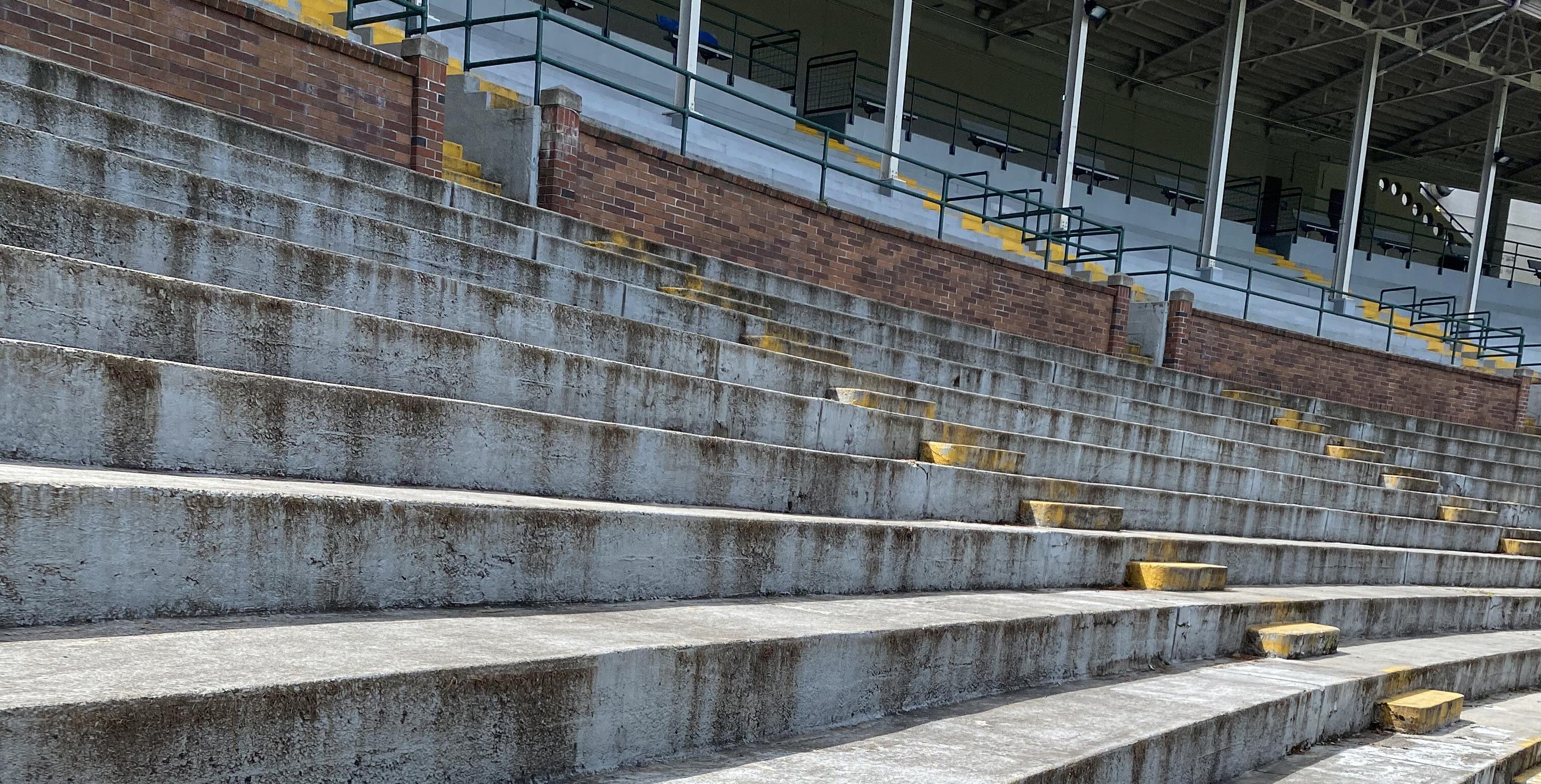
Original Kiggins Bowl before renovation.
Kiggins Bowl, a steadfast symbol of Vancouver's sporting legacy for nearly eight decades, showcases the power of sport to unite communities, inspire generations, and create lasting memories.
renovation in its storied history. Spearheaded by Vancouver Public Schools Projects Manager Chuck Stiller, the renovation project, spanning 15 months from January 2021 to April 2022, aimed to modernize the iconic stadium while preserving its historical charm. Despite initial skepticism about the scale of the renovations, the community rallied behind the project, recognizing the importance of revitalizing this beloved landmark.
The upgrades addressed longstanding deficiencies, offering spectators an enhanced game-day experience with the replacement of concrete seating with aluminum bleachers and even seatbacks on the home side. Key improvements included:
• Replacement of Concrete Seating: Concrete seating was replaced with aluminum bleachers and seatbacks on the home side.
• Additional Press Box: A second press box was added to support the student-led video production program.
• New Field House: The outdated dressing rooms underneath the stadium were replaced with a new field house, providing modern amenities such as nicer bathrooms, a second concession stand, and changing rooms for officials.
• Expanded Athletic Facilities: Installation of a second Athletic Turf field and a 6-lane track expanded the stadium's capabilities, offering enhanced facilities for athletes and community members alike.
• Safety Upgrades: Weatherproofing the concrete throughout the grandstand and seismic upgrades to the stadium roof emphasized the commitment to safety and longevity.
Working with experienced manufacturers who possess the design resources and expertise is crucial for ensuring successful renovation projects. Although renovations in this instance were not a cost-saving measure, they were essential for preserving the historical and cultural significance of Kiggins Bowl.
Kiggins Bowl has stood as a steadfast symbol of Vancouver's sporting legacy for almost eight decades. With each successive renovation and upgrade, Kiggins Bowl has evolved to meet the changing needs of the community while remaining true to its historical roots. The unwavering love and support from the community ensure that Kiggins Bowl will continue to inspire generations and create lasting memories for all who pass through its gates. Through its enduring legacy, Kiggins Bowl serves as a testament to the power of sport to unite communities, inspire generations, and create lasting memories.
Renovated Kiggins Bowl.
Case Study: Modernizing Spaces and Addressing Accessibility
Ranger Stadium at Bobby Franklin Field, Northwest Mississippi Community College
A Cherished Landmark
Northwest Mississippi Community College, home to the renowned MACJC football program, has long been a symbol of athletic prowess and community spirit. Bobby Franklin Field, witness to four national championships and the rise of numerous professional athletes, including NFL Hall of Famer Cortez Kennedy, faced the need for modernization to meet growing demands and ensure inclusivity.
The $5 million renovation project at Bobby Franklin Field addressed critical issues of accessibility, safety, and seating capacity. Key improvements included the replacement of outdated wooden bleachers with durable aluminum seating, the addition of ADA-compliant features, and the construction of a new press box.
Often, such renovations can be a cost-saving effort compared to building new structures, emphasizing the importance of working with a manufacturer well-versed in this type of construction.
Visitor Bleacher Renovations
The visitor bleachers underwent a complete transformation. The outdated wooden structure was replaced with aluminum components, ensuring durability and compliance with modern safety codes. Enhancements included:
• Expanded Seating Capacity: The new aluminum bleachers increased seating capacity to accommodate more fans.
• Safety Features: Vertical picket guardrails were installed to enhance safety.
• Press Box Construction: A new, larger press box was erected to provide better facilities for media coverage and game operations.
Home Bleacher Renovations
On the home side, similar but distinct upgrades were implemented to enhance accessibility and comfort. Key improvements included:
The vaulted angle stadium provides all spectators improved on-field action views so they will not miss any of the excitement during a game.
We are pleased that this stadium has come to fruition. I look forward to much greater event opportunities and use of this new field for our football team, as well as our other sports teams, students, band, and those in the community."
- Dr. Michael J. Heind, Northwest Mississippi Community College President
• ADA-Compliant Features: An aluminum front walkway and ADA seating were introduced to cater to the needs of all attendees.
• Accessibility Enhancements: Custom ramps and steps were constructed to facilitate seamless movement within the bleacher sections.
• Expanded Decking and Platform: The decking and platform were expanded to provide more space and improve safety.
• Safety Compliance: Vertical picket guardrails were installed to further enhance safety and aesthetics.
Successful renovations like these are a testament to the importance of collaborating with experienced manufacturers who possess the design resources and expertise to ensure projects run smoothly and efficiently. This approach not only saves costs but also maximizes the functional and aesthetic outcomes.
“We are pleased that this stadium project has come to fruition. I look forward to much greater event opportunities and use of this new field for our football team, as well as our other sports teams, students, band, and those in the community.” - Northwest President Dr. Michael J. Heindl
The renovated Bobby Franklin Field is now a versatile venue capable of hosting diverse events, from football games to community gatherings, embodying the college's commitment to inclusivity and excellence. The transformation stands as a shining example of the profound impact that strategic renovations can have, setting a benchmark for other institutions to follow.
By embracing innovation and prioritizing inclusivity, Northwest Mississippi Community College has revitalized a cherished landmark, reaffirming its commitment to fostering an environment where excellence thrives, and everyone has a place to call home. Ranger Stadium at Bobby Franklin Field stands as a beacon of inspiration, beckoning all who enter to join in the celebration of sport, camaraderie, and the pursuit of greatness.
The ADA-compliant grandstand seats and custom ramp and steps accommodates people of all abilities.
Case Study: Building Community Pride
John Kerr Field, Trousdale High School
Trousdale County High School embarked on a significant renovation project to rebuild its football stadium, John Kerr Field, addressing safety concerns and enhancing accessibility without additional county funds. This $856,000 project, funded primarily by local donors, aimed to address liability issues, improve safety, and ensure ADA compliance. The renovation was planned to be completed over the summer of 2021, with a tight schedule to ensure the field was ready for the upcoming football season.
Primary Objectives of the Project:
• Enhancing Safety: Addressing critical safety concerns by replacing old, hazardous bleachers with modern, secure systems.
• Improving Accessibility: Ensuring the stadium meets ADA requirements, including installing handrails, reworking ramps, and adding a stairwell and handicapped seats.
• Community Engagement: Leveraging local support and donations to fund and complete the project without additional county money.
The renovation project began with the complete demolition of the old bleachers on both the home and visitor sides of the stadium. This phase commenced immediately after the school's graduation
ceremony on May 22, with an accelerated timeline to start earlier on the visitors' side. The demolition process was expected to last four to five weeks. Despite concerns about potential delays, the project was strategically planned to allow for contingencies, including finding alternate sites for events like the Tobacco Bowl Jamboree if necessary.
A critical aspect of the renovation was ensuring the stadium met ADA requirements. This included installing handrails, reworking ramps on both sides of the bleachers, and adding a stairwell in the middle of the home section. The project also incorporated 20 handicapped seats, increasing accessibility for all spectators. The home side bleachers were expanded from 16 rows to 18, slightly increasing the stadium's capacity. These enhancements were aimed at making the stadium safer for both fans and visitors, addressing the severe liability issues that had plagued the old structure.
Local businesses and citizens played a vital role in the project's success, donating materials and labor. This community support was instrumental in staying within budget and meeting the project deadlines. Despite challenges posed by a wetter-thanusual summer, the construction teams managed to stay on
The community-funded stadium renovation transformed John Kerr Field with modern safety features and enhanced accessibility.
Trousdale County High School transformed John Kerr Field with $856,000 in community-funded renovations, improving safety, ADA compliance, and enhancing the spectator experience.
schedule through early morning starts and efficient project management. By mid-July, the concrete pads were poured, and materials for the new bleachers were delivered. This gave the crews four weeks to finalize the installation before the Tobacco Bowl Jamboree on August 13. The collaborative effort ensured that the stadium would be ready for the home opener on August 27, providing a safe and compliant facility for the school and its supporters.
Importance of Open Communication:
Throughout the project, it was essential to maintain open and honest communication with the manufacturer. Being upfront about budget restrictions and important dates helped ensure the project stayed on track. Choosing a manufacturer that also handled the installation proved to be beneficial, as it streamlined the process and minimized potential issues. Continuous communication between the school and the manufacturer helped avoid surprises at the end, ensuring a smooth and successful renovation.
The renovation of John Kerr Field was a comprehensive project that addressed critical safety and accessibility issues while engaging the local community. Through careful planning, efficient execution, and community support, Trousdale County High School
successfully transformed its football stadium into a modern, ADAcompliant facility. The project improved the spectator experience and highlighted the crucial role of community involvement.
Key Takeaways:
• Community Support: Local donations of materials and labor were crucial to staying within budget.
• Effective Planning: Strategic planning and project management ensured the project stayed on track despite challenges.
• Safety and Accessibility: The renovations significantly improved safety and accessibility, addressing critical liability issues.
• Enhanced Spectator Experience: The new bleachers and additional facilities have enhanced the overall spectator experience.
• Open Communication: Maintaining open and honest communication with the manufacturer about budget restrictions and important dates is crucial for a successful project.
• Comprehensive Services: Working with a manufacturer that also handles installation can streamline the process and minimize potential issues.
Case Study: Updating or Replacing? That is the Question
Grove City High School, Grove City, OH
A Safe Stadium for Everyone
The South-Western City School District is the 6th largest public school district in the State of Ohio covering 119 square miles including urban, suburban, and rural settings. This is one of the most unique districts in the state of Ohio. Grove City High School is one of six high schools in their system. Formerly known as Jackson High School, Grove City High School offers a music program with over 300 wind, percussion, and string musicians, which has received over 30 Grand Champion awards over the last 10 years in the Ohio Music Education Association (OMEA) competitions. In addition, the high school hosts football games throughout the year.
The football bleachers at Grove City High School were 25' high, made out of wood boards, did not meet existing building codes requirements, the concrete foundation supporting the bleacher frames was relatively small in comparison to current
building requirements, the railing was not up to code, and the structure was not accessible. Furthermore, the structure was particularly unstable when at full capacity. South-Western City Schools decided it was time to update the district’s facilities but needed help deciding to either upgrade or replace completely the visitors’ football bleachers structure. They enlisted Schorr Architects, Inc. to help made the decision.
A comparison study was made to gather information on the cost for a new structure versus upgrading the existing one. The district decided to replace the bleacher with a new 2,000 seat structure while the architectural firm developed a cost effective angle frame bleacher assembly solution for the new project. In February 2015 the project was advertised and went to bid. The district hired a contractor that was able to provide them with a turnkey bleacher project. They completed the removal of the original bleachers, the extensive concrete site work, did the landscaping, installed the fencing and railing, and even took care of the electrical site work. They were able
The transformation of the Grove City High School stadium resulted in a destination that is the central location of all community events. Photo courtesy of www.grovecityohio.gov.
Replacing our bleachers was a better investment for us than updating the existing structure. We are happy we did! We are now able to serve our high school as well as the community by hosting events opened to the public while knowing everyone is safe.
- Mark Waller, Director of Facilities
Southwestern City School District Grove City, Ohio
to work around an existing structure behind the bleachers that houses another facility and a nearby a cell tower. The demolition phase started and was complete in February 2015. Weather did not help thanks to heavy snow through the area, as there was a waiting period until the ground thawed and dried out enough to complete the concrete site work.
Today, Grove City High School offers their guests a new 15 row x 235'-6" elevated bleacher, including ADA accessible seating, appropriate entrances and exits, code compliant railing, and a stable and safe environment for everyone to enjoy. With a total net seating capacity of 1,988, the bleacher was shipped in early May 2015 and was completed by early June 2015, ahead of the project deadline. The project was such a success that they have even opened the space to others in the community; for example, for 4th of July weekend the adjacent community will display fireworks and the school has graciously allowed members of the community to use their bleachers to enjoy the view.
Photo courtesy of Farnham Equipment Company.
RESOURCES AND REFERENCES
Resources
Americans with Disabilities Act – http://www.ada.gov/
Americans with Disabilities Act – Design Standards –http://www.ada.gov/2010ADAstandards_index.htm
American Society of Testing and Materials (ASTM) –http://www.astm.org/
American National Standards Institute (ANSI) –https://www.ansi.org/
International Code Council (ICC) – http://www.iccsafe.org/
International Code Council (ICC) – ICC300: Bleachers, Folding and Telescopic Seating, and Grandstands (downloadable file) – http://shop.iccsafe.org/icc-300-2012-bleachers-folding-andtelescopic-seating-and-grandstands-2.html
National Fire Protection Association (NFPA) –NFPA 102: Standard for Grandstands, Folding and Telescopic Seating, Tents, and Membrane Structureshttp://www.nfpa.org/codes-and-standards/documentinformation-pages?mode=code&code=102
National Floor Safety Institute (NFSI) – https://nfsi.org/
Leadership in Energy and Environmental Design (LEED) –http://www.usgbc.org/leed
References
1. Chapin TS. Identifying the real costs and benefits of sports facilities. Florida State University; 2002.
2. Newcomb T. Embracing the horseshoe: A look through centuries of stadium design. Sports Illustrated Magazine; 2015.
3. Spampinato A. World Stadiums. 2014; http://www. worldstadiums.com/stadium_menu/architecture/historic_ stadiums.shtml. Accessed July 28, 2015.
4. Giffen J. History of Grandstands. 2010; http://ezinearticles. com/?History-of-Grandstands&id=4529312. Accessed July 28, 2015.
5. Subramanian N. Design trends of sports stadiums. Stadium Design Trends 2012; http://www.academia. edu/3216566/Design_Trends_in_Sports_Stadiums. Accessed July 22, 2015.
6. Tipping E. State of the industry: Annual report on the managed recreation, sports & fitness industry. Recreation Management. Palatine, IL: CAB Communications, Inc.
7. International Code Council. 2009 International Codes. Section 1002 Definitions 2009; http://publicecodes. cyberregs.com/icod/ifc/2009/icod_ifc_2009_10_sec002. htm. Accessed February 28, 2016.
8. American Galvanizers Association. What is hot-dip galvanizing (HDG)? 2015; http://www.galvanizeit.org/hotdip-galvanizing/what-is-hot-dip-galvanizing-hdg. Accessed July 28, 2015.
Bleachers and grandstands are a gathering space where the community can go to have fun.
GLOSSARY
Definitions
ADA (Americans with Disabilities Act)
The federal law that administrates how facilities provide access and accommodations to persons with any range of disabilities. ADA seating in grandstand applications are the seats specifically designed to accommodate users with mobility devices and to meet building codes and laws.
ASTM (American Society of Testing and Materials)
A standards development organization that serves as an open forum for the development of international standards
Dead Load The constant and fixed load on the structure, including beams, columns, foundation, seats, etc.
Elevated System Designed to increase the height of the spectators’ sitelines. Structures of this type are accessed/ egressed by stairs and ramps.
Hot-dip Galvanizing Used throughout various markets to provide steel with unmatched protection from the ravages of corrosion.
IBC (International Building Code) The primary basis of design. In 2000, the IBC launched a stand-alone subsection of its code in order to clarify issues pertaining specifically to assembly seating in accordance with ASTM guidelines in establishing codes. That document was first released in 2005 and has been updated in 2007 and 2012.
LEED (Leadership in Energy and Environmental Design)
Developed by the non-profit U.S. Green Building Council (USGBC), LEED is a green building certification program which includes a set of rating systems for the design, construction, operation, and maintenance of green buildings, homes, and neighborhoods that aims to help building owners and operators be environmentally responsible and use resources efficiently.
Life Safety Code Also known as NFPA 101, this code is a consensus standard widely adopted in the United States. It is administered, trademarked, copyrighted, and published by the National Fire Protection Association and, like many NFPA documents, is systematically revised on a three-year cycle. Despite its title, the standard is not a legal code, is not published as an instrument of law, and has no statutory authority in its own right. However, it is deliberately crafted
with language suitable for mandatory application to facilitate adoption into law by those empowered to do so. The bulk of the standard addresses those features necessary to minimize danger to life from the effects of fire. The standard does not address the general fire prevention or building construction features that are normally a function of fire prevention codes and building codes.
Live Load The changeable loads on the structure, including people, concessions, supplies, machinery, equipment, etc.
Low Rise Created to comply with the ICC300 codes and allow more rows of seating without the need of aisles or guardrails, the structure has a lower first seat height at 12", a 12" wide seat plank (wider than standard 2" x 10"), and a 6" rise per row.
MSDS (Material Safety Data Sheet) A document that gives detailed information about the nature of a chemical, such as physical and chemical properties, health, safety, fire, and potential environmental hazards. An important component of product stewardship, occupational safety, and health and spillhandling procedures.
NFPA (National Fire Protection Association) issuers of NFPA 102, Standard for Grandstands, Folding and Telescopic Seating, Tents, and Membrane Structures to address life safety concerns for spectator seating, in relation to fires, storm, collapse, and crowd behavior.
NFSI (National Floor Safety Institute) The expert source for testing of walking surfaces. The NFSI tests walking surfaces by determining the Static Coefficient of Friction with a state-ofthe-art variable incidence tribometer.
Permanent Grandstands Also known as I-Beam or Beam and Column Grandstands, permanent grandstands are often recommended for venues of more than 1,200 seats. Permanent grandstands offer the most robust seating options, as well as options for customization and finishing.
Powder Coating The process of applying dry powder paint to a metal product by way of electrostatically charging the powder and then spraying it onto the product. The product is then heated, and the powder turns into a hard, durable colored finish.
SCOF (Static Coefficient of Friction) The amount of required pressure between two surfaces to prevent slippage. Coefficient of Friction is defined as, “The ratio of the force that maintains contact between an object and a surface, and the frictional force that resists the motion of the object.”
Seismic Load Basic concept of earthquake engineering consisting of “earthquake generated agitation” to a structure.
Seating Capacity The number of people who can be seated in a specific space, in terms of both the physical space available, and limitations set by law. The standard width of space required for one person to sit on a bleacher or grandstand is typically identified as 18" per seat. This figure is divided into the length of seat planks in the bleacher to calculate total number of people who can use the bleacher when full. In chair seating with armrests, 20" per chair is typically used to calculate capacity.
Sightline Used to determine the spectator’s ability to see the field of play from their seat over the head of the spectator in the row in front of them.
Slip Index A vague and undefined term used in early standards to define slipperiness of a surface. Replaced by Static Coefficient of Friction.
Standard Building Code A set of rules that specify the minimum standards for constructed objects such as buildings and grandstands. The main purpose of building codes are to protect public health, safety, and general welfare as they relate
to the construction and occupancy of buildings and structures. The building code becomes law of a particular jurisdiction when formally enacted by the appropriate governmental or private authority.
Tip and Roll This system can be tipped up and rolled away for convenient storage when not in use. It is available with 2, 3, and 4 rows, and can be ordered as a low-rise unit.
Transportable Unit An alternative to permanent bleachers that can be hooked to a towing vehicle and moved. It is designed with additional frame bracing to withstand the rigors of movement and is designed for use within a park but no over the road hauling. A transport kit is required, which includes the wheel assembly, tongue assembly, and optional lifting jacks.
UBC (Uniform Building Code) The UBC was first published in 1927 by the International Council of Building Officials to promote public safety and provided standardized requirements for safe construction which would not vary from city to city as had previously been the case. Updated editions of the code were published approximately every three years until 1997, which was the final version of the code. The UBC was replaced in 2000 by the International Building Code.
Vomitory An entrance/exit piercing a bank of seats in an auditorium or stadium that shows people where to exit/enter.
Wind Load The force on a structure arising from the impact of wind on it.
Bleacher Anatomy
GLOSSARY
Plank
First Row Seat Height: 17" 8" Rise Per-Row 24" Run Per-Row Seat Board
Aisle An exit access component that defines and provides a path of travel. All bleacher units, regardless of the number or rows or length, must have vertical aisles with handrails and contrasting nosings to help identify height differential, unless all of the following conditions are meet (in bleachers aisles can be avoided if):
• Seats are without back rests
• Rise per row must not exceed 6"
• Tread depth must not exceed 28"
• Number of rows must not exceed 16"
• The first row seat height is not more than 12"
• Seat boards have a flat continuous surface
• Seat boards must have a minimum width of 11"
• Access/Egress from front row is unobstructed
Backrest Added to bleachers for added comfort, the backrest can be a contoured aluminum extrusion or blow molded plastic to add more comfort to the seating in a grandstand.
Decking All openings between seats and foot planks more than 30" above grade shall have an intermediate construction to reject passage of a 4" sphere. This requires an extra tread plank and riser plank.
End Cap Found at the end of the seat or foot plank to give it a finished look and to protect clothes and skin.
Foot Plank The extrusion where people rest feet while seated. Can be Single or Double Plank. Single Foot Plank measures 2"x10". Double Foot Plank is a term used to describe (2) single foot planks per row for wider access/foot rest.
Guardrail All areas of the bleacher more than 30" above grade must have a 42" high guardrail system that rejects the passage of a 4" sphere. Chain link mesh or vertical picket guardrailing are used to meet this requirement.
Handrail Provided to assist people as they move to higher or lower rows of the bleacher within an aisle.
Rise The difference in elevation between rows of seats.
End Cap
Perimeter
Guardrail
Mid-Aisle
Riser Plank A term used to describe a plank that is mounted vertically under the seat and behind the foot plank to close the opening to meet building and safety codes. Required to close openings under the seat to 4" or less, when occurring at 30" or higher.
Run The distance between the front of a seat plank and the front of the seat plank in the row directly behind it.
Seat Board or Seat Plank The horizontal area of the bleacher where a person sits.
Splice An “internal sleeve” consisting of extruded aluminum used to mate two extruded aluminum planks together past the maximum extruded length within a grandstand. These are used where the grandstand length is greater than the maximum extrusion length to make up the total length of bleacher.
Tread A walking surface of the bleacher.
Vertical Picket Guardrail Attractive aluminum guardrail used to promote safety and help prevent inadvertent falls.
Grabrail
8 row bleacher with aisle, handrail, and contrasting black nosings.
Stadiums and event venues help connect people with places, create community capital, and may provide economic benefit by gathering people around shared interests like sports teams, cultural occasions, and community events.
Make A Stand™: A Practical Planning Guide to Spectator
Seating provides a resource to help promote, advance, and creatively support spectator seating initiatives and infrastructure. Learn more and to request a guidebook at www.playcore.com/ makeastand.
For more information about bleachers and grandstands: 877-762-7563 | www.playcore.com