DISCLAIMER: The statements and opinions expressed herein are those of the individual authors and do not necessarily represent the views of the association, directors or staff and do not constitute an endorsement of the products or featured services. Likewise, the appearance of advertisements, or their identification as members of the MNLA does not constitute an endorsement of their products or featured services.
REPRINT PERMISSION: Reprints of original articles may be granted upon request. Contact info@plantingmontana.org with requests.
PRESIDENT
James Hoiland
Green Up Lawn & Landscape Sprinklers Great Falls, MT
1st VICE PRESIDENT
John Spray
The Good Earth Works Co.
Billings, MT
2nd VICE PRESIDENT
Aaron Mihelish
Garden City Florascaping Missoula, MT
3rd VICE PRESIDENT
Ali Zackheim Gardenwerks Helena, MT
2025 MNLA BOARD
MEMBER-AT-LARGE
Joe Sansone Oldcastle Polson, MT
PAST PRESIDENT
Peter Hiel Gardenwerks Helena, MT
SECRETARY
Pat Appleby
Compost Happens Gardening Florence, MT
EDUCATION
COMMITTEE CHAIR
Kristi Browning, CPP Cashman Nursery Bozeman, MT
NORTHERN ROCKIES TREE SCHOOL CHAIR
Mike Garvey
Garvey’s Urban Forest Billings, MT
EXECUTIVE
DIRECTOR
Gina Albaugh
MNLA
Billings, MT
MT DEPT. OF AG LIAISON
Frank Etzler
MDA Helena, MT
New Certified Plant Professional Members Corner
Welcome New Members!
Mark Andrews, Greenleaf Nursery Co. – Park Hill, OK
Elliott Conrad, Pipilo Native Plants – Charlo, MT
Charlie Kesner, Top Dog Landscaping – Belgrade, MT
During the Summer Tour we hosted the Certified Plant Professional (CPP) Exam and are happy to announce a new CPP. Congratulations to Allison Rognlie of MSU Plant Growth Center & Horticulture Farm!
Special thanks to Cashman Nursery for providing a beautiful space to host the CPP Exam. The next CPP Exam will be offered at the Montana Green Expo on January 6, 2026, in Billings, MT. Registration information for this exam offering can be found in this Leaflet, or on our website: www. plantingmontana.org/certification.
“I grew up gardening and landscaping with my parents from a young age, and our yard was always full of food and color. As I got older, I took my parents’ moderate interest in plants and ran crazy with it – I am now the family ‘plant nerd’ that everyone goes to with gardening questions! I am also extremely passionate about pollinator conservation, habitat protection and restoration, and native plants. Being outdoors around green and growing things has always been what feeds my soul, and I was not wired for an office job. So horticulture ended up being where I thrived!”
Lisa Lafond, Bron & Sons Nursery – Grand Forks, BC
The New Northwest Backyard: Concrete Hardscape Trends Built for Beauty & Montana Toughness
From mountain cabins to city patios, concrete hardscape products are turning heads across Montana – doing more than just holding up lawn chairs. Once the plain gray pad behind the garage, it’s now the backbone of backyard living. Across Montana and the rest of the Northwest, homeowners are reimagining their outdoor spaces as true living areas - comfortable, stylish, and strong enough to handle whatever the seasons throw at them. Whether you’re putting in a new patio in Billings, revamping a lakeside deck near Polson, or breaking ground on your dream retreat in Bozeman, 2026’s hardscape trends are all about blending natural beauty with everyday practicality. Here’s what’s shaping the Northwest’s outdoor living scene - and why concrete continues to be the smart, sustainable, economical and downright beautiful choice.
Nature-Inspired Colors That Belong in the Landscape
The era of plain gray patios has passed. Folks across the Mountain West are embracing warm, earthy tones that look like they belong in the natural scenery of Montana – warm sandstones, weathered copper, and soft mossy gray shades that echo the soil and stone of Montana’s open country. These colors complement everything from rustic log homes to modern timber-frame builds, tying the architecture to the landscape.
A Helena homeowner who replaced her old flagstone with contemporary concrete pavers summed it up nicely: “It still looks natural, but now I don’t worry about tripping or cracking. It’s beautiful and tough.” With today’s advanced coloring systems and UV-stable sealers, these tones stay rich and true, even through years of sun, frost, and heavy use.
Joe Sansone, CPM Oldcastle
Embossments That Feel and Look Nature Made
Stamped and textured concrete is still a favorite, but the designs have evolved to focus on subtle realism. Homeowners are looking for surfaces that look hand-laid without the unevenness or high maintenance of natural stone. Concrete can now convincingly mimic the appearance of slate, basalt, or wood grain, with textures so refined you have to touch them to tell the difference.
Unlike natural stone—which varies in thickness and can shift with frost—concrete pavers are engineered for precision. Every unit fits tight and level, which means a safer, smoother surface that stays put through Montana’s freeze-thaw cycles. It’s a craftsman look with modern consistency and performance baked right in.
Where the Livingroom Meets the Big Sky - A Natural Flow from Inside to Out
Montanans love a good view, and homeowners are designing spaces that make the line between indoors and outdoors almost disappear. Largeformat concrete slabs, clean joint lines, and polished finishes create a seamless flow from the living room to the patio. In newer builds, radiant heat beneath the pavers or porcelain allows for year-round comfort -even on frosty mornings.
Concrete’s uniform structure makes it the perfect surface for this type of transition. Natural stone, while beautiful, often moves and cracks with temperature changes, creating uneven surfaces. Concrete stays flat and functional while maintaining that warm, natural aesthetic. It’s the perfect marriage of form and function for Northwest living.
Sustainability That Works with the Land
Concrete’s reputation for durability is now matched by a growing commitment to sustainability. Permeable pavers allow rainwater to filter through the paver joints, reducing runoff and helping replenish groundwater. Many producers in the Northwest are incorporating recycled aggregates and using lower-carbon cement blends, and newer carbon-cured products actually lock CO2 into the mix during production.
Natural stone may look “green,” but it’s often quarried far from where it’s installed. Locally made concrete pavers reduce transportation emissions and support nearby suppliers - something that resonates with homeowners who care about their footprint and their community.
Integrating Green and Gray: Blending Hardscapes with Plant Design
One of the most exciting design shifts in 2026 is the move toward softer, more organic landscapes that blend hard and soft elements. Homeowners aren’t just laying patios—they’re creating ecosystems. Designers are now crafting smooth transitions between hardscape and softscape zones, using plants, gravel borders, and natural edges to create a flow that feels effortless. Plant selection plays a big role in how these spaces function. Low-water, native species like penstemon, sedum, and blue fescue thrive alongside heat-reflective concrete, cooling the space naturally while softening the look.
Permeable pavements are also helping plant life thrive. They allow roots to breathe and absorb water while keeping walkways dry and safe. In a Missoula project, a permeable paver patio paired with a native plant garden reduced irrigation needs by nearly 40% while keeping stormwater on-site. Another project in Kalispell used modular retaining wall blocks and native shrubs to stabilize a sloped yard - turning a functional fix into a showpiece of sustainable design.
By blending the “green” of the garden with the “gray” of the hardscape, homeowners are creating spaces that feel alive, not artificial - landscapes that look like they grew that way on purpose.
Yards With Purpose: The Rise of Outdoor “Zones”
Backyards are no longer single-purpose patios – they’re entire living environments divided into zones for cooking, dining, and relaxing. Concrete is ideal for this because it adapts easily to each space: smooth and polished for a countertop, textured for a fire pit area, and stained or colored for visual variety.
The consistency of manufactured concrete products also means every section lines up perfectly, no matter how large the space. That uniformity makes it easy to tie multiple areas together while keeping the overall look natural and inviting.
Durability and Long-Term Value
When it comes to longevity, concrete simply outperforms natural stone in the Northwest climate. It’s designed to handle repeated freeze-thaw cycles, heavy snow loads, and long exposure to sun without cracking or flaking. Because every paver or slab is made to exact standards, you get a consistent, stable surface that’s easier to install and maintain. Natural stone, by contrast, can absorb moisture, shift over time, and require frequent re-leveling or sealing. The cost of maintaining stone over ten years often exceeds the upfront savings - especially once labor and repairs are factored in. Concrete delivers the same visual impact for a lower lifetime cost, both in maintenance and in peace of mind.
Cleaning is easy: most homeowners only need a hose and a broom, and resealing every few years keeps surfaces looking fresh. For busy Northwest homeowners who’d rather spend weekends on the trail than scrubbing the patio, that low maintenance is a major plus.
Fire Features and Cold-Weather Comfort
Cool evenings are part of life out here, and fire features are the perfect way to keep the party going. Concrete fire pits and tables have become backyard staples because they’re safe, sturdy, and easy to customize. Unlike natural stone—which can pop or split from heat—concrete is designed to handle temperature swings.
Add built-in seating, lighting, or a simple retaining wall to block the wind, and you’ve got a space that’s just as cozy in November as it is in June. It’s outdoor living, Montana-style.
Retaining Walls with Personality and Purpose
Montana’s rolling terrain calls for creative retaining solutions, and today’s modular wall systems turn those slopes into opportunities. Concrete wall blocks now come in natural textures and tones that mimic fieldstone but install faster and stay sturdier over time. Many homeowners are incorporating planters, tiered gardens, and even built-in benches into their wall designs - functional and beautiful all at once.
A Whitefish landscape contractor recently transformed a steep, eroding hillside into a series of usable terraces with integrated lighting and native wildflowers. “The walls gave structure, and the plants brought it to life,” he said. “Concrete made it possible to do both.”
Concrete Hardscapes Built for the Northwest, Built to Last
Concrete isn’t just the sidewalk or foundation beneath your feet - it’s the foundation of modern Northwest outdoor living. It offers the natural warmth of stone with unmatched consistency, durability, and ease of care. For homeowners, that means lower installation costs, fewer maintenance headaches, and beauty that stands up to both weather and time.
The best outdoor spaces now blend hard and softstrength and life, gray and green. Concrete delivers that harmony better than any other material. It’s sustainable, adaptable, and rooted in the same values as the people who build and live here: practical, enduring, and built for the long haul.
So, whether you’re dreaming of a mountain-view patio, a lakeside fire pit, or a backyard retreat surrounded by native plants and natural stone textures, concrete is the canvas that can bring it all together. Out here, where the landscape writes its own story, concrete helps you build one that lasts.
Note from the Executive Director
Gina Albaugh Executive Director MNLA
Hello MNLA Members!
It’s been an eventful few months since our last Leaflet, and we hope you’ve enjoyed a productive and beautiful season. We enjoyed seeing so many of you at our Summer and Fall events. A big thankyou to everyone who joined us for the Summer Tour and 12th annual golf tournament in Billings and 2nd annual tournament in Bozeman. A round of applause is due to all the volunteers and site hosts who helped make the Summer Tour and golf tournaments such a success. Their enthusiasm and willingness to pitch in are what make these gatherings so memorable. Be sure to check out the event recaps in this Leaflet—you’ll find plenty of great photos and highlights!
As I write this, the long Fall has finally decided to hang up her coat and give way to Winter. It’s starting to feel like Expo season! We have an outstanding lineup of speakers this year. With indepth workshops and 5 seminar tracks ranging from Plant Health to Business Management, there’s something for everyone on your team. A preview of events and speakers is included in this Leaflet; you can find more details and register online: www.plantingmontana. org/montana-green-expo.
We also have a position opening on our Board of Directors. The 3rd VP position will be opening in January, with a new Board Member elected
during our Annual Meeting at the Expo. If you know someone who’s committed to advancing our industry, please consider nominating them (self-nominations are welcome). Contact information for current Board members is listed at the front of this Leaflet—they’re always happy to answer questions about service.
We will once again be offering the Certified Plant Professional exam at the Expo; if you have been considering taking the exam or having your team members gain certification, this is the last chance to do so before the next exam offering in July of 2026. More information is available on our website: www.plantingmontana.org/ certification.
Chapter meetings are also back in full swing in both Billings and Bozeman. Meetings happen monthly (with a few breaks throughout the year) and are open to all industry professionals. These gatherings are a great way to share ideas, talk shop, and grow your local network. If you haven’t attended one yet, now’s a great time to jump in.
As always, I’m just a call or email away if you have questions, ideas, or just want to check in: 406-755-3079, gina@plantingmontana.org. I look forward to seeing you at the Montana Green Expo!
In The Board Room
July 2025 President James Hoiland opened the meeting following the final Strategic Planning session, with all board members present. Gina presented the financials, noting renewal of the bank CD at 3.45%, receipt of $2,228 in interest, delayed grant funds, and steady membership renewals; the financials were approved. Kristi announced she will step down as Education Chair at year-end and recommended Mike Sheets as her replacement, reporting CPP Exam preparations are on track. The Board voted to book the Billings DoubleTree for Expo 2028, discussed ongoing Expo 2026 speaker planning. Summer Tour preparations required lastminute stop changes, but 38 participants are confirmed, with events beginning at Cashman’s. Gina and Corrina continue Executive Director training, are developing a procedures manual. With upcoming focus on the Summer Tour the following day, the meeting concluded with a motion to adjourn.
August 2025 President James Hoiland opened the Zoom meeting, during which the Board approved past minutes and financials, noted rising assets, and received updates on Green Expo 2026 booth payments and ongoing membership renewals. Gina outlined upcoming tasks including the Membership Directory, continued research into marketing platforms, and a recap of the Summer Tour, which—despite last-minute changes—was successful but may benefit from schedule adjustments or shifting to an every-other-year model for financial sustainability. Planning began for the 2026 Tour, with Ali leading and Joe assisting. Chapters reported strong activity, including golf tournaments, workshops, and upcoming events such as Fall Field Day and webinars. Expo 2026 planning continues, with discussion on forming a committee to assist Mike Garvey with future Northern Rocky Tree School events. Gina also reported delays in the Specialty Crop Block Grant contract, launch of a new job board, and challenges with the executive director assistant position, which may require contract action. Strategic Plan follow-up continues, and with no further business, the meeting adjourned.
September 2025 First Vice President John Spray opened the Zoom meeting, where minutes and financials from August 2025 were approved once a quorum formed, and Frank Etzler reported licensing increases
and upcoming state software updates. Gina reviewed insurance—renewed at the same rate—membership renewals, and declining directory ad revenue, prompting a board decision to shift the Membership Directory to digital-only. Chapters reported strong turnout for recent events, including successful golf tournaments, workshops, and the upcoming Fall Field Day. Expo 2026 planning continues with five education tracks, while the Northern Rockies Tree School TPAQ event proceeds with modest registration. Gina updated the board on delayed Specialty Crop Block Grant funds, Expo preparations, and the need to rehire for the Executive Director Assistant role after contract termination. New business included reviewing a credit card processing proposal and approving Expo member-rate registration for the Montana Cut Flower Association. Strategic Planning efforts continue to expand outreach to new member markets and develop CEU opportunities, and the meeting adjourned after finalizing all motions.
October 2025 President James Hoiland opened the Zoom meeting, where the Board approved the September minutes and financials, discussed ongoing delays in grant reimbursements, and addressed declining advertising revenue by voting to move both the Member Directory and the Leaflet to digital-only in 2026 while maintaining current ad rates and engaging advertisers. The Board reviewed scholarship outreach efforts, options for improving membership processes, and potential marketing tools, while noting that website limitations may require future updates. Expo planning continues with booth sales efforts, silent auction preparation, and a keynote focused on AI. Chapter updates highlighted successful events in Billings and Bozeman and continued interest in forming a Missoula chapter. Gina reported continued delays in grant contracts, active Expo sponsor and speaker contracting, progress on hiring an Executive Director Assistant, and new connections with MSU to improve outreach. With strategic planning objectives temporarily paused due to Expo commitments and staffing needs, the meeting concluded with a motion to adjourn.
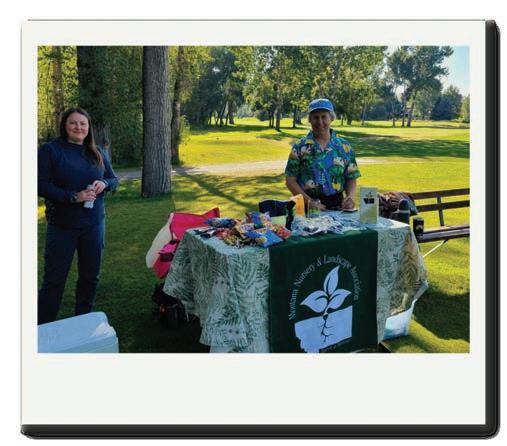
Thank you to all who joined us for the 12th Annual Billings Chapter Golf Tournament and 2 Annual Bozeman Chapter Golf Tournaments this Summer. Both tournaments were successful, with a great time had by all! Huge shout-out to our sponsors and MNLA community for supporting these essential chapter fundraisers. We’re already looking forward to next year!
CONGRATS T TOURNA CONGRATS TO TOURNAMENT
Tvetene Turf booth game & prizes at
Billings Golf Tournament
TO THIS YEAR’S GOLF AMENT CHAMPS! TO THIS YEAR’S GOLF TOURNAMENT CHAMPS!
Bozeman Tournament Champs Rain Bird
Bozeman Committee Members Kristi Browning (l) & Jennifer Weiss (r) at Bozeman Golf Tournament
It was wonderful to see everyone in Bozeman for this year’s Summer Tour! We had a full day of exceptional stops that highlighted the diversity, innovation, and craftsmanship within our industry. From large-scale growing operations to small regenerative farms, high-tech research facilities to thoughtfully designed residential sites, this year’s tour truly offered something for everyone.
The tour started with a wonderful Welcome Dinner, hosted at Cashman Nursery, where guests were treated to an evening surrounded by the rich history and horticultural legacy of a business that has been growing since 1898. The Cashman family—now in their multi-generation stewardship under Jerry, Jan, Mike, and Joe—welcomed attendees into their expansive garden center, showcasing their impressive selection of Northern-grown trees, shrubs, and more than 300 varieties of perennials, bedding plants, and seeds. Conversation flowed easily as guests explored the grounds, learned about the nursery’s full-service landscape division, and connected with some of the 12 Certified Plant Professionals who help make Cashman a trusted resource in the Gallatin Valley. With great food, good company, and a beautifully curated setting, the evening set the perfect tone for the tour ahead.
We kicked off the tour the next morning at Visser Greenhouses, home of the largest annual and perennial variety list in Montana. With over 50 greenhouses and millions of plants shipped each year, Visser has become one of the state’s largest and most influential wholesale operations. Tour attendees walked straight into the height of fall mum production and enjoyed a behind-thescenes look at how their team manages everything from early-season annuals to late-season crops. The scale, efficiency, and precision at Visser set an exciting tone for the day.
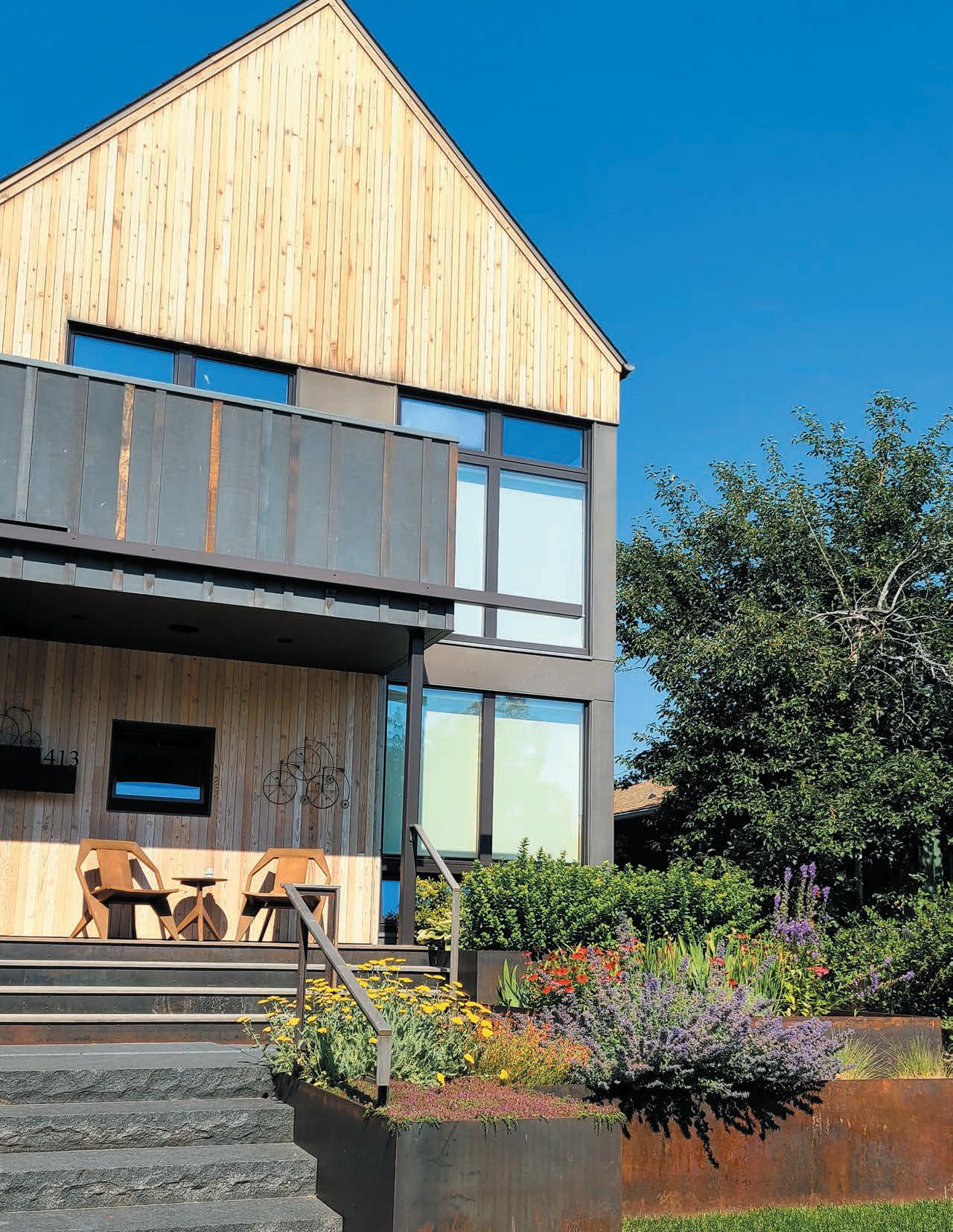
Our next stop brought us into the world of modern residential design with a tour of a project by Design.5 Landscape Architecture. This site showcased a beautifully crafted outdoor living area that included a custom bocce court, an expansive flagstone patio, and custom-built wood walkways and benches. Guests particularly enjoyed the custom metal planters integrated into the front entry staircase—filled with plantings selected for long-term sustainability and visual appeal. Expertly installed by the team at Sprout, the landscape struck a perfect balance between functionality and contemporary style.
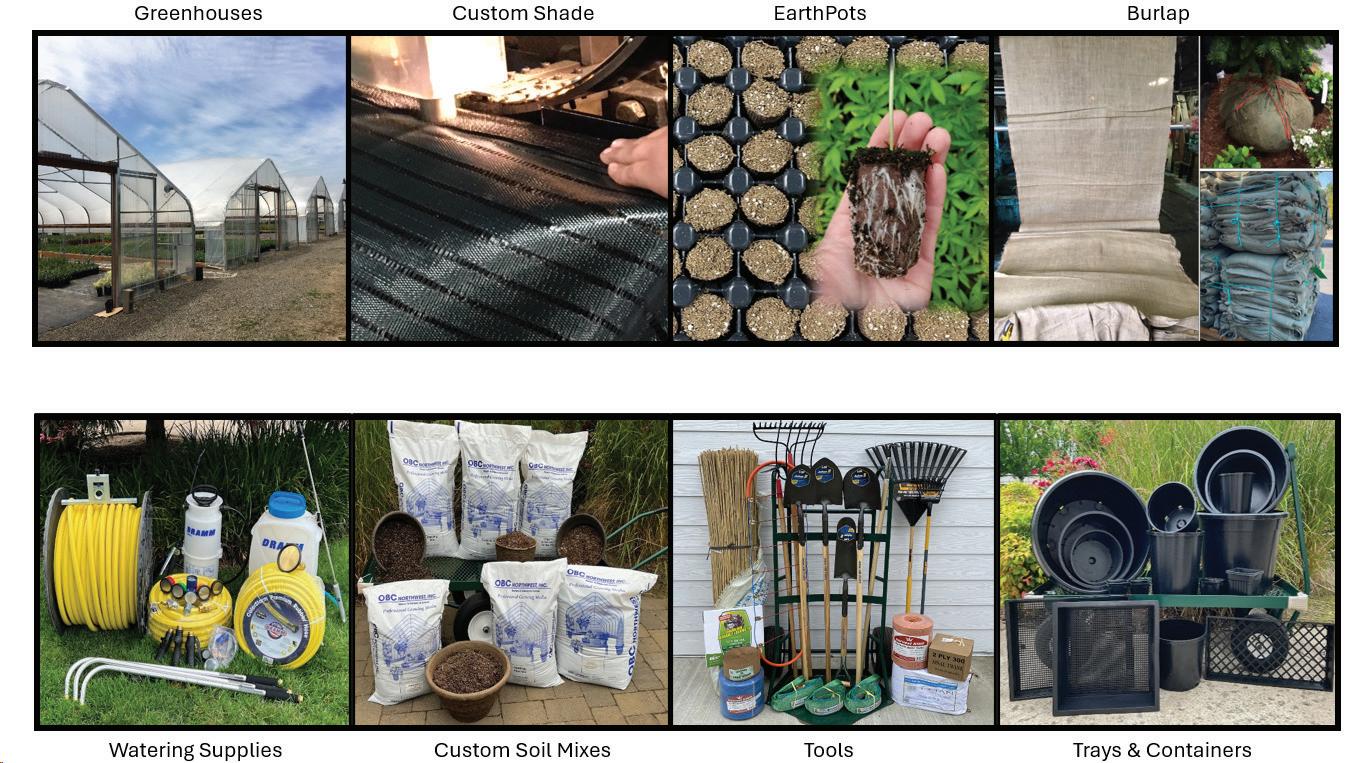
GROWERS: Nursery Containers, Wire Baskets/ Burlap, Horticulture Tools, Corrugated Tree Protectors, Digging Spades, Osmocote Fertilizers, and Grower’s Mixes.
RETAIL: Chemicals, Grass Seed, Tools/Pruners, Water Gardening Supplies, Garden Hoses, Potting Soil, Bagged Mulches, and Cocoa Bean Mulch.
CONTRACTORS: Edging, Fabrics, Low Voltage Lighting, Retaining Wall Systems, Pavers, Bulk Materials, Safety Supplies, and Wheelbarrows.
STOCK: Deciduous Shrubs, Evergreen Shrubs, B&B Trees, Perennials, specialty Conifers, Specialty Deciduous, and Field Direct Trees.
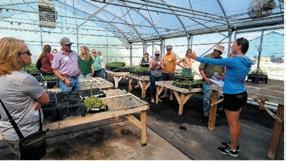
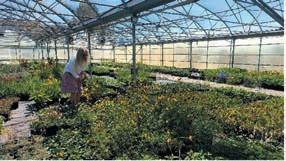
From there, we headed to Westscape Wholesale Nursery, a respected grower of hardy native and ornamental perennials and shrubs. With 12,000 square feet of stateof-the-art greenhouse space and three acres of outdoor production, Westscape is uniquely positioned to meet custom grow requests and supply our region with hardto-source natives. Their team shared their approach to propagating species adapted to the harsh conditions of the Northern Rockies, offering attendees valuable insight into both the challenges and rewards of native plant production.
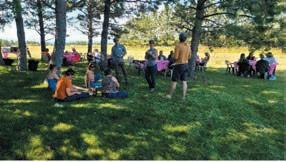
Our next visit provided a more relaxed and personal touch with a stop at Gardening Under the Big Sky. It has been six years since MNLA last toured this tranquil oasis, and guests were delighted by the mature trees, pick-your-own raspberry patch, and charm of the resident chickens. The grounds were thoughtfully prepared for our visit, complete with a picnic lunch area set under shade trees, to plenty of humor about red lava rock not (yet) being back in vogue. This stop was a reminder of all that landscapes can be when they are shaped by years of care and design.
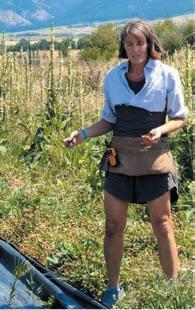
Following that, we traveled north to the Springhill community to tour Rathvinden Farm, a cut flower and vegetable operation dedicated to regenerative agriculture. The owners shared their philosophy of prioritizing whole-system health—using compost, eliminating pesticides, limiting tillage, and encouraging natural predators. Their flowers are highly sought after by local florists, and their CSA offerings provide both specialty vegetables and seasonal bouquets. The farm’s name, inspired by a 500-year-old family farm in County Carlow, Ireland, added a meaningful layer of heritage to an already inspiring location.
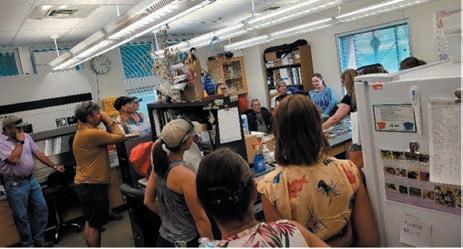
After a breath of fresh country air, we headed into the heart of Montana State University to visit the Schutter Diagnostic Lab, an essential resource for diagnosing plant diseases, insect damage, environmental issues, and herbicide injury. The staff walked us through the entire diagnostic process—from sample submission to identification—and explained how the lab collaborates with extension agents, horticulture professionals, and the general public. Their work plays a critical role in monitoring for new pests and diseases in Montana and provides invaluable support to growers across the state.
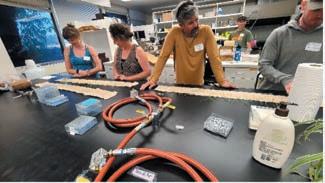
Our next academic stop took us to the Plant Growth Center. While it’s tempting to think of it simply as a greenhouse, the $5.3 million facility is far more than that. With 20 microcomputer-controlled greenhouses, an insect quarantine unit, labs, classrooms, and even an indoor arboretum, researchers are able to grow four to five generations of plants each year—more than double what’s possible outdoors. The tour stopped in one of the coldstorage rooms, used to push plants into dormancy at any time of the year, where we witnessed the red LED lights used to promote optimum photosynthesis. This stop gave attendees a clear sense of how technology and research continue to push horticulture forward.
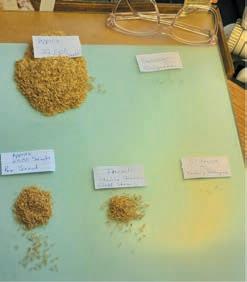
We concluded our tour with a visit to the Montana State Seed Lab at the Marsh Laboratory. This facility performs vital testing services for growers across Montana, the western states, and even Canada. Their work in purity analysis, germination testing, seed identification, and tetrazolium testing ensures accuracy in labeling and helps maintain the integrity of the seed industry. Whether they’re analyzing samples for federal agencies or identifying a burr that hitchhiked home on someone’s sock, their expertise supports everyone from large-scale producers to curious community members.
As the tour wrapped up, we were reminded once again of the incredible breadth of knowledge, passion, and innovation found within our industry. Each stop offered something unique—from production to design, research to regenerative farming—and we’re grateful to all the hosts who generously opened their doors to us. If you’ve never attended the tour before, we warmly encourage you to join us next time (the tour is headed to the Flathead Valley next July)—you’ll learn more than you expect and connect with some of the best people in the industry. We look forward to seeing you on the next adventure!
Over 900 varieties of trees, shrubs, evergreens and perennials.
Plants suited to the rigors of Montana’s climate and synchronized to Montana’s seasons with late spring frosts and early fall freezes.
Timely deliveries to your yard or job site throughout the planting season.
Check inventory availability and order online at:
username: avail password: gnursery
New Finds & Hidden Gems for Montana Gardens
By Mary Thompson EHR Sales Rep | MT, ID & E WA
I’m always amazed at the number of new plant introductions we see each year! The creativity and commitment of plant breeders keep our industry exciting, even if it can sometimes feel overwhelming. Events like the California Spring Trials, Cultivate, and Farwest, just to name a few, are always packed with fresh plants and products to discover.
After nearly 30 years in Montana’s green industry, I’m still learning something new every day.
I’m Mary Thompson, EHR representative for Montana, Idaho, and Eastern Washington. EHR partners with over 400 greenhouse and nursery suppliers, allowing me to connect independent garden centers, growers, and landscapers with highquality plants and hard goods they need to succeed. One of my favorite aspects of this work is helping connect people with just the right plants—whether it’s solving a tricky challenge or finding the perfect fit for a special spot. Montana has its own unique quirks: surprise spring and fall freezes, dramatic microclimates, long winters, short growing seasons, and of course, our ever-persistent deer! But with these challenges come wonderful opportunities to highlight resilient, unique, and beautiful plantings.
In this article, I’d like to share a few exciting new plants coming to market, as well as some overlooked favorites that I believe deserve more attention for their strong performance in our region.
Annual New Finds & Hidden Gems
✥ Dorotheanthus aptenia ‘Golden Cascade’ (Mezzo Golden Cascade)
For those already familiar with Mezzo Trailing Red, you’re going to love this new introduction. Its solid chartreuse succulent foliage makes a striking statement in combination baskets and planters. I
can easily see it being used in place of Lysimachia ‘Goldilocks,’ offering a larger leaf and quicker coverage. Trailing 6-10” makes it a perfect “Spiller” for combo baskets and planters—featuring small red flowers, low maintenance, heat and drought-resistant.
✥ Verbena hortensis ‘Vanessa Bicolor Indigo’
The Vanessa Verbena series has outperformed most other Verbenas in my container combos this summer. This purple-and-white bicolor flower stands out beautifully against dark green foliage, making it a real showstopper. It’s showy with excellent vigor, and it continued to bloom without much deadheading by yours truly! Bred for mildew and heat tolerance, this semitrailing (height 8-12”, spread 14-18”) makes for a great addition to combination baskets, planters, and landscape beds.
✥ Petunia hybrid ‘Headliner Strawberry Picotee’
This new mounding to semitrailing red-eye petunia with a crisp white edge has truly been a standout in my combination planter this summer. Strawberry Picotee was among the first petunias to bloom, producing large, long-lasting flowers that maintained excellent color. This medium-vigor beauty grew with impressive strength, reaching 10–16 inches in height while trailing 20–30 inches over the edge. With its vibrant color contrast and strong performance, Strawberry Picotee would make a striking addition to the ever-popular red, white, and blue color combinations in baskets, planters, and even landscape beds.
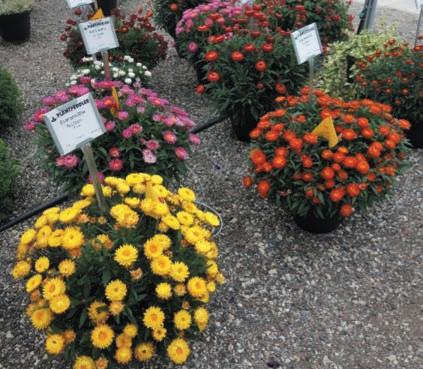
The new Bracteantha series features improved branching with a tight habit and large, vibrant flowers held above dark green foliage. In Montana landscapes, they have shown strong deer resistance, adding reliability in challenging areas. Their tolerance for cooler temperatures makes them a valuable yet often underutilized option for fall programs. Consider adding them to your fall lineup as a durable and attractive alternative to mums, which are highly susceptible to deer browsing. An excellent low-maintenance choice for combination planters, containers, and landscape beds.
Perennial New Finds & Hidden Gems
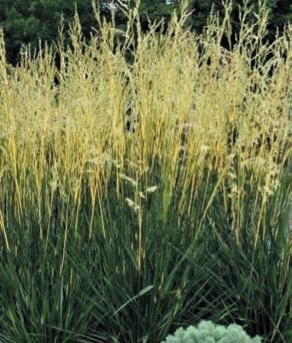
✥ Festuca arundinacea ‘Glow Sticks’
This new introduction really caught my attention at the Farwest Show in Oregon, and it ended up taking home the ‘Best in Show’ award. Its bright yellow, wheat-like flower spikes stand tall above deep green foliage, creating great contrast and interest. What I love most is how versatile it is for our region: hardy to Zone 3, drought- and disease-resistant, and providing year-round appeal. With a mounding, slightly spreading habit (12–18 inches tall) and flower stalks reaching 24–30 inches, I can see this being a strong option for borders, mixed beds, or as a striking accent in the landscape.
Another exciting perennial introduction for 2026 is a fabulous cherry red–maroon sedum. Many of you are already familiar with the popular yellow form, Angelina’s Teacup—well, now it has a stunning brunette sister! Red Angelina is reported to hold its rich color for up to 10 months of the year and is hardy to Zone 3. Availability will be limited at first, but this is definitely one to keep on your radar for the future.
✥ Andropogon gerardii ‘Blackhawks’ (Blackhawks Big Bluestem) Named the 2026 Perennial Plant of the Year by the Perennial Plant Association, and it’s easy to see why. This hardy (Zone 3), deerresistant grass starts the season with deep green foliage, shifts to a bronzy-purple by late summer, and finishes nearly black in the fall. Reaching about 5 feet tall and 2 feet wide, it’s a true late-summer showstopper that I can easily picture making a bold statement in Montana landscapes.
Tree & Shrub New Finds & Hidden Gems
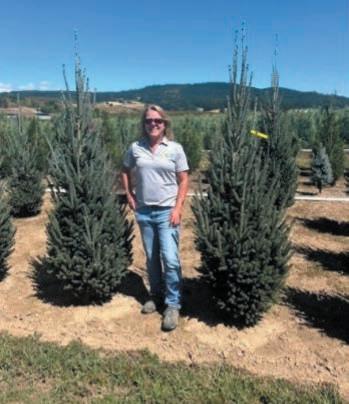
✥ Picea glauca ‘Montrose Spire’ This columnar white spruce was designed for the Montana landscape. Reaching about 25’ tall and 6’ wide, this hardy Zone 3 evergreen thrives in full sun and is ideal for those narrow spots or when customers need a natural screen without taking up too much real estate. Its tight, upright branching structure helps it handle our heavy snow loads. The green foliage with a bluish cast looks fresh year-round, and the surprise of purple cones adds that “wow” factor gardeners love.
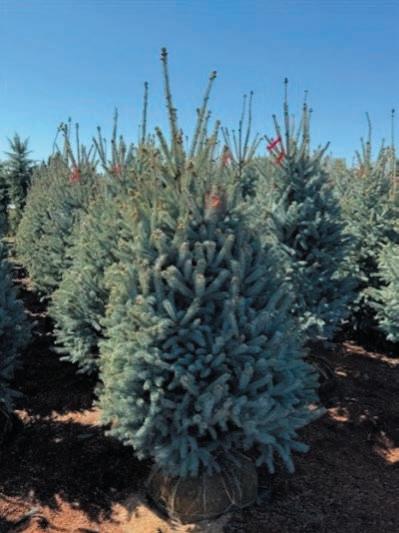
✥ Picea glauca densata ‘Whiskey Blue Hills’ If you’re looking for something a little different than the traditional Blue Spruce, this one is worth a serious look. This fast-growing, blue selection of Black Hills Spruce reaches about 25’ tall and 15’ wide, and it’s tough enough to handle our winters with cold hardiness down to Zone 3. Its consistent powdery-blue color, paired with a naturally dense, pyramidal form, makes it a standout. Plant it in full sun and you’ve got year-round interest—whether you use it as a striking specimen or group it together for a bold screen.
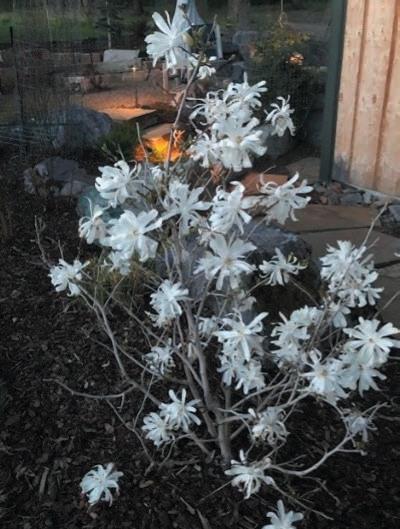
This may not be a new introduction, but for me, they’re true “hidden gems” that actually perform well here in Montana. Both are hardy to Zone 4 and reach 10–15 feet tall by about 12 feet wide, with wonderfully fragrant early spring flowers (Royal Star with white blooms and Leonard Messel with pinkish blooms). Deer usually pass them by, and they’re available in both single-stem tree form or as a multistem shrub. Too often, these are overlooked, but they deserve a spot in our Montana landscapes. I’d encourage you to give them a try!
I’m grateful for the opportunity to share a few of the standouts, both new introductions and hidden gems, that caught my eye for our Montana landscapes. We’re lucky to work in an industry with such a wide plant palette, and I’ll admit, it wasn’t easy to narrow down the list for this article. I hope that highlighting these plants gives you some fresh ideas or sparks inspiration for your own businesses. If you’d ever like to talk plants, swap ideas, or see more photos and details on the plants I featured, I’m always happy to share. I look forward to seeing what new finds or hidden gems you bring to the Montana landscape this year!
Register online: Who is eligible? To register for the exam, you must meet the following requirements:
Minimum of 1 year experience working in the horticulture industry
Certified Plant Professionals must be knowledgeable in a wide variety of horticultural subjects including plant identification, soils, fertilization, turfgrass management, proper planting techniques, landscape design and more.
Upcoming Exam Dates:
Certification identifies you as a professional, and provides instant credibility with your clients. It increases your opportunities for advancement with many employers, and qualifies you to do expert work and give expert advice.
January 6, 2026 July 23, 2026
At 2M, we don’t just sell - we show up. Our sales team is on your jobsite, shoulder-to-shoulder with you, delivering expertise, solving problems in real time, and getting the right products in your hands fast. From quick fixes to on-the-spot equipment, we keep your project moving and your schedule intact. Call your 2M rep today and experience the power of on-site support.
Implementing Guiding Principles in Your Organization
By Susan Quinn
Businesses without a solid framework of guiding principles are like ships adrift at sea — directionless and vulnerable to the whims of external forces. In contrast, companies with a clear purpose, vision, mission and set of core values are anchored by a resilient internal structure. This structure not only provides stability in turbulent times but also fosters innovation and agility. When the inevitable changes occur, these organizations can pivot without losing sight of their core identity.
For senior leaders, the challenge lies not only in articulating these principles but also in ensuring they permeate every aspect of the organization. Here are some practical steps to integrate guiding principles into the fabric of your company:
1. Conduct a Thorough Review
Begin by examining your existing purpose, vision, mission and values. Are they still relevant? Do they resonate with the current market environment and the goals of your team? As the business landscape evolves, so too should these guiding elements. It may be time to refresh the language and the concepts to ensure they reflect the contemporary challenges and opportunities you face.
2. Engage Your Leadership Team
The process of defining or refining guiding principles should be a collaborative effort. Engage your senior leadership team in open, honest discussions about what your organization stands for and where it is headed. This collaborative approach not only garners diverse insights but also ensures that the resulting principles are embraced by the entire leadership team.
3. Communicate Consistently and Clearly
Once your guiding principles are defined, communication is key. They should be more than just words on a page or a slide in a boardroom
presentation — they must be woven into the everyday language and actions of your organization. Ensure that every team member understands the “why” “what” and “how” of your guiding principles. Use internal communications, training sessions and leadership examples to reinforce these concepts regularly.
4. Align Policies and Practices
It is not enough to simply state your guiding principles; they must be reflected in your policies, procedures and practices. Whether it’s in hiring, performance reviews, decision-making processes or customer interactions, every aspect of your organization should embody your core values. This
INTERESTED IN ADVERTISING?
alignment ensures consistency and reinforces the behaviors you want to see across the board.
5. Measure and Adapt
While guiding principles provide a stable foundation, the way they are implemented must evolve with your organization. Establish metrics and feedback mechanisms to assess how well these principles are being lived out. Regular reviews and adjustments can help you stay aligned with your goals and ensure that your guiding principles continue to drive the desired outcomes.
The Imperative for Senior Leaders
For those of you in senior leadership roles, the responsibility of defining and upholding strong guiding principles cannot be understated. In a world where only a fraction of businesses manage to thrive over the long term, the difference often lies in the clarity and consistency of our internal foundations. You can challenge yourself to look beyond shortterm wins and focus on building an organization that is robust enough to weather the storms of economic cycles, market disruptions and technological changes. By grounding your strategies in a welldefined purpose, a compelling vision, a practical mission and steadfast core values, you set the stage for enduring success.
The statistics speak for themselves. When only 25% of businesses survive beyond 15 years and a mere 1% reach significant revenue milestones, the path to longevity becomes one of disciplined strategy and unwavering commitment. These numbers are not just data points — they are a call to action for senior leaders to invest in the foundation of their organizations.
Conclusion: A Call to Enduring Excellence
Now is the time to evaluate your foundation. Is your purpose clear? Are your values visible in action, not just on paper? Do they inspire your team and build trust with your clients?
In a world of constant change, enduring organizations are anchored by principles that don’t shift with trends. By intentionally embedding
purpose, vision, mission and values into every layer of the business, you can go beyond weathering disruption — you’ll lead through it.
Article originally published in The Meetings Magazine. Susan Quinn has worked for 30+ years with Fortune 500 to middle market firms across the country developing strategies that spur growth. As CEO of circle S studio, she supports companies in their quest to ‘better their best’ and brings a keen understanding of how to create a winning strategy. Quinn is the author of “Does Your Business Show Up or Stand Out?,” a leader’s playbook for implementing the nine traits. For more information, please visit circlesstudio.com/business-playbook.
Index to Advertisers
MONTANA NURSERY & LANDSCAPE ASSOCIATION PRESENTS
January 5-8, 2026
Billings Hotel & Convention Center
Billings, MT
FEATURING
TRADE SHOW
CONVENTION
SPECIAL EVENTS
Exhibitors representing the breadth of the horticultural industry and its supplier partners
More than 30 hours of educational seminars, discussion panels, and keynote addresses
The Montana Nursery & Landscape Association (MNLA) is a leader in the outdoor living industry. MNLA helps members succeed and adapt through advocacy, community interaction, events, education, and professional development.
HISTORY OF THE MONTANA NURSERY & LANDSCAPE ASSOCIATION
The Montana Nursery and Landscape Association (MNLA) was formed in 1954 by a group of professionals who shared similar concerns and interests in the emerging industry of horticulture. In the years that followed, the industry in Montana grew, and so did MNLA. We now represent nursery stock growers, retailers, landscape contractors, garden center owners, irrigation contractors, landscape architects, allied industries and associated industry individuals within – and outside – the state of Montana. There are a growing number of benefits of belonging to MNLA, including highquality continuing education through seminars, publications, and certification;
and regulatory representation;
and numerous networking opportunities.
Montana Green Expo
MONDAY
TUESDAY THURSDAY
PRE-CONFERENCE WORSHOPS: PLANT HEALTH CARE CLINIC, IRRIGATION COLLEGE, HARDSCAPE UNIVERSITY, DAY 2, CUT FLOWERS, BUSINESS MANAGEMENT: PROFIT MARGINS & AVOIDING COMMUNICATION BREAKDOWNS
CERTIFIED PLANT PROFESSIONAL EXAM TRADE SHOW
COCKTAIL WELCOME RECEPTION
WEDNESDAY
CONFERENCE SEMINARS KEYNOTE PRESENTATION TRADE SHOW
COCKTAIL RECEPTION WITH EXHIBITORS AWARDS BANQUET & SILENT AUCTION
WHAT IS MONTANA GREEN EXPO?
WHAT IS THE MONTANA GREEN EXPO?
The Montana Nursery & Landscape Association holds the Montana Green Expo each year, in early January. The Expo includes two components: a Trade Show and a Convention. This year, the conference is even bigger and better than before!
THE TRADE SHOW includes 70+ exhibitors and is open only to individuals who work in – or provide materials and services to – the horticulture industry. It is an excellent opportunity to see what is going on throughout the industry. Exhibitors include nurseries, growers, equipment & materials suppliers, landscape professionals, irrigation specialists, turf managers, pottery suppliers, educational institutions, state agencies, and many others. MNLA members receive a substantial discount on booth space in the exhibit.
TRADE SHOW REGISTRATION: Entry to the Trade Show is free if you are registered for the convention. All others may enter the Trade Show with a pass. Passes are available at the door for $10. The Trade Show is not open to the general public.
THE CONVENTION includes hours of educational seminars, discussion panels, and certification classes for which registration fees are required. Nationally recognized experts are invited to address a wide range of topics covering both horticulture and business management interests. Exciting keynote addresses are included in the cost of admission. MNLA members receive a substantial discount on registration fees for all conventions and seminars. Some seminars may be applicable for ISA and MDA credits.
CONVENTION REGISTRATION: Please use the form provided in this brochure (or download one from our website) for your convention registration. Feel free to make additional copies of the form as needed. Passes for individual seminars are not available. Badges will not be mailed in advance, but will be available at the registration desk on site during regularly scheduled registration hours.
For those of you who have attended the show over the years, you know that one of the best parts of the Expo is not on the schedule. It’s getting together with old and new colleagues, sharing successes and failures, and talking about the challenges of the future. In addition to the many unplanned opportunities for networking, events like the “Cocktails and Exhibitors” and the “Awards Banquet” provide excellent venues for getting to
know your peers and their businesses. Most of the best networking happens in between seminars, during breaks, in the aisles of the trade show, or during social functions at the end of the day.
GREEN INDUSTRY STUDENTS: Students enrolled in a college or university program in horticulture, landscape design, or landscape architecture are eligible for discounted registration rates. Eligible students must submit a completed registration form, along with verification of academic enrollment and the applicable registration fee(s).
MEALS: Meals are included in the full registration package for the Expo. One day registration includes the meals for the day of attendance.
CERTIFIED PLANT PROFESSIONAL (CPP) EXAM:
The CPP Exam is scheduled before the conference. In order to take the CPP exam offered at this conference, you must apply no later than December 15, and pay all applicable fees. Exam applications are available from the website www.plantingmontana.org/certification or by calling the office at 406.755.3079.
LIMITED SEATING FOR SEMINARS & MEALS: Ensure that a space is reserved for you at seminars and meal functions. For comfortable seating, arrive early/register early. We will do our best to accommodate everyone in large seminars but space may be limited.
SPECIAL ACCOMMODATIONS: If you require any special accommodations, such as dietary requirements or physical assistance, please let us know in advance by including this information with your registration form.
DISCOUNTS: We offer price breaks for organizations registering several attendees. These discounts are applicable for MEMBER firms only. For 5-9 attendees from the same organization, please deduct 5% from your total registration. For 10 or more attendees from the same organization, please deduct 10% from your total registration.
REFUND POLICY: If you need to cancel your registration for the Montana Green Expo, you must contact the MNLA office before December 1 to receive a full refund. Cancellations received between December 1-24 will receive a refund of 75% of registration fees. Cancellations received after December 24 and before January 1 will receive a 50% refund of registration fees. Refunds will not be made for cancellations received after January 1.
HOTEL ACCOMMODATIONS: The Montana Green Expo will be held at the Billings Hotel & Convention Center in Billings, MT. A discounted room block has been negotiated for all Montana Green Expo attendees and exhibitors. Call the hotel at (406) 248-7151 and ask for the Montana Nursery and Landscape Association rate, or visit our website, www.plantingmontana.org/montana-green-expo for a link to book online.
BECOME A MEMBER TODAY: If you are not already a member of the Montana Nursery & Landscape Association, please consider joining. Membership brings you some terrific benefits and gets you into the Montana Green Expo at discounted rates. Membership applications are available upon request from the MNLA office at 406.755.3079 or may be downloaded from the MNLA website: www.plantingmontana.org/join.
CONTINUING EDUCATION CREDITS
• Arborists
• Pesticide Applicators
• Integrated Pest Management
• Certified Plant Professional
MNLA will apply for ISA credits for certified arborists and pesticide credits for pesticide applicators where appropriate. Details on applicable credits will be available from the MNLA website (“Events” page) in December, or by contacting MNLA directly.
SCHEDULE CHANGES: While we will try to keep the schedule that is published in this brochure and posted on our website, schedules may change in order to accommodate the special needs of the presenters or the hotel. MNLA retains the right to substitute speakers or modify the convention schedule as the need arises. The final schedule will be printed in Programs that will be available at the registration desk. Changes may also be announced outside seminar rooms or posted on the announcement board at the registration desk.
PAYMENT: MNLA accepts checks, Visa, MasterCard, and American Express. Payment is expected at the time of registration.
MORE QUESTIONS?
Call the Montana Nursery & Landscape Association at 406.755.3079. Fax: 406.633.2032 Website: www.plantingmontana.org
FEATURED SPEAKERS
Scott Klososky
Future Point of View
KEYNOTE: Synthetic Intelligence: Opportunities with AI
The wave of synthetic intelligences like AI is a seminal time for humanity. Digital tools not only aid our ability to learn and make decisions, they can replace us with doing these. This raises many important questions such as, the potential for AI to be sentient and conscious, and how advanced synthetic intelligences will impact humanity and the economy. Scott has been addressing these questions and more for many years and brings thought leading ideas and advice to leaders so they can make good strategic decisions today. Society has spent years reading books and watching movies that paint a dark picture of the impact of machine intelligence. We have also held onto the thought that human intelligence is unique and more advanced than anything computers could ever accomplish. Scott believes there is a much more positive AI future in front of us and this keynote provides both thought leading and practical content that often re-frames how audiences see the future of synthetic intelligence.
THROUGHOUT HIS CAREER Scott Klososky has lived on the leading edge of technology innovation and its impact on the business world and society in general. He is recognized globally for his unique ability to accurately predict future digital trends and provide the logic behind why they will alter the current status quo. Scott has the ability to entertain, inspire, and enlighten audiences while also translating difficult to understand technology topics. Scott is the founder of numerous successful technology startup companies, and this has helped him gain a unique perspective into technology’s impact on industry and humanity. He is not just an observer of digital trends, he has routinely invested in his future visions with a great track record of success. This unique perspective and future vision have allowed Scott to travel the globe as a speaker, consultant, and author. He works with senior executives in organizations ranging from the Fortune 500 to universities, nonprofits, and countless professional associations and coalitions. As a technology entrepreneur, he also continually works in the trenches of building his own companies. Scott is the founding partner of Future Point of View (FPOV), a digital strategy firm based in Oklahoma City. FPOV focuses on architecting world-class digital strategies, and in the process helps clients to raise revenue, lower costs and become leaders in their industry.
PRE-CONFERENCE WORKSHOPS
First Aid CPR AED
American Red Cross
Train for the Moments that Matter. The American Red Cross, always on the front lines when it comes to saving lives, is once again out front bringing the future of First Aid/CPR/AED training to you. Our revolutionary new approach combines a new, game-changing educational model with the latest science-based advancements in lifesaving care. Our goal? To immerse students in an interactive and hands-on environment so you can be assured your students leave with a mastery of lifesaving techniques and the confidence to act when moments matter. Individuals who successfully pass the course will receive a 2-year certification.
Irrigation College
Irrigation Association
An Irrigation Association accredited course, this workshop will cover how to create water budgets, develop irrigation schedules, document water usage, and plan for periods of drought. This full-day class will help attendees maximize the benefits of smart technology and work effectively with water providers.
The Irrigation Association is the leading membership organization for irrigation equipment and system manufacturers, dealers, distributors, designers, consultants, contractors and end users. The IA is dedicated to promoting efficient irrigation technologies, products and services. The association serves its members and the irrigation industry by: Educating the public on sound practices and water management. Serving as a centralized clearinghouse for research and innovation. Improving industry proficiency through continuing education. Recognizing and promoting experience and excellence with professional certification. Lending expertise to water-use public policy at the local, state, regional and national levels. Together with experts and stakeholders from industry, academia and the public sector, the IA works to: Define best practices for effective water management. Establish benchmarks and guidelines for irrigation products and applications. Promote efficient irrigation technology and practices. Advocate sound policies to ensure the availability, quality and conservation of water supplies.
Cut Flower Workshop
Montana Cut Flower Association
The Cut Flower Workshop is presented by the Montana Cut Flower Association, covering a wide range of topics that are essential to a productive cut flower business. Topics include: cut flower pricing 101, season extension, NRCS program updates, and sales channels successes and challenges.
The Montana Cut Flower Association mission is to facilitate a greater awareness of locally grown flowers across Montana and within our local communities, create connectivity between growers and consumers and protect the integrity of our market by providing education and networking opportunities.
Plant Health Care Clinic
Rainbow Ecoscience
This in-depth workshop will dive into field diagnostics and treatment protocols for many of the issues you encounter on the job. Topics will include: practical diagnostics for ornamental plants, integrated pest management (IPM) approaches for ornamentals, common pests of the Montana landscape, managing abiotic stresses: drought stress, winter stress, construction mitigation, soil quality and compaction, insecticide options based on insect damage, and practical case studies.
Today, Rainbow Ecoscience continues to lead the industry with groundbreaking research, conducting over 150 independent and university-backed trials annually. We provide ongoing education and training to help companies grow their plant healthcare programs, stay informed on the latest industry challenges and solutions, and implement new strategies for predictable, profitable results. Our mission remains steadfast: to protect and preserve the urban ecosystem through science, research, and education—ensuring a healthier, greener future.
Hardscape University
Concrete Masonry & Hardscapes Association (CMHA)
This 2-day course if presented by the CMHA, covering procedures, standards, and best practices for installing interlocking concrete paver systems. A focus will be placed on: job layout, bedding sand, joint sand, edge restraints, compaction, paver patterns and installation, health and safety.
Business Management Workshop
Steve Coughran, Coltivar Group
Rayne Gibson, Taproots Horticulture
This workshop is designed to present tools and strategies to level up your business. We are bringing in two leaders in the industry to cover hard-hitting topics. This workshop will be divided into a morning session and an afternoon session. In the morning, Steve Coughran with the Coltivar Group will cover Profit Margins: Calculating Your True Costs. Following up in the afternoon, Rayne Gibson with Taproots Horticulture will dive into Communication Breakdowns and How to Avoid Them.
Steve Coughran is the founder of Coltivar, a strategy and financial performance firm helping contractors, growers, and service-based businesses scale with clarity, confidence, and control. Known for making complex financial concepts simple and actionable, Steve bridges the gap between field and finance—helping owners understand their numbers and make smarter business decisions.Before launching
Coltivar, Steve served as CFO for multi-billion-dollar construction and renewable energy firms, where he led financial turnarounds, scaled global operations, and created nearly $1B in enterprise value. Today, he brings that same discipline to the trades—showing business owners how to measure, manage, and multiply margin. Steve is the author of Building Margin and Cash Flow. Through his podcast Strategy Meets Finance, YouTube Channel, and keynote talks, Steve empowers owners to lead with clarity, fix what’s holding them back, and scale with confidence.
Rayne has extensive experience in the green industry managing wholesale nurseries, production nurseries, and landscape firms. He holds a Bachelor of Science in horticulture from Louisiana State University as well as multiple certifications in business and horticulture practices. As a trusted advisor, he has also served as a board member of both the Louisiana and Texas Nursery Landscape Associations. Rayne now uses his experiences and knowledge to reach businesses across the United States through business and help them through development and strategy.
Marisha Auerbach
Oregon State University
Intro to Permaculture Design
Permaculture is a design system based on working with nature to create resilient and functional landscapes that offer diverse ecological services and yields. Join Marisha Auerbach for this session to learn about the ethics and principles that guide the Permaculture decision making framework. This workshop will provide a foundational understanding on how you can integrate Permaculture into your life or practice.
Marisha Auerbach is an internationally recognized permaculture educator, designer, and speaker based in Olympia, WA. Marisha has lived and practiced permaculture in both urban and rural environments. Her professional experience has brought her to many climates around the world to work with local people on enhancing resilience by applying Permaculture strategies and techniques. For the past 20 years, Marisha has been growing and preserving most of her own food year round. As an avid gardener and herbalist, Marisha specializes in food production, ecology, Food Forests, and useful plants. Marisha believes that it is possible to respond to the current environmental challenges, lower our ecological footprint, and continue to live equally delightful lives through permaculture design.
Patrick Barkey
Bureau of Business and Economic Research, University of Montana
Economic Forecast of Montana Housing Market
Five years beyond the post-Covid migration wave that briefly brought unprecedented numbers of new residents to our state, Montana’s housing markets have returned to a less frothy, more sustainable growth path. Yet the intense building activity that was in response to the demand surge has produced impacts on housing that will be longerlived, particularly in places like the Gallatin and Flathead Valleys where population gains in many cases consisting of higher wealth households were so prominent. This session will assess the current state of housing markets in Montana’s largest cities, as well as the state as a whole, and to examine the national, regional, and local factors that will impact growth in new housing for the years ahead.
Patrick Barkey has recently stepped down after 16 years as Director of the Bureau of Business and Economic Research (BBER) at the University of Montana. He continues
to be active in public policy and serve as host of his daily business podcast, the Montana Economic Minute. He has been involved with economic forecasting and policy research for more than 40 years, in both the private and public sectors. He has authored studies on energy development, tourism, labor markets, tax policy and international trade, and has served on the Governor’s task force on affordable housing.
James Cassidy
Oregon State University
Soil: What it is and How it Works
It’s ALL about SOIL! Most people only have a vague idea of what soil is and how it works. You will learn more than you ever thought possible from this lecture. What soil is, how soils form, the reason you are alive, what nutrients are, how soil stores water and nutrients, how to access published on-line soils data to improve your understanding of this critical resource! The fundamentals that ALL humans on the planet Earth should know!
Environmental Conservation, and he’s an ISA Board Certified Master Arborist, Qualified Tree Risk Assessor, and Certified Urban Forestry Professional.
Raymond Cloyd
Kansas State University
Biological Control: Why is Quality Assessment Important?
Raymond will provide a brief introduction of biological control and then will focus on the importance of quality assessment associated with biological control agents, such as predatory mites, parasitoids, and entomopathogenic nematodes. Raymond will provide examples of quality assessment based on his research program over the last 5 years.
Diagnosing Insect and Mite Pest Problems of Horticultural Plants
James Cassidy has been an Instructor of Soil Science at Oregon State University for over 20 years. The introductory class now has over 100 students each term and is very popular. James is also the faculty advisor for the wildly popular OSU Organic Growers Club - OSU’s student farm. Coming from a non-traditional background (music industry for over 40+ years) he is passionate about soil and is popular with students because of his dynamic speaking style. The student farm project has over 300 student volunteers on it’s list-serve and continues to grow. The farm cultivates over 50 different fruit and vegetable crops and is just beginning it’s 24th season.
Casey Clapp
Portland Arboriculture
How Trees Build Themselves
Trees are self-organizing, self-optimizing organisms; they are responsive to their environments in ways we are just now beginning to see and understand. From even before they burst from their seeds, they are taking in information around them, and throughout their lives they use the information they gather to build their bodies to best suit their environment. What are these processes and and how can we see their outcomes? How does a tree go about building itself and how does it keep from falling over?
How Water Moves in Trees
It’s a a fair question to ask what is more important to a tree: light or water? Both are inextricably linked in the life processes of trees. Light comes in from above and the tree uses that to create sugars, its self-made food, which requires water to produce. So where does this water come from and how does the tree move it throughout its body? This talk will take a dive into the plumbing of trees and discuss how water moves from root to stem to leaf. We will also discuss how important water is to the processes that keep trees healthy and thriving.
An arborist, a dendrologist, an educator, Casey Clapp has a passion for trees and the world they inhabit—our world. Along with being the principal consultant with Portland Arboriculture, he’s a co-host and co-creator of Completely Arbortrary, a weekly podcast about trees and other related topics, and the author of the new tree identification book The Trees Around You: How to identify common neighborhood trees in the Pacific Northwest. Casey holds advanced degrees in Forestry and
Raymond will discuss the importance of correctly diagnosing insect and mite pest problems of horticultural plants and talk about the different feeding behaviors of insect and mite pests and associated plant damage. Raymond will also discuss how certain insect pests can cause indirect plant damage by vectoring plant pathogens, such as viruses.
Dr. Raymond A. Cloyd: Professor and Extension Specialist in Horticultural Entomology/Plant Protection, Department of Entomology, Kansas State University (Manhattan, KS). Raymond has an extension (70%) and research (30%) appointment in the Department of Entomology at Kansas State University (Manhattan, KS). Raymond received his MS and PhD from the Department of Entomology at Purdue University (West Lafayette, IN), and was employed as a professor at the University of Illinois (Urbana, IL) in the Department of Natural Resources and Environmental Sciences for six years prior to his employment at Kansas State University. His research and extension program involves plant protection/pest management in greenhouses, nurseries, landscapes, turfgrass, conservatories, interiorscapes, Christmas trees, vegetables, fruits, cannabis, hemp, and pollinators. Raymond is the extension specialist in horticultural entomology for the state of Kansas with a major clientele that includes homeowners, master gardeners, and professional and commercial operators. Raymond has published over 100 scientific refereed publications, over 900 trade journals, and over 60 extension publications on topics related to pest management/plant protection. In addition, he has authored or co-authored numerous books including Greenhouse Pest Management, Pests and Diseases of Herbaceous Perennials, IPM for Gardeners, Plant Protection: Managing Greenhouse Insect and Mite Pests, Compendium of Rose Diseases and Pests, Compendium of Bedding Plant Diseases and Pests, and Western Flower Thrips: Insect Pest of Greenhouse Production Systems. Raymond has also written book chapters, manuals, PICT or picture-pocket guides, and extension-related publications. Raymond is a frequent speaker at state, national, and international conferences and seminars; and has received numerous awards and honors during his over 25 year academic career. Raymond’s professional specialty areas are plant protection, biological control, plant-insect interactions, insect ecology, pesticides, integrating pesticides with biological control agents, and sanitation.
David Fellman
David Fellman & Associates
Turn Your Team into a Championship Team: Hiring, Training, Management, Motiviation & Retention
Does your current team have what it takes to help you reach your goals? Do your players even play as a team? This is a program that will help you quantify the skills and attitudes of your current employees, and from there to build improvement plans to get them where you need them to be. You’ll learn the differences between the baseball team model, the football team model and the tennis doubles team model, and how to apply all three to your business. You’ll also learn how to make better hires, and how to ensure that the people you invest in stay long enough for you to fully capitalize on that investment. In short, you’ll learn to be a better manager, especially on the Human Resources side of your business. Learning Objectives: How to assess and quantify current employees skills and attitudes style. How to train necessary skills, and motivate better attitudes. How to set and manage by measurable objectives by equally measurable subjectives. That money talks, and how to make your compensation say what you want it to say, rewarding and reinforcing the behavior and performance you’re looking for and discouraging bad habits and attitudes.
Rules of Engagement: A Guide to Better Communication with Everyone who is Important to Your Business
Engagement is a magic word in business. You want employees who are engaged with you, not just showing up every day and working for a paycheck, but understanding and working with you toward your goals. You want customers who are equally engaged, which helps you to maximize the value of each customer relationship, and you must engage with prospects in order to turn them into customers in the first place. Finally, you want suppliers who are true partners, not just people/companies who sell you things. So how does this happen? Better communication, perhaps involving a different approach to communication. This fast moving session will help you to understand the Rules Of Engagement in the modern marketplace. Learning Objectives: How to define, validate and communicate your company’s core values. How to provide your team members with a voice in decisionmaking processes. How to create an engagement pathway from your advertising to your website to the point of sale. How to know, not just think or hope, that you have happy and loyal customers.
Dave Fellman is the author of Rules Of Engagement: A Guide To Better Communication – And Better Relationships! – With Everyone Who Is Important To Your Business and The Small Business Book: 10 Ways To Make Your Small Business More Successful. He is a popular speaker who has delivered seminars and keynotes at events across the United States, Canada, England, Ireland, Australia and New Zealand.
Rayne Gibson
Taproots Horticulture
Communication Breakdowns & How to Avoid Them
Clear communication doesn’t happen by accident; it’s designed. In this hands-on workshop, participants will learn how to plan and run meetings that make communication purposeful and reliable. Through interactive exercises and real-world scenarios, you’ll practice setting communication expectations, structuring conversations that capture what matters, and building repeatable systems that keep your team aligned. Whether you lead projects, departments, or entire businesses, you’ll leave with practical tools and templates to make every meeting more focused,
efficient, and effective. Key Takeaways: Identify the essential information that must be shared in every meeting. Apply frameworks to structure discussions and prevent critical details from being missed. Create consistent standards for how updates, issues, and decisions are communicated. Develop systems that promote alignment while minimizing wasted time and confusion. Walk away with customizable tools to improve meeting consistency and follow-through. Please come with Pen/Paper ready to bring home the experience!
Setting Sales Goals Without Burning Out Your Staff
Too many businesses drive sales at the cost of their people. In pursuit of higher numbers, managers often set goals that push reps past the point of sustainable performance—leading to turnover, stress, and inconsistent results. This session challenges the old “revenue-only” mindset and replaces it with a smarter, humancentered approach to sales targets. We’ll explore how to create goal systems that reward both outcomes and the effort that leads to them. You’ll learn how to set realistic, data-informed sales goals, recognize productive behaviors that build long-term growth, and use a sliding scale model that aligns expectations with each market, tenure, and opportunity base. The focus is balance: how to grow revenue without draining the team that drives it. Key Takeaways: Rethink What Success Looks Like: Understand why judging reps solely by revenue distorts performance and morale. Design Smarter Goal Frameworks: Learn how to build targets that account for effort, pipeline quality, and controllable actions, not just final numbers. Apply a Sliding Scale Model: Discover practical methods for calibrating expectations across different territories, experience levels, and economic conditions. Prevent Burnout Through Structure: Identify early warning signs of sales fatigue and how to adjust workloads before they become costly. Build a Culture of Sustainable Performance: Leave with tools to drive growth, retention, and motivation at the same time. Rayne has extensive experience in the green industry managing wholesale nurseries, production nurseries, and landscape firms. He holds a Bachelor of Science in horticulture from Louisiana State University as well as multiple certifications in business and horticulture practices. As a trusted advisor, he has also served as a board member of both the Louisiana and Texas Nursery Landscape Associations. Rayne now uses his experiences and knowledge to reach businesses across the United States through business and help them through development and strategy.
Gary Johnson
University of Minnesota
Selecting and managing trees for the urban and periurban forest
If “choosing the right tree for the right space” is supposed to be the key to success in the urban forest, then why do so many trees fail to reach maturity? This discussion will focus on which trees are most likely to be successful in urban and peri-urban situations, and the management tactics that better ensure that those green assets don’t end up as brown liabilities. We will start at selection, then best planting practices, developmental and maintenance pruning for the first 15 years, and finish with “assisted living” maintenance.
Stress Disorders in the Urban Forest
Shoot, we all know what stress does to our own bodies. Why would trees be any different? For decades, annual reports from state university plant disease clinics have indicated that roughly 75% of samples submitted end up as victims of stress disorders rather than pathogens, insects, or critters. This session will focus on the most common stresses that cause trees to become dysfunctional, more vulnerable
to pathogens and insects, and more importantly, how to predict and prepare trees for those stresses.
Gary Johnson has been Professor of Urban and Community Forestry at the University of Minnesota since 1992. Prior to that, he held similar positions at the University of Maryland and the University of New Hampshire. His research and publishing has focussed on tree production and planting practices, preventing storm damage and construction damage to trees, and selection of trees and shrubs for various climates and site factors. He was a practicing and consulting arborist in two states, a seasonal tree nursery worker for three nurseries, superintendent of grounds for an Illinois university, and owner of a private landscape design/build firm.
Melinda Knuth
North Carolina State University
From Screen to Green: Exploring Online and In-Store Plant Buyers
Today’s plant shoppers are everywhere; scrolling through social media, clicking add to cart, and strolling through garden centers. But who are these buyers, and how do their motivations, preferences, and purchasing habits differ? This session explores the evolving landscape of horticultural retail, comparing online and in-store plant consumers to uncover what drives their decisions and how businesses can adapt to meet their needs. Drawing on recent consumer research, attendees will gain insight into what influences purchasing; from convenience and price to trust, experience, and sensory appeal. Learn how digital and physical retail environments can work together rather than compete, creating an omnichannel experience that builds loyalty and boosts sales. Key Takeaways: Understand the similarities and differences between online and in-store horticulture consumers. Learn what motivates plant buyers in different retail environments. Discover strategies to align marketing and merchandising across digital and physical spaces. Gain insights into future trends shaping how consumers buy plants. Whether you sell plants online, in person, or both, this session will help you better understand your customers and meet them wherever they shop.
The Power of Place: Linking Garden Center Design to Consumer Purchasing Behavior
Your store’s design isn’t just about aesthetics; it’s a sales strategy. This session explores how thoughtful garden center design can directly influence purchasing behavior and customer experience. Learn how product placement, traffic flow, signage, and sensory engagement shape buying decisions and boost sales. Drawing on consumer behavior research and successful retail case studies, we’ll discuss practical design principles that improve both customer satisfaction and profitability. Whether you’re planning a renovation, rethinking your layout, or simply looking to refresh your displays, you’ll leave with actionable ideas to increase impulse buys, extend dwell time, and create a shopping environment that converts browsers into buyers. Key Takeaways: Understand how design and layout impact consumer decision-making. Learn how to use traffic flow, signage, and merchandising zones to guide purchases. Identify cost-effective improvements that enhance the customer experience and boost sales. Discover examples of successful garden center design strategies from across the industry. This session is ideal for garden center owners, managers, merchandisers, and anyone ready to turn great design into greater profits.
Dr. Knuth’s research priorities are on consumer and market research experience by focusing on the interface between people and plants, helping the horticulture industry understand consumer preferences, perceptions, and motivations. Historically, Dr. Knuth has evaluated trade flows of horticulture products in the
United States, estimating the economic impact of the North Carolina and United States green industries, assessed the supply chain in the cut flower industry, and estimated consumer acceptance of retail messaging. She currently is an Assistant Professor in Horticultural Science at North Carolina State University. Dr. Knuth teaches Greenhouse Management, Floriculture Production, Horticulture Business Development, and Horticulture Marketing. Dr. Knuth received her PhD from Texas A&M University in Horticultural Science with a certificate in Applied Statistics. From there, she was a postdoctoral research associate at University of Florida in the Food & Resource Economics Department. She currently serves as the International Society for Horticulture Science Division Chair of Horticulture for Development. Her poster ‘Exploring Artificial Intelligence Literacy Amount Two-Year Horticulture Students’ was voted Outstanding Poster at the 2025 NCSU Conference of Faculty Excellence. Her article What the Research Says About Millennials and Houseplants was the #10 most read article in Greenhouse Product News in 2022 and serves as a GenNext Lead with AmericanHort. Dr. Knuth received GPN Magazine’s 40 under 40 award in 2021 and a 2017 AmericanHort Scholar.
Emily Maeda Tree of Life Landscapes
Matrix Garden Design: Plant Systems Thinking
We will be exploring the concepts around matrix plantings: What are they? How do they function? Why should I design with matrix plantings? Much has been written about matrix plantings but most of the writing comes from very different climates and plant palettes. We will think through how to implement this way of approaching plant design in the western context, considering the challenges we face as designers in the west. We will look at the Grimes triangle and see case studies of how the planting works out in actual situations.
Born in the foothills of Colorado, Emily began life on a farm which has shaped her as a learner, creator, and musician. An early love of music and the land inspired her to pursue a degree in Piano Performance at the University of Colorado while working at an organic farm. After marrying and returning to Colorado, she and her husband Mark began Tree of Life Landscapes, a design/build firm specializing in plant-driven design and sustainable outdoor spaces. While continuing to perform music, she and Mark developed Tree of Life into a leading landscape design firm pushing their industry to embrace a holistic vision for gardens. Her award-winning designs have been featured in publications and have given a vision for what plant-driven design can be. Mark and Emily have started a nursery, experimenting with sustainable practices for growing well-adapted plants. Their yearly design conference, Create Beauty, has been a source of inspiration for designers and contractors looking to expand their knowledge and creativity. In her free time, Emily enjoys her seven children, reading books, playing music, and sitting in the sun on her front porch.
Patrick Mangan
Montana State University Extension, Flathead Reservation Office
Cold Hard Berries for Montana Landscapes
This presentation will highlight several varieties of cold hardy berries that are suitable to Montana’s climate, soils, and growing conditions. Berries are becoming more popular for backyard gardeners and horticultural enthusiasts, as well as for small scale specialty crop farms throughout Montana. Come learn about the possibilities and considerations for berries in our Montana orchards and landscaped environments.
Patrick works as a Montana State University Extension Educator on the Flathead Reservation in northwest Montana supporting agriculture and horticultural programs. He grew up in Montana on a small family farm in the Missoula area his family still operates. He was a founding member of the Montana Berry Growers Association, and is a current board member for the organization, promoting awareness and best growing practices for the emerging berry industry in Montana.
Patrick Plantenberg
Montana Urban & Community Forestry Association
Are we pruning trees properly from planting time to maturity?
In my travels as Chair of MUCFA, I estimate that 70% of trees are not planted and pruned properly at planting time and that 90% of trees planted are not adequately pruned in the first five years to help them develop the structure they need as they mature. We will discuss proper pruning of the tree and roots at planting time and how to prune trees adequately over the first five years to develop the structure needed as the tree matures. Each particpant will receive a copy of Trees are Good brochures on “New Tree Planting”, “Pruning Young Trees” and “Pruning Mature Trees” as well as a certificate of completion for attending the course.
Patrick has run a landscaping business since 1983. He is Chair of the Townsend Tree Board, a member of MNLA, an honorary board member of the Association of Montana Turf, Ornamental, and Pest Professionals (AMTOPP), past Montana Director of the Rocky Mountain Chapter of the International Society of Arboriculture (RMC-ISA). He was the 2016 Arborist of the Year for RMC-ISA. His passion is teaching students, volunteers, public works employees, and the general public on how to plant and prune trees properly.
landscapes, and continue to protect and preserve these amazing relationships.
Abiya (Abi) Saeed is the Extension Horticulture Specialist for Montana State University. She assists home gardeners, commercial and private green industry professionals, and county and reservation extension offices with horticulture-related programming, questions, concerns, and diagnostics throughout Montana. Abi has an education, research, and outreach background in pollinator conservation, integrated pest management, and pollinator health. Abi got her MSc. In Entomology from the University of Kentucky and is currently working on her PhD at Montana State University (focusing on pollinators of Haskaps/honeyberries and native bee conservation). Using her passion for pollinator conservation, Abi has spent over a decade building pollinator-focused programming and publications throughout her roles in Extension at Montana State University, Colorado State University, Michigan State University, and University of Kentucky. She is also a writer for the international Garden Professors Blog and a recurring panelist on Montana Ag Live.
Crevice Gardens: A Special Landscape Tool for the West
This unusual garden style has become commonplace around the world, owed to its novelty and a variety of problems it solves. We’ll learn what crevice gardens are, why they happened, their most common uses and how to build them, but most importantly: how the western US can leverage them to our needs, specifically.
Xeriscape Today: Irrigation-Free in the Real World
For a variety of reasons, there is mounting pressure to use less water, especially in the dry American West. Can we even use no irrigation? While this sounds, nice, is it possible? We’ll learn indeed how possible it is, where it’s most appropriate (or not!) and how to get it done in the real world.
Kenton Seth is a horticulturist specializing in western landscapes, garden design, and realistic, sustainable practices. Based in Western Colorado, but working anywhere, he co-authored a book on Crevice Gardens in 2022. @plantfortheapocalypse
Montana State University Extension
How Pollinators Interact with Their Plants
The United States is home to countless pollinators, ranging from birds and bats to butterflies and bees. In Montana, we have a multitude of native pollinators, which can be found throughout our diverse ecosystems and landscapes. These important pollinators provide essential services to agriculture, home gardens, and native plant biodiversity. A majority of plants rely on animals for pollination, and these plant and pollinator interactions can be very diverse and interesting. Understanding the diversity of pollinators and how they interact with plants can help us in selecting plants to support pollinators, improve pollinator habitat in our
Abiya Saeed
Kenton Seth
Paintbrush Gardens
SILENT AND LIVE AUCTION FUNDRAISER
MONTANA GREEN EXPO
JANUARY 6 - 8, 2026
Please consider donating an item for our annual fundraising event, a live and silent auction that benefits the Montana Nursery and Landscape Association’s (MNLA) Scholarship Program and Community Beautification Fund. This fundraising auction is the sole source of funding for these programs. The next auction will be held during the Montana Green Expo’s annual Awards Banquet on January 7th, 2026. The programs funded by the auction benefit both aspiring students and the MNLA membership by contributing to the cost of tuition and projects that improve public spaces, adding value to the communities of our members.
As a non-profit association, we work hard to support the green industry in Montana, and rely heavily on donations to widen our impact. All funds raised at the auction go directly back to MNLA members and their communities. The generosity of donors allowed us to raise $6,825 at our last auction - let's see if we can beat that this year!
All donors will be recognized with on-site signage recognizing their donation. Participate in a way that is comfortable and meaningful to you! Your donation can be brought to the conference or mailed to the address listed below. A few suggestions for donations that have proven popular are: services, electronic gadgets, themed gift baskets, gift cards (like Master Card or Visa), vacation packages (lodging, tours, etc.). Handcrafted items, chocolate, cheese, wine, gourmet foods, gas cards, artwork, planters, garden tools, etc.
Please complete the donation form and return to: expo@plantingmontana.org, or by fax: 406-633-2032, by December 31st.
Weappreciateyoursupportand generosity!
PO Box 20353
Billings, MT 59104
Phone: 406-755-3079
Fax: 406-633-2032
Email: expo@plantingmontana.org
REGISTER FOR THESE GREAT SEMINARS!
Several seminars qualify for continuing education credits for pesticide applicators, ISA, and IPM.
MONTANA
GREEN EXPO SCHEDULE
Monday, January 5th
7:00 am - 8:30 am REGISTRATION North Rotunda
8:00 am - 12:00pm
Breakout Room 1010
Hardscape UniversityPavers - Day 1*
12:00 pm - 1:00 pm LUNCH BREAK
JAN. 5
6
1:00 pm - 4:30pm Breakout Room 1010
First Aid CPR AED Course* American Red Cross 1:00 pm - 5:00 pm
Hardscape UniversityPavers - Day 1* (cont)
Concrete Masonry & Hardscape Association (CMHA)
Tuesday, January 6th
7:00 am - 8:30 am REGISTRATION Missouri Conference Center
8:00 am - 12:00 pm Breakout Room 1010
Hardscape UniversityPavers - Day 2*
Steve Coughran Coltivar Group 10:00 am - 12:00 pm Gardner A Workshop: Cut Flowers* Montana Cut Flower Association
Concrete Masonry & Hardscape Association (CMHA) 8:00 am - 12:00 pm Gardner C
Workshop: Irrigation College* Irrigation Association 8:00 am - 12:00 pm Yellowstone Workshop: Plant Health Care Clinic* Rainbow Ecoscience 8:00 am - 12:00 pm Gardner B
12:00 pm - 1:00 pm LUNCH BREAK Jefferson
1:00 pm - 4:00 pm Workshop: Cut Flowers* (cont)
Cut Flower Association 1:00 pm - 4:00 pm
Hardscape UniversityPavers - Day 2* (cont)
Concrete Masonry & Hardscape Association (CMHA) 1:00 pm - 4:00 pm Workshop: Irrigation College* (cont) Irrigation Association
Workshop: Profit Margins, Calculating Your True Costs*
Soil:
Soil:
pm - 4:00 pm Workshop: Plant Health Care Clinic* (cont).
Ecoscience 1:00 pm - 4:00 pm Workshop: Communication Breakdowns & How to Avoid Them*
WEDS. JAN. 7
MONTANA GREEN EXPO SCHEDULE
10:30 am - 12:00 PM Yellowstone KEYNOTE ADDRESS
Synthetic Intelligence: Opportunities with AI Scott Klososky Future Point of View
12:00 pm - 1:15 pm
1:30 pm - 2:30 pm
From Screen to Green:
Exploring Online and In-Store Plant Buyers
Melinda Knuth North Carolina State University
Biological Control: Why is Quality Assessment Important?
Raymond Cloyd Kansas State
2:30 pm - 6:30 pm TRADE SHOW OPEN Missouri Conference Center
Lunch & Learn Jefferson Roundtable Discussions
Crevice Gardins: A Special Landscape Tool Kenton Seth Paintbrush Bardens
Are we Pruning Trees Properly from Planting Time to Maturity? Patrick Plantenberg MT Urban Comm. Forestry Assn.
5:00 m - 6:30 pm TRADE SHOW OPEN - Cocktail Reception with Exhibitors Missouri Conference Center
6:30 pm - 9:30 pm
AWARDS BANQUET AND SILENT AUCTION Jefferson Thursday, January 8th
BUSINESS MANAGEMENT Gardner B GROWERS
7:00 am - 8:30 am
7:30 am - 8:30 am Networking Coffee
8:30 am - 9:30 am
THURS. JAN. 8
Rules of Engagement: A Guide to Better Communication with Everyone Who is Important to Your Business David Fellman
Diagnosing Insect and Mite Pest Problems of Horticultural Plants
Raymond Cloyd Kansas State
Missouri Conference Center
Implementing Drones in the Landscape Design Process Bill Edmonson RDO Equipment
9:30 am - 9:45 am BREAK
9:45 am - 10:45 am
The Power of Place: Linking Garden Center Design to Consumer Purchasing Behavior Melinda Knuth North Carolina State University
How Pollinators Interact With Their Plants
Abiya Saeed MSU Extension
Matrix Garden Design: Plant Systems Thinking Emily Maeda Tree of Life Landscapes
10:45 am - 11:00 am BREAK
11:00 am - 12:00 pm
Economic Forcast of Montana Housing Market
Patrick Barkey University of Montana
12:00 pm - 1:30 pm
Cold Hardy Berries for Montana Landscapes
Patrick Mangan MSU Extension
Xeriscape Today: Irrigation Free in the Real World
Continuing Education Unit (CEU) Guide: Continuing Education Credits are listed for each eligible course. Accrediting agencies are abbreviated as follows: Montana Dept. of Agriculture (MDA), International Society of Arboriculture (ISA), Integrated Pest Management (IPM), Wyoming Dept of Agriculture (WDA), Idaho Dept. of Agriculture (IDA).
Seminar schedule may be adjusted without notice to accommodate speaker and/or facility needs.
Plants suited to the rigors of Montana’s climate and synchronized to Montana’s seasons with late spring frosts and early fall freezes.
Timely deliveries to your yard or job site throughout the planting season.
MONTANA GREEN EXPO
Start the year off right! With five learning tracks and several in-depth workshops, there’s something the entire team can benefit from. Industry-leading speakers will address a variety of topics that are top-of-mind, including: Soils, How Trees Build Themselves, Insect Pests of MT, Crevice Garden Design, Setting Sales Goals, Consumer Shopping Trends, Berry Growing, Pollinators, Matrix Garden Design, Urban Tree Stress Disorders, and a thought-provoking Keynote: Opportunities with AI. When not in session, visit the connection-building trade show, or catch one of the networking receptions.
Workshops for In-Depth Training
Irrigation College • Profit Margins • Cut Flowers Plant Health Care Clinic • First Aid CPR AED Communicating Effectively • Hardscape University
Education Seminars From Industry Experts in 5 Tracks:
Register Online
Business Management • Growers & Plant Health Landscape Design & Install • Tree Care • Fundamentals
Trade Show • Networking • Continuing Education Credits
SCOTT KLOSOSKYRAYMOND CLOYD
Business Technology Leader, Keynote Speaker, Future Point of View
Professor & Extension Specialist, Author, Kansas State University
MELINDA KNUTH
Consumer Trends Expert, Assistant Professor, North Carolina State University
J. CASEY CLAPP
Podcaster, Tree Enthusiast & Educator, Portland Arboriculture
Find more information and register online: www.plantingmontana.org/montana-green-expo