Dear Members of the Board, PPS Students, Staff, Families, and Community,
This implementation plan represents our Leadership Team’s collective response to the eight questions posed by the Board of Directors regarding the Future-Ready Facilities Plan These questions reflect both the complexity and urgency of this moment, a moment that calls us to lead boldly and act decisively
We stand at a pivotal point in our District’s history For too long, our facilities and systems have struggled to keep pace with the needs of our students The choices before us are difficult, but they are necessary if we are to build a future grounded in equity, excellence, and efficiency This plan outlines not just what must change, but how we will move forward together with clarity, compassion, and conviction
Our approach is anchored in two core ideas: intentionality and capacity building Intentionality ensures that every action we take is purposeful and aligned with our values and vision for student success Capacity building reminds us that true progress is not about doing for others, it is about equipping our people and systems with the tools, skills, and mindsets to sustain change Through both, we strengthen our ability to lead forward together and with resolve
Leadership matters most in moments like these This is the time to act, not out of haste, but out of hope for what we can build for our children The work ahead is challenging, but it is necessary to create the movement our students deserve
I remain steadfast in my commitment to improving the outcomes and experiences of every child in Pittsburgh Together, we have an opportunity to shape a legacy that extends beyond our classrooms, to the very future of our district, our city, and our region I look forward to your partnership and support as we take this critical step forward
With gratitude and resolve,
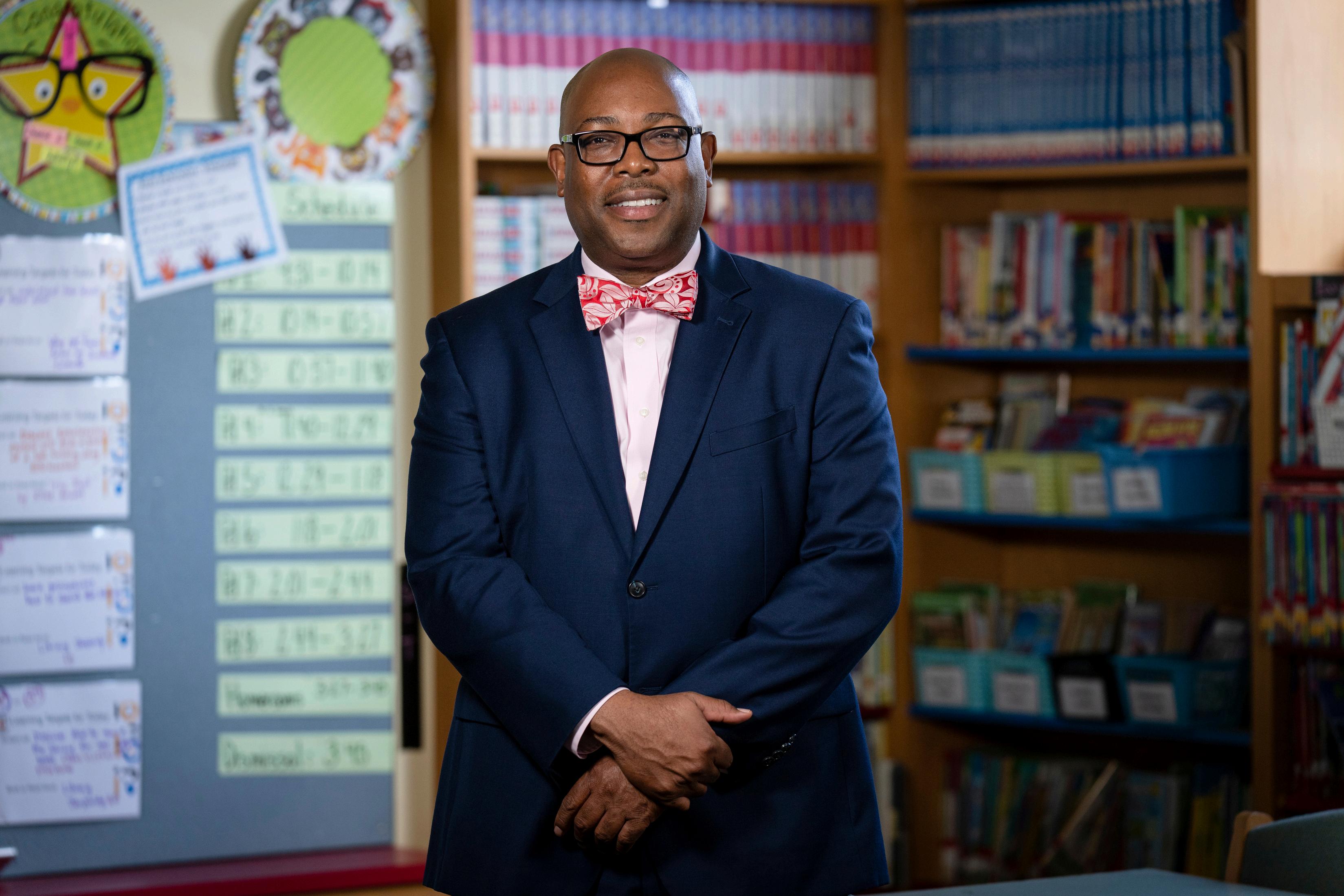
Dr. Wayne N. Walters Superintendent, Pittsburgh Public Schools
board of directors
BOARD LEADERSHIP AND COMMITMENT
The Pittsburgh Public Schools Board of Directors provides the vision, governance, and accountability that shape the District’s priorities Their leadership ensures that every major initiative, including the Future-Ready Facilities Plan, is guided by a commitment to students, families, and the long-term success of our schools Board members play a critical role in setting direction, engaging with the community, and holding the District accountable to its mission of excellence, equity, and access for all.
1st Vice President District 2
2nd Vice President District 5
DEVON TALIAFERRO
DR. TRACEY REED
SYLVIA WILSON SALA UDIN District 1 District 3
YAEL SILK District 4
EMMA YOURD District 6
JAMIE PIOTROWSKI DWAYNE BARKER District 7 District 8
GENE WALKER President District 9
executive summary
The Future-Ready Facilities Implementation Plan presents a bold, equity-centered roadmap to transform Pittsburgh Public Schools (PPS) into a more modern, efficient, and student-focused District Rooted in the core values of equity, excellence, and efficiency, this plan addresses critical challenges facing the District, including aging infrastructure, declining enrollment, uneven access to academic opportunities, and rising operational costs Through this implementation framework, PPS seeks to deliver on its promise that every student regardless of zip code deserves access to safe, enriching, and wellresourced learning environments.
Today, PPS operates many buildings that are more than 90 years old, resulting in inefficiencies, safety concerns, and inequitable student experiences. Many of the District’s school buildings reflect decades of use, with HVAC systems, classrooms, and specialized learning spaces in need of modernization and renewal. Simultaneously, declining enrollment has left many buildings underutilized, stretching resources thin and hindering the District’s ability to invest equitably across schools. In response, the Future-Ready Facilities Plan proposes a data-informed reconfiguration of the District’s footprint phasing in building consolidations, grade realignments, and capital investments that align with 21st-century educational needs
Executive Summary
This implementation plan responds to specific Board requests and outlines the steps necessary for a smooth and student-centered transition It includes updated districtwide staffing projections to support future configurations and minimize disruption for educators and students A detailed multi-year timeline is included - and woven throughout this document - highlighting early wins such as critical facility upgrades, reallocation of resources, and increased access to robust academic programming. Financial modeling offers comprehensive renovation cost estimates for each building, projected operational savings, and long-term cost avoidance all critical to placing PPS on stronger fiscal ground.
In addition, the report details revised attendance zones and feeder patterns grounded in principles of walkability, geographic balance, and transparency A comprehensive transportation plan ensures that all students, including walkers, bus riders, and those with specialized needs can access their schools safely and efficiently Student experience is at the heart of this plan: by consolidating and reinvesting, PPS can offer more students consistent access to high-quality instruction, arts, athletics, STEM, and advanced coursework resources currently distributed unevenly across the District.
The implementation plan also prioritizes students who face the greatest systemic barriers, including African American students, English Language Learners, students with disabilities, and those experiencing economic disadvantage Targeted supports will ensure that these students are not left behind but instead elevated through thoughtful transition plans, academic interventions, counseling support, and continued access to services in receiving schools.
Finally, this plan is rooted in a deep commitment to authentic community engagement. Over the past year, PPS has engaged thousands of families, students, educators, and community partners through town halls, surveys, ambassador programs, and nine formal public hearings These voices have shaped the vision of what is possible and this report continues that commitment with a transparent communication strategy that will guide families through each step of the process
The Future-Ready Facilities Implementation Plan is not simply a facilities update it is a once-in-a-generation opportunity to realign our resources with our mission. It is a commitment to ensuring that all students, in every neighborhood, attend schools that inspire learning, reflect dignity, and prepare them for a bright future. This report offers a clear path forward for our District, Board, and community to act with unity and urgency so that every child in Pittsburgh can thrive in a Future-Ready school
The Future-Ready Facilities Implementation Plan is not simply a facilities update—it is a once-in-ageneration opportunity to realign our resources with our mission. It is a commitment to ensuring that all students, in every neighborhood, attend schools that inspire learning, reflect dignity, and prepare them for a bright future. This report offers a clear path forward for our District, Board, and community to act with unity and urgency so that every child in Pittsburgh can thrive in a Future-Ready school.
Anchored in Vision, Guided by Values vision and Guiding Principles
vision, values, & Guiding Principles
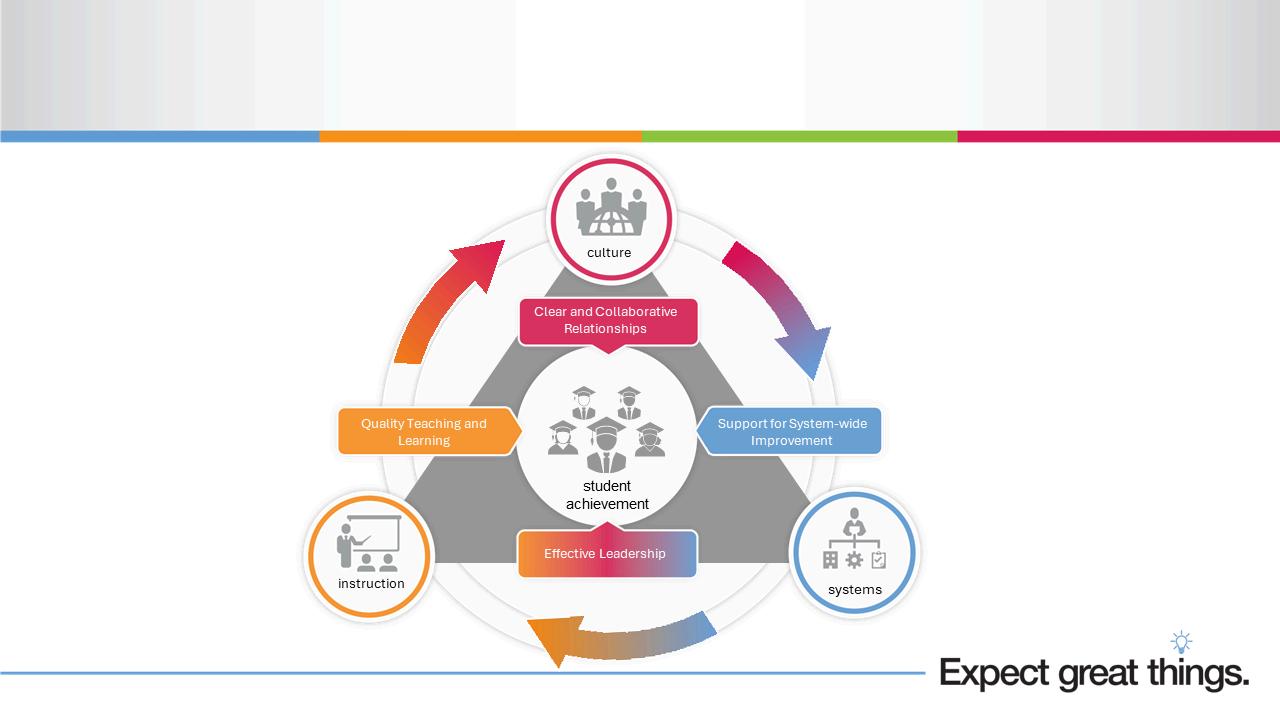
The Future-Ready Facilities Plan is not simply a response to the operational challenges of declining enrollment and aging infrastructure It is a forwardthinking blueprint grounded in a clear and compelling vision: to create a modern, equitable, and dynamic school system where every student regardless of background or neighborhood has access to the opportunities, resources, and environments they need to thrive This plan is guided by four core values: Equity, Excellence, Efficiency, and Access These values form the foundation of our implementation strategy and are tightly aligned with the District’s theory of action Culture, Systems, and Instruction which defines how we will achieve lasting and meaningful student outcomes
equity
Equity is the moral and strategic center of the Future-Ready Facilities Plan For too long, student experiences and outcomes in PPS have been shaped by the uneven distribution of resources, programming, and facilities Some students attend schools with robust arts programs, STEM labs, and athletic fields while others do not The plan intentionally closes this gap by strategically reallocating resources, consolidating underutilized buildings, and investing in learning environments that serve all students well Equity also means ensuring that the students most often underserved by systemic barriers African American students, English Language Learners, students with disabilities, and students experiencing poverty are prioritized in transition planning, facility upgrades, and program access.
vision and Guiding Principles
excellence
Every child deserves access to high-quality instruction and enriching educational experiences that prepare them for success in college, career, and life The plan envisions schools that are not only safe and modern, but that offer a consistent and coherent instructional core: rigorous curriculum, effective teaching, and student-centered learning By aligning grade configurations, expanding access to full academic offerings, and consolidating under-resourced programs into highfunctioning sites, PPS will be better positioned to deliver on the promise of academic excellence for every student in every school.
efficiency
Operating and maintaining buildings that are half-full or in poor condition is neither financially sustainable nor educationally justifiable The District currently spends millions each year on utilities, maintenance, and repairs for underutilized schools resources that could be better used to support instruction, student wellness, and innovation This plan promotes fiscal responsibility through optimizing the district’s footprint, reducing redundancy, and ensuring that every dollar spent is connected to student benefit Through long-term cost avoidance and smarter capital planning, PPS can reinvest in what matters most: people, programs, and learning
access
True equity demands access; access to advanced coursework, arts and athletics, mental health supports, extracurricular enrichment, and culturally affirming instruction Too often, access is determined by geography or enrollment patterns The Future-Ready Facilities Plan seeks to correct that by building schools that serve as gateways to opportunity Redesigned feeder patterns and expanded programmatic offerings will ensure students in every part of Pittsburgh can benefit from a full and well-rounded education, regardless of where they live.
vision and Guiding Principles
Alignment to the Theory of Action: Culture, Systems, and Instruction
Pittsburgh Public Schools’ theory of action affirms that “student outcomes do not change until adult behaviors change.” This belief is operationalized through the District’s focus on Culture, Systems, and Instruction a guiding framework that is directly infused throughout the implementation of this plan.
Culture refers to the shared beliefs, mindsets, and relationships that shape how we work and how students learn The Future-Ready Facilities Plan is a cultural commitment to students first always, in all ways It demands that we build trust through transparency, lead with empathy, and make decisions that reflect our belief in every student’s potential. As buildings are reconfigured and communities reshaped, we must steward this process with a culture of dignity, clarity, and inclusion.
Systems are the structures, policies, and routines that support alignment and accountability The implementation of this plan represents a massive systems shift from how we assign students to schools, to how we allocate staff and resources, to how we manage transportation and capital investments The plan builds durable systems that support coherence, fiscal stewardship, and cross-departmental collaboration. It also includes systems of monitoring and feedback so that implementation remains adaptive and responsive.
Instruction remains the heart of our work. Facilities alone do not change lives teaching and learning do. The Future-Ready Facilities Plan enables stronger instructional conditions by ensuring that students are learning in buildings that are safe, inspiring, and well-equipped By consolidating into higher-capacity sites with comprehensive staffing, students will have more consistent access to interventions, enrichment, and grade-level instruction Principals will be better supported to lead instructional improvement, and teachers will be positioned in more collaborative, high-functioning teams.
In short, the Future-Ready Facilities Plan is a bold and necessary step toward building the system our students deserve It reflects our District’s deepest values and reinforces the belief that where a child lives should never limit how far they can go. Guided by our values and anchored in our theory of action, we are building a school system that centers students, supports educators, and earns the trust of our families one school at a time.
apictorialtimeline vision and Guiding Principles
VISIONUNVEILED
Superintendent Delivers Proposed Facilities Utilization Plan to Board of Directors
District Leaders Present Proposed Facilities Utilization Plan Aimed at Advancing Equity, Excellence and Efficiency
2024
PORTFOLIOPROPOSED
District Postpones Final School Portfolio Recommendation to Ensure Ample Consideration of Community Input
Education Resource Strategies Presents Final Recommendation for Facilities Utilization
Board Approves Contract with Education Resource Strategies, Inc (ERS)
Community Invited to Weigh-in on Base Scenario via Five Regional Input Sessions and Let’s Talk Platform
District Announces No School Changes for the 2025-2026 School Year to Allow for a Comprehensive Review of Facility Utilization Recommendations
Feasibility Report presented Publicly to the Board of Directors
Facilities Utilization Family and Community Survey Closes, Marking Conclusion of More than Two Months of Community Engagement, including 11 Board Town Halls, Student Focus Groups, Teacher Surveys and More
2024
Shares Base Scenario for Reimagined Portfolio in Pittsburgh Public Schools
SCHOOLCHANGESPAUSED MAY21, 2025
for input on the proposed closing of nine school buildings
2025
BOARD RESOLUTION APPROVED
Board adopts Resolution requiring Key Deliverables staffing, financials, attendance zones, transportation, student supports, and engagement plan before final Facilities Plan Vote
Superintendent Postpones Request for Board Vote to Start Public Comment Period to Give the Leadership Team Time to update the Feasibility Report and Respond Board’s Requests
District shares Updated Feasibility Report reflecting Board and Community Inquiries and Revisions to the Facilities Utilization Plan
District delivers the Facilities Implementation Plan aligned to Board’s eight (8) requests outlined in the Resolution
MADE
Board vote on final recommendations, changes to attendance zones and phasing plan FALL 2025
Magnet applications for the 2026-2027 school year will open
Our Future-Ready plan is not about buildings — it is about learning, belonging, and opportunity.
chapter ONE financial impact
This Chapter Serves as a Direct Response to Board Request #3: Financial impact with comprehensive multiyear projections
Aligning Financial Stewardship with Student Success
A strong financial outlook is essential to supporting the District’s mission: to prepare all children to achieve academic excellence and develop the strength of character needed to thrive in every aspect of life Long-term financial stability allows the District to invest in the structures, staff, and supports that make high-quality learning possible This includes creating strong foundational K–5 schools, developmentally responsive middle schools, and high schools that equip students for success in college, career, and life By aligning financial resources with educational priorities, the District can ensure every student has access to the opportunities they need to reach their full potential.
Understanding the financial implications of these recommendations is essential to making informed, responsible decisions that serve both students and the long-term fiscal health of the District This section provides an analysis of the financial impact of the reconfiguration, closure, and expansion of schools and programs
While the proposed changes will not fully resolve the District’s financial challenges, they are designed to ease the strain and allow the District to redirect resources toward enriching student experiences such as art, music, physical education, STEM, world languages, and career exploration.
The following financial analysis will illustrate the financial impact of the following components of the Future-Ready Facilities Plan:
Staffing and Programmatic CHANGES
Delivery Model Changes
For 2026-27, the school-based staffing allocation model will not change as the focus will be on culture building and supporting newly configured schools. The 2027-2028 school year, marks the first year of the proposed schedule changes for elementary and middle school. In 2028-29, school-based staffing will reflect the closure of Spring Hill and the opening of Northview. At full build out, these delivery model changes will represent a savings of $63 million over the current delivery model
Teaching and Learning Centers
To truly transform student outcomes, we must invest in the people who make learning possible - our educators and staff. That is why the District is proposing the creation of three dedicated Teaching and Learning Centers, one each for elementary (K–5), middle (6–8), and high school (9–12), designed to serve as hubs for professional growth, collaboration, and innovation
Teachers participating in the Teaching and Learning Centers will engage in personalized coaching, lesson modeling, and collaborative lesson development to deepen their practice and build confidence in delivering high-quality instruction. As a result, students will benefit from stronger, more engaging classroom experiences that support deeper learning and better outcomes Schools, in turn, gain instructional expertise that fosters a culture of continuous improvement
The anticipated cost for the year-one pilot is approximately $1.9 million. The total annual cost for the three proposed Teaching and Learning Centers at full implementation is approximately $7.6 million.
financial impact
Reimaging Credit Recovery and Alternative Education
While the Student Achievement Center (SAC) has provided critical support, the current credit recovery model often requires students to transfer away from their home schools, leading to disruptions in their educational experience and a loss of connection to their school communities There is growing recognition of the need for a more progressive, student-centered approach to credit recovery that keeps students engaged and supported within their home school environments Keeping students connected to their home schools promotes a sense of belonging, strengthens academic engagement, and improves student outcomes.
The proposed closure of the SAC will lead to an anticipated annual cost reduction of approximately $1.2 million.
Gifted and Talented
The Gifted Center staff 25 teachers and 32 total staff members currently provide centralized gifted education services, ensure compliance with Pennsylvania Chapter 16 mandates, and maintain all gifted documentation for Pittsburgh Public Schools. Under the new PPS Gifted Education Equitable School-Embedded Model, these experienced educators will be strategically reassigned to support the shift from a single-site center to a districtwide model while maintaining program quality and compliance This will result in an annual reduction of approximately $471,000.
Currently, there are 25 teachers at the Gifted Center. With the expansion of Gifted services to each K–5 and 6–8 school, the total number of teachers needed will increase to 32. The cost for seven additional teachers is approximately $1.2 million annually. However, when accounting for the offset of $1.2 million for the delivery model, the total net additional cost is approximately $692,000
financial impact
Additional Supports for English Language Development Centers
To serve the District’s growing English Learners population, PPS will expand to 18 English Language Development Regional Centers citywide The ELD Instructional Specialists will shift their focus to directly supporting the implementation of the plan Their work will include assisting with family communication and helping to design and deliver professional learning for the new ELD Regional Centers. The expansion to 18 ELD Centers will require the addition of three ELD Instructional Specialists. The approximate annual cost is $505,000.
Increase Coaching Supports
There are currently 18 Literacy Coaches and 10 Math Coaches who provide coaching support to ELA and Math teachers throughout the district. Every school will have a dedicated literacy coach, with additional math coaches added to support instructional growth, accelerate learning, and close achievement gaps. The recommendation will result in the staffing of 13 additional Literacy Coaches and 8 additional Math Coaches. The projected annual cost of 21 additional coaches is approximately $3.5 million.
In addition to local professional learning, the District will invest in nationally recognized gifted education conferences and partnership development to provide cutting-edge training for educators and leaders The professional learning framework will operate as a train-the-trainer model, ensuring that participants return equipped to lead professional learning sessions across schools and sustain the work locally
As part of this model, a district cohort will attend Confratute at the University of Connecticut the premier national conference on Gifted Education and the Schoolwide Enrichment Model (SEM) at an estimated cost of $79,667 to send 35 educators. PPS will also prioritize participation in the National Association for Gifted Children (NAGC) Annual Conference, which offers intensive workshops on identification, equity, and advanced enrichment strategies for both teachers and administrators.
financial impact
Capital Investment Summary
Investments in modernized facilities create equitable learning environments across neighborhoods, ensuring all students regardless of zip code have access to safe, wellequipped, and appropriately sized schools Reconfiguration reduces disparities in program access by consolidating staff and resources, leading to richer course offerings, extracurricular programs, and specialized services Infrastructure upgrades (HVAC, technology, accessibility, safety systems) directly enhance daily comfort, health, and learning conditions, contributing to better academic and social-emotional outcomes
Renovations include the creation or retrofitting of spaces for STEM, arts, music, and other specialized programs. Schools that previously lacked these facilities will be upgraded so students can access a broader range of learning opportunities
Reconfigured spaces are designed to meet ADA accessibility standards, provide airconditioned classrooms, and incorporate modern safety systems. These improvements ensure facilities are equitable and welcoming for every student, including those with mobility or health needs.
financial impact
Total Capital Investment bySchool
Capital Investment bySchool
*Revised capital investment estimates for the FRFP projects now incorporate architectural costs and additional specialized spaces informed by school-level walkthroughs
Summary of Proposed 7-Year Capital Plan
financial impact
Financial Impact of Proposed 7-Year Capital Plan
The District funds capital projects and major maintenance plans through the annual issuance of general bonds. The cost of these bonds is typically repaid over a 20-year period. This is the District’s debt service. The chart below shows the impact of the proposed 7-year capital on the District’s projected debt service expense.
*This chart reflects the total projected debt service for the District’s entire portfolio of facilities not just those included in the Future-Ready reconfigurations
financial impact
Transition Support
Parent Ambassadors
The Parent Ambassador Program is a key initiative of the PPS Future-Ready Facilities Plan, created to strengthen communication and support for families during times of transition. Parent Ambassadors will serve as trusted liaisons between family, community, and school-based communities directly impacted by upcoming changes, ensuring families remain informed, supported, and engaged throughout the process. By sharing accurate and timely information, amplifying parent voices, and providing guidance to help families navigate transitions
Parent Ambassadors will serve as trusted community champions, helping to build trust and strengthen collaboration between families and schools They will encourage families to participate in listening sessions, complete surveys, and utilize District resources such as the dashboard and Parent Hotline (Let’s Talk) The program is designed to engage parents who are respected, well-connected within their communities, and dedicated to creating meaningful bridges between families and schools.
To help offset costs associated with participation such as travel, child care, and other related expenses each Parent Ambassador would receive an annual $500 reimbursement. The total estimated investment for the program is $20,000.
Communications
To ensure that all families receive timely, accessible information about school changes connected to the Future-Ready Facilities Plan, Pittsburgh Public Schools will produce and distribute informational mailers to every impacted household These mailers will include details about school assignments, transportation, program offerings, transition support, and opportunities for engagement
Mailers are a critical component of equitable communication, ensuring that families without reliable internet access, limited English proficiency, or inconsistent phone contact still receive accurate, translated, and ADA-accessible information directly to their homes The cost associated with printing, translation, and postage supports the District’s commitment to transparency, inclusion, and family partnership during major systemwide transitions. The annual cost for mailings is estimated at approximately $40,000.
financial impact
Project Management
The scope and complexity of the Future-Ready Facilities Plan require dedicated capacity to ensure timely, coordinated, and transparent execution. To achieve this, the District proposes the addition of two Project Managers for implementation of the Future-Ready Facilities Plan. These positions will serve as the central point of coordination between departments, schools, and external partners, helping to translate planning into action while maintaining alignment with the District’s educational and operational priorities.
The Project Managers will:
Develop and monitor detailed implementation timelines, benchmarks, and deliverables across departments
Facilitate cross-functional coordination among Curriculum and Instruction, Office of School Performance, Professional Learning, Program for Students with Exceptionalities, Student Support Services, Equity, Operations, Human Resources, Budget and Finance, Transportation, and Communications
Ensure that all aspects of the plan, from building reconfigurations to academic transitions, are executed on schedule and within budget.
Track progress on key milestones and prepare regular status updates for District leadership and the Board of Directors.
Serve as liaison between the District and external consultants, contractors, and community partners to maintain transparency and consistency in messaging.
Adding these positions strengthens accountability and supports long-term sustainability by ensuring that the Future-Ready Facilities Plan moves from design to delivery with precision, collaboration, and focus The Project Manager role represents a strategic investment in operational excellence one that will safeguard timelines, reduce inefficiencies, and ultimately ensure that the District fulfills its commitment to place Students First Always, In All Ways through thoughtful and well-managed implementation The cost for two project managers is estimated at $273,000 annually over a two-year period
financial impact
Relocation Costs
Summer 2026 represents a critical transition phase where select schools and administrative sites will undergo renovations, reconfigurations, or relocations to align with the district’s long-term strategic goals This plan focuses on modernizing learning environments, improving facilities, and ensuring equitable access to high-quality education for all students
In support of these changes, the following temporary costs are necessary and aligned with the goals of the Future-Ready Facilities Plan:
Temporary Heavy Cleaners
To prepare vacated spaces for construction, deep cleaning is required beyond normal custodial services This includes removal of hazardous materials, thorough sanitation, and clearing out furniture and equipment These services are essential to meet environmental health and safety standards prior to renovation or demolition An additional 50 temporary staff should be hired over the summer to help facilitate the moves in the first year Positions could be offered to 10-month staff first and then look to hire outside contractors to fulfill any additional need.
Truck Rentals and Equipment
The transition involves physically moving large quantities of furniture, materials, supplies, and equipment between sites. Truck rentals, loading equipment (such as dollies and lifts), and fuel costs are critical for timely and safe relocations during the narrow summer window, minimizing disruption to instruction.
Miscellaneous Moving Costs
Necessary moving supplies include: Boxes, packing tape, and markers for organizing classroom and office materials
Protective coverings for sensitive or valuable equipment
Temporary storage solutions where materials cannot be relocated immediately.
These costs are essential to safeguard PPS assets and ensure an orderly transition at a cost of $500,000 in year one
financial impact
Additional Staff Compensation
The scale of the moves will require certain staff to assist with packing, labeling, and preparing spaces. PPS is committed to compensating staff fairly for this additional work, which often falls outside of their regular contractual duties. Therefore:
The HR Compensation Division will determine how staff may be compensated for any additional duties associated with packing and preparing classrooms for the summer moves to align with the contract.
The District will work with all bargaining units and any other necessary groups to ensure equity, transparency, and compliance with labor agreements
Utilities
In 2024, the 10 facilities identified for closure had a combined utility cost of $638,347 If the proposed closures move forward, the District estimates a utility cost reduction of approximately $358,481 representing a 3% decrease from the projected 2025 utilities budget, based on 2024 usage. This estimate is based on an 80% reduction in water, sewage, and electricity usage, and a 10% reduction in gas and steam usage for the closed buildings
Transportation Savings
The changes detailed in the FRFP will have a positive effect on the transportation the District provides to students. The impact of these changes is significant. Daily trips will decrease from 986 to 402, creating cost savings and greater scheduling reliability. Walk zones will expand, shifting some students from buses to walking, with city partnerships ensuring safe passage through the use of crossing guards. For those who continue to ride, bus routes will be more efficient, with reduced duplication and shorter ride times. The benefits for students and families are clear: shorter, more consistent travel reduces tardiness and supports academic achievement, while reliable schedules and clear communication increase family confidence
The financial impact is equally compelling. Mapping data provided by DREA confirms that no increase in costs is anticipated, and in fact, significant savings will be achieved. For example, high school and middle school routes will generate approximately $136,440 annually in savings. Gifted Center transportation adjustments will save nearly $2 million, while magnet program changes will save an estimated $3.5 million. These savings, combined with fewer buses for ESL and PSE services and reduced duplication across routes, will strengthen the overall budget and create more flexibility for field trips and after-school activities
financial impact
Transportation Savings
The changes detailed in the FRFP will have a positive effect on the transportation the District provides to students The impact of these changes is significant Daily trips will decrease from 986 to 402, creating cost savings and greater scheduling reliability Walk zones will expand, shifting some students from buses to walking, with city partnerships ensuring safe passage through the use of crossing guards For those who continue to ride, bus routes will be more efficient, with reduced duplication and shorter ride times The benefits for students and families are clear: shorter, more consistent travel reduces tardiness and supports academic achievement, while reliable schedules and clear communication increase family confidence
The financial impact is equally compelling. Mapping data provided by DREA confirms that no increase in costs is anticipated, and in fact, significant savings will be achieved. For example, high school and middle school routes will generate approximately $136,440 annually in savings. Gifted Center transportation adjustments will save nearly $2 million, while magnet program changes will save an estimated $3.5 million. These savings, combined with fewer buses for ESL and PSE services and reduced duplication across routes, will strengthen the overall budget and create more flexibility for field trips and after-school activities.
financial impact
Multi-Year future-ready Financial Forecast
financial impact
Multi-Year Rolling Forecast
financial impact
Total Capital Investment bySchool
financial impact
Expenditures support the transition phase of the PPS Future Ready Plan by:
Enabling efficient and timely site preparation for construction or re-occupancy
Minimizing learning disruption by completing all logistics during summer months
Supporting staff and maintaining strong labor relationships through fair compensation and negotiated agreements
Protecting District assets and ensuring that all moves are safe, organized, and cost-effective
Conclusion
The Future-Ready Facilities Plan is an investment in the future designed not simply to balance budgets but to build equity, excellence and efficiency across every school. By consolidating underused space, modernizing facilities, and reinvesting savings into classrooms and staff, the District ensures that resources reach the students who need them most.
chapter TWO
district-wide staffing projections
This Chapter Serves as a Direct Response to Board Request #1: Updated District staffing projections to support implementation
the people behind student success
Staffing is one of the most important parts of making the Future-Ready Facilities Plan work for students and families As schools change through consolidations, grade reconfigurations, and new course offerings, Pittsburgh Public Schools must ensure that every building has a highly qualified, diverse workforce, including teachers, leaders, and support staff, in place This section explains how the District is planning ahead, what the priorities are, and how staffing will be managed in a way that is fair, financially responsible, and centered on student success.
The Office of Human Resources (HR) is responsible for making sure PPS has a strong, diverse team of educators and staff HR works closely with principals, the Finance team, union partners, and other District departments to plan for the future Decisions about hiring and staffing are guided by real data, such as retirements, turnover, and enrollment trends, so that schools are ready on the first day of school
HR is also focused on equity. That means making sure schools in every neighborhood, especially those that have been historically under-resourced, have access to experienced teachers and support staff. It also means adhering to our contractually obligated transfer processes, developing recruitment strategies, and building a
Staffing Priorities During Transition
As we move into the Future-Ready Facilities Plan, the District’s top staffing priorities are to place staff where they are most needed and to hire early so schools begin the year fully prepared. When schools are reconfigured, HR will support staff transfers and movement that positively impacts stability and school culture
By focusing on these priorities and working closely with our union partners where agreements are needed HR helps bring the Future-Ready Facilities Plan to life, making sure every school has the staff it needs to provide a high-quality education for every student
HR is developing a robust recruitment plan to ensure staffing needs for the future are identified. Partnerships with local universities and teacher apprenticeship programs are strengthening the pipeline of educators, and early hiring events will focus on areas where staff are hardest to find, such as special education, world languages, arts, and sciences. These steps help ensure every classroom has a qualified teacher and every school has the full team of adults needed to support students.
Aligning Staffing to the District’s Budget Model
Staffing decisions must also be financially sustainable. Human Resources works closely with the Finance team to align staffing with the District’s budget model. When schools are reconfigured or new programs are introduced, projections are adjusted to reflect changes in class sizes, building capacity, and program demand.
Financial modeling allows PPS to prepare for different scenarios, such as enrollment growth or program expansion, without creating long-term budget challenges In short, staffing projections are designed to balance what students need with the resources available, keeping the District strong for years to come
districtwide staffing projections
key considerations include:
Budgeting for Reconfigurations
Staffing projections will reflect the needs of schools that are reconfigured. This includes potential changes in class sizes, which may require additional support staff such as paraprofessionals. Specialized programs may call for added instructional or programspecific staff. Data will also guide decisions about custodial, food service, and other essential support roles, based on changes in building capacity, student population, and program demand
Cost Modeling
Staffing decisions must be grounded in accurate financial projections. The Finance team will provide cost modeling to ensure staffing choices are both affordable and aligned with the District’s broader financial strategy
Scenario Planning
Different “what if” scenarios, such as enrollment growth, new program expansions, or shifts in student needs, will be modeled to understand their financial and staffing impacts This helps the District prepare for a range of possibilities while remaining fiscally responsible
Resource Allocation
Projections will guide decisions about which schools may need additional funding or staffing to meet instructional goals, ensuring resources are distributed fairly and equitably across the District.
Long-Term Sustainability
Aligning staffing with the financial model ensures that short-term decisions, such as hiring for newly renovated schools, do not create long-term budget challenges. This approach helps protect the District’s ability to sustain high-quality teaching and learning for years to come.
districtwide staffing projections
School-Based Staffing Projections
Staffing decisions must also be financially sustainable. Human Resources works closely with the Finance team to align staffing with the District’s budget model When schools are reconfigured or new programs are introduced, projections are adjusted to reflect changes in class sizes, building capacity, and program demand
Financial modeling allows PPS to prepare for different scenarios, such as enrollment growth or program expansion, without creating long-term budget challenges. In short, staffing projections are designed to balance what students need with the resources available, keeping the District strong for years to come.
Centrally Funded Staffing Projections
staffing
Not all staffing is tied directly to individual school budgets. Some positions are funded and assigned centrally to meet systemwide needs. Examples include custodial staff (based on building size), food service workers (based on enrollment and meal programs) and Program for Students with Exceptionalities (PSE) staff
These positions are just as critical to the success of schools, and projections for 2026–27 through 2028–29 are shared alongside school-based staffing data This combined view ensures families understand how PPS is supporting both classroom and operational needs.
*NOTE:Not inclusiveofTitleI andCSIfunding. Althoughthereappearstobea reduction in English and Math,thesenumbersarereflectedwithinthe RelatedArtssections,which includeHighSchoolelectivessuch asEnglish and Mathcourses
*NOTE:Not inclusiveofTitleI andCSIfunding Althoughthereappearstobea reduction in English and Math,thesenumbersarereflectedwithinthe RelatedArtssections,which includeHighSchoolelectivessuch asEnglish and Mathcourses
*Professional personnel in employment categories represented by the Pittsburgh Federation of Teachers are collectively referred to as “teacher” or “teachers”
Managing Staffing Transitions
Changes in staffing can be stressful, so PPS is committed to managing transitions carefully and with transparency Human Resources will monitor hiring and transfers closely to make sure schools are fully staffed before the school year begins Human Resources will work closely with the Office of School Performance to ensure that school leader placements are finalized to support staff recruitment and transitions. Collective bargaining agreements will guide these processes, and the District will work with union partners to resolve issues.
Where possible, schools with the greatest needs will receive early access to hiring, and positions in hard-to-staff certification areas such as special education, world languages, arts, and sciences may be prioritized for early offers Securing these candidates ahead of schedule will help ensure that staff are placed and ready before the close of the 2025–26 school year, rather than after, as has often been the case under the traditional PPS hiring timeline.
The HR team will continue partnering with the School District University Collaborative (SDUC), the Pittsburgh Education Recruitment Consortium (PERC), and other recruitment networks to connect with prospective educators. These partnerships are especially important at a time when the number of students entering teacher preparation programs has generally declined, as noted in the Pennsylvania Department of Education’s recent report: Pennsylvania’s Educator Workforce.
Staff reassignments will also come with clear communication, onboarding and transition supports for school leaders and their staff and access to Employee Assistance Program resources to help support the stress of movement and change.
districtwide staffing projections
Looking ahead, the office of Human resources will:
Monitor hiring and transfer activity to ensure schools are fully staffed on time. Plan for retirements and vacancies so positions are filled before the 2026–27 school year begins
Explore data-driven strategies to increase equity and diversity in hiring and transfers
Develop creative solutions to make sure every school has the resources and talent needed for student success.
By keeping students at the center and working collaboratively, PPS is committed to making staffing transitions smooth, fair, and strategic for families, staff, and the entire school community
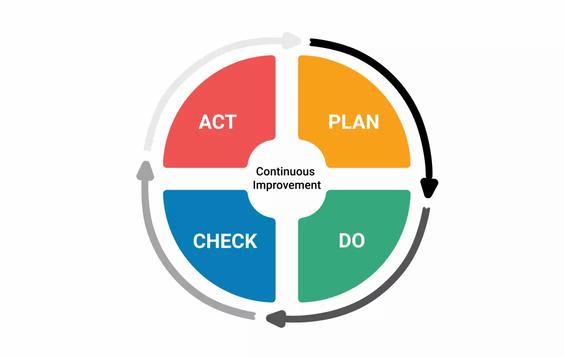
Commitment to Continuous Improvement
Staffing is not a one-time project. PPS will continue to review and adjust staffing practices based on real-time needs and long-term trends. This includes monitoring vacancies, retirements, and student enrollment shifts while also studying the impact of staffing patterns on student learning. By keeping students at the center of decisions, the District can ensure that staffing remains equitable, sustainable, and focused on delivering the best possible education for every child. To support continuous improvement, data relative to staffing patterns and their impact on student outcomes would be analyzed to inform staffing practices and future adjustments.
Preparation and Awareness October 2025- February 2026
HR School Road Shows and leader office hours held to gather employee questions about the Future-Ready Plan
Future-Ready meetings with unions and meet-and-discuss groups to align transfer processes and staffing for new configurations
Seniority audits completed and shared with employees
Employee transfer timelines finalized and communicated
Retirement readiness seminars offered to all staff
School leader assignments reviewed and determined (December–January).
External hiring preparations conducted to analyze workforce data, update guidelines, and plan early hiring events
Staff communications series developed in collaboration with the Communications team.
Educator Registered Apprenticeship Program reviewed by the PA Department of Labor & Industry; first cohort launches (January 2026).
Recruitment and Transfers March - June 2026
Site-based budgets reviewed to confirm staffing projections
Employee Transfer Season opens for staff to apply and receive new placements.
All employees notified of placement status
Recruitment and staffing events held for hard-to-fill positions
Transition coordination provided for impacted staff, including timelines and packing/moving guidance, in collaboration with bargaining units (if applicable).
External Hiring and Onboarding | Transition Support July - August 2026
External hiring and recruitment efforts continue
Onboarding supports delivered to school leaders and hiring managers.
Analyze workforce data to identify trends in retirements and hiring
Implement targeted recruitment for hard-to-fill positions in ELD, World Languages, Science, Math, Music, Art, Special Education, and Career & Technical Education
Provide advanced training for hiring managers on datainformed, equity-focused hiring and transfer practices
Establish andstrengthen partnershipswith recruitment networksto address hard tofill positions
AdvanceGrow-Our-Own pathways, including Emerging Educators, EducatorApprenticeship Programs, and SecurityAide–to–Police initiatives
SCHOOL-BASED STAFFINGPROJECTIONS
Future-Ready Implementation plan
chapter THREE
Attendance Zones & Feeder Patterns
This Chapter Serves as a Direct Response to Board Request #4: Identified attendance zones + feeder patterns with rationale
Attendance Zones & Feeder Patterns
Balancing Enrollment, Access, and Opportunity
Attendance zones and feeder patterns define how students move through Pittsburgh Public Schools (PPS). Attendance zones determine the neighborhood school a child attends based on their home address. Feeder patterns set the pathway students follow from elementary through middle and high school Together, they shape the student experience, impacting friendships, access to programs, and the overall use of District facilities
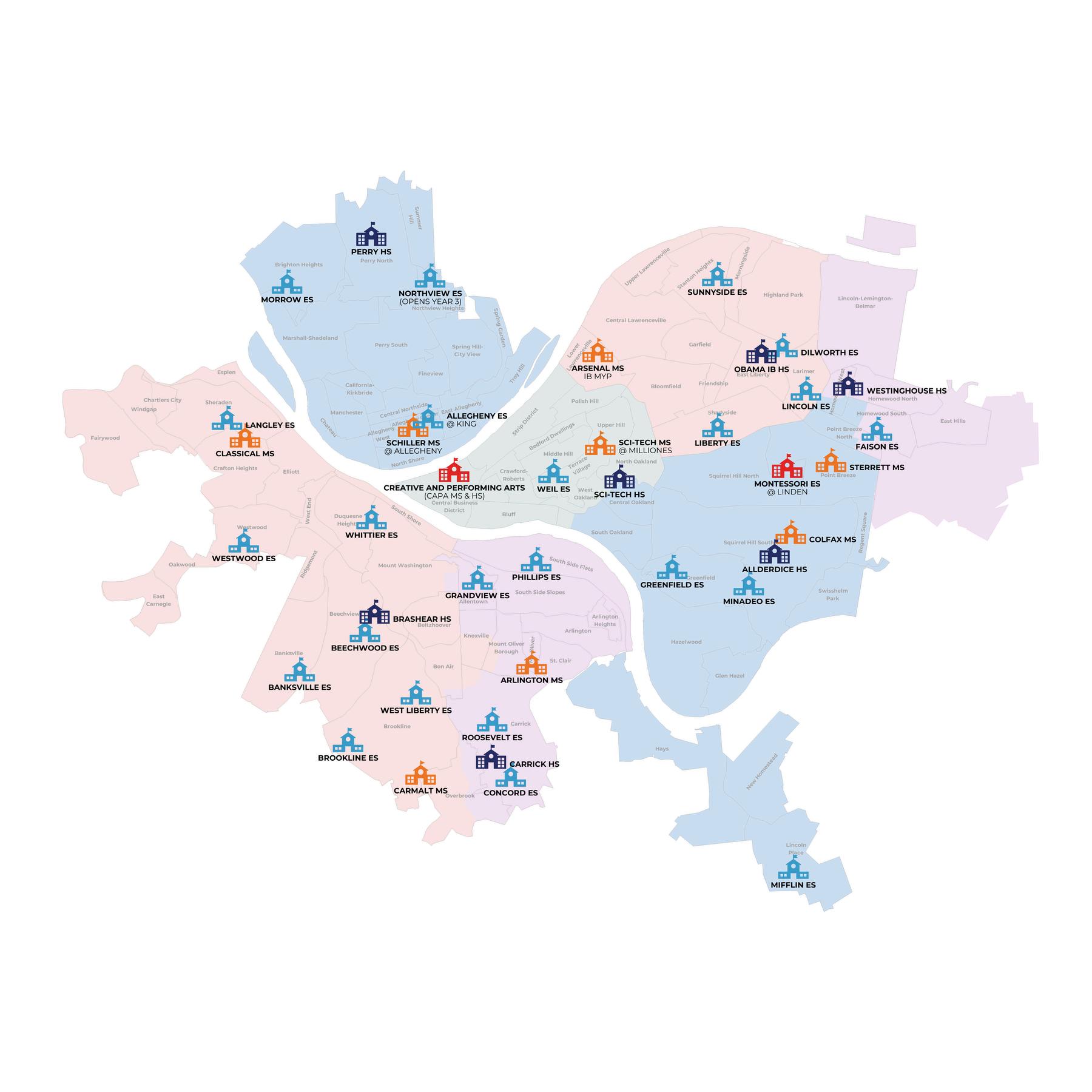
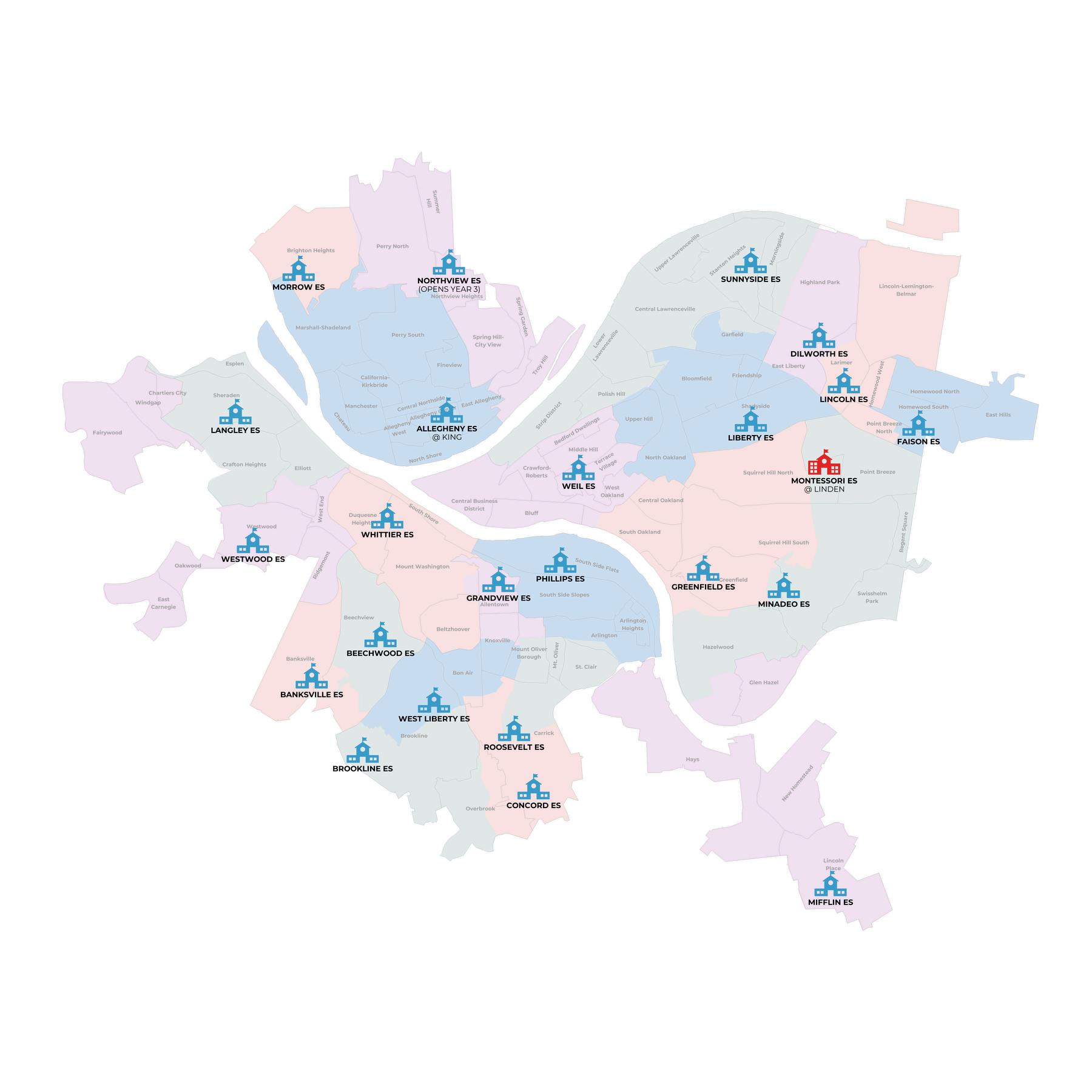
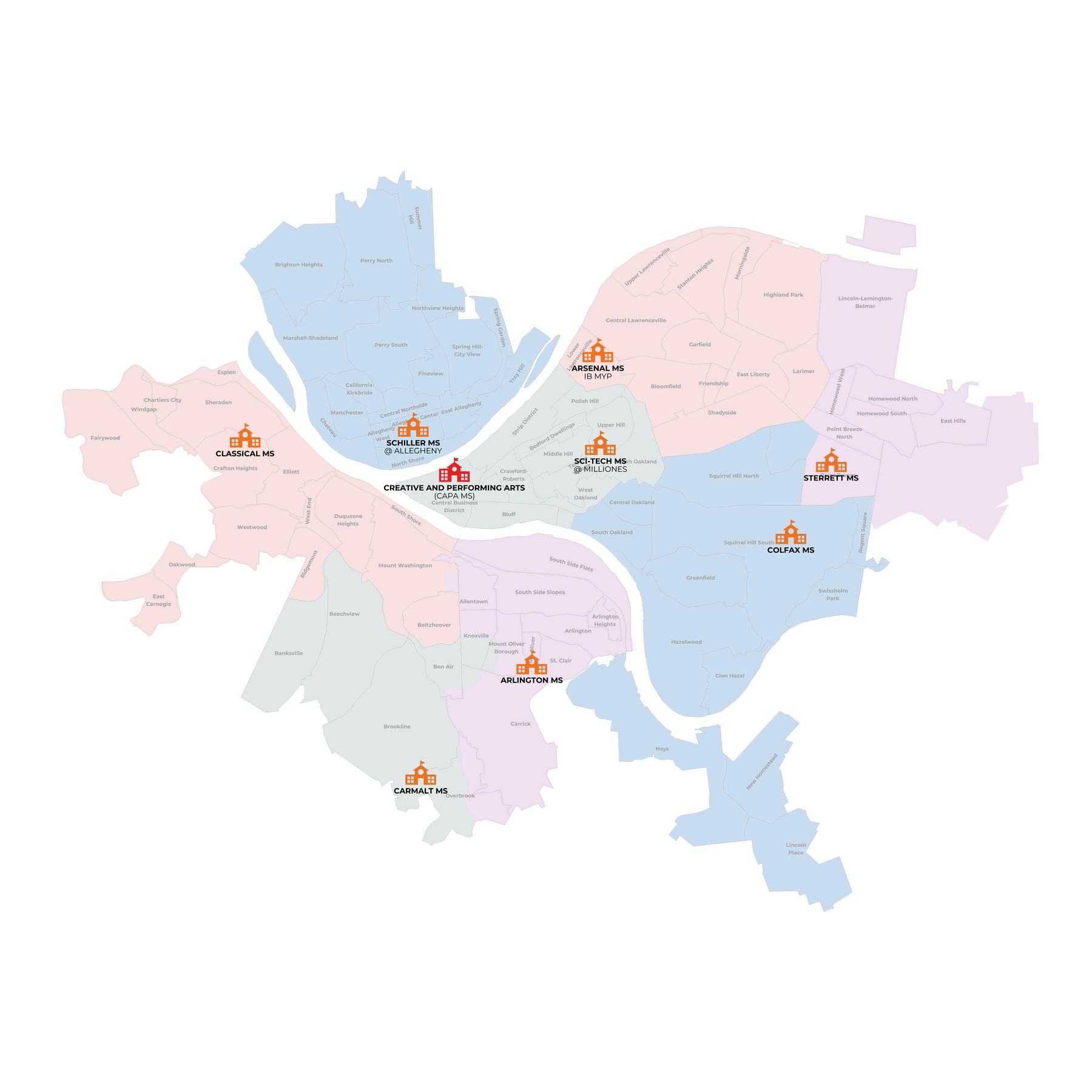
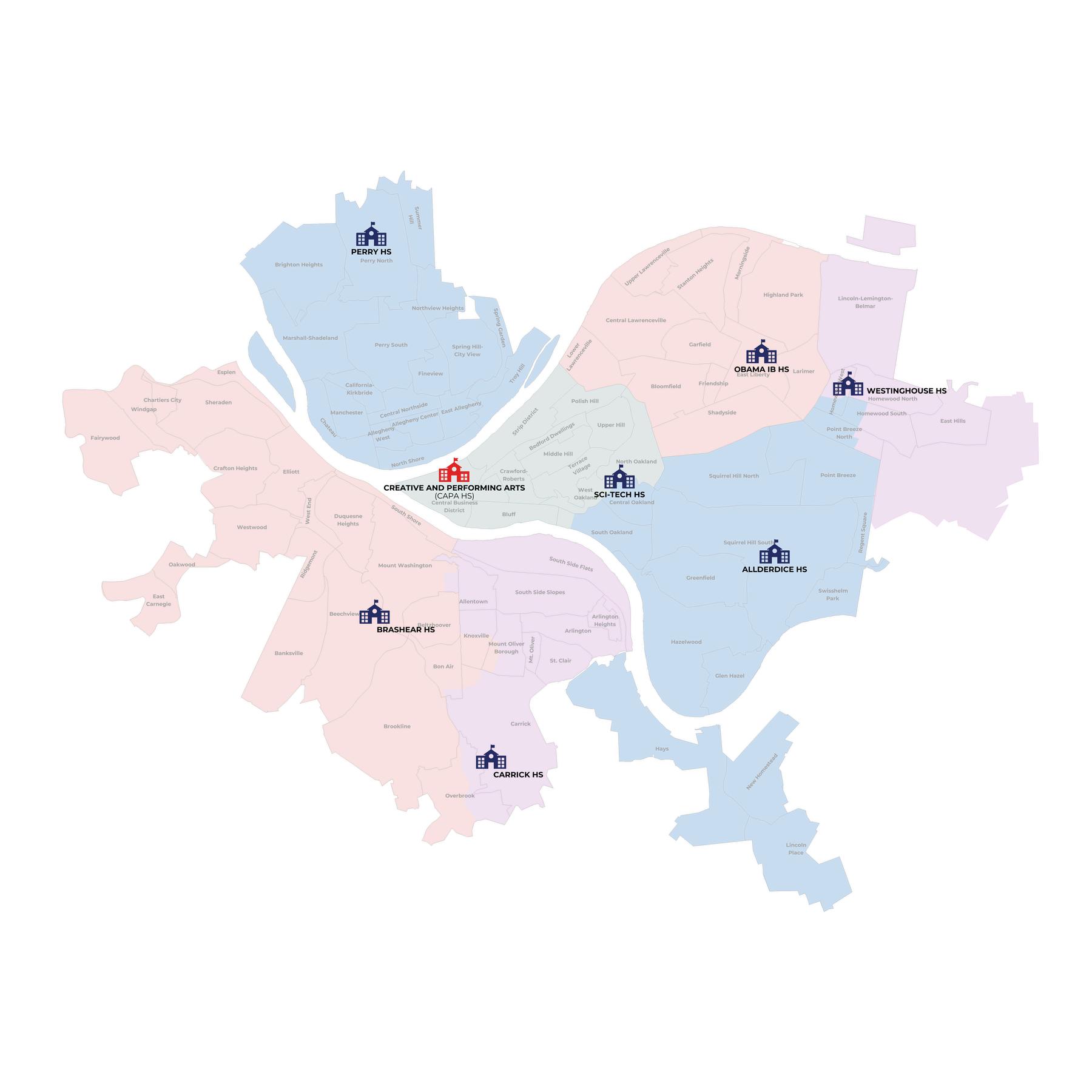
As part of the Future-Ready Facilities Plan, PPS has undertaken a comprehensive review and redesign of attendance zones and feeder patterns. This work addresses long-standing challenges, promotes equity, and ensures students move through school in clear and consistent pathways with their peers.
Why Change is Needed
Over the years, PPS attendance zones have changed gradually, often in response to shifting neighborhood populations or school program offerings However, without a districtwide review, these adjustments have led to uneven enrollment and challenges in ensuring equitable access and efficient operations
Enrollment Imbalances
Some schools are overcrowded while others operate far below capacity. This makes it difficult to deliver consistent academic and extracurricular opportunities for all students.
Geographic Barriers
Natural and built barriers like rivers, bridges, and highways can make school assignments less practical and transportation more complex
Attendance Zones & Feeder Patterns
Magnet Programs
Magnet schools and programs provide students with access to unique academic themes, specialized courses, and enrichment opportunities that strengthen the overall portfolio of PPS At the same time, they add complexity to neighborhood enrollment patterns because students from across the city may apply to and attend them instead of their assigned neighborhood school This sometimes results in uneven enrollment between neighborhood and magnet schools, complicates feeder pathways, and makes it more difficult to predict student numbers in individual buildings
Demographic Shifts
Neighborhood population changes, along with the placement of English Language Development (ELD) Centers, have concentrated enrollment pressure on certain schools At the same time, enrollment can be unpredictable, since some English Learner families may choose to attend their neighborhood school rather than an available center These dynamics create challenges in projecting and balancing enrollment across the District
These issues have left some schools with more students than they can accommodate and others with resources going underused Without action, disparities will persist and worsen
What About Pre-K?
At Pittsburgh Public Schools (PPS), the promise of tomorrow begins with our youngest learners. The District currently operates 85 Early Childhood (preschool) and six Early Head Start (infant/toddler) classrooms in 39 buildings across the District. Most of these classrooms are housed in Early Childhood Centers, which are not slated for changes under the FutureReady Facilities Plan.
While PreK students are not formally assigned to schools allowing families the flexibility to choose the program and location that best meets their needs the District is carefully considering the placement of Early Childhood classrooms to ensure continued access and equity. For Early Childhood classrooms located in elementary schools, those programs will move with their K–5 counterparts when applicable. This intentional approach preserves continuity of care and learning from PreK through grade 5
Importantly, the District’s grant funding requires that we serve a set number of children each year, meaning the total number of Early Childhood classrooms will remain consistent even if some classroom locations shift. The Operations and Facilities team is working closely with the Department of Early Childhood to ensure classroom placements align with community needs.
Attendance Zones & Feeder Patterns
How Attendance Zones and Feeder Patterns Were Developed
Initial Review with Experts
PPS began this process by engaging Education Resource Strategies (ERS), a national consultant, to provide recommendations for optimizing facilities use One of their recommendations was to hire a demographer to lead attendance zone realignment.
When proposals were solicited, however:
One lacked local knowledge and cost more than $200,000.
Another, priced above $270,000, could not fulfill the full scope of the work as outlined in the RFP
Moving In-House with Local Expertise
Instead of delaying or overspending, PPS decided to conduct this work in-house through the Data, Research, Evaluation, and Assessment (DREA) Department. This team brings:
Deep local knowledge of Pittsburgh’s neighborhoods and schools.
Historical data on enrollment patterns and school capacity.
Advanced Geographic Information System (GIS) tools that link addresses to schools and track utilization in real time
By using in-house expertise, PPS ensures that local realities guide decisions, while also being fiscally responsible.
Redesigning Attendance Zones
Redesigning attendance zones is a complex process that requires balancing student needs, school capacity, and community realities. PPS approached this work with the goal of creating stable, fair, and sustainable pathways for students while making the best use of District facilities.
DREA began the process with existing elementary attendance zones, refined with:
ERS recommendations, which highlighted areas of imbalance
Historic high school boundaries (i.e. Peabody, Schenley), to help define future neighborhood magnet schools.
Attendance Zones & Feeder Patterns
Using enrollment, building capacity, demographic, and transportation data, DREA applied advanced Geographic Information System (GIS) tools to model attendance zones. Elementary school boundaries were set first, then middle school, then high school.
Refinements were guided by five principles:
BALANCE ENROLLMENT
Aim for75–85% building utilization
Maximize facility use
Ensure efficient use of buildings
Strengthen feeder patterns
Maintain peer groups together
Correct legacy misalignments
Correct inconsistent, impractical boundaries or patterns that result in students passing one school to go to another
Respect geography
Avoid assignments requiring students to cross major barriers
Attendance Zones & Feeder Patterns
Updates Based on Data and Community Input
The redesigned attendance zones and feeder patterns are intended to ensure that all students have equitable access to high-quality academic and extracurricular opportunities including advanced coursework, arts programming, and specialized services for English Learners and students with disabilities By balancing enrollment and establishing consistent pathways, PPS can staff schools more effectively, reduce inequities in program access, and strengthen school communities
Staff and community input has been essential to shaping this work. Members of the District’s leadership team representing Operations, School Performance, Technology, and Communications conducted school walkthroughs with principals to confirm that each site can accommodate projected enrollment, including PreK, Programs for Students with Exceptionalities, and designated specialized spaces In addition, early feedback from families and community members at recent Community Conversations and Community Kickbacks has informed the following adjustments to the proposed attendance zones and feeder patterns
Lincoln/Belmar Feeder Realignment
As part of the effort to expand Pittsburgh Lincoln’s attendance zone and increase enrollment, some households in the Lincoln/Belmar area of the Westinghouse feeder pattern were initially slated to attend Arsenal 6–8 due to capacity limits at Pittsburgh Sterrett This would have required students to attend a middle school outside their designated pathway. In response to community input, the attendance zone has been realigned so that students in grades 6–8 who live in the Lincoln/Belmar area will now feed into Sterrett Middle School, ensuring a consistent and continuous pathway to Westinghouse High School.
Westwood/Langley Feeder Readjustment
A review of attendance zones for elementary students in the West End revealed that some students were passing Pittsburgh Langley to attend Westwood An initial adjustment was made to correct this issue, but it resulted in Westwood becoming significantly under-enrolled. To address this, the District reverted the attendance zones so that Westwood and Langley now reflect their historical feeder patterns, ensuring healthier enrollment at both schools.
Attendance Zones & Feeder Patterns
Garfield Neighborhood
To support balanced enrollment and sustainable attendance zones, the Garfield neighborhood boundaries have been adjusted to relieve enrollment pressures at Pittsburgh Liberty K-5 and strengthen enrollment at Pittsburgh Sunnyside PreK-5. In the initial release of the Find My School tool, all Garfield K–5 students assigned to Arsenal K-5 were slated to attend Liberty, which would have raised the school’s utilization rate to approximately 91%. As Liberty is also designated to serve as an English Language Development (ELD) Center, maintaining adequate space is essential to support a growing multilingual population
To achieve better balance, K–5 students living in the Garfield from Columbo to Black Street have been reassigned to Pittsburgh Sunnyside This adjustment increases Sunnyside’s projected enrollment from 315 students to 410 students (87% utilization) while reducing Liberty’s enrollment from 429 students to approximately 364 (77%). This targeted boundary realignment preserves program flexibility at Liberty, supports enrollment stability at Sunnyside, and ensures both schools can deliver high-quality instruction in appropriately sized learning environments.
Hill District
In response to concerns raised by families during a Community Conversation particularly about young students walking from the Upper Hill (Also known as Sugartop) neighborhood to Pittsburgh Weil and to address capacity challenges at Weil, the following attendance zone adjustments have been made:
Elementary Feeder Adjustment: The elementary feeder school for students living in the Upper Hill and North Oakland neighborhoods will now be Pittsburgh Liberty. This change affects approximately 46 students from Upper Hill and 7 students from North Oakland Notably, 15% of Upper Hill students (7) already attend Liberty, reflecting an existing community connection
ELD Programming: English Language Development (ELD) students who reside in the Upper Hill and North Oakland will also attend the ELD Center at Liberty, ensuring continuity of instruction and services.
Middle and High School Feeder Patterns: This change does not alter the existing attendance zones for Pittsburgh Science and Technology Academy (SciTech) 6–8 or SciTech 9–12. Students from the Upper Hill and North Oakland will continue to feed into SciTech 6-8 and SciTech 9-12 for Liberty will now serve as a feeder to both Arsenal 6–8 and SciTech 6–8, depending on the student’s attendance zone
Attendance Zones & Feeder Patterns
To balance enrollment and improve access to language services, the Weil ELD Center zone has been reduced to include only students who reside within Weil’s immediate feeder area Additionally, an ELD Center at Pittsburgh Dilworth has been established to serve students outside of the Weil and Liberty zones With this addition, Dilworth’s anticipated enrollment is projected at 307 students (62.4% utilization), supporting more equitable distribution of programs and services across the East End.
Faison and Lincoln Attendance Zone Adjustments
Currently, K–5 students living in the East Hills neighborhood are divided between Pittsburgh Faison and Pittsburgh Colfax. To simplify feeder patterns and reduce travel times for families, all K–5 students from the East Hills area will now attend Pittsburgh Faison.
With this change, Pittsburgh Faison’s enrollment is projected to exceed building capacity, particularly when accounting for the dedicated spaces needed to support students with exceptionalities To address this, Pittsburgh Lincoln’s attendance zone will expand north to include the area between North Lang Avenue and Murtland, adjusting a portion of Faison’s current zone.
This adjustment is expected to shift approximately 50 students to Pittsburgh Lincoln, bringing the school’s enrollment to about 88% of its total capacity. Among the students transitioning to Faison from East Hills, approximately 20 have Individualized Education Plans (IEPs) Of the students who will now attend Lincoln as part of the new boundary, 27 have IEPs
This realignment will also create a consistent feeder pattern for students in this area: Pittsburgh Lincoln → Pittsburgh Sterrett → Pittsburgh Allderdice.
West Liberty and Roosevelt Attendance Zone Adjustment
With the reconfiguration of Pittsburgh Arlington from a K-8 to 6–8 school, elementary students from the Mt Oliver Borough were initially divided between Pittsburgh Roosevelt and Pittsburgh West Liberty for grades K–5
Following a review of enrollment data and facility walkthroughs, approximately 50 K–5 students residing in the Mt. Oliver area between Brownsville Road and Hays Avenue down to South Borough Way who were previously assigned to West Liberty have been reassigned to Pittsburgh Roosevelt.
Attendance Zones & Feeder Patterns
This adjustment ensures that all K–5 students living in the Mt. Oliver and South End of Mt Oliver Borough will attend Pittsburgh Roosevelt, creating a consistent elementary assignment for the community It also supports healthy enrollment at Roosevelt while allowing Pittsburgh West Liberty, as the District’s designated English Language Development (ELD) Center for the area, to maintain sufficient space to serve a growing English Learner population, support students with exceptionalities, and alleviate overall capacity concerns.
Northside Transition- New Northview PreK-5
To relieve enrollment pressures at Pittsburgh Allegheny PreK–5 while awaiting the reopening of Pittsburgh Northview, an English Language Development (ELD) Center will be temporarily established at Pittsburgh Morrow during the transition years. The ELD Center will operate in Morrow’s primary building for the 2026–2027 and 2027–2028 school years, ensuring that students continue to receive language services in an accessible, stable environment.
During a recent PPS Kickback, families emphasized the importance of ensuring the Find My School tool includes accurate 2026–2027 and 2027–2028 information for those whose attendance zones will later shift to Northview in 2028–2029 These updates are reflected in the adjustments below
Morrow Transition
Grades 6-8 will transition to Pittsburgh Schiller relocated into the former Allegheny facility for the start of the 2026-2027 school year.
Neighborhood Assignments: Students in grades K-5 from Perry North and Summer Hill will continue to attend Morrow (primary building) until Northview reopens When that occurs, these neighborhoods will transition to Northview, while Morrow relocates to the smaller Rooney facility beginning in the 2028–2029 school year. Housing these neighborhoods at Morrow for two years minimizes the number of transitions for current students.
ELD Center Operations: The ELD Center at Morrow will serve K–5 ELD students from both the Morrow and Spring Hill attendance zones during the 2026–2027 and 2027–2028 school years, supporting approximately 38 students.
Alignment with Current Enrollment: This approach reflects existing patterns, as nearly 30 ELD families already attend Morrow
Future Transitions: If the plan proceeds as outlined, Morrow’s ELD students will transition to Northview beginning in 2028–2029, allowing for full program continuity and neighborhood alignment.
Attendance Zones & Feeder Patterns
Allegheny PreK-5 Transition
Allegheny K-5 would transition to the former King facility for the start of 20262027 school year King students in grades 6-8 would transition to Schiller (Allegheny) in 2026-2027
ELD Center Realignment: The ELD Center at Allegheny (current King PreK-8 location) will serve K–5 ELD students residing within its attendance zone, as well as ELD students from Northview (approximately 45 students total).
Community Continuity: Non-ELD Northview students currently attend Pittsburgh King. This plan allows Northview’s ELD students to join their neighborhood peers in the same building, fostering inclusion and community-building in advance of the Northview reopening
Transition to Northview: This phased approach ensures that all Northview students ELD and non-ELD transition together to the reopened facility in 2028–2029.
Projected Impact
This phased strategy will:
Reduce Allegheny’s enrollment to below 800 students during the 2026–2027 and 2027–2028 school years
Maintain program and service continuity for students and staff
Ensure ELD students transition alongside their peers when Northview reopens
Once Northview is operational, Allegheny’s enrollment is projected to decrease to approximately 519 students, restoring balance and capacity across the Northside network.
These refinements demonstrate PPS’s commitment to listening to families, reviewing feedback carefully, and making thoughtful adjustments to strengthen feeder pathways.
Attendance Zones & Feeder Patterns
UPDATED ALL SCHOOLS
Attendance Zones & Feeder Patterns
UPDATED ELEMENTARY SCHOOLS
ATTENDANCEZONE
Attendance Zones & Feeder Patterns
UPDATED MIDDLE SCHOOLS
MS=MIDDLESCHOOL(6-8)
MAGNETSCHOOL
Attendance Zones & Feeder Patterns
HIGH SCHOOLS
HS=HIGHSCHOOL(9-12)
MAGNETSCHOOL
How Families Can Find Their Proposed School Assignment
Understanding how proposed changes may affect students is a central priority for families. To support transparency and ensure accessibility, PPS has developed tools and resources that allow families to view proposed school assignments and feeder patterns
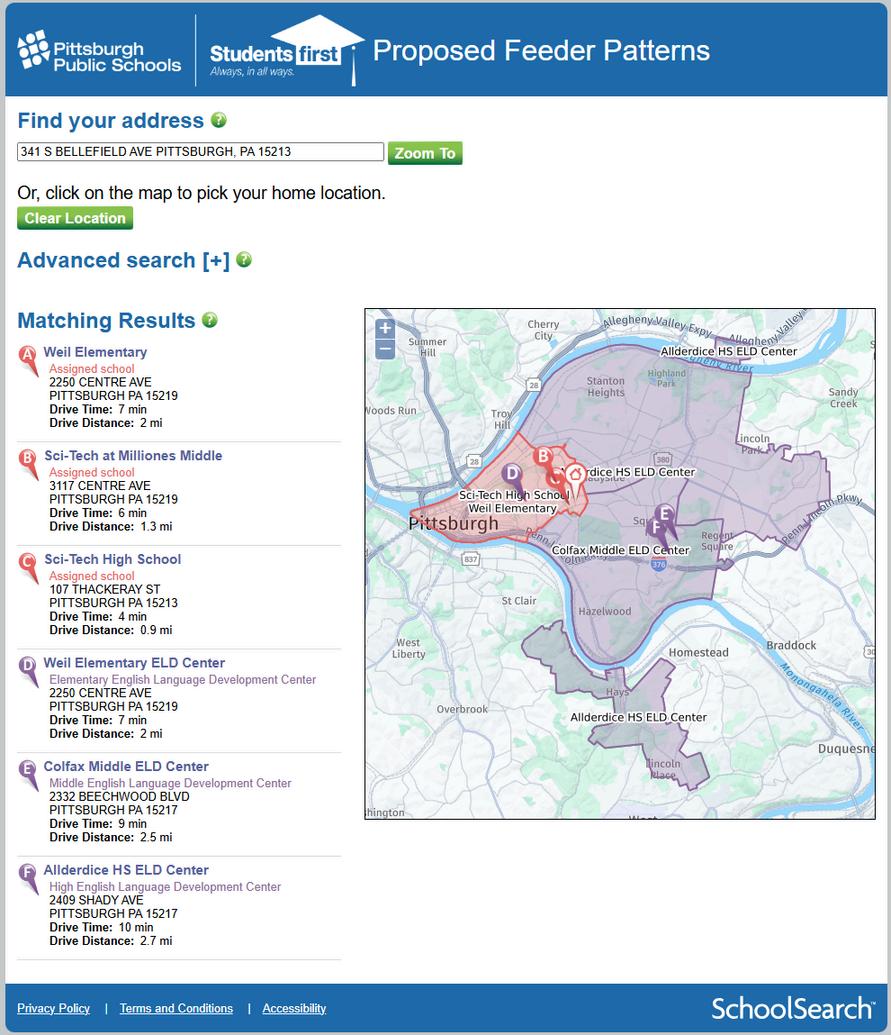
Find My School Tool
An interactive map on the PPS website allows families to enter their home address and immediately see their assigned school at each grade level. This tool highlights neighborhood schools, feeder pathways, and ELD centers
Attendance Zones & Feeder Patterns
Simplifying Enrollment for families
Online Enrollment System
When families register new or returning students for the 2026-2027 school year, the online enrollment system will use the child’s grade level and address to identify the correct school and confirm placement with a map view
Mailings and Communications
Families will receive letters confirming their child’s 2026–27 school assignment, even if their enrollment is unchanged. This ensures all families are informed.
FAQs and Translations
Instructions and resources will be available in multiple languages to make the process user-friendly and accessible
simplified
Attendance Zones & Feeder Patterns
Adjustments and Supports for Transitions
PPS recognizes that changes in school assignments can be stressful for students, families, and staff To ensure smooth transitions, the District is putting in place a series of supports that will help schools prepare and families feel confident about what comes next These supports are designed to provide timely information, minimize disruption, and keep lines of communication open as the new attendance zones and feeder patterns are phased in
To support schools and families during the transition:
Student Profiles for Schools: Receiving schools will be given profiles of incoming students by grade and subgroup, including historical academic, attendance, and behavior data This ensures principals and teachers are ready to welcome new students with the right supports in place.
System Updates: The Student Information System (SIS) will be updated with the new zones so school staff can plan enrollment, scheduling, and resources well in advance of the 2026–27 school year.
Transition Years: Clear temporary school assignments are built into the plan for the 2026–27 and 2027–28 school years, particularly for students affected by the phased opening of new schools. This prevents confusion and helps families understand what to expect throughout the transition.
Ongoing Feedback: As the plan advances, PPS will continue to monitor feedback from families and community members to inform ongoing implementation The District is committed to maintaining open communication and thoughtful consideration of stakeholder input
Attendance Zones & Feeder Patterns
Anticipated Benefits
The aligned attendance zones and feeder patterns will deliver a range of benefits for students, families, and schools. The new design primarily addresses the challenge of under-enrolled schools. By reducing the number of schools operating far below capacity, PPS can better align staff, programs, and resources with student needs. This means more schools will be able to offer the full range of experiences for students, from advanced courses to arts programs and specialized supports.
The plan also creates clearer and more consistent feeder pathways Predictable transitions mean students can move from elementary to middle to high school with their peers, which strengthens relationships and helps them feel supported during key milestones. Transportation is also simplified as new boundaries reduce assignments that require students to cross major barriers such as highways or rivers, making school travel safer and more practical.
Finally, these changes are designed to strengthen family confidence in school assignments Tools like the Find My School lookup give families a clear view of where their child will be assigned, while mailings, FAQs, and translations provide easy-tounderstand information Together, these efforts will ensure transparency and build trust as the new plan is put in place
Building Fair and Sustainable Pathways for the Future
Redesigning attendance zones and feeder patterns represents one of the most significant shifts in recent PPS history It directly affects where students enroll, how they move through the system, and what opportunities are available to them While change can bring uncertainty, this process is rooted in data, equity, and transparency PPS is committed to communicating clearly, listening to families, and supporting students and schools every step of the way.
By placing students first, the District is building attendance zones and feeder pathways that are fairer, stronger, and more sustainable for the future.
Future-Ready Implementation PLan
chapter four transportation plan
This Chapter Serves as a Direct Response to Board Request #5: Comprehensive transportation plan (including walkers + bus students) with rationale
plan
Optimizing Bus Use for Safety, Equity, and Efficiency
The Pupil Transportation Department is dedicated to enhancing student experiences Districtwide by providing safe, reliable, and equitable services. Every decision whether related to routing, walk zones, technology, or vendor contracts is centered on student safety and equitable access to schools. “Students First Always, In All Ways.”
By aligning services with school boundaries through the Fleet Optimization Strategy (Better Bus Use), the District will reduce overall trips, improve operational efficiency, significantly shorten ride times, and provide families with more predictable, reliable service. This strategy not only creates efficiencies but also strengthens trust and confidence in the transportation system.
The rationale for these changes is rooted in efficiency, safety, equity, and family experience. Fewer buses and shorter rides maximize learning time for students while minimizing fatigue, particularly for younger students. Student safety remains at the forefront, and although Pennsylvania guidelines allow elementary students to walk up to 1.5 miles and secondary students up to 2 miles, PPS will apply these rules with an equity lens making exceptions when neighborhood conditions require it There will be no transportation disruptions for families.
Family experience will also improve as new technology tools, such as bus-location apps, expand communication and transparency At the same time, proactive planning will ensure the District is prepared to respond to risks such as driver shortages, vendor performance issues, severe weather, fuel spikes, and disruptions to Pittsburgh Regional Transit services.
Daily trips will decrease from 986 to 402
The impact of the proposed changes outlined in the PPS Future-Ready Facilities Plan is significant Daily trips will decrease from 986 to 402, creating cost savings and greater scheduling reliability Walk zones will expand, shifting some students from buses to walking, with city partnerships ensuring safe passage through the use of crossing guards. Remaining bus routes will be more efficient, with reduced duplication and shorter ride times.
The benefits for students and families are clear: shorter, more consistent travel reduces tardiness and supports academic achievement, while reliable schedules and clear communication increase family confidence. Savings generated from these efficiencies will be reinvested into classrooms and student programs.
The financial impact is equally compelling. Mapping data provided by DREA confirms that no increase in costs is anticipated; in fact, significant savings will be achieved. For example, high school and middle school routes will generate approximately $136,440 annually in savings. Gifted Center transportation adjustments will save nearly $2 million, while magnet program changes will save an annual estimated $3.6 million
The Department also remains prepared to address challenges with Pittsburgh Regional Transit (PRT) Through continued use of the PRTner Pass program, close collaboration with PRT leadership, and case-by-case support for students, the Department will maintain service reliability even when disruptions occur Pittsburgh Regional Transit’s PRTner Pass program is designed to make public transit more accessible and affordable by partnering with employers, schools, and organizations. Through this program, participating institutions can provide their employees, students, or members with unlimited access to PRT bus, light rail, and incline services at a reduced cost. The initiative not only helps organizations support sustainable commuting but also encourages more people to use public transit, reducing traffic congestion and promoting cleaner air in the region. Average ride times will drop from 35.6 minutes to 16.9 minutes While technology investments such as the Stopfinder buslocation app piloted now and scheduled for full rollout by 2027–2028 will bring additional transparency and peace of mind for families
5.6 5.6 Estimated Annual Savings on Transportation
MILLION
On average, ride times will drop from 35.6 minutes to 16.9 minutes
At the same time, equity remains a priority. There will be no increase in transportation costs for ELD centers, and services for students with IEPs will be fully preserved, including wheelchair-accessible buses and vans, specialized service, and aide staffing when required. Boundary changes are expected to further reduce ride times for PSE students by placing services closer to home.
The District is also planning ahead for risks. To address driver shortages, we will continue contracting with twenty-two carriers, training additional staff, and maintaining surplus capacity. Vendor performance will be strengthened with clear accountability metrics and a more diverse vendor pool Severe weather coordination with city agencies, budget contingencies to offset fuel spikes, and flexible support for PRT outages will ensure service continuity Additionally, coordination with the City of Pittsburgh’s Public Safety Department will ensure that crossing guards are properly aligned with new walk zones, with updated maps shared with the Police Bureau and priority placed on high-traffic intersections during implementation. The District is also working with The City of Pittsburgh and the Safe Routes to School initiative to improve student safety and access, making sure new walking zones, crosswalks, and traffic patterns are supported by city infrastructure and family communication.
Students will experience shorter, more predictable ride times, while safe walking options will expand in partnership with the city Families will see improved communication and transparency through technology, and the District will realize cost savings that can be reinvested directly into classrooms and programs. Most importantly, equity will be preserved by maintaining uninterrupted access to specialized transportation services for students who need them most.
In conclusion, the Pupil Transportation Department’s will reduce daily bus trips from 986 to 402 and cut average ride times nearly in half, from 356 minutes to 169 minutes Consolidating routes and adjusting magnet program transportation will generate millions of dollars in savings while increasing flexibility for field trips and after-school programming Services for special education students will remain intact and strengthened. Key risks such as driver shortages, severe weather, and fuel costs will be mitigated through proactive partnerships and planning. Families will benefit from consistent schedules, better communication, and eventually Districtwide access to the Stopfinder bus-location app by 2027–2028. The next steps include finalizing vendor contracts, implementing new technology upgrades, and coordinating crossing guard coverage with the City’s Public Safety Department
Together, these changes will create a safer, more equitable, and more reliable transportation system for all Pittsburgh Public Schools students
Future-Ready Implementation Plan
chapter FIVE
Student Experience
This Chapter Serves as a Direct Response to Board Request #6: Indication of how the plan will improve students' experience with rationale
Advancing a Unified, Future-Ready Student Experience
The Future-Ready Facilities Plan is designed to strengthen every Pittsburgh Public Schools student’s day-to-day experience through coherent instruction, equitable access, and inspiring school environments The effort unites multiple departments under a single aim: that every child regardless of neighborhood, grade band, or program encounters consistent, rigorous, and culturally responsive learning that fosters belonging, purpose, and achievement.
A cohesive infrastructure supports this transformation. Standardized grade configurations (K-5, 6-8, 9-12) create a predictable educational journey and allow students to build relationships within developmentally appropriate communities The plan’s design ensures that students benefit from high-quality instruction, engaging enrichment, and coordinated wrap-around supports at every level Together, these shifts make transitions more seamless, strengthen identity and engagement, and guarantee equitable access to enrichment, advanced coursework, and whole-child
Student Experience
OFFICE of curriculum and instruction
The Office of Curriculum and Instruction is committed to ensuring that instructional changes outlined in the Future-Ready Facilities Plan directly enhance the student experience by providing consistent, rigorous, and equitable learning opportunities across all schools. Our focus is on providing consistent, rigorous, and culturally affirming learning opportunities across all schools so that every student has access to standards-aligned curriculum, high-quality instruction, and engaging environments. These priorities are designed to guarantee that every student has access to standardsaligned curriculum, high-quality instruction, and engaging learning environments, regardless of school transitions or neighborhood demographics
Rationale for Chosen Strategies
Instructional consistency across schools eliminates fragmentation, reduces inequities in program access, and ensures that transitions (e.g., from elementary to middle school) are academically and developmentally responsive By emphasizing coherence and teacher support through the Teaching and Learning Centers, we ensure that instructional practices improve student engagement and outcomes
Core Philosophy and Rationale
The instructional plan ensures that all students, regardless of where they attend school, receive rigorous, standards-based instruction Curriculum revisions in each content area reflect evidence-based strategies that accelerate learning, build strong academic identities, and prepare students for college, career, and life. Shifting to consistent grade bands (K–5, 6–8, 9–12) supports equitable access to specialized programming. For example, middle schools will provide developmentally responsive learning environments with increased offerings, while high schools will expand access to advanced courses, electives, STEM pathways, and career exploration
Student Experience
Underlying Philosophy
Our instructional approach is grounded in the principles of equity, excellence, efficiency, and whole-child, asset-based learning. Every student regardless of school or background gets access to challenging, culturally relevant learning experiences. This commitment is intentional, not left to chance
Guided by the work of Corwin’s Equity by Design: Delivering on the Power and Promise of UDL (2020), PPS is aligning instruction to ensure that Universal Design for Learning (UDL) principles are embedded across classrooms. Clear, standardsbased pathways from grade to grade provide consistent expectations and prevent learning loss during transitions. Streamlined grade bands and coherent pacing will reduce fragmentation, ensuring that time, staffing, and resources remain focused on learning.
Instruction must honor each student’s identity and voice, building joy, purpose, and agency alongside strong academics, so that every learner can thrive both personally and academically
Corwin. (2020). Equity by design: Delivering on the power and promise of UDL. Corwin Press https://wwwcorwin com/books/equity-by-design-269459
Student Experience
Rigorous and Culturally Relevant Learning
Aligned assessments and common benchmarks provide a consistent measure of progress across schools Teachers will use formative and performance-based assessments to identify strengths and needs quickly, ensuring that supports are activated early. Benchmark data will be shared across grade bands to inform interventions and enrichment, while six-week review cycles in the Teaching and Learning Centers will help educators refine instruction using real-time evidence of student growth.
Curriculum revisions across all content areas are guided by Dr Gholdy Muhammad’s Five Pursuits identity, intellect, skill, criticality, and joy so that students see themselves reflected in learning and experience academic challenge that is meaningful.
ELA & Social Studies: Literacy instruction grounded in the Science of Reading emphasizes complex texts, writing, and culturally relevant materials that affirm identity and strengthen comprehension.
Mathematics: A problem-based curriculum builds reasoning and confidence while expanding access to Algebra I for all eighthgrade students, removing inequities caused by small school size
While we have a high quality District-wide curriculum, not all students have access to advanced mathematics courses in the middle grades For example, currently 285 students (about 21%) of our 8th grade students attend a school that is unable to offer Algebra 1 in 8th grade due to the small size of the school. Under the new configuration, those students would have that opportunity.
Student Experience
Science & STEAM: Inquiry-based, phenomena-driven lessons, aligned to STEELS standards, nurture curiosity and connect local, real-world issues to academic content. STEAM education moves from limited enrichment to universal exposure, expanding access for 100% of students by Year 3
The guiding rationale for our curriculum and program shifts in STEAM is a commitment to a paradigm shift, from a model of limited access reserved for only a handful of students to one of a comprehensive, equitable opportunity for all students This philosophy is grounded in the belief that a robust STEAM education is no longer an enrichment program for a select few but a fundamental imperative for preparing every student to navigate the complexities of the modern world and unlock future-ready career pathways.
Arts & World Languages: Expanded programs engage creativity, build global competence, and promote joy in learning through authentic performance and communication. The shifts for World Languages makes sure every student has the chance to learn a world language from elementary school through high school. While in the Arts, students will have opportunities to engage in the full range of artistic processes (creating, presenting/performing, responding, and connecting) in arts courses through experiential, inquiry-based learning rooted in curiosity and lived experience
Career Exploration: Middle-grade students will engage in handson, standards-based projects that connect classroom learning to real-world careers.
A structured and hands on intentional curriculum based on PA Academic Standards for Career Education and Work and National Career Clusters will allow students to build awareness of career options in the early grades, deepen exploration and skill development in middle school, and make more informed choices about pathways in high school and beyond
Student Experience
Collaboration and Professional Growth
New Teaching and Learning Centers for elementary, middle, and high school levels will serve as hubs for collaborative professional learning. Teachers will participate in six-week cycles of coaching, model lessons, and joint planning, ensuring consistency in instruction and access to high-quality practices across the District.
Time for Professional Learning Communities will be embedded in schedules so teachers can co-plan lessons, review student data, and share successful strategies, ensuring that instructional quality is strong and coherent across schools
Helping families feel confident about continuity
Families will receive clear, accessible information about what their children are learning and how curriculum changes improve outcomes Visual guides, FAQs, and videos will explain grade-band alignment, course offerings, and supports Regular updates through newsletters, family nights, and digital platforms will reinforce transparency and trust Principals and teachers will be equipped with shared talking points to ensure consistency across schools.
Student Experience
Equitable Scheduling and Access
The new Educational Delivery Model will standardize course access and eliminate conflicts that limit enrichment. Common bell schedules, protected intervention and enrichment blocks, and equity “guardrails” will ensure every school offers the same opportunities. Using scheduling simulations, schools can anticipate needs and make adjustments early. Student voice surveys will guide new elective offerings, ensuring relevance and equity in access to advanced courses and extracurriculars
Expanded opportunities are being built into every student’s schedule, not reserved for select schools or programs
Arts
Structured progression from K–8 ensures every student experiences both performing and visual arts, with middle-school programs connecting identity, culture, and creativity
STEAM
Integrated into the K–8 core curriculum, expanding access from 15% to 100% of middle-grade students
Career Exploration
A structured elective in Grades 6–8 will connect learning to career readiness, using e-portfolios and community partnerships
World Languages
Starting in Grade 3, students will have continuous exposure through graduation, including heritage language and accelerated pathways
Student Experience
Office of Professional Learning
The Office of Professional Learning directly ties adult learning to improvements in engagement, belonging, and achievement Teachers receive training in inquiry-based, collaborative, and technology-enhanced instructional strategies, while leaders and support staff engage in restorative and culturally responsive practices that create inclusive, welcoming classrooms.
Job-Embedded Learning and Coaching
Rather than one-time workshops, learning occurs in the flow of daily work Coaching cycles pair educators with content specialists who model lessons, co-teach, and provide feedback. Peer observations promote collective accountability and professional pride.
The new Teaching and Learning Centers function as innovation hubs. Teachers can observe exemplary instruction, rehearse new strategies, and reflect on their impact. Leaders use walkthroughs to celebrate strong practice and provide targeted support, ensuring that adult learning is visible and sustained
Feedback and Continuous Improvement
Professional learning effectiveness will be measured through multiple lenses: classroom observations, student engagement data, and staff surveys. Insights will feed into a continuous improvement loop managed by the Professional Learning Steering Committee, aligning offerings with district priorities and ensuring timely, high-quality delivery
By embedding growth within practice and aligning it to measurable outcomes, the District creates a culture where professional learning is not an event, but an expectation and a shared pathway to student success.
Start structured walkthroughs and coaching cycles to monitor progress with implementation
Utilize templates for feedback loops during structured walk-throughs and coaching cycles
Begin District-wide collaborative team meetings
Open K-5 Teaching and Learning Center pilot
Continue structured walkthroughs and coaching cycles to monitor progress with implementation
Utilize templates for feedback loops during structured walk-throughs and coaching cycles
Continue District-wide collaborative team meetings
Evaluate K-5 Teaching and Learning Center pilot
Meet with Office of Professional Learning Steering Committee for feedback and determining action steps
Q1 Q2
Continue District-wide collaborative team meetings
Continue structured walkthroughs and coaching cycles to monitor progress with implementation
Utilize templates for feedback loops during structured walk-throughs and coaching cycle
Pending recommendation of pilot Teaching and Learning Center, proceed with preparations for Middle School Teaching and Learning Center and High School Teaching and Learning Center (school designation, teacher identification, professional learning)
Prepare for Summer Leadership Academy 2027
Collect feedback and assess effectiveness
Collaborate with departments to review learning pathways to adjust and strengthen
Meet with Office of Professional Learning Steering Committee to report progress, receive feedback and determine action steps
Continue preparations for Summer Leadership Academy
Q3 Q4
The Office of Professional Learning is prepared to take the next steps in advancing this vision. In Fall 2027, the District will launch a pilot for the Teaching and Learning Center, with plans for expansion across grade levels. The office will present its revised professional learning system to the Executive Cabinet, ensuring alignment with strategic goals and accountability for results.
Ongoing data and feedback will guide continuous improvement, and partnerships across central office departments will sustain equity, excellence, and effectiveness
Through this work, the Office of Professional Learning will ensure that every student in the district experiences a supportive, engaging, and high-quality education that prepares them to thrive
Student Experience
Office of SCHOOL PERFORMANCE
Building Culture and Readiness from Day One
In collaboration with a cross-functional PPS team, the Office of School Performance will assist will assist with the coordination of all transition efforts, ensuring alignment with district priorities and consistent progress monitoring through scheduled checkins and data reviews The goal is to create conditions where every student experiences a seamless transition, a sense of belonging, and rapid academic acceleration within the first 90 days.
Strengthening Transitions and Belonging
Preparation for change begins months before students arrive
Early Needs Identification: Power BI dashboards surface academic and socialemotional needs early (attendance, behavior, course history, screening data) to inform placement, supports, and outreach.
Transition activities build readiness and relationships.
Peer Mentoring: Trained student ambassadors connect with incoming students prior to day one and host follow-up touchpoints in the first month.
Family Onboarding: Multi-lingual orientations, campus tours, and transition meetings to reduce uncertainty and establish two-way communication
All middle schools will implement the Ron Clark Academy House System to build a shared culture where belonging is intentional, not left to chance. The system will feature common houses and colors, consistent behavior expectations, and a rubric aligned with PPS values. Schools will launch with a sorting and house reveal, followed by advisory lessons on belonging, goal setting, and restorative practices.
Throughout the year, students will engage in weekly house challenges and monthly recognition events supported by staff training on consistency and celebration. Equity reviews will ensure points, recognitions, and consequences are monitored by subgroup to prevent disproportionality. Together, these efforts will create smaller communities of care, promote pride and accountability, and strengthen student connections. The Office of School Performance will oversee implementation and provide ongoing support.
Student Experience
Equitable Access to Quality Resources
Neighborhood magnets will implement the same high-quality core curricula, enrichment, and technology as all district schools. Staff will participate in standardized professional learning, and facilities modernization will include equitable access to labs, arts studios, and digital resources.
Sustained Support for
Alternative
Education Transitions
With the closure of the Student Achievement Center (SAC), all students will return to their assigned high schools to receive in-school credit recovery supports Each student will have a personalized transition plan that follows them to their home school, with dedicated counselors monitoring progress through weekly check-ins and ongoing collaboration with families. Core services, including counseling, social work, and behavioral health, will continue without interruption. The middle school Overage Program will sunset with the SAC closure.
Student Experience
Program for Students with Exceptionalities (PSE)
Inclusive Design and Continuity of Services
As Pittsburgh Public Schools enters a period of building reconfiguration to better align facilities and programs with current enrollment and evolving student needs, this transition presents both challenges and opportunities for the Program for Students with Exceptionalities (PSE). The District must ensure not only compliance with all federal and state mandates for accessibility and service continuity, but also that every student with a disability experiences a welcoming, inclusive environment from the very first day in a new setting
The strategies outlined within this plan are designed to uphold those commitments. Retaining many specialized classrooms in their existing locations preserves trusted relationships and familiar routines, easing anxiety for students and families. All reconfigured spaces are built or renovated to exceed ADA standards, with thoughtful design elements - such as in-room bathrooms for K–2 Autistic and Emotional Support classrooms, nearby sensory areas, and flexible zones for calm-down and learning activities that reflect the day-to-day needs of exceptional learners
Leadership preparation and collaborative practice are equally central to success Principals and general education staff are positioned as joint stewards of inclusion, supported through professional learning in co-teaching models, culturally responsive instruction, and positive behavior supports. In parallel, transparent communication and authentic family engagement ensure parents have an informed and active role in transition planning, fostering trust and confidence throughout the process
Together, these actions transform a complex facilities reconfiguration into a meaningful opportunity to advance equity, inclusion, and excellence for every student.
Student Experience
Rationale for Chosen Strategies
The selected strategies are grounded in evidence-based practices shown to improve outcomes for students with disabilities and to strengthen whole-school culture. Prioritizing in-place programming where feasible preserves continuity of services and trusted relationships, which research links to stronger academic and social-emotional growth Purposeful facility design, such as integrating sensory rooms, in-class bathrooms for K–2 Autistic and Emotional Support programs, and flexible PSE spaces creates environments that support individualized instruction and proactive behavior supports
Empowering principals and general education staff to view all students as part of one unified school community builds collective ownership and raises expectations for inclusion. Professional development in co-teaching, culturally responsive practices, and positive behavior supports equip educators with the tools to translate this mindset into daily practice Finally, consistent, two-way communication with families ensures that decisions reflect lived experience and fosters trust, which is critical for successful transitions and long-term partnerships
Leadership and Staff Development for Inclusion
Principals and general education staff will set the tone for a school culture where every student is valued They will ensure that Special Education classrooms are not relegated to the smallest or most remote spaces, but are integral, visible parts of the school Principals will lead by example embracing all students as our students rather than “your” or “my” students and will provide ongoing professional development, so all staff understand their shared responsibility for inclusive practices. Through intentional leadership and collaboration, every educator will help create a welcoming environment that supports the success of exceptional learners alongside their peers.
Family Partnership and Communication
Ongoing, transparent communication with families ensures confidence in placement and support decisions. Families participate in transition planning meetings and have multiple channels for feedback, reinforcing trust and collaboration.
Student Experience
Allderdice9-12
east + central south + west
Colfax6-8
GreenfieldK-5
MifflinK-5
MineadoK-5
Sci-Tech9-12
Sci-Tech6-8@Milliones
WeilK-5
ObamaIB9-12
Arsenal6-8
LibertyK-5
SunnysideK-5
Westinghouse9-12
Sterrett6-8
DilworthK-5
FaisonK-5
LincolnK-5
Perry9-12
full magnets north
Schiller6-8@Allegheny
AlleghenyK-5@King
MorrowK-5
NorthviewK-5
Brashear9-12
Carmalt6-8
Classical6-8
BanksvilleK-5
BeechwoodK-5
BrooklineK-5
LangleyK-5
PhillipsK-5
WestwoodK-5
WhittierK-5
Carrick9-12
Arlington6-8
ConcordK-5
GrandviewK-5
RooseveltK-5
WestLibertyK-5
CAPA6-12
MontessoriK-5
Student Experience
GIFTED AND TALENTED DEPARTMENT
The Gifted and Talented Department ensures that enrichment and advanced learning are no longer limited to select programs but become a fundamental feature of every PPS school. Integrating gifted services across the District creates a more equitable system one that honors diverse talents and recognizes excellence in all neighborhoods.
The model is grounded in the belief that students thrive when they are both challenged and seen By embedding enrichment into daily instruction, the District will broaden the definition of giftedness to reflect intellectual curiosity, creativity, and persistence not just test performance This inclusive approach gives students in all schools access to advanced inquiry and deeper learning experiences
Students will engage in projects that encourage them to ask questions, solve authentic problems, and make connections between content areas. Teachers will design cross-curricular experiences that allow students to demonstrate mastery through creation, collaboration, and research. This not only enhances academic rigor but also promotes joy, confidence, and self-direction in learning
Framework for Culturally Relevant Excellence
The enrichment framework draws on Dr Gholdy Muhammad’s Five Learning Pursuits identity, skill, intellect, criticality, and joy and Dr Gloria Ladson-Billings’ Culturally Relevant Pedagogy Together, these approaches help teachers design lessons that center students’ cultural and community identities while cultivating advanced thinking skills.
Classroom activities will: Encourage students to pursue self-selected topics that connect to real-world challenges.
Integrate literacy, research, and presentation skills into enrichment projects. Emphasize inquiry, collaboration, and creativity as hallmarks of excellence
Through this framework, gifted education becomes not a separate track but a mindset an expectation that every child will engage in high-level thinking and meaningful work
Student Experience
Professional Learning and Leadership Development
To sustain this vision, the District is investing in educator capacity. Teachers will receive training in equitable identification practices, differentiation, and enrichment design. Gifted Liaisons and Instructional Coaches will model the Schoolwide Enrichment Model (SEM) in classrooms and guide teams in adapting it to their context.
Leadership development will unfold in three phases:
Foundation and Learning Implementation and Integration Leadership and Sustainability
Foundational learning in equitable identification, GIEP compliance, and culturally relevant enrichment
Transition to schoolembedded model with Gifted Educators in every K-5 and 6-8 school
Leadership institutes that focus on sustaining systems, mentoring new administrators, and embedding gifted practices into ongoing school culture.
The result will be a District-wide enrichment culture that recognizes talent broadly and nurtures it intentionally, ensuring that curiosity and excellence are accessible to every learner.
Student Experience
Office of Information Technology (OIT)
Technology as a Catalyst for Modern Learning and Equity
The Office of Information Technology (OIT) is leading Pittsburgh Public Schools (PPS) into a new era of innovation, equity, and efficiency As the District reimagines its learning environments under the Future-Ready Facilities Plan, OIT ensures that every student and educator regardless of school assignment has equitable access to reliable devices, modern infrastructure, and digital systems that transform classrooms into connected, future-ready spaces.
Reliable technology infrastructure is the foundation of equitable learning. When students have uninterrupted access to secure devices, high-speed connectivity, and adaptive tools, they can engage with rigorous content, collaborate authentically, and demonstrate learning in ways that mirror the modern workplace
Building a Future-Ready Digital Foundation
As the current practice, every student and staff member will receive a District-issued device that travels with them across grade levels promoting continuity, accountability, and equitable access. Each device is tracked through asset management systems, ensuring accurate accountability and sustainable refresh cycles.
To support reconfigured and newly designed schools, OIT is expanding wireless access points (WAPs), upgrading network equipment, and deploying ClearTouch interactive panels in every classroom to enable flexible, high-bandwidth instruction These upgrades ensure every learning space is digitally equipped from the first day of operation, supporting collaboration, video conferencing, and multimedia learning. The result is a consistent digital foundation that enables every PPS school, regardless of size or location, to operate as a connected, efficient, and secure hub for teaching and learning.
Student Experience
Enhancing Engagement Through Innovation
Tomorrow’s classrooms will operate less like traditional lecture spaces and more like innovation studios dynamic environments where students create, collaborate, and problem-solve through authentic learning experiences Teachers will design lessons that use technology to cultivate communication, critical thinking, teamwork, and digital citizenship, supported by clear rubrics and published exemplars that define what high-quality, tech-integrated learning looks like.
Classrooms PreK–12 will function as collaborative creation hubs, where every student’s device becomes a tool for exploration, problem-solving, and authentic expression. Teachers will use real-time feedback and formative assessments to guide instruction and regroup students dynamically, while adaptive digital platforms personalize lessons to meet individual learning needs
Students will produce digital stories, data visualizations, and virtual lab experiments, collaborating across classrooms and schools to solve real-world problems. Partnerships with community organizations will extend learning beyond school walls. Students might design a neighborhood sustainability dashboard or a publicservice campaign while building critical skills in creativity, communication, and digital citizenship
Equitable access, universal design principles, and digital student portfolios will ensure that every learner can engage, create, and grow in a truly connected district. Through the integration of Microsoft 365 A5 tools including Teams, OneNote, Whiteboard, and Clipchamp teachers and students will connect across schools, share projects, and receive feedback in real time. ClassLink Analytics+ will provide insight into digital engagement patterns, helping principals and educators tailor professional learning and ensure every technology investment directly improves student outcomes
Student Experience
Equity Through Access, Inclusion, and Data
Technology is central to PPS’s equity mission OIT’s systems are designed to ensure every family and student has meaningful access to learning, communication, and support
Innovations such as translation kiosks, Pocketalk devices, and multilingual parent portals connect families to schools in their preferred languages, eliminating barriers to engagement. Automated communication tools and Microsoft Bookings simplify scheduling, while Counselor Connect and GradTrak empower staff to monitor counseling sessions, graduation readiness, and academic supports for vulnerable populations
To extend access and digital confidence beyond the school day, OIT will introduce evening technology classes for parents and students, hosted in school buildings and community locations. These night sessions will help families learn how to use district platforms, manage student devices, navigate online learning tools, and understand digital safety. By building digital literacy at home, PPS ensures that technology becomes a shared tool for connection, learning, and empowerment across generations.
By unifying data and communication systems, OIT enables targeted interventions and transparent reporting, ensuring that technology strengthens, rather than widens, opportunity gaps
Student Experience
Data-Driven Operations and Cybersecurity
A modernized district data warehouse and real-time dashboards provide leaders with visibility into technology usage, device distribution, and performance metrics. This data-driven approach improves decision-making and accountability, ensuring resources reach the students and schools that need them most.
Simultaneously, OIT is advancing cybersecurity through multi-factor authentication (MFA), districtwide phishing simulations, and cybersecurity awareness training videos that build a culture of digital safety across all PPS users Together, these efforts protect student data, ensure operational continuity, and prepare the District to meet evolving digital security standards
Preparing Students for the Future
Technology integration is shaping a generation of PPS students who are confident digital citizens and innovative problem-solvers Through project-based learning, multimedia creation, and collaborative tools, students are developing transferable skills in creativity, communication, and digital literacy skills essential for success in college, career, and civic life in a rapidly evolving world.
Conclusion: Technology as the Core of Future-Ready Schools
As PPS reimagines its facilities and instructional environments, the Office of Information Technology stands as the backbone of innovation. Through reliable infrastructure, inclusive systems, and transformative teaching tools, OIT ensures that technology is not just an operational support, but as a catalyst for equity, creativity, and excellence for every Pittsburgh student.
Student Experience
Office of Student Support Services
The Office of Student Support Services plays a vital role in ensuring that every child has access to a high-quality education and the supports necessary to thrive academically, behaviorally, socially, emotionally, and physically By aligning services across schools, the District is building a comprehensive, integrated support system that centers students and strengthens collaboration among staff, families, and community partners.
This coordinated approach advances equity by ensuring consistent and fair access to services across all schools, with a particular focus on reducing disparities for our most vulnerable populations. It improves student outcomes through targeted interventions that address engagement, social-emotional growth, physical health, athletics, attendance, and academic achievement. The office also promotes safety and well-being by offering proactive wellness services and reducing the need for crisis-based responses
Through a unified, district-wide framework, the Office of Student Support Services increases efficiency and alignment, reducing fragmentation and duplication of efforts at the school level. Finally, by leveraging partnerships with families and community organizations, the office expands the network of support available to students ensuring that every learner is seen, supported, and set up for success
Expanding ENGAGEMENT IN Athletics
A comprehensive K–12 athletics strategy will expand participation, align facility use, and improve transportation logistics so that every student can benefit from extracurricular involvement.
Athletics are more than physical activity they cultivate leadership, teamwork, and pride. The District’s unified approach will: Increase access to sports opportunities for younger students and underrepresented groups.
Modernize facilities and equipment to ensure equity across schools
Connect athletics to college and career pathways through coaching, officiating, and sports management experiences
These investments build stronger school communities, reinforce positive culture, and promote health and wellness
Student Experience
Strengthening Culture and Safety Through Restorative Practices
Restorative practices will serve as a cornerstone for creating safe, supportive school environments. Instead of relying solely on punitive measures, PPS will emphasize proactive relationship-building, reflection, and accountability.
Implementation will include:
Integration Weeks that orient students to their new schools and emphasize shared values and expectations
Advisory Programs that provide structured opportunities for connection and dialogue.
Restorative Circles and peer mediation to address conflict constructively and restore community trust.
These practices not only reduce discipline disparities but also strengthen belonging, empathy, and respect among students and staff
Comprehensive Health and Wellness Systems
Student well-being underpins every academic and cultural initiative. The District is standardizing medical and behavioral health protocols to ensure consistent quality of care. Each building will maintain reliable nursing coverage, access to counseling, and direct communication with families about health and wellness.
Partnerships with local health agencies and universities will expand services related to mental health, nutrition, and physical fitness The Office of Health Services will coordinate care and ensure that every family knows how to access resources. Together, these strategies advance a holistic approach to education that nurtures the body, mind, and spirit of every learner.
Student Experience
Conclusion and Next Steps
Moving from Planning to Action
The Future-Ready Facilities Plan represents a unified, district-wide commitment to reimagining the student experience. It aligns curriculum, professional learning, technology, and support systems around a single vision: Students First Always, In All Ways.
The Plan will guide a multi-year implementation process that balances operational realities with the urgent need to improve outcomes for all learners Through deliberate coordination among departments, schools will open each year ready to deliver engaging, equitable, and high-quality instruction.
Immediate Priorities
In the months ahead, the District will focus on several key actions to ensure smooth execution:
Finalizing curriculum maps and pacing guides across all content areas
Launching Teaching and Learning Center coaching cycles and embedded PLC structures
Completing ADA and facility readiness reviews to guarantee safe, accessible spaces.
Standardizing restorative and health protocols District-wide.
Scaling equitable scheduling models and monitoring course availability by school.
Publishing clear, family-facing roadmaps that outline pathways, programs, and timelines
Student Experience
Sustained Accountability and Feedback
PPS will monitor progress using key equity indicators student enrollment, course access, academic growth, and sense of belonging disaggregated by race, gender, and disability status Feedback loops from students, families, and educators will inform quarterly reviews and adjustments
A public-facing dashboard will share metrics and milestones, reinforcing transparency and accountability. Continuous improvement will remain the foundation of the Plan’s success.
Lasting vision
Ultimately, the Future-Ready Facilities Plan is not just about reconfiguring buildings, it is about reimagining what learning looks like and feels like for every Pittsburgh student. Through aligned instruction, equitable access, and whole-child support, PPS is building a system where every child can thrive academically, socially, and emotionally.
This work honors the District’s ongoing promise: to create a future where every student is known, challenged, and celebrated - a future built on the unwavering principle of Students First Always, in All Ways.
Future-Ready Implementation Plan
chapter six
Equity in Student Support
This Chapter Serves as a Direct Response to Board Request #7: Addressing support for students facing greatest challenges (i.e. African-American, Economically Disadvantaged, students with IEP, and English Language Learners)
Equity as the Quality Bar
In Pittsburgh Public Schools (PPS), the measure of quality is equity The District’s Future-Ready Facilities Plan is about more than buildings and boundaries It is about ensuring that every child, in every neighborhood, experiences continuity, stability, and opportunity As PPS moves forward with school reconfigurations and program realignments, the District’s guiding principle remains clear: the quality bar for this work is whether it improves the daily experience of students who face the greatest barriers to success.
More than 16,000 students, over 83 percent of the District’s enrollment, identify with one or more of the groups most impacted by systemic inequities: African American and Brown students, English Learners, students with Individualized Education Programs (IEPs), and those from low-income families For these students, success will not be measured by construction timelines or enrollment charts, but by whether their new school environments are places of belonging, support, and academic growth. While all students experience change during transitions, the impact is not felt equally. History and data show that African American students continue to face disproportionate discipline, limited access to advanced courses, and too few teachers of color Students with IEPs or 504 plans are at risk of service interruptions when schools close or merge English Learners may encounter barriers when language supports are not available in new settings, and economically disadvantaged students can lose access to critical services such as afterschool care, nutrition programs, and mental health supports.
For PPS, addressing these inequities is not an add-on it is the foundation of the Future-Ready Facilities Plan. The District’s approach centers on one belief: continuity equals equity. Ensuring that students maintain consistent supports, stable relationships, and clear communication through change is the most effective way to protect their learning and well-being
Equity in Student Support
four core strategies
To help students and families experience transitions as smooth and positive, PPS is implementing four interconnected strategies that reflect national best practices and local lessons learned
Guaranteeing Service Continuity
Every student will carry their supports with them, not lose them in the move IEP, 504, and English Language Development (ELD) services will follow each student between sending and receiving schools Program officers, case managers, and principals will coordinate directly to ensure that services begin on day one at the new site.
The expansion of ELD Regional Centers plays a major role in this effort. By establishing additional Regional Centers across the city, PPS brings ELD instruction closer to home for families and ensures that certified staff are available in every region This eliminates long commutes, provides more consistent instruction, and allows families to remain active partners in their child’s learning Translation and interpretation services, both human and technology-assisted, will supplement existing tools to ensure that no family misses critical information about their child’s education.
Stabilizing Relationships
Relationships are at the heart of learning. When schools change, PPS will seek to prioritize the adults students know and trust. Whenever possible, familiar staff will move with students to maintain continuity of care.
To reinforce this support network, PPS is strengthening its partnerships with community organizations such as the Department of Human Services (DHS), Out-of-School-Time providers, and behavioral health agencies. Together, they will help meet the broader needs of students and families from socialemotional counseling to food access and mentorship.
Equity in Student Support
Intentional Communication
Families will not be left to figure things out on their own Each family will receive a translated and ADA-accessible welcome packet with information about services, programs, and key contacts. PPS will use a multi-channel communication planemail, text, postal mail, school apps, and social media - to provide regular updates.
Every school will have a designated point of contact to answer questions and address challenges quickly This approach ensures that information is accurate, accessible, and timely, particularly for families of English Learners, students with disabilities, and those new to the District.
Cultural and Symbolic Supports
Transitions can be emotional for students. To help them feel a sense of belonging, receiving schools will organize Walk-theRoute activities, open houses, and Social-Emotional Learning (SEL) activities to help students connect with their new peers and teachers. Transition days and special after school events will mark the beginning of a unified school Community
These symbolic gestures send a powerful message: students are not outsiders being moved from one building to another they are valued members of their new school family.
Equity in Student Support
Evidence-Based Foundations
PPS strategies are grounded in proven research:
Multi-Tiered Systems of Support (MTSS) Studies show that MTSS frameworks combining academic, behavioral, and social-emotional interventions significantly increase student achievement and reduce disciplinary incidents. PPS’s layered supports, including school-based counseling, sensory rooms, and BCBA collaboration, reflect MTSS principles
Culturally Responsive Practices Research by the Council for Exceptional Children emphasizes that culturally responsive teaching and behavioral planning reduce disproportionality in discipline and special education identification. Training staff in culturally responsive strategies aligns with these findings.
Family–School Partnerships According to the National Center for Parent Information and Resources, regular family engagement and two-way communication are key predictors of improved IEP outcomes PPS’s structured feedback loops, parent surveys, and advisory groups are designed to strengthen these partnerships
Stable Staffing Research in special education underscores that staff consistency supports stronger student–teacher relationships and higher IEP goal attainment. By redeploying current staff and focusing on paraprofessional recruitment and retention, the district ensures continuity that is critical for students with exceptionalities
By anchoring its strategies in these evidence-based approaches, PPS ensures that interventions are not only compliant with federal and state mandates but also proven to foster lasting academic, social, and emotional growth.
Equity in Student Support
Students with Exceptionalities – Stability and Growth
For students with disabilities, especially those who also face economic hardship, language barriers, or racial inequities, continuity and care are essential. These students often rely on school-based supports not only for academic growth but also for daily stability, communication, and social-emotional development. The FutureReady Facilities Plan acknowledges that when school buildings or programs change, students with exceptionalities must experience those changes as predictable, supported, and seamless.
Pittsburgh Public Schools’ Program for Students with Exceptionalities (PSE) is committed to protecting each student’s right to consistent, high-quality services The District’s approach focuses on preventing service gaps, strengthening inclusive practices, stabilizing staffing, and expanding behavioral and emotional supports so that every child thrives through transition
Multi-Layered Monitoring and Compliance
To ensure uninterrupted services and legal compliance, PPS will implement a multitiered monitoring system throughout the transition process. This layered system ensures that transitions never interrupt a student’s access to the individualized services they depend on
IEP Service Tracking: Program officers and school-based case managers will use centralized service logs to verify that every IEP related service, such as speech therapy, occupational therapy and counseling are delivered
Regular Progress Reviews: Schools will hold structured IEP progress meetings 30-60 days after transitioning to identify any needed, missed or delayed services and to adjust support promptly.
Central Oversight: The PSE Department will conduct ongoing audits of IEP timelines and documentation to maintain alignment with federal and state mandates, ensuring full compliance and accountability.
Data Integration: Service delivery data will be cross-referenced with attendance, climate, and achievement indicators on the Students First Dashboard to flag early concerns
Equity in Student Support
Stability Through Staffing and Relationships
Relationships are at the core of effective special education. Students with disabilities thrive when supported by adults they trust. PPS will prioritize staff stability and continuity through careful human resource planning:
Redeployment of Current Staff: Whenever possible, teachers, paraprofessionals, and related service providers will move with students to new buildings, maintaining trusted relationships and historical knowledge
Targeted Recruitment and Retention: To stabilize paraprofessional coverage, a critical role in special education classrooms, PPS is expanding ongoing recruitment and retention efforts.
Professional Development and Support: Program officers and department supervisors will provide technical support and coaching to ensure that new staff receive proper training in IEP implementation and inclusive instruction
This approach minimizes disruption and ensures that students with exceptionalities experience continuity of care and instruction even as facilities evolve
Strengthened Behavioral and Emotional Supports
Transitions can be especially challenging for students who struggle with behavior regulation or social-emotional skills. PPS will strengthen supports through proactive planning, expanded expertise, and inclusive environments:
School-Based Counseling and Social Work: Additional counseling check-ins during the first weeks of transition will help students navigate emotional adjustments and strengthen coping skills
Calming Spaces and Sensory Rooms: Each receiving school will have designated sensory or calm-down spaces to provide structured self-regulation opportunities
Expanded Board-Certified Behavior Analyst (BCBA) Services: BCBAs will collaborate with teachers to develop proactive, culturally responsive behavior plans and train staff in positive behavior supports
Equity in Student Support
Integration with MTSS and SEL Frameworks: Behavioral interventions will be aligned with the Multi-Tiered System of Supports (MTSS) and Social-Emotional Learning (SEL) practices to create a consistent, supportive environment across classrooms
Through these layered supports, PPS aims to reduce crisis responses, improve selfregulation, and build student confidence during times of change
Family Engagement and Accessibility
Family partnership is central to effective special education PPS recognizes that transitions are most successful when families are fully informed and included in planning.
Accessible Communication: All IEP-related documents and notices will be available in families’ preferred languages, with interpretation support provided for meetings.
EA-III and Interpreter Support: Educational Assistants and interpreters will ensure that English Learner families of students with disabilities can actively participate in decision-making
Family Transition Conferences: Prior to reconfiguration, families will meet with staff to review each student’s IEP goals, discuss anticipated changes, and codevelop plans for continuity.
Feedback Channels: Family surveys and advisory sessions will inform ongoing improvements to service delivery, ensuring accountability and responsiveness.
By embedding accessibility and inclusion at every step, PPS ensures that no family faces transitions alone or uninformed
Monitored class Sizes and predictable Routines
Predictability and consistency are vital for students with disabilities, especially during transitions. The District will monitor class sizes in self-contained and inclusive settings to ensure individualized attention and consistent routines. Teachers will establish structured daily schedules and use visual supports to help students navigate new environments confidently.
Centering Equity for African American Students with Disabilities
Pittsburgh Public Schools recognizes the historical disparities that have shaped access and outcomes for African American students in special education National and local data confirm a pattern of both over-identification for certain disability categories (particularly emotional support) and under-identification for enrichment and gifted services. These trends reflect broader systemic bias rather than student ability.
To confront these inequities directly, PPS will:
Monitor identification patterns by race and disability category to ensure fair and accurate evaluation practices.
Provide bias-mitigation training for evaluators and school psychologists to address disproportionality
Collaborate with the Office of Equity and the PHRC Equity Advisory Panel (EAP) to ensure compliance with the Memorandum of Understanding and align corrective actions with district-wide accountability systems
Expand access to advanced coursework and enrichment opportunities so that African American students with disabilities are positioned for acceleration as well as support.
Incorporate culturally responsive practices in specially designed instruction (SDI), classroom instruction, and behavioral interventions, affirming student identity as a source of strength.
Through these measures, PPS is building a system where African American students with disabilities are seen not through the lens of deficit, but through one of capability and promise
Equity in Student Support
Gifted Education –Advancing Equity and Opportunity
For decades, access to gifted education in PPS reflected deep inequities. African American, low-income, multilingual, and twice-exceptional (2e) students were often under-identified or excluded altogether The Future-Ready Facilities Plan and the On Track to Equity Implementation Plan position gifted education as a key driver of equity, ensuring that every child with potential has access to enrichment, challenge, and acceleration no matter their background or school assignment
Shifting from Exclusion to Inclusion
The new Districtwide school-embedded gifted model redefines gifted education as part of the core instructional program rather than a separate track. This transformation builds on lessons from the 2012 Conciliation Agreement and subsequent MOUs, aligning directly with the District’s current Equity Advisory Panel commitments.
Key Components of the New Model
Universal Screening for All 2nd Graders: Every PPS second grader takes the NNAT3, a non-verbal, culturally fair assessment Students are compared to their peers within their own schools, identifying the top 10 percent at each site This ensures that gifted identification reflects local context rather than privilege
Multiple Entry Points: Integration with the Multi-Tiered System of Support (MTSS) allows students who show emerging or domain-specific strengths to be considered later, so gifted identification is an ongoing process, not a one-time test.
School-Based Gifted Educators: Dedicated Gifted Liaisons and certified Gifted Teachers are embedded within K-8 buildings, ensuring services occur in students’ home schools. This eliminates transportation barriers and keeps gifted support connected to daily instruction.
Professional Learning for Staff: Teachers receive training on bias-free identification, culturally responsive enrichment, and strategies for differentiating instruction so advanced learning is inclusive of African American, English Learner, and 2e students.
Equity in Student Support
Family Engagement: All materials for the Gifted Individualized Education Program (GIEP) are written in plain language and translated into families’ preferred languages Bilingual staff and interpreters support GIEP meetings so families can fully participate in goal-setting and progress monitoring
Equity Audits and Data Dashboards: The Office of Data, Research, Evaluation and Assessment (DREA) will publish disaggregated data by race, income, language, and disability to monitor representation and outcomes Dashboards will track participation, achievement, and enrichment access.
Support for Twice-Exceptional (2e) Students: Coordinated planning between the Gifted and PSE teams ensures that disabilities do not mask giftedness or vice versa. Individualized supports and staff collaboration make it possible for 2e students to thrive.
Implementation Timeline
and Awareness
Continue universal NNAT3 screening in all second grades
Begin professional learning on equitable identification and instruction
Deploy Gifted Liaisons to historically under-identified schools.
Transition to schoolembedded model with Gifted Educators in every K-5 and 6-8 school.
Integrate identification into MTSS with multiple review points each year
Release the first public equity dashboard showing gifted participation by subgroup
Extend enrichment opportunities through a schoolwide enrichment model so all students experience inquiry, creativity, and challenge
Increase targeted supports for twice-exceptional students
Provide principal training on building equitable talent pipelines.
Equity in Student Support
Expansion of English Language Development (ELD) Regional Centers
PPS has experienced rapid growth in its English Learner population up 48 percent in just three years, from 1,214 to 1,798 students, reaching 1,990 as of September 2025 To meet this growth with equity, the District is establishing new ELD Regional Centers that expand access to high-quality programs across all regions of the city
ES=ELEMENTARYSCHOOL(K-5)
MS=MIDDLESCHOOL(6-8)
Together, these centers create a citywide network that reduces transportation barriers, promotes family engagement, and guarantees access to consistent, certified language instruction close to home.
Equity in Student Support
English Learners – Next-Level Supports
Equitable access to ELD services will be ensured through a comprehensive and strategic approach
Timely screening and accurate placement for new EL students
School-based ELD content teachers to ensure access to core subjects
Lingua Pittsburgh ESL-certification pathway for interested content teachers (January 2026–May 2027).
Seven new ELD ELA positions created through content-area conversions.
Wraparound services: school tours, family nights, counseling training, and partnerships with Casa San José, Latino Community Center, JFCS Pittsburgh, ARYSE, and others to enhance belonging and cultural responsiveness.
Students who qualify for ELD services will be scheduled according to departmental guidance, with each Regional Center staffed to meet student needs under the ELD Service Delivery Model Paraprofessionals will be assigned strategically to support the linguistic and cultural diversity of each school.
To strengthen instruction in Math, Social Studies, and Science for grades 6–12, the ELD Department will move from a central allocation model to a school-based approach, ensuring that English Learners receive consistent ELD instruction in both Regional Centers and neighborhood schools.
In partnership with the Chief Academic Officer, the Office of School Performance, and school leaders, the ELD Department will identify Regional Center content teachers interested in pursuing ESL certification through the District’s Lingua Pittsburgh program. This initiative will help schools cultivate teams of ESL-certified content teachers who can either integrate support for English Learners directly into their classrooms or provide dedicated ELD content instruction. The program is scheduled to begin in January 2026 and conclude in May 2027.
To further expand capacity, several existing content positions will be converted to ELD ELA roles: two Math, one Social Studies, and one Science position at Brashear; one Math position at Allderdice; one Math position at South Hills; and one Math position at Arsenal K-5 These conversions will create seven new ELD ELA positions, strengthening support for English Learners across both Regional Centers and neighborhood schools.
Equity in Student Support
Additionally, ELA content teachers who hold ESL certification will embed targeted ELD ELA support for students who score 3.0 or higher on the WIDA ACCESS assessment
Pittsburgh Public Schools will continue to collaborate with community partners such as Casa San José, the Latino Community Center, JFCS, ARYSE, Hello Neighbor, and others to provide culturally responsive outreach, family engagement, and professional learning. These partnerships bring vital expertise and trusted relationships that help multilingual families navigate transitions with confidence.
learning
Professional Learning and Capacity Building
Supporting students who face the greatest challenges requires skilled, empathetic educators. PPS will expand professional learning on culturally relevant pedagogy, Universal Design for Learning, trauma-informed care, and inclusive practices.
The Teaching and Learning Center will serve as a hub for coaching, mentoring, and collaboration Asynchronous learning modules will provide flexibility for staff, while leadership teams will engage in targeted coaching on building inclusive school cultures and family partnerships
Professional learning will prepare staff to support diverse learners through: Culturally relevant pedagogy, Universal Design for Learning, and inclusive practices.
Asynchronous modules on IEP implementation, gifted education, and traumainformed care.
Coaching and mentoring through the Teaching and Learning Center
Focus on collaboration between general and special educators and familyengagement strategies that build trust
Office of School Performance to this list by stating: Ongoing coaching and support for school leaders from the Office of School Performance.
From Gatekeeping to Gateway: The Future of Gifted Education
The transformation of PPS’s Gifted Education model represents one of the District’s most significant equity shifts. Historically, access to gifted services was limited and inequitable. The new school-embedded model ensures that talent is recognized and nurtured in every neighborhood.
Beginning with universal NNAT3 screening in second grade, every child is evaluated using a culturally and linguistically fair assessment The top ten percent within each school are identified, increasing representation of African American, low-income, and multilingual students Gifted Liaisons and embedded educators will ensure that services are available in home schools, eliminating transportation barriers.
Equity in Student Support 2nd
Translated materials and bilingual support for Gifted IEP meetings (GIEPs) will further increase family participation. Early data already show increases in equitable identification, signaling a new chapter for access and representation in advanced learning
Equity in Student Support
Monitoring and Accountability
Transparency and data are central to accountability PPS will expand its Students First Dashboard to track new indicators tied directly to the Future-Ready Facilities Plan. These include:
Access to rigorous courses and programs, such as Algebra I in 8th grade and universal gifted screening.
Continuity of services for students with IEPs, 504 plans, and English Learners. Measures of student belonging and school climate.
The Office of Equity will lead 30-, 60-, and 90-day reviews of each receiving school to ensure that services have transferred smoothly and that students are engaged and supported Findings will be summarized in quarterly reports for the Board and shared publicly in simplified dashboards families can easily understand.
Coordination Across Departments
Equity is a shared responsibility across PPS. The Office of Equity will coordinate with:
Program for Students with Exceptionalities (PSE) and English Language Development (ELD) to ensure uninterrupted services; Curriculum and Instruction and the Office of Professional Learning to provide training on inclusive and culturally responsive instruction; Student Support Services to align counseling and SEL frameworks; Family and Community Engagement to host multilingual information sessions; and Communications to deliver clear, accessible updates. Office of School Performance to ensure a smooth transition.
This collaboration ensures that every department contributes to the goal of making transitions stable and equitable for all students
Equity in Student Support
The Equity Advisory Panel (EAP) and PHRC MOU
The Memorandum of Understanding (MOU) with the Pennsylvania Human Relations Commission provides the accountability framework for racial equity
Its commitments, reducing achievement and discipline gaps, expanding advanced coursework, and ensuring fair access, are embedded in all transition planning.
Equity metrics will focus on African American student outcomes in attendance, discipline, course access, and climate.
Professional learning will target culturally responsive pedagogy and restorative practices.
Regular reports to the EAP, PHRC, and Board will provide public transparency
Evaluation and Continuous Improvement
In Year 1, PPS will implement a continuous improvement cycle:
Regular progress reviews of IEP and ELD goals
Family feedback through surveys, advisory groups, and conferences
Data analysis to identify trends and adjust supports promptly.
Conclusion and Next Steps
The Future-Ready Facilities Plan is, at its core, a promise to rebuild not only schools, but trust. For African American students, English Learners, students with exceptionalities, and those from low-income families, the District’s goal is to make every transition a step toward a stronger, fairer, and more inclusive PPS.
By expanding regional centers, ensuring service continuity, investing in staff development, and holding itself accountable through transparent data, PPS is building a system where equity is not an aspiration but a daily practice.
In this way, change becomes more than reconfiguration—it becomes transformation. Each student will not simply adapt to a new building but thrive within it, knowing that they are seen, supported, and valued as the heart of a Future-Ready Pittsburgh Public Schools.
Future-Ready Implementation Plan
chapter seven
Implementation Timeline & Milestones
This Chapter Serves as a Direct Response to Board Request #2: Timeline that articulates early wins (benefits - in year 0, year 1 and year 2) and rationale
Building the Timeline with Purpose
Planning & Early Wins
Launch Phase
Implementation
The Future-Ready Facilities Plan requires careful, phased implementation to ensure smooth transitions for students, families, and staff while maximizing the benefits of modernized learning environments. This timeline balances the need for immediate action with thoughtful planning, providing space for community input, logistical preparation, and steady progress toward long-term goals.
The timeline is intentionally phased to balance urgency with stability. By beginning with a dedicated planning year, the District reduces disruption and provides families, staff, and students with time to prepare Early wins build trust and demonstrate progress, while robust engagement and clear communication tools ensure transparency
Subsequent years are sequenced to introduce major changes in a manageable way, closing schools, launching new school configurations, strengthening feeder patterns, and creating supportive environments for teaching and learning. Throughout the process, accountability measures are embedded to track progress, evaluate outcomes, and ensure the Future-Ready Facilities Plan delivers on its promise of equity, excellence, and efficiency
Planning & Early Wins
Year 0 focuses on setting the foundation for successful implementation This planning year ensures families and staff feel informed, supported, and confident before the plan is put into motion Key activities include:
Finalizing school phasing decisions approved by the Board.
Launching communication tools such as the Find My School portal and updated boundary maps.
Identifying “early wins,” such as school improvements or program expansions that can be introduced before major transitions
Hosting community conversations and schoolbased listening sessions and planning to prepare families and staff
implementation timeline & milestones
year One
Launch
Strong School Cultures During Time of Transition
Year 1 marks the start of implementation across select schools and programs
The launch phase emphasizes clarity, transparency, and visible progress, showing the community that the plan is moving forward as promised Equal attention will be given to cultivating positive school cultures and supporting strong, inclusive climates where students, staff, and families feel valued, informed, and connected throughout the transition Key actions include:
Initial school reconfigurations and grade shifts
Maintaining strong communication channelsfor real-time updates and feedback
Supporting StaffTransitions
Providing professional development and staffing supports to ensure readiness.
Supporting affected students and families with transition resources and transportation planning.
Nurturing
implementation timeline & milestones
years TWO through FIVE
full implementation
Executing with Excellence: Sustaining Future-Ready Change
Years 2-5 exhibits the full scope of the Future-Ready Facilities Plan is realized By this stage, the new system is established Districtwide, and focus shifts toward continuous improvement and sustainability Key actions include:
Completing phased program and school closures and new school openings
Rolling out specialized programming aligned to the guiding principles (e.g., equitable access to enrichment, robust feeder patterns, efficient building use)
Investing in capital improvements and facility upgrades to modernize spaces.
Strengthening student pathwaysfrom elementary through high school with consistent program quality.
implementation timeline & milestones
facilities and operations
Through June 2027
School Walkthroughs
One of the most critical tasks in this phase is conducting school walkthroughs to evaluate how buildings can accommodate new enrollment patterns These walkthroughs allow Operations to assess classroom capacity, flow, and overall functionality The walkthrough includes essential District such as impacted school leaders, Assistant Superintendents, and Communications Directors to ensure that spaces are evaluated not only for operational standards but also for educational quality and communication readiness.
The walkthrough teams are identifying locations for specialized classrooms such as art, science music, in-house Gifted instruction, and world languages so these subjects are intentionally placed to guarantee equitable access for all students Floorplans are being developed with precision to ensure that these specialized spaces are well-integrated and support a high-quality learning experience
Through these walkthroughs, the District has gained valuable insight into the physical realities of each building such as room sizes, accessibility, and layout limitations which has informed necessary adjustments to projected student capacity and attendance zone boundaries. These findings ensure that final plans are grounded in the real conditions of each school, balancing enrollment goals with safe, functional, and equitable learning environments for every student
Building and School Transitions
Year 0 also addresses the logistics of relocation Summer move schedules are being finalized, and supplies such as boxes, trucks, and moving equipment are being secured in advance. The Operations Department is developing a “Moving Handbook” to standardize packing and inventorying procedures across the District. Additionally, temporary positions such as painters, cleaners, and general laborers are being identified to support summer preparation and reopening.
implementation timeline & milestones
In short, Year 0 is about precision and intentionality creating systems, checklists, and inventories that will allow for a seamless transition in Year 1. This phase ensures classrooms are operational, organized, and ready for future enhancements.
No major construction projects will take place at transition schools during Summer 2026.
JULY 2027 – JUNE 2028
Relocation, Culture Building, and Design
Beginning in August 2027, Year 1 represents the formal launch of implementation, which includes the careful planning of Year 0 into visible action, balancing logistics with culture-building.
Students, staff, and families will begin the school year in their new buildings To ensure a smooth transition, renovation work at transition buildings will pause during moves so buildings are fully accessible. Once relocations are complete, surplus inventory from vacant schools will be cataloged, and the District will begin preparing surplus facilities for disposal or sale.
Relocation, however, is not just logistical it is cultural. The Operations Department recognizes that environments shape experiences Therefore, Year 1 will focus on creating inviting, student-centered spaces. School leaders will provide structured feedback through Qualtrics forms identifying needs such as furniture, signage, and design enhancements that foster school pride and belonging Professional learning will also be offered to school leaders on culture-building in reconfigured schools, ensuring that operations support aligns with the creation of positive and inclusive learning environments.
This school year also marks the launch of specialized space design. Building on the assessments and standards established in Year 0, architects and design teams will begin developing plans for science labs, art and music rooms, teacher collaboration centers, and English Language Development (ELD) spaces
implementation timeline & milestones
Pittsburgh Northview PPS’ Newest Facility
Design work for Northview, a major new facility, will also begin during this period. These projects represent a forward-looking investment in facilities that meet the needs of modern education and position PPS for long-term excellence. Pittsburgh Northview is slated to open 2028-2029 school year.
In essence, Year 1 is about stabilization and cultural growth It ensures schools are functional and operationally sound while empowering leaders and staff to shape environments that reflect their school communities It also prepares the District for the capital construction projects that define Year 2
modern education
implementation timeline & milestones
July 2028 – JUNE 2029
Construction and Momentum
Year 2 marks the beginning of the first major wave of Future-Ready Facilities Plan projects. With relocations complete and design work finalized, Operations will transition into active construction— the phase where vision becomes reality.
Construction will be strategically scheduled to minimize disruption, with most work occurring during summer and intersession periods. When year-round construction is unavoidable, projects will be carefully sequenced and accompanied by clear, consistent communication to ensure schools remain functional and families are informed
The Year 2 projects will focus on the specialized instructional spaces designed in Year 1: science labs, music and art rooms, teacher collaboration centers, and ELD classrooms. These modernized spaces will elevate instruction and reinforce the District’s commitment to creating schools equipped for the future. Their completion will provide visible proof of progress, strengthening trust and engagement across the PPS community
Year 2 is also about building momentum. As the first round of capital projects is completed, students and staff will experience the benefits of modernized facilities firsthand Larger, consolidated schools will host cultural events, extracurricular activities, and assemblies in upgraded spaces deepening pride, identity, and community connection These improvements mark the shift from planning to transformation, signaling that the District’s vision is being realized
Operations Rationale: A Deliberate and Phased Journey
The Operations Department’s three-year plan ensures that the Future Ready Facilities Plan is implemented with intentionality, structure, and measurable impact.
Together, these phases create a deliberate, phased journey one that balances logistics with culture, functionality with innovation, and operational discipline with a shared vision for future-ready schools where every student can thrive
Phase One 01
North 2027 - 2028 Timeline
Building June 2027 Summer 2027
Allegheny K-5
Allegheny 6-8
King K-8*
Manchester K-8
Morrow K-8
School Relocates to King Facility
School Closes Magnet Ends
School Closes
School and Building Closes Removes 6-8
Magnet Ends
Students attend Feeder Pattern Schools
Students return to Feeder Pattern Schools
Renovations Begin Students in 6-8 move to Schiller MS
Allegheny ES neighborhood school opens in King facility
Students in 6-8 move to Schiller MS
Allegheny ES neighborhood school opens in King facility
Students attend Allegheny ES and Schiller MS Morrow ES Opens
Northview
Schiller 6-8
Major Renovations Begin
Building Closes Magnet Ends
School Moves to Allegheny Facility
Schiller neighborhood school opens in Allegheny facility School receives Northside 6-8 students
Phase One
East
2027-2028 Timeline
01
Building June 2027 Summer 2027 Fall 2027
Arsenal K-5
School Closes
Students move to Liberty ES, Sunnyside ES or Allegheny ES at King or other neighborhood ELD Center
Arsenal 6-8
Colfax K-8
Dilworth PreK-5
Fulton PreK-5
Greenfield PreK-8
Removes K-5
Magnet Ends
School and Building Closes
Removes 6-8
Liberty PreK-5
Magnet Ends
Students return to Feeder Pattern Schools
Fulton Feeder moves to Dilworth ES
Receives 6-8 Students from Sunnyside and Obama
Receives 6-8 Students from Greenfield and Mifflin
Opens as Neighborhood School with Fulton Feeder Students
Dilworth ES
Neighborhood Schools Opens
Receives some Colfax K-5 Feeder; 6-8
Students move to Colfax MS
Students return to Feeder Pattern Schools
Liberty ES
Neighborhood Schools Opens
Phase One
East
2027-2028
Timeline
Linden PreK-5 School Closes
Montessori PreK-5
Obama 6-12
Sci Tech 6-12
Student Achievement Center
Sunnyside PreK-8
Westinghouse 6-12
Woolslair PreK-5
Friendship Building Closes
Removes 6-8
Current Linden Students provided option to attend Montessori
Relocates to Linden Building
Students in 6-8 move to Arsenal MS
Removes 6-8
Center Closes
Removes 6-8
Removes 6-8
School and Building Closes
Students in 6-8 move to Arsenal MS
Students in 6-8 move to Sterrett MS+ or Aresenal MS
Magnet students return to Feeder Schools Liberty (E) & Sunnyside (W) serve Feeder Students
+Sterrett transitions from partial magnet to full neighborhood school in Year 1
Montessori Opens in Building
Opens in Linden Building
Opens as Obama HS neighborhood magnet
OpensasSciTech AcademyHS neighborhoodmagnet
Credit Recovery Program moves to Feeder Schools
Sunnyside ES Opens
Opens as Westinghouse HS
Phase One
Miller PreK-5 School and Building Closes
Milliones 6-12
Weil PreK-5
2027-2028 Timeline West
Langley PreK-8
School Closes. Removes 6-8
Students move to Weil ES or Liberty ES
Students in 6-8 feeder remain as part SciTech MS at Milliones Students in Obama 6-8 feeder move Students in grades 9-12 feeder transition to SciTech HS or Obama HS
OpensasSciTechMS atMilliones
Receives Miller students
Students in 6-8 move to PCA. PCA removes magnet.
OpensasaES PCAopensasMS NeighborhoodSchool.
Phase One
2027-2028 Timeline
Arlington PreK-8 Removes PreK-5
Brookline PreK-8
Removes 6-8
Students in K-5 move to Concord, Philips, and Roosevelt
Opens as a MS; Receives South Brook 6-8 Students
OpensasaK-5ES
Carmalt PreK-8
Philips K-5
RemovesPreK-5 MagnetEnds Partial Magnet Ends
Students in PreK-5 return to Feeder Pattern Schools
Carmalt MS opens as STEM Emphasis Program
OpensasFull Neighborhood School
South Brook 6-8
School Closes
Students move to Arlington MS
South Hills 6-8
School Closes
Students move to Carmalt MS
Phase Two Phase Three
Key Milestones and Accountability Checks
Milestones are embedded throughout the timeline to measure progress and ensure accountability These checkpoints safeguard transparency, provide opportunities for course correction, and affirm that the plan remains aligned with its promise to put Students First Always, in All Ways.
Examples include:
Annual public progress reports to the Board and community
Enrollment reviews to confirm balanced capacity and equitable access
Facility readiness checks before each transition
Stakeholder surveys to assess family, staff, and student experience.
Future-Ready Implementation plan
chapter eight
Engagement, Outreach & Communications
This Chapter Serves as a Direct Response to Board Request #8: Coordinated engagement, outreach, and communication plan informed by stakeholder input and community involvement
Engagement, Outreach, Communications
Bringing It All Together: Future-Ready in Action
The Future-Ready Facilities Plan is not a stand-alone initiative. It is a direct extension of PPS’s five-year strategic plan to put Students First Always, in All Ways. Implementing the plan is essential to achieving priority student outcomes while creating opportunity and access for every child in a way that is fiscally sound and sustainable.
To help families see this connection clearly, PPS will ensure that all communication touchpoints carry a consistent name and visual identity This makes it easy for families and community members to recognize Future-Ready updates as important information they need to know.
Visual guidessuch as“Timeline at a Glance,”“FutureReady bythe Numbers,” and graphics highlighting magnet offerings and specialized learning spaces
Social Media Explainers FAQ
Bite-sized poststhat answercommon questions, spotlight cost savings, highlight new program opportunities, and celebratefamilytraditionsthat will continue in new schools
Regularly updated on the PPSwebsiteto address concerns and providestraightforward answers
By consistently packaging updates under one recognizable campaign identity, PPS will reduce confusion, build trust, and make it simple for families to follow progress and know exactly where to look for accurate information.
Engagement, Outreach, Communications
engagementandoutreachstrategies
Strong communication must be paired with meaningful engagement Families and community members need not only information, but also real opportunities to ask questions, share their perspectives, and shape how changes unfold. PPS is committed to creating spaces for dialogue, building trusted relationships, and ensuring every family feels supported during this transition. Engagement and outreach will take place at multiple levels from large community conversations to intimate school-based listening sessions, from broad media outreach to personalized support through Parent Ambassadors Each of these strategies is designed to meet families where they are, reduce barriers to participation, and show that their voices matter in building a Future-Ready PPS Parent involvement, engagement, and empowerment are important to a successful transition to the PPS Future-Ready Facilities Plan As the District moves forward with changes designed to strengthen educational opportunities and create sustainable schools, the voices and partnership of families are essential.
Engagement, Outreach, Communications
Community Conversations and School-Based Listening Sessions
Large-scale changes often raise big questions and strong emotions for families. To ensure that no one feels left out of the process, PPS is committed to creating spaces where families, staff, and community members can come together to hear updates directly, ask questions, and voice their concerns. Community Conversations provide Districtwide opportunities to share information and gather broad feedback, while school-based listening sessions create smaller, more personal spaces for dialogue at the school level Together, these approaches will ensure that communication is not one-way, but rather a true exchange that builds trust, clarity, and stronger school communities.
Large-scale Community Conversations will continue, complemented by smaller, school-based listening sessions. These sessions will:
collaborate
Provide updates on timelines, feeder patterns, and program continuity
Both District leadership and school leaders are present to ensure accountability.
Break into small groups for families to share concerns and ideas to support a smooth transition.
Capture visible feedback (“What We Heard / What We Are Doing”) to demonstrate accountability. Offer translation, childcare, and refreshments to reduce participation barriers
Early Wins
As of October 20, 2025, Pittsburgh Public Schools has held seven (7) Community Conversations and four (4) Community Kickbacks These citywide community engagement opportunities create vital spaces for families, students, and stakeholders to share input, build understanding, shape the Future-Ready Facilities Plan together, and foster collaboration, transparency, and trust
The District has provided additional methods of communication to make comment, ask questions, propose ideas, and/or partner with PPS for community engagement:
Community Phone Number (412) 529-8280
Community Email: community@pghschools.org
Community Engagement Partnership Form
Ambassadors
Even with strong communication tools, families often rely most on trusted peers within their communities. The Parent Ambassador Program recognizes this reality by empowering respected parents and caregivers to serve as liaisons between the District and families. Ambassadors will extend the reach of official communication, help dispel rumors, and provide a personal connection that makes information feel more accessible By bridging the gap between schools, families, and the District, Parent Ambassadors will play a critical role in ensuring that no family feels alone in navigating transitions and that every community voice has a path back to District leaders.
The Parent Ambassador Program will serve as a cornerstone of engagement.
Ambassadors will:
Share accurate, timely information about the Future-Ready Facilities Plan.
Help dispel rumors using official talking points and FAQs Serve as trusted listeners and bring feedback back to the District
Encourage family participation in meetings, surveys, and events
Ambassadors will be recruited through a combination of nominations, open applications, and targeted outreach to ensure diversity, equity, and authentic parent voice. Comprehensive training will prepare them to connect with families empathetically and knowledgeably
Co-Design Teams
Co-design teams will bring together Parent Ambassadors, principals, FACE Coordinators, community school managers, district leaders, and community partners. Parent Ambassadors will serve as central members, recruited from both closing and receiving schools, to make certain that families feel supported on both ends of the transition. These teams will guide transition planning, provide school-level input, and ensure families’ voices directly shape implementation This coordinated approach reduces confusion, stress, and frustration for families by providing clear, accessible supports, while also fostering a stronger sense of belonging in receiving schools through intentional welcoming efforts led by Parent Ambassadors.
Pittsburgh Public Schools is shaping the future of learning through the Future-Ready Facilities Plan, and our students have an important role to play. In addition to leveraging opportunities to engage members of the Superintendent’s Student Advisory Council for input along the way, Student Ambassadors will serve as key influencers during transition The Future-Ready Student Ambassador Program empowers students to lend their voices, creativity, and leadership to help shape and share the story of our district’s transformation
Future-Ready Student Ambassadors are student leaders who: Represent their school community during key stages of the Future-Ready Facilities Plan. Ensure that student perspectives are included as PPS modernizes facilities, enhances academic programs, and strengthens school communities Participate in leadership and communications activities such as: Speaking at community conversations or school events Helping peers and families understand upcoming changes and new opportunities. Sharing student-focused updates through social media, school announcements, or videos. Providing feedback on school design, program offerings, and transition supports
Student Voice
School Community Kickoffs
To ensure families and students feel welcomed, prepared, and excited for the transition to their new schools, PPS will host “Welcome to Your Future-Ready School” Kickoff Nights in the spring, followed by orientations before the first day of school.
In partnership with school leaders, the District is also working with each school community to identify and strengthen their individual school brand highlighting what makes every Future-Ready School unique This work will help ensure that each school’s identity, programs, and culture are clearly communicated and celebrated throughout the transition process.
These events will feature student ambassadors, school tours, and family resource tables, creating an atmosphere of hospitality while showcasing each school’s readiness.
To amplify the positive energy, the District will highlight these community moments through media coverage and social media posts, ensuring families, staff, and the broader Pittsburgh community share in celebrating the start of a Future-Ready journey.
community
Engagement, Outreach, Communications
Community Hubs:
Community Sponsorship & School Adoption
Pittsburgh Public Schools (PPS) is launching the Community Sponsorship & School Adoption Process to strengthen school culture, foster a sense of belonging, and transform every PPS school into a thriving community hub. Through this initiative, each school will partner with local businesses, nonprofits, and organizations that commit to supporting students and their families. These partnerships will provide visible recognition, sustainable collaboration, and tailored support that reinforce each school’s role as both an academic and community anchor Community sponsors will be identified for each school by the start of the 20262027 school year.
A thriving community hub is defined as a school that offers highquality instruction while also connecting families with essential services, extending learning opportunities, fostering engagement, and maintaining facilities as accessible spaces for community By embedding recognition, accountability, and sustainability into the process, PPS ensures that each partnership makes a meaningful contribution to student success and family well-being
Community hubs are designed to act as stabilizers during periods of change. As PPS moves through the Future-Ready Facilities Plan, community hubs will:
Provide continuity of care and services, ensuring students continue to access essential support (health, food, counseling, after-school enrichment) by strengthening and formalizing current community partnerships
Offer a consistent, welcoming environment that anchors students and families during uncertain transitions, reinforcing a sense of belonging.
Engage partners to bridge gaps in programming and resources, helping schools quickly adapt to new needs brought about by reconfigurations
By positioning schools as hubs of stability, PPS ensures that students and families experience the Future-Ready Plan as an opportunity for growth and improvement, rather than disruption. The Community Sponsorship & School Adoption Process reflects PPS’s commitment to reimagining schools as centers of learning and community life. By aligning directly with Superintendent Walters’ priority goals, this initiative strengthens the District’s vision of equity, excellence, and efficiency, ensuring that every student and family feels supported, valued, and prepared for the future
Engagement, Outreach, Communications welcomekits
To help families feel prepared and connected from day one, each Future-Ready school will provide a Welcome Kit to students and their families The kit serves as a practical and symbolic gesture of partnership between the school and its community. Welcome Kits will include essential information, such as school contact details, daily schedules, and upcoming event calendars, alongside resources that support smooth transitions, like FAQs, transportation guidance, and tips for family engagement. By equipping families with clear information and a warm introduction to their school, Welcome Kits will reinforce the District’s commitment to hospitality, transparency, and a smooth start to every child’s Future-Ready experience
Visualshownforconceptonly TheWelcomeKitwill bedelivered in resourceform ratherthan asa physical box
PartnershipsandMediaOutreach
PPS will expand partnerships with trusted community organizations, faith groups, and nonprofits to amplify outreach PPS will prioritize strengthening relationships with Out of School Time providers and other community partners that serve in our schools and within the communities where our students live Through strong partnerships, we can ensure that students stay connected to enriching opportunities and families continue to benefit from the support of organizations. Partnerships will also be leveraged to build true collaboration with families and communities. Local media collaborations, such as WPXI’s In the Know and KDKA’s In Your Neighborhood. will share familycentered stories and updates.
Engagement, Outreach, Communications
Multi-LanguageandMulti-ChannelCommunication
Pittsburgh is a diverse city, and PPS serves families who speak many different languages and access information in many different ways To ensure every family can stay informed and feel included, communication about the Future-Ready Facilities Plan must be both multilingual and multi-platform. This means meeting families where they are, whether that’s through a translated text message, a flyer in their child’s backpack, a post on social media, or a conversation at a community hub. Trusted messengers including Community School Site Managers, Parent Ambassadors, and community partners such as faith-based groups, nonprofits, and neighborhood organizations will play a key role in distributing information, hosting bilingual conversations, and ensuring that messages are both linguistically and culturally relevant By layering information across channels and ensuring it is available in multiple languages, PPS is removing barriers and making sure all families, regardless of background or access point, can understand what is happening and how it affects their child.
Families will receive information through:
Talking Points: Translated text messages in preferred languages
Blackboard Connect: Translated phone messages in preferred languages
Mailings and Flyers: Distributed in multiple languages
Digital Platforms: PPS website, MyPPS App, Peachjar, Constant Contact.
Social Media: Short videos, graphics, and interactive explainers.
STaffCommunications
To ensure every family feels informed and included, communication about the FutureReady Facilities Plan must be clear and consistent, and matched by equally strong communication with staff. Principals, teachers, and school-based employees are often the first point of contact for families and must feel prepared to answer questions with accuracy and empathy To support this, PPS will provide internal briefings and resources to help staff understand the Future-Ready Facilities Plan, its connection to the Students First Strategic Plan, and the supports available during transitions
PPS staff are also included on family communications to promote transparency and consistency in messaging across the District.
Engagement, Outreach, Communications
In addition, staff will be equipped with:
Core Talking Points and FAQs: Ensuring consistency across schools
Message Maps and Sample Scripts: Providing quick responses to common and difficult questions
Scenario Training: Equipping school leaders and staff to confidently address questions, respond with empathy, and guide families to accurate information and official resources.
By investing in staff as trusted messengers, PPS builds credibility and ensures that families receive consistent, accurate information from every touchpoint
TransitionWebsiteandDigitalHub
To create a central, reliable source of information, PPS will maintain a dedicated FutureReady PPS Transition Page as part of the District’s online presence This site will serve as the go-to hub for families, staff, and community members, housing school-specific information, timelines, and FAQs.
The transition website ensures transparency by consolidating all updates in one place, reducing misinformation, and providing families with a consistent “home base” for accurate, up-to-date information
FeedbackLoops
Communication during times of change cannot be one-way Families, staff, and community partners need meaningful ways to share their questions, concerns, and ideas and to see how their input makes a difference. That is why PPS is embedding feedback loops into every stage of the Future-Ready Facilities Plan. These loops create opportunities for listening, demonstrate responsiveness, and build trust by showing that the District values community voice and adapts based on what it hears.
PPS will maintain ongoing feedback loops through: Surveys, Listening Sessions, and Parent Hotline (Let’s Talk) Responses: Multiple avenues for families and staff to share perspectives.
Quarterly Engagement Reports: Summaries highlighting participation, key themes, and actions taken
Students First Dashboard: A public-facing tool that tracks progress across facilities, academics, operations, and equity
STUDENTSFIRSTDASHBOARD
Pittsburgh Public Schools will develop a Students First Dashboard to give families, staff, and the community a clear, easy-to-read view of the District’s progress across all major priorities outlined in the five-year Students First, Always in All Ways Strategic Plan.
This new tool will reflect the District’s commitment to transparency and accountability, not only in its work to modernize facilities through the Future-Ready Facilities Plan, but also in how it supports student learning, equity, and community trust The Dashboard will help families see how each part of the work connects to the larger vision of preparing every student for success
What Will Be Found on the Dashboard
The Dashboard will feature six core sections, each tracking progress in key areas:
1. Academic Excellence & Innovation
Literacy and math growth data
New program launches such as Playlab, W.I.N. (What I Need) Time, and Community Time
2. Access & Opportunities
Specialized student supports
Transportation equity
Expanded access to enrichment opportunities
3. Future-Ready Facilities
Consolidation milestones and building readiness updates
Sustainability upgrades and air conditioning installations
Ongoing building renovations
4. Community & Partnerships
New partnerships with philanthropic, corporate, and communitybased organizations
Opportunities for families and partners to stay engaged
5. Operational Efficiency & Resources
Budget alignment to student supports
Cost savings achieved through right-sizing schools
Staff development tracker
Energy savings meter
6. Decisions, Outcomes & Next Steps
Clear reporting on decisions made, outcomes achieved, and what’s coming next
anticipated impact and benefits
These efforts will also help unify messaging across schools and neighborhoods. With principals, staff, and ambassadors equipped with clear talking points, families can turn to multiple sources for accurate information and reassurance. Regular updates through the Dashboard, newsletters, social media, and community forums will keep progress visible and demonstrate accountability.
Most importantly, the benefits will be felt by students When families feel informed and supported, transitions are smoother, school communities are stronger, and students can focus on learning By highlighting early wins, celebrating community traditions, and showing how feedback leads to real changes, PPS will reinforce that the Future-Ready Facilities Plan is not just about buildings, but about creating better, more equitable opportunities for every child.
Conclusion and next steps
The Offices of Public Relations and Media Content and Communications and Stakeholder Engagement will continue to coordinate Districtwide outreach to ensure every stakeholder is informed and included. By aligning messaging with the Students First vision, ensuring consistent updates, and empowering Parent Ambassadors and co-design teams, PPS will create a strong, transparent, and collaborative engagement process.
Next steps include finalizing Year 0 communications (letters, listening sessions, campaign launch, creation of co-design teams, launch of the parent ambassador program), preparing for visible Year 1 “early wins,” and reporting on progress through the Dashboard. Through these efforts, PPS will reinforce that the Future-Ready Facilities Plan is not only about managing change, but about building a stronger, fairer, and more sustainable future for students and families.
Conclusion
The Future-Ready Facilities Implementation Plan represents more than a series of building changes—it is a commitment to creating equitable, sustainable, and student-centered learning environments across Pittsburgh Public Schools.
Grounded in data, guided by community input, and aligned to the Students First Always, in All Ways strategic plan, this multi-year effort ensures that every decision advances opportunity, access, and excellence for all students. Through careful planning, transparent communication, and collaborative execution, PPS will modernize facilities, strengthen academic and social supports, and build the foundation for long-term success.
Together, with students, families, staff, and community partners, we are shaping schools where every student can learn and succeed.
PITTSBURGH PUBLIC SCHOOLS LEADERSHIP TEAM
Guidedbythebeliefthateverychilddeservesaccesstoexcellence thePittsburghPublicSchoolsLeadershipTeamworks collectivelytoupholdourcommitmenttoStudents First Always, in all ways Throughcollaboration,innovation,andaccountability,thisteamleadswithpurpose ensuringthateverydecision,policy,and investmentadvancestheconstructsofexcellence equity andefficiencyforallstudentsacrosstheDistrict