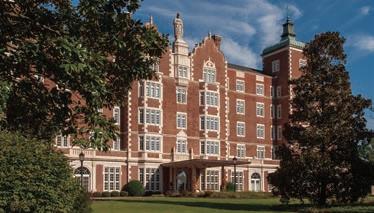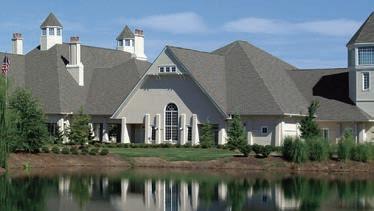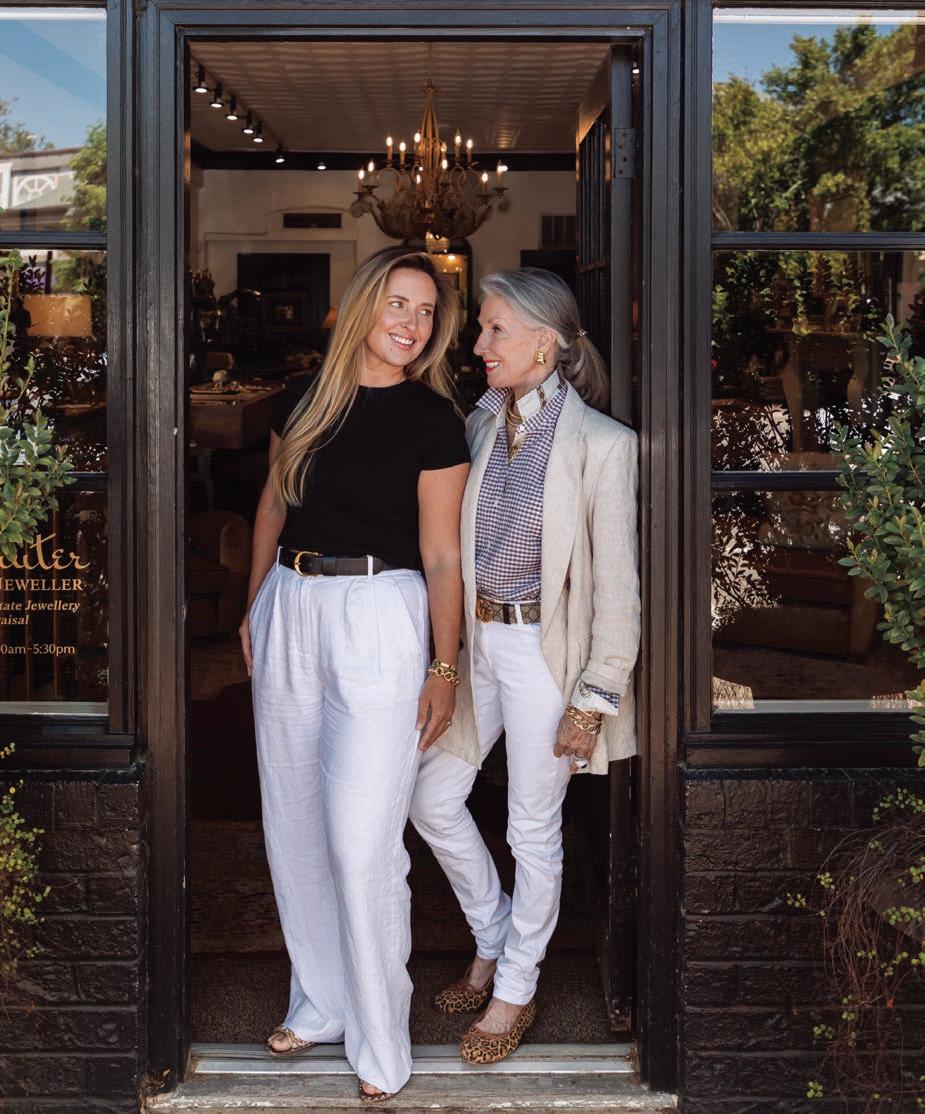



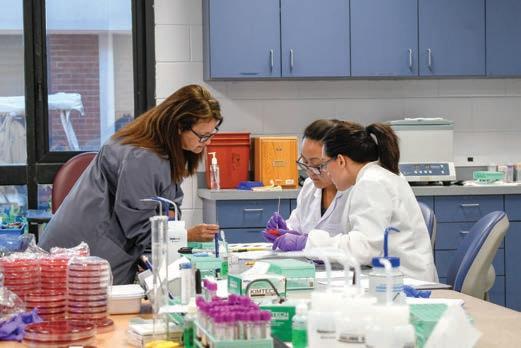
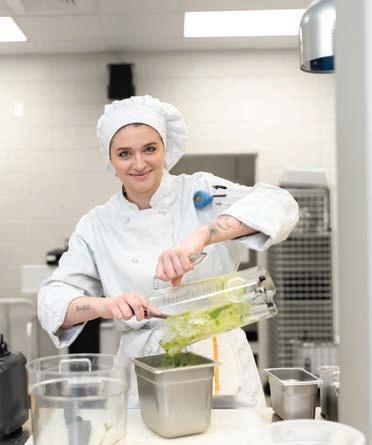

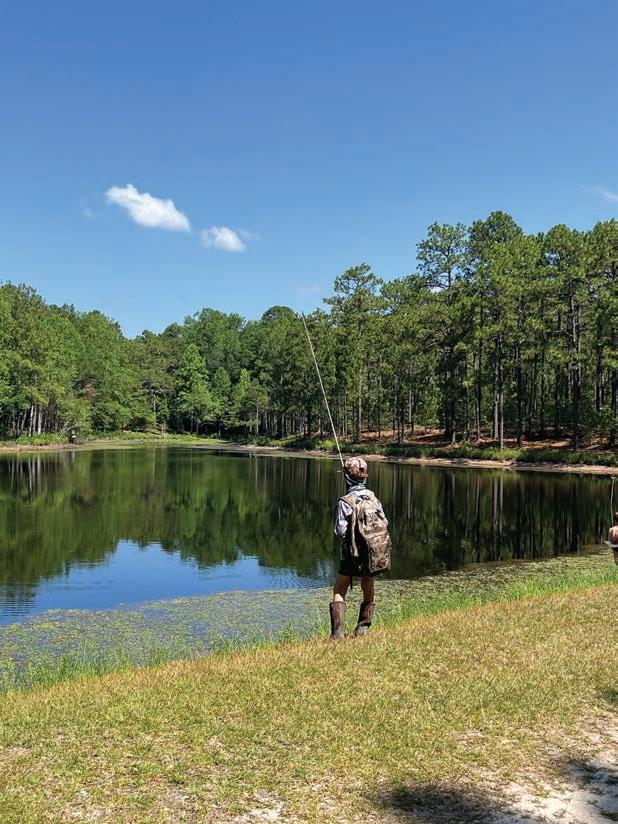












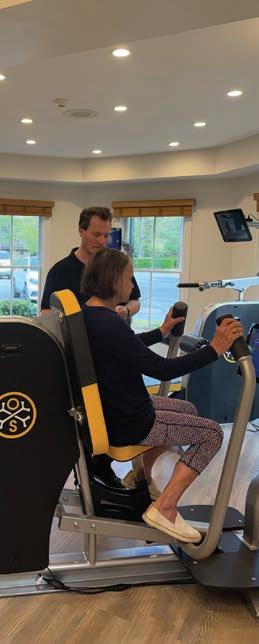







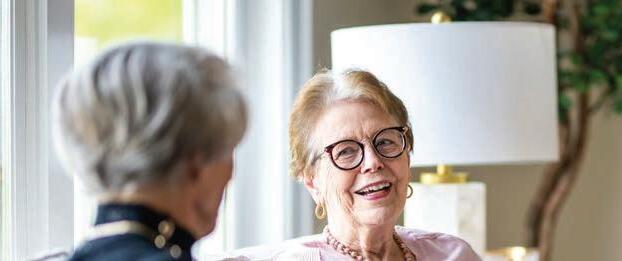



















Imagine yourself here. New residences, new amenities, new reasons to love where you live.


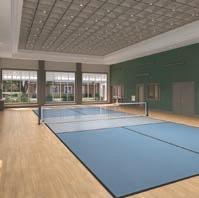
Our new independent living residences blend the style you appreciate with the comfort you deserve. The Village Pavilion brings state-of-the-art wellness under one roof, from pickleball courts to personal training. And our newly renovated Terrace health center means comprehensive care is always close by, delivered with the personal attention that makes all the difference.
The updated Welcome House greets every resident and visitor with warmth while keeping our community secure and connected.
At Penick Village, every day is designed around you, your independence, your peace of mind, and your future.
Learn more about our community , where you have the freedom to focus on your wellness and relationships while living life to its fullest . Contact us today. Call (910) 692-0300 , email info@penickvillage1964.org , or scan the QR code to learn more.
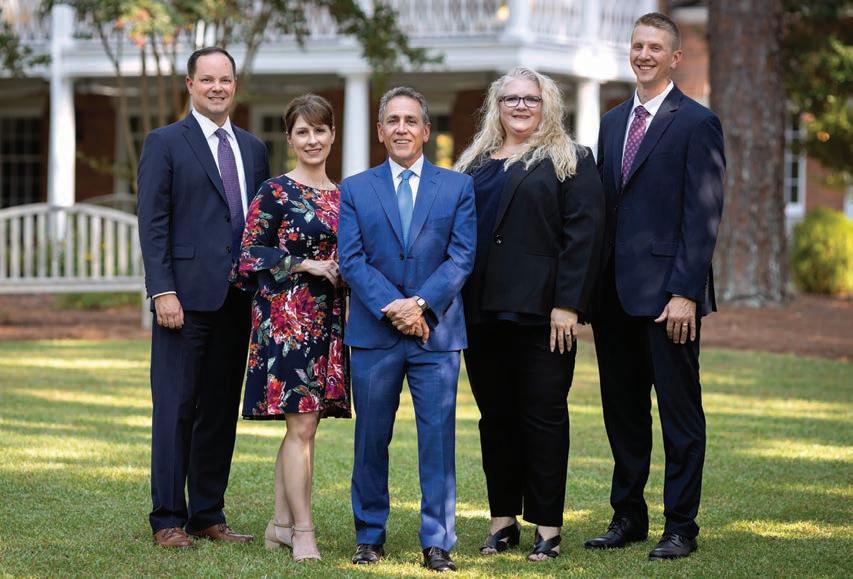



















volume 22, No. 5
David Woronoff, Publisher david@thepilot.com
Andie Stuart Rose, Creative Director andiesouthernpines@gmail.com
Jim Moriarty, Editor jjmpinestraw@gmail.com
Keith Borshak, Senior Designer keith@thepilot.com
Miranda Glyder, Senior Designer miranda@pinestrawmag.com
Alyssa Kennedy, Digital Art Director alyssamagazines@gmail.com
Emilee Phillips, Digital Content emilee@pinestrawmag.com
CONTRIBUTING EDITORS
Jim Dodson, Stephen E. Smith
CONTRIBUTING PHOTOGRAPHERS
John Gessner, Laura L. Gingerich, Diane McKay, Tim Sayer
CONTRIBUTORS
Jenna Biter, Anne Blythe, Tom Bryant, Susan Campbell, Bill Case, Tony Cross, Brianna Rolfe Cunningham, Mart Dickerson, Bill Fields, Mary Novitsky, Lee Pace, Gary Palmer, Todd Pusser, Joyce Reehling, Deborah Salomon, Scott Sheffield, Rose Shewey, Kimberly Daniels Taws, Tommy Tomlinson, Daniel Wallace, Ashley Walshe, Amberly Glitz Weber
ADVERTISING SALES
Samantha Cunningham, Advertising Director 910.693.2505
Christy Phillips, Sales Manager 910.693.2498
Kathy Desmond, 910.693.2515
Terry Hartsell, 910.693.2513
Erika Leap, 910.693.2514
Ginny Trigg, 910.693.2481
ADVERTISING GRAPHIC DESIGN
Mechelle Butler, Scott Yancey PS

Henry Hogan, Finance Director 910.693.2497
Darlene Stark, Circulation Director 910.693.2488
Tonnie Nester, Distribution Specialist
SUBSCRIPTIONS 910.693.2488
OWNERS
Jack Andrews, Frank Daniels III, David Woronoff In memoriam Frank Daniels Jr. 145 W. Pennsylvania Avenue, Southern Pines, NC 28387 www.pinestrawmag.com


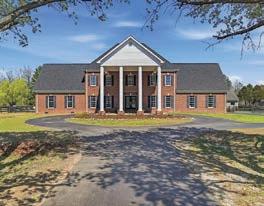


Stunning 20-acre horse farm with a 3 BR /3.5 BA home blending modern comfort and country charm. Features include a designer kitchen, spacious living area with pasture views, and a luxurious primary suite with sitting room and spa-like bath. Upperlevel flex space offers room for an office, gym, or media room. Enjoy an in-ground pool and 8-stall barn with an apartment. A rare opportunity for luxury rural living!

Stately 3 BR / 3.5 BA custom home by highly regarded Brent Smith set on a private 2-acre lot near the Magnolia Course. Features include soaring ceilings, Wolf appliances, Amish-crafted cabinetry, hickory floors, and a main-level primary suite with spa bath. Walk-out basement with wine cellar, theater, gym, and workshop. Enjoy beautifully landscaped grounds, screened porch, outdoor entertaining spaces, and a 3-car garage with whole-house generator.
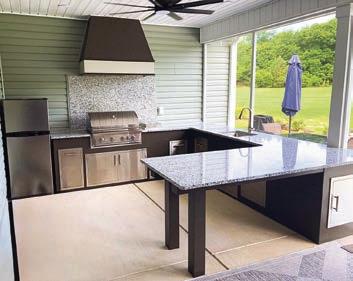
Delightful 4 BR / 3.5 BA custom home nestled in a quiet cul-de-sac. Home has been thoughtfully updated throughout to include the kitchen with GE café appliances, natural hardwood floors in the primary bedroom and a private spa on the lower level. Step outside to an amazing outdoor living space complete with Cedar outdoor kitchen with a natural gas pizza oven and a nice pergola perfect for relaxing!






























by Jim DoDSoN
My daughter, Maggie, was born in 1989.
That year became known as the “Year of Revolutions,” a turning point in world affairs that witnessed the opening of the Berlin Wall, a Velvet Revolution in Czechoslovakia, and the end of communism in Europe’s eastern bloc. It also saw the end of Apartheid in South Africa, the birth of the World Wide Web and the first commercial internet providers — social revolutions of a different kind.

Mugs, as I called my beautiful baby girl from day one, was born in the aftermath of a huge snowstorm in Maine. We took her home to our cottage on Bailey Island on day two, after her paternal grandparents arrived from North Carolina.
One of my fondest memories is of sliding on my rump down the deep, snowy hill behind our cottage, my bundled-up baby clutched to my chest. When I looked at my daughter’s tiny face, I swear she was almost smiling.
Upon returning home to Carolina, my dad, a veteran newspaperman with a poet’s heart, jotted me a note of gratitude with a bit of whimsical verse attached. He fancied himself, I think, a homegrown Ogden Nash.
Sadly, I can only remember the opening lines of the ditty because I kept it in my office desk forever until it apparently migrated into attic boxes stuffed with half a century of manuscripts, letters and correspondence. Someday, I hope to unearth it. In the meantime, here’s the only bit that I can recall, advice from a happy grandpa:
There’s nothing in this whole wide world / As precious as a baby girl / who someday soon will surely be / A child as happy as can be / Your job, my son, is take her hand . . . at which point my memory fails.
•
When Maggie and husband Nate visited us in the autumn of ’24, she graciously offered to plow through my mountains of archives and work papers, giving me hope that she might find my dad’s wise, little verse.
Instead, she found a pile of letters from my early career that
included an unopened one from legendary New Yorker magazine editor William Shawn. He complimented me for an investigative piece on a forgotten African American community I’d written for the Sunday magazine of The Atlanta Journal-Constitution, where I was a staff writer. He’d read it while waiting for a plane home to New York from Major League Baseball’s spring training in Florida. He also wondered if I had interest in writing for his magazine.
I laughed at this discovery because my career ambition in those early days was to someday write my way to The New Yorker. My daughter was incredulous. “Dad,” she playfully chided, “how could you have not opened this letter?”
Sheepishly, I explained that I had a habit in those days (and even today) of setting aside important letters to read and properly answer later. “I probably just put it in my cluttered desk and forgot about it,” I theorized. “Crazy, I know.”
But if a dream job at The New Yorker was never to be, I added, perhaps my mistake was a perfect, unanswered prayer. For, if I’d achieved my ambition to work for The New Yorker, I probably never would have burned out covering crime, politics and racial justice in the so-called New South and fled to a winding trout stream in Vermont, where I soon became the first senior writer of Yankee Magazine, married her mom, built a gorgeous house on a forested hill in Maine, and became the father of two beautiful babies. Moreover, I never would have also found my way home to North Carolina, where I wrote a dozen books and helped start several popular arts-and-culture magazines across my home state that are thriving today.
•
Last May, we were thrilled to learn that Maggie was pregnant with our first grandchild, a baby girl due on Christmas Eve.
June Sinclair Prescott arrived early, born seven days before Christmas Eve, weighing in at a healthy 9.9 pounds. I immediately nicknamed her “June Bug,” because they are said to bring good luck and my spring garden is always full of them.
Maggie’s mom and my first wife, Alison, flew to Los Angeles
first to be with mother and baby as they got better acquainted.
The plan called for “Nana and PopPop,” aka Wendy and Jim, to follow in early January. Unfortunately, a powerful ice storm struck the day before our flight was to depart. A flow of adorable photos and videos of “June Bug” had to suffice. In half of them, she appeared to be smiling and even belly laughing. Like her mama at the same age.
Two weeks later, we tried again. This time on the eve of departure, it snowed 13 inches and thousands of flights up and down the East Coast got cancelled. Including ours.
The day after the big snowstorm — shades of Maggie’s own birthday in 1989 — the sun popped out and I stepped outside to fill the bird feeders and think about my spring garden. An old idea suddenly came to me.
Pushing the snow off my favorite wooden chair, I sat down and jotted a letter in light verse to my new grandchild like the homegrown Ogden Nash who preceded me. I also asked my good friend, artist Harry Blair, to illustrate it.
Dear June Bug,
Someday while you are still a tyke, I’ll take you on a wondrous hike
To see the world from on a hill
And all the places that will fill Your life ahead with joyful things —
Like winter snows and golden springs.
For nature is the ideal guide
To leafy paths that cannot hide
The glory of a world that’s wide —
With loving souls so full of grace
Who’ll help you find your perfect place
To live the life your heart desires —
With faith — and strength — that never tires.
With my love forever, PopPop
Our third effort to reach Los Angles proved a charm.
We took the illustrated verse, lots of cute, new baby clothes and a lovely Swedish bear to finally meet our beautiful new grandchild. All we did for five days was rock, hike, hold, cuddle, feed and play with the June Bug and her mama.
Like her mother, baby June was born at a moment of revolutionary change and turmoil across the planet. But I have a feeling that our laughing June Bug will bring good luck and happiness to anyone she meets on her life’s journey, just as her mother has. PS
Jim Dodson’s 17th book, The Road That Made America: A Modern Pilgrim Travels the Great Wagon Road, is available at The Country Bookshop.



Overlooking multiple holes on iconic Pinehurst No. 2 including the 8th hole, 16th hole, 17th hole, 18th hole and the member clubhouse. Arthur Hardin–designed with nothing spared in quality or design.
$2,900,000

Elegant Old Town home with spacious rooms, three large bedroom suites with private baths, a grand entry, gourmet kitchen, and detailed molding. New guest cottage with 2 ensuite bedrooms, porch, and private patio.
$1,895,000 – PENDING

Located on a private cul-de-sac in the desirable Donald Ross area, this home offers mature landscaping, a pool, screened porch, deck, golf cart access to Pinehurst courses, and transferable country club membership.
$895,000

One of the last project lots in Old Town near Pinehurst No. 2 and the historic village, offering a rare opportunity to renovate, expand, or build new on a corner lot with transferable membership.
$749,000

105 KINGSWOOD CIRCLE – PINEHURST NO 6
Fantastic home in Pinehurst No. 6. Soaring ceilings, spacious rooms, and lots of natural light. The sellers have invested in many upgrades including upgraded kitchen, whole house painting, new patio, raised beds and more. Cul-de-sec.
$549,000
50 MCCASKILL ROAD W. – OLD TOWN
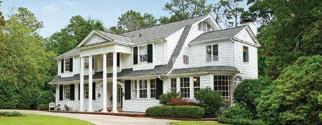
“Blinkbonnie” was built by financier Simon B. Chapin, showcases early-1900s Old Town charm on over an acre, with elegant living spaces, a grand dining room, and a sunny Carolina room.
$2,495,000

ACCESS TO IMMEDIATE country club golf charter membership, no waiting. Prestigious Fairwoods ON 7. All brick custom built home overlooking the 15th fairway with vistas of multiple fairways. Exceptional features throughout including 2 fireplaces, updated kitchen with wine cooler, spacious great room with high ceilings, 4 bedrooms and 3 1/2 baths.
$1,695,000

127 SAKONNET TRAIL – PINEHURST NO. 6
Impressive all-brick home in Pinehurst No. 6 with new Andersen windows, four bedrooms, a separate office, and a private setting featuring a covered porch, brick patio, and outdoor kitchen.
$750,000

Sought-after lakefront cottage on Lake Pinehurst, minutes from the historic village and resort. Rarely available, this fully updated 2-bedroom, 2-bath home features an elevated deck, courtyard, and patio overlooking the water.
$595,000

1175 ST ANDREWS, UNIT 206 – ERIN HILLS
Coveted Erin Hills condo with a pond and Pinehurst No. 5 golf views, offering updated 3-bed, 2-bath living — perfect for year-round or weekend getaways, with PCC membership available for transfer at reduced rate.
$460,000

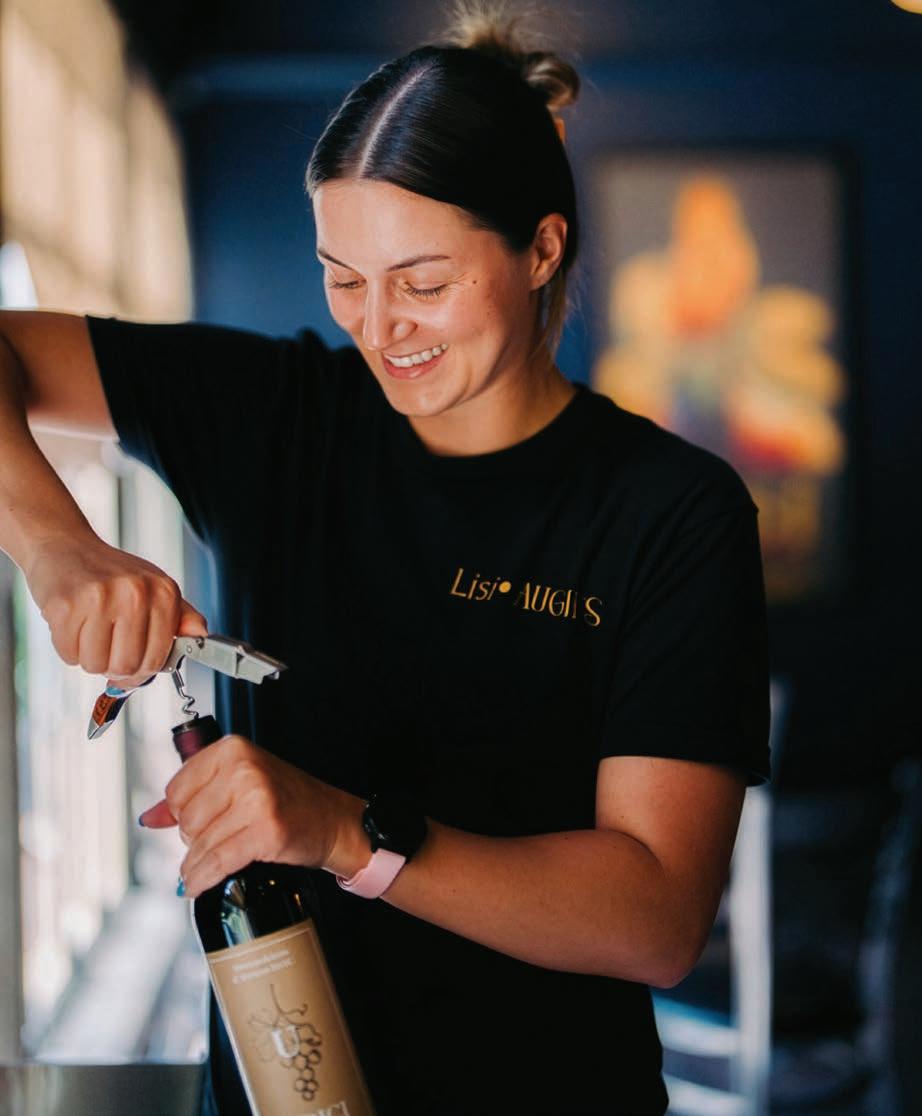


The Artists League of the Sandhills and the Arts Council of Moore County are each hosting opening receptions on Friday, May 1. The Artists League reception, at 129 Exchange St., Aberdeen, runs from 5 to 7 p.m. The exhibit, “Eclectic,” will be on display until the end of May. The Arts Council of Moore County reception, at the Campbell House, 482 E. Connecticut Ave., is from 6 to 8 p.m. celebrating the opening of “Pottery and Paper,” featuring the pottery of Ben Owen and paintings by Barbara Burlingame. The exhibition hangs through May 29. For more info go to www.artistleague.org or to www.mooreart.org.
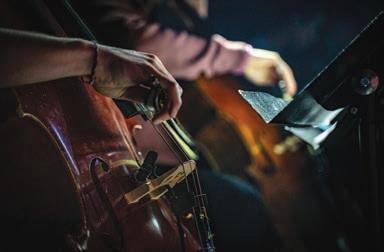
The Moore Philharmonic Orchestra will perform its annual spring concert, “America, Cinema & Symphony,” at 7 p.m., Saturday, May 16, at the Lee Auditorium, Pinecrest High School, 250 Voit Gilmore Lane, Southern Pines. Admission is by the donation of your choice. For additional information go to www.mooreart.org.
Pushing the boundaries of altcountry and Americana, singersongwriter John R. Miller takes the stage at the Sunrise Theater, 250 N.W. Broad St., Southern Pines, on Friday, May 8, at 7:30 p.m. His debut album, Depreciated, is a collection of 11 gems combining country, folk, blues and rock, painting a portrait of his na tive Shenandoah Valley. For more info go to www.sunrisetheater.com
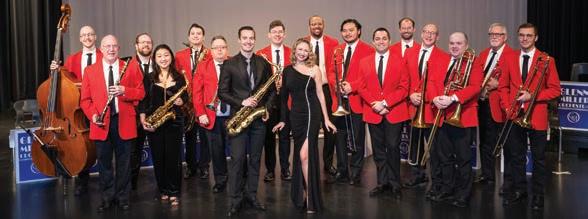
The Glenn Miller Orchestra was the most popular and sought-after group of the Big Band Era. The present iteration was formed in 1956 and has been touring ever since. They bring their swinging sound to BPAC’s Owen’s Auditorium, 3395 Airport Road, Pinehurst, on Monday, June 1 at 7 p.m., For info and tickets go to www.ticketmesandhills.com.

If you want to break free, experience the music of Queen performed by the ultimate tribute band, Extreme Queen, on Saturday, May 23, at the Sunrise Theater, 250 N.W. Broad St., Southern Pines. There will be a 3 p.m. matinee and an 8 p.m. evening show. Tickets are $46 to get in the door and $78 for the upgrade. Who knows, they might be the champions. For information go to www.sunrisetheater.com.

The Sunrise Theater, 250 N.W. Broad St., in Southern Pines, will show The Met’s performance of Pyotr Ilyich Tchaikovsky’s timeless opera Eugene Onegin on Saturday, May 2, from 1 to 5 p.m. If you didn’t get your aria on early in the month, The Met returns on Saturday, May 30, from 1 to 5 p.m. with El Último Sueño de Frida y Diego, Gabriela Lena Frank’s portrayal of the artistic power couple Frida Kahlo and Diego Rivera. For more info go to www.sunrisetheater.com.

Follow the adventures of the pit viper Gary De’Snake and the conspiracy theorist beaver Nibbles Maplestick in Zootopia 2 on the giant outdoor screen at 8:15 p.m. on Friday, May 15, at the Downtown Park in Southern Pines. Bring a blanket or lawn chair. The movie is free, and concessions will be available for purchase. For information call (910) 692-7376.

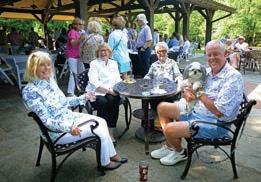
Rub on some SPF 30 and wear a wide-brimmed hat for the Spring Garden Party at the Village Arboretum’s Timmel Pavilion, 105 Rassie Wicker Drive, Pinehurst, on Tuesday, May 5, from 4 to 6 p.m. Tickets are $44.35 and proceeds benefit the privately funded arboretum landscaping. For more information go to www.ticketmesandhills.com.
Follow the food trucks to Live After 5 on Friday, May 8, at the Village Arboretum, 375 Magnolia Road, Pinehurst. Whiskey Pines kicks off the music at 5:15 p.m., followed by The Parks Brothers Band from 6 to 9 p.m. Picnic baskets, yes; outside alcohol, no.
(You can buy it there.)
For more information go to www. vopnc.org.


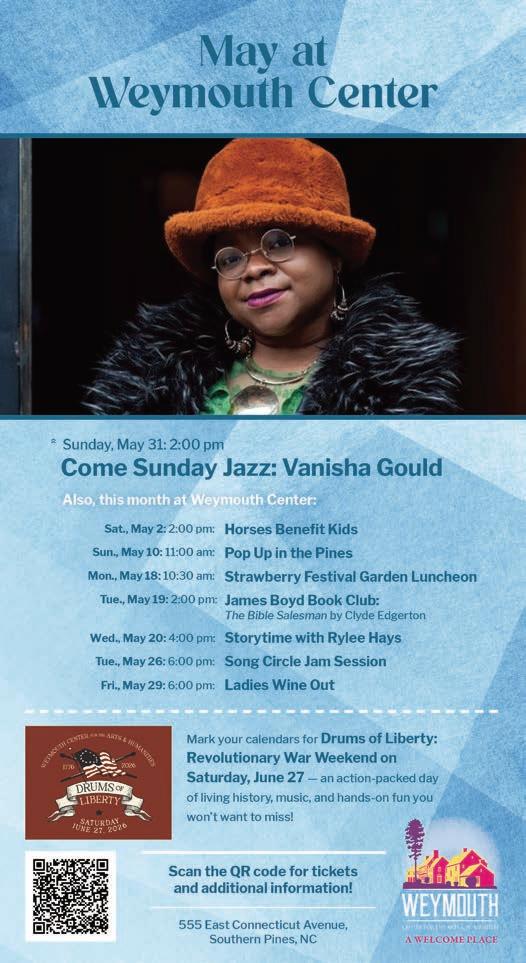
Watch the Show Jumping Invitational, open to all and on the house, on Saturday, May 2, from 2 to 5 p.m. then buy a ticket for the Derby Watch Party from 5 to 8 p.m., at the Weymouth Center for the Arts & Humanities, 555 E. Connecticut Ave., Southern Pines. Proceeds benefit the Weymouth Equestrians program. For additional information go to www.weymouthcenter.org




Chanda Prescod-Weinstein will discuss her book, The Edge of Space-Time: Particles, Poetry, and the Cosmic Dream Boogie, via Zoom on Wednesday, May 6, from noon to 1 p.m. On Tuesday, May 19, The Country Bookshop will partner with Moore Montessori to host Brandon Webb talking about his book, Puddle Jumpers: Powerful Mental Techniques from a Navy SEAL, Performance Coach and Father of Three, at Moore Montessori, 255 S. May St., Southern Pines. On Wednesday, May 20, Tim Brown will discuss his book, Nolan: The Singular Life of an American Original, at The Country Bookshop, 140 N.W. Broad St., Southern Pines. Dr. Gail Crowther will virtually discuss her book Marilyn and Her Books: The Literary Life of Marilyn Monroe on Wednesday, May 27 from 12 - 1 p.m. with The Country Bookshop. For information about all four events go to www.ticketmesandhills.com.

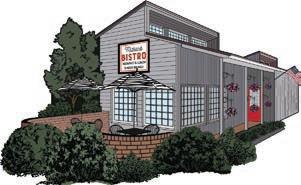
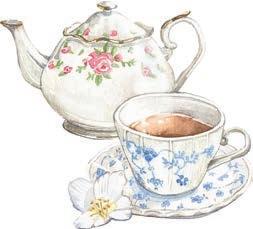
On Saturday, May 16, the Sandhills Woman’s Exchange will host the “Raise a Cup to the Cabin” tea party and fundraiser, from 1 to 3 p.m., at the historic cabin, 15 Azalea Road, Pinehurst. Enjoy a spot o’ tea and some delicious nibbles. The cost is $65 per person, and reservations are required. The cabin closes for the summer season on Friday, June 5. For info and booking call (910) 295-4677.
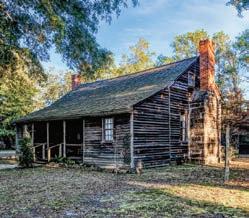
Colonial Day at the Shaw House, 110 W. Morganton Road, Southern Pines, features period crafts, re-enactors, short history talks and tours of the historic homes, from 10 a.m. to 4 p.m., on Saturday, May 30. Food and drink will be available from the Pinecrest High School Wrestling Club. There is no charge for admission. For additional information visit www.moorehistory.com.

Every morning that you wake up in a pest-free home is a good morning. And the easiest way to ensure that stress-free feeling?

by Sta N Pillma N
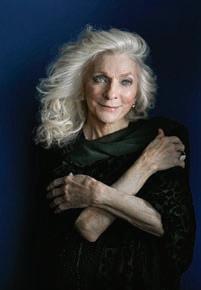
Q: When you walk on stage today, how do you introduce yourself to an audience that may know the hits but not your full journey?
Judy: I do the whole thing. Every audience gets a similar experience, but I never do the same show twice. Around four o’clock each afternoon, I sit down with my songbook and build a new set list based on how I feel. Sometimes I open with “Both Sides Now,” sometimes not. I include the songs people love, but I also follow my instincts. They get what I like — and that’s what keeps it alive.
Q: You came up during a transformative era in music and culture. Do you see parallels between then and now?
Judy: Every era is different, but there are similarities. In the ’60s, we were responding to war and trying to bring people together through music. In many ways, we’re still doing that. The need for connection, for meaning — that doesn’t change.
Q: You’ve explored so many creative outlets — music, writing, painting. How do they influence each other?
Judy: Everything feeds everything else. On stage, I make choices that reflect all those parts of my life. I want the audience to participate, to sing, to feel connected. Creativity isn’t separate — it’s one continuous thread.
Q: When the show ends and people head home, what do you hope stays with them?
Judy: I hope they feel happy and optimistic. I want them to have had a moment where they could be present — really listening, really thinking. We don’t get many of those moments anymore. If they leave feeling lifted and a little more connected to themselves, then I’ve done my job.
Judy Collins’ sold out show is Friday, May 15, at the Sunrise Theater, 250 N.W. Broad St., Southern Pines.


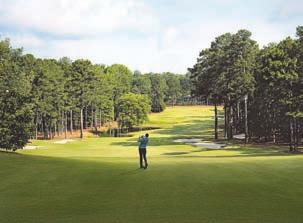
Set along the Holly Course in Pinewild, this home is designed for e ortless, everyday living. A spacious great room flows seamlessly to a covered outdoor room with full kitchen and extended deck—perfect for relaxed mornings overlooking the course and easy evenings spent gathering with friends. Inside, three bedrooms, a main-level o ce, and a flexible bonus room (or fourth bedroom) o er comfort and versatility, while an oversized two-car garage with golf cart bay, generous storage, smart-home prewiring, Kohler fixtures, and GE Café appliances add thoughtful convenience throughout.












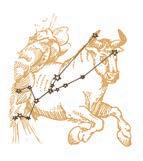
(April 20 – May 20)
You’re a glutton for luxury, it’s true. But this month, amid the blur of artisanal cocktails and regenerative facial serums, you’ll ache for something simple: direction. As luck would have it, a Mercury cazimi in Taurus will deliver a moment of crystal clarity on May 14. Combine that with the new moon on May 16 and a slap on the hindquarters from Mars (May 18), and you’ve got yourself a road map. Pack your ahimsa silk pillowcase, sweetheart. Life may be guiding you someplace you never imagined.
Gemini (May 21 – June 20)
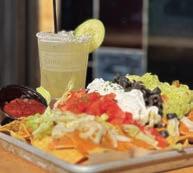
Three words: guac and chips.
Cancer (June 21 – July 22)
Release the outcome.
Leo (July 23 – August 22)
Beware of shiny objects.
Virgo (August 23 – September 22)
Don’t let the light bulb drive you crazy.
Libra (September 23 – October 22)
Opt for the linen.
Scorpio (October 23 – November 21)
Three o’clock, darling.
Sagittarius (November 22 – December 21)
Retire the busted ones.
Capricorn (December 22 – January 19)
Delete the app.
Aquarius (January 20 – February 18)
Try taking smaller bites.
Pisces (February 19 – March 20)
Leave a paper trail.
Aries (March 21 – April 19)
BYO hot sauce. PS
Zora Stellanova lives in the N.C. mountains with her wolfdogs, Venus and Lilith. Although she prefers divining with loose-leaf pu-erh, she recommends a mugwort and passionflower blend for those seeking wisdom and clarity from dreams.


The smallest wine bar in the country, where intimate charm meets expansive selections

127 SW Broad St. • Southern Pines, NC 28387 910.420.4002



By Audrey Mori A rty
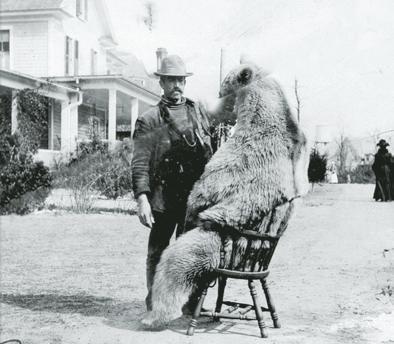
Dancing bears were common in Europe and Asia from the Middle Ages up to, and in some cases into, the 20th century. Travelers with a trained bear were popular in Europe between 1870 and 1914. Many of the bears came from the French Pyrenees, where local men would capture bear cubs and train them to perform special tricks. In general, the bears were female, as they were considered more docile. Often trainers would travel across the continent to the coast, making money along the way, to earn passage to the United States.
Dancing bears were trained to stand on their hind legs when trainers fed them from above while simultaneously giving a signal. Eventually, the bear would learn to stand hearing the signal alone. Sometimes the training methods were crude and cruel. One example involved piercing the snout and running a rope
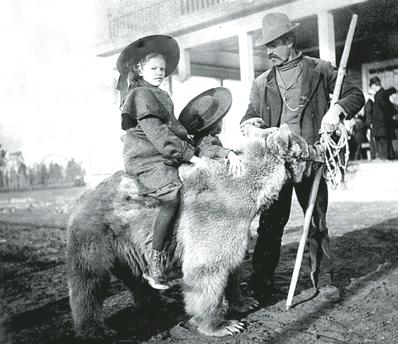
through it, then pulling on the rope to force the bear to stand. Another included playing music while the bear stood on a heated surface, or hot coals, forcing it to move its feet, thus conditioning the bear to “dance” when it heard music. Some trainers denied sufficient food to make the bears less aggressive.
The trained bears were popular in circuses, vaudeville, festivals and fairs. Often, bears were used to entice people to enter pubs and drinking establishments. These bears were trained to dance, ride bicycles, roller skate and play musical instruments. The bear pictured here and its handler were in Pinehurst in 1904, a novelty in a new resort. The trainer and bear walked freely among the villagers and guests, often offering children rides on the bear.
By the early 1900s, beatings and training methods based on fear and pain were deemed harsh, and the use of hot coals, sensory deprivation and withholding food were decried. Enlightened crowds began to avoid the shows where the abuse was evident, and the popularity of the dancing bears waned. Gradually, the abusive techniques used to train animals were replaced with science-based training and reward inducements. PS
Audrey Moriarty is the Library Services and Archives director for the village of Pinehurst.






Pinehurst Medical Clinic's Medical Weight Management services focuses on your why. We evaluate, treat, and advocate for patients with the chronic disease of obesity and obesity-related conditions using evidence-based approaches. With services directed by board-certified physicians and diplomates of the American Board of Obesity Medicine.
METABOLIC WELLNESS • WEIGHT MANAGEMENT • DIET AND LIFESTYLE CHANGES TO ACHIEVE OPTIMAL HEALTH • WEIGHT HISTORY • NUTRITION • EXERCISE UNDIAGNOSED TYPE 2 DIABETES, HIGH CHOLESTEROL, OR SLEEP APNEA
Personalized treatments plans
In-person visits with one-on-one provider to patient weight management consultations
Guidance from a registered dietitian • Lab and medication management








Finding the familiar in the extraordinary
By JiM Mori A rty
“If
you don’t tell their story, who will?”
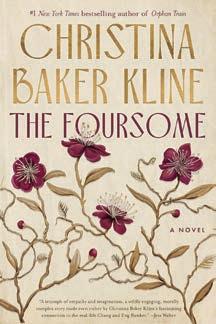
This was the question posed to Christina Baker Kline by Lesley Looper, a cousin and Duke University librarian, about the lives of the renowned “Siamese twins” Chang and Eng Bunker and their wives, Sarah and Adelaide Yates — Kline’s distant relatives.
The short answer is that a lot of people have. The famous brothers, conjoined at the chest, who came to America in 1829 and eventually settled in North Carolina, have been satirized in poetry, made cameo appearances in works by Herman Melville and Mark Twain, been used as a metaphor during the War Between the States, and been the subject — or at least the literary device — of 21st century musicals, plays and movies. Does the fact that Kline’s genealogical family tree includes them make her imaginings somehow more prescient? Since the twins died 152 years ago, probably not. What is quite clear from the earliest pages of Kline’s The Foursome, due out this month, is that she has taken extraordinary care to imagine her characters less as curiosity and more as men and women in full, portrayed with distinct traits, virtues and flaws, and very much creatures of their age, one of America’s most turbulent times.
Here’s a Wikipedia-worthy primer: Chang and Eng were brought to the United States from Siam (today’s Thailand) by the Scottish merchant Robert Hunter and a sea captain named Abel Coffin, who put them “on tour” in Britain and America. The onagain, off-again business wound up a decade later with the brothers touring on their own with their own staff, becoming wealthy in the process. In July 1839 they made an appearance in Jefferson, North Carolina, and in October of that year, they returned to purchase 150 acres in Wilkes County, where they would meet and marry the Yates sisters. This is where the novel takes over.
When Kline realized that Sarah (Sallie) was not buried in the same resting place as Chang, Eng and her sister Adelaide, she discovered the voice of her narrator. Sallie is as clear-eyed about herself as she is every other character in the novel. “Addie possessed the self-assurance of the beautiful. She was used to being seen, and it made her bold about being heard,” writes Kline. “I inherited our mother’s round cheeks, her solid bones and small gray eyes, her unruly auburn hair. Addie took after Papa’s family: tall and lean, with dark-fringed lashes and high cheekbones. She shone in contrast to my ordinariness. She was charming while I was shy.”
The vivacious Addie is drawn to Chang, the more dominant
brother. “Addie claimed she’d fallen in love with Chang, and maybe she had. She said she felt it deeply. But Addie felt everything deeply,” writes Kline. “Somehow, though I’d voiced my misgivings from the beginning, I’d let the months unspool without taking a firm stand. Now I found myself swept up in my sister’s insistence that marrying the brothers was the right, the only, thing to do.”
Kline doesn’t shy from the physical awkwardness of this union squared, though neither does she dwell on it. The mantra for Sallie is compartmentalization. Don’t think about everything, “only the next thing.”
The sisters’ conversation on their wedding day is portrayed like this:
“Everyone will be staring at us,” I whispered.
“Of course they will. We’re the brides.”
“They’re thinking about — about tonight.”
“Don’t be silly. Nobody’s thinking about that, except maybe you. You’ll be fine. Remember: only the next thing. All right?”
“All right.”
The foursome marries in 1843. After finessing the physical, Kline does an admirable job of portraying these two families through the next 30-plus, turbulent years, through war, peace, the inevitable loss of parents, the birth, and sometimes tragic death, of children and the eventual death of Chang and Eng. In fact, it is this dramatization of the travails of two families that, in a way, normalizes that which is anything but. The couples eventually live in separate houses, one in Surrey County, one in Wilkes County, spending three days at each. “During the three days in the home of the host, the visiting brother will conduct no business and express no opinions. He is to be a silent partner,” declares Chang. Between them the two families would have 21 children who would grow into an assortment of cousins devoted to one another.
Though joined at the chest, the brothers are not the same person. “Eng liked to gamble, his eyes brightening with each new hand. Chang preferred to drink. Neither quite approved of the other’s vice.” Chang could be cruel and moody, Eng the peacemaker. “Eng’s instinct was to ignore or concede, but even he had
his limits. Sometimes, like a cat poked too often, he struck back. More than ever, I saw how tightly the band bound him to his brother. What had once been a tether now felt like a shackle.”
Every time their financial picture darkens, the brothers go back on the road to refill the coffers, but the way they are perceived has changed. What once was a curiosity has given way to ridicule. They eventually hook up with P.T. Barnum, who dislikes the brothers because of their independent streak, as much as they detest the famous showman for his exploitation.
Chang and Eng are free men of color who become slaveholders and supporters of the Southern cause. Two sons, one from each family, fight for the Confederacy.
“The brothers had learned early on that the world is divided into those with power and those without. Those who own and those who are owned. They’d decided — perhaps from the moment they first felt the weight of coins in their palms — where they stood on that divide.” The families feel the depravations of war and struggle with issues of race. “The shortages deepened. Every stitch of fabric was repurposed, every scrap of food stretched.” Stoneman’s cavalry came. The world changes, the enslaved are enslaved no more. “The hardest part wasn’t learning to do things for ourselves, though that was difficult enough. It was learning to see people we’d spent years looking through. To acknowledge that the women who had wiped our children’s tears had children of their own whose hurts had gone unseen.”
If the world paid attention to Chang and Eng, Kline gives more than equal time to Sallie and Addie and the place of women in the 19th century, dramatized throughout, from unwanted pregnancies at the hands of unscrupulous men; to Eng, the slaveowner taking advantage of the enslaved Grace; to the assured figure of Sallie’s lesbian aunt Joan. Given all that, The Foursome stretches beyond the voyeuristic, attempting to paint a fuller picture of two brothers and two sisters, tethered by more than just flesh. PS
Jim Moriarty is the editor of PineStraw and can be reached at jjmpinestraw@gmail.com.





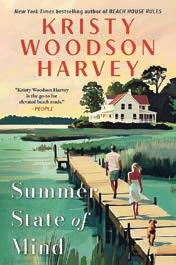



Summer State of Mind, by Kristy Woodson Harvey
After the worst day of her professional life, burnt-out NICU nurse Daisy Stevens flees to Cape Carolina, North Carolina, looking for a new life. On her first day at her new job, high school baseball coach Mason Thaysden discovers an abandoned baby, sending ripples through the entire tight-knit town of Cape Carolina. Mason is still struggling to reconcile the scars of the injury that kept him out of the big leagues, stuck in his hometown, and searching for a way out. This newcomer, and the child they’ve saved together, might be just the motivation he needs to stay put. Sparks fly as Mason acquaints Daisy with Cape Carolina, introducing her to his friends and family, including his batty Aunt Tilley, who is looking for her own fresh start and relief from long-buried family secrets. But as Daisy becomes increasingly attached to this abandoned child, and begins facing her own demons in the process, a startling discovery is made that threatens to rip the entire town apart, placing Daisy, Mason and Tilley in the center of the storm.
Our Perfect Storm, by Carley Fortune Frankie and George have been best friends since they were 8 years old. Passionate, impulsive and headstrong, they’ve always clashed . . . and come back together again. Until now. It’s the eve of Frankie’s wedding weekend, and she doesn’t know where they stand or even if George will show up as her best man. Then, at the start of the festivities, in walks George. For one glorious evening, surrounded by her loved ones, Frankie’s life is finally perfect. It all comes crashing down when her fiancé dumps her the next morning, leaving only a note as an explanation. Crushed and confused, Frankie returns to her family’s home, but George
has a different idea and a plan for healing Frankie’s broken heart. He wants her to go on her honeymoon — with him — for one week to the lush rainforests and misty beaches of Tofino. Frankie agrees, seeing the trip for what it really is: one last chance to repair their friendship, even if it means unearthing secrets and long-buried feelings neither knows how to handle.
American Rambler: Walking the Trail of Johnny Appleseed, by Isaac Fitzgerald
In American Rambler, Fitzgerald sets out on a year-long journey to follow Appleseed’s path, walking (OK, sometimes driving, and at one point, even floating downstream) from Massachusetts to Indiana. On this journey, he turns a childhood fascination into a profound reckoning of loss and grief, ritual and faith, grimy gas station bathrooms and scenic apple picking. He is followed by a mysterious creature, camps in hostile environments, trespasses more than once, and is warmed by the generosity of strangers at every turn. American Rambler is at once an ode to the American heartland, a meditation on escaping the breakneck pace of modern life, and a clear-eyed look at the myths at the very core of American identity and history.
Make Believe: On Telling Stories to Children, by Mac Barnett Barnett champions the profound joys of literature and the importance of reading for pleasure. Make Believe is a rallying cry for art and imagination, and a celebration of the power of storytelling in all our lives. Incisive, intimate and timely, it’s an invitation to approach children’s literature not only as an art form worthy of deep study, but as a portal into the lives of the children.


Steps For Customizing Your Poster
Follow the steps below to edit the content.
Step 1.
The Outermost Mouse, by Lauren Wolk
Double click "1. Logo" to select which logo you want to use. Spanish logo)
Click "Apply" at the bottom of the window.
The Outermost Mouse loves her life at the tip of the beach. Best of all is the house, a huge nest she has made her own. But a storm is coming. When the sky goes dark and a cold wind rises, the little mouse must do everything she can to protect her home. Even though she’s small enough to fit into a teacup, she is smart, strong, and brave. (Ages 4 – 8.)
Step 2.
Double click "2. Main Headline" to select which Headline from to use. (Opening Soon, Grand Opening, Now Open, Moving)
Click "Apply" at the bottom of the window.
Step 3.
Double click "3. Contact Information" to input your updated
Click "Apply" at the bottom of the window.
Seahorse Is Furious: And There Is Nothing You Can Do About It, by Morag Hood
Step 4.
Seahorse is furious. It is a bad day. In a terrible week. In an awful ocean. And nothing in that whole entire, awful ocean is going to make him feel better. That’s right: nothing. Not even his favorite things or his closest friend or the cuddliest bunny will help. Unless . . . no, no he’s furious. And there’s nothing you can do about it. (Ages 4 – 8.)
Double click "4. Main Image" if you want to change the background the images and hit crop at the bottom. Crop the image to desired
Click "Apply" at the bottom of the window.
Step 5:
Once you have finished editing, click "Finish" on the top right poster for approval.

Find the Sun, by Andy Harkness
Eddie doesn’t like Mondays. He’d rather burrow under the covers than face the day. Then an unexpected friend arrives to take him on a journey. Eddie is afraid, but that’s OK, journeys can sometimes be frightening. Step by step Eddie grows braver. Before long, he understands — through any storm, you can always find the sun. (Ages 3 – 6.) PS

Compiled by Kimberly Daniels Taws, manager of The Country Bookshop.



But it’ll do after a long day
By Bill Fields
Near the end of a recent stretch of hectic business travel that included four canceled flights in a week, I arrived in Houston late on a Wednesday evening. After having to employ debating-level skills to convince a skeptical rental car agent that “Bill” was in fact a common nickname for “William,” I secured a vehicle and drove to my hotel, arriving past midnight.
Entering my room, I deadbolted the door and took a deep breath.
In the calm of my temporary quarters on the 12th floor 1,600 miles from home, the frustrations of the not-so-friendly skies eased. The spacious room was quiet and cool, with crisp, fresh sheets on a king bed. The flat screen television was large, the desk ample. Unpacking enough to settle in for the night, it struck me that as wearying as life can become when the travel gods are angry, a room on the road is one of my happy places.
Certainly, I don’t qualify as an ultimate road warrior, the kind of person who leaves on Monday and returns on Friday, week after week for most of the calendar. There were years, though, when I was away covering golf upwards of 25 weeks. My travel has been about half that annually in the last decade but with periods of concentrated trips. During those busy times, a comfortable room is a sanctuary for sleep, work or watching a favorite movie that just happens to be on TV.
I’ve had a fascination with motels and hotels since early childhood when my visiting grown-up cousins lodged at the Charlton Motel on U.S. 1, long since replaced by a convenience store. Whether jumping on the bed or into the pool, which was tucked amid tall pines behind the building, the novelty of the experience made it seem as if I were much farther away from home than a couple of miles.
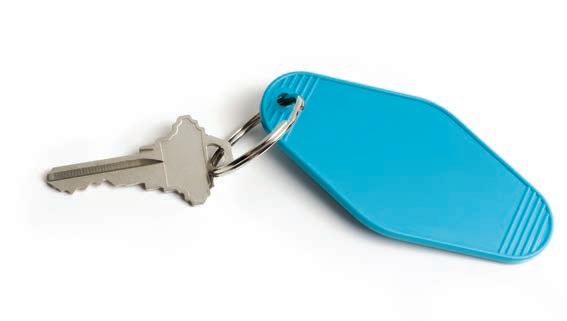
My family didn’t travel often, but most summers we ventured to the beach. If not accommodated in a cottage, we stayed in one of the oceanfront motels. The Buccaneer on Ocean Drive comes to mind: room key attached to a plastic fob; water glasses wrapped in
paper; a window-unit air conditioner to soothe skin after hours on the strand; sand on the carpet; an ice machine nearby.
We ventured to Atlanta once to visit Six Flags Over Georgia and stayed in a suburban Holiday Inn near an Interstate exit. I pored over the room service menu before pestering my parents to let me order a hamburger and a Coke. Getting a delivered meal was almost as cool as riding the log flume at the amusement park.
The thousands of nights on the road since those first trips have been spent in all kinds of places, from a plush Ritz Carlton on the Gulf of Mexico — turndown service! — to a grim budget chain on a trucking route in Kansas, where I was stuck in a “smoking” room so stale it was the only time I expensed Lysol spray. There were mouse sightings too, but I fared better that week than a cadre of tour caddies who booked a motel so sketchy they purchased sleeping bags to put atop the bedding.
On a few of my first trips to the Masters, during the 1980s, I was lodged in a motel distinguished by its unusual color scheme. The “Purple Palace,” as we called it, was $29.99 a night 51 weeks a year, a rate that soared to five times that much the second week of April.
Although a chocolate on your pillow is a nice touch, when you travel a lot the basics are what matters: walls thick enough to neutralize noisy neighbors; a bed that neither swallows you up nor makes it seem as if you’re lying on plywood; a shower with plenty of pressure and hot water whose sliding door doesn’t have a mind of its own.
I can take or leave fluffy towels, but I appreciate a sink at the right height. The only time I hurt myself in a hotel room was in Binghamton, New York. Leaning way over to shave one morning, I tweaked my back and ended up on the floor in pain, causing me to look scruffy and smell of Bengay the rest of my stay.
Mostly, you want your room to be your room. Checking into a Denver hotel one night a couple of years ago, I encountered a clerk with problems greater than nickname awareness. Upon reaching my assigned room, when the key card turned the light green and I pushed the door open, it slammed loudly into the security lock. Hearing someone rustling inside, I didn’t stick around for a conversation. PS
Southern Pines native Bill Fields, who writes about golf and other things, moved north in 1986 but hasn’t lost his accent.





By toMMy toMlinson
Recently we spent a fine Saturday afternoon in Mt. Pleasant. I should specify that it was the Mt. Pleasant in North Carolina. It turns out there are dozens of Mt. Pleasants all over the country, sometimes more than one in the same state. You can see the appeal. Names can be destiny. Name yourself Mt. Pleasant and you’re halfway to pleasantness itself.
The “Mt.” part is trickier. I grew up near a Mt. Pleasant in south Georgia that was as flat as a shuffleboard table. The North Carolina version doesn’t exactly require hiking poles either. Then again, the Piedmont is known for puffing itself up when it comes to height. One of the reasons Charlotte calls its downtown “uptown” is that there’s a slight rise from the edge of the center city to the main intersection of Trade and Tryon streets. You might not even notice if you’re driving. But it is, technically, “up,” so “uptown” it is. And if Mt. Pleasant, out on the eastern edge of Cabarrus County, sits on a patch of relative high ground . . . well, a mountain can be a state of mind.
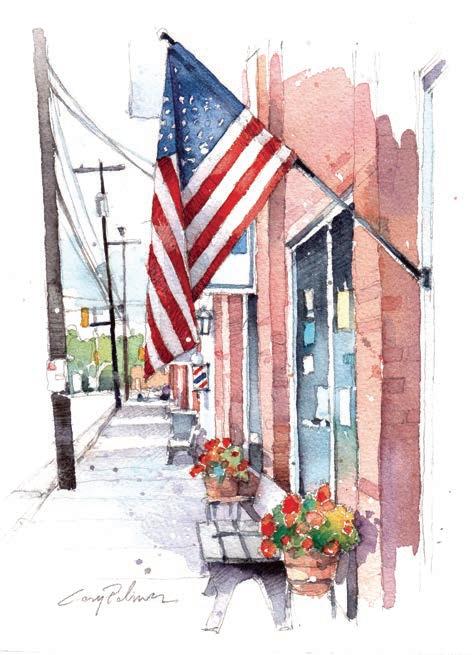
Not all small towns are like that. You’ve probably taken the back roads through some towns where you wonder if you wandered into the zombie apocalypse. Small towns have been hit hard over the last 50 or 60 years by everything from interstate highways to chain stores to the slow death of local manufacturing. Sometimes all you see is a bunch of boarded-up buildings and a Dollar General. It can make more sense to move, either into the city or out to the country. Sometimes the worst place to be is in between.
It’s not far from where we live — less than an hour’s drive — but neither my wife, Alix, nor I had spent time there. Our loss. This time we made it there for a literary festival at the Mt. Pleasant library, which is bright and clean and beautiful. It doubles as a rec center. Kids were out on the fields playing baseball, and there was a line at a food truck. It was a busy spot in a busy town.
But other small towns figure out ways to thrive. Mt. Pleasant has a crisp little downtown, old houses in good shape, a distillery housed in an old prison. (They make a bourbon called Conviction.) We met a guy who researches town history, a woman who worked in PR all over the country, and a flock of librarians I would follow into the deep stacks anywhere. Every time we drive through a small town, my wife glances around at
the houses and I can see her daydreaming. If Alix likes what she sees, sometimes she’ll say, “What would you think about buying a house and moving somewhere like here?”
She said that about Mt. Pleasant. I grew up in a midsized town — about 30,000 people — and got most of my perspective on small towns from watching TV. For the longest time I thought of small towns as being on either end of a wide range. One end was Mayberry, where almost nothing bad ever hap-
We all need to love and be loved, to find pursuits that fulfill us, to grieve when life hands us losses, to reach for something bigger than ourselves.
pened, except when Aunt Bee made pickles. The other end was Cabot Cove, Maine, where somebody got poisoned, stabbed or shot to death every damn week on Murder, She Wrote. (I still can’t believe nobody figured out that Jessica Fletcher was the most prolific serial killer in human history. None of that happened before she got to town!)
Modern life has flattened a lot of the differences between small towns and everywhere else. Streaming services bring the most obscure movies and shows to anyone with Wi-Fi. Worldwide delivery can put pretty much anything you want on your doorstep by tomorrow morning. A small town might not have a fancy ra-
men place, but Amazon can send you the ingredients and YouTube can show you the instructions.
The truth, though, is that small towns have never been that different than everywhere else. The settings might be different, but our hearts are the same: We all need to love and be loved, to find pursuits that fulfill us, to grieve when life hands us losses, to reach for something bigger than ourselves.
Those things are true no matter whether you live in a hamlet of 200 or a city of 2 million.
Every person is complicated and so every collection of people is more complicated still. It’s easy to write off a place for thinking or acting a certain way, but remember, that might be a majority, but it’s not a monolith. I’m not sure I could get a two-thirds vote in my own family on any subject except banana pudding. Our love for one another brings us together, but our differences are what makes life interesting.
It took me a long time to learn that you can make your own Mt. Pleasant, wherever you are. You can just decide to live on higher ground. You can just decide to be decent to others. You can just decide to make a small town out of your friends and loved ones, even if you live in the middle of the city.
We are not likely to move to the actual Mt. Pleasant, even though we enjoyed it. What we hope to do, though, is keep the little bits of it that we brought home with us — the warm feelings, the new friendships, the sense of discovery. I’m sitting here looking at a North Carolina map right now. I’ve been all over this state but there are so many places I still haven’t been. Time to gas up the car. PS
Tommy Tomlinson is the author of two books, The Elephant in the Room and Dogland. He was a longtime columnist for the Charlotte Observer and has written for Esquire, The Atlantic, ESPN the Magazine and many other publications. His online newsletter is called The Writing Shed. He lives in Charlotte with his wife, Alix Felsing.
• Pain when walking, especially on stairs
• Difficulty standing up from a chair or getting out of a car
• Limping to avoid putting weight on the painful knee
• Weakness or feeling of instability
• Not being able to fully enjoy your favorite activities — like golf, tennis, or pickleball



By tony Cross
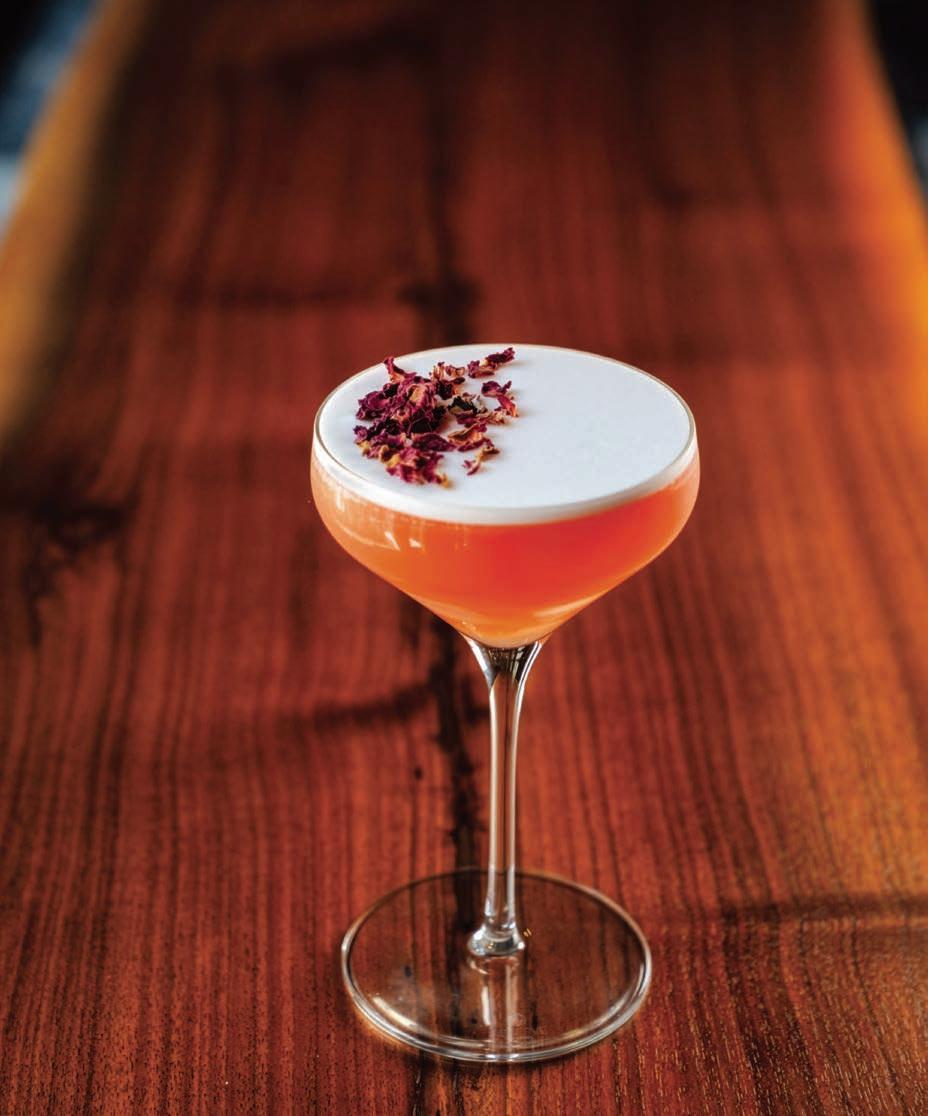
Afew years ago, I was asked to create a cocktail for Pinehurst No. 2. When I delved into the history books, I learned that Pinehurst’s founder, James Walker Tufts, and I have one major connection: Both of us have/had businesses that deal with carbonated beverages.
Tufts owned Arctic Soda Fountain Co. before forming the American Soda Fountain Co., where he acted as the first president. By 1908, there were more than 75,000 of his soda fountains across the nation. The largest was 33 feet high and equipped with 104 taps offering syrups, mineral and soda water. Old advertisements for Tuft’s Arctic Soda Water included scenes of a tropical paradise with sick men and women arriving to drink the “fountain of youth.” Another ad shows winged demons and skeletal forms dancing between fire and ice with the pristine soda fountain representing purity, power and refreshment. With my background in cocktails and carbonated elixirs, I knew I wanted to create a highball cocktail as an homage to one of Tufts’ carbonated sodas. I decided to keep it simple and create a candied lemon highball, The Tin Whistle, named after the oldest men’s golfing society in the United States, founded in Pinehurst in 1904. As for the spirit? Even though whiskey was king of the South, gin was especially popular in resorts. Though different than the London Dry and Old Tom of yesteryear, I chose Sutler’s Spirit Co. because its citrus-forward and mixed botanical gin pairs perfectly for this highball. This built cocktail is very straightforward: gin, candied lemon syrup, sparkling water and acid phosphate (soda fountains used this phosphate because it was lead-free, shelf-stable and not tainted with adulterants). The cocktail is an excellent choice after a round of golf on the famed No. 2 course or on any beautiful sunny day in the Pines. PS
Tony Cross is an on-again, off-again bartender who founded and runs Reverie Cocktails, a kegged cocktail distribution company that has been represented everywhere from dive bars to baseball stadiums.

Specifications
1 3/4 ounces Sutler’s Spirit Co. gin
1 1/4 ounces candied lemon syrup*
1 teaspoon acid phosphate
6 ounces sparkling water lemon wheel
*Candied lemon syrup: Make a simple syrup of 3 parts sugar to 2 parts water; add a heavy 1/8 teaspoon of food-grade candied lemon (or plain lemon) oil per 8 ounces of syrup.
Execution
Add gin, syrup and acid phosphate in a tall glass. Briefly stir. Add ice. Top with sparkling water. Briefly stir and top with lemon wheel.
Mother’s Day makes me long for simpler times. At the risk of romanticizing the good old days — after all, simple is not synonymous with easy — I can’t help but feel that there was so much more beauty and calm in how we celebrated holidays just a few decades ago.
In my childhood, on mother’s special day, I typically set my alarm clock to wake up early, then tiptoed out the door to cycle to a little flower meadow beyond the forest that surrounded our village. I picked the most cheerful blooms and arranged them in a little bouquet that I set on the kitchen table, together with whatever I had crafted that year: a card, a crocheted potholder, a necklace made of wooden beads.
We usually had a cozy breakfast and went for a hike in the woods on Mother’s Day. It was simple, but meaningful. No store-bought greeting cards, chocolates or greenhouse flowers, just things we kids gathered or made by hand. No extravagant brunch or dinner; we ate at home. To be fair, my mom still had to do all the cooking, just because no one, including herself, wanted to eat what the rest of us were capable of making.
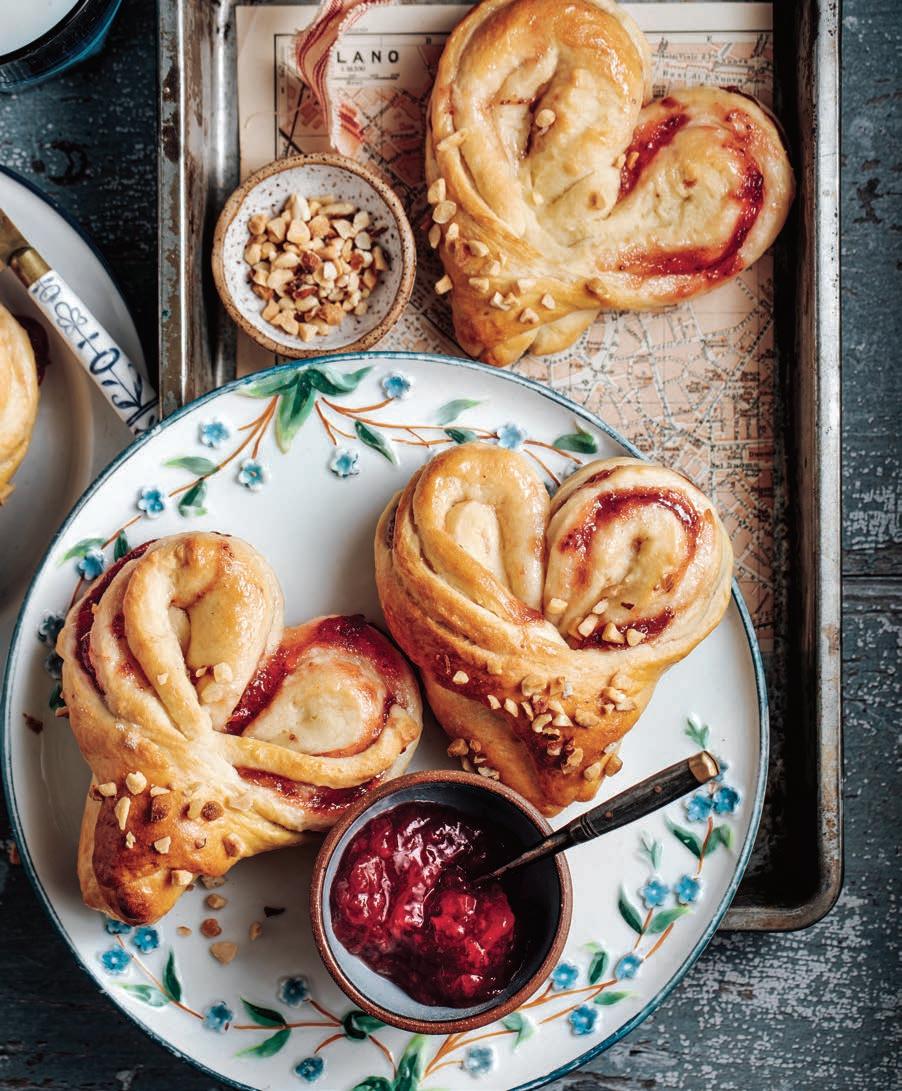
And to my memory, at least, there has never been a single holiday without yeast bread — sweet bread was omnipresent in times of celebration. Naturally, Germans have made bread into an art form, so yeast dough would be skillfully shaped to represent the occasion. Little good luck piglet-shaped bread rolls on New Year’s Day; bunnies or lambs for Easter; hearts for Mother’s Day; or just plain old yeast dough wreaths on ordinary weekends. If simple sounds good to you this year — simplicity is the essence of yeast dough — try your hand at these heart-shaped rolls with strawberry jam layers. Mom will love it. PS
German native Rose Shewey is a food stylist and food photographer. To see more of her work visit her website at suessholz.com.
Sweet Bread Rolls
(Makes 8-10 heart-shaped rolls)
For the dough:
7 grams active dry yeast
250 milliliters milk, lukewarm (about 110F)
90 grams plus 1 teaspoon granulated sugar, divided
500 grams all-purpose wheat flour
1 medium egg
70 grams butter, room temperature
1 teaspoon vanilla extract
Pinch of salt
For assembly:
1/2 cup jam, strawberry or raspberry
1 egg yolk
1 tablespoon milk
Chopped nuts, optional
Method
In a cup, combine the yeast with the lukewarm milk and one teaspoon of sugar. Stir until the sugar and yeast have dissolved.
Place the flour in a large bowl and press a mold into the center. Pour the lukewarm yeast-milk mixture into the mold. Add the remaining sugar and mix lightly with some flour. Cover the bowl with a kitchen towel and allow to rest for about 15 minutes.
Add the remaining ingredients (egg, butter, vanilla, salt) and mix everything together. Knead the dough until it is smooth. Cover the dough and allow to rise for at least 45 minutes or until the dough has doubled in size.
Once the dough is ready to be processed, knead once more and take about 100 grams of dough (or divide dough into 8-10 equal parts) and shape into a ball. Roll out into a circle and spread a scant tablespoon of jam through the center of the dough (less is more).
Roll up the dough (just like a jelly roll), then fold in the center. Pinch the two raw edges together to seal them. With a knife, cut the folded, bulging side lengthwise about 2/3 down the middle to create a heart shape. Fan the cut sides out to display the jam layers. Repeat with the remaining dough and place hearts on a baking sheet and allow them to rest for another 20 minutes.
Preheat the oven to 350F. Brush hearts with a mixture of beaten egg yolk and milk and sprinkle with chopped nuts. Bake the hearts for about 15-20 minutes or until they are cooked through, with a golden crust.



By JennA Biter
Every other Friday, a halfdozen volunteers gather in Darcie Davis’ kitchen, tie on homemade aprons and cook up a warm meal for the domestic vio lence, sexual assault and human trafficking survivors staying in Friend to Friend’s shelters. Depending on occupancy, that could mean cooking for 30 or so residents between the Serenity House emergency shelter and the Butterfly Cottage for human trafficking victims.
“You mean you just bring this food from your kitchen to us?” Davis was asked one evening after a dinner delivery.
“Sure, you deserve it,” she replied.

“I just don’t know anybody who does that,” the woman continued, seemingly unable to compute the kindness.
For its part, the Sandhills nonprofit Friend to Friend has been providing survivors of interpersonal violence with services free of charge since 1988. For hers, Davis has been delivering the shelters home-cooked meals since she moved to the area in 2019. Along the way, more than 30 volunteers, collectively “the cooking team,” have joined Davis, dropping off sides and desserts, donating ingredients and, on a sign-up basis, cooking the main dish in Davis’ kitchen on service days every other Friday.
The years of kitchen communion culminated in the printing of From Heart to Table, a cookbook of Davis and company’s recipes spiral-bound as a fundraiser for Friend to Friend. “Last year I attended a volunteer appreciation event Friend to Friend was holding, and everyone was going around introducing themselves,” Davis says, retelling the cookbook’s origin story. “When it was my turn, I mentioned that we’re the people who take a meal every other Friday.” People started asking questions.
on? Board member Norma Piggott was gobsmacked. She ap proached Davis, saying, “Darcie, this is amazing. How come nobody knows about this?”
Davis initially volunteered at the Serenity House until the COVID pandemic hit. “I couldn’t go to the shelter, but they have to eat, so I just whipped up a meal and said, ‘Can I take this to them?’”
One meal led to two, then two to three. For a while, Davis cooked the main dish herself, then crisscrossed Moore County to collect sides and desserts before meeting with a nonprofit staffer who would take all the food to the shelter.
Davis halved the operation’s complexity when she started delivering the food herself, and the complexity gave way to simplicity when she moved into the Pinewild community in 2022. Neighbors quickly converted to fellow volunteers who eagerly drop off dishes like fresh pear salad and graham cracker toffee, or all the ingredients for recipes with names like “lemony Greek meatball soup” and “fancy lasagna.” Others stop by to help cook the main meal, leaving the kitchen spotless in their wake.




“The kind of abuse these men and women go through is at a whole other level,” Piggott says about the shelters’ residents. “Anything that you can do to bring them back and help them and enrich their lives is so important.”
After discovering the cooking team’s quiet work, Piggott asked Davis if she’d be willing to collect the recipes they’d been using and turn them into a cookbook that could help fundraise for Friend to Friend, which runs on government grants and donations. A self-proclaimed “spreadsheet gal,” Davis welcomed the task, neatly compiling everything from “easy chicken burritos” on page 17 to “lazy cookie bars” on page 105.
Davis plans the menus weeks in advance and posts a signup sheet online. “I mean, these people are jazzed,” she says. “I’ve got three, maybe four, Fridays online and almost all the spots are taken. I have to keep putting more on because this is a big team of people.” They’ve even channeled their overflow generosity into breakfast casseroles to last through the weekend.
Although they’re known as the cooking team, the group does so much more than cook. Once they sewed 50 pillowcases for the moms and dads and kids to take after they left emergency housing. “There’s a brand-new baby this week, so we’ll be putting something together,” Davis says. Recently she discovered the shelter didn’t have enough bowls and was running low on cutlery. Now they have an abundance of both.
After the chopping and stirring and simmering ends, but before the food makes it out the door for a 4 p.m. delivery, Davis’ husband, David Herring, slips in freshly printed menu cards that include artwork, an encouraging or whimsical quotation like “happiness is hot soup on a cold day,” and the signatures of the volunteers who helped prepare the meal. Then Davis and another volunteer or two load up the aluminum serving trays and make the delivery. She talks with some of the shelters’ residents and snaps pictures of the food before heading home and
writing an email to her distribution list of volunteers, filling them in on the drop-off.
“They’re shocked to know we’re neighbors,” Davis says, reflecting on her experiences. “We’re just some neighbors who might be in that same position, and some of us have been in the same position, and we just want them to know they’ve got some support.”
the team,

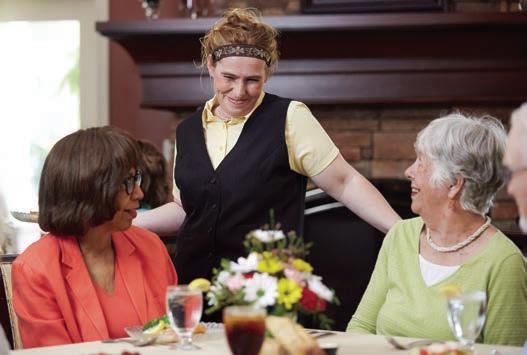

For at least a night, that comes in the form of a warm, home-cooked meal. “Even if they can’t fully articulate it, this is one of the things that helps them come back to themselves and to their humanity,” Piggott says. PS
Jenna Biter is a writer and military wife in the Sandhills. She can be reached at jennabiter@protonmail.com.
Visit www.friendtofriend.me to learn more, sign up for volunteering opportunities or donate. For any donation of $50 or more, you’ll receive the From Heart to Table cookbook as a thank you. To join “the cooking team,” email hellodarcie@ gmail.com.





By BA rrie r eynolds
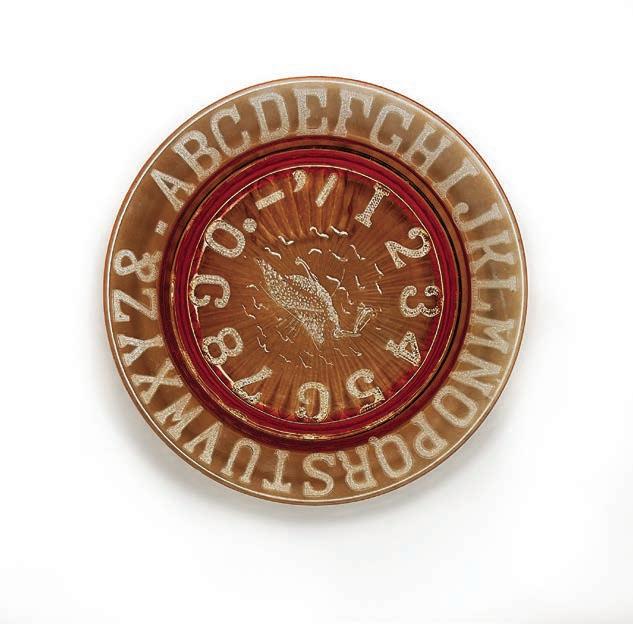
Our mother grew up in New York City, the daughter of a man who worked as a leather tanner in the garment district and a woman who made bathtub gin. Maybe because she grew up during the Depression, and because she had virtually nothing from her own childhood — not a doll or a book or a blanket — our mother became something of a hoarder. Growing up, my sister and I built a tunnel in our basement to find a way through all the stuff our mother refused to part with: a pinball machine, a basketball hoop, planters, old lawn furniture, small appliances and much, much more. Each and every item had a special story to explain why it had to stay exactly where it was.
When my mother was in her 60s and I was in my 30s, with great fanfare, she passed down to me her Carnival Glass baby dish. And it, like everything else, had a story to go with it. She told me her mother’s sister — her Aunt Tilly — visited their New York home shortly after my mother was born. Tilly, my mother explained, worked for the Philadelphia Railroad’s Pittsburgh office. When Mom was born, Tilly was desperate to see her new niece. It was during the war but, even so, Tilly managed to get four days off with pay. She had a coach ticket on the train, fruit and snacks, and a beautiful baby cap she had knitted for the newborn girl.
When Aunt Tilly arrived in the city, Mom continued, she de-
cided to walk the 16 blocks to Houston Street, dragging her suitcase behind her. On the way, she paused to rest on a park bench. A stranger sat down beside her, and Aunt Tilly wanted to show this woman the knit baby cap, but it was gone! She’d left it behind on the train or lost it on the way. Distraught and in tears, it was at that moment that a beat cop walked by. Noticing how distressed Aunt Tilly appeared, he asked if she was OK. Through her tears, Aunt Tilly explained she’d lost an item precious to her. The cop was holding a wrapped package in his hands and said he’d found it nearby. He asked Tilly if that was what she’d lost. “No,” she replied, but she seemed so heartbroken the cop gave the package to her anyway. After he walked away, she opened it. Inside was a little amber miracle, a perfect gift for the newborn child. It was a baby dish — the very one my mother was now passing down to me.
Of course, I cherished my mother’s baby dish for many, many years. Then, one day, long after my mother had passed away, I visited my cousin, my Auntie Esther’s daughter Leslie, in Florida. My eyes were drawn to something in her china cabinet, an amber baby dish.
I was dumbfounded. “Matching baby dishes?” I wondered. Then I told Leslie the story behind mine. After she stopped laughing, Leslie explained that Uncle Louie — Auntie and Mom’s brother — once owned a gift shop in Mystic, Connecticut. And that, as they say, is the rest of the story.
I never did question the authenticity of my mother’s tall tales. And I’m glad I didn’t. The heart, like a little baby dish, holds everything. PS
Barrie Reynolds is a Fort Wayne, Indiana, transplant. She and her husband have lived in Pinehurst for 10 years, where she enjoys nature and writing.


















Laugh out loud or shed a tear
By deBor A h sAloMon
I didn’t watch the Academy Awards. I knew that I hadn’t seen a single nominated film. Nor were more than a few actors’ names familiar. Their outfits indicated star quality more than their names. Names of the designers, that is. I felt a pang, especially since most gowns/jumpsuits/pant outfits were downright ugly.
Then, on a wave of “background” music, I was transported to the days when most movies were entertainment, not films or art when Wednesday night “dinner and a movie” became a ritual for parents who could get a babysitter. When the experience was a rite of passage — a first date for 10th-graders. Will he hold your hand? Will it be slick from buttered popcorn? Remember, no mammoth soda or you’ll be running to the little girl’s room.
All gone with the wind, so to say.
Technology has enriched our lives in so many ways that I feel guilty dumping on it. Still, it has also taken away certain events including . . . the movies. When coming attractions were announced in full-page ads in Life magazine, which revealed a classification, be it Western, comedy, mystery, war, romance, thriller, history, cartoons. Animal stories were always tearjerkers. You could count on a two-hour duration. Four-letter words, absolutely not. Same for nudity.
The theater would be on the main drag, with a marquee protruding from the entrance like the Sunrise Theater. On it, the movie title, maybe a descriptive adjective. “Blockbuster” comes to mind, attached to James Bond flicks released in the 1960s.
On weekends get there early, stand in line and hope for two seats together. If you missed the first 10 minutes no problem, because with run-on showings you could see the beginning two hours after the ending.
First off the newsreel, the coming attractions, hopefully a car-
toon, often Roadrunner. Some big cities had all-newsreel theaters popular during pre-TV World War II.
The ticket booth was free-standing, stranded in a covered space where the line formed. Cash was the only tender, and kids got in for a dime.
The larger Southern theaters wafted an aroma that wasn’t just popcorn. Once through the set of doors into the lobby we were hit by a blast which, pre-residential AC, seemed reason enough to watch a mediocre flick. In fact, on an especially steamy day, management hung a “COOL INSIDE’’ banner from the marquee, sometimes obstructing John Wayne or June Allyson, Doris Day or Burt Lancaster.
Ah . . . movie stars. Teenage girls had faves. Most of these glamour pusses, postmortem, are memorialized in a concrete Hollywood sidewalk. Mine was Gregory Peck: looks, talent, intelligence, charisma, he was the total movie star package. As an adult I shifted to Daniel Day-Lewis after a regrettable fling with James Bond.
DDL brings up the maturation of movie — sorry, film — plots. Sure, films outgrew the “movie’’ definition long before Lewis copped the 1989 Academy Award. But My Left Foot was different, as were “foreign film” think pieces unrelated to an IMAX sensory overload.
A movie with a strong and relevant plot plus solid acting doesn’t need too many frills. One Flew Over the Cuckoo’s Nest comes to mind. I know every word of The Godfather.
Oops. I’ve gone uppity when all I mourn is a midweek movie preceded by the Wednesday meatloaf special. I want to laugh out loud or shed a quiet tear. I want to forget my troubles and be transported, with the transit mode being an 8-cylinder rig with whitewall tires. Leave out the bare bits and gimme a gritty story, something I can relate to.
Because when the water gets too deep I just want to buy a little pink ticket . . . and watch a movie. PS
Deborah Salomon is a contributing writer for PineStraw and The Pilot. She may be reached at debsalomon@nc.rr.com.
















By susA n CAMPBell
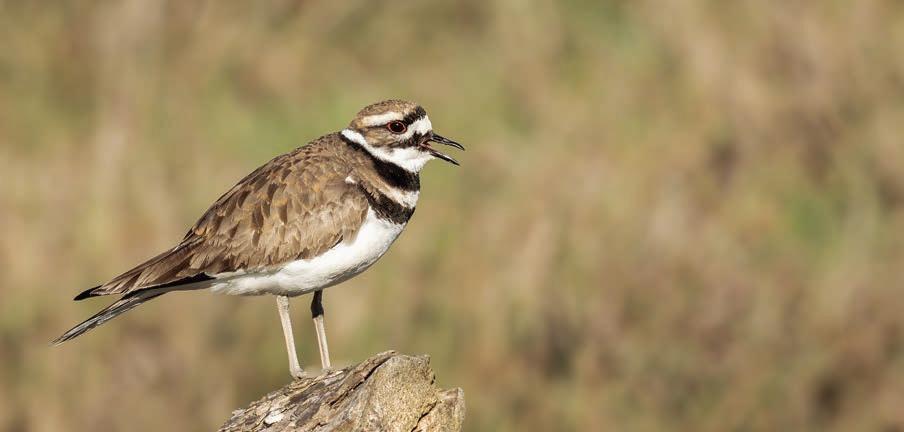
The killdeer is a small, brown and white shorebird that breeds in the Sandhills and Piedmont of North Carolina. The species can be found here year-round in the right habitat — and it need not be all that wet. Widespread in North America, most of the killdeer population lives away from the water’s edge. In fact, for egg laying, the drier the spot, the better. In truth, our sandy soil is not unlike the beaches where one would expect to find a shorebird.
This robin-sized bird gets its name from its call: a loud “kill-deer, kill-deer,” which can be heard day or night. During migration, individuals frequently vocalize on the wing, high in the air. In early spring adults will circle above their territory calling incessantly.
On the ground, killdeer are a challenge to spot. They blend in well with the dark ground, hidden against the mottled surface of a tilled field or a gravel covering. Killdeer employ a “run-andstop” foraging strategy searching for insect prey on the ground. As they run, they may stir up insects, which will be gobbled up as the birds come to a quick halt. Although they live in close proximity to humans, killdeer are quite shy and more likely to run than fly if approached. When alarmed, they frequently use a quick head bob or two, likely a strategy to make the birds appear larger than they are.
During the winter months, flocks of killdeer concentrate in
open, insect-rich habitat such as ball fields, golf courses or harvested croplands. Come spring, pairs will search out drier substrates, preferring sandy or rocky areas for nesting. They may even use flat, gravel rooftops. The female merely scrapes a slight depression where she lays four to six speckled eggs that blend in with the surroundings. She will sit perfectly still on her nest and incubate the eggs for three to four weeks. If disturbed by a potential predator, the female killdeer will employ distraction displays to draw the intruder away from the eggs, going so far as to feign a broken wing. The mother bird will call loudly and with her tail spread — to be as noticeable as possible — limp along dragging a wing on the ground. This “broken wing act” can be very convincing, giving the predator the idea that following the female will result in an easy meal. Once away from the nest, the killdeer will fly off, not returning to the eggs until she is convinced the coast is clear. Should distractions by the adults not be effective, the pair will find a new nesting location and begin again. A very determined nester, killdeer are capable of producing up to three broods in a summer.
When the eggs hatch, it will be a synchronous affair. As soon as they have dried off, the downy, long-legged young will immediately follow their mother away from the nest to a safer, more protected area nearby. They will follow her, being fed and brooded along the way, for several weeks. Once they are fully feathered, the young will have learned not only how to escape danger but how and where to find food.
So, if you hear a “kill-deer” over the next couple of months, stop and look closely. You may be rewarded with a peek into the summer life of this fascinating little bird. PS
Susan Campbell would love to receive your wildlife sightings and photos. She can be contacted by email at susan@ncaves.com.







By toM BryA nt
“The Lumbee is a winding stream that gradually increases in breadth as it becomes a noble river.” — Mid-Winter Canoe Club
John Mills, the unofficial official historian of Pinebluff, recently sent me a clipping of an article published in The Pilot many years ago about a booklet with information about the Mid-Winter Canoe Club, a small canoeing organization with headquarters on Drowning Creek. The booklet, published in 1911, disowned the name of the creek, Drowning, indicating it was an offshoot of superstitions originating with the local population. The correct name of the waterway should be Lumbee, a reference to the Native American tribe that frequented the river and often lived close to the tributary.
“All rivers lead to the sea, but there is no water road to or from the ocean within easy reach of tourists in the sand hills or those who live in the great centers of life and industry along the Atlantic Seaboard, which can be reached so conveniently and traveled so freely in winter as the fascinating course offered by The Lumbee, The Little Pee Dee and The Great Pee Dee Rivers.”
The writer of the booklet went on to describe the waterway as it looked at the turn of the century. “The timber growth along the river is semi-tropical, an unbroken wilderness that has never seen an axe except where the bluffs make into the river (once in six to 10 miles) and serve as landing places or camping grounds. Unusual bathing facilities are afforded on sandy points opposite these bluffs. Gum, cypress, juniper, pine and water oak are the prevailing woods. The green of winter is afforded by the ever-present holly trees, the pale green mistletoe, the bay bush and pine.”
Pinebluff, described as the station south of Pinehurst, served as the headquarters of the Mid-Winter Canoe Club. The president of the club was John Warren Achorn, M.D., who lived in Pinebluff during the winter and in Annisquam, Massachusetts, during the summer months. Levi Packard, of Pinebluff, served as secretary and treasurer. Directors were E.G. Gay, whose home was in Maine; Wayne McNeill, of Wagram; and Dr. Achorn.
It’s pretty clear that the good old boys who headed up the canoe club described the river in a promotional way to influence more folks to locate to the area and take advantage of the pleasures offered by the club. The ad guys at Pinehurst golf courses did the same thing in 1911, pretty successfully I might add, more so than the promoters of the Lumbee.
So that’s how it was in 1911. Later, in more modern times, three of us would have a little different experience on the river.
John Mills, Andy Alcroft and I had spent most of our childhood roaming the woods of the southern part of Moore County, but the swamps of Drowning Creek were off limits. In the early ’50s, Manly Wade Wellman, a good friend of Johnny Mills’ father, wrote a book, The Haunts of Drowning Creek. He even dedicated it to John’s dad. After reading Wellman’s novel, it was hard to keep us off the river.
One summer when all three of us were on break from college and home in Pinebluff, everything came together, and we had ample time to experience what we considered the adventure of a lifetime. The plan was to launch our skiff at the creek bridge between Aberdeen and Laurinburg, follow the creek south until it flowed into the Lumber River, then paddle on down to the Little Pee Dee, which would eventually merge with the Big Pee Dee and then on to our destination, Georgetown, South Carolina, and the mighty Atlantic Ocean.
Our most important tool for the trip was a little 14-foot skiff owned by our friend Cliff Blue. He was glad to lend us the boat and even agreed to pick us up at the end of the trip in Georgetown, but when we asked him to join us he said, “Man, there are things on that river that’ll kill you. You Pinebluff boys have always been a little strange.”
We allowed ourselves about two weeks to complete the trip, and we were cutting it close. Summer was coming to an end, and we would soon have to be back in school.
I remember we had quite an entourage when we shoved off at the bridge on Highway 501. John’s sister had a slumber party at his house the night we loaded all our gear, and the girls wanted to come to the bridge and watch us push off the next day. I was supposedly the expert on swamps and low country river traveling. My grandfather had a house and camp on the Little Pee Dee in South Carolina, and I had spent many summers fishing the sandbars of that river. The Lumbee River was about to teach me how little I knew about Drowning Creek.
We were all decked out in our jungle finery. We had pith

•
•
•
•
•
helmets on our heads and Bowie knives strapped to our sides. Ernest Hemingway would’ve been proud. We left on a bright Sunday morning. The weather was perfect. We got the skiff off the trailer and launched it into the creek with only minor difficulty. When the boat was fully afloat, we saw there was little freeboard and we’d have to be careful when we hit the big rivers farther south. We pushed off and rounded the bend out of sight of our spectators on the bridge.
Thirty minutes later we came to our first obstacle. Three huge pines lay across the river. This makeshift bridge blocked our way. It was the first of many portages we would make. The boat had to be unloaded, hauled over the pines, and reloaded, a chore we would soon get used to.
Snakes were everywhere. As a matter of fact, they were so numerous we eventually lost our fear of them and adopted a laissez-faire attitude. There were about as many snakes as there were mosquitoes that buzzed around our heads. At one point we were all in the water lifting the boat over a downed tree when a cottonmouth swam right by us. I splashed him with water and he kept on swimming.
The trip was grueling. After sleeping in jungle hammocks, eating C-rations, boiling creek water to drink and about to run out of time, we decided to call a halt to this adventure at the next sign of civilization.
As the crow flies, we probably traveled only 50 or 60 miles, but taking into account the circuitous flow of the water — often we could look over the bank and see the same stretch of river we had just paddled — there’s no telling how far we actually traveled. That was our modern day experience on the Lumbee. I’ll continue calling it Drowning Creek. That name fits it better.
And Cliff Blue, bless his heart, was right when he said, “There are things on that river that’ll kill you.” PS
Tom Bryant, a Southern Pines resident, is a lifelong outdoorsman and PineStraw’s Sporting Life columnist.

















By lee PACe

I was first attracted to the sport of golf during the summer of 1971, when I found Jack Nicklaus, Lee Trevino and an amateur named Jim Simons riveting theater on ABCTV’s grainy images from Merion Golf Club in the U.S. Open. My dad bought me some clubs, and I tried to teach myself the game from some stupid and dangerous cover story in Golf Digest called “Square to Square,” which is perhaps why it took nearly a decade for golf to supplant my seasonal devotion to football, basketball and baseball. When I ventured into the newspaper business in 1979 and found the golf beat among my domains, the love affair was ignited. The more I wrote, the more I played. The more I played, the more I wrote.
My romance with golf has evolved over four-plus decades of writing and playing, of course with the requisite to-and-fro cycles. As a Spanish playwright once mused, “When love is not madness, it is not love.” I have posted sweet scores and nasty numbers. I have met saints and scoundrels. I have discovered “it” — whatever it might be on a given day — and have at other times been rendered clueless. But the tryst continues unabated. Now spring is upon us once again. The fairways are green and
taut. The sun lingers well into the evening, inviting that golden hour nine holes. It’s time to sweat again walking up that fairway on the back nine, to remember all the reasons we’re smitten with golf. Today I love the sport because of the number at the end of the round. I am what my scorecard says I am. I am a 78. Or a 92. Period. If I played golf on the PGA Tour, I’d post my score and bolt. No talking to the media. The number says it all. Which is why I run for the hills when I casually ask, “How’s your golf game?” and the guy wants to take me hole-by-hole. And I love knowing, whatever my score says I am today, I can be something better tomorrow.
I love tinkering on the practice range — long thumb or short thumb? Flared feet or square? Good connection at the top. Dead hands with the wedges. Get the toe of the club through the ball. Good posture (flat back, not rounded). Follow the shot with the body.
I love lugging my bag around an old Donald Ross golf course — Mid Pines in Southern Pines, Hope Valley in Durham, Forsyth in Winston-Salem, Biltmore Forest in Asheville, Cape Fear in Wilmington, among them. I love the compactness, the quirky and smallish greens, the fairway undulations, the classic old homes lining the fairways. I love to see these heirlooms are being well taken care of by a strong greens chairman who knows the benefit of cutting down some trees. You want healthy grass? Give it some air and some light.
I love the outliers in golf — Pete Dye, bunker rakes with wooden tines, poa annua greens, courses with nothing more than a simple mark at 100, 150 and 200 yards, clubs that do not have a painting of a guy in a red coat hanging on a wall, small scorecards of uncoated card stock that fit easily into your pocket.




And I know the kids need the work and mean well, but I really love it when I drive up to a golf course and am left alone to gather my clubs, shoes and accouterments at my own leisurely pace.
I love the quirks of golf course architecture. Seth Raynor had his squared-off edges on some greens, spines running through others and his signature holes like Alps, Redan, Road, Short, Cape, Biarritz and Punchbowl. Mike Strantz had his blind shots, right angles, sand pits, berms and ridges. Perry Maxwell had his dramatic rolling greens like the gems found today at Old Town Club in Winston-Salem. And Tom Fazio has his knack of unveiling a golf course with everything properly outfitted in cashmere and pearls. As one client, William McKee of Cashiers, has said: “There’s nothing loud, just soft, rolling, curving lines. Tom simply has this uncanny ability to create courses that have an evolved appearance, courses with instant patina.”


And God do I love going to the British Isles to play golf. There is the drive north to Dornoch and the deranged Scottish skies, sunny to the left, stormy to the right. There are the trophy courses, Ballybunion and St. Andrews and Turnberry, but there are the hidden gems, Enniscrone and Ballyliffin in northwest Ireland, the Lahinch Old Course farther south, and the northeast corner of Scotland with Nairn and Brora.
I love the literature of the game, especially with Charles Price commiserating about the old days in Pinehurst, Dan Jenkins recreating the glory days at Goat Hills and P.G. Wodehouse with another side-splitting work of fiction. I love ducking into the Old Sport & Gallery in the village of Pinehurst and rifling through the collectibles and vintage books, of rounding the corner to the Old Golf Shop and marveling at the reproductions of famous golf paintings — a watercolor of the ninth tee at Hoylake, Old Tom Morris in front of his golf shop at St. Andrews, golfers enjoying the game on a rudimentary course beneath Edinburgh Castle.
I love the peach cobbler and pimento cheese at Augusta National, the stovies
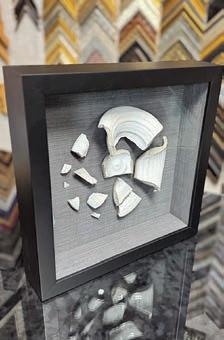







Engage
Choose the Right Time and the Right Place
It’s important to choose a time and a place that’s quiet.


Relate to Your Loved One’s Hearing Loss. Speaking about one’s hearing loss can be a sensitive topic. Be positive.

Your loved one knows there is a change in their hearing. Ask open-ended questions about how they feel and what they have been experiencing
at St. Andrews, the clam chowder at Pine Lakes in Myrtle Beach, the omelets cooked to order at The Carolina, the ice cream sandwiches at the turn at Eagle Point in Wilmington and the BBQ chicken wraps at Old Chatham in Durham.
And boy do I love the Zone, when I find it. You know that 10-foot putt is bottoms, you pick a fairway stripe off the tee and nail it, your mind is so pure and uncluttered and that click at impact so sweet and soft. I once shot near-par with two swing thoughts: Stop (at the top) and GO!

Southern Coast Audiolog & Audiolog are now

I love the friends I’ve made, the people I’ve met in golf. I lament that colorful personalities like Harvie Ward, Billy Joe Patton and Bill Campbell have long departed. As Campbell, a gentleman’s gentlemen in the game, so aptly noted, “In golf there are no strangers, only friends we have not yet met.”
And of course I love golf because of Pinehurst. There’s nothing quite like the rocking chairs at The Carolina, the stroll from the old hotel past Ailsa House, Beacon House, Heart Pine House and Little House to the golf courses. The spires of The Village Chapel loom above us all, serenading us with hymns throughout the day. The No. 2 course at sunrise is quite sublime: an orange orb flashing behind the third green, for example, through the trees separating the fourth and fifth holes, bathing the convex putting surface and all the dips and hollows around it in blissful light and shadows. Mist hangs in the air. Woodpeckers chuck away in the pine forests.
Scottish golf pro Tommy Armour felt the love many decades ago: “I have seen strangers, jaded and dull, come to Pinehurst and after a few days be changed into entirely delightful fellows.”
There’s a lot to love in that sentiment. PS
Lee Pace has written about the Pinehurst experience for more than three decades from his home in Chapel Hill. Write him at leepace7@gmail.com and follow him @LeePaceTweet.
























A hawk drifted over as I backstroked through the neighborhood pool. It glided more effortlessly than I’d imagined possible, circling and diving on the breeze without thrash or beat of wing, so I puffed up my chest and floated awhile, wondering if he’d spy me and swoop down to make a meal of my laziness. Maple seeds helicoptered into the depressions between ripples, bobbing expectantly. Drowned, fat caterpillars littered the blue between lanes. There are graveyards where the bones rest less tranquil than that afternoon, but I ripped it into lines, and still I am ripping it into lines, looking for sad, explosive meaning, proof that I skimmed that particular magnificence and didn’t go under.
—
Ross White
Ross White is the director of Bull City Press, an independent publisher of poetry, fiction and nonfiction. He is the author of Charm Offensive, winner of the Sexton Prize for Poetry. He teaches creative writing at the University of North Carolina at Chapel Hill and co-hosts The Chapbook, a podcast devoted to tiny, delightful collections.

None of us would be here without one. They give us life and roots and send us on our way.
And they know how to have a little fun, too.
P roduced by dixie Parks
Phs by tim sayer
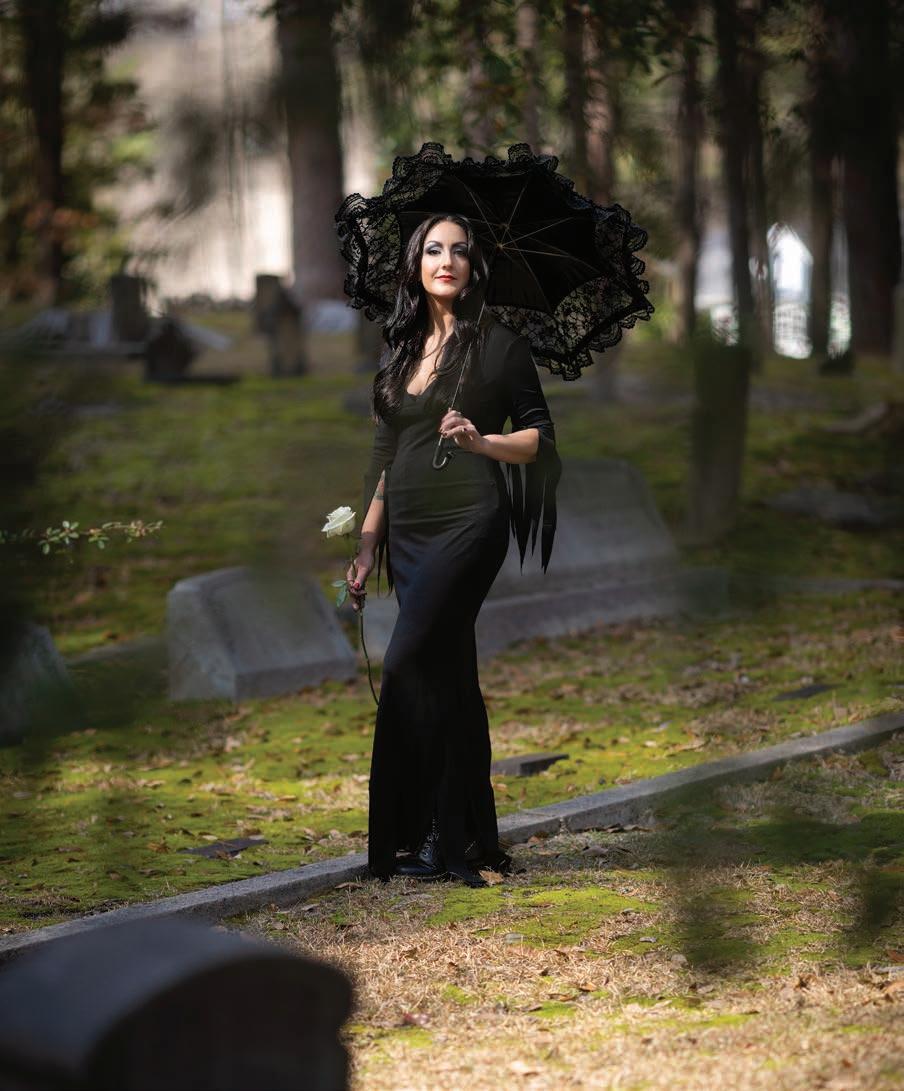
Born of the macabre cartoon created by Charles Addams in the 1930s, Morticia is the matriarch of the Addams family. After leaping from the printed page to the screen, the character has been portrayed by a multitude of actresses including Carolyn Jones, Angelica Huston and Catherine Zeta-Jones. Our Morticia, Rita Hanson, is inspired by nature and currently works on the crew maintaining Pinehurst’s No. 7 course and as a private gardener.
Makeup: Lucy Hanson
Costuming: Marcie Haberstroh
Location: Bethesda Cemetery

Voiced by Julie Kavner and created by cartoonist Matt Groening — who based the character on his own mother, Margaret Groening — Marjorie “Marge” Bouvier Simpson and her extended family, The Simpsons, have been a comedy staple on Fox since 1989. Beth Stout, who plays our Marge, is a health administrator and lifestyle coach for the YMCA’s health programs and is also a yoga instructor at FirstHealth of the Carolinas.
Makeup: Rita Hanson
Hair: Andy Pellegrino
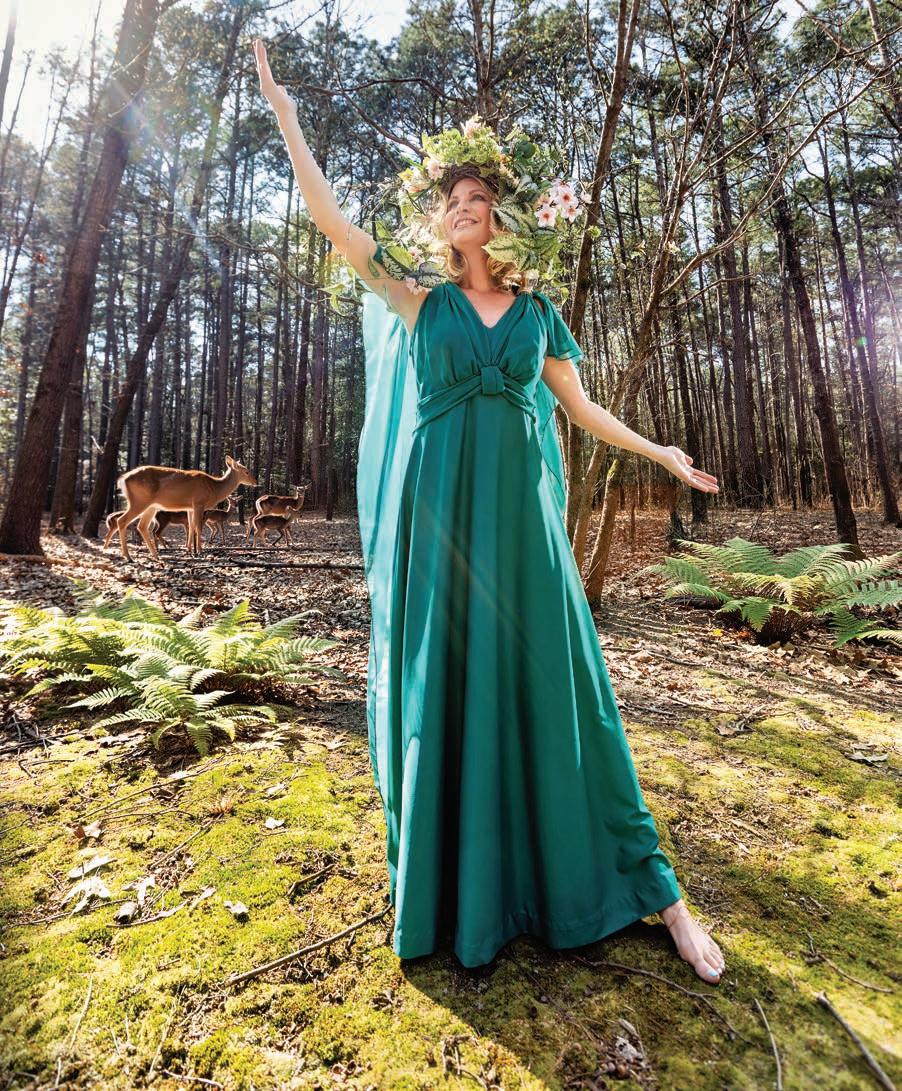
In the words of Radhanath Swami, “Mother Nature is always speaking. She speaks in a language understood within the peaceful mind of the sincere observer.” She is the personification of our lifegiving and nurturing world. Our Mother Nature, Megan Hunt, is co-owner of Gulley’s Garden Center and a Girl Scout leader. Her hobbies include tennis, running, knitting, reading and traveling.
Makeup: Rita Hanson
Hair: Andy Pellegrino
Costuming: Marcie Haberstroh
Location: Weymouth Woods
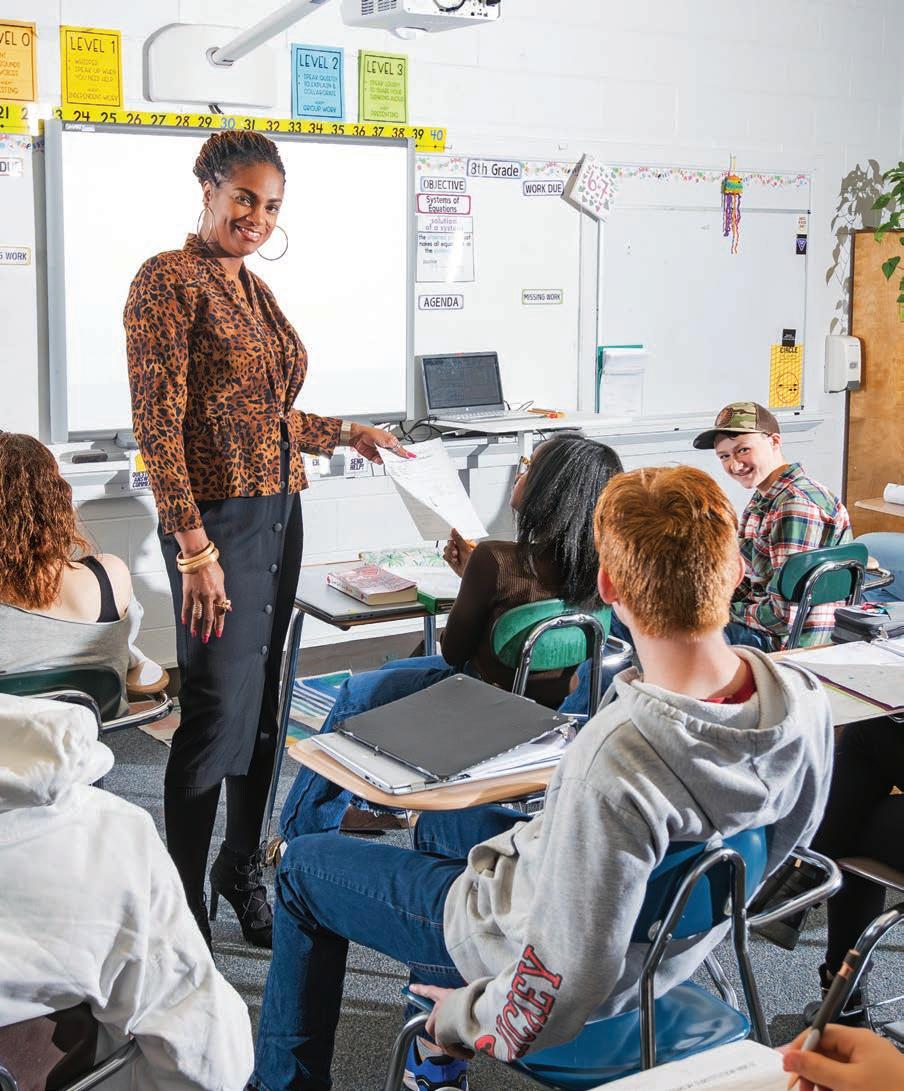
The sassy, witty, outgoing and protective mom on the hit television series The Fresh Prince of Bel-Air, Aunt Viv was portrayed first by Janet Hubert and then by Daphne Reid. Alvita Thomas, our Aunt Viv, is the assistant head of school at Moore Montessori Community School. A student of learning new things, she loves to read and workout.
Hair: Faith Taliaferro, Faith Creations
Costuming: Jennifer Jawanda, Moon Vintage Goods
Location: Moore Montessori Community School
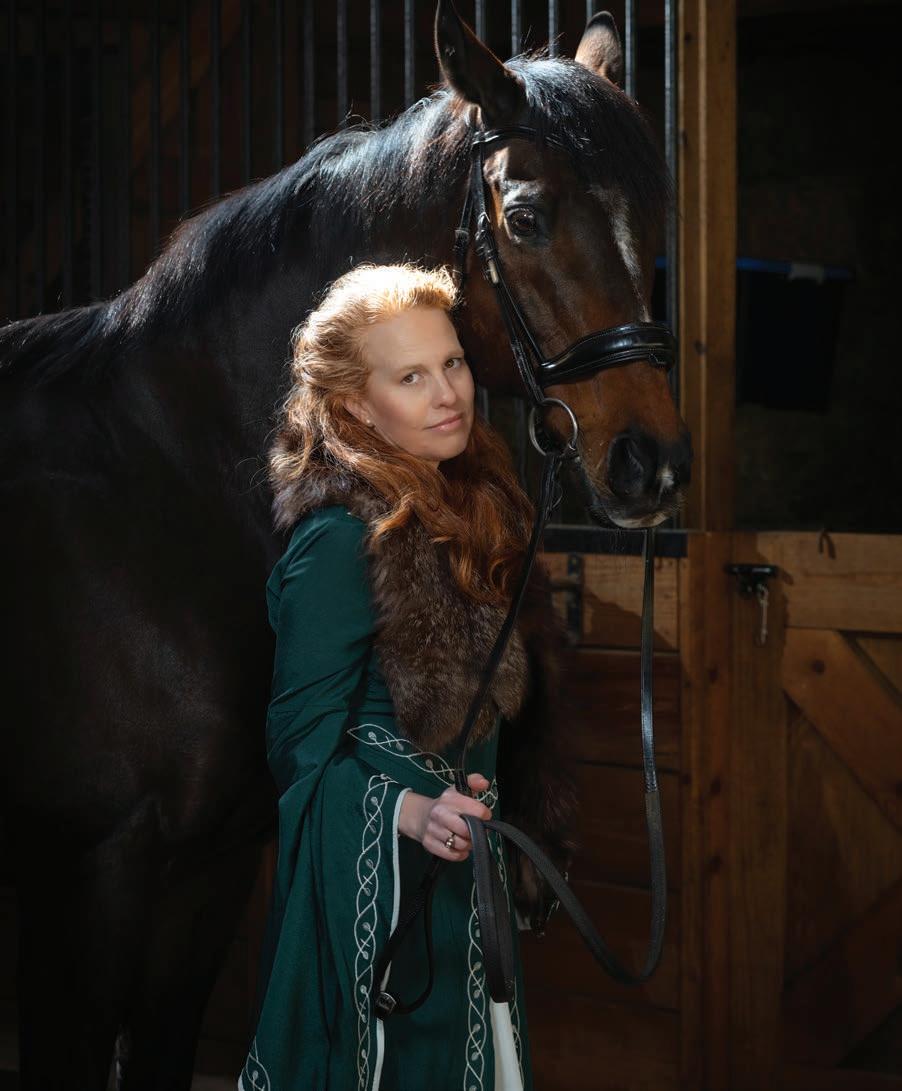
Proud, strong, kind and generous, Catelyn Stark — later known as Lady Stoneheart — is a fictional character in the series A Song of Ice and Fire, by George R.R. Martin. It may be better known by its TV name — Game of Thrones. Caroline Goodwin is a real estate broker in her family’s decades-old firm, Thomas Realty. A volunteer in civic, faith-based and nonprofit organizations, she poses as our Catelyn Stark, Hair: Chloe Simpson
Costuming: Marcie Haberstroh
Location: Rachel Jurgens Farm, with horse Manix
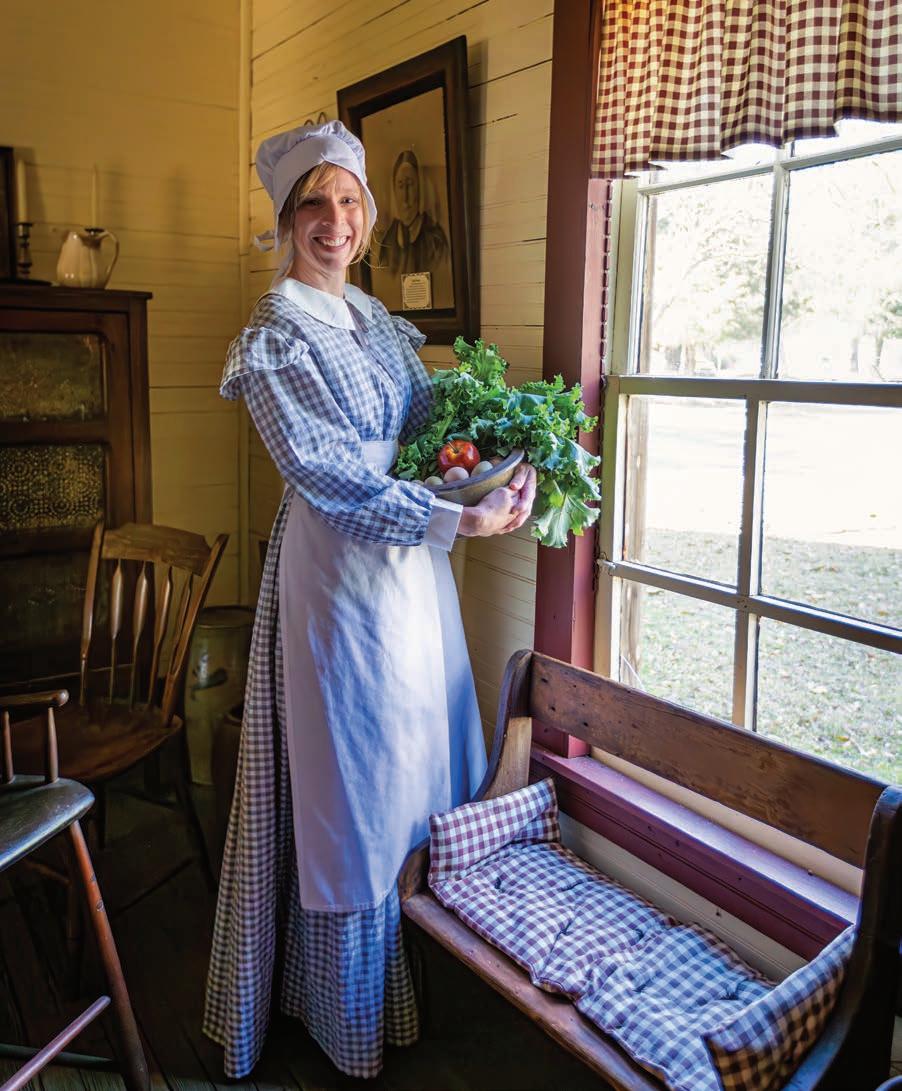
Portrayed by Karen Grassie in the television series Little House on the Prairie, Caroline “Ma” Ingalls was the wife of Charles and the heart of the Ingalls family in the Little House books written by Laura Ingalls Wilder. Our Ma Ingalls, Shawna Fink, runs Lady Bug Farm and the Lady Bug Farm Nature Immersion School, and is a certified yoga instructor for both children and adults.
Costuming: Marcie Haberstroh
Location: Shaw House
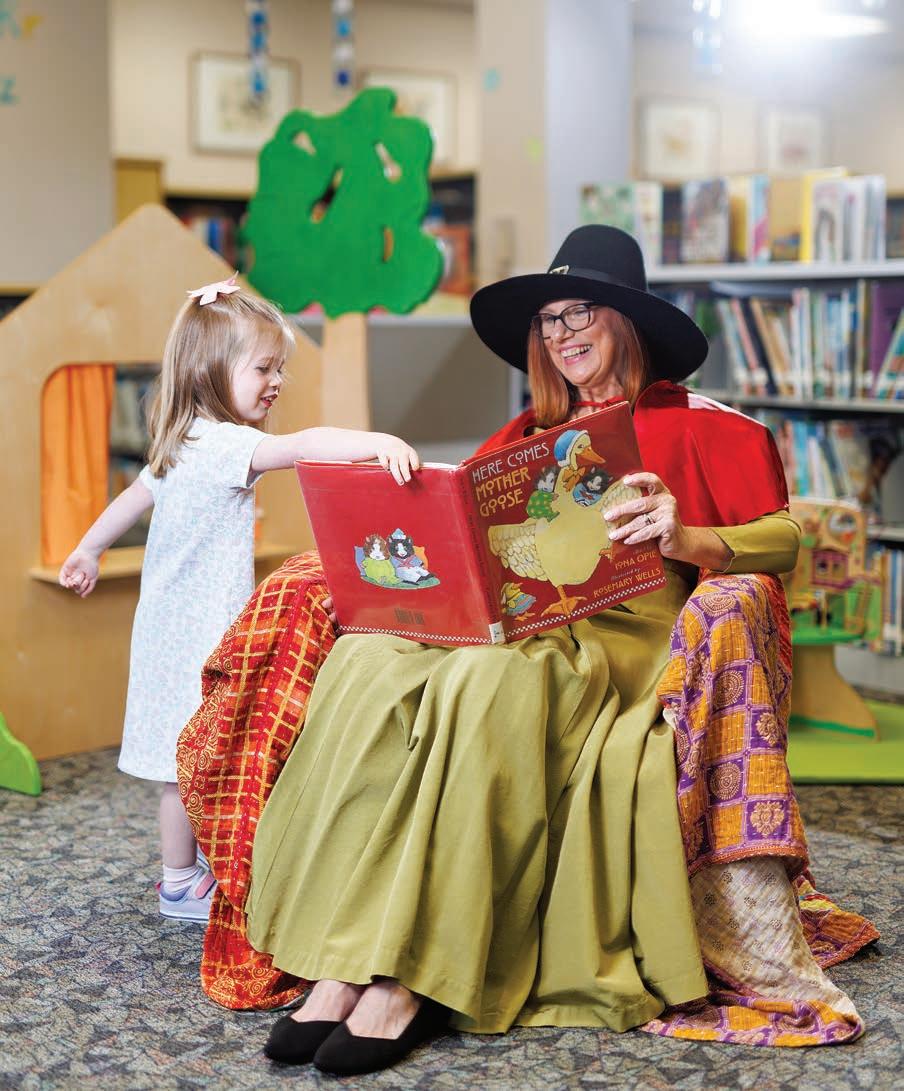
A character originating in children’s fiction, Mother Goose was the imaginary author of French fairytales and, later, English nursery rhymes. A supporter of local school theater programs, our Mother Goose, Karen Wagner, ran Mothers Morning Out at Emmanuel Episcopal Church and continues to mentor former students navigating middle and high school.
Costuming: Marcie Haberstroh
Location: Southern Pines Library
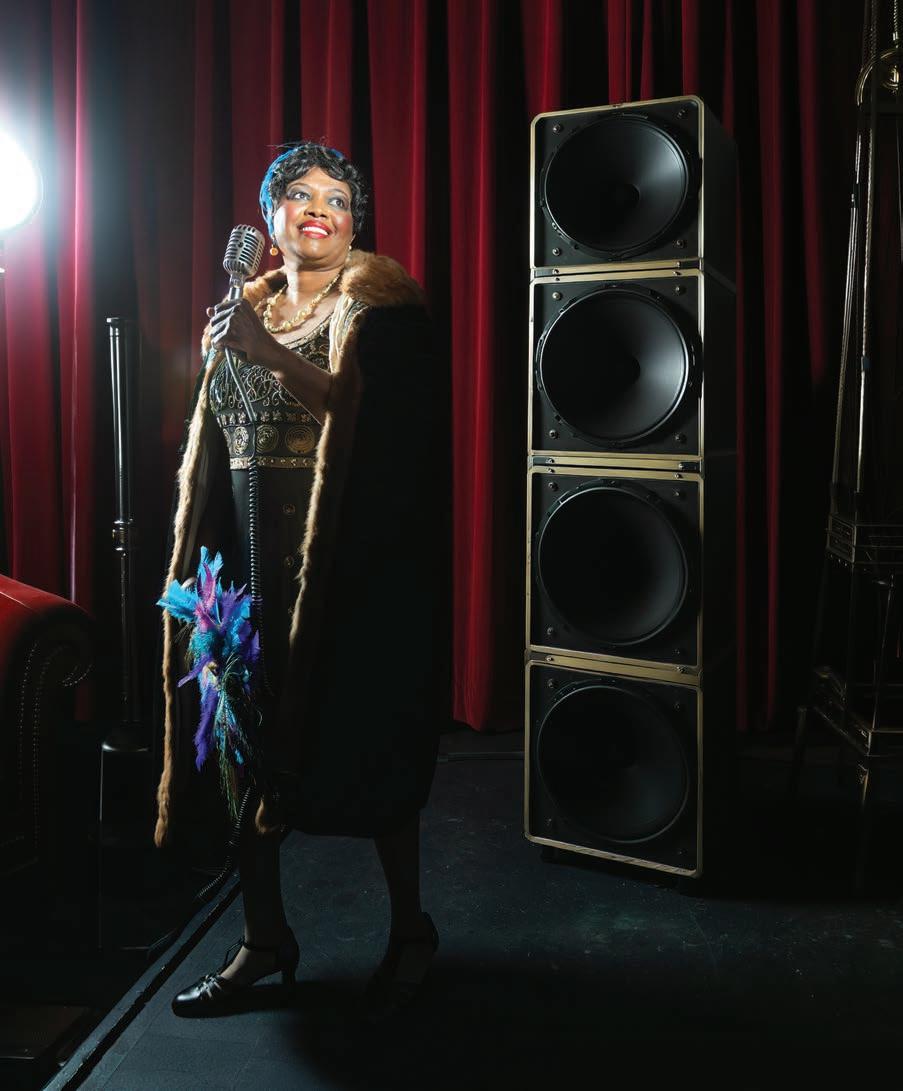
Gertrude “Ma” Rainey grew up in Columbus, Georgia. Dubbed the “Mother of the Blues,” she was known for her powerful vocals in 1920s hits like “Bo-Weevil Blues,” “Moonshine Blues” and “See See Rider Blues.” A retired U.S. Army Capt., Elizabeth Nhambure is the owner/operator of 1878 Bed and Breakfast at the historic Muse House in Cameron, and poses as our “Mother of the Blues.”
Hair and makeup: Tarea Price
Costuming: Marcie Haberstroh
Location: Sunrise Theater
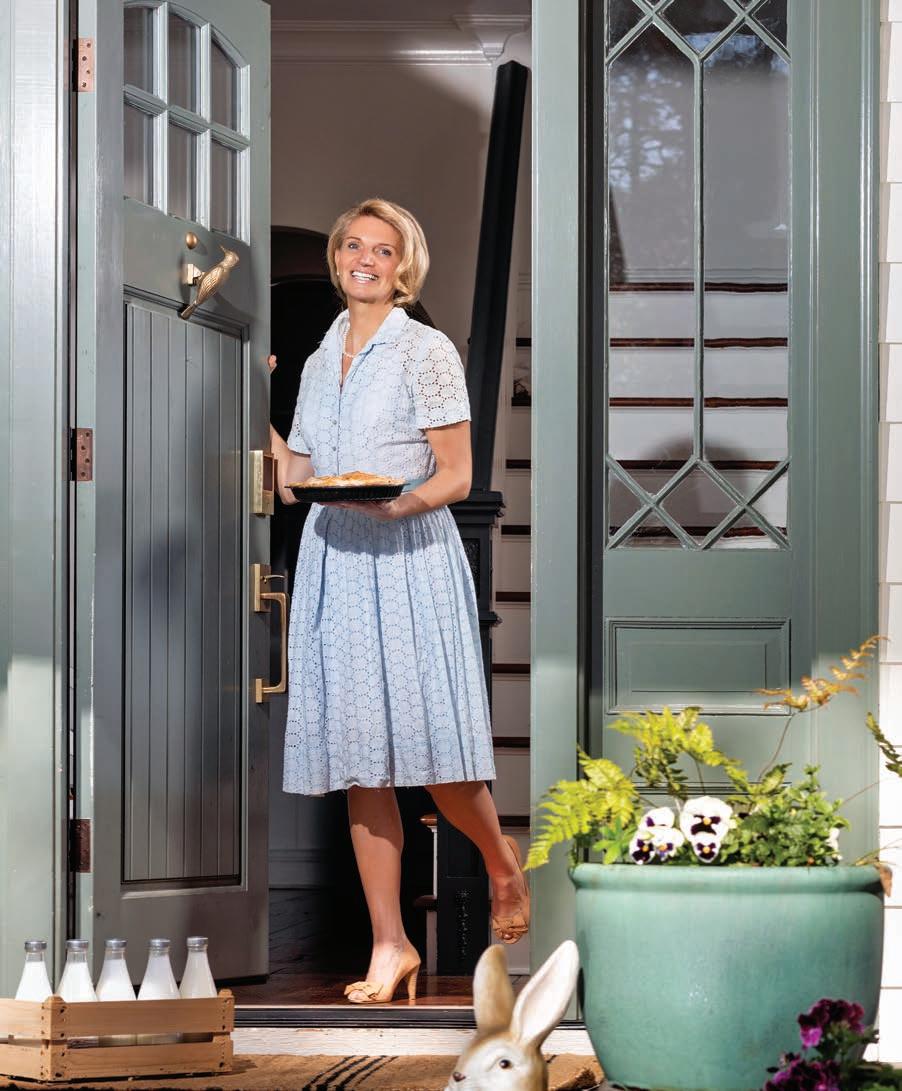
“Gee, you look lovely today, Mrs. Cleaver,” says Eddie Haskell in that old black and white TV series from the 1950s, Leave It to Beaver. June and her husband, Ward, did the best they could raising those All-American boys, Wally and the Beav. Our June Cleaver, Ginger Monroe, is an interior decorator, a youth leader at Brownson Church and a part-time cross country coach.
Hair: Andy Pellegrino
Costuming: Marcie Haberstroh
Location: Home of Ed and Ginger Monroe
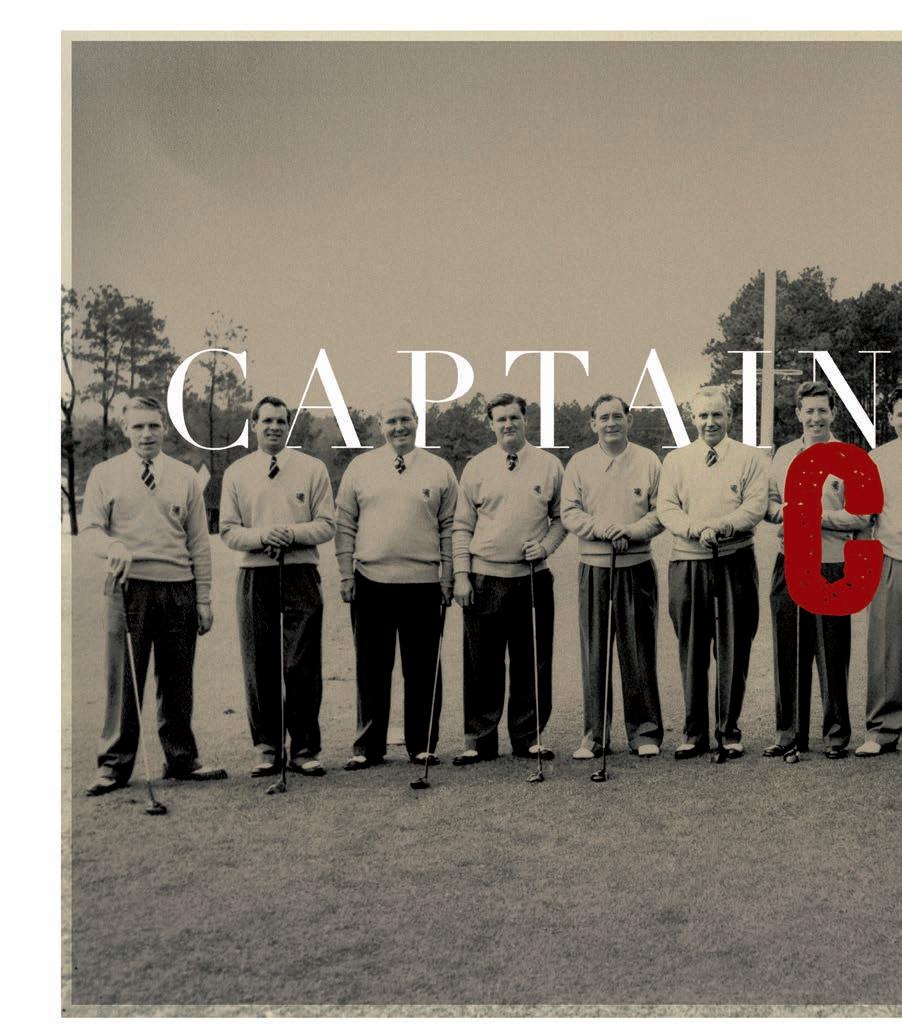

Twice a Ryder Cup player, winner of the Belgian and French Opens and several important British tournaments, Arthur Lacey had accomplished much in golf, including meritorious service to the game as chairman of the British PGA. At age 47, with his best golf a decade in the past, the Englishman’s selection as the non-playing captain of Great Britain and Ireland’s 1951 Ryder Cup team represented a fitting capstone to a stellar career.
The appointment provided Lacey the chance to achieve a goal he had set in 1933 after narrowly losing a Ryder Cup singles match to Walter Hagen. “From that day,” he confided, “it has been my ambition to captain a British Ryder Cup team to victory.”
The ’51 matches would be played on foreign soil in Pinehurst, North Carolina. The captain could never have anticipated that his two weeks in the town would ultimately lead to his moving to America and establishing a winter home in the very place the matches were contested.
Nor could he have known that his second life would include one of the most memorable rules controversies in golf history.
Captain Lacey faced an uphill battle in the ’51 Ryder Cup. The GB&I team — all of Europe didn’t join the fray until 1979 — had not been victorious in any of the four previous cups on U.S. soil. And while most of the American players had competed on Pinehurst’s No. 2 course annually in the North and South Open, this trip would mark the first time any of the GB&I players would have seen it.
But, pure and simple, the chief difference between the two squads was talent. While GB&I did boast two Open Championship winners in Max Faulkner and Fred Daly, the American team featured five men who would eventually be inducted into the World Golf Hall of Fame: Sam Snead (the playing captain of the ’51 U.S. side), Ben Hogan, Jimmy Demaret, Jack Burke Jr. and Lloyd Mangrum.
Sailing across the Atlantic aboard the Queen Mary, the GB&I team arrived in New York on Sunday, Oct. 21. Both teams were feted at a celebratory dinner at the Waldorf Astoria courtesy of Bob Hudson, the Portland, Oregon mogul who had
previously footed the bill to bring the ’47 GB&I team to America while the financially challenged United Kingdom recovered from the ravages of war. The next stop was Washington, D.C., where Lacey’s team toured the Capitol and was greeted by Harry S. Truman at the White House. They played a practice round at Columbia Country Club on Wednesday, Oct. 24, enjoyed another reception and rushed to Union Station to catch the night train to Southern Pines.
Arriving at the town depot Thursday morning, the visitors were, according to the Pinehurst Outlook, “whisked to Pinehurst in a bus which rattled with the sound of the war clubs with which they will try to take the No. 2 championship course apart.” After a flag-raising ceremony at Pinehurst Country Club, the weary travelers checked in at the Carolina Hotel, where they, along with the members of the American team, occupied the hotel’s east wing.
With the matches commencing the following Friday, GB&I had six days to prepare. Lacey was guardedly optimistic. “We have yet to gain our first success in America in this series,” he said, “but I am sufficiently optimistic to think we have brought the best team so far to attempt this difficult task.” When asked about his duties as captain, Lacey couldn’t resist a cheeky response. “Looking after the trophy aboard ship when we return,” he said.
Lacey’s squad was offered the option of playing the “small ball” ( a minimum of 1.62 inches in diameter pursuant to the rules promulgated by the R&A in contrast to the 1.68 inch minimum prescribed by the USGA). The smaller ball flew farther than its American counterpart and tended to perform better in the windy conditions found in links golf. Lacey declined, saying, “We came here to win these matches, and since they are to be played in this country, we will play by your rules.”
Frequent blurbs relative to the comings, goings and social engagements of Pinehurst’s “Cottage Colony” residents were a staple of the Pinehurst Outlook’s reportage throughout the paper’s existence. It was no different simply because the Ryder Cup was coming to town. A week before the golfers arrived the Outlook reported that Mrs. Thomas B. Lockwood, whose primary residence was Buffalo, New York, would be arriving in Pinehurst “to open her cottage, ‘Holly Hill,’ on Midland Road.”
Mildred Lockwood was a widow. Her second husband, Thomas Lockwood, a Buffalo attorney, banker, politician and philanthropist, had passed away in 1947. She acquired Holly Hill, a house bordering the fifth hole of the No. 2 course, in 1949, and it became her lodging during Pinehurst’s so-called “winter season” of November to May. She was a member of the Silver Foils, Pinehurst’s longstanding women’s golf society.
Lacey and Lockwood would marry 14 months after the Ryder Cup. Nothing reported then or thereafter disclosed the circumstances by which the couple met. If their mutual attraction began the week of the matches — or the North and South Open, held in Pinehurst the following week — both kept mum about it.
The 1951 cup matches were a truncated affair compared to the modern Ryder Cup. The teams played 12 matches in two days of competition. The first day involved four foursomes matches. The second day featured eight singles matches. In a head-scratching
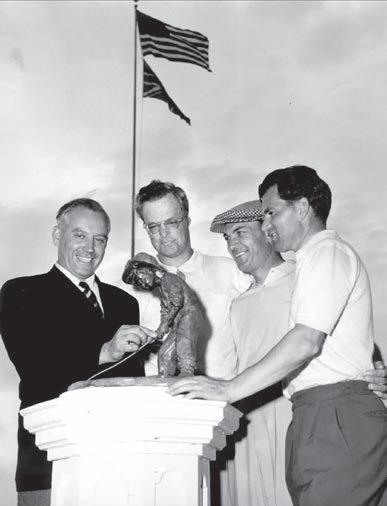
schedule that would be unimaginable today, the Ryder Cup took a break on Saturday. Both teams were encouraged to attend a college football game in Chapel Hill between the University of North Carolina and the Tennessee Volunteers. London Sunday Times journalist Henry Longhurst was among those who joined the GB&I players in the Kenan Stadium press box. “I simply don’t understand what is going on,” Longhurst wrote. “All I know is that I am doing OK as long as I holler, ‘To hell with Tennessee.’”
The Vols blew out the Tarheels 27-0. The American captain, Snead, was not among those attending the game. He picked up a few bucks elsewhere giving an exhibition instead.
Results from the foursomes matches on Friday suggested Lacey’s dream of an upset was just that, a dream. The U.S. won three of the four matches. The teams of Hogan-Demaret and Snead-Mangrum both won 5 and 4. The lone GB&I win, by Arthur Lees and Charlie Ward, prevented a shutout.
When the matches resumed on Sunday it was more of the same, except worse for GB&I. The U.S. won six of the eight matches, mostly by lopsided margins. The only British winner was Lees, who bested Porky Oliver. The final tally was U.S. 9 1/2 to GB&I’s 2 1/2.
During Sunday’s “Victory Dinner” at Pinehurst Country Club, Lacey presented a silver pitcher to Bob Hudson and a silver
cigarette case to Richard Tufts in appreciation of their unstinting efforts in making the British team’s visit enjoyable. Regarding the outcome, the handsome, graying Lacey simply stated, “We were beaten on merit.”
Tufts had arranged for the North and South Open to immediately follow the Ryder Cup, assuming that since the members of both teams were already in town, they would certainly want to stay to compete in the prestigious tournament. That proved true for the British team, but not so much the Americans. The PGA had recently set a minimum prize money floor of $10,000 for tournaments. Tufts balked at complying with this edict. Hogan, Demaret, Mangrum and Burke declined to enter the North and South. Several who did stay, including Snead, failed to hide their dissatisfaction. In what was perceived as a quasi-boycott, four American team members withdrew subsequent to the first round. Only one, Henry Ransom, played all 72 holes. Miffed by the behavior of the American players, Richard Tufts would discontinue the N&S, ending its storied 50-year run.
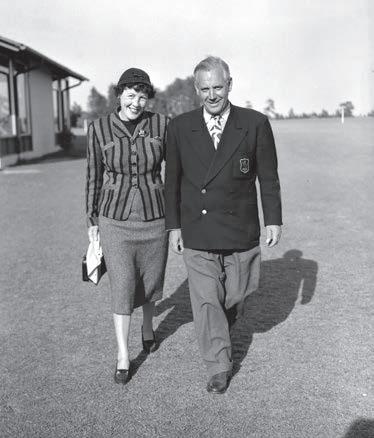
By contrast, each of the British team members played in Tufts’ tournament, as did their captain, who made the cut and played all four rounds. Following the tournament, the members of the GB&I team sailed back to England but Lacey would soon return. In July, 1952 Britain’s Golf Monthly magazine reported that Lacey had left the position he’d held for 18 years as golf professional at Ascot’s Berkshire Golf Club and was moving to America.
On Jan. 27, 1953, Mildred Lockwood and Arthur Lacey were married at the First Presbyterian Church in Reno, Nevada. According to the Outlook, after two weeks in California, “Mr. and Mrs. Lacey will be at their home on Midland Road here until the middle of May, when they will open their residence in Buffalo, for three months, later sailing for a sojourn in the British Isles.”
That itinerary foreshadowed the couple’s peripatetic travels throughout their 26 years together. Typical was their six-month trip around the world in 1955. Sailing from San Francisco, the Laceys visited Japan, Hong Kong, Thailand, Singapore, Indonesia, the wilds of Africa, the Holy Land, Turkey, Greece and England.
In their wanderings, they rubbed elbows with the rich, famous and royal. The Earl and Countess of Carrick joined them for a three-week fishing trip in Boca Grande, Florida. While visiting the low countries, Lacey played rounds with King Leopold of Belgium. Though his competitive form was waning, Lacey would occasionally work in a tournament or two during his European excursions.
Despite prolonged absences from Pinehurst and her hometown of Buffalo, Mildred Lacey engaged in an astonishing array of charitable endeavors in both locales. She was a major benefactor of the University at Buffalo. After purchasing poet Robert Graves’ original manuscripts, she donated the collection to the university’s Lockwood Memorial Library, named to honor Mrs. Lacey’s previous husband, who endowed its construction.
In Buffalo, she served as president of the Ingleside Home for unmarried mothers; chairman of the Building Committee and Fund Raising for the community’s YWCA; a member of the board of directors for two hospitals; the first female member of the Buffalo Chamber of Commerce; and the organizer and president of the Buffalo and Erie County Chapter of Infantile Paralysis. Eliminating polio was a matter of special interest to her. Her brother, Dr. Thomas Francis Jr., designed, supervised, and analyzed the field trials that validated the use of Jonas Salk’s life-saving vaccine.
Mrs. Lacey was equally active in Pinehurst. Her list of services to the community included: member of the board of directors of The Village Chapel; treasurer of the Sandhills Woman’s Exchange; secretary of the Women’s Auxiliary of Moore Memorial Hospital; and president of the Silver Foils golfing society. She worked with the Open Door Nursery School and Child Care Center in Taylortown, helping to start the charity, raising the money to sustain it, and serving as its chairman for 15 years. Today the Wyatt School Age Program in Taylortown continues the work she began.
Arthur Lacey joined The Tin Whistles, after the society tweaked its by-laws to allow dues-paying pros to enter most of its tournaments. For her part, “Queenie,” as Mildred was known by friends, was a high handicapper who participated enthusiastically in Silver Foils’ weekly competitions. In Feb. 1958, she and her husband teamed up in the Silver Foils Mixed Fourball Tournament. The Laceys tied for first before losing in a playoff.
Just over a month later, Lacey, then 53, drove to Augusta National Golf Club, where he had agreed to be a rules official for the 1958 Masters. His service in that capacity was uneventful until the late stages of the final round. He was stationed at the par-3 12th when the pairing of Arnold Palmer and Ken Venturi arrived on the tee. Palmer — who would go on to win the first
major title of his illustrious career — led the field with Venturi hot on his heels, one stroke behind.
Both Venturi and Palmer struck their iron shots a bit too far, their balls landing beyond the putting surface. Venturi’s ball spun back onto the green. According to legendary golf writer Herbert Warren Wind, who was on-site, “Palmer’s ball struck low on the bank about a foot or so below the bottom rim of a back-side trap and embedded itself. It had rained heavily during the night and early morning, and parts of the course were soggy.”
When Palmer reached his ball, he called Lacey over and asked for relief from his embedded ball lie. Lacey denied the request, informing Palmer he would need to play the ball as it lay. To some, Lacey’s ruling and the dramatic — and still swirling — controversy it precipitated, would overshadow his substantial accomplishments in the game.
Under the USGA’s Rules of Golf at the time, there was no provision granting a player relief for an embedded ball. However, Augusta National could put in place a “wet weather” local rule that would allow such relief in inclement weather. Given Sunday’s rainy conditions, Augusta National had adopted such a temporary rule for that day’s play. Its precise wording is unknown. However, in a Golf World magazine article following the Masters, it was reported that this wet weather rule provided for embedded ball relief “through the green,” meaning virtually everywhere on the golf course except hazards, bunkers, and tees and greens of the hole being played.
Given the local rule, what basis did Lacey have for denying Palmer relief? There are differing accounts of his rationale. Venturi, who overheard at least part of the conversation between Lacey and Palmer, wrote in his 2004 autobiography, Getting Up & Down, that Lacey told Palmer his ball was, “not embedded. It’s only half-embedded.”
Years after the ruling, Lacey would relate a different explanation in a discussion with writer Al Barkow. The veteran golf journalist wrote that under the rule handed down by the Masters committee early Sunday morning, “Lacey was given to understand (rightly or wrongly) that a player would be allowed a free lift from an embedded lie only if his ball was on the green or fairways.” Palmer’s ball was neither.
That was merely the beginning of the debacle. More instances of “he said, he didn’t say” followed regarding whether Palmer used proper procedure in deciding to play a “second ball.” In situations like the one Palmer faced, a player could opt to play a second ball along with the first, then have the tournament committee decide which ball should count as his score. To do so, the rule stated that a competitor “must” declare his intention to play a second ball prior to playing the first ball. The competitor was further required to announce which ball he wished to count for his score. Furthermore, he was supposed to play both balls “at the same time” until both were holed.
Palmer would later say he advised Lacey of his intention to play a “provisional ball” (technically he should have said “second ball”) before proceeding. Venturi emphatically denied this occurred. Palmer then played the embedded ball and did not recover well, finishing the hole with a double-bogey 5. He returned to the
spot where his tee shot had embedded to play a second ball, and took a drop. From a much better lie, Palmer chipped close and holed his putt for what he hoped was a 3.
Venturi was visibly upset. He told Palmer he could not invoke the rule because of his alleged failure to declare a second ball before hitting his first one. “Suppose,” Venturi bristled, “you had chipped in with the other ball. Would you still be playing a second?” Palmer replied he had followed proper procedure.
But did it really matter whether Palmer verbalized his intention to play a second ball before hitting his first one? Rule 11(5) then stated, “Should the competitor fail to announce in advance his procedure or selection, his score with the second ball shall be his score for the hole if played in accordance with the rules.” This provision, as written, appears to excuse a player’s failure to announce his intentions. The sloppily written rule (later changed) seemingly permitted the “two bites of the apple” scenario advanced by Venturi.
So did Palmer have a 5 on the 12th or a 3? A 5 meant he was now a shot behind Venturi, who parred the hole. With a 3, Palmer would remain one shot ahead. The two would be uncertain how they stood until the Masters Tournament Committee reviewed the situation.
Venturi believed this muddled situation may have led Palmer to play the par-5 13th more aggressively than he might have otherwise. Venturi laid up short of the water hazard fronting the green. Palmer, after initially pulling an iron, returned it to his bag, pulled out a wood and struck a sensational shot onto the green, then holed the putt for an eagle. Venturi birdied. That would make Palmer either two strokes ahead of Venturi or even with him, depending on the committee’s ruling.
While the leaders were playing 14, they were informed that the committee had decided in favor of Palmer. An incensed and rattled Venturi imploded. He 3-putted three of the final four holes and faded to fourth. Palmer hung on for a one-stroke victory over Doug Ford and Fred Hawkins, capturing his first green jacket.
After signing his scorecard, Venturi sought out Clifford Roberts, Augusta National’s chairman, to complain that Palmer had broken Rule 11 by failing to timely announce his intention to play a second ball. “I was wasting my breath,” Venturi wrote in his book. But not wanting to take no for an answer, he asked that Roberts bring in Lacey. “Only one problem,” wrote the exasperated Venturi. “Lacey, I was told, had already left the golf course, and there was no way to track him down. There were no cellphones in 1958. A pretty quick exit from the premises, don’t you think? I certainly don’t have any evidence that Mr. Roberts, anxious to avoid controversy, made sure Lacey got off the grounds in a hurry, but it sure looks fishy.”
So Lacey became something of a fall guy in this strange episode. He, according to the tournament committee (apparently Bobby Jones and Roberts), had made an incorrect decision. But no matter; all’s well that ends well. Palmer, an extremely popular winner, had addressed Lacey’s mistake appropriately, and there was nothing more to be said.
Golf writer Guy Yocom admits to a fascination regarding the brouhaha. He maintains that regardless of how much one studies
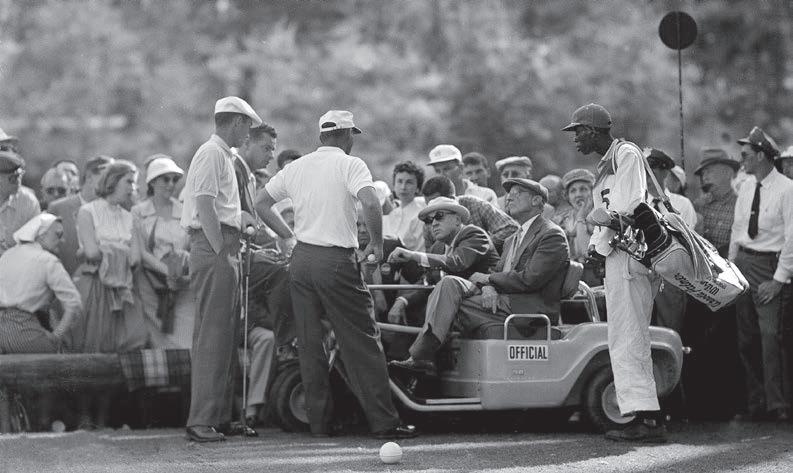
the available evidence, certainty regarding what actually happened is elusive.
Yocom feels Lacey may have gotten a bad rap. “There is a possible distinction to be made between the traditional application of ‘through the green,’ and how Augusta National applied its rule,” Yocom says. “Why would Lacey, a man with decades of golf experience at the highest level, claim the rule applied to fairways and greens only, if it wasn’t so? Officials don’t just make this stuff up.” And if Lacey made a mistake, why didn’t he acknowledge it to Barkow? “There’s no shame in admitting it,” says Yocom, “because officials make mistakes all the time.”
It’s possible, Yocom believes, that when rules officials were briefed on the local rule Sunday morning, they might have been orally instructed to construe the phrase “through the green” as applying only to balls embedded in fairways and greens, notwithstanding that phrase’s more expansive defined meaning in the Rules of Golf. That scenario would be consistent with what Lacey told Barkow.
Over the years, the dispute drifted away from public consciousness until Venturi rekindled it with his 2004 book. Lacey’s actions were criticized anew. Venturi and Palmer were still around, and the book reopened scars for both men. The sensitive Venturi was accused of exhibiting sour grapes. Writers asked why
Venturi had signed Palmer’s scorecard if he felt the ruling was wrong. Other pundits interpreted Venturi’s account as an accusation of cheating on Palmer’s part. Venturi vehemently denied this. And Palmer, viewed by the golf world as a paragon of golf ethics, was hurt by any suggestion he had won his first major by skirting the rules.
When Lacey died in 1979 while working in his garden, no one in Pinehurst appears to have given thought to the Masters controversy. Locals who knew him recalled other things about him. Lacey’s neighbor and friend, Pilot columnist Evelyn de Nissoff, remembered him as a man of “pleasant personality” and “quiet humor.” She had purchased Lacey’s treasured yellow Renault, which he had brought over from England. When encountering her at the post office, Lacey would invariably inquire, “How is the Renault working out?”
From all that is known, Lacey did not appear to have been overly anguished by what happened in the 1958 Masters. If he dwelled on it at all, he kept, as the Brits say, a stiff upper lip. And though his team may have been trounced in the ’51 Ryder Cup, Lacey managed to find the storybook ending anyway. PS
Pinehurst resident Bill Case is PineStraw’s history man. He can be reached at billcasewrites@gmail.com.


hen the artist Karina McMillan was growing up in rural Robeson County, she spent long days outside in the woods and in the surrounding fields of cotton, soybean and tobacco near her house, and long hours with her family, steeped in the culture of the Lumbee Tribe of North Carolina. Never far from her side were the ballpoint pens and paper she used to draw all of it, and all of them.
“One of my first memories is my dad telling me, ‘If you don’t know how to spell something, draw a picture,’” McMillan, now 27, recalls. “I didn’t really know how to spell a lot of things, so I would just draw.”
One day in kindergarten at Hawk Eye Elementary, she drew a picture of the school’s mascot. She was surprised that her teachers made such a fuss over her hawk, hanging it in the school’s lobby, even turning it into a postage stamp for the campus mail system.
More than 20 years later, McMillan’s hawk is still hang-
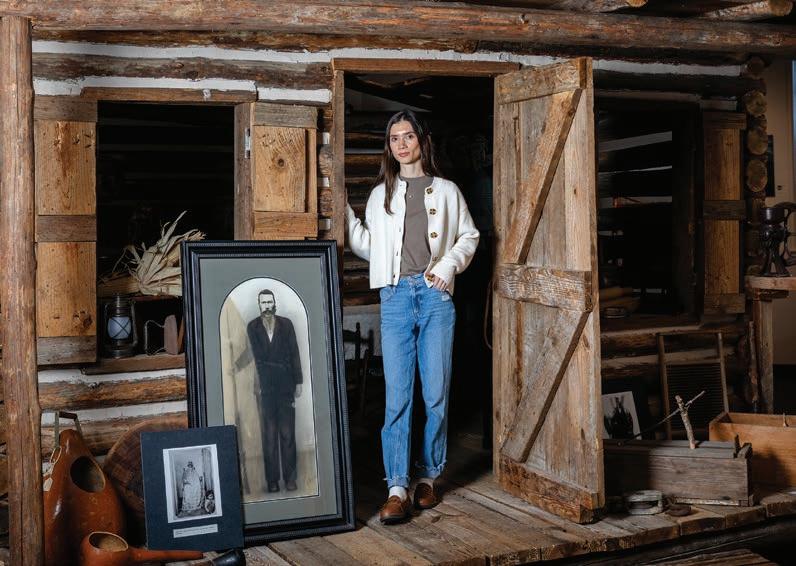
ing in the school’s lobby, and a standard-issue blue Bic ballpoint pen is still her favorite way to draw. Her subtle, shadowed, soulful portraits of Lumbee and other Native people and their landscapes may look painted from even a short distance, but up very close, the fine detail of McMillan’s hashed and feathered pen strokes becomes clear, emerging from an image as the grooves of a fine-grained woodcut do. In some of her works, she uses acrylic paint in bright hues for backgrounds, clothing and textile patterns, and to create glowing haloes for her subjects.
“Karina McMillan’s work is extraordinary,” says Sara Segerlin, director of the Gregg Museum of Art & Design at N.C. State University. “Her paintings carry a power that goes far beyond color or technique. She brings forward portraits of resilience, memory, pain and strength, stories that refuse to be forgotten.”
McMillan’s work has been exhibited and won awards and recognition all over the state and beyond, and is primed to find a larger audience, says Nancy Strickland Chavis, director and curator at the Museum of the Southeast American Indian at the University of North Carolina at Pembroke. Indeed, Chavis says, an artist like McMillan emerges from her region just once in a generation.
“She will define what this era of native art is for native artists,” Chavis says. “I think that she will lead the way for her age group, moving forward along with other greats like Jessica Clark
(Lumbee, in her 40s), and Gene Locklear (Lumbee, in his 70s), to really push the envelope on what the possibilities are.”
McMillan’s Mother Nature, a portrait of a Lumbee woman holding ears of corn rendered in ballpoint pen and acrylic paint, exemplifies the young woman’s technical virtuosity and her ability to depict her people authentically, Chavis says, without the “tropes” deployed by some artists painting Native Americans. She notes that the woman McMillan depicts in Mother Nature is immediately recognizable as Lumbee, and the corn she holds represents the corn reclamation program currently underway to return ancestral strains of corn to the Lumbee people.
Chavis says the portrait is characterized by humility and gentleness, and resonates deeply with audiences who see true reflections of themselves within it. “When I saw it, I lost it,” says Chavis, who is also a member of the Lumbee Tribe. “We don’t have a lot of artists that are doing the type of work that Karina is doing.”
Chavis awarded the piece best in show at her museum’s annual 9/9 Native South Juried Exhibition last September and purchased it for the museum’s permanent collection.
Corn, pine cones, birds and animals native to Robeson County are among the images that appear in McMillan’s work, as are other symbols and patterns that represent her heritage as a member of the Lumbee Tribe.


Learning about her forebears and their traditions as a child made a big impact on her, McMillan says, and remains central to her identity as a young adult. Currently working as a preschool art teacher at Cary’s Ivybrook Academy, she wears a Lumbee pine cone ring on her hand and spends every evening creating works that celebrate her culture.
“I like making art about it to show people that we’re still here,” she says. “We’re still Native. We’re not riding horses and living in tepees, but we’re still here.”
It’s a timely message. Last December, the Lumbee Tribe, which has been recognized by the state of North Carolina since 1885, was finally granted full federal recognition. With a population of more than 56,000 in North Carolina, many of whom live in Robeson County, the Tribe is the largest in the state and the largest east of the Mississippi River. “The history of the Lumbee Tribe long predates the history of the state of North Carolina itself,” Governor Josh Stein noted in celebrating its federal recognition.
“The fight’s been going on since the 1800s,” McMillan says. “So I feel like now we’re finally getting what we’ve deserved for the longest time. It makes me sad and breaks my heart that some people aren’t around to see that we’re federally recognized. Like my great-grandma, my greatgrandpa, they’re gone . . . but at least I get to see it. This is a big moment in history, and I’m just really blessed that I get to see it happen.”
McMillan returned to Robeson County to complete her education at UNC Pembroke after two years in college at UNC Charlotte, and to be closer to her family. It was at UNCP, she says, that her artistic voice truly began to take shape.
It’s also where she decided to embrace the humble tool that got her started and has now become her hallmark: the ballpoint pen. It’s what was plentiful and close at hand growing up, when the nearest art store was an hour away.
“I thought, ‘How am I going to get these art supplies?’ I just figured, I guess, I’ll draw with what I have. So that’s why I stick to the cheap mediums like ballpoint pen,” she says.
To know it is apparently to love it. McMillan says the medium is both more exacting and more malleable than you might imagine. “If you make one mistake with a ballpoint pen, you can’t go back and fix it. So I’m super focused,” she says. “And it creates the most beautiful — to me — the most beautiful values in a portrait. It can go from light to dark. You just have to keep building up the color. There have been times where I’m working on a piece, and I have to step away from it because the ink is wet. To create more layers and more values, I have to come back later, maybe like an hour later, because it has to dry before I can build up more.”
McMillan’s use of a medium that’s easy to come by puts her squarely in the Native artist tradition. “It reminds me
of a lot of Native art, made out of what is accessible, from traditional to what has evolved as modern work,” says Chavis. “Whether it’s grass, pine needles, split oak, clay, all of these things that make our traditional art are what’s accessible.”
Native American artists with connections to North Carolina, including McMillan, are the focus of the exhibit “Stories Told by Breath: Native American Voices in North Carolina,” at N.C. State’s Gregg Museum of Art through Sept. 26.
McMillan’s work — she will have 11 pieces on show — will be in good company. Other artists include Senora Lynch (Haliwa-Saponi), Harlen Chavis (Lumbee), Aaron Baumgardner (Catawba), Coda Cavalier-Keck (Occaneechi Band of the Saponi Nation), Amy PostOak (Eastern Band of Cherokee Indians) and Johnny PostOak (Muscogee Creek) of Three Sisters Designs, Rhiannon “Skye” Tafoya (Eastern Band of Cherokee and Santa Clara Pueblo), Joshua Adams (Eastern Band of Cherokee), Idalis Dial (Coharie), Tim Locklear (Lumbee), N.C. State students Ashytn Thomas (Lumbee) and Victoria Wilson (Haliwa-Saponi), and Gwen Locklear (Lumbee).
McMillan says she’s excited for the opportunity to see her work at the Gregg among other Native American artists. Segerlin, the museum’s director, says McMillan’s work should make an impact. “I hope more people will come to know Karina through her work and spend time with her iconic paintings. They stay with you long after you leave,” she says.
McMillan’s hoping for the same. “I want to be in more museums,” she says. “I’ve had art in different shows in different states, but I want my art to be all over the country, maybe even overseas. I just want more people to see it so they can see who Lumbees are, and what we are as people.”
Chavis says the young artist has every reason to believe in herself. “The sky’s the limit for Karina. Her work is so good. I think that the art world might take her to places she never imagined.” PS
Liza Roberts is the author of Art of the State: Celebrating the Visual Art of North Carolina, published by UNC Press in 2022. She was the founding editor and general manager of Walter magazine and is grateful for the opportunity to write about the remarkable visual artists of our state.
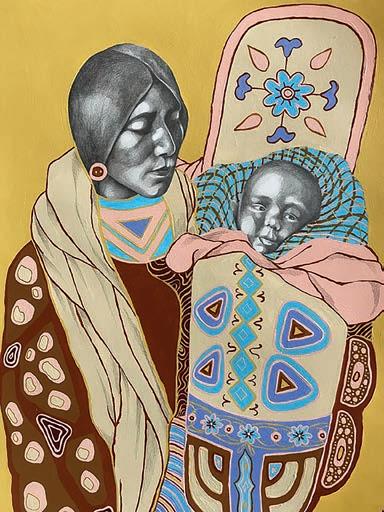
Family Ties, 2024. Graphite and acrylic paint on paper, 14 x 17 inches.
Spirit Through the Grid, 2025. Ballpoint pen and acrylic paint on paper, 11 x 14 inches.
Contemporary Miss Lumbee, 2024. Ballpoint pen and acrylic paint on paper, 11x14 inches.

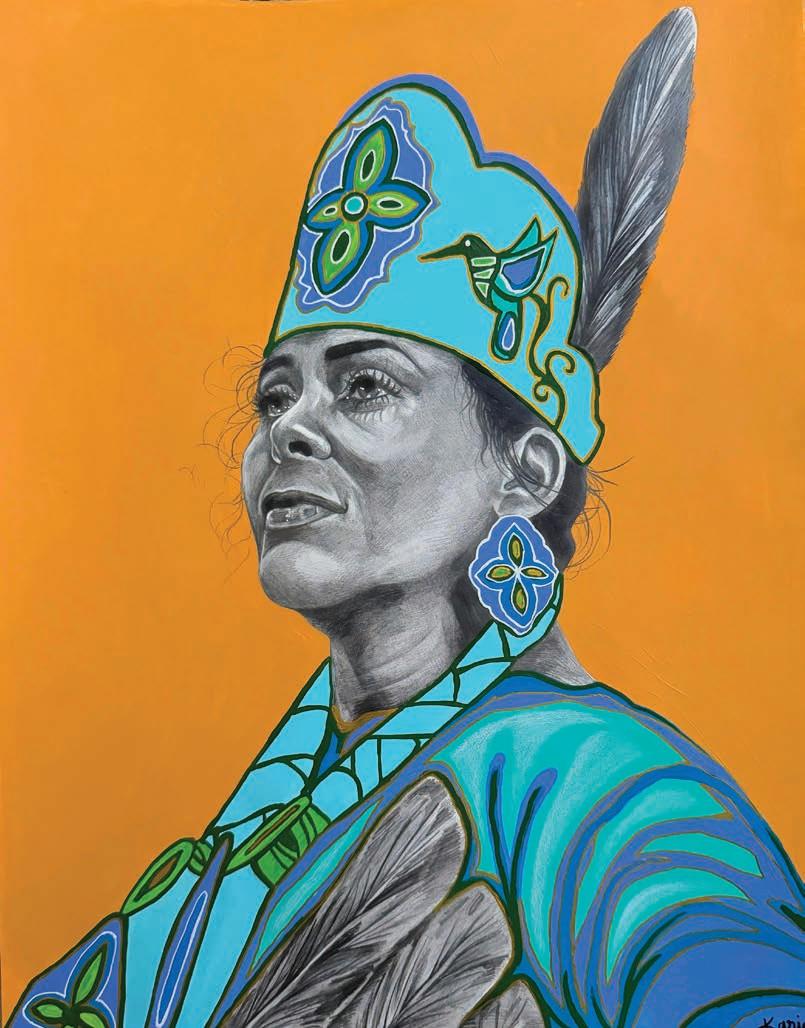
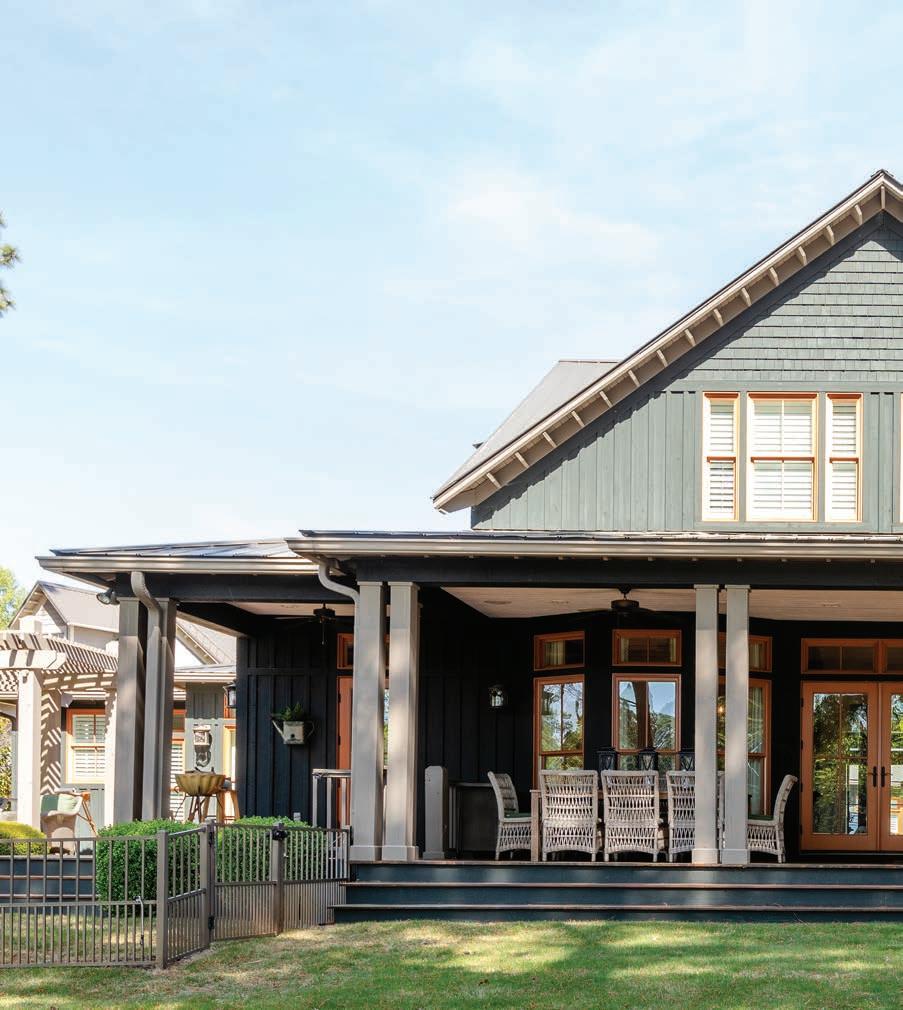
From city to country and back again
by Jenna biter
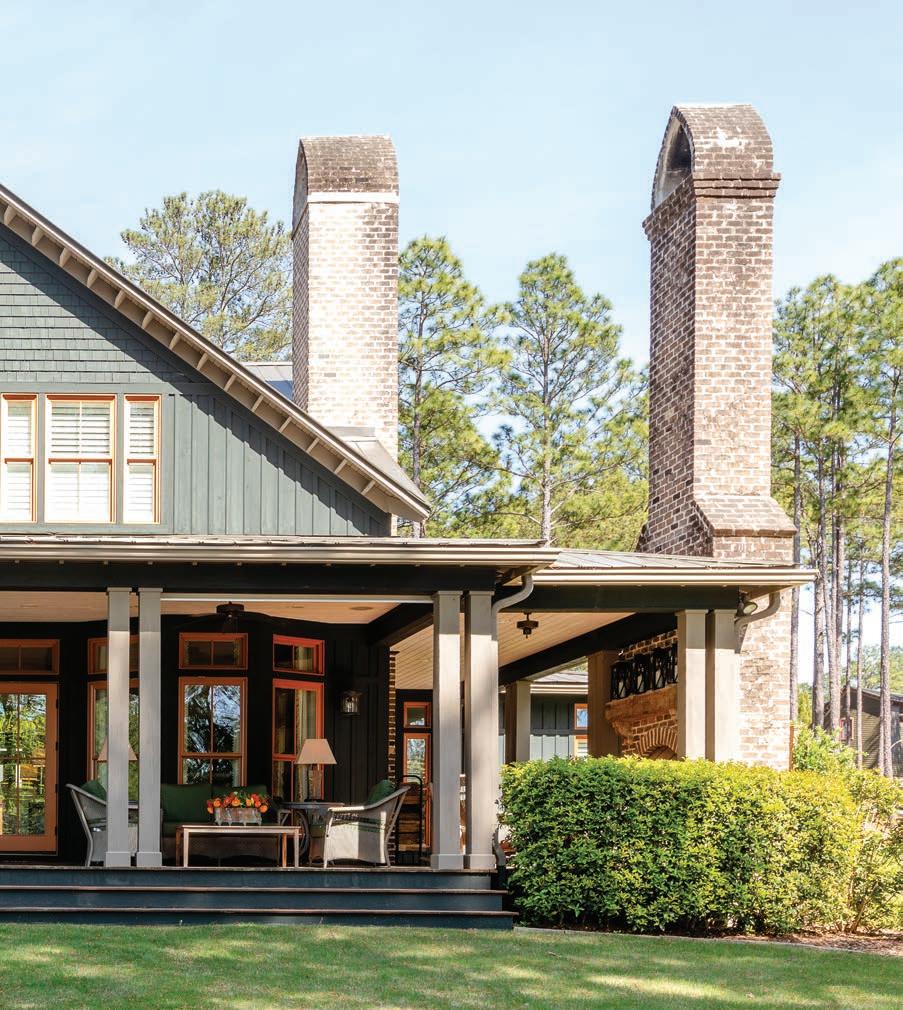

Mary and Mike Patterson have breezed between their Raleigh home and Pinehurst golf retreat for going on two decades. “It’s an hour and 15 minutes door-to-door,” says Mary Patterson. Because the drive’s short, the Pattersons can come and go as they please. “It’s just a nice getaway,” she says.
The couple purchased the ivy-colored farmhouse in the Country Club of North Carolina in 2008. “It’s funny, we drove down the driveway, and I looked at Mike, and I said, ‘Oh, I don’t know about this house — the first thing I need to do is change that orange trim,’” Patterson says. “But I’ve grown to like it.”
In fact, there was a lot to like. The house is right-sized, in the ballpark of 3,000 square feet, and well-placed, tucked down a curlicue of a driveway with a picture-perfect lake view out the back. A wide wraparound porch steps onto a lawn that slopes down to the glittering water. The fourth hole of the Dogwood golf course lies on the other side.
“We looked on and off here for years,” Patterson says, recalling the process. Mike became a member of CCNC years before
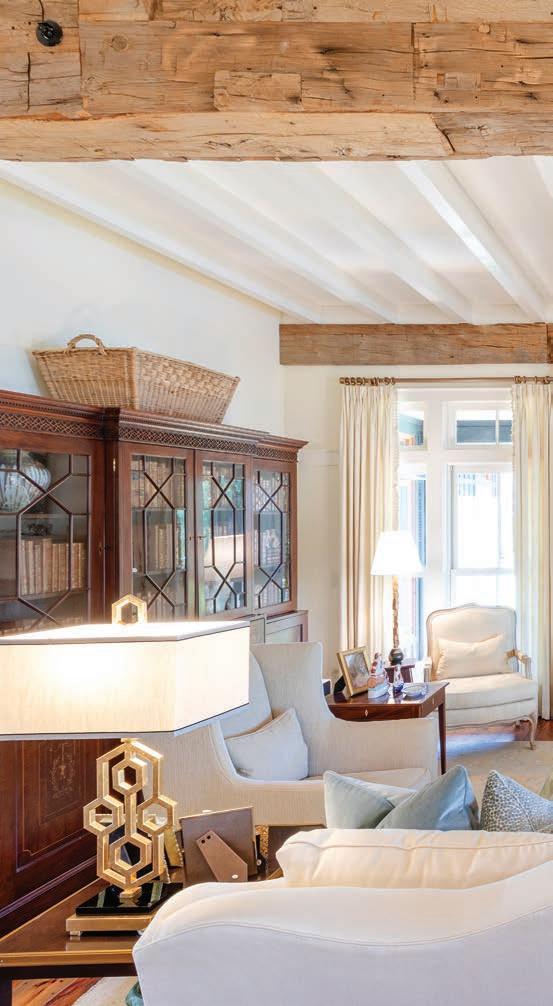
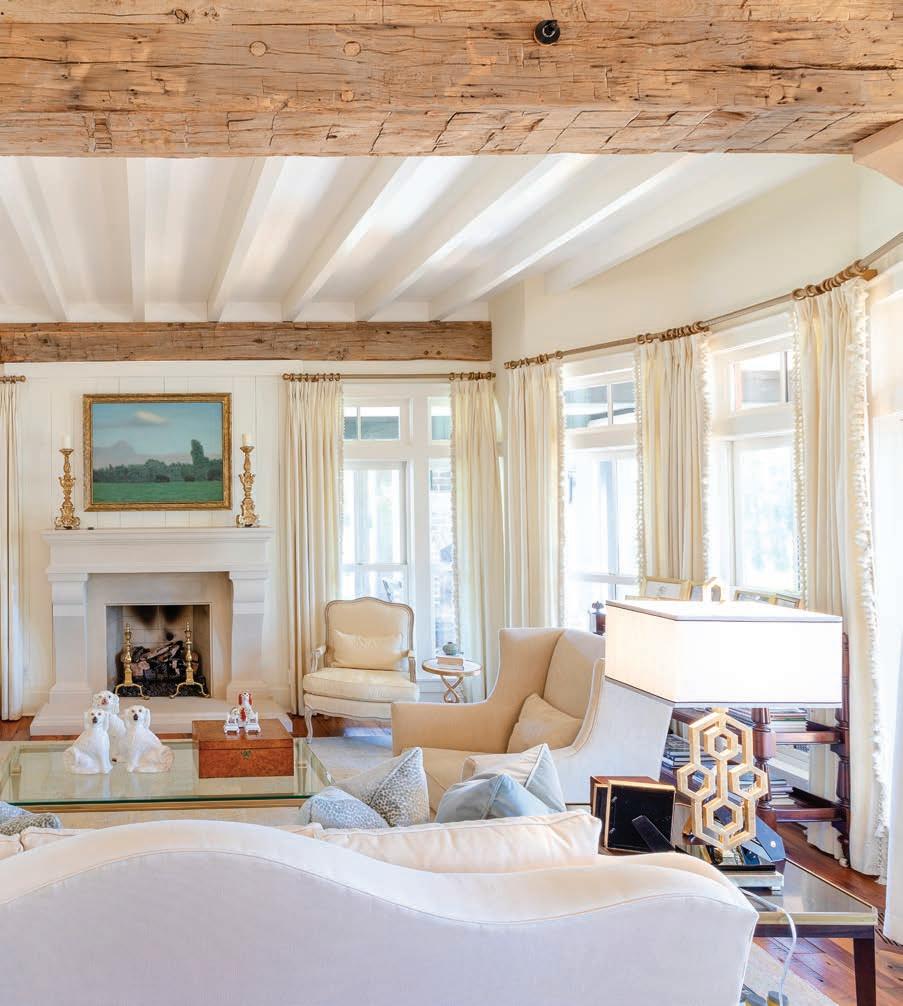
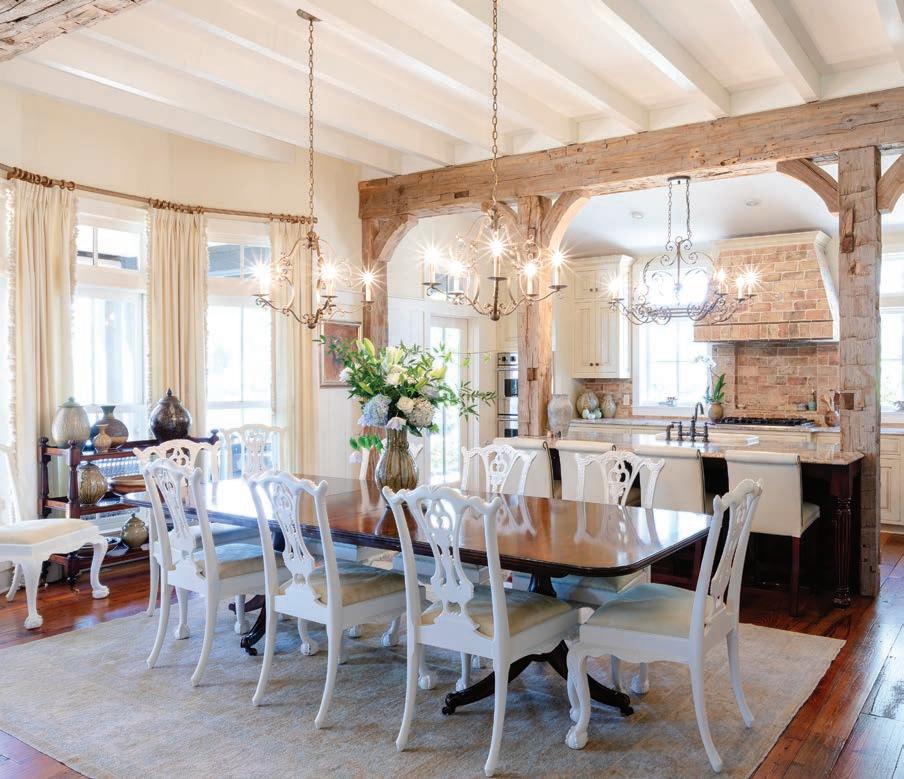
they bought. From regular trips to play golf, the Pattersons knew they liked the community — and the golf — well enough to buy in. “You can’t get better golf than around here,” she says matter-of-factly.
The neat little farmhouse had been on the market for a while, and in hindsight, Patterson is not sure why they hadn’t considered it sooner. “When we did, I thought, ‘Yeah, this would work,’” she says. “Most of the houses here are traditional homes: formal living room, formal dining room, den, kitchen, breakfast room. We just didn’t need that.” They wanted something more compact.
An entry hall leads into the house, revealing an open living room/dining room/kitchen configuration that flows onto the back porch with the enviable view, birds swooping and soaring over the lake.



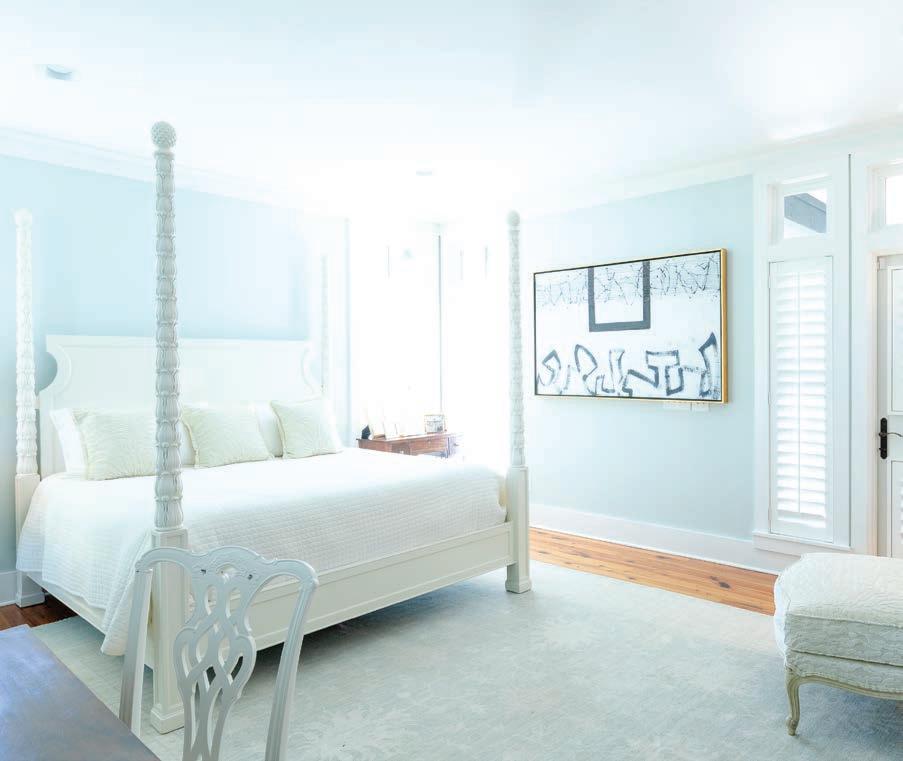
The wooden floors came from an old tobacco barn. “The beams, I’m not sure where they got those,” Patterson says, motioning to the rustic wood running intermittently overhead. The couple replaced an old beam fireplace with limestone that counterbalances a burly brick range hood across the way in the kitchen. Earth-toned ceramics from Seagrove potters decorate the counters. The urns are for show, but the serving bowls see plenty of use.
“We got furniture from a mixture of consignment shops and antique shops — I love a deal,” Patterson says. That includes a set of 10 matching dining chairs she’s particularly proud of. “I thought, ‘I cannot get these in my car fast enough.’”
The home reads traditional with a touch of English flair. Staffordshire dog figurines accompany guests in the living room, as does a real-life miniature goldendoodle named Biscuit. Whites and creams warm the space and the rest of the



home. In the master bedroom, an off-white four-poster bed and a black and white abstract painting by Raleigh artist Gerry Lynch softly contrast with sea glass-colored walls.
“We made a few little changes to make it our own,” Patterson says about the structure of the house. “And it just works perfectly for us.” They removed a wall to add a bar and transformed the first-floor guest room into a sprawling entertainment space complete with a TV, seating area and a pool table backdropped by a dozen or so old Perrier advertisements featuring golf cartoons. One frame shows a golfer staring down at his ball impossibly and perfectly wedged between the ground and a falling-down fencepost with a caption that reads, “Rule XII: When a ball lies in or touches a hazard, nothing shall be done to improve its lie.”
Through a nearby hallway, there’s a generously sized and especially appreciated laundry room. Up a set of wooden stairs are mirrorimage guest rooms with equally splendid views of the lake. A fourth bedroom is just a short walk away in a detached-garage-turnedguesthouse with a second floor perfect for visiting grandkids.
“It just kind of all came together,” Patterson says. “You know, it’s comfortable enough, but it has the look, too.” PS
Jenna Biter is a writer and military wife in the Sandhills. She can be reached at jennabiter@ protonmail.com.





Terms and Conditions: $300 off any order of $1198 or more,$200 off any order of $998-$1198 or $100 off any order of $698-$998, on any complete custom closet, garage,or home office unit. Not valid with any other offer. Freeinstallation with any complete unit order of $600 or more. With incoming order, at time of purchase only. For a limited time SPECIAL FINANCING for 18 months *with approved credit* Expires in 90 days. Offer not valid in all regions.
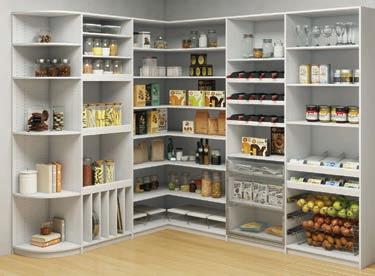


By Ashley WAlshe

May is a blessing, a benediction, a rhythmic string of sacred prayers.
May robin, cardinal and wren sing the dawn sky pink and sweet.
May the warmth of sun nourish all that grows.
May hummingbird carry the laughter of one thousand flowers everywhere he goes.
May fox kits emerge from their dens, plump and playful. May the bluebirds hatch, the bluestar bloom, the bullfrogs blast their jug-o-rums.
The ancient Celts celebrated the changing seasons with four cross-quarter festivals: Samhain (Oct 31–Nov. 1), Imbolc (Feb. 1–2), Bealtaine (May 1) and Lughnasadh/Lammas (Aug. 1).
On Bealtaine, a Gaelic May Day festival honoring the fecund soils of the Earth, fire rituals were said to bring purification and fertility to the land, livestock and couples wishing to conceive. According to Scottish author James Napier, dew collected on the first day of May “preserved the skin from wrinkles and freckles, and gave a glow of youth” (Folk Lore: Superstitious Beliefs in the West of Scotland Within This Century, 1879). And how might one collect said droplets? Dew tell.
Let the passion vines blossom with whimsy. Let the wild indigo paint the open woods. Let the last of the dainty bluebells ring out.
Let there be rainfall. Let titmouse bathe in shallow pools of water. Let the earthworms feast on spoiled fruit.
Let go of last season’s sorrow. Let this new day surprise you. Let what is here be enough.
The woody scent of yarrow. The hum of bees. Green leaves in golden light.
Breathe in the bouquet of microbes and wild strawberry. Breathe it out. Now, breathe it in again.
Behold the majesty of magnolia, the bliss of cartwheels, the grace of speckled fawn in soft grass.
May the whippoorwill return, and when he does, may every wild thing taste the sweetness of its own name, chanted one hundred times over.
May the wind keep the secret of each dandelion. May the garden feed body and soul. And, above all, may spring be a hymn of thanks for and from this fertile earth.
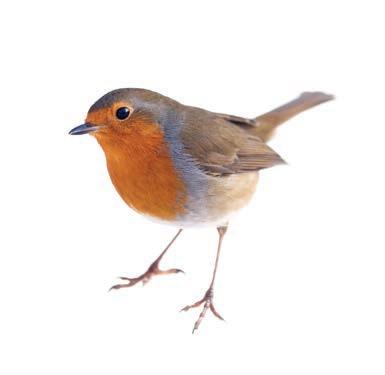
If it's drama that you sigh for, plant a garden and you'll get it. You will know the thrill of battle fighting foes that will beset it. If you long for entertainment and for pageantry most glowing, Plant a garden and this summer spend your time with green things growing.
— Edgar Guest, “Plant a Garden”
The mothers are tending. Bluebird, to her hatchlings. Doe, to her fawn. Racoon, to her litter of kits.
This month, Mother’s Day lands on Sunday, May 10. Honor the ones who tend in the ways that feel true to you — and them.
And while we’re on the topic of feminine glory: May will be graced by two full moons — the full flower moon on May 1, and a blue moon on May 31. PS
Meet the Women Defining What it Means to Lead in Local Business
— A Special Advertising Section —

Known for its thoughtfully curated selection and welcoming atmosphere, Monkee’s of the Pines offers a personalized shopping experience for women of all ages wanting to look and feel their best. Locally owned and operated, the Southern Pines location has been a staple downtown for over 25 years. They expanded their local presence with a new location in Pinehurst in 2022 and relocated to a larger space in downtown Southern Pines in 2025.
• Mission: To provide a warm, welcoming space where every woman can find something that makes her feel confident and stylish.
• Offerings: High-end women’s clothing, shoes, bags and accessories. An exclusive line of Italian leather handbags and fragrances, designed with artisan partners abroad.
• What They’re Known For: A keen eye for style and instinct-driven buying approach. “Our goal is always to showcase styles for every age group. Our customer base ranges anywhere from 16 to 80 years old. It is very important that anyone of any age, and size can find something that works perfectly for them in our stores.”
• Built on Family: Patricia and Veronica were each pursuing different careers when the opportunity to purchase the Southern Pines Monkee’s location came along. A shared passion for fashion led them to take that leap together.
Rooted in family, their journey has been shaped by unwavering support and a deep trust in one another.
• What They’re Proud Of: Consistently being ranked among top-performing stores within the Monkee’s franchise with recognition for philanthropy and digital marketing; functioning as a small family business; working together as a team; everyone getting along and truly valuing customer service. They are proud to be part of a caring community, supported by a talented hardworking team they consider family.
• Best Thing About Being Women in Business: “That there are so many like-minded women in business in our community! I am inspired everyday by what our local, women business owners are accomplishing. And I work with some pretty impressive women who always offer the best guidance, and advice.” -Veronica


MBA, CPA CHIEF FINANCIAL OFFICER
In January of 2026, FirstHealth proudly announced Autumn McFann’s appointment as its new Chief Financial Officer. With her deep expertise in strategic financial leadership, health care operations, revenue cycle optimization, compliance and team development, she is well-prepared to guide FirstHealth’s financial strategy as they continue to deliver exceptional, highquality care to our communities.
• What Led Her to This Career: Autumn spent two weeks in the ICU as a young child and the experience made her want to pursue a career in health care.
• Education: Autumn is a Certified Public Accountant and holds a Master of Business Administration from Morehead State University and a Bachelor of Business Administration in Accounting (summa cum laude) from Marshall University.
• Background: Autumn has more than 26 years of progressive experience in accounting, health care financial leadership and administration, including 12 years in a CFO role. Most recently, she served as CFO at a large nonprofit health system in Kentucky managing $1.1 billion in net revenue. She relocated to Pinehurst with her family for this executive role at FirstHealth.
• What She’s Most Proud of in Her Career: “The opportunity I had to lead through transformation. Stepping into my last CFO role, I was able to help stabilize an organization, strengthen its financial foundation and position it for long-term success. We balanced fiscal responsibility with access and quality, which was extremely important to our success.”
• Biggest Lesson Learned in Business: “Leadership is ultimately about people, not just performance. Results matter, but sustainable success comes from building trust, investing in your team and creating a culture where people feel supported and empowered to do their best work.”
Ameeta Swaby is a dynamic entrepreneur and business leader driven by a passion for building, creating and connecting. In addition to founding Moore Escapes and cofounding Process Cycling, Ameeta leads a line of business in defense at Booz Allen Hamilton, where she manages largescale teams and complex programs focused on delivering critical capabilities to support warfighter needs.
• Background: With a background in finance, logistics and management, she brings a unique blend of strategic vision, operational discipline and hands-on leadership across both her corporate and entrepreneurial ventures. Whether she’s scaling businesses or leading missiondriven teams, Ameeta is known for executing at a high level while fostering growth and connection.
• Mission: To build businesses that create exceptional experiences. Whether this is done through thoughtfully managed spaces, energizing environments, or something else, Ameeta always aims to foster connection and growth.
• What Sets Her Apart: A rare ability to successfully lead in very different industries, applying the same level of structure, vision and hands-on dedication to many different industries.
• Areas of Expertise: From boutique property management and luxury turnkey Airbnb services to full-scale business operations and client experience, Ameeta brings a strategic end-to-end approach to everything she touches.
• Philosophy: Growth happens when you step outside your comfort zone. Ameeta’s approach isn’t about having everything figured out. It’s about taking action anyway.
• What She’s Proud Of: Balancing family, a demanding career, a lot of unknowns, and still moving forward and figuring it out. Consistently choosing growth over comfort. “I’ve never let fear stop me from stepping into new ventures, and I take pride in building alongside others, creating opportunities and bringing my team and community with me on that journey.”
• Advice for Young Women Starting Their Career: “Don’t wait for permission or the perfect moment. Take the chance, trust your instincts and build confidence through doing. You have to believe in yourself first, because that’s what allows others to believe in you too.”


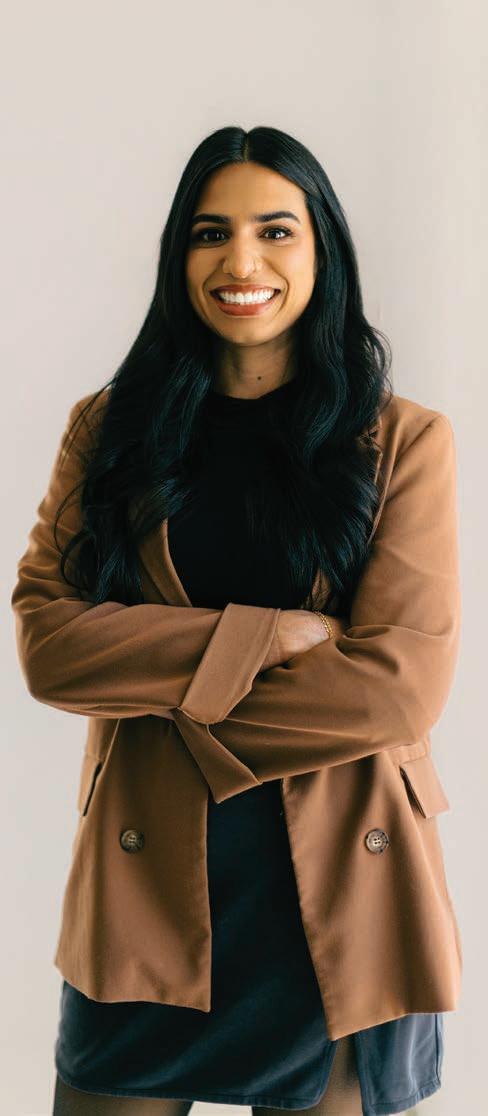

Abby founded her functional wellness practice from a personal and professional place of passion to help people understand their body and feel their best. Through hormone balancing, nutrition, lifestyle and advanced therapies, she loves to see her patients shine – especially women.
• What Led Her to This Career: Early on, Abby experienced some struggles with fertility. While she was being told things were “normal” – her gut told her otherwise. That disconnect was frustrating. As a nurse practitioner, this experience pushed her to start diving deeper into hormones, metabolism and how the body actually functions – not just what falls within a lab range.
• Mission: Her mission is simple… to help people look and feel their best, so they can perform at their best. Giving her patients energy to live at their fullest potential.
• What Sets Her Apart: Hiller Wellness PLLC is a safe and intimate space for patients to find answers. They provide high quality one-on-one care. Patients have access to the source, not a portal. There is not a one-size-fits-all approach.
• Services: Combining advanced testing, clinical experience and real lifestyle strategies, Abby personally consults with each patient to build a fully personalized plan. That might include hormones, peptides, nutrition, body composition work or metabolic support – always tailored to the individual’s needs.
• Special Certifications: Endocrinology Certification with The American Academy of Anti-Aging Medicine.
• On the Horizon: Hiller Wellness has been adding new modes of wellness since the doors opened. A full spectrum infrared sauna, body composition machines and more. They are also expanding to include outside contractors like their movement specialist. Abby plans to continue to grow the team with individuals who share the same goals and passions.
• At Home: Abby is now a mom of three and a sucker for sports, travel and trying new restaurants with her husband
• What Motivates Her: “The most rewarding part of being a woman in business is setting an example for my daughters. Women have a power to do it all if they want, and I never want my girls to second guess that.”

160 Pinehurst Ave Unit G, Southern Pines saltonabby@gmail.com hillerwellness.com
CHIEF FINANCIAL OFFICER
With a background in accounting and business management, Melissa brings both precision and passion to her role at Penick Village. Since its founding in 1964, Penick Village has been a trusted and welcoming place for generations, offering a full continuum of care. For Melissa, being part of an organization so deeply rooted in service and connection makes her work especially meaningful.
• Mission: To cultivate a friendly, safe and faith-based community where residents can focus on wellness, relationships and living life to its fullest.
• What Sets Penick Village Apart: It’s the people. Residents and team members alike create a warm, welcoming environment that makes Penick Village feel like home.
• Areas of Service: Independent living, assisted living, skilled nursing, memory assistance, home care and rehabilitation services, along with a wide range of wellness, dining and lifestyle programs.
• What Led Her to This Career: A recommendation for a high school job led to her passion for organization and financial management. This ultimately grew into a fulfilling career supporting mission-driven work.
• What Motivates Her: “The opportunity to be part of such a special community. Knowing that my work helps support and enhance the lives of others is what I find most fulfilling.”
• Biggest Lesson Learned: “Don’t be afraid to dream big and step outside your comfort zone. Sometimes unexpected opportunities can lead you to the most rewarding places and experiences.”
• In the Community: Melissa is part of a strong network of support among local professionals and women in business, fostering connection, collaboration and encouragement.
• At Home: Melissa enjoys spending time with her family. Playing games and going for side-by-side rides with their dog, or unwinding with a good book or video games.
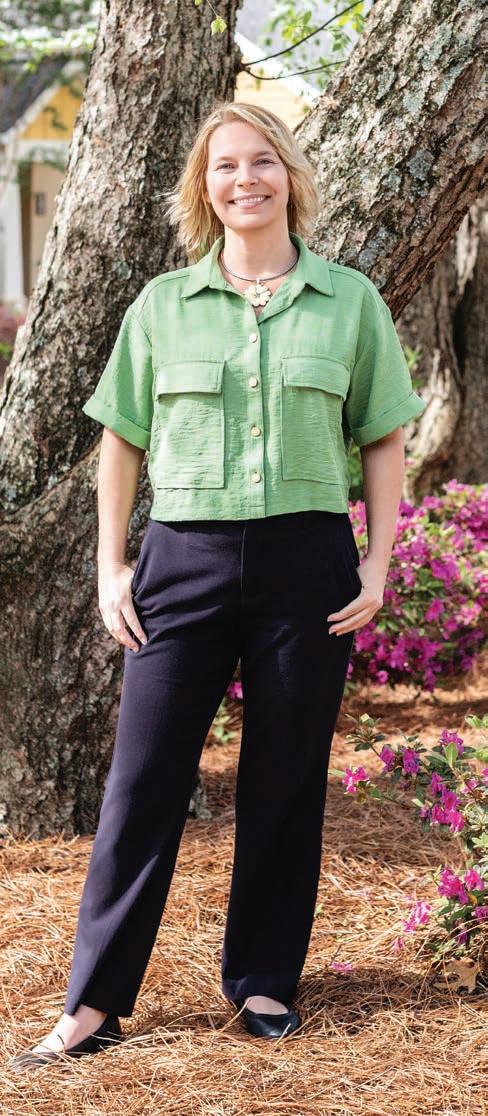

An educator-turned-entrepreneur, Pias Pak brings a global perspective and a passion for connection to Table on the Green. Originally from Bangkok, Thailand, she blends cultural heritage, hospitality and heart to create memorable experiences for guests both in the restaurant and through her catering.
• Mission: To create a welcoming space where food, culture and community come together. Offering people not just a meal, but a meaningful experience.
• What Sets Her Apart: A unique blend of global influence and personal heritage. Pias speaks three languages fluently, and has resided in Thailand, South Korea, Okinawa, Japan. Now she calls Pinehurst home.
• What Led Her to This Career: A lifelong connection to food and hospitality, combined with a desire to bring diverse flavors and experiences to Moore County.
• Recognitions: Table on the Green has been named as one of the best Thai restaurants in the Best of the Pines peoples’ choice awards every year since Pias took over in 2022. In April 2026, Pias was recognized in The Pilot’s 20 Under 40 awards for her impact in business and the community.
• In the Community: Actively supports local organizations including the Boys & Girls Club, Pinecrest High School and The Honor Foundation, while also giving back to military training programs through events, mentorship and sponsorships.
• Advice for Young Women Starting Their Career: “Believe in your path, even if it looks different. Stay resilient, embrace your background and don’t be afraid to lead with both strength and compassion.”
• At Home: A proud mother of three competitive golfers, Pias spends much of her time on the course as their caddie. She happily notes this is a full-time job in itself.

Julie has been a Physician Assistant in the local healthcare community for 18 years but her goal has always been to work in the aesthetics industry. Her dream came true when she opened Thomas Medical Concierge & Aesthetics with her husband Rob in the fall of 2025.
• Education: Julie earned her Bachelor of Arts in Biology from Bucknell University, where she played Division I Women’s Golf, and a Masters of Medical Sciences in Physician Assistant Studies from Methodist University.
• What Led Her To This Career: “I’ve always been drawn to caring for others and building meaningful relationships. Medicine felt like a natural path where I could combine science with compassion and truly make a difference in people’s lives.”
• Aesthetic Services: Advanced non-surgical aesthetics including Botox, dermal fillers, skin rejuvenation and customized skincare.
• Areas of Expertise: Aesthetic Medicine — delivering natural-looking results paired with concierge primary care and proactive wellness planning for patients of all ages and backgrounds.
• The Thomas Medical Difference: The ability to offer comprehensive care under one roof, providing seamless continuity of care and exceptional convenience, all in a single, comfortable location in Southern Pines.
• Biggest Lesson Learned in Business: “In healthcare, personalized attention truly makes the difference. Listening carefully to each patient’s unique needs and building genuine trust leads to the best outcomes.”
• What She’s Most Proud of: “I’m incredibly proud to show our four daughters that it’s okay to take risks, think differently and create your own path. Success isn’t just about following a traditional route, but pursing what matters and finding fulfillment in the work you do. Being able to live that example for them has been one of the most rewarding parts of this journey.”


If you are struggling with the effects of trauma, you are not alone. Dr. Yvonne Smith makes healing possible by providing specialized, evidence-based psychological treatment for individuals negatively affected by various traumas. As a private practice owner, she is passionate about making a difference in the lives of others. She is currently accepting new patients.
• Education: Undergraduate degree in Sociology and Psychology, Master’s degrees in Social Work and in Psychology, Ph.D. in Sociology, History & Urban Affairs and Ph.D. in Clinical Psychology
• What Led Her To This Career: Since she was a child, Dr. Yvonne has had an innate ability to compartmentalize, empathize, understand and guide people who come to her with their concerns, worries and issues in their lives.
• Background: Dr. Yvonne started her first practice in 1986 in Wisconsin and then Indianapolis before she relocated to North Carolina in 2007 with 21 years of experience. In 2009 she founded Smith Psychological Services in Seven Lakes, providing mental health services to this community.
• Areas of Expertise: Dr. Yvonne is uniquely specialized to diagnose and treat PTSD in veterans and civilians and has 17 years of experience working specifically with veterans who present with combat trauma, military sexual trauma or other personal traumas. She also provides evaluations for these veterans for qualification of their compensation and pension.
• Psychological Treatments: Dr. Yvonne encourages gradual exposure therapy for PTSD in a safe, private environment and effectively treats depression, anxiety and insomnia with hypnosis and an optional combination with the Alpha-Stim CES device.
• Certifications: American Society of Clinical Hypnosis, National Registry of Health Care Providers in Psychology
• For Young Women Starting Their Career: ”Be laserfocused on what brings you joy and what you want to do. With resilience and fortitude, let nothing get in your way.”
• At Home: She enjoys spending time with family — her husband of 55 years, two adult married children and six grandchildren — traveling, playing tennis and pickleball, watching movies and reading.
Smith Psychological Services, P.C. 124 N. Trade Street, Seven Lakes • 910-208-4027 psychologytoday.com/profile/55638
NEWBORN AND FAMILY PHOTOGRAPHER
NEWBORN AND FAMILY PHOTOGRAPHER
Whether you’re celebrating life’s special milestones, capturing your growing family, building your professional brand, Lolly’s Lens Photography is your trusted source for your photography needs. Lolly’s Lens blends creativity, passion, personalization, and an experienced keen eye for detail to deliver stunning, high-quality images that speak to your heart.
Whether you’re celebrating life’s special milestones, capturing your growing family, building your professional brand, Lolly’s Lens Photography is your trusted source for your photography needs. Lolly’s Lens blends creativity, passion, personalization, and an experienced keen eye for detail to deliver stunning, high-quality images that speak to your heart.

@LollysLensPhotography LollysLens.com
@LollysLensPhotography LollysLens.com

Photo by Six Foot Photography
CARLA ALBRITTON
HIGH PERFORMANCE & EXECUTIVE LEADERSHIP COACH
CARLA ALBRITTON
HIGH PERFORMANCE & EXECUTIVE LEADERSHIP COACH
A High Performance Coach, helping high-achieving women and leaders lead themselves with clarity, confidence, and consistency by building habits that create lasting change in how they think, act, and show up.
A High Performance Coach, helping high-achieving women and leaders lead themselves with clarity, confidence, and consistency by building habits that create lasting change in how they think, act, and show up.
Carla’s work goes beyond strategy. She helps you shift how you think, raise your standard, and become the kind of person who executes consistently.
Carla’s work goes beyond strategy. She helps you shift how you think, raise your standard, and become the kind of person who executes consistently.
Whether you are navigating a transition or stepping into leadership, Carla equips you to make clear decisions, take aligned action, and operate at a higher level.
Whether you are navigating a transition or stepping into leadership, Carla equips you to make clear decisions, take aligned action, and operate at a higher level.

Empoweredboldness.com carla@empoweredboldness.com 704-618-5689
Empoweredboldness.com carla@empoweredboldness.com 704-618-5689
OWNER & CEO
FASHION DESIGNER
OWNER & CEO FASHION DESIGNER
“Here
“Here to help others feel confident through their clothes”
to help others feel confident through their clothes”


240 NW Broad Street
Southern Pines
240 NW Broad Street
910-684-8825
Southern Pines 910-684-8825

OWNER
Here at The Pinehurst Olive Oil Company, you will find not only a resource for high quality Extra Virgin Olive Oils, Balsamic Vinegars and various food products — but also a venue for sharing ideas & engaging with people who are passionate about cooking!
Here at The Pinehurst Olive Oil Company, you will find not only a resource for high quality Extra Virgin Olive Oils, Balsamic Vinegars and various food products — but also a venue for sharing ideas & engaging with people who are passionate about cooking!
105 Cherokee Rd • Pinehurst 910-986-0880 thepinehurstoliveoilco.com
105 Cherokee Rd • Pinehurst 910-986-0880
thepinehurstoliveoilco.com






Although conscientious effort is made to provide accurate and up-to-date information, all events are subject to change and errors can occur! Please call to verify times, costs, status and location before planning or attending any events.
FRIDAY, MAY 1
INTRO TO LIBBY. 11 a.m. You can access free eBooks, audiobooks and magazines with your library card. Come to our introduction to Libby program to learn all about using the Libby app. Southern Pines Public Library, 170 W. Connecticut Ave., Southern Pines. Info: msilva@sppl.net.
SPRING LECTURE. 11 a.m. - 1 p.m. Sandhills Horticultural Gardens presents “Beyond the Box Store Mum: Gardening for a Lifetime.” Cost is $15 for non-members and free for garden members. Ball Visitors Center, 3245 Airport Road, Southern Pines. Info: www.sandhills.edu/gardenevents.
LUNCH BUNCH. 11:30 a.m. Adults 55 and older are invited to dine on different cuisines each month as we visit area restaurants. Carpool with friends or meet at the restaurant. Dining locations will be chosen the week before. Info: (910) 692-7376.
OPENING RECEPTION. 5 - 7 p.m. The Artists League of the Sandhills presents Eclectic, featuring the art of multiple artists. The exhibit will be on display through the end of May. Artists League of the Sandhills, 129 Exchange St., Aberdeen. Info: www.artistleague.org.
DINNER ON THE GROUNDS. 5:15 p.m. This special dinner on the grounds presented by the Moore County Historical Association will feature James Creek Cider House cider and appetizers, followed by a menu prepared by chef Giff Fisher. Cost is $150 per person. You may bring your own wine. Shaw House, 110 W. Morganton Road, Southern Pines. Info: www.moorehistory.com.
OPENING RECEPTION. 6 - 8 p.m. The Arts Council’s exhibit, Pottery & Paper, features Ben Owen pottery and paintings by Barbara Burlingame. The exhibit is on display through May 29. Arts Council Galleries at Campbell House, 482 E. Connecticut Ave., Southern Pines. Info: www.mooreart.org.
THEATER. 7 p.m. The Sandhills Community College theater department presents The Fantasticks. Performances continue through May 3. McPherson Theater at BPAC, 3395 Airport Road, Pinehurst. Info: www.ticketmesandhills.com.
COSMIC KARAOKE. 7 - 10 p.m. Bring your friends, family and co-workers. Free to participate. Starworks Cafe and Taproom, 100 Russell Drive, Star. Info: www.StarworksNC.org.
MOONLIGHT HIKE. 8 p.m. All ages can discover nature by moonlight. Bring a flashlight. Weymouth
To add or delete an event, email us at pinestraw.calendar@gmail.com

Saturday, May 2, 2026
Southern Pines Public Library
Woods Nature Preserve, 1024 Fort Bragg Road, Southern Pines. Info: www.southernpines.net.
SATURDAY, MAY 2
GLASSBLOWING WORKSHOP. 10 a.m. Make your own glass flower. Cost is $85. Starworks, 100 Russell Drive, Star. Info: www.StarworksNC.org.
KID’S SATURDAY. 10 a.m. - 12 p.m. Families are invited to a monthly themed craft event to socialize and get creative. Geared toward ages 310. Given Memorial Library, 150 Cherokee Road, Pinehurst. Info: (910) 295-3642 or www.vopnc.org.
BOOK FAIRY ACADEMY. 10:30 - 11:30 a.m. Enjoy a magical morning at The Book Fairy Academy. All ages are invited to celebrate sharing books. Meet North Carolina’s official book fairy and learn how to spread stories throughout the community. Bring a book to prepare and “hide” for another reader or choose one at the program. Fairy-themed crafts will be available. Southern Pines Public Library, 170 W. Connecticut Ave., Southern Pines. Info: www.sppl.net.
MET OPERA. 1 - 5 p.m. Eugene Onegin (Tchaikovsky). Sunrise Theater, 250 N.W. Broad St., Southern Pines. Info: www.sunrisetheater.com.
YOUTH THEATER. 2 p.m. Imagine Youth Theater presents The Sound of Music. Check online for more showtimes. Pergola Garden at the Pinehurst Arboretum, 395 Magnolia Road, Pinehurst. Info: www.ticketmesandhills.com.
HORSES BENEFIT KIDS. 2 p.m. This Derby Day benefits the Weymouth Equestrians pro-
gram. There will be a show jumping invitational free of charge, followed by a ticketed Derby watch party. Weymouth Center lawn, 555 E. Connecticut Ave., Southern Pines. Info: www.weymouthcenter.org.
SUNDAY, MAY 3
CHILDBIRTH EDUCATION. 9:30 a.m. - 12:45 p.m. Prepare your body and mind during this childbirth education and movement workshop. Whitehall, 490 Pee Dee Road, Southern Pines. Info: www.southernpines.net.
PADDLE BOARD YOGA. 10 a.m. - 12 p.m. Enjoy a yoga experience on the water. All levels are welcome. Equipment is provided for an additional cost. Reservoir Park, 300 Reservoir Park Road, Southern Pines. Info: www.southernpines.net.
WRITING GROUP. 3 p.m. Are you interested in creating fiction, nonfiction, poetry or comics? Come to the Sunday Afternoon Writing Group. Connect with other writers and artists, chat about your craft and get feedback about your work. All levels welcome. Info: lholden@sppl.net.
MONDAY, MAY 4
QUILTS OF VALOR. 12 - 4 p.m. Quilts of Valor meets the first Monday of each month to create lap quilts made especially for veterans. If you sew, bring your machine; if you don’t sew, you can iron or cut out fabrics for new designs. This is a free program. Moore County Senior Enrichment Center, 8040 U.S. 15-501, West End.
STITCHING IN THE STACKS. 5 - 7 p.m. Do you like knitting, crocheting and embroidery? Join SPPL’s new group, Stitching in the Stacks. This is a community gathering space for all textile handcraft practitioners. Southern Pines Public Library, 170 W. Connecticut Ave., Southern Pines. Info: www.sppl.net.
TUESDAY, MAY 5
BRAIN FITNESS. 10 - 10:45 a.m. Adults 18 and older are invited to enjoy short relaxation and brain enhancement exercises, ending with a mindfulness practice. Free of charge. Douglass Community Center, 1185 W. Pennsylvania Ave., Southern Pines. Info: (910) 692-7376.
MOTHER’S DAY BRUNCH. 12:15 - 2:40 p.m. Adults 55 and older can join us as we honor them for all they do. Enjoy British tea at the Sanford Tea Room. Cost is $40 for residents and $48 for non-residents. Douglass Community Center, 1185 W. Pennsylvania Ave., Southern Pines. Info: (910) 692-7376.
GARDEN PARTY. 4 - 6 p.m. Enjoy the Village Arboretum Spring Garden Party. The Village

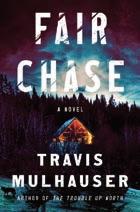





Arboretum, Timmel Pavilion, 105 Rassie Wicker Drive, Pinehurst. Info: www.ticketmesandhills.com.
WEDNESDAY, MAY 6
ACTIVE ADVENTURES FOR LITTLE ONES. 10 - 11 a.m. Kids ages 2 - 5 can join a fun gym session designed for home-school students. There will be interactive games and activities. Southern Pines Recreation Center, 160 Memorial Park Ct., Southern Pines. Info: www.southernpines.net.
HOMESCHOOL FUN ZONE. 11:15 a.m. - 12:15 p.m. Enhance your curriculum and connect with other homeschool families. For ages 5 - 13. Southern Pines Recreation Center, 160 Memorial Park Ct., Southern Pines. Info: www.southernpines.net.
BOOK EVENT. 12 - 1 p.m. Join this virtual event with Chanda Prescod-Weinstein discussing her new book, The Edge of Space-Time: Particles, Poetry, and the Cosmic Dream Boogie. Presented by The Country Bookshop. Info: www.ticketmesandhills.com.
THURSDAY, MAY 7
EDUCATIONAL TRAINING. 11 a.m. - 12 p.m. Adults 55 and older can attend educational training with a new topic each month. Free of charge. Douglass Community Center, 1185 W. Pennsylvania Ave., Southern Pines. Info: (910) 692-7376.
FRIDAY, MAY 8
SPARK STORYTIME. 10 a.m. Join a special, once-a-month story time at Fire Station 82. Ages birth to 5 are welcome. Fire Station 82, 7850 NC22, Carthage. Info: www.sppl.net.
LIVE AFTER FIVE. 5:15 - 9 p.m. Join a night of good food and dancing with live music, kids’ activities, food trucks and more. Free event. The Village Arboretum, 375 Magnolia Road, Pinehurst. Info: www.vopnc.org.
CRAFT NIGHT. 6:30 - 8:30 p.m. Attend a monthly community craft night. Starworks, 100 Russell Drive, Star. Info: www.StarworksNC.org.
LIVE MUSIC. 7:30 p.m. John R. Miller, singer and songwriter, is live in concert. Sunrise Theater, 250 N.W. Broad St., Southern Pines. Info: www.sunrisetheater.com.
SATURDAY, MAY 9
GREATEST HITS CARTOONS. 1:30 - 3 p.m. Enjoy a screening of some of the greatest Fleisher cartoons. Cameo Art House Theatre, 225 Hay St., Fayetteville. Info: www.ticketmesandhills.com.
THEATER. 2 p.m. Michael Pizzi of the Sandhills Repertory Theatre presents “The Music of Judy, Joni, Joan, James and Carole.” There will be additional performances at 7 p.m. and on May 10 at 2 p.m. Sunrise Theater, 250 N.W. Broad St., Southern Pines. Info: www.sunrisetheater.com or www.sandhillsrep.org.
PHOTO WALK. 2 - 3 p.m. Join a Southern Pines photo walk with local photographer Joseph Hill. There will be a short discussion of Joseph’s photography career. Then, take a stroll around Southern Pines, seeing the town through the eyes of a photographer. Bring your phone or camera to take your own photos. Appropriate for all ages, including children with parental supervision. Southern Pines
Public Library, 170 W. Connecticut Ave., Southern Pines. Info: www.sppl.net.
LIVE MUSIC. 3 - 8 p.m. Enjoy live music from Josh Phillips and Rotundo. James Creek Cider House, 172 U.S. 1, Cameron. Info: www.ticketmesandhills.com.
HORSE EVENT. War Horse Eventing Series. There will be approximately 300 riders, dressage, arena jumping and cross country. Food trucks on-site. Event continues through May 10. Carolina Horse Park, 2814 Montrose Road, Raeford. Info: www.carolinahorsepark.com.
SUNDAY, MAY 10
POP UP IN THE PINES. 11 a.m. - 4 p.m. Wander through stalls of talented makers, savor delicious bites and soak in the kind of community spirit that feels like an old-fashioned block party. Weymouth Center, 555 E. Connecticut Ave., Southern Pines. Info: www.popupinthepines.com.
MONDAY, MAY 11
ANNUAL MEETING. 10 a.m. The Sandhills Woman’s Exchange is hosting its annual meeting to discuss updates and future plans for the cabin. Brunch will be served. Cost is $30. Pine Crest Inn, 50 Dogwood Road, Pinehurst. Info: (910) 295-4677 or www.sandhillswe.org.
PHOTO CLUB. 7 p.m. Sandhills Photo Club’s monthly meeting presents “The Power of Contrast,” by Lisa Langell. She will share how contrast is one of the most powerful tools a photographer can use. Guests welcome. Sandhills Horticultural Ball Visitors Center, 3245 Airport Road, Southern Pines. Info: www.sandhillsphotoclub.org.
TUESDAY, MAY 12
SHOPPING AND LUNCH. 9 a.m. - 2 p.m. Adults 55 and older can join Southern Pines Parks and Recreation on a trip to Florence, S.C., for shopping at Buc-ee’s, followed by lunch. Each month enjoy a new shopping location and restaurant. Cost is $15 for residents and $17 for non-residents. Info: (910) 692-7376.
TWEEN ROCK PAINTING. 4 p.m. Tween ages 8 - 12 can design their own painted rock. All sup-

plies provided. Registration encouraged. Southern Pines Public Library, 170 W. Connecticut Ave., Southern Pines. Info: www.sppl.net.
WEDNESDAY, MAY 13
TECH TIME. 11 a.m. Join a walk-in tech time to receive hands-on help with tech questions. Whether you’re new to computers, want to learn more about your smartphone, or want to learn how to use your eReader, staff will guide you. Southern Pines Public Library, 170 W. Connecticut Ave., Southern Pines. Info: jmilford@sppl.net.
THURSDAY, MAY 14
GARDEN TOUR. 10 - 11 a.m. Sandhills Horticultural Gardens’ monthly tour focuses on rocks in landscapes. Free of charge. Limit of 15 people. Ball Visitors Center, 3245 Airport Road, Southern Pines. Info: www.sandhills.edu/ gardenevents.
HATHA YOGA. 10 - 11 a.m. Adults 55 and older can increase flexibility, balance, stability and muscle tone while learning the basic principles of alignment and breathing. Gain strength, improve circulation and reduce chronic pain practicing gentle yoga postures and mindfulness. Free of charge. Douglass Community Center, 1185 W. Pennsylvania Ave., Southern Pines. Info: (910) 692-7376.
POETRY READING CLUB. 11 a.m. - 12 p.m. Adults 55 and older can bring a favorite poem or one they have written themselves to share with friends. Free of charge. Douglass Community Center, 1185 W. Pennsylvania Ave., Southern Pines. Info: (910) 692-7376.
AARP TALK. 12 - 12:30 p.m. Adults 55 and older are invited to join AARP for a fraud talk. Free of charge. Douglass Community Center, 1185 W. Pennsylvania Ave., Southern Pines. Info: (910) 692-7376.
CORNHOLE. 12 - 1 p.m. Adults 55 and older are invited to work on their aim and have some fun with friends. Free of charge. Douglass Community Center, 1185 W. Pennsylvania Ave., Southern Pines. Info: (910) 692-7376.
HORSE EVENT. Triangle Farms Sandhills Classic. This is a hunter/jumper show. Event continues through May 17. Carolina Horse Park, 2814 Montrose Road, Raeford. Info: www.carolinahorsepark.com.
HOT GLASS, COLD BEER. 5:30 - 8 p.m. Enjoy a live glassblowing demonstration followed by live music and food trucks. Suggested donation of $5. Starworks Cafe and Taproom, 100 Russell Drive, Star. Info: www.StarworksNC.org.
FRIDAY, MAY 15
CLASSIC VINYL NIGHT. 6:30 - 8:30 p.m. Enjoy classic vinyl music with DJ Rounder. Free to attend. Starworks Cafe and Taproom, 100 Russell Drive, Star. Info: www.StarworksNC.org.
FAMILY CAMP OUT. 7 p.m. Join a campout under the stars at Downtown Park. Must provide your own tent. Space is limited to the first 20 families. Cost is $10 per resident family and $14 per nonresident family. Downtown Park, Southern Pines. Info: (910) 692-7376.









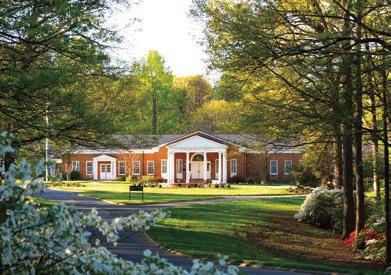

OUTDOOR MOVIE. 8:15 p.m. Bring yourself or the entire family to watch Zootopia 2. Concessions will be available for purchase. Don’t forget to bring your blanket or chair. Free of charge. Downtown Park, Southern Pines. Info: (910) 692-7376.
SATURDAY, MAY 16
CRAFT DAYS. Children and families can come by the library for a drop-in craft day to work on a fun, hands-on craft at their own pace. Crafts are designed for children in grades K-5 and their families. This is a self-guided activity, so caregivers should plan to assist as needed. While supplies last. Southern Pines Public Library, 170 W. Connecticut Ave., Southern Pines. Info: (910) 692-8235 or www.sppl.net.
GARDEN WORKSHOP
Tuesday, May 19, 2026
Ball Garden Visitors Center
SPRING LECTURE. 10 - 11 a.m. Sandhills Horticultural Gardens presents “Bird Beak Buffet.” This presentation is for children ages 5 - 10 to test a variety of beaks and what they are designed to eat. Ball Garden Visitors Center, 3245 Airport Road, Southern Pines. Info: www.sandhills.edu/ gardenevents.
BABY GOAT YOGA. 11 a.m. - 12 p.m. Enjoy a yoga class while baby goats wander around you. For ages 10 and older. Bring a mat, towel and water. Ithika Acres Creamery, 4273 Gainey Road, Raeford. Info: www.ticketmesandhills.com.
TEA PARTY. 1 - 3 p.m. The Sandhills Woman’s Exchange will host a “Raise a Cup to the Cabin” tea party. Cost is $65. Reservations required. Sandhills Woman’s Exchange, 15 Azalea Road, Pinehurst. Info: (910) 295-4677 or www.sandhillswe.org.
SENIOR AMERICA PAGEANT. 2 - 5 p.m. Eight candidates will compete in the N.C. Senior America Pageant. West Southern Pines Center Auditorium, 1250 W. New York Ave., Southern Pines. Info: www.ticketmesandhills.com.
TRIVIA NIGHT. 6:30 - 8:30 p.m. Bring a group of friends and meet new ones competing to see who has the most trivia knowledge. Free of charge. Starworks Cafe and Taproom, 100 Russell Drive, Star. Info: www.StarworksNC.org.
DANCE. 6:30 - 9:30 p.m. Join the fun at Carolina Pines Dance Club with swing, shag, ballroom, Latin and line dances. Cost is $10 per person. Given Outpost, 95 Cherokee Road, Pinehurst. Info: (910) 331-9965.
SPRING CONCERT. 7 - 8:30 p.m. Enjoy the Moore Philharmonic Orchestra’s annual spring concert. Admission by donation of choice. Lee Auditorium, Pinecrest High School, 250 Voit Gilmore Lane, Southern Pines. Info: www.mooreart.org.
BROADWAY LIGHTS. 7:30 p.m. Celebrate the Broadway bonanza that ends the season. Owens Auditorium, 3395 Airport Road, Pinehurst. Info: www.carolinaphil.org.
SONGWRITERS ROUND. 7:30 p.m. Join Becca Rae and her Nashville friends for a magical evening of songs and stories. Sunrise Theater, 250 N.W. Broad St., Southern Pines. Info: www.sunrisetheater.com.
MONDAY, MAY 18
WOMEN OF WEYMOUTH. 11 a.m. Enjoy a presentation from a featured speaker as well as a garden luncheon featuring strawberries and the Carolina Philharmonic Junior Orchestra. The Great Room, Weymouth Center for the Arts & Humanities, 555 E. Connecticut Ave., Southern Pines. Info: www.weymouthcenter.org.
STITCHING IN THE STACKS. 5 - 7 p.m. Do you like knitting, crocheting and embroidery? Join SPPL’s new group, Stitching in the Stacks. This is a community gathering space for all textile hand craft practitioners. Southern Pines Public Library, 170 W. Connecticut Ave., Southern Pines. Info: www.sppl.net.
TUESDAY, MAY 19
BRAIN FITNESS. 10 - 10:45 a.m. Adults 18 and older are invited to enjoy short relaxation and brain enhancement exercises, ending with a mindfulness practice. Free of charge. Douglass Community Center, 1185 W. Pennsylvania Ave., Southern Pines. Info: (910) 692-7376.
GARDEN WORKSHOP. 10 a.m. - 12 p.m. This class will be about the various forms of rock gardening, and each participant will have an opportunity to construct their own tabletop rock garden to take home. Cost is $35 for members and $45 for non-members. Ball Garden Visitors Center, 3245 Airport Road, Southern Pines. Info: www.sandhills.edu/gardenevents.
BINGO. 11 a.m. - 12 p.m. Adults 55 and older are invited to play 10 games of bingo. Cost is $4 for residents and $6 for non-residents. Douglass Community Center, 1185 W. Pennsylvania Ave., Southern Pines. Info: (910) 692-7376.
JAMES BOYD BOOK CLUB. 2 p.m. This month the club will discuss The Bible Salesman, Edgerton. Free admission, but registration is required. The Great Room, Weymouth Center for the Arts & Humanities, 555 E. Connecticut Ave., Southern Pines. Info: www.weymouthcenter.org.
BOOK CLUB. 3 p.m. The Novel Idea Book Club is looking for new members. Southern Pines Public Library, 170 W. Connecticut Ave., Southern Pines. Info: mmiller@sppl.net.
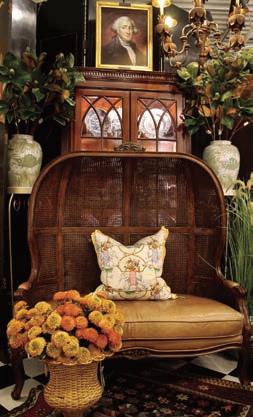









BOOK EVENT. 6 - 7 p.m. The Country Bookshop is partnering with the Moore Montessori Community Education Series to have Brandon Webb discuss his book, Puddle Jumpers: Powerful Mental Techniques from a Navy SEAL Performance Coach and Father of Three. Moore Montessori, 255 S. May St., Southern Pines. Info: www.ticketmesandhills.com.
WEDNESDAY, MAY 20
ROCK GARDEN TOUR. 10 a.m. Want to see an established rock garden in a home landscape? Kyle Sonnenberg will be opening his home gardens for a tour of his rock garden. Free of charge. Registration requested. Ball Garden Visitors Center, 3245 Airport Road, Southern Pines. Info: www.sandhills.edu/gardenevents.
ACTION HOUR IN THE GYM. 11:15 a.m.12:15 p.m. Kids ages 2 - 12 can come to the gym for open play. Southern Pines Recreation Center, 160 Memorial Park Ct., Southern Pines. Info: www.southernpines.net.
BOOK EVENT. 6 - 7 p.m. Tim Brown will discuss his book, Nolan: The Singular Life of an American Original. The Country Bookshop, 140 N.W. Broad St., Southern Pines. Info: www.ticketmesandhills.com.
EXHIBITION ON SCREEN. 7 p.m. Frida Kahlo, an extended encore. Cameo Art House Theatre, 225 Hay St., Fayetteville. Info: www.ticketmesandhills.com.
THURSDAY, MAY 21
CIVIL WAR ROUND TABLE. 6:30 p.m. The guest speaker will be Jim Burnett, with a presentation on “Against All Odds: How the Second Battle of Sabine Pass Changed the Civil War in Texas.” Meeting starts at 7 p.m. Open to the public. Civic Club, corner of Pennsylvania Ave. and Ashe St., Southern Pines. Info: (910) 246-0452 or mafarina@aol.com.
OPEN MIC NIGHT. 7 p.m. Let your talents shine. Musical numbers, spoken word or other performances welcome. Starworks Cafe and Taproom, 100 Russell Drive, Star. Info: www.StarworksNC.org.
FRIDAY, MAY 22
HORSE EVENT. Sedgefield hunter/jumper show. There will be vendors and food trucks. Event continues through May 24. Carolina Horse Park, 2814 Montrose Road, Raeford. Info: www.carolinahorsepark.com.
STORYTIME. 10:15 a.m. - 12 p.m. Saturday Storytime is a once-a-month program for children ages birth to 5 featuring stories, songs, rhymes and smiles where caregivers and young children can interact and explore the fun of language and early literacy. This month there is a special “Baby Prom,” so come dressed and ready to dance. Southern Pines Public Library, 170 W. Connecticut Ave., Southern Pines. Info: www.sppl.net.
QUEEN MUSIC. 3 - 5 p.m. Experience the music of Queen with a performance by the ultimate tribute band, Extreme Queen. Sunrise Theater, 250 N.W. Broad St., Southern Pines. Info: www.sunrisetheater.com.
MUSIC BINGO. 6 - 9 p.m. Enjoy playing music bingo. Free to play. Starworks Cafe and Taproom, 100 Russell Drive, Star. Info: www.StarworksNC.org.
SATURDAY, MAY 23
STATE PARK TRIP. 9 a.m. - 3 p.m. Ages 12 - 17 can enjoy a trip to the Eno River State Park. Cost is $18 for residents and $25 for non-residents. Departs from the Recreation Center, 160 Memorial Park Court, Southern Pines. Info: (910) 692-7376.
LIVE MUSIC. 6:30 - 8:30 p.m. Landon Byrd performs. Free to attend. Starworks Cafe and Taproom, 100 Russell Drive, Star. Info: www.StarworksNC.org.
TUESDAY, MAY 26
CREATIVITY CLUB. 3:45 - 4:45 p.m. Creativity Club at the fire station is a monthly program. Activities are designed for kids in grades K-5 but are adaptable to other ages and abilities. This month is yarn art. Caregiver participation is required. Fire Station 82, 7850 N.C. 22, Carthage. Info: www.southernpines.net/FormCenter/ Library-11/Creativity-Club-Registration-117.
WEDNESDAY, MAY 27
BOOK EVENT. 12 - 1 p.m. Dr. Gail Crowther will


be virtually discussing her book, Marilyn and Her Books: The Literary Life of Marilyn Monroe. The Country Bookshop, 140 N.W. Broad St., Southern Pines. Info: www.ticketmesandhills.com.
THURSDAY, MAY 28
BENEFIT CONCERT. 7 - 9 p.m. Join a celebration of the historic auditorium with the smooth sounds of The Paul Murphy Trio. West Southern Pines Center Auditorium, 1250 W. New York Ave., Southern Pines. Info: www.ticketmesandhills.com.
FRIDAY, MAY 29
LADIES WINE OUT. 5 p.m. Enjoy the annual happy hour with appetizers and desserts by Salty Boards, a wine bar, vendors and music. Reserve your tickets by May 24. On the grounds of the Weymouth Center for the Arts & Humanities, 555 E. Connecticut Ave., Southern Pines. Info: www.weymouthcenter.org.
POP UP IN THE PINES. 5 - 9 p.m. Wander through stalls of talented makers, savor delicious bites and soak in the kind of community spirit that feels like an old-fashioned block party. Rec Room, 750 S.W. Broad St., Southern Pines. Info: www.popupinthepines.com.
SATURDAY, MAY 30
COLONIAL DAY. 10 a.m. - 4 p.m. Activities will include Colonial re-enactors, short talks about the time period, exhibits and tours of the property’s
homes and food and drinks. Free event. Shaw House, 110 W. Morganton Road, Southern Pines. Info: www.moorehistory.com.
GLASSBLOWING WORKSHOP. 10 a.m. Make your own glass fairy orb. Cost is $85. Starworks, 100 Russell Drive, Star. Info: www.StarworksNC.org.
COMMUNITY BOOK SWAP. 10 a.m. - 4 p.m. Bring up to 10 gently used books to trade or just stop by to browse and discover something new. Books for all ages are welcome. Have extra tote bags at home? Bring those to swap, too! Feel free to take home new-to-you reads in a “new-to-you” bag. Any books left behind will find a new home in our Little Free Libraries. Southern Pines Public Library, 170 W. Connecticut Ave., Southern Pines. Info: www.sppl.net.
MET OPERA. 1 - 5 p.m. El Último Sueño de Frida y Diego. Sunrise Theater, 250 N.W. Broad St., Southern Pines. Info: www.sunrisetheater.com.
LIVE MUSIC. 6:30 - 8:30 p.m. Bad Penny performs. Free to attend. Starworks Cafe and Taproom, 100 Russell Drive, Star. Info: www.StarworksNC.org.
SUNDAY, MAY 31
JAZZ. 2 p.m. Enjoy music from Vanisha Gould. On the lawn of the Weymouth Center for the Arts & Humanities, 555 E. Connecticut Ave., Southern Pines. Info: www.weymouthcenter.org.
STEAM. 2:30 - 3:30 p.m. Elementary-aged children and their caregivers are invited to learn about topics in science, technology, engineering, art and math,



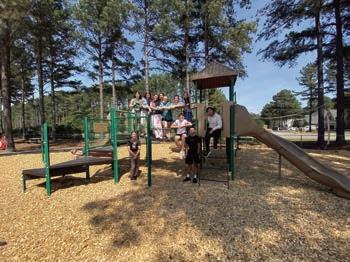
and to participate in STEAM projects and activities. This month learn animal facts. Southern Pines Public Library, 170 W. Connecticut Ave., Southern Pines. Info: (910) 692-8235 or www.sppl.net.
UPCOMING EVENTS
MONDAY, JUNE 1
ORCHESTRA. 7 p.m. The Glen Miller Orchestra performs. Owens Auditorium, 3395 Airport Road, Pinehurst. Info: www.ticketmesandhills.com.
WEEKLY EVENTS
MONDAYS
CHAIR YOGA. 9 - 10 a.m. For adults 55 and older. Help offset body aches encountered with desk work. This is an accessible yoga class for bodies not able to easily get up from and down to the floor. Do standing or sitting in a chair. Free of charge. Douglass Community Center, 1185 W. Pennsylvania Ave., Southern Pines. Info: (910) 692-7376.
JIGSAW PUZZLES. 9 a.m. - 3 p.m. Adults 55 and older can enjoy puzzle fun with friends or solo. Free of charge. Puzzles can be done Monday through Friday. Douglass Community Center, 1185 W. Pennsylvania Ave., Southern Pines. Info: (910) 692-7376.
FITNESS MEMBERSHIP. 9 a.m. - 4:30 p.m.
Adults 55 and older can use a variety of equipment such as treadmills, free weights, stationery bikes


and more. Cost for a six-month membership is $18 for residents and $26 for non-residents. The fitness room is open Monday through Friday. Douglass Community Center, 1185 W. Pennsylvania Ave., Southern Pines. Info: (910) 692-7376.
INDOOR WALKING. 10 a.m. - 12 p.m. Adults 55 and older can get an indoor walking membership in the climate-controlled gym. Membership can be used Monday through Friday. Cost for six-months is $18 for residents and $26 for non-residents. Southern Pines Recreation Center, 160 Memorial Park Ct., Southern Pines. Info: (910) 692-7376.
SENIOR FITNESS. 11 a.m. Adults 55 and older are invited to a TruFit gym class to improve strength, mobility and flexibility. Douglass Community Center, 1185 W. Pennsylvania Ave., Southern Pines. Info: (910) 692-7376.
RESTORATIVE YOGA. 12 p.m. For adults 55 and older. Practice gentle movements to help alleviate pain and improve circulation and well-being. Bring your own mat. Free of charge. Douglass Community Center, 1185 W. Pennsylvania Ave., Southern Pines. Info: (910) 692-7376.
GAME ON. 12 - 1 p.m. For adults 55 and older. Play various games such as corn hole, badminton, table tennis, shuffleboard, trivia games and more. Each week enjoy a different activity to keep you moving and thinking. Compete with friends and make new ones all for free. Douglass Community
Center, 1185 W. Pennsylvania Ave., Southern Pines. Info: (910) 692-7376.
TAI CHI. 1 - 2 p.m. Adults 55 and older can take a Tai Chi 8 and Beijing 24 forms class. The classes continue every Monday through May 27. Free of charge. Douglass Community Center, 1185 W. Pennsylvania Ave., Southern Pines. Info: (910) 692-7376.
BRIDGE. 1:30 - 4:30 p.m. For adults 55 and older. Enjoy games of bridge with friends. Douglass Community Center, 1185 W. Pennsylvania Ave., Southern Pines. Info: (910) 692-7376.
ACTIVE LIVING. 2:30 - 3:30 p.m. Adults 55 and older are invited to join a 12-week program learning skills necessary to overcome the barriers to becoming physically active. Free of charge. Douglass Community Center, 1185 W. Pennsylvania Ave., Southern Pines. Info: (910) 692-7376.
TUESDAYS
VIRTUAL SPINNING CLASS. 8:30 - 9 a.m.
Adults 18 and older can do a 30-minute bike workout. Limit of seven people per class. Free of charge. Douglass Community Center, 1185 W. Pennsylvania Ave., Southern Pines. Info: (910) 692-7376.
INTERVAL WALKING. 9:15 - 9:45 a.m. Adults 18 and older can do interval training, alternating between periods of brisk and slow walking. Free

of charge. No class on the second Tuesday of the month. Douglass Community Center, 1185 W. Pennsylvania Ave., Southern Pines. Info: (910) 692-7376.
PLAYFUL LEARNING. 10 a.m. - 2 p.m. Interact with other children in a drop-in, open educational playtime for ages 0 - 3 years. Given Memorial Library, 150 Cherokee Road, Pinehurst. Info: (910) 295-3642.
BABY RHYMES. 10:15 a.m. Baby Rhymes is specially designed for the youngest learners (birth2) and their caregivers. Repetition and comforting movements make this story time perfect for early development and brain growth. There will be a duplicate session at 10:45 a.m. An active library card is required. Dates this month are May 5, 12, 19 and 26. Southern Pines Public Library, 170 W. Connecticut Ave., Southern Pines. Info: (910) 692-8235 or www.sppl.net.
GAME DAY. 12 - 4 p.m. Fun, fellowship, games and activities. For adults 55 and older. Douglass Community Center, 1185 W. Pennsylvania Ave., Southern Pines. Info: (910) 692-7376.
CHESS. 1:30 - 5 p.m. Join a chess group, whether you have been playing for a while or you have never played. This program is free of charge. Moore County Senior Enrichment Center, 8040 U.S. 15-501, West End.









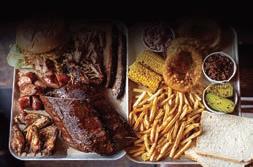
















TABLE TENNIS. 3 - 5 p.m. Adults 55 and older are invited to enjoy free games of table tennis while making new friends. Games on the week of the second Tuesday of the month will be played on Thursday instead. Douglass Community Center, 1185 W. Pennsylvania Ave., Southern Pines. Info: (910) 692-7376.
LINE DANCE. 4:45 p.m. Put on your dancing shoes and line dance. This is a free, beginners program. Moore County Senior Enrichment Center, 8040 U.S. 15-501, West End.
WEDNESDAYS
SANDHILLS FARMERS MARKET. 3 p.m. – 6 p.m. The Sandhills Farmers Market features the area’s farms, nurseries, bakeries, meat and egg providers, cheesemakers and specialty food producers. The market runs twice weekly through September 30 at Tufts park, 1 Village Green Road, W., Pinehurst. For more information visit: www.moorefarmfresh.com.
INTERVAL WALKING. 9:15 - 9:45 a.m. Adults 18 and older can do interval training, alternating between periods of brisk and slow walking. Free of charge. Douglass Community Center, 1185 W. Pennsylvania Ave., Southern Pines. Info: (910) 692-7376.
CHAIR AEROBICS. 10 - 11 a.m. For adults 55 and older. Put on your boogie shoes and jam. Get fit to
dance, partying up a sweat to great music through the ages. Stand and chair dance to this energizing, low-impact aerobic workout. Free of charge. Douglass Community Center, 1185 W. Pennsylvania Ave., Southern Pines. Info: (910) 692-7376.
BRAIN BOOST. 10 - 11 a.m. Test your memory while creating new brain connections. This is a free program. Moore County Senior Enrichment Center, 8040 U.S. 15-501, West End.
KNITTING. 10 - 11 a.m. Enjoy knitting with other people or learn how. This is a free program. Moore County Senior Enrichment Center, 8040 U.S. 15-501, West End.
BABY STORYTIME. 10 - 11 a.m. Have fun developing the foundation for your baby’s later reading with stories, songs and play. Open to parents and caregivers of infants from newborn to 24 months. Moore County Library, 101 W. Saunders St., Carthage. Info: (910) 947-5335.
LEARN AND PLAY. 10 a.m. - 12 p.m. Enjoy an open play date with your toddler or preschooler with developmental toys and puzzles as well as early literacy tips for parents to incorporate into daily activities. Dates this month are May 6, 13, 20 and 27. Southern Pines Public Library, 170 W. Connecticut Ave., Southern Pines. Info: (910) 692-8235 or www.sppl.net.
SENIOR FITNESS. 11 a.m. Adults 55 and older are invited to a TruFit gym class to im-
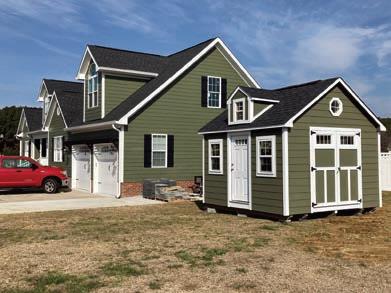





prove strength, mobility and flexibility. Douglass Community Center, 1185 W. Pennsylvania Ave., Southern Pines. Info: (910) 692-7376.
PIANO. 11 a.m. - 12 p.m. Join Flint Long to play piano or just listen. This is a free program. Moore County Senior Enrichment Center, 8040 U.S. 15501, West End.
LINE DANCING. 12 - 1 p.m. Looking for new ways to get your daily exercise in and care for yourself? Try line dancing. For adults 55 and older. Douglass Community Center, 1185 W. Pennsylvania Ave., Southern Pines. Info: (910) 692-7376.
CHAIR VOLLEYBALL. 1 - 2 p.m. For adults 55 and older. Get fit while having fun. Free to participate. Douglass Community Center, 1185 W. Pennsylvania Ave., Southern Pines. Info: (910) 692-7376.
BRIDGE. 1:30 - 4:30 p.m. For adults 55 and older. Enjoy games of bridge with friends. All materials included. Douglass Community Center, 1185 W. Pennsylvania Ave., Southern Pines. Info: (910) 692-7376.
DANCE. 2 - 2:30 p.m. For adults 55 and older. Instructor Maria Amaya introduces dance fitness in a class designed for anyone who wants to gently and gradually increase cardio function, mobility and balance and have fun at the same time. Free of charge. Douglass Community Center, 1185 W. Pennsylvania Ave., Southern


Pines. Info: (910) 692-7376.
LINE DANCING. 2 p.m. The town of Vass will host line dancing for seniors every other Wednesday. Cost is $5 per session. Vass Town Hall, 140 S. Alma St., Vass. Info: www.townofvassnc.gov.
TAI CHI. 2 - 3 p.m. Adults 55 and older can take a Tai Chi 8 and Beijing 24 forms class. The classes continue every Wednesday through May 27. Free of charge. Douglass Community Center, 1185 W. Pennsylvania Ave., Southern Pines. Info: (910) 692-7376.
LIBRARY PROGRAM. 3:30 p.m. At The Library After School (ATLAS) is an after-school program for children ages kindergarten through second grade who enjoy activities, crafts, stories, and meeting new friends. Dates this month are May 6, 13, 20 and 27. Southern Pines Public Library, 170 W. Connecticut Ave., Southern Pines. Info: (910) 692-8235 or www.sppl.net.
TAI CHI. 6:30 p.m. Come learn tai chi. There is no age limit and the classes are open to the public. Cost is $10 per class. Seven Lakes West Community Center, 556 Longleaf Drive, Seven Lakes. Info: (910) 400-5646.
THURSDAYS
VIRTUAL SPINNING CLASS. 8:30 - 9 a.m.
Adults 18 and older can do a 30-minute bike workout. Limit of seven people per class. Free of charge.
Douglass Community Center, 1185 W. Pennsylvania Ave., Southern Pines. Info: (910) 692-7376.
MOORE COUNTY FARMERS MARKET. 9 a.m. - 1 p.m. The year-round market features “producer only” vendors within a 50-mile radius providing fresh, local and seasonal produce, fruits, pasture meats, eggs, potting plants, cut flowers and local honey. Crafts, baked goods, jams and jellies are also available. Market is located at the Armory Sports Complex, 604 W. Morganton Road, Southern Pines.
GIVEN STORY TIME. 10 a.m. Bring your preschooler to enjoy stories, songs and activities. Given Memorial Library, 150 Cherokee Road, Pinehurst. Info: (910) 295-3642.
BALANCE AND FLEXIBILITY. 10 - 11 a.m. Adults 55 and older are invited to enjoy a class to help reduce the risk of taking a tumble and increase the ability to recover if you do. Free of charge. Douglass Community Center, 1185 W. Pennsylvania Ave., Southern Pines. Info: (910) 692-7376.
MUSIC AND MOTION. 10:15 and 10:45 a.m. Does your toddler like to move and groove? Join Music and Motion to get those wiggles out and work on gross and fine motor skills. For ages 25. An active library card is required. Dates this month are May 7, 14, 21 and 28. Southern Pines Public Library, 170 W. Connecticut Ave., Southern Pines. Info: (910) 692-8235 or www.sppl.net.
GENTLE YOGA. 12:30 - 1:30 p.m. Adults 55 and older are invited to unwind, recharge and find peace in their week. Free of charge. Douglass Community Center, 1185 W. Pennsylvania Ave., Southern Pines. Info: (910) 692-7376.
MAHJONG. 1 - 3 p.m. For adults 55 and older. Mahjong involves skill, strategy, calculation and luck. Requires four players. Free of charge. Douglass Community Center, 1185 W. Pennsylvania Ave., Southern Pines. Info: (910) 692-7376.
IMPROVERS LINE DANCE. 3 - 5:30 p.m. Put on your dancing shoes and line dance. This is a free program. Moore County Senior Enrichment Center, 8040 U.S. 15-501, West End.
LITTLE U. 3:45 p.m. Little U is a preschool program for children ages 3 1/2 - 5. Enjoy stories, songs, rhymes, and activities that explore the world of books, language and literacy. Little U is a fun and interactive program designed to help preschoolers develop early literacy skills in preparation for kindergarten and beyond. Dates this month are May 7, 14, 21 and 28. Southern Pines Public Library, 170 W. Connecticut Ave., Southern Pines. Info: (910) 692-8235 or www.sppl.net.
AEROBIC DANCE. 9 - 10 a.m. For adults 55 and older. Enjoy this low-to-moderate impact class with

energizing music for an overall cardio and strength workout. Free of charge. Douglass Community Center, 1185 W. Pennsylvania Ave., Southern Pines. Info: (910) 692-7376.
JAM SESSION. 9:30 - 11:30 a.m. Do you like to play an instrument, sing or just listen to music? Join a music jam session. This is a free program. Moore County Senior Enrichment Center, 8040 U.S. 15-501, West End.
TAP CLASS. 10 - 11:30 a.m. For adults 55 and older. All levels welcome. Cost for six-month membership: $18/resident; $26/non-resident. Douglass Community Center, 1185 W. Pennsylvania Ave., Southern Pines. Info: (910) 692-7376.
SENIOR FITNESS. 11:30 a.m. Adults 55 and older are invited to a TruFit gym class to improve strength, mobility and flexibility. Douglass Community Center, 1185 W. Pennsylvania Ave., Southern Pines. Info: (910) 692-7376.
QIGONG. 1 p.m. For adults 55 and older. Classes will consist of chair and standing movements to help soothe achy feet and tight hips while easing lower back pain and restrictions in mobility. Free of charge. Douglass Community Center, 1185 W. Pennsylvania Ave., Southern Pines. Info: (910) 692-7376.
BRIDGE. 1:30 - 4:30 p.m. For adults 55 and older. Enjoy games of bridge with friends. All materials included. Douglass Community Center, 1185 W. Pennsylvania Ave., Southern Pines.


Info: (910) 692-7376.
DRUM CIRCLE. 2 - 3 p.m. Adults 18 and older can feel the rhythm, find their groove and connect through beat. No experience necessary. Free of charge. Douglass Community Center, 1185 W. Pennsylvania Ave., Southern Pines. Info: (910) 692-7376.
SATURDAYS
MOORE COUNTY FARMERS MARKET.
8 a.m. - 12 p.m. This market features “producer only” vendors within a 50-mile radius providing fresh, local and seasonal produce, fruits, pasture meats, eggs, potting plants, cut flowers and local honey. Crafts, baked goods, jams and jellies are also available. The market runs through Nov. 21. Downtown Southern Pines, 156 S.E. Broad St., Southern Pines.
SANDHILLS FARMERS MARKET. 10 a.m. - 1 p.m. The Sandhills Farmers Market features the area’s farms, nurseries, bakeries, meat and egg providers, cheesemakers and specialty food producers. The market runs twice weekly through Sept. 30 at Tufts Park, 1 Village Green Road, W., Pinehurst. For more information visit: www.moorefarmfresh.com




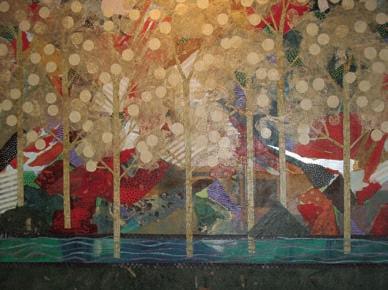





Gallery • Studios • Classes
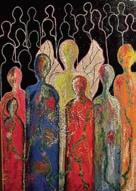
910-944-3979
Gallery Hours: Monday - Saturday 12-3pm 129 Exchange Street in Aberdeen, NC artistleague@windstream.net • artistleague.org
Featuring the art of Lynn Goldhammer, Carol Gradwohl, Pam Griner, Janis Loehr, Meredith Markfield, Tommy McDonell, Jane Mohr, Carol Rosenberg, Debbie Whitley, and Jude Winkley.
Explore Abstraction - Oil, Acrylic, Pastel, Watercolor, Mixed Media - Linda Bruening Wednesday and Thursday, May 6, 7, 9:30-3:30 $120
Thumbnails and Color Studies: How To Save $/Frustration With Your Pastel Journey! Deborah Brown - Wednesday & Thursday, May 13, 14, 9:30-12:30 $72
Tapestry Weaving - Connie Genuardi - Monday & Tuesday, May 11, 12, 10:30-3:30 $114
Intro to Encaustic Wax - Pam Griner - Tuesday, May 27, 11:00-1:00 $34
Gallery Hours: Monday - Saturday 12-3pm
Ask Us About Becoming a Member
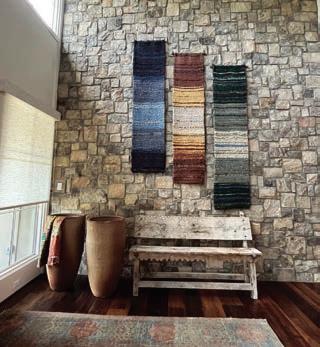

Let’s Discuss Your Custom Design
T: 267-218-0822 E: conniegenuardi@gmail.com W: fiberartsbyconnie.com
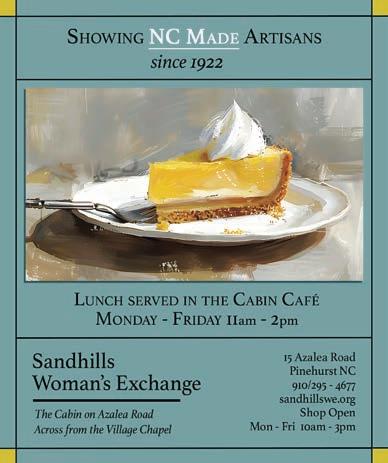
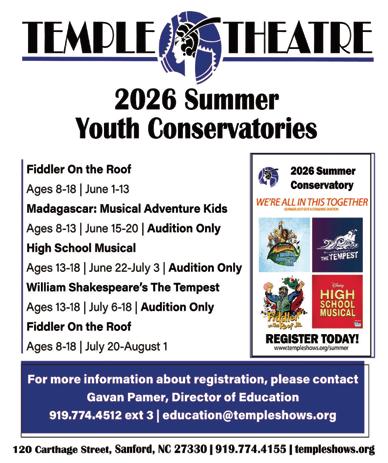









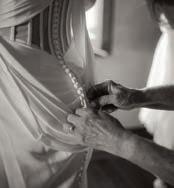

























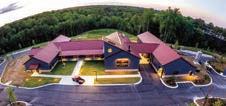











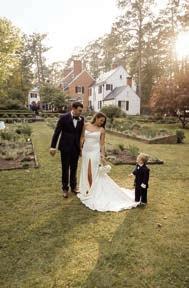

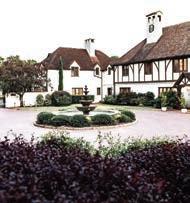









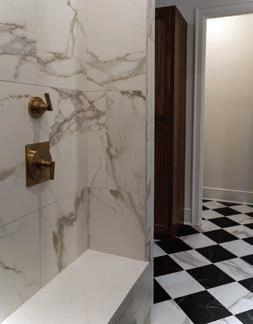


















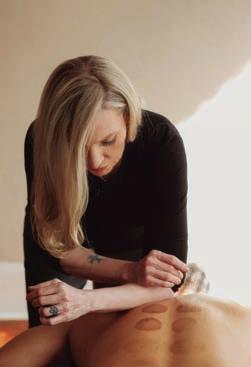





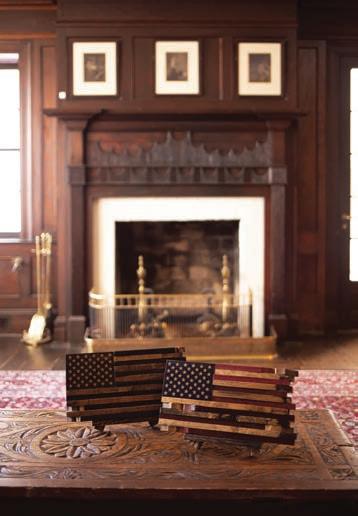

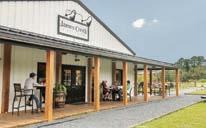
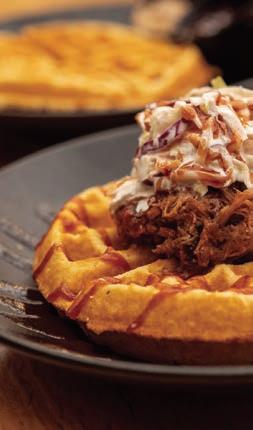









Friday Night Jazz Series: Carrie Marshall Quintet
The Sunrise Theater Friday, March 13, 2026
Photographs by Diane McKay


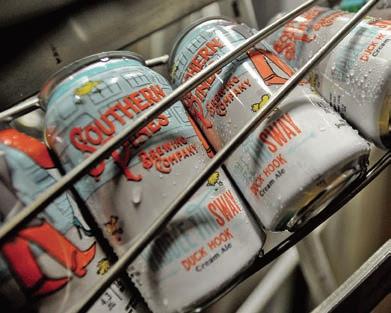






James Creek Orchards
Saturday, March 14, 2026
Photographs by Diane McKay
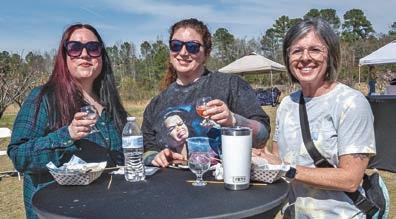
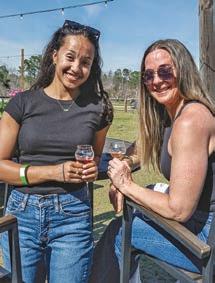
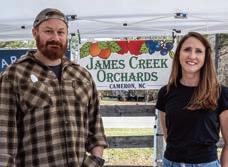
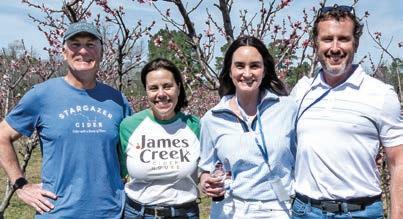


Owens Auditorium • Friday, April 10, 2026
Photographs by Diane McKay
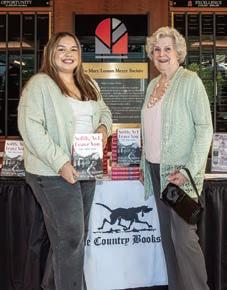
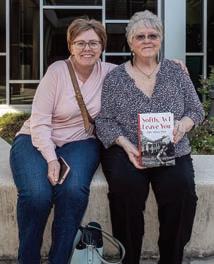


















Across
1. Burgle
4. Deep Muslim bow
10. “Harper Valley ___”
13. Zhivago’s love
Across
58. Autumn tool
59. Back-to-work day: Abbr.
1. Burgle
60. Band follower
4. Deep Muslim bow
61. Eye layer
10. "Harper Valley ___"
14. City about 175 miles north of Lisbon (variation)
15. Cold and wet
16. Bad day for Caesar
17. Legendary male fish
18. Have
19. May honorees
21. Engine speed, for short
23. Low choir voice
24. May honorees
27. “A Chorus Line” song
28. Cooking meas.
31. Benedict Arnold’s crime
32. 2008 Will Ferrell sports comedy
34. Characteristic carrier
35. May honorees
38. Ancient colonnade
39. Common baby shower gift
40. Firmly establish, as values
42. “Stupid me!”
43. Marienbad, for one
46. Hymns of praise
47. Cay
49. Short order, for short
50. May honorees
53. Victorian, for one
55. Cut into a slope (variation)
62. “Cheers” regular Danson
63. May honorees
13. Zhivago's love
64. Fourposter, e.g.
14. City about 175 miles north of Lisbon, (Var.)
Down
1. Angular measure
15. Cold and wet
2. End of a threat (2 wds.)
3. Foundation
16. Bad day for Caesar
4. Ladies’ lingerie store
5. Mimic
17. Legendary male fish
6. Customized tugboat
18. Have
7. Branch
19. May Honorees
8. Absorbed, as a cost
9. “Some Like It Hot” star
21. Engine speed, for short
10. Vow taker
11. Shooter marble
23. Low choir voice
12. Barley bristle
24. May Honorees
13. “How low can you go?” dance
27. "A Chorus Line" song
20. Schlepper
22. Epidemic
28. Cooking meas.
24. “Now!”
25. Bamboozles
31. Benedict Arnold's crime
35. Italian volcano
55. Cut into a slope (var.)
26. Charlotte-to-Raleigh dir.
29. Sniffs
32. 2008 Will Ferrell sports comedy
30. Fig tree of India
34. Characteristic carrier
31. In a corner
32. Of a nation
50. Bits
36. Bridle part
8. Absorbed, as a cost
37. Moral conduct
38. Bit of a draft?
58. Autumn tool
51. Ashtabula’s lake
37. Moral conduct
52. “Planet of the ___”
9. "Some Like It Hot" star
41. Apprentice
59. Back-to-work day: Abbr.
10. Vow taker
43. To separate, as thread
44. Brightened, with “ up ”
60. Band follower
61. Eye layer
11. Shooter marble
45. Baffled (2 wds.)
48. Bush
12. Barley bristle
38. Bit of a draft?
53. May honorees
54. ___ v. Wade
41. Apprentice
56. Former French coin
57. “Wheels”
43. To separate, as thread
44. Brightened, with "up"
35. May Honorees
33. Be nosy
38. Ancient colonnade
39. Common baby shower gift
40. Firmly establish, as values
42. "Stupid me!"
46. Hymns of praise
47. Cay
49. Short order, for short
50. May Honorees

62. "Cheers" regular Danson
63. May Honorees
Sudoku:
64. Fourposter, e.g.
Fill in the grid so every row, every column and every 3x3 box contain the numbers 1-9.
Down
1. Angular measure
13. "How low can you go?" dance
20. Schlepper
22. Epidemic
24. "Now!"
25. Bamboozles
45. Baffled, (2 wds.)
48. Bush
50. Bits
51. Ashtabula's lake
52. "Planet of the ___"
43. Marienbad, for one
2. End of a threat. (2 wds.)
3. Foundation
26. Charlotte-toRaleigh dir.
29. Sniffs
30. Fig tree of India.
53. May Honorees
54. ___ v. Wade
56. Former French coin
57. "Wheels"
53. Victorian, for one
5. Mimic
31. In a corner
4. Ladies lingerie store
6. Customized tugboat
7. Branch
Puzzle answers on page 130 Mart Dickerson lives in Southern Pines and welcomes suggestions from her fellow puzzle masters. She can be reached at martaroonie@ gmail.com.
32. Of a Nation
33. Be nosy
35. Italian volcano
36. Bridle part
By Tom A llen
March owns the Madness. April, the Masters. But the first Saturday in May belongs to the Kentucky Derby, and during my seminary years in Louisville, Kentucky, one magnificent Saturday found me in the high-dollar seats watching the “The Most Exciting Two Minutes in Sports.”
Every January the word went out that Churchill Downs, the iconic home of the Derby, was accepting usher applications. My part-time job as a hospital lab tech usually found me volunteering to work Derby Day, but I wanted to close out my senior year in Louisville experiencing Kentucky’s most beloved tradition.
In the spring of 1989, graduation loomed. Finding a job consumed much of my time. The Derby was just the break I needed. On application day, a couple of buddies and I got to Churchill Downs early and waited in brutal western Kentucky wind and cold to snag an usher badge as coveted as the blanket of roses that adorned the winning horse. And snag that badge, I did.
Among the long list of usher rules was no drinking, no smoking, and no betting. I guess the stereotype of a Baptist seminary student made us trustworthy employees. Most worked the corporate box crowd — seats passed down through generations to family and business owners. A few unlucky chaps were assigned to the track’s infield, a grassy area with few seats and an atmosphere that, rumor had it, rivaled New Orleans during Mardi Gras with hookups, breakups, fights, and the occasional wedding.
Usher training focused on hospitality, first aid and learning the layout of the Downs, as well as how to deal with attendees who sipped one too many mint juleps. Walkie-talkies were handed out if security was needed.
May 6, 1989, dawned cloudy, cool and wet. A muddy race is the last thing Derby-goers hope for, but by late afternoon, the track was drying out. Derby Day is packed with 14 races, on the Downs’ turf as well as dirt tracks, culminating in the 1 1/4 mile race for elite 3-year-old Thoroughbreds.
The corporate crowd I was assigned to was chatty and kept me busy answering questions, making bets, grabbing drinks. They soon found out I was a minister in training. I met their jokes and gentle ribbing with a smile and a few quick comebacks. Tipping swelled. True to the occasion, everyone was decked out in Derby attire — floral print dresses, pastel blazers
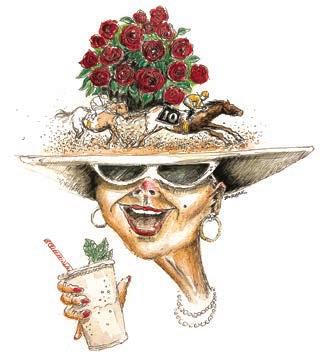
and bowties, and those over-the-top hats. That day I learned what a fascinator was, having years before heard the word during televised royal weddings.
Just before the big race, one of my spectators, mellow from a few Kentucky bourbons, handed me a $100 bill and asked me to fetch him a mint julep. When I returned, he told me to keep the change, along with a request to “say a little prayer” for his chosen horse, Sunday Silence. Earlier in the week I had given a work associate two bucks to put down a bet on a horse for me, based solely on a name I liked — Sunday Silence.
I watch the Derby on TV every year, but there’s nothing that compares to being there, hearing the trumpeter sounding the call to post, then watching those grand steeds and their petite jockeys parading to the starting gate to “My Old Kentucky Home.” Electrified magnets hold the doors shut until a starter pushes a button, breaks the current, and the horses throttle off to the cheers of 150,000 spectators.
The Derby takes roughly two minutes, 120 seconds. When riders make the turn in front of the Downs’ iconic twin spires, the crowd’s roar intensifies. Win, place or show, hearts race. Sunday Silence, with jockey Pat Valenzuela up, was the unlikely winner that day, beating the favorite, Easy Goer, by 2 1/2 lengths. My big tipper was ecstatic, handed me a 20, and thanked me for whatever divine assistance he imagined I invoked. I smiled knowing my $2 bet had snagged me another 20. Coupled with a nice paycheck and tips, it was a very fruitful first Saturday in May.
One month later, I graduated. Two years later I married a Georgia girl I met in Louisville. We moved to Raleigh for my first call, then seven years later, to Southern Pines, a haven for equestrians, and us.
For 23 years on my ride to work, passing horse farms that rival anything in the Bluegrass State, I couldn’t help but smile whenever I saw a horse and rider on Youngs Road.
Tom Allen is a retired minister who lives in Whispering Pines.